Skip to content
Thursday

9 September 2010

490Dated photos
1Source pages
2Media embeds
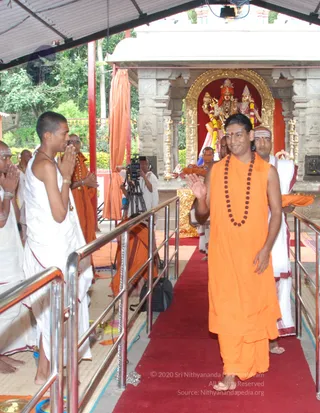
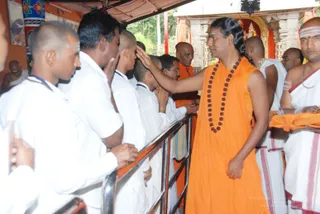
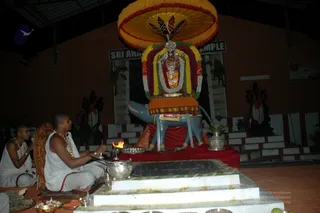
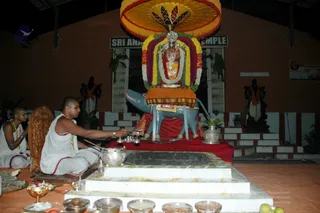
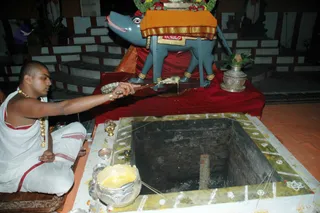
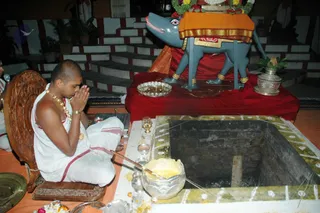
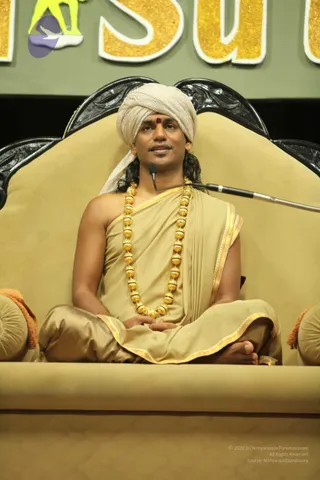
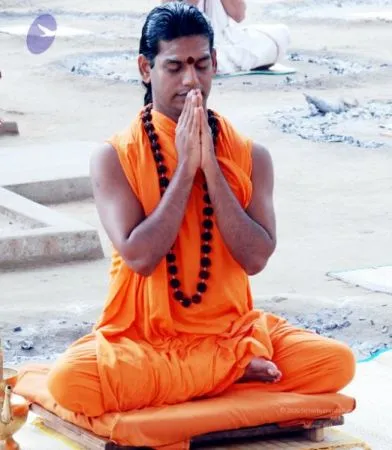
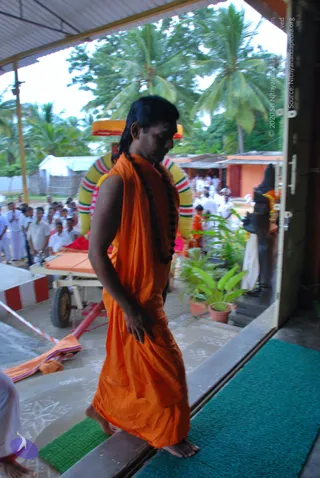
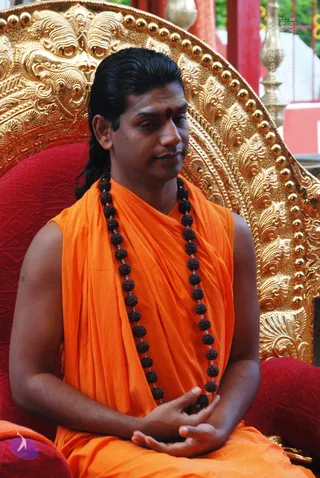
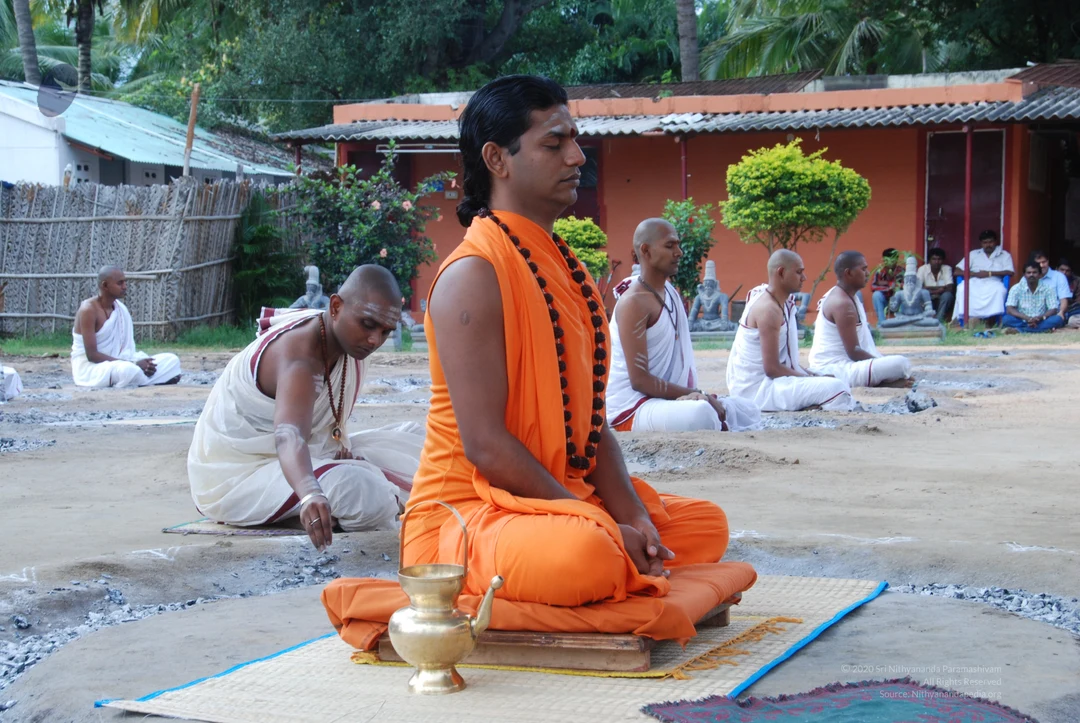
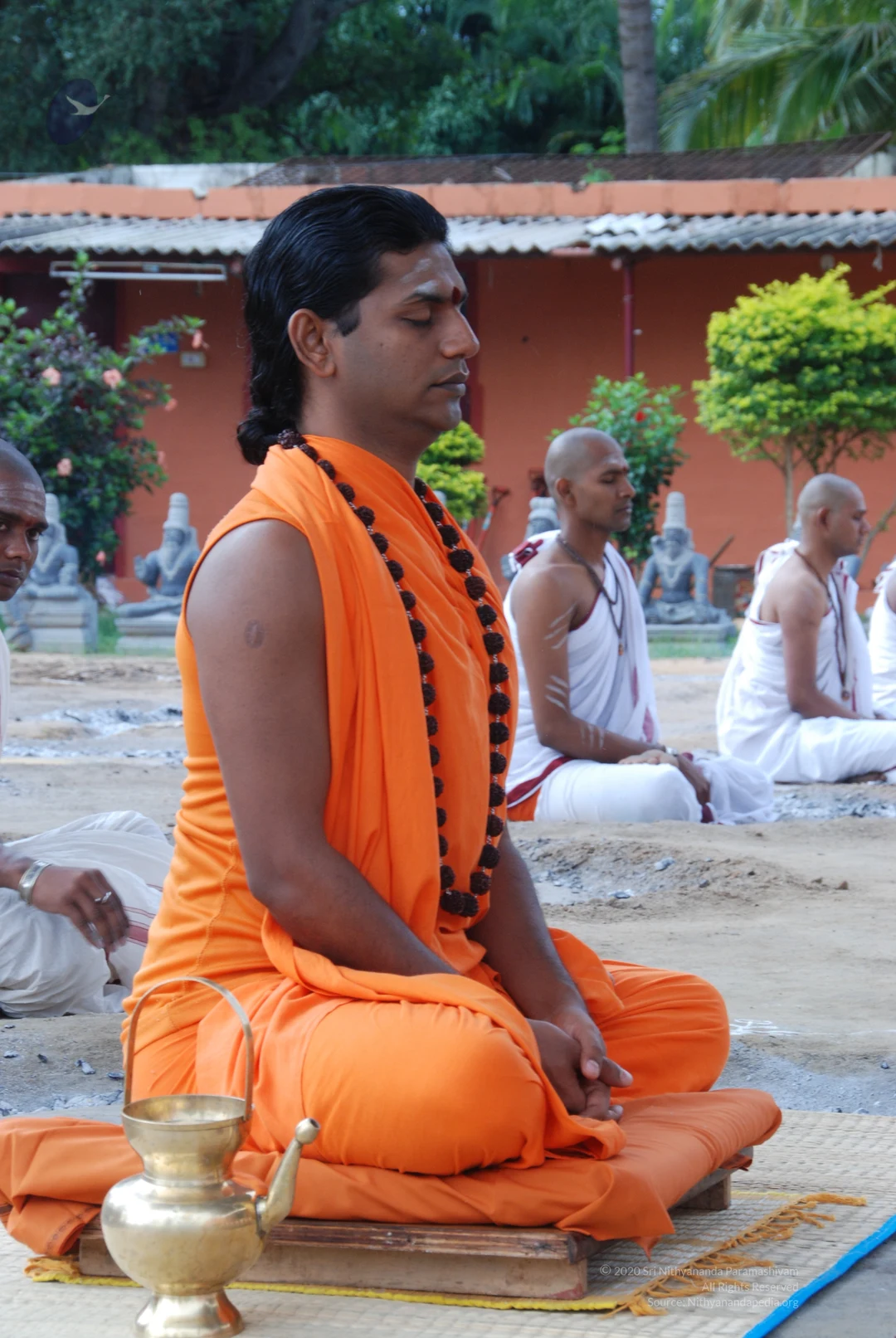
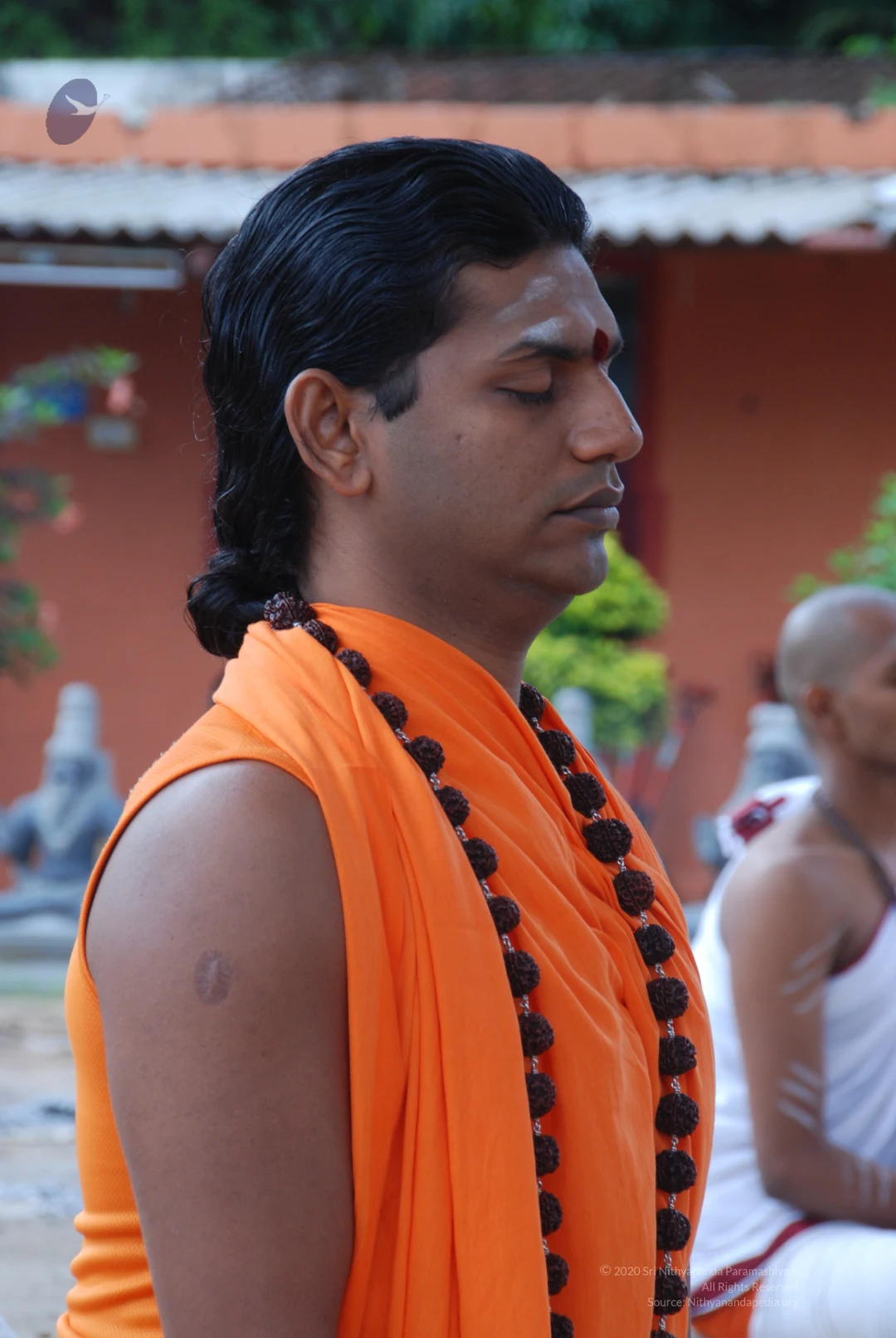
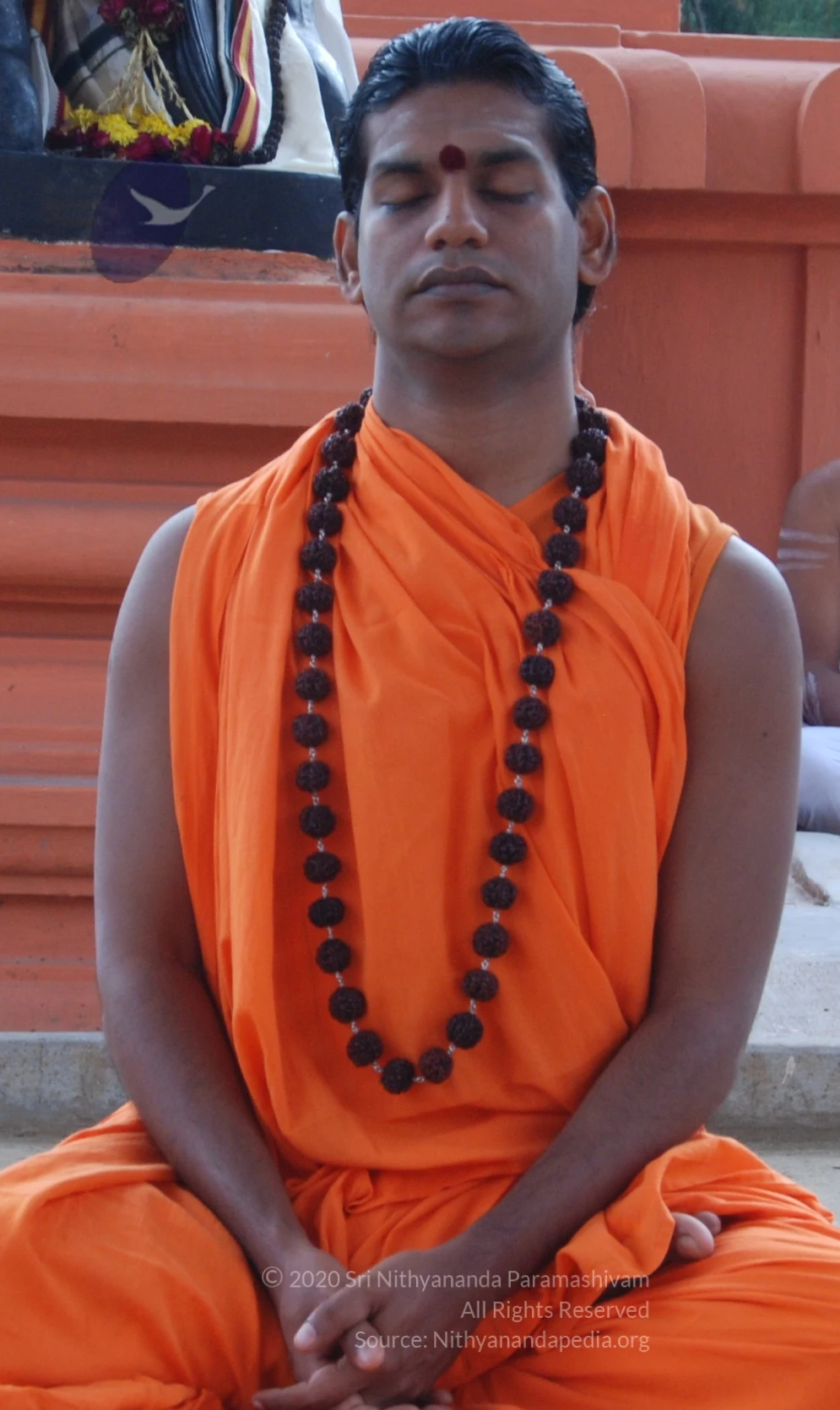
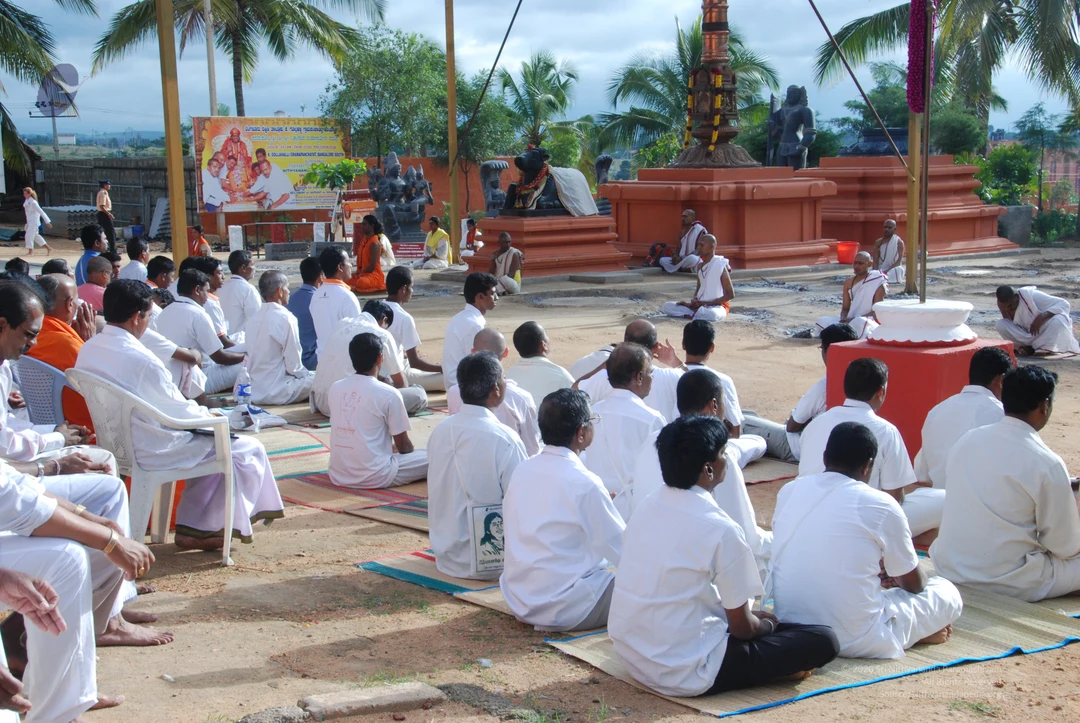
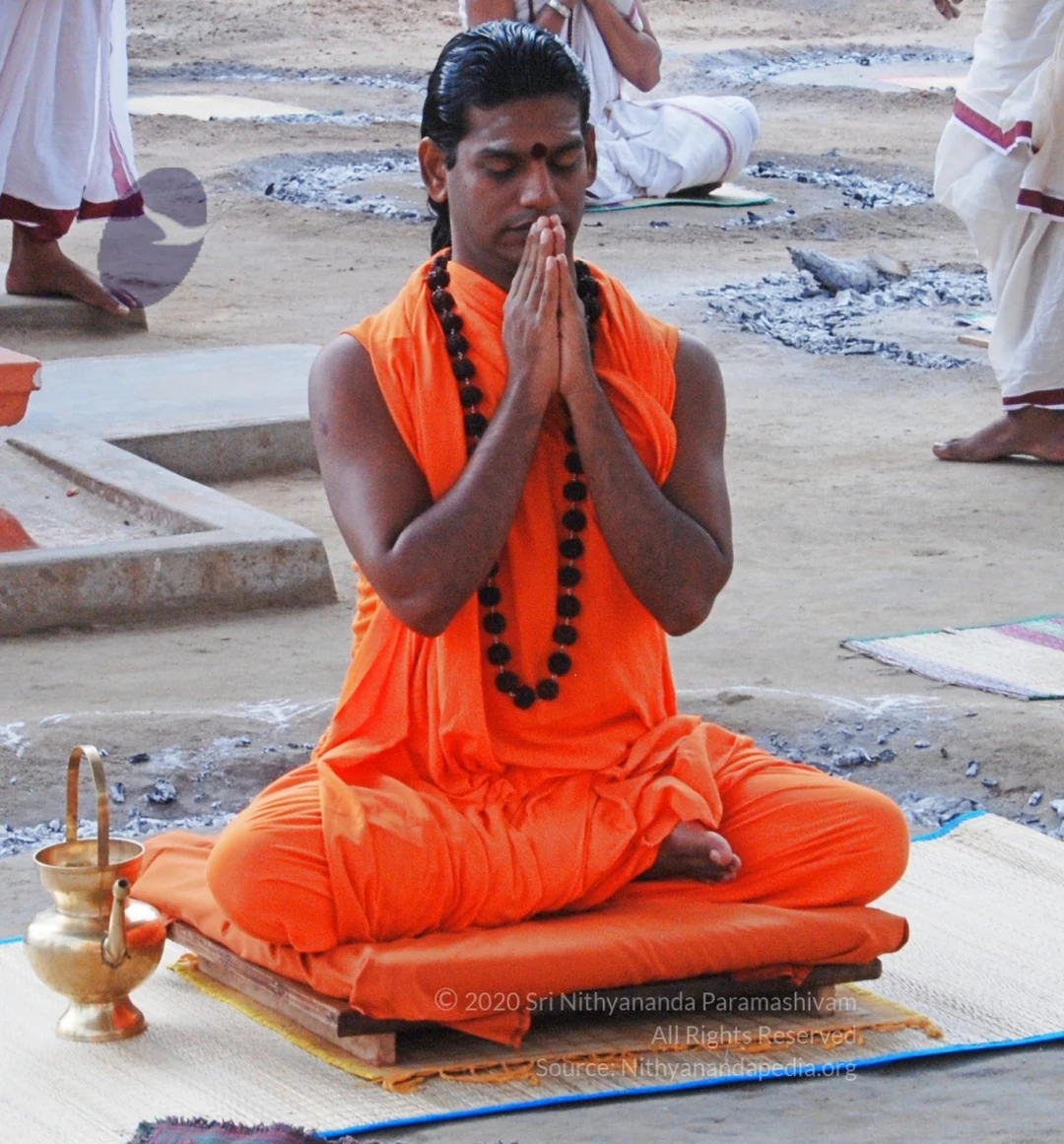
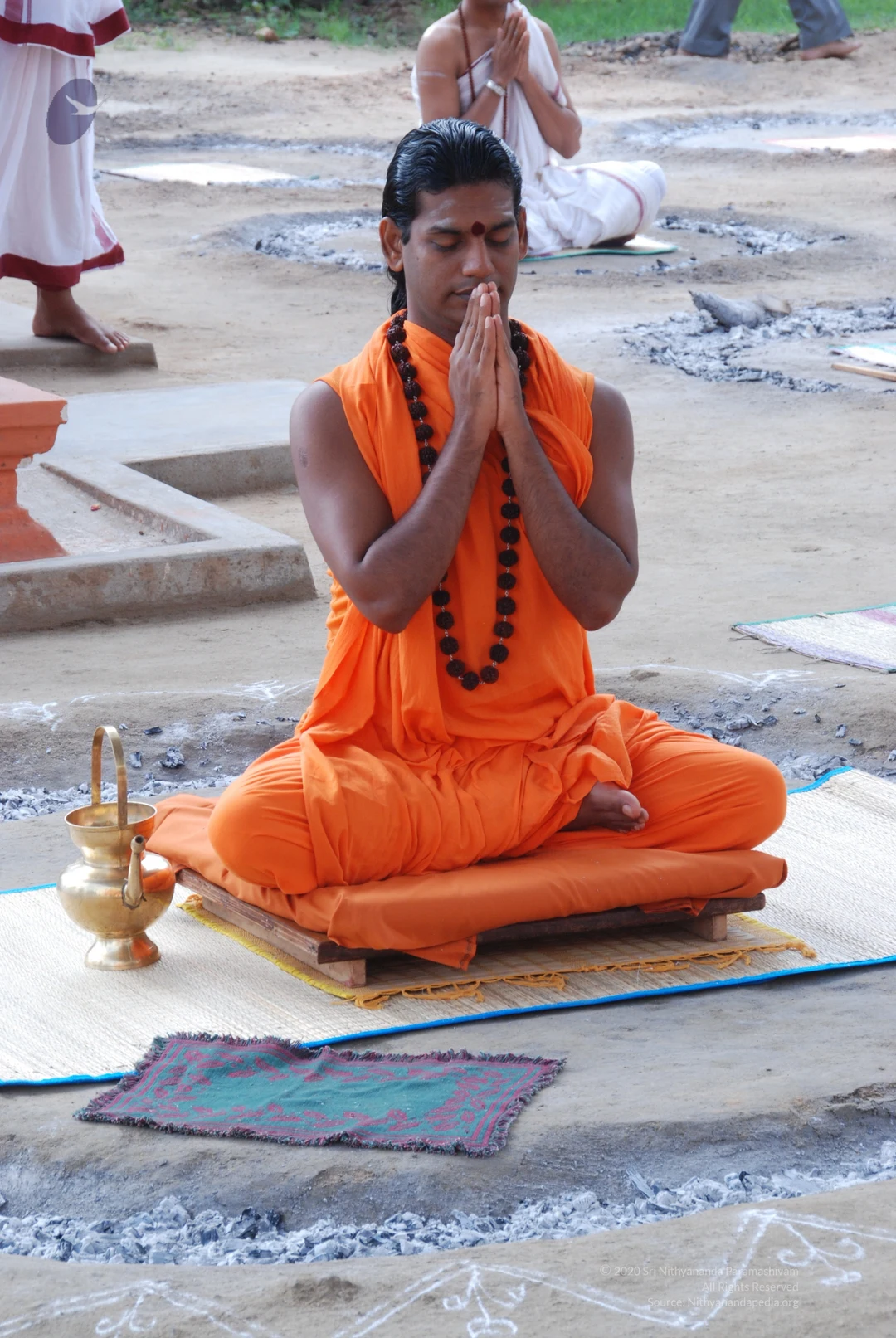
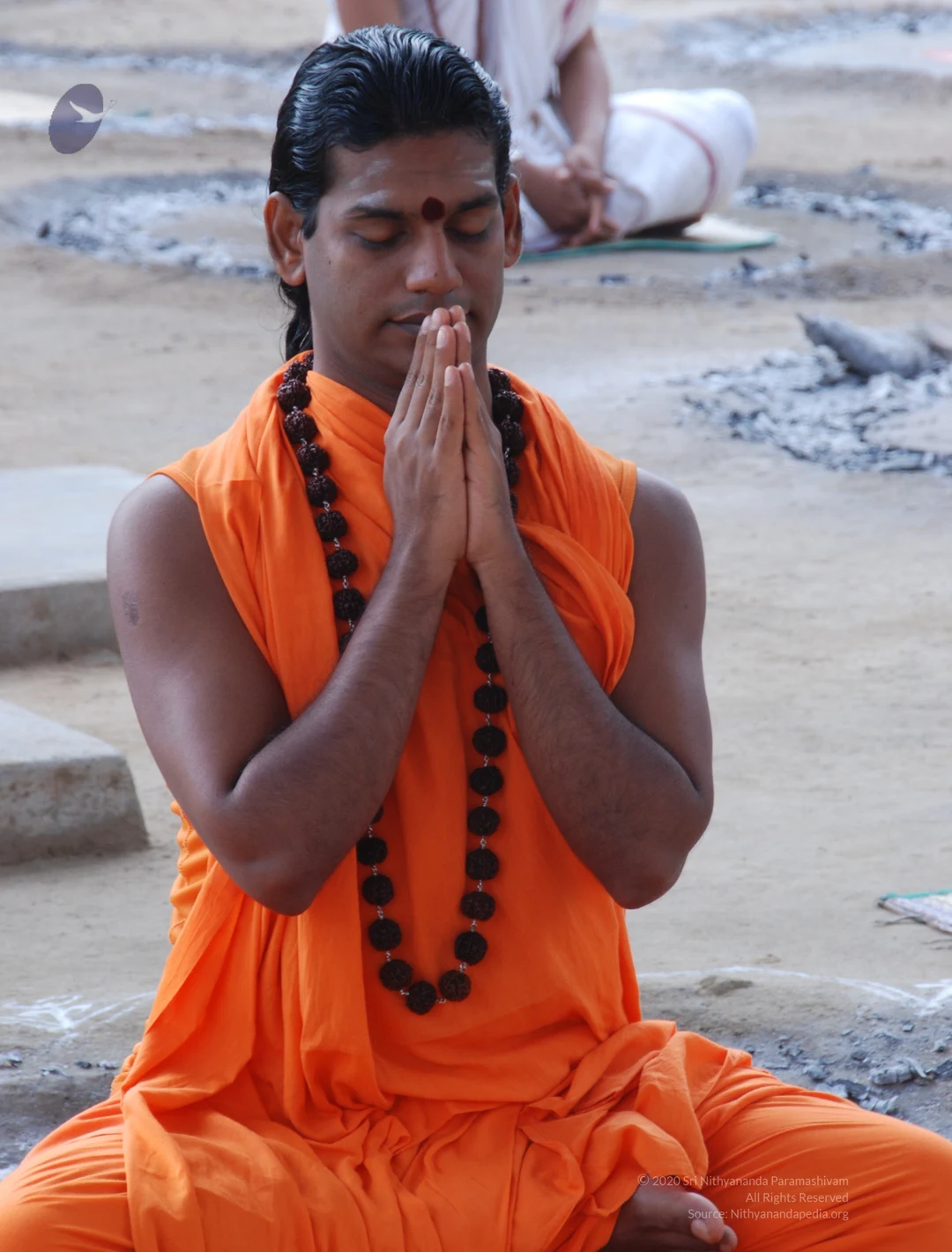
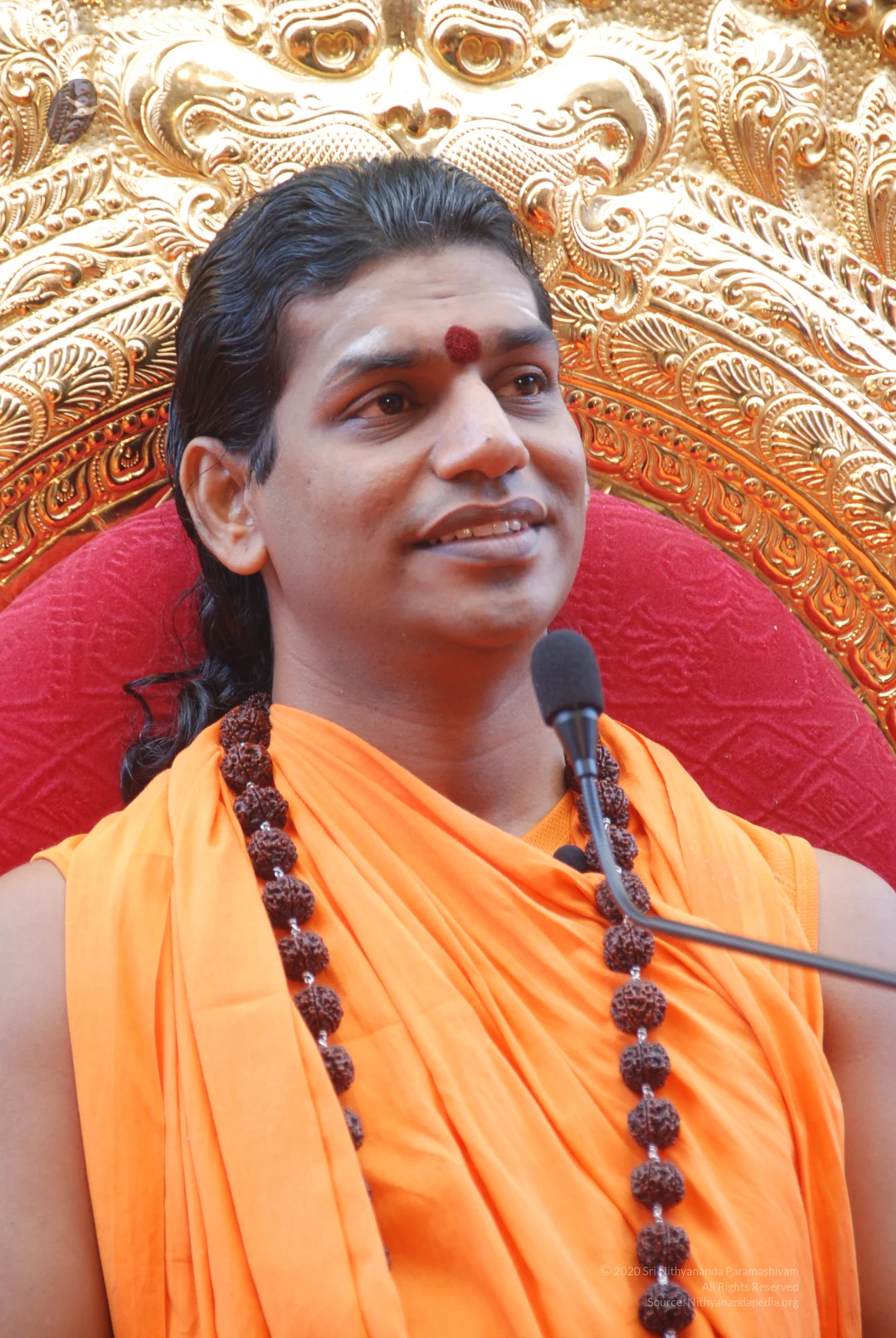
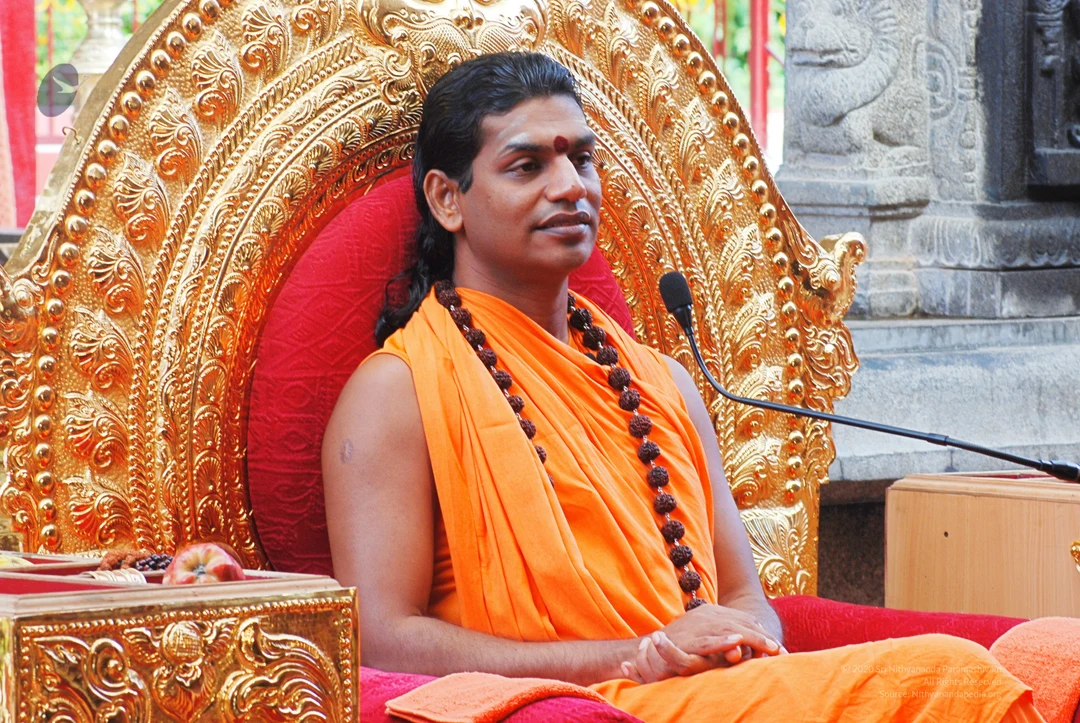
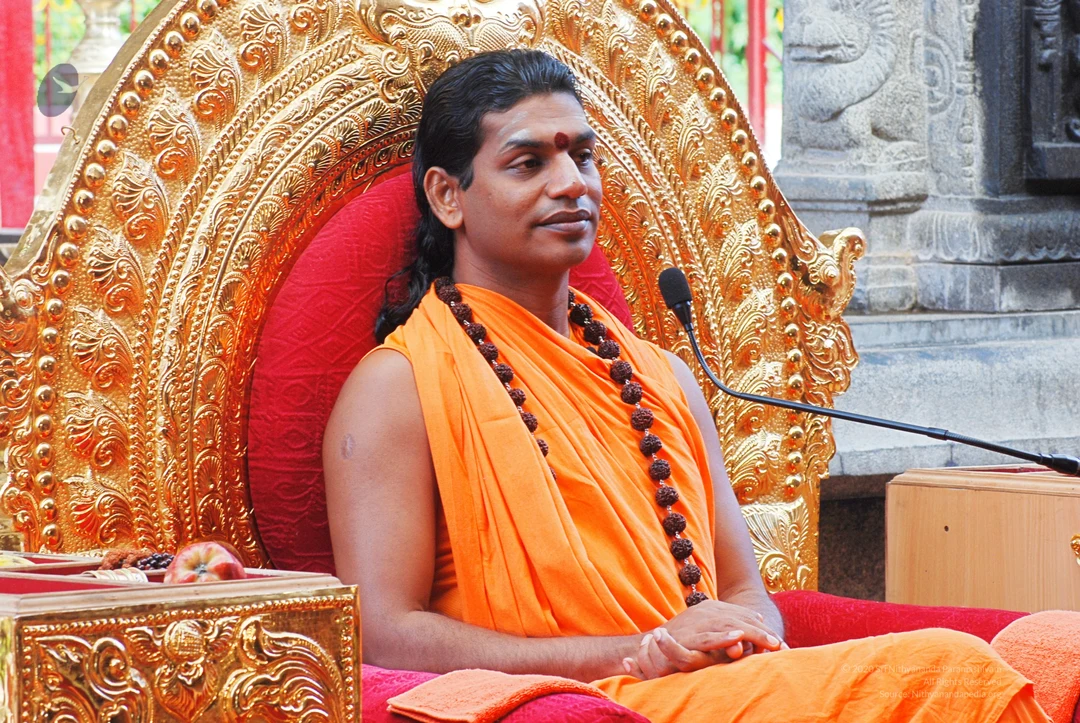
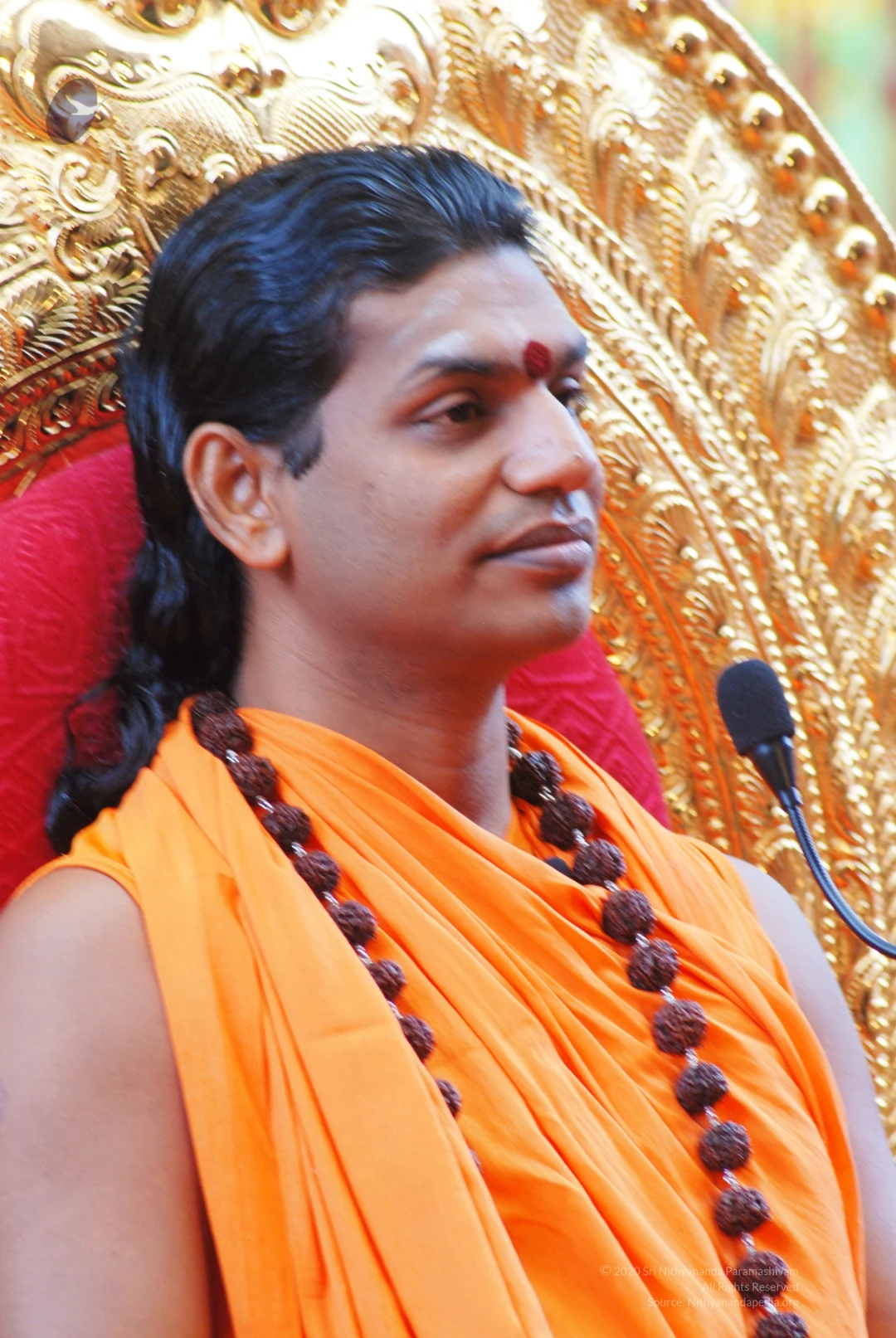
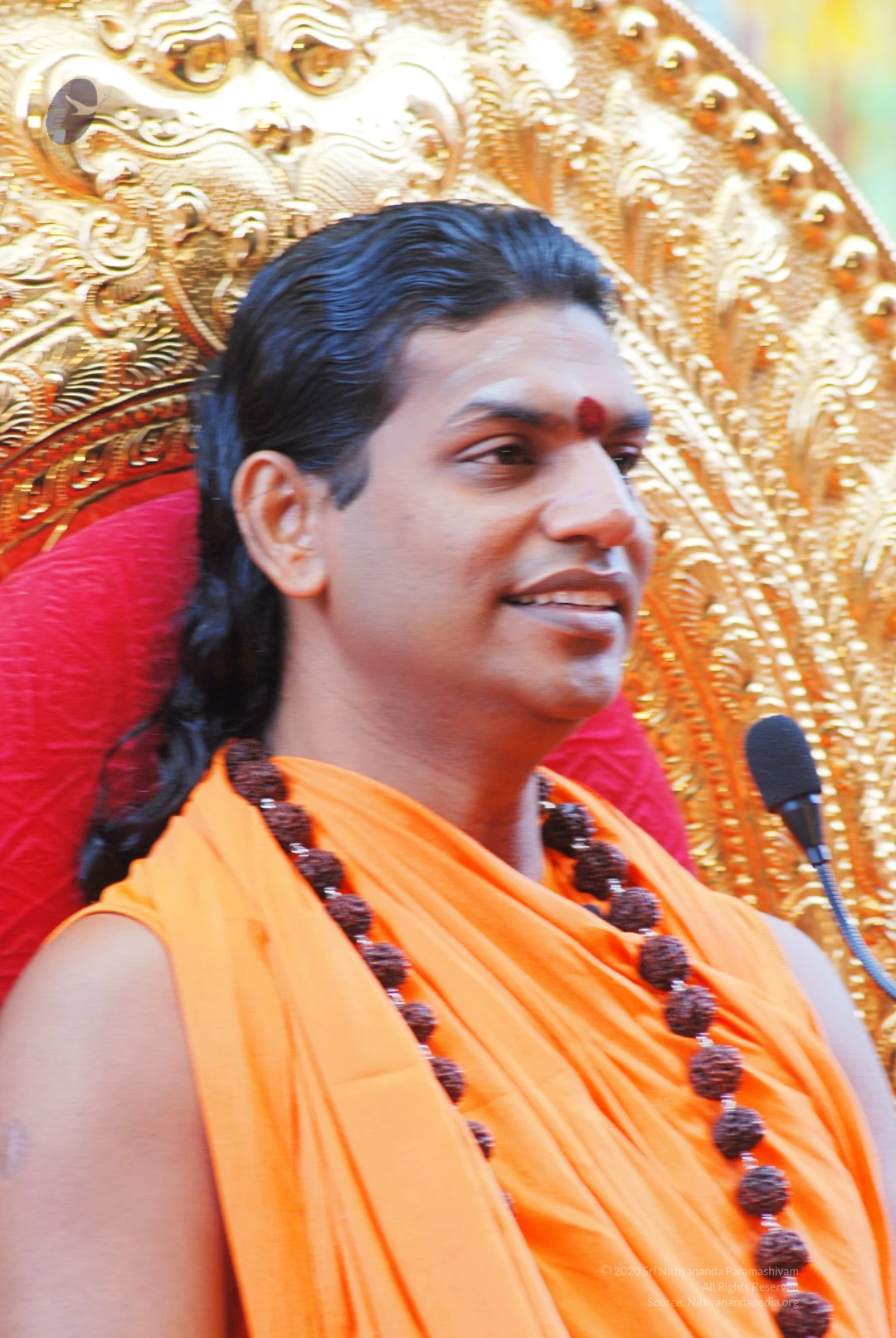
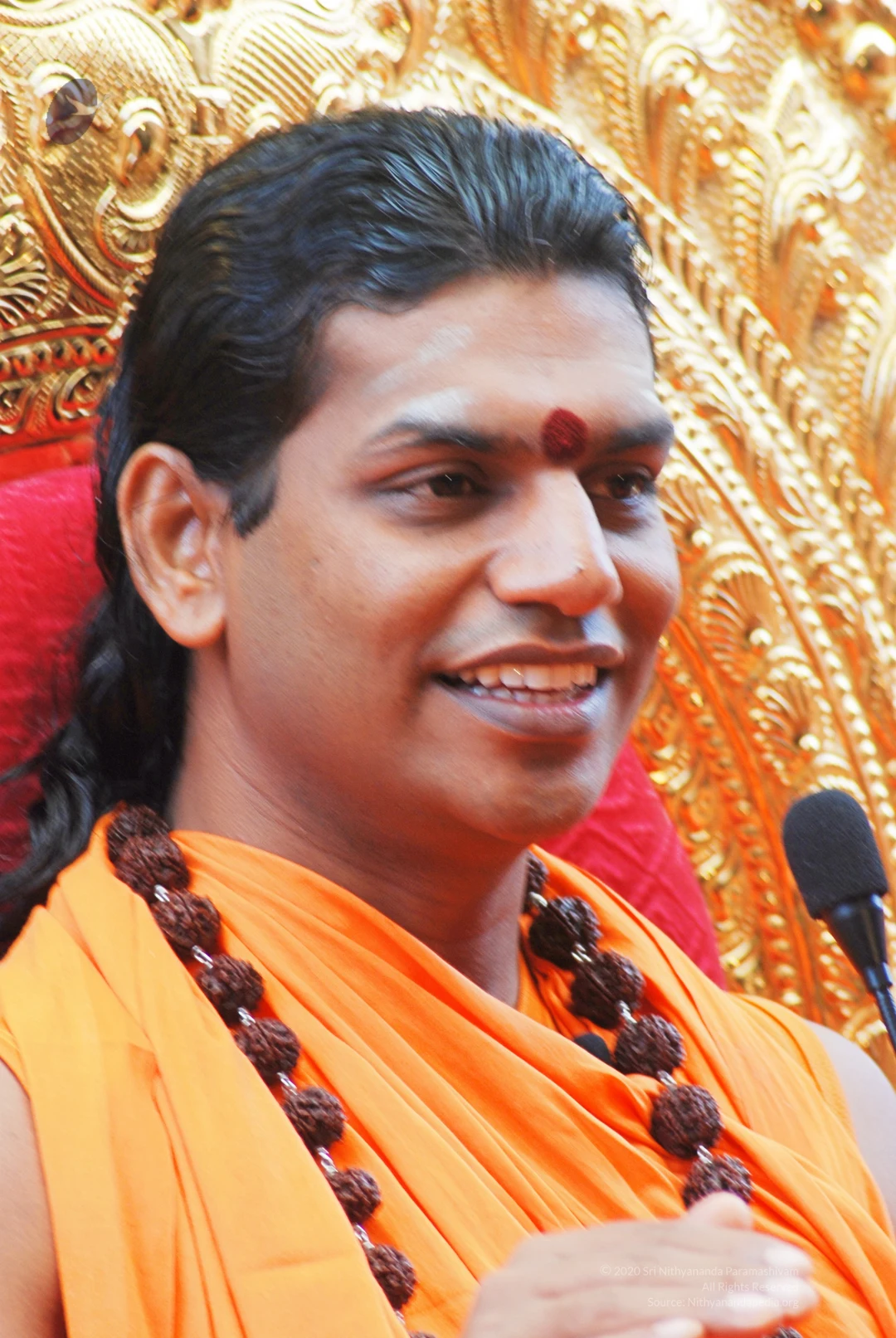
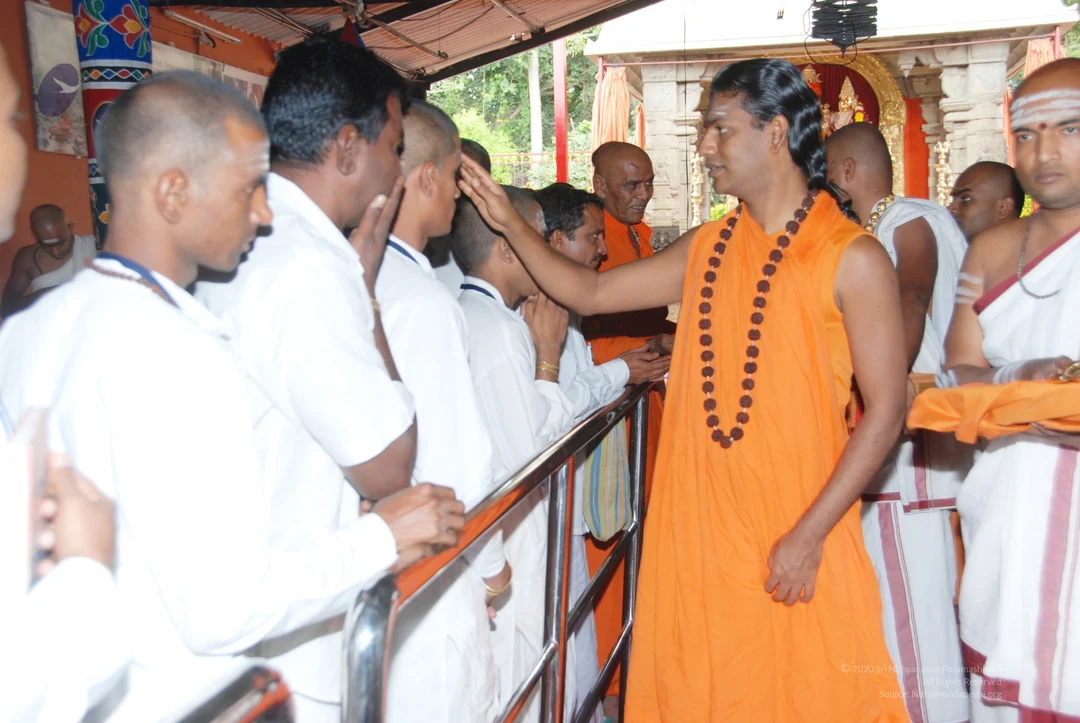
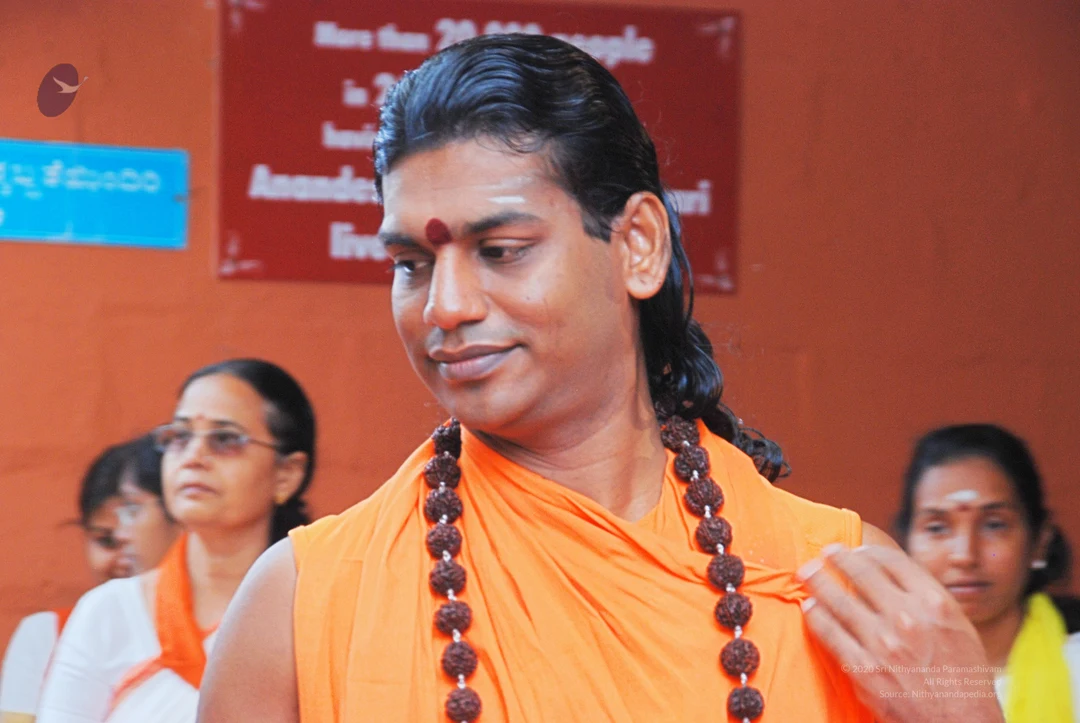
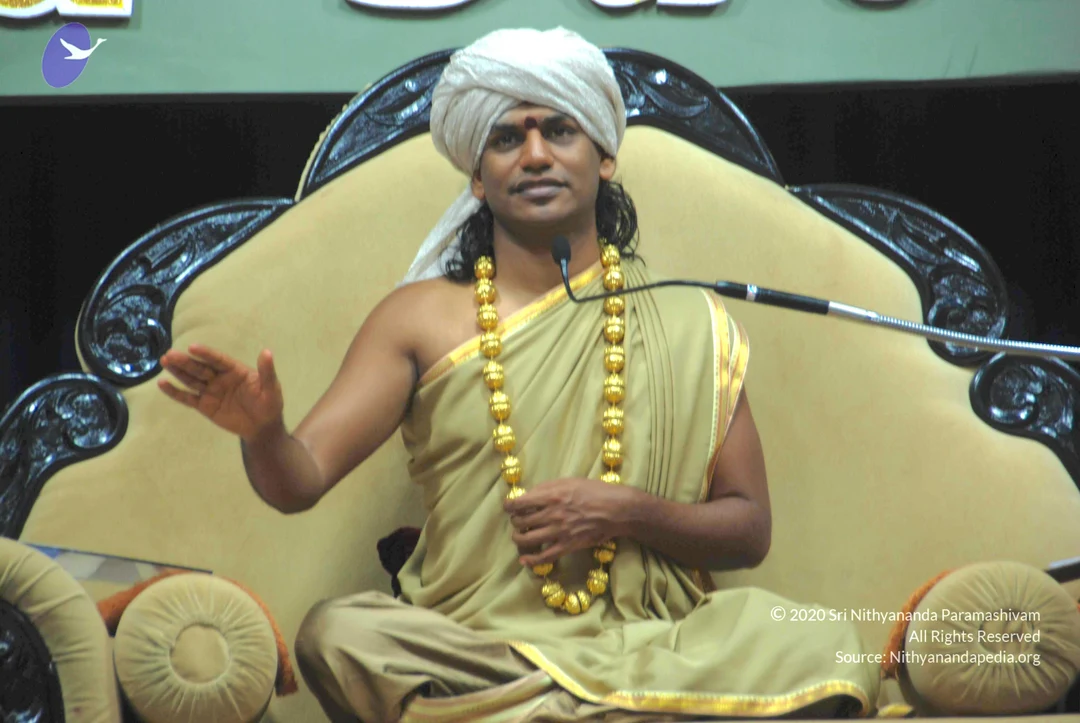
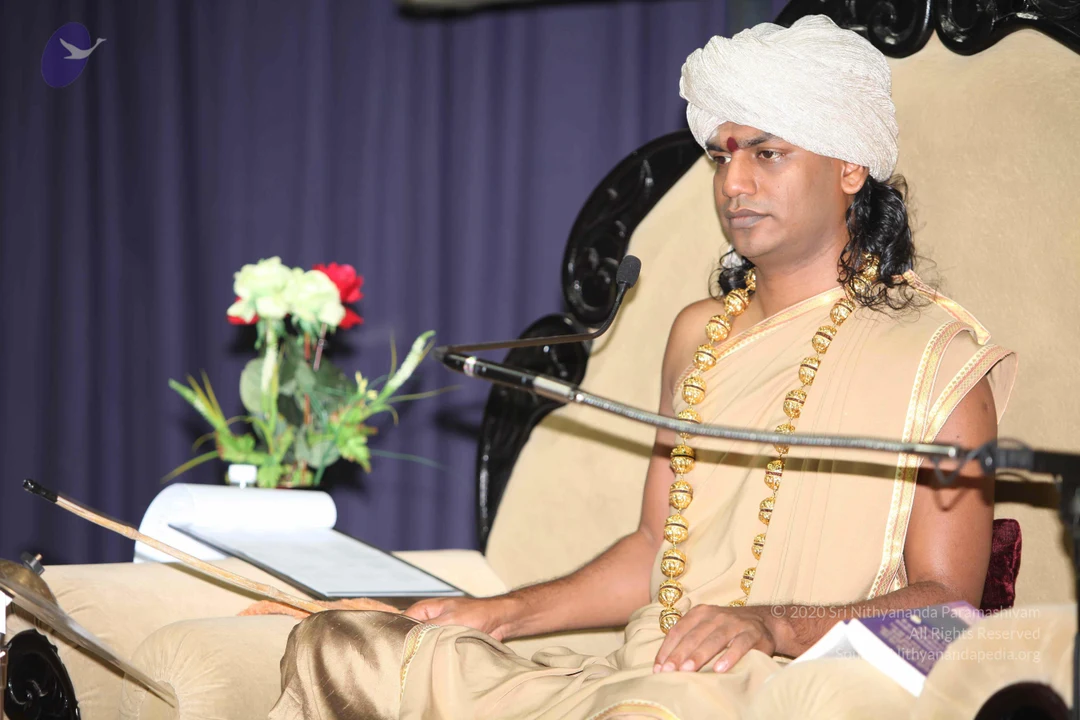
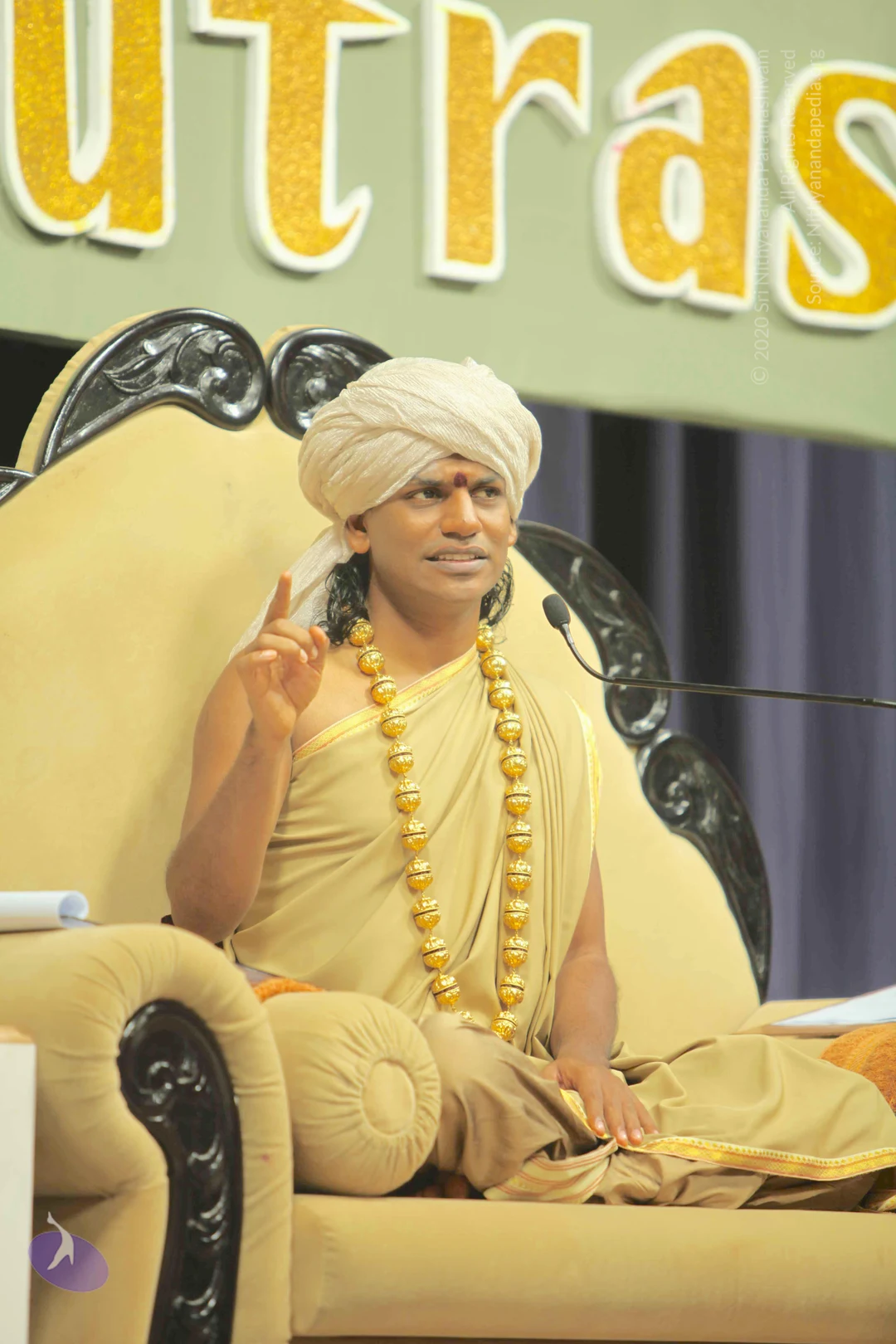
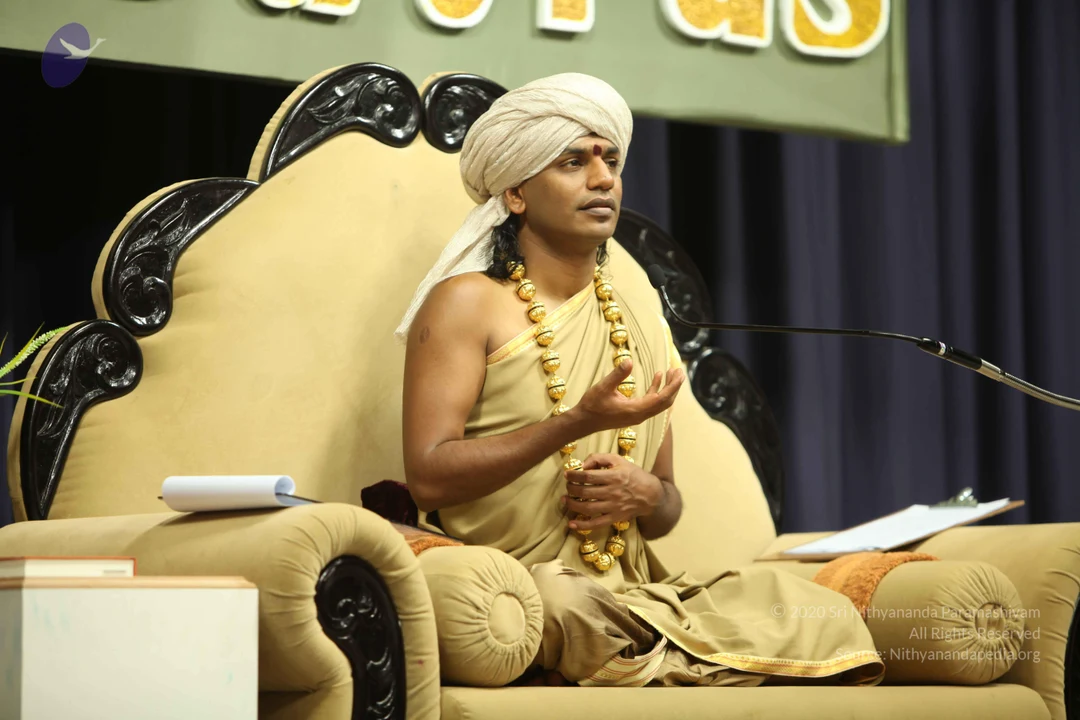
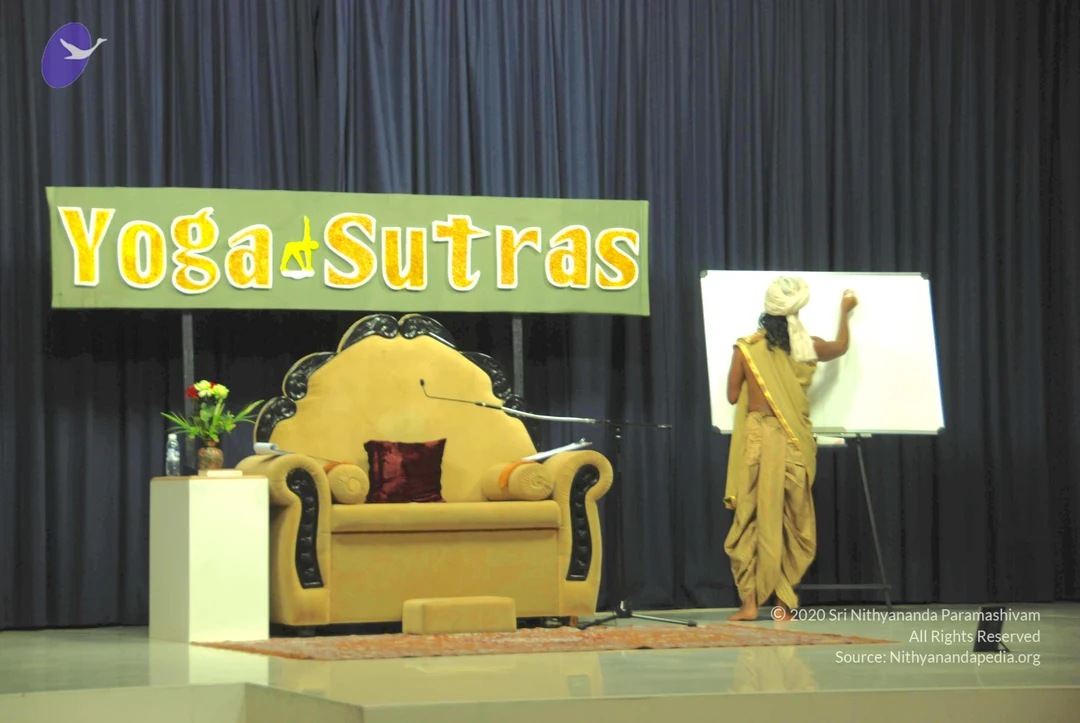
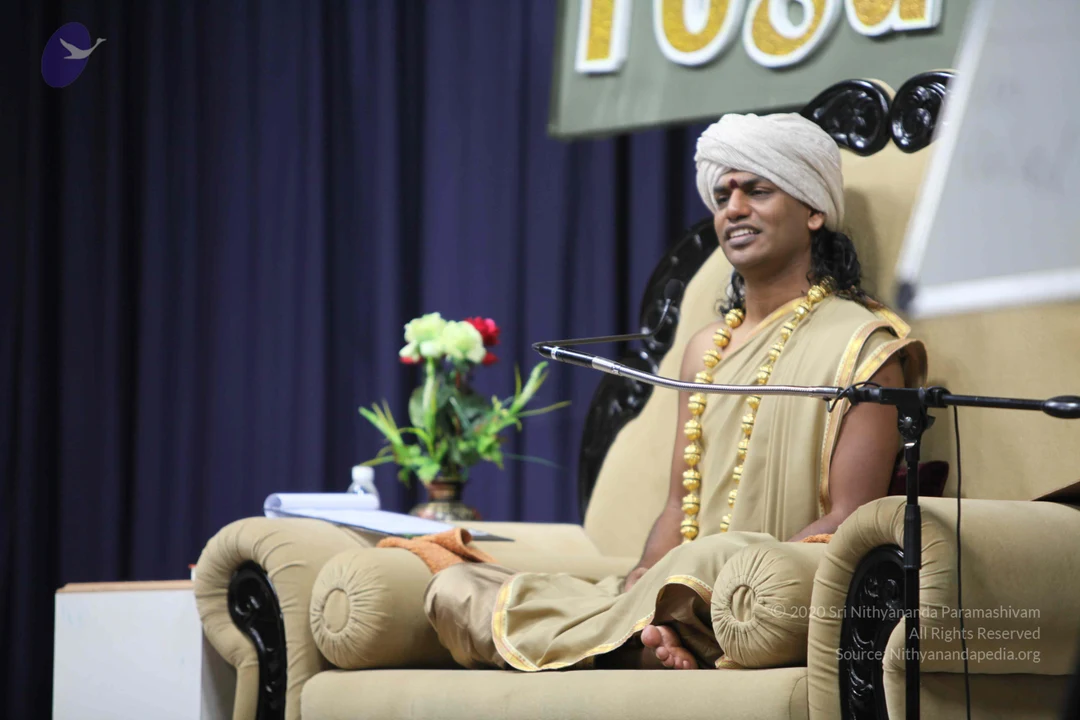
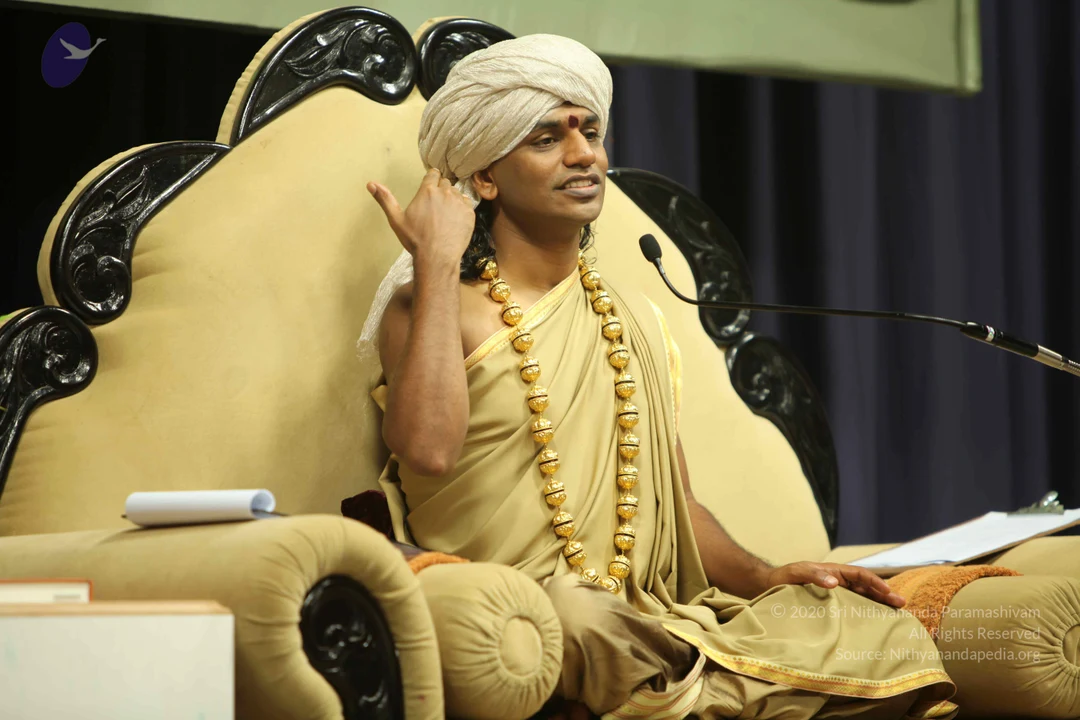
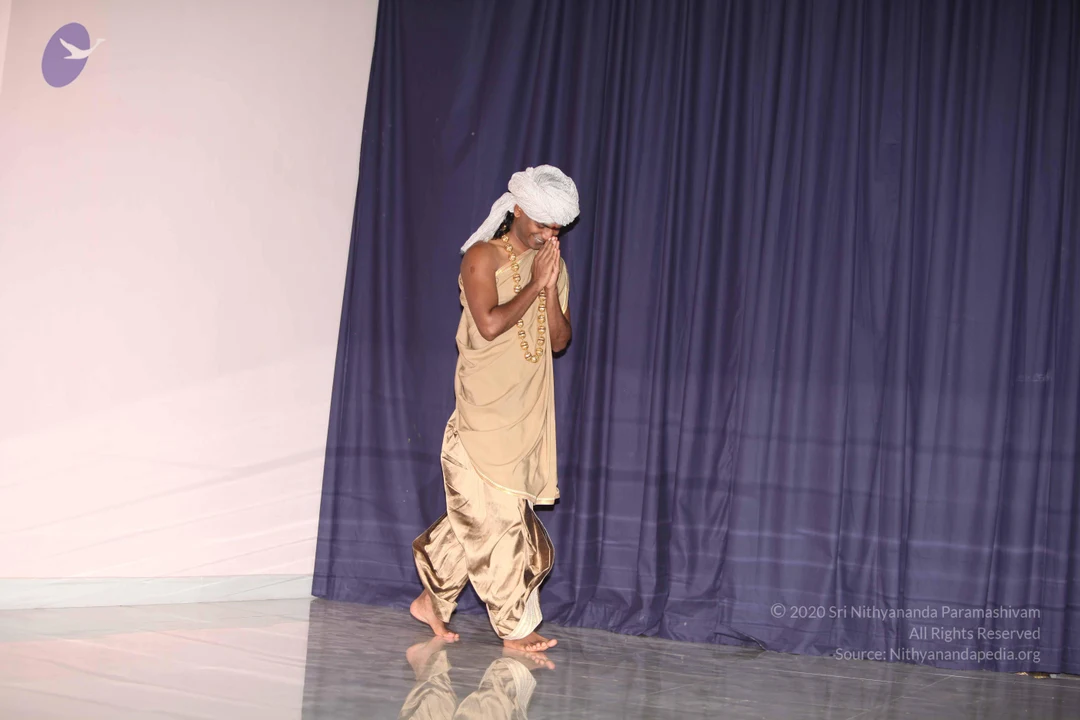
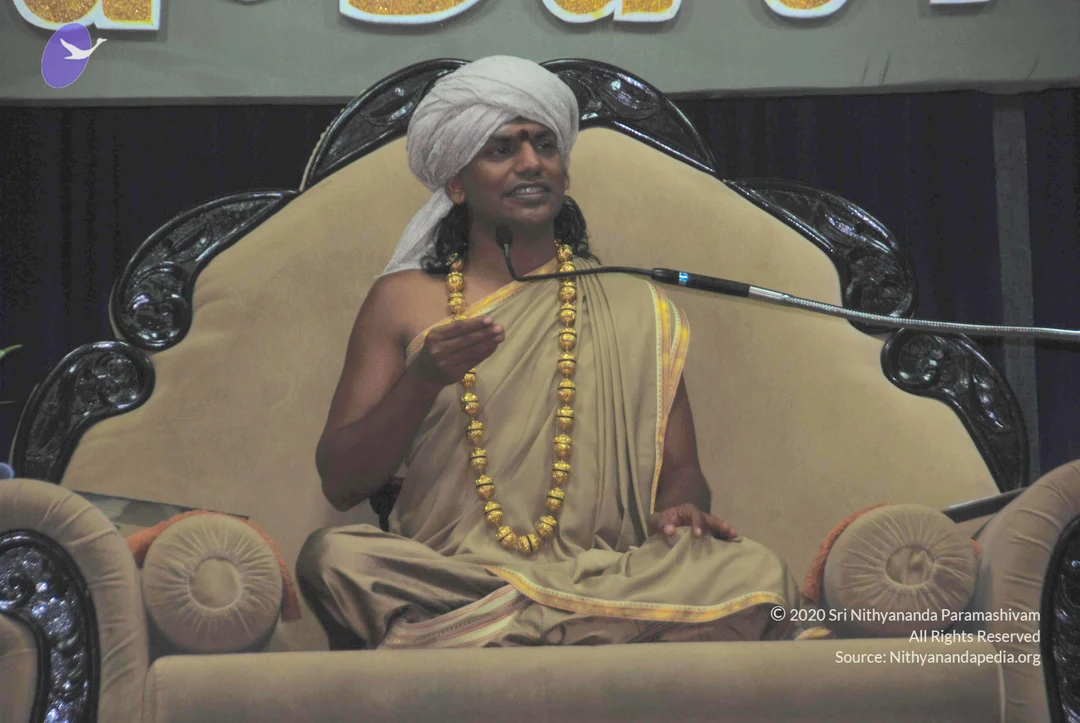
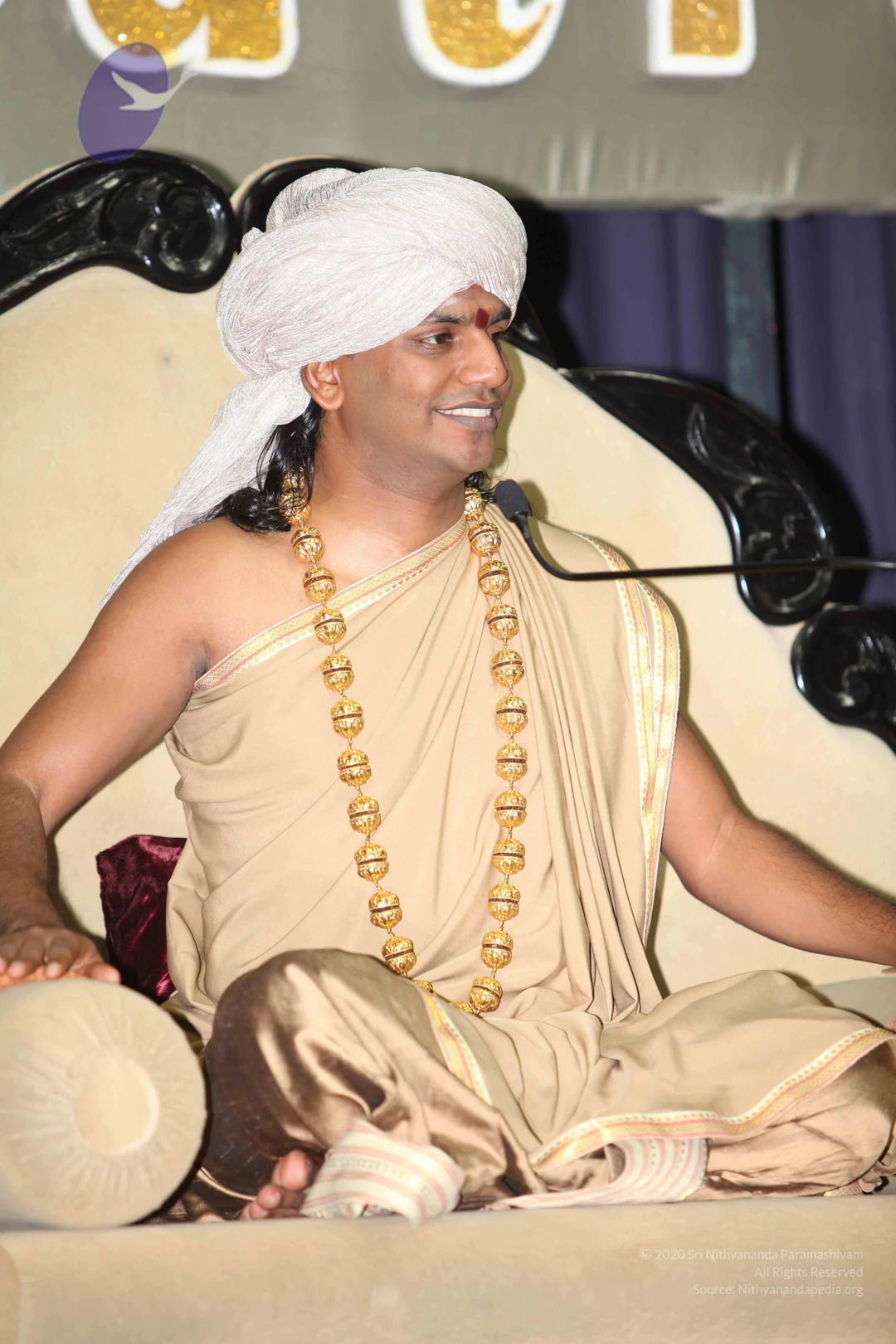
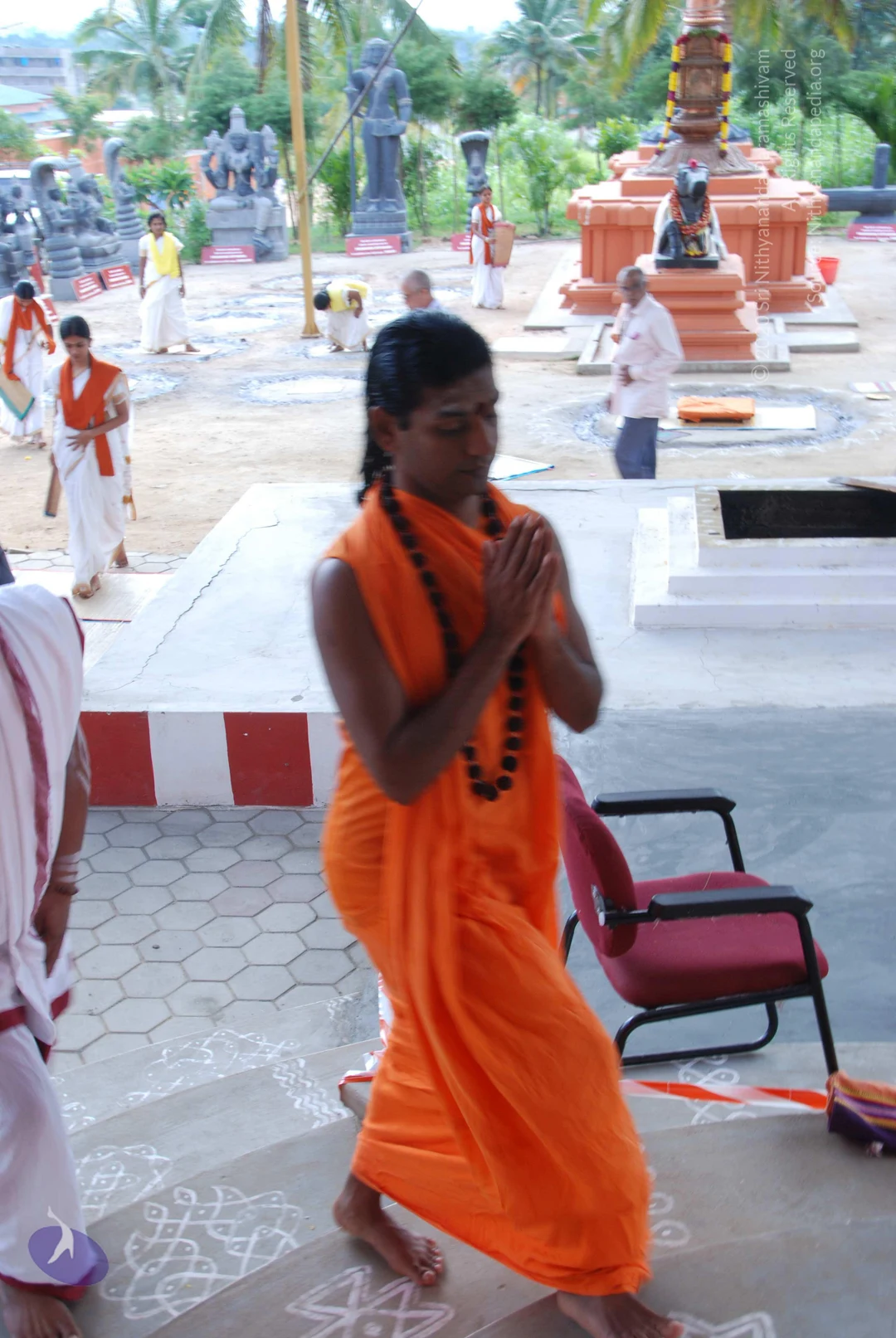
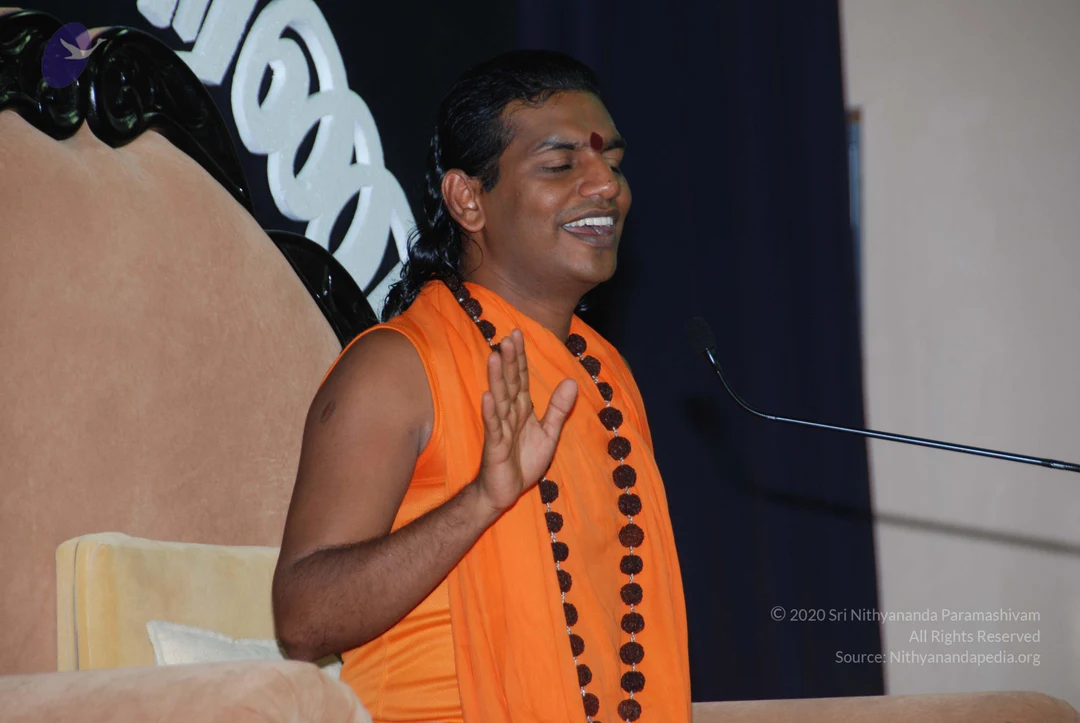
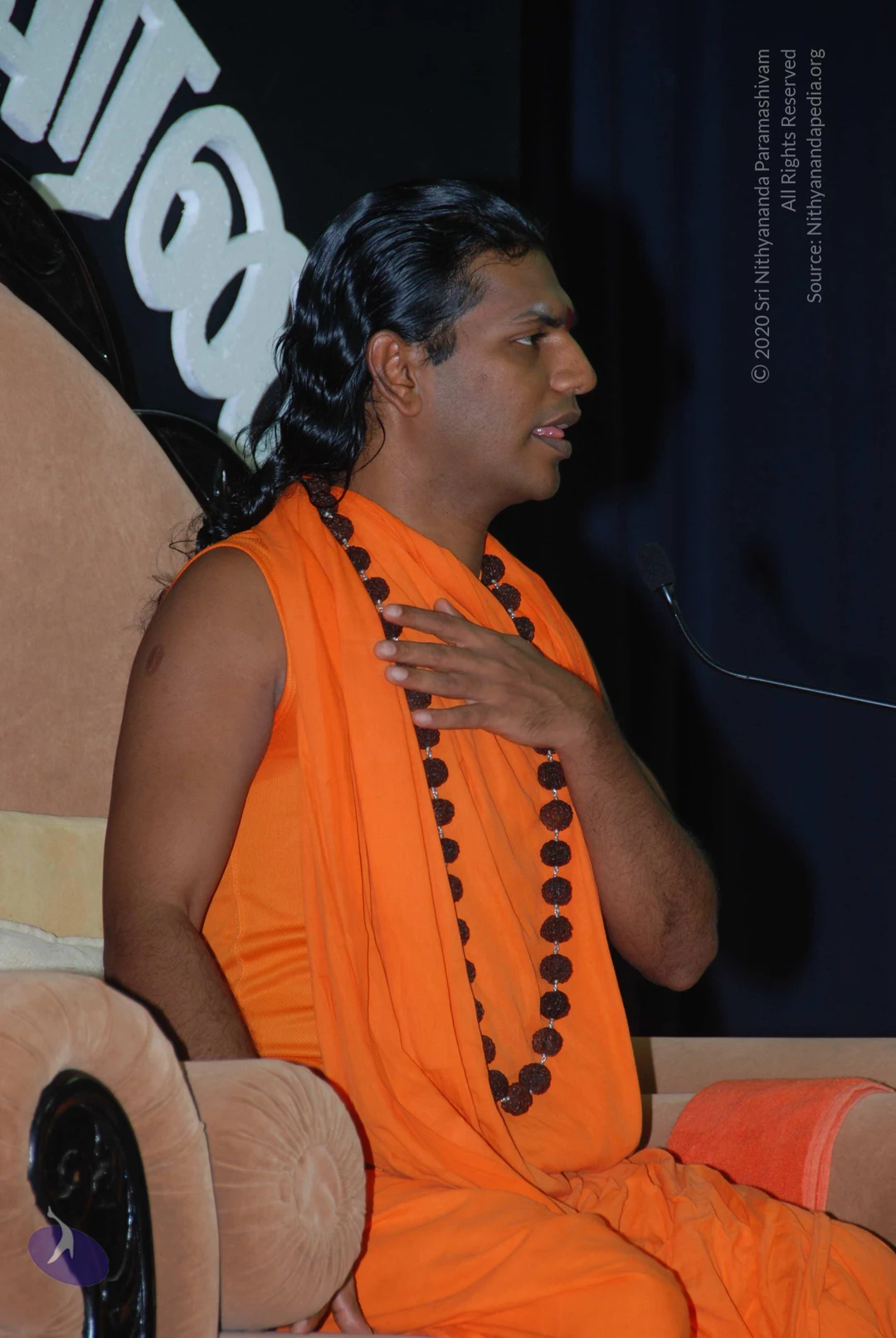
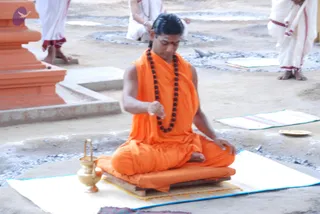
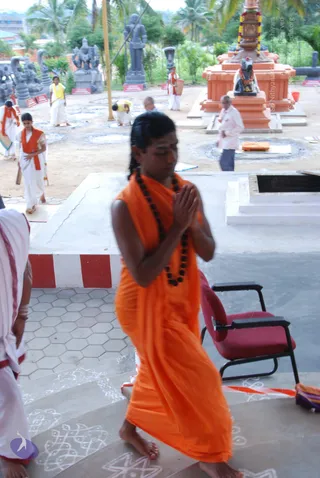
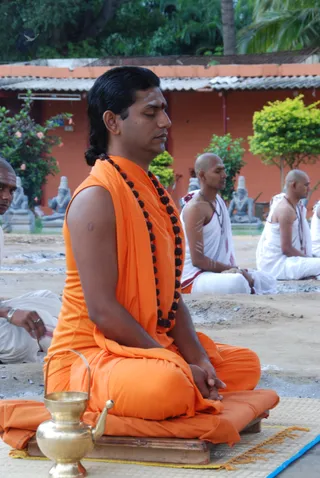
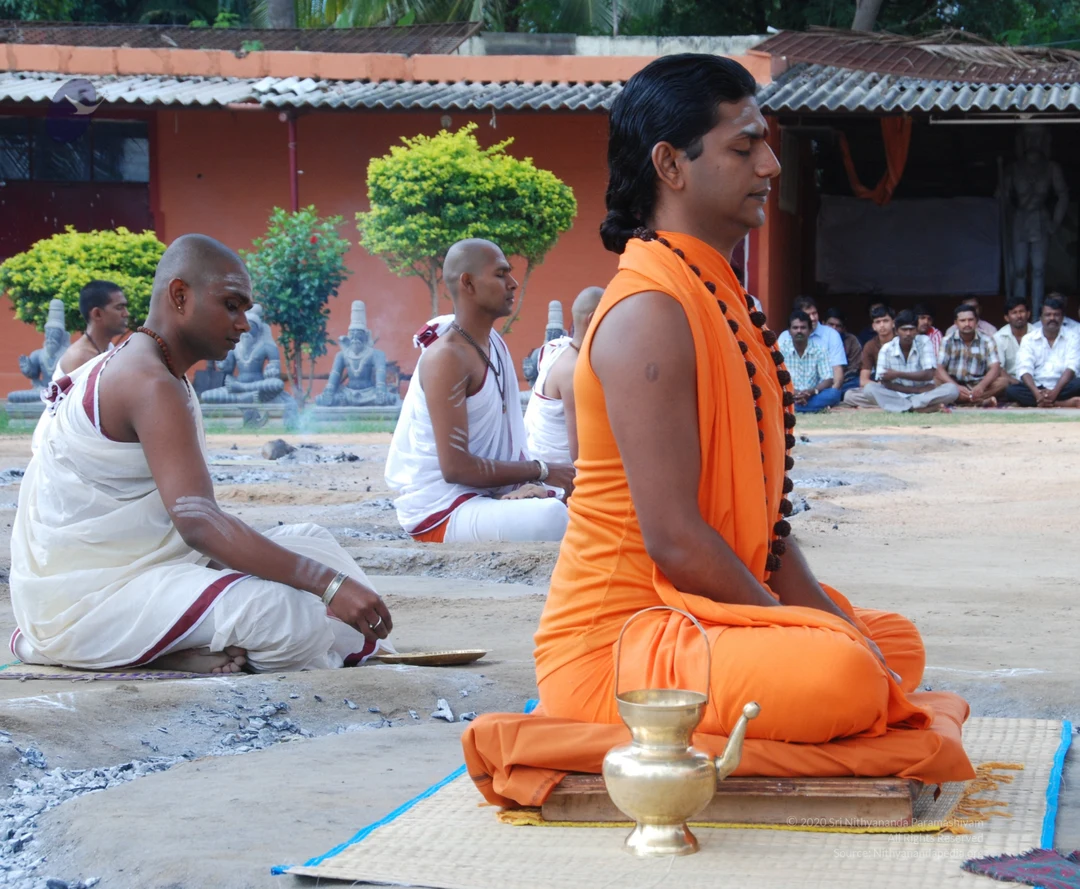
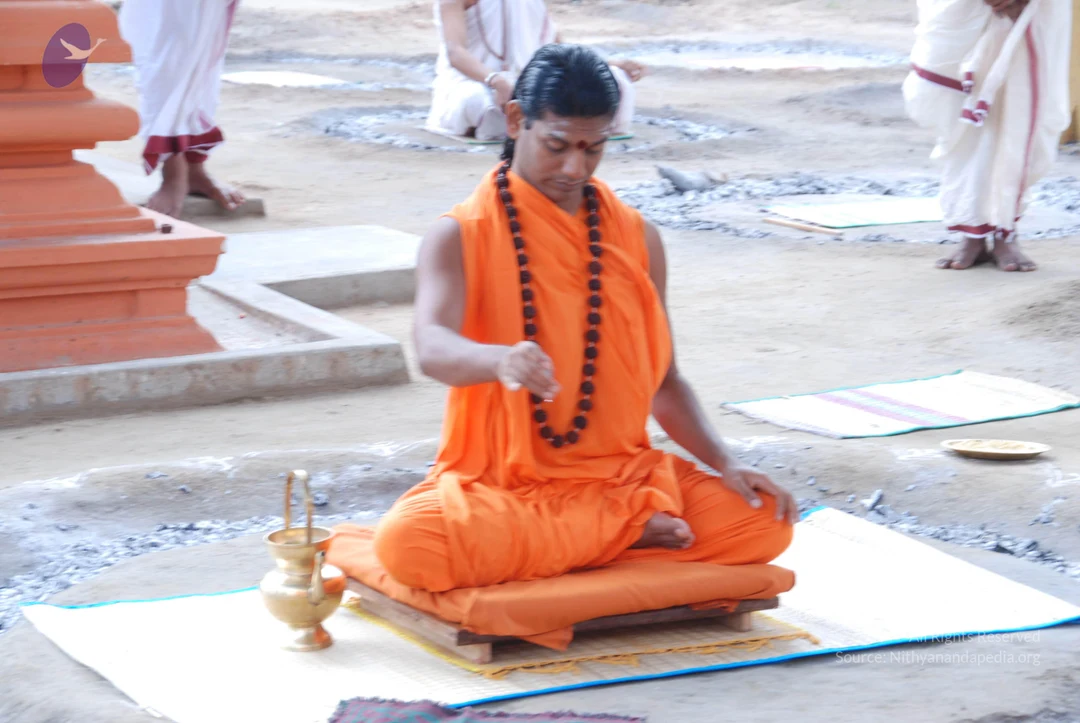
A seated man in a cream turban and beige sannyasi-style wrap with gold-edged trim sits on a gold upholstered throne-like chair on a stage. He wears a long gold bead necklace and raises one hand in a gesture while speaking into a microphone on a boom stand. A vase with red and white flowers stands at left, and a green banner with large gold lettering reading Yoga partly visible above him. The setting is a satsang-style discourse.A photograph of a man in saffron-orange robes seated cross-legged on an orange cushion placed on a low wooden platform over a white mat. He wears a long rudraksha mala with dark beads and a red tilak on his forehead, and his hands rest on his knees in a meditative posture. A brass kalasha-style vessel with a handle sits on the mat beside him. Behind him, two people in white dhotis with red borders stand and sit on the sandy ground near a red-orange pillar. Scattered grey ash lines the sand. The seated figure is an appearance-based a person, identified by saffron robes, rudraksha mala and tilak, but the image is not conclusive.Outdoor temple courtyard with a sandy ground and palm trees behind. In the foreground a man with long dark hair tied back, wearing a saffron-orange cloth draped over his body and a dark rudraksha mala, walks barefoot with his palms pressed together in anjali, eyes lowered. Behind him on the left a second saffron-robed figure stands near a stone sculpture. Several people in white dhotis, some with orange shawls and one in a yellow shawl, stand or bend over on the ground among grey stone statues and orange-painted shrines. A red-cushioned chair sits beside the steps, decorated with white kolam patterns. Near the centre, a long-haired saffron-clad man is shown performing a ritual act; an older man in white shirt stands further back.

Photos of the day

View all 490 photos

490 distinct dated photos. Source gallery sets may overlap.

01

Panchatapas

12 dated photos in previewSource gallery
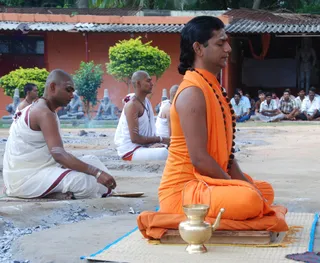
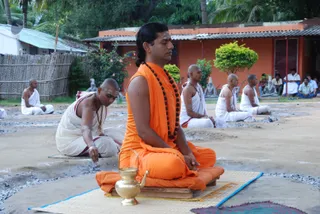
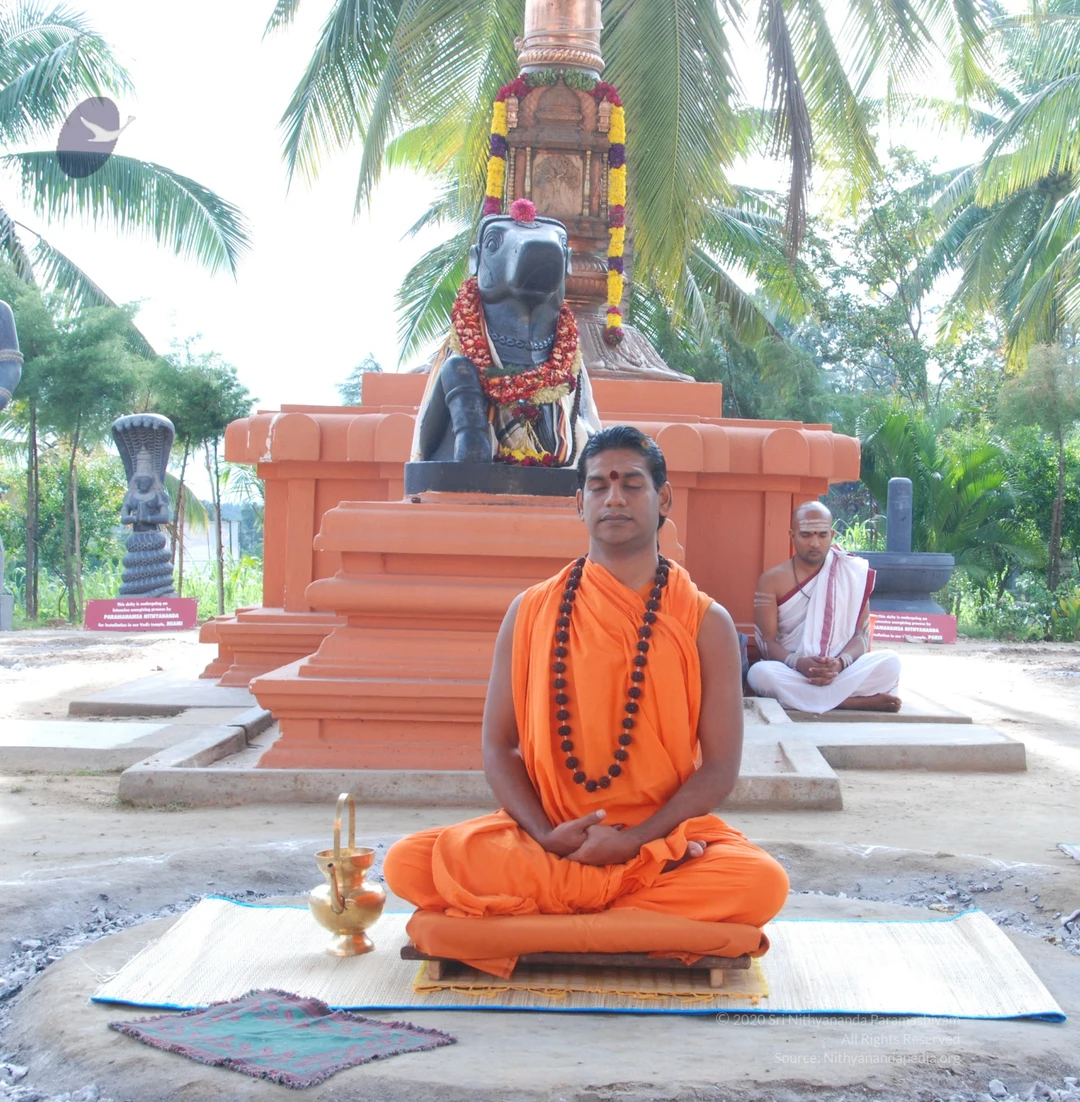
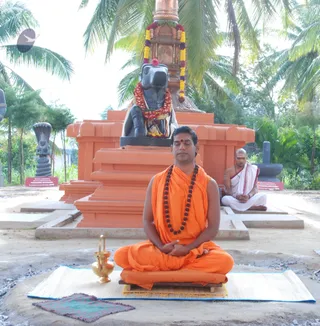
A man in saffron-orange robes sits cross-legged in meditation on a woven mat in an outdoor courtyard. He wears a dark rudraksha mala around his neck and a red tilak on his forehead, with hands resting in his lap and eyes closed. Behind him stands an orange-painted stepped pedestal topped by a dark Nandi bull statue draped with red and orange garlands and a garland of marigolds on a copper kalasha-style structure. A brass kalasha vessel sits beside him on the mat. To the right, a bare-chested priest in white dhoti and shawl sits with folded hands near a dark shivalinga. Palm trees and greenery surround the scene. A serpent statue is visible at left.
02

Morning-Satsang

13 dated photos in previewSource gallery
03

Sarvadarshan

5 dated photos in previewSource gallery
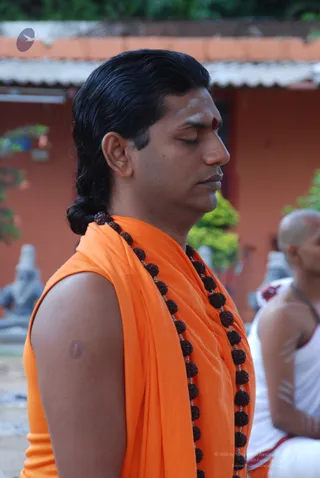
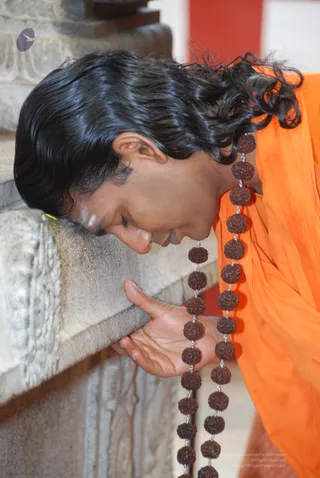
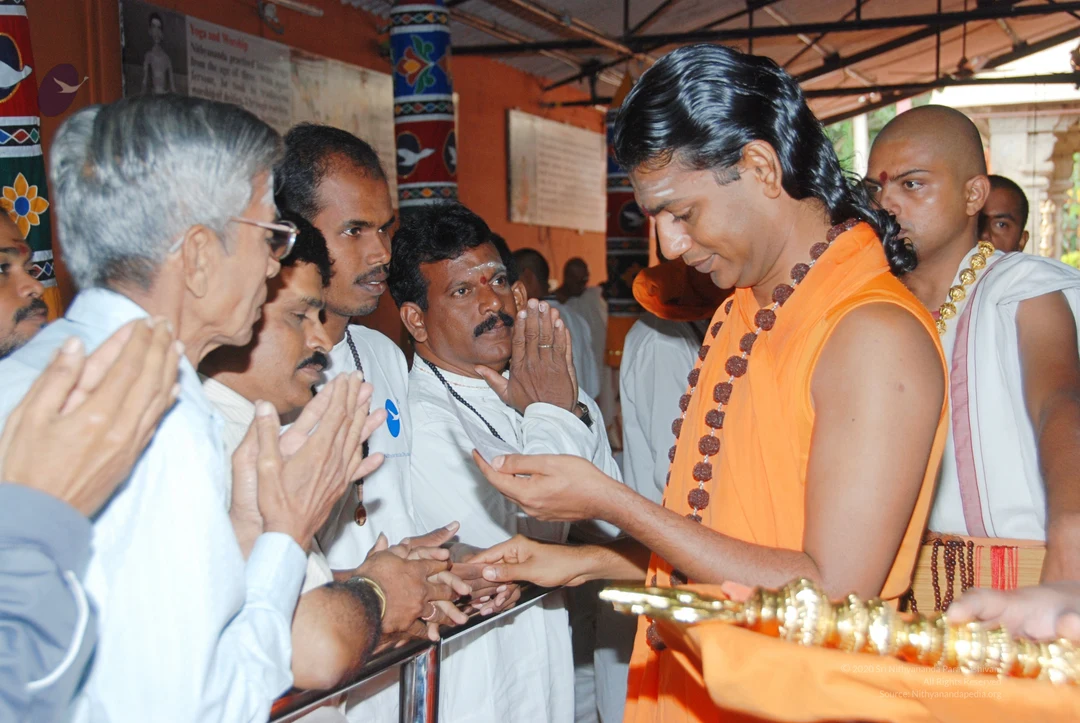
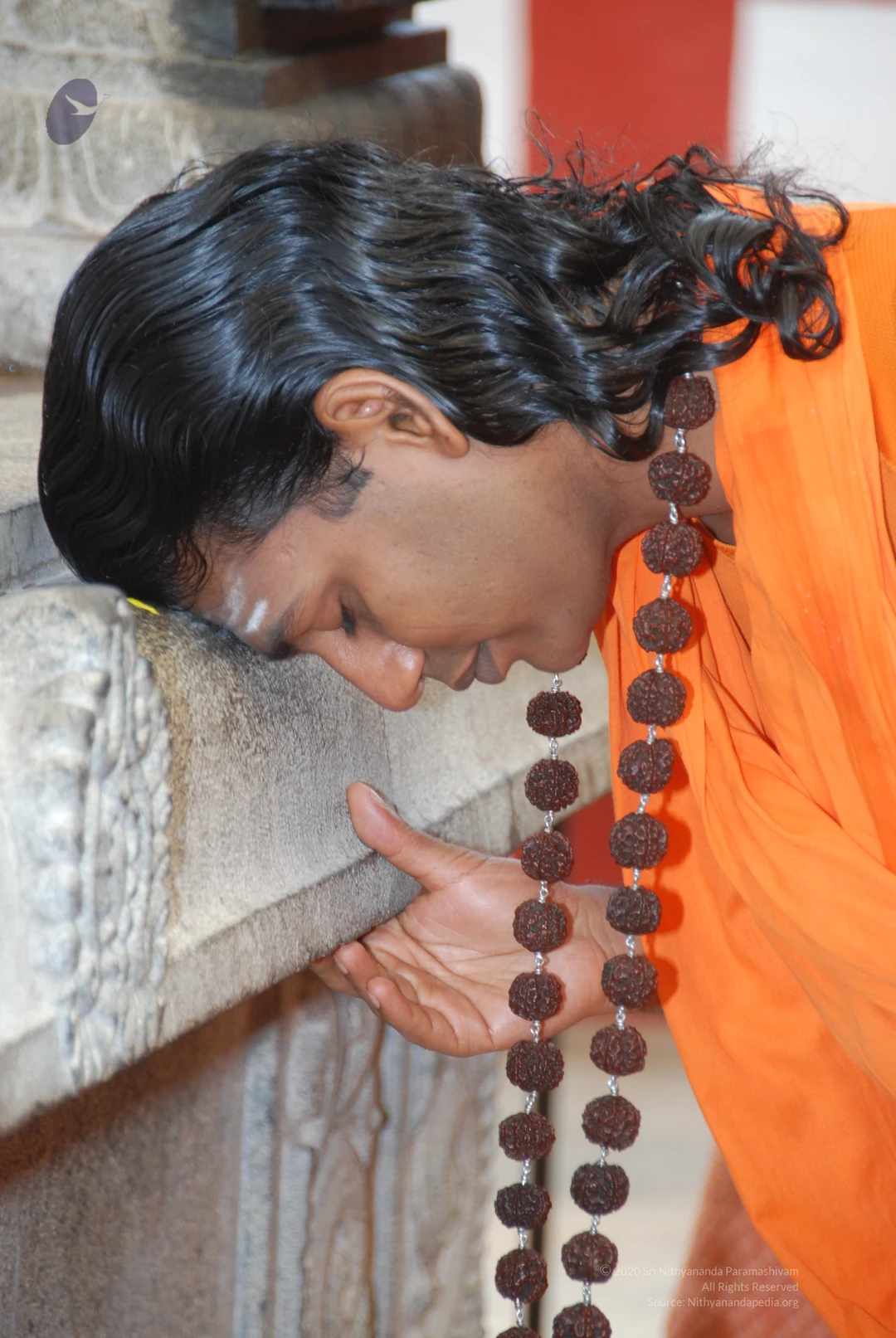
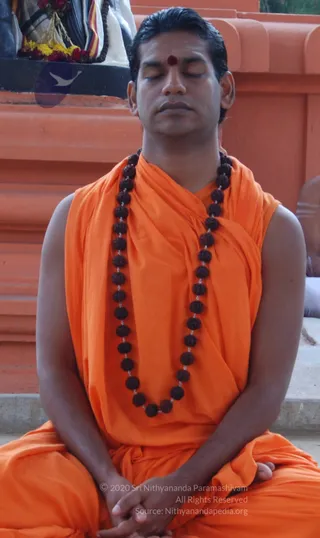
A temple scene with a man in orange robes and a rudraksha mala walking down a red carpet, palm raised in greeting, toward a golden shrine holding garlanded deity murti. Two men in white dhotis with red borders stand nearby, one with palms pressed together in namaskar and another in the background. A cameraman with a video camera on a tripod films beside a metal railing, under an orange cloth canopy and red-pillared roof. A brass plate with offerings sits at the lower left. The orange-robed figure is an appearance-based a person with a rudraksha mala walking in procession.A man with long, wavy black hair leans forward over a grey stone ledge, his face lowered toward the stone and his right hand resting open on the stone. He wears a flowing saffron-orange robe and a long necklace of dark rudraksha beads that hangs down past the ledge. A white tilak mark is visible on his forehead. The carved stone pillar behind him suggests a temple setting. Swamiji (probable): the long swept-back hair, saffron robe and rudraksha mala match the cues for the Swamiji candidate.
04

Nithyanandeshwara-Paramashiva-Golden-Temple

2 dated photos in previewSource gallery
05

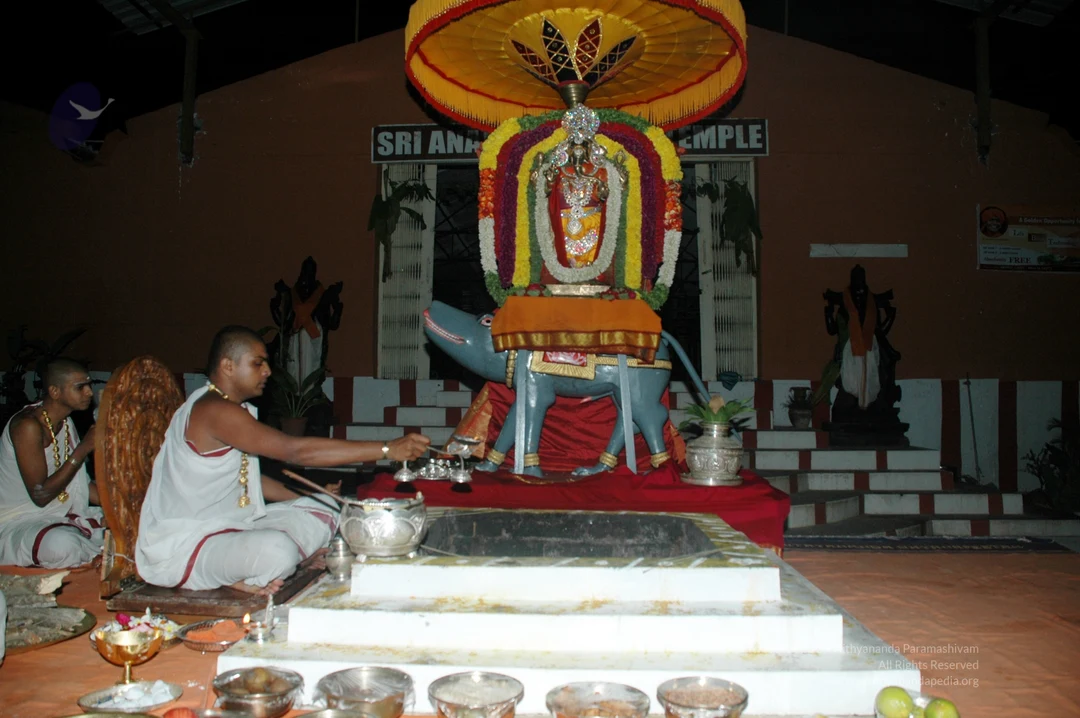
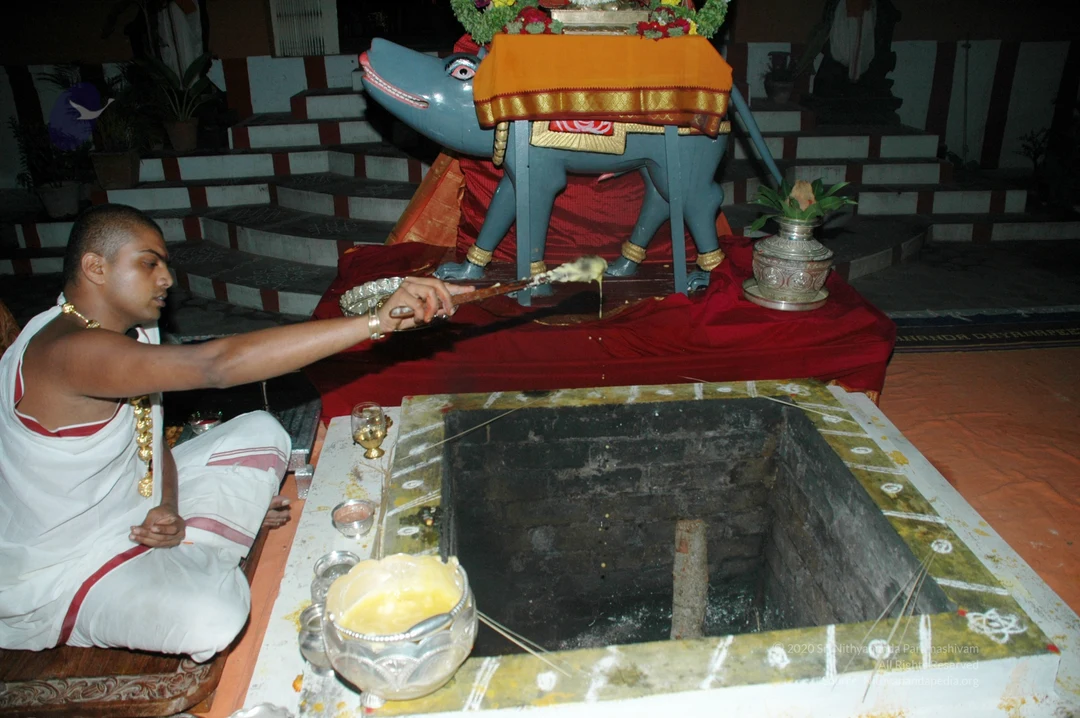
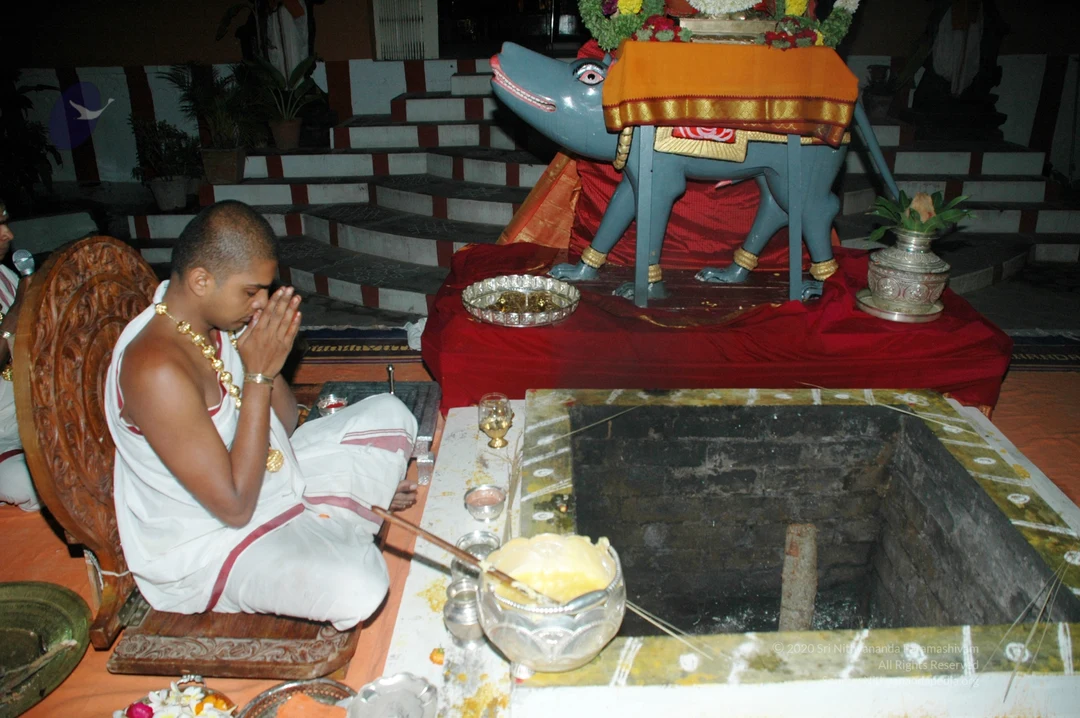
Ganapati-Homa

6 dated photos in previewSource gallery
06

Nsp-Session-With-Swamiji

18 dated photos in previewSource gallery
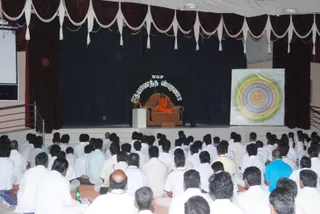
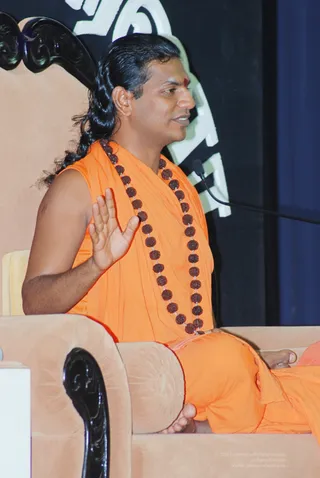
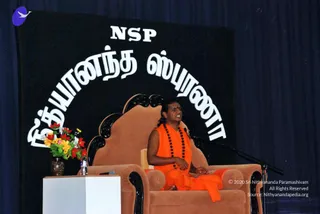
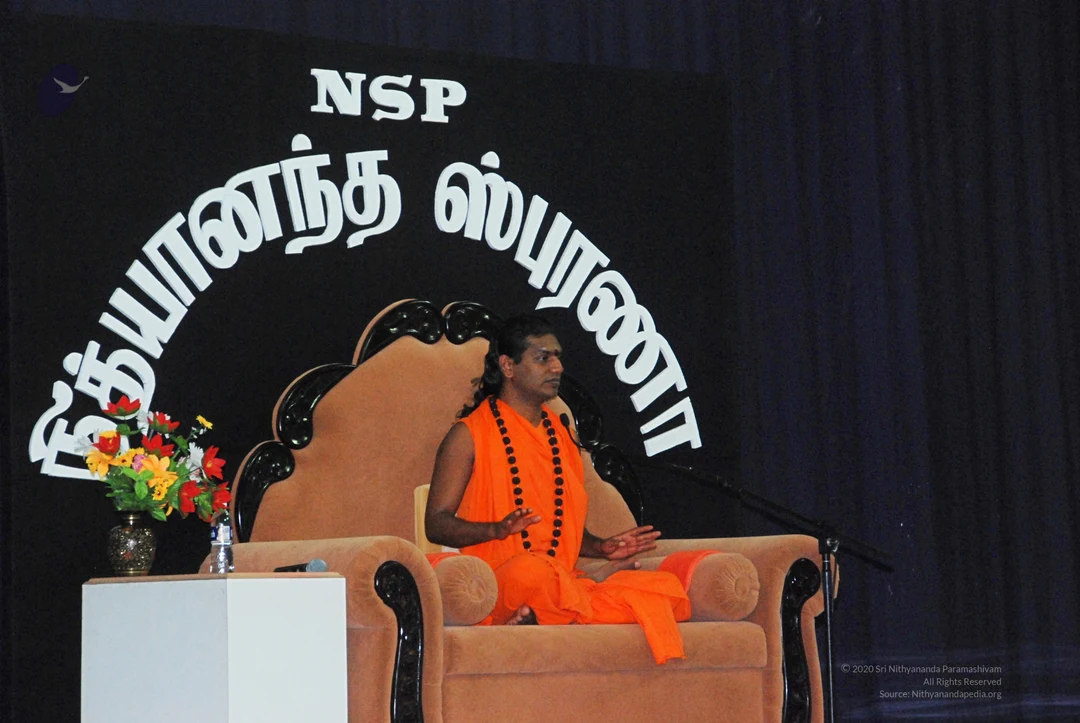
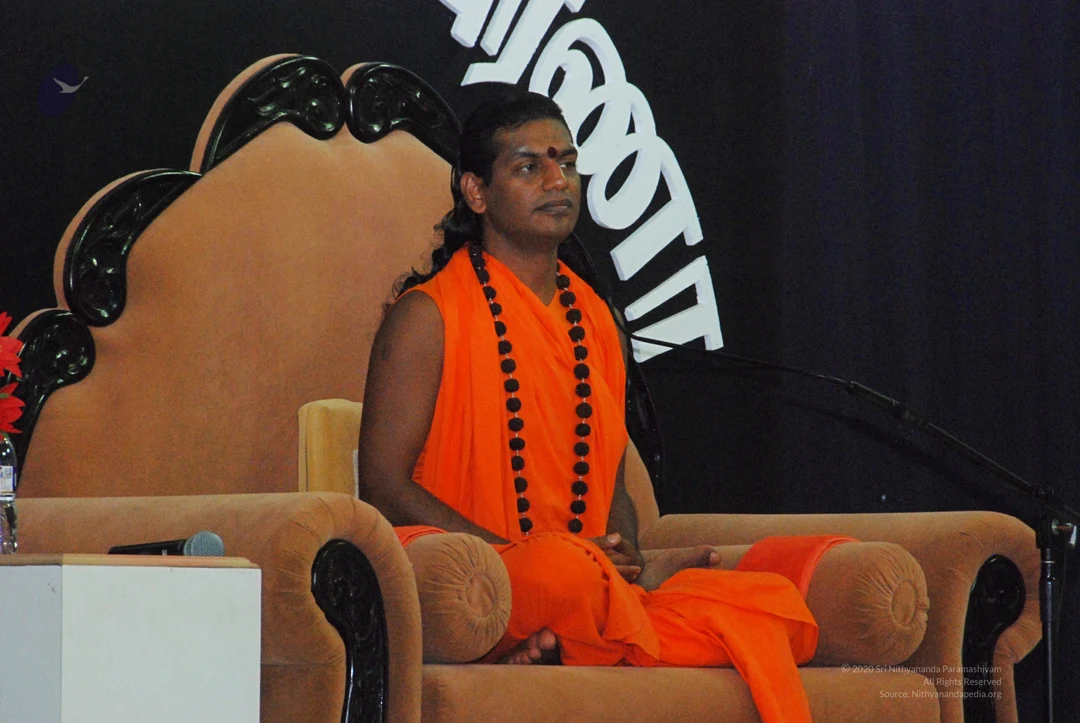
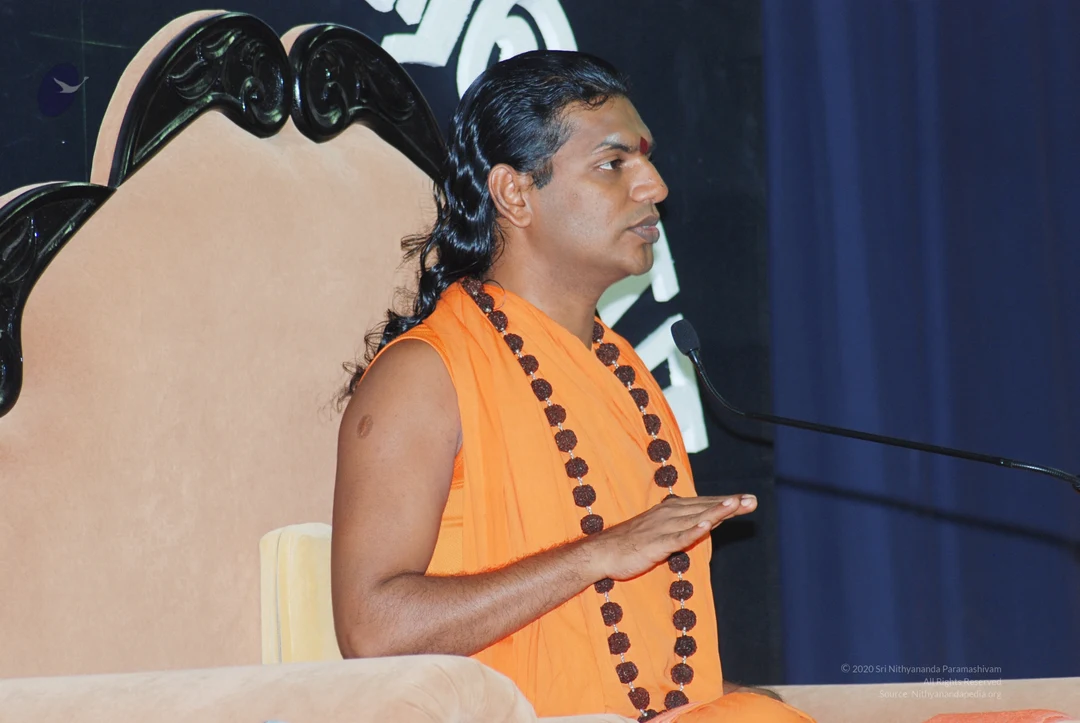
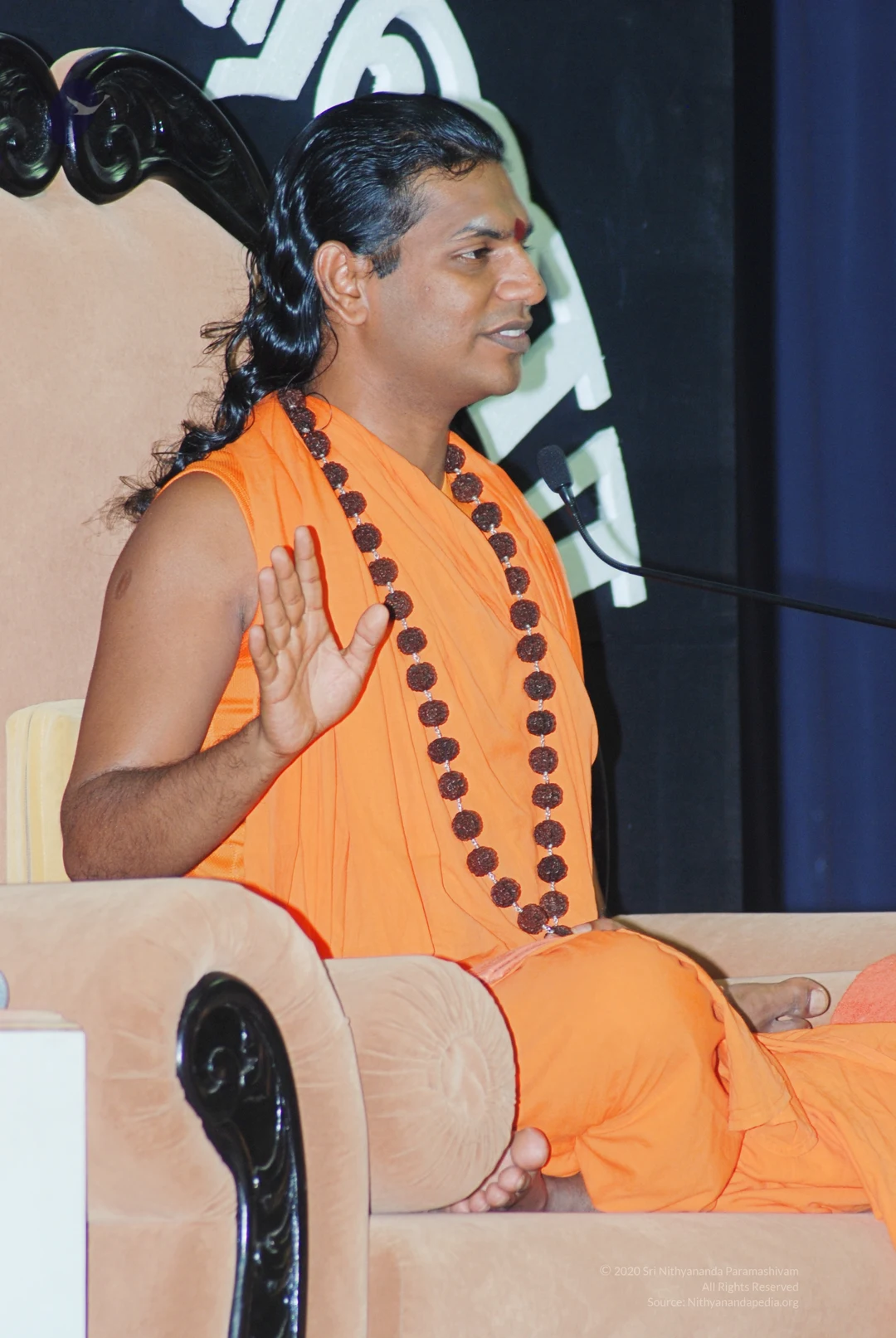
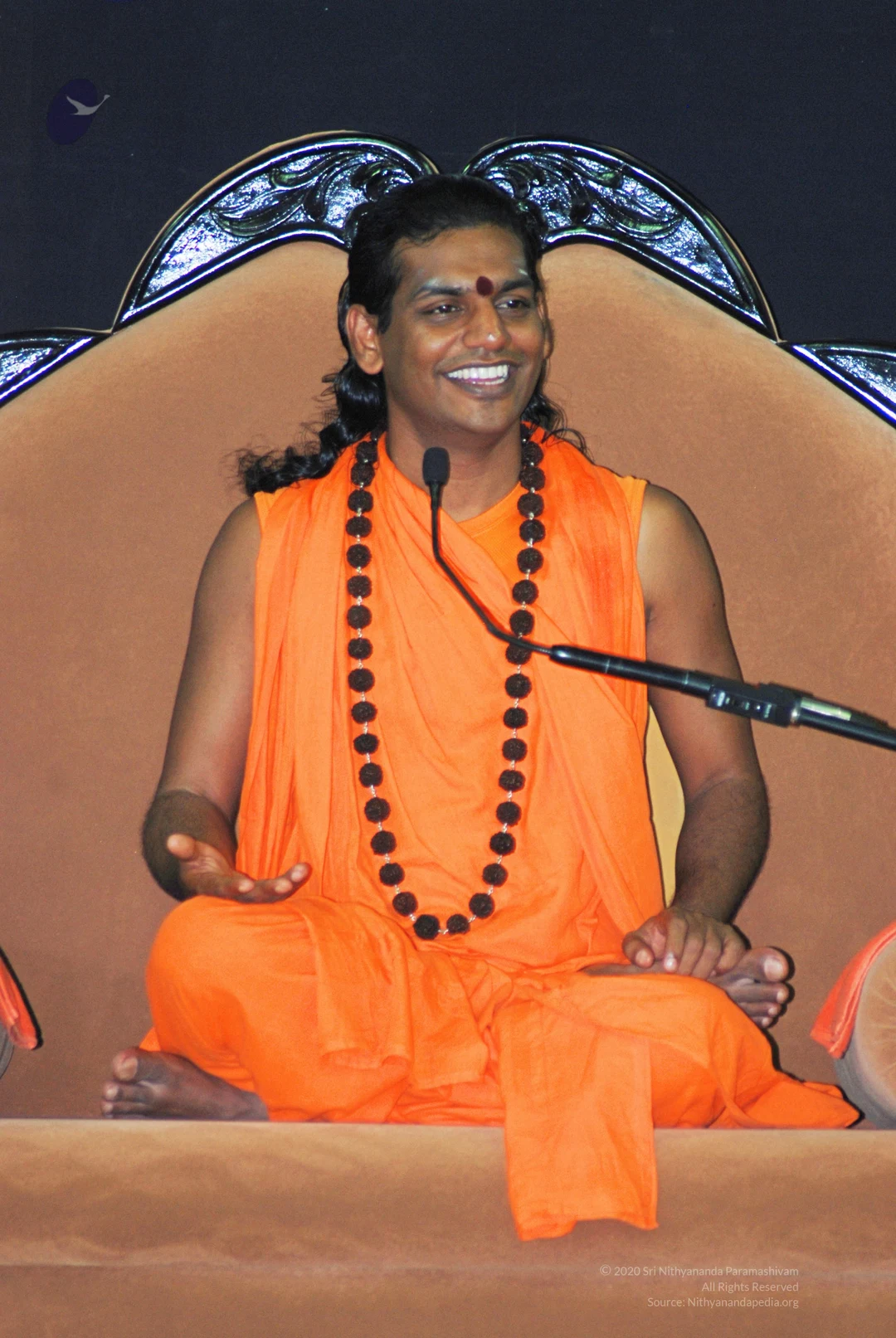
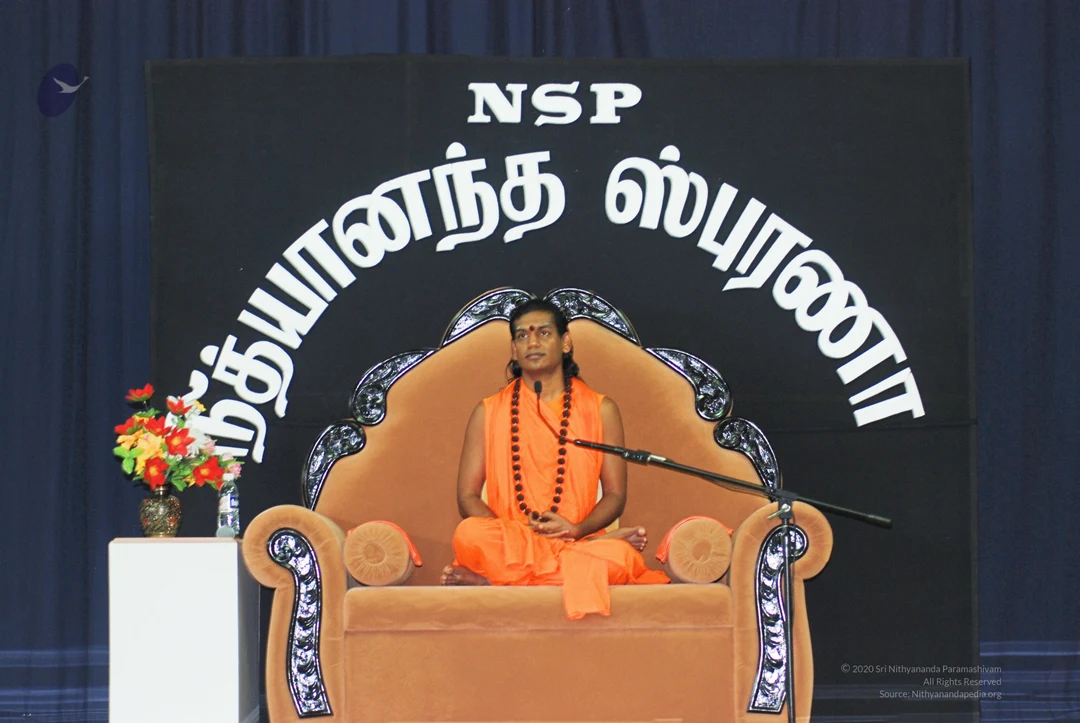
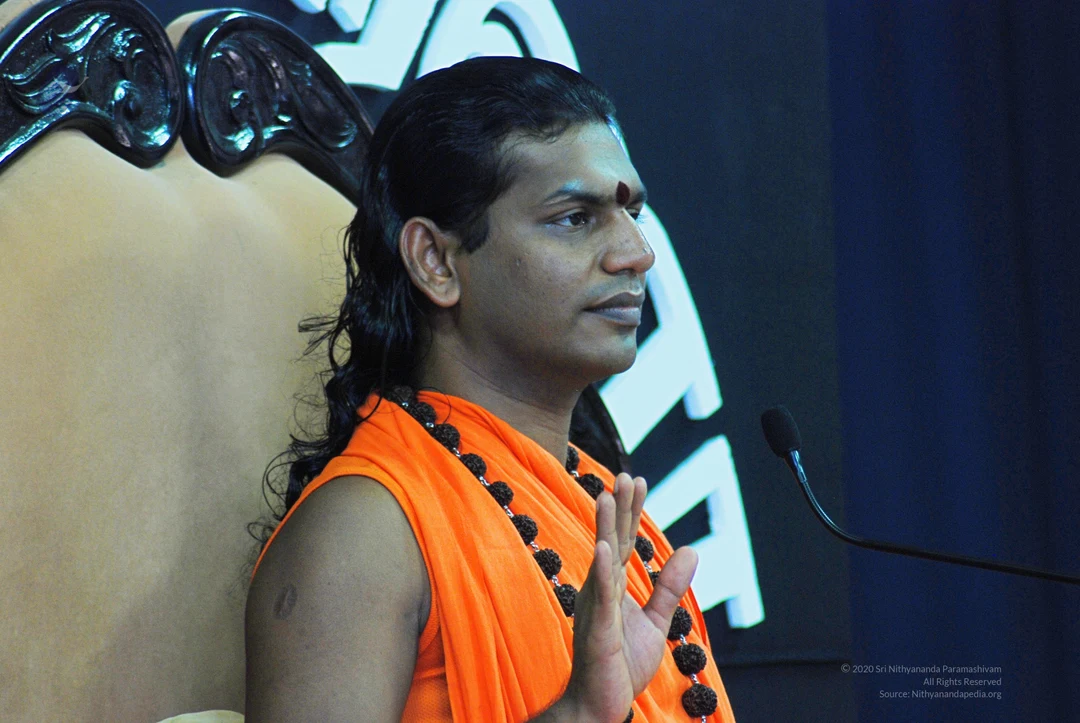
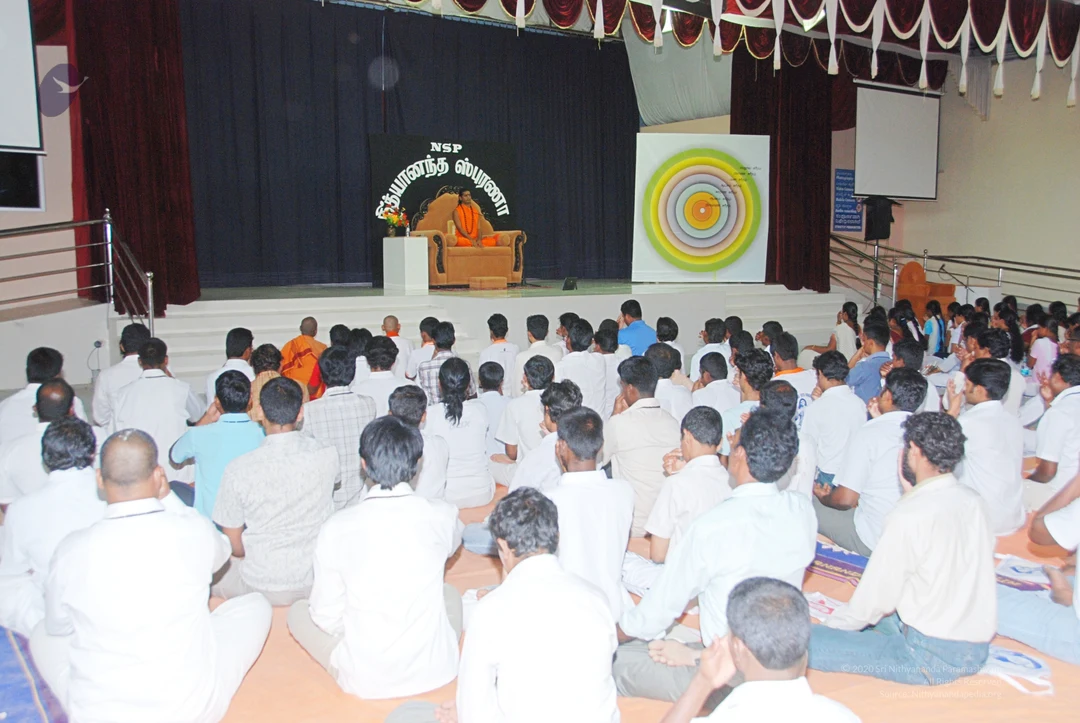
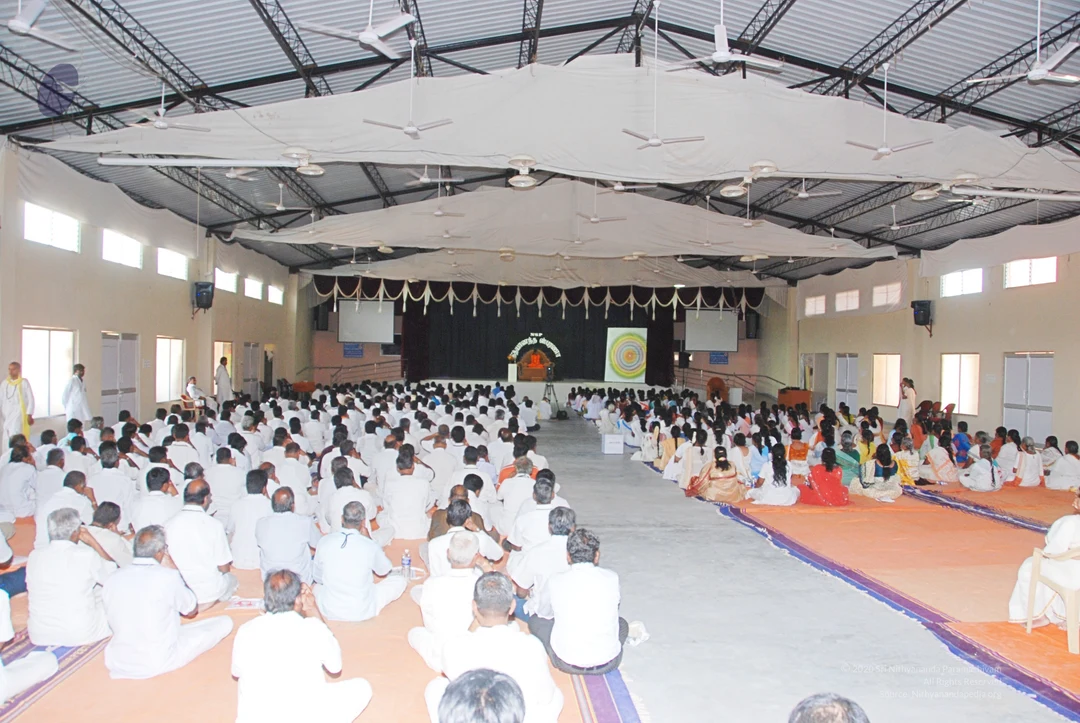
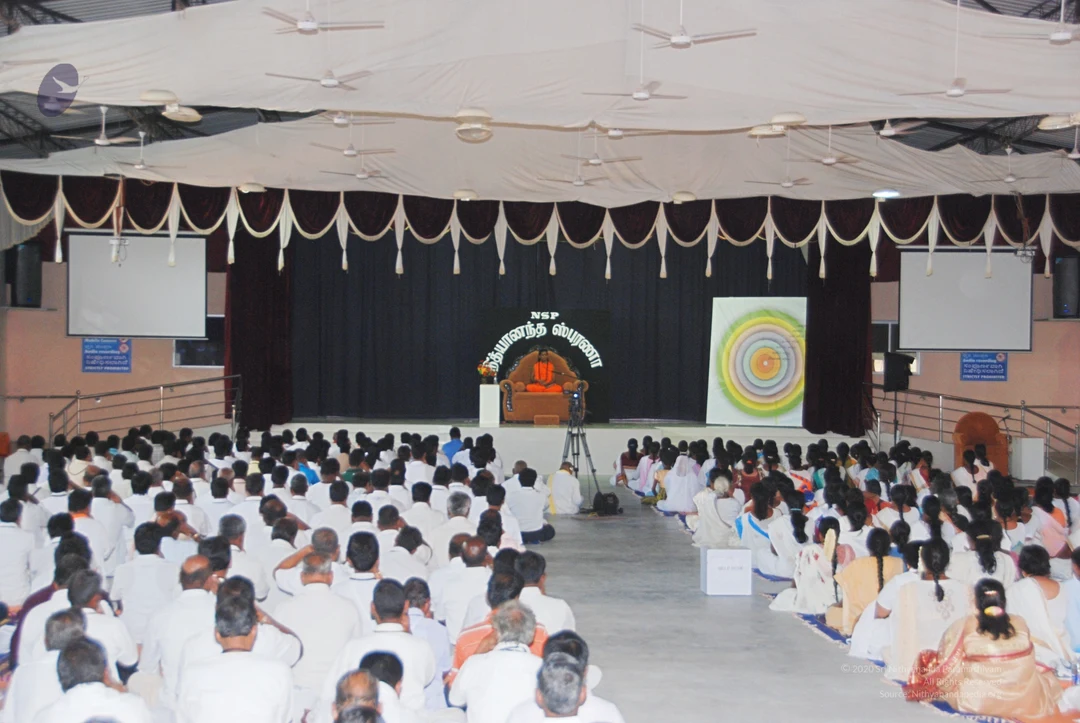
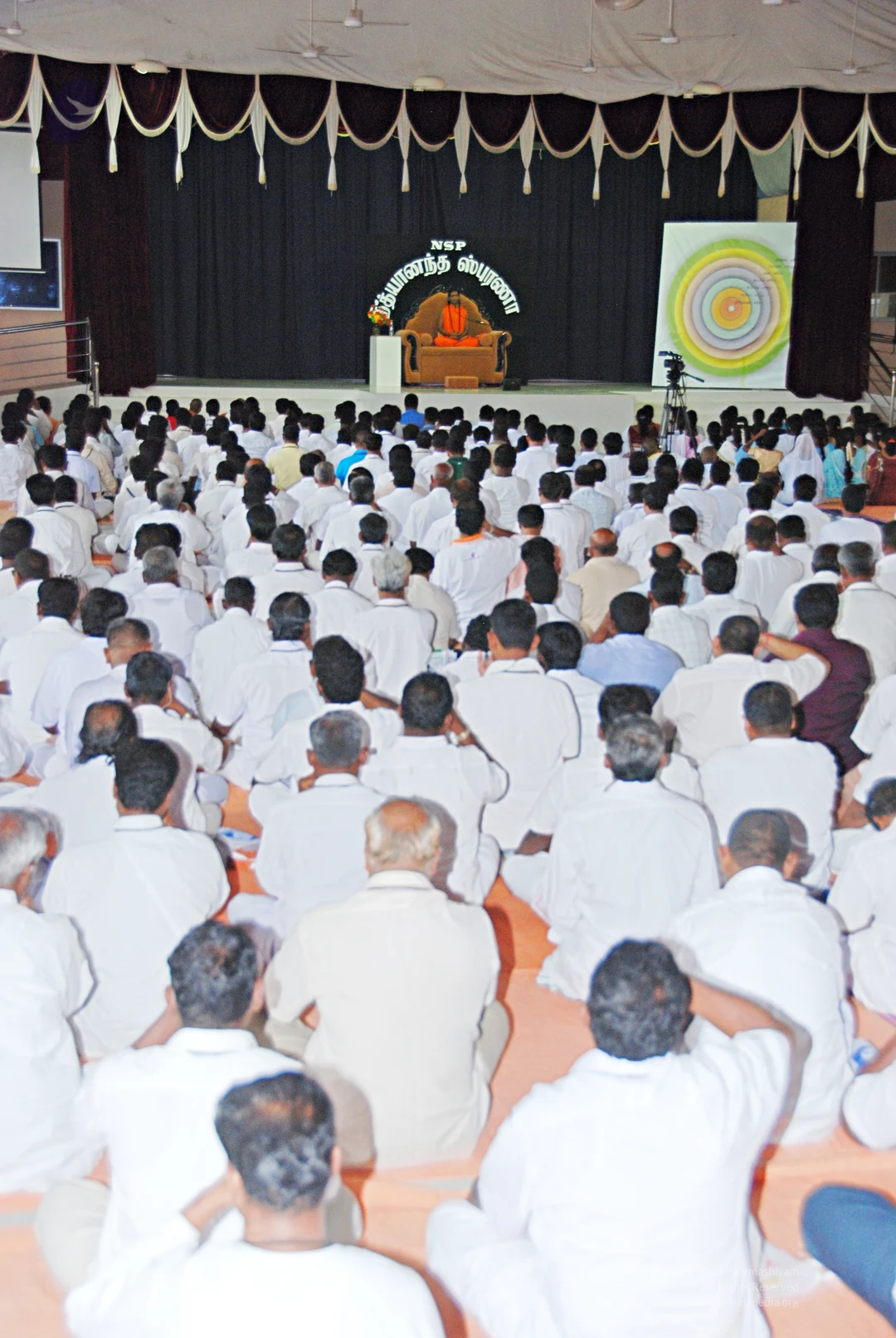
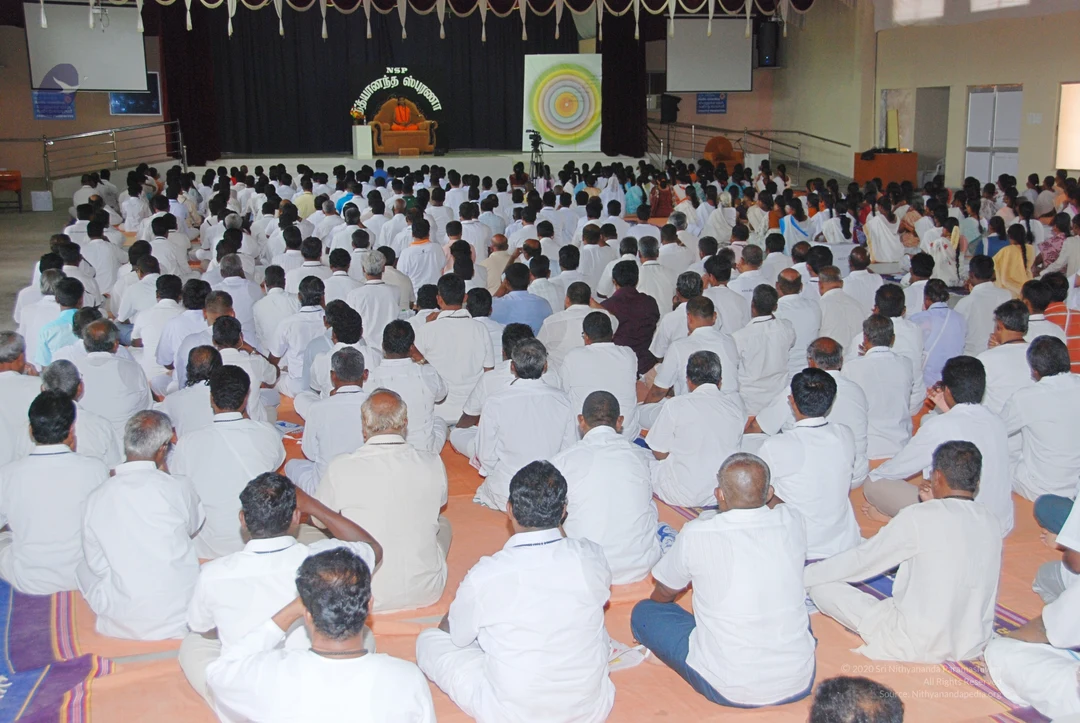
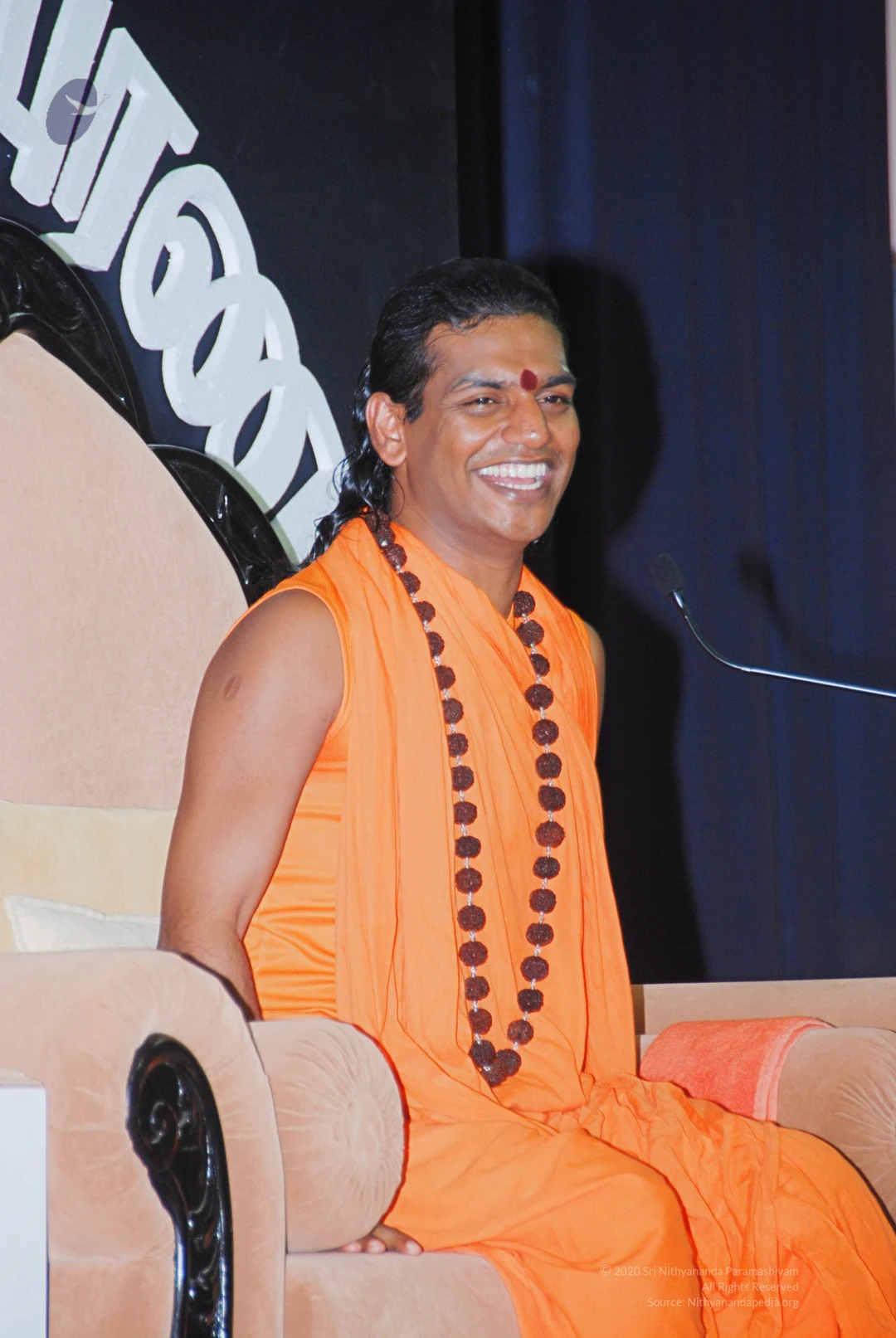
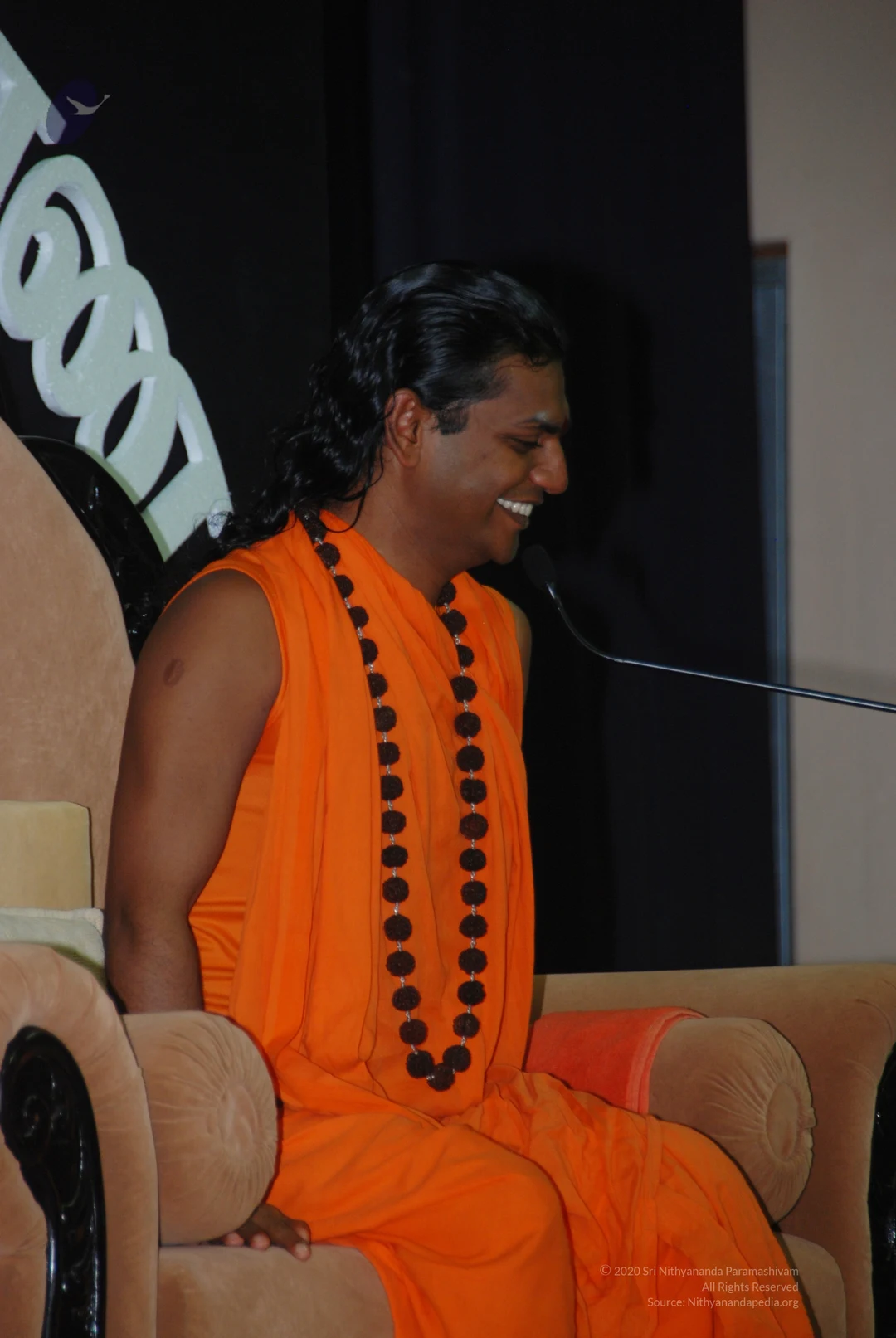
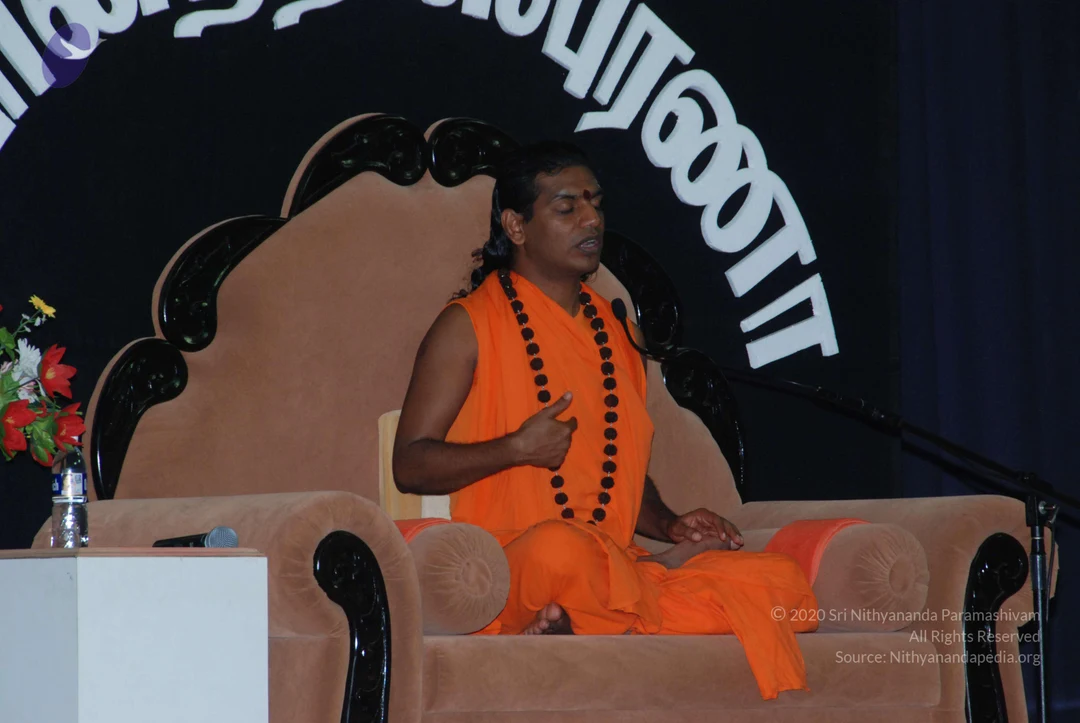
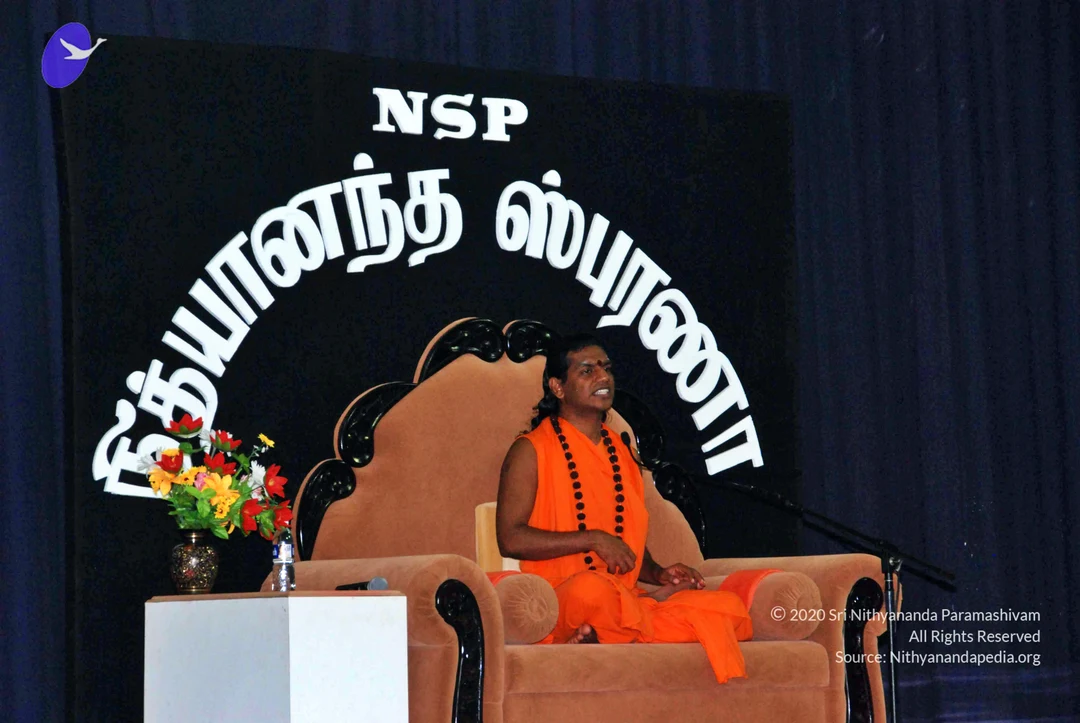
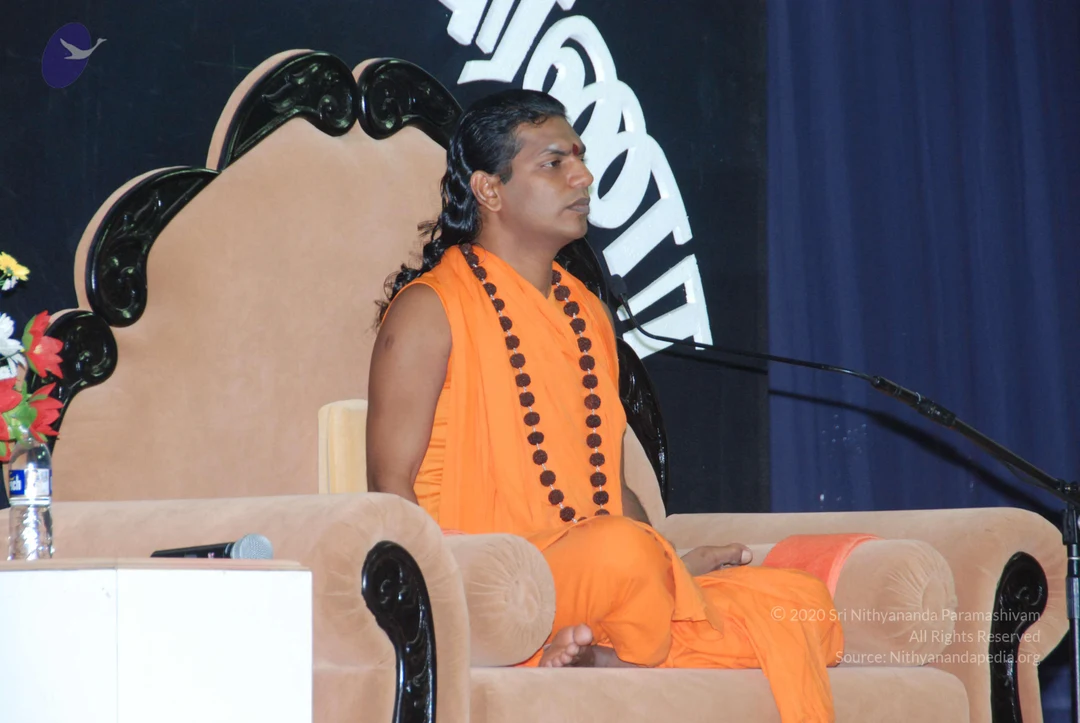
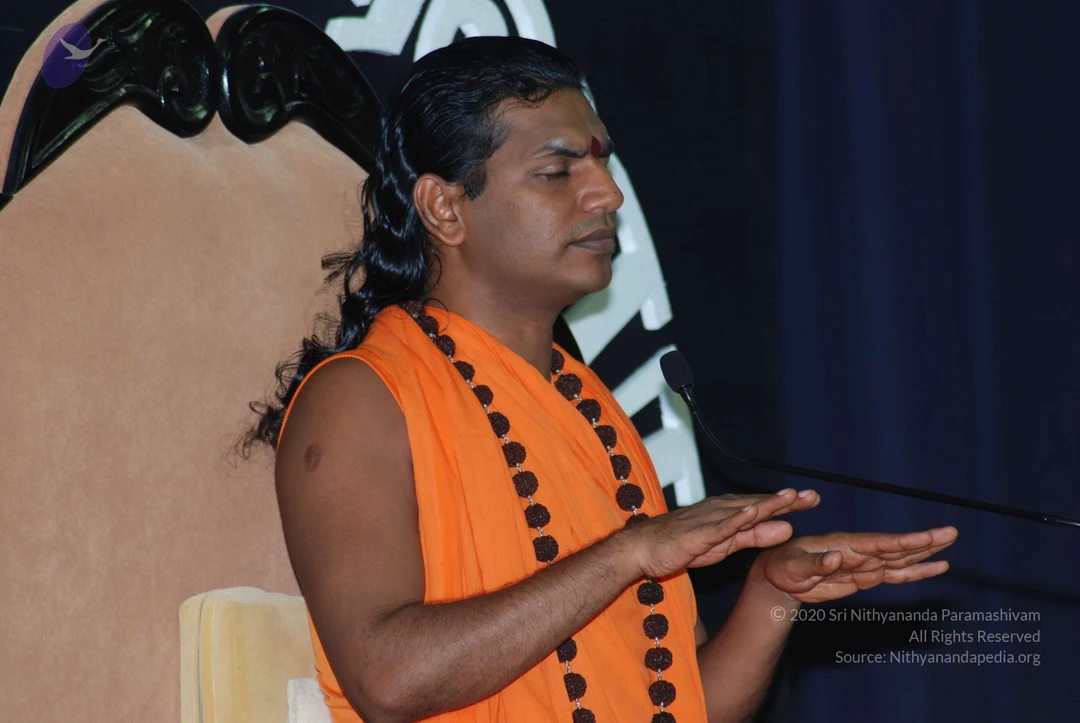
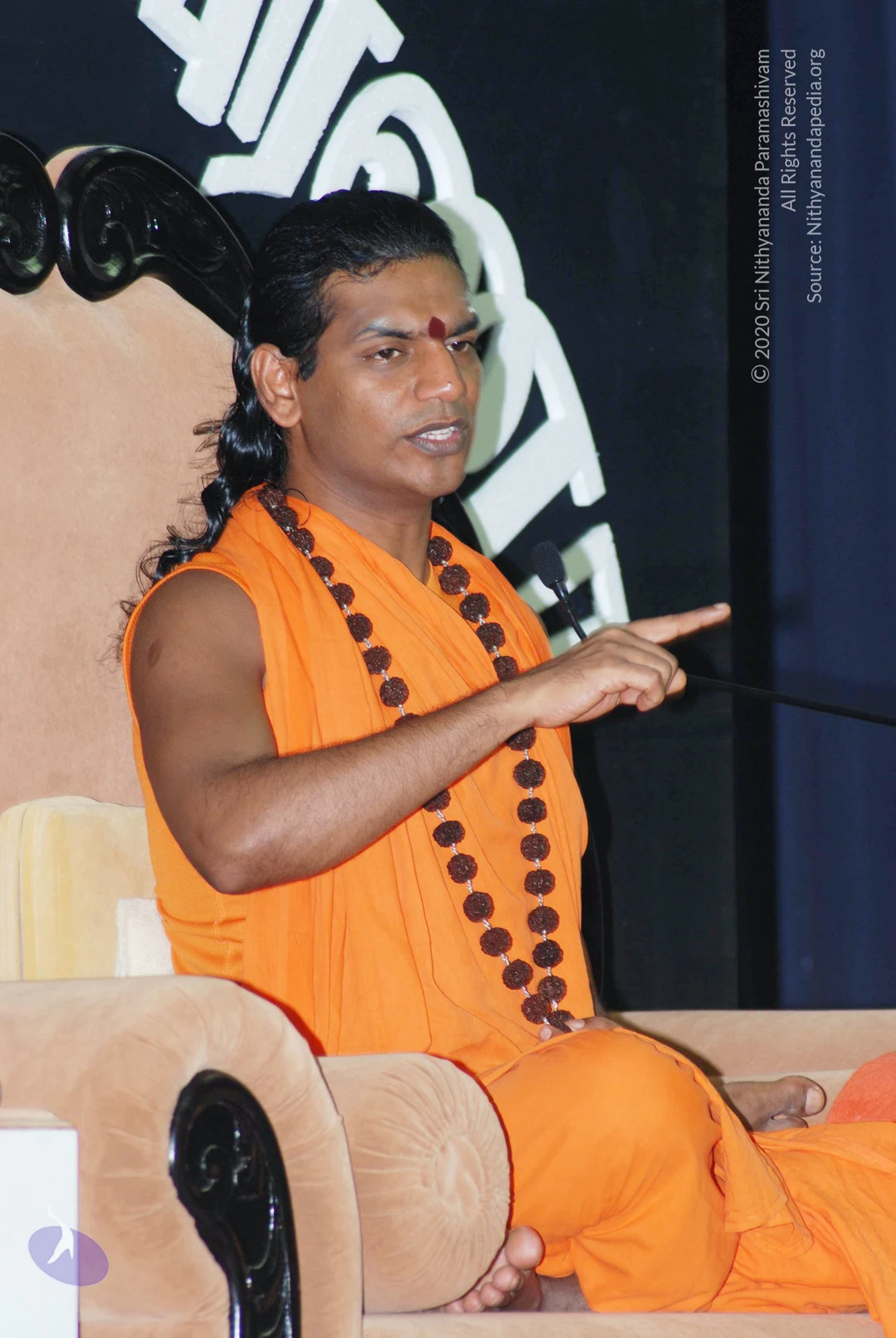
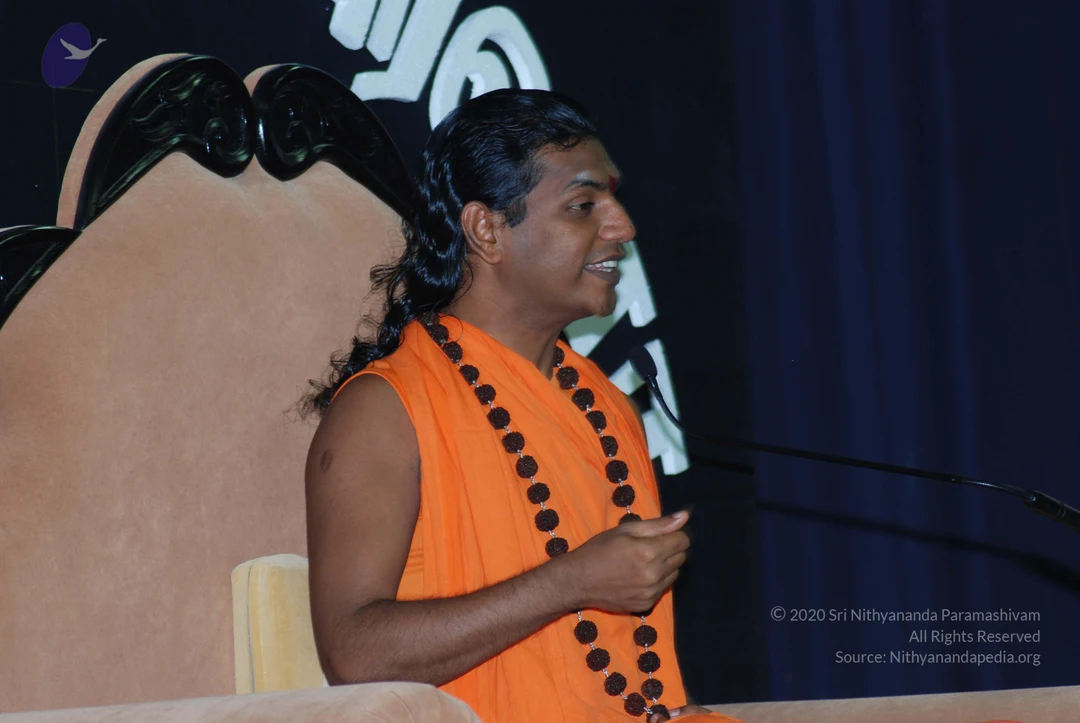
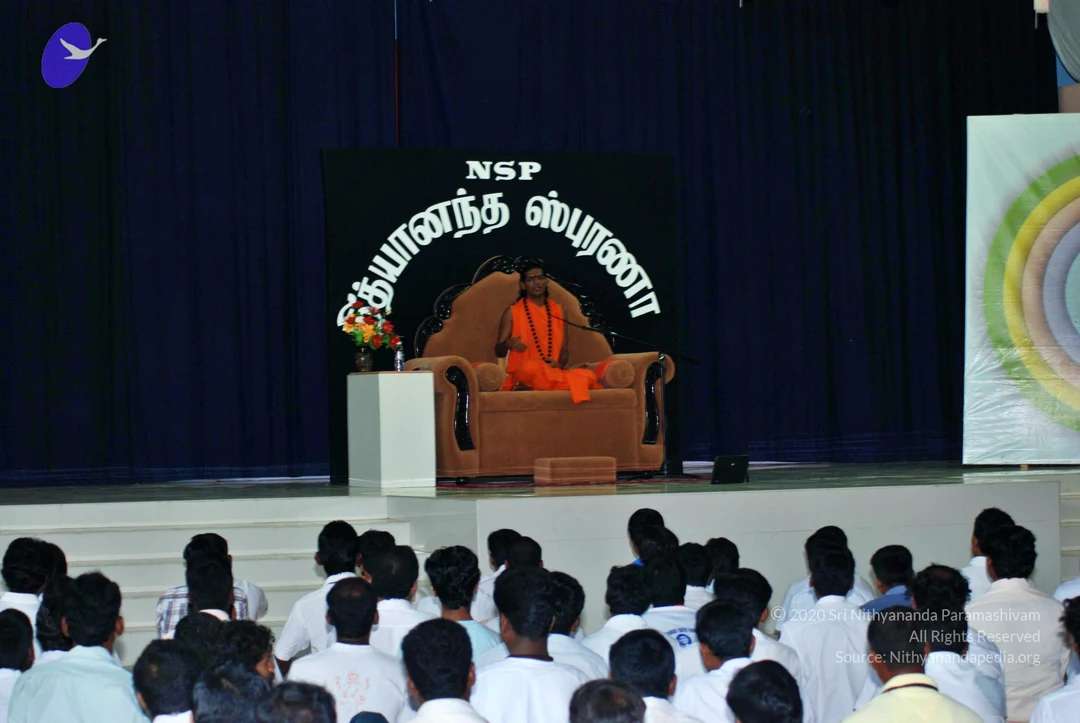
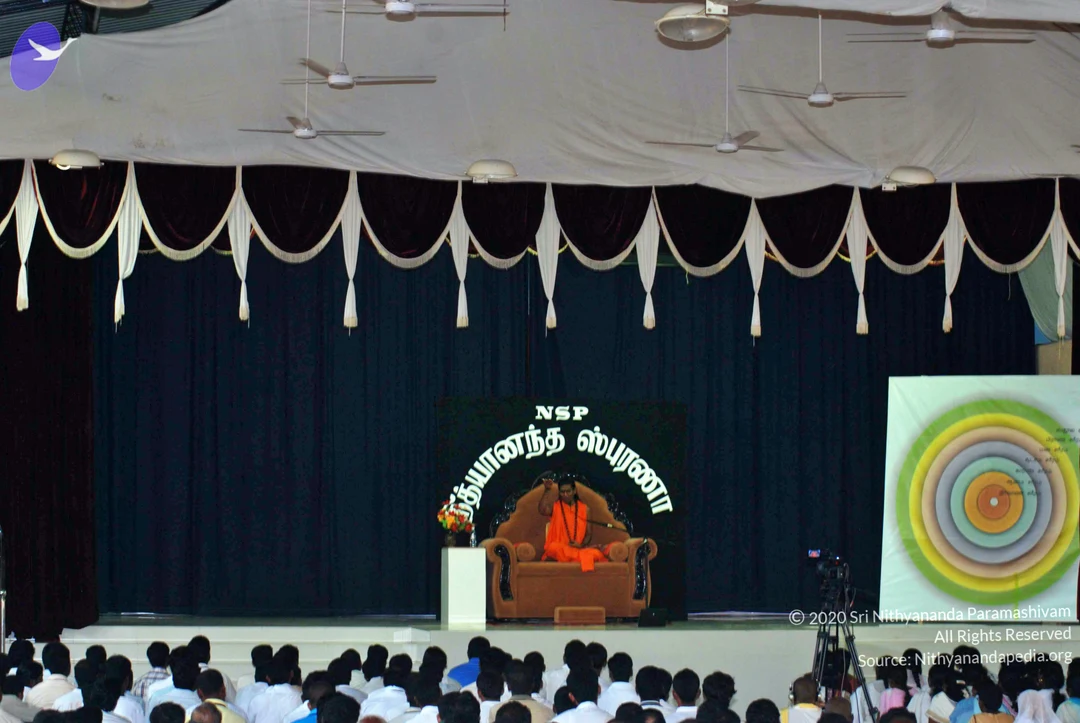
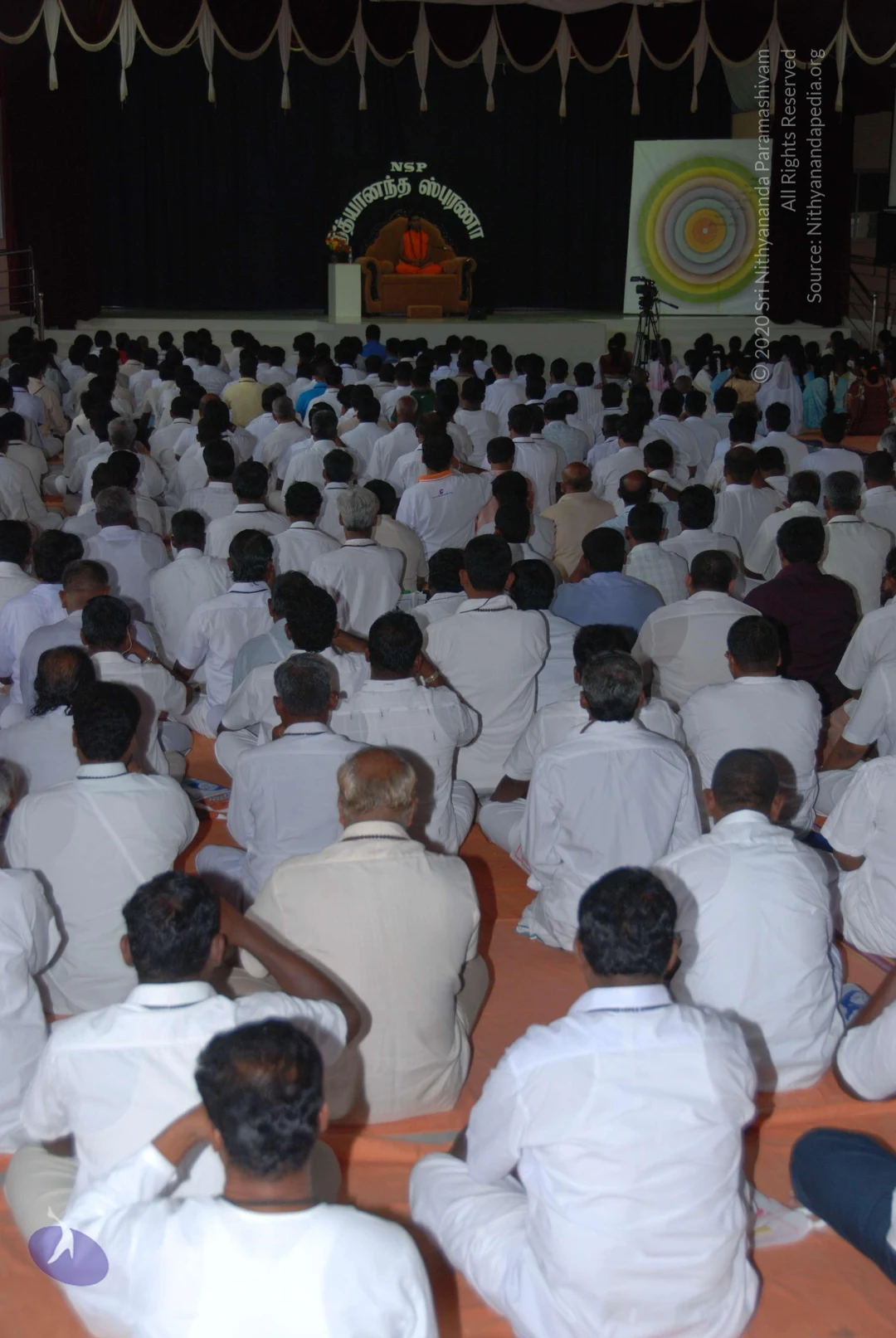
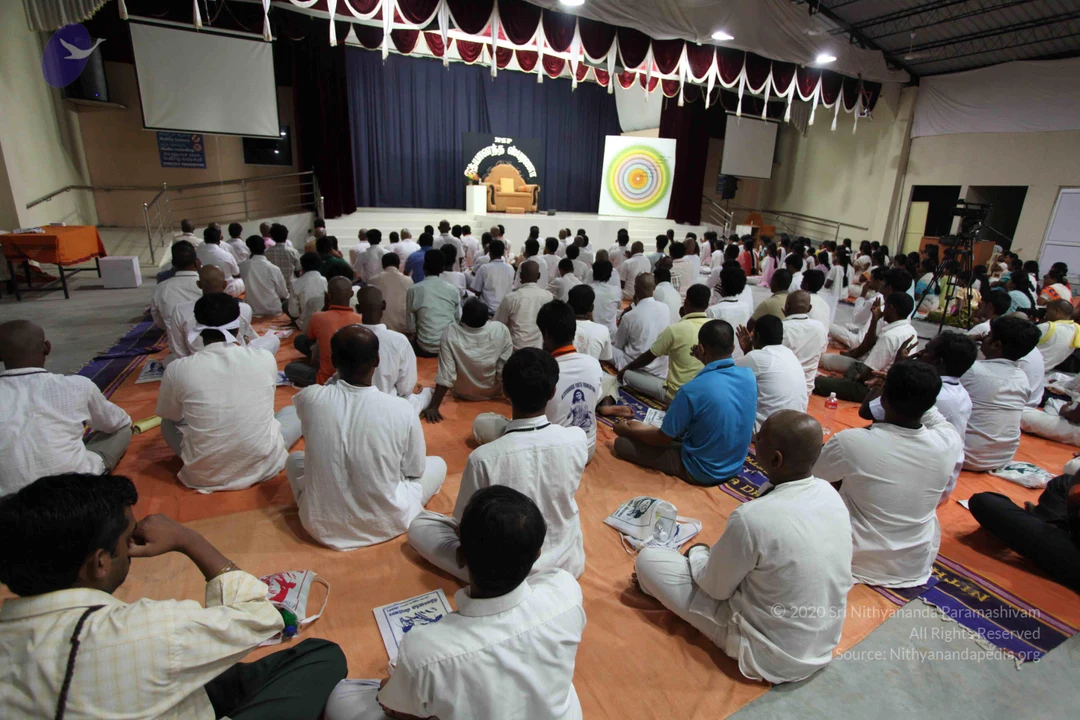
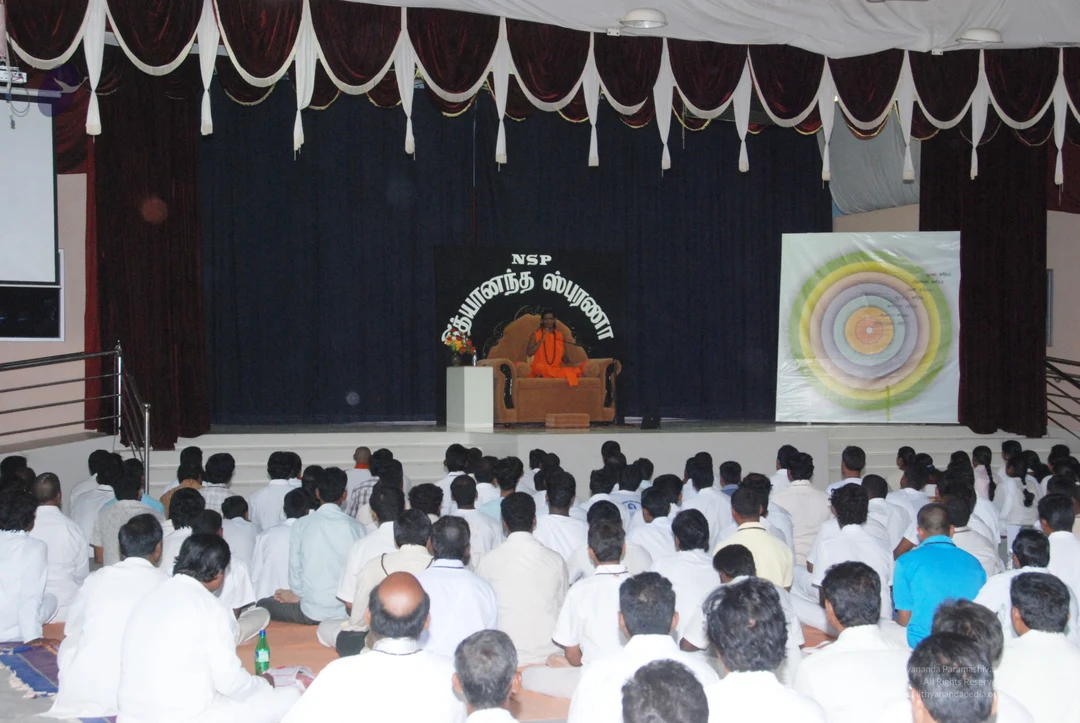
A large audience of mostly men in white clothes sits cross-legged on the floor of a hall, facing a stage. On the stage, a figure in orange robes with a red-orange garment and a beaded necklace sits in a brown upholstered armchair behind a small white podium with a flower arrangement. Swamiji (probable) is seated in the centre, with long hair and saffron-orange robes and a rudraksha-style necklace. Behind him hangs a dark blue curtain with a dark banner reading NSP and the Tamil text நித்தியானந்த ஸ்புரணா. A large white banner on the right shows concentric coloured rings. Swags of maroon and white drapery hang along the top of the stage, and a white projection screen stands on the left.A photograph of a seated speaker on a stage at a Nithyananda Dhyanapeetam event. A man with long dark hair, wearing an orange saffron robe and a long dark rudraksha mala, sits cross-legged in a plush peach-coloured armchair with carved black wooden frame, hands raised in a teaching gesture, facing left toward an unseen audience. A microphone stand stands beside him. Behind him hangs a black backdrop with large white Tamil lettering reading a Nithyananda Dhyanapeetam name. At left, a white podium holds a glass vase of red and yellow artificial flowers and a water bottle. No other people are visible in the frame.A seated man in orange saffron robes sits cross-legged on an ornate orange upholstered throne with carved black wooden backrest and armrests. He wears a black rudraksha mala around his neck and a red bindi on his forehead, with long dark hair swept back. Hands rest in his lap. A microphone stand and a small white podium with a microphone stand at left are visible, with red flowers at the left edge. Behind him is a black backdrop with large white letters partly visible at top right.
07

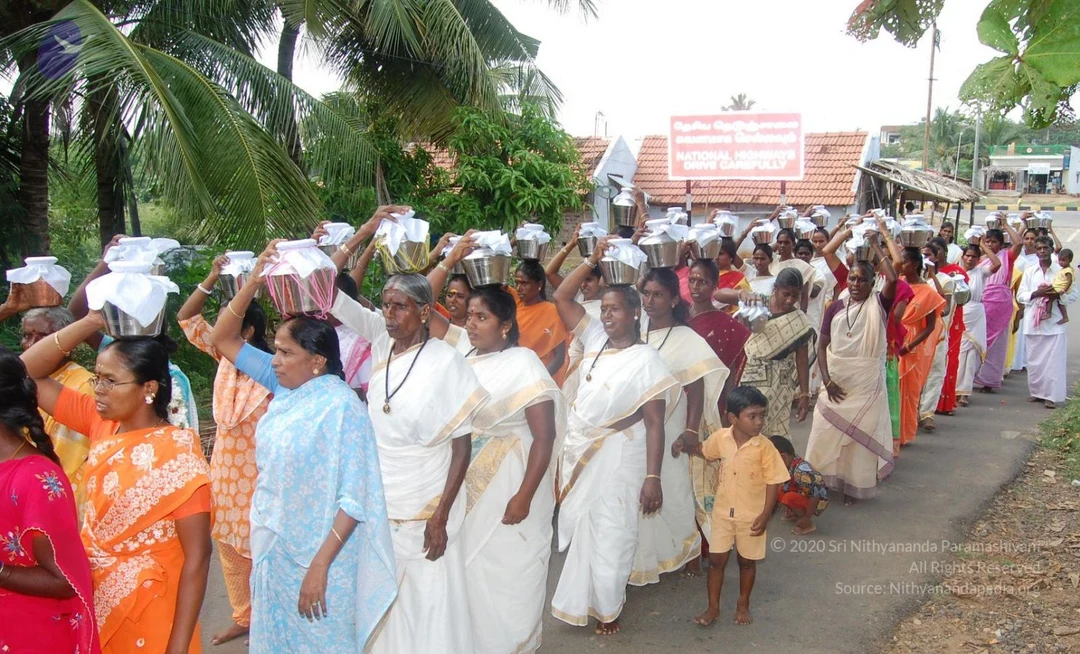
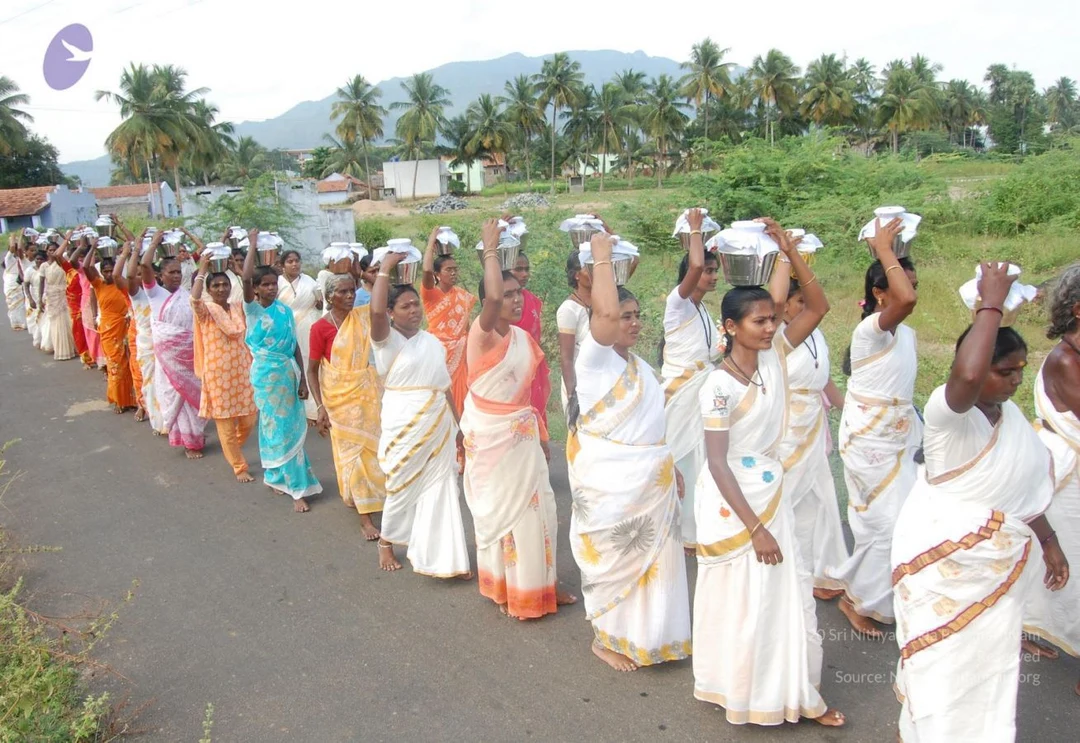
Seeragapadi-milk-pot-procession

11 dated photos in previewSource gallery
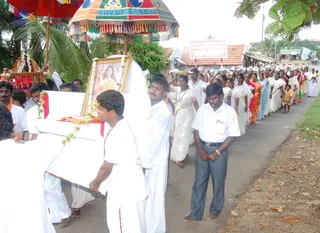
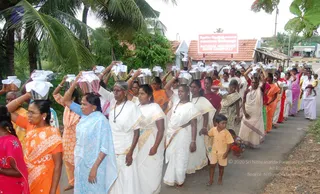
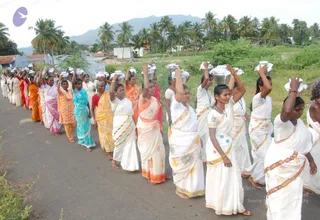
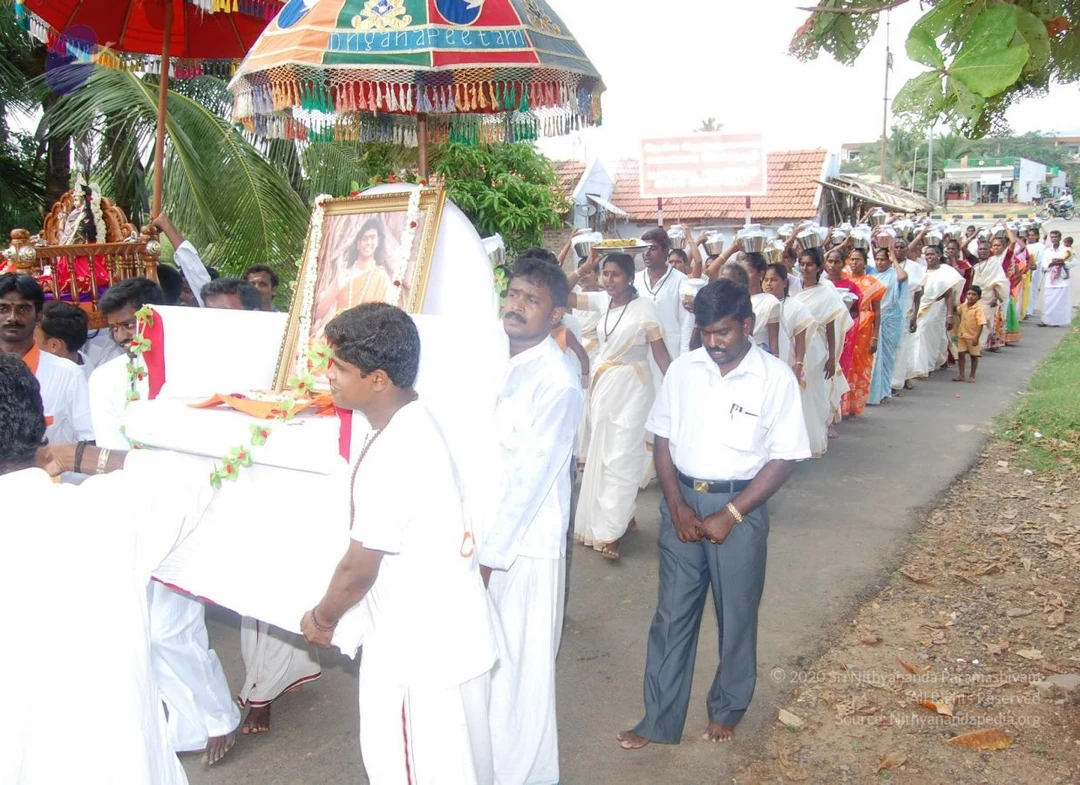
A long procession of women walks barefoot along a paved village road lined with coconut palms and green shrubs, with a low hill behind. Each woman balances a metal pot wrapped in white cloth on her head, one hand raised to steady it. Most wear white saris with gold or orange borders, while others wear orange, pink, blue and yellow saris. Several wear gold bangles and necklaces. The scene resembles a ritual pot-carrying procession.
08

01--Satsang

21 dated photos in previewSource gallery
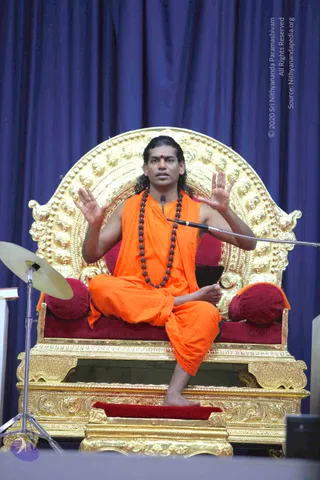
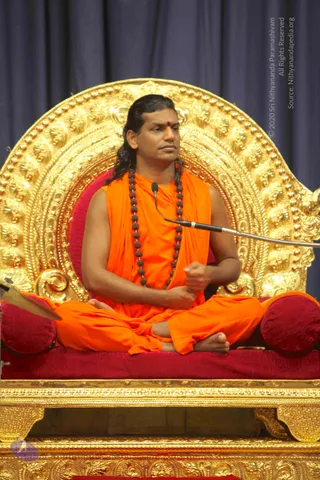
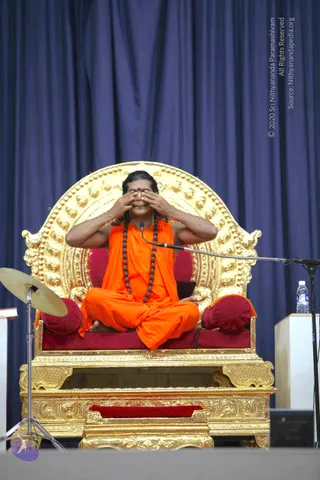
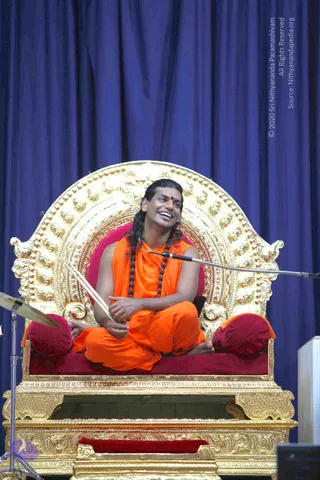
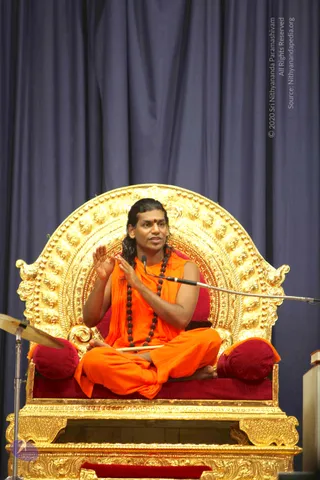
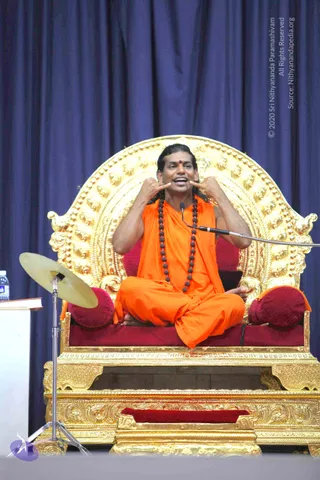
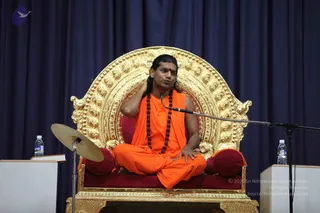
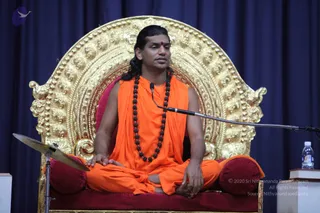
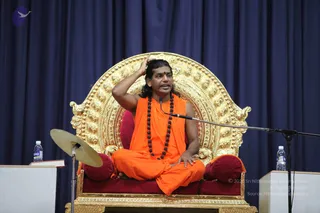
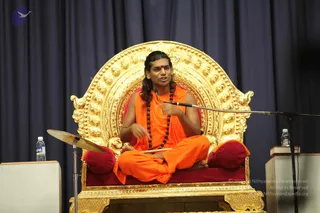
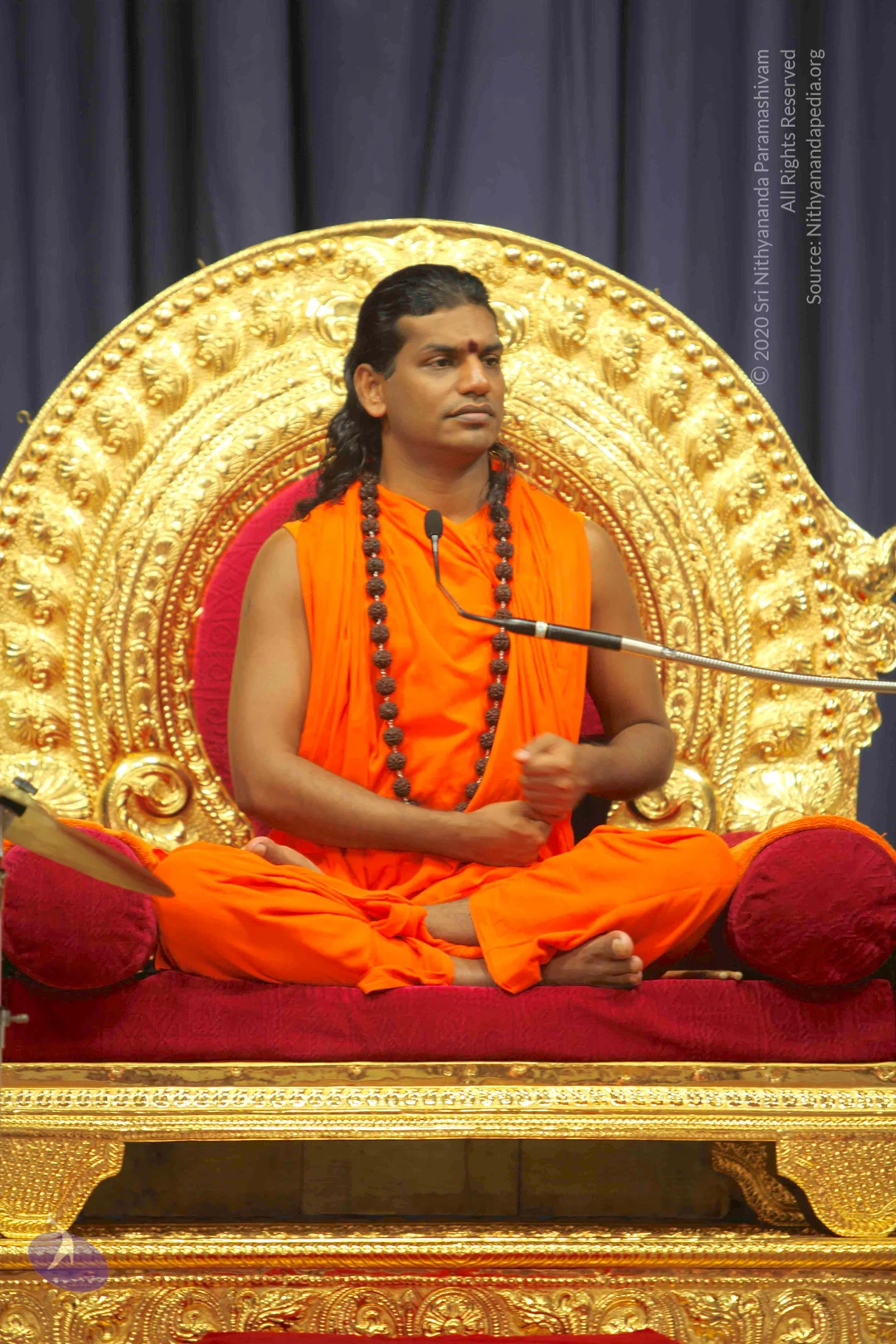
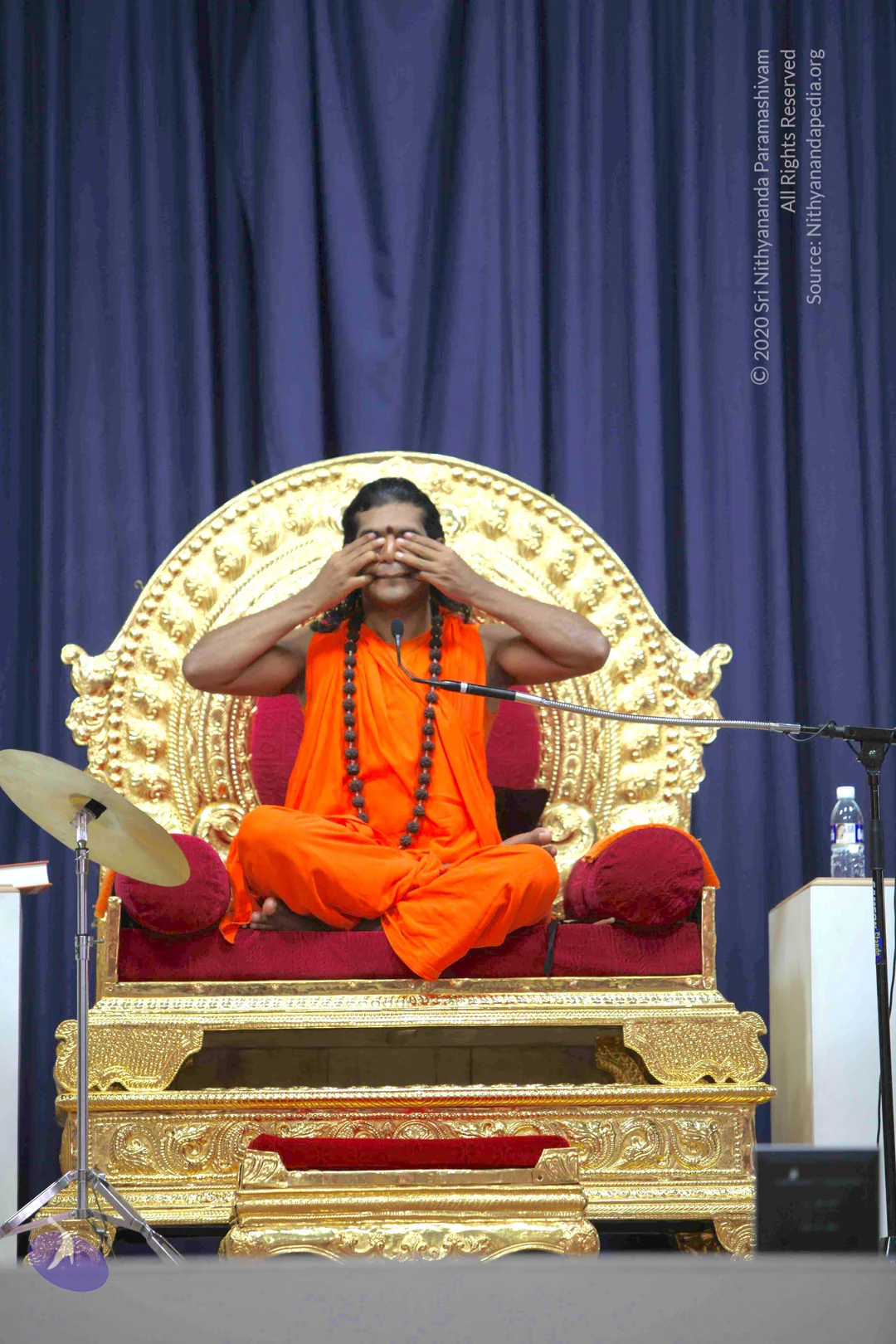
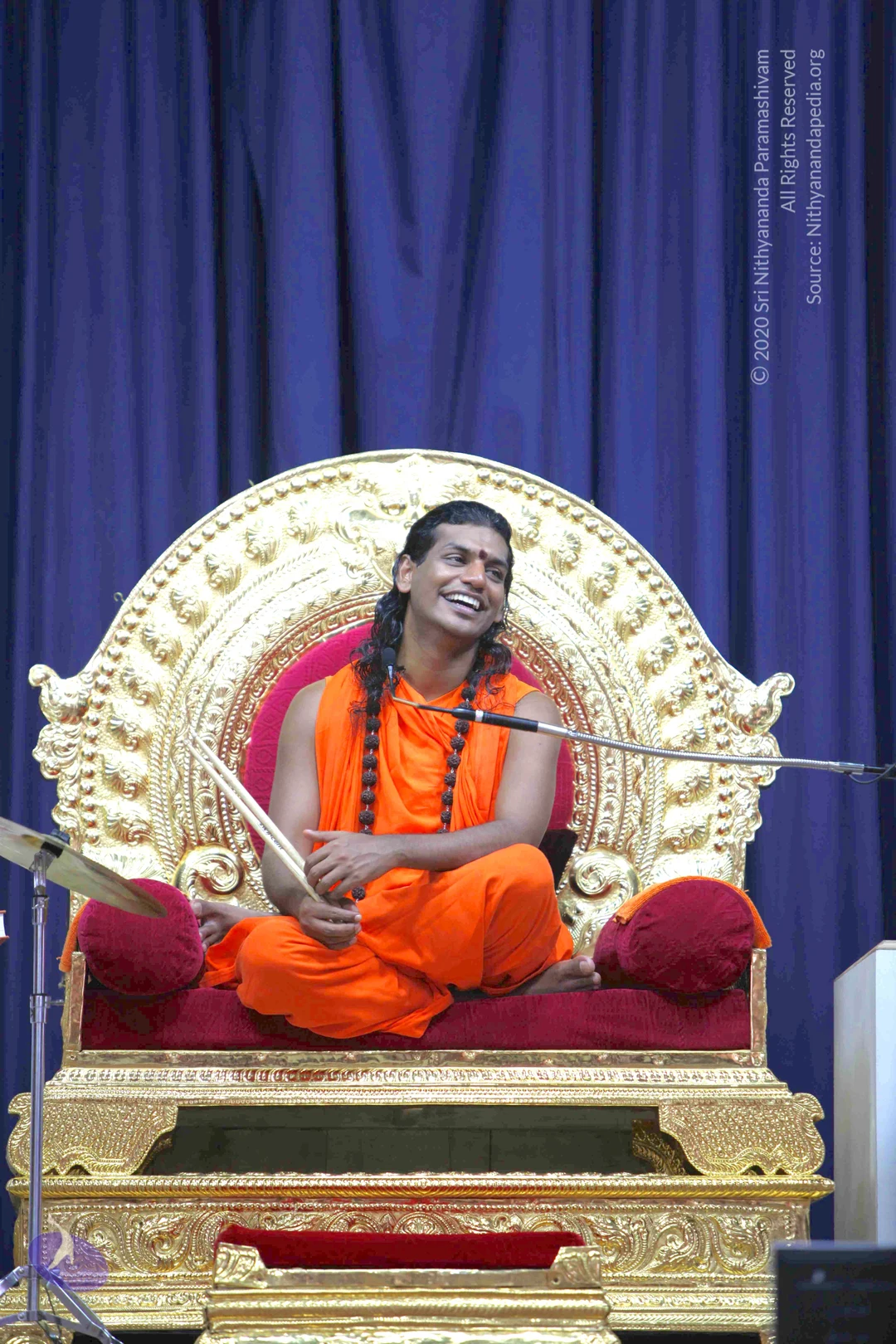
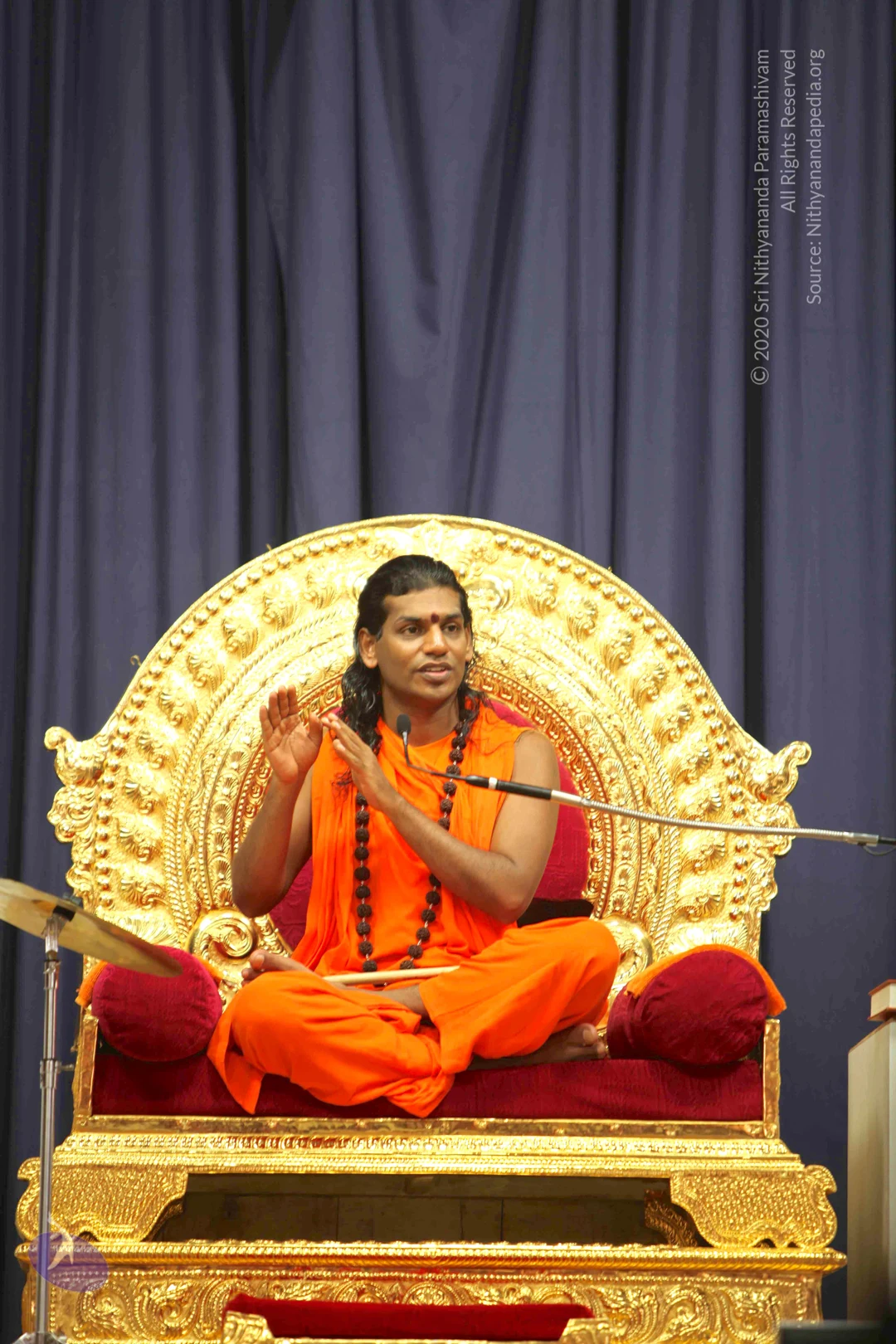
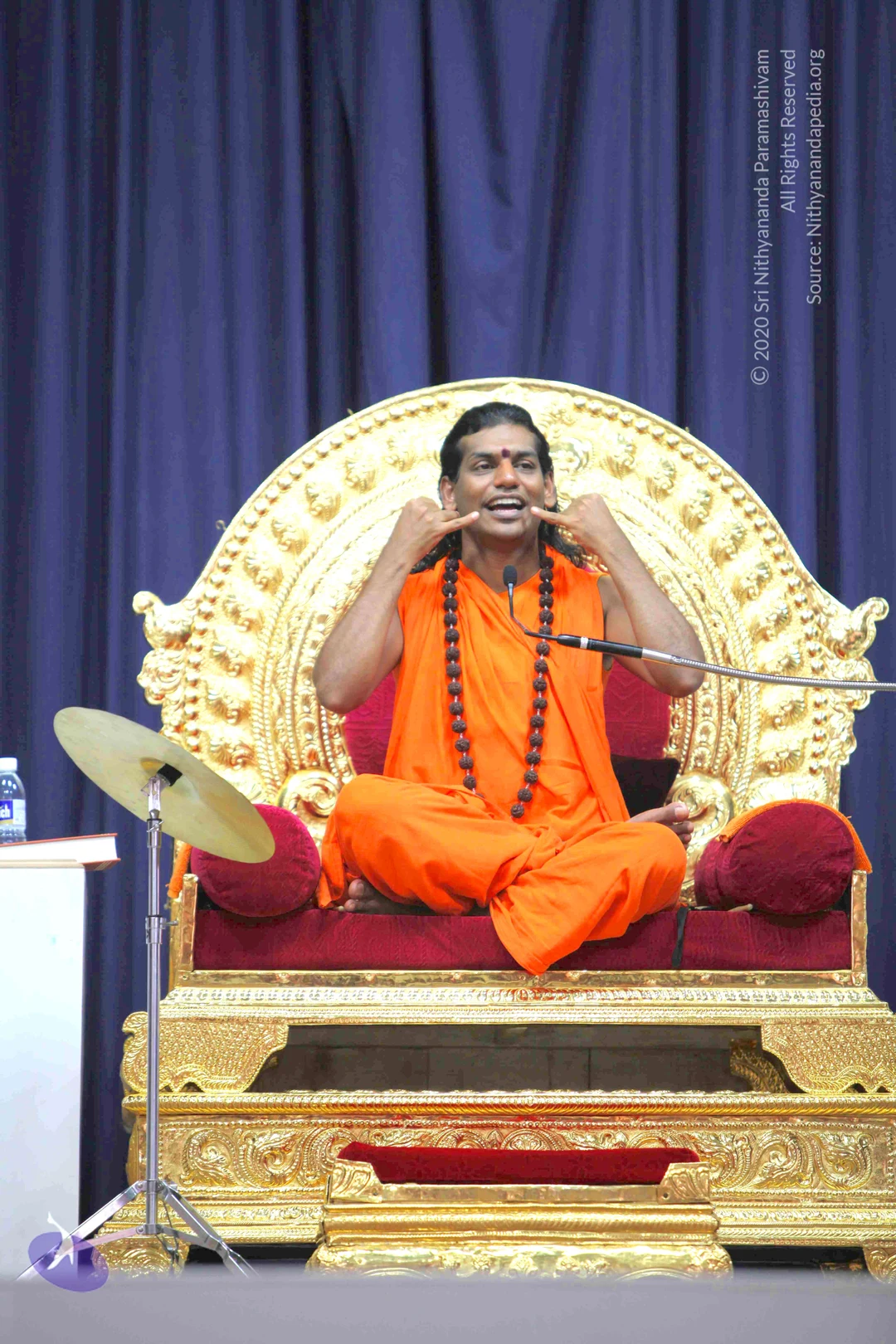
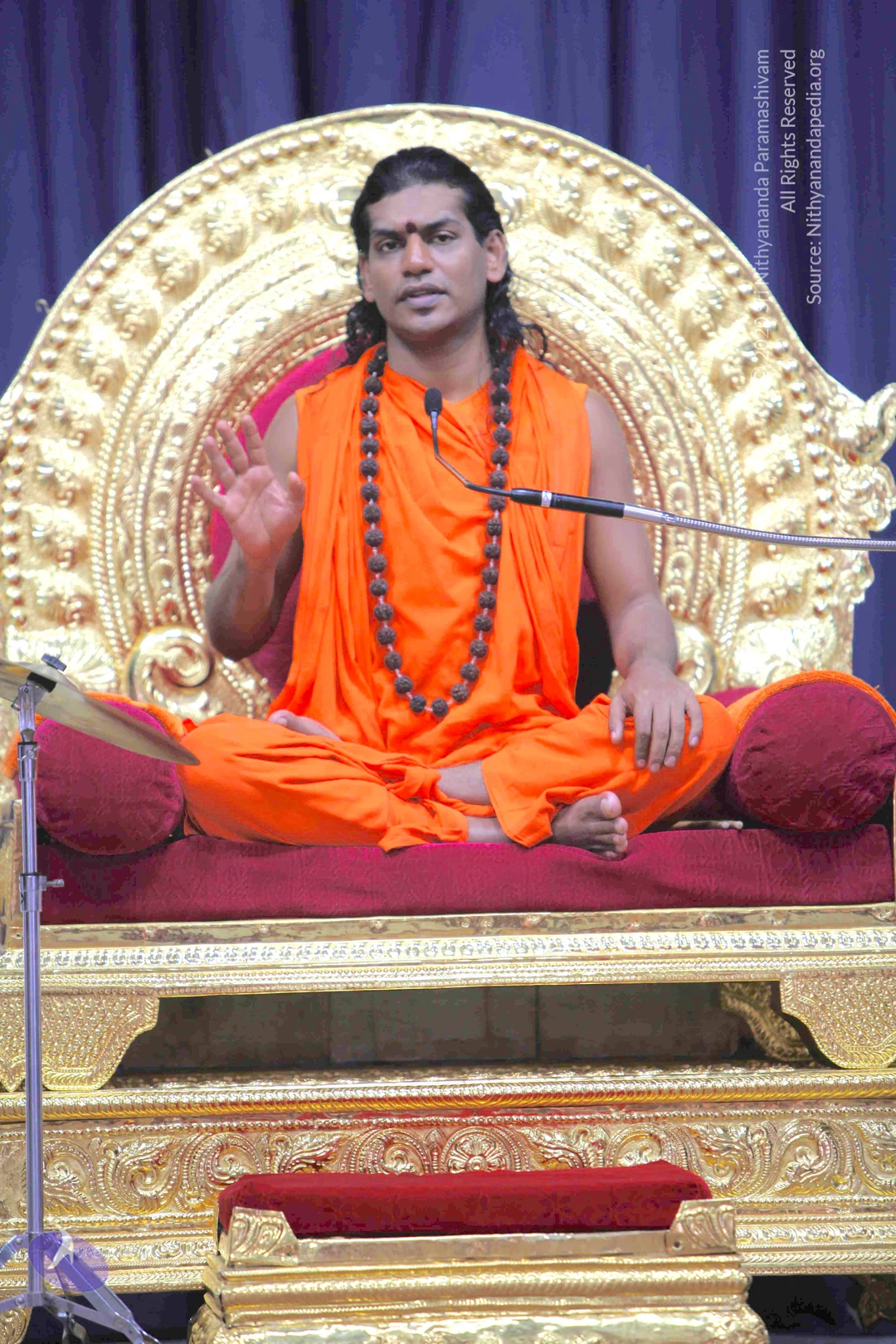
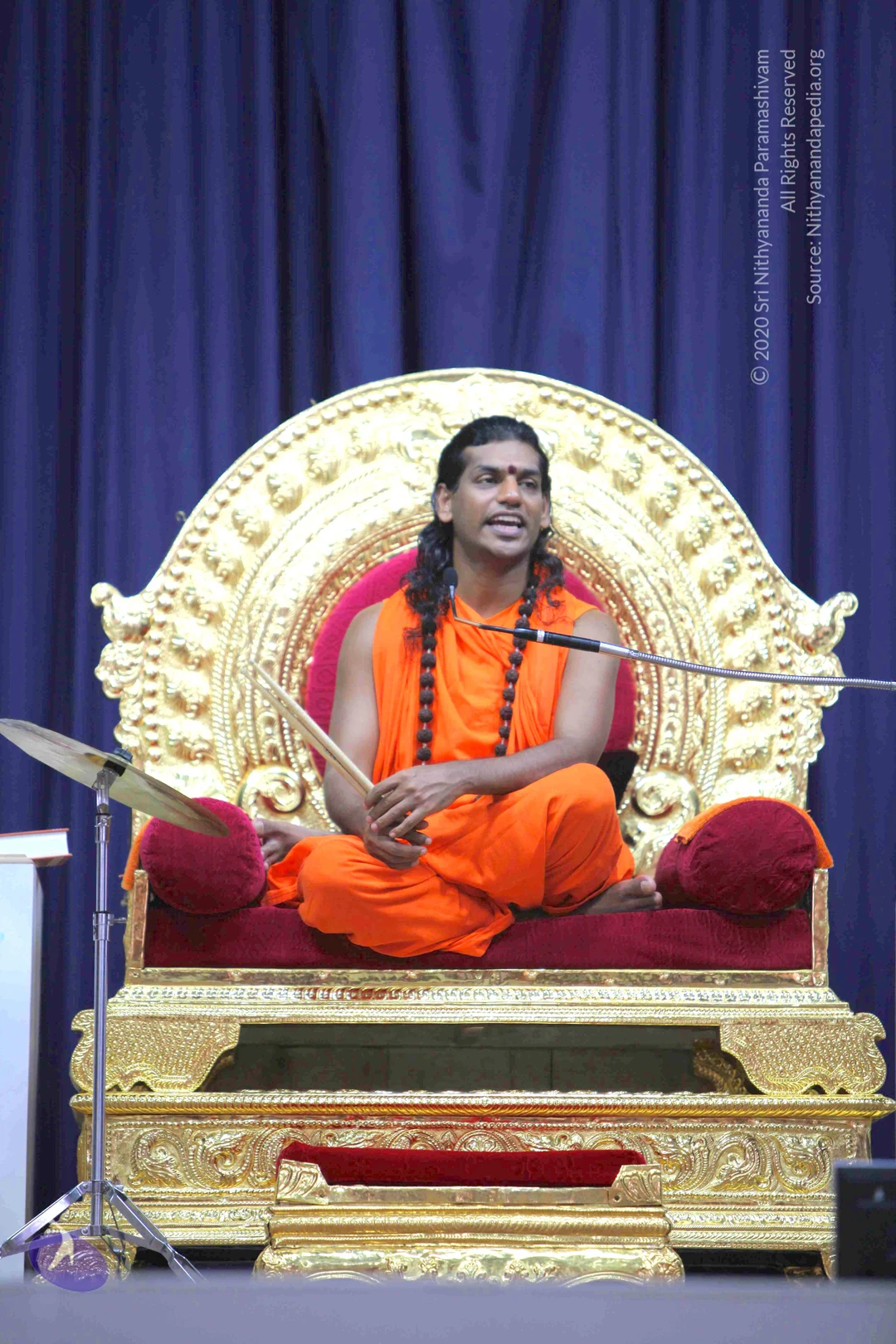
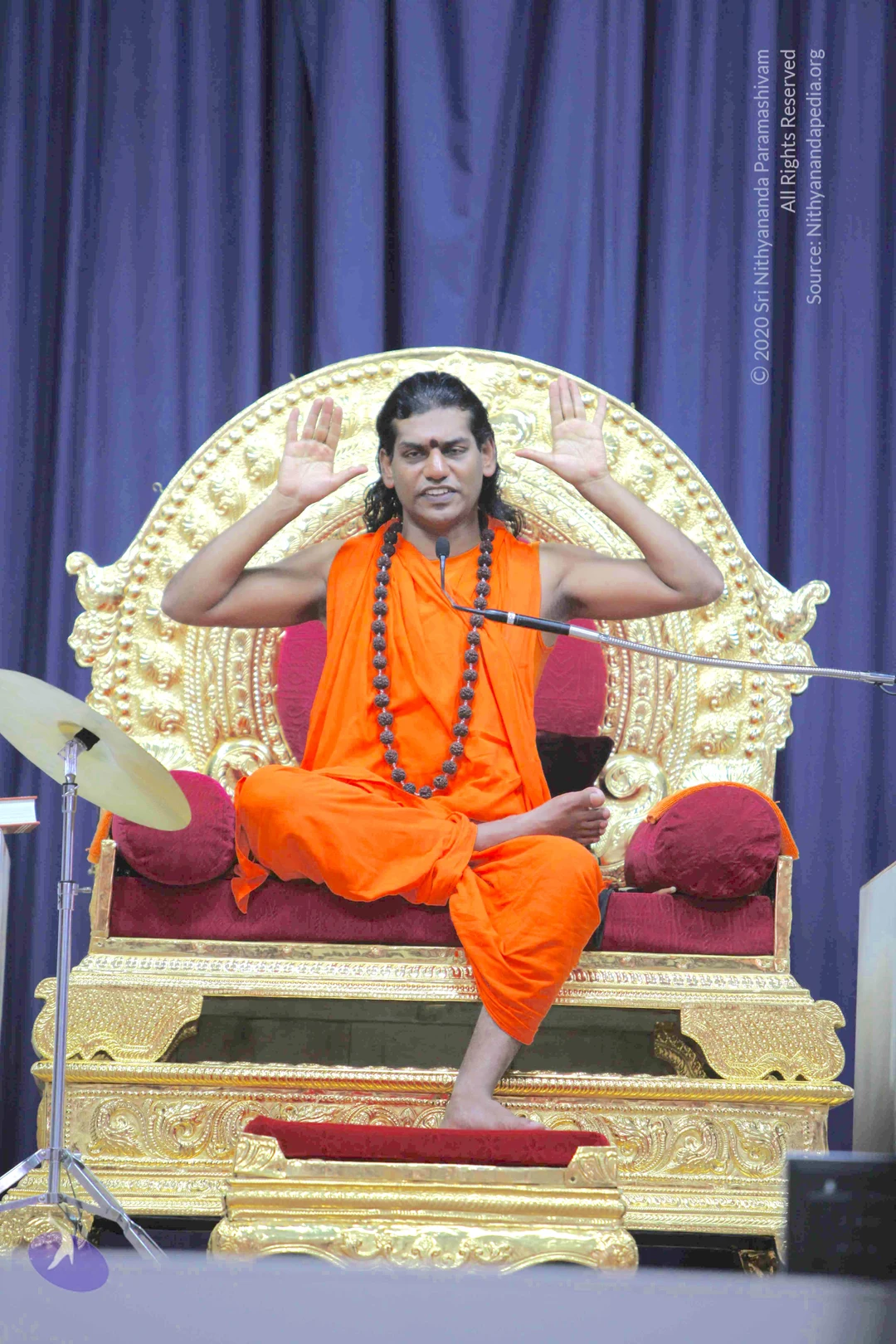
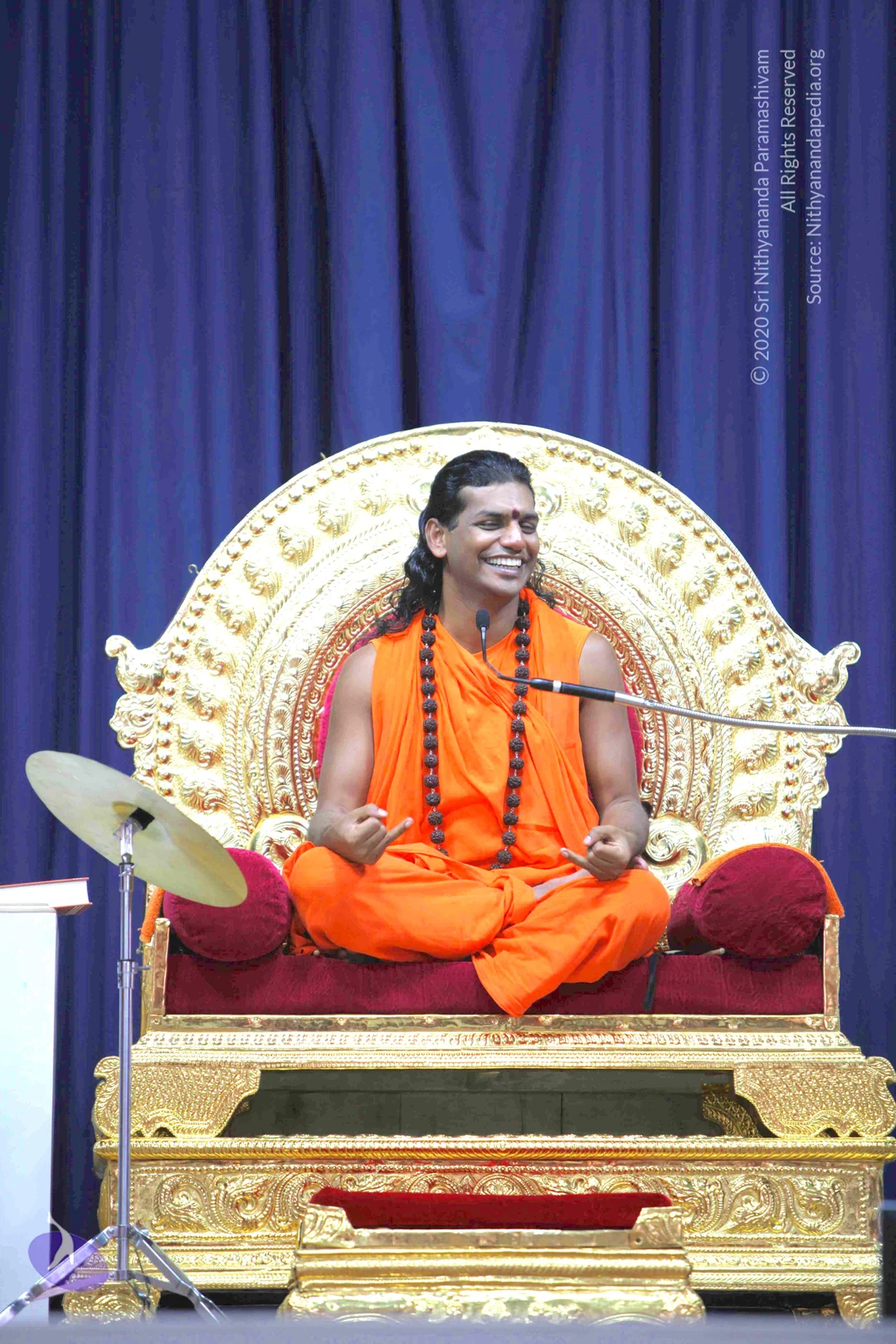
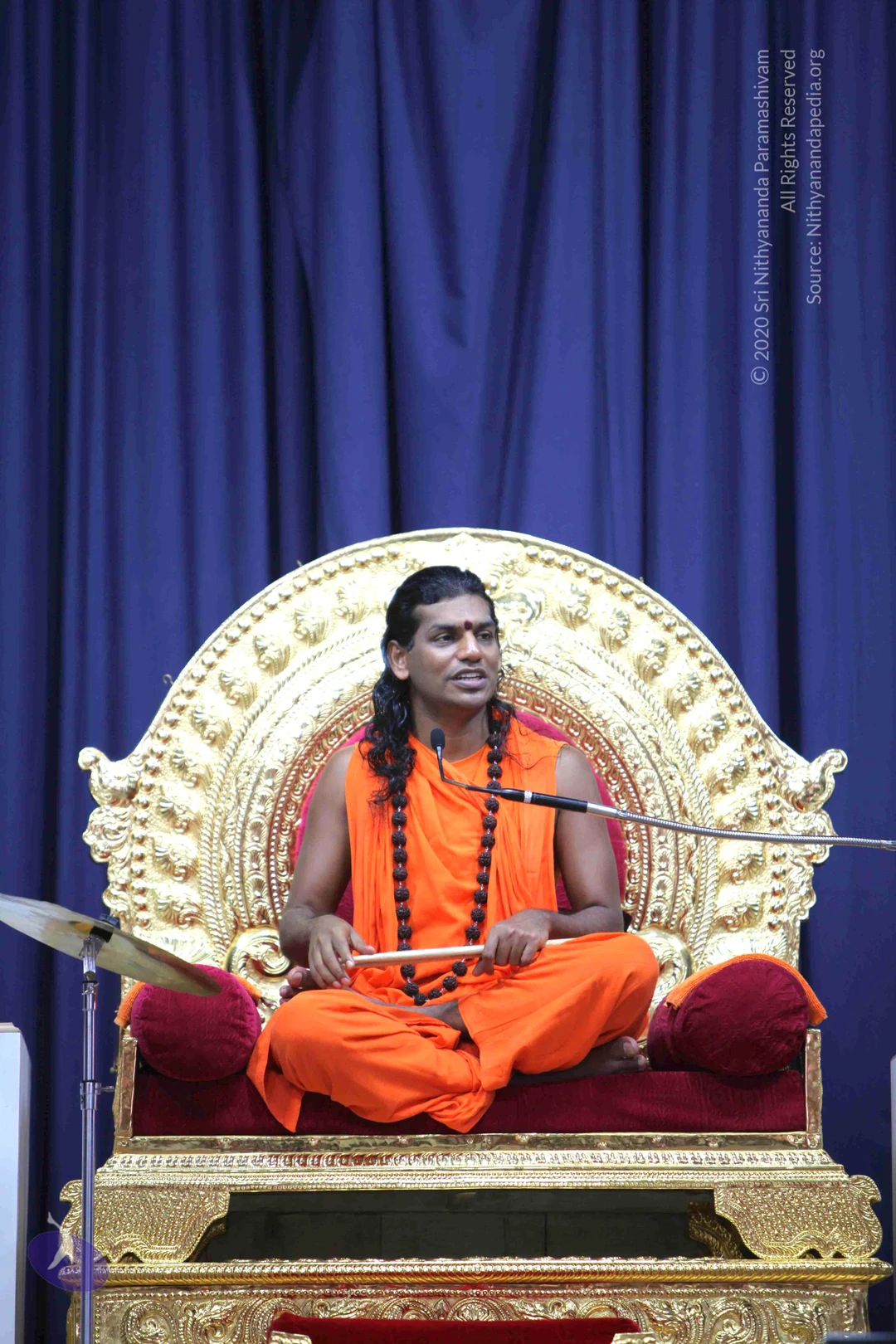
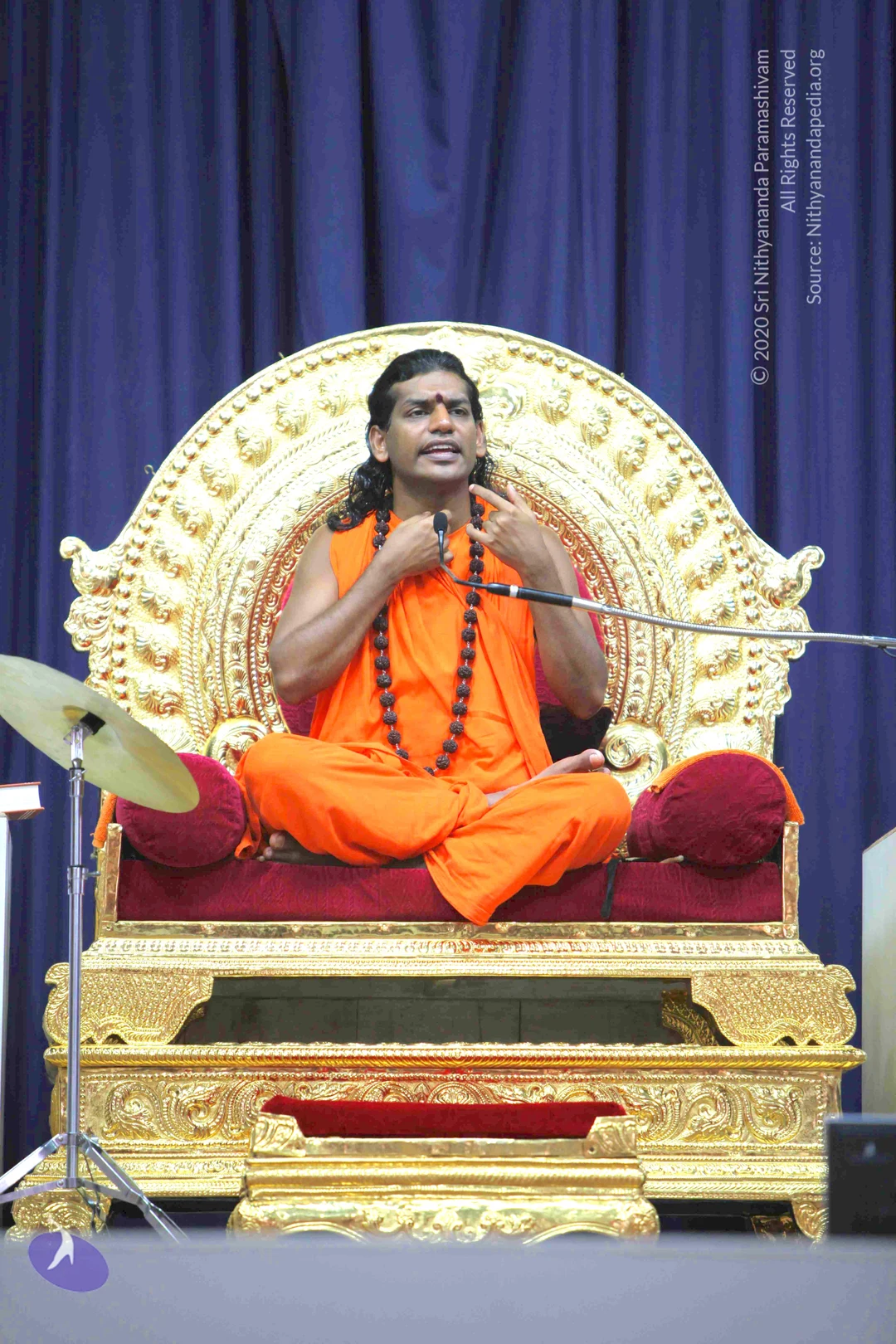
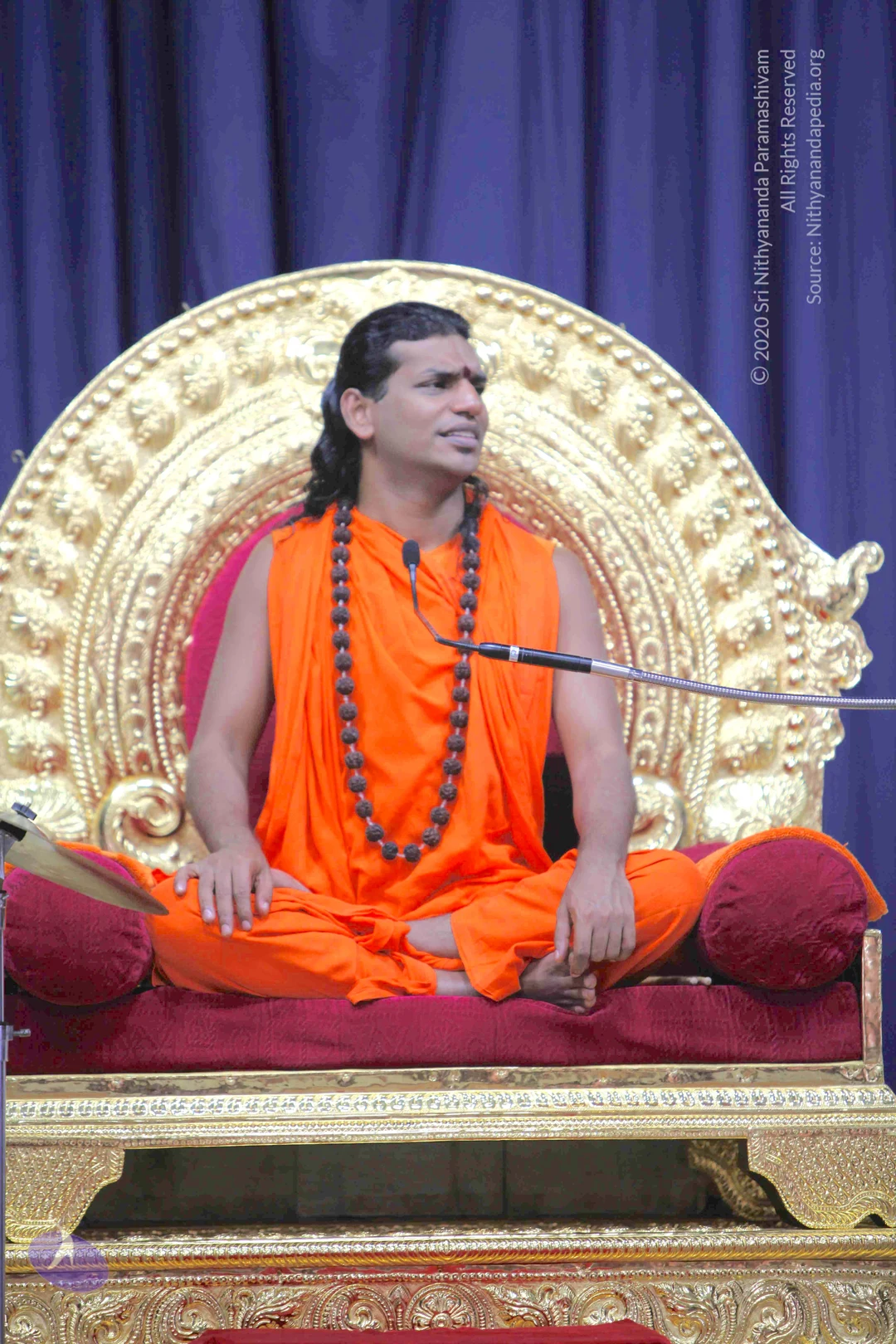
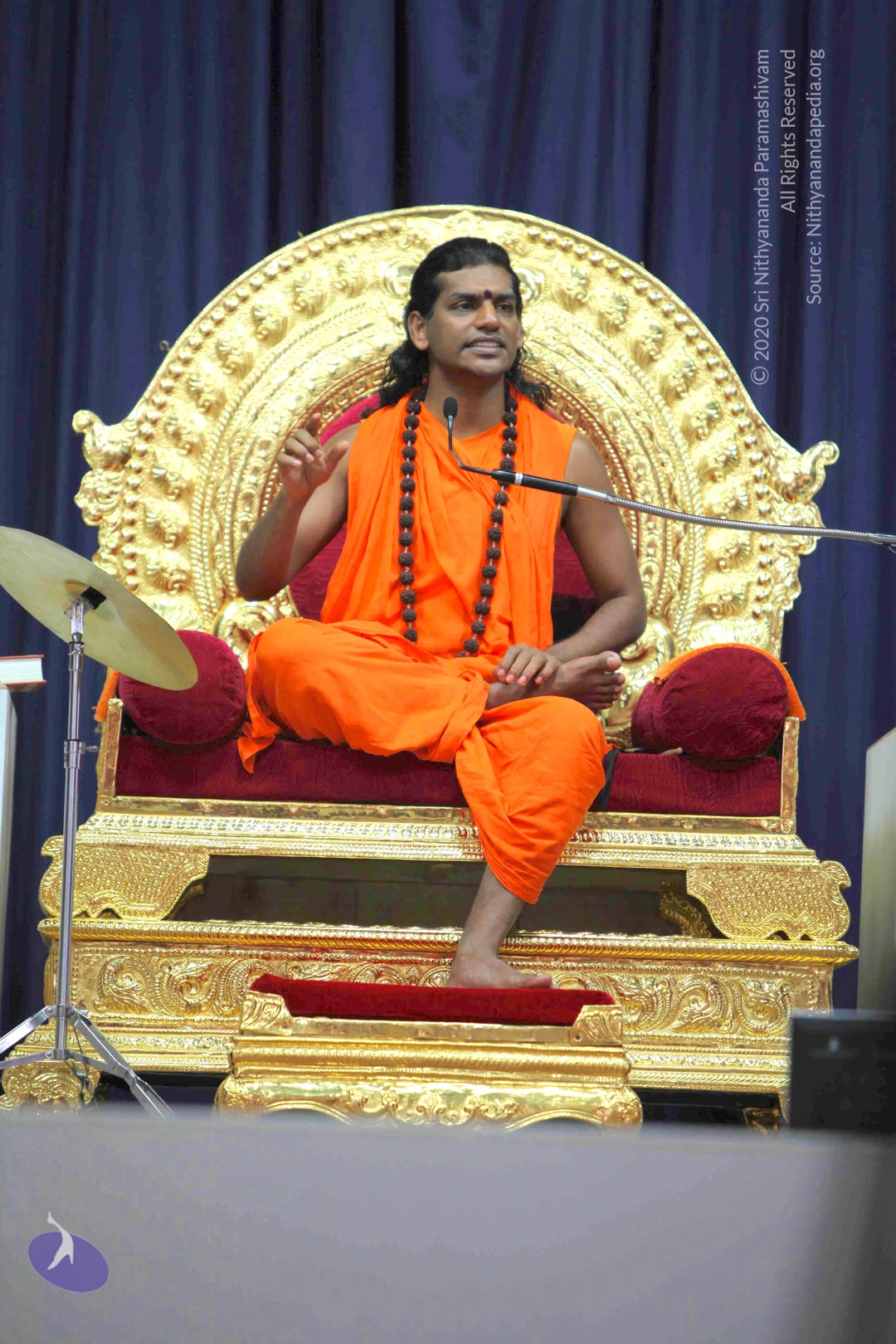
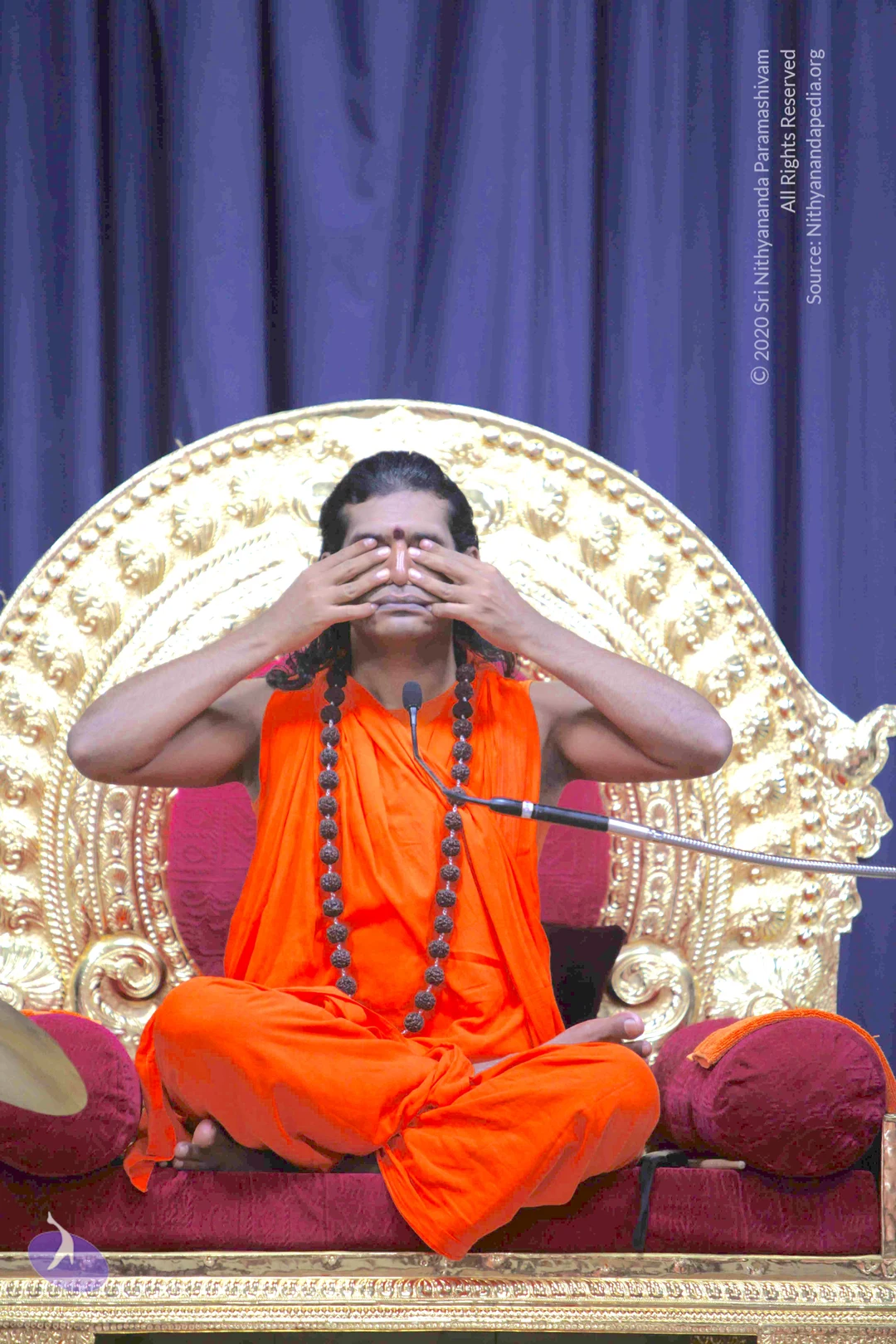
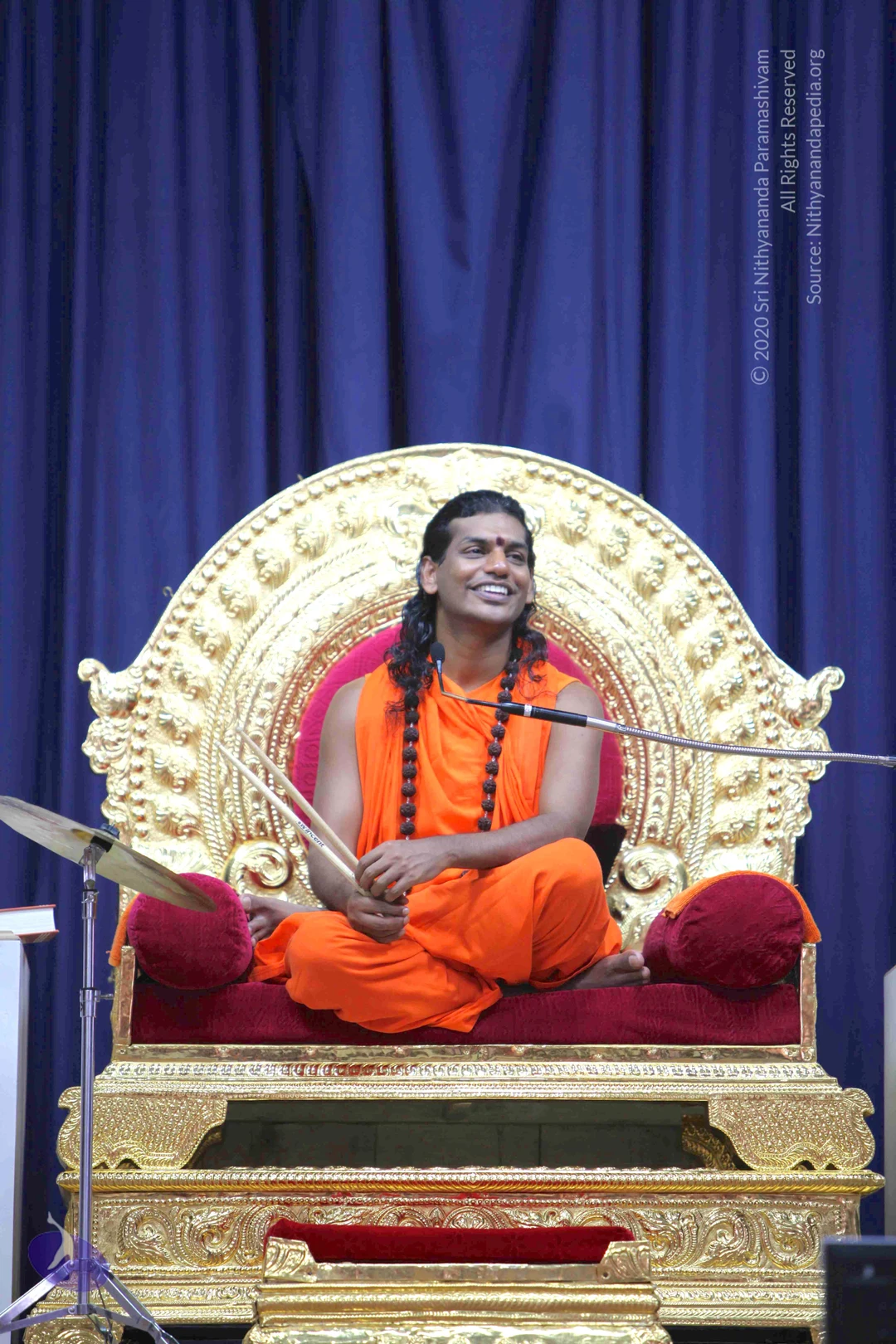
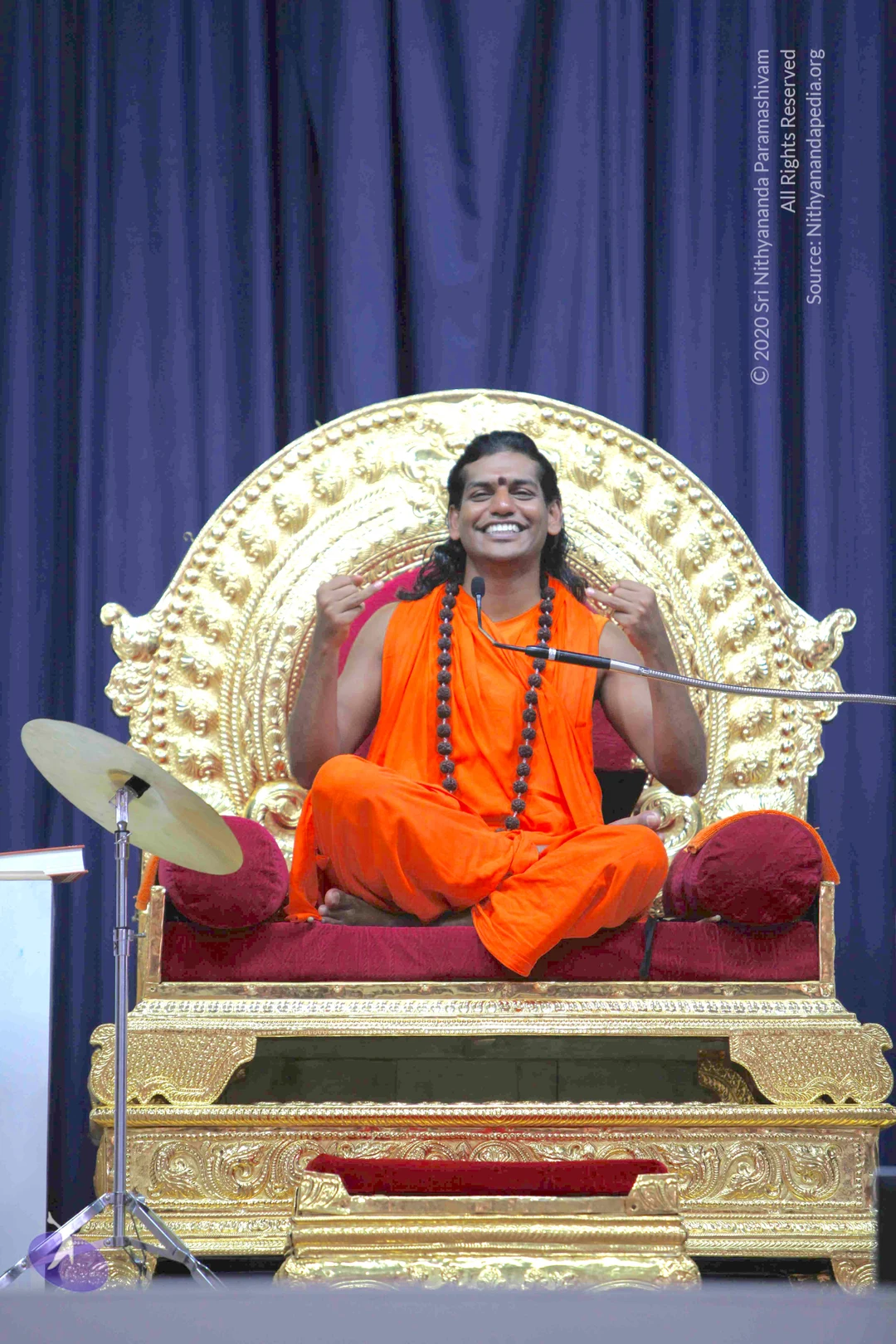
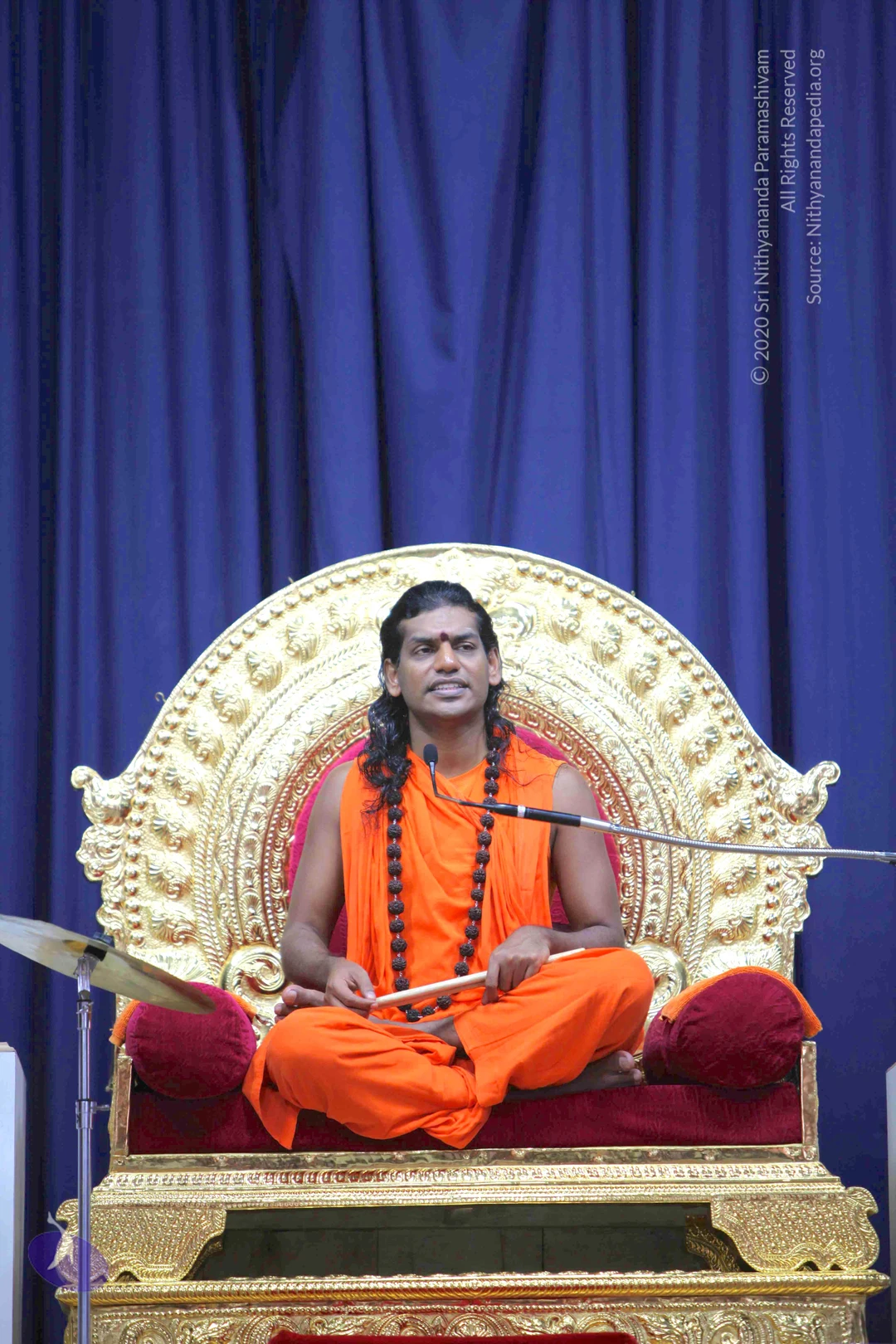
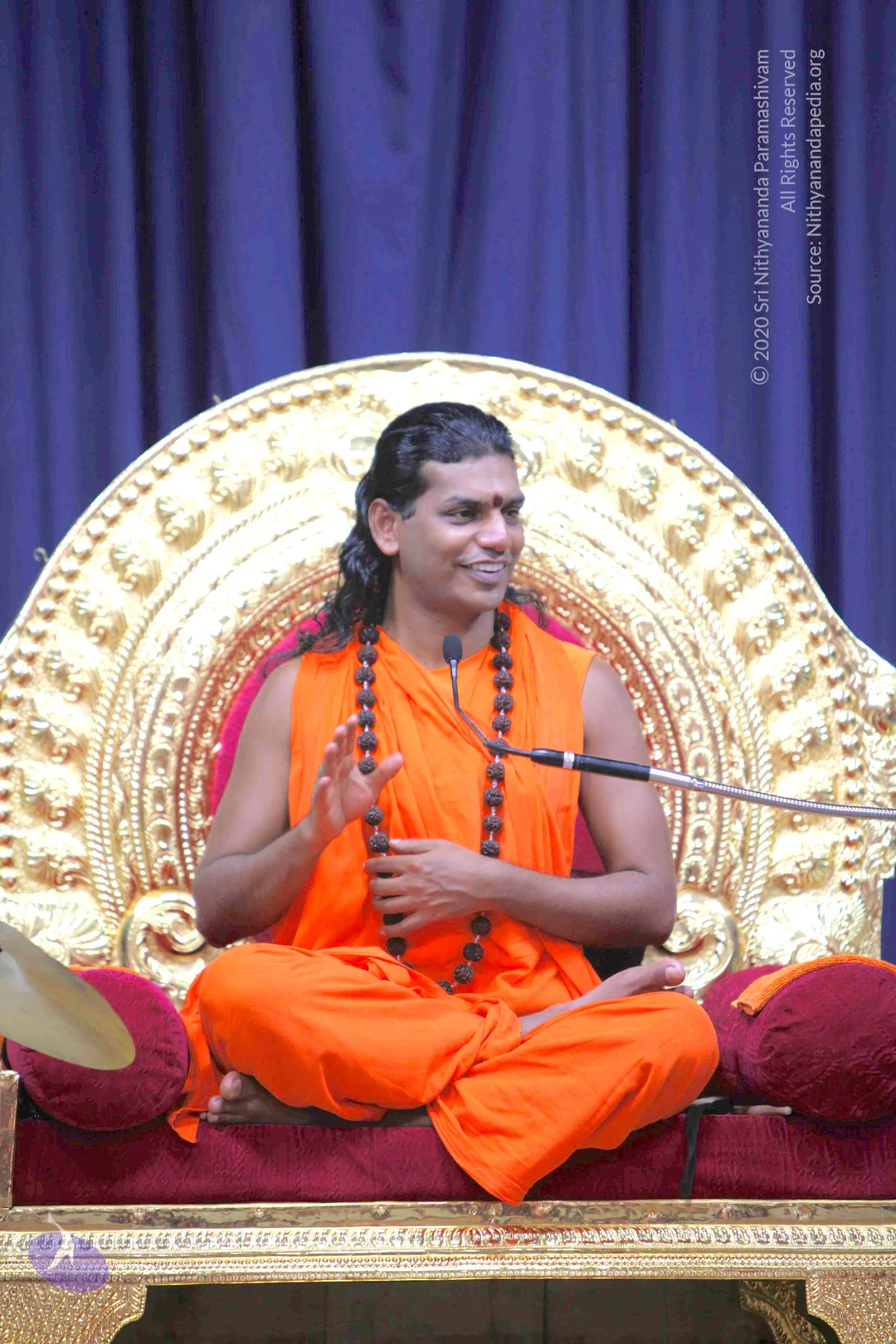
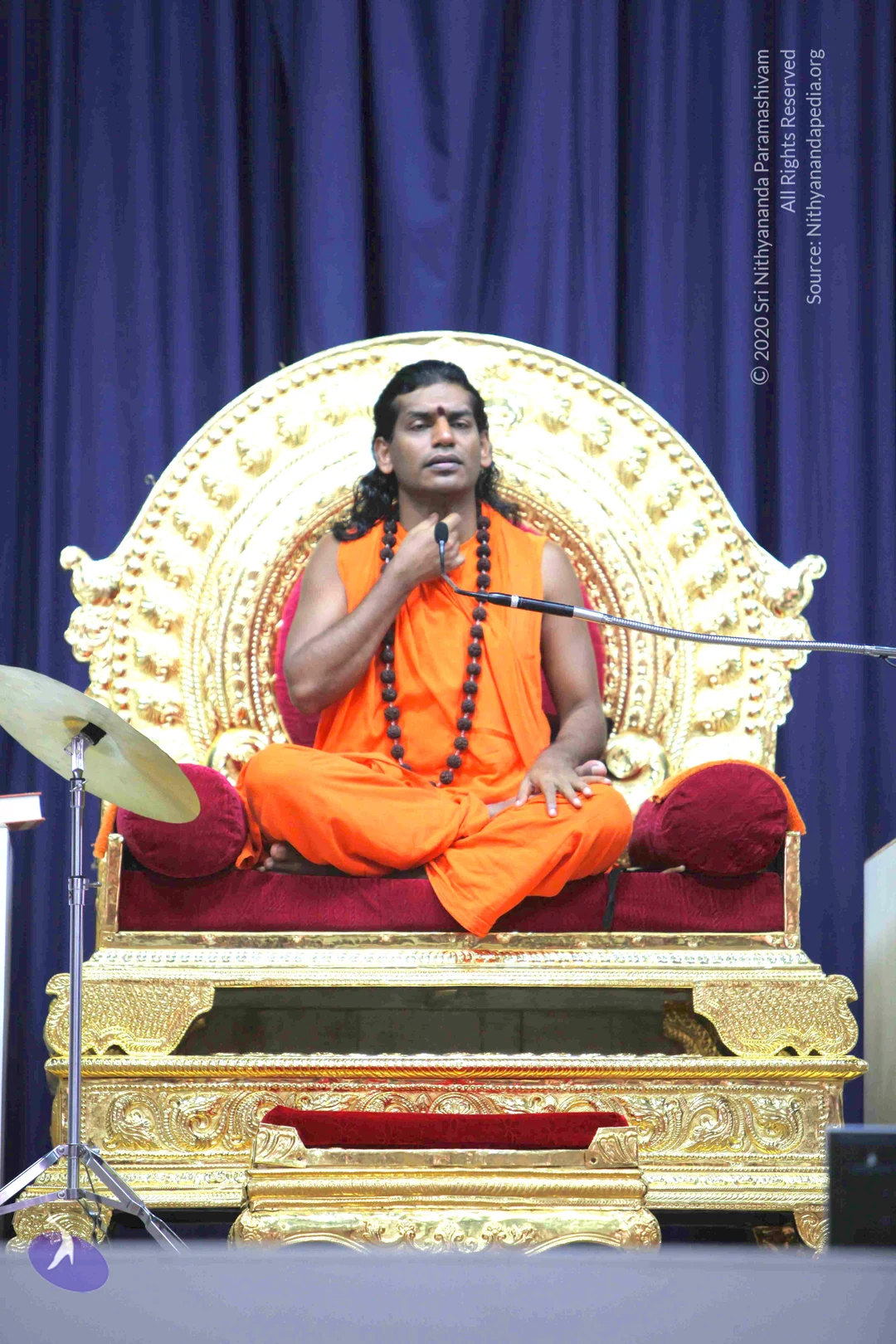
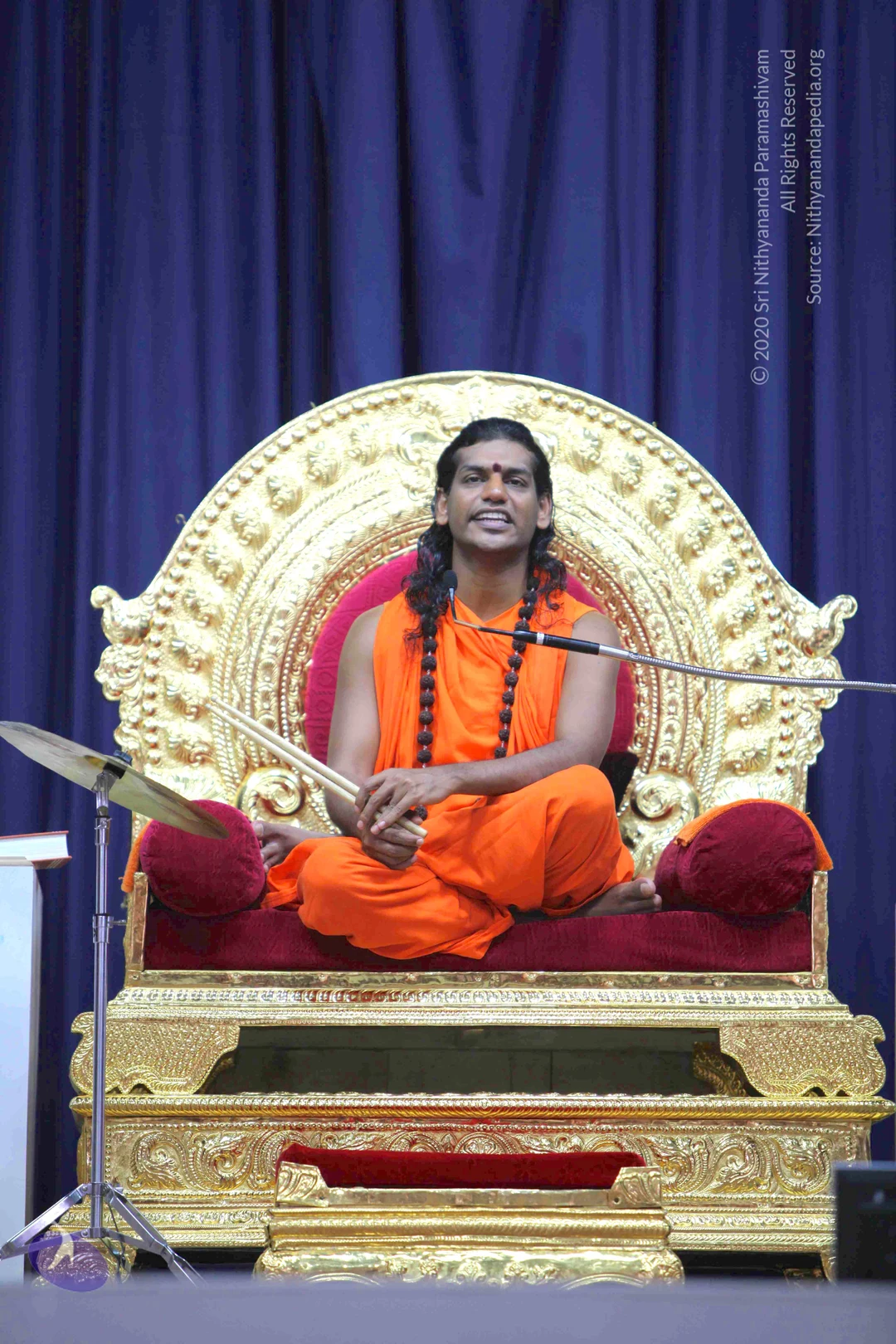
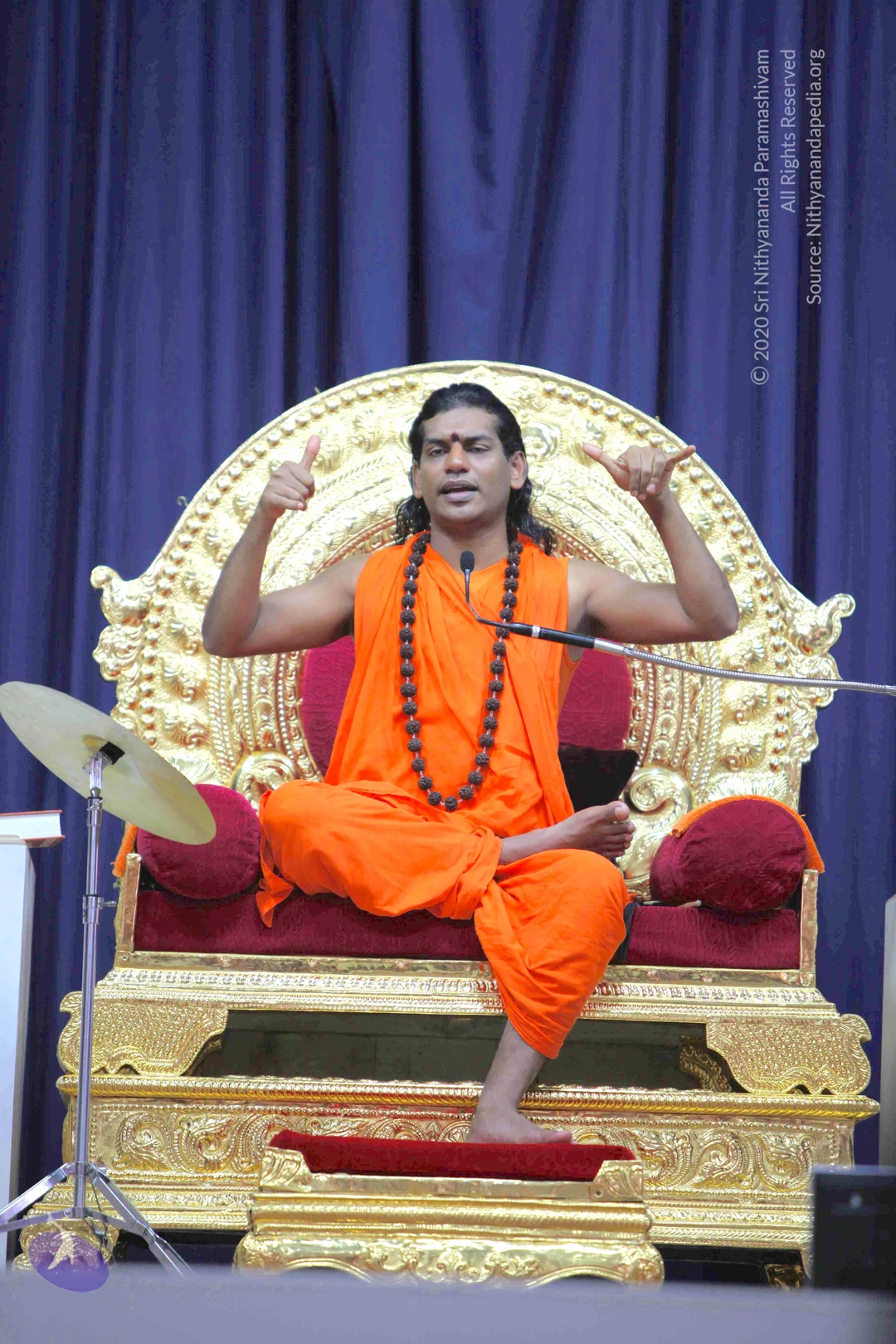
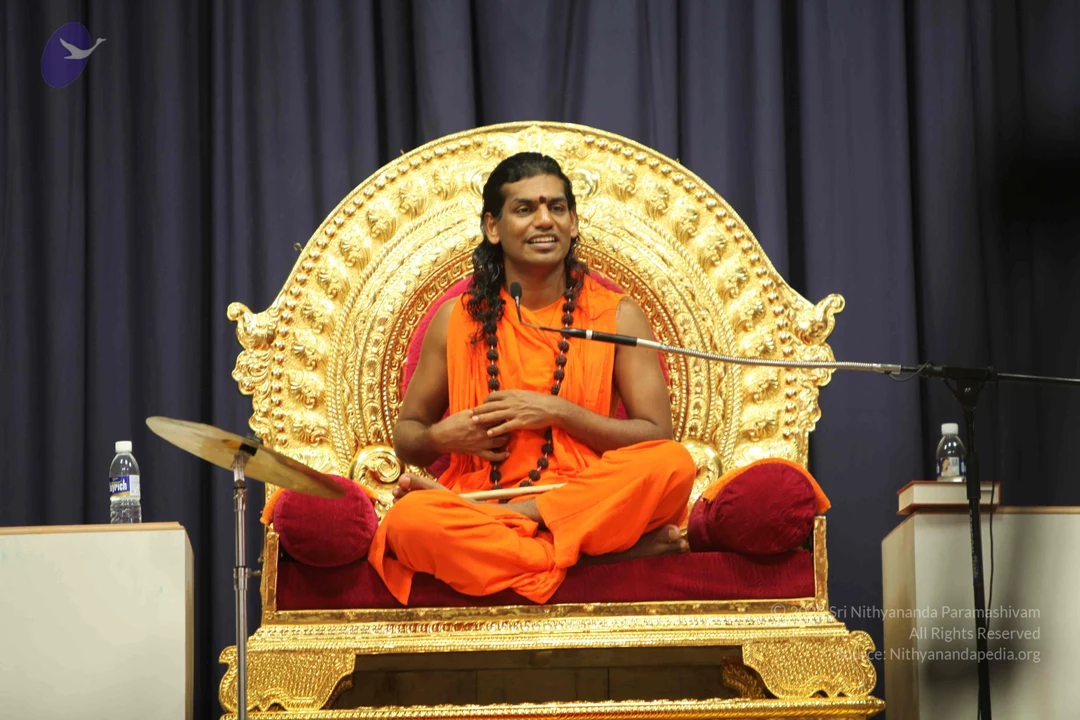
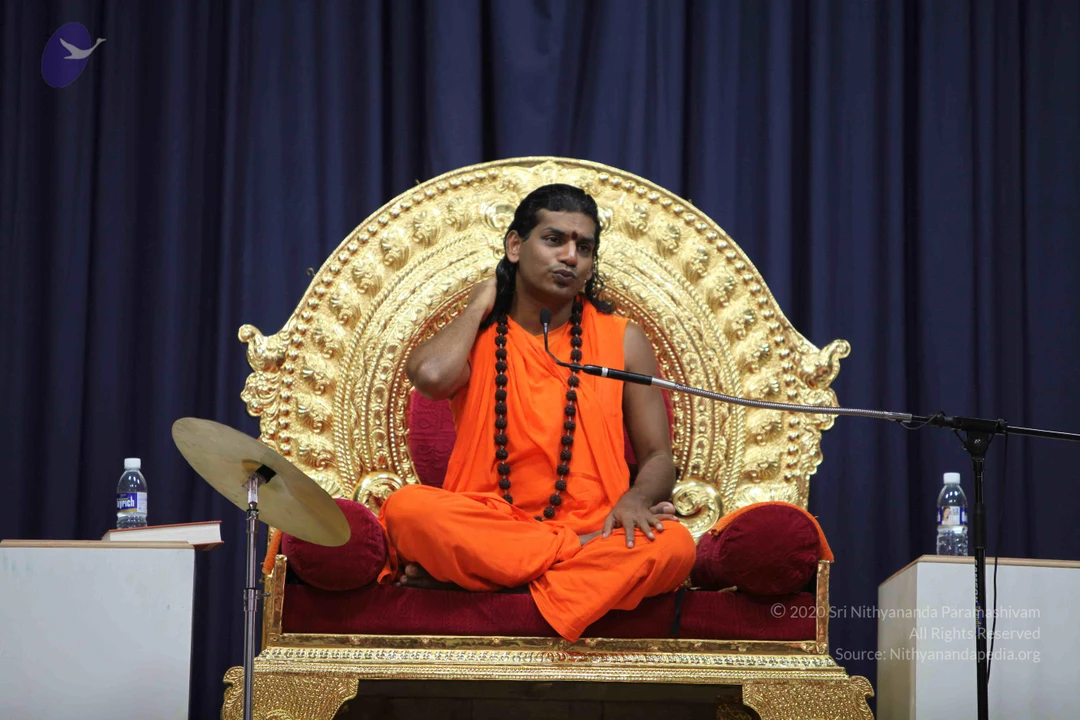
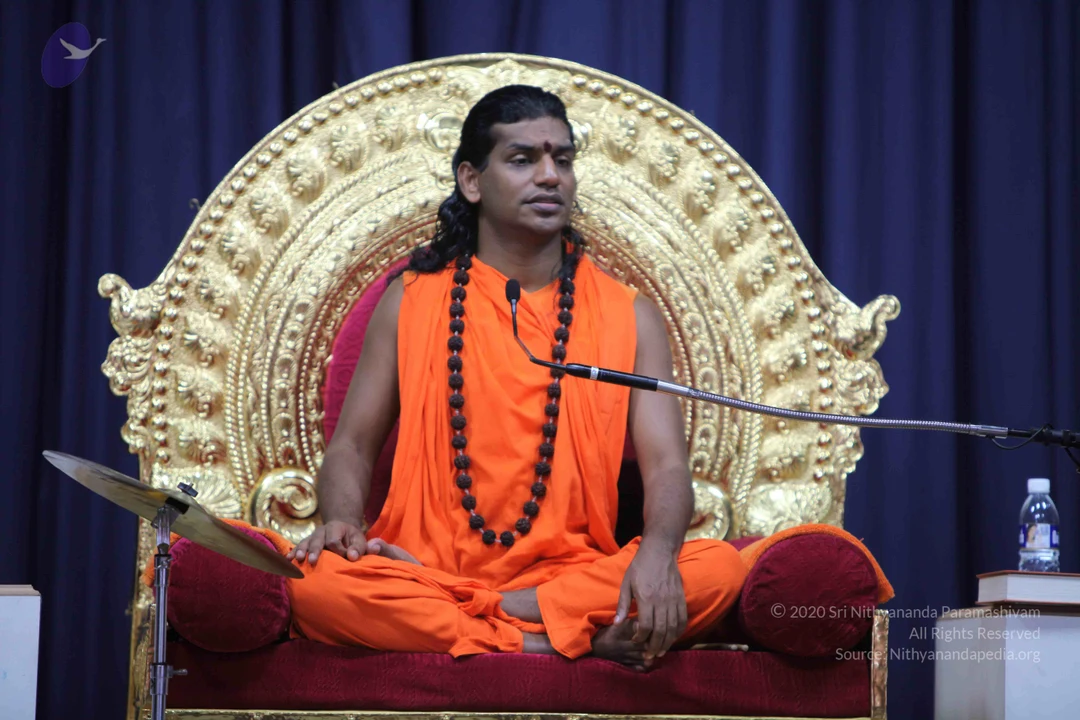
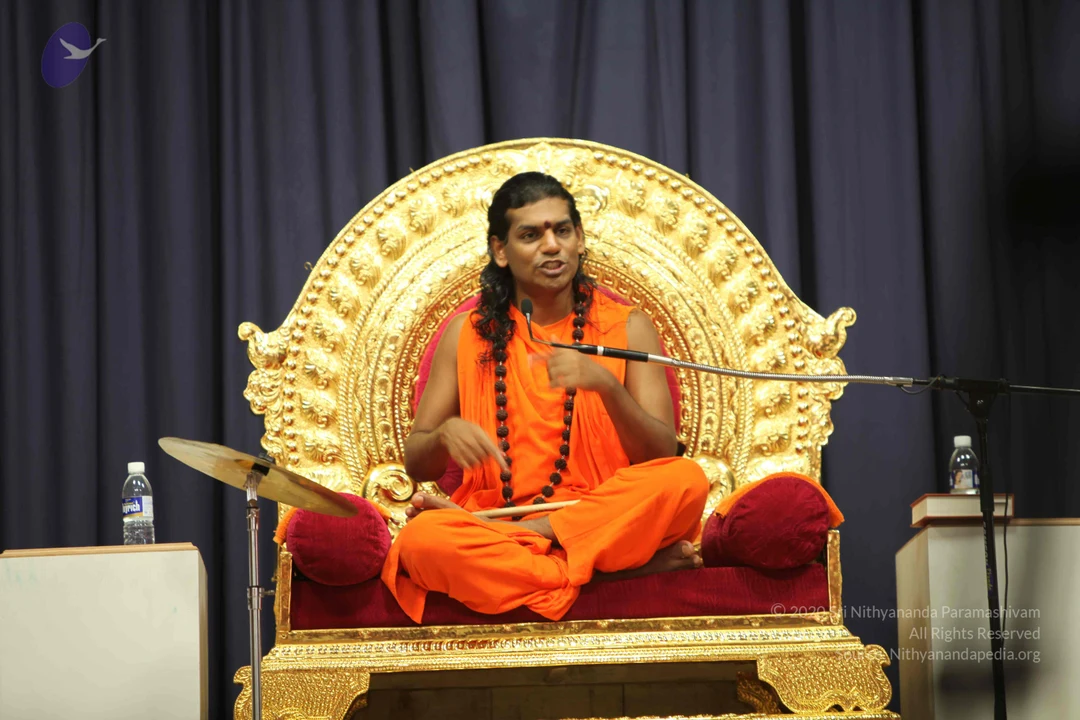
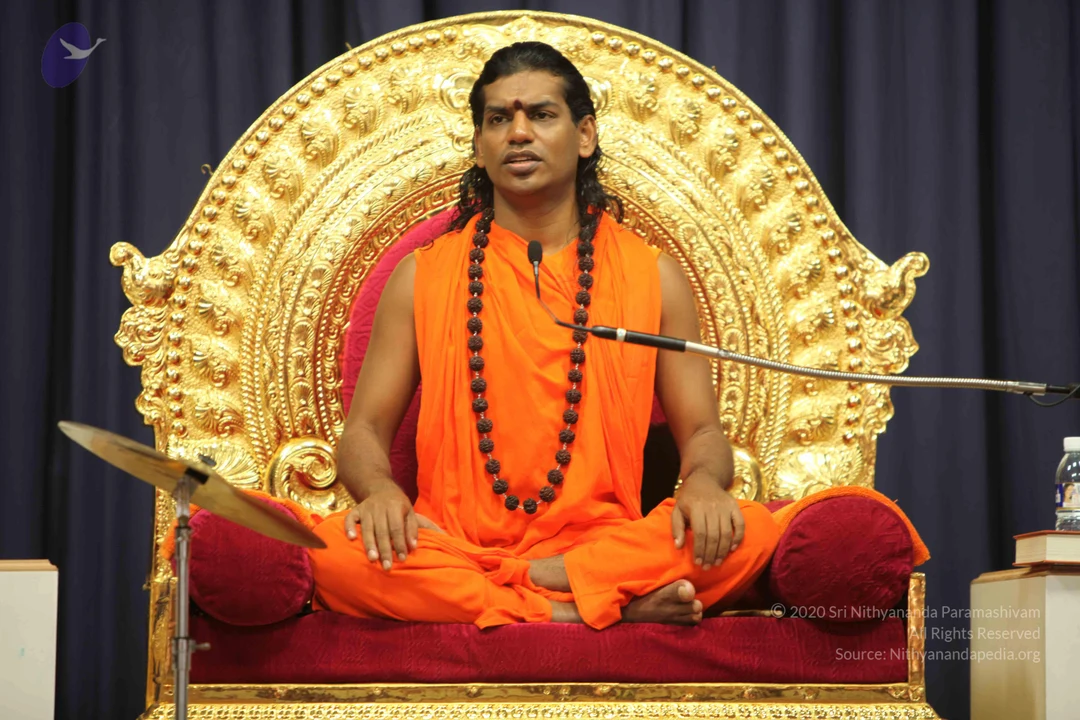
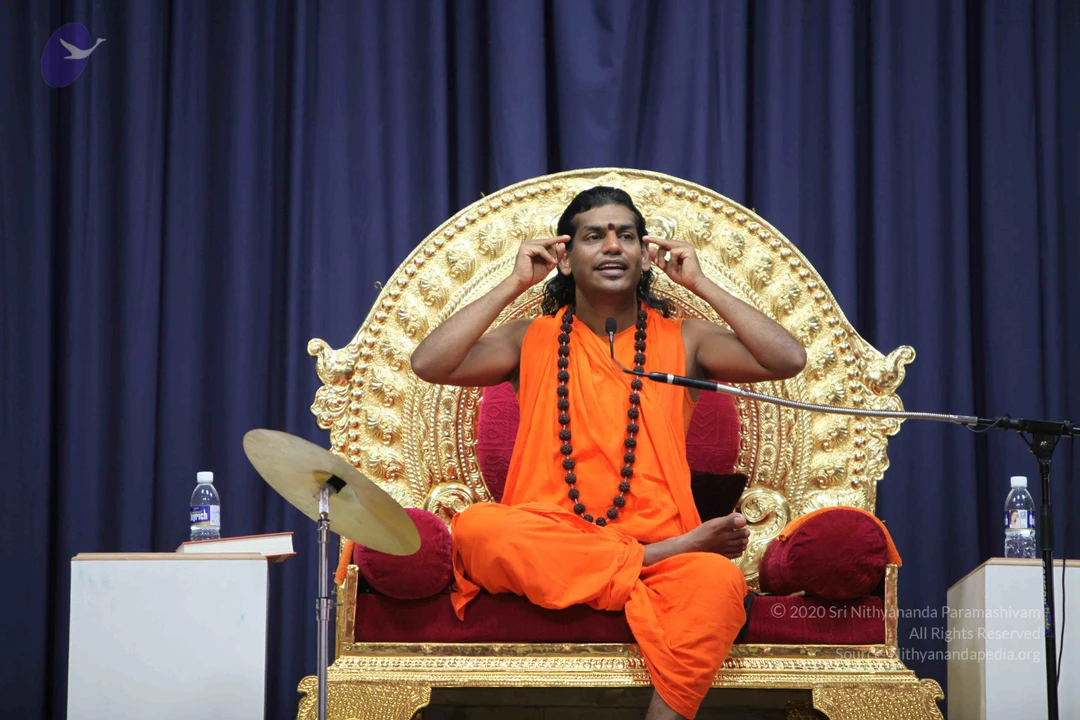
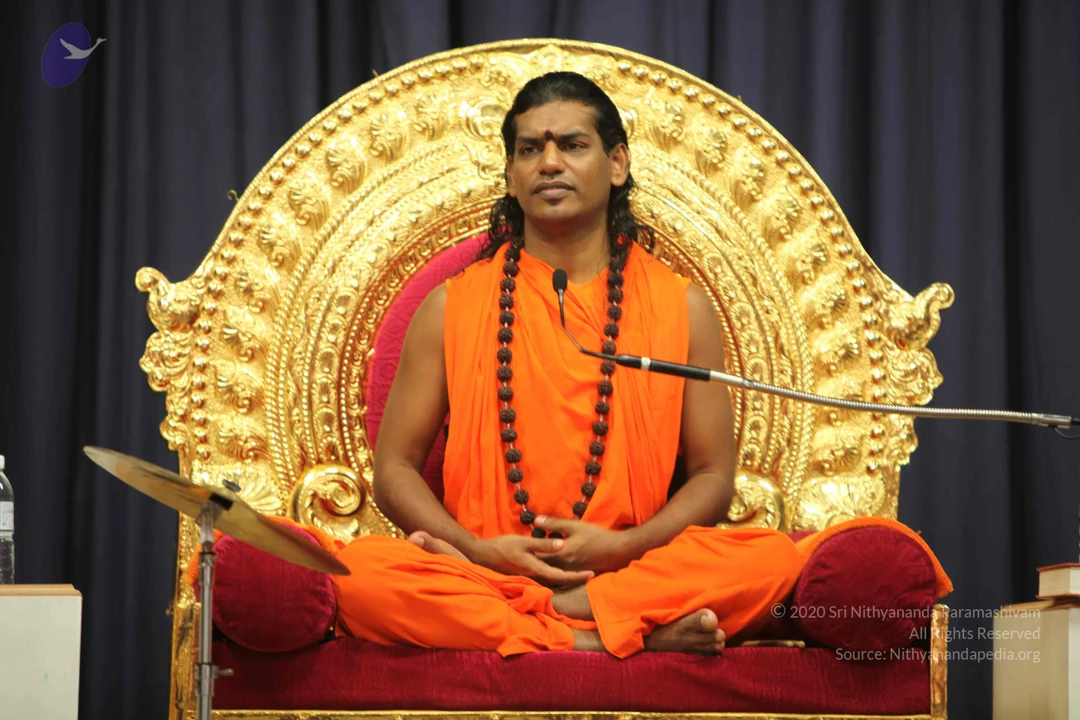
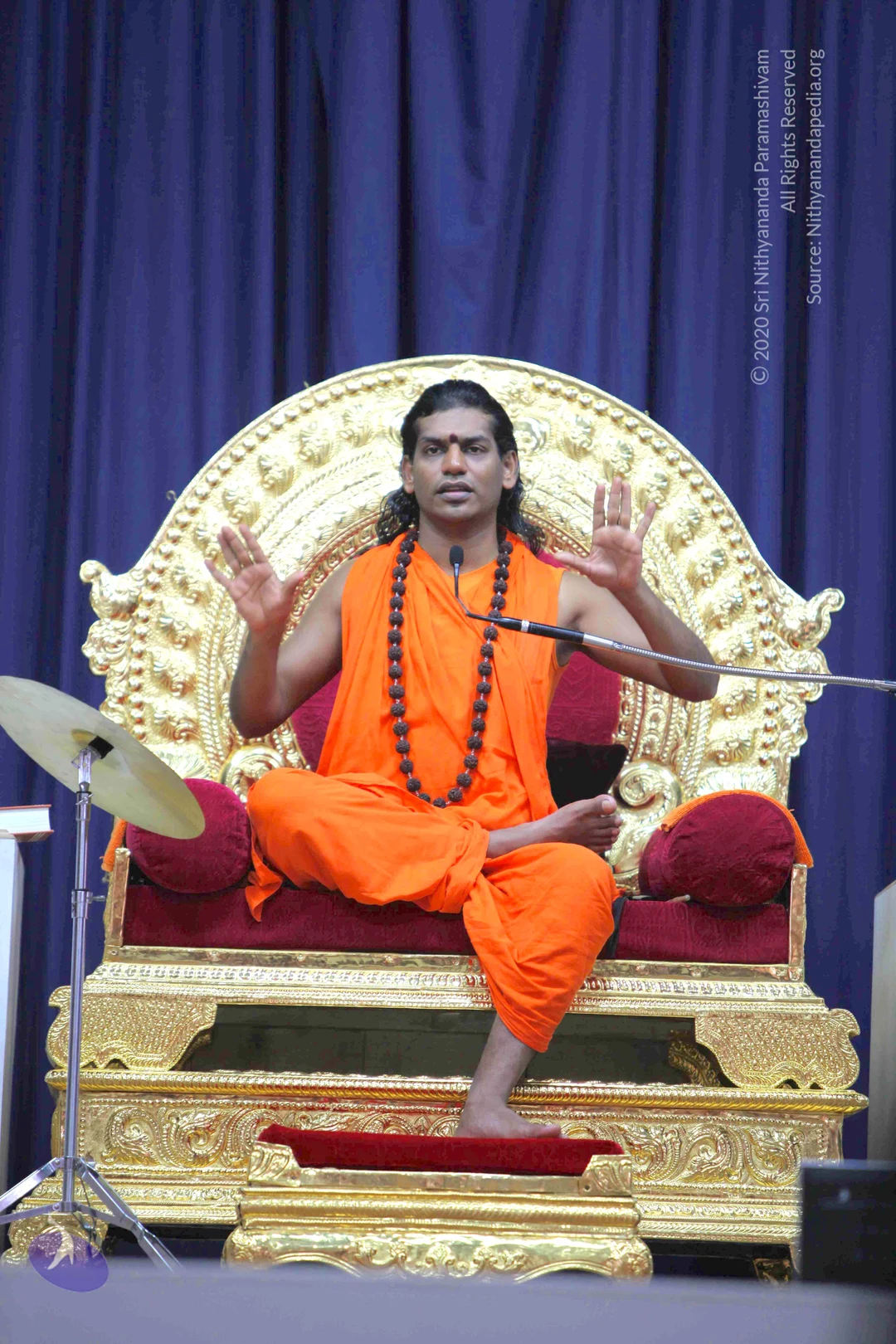
A man seated cross-legged on an ornate gold throne with carved scrollwork and red velvet cushions, in front of a deep blue curtain. He wears an orange sleeveless saffron-coloured wrap and matching orange dhoti, a long rudraksha mala with dark beads, and a red tilak on his forehead. His hair is long and swept back, and he raises both palms outward while speaking into a stand microphone. A cymbal on a stand and a book are at the left edge, and a red cushioned footstool sits at his feet. Appearance-based probable Swamiji cues: long swept-back hair, saffron clothing and rudraksha mala on a gold throne.A man seated cross-legged on a red cushioned dais in front of an ornate gold arched throne with carved floral motifs. He wears a sleeveless saffron-orange garment draped over the body and orange lower wrap, with a long rudraksha mala around his neck and a red tilak on his forehead. His long dark hair is swept back, and he holds his hands together in front of him while a gooseneck microphone stands beside him. A dark blue curtain forms the backdrop.A photograph of a man seated cross-legged on an ornate gold throne with red cushions in front of a deep blue draped curtain. He wears an orange saffron robe, a long rudraksha mala necklace, and has a red bindi on his forehead. He sits with both hands raised to cover his eyes, a gesture of inward focus. A microphone stand is beside him, a water bottle sits on a white lectern at right, and a cymbal stand is visible at left. Appearance-based candidate, a person, based on orange robe, rudraksha mala and ornate throne cues, giving a discourse. Single physical person on stage.A man sits cross-legged on an ornate gilded throne with a red velvet seat and red bolster cushions, in front of a blue draped curtain. He wears an orange saffron robe, has long swept-back dark hair, and wears a long rudraksha mala. He holds a pair of wooden sticks and smiles while looking to his right. A microphone on a gooseneck stand is near his face, and a cymbal on a stand is at the left edge. Swamiji (probable): long swept-back hair, saffron clothing and rudraksha mala, seated on a throne as a discourse speaker.A man with long swept-back dark hair sits cross-legged on an ornate gilded throne with a tall arched back and red cushions, speaking into a gooseneck microphone during a talk. He wears a sleeveless saffron-orange robe, orange dhoti-style cloth, a red bindi and a long rudraksha mala, with his hands raised in an explanatory gesture. Behind him hangs a dark blue draped curtain, and a cymbal stand is visible at the left edge.A man seated cross-legged on an ornate gold throne with a deep red cushion and red bolster pillows, speaking into a microphone on a stand before a dark blue draped curtain. He wears a sleeveless saffron-orange robe, a long rudraksha mala of dark beads, and a small red bindi on his forehead, with long hair swept back. He gestures by placing both index fingers to his temples. A cymbal stand and a water bottle sit at the left edge of the stage and a book rests on a lectern. Swamiji (probable): the saffron robe, rudraksha mala, long swept-back hair and throne seating form the qualifying cues for a discourse at the stage.
09

02- Living-Enlightenment-Process-LEP

10 dated photos in previewSource gallery
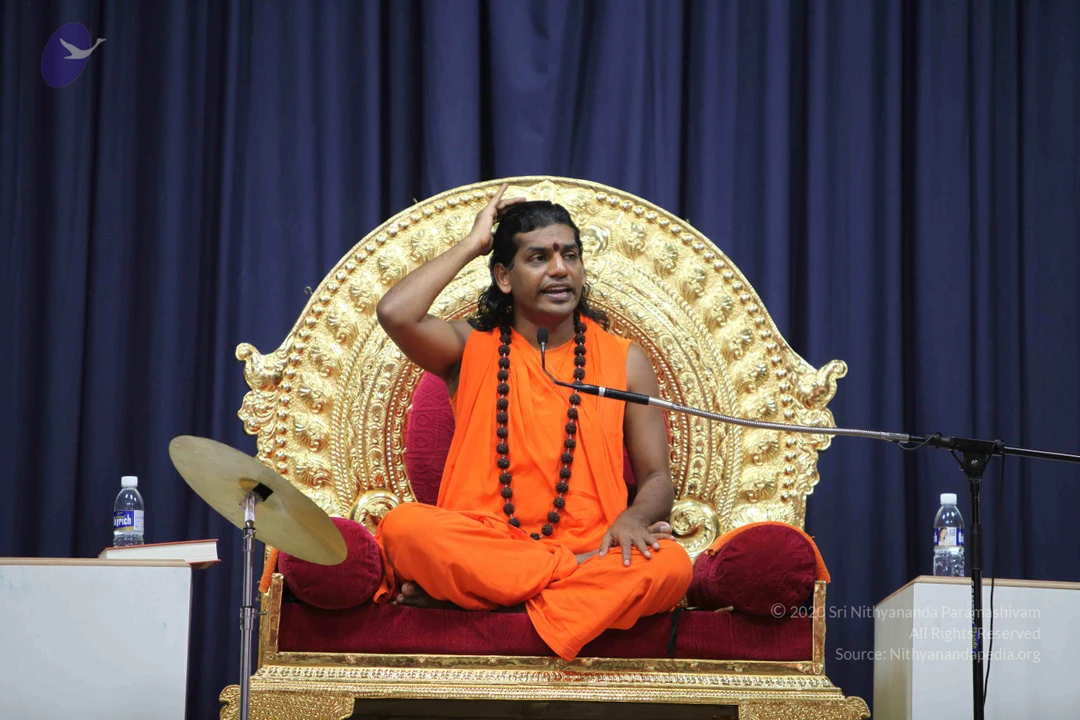
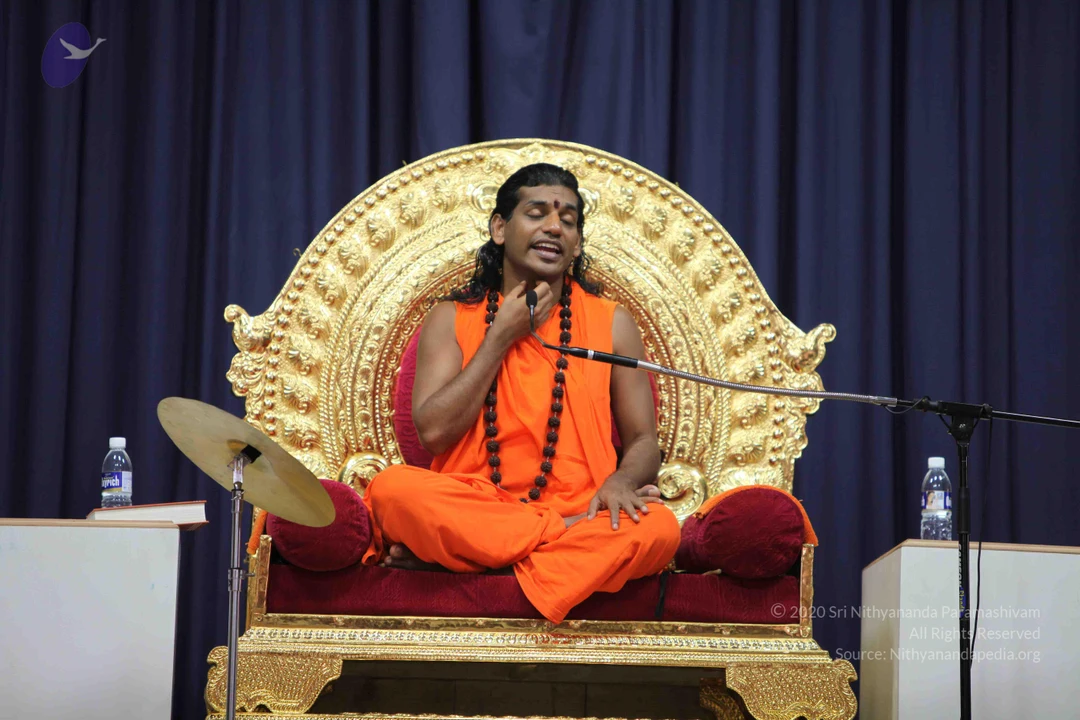
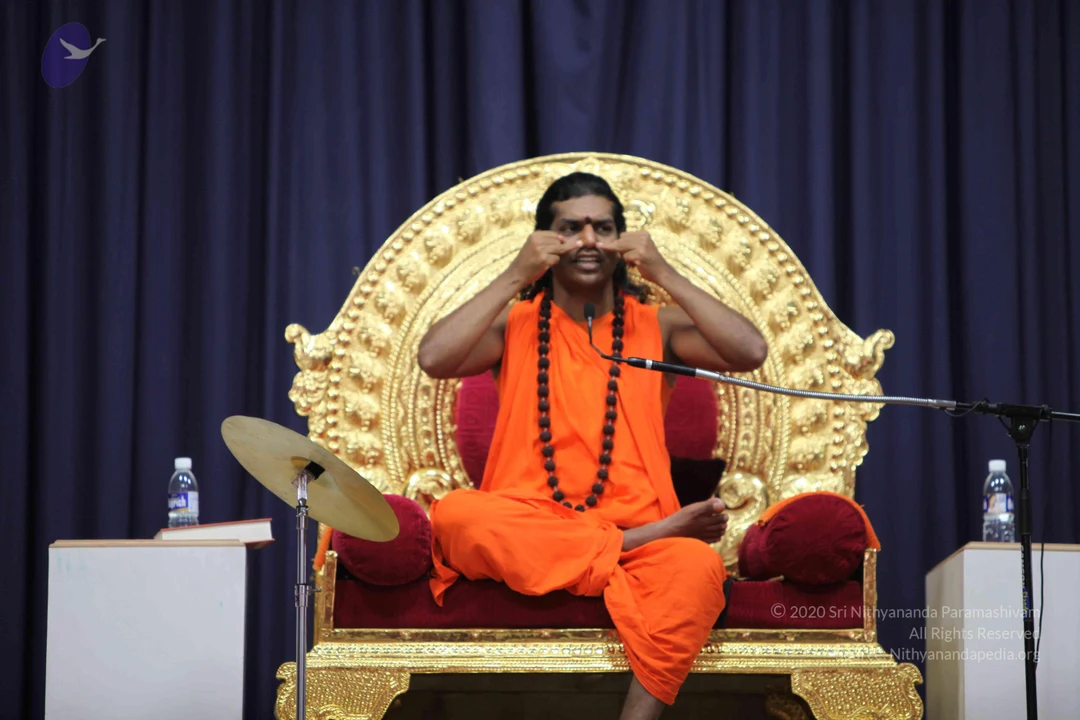
A man sits cross-legged on an ornate gold throne with red cushions in front of a dark blue curtain during a talk. He wears an orange robe, a long dark rudraksha mala, and a red bindi, with long dark hair swept back. Both hands are raised to his nose in a gesture. A microphone on a stand is in front of him, a cymbal stands to the left, and water bottles sit on white side tables. The appearance matches the Swamiji (probable) cues of long swept-back hair, saffron clothing, rudraksha mala and a throne, so he is marked as an in-person candidate.A man seated cross-legged on an ornate gold throne with a tall curved back and red cushions, speaking into a microphone on a stand. He wears saffron-orange robes, a long rudraksha mala with dark beads, and a small red bindi, with long dark hair swept back. His hands rest together at his waist. Blue curtains hang behind the stage, with a cymbal on a stand at left, water bottles on podiums, and a small purple bird logo at top left. Swamiji (probable): long swept-back hair, saffron clothing and rudraksha mala on a throne.A man with long dark hair sits cross-legged on an ornate gold throne with a red cushion, speaking into a gooseneck microphone. He wears a saffron-orange robe and a long black rudraksha mala. His left hand rests on his knee and his right hand is raised to his head. A cymbal stand, water bottles on small white podiums, and a navy curtain frame the stage.A seated man in saffron-orange robes sits cross-legged on an ornate gold throne with a carved, arched back and red cushions, in front of a dark blue draped curtain. He wears a rudraksha mala with long dark beads, a red tilak on his forehead, and has long dark hair swept back. A microphone on a flexible stand is positioned before him, and a water bottle sits on a table at right. A small cymbal rests on a stand at left. Probable Swamiji, identified by long swept-back hair, saffron clothing and rudraksha mala as the discourse speaker on the throne.A man seated cross-legged on an ornate gold throne with a red cushioned seat and armrest pillows, in front of a deep navy blue draped curtain. He wears a saffron-orange robe and a long rudraksha mala with dark beads, and has long swept-back hair and a red bindi. His right hand is raised to his head as he speaks, with a microphone on a boom stand before him. Water bottles sit on small white tables at either side, and a brass cymbal-like object rests on a stand at left. Appearance-based probable Swamiji (probable): long hair, orange robes, rudraksha mala and ornate throne. The scene reads as a seated discourse on stage.A seated man in saffron-orange robes and a long black rudraksha mala speaks into a microphone while sitting cross-legged on an ornate gold throne with red cushions. He gestures with his right hand and holds a small wooden stick in his left. Long dark hair falls to his shoulders, and a small vermilion mark is on his forehead. Behind him hangs a dark blue draped curtain. A brass cymbal stands on a stand at left, a water bottle sits on a table at left, and a bottle and microphone stand are at right. The scene shows a discourse setting.
10

03--Yoga-Sutras-Session

288 dated photos in previewSource gallery
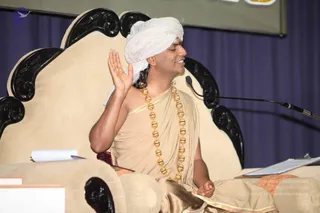
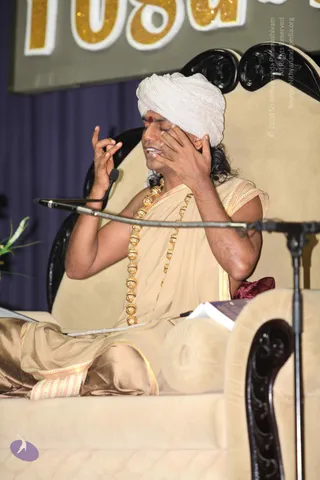
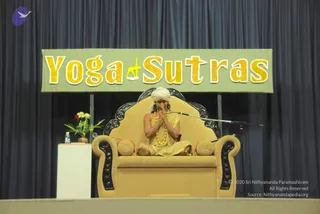
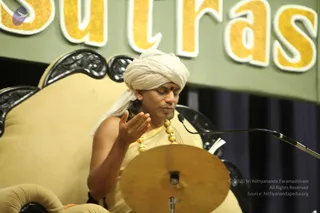
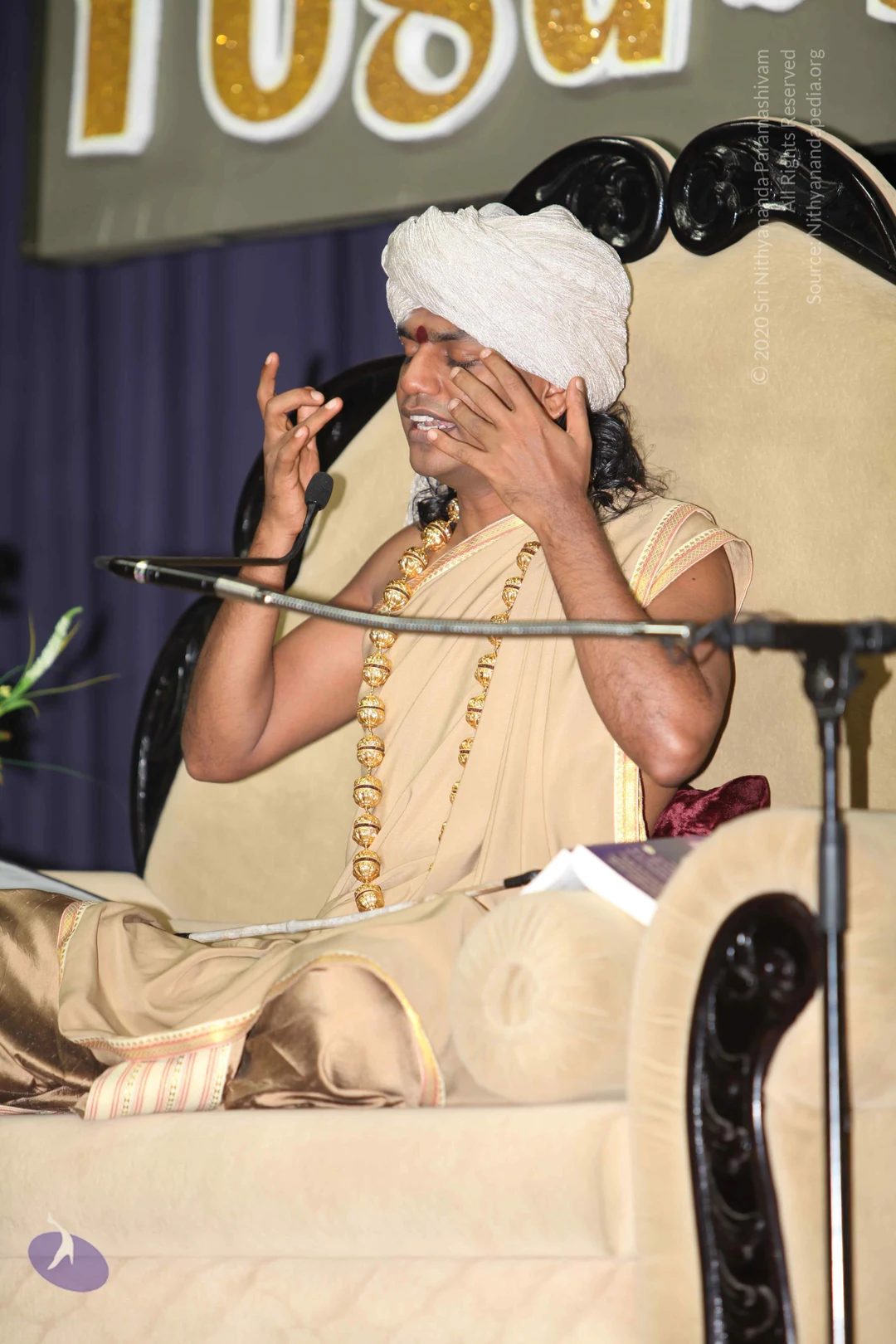
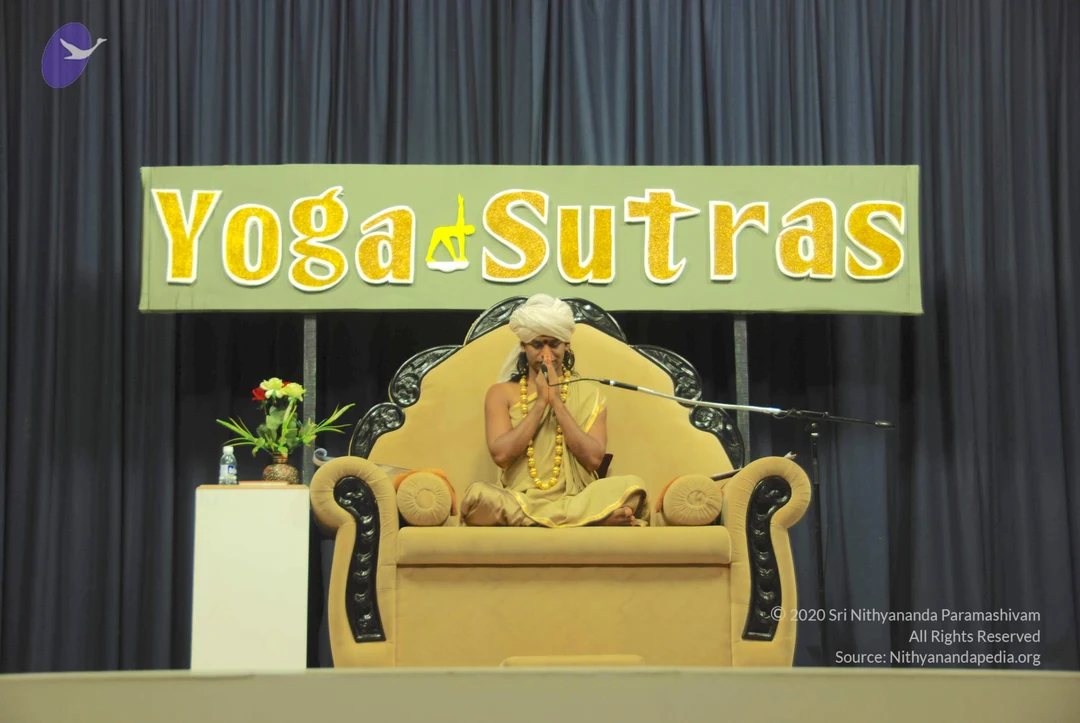
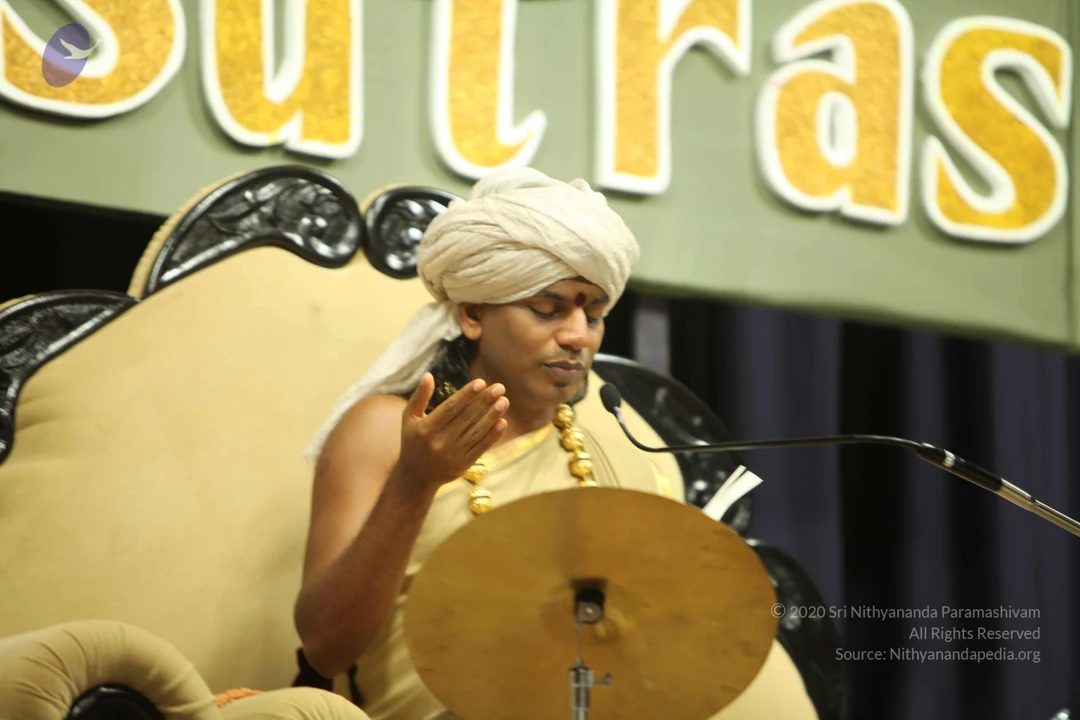
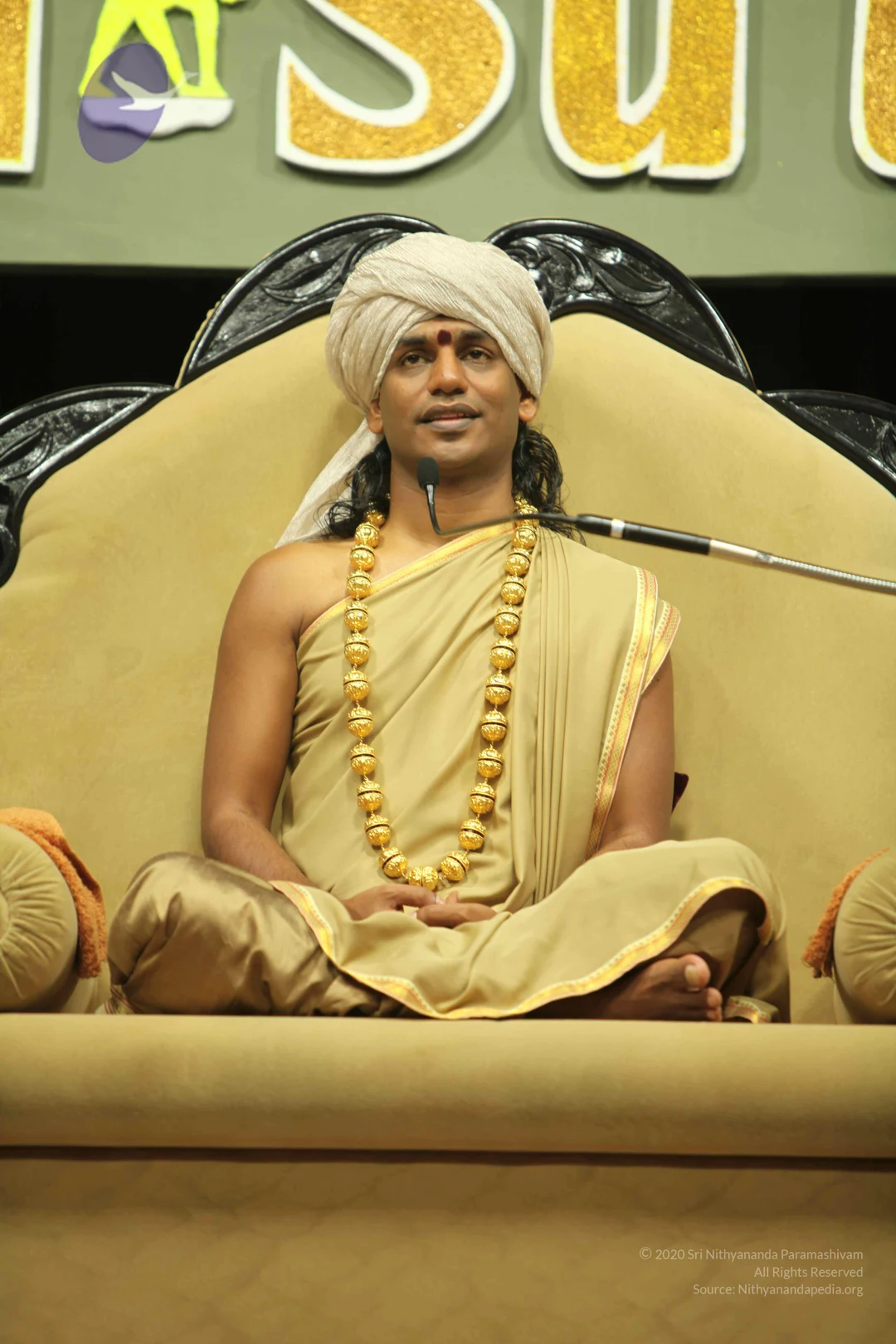
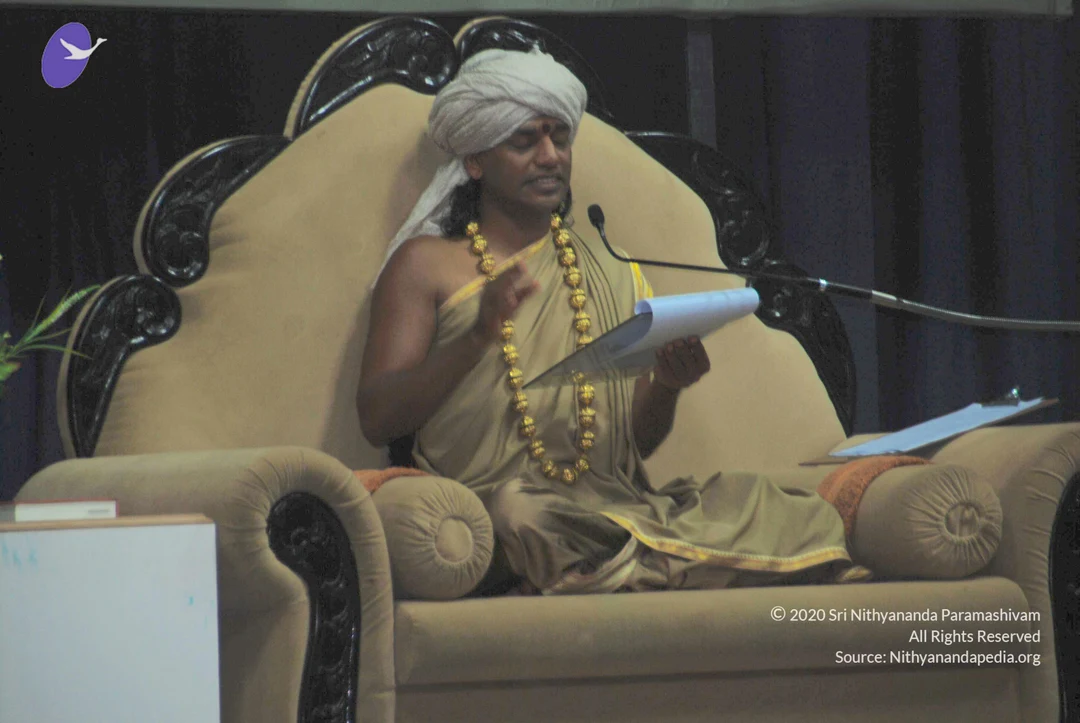
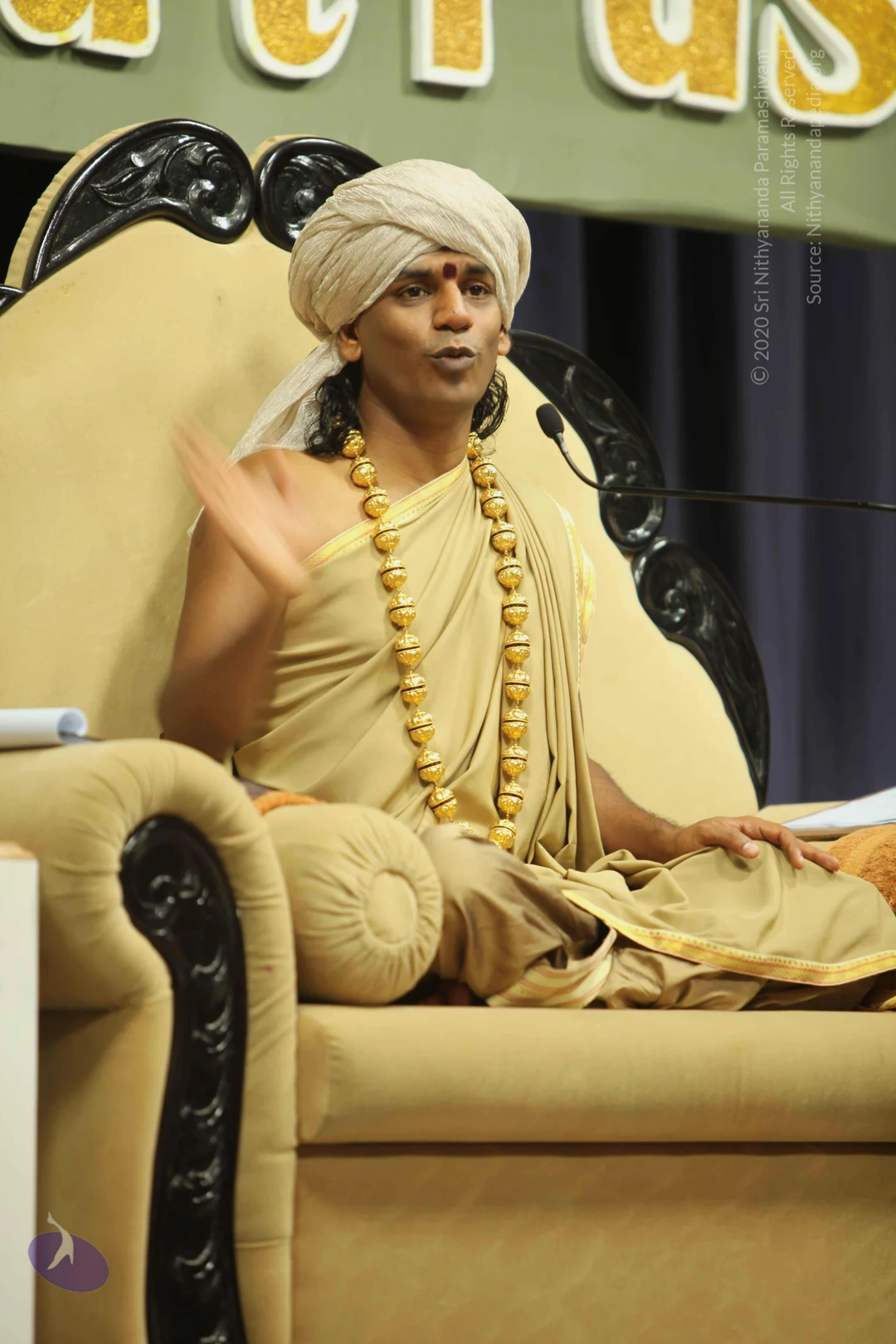
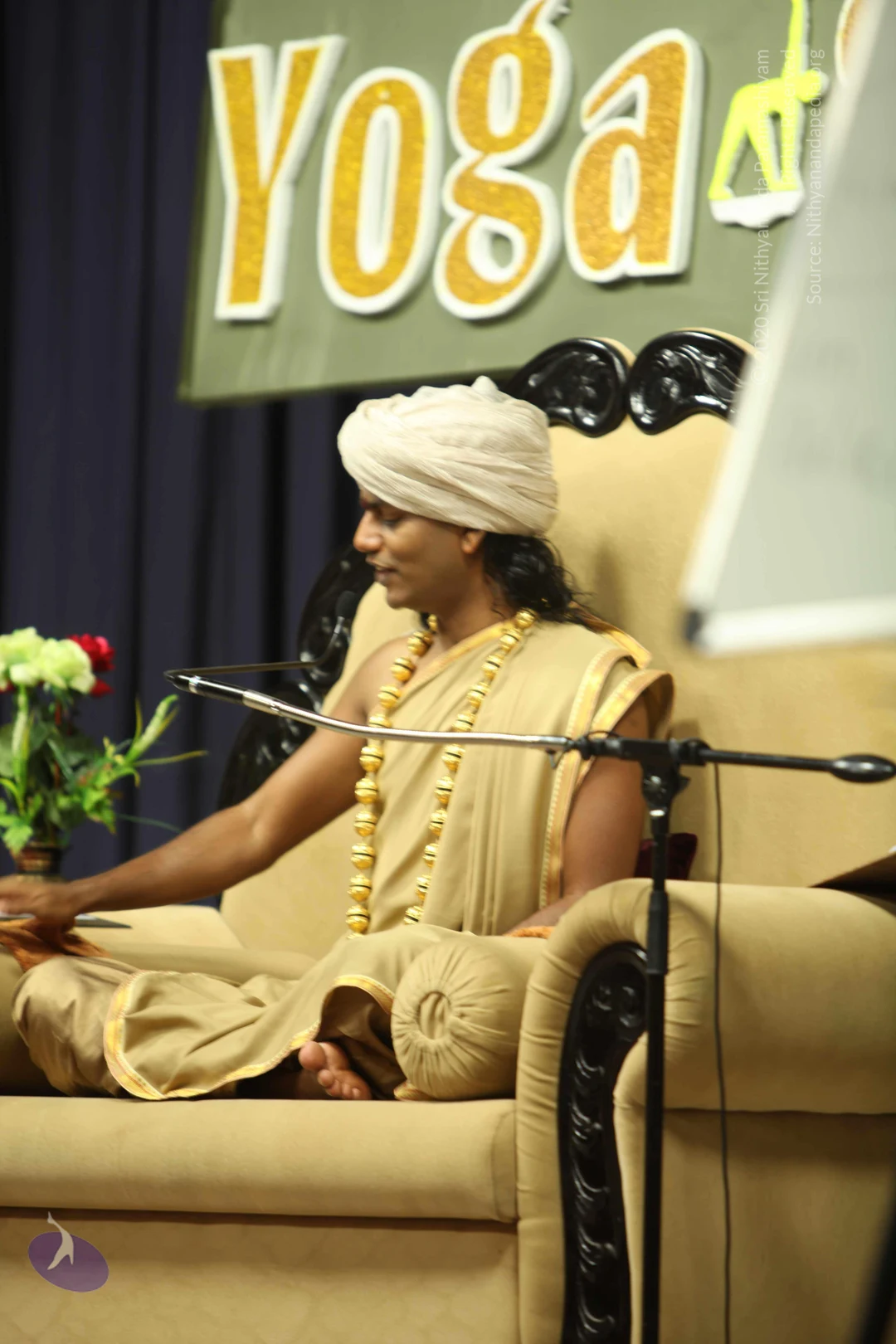
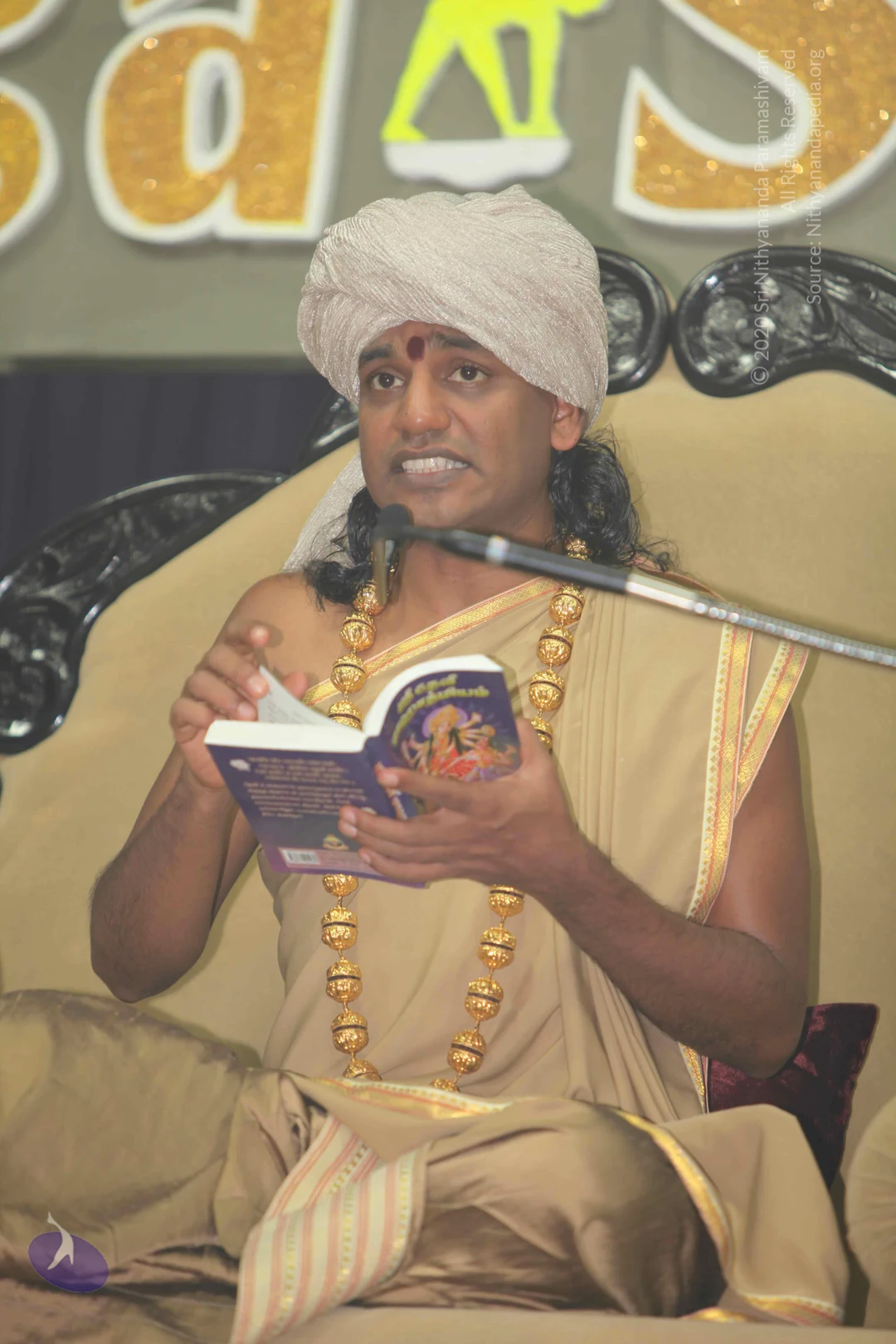
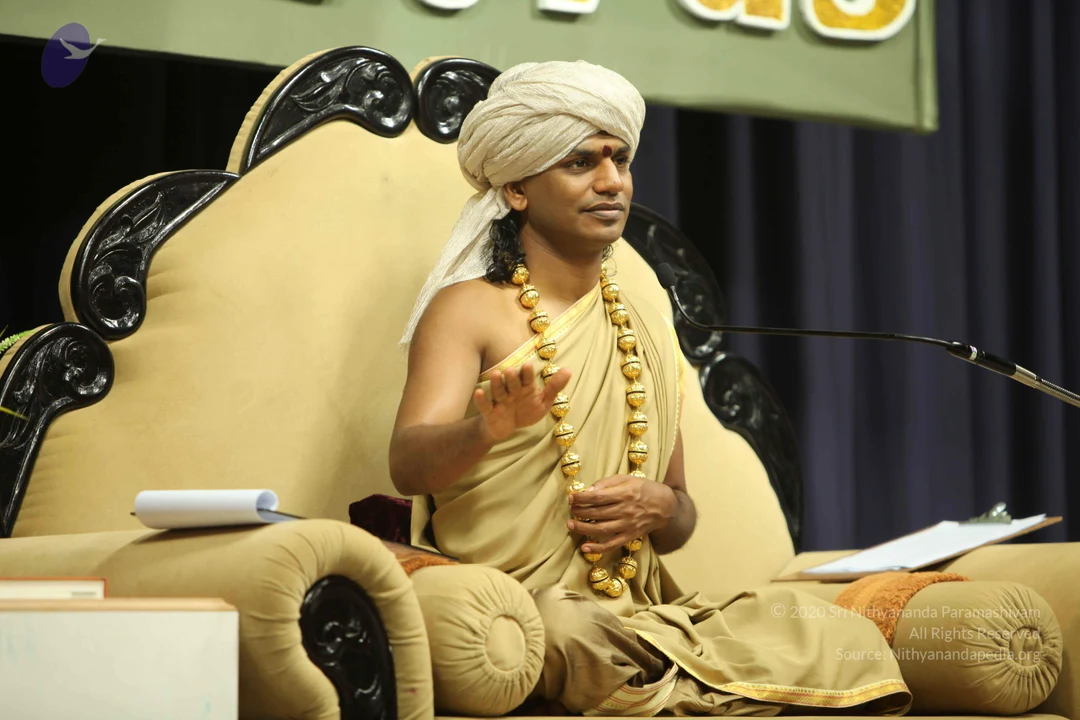
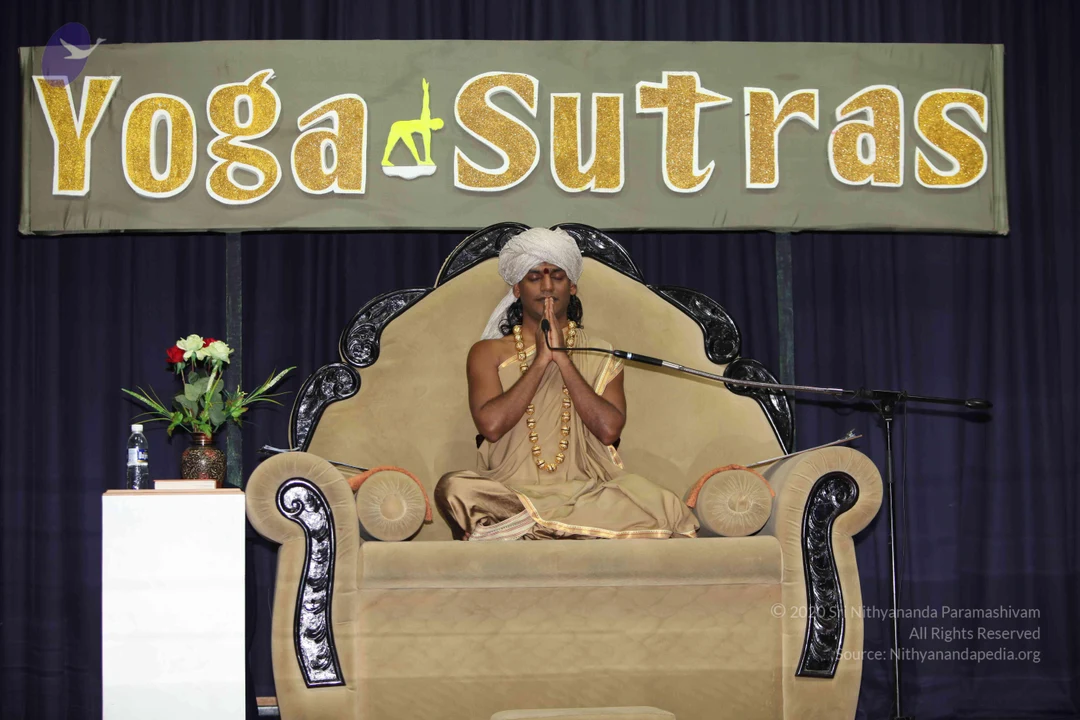
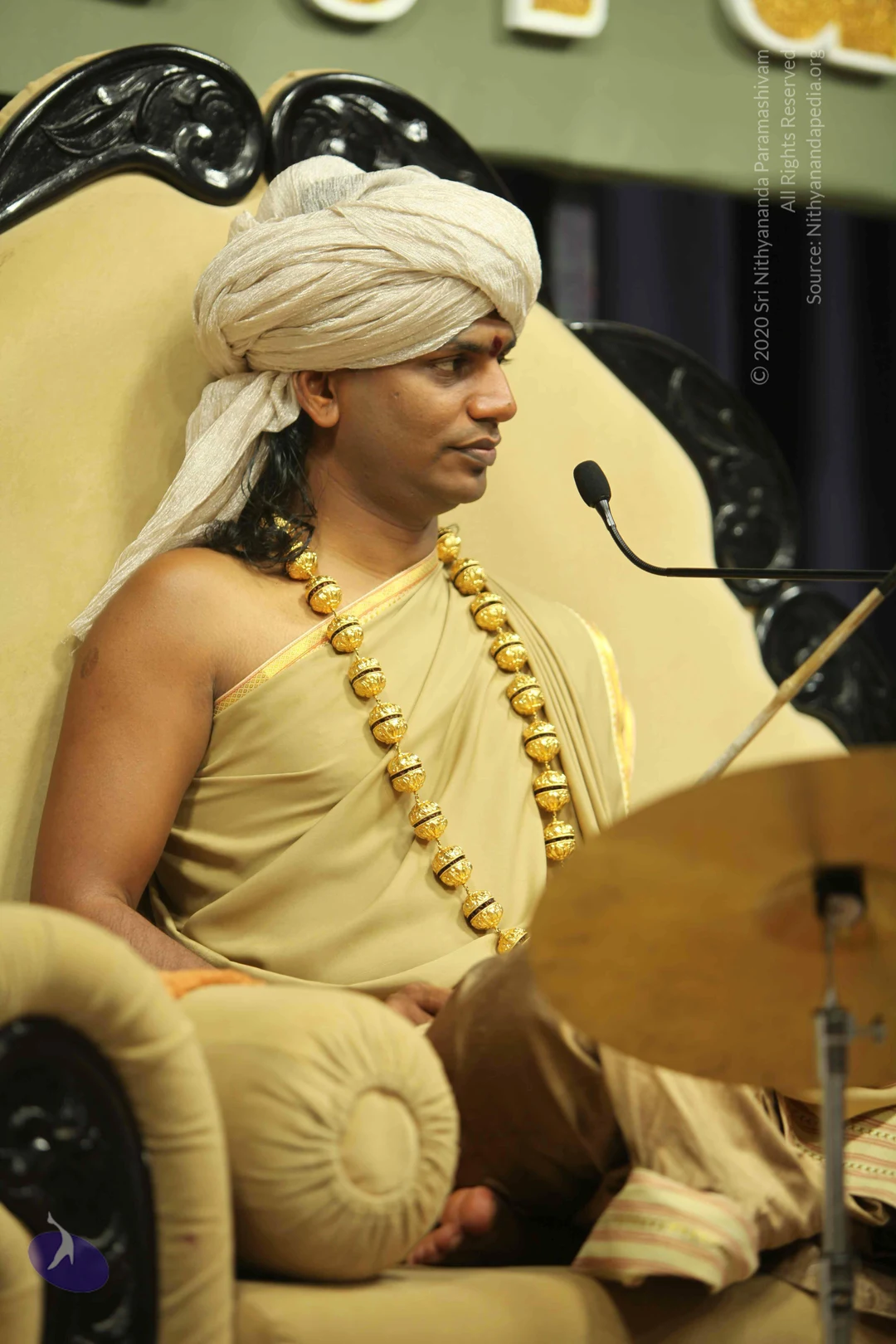
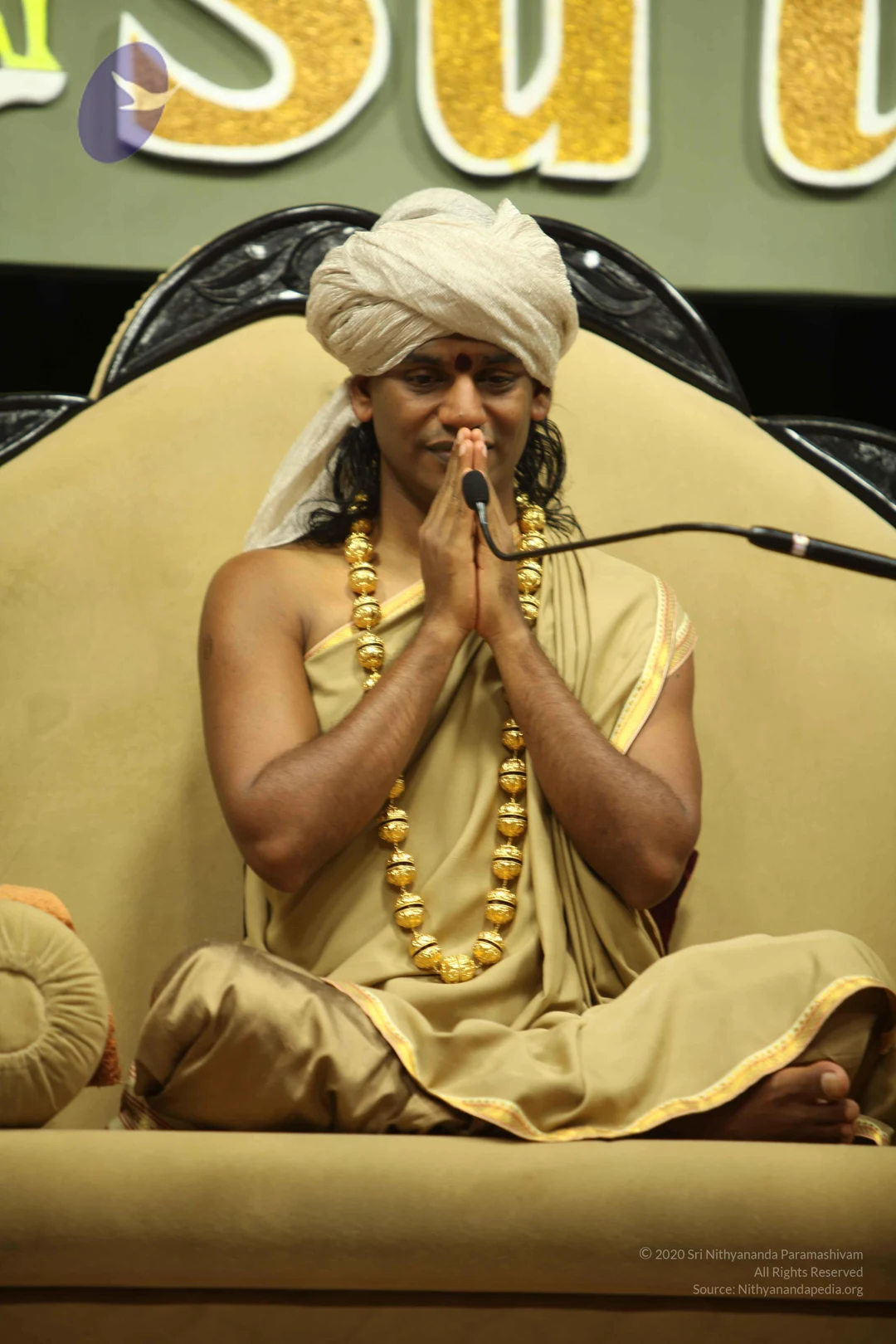
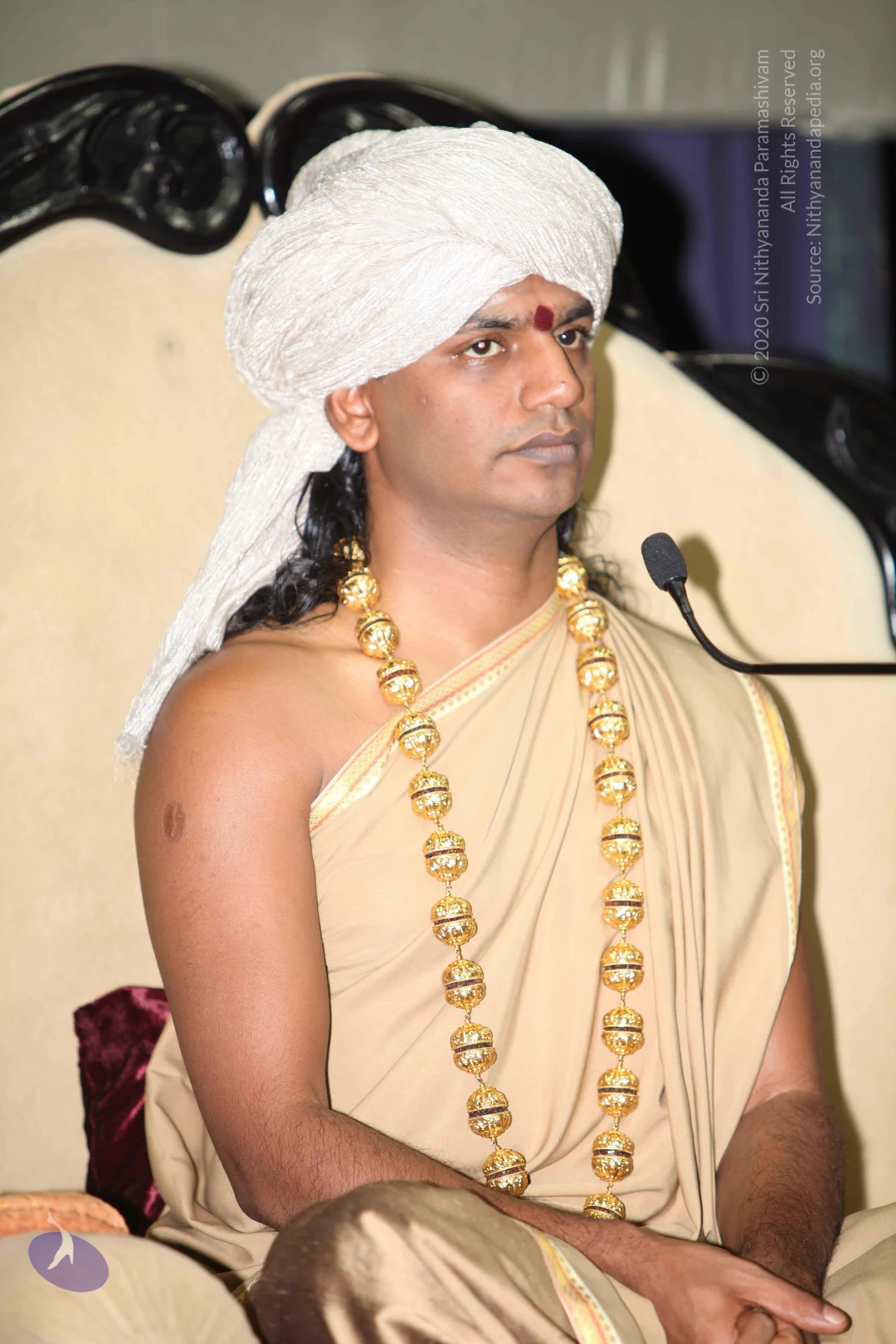
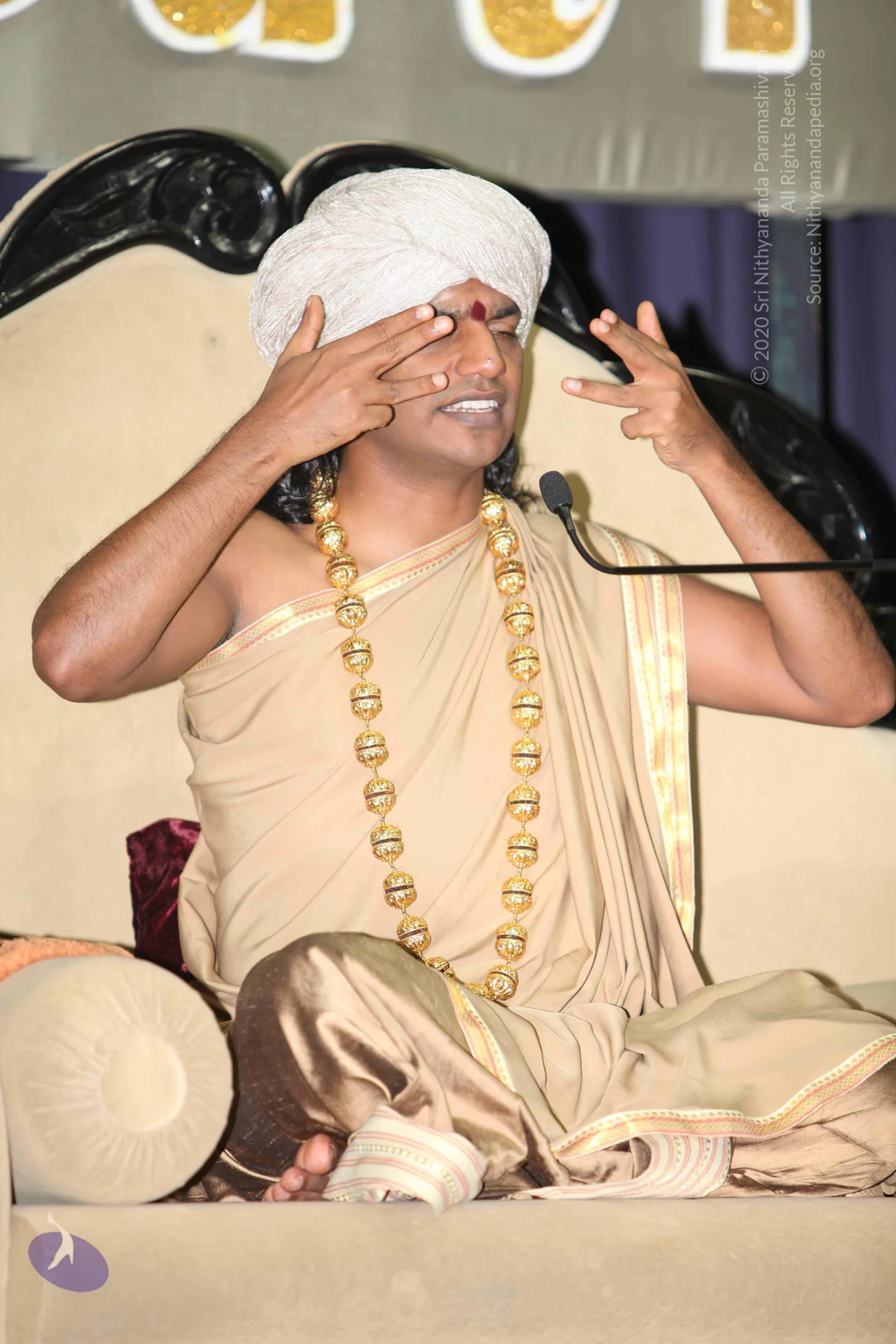
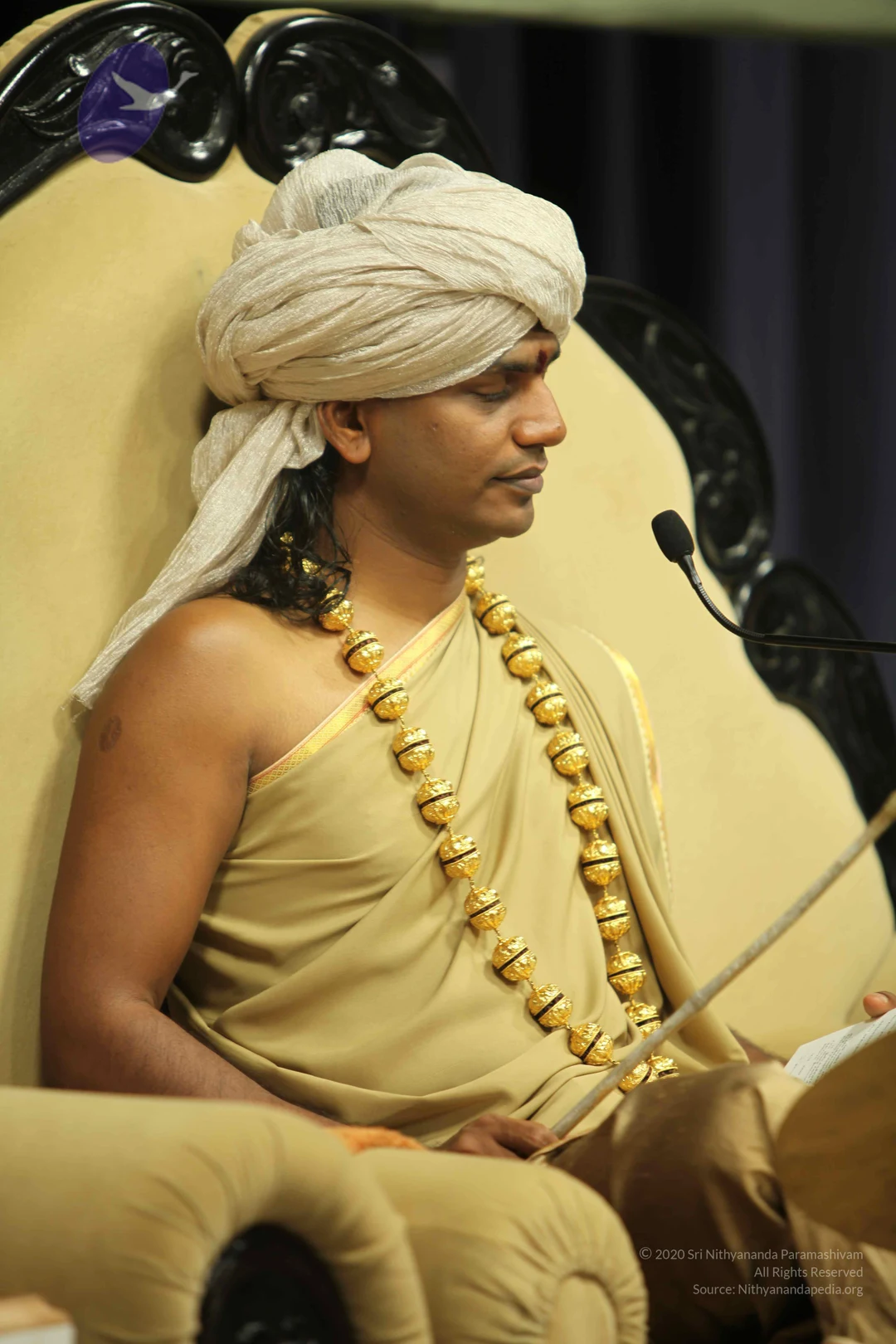
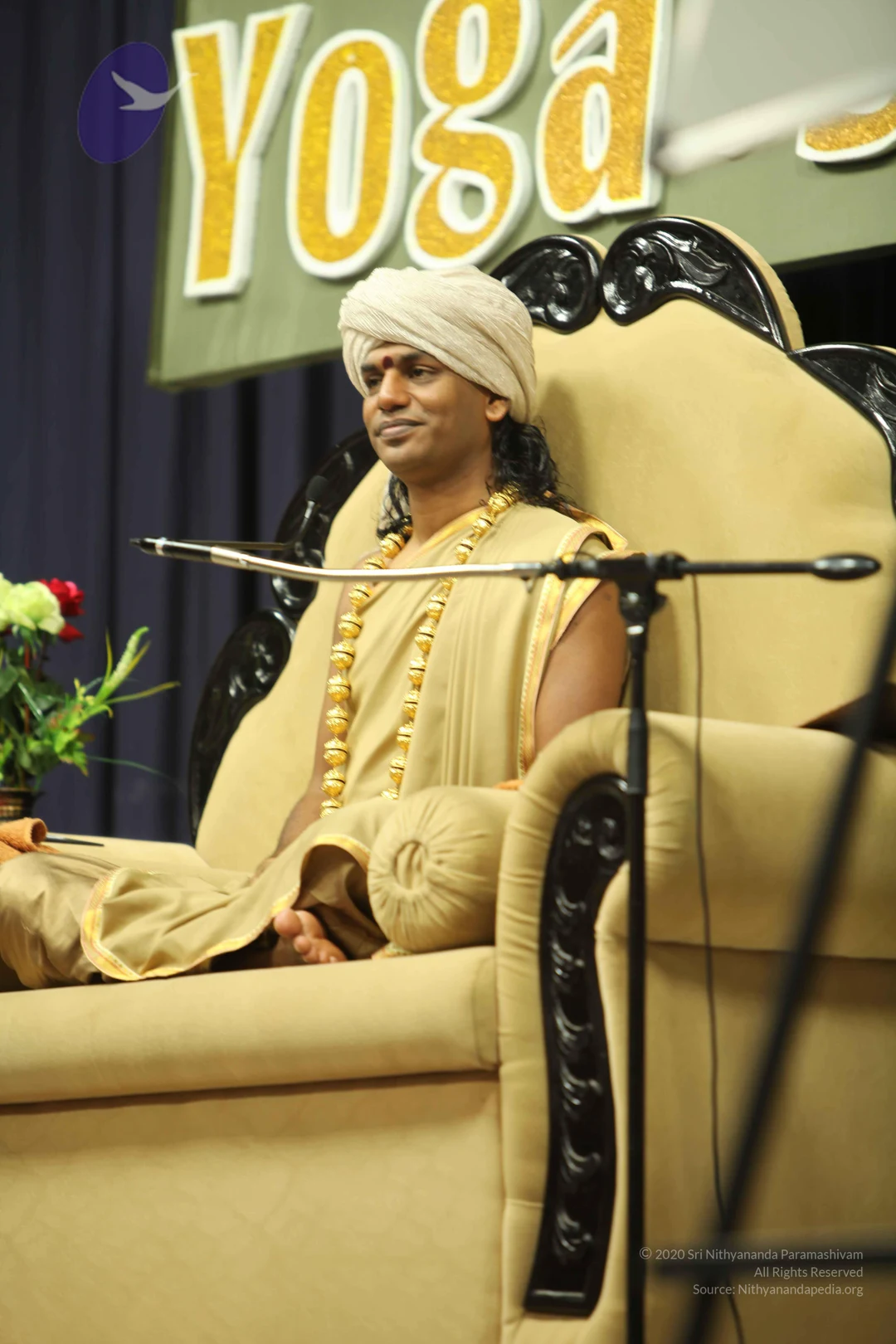
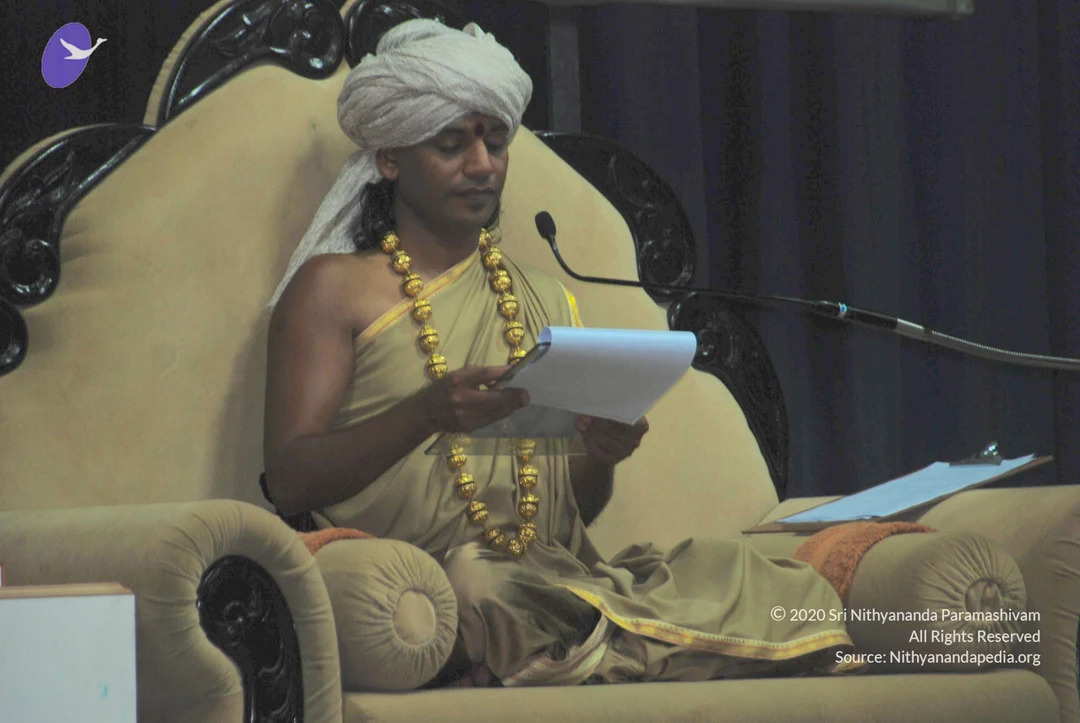
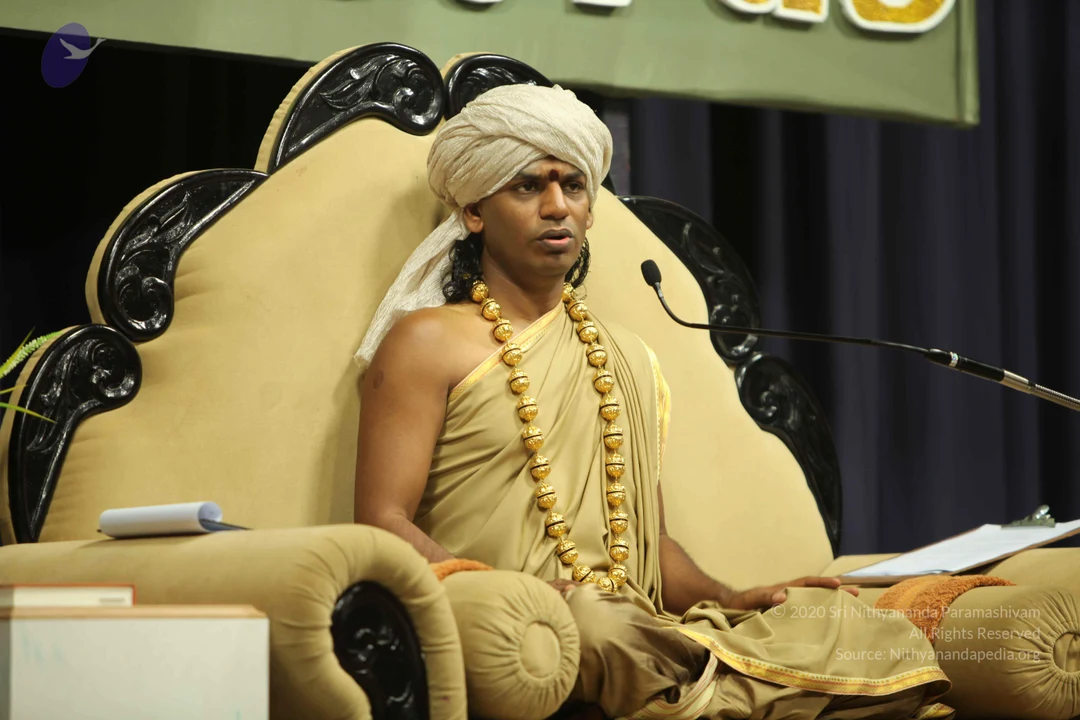
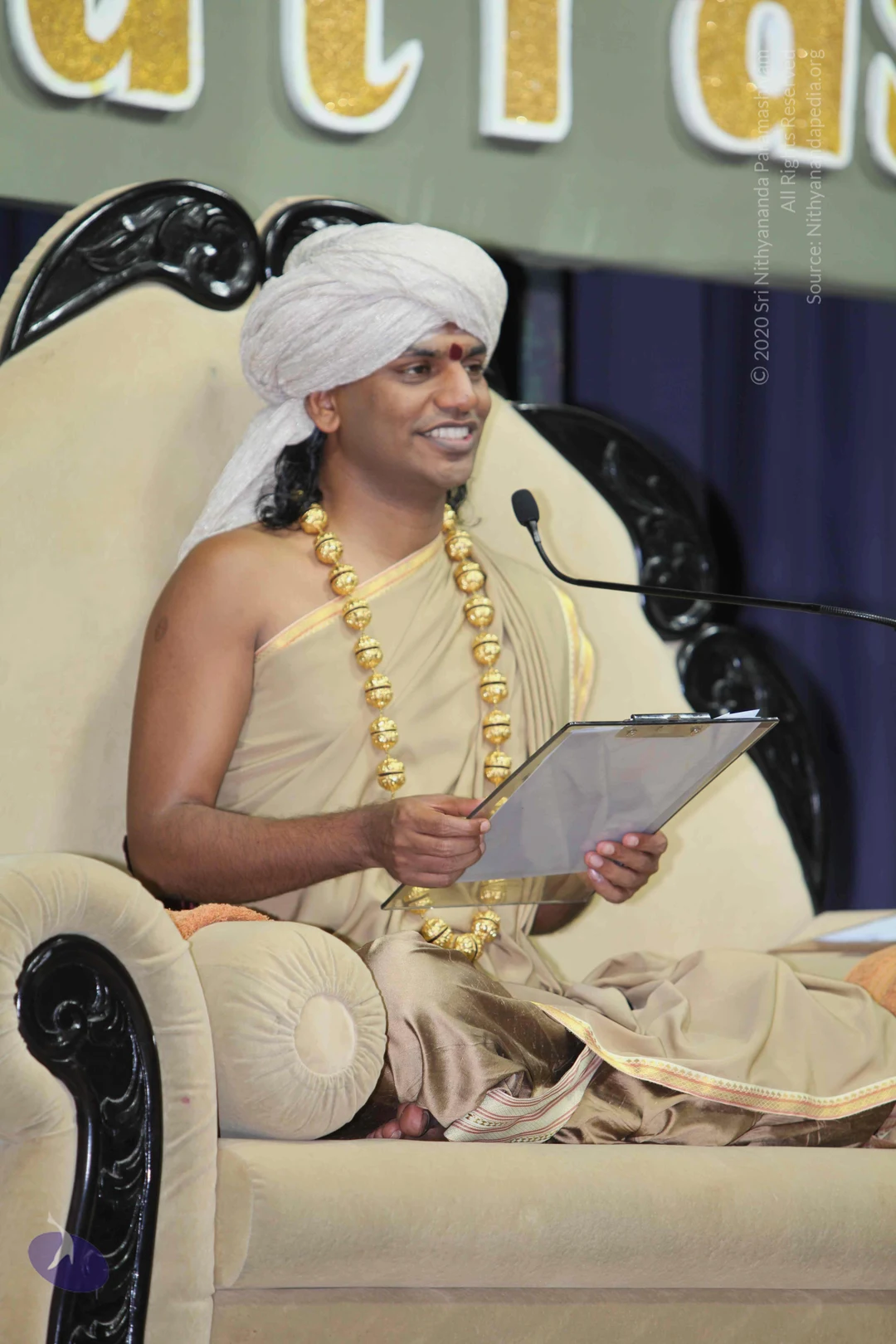
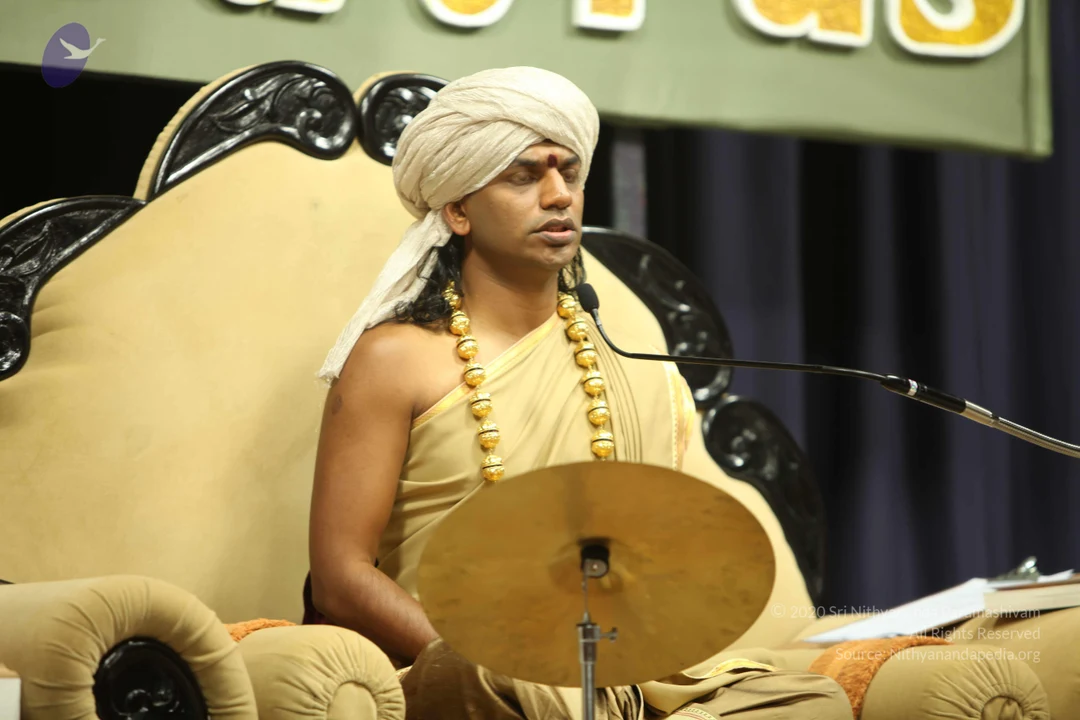
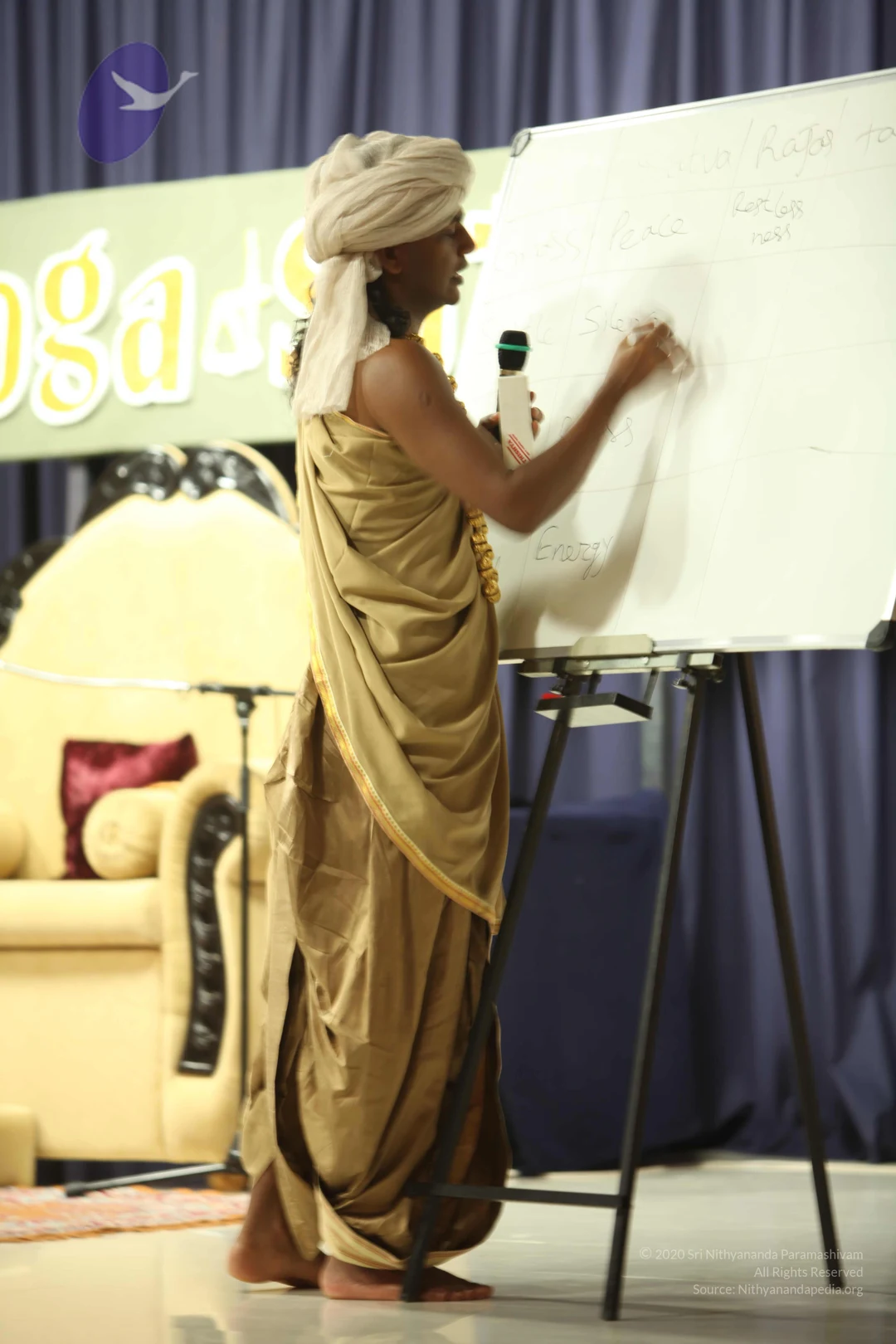
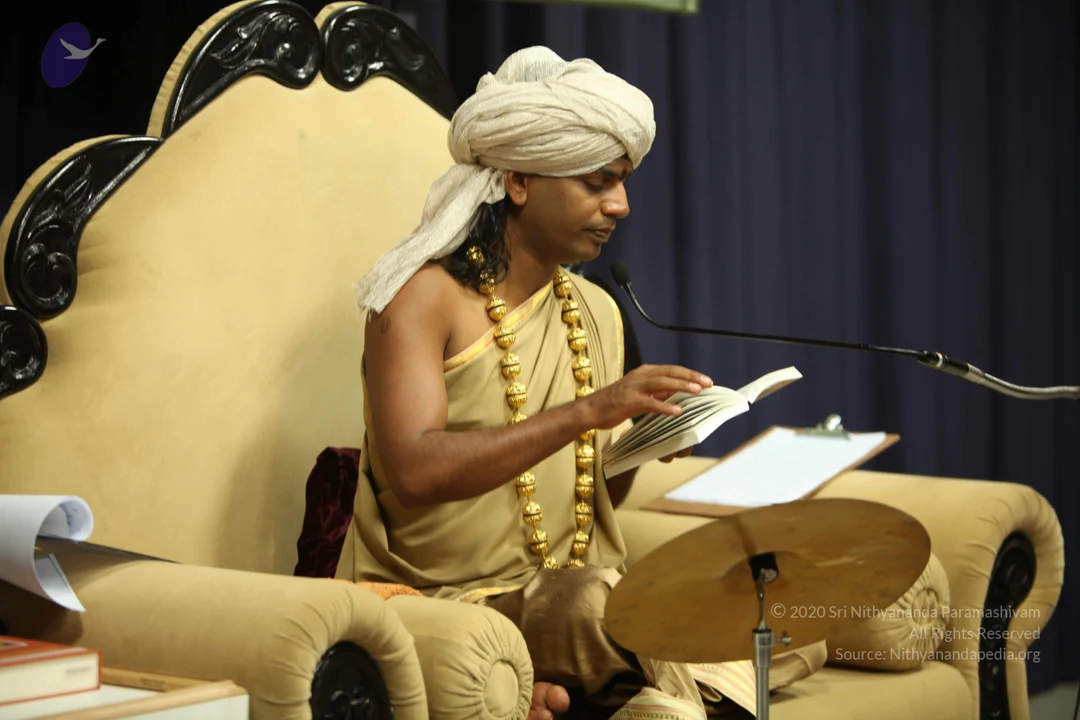
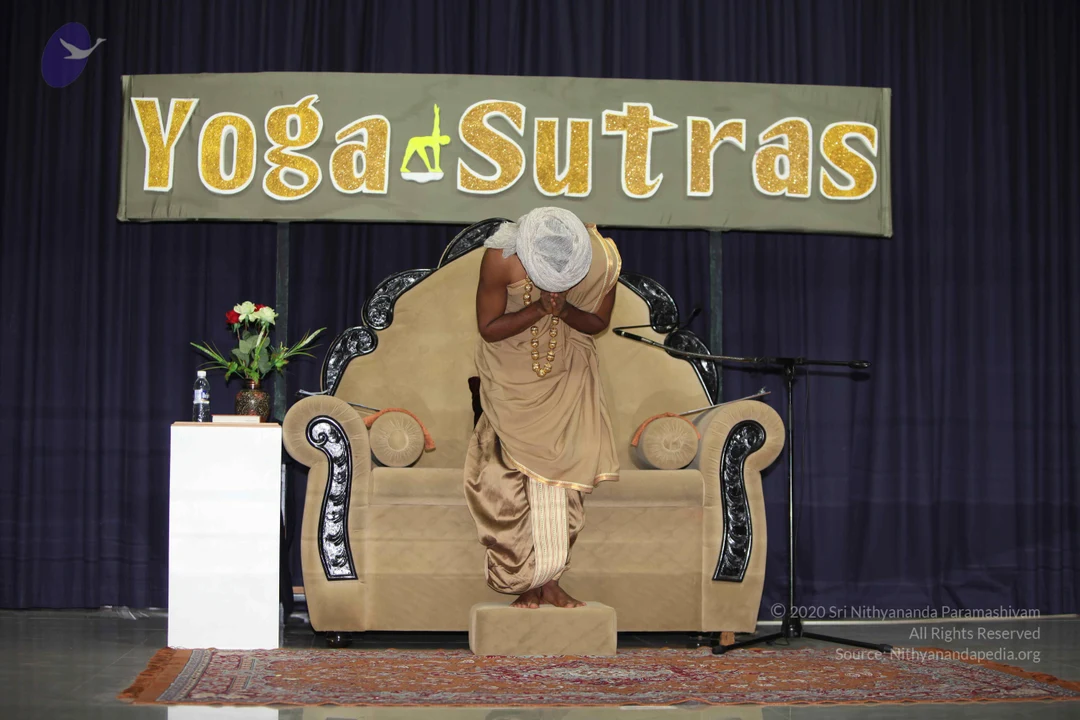
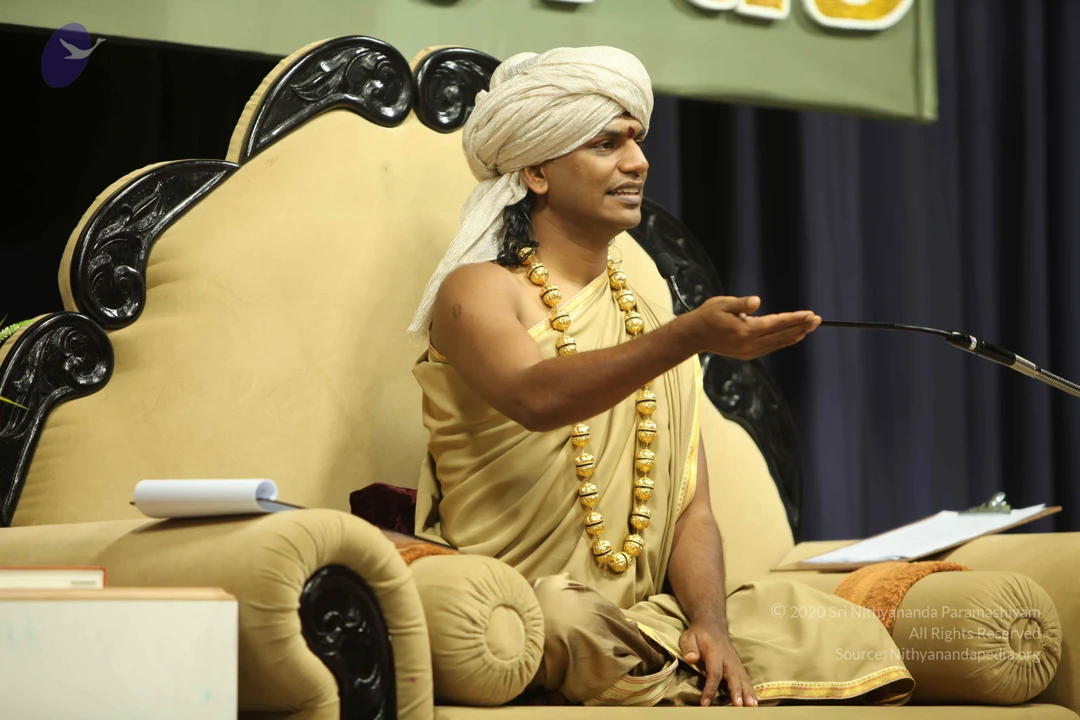
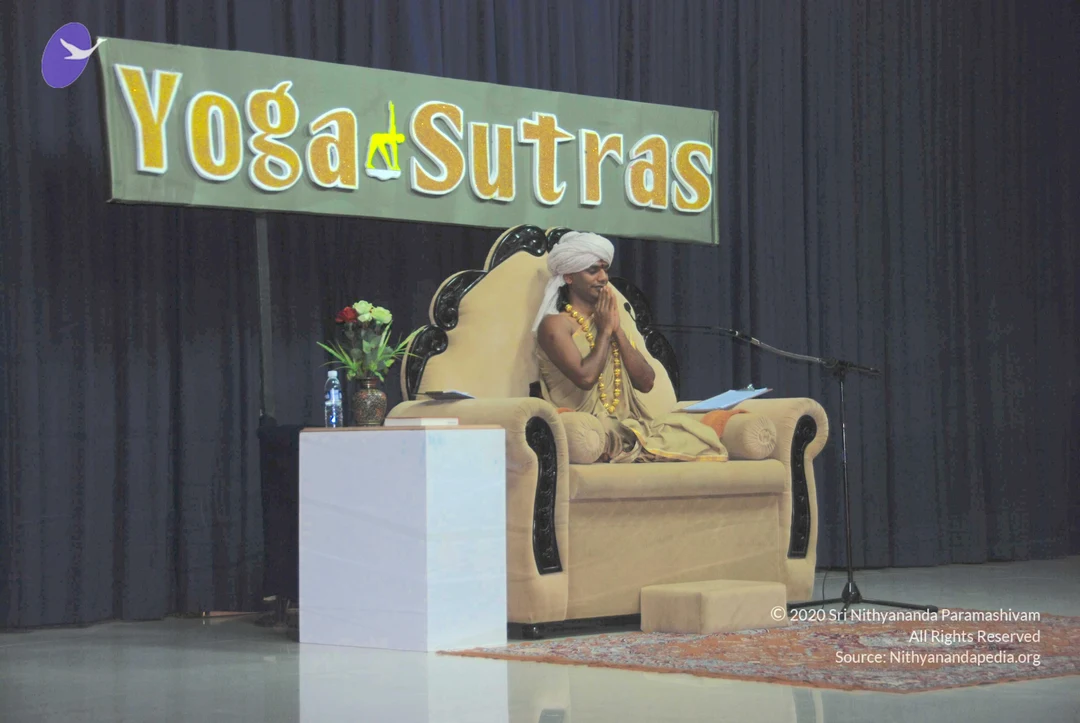
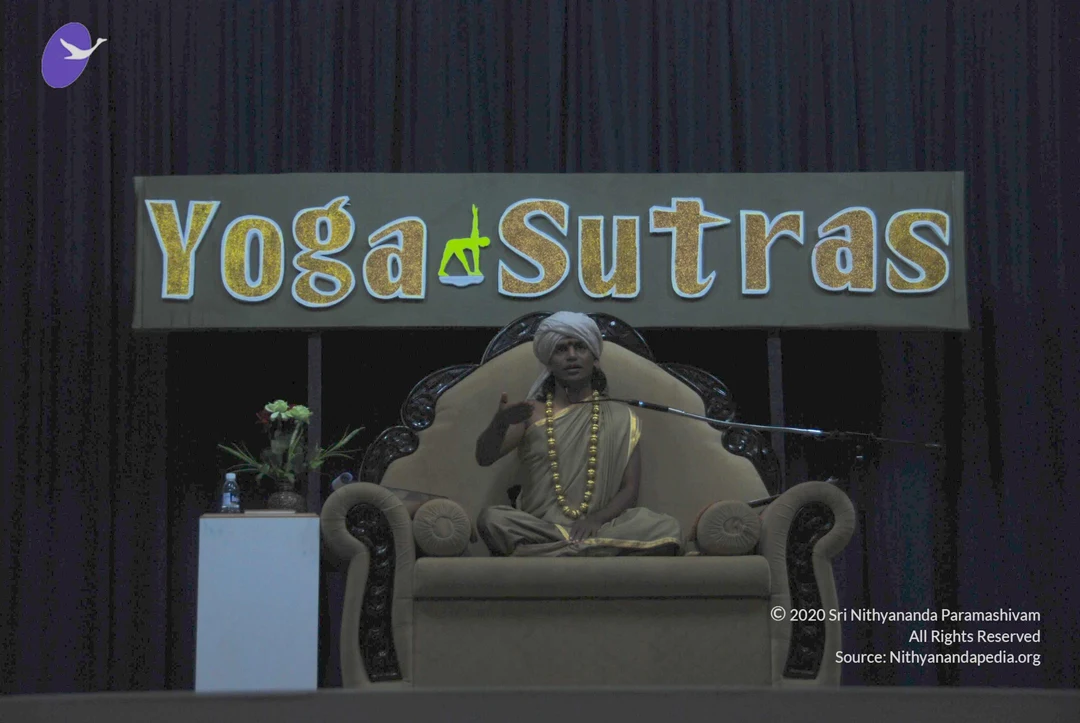
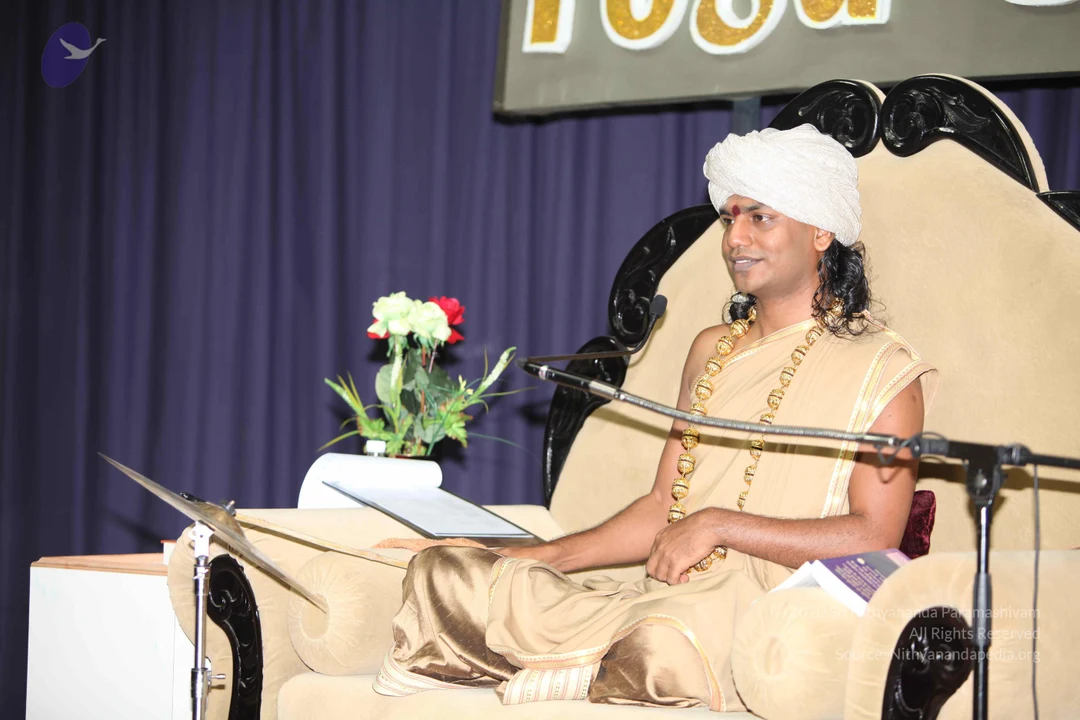
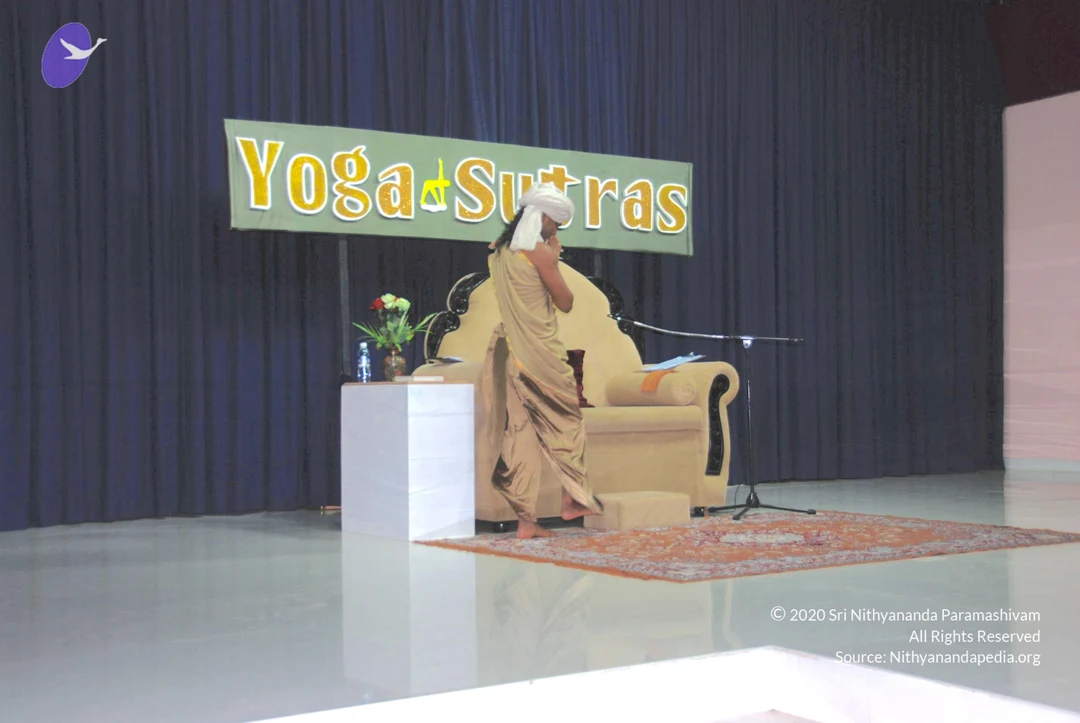
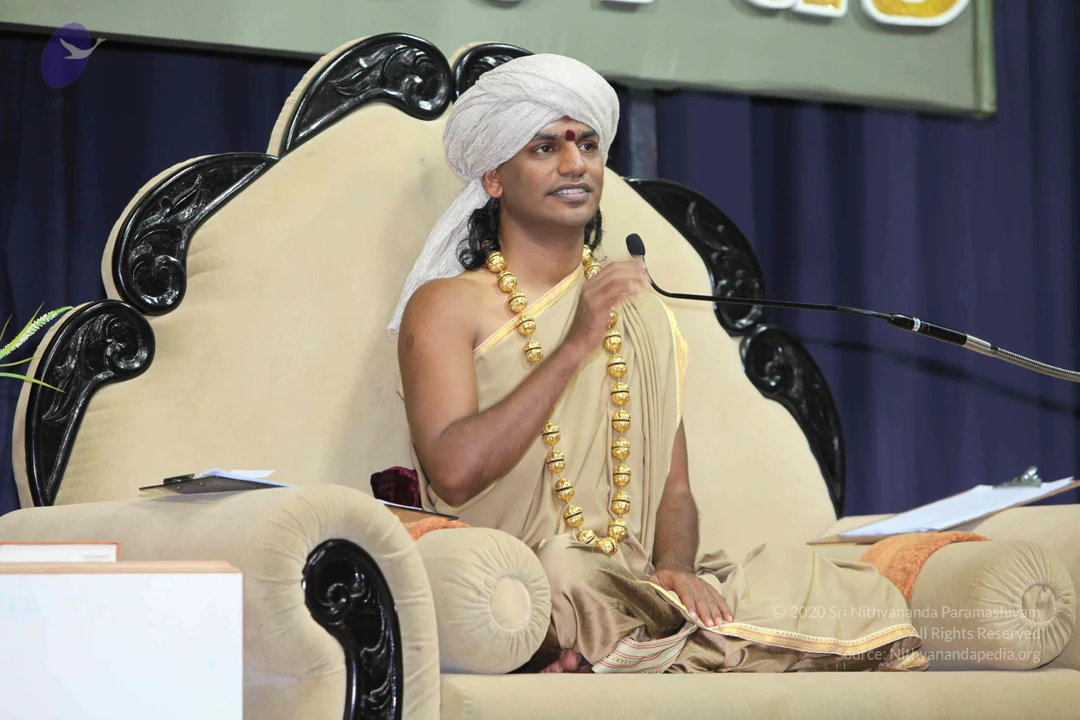
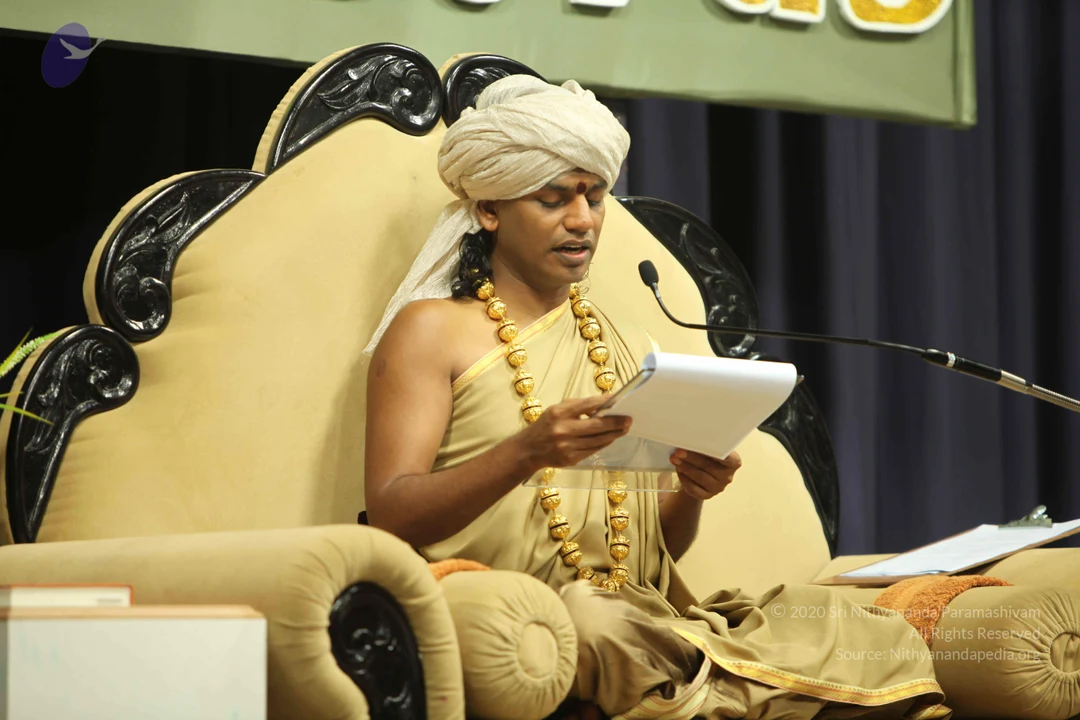
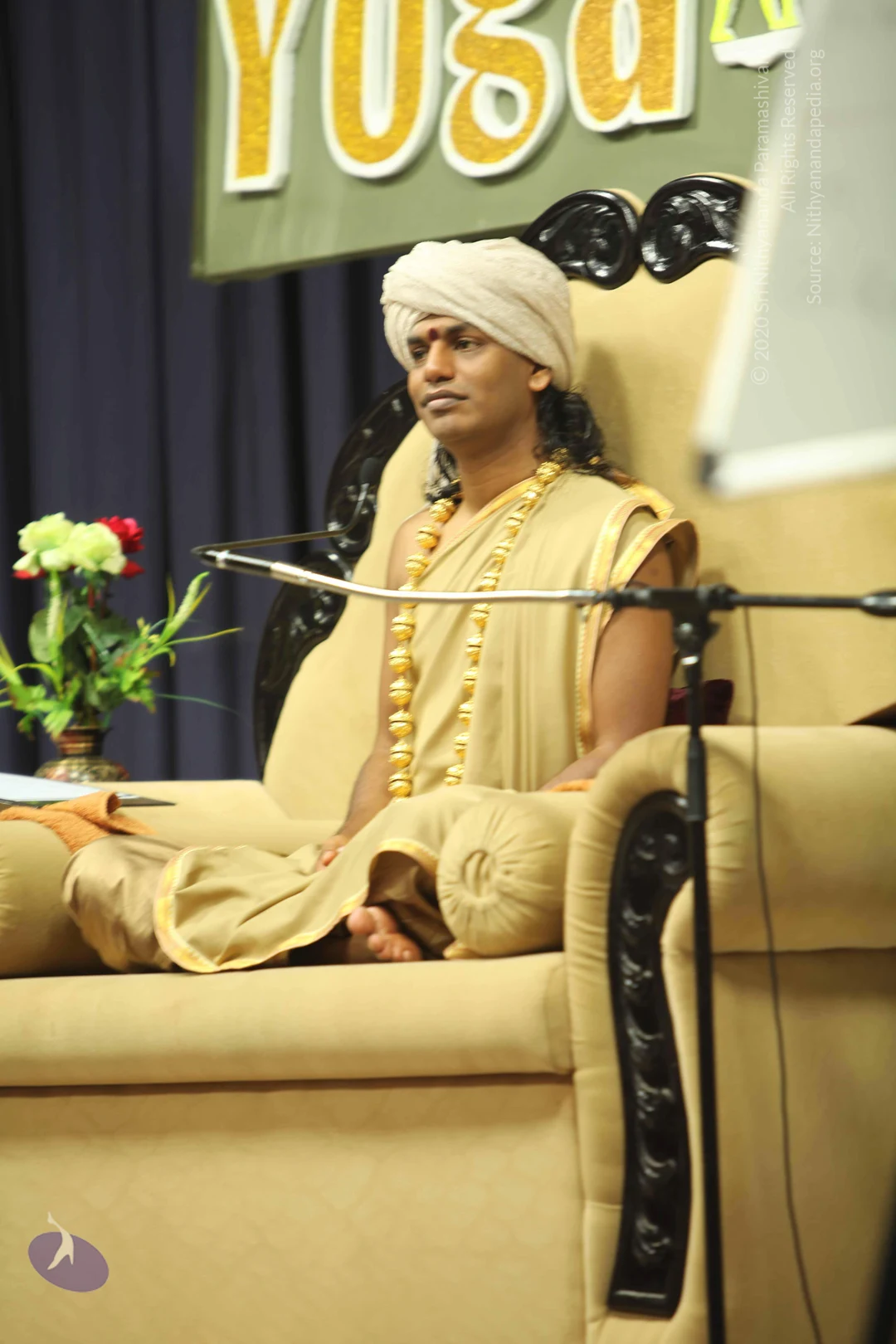
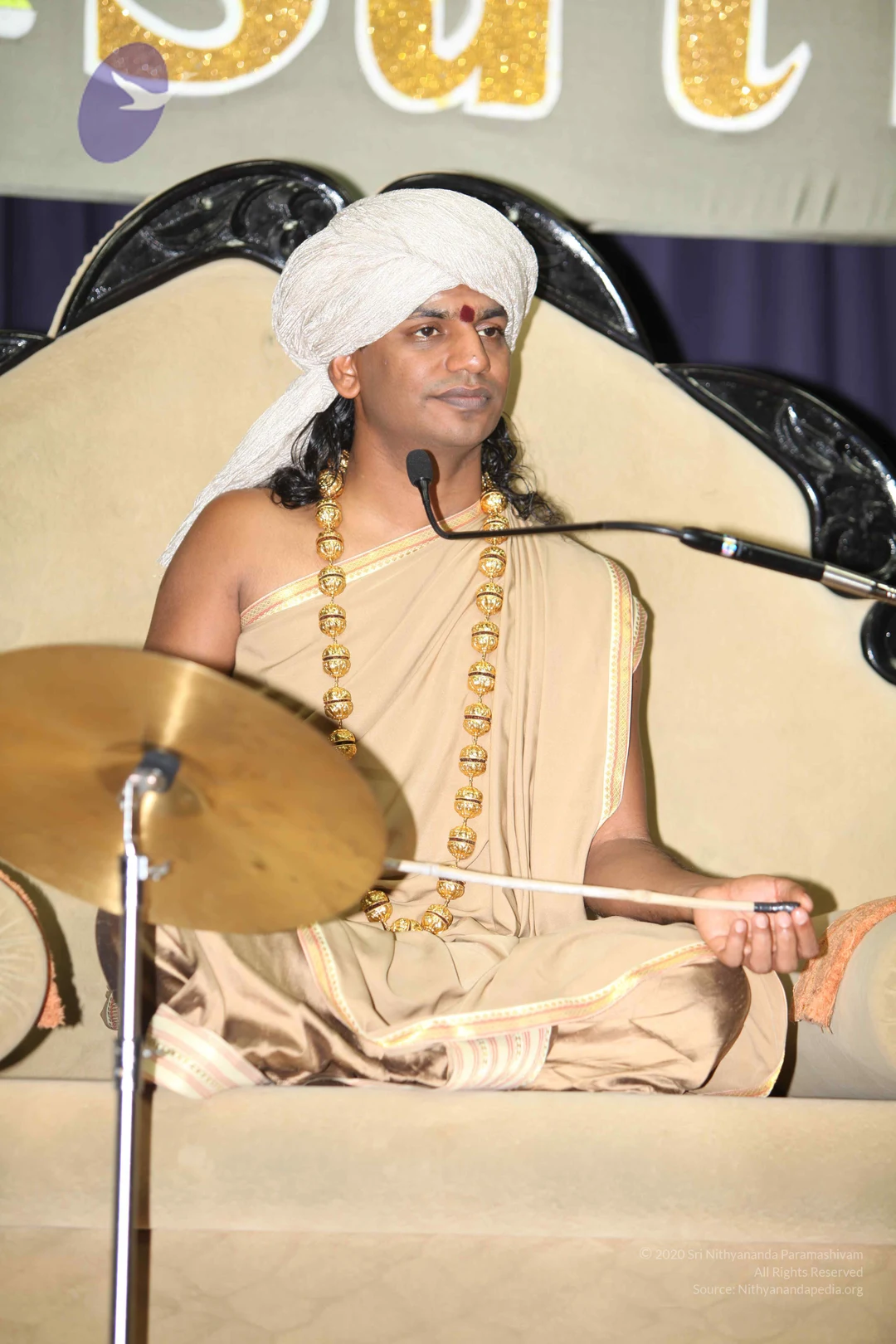
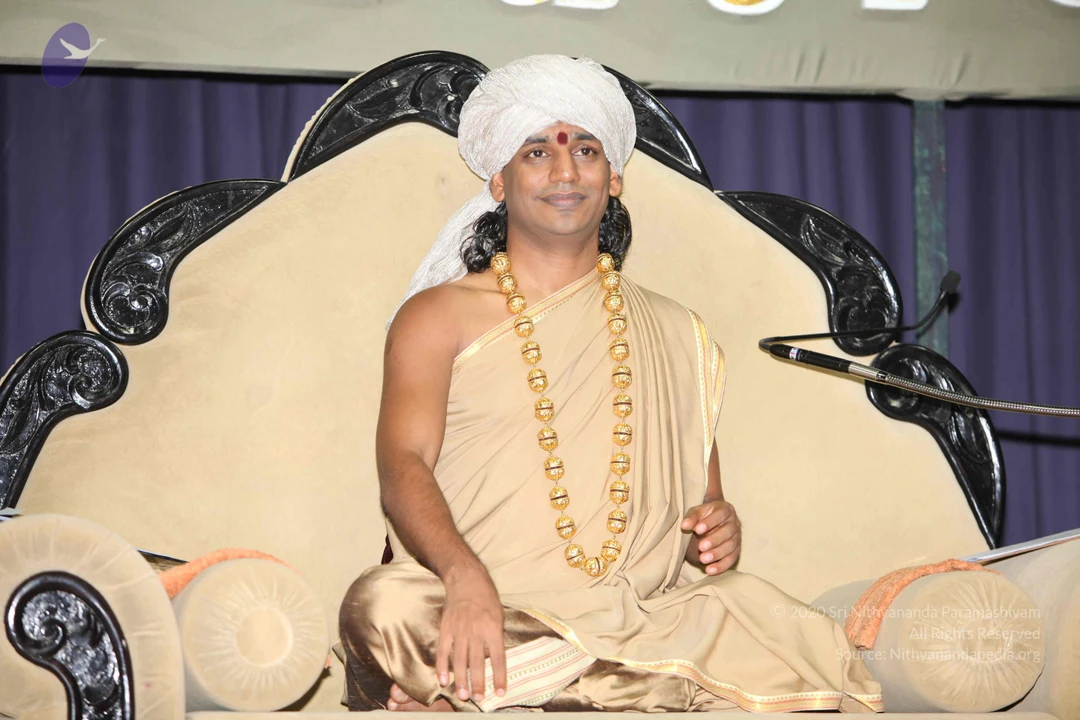
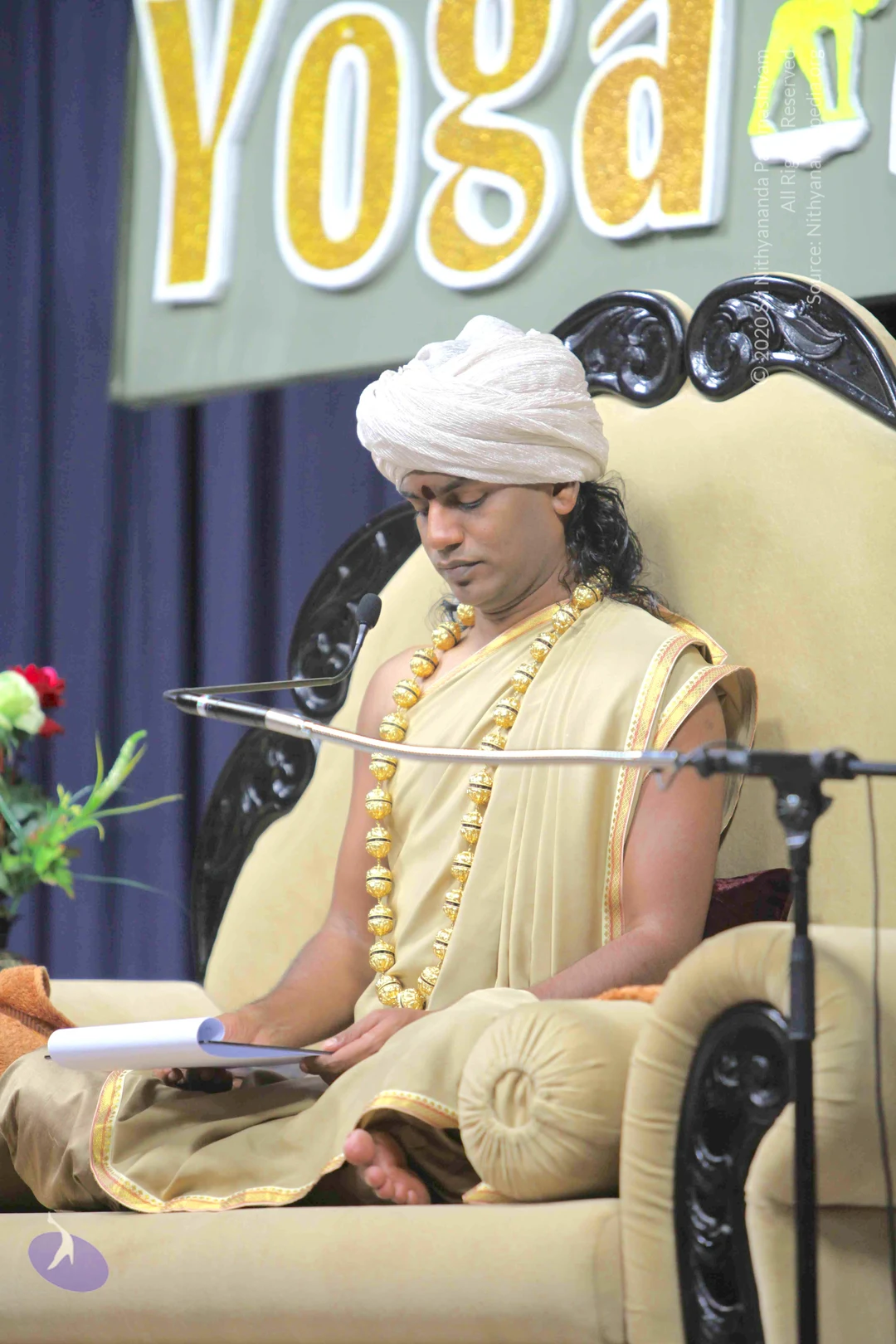
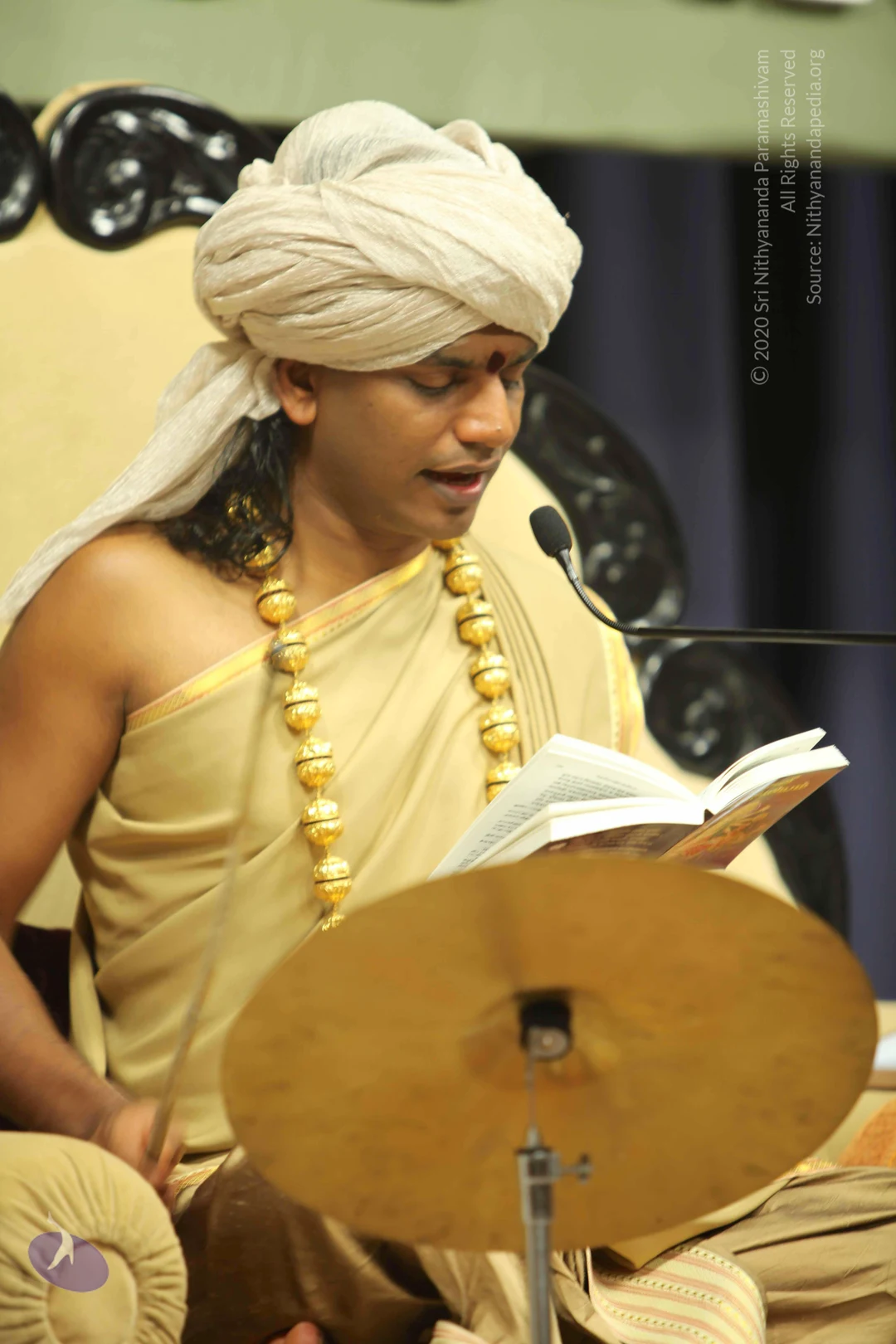
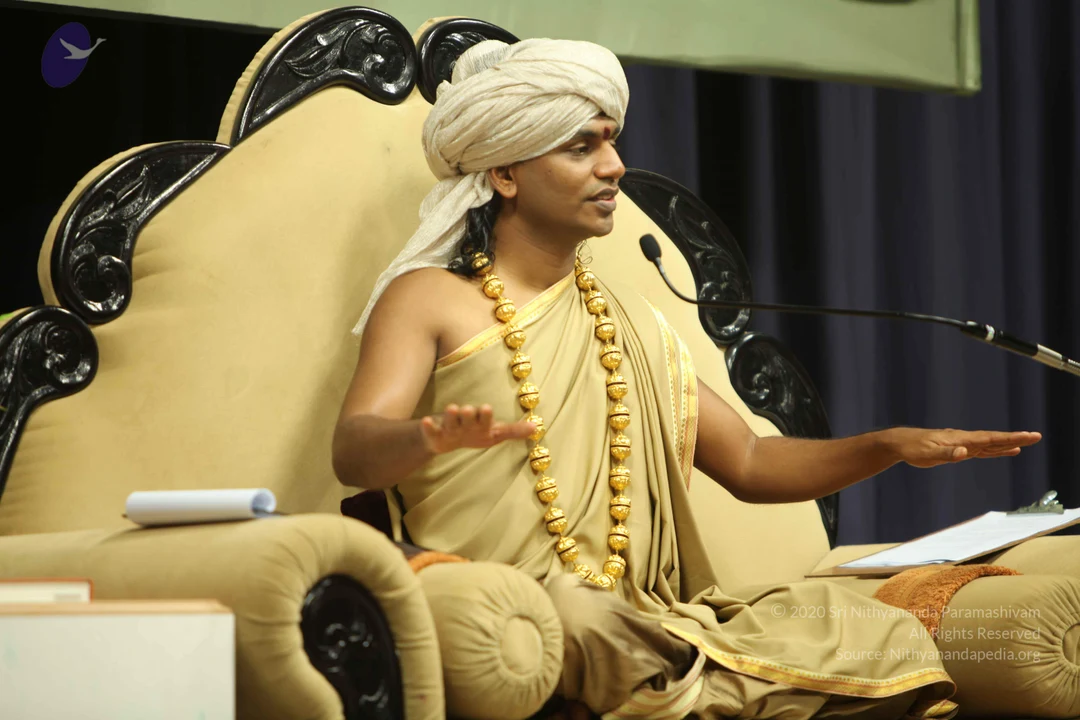
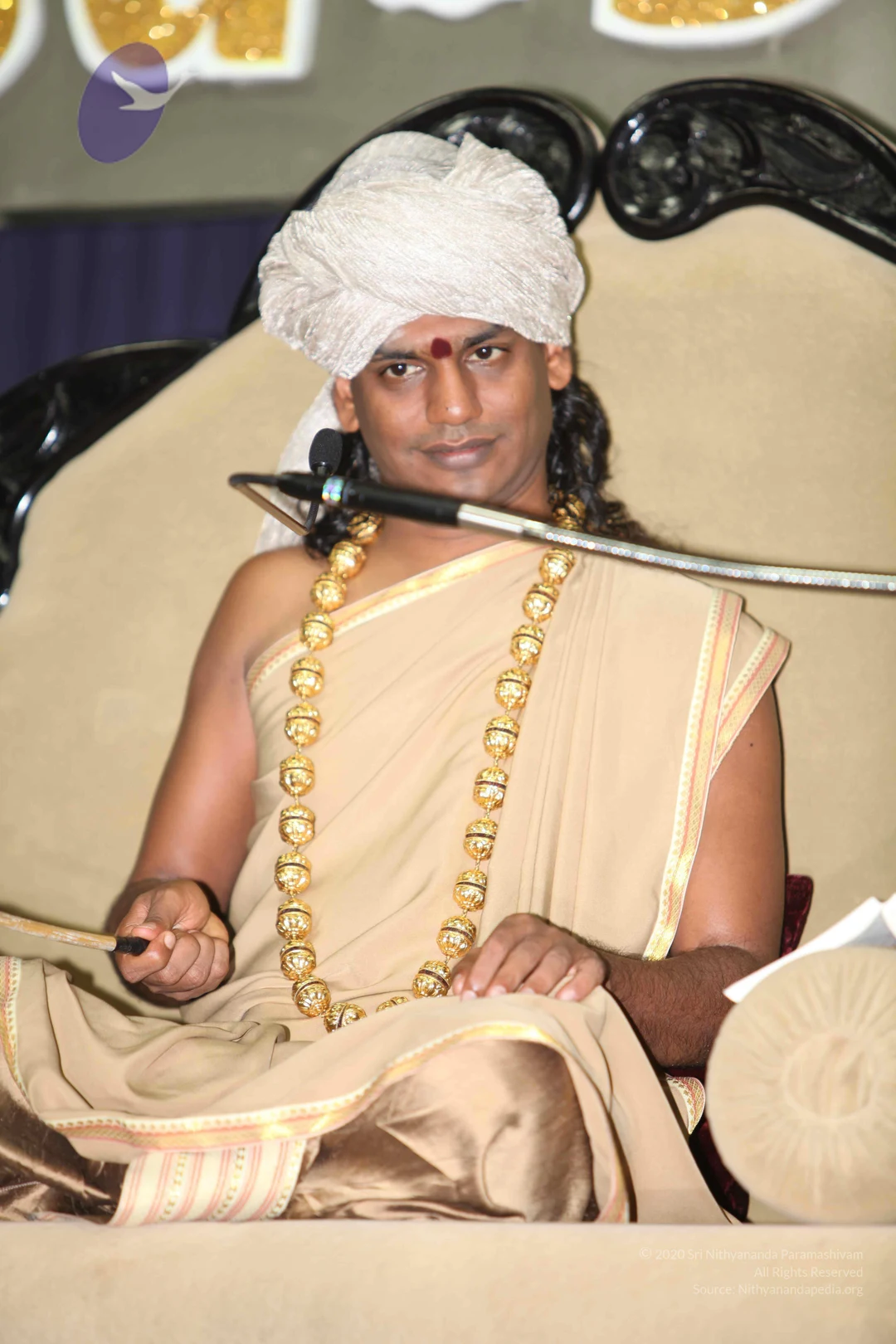
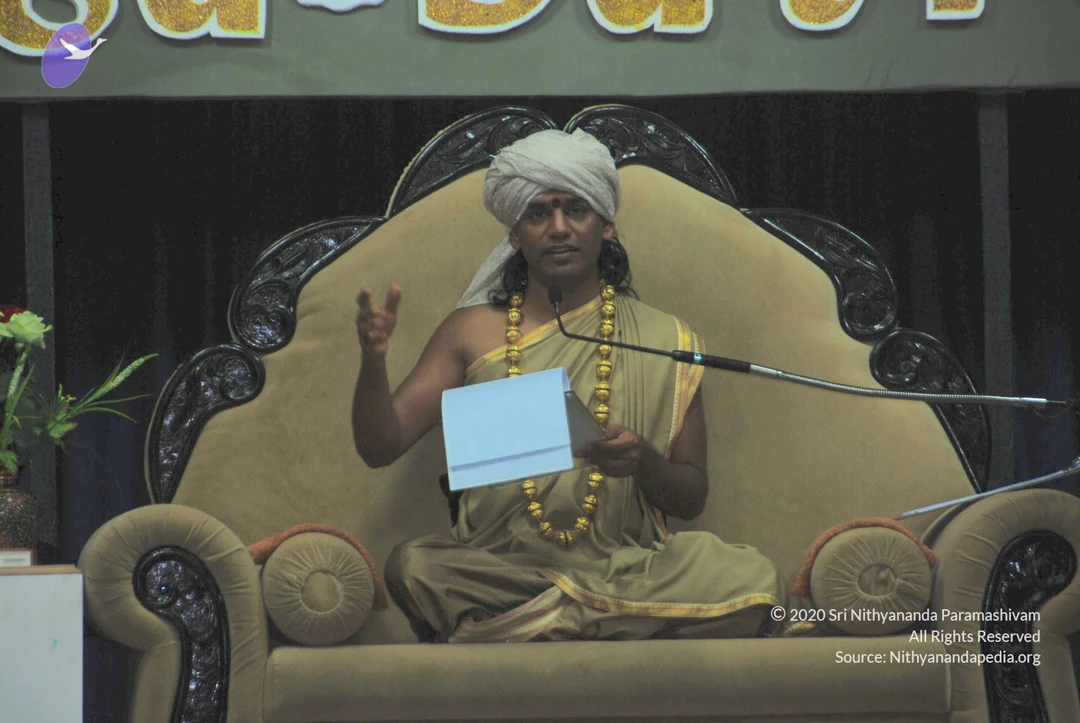
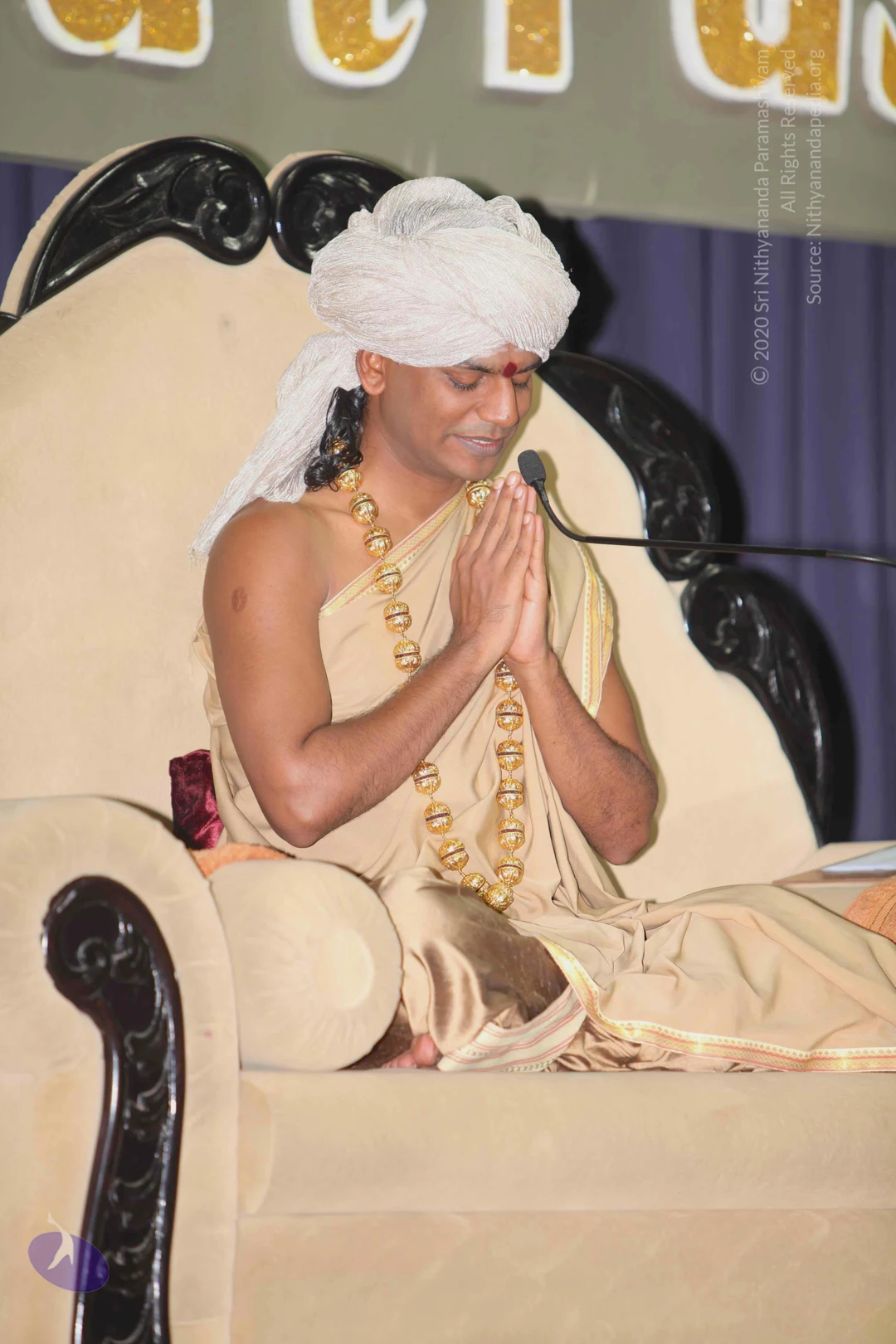
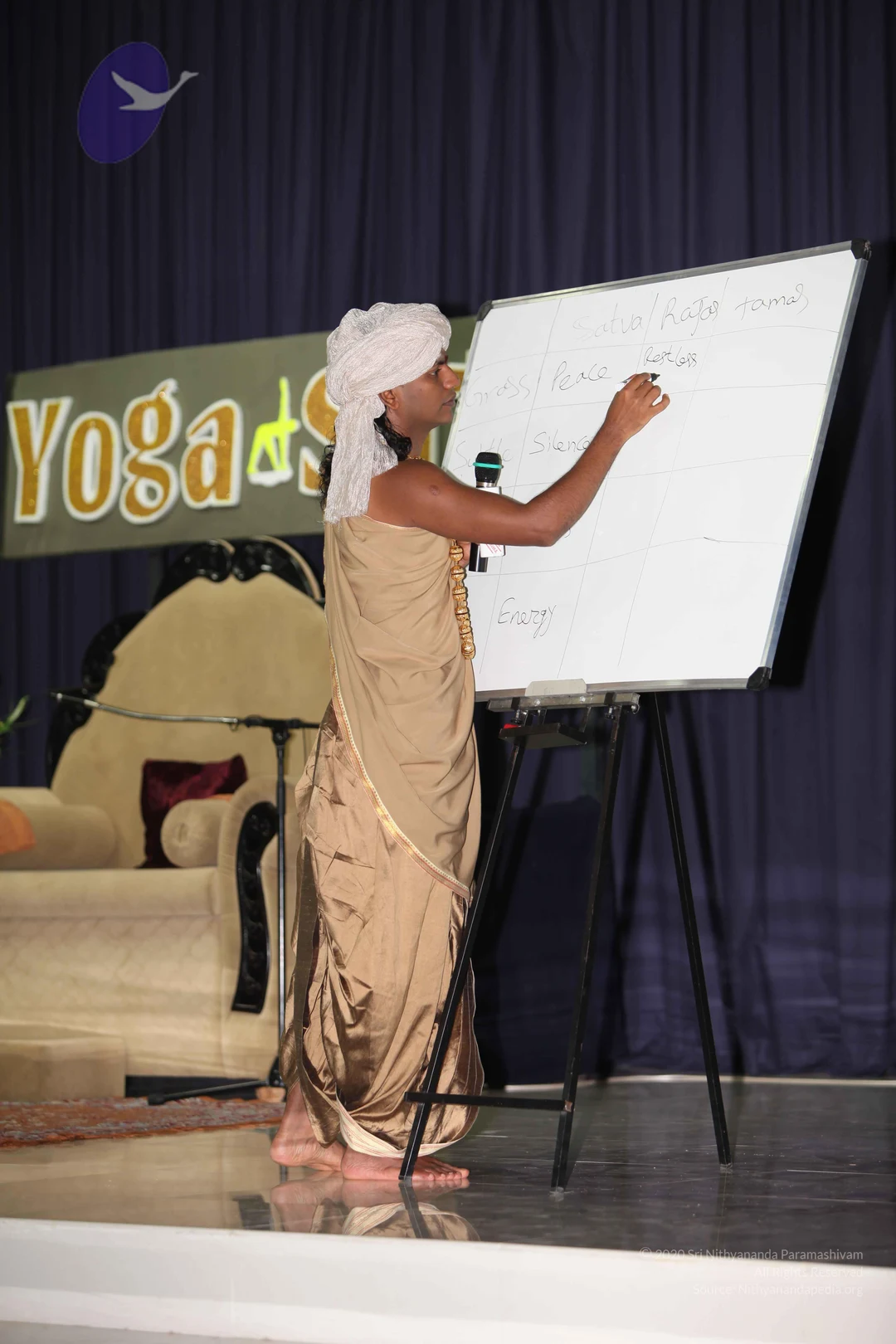
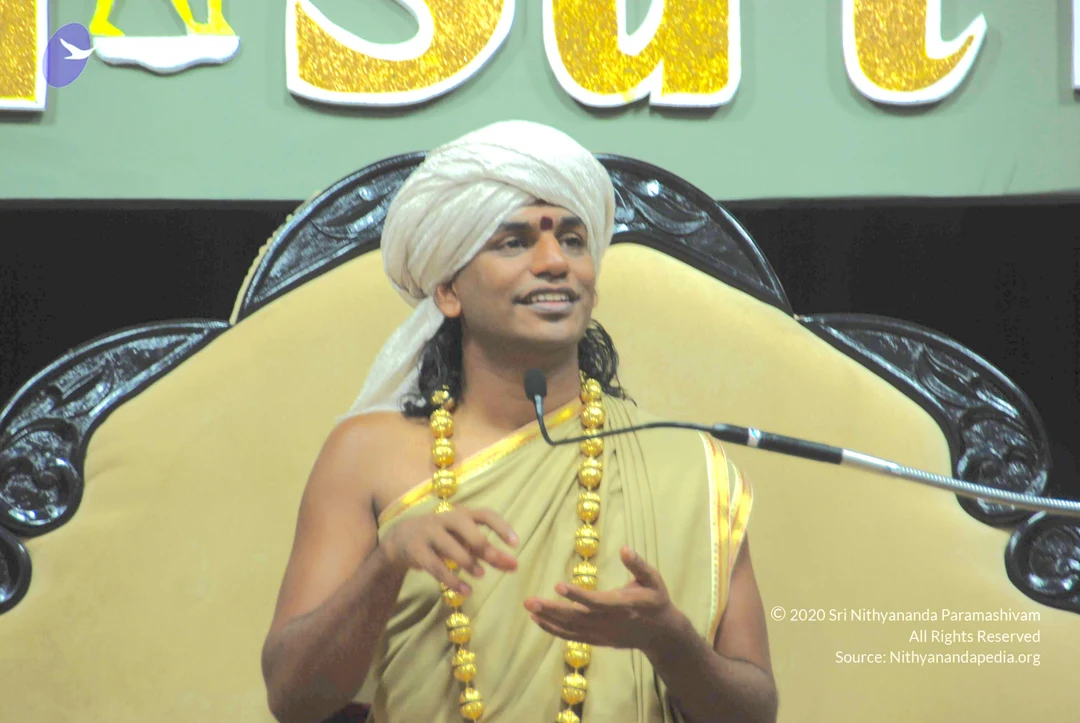
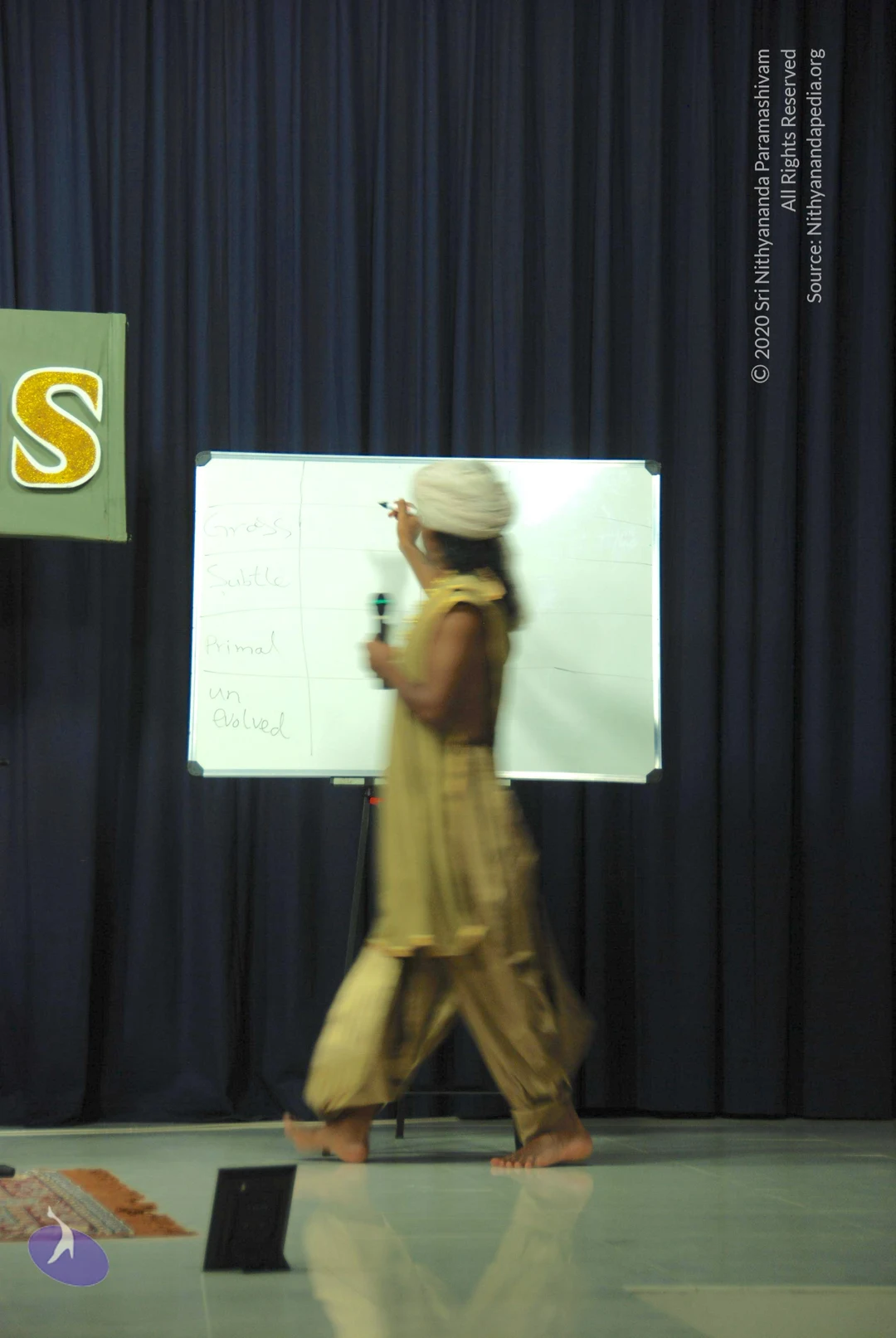
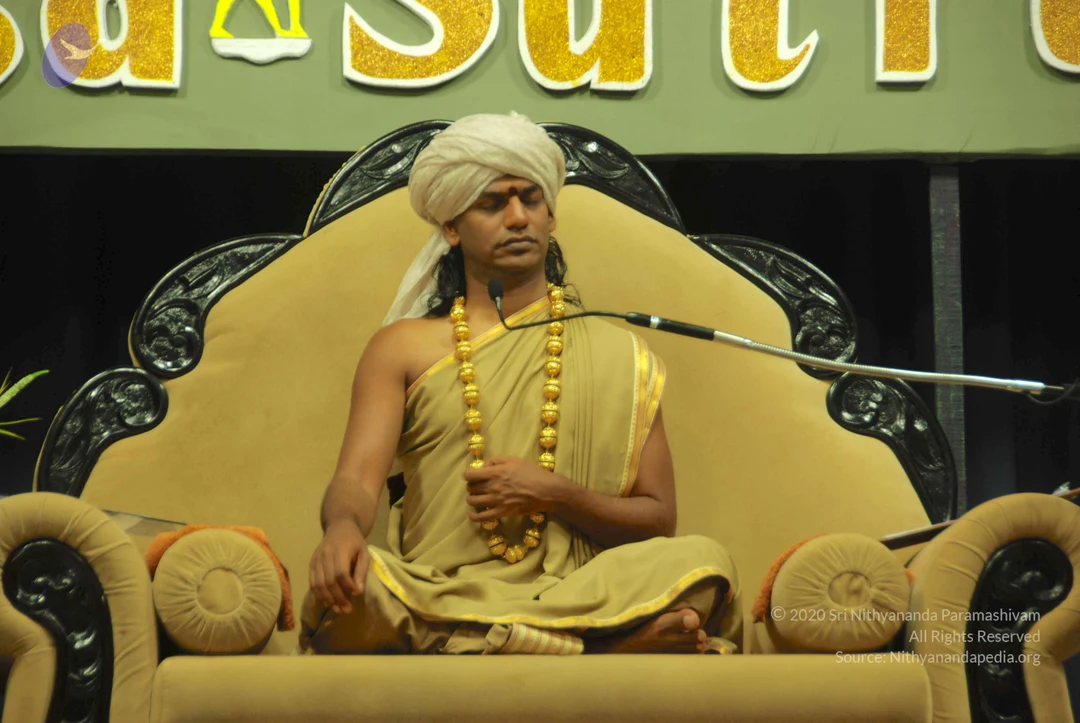
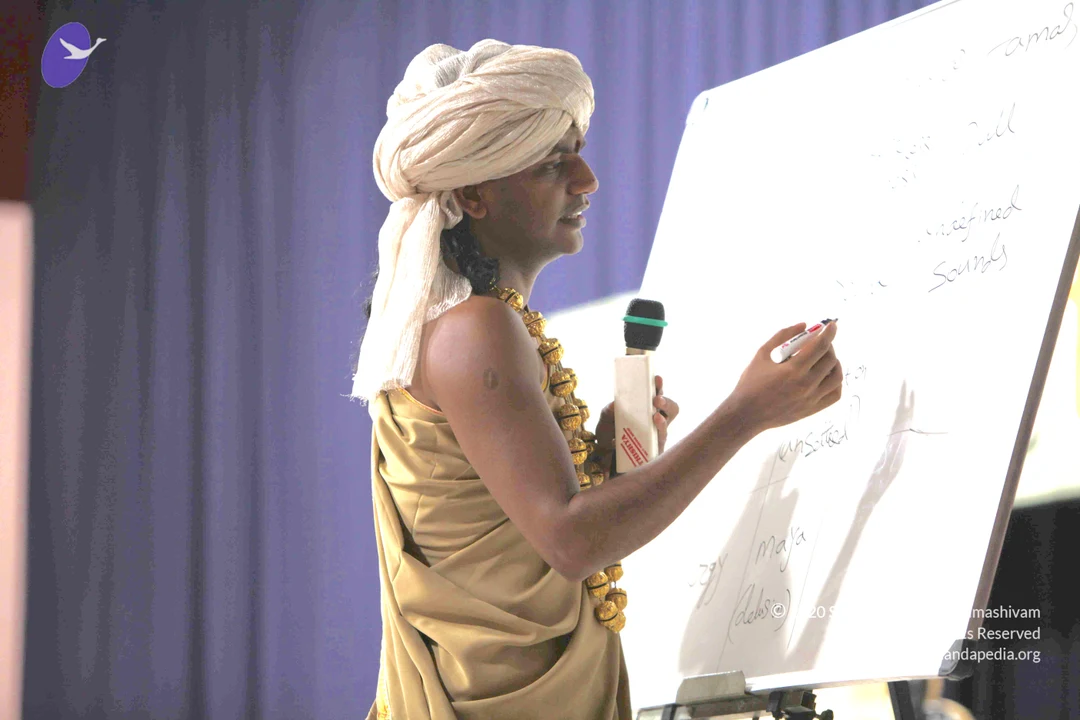
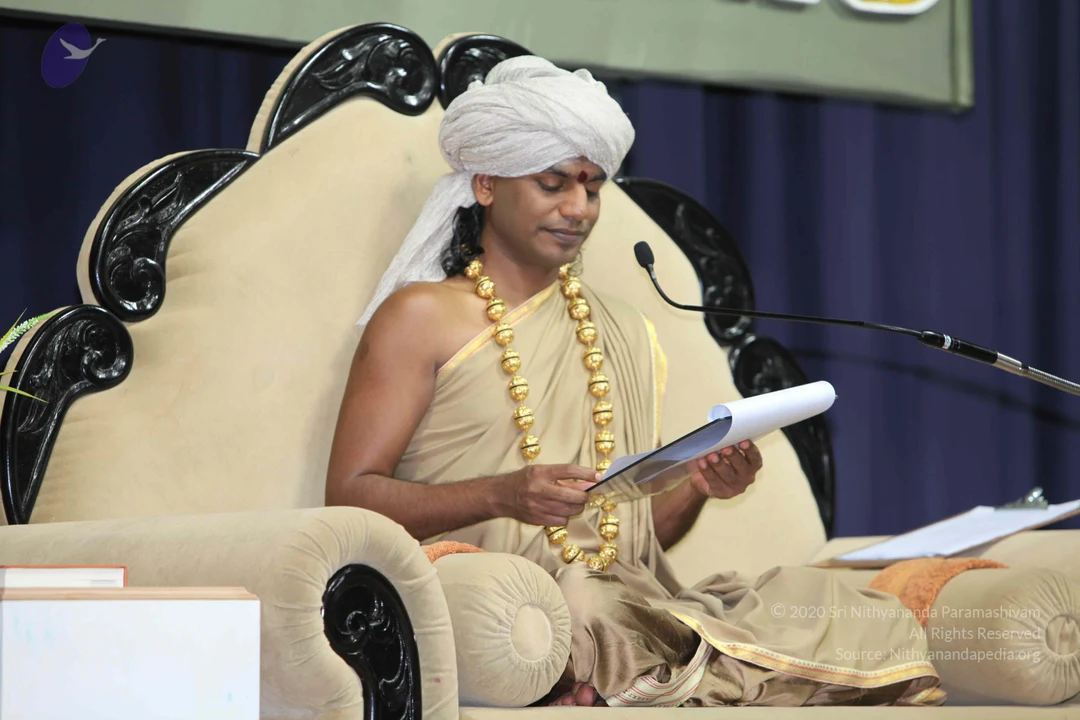
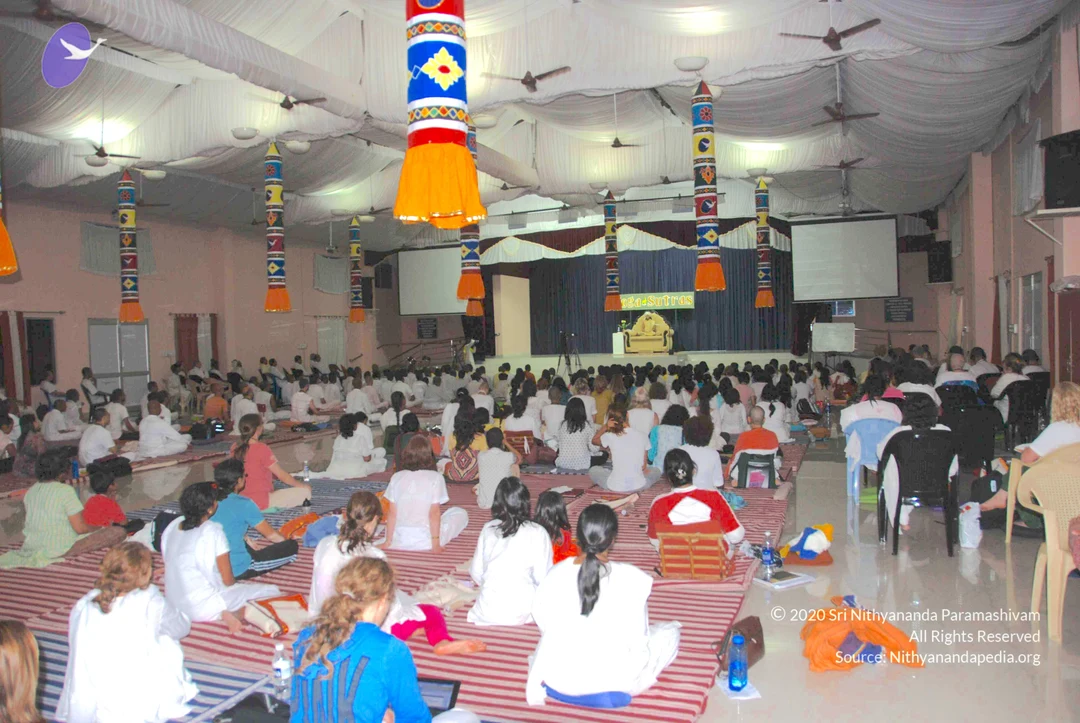
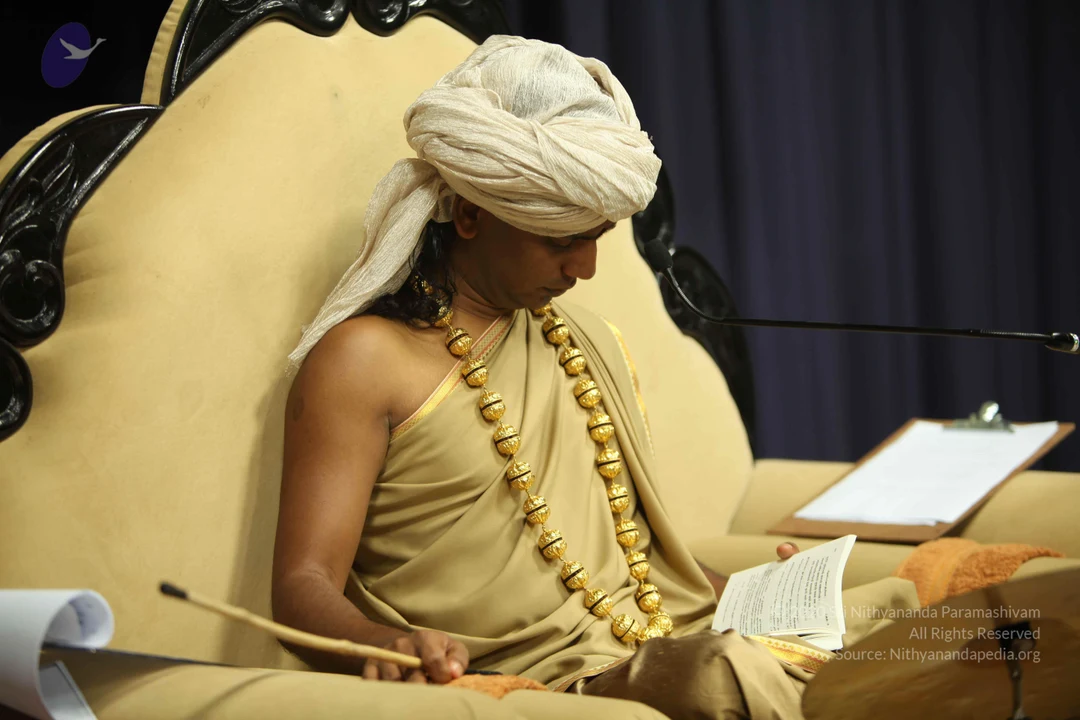
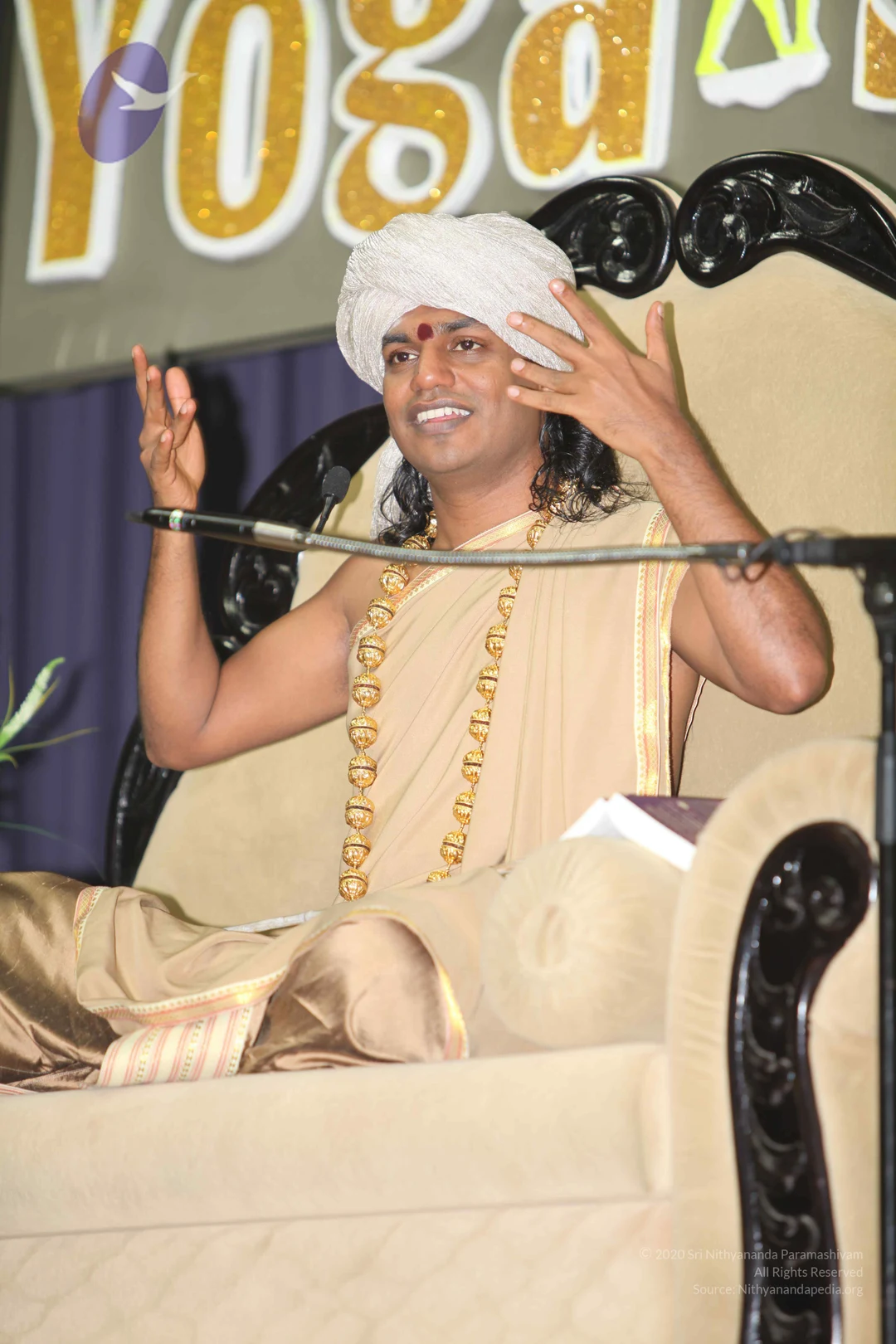
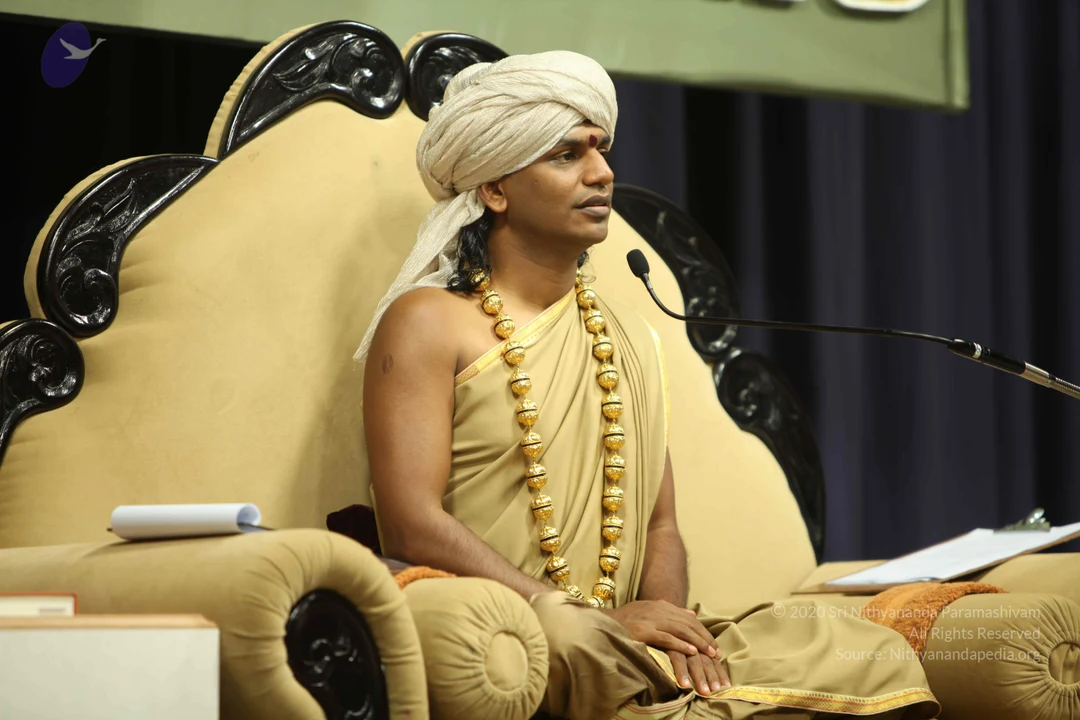
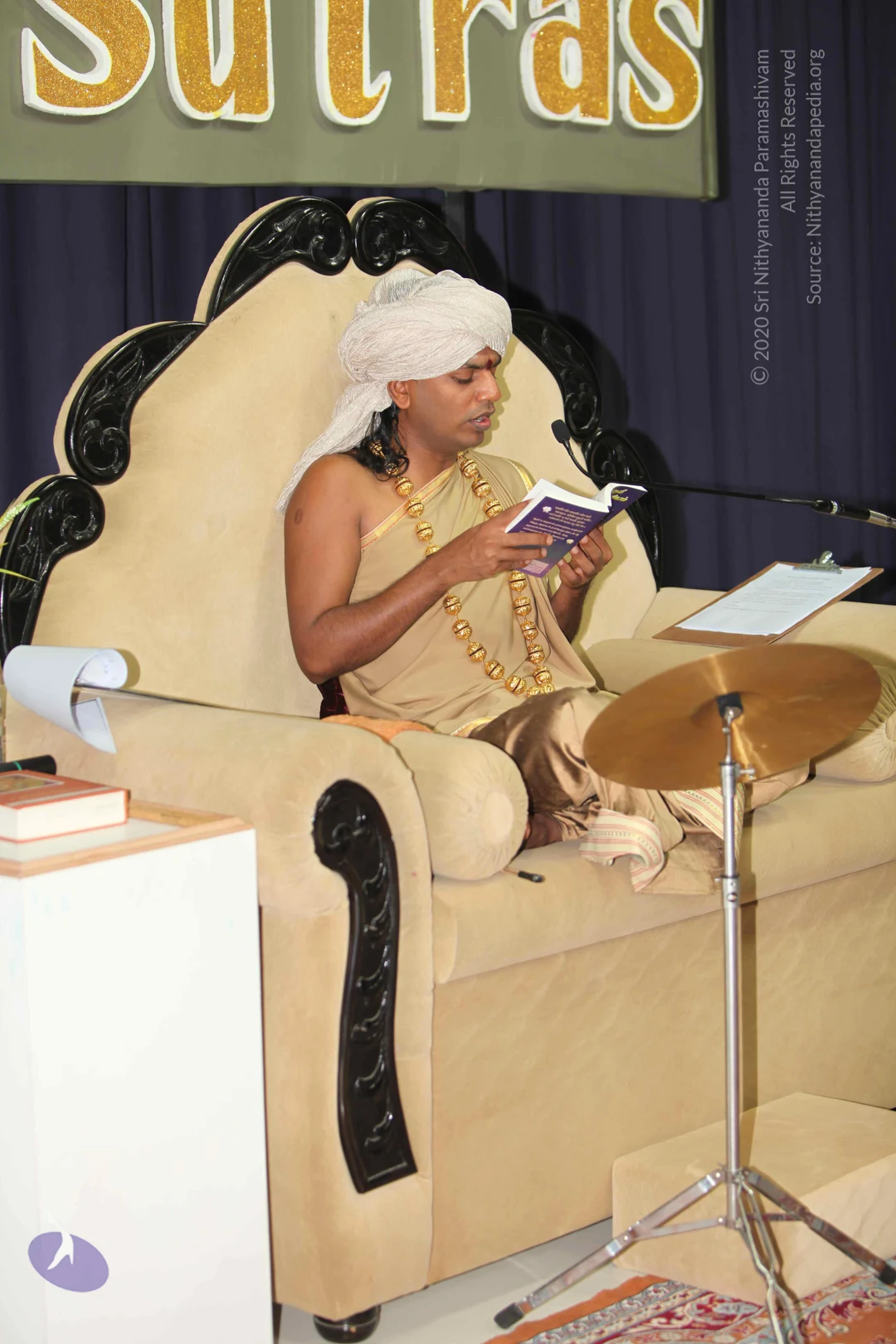
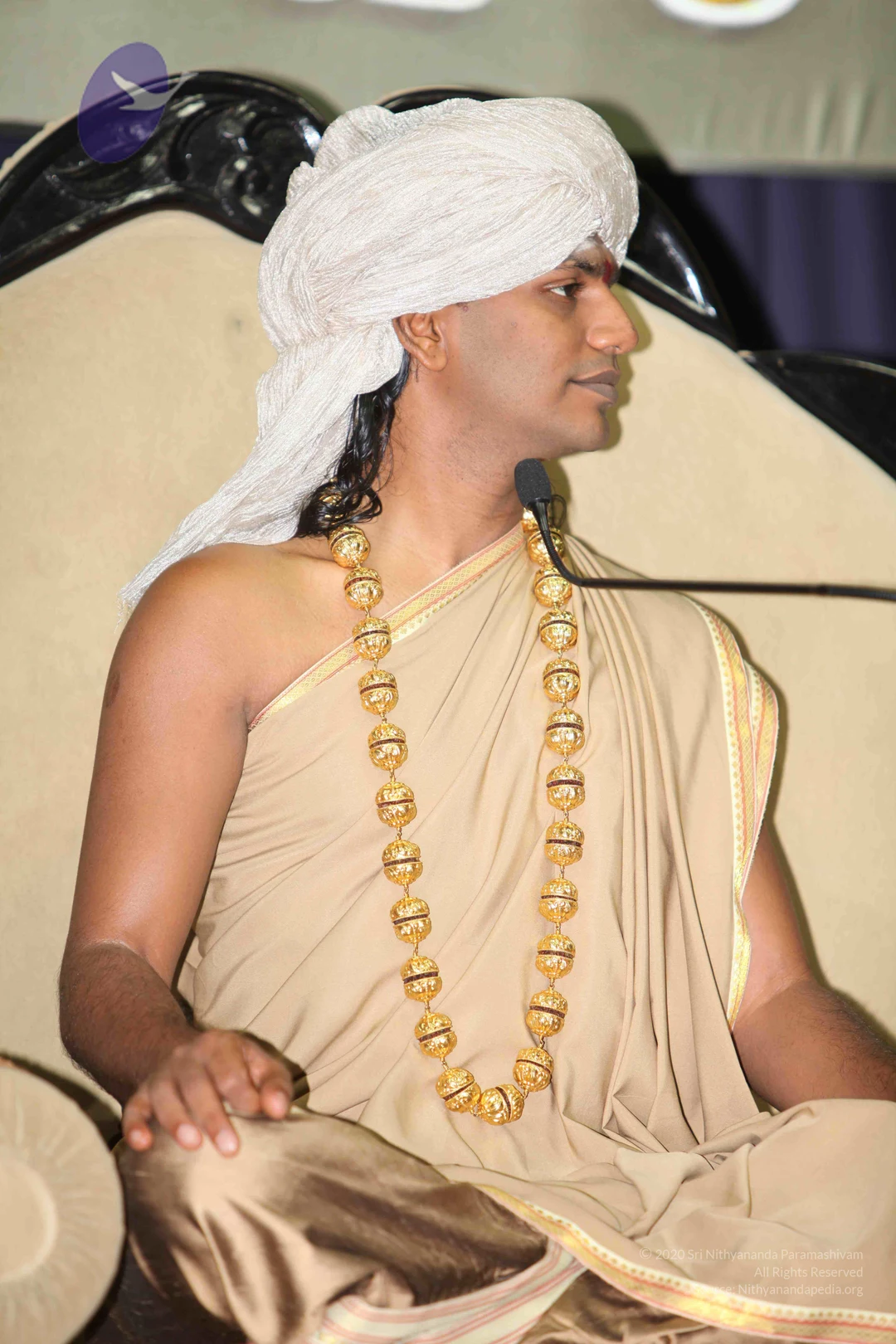
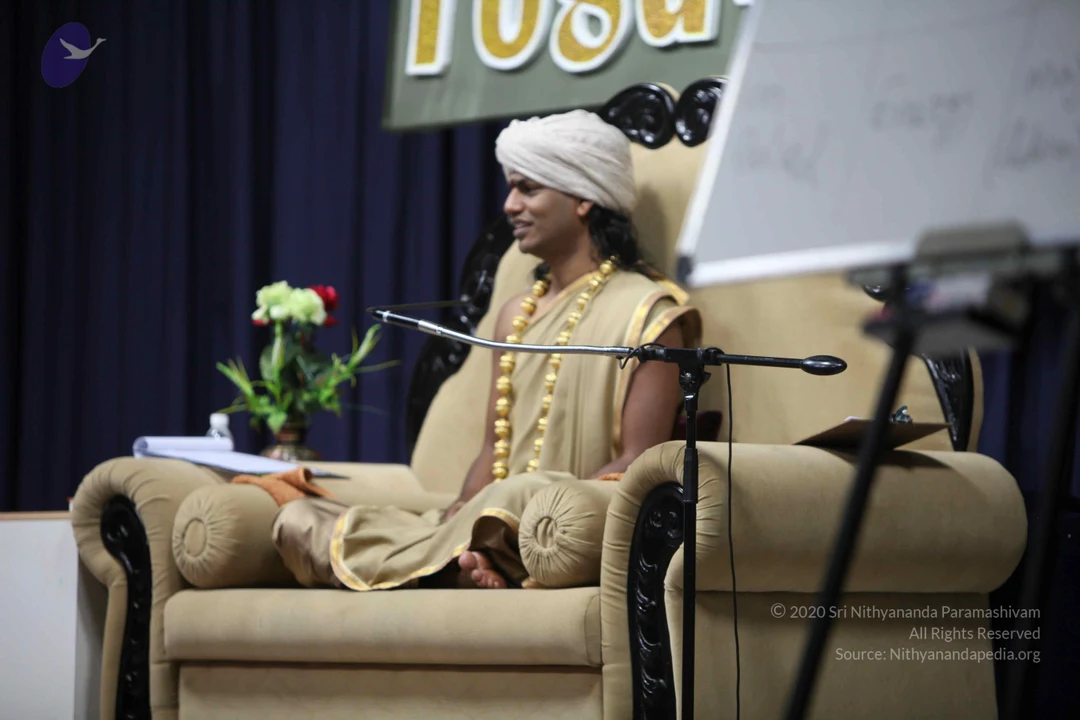
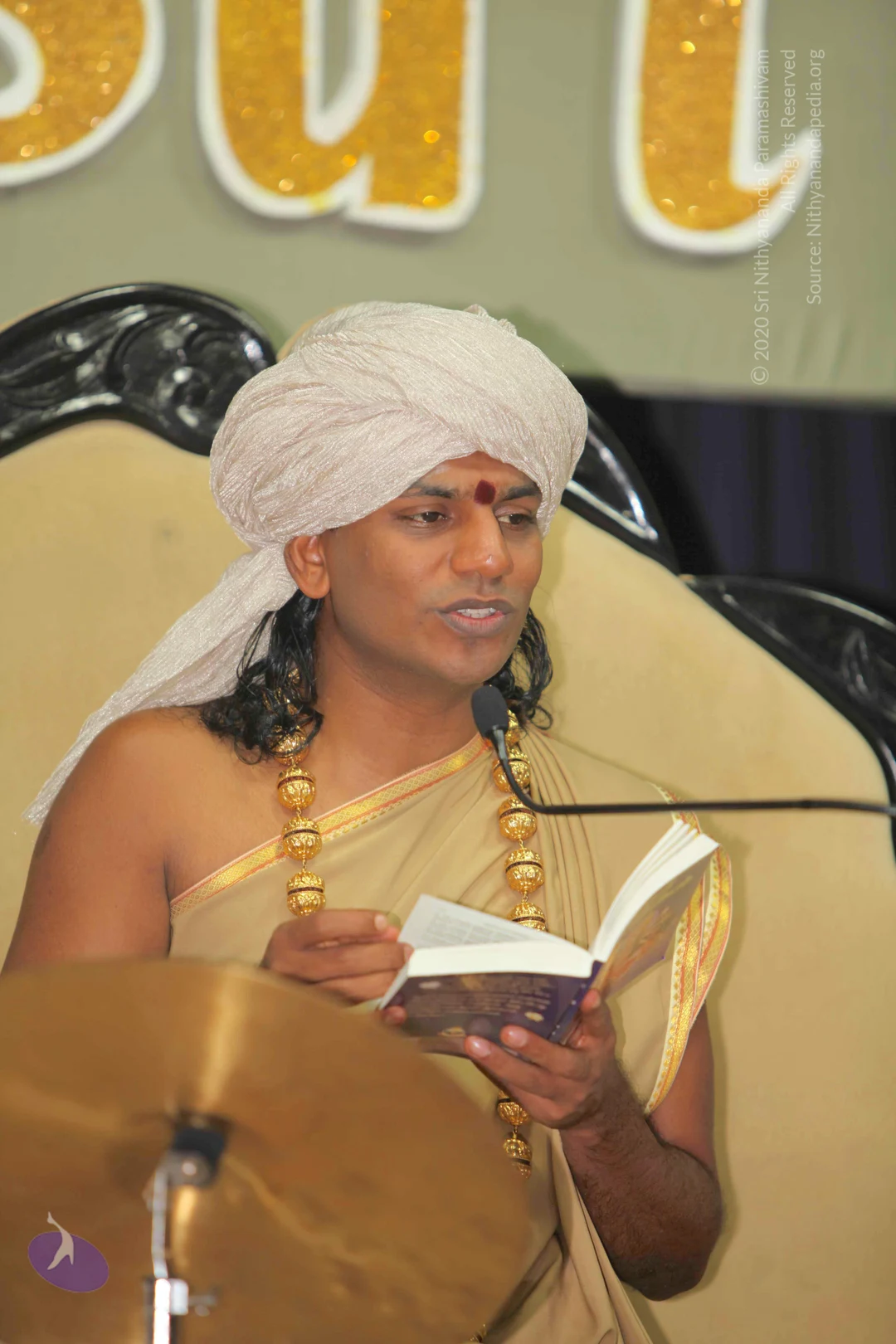
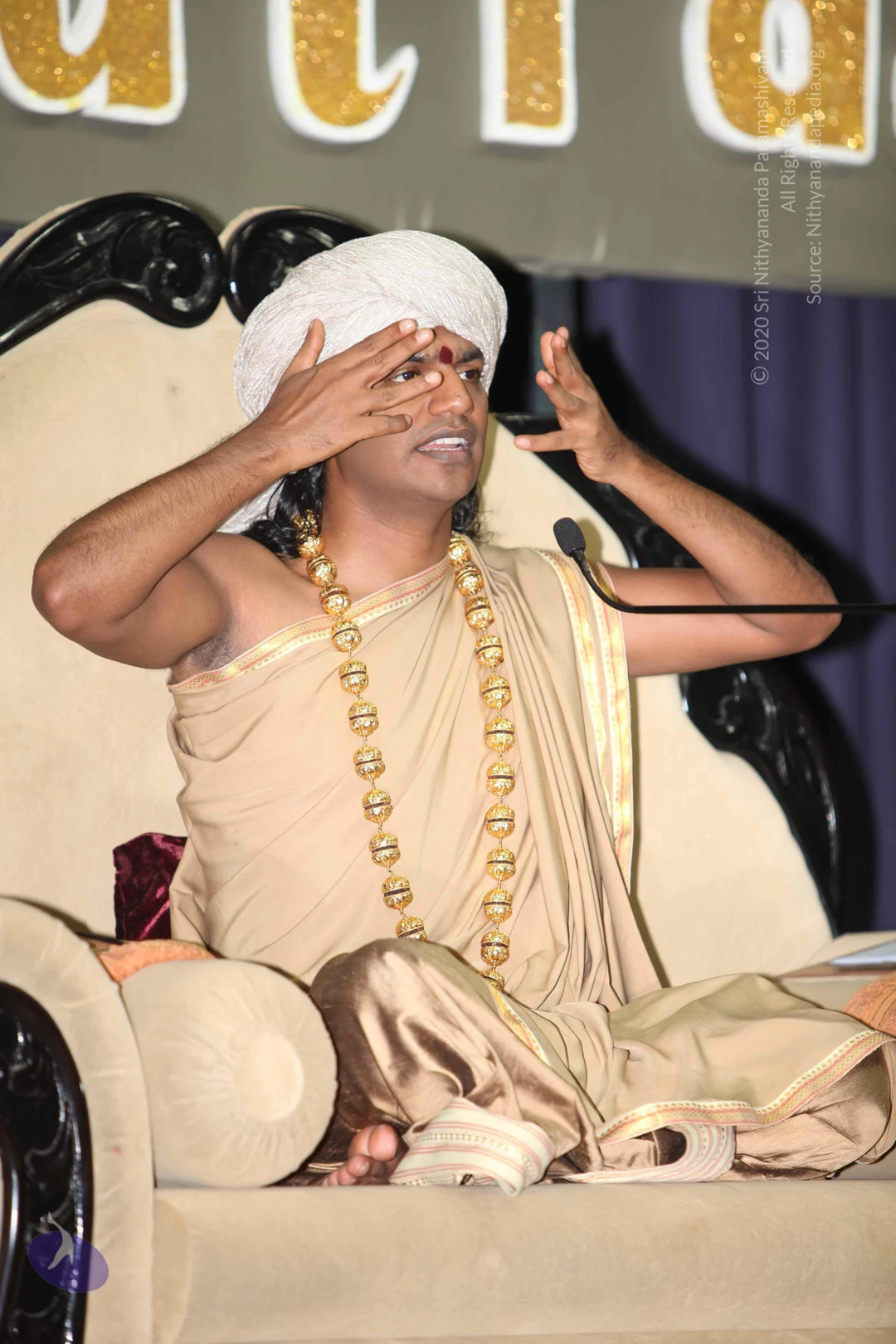
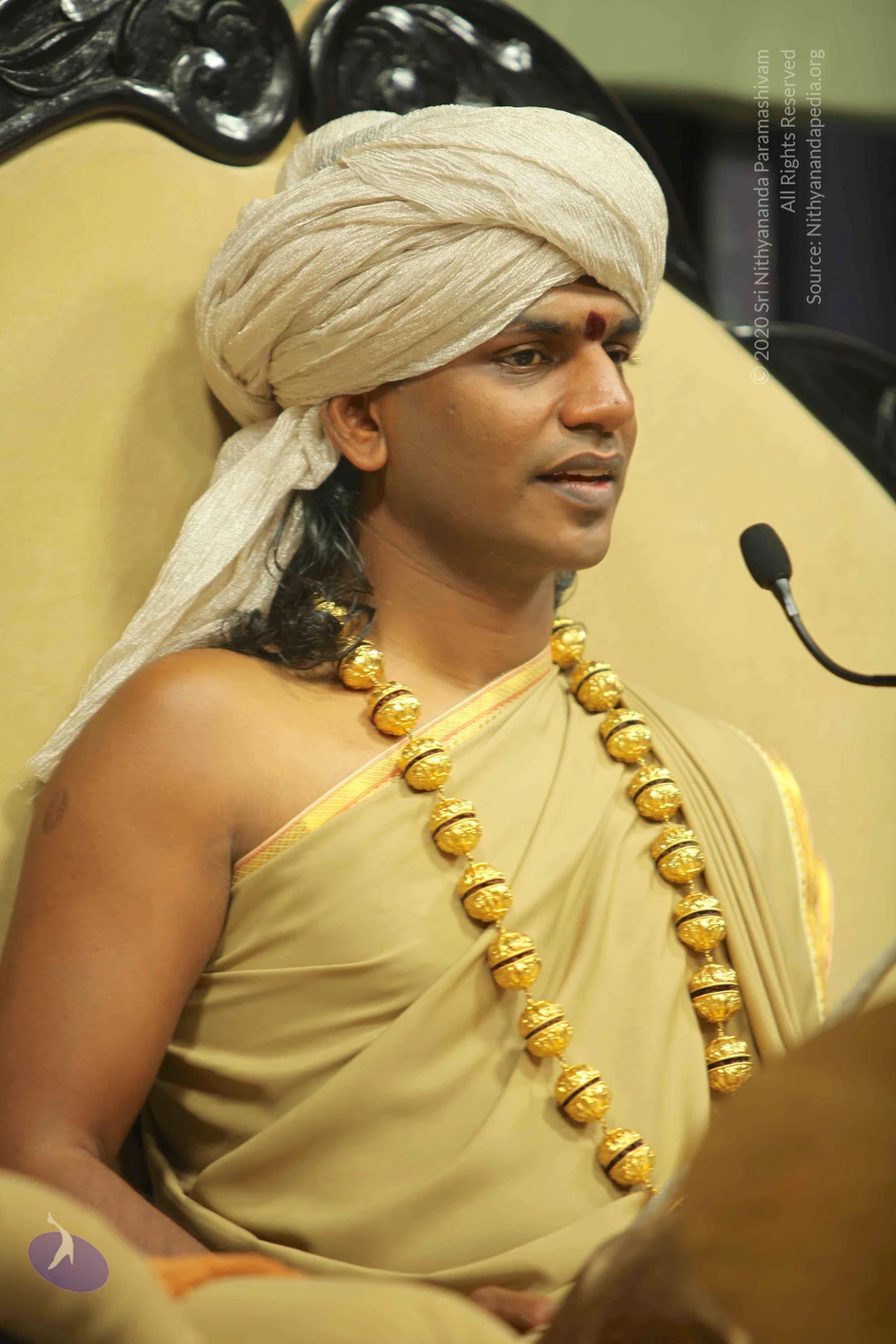
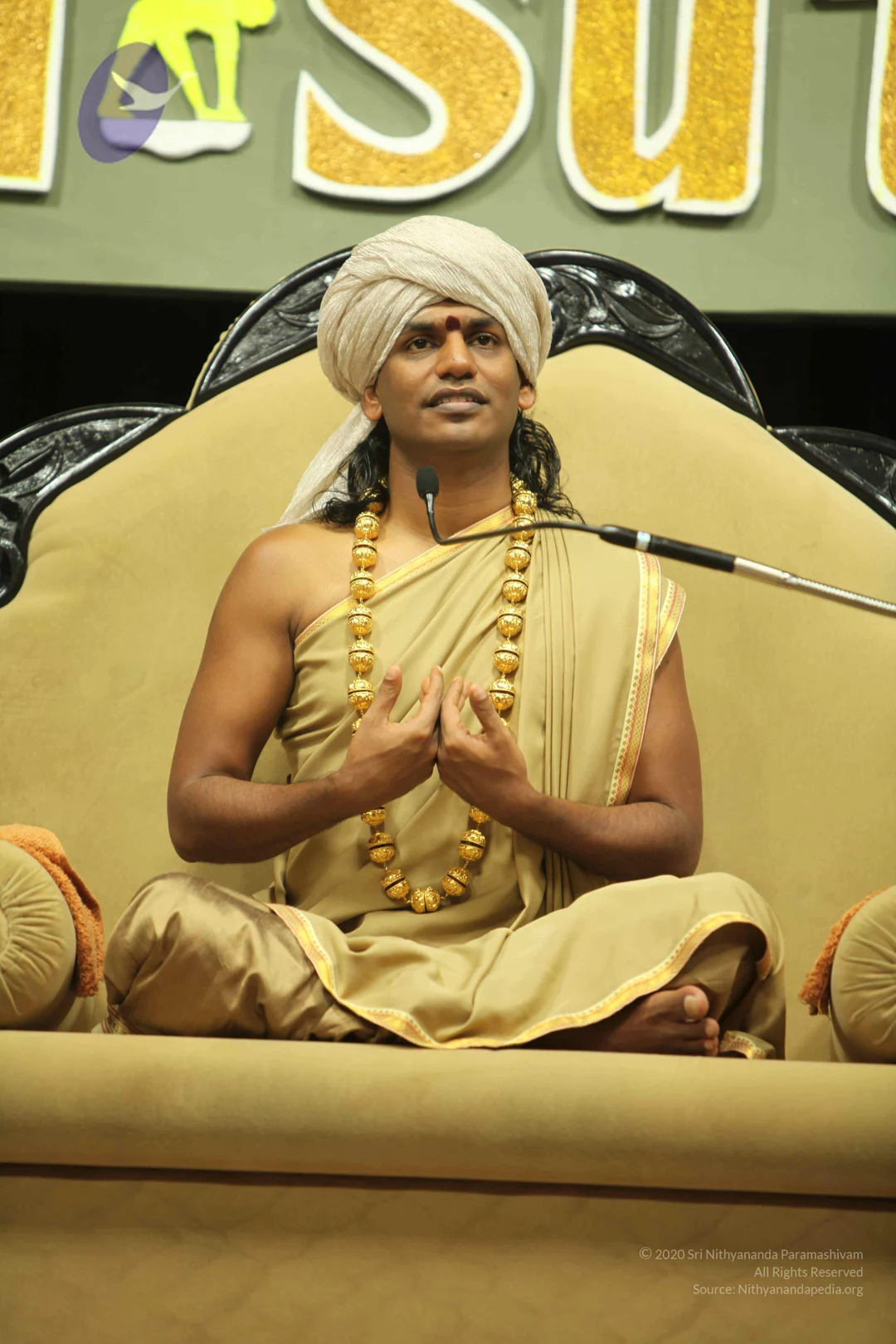
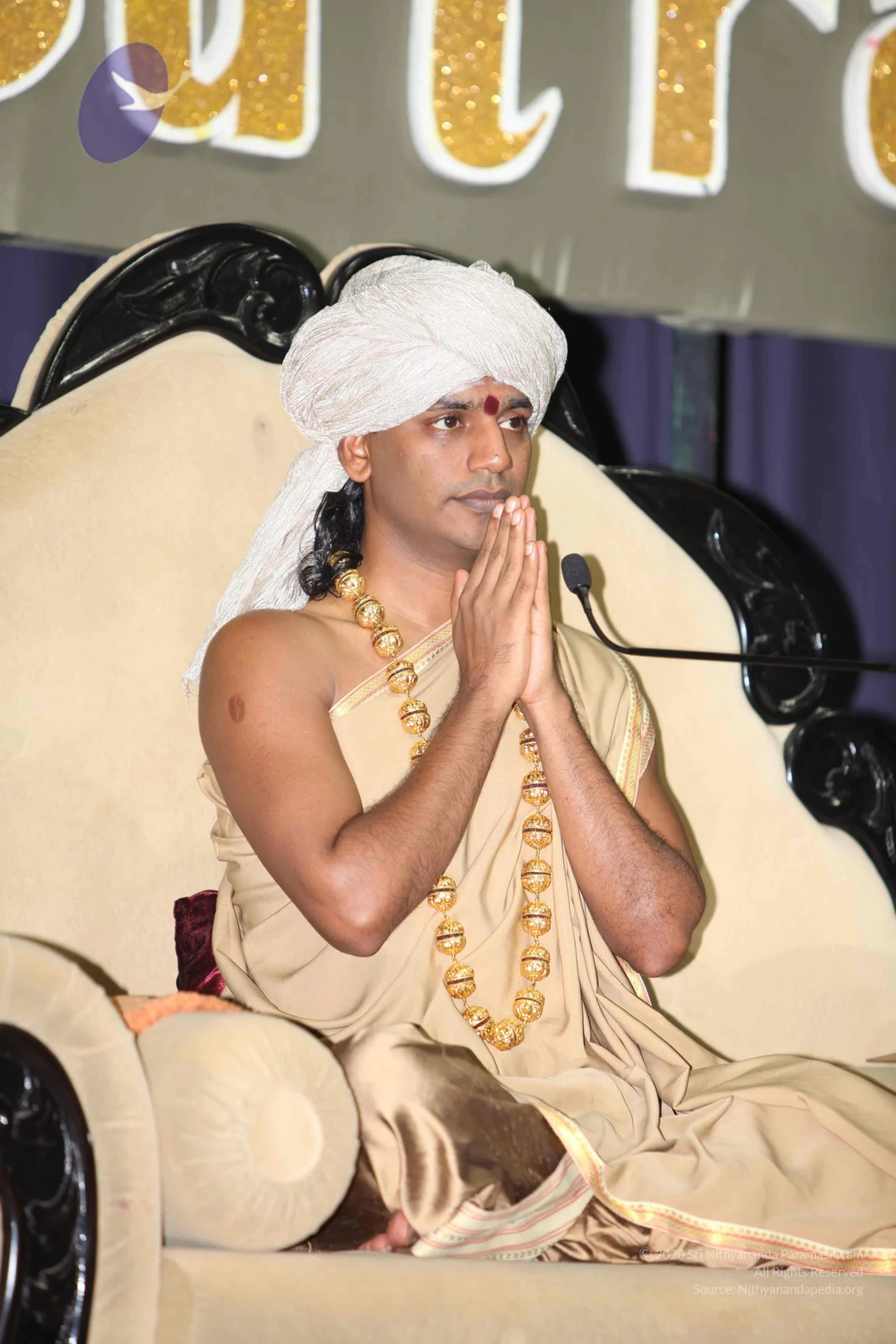
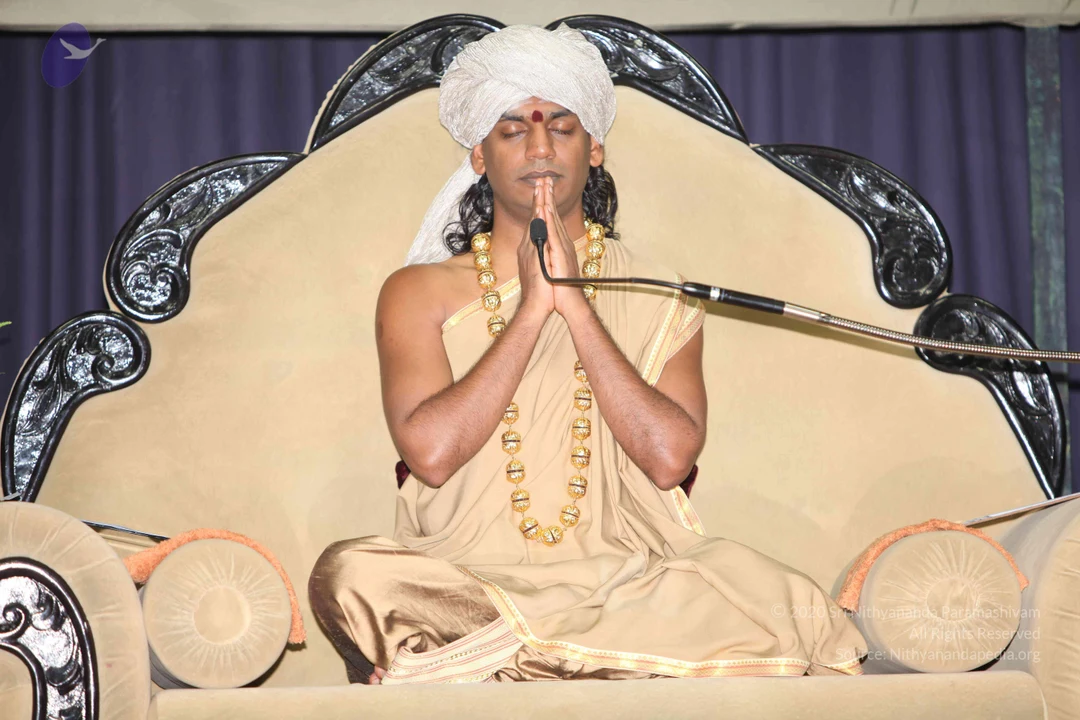
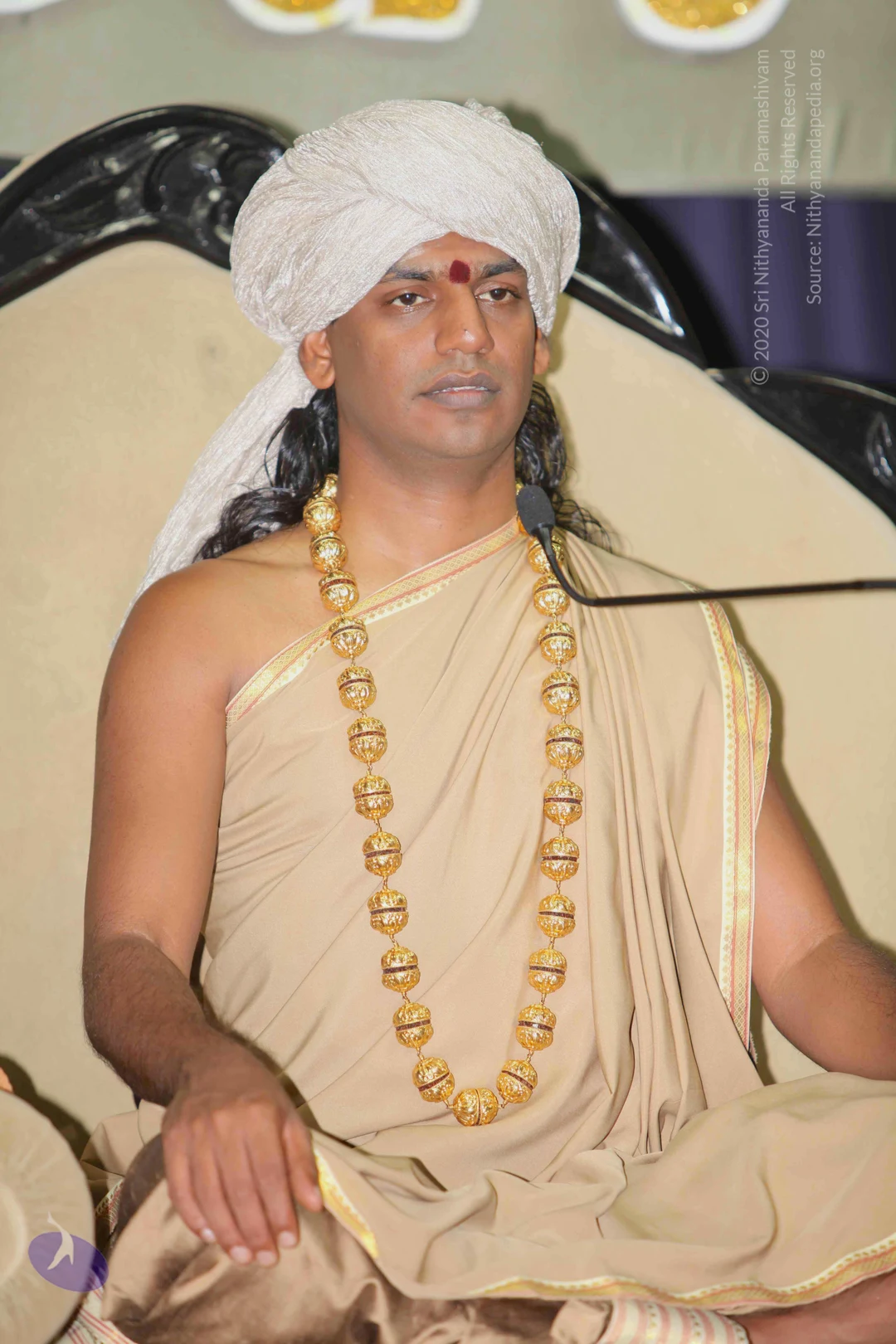
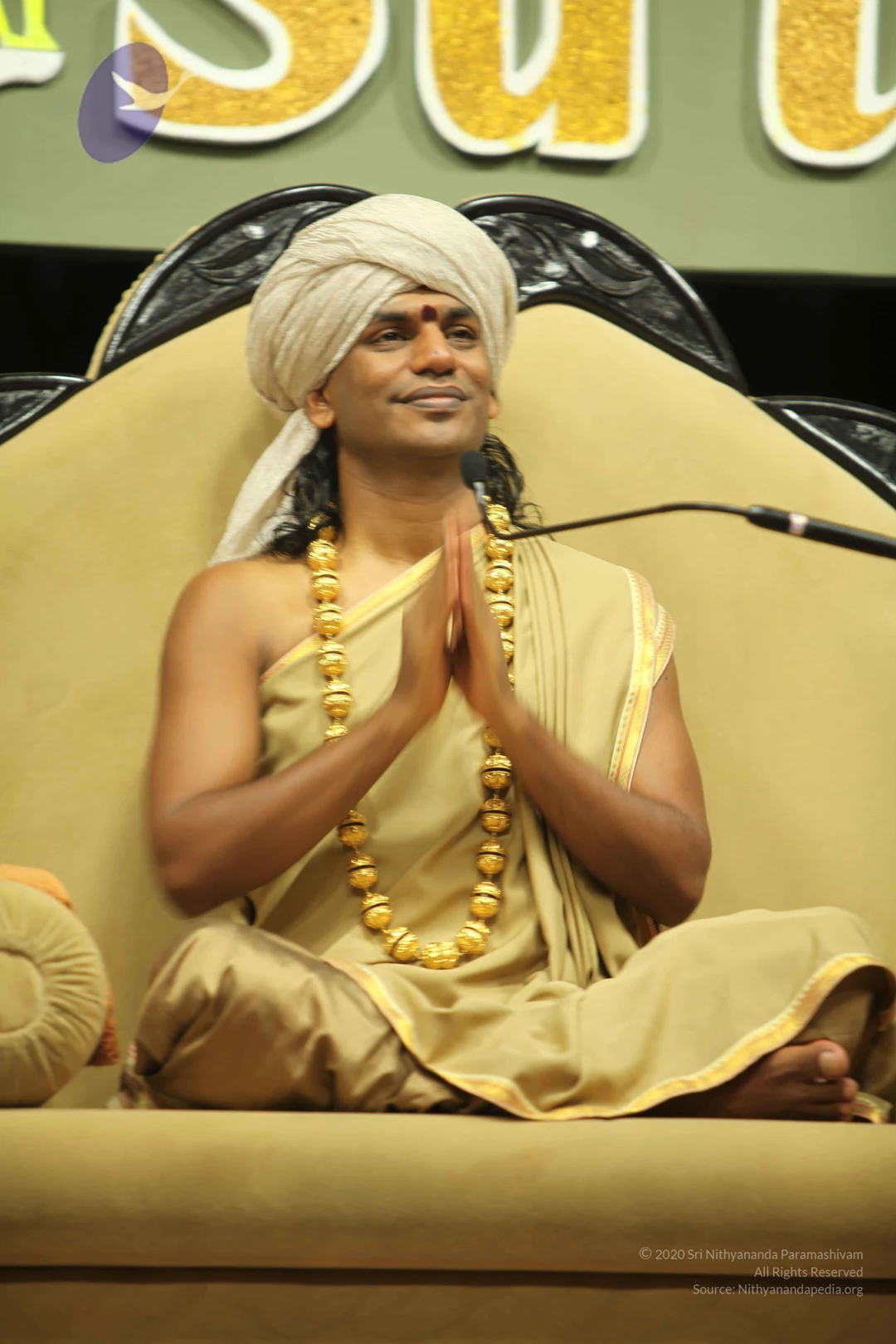
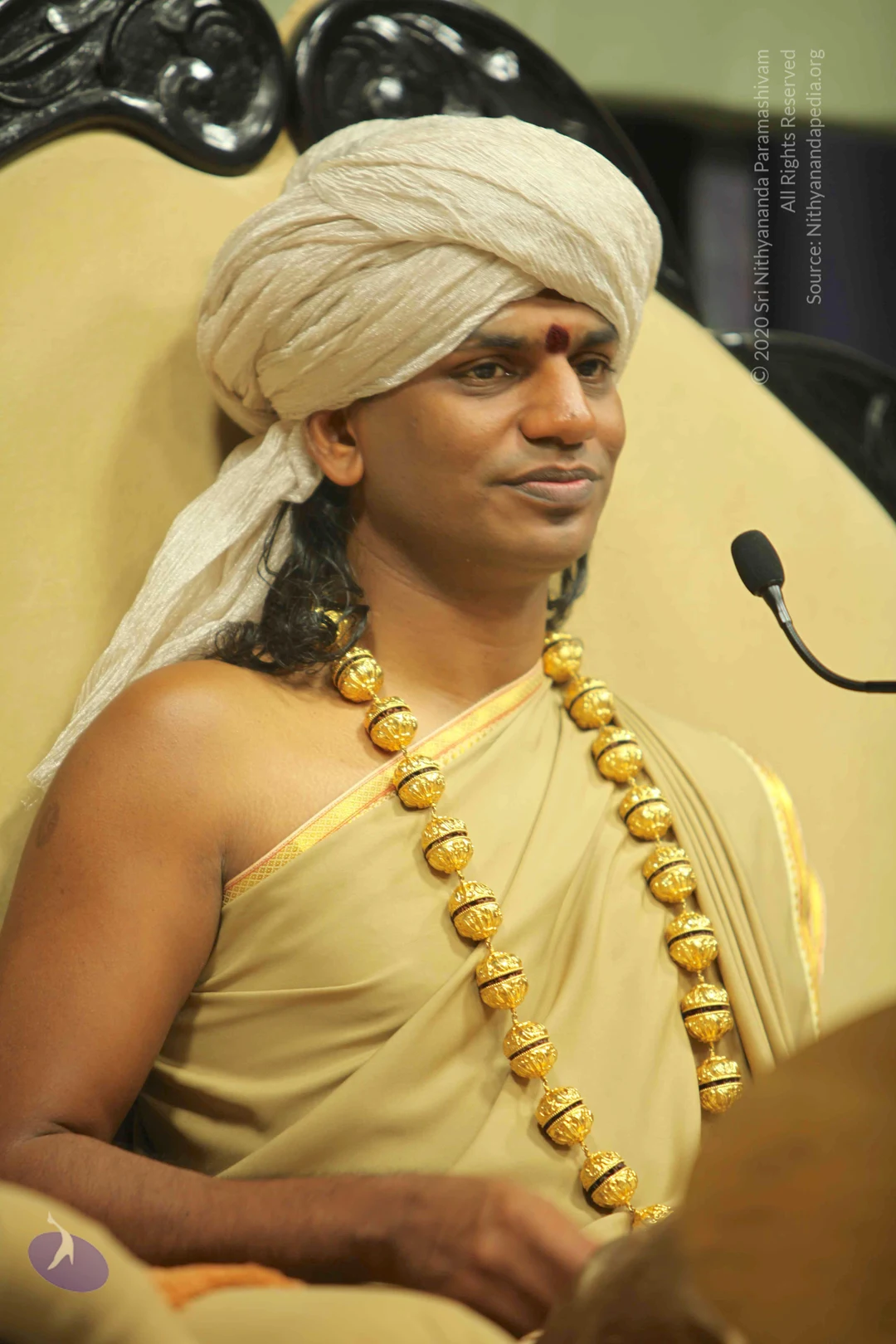
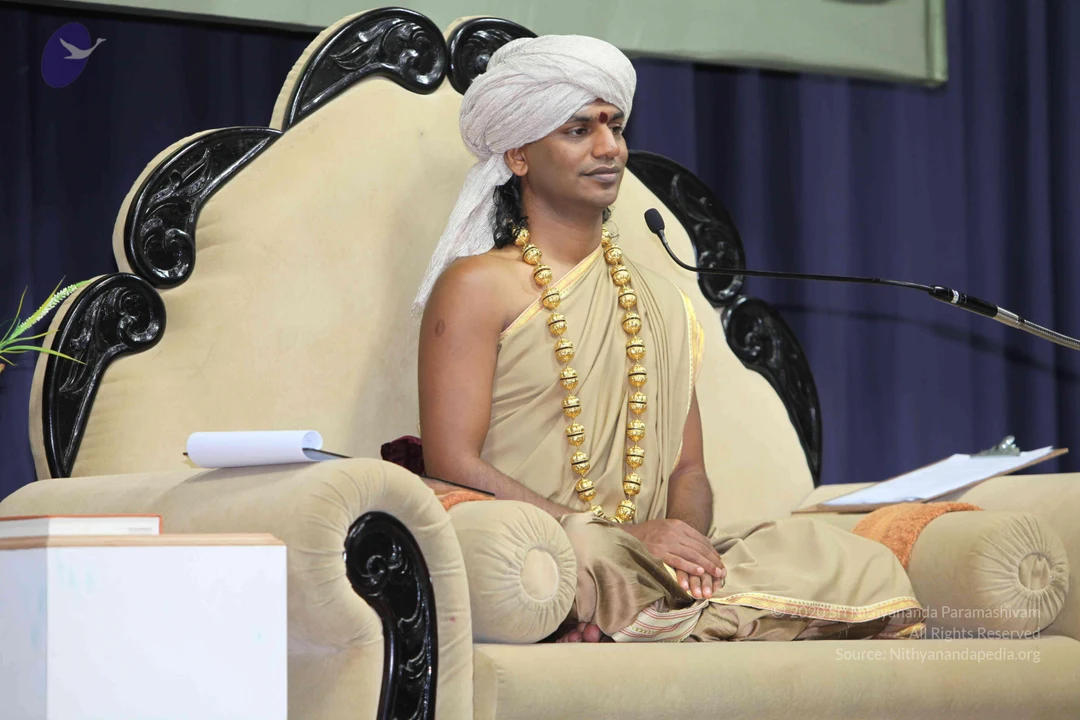
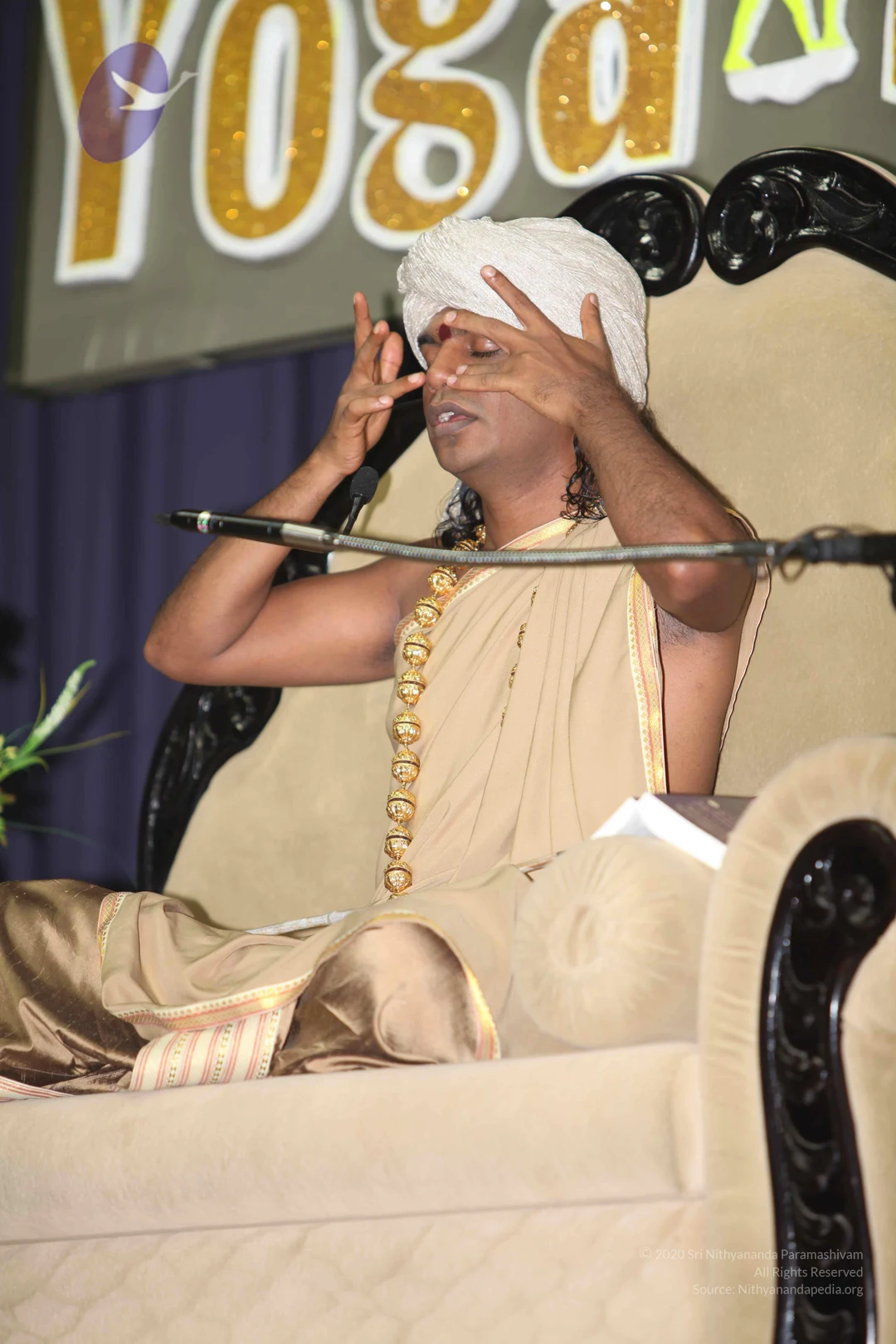
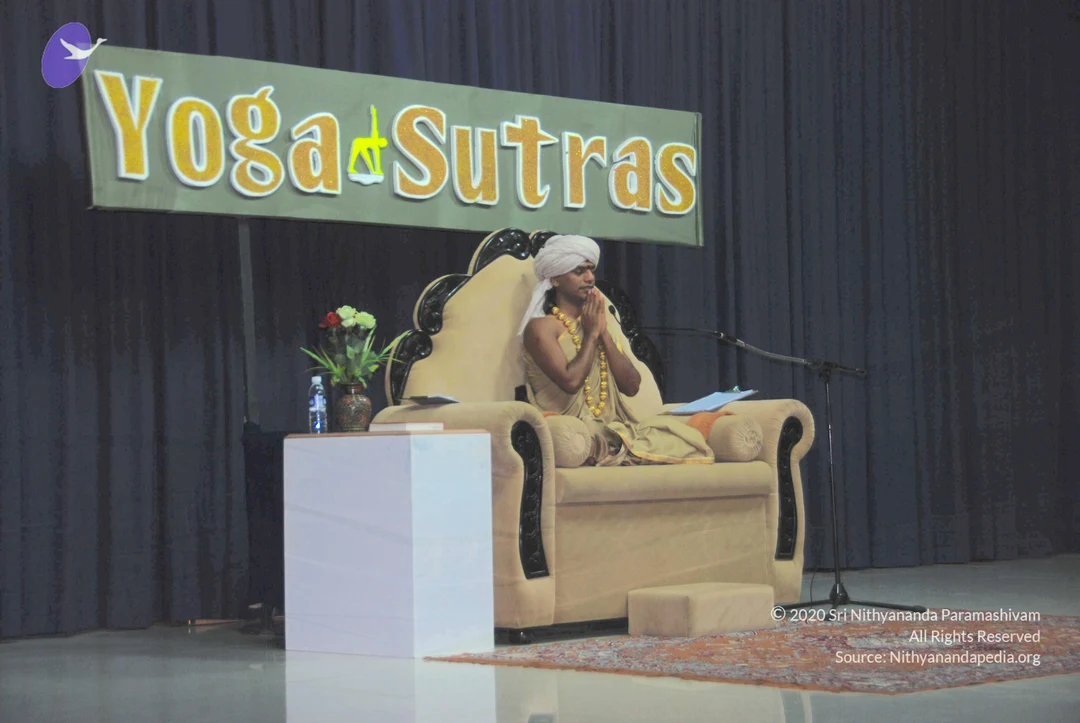
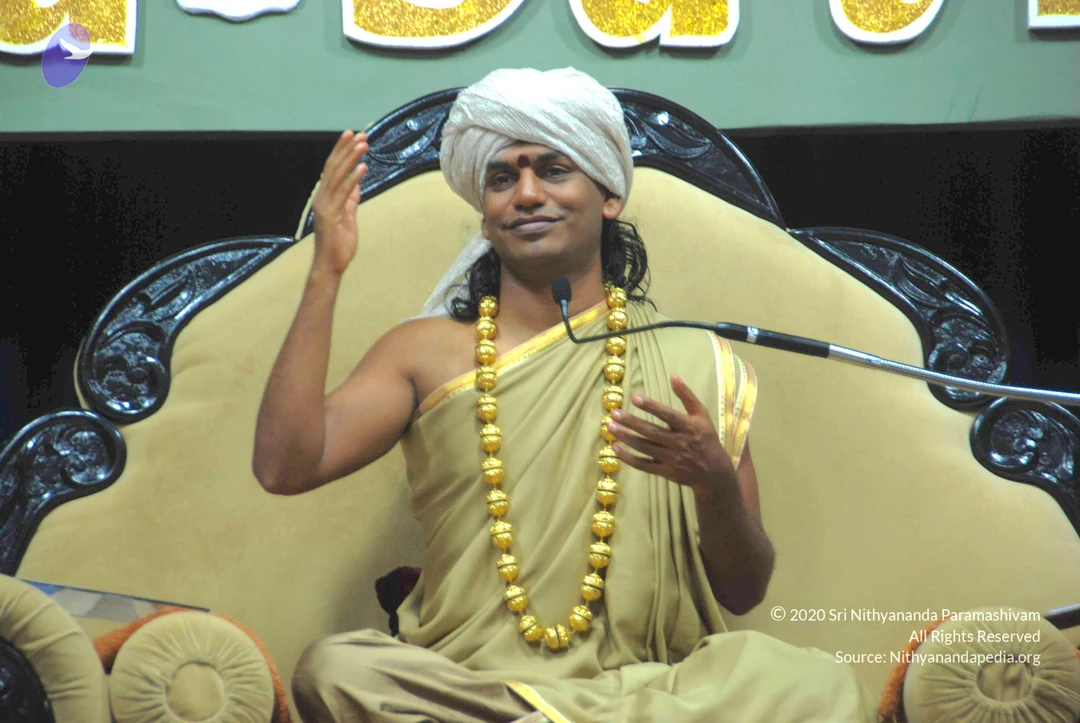
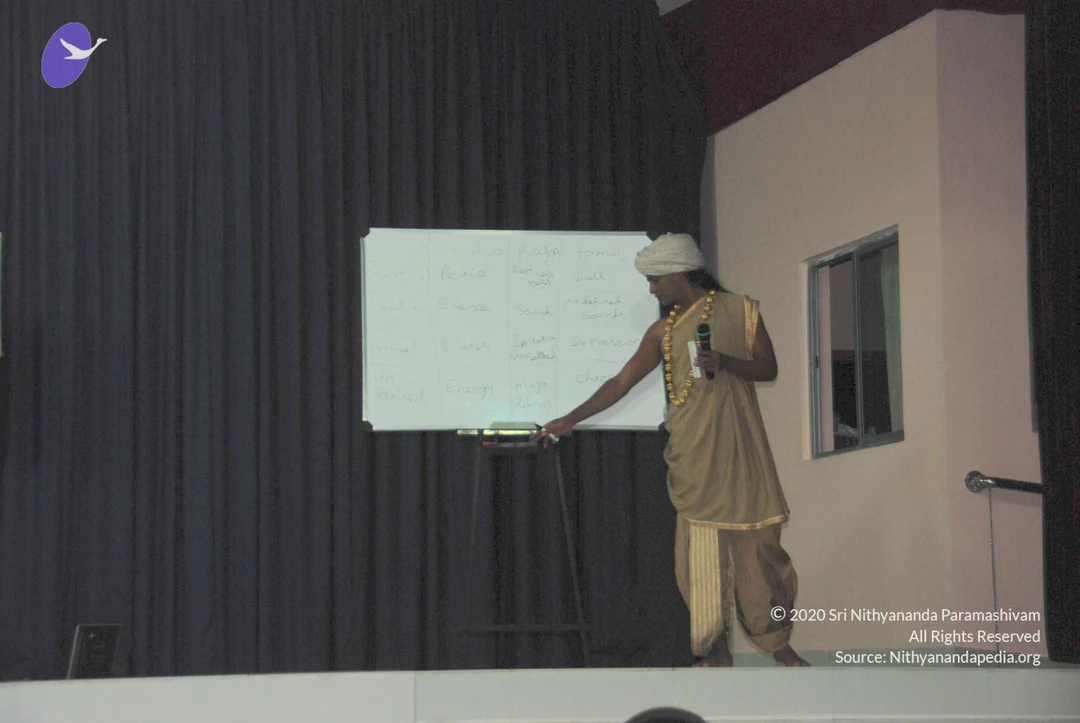
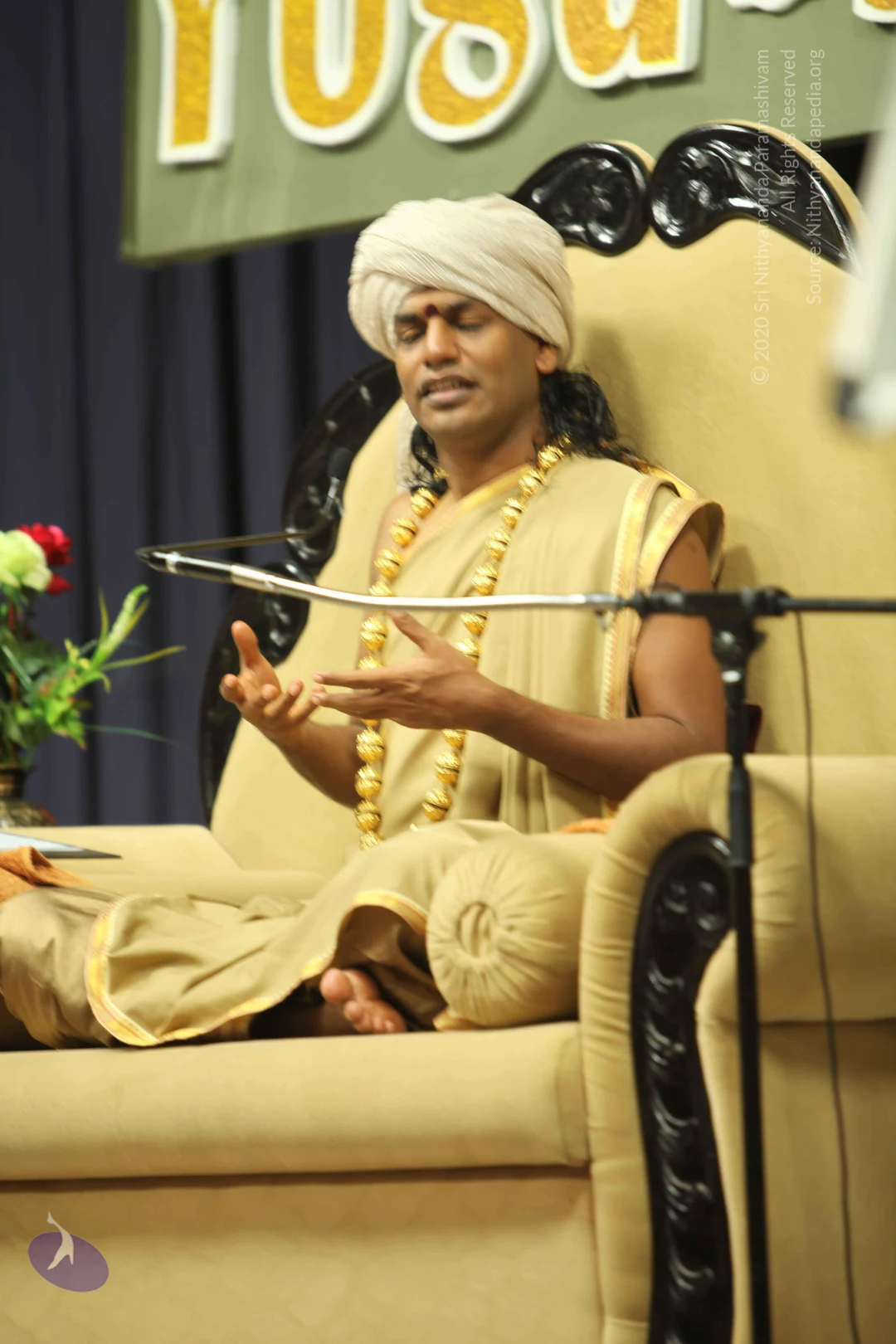
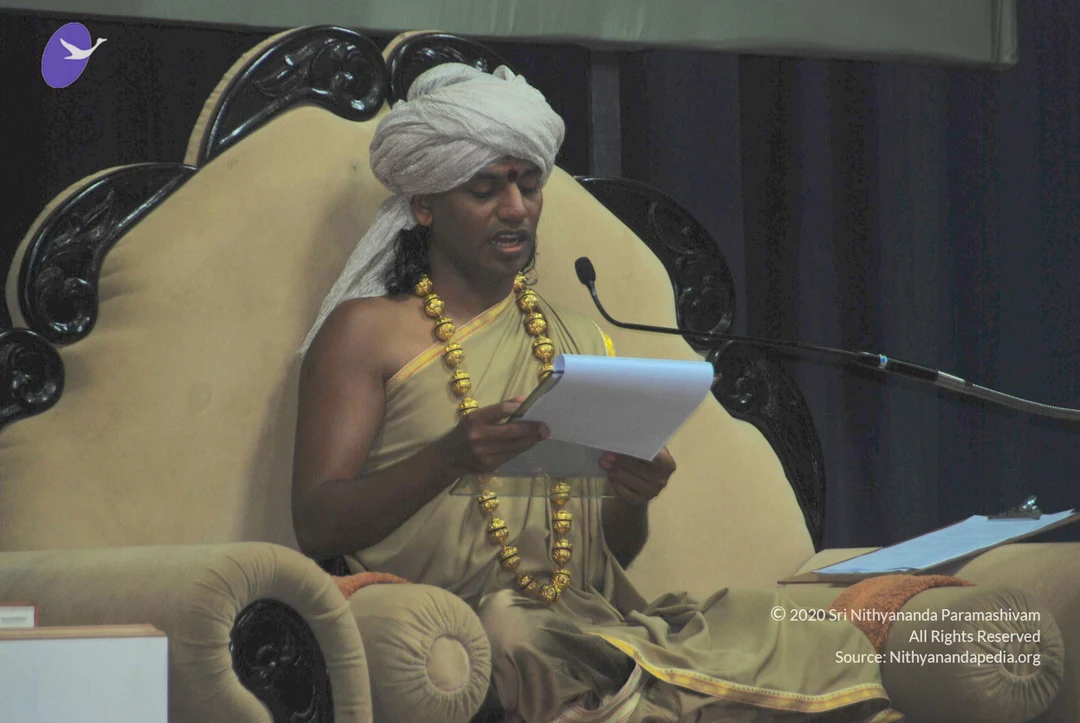
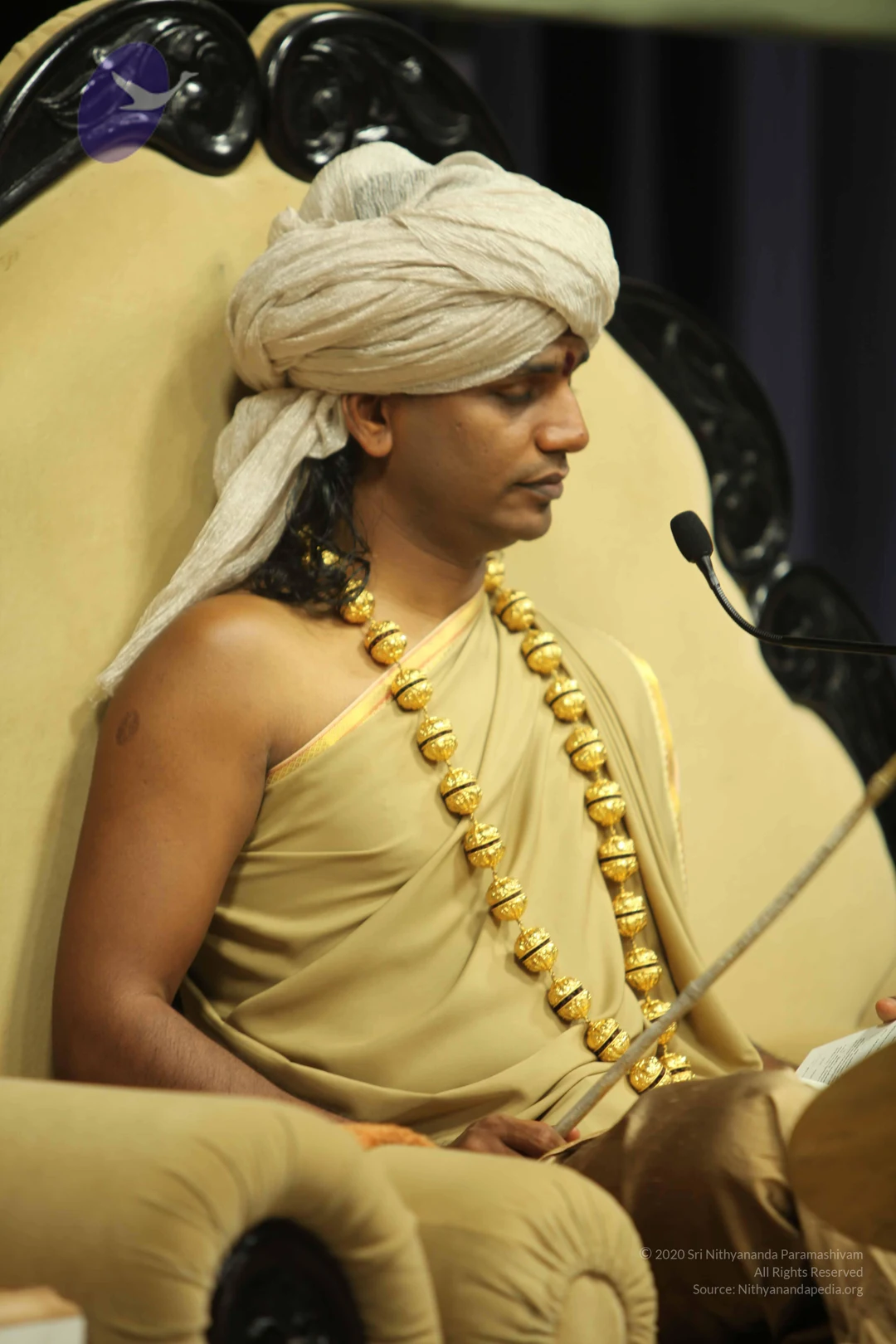
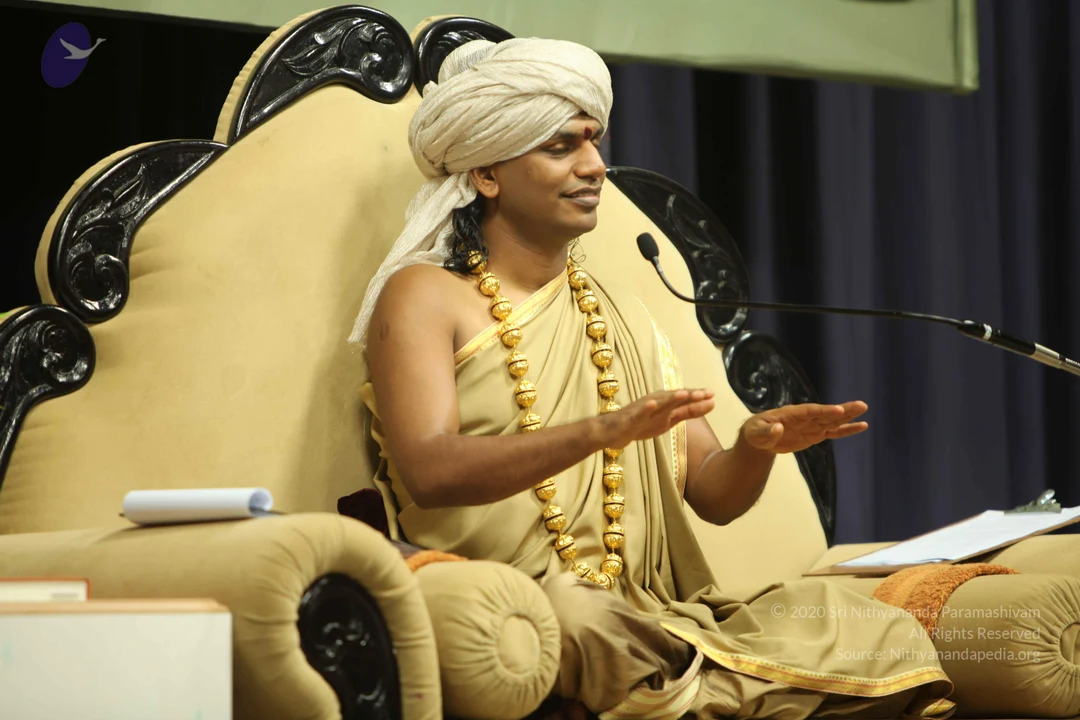
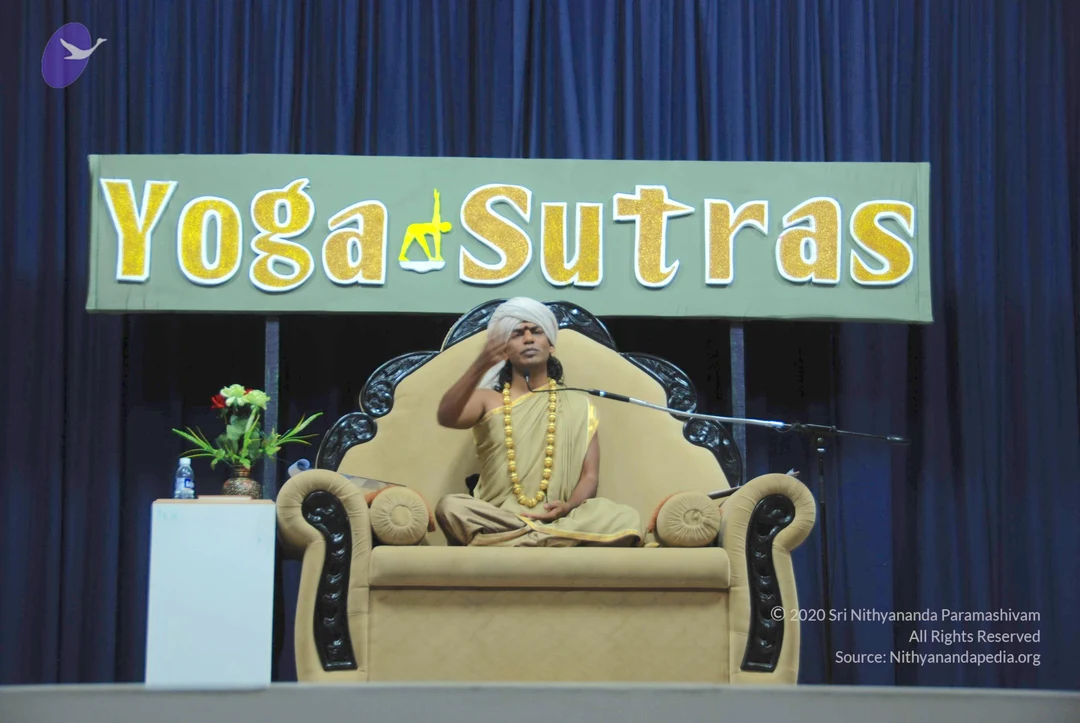
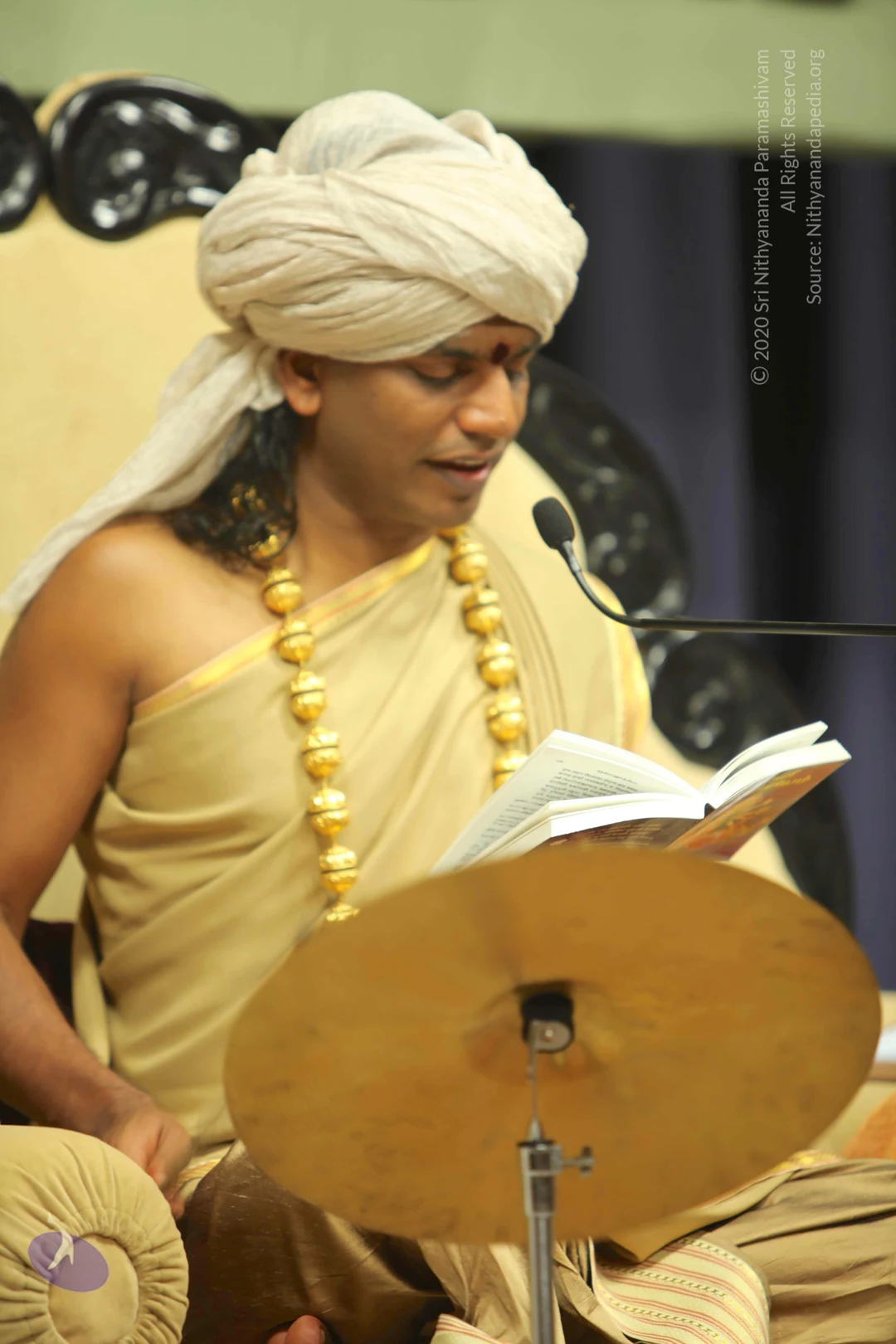
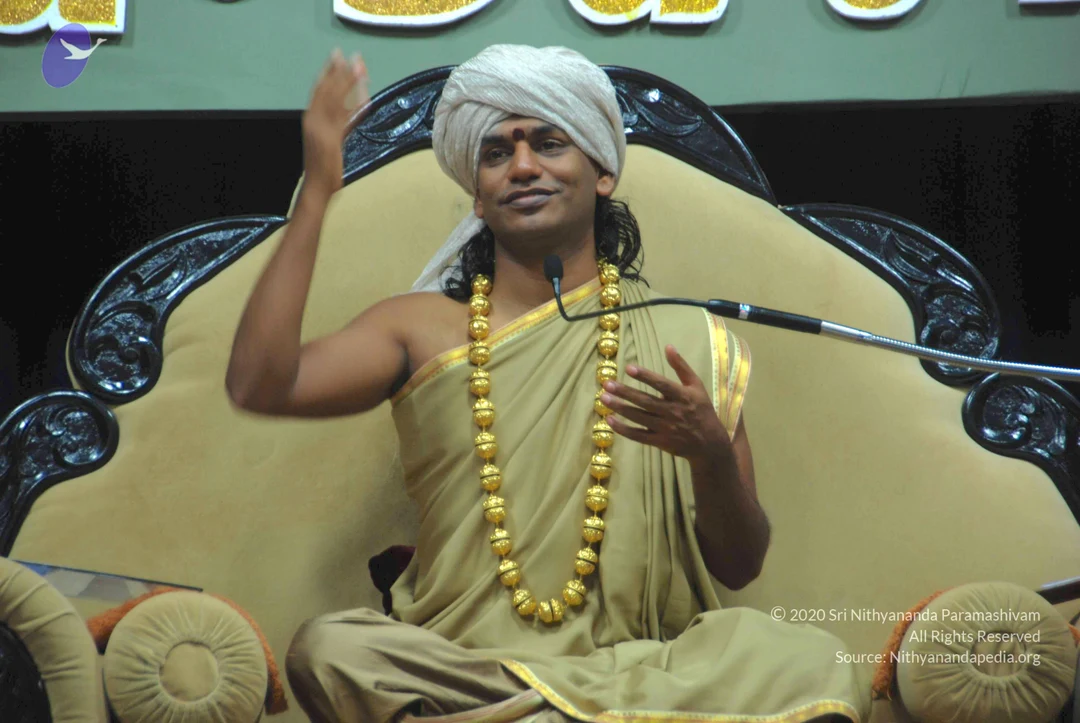
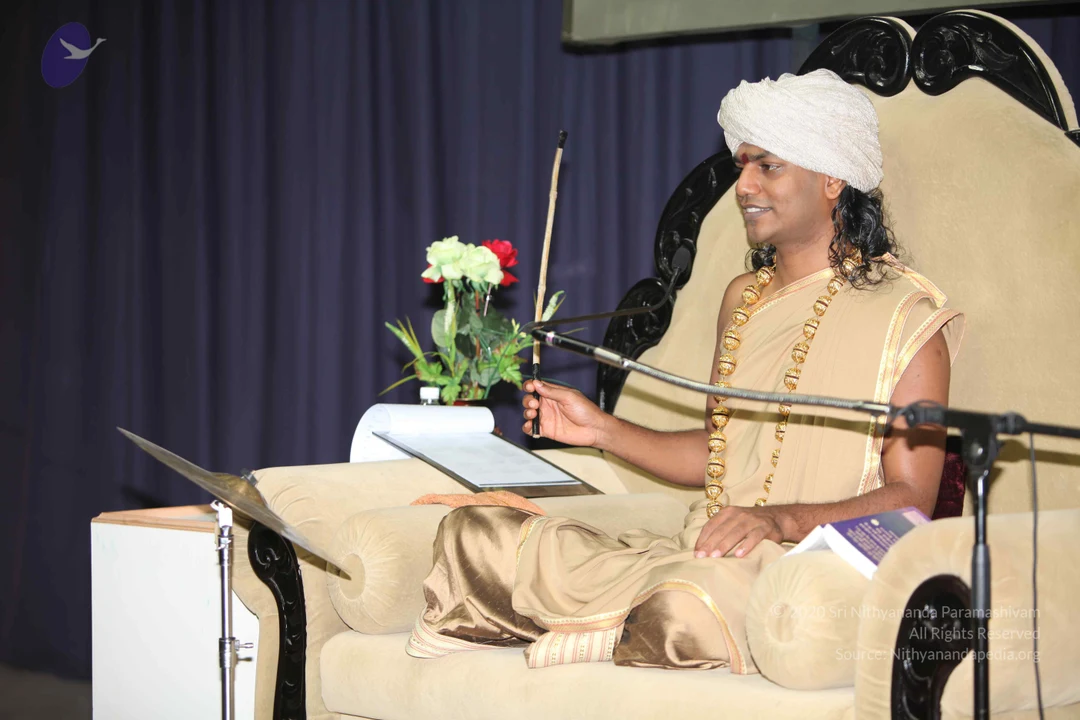
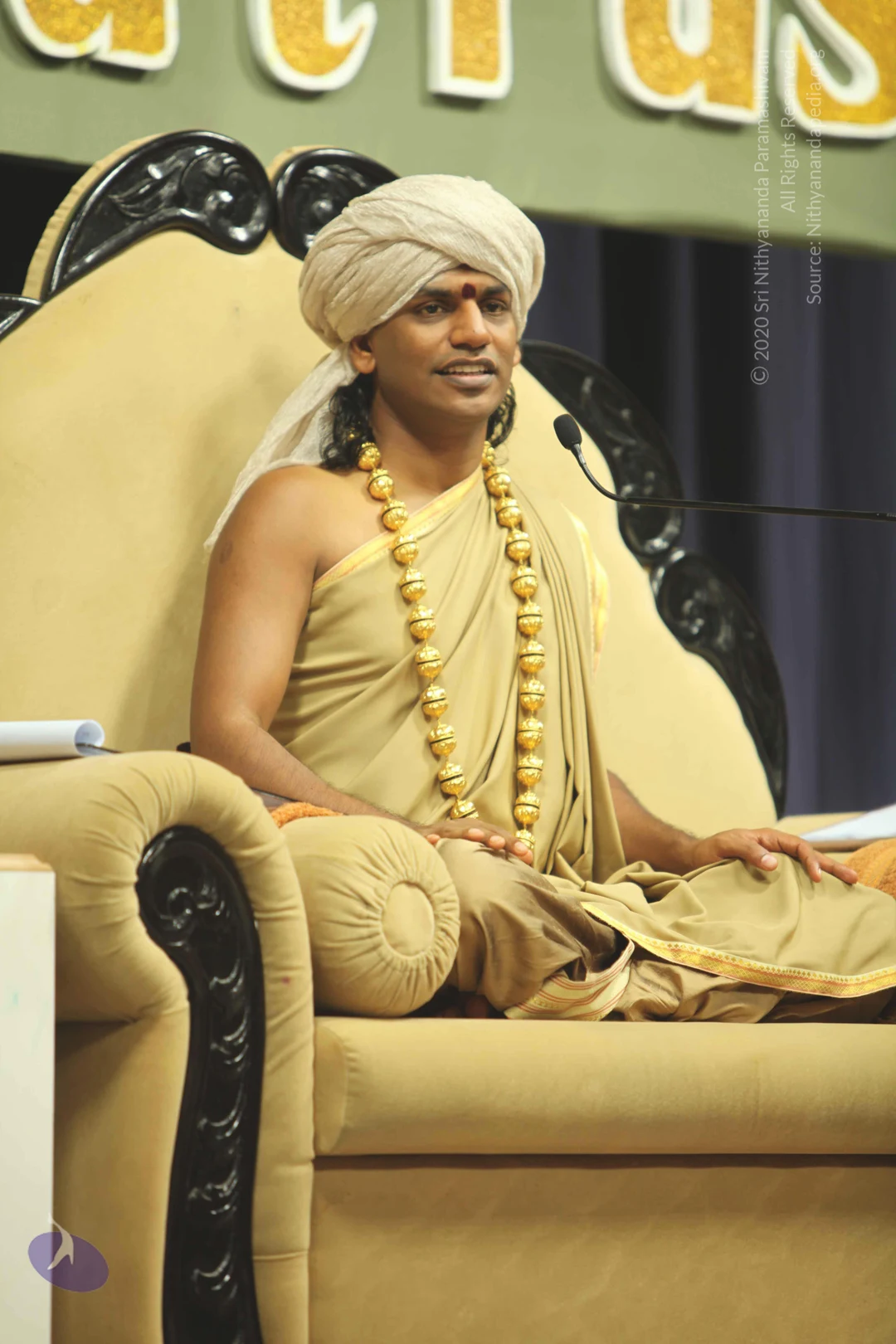
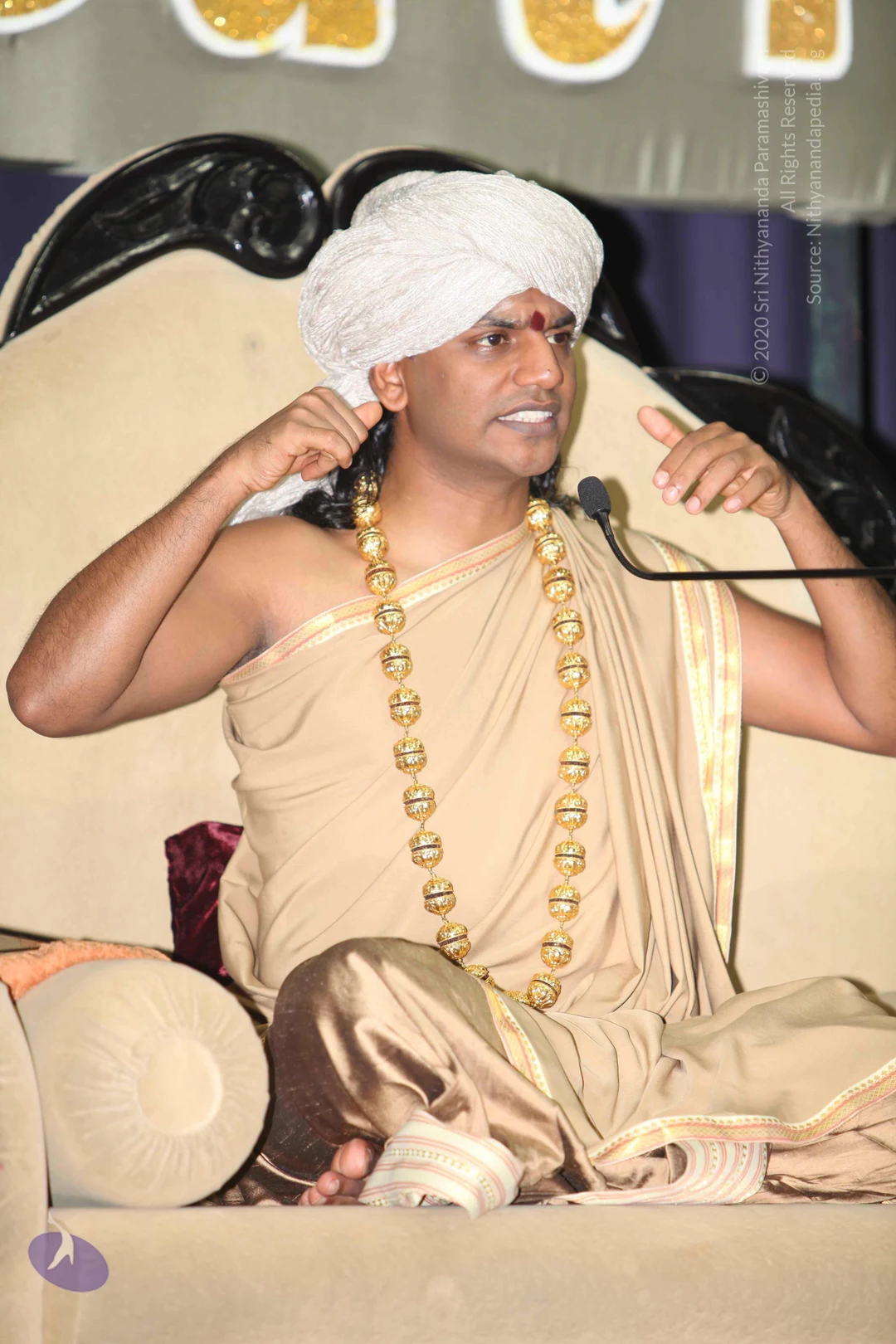
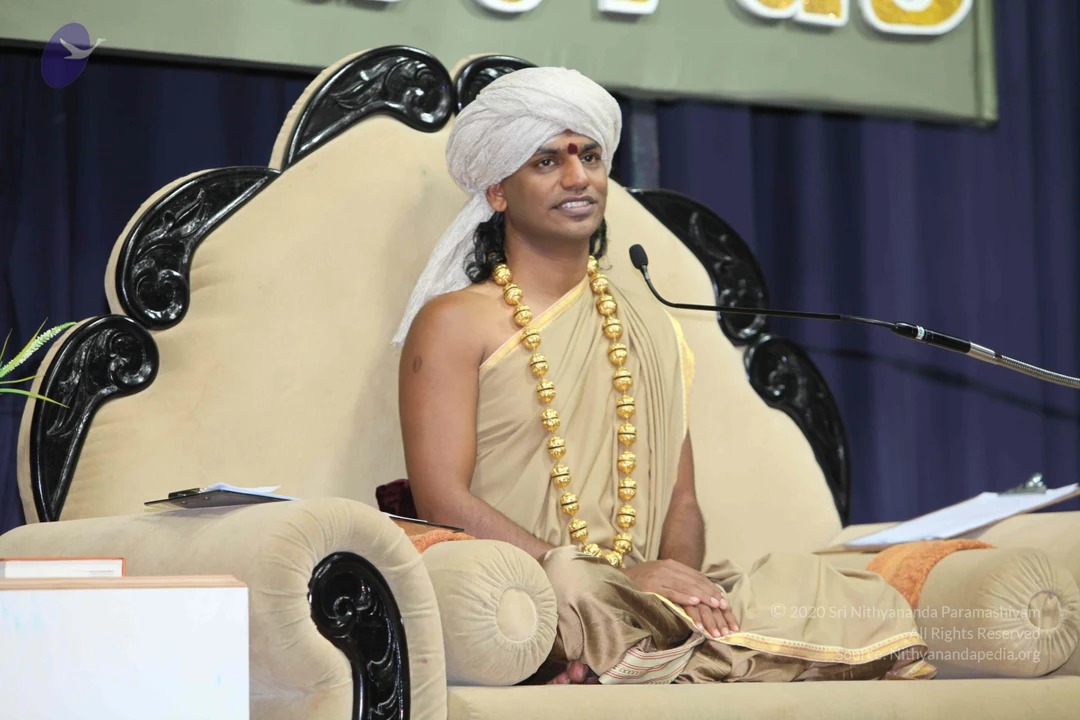
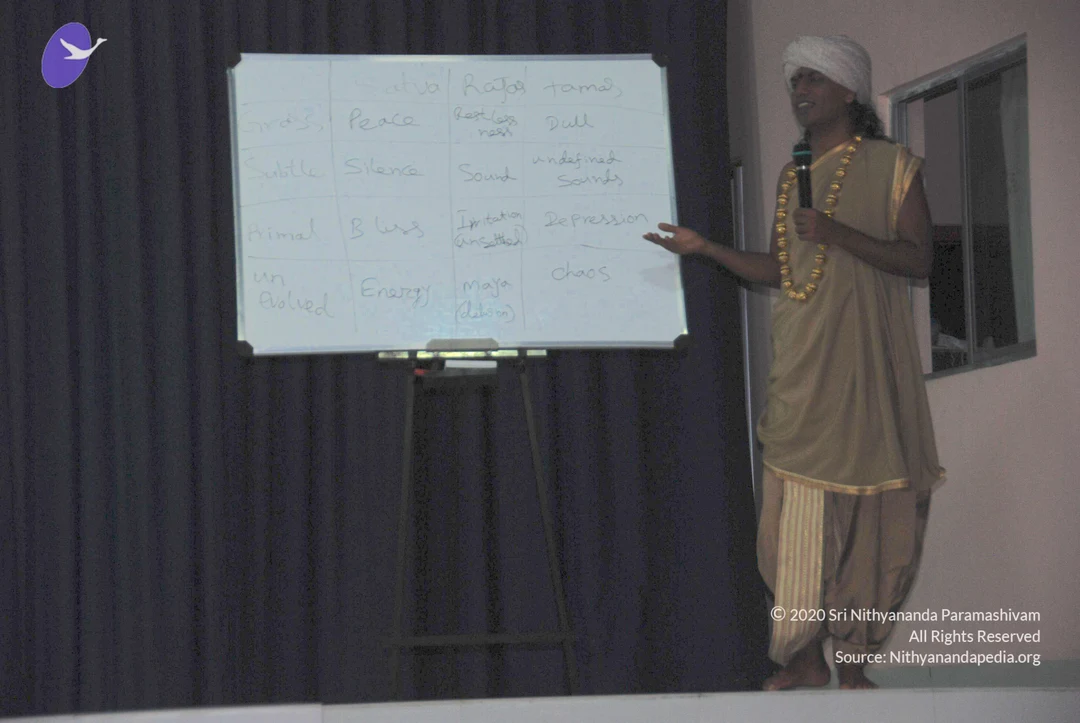
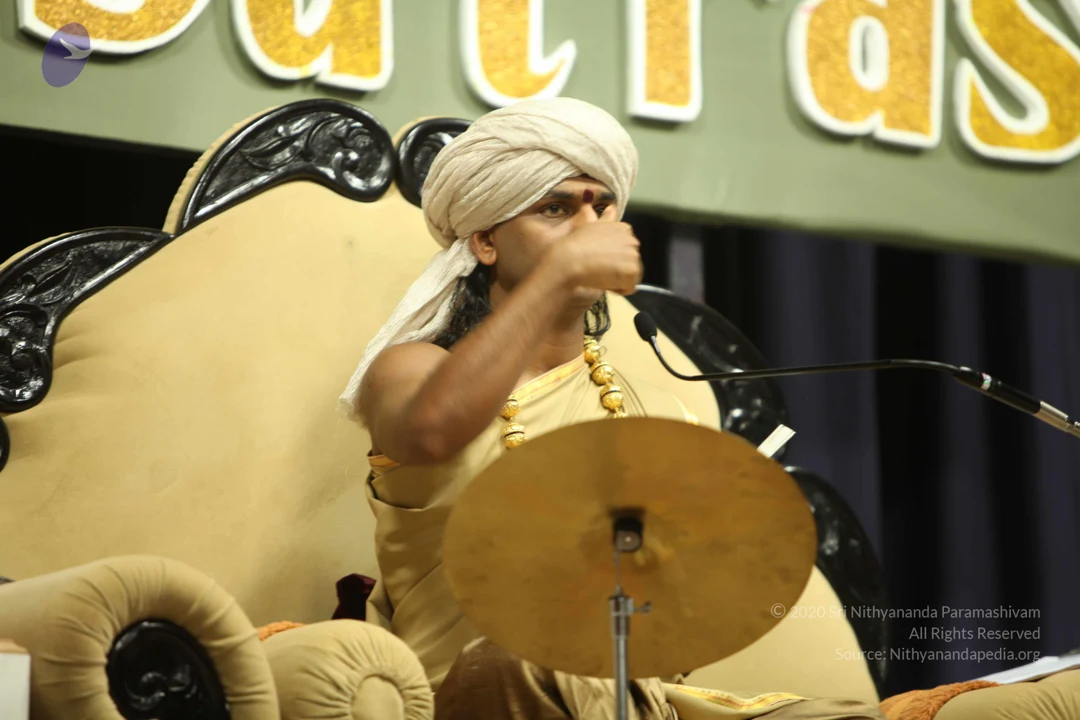
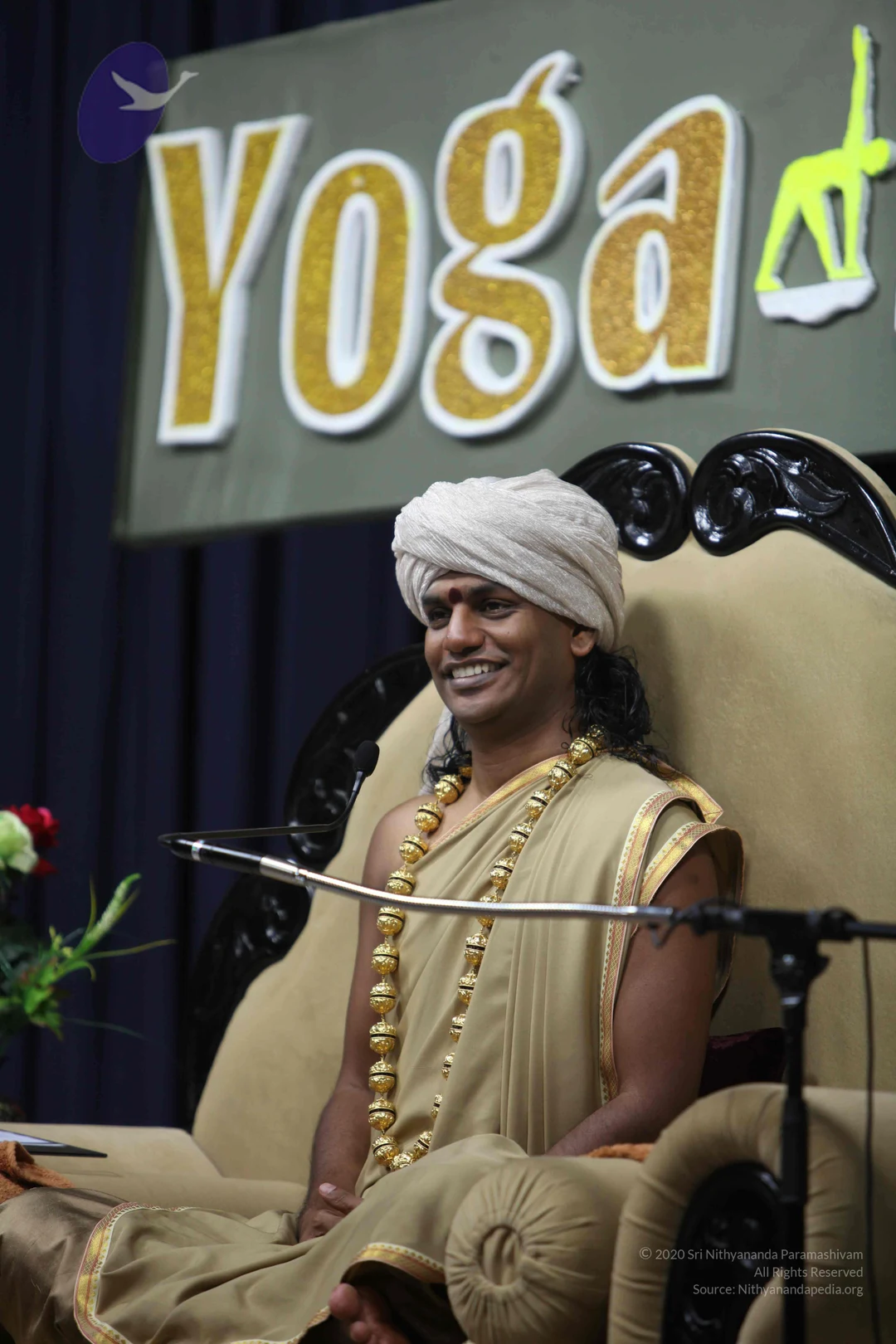
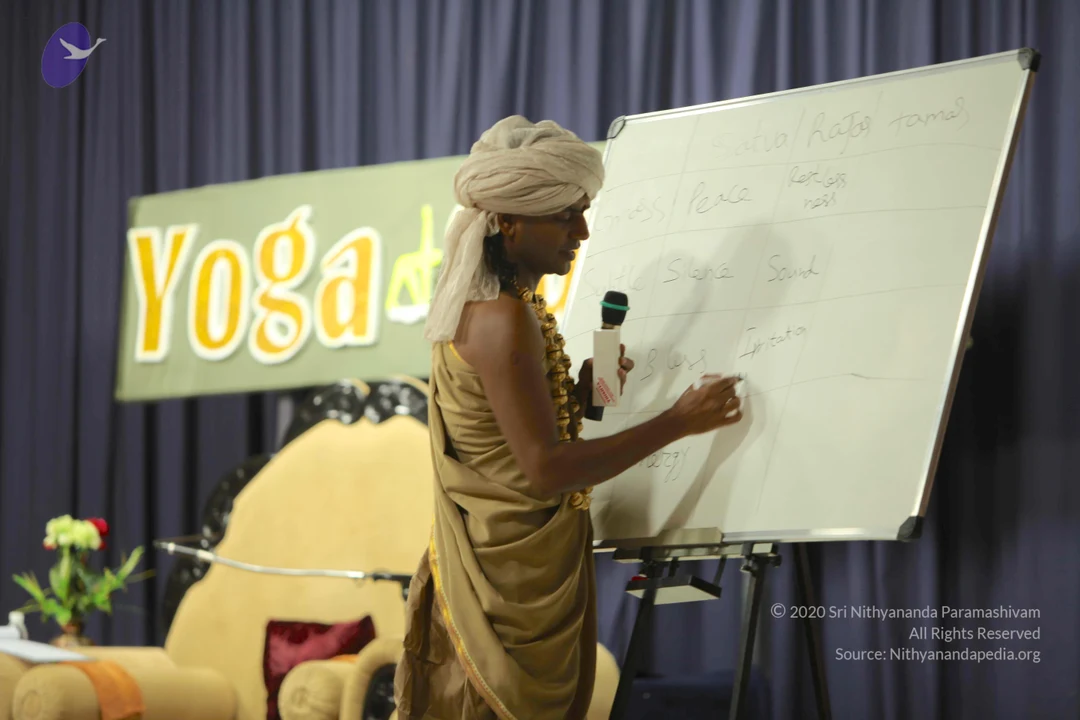
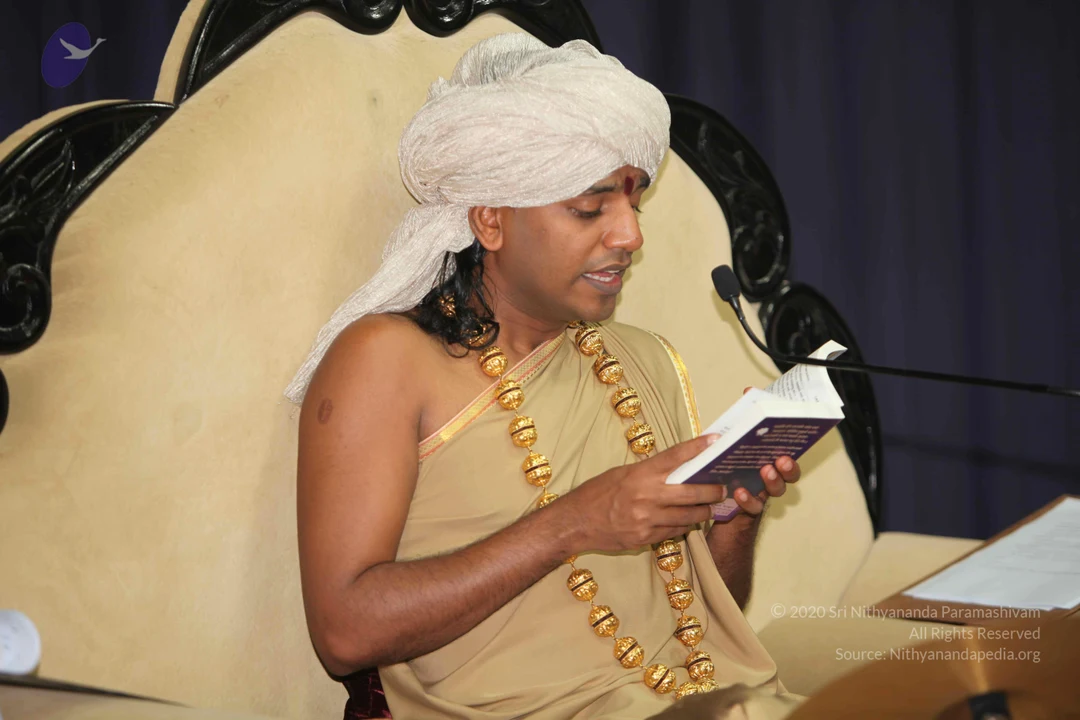
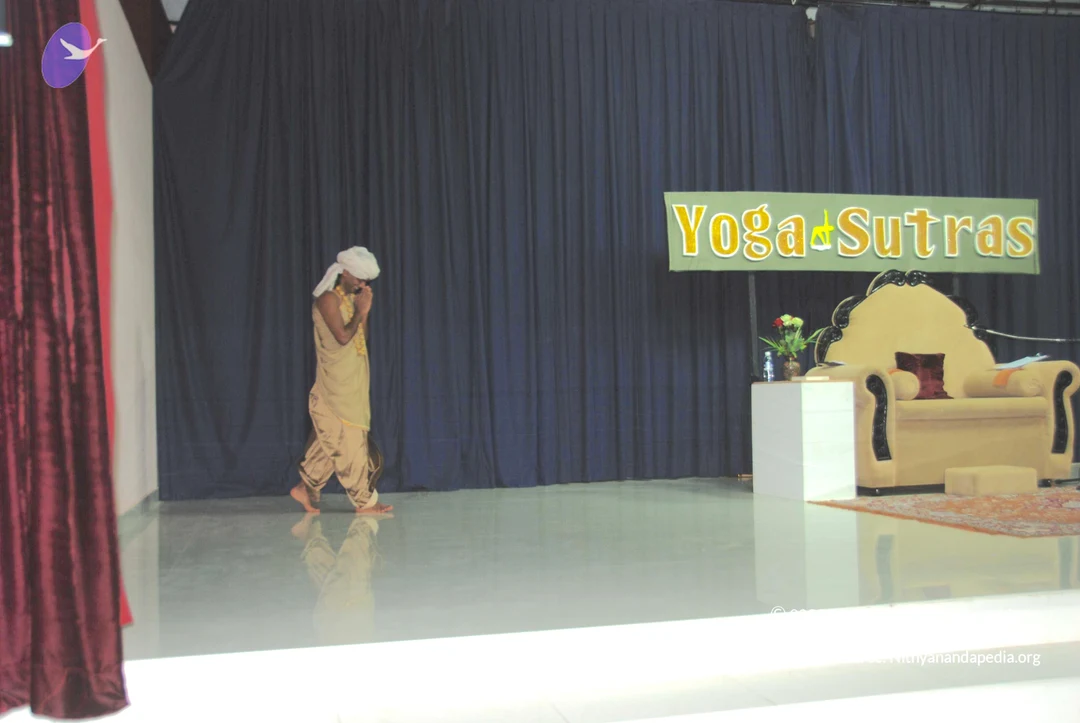
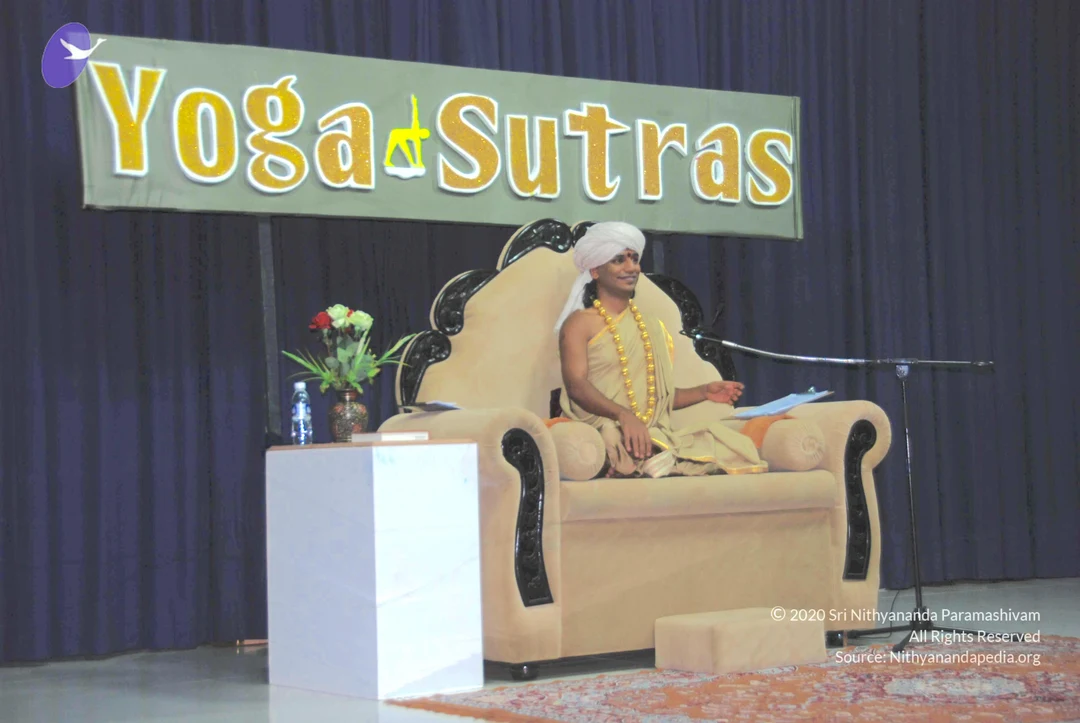
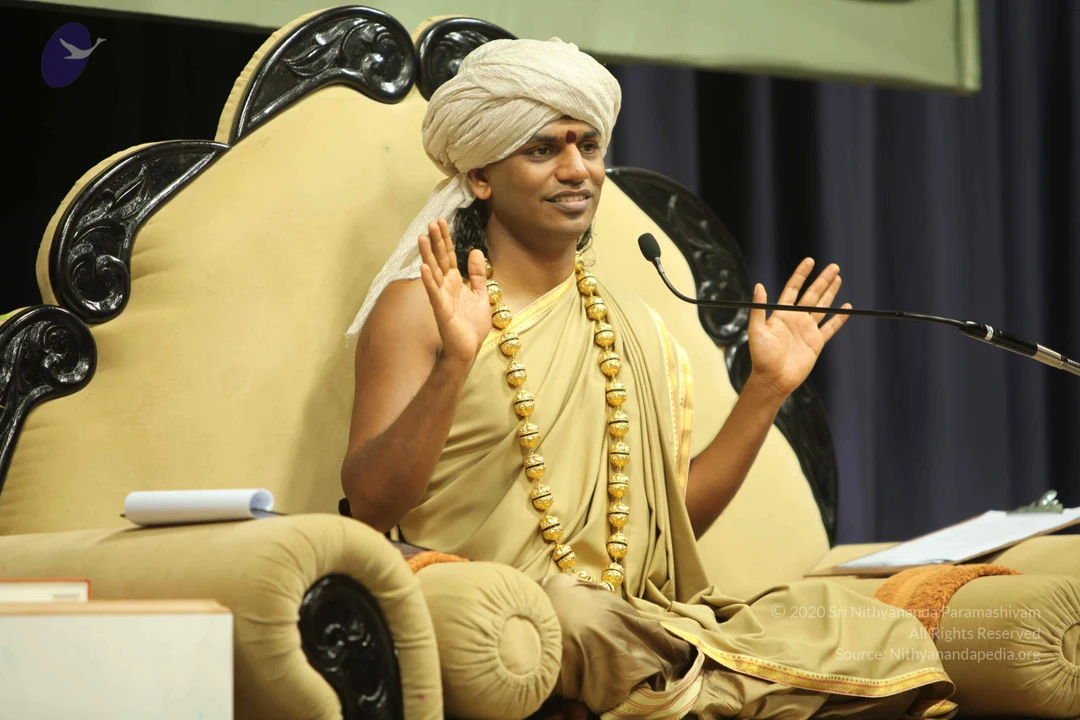
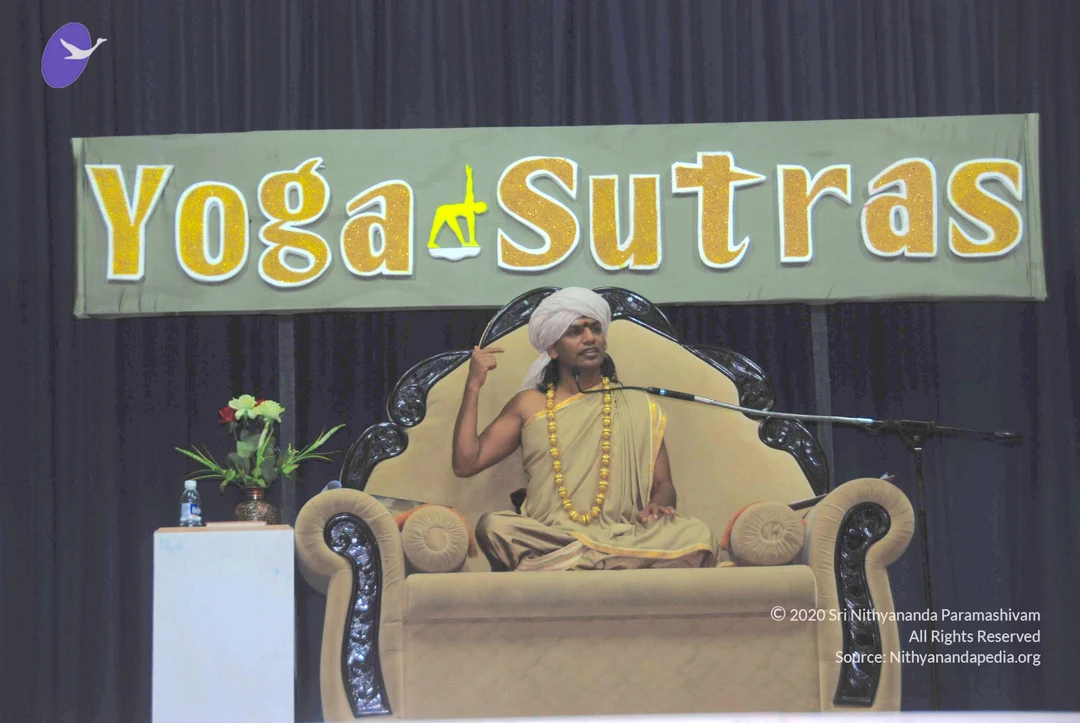
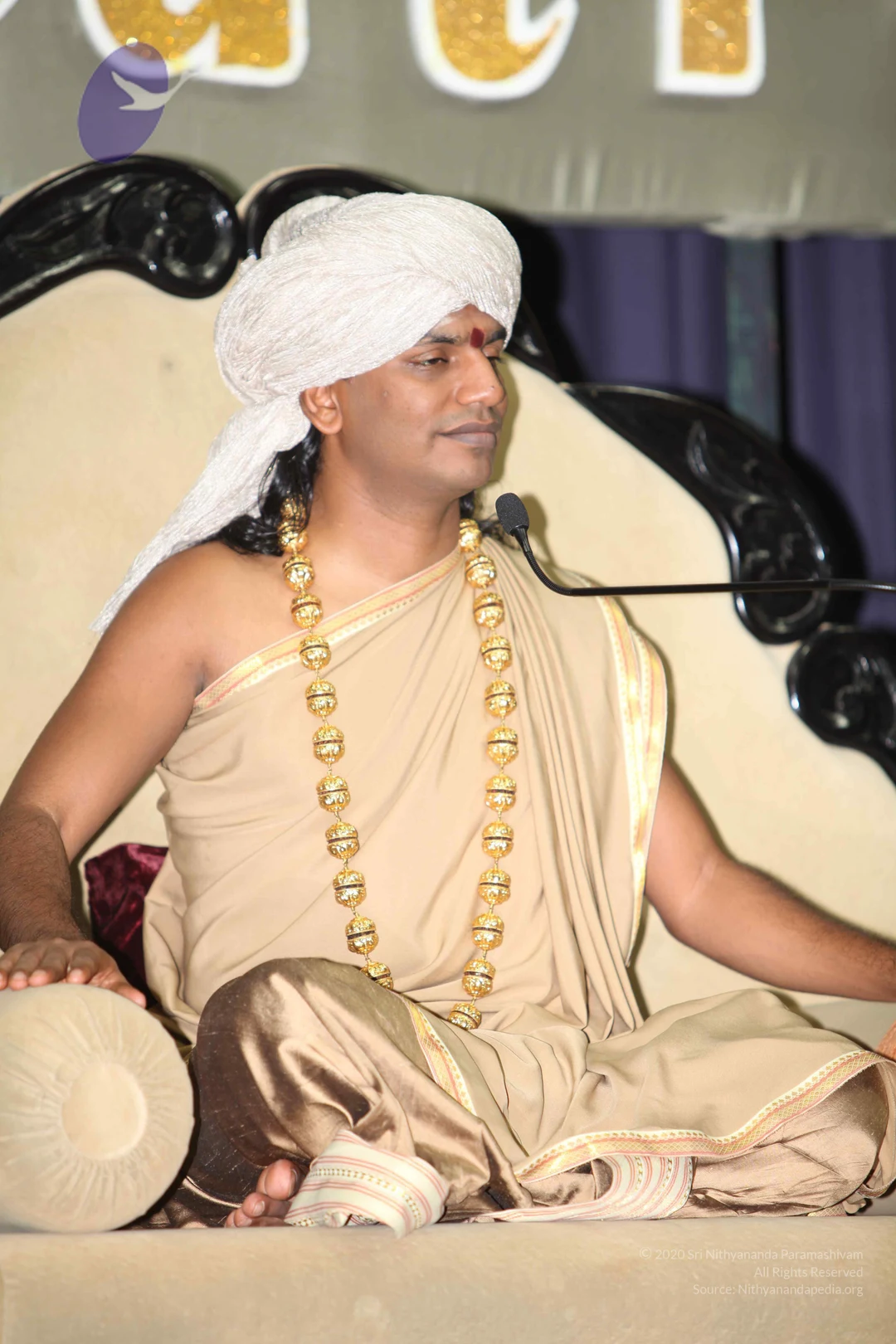
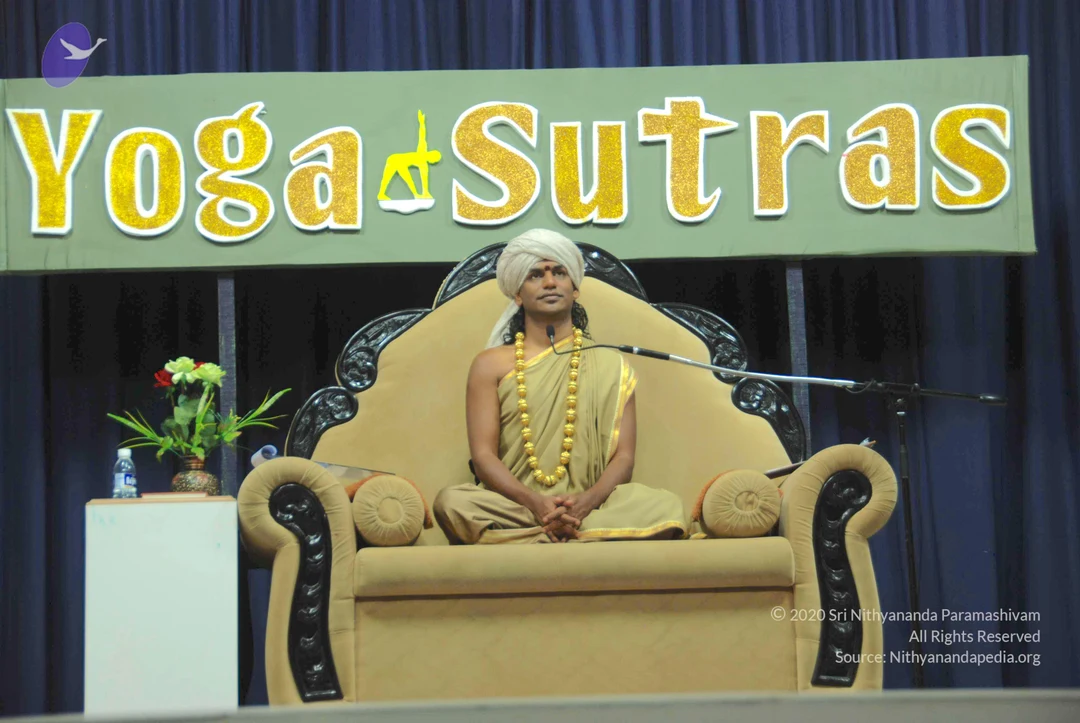
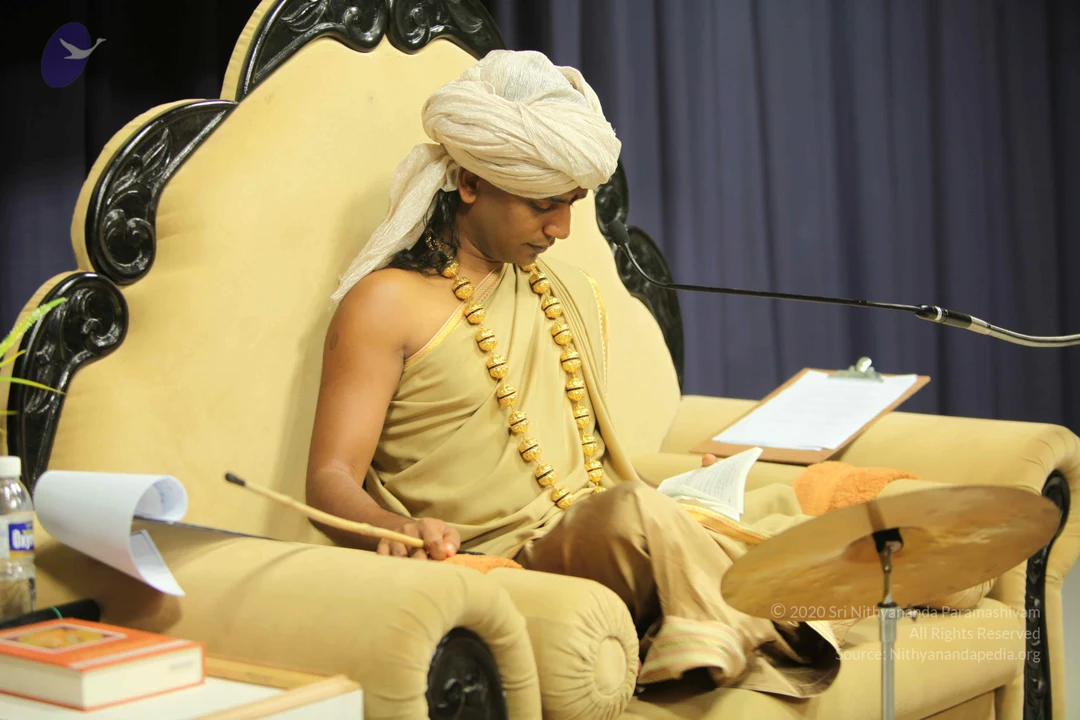
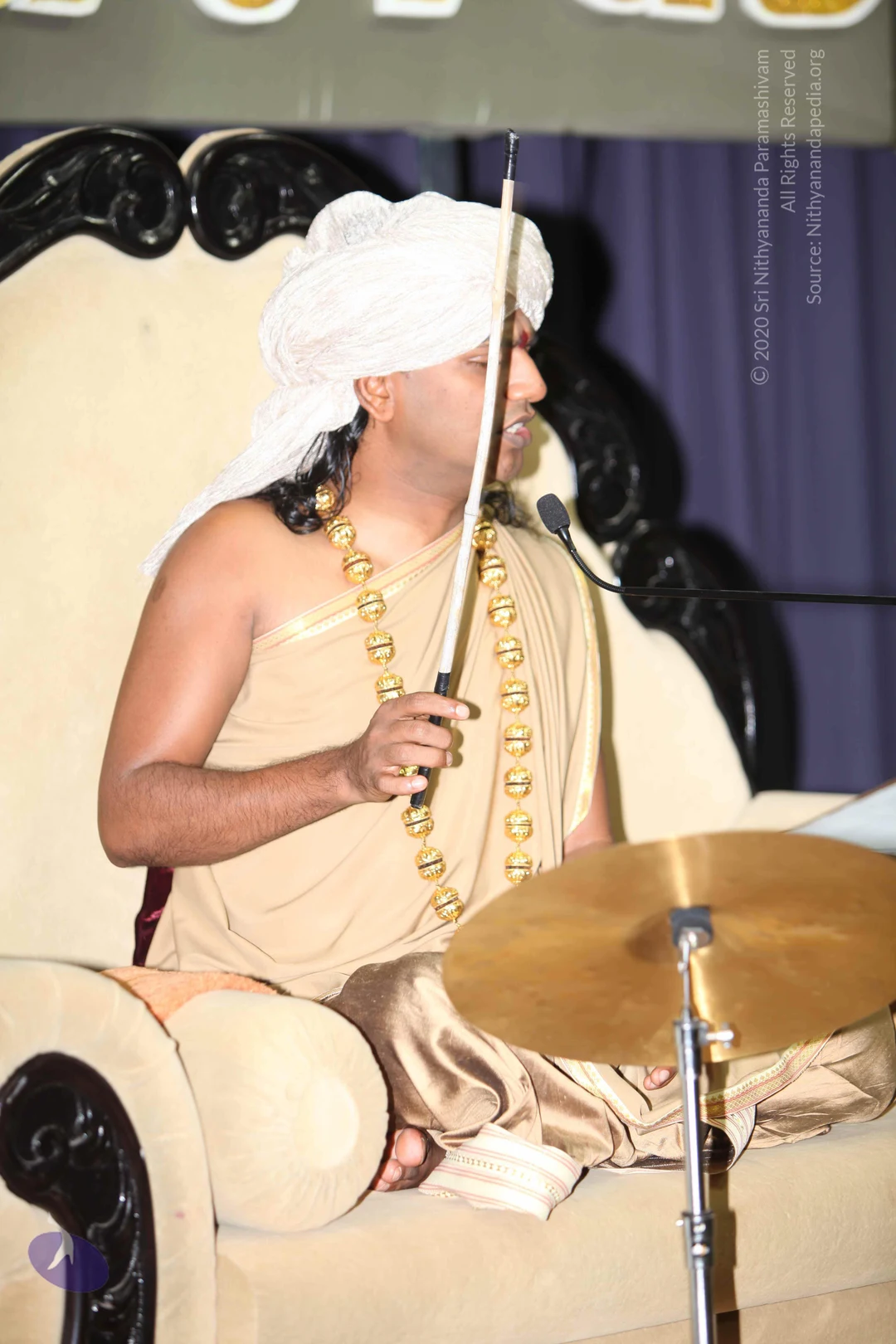
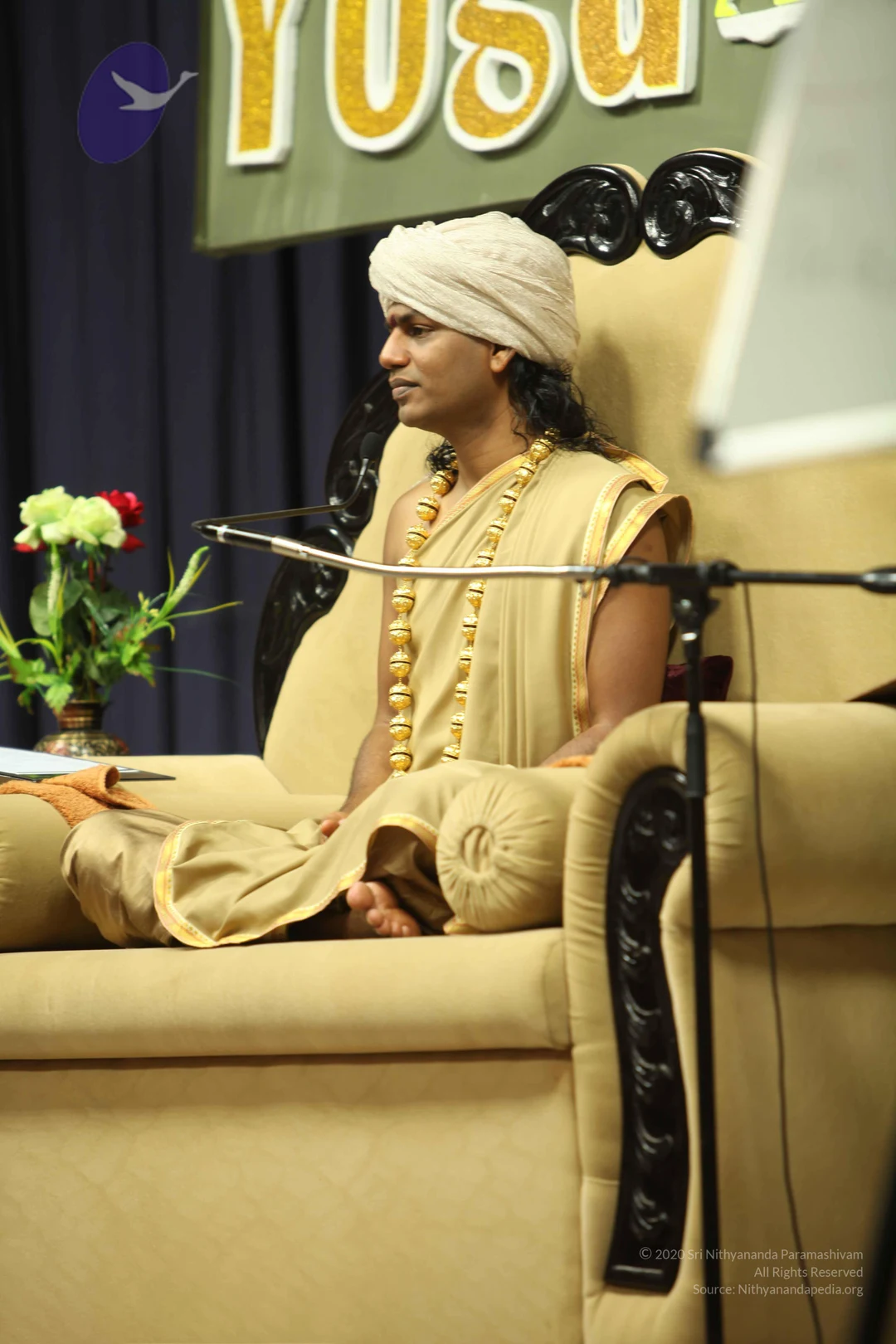
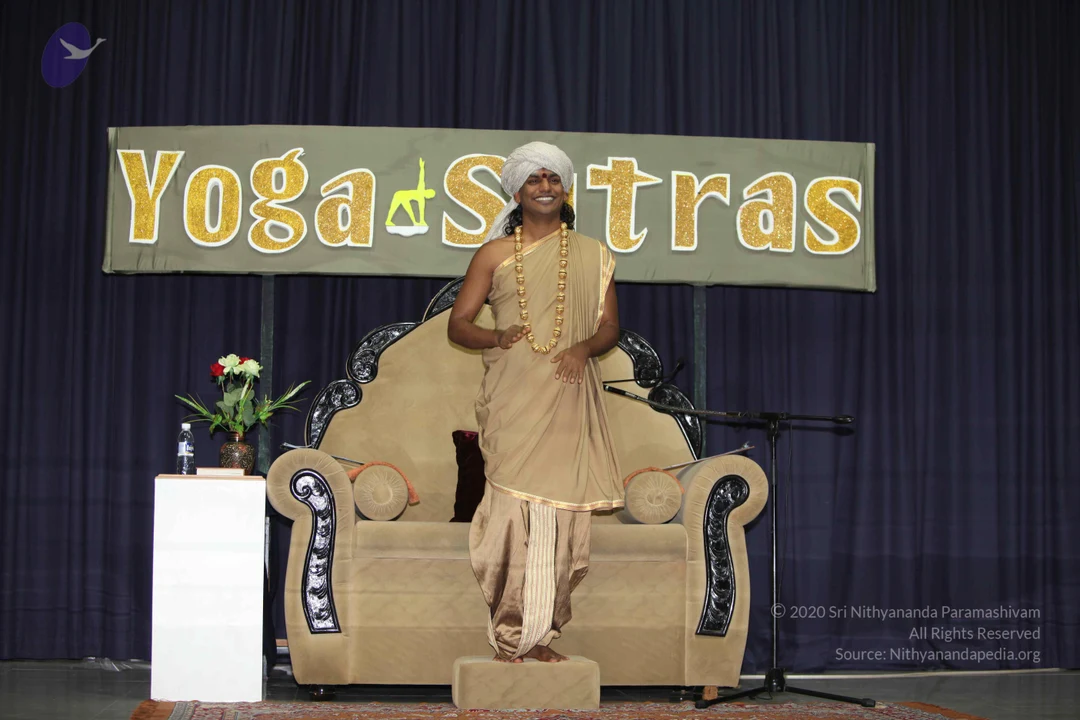
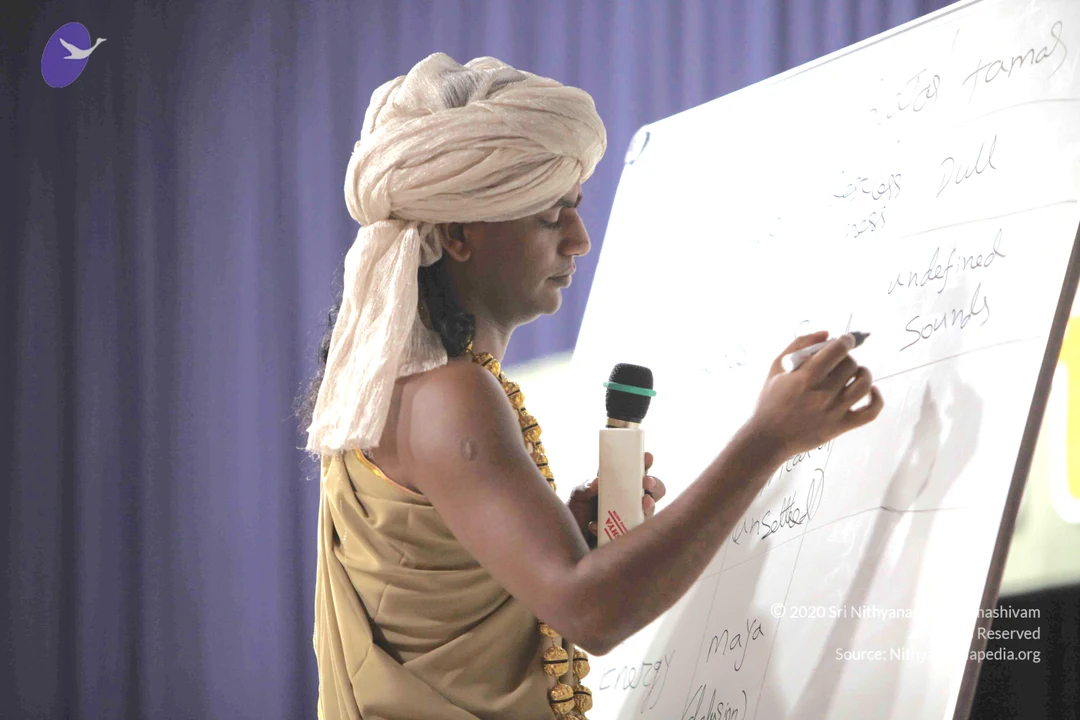
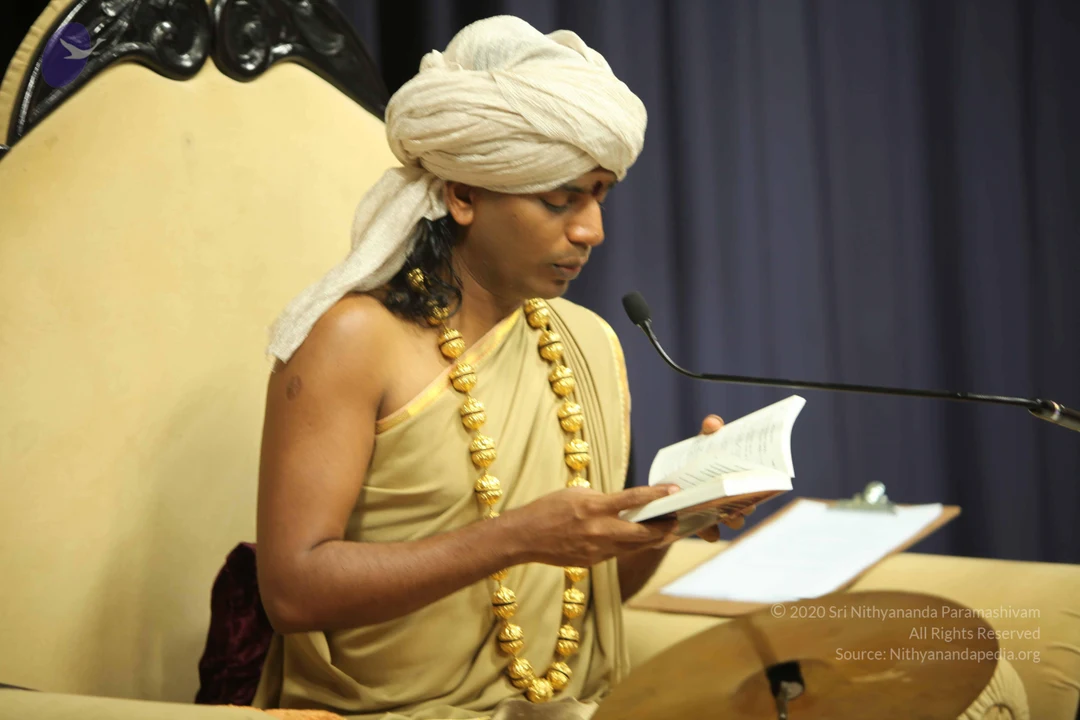
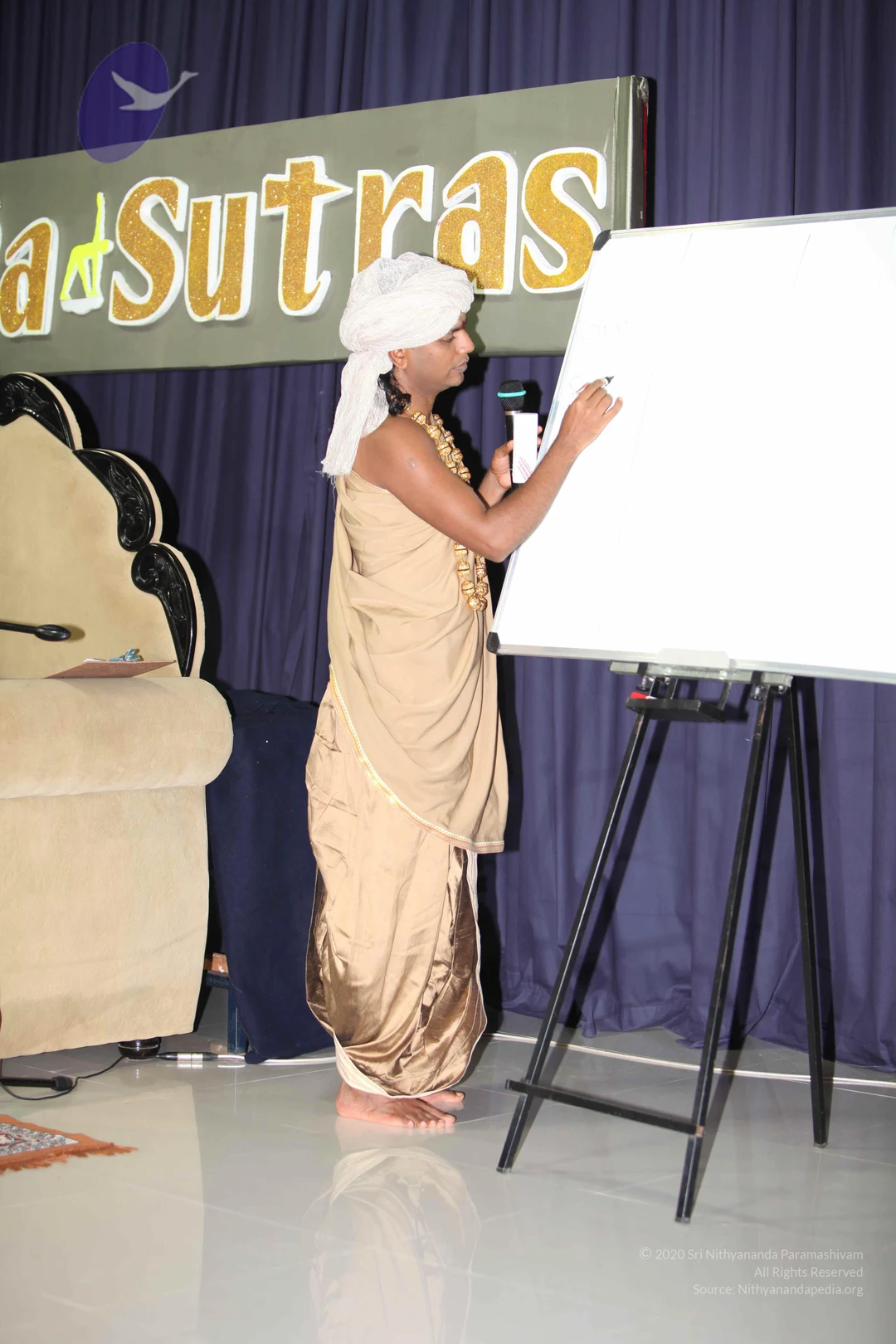
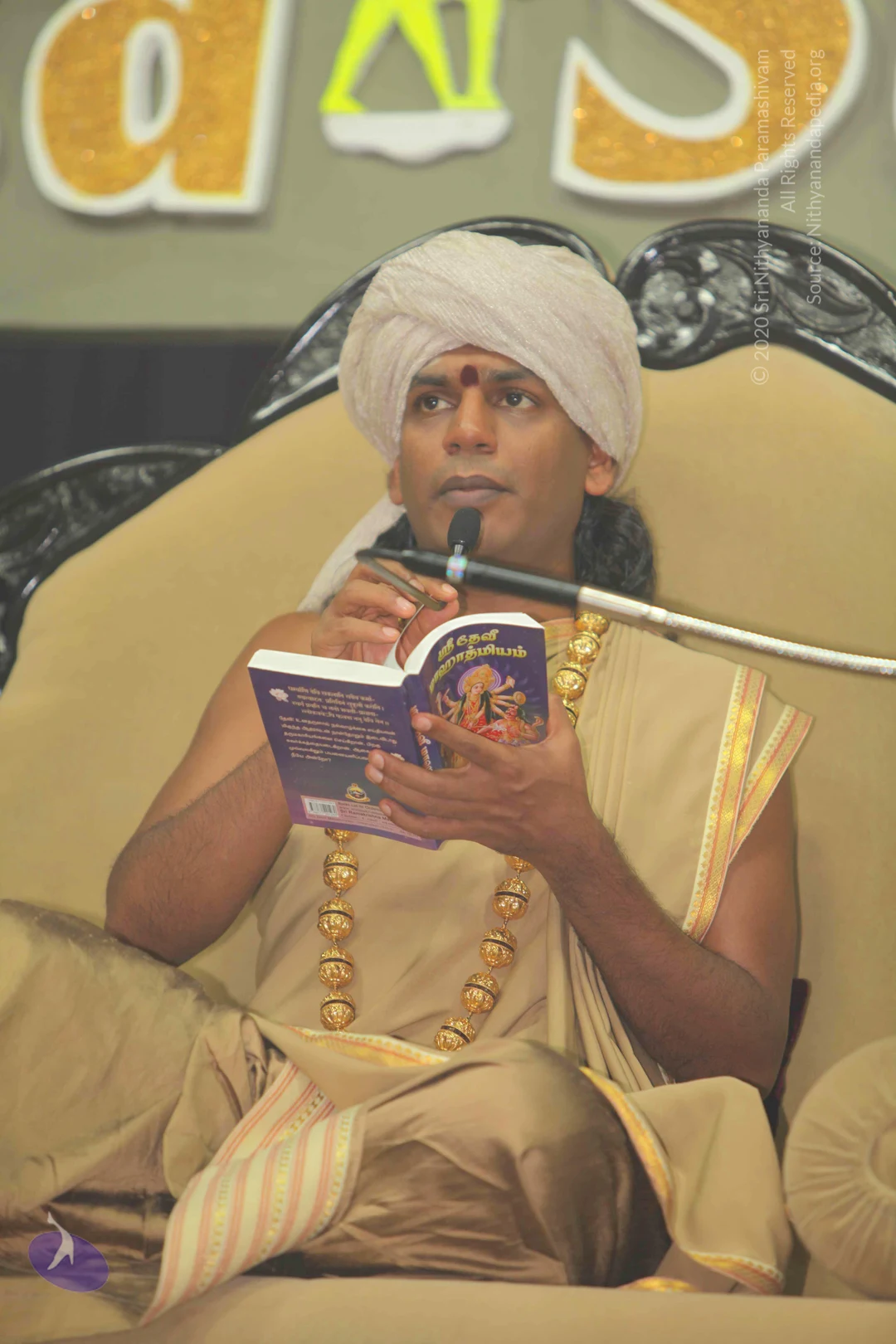
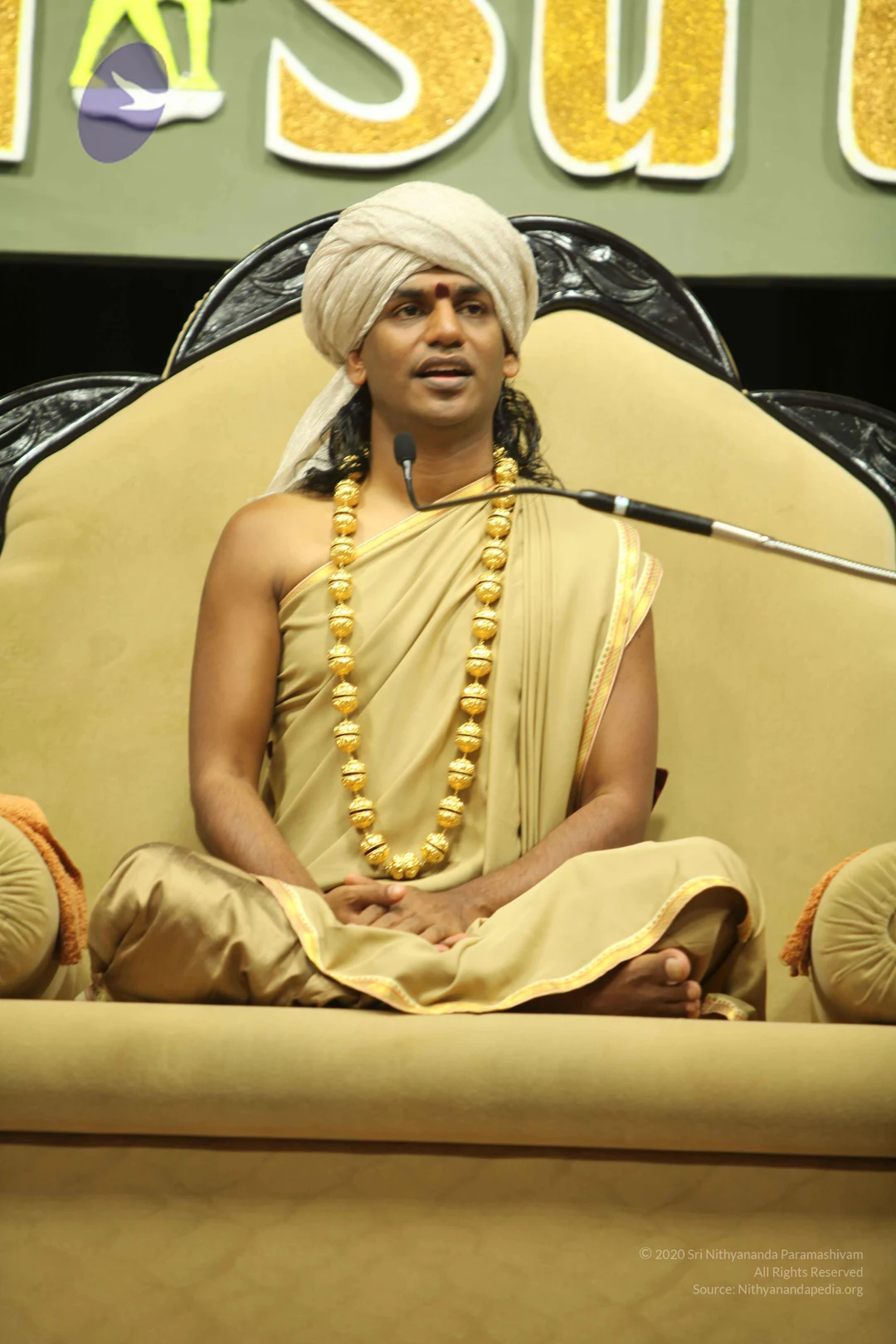
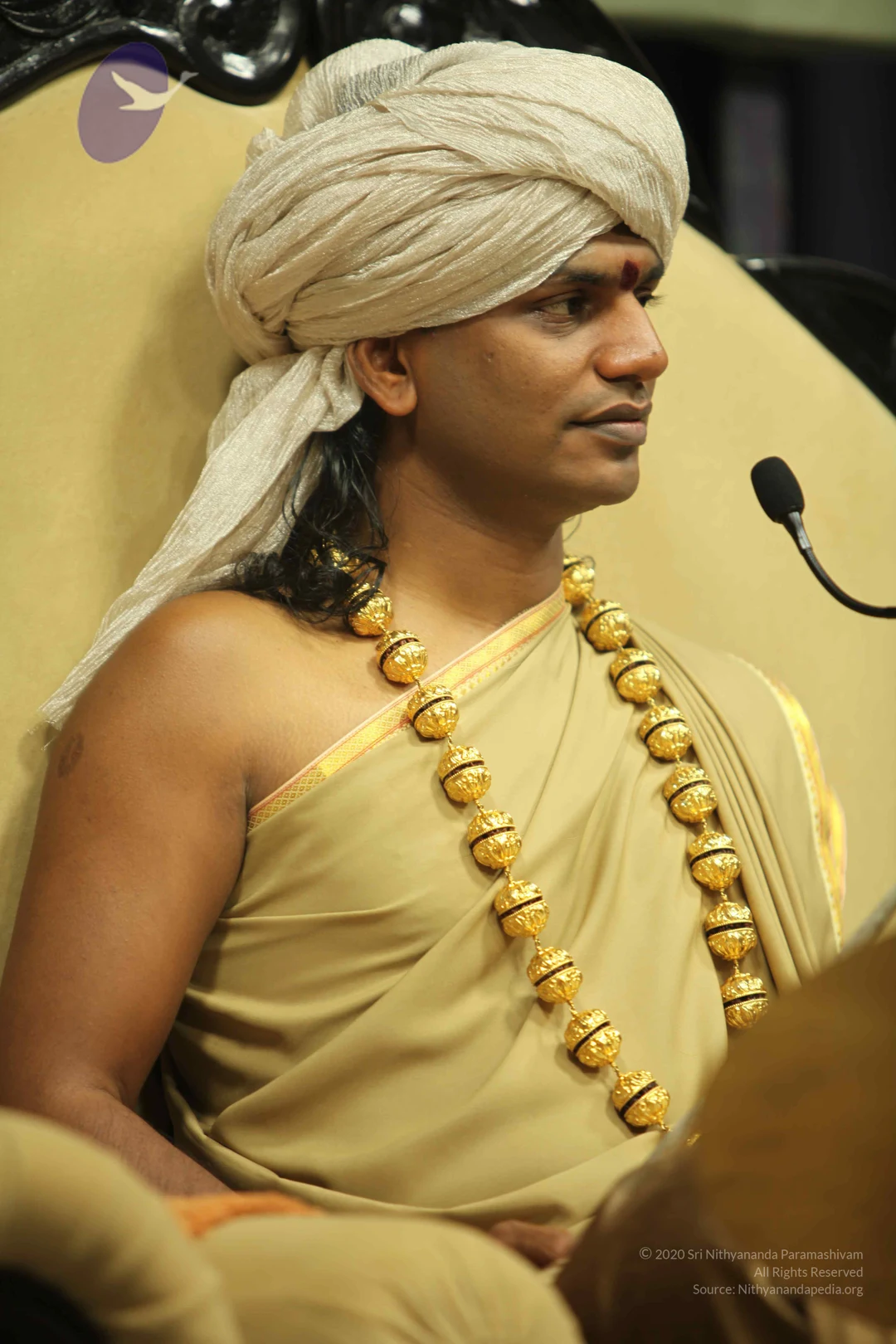
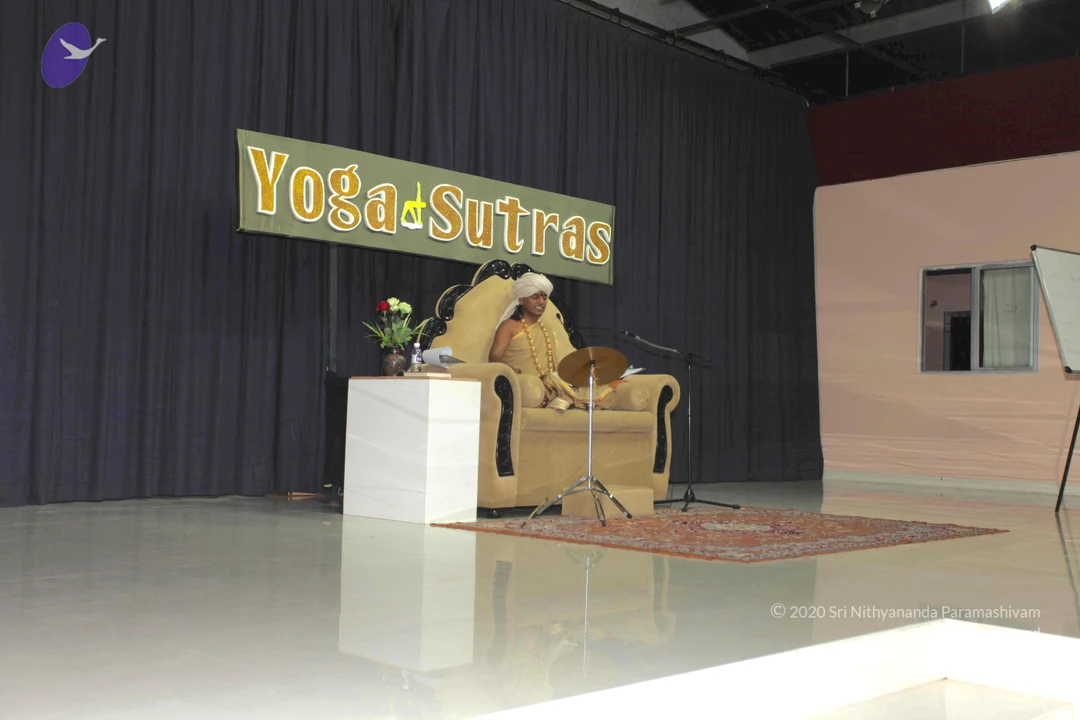
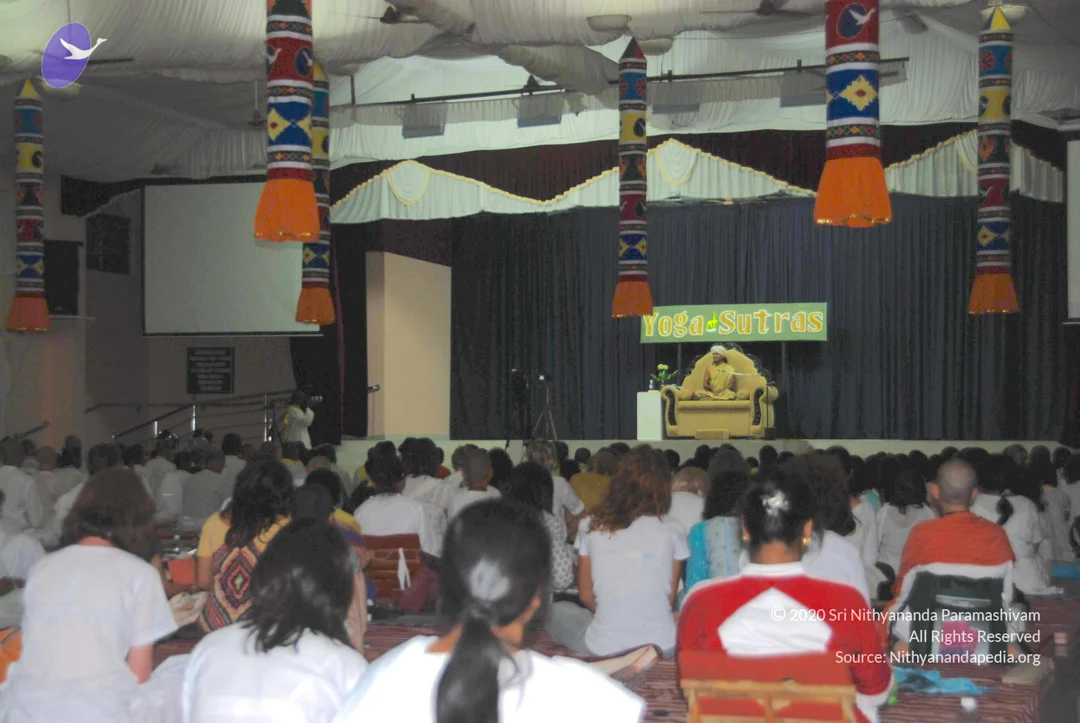
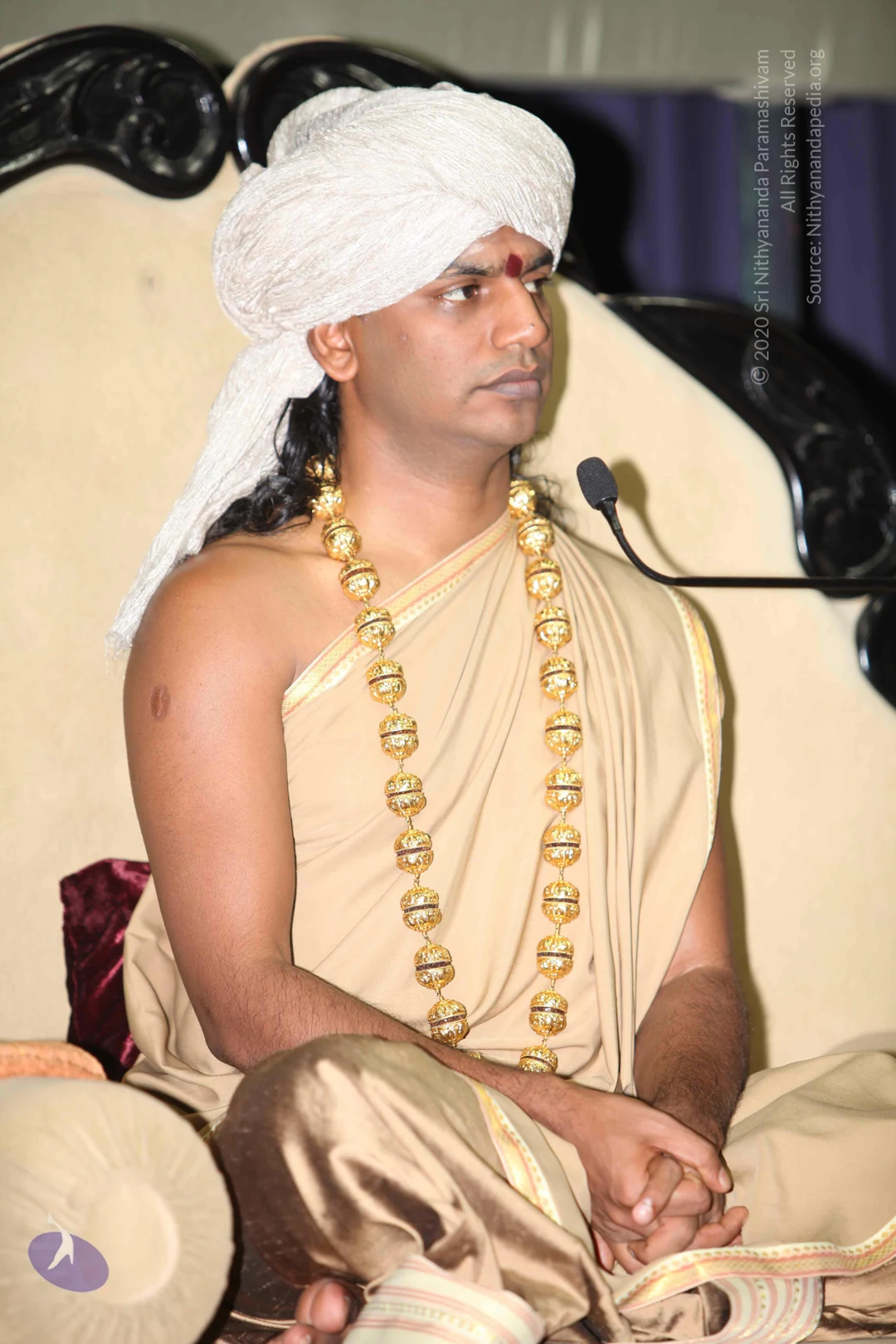
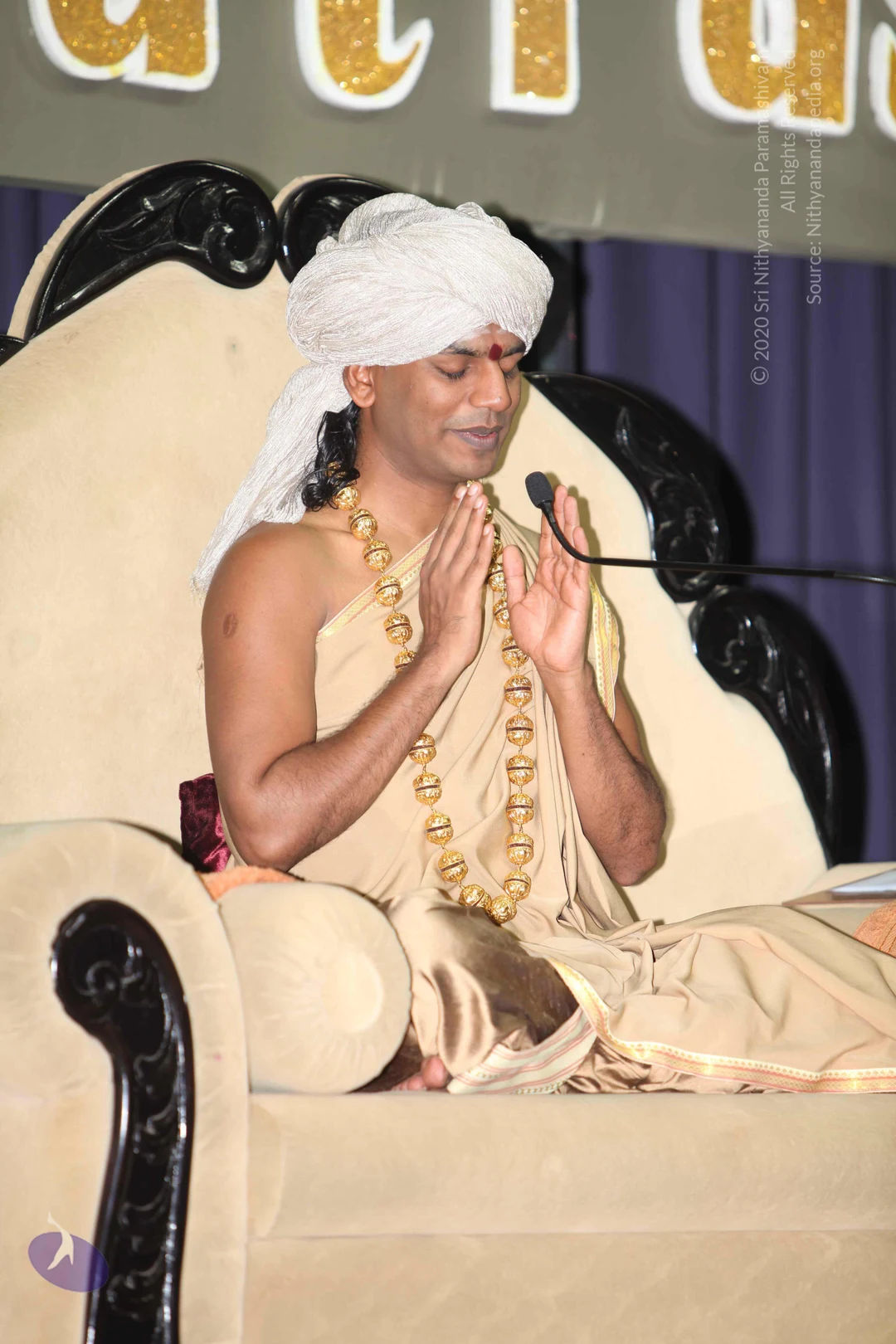
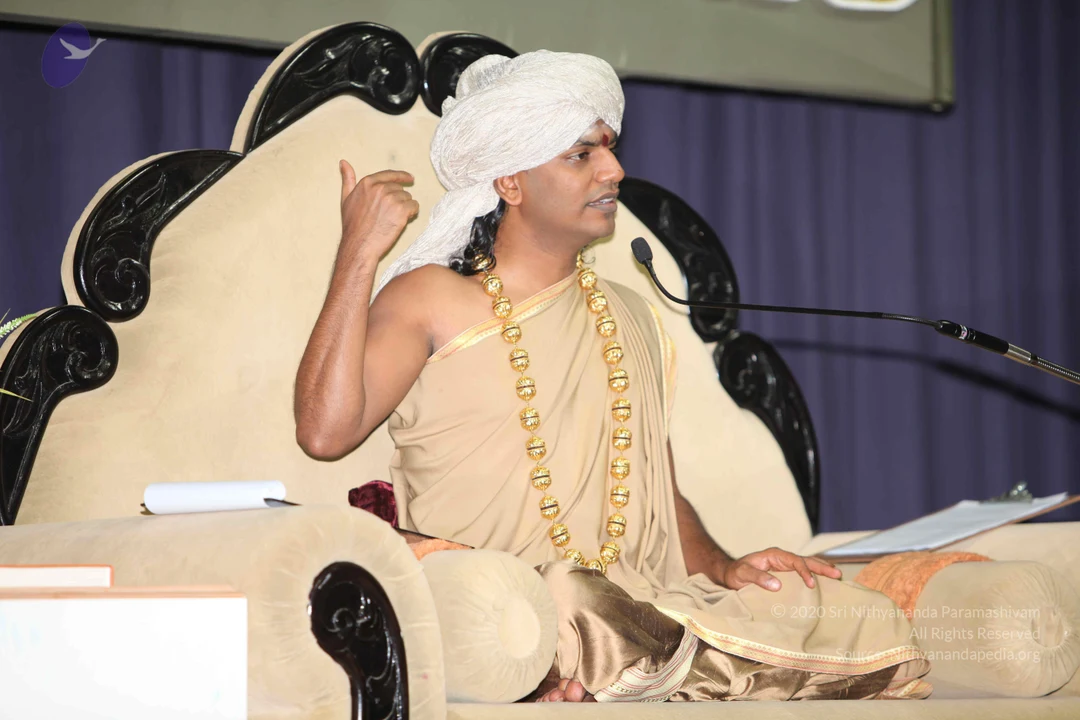
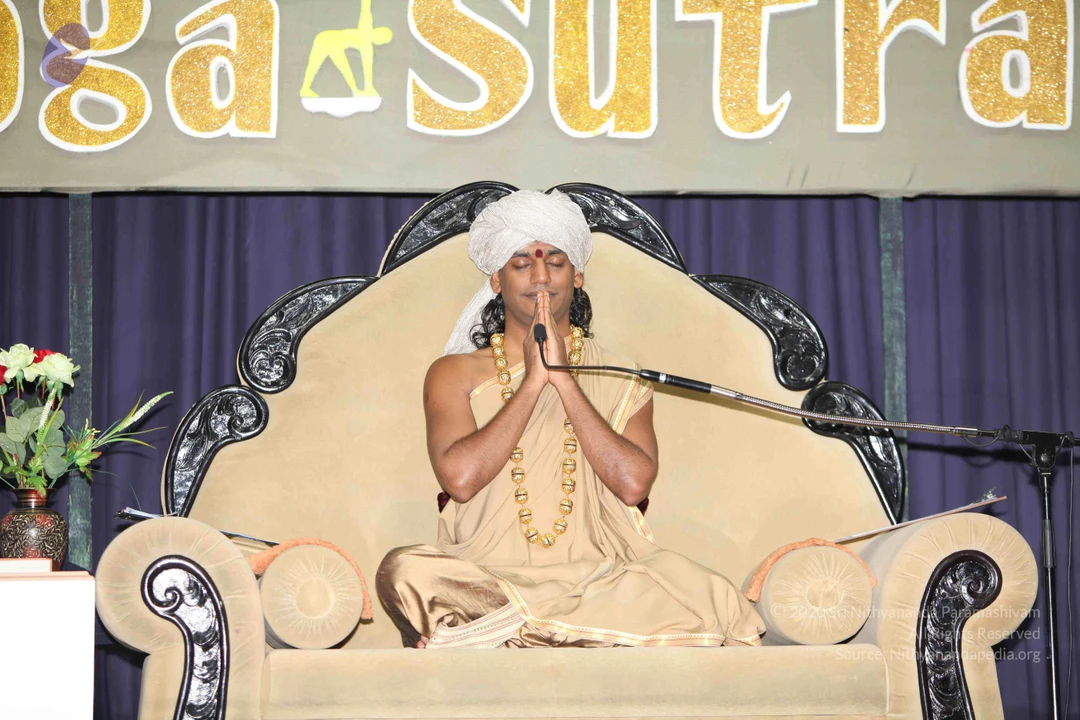
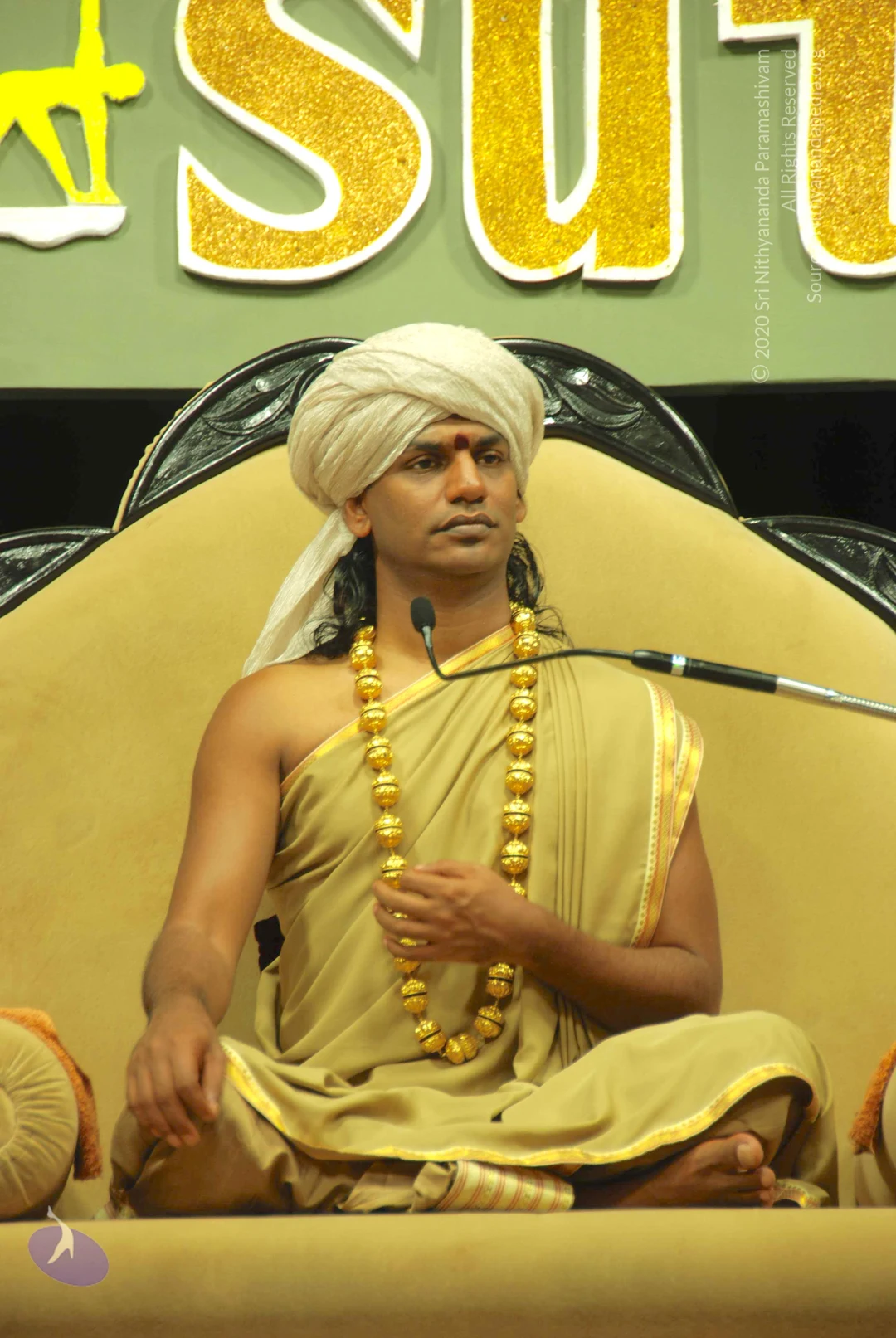
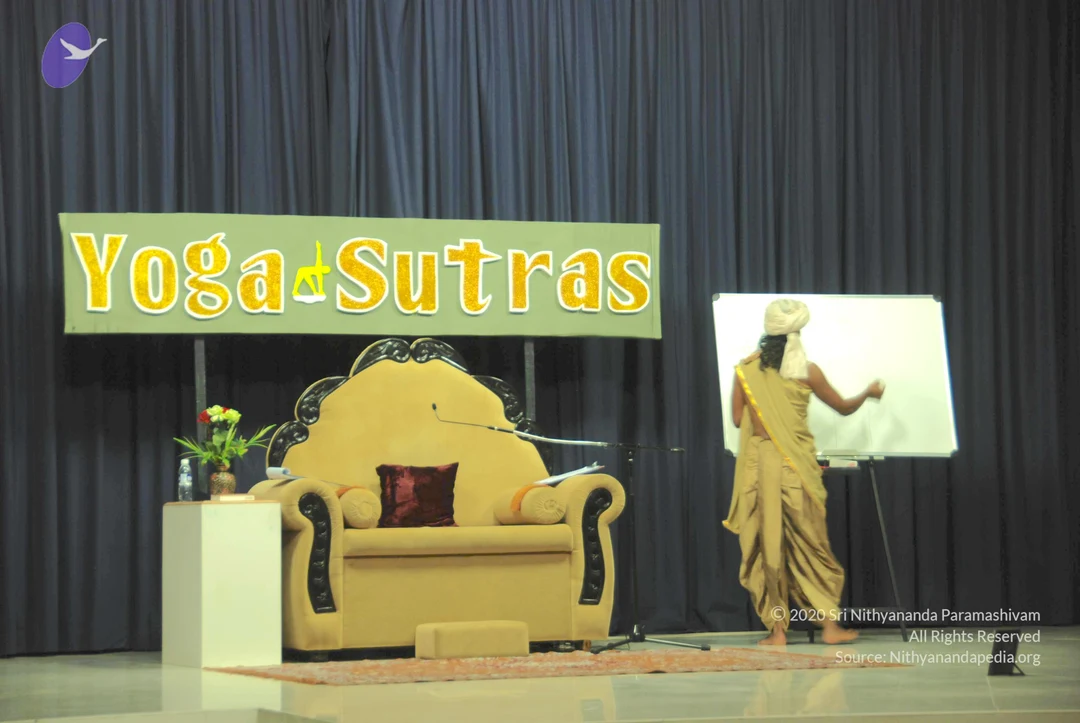
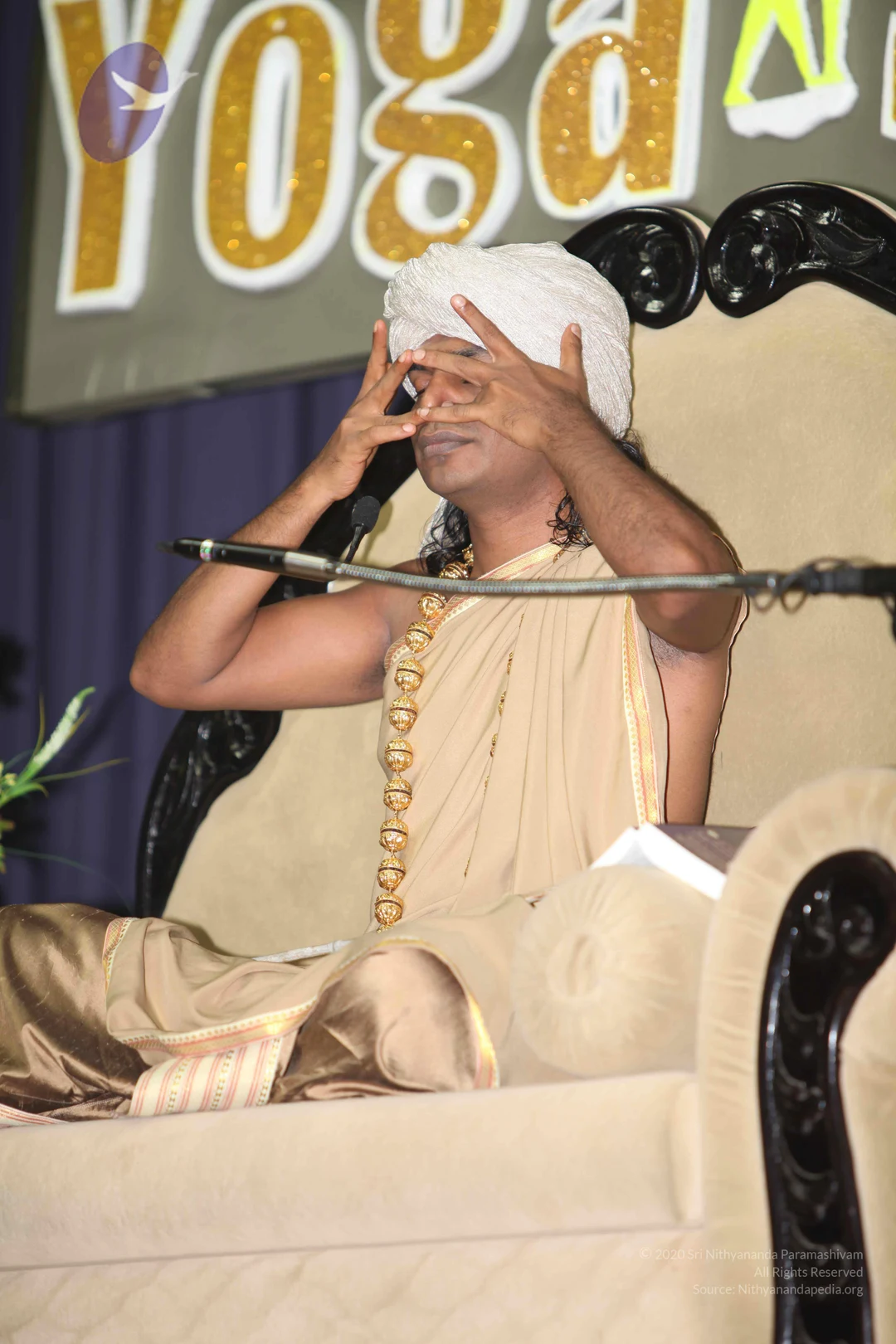
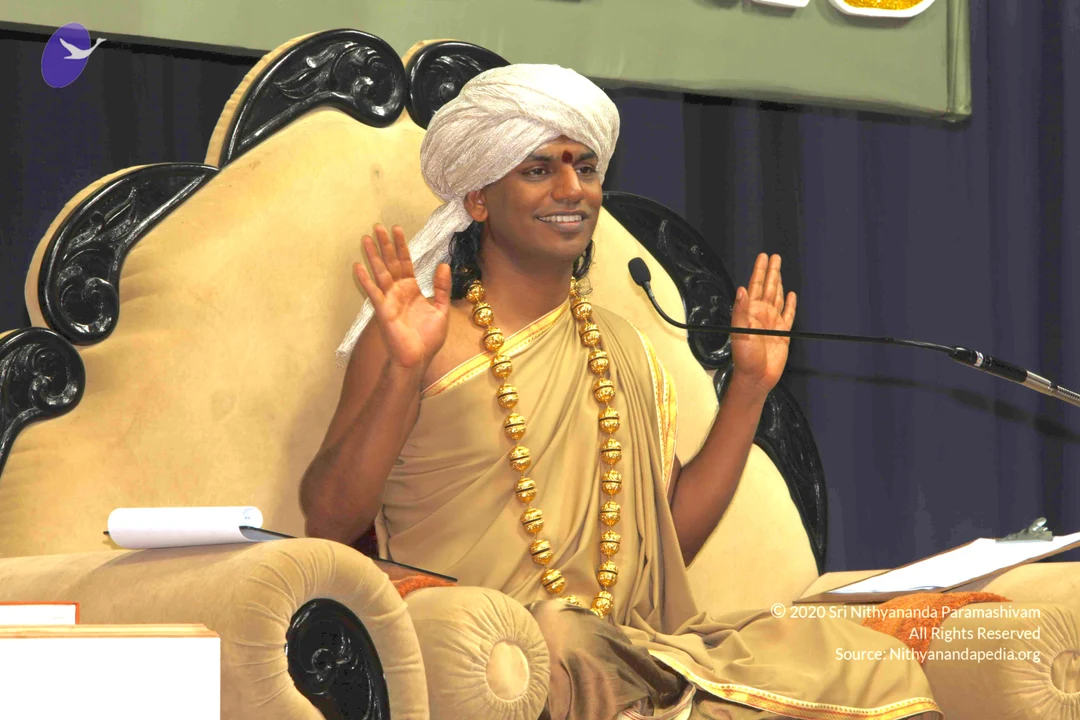
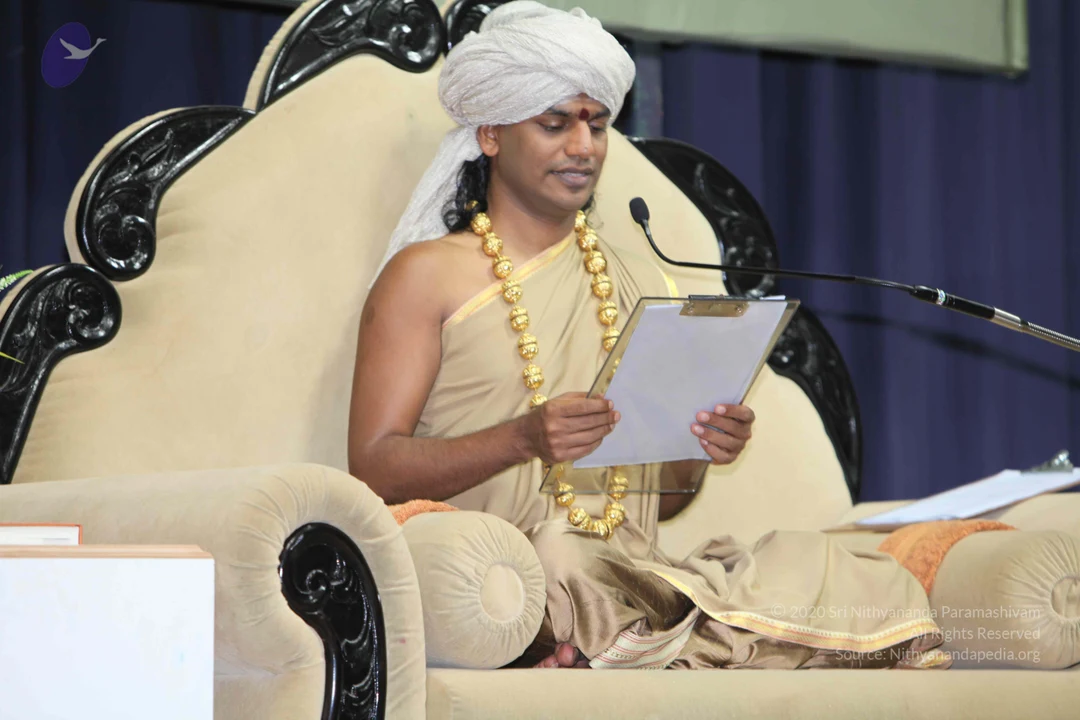
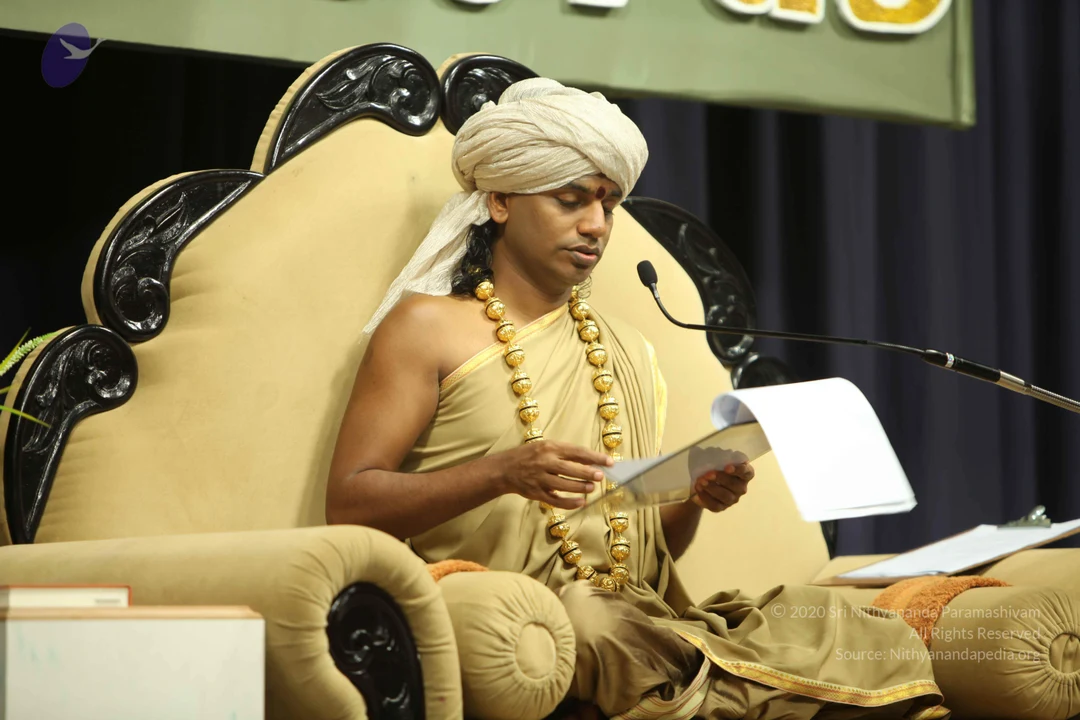
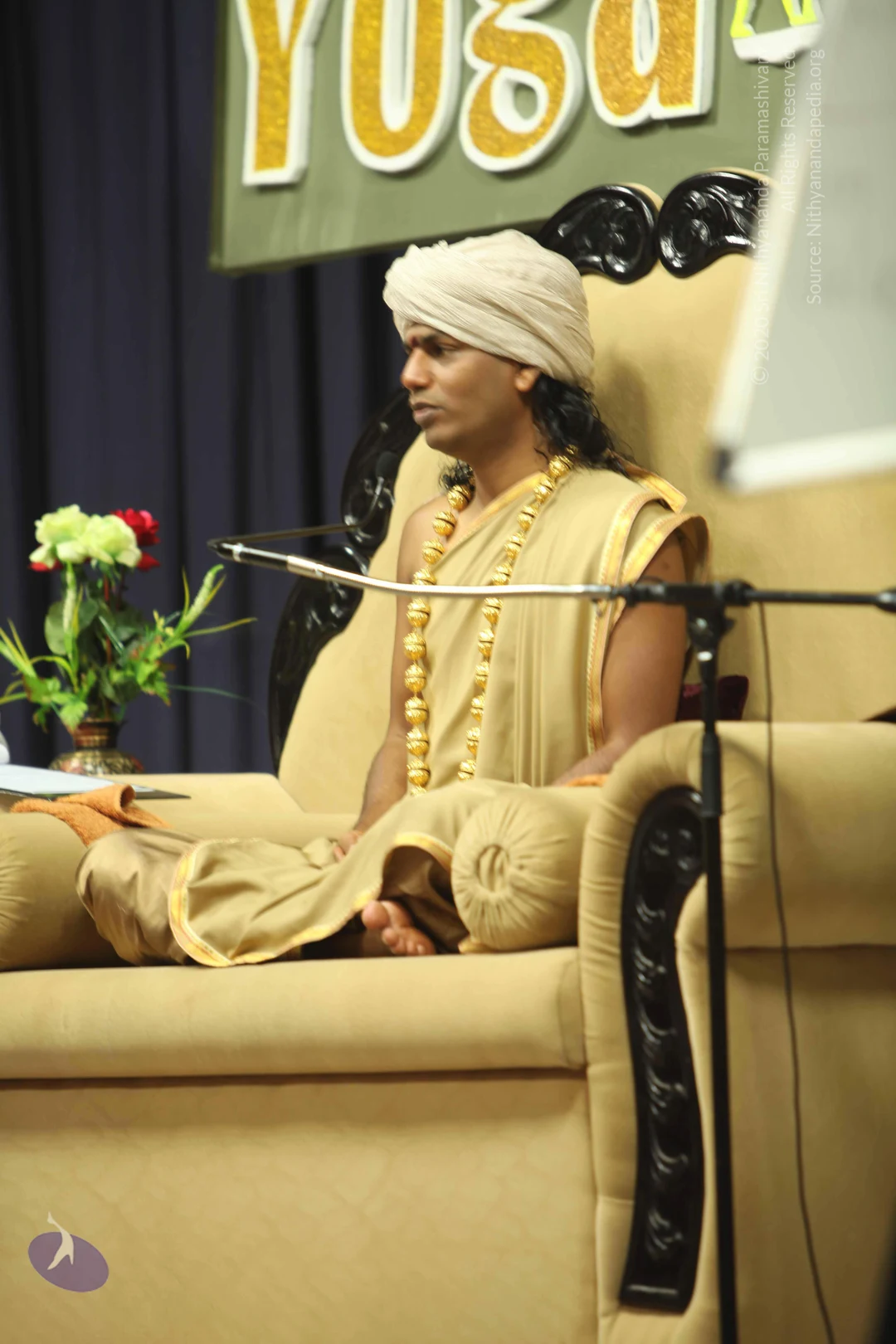
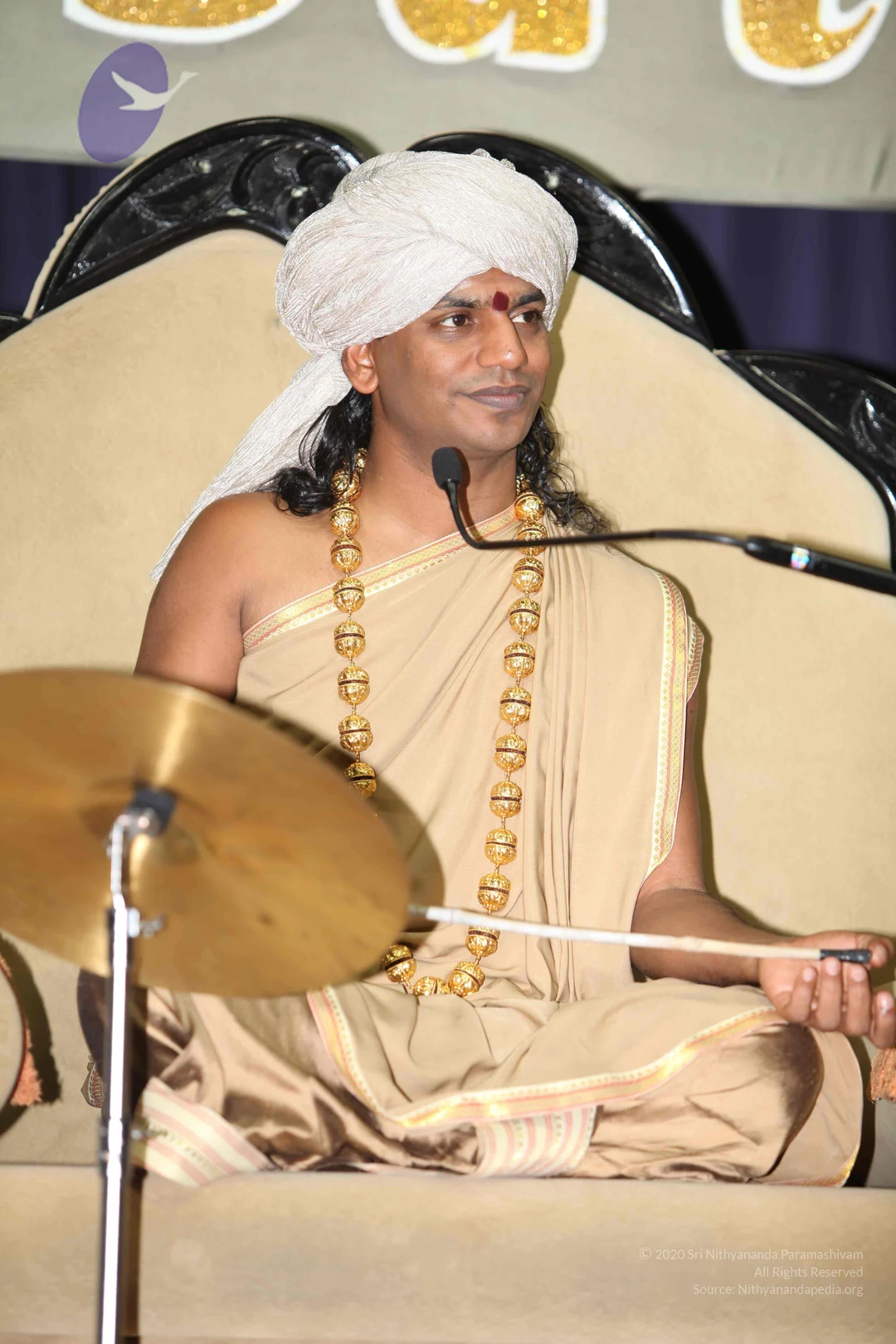
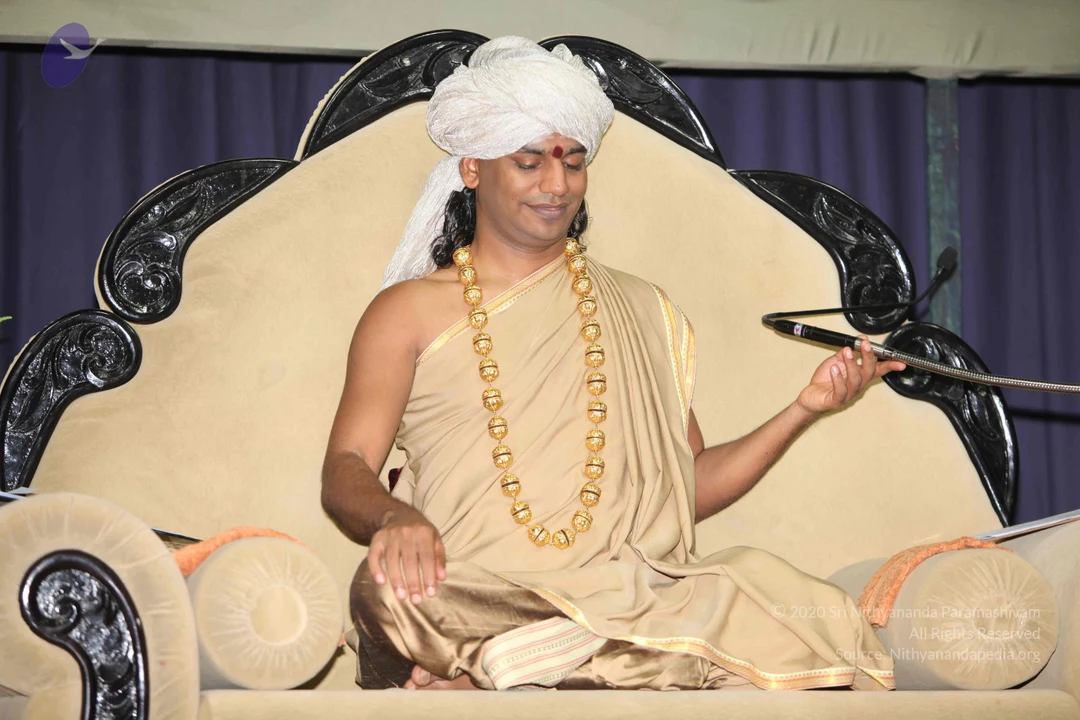
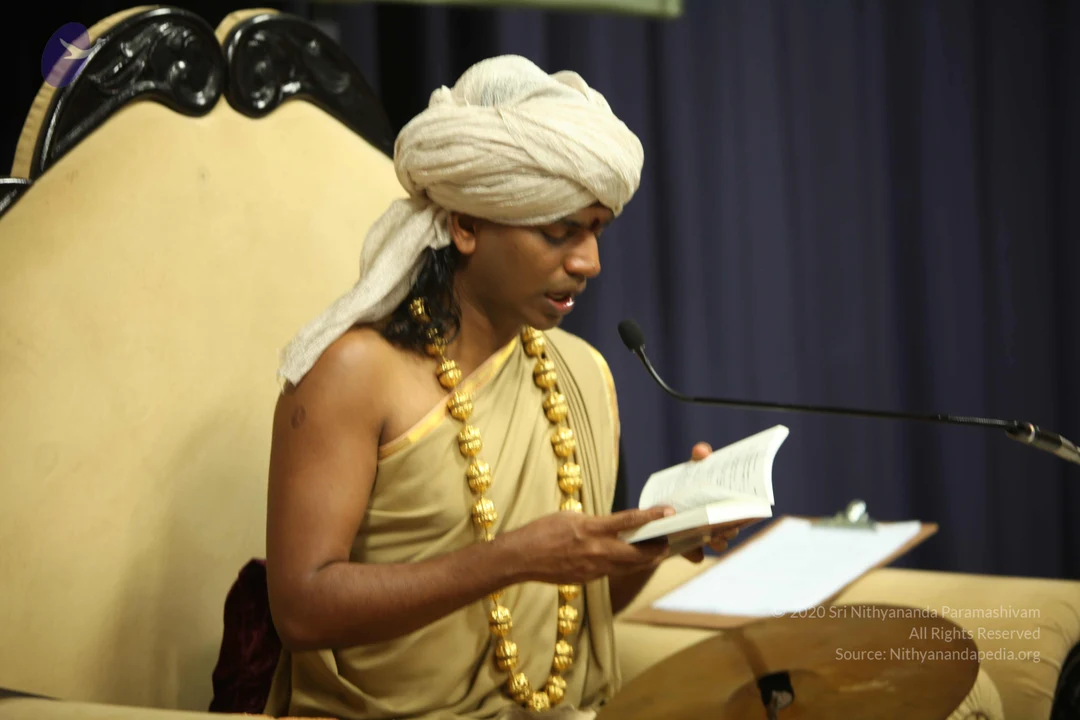
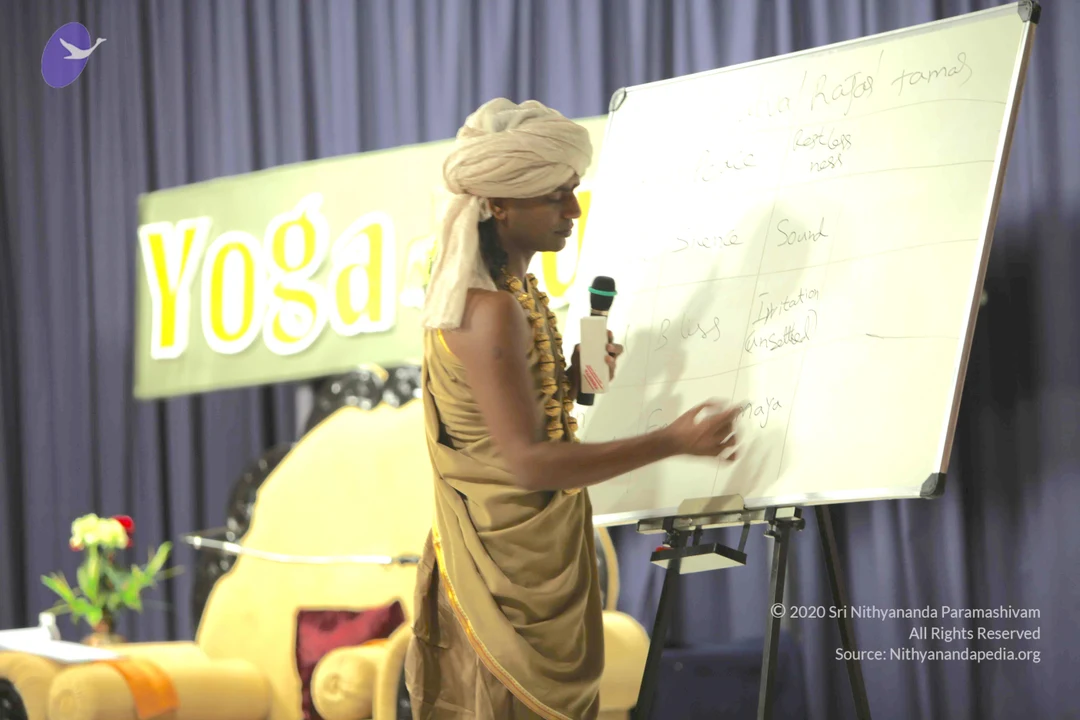
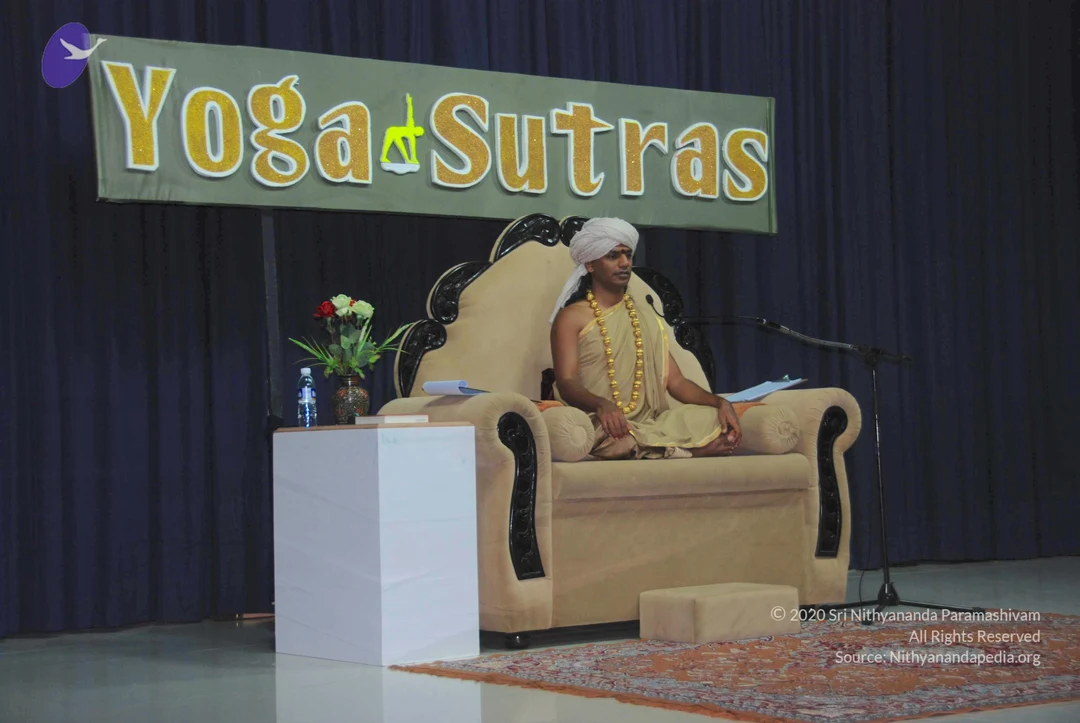
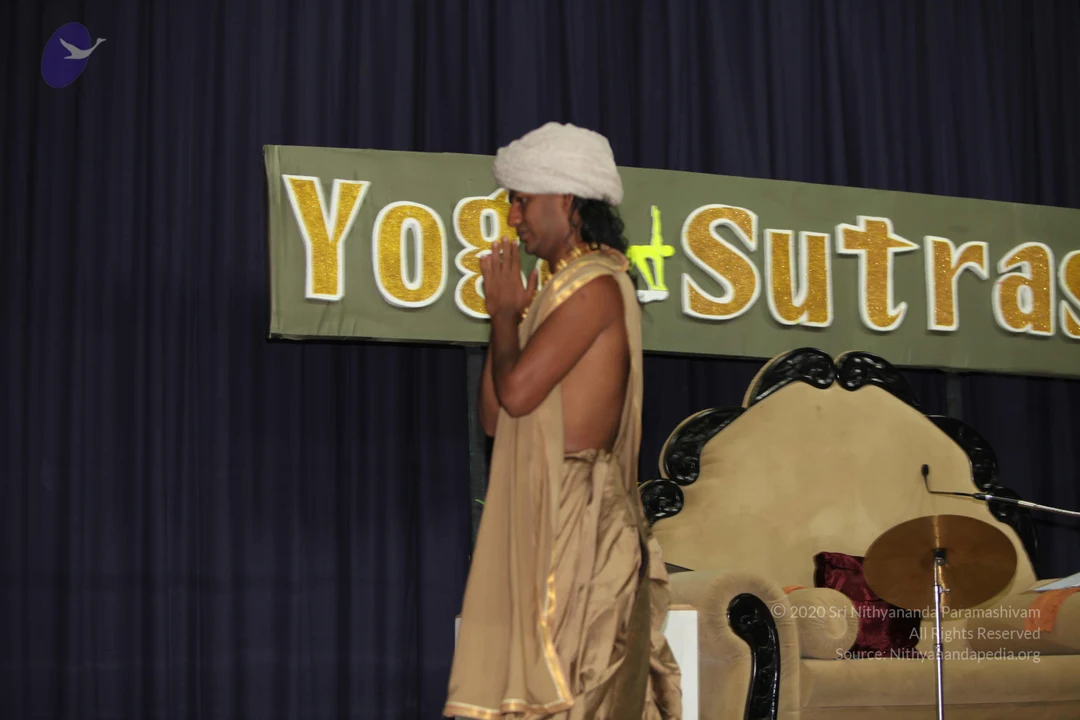
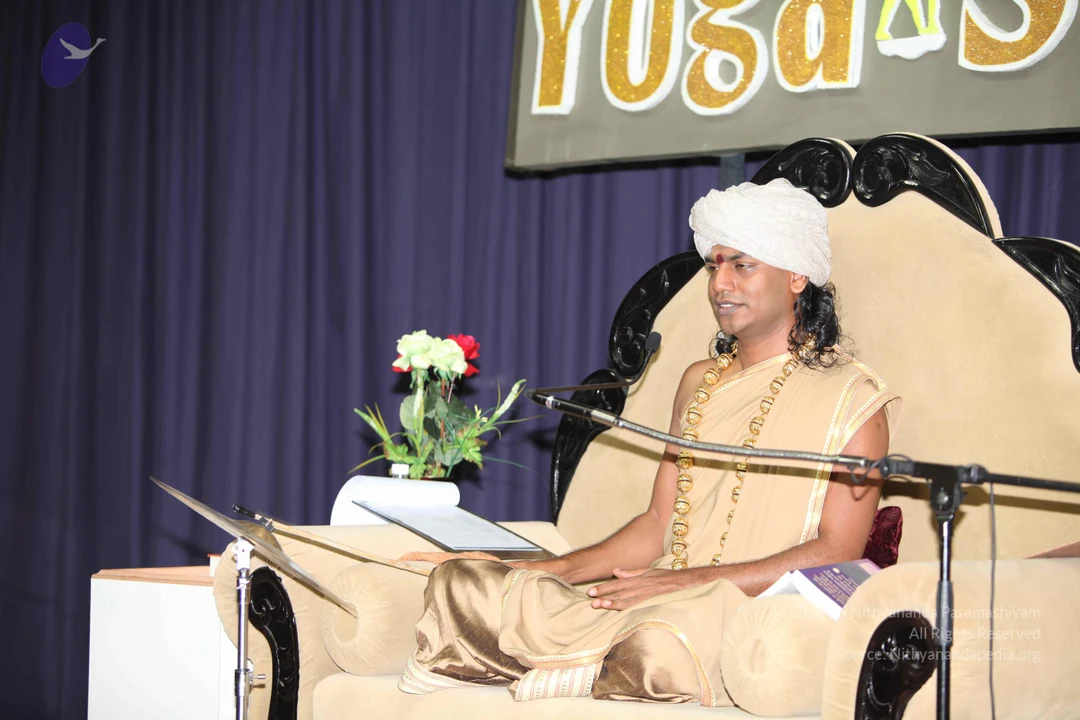
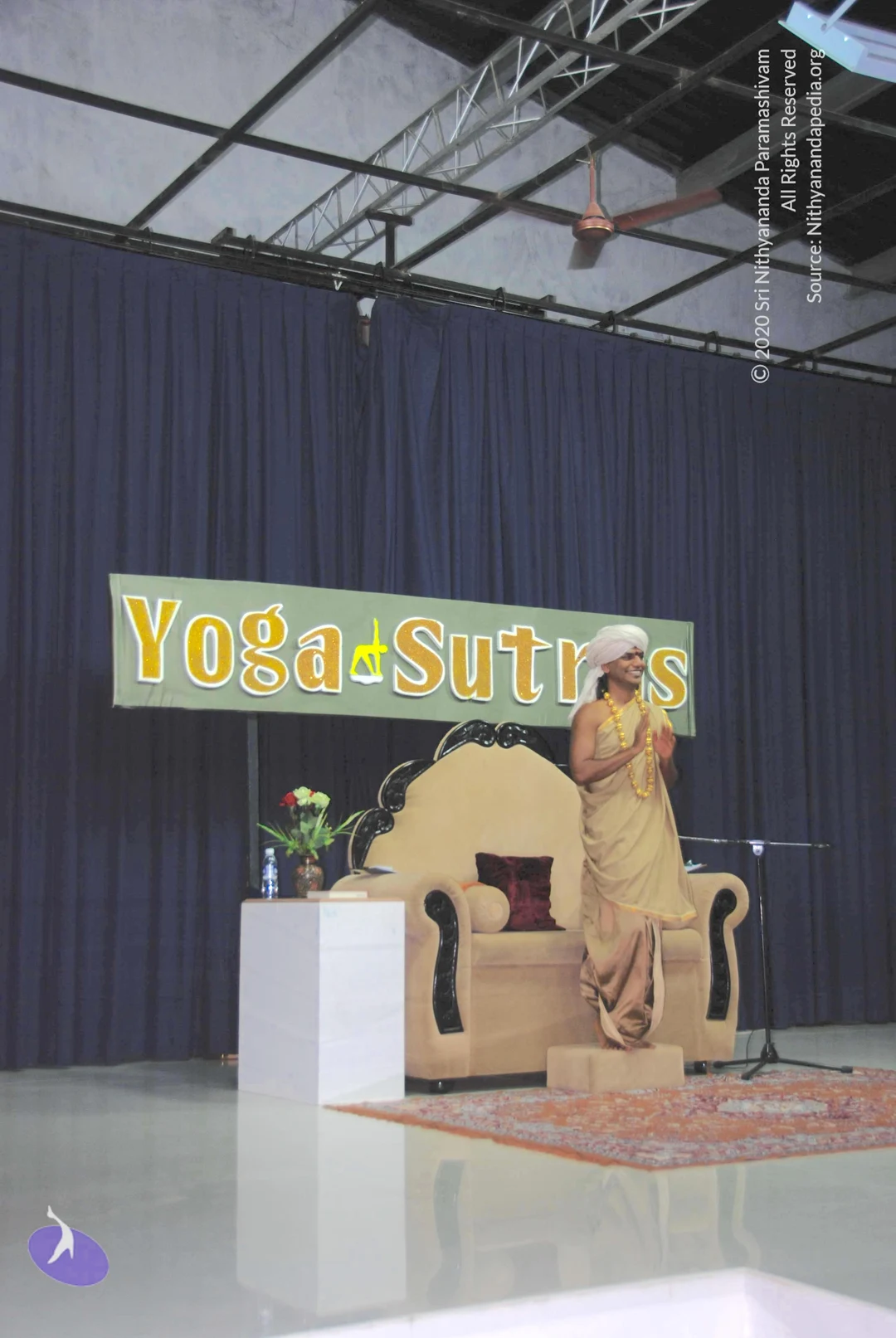
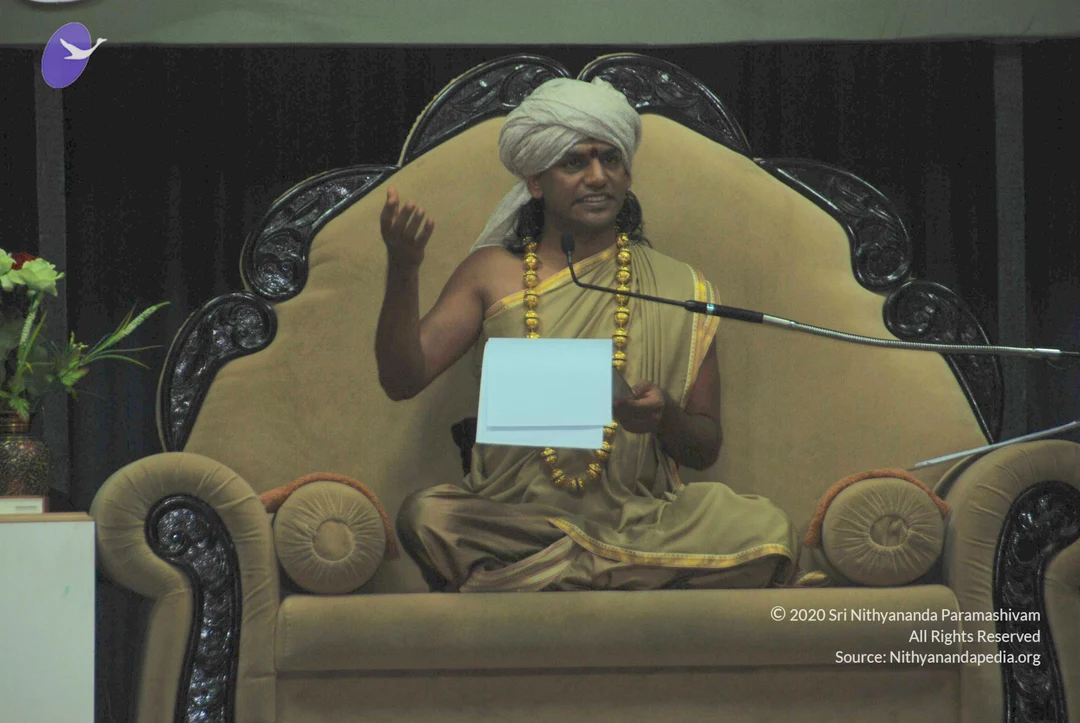
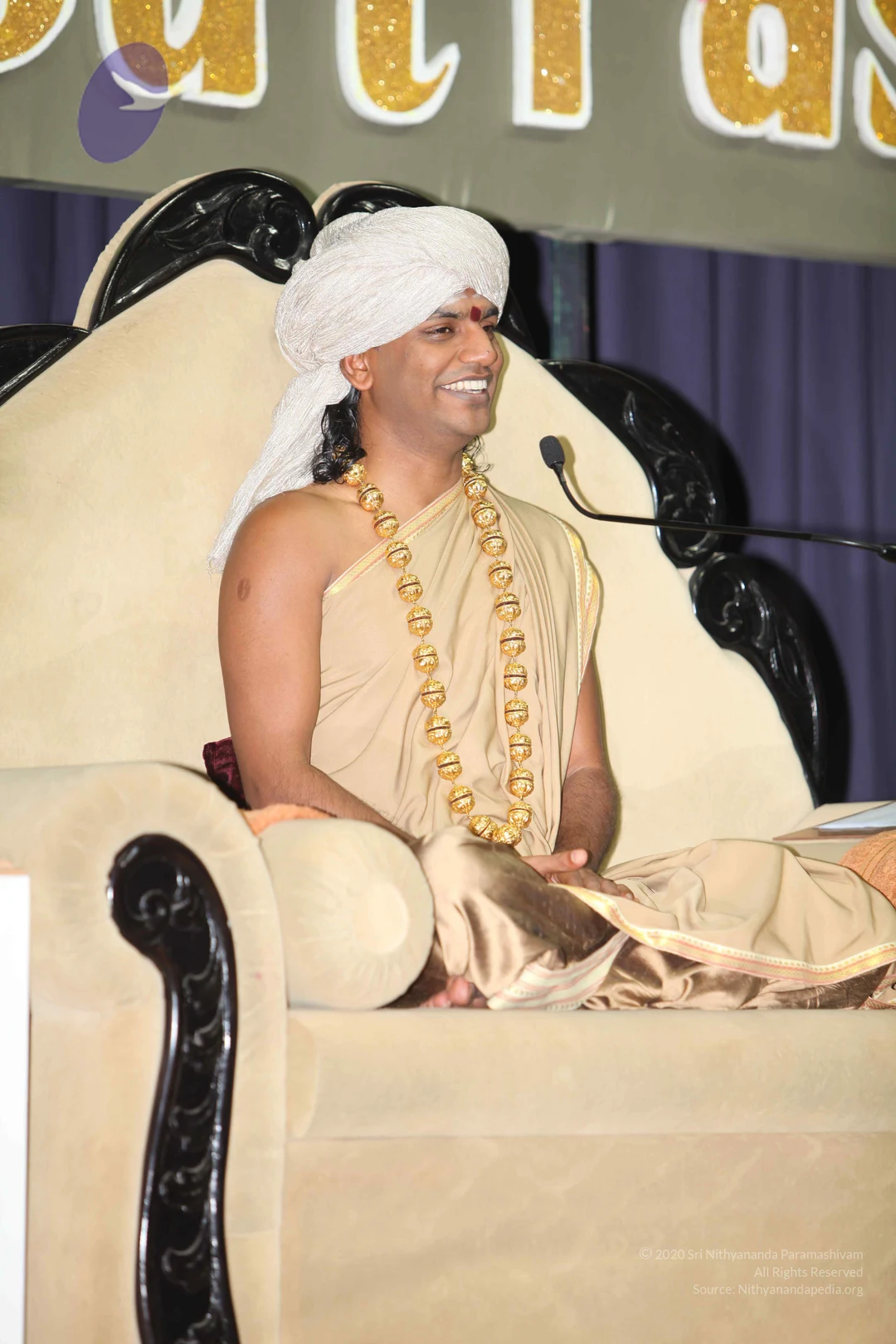
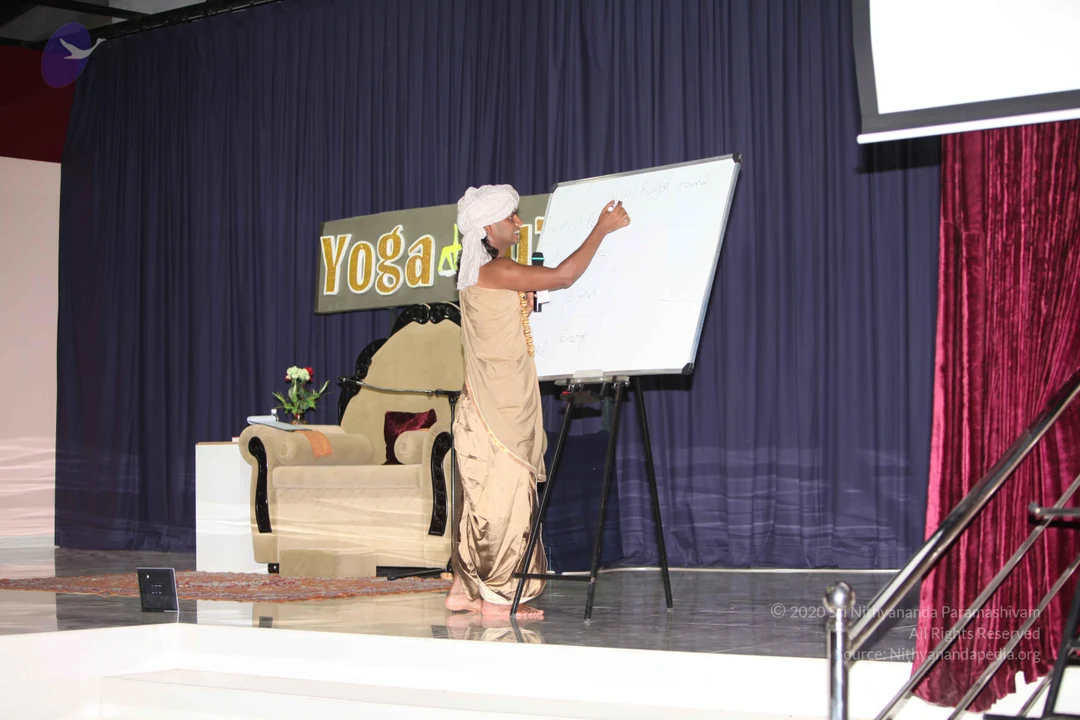
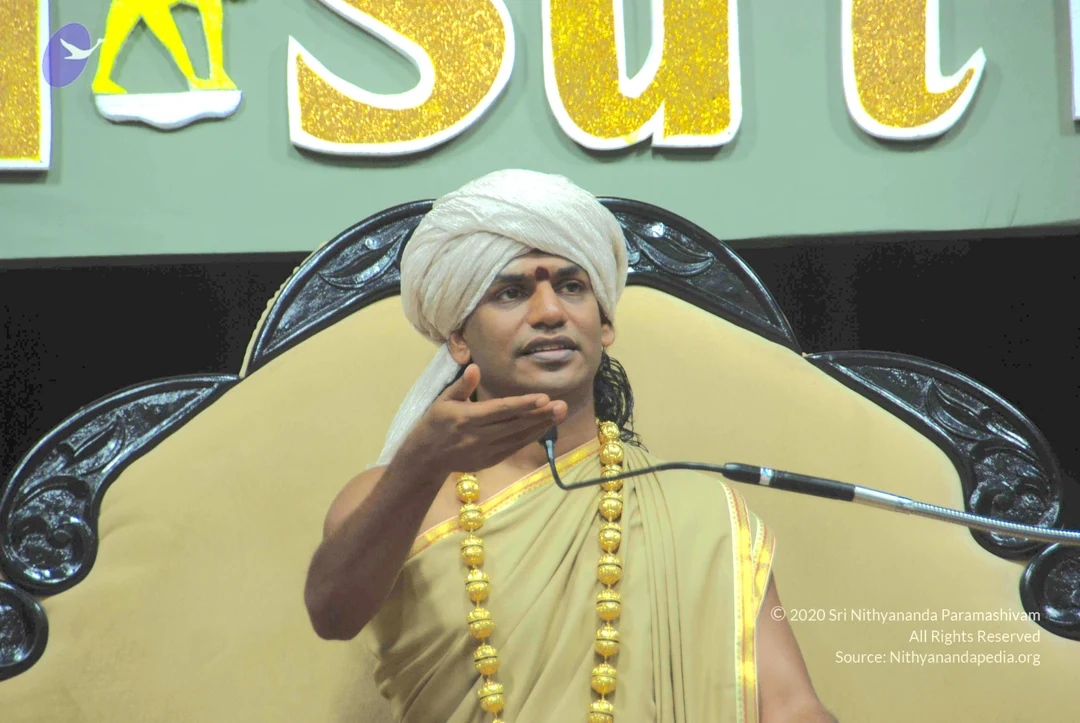
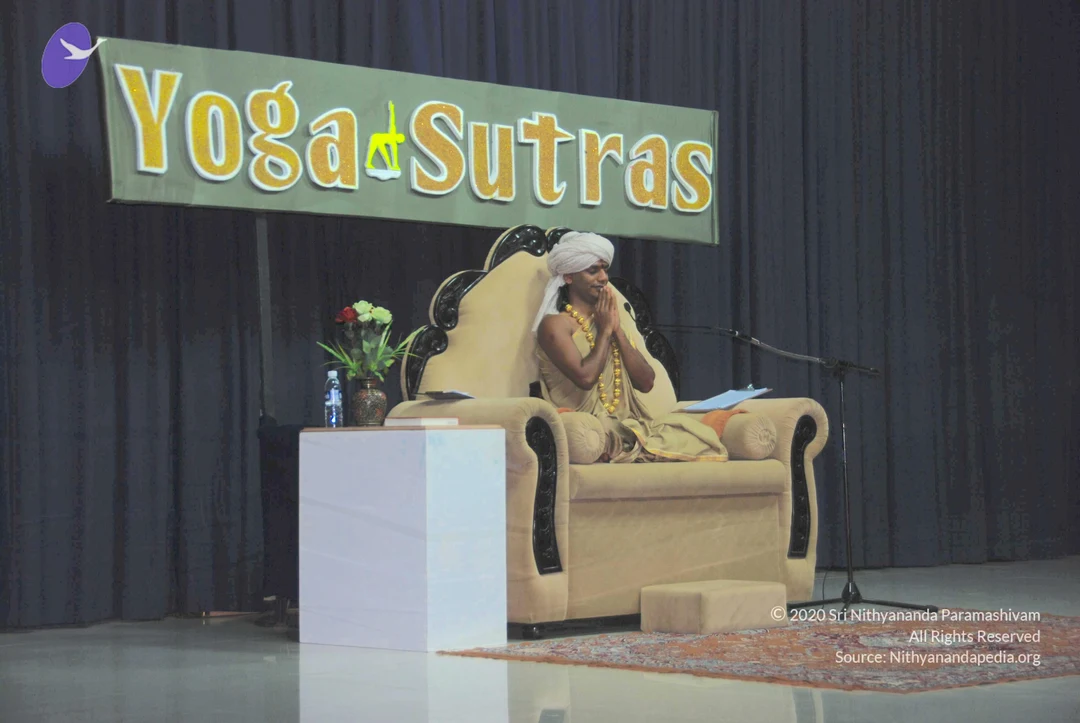
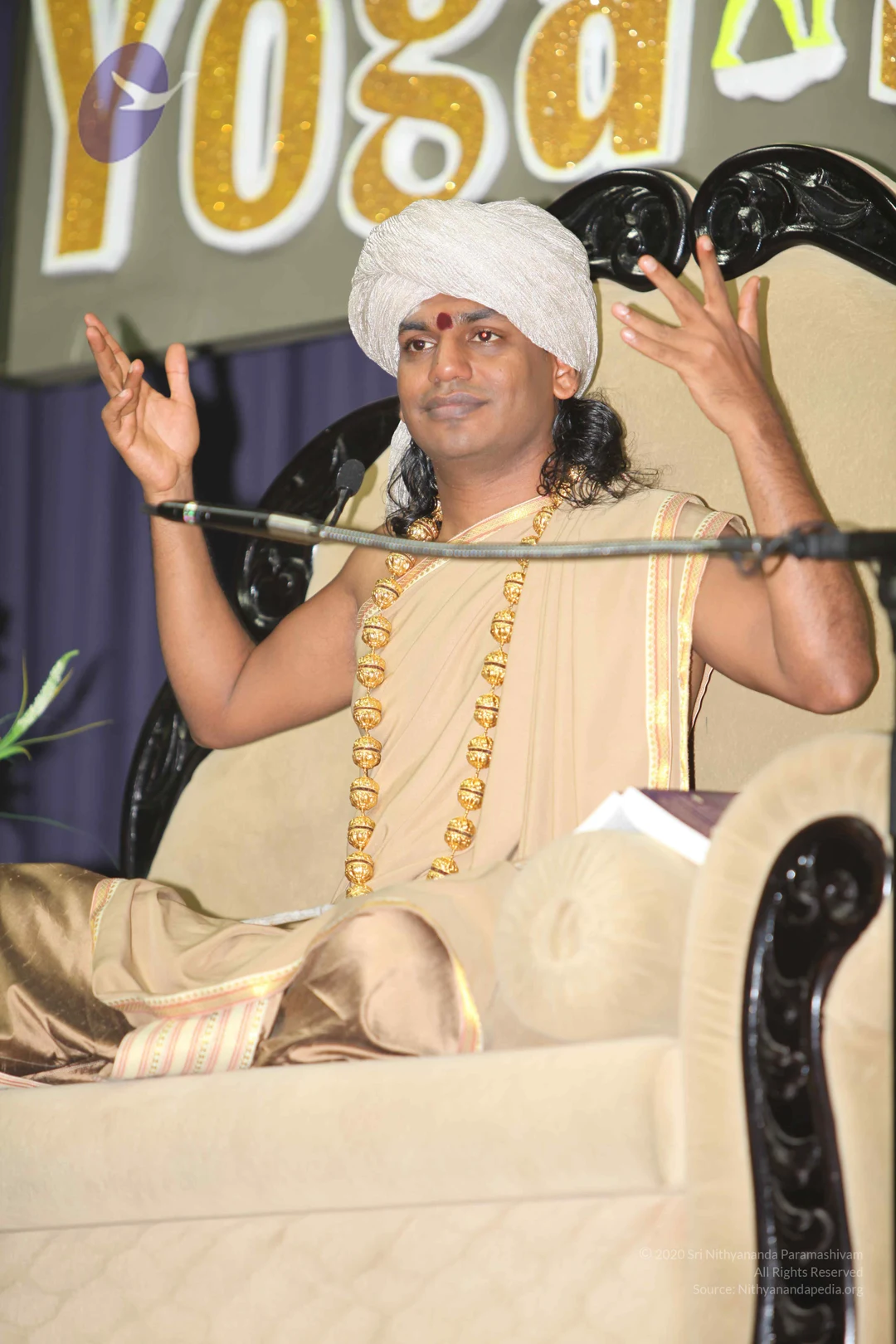
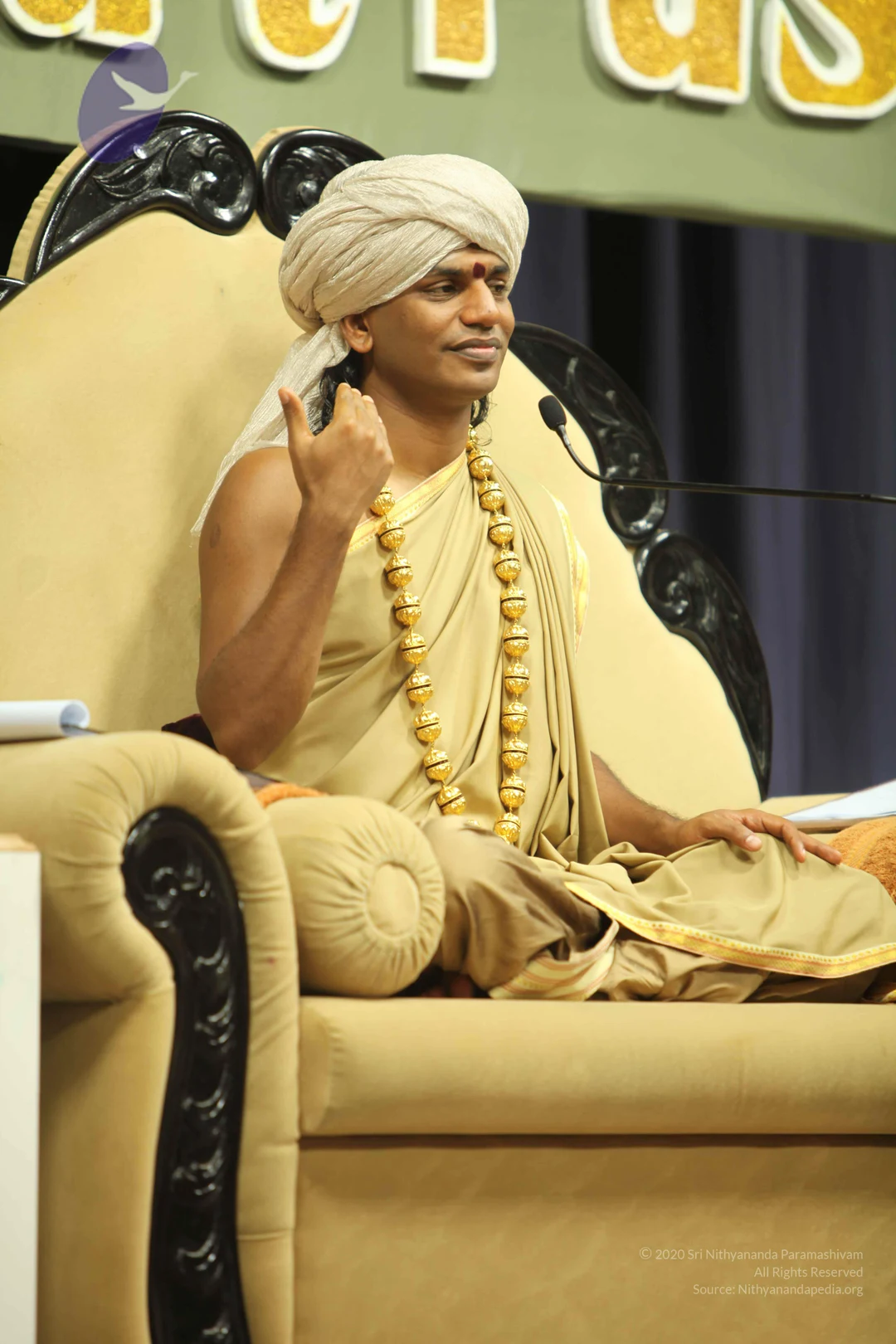
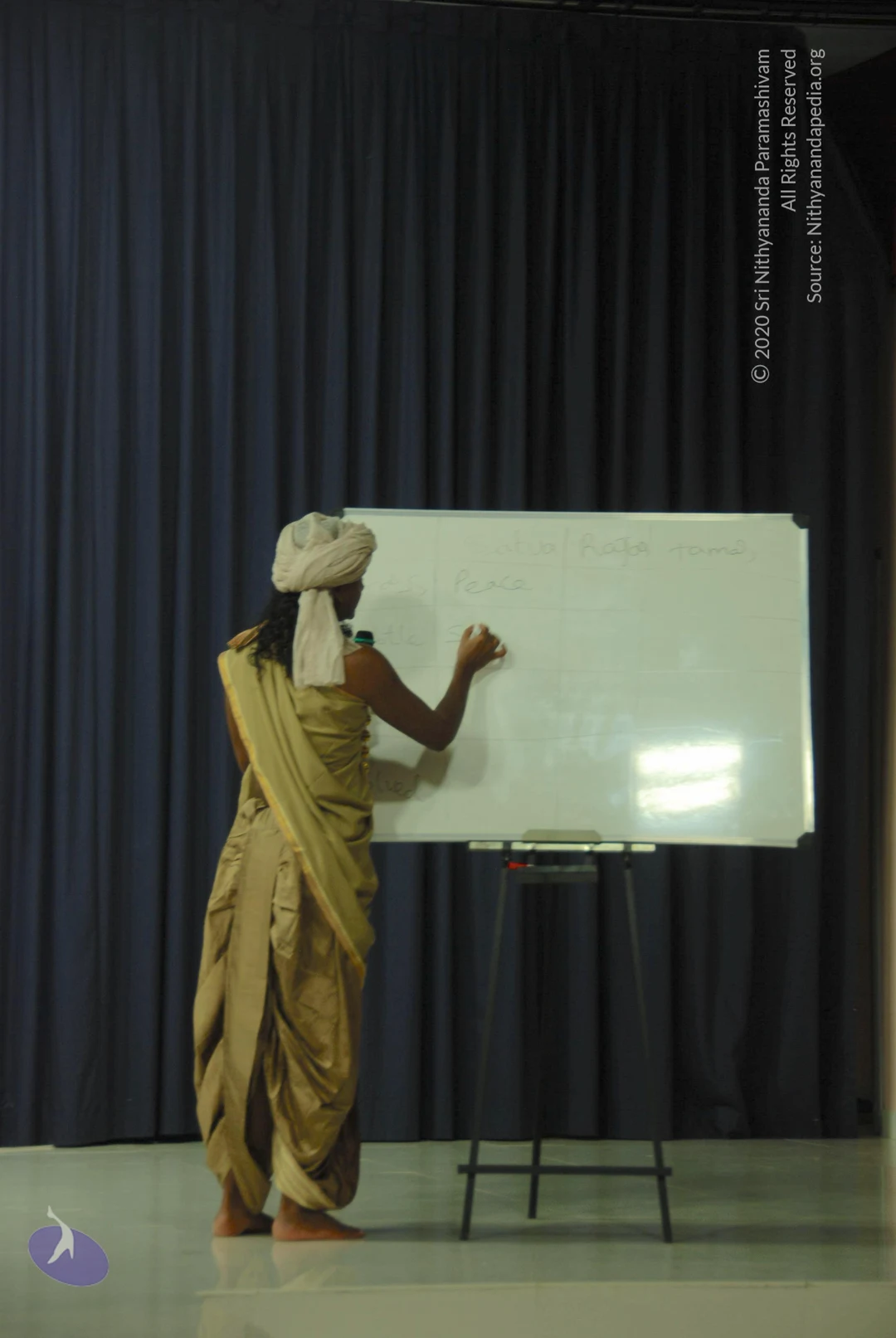
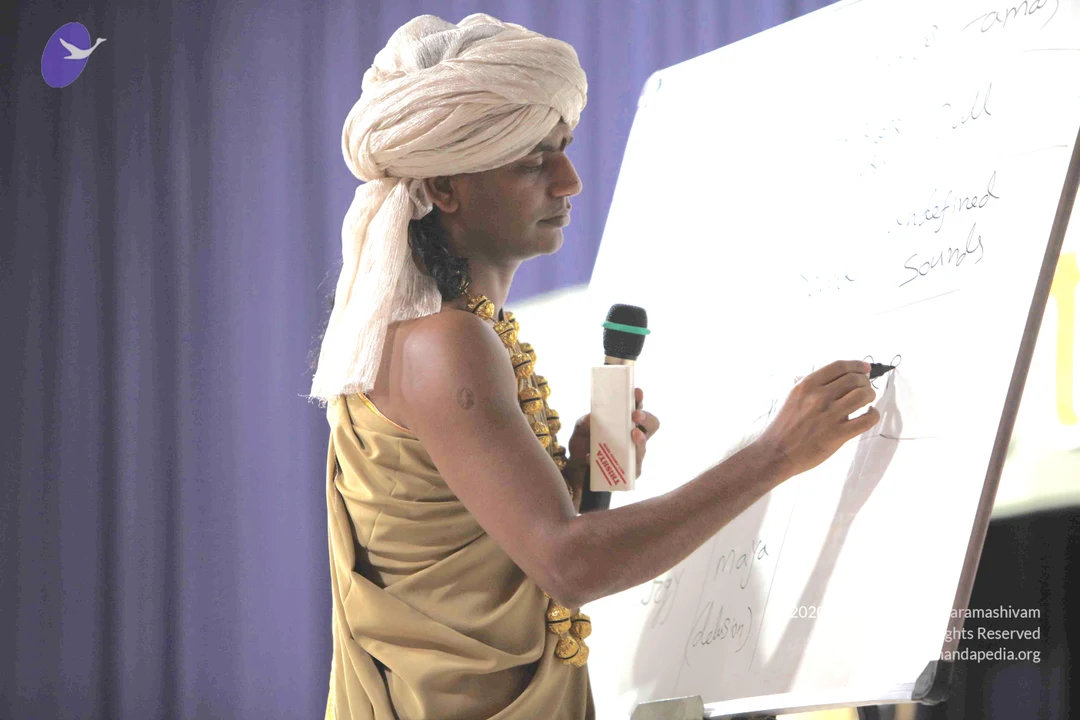
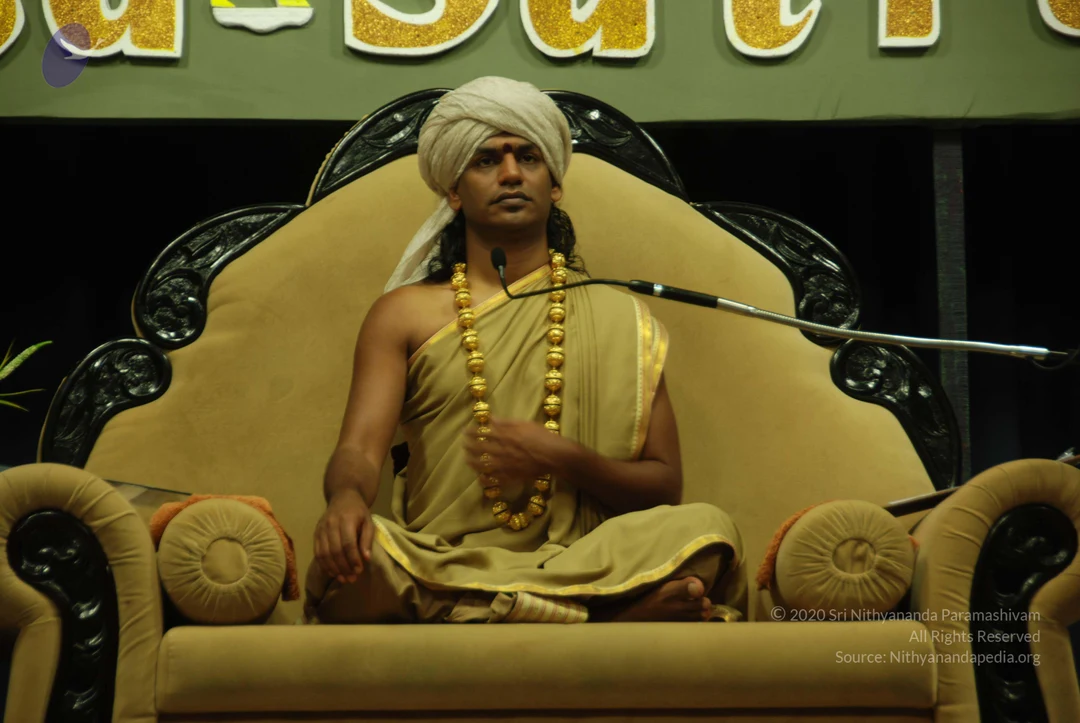
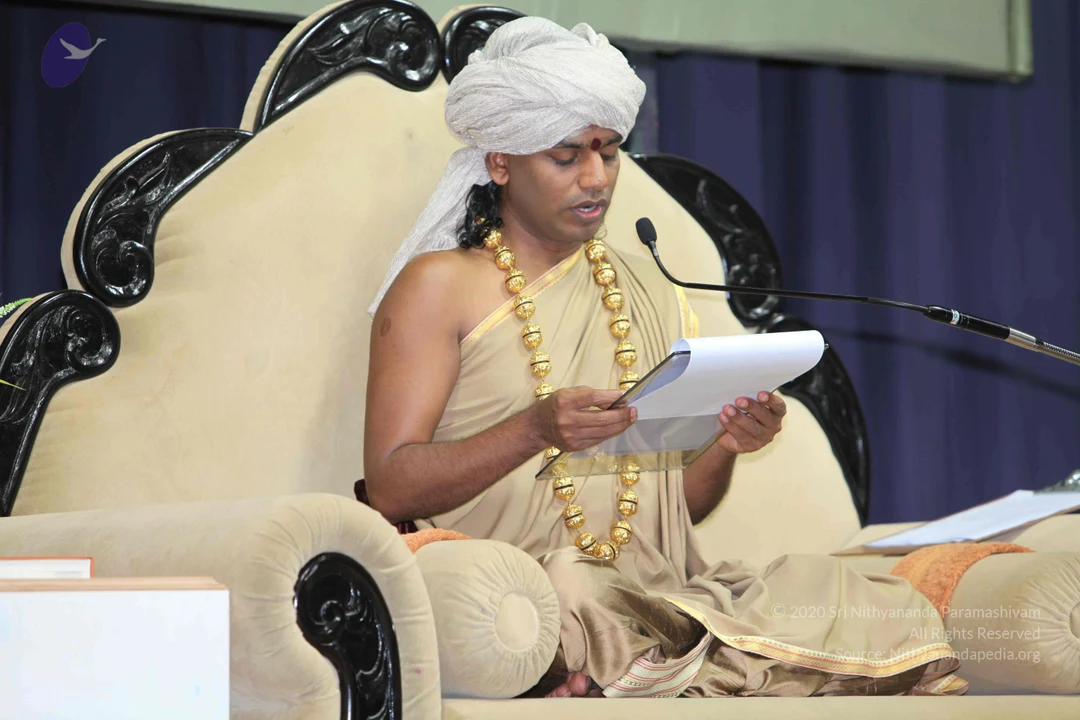
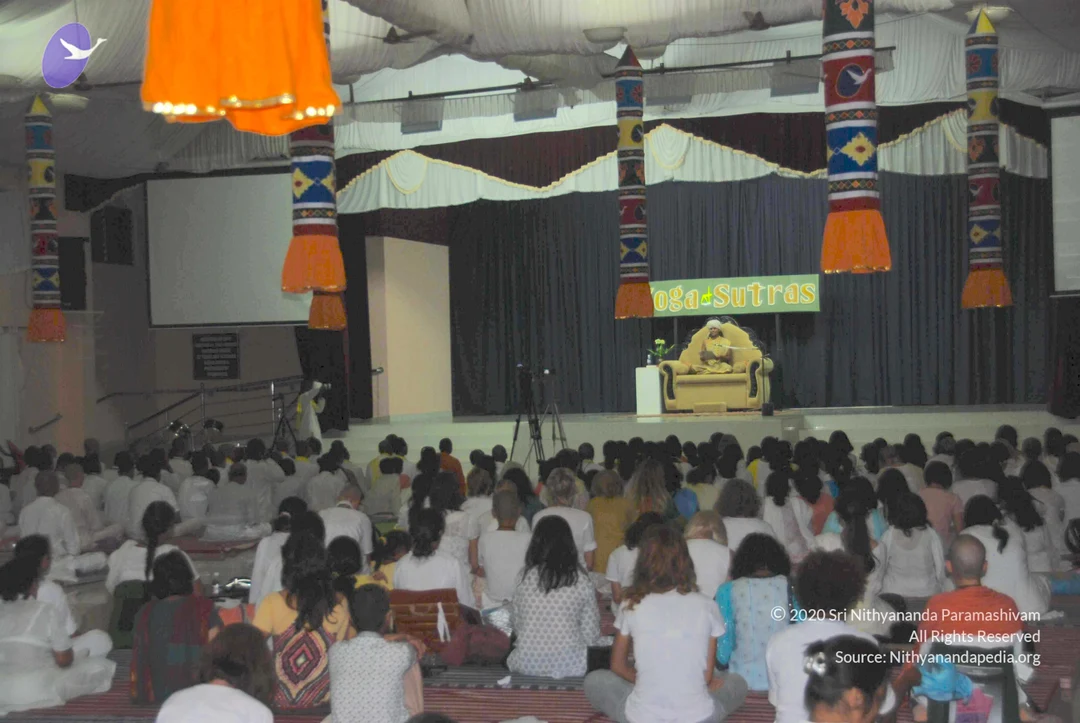
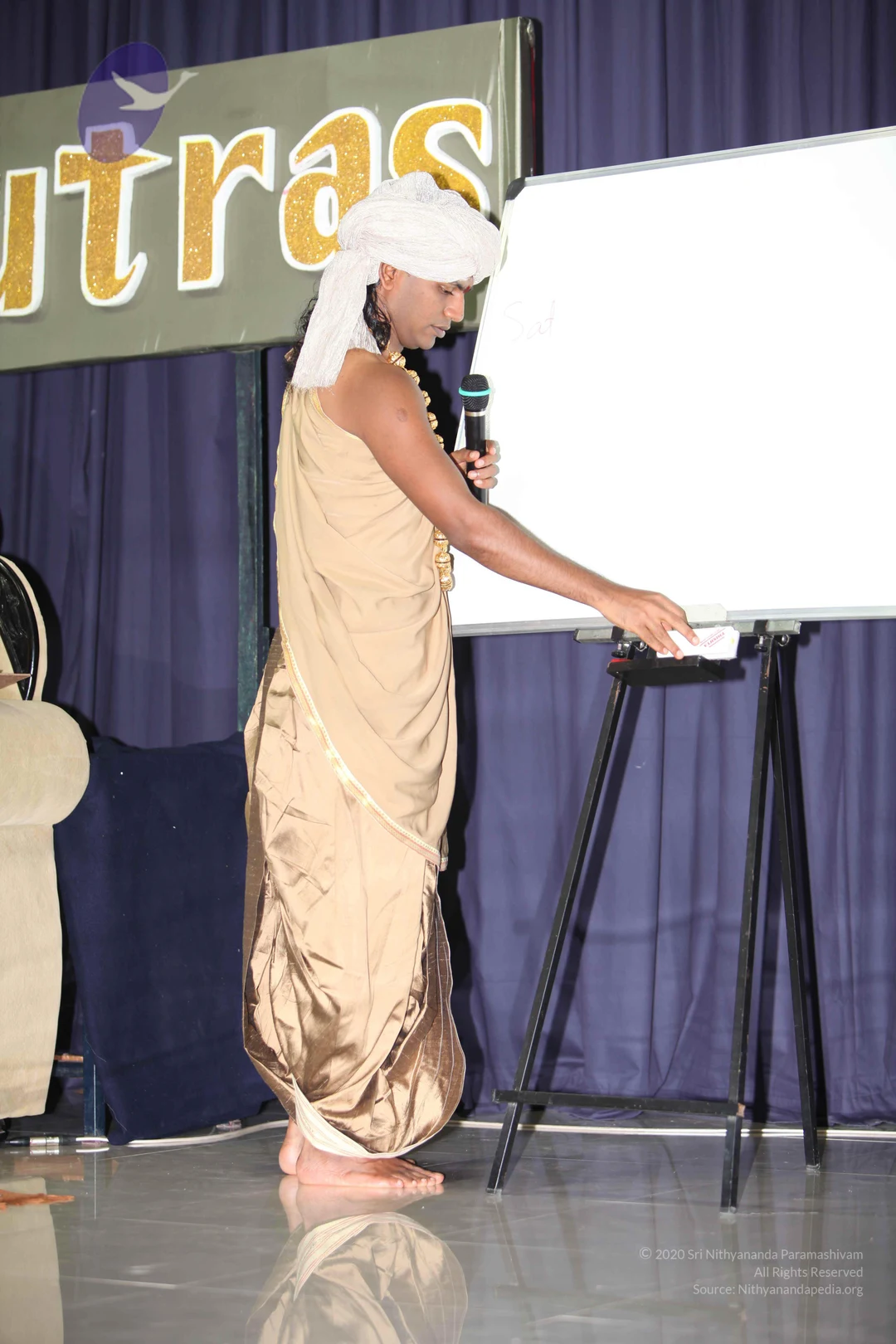
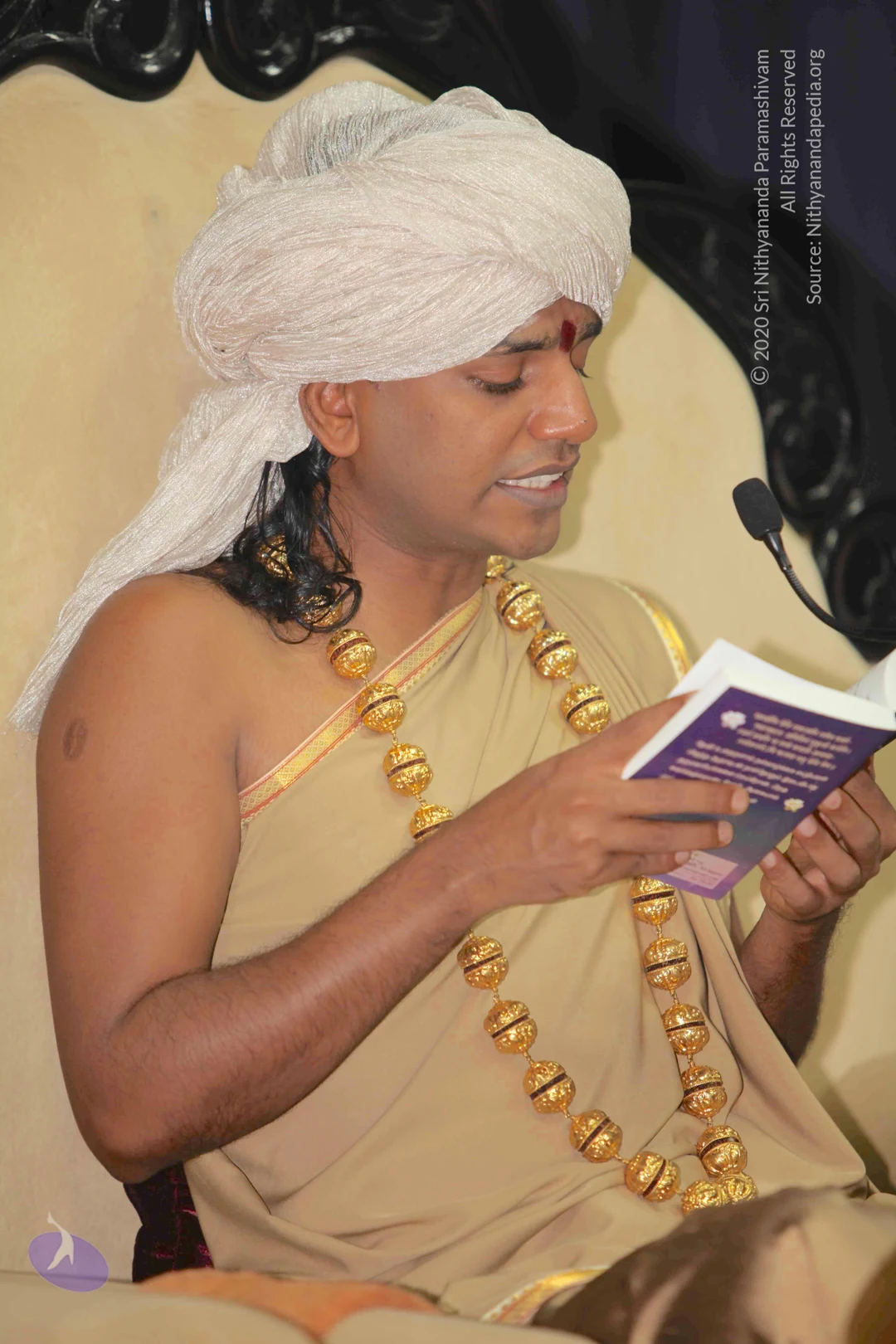
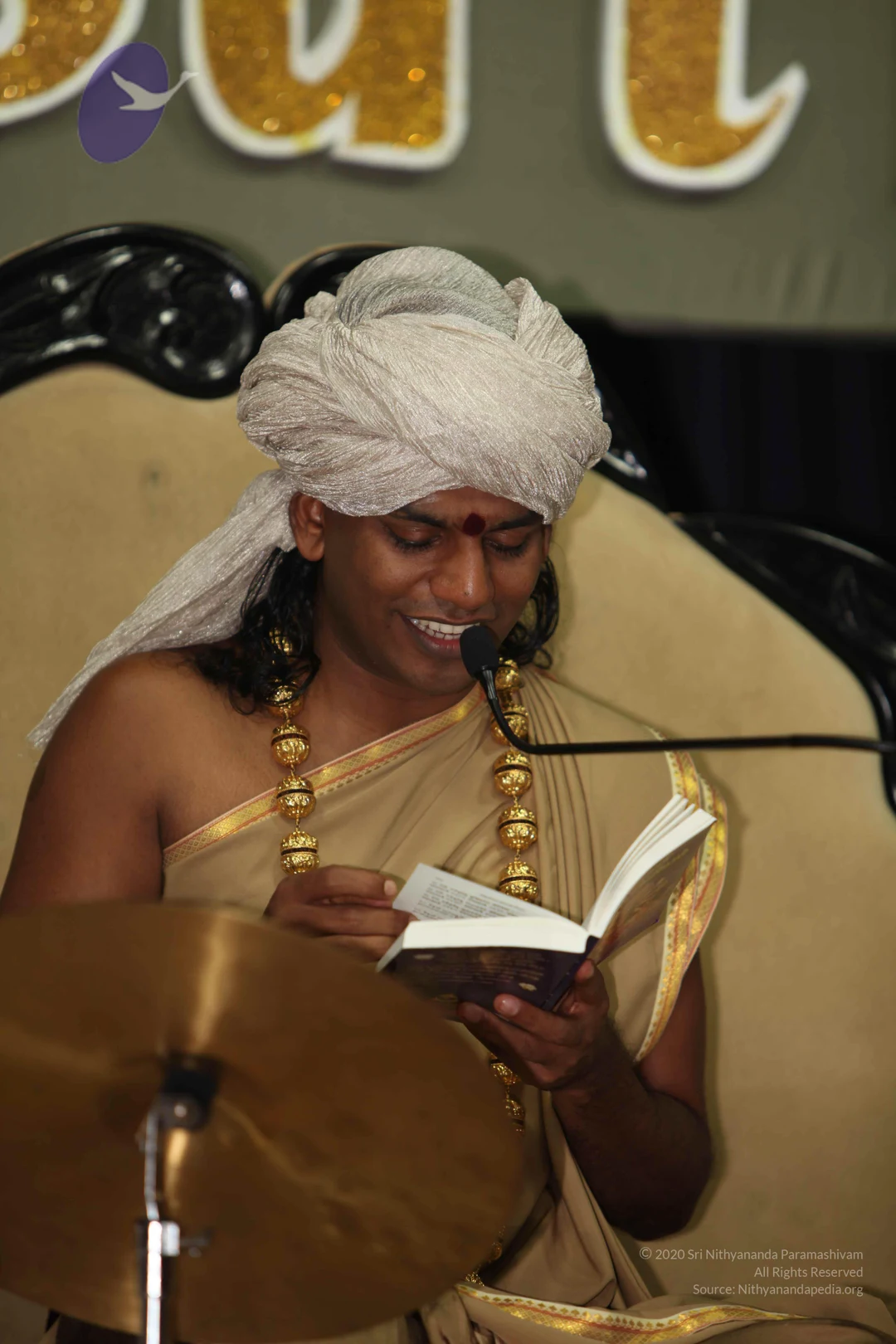
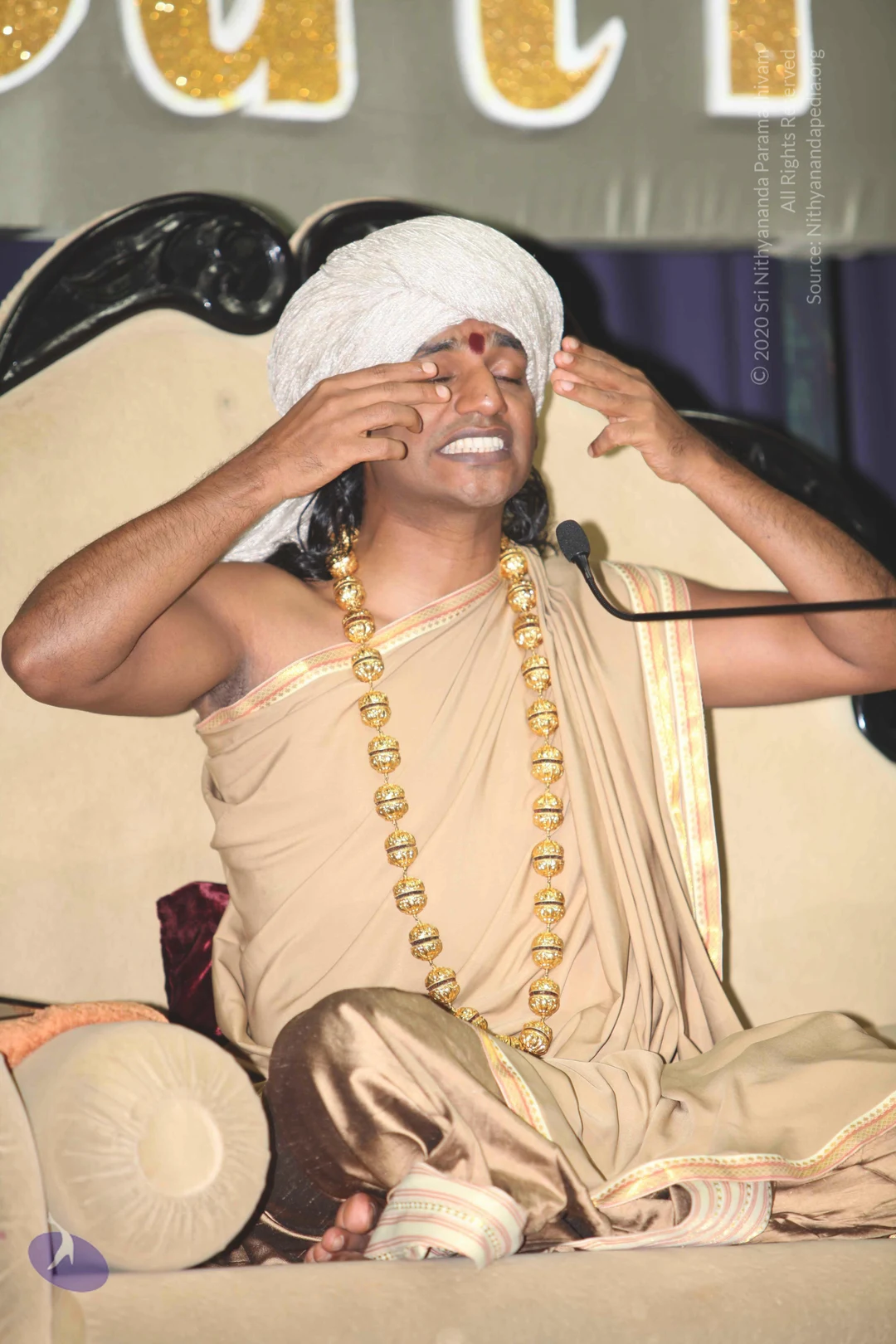
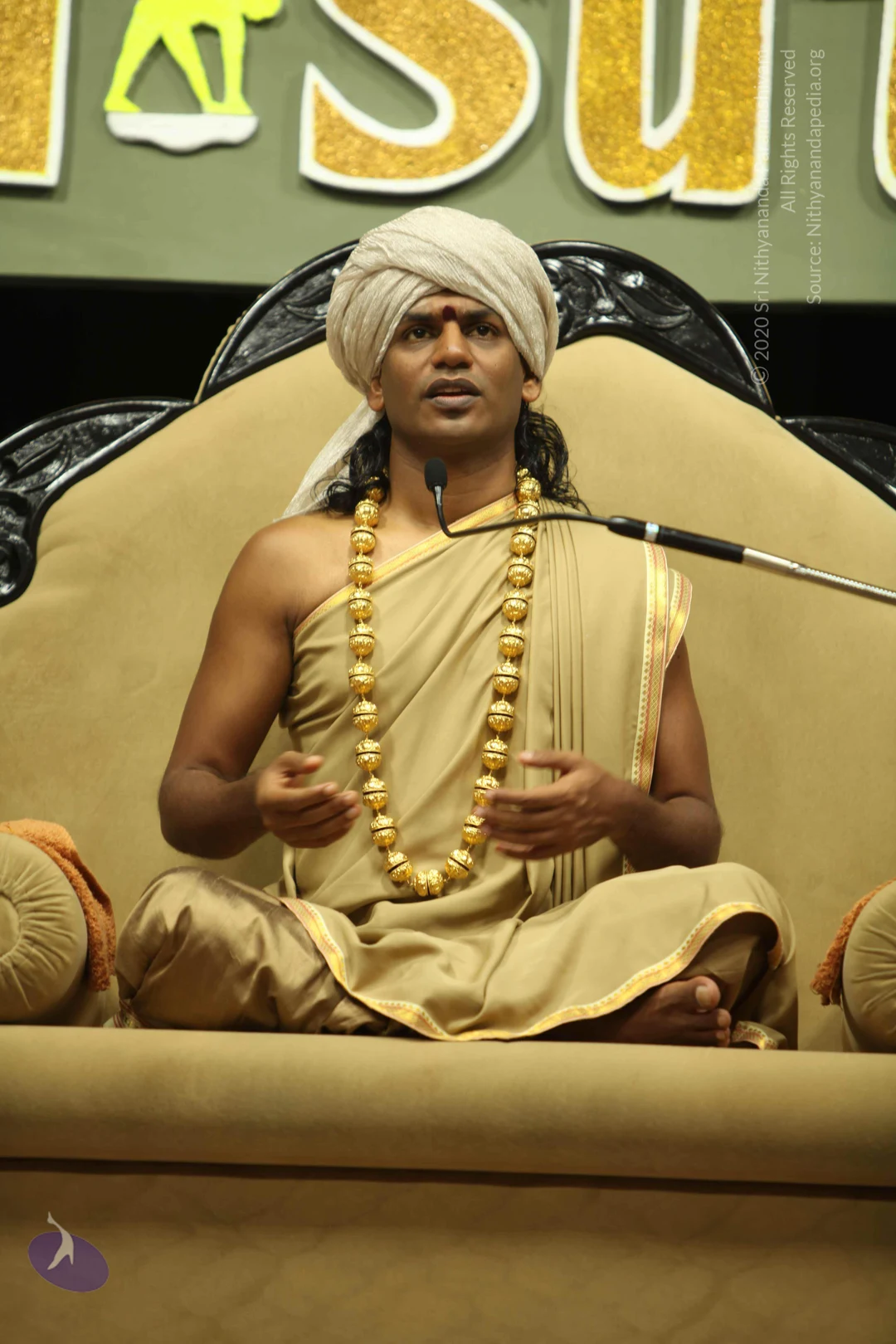
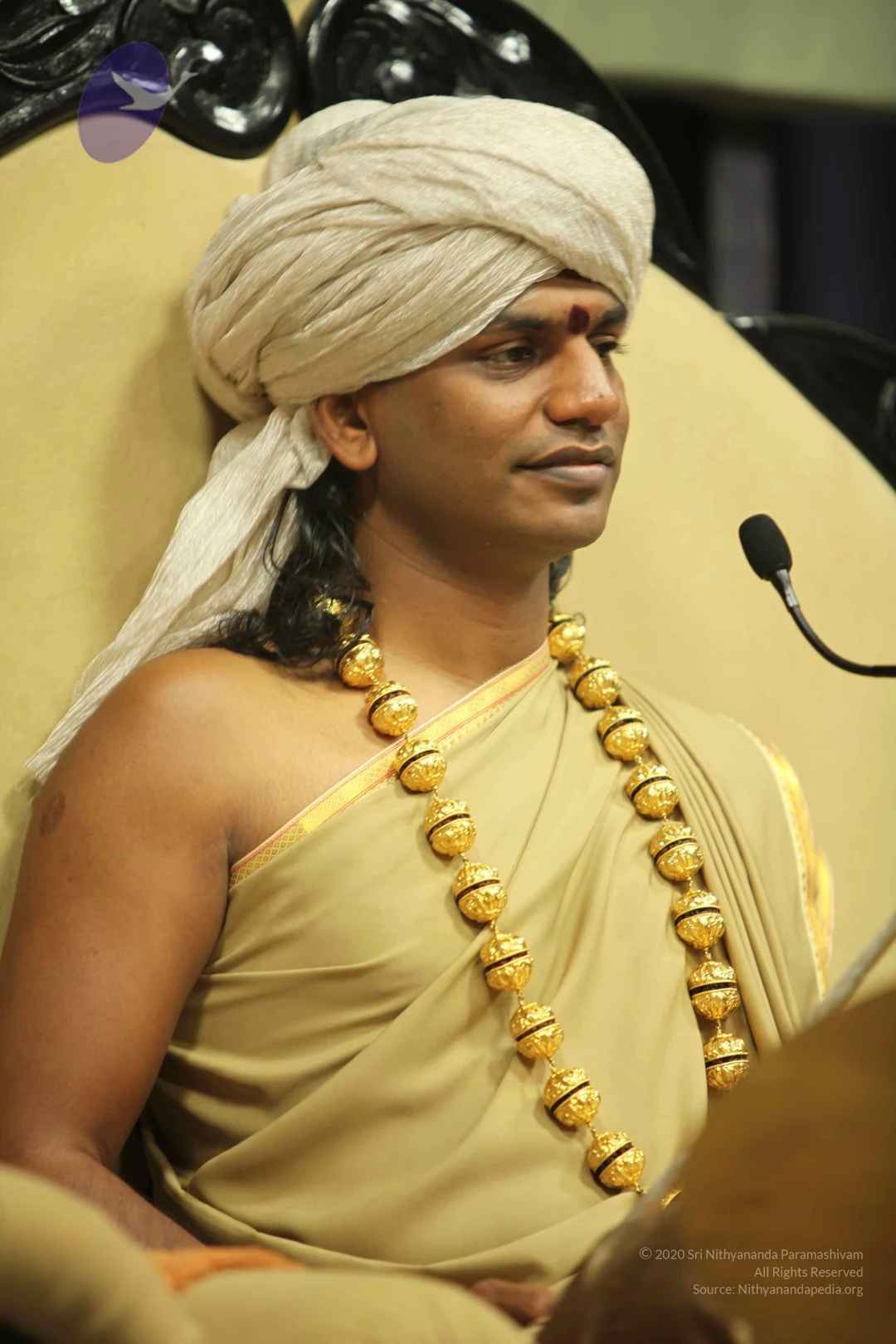
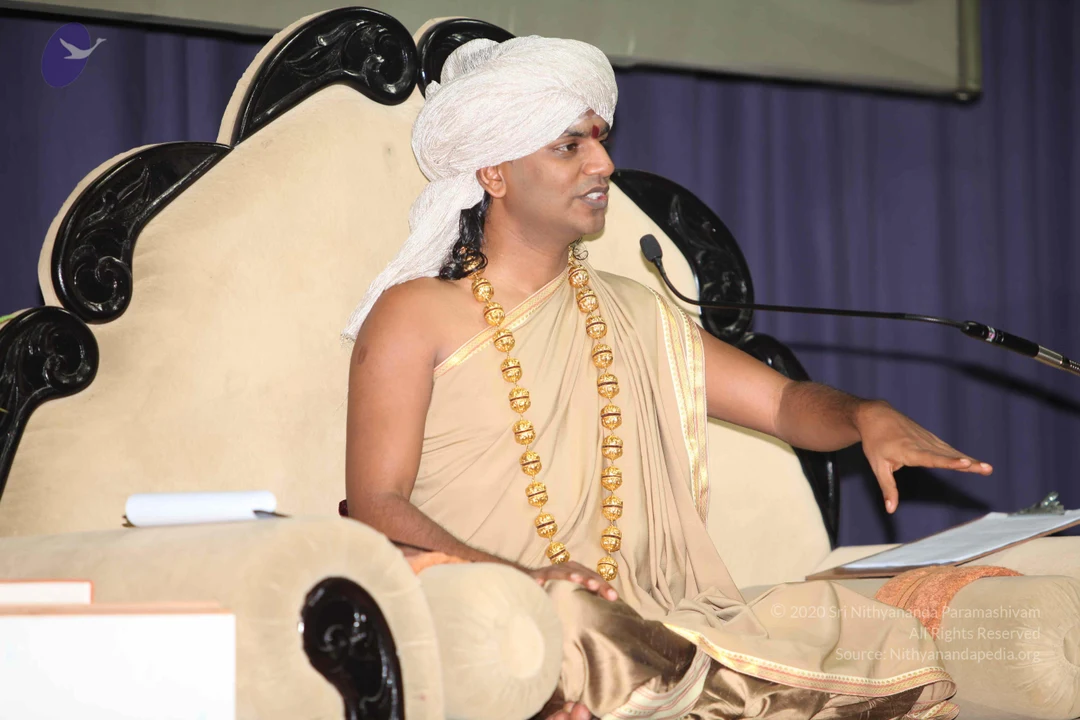
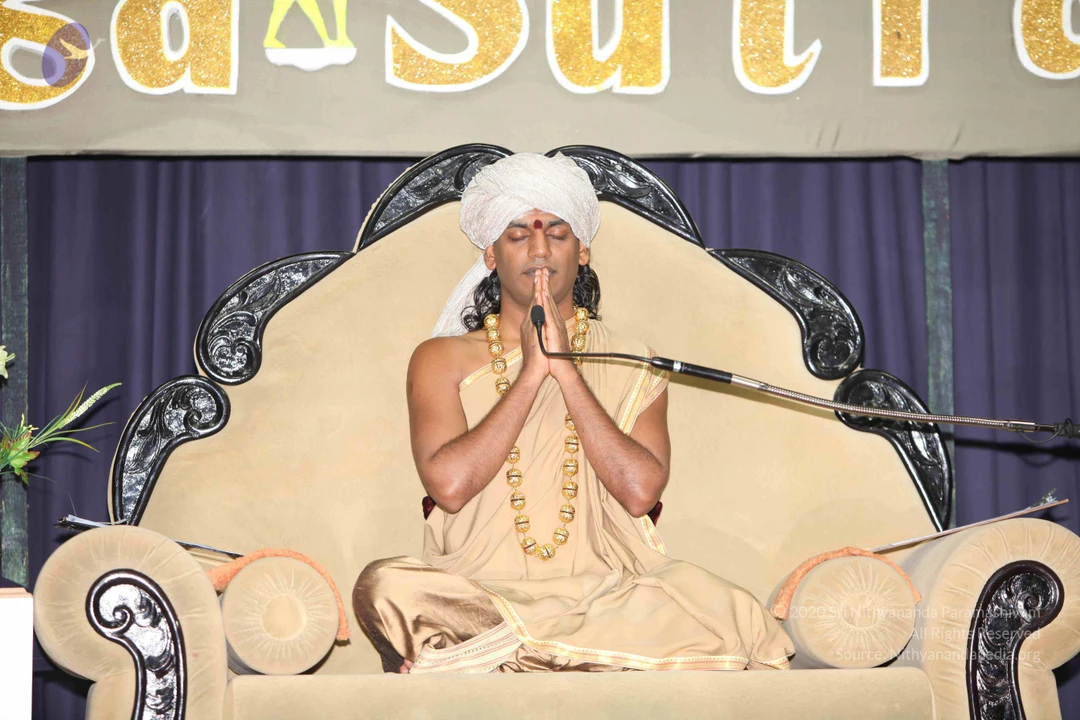
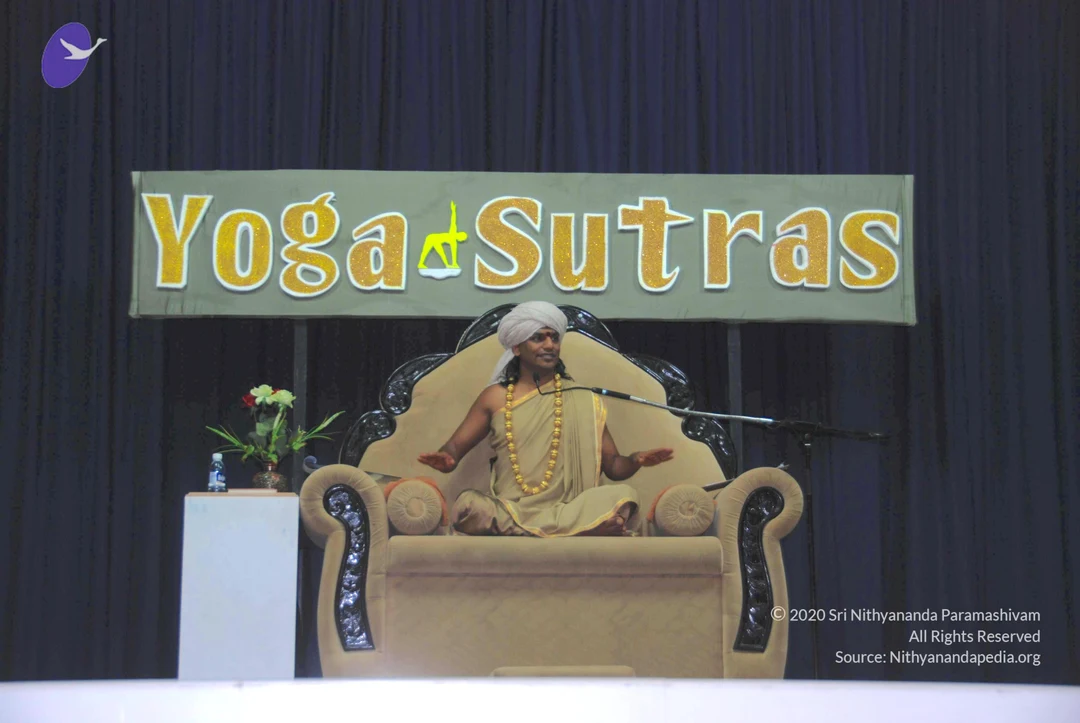
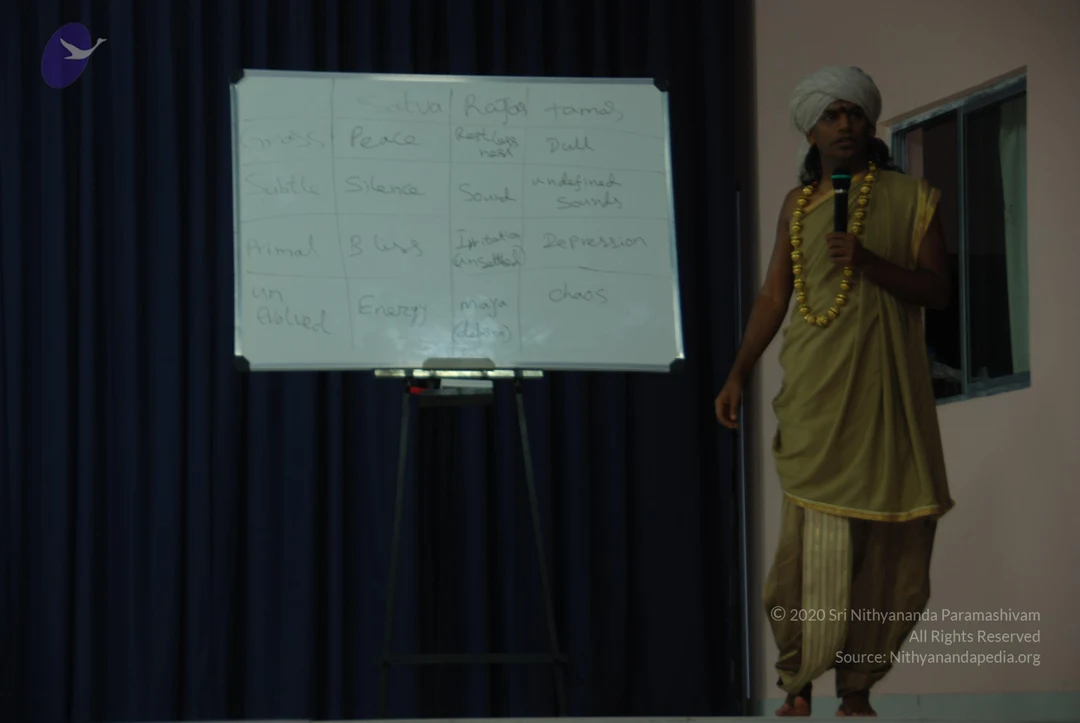
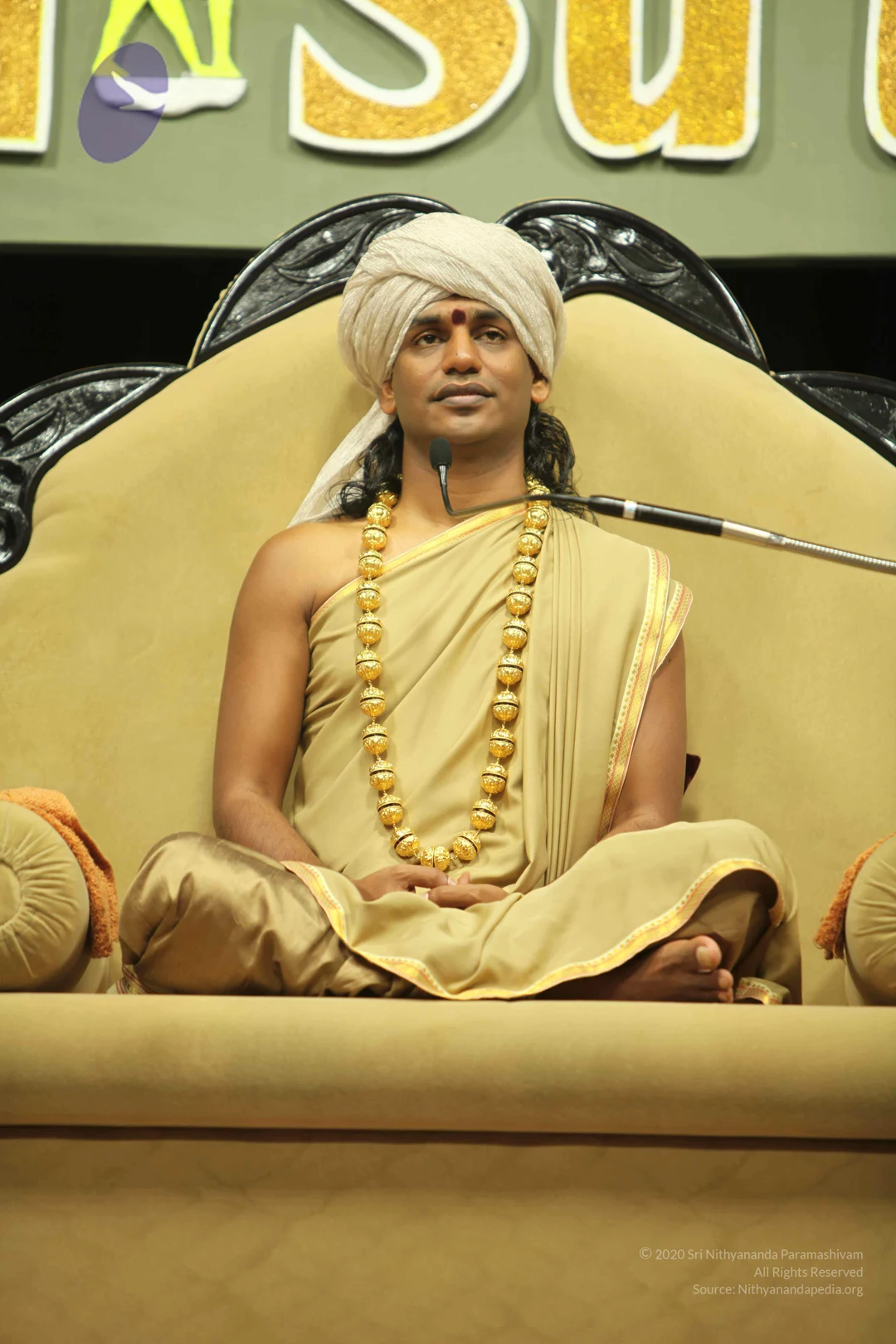
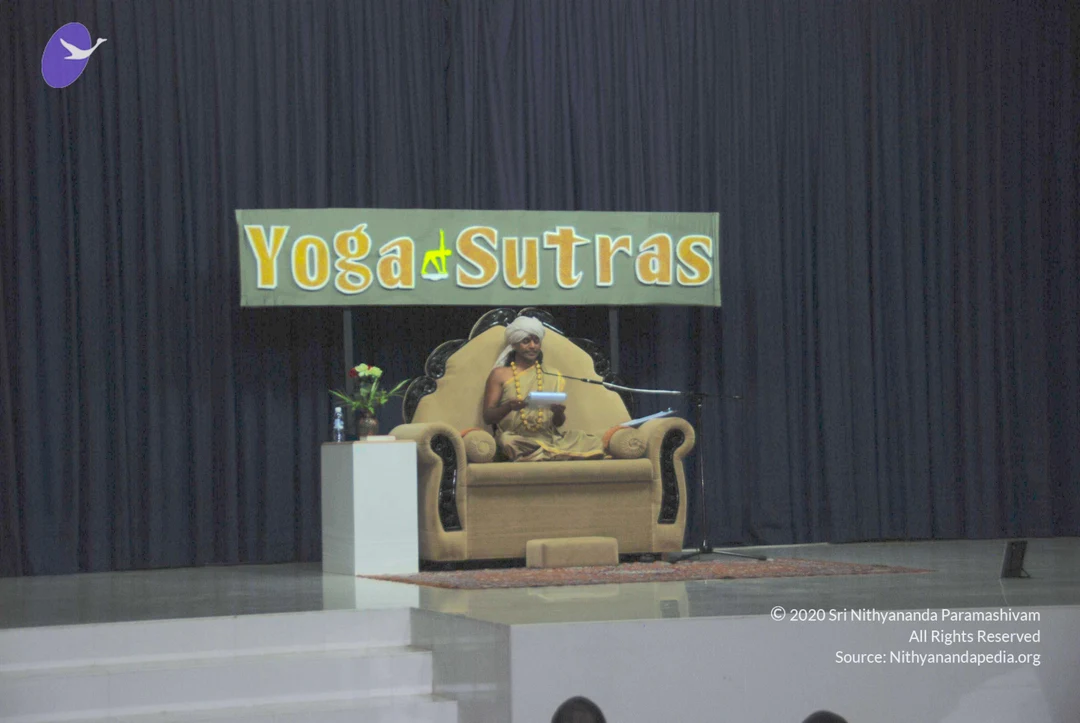
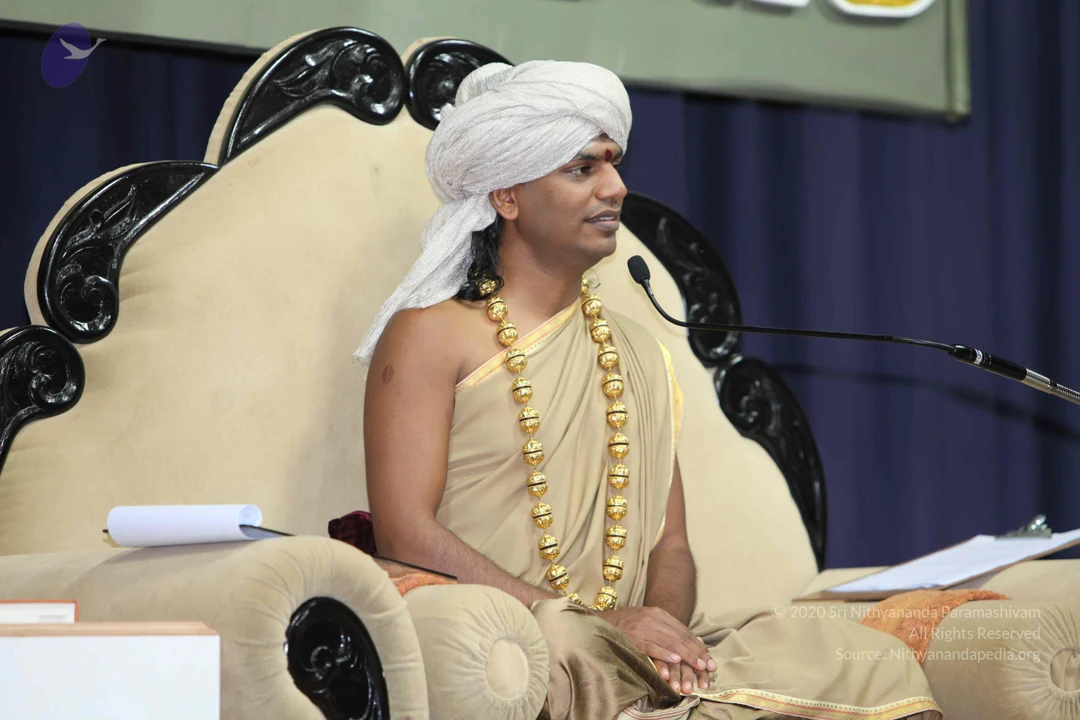
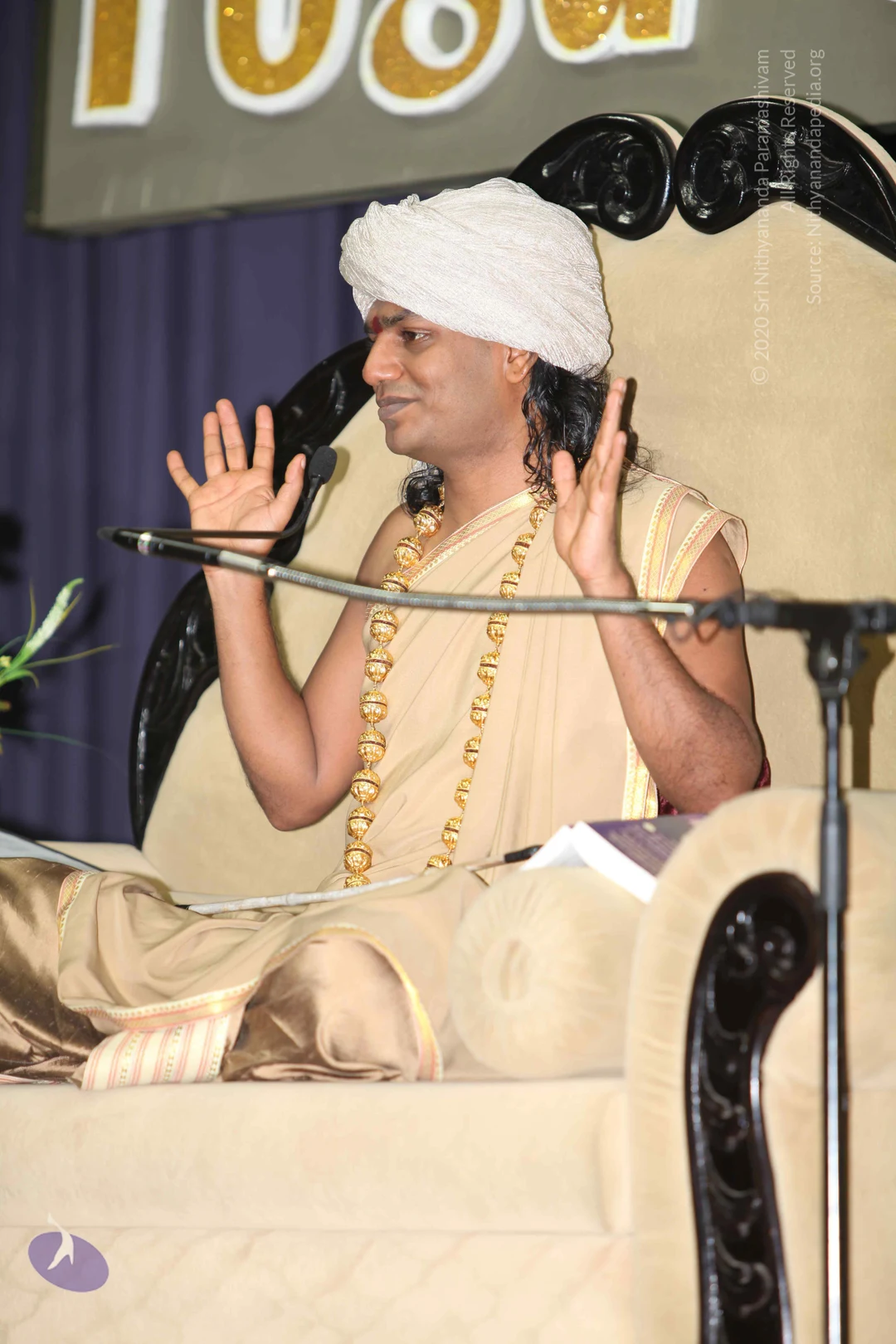
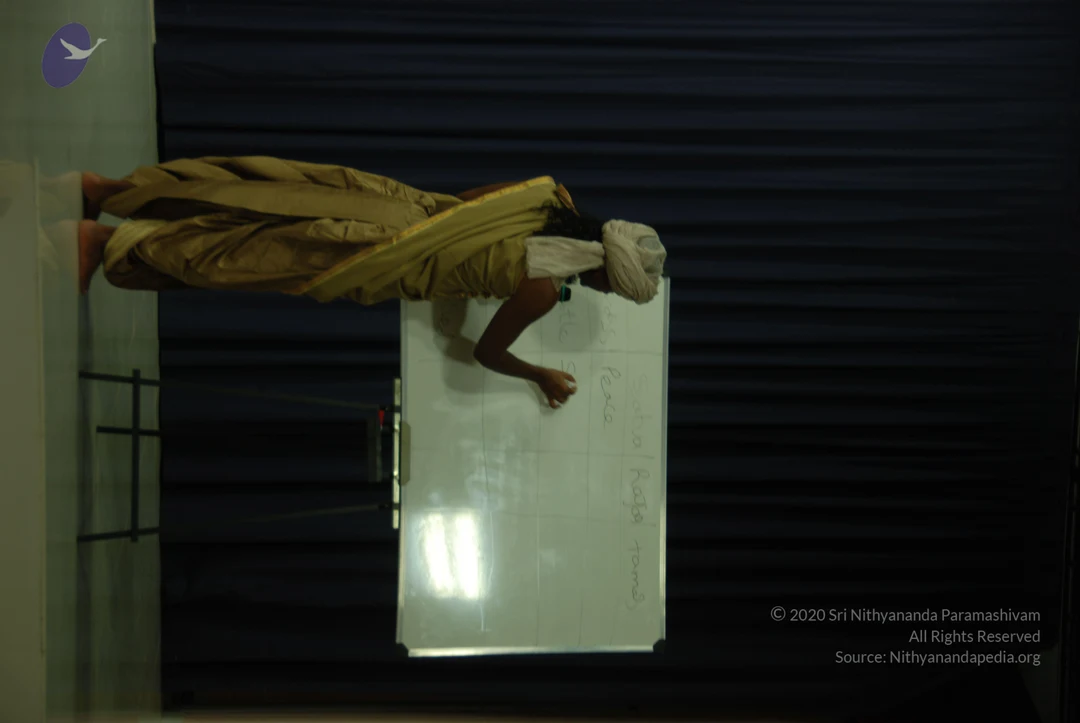
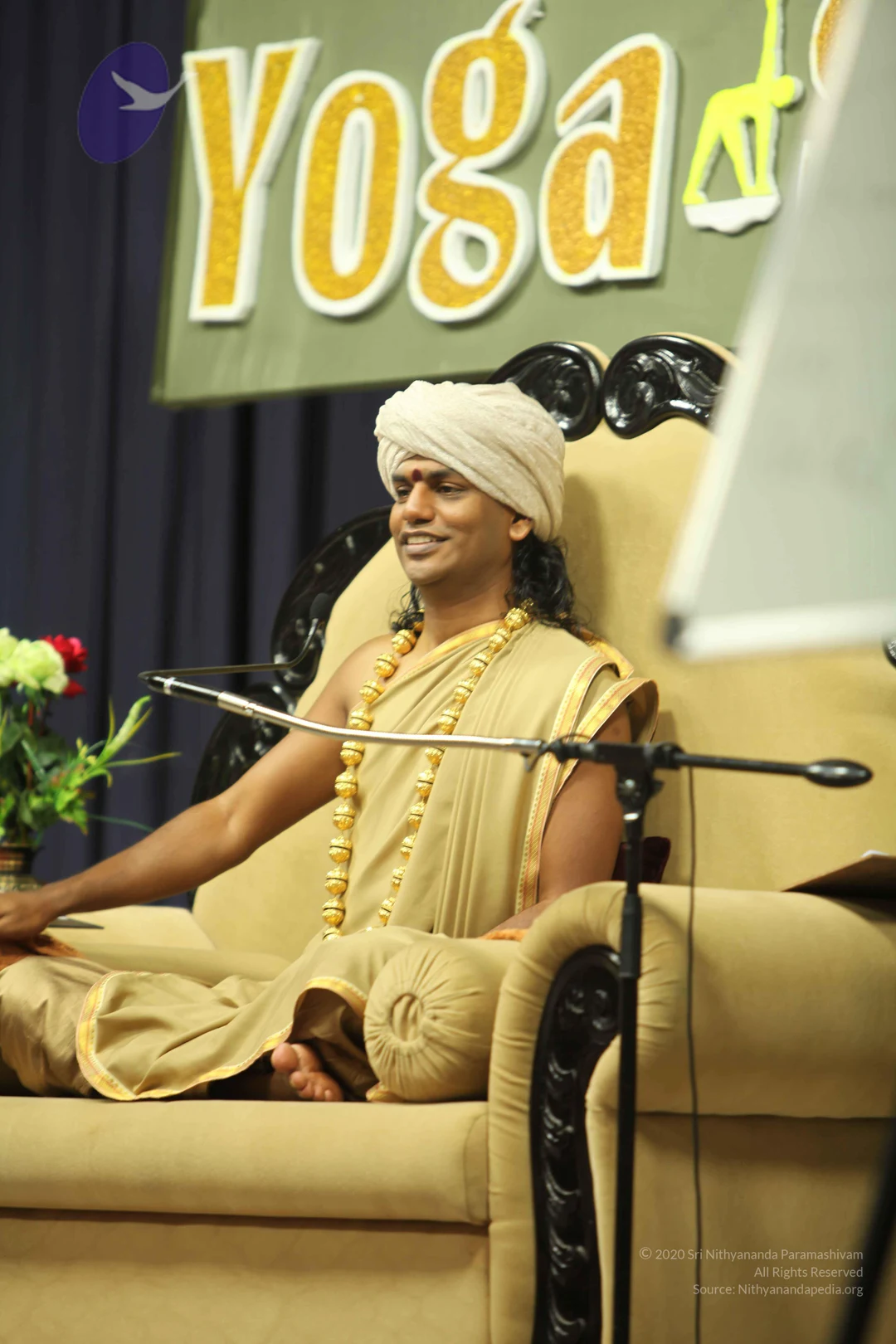
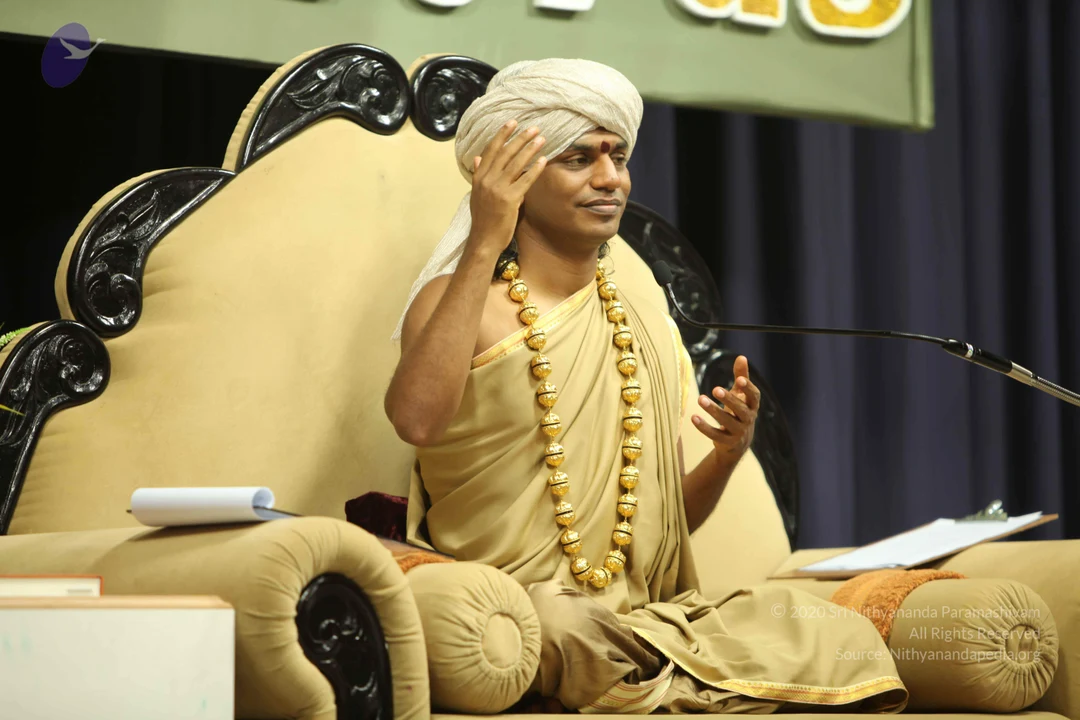
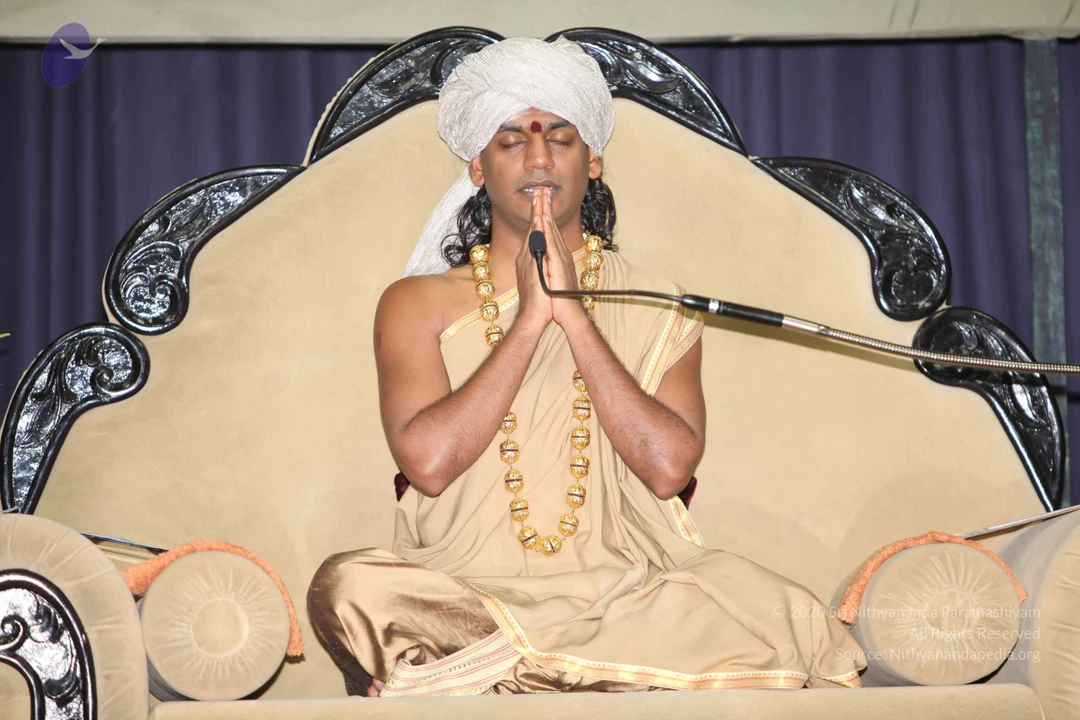
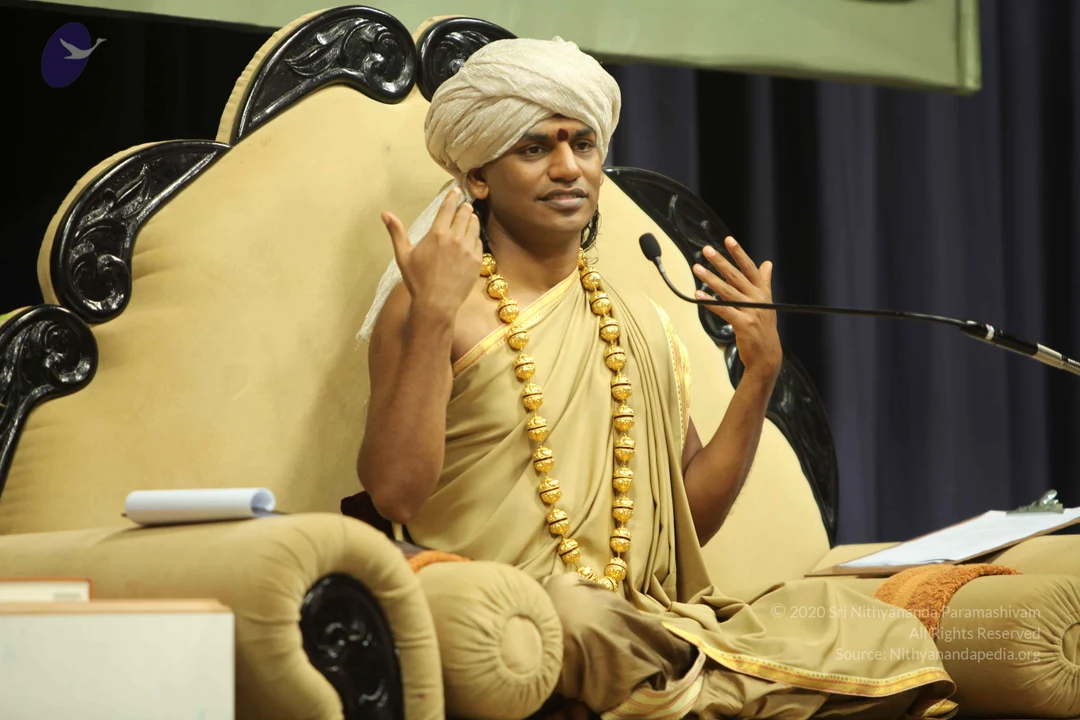
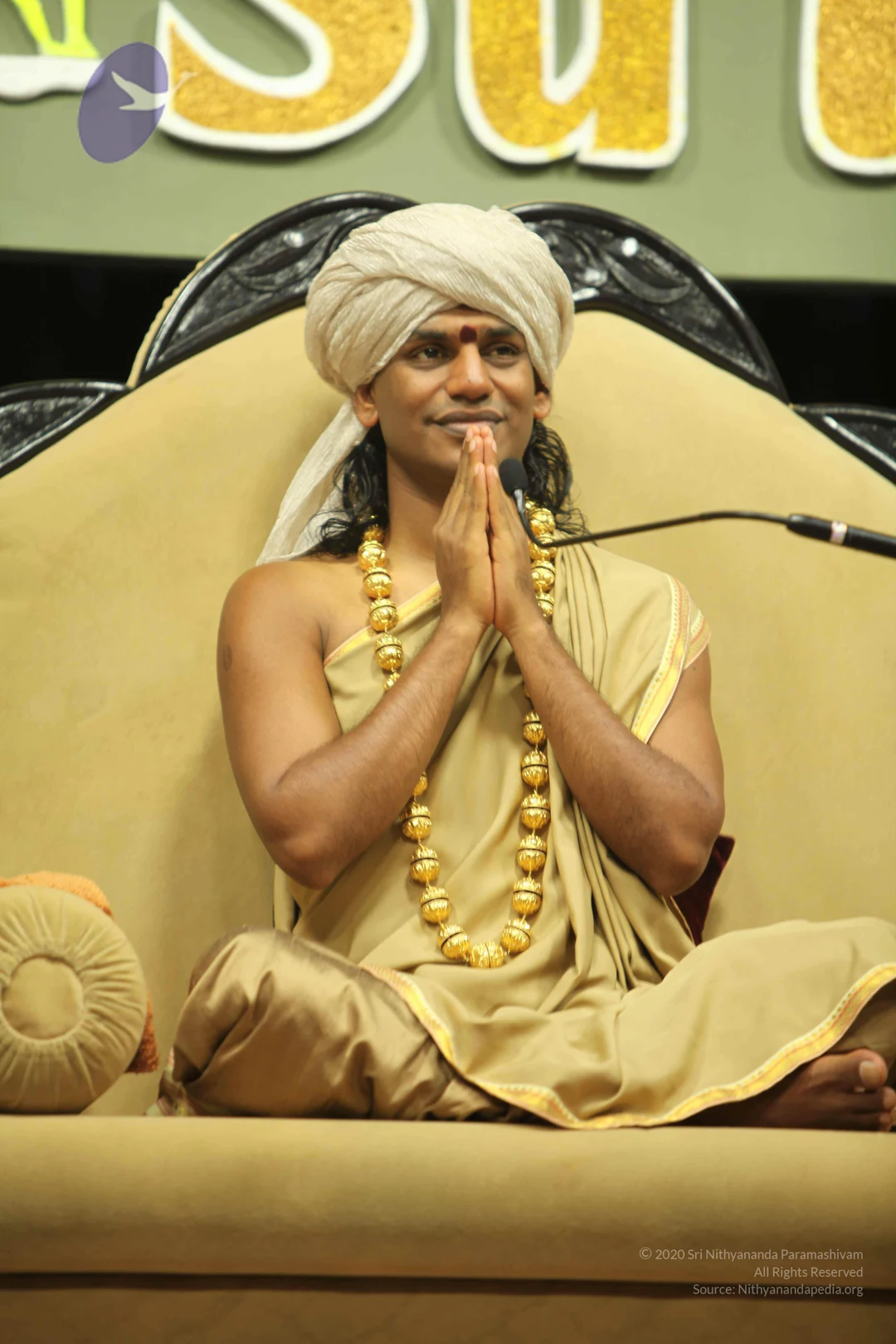
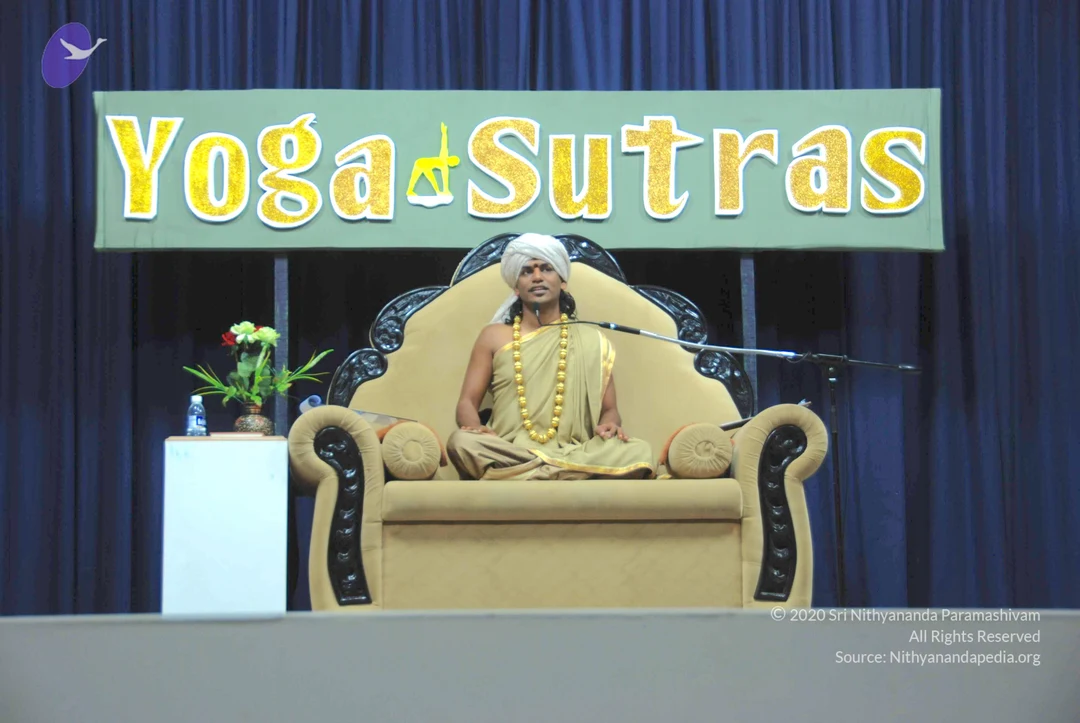
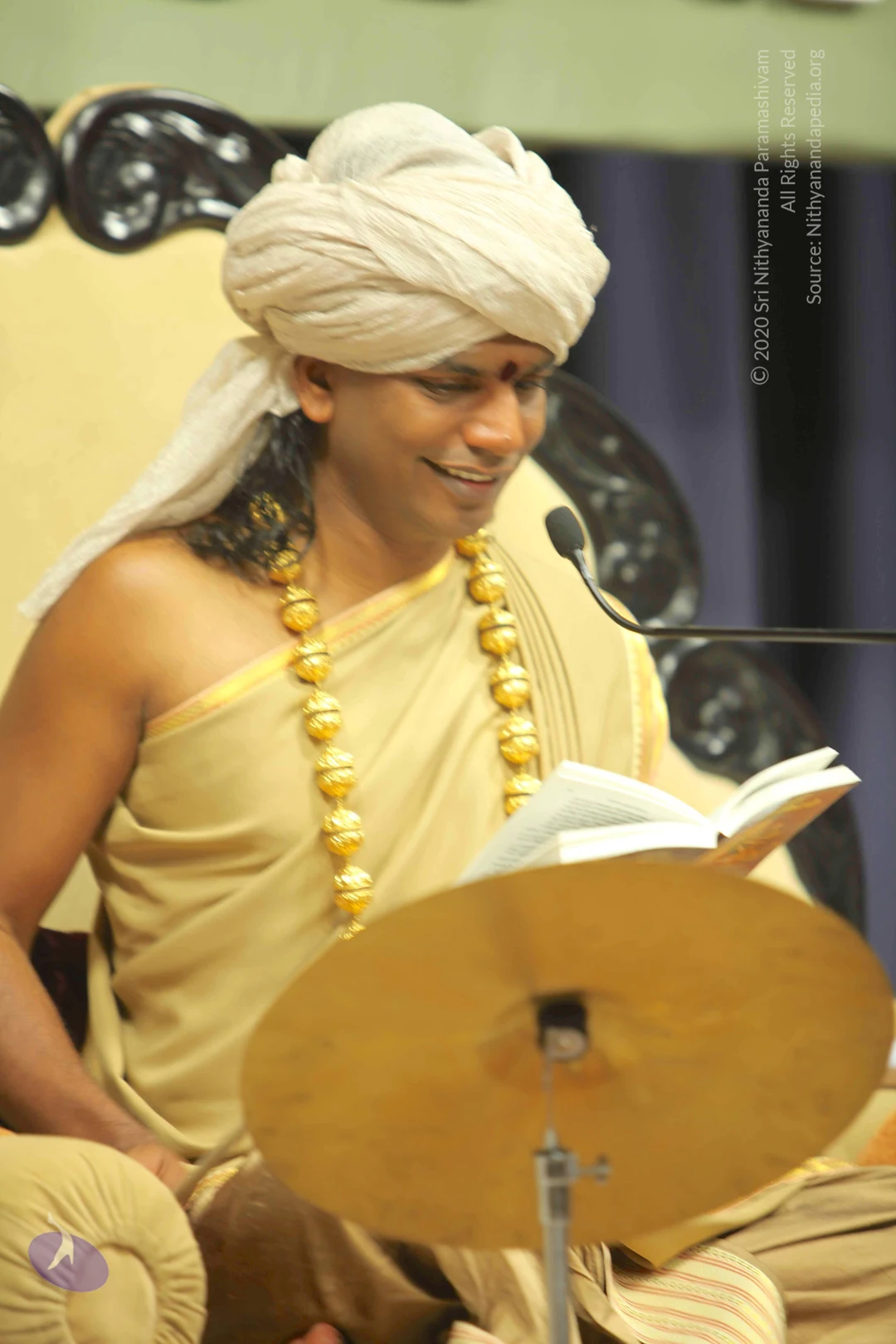
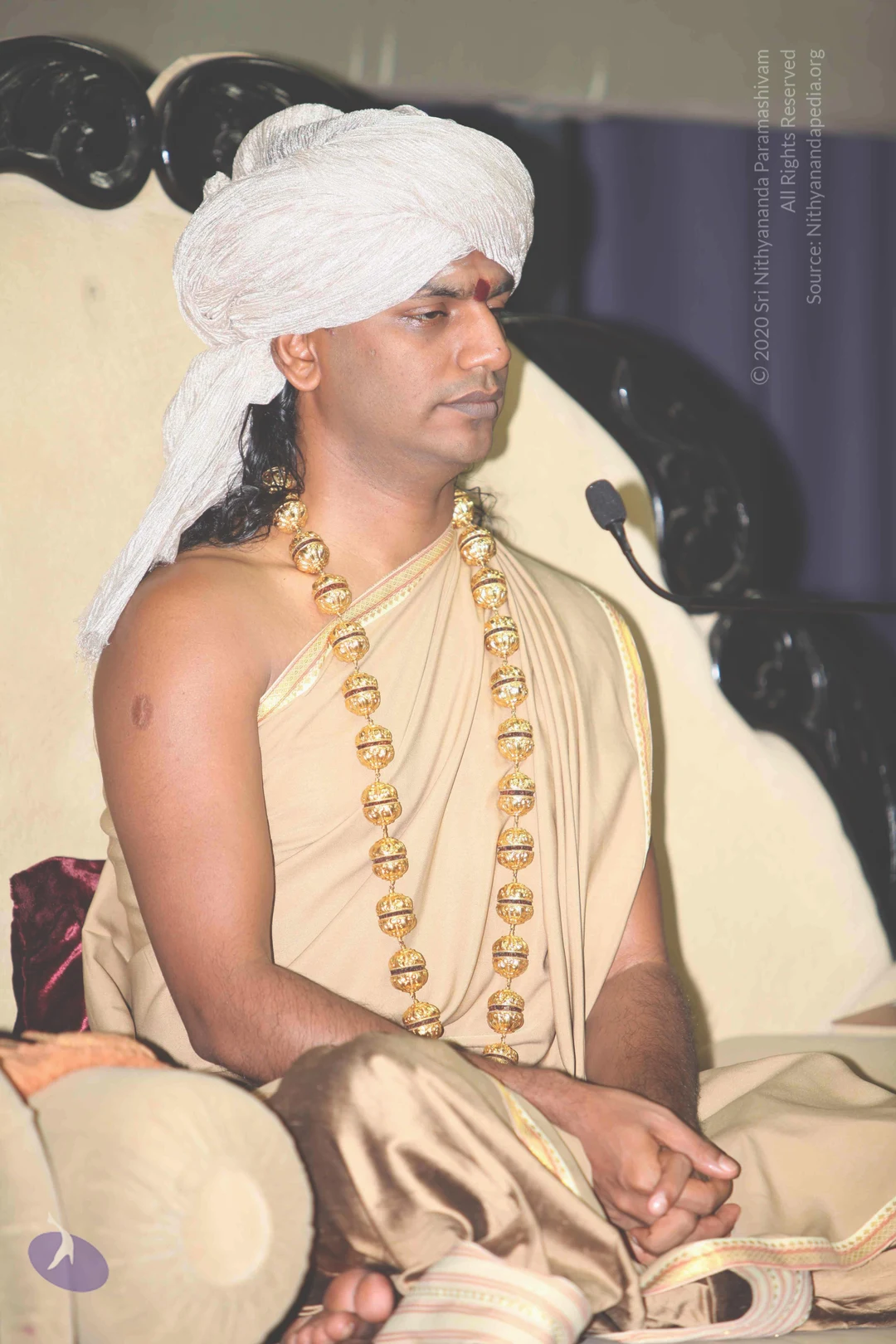
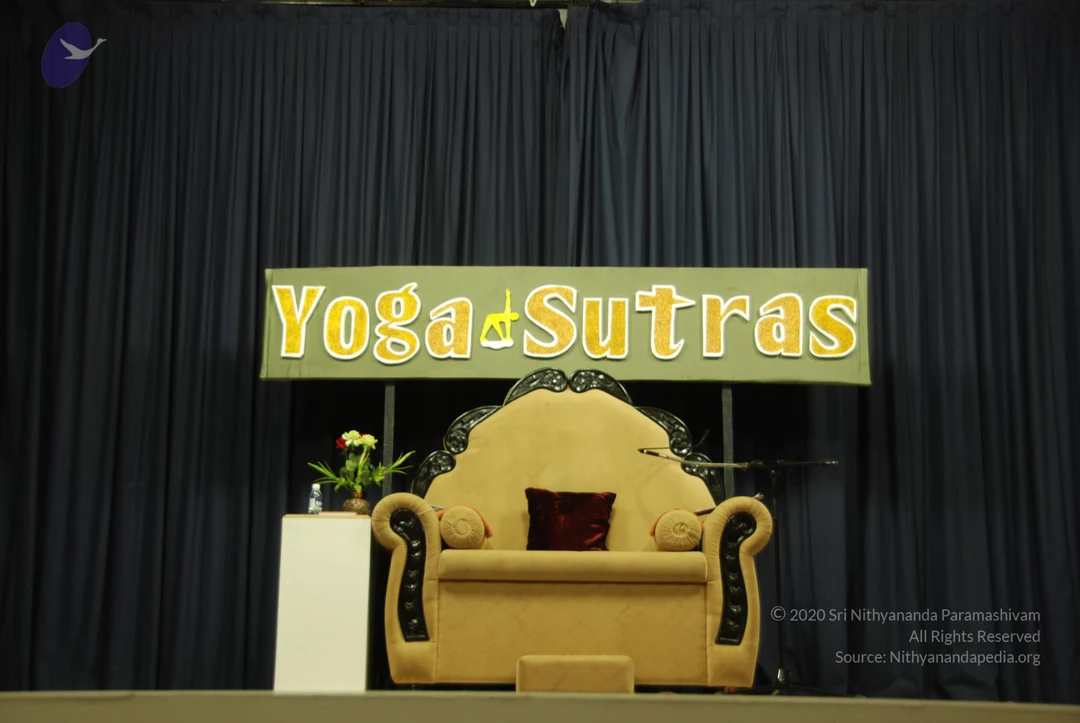
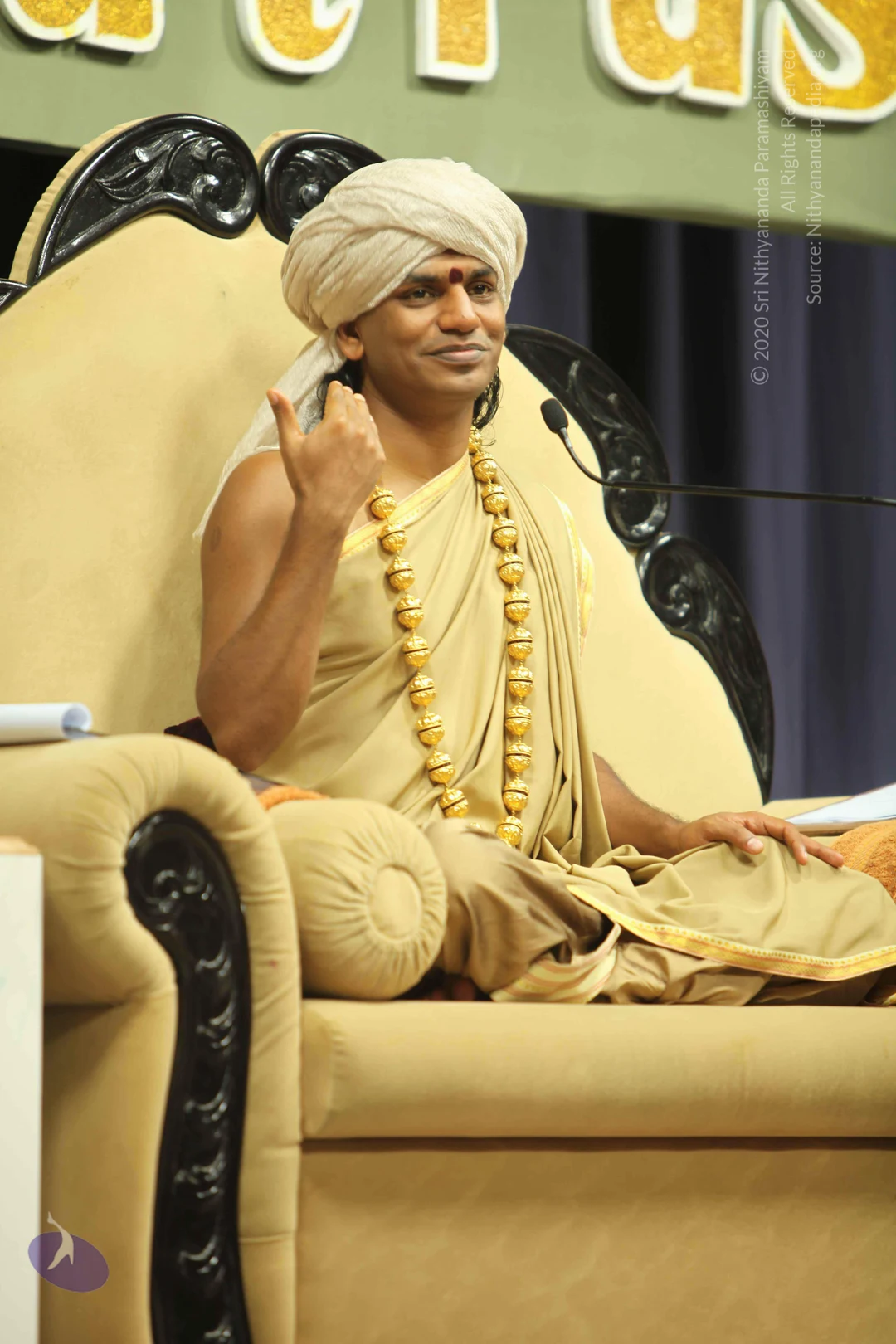
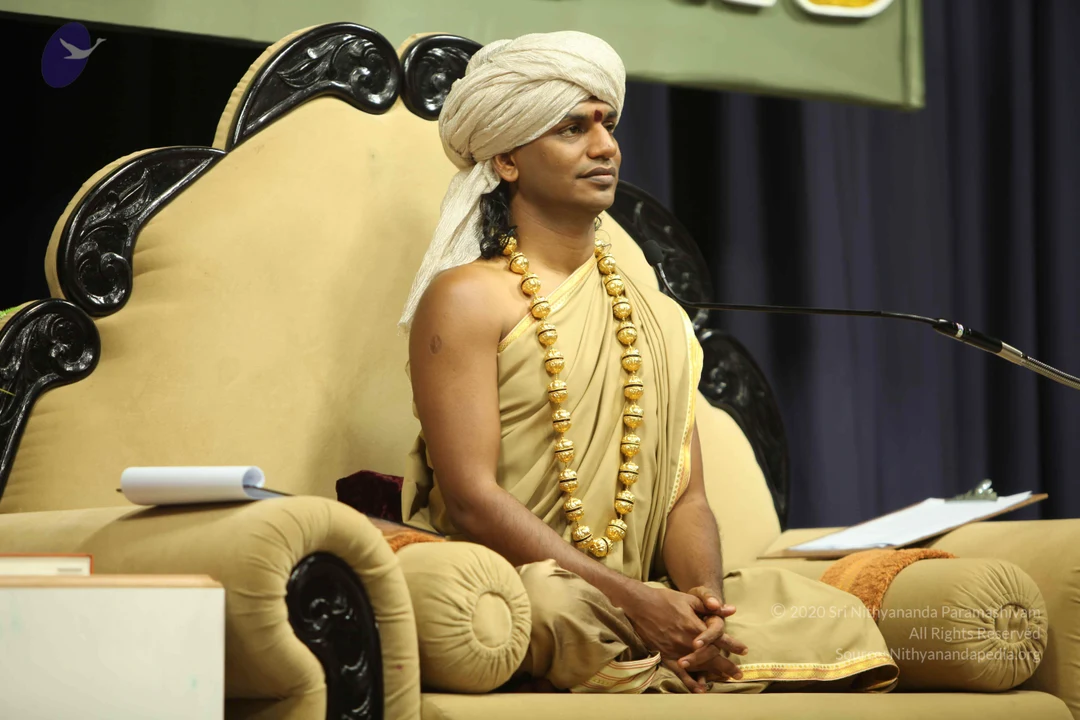
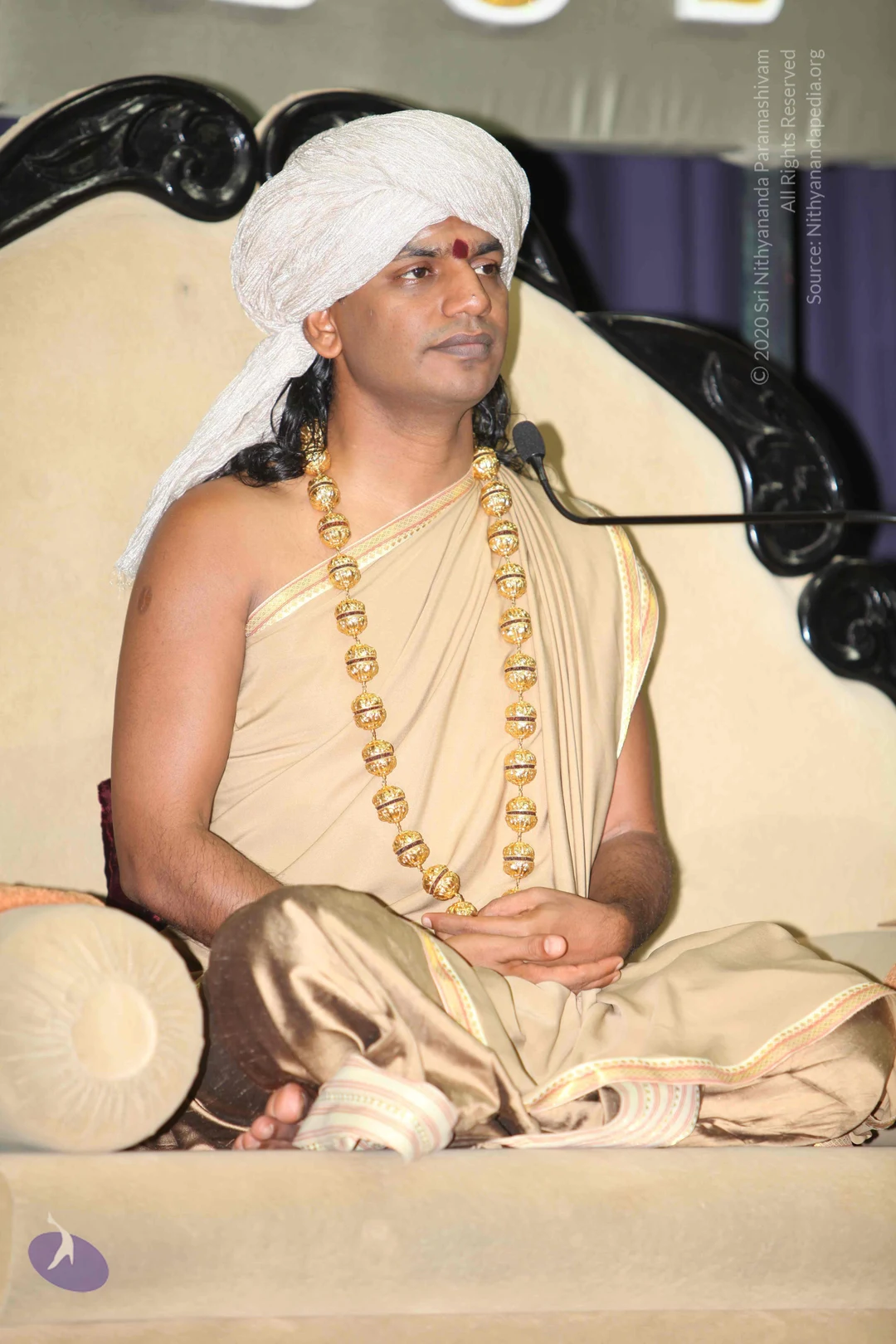
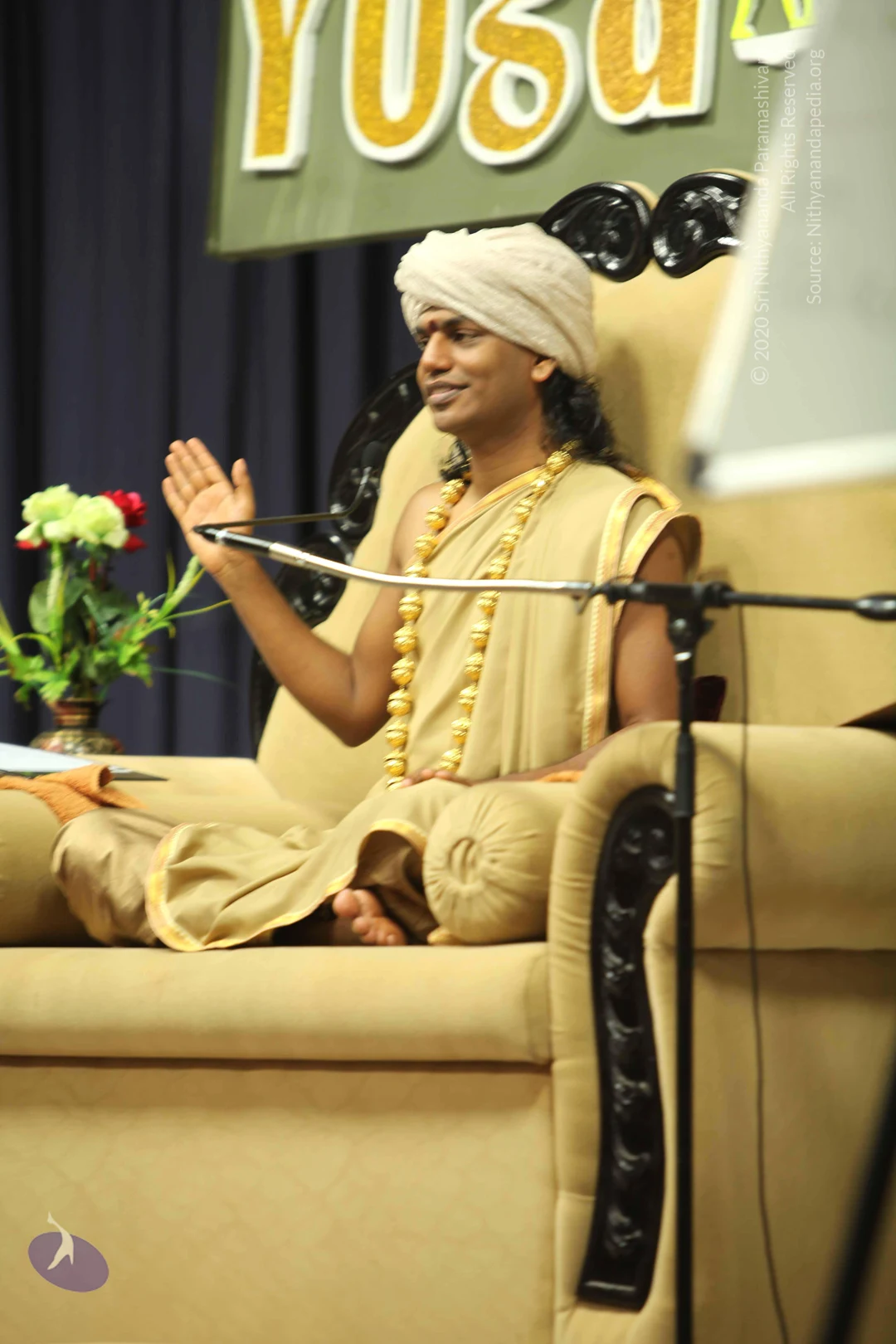
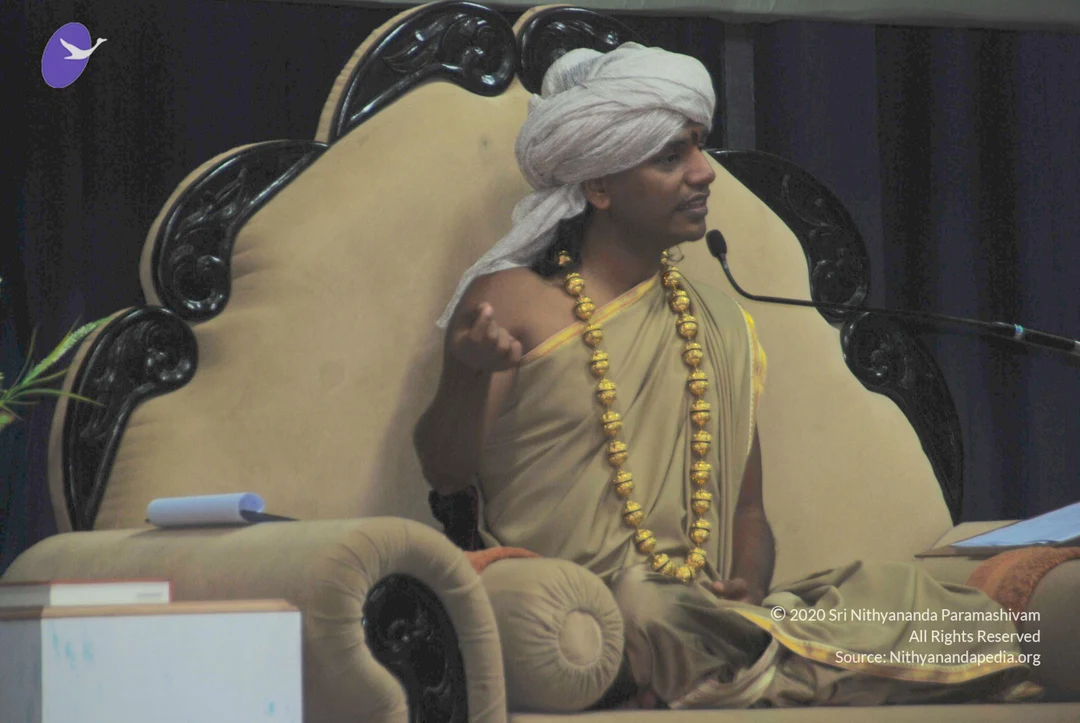
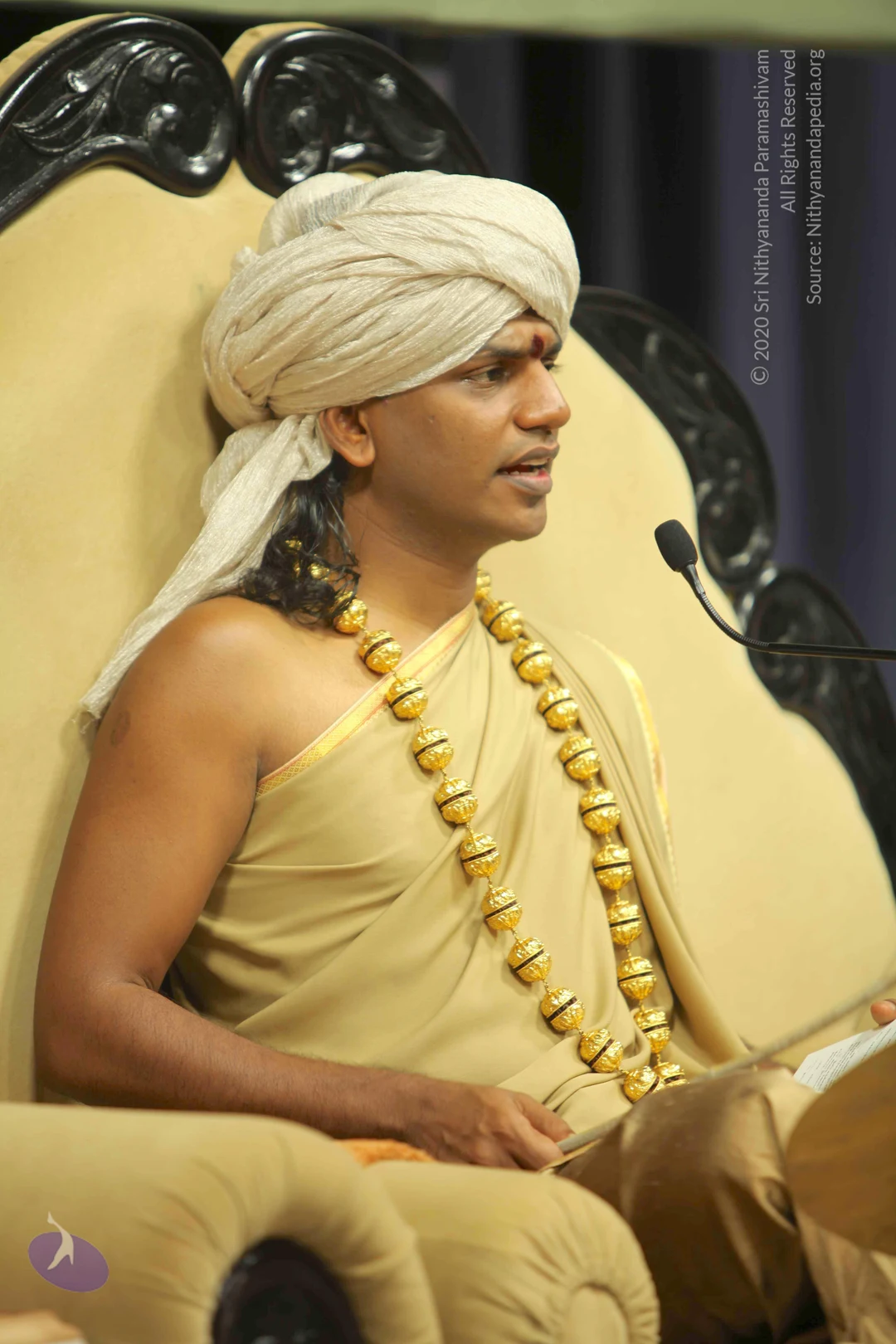
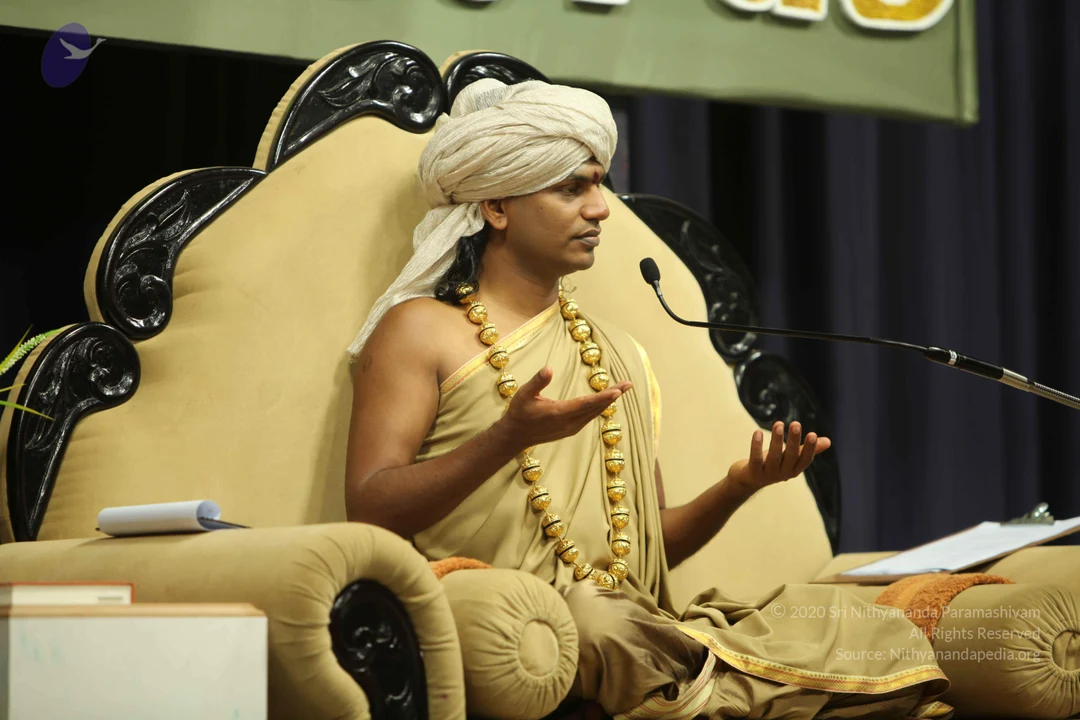
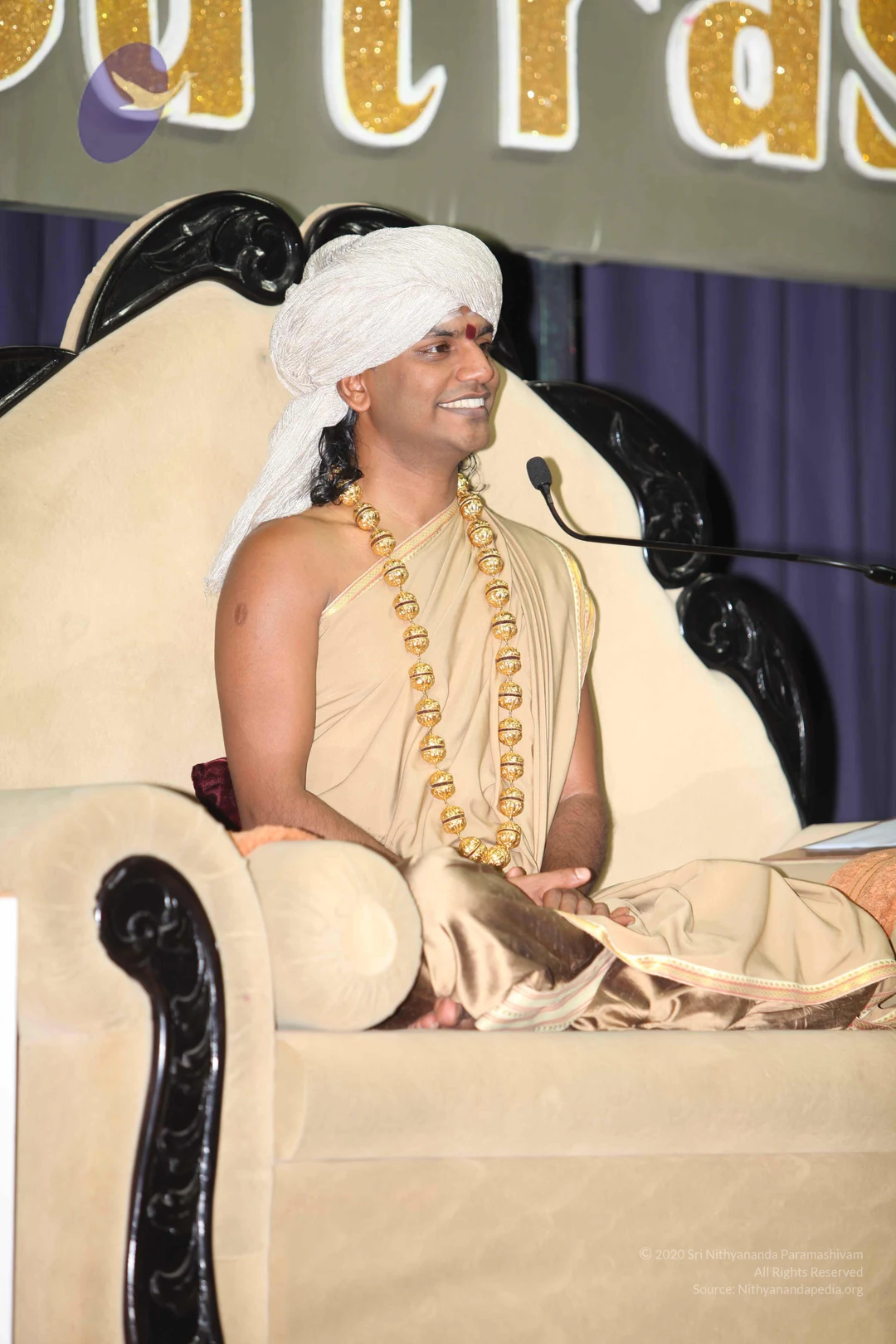
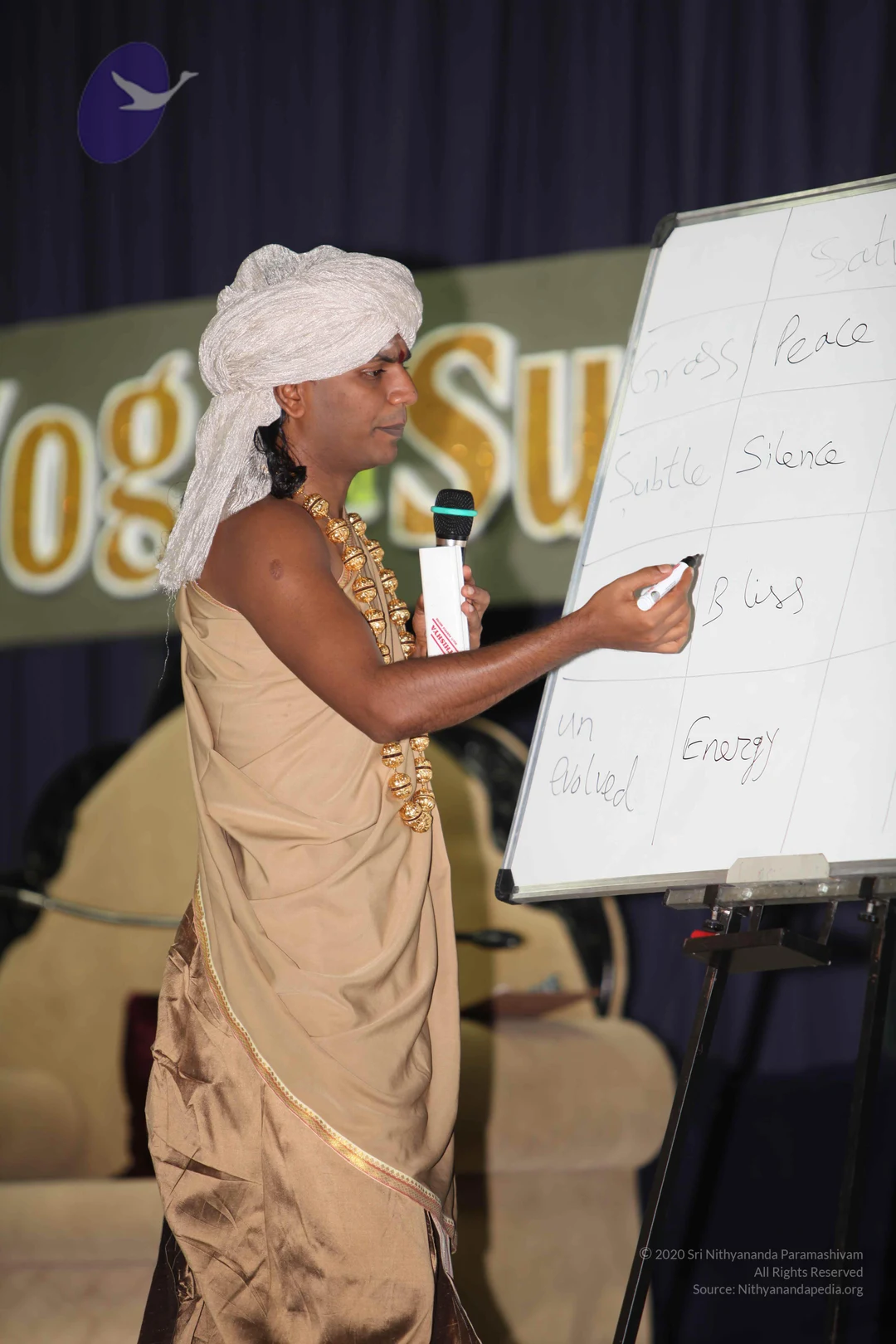
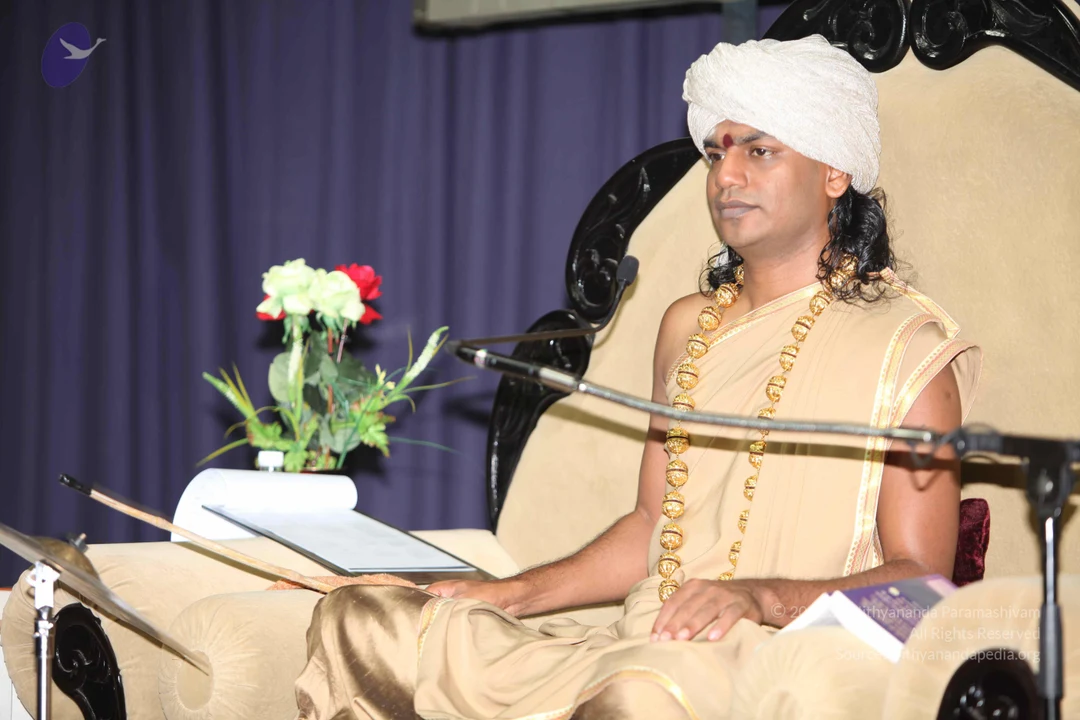
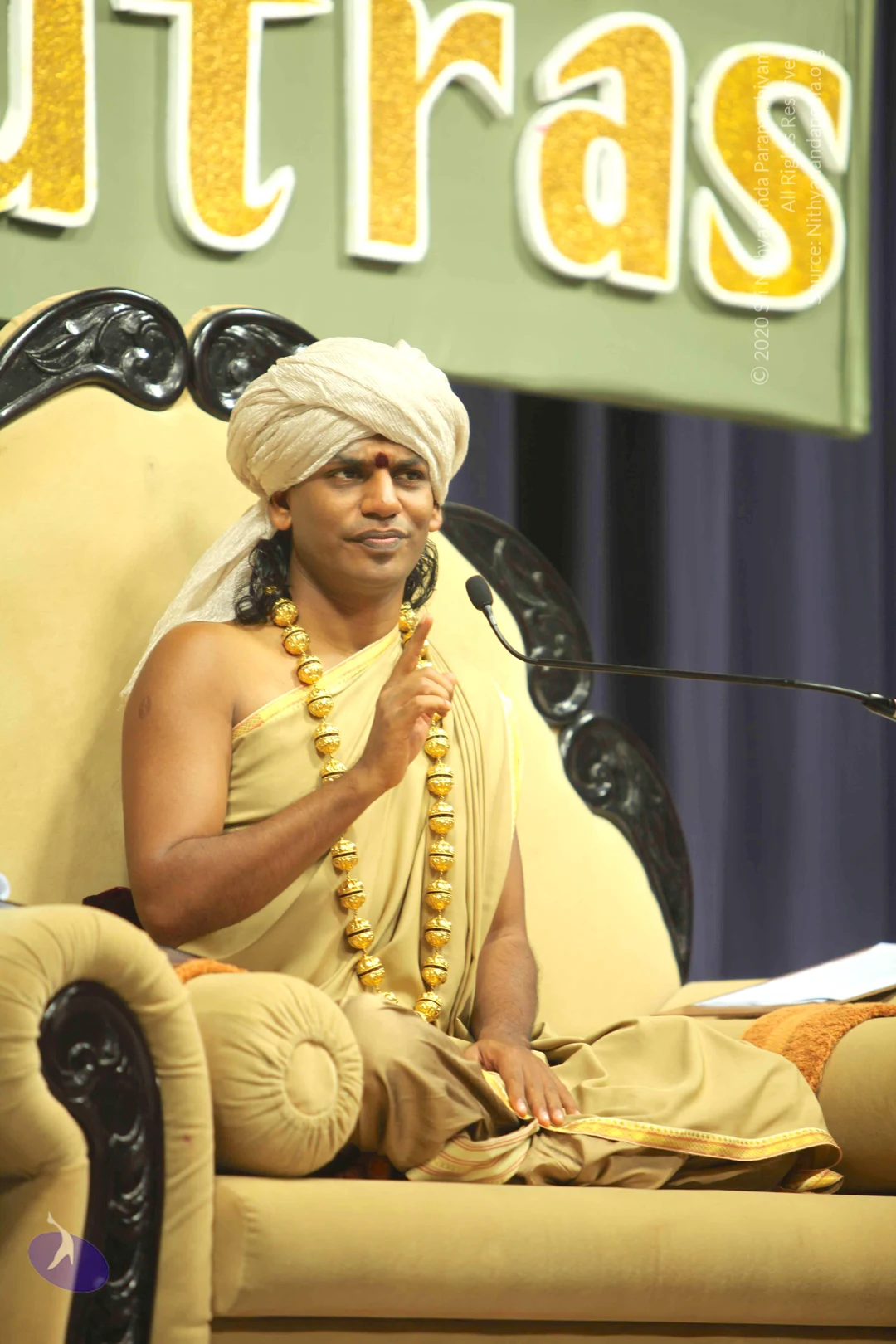
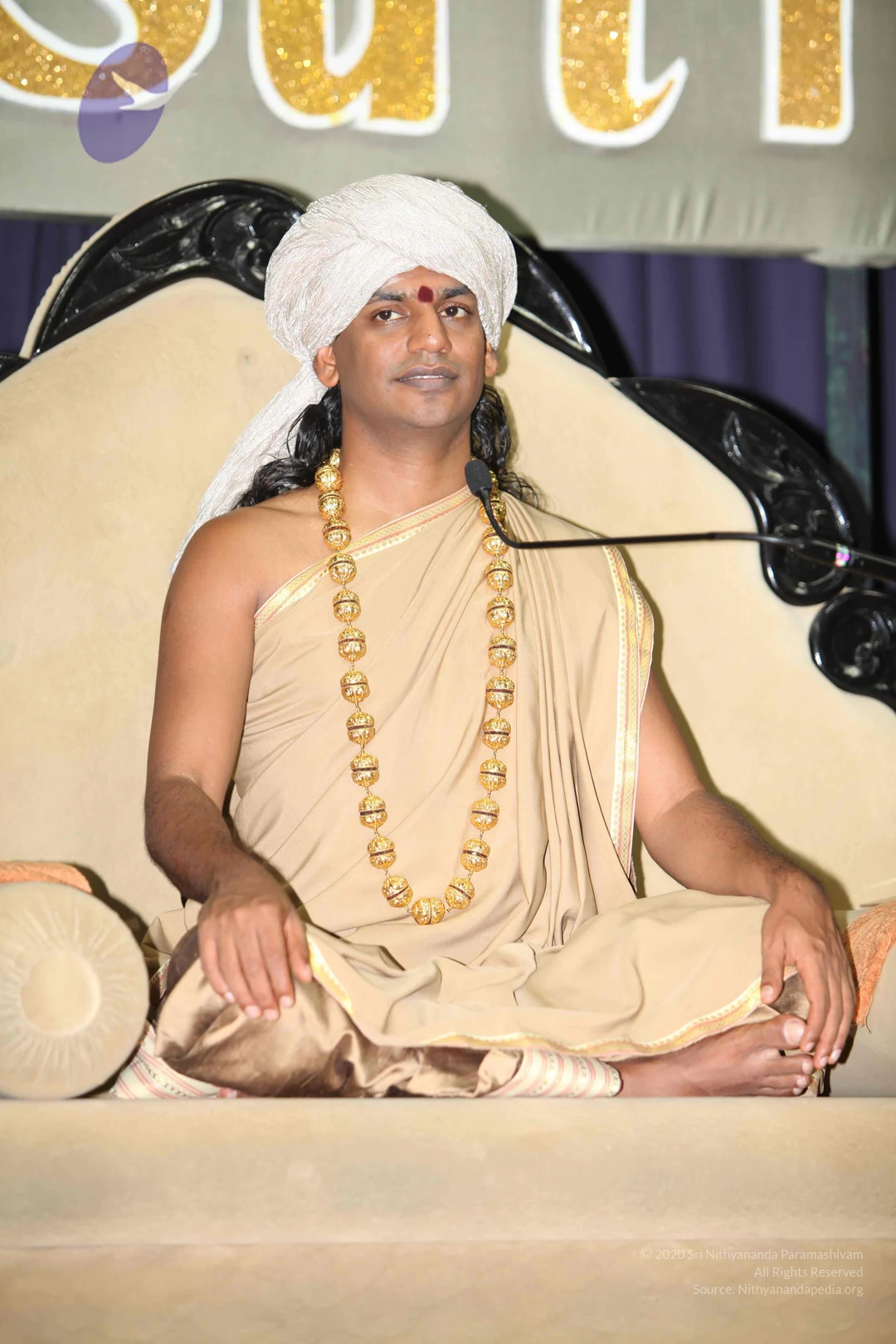
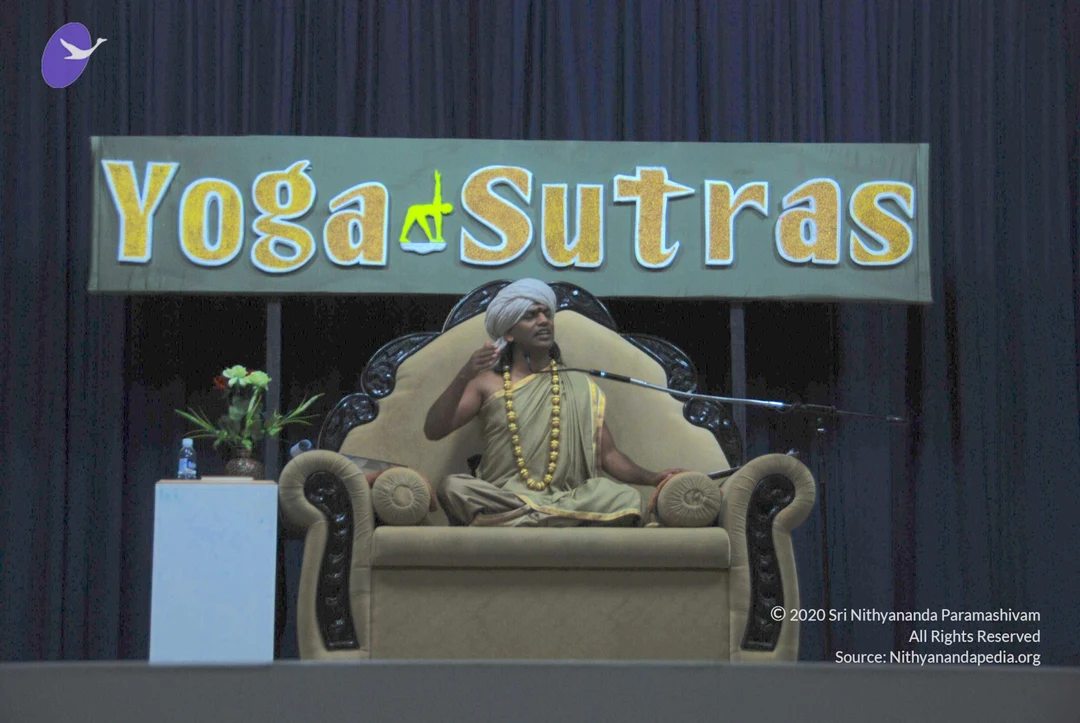
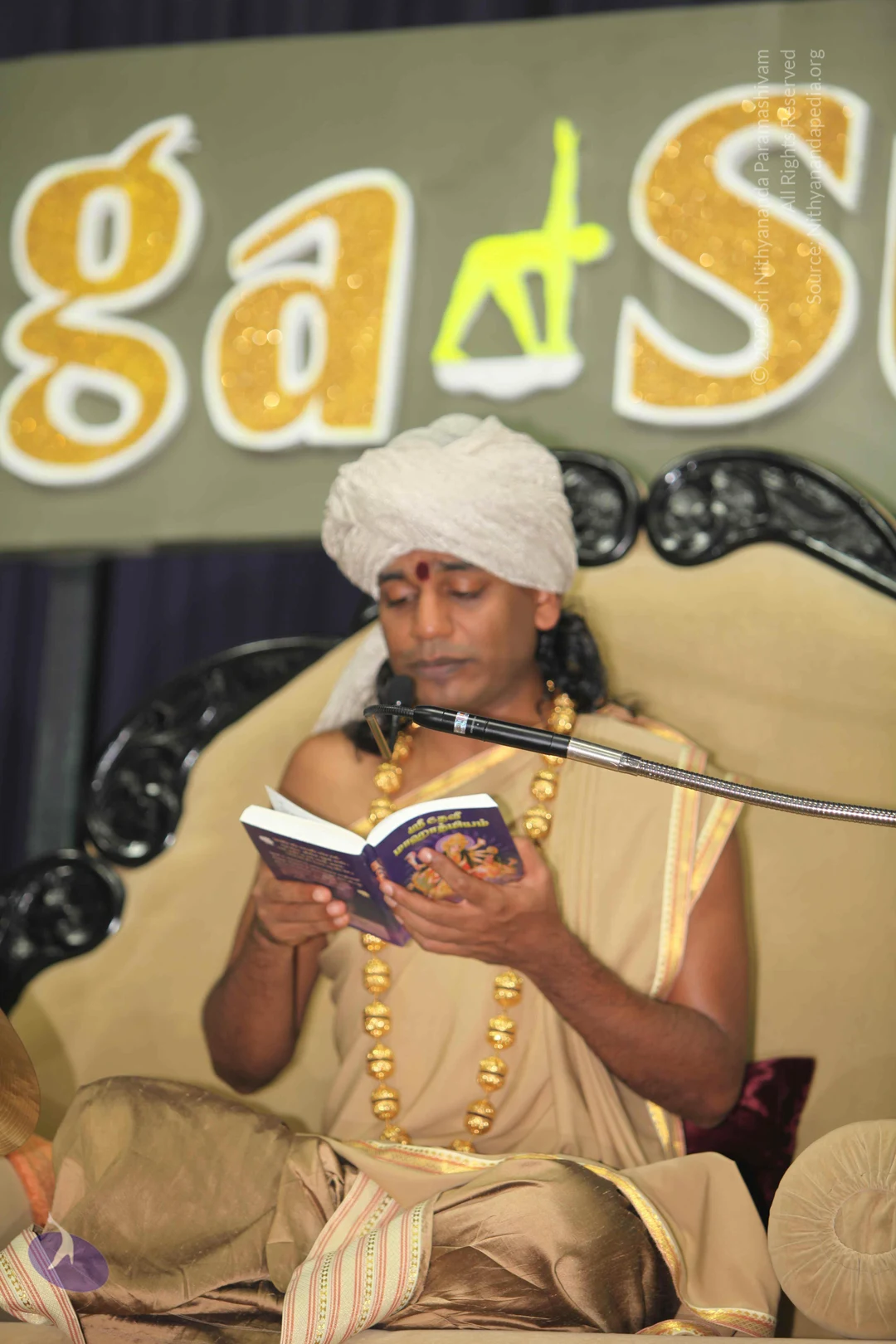
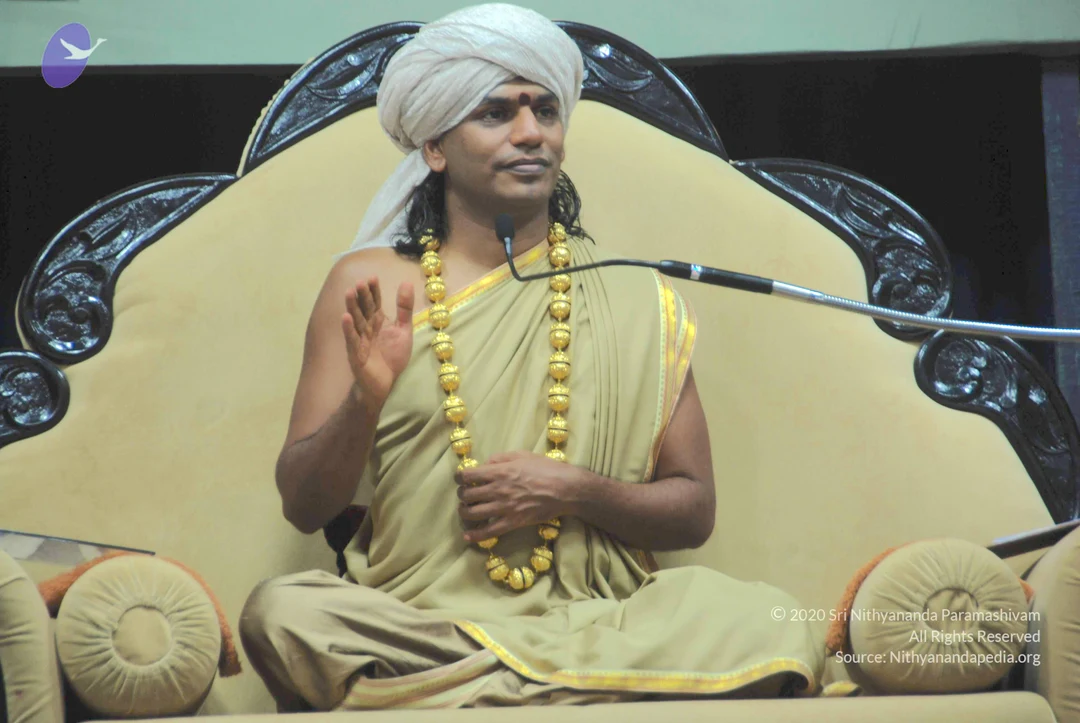
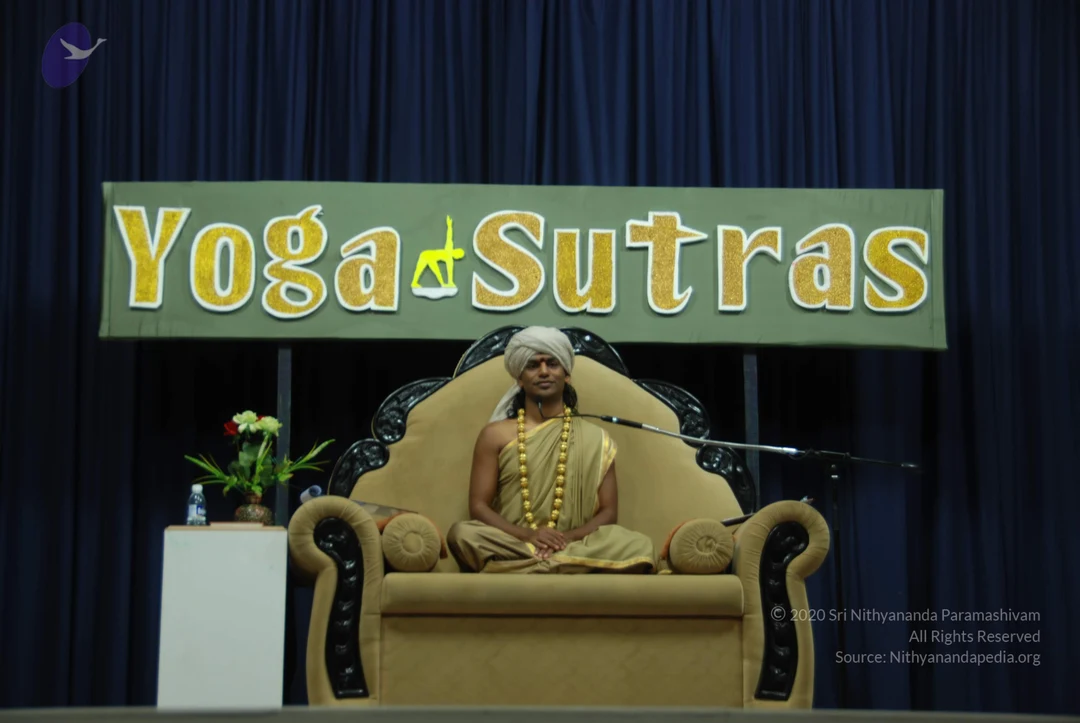
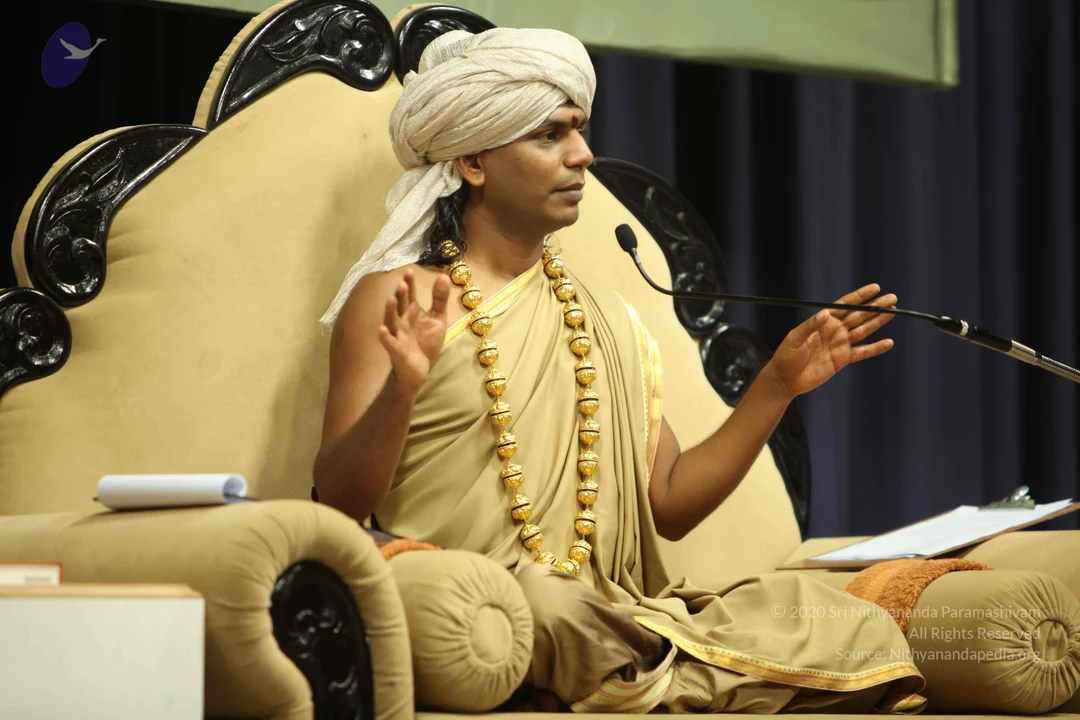
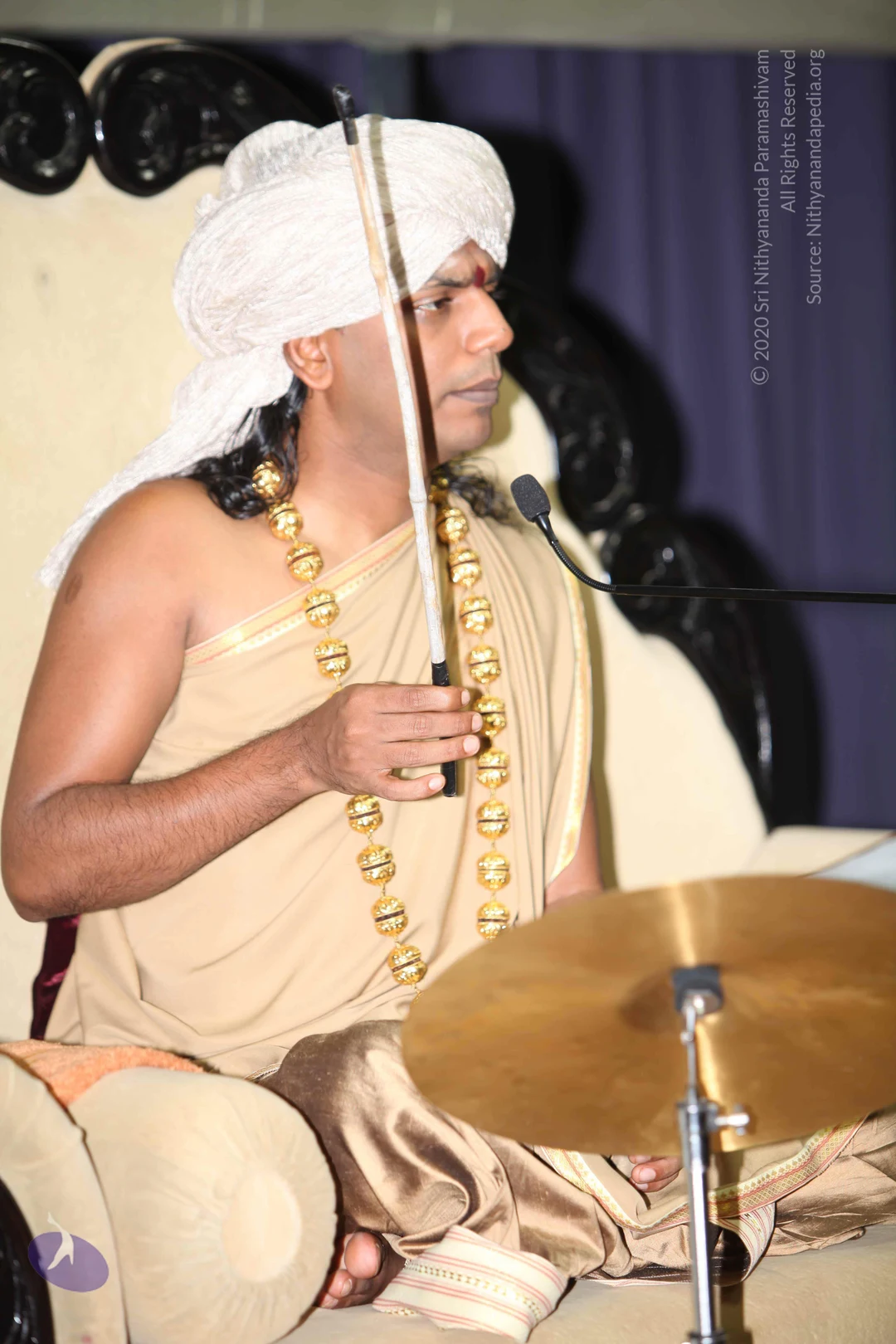
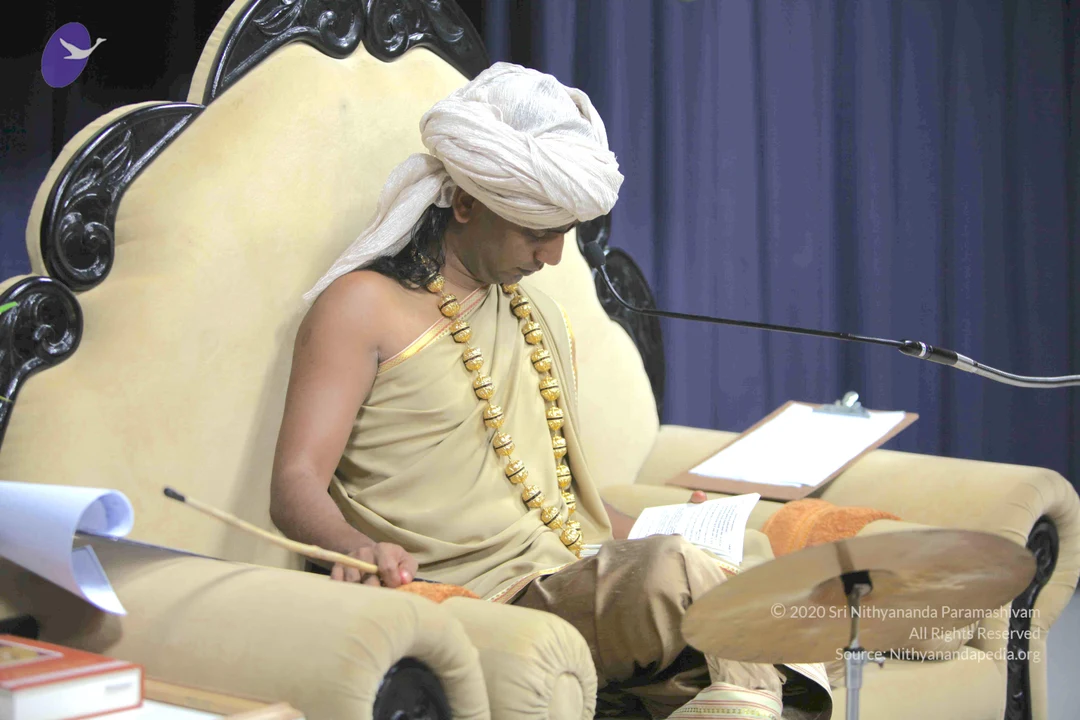
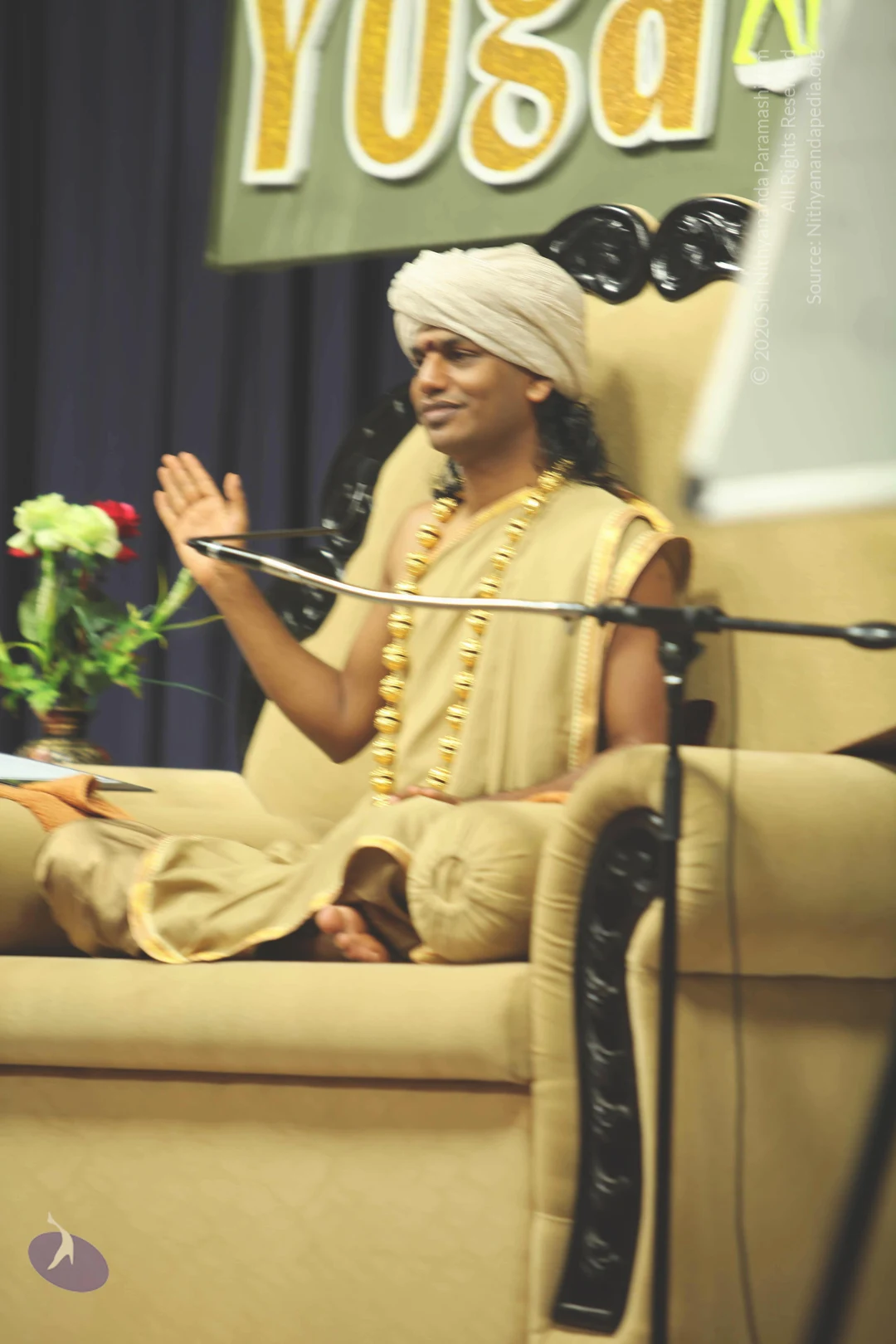
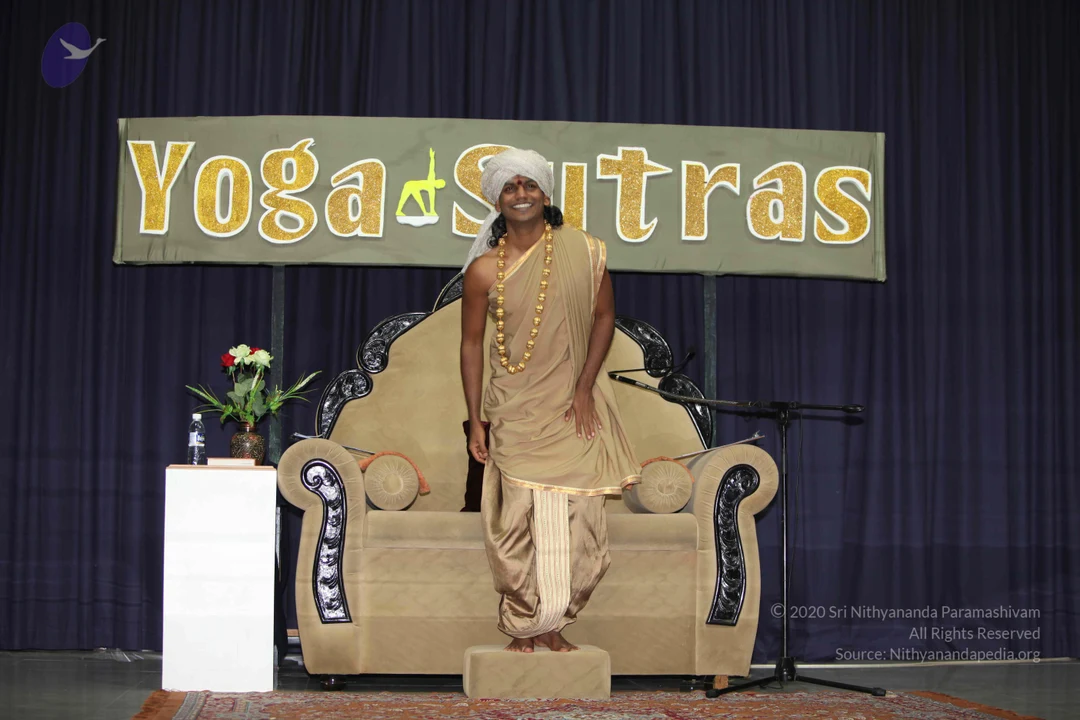
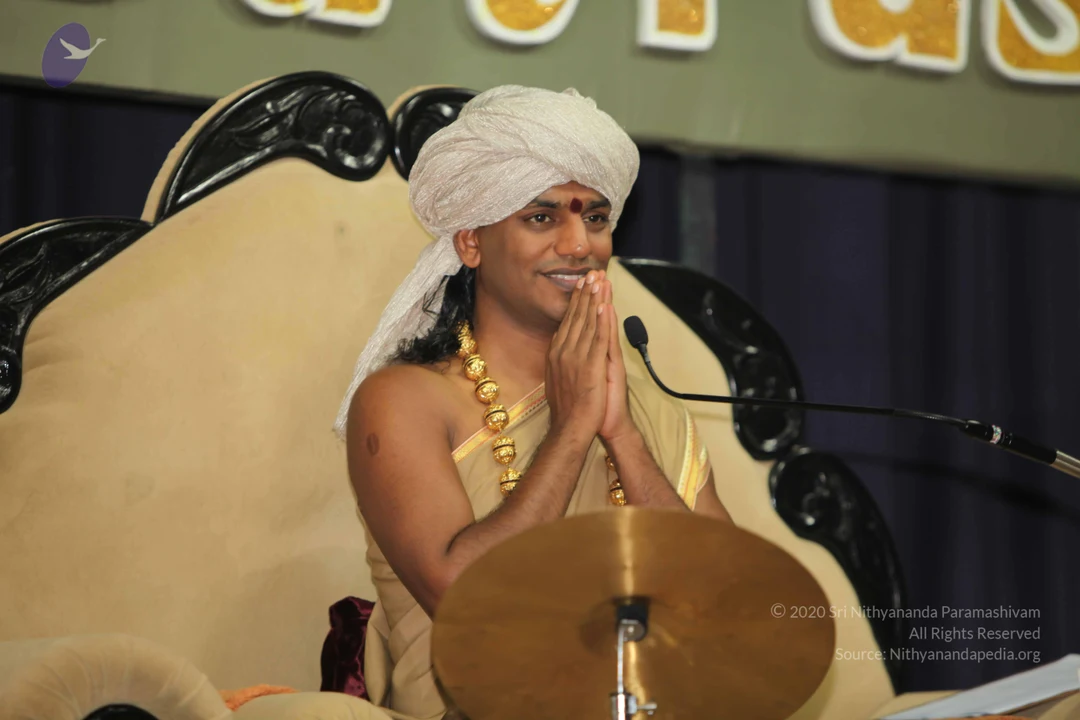
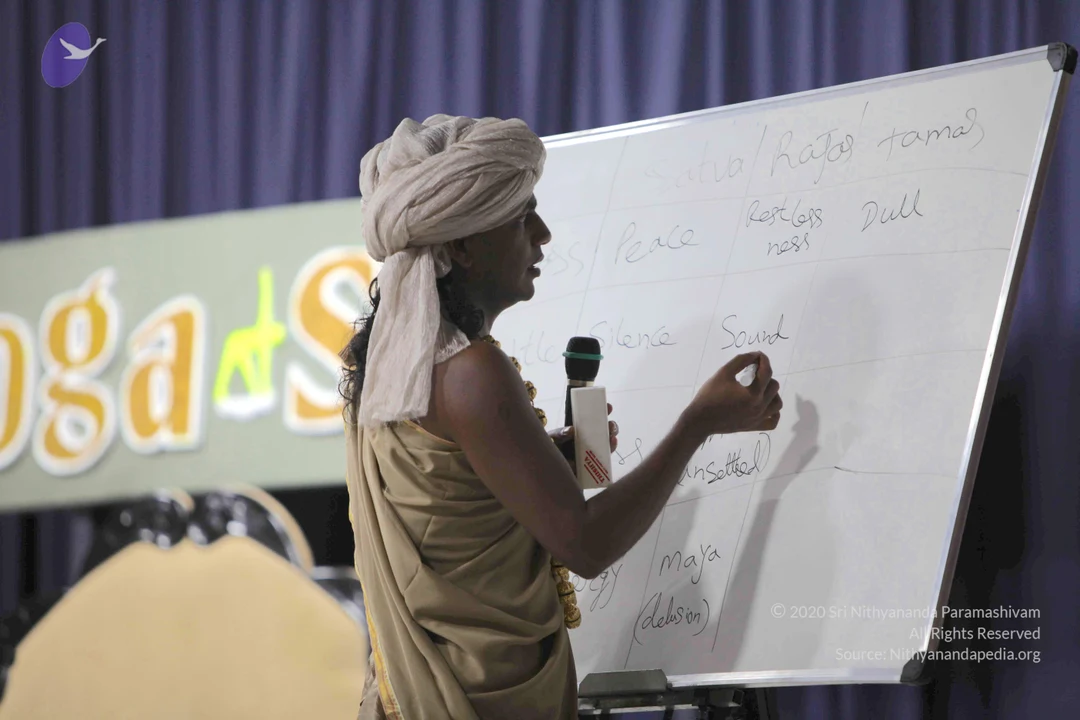
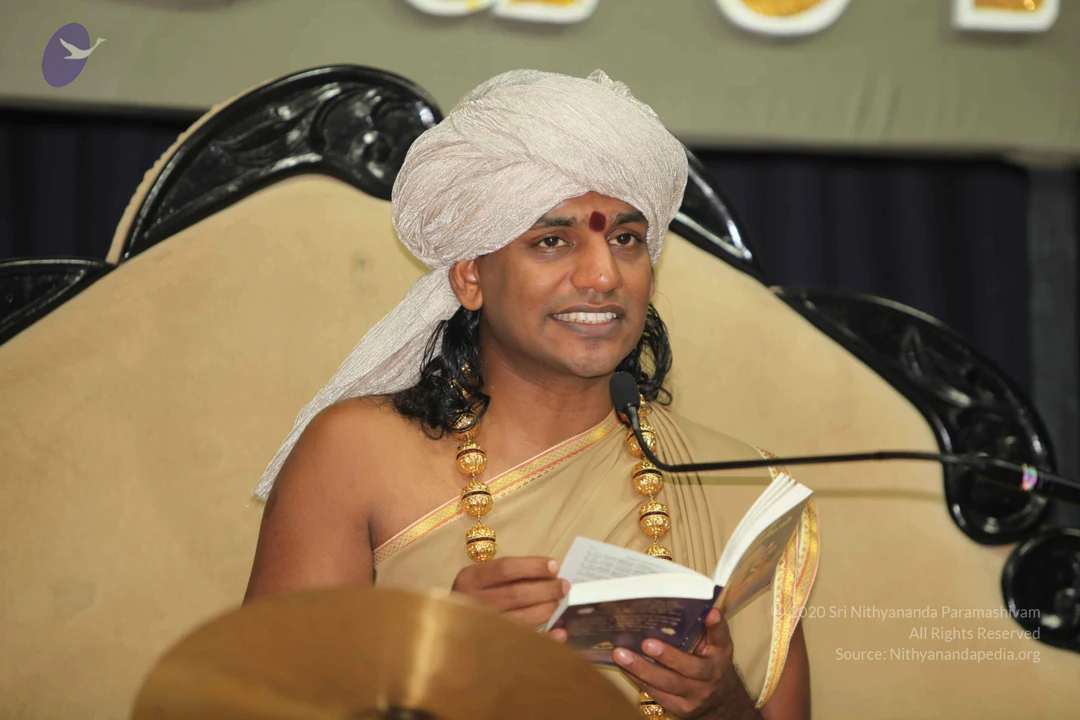
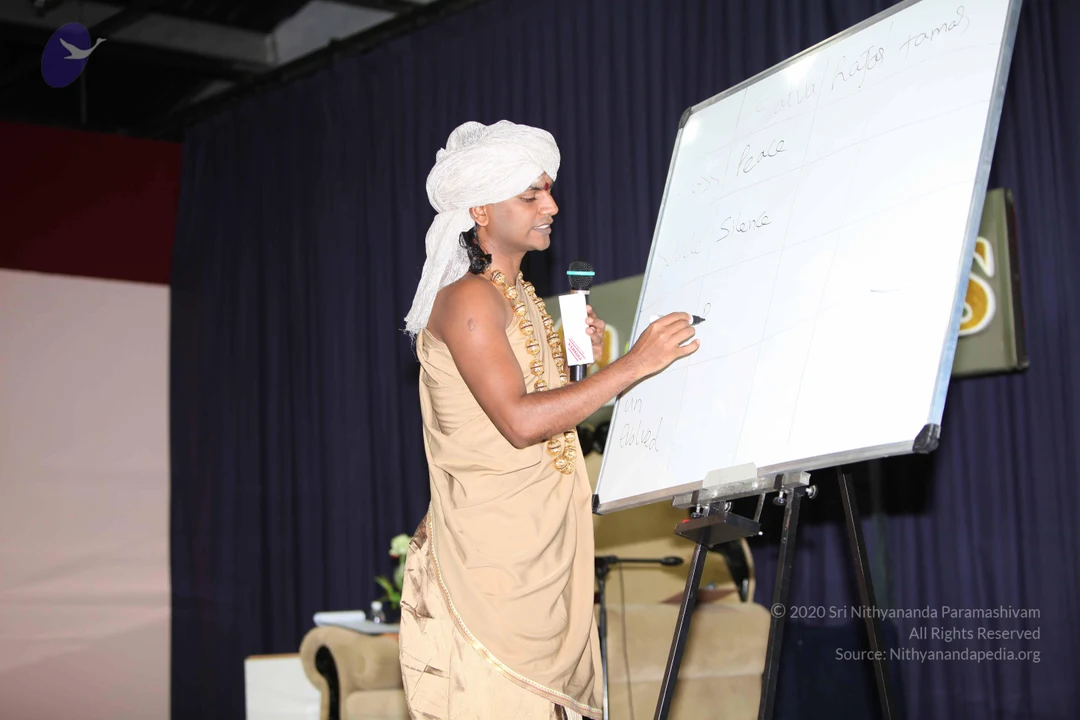
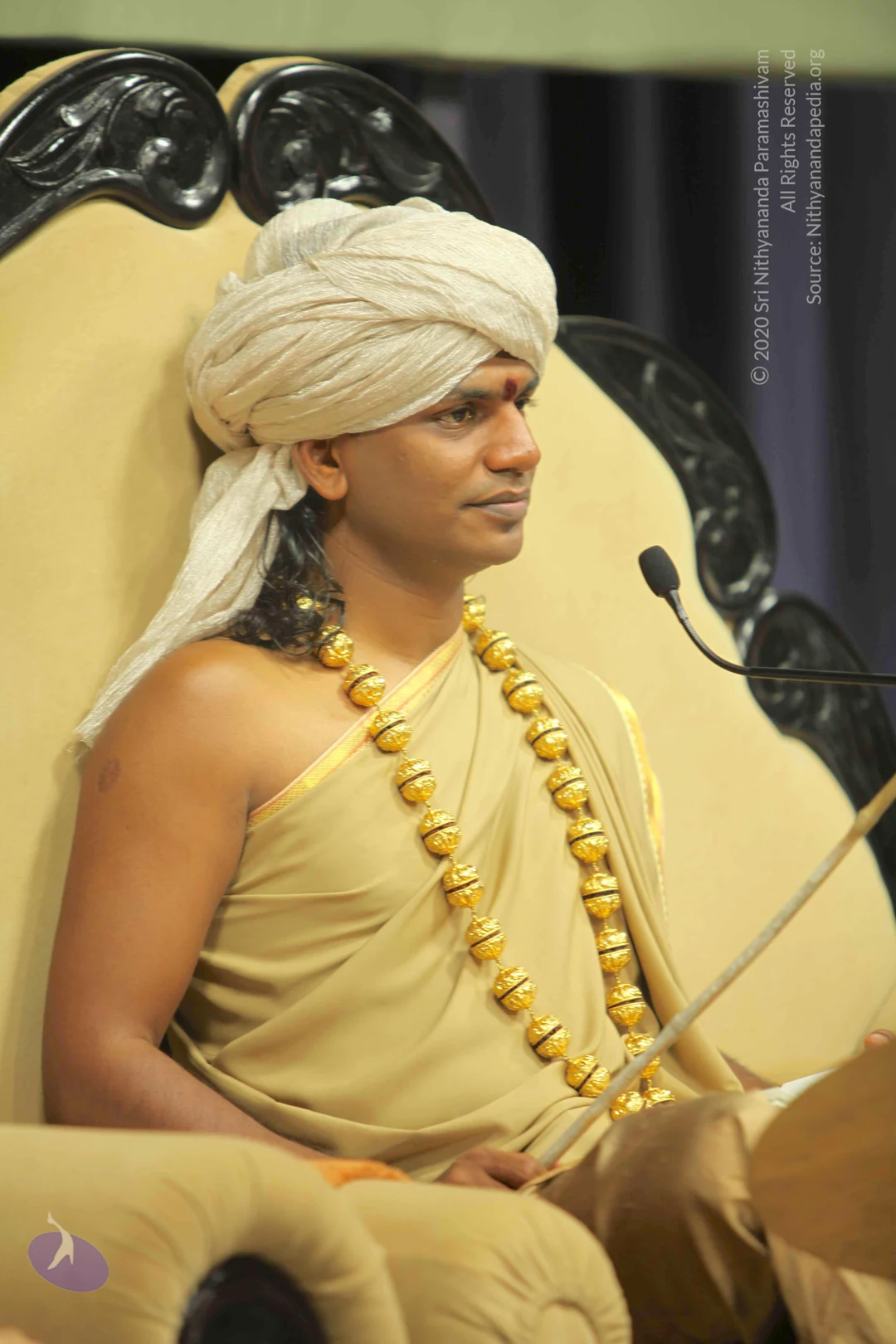
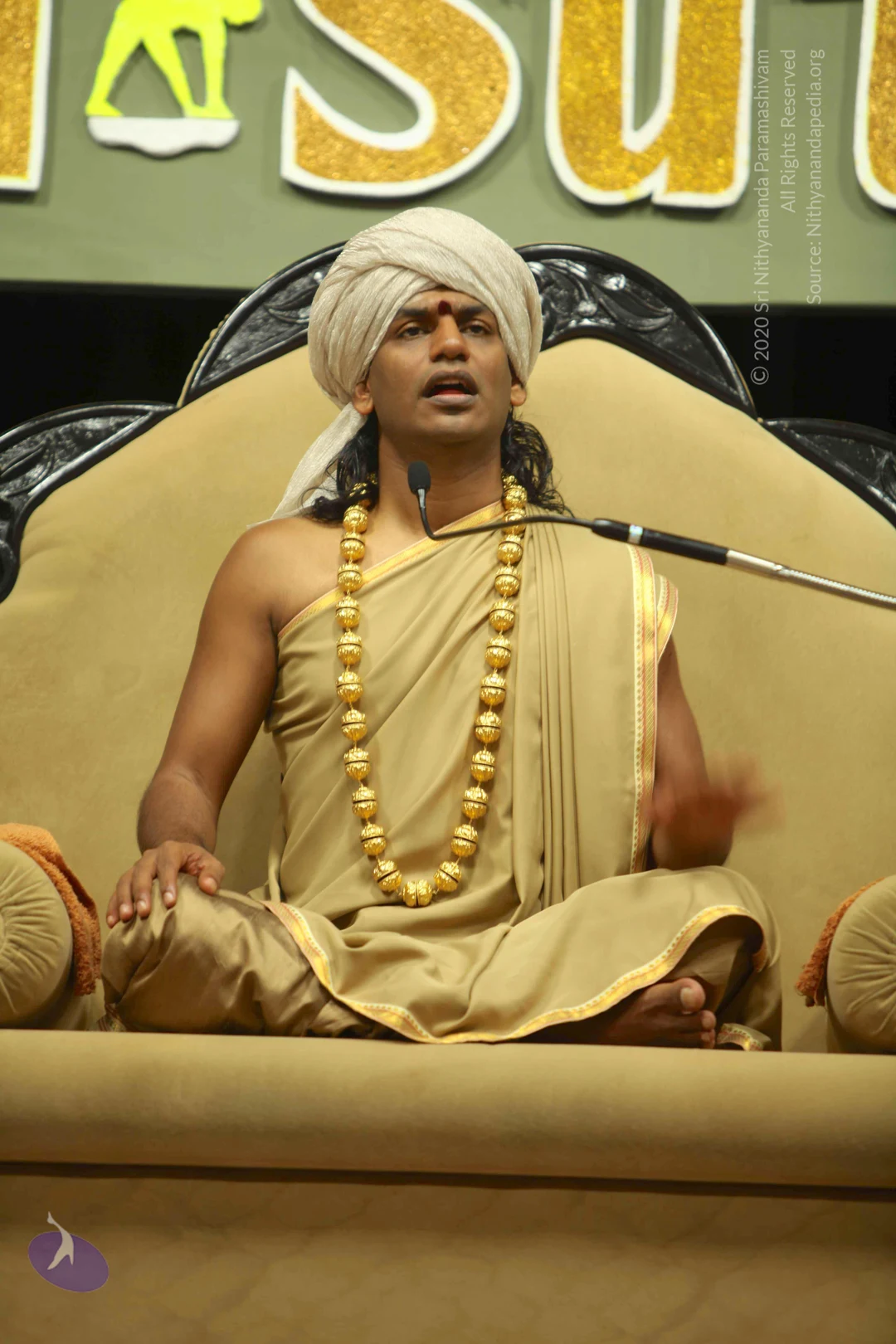
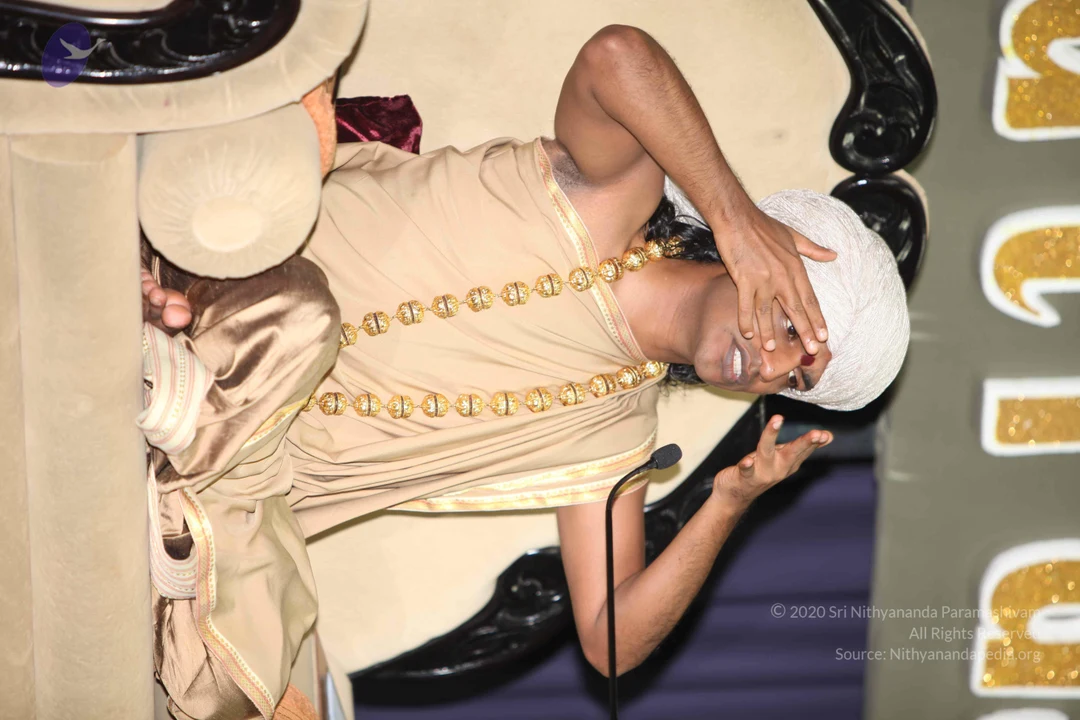
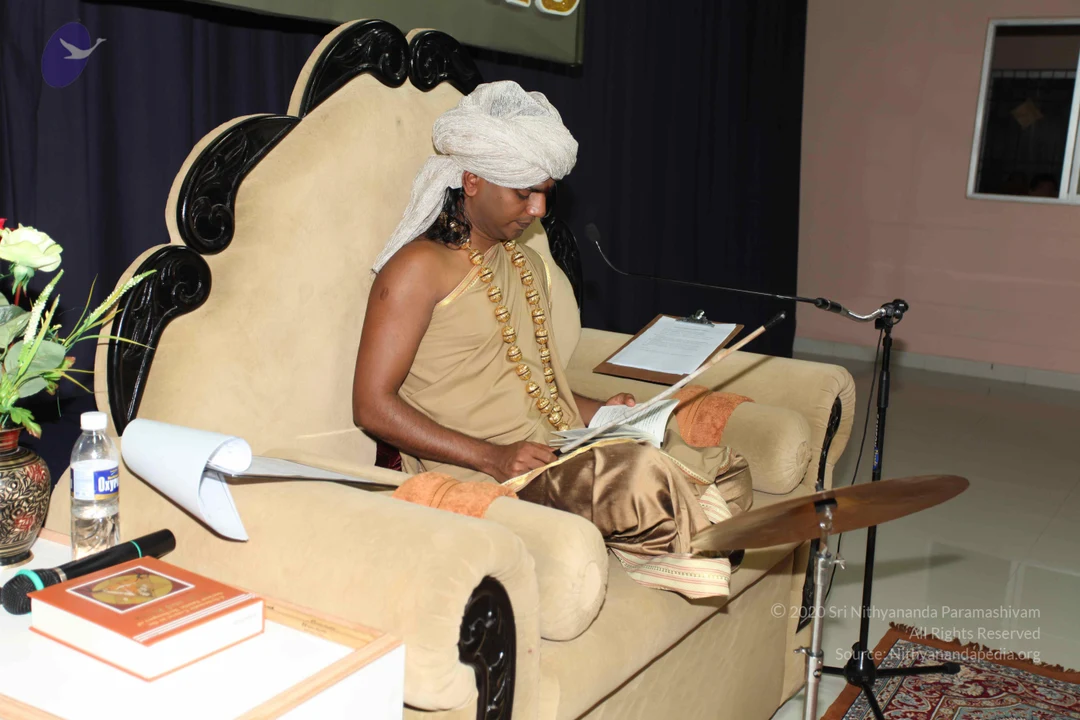
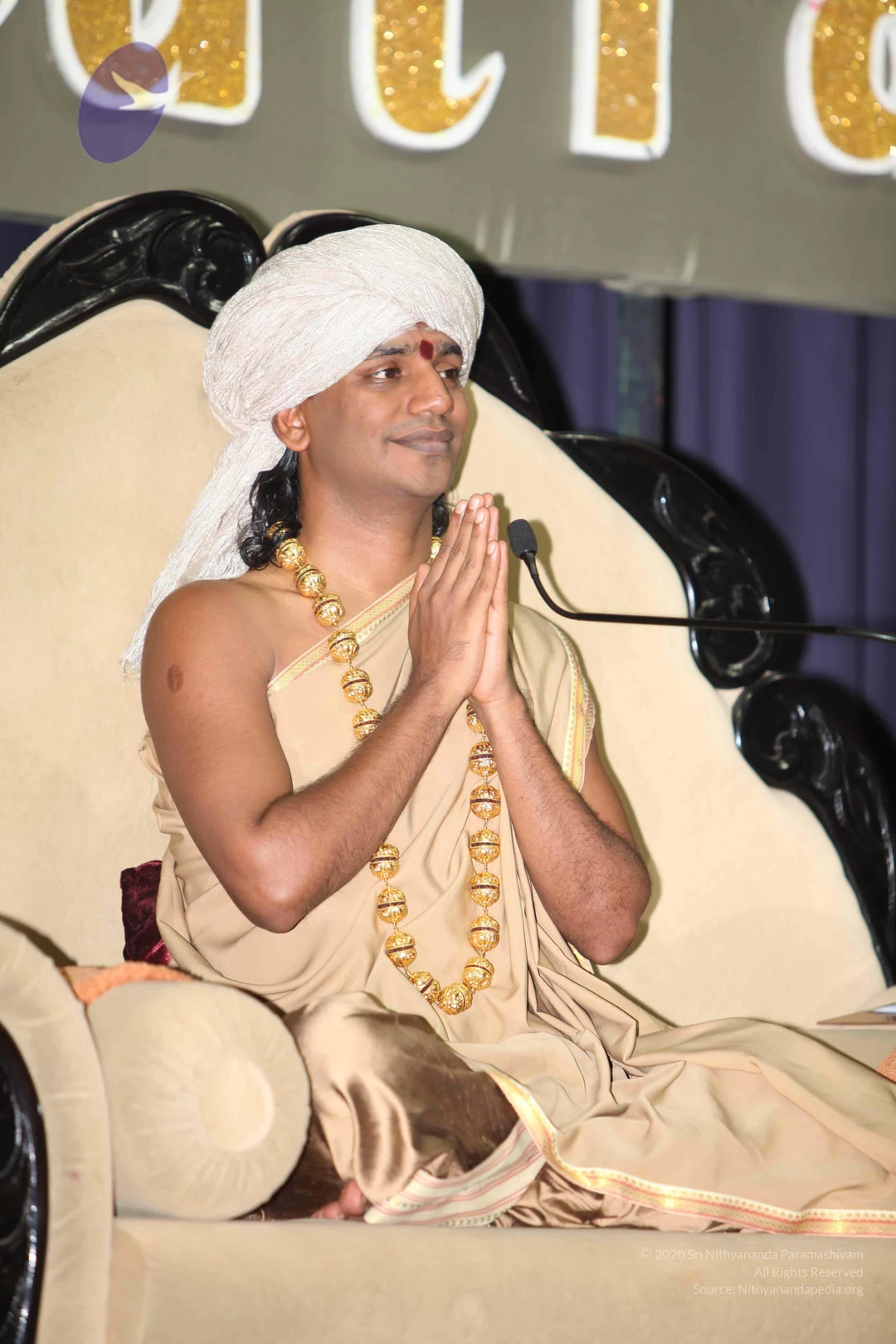
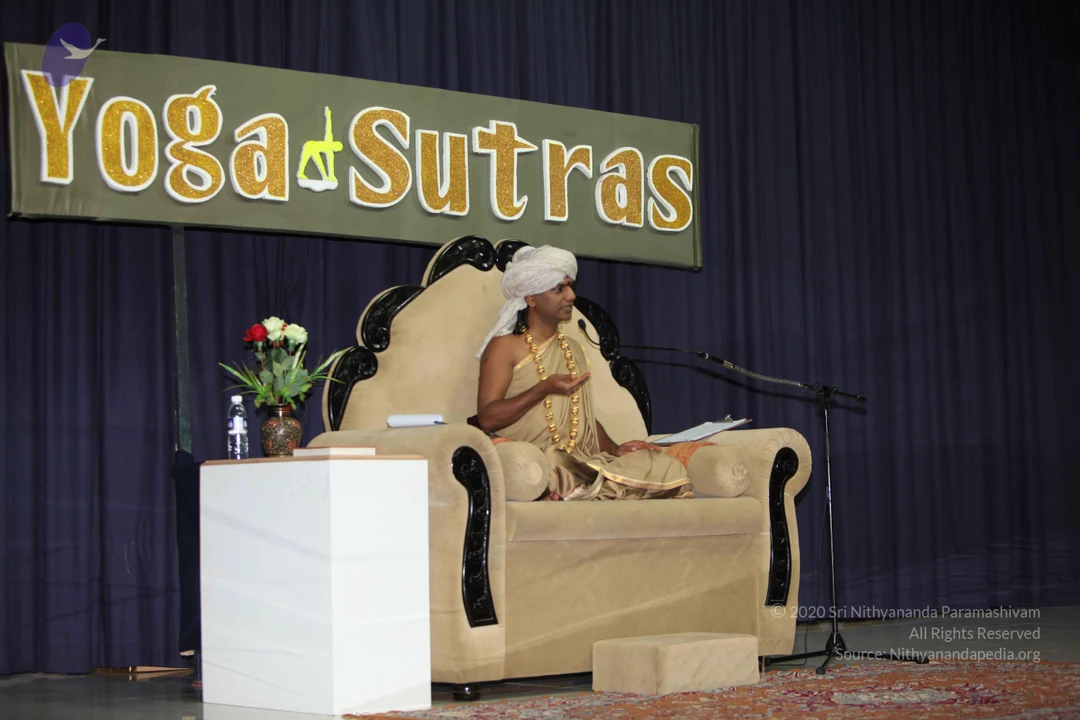
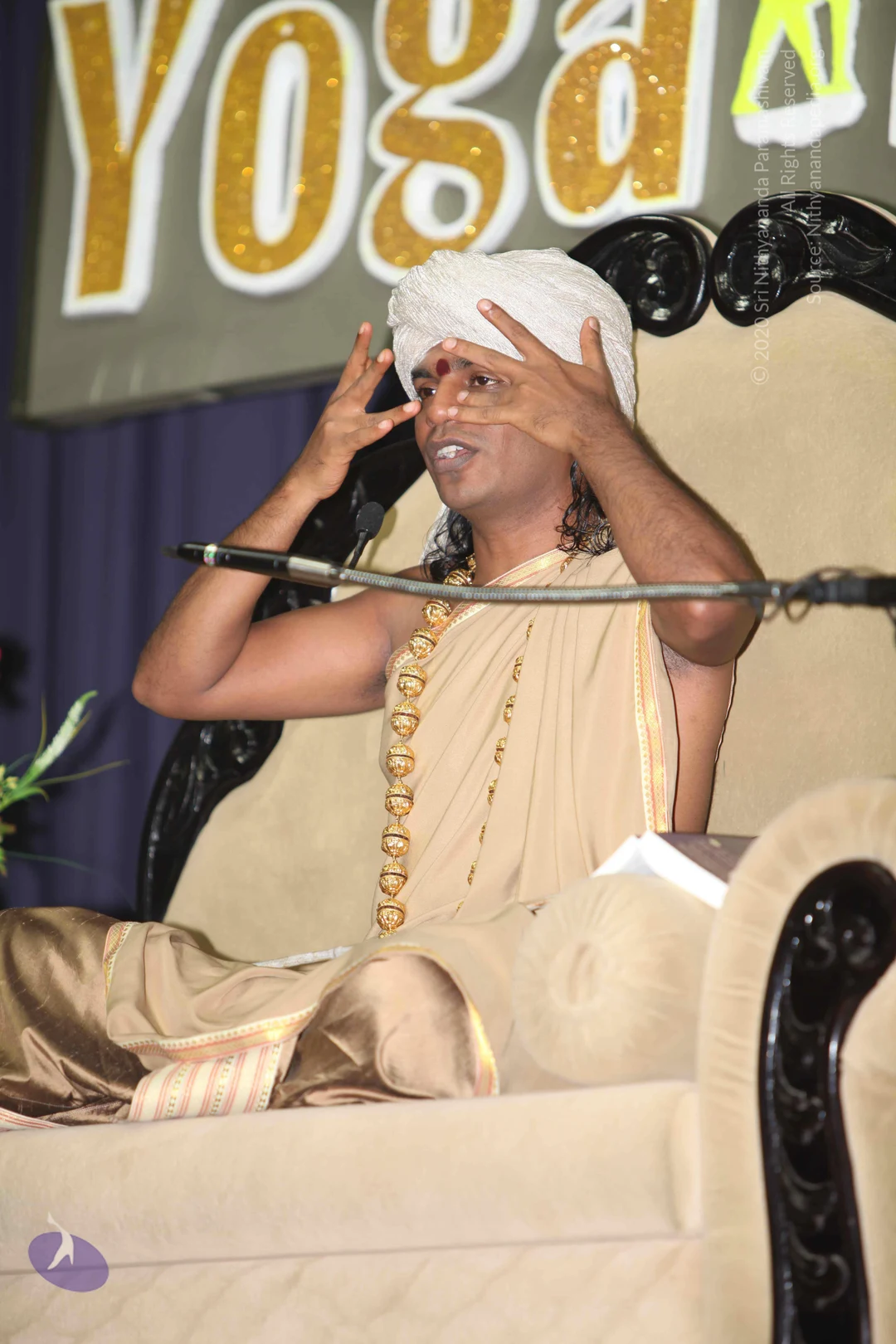
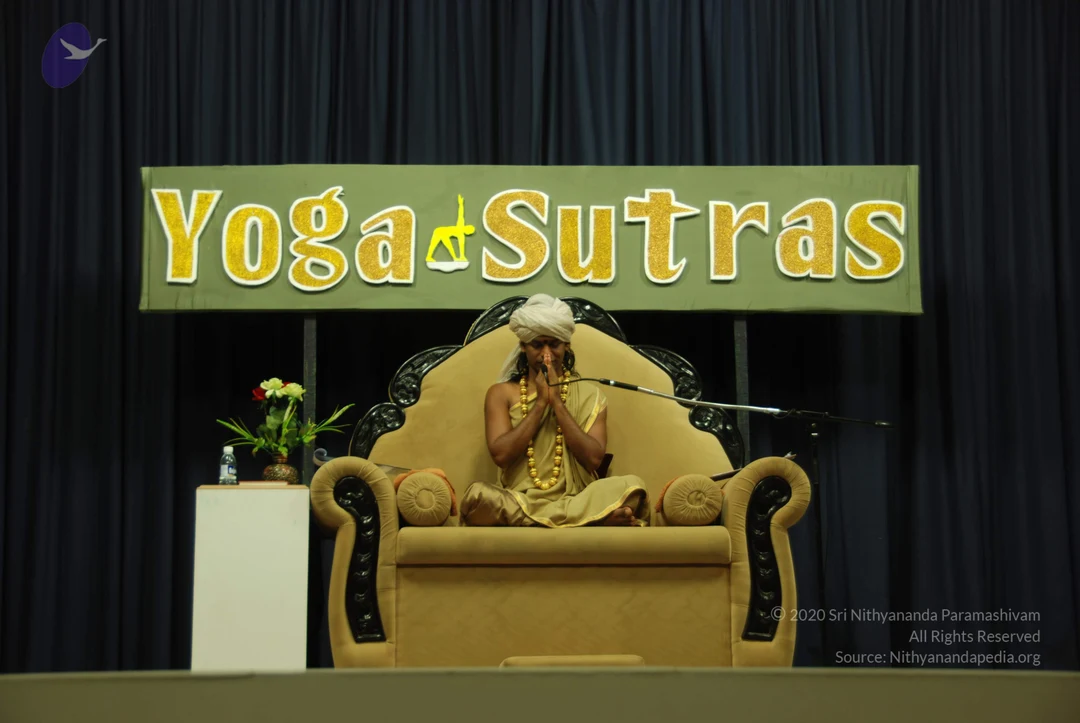
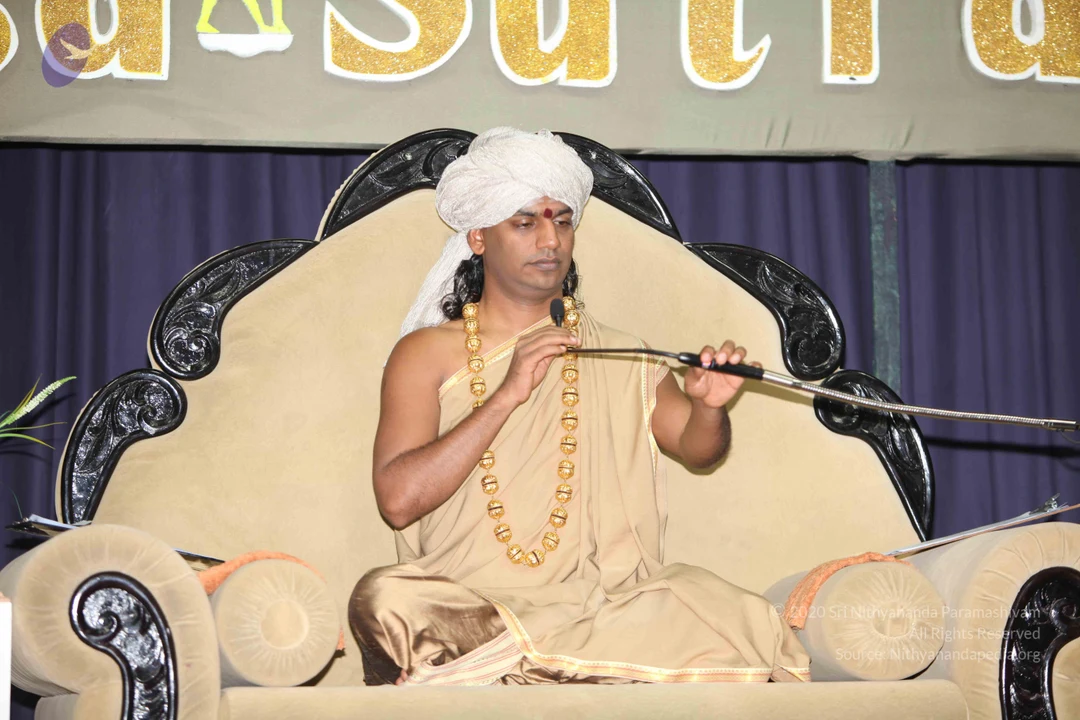
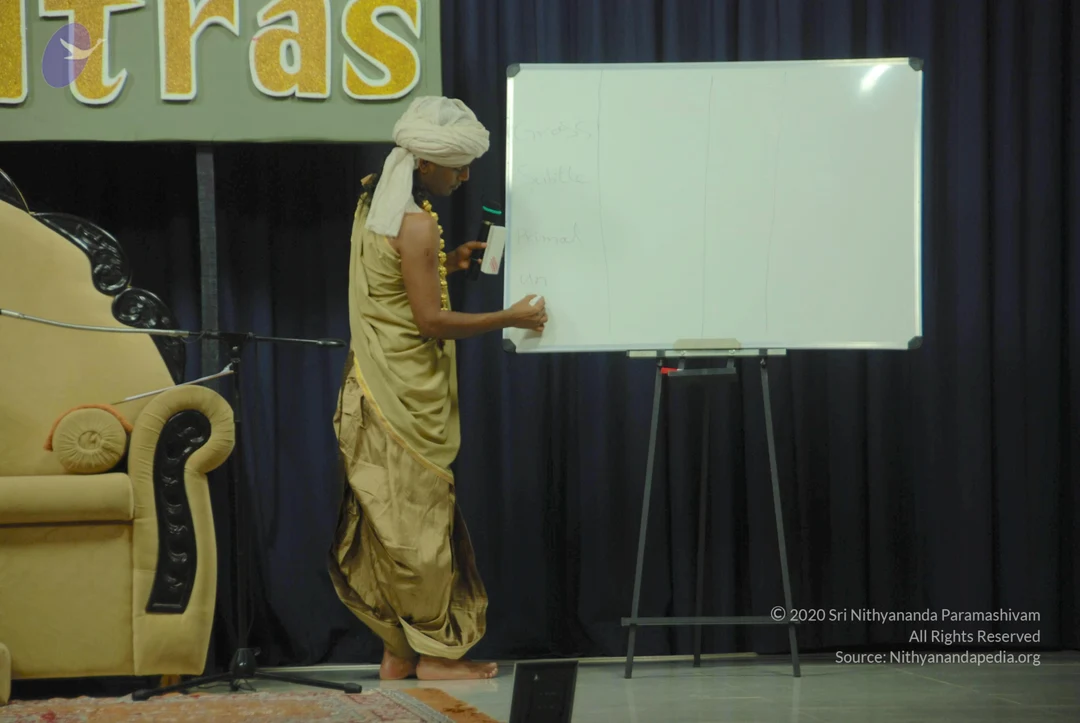
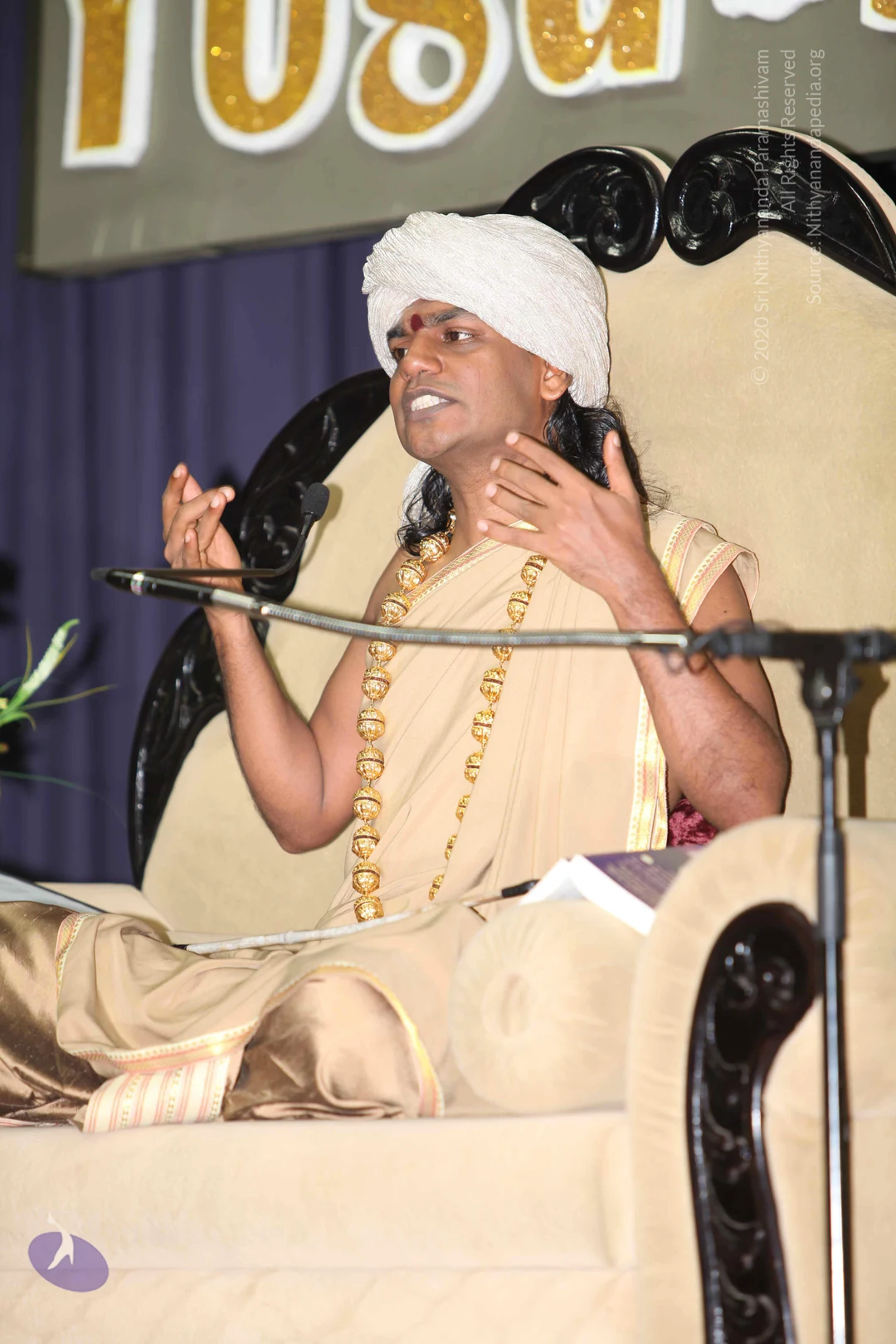
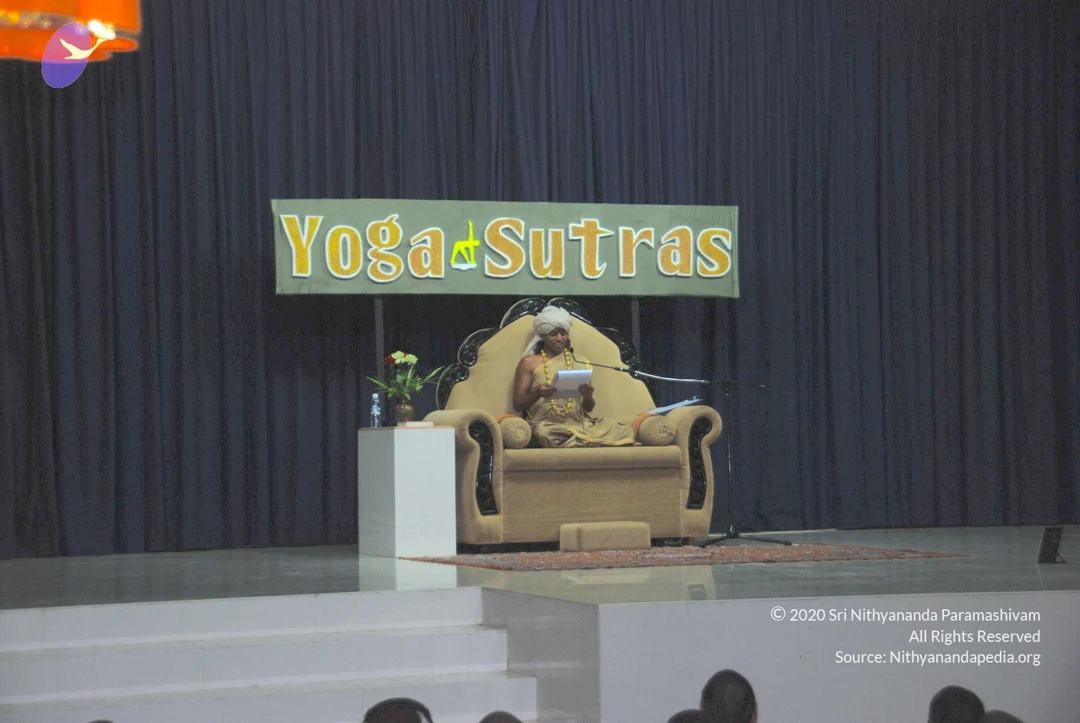
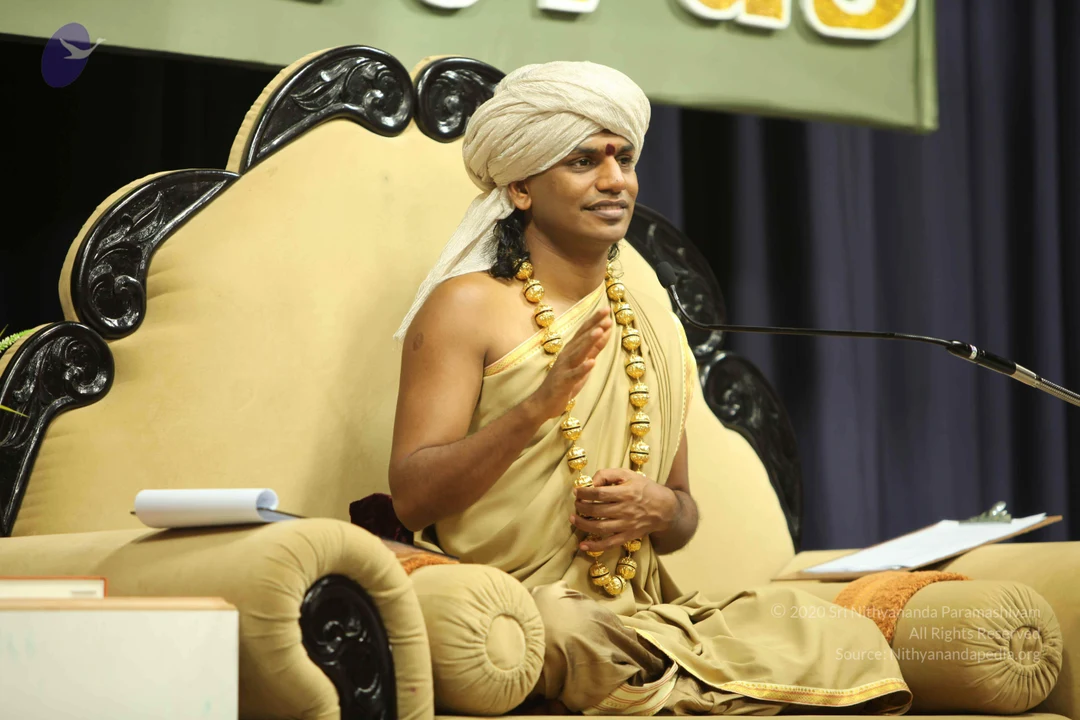
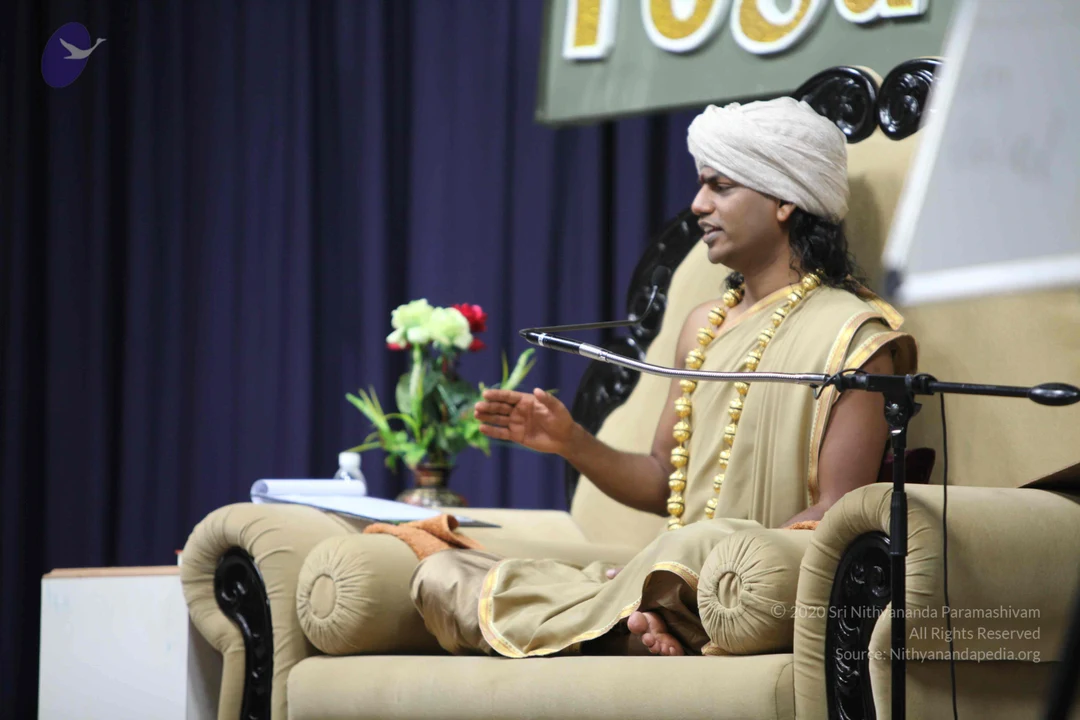
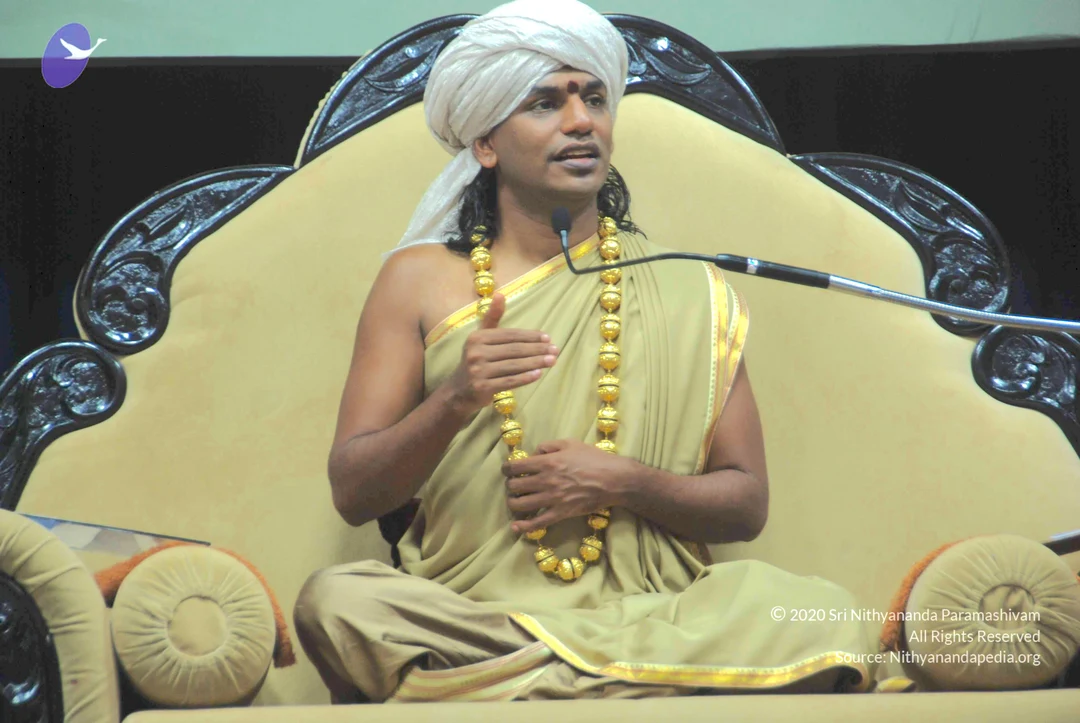
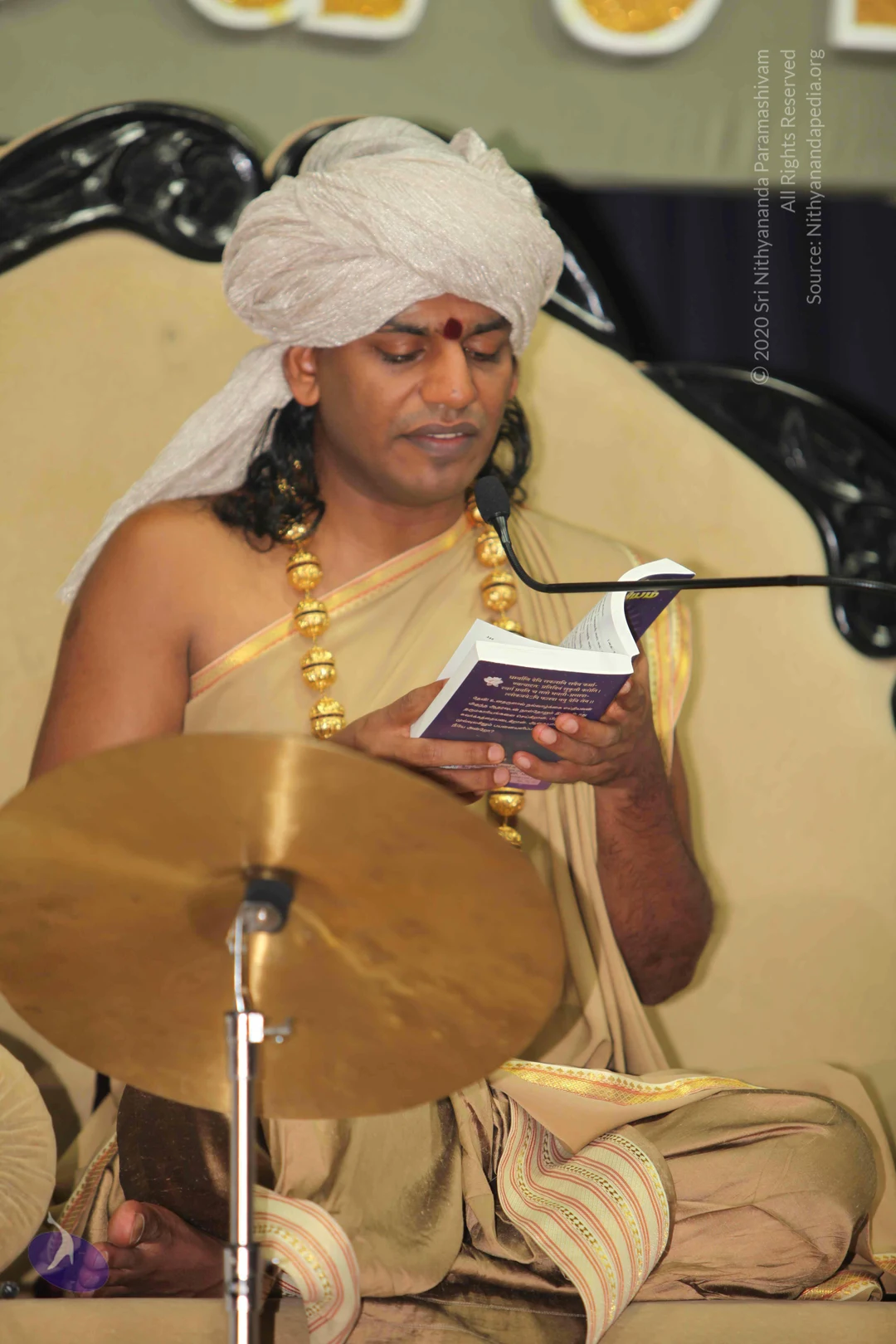
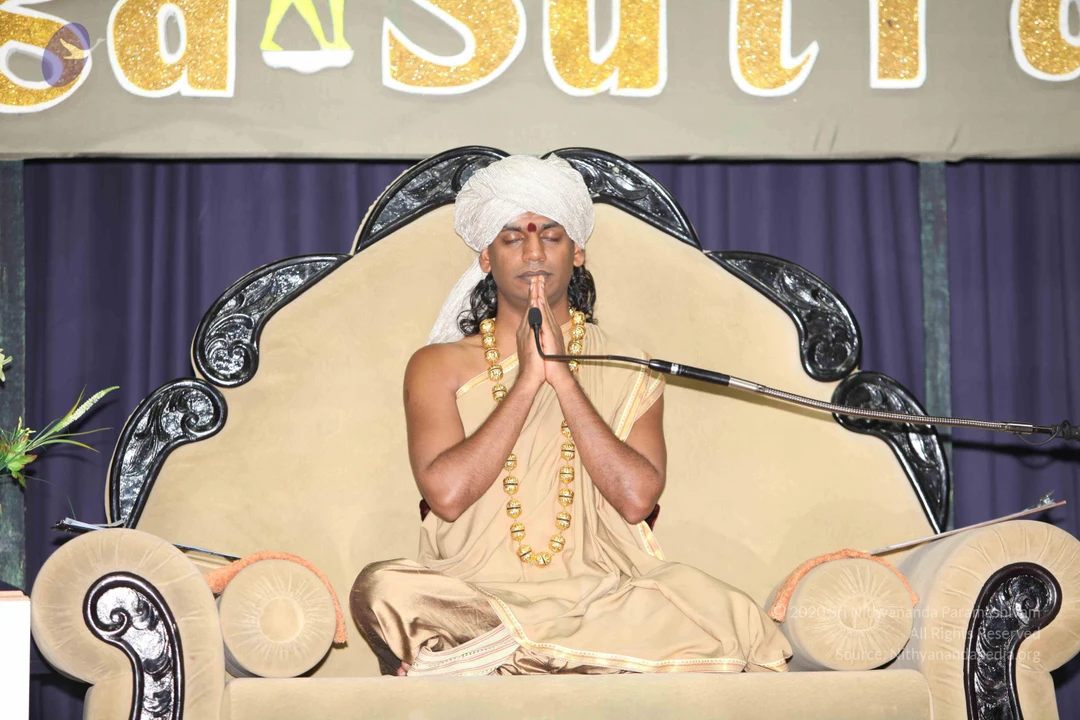
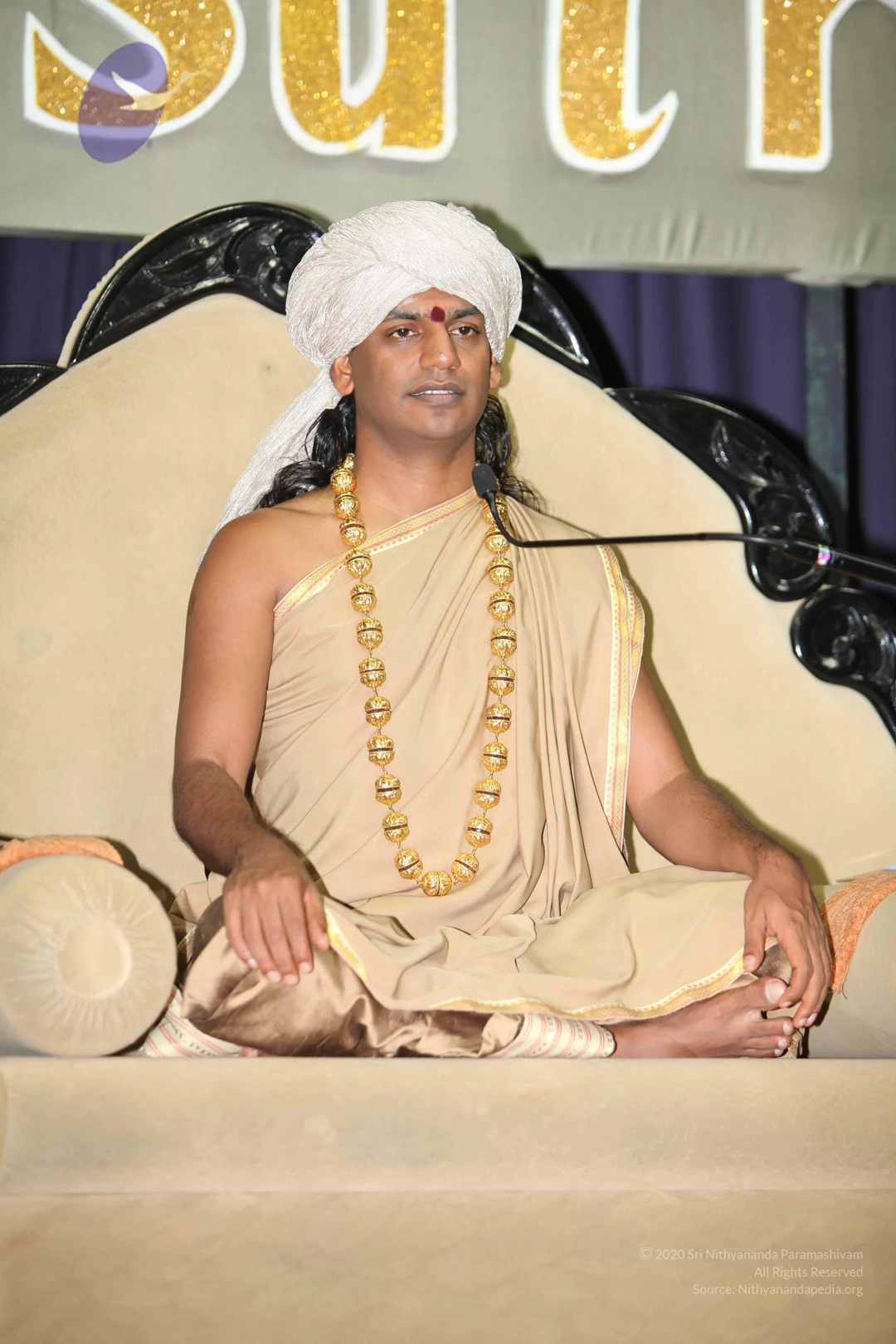
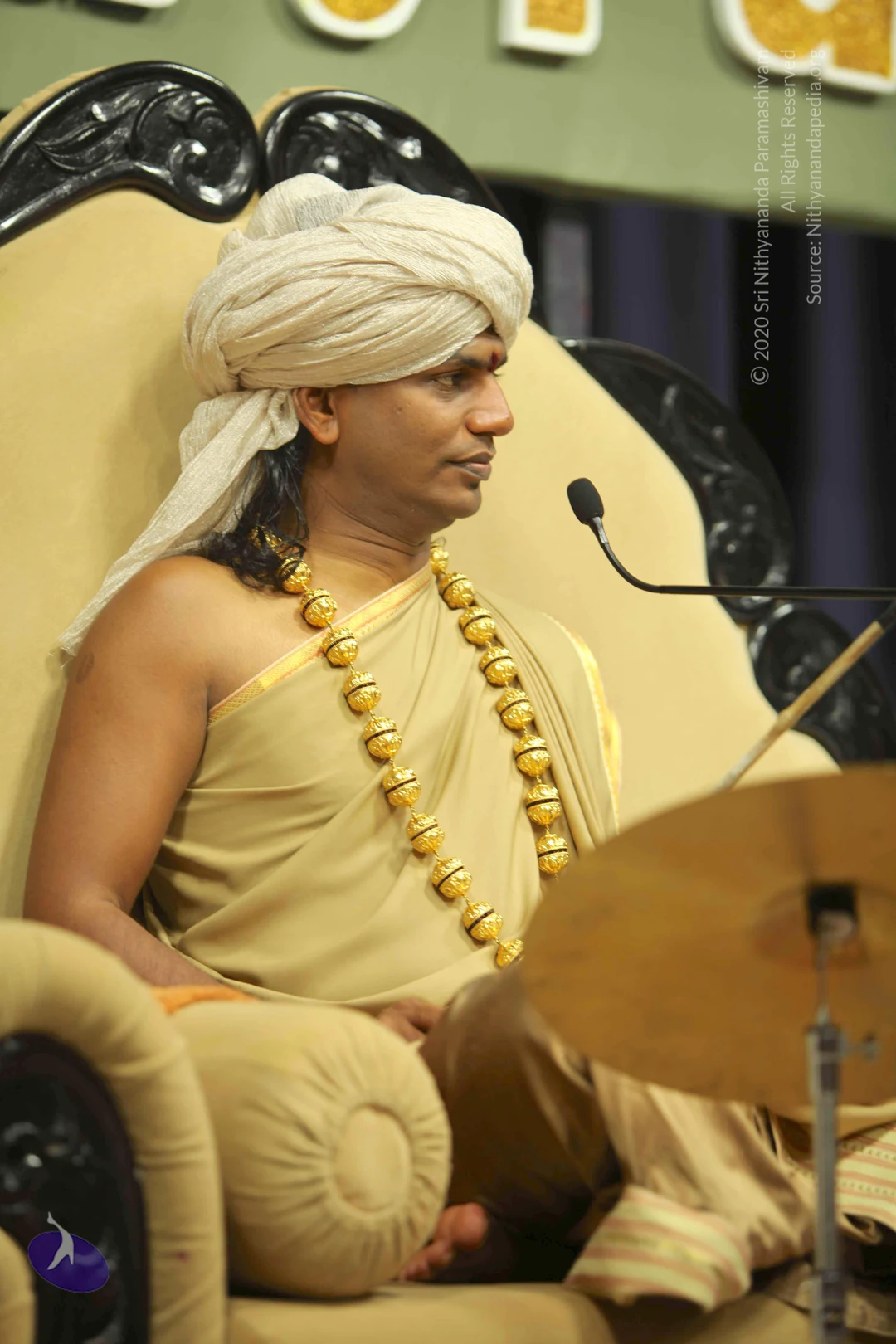
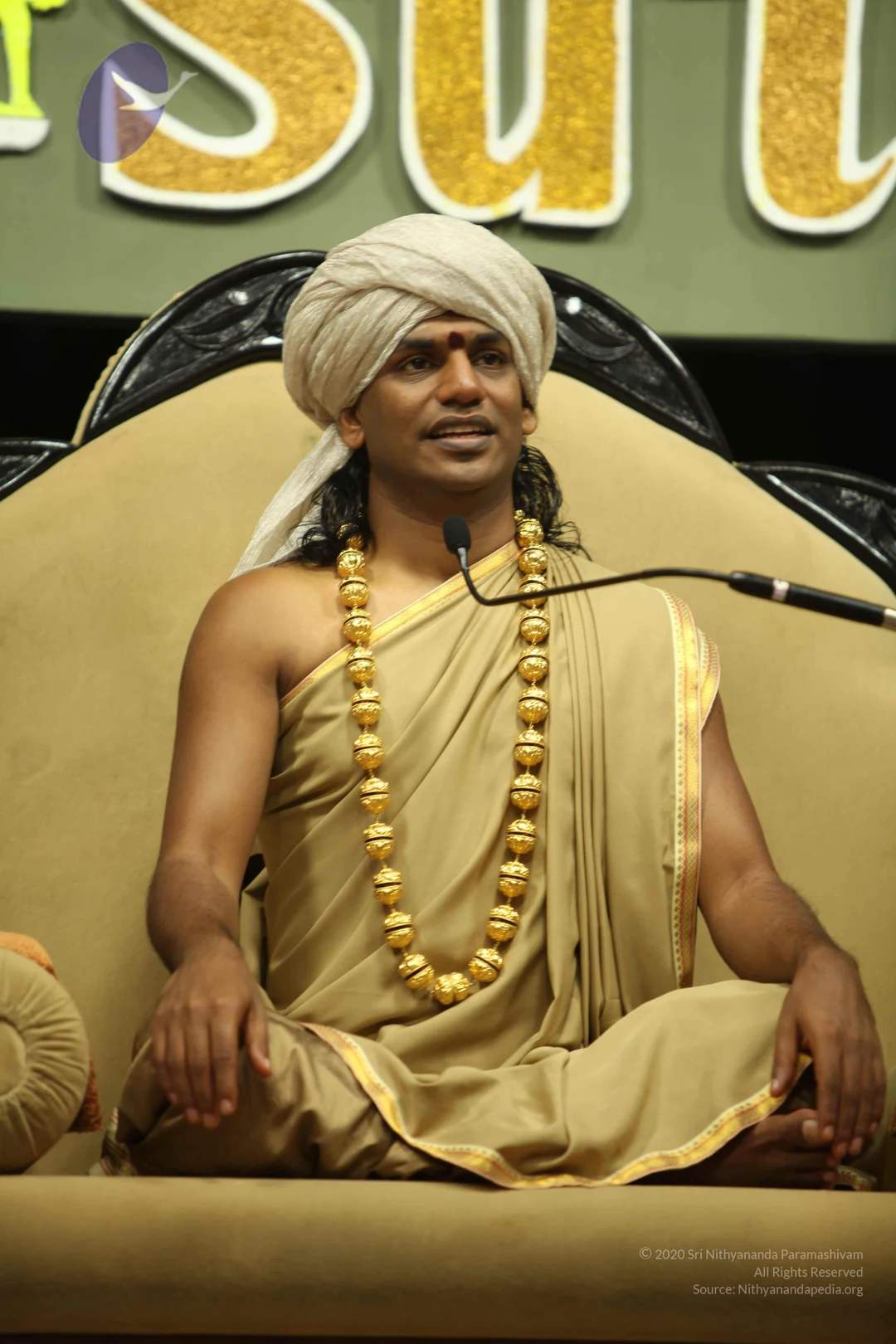
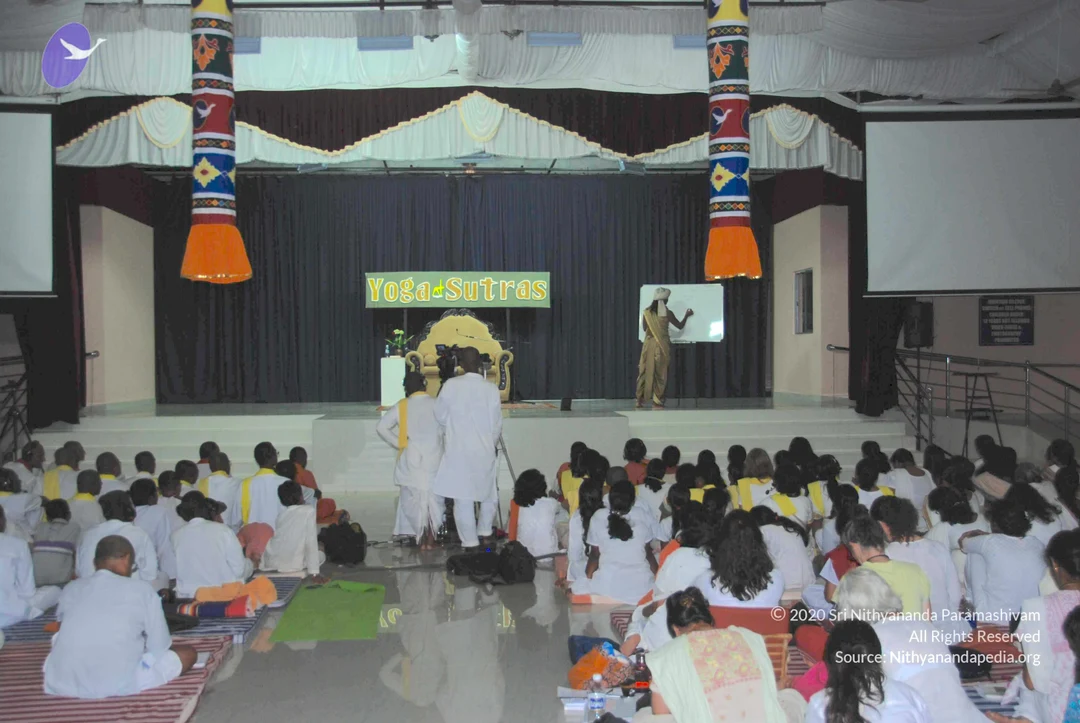
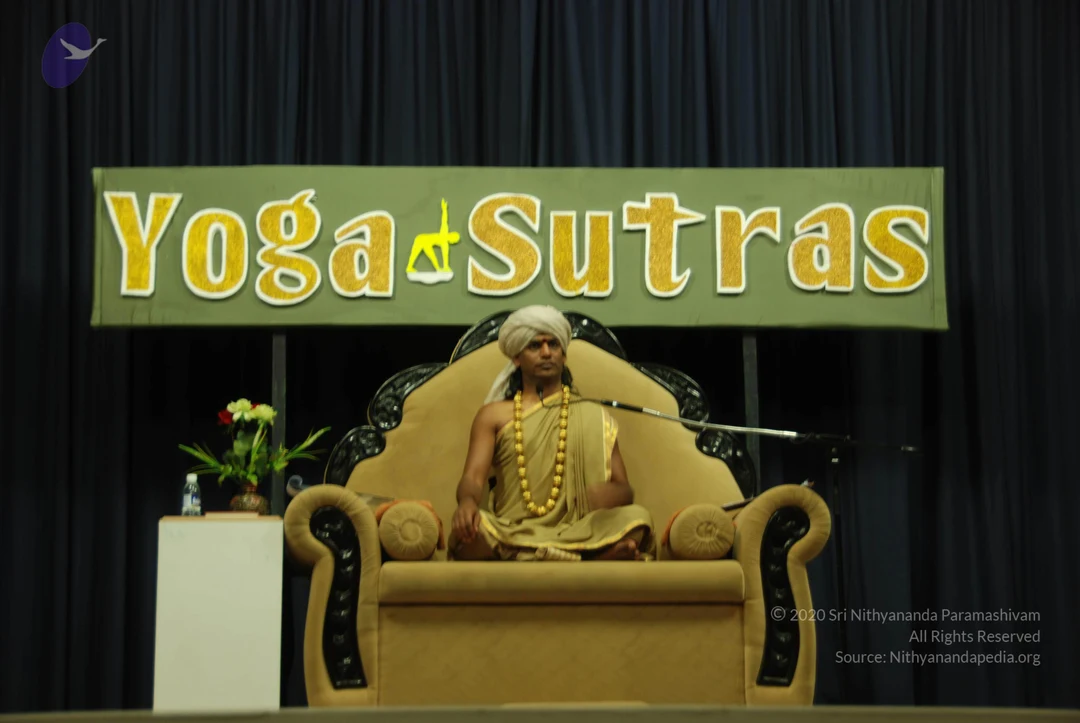
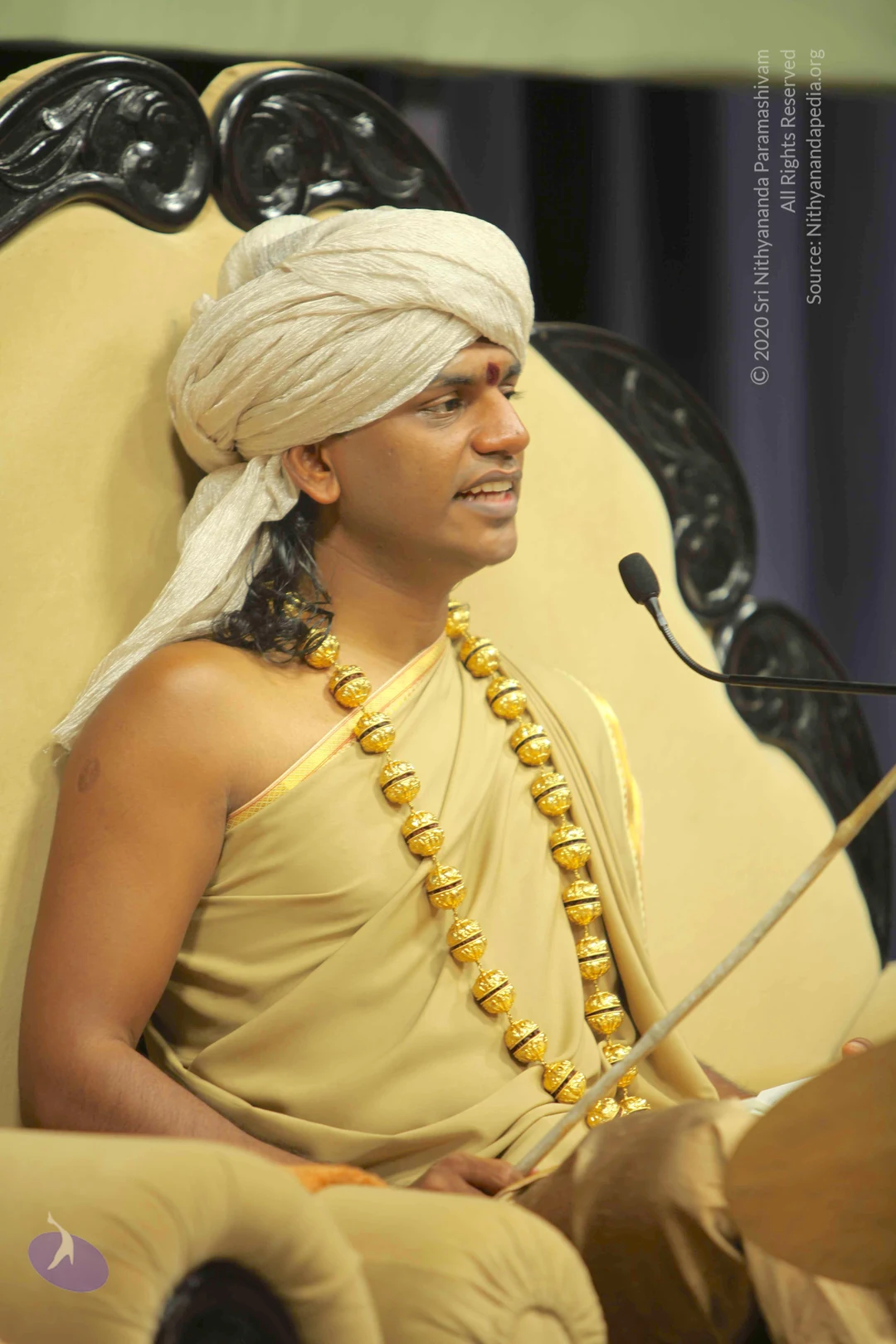
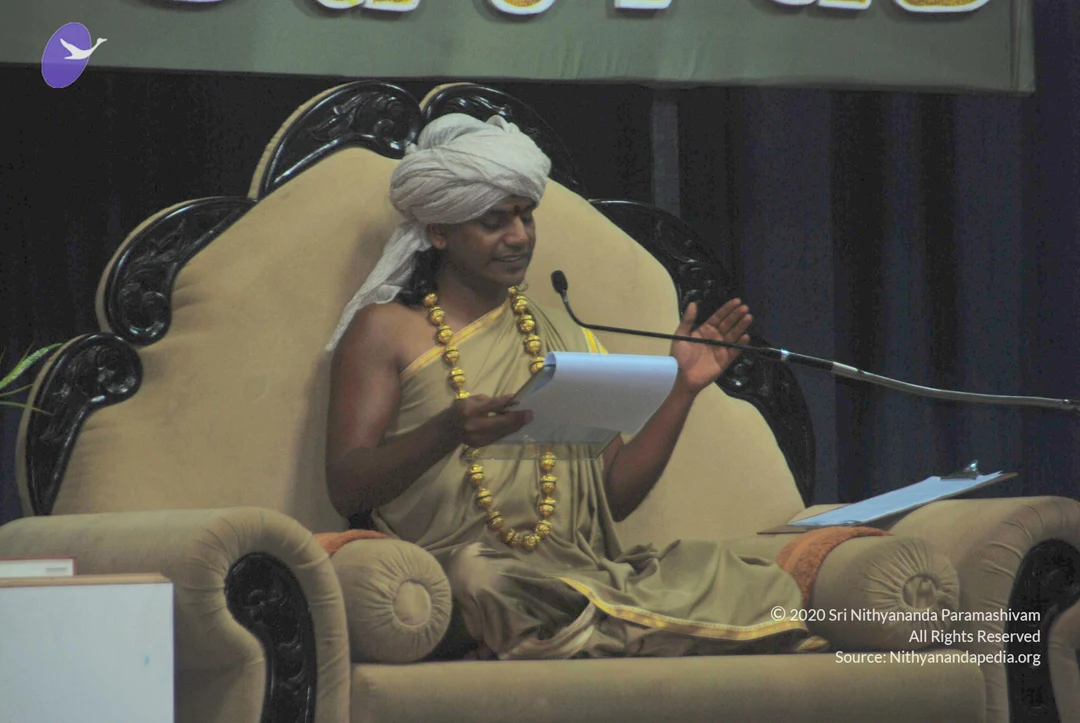
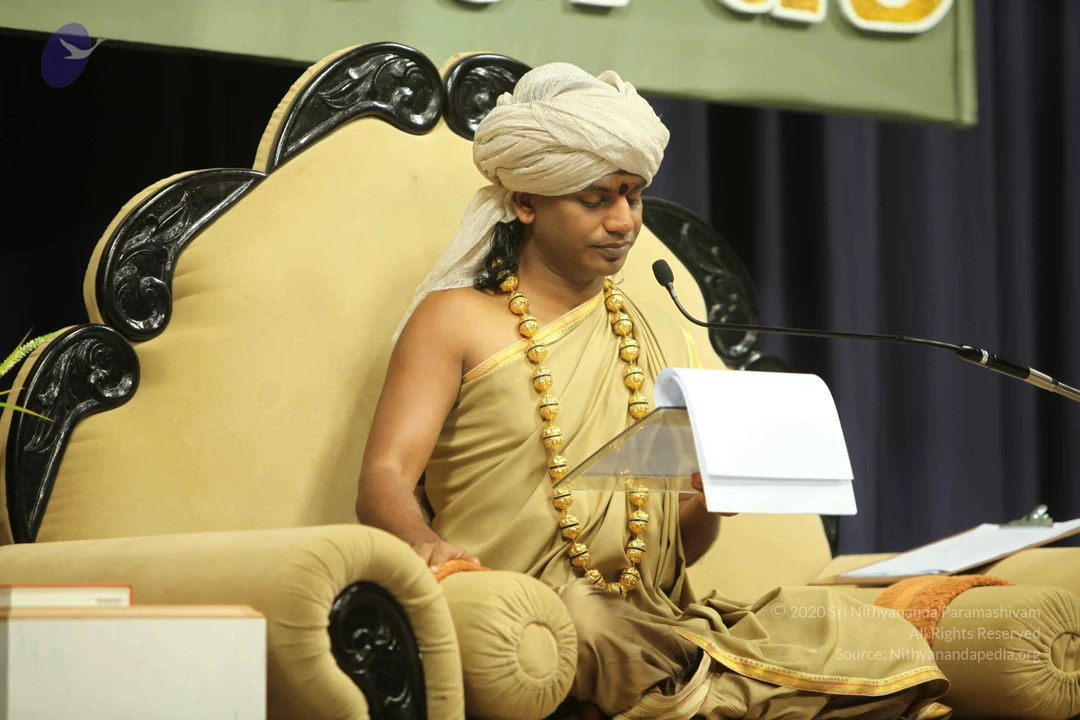
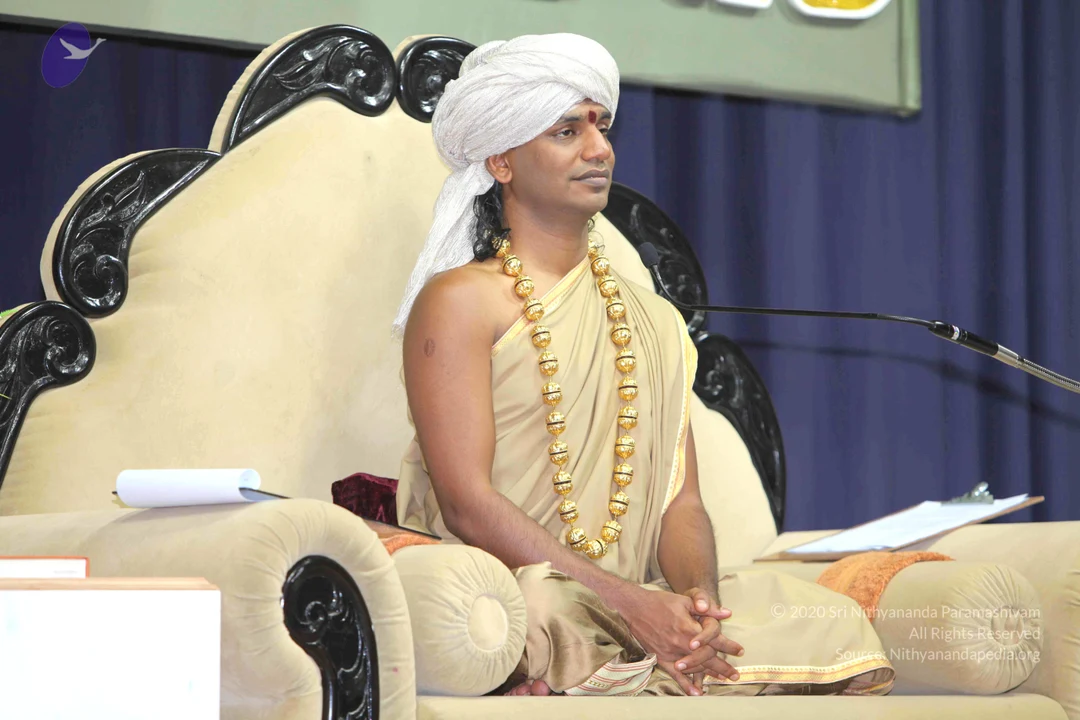
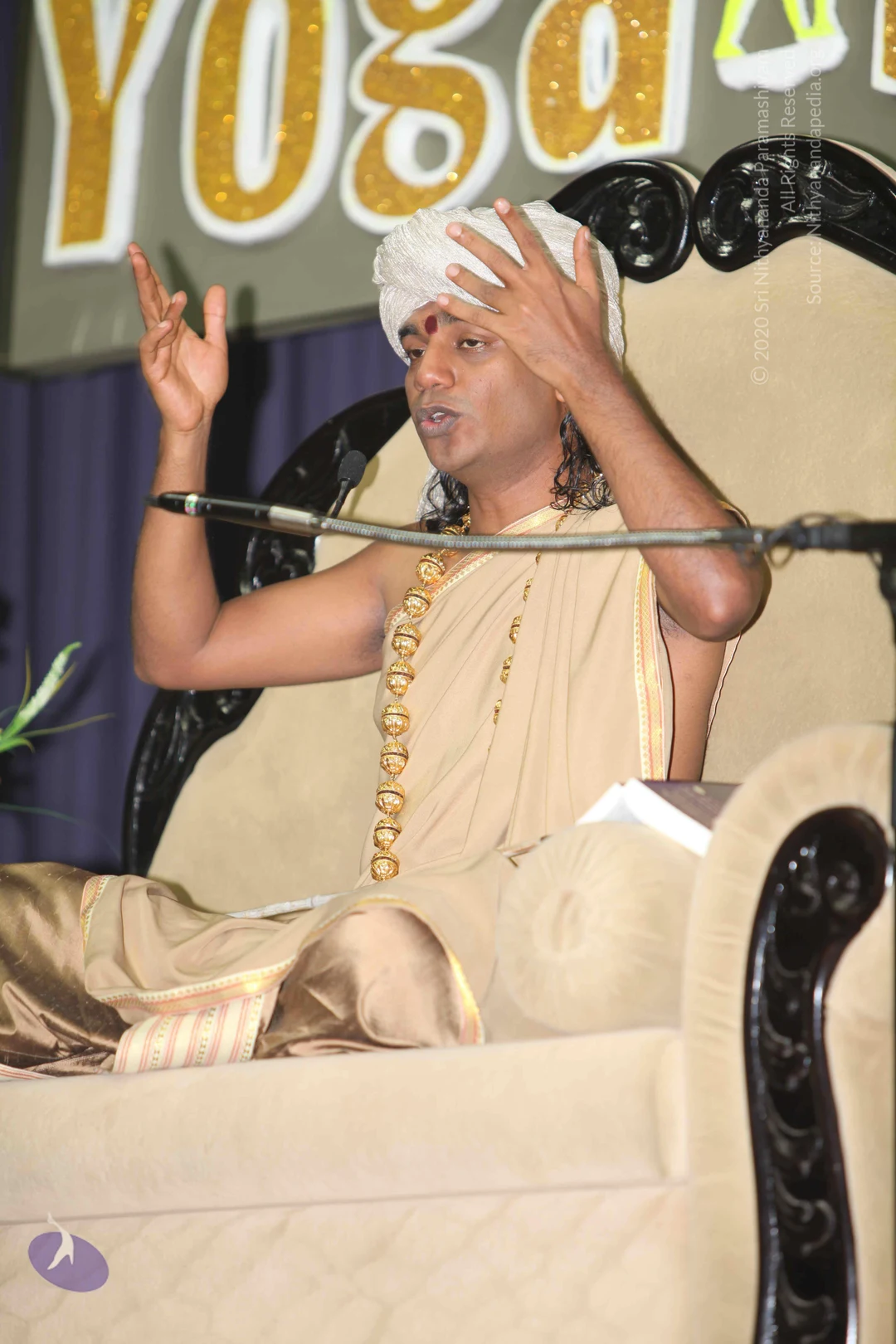
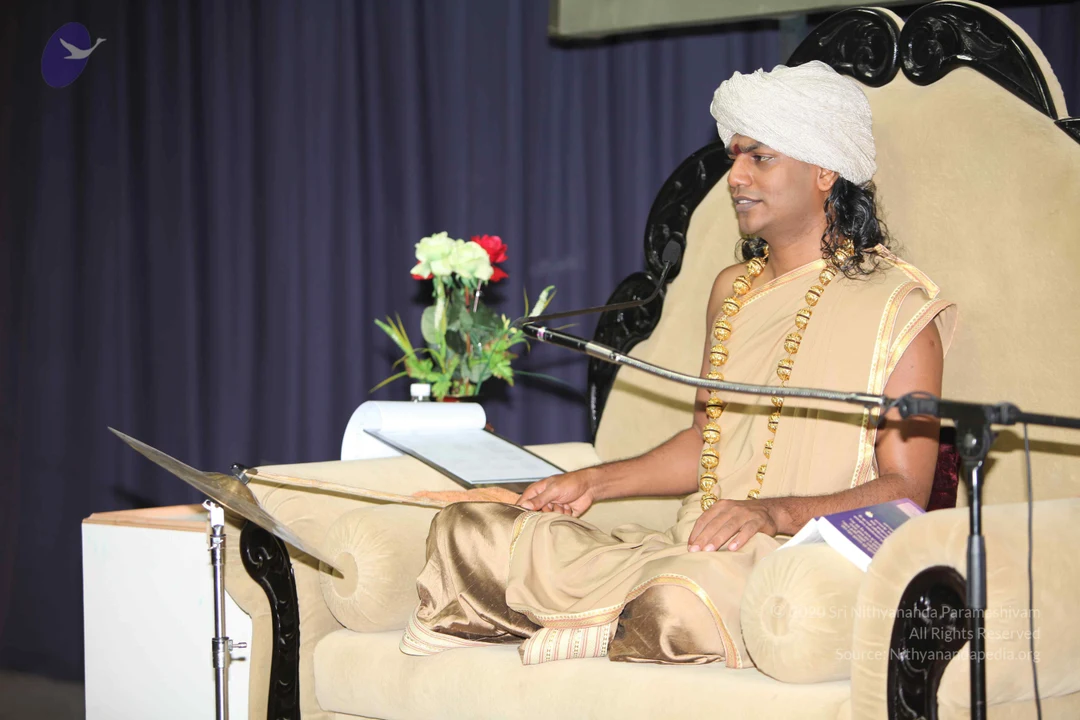
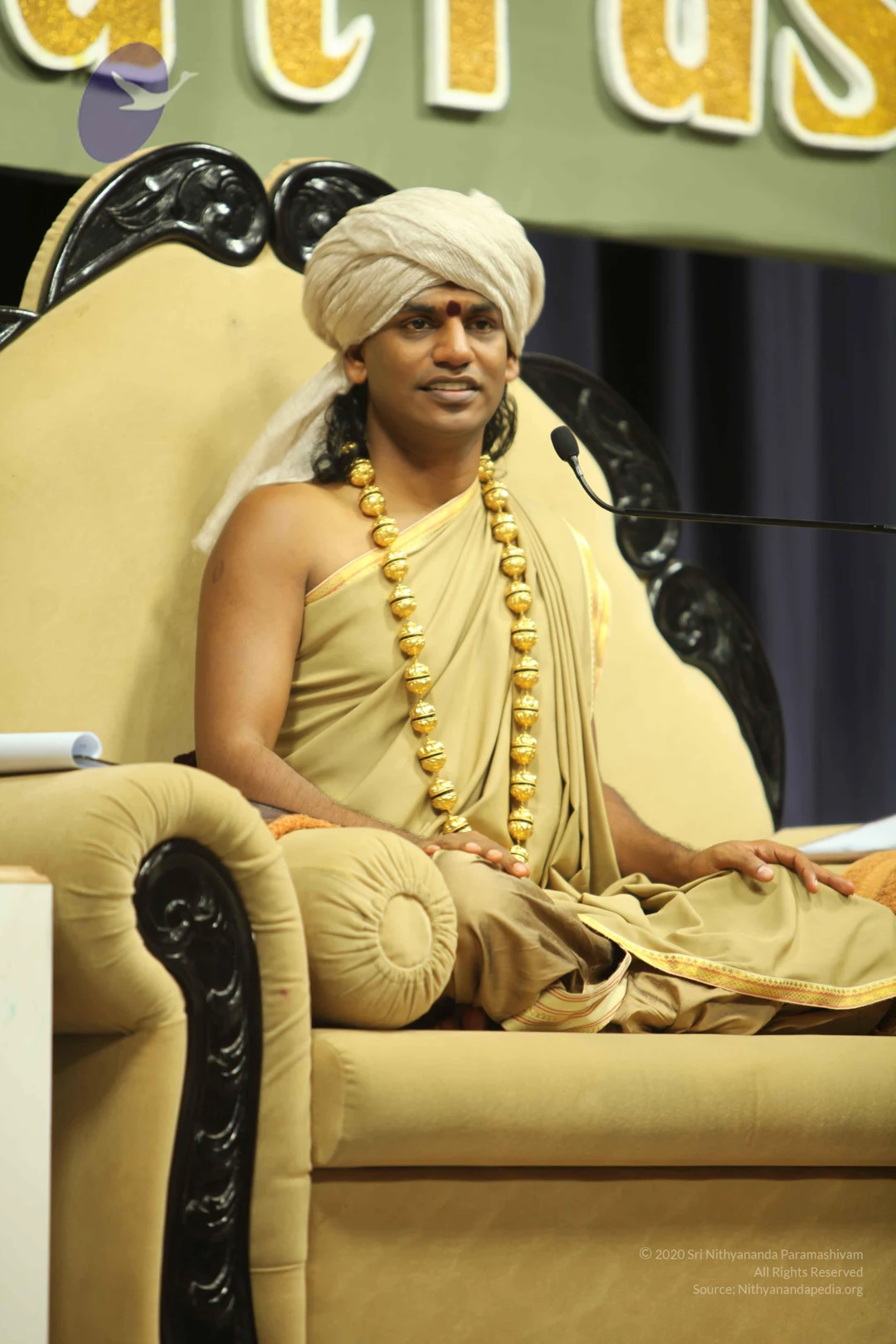
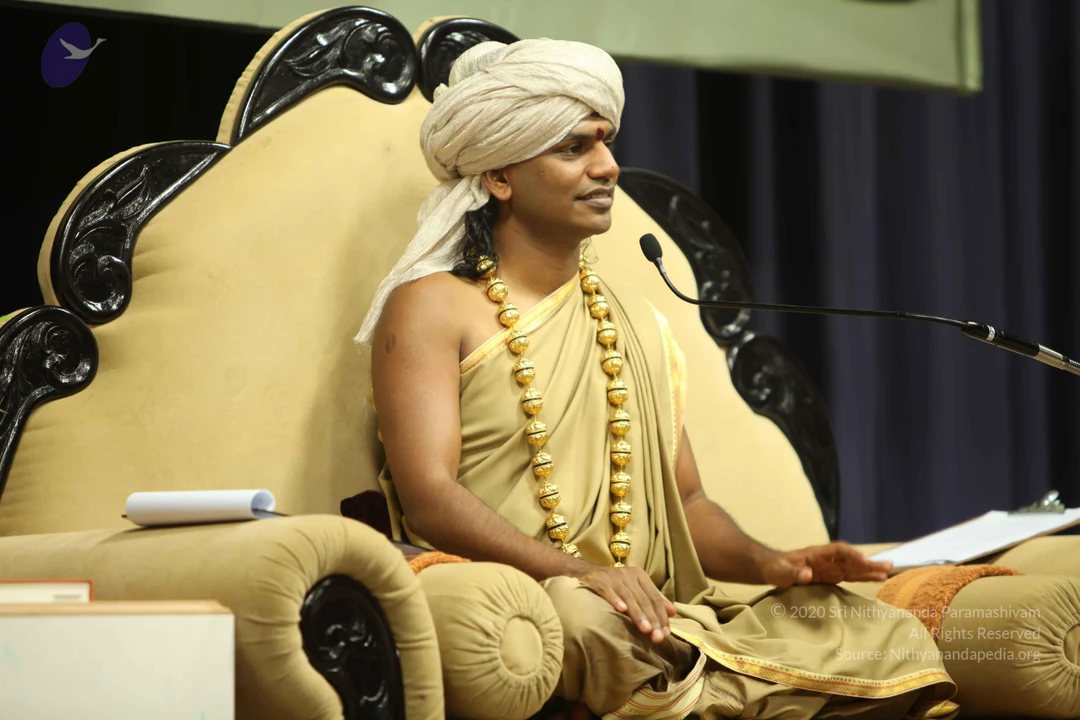
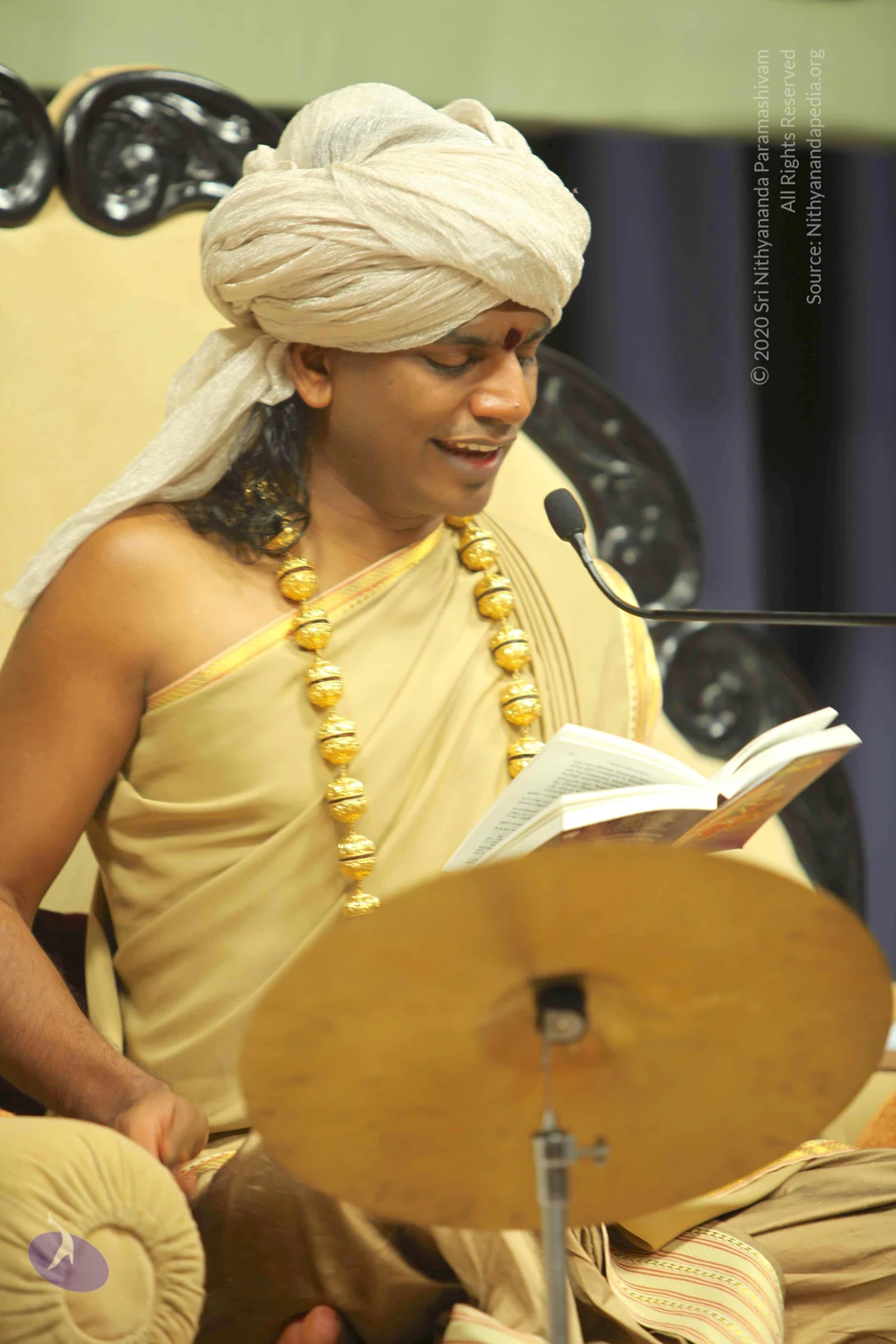
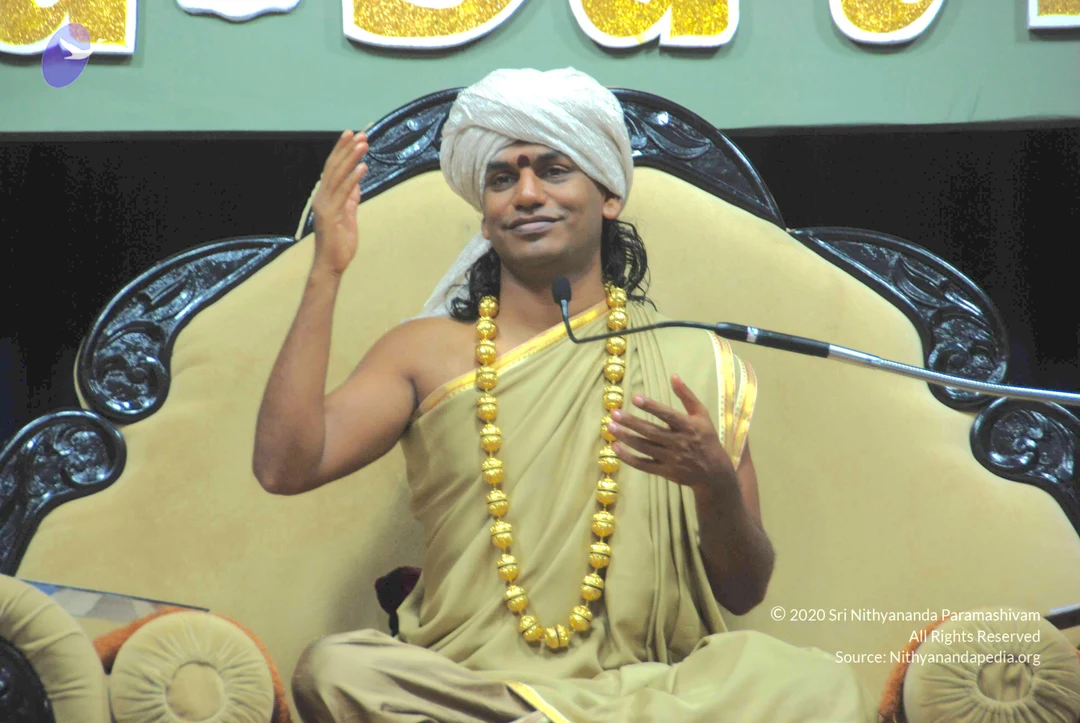
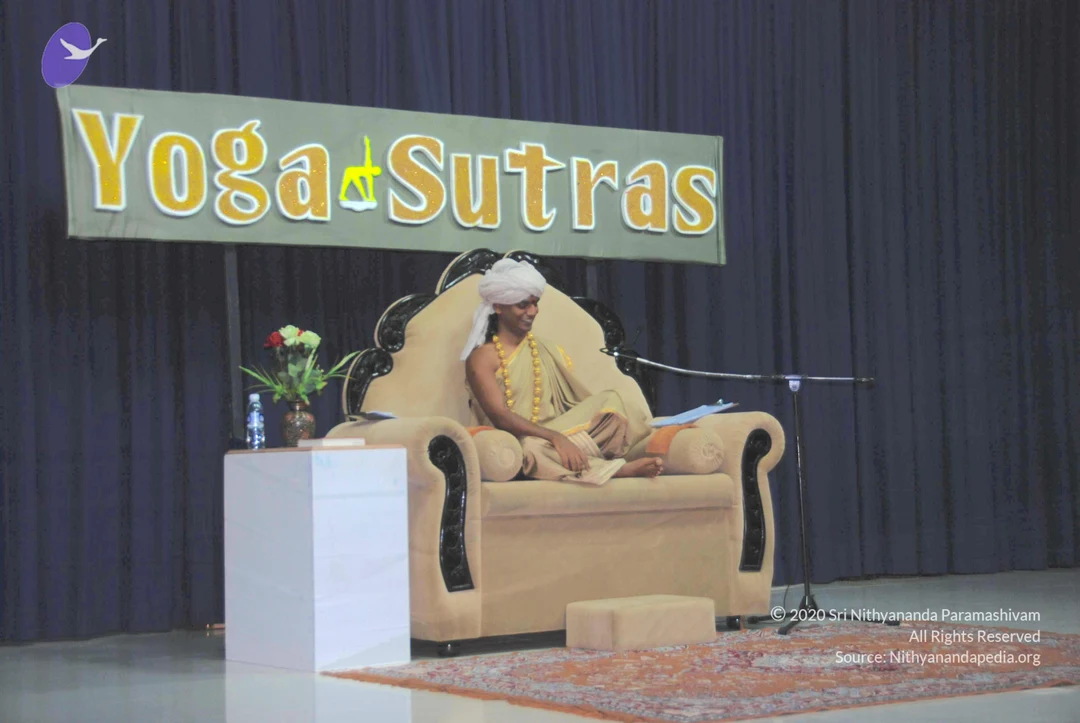
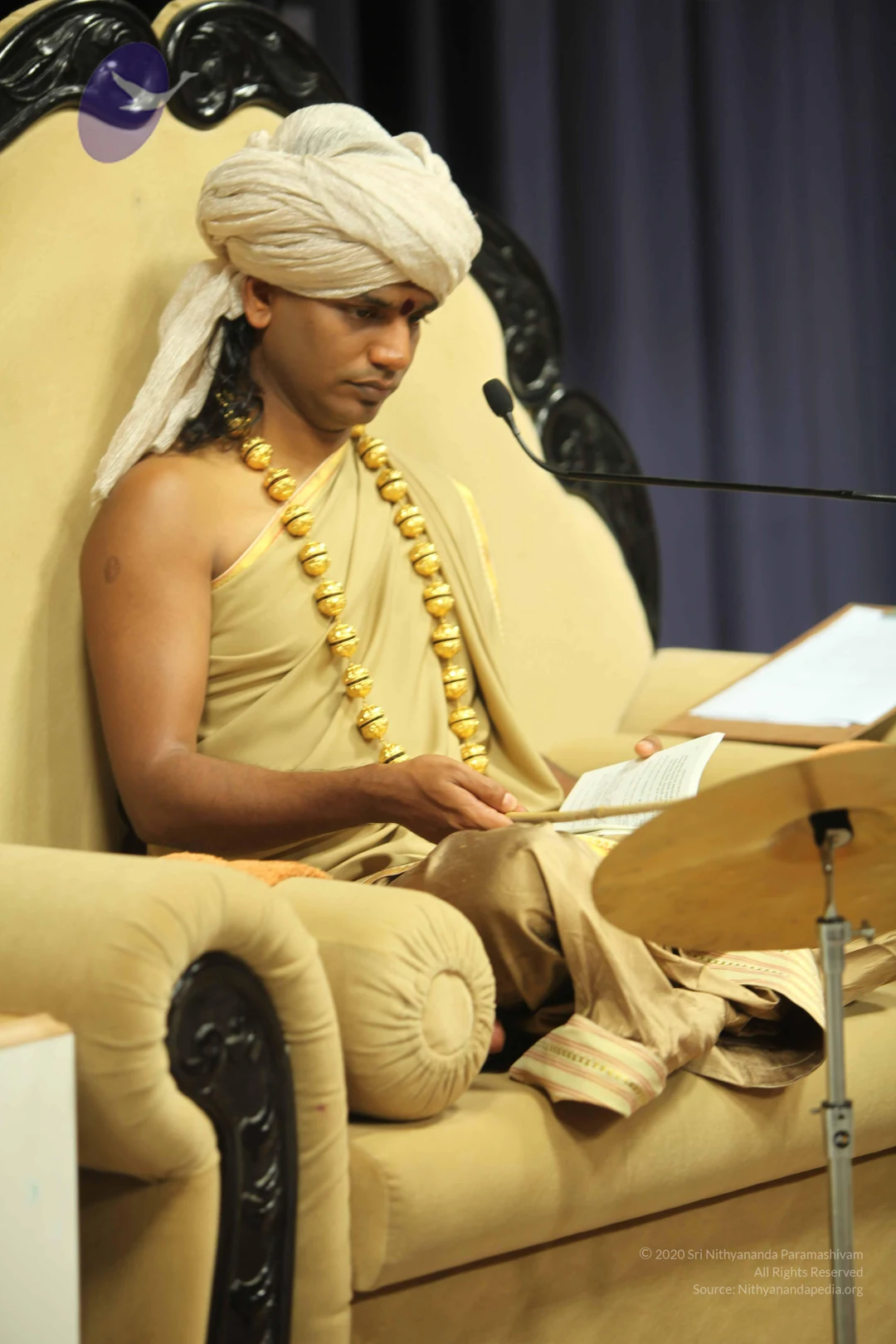
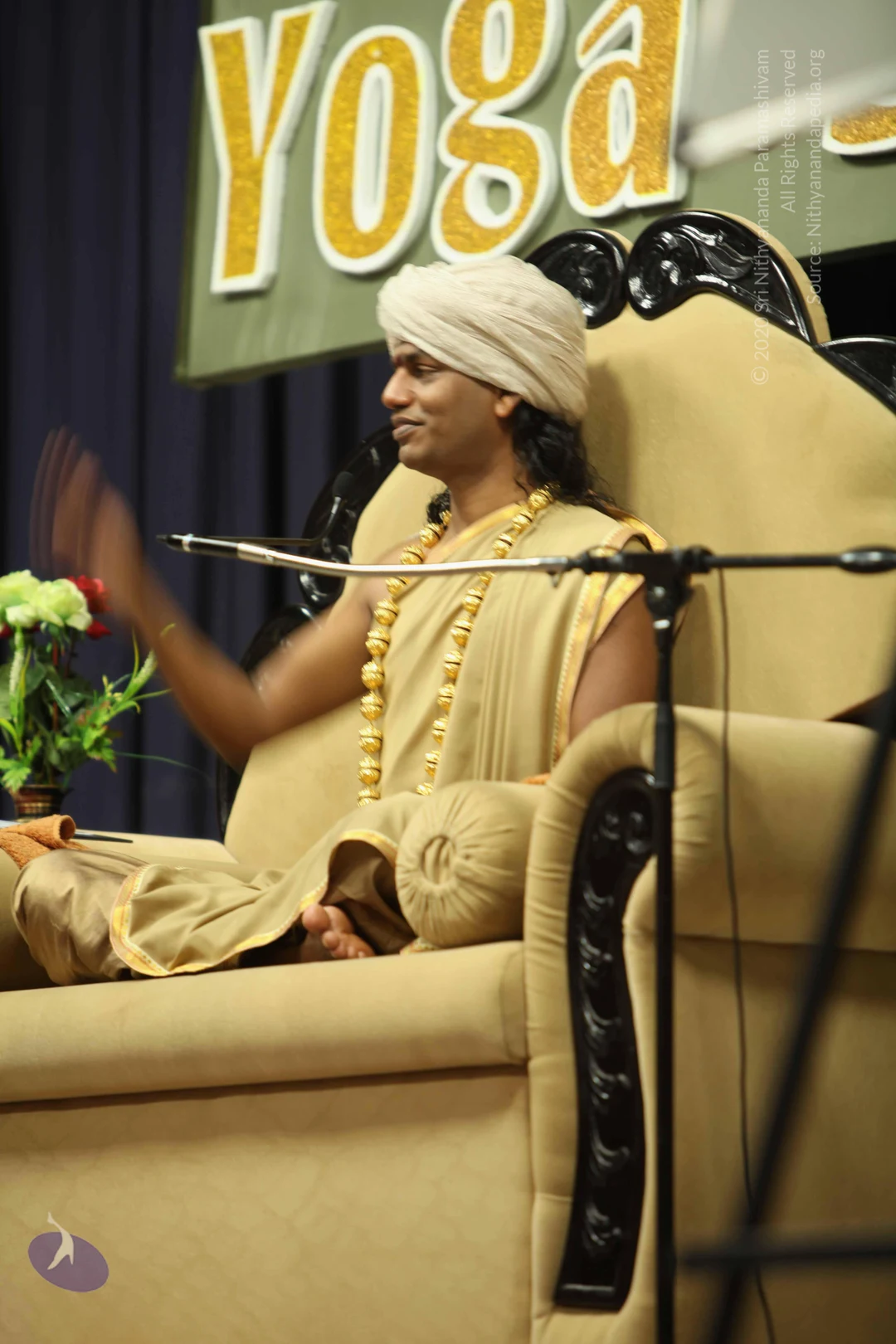
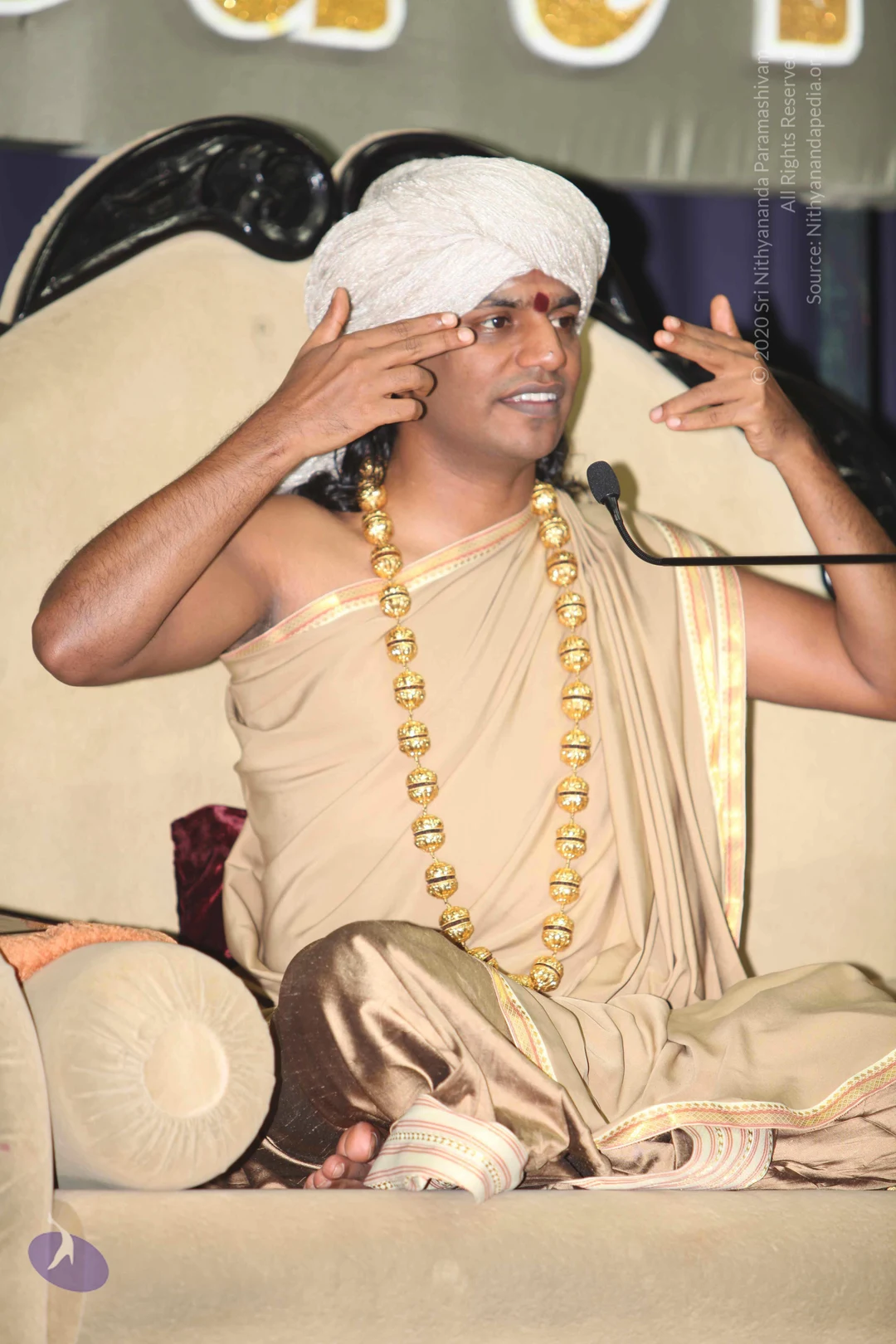
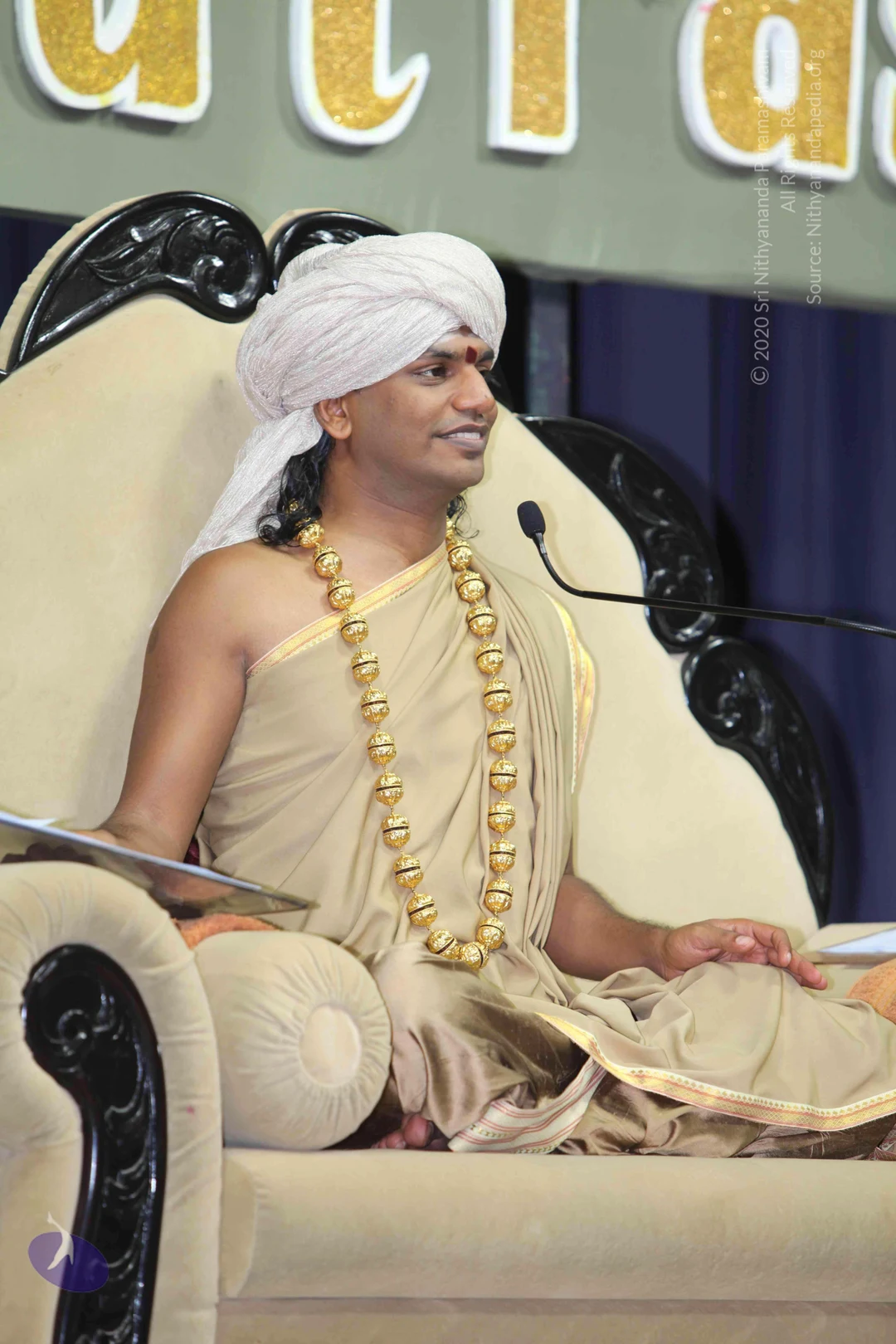
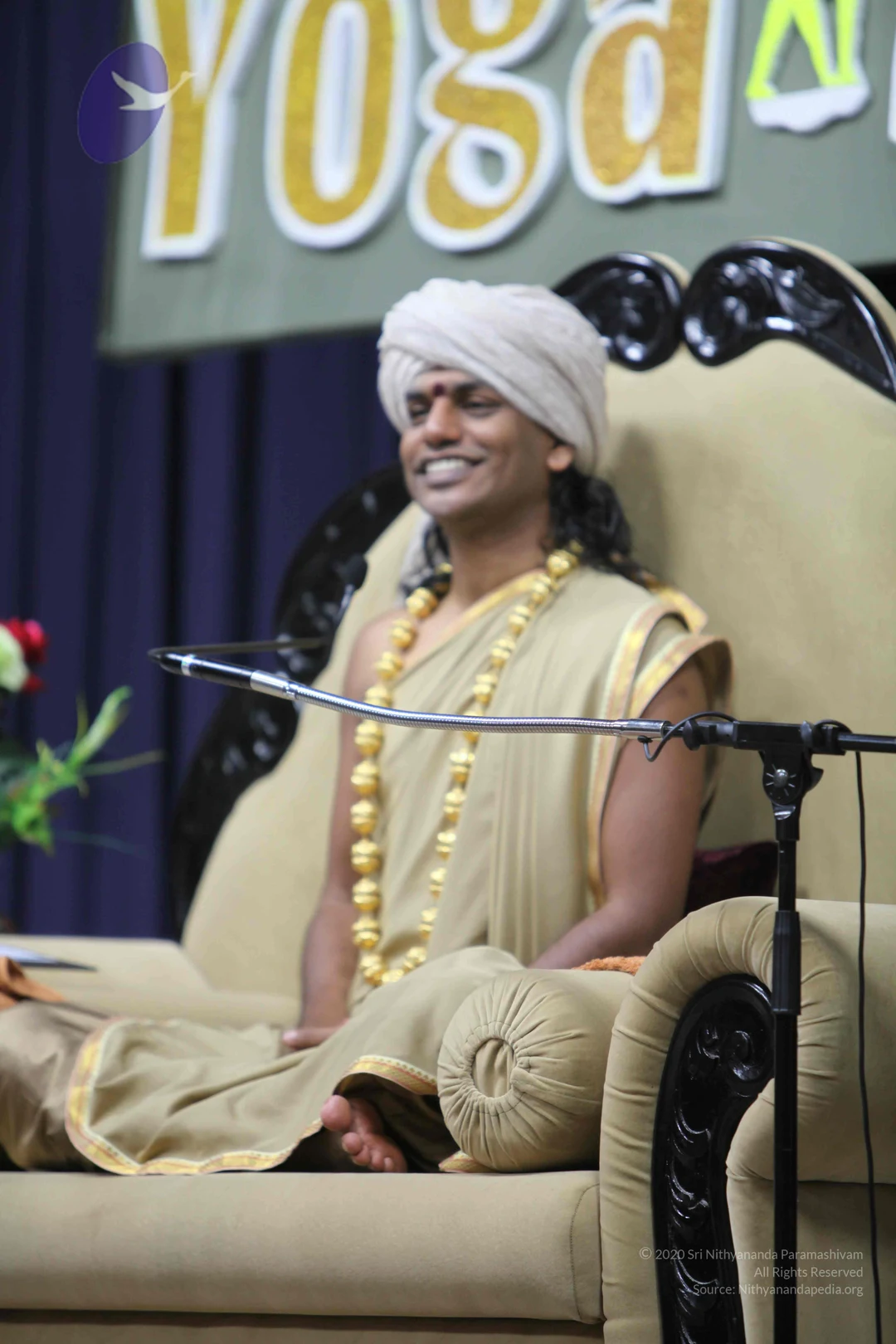
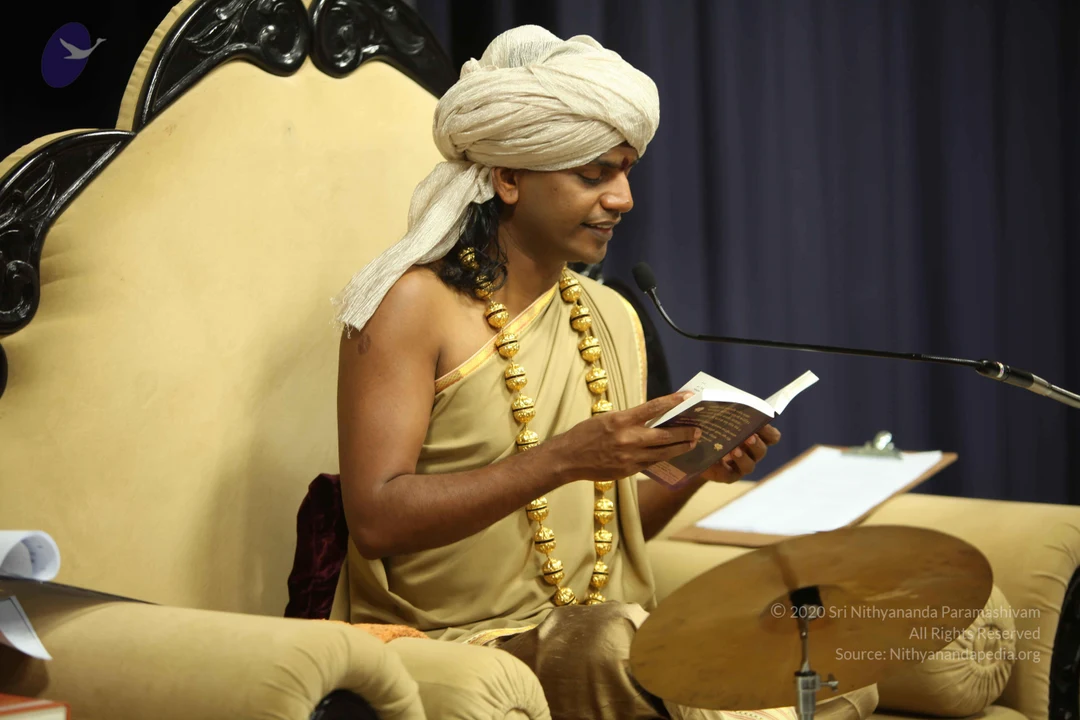
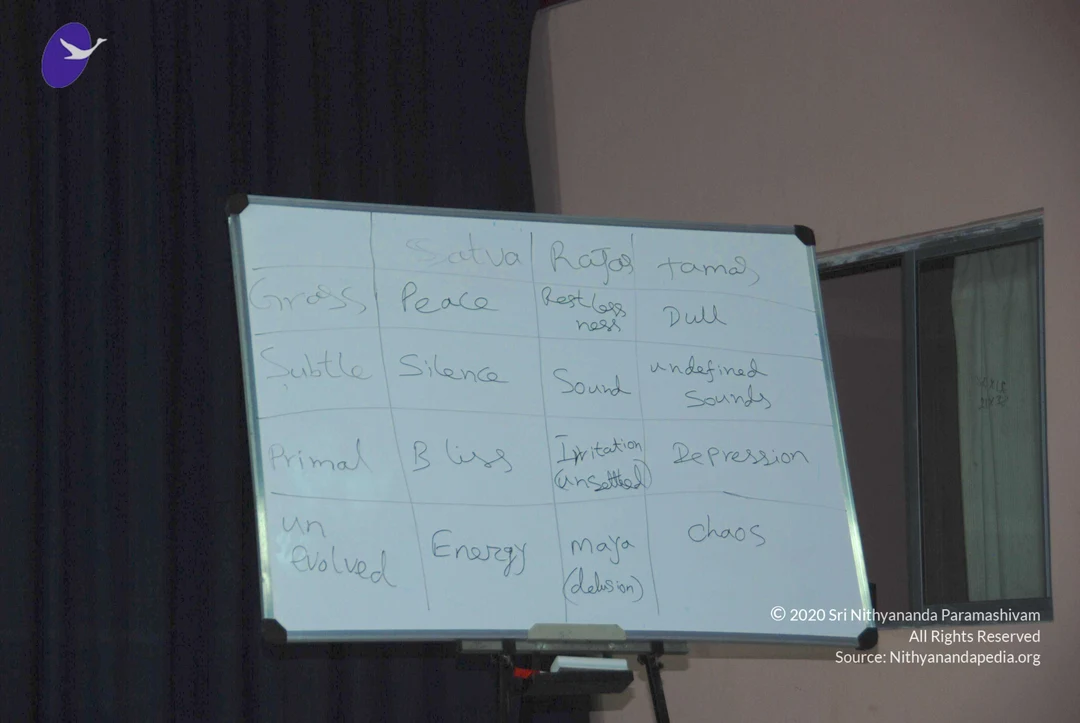
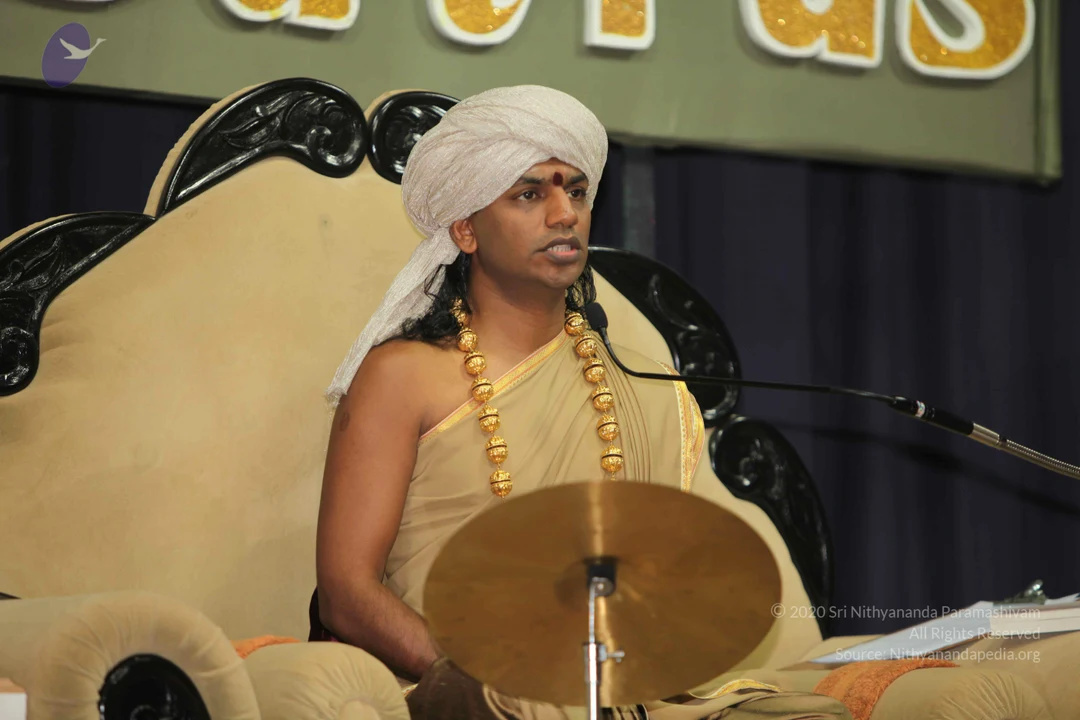
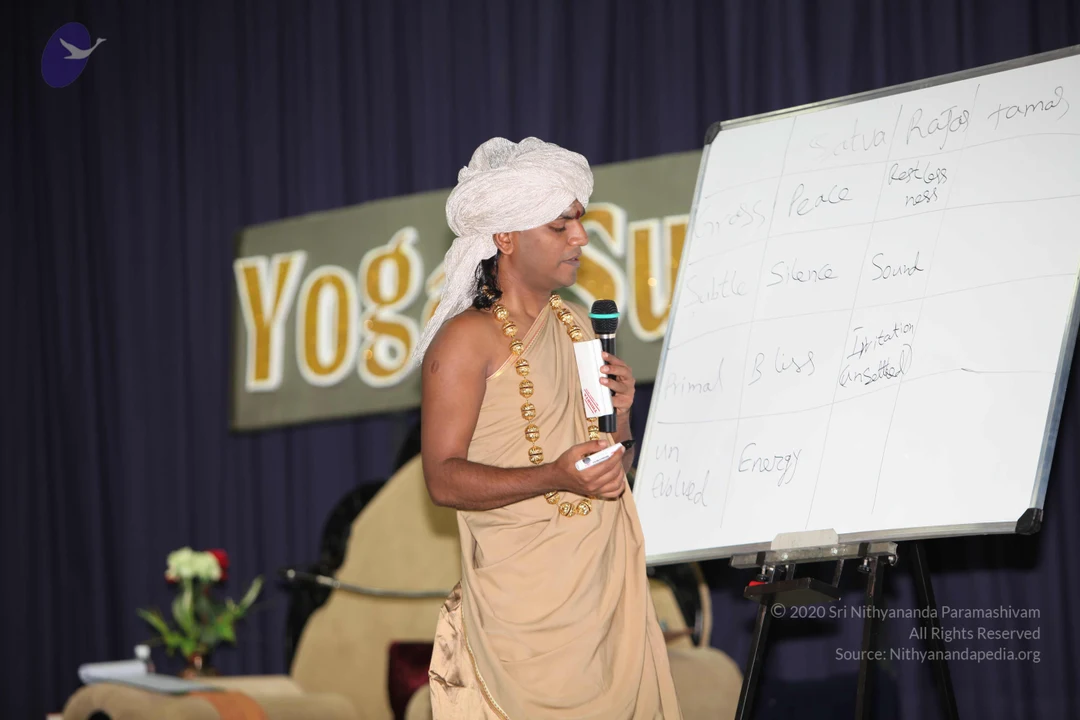
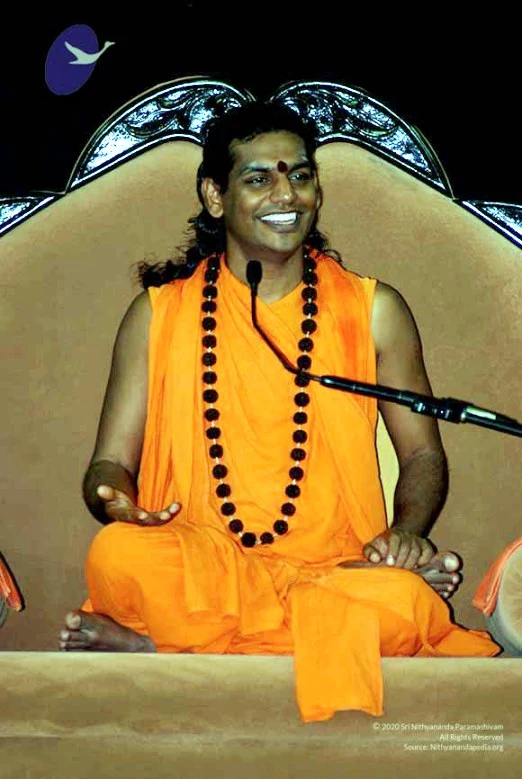
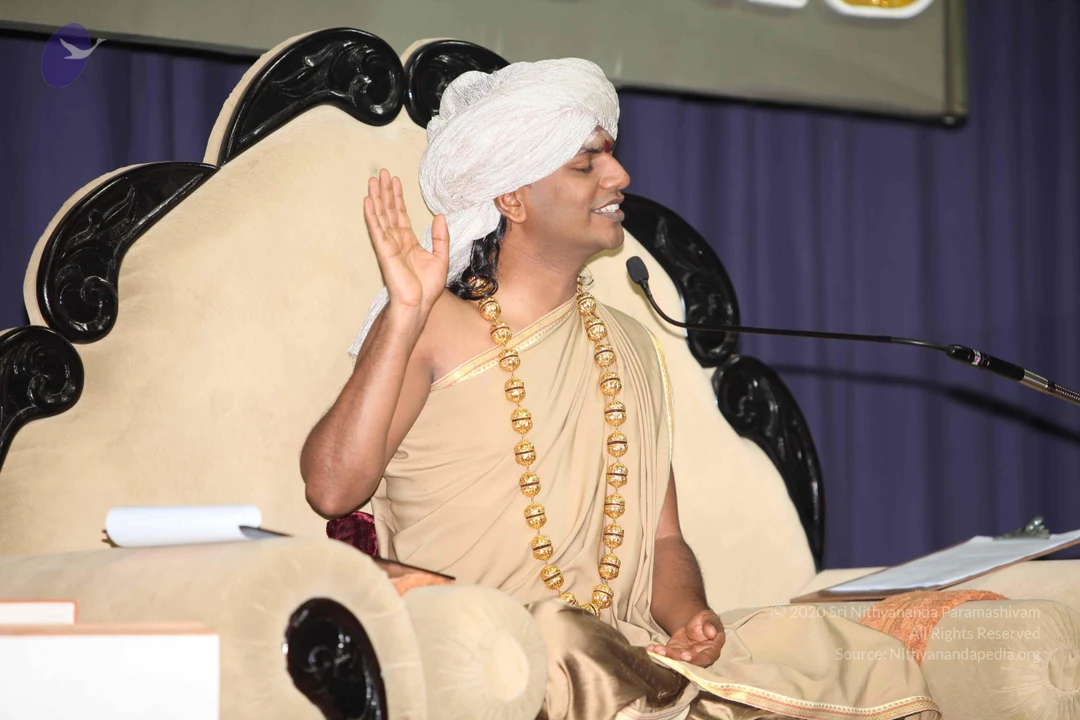
A man seated on an ornate cream upholstered throne with carved black wooden arms, speaking into a microphone on a stand at right. He wears a white turban with a small red mark on his forehead, a beige-gold draped robe, and a long necklace of large gold beads. His right hand is raised in a gesture as he talks, and his left hand rests in his lap. Papers and a clipboard lie on the armrest and a side table, and a dark purple curtain hangs behind him. Appearance-based a person cues: white turban, beige-gold robe, gold bead necklace, seated on a throne.A seated man in a cream-coloured silk shawl and dhoti with gold-brown border sits in a cushioned ornate dark-wood throne chair, eyes closed, palms raised near his face in a teaching gesture. He wears a white turban with a small red tilak on his forehead, a long gold bead necklace of large gold-toned beads, and a lavender-cloth book rests on the armrest. A microphone stand and boom are in front of him, with a gold-glittered banner behind and a purple curtain at left. a person seated on the throne during a discourse.A seated man in a cream-coloured dhoti-style wrap and a white turban sits cross-legged on a gold upholstered throne with black carved armrests, hands pressed together in namaste at his chest. He wears a long orange-beaded mala around his neck. A microphone stand is in front of him. Behind him hangs a large gold-lettered banner reading Yoga Sutras, with a yellow yoga-pose figure in the middle of the word, above a dark blue curtain. To the left, a white pedestal holds a glass vase of red and white flowers and a water bottle. The scene is a stage talk. The seated man appears to be a person, based on the turban, the orange-beaded mala and the ornate throne.A man seated on an ornate cream-upholstered throne with black carved wooden arms, speaking at a microphone on a stand. He wears a cream turban, a cream garment and a heavy gold beaded necklace, with a red tilak on his forehead. His eyes are lowered and his right hand is raised in a gesture before a round brass cymbal on a stand. Behind him a large sign reads Sutras in gold letters on a green band, with dark blue drapes beyond.A blurred photograph of a speaker on a low stage giving a talk with a handheld microphone. He wears a white turban, a golden-beige unstitched robe draped over one shoulder with matching beige dhoti-style trousers, and a yellow beaded necklace. Behind him is a whiteboard on an easel with handwritten notes in columns, in front of a dark blue curtain. A window and pale wall are visible on the right. The speaker's identity is uncertain from appearance; the setting suggests a discourse session.A seated man in a cream turban and beige draped robe sits cross-legged on an ornate golden-beige throne with black carved backrest. He wears a long gold bead necklace and a red bindi, hands resting in his lap. A microphone on a flexible stand sits near his face. Behind him a green wall shows large gold glitter letters and a yellow figure logo.
11

more Photographs

13 dated photos in previewSource gallery
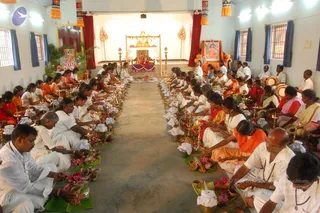
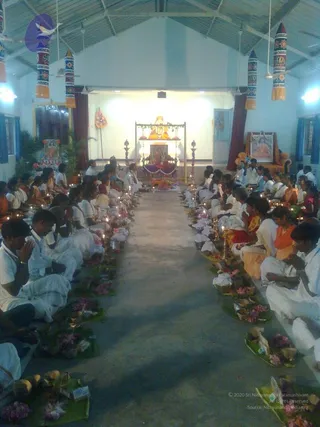
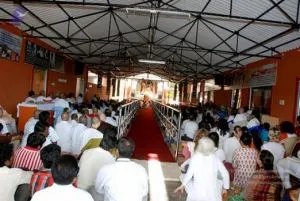
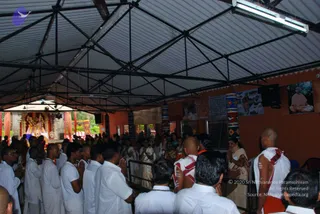
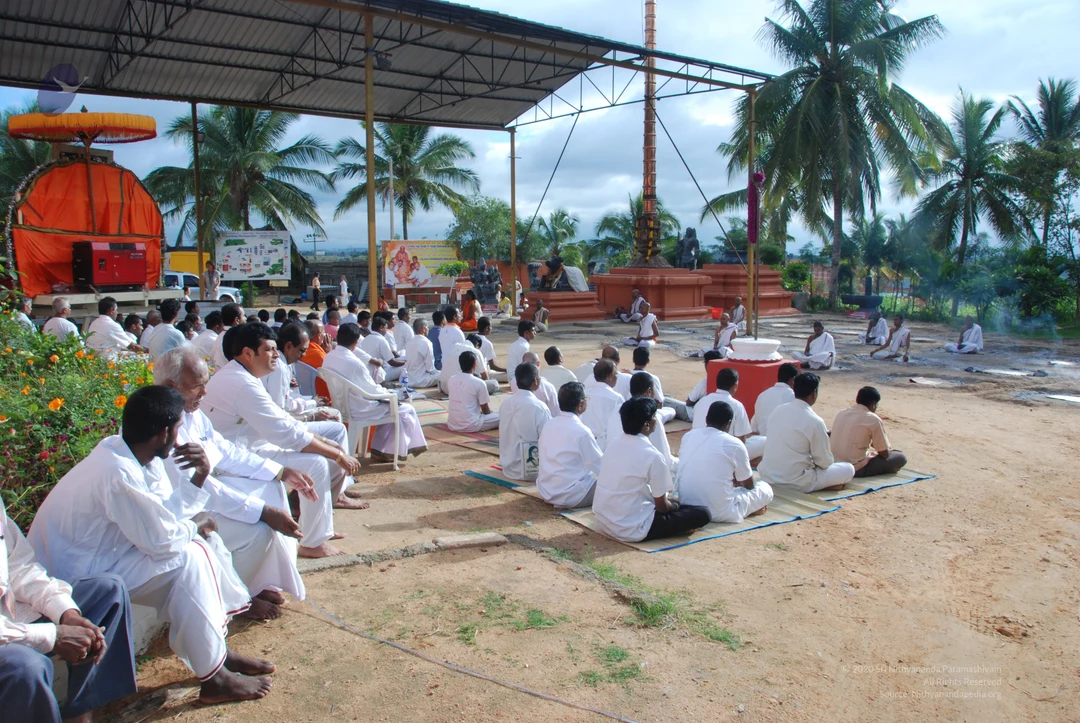
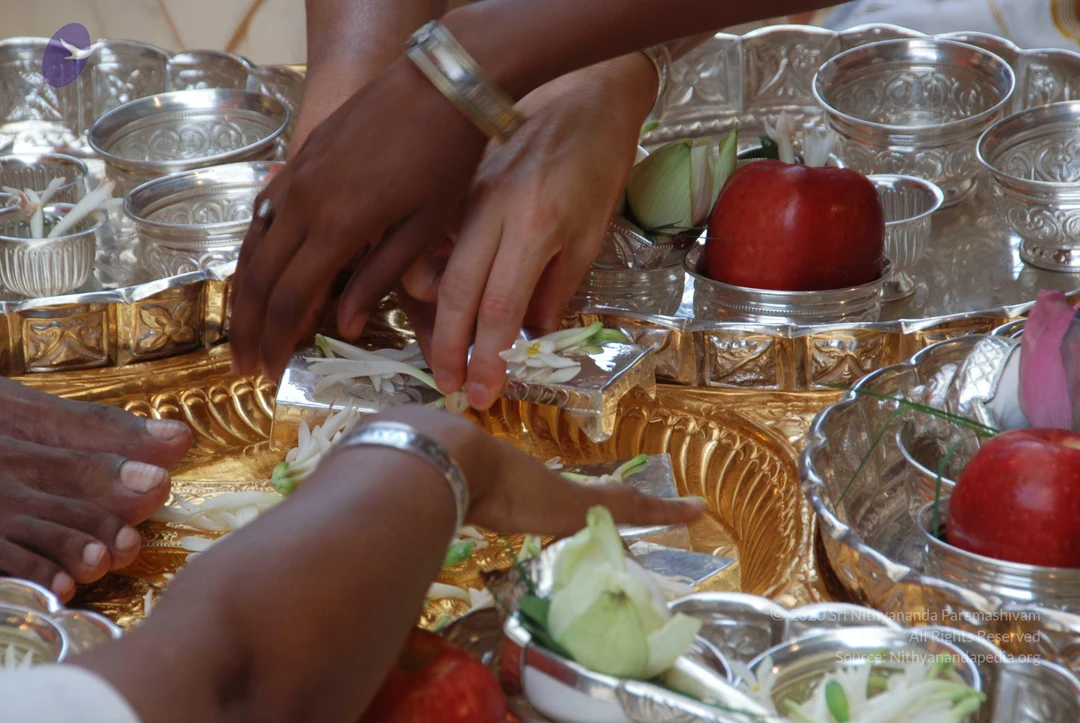
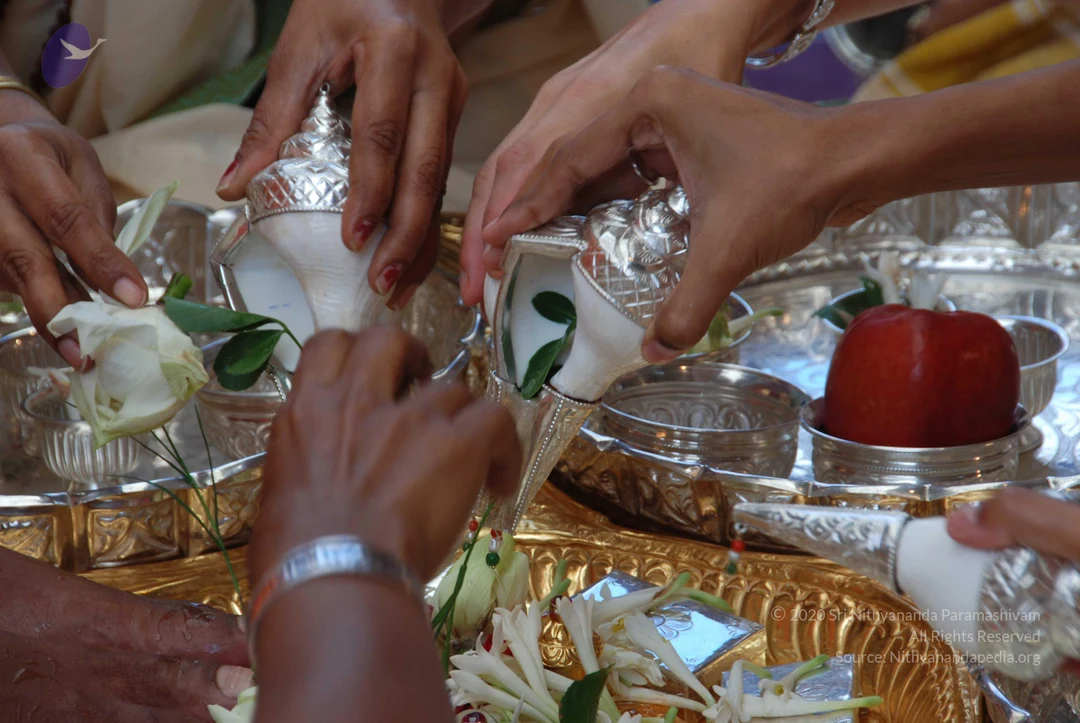
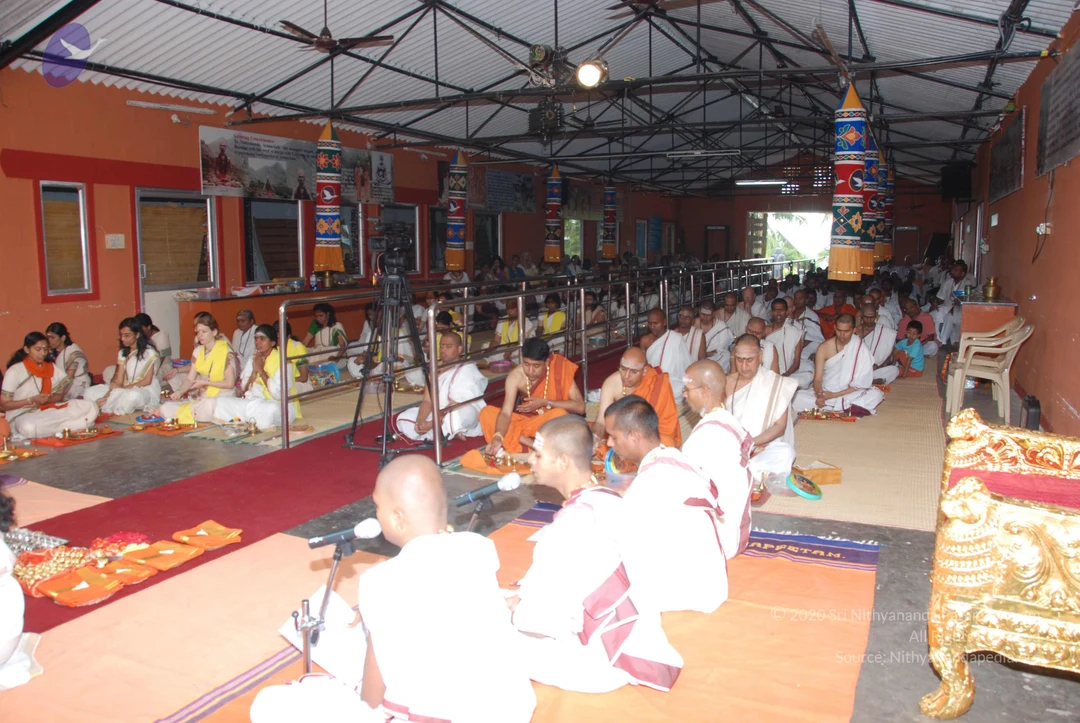
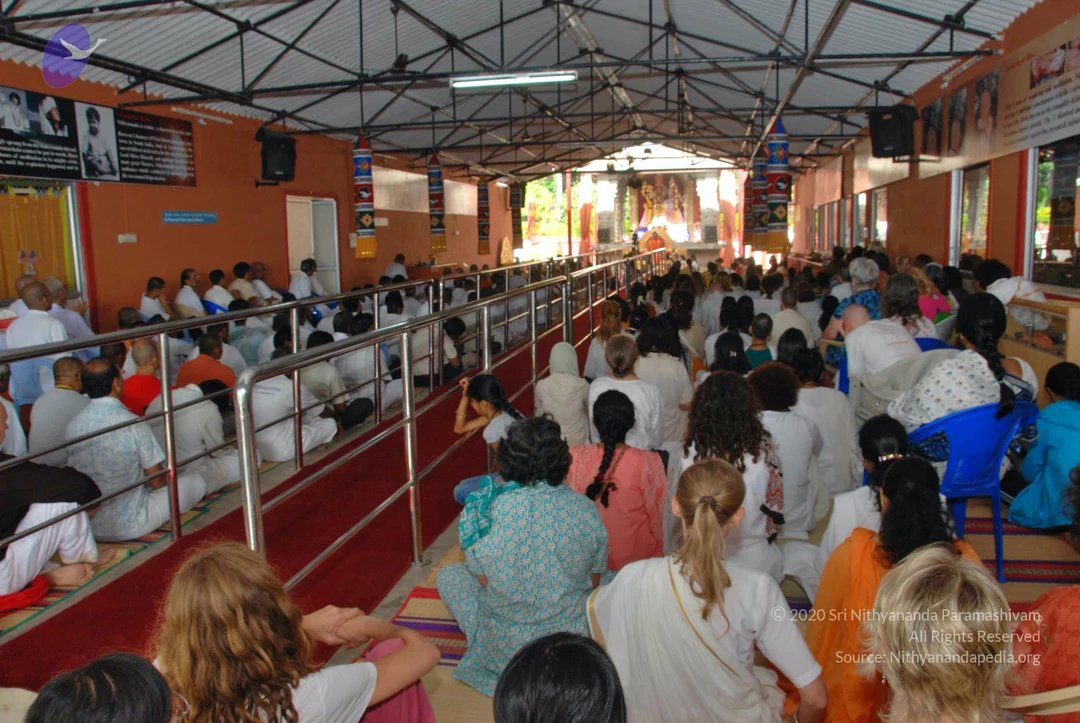
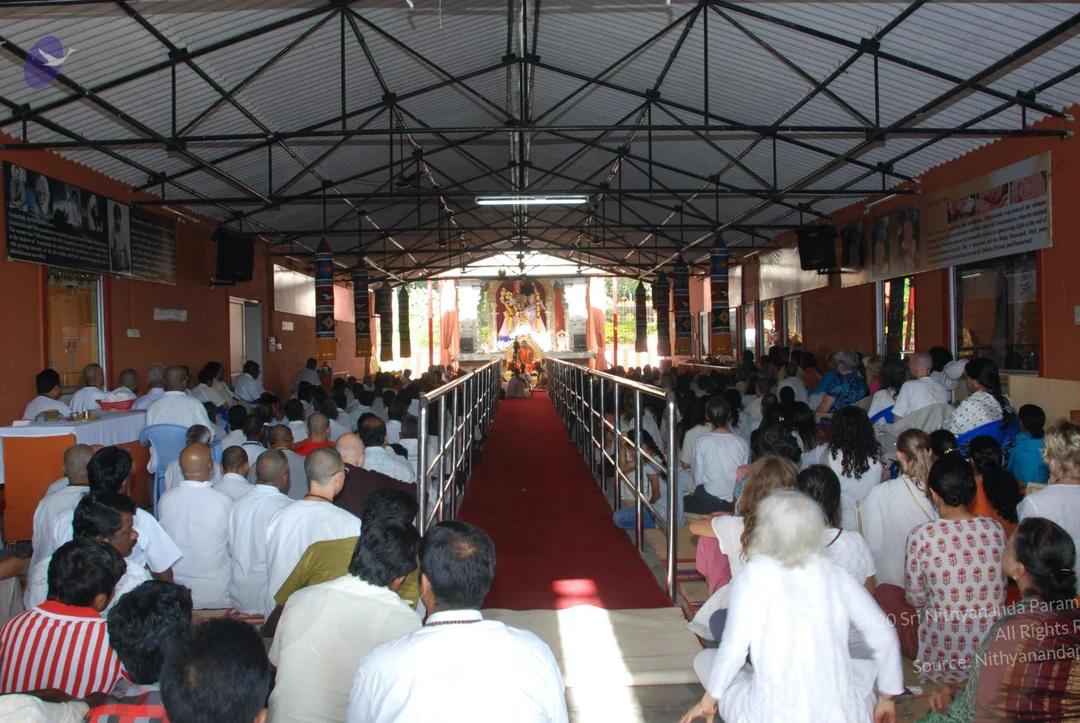
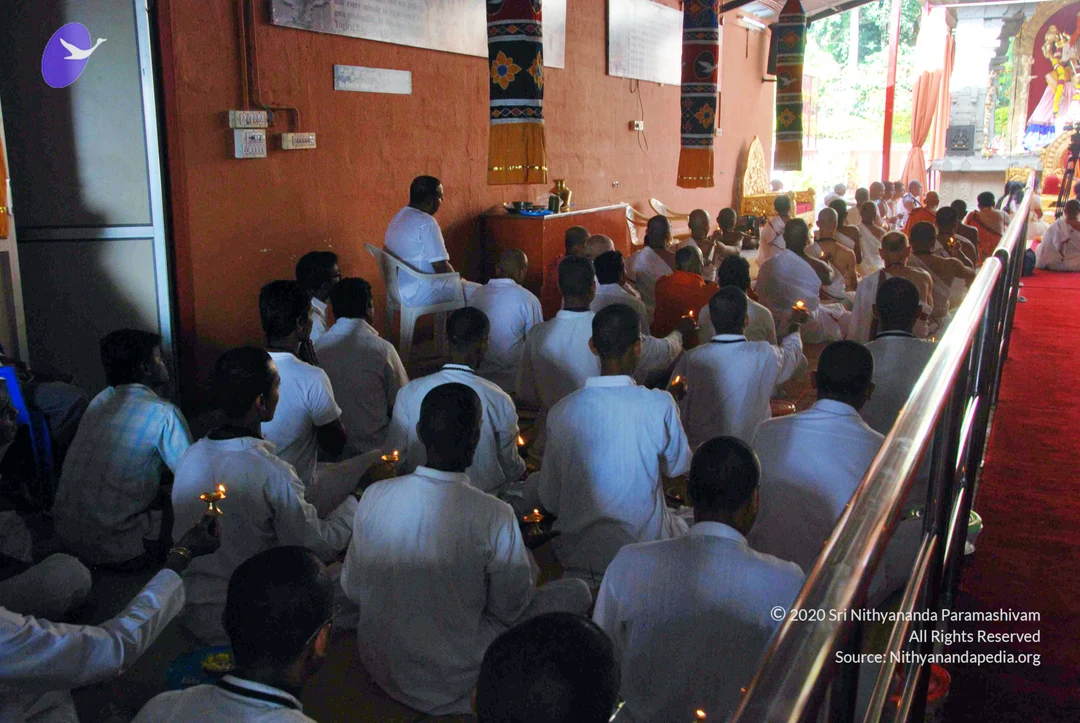
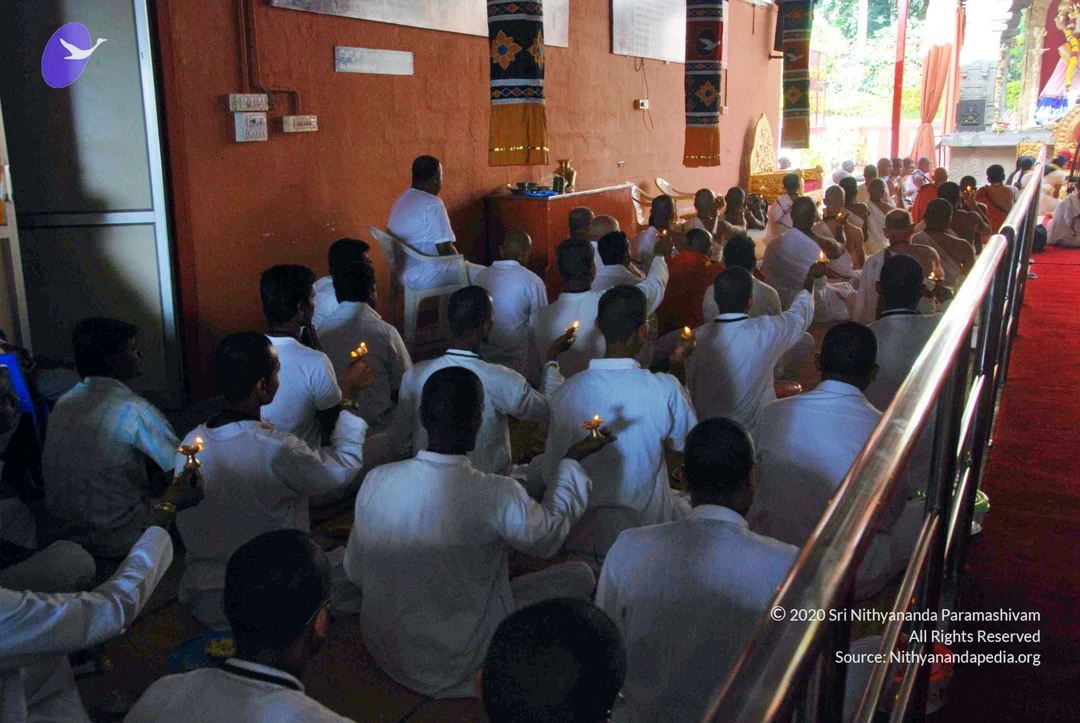
Close view of a ritual tray in a temple setting. A hand in orange sleeve rests on a large steel plate holding small silver bowls, scattered white flowers and petals. The tray appears used for an offering or puja arrangement. No face is visible and no person can be identified.A photograph of a devotee gathering inside a covered courtyard hall with an orange-painted wall and a corrugated roof. Many seated devotees in white and pale clothing face a central aisle lined with a long red carpet and metal railings. At the far end, a raised platform holds a figure seated in front of a bright backdrop; the figure is too small and distant for any appearance-based identification. Women in colourful saris sit among the men in white kurtas and dhotis. The scene looks like a formal satsang or darshan with a seated crowd.
12

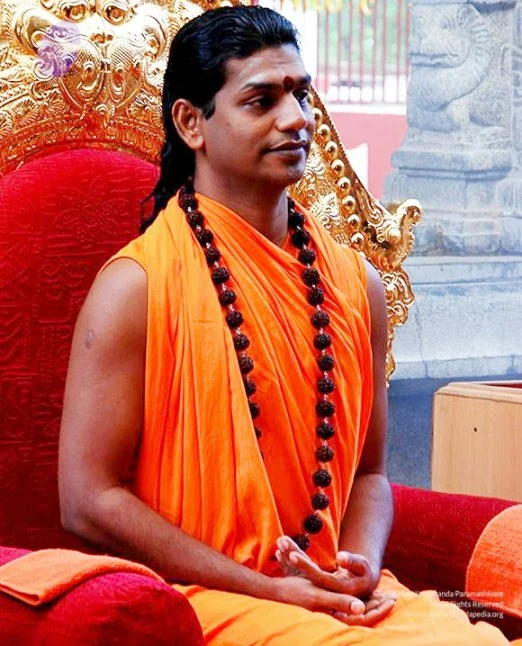
02-Pancha-Tapas

5 dated photos in previewSource gallery
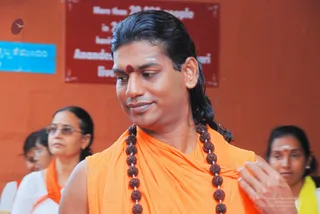
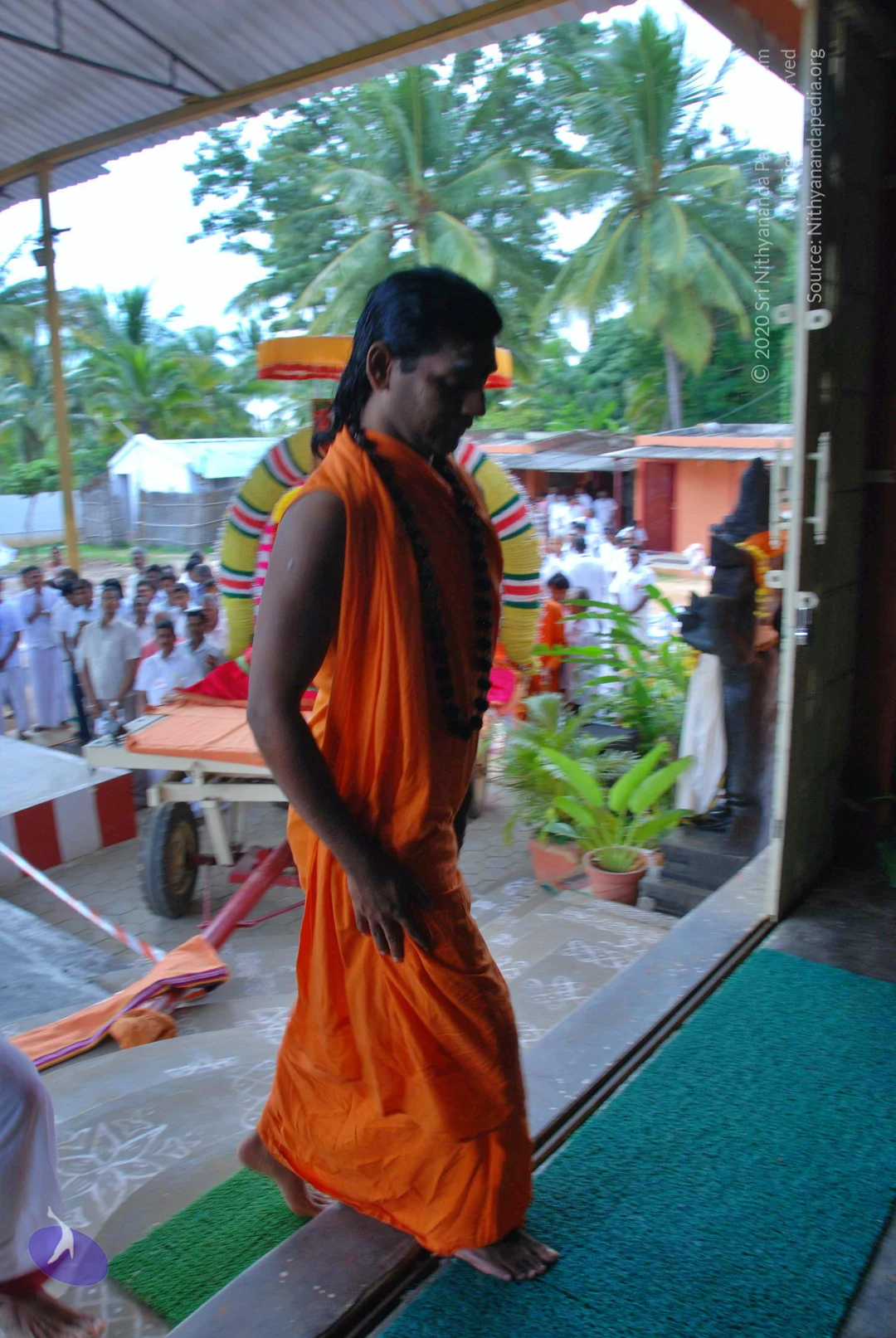
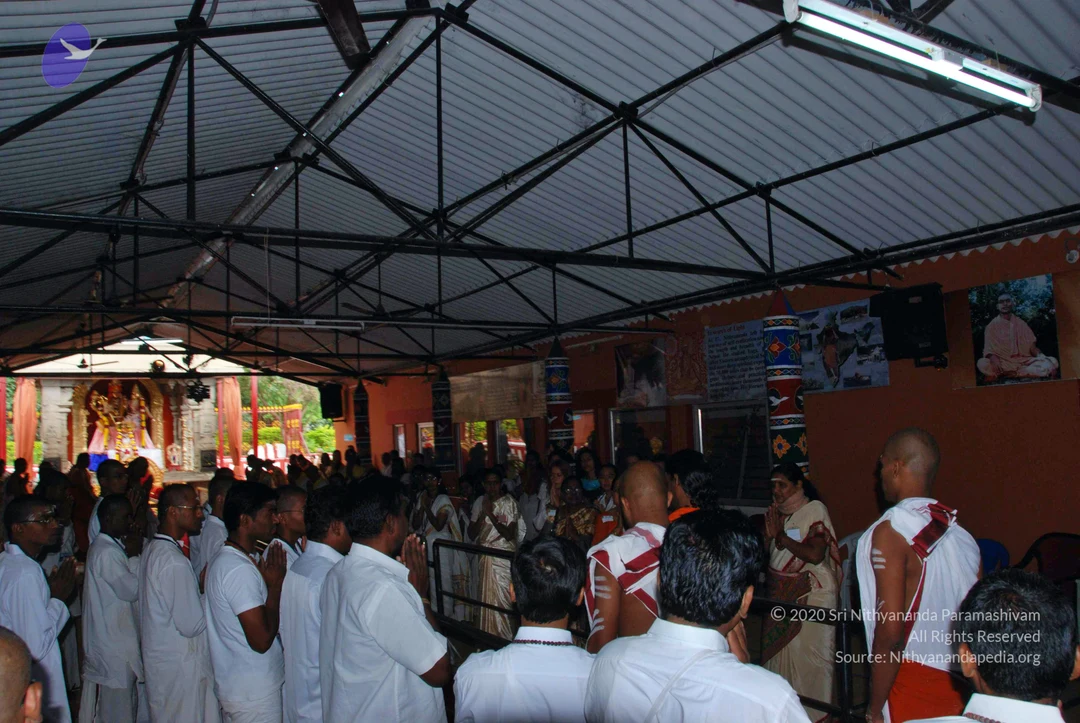
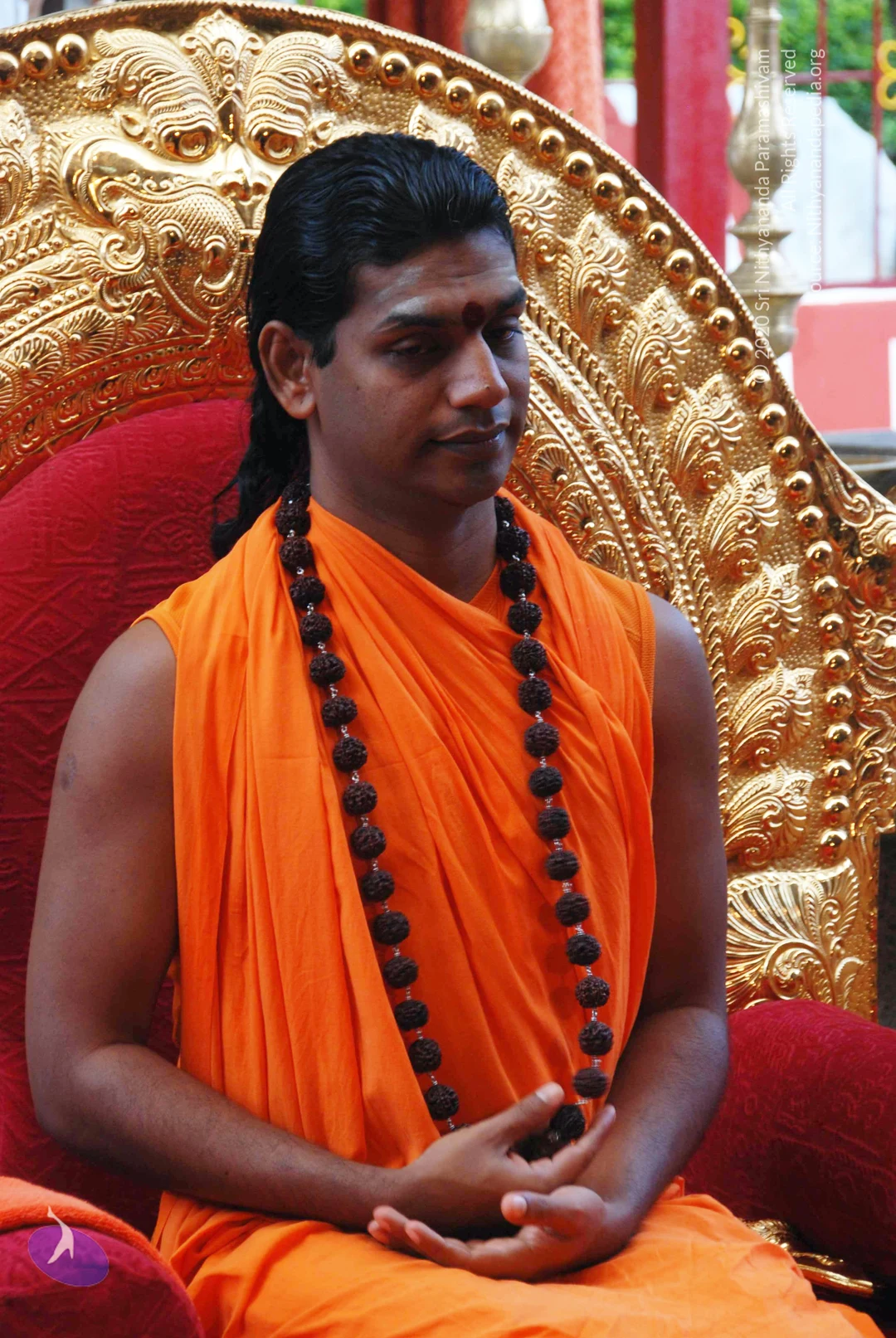
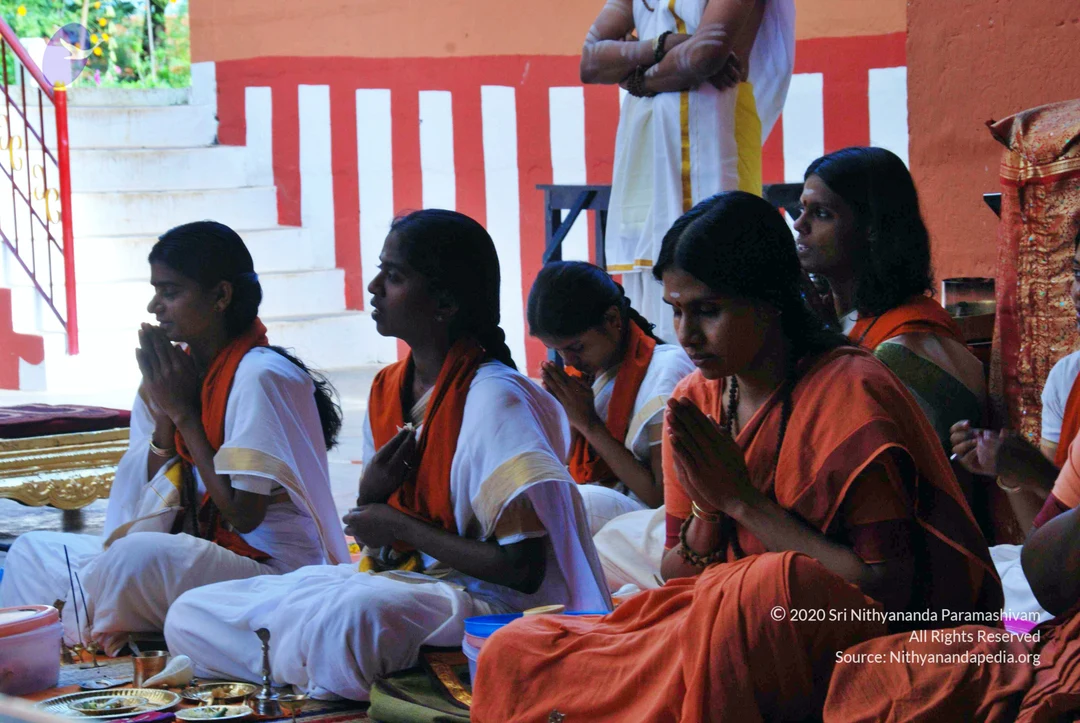
A photograph of a man in saffron-orange robes seated cross-legged on an orange cushion placed on a low wooden platform over a white mat. He wears a long rudraksha mala with dark beads and a red tilak on his forehead, and his hands rest on his knees in a meditative posture. A brass kalasha-style vessel with a handle sits on the mat beside him. Behind him, two people in white dhotis with red borders stand and sit on the sandy ground near a red-orange pillar. Scattered grey ash lines the sand. The seated figure is an appearance-based a person, identified by saffron robes, rudraksha mala and tilak, but the image is not conclusive.Outdoor temple courtyard with a sandy ground and palm trees behind. In the foreground a man with long dark hair tied back, wearing a saffron-orange cloth draped over his body and a dark rudraksha mala, walks barefoot with his palms pressed together in anjali, eyes lowered. Behind him on the left a second saffron-robed figure stands near a stone sculpture. Several people in white dhotis, some with orange shawls and one in a yellow shawl, stand or bend over on the ground among grey stone statues and orange-painted shrines. A red-cushioned chair sits beside the steps, decorated with white kolam patterns. Near the centre, a long-haired saffron-clad man is shown performing a ritual act; an older man in white shirt stands further back.A barefoot man in a flowing saffron-orange dhoti-style wrap and a black rudraksha mala walks across a green mat at a temple entrance. Long dark hair is swept back, and he looks down as he steps. Behind him, a red-and-white striped structure and an orange-draped cart stand near a palm-lined courtyard, while a group of men in white dhotis and shirts stands on the left, some with hands joined. Inside the doorway, a dark stone deity murti stands on a pedestal beside potted plants. The cart may be a palanquin or ratha. A white circular logo appears in the lower left corner.A crowd of devotees stands under a corrugated metal canopy with exposed steel trusses, hands joined in anjali, in a temple-like hall. Men on the left wear white dhotis and shirts; a shaven-headed priest in white with a red-striped shawl stands at right beside a woman in a cream sari with a red border who also has hands folded. Further back, women in saris stand near an ornate deity murti with a golden canopy and orange drapes. On the orange wall hang a framed portrait of a man in orange robes seated in meditation, and a banner. The scene suggests prayer or puja.A man with long swept-back black hair and a red bindi sits on a red cushioned throne with an ornate gold-embossed back. He wears a sleeveless saffron-orange wrap and a long double-strand of dark rudraksha beads, with his hands folded in his lap in a meditative pose. Swamiji (probable): the saffron wrap, long swept-back hair, rudraksha mala and throne seating are the cues for the Nithyananda Paramashivam presentation.
13

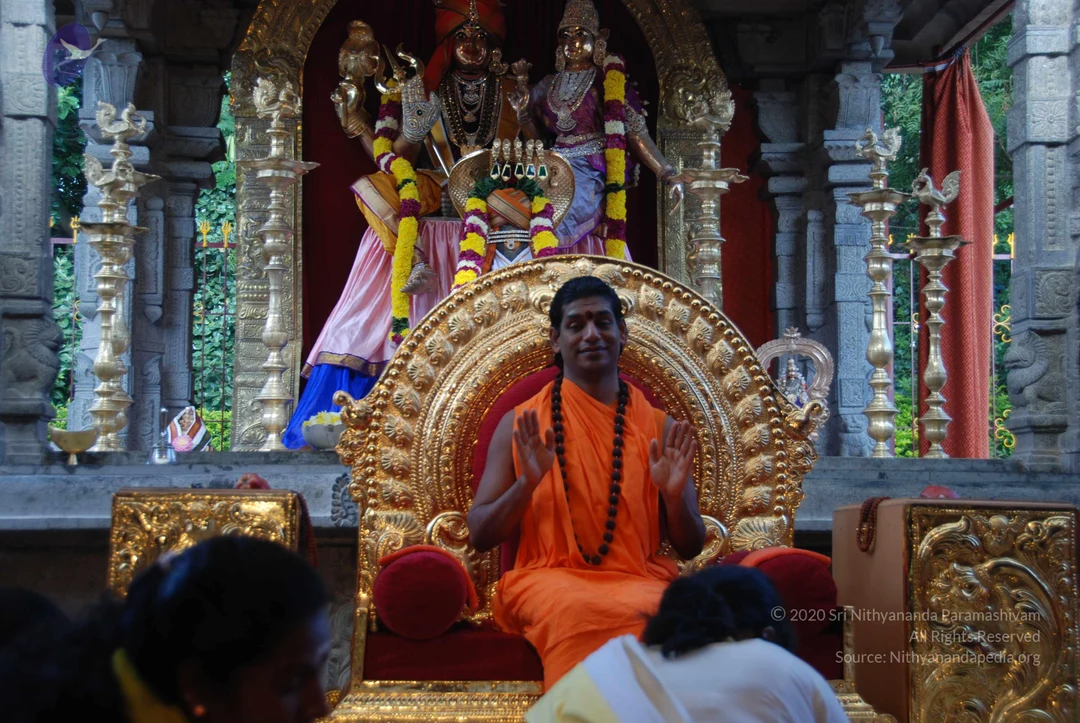
03-Pada-Puja

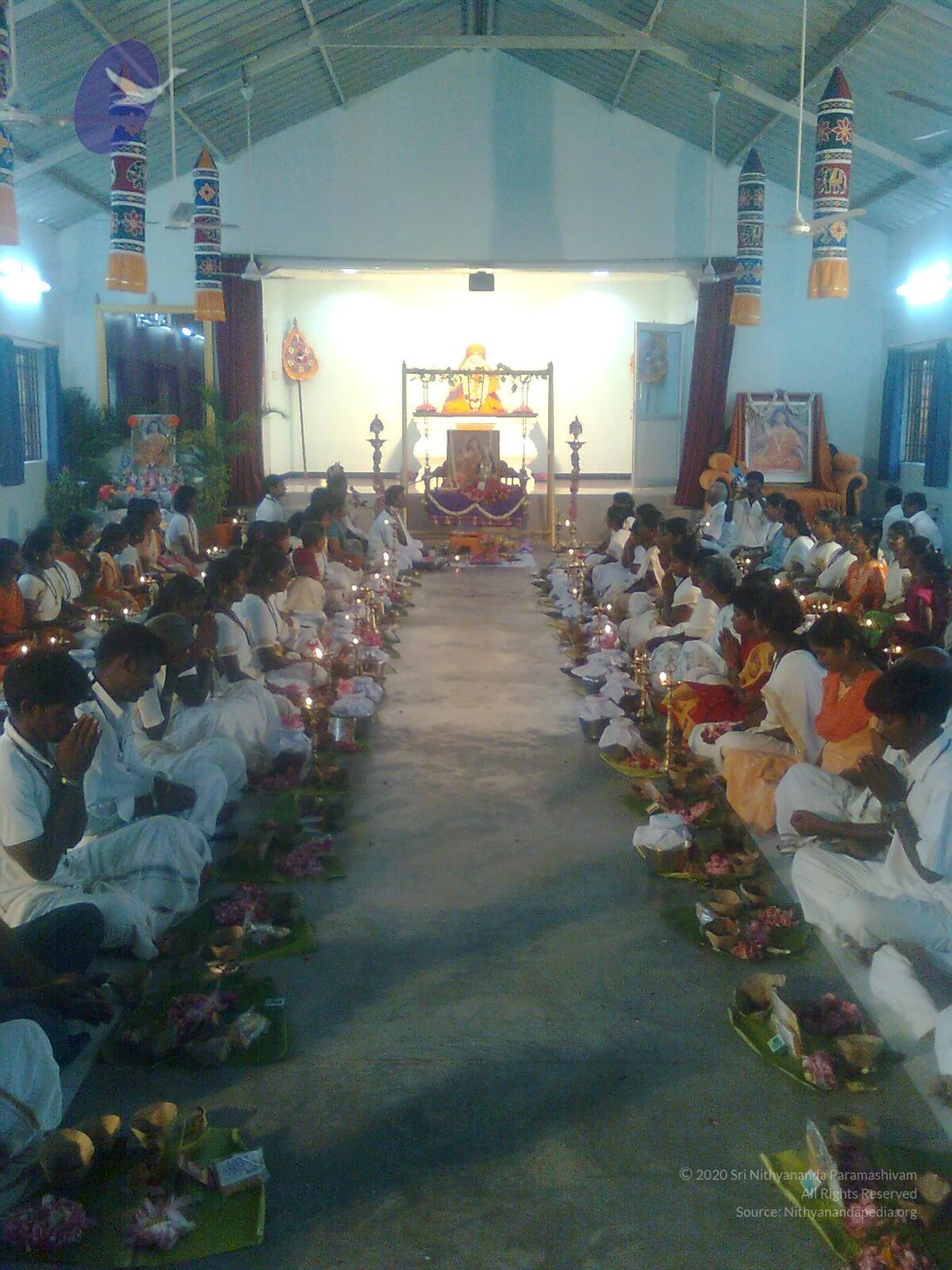
21 dated photos in previewSource gallery
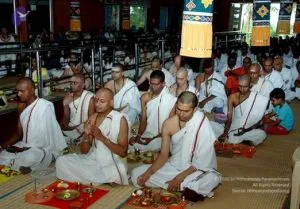
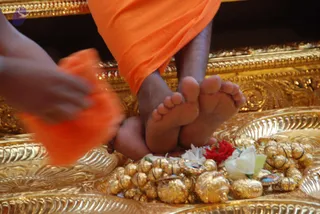
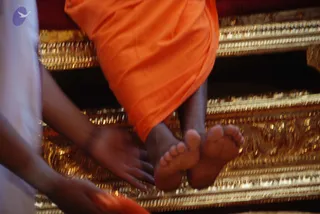
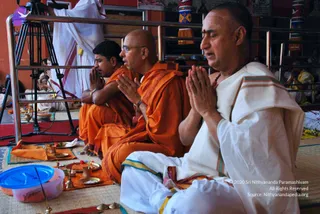
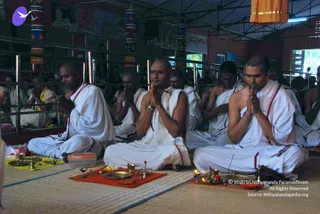
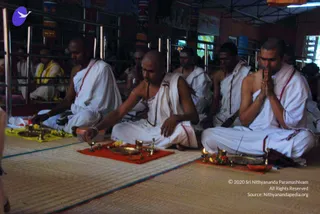
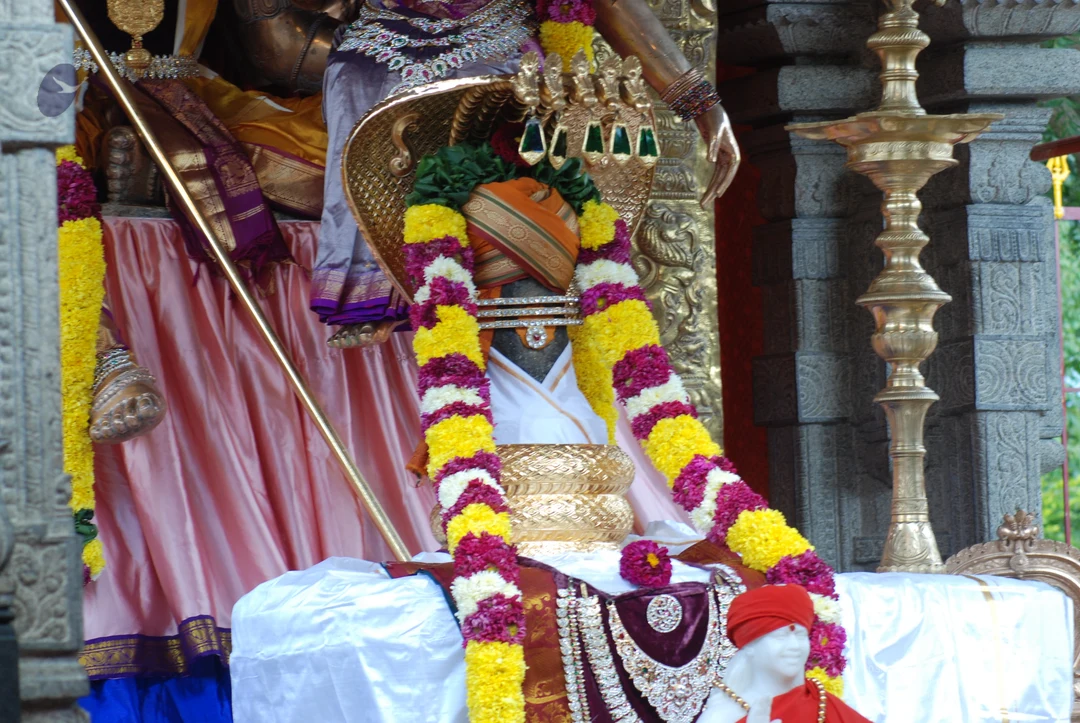
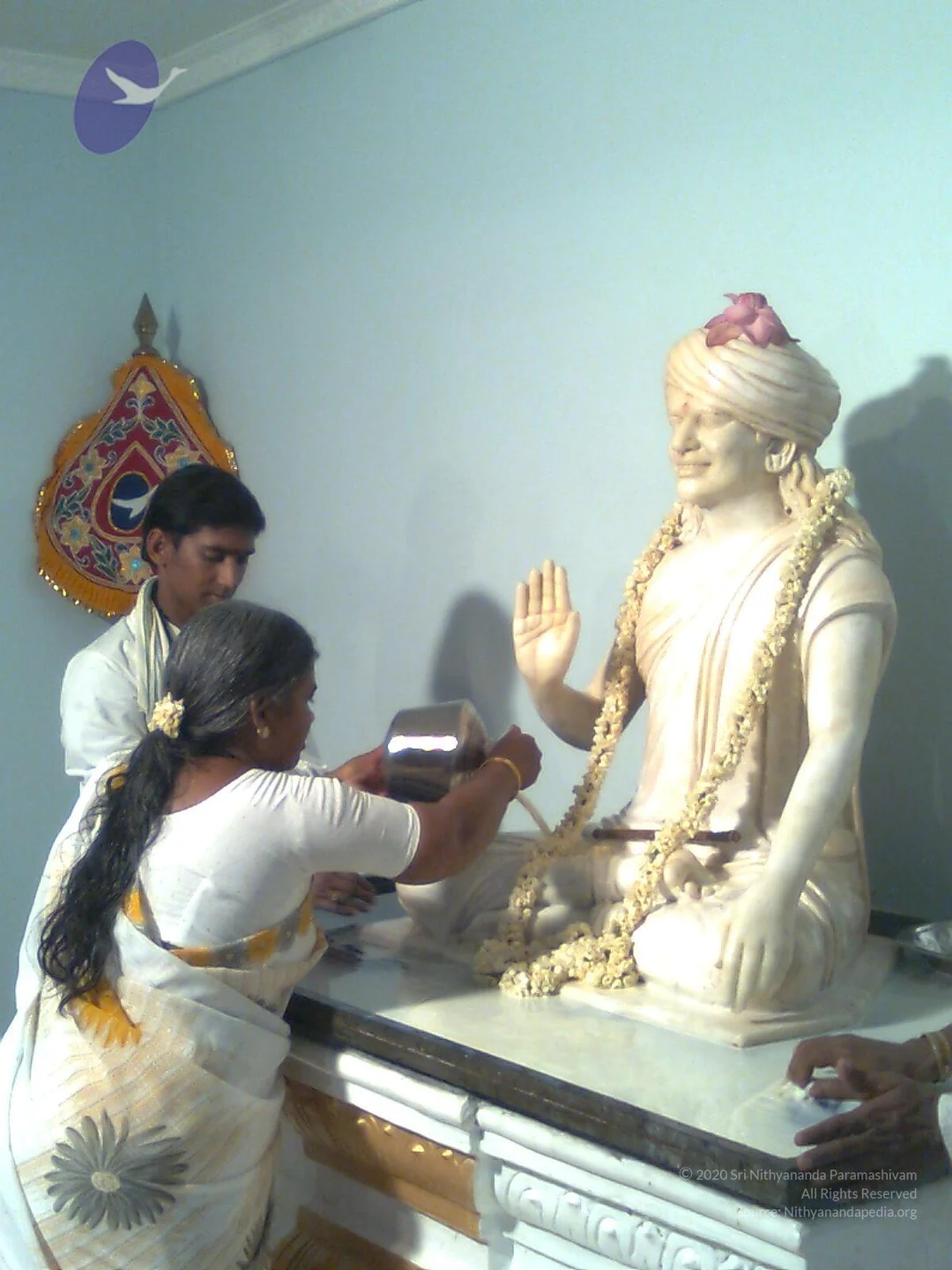
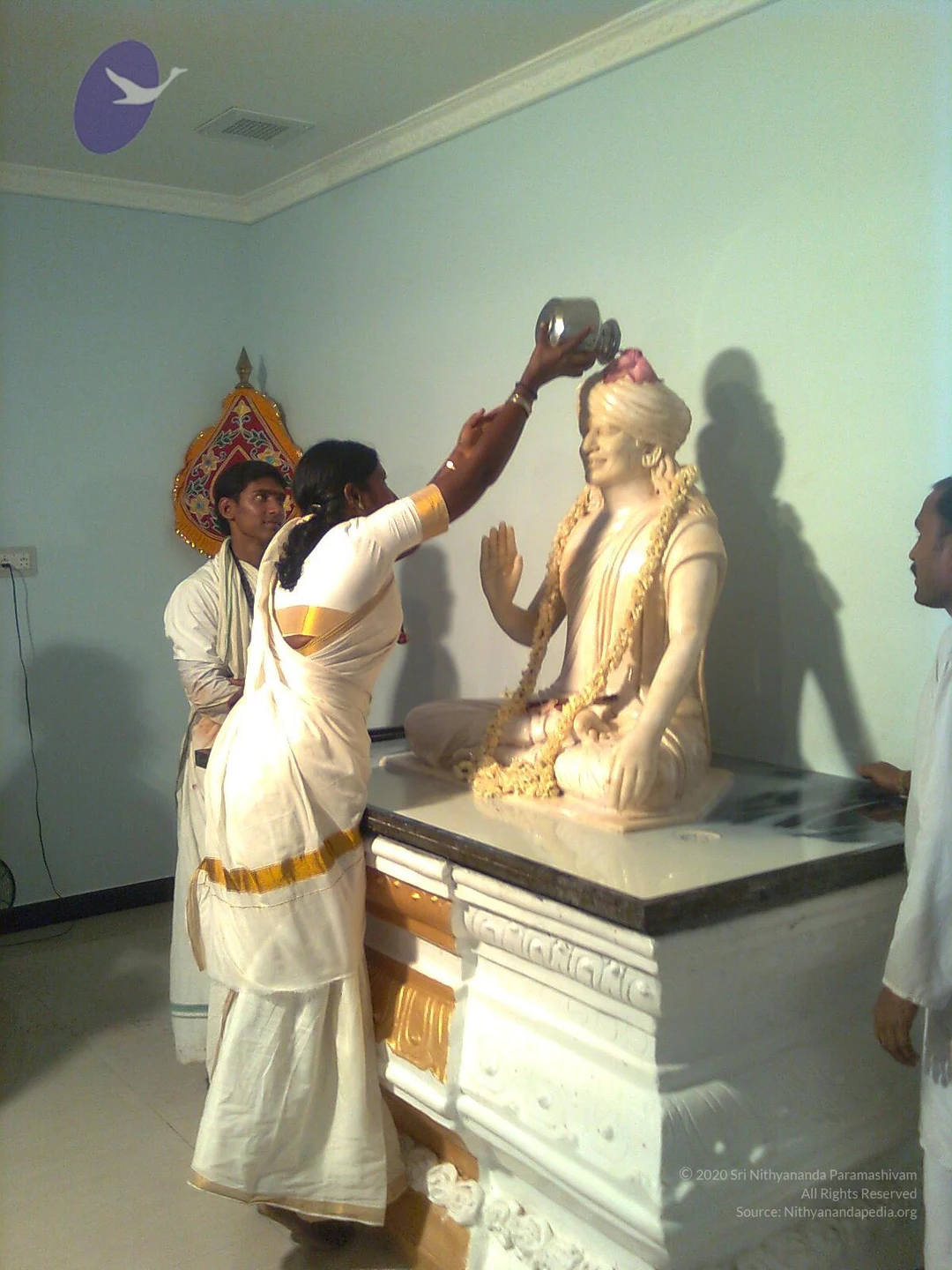
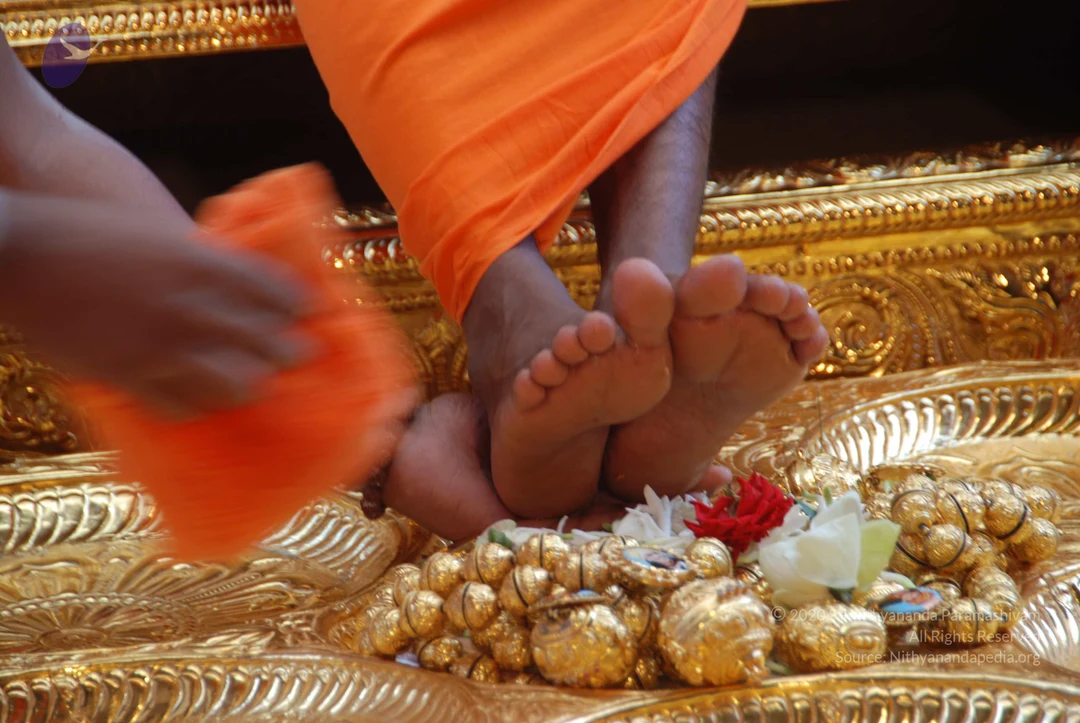
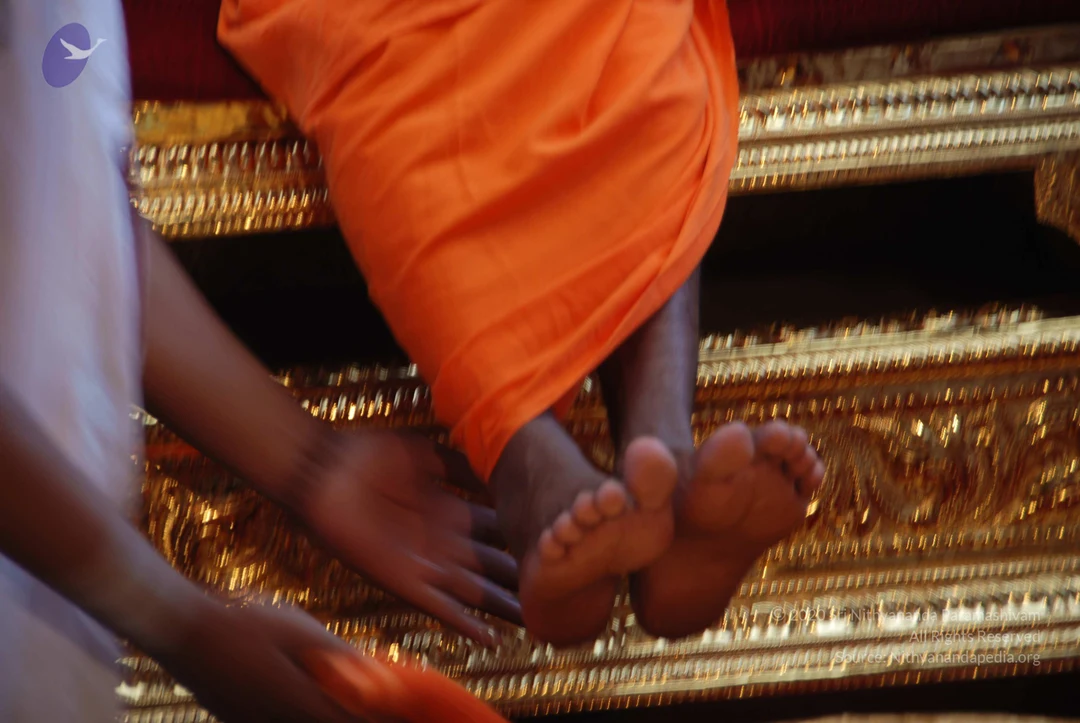
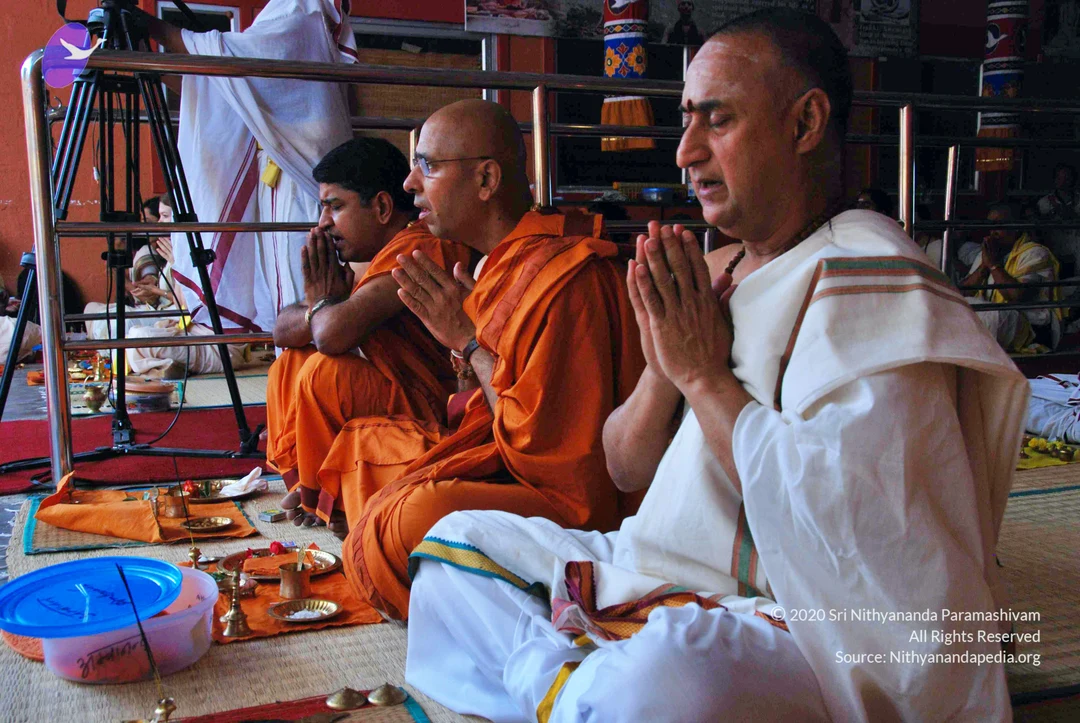
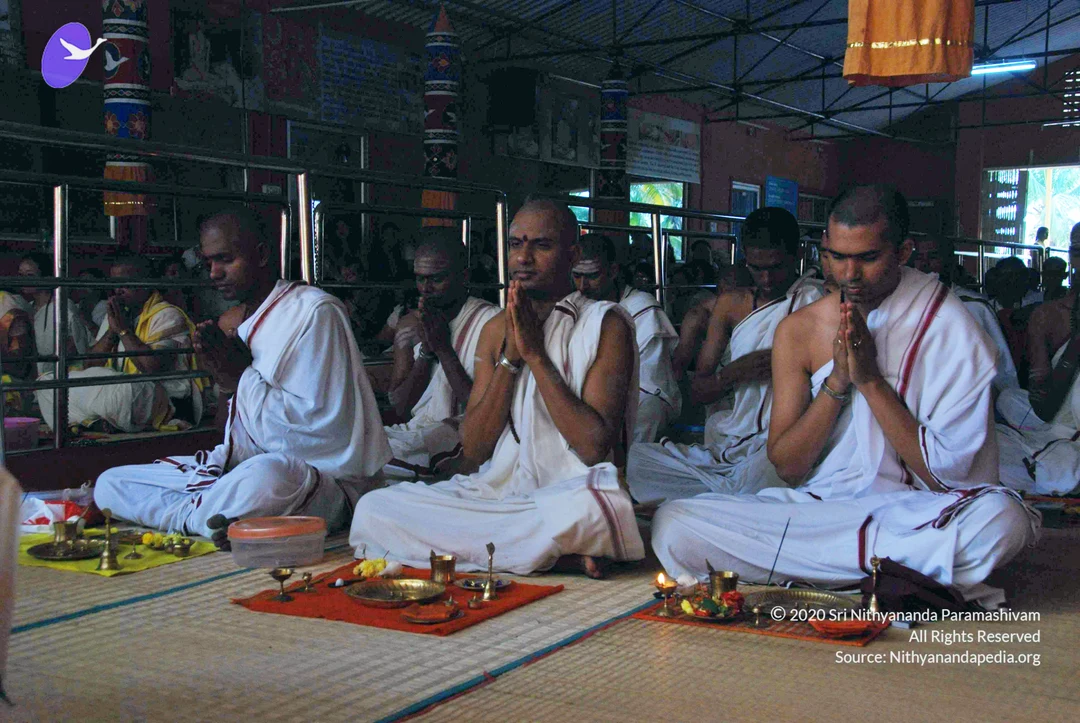
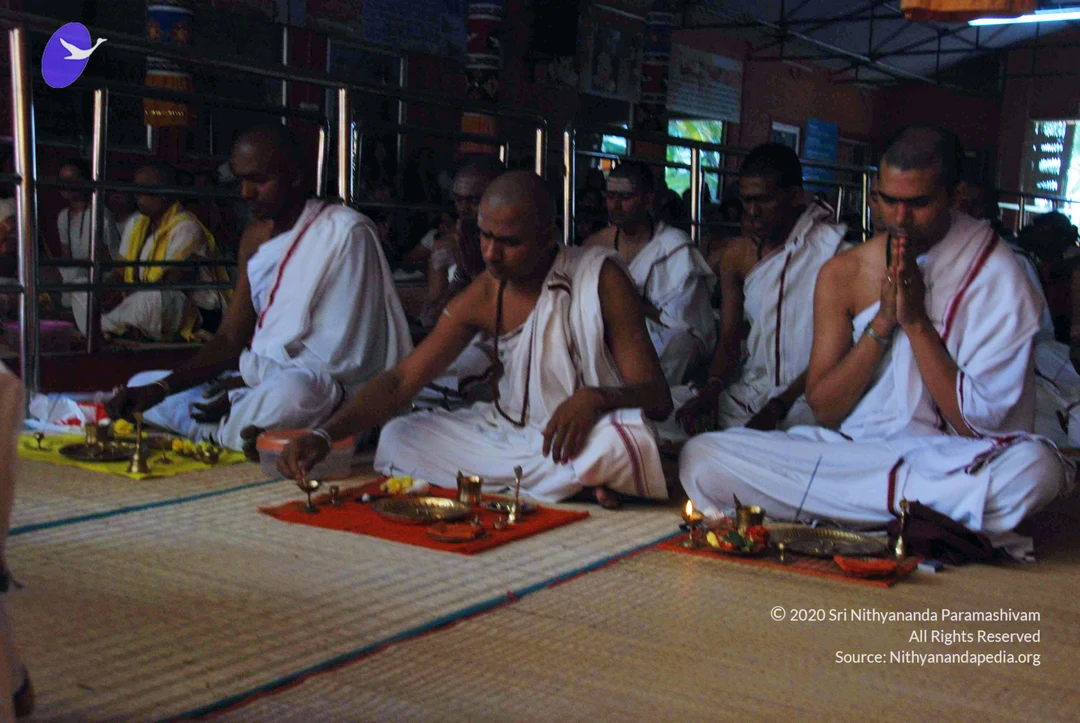
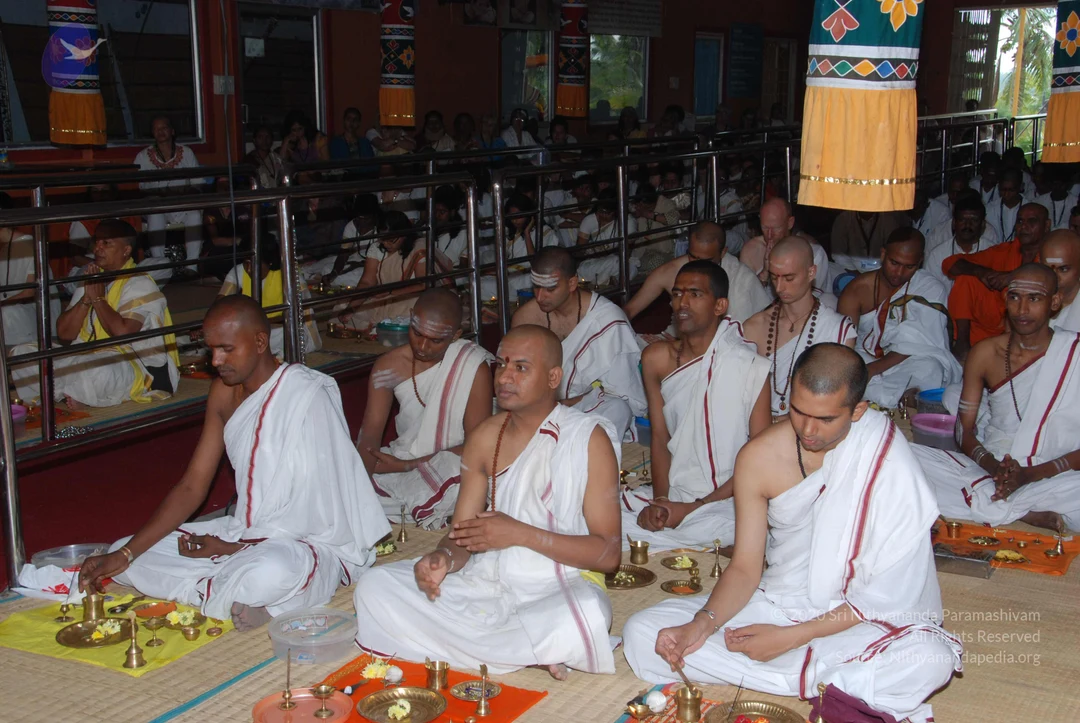
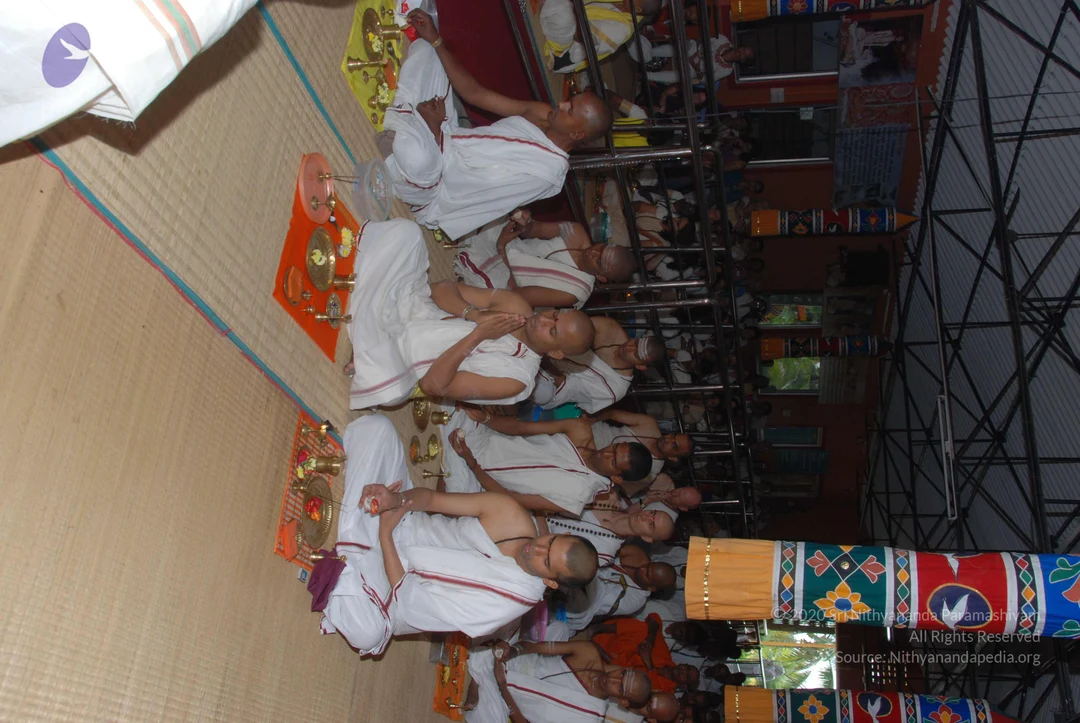
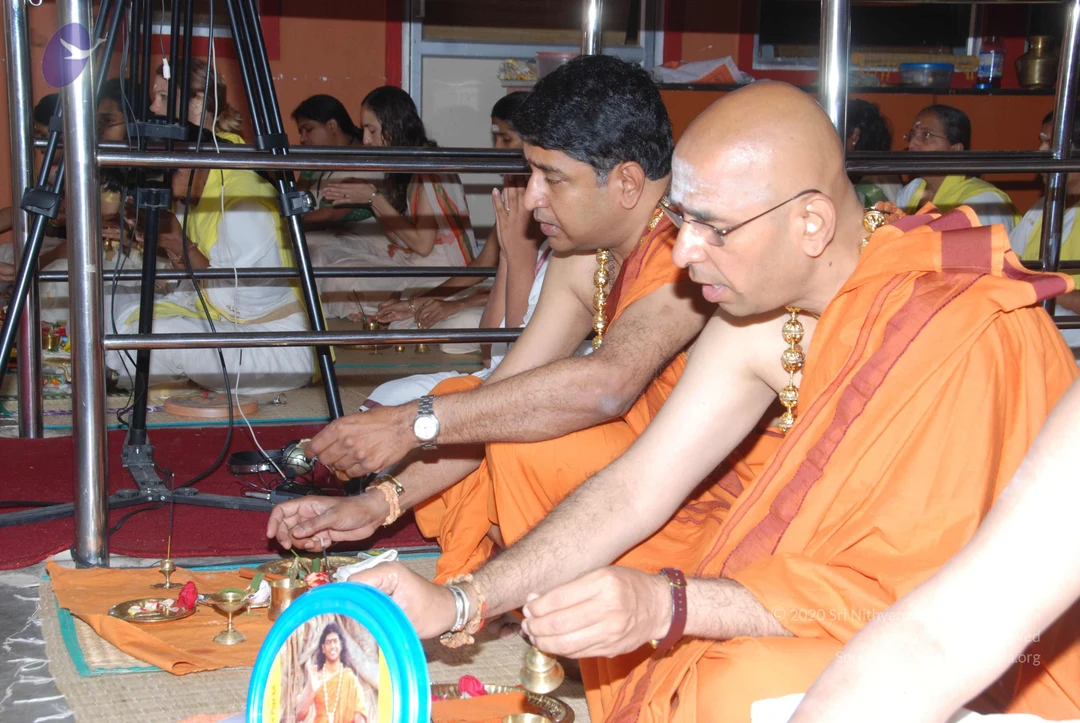
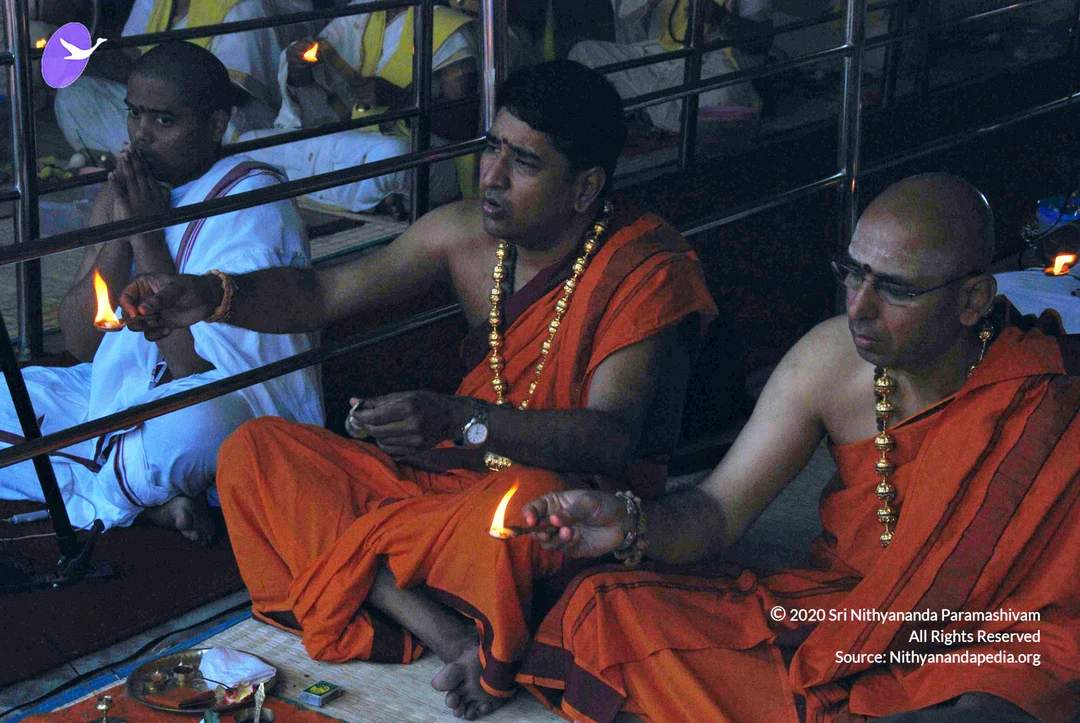
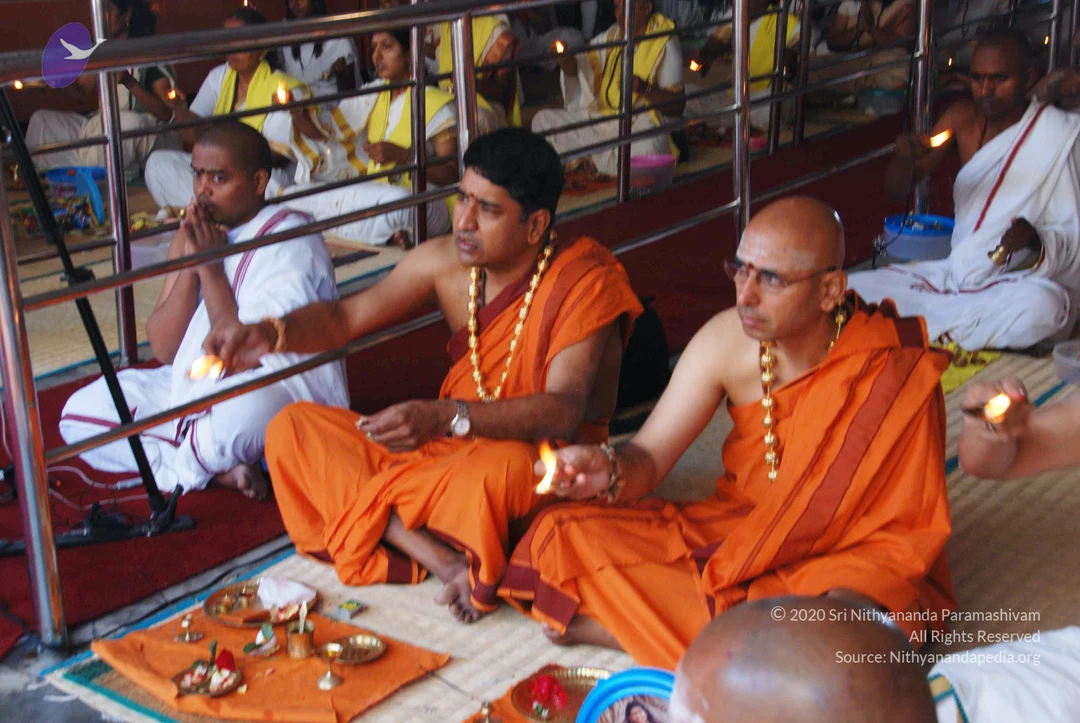
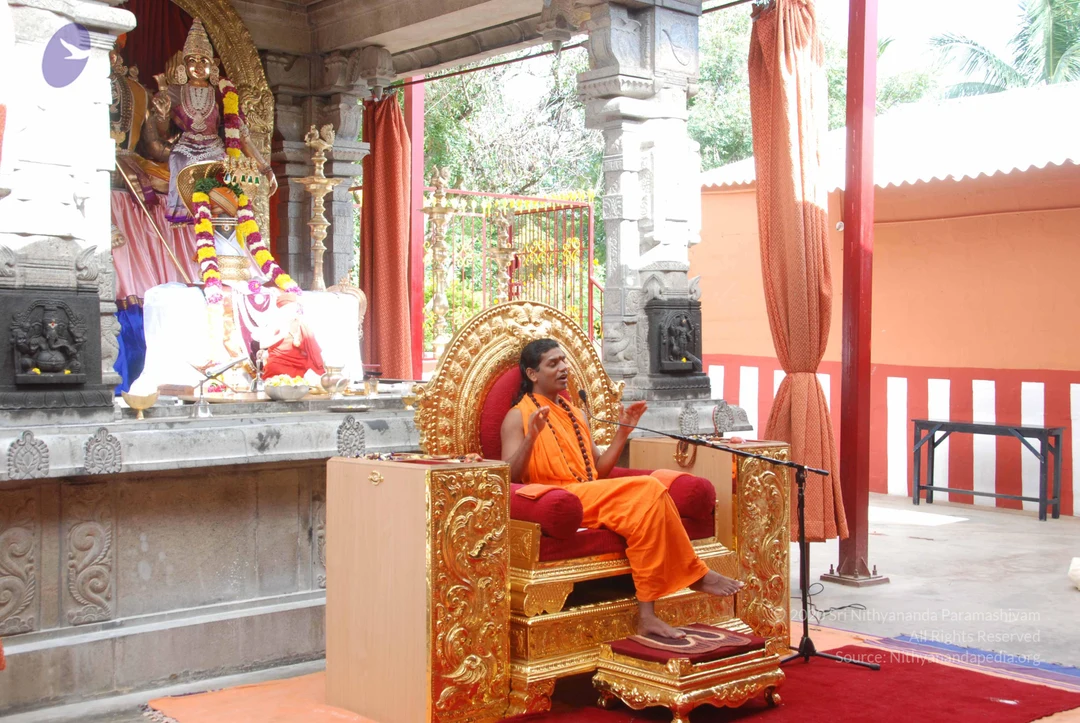
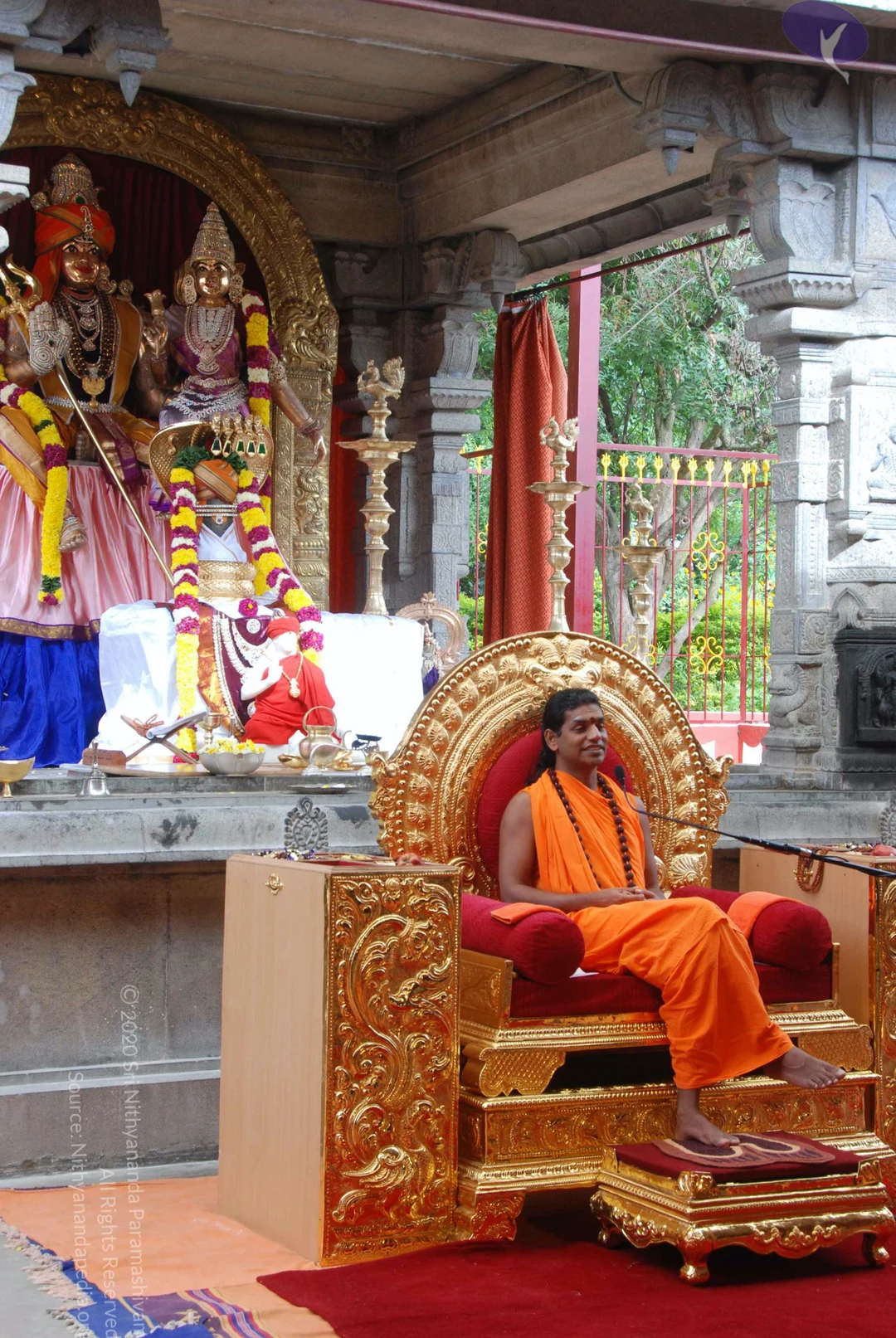
A man in saffron-orange robes and a long rudraksha mala sits on an ornate gold throne with a red cushion, palms raised in a teaching gesture. Behind him stands a deity murti with a crown and trident-like staff, garlanded with yellow and purple flowers, flanked by gold oil lamps and carved stone pillars. Two people in the lower foreground, one in white with dark hair, face the throne. The man has long swept-back hair and distinctive saffron and rudraksha cues, matching the page's Swamiji reference, so he is a probable Swamiji in person. A gold-and-red ritual setting with a green plant backdrop.Close-up photograph of a pair of bare feet resting on an ornate gold-coloured tray or pedestal, with gold-plated decorative fittings. A person in an orange-saffron garment stands above, and a second person's arm and orange cloth are blurred at the left edge. Beside the feet lie a cluster of gold-coloured ornaments, white and red flowers, and a rudraksha-style mala. The scene suggests a padapuja, the ritual washing and worship of a teacher's feet.Close-up photograph of bare feet resting on a gilded golden throne or peetha with ornate carved edges. A person in orange saffron robes sits above, with only the lower legs and feet visible. On the left, a hand in white clothing touches or supports the feet while another hand rests nearby. A red velvet covering is visible at the top of the frame. The background is dark.Three men sit cross-legged on a mat in a hall with red walls, hands pressed together in namaskar with eyes closed. The man on the right wears a white dhoti and shawl with coloured borders and a horizontal tilak on his forehead. The two men on the left wear saffron-orange robes; the middle one wears glasses and a shaved head, and the left one wears a wristwatch. Brass puja vessels, a kalasha-style lamp, and small offerings sit on an orange cloth before them. A camera on a tripod and other seated devotees in white and yellow clothing appear in the background.A photograph of a seated group of shaven-headed men in plain white dhoti and shawl with red-bordered edges, hands pressed together in anjali mudra during a puja. Three men in the front row are in focus, with brass plates, bells, small lamps, flowers and fruit on mats before them. Behind them, more seated devotees and a wooden-railed hall with hanging decorations and wall pictures. The setting suggests a ritual gathering in an ashram hall.A photograph of several shaved-headed men in white dhotis and white shawls with red borders, seated cross-legged on a woven mat during a puja. The man in front centre holds a small brass vessel and spoon over a red cloth with brass puja vessels and a small offering dish. The man at right sits with palms pressed together in prayer, and a brass lamp with a lit flame sits beside him. Behind them, other seated participants and a metal railing are visible, with a pillar and bright indoor walls at the back. No identifiable a person figure is visible.
14

04-Satsang

15 dated photos in previewSource gallery
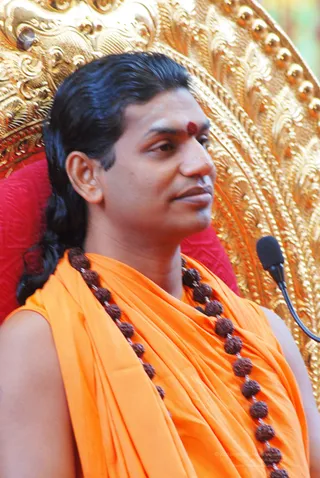
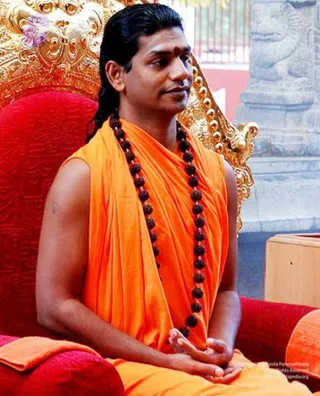
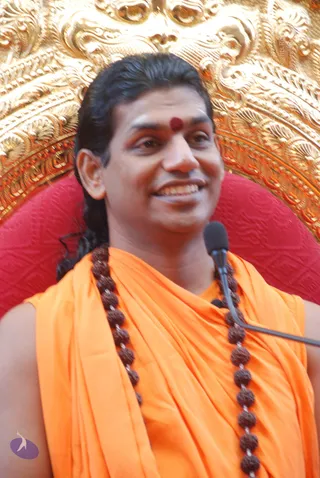
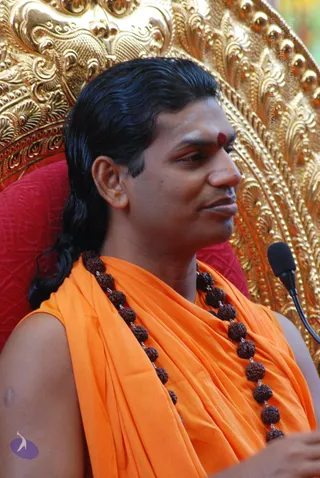
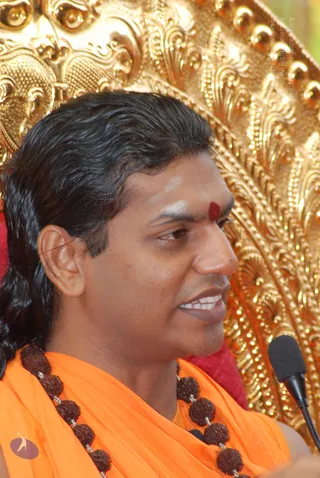
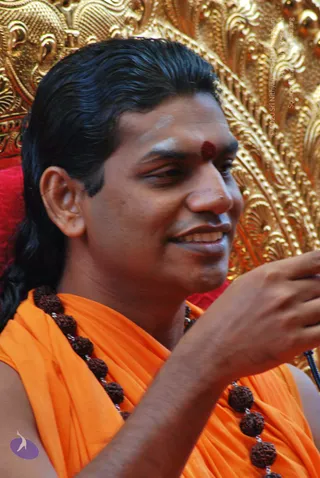
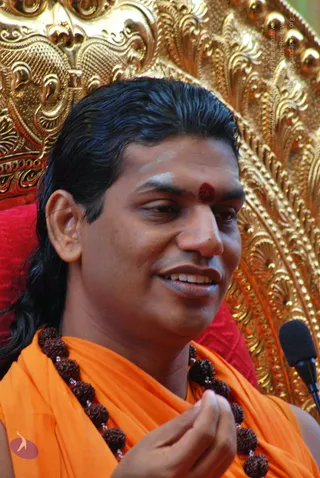
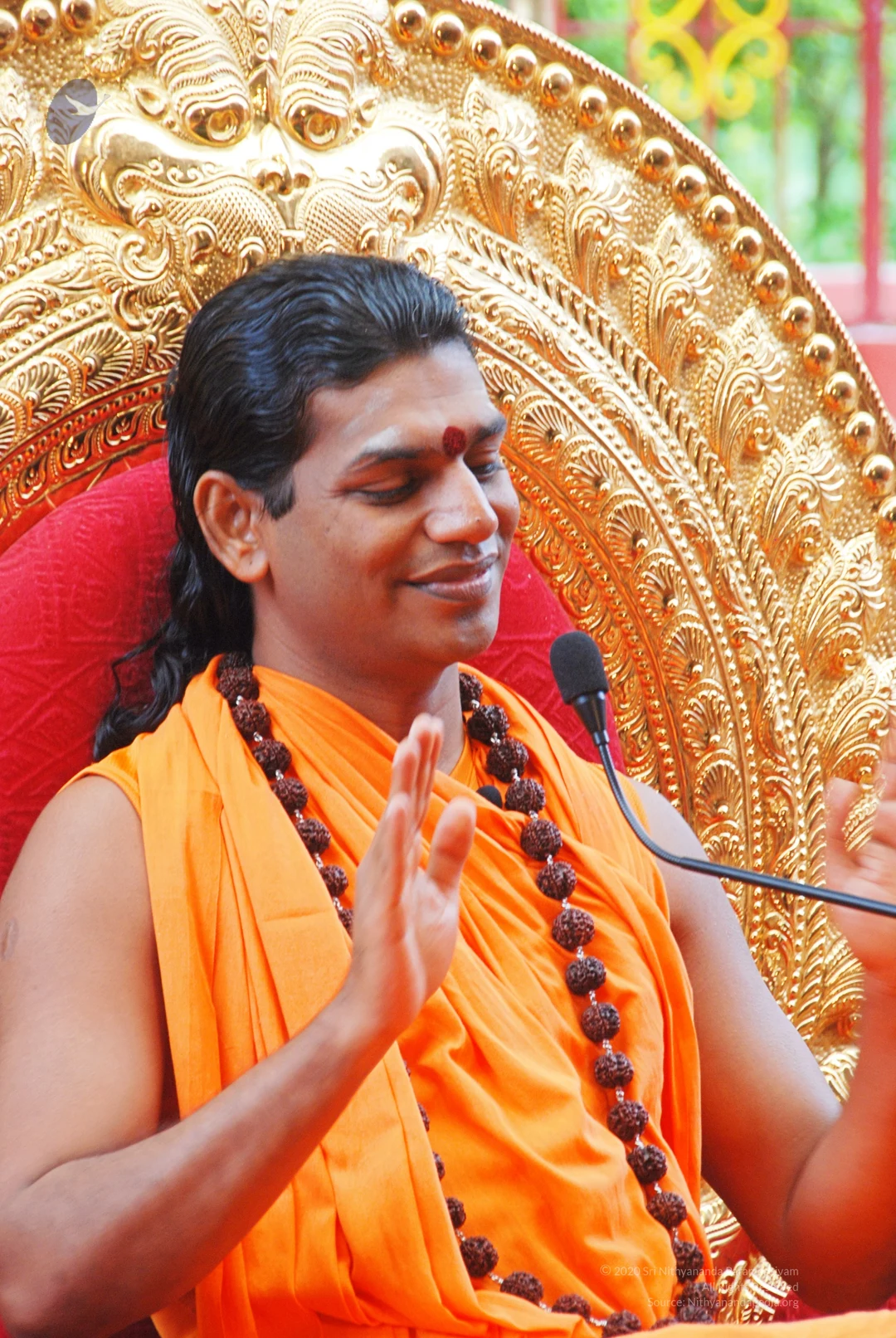
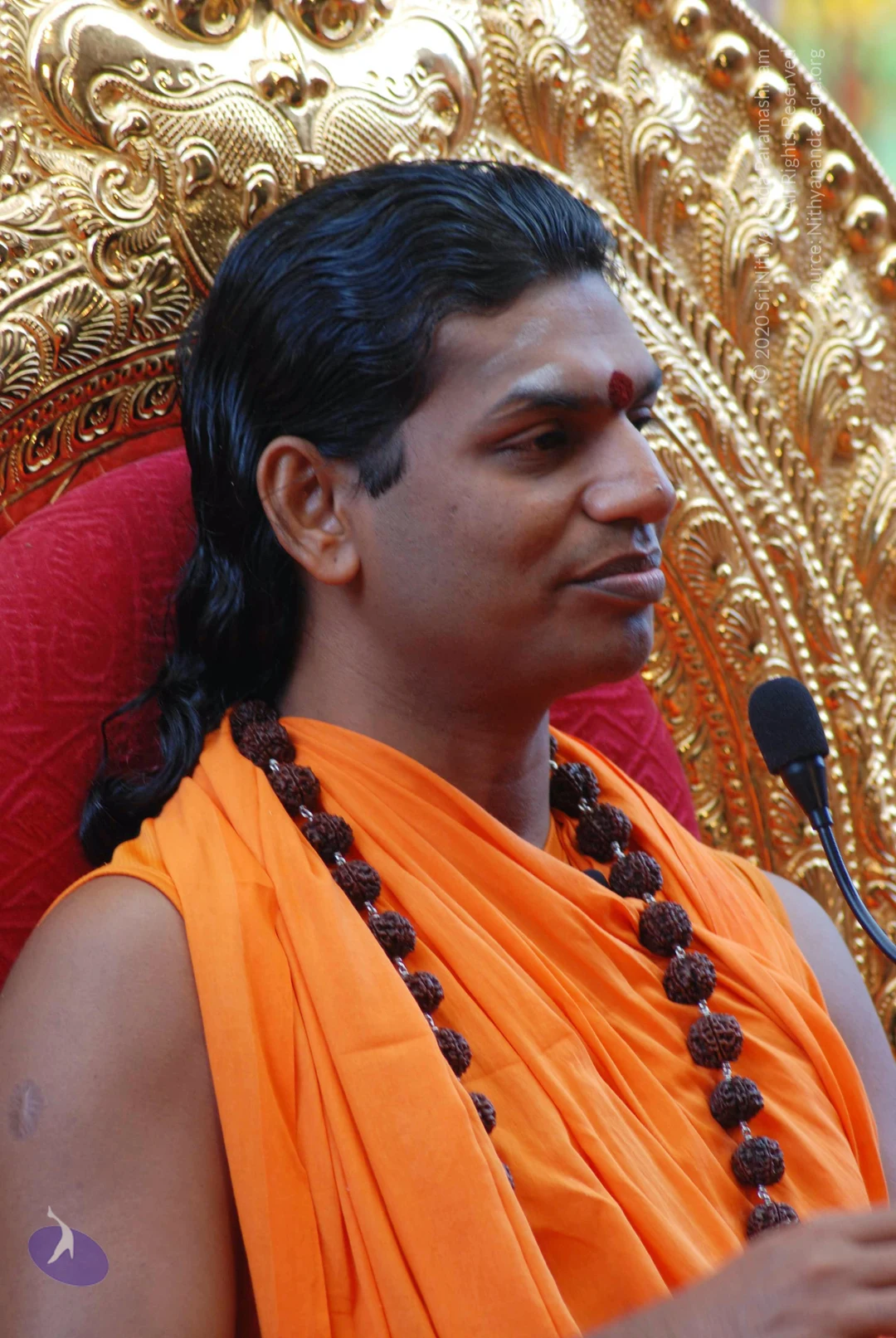
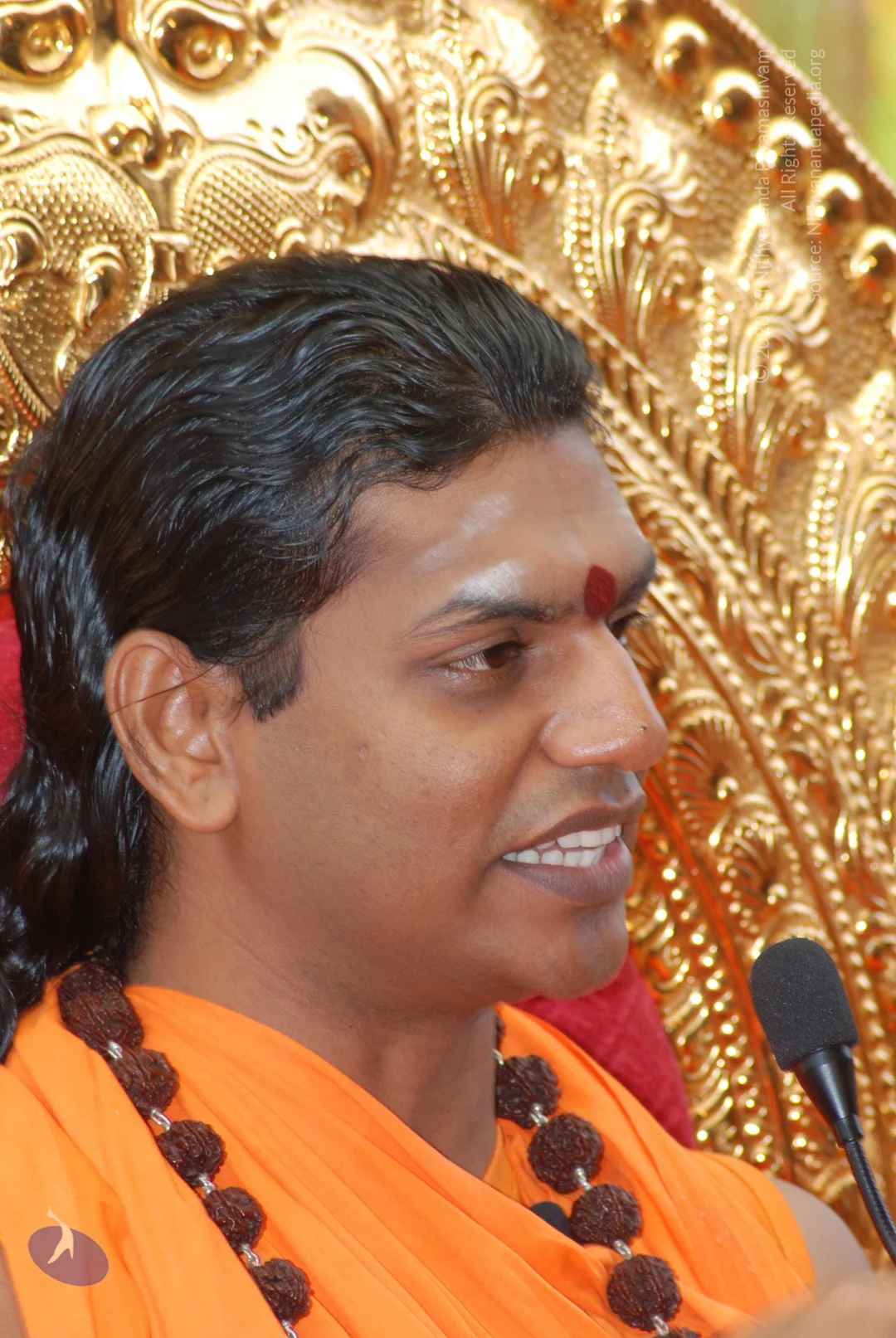
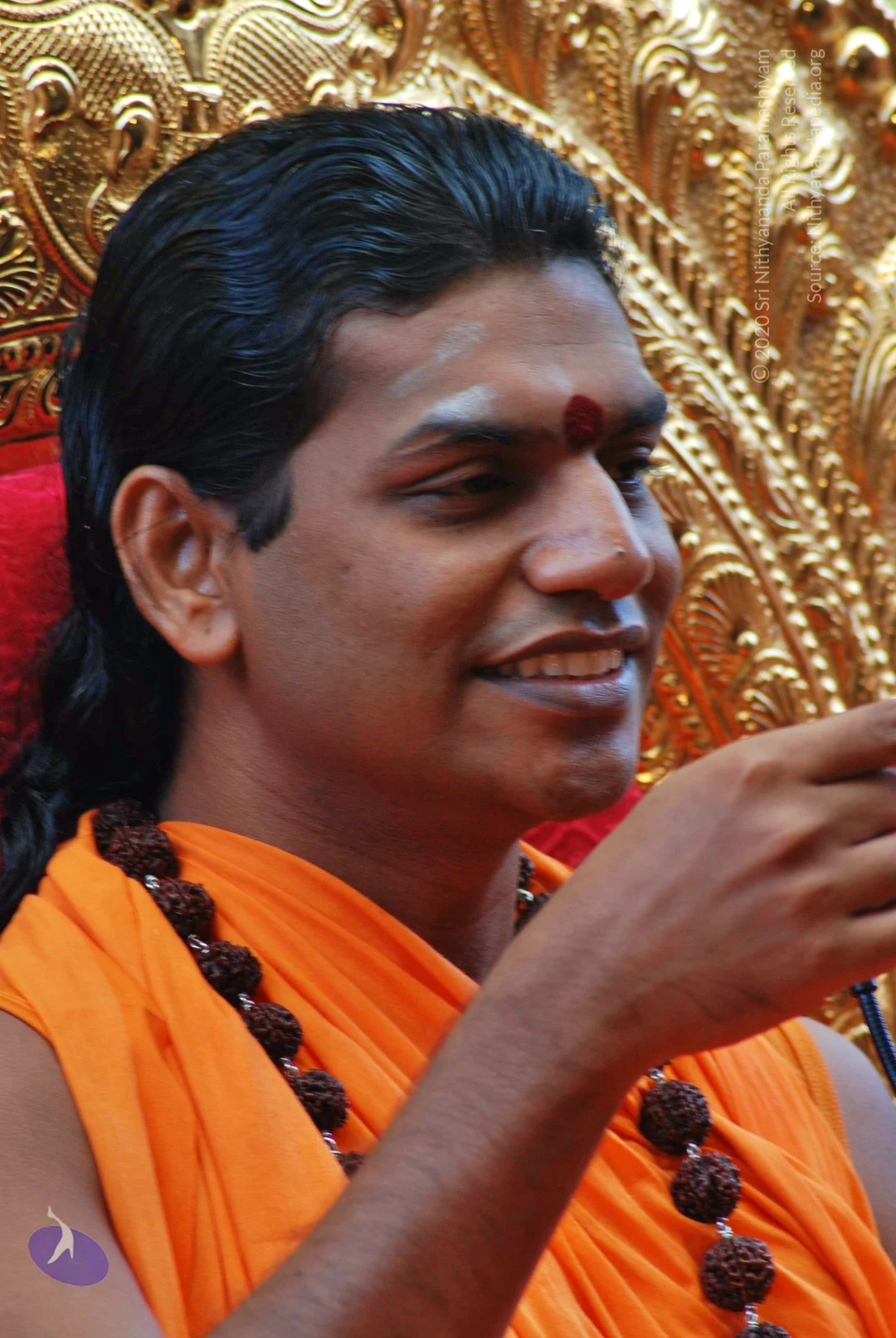
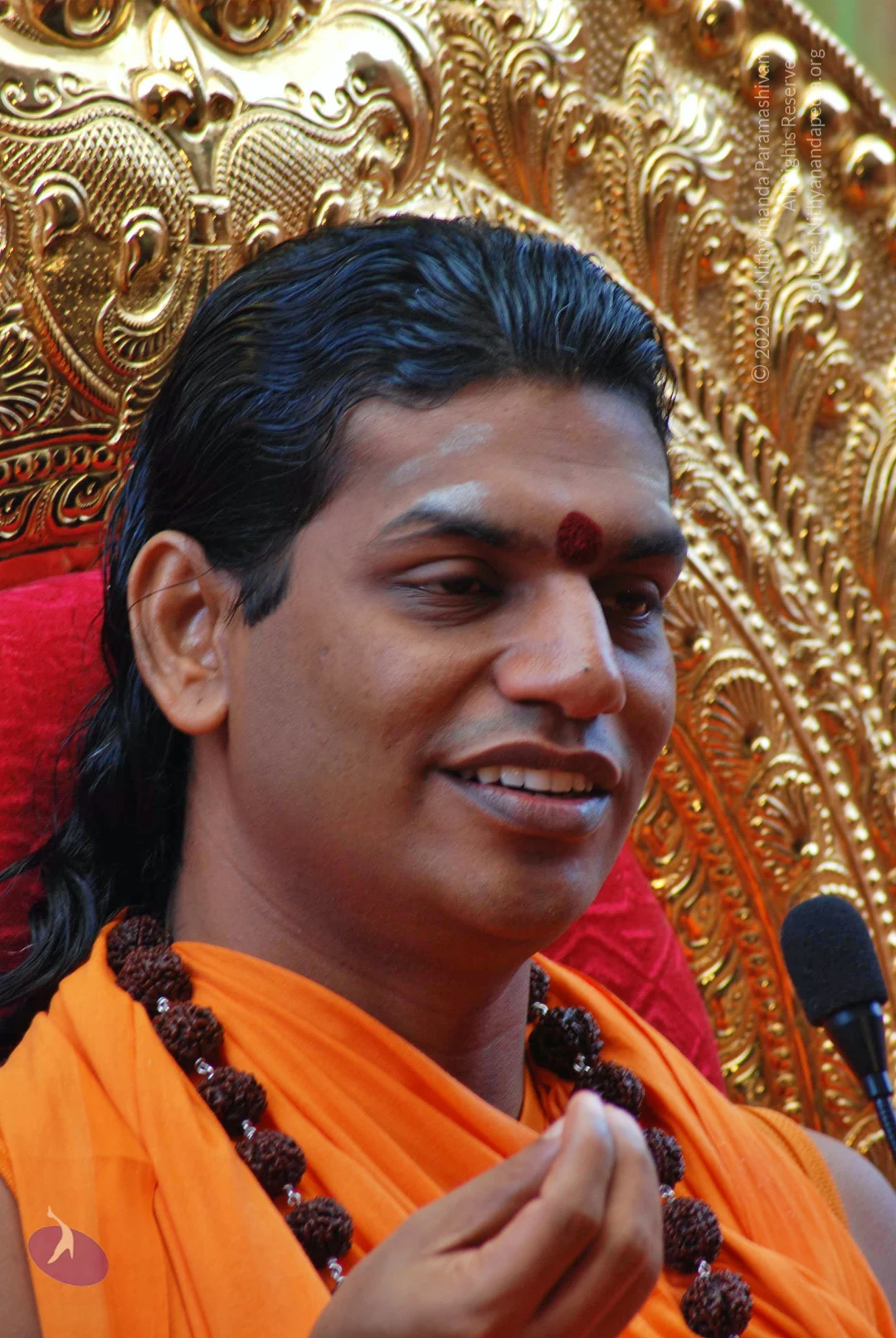
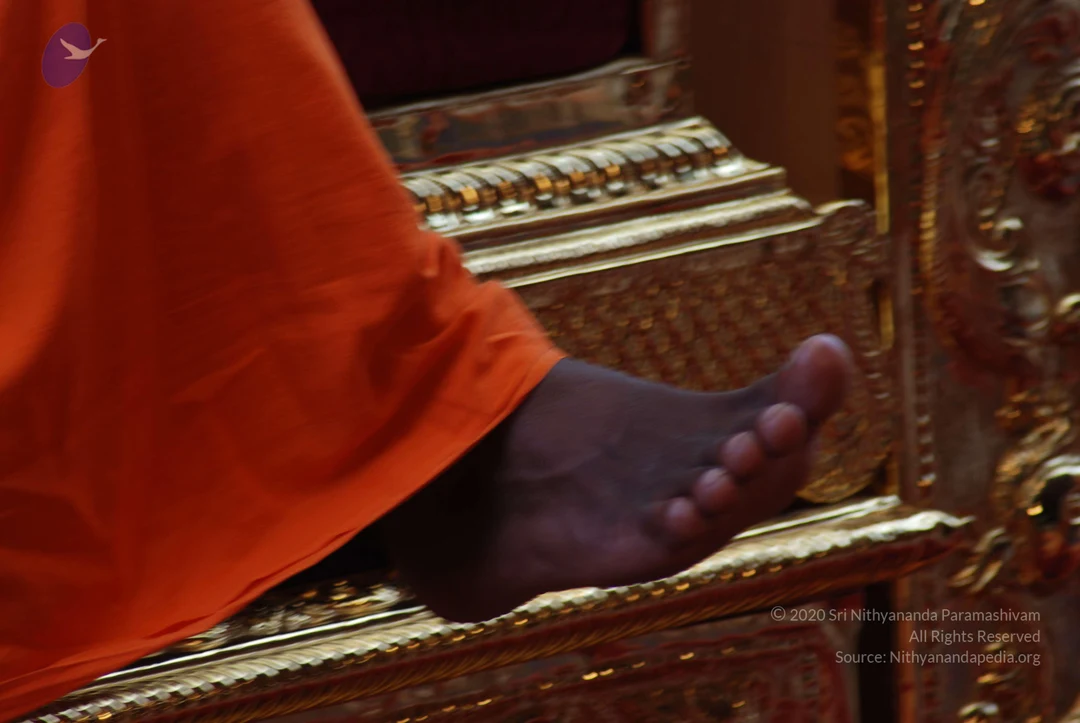
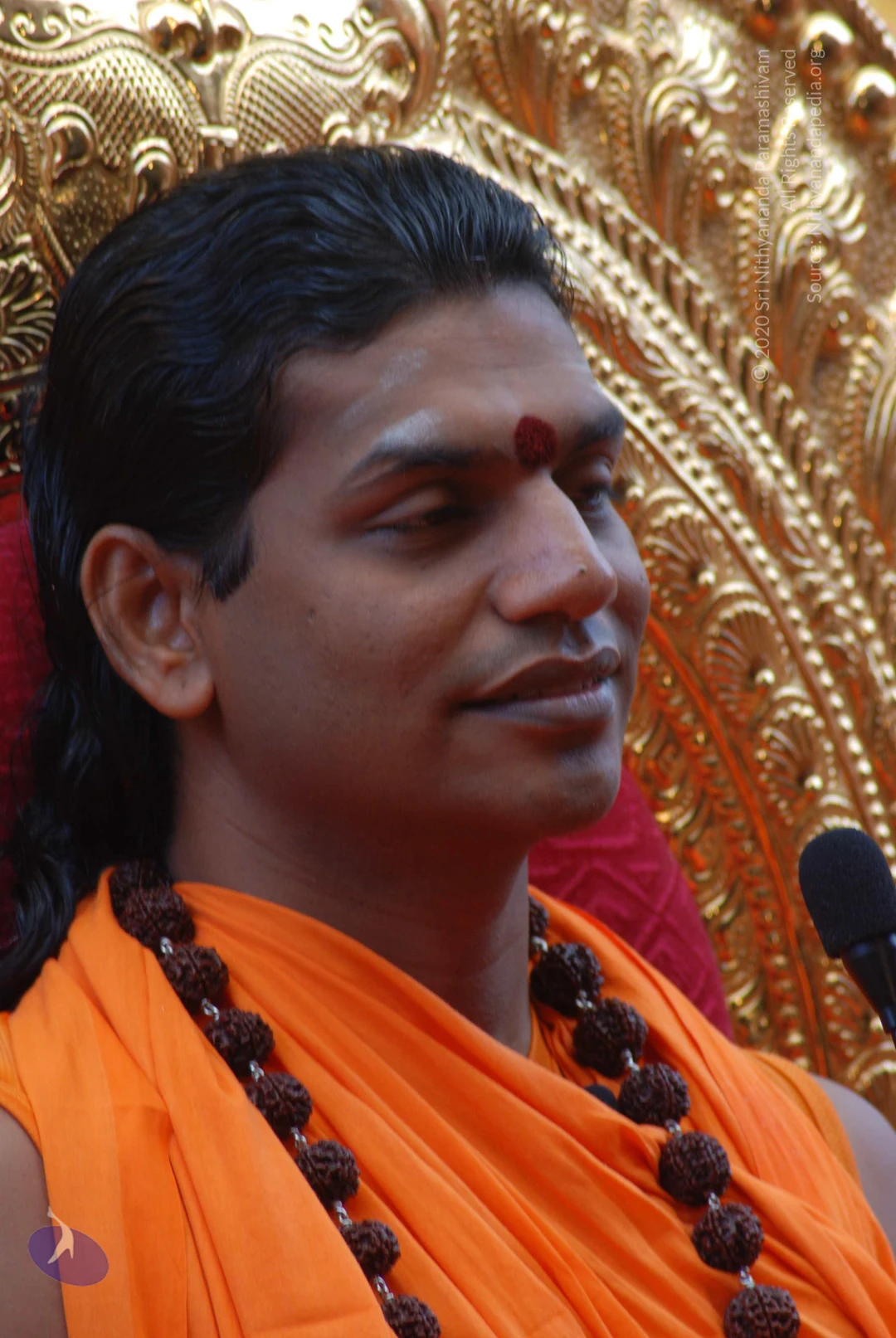
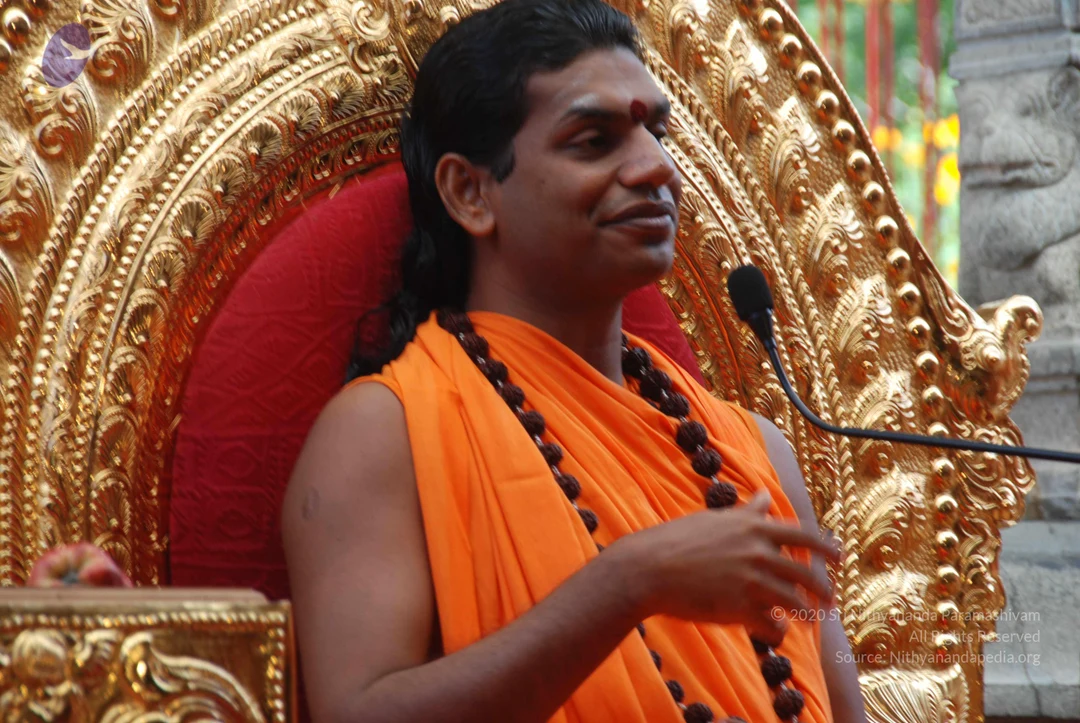
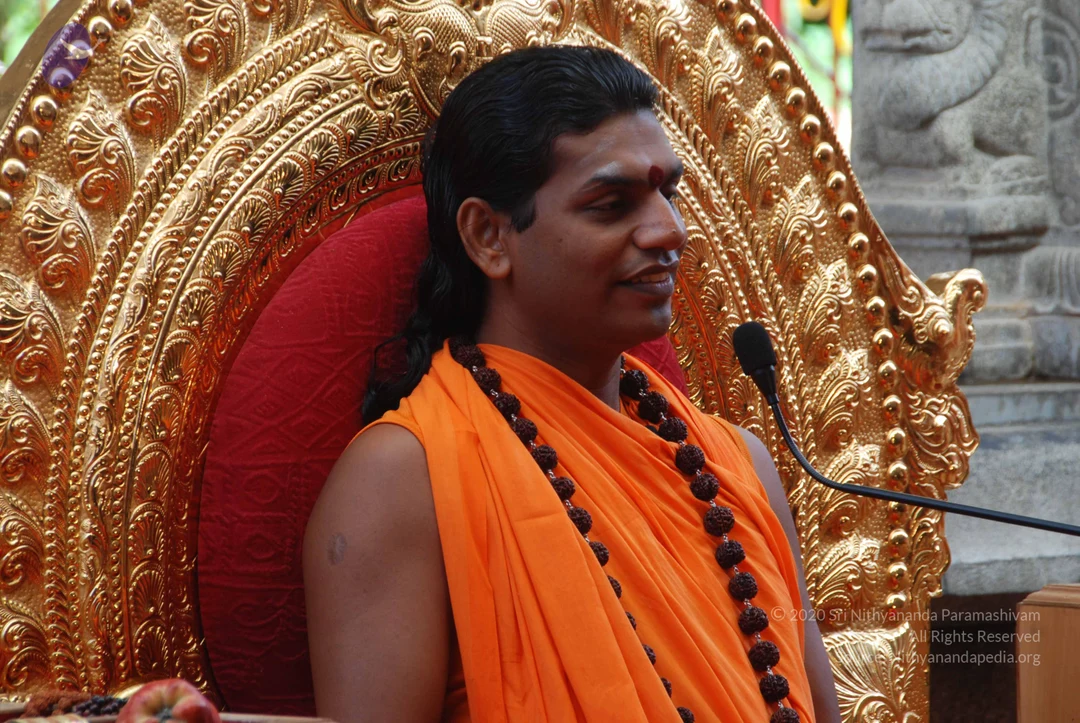
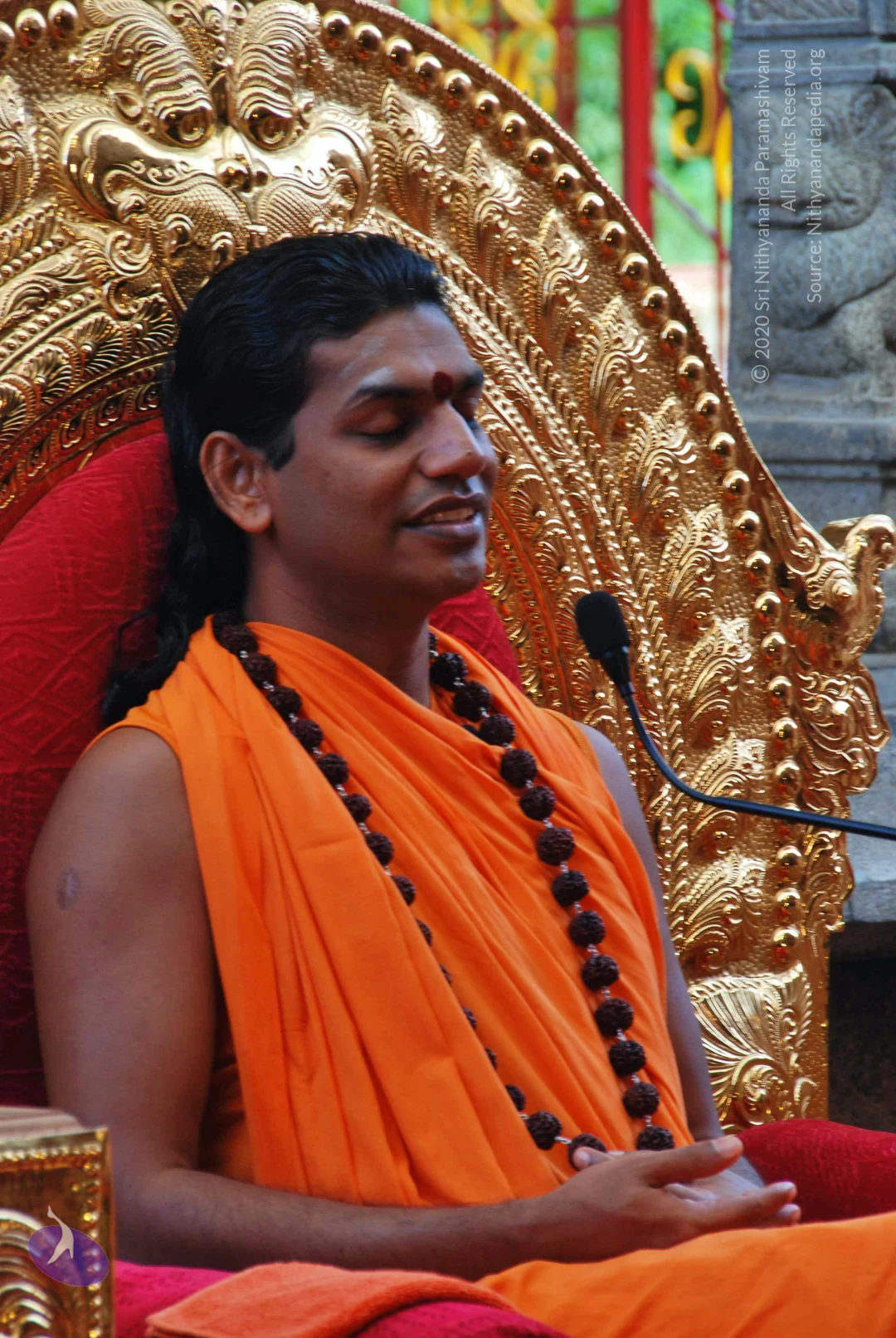
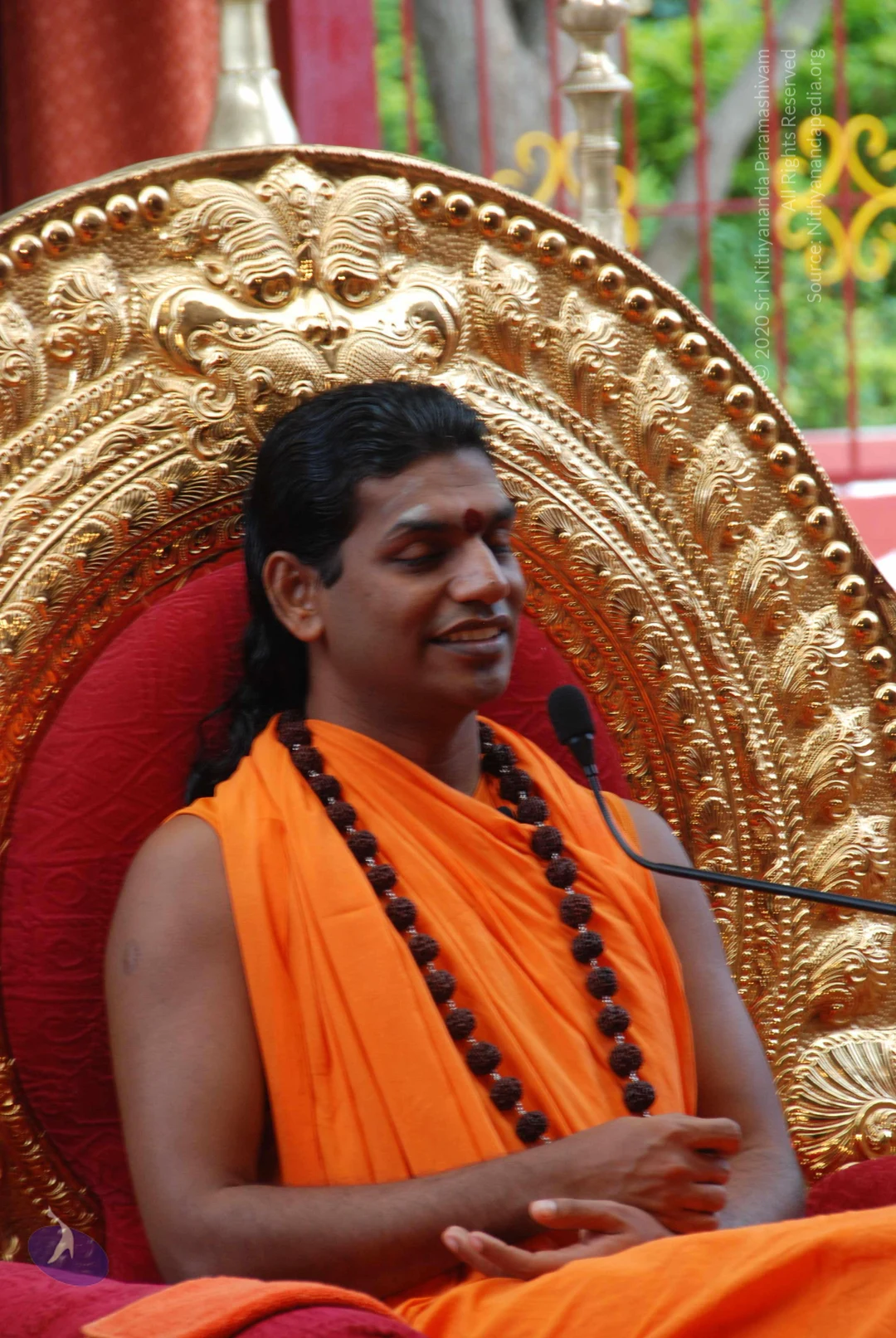
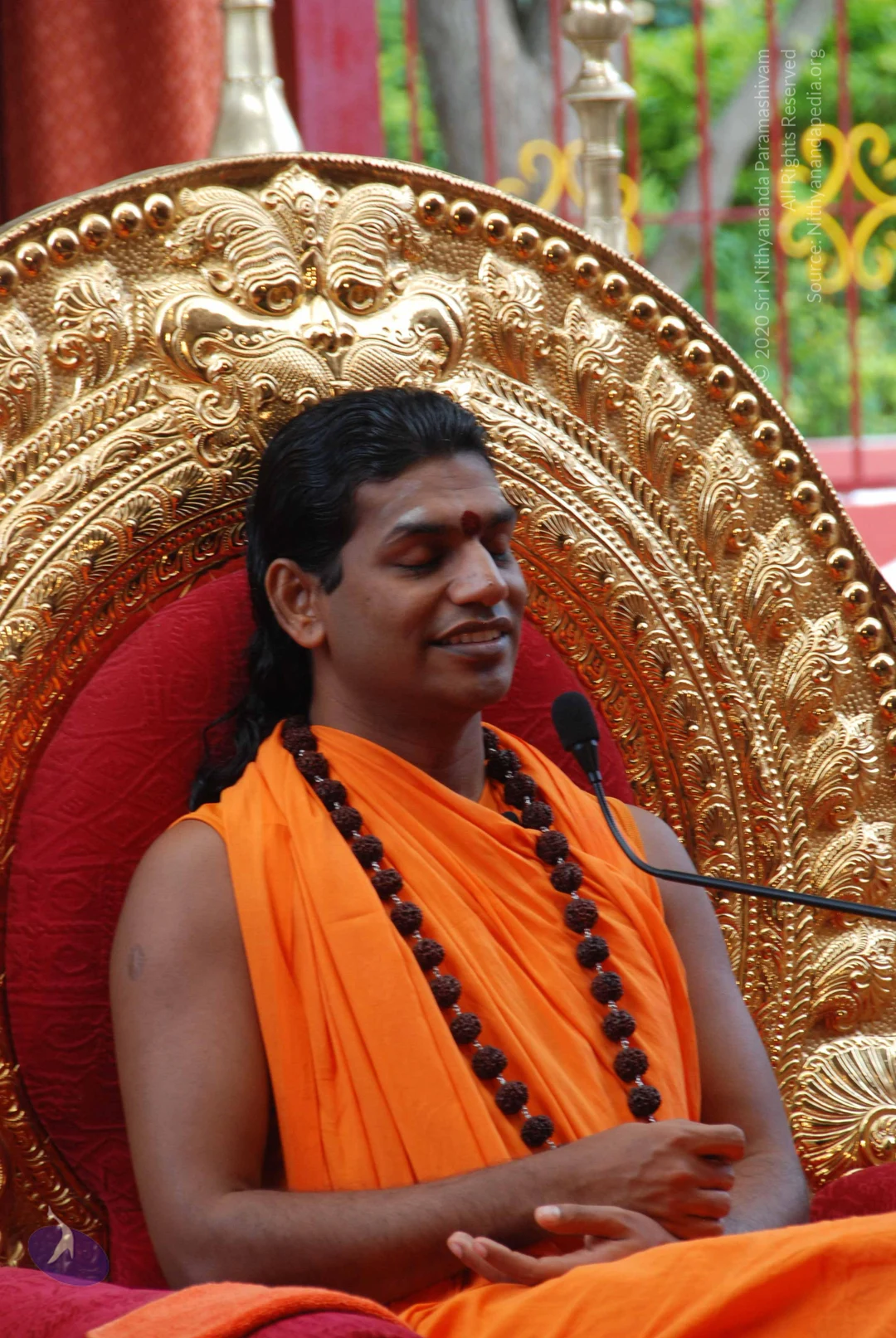
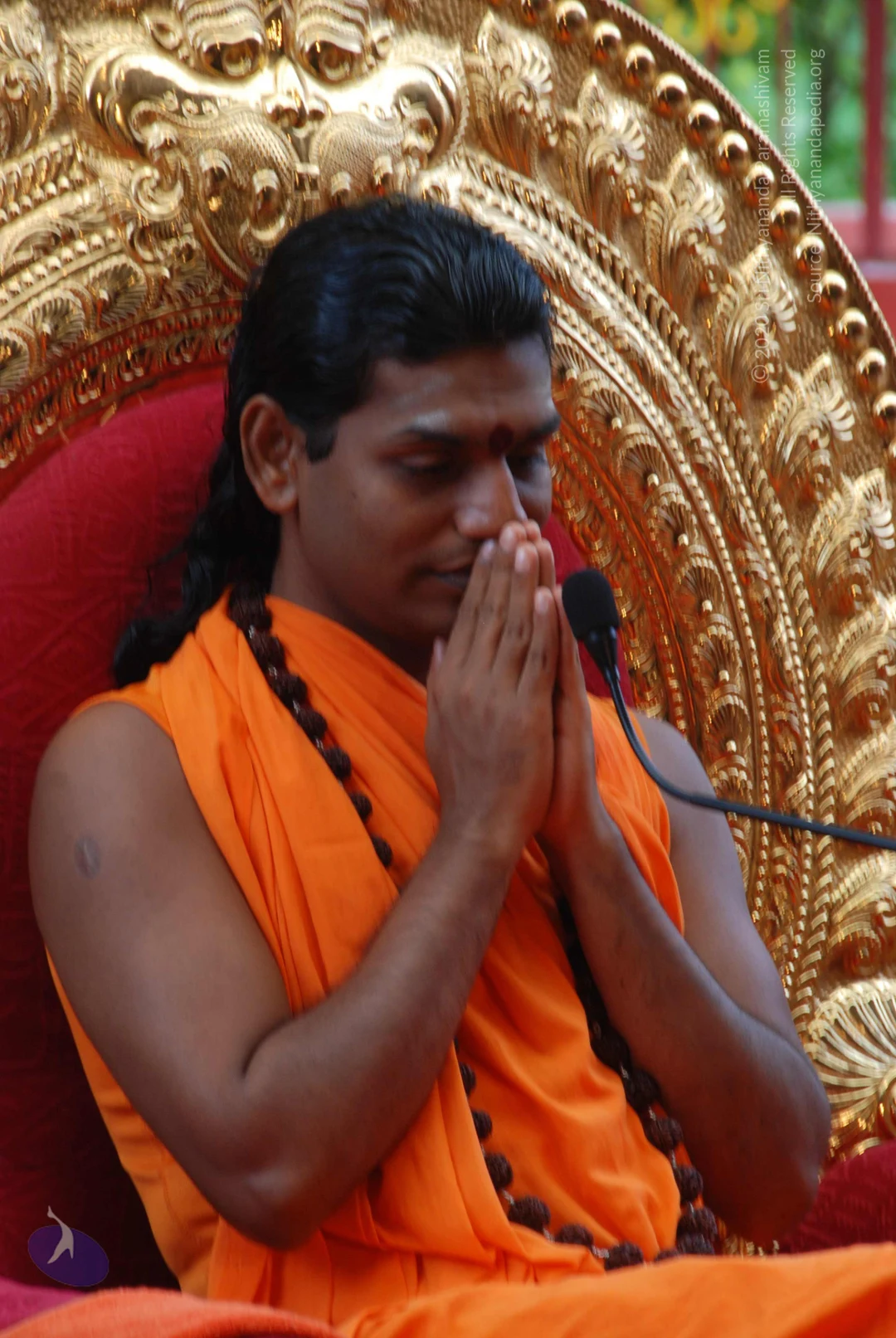
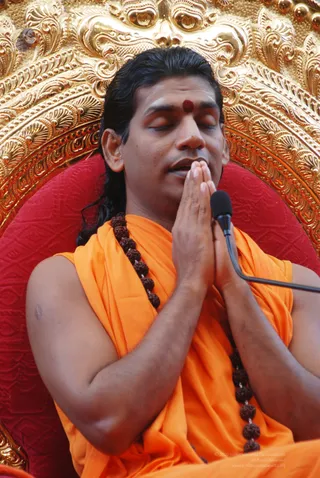
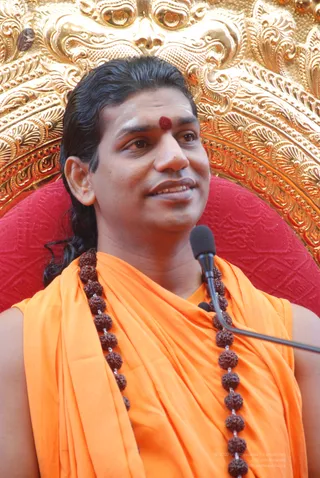
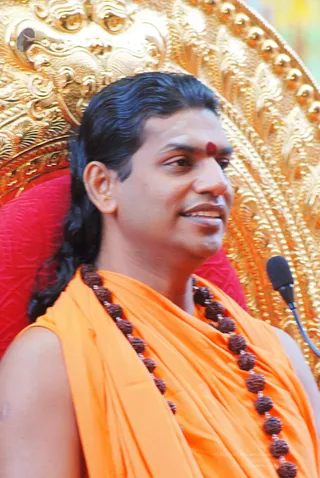
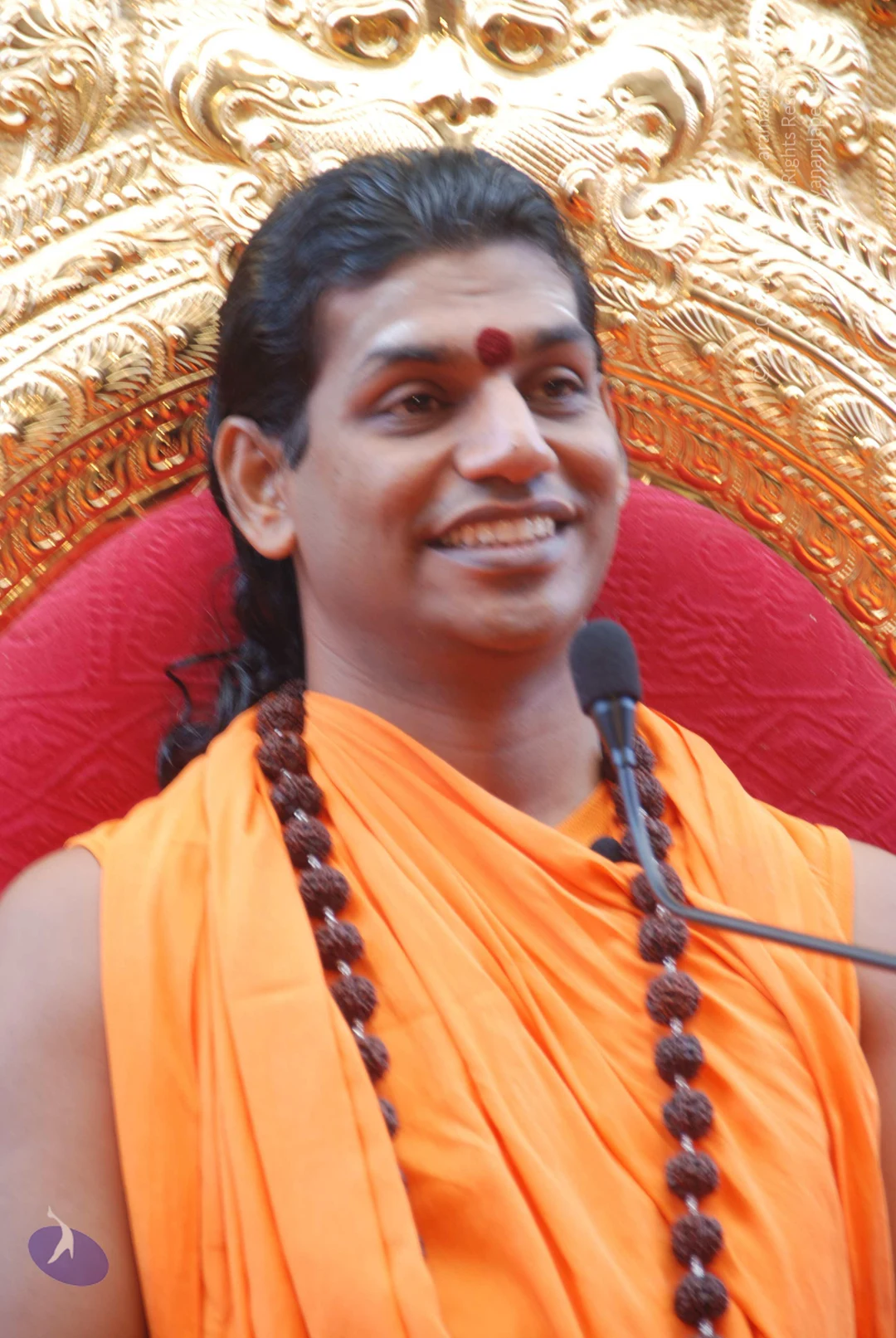
A smiling man with long dark hair swept back sits before an ornate gold-embossed backdrop and a red cushioned seat. He wears an orange saffron shawl over his shoulders, multiple rudraksha mala beads around his neck, and a red kumkum mark on his forehead. A microphone stands beside him. Appearance cues match the page's a person candidate, so this is a probable identification based on distinctive visible adornments and clothing rather than facial recognition.A man seated on an ornate gold-carved throne with a red cushion, wearing a sleeveless saffron-orange robe draped over one shoulder and a long mala of dark rudraksha beads. He has long dark hair swept back, a red bindi-style mark on his forehead, and looks to the side beside a black microphone on a stand. Swamiji (probable) is shown in this seated teaching pose; appearance cues include the long swept-back hair, saffron robe and rudraksha mala. The gold throne backdrop and microphone indicate a discourse setting.Close-up photo of a man with long, swept-back black hair wearing an orange robe and multiple rudraksha mala beads, a red bindi and white forehead marks. He is seated in front of an ornate gold throne with a red cushion and speaks into a black microphone at lower right. Swamiji (probable): the long swept-back hair, saffron robe and rudraksha malas match the page's claim, so he is labelled as a probable in-person candidate.Close-up photograph of a smiling man with long, swept-back black hair, wearing an orange saffron garment draped over his shoulders and multiple rudraksha mala beads around his neck. He has a red bindi and white vibhuti marks on his forehead and is raising one hand near a microphone. Behind him is an ornate gold repoussé backdrop with a red cushion at the left edge.Close-up photograph of a smiling man with long dark hair swept back, wearing an orange saffron shawl and a multi-strand rudraksha mala of dark brown beads. He has a red bindi and white vertical tilak on his forehead, and his right hand is raised in a gesture while he speaks. A black microphone is at the right edge, and behind him is a red cushion in front of an ornate gold-embossed throne. Probable Swamiji: long swept-back hair, saffron clothing and rudraksha mala, seated on a gilded throne with a microphone as the speaker.Close-up photograph of a bare foot resting on an ornate gilded throne. A person in flowing saffron-orange robes sits with the foot visible at the lower centre, toes relaxed. The throne has carved gold-painted floral and scroll patterns, with a dark maroon cushioned seat above. The foot is the only visible body part.
15

07-Morning-Session-NSP

30 dated photos in previewSource gallery
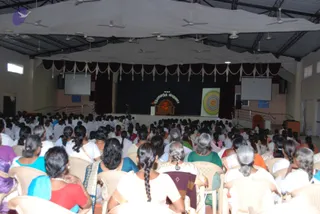
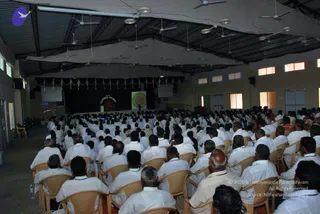
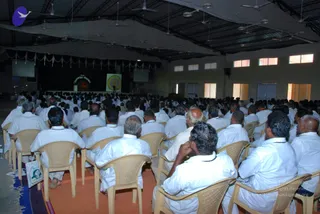
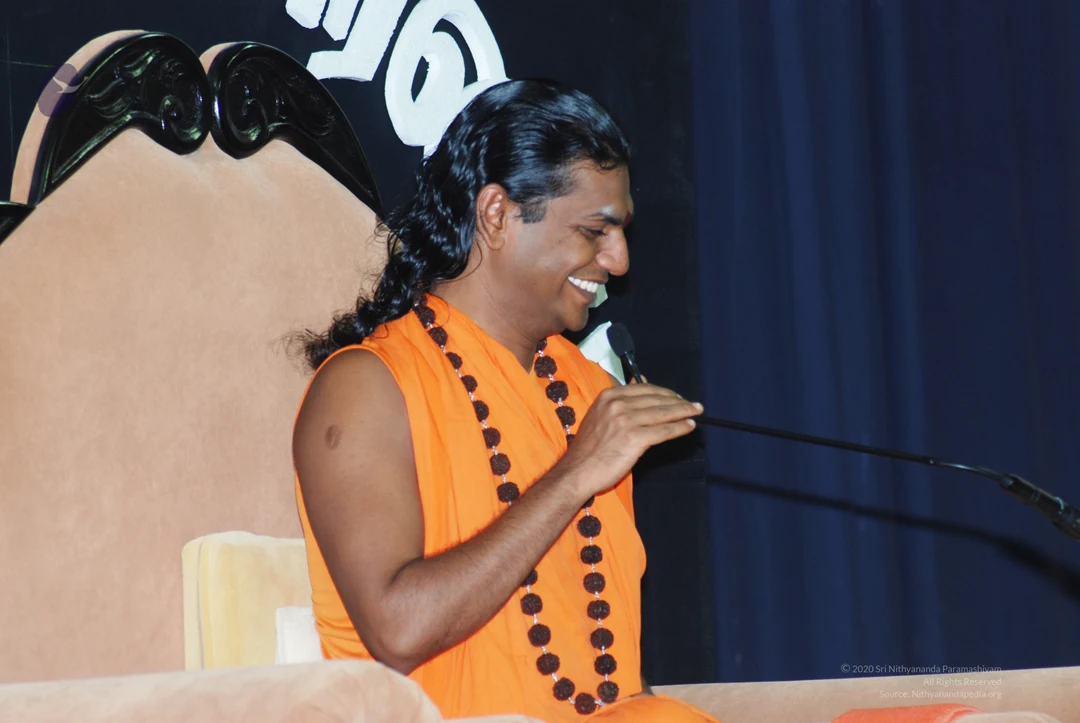
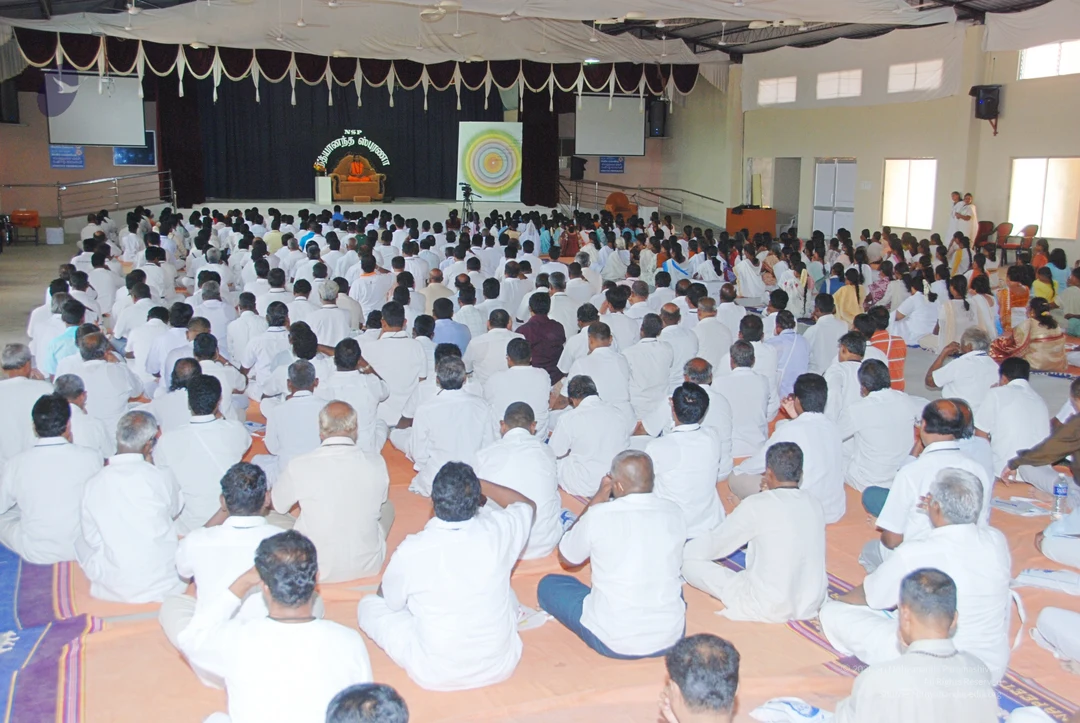
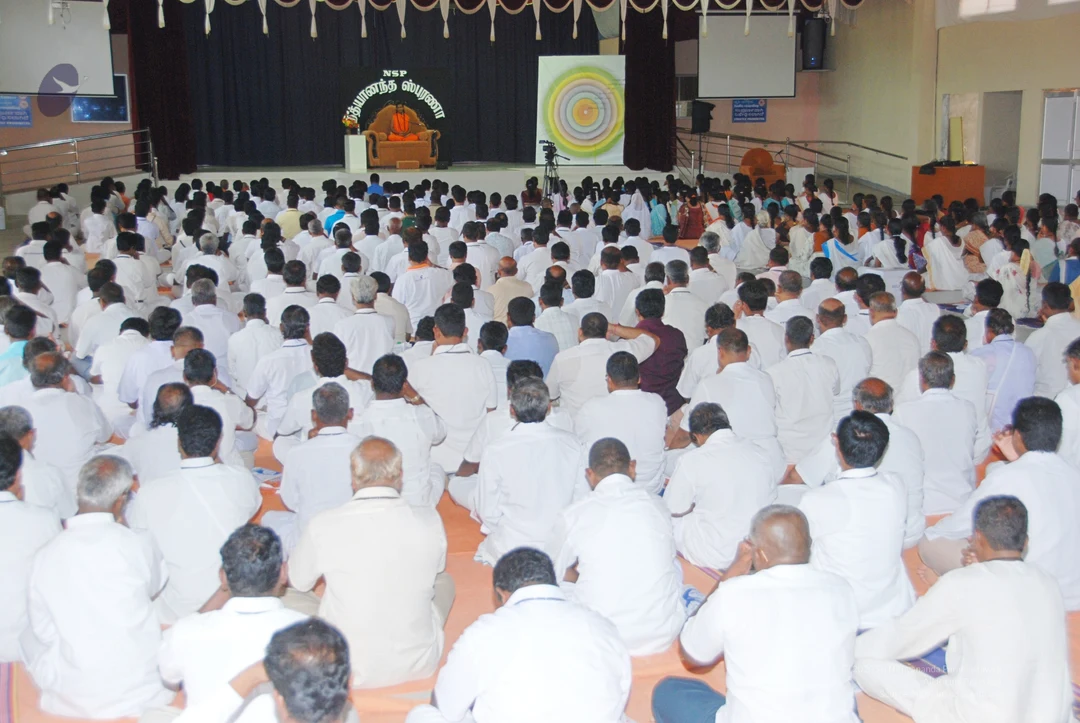
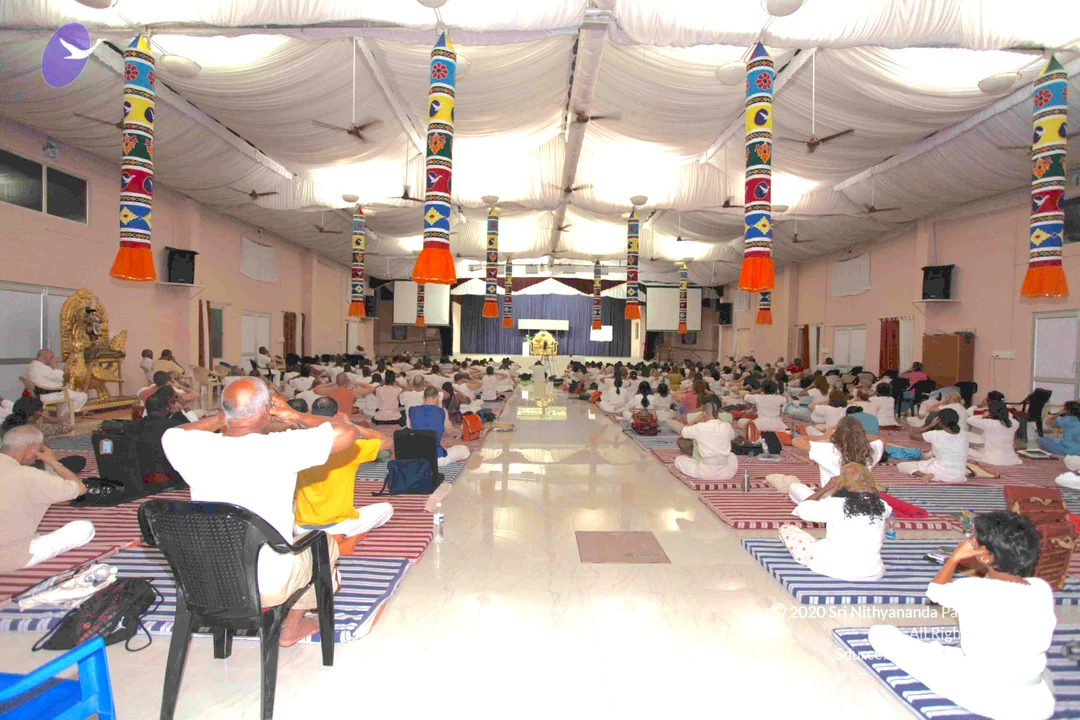
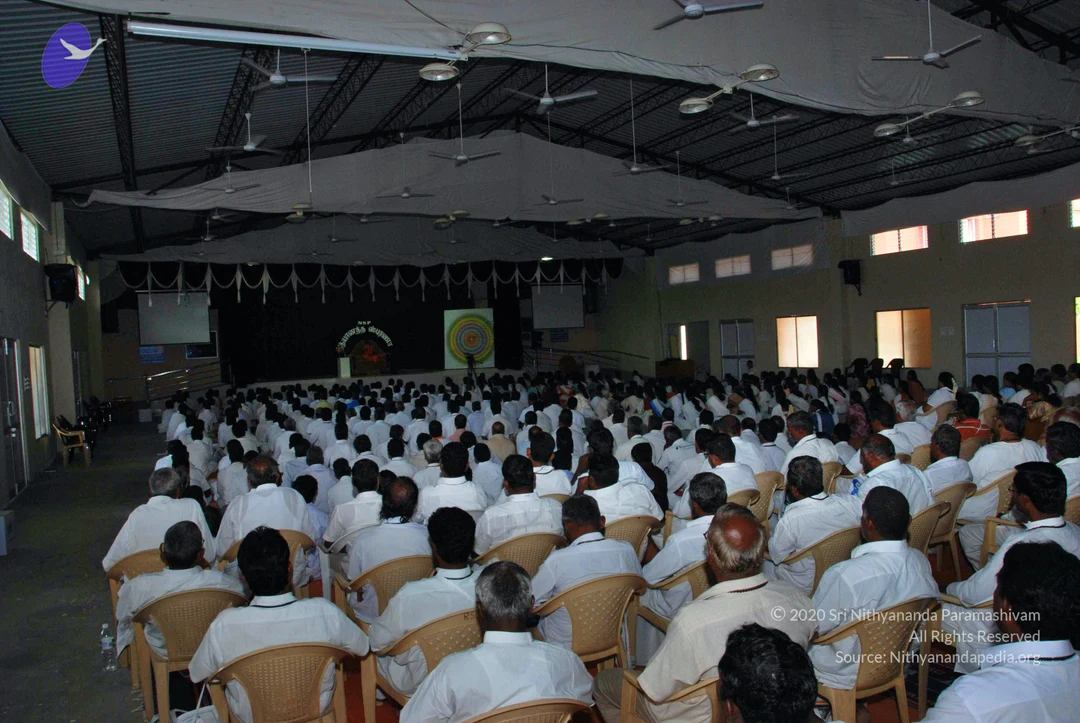
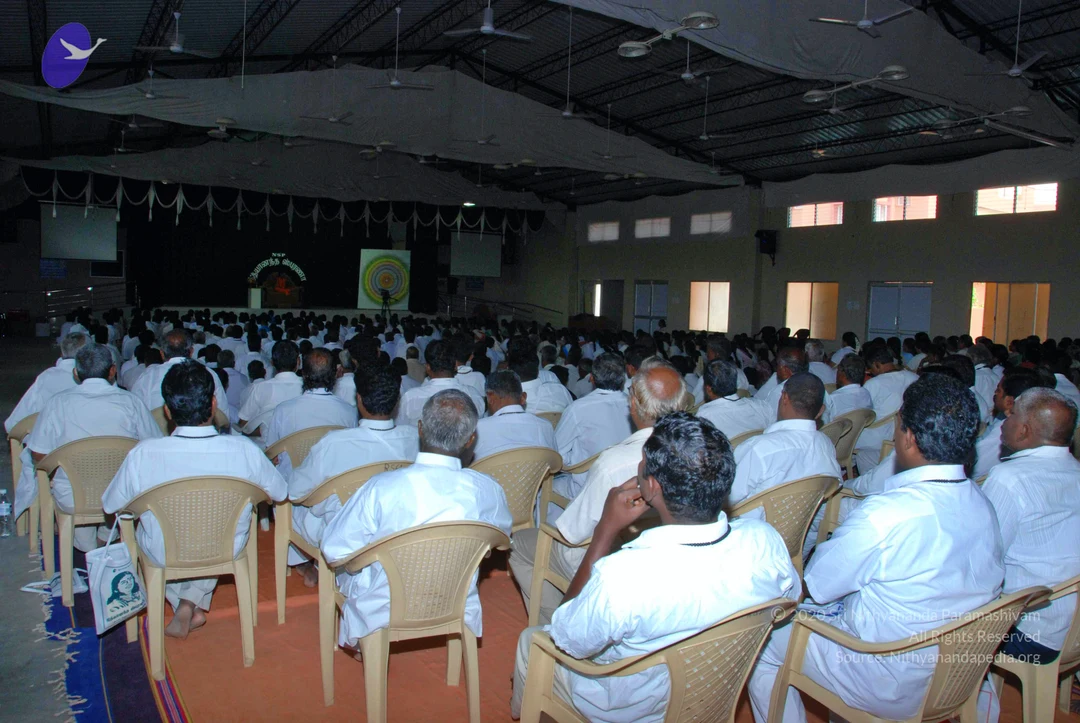
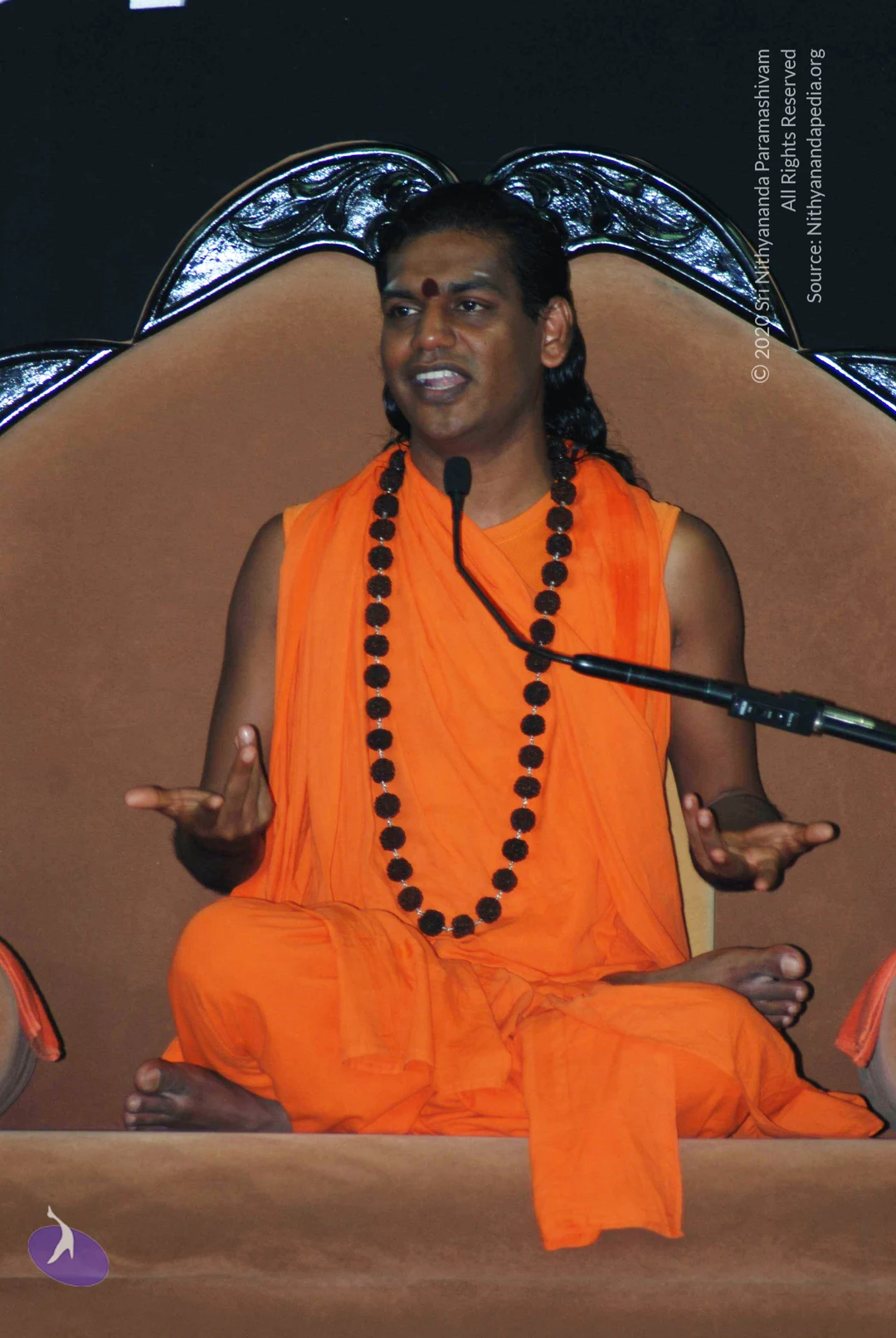
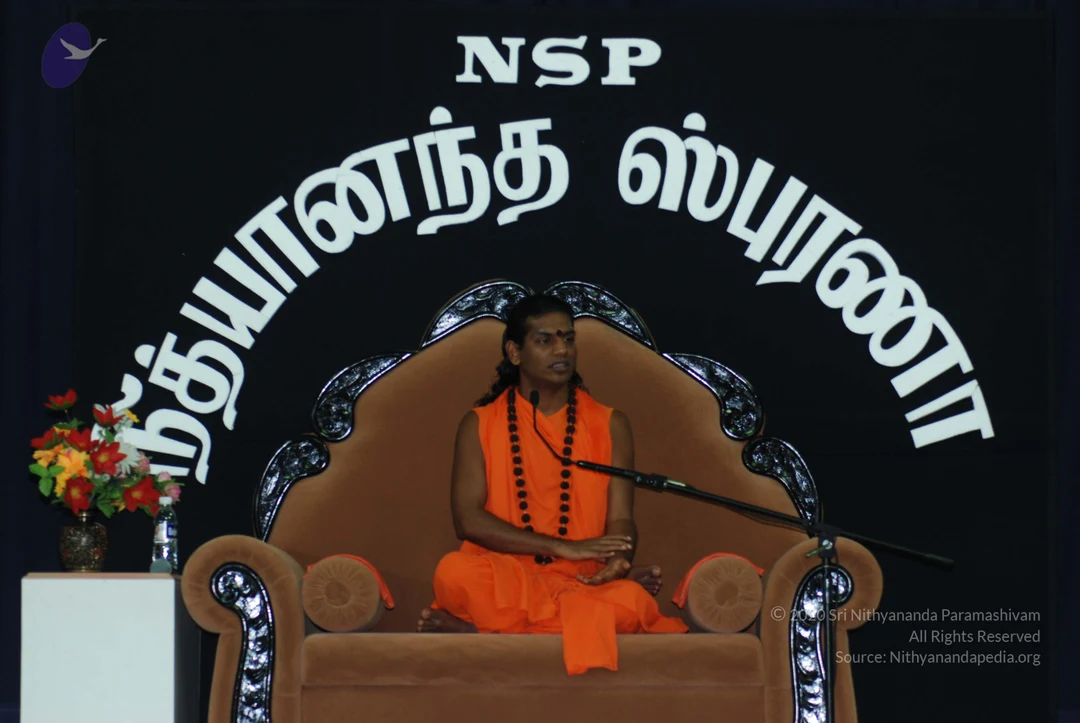
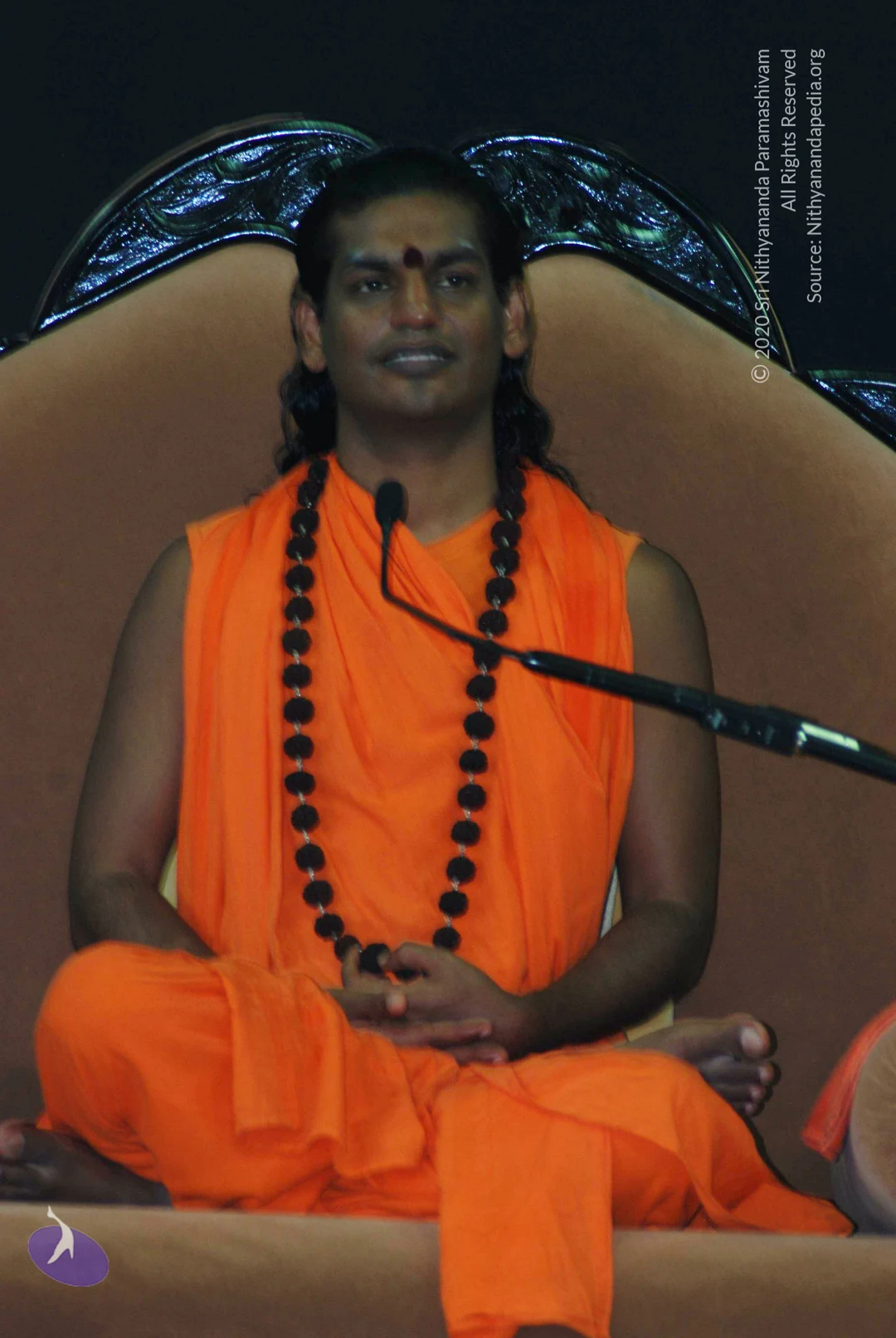
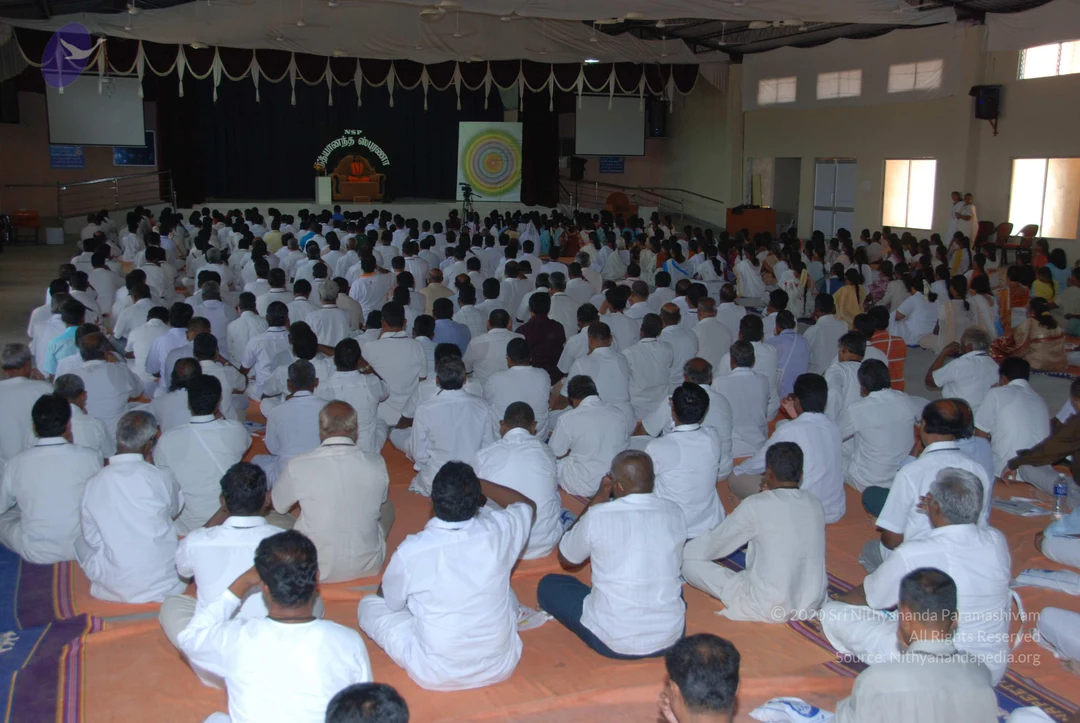
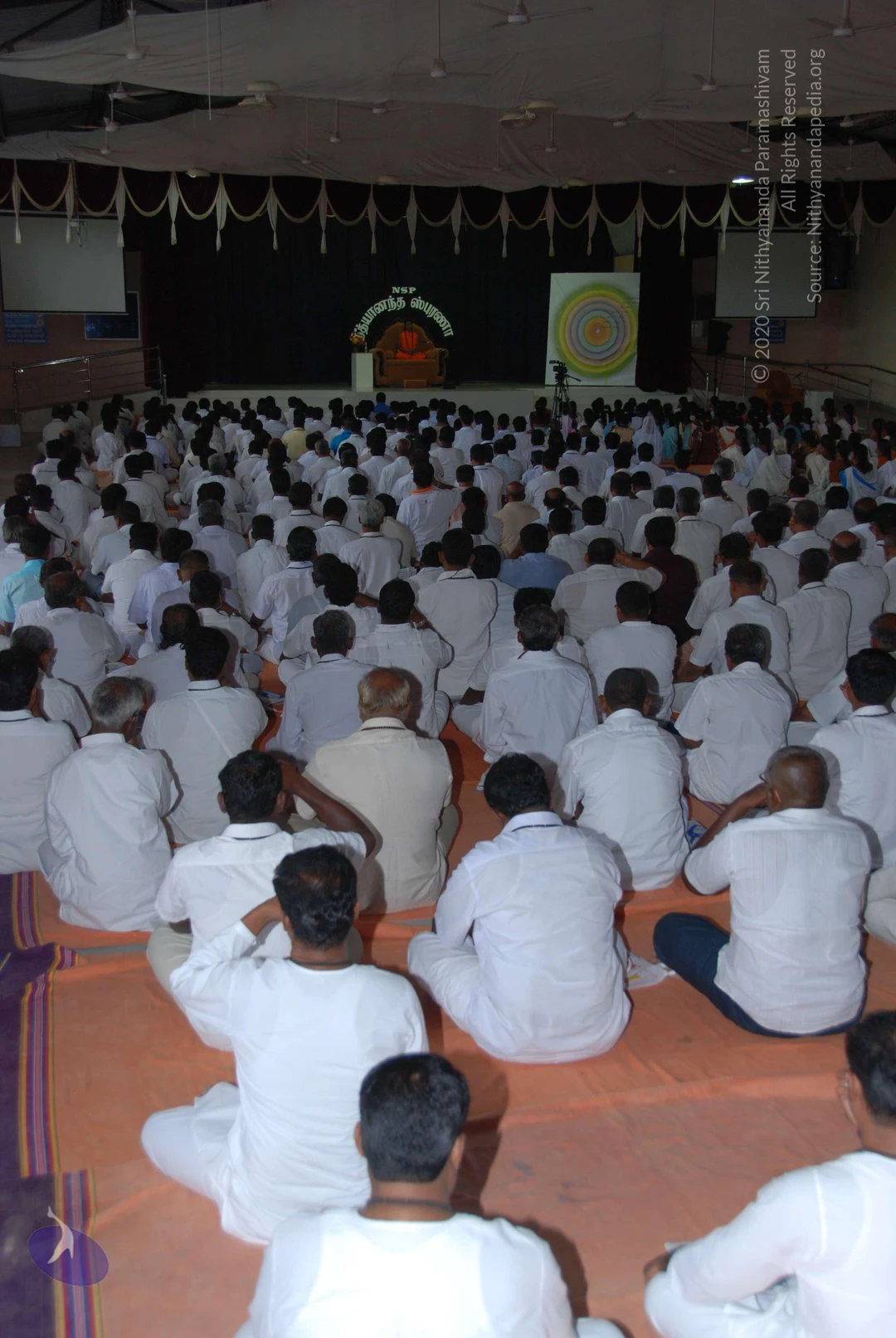
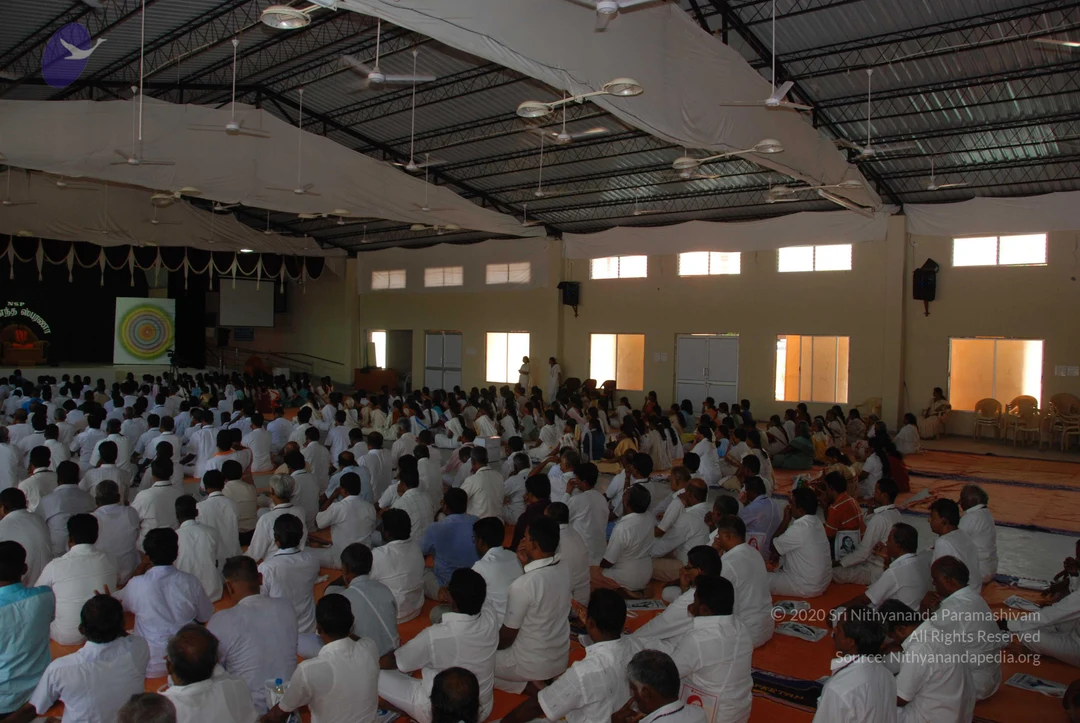
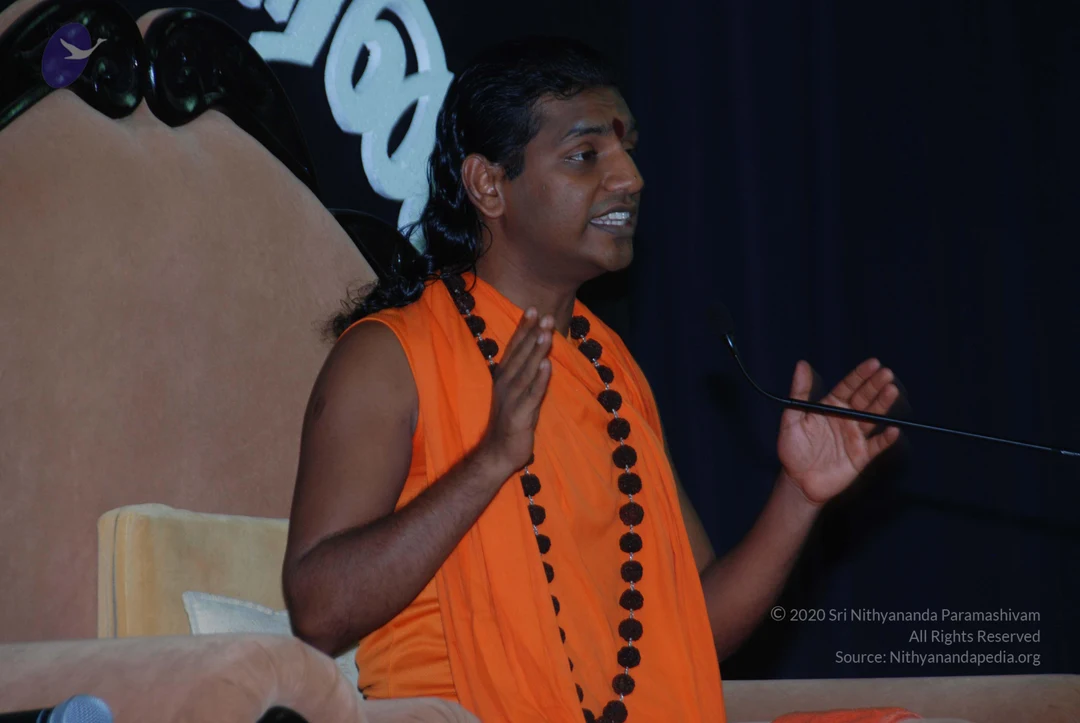
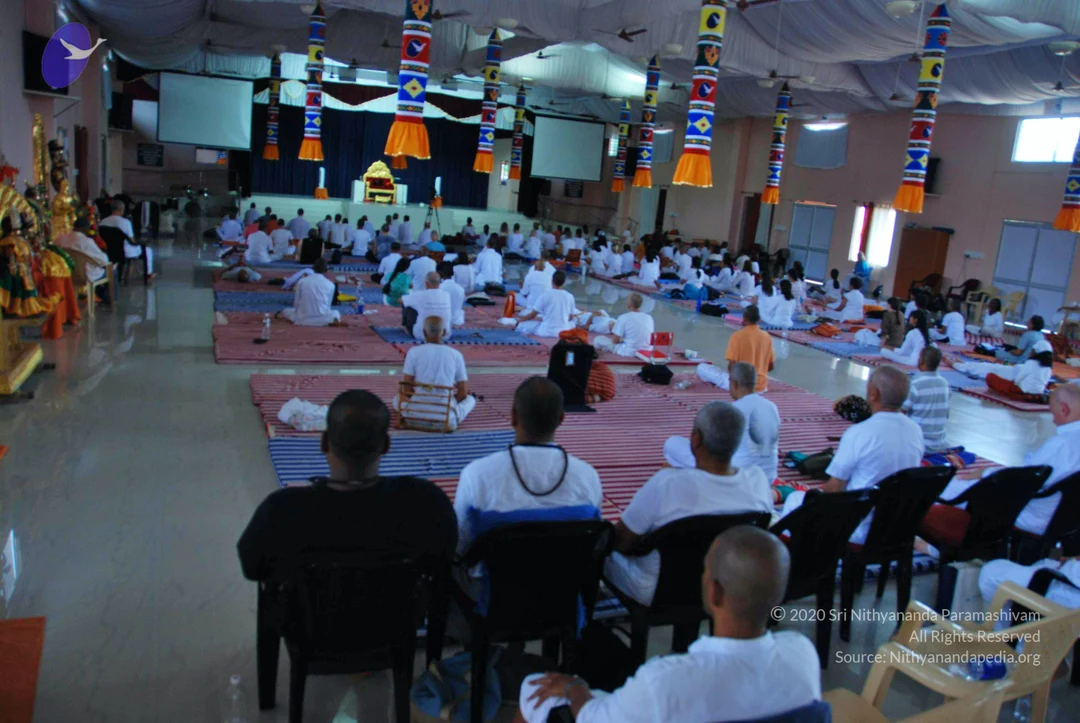
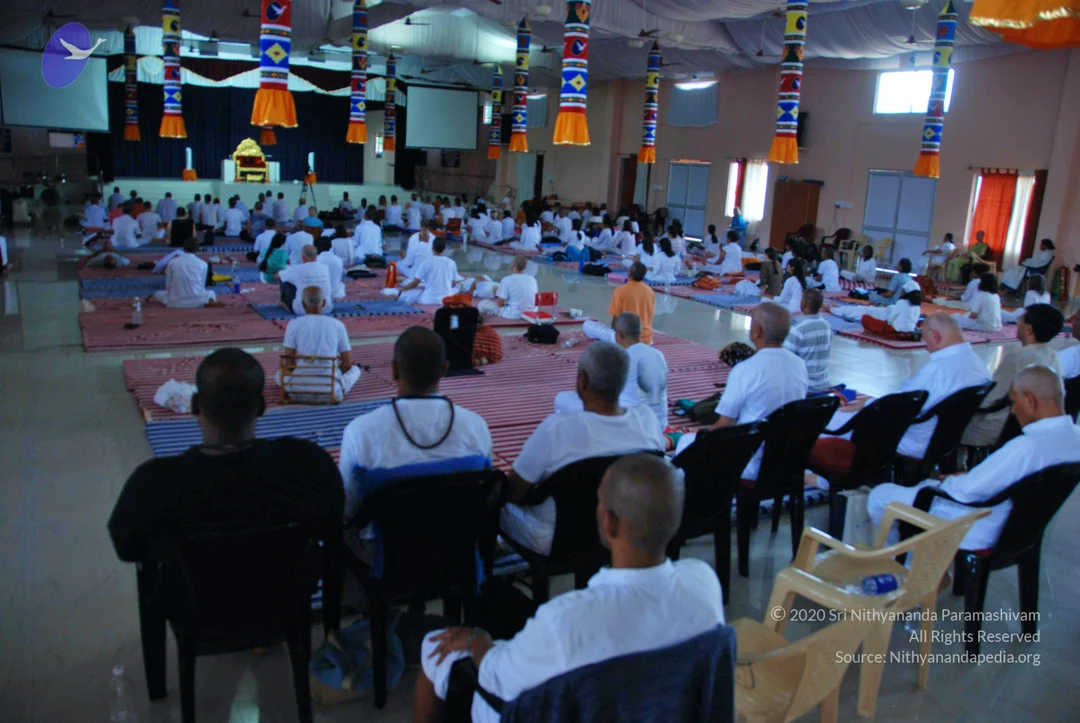
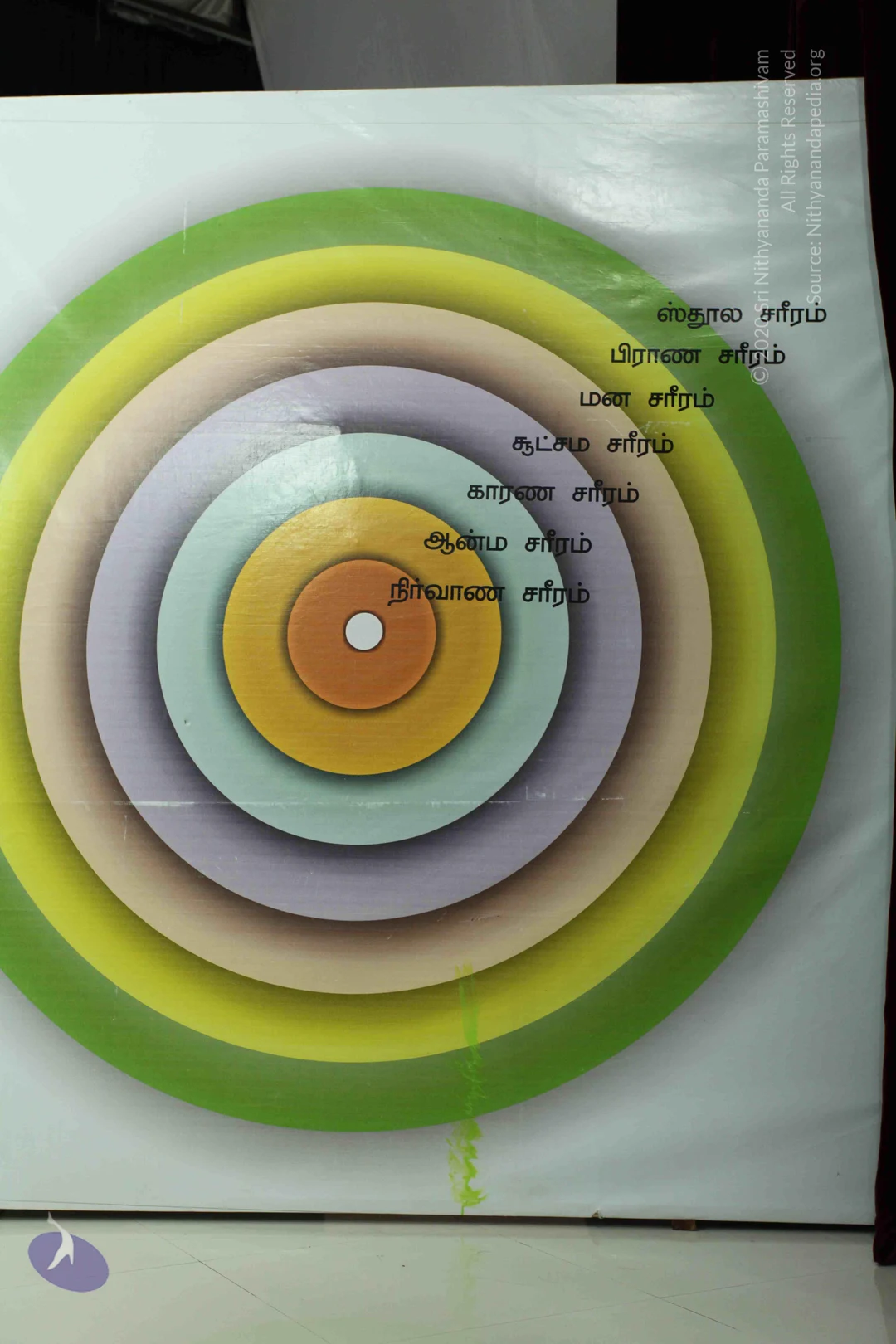
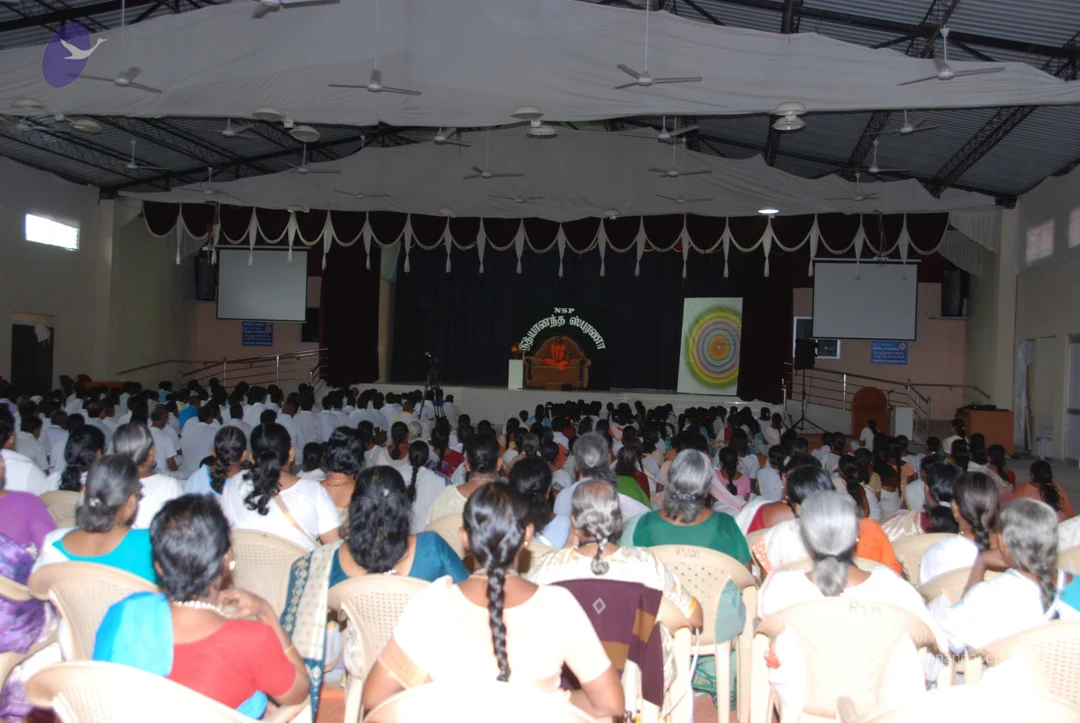
A large hall filled with seated audience members on white plastic chairs, viewed from the back. Most attendees wear white or saree-style outfits in teal, red, blue, orange and purple, with many women wearing long braids or buns. A white fabric ceiling and rows of ceiling fans overhead. At the far end a stage has maroon drapes with white tassels, a dark backdrop with a golden emblem, a wooden seat with a lit oil lamp on a small table, and a circular green-and-yellow graphic on an easel. Two projection screens flank the stage.A large indoor hall filled with a dense audience of men seated on orange-brown plastic chairs, photographed from behind. Most attendees wear white shirts and white trousers, with a few in darker or patterned clothes. A stage at the far end has a dark backdrop with a draped valance, a small illuminated emblem, and a projection screen showing a concentric target-like graphic. Ceiling fans hang beneath a white fabric canopy, and side windows let in daylight.A large indoor hall seen from behind the audience, with a crowd of men seated in rows on beige plastic chairs facing a stage. Most wear white shirts and white dhotis, and several have grey or white hair. A man in the foreground wears a dark rudraksha-style necklace. The stage at the far end has a dark drape with a small illuminated screen showing a colourful target-like graphic, and a dark backdrop with a gold emblem. Ceiling fans and draped white fabric hang above, with a few white banners and a backlit screen beside the stage. A white cloth bag with a printed figure hangs from a chair on the left.A man seated cross-legged on an ornate brown velvet throne with black carved wooden armrests and backrest, speaking with eyes closed and one hand raised in a gesture. He wears a sleeveless saffron-orange robe and a long black bead mala around his neck, with a small red mark on his forehead. Long dark hair falls to his shoulders. A white lectern with a water bottle stands at left, a microphone on a stand is at right, and a bouquet of red and white flowers sits at the left edge. Behind him a dark blue backdrop bears large white Tamil script lettering. The photo is credited to a person.A photograph of a seated speaker on a stage before a black backdrop with white Tamil script reading NSP and நித்யானந்த ஸ்ப்ரணா. A man with long dark hair wears an orange-saffron shawl and a dark rudraksha mala, seated on a peach-coloured cushioned throne-style chair with carved dark wooden arms and back, speaking into a microphone on a stand. A white table to the left holds a vase of red and yellow flowers and a water bottle. Blue drapes frame the background.A photograph of a man with long swept-back dark hair seated on an ornate peach-upholstered throne with black carved wooden armrests and backrest. He wears a sleeveless saffron-orange garment with a matching wrap and a long necklace of dark rudraksha beads, and his feet are bare. A microphone stand stands beside him, a small microphone sits on a white table at left, a water bottle and red and yellow flowers appear at left, and a dark blue curtain hangs behind him beneath a large white decorative lettering panel.
16

09-Meditation

20 dated photos in previewSource gallery
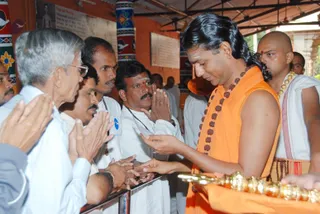
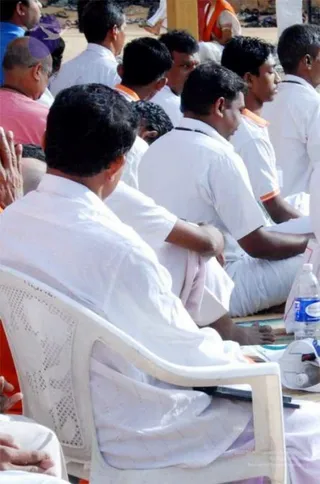
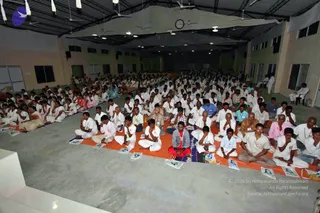
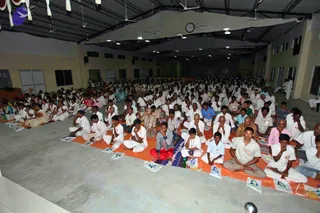
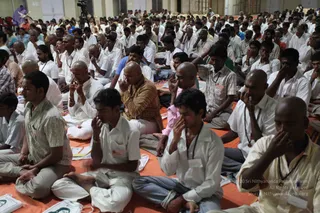
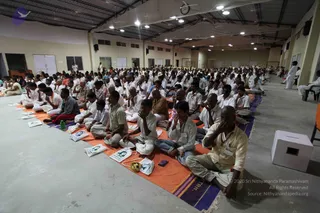
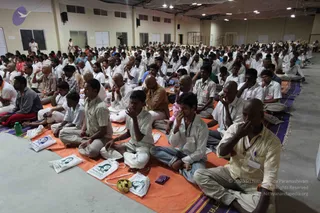
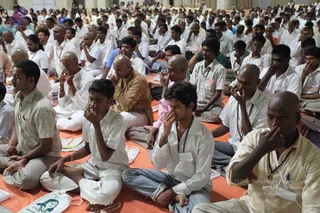
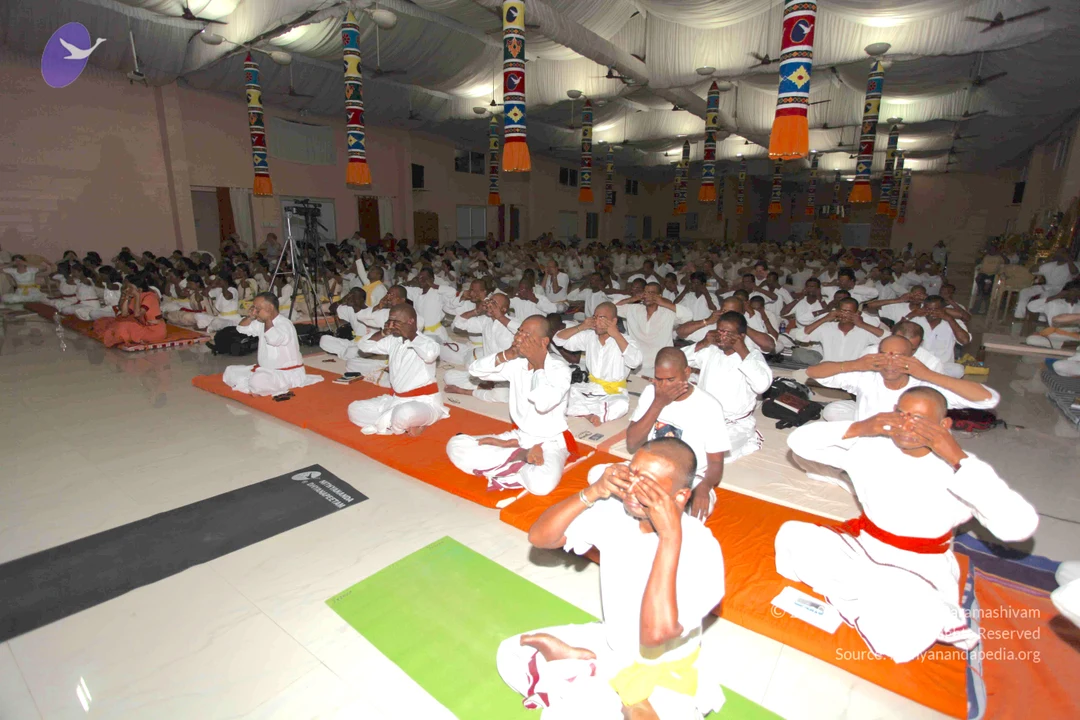
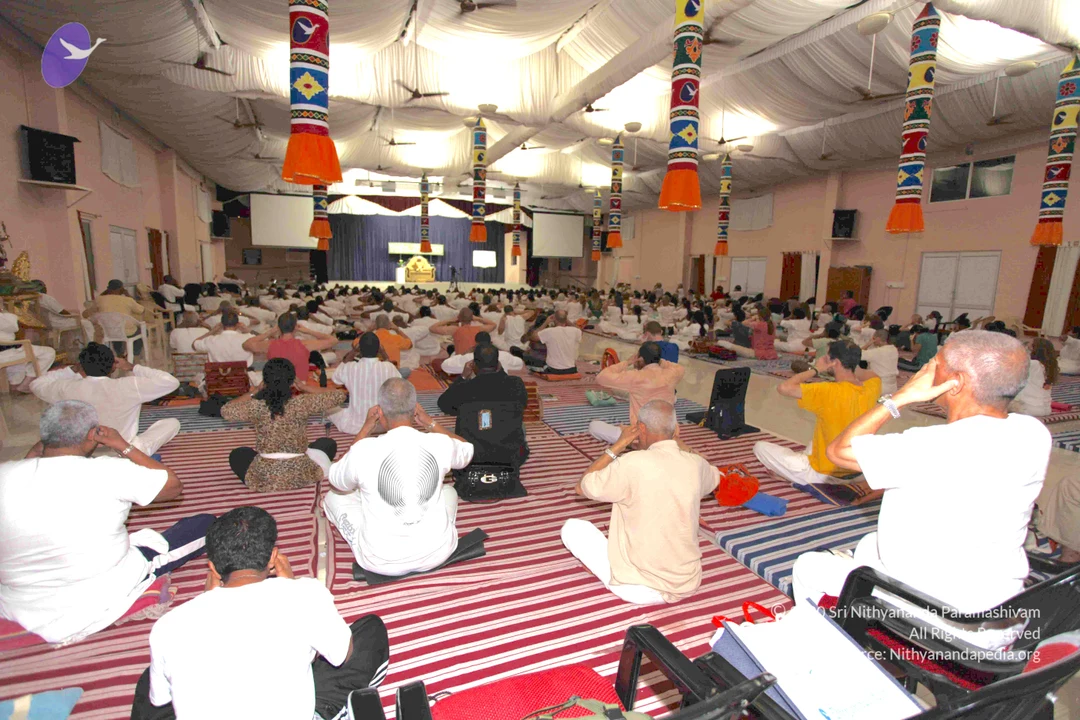
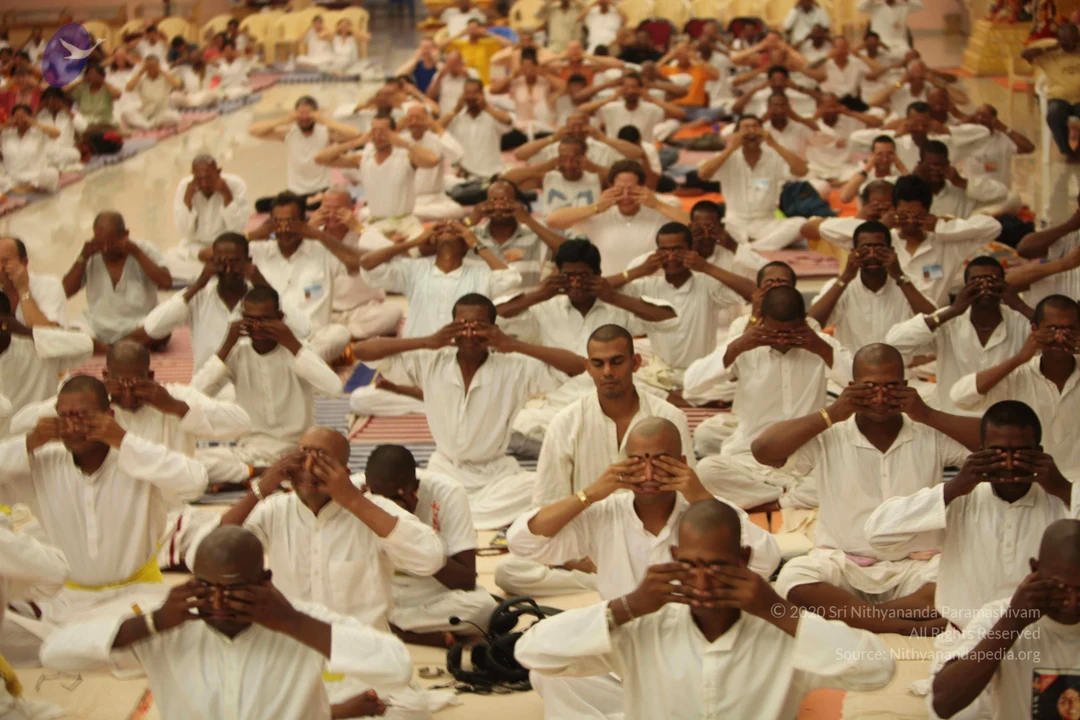
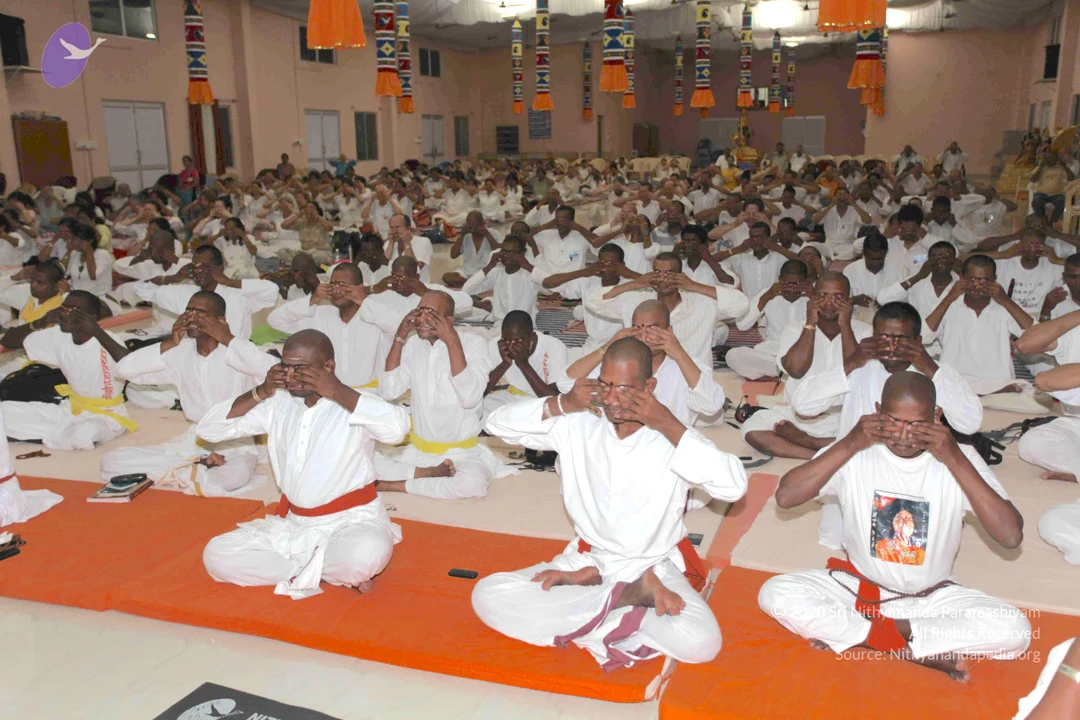
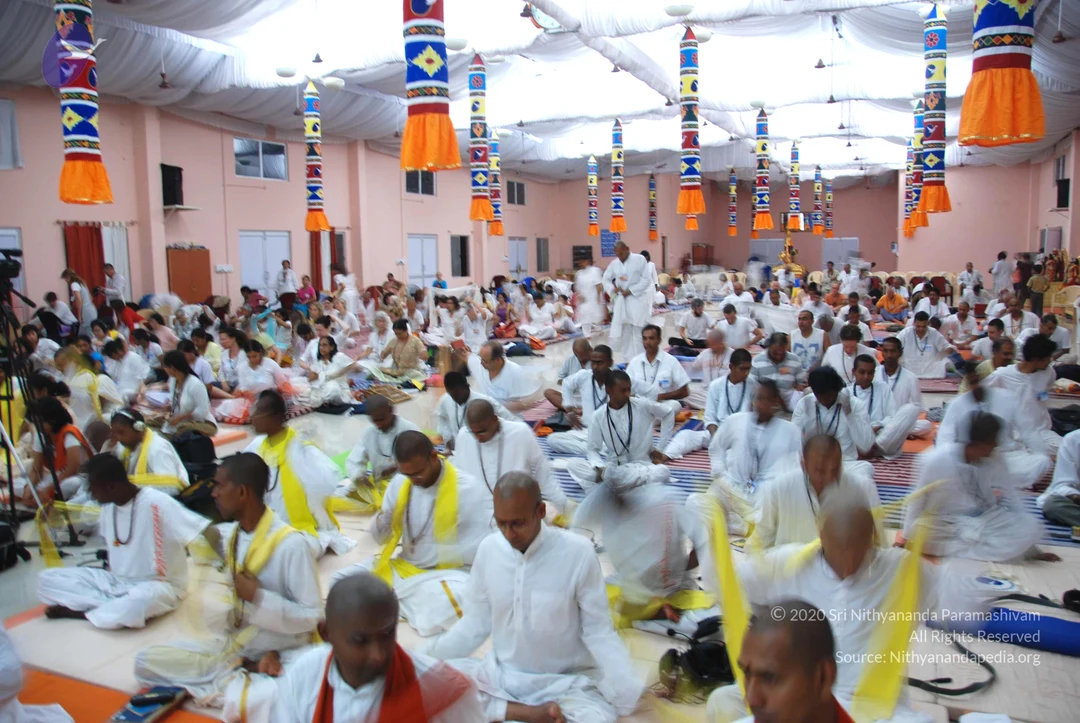
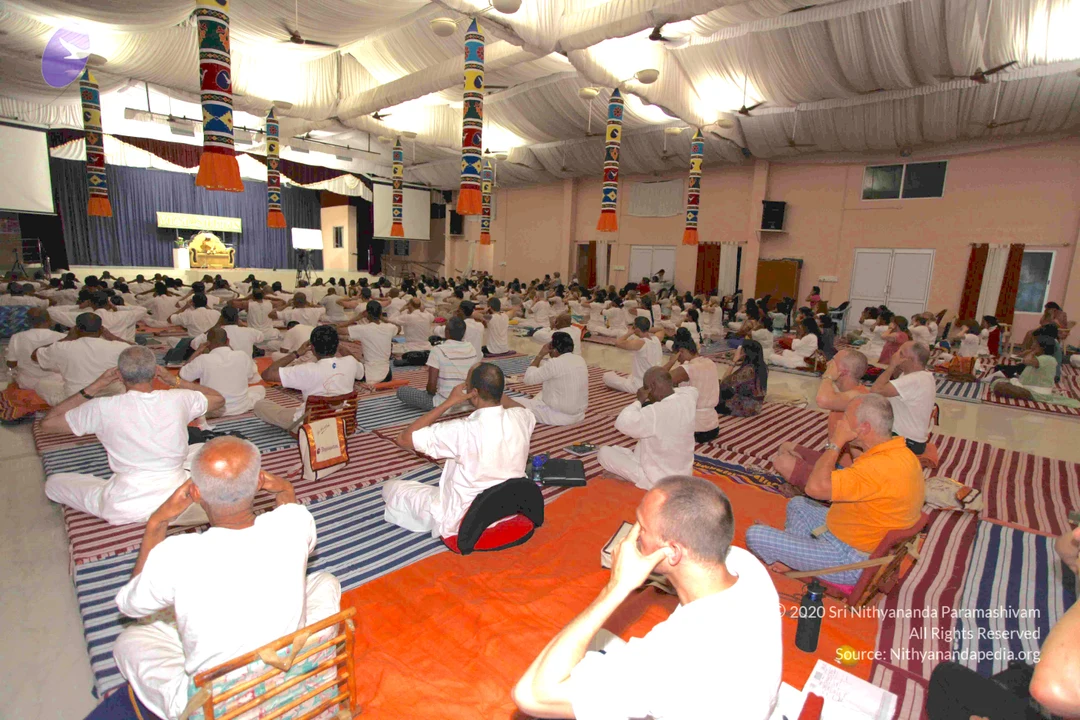
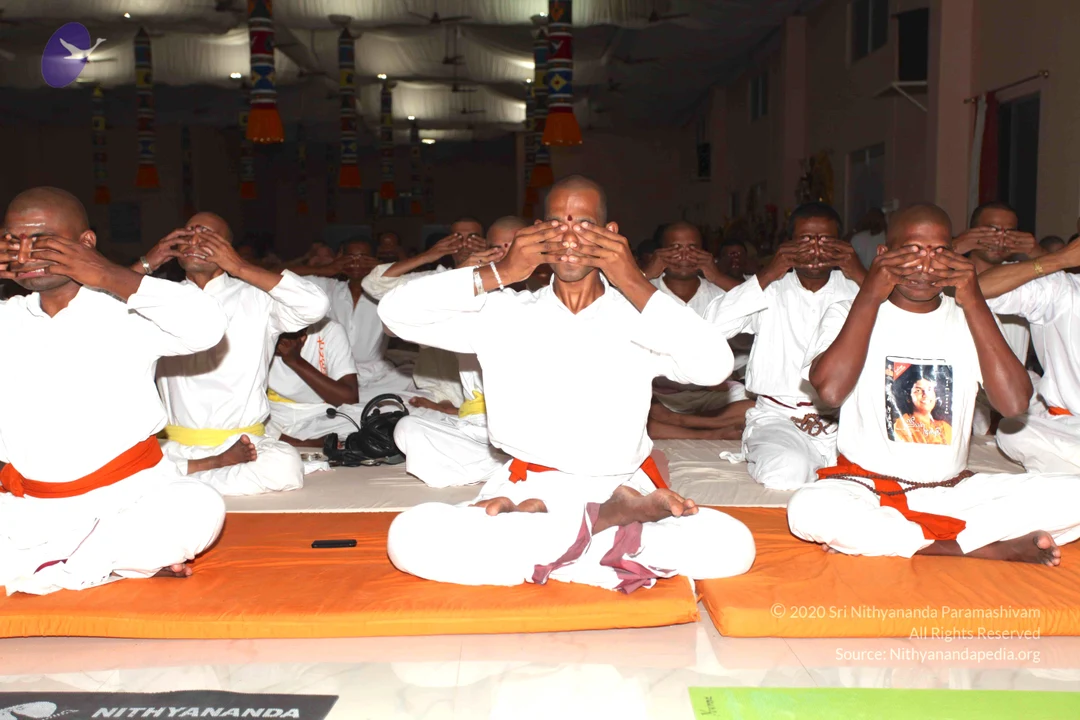
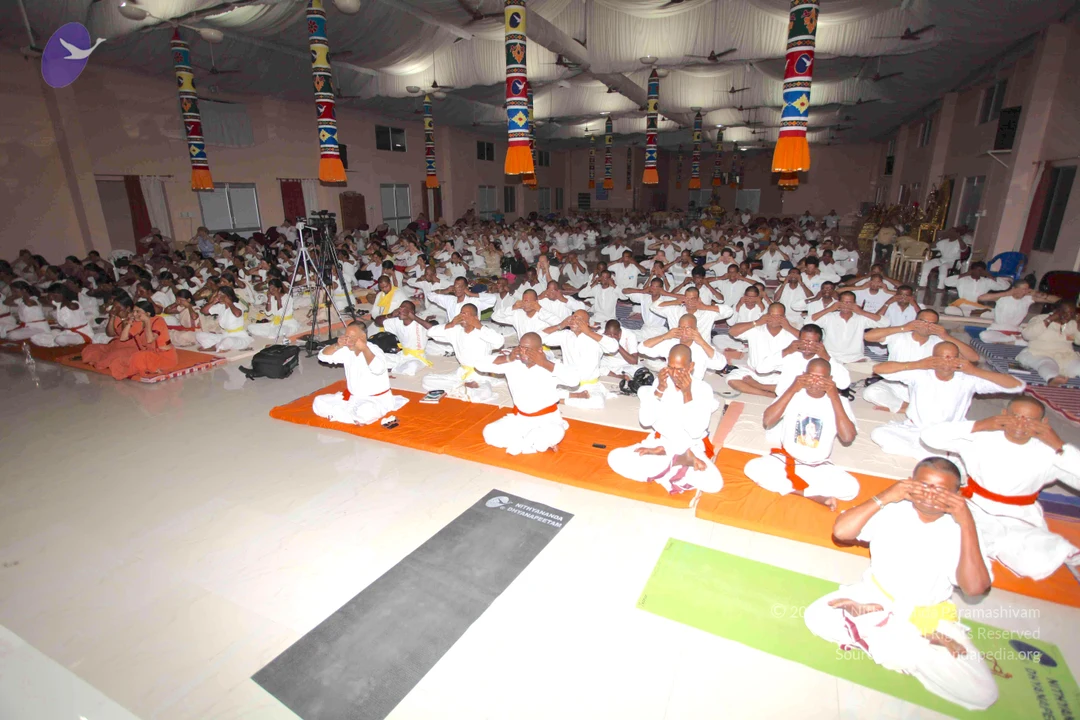
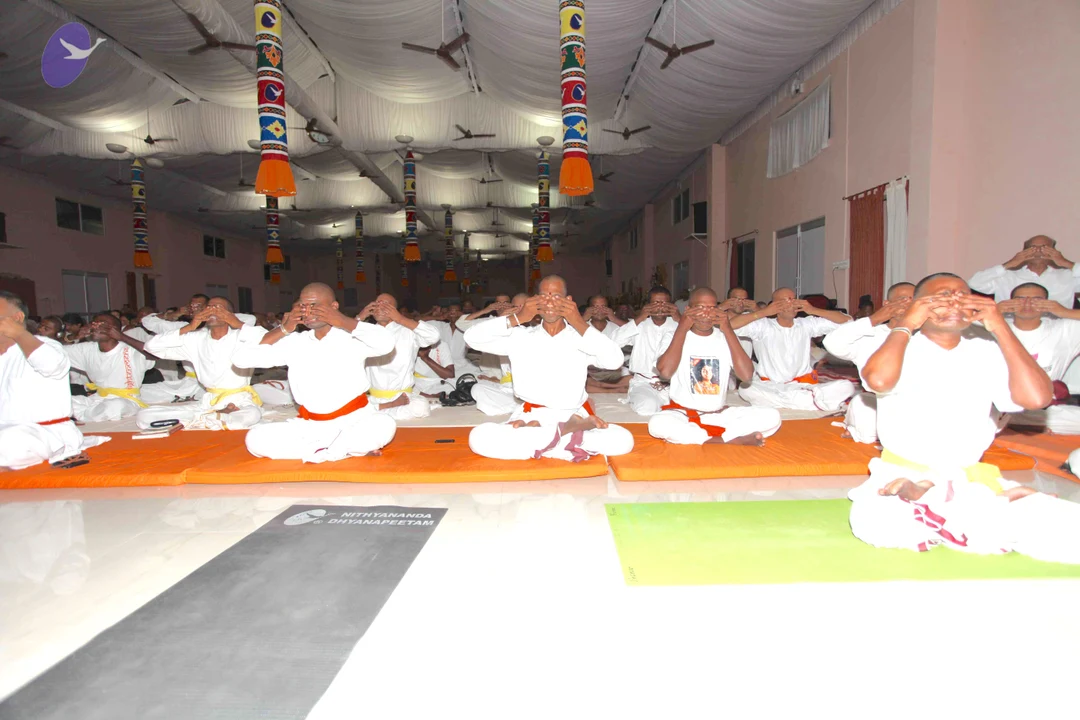
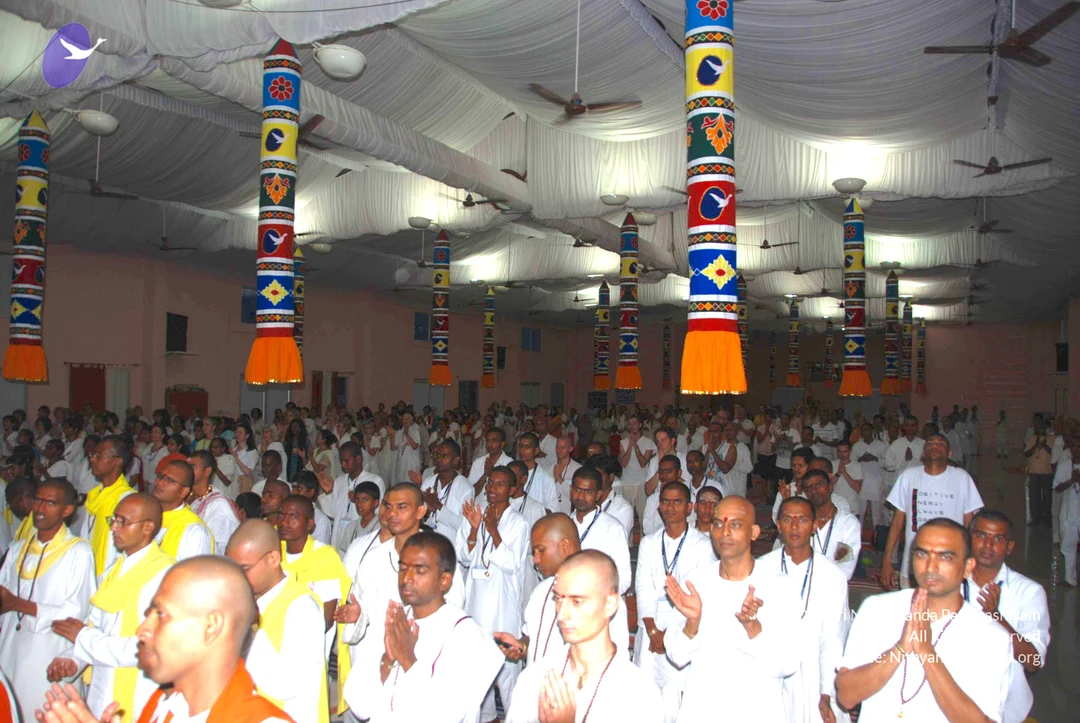
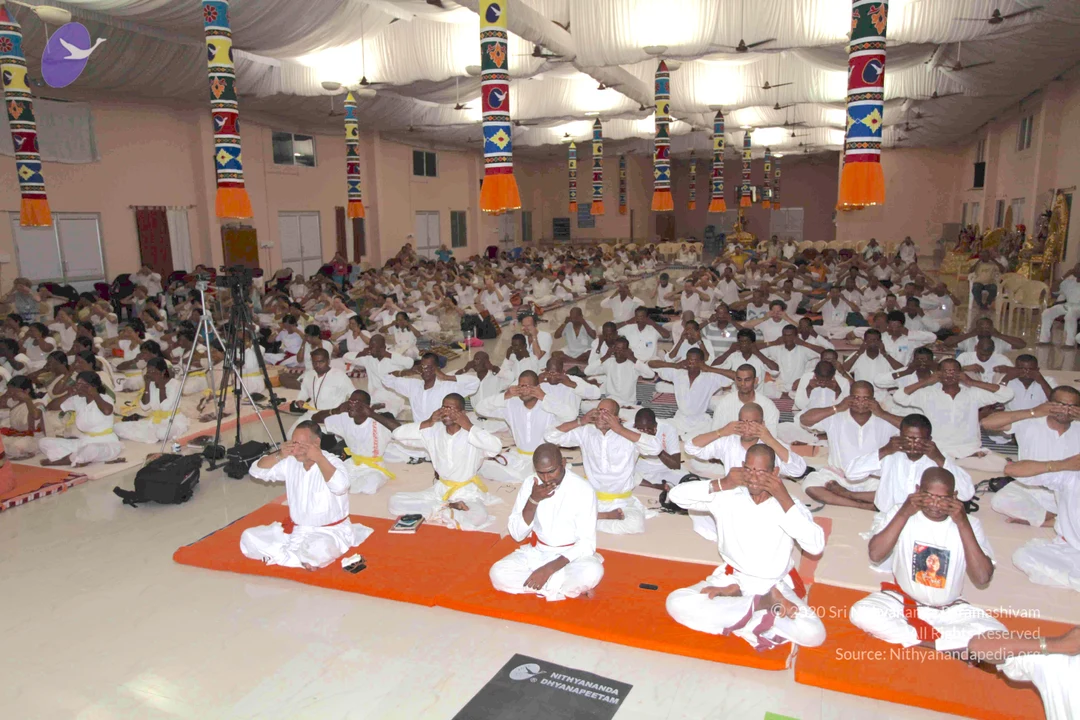
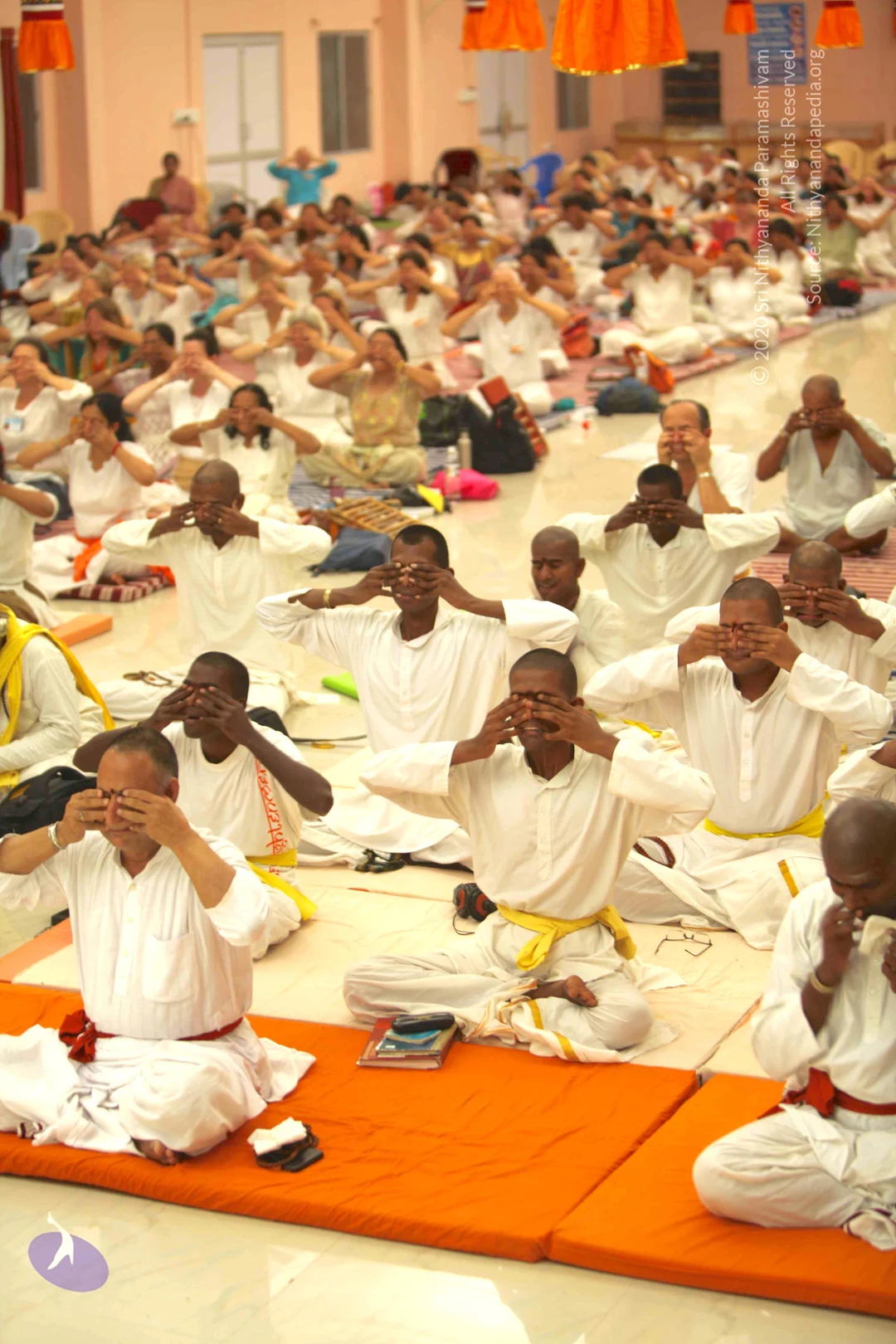
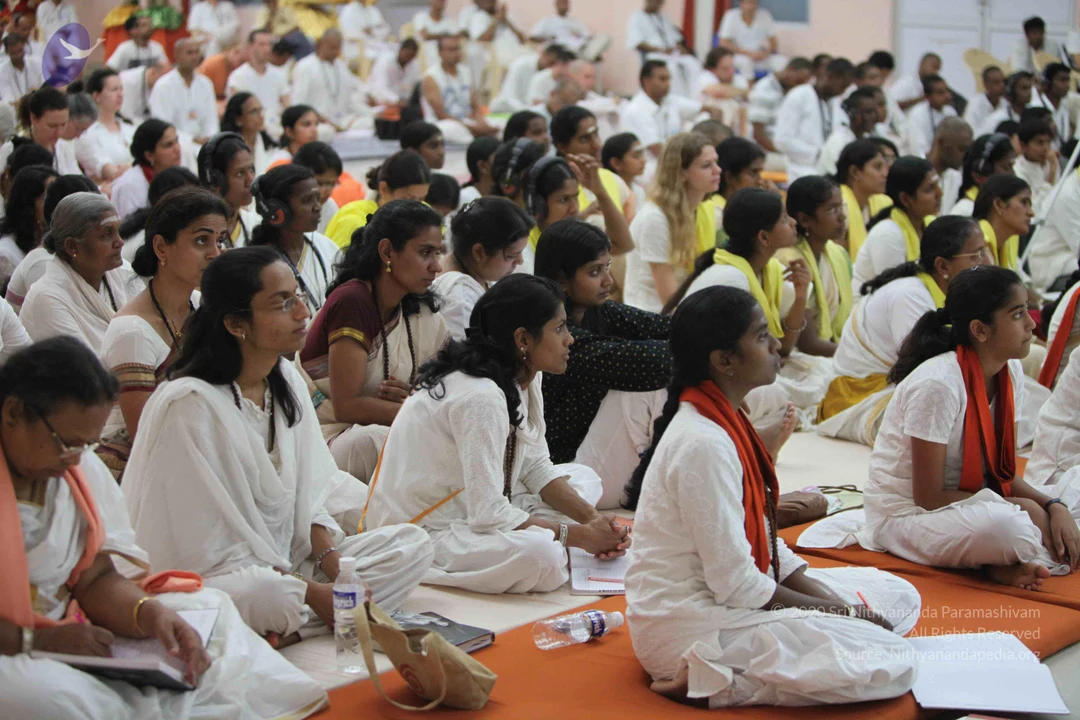
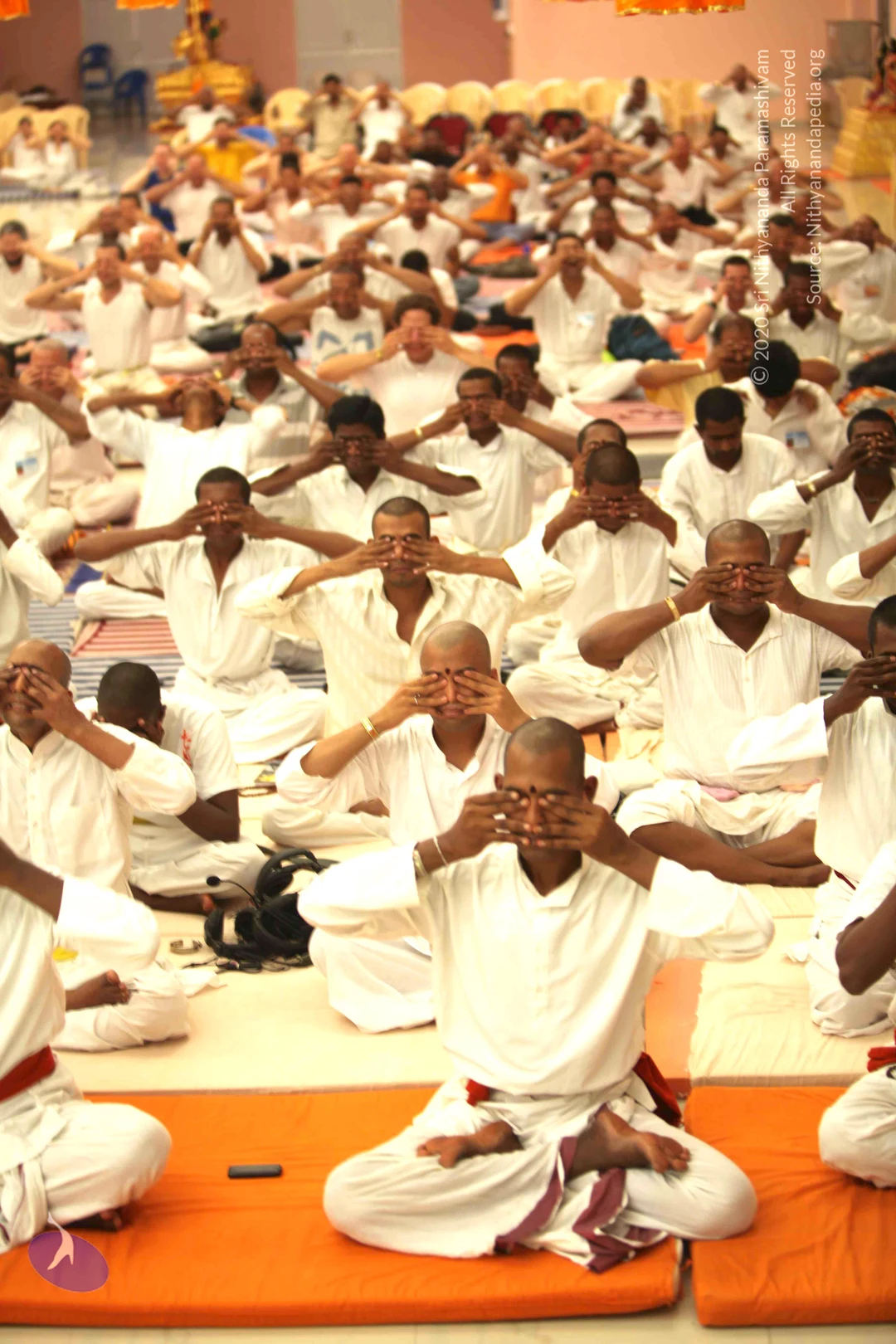
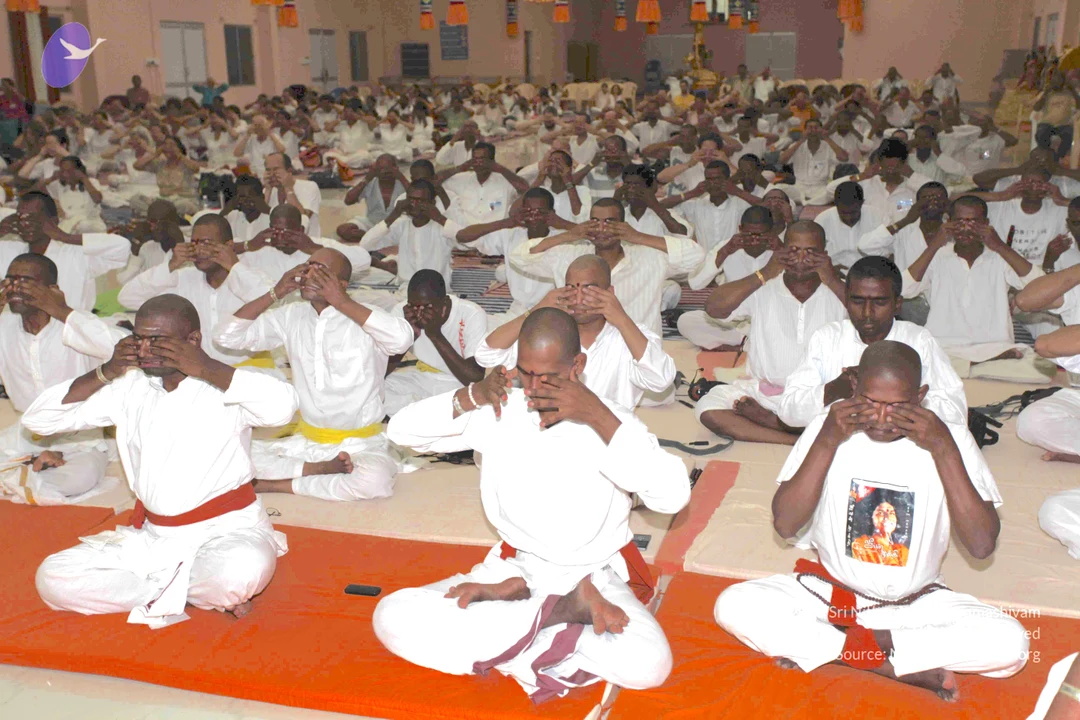
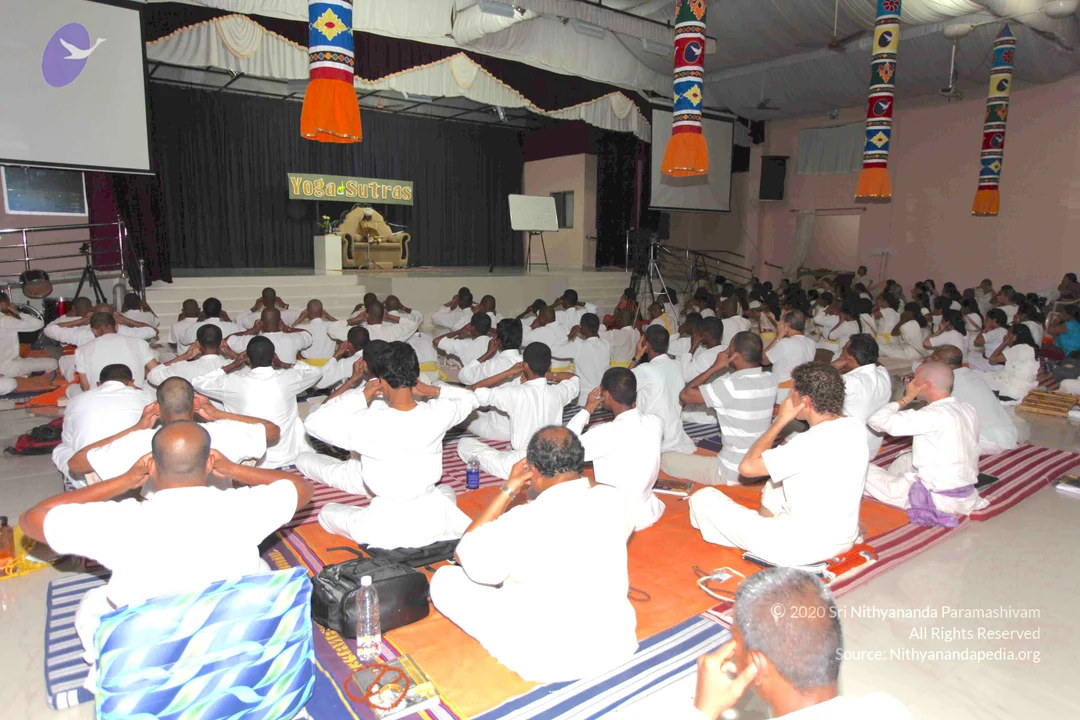
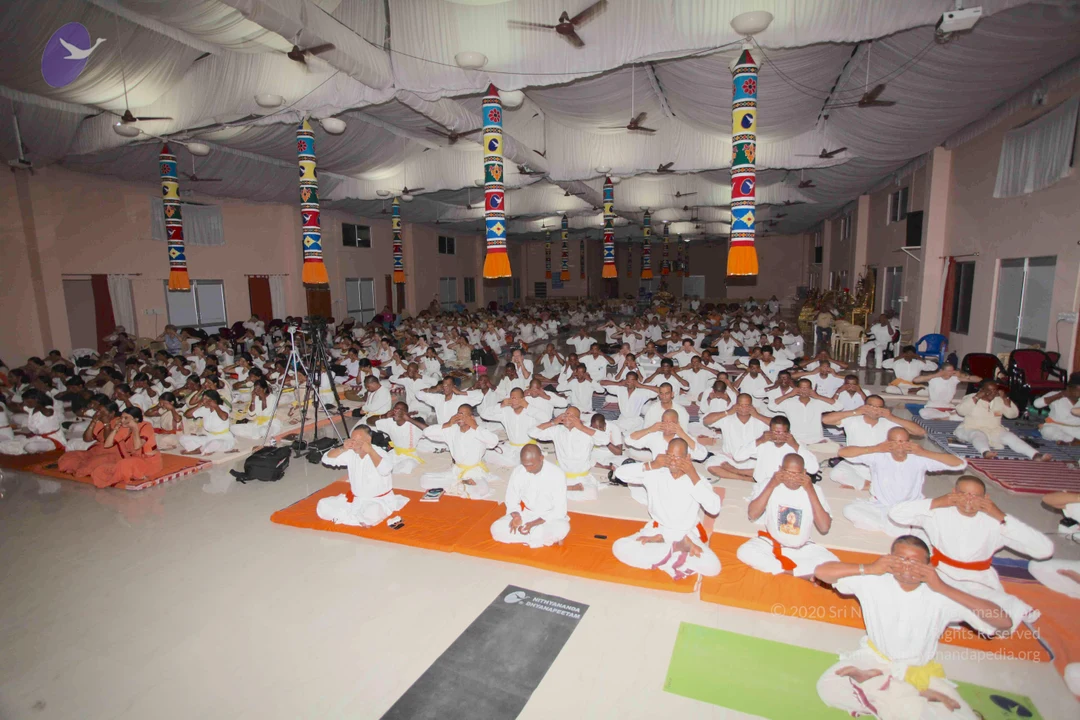
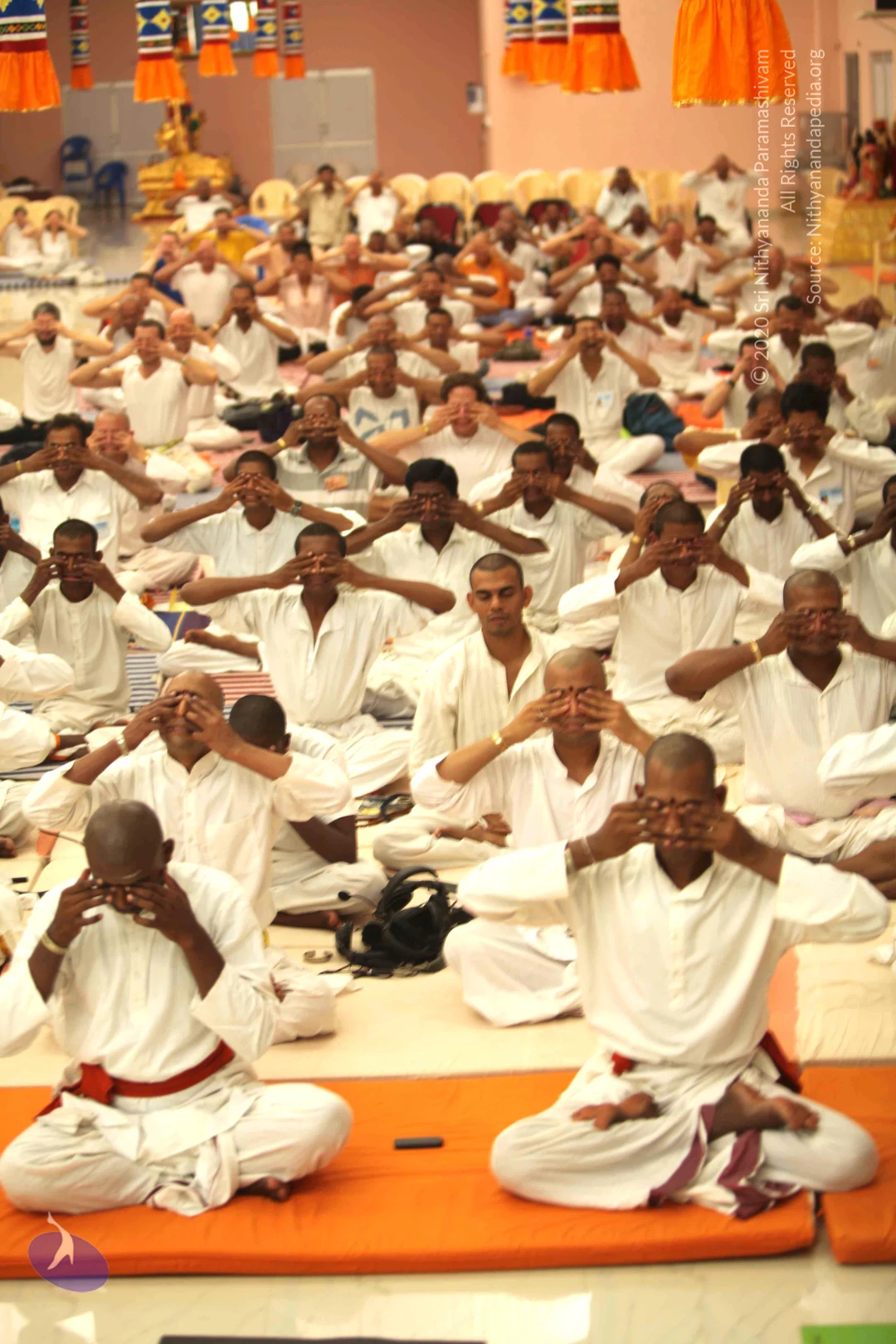
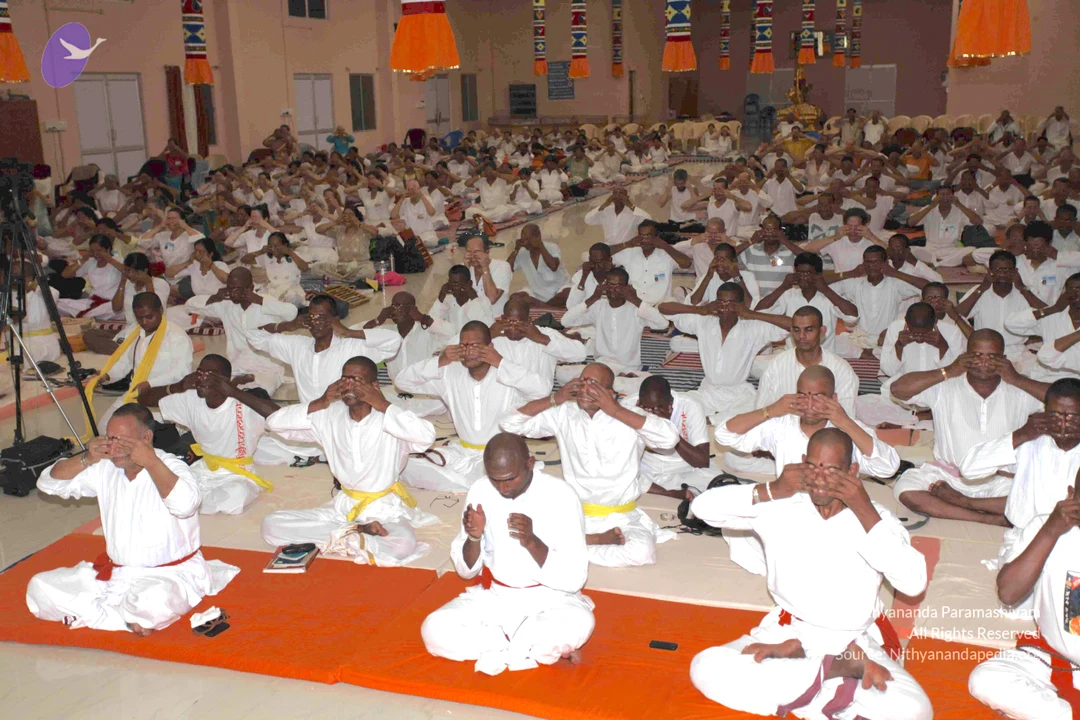
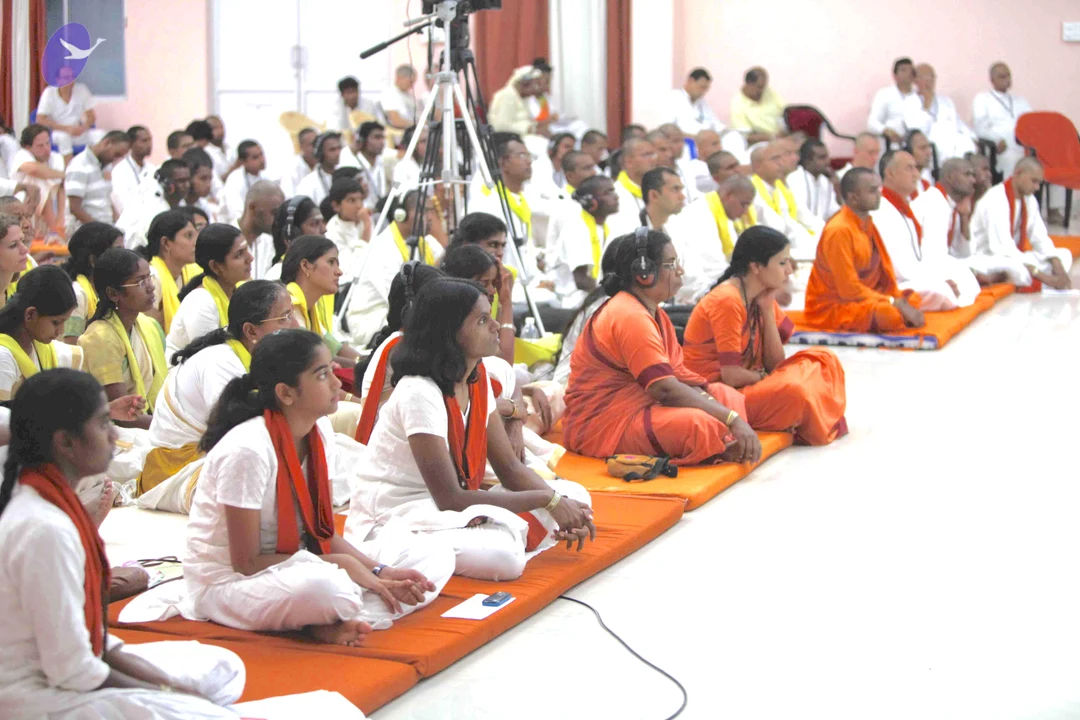
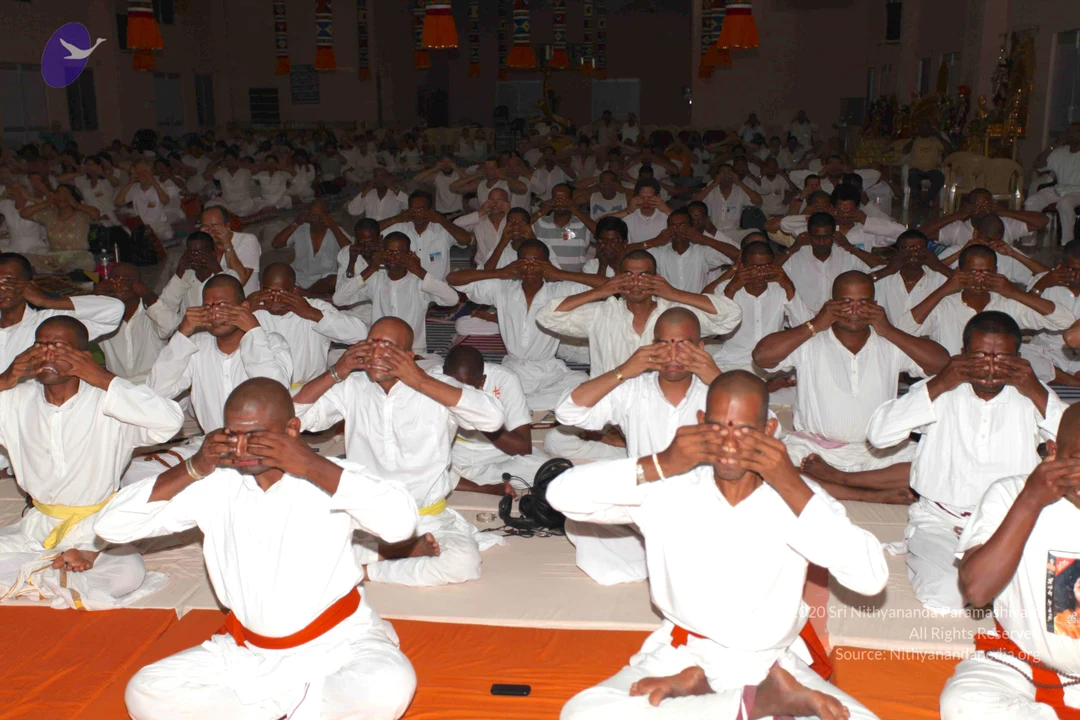
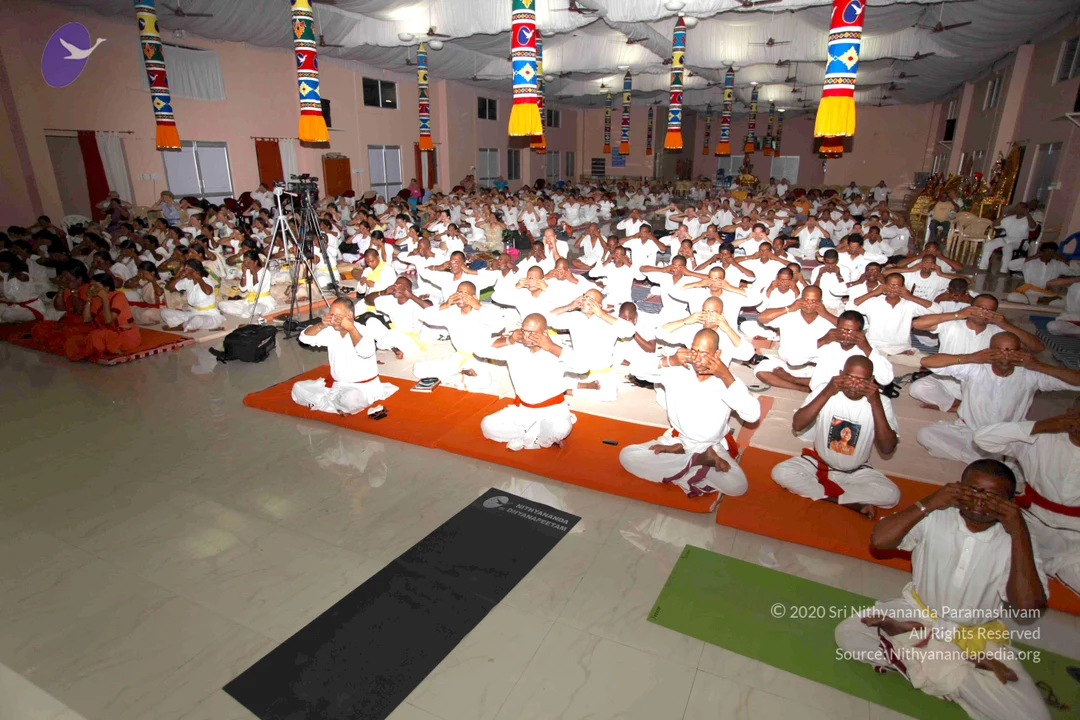
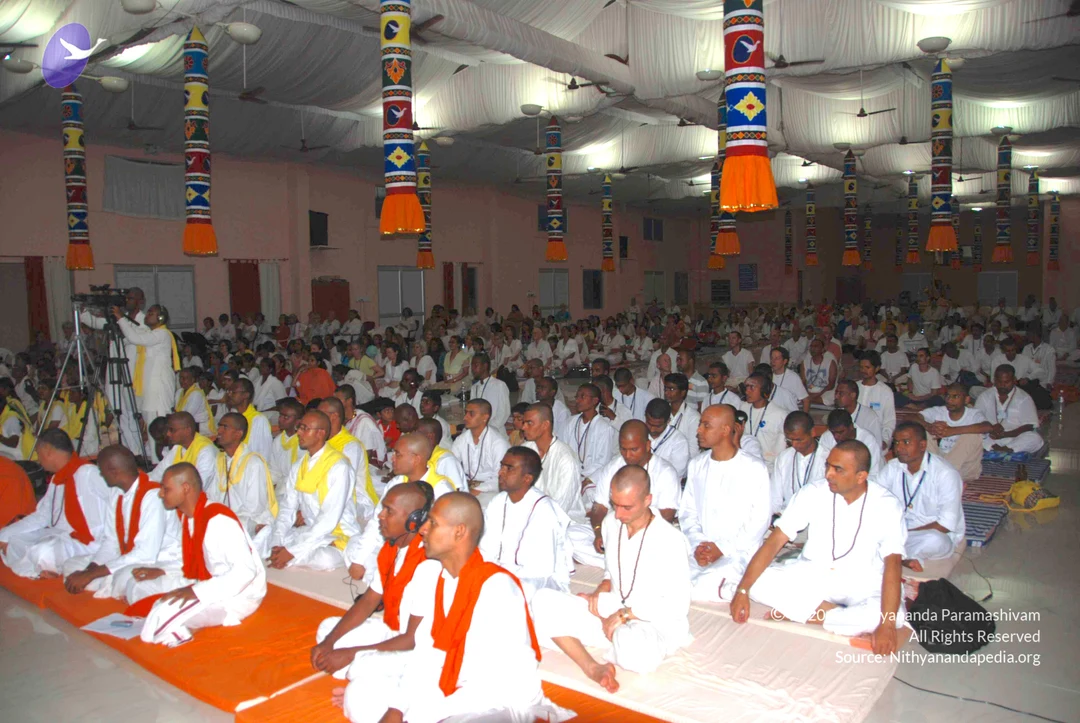
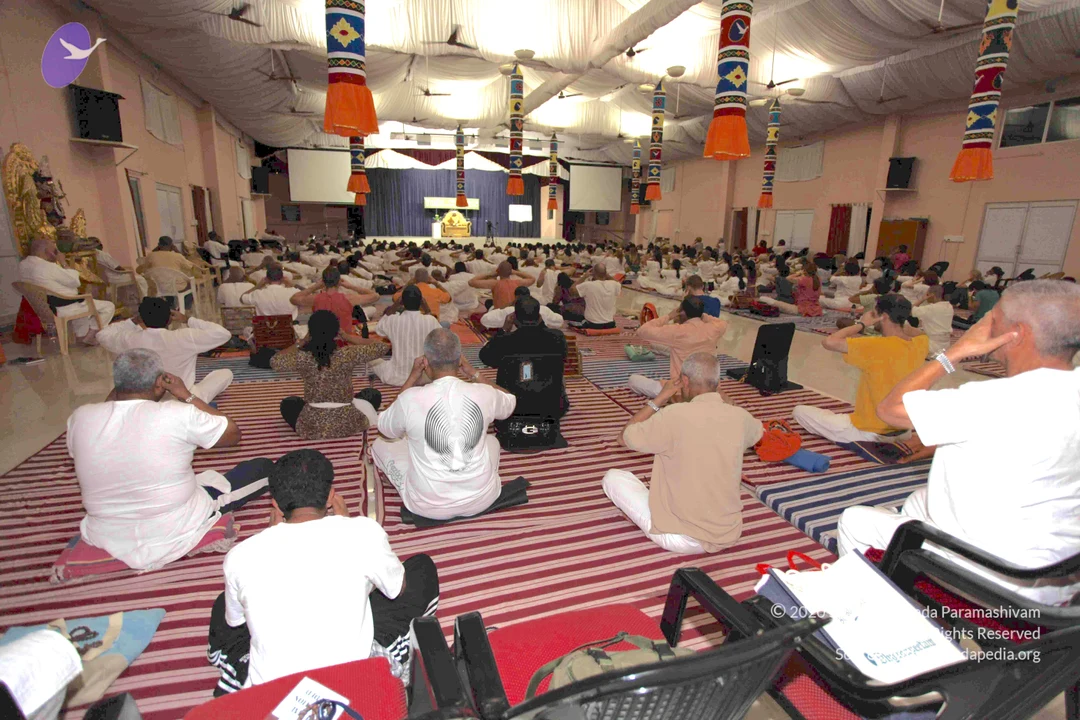
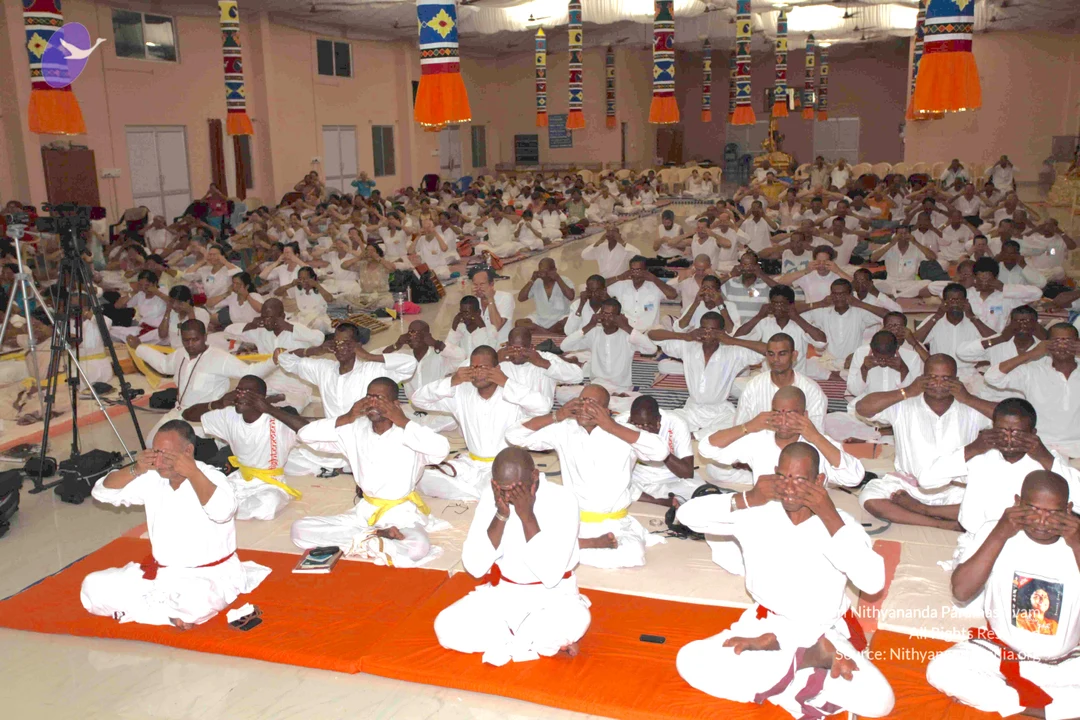
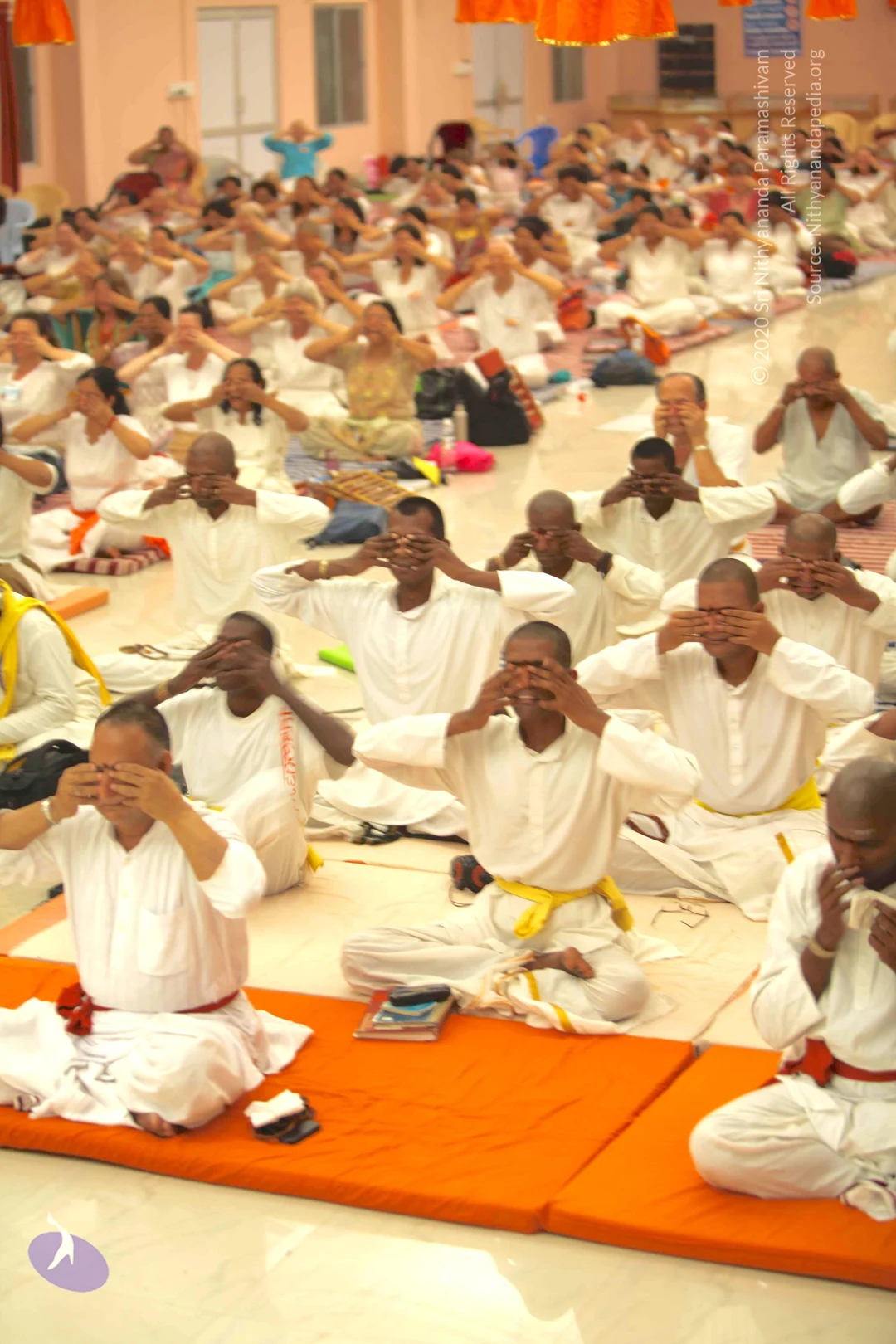
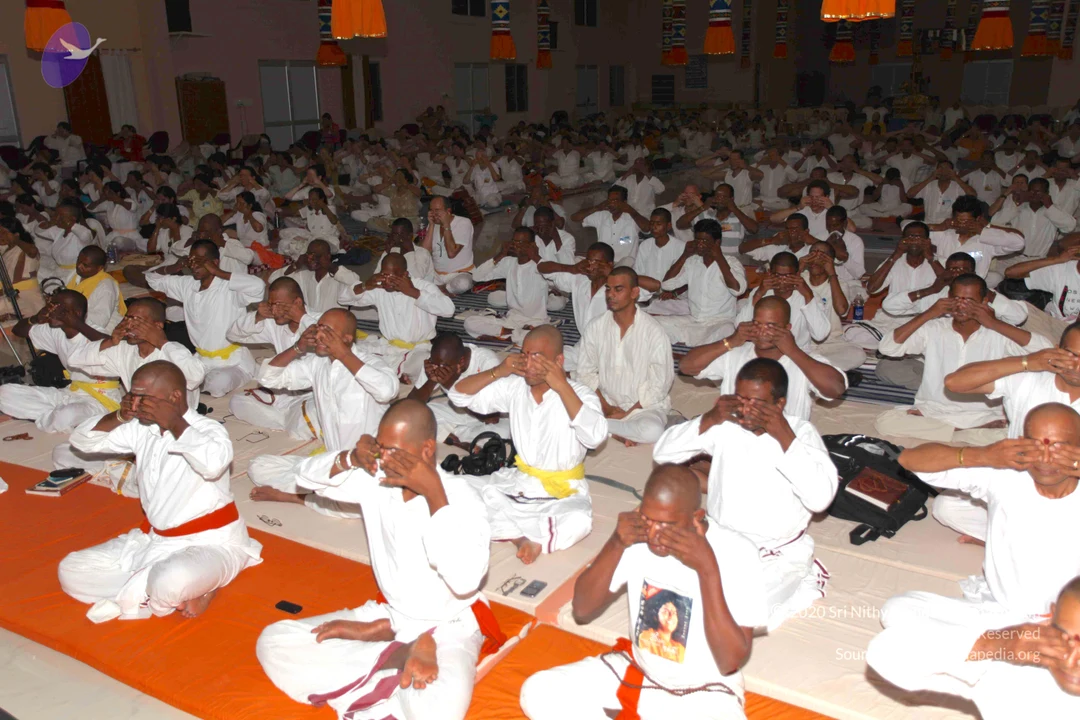
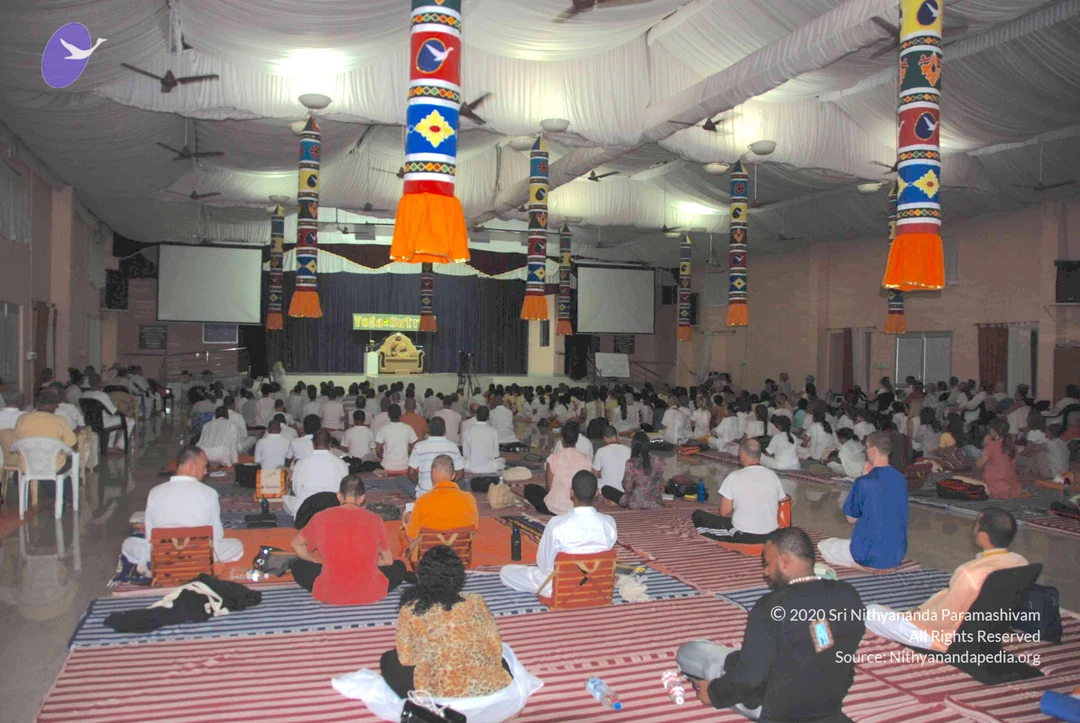
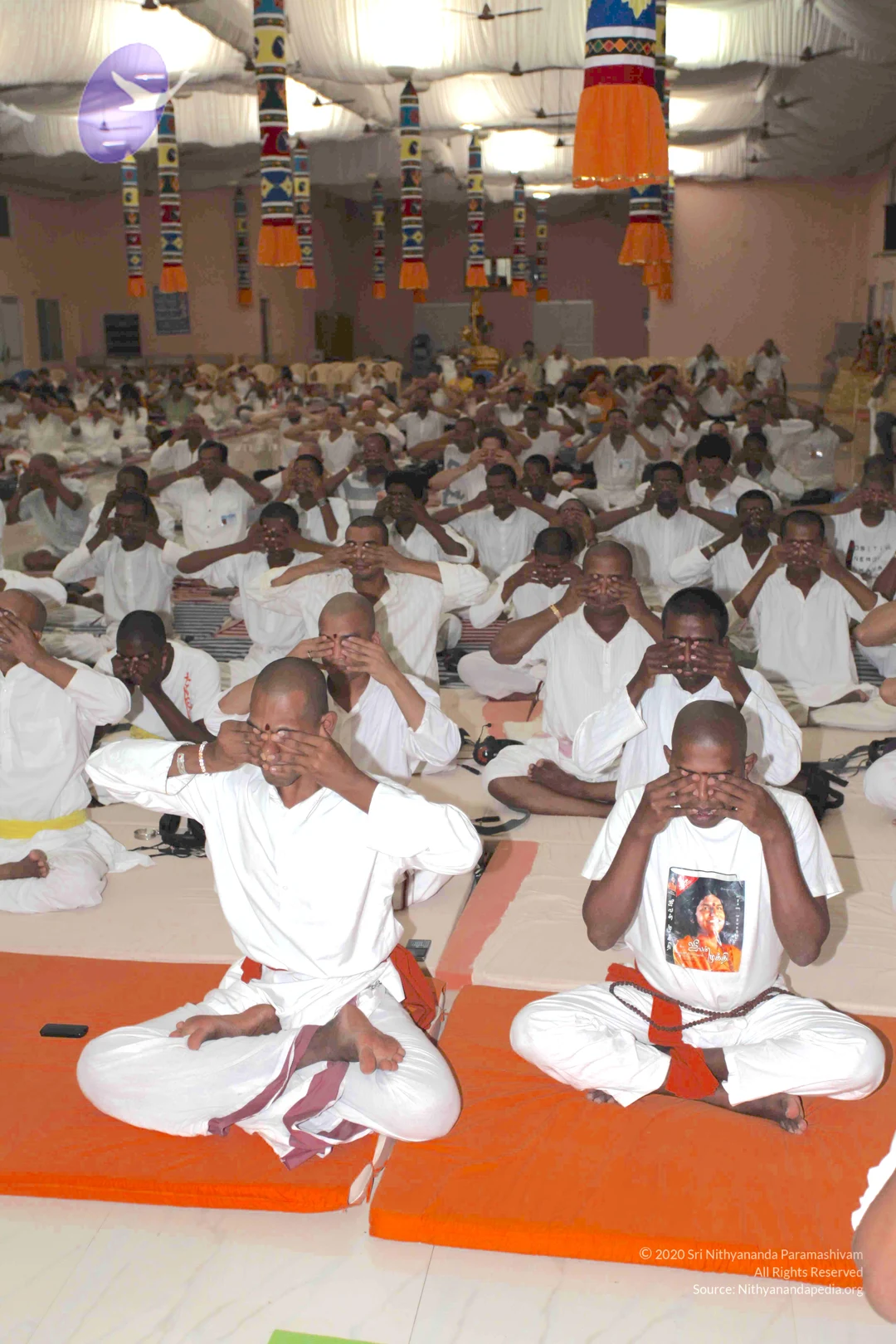
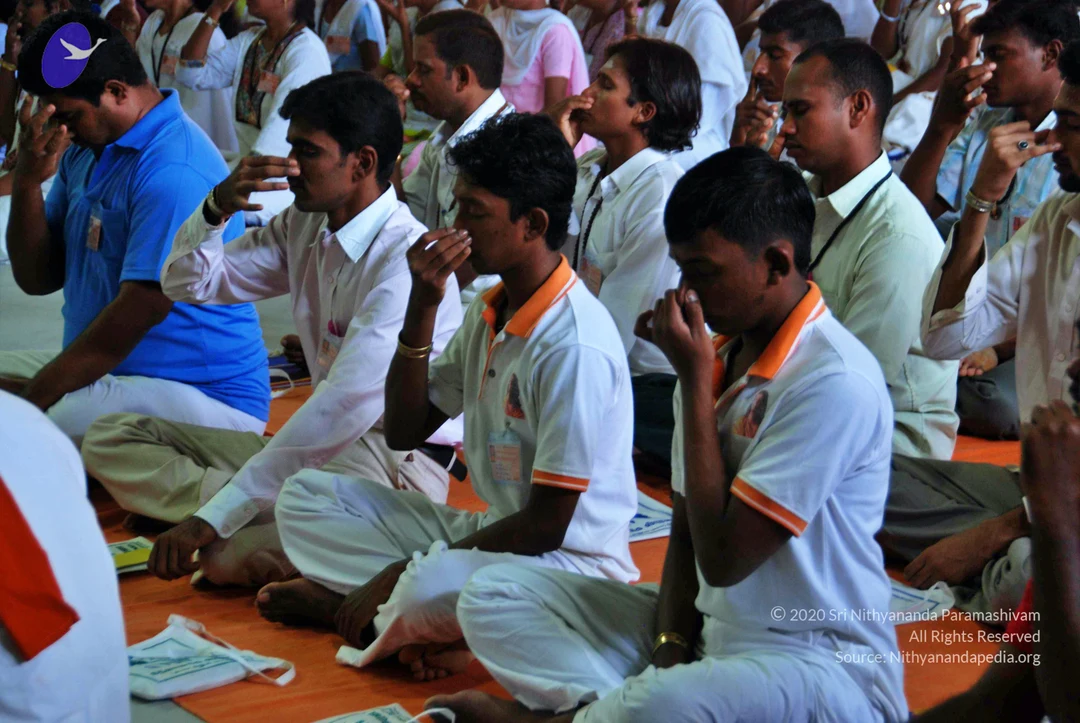
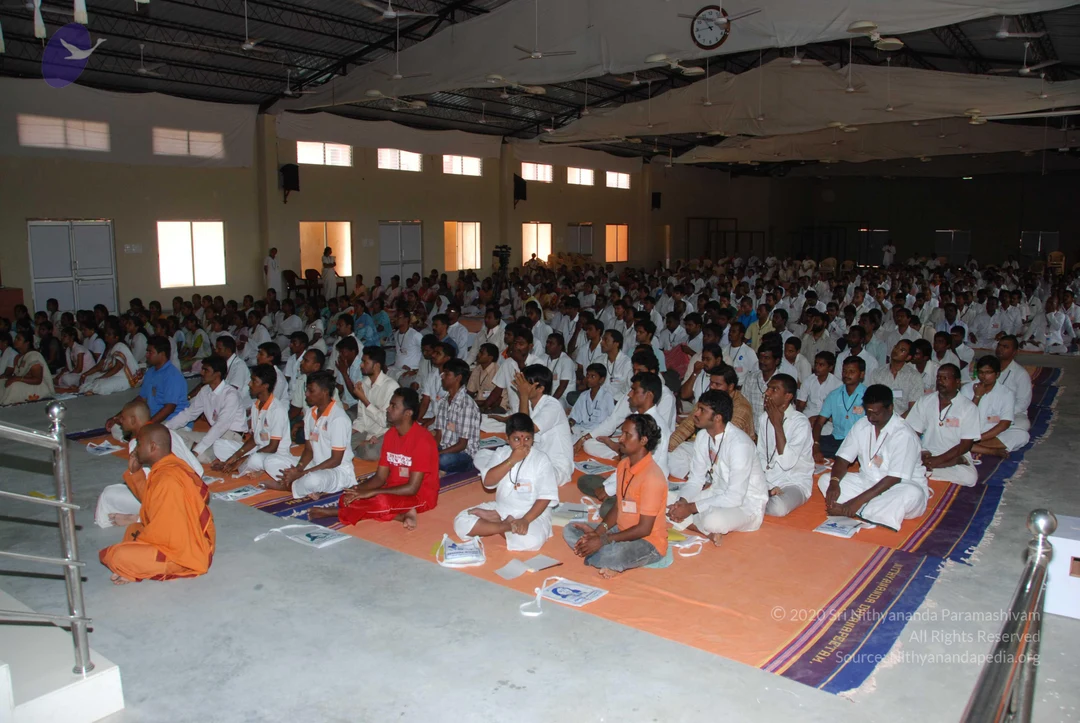
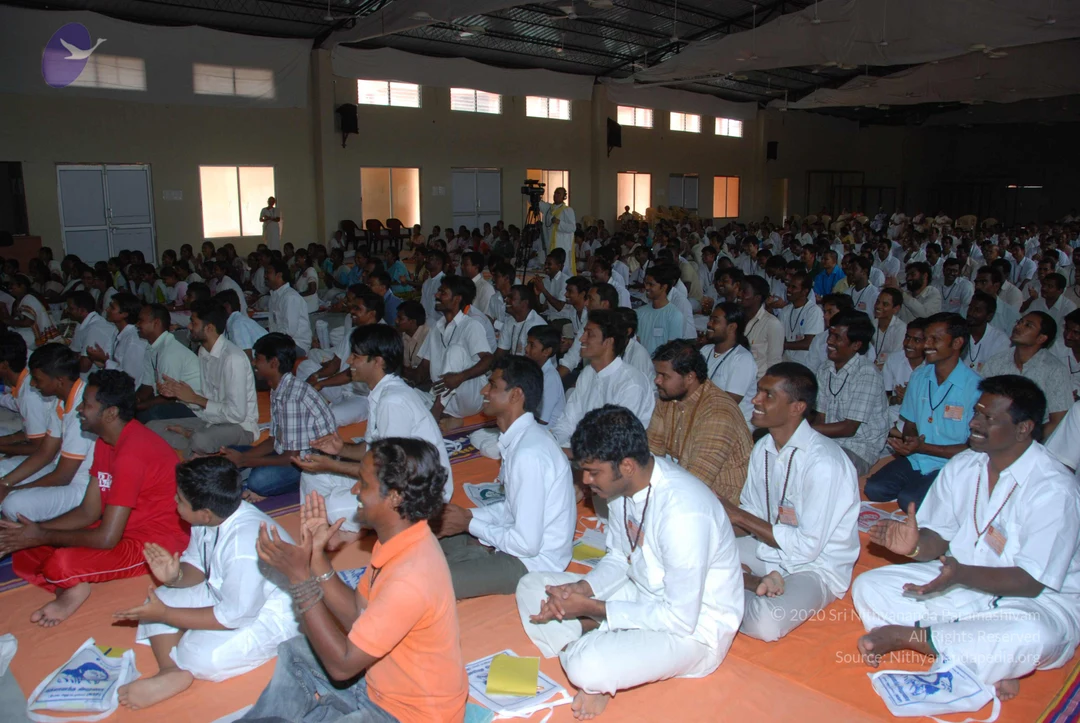
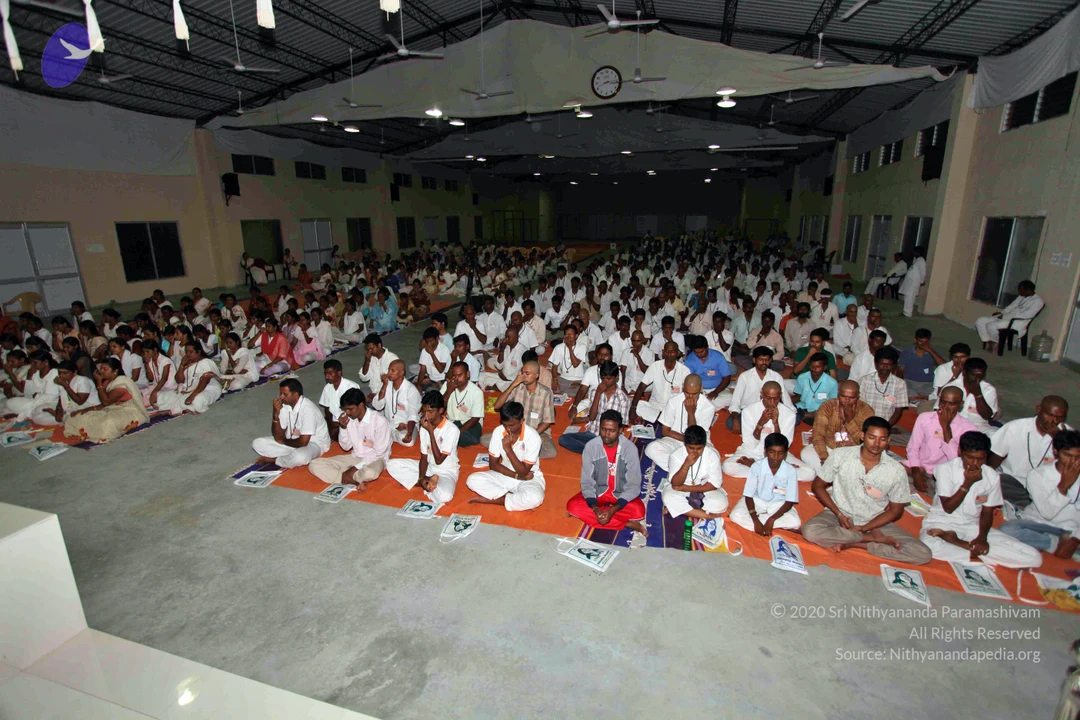
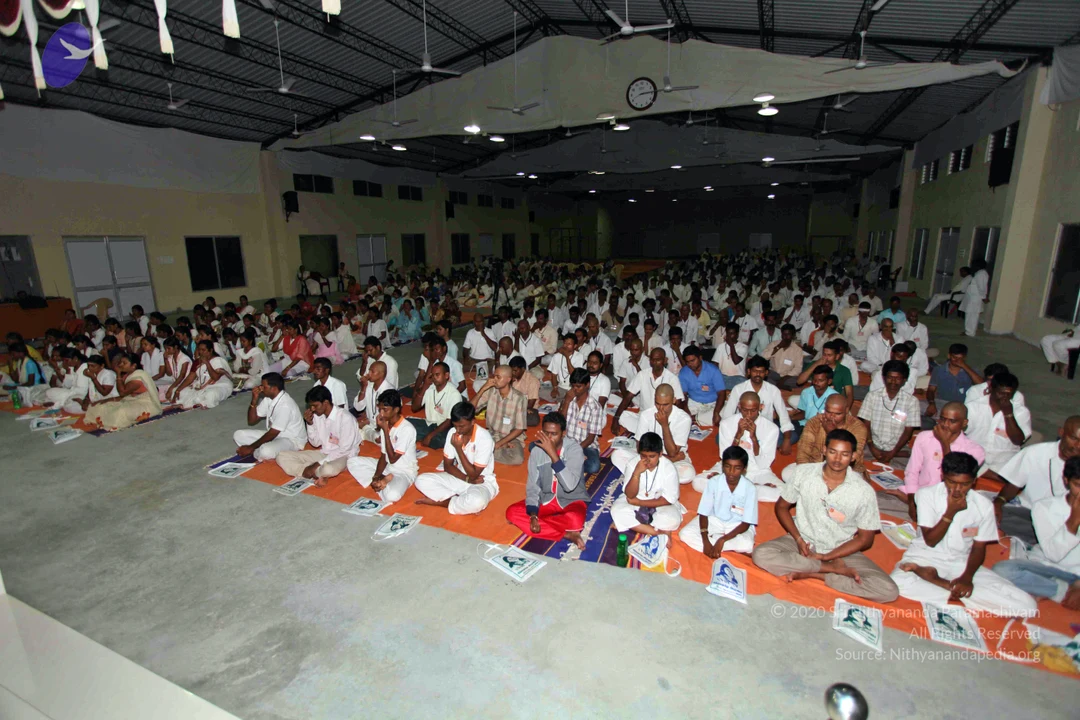
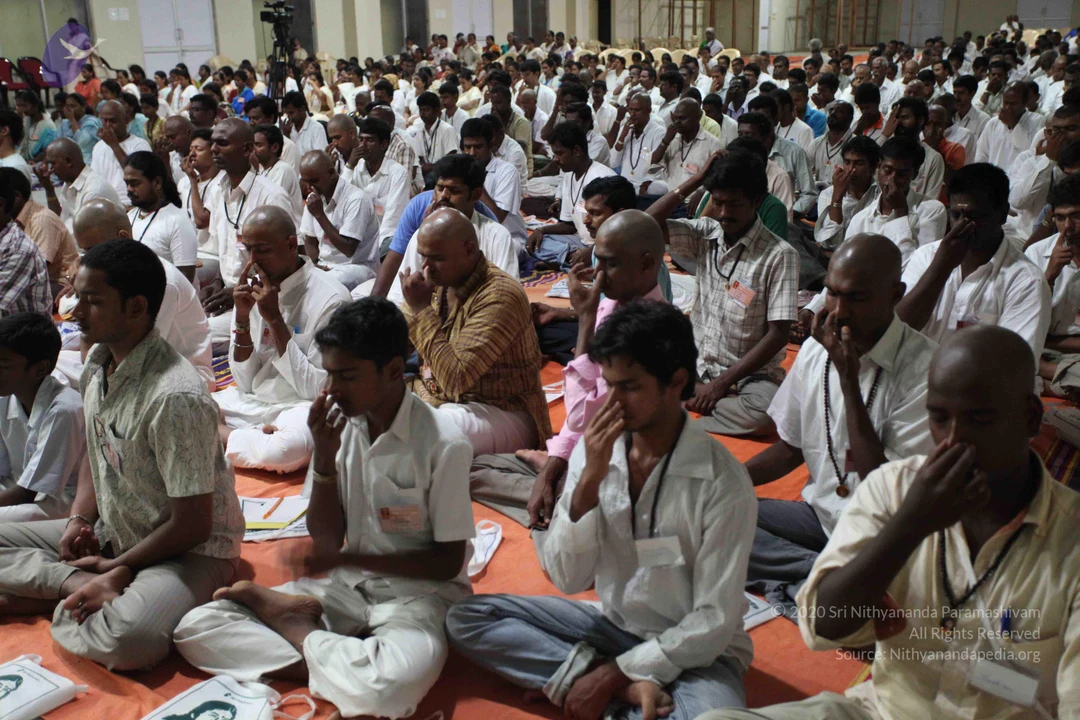
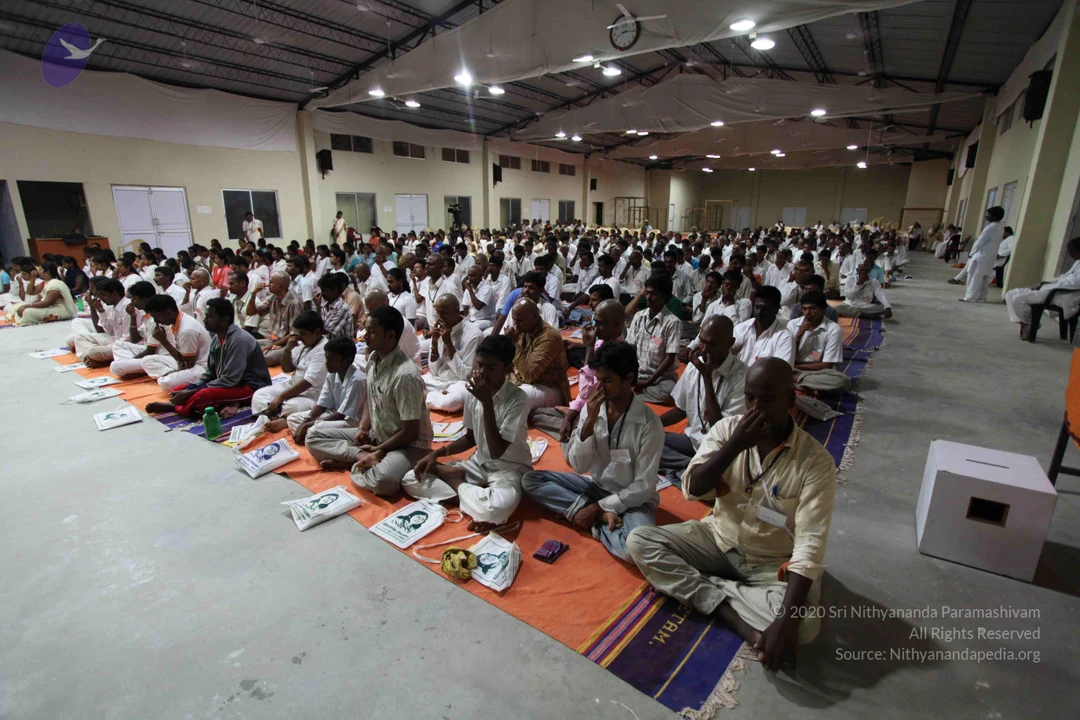
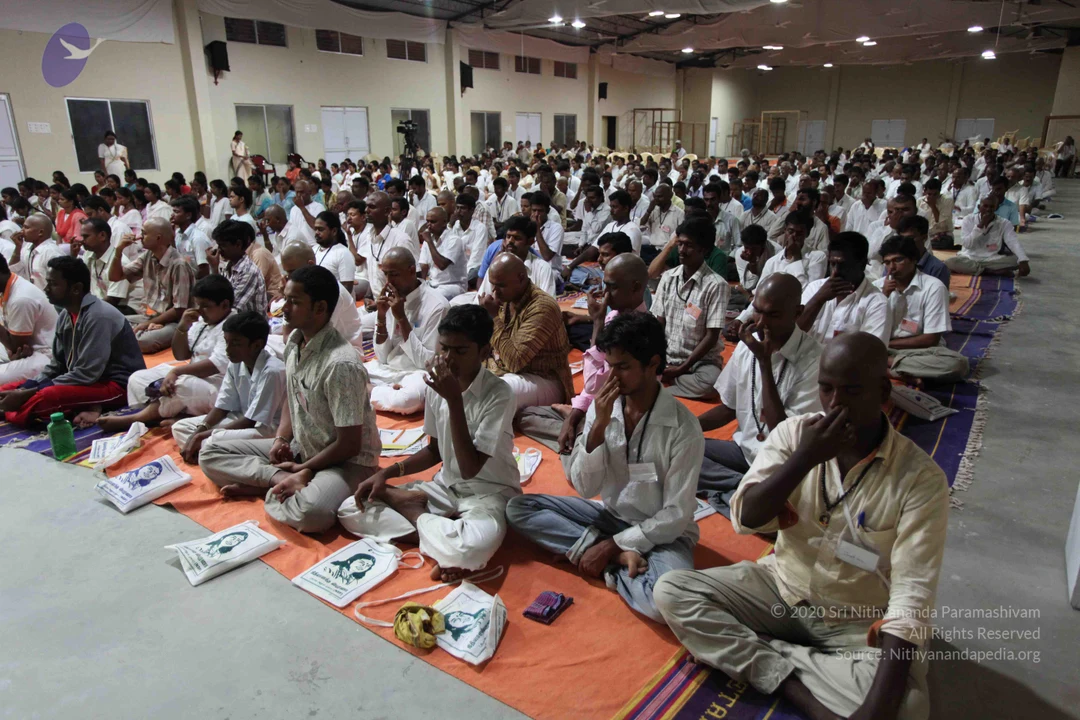
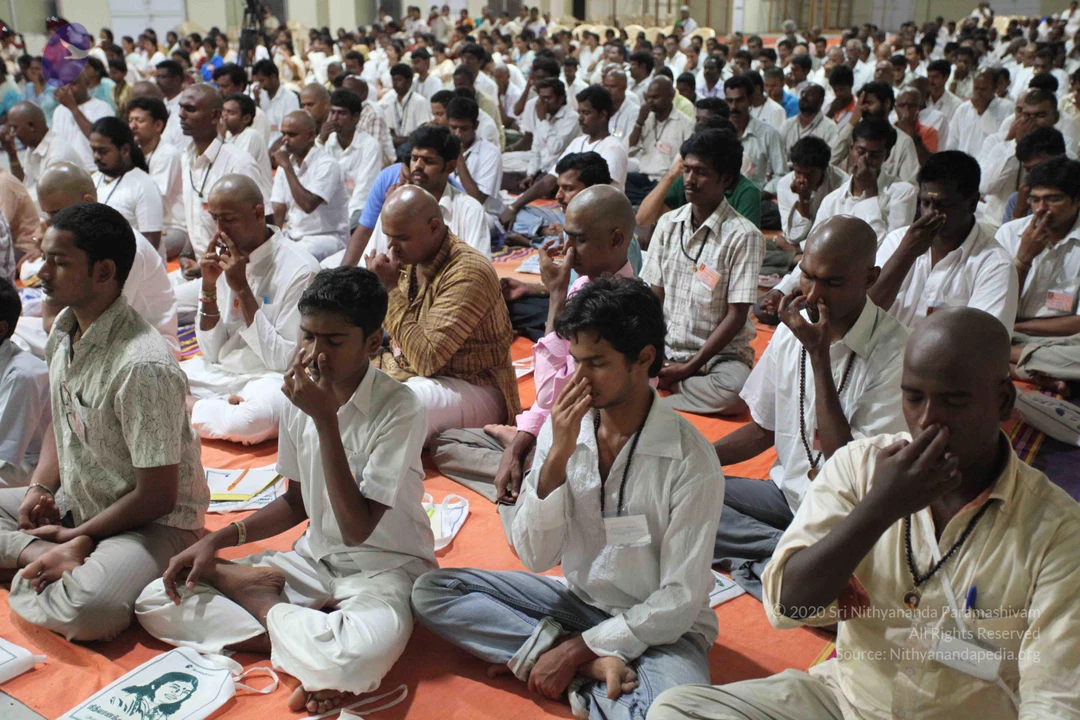
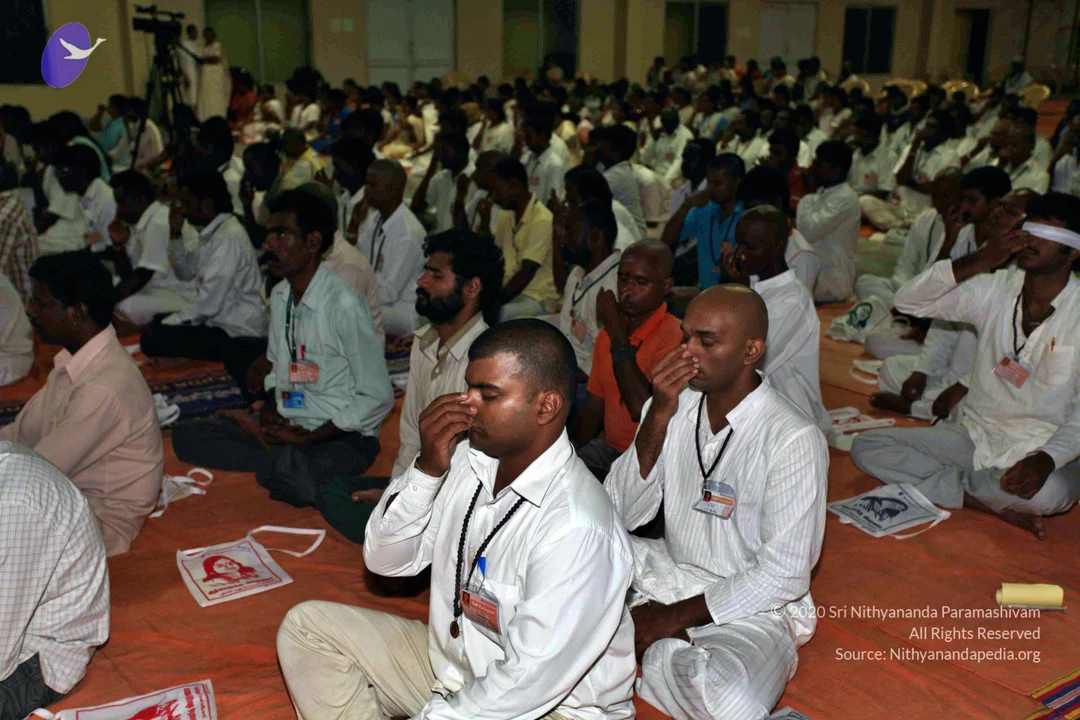
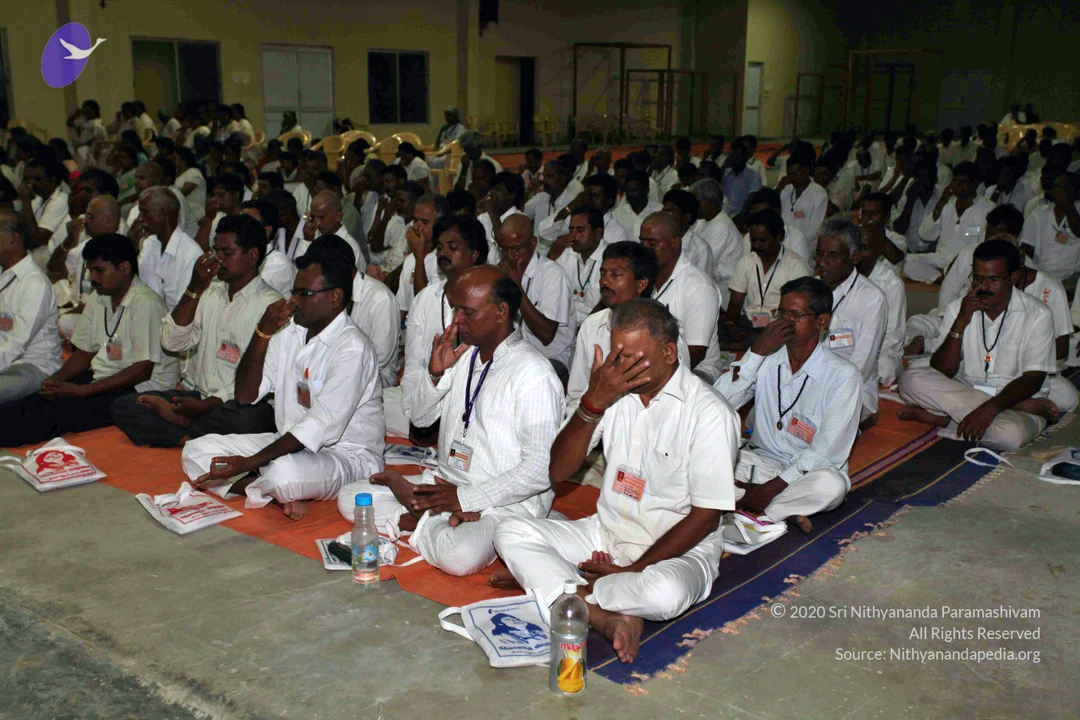
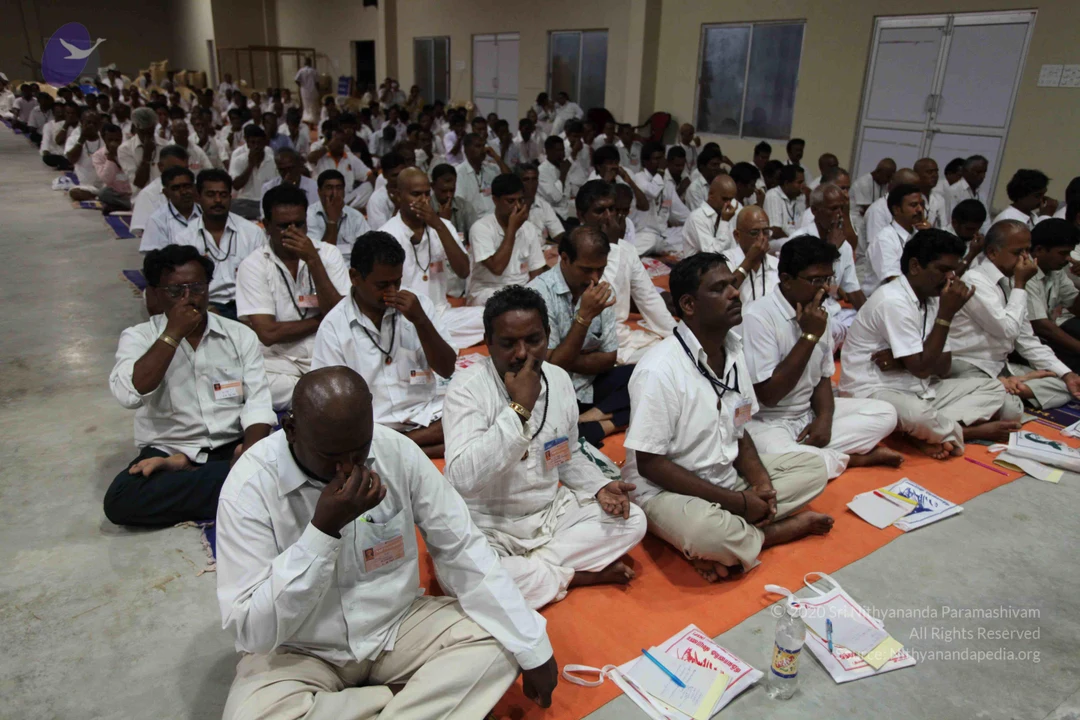
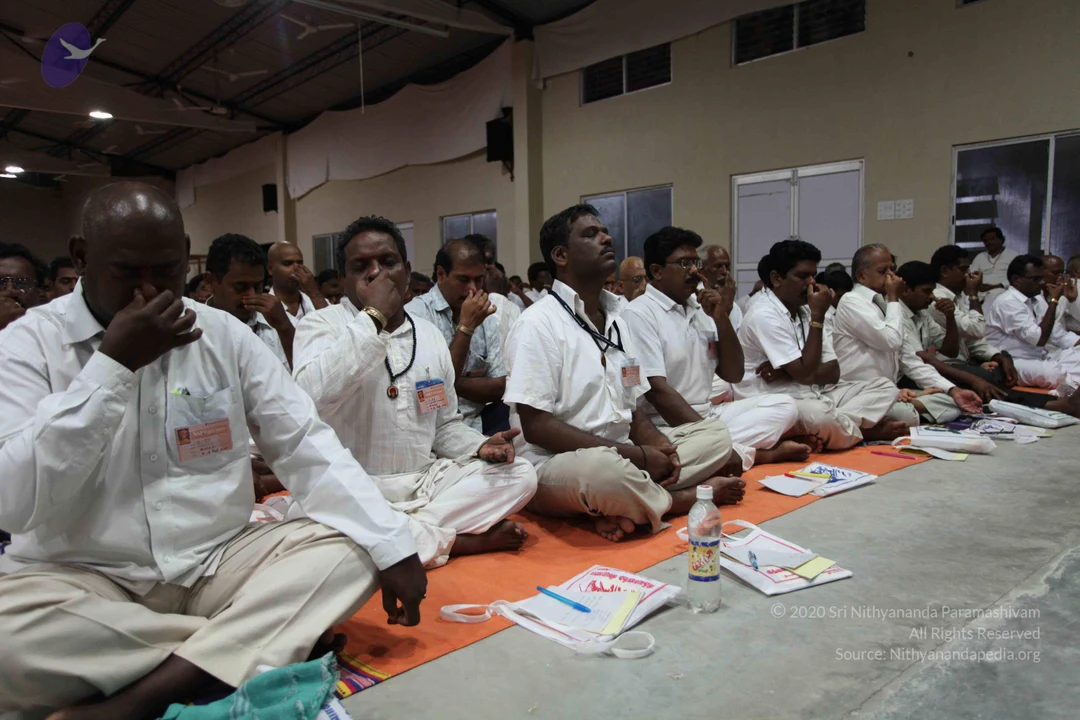
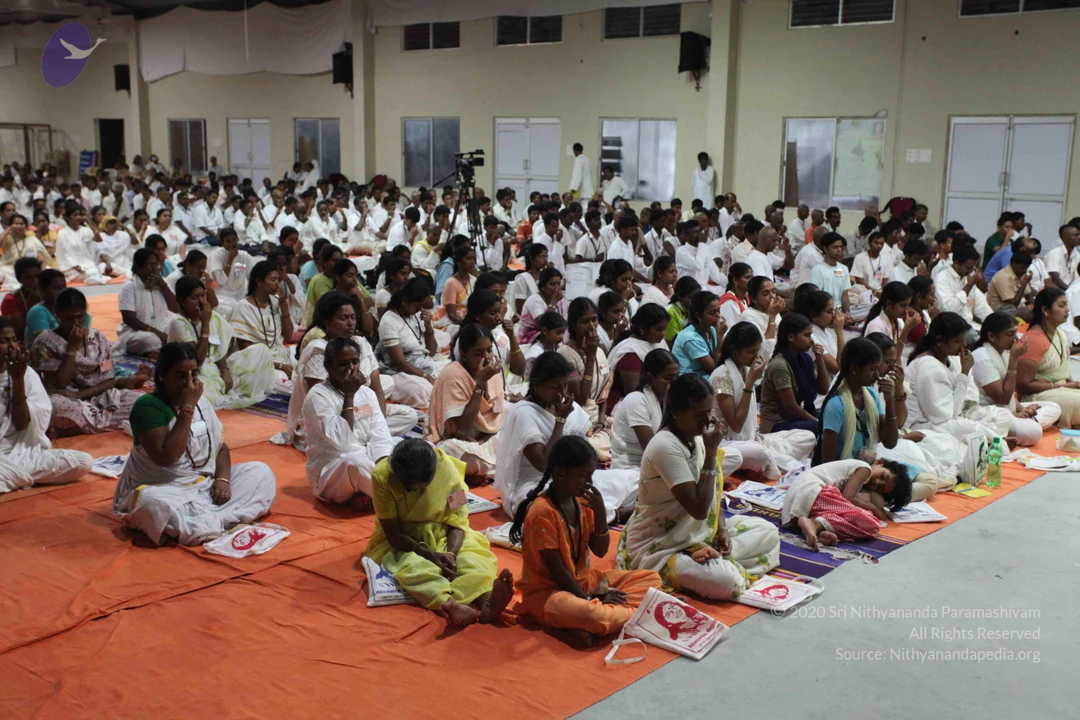
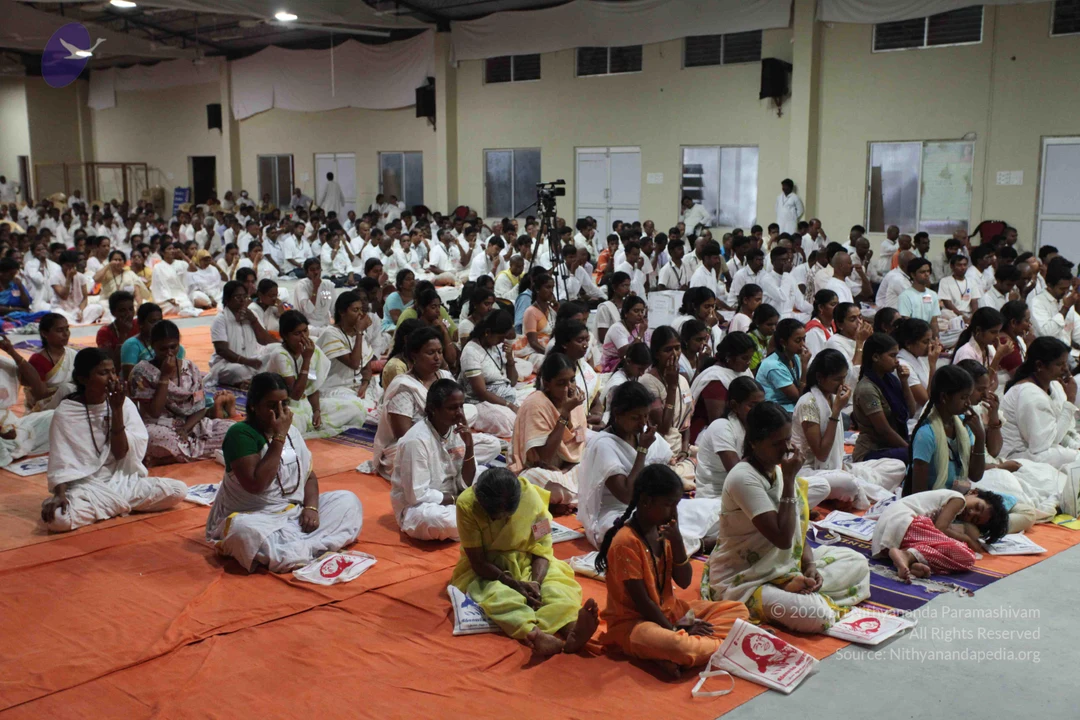
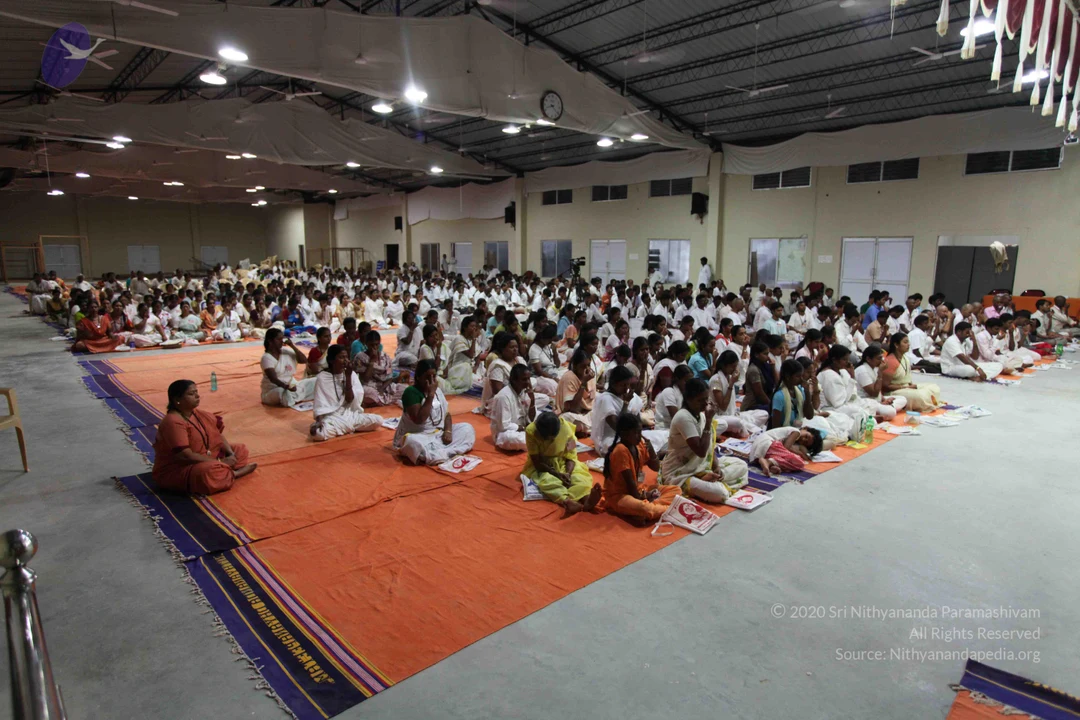
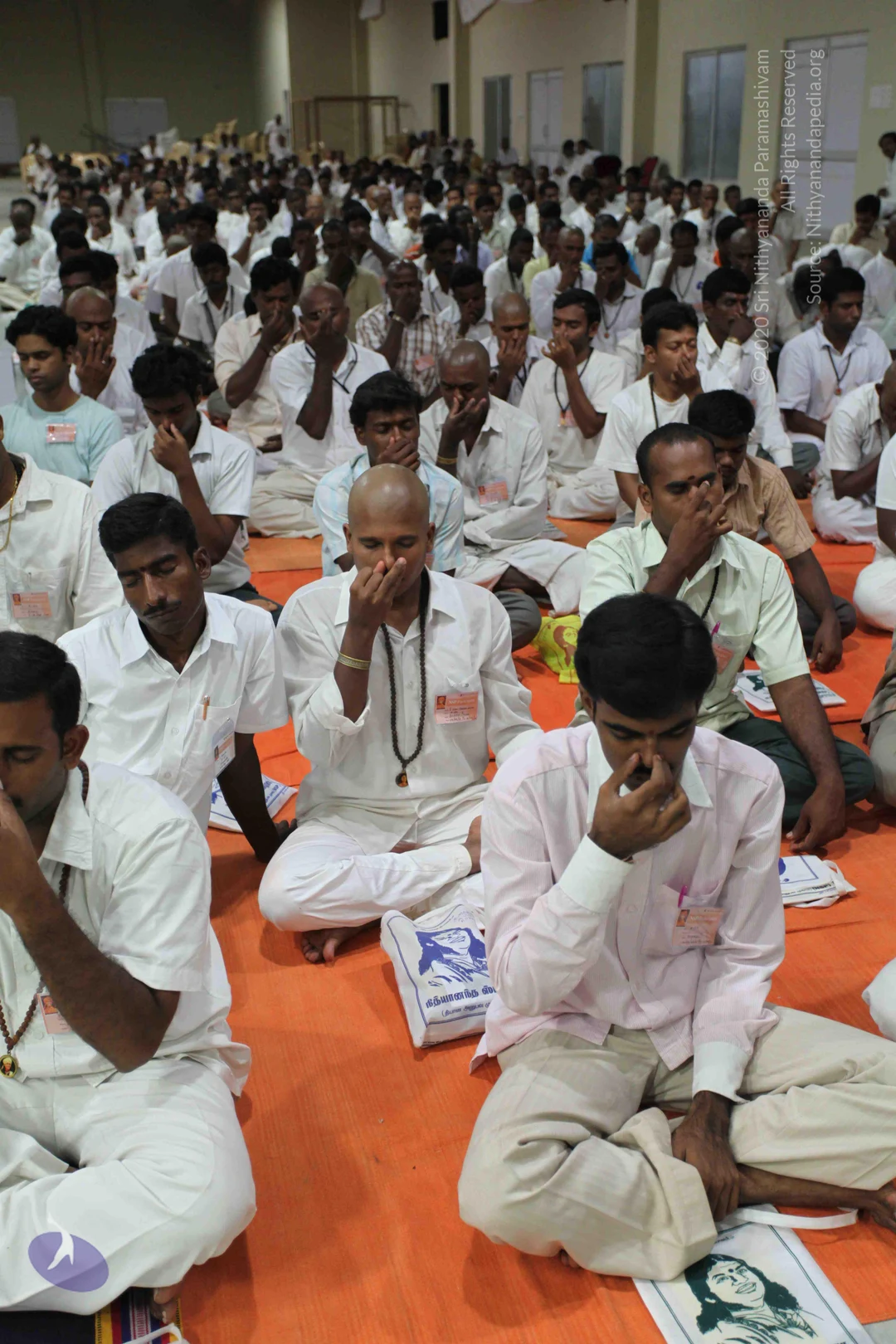
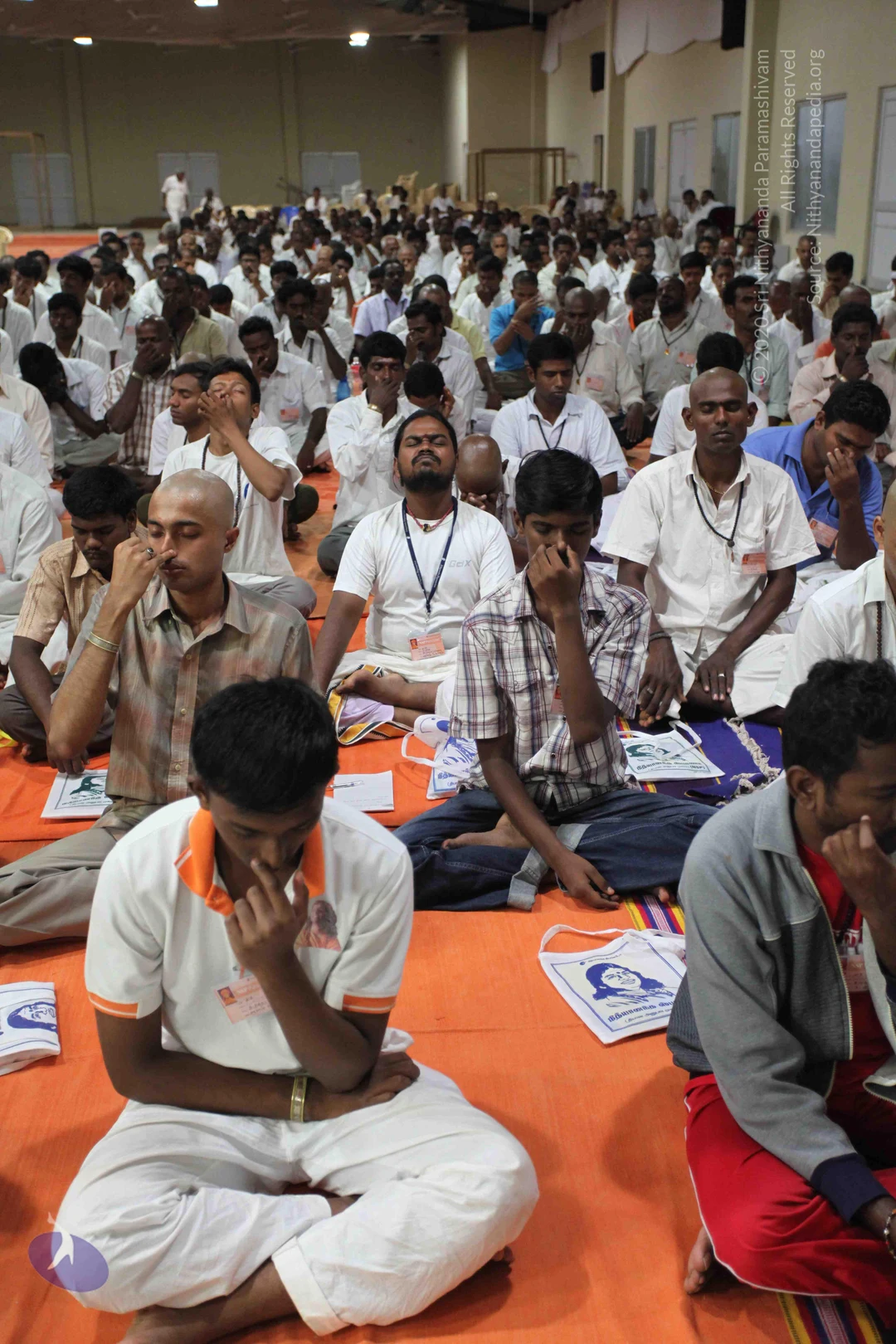
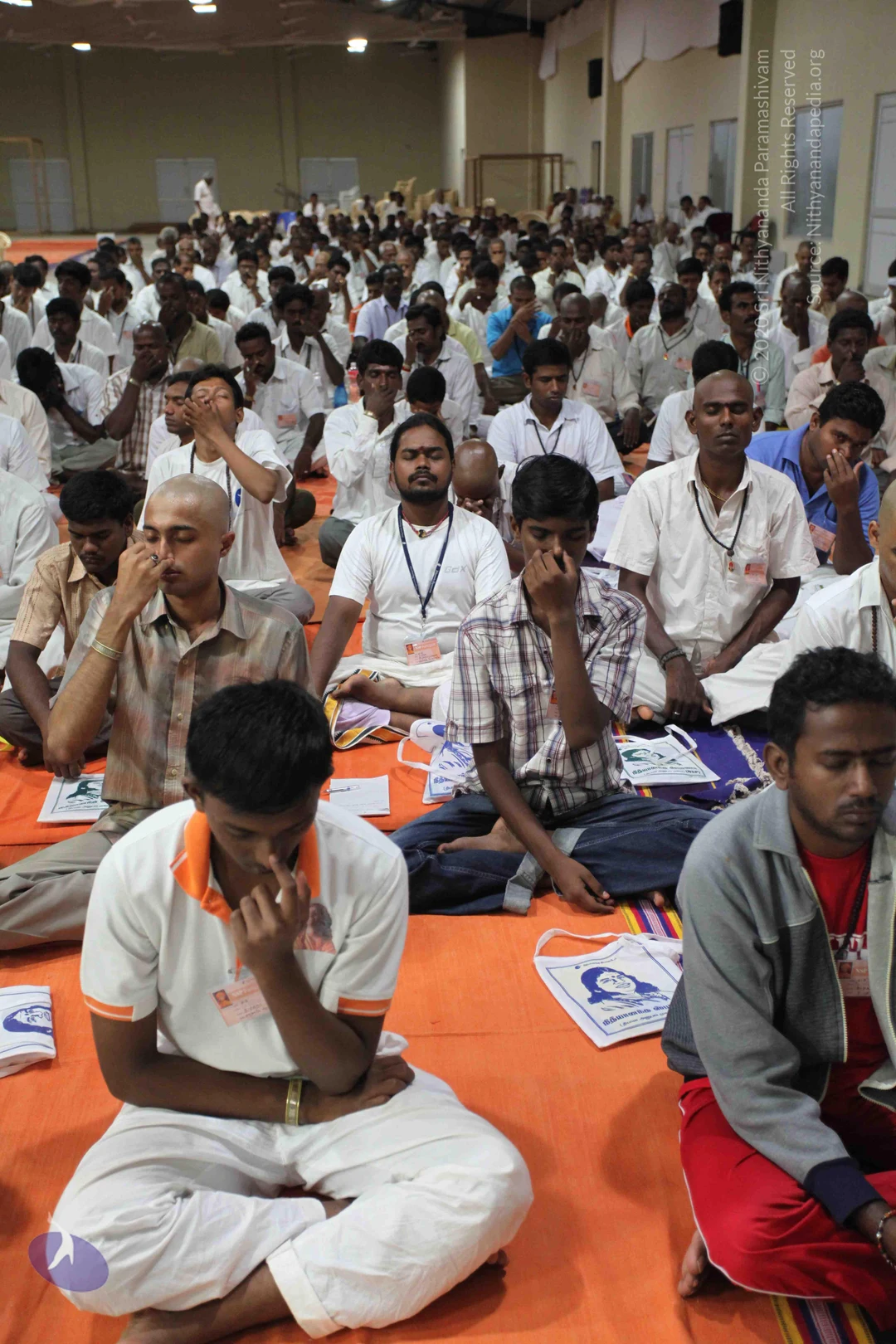
A large hall filled with seated devotees on orange and red mats in rows, most dressed in white with some in colourful shirts, sitting cross-legged with hands in meditative poses. Small paper cards lie on the mats at the front. Ceiling fans, a wall clock and bright lights hang above, and a raised white platform sits at the lower left. The seated people face toward the front of the hall in silent meditation or listening.A large indoor hall with a concrete floor and ceiling fans, where hundreds of seated devotees fill rows on orange and blue mats facing a stage area. Most wear white dhotis and white kurtas, while a few wear shirts, pink or blue garments. Many sit with folded hands or eyes closed in meditation, and small printed sheets lie on the mats in front of them. A wall clock and ceiling lights are visible above a white canopy. No identifiable a person figure is visible in this view, so the presenter is not shown.A large seated gathering of devotees sits on orange floor mats in a hall during a meditation session. Many men wear white shirts and white dhotis, some with rudraksha malas around their necks, others in patterned shirts or pale kurtas. Numerous participants have shaved heads, and many raise a hand to the face with fingers touching the nose, as in nadi shodhana breathing. Some hold papers or sheets on the mat beside them. A camera on a tripod stands at the upper left, and a purple cloth hangs near the top-left corner. Lamps and a stage are not clearly visible. No single figure can be identified as a person from appearance here.A large indoor hall with ceiling fans, rows of fluorescent lights and white tent-like ceiling panels holds a seated audience of many devotees sitting cross-legged on orange and purple mats. Most wear white or cream kurtas and shirts; some wear orange or maroon. Several have closed eyes or hands raised to the face in meditation, and some hold small cloth bags printed with a portrait. A speaker stands at a lectern at the far left. A white donation box sits at the right foreground. The scene is a meditation or listening session.A large hall filled with seated devotees on orange and purple mats during a meditation session. Many men in white kurtas and light shirts sit cross-legged with their fingers raised near their faces in a mudra-like gesture. Some wear lanyards with badges, and several have shaved heads. Cloth bags printed with a face portrait lie on the orange mats in front. A staff member stands near the back wall, and a camera operator is visible on the right. No identifiable a person figure is present in the frame.A large seated congregation of men fills a hall, sitting cross-legged on orange mats and cushions. Most wear white kurta-pyjama or white shirts and white dhotis, and many have shaved heads. Several participants hold their right hand to the nose in a nasal breathing practice, eyes closed, with white name badges and rudraksha malas visible. Some men in cream or patterned shirts sit among them. Ceiling lights and a camera tripod are visible at the top. No individual is identifiable as a person from the visible cues in this image.

September 09 2010

Original wiki page
Contents

Title

Video and Audio

The Art of Right Listening by Nithyananda

VideoAudio

Transcript

sadāshiva samārambhām shankarācāryā madhyamām | asmat ācārya paryantām vande guru paramparām ||

(0:48)

The today’s subject, today’s sutra is Art of right listening. Listening has been prescribed as a first step in almost all spiritual traditions in the world. Rishis, the oldest spiritual tradition, Vedic tradition, they start with the spirituality with the word shravana - listening. Buddhist tradition starts with their, starts the eight steps for nirvana; first step is right listening. J Krishnamurti, the modern day master goes a step ahead, step further, says ‘Right listening is God’. He gives the place of God to right listening.

(2:40)

What is exactly right listening? Hearing is different, listening is different. Hearing means, sound enters into your ears, gets processed, either it creates fear or greed or different emotions. Listening means, sound enters into your system and gets absorbed into your system; leads your system from sound to silence. Understand, it’s like almost, if the pond is dirty, if you put little lime powder, the lime powder will take the dust and settle on the ground. So in few minutes the whole pond will be clean. Same way, the right listening is put on chaotic mind - the mind which is full of words, right listening is sprinkled, sprayed like a lime powder, it will take away all the dust, which is words and thoughts in your mind and settle down on the ground.

(4:29) Right listening means the sounds which leads you from sound to silence. The right listening can happen when you are ready to listen with anything; chirping of the bird can lead you to enlightenment. Sound of bamboo can be the Upanishad mantras. The sound of Ganges can be the Anahata dhvani. With right listening, everything that echoes in your system, everything that reverberates in your inner space, leads you to silence. Of course the possibility for right listening, the happening of right listening, happens more in the presence of a living master, an incarnation, who himself has experienced the Anahata dhvani - the sound which is uncreated, in His inner space. Again and again and again the emphasis on right listening is put because the right listening is an independent, intelligent, technique, which can directly lead you to the higher space and higher reality.

(6:58)

With the right listening you will understand, the sound waves which reaches your inner space, is deeper than the visions which reaches your inner space. When I say this, I mean, the sounds which you are hearing now, the words which are entering your inner space, are more stronger, more truthful, more higher reality than the scenes you are seeing around you. The wax out of which the scenes are created, which you are seeing around you, is of much lower quality than the words which are reaching your inner space. The sound which I am creating now, which is reaching your inner space, is more stronger base material, to create what you want than what you are seeing as a scene. As long as you feel what you are seeing is more stronger reality than what you are hearing, you are in illusion - Maya. You are hallucinating. The right listening has not yet happened in you.

(8:35)

When you feel what you are listening, the words which are entering your inner space is more powerful than the scene you are seeing, the right listening is happening in you. Sit with the deep awareness, how the words are touching your ears and reverberating your inner space. You will see, the words which are touching your inner space and reverberating and the reactions created by them and the space created by them, consciousness happens in you by them, are more higher reality than the scenes you are seeing around you. This is what I call ‘art of right listening’. Better I’ll use the word ‘science of right listening’. The word art is too much loaded and abused by too many people with too many words. Science of listening.

(10:49)

As rishis describe listening in their own way - shravana, Buddha describes right listening, Krishnamurti describes ‘right listening is God’; I will add my part to the right listening. I will give you a powerful process for right listening. Bring your awareness to the third eye area, forehead, see very clearly the sounds; sounds is the right word, not even words. Sounds from the master, how it penetrates your third eye, please understand, sounds from master reaches your system through your third eye, not through your ears. Ordinary words, which leads you to more and more words, reaches you towards your ears. The words which leads you from sound to silence, the sounds which leads you from sound to silence, reaches your system through third eye. Have your awareness in the third eye, see how the words are penetrating and how they are reverberating and what kinds of meanings, emotions, experiences, they are creating in your system; just see the whole thing. Seeing the whole thing is listening.

(12:58)

Understand, listen through the third eye, whatever happens inside, see it, that’s all. This is a powerful process to listen. Whenever you find time, sit with masters discourses, words, listen through third eye; you will have new understanding. By the end of the discourse, you would have been already put in deep silence. Never ever listen to a person who creates more thoughts in you. Listen to the words and a person who leads you to the deeper and deeper space of silence and higher and higher space of realities. The master's words come from a frequency, where what you are seeing as the world is too small. What you see as the world is illusion in My space. So anything comes from My space and reaches your inner space, lead you to the same experience of My space. So any word which comes from This inner space and enters your inner space, leads you to the same experience of My inner space, means this is smaller reality than the sounds created.

(15:08)

Sit with this science of right listening, the process of science of right listening, it is enlightenment. I don’t want to say it will lead you to enlightenment. It is enlightenment! What Upanishads calls as ‘shravana’, what Buddha calls as ‘sammati’, what J Krishnamurti calls as ‘right listening is God’, I am giving you this process to make all that three as experience into you.

(16:04)

My unique contribution to the spiritual tradition is creating processes, sharing the processes with the world, to make every truth into experience, reality. So I will add My part to the shravana, sammati, right listening. This part - the science of listening - Sit with your awareness on the third eye, listen through the third eye and see how the sounds penetrate your system and how it reverberates in your system. What all emotions, experiences, expressions, ripples, it creates and those ripples and emotions and experiences, where it leads you - just see. You will experience right listening as rightly said by J Krishnamurti, God Himself.

Let you all live and radiate enlightenment. Live and radiate the eternal bliss Nithyananda. Thank you.

(17:30)

Photos

Photos For The Day

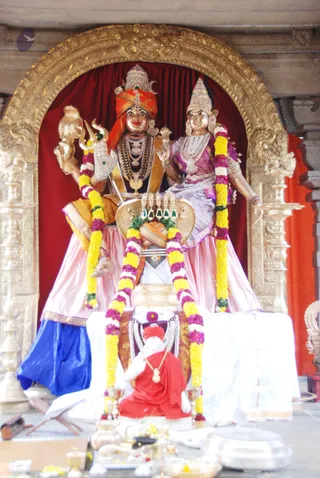
Panchatapas
Paadapooja

Morning-Satsang
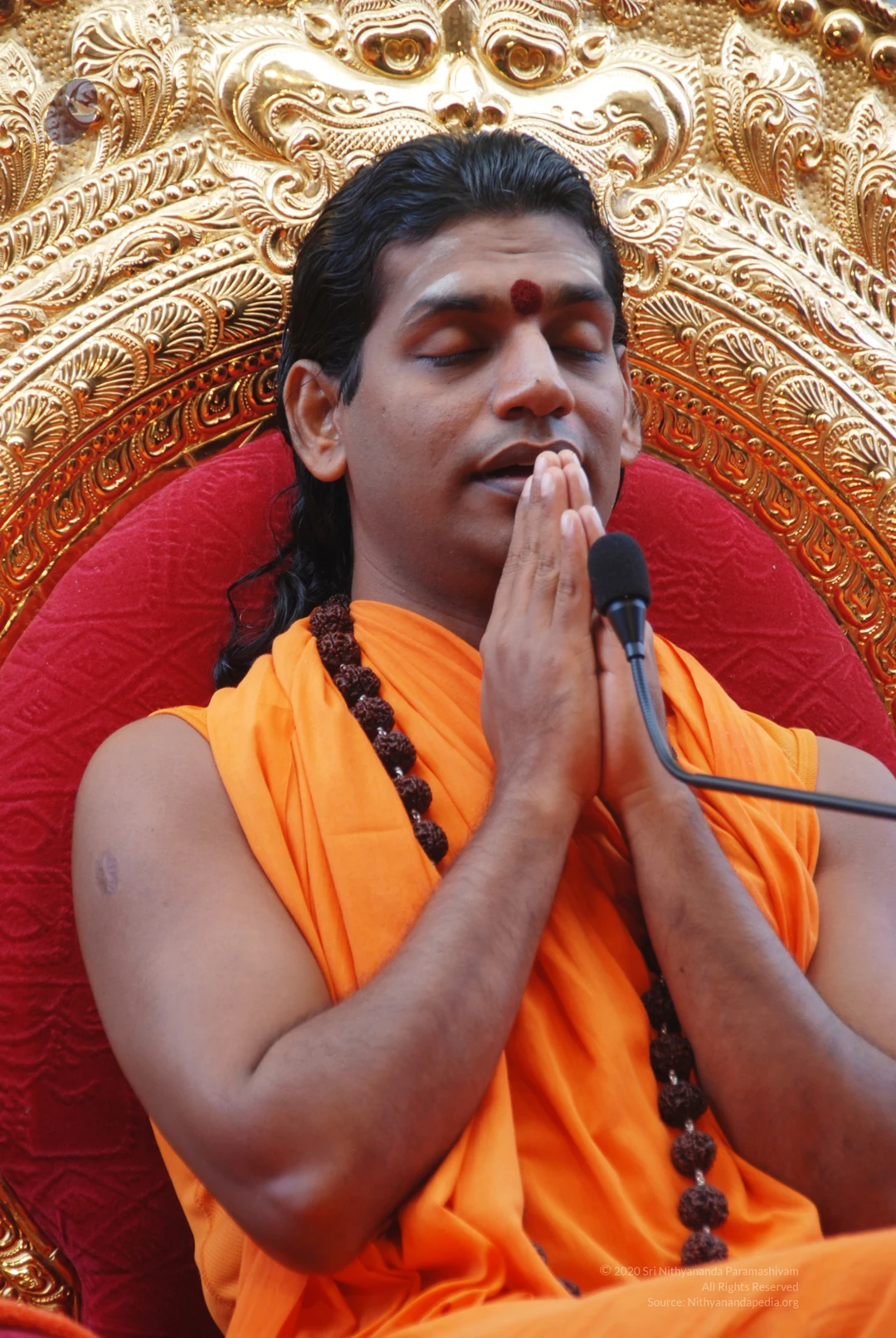
Sarvadarshan
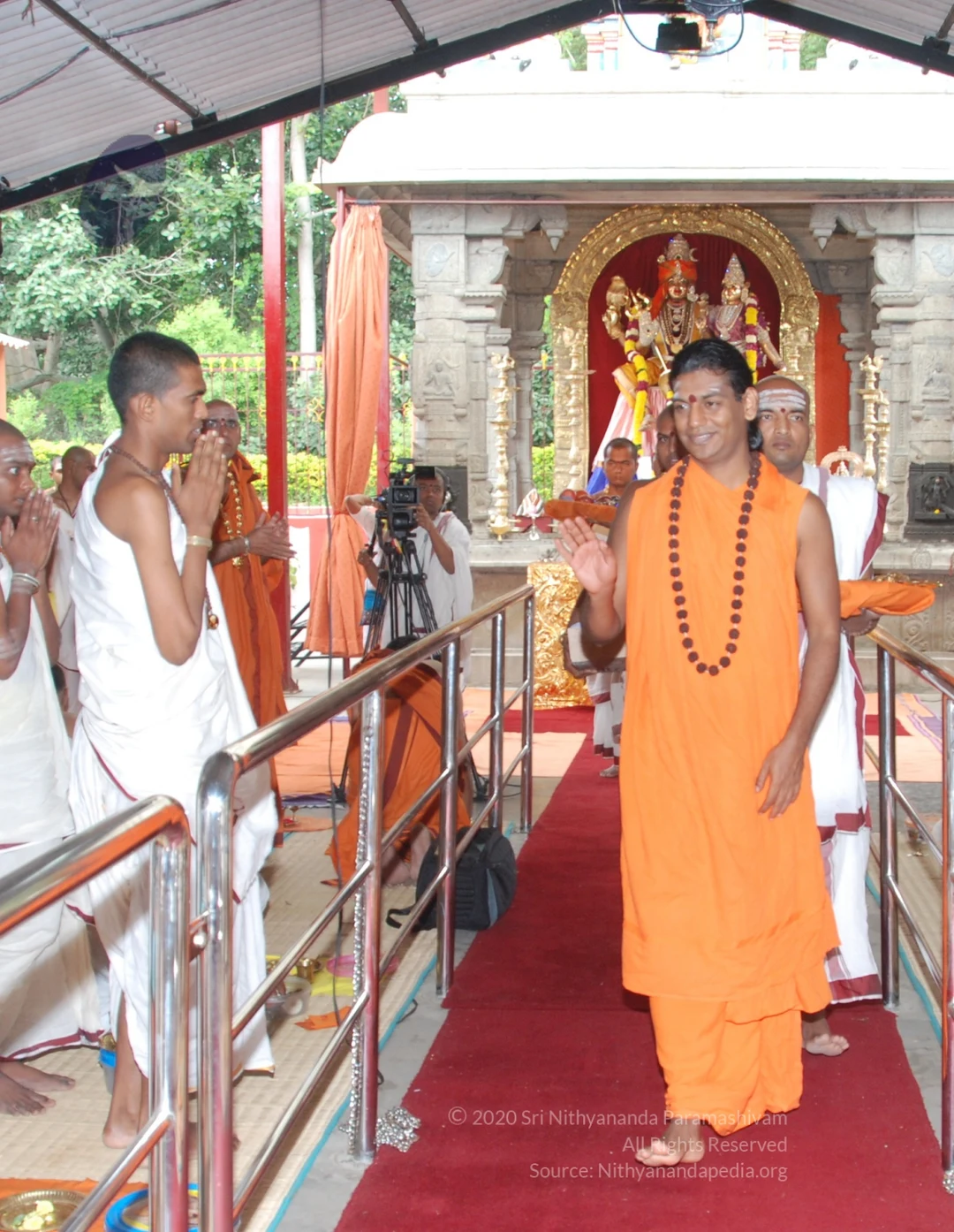
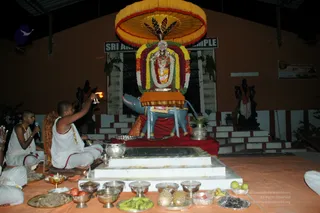
Nithyanandeshwara-Paramashiva-Golden-Temple
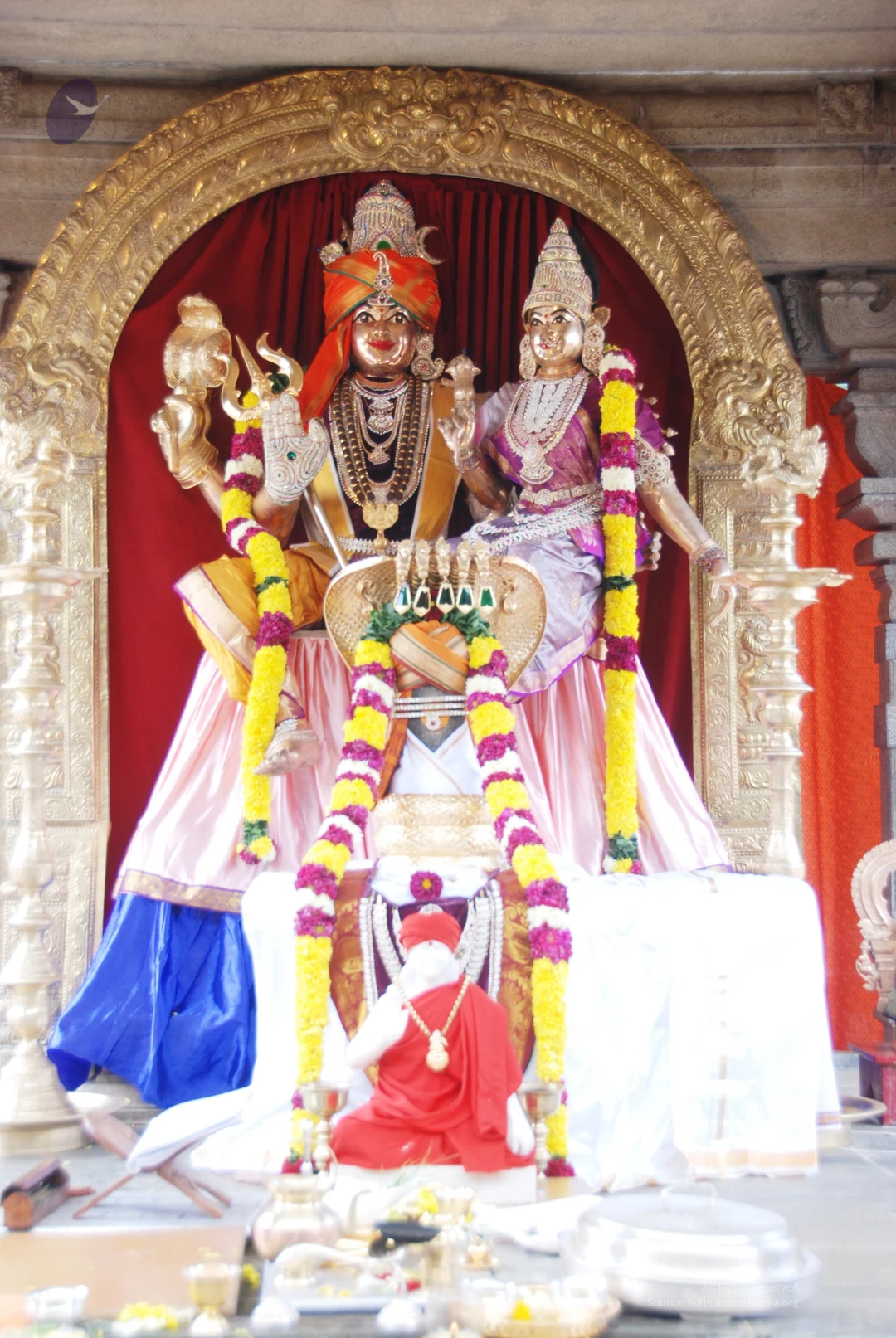
Ganapati-Homa
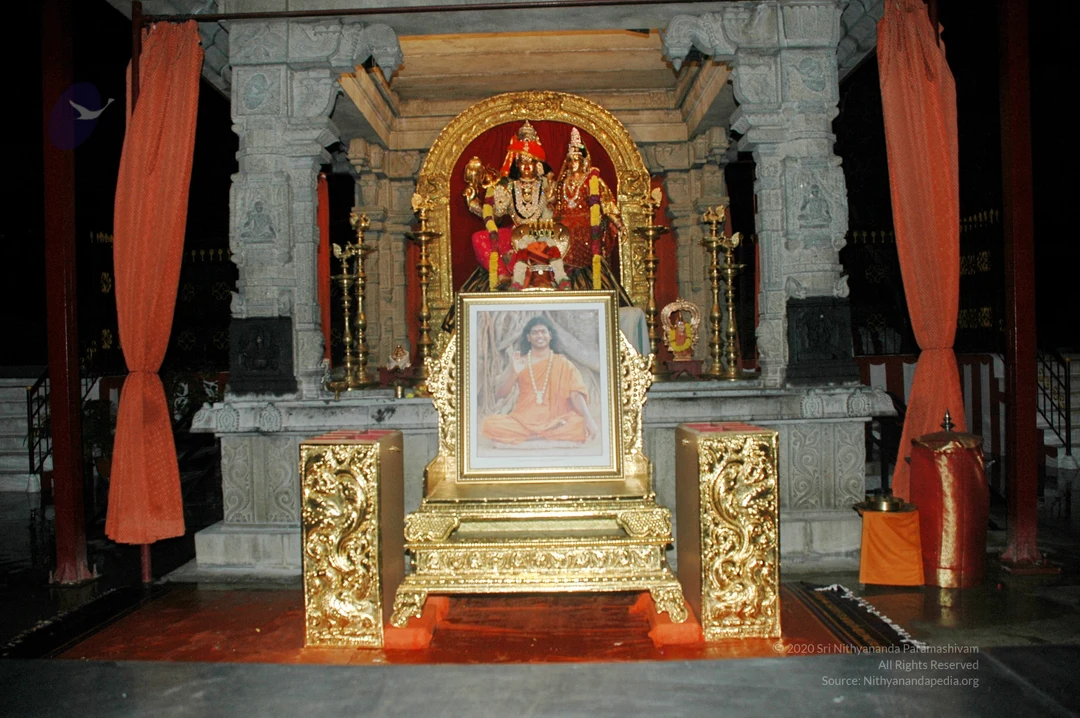
Nsp-Session-With-Swamiji
Photos Of The Day:

Seeragapadi-milk-pot-procession
01--Satsang
02- Living-Enlightenment-Process-LEP
03--Yoga-Sutras-Session
more Photographs
02-Pancha-Tapas
03-Pada-Puja
04-Satsang
07-Morning-Session-NSP
09-Meditation