Skip to content
Sunday

5 September 2010

Revival of Vedic tradition: Nithyananda Morning message
843Dated photos
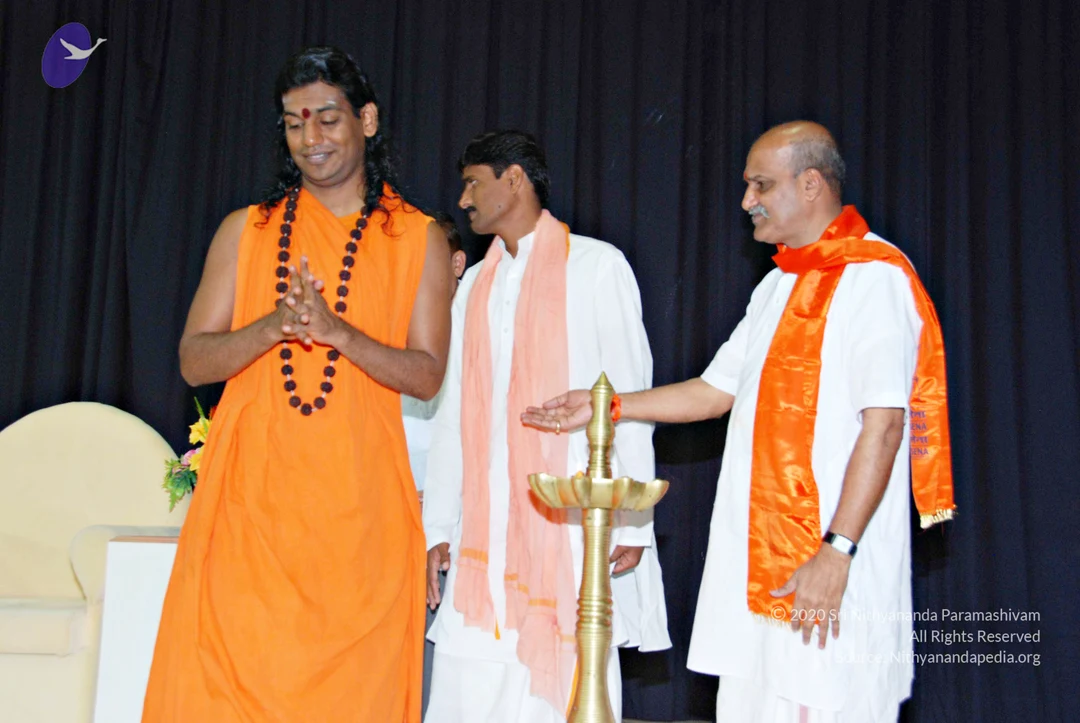
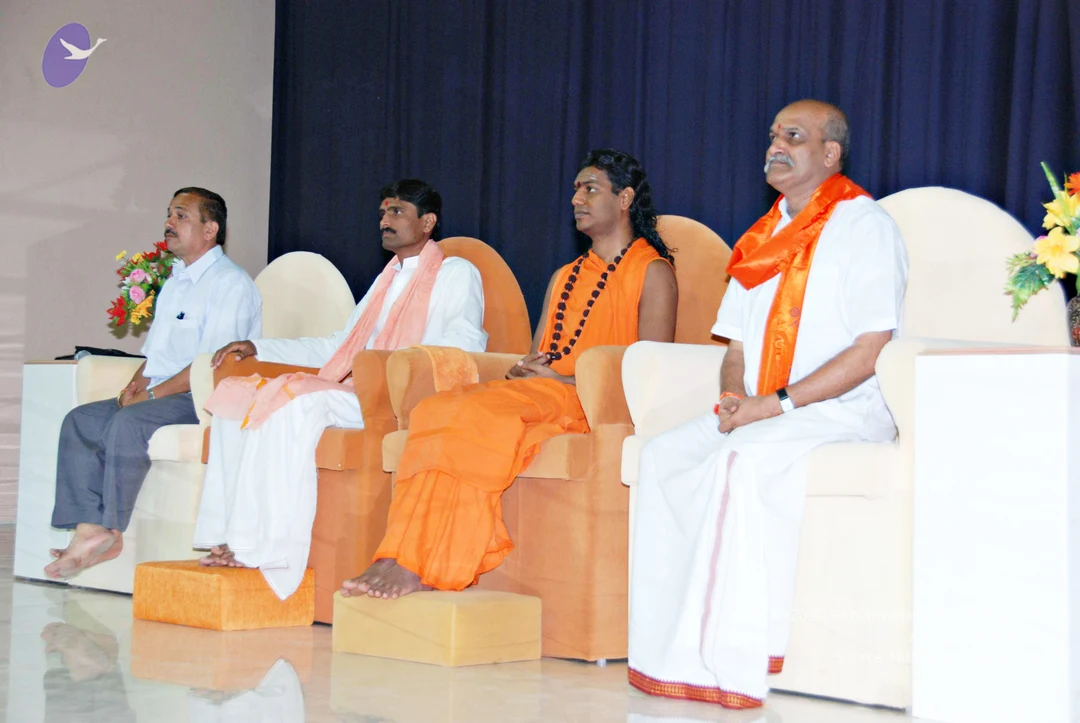
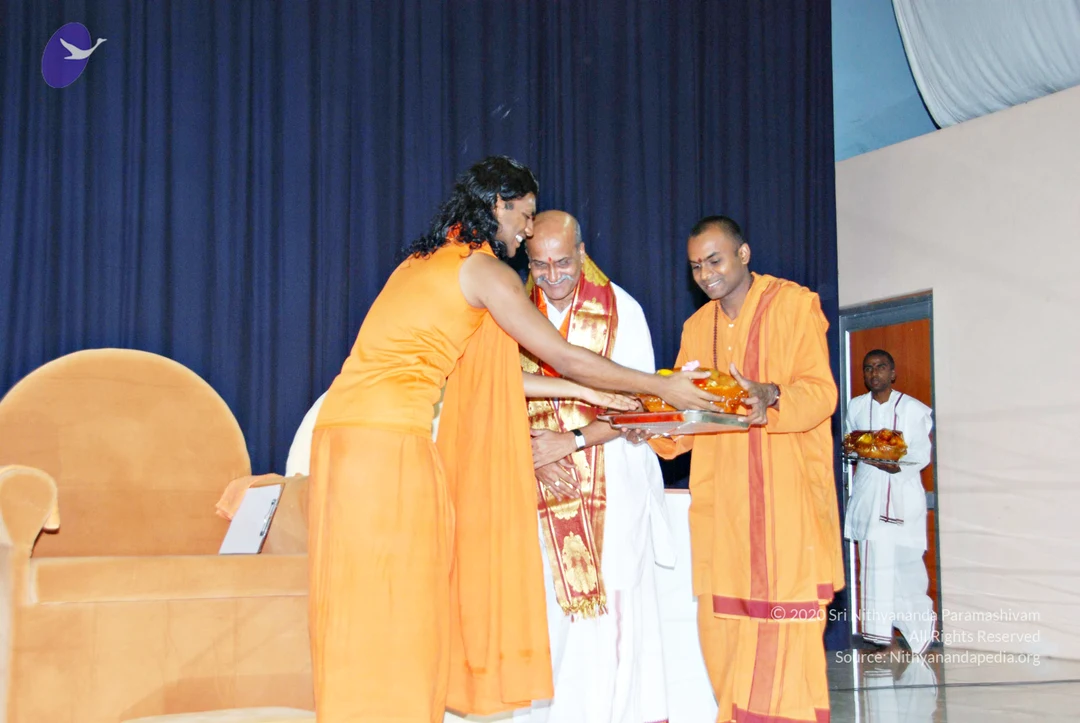
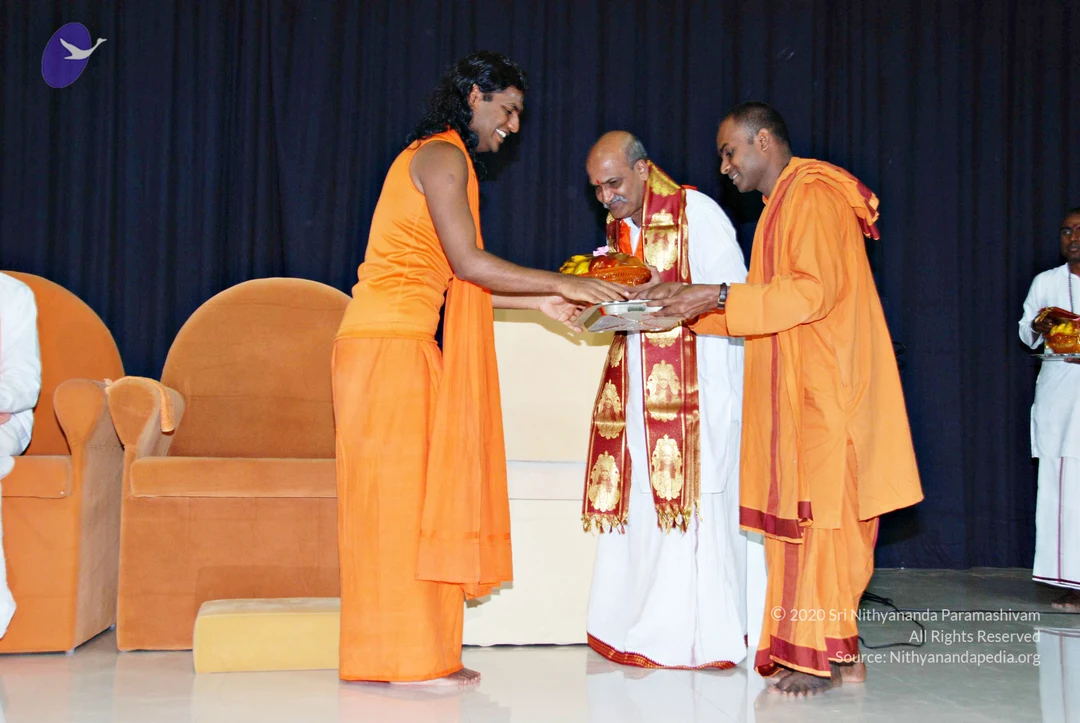
1Source pages
8Media embeds
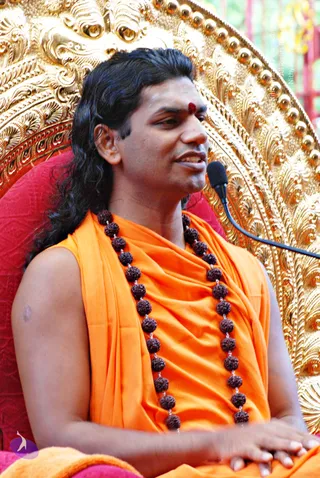
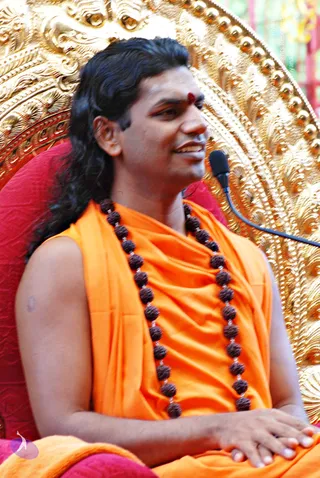
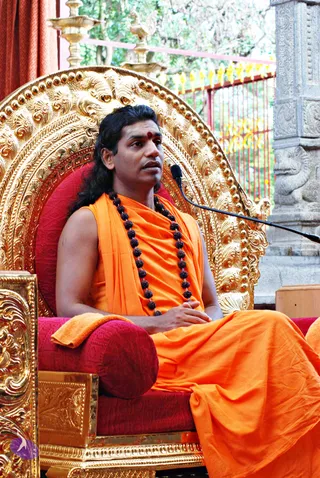
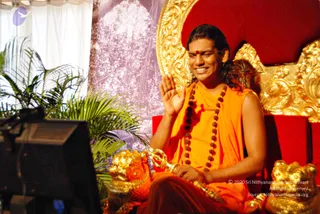
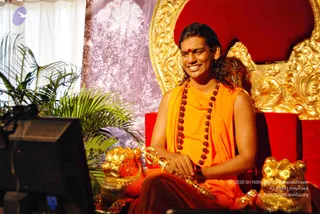
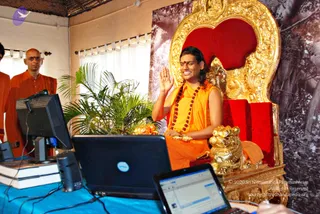
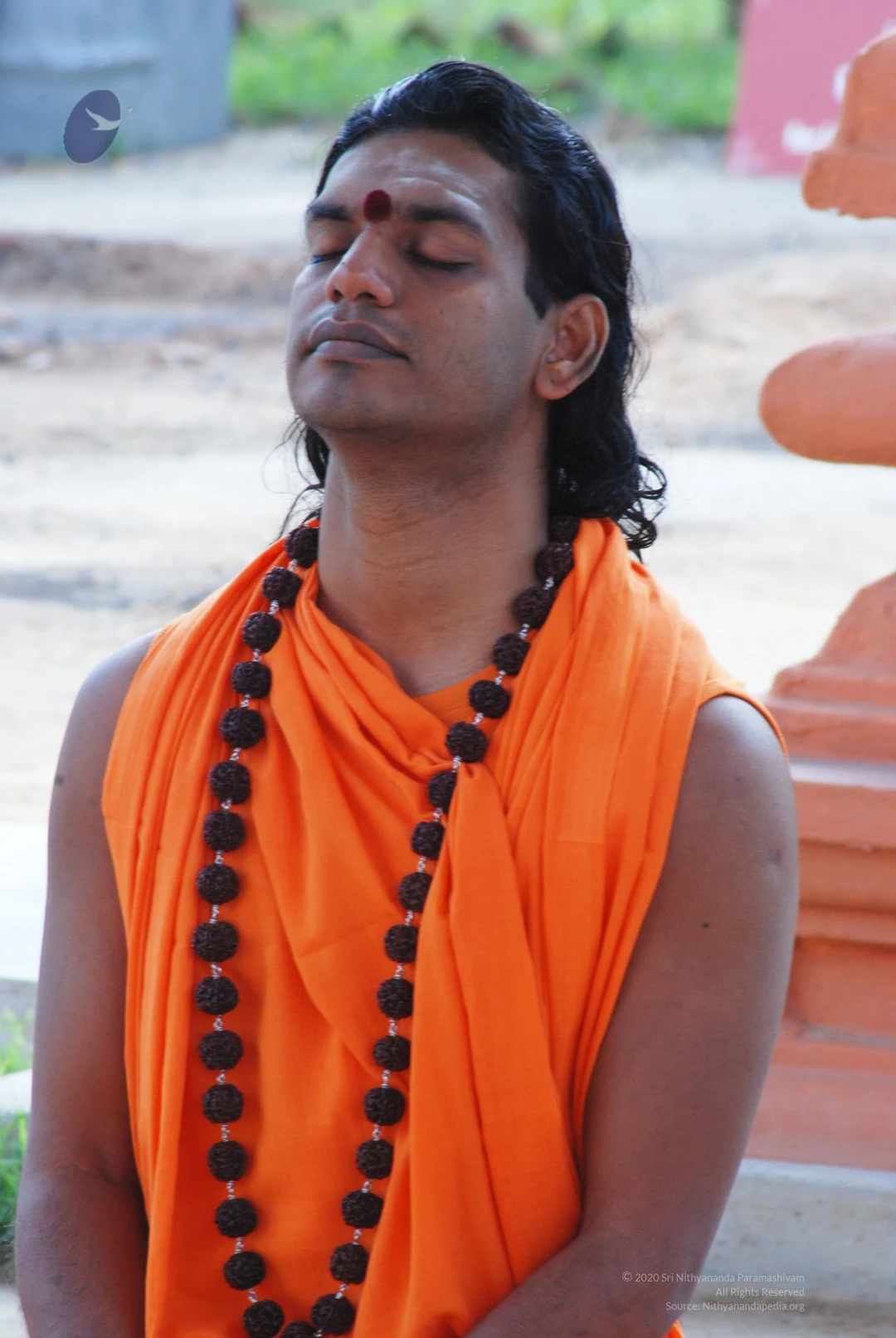
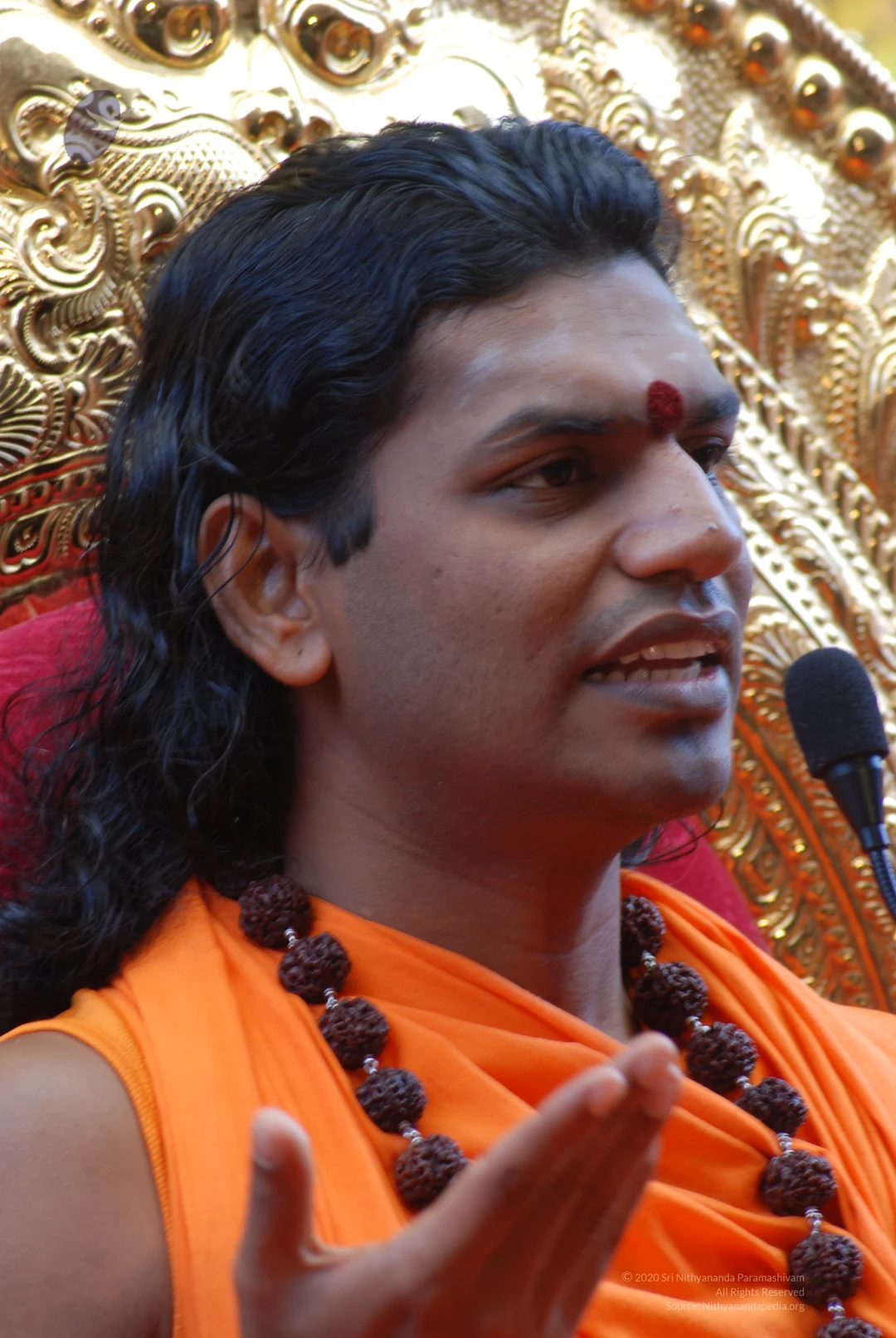
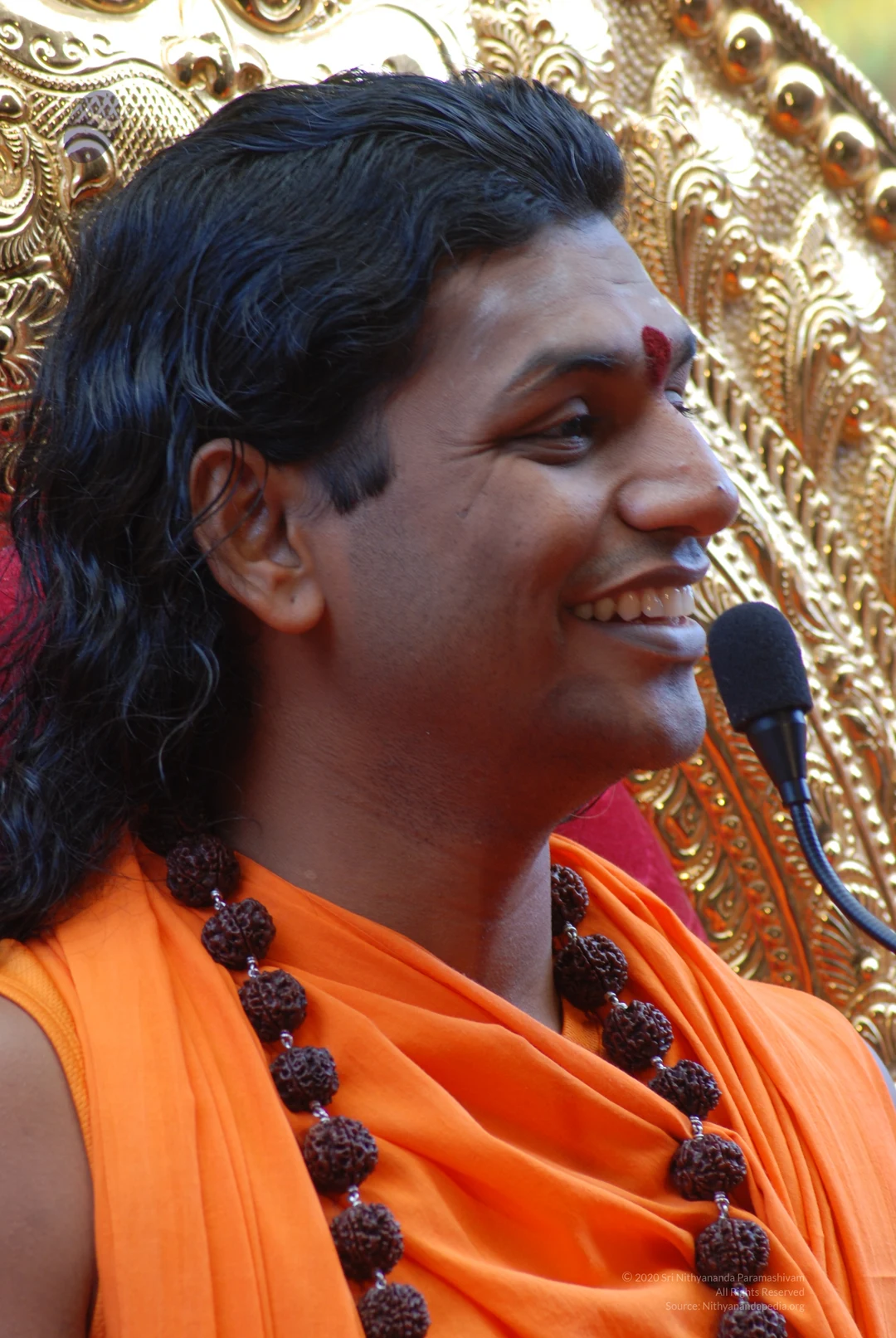
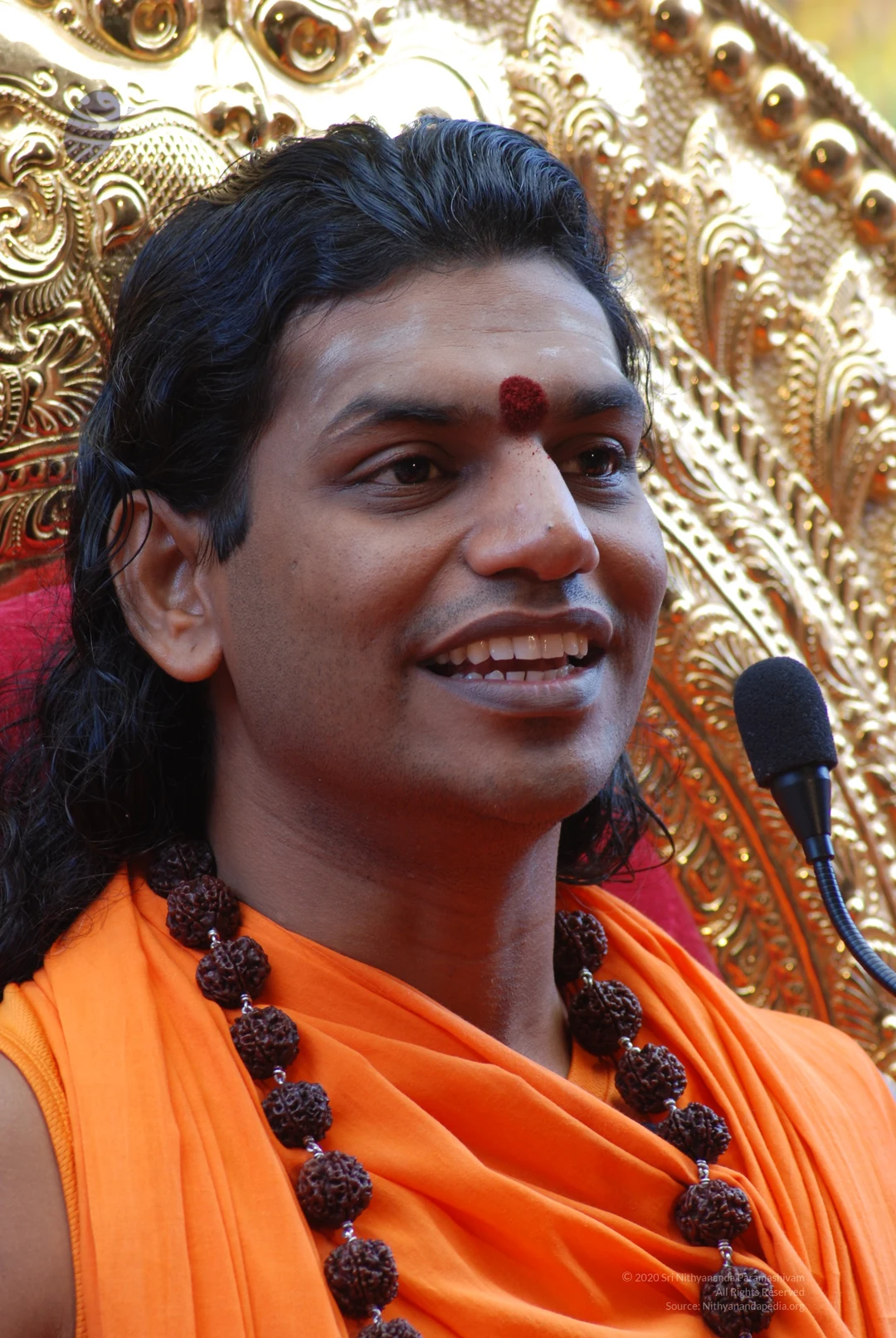
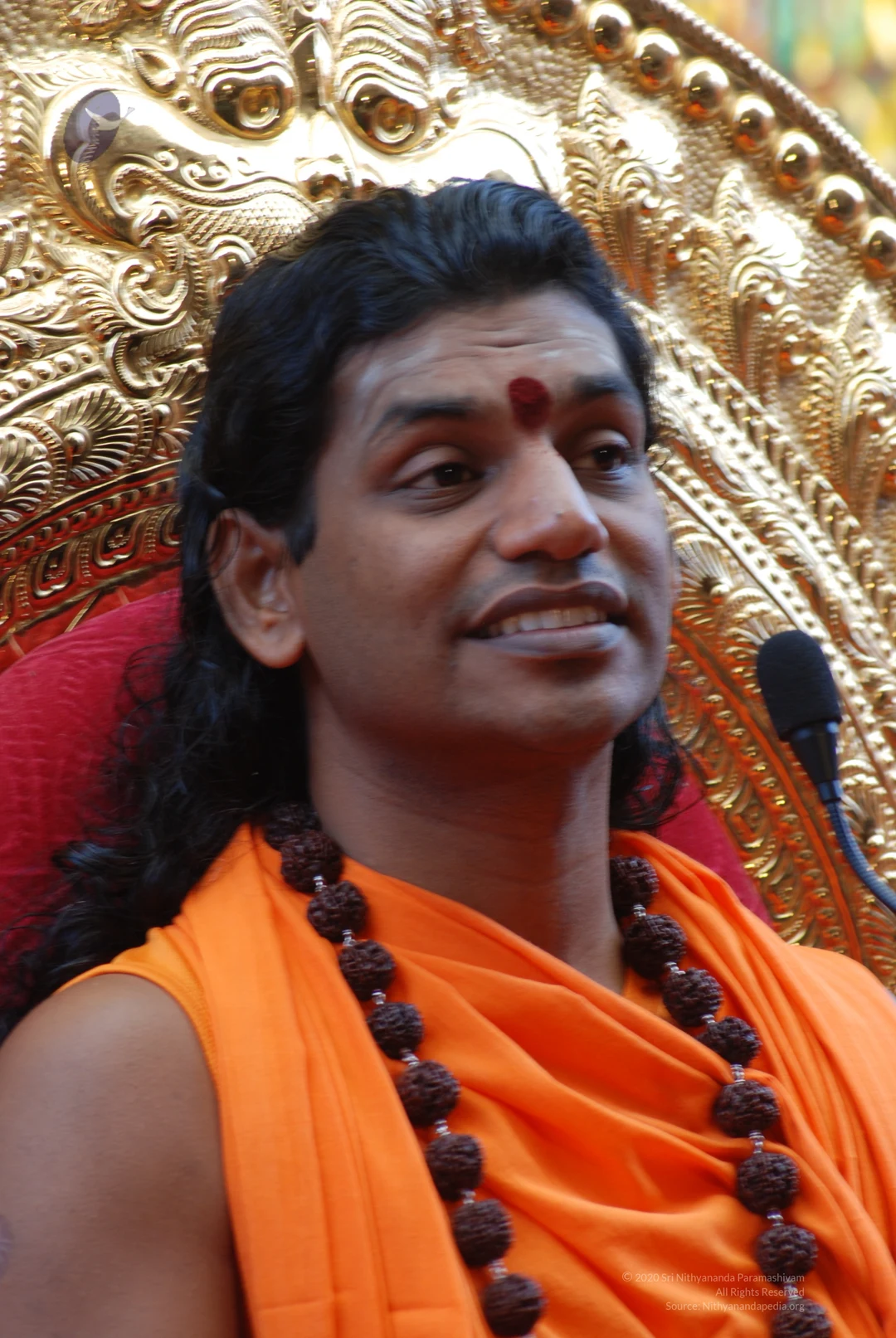
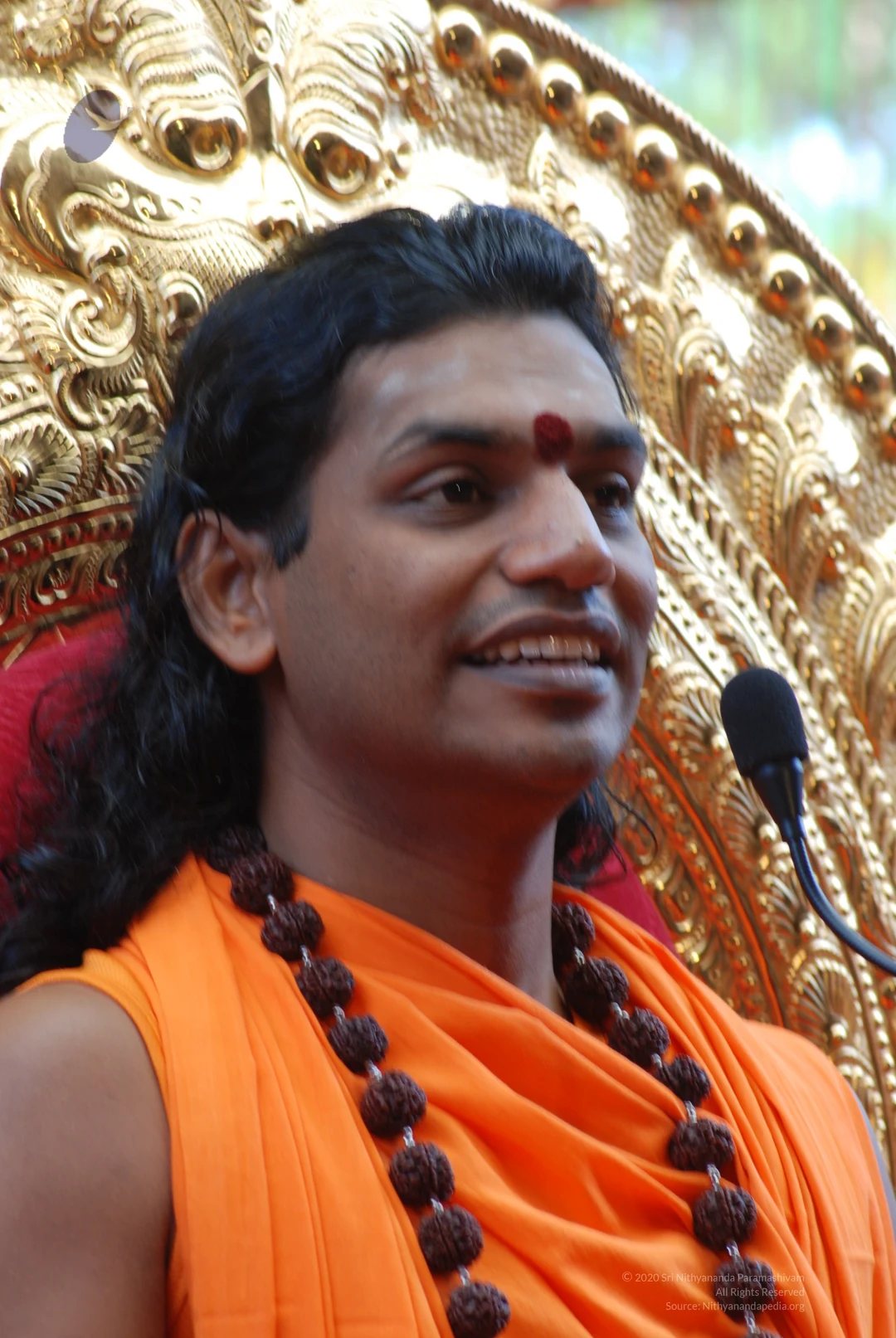
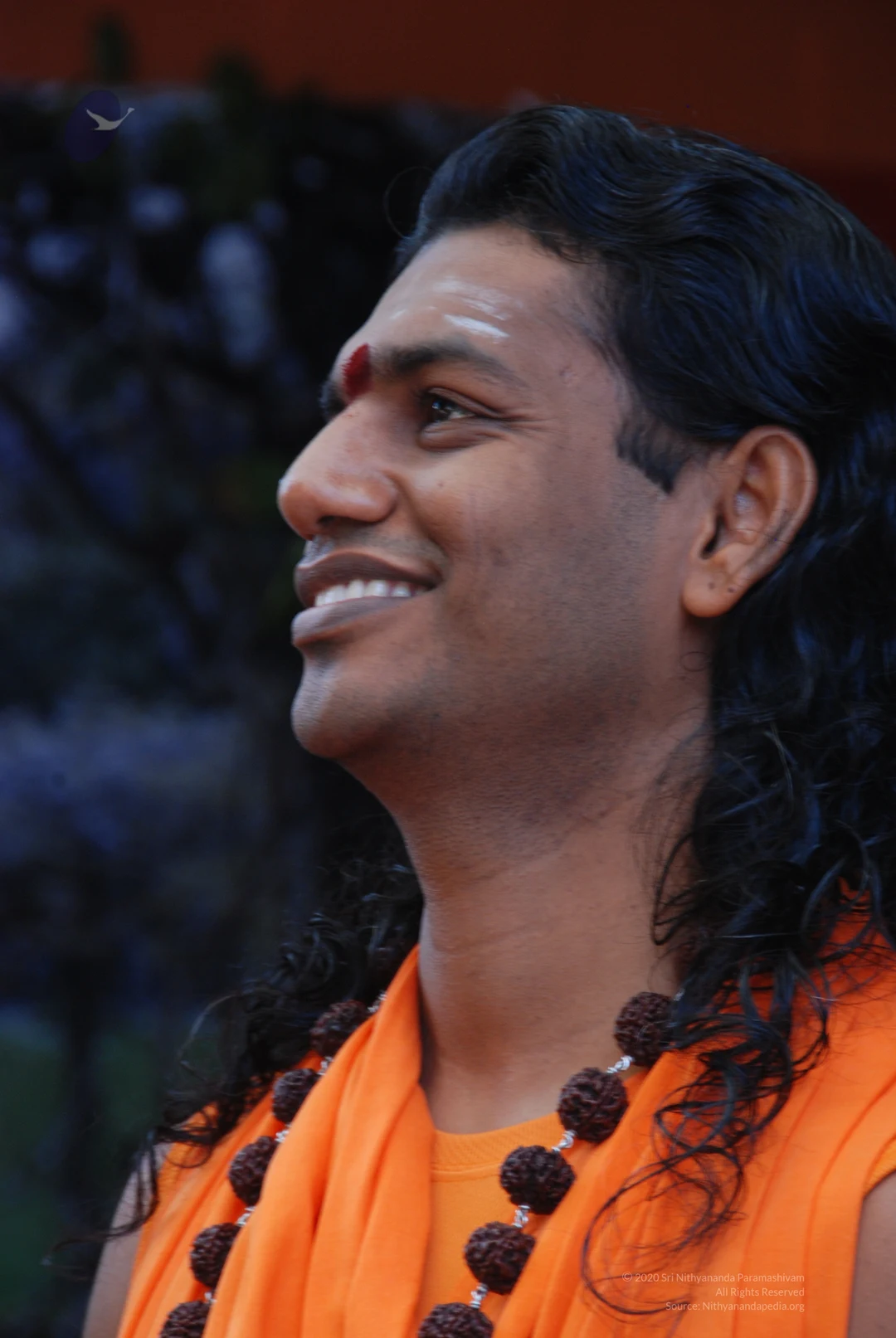
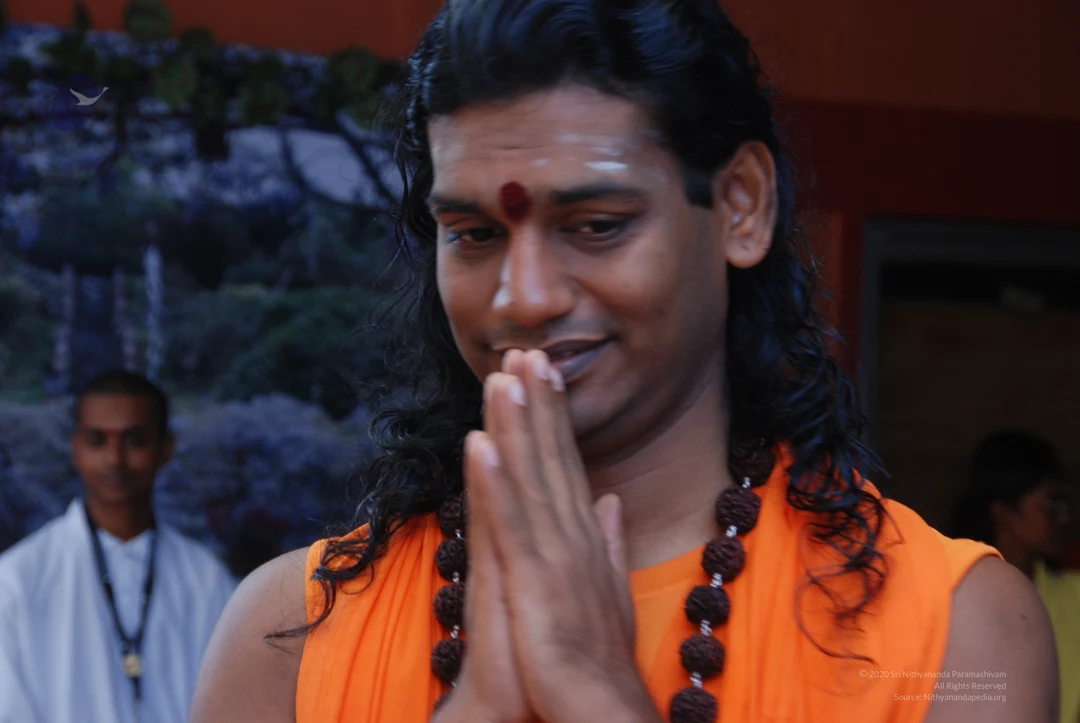
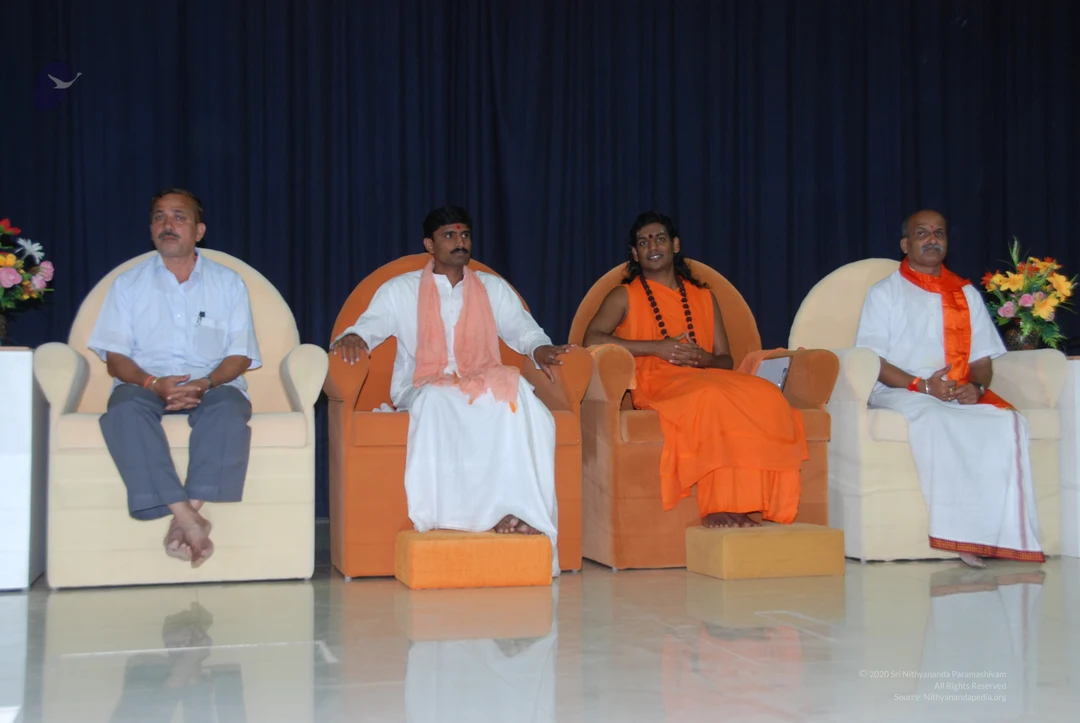
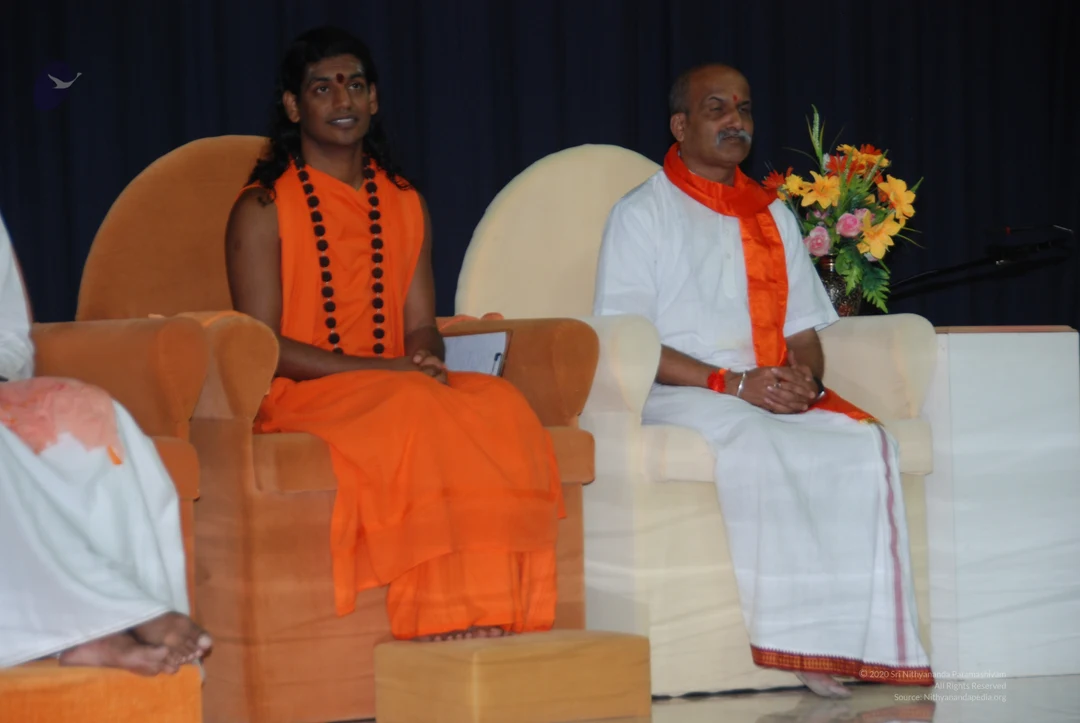
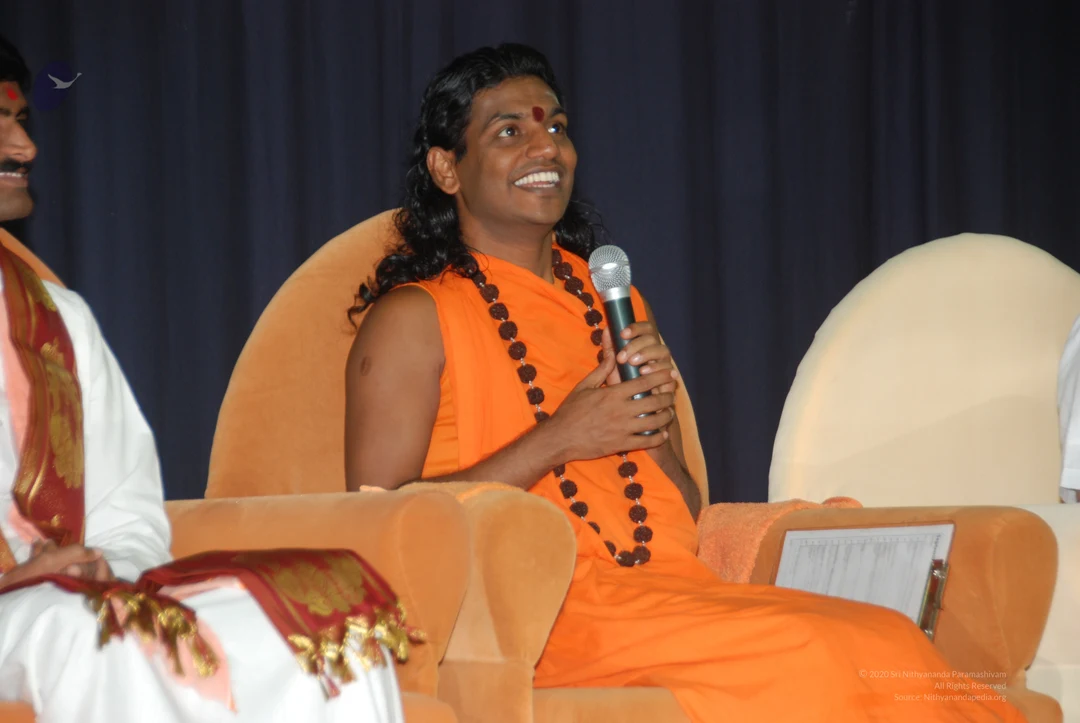
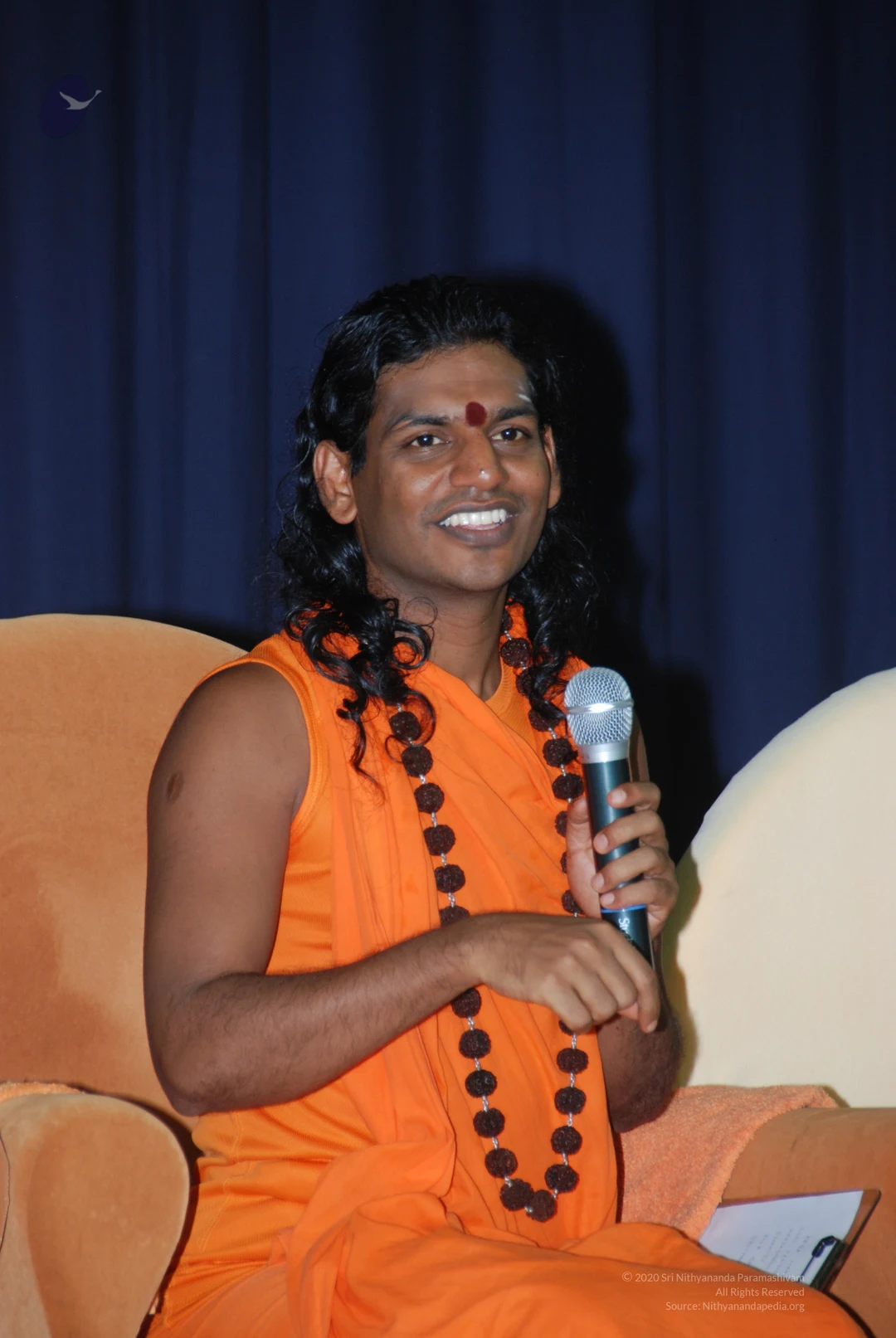
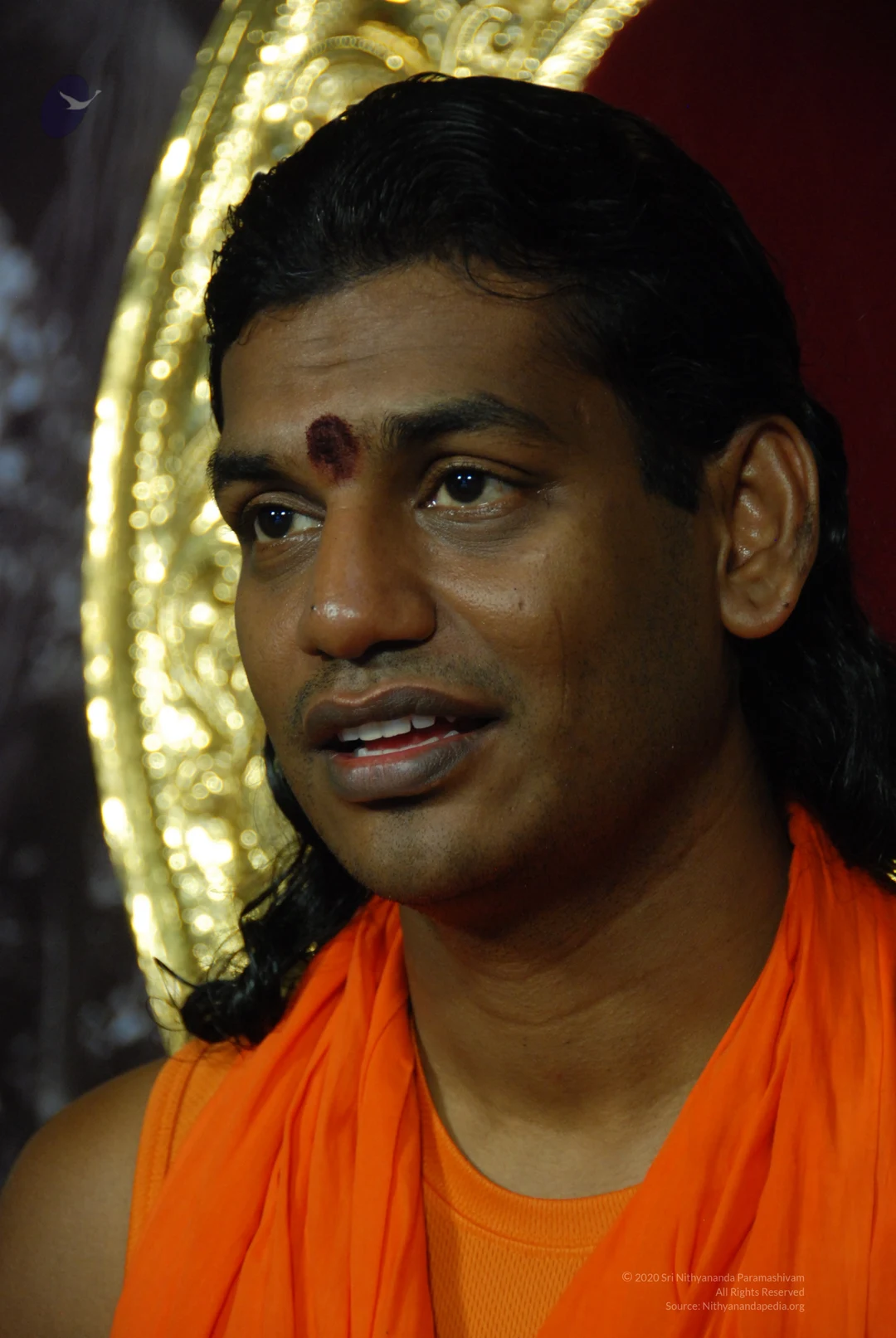
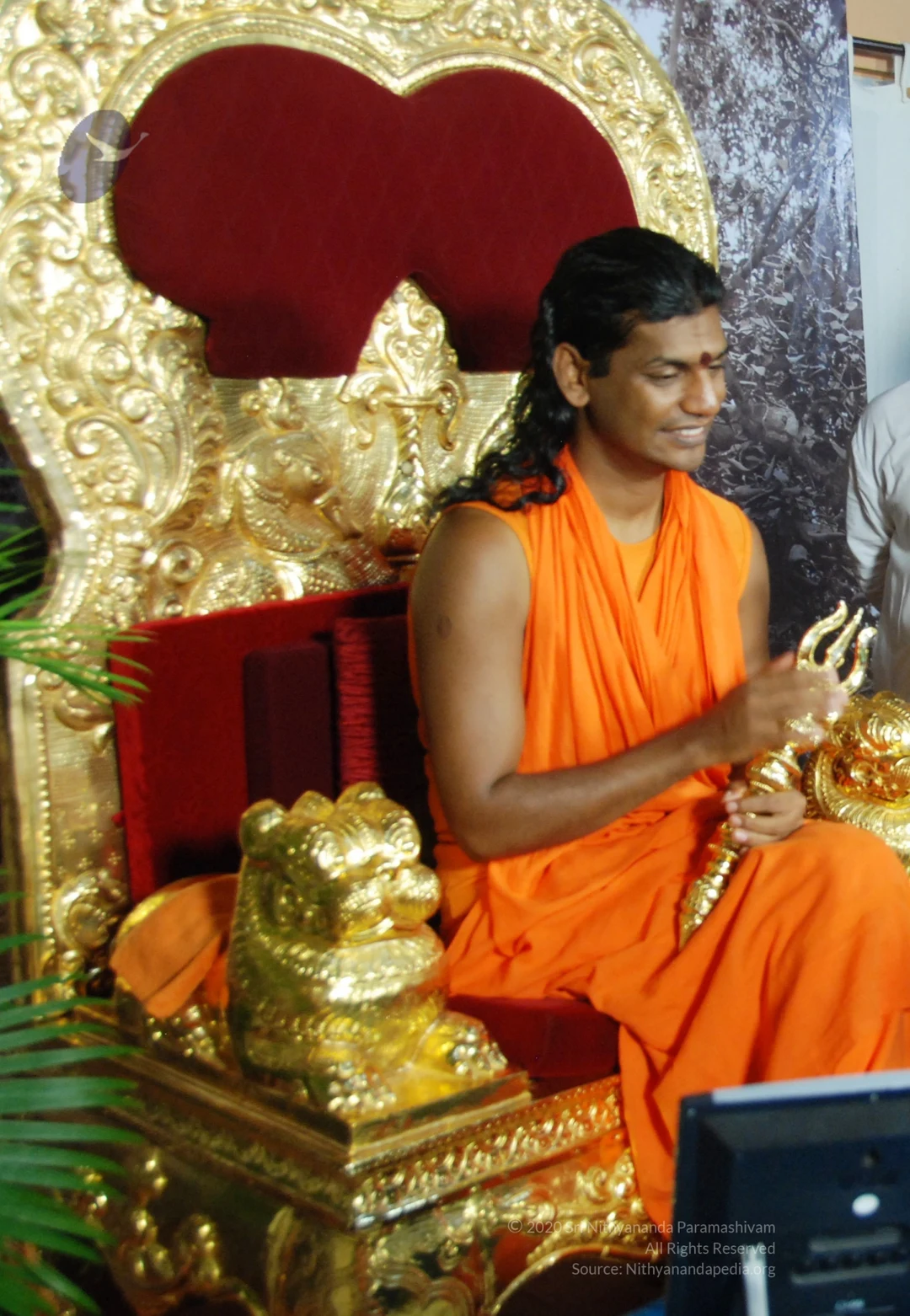
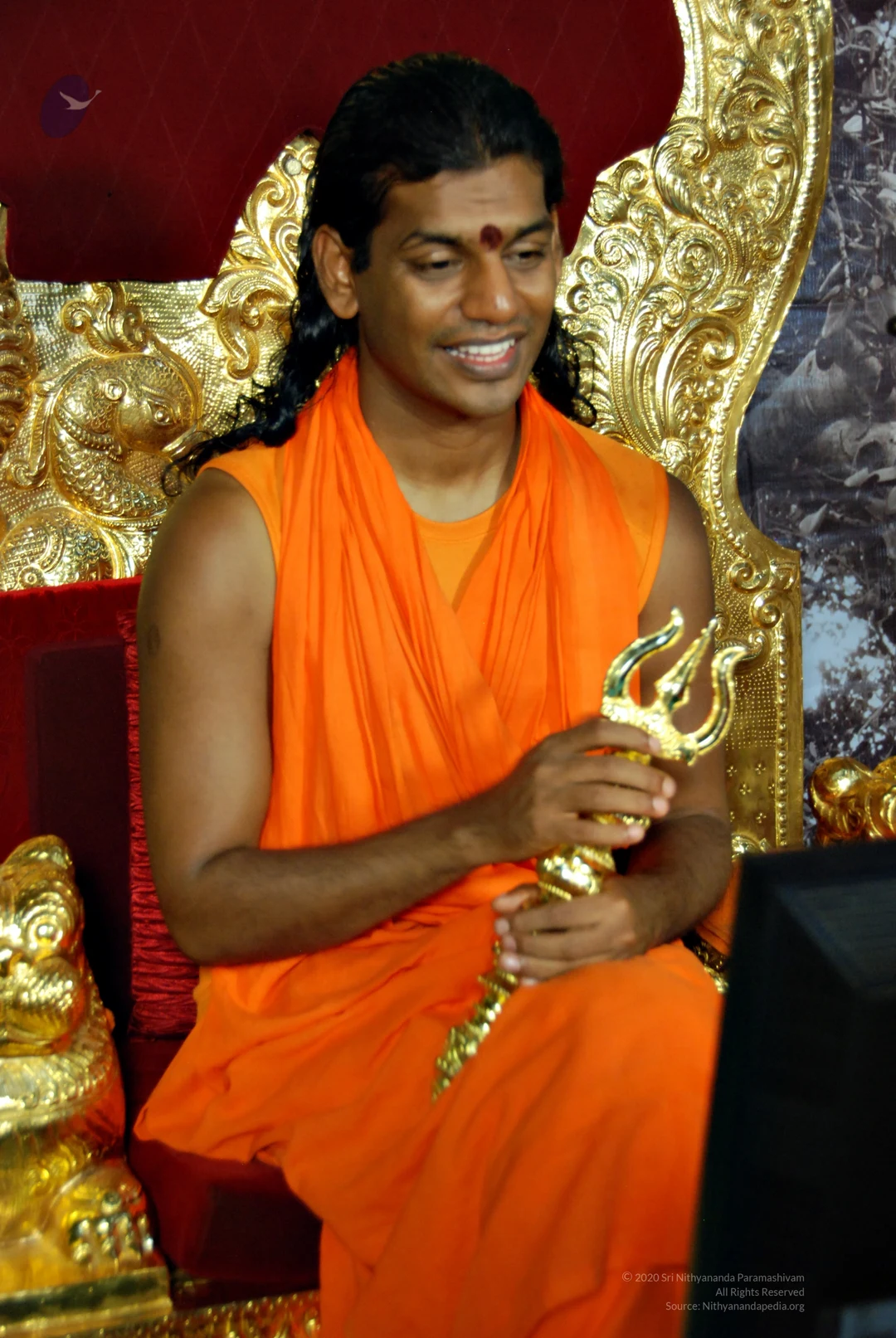
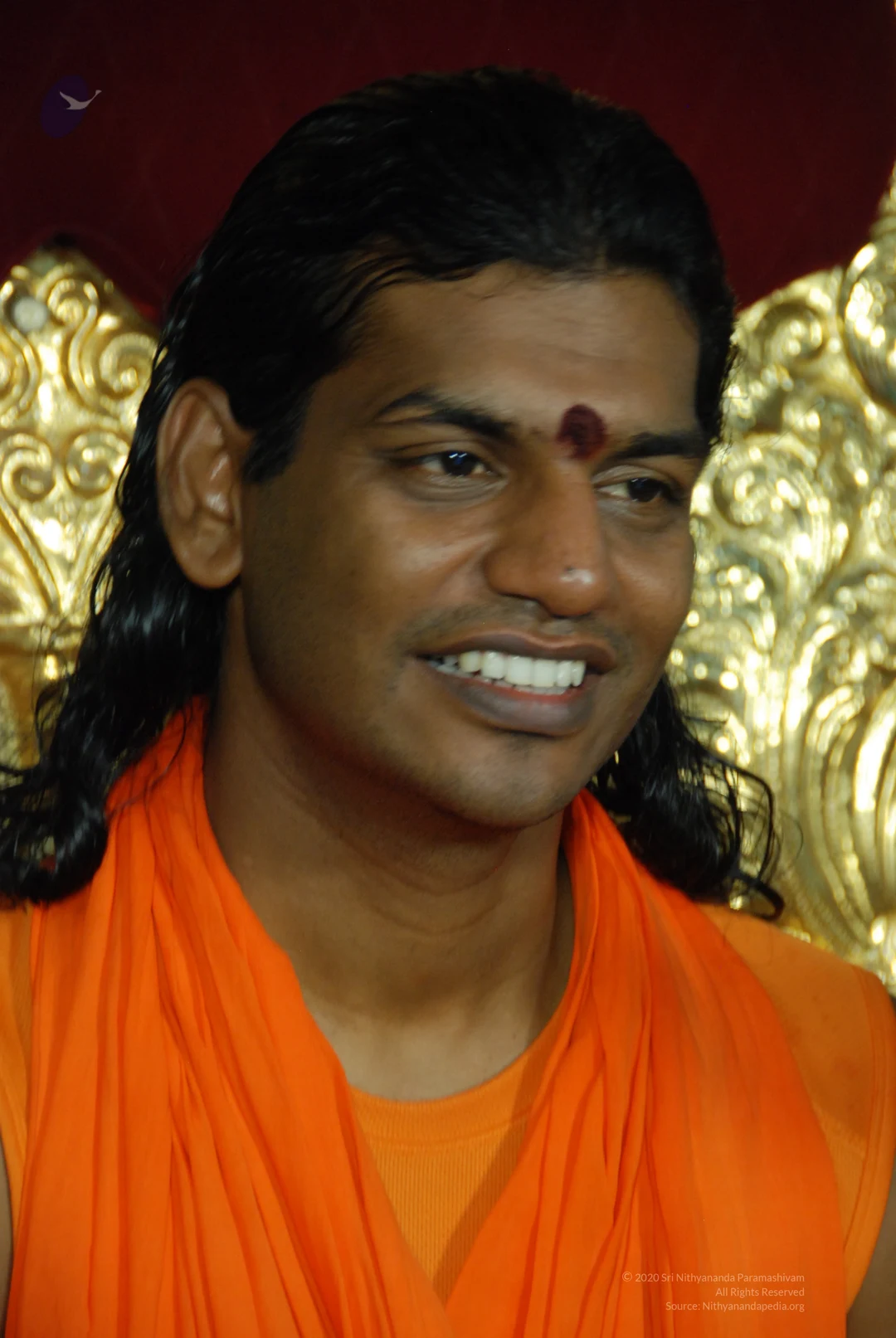
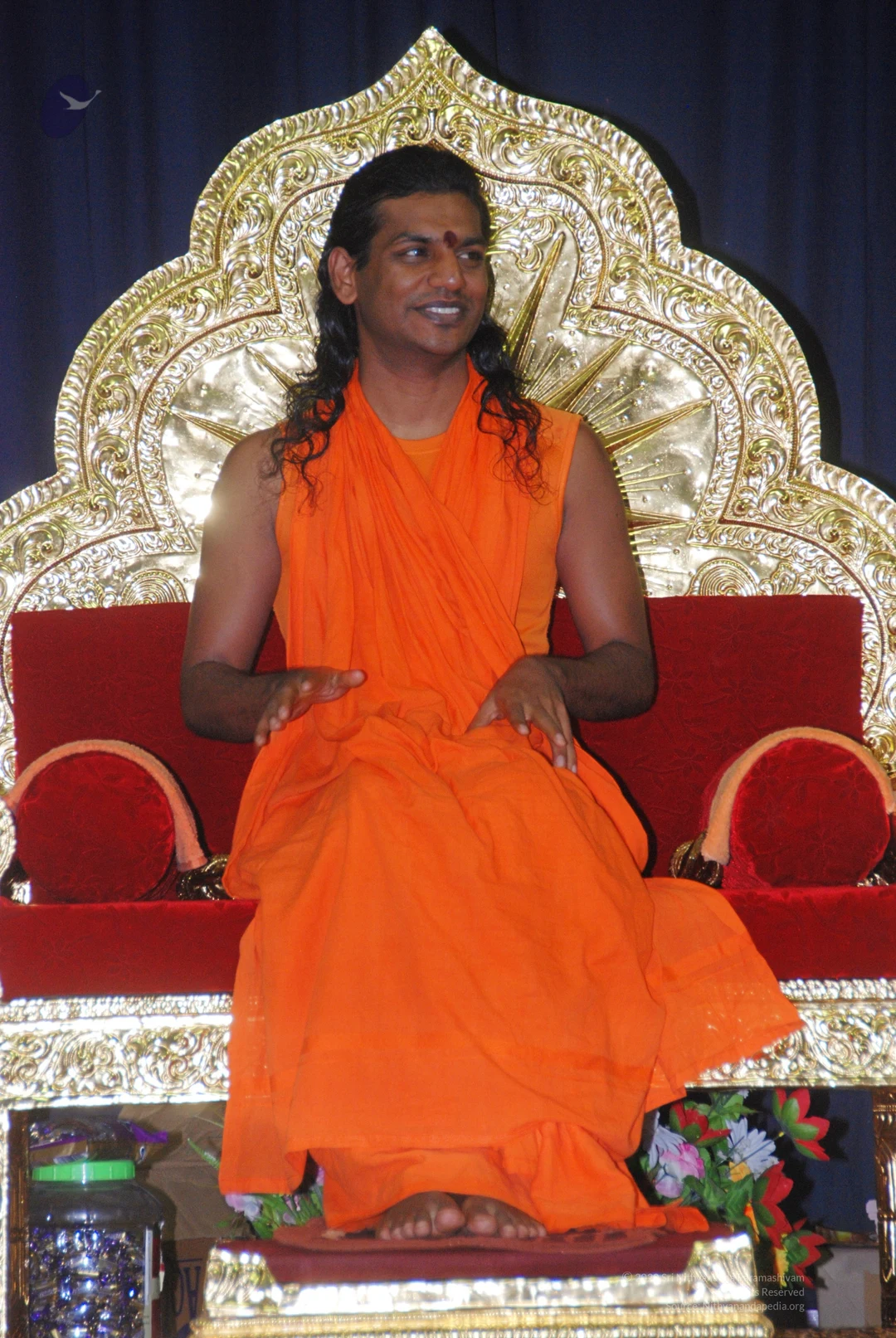
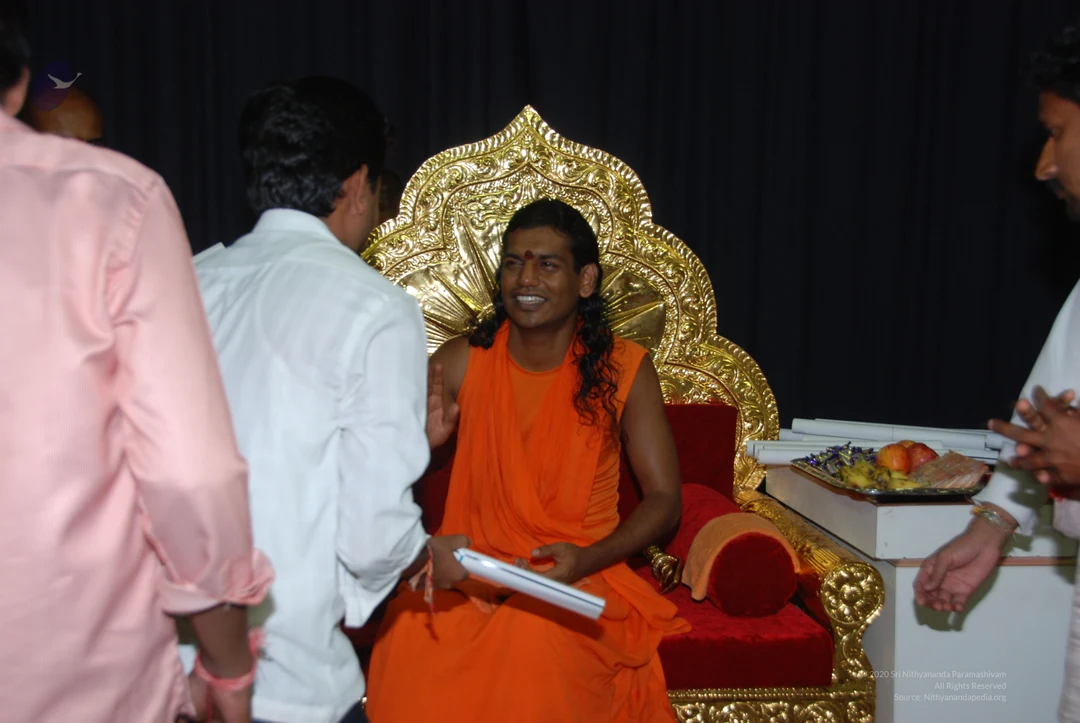
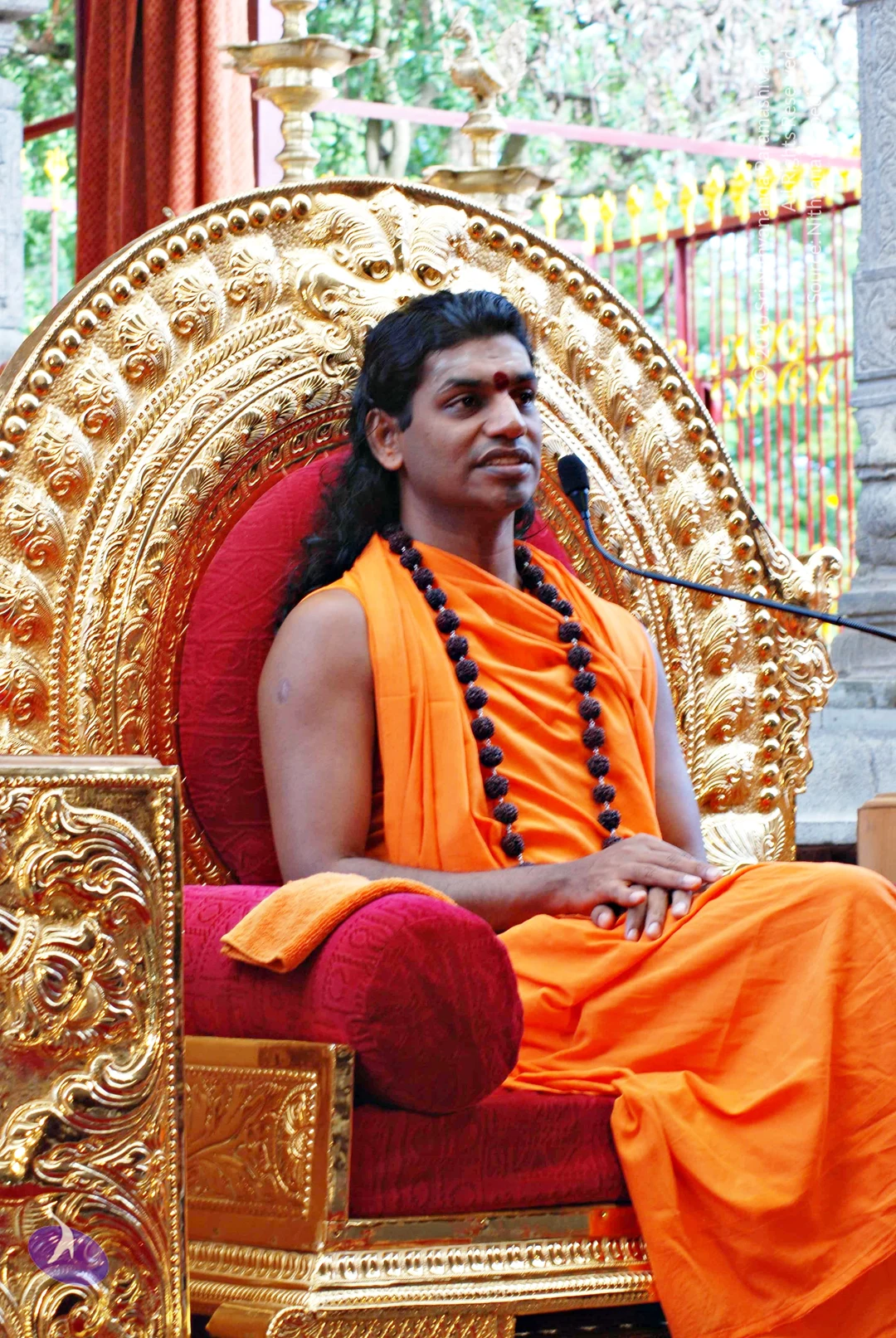
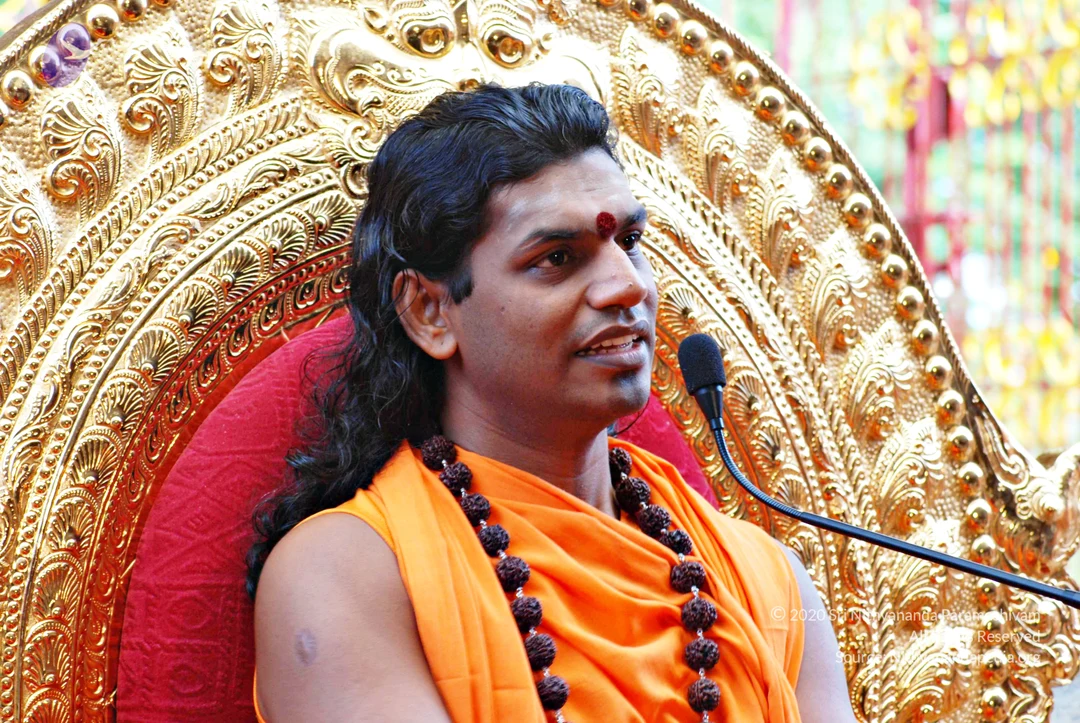
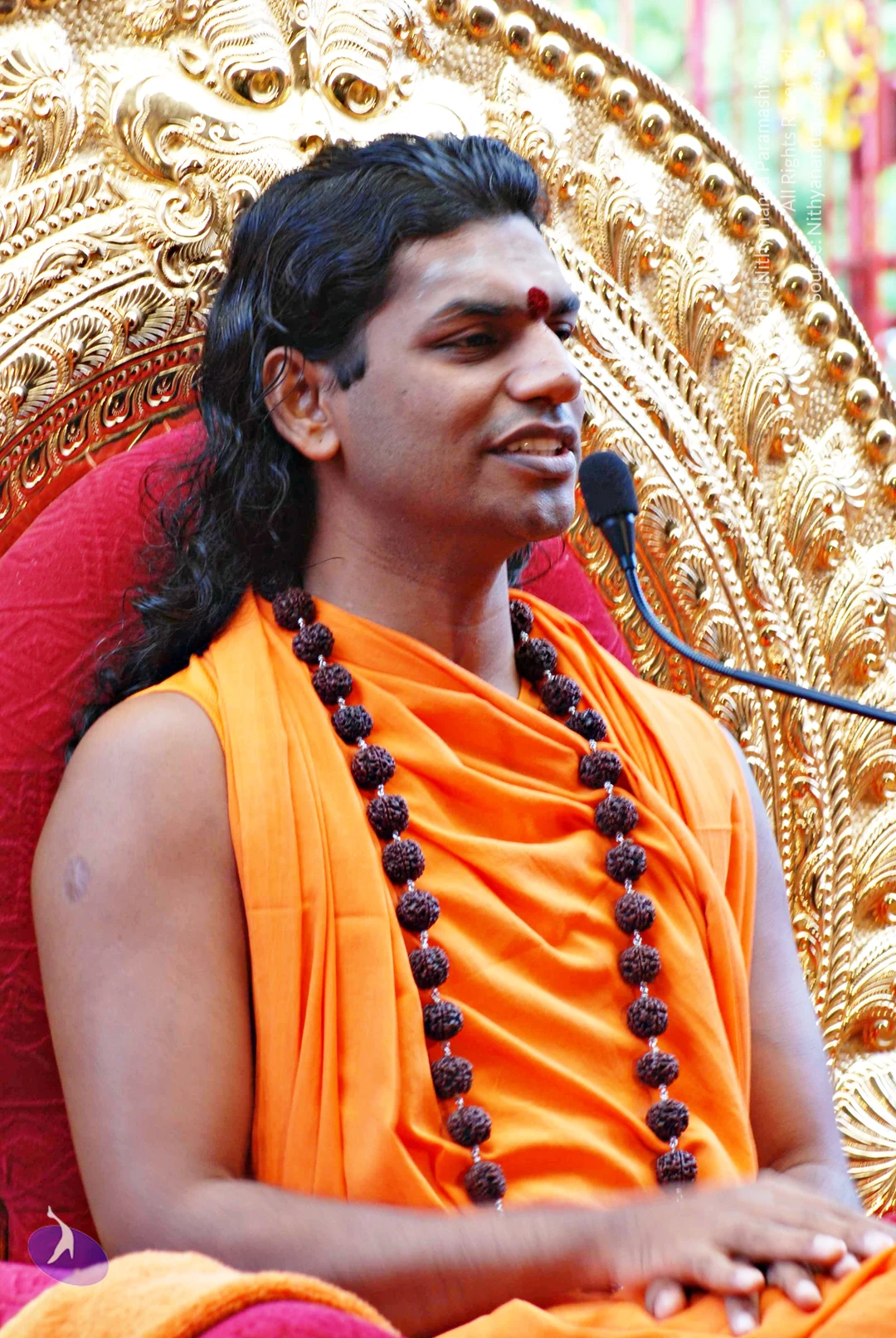
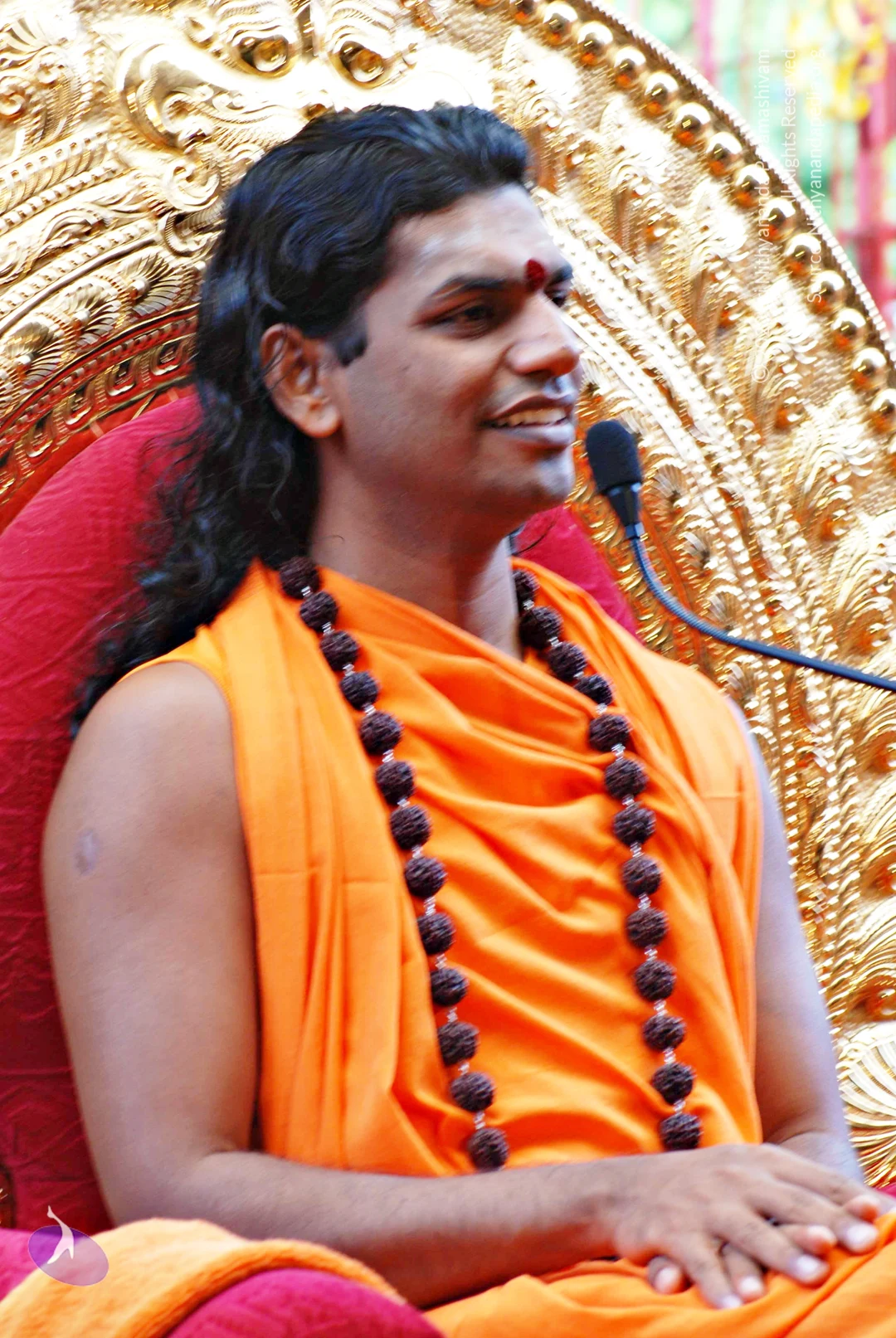
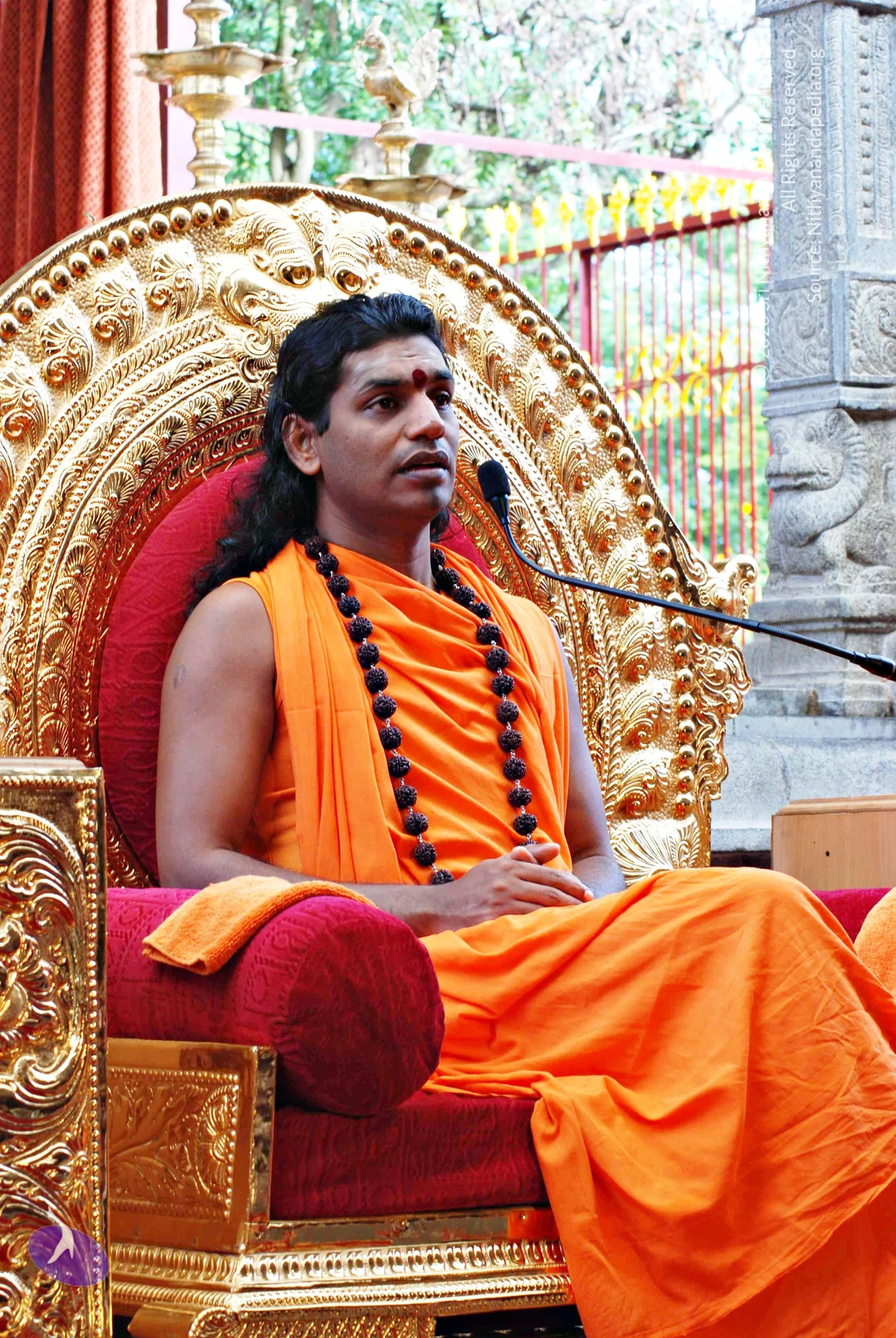
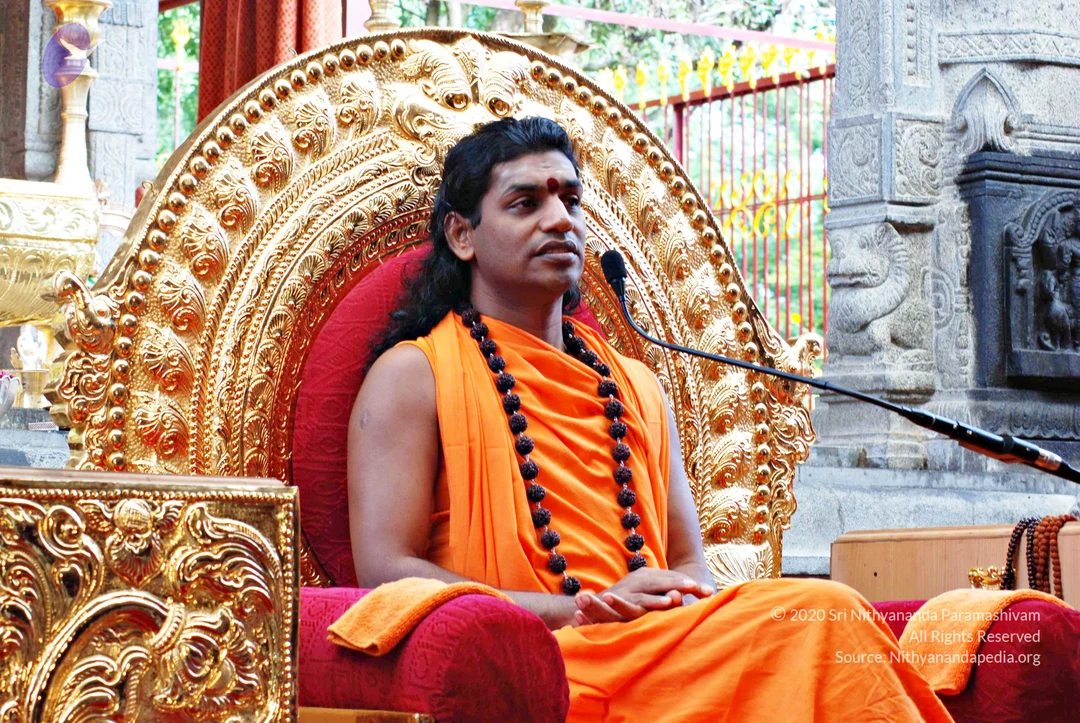
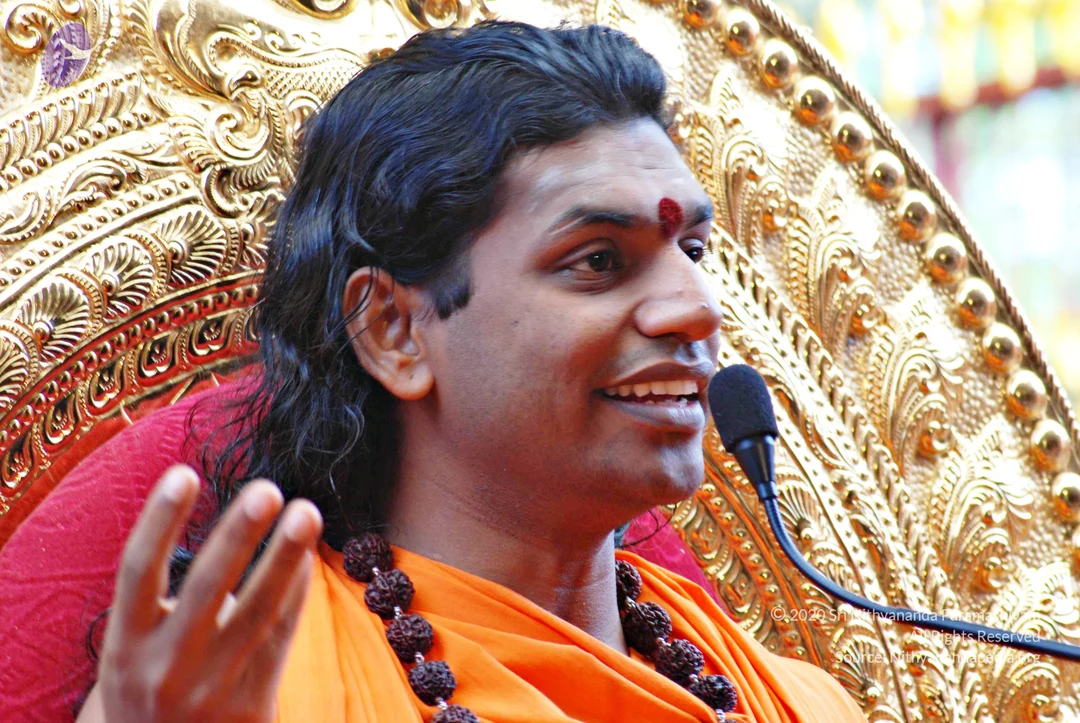
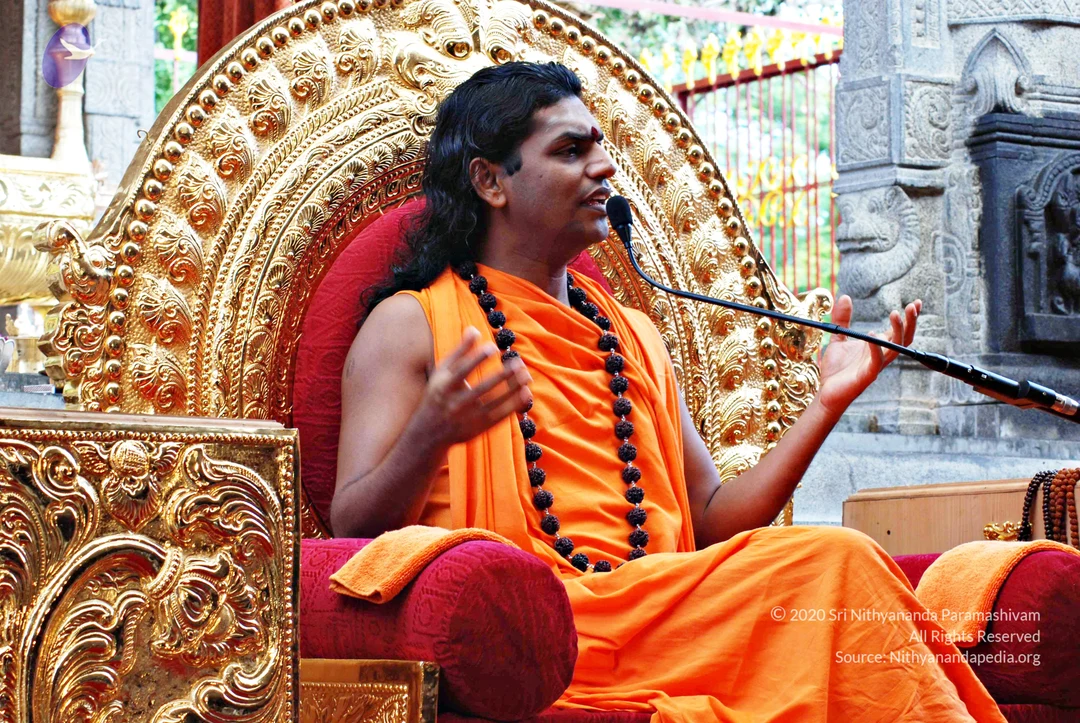
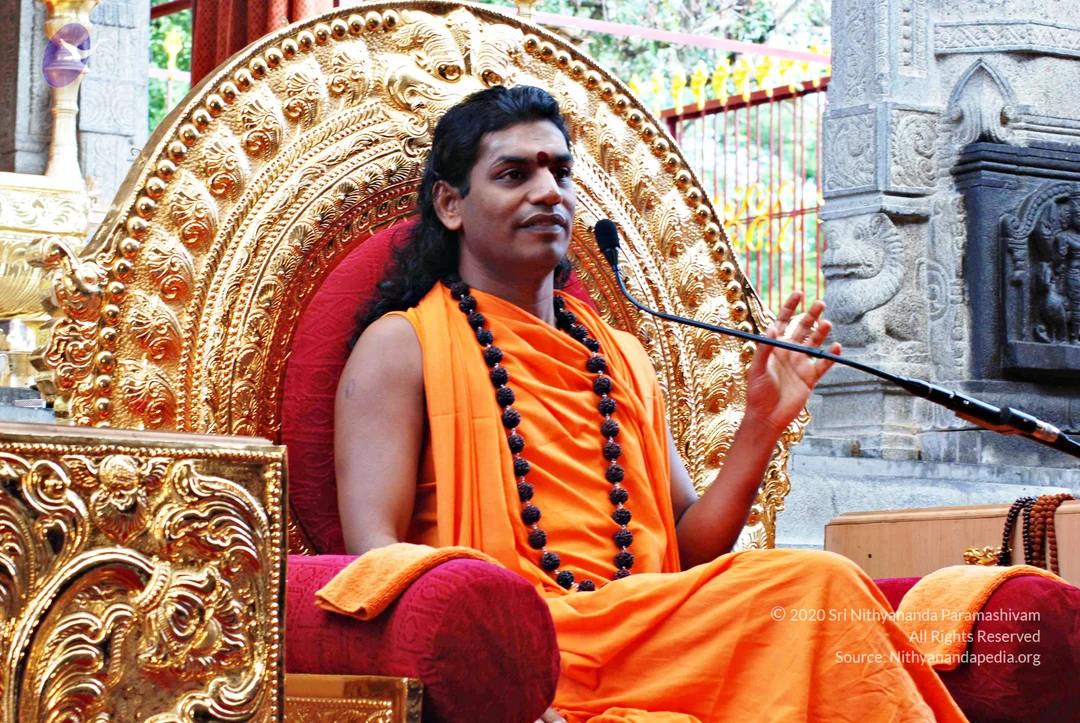
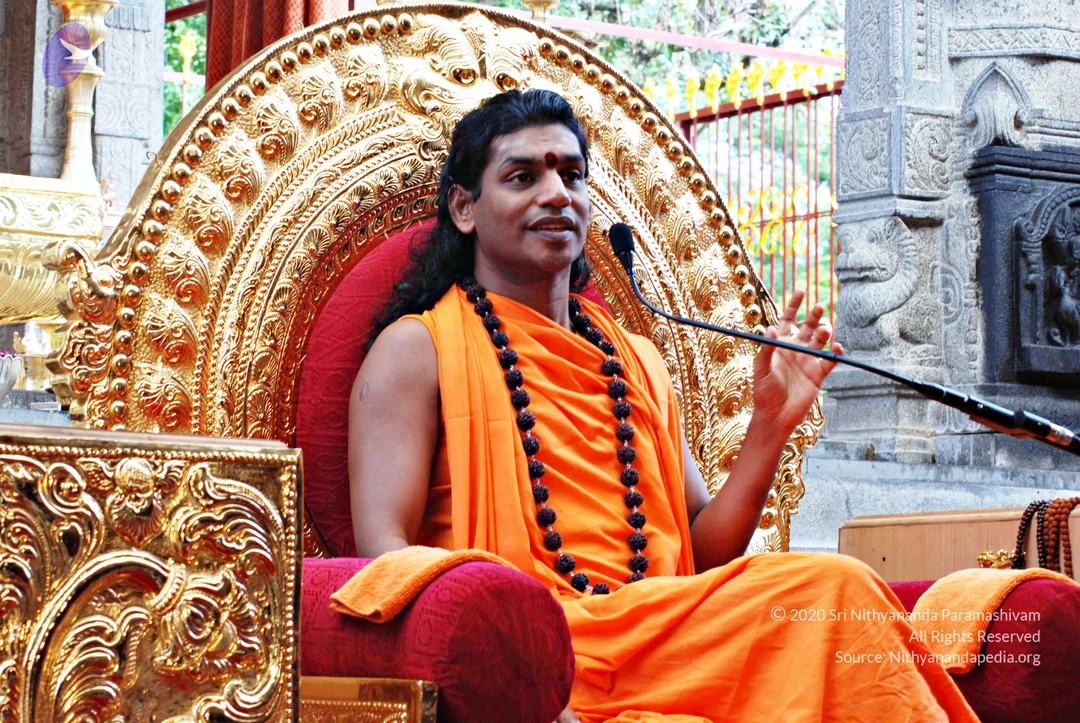
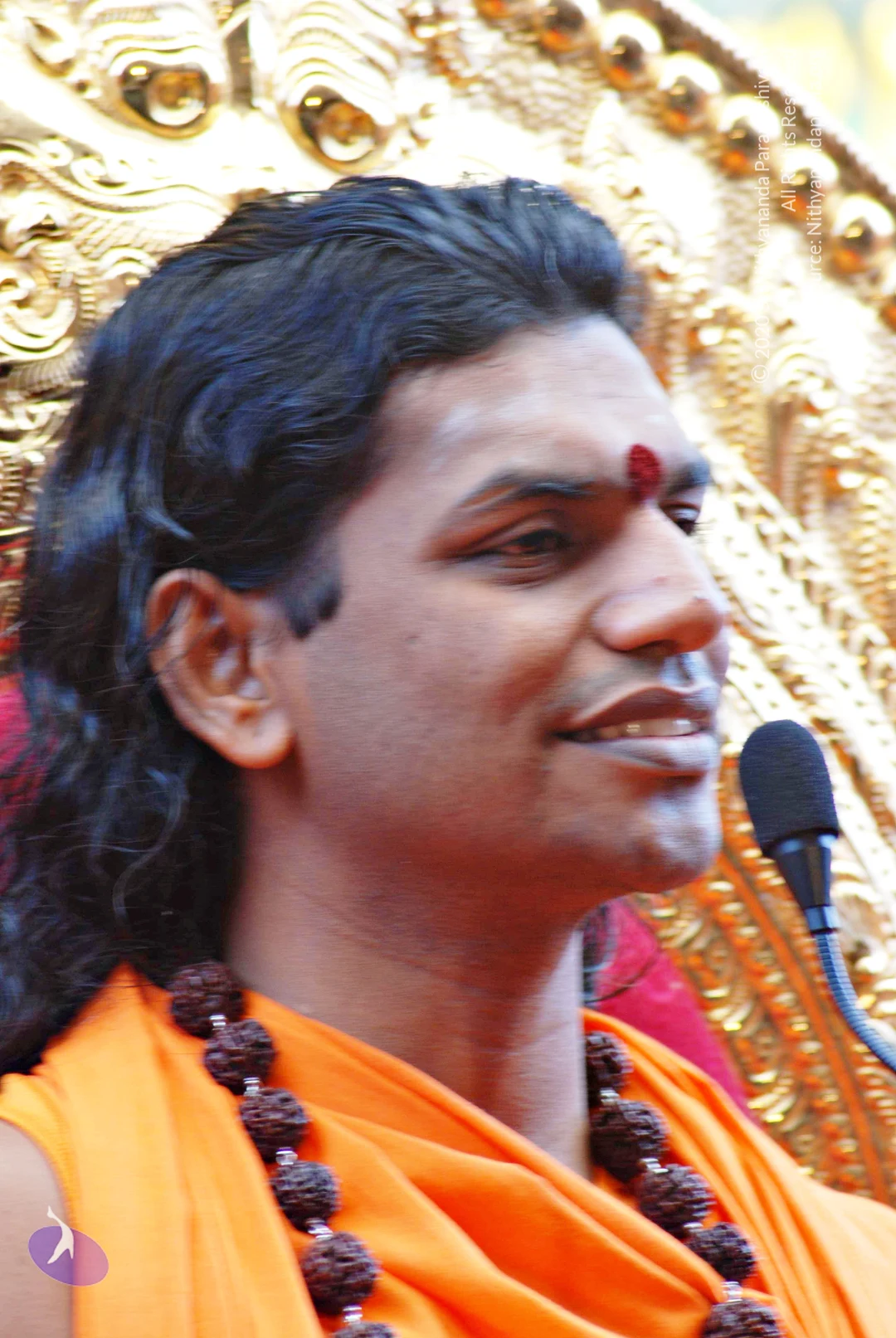
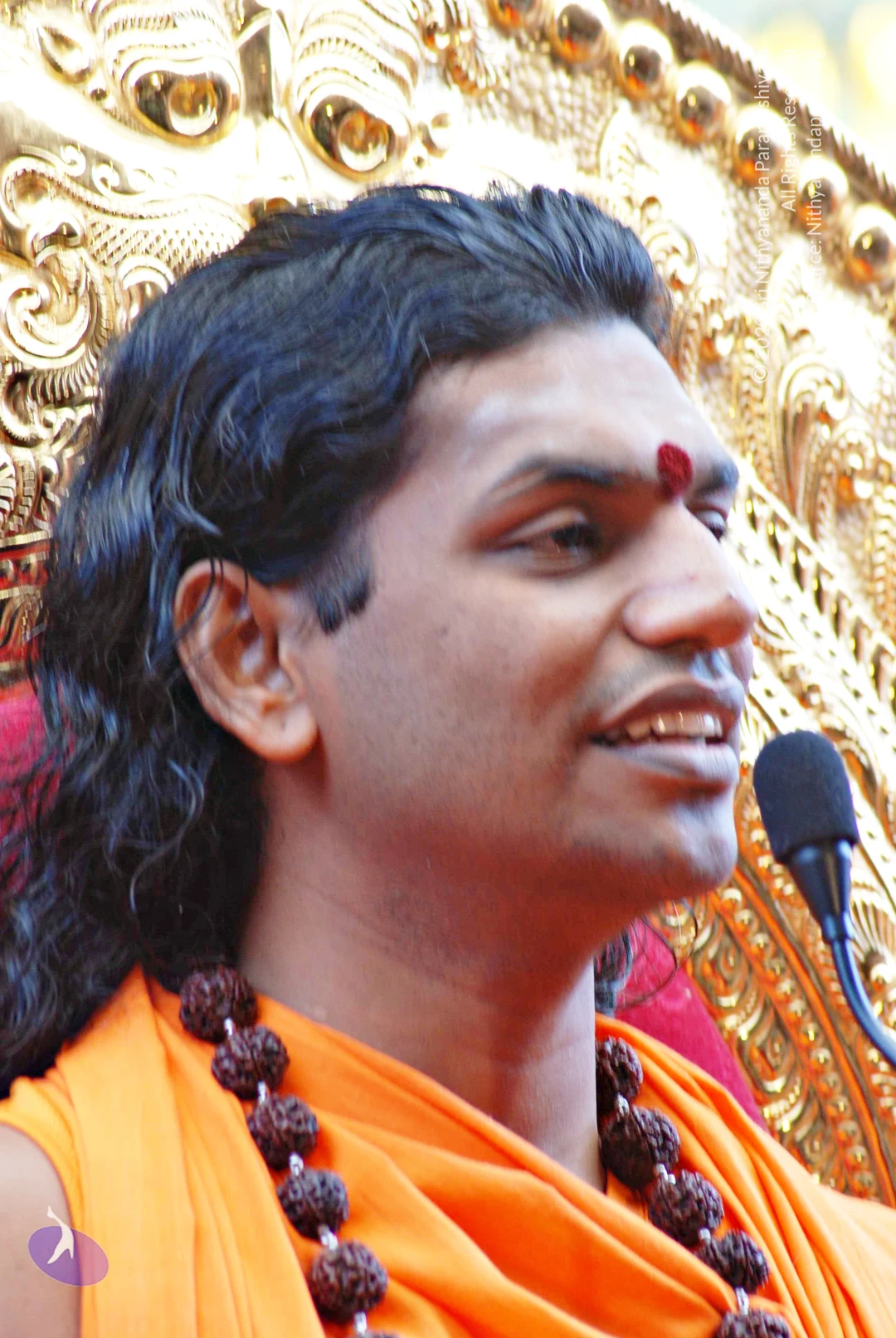
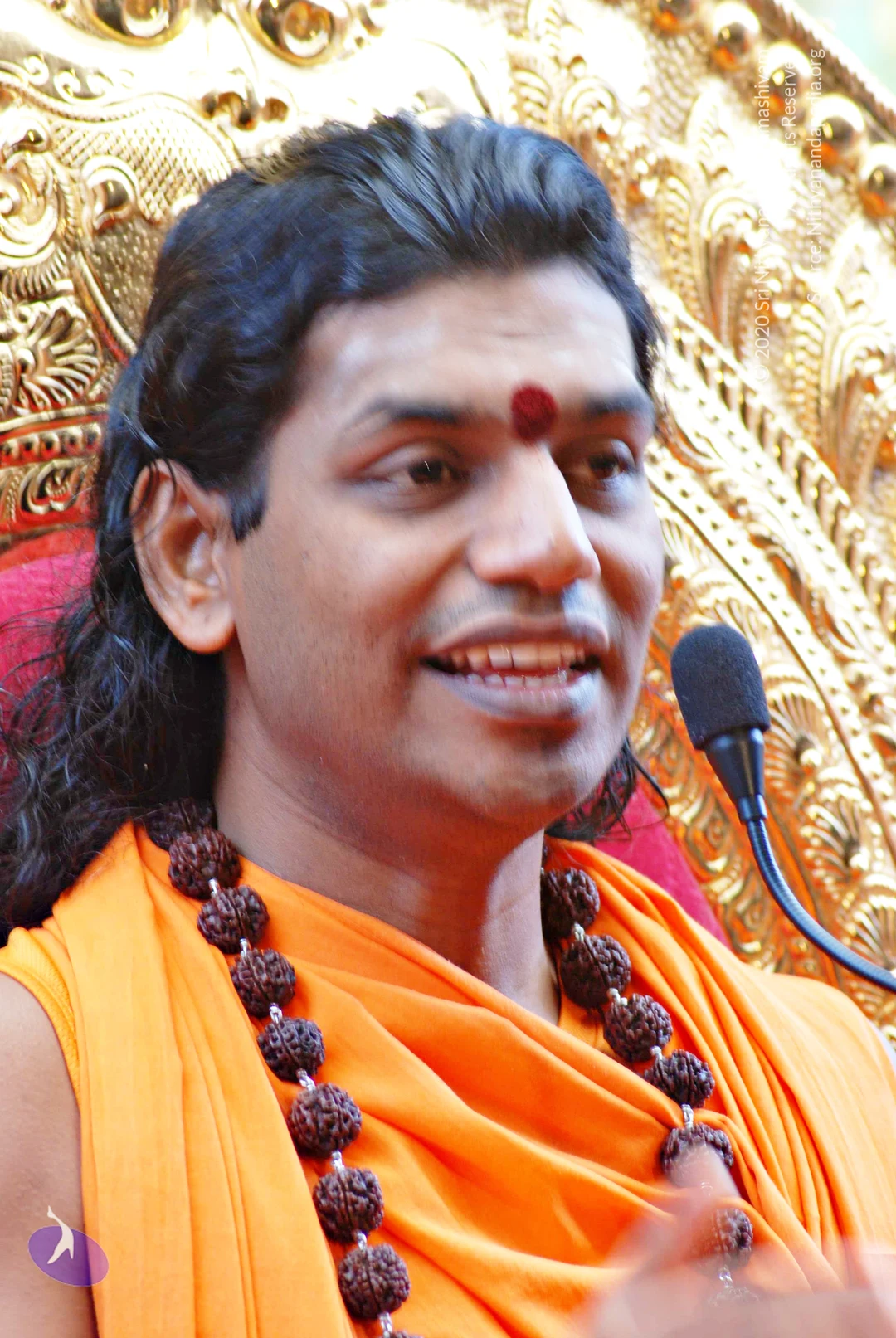
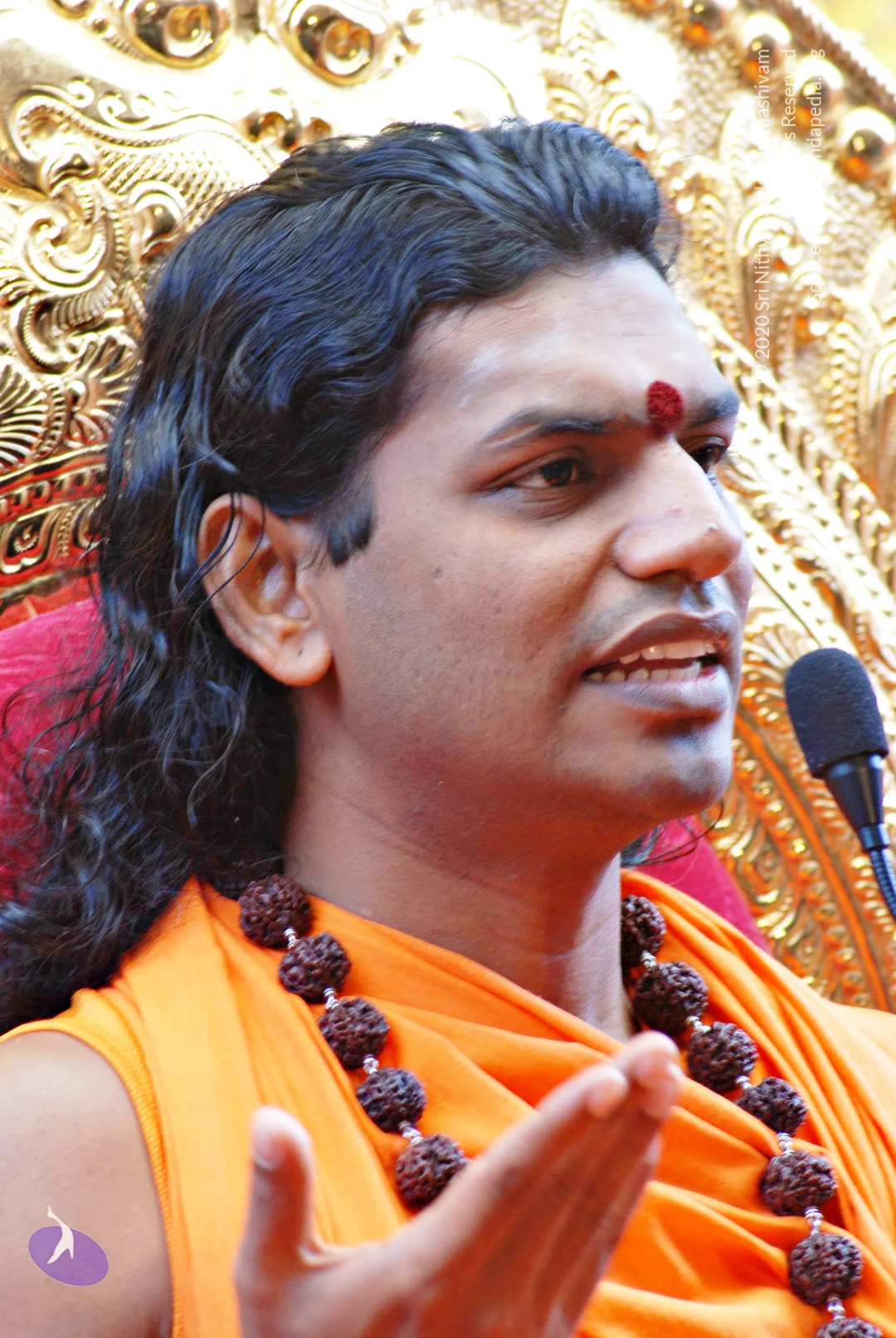
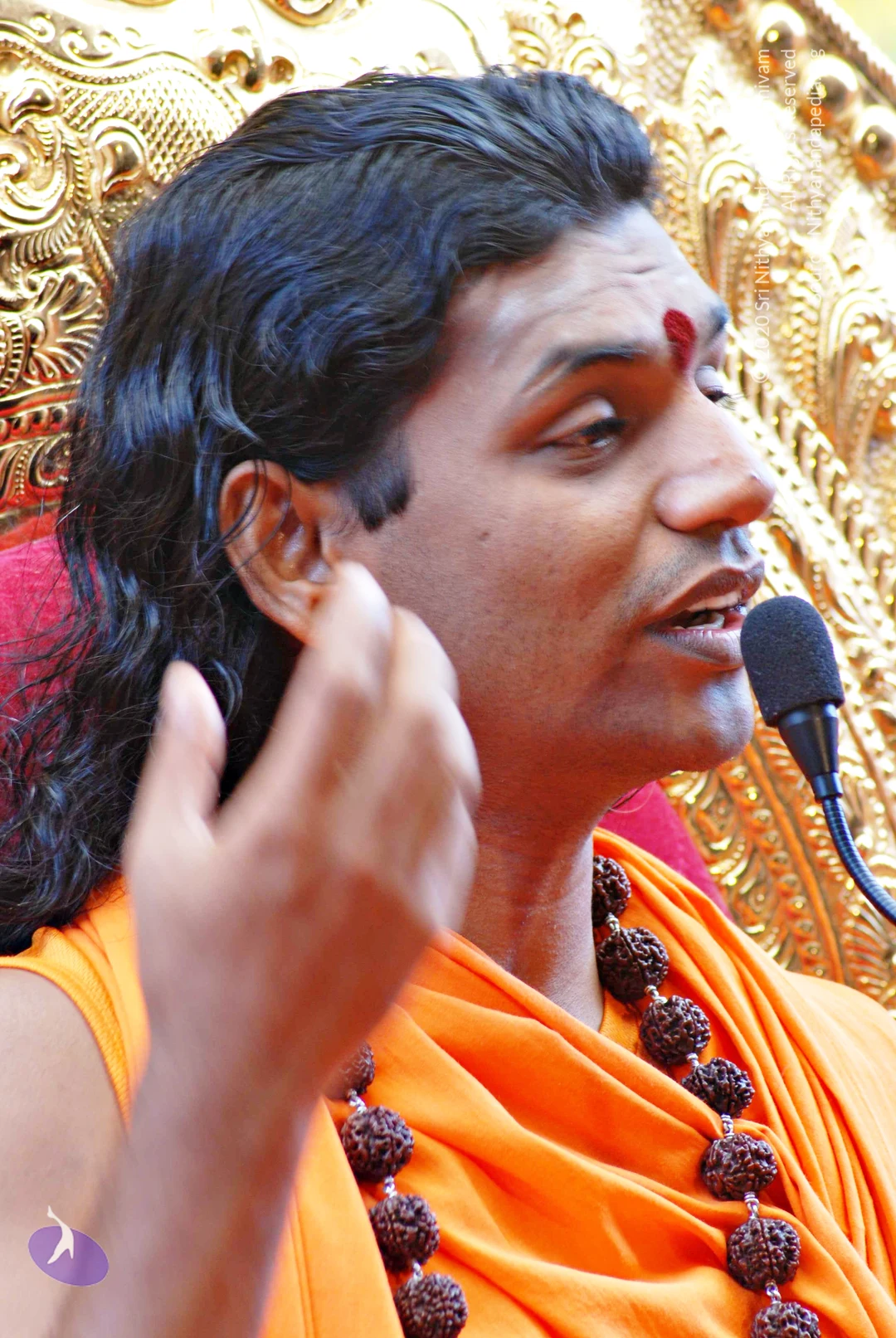
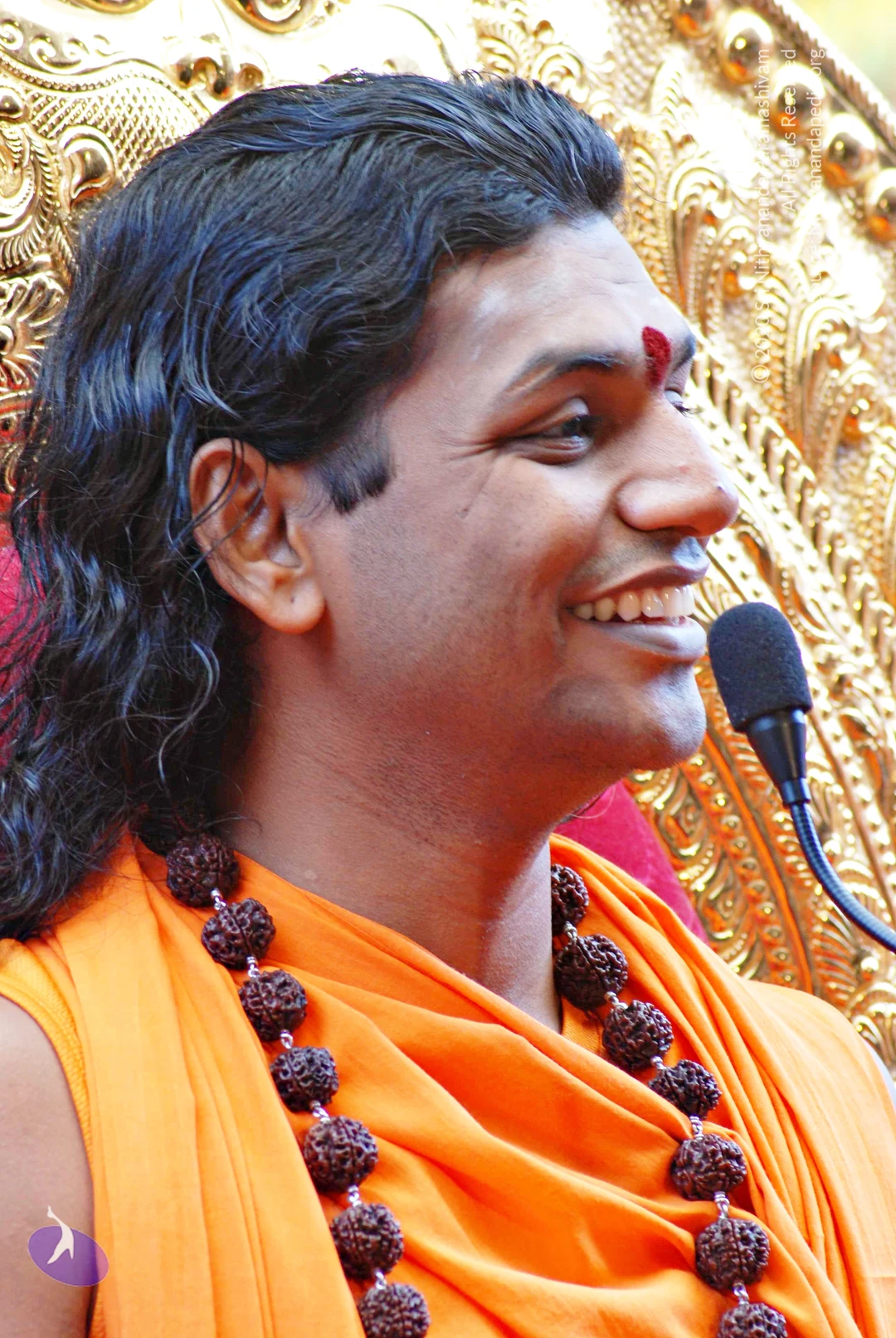
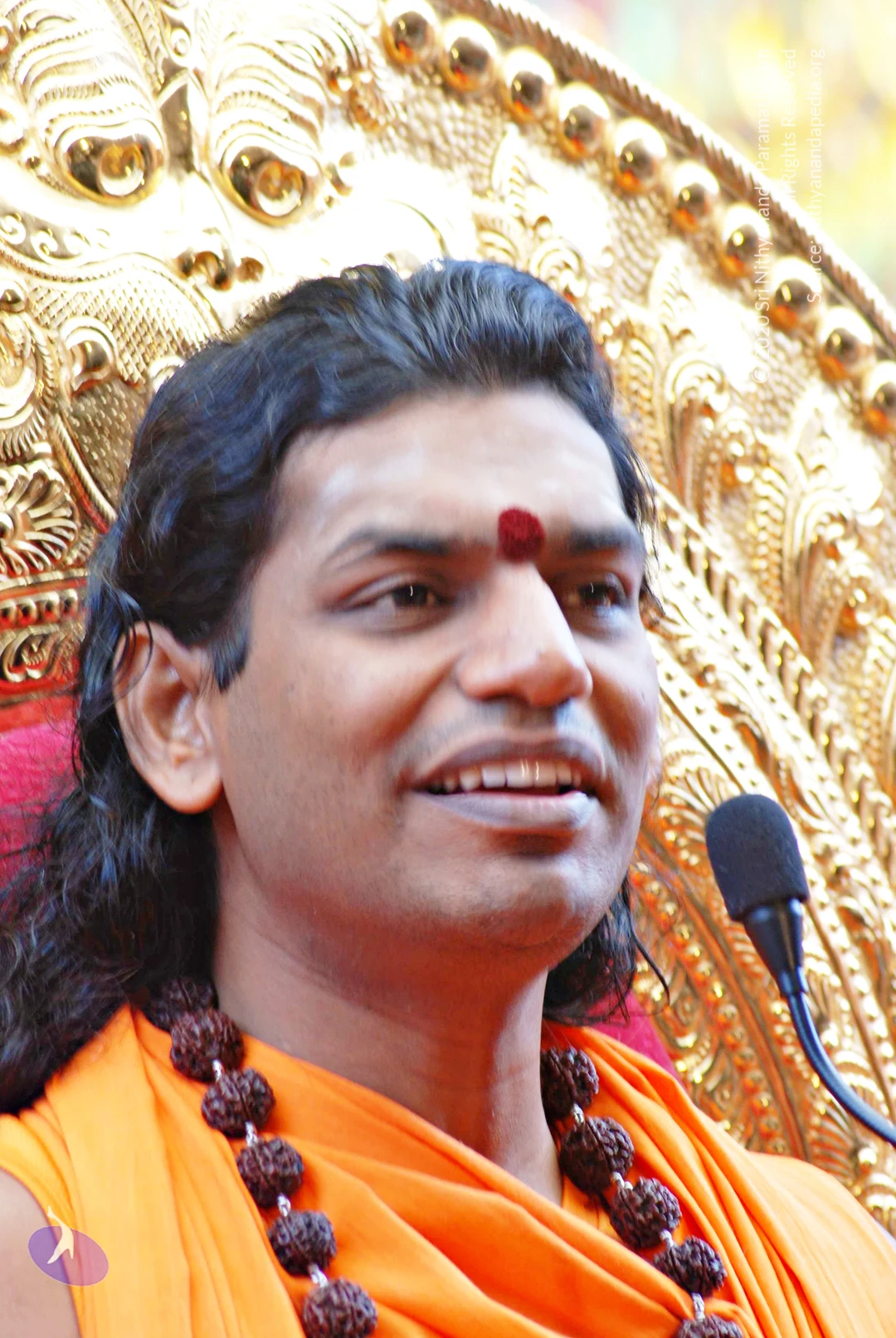
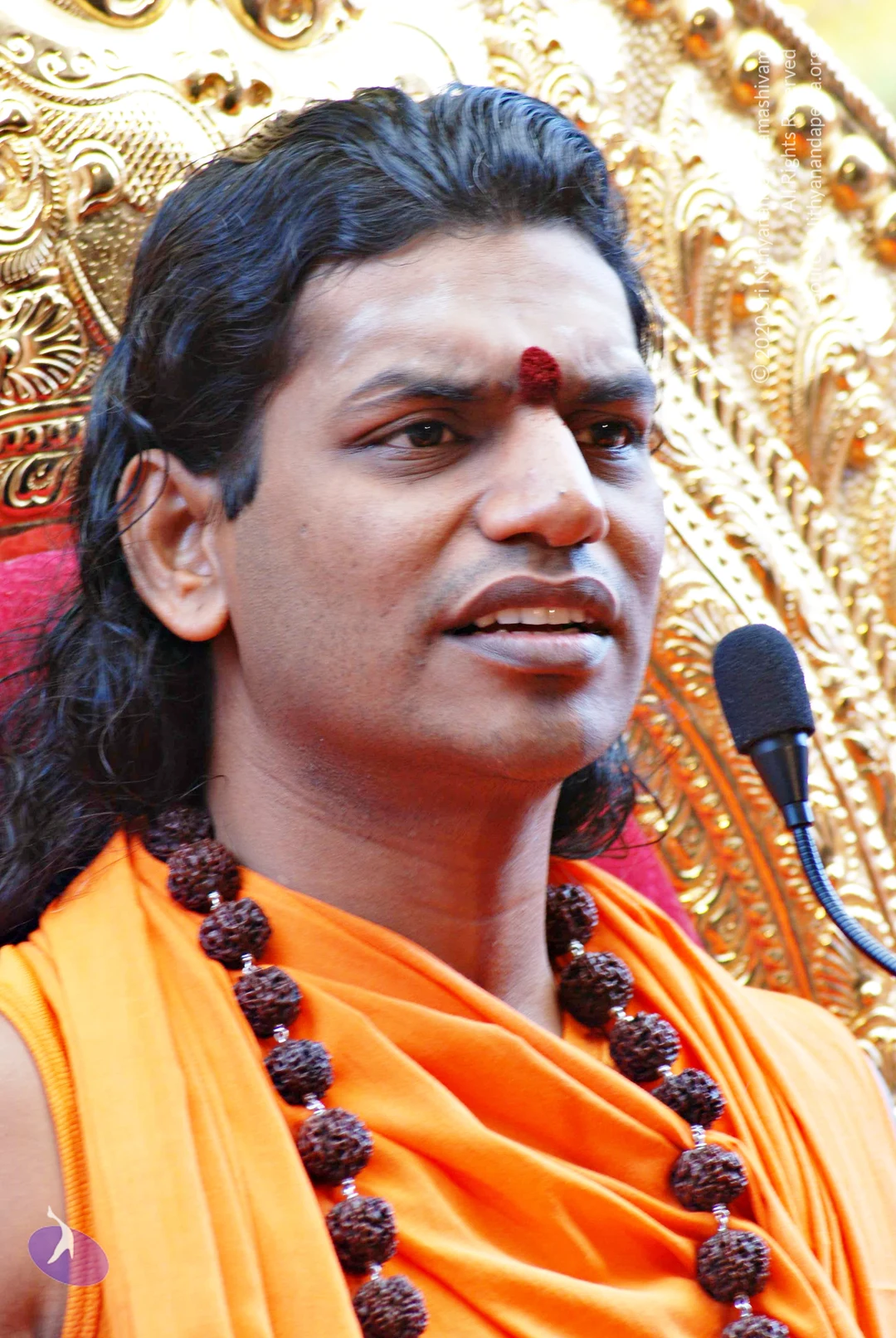
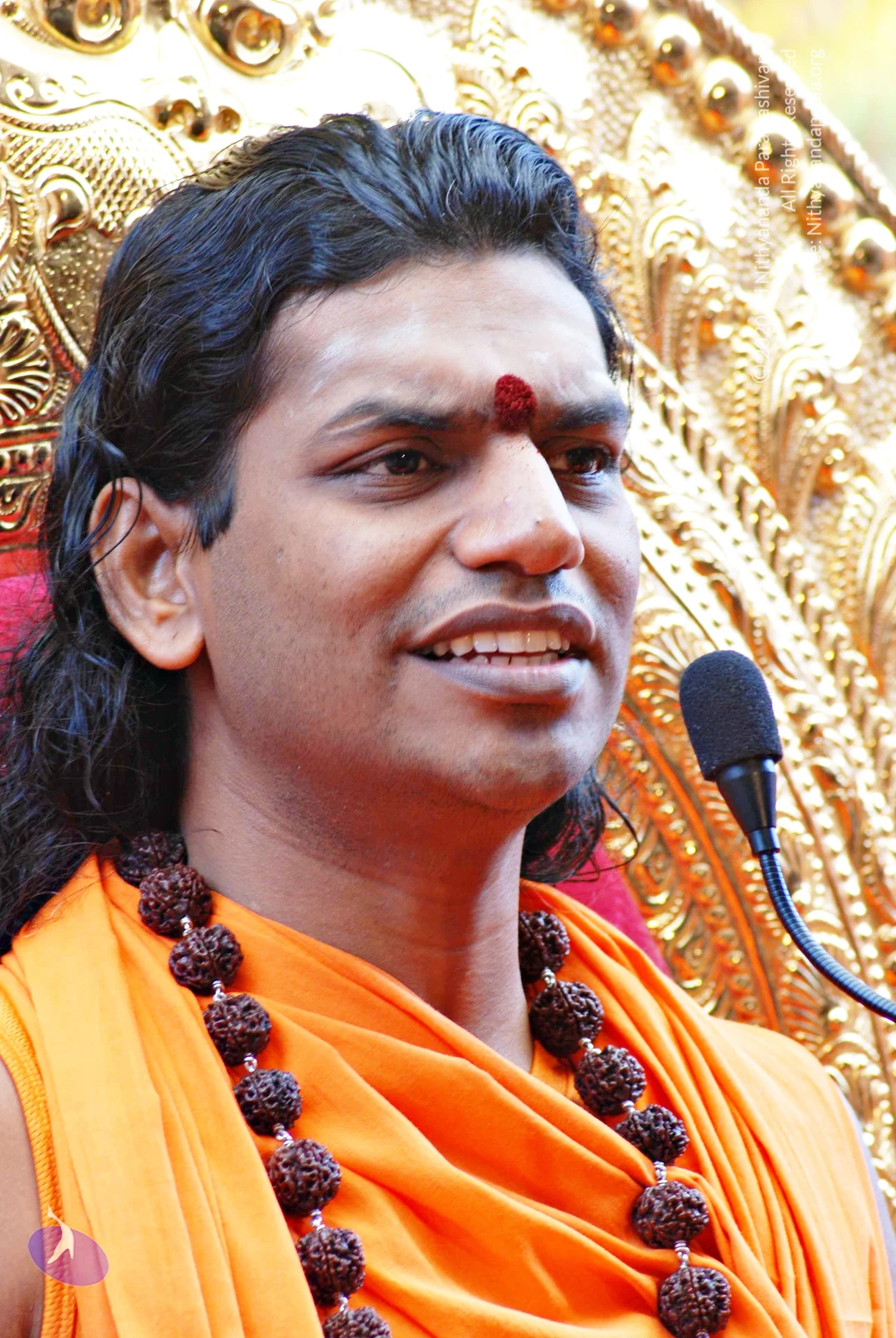
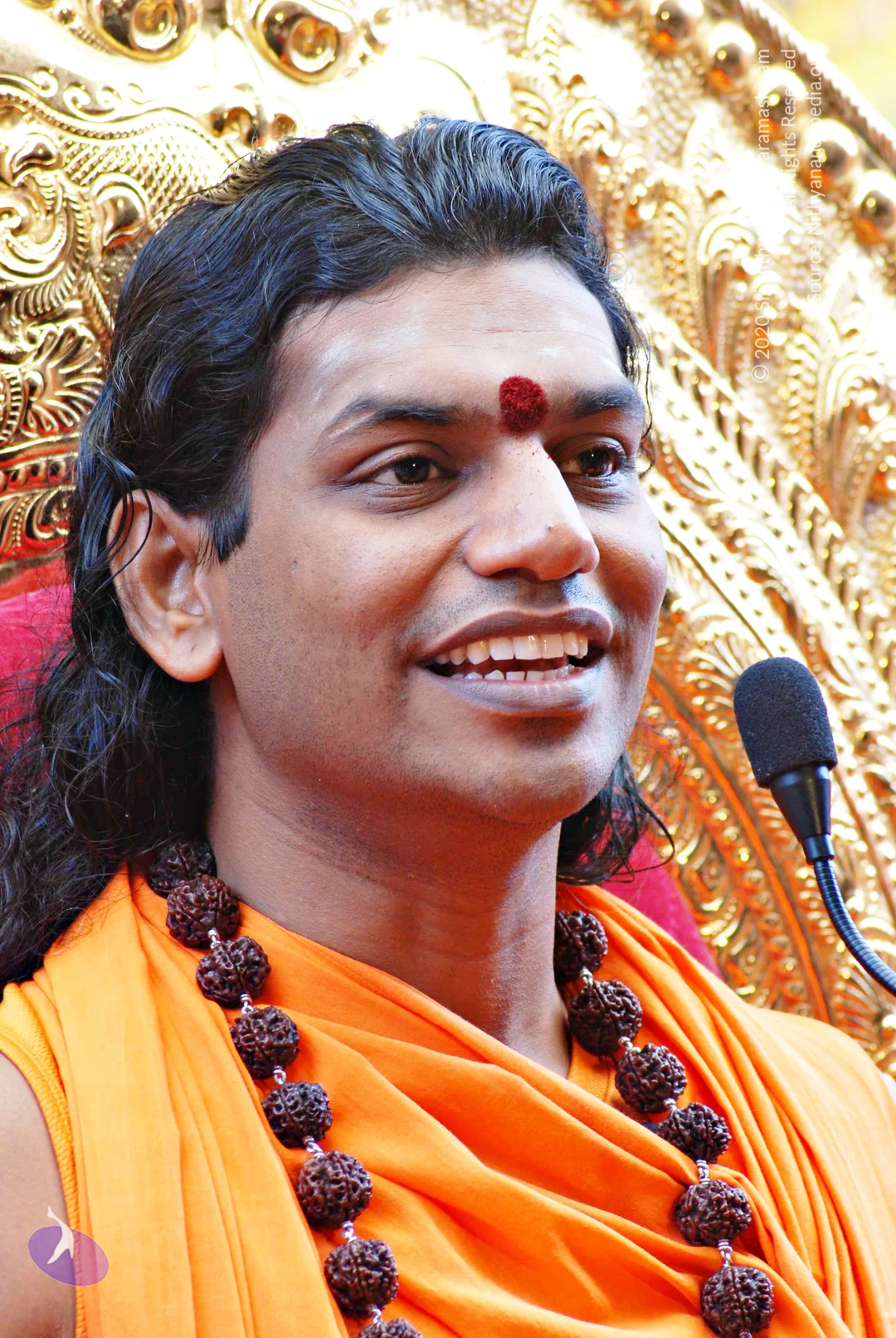
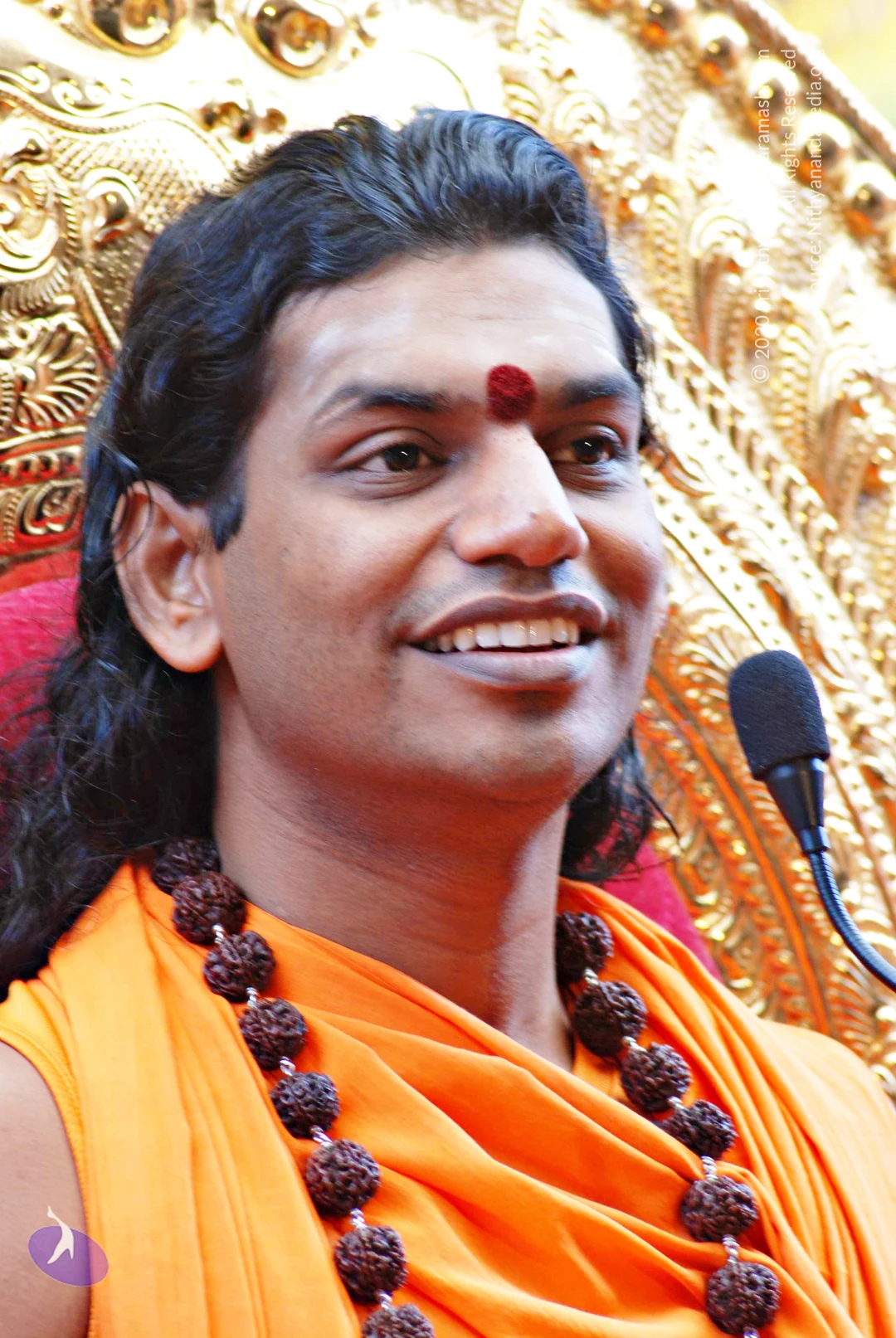
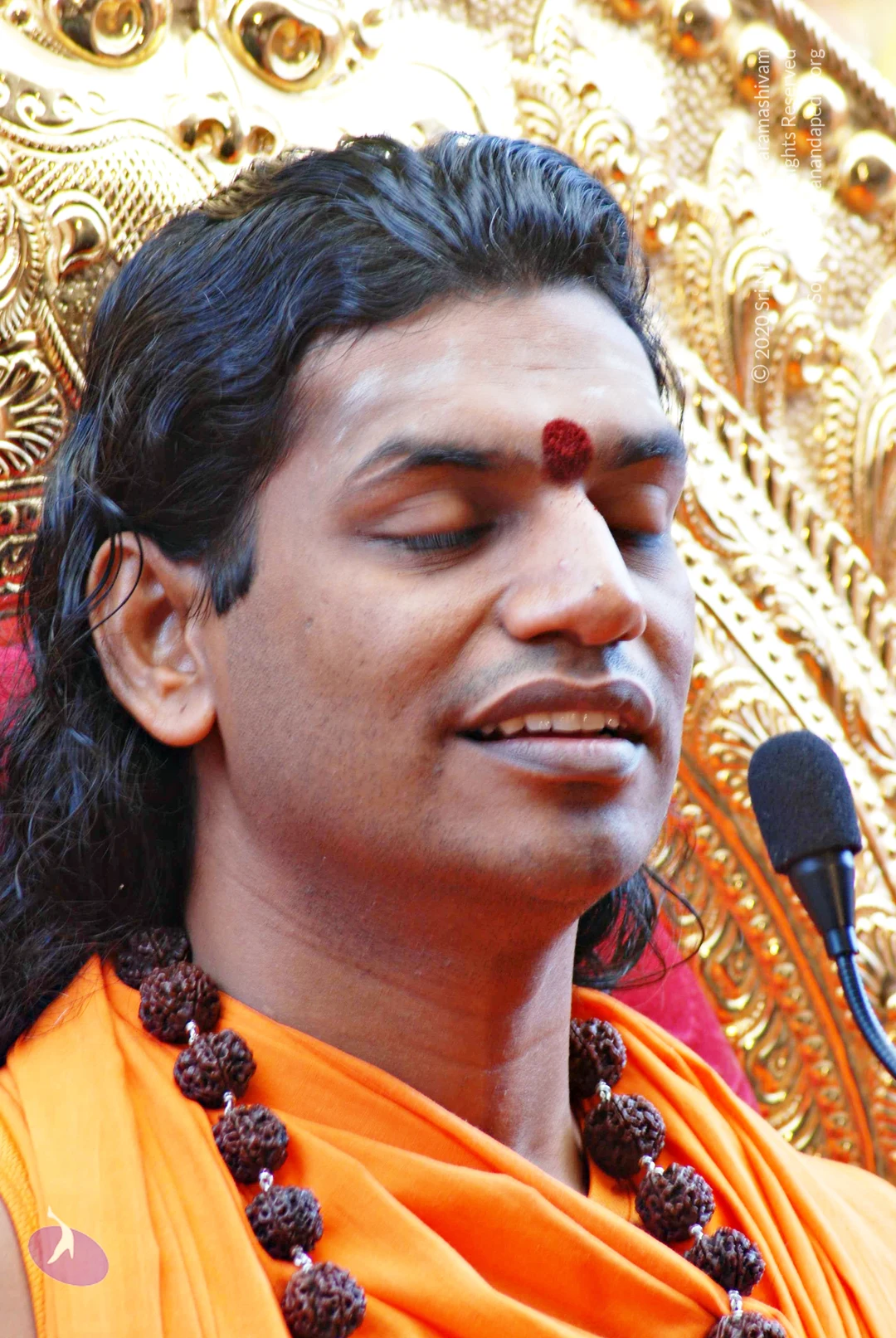
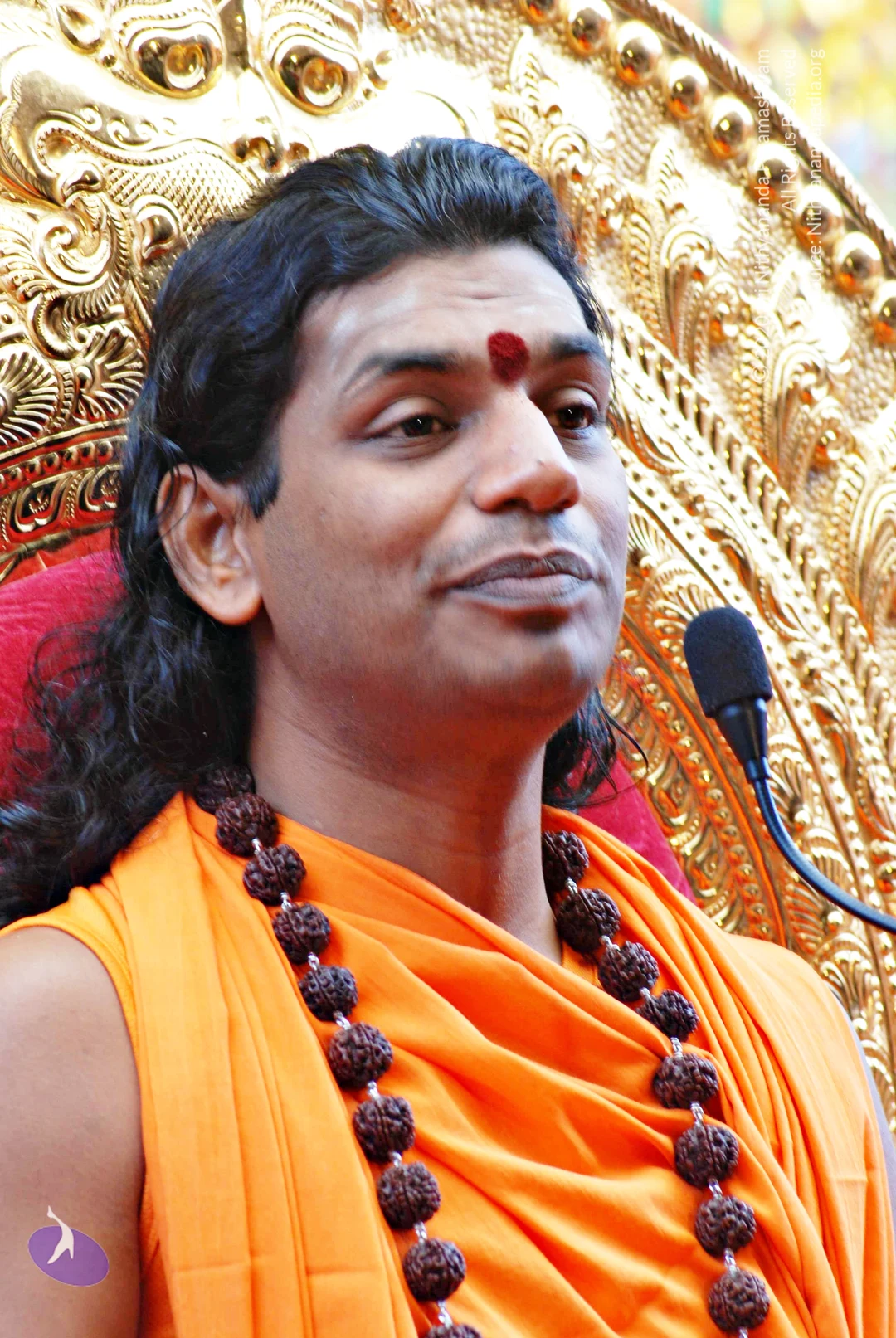
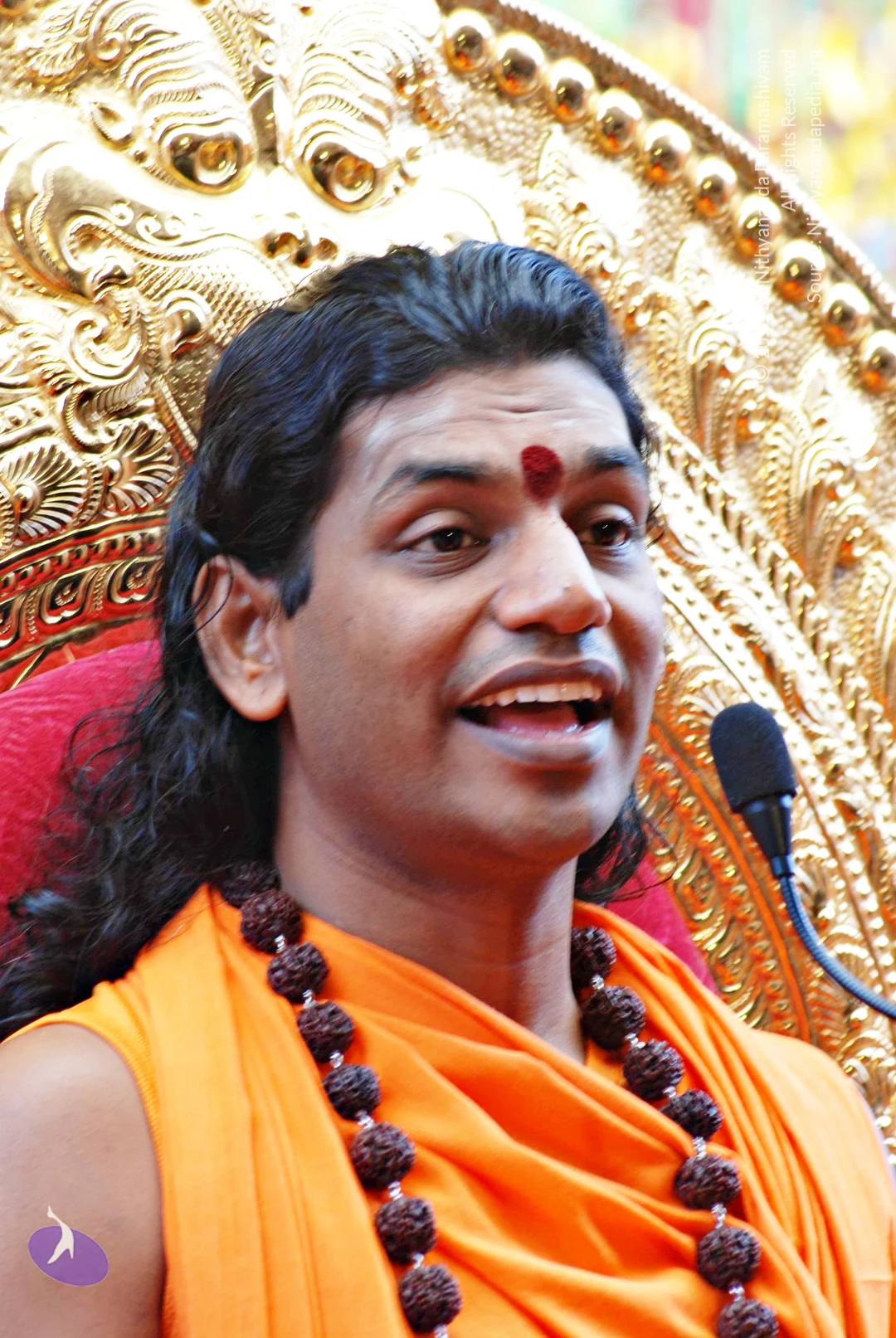
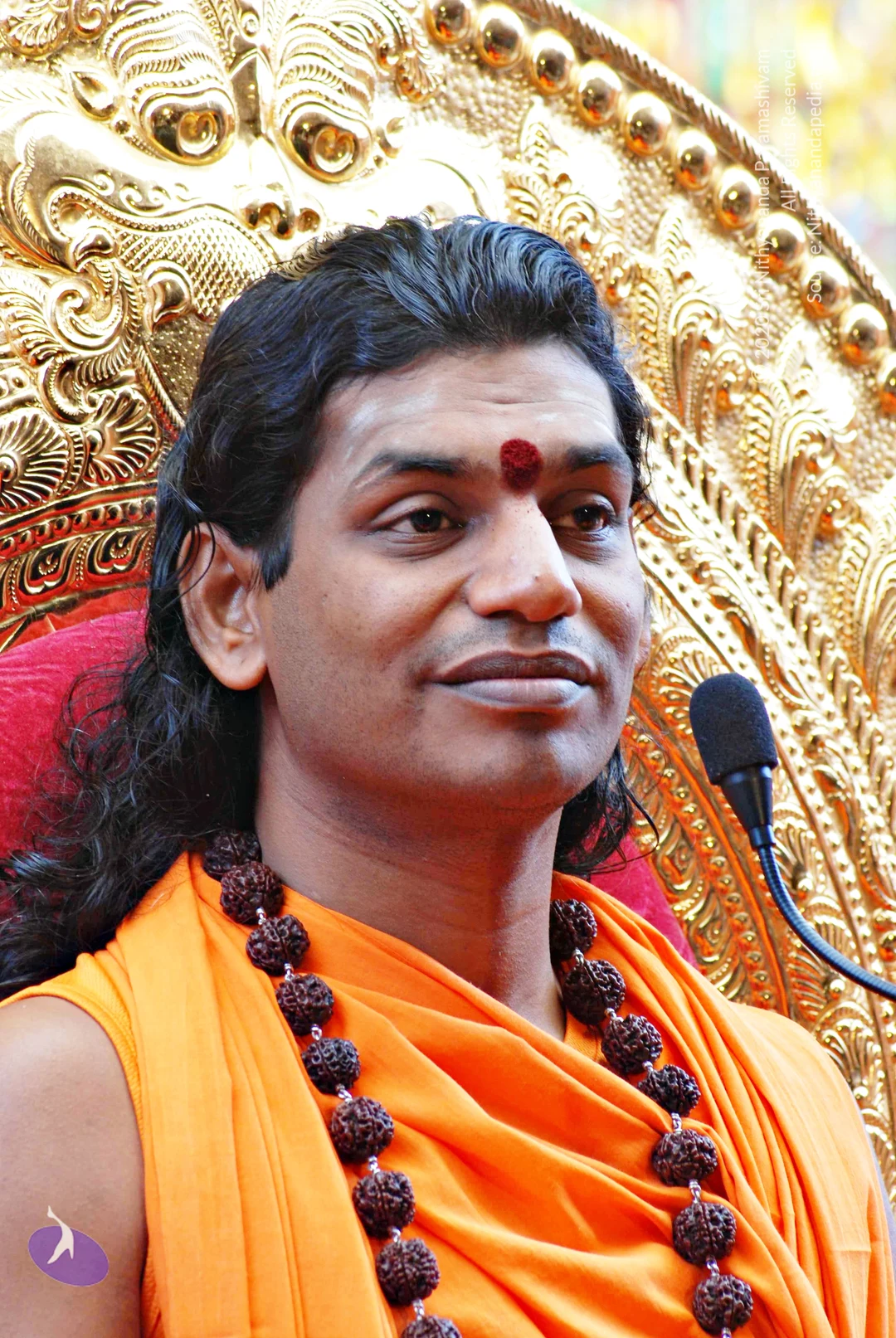
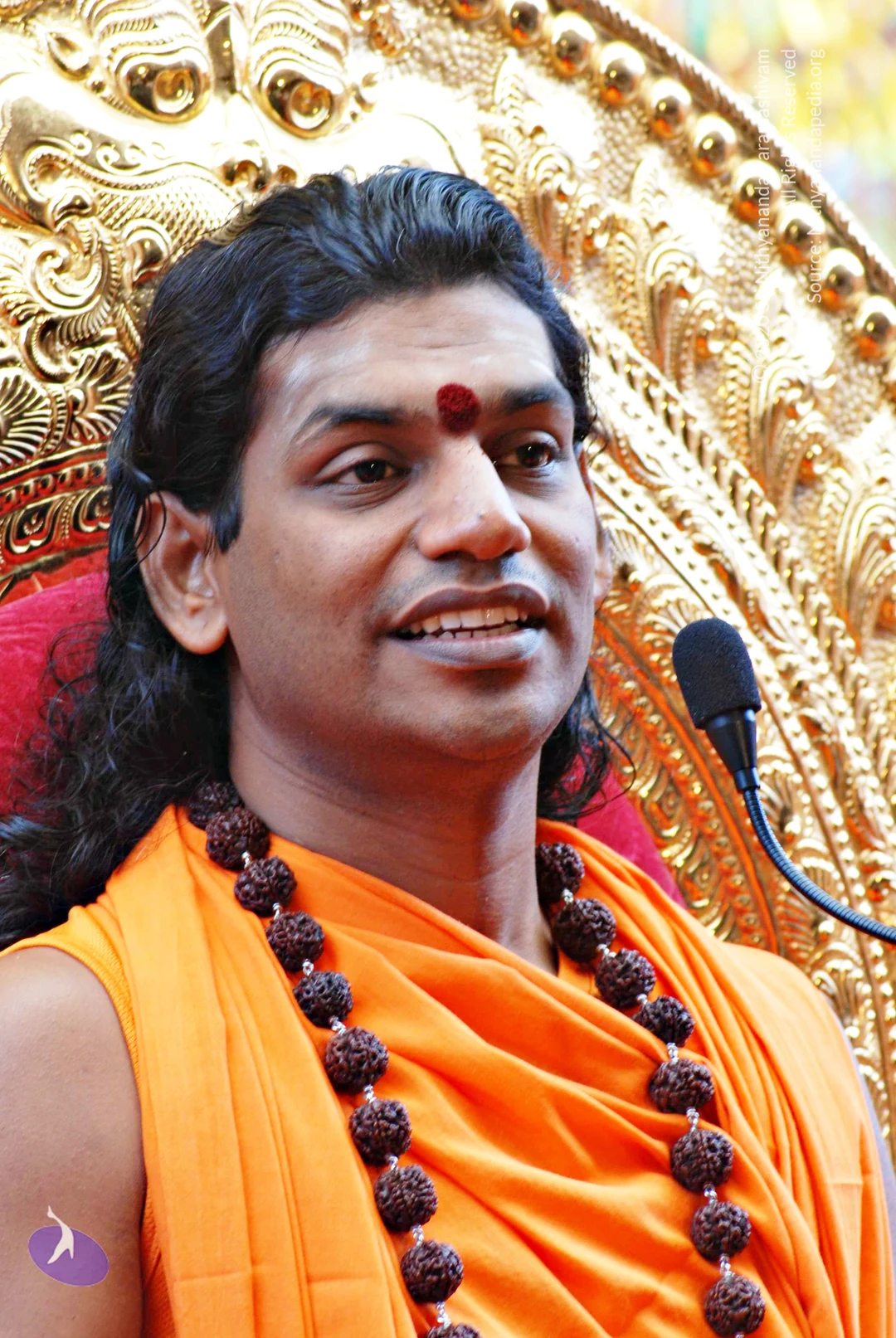
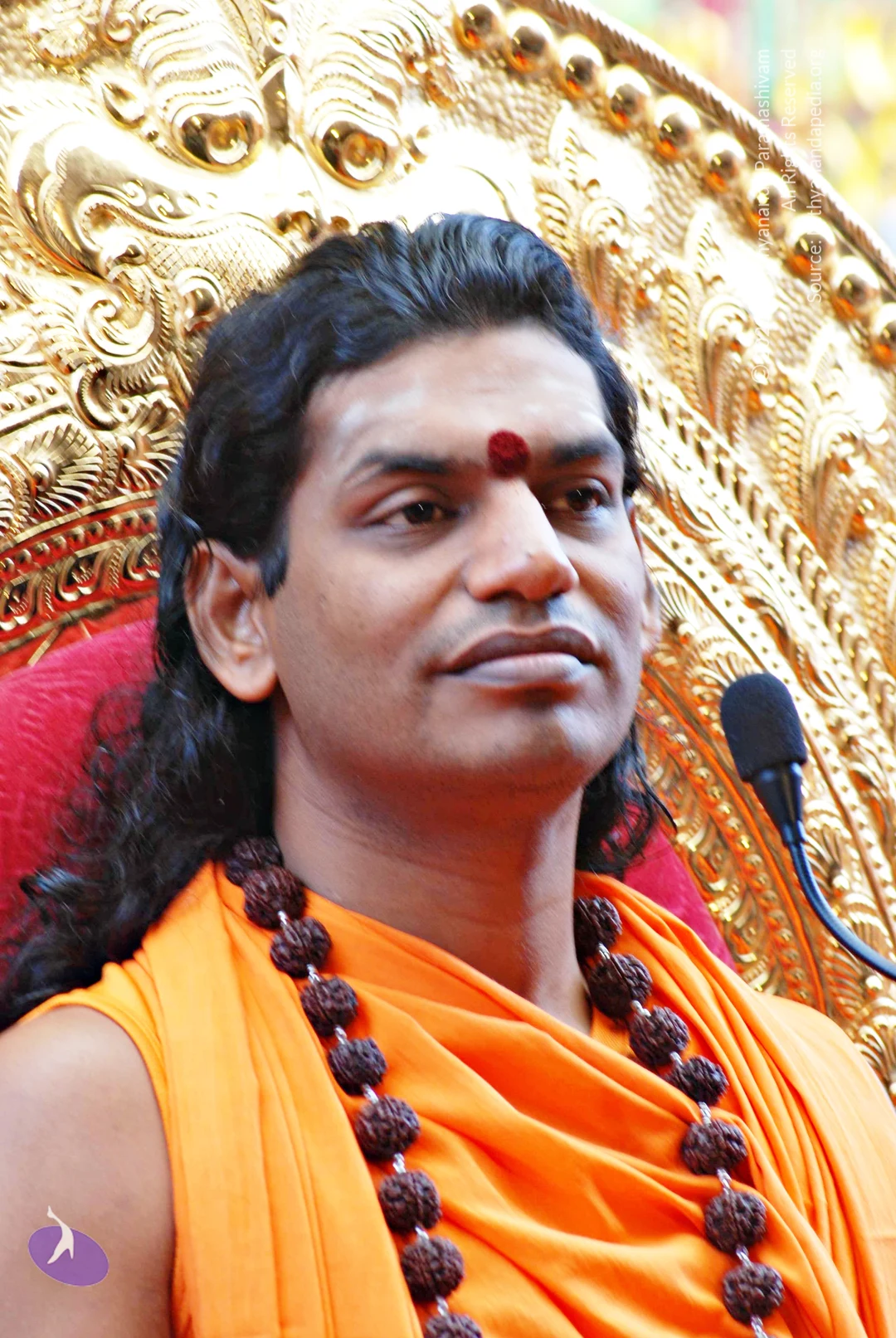
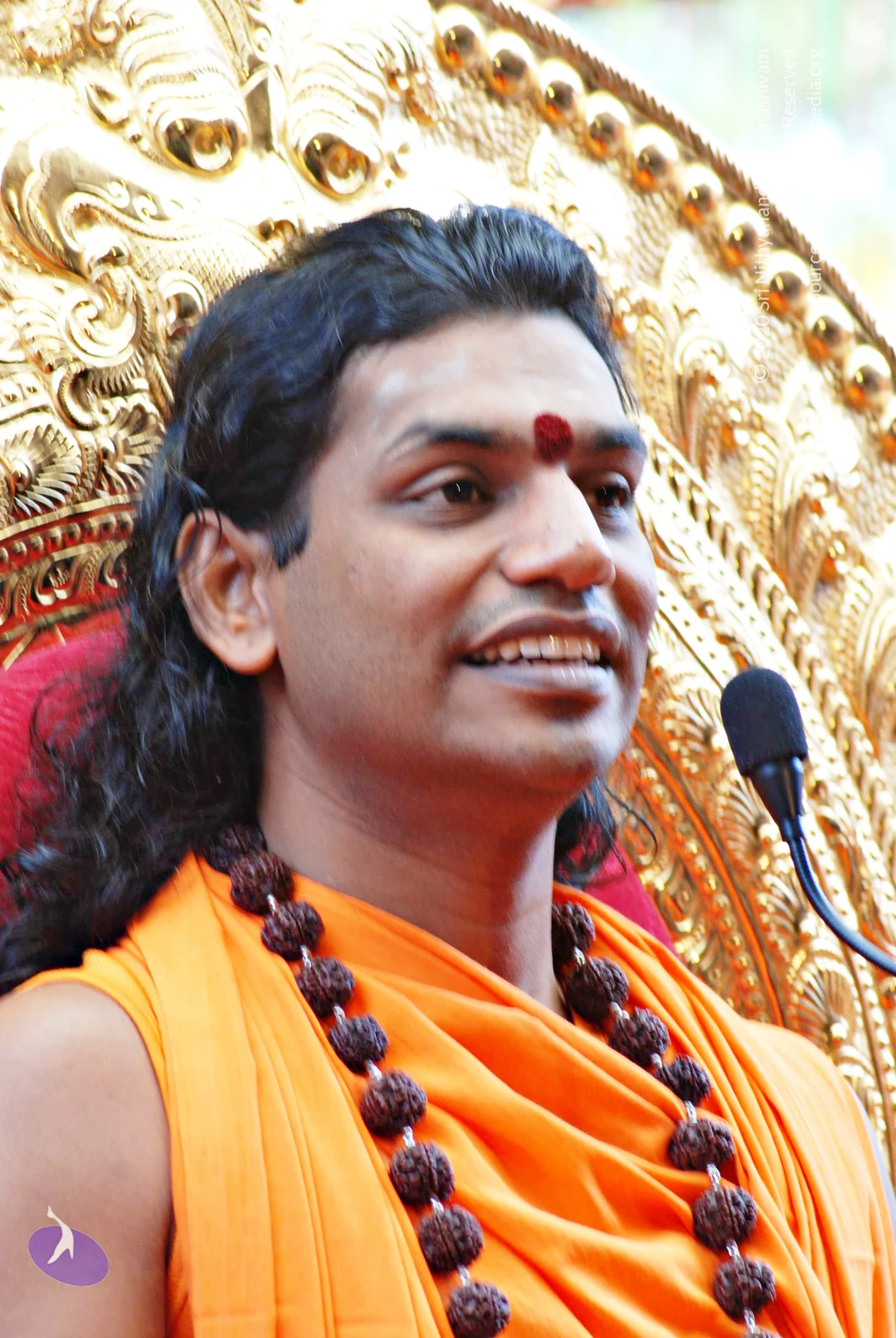
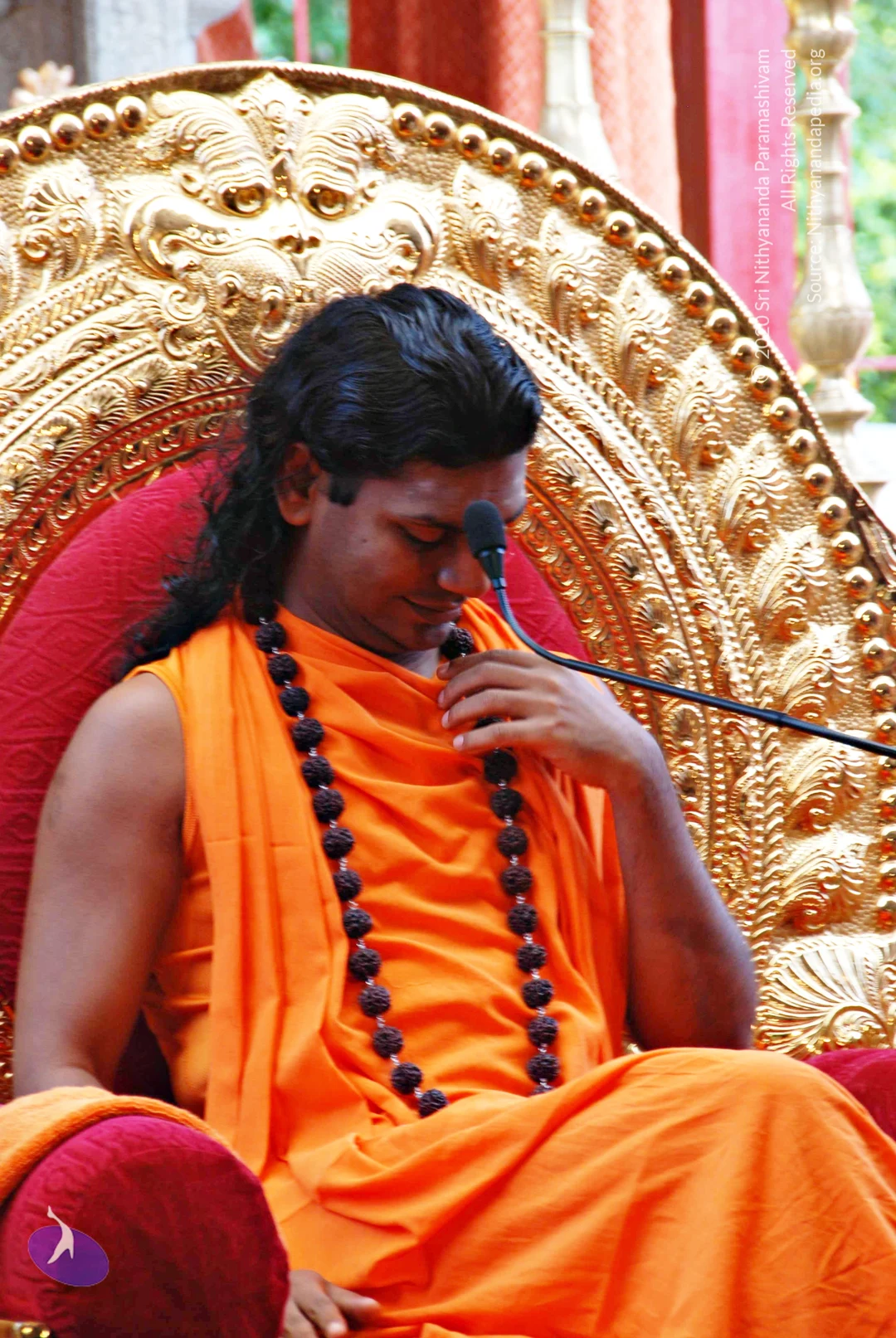
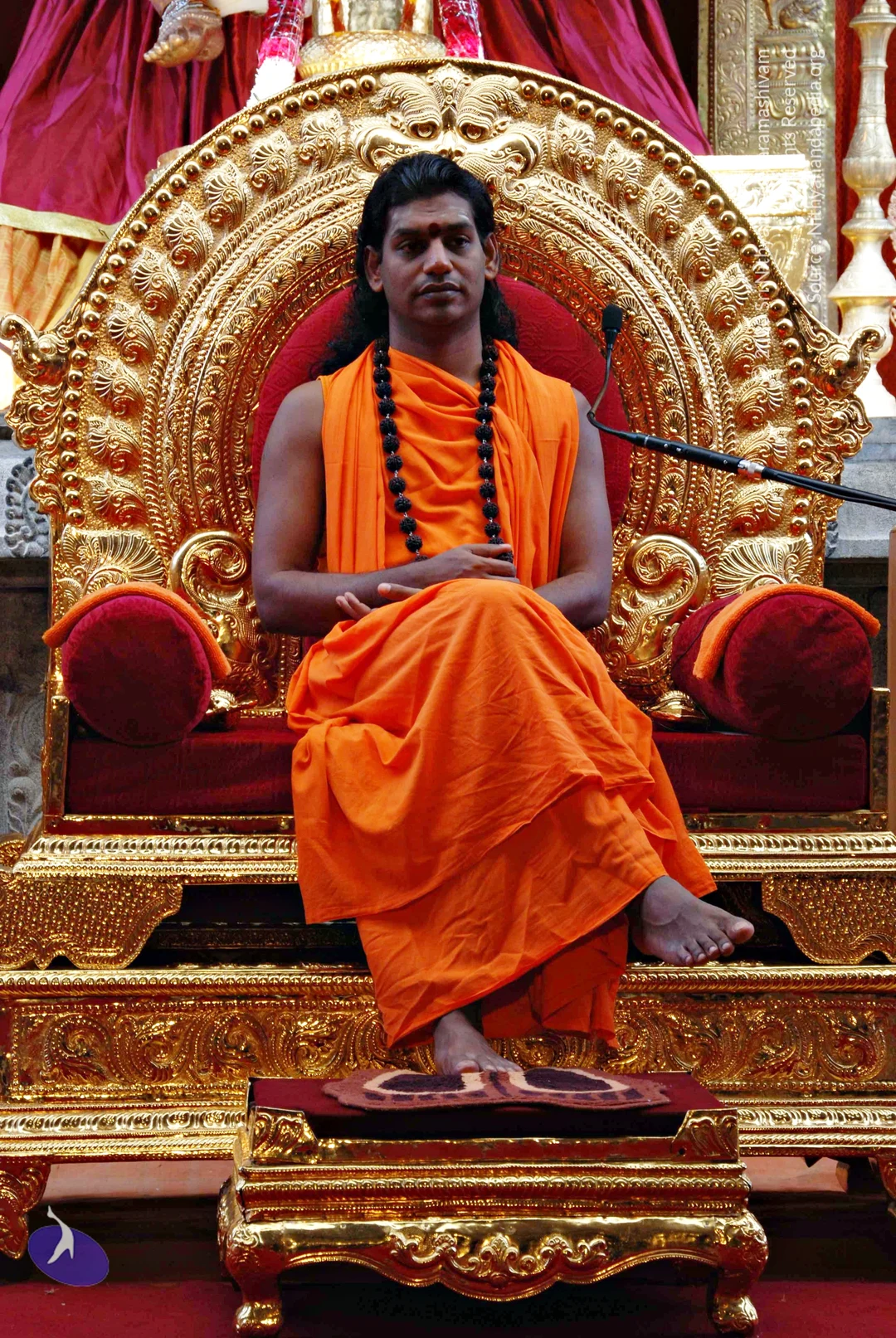
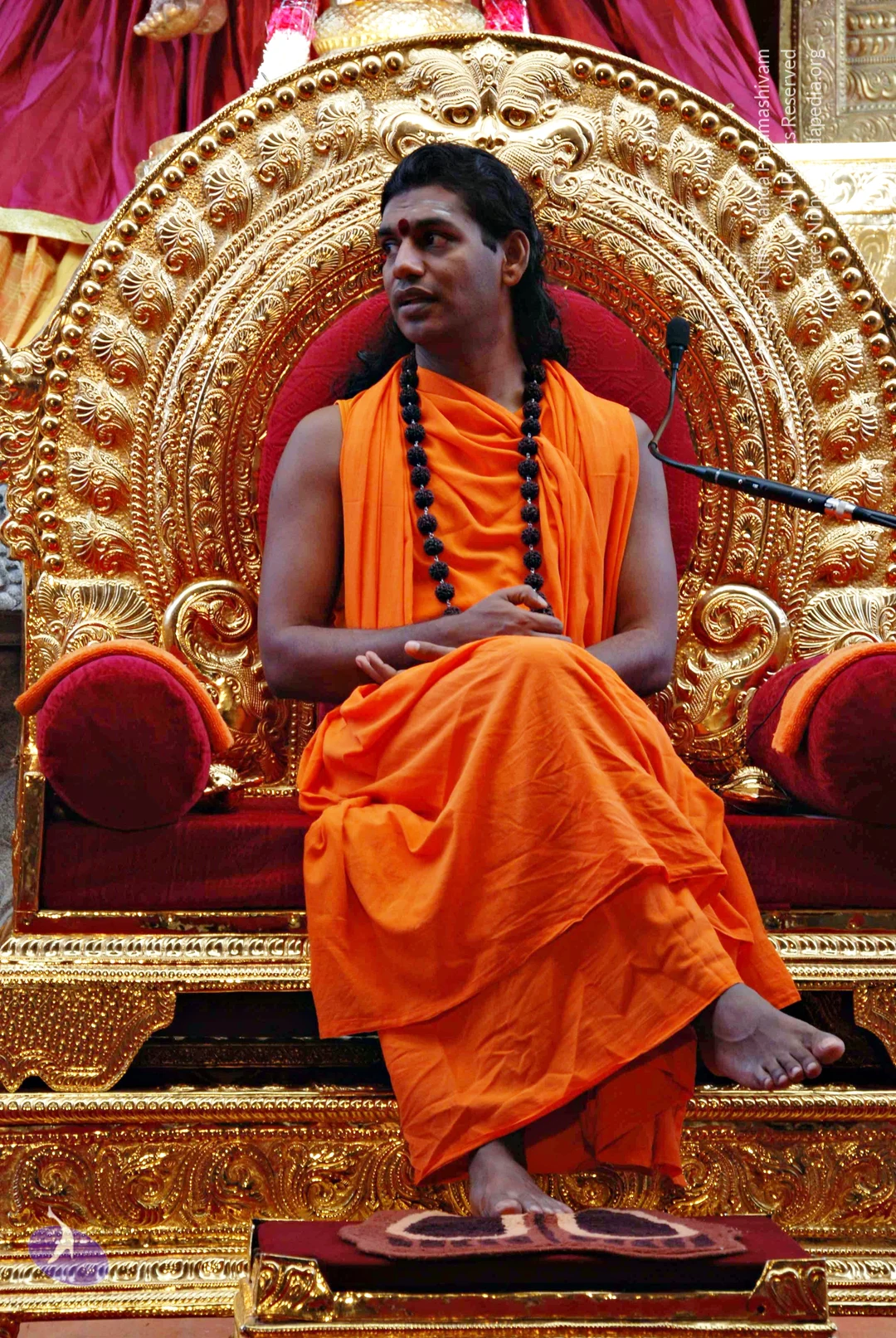
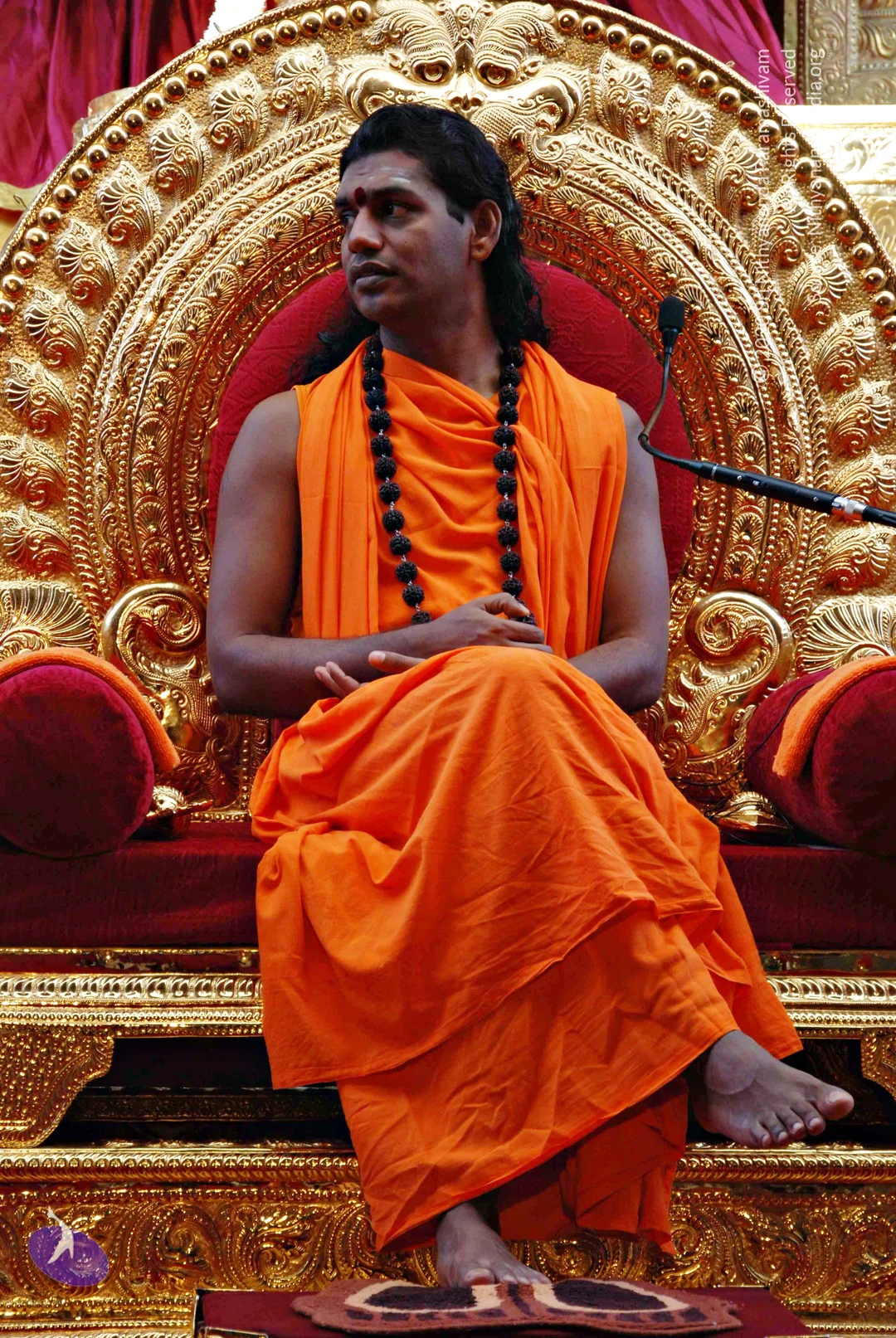
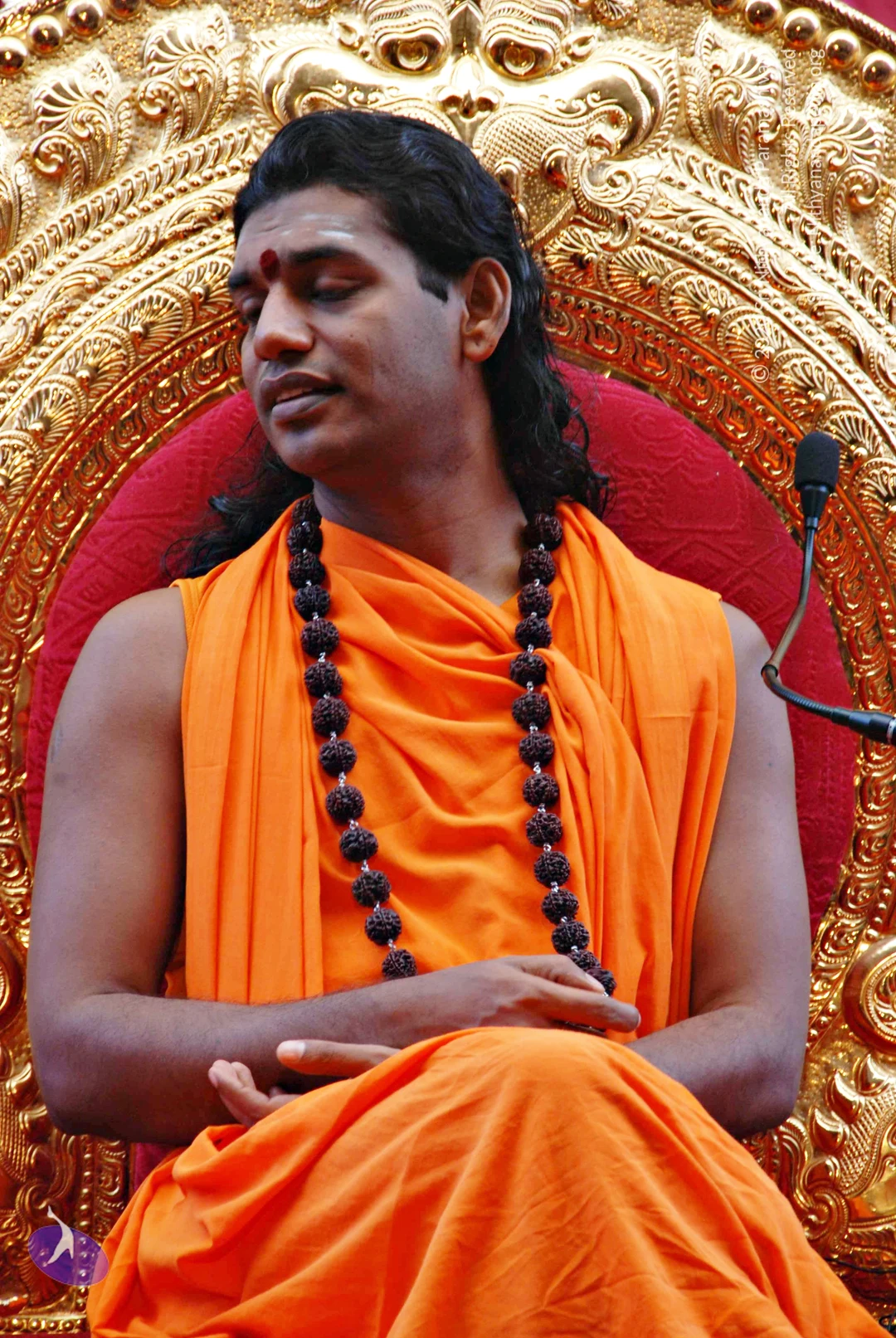
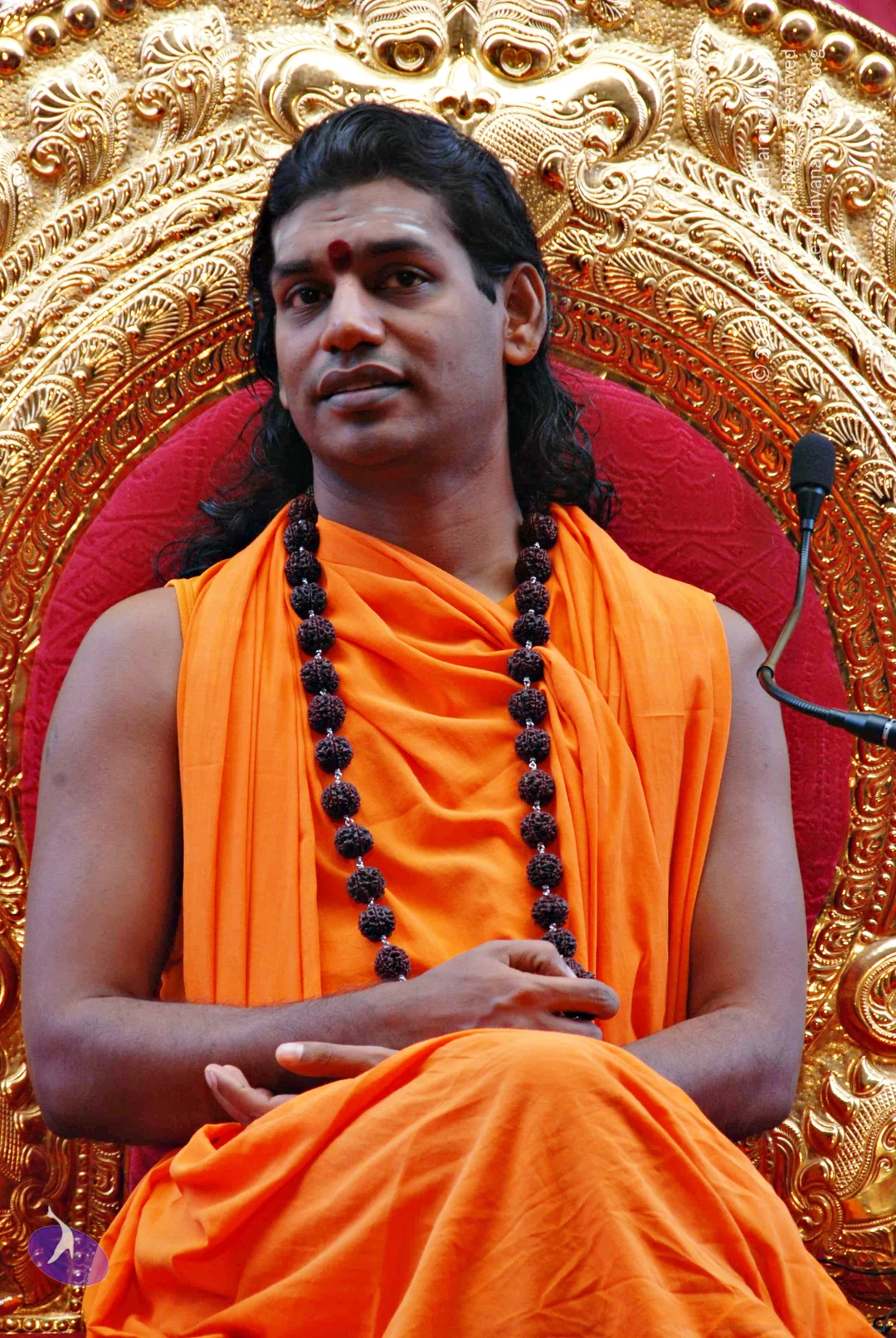
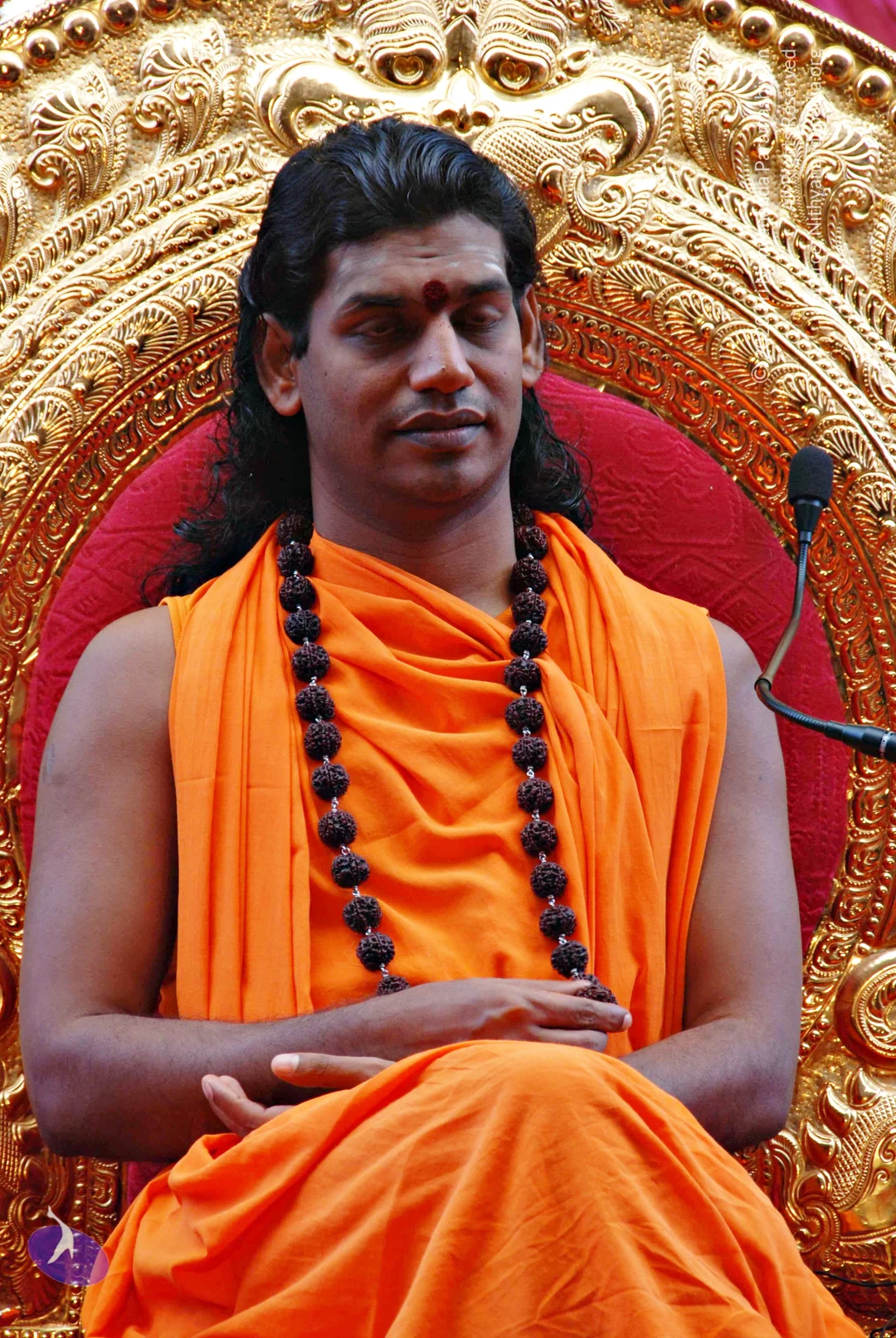
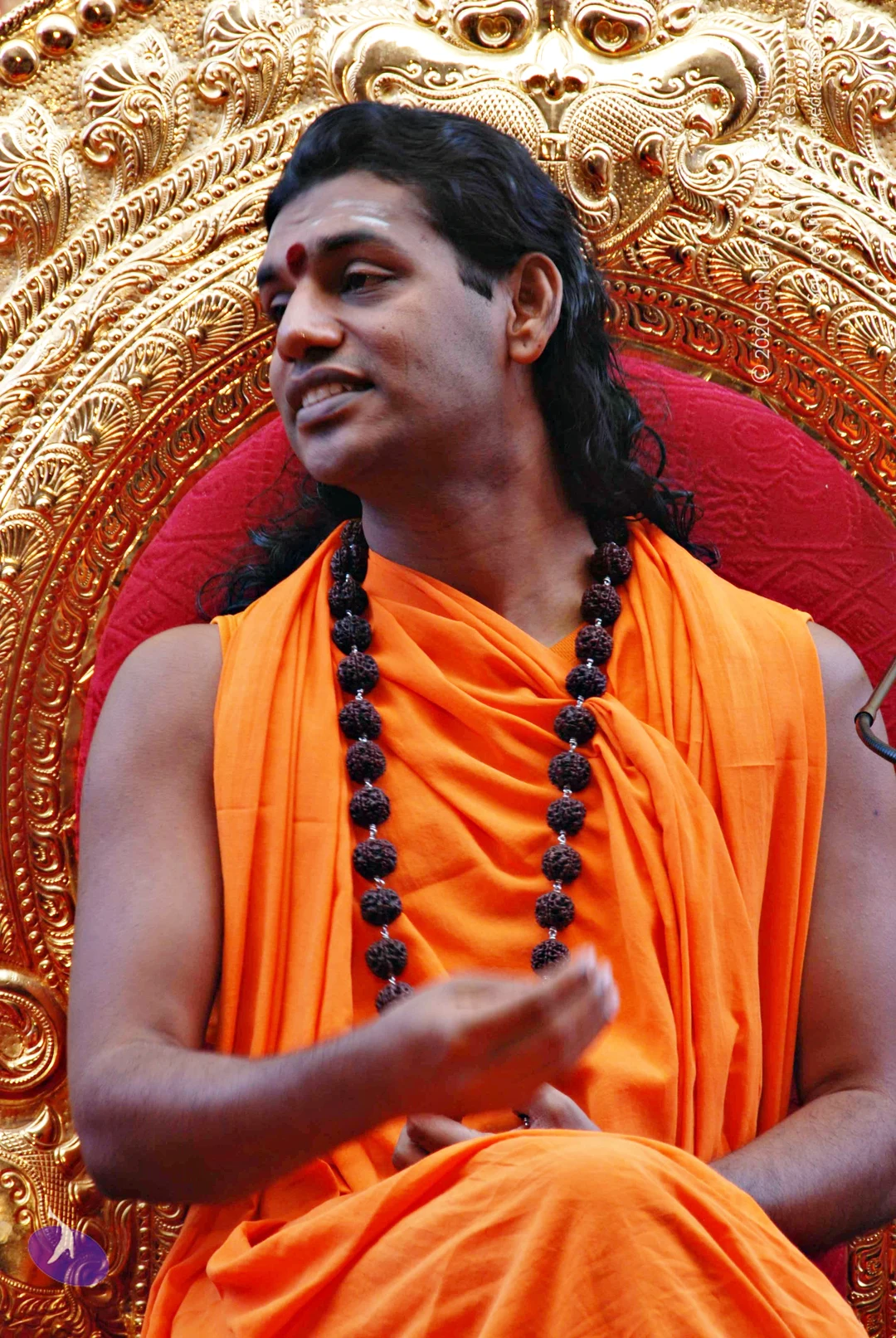
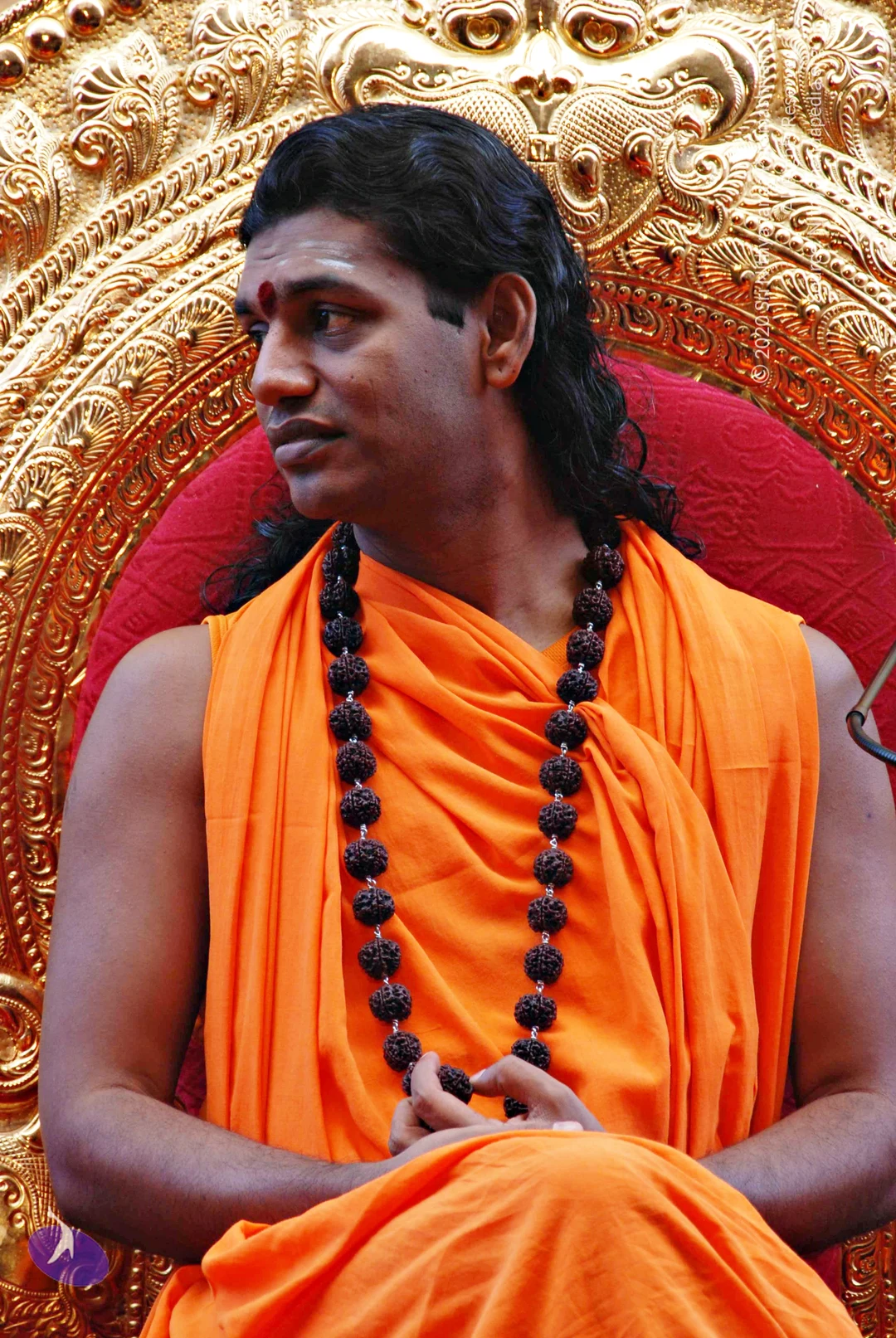
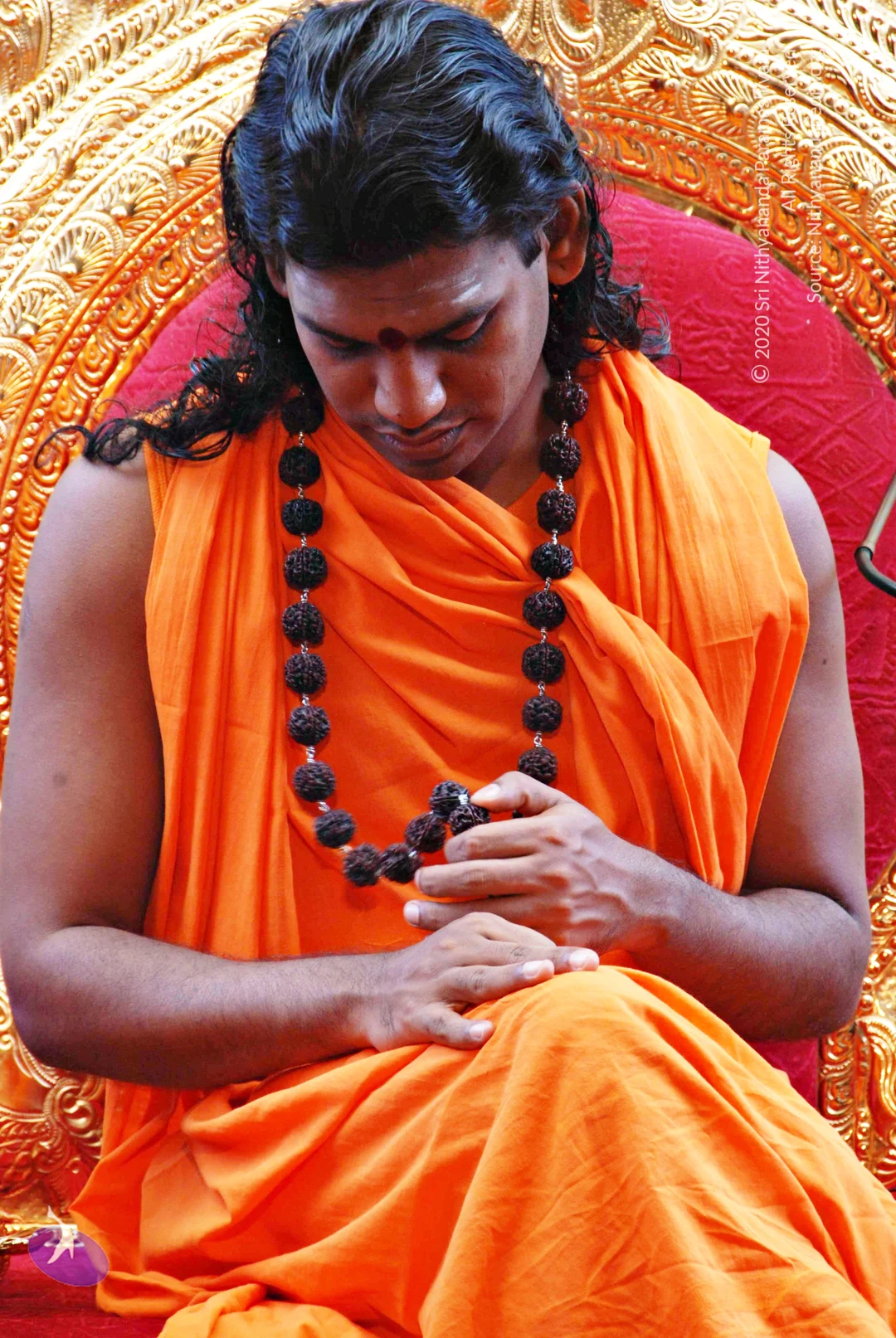
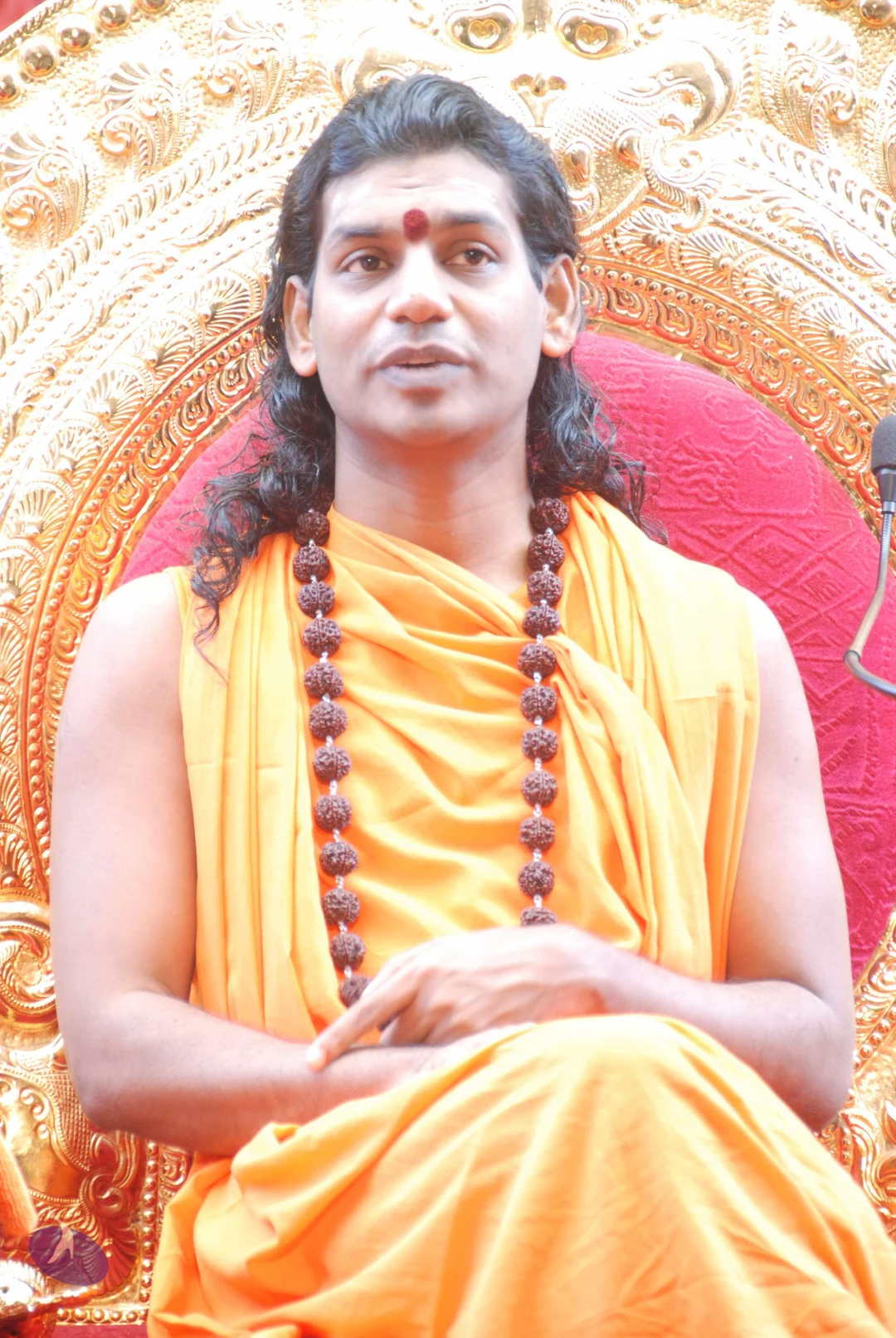
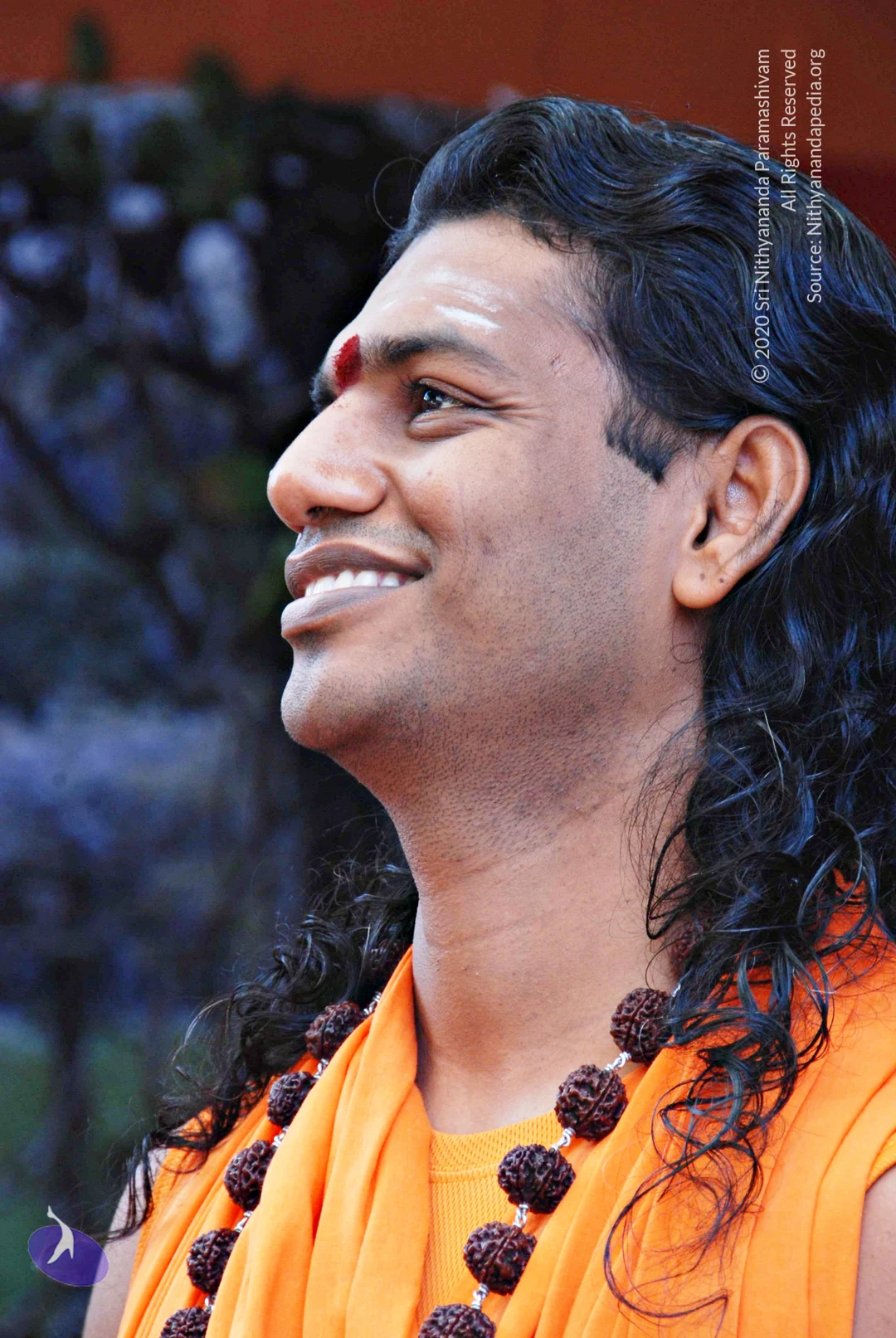
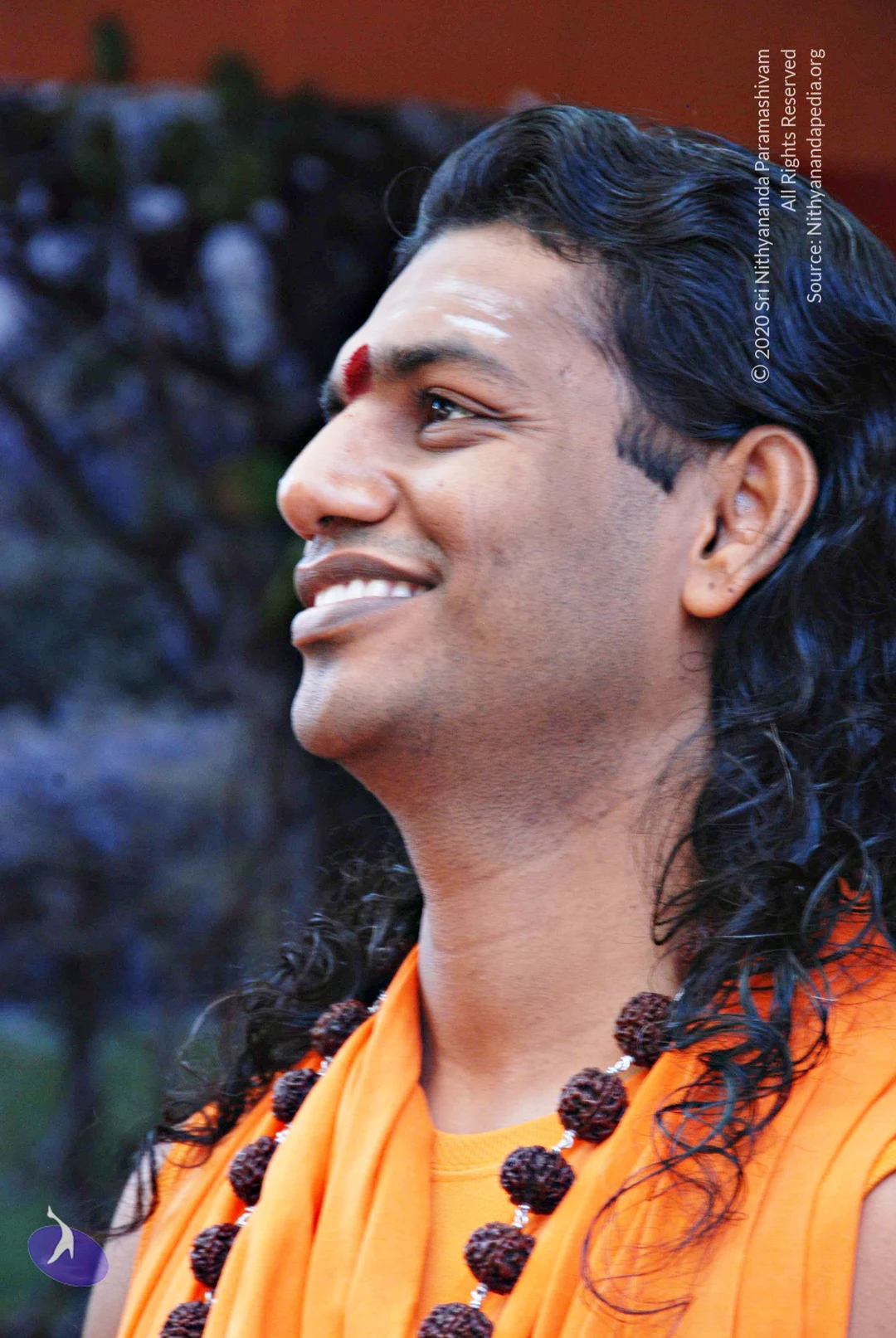
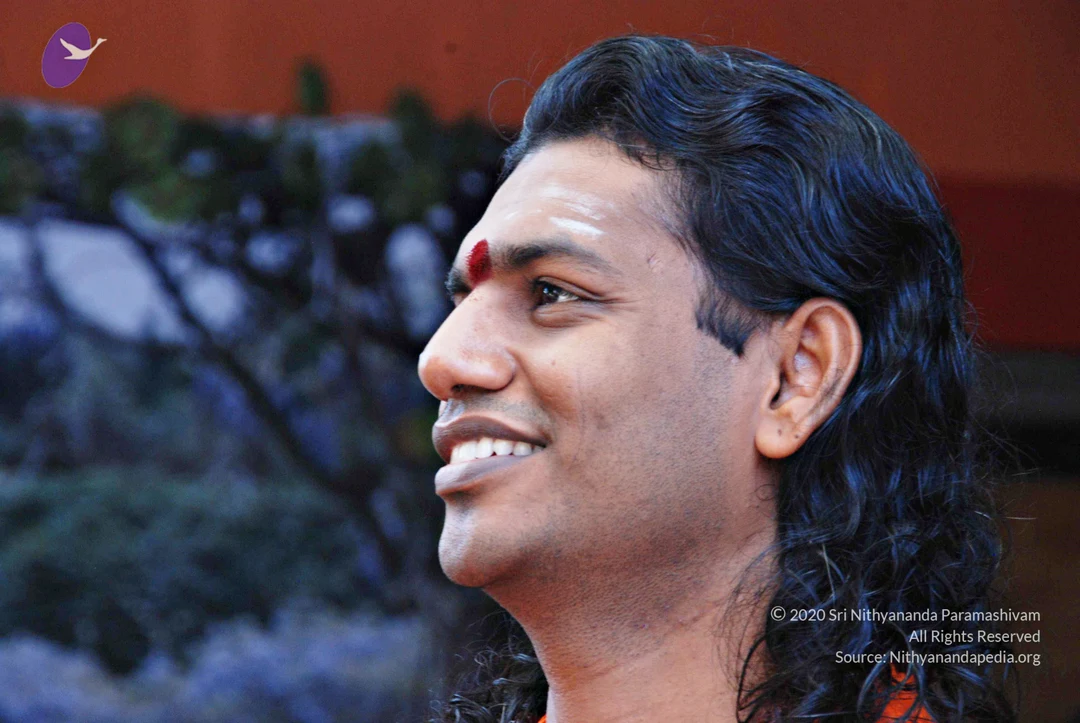
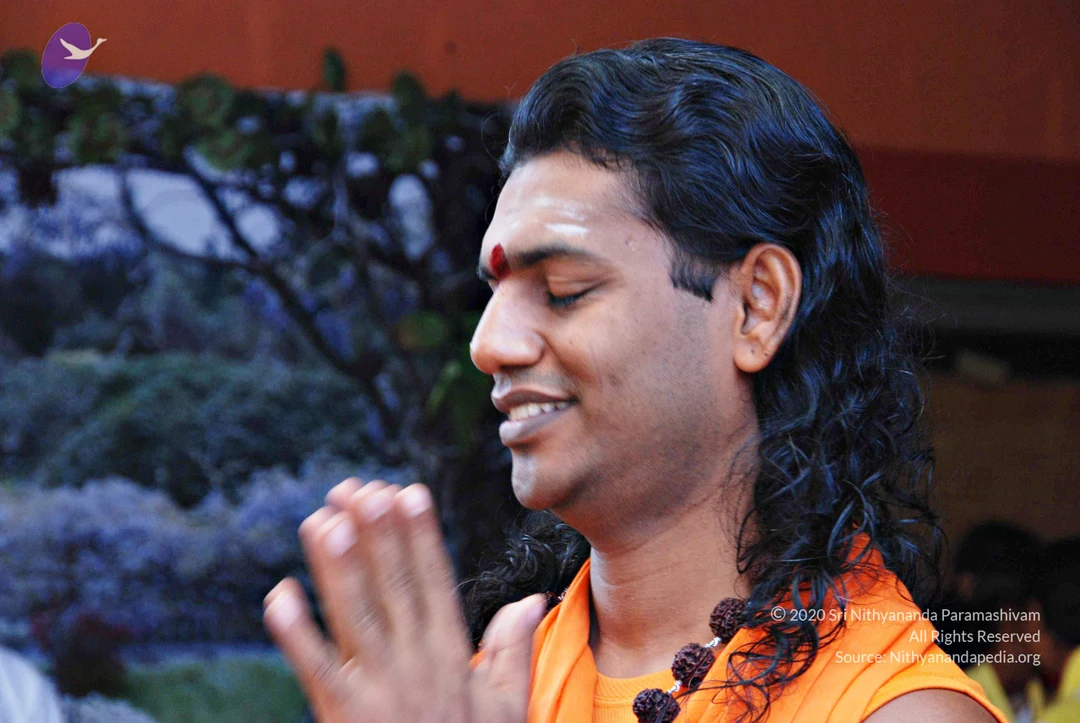
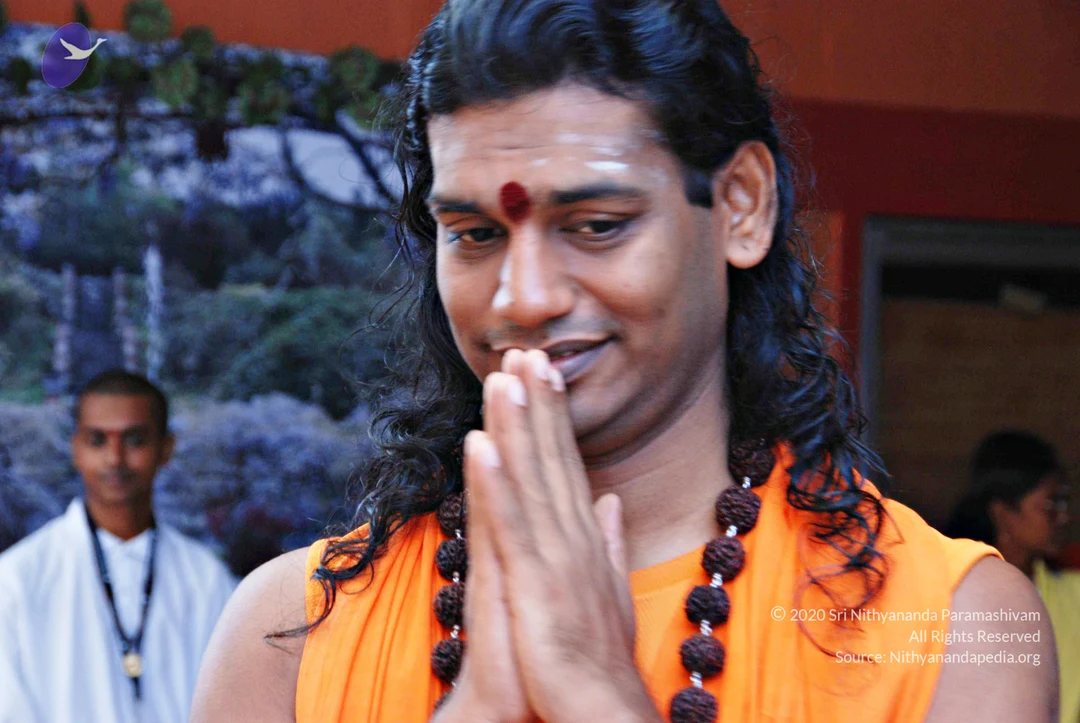
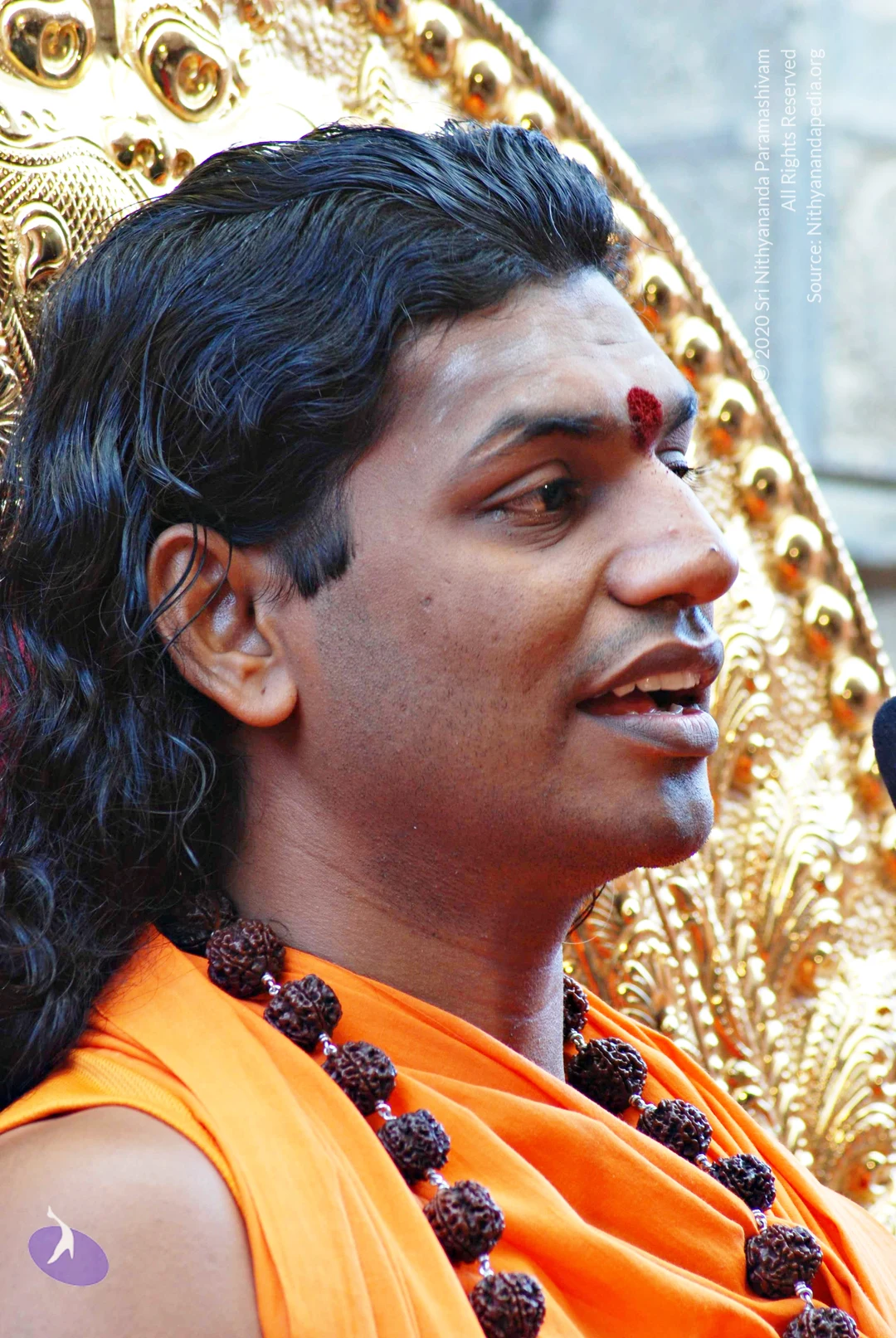
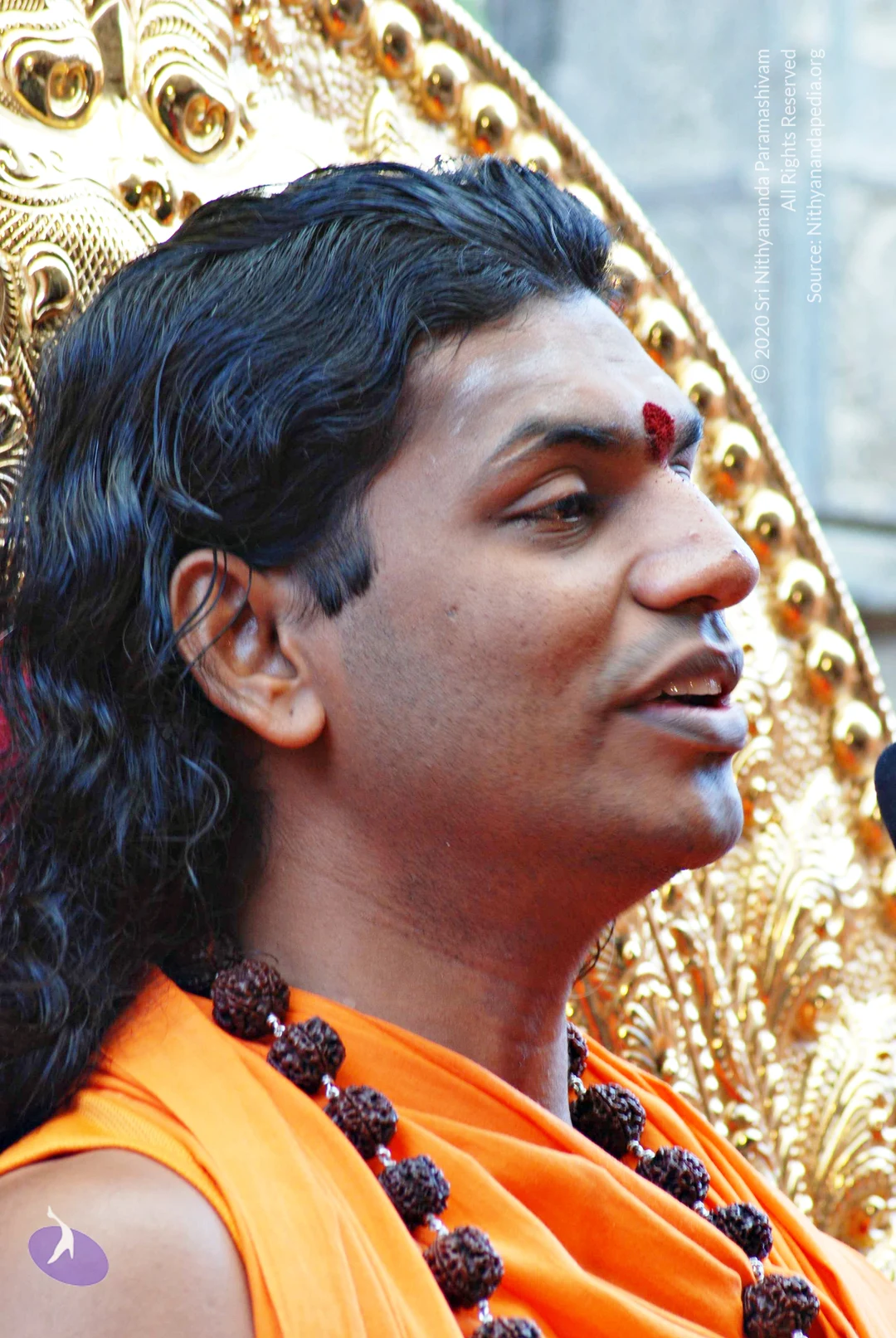
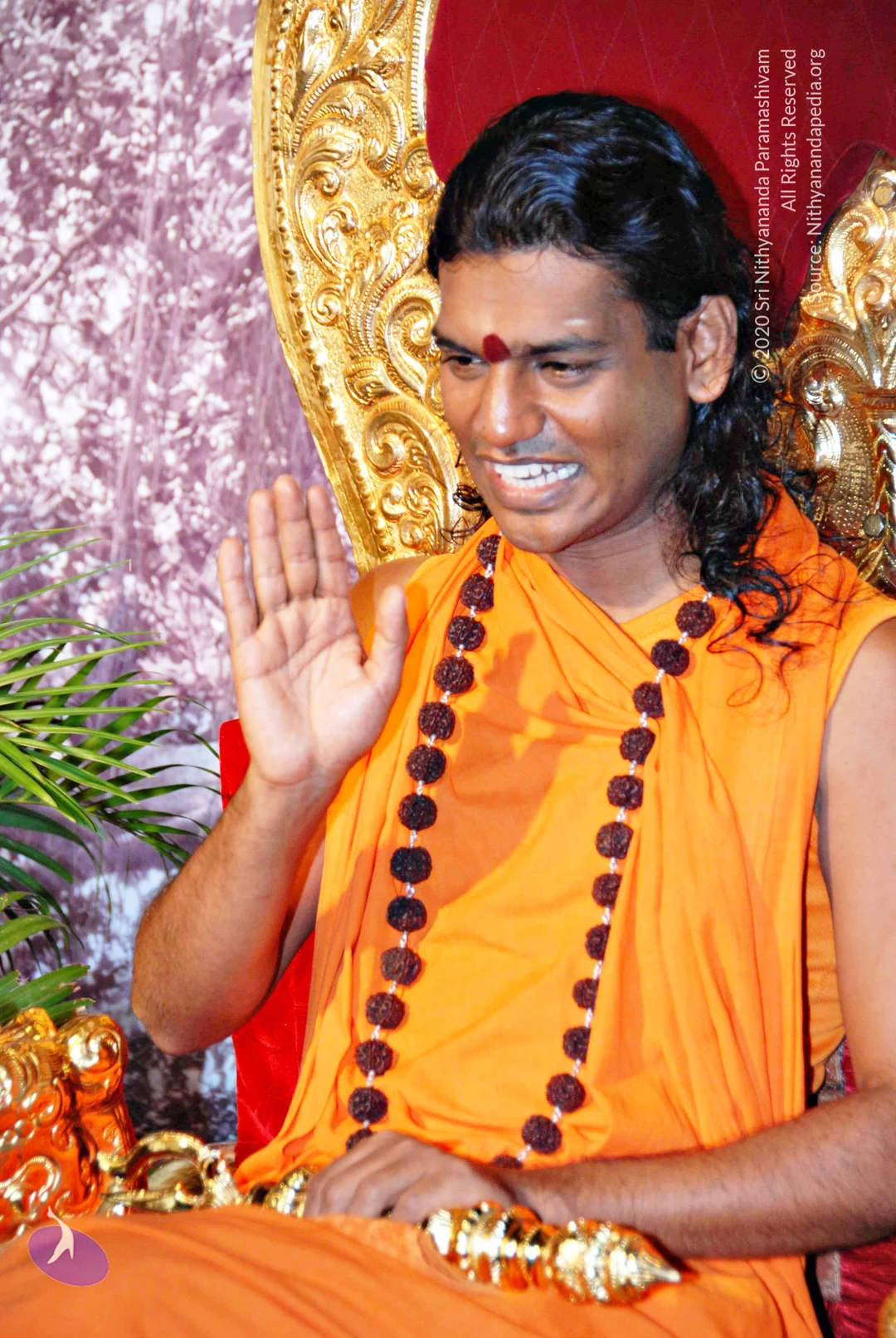
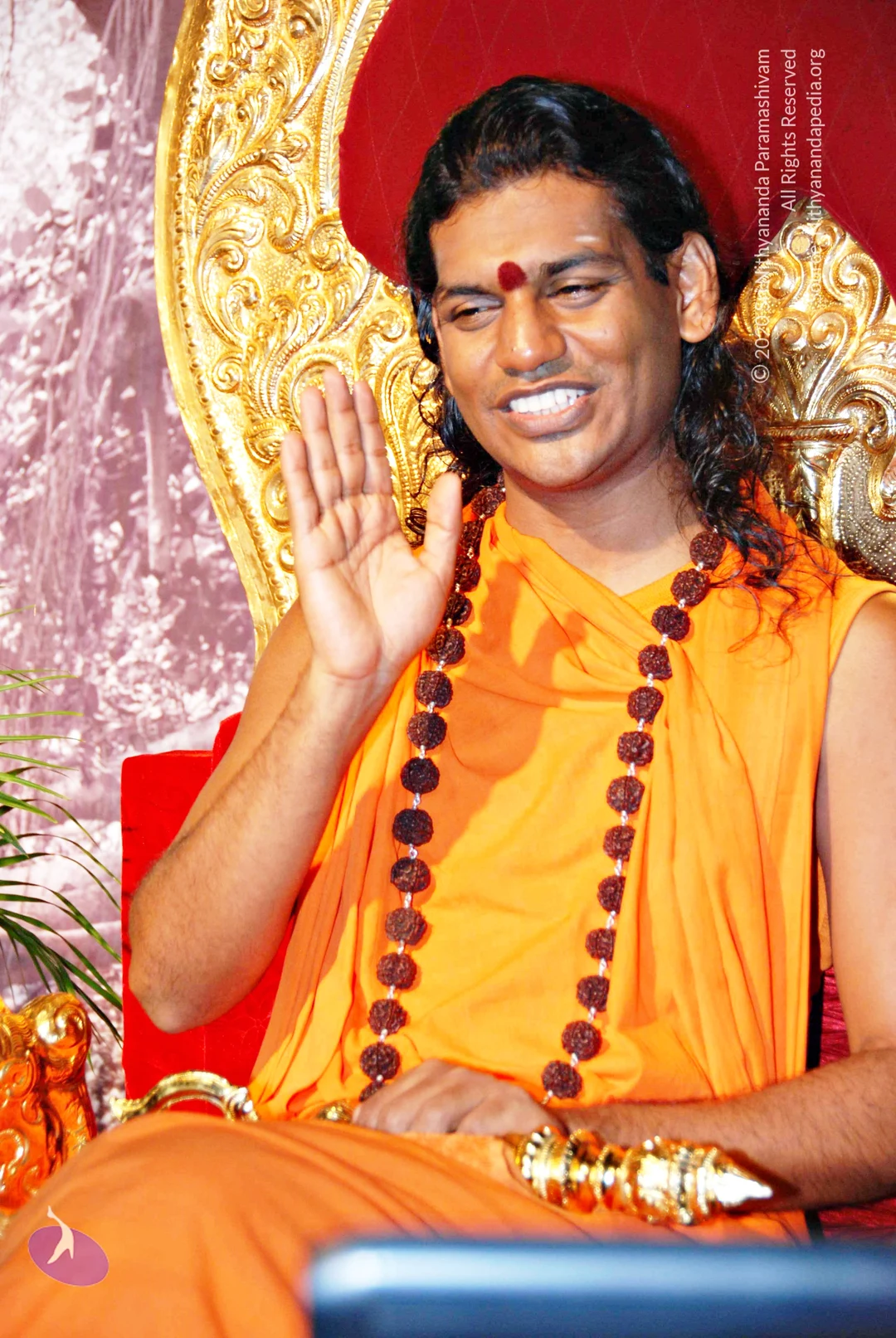
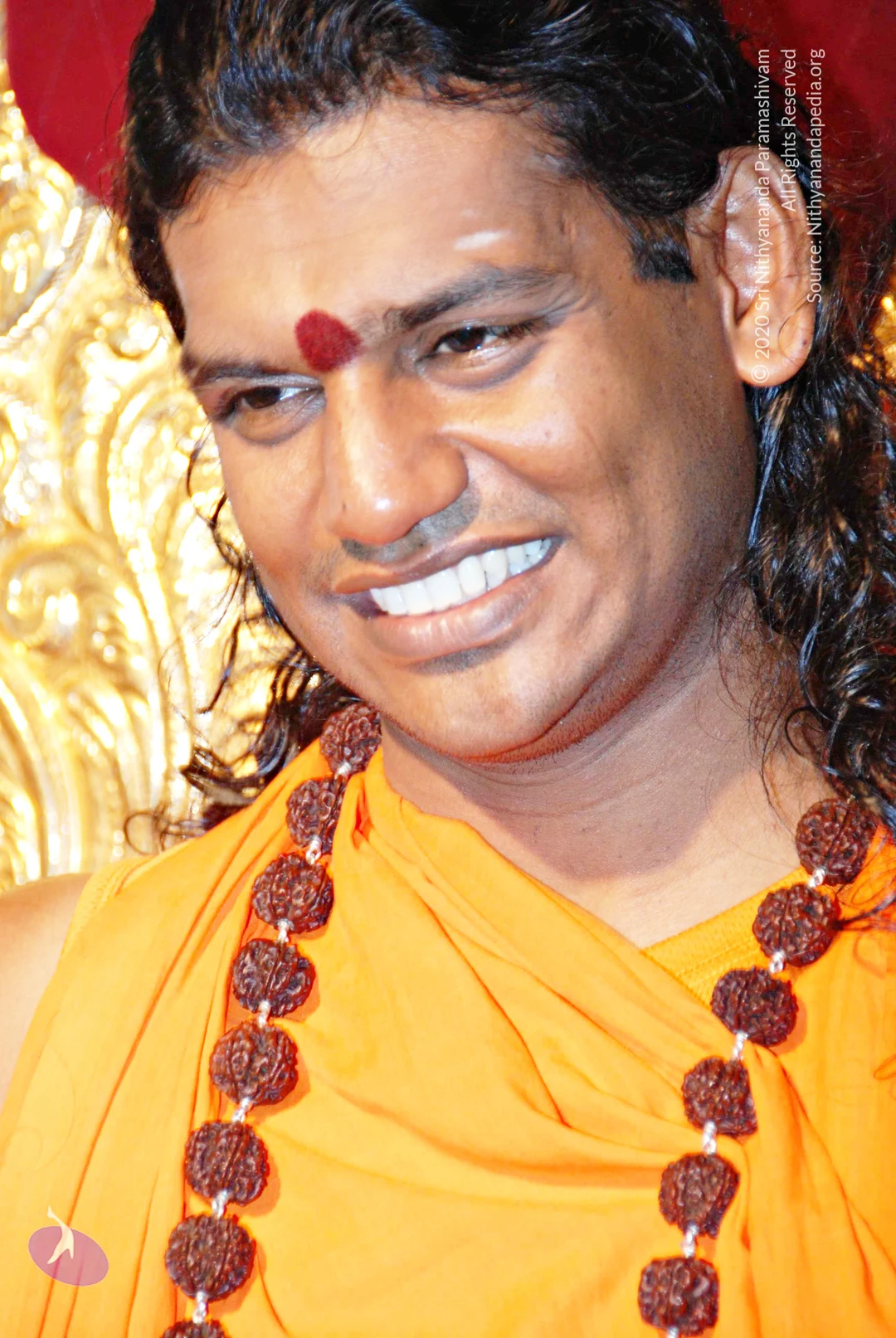
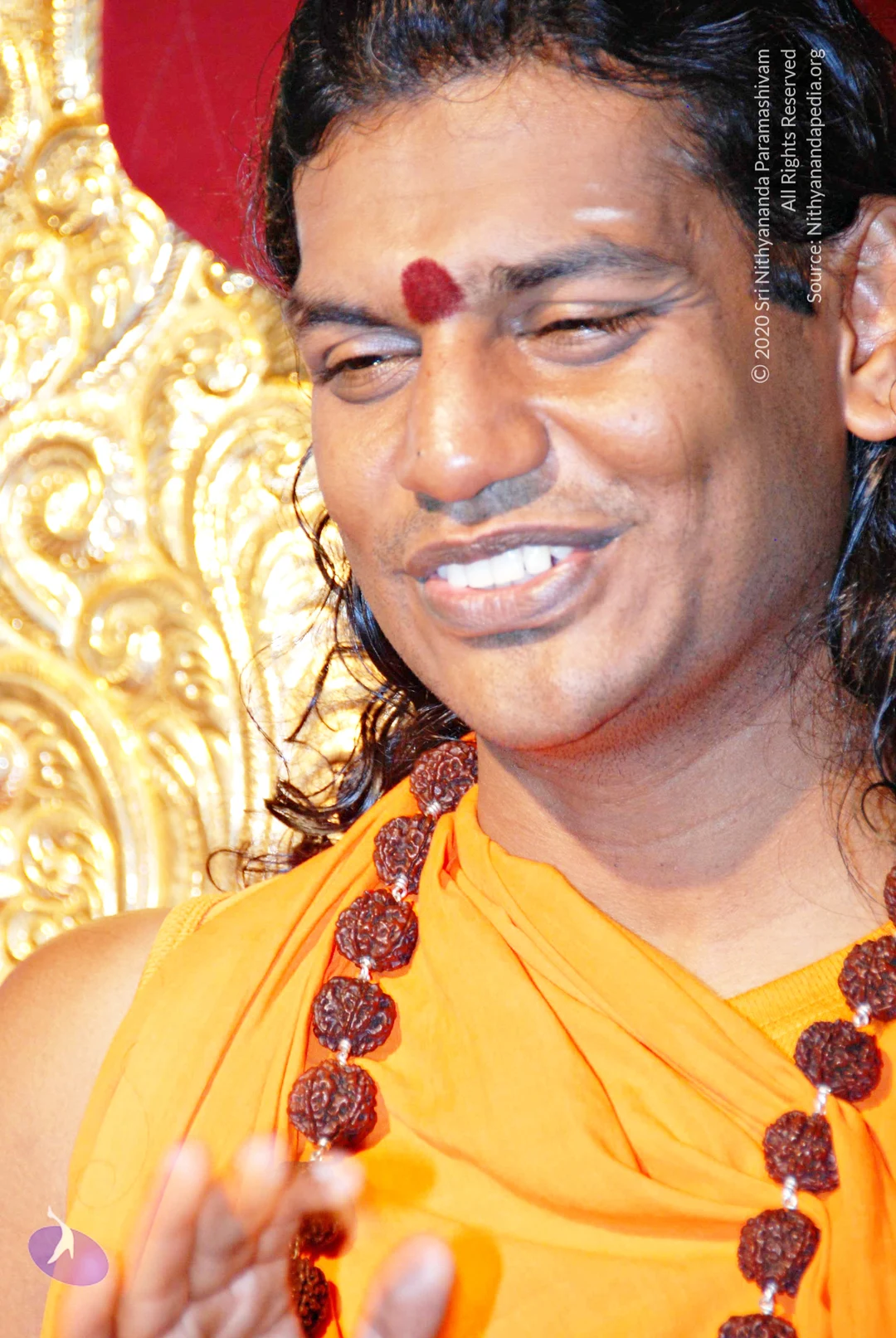
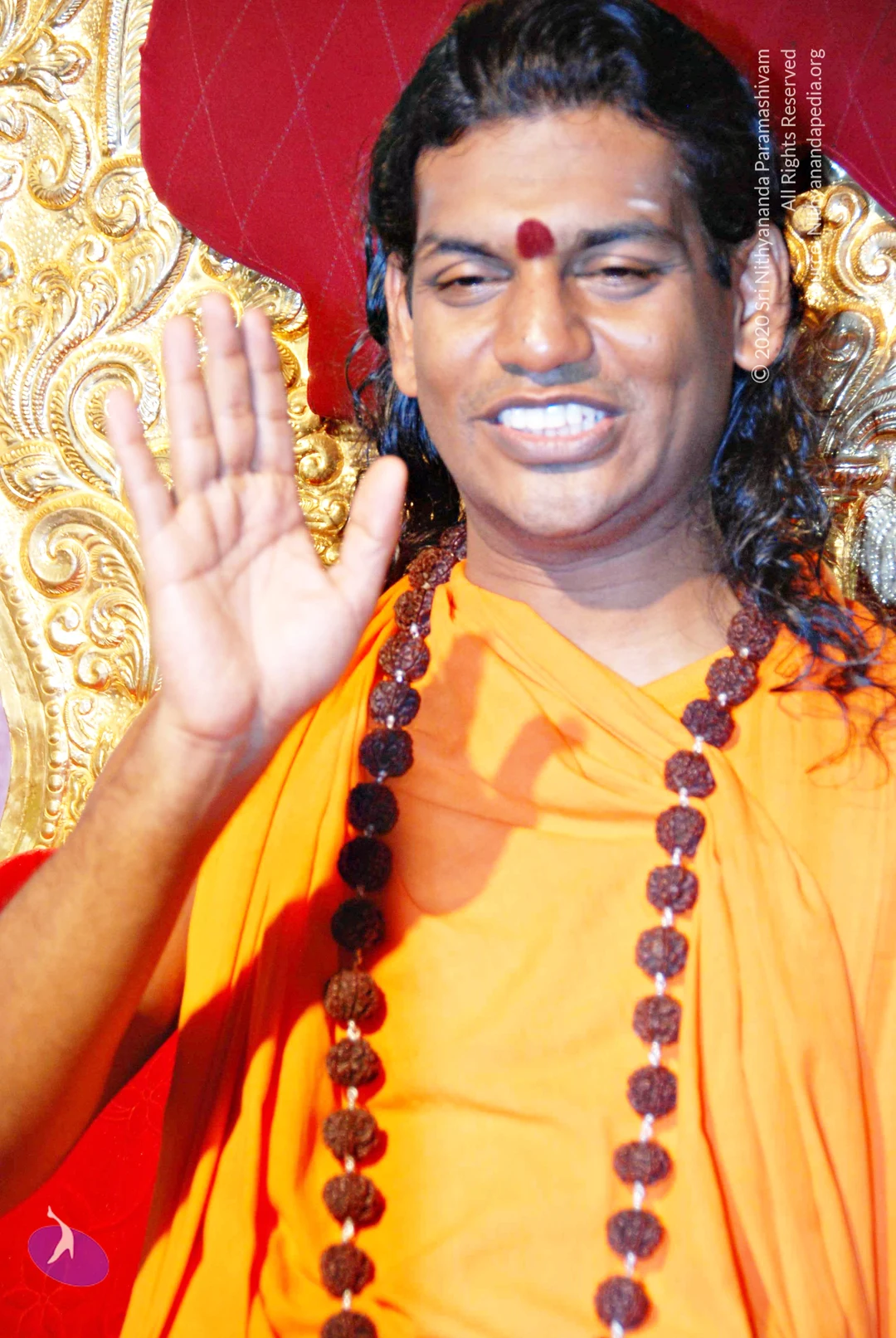
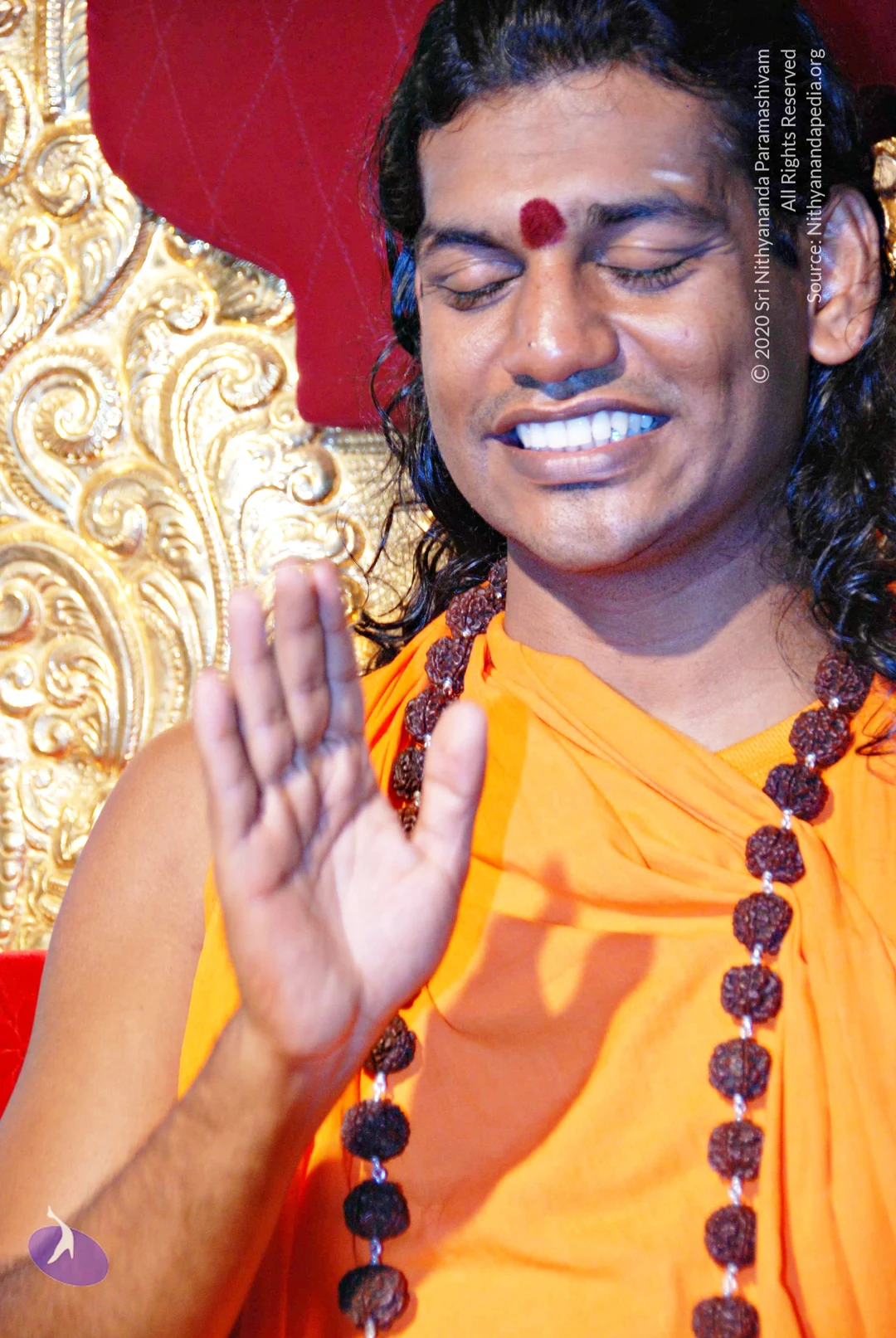
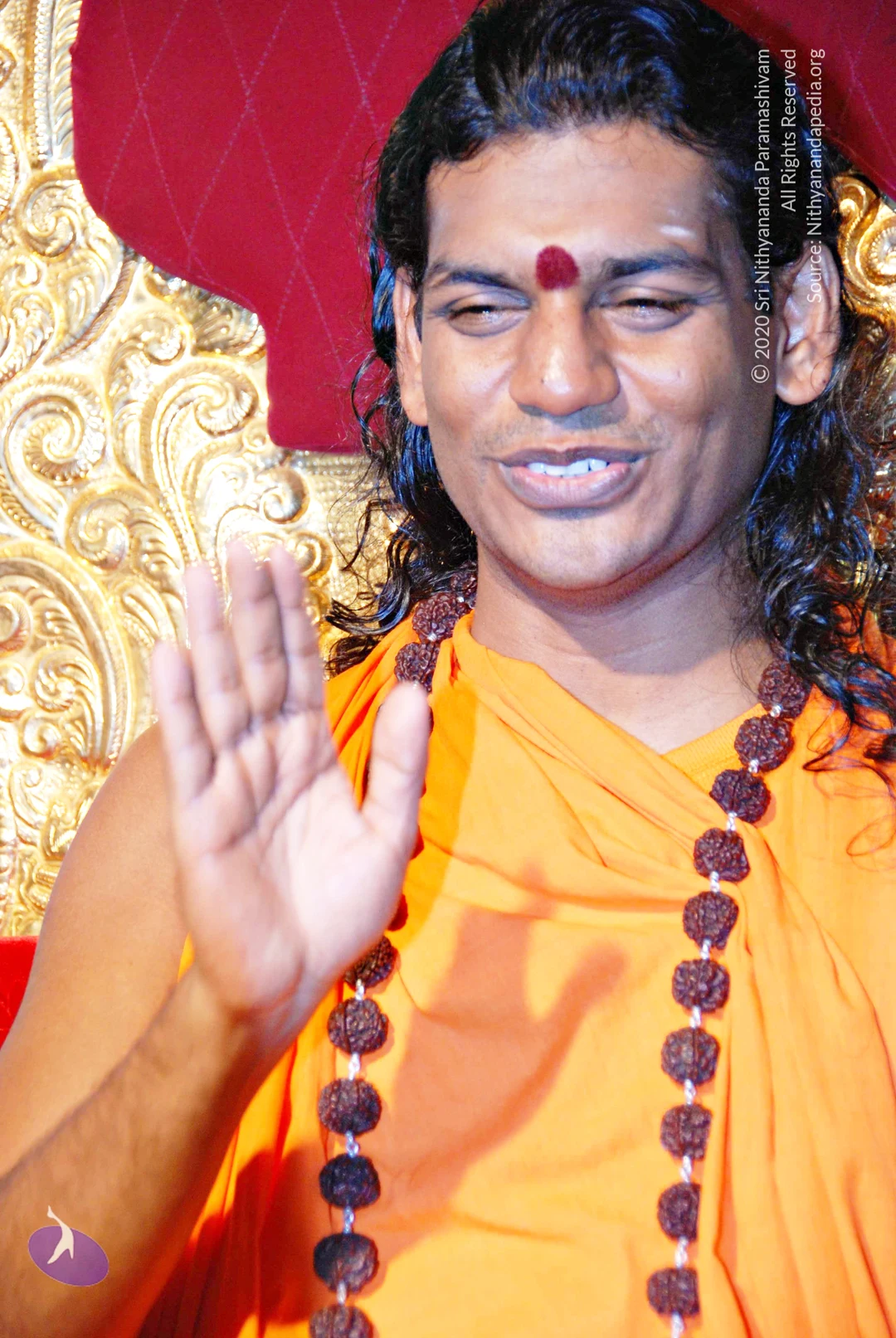
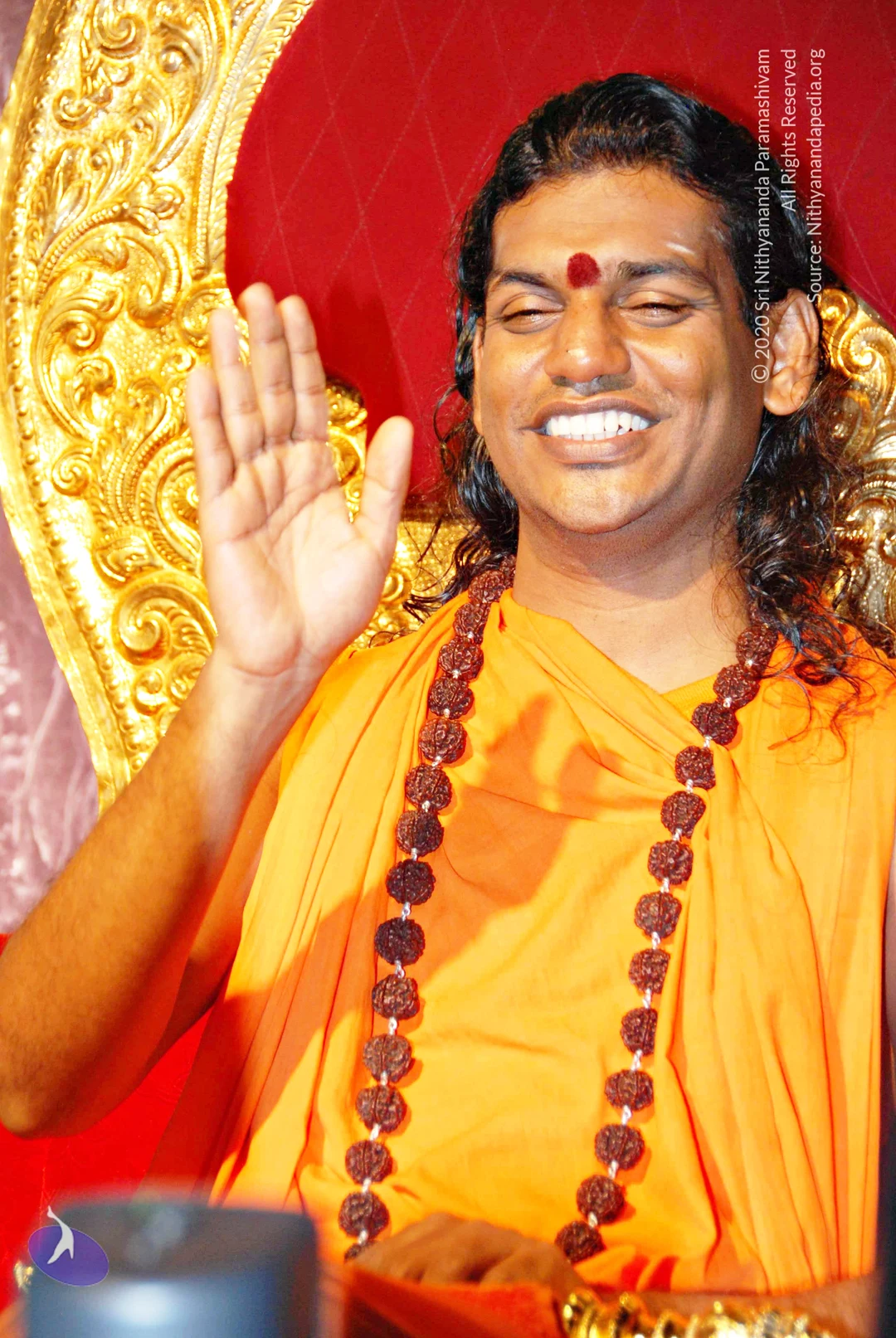
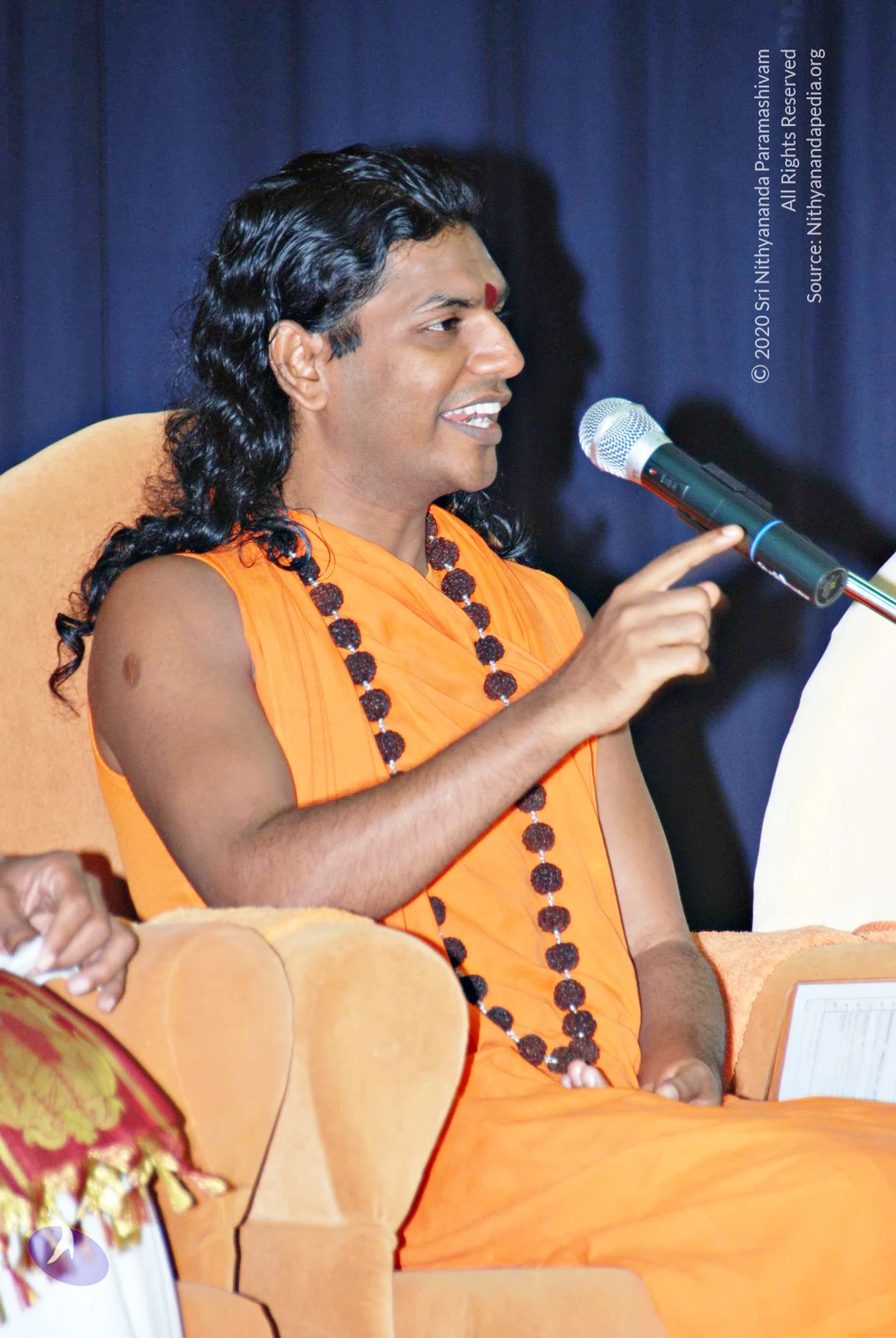
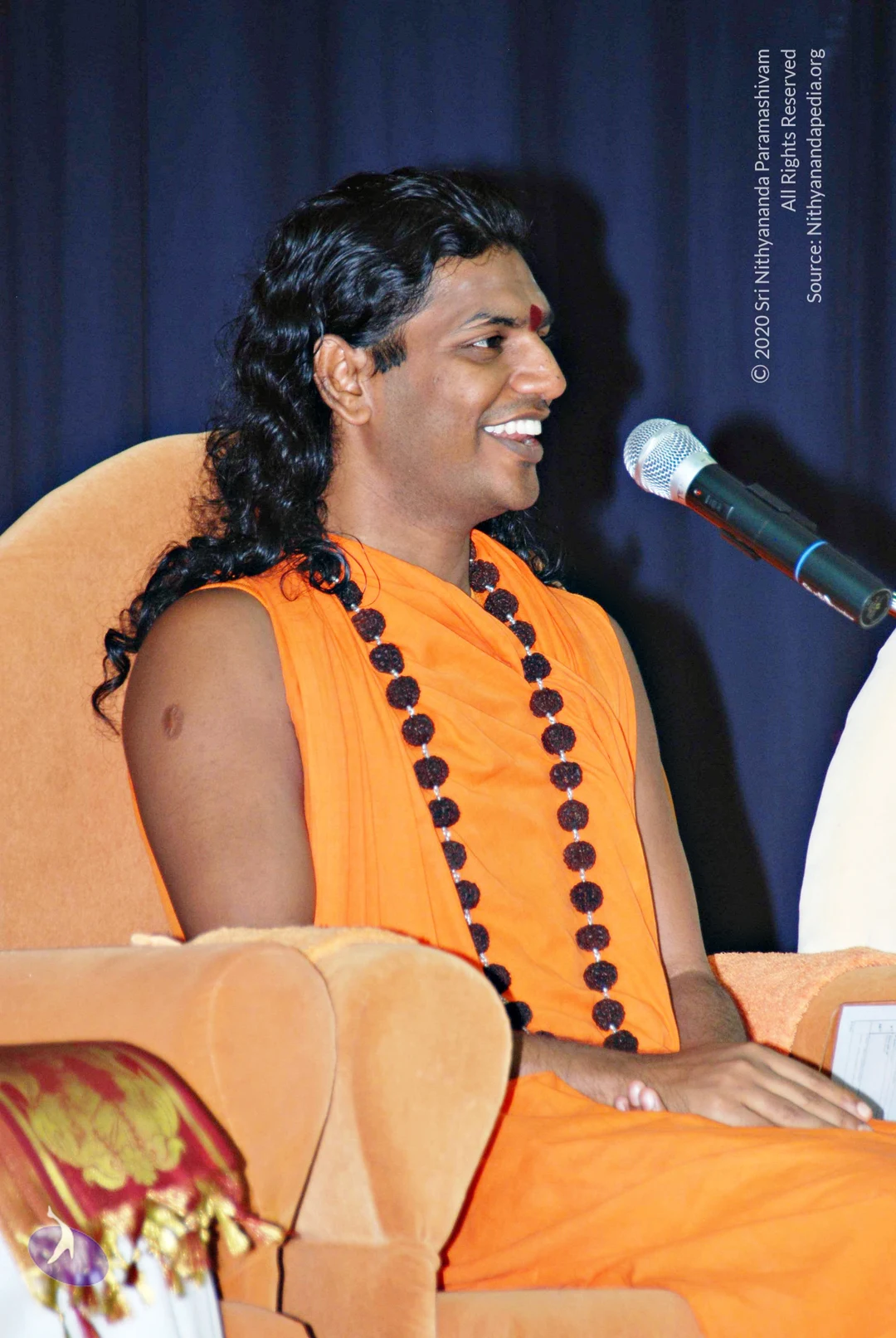
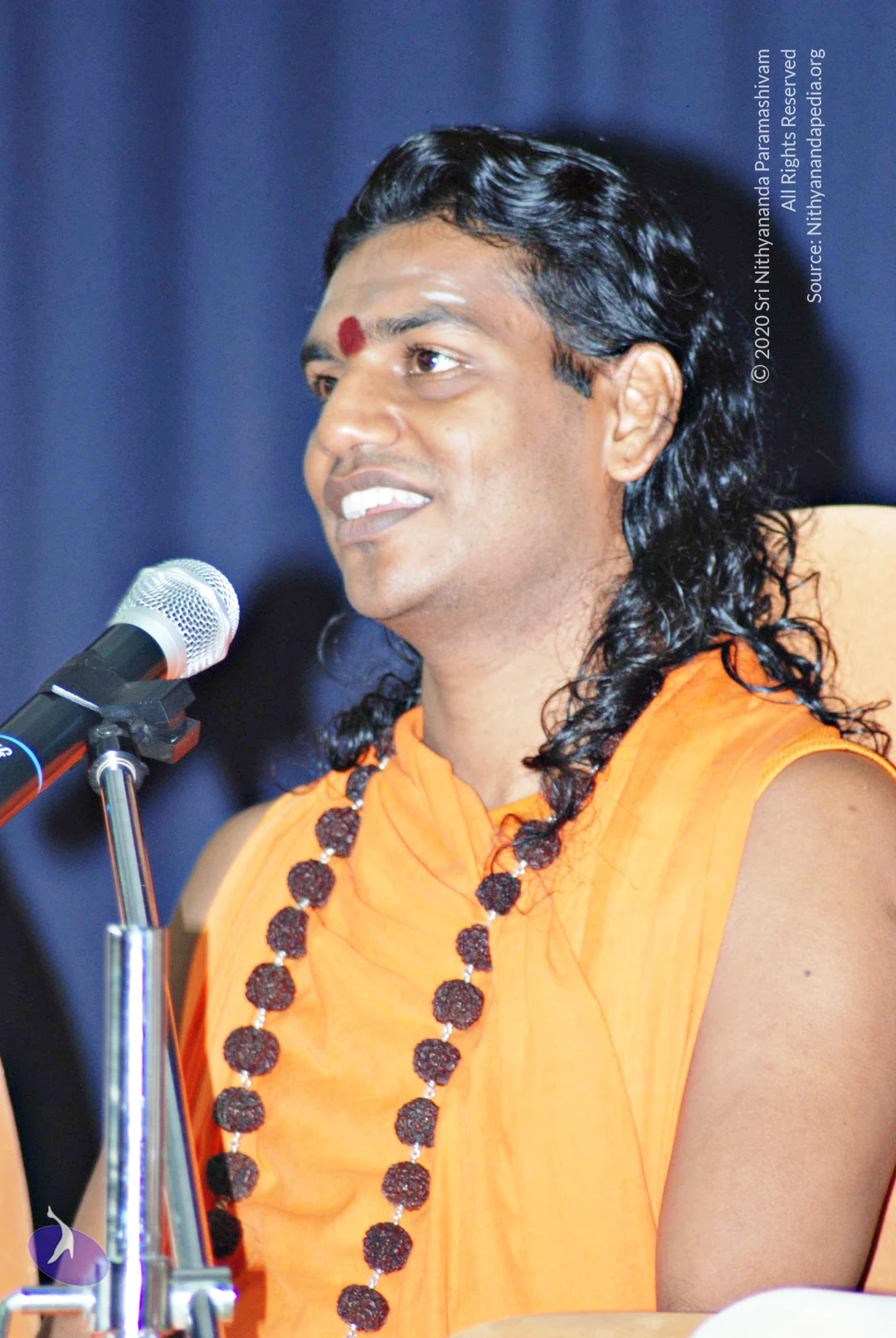
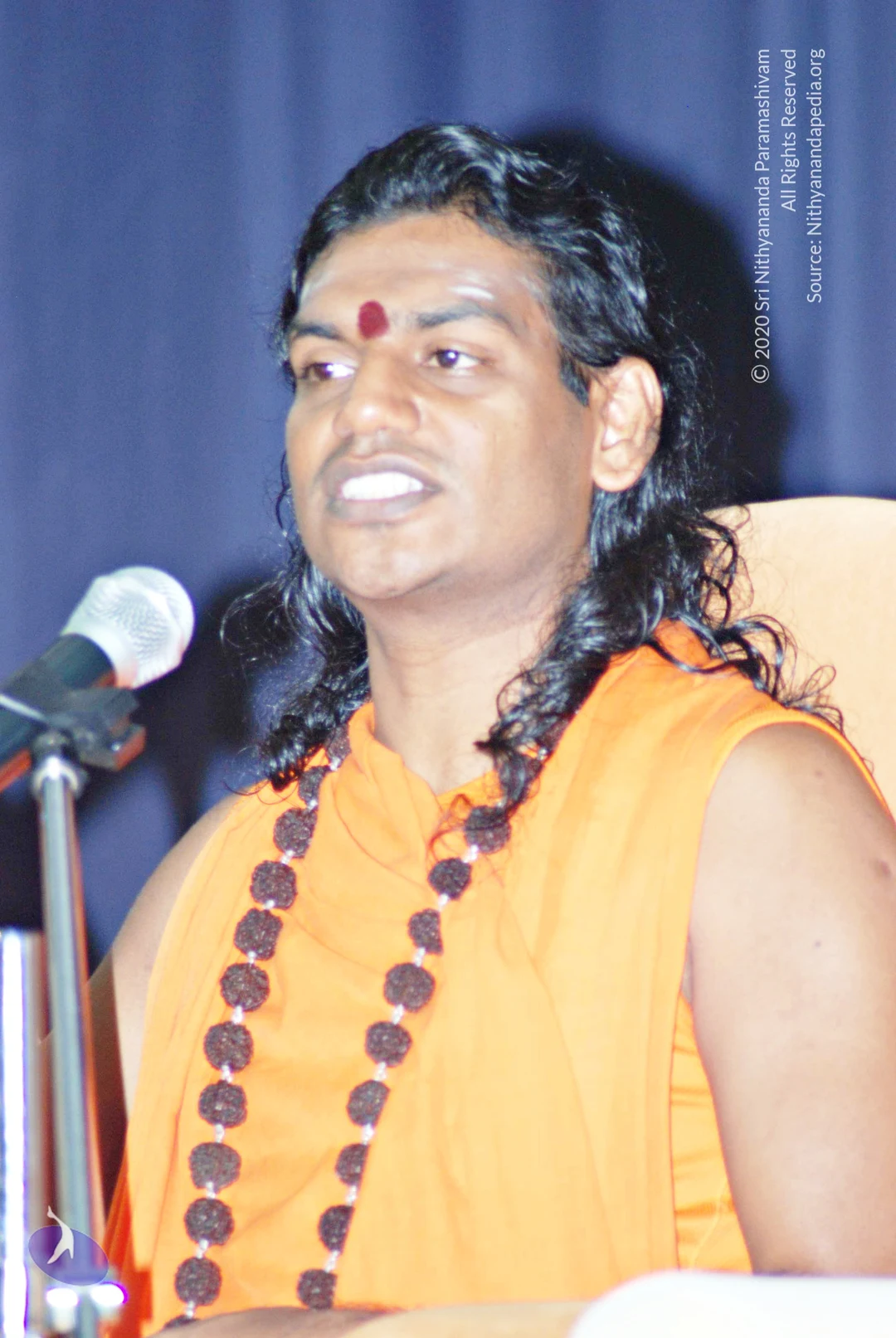
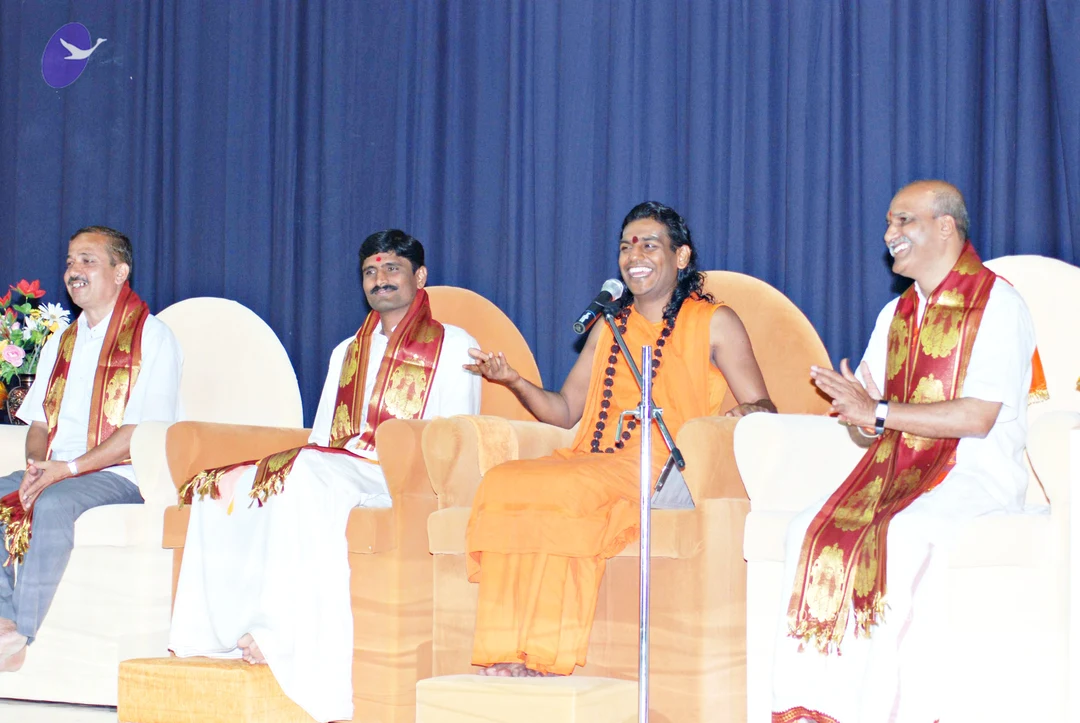
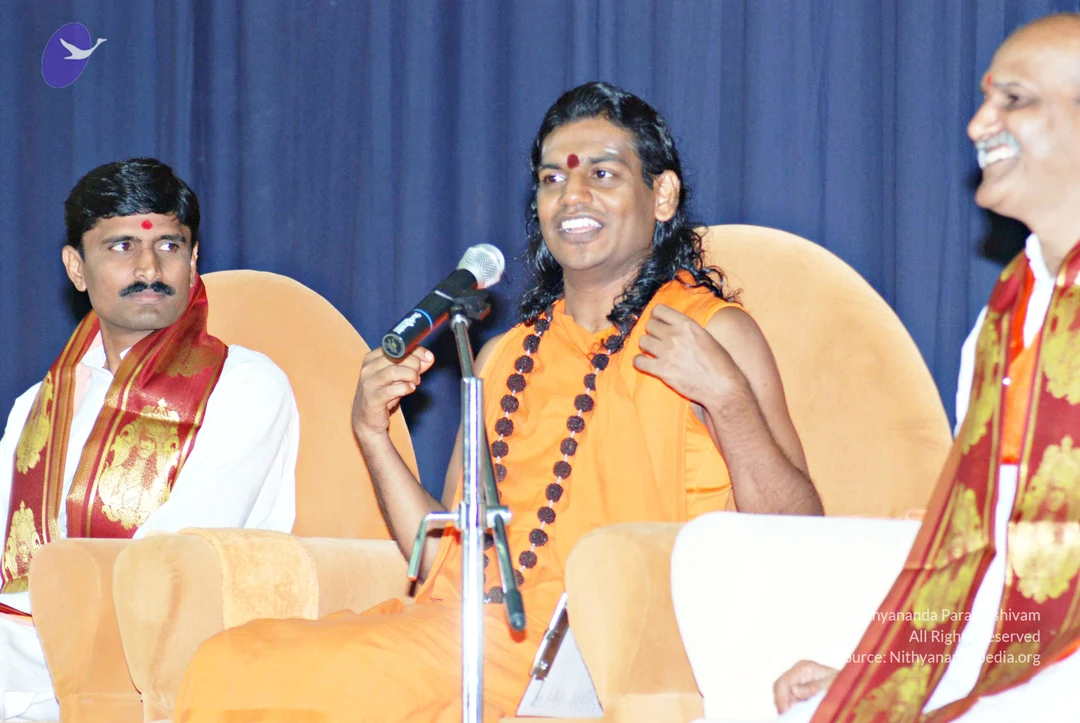
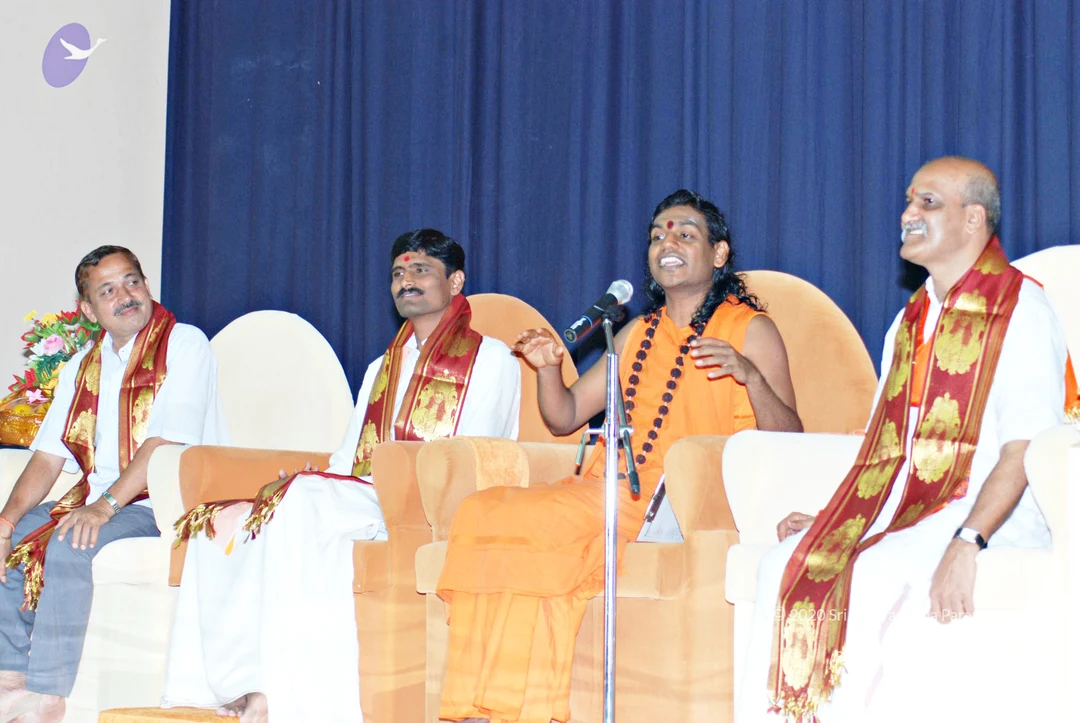
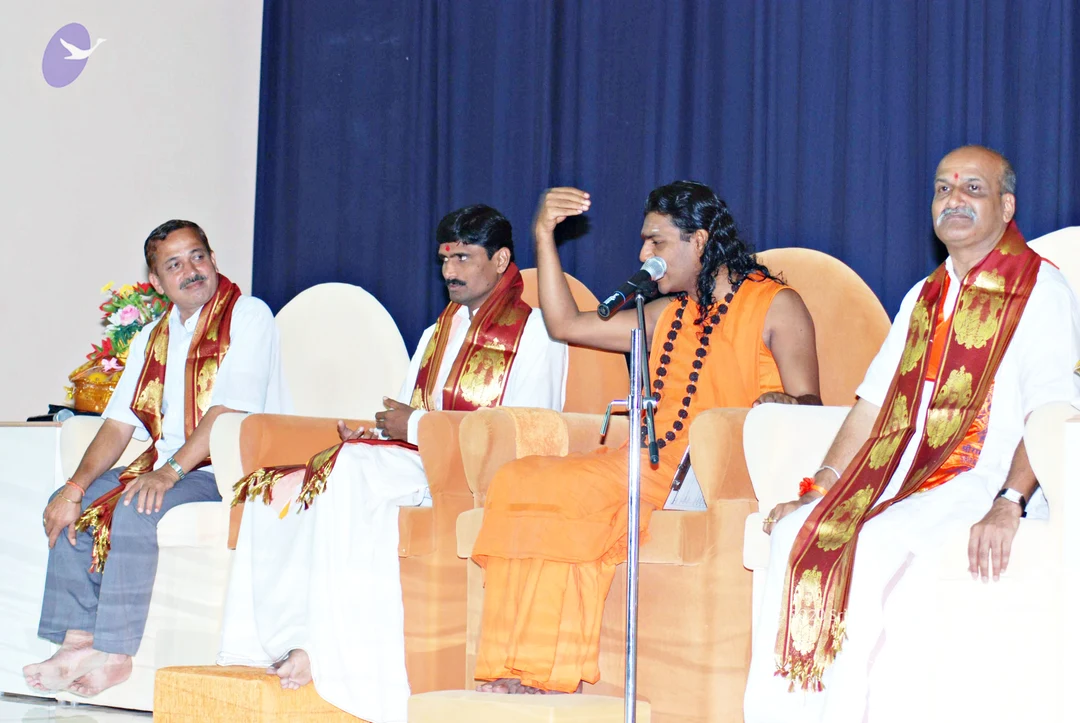
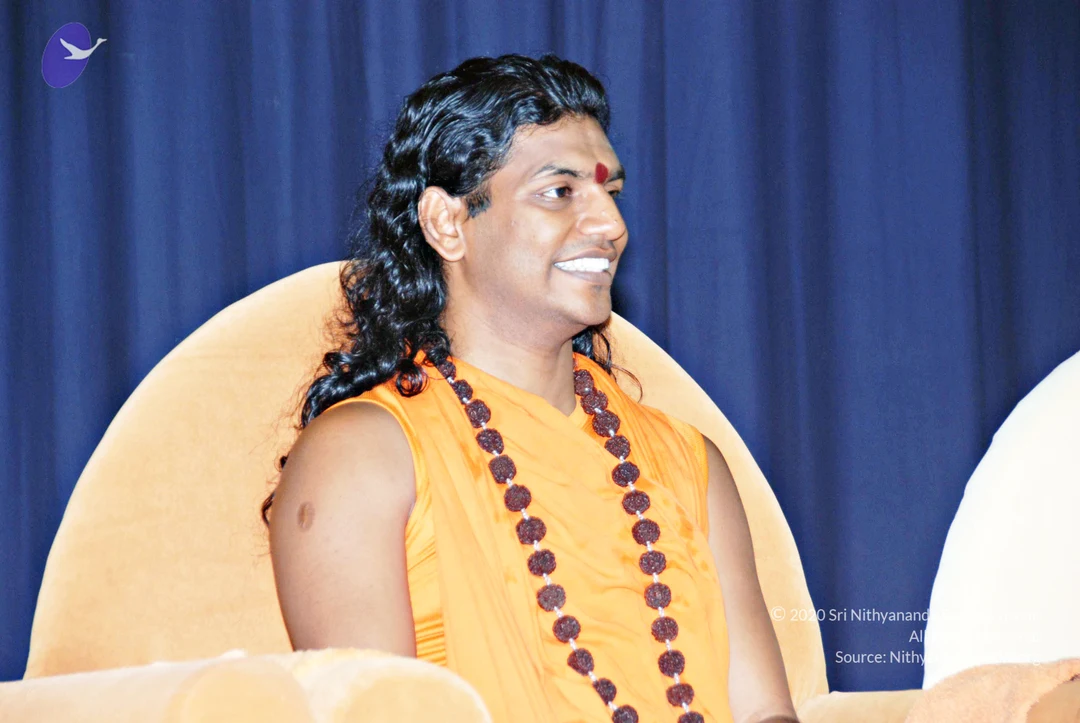
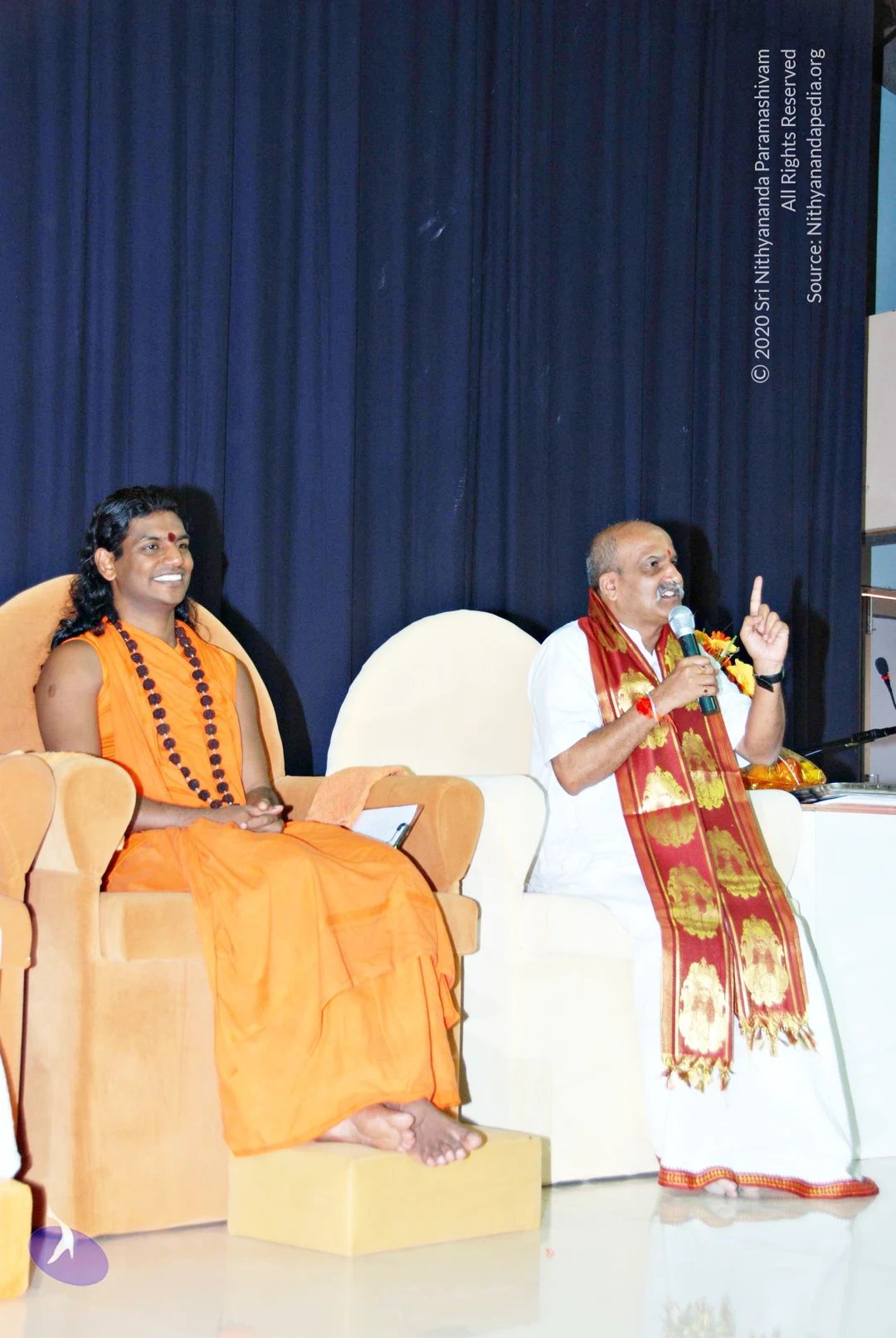
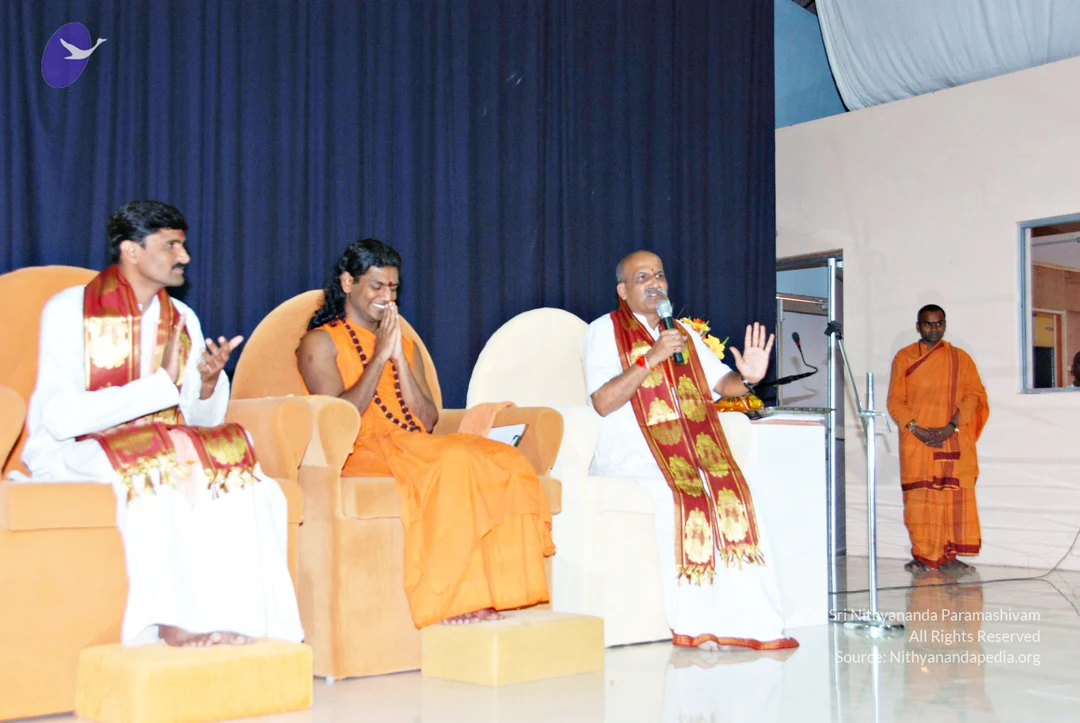
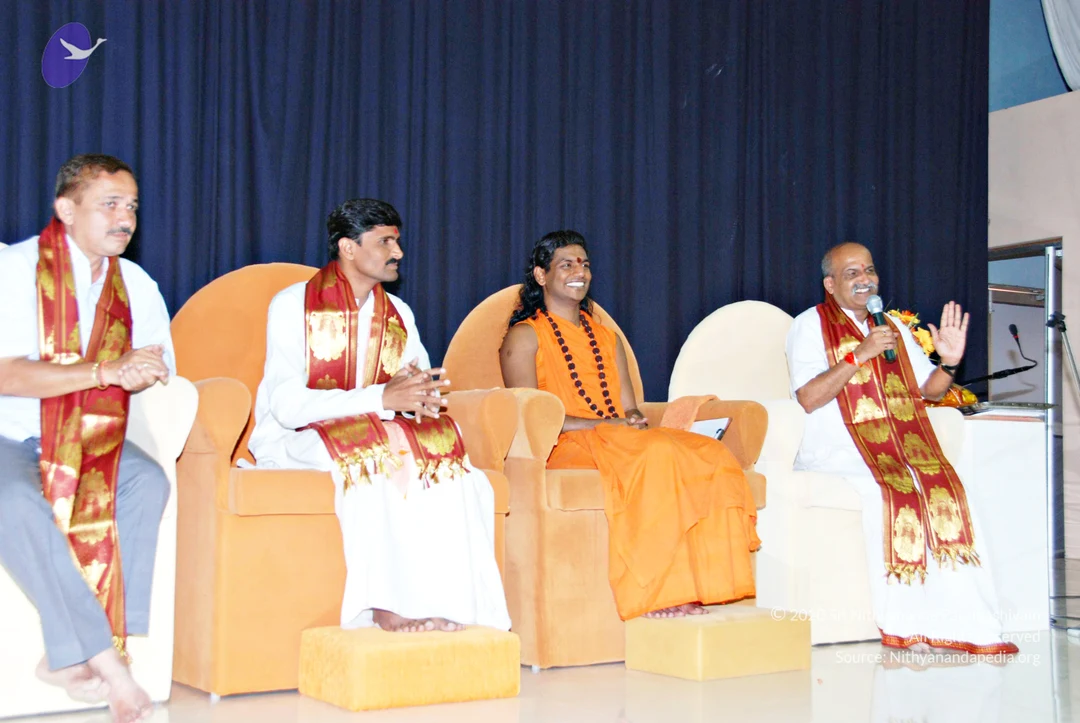
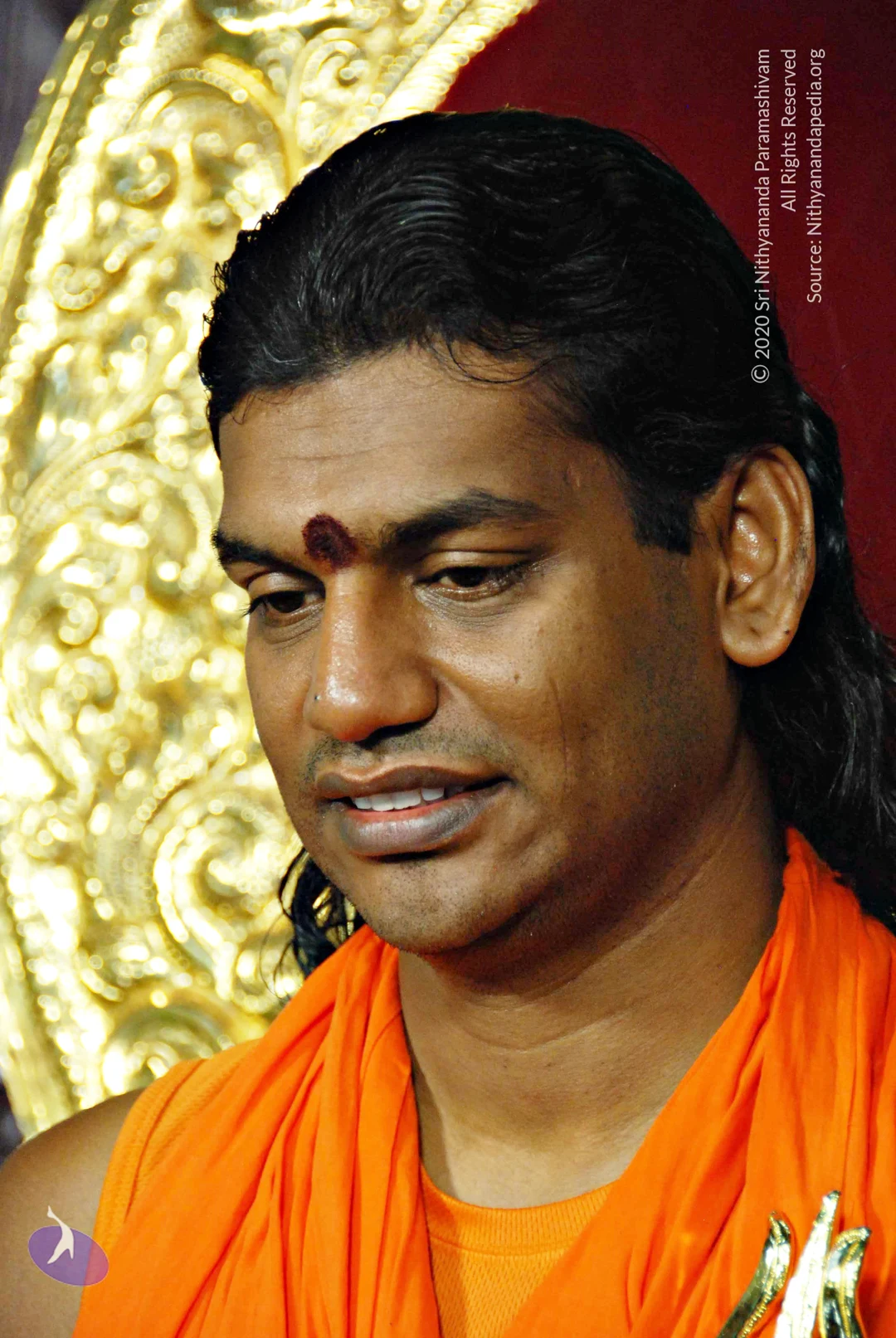
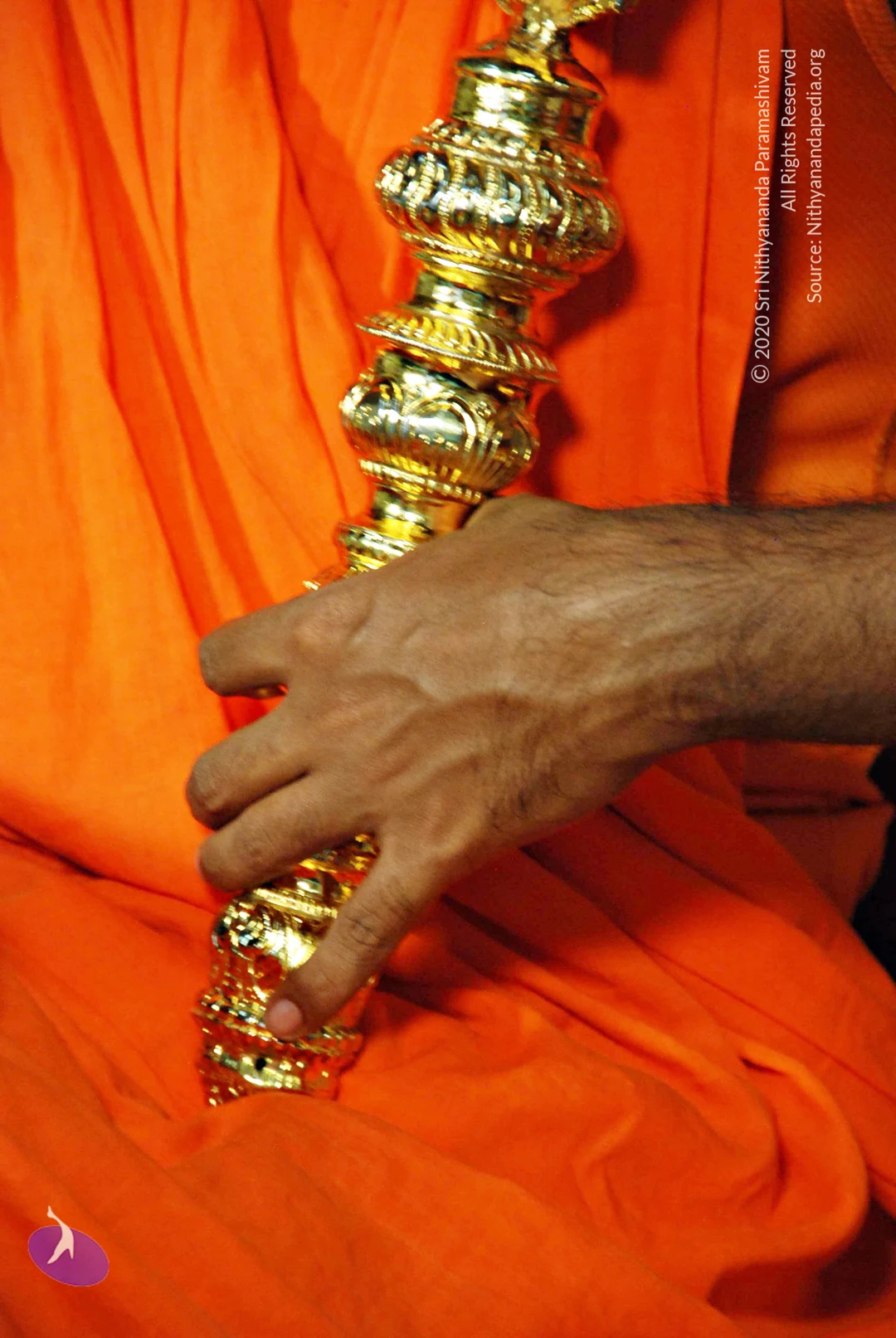
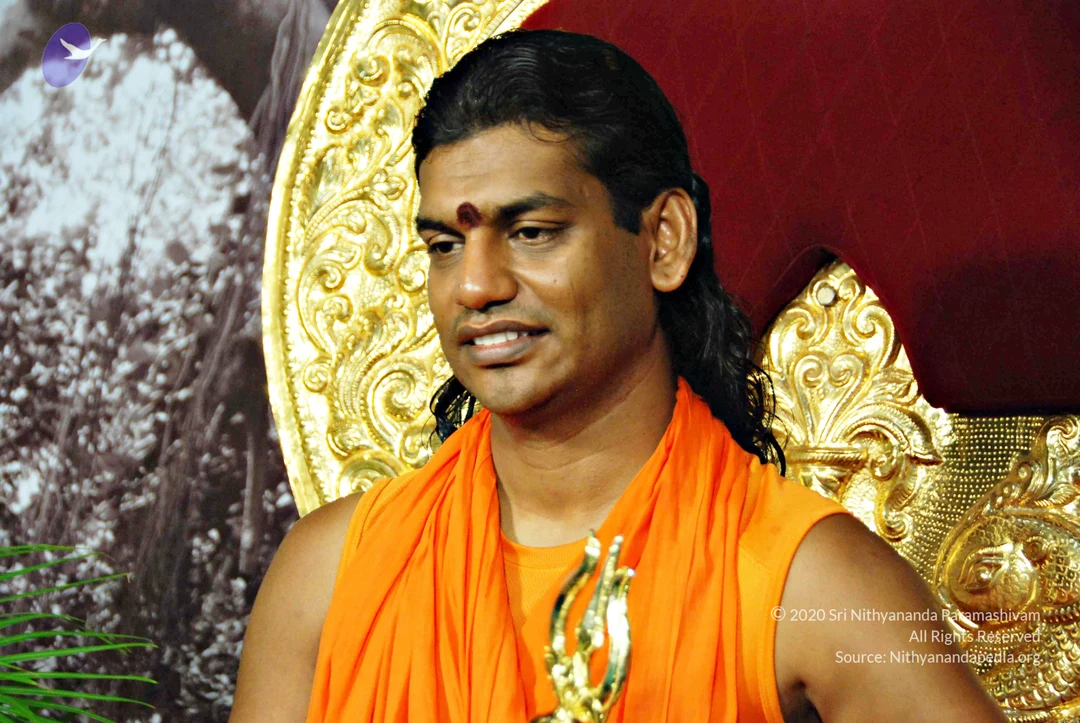
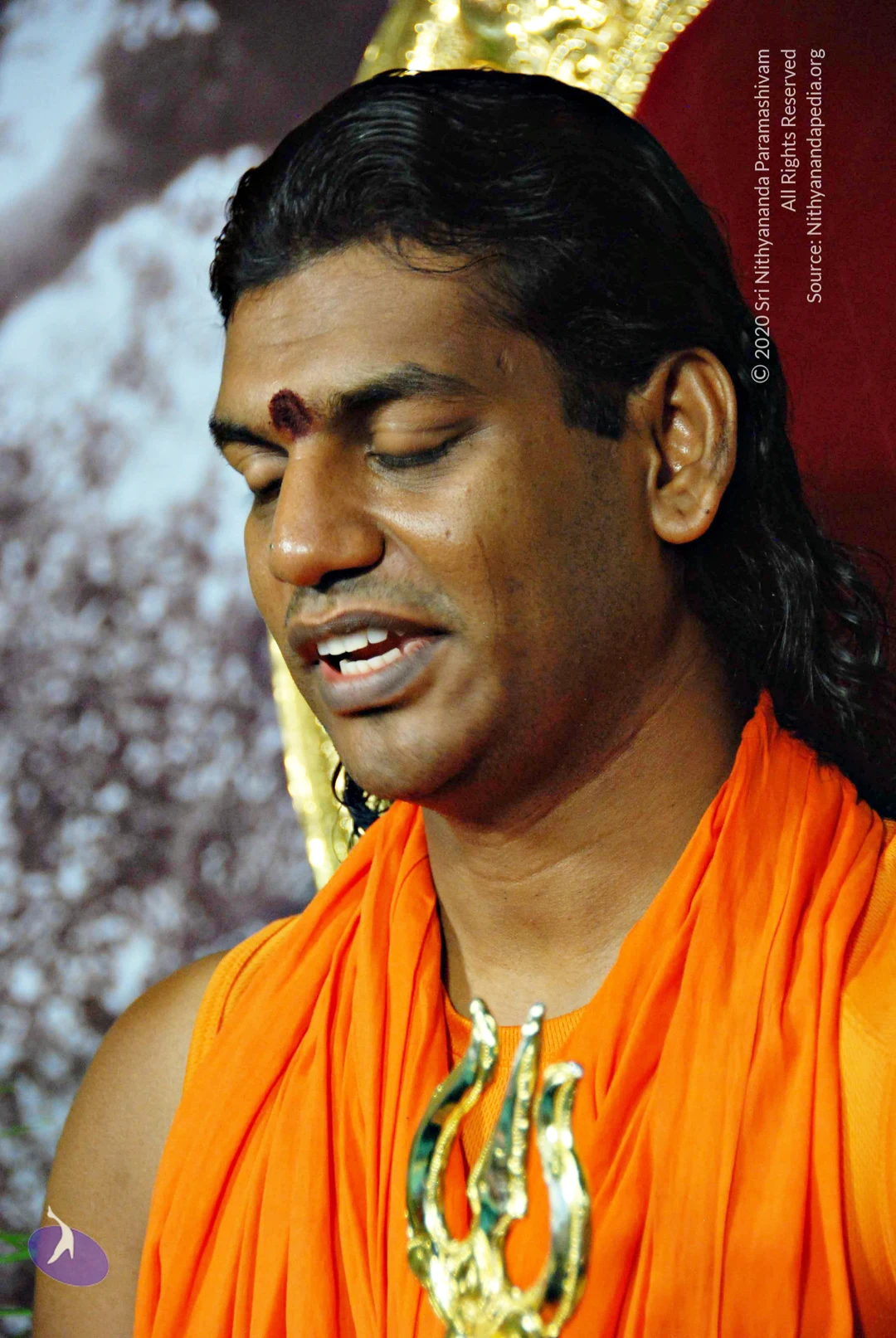
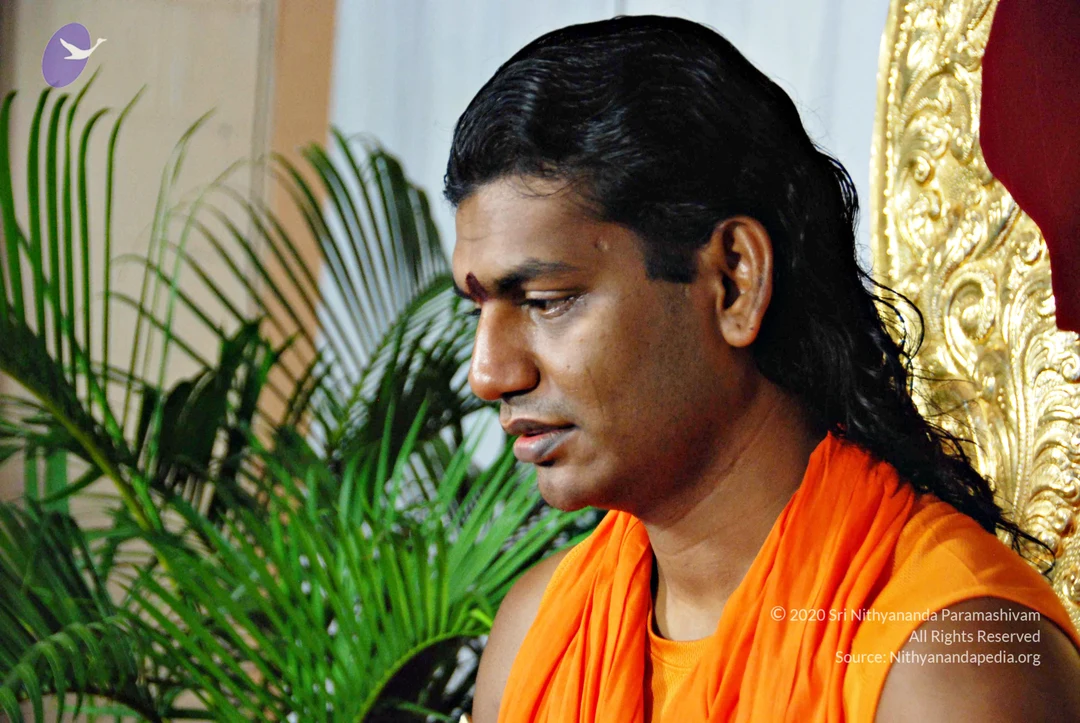
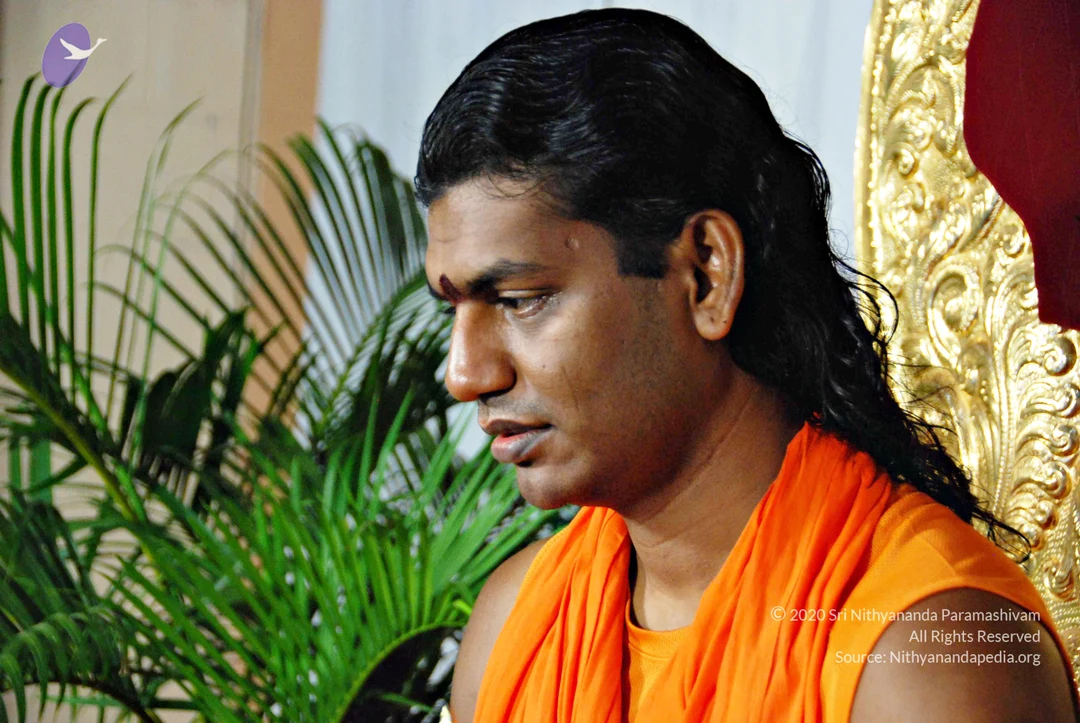
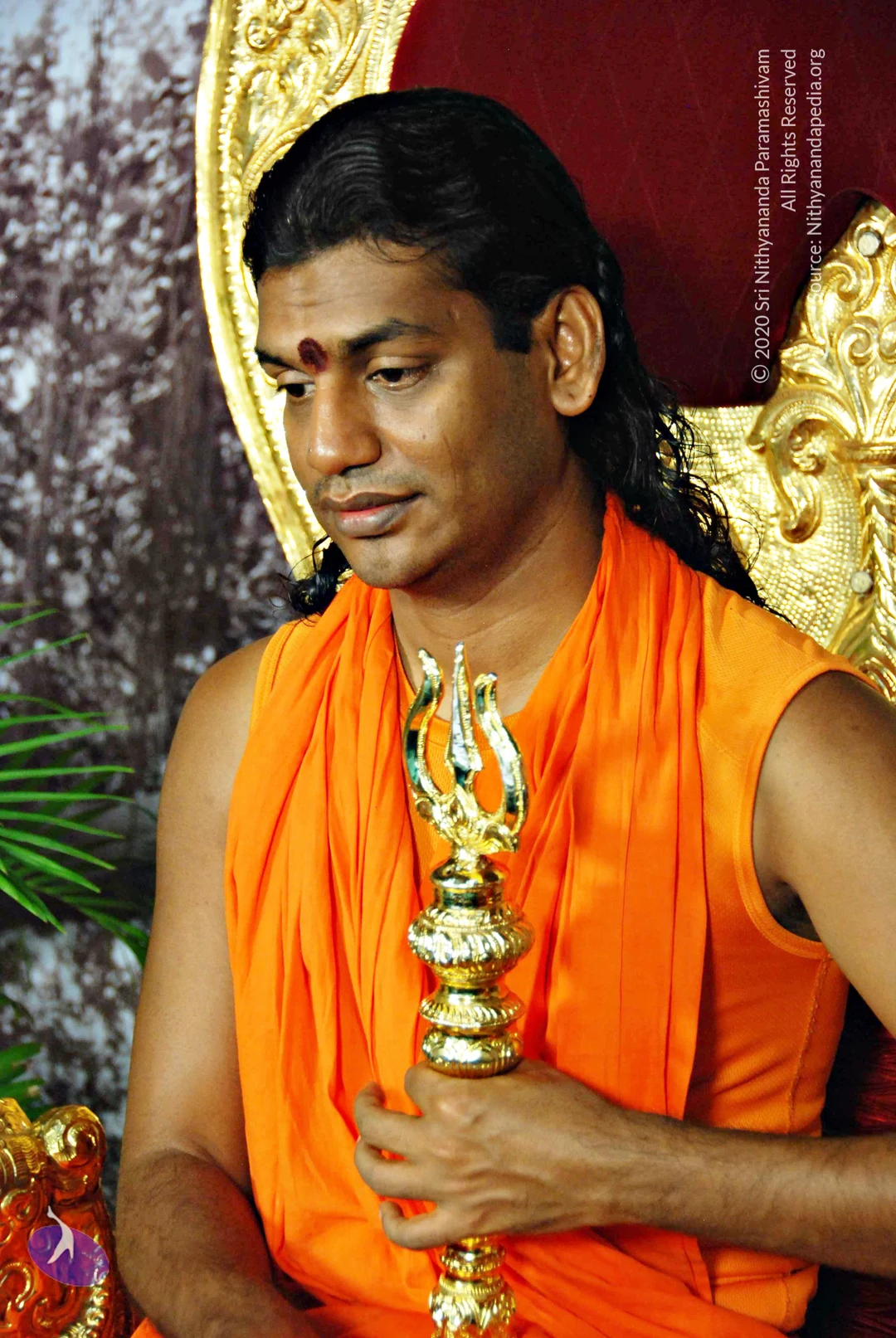
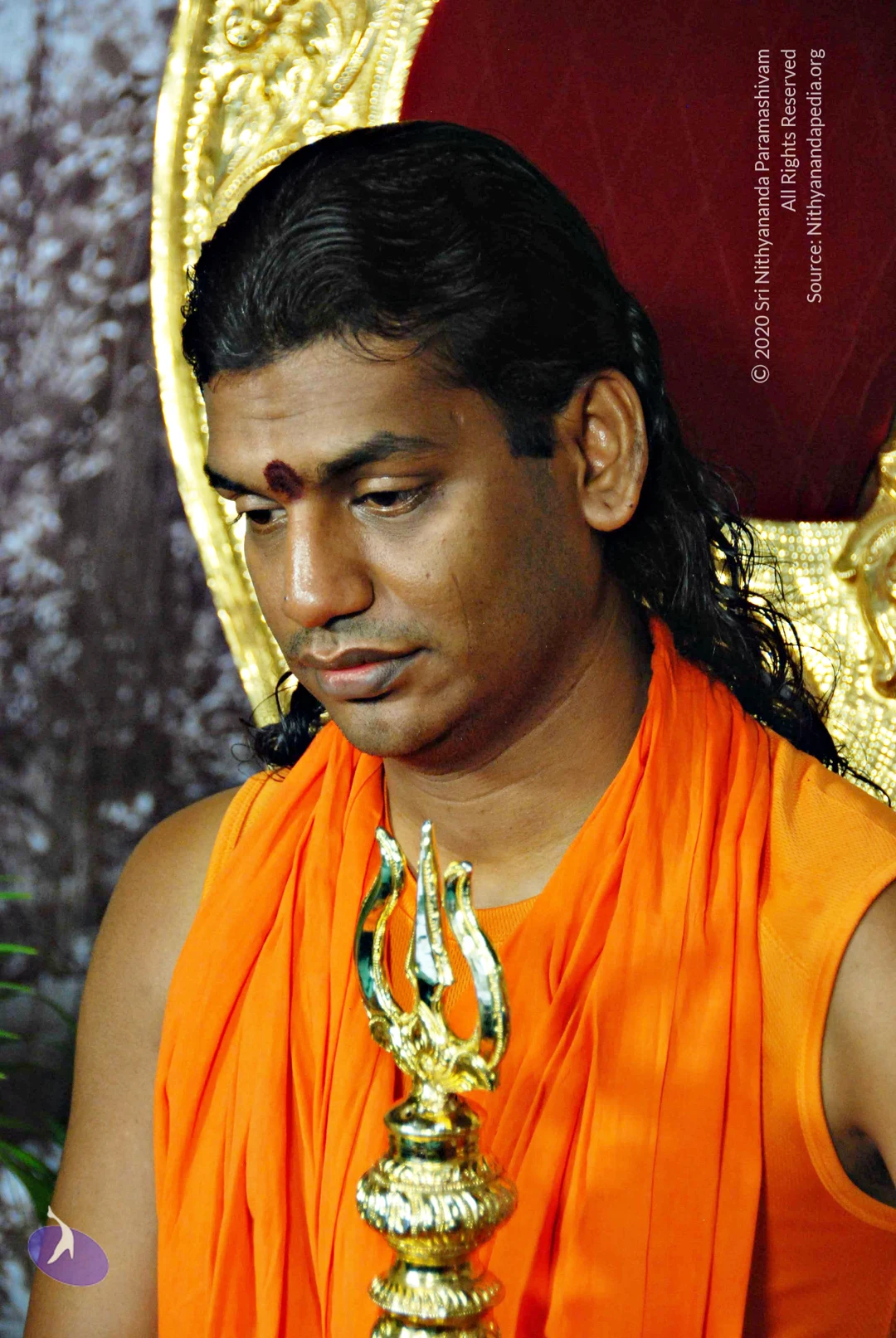
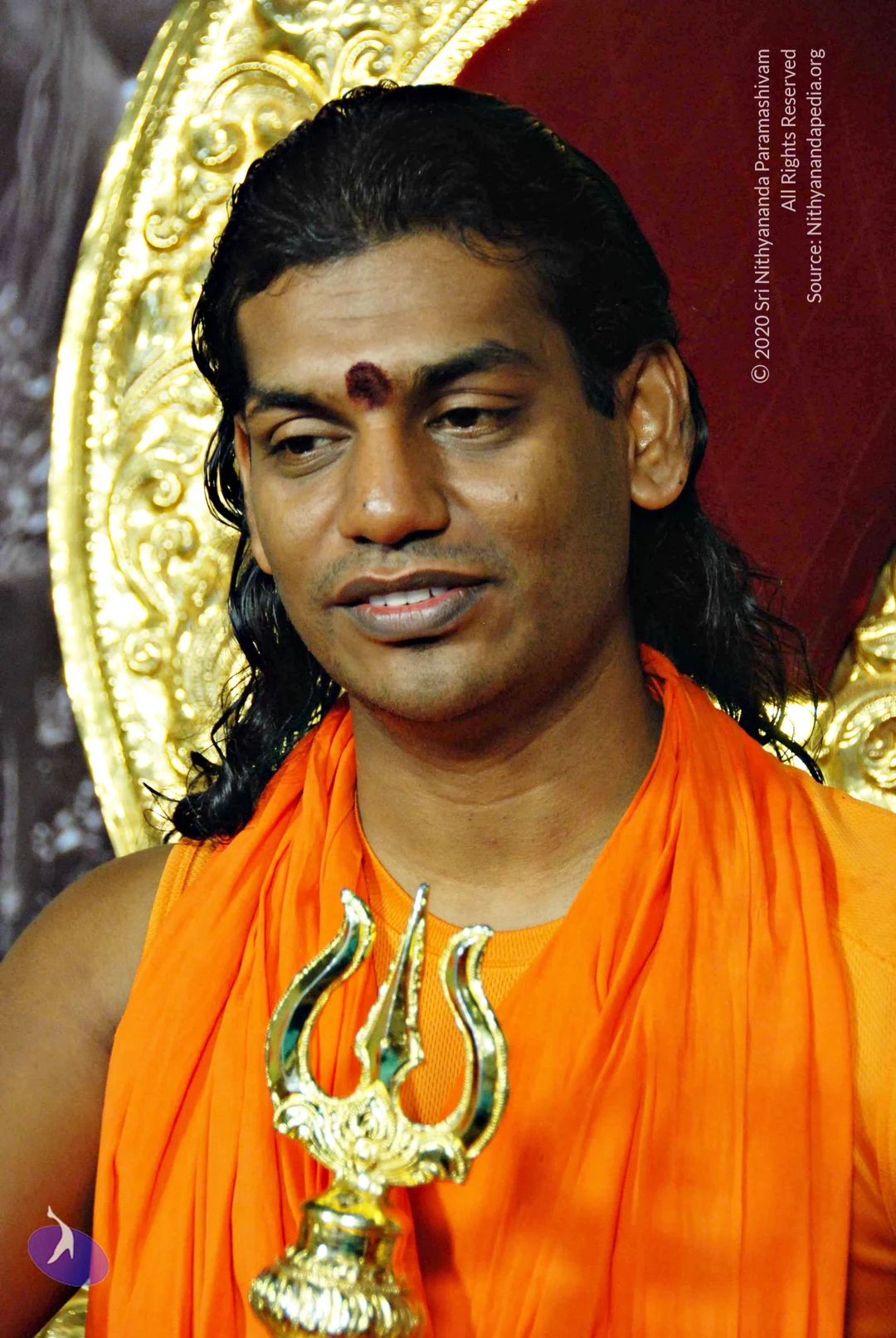
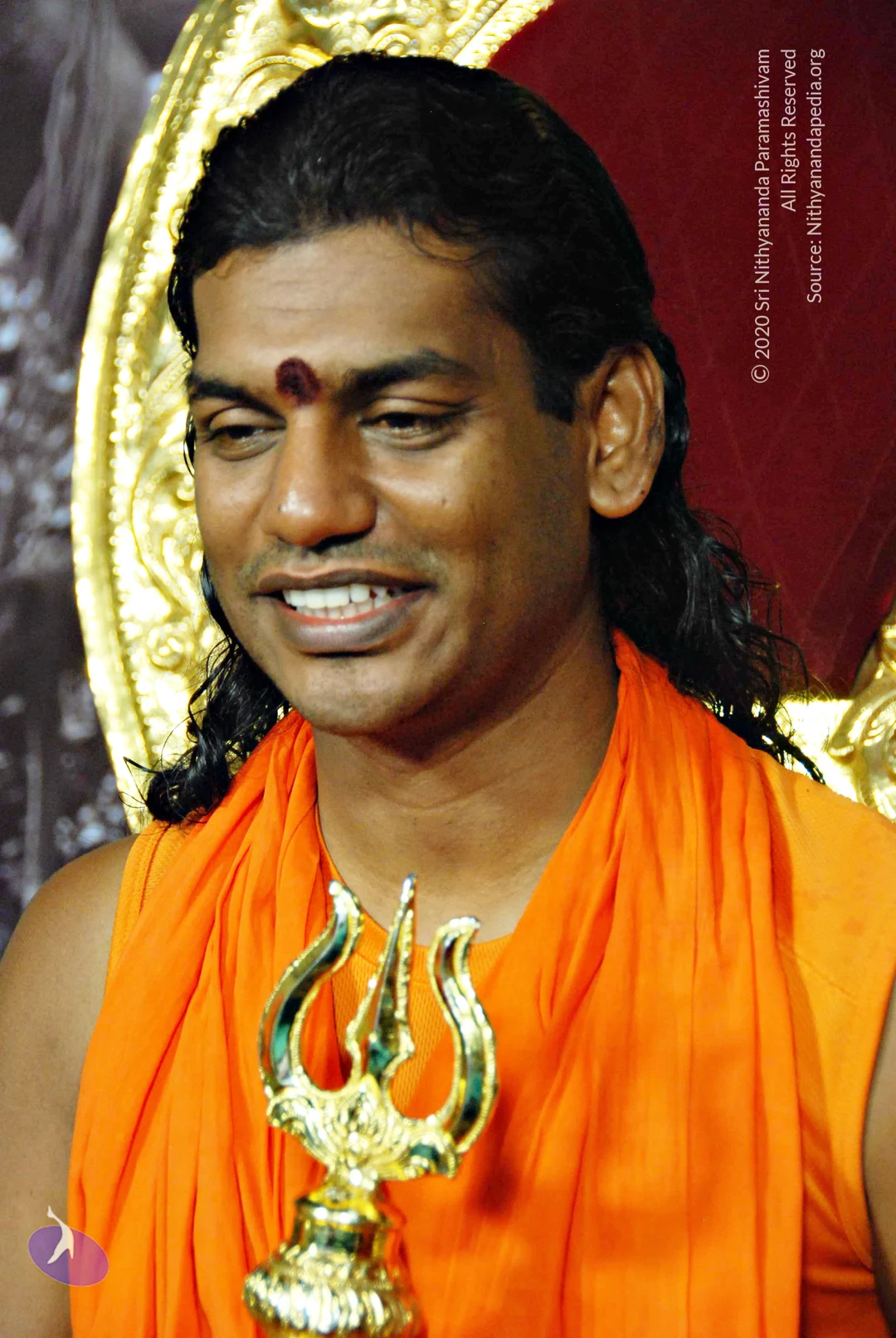
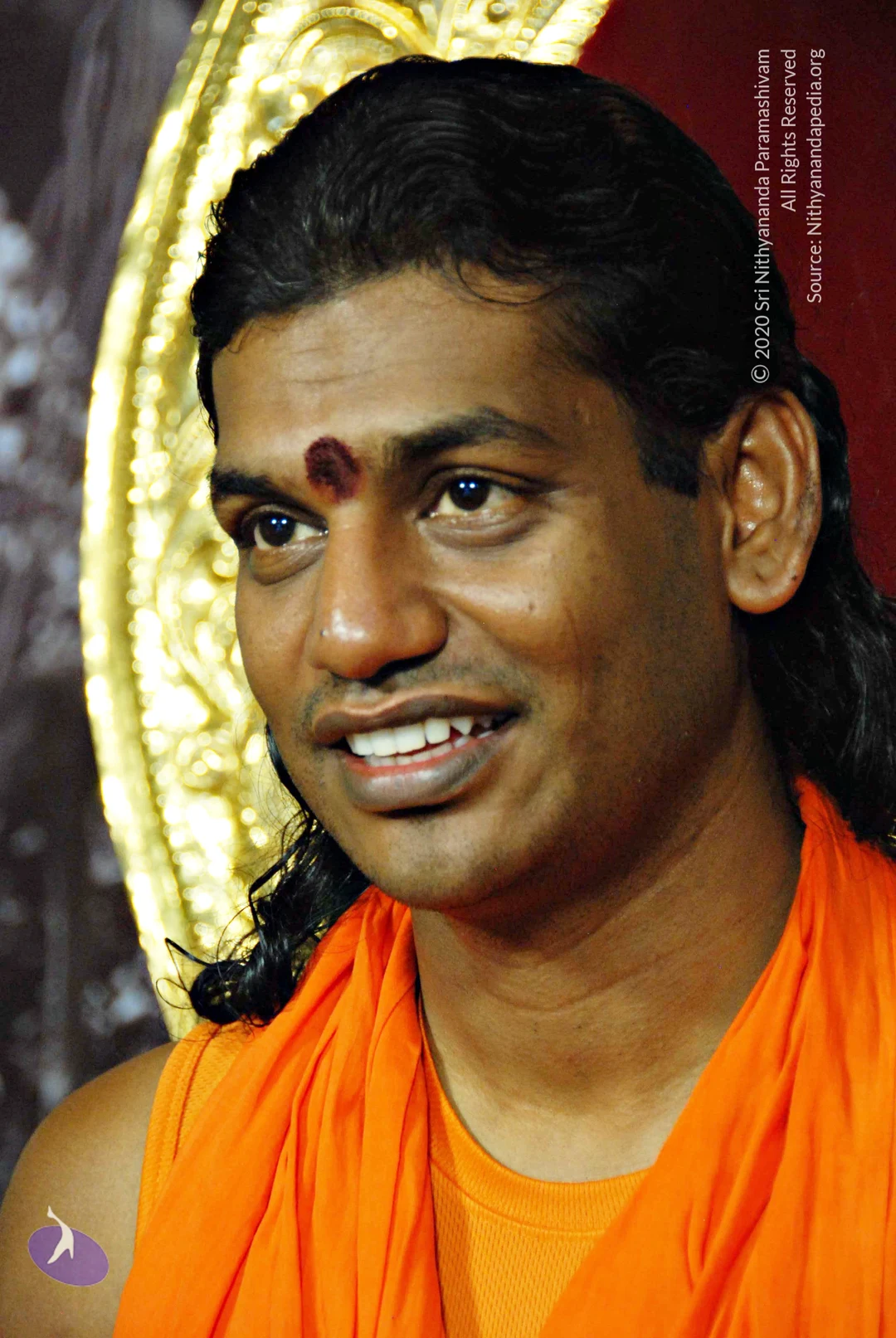
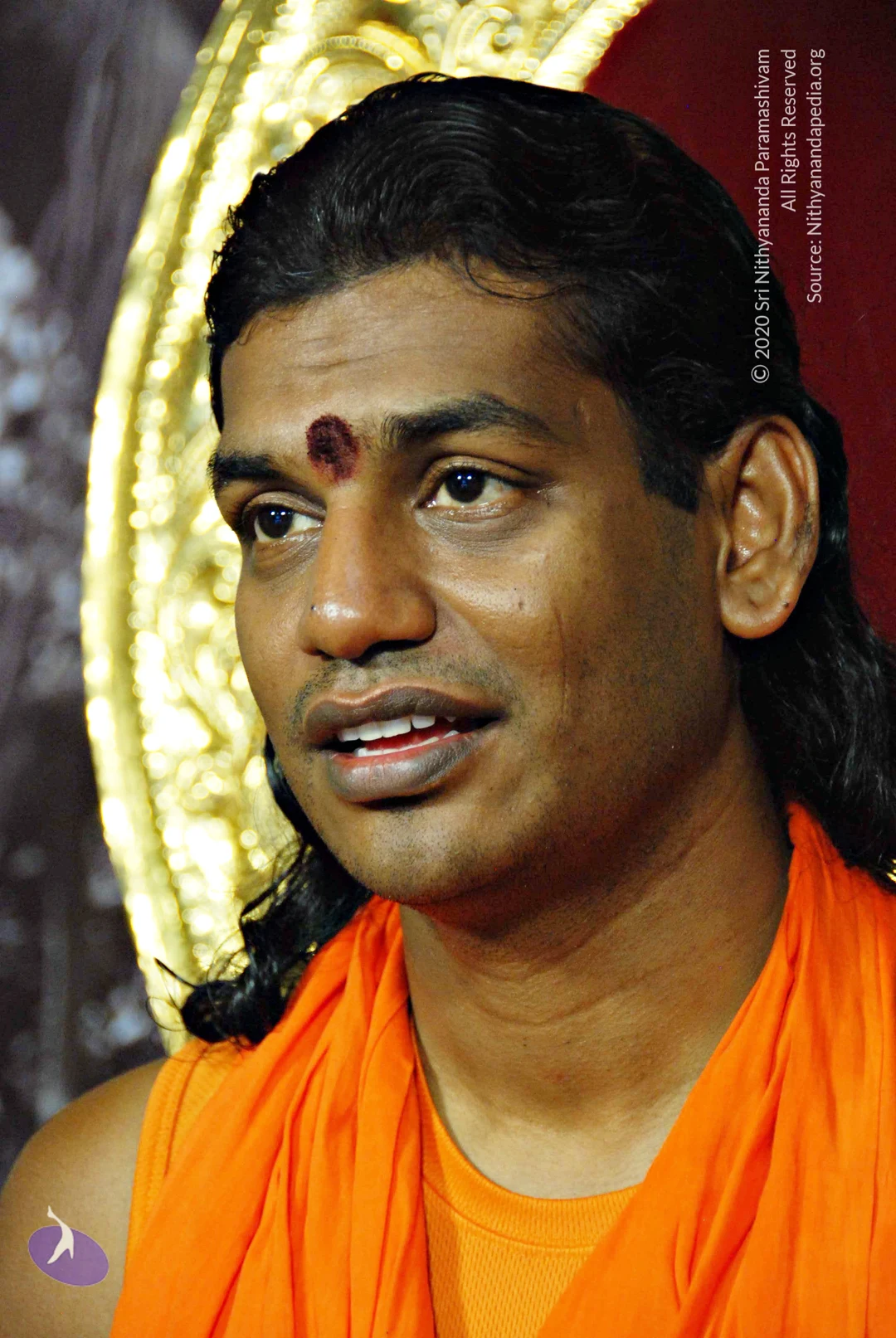
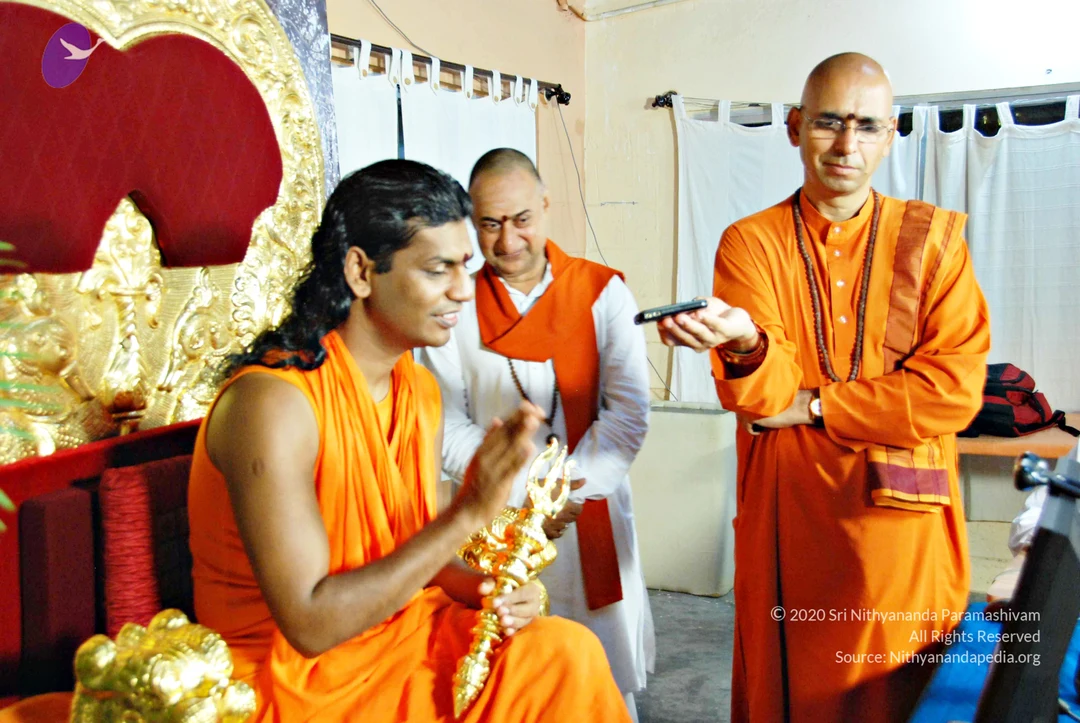
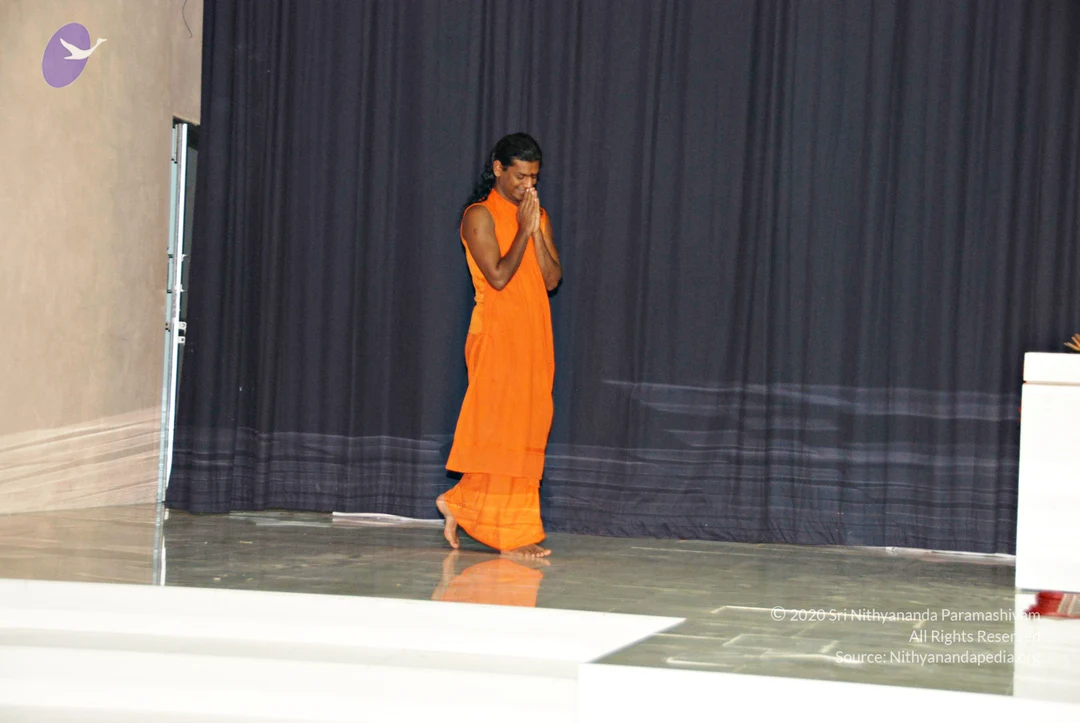
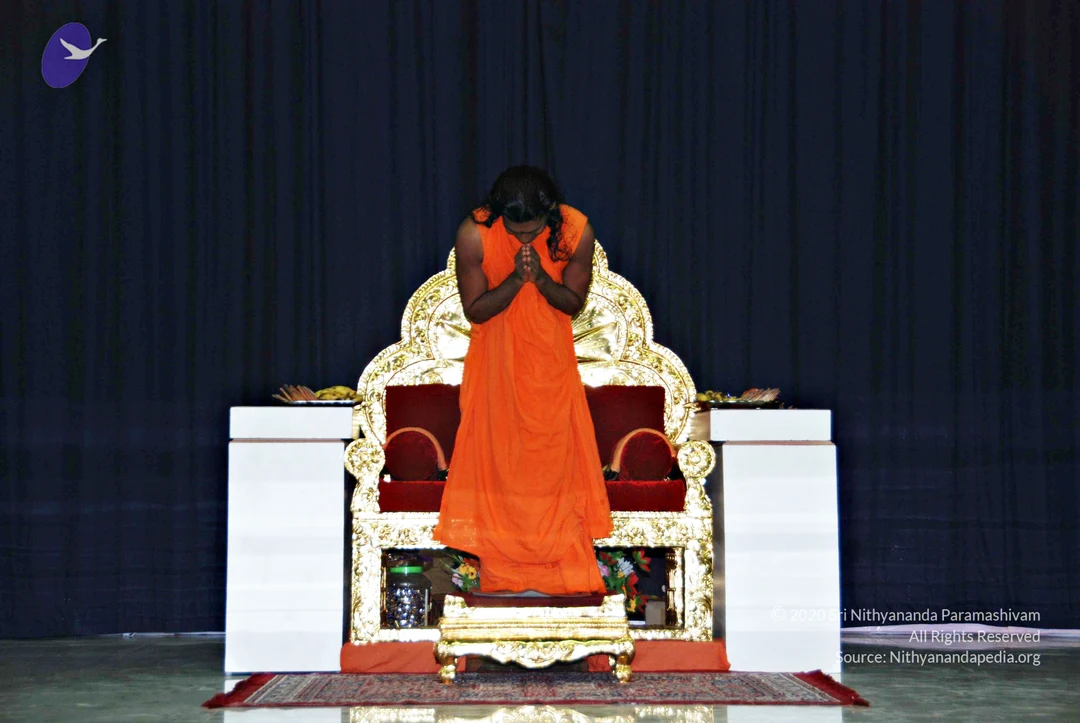
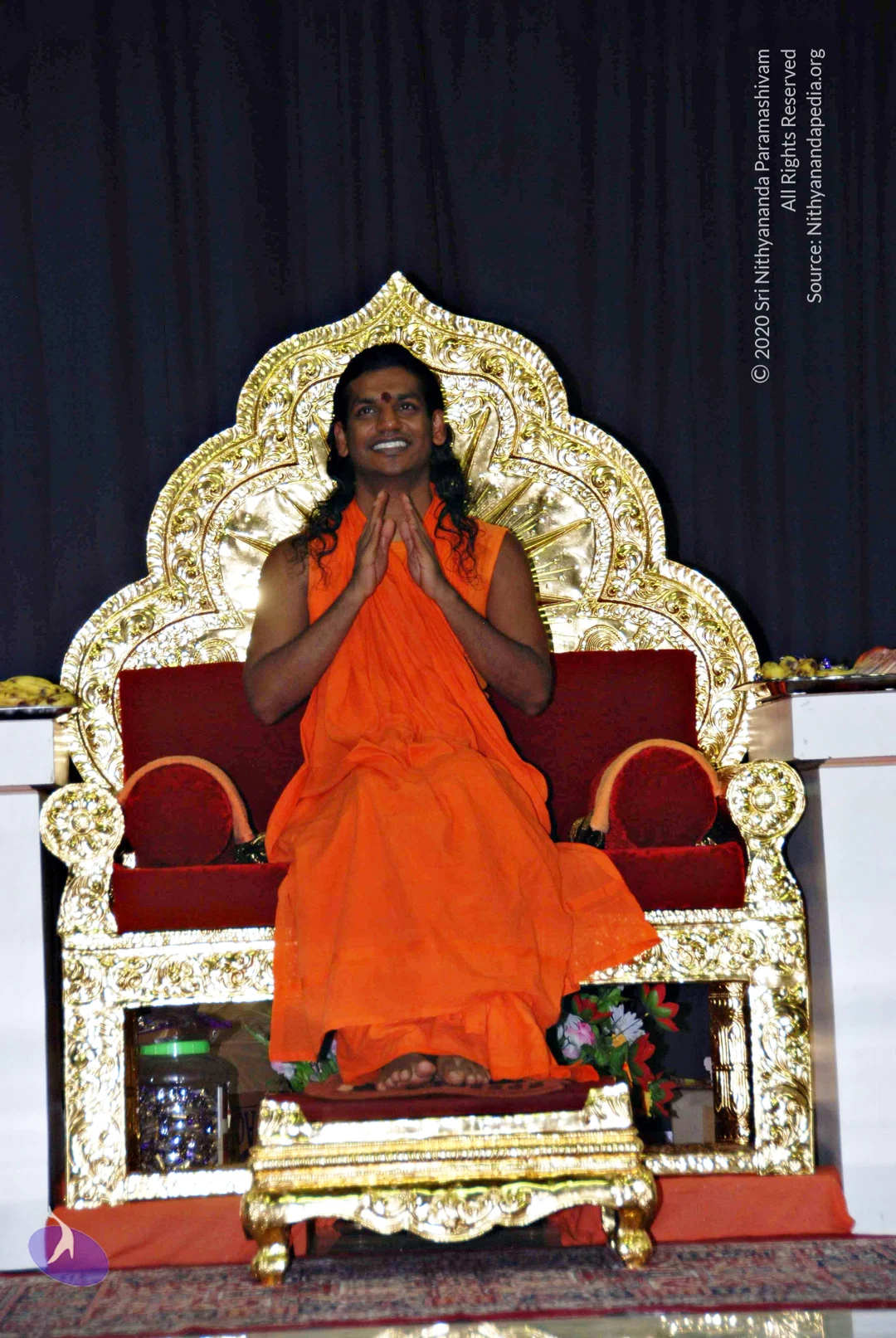
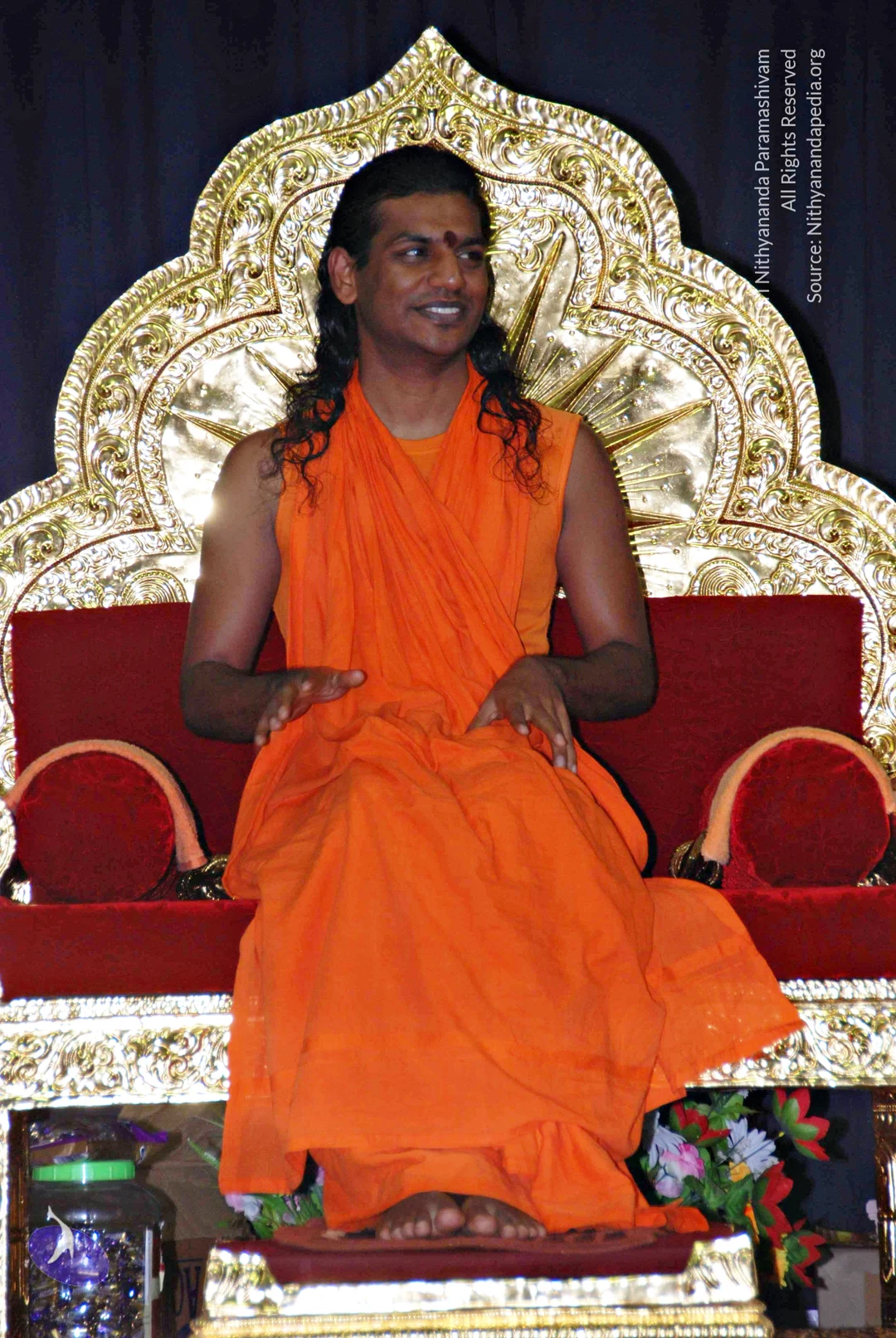
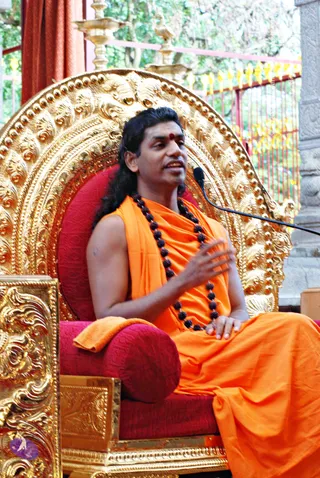
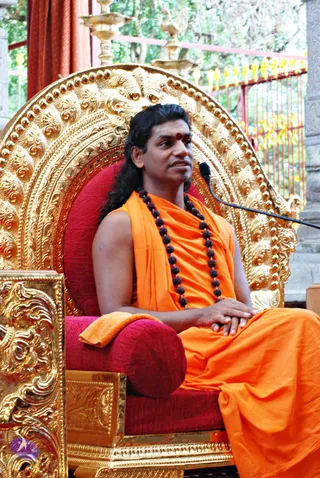
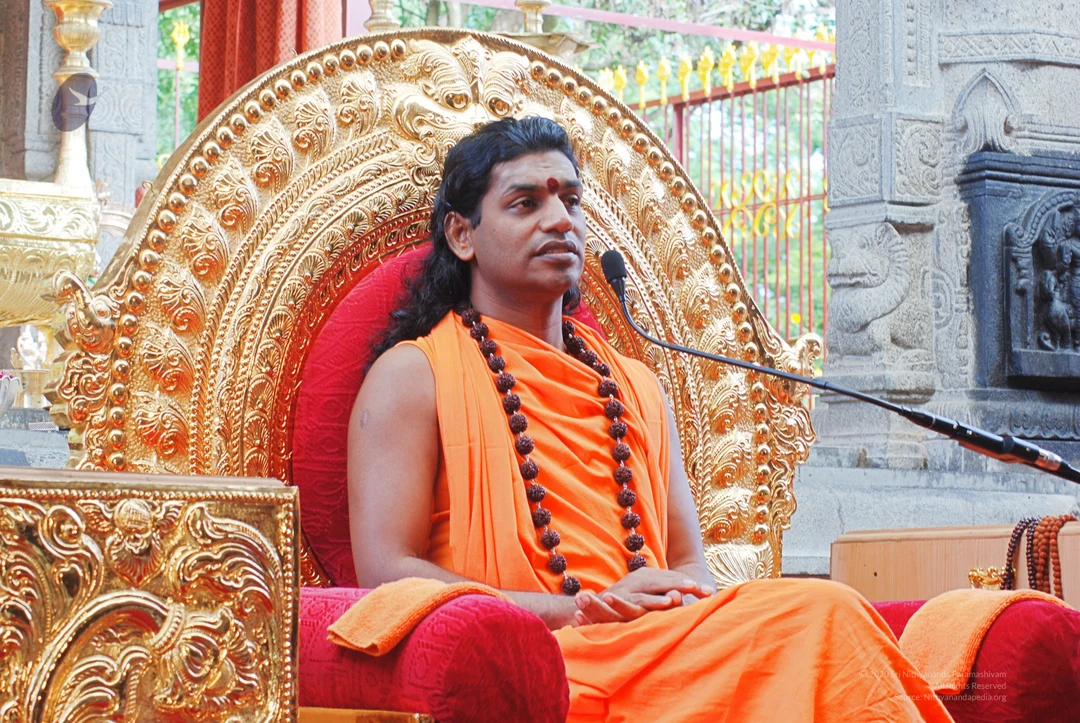
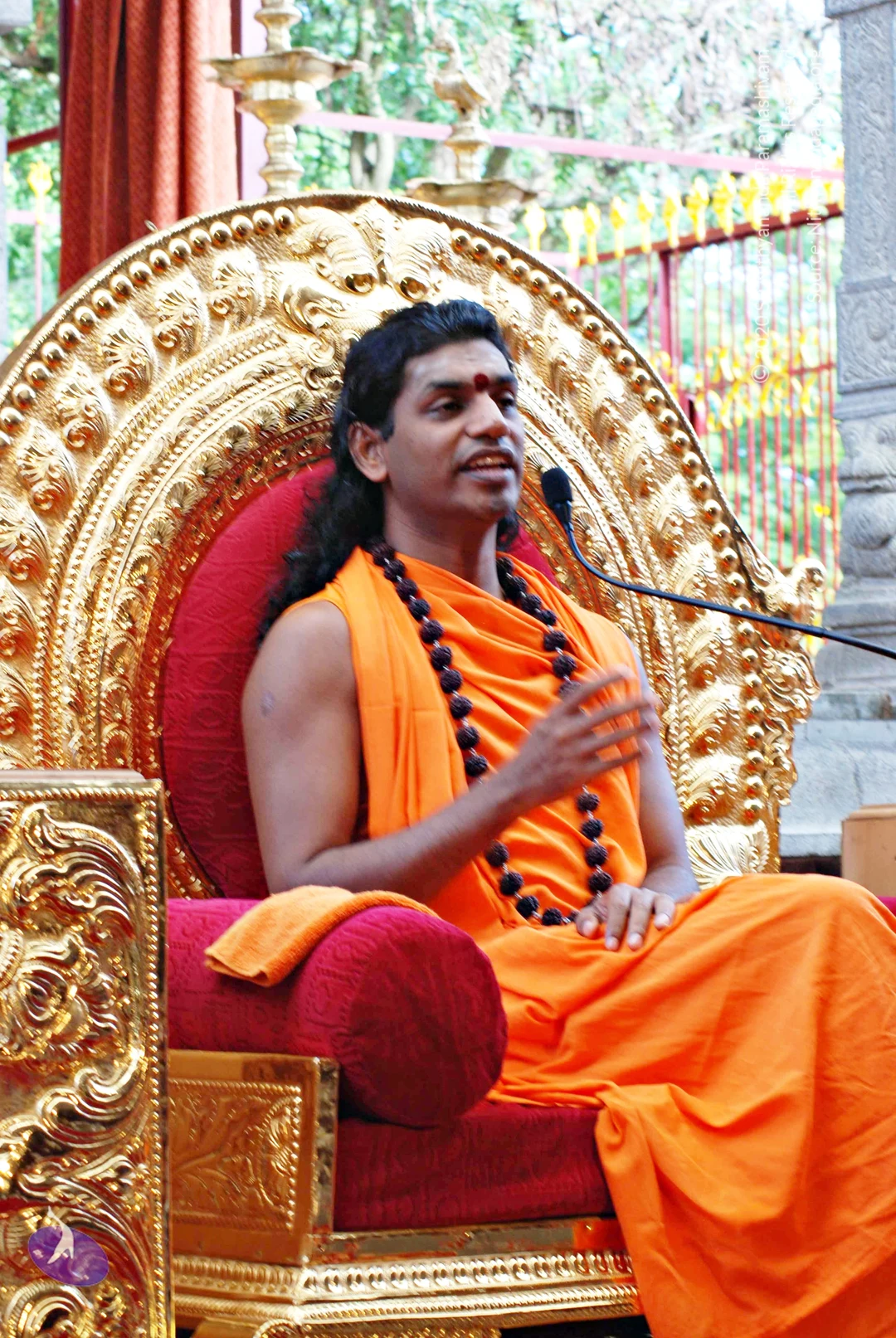
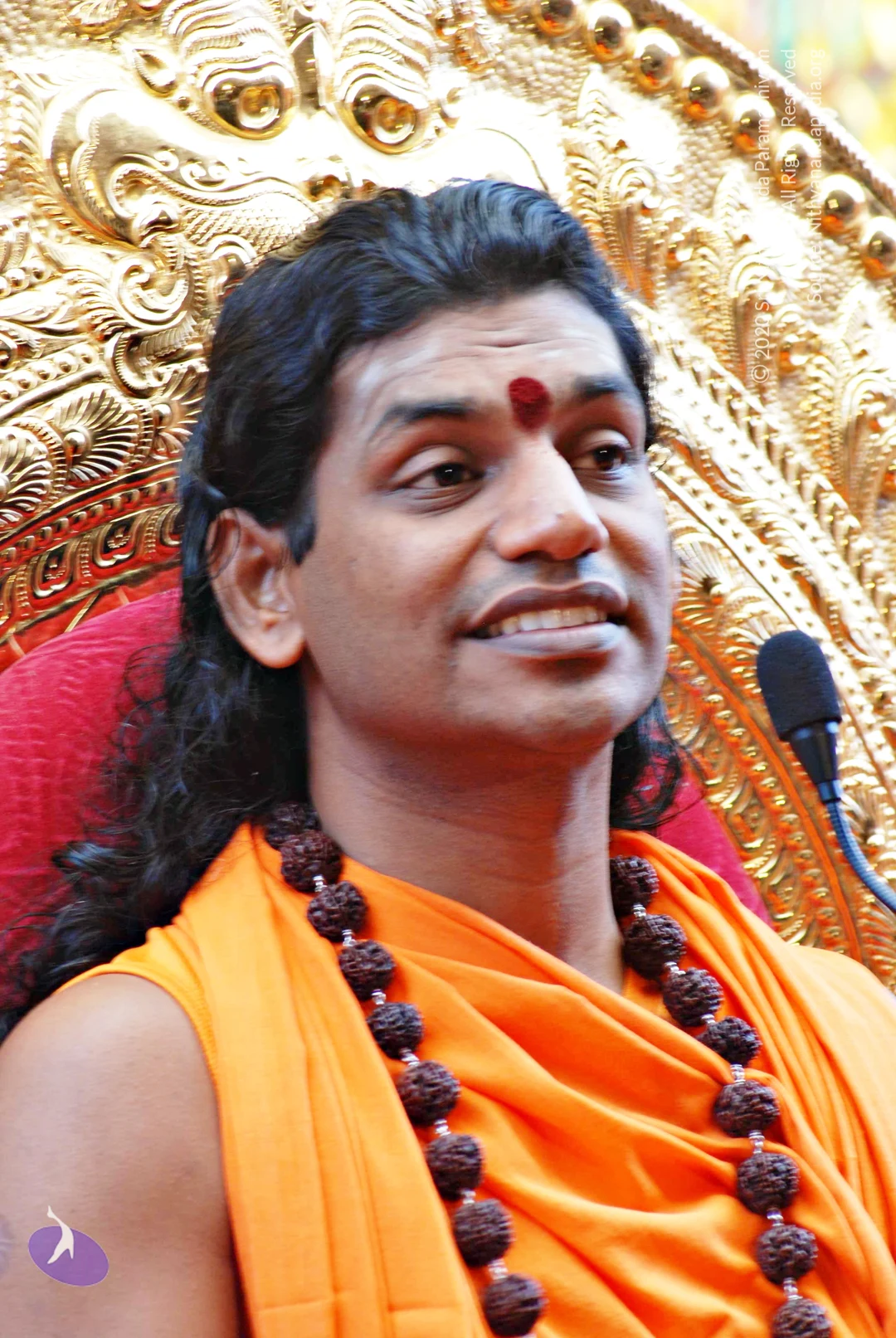
A man with long, swept-back dark hair and a red bindi sits on an ornate gold throne with a red cushion, speaking into a microphone on a stand. He wears an orange saffron wrap over a sleeveless orange garment and a long rudraksha mala. One hand rests on his lap while the other gestures in front of his chest. Behind him are red metal railings with gold finials, a gold kalasha-topped structure and green foliage. Swamiji (probable) is seated, with long swept-back hair, saffron clothing and a rudraksha mala, giving a morning message.A man with long, swept-back dark hair sits on an ornate gold throne with a red cushion, speaking into a black microphone on a stand. He wears an orange sleeveless saffron garment draped over his shoulders, a red bindi on his forehead, and a long rudraksha mala of dark beads around his neck. Behind him, blurred bright yellow and red decorations hang in the background. The setting appears to be a satsang or public discourse.A man with long dark hair sits on an ornate gilded throne with a red cushioned seat and armrest. He wears a sleeveless orange draped garment and a long necklace of dark rudraksha beads, with a small red tilak on his forehead. His hands rest in his lap and a microphone stands beside him. Behind the throne are golden lamp stands, a red railing and green trees.

Photos of the day

View all 843 photos

843 distinct dated photos. Source gallery sets may overlap. Preview includes 500 photos.

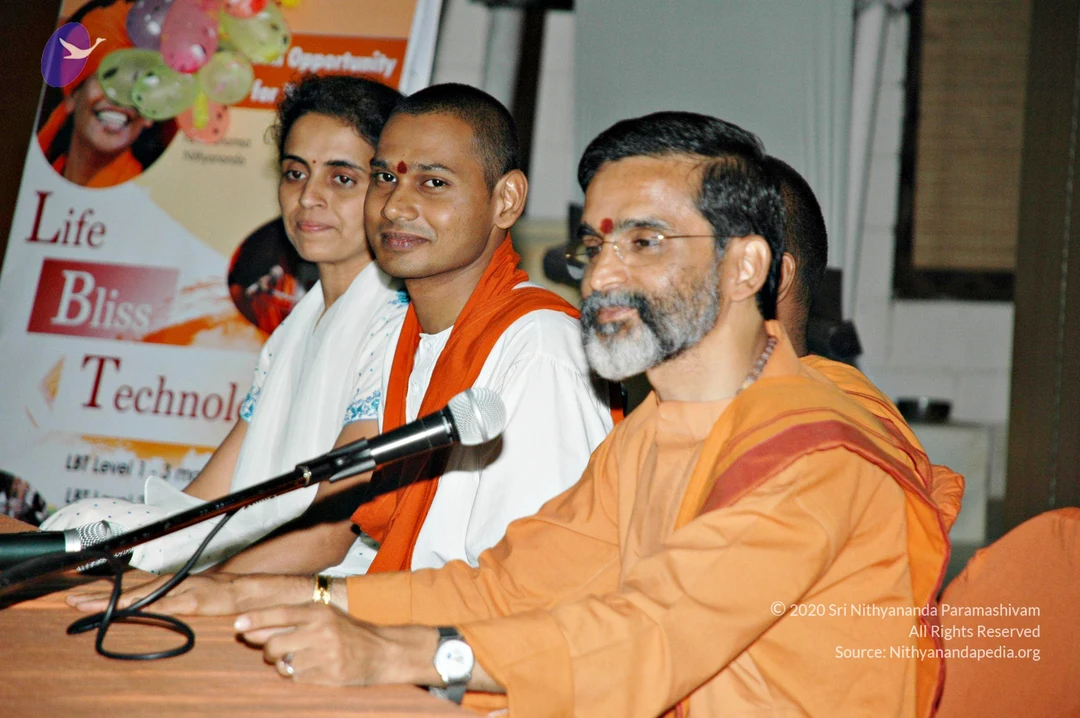
01

01-SATSANG

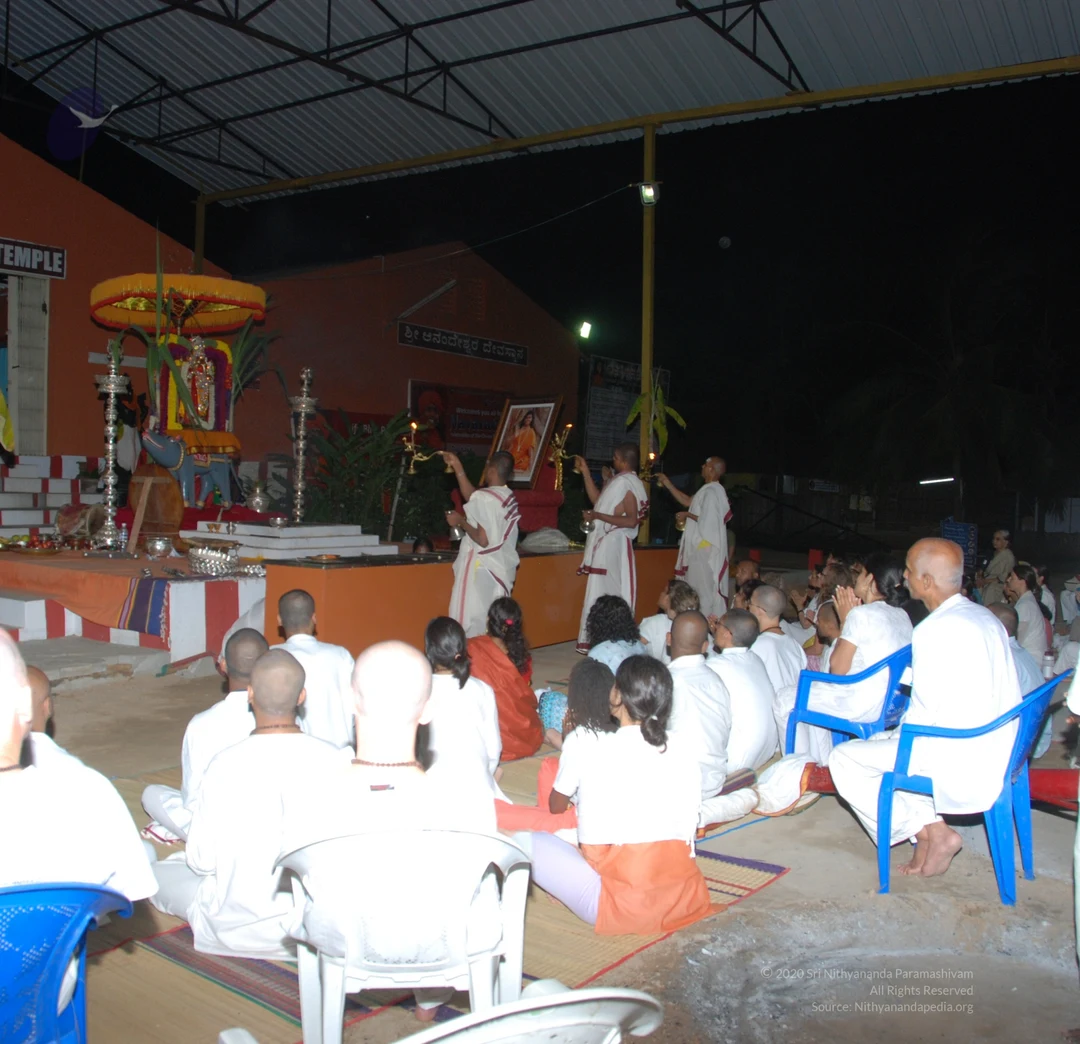
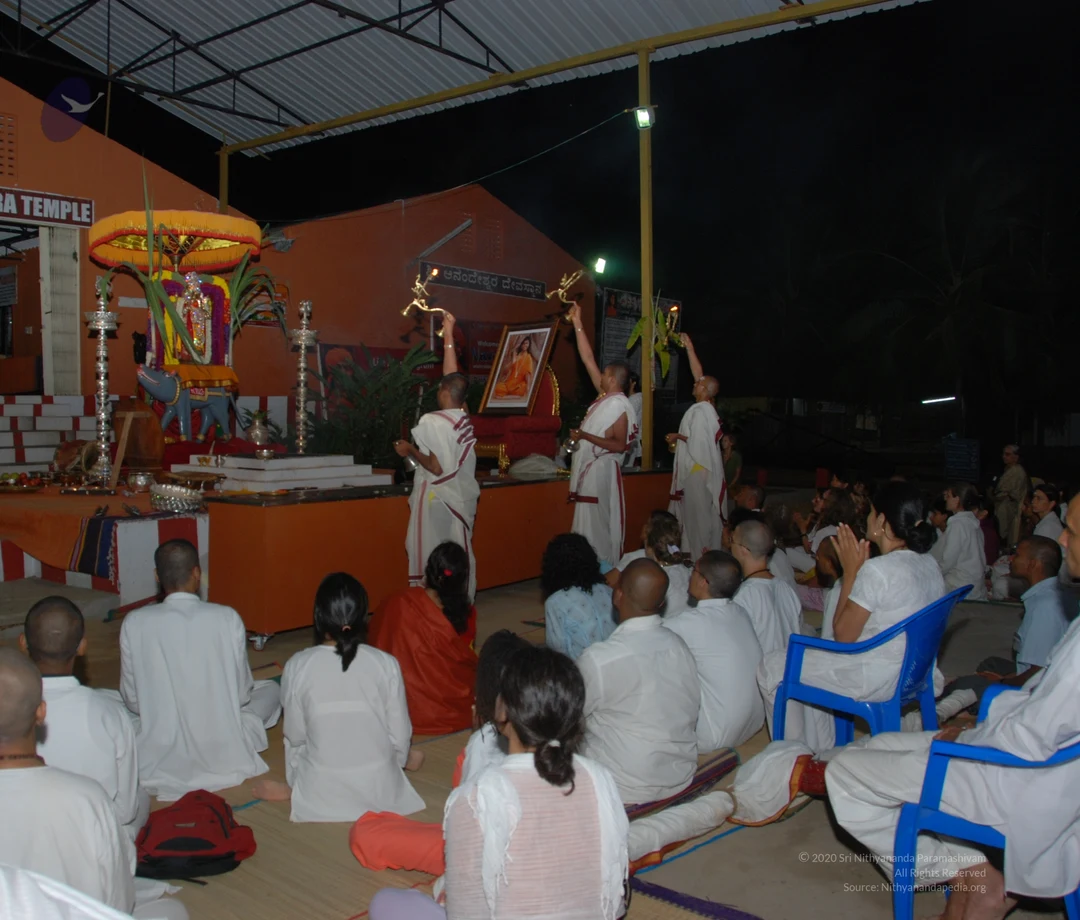
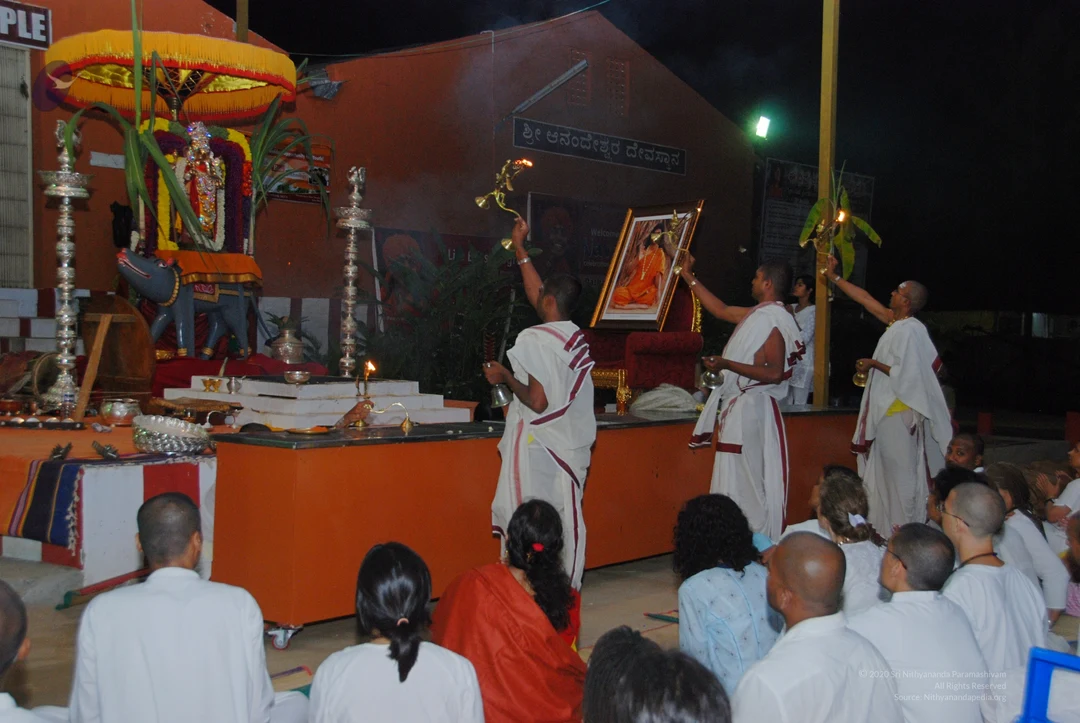
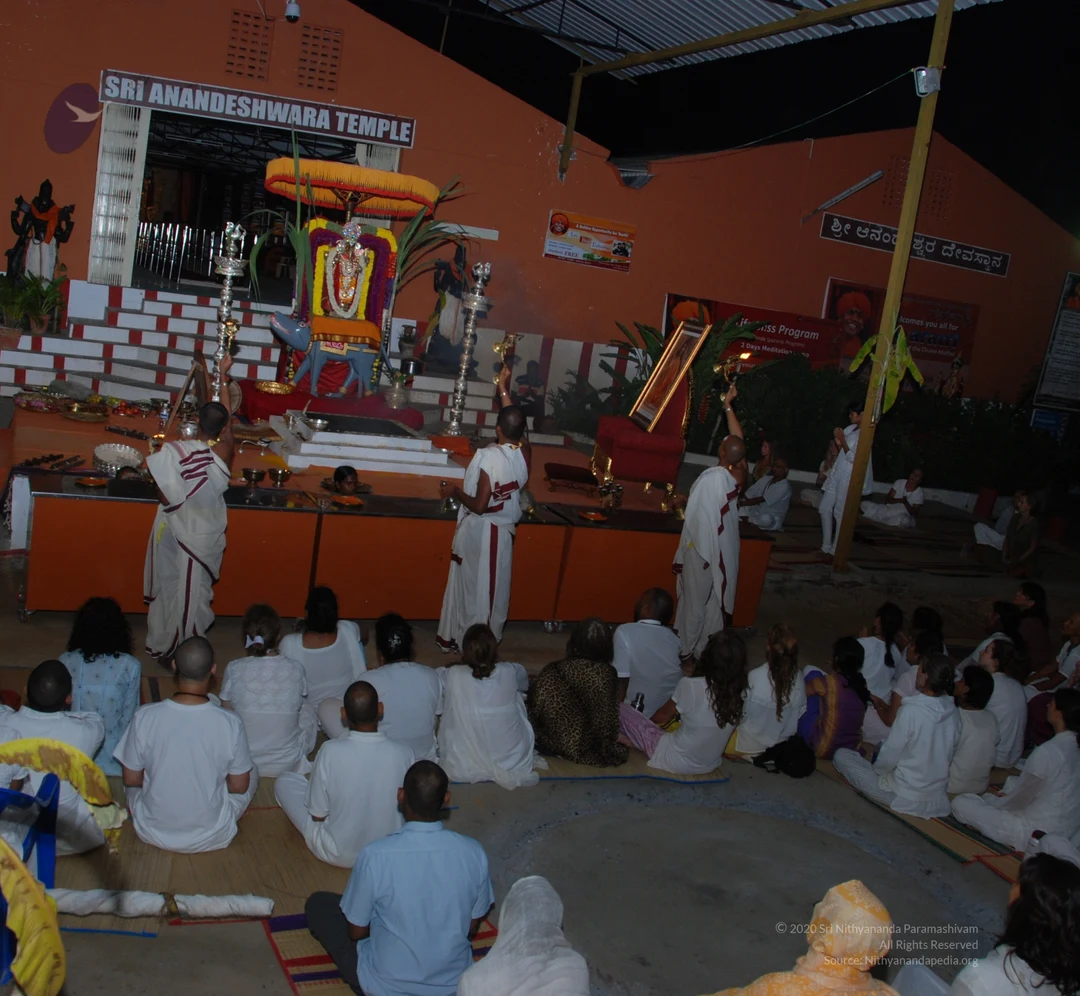
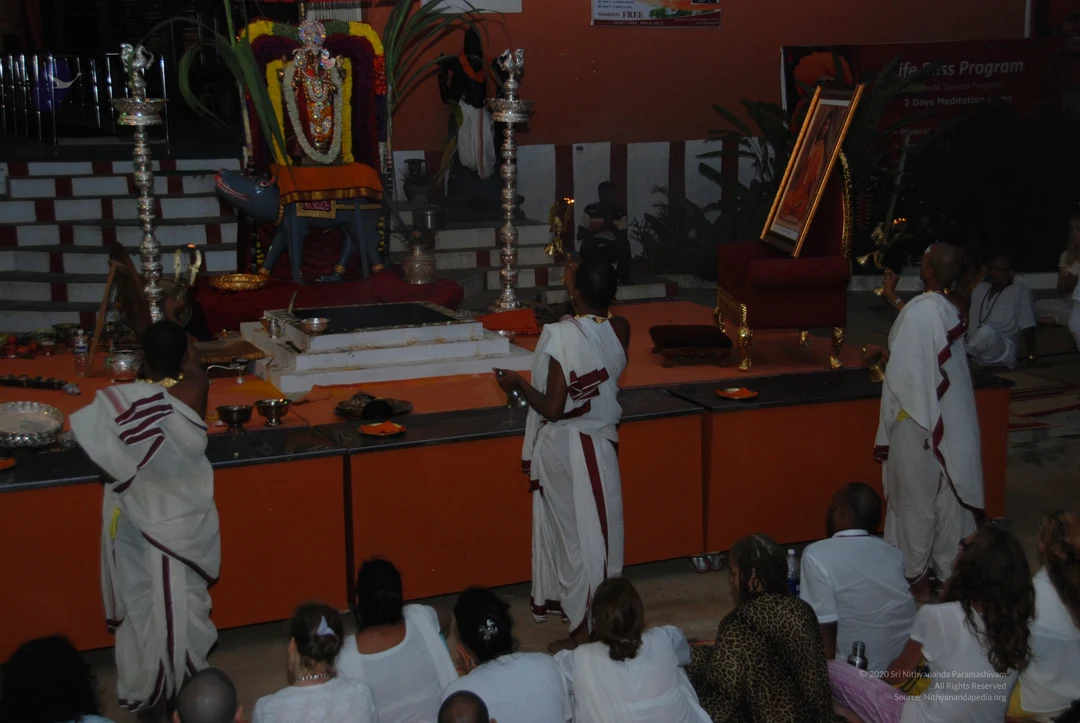
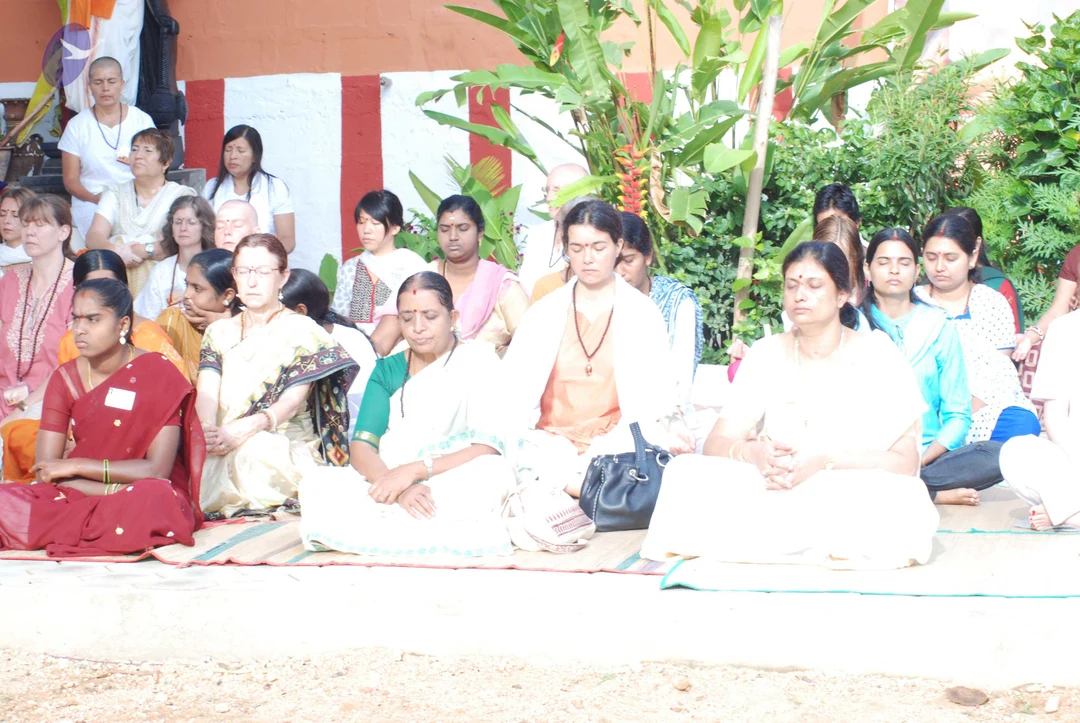
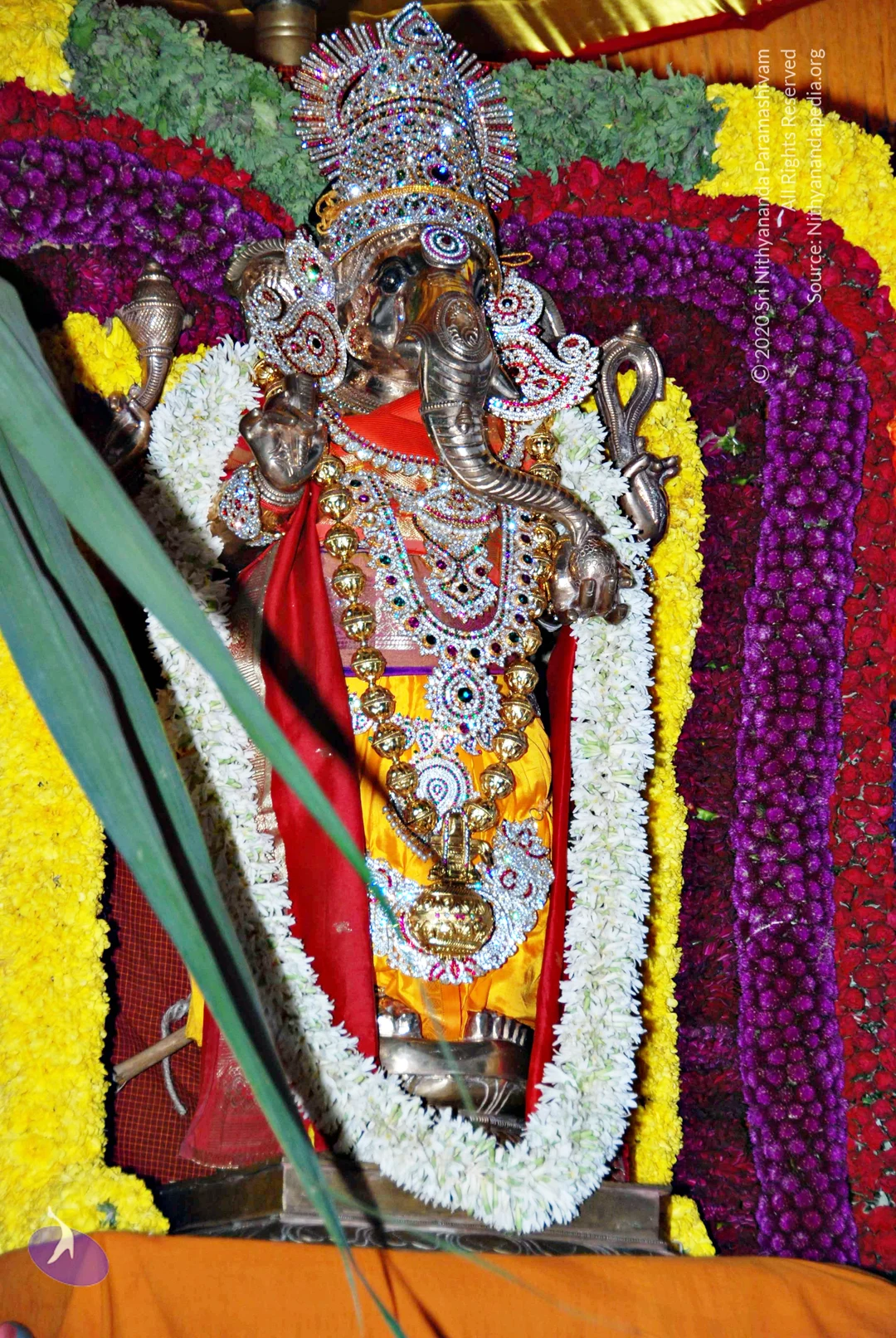
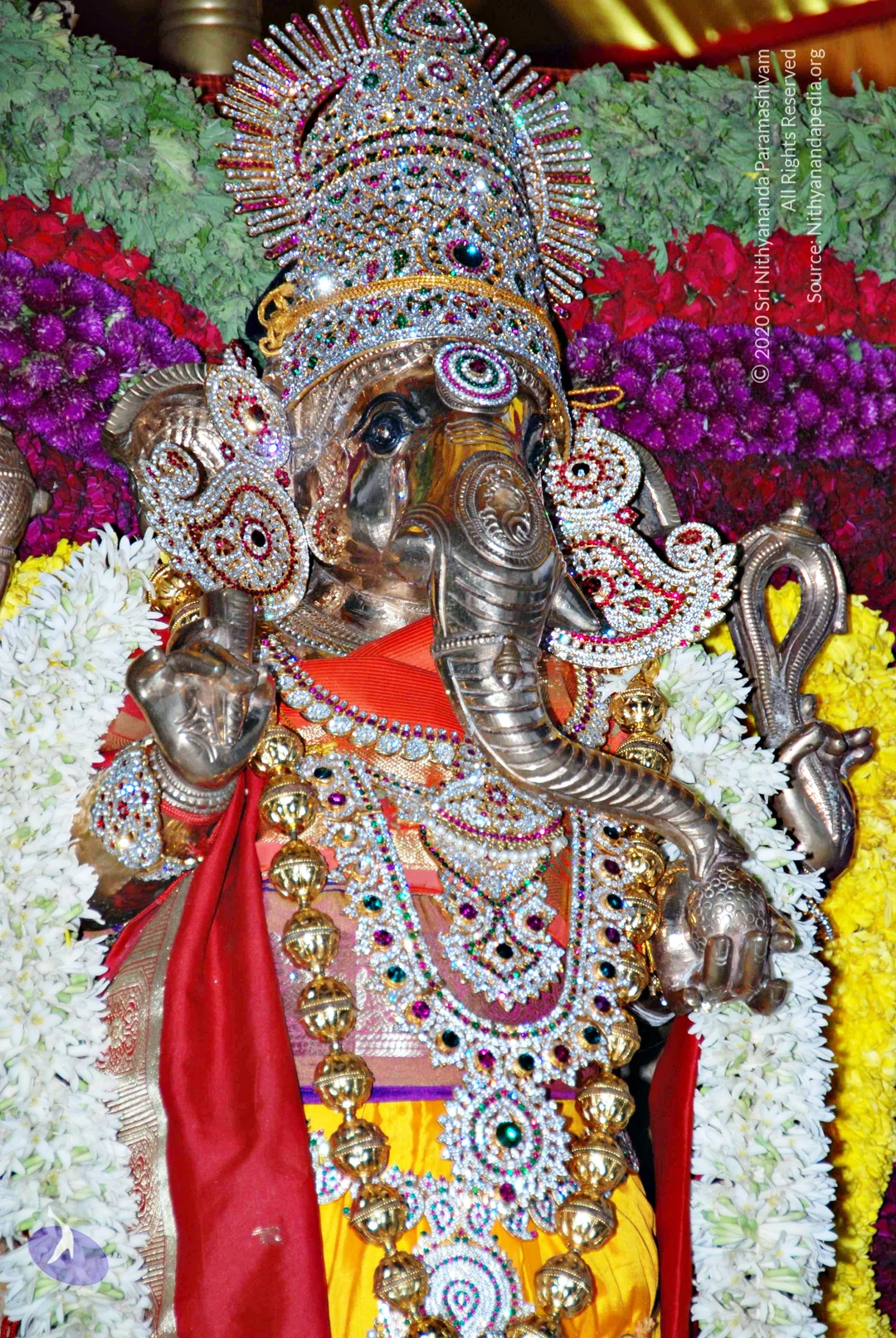
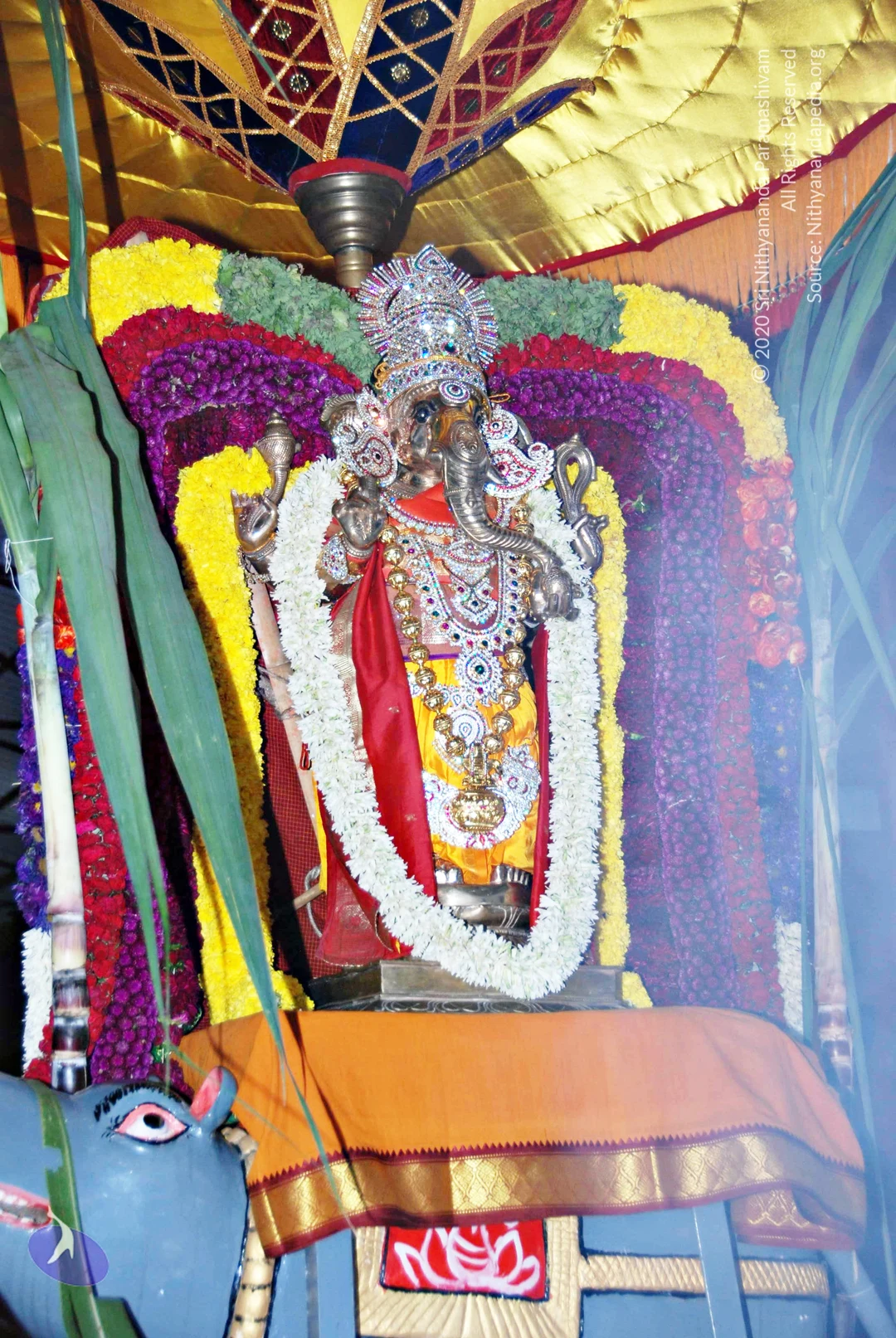
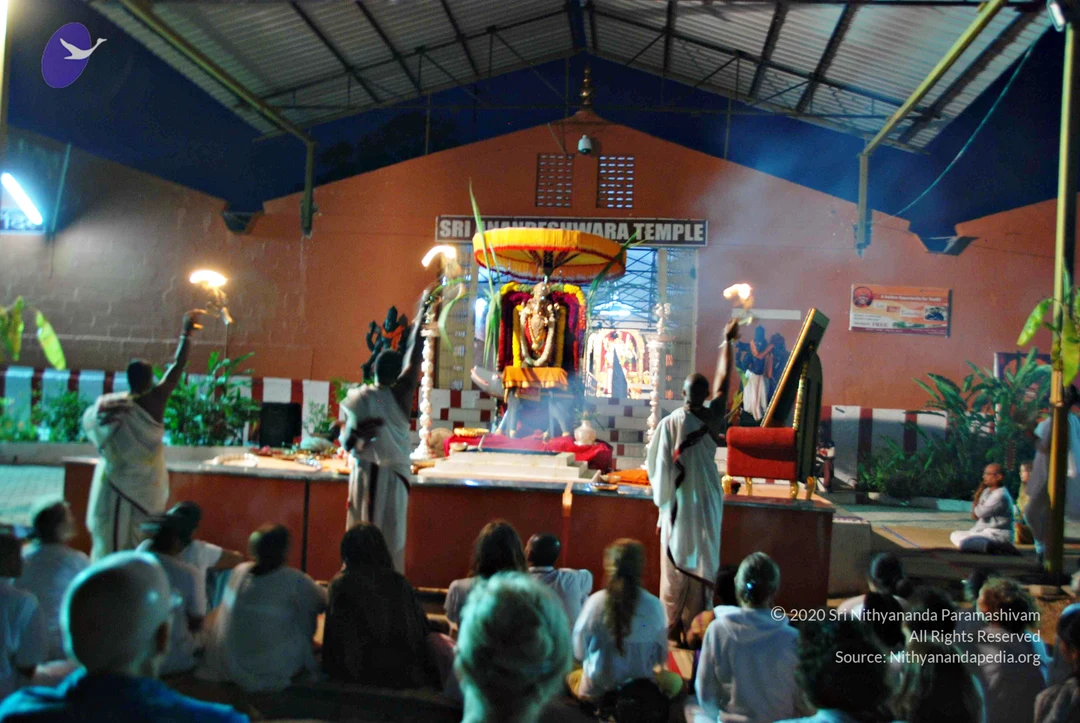
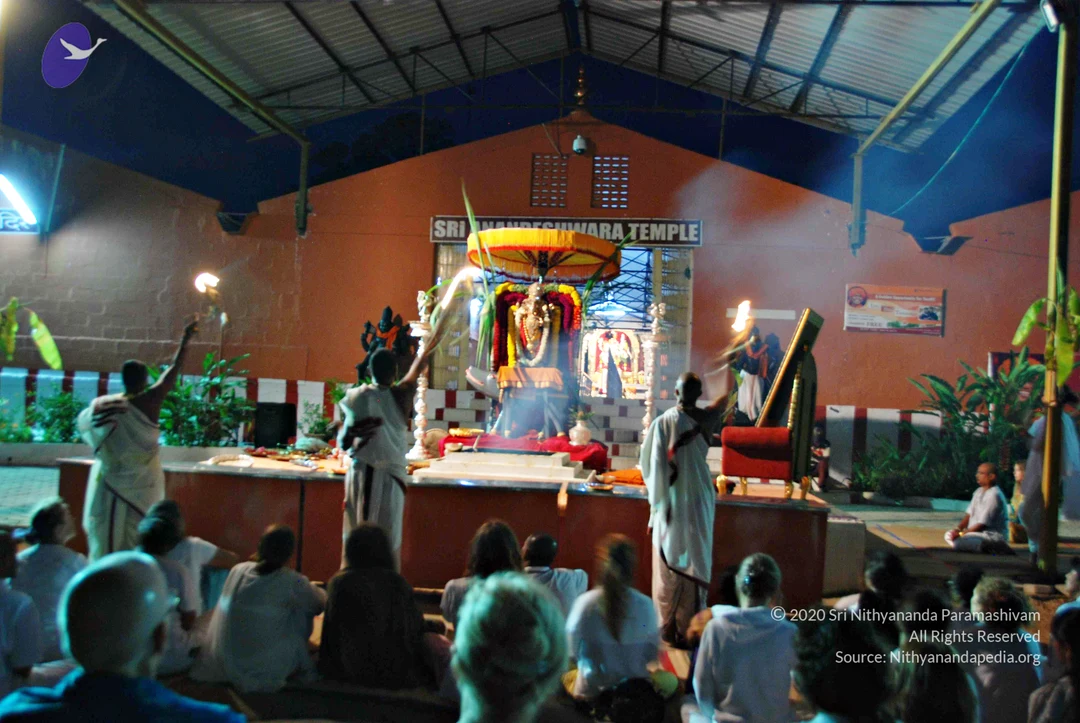
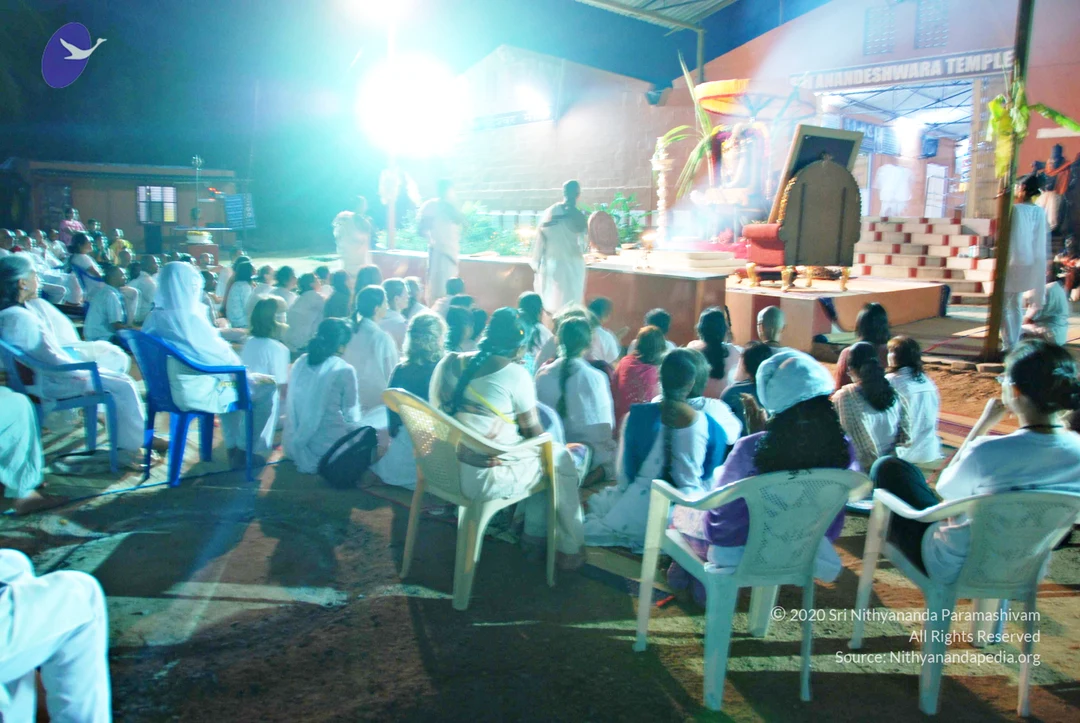
51 dated photos in previewSource gallery
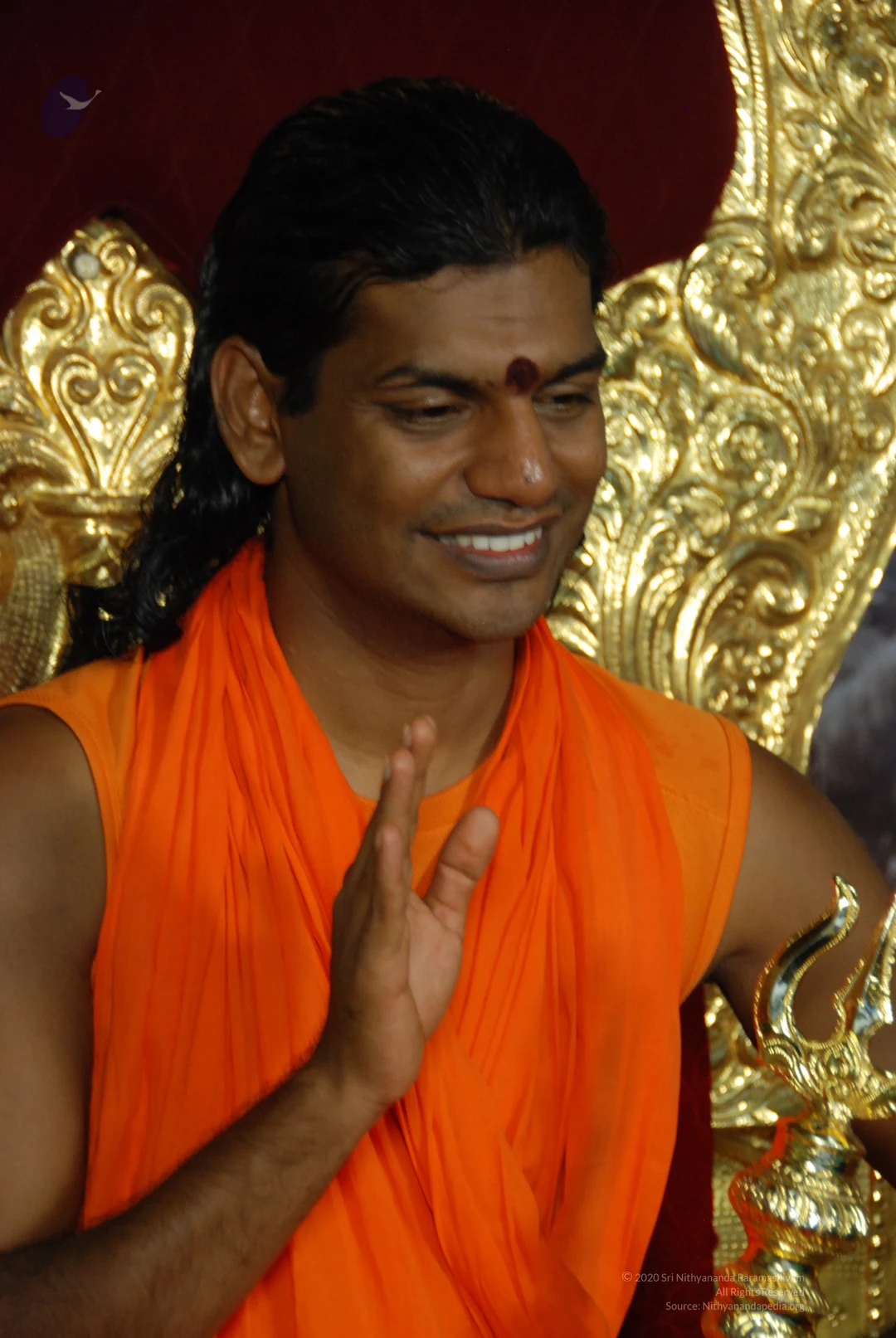
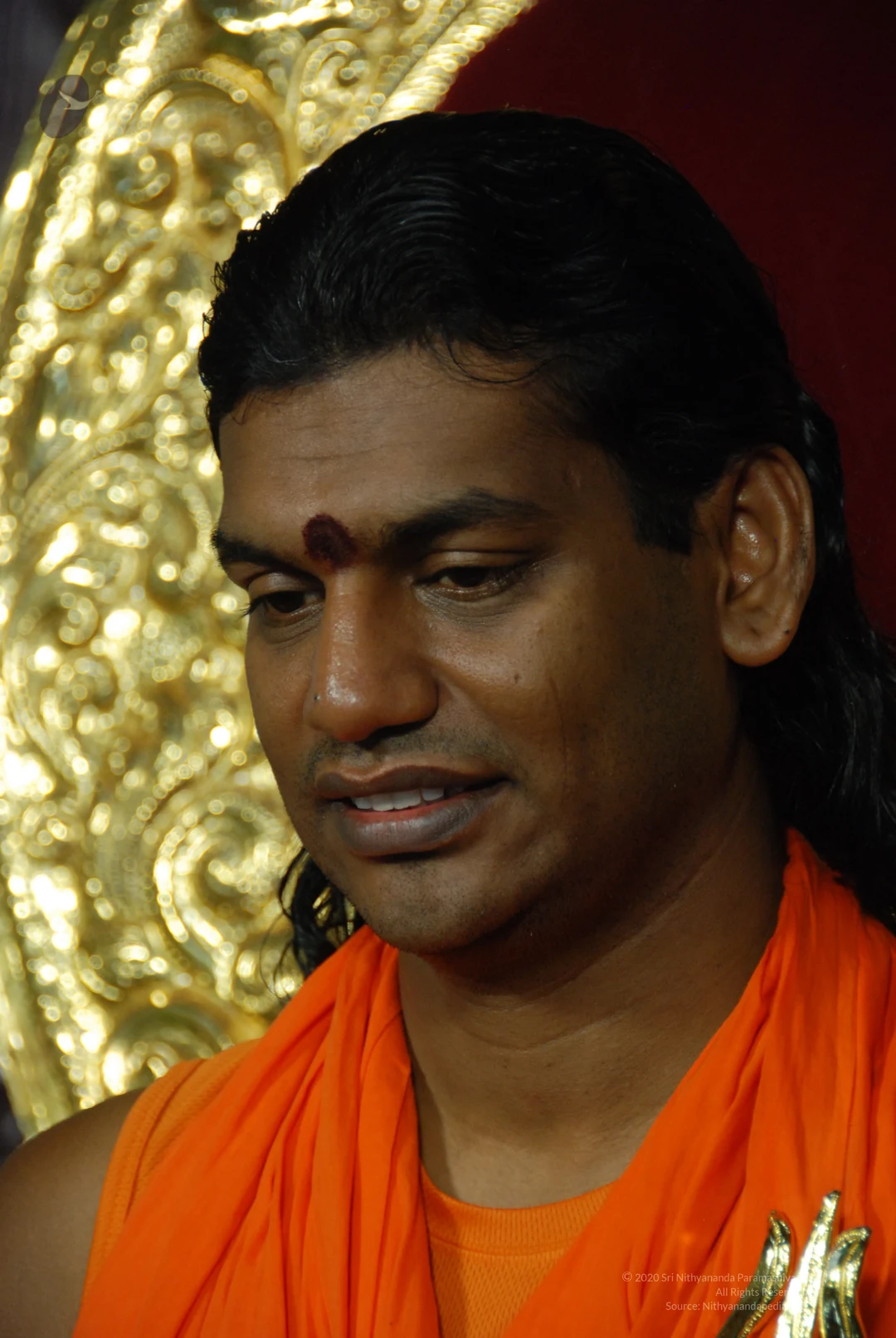
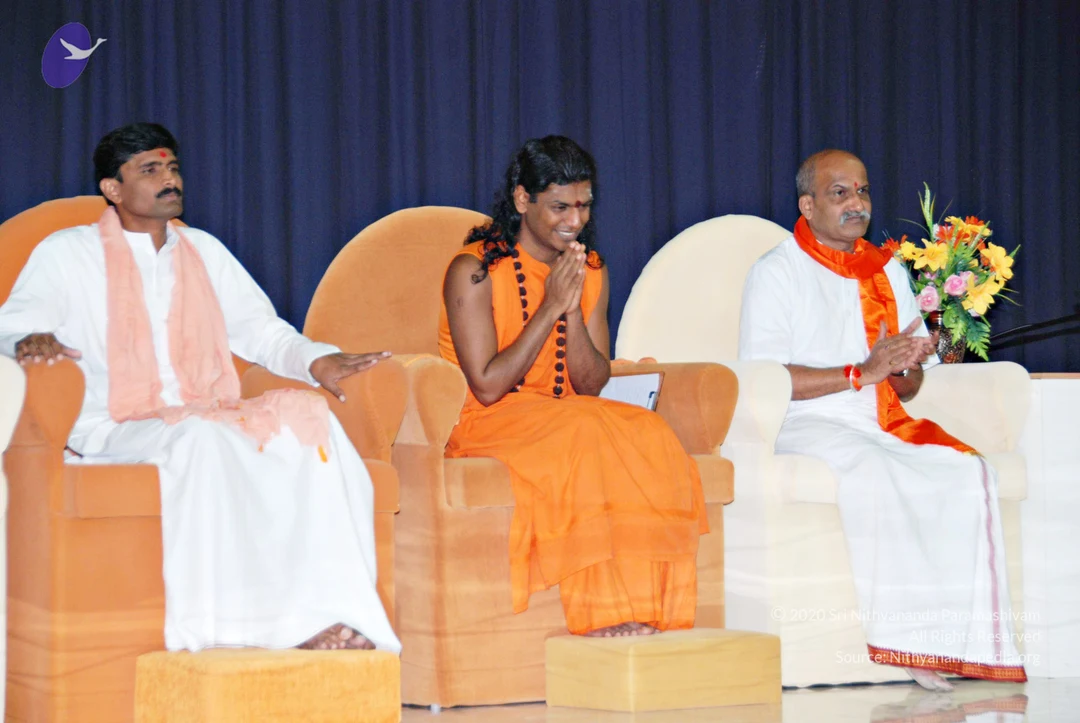
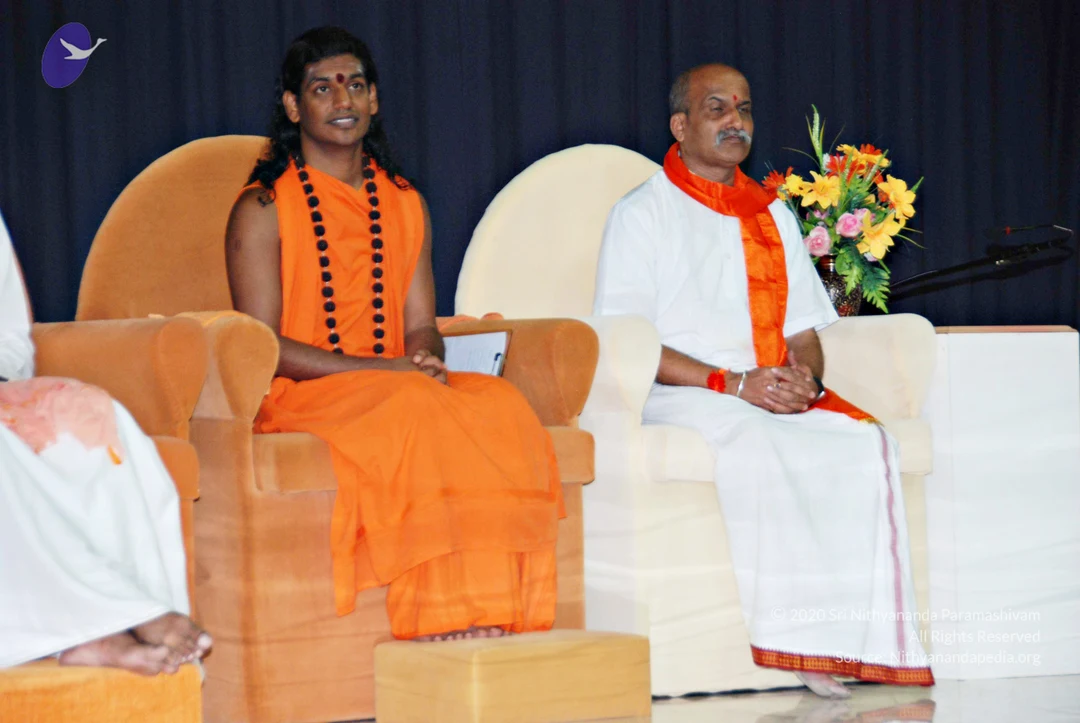
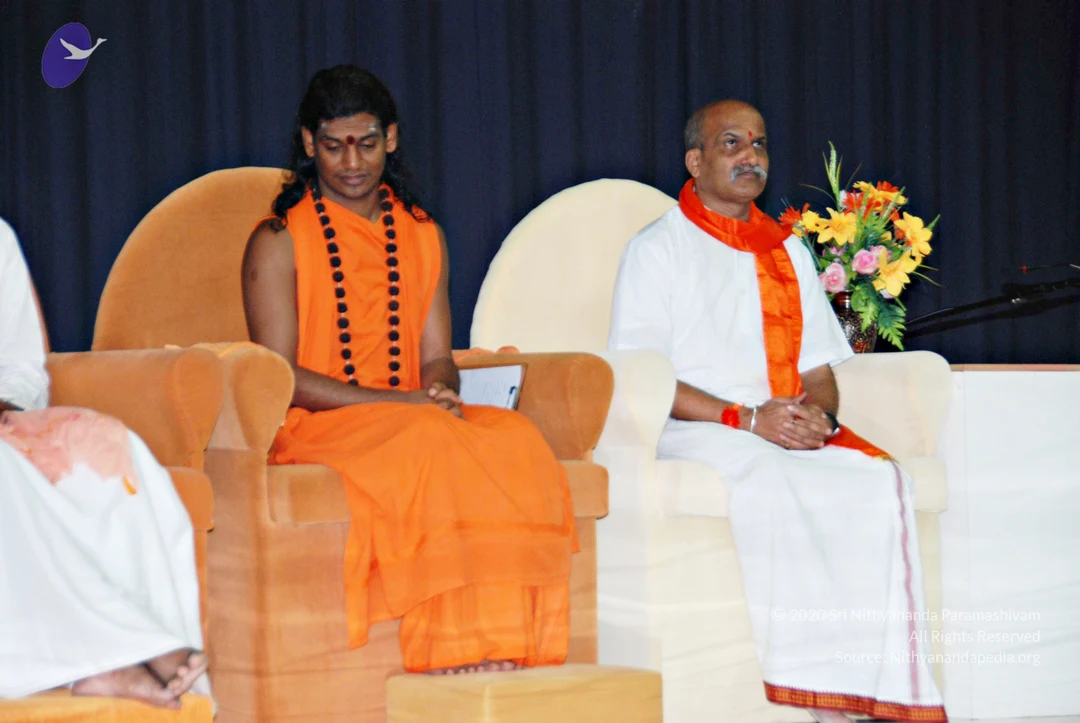
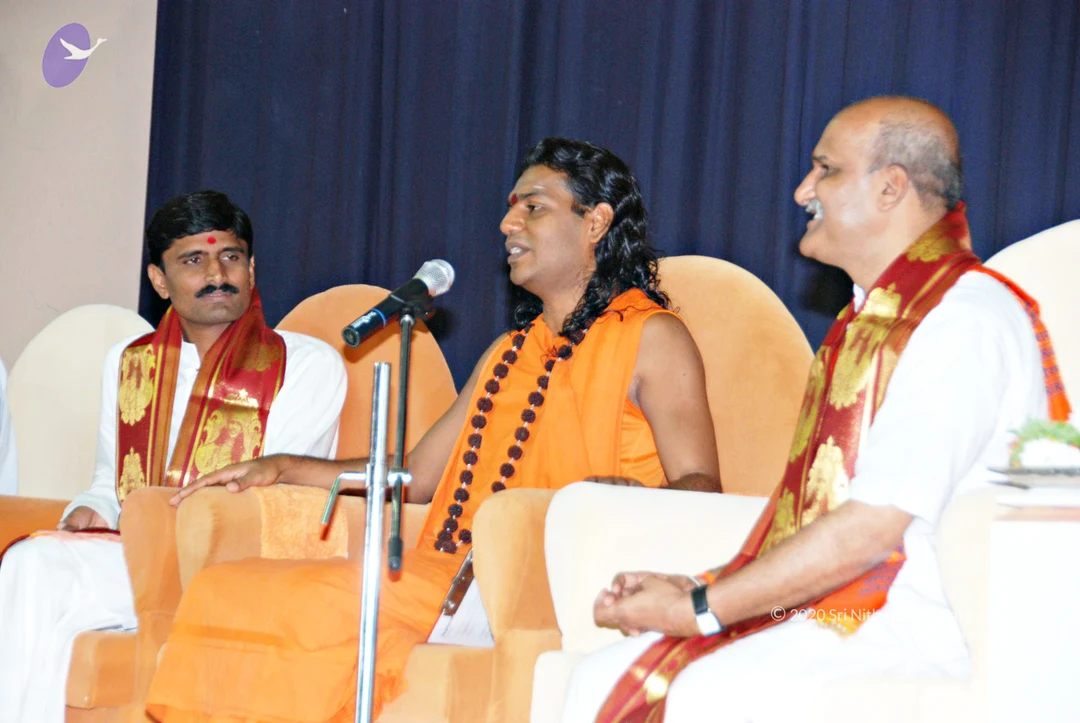
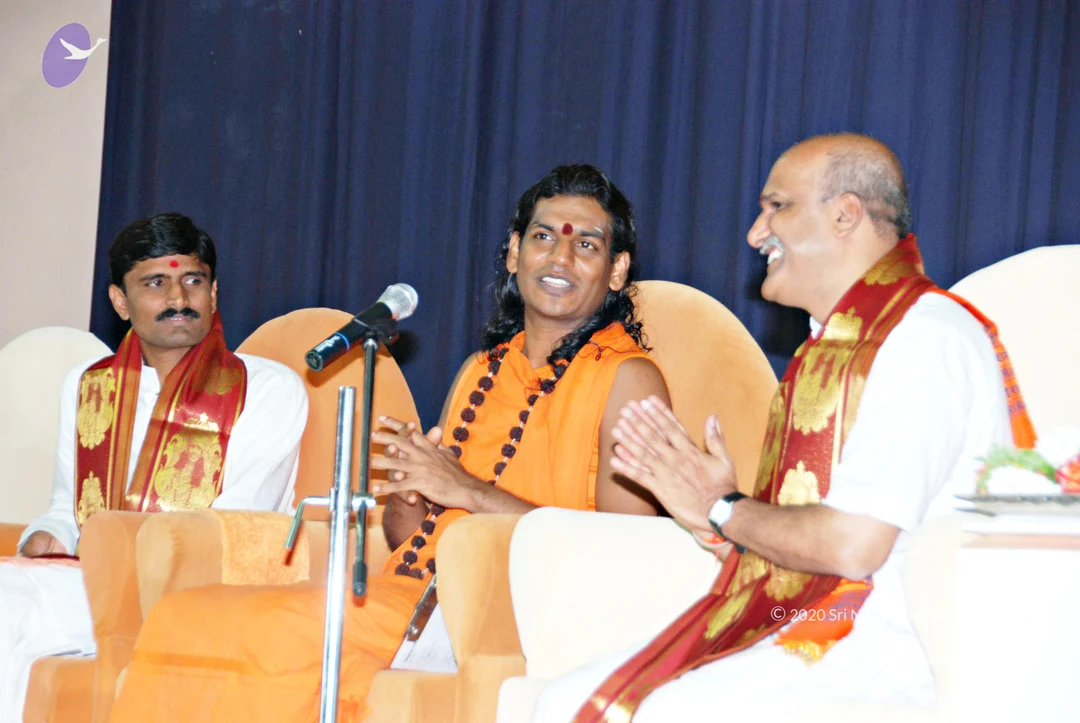
A man with long, swept-back dark hair and a red bindi sits on an ornate gold throne with a red cushion, speaking into a microphone on a stand. He wears an orange saffron wrap over a sleeveless orange garment and a long rudraksha mala. One hand rests on his lap while the other gestures in front of his chest. Behind him are red metal railings with gold finials, a gold kalasha-topped structure and green foliage. Swamiji (probable) is seated, with long swept-back hair, saffron clothing and a rudraksha mala, giving a morning message.A man with long dark hair sits on an ornate gilded throne with a red cushioned seat and armrest. He wears a sleeveless orange draped garment and a long necklace of dark rudraksha beads, with a small red tilak on his forehead. His hands rest in his lap and a microphone stands beside him. Behind the throne are golden lamp stands, a red railing and green trees.A man with long, swept-back dark hair sits on an ornate gold throne with a red cushion, speaking into a black microphone on a stand. He wears an orange sleeveless saffron garment draped over his shoulders, a red bindi on his forehead, and a long rudraksha mala of dark beads around his neck. Behind him, blurred bright yellow and red decorations hang in the background. The setting appears to be a satsang or public discourse.A seated man with long dark hair falling past his shoulders wears an orange saffron wrap over his shoulders and a long necklace of dark rudraksha beads. A small red tilak mark is on his forehead. He sits on an ornate gold throne with peacock-feather style carvings and a red cushion, speaking into a black microphone on a stand at right. His hands rest folded on his lap. Swamiji (probable) is identified by the long hair, saffron wrap, rudraksha mala and ornate gold throne, seated as the speaker of a satsang discourse.A seated man with long dark swept-back hair, a red tilak on his forehead, wearing an orange sleeveless wrap and a long rudraksha mala, sits on a red cushioned seat in front of an ornate gold carved throne back with a microphone beside him. He smiles while looking to his left, hands resting on his lap. Probable Swamiji: long swept-back hair, rudraksha mala and saffron clothing mark a sannyasi presentation, seated in a satsang setting.A seated man with long dark hair and a red tilak on his forehead sits on an ornate gold throne with a red cushion, speaking into a microphone. He wears a sleeveless saffron-orange robe draped over his shoulders and a long black rudraksha mala around his neck, with his hands resting in his lap. Behind him are brass oil lamps, a red gate with yellow ornaments, and a carved stone pillar with foliage and animal motifs.
02

02-SARVA-DARSHAN

26 dated photos in previewSource gallery
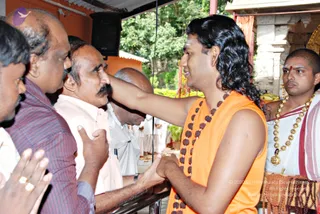
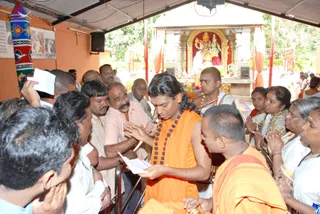
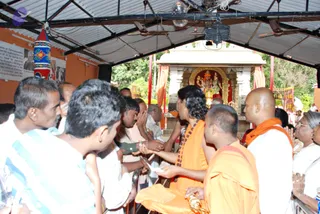
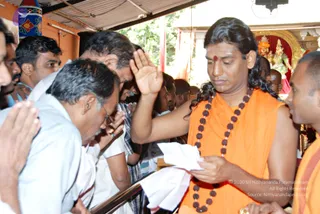
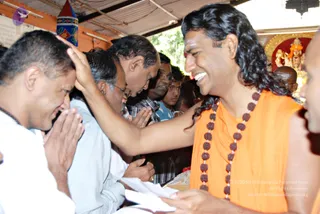
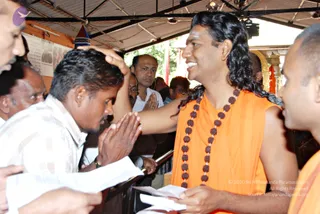
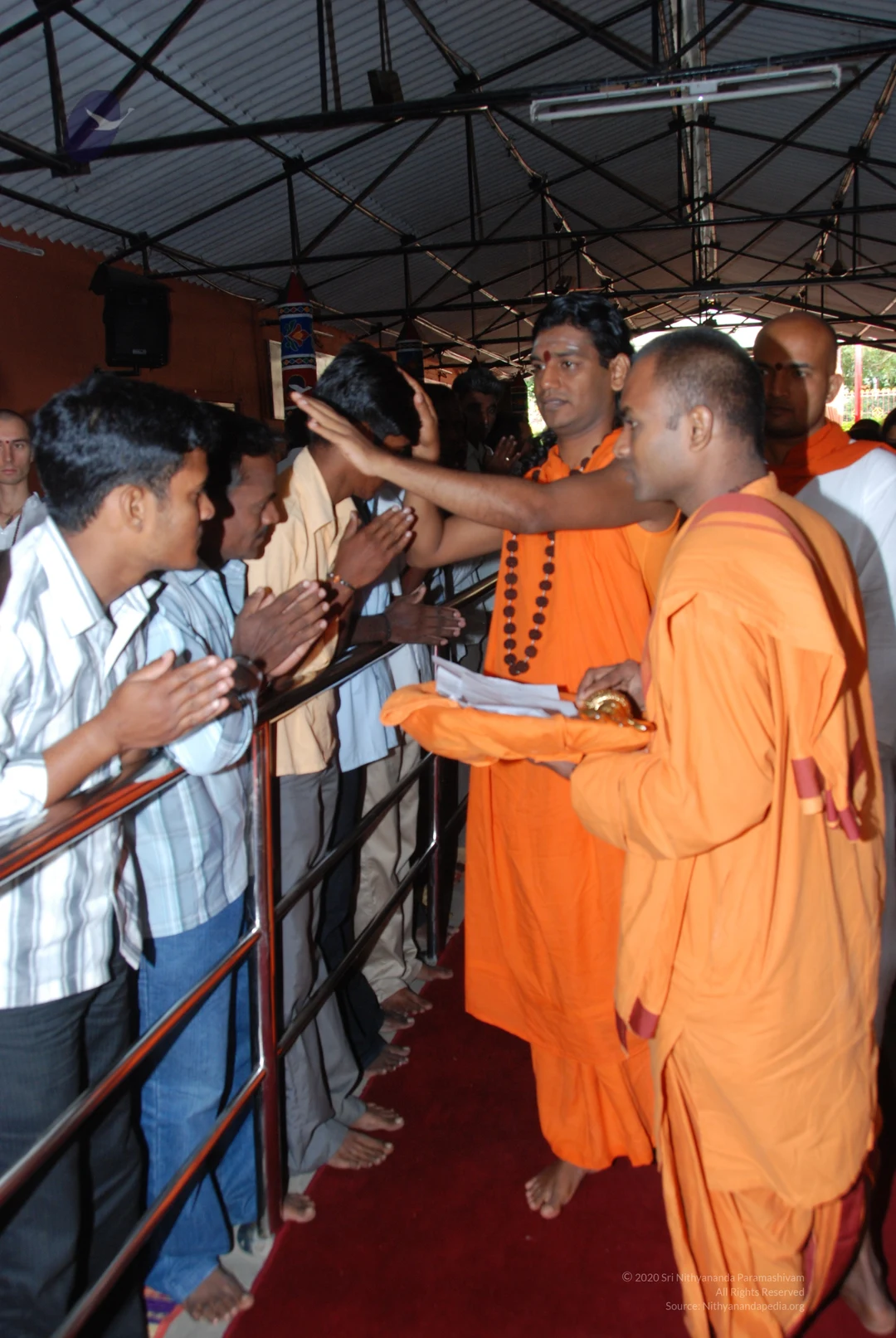
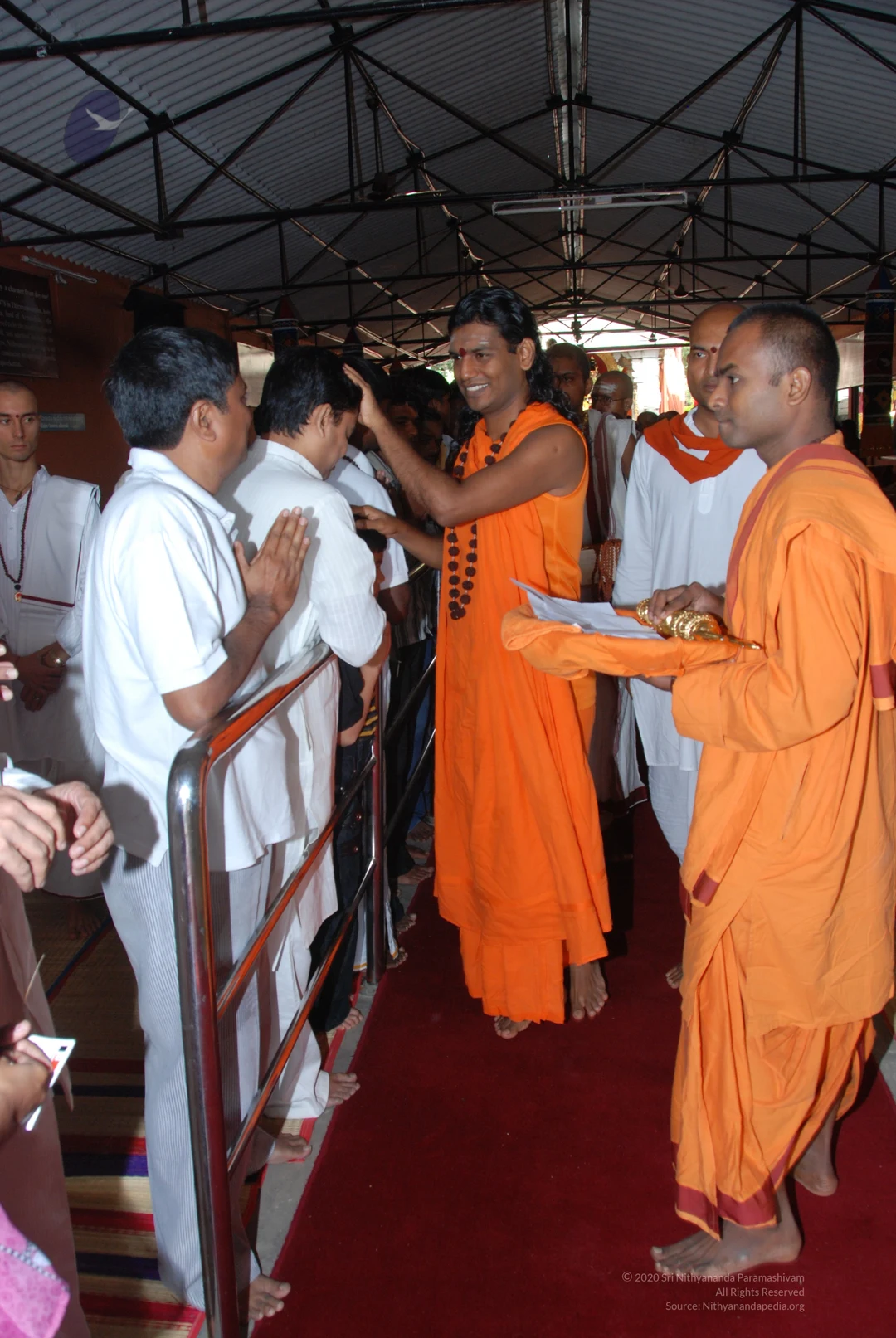
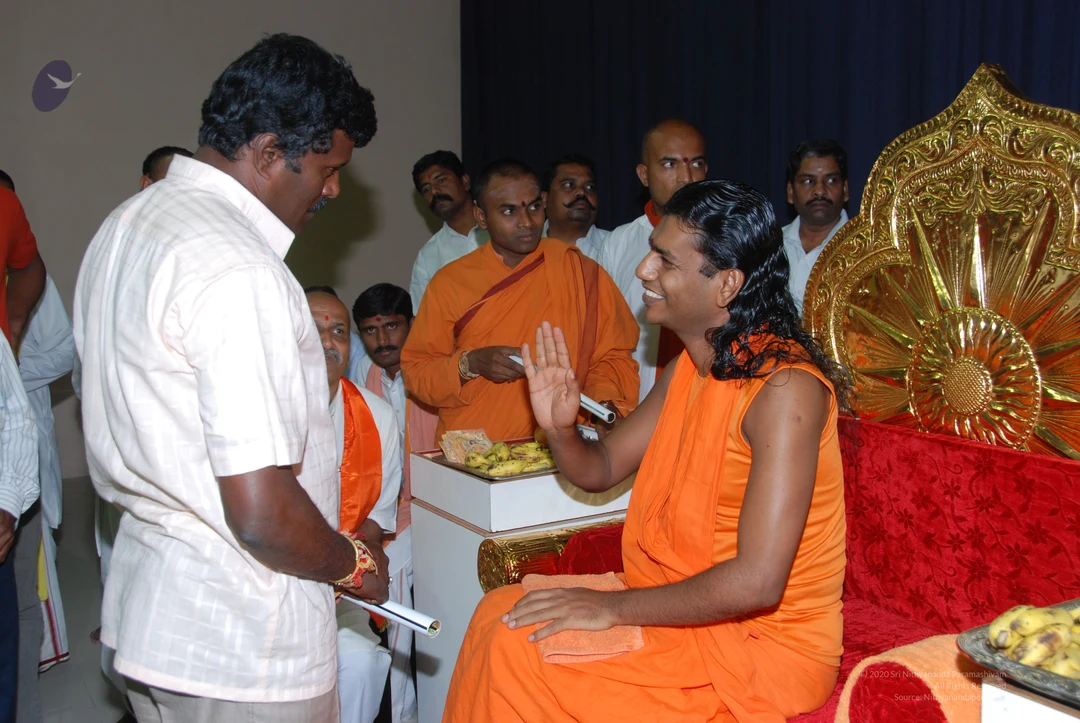
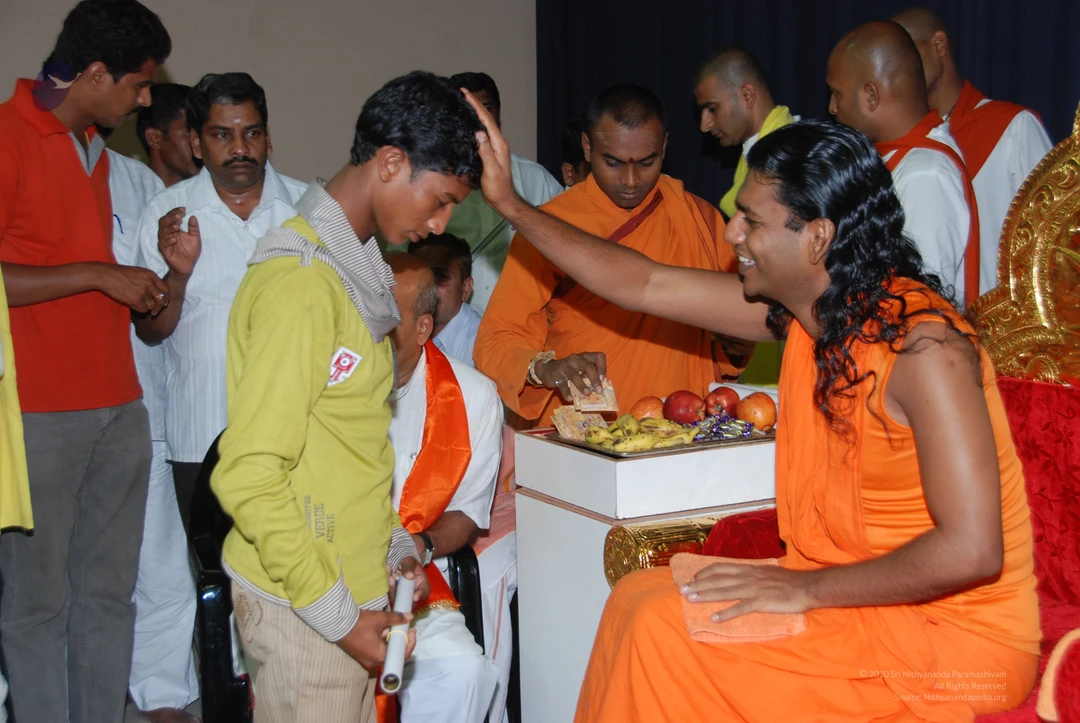
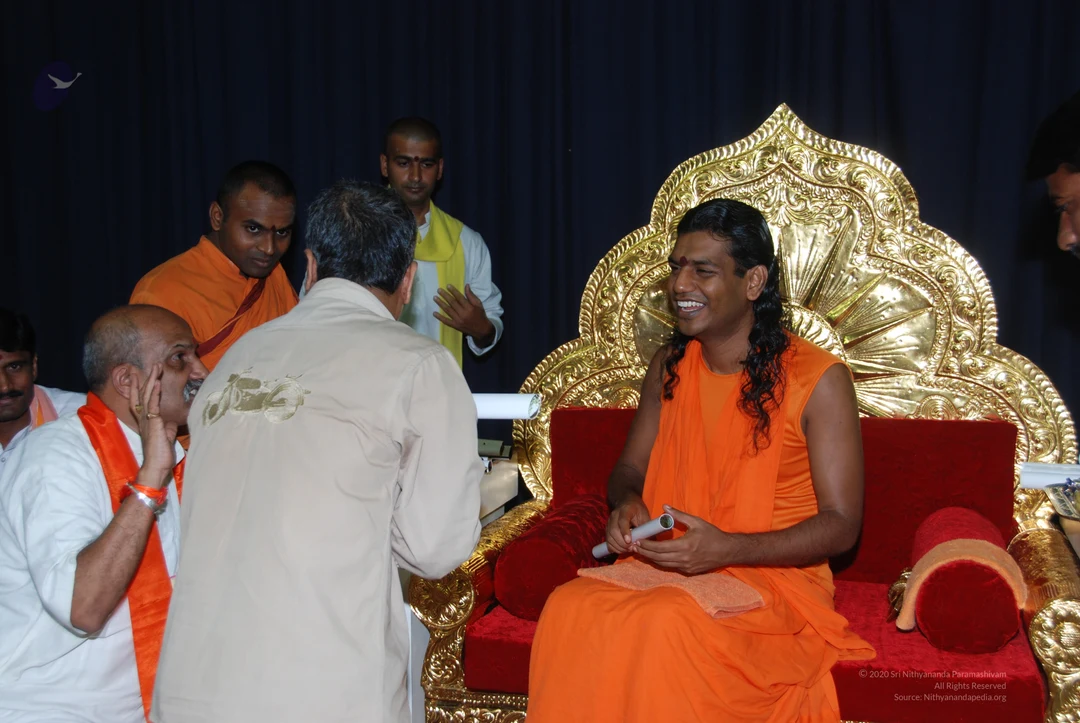
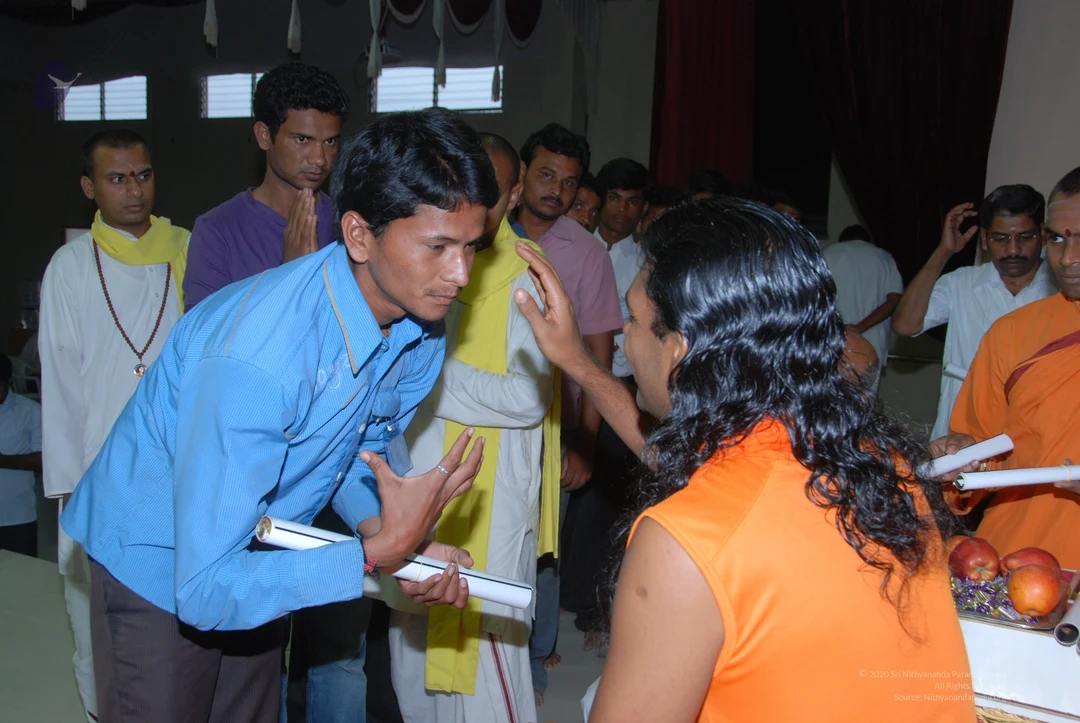
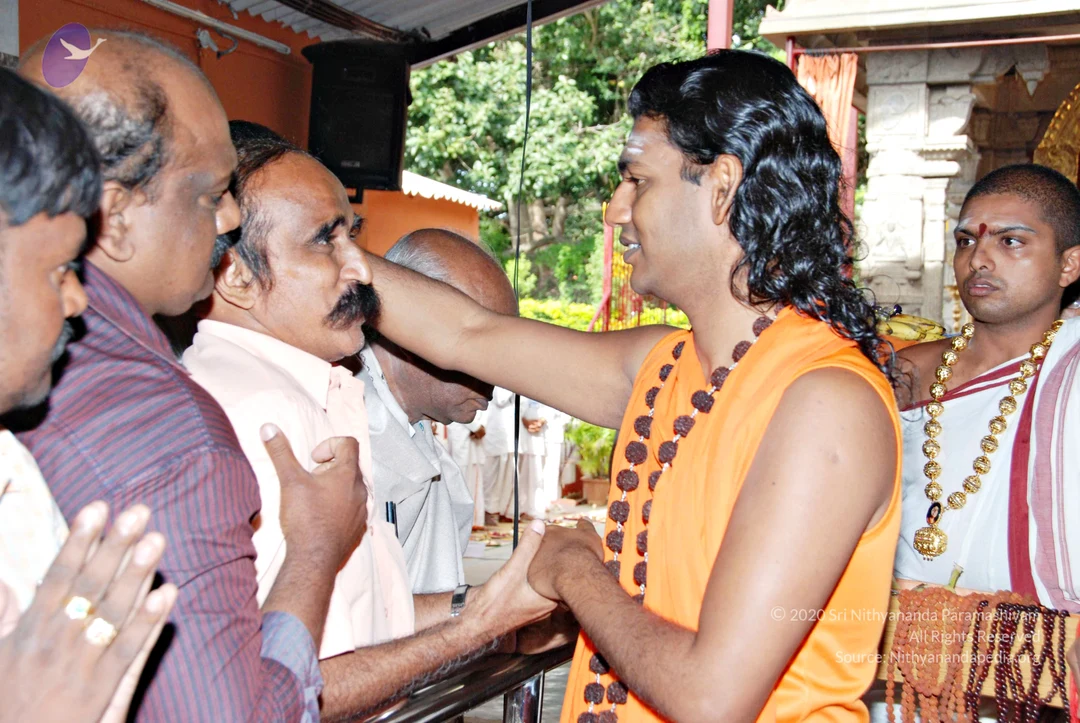
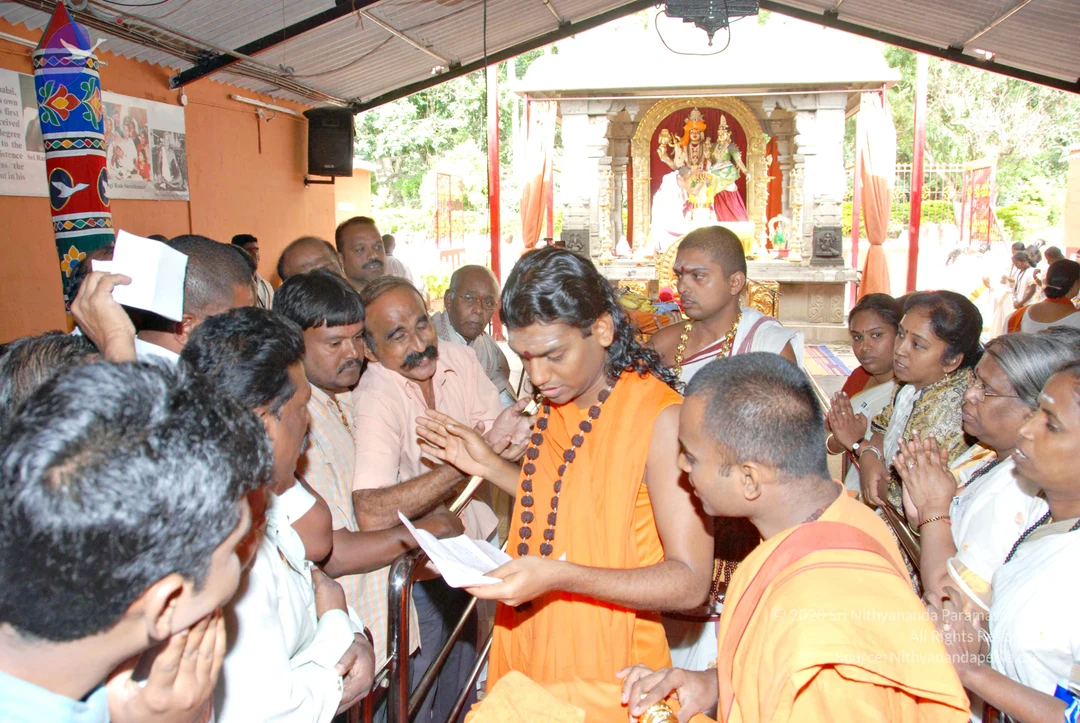
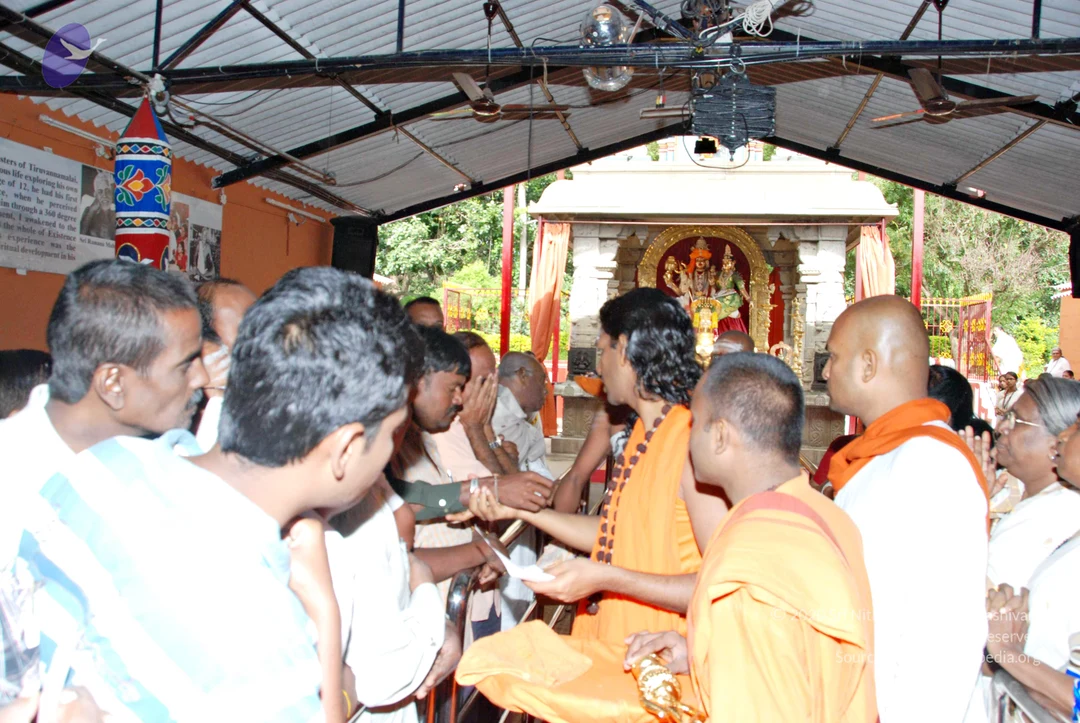
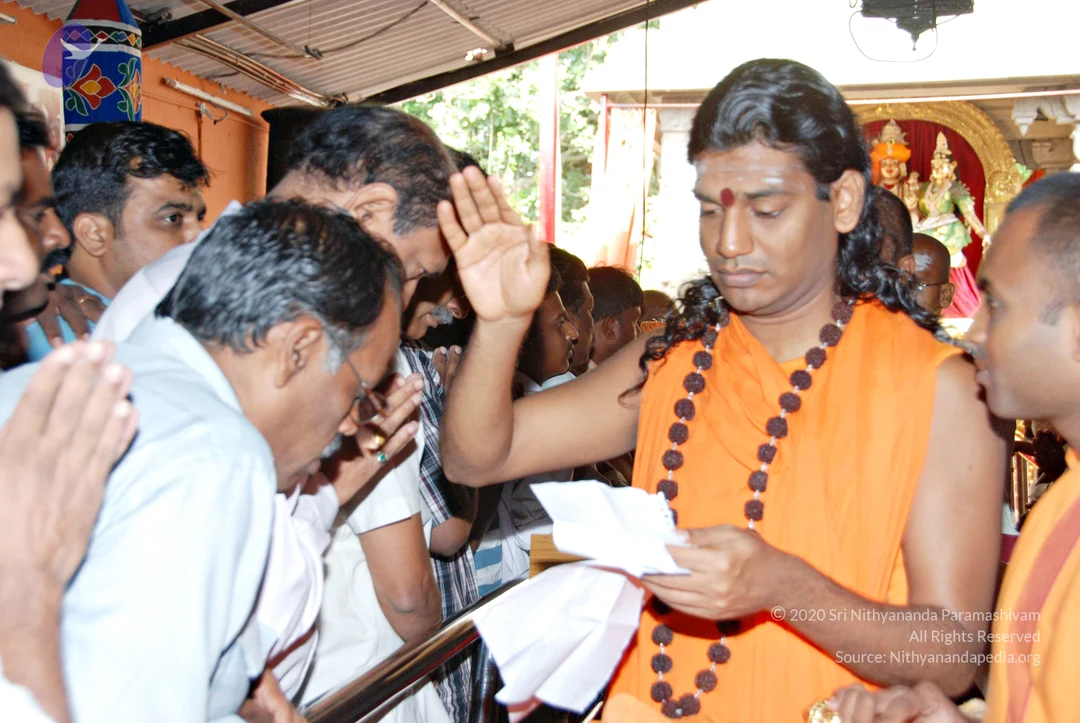
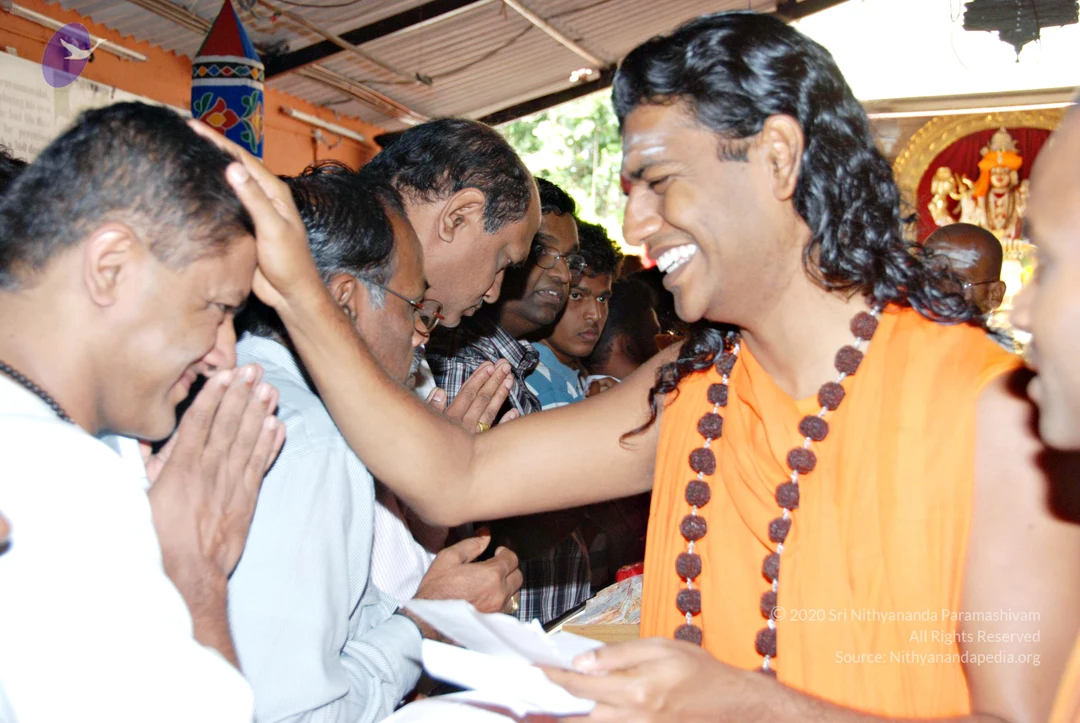
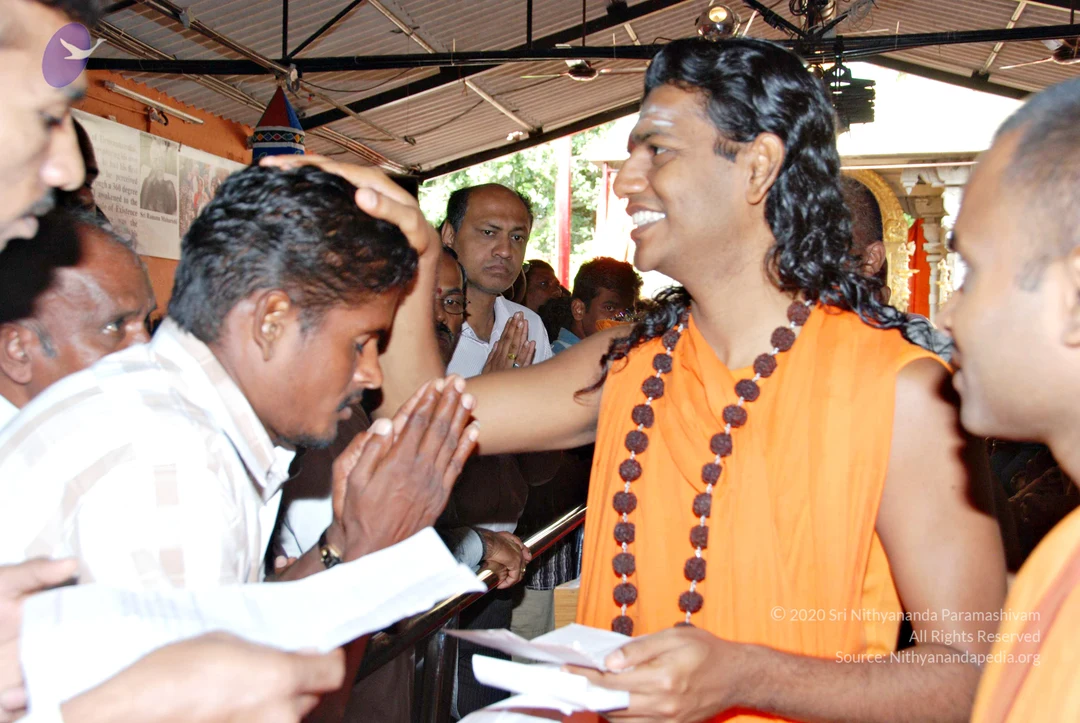
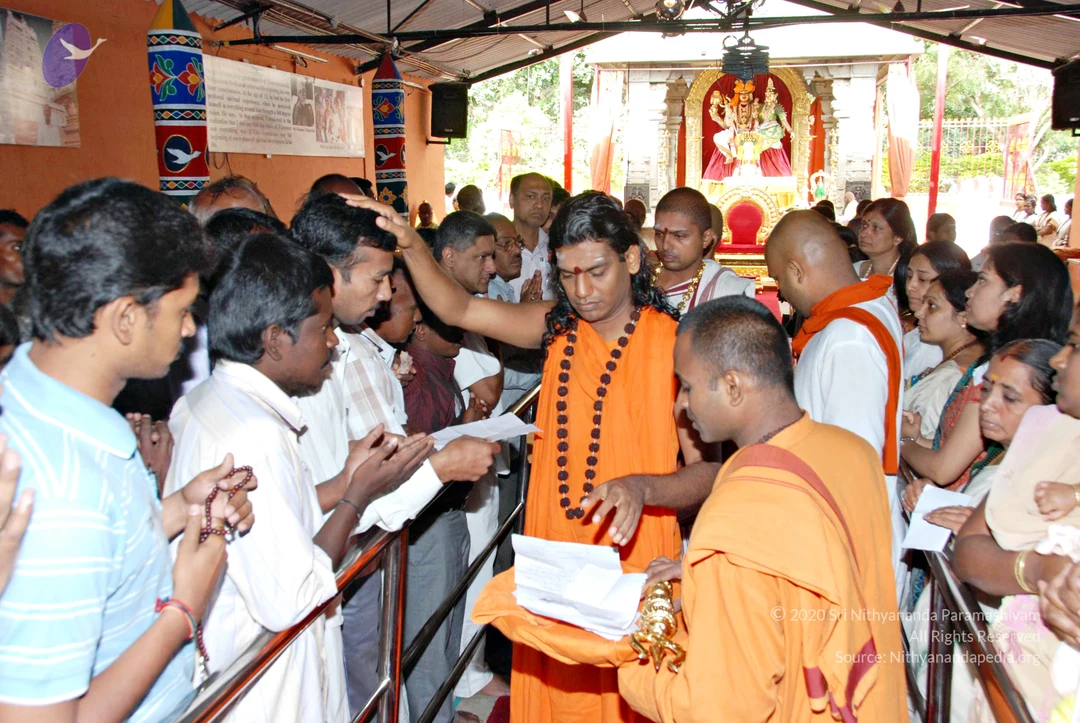
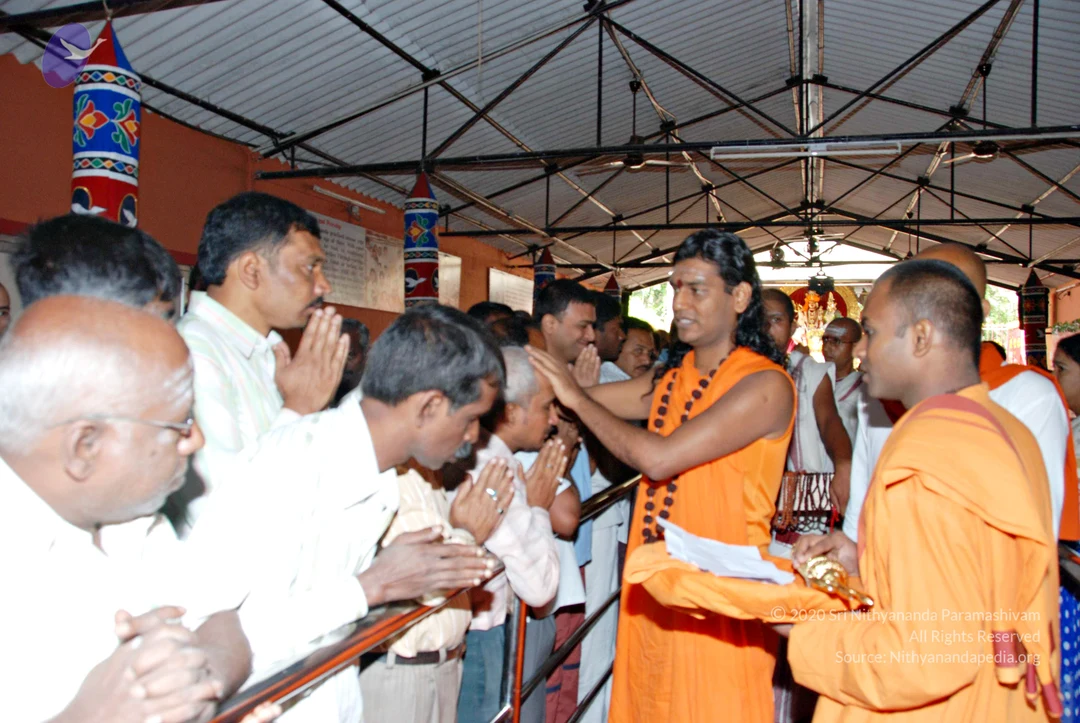
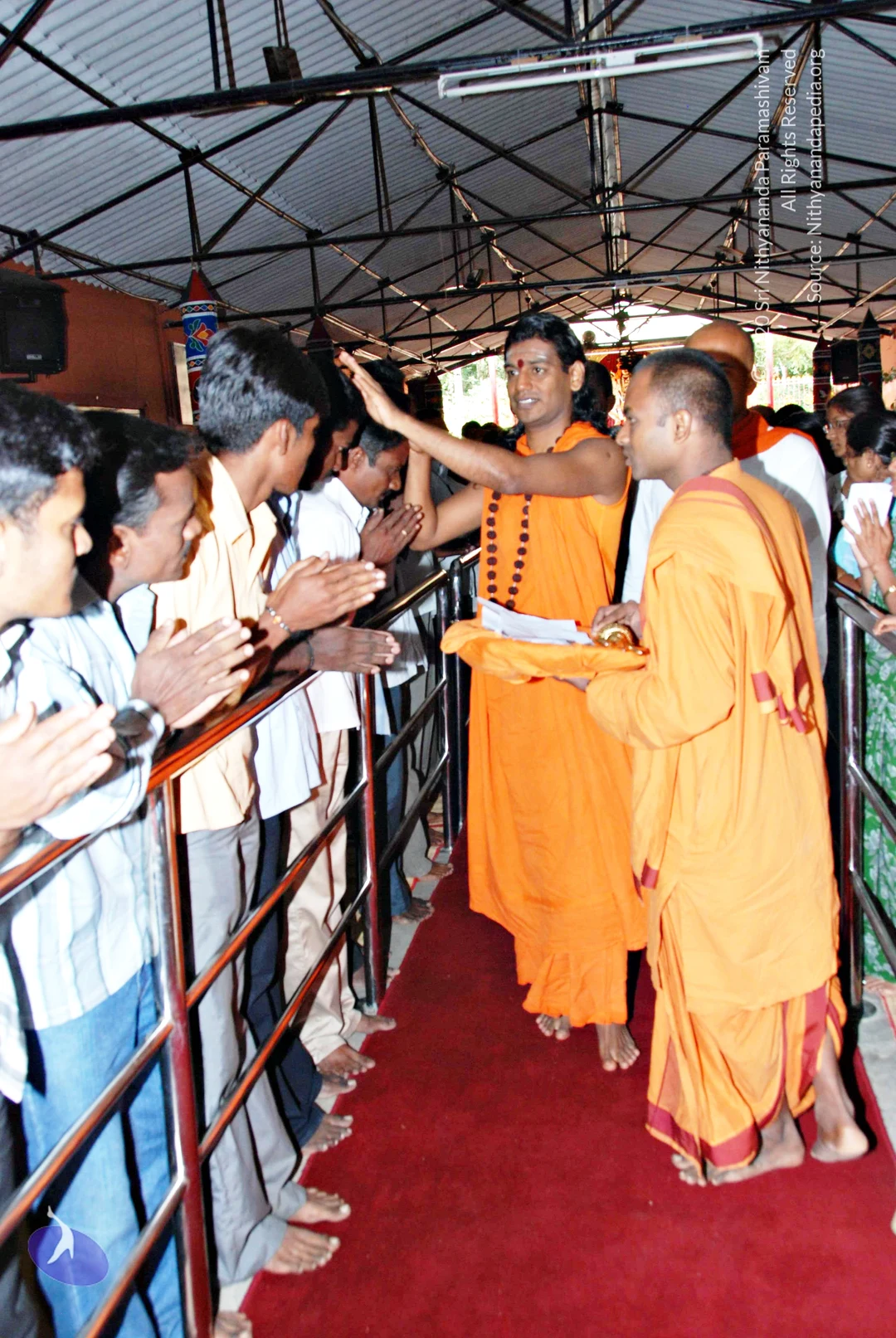
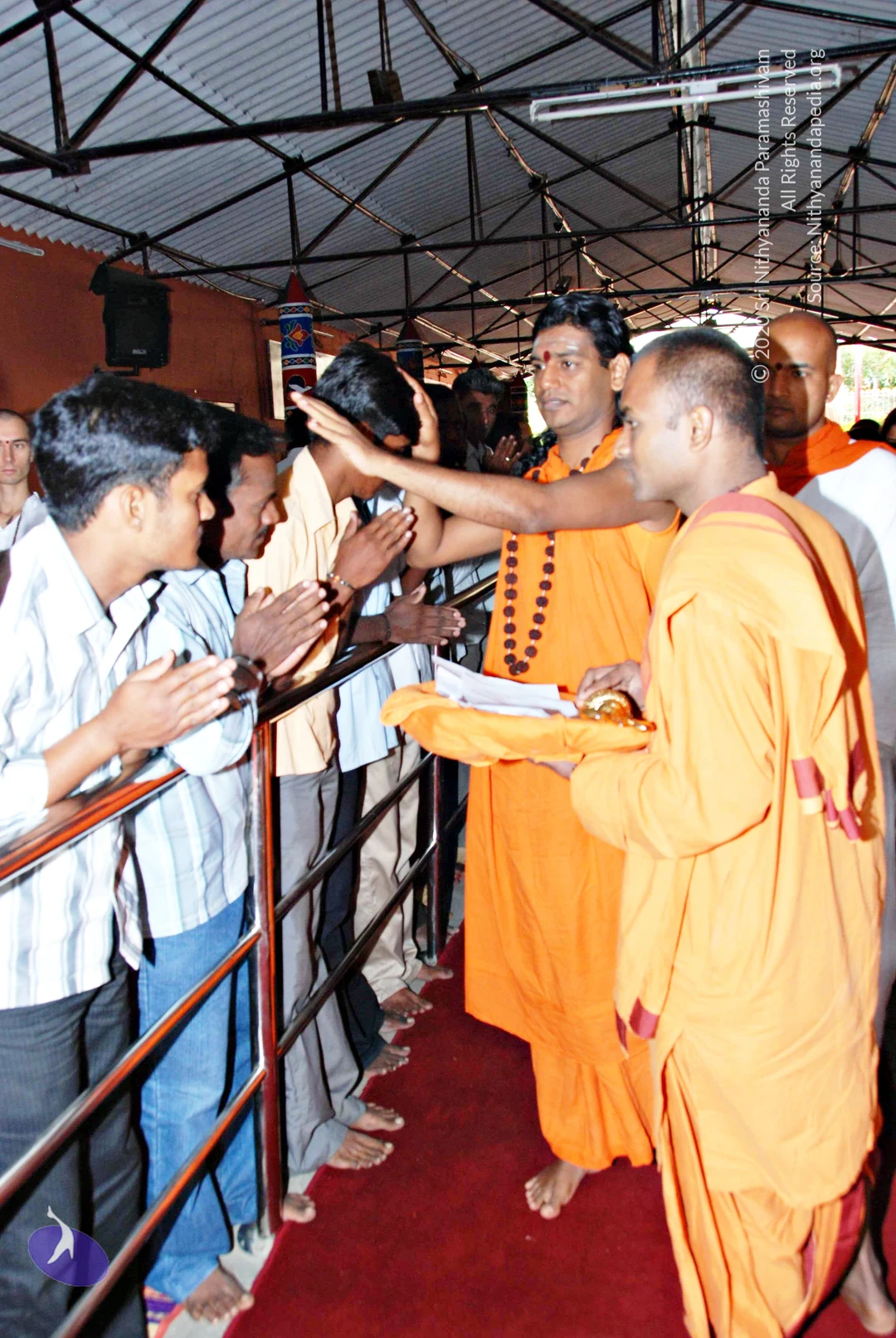
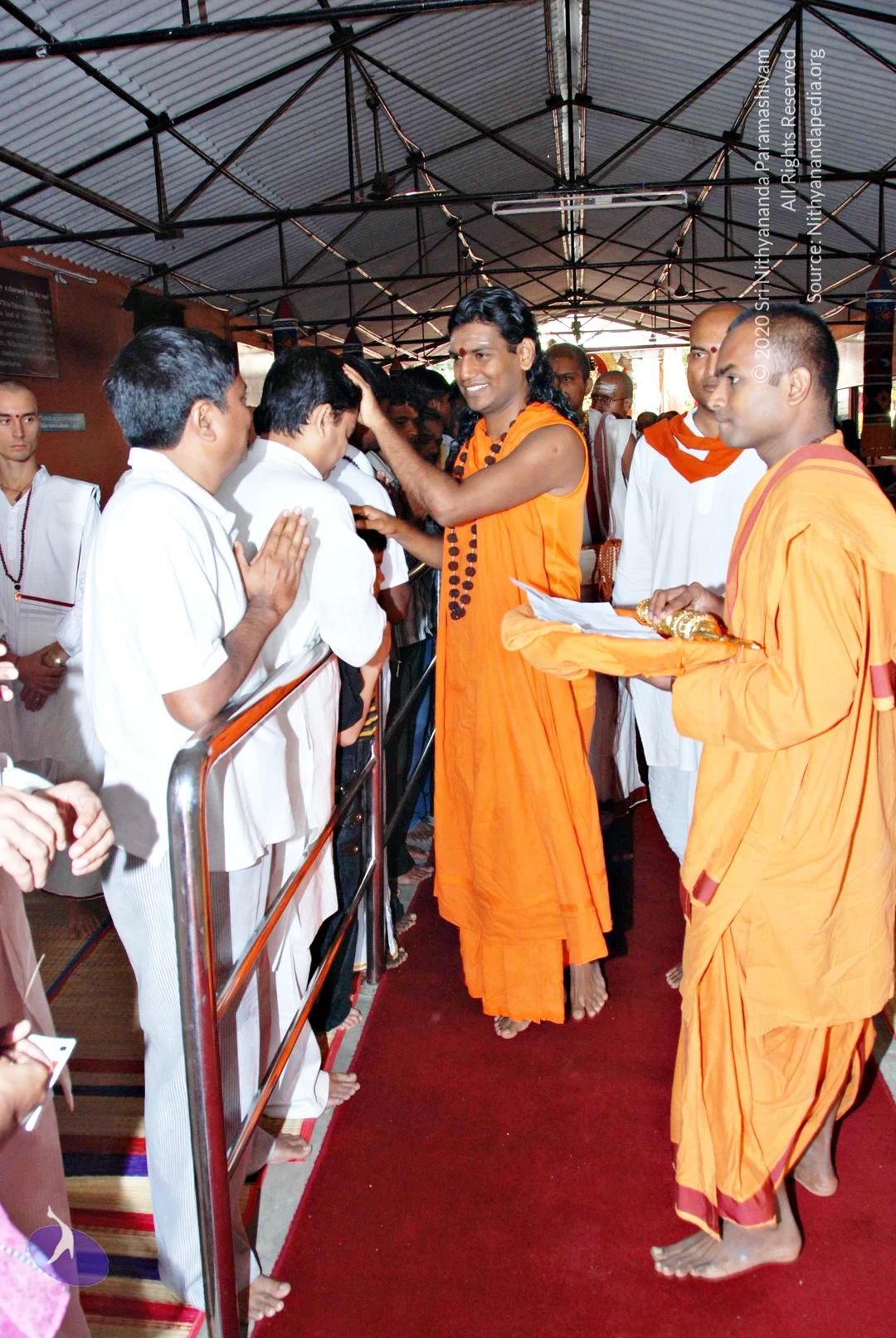
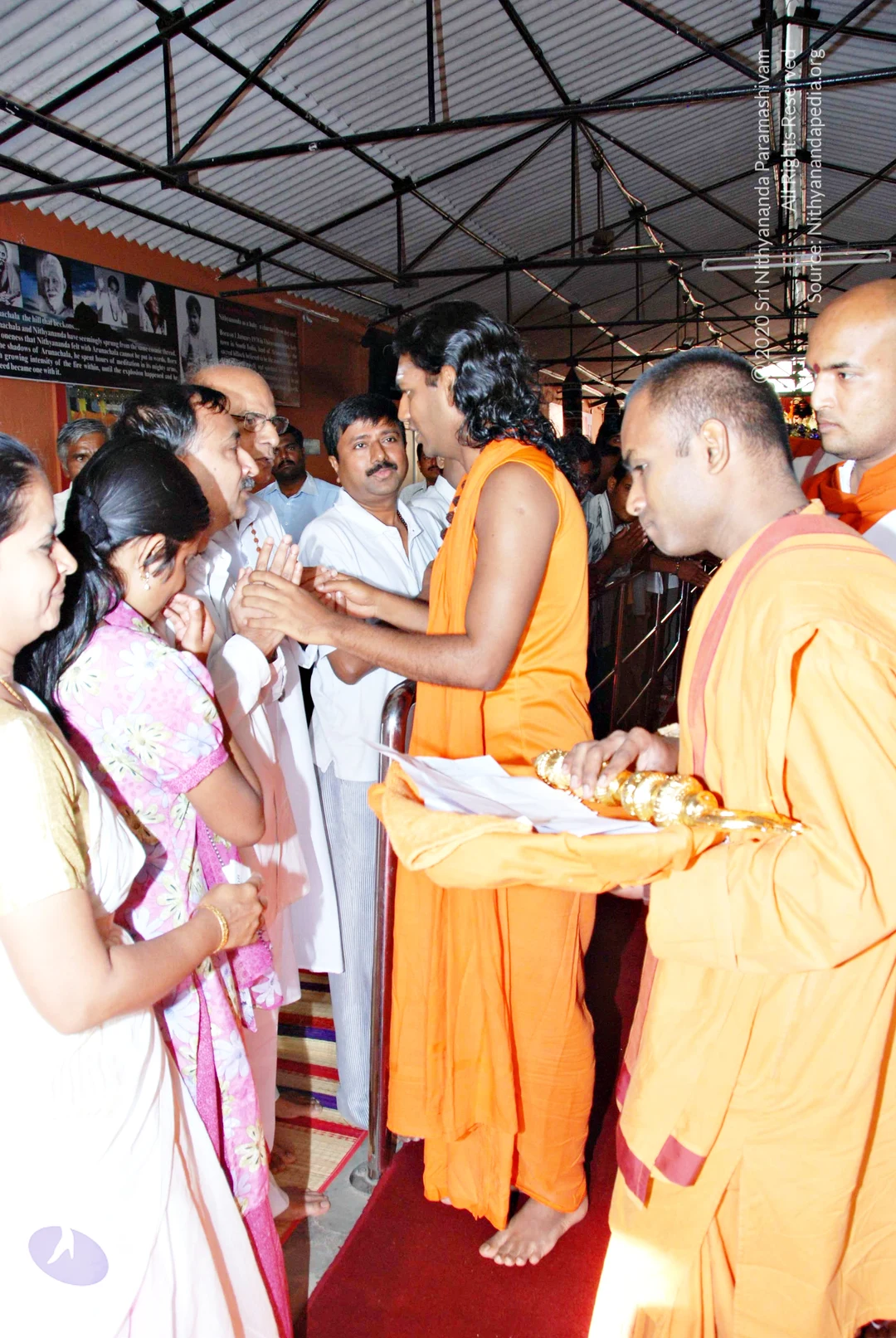
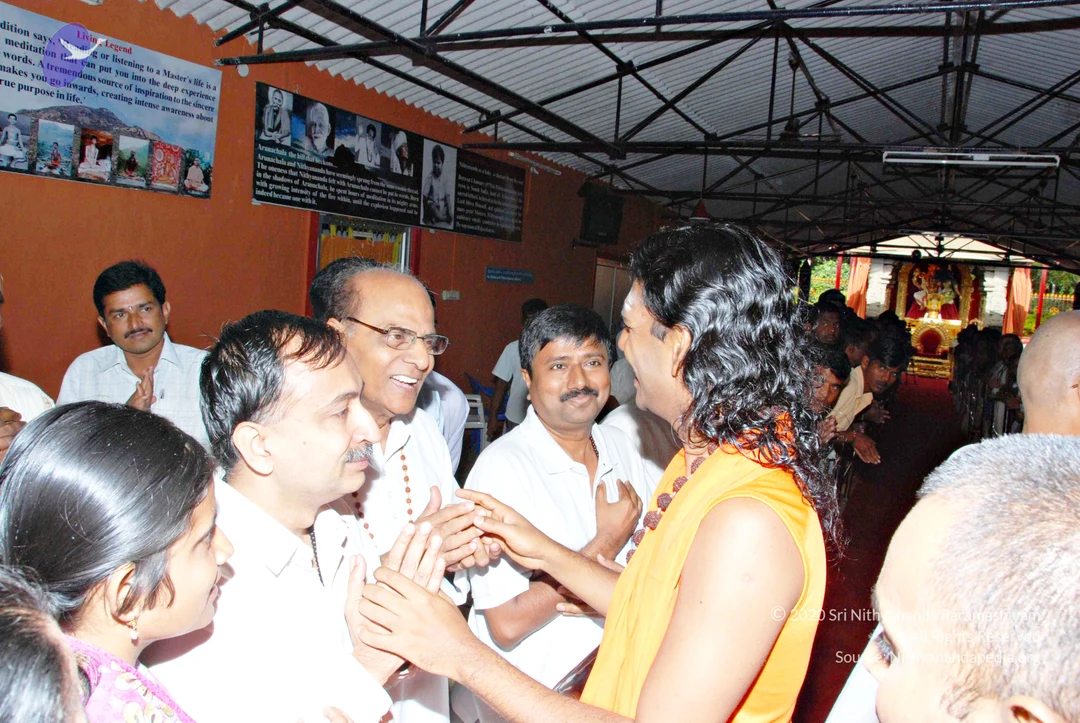
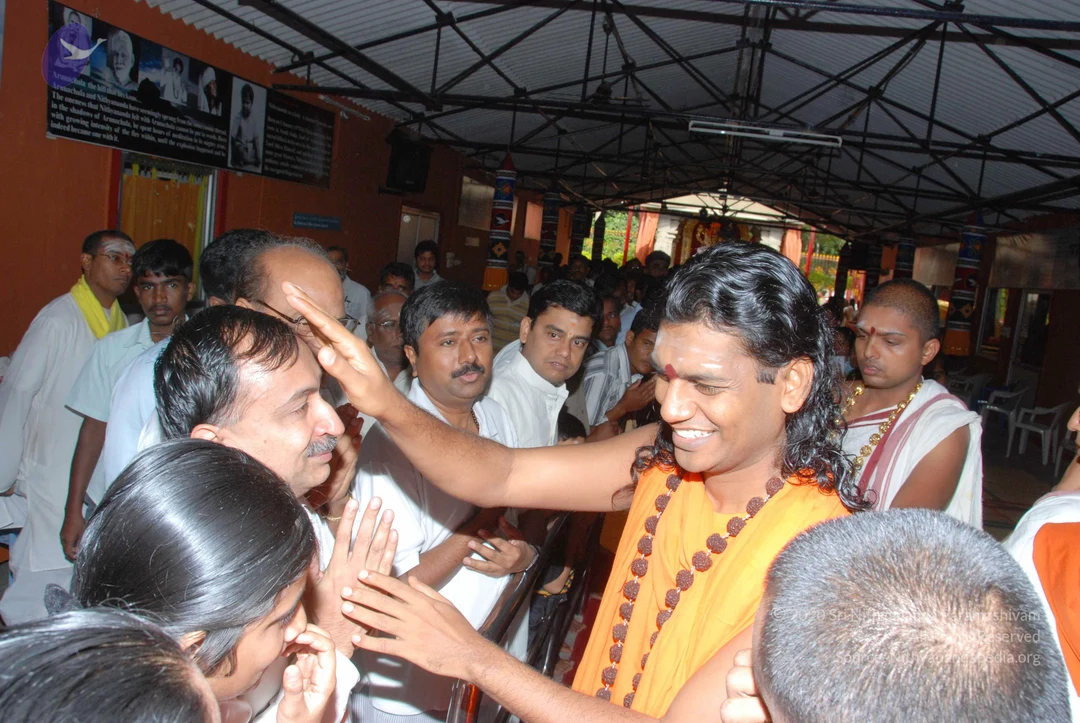
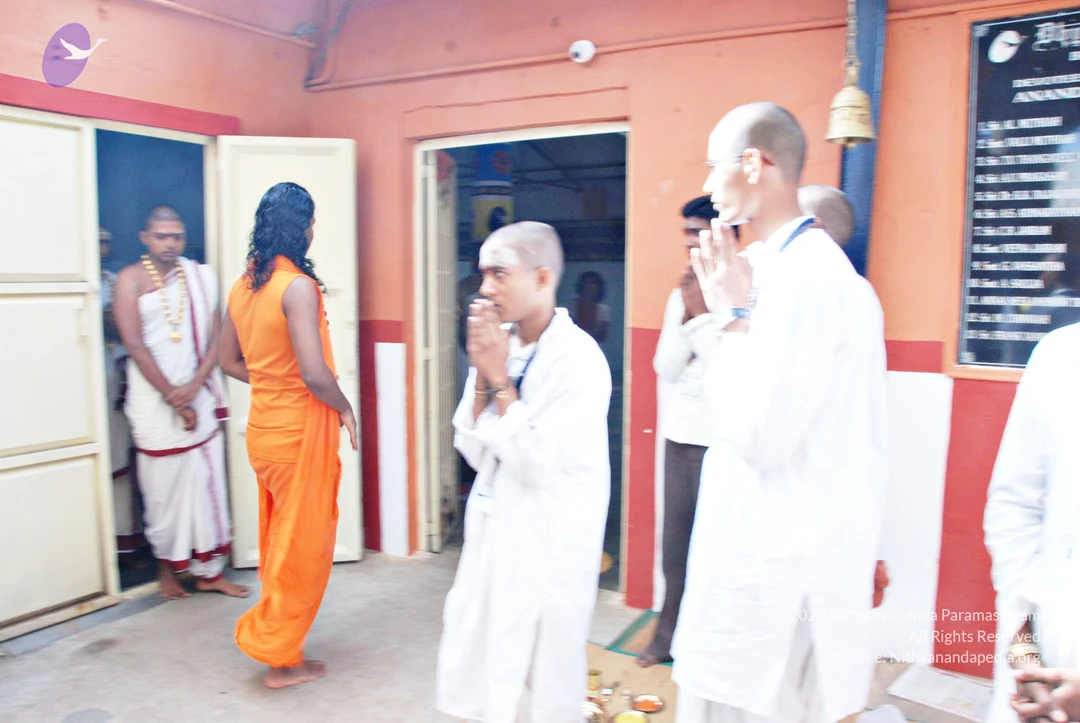
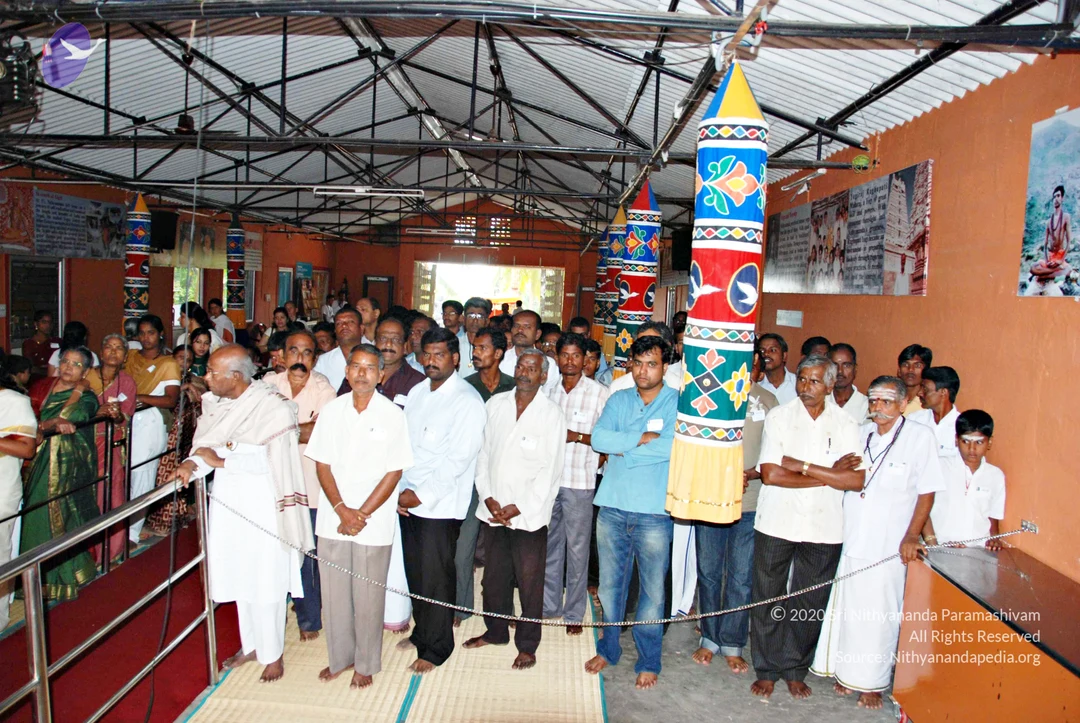
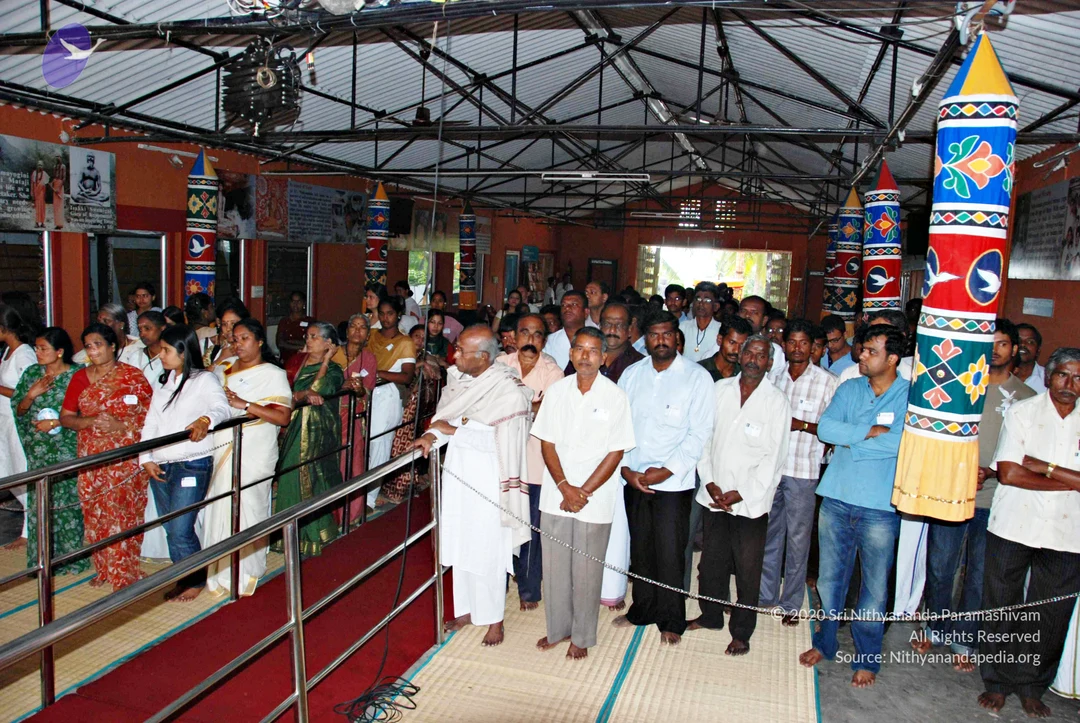
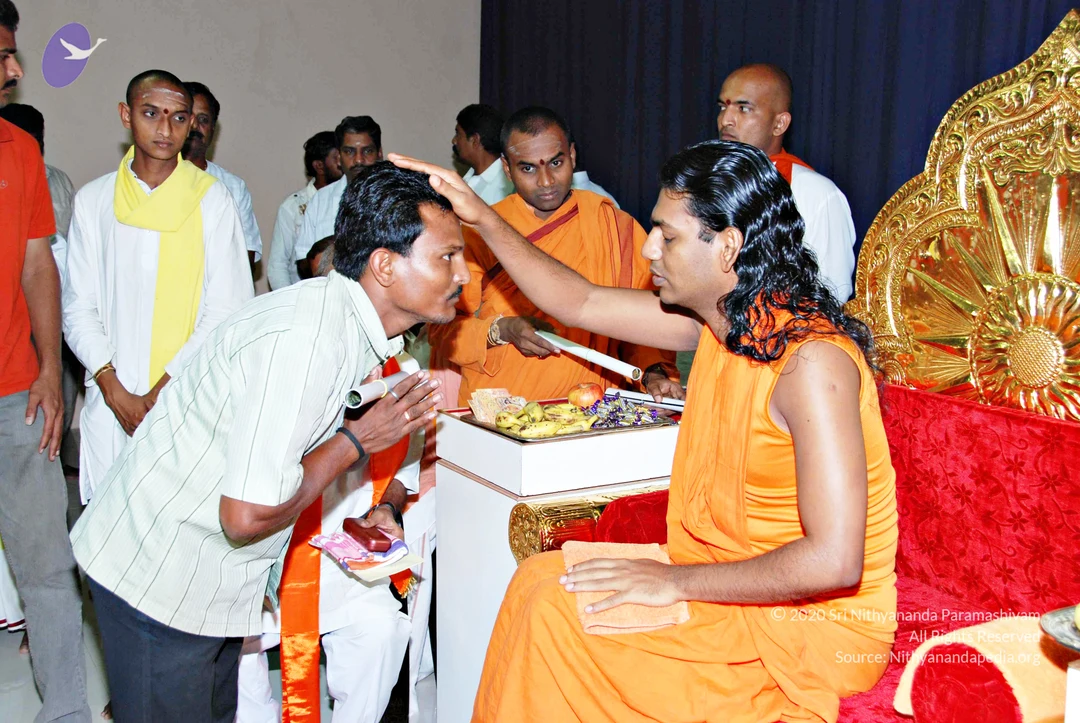
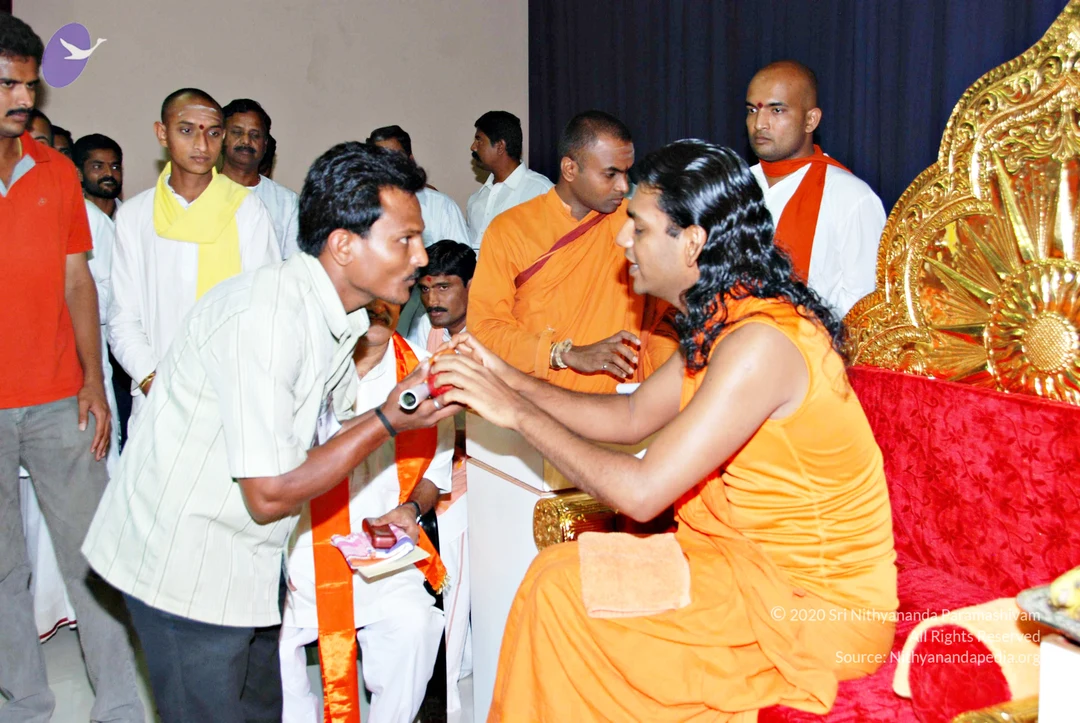
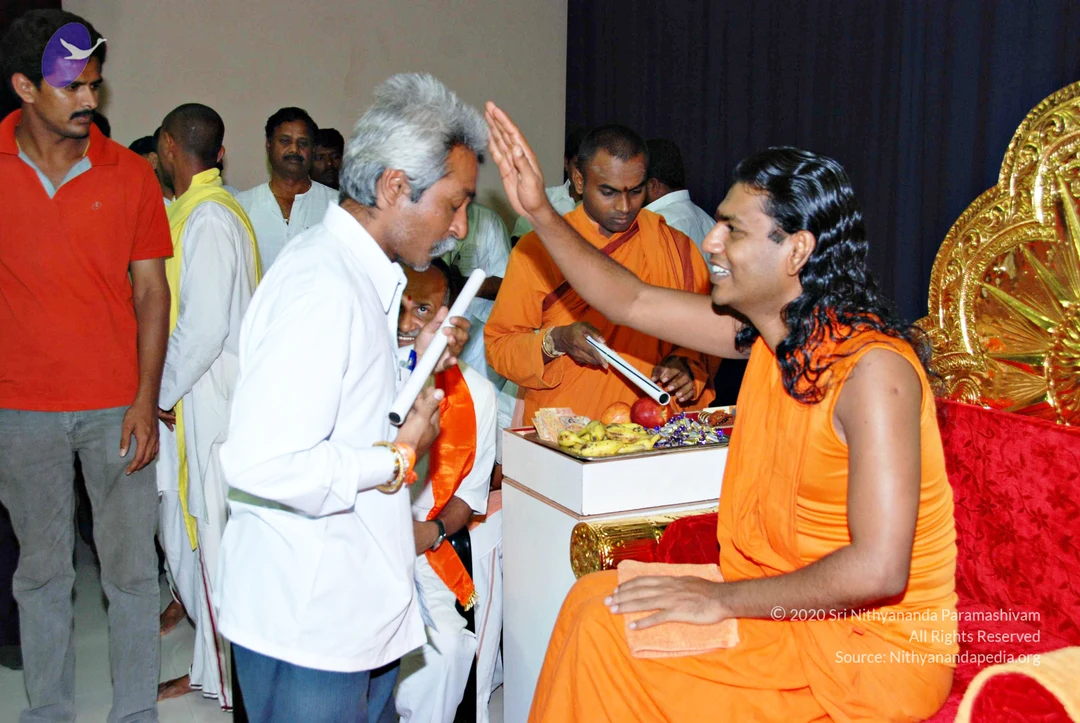
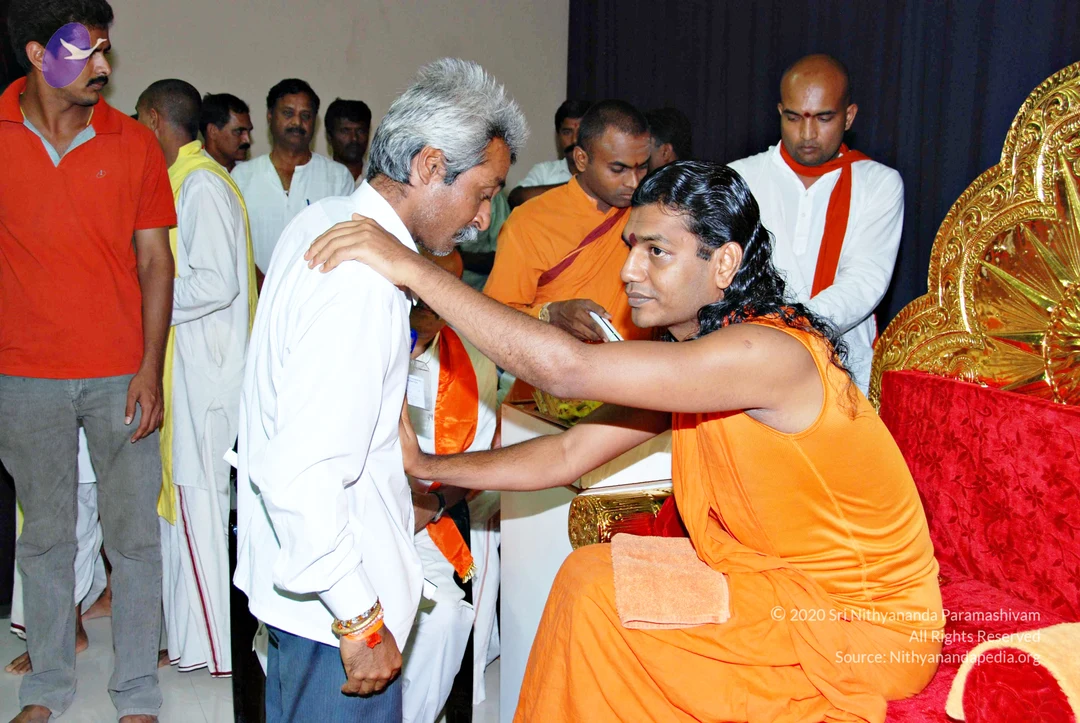
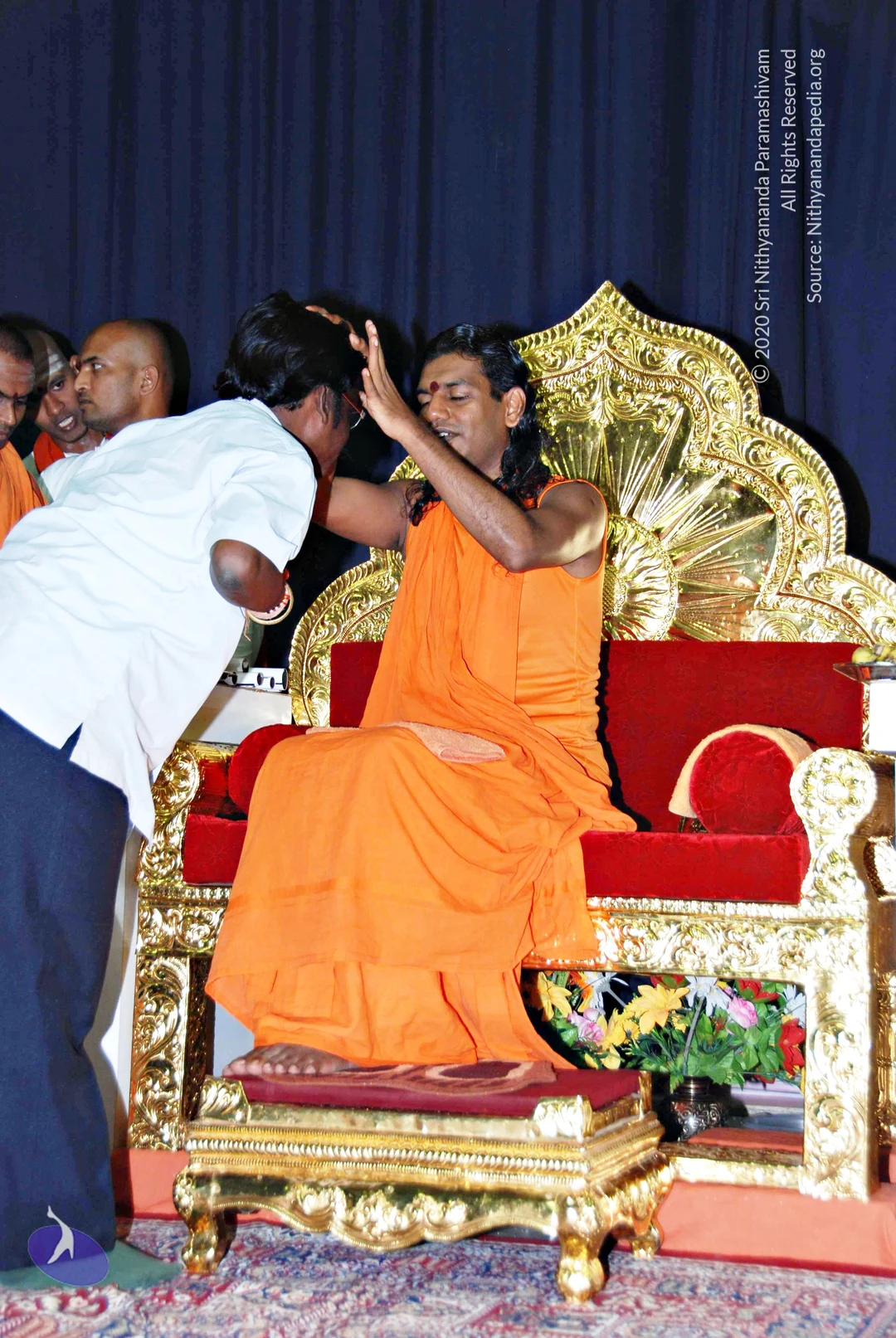
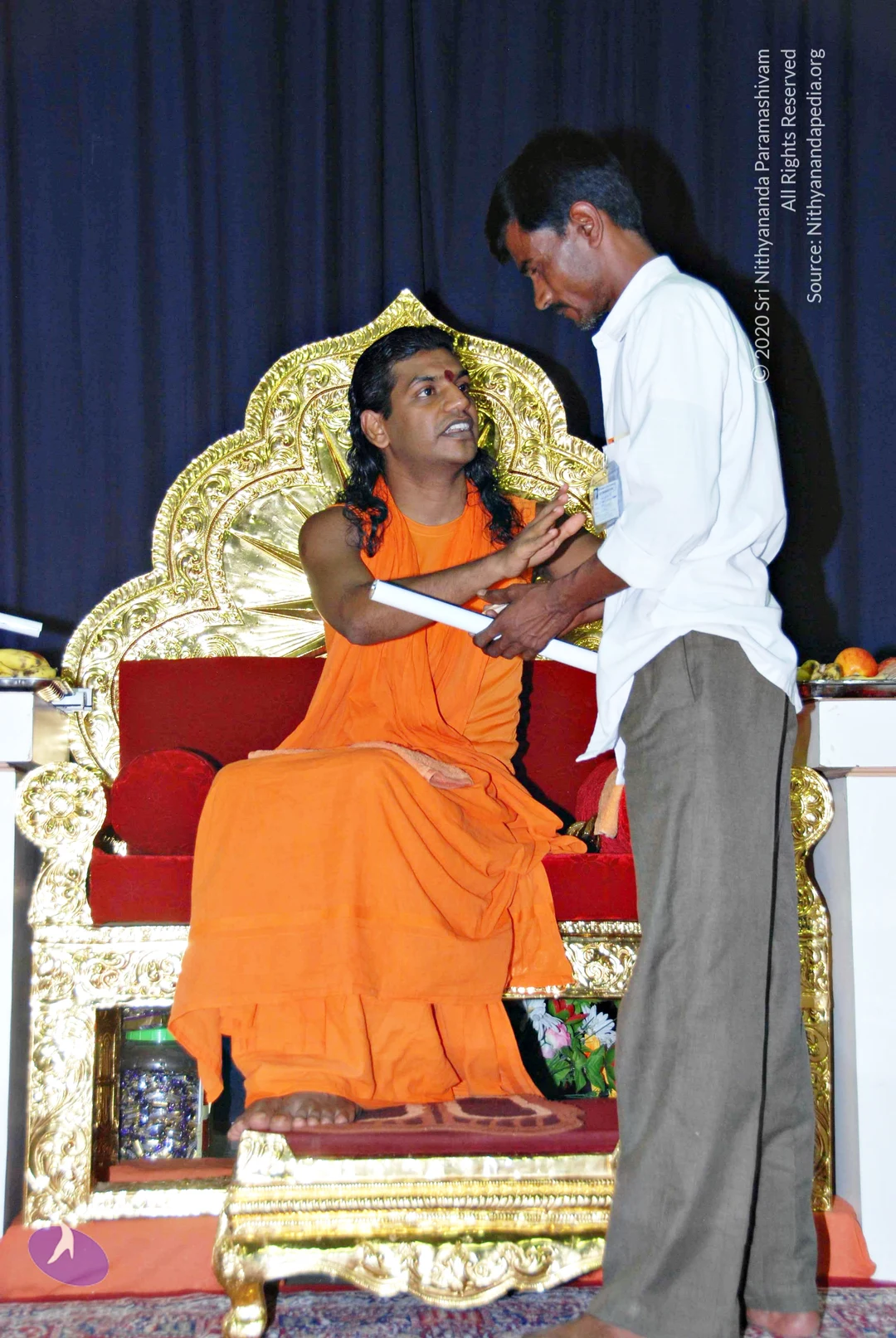
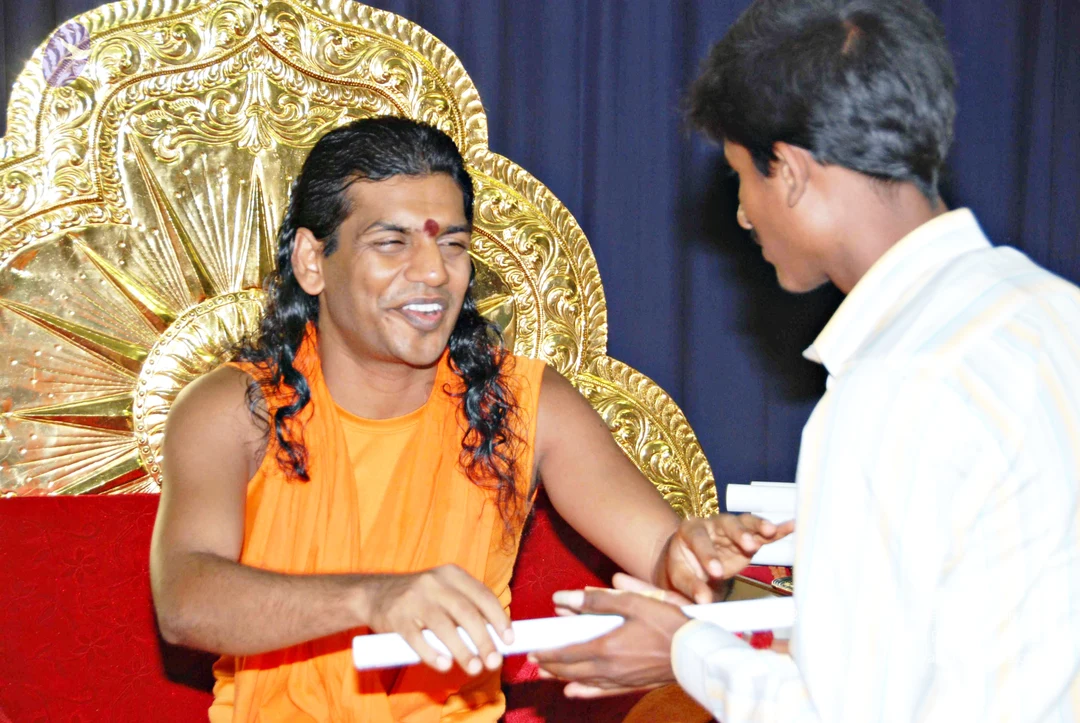
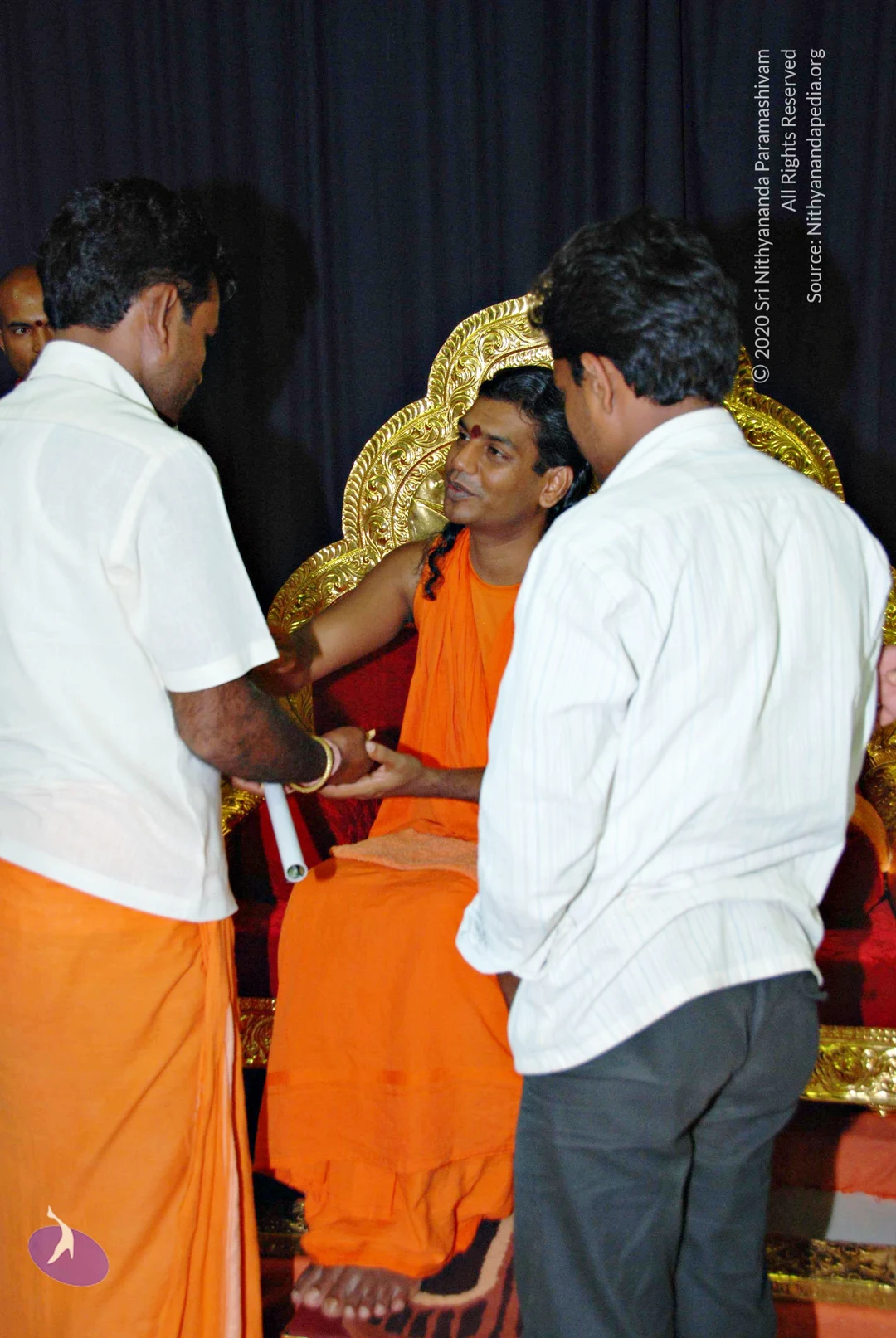
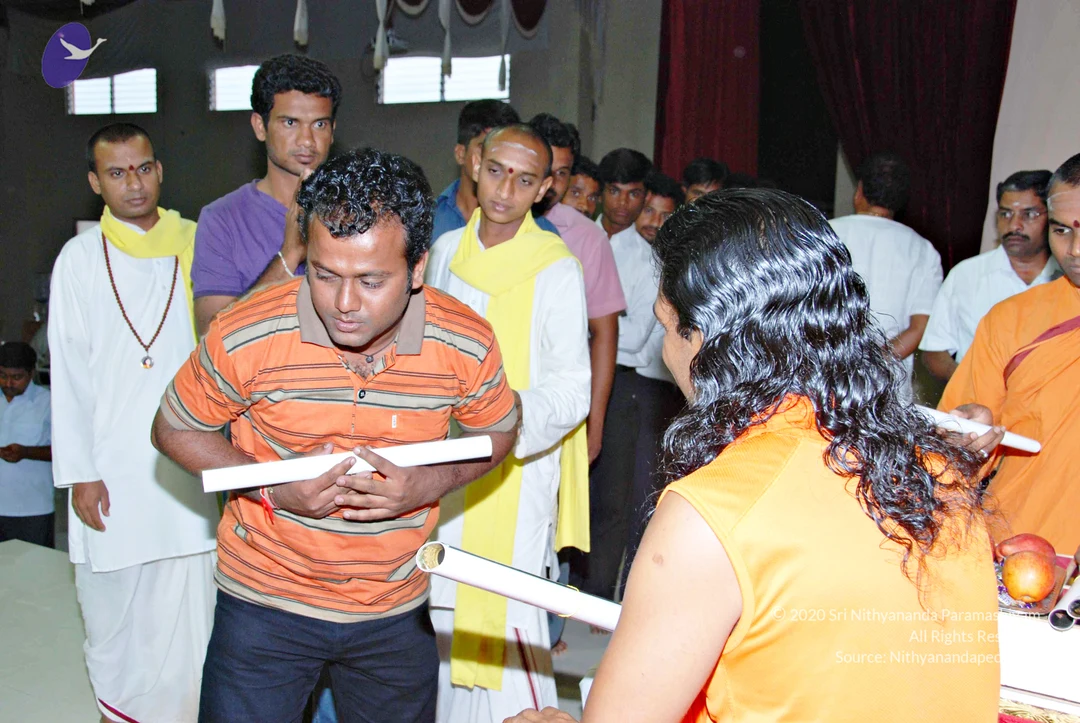
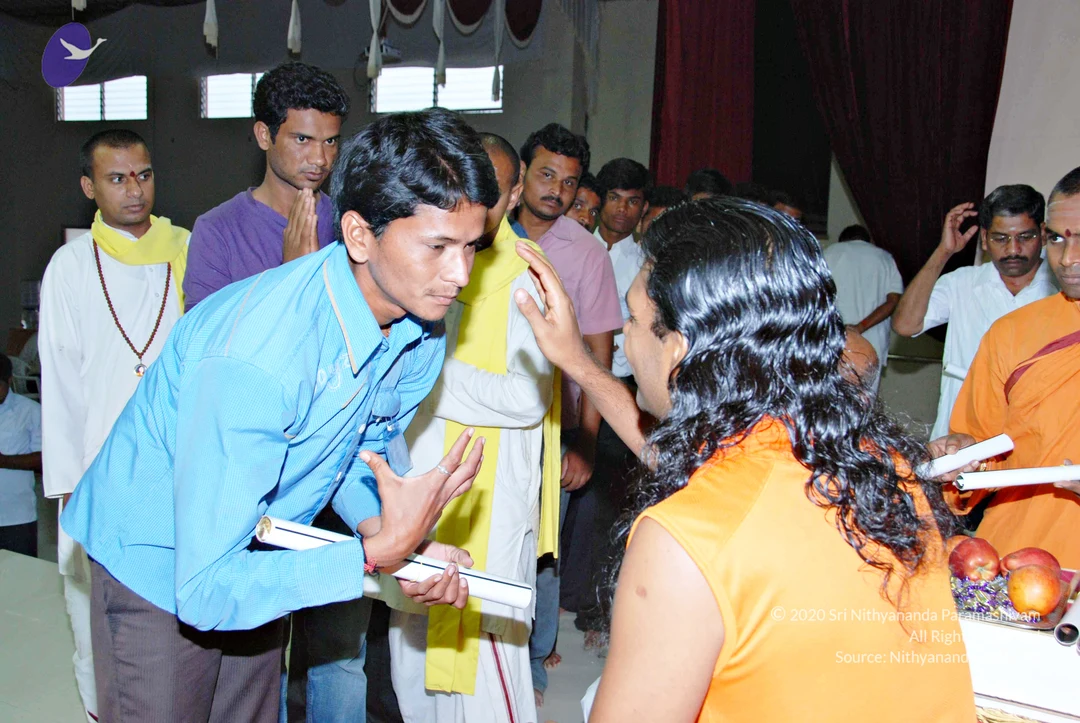
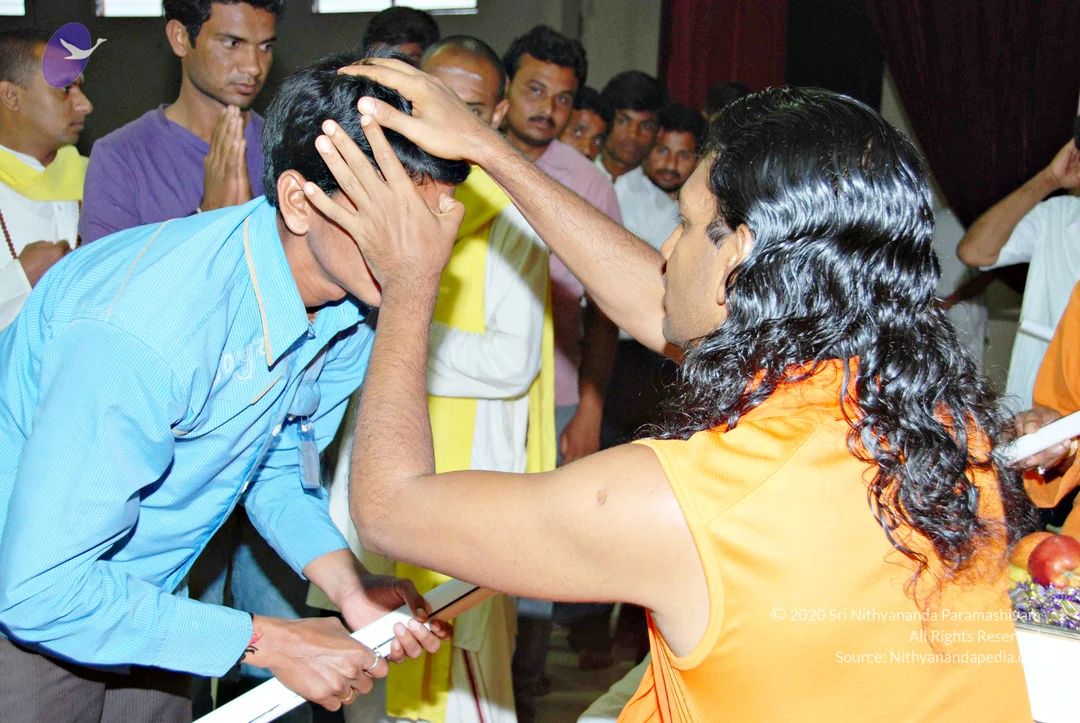
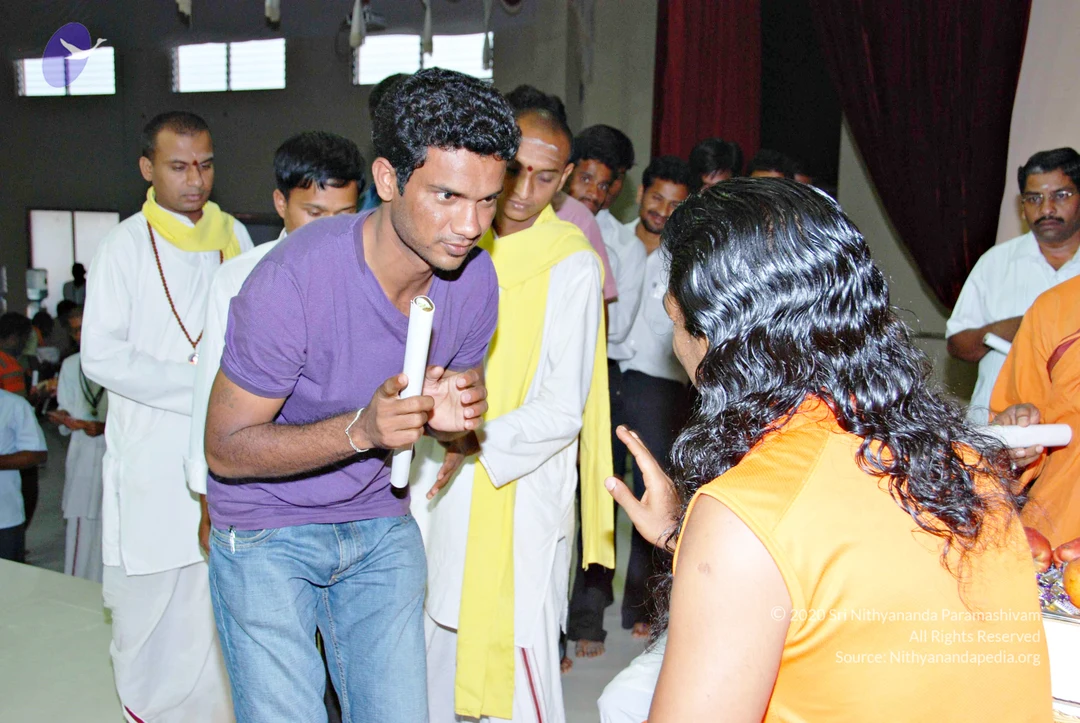
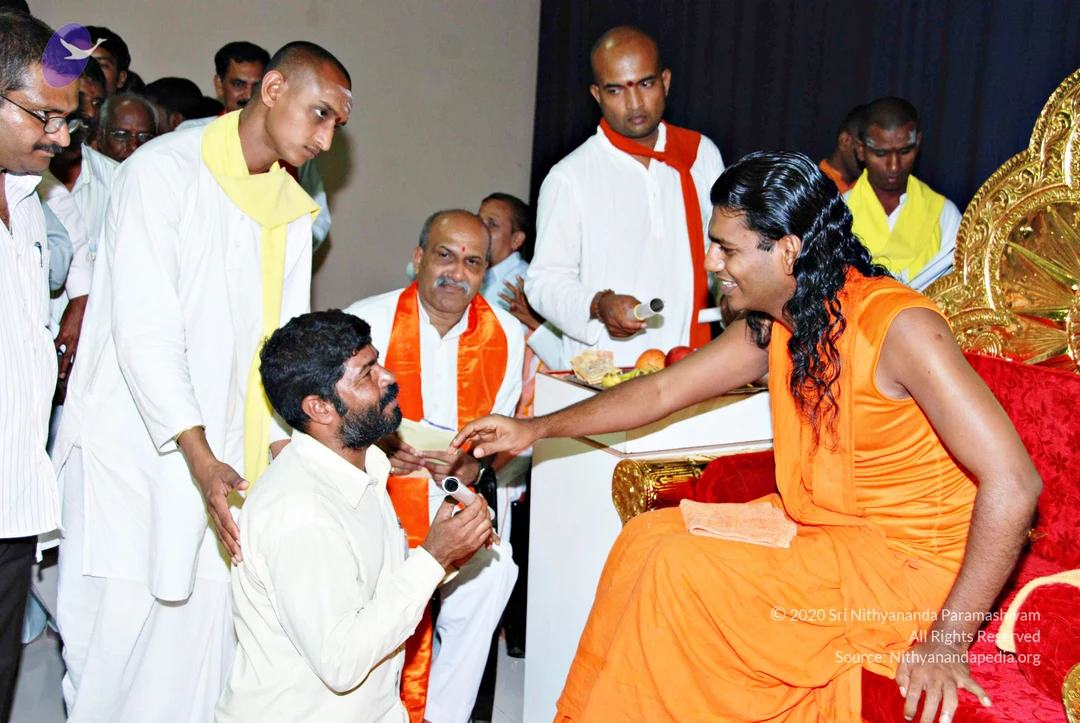
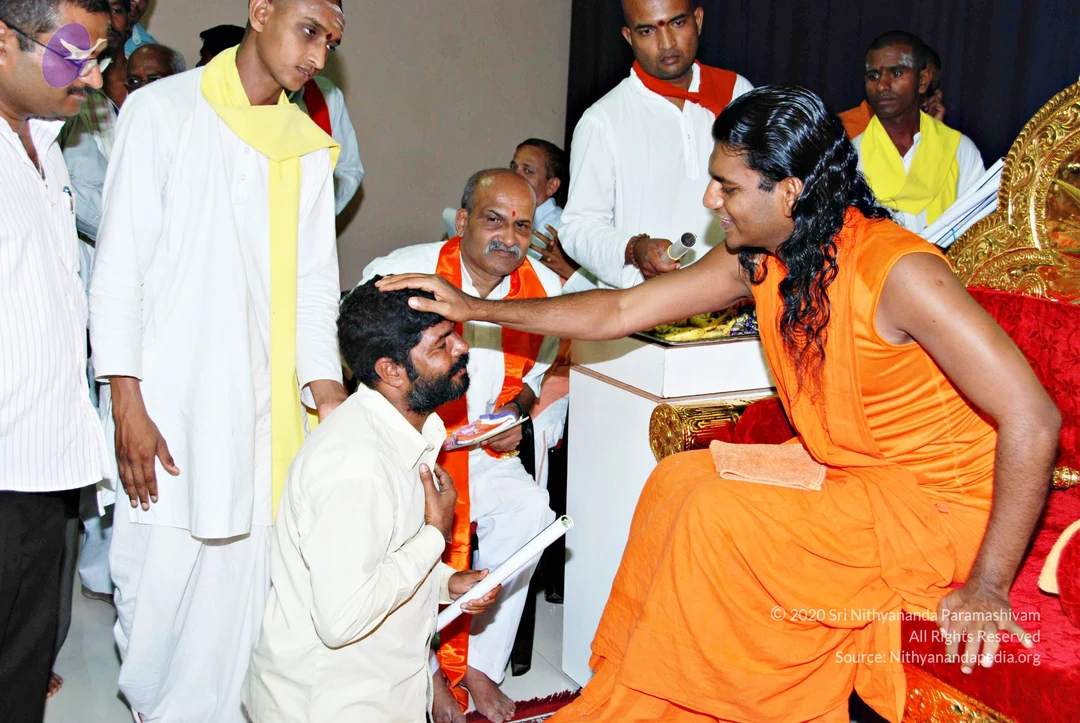
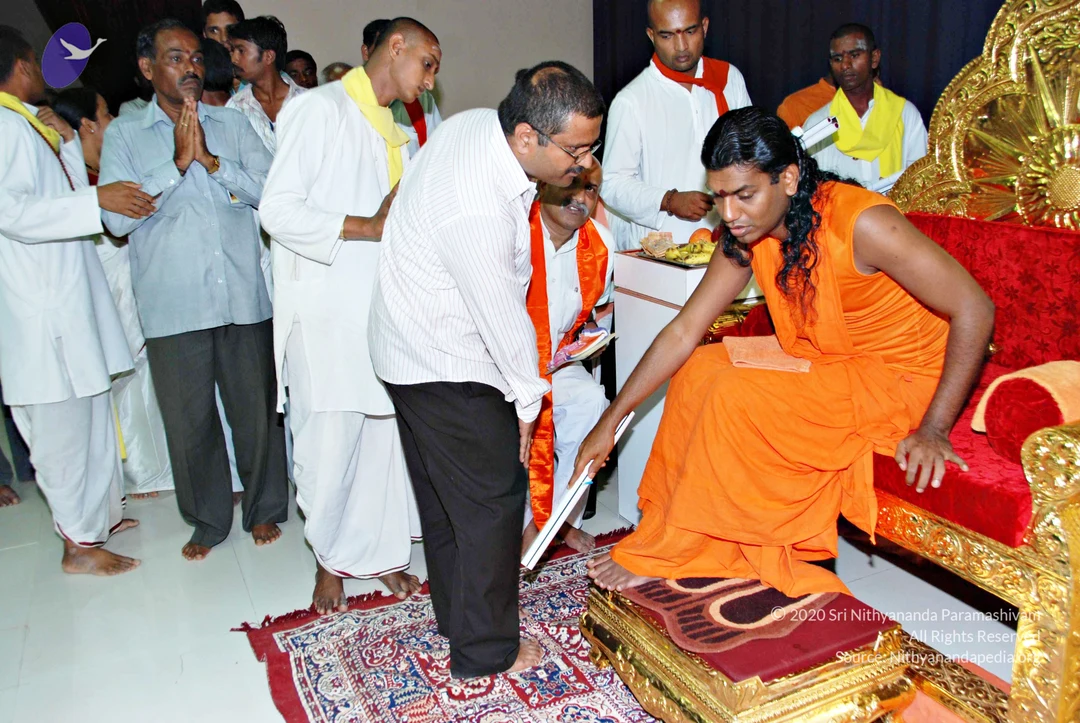
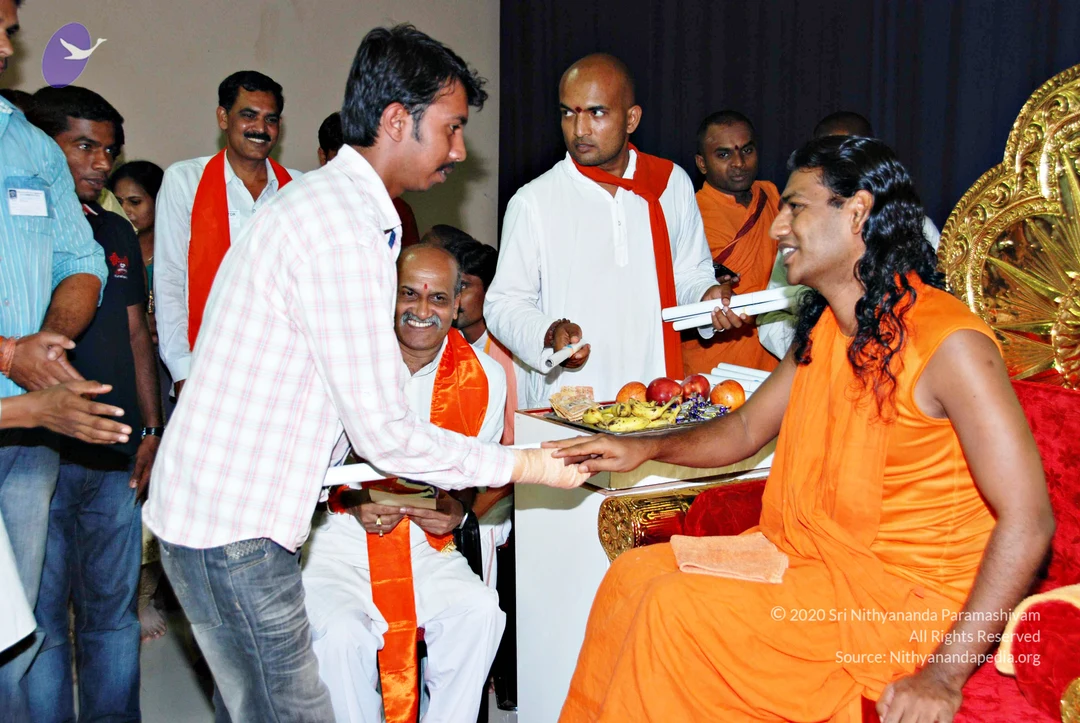
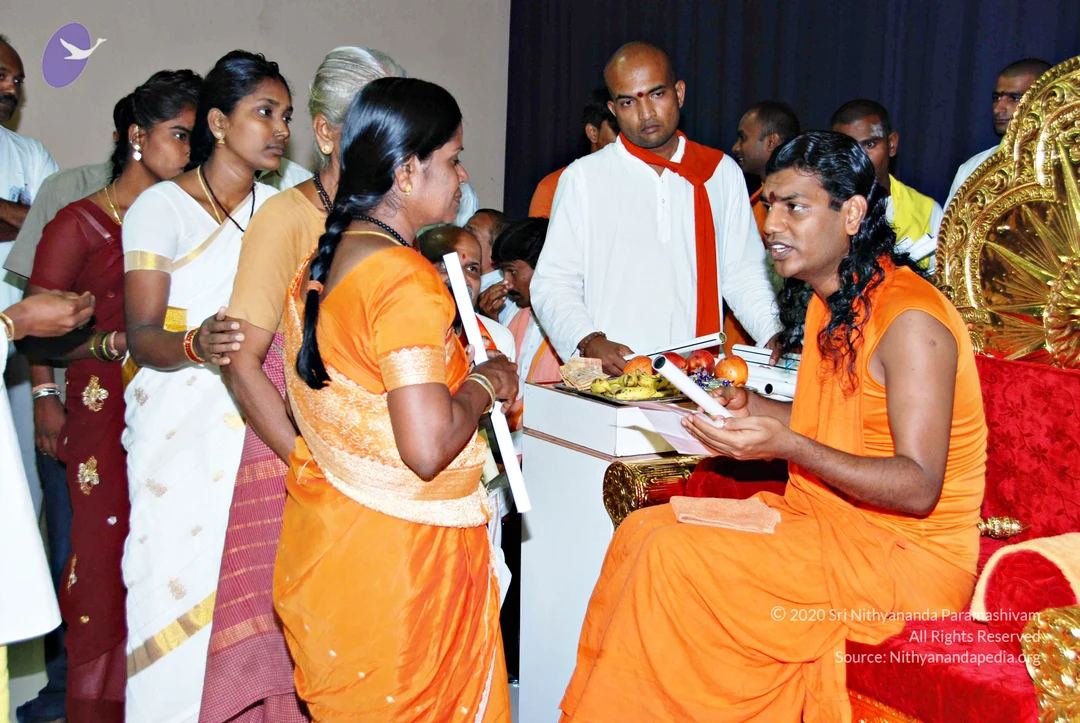
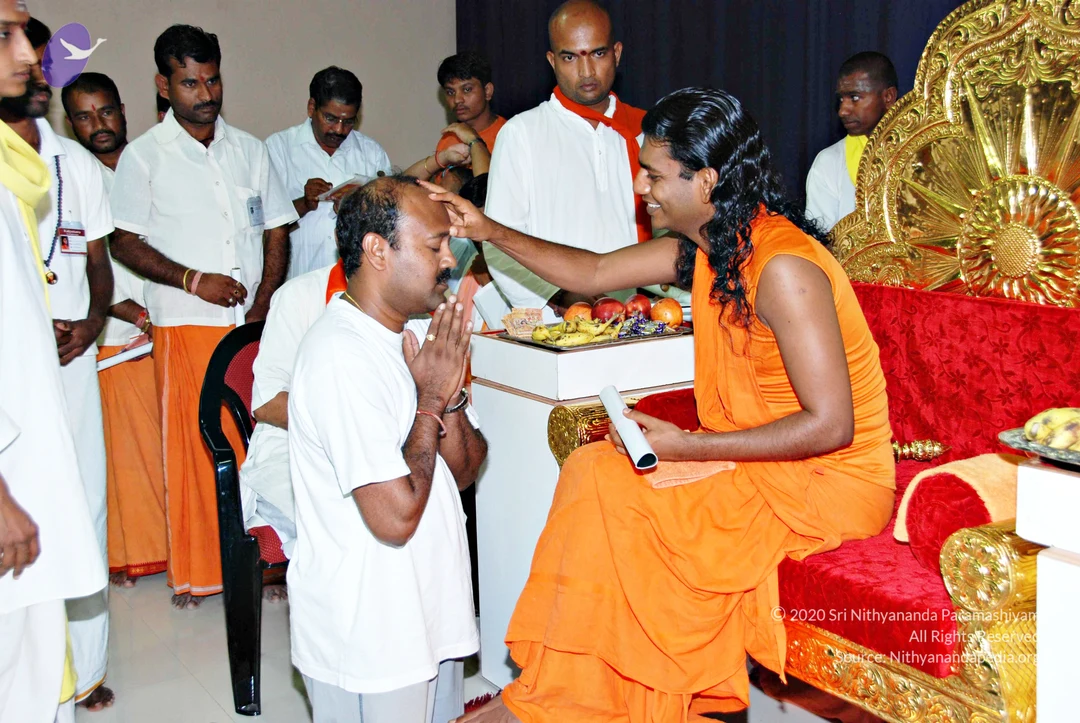
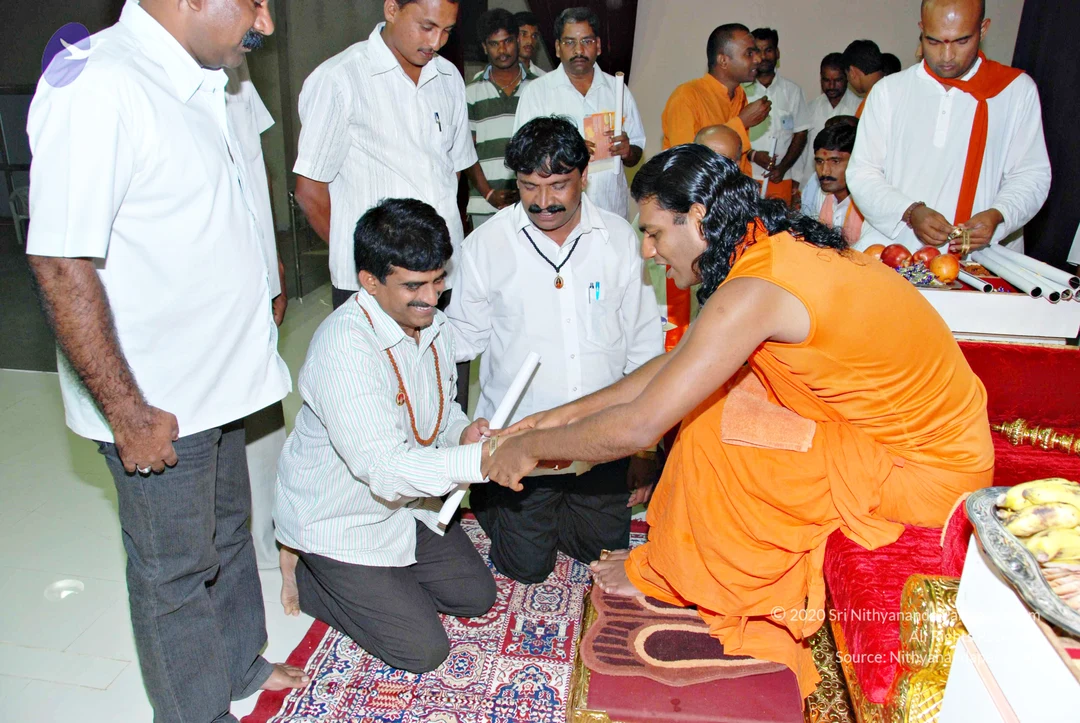
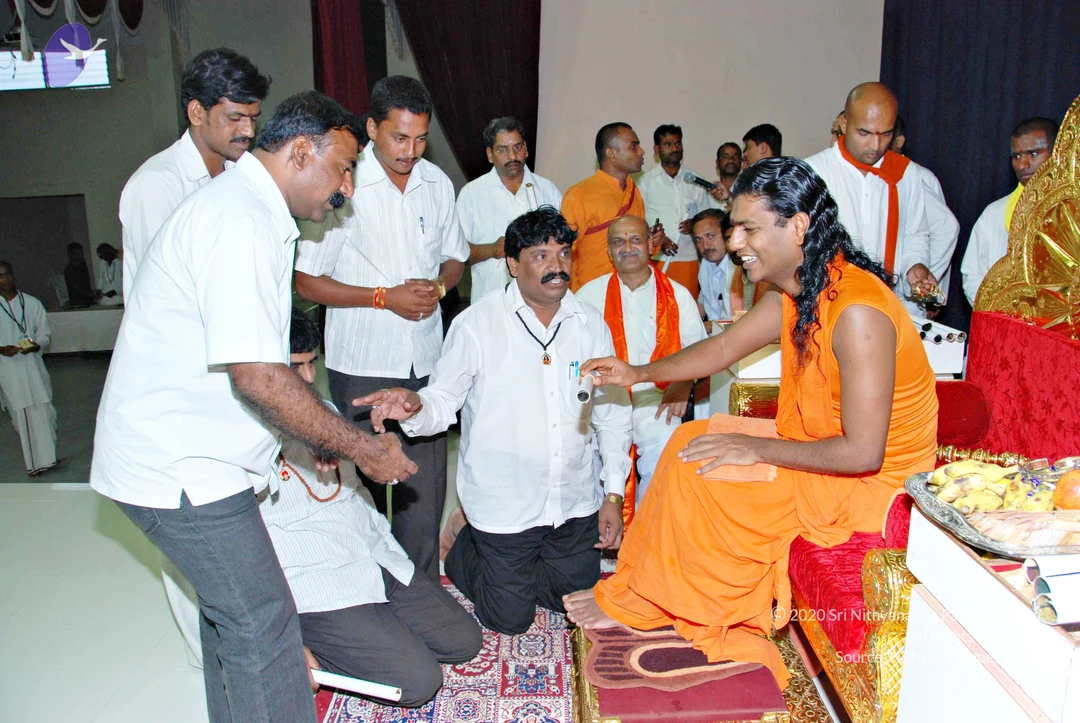
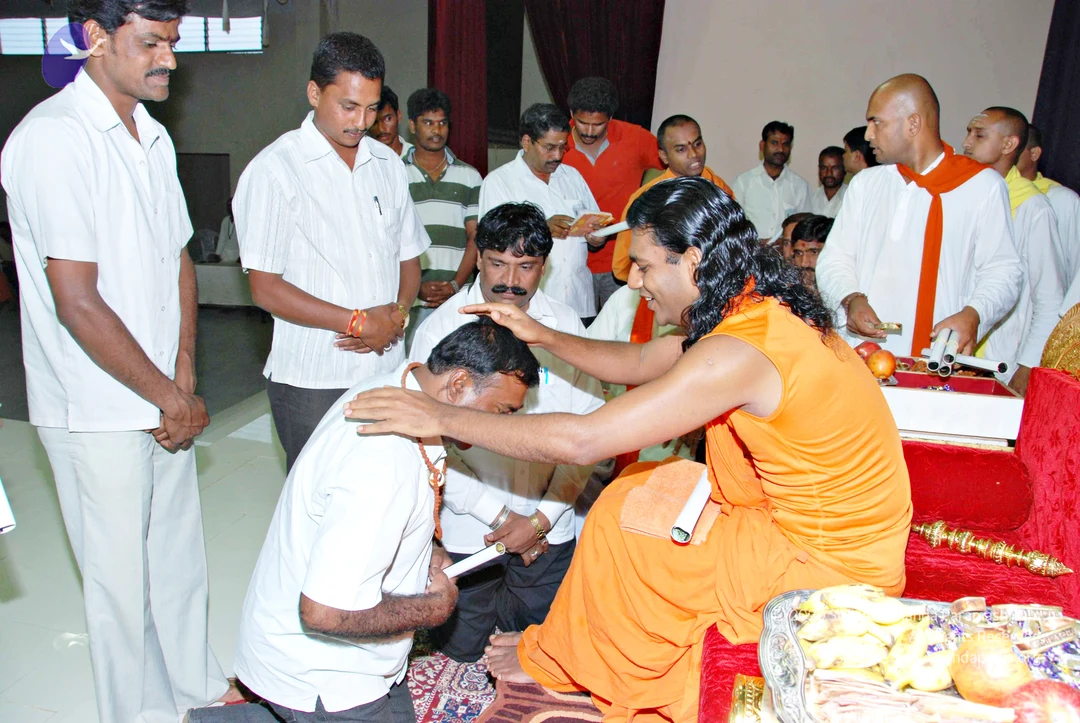
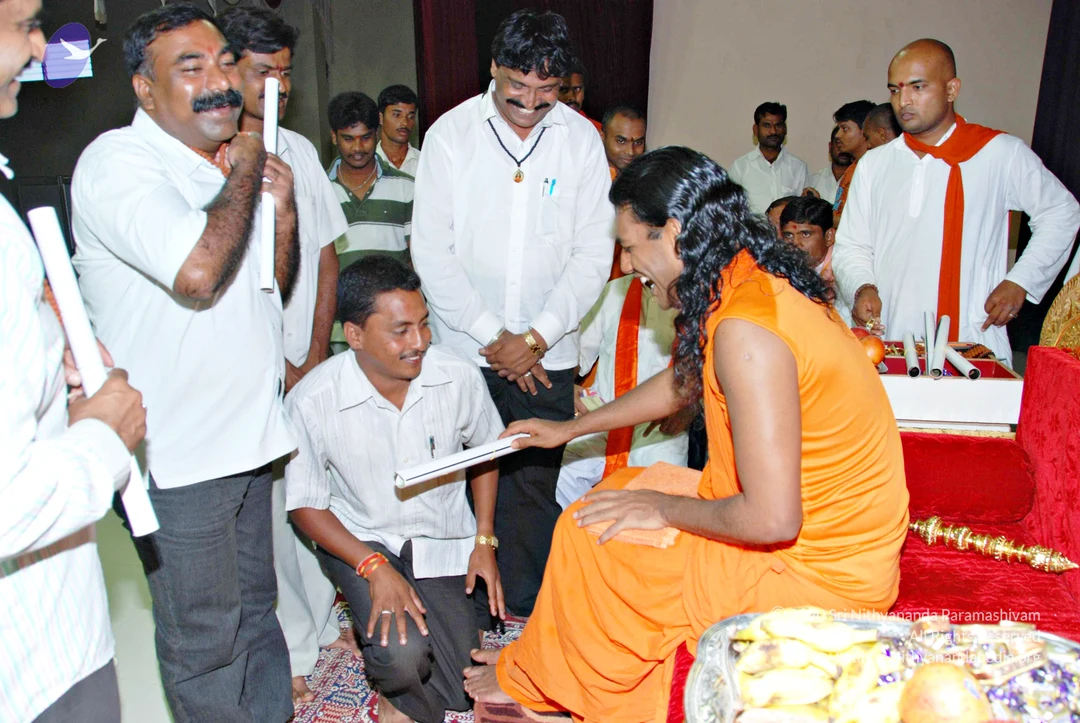
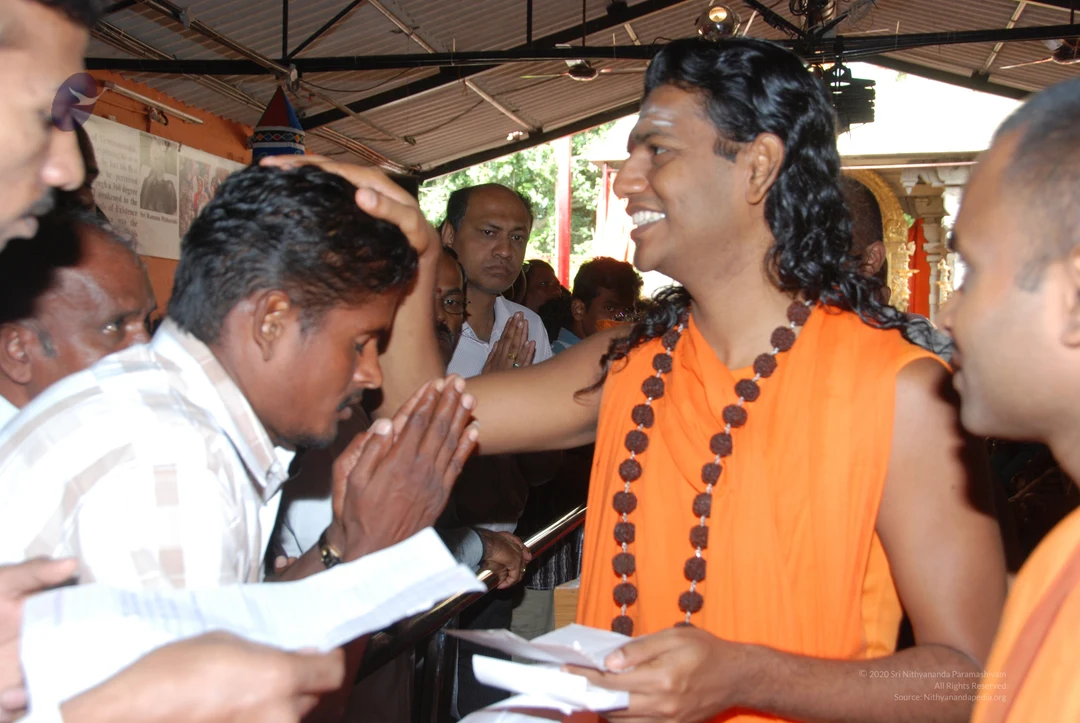
Outdoor temple-side photo of a man with long, wavy black hair in a sleeveless saffron-orange robe and multiple rudraksha mala strands, reaching out to touch the shoulder of a middle-aged man with a moustache in a pink shirt while clasping his hand. Several other men stand around, including a man in a striped shirt at left and a shaved-headed priest at right in white dhoti and shawl with a red tilak and a gold necklace. Behind them are a black speaker, orange tarpaulin, carved stone temple pillars and green foliage. The orange-robed man matches the appearance-based a person cues of long swept hair, saffron clothing and rudraksha malas, but his identity is uncertain from appearance alone.A crowd gathers at a temple shrine under a corrugated roof, with a deity murti in a gilded niche behind them. A man in an orange robe with a long swept-back hairstyle, rudraksha mala and gold necklace receives papers from devotees, one hand extended, while a shaved-headed attendant in orange stands beside him. Devotees in white and cream saris and shirts press forward, palms joined in folded-hand greeting. A colourful painted pillar and a framed photo panel sit at the left edge, and a deity figure in bright green and red fills the shrine. Several people are visible, including partly visible faces at the frame edges.A crowded outdoor-roofed temple pavilion with corrugated metal roof and ceiling fans. In the centre, a person with long dark hair wears an orange-saffron robe and a rudraksha-style bead mala, extending hands to offer something to devotees. Beside them, a bald monk in orange saffron robes stands with a gold-coloured item. Devotees in white shirts and dhotis press forward with folded hands and papers. Behind, a shrine with a deity murti under a golden arch with red and orange draperies. On the left, a wall panel with printed text and a painted decorative pillar.A photograph of a crowd gathered at a temple railing in front of a shrine. A man in an orange saffron robe with a long rudraksha mala and a red bindi on his forehead stands at the centre, raising one hand in blessing while holding folded white papers in the other. Several devotees in white shirts and dhotis stand with palms pressed together and heads bowed to the left. Behind them, a golden deity murti and decorated shrine with red drapery are visible.A photograph of a smiling man in an orange saffron garment with a long rudraksha mala draped over his chest, his long swept-back dark hair falling around his shoulders and a white tilak on his forehead. He extends his right hand in blessing, palm resting on the head of a man in a light blue shirt who bows with hands folded in namaste. Other devotees in shirts and glasses crowd close, with more people standing behind. A deity murti decorated with a golden crown and garlands is visible in an alcove, and a red and gold backdrop frames the shrine. The orange temple walls and corrugated roof sit behind the scene.A photograph at an indoor darshan setting under a corrugated metal roof with ceiling fans and lights. A long-haired man in a sleeveless saffron-orange robe and a multi-strand rudraksha mala smiles while placing his hand on the head of a man in a white checked shirt who stands with palms pressed together in anjali. The robed man holds folded papers in his other hand. Behind them, several devotees in white and dark clothes watch, one with hands joined. A framed newspaper clipping and a colourful cloth hang on the left wall, and a gilded arch appears at the right.
03

03-PANCHA-TAPAS

82 dated photos in previewSource gallery
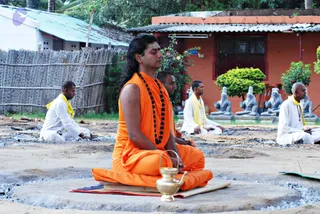
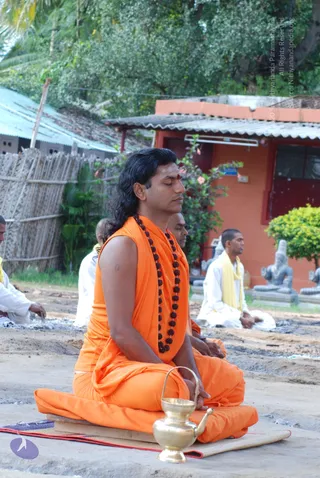
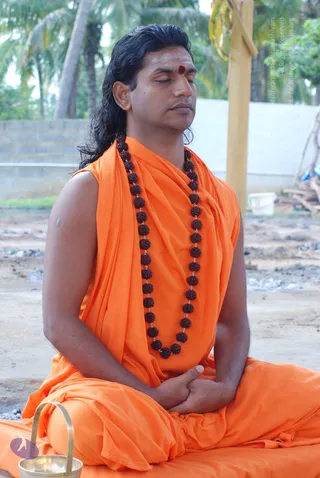
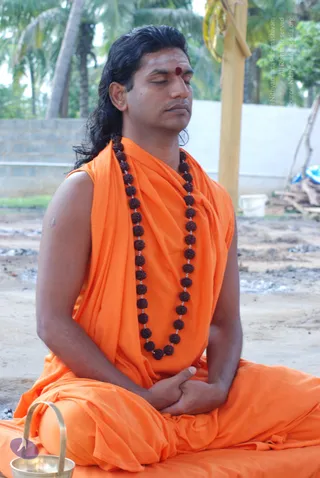
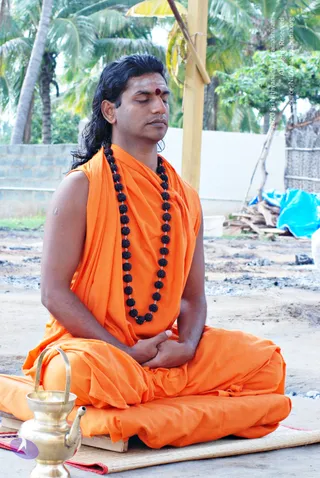
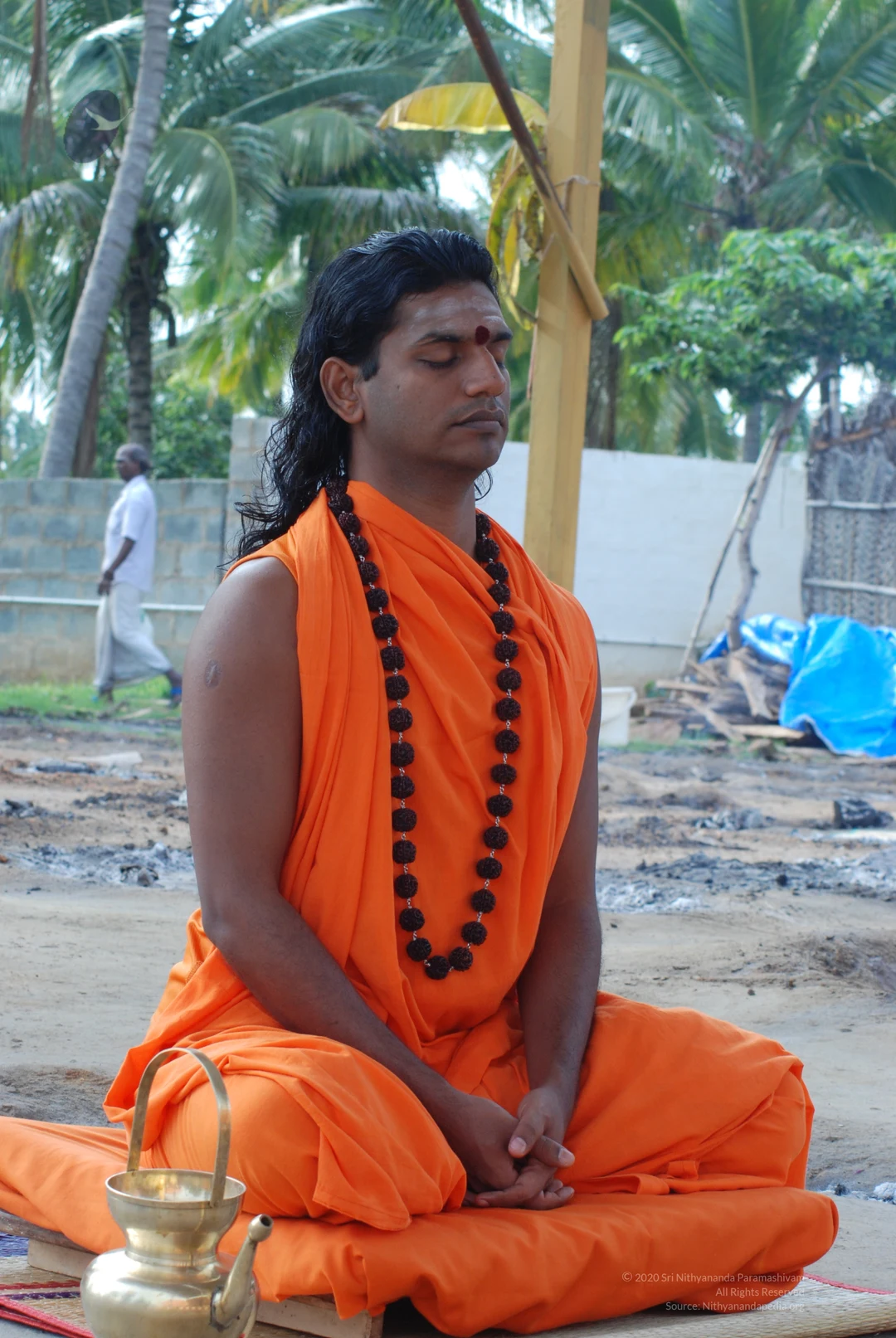
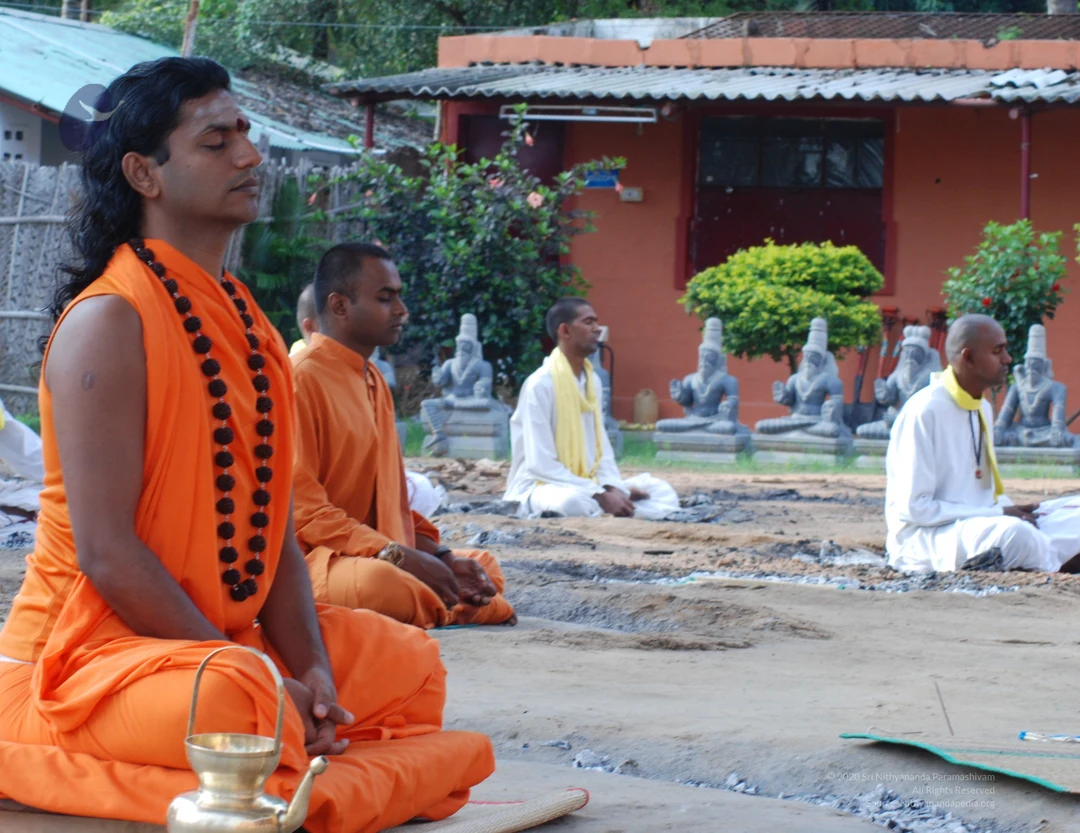
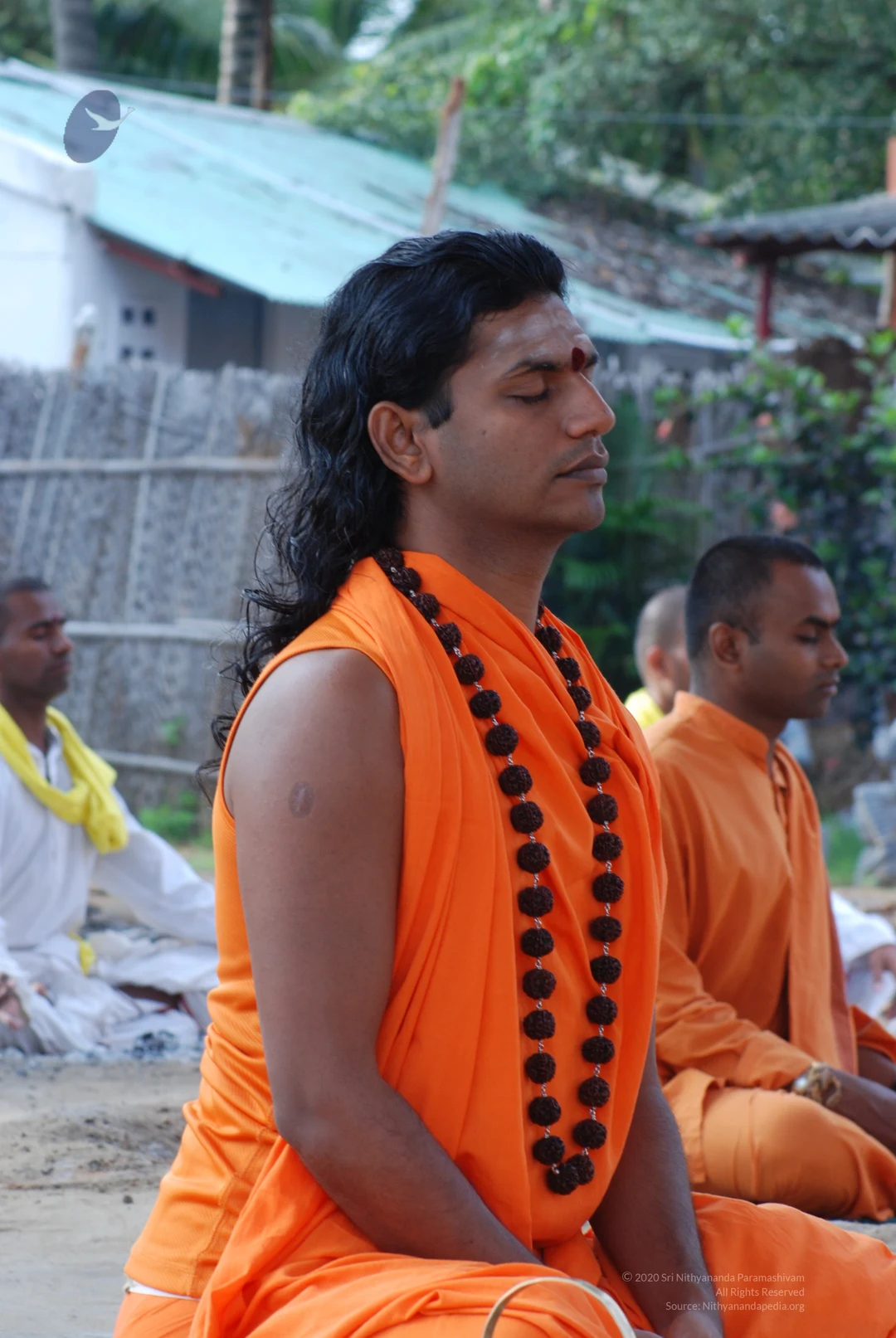
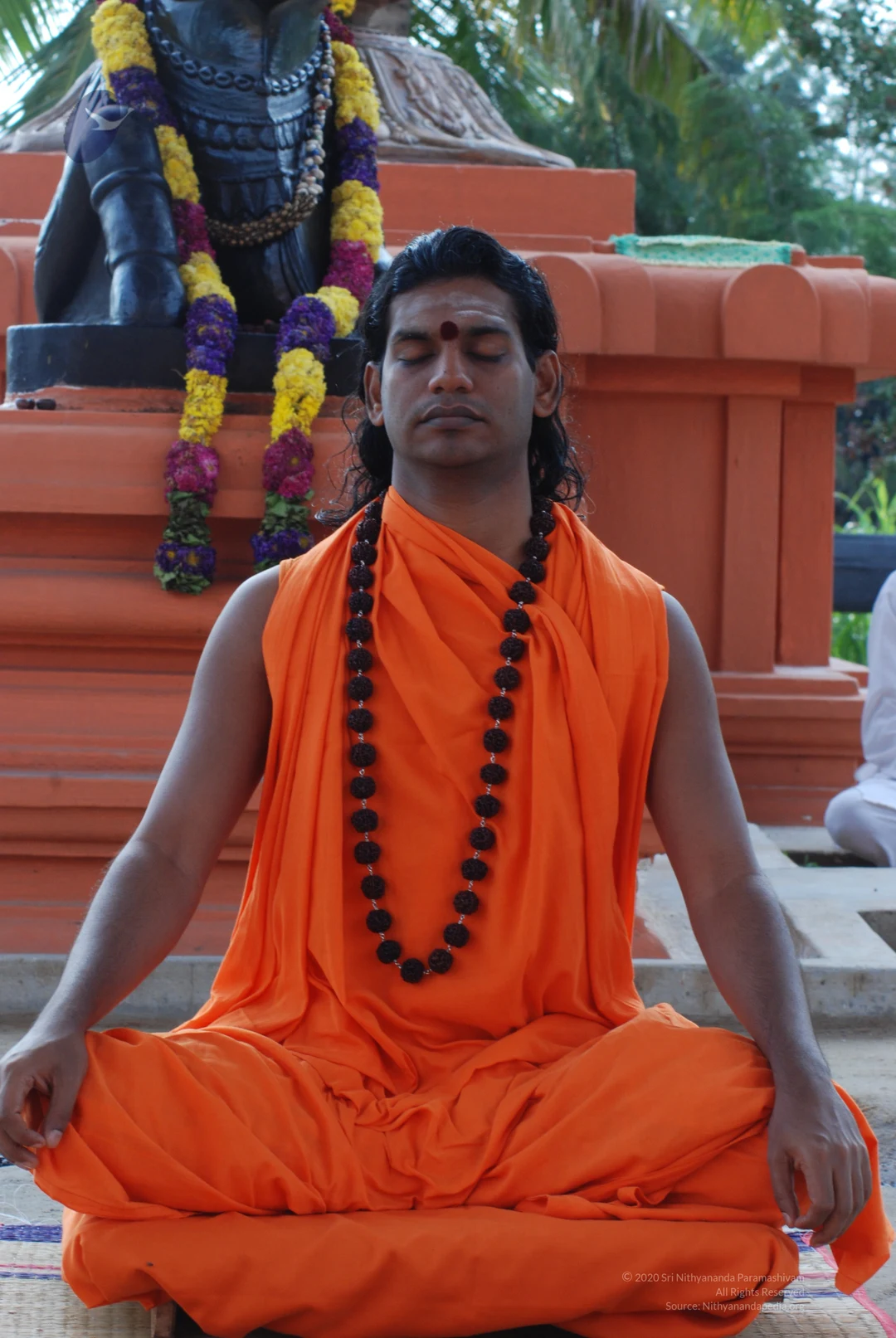
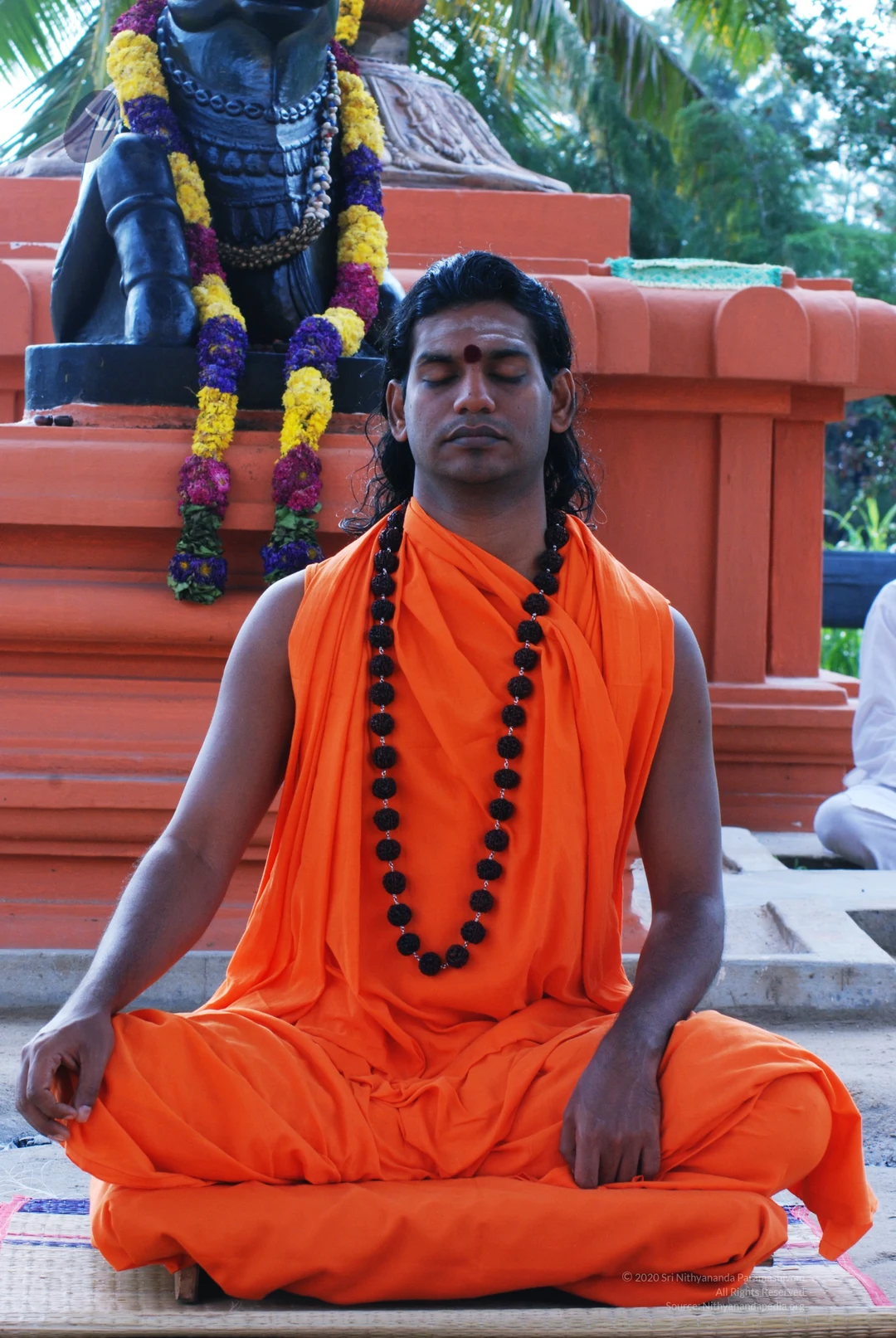
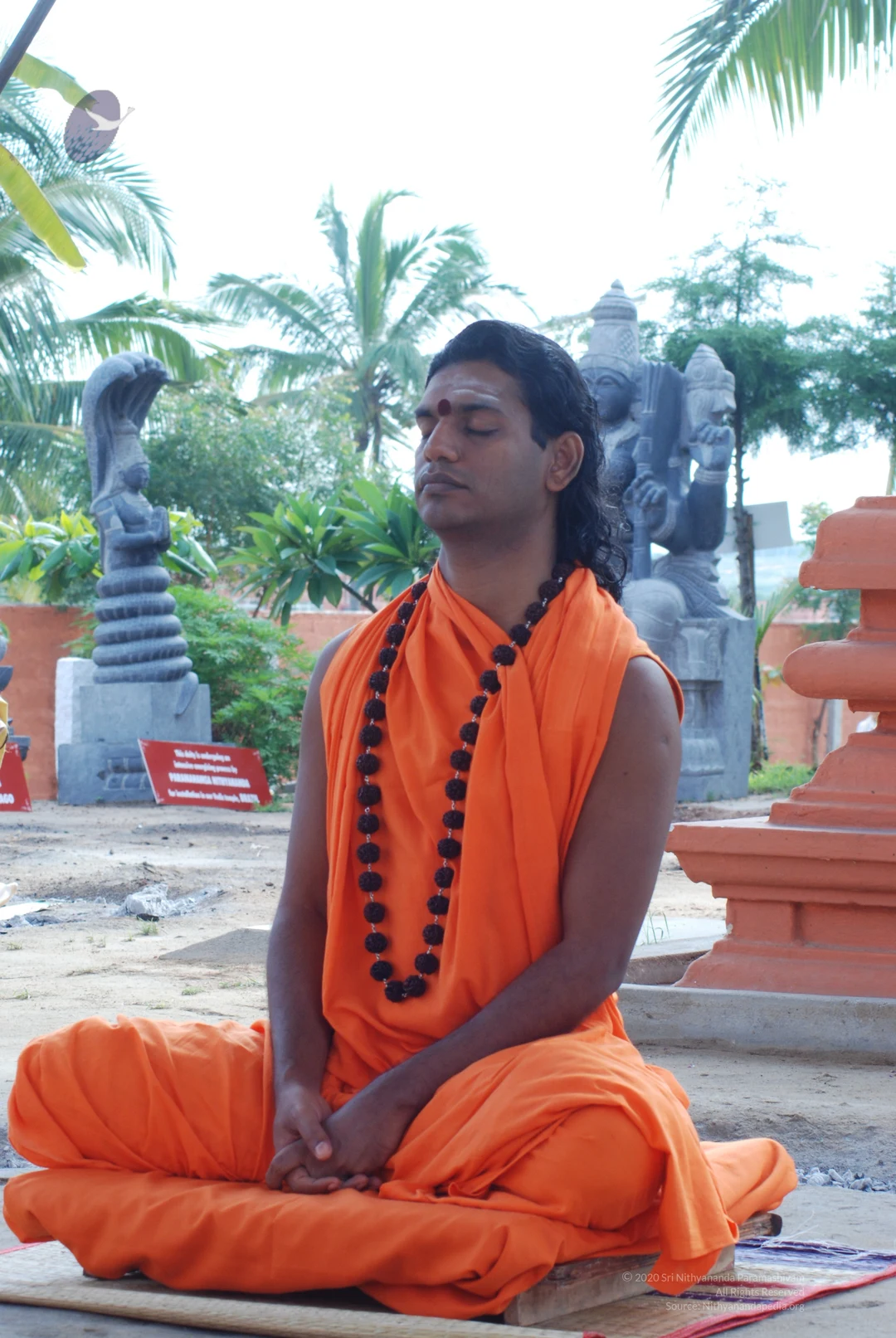
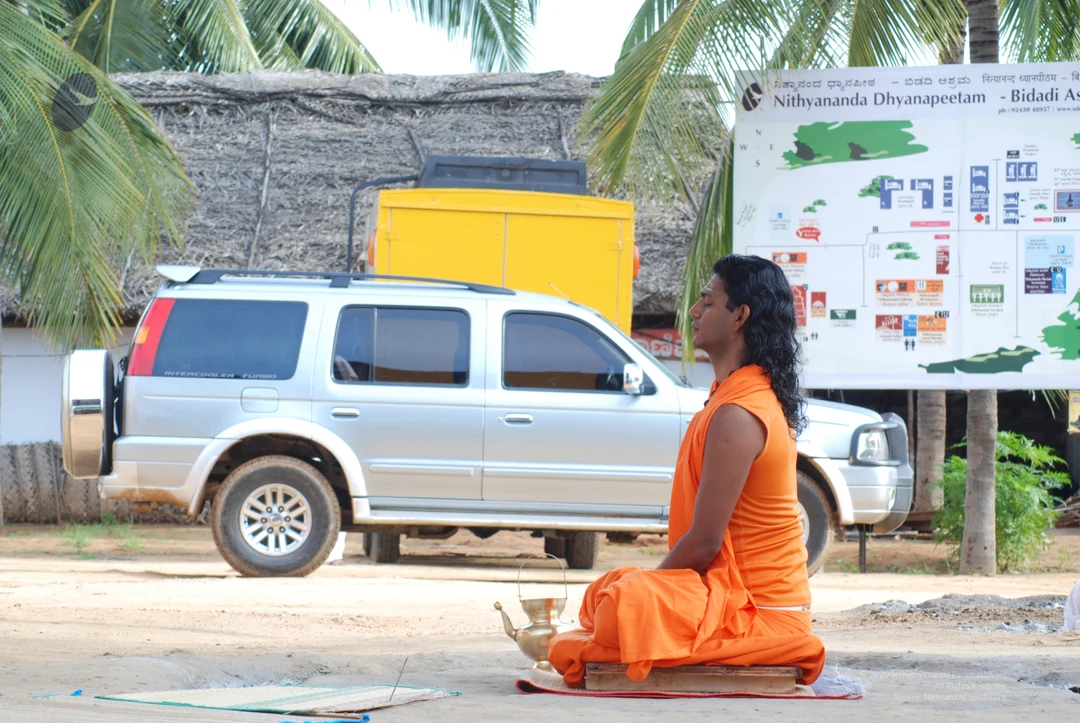
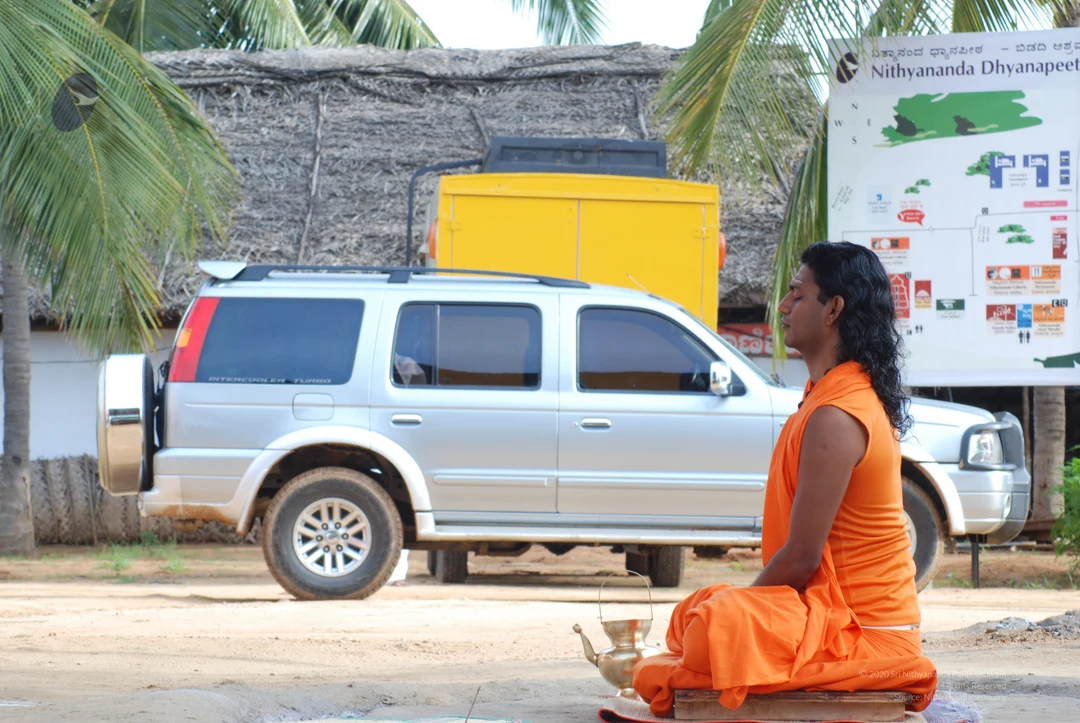
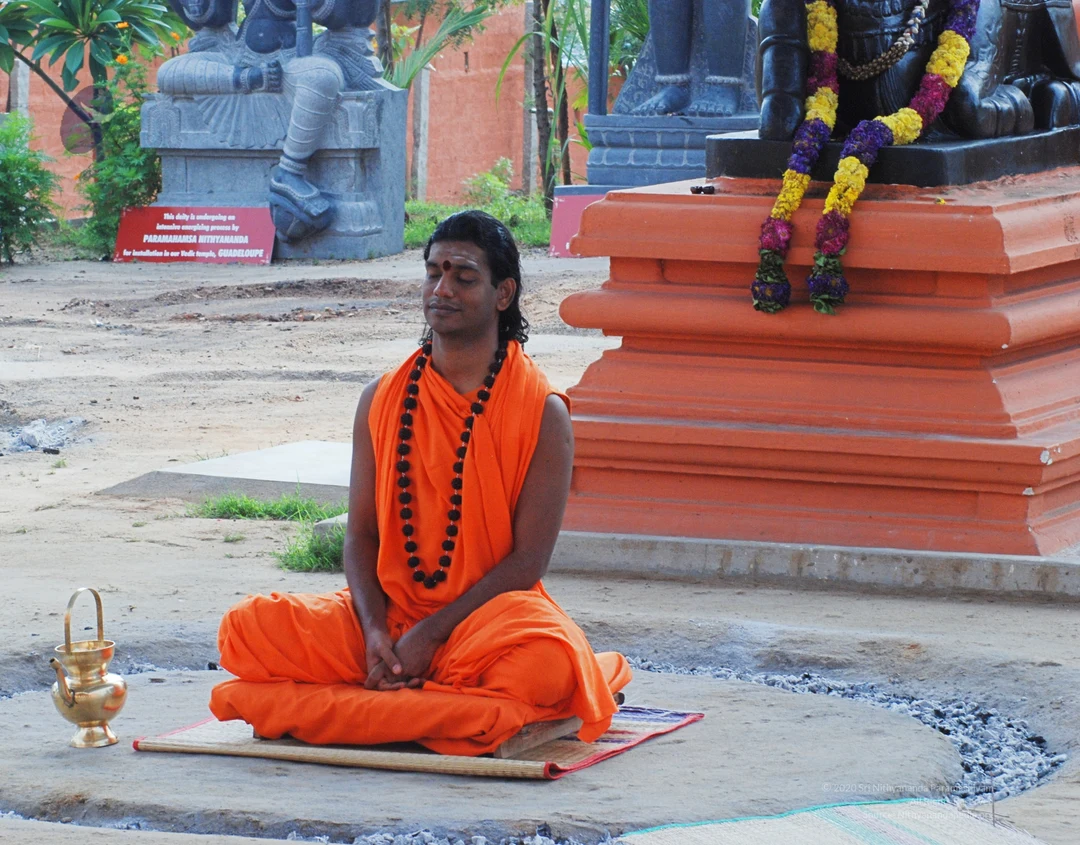
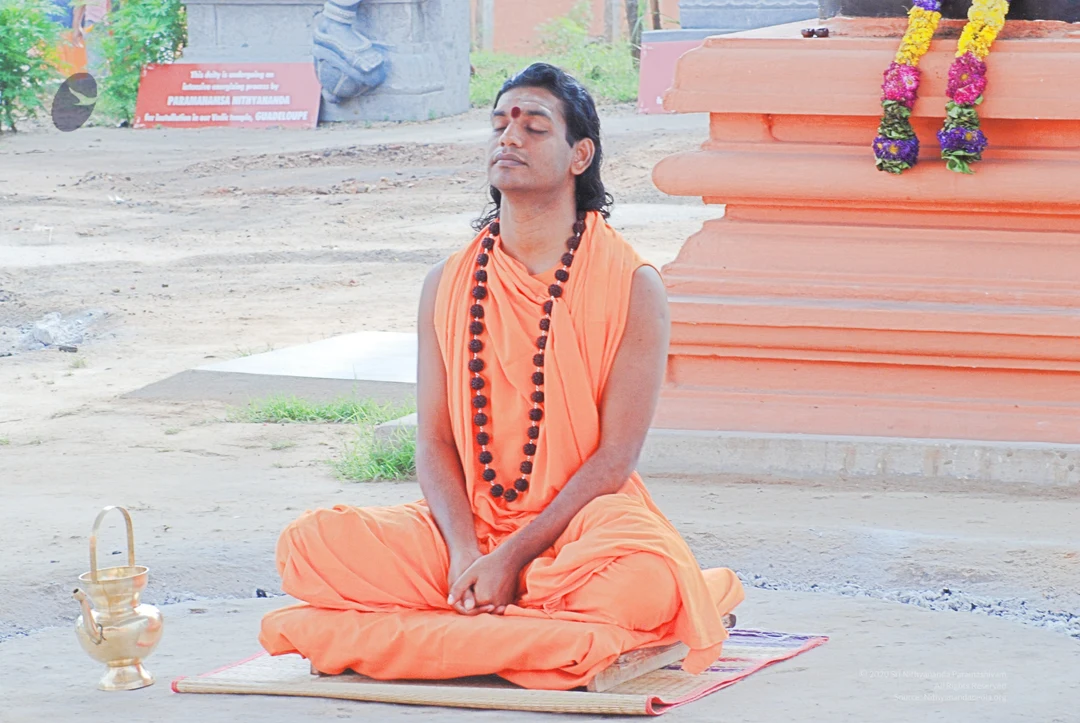
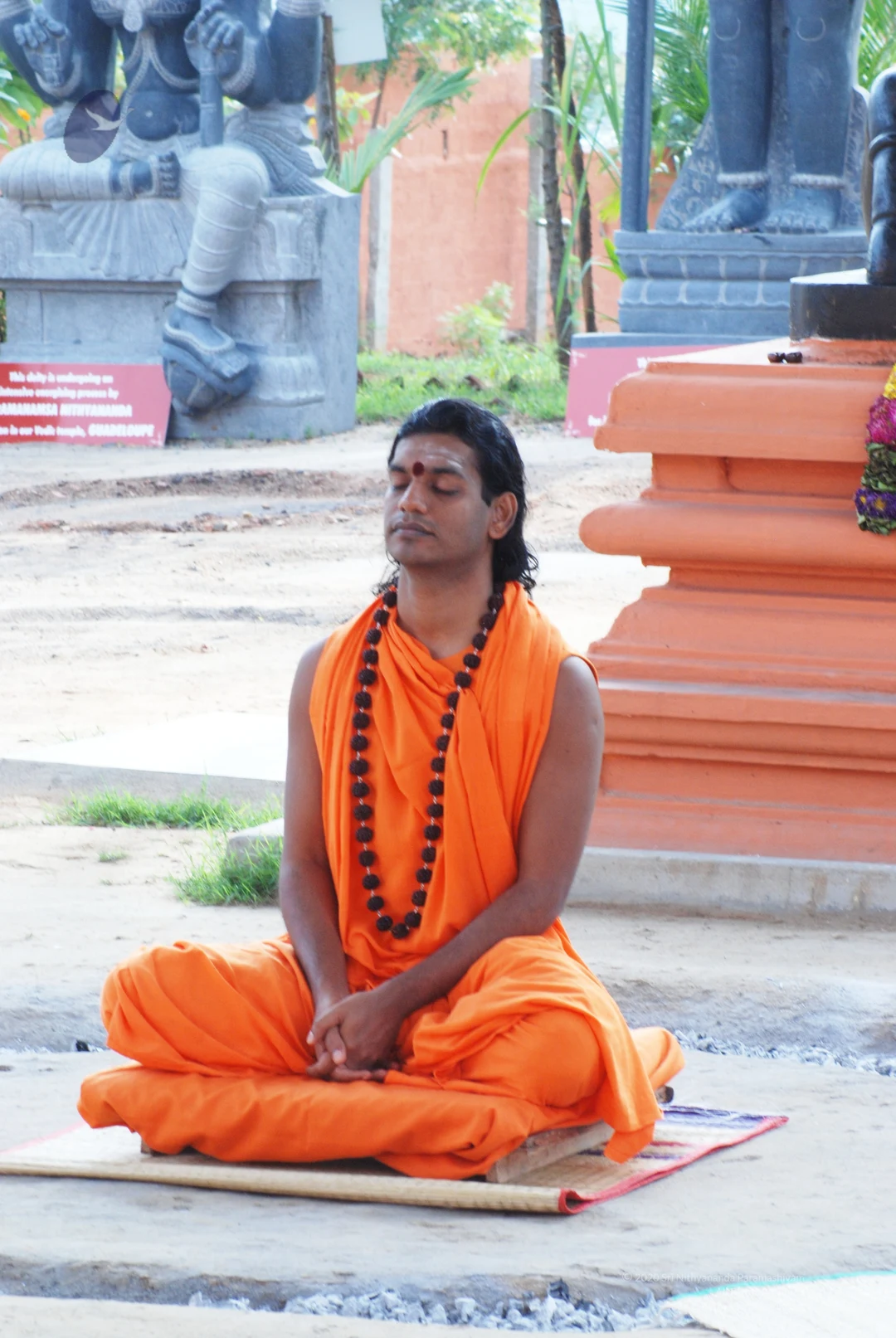
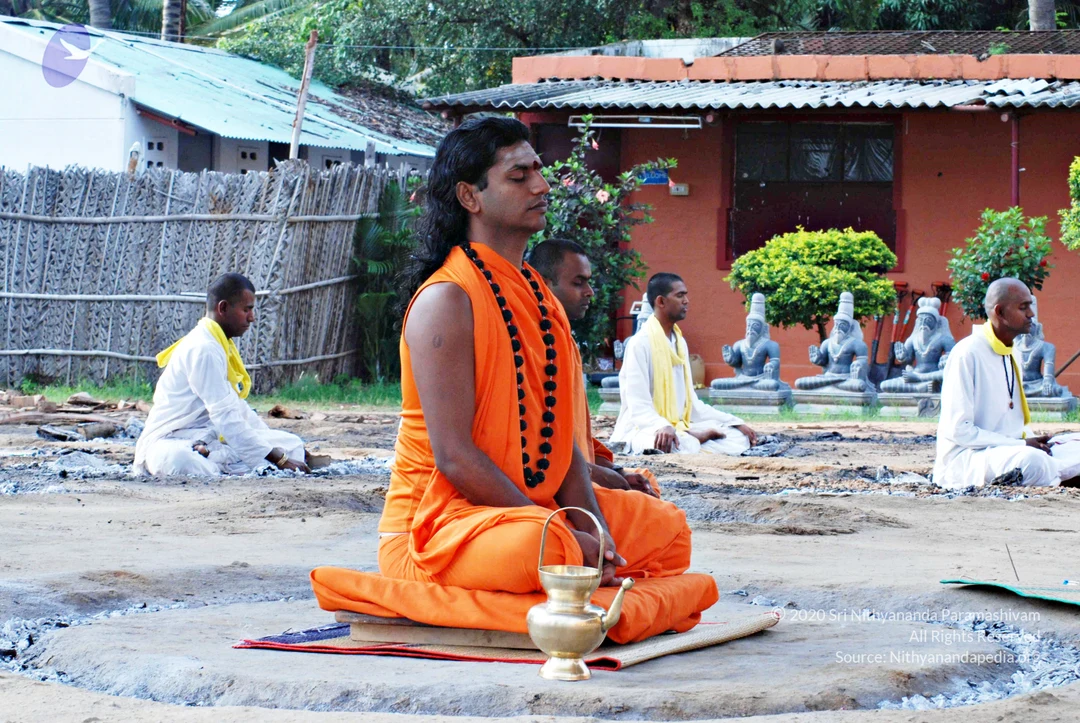
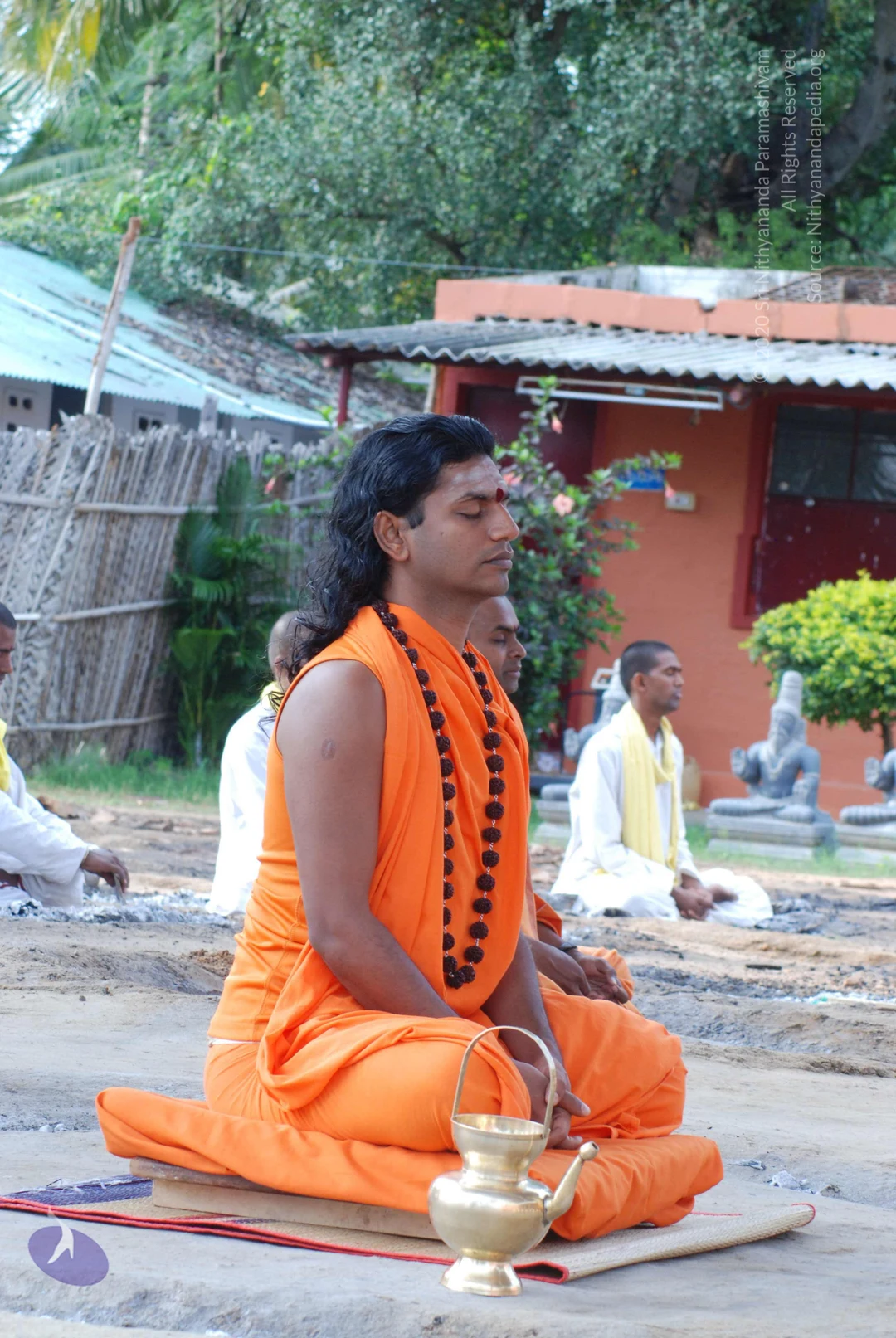
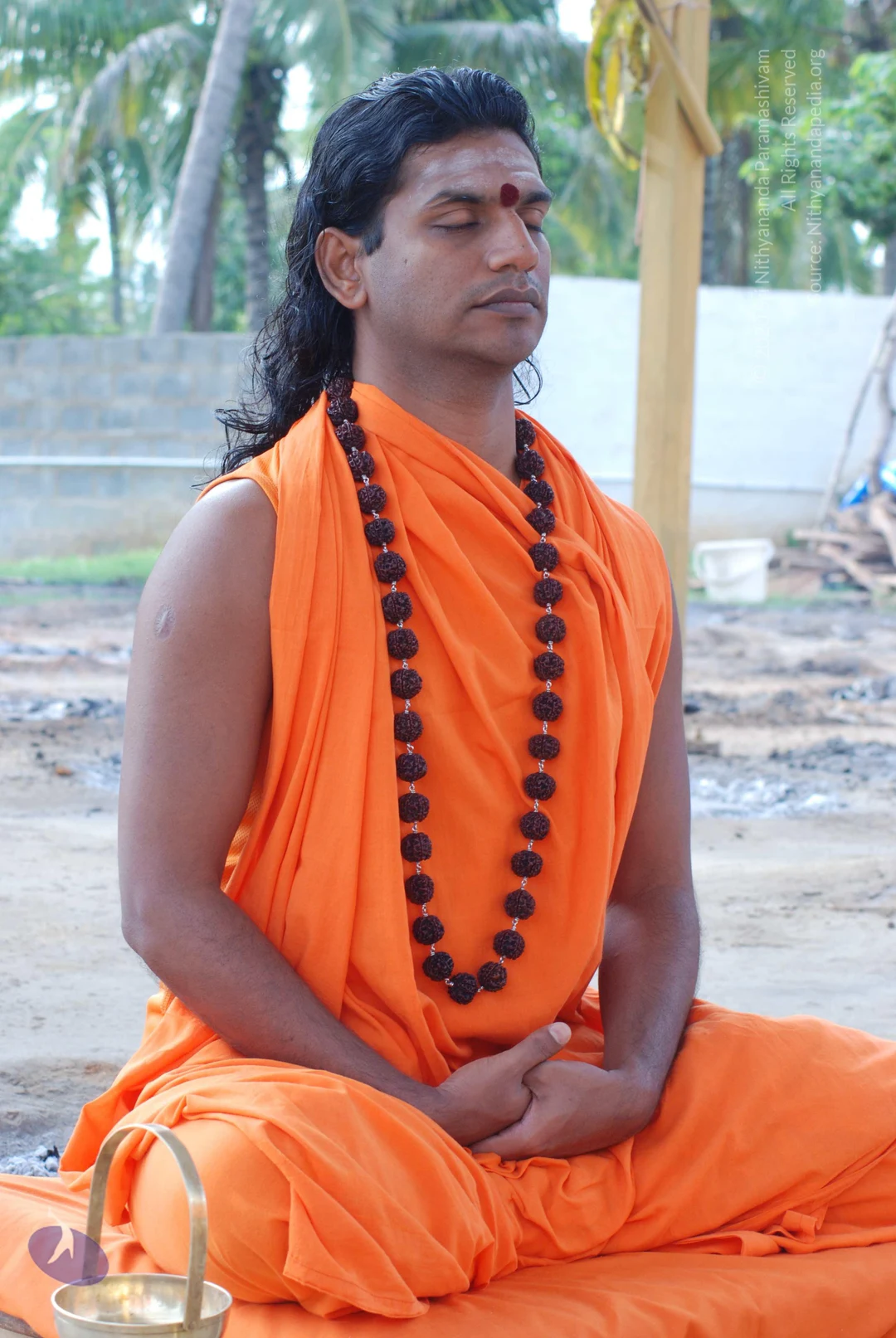
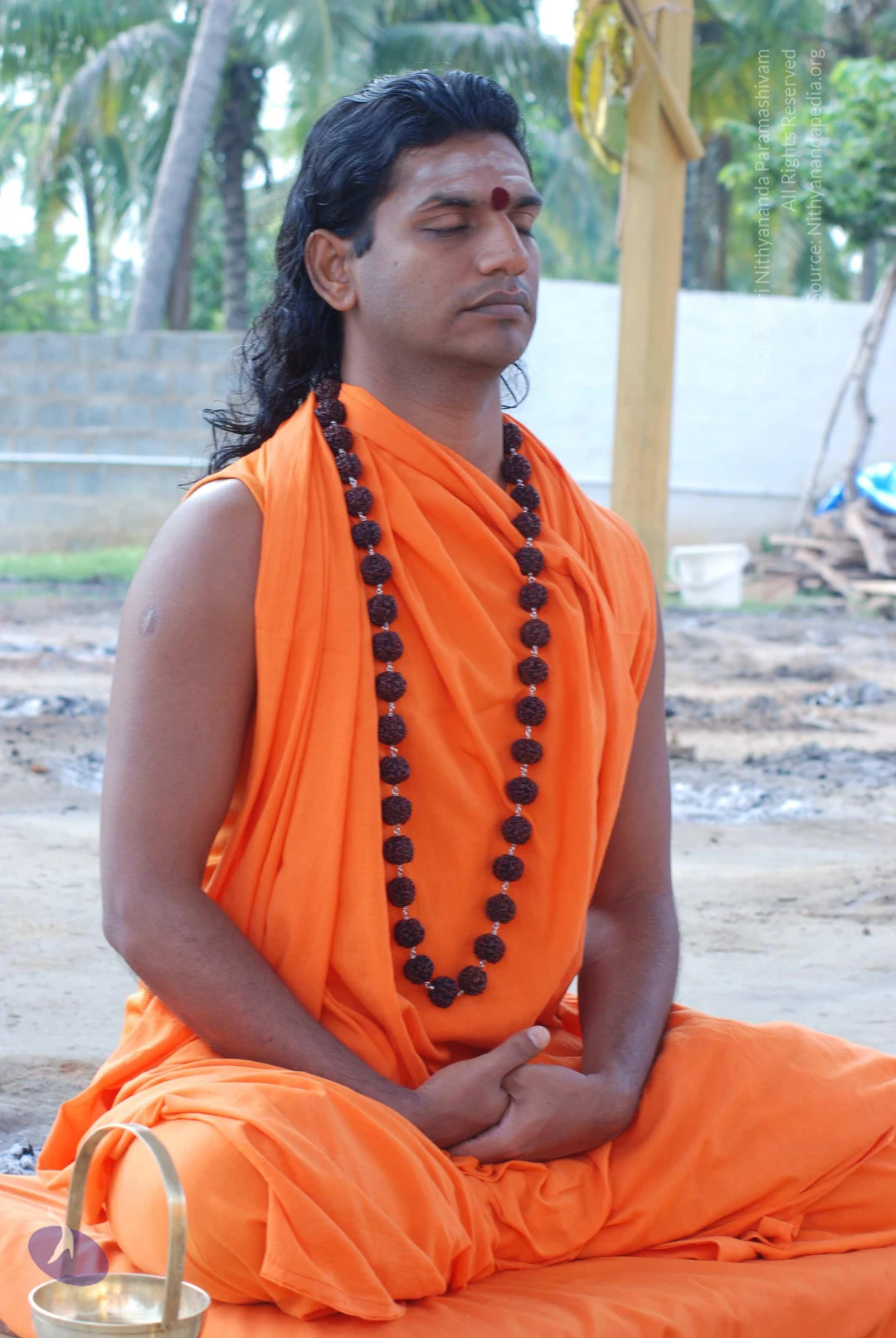
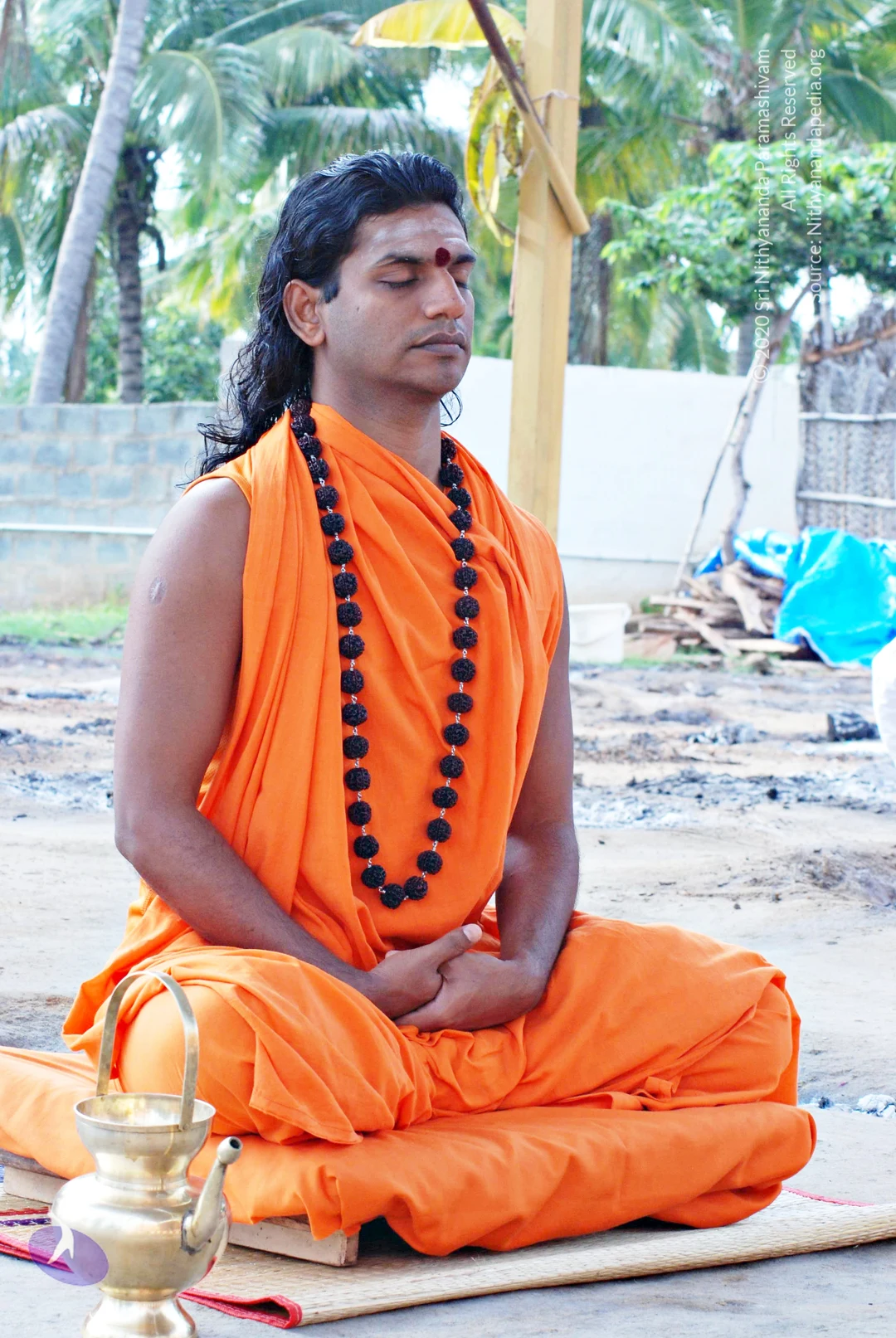
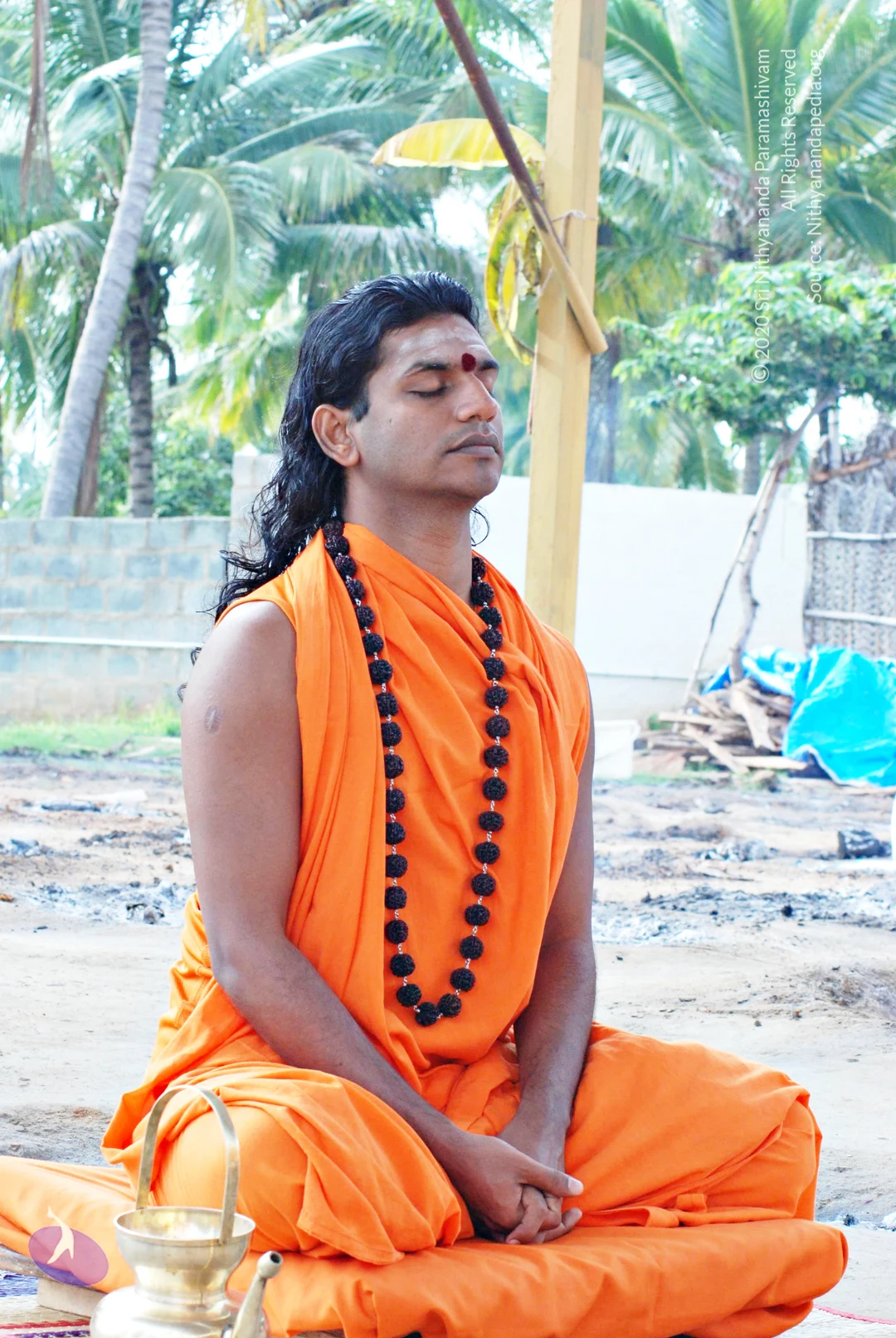
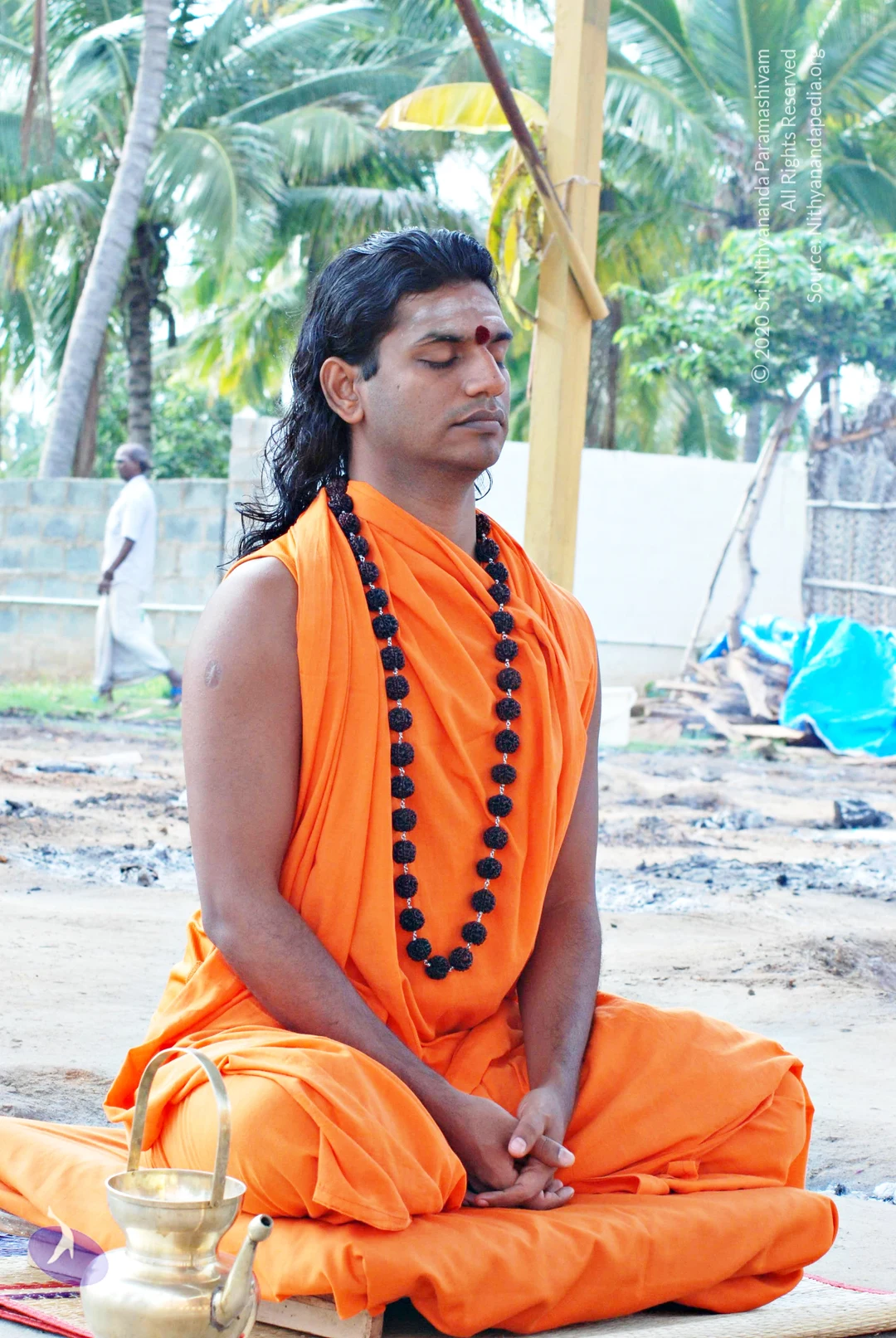
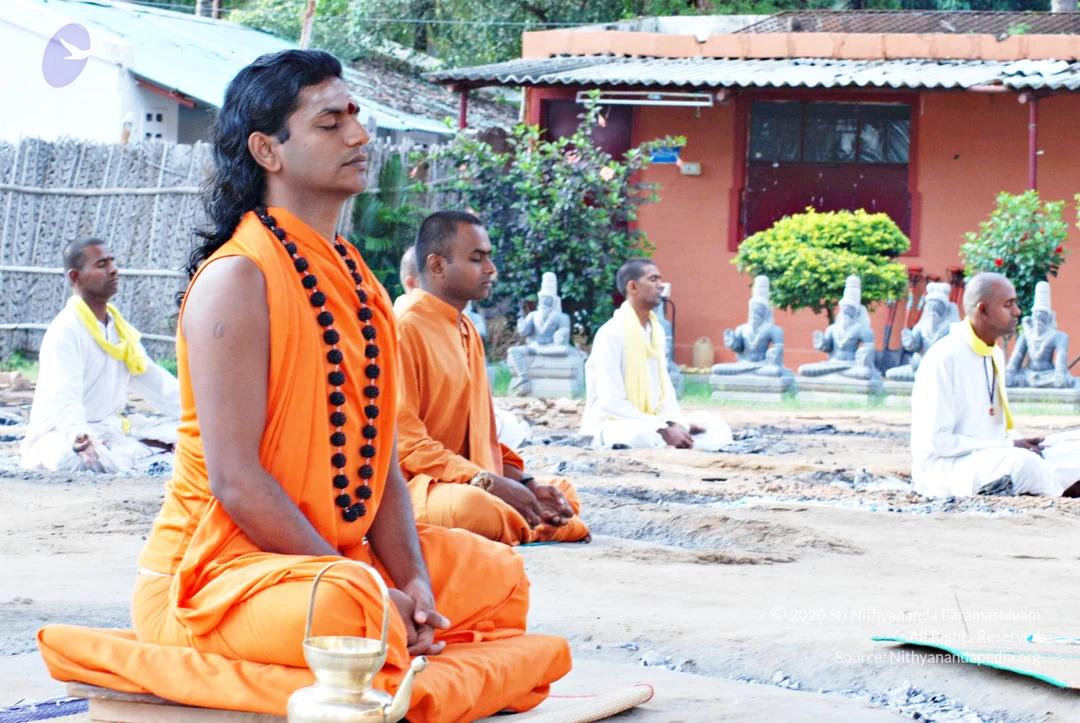
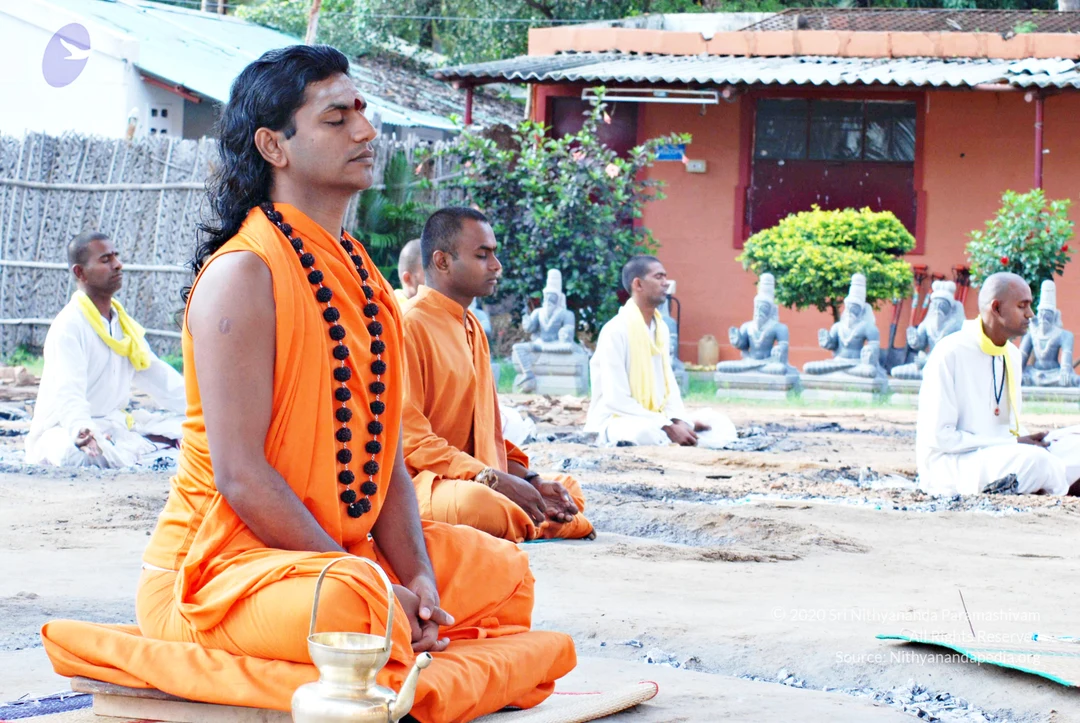
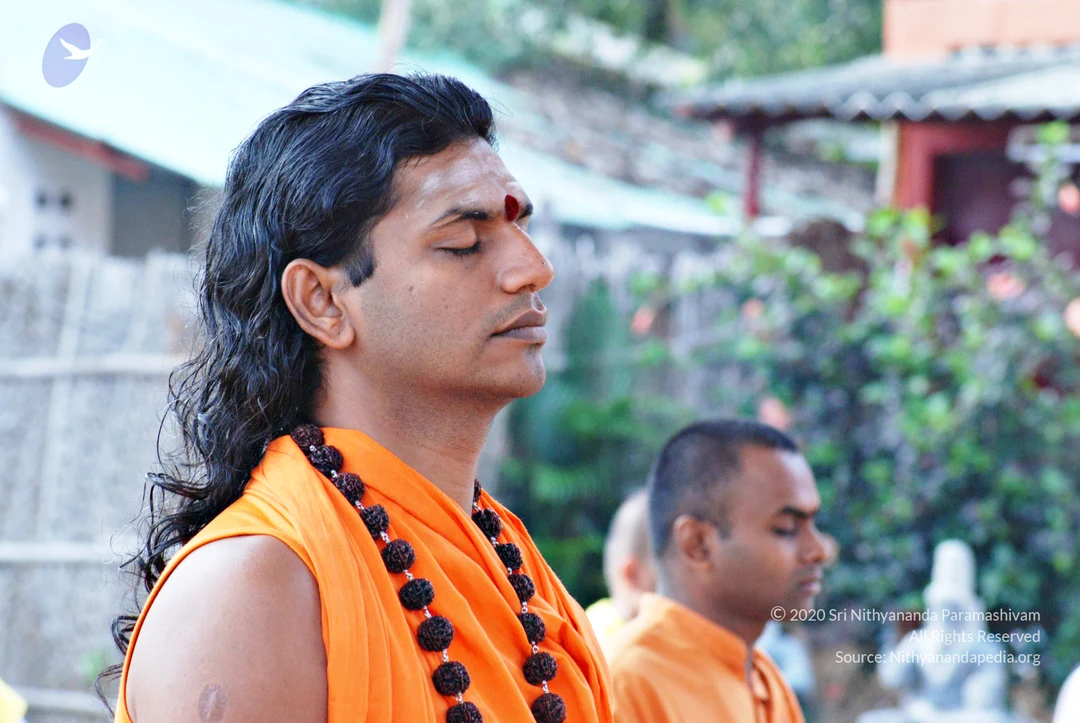
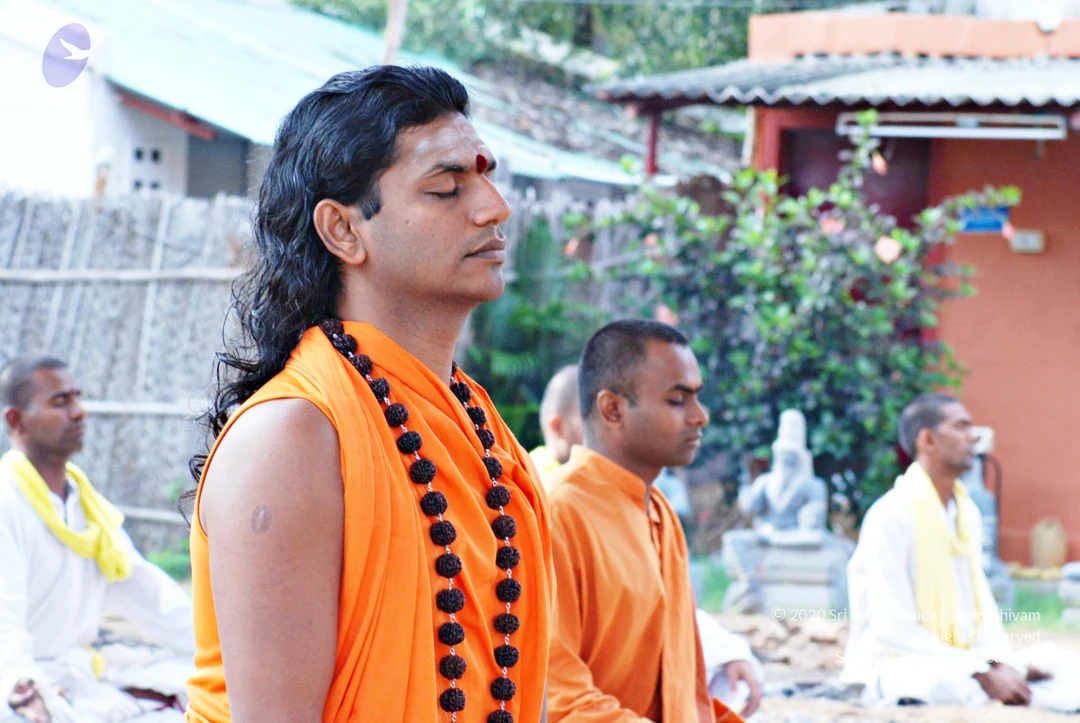
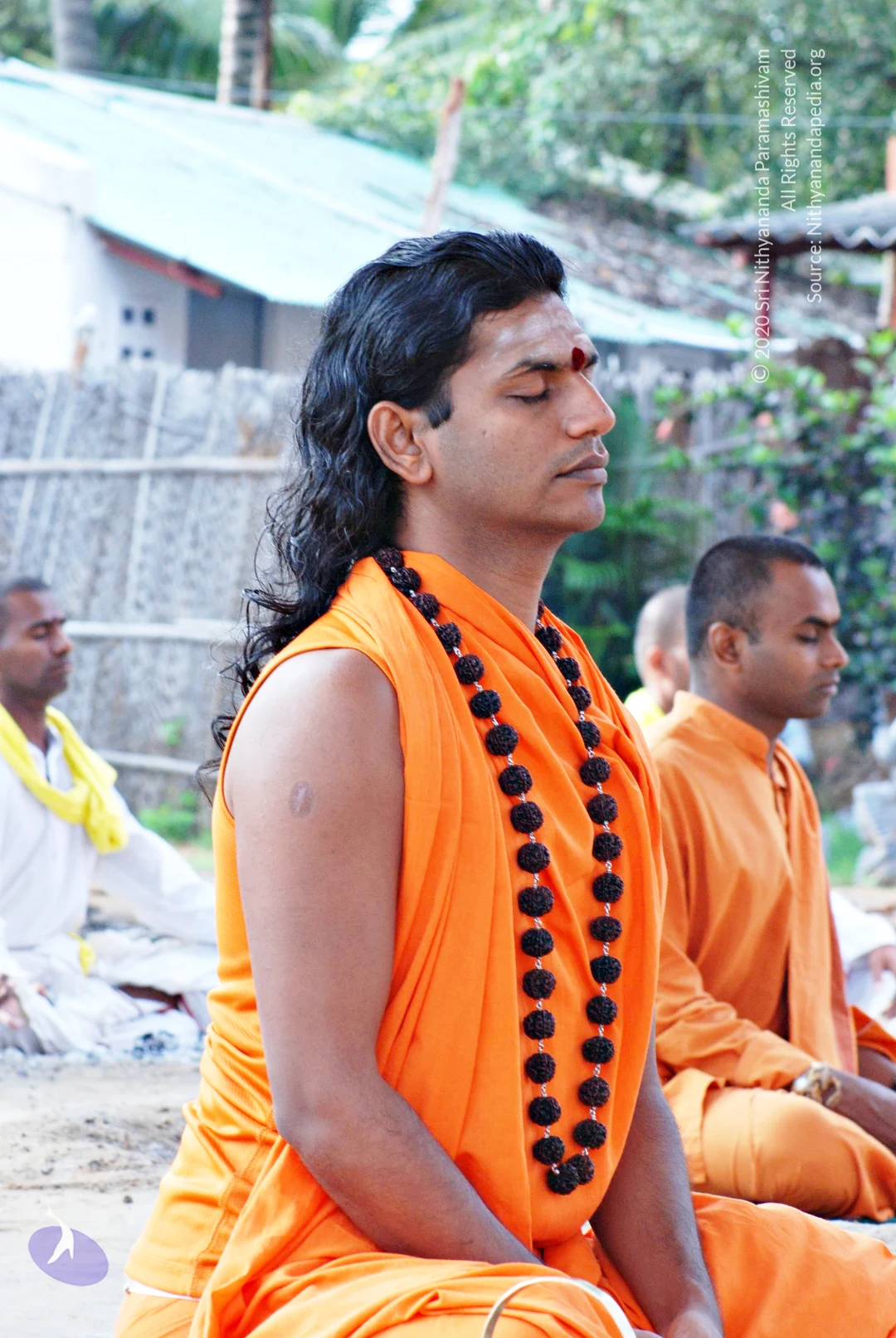
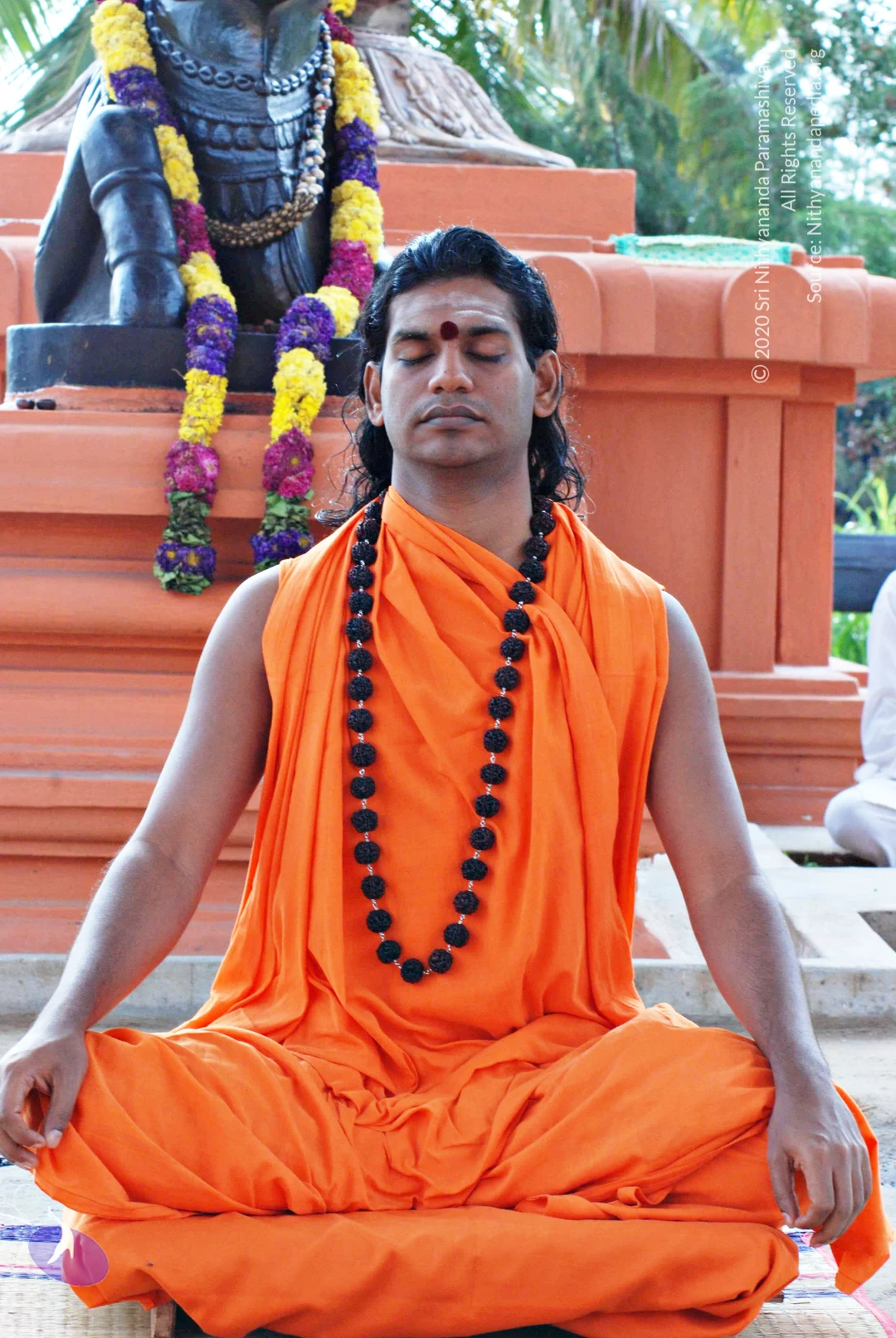
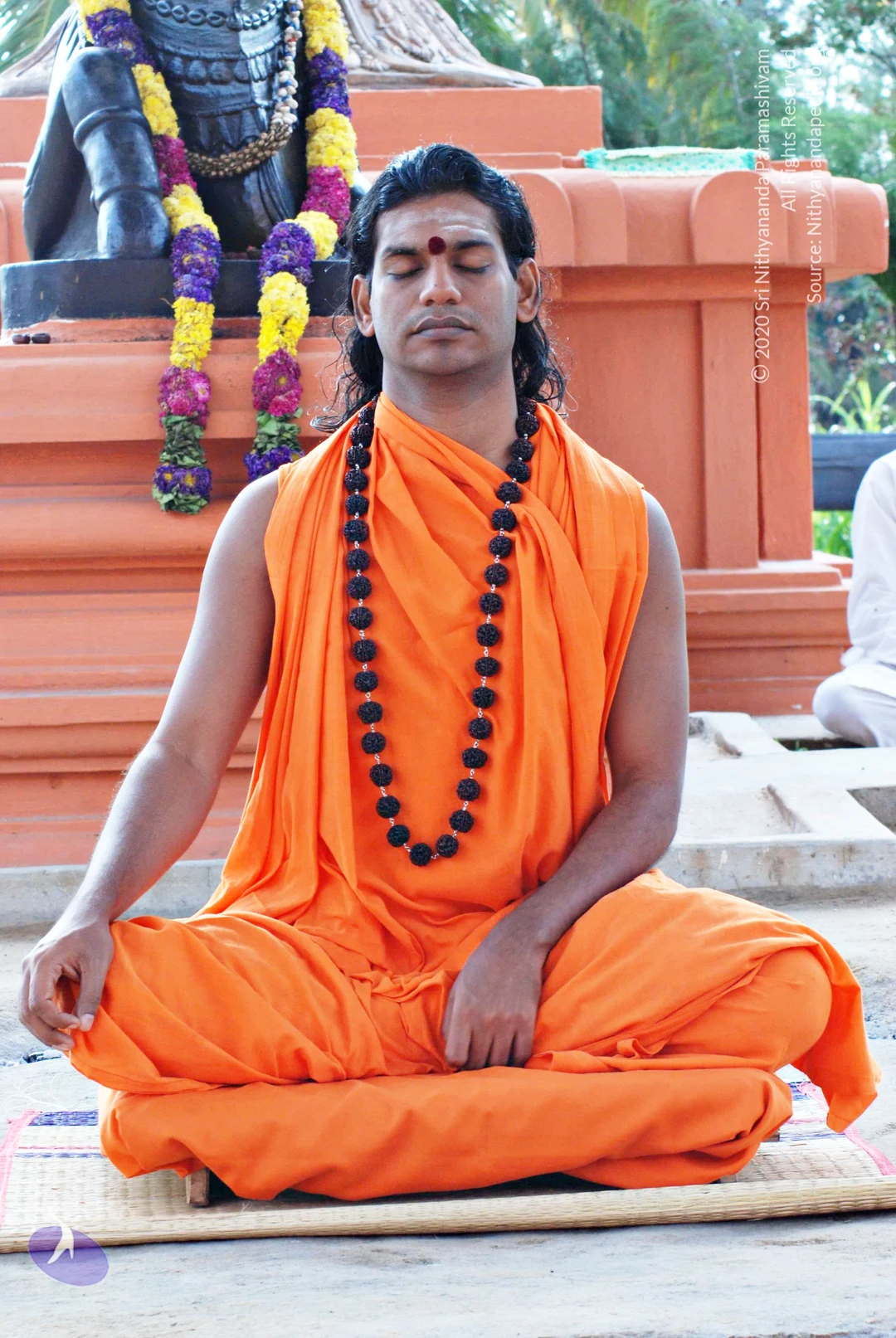
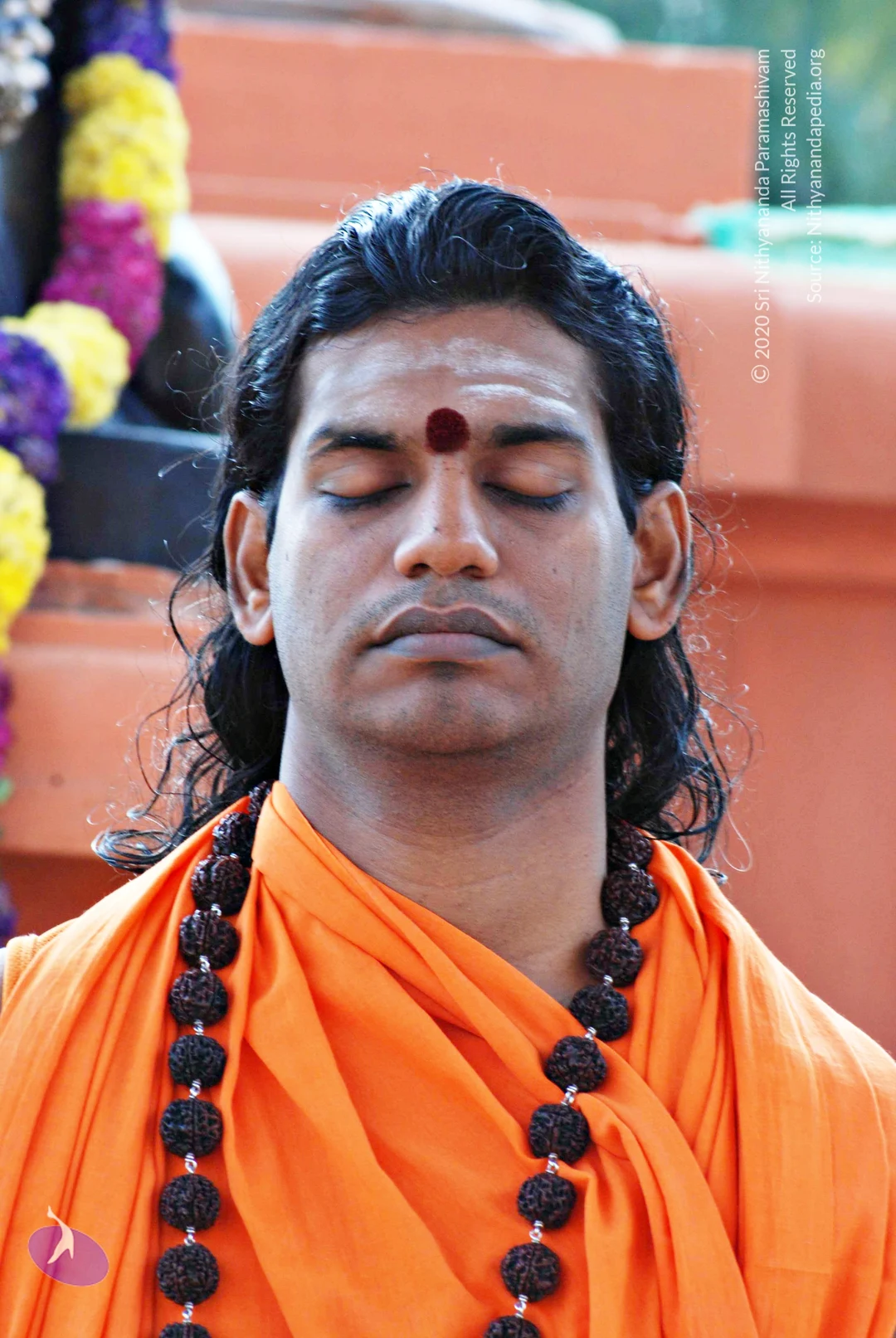
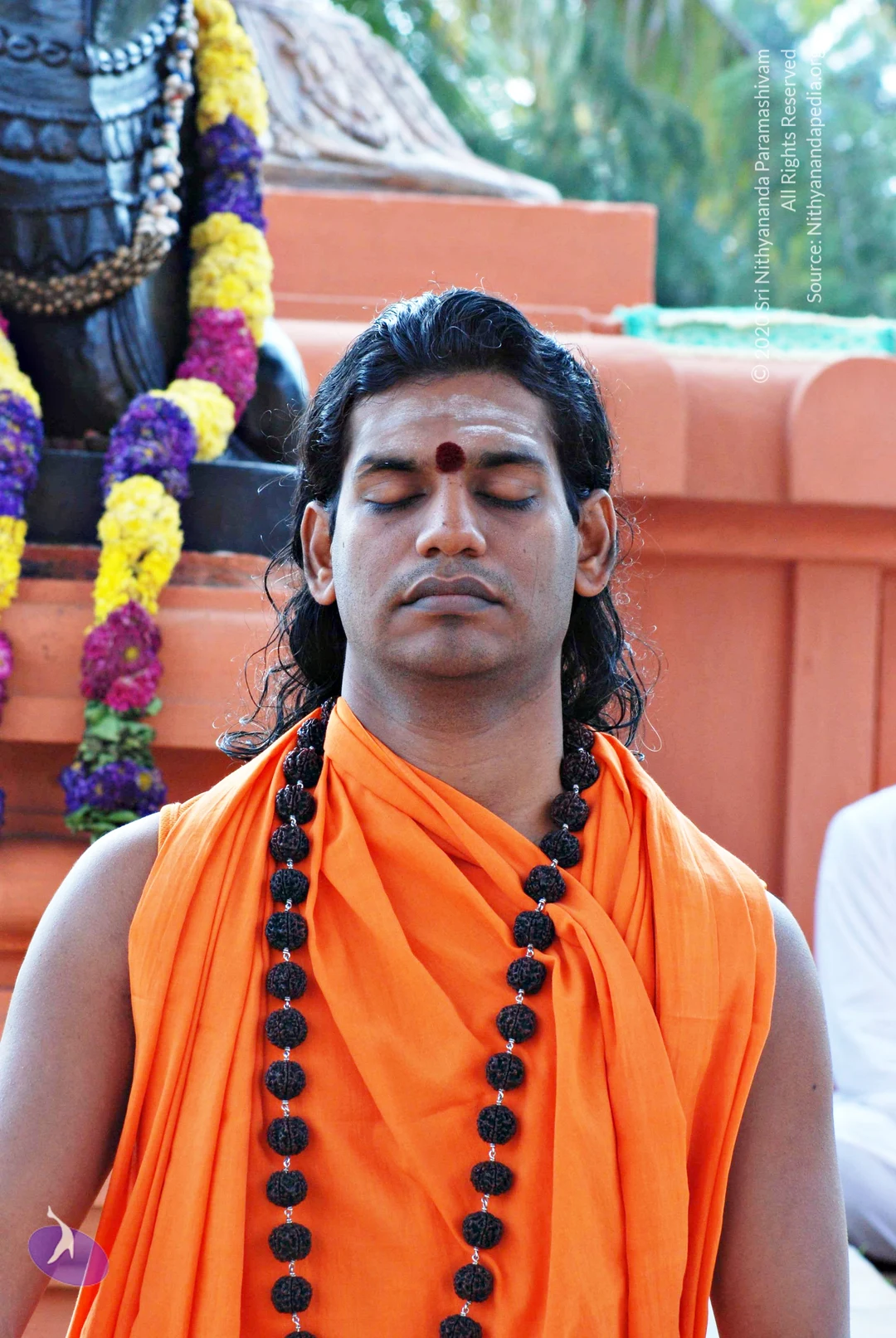
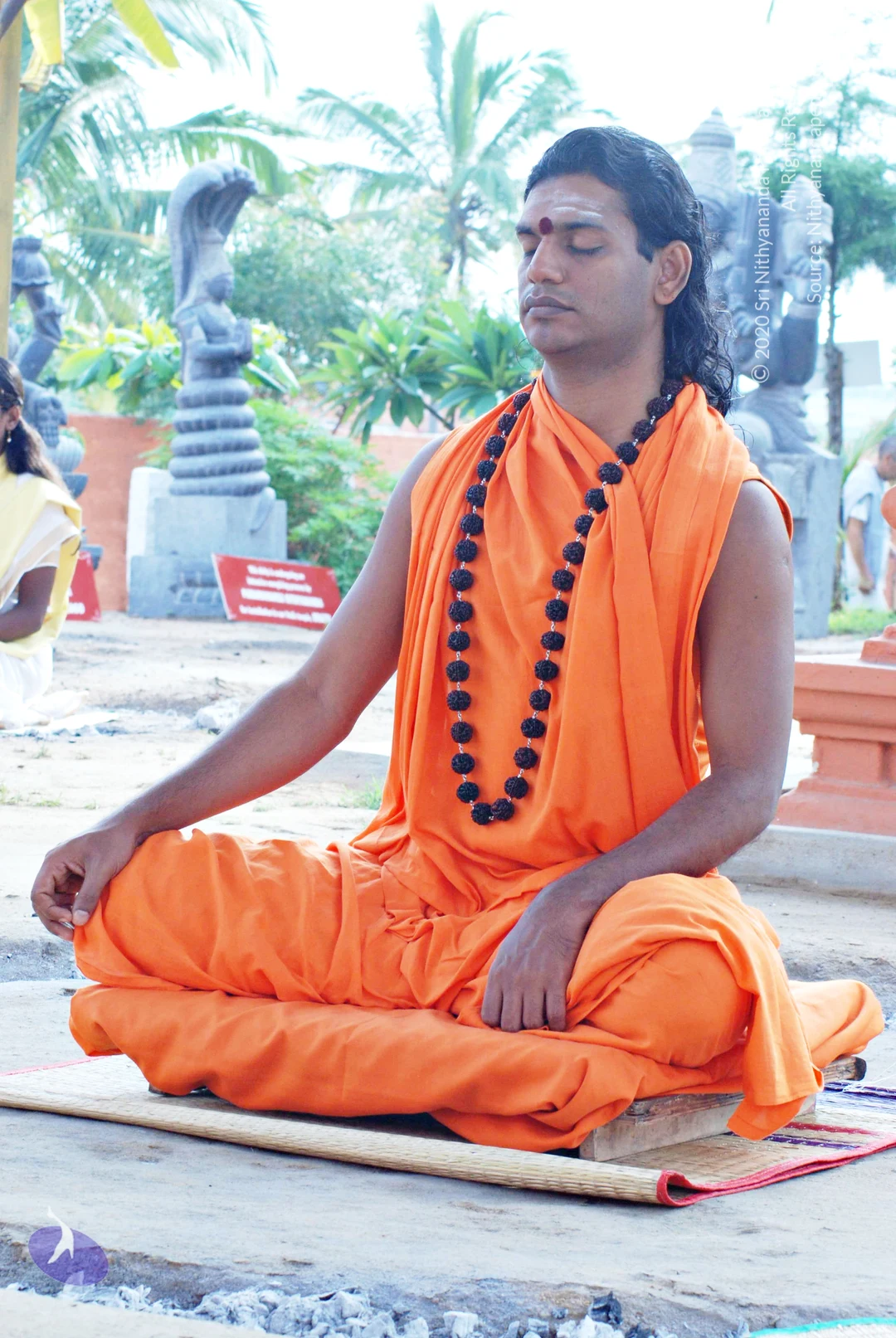
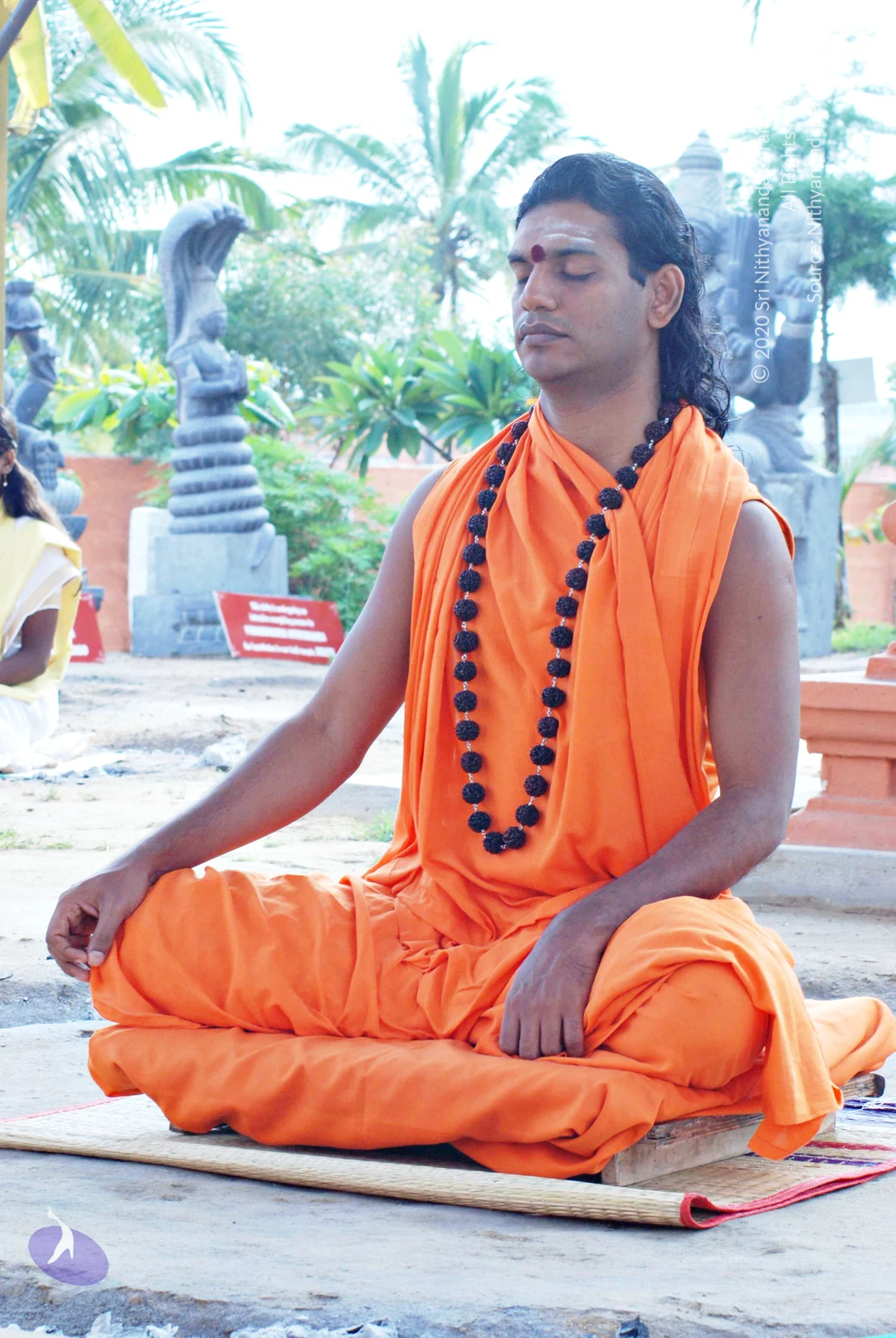
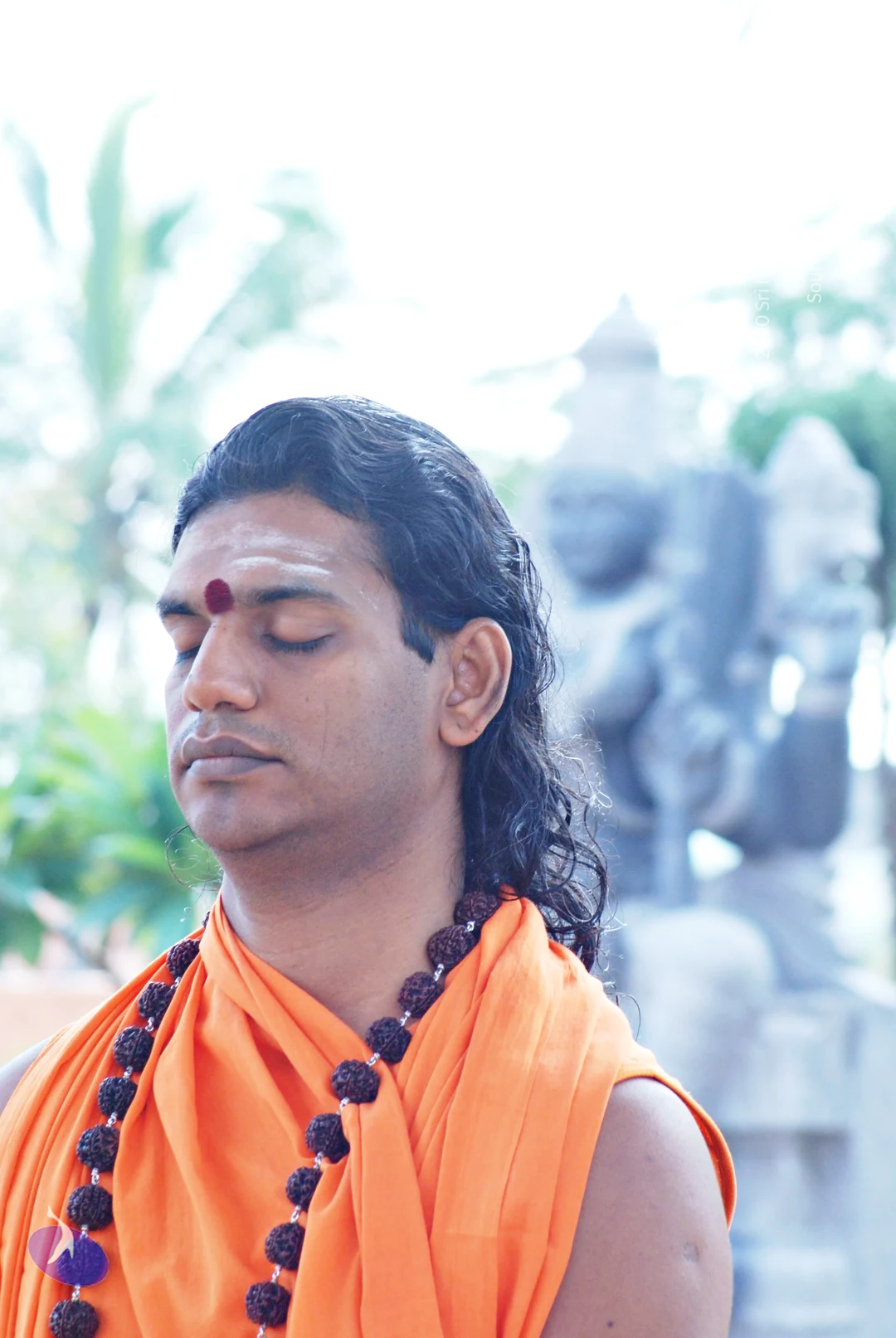
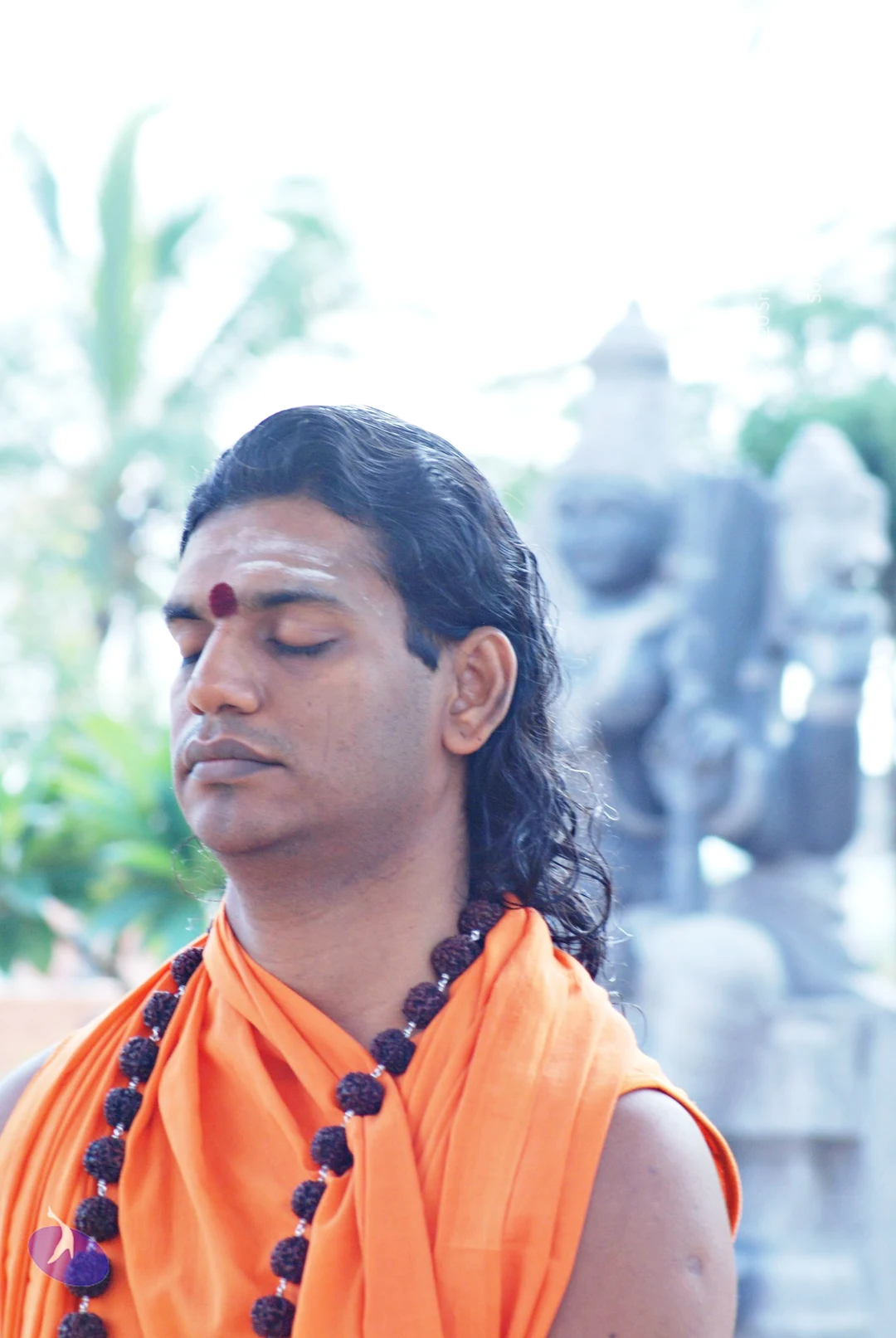
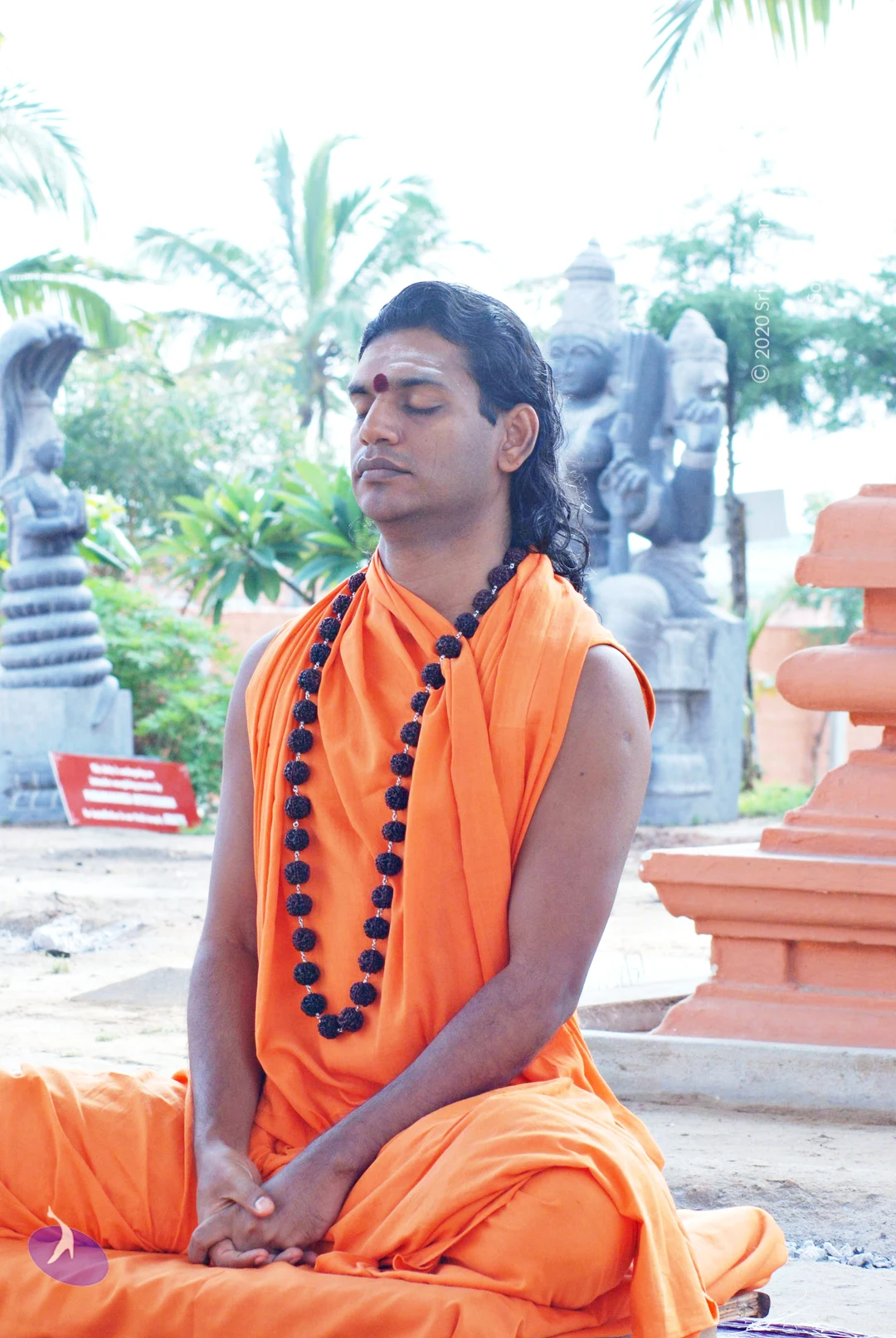
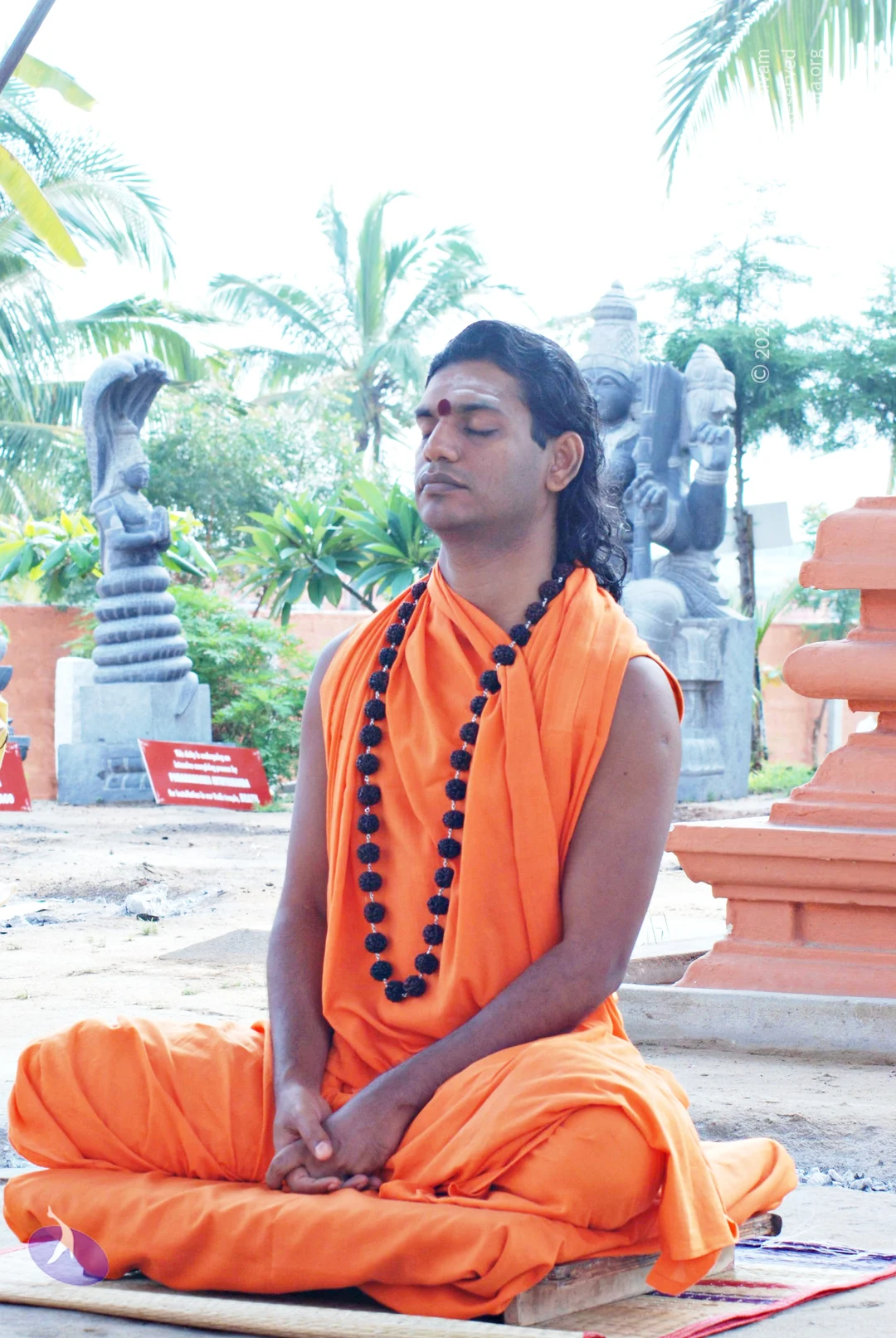
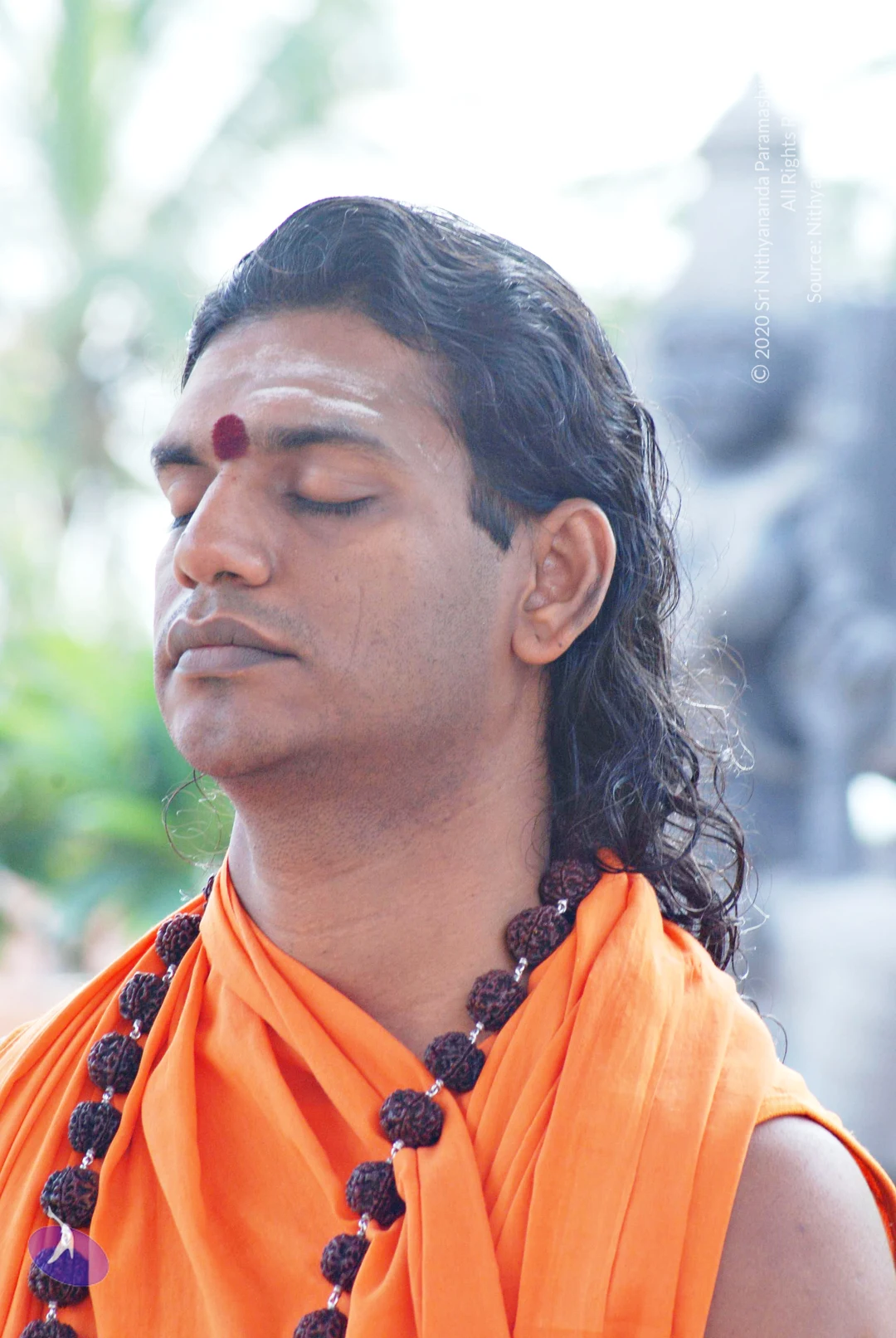
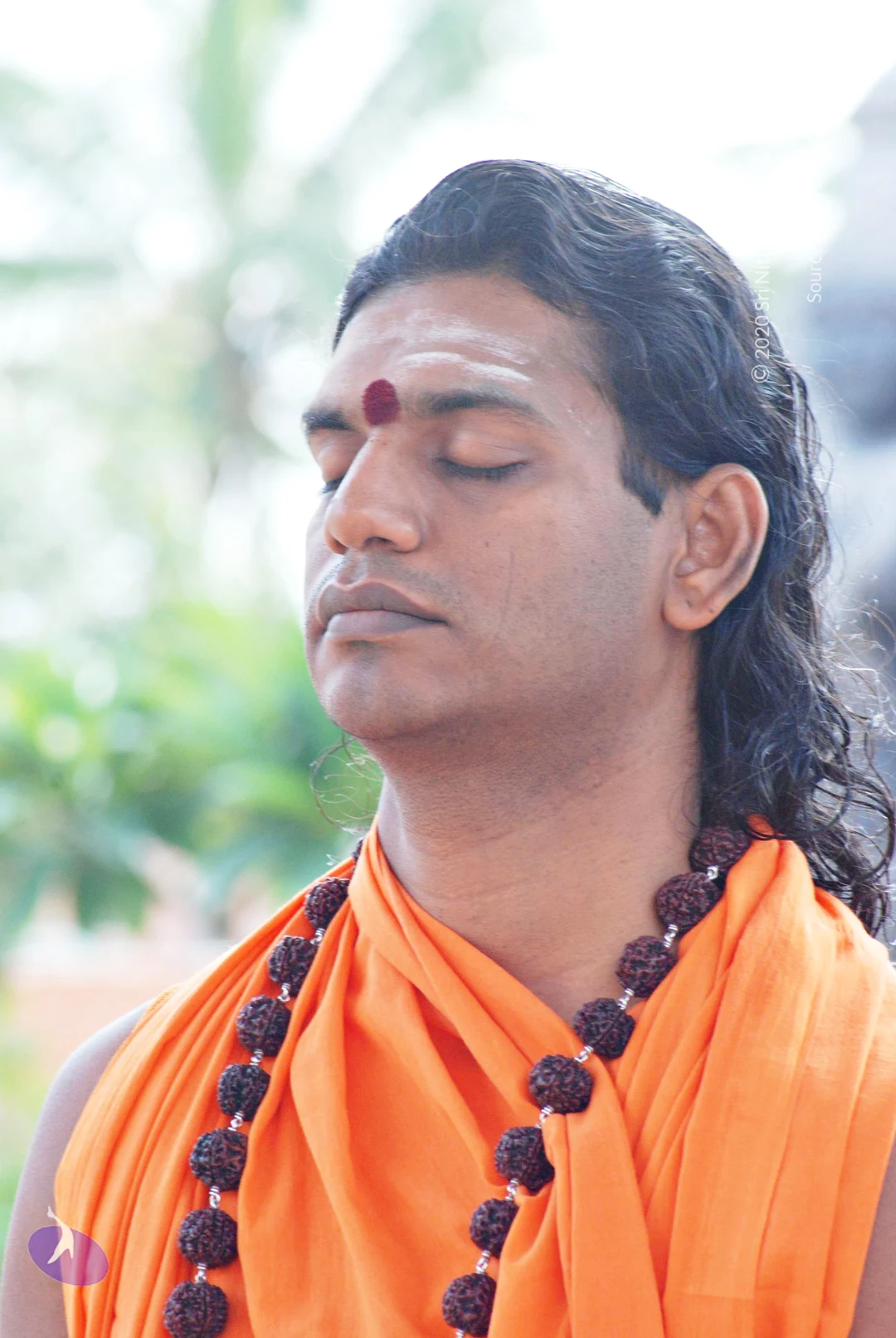
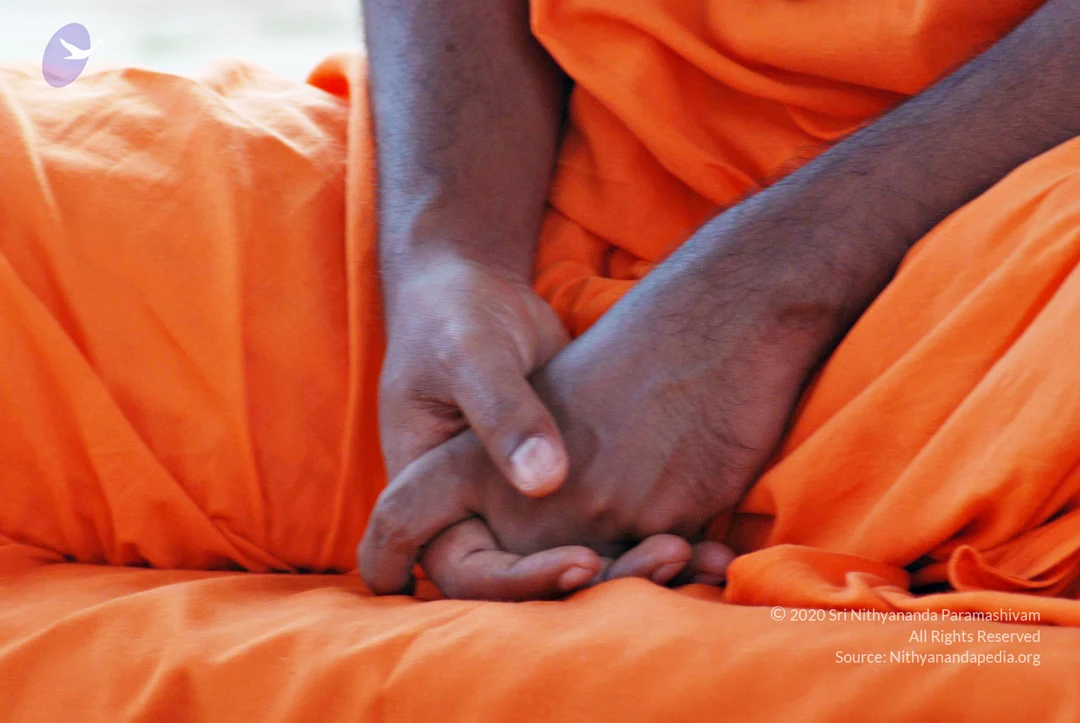
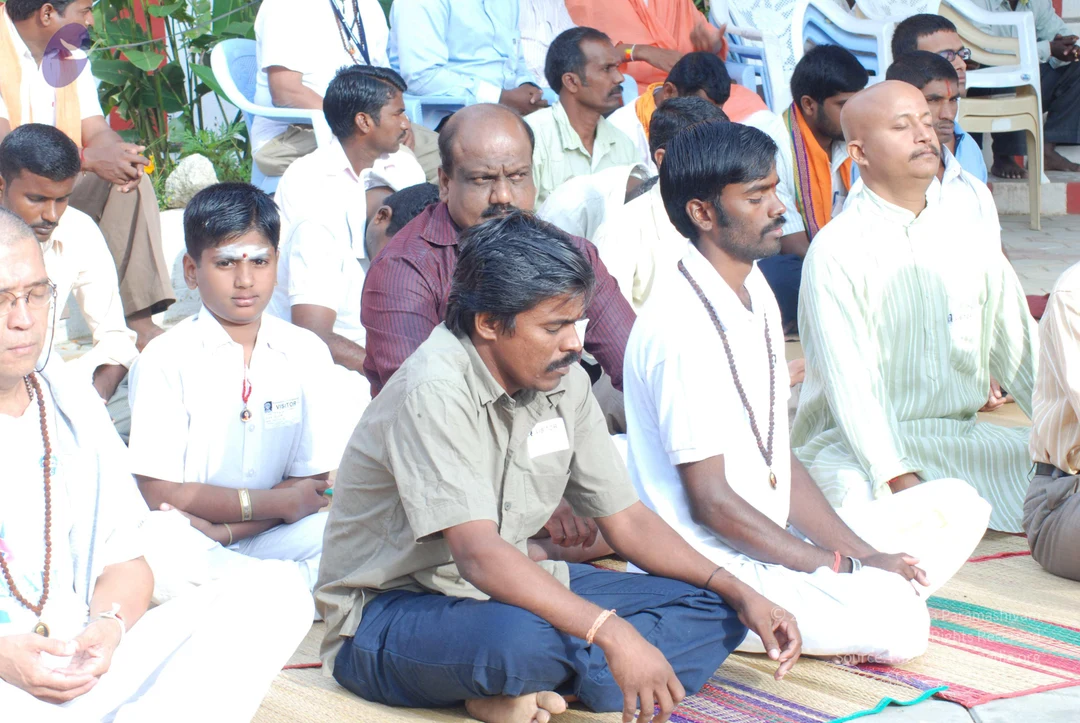
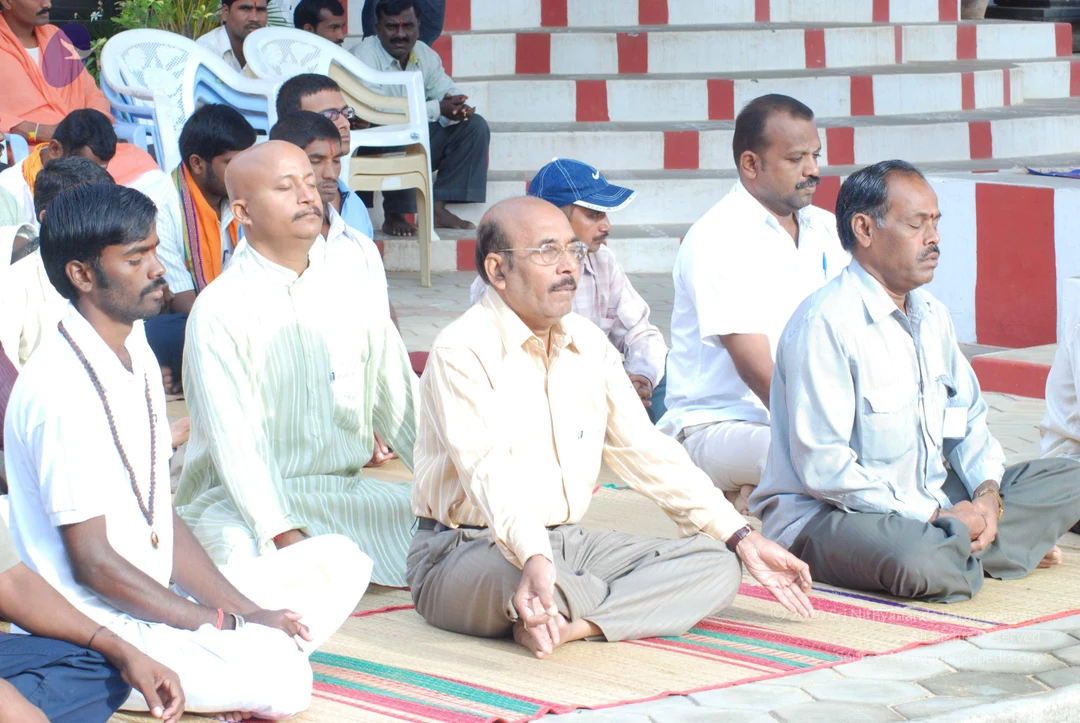
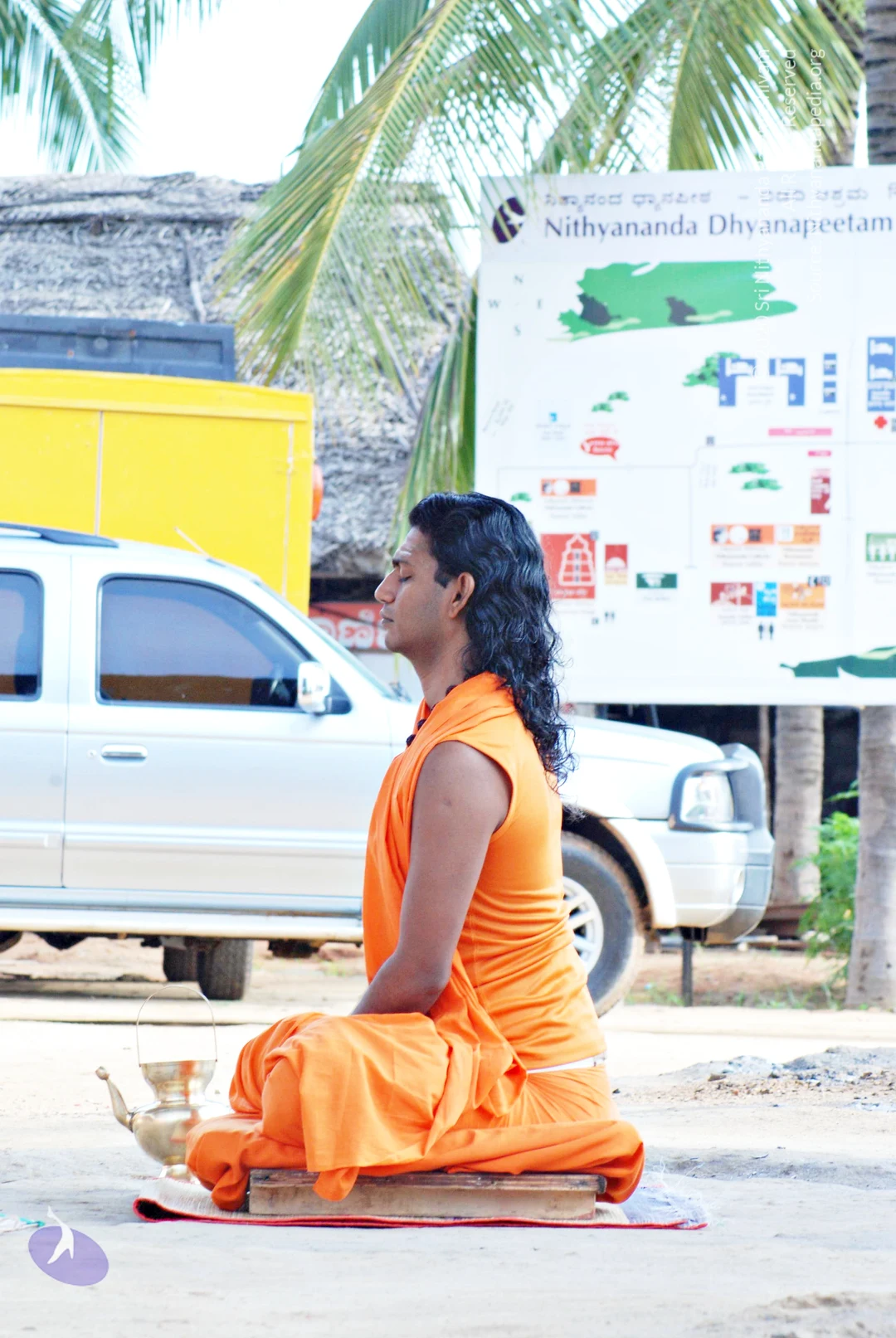
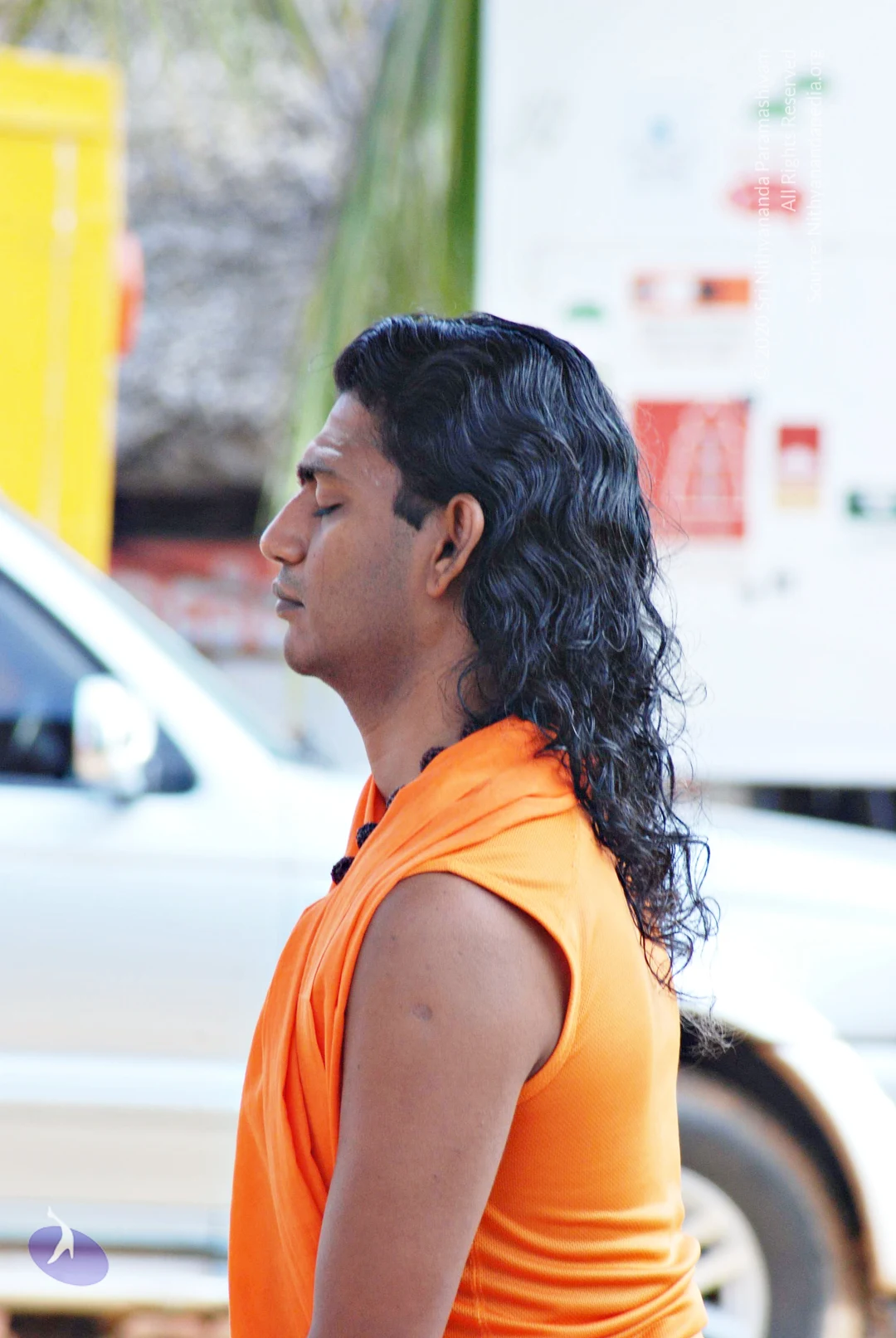
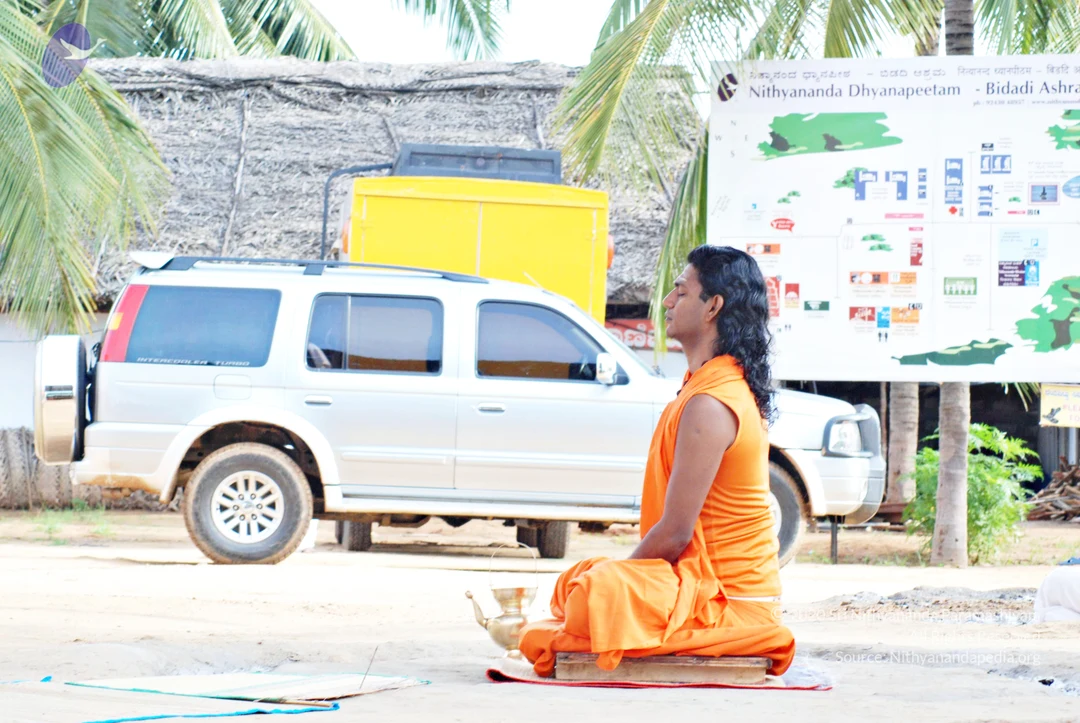
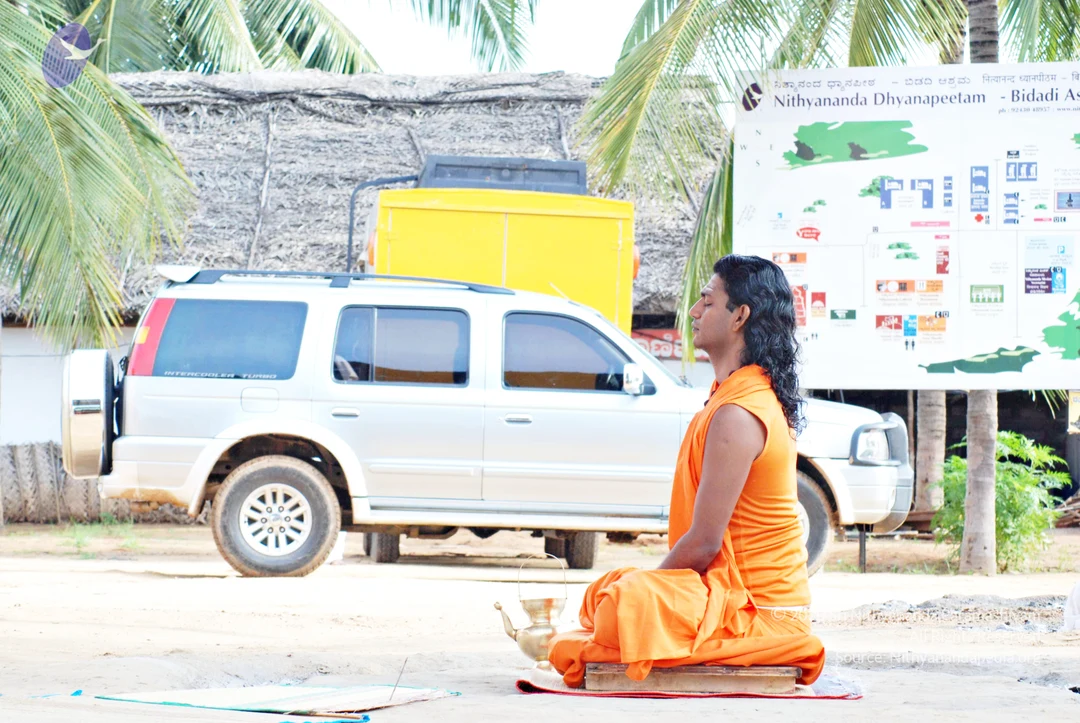
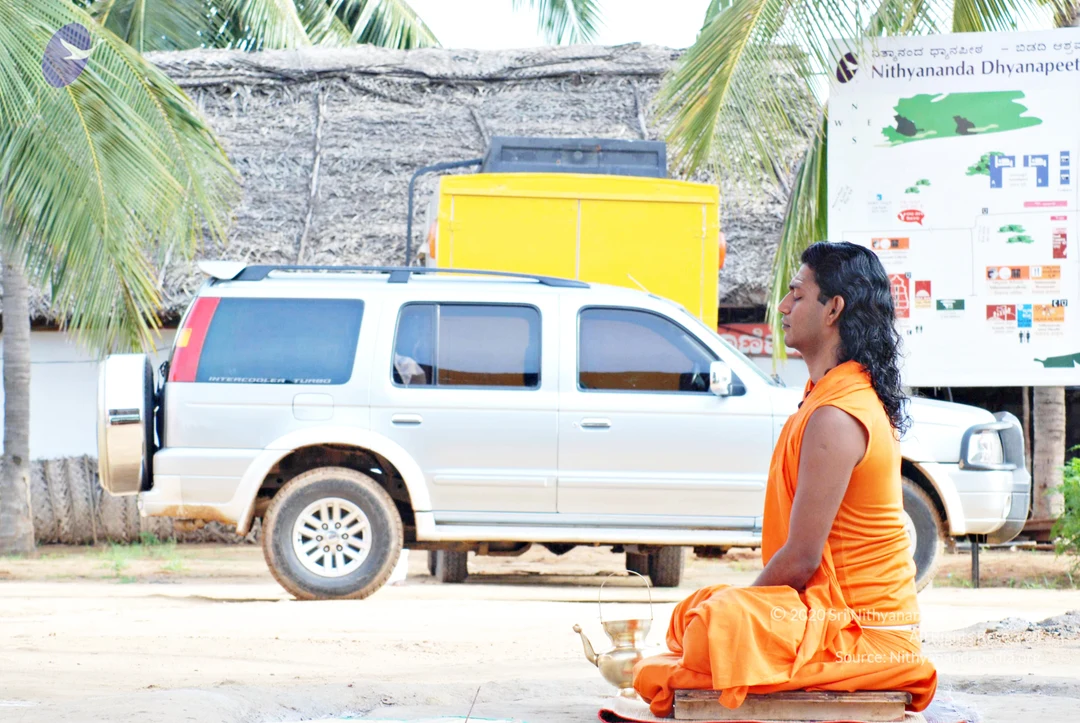
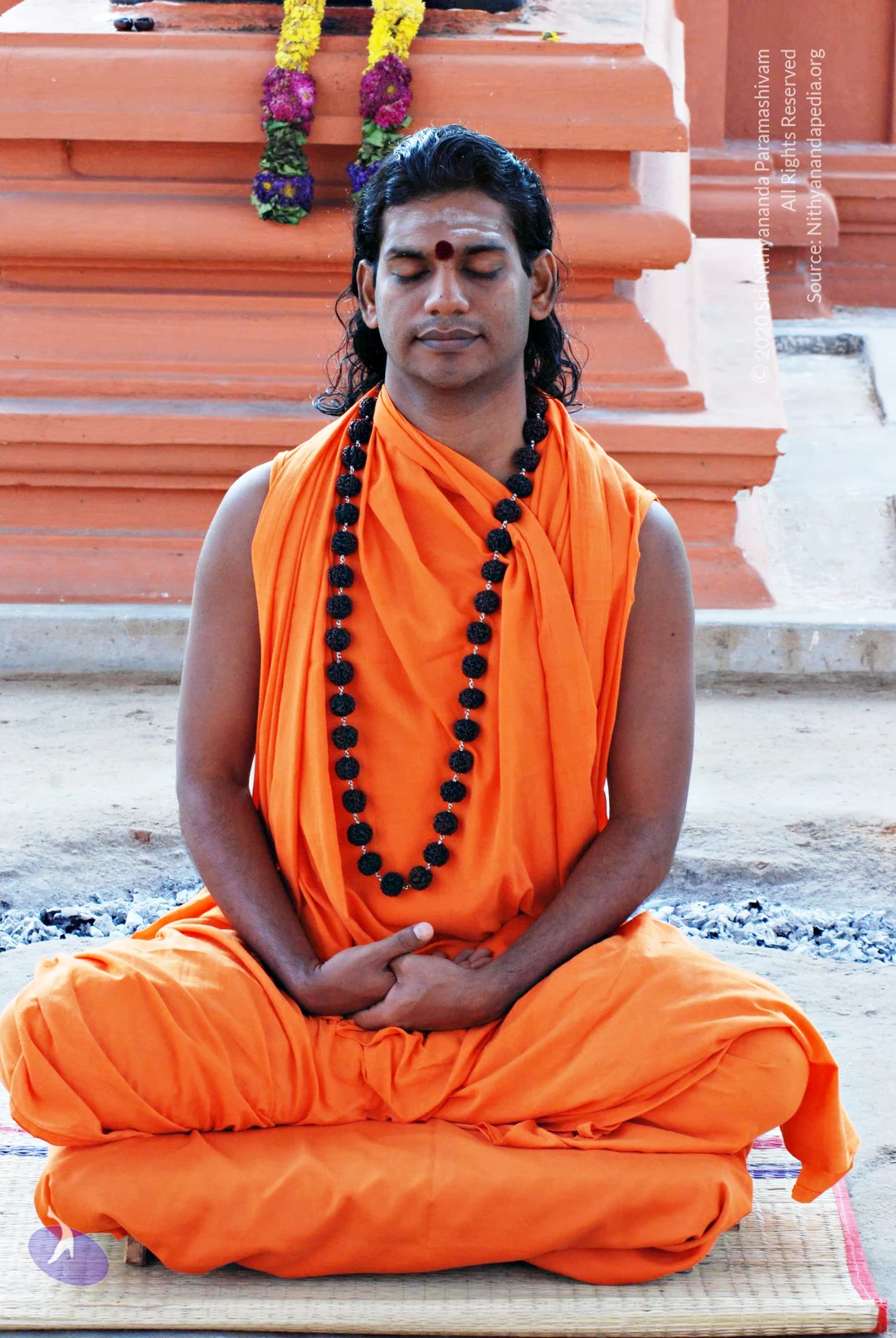
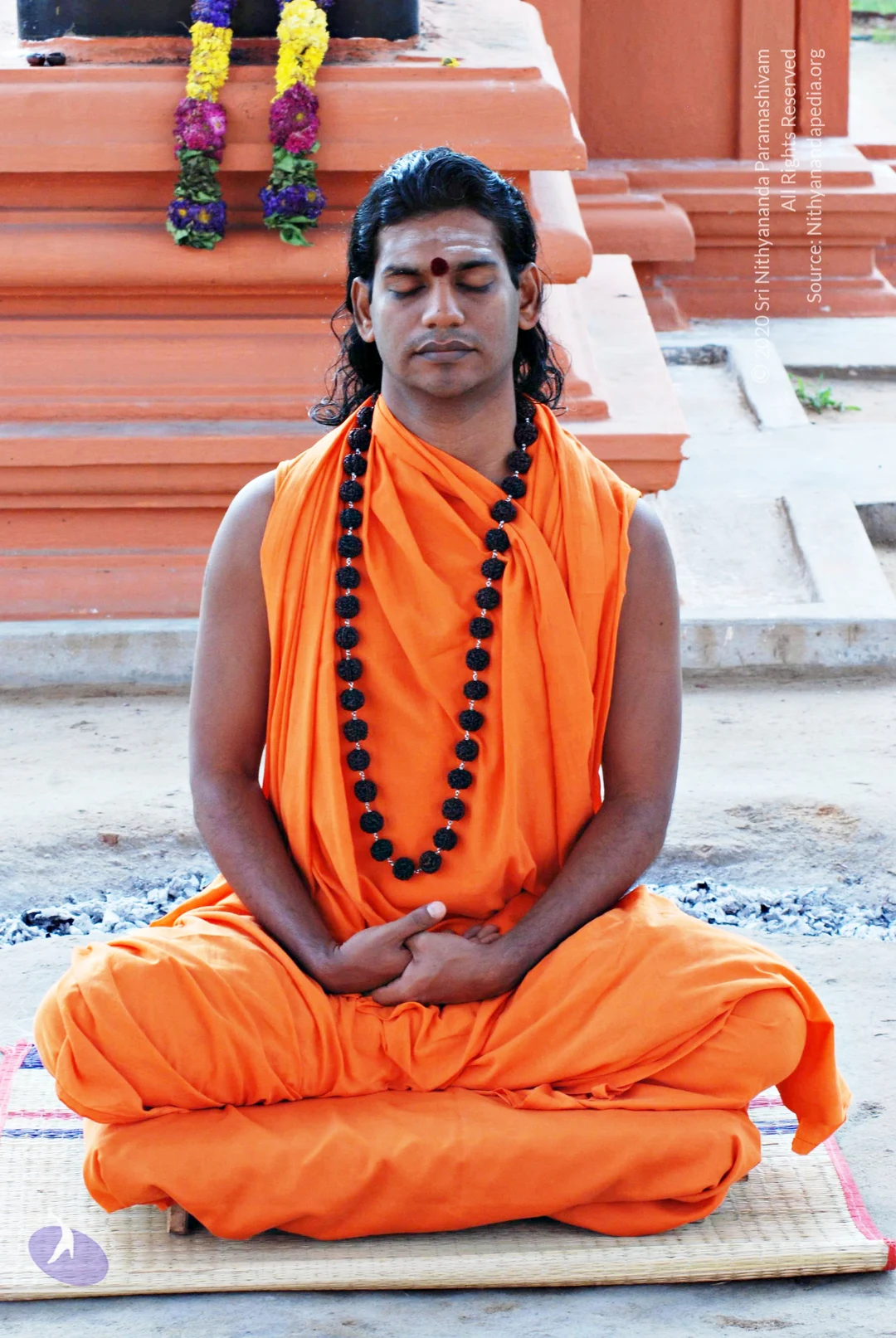
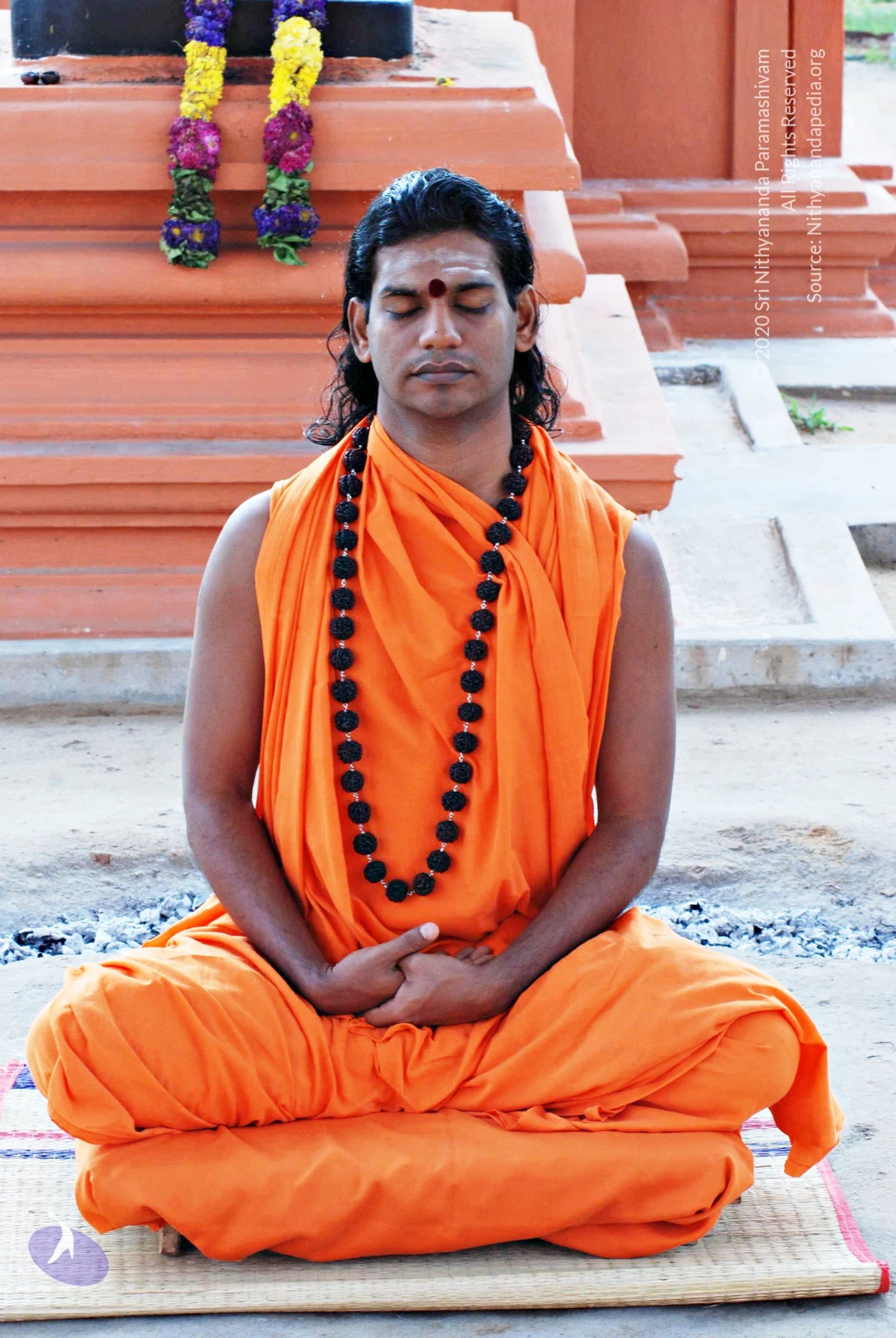
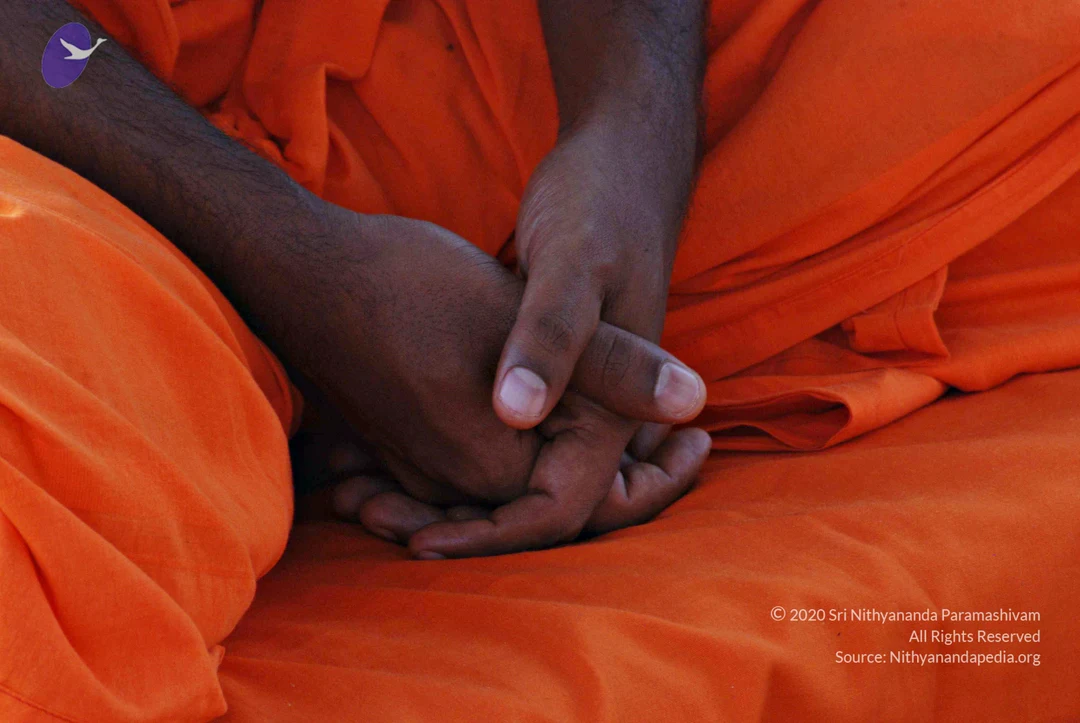
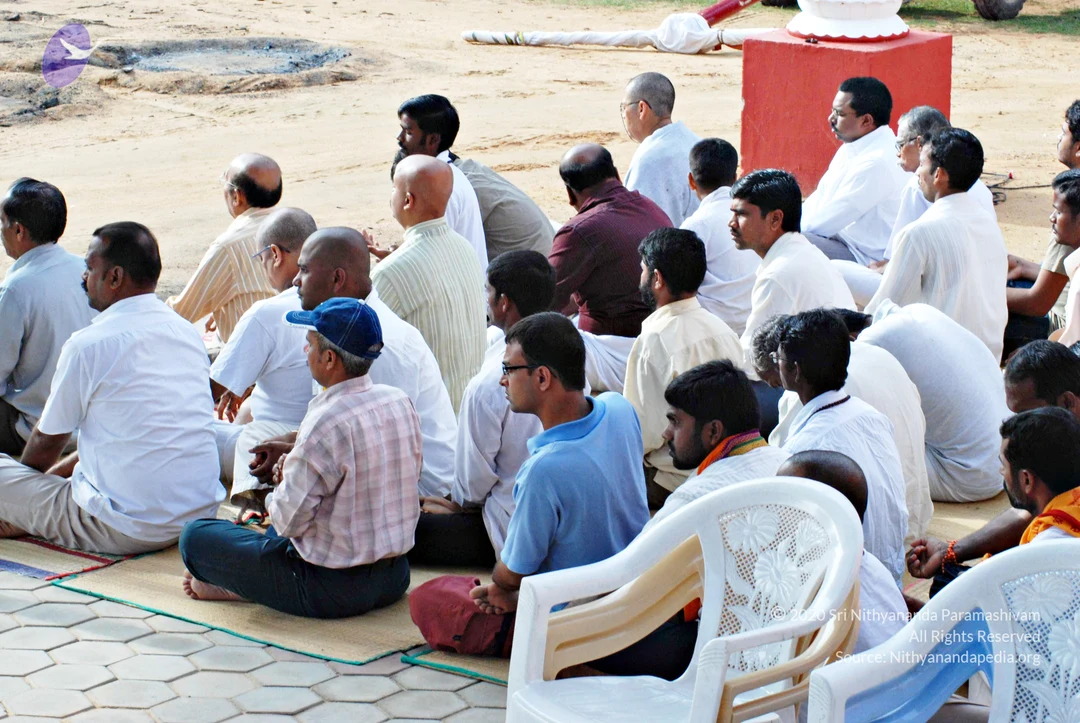
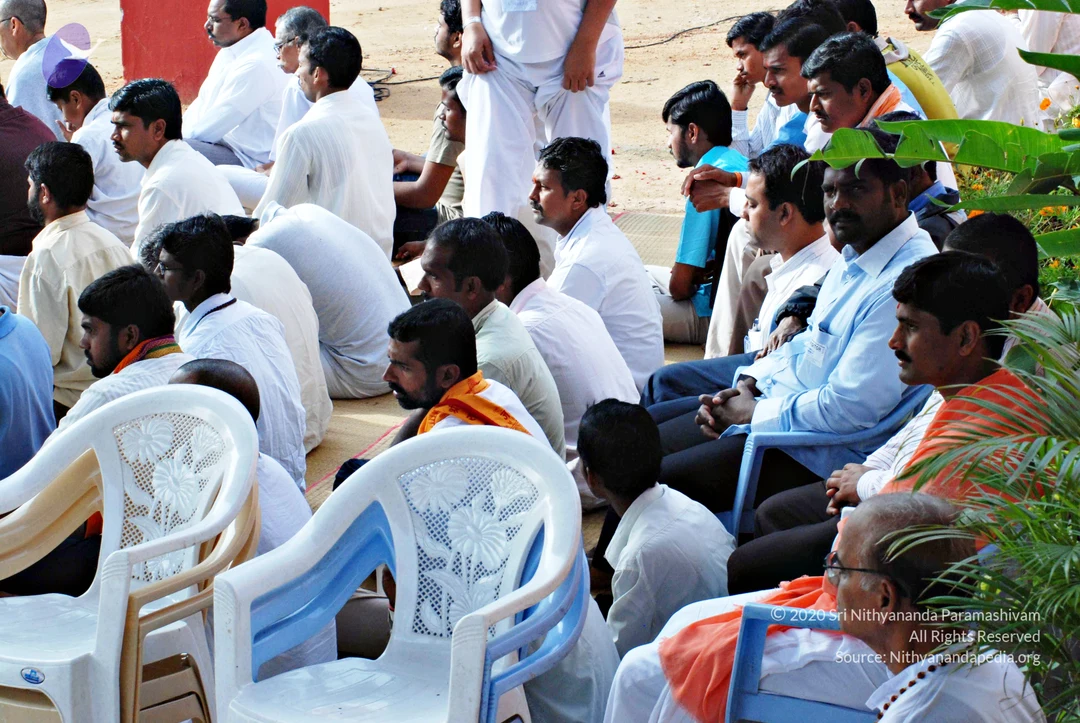
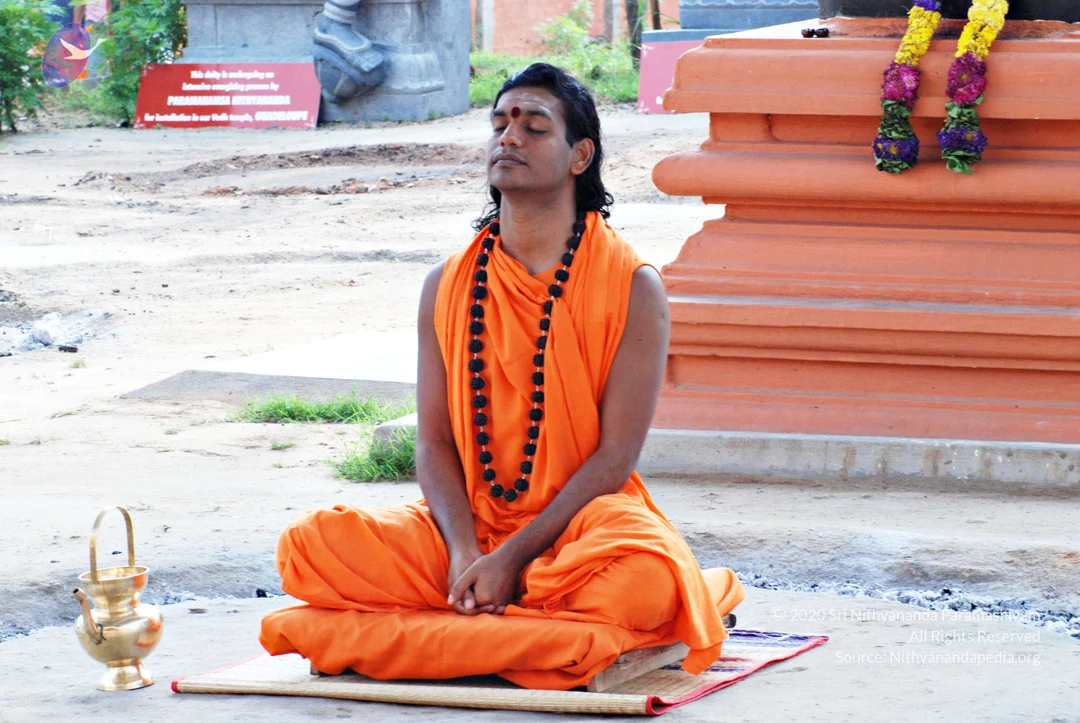
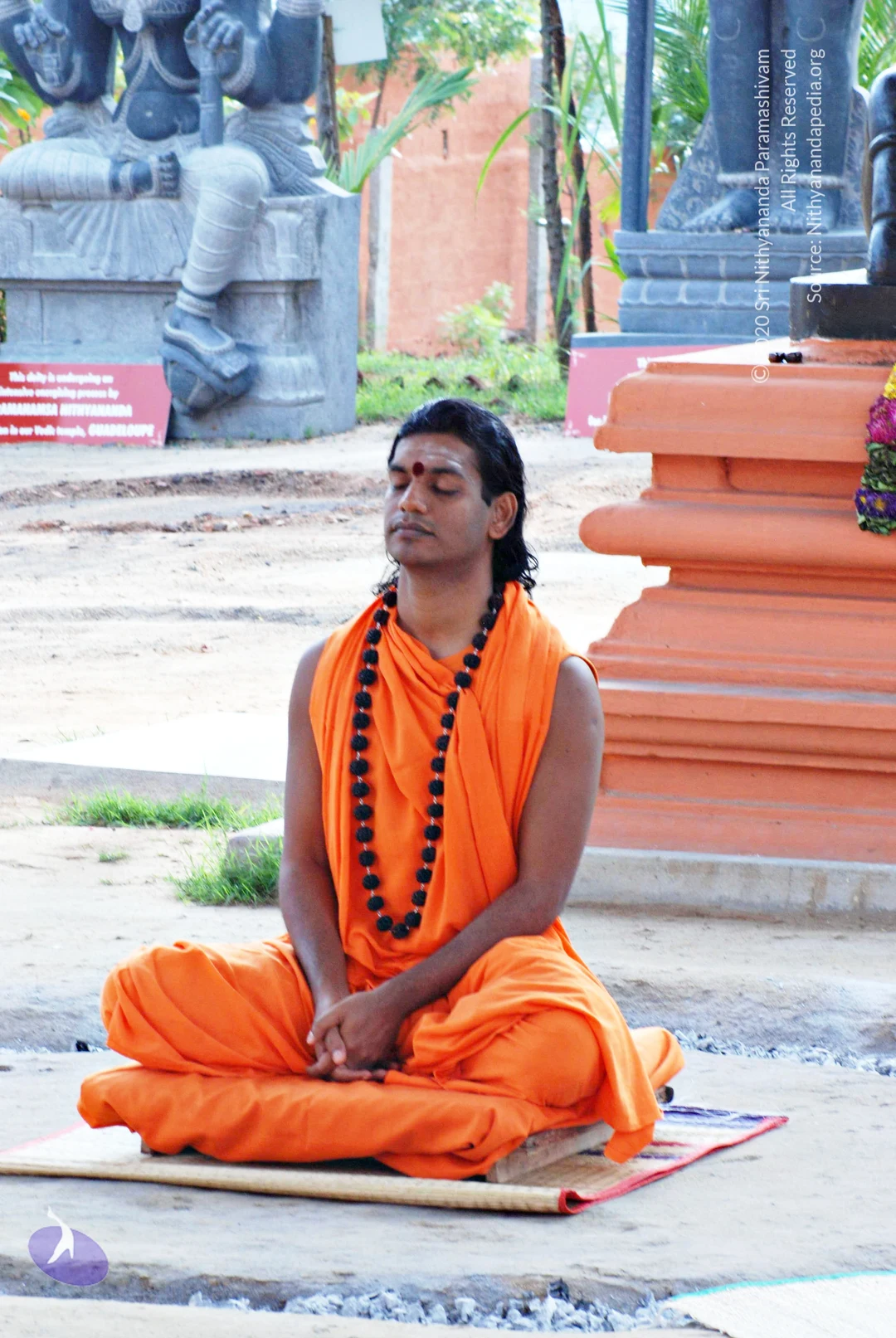
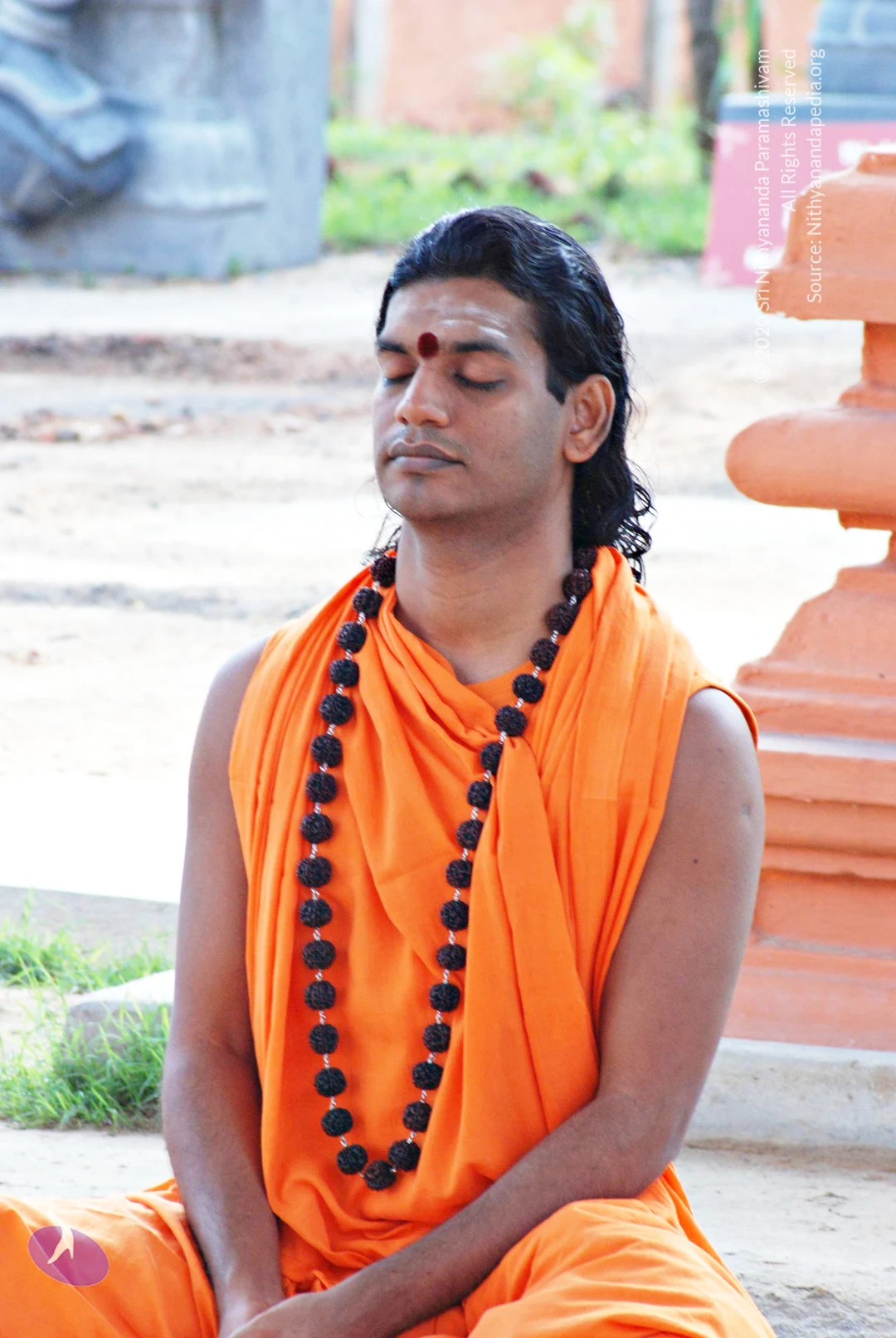
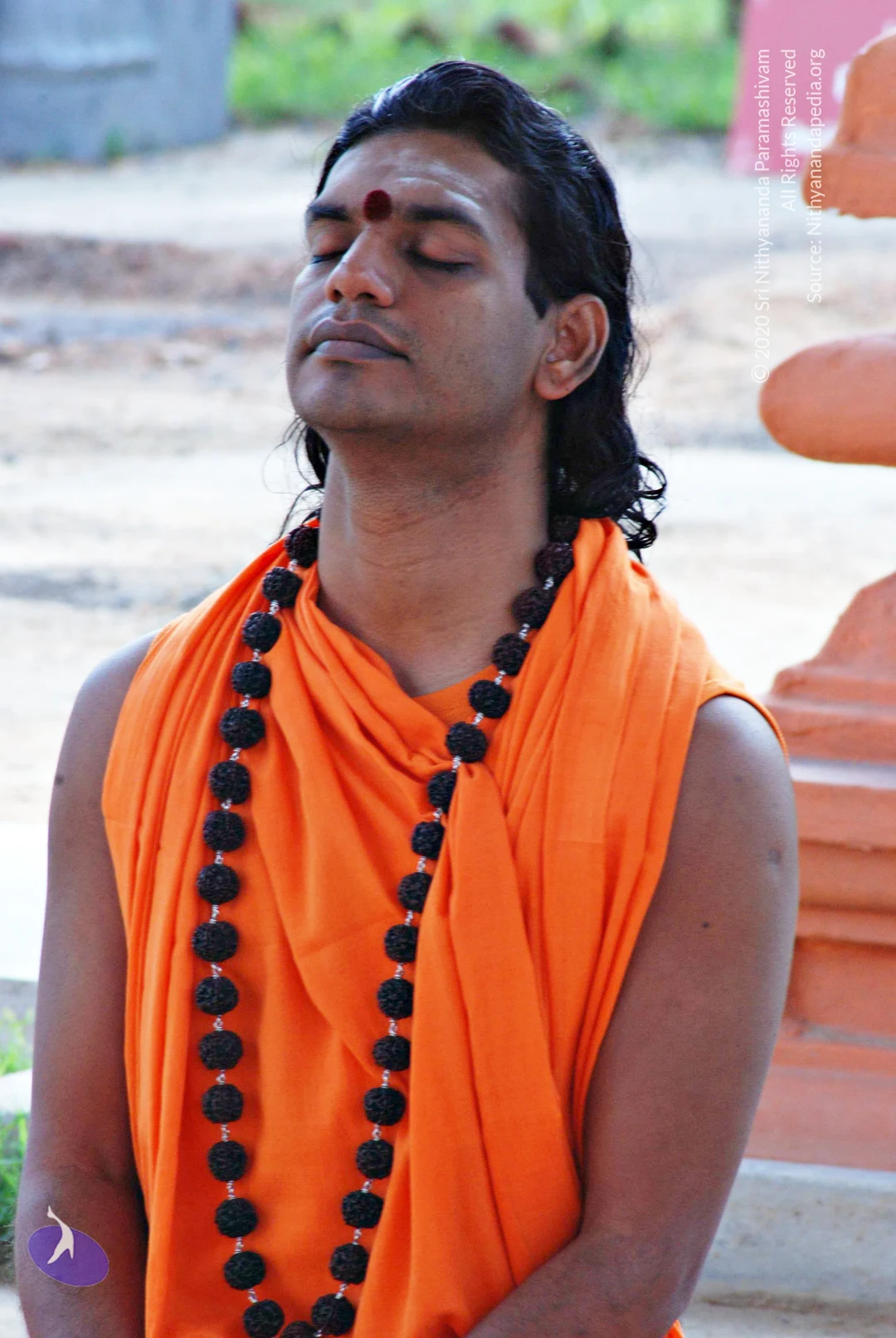
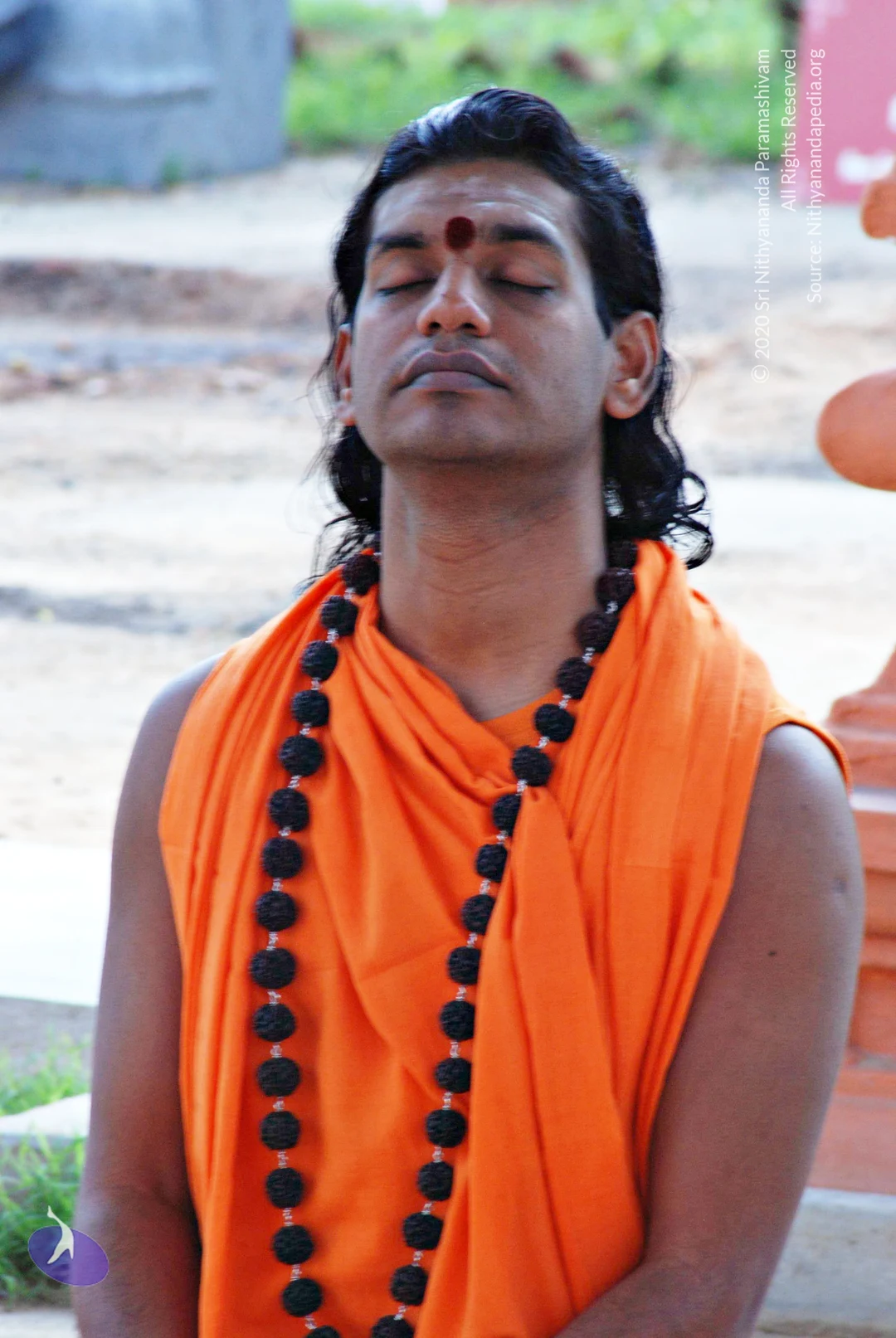
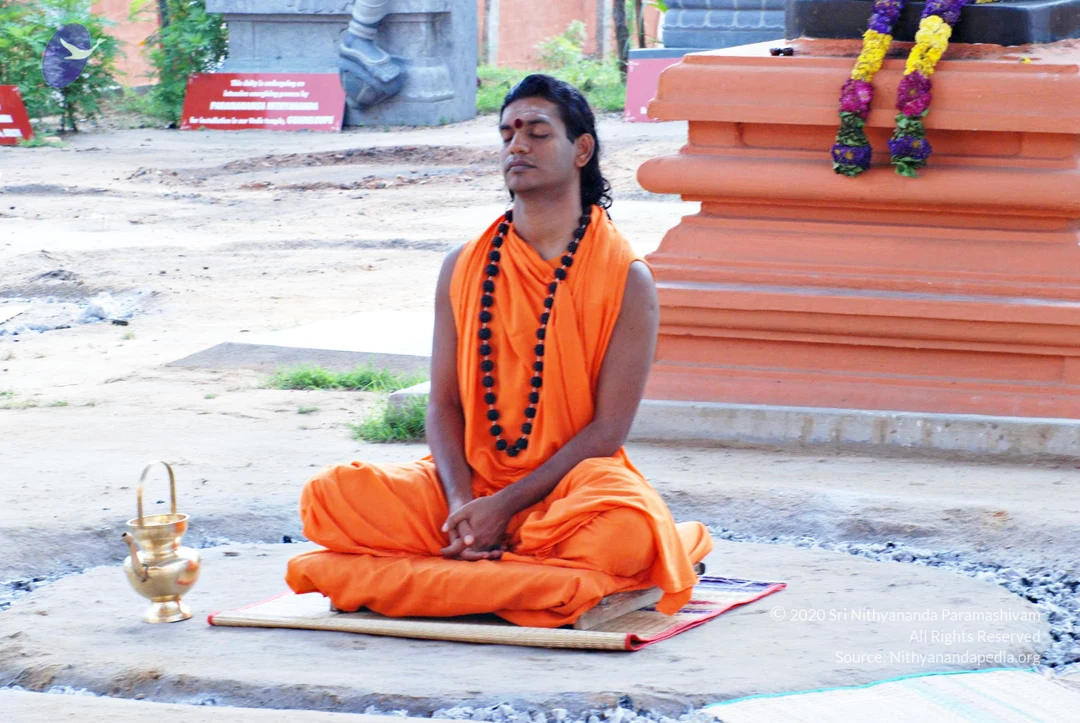
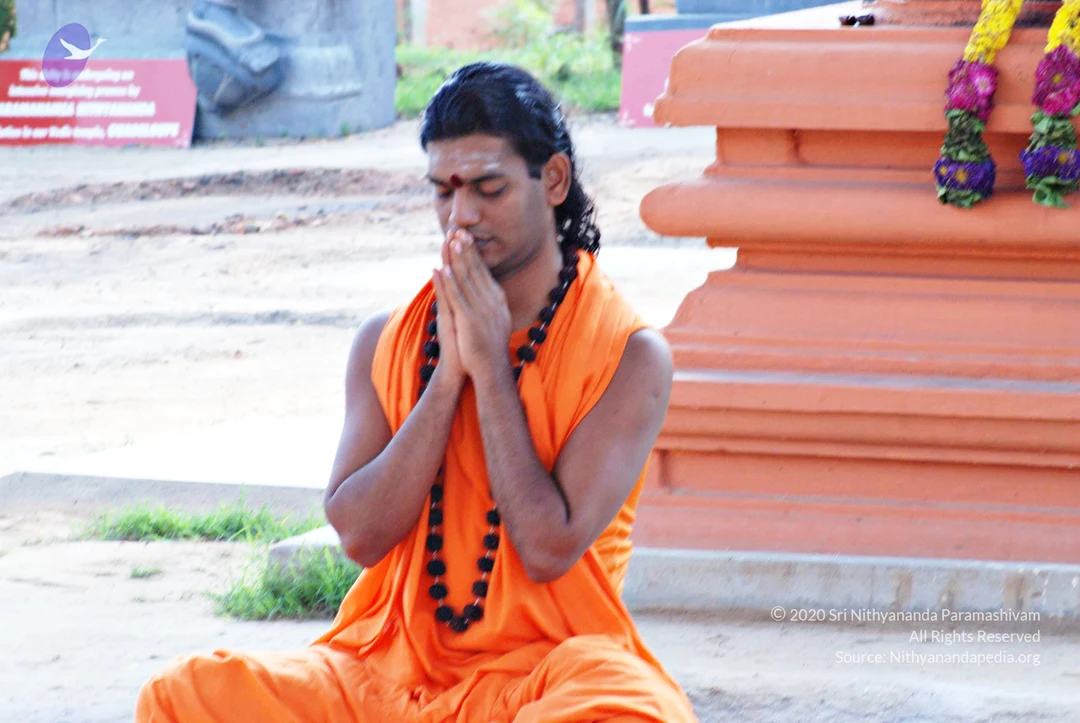
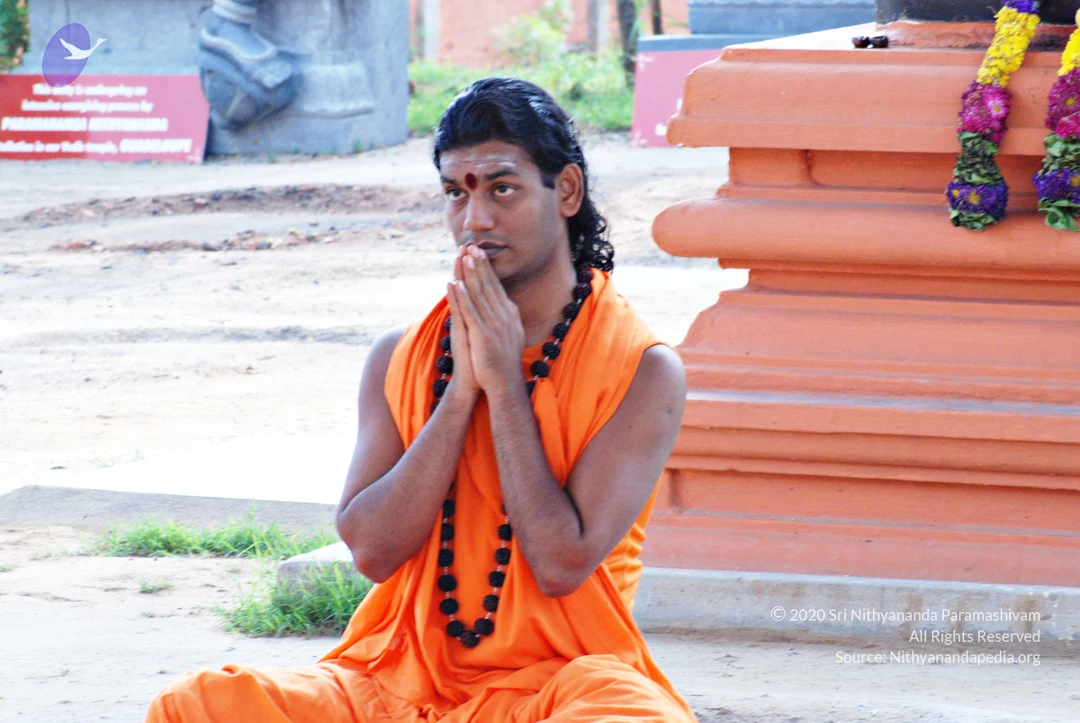
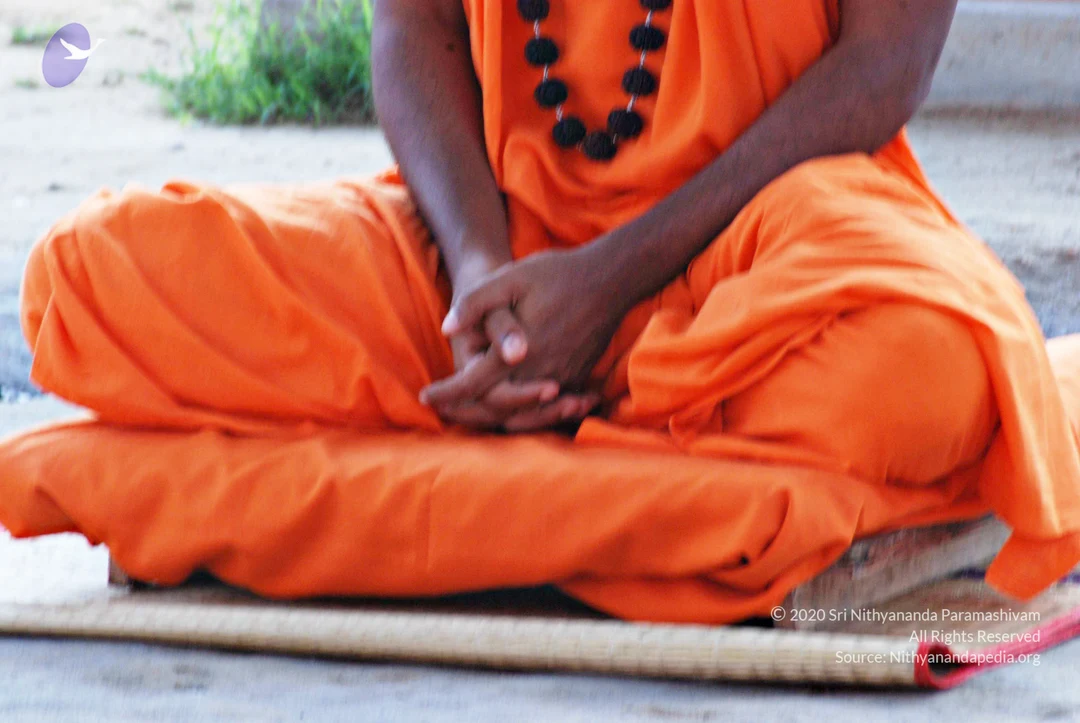
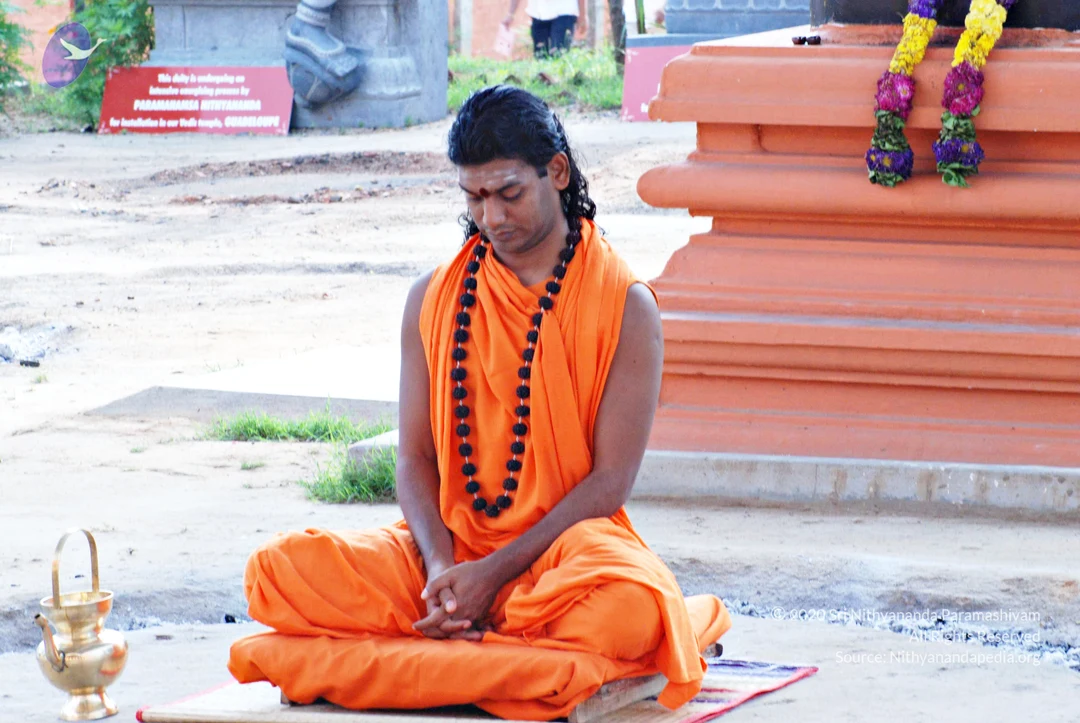
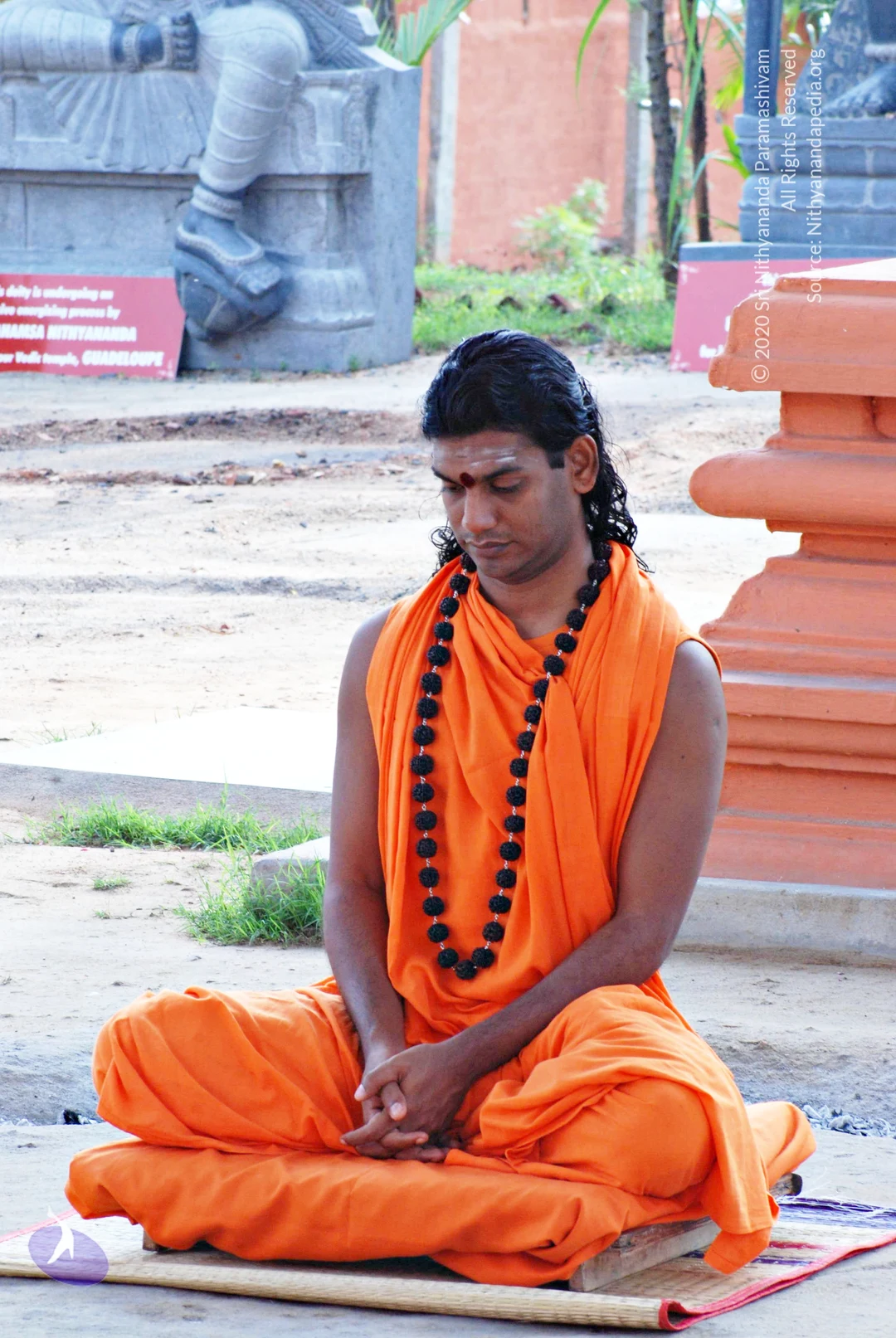
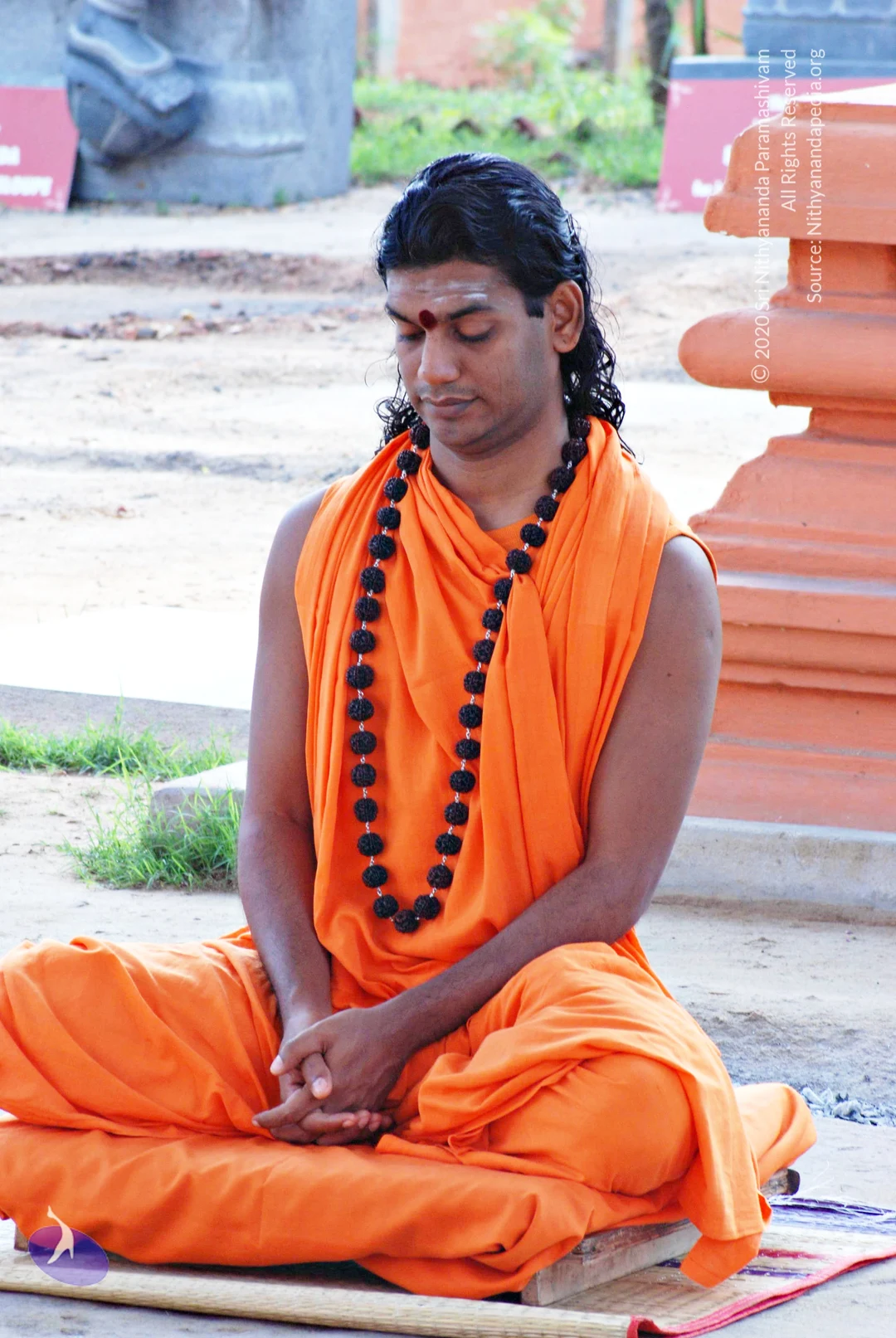
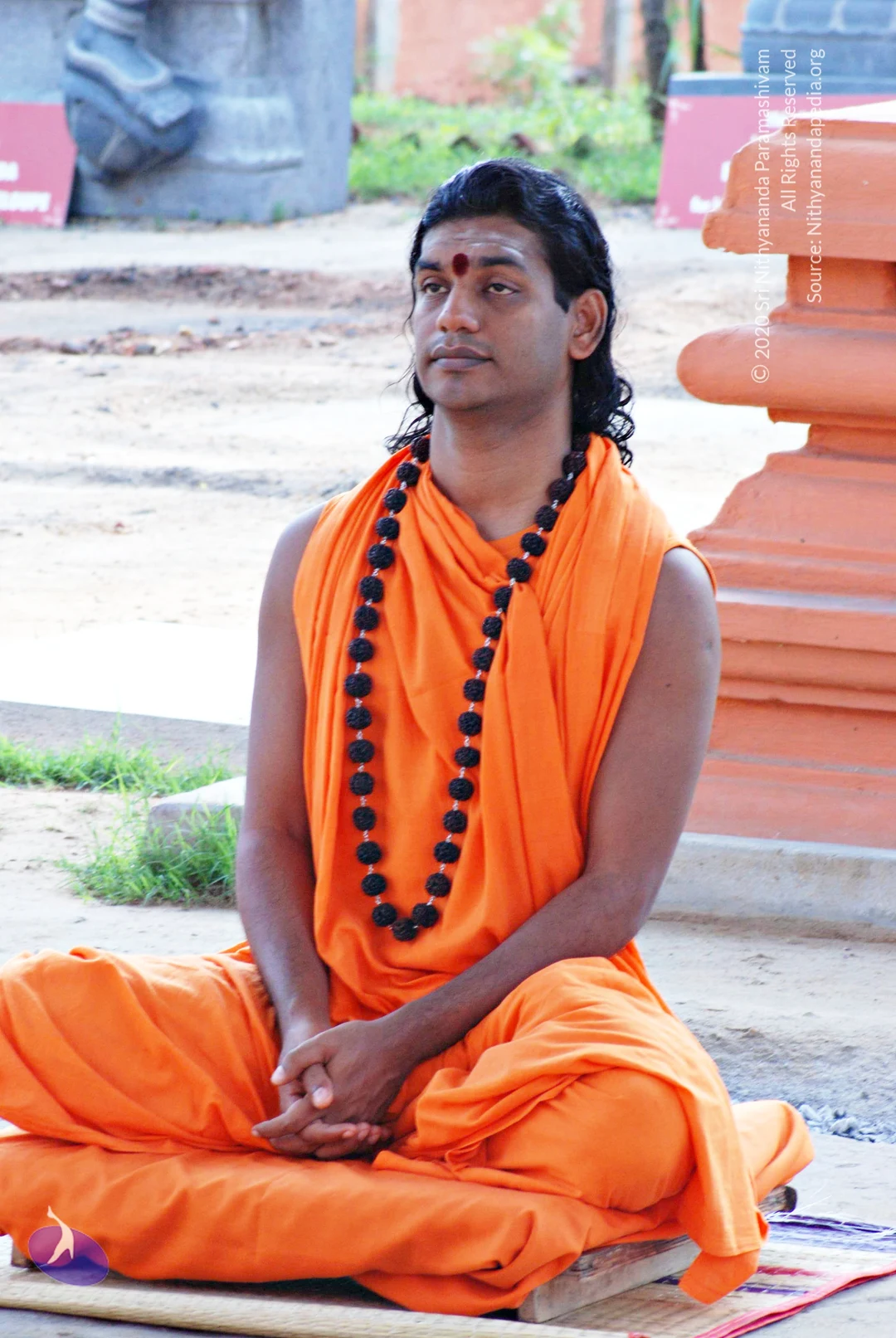
A seated man in saffron-orange robes with long swept-back dark hair and a dark rudraksha mala sits cross-legged on a folded mat with eyes closed, in meditation, with a brass kalasha-style water vessel placed before him on the ground. Behind him, several men in white dhotis and yellow shawls sit in meditation on a sandy ground marked with ash circles. Grey stone deity murtis line the right side near an orange-painted building, with a fence of woven bamboo at left and plants and palms in the background.A man with long dark hair sits cross-legged with eyes closed in meditation on a low wooden seat over a red and green mat, outdoors on bare ground. He wears an orange sleeveless garment with a draped orange cloth and a long rudraksha mala with dark beads, and has a red tilak on his forehead. A brass vessel with a spout and handle sits in front of him. Behind him, other seated people in white clothes with yellow shawls meditate, and a row of grey stone deity murtis stands near an orange building with a corrugated roof.A seated man in meditation with eyes closed, sitting cross-legged on sandy ground outdoors with palm trees behind him. He has long, swept-back black hair, a red tilak on his forehead, and wears an orange sleeveless wrap over orange clothing. A long dark rudraksha mala hangs across his chest, and his hands rest in his lap. A brass vessel with a handle sits at the lower left. Swamiji (probable): long swept-back hair, saffron clothing and a rudraksha mala, seated in meditation. A white wall and a wooden post stand in the background.A man with long, swept-back dark hair sits cross-legged outdoors with his eyes closed in meditation. He wears a sleeveless orange saffron wrap over an orange garment, a dark red bindi on his forehead, and a long rudraksha mala of dark brown beads with a single strand draped across his chest. His hands rest in his lap in a mudra. Behind him are a white wall, palm trees and a wooden post, and in the lower left a small brass vessel sits on the sandy ground.A man sits cross-legged on a mat outdoors in meditation, eyes closed, hands resting in his lap. He wears a sleeveless orange-saffron garment draped over the shoulders and a long black rudraksha mala hanging to the waist, with a red tilak on his forehead. Long dark hair falls past his shoulders. Behind him are palm trees, a white wall, a wooden post and scattered ash on the ground. A brass kalasha-style vessel with a handle sits at the lower left. Swamiji (probable) appearance cues: long swept-back hair, saffron clothing and rudraksha mala.Close-up photograph of a seated person in orange saffron robes, with hands clasped together in front of the lap in a meditative posture. A large rudraksha mala of dark brown seeds hangs across the chest. Only the arms, hands, chest and lap are visible; the face is outside the frame. Soft outdoor light falls on the orange fabric.
04

04-SWAMIJI-KALPATARU-DARSHAN

58 dated photos in previewSource gallery
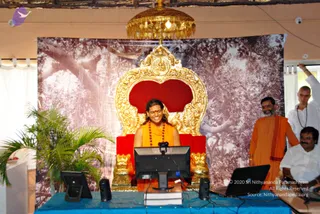
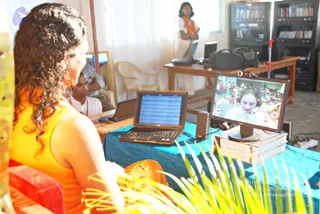
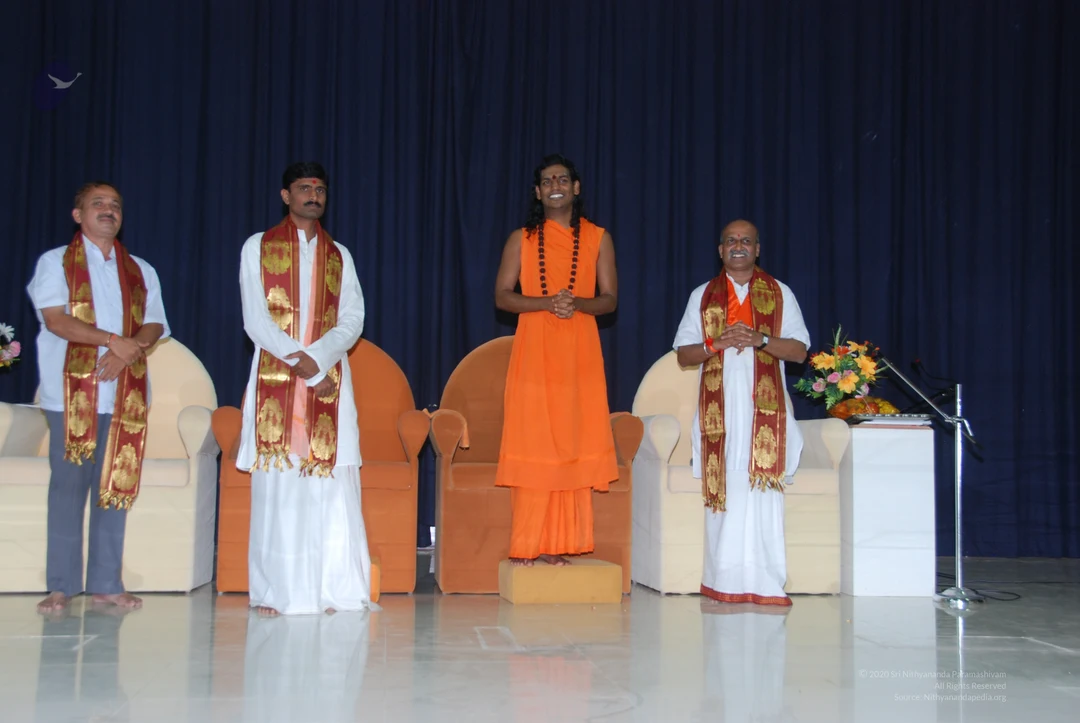
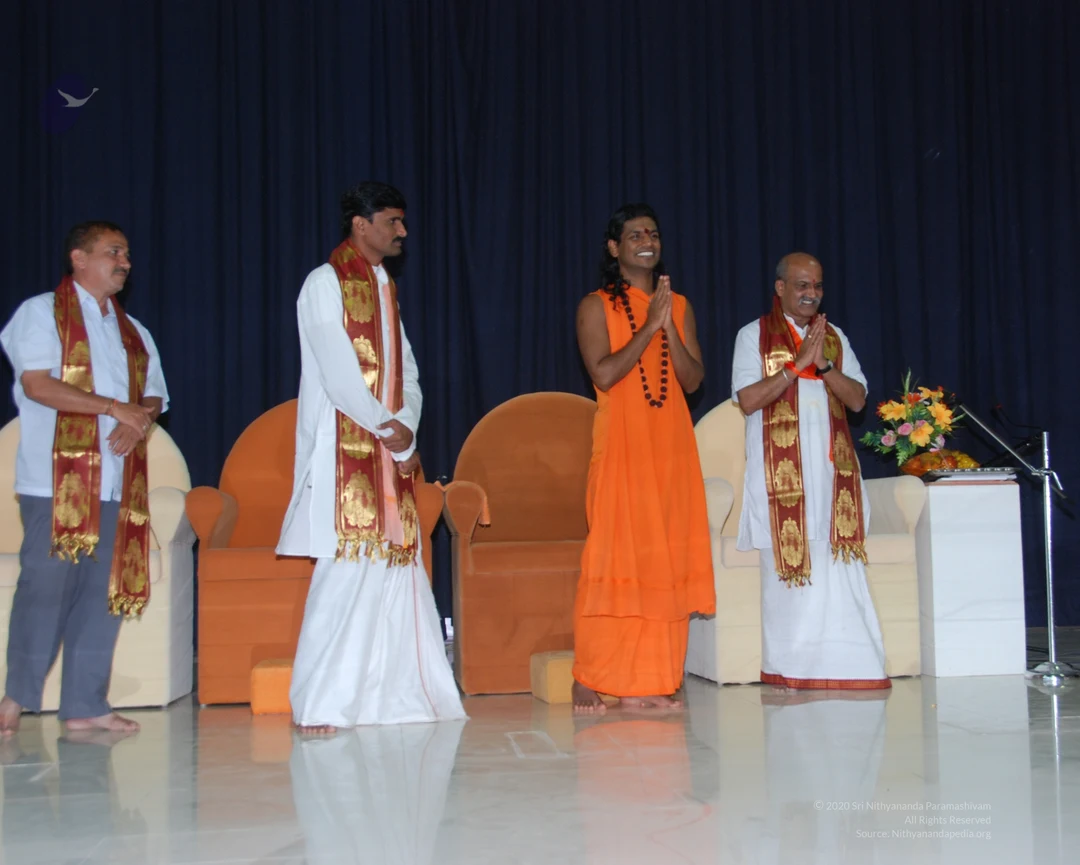
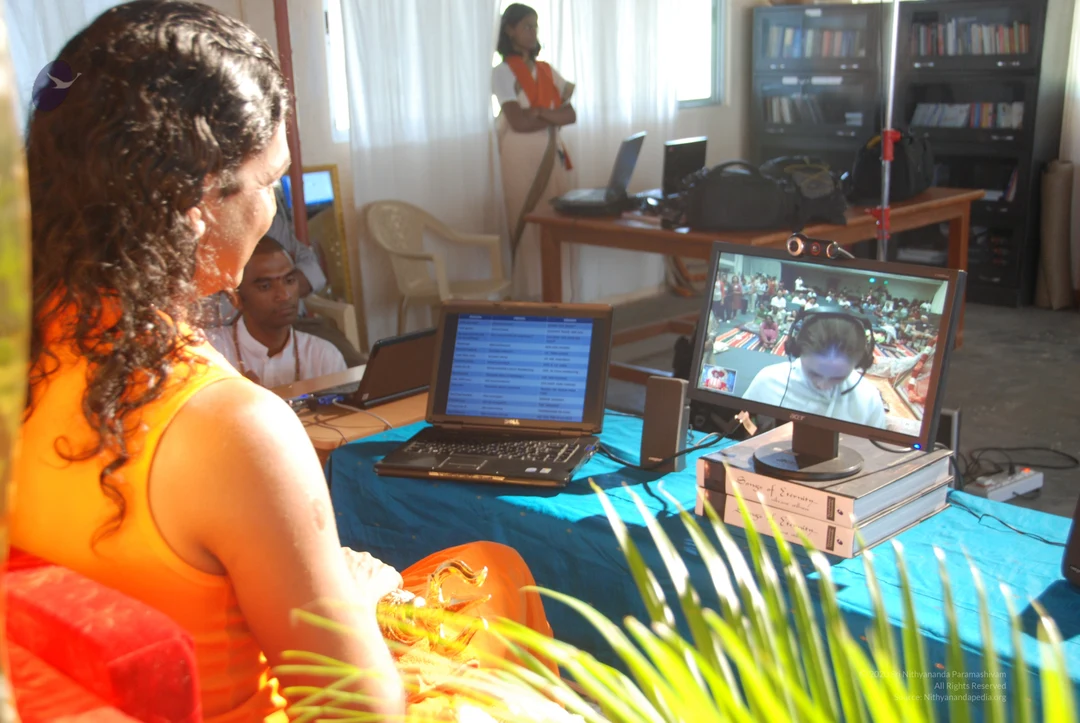
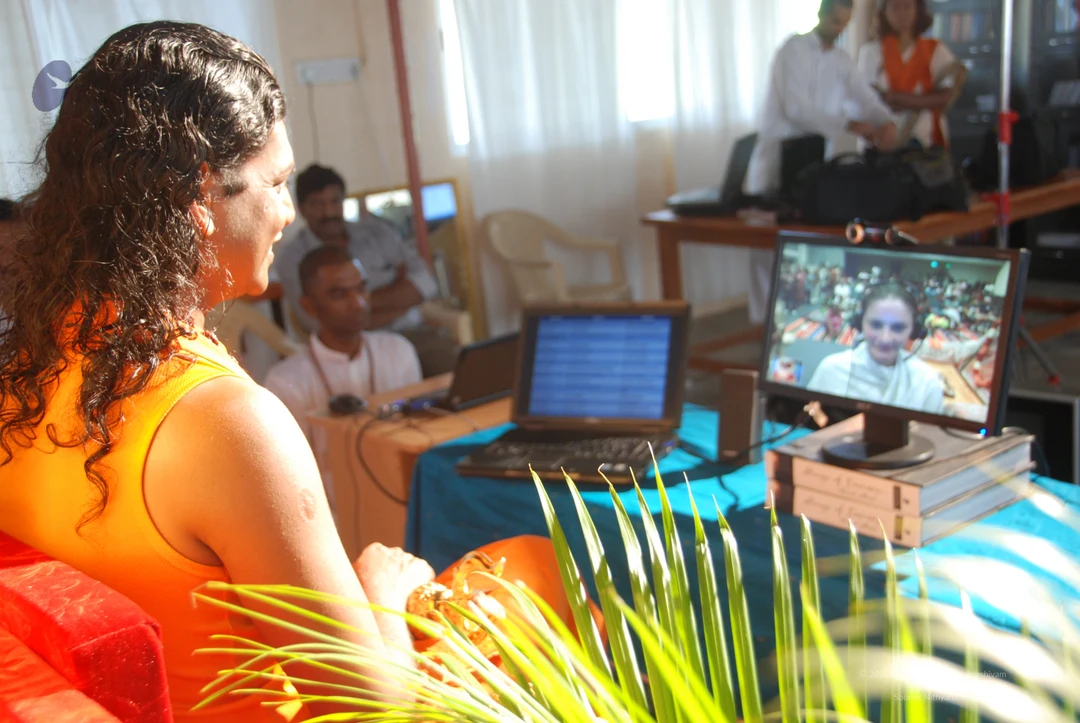
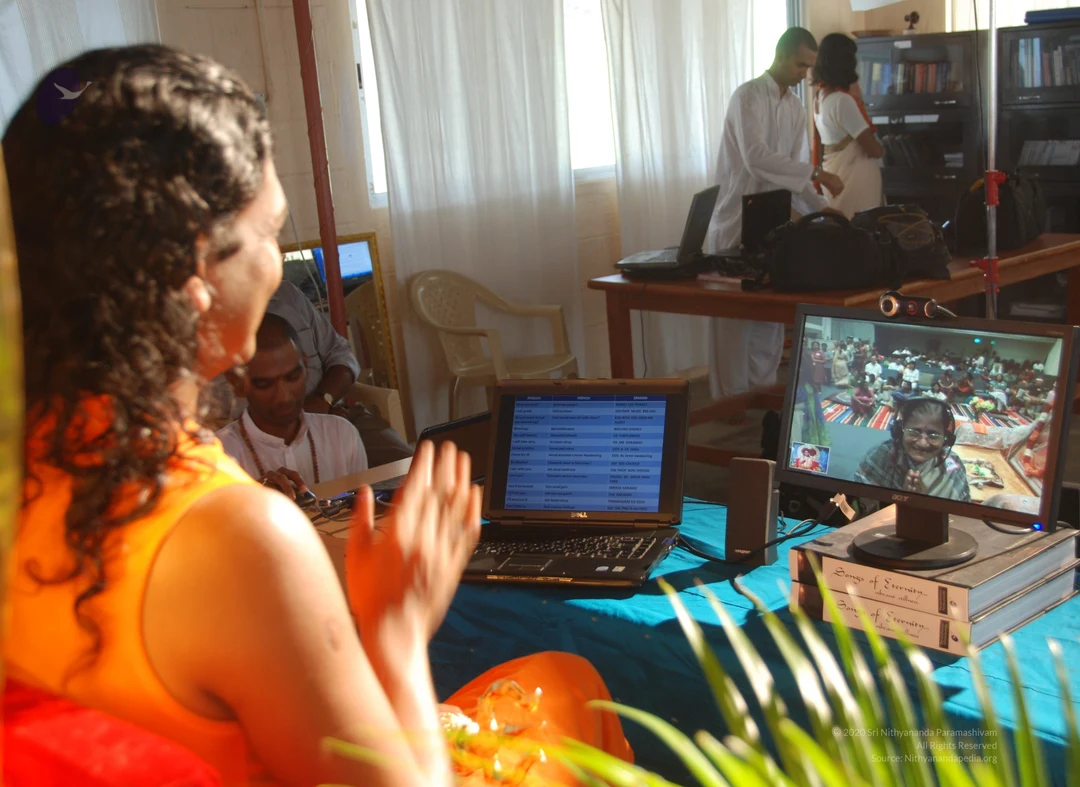
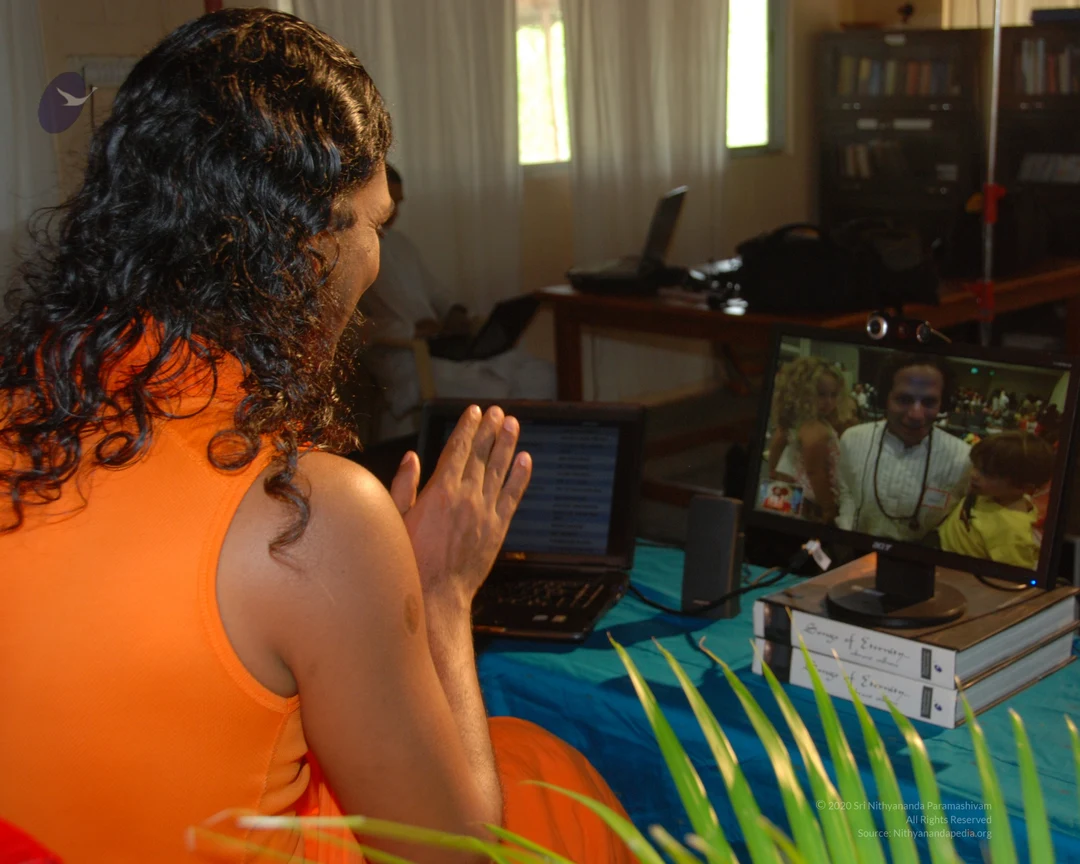
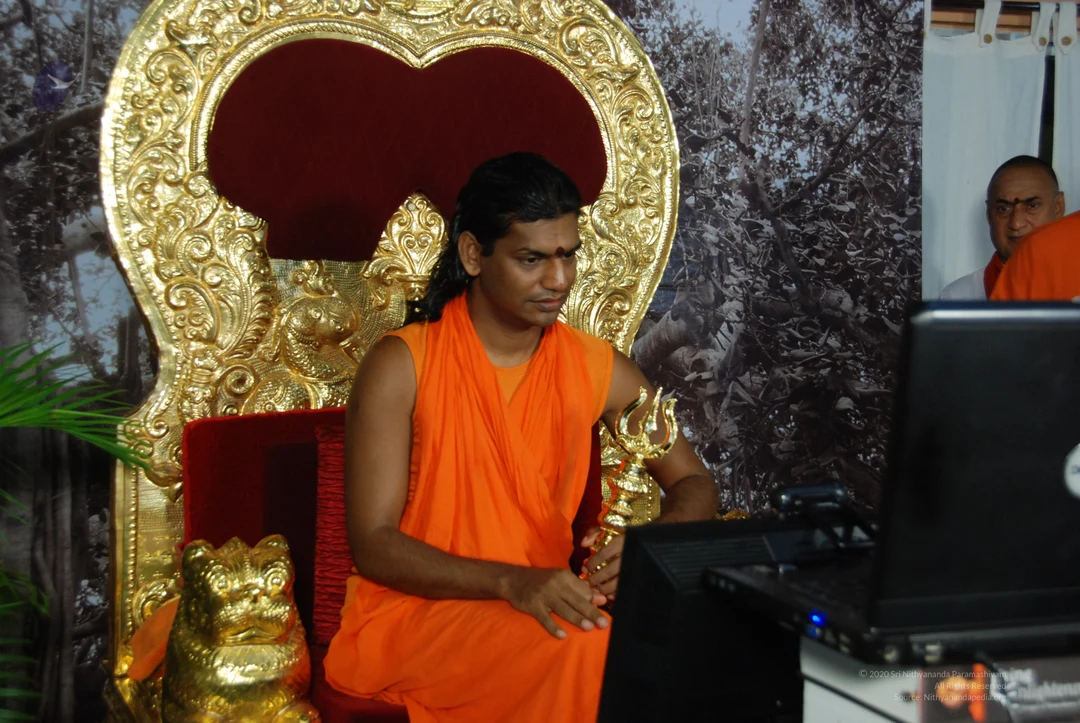
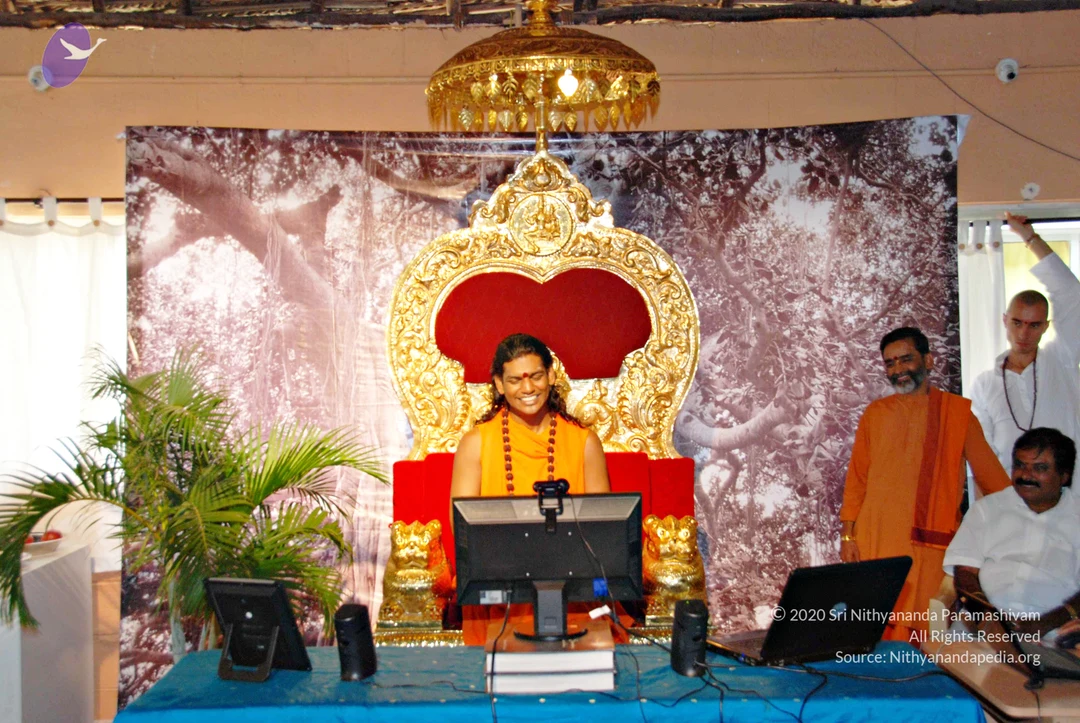
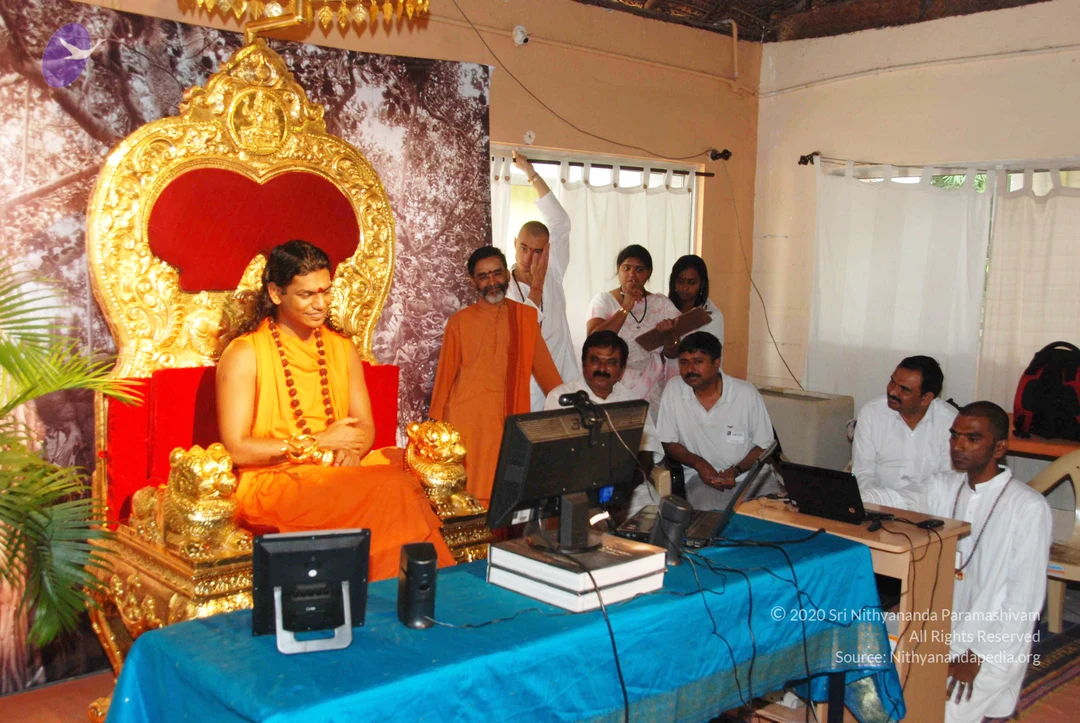
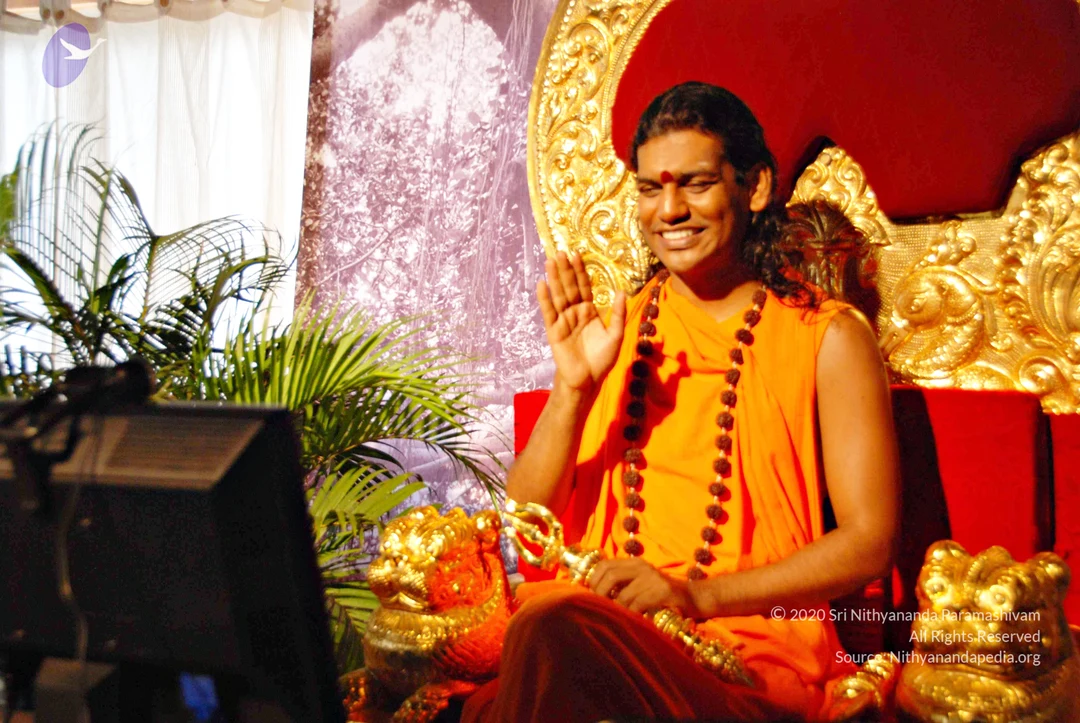
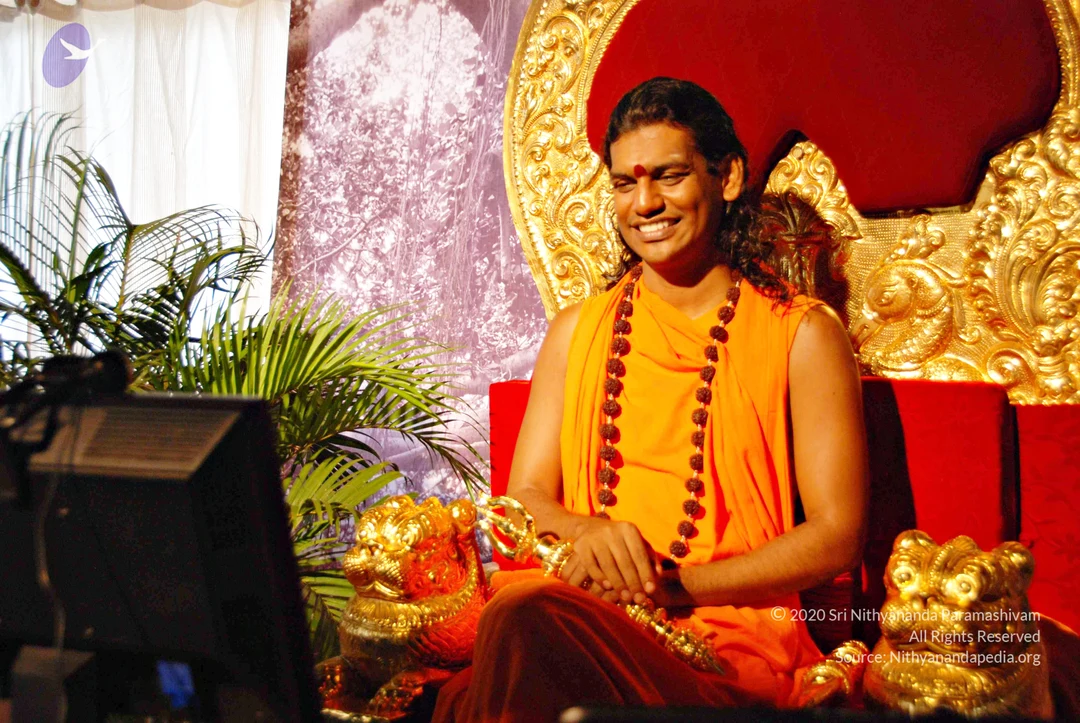
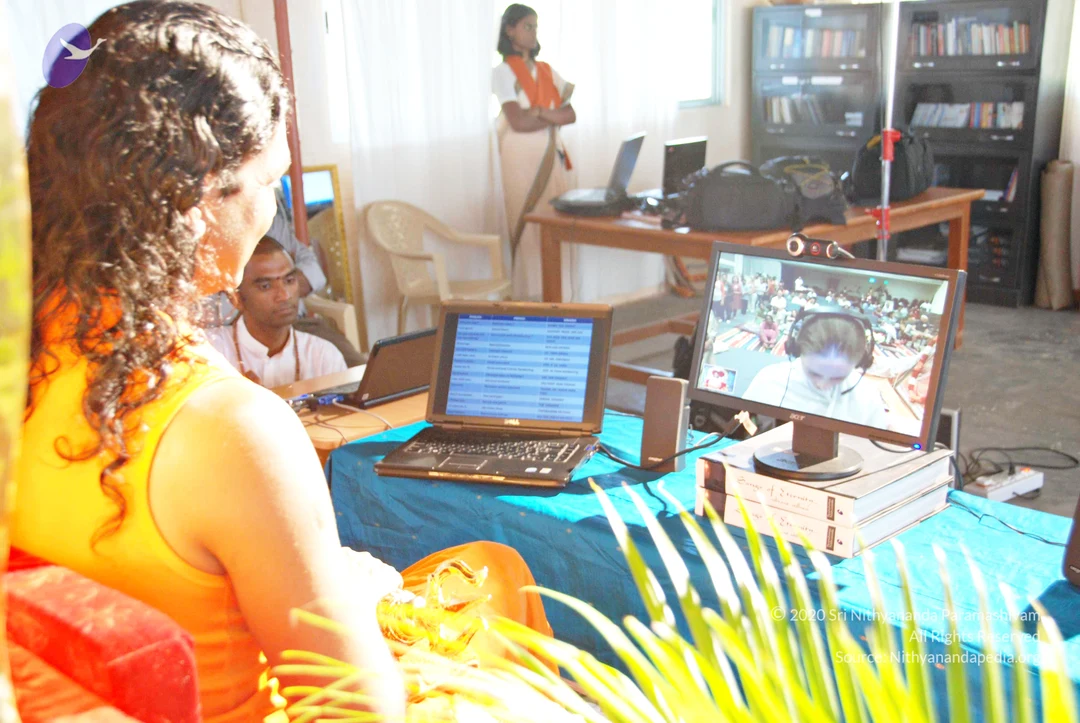
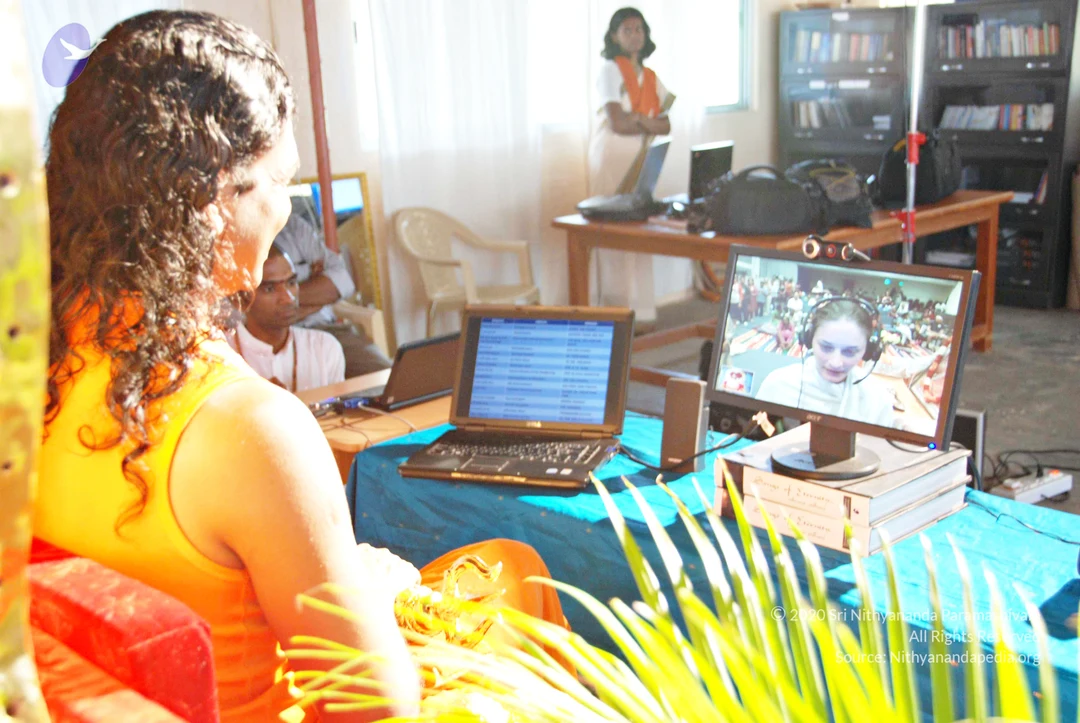
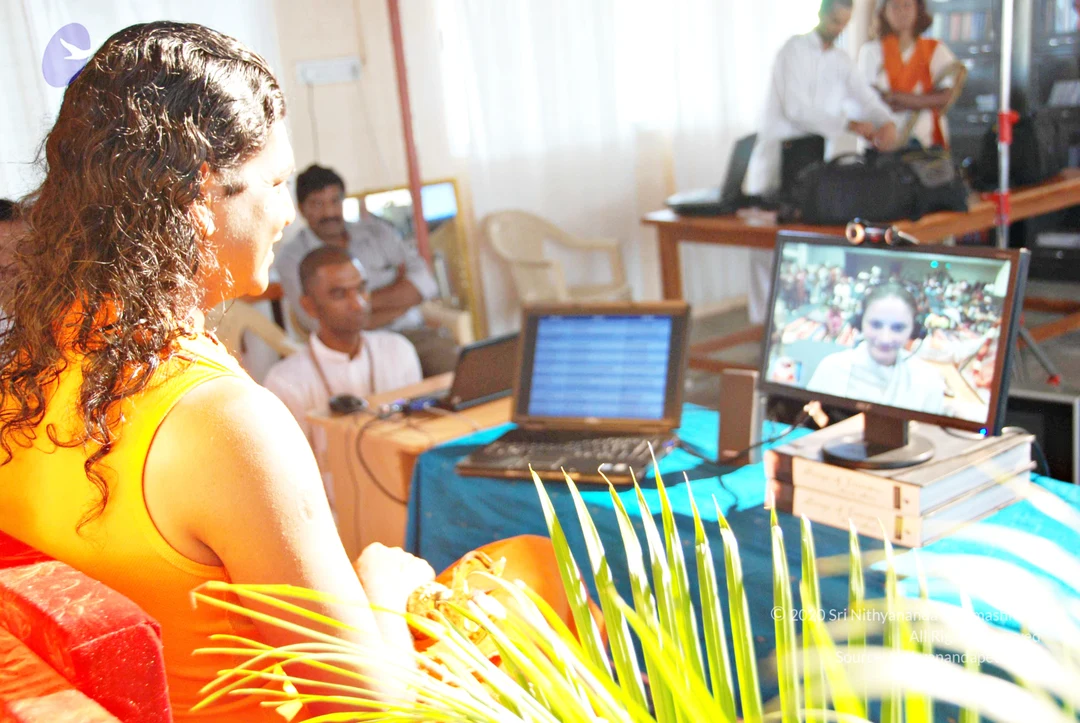
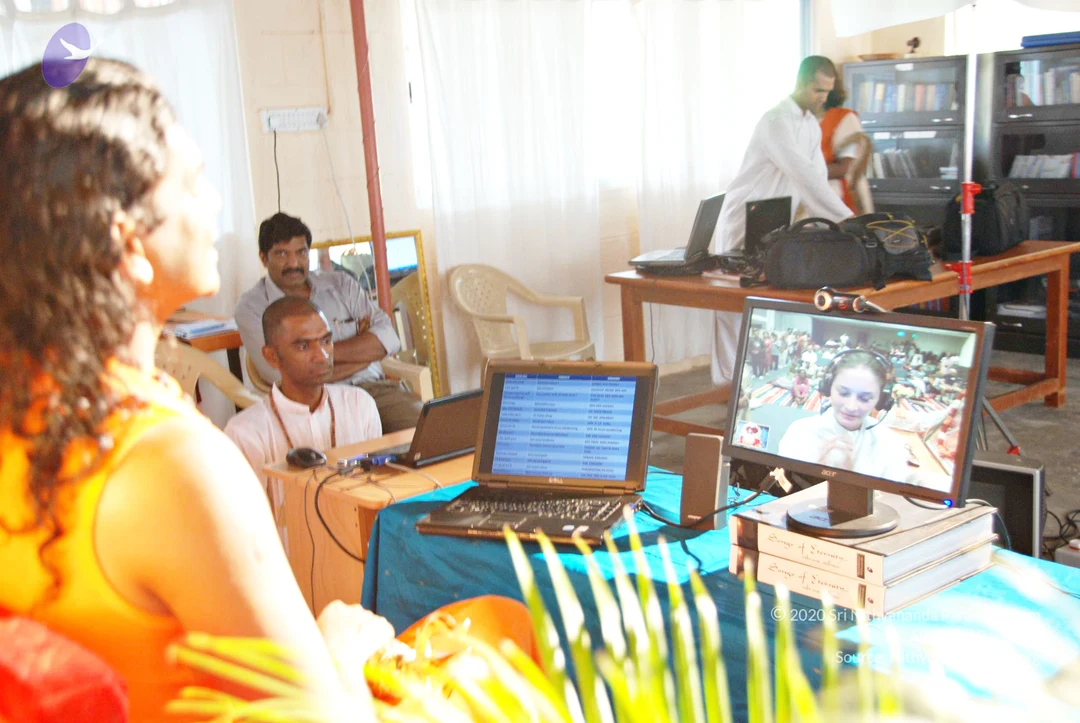
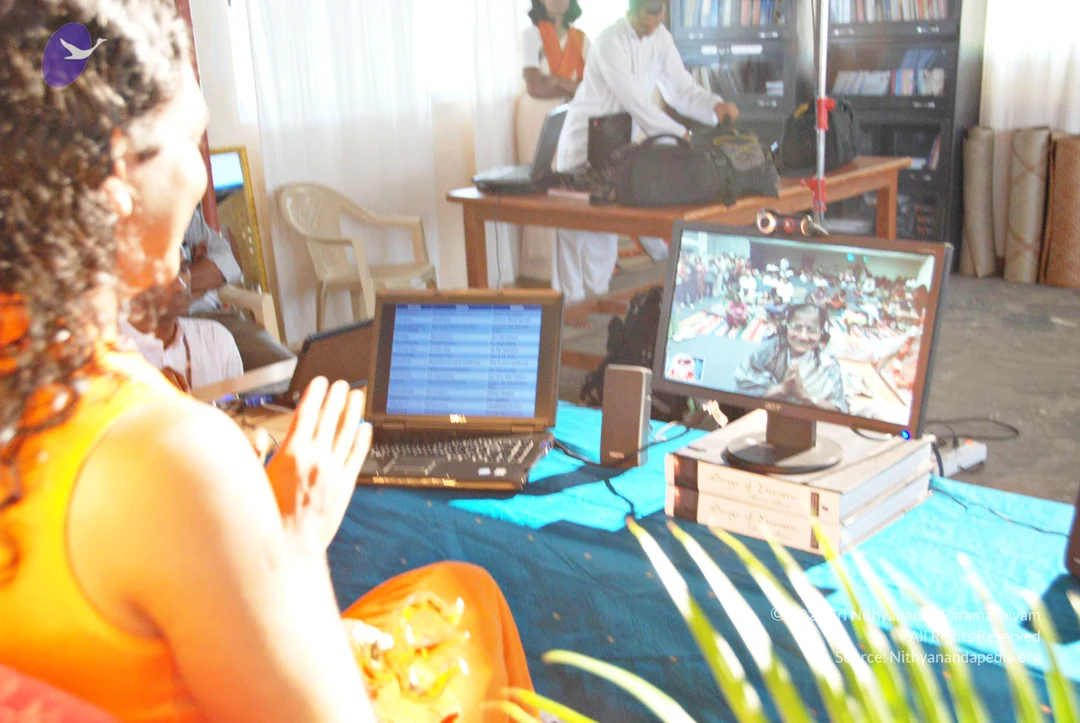
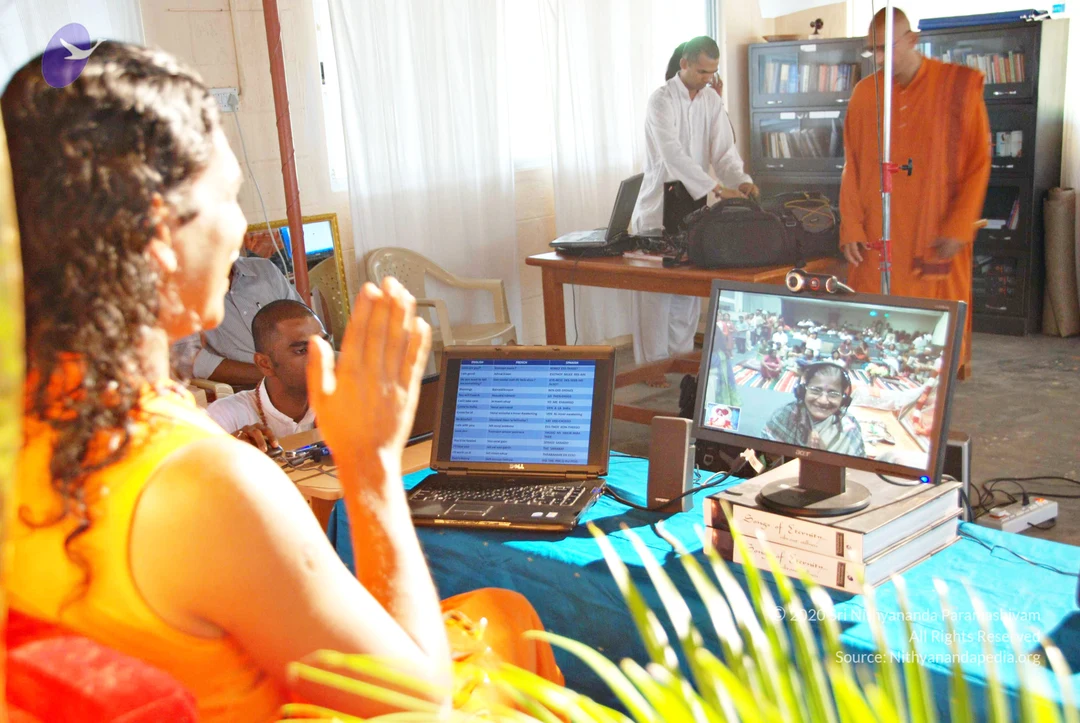
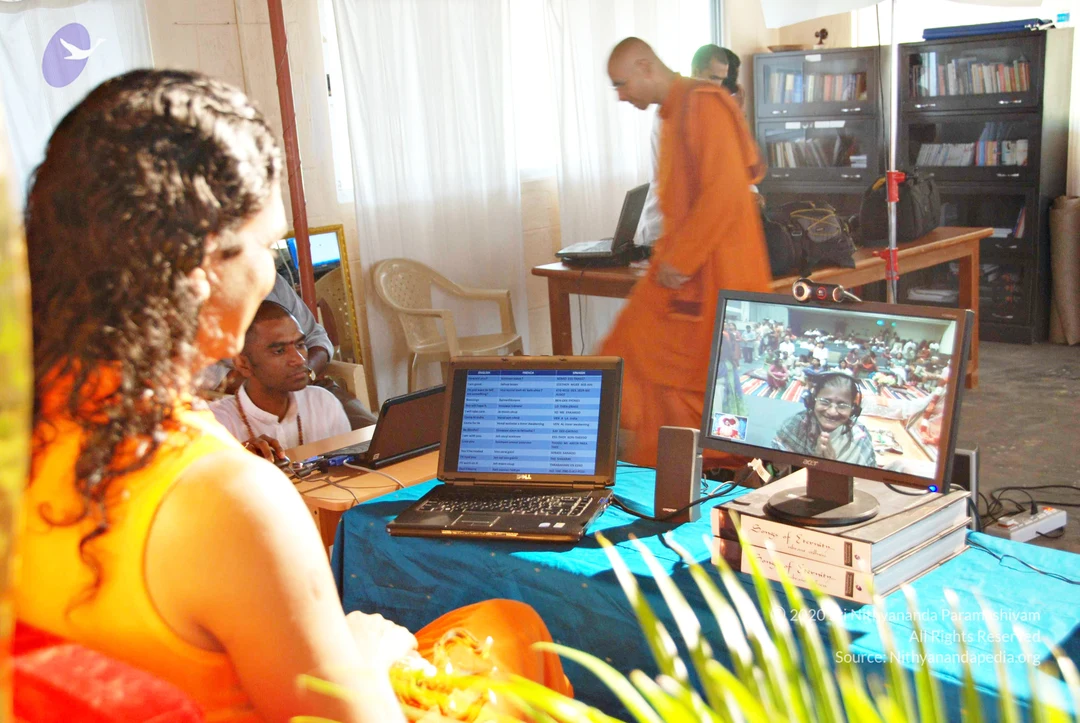
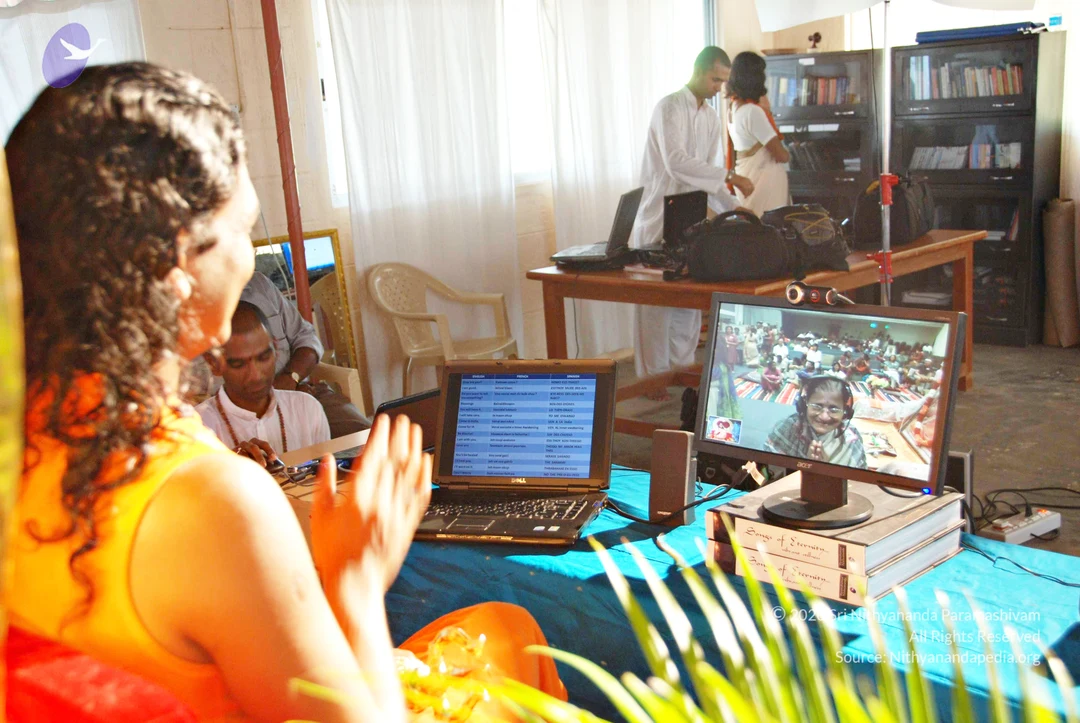
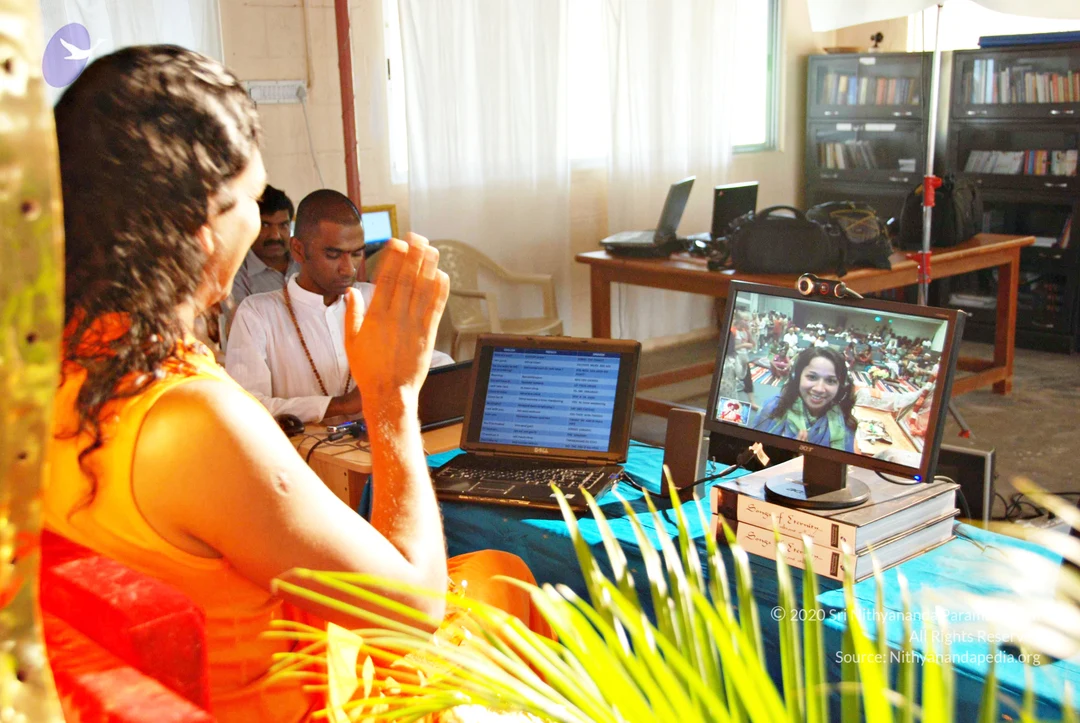
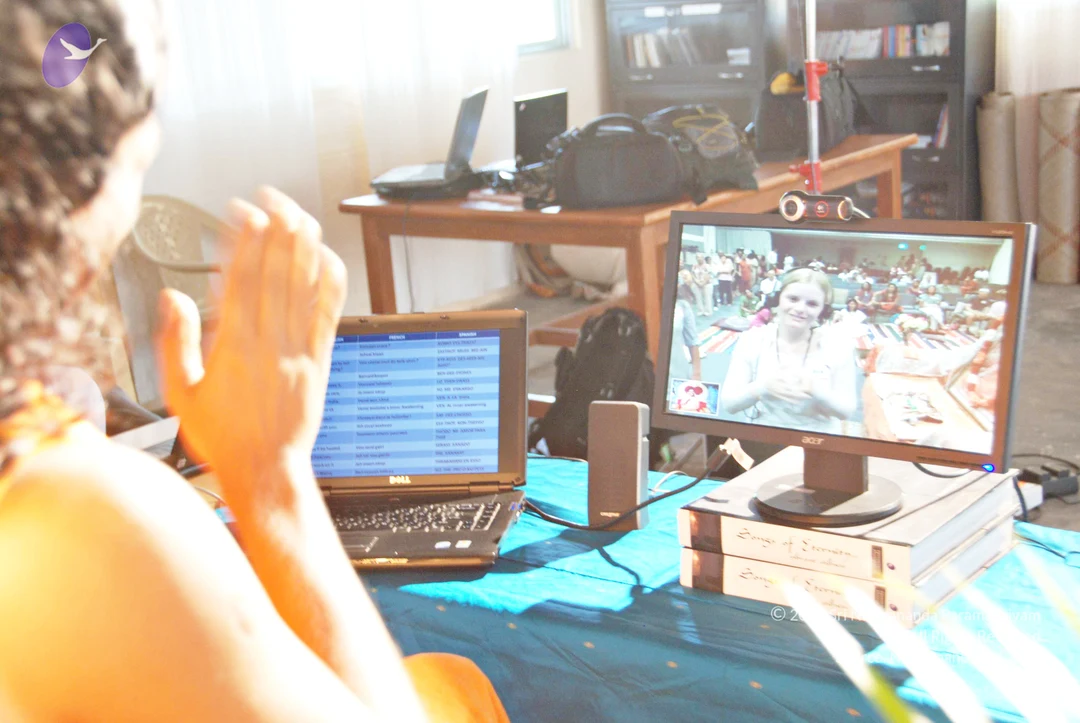
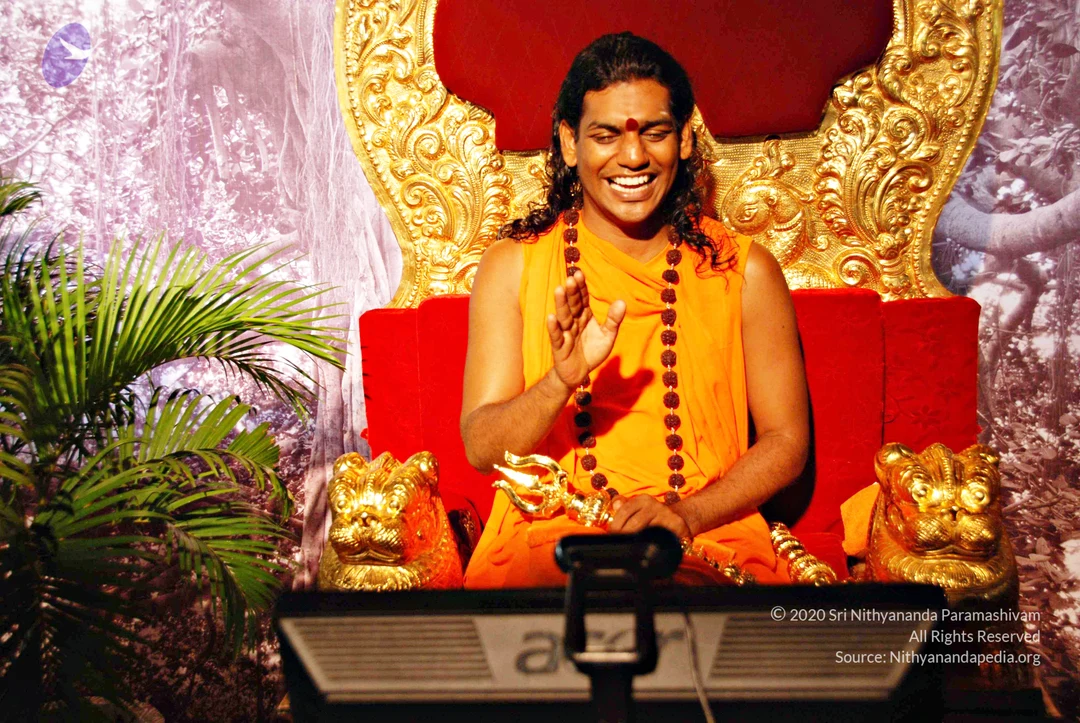
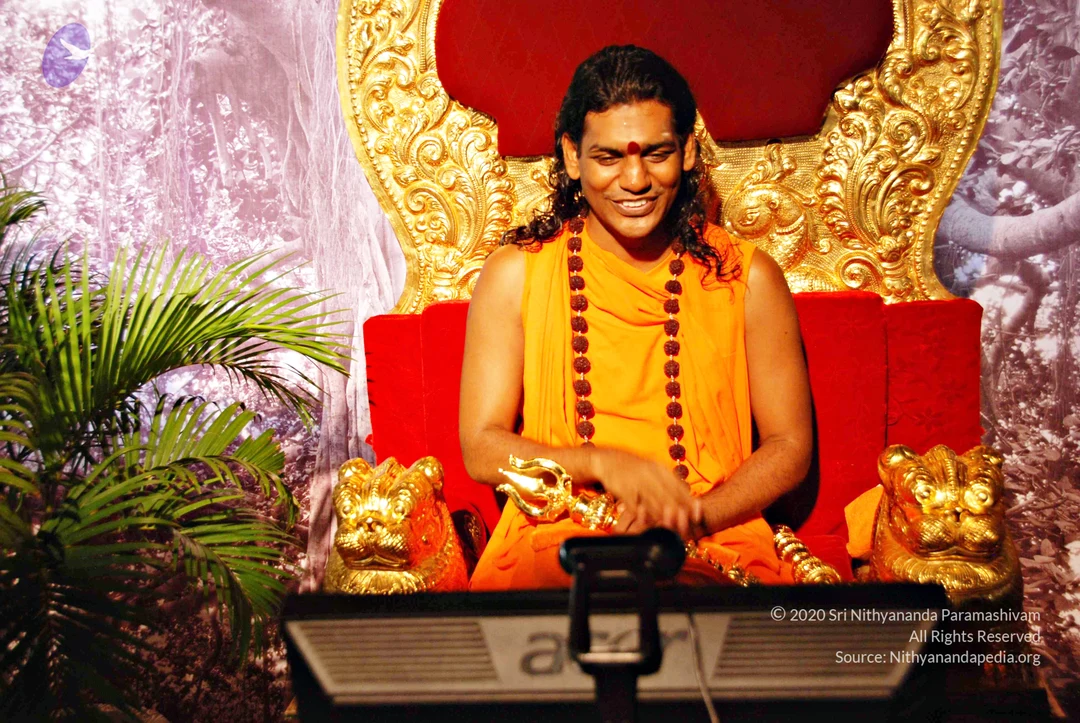
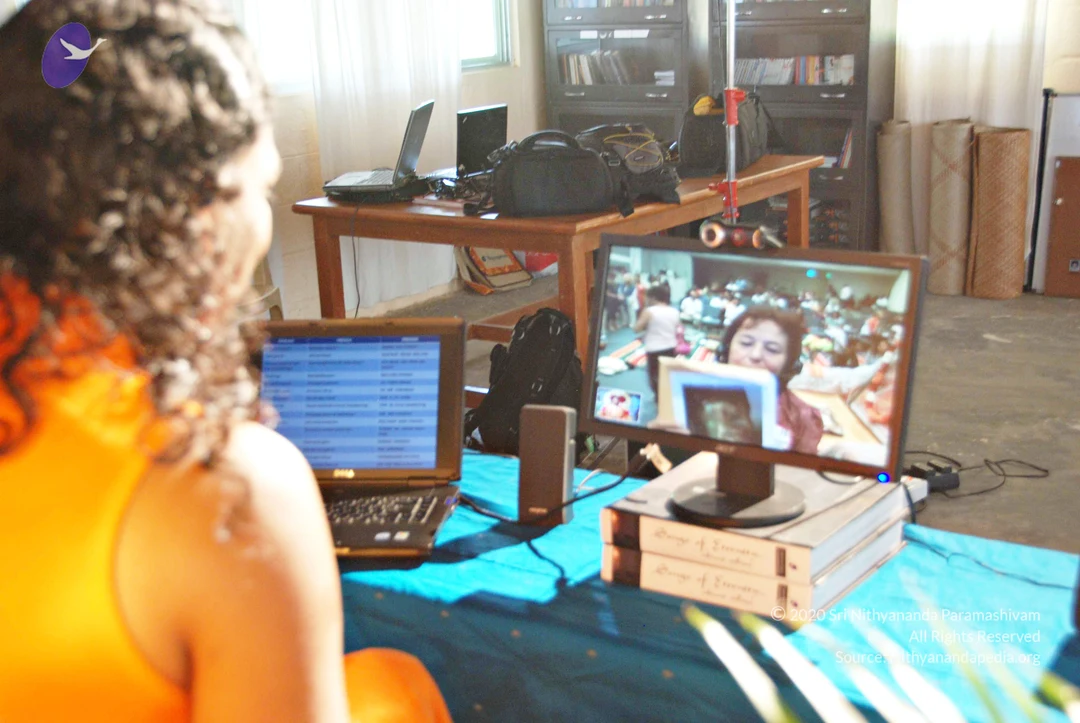
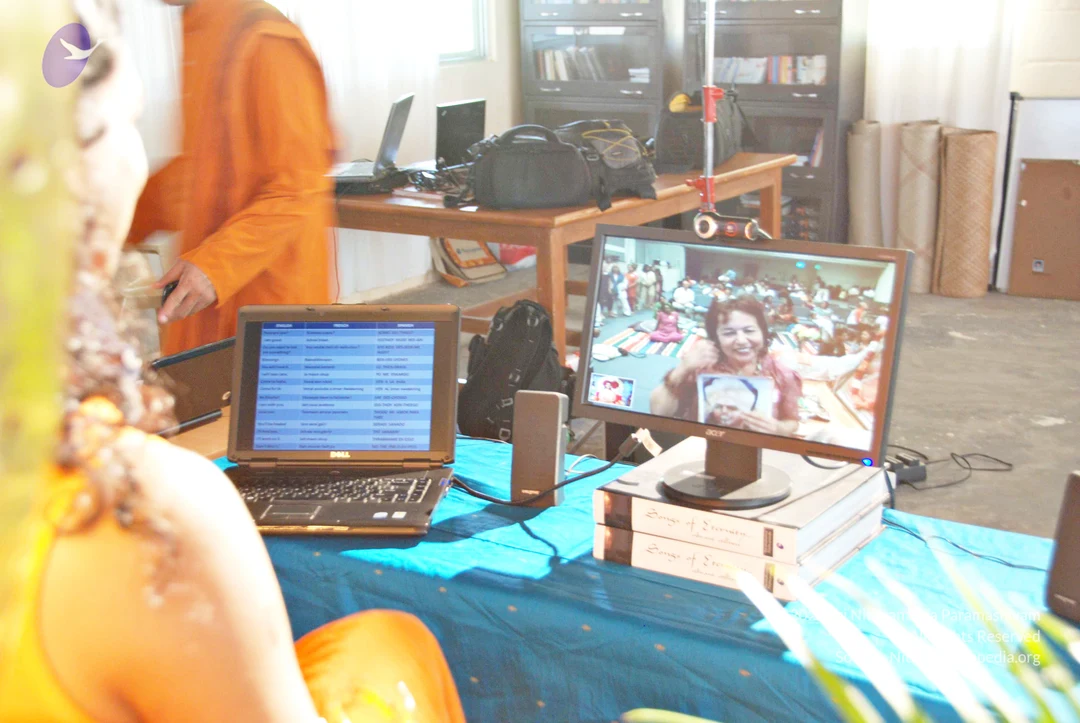
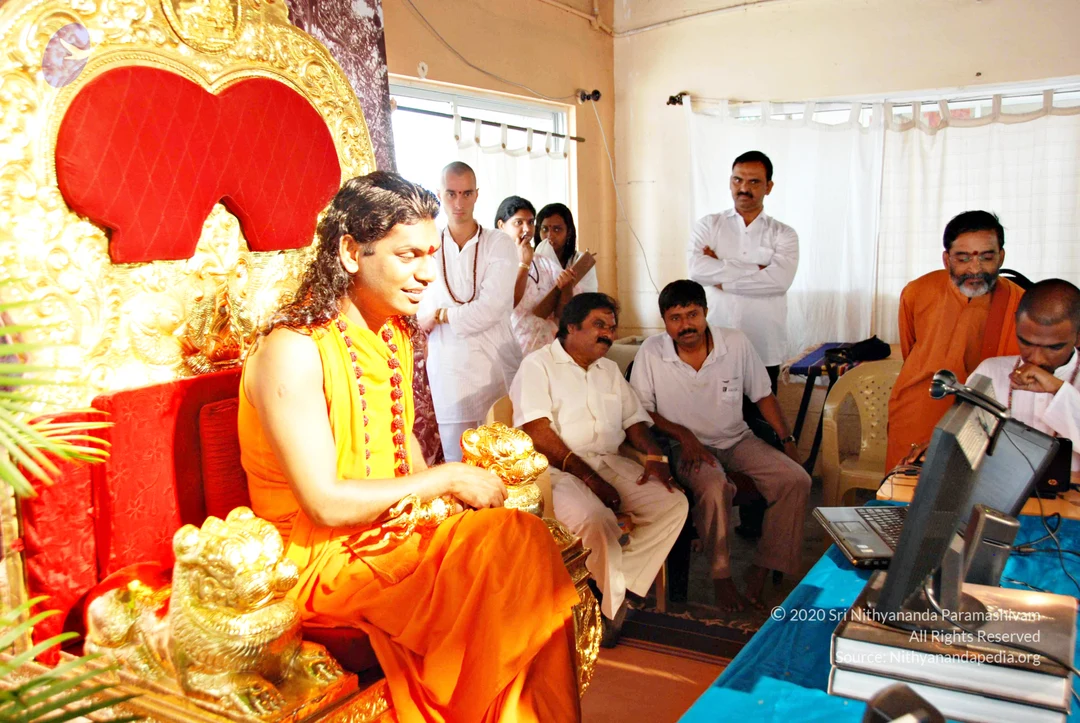
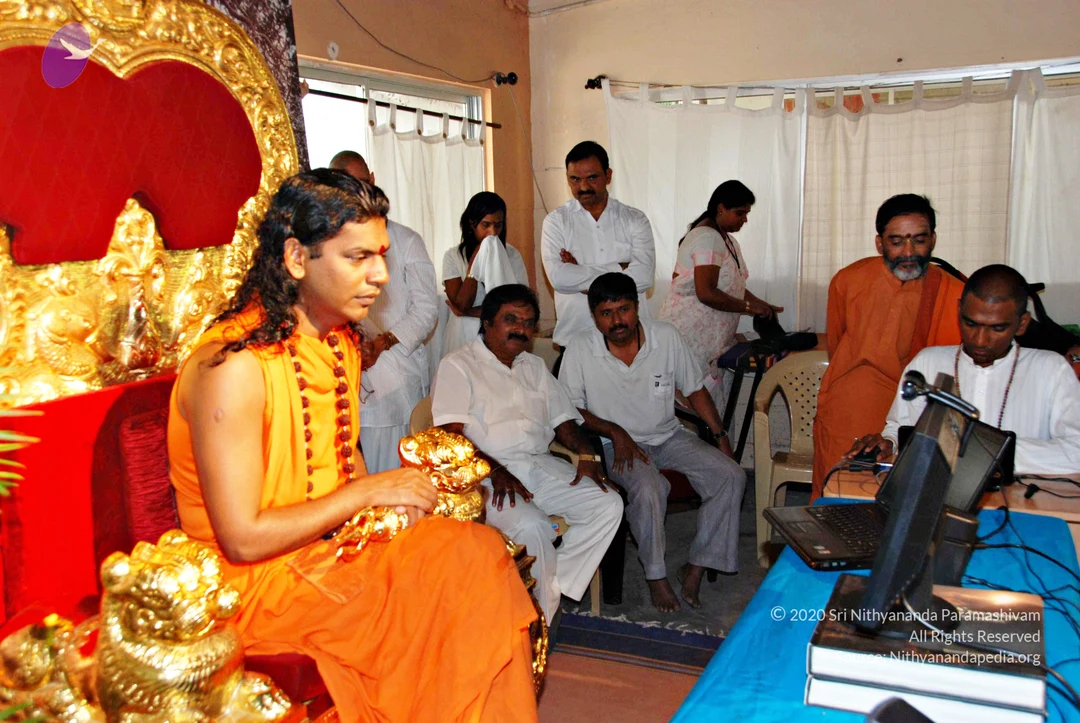
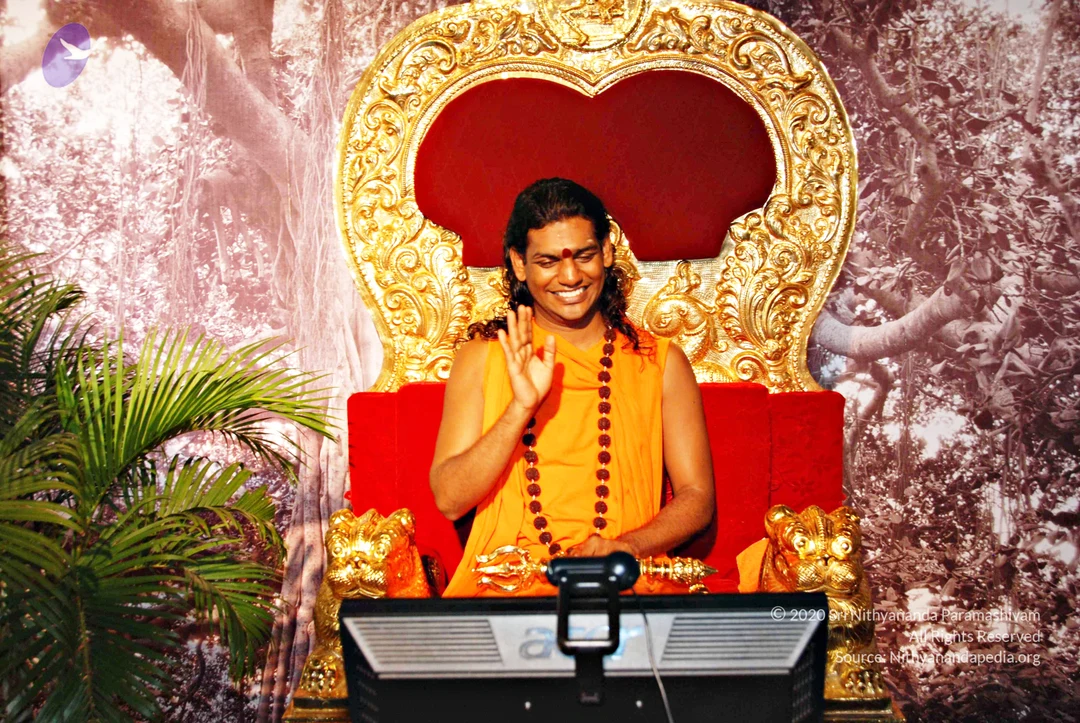
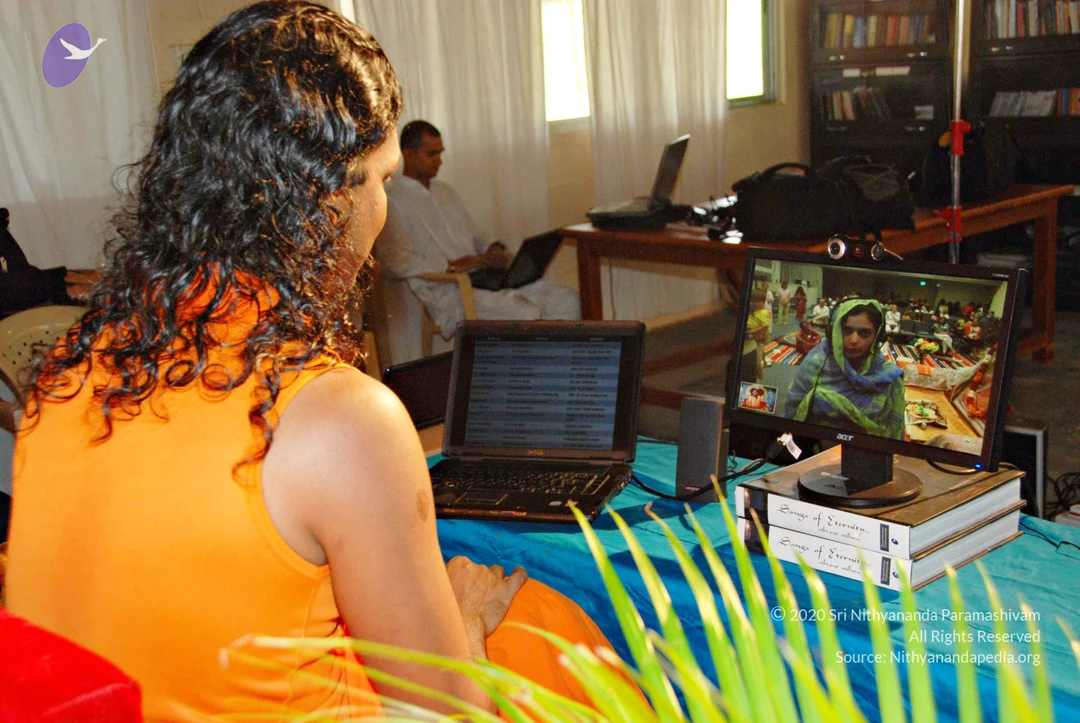
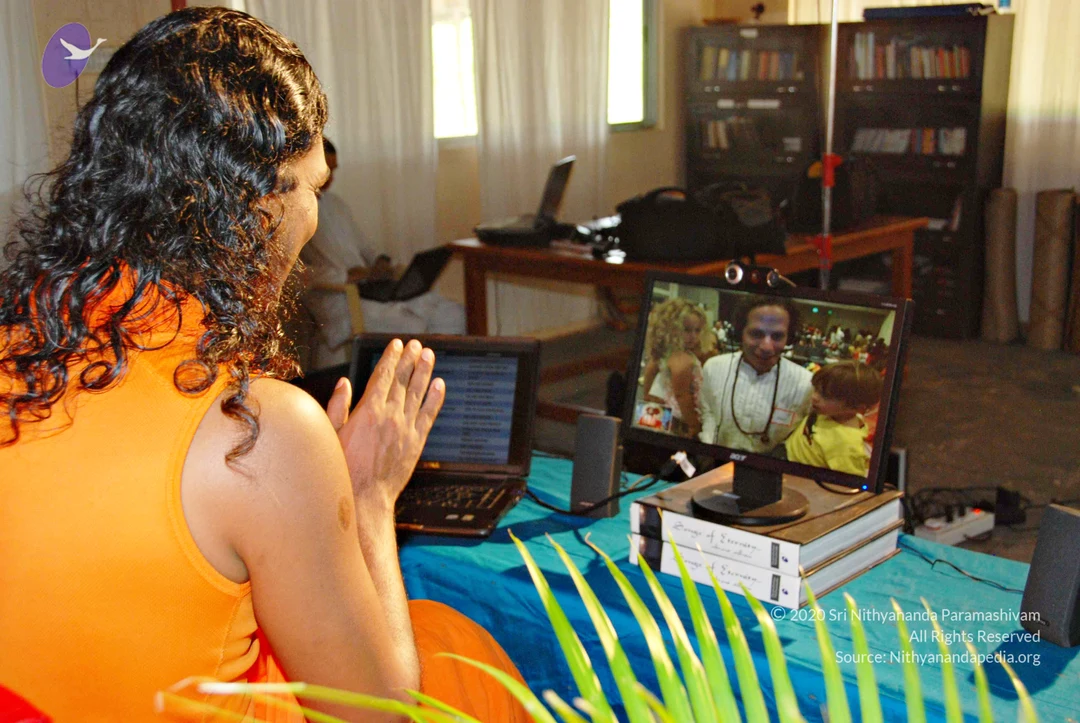
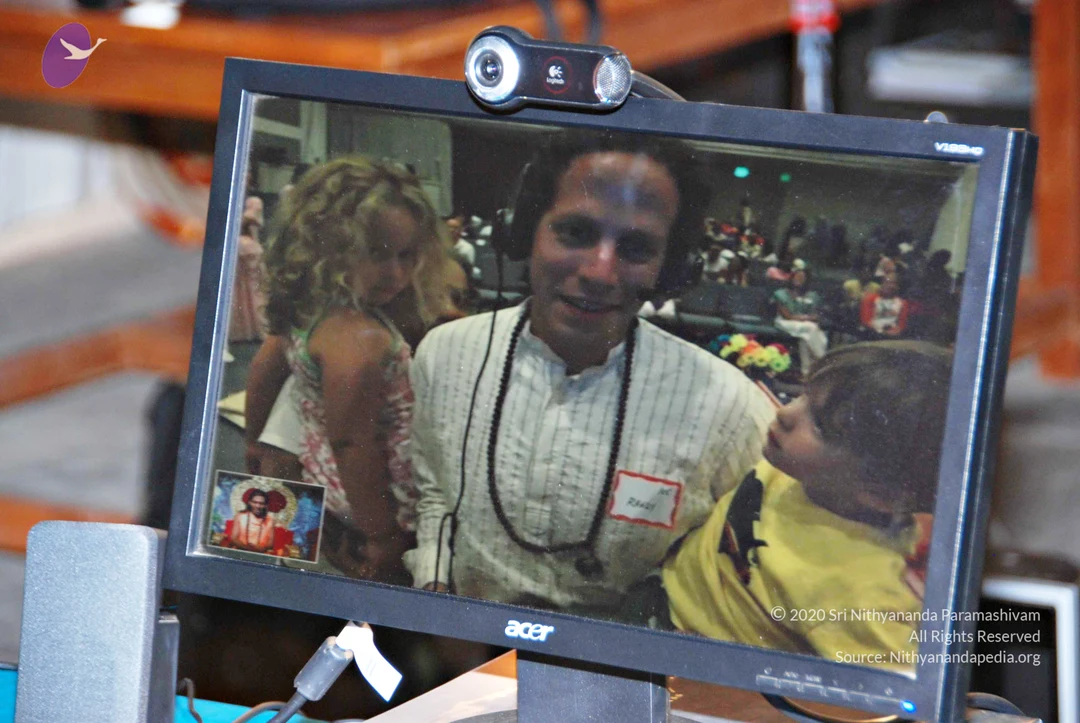
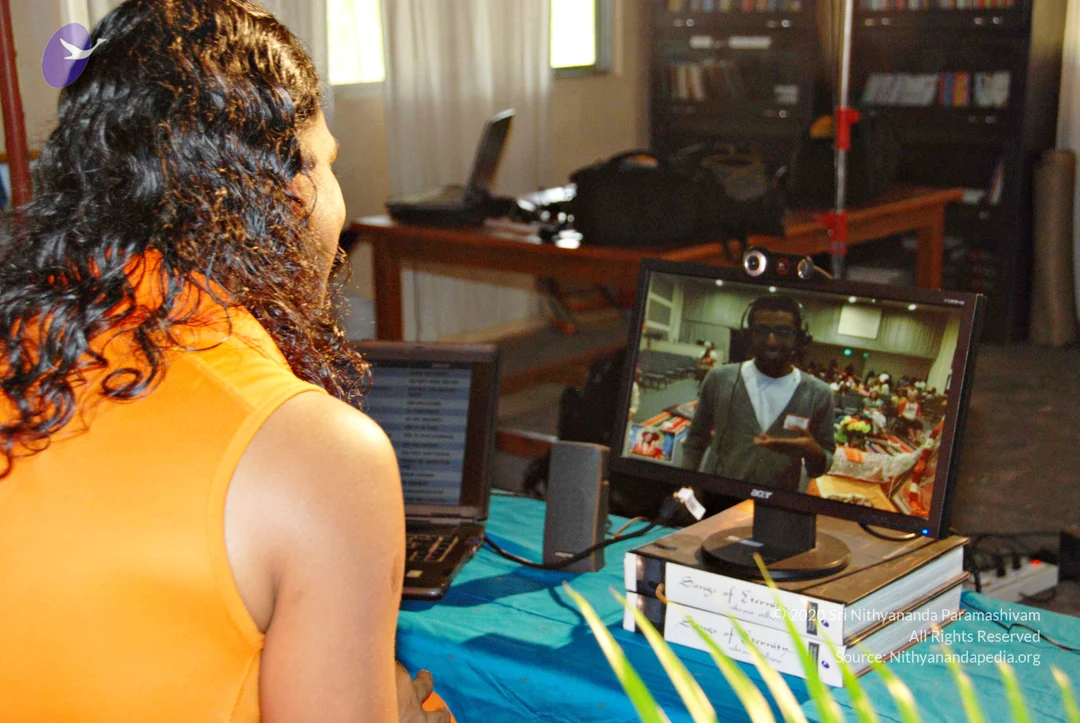
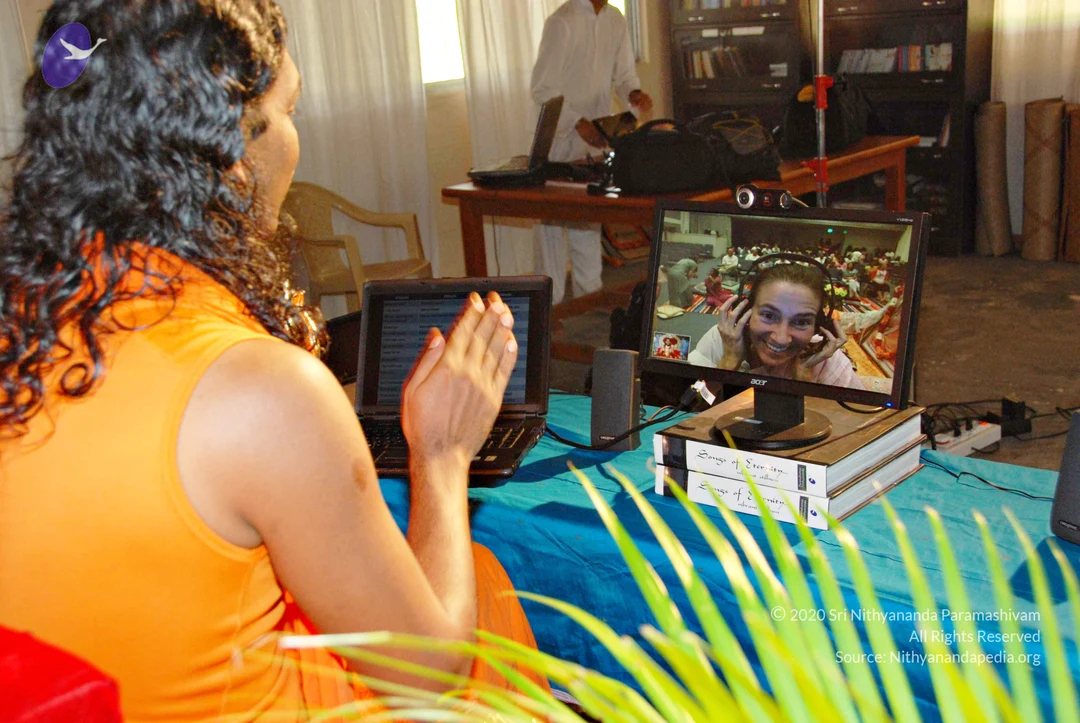
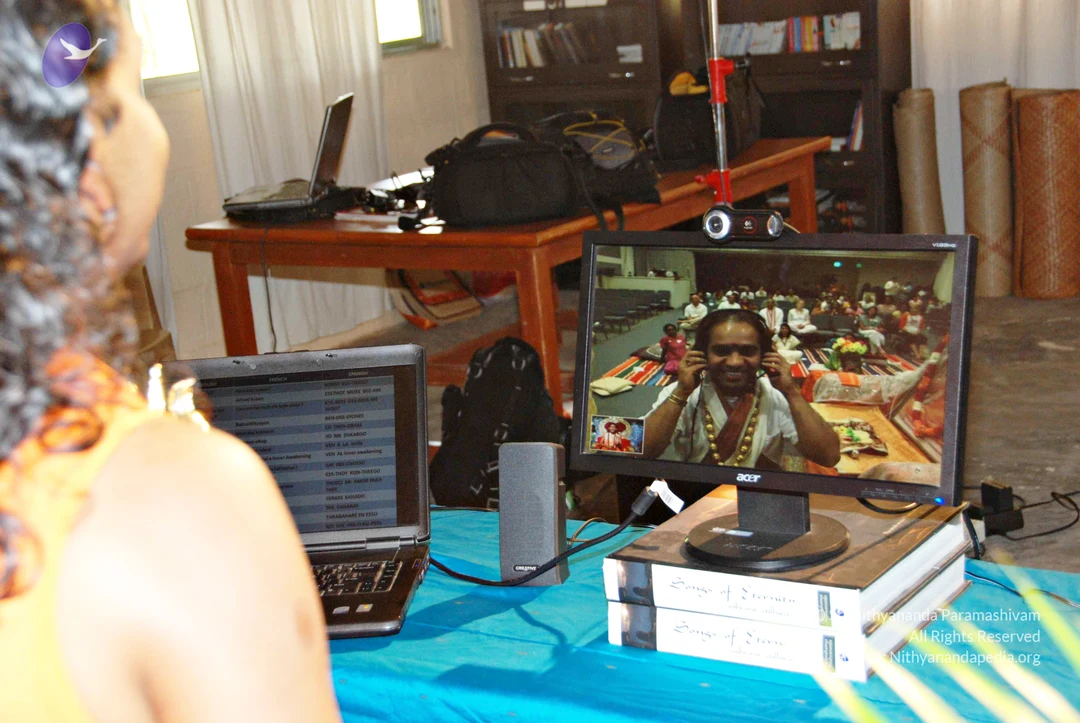
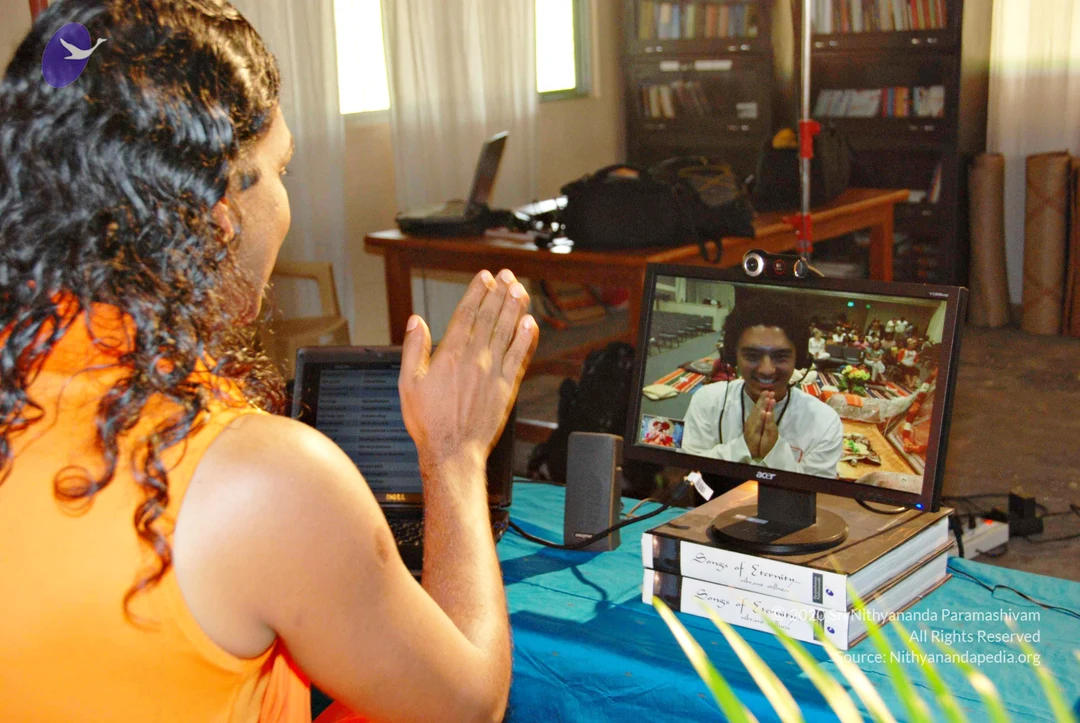
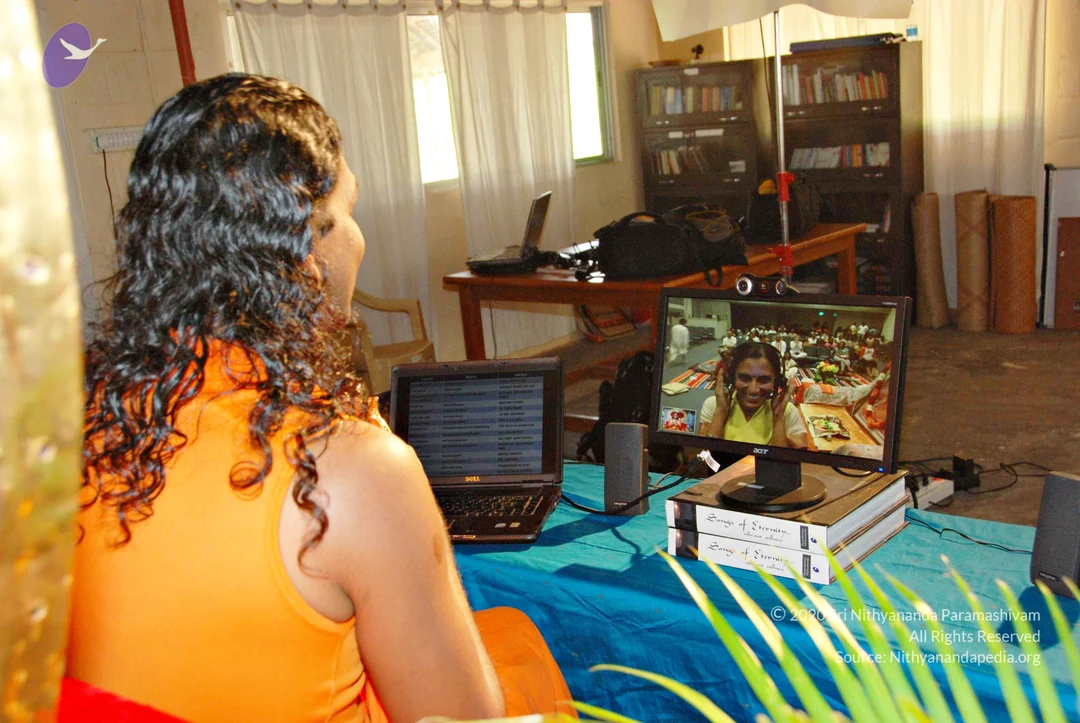
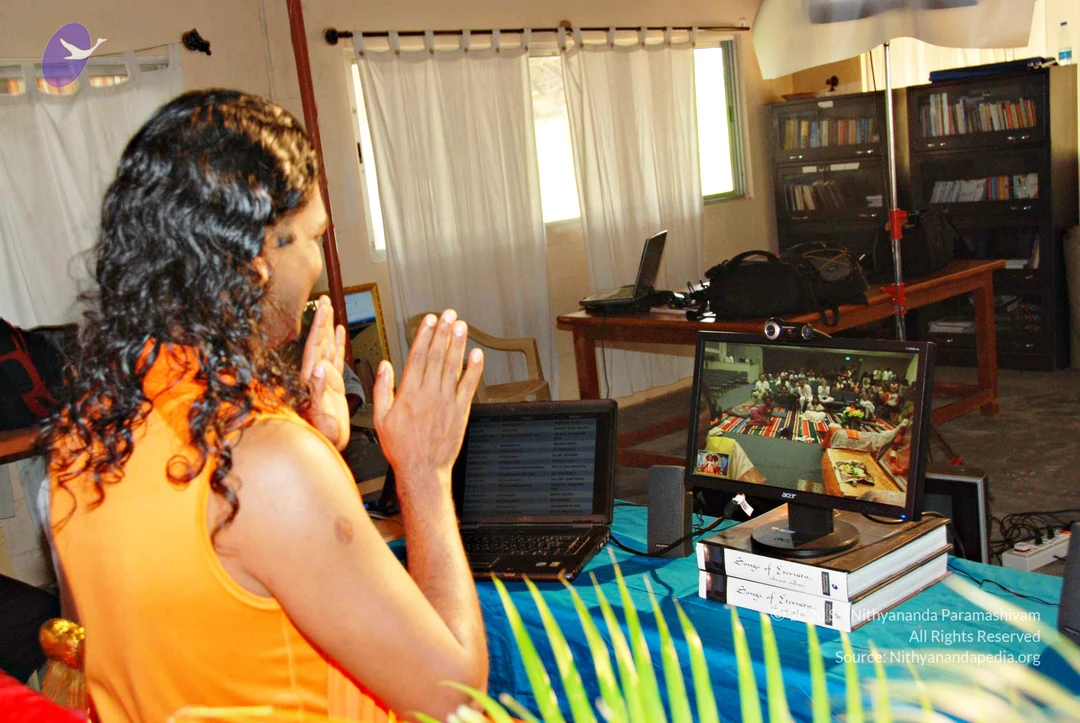
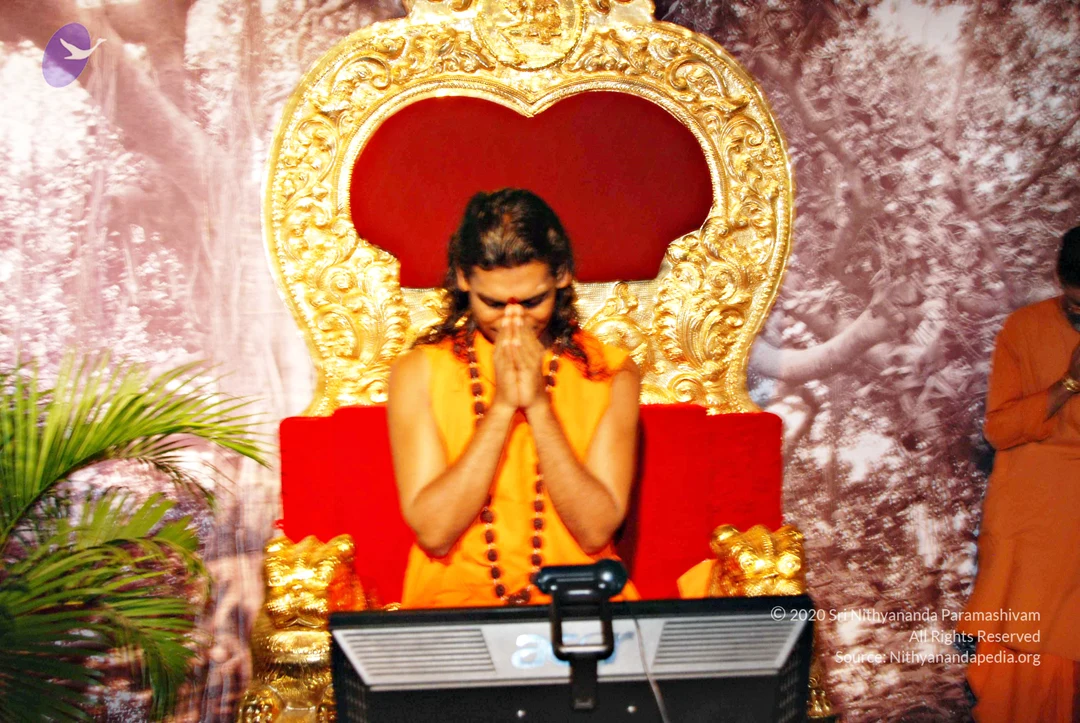
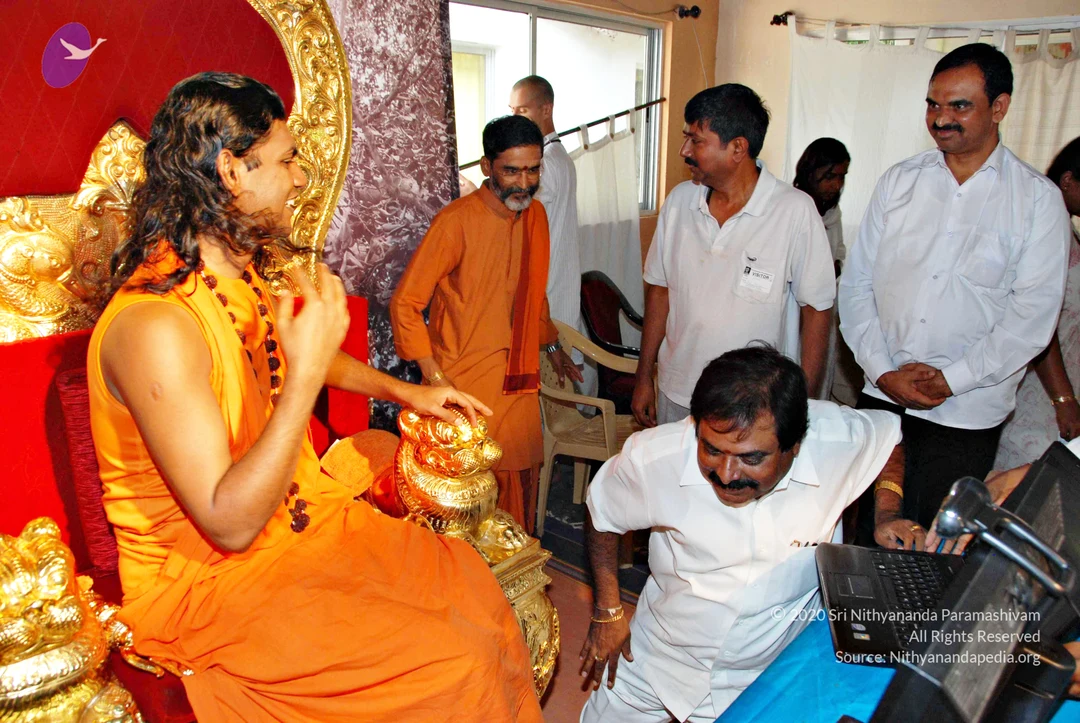
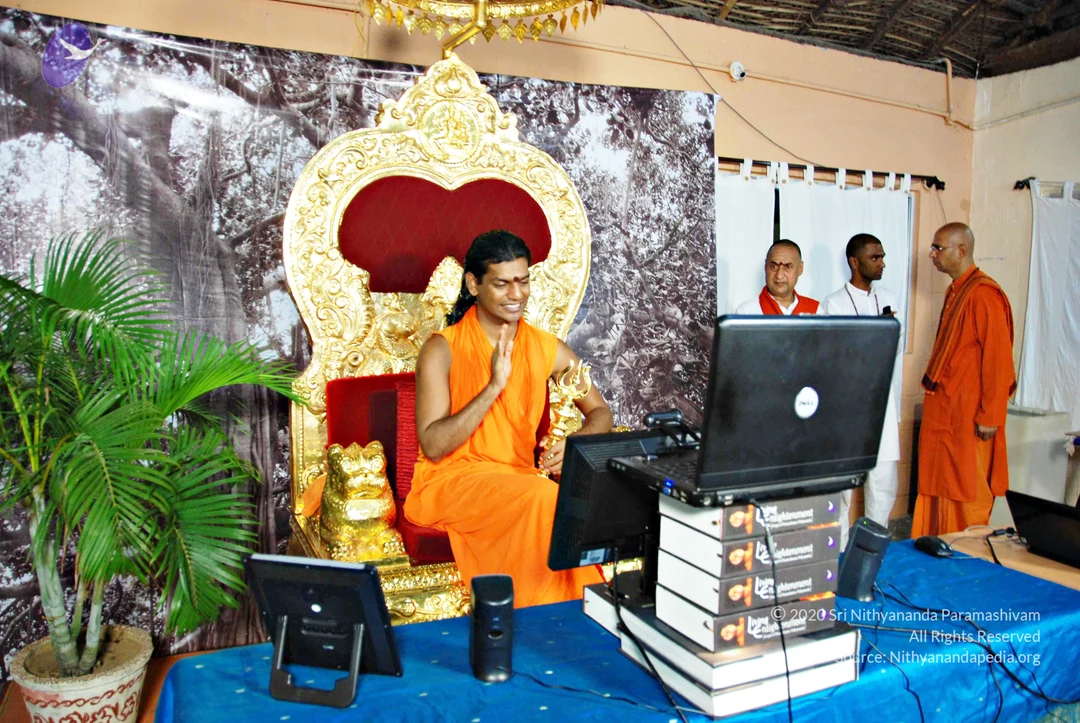
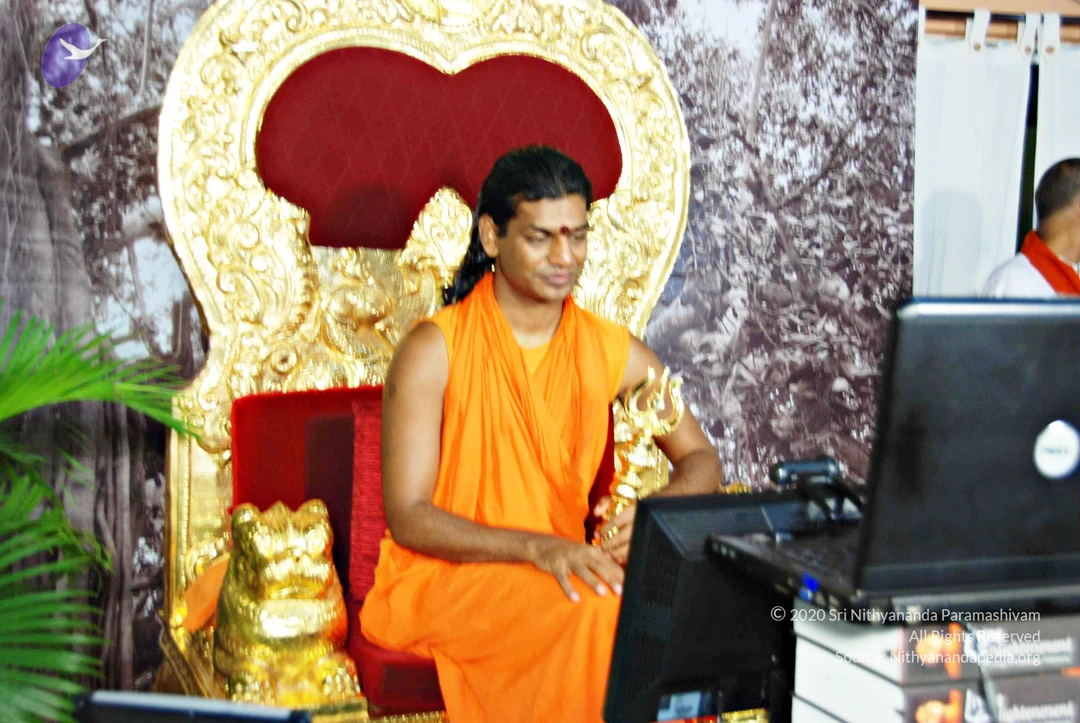
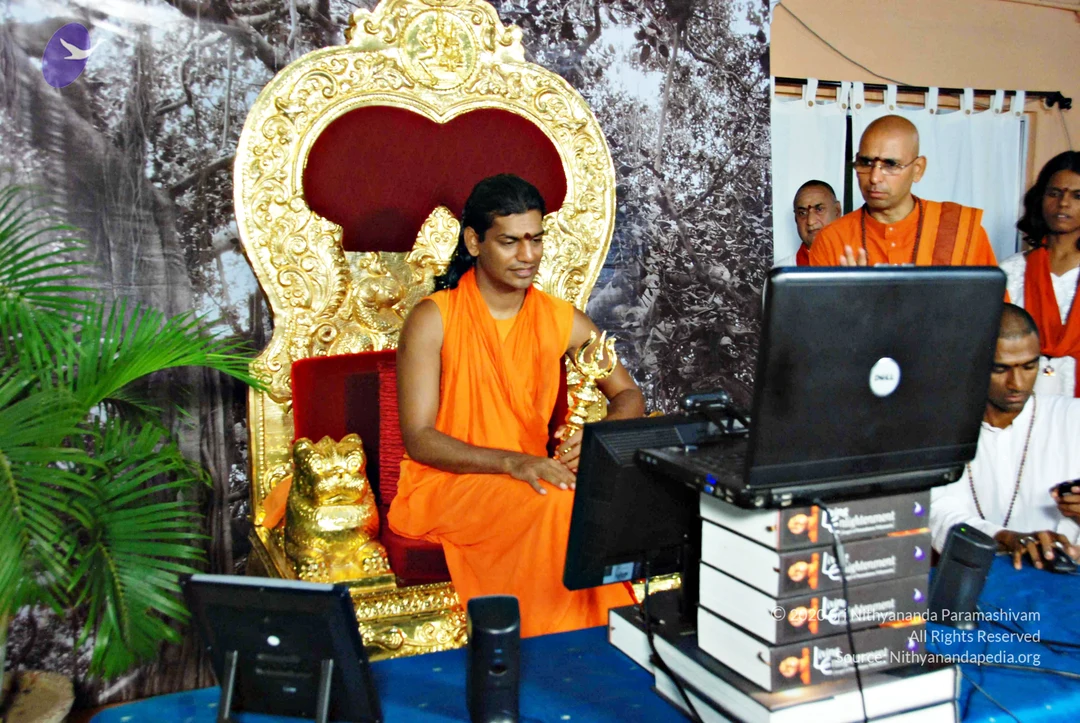
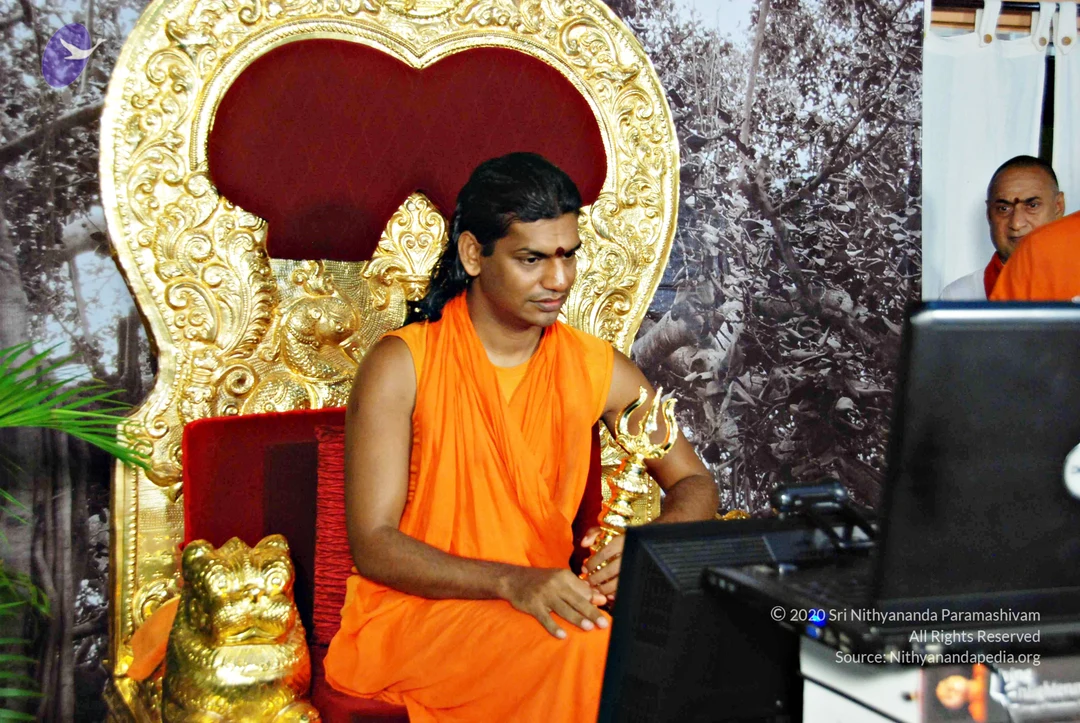
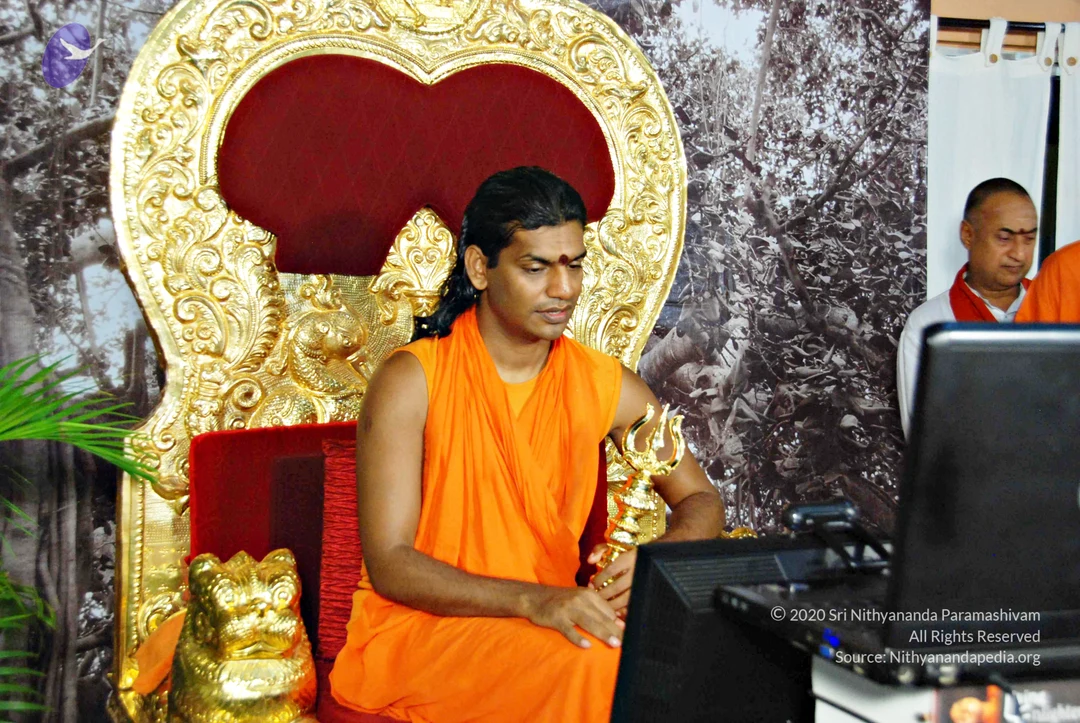
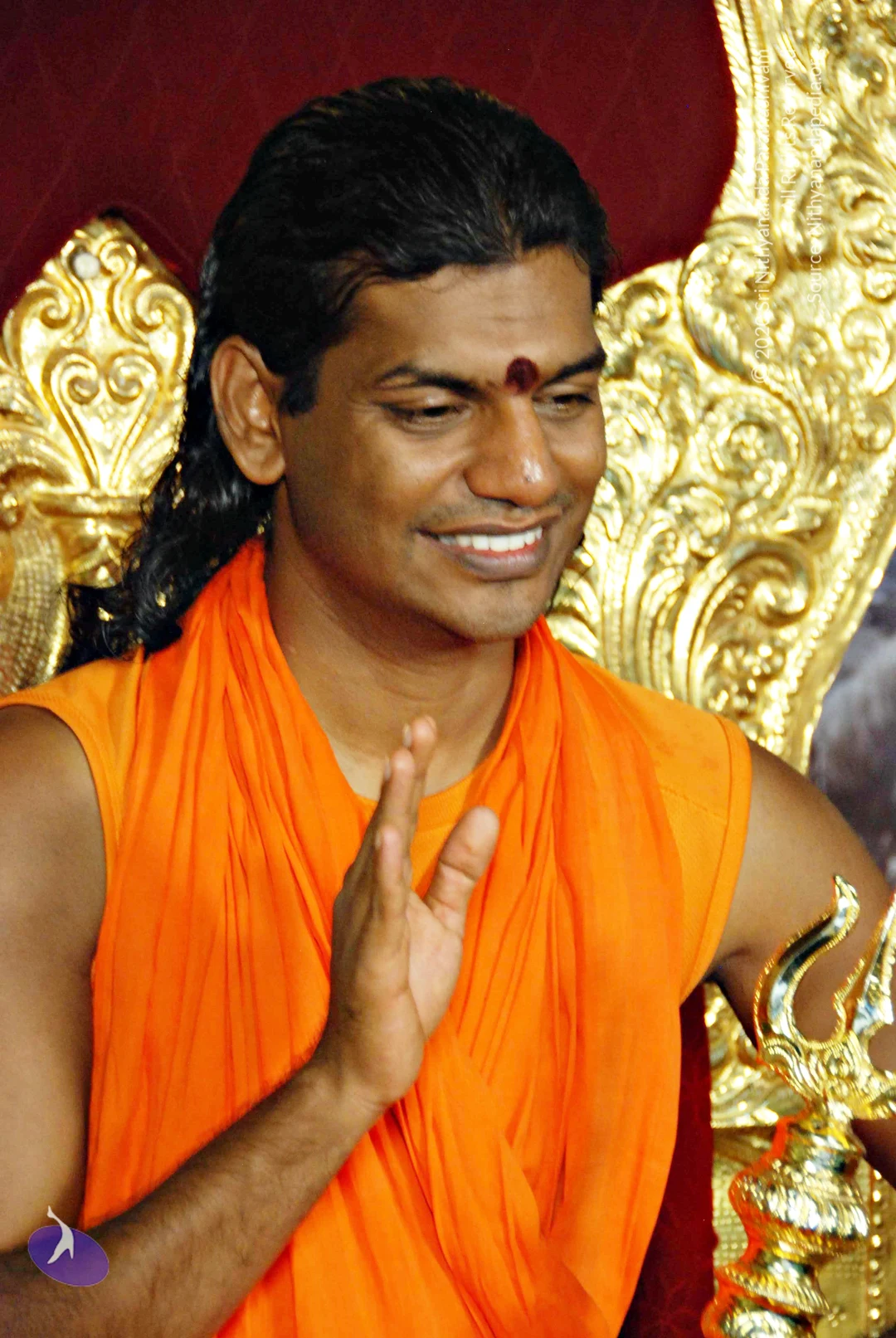
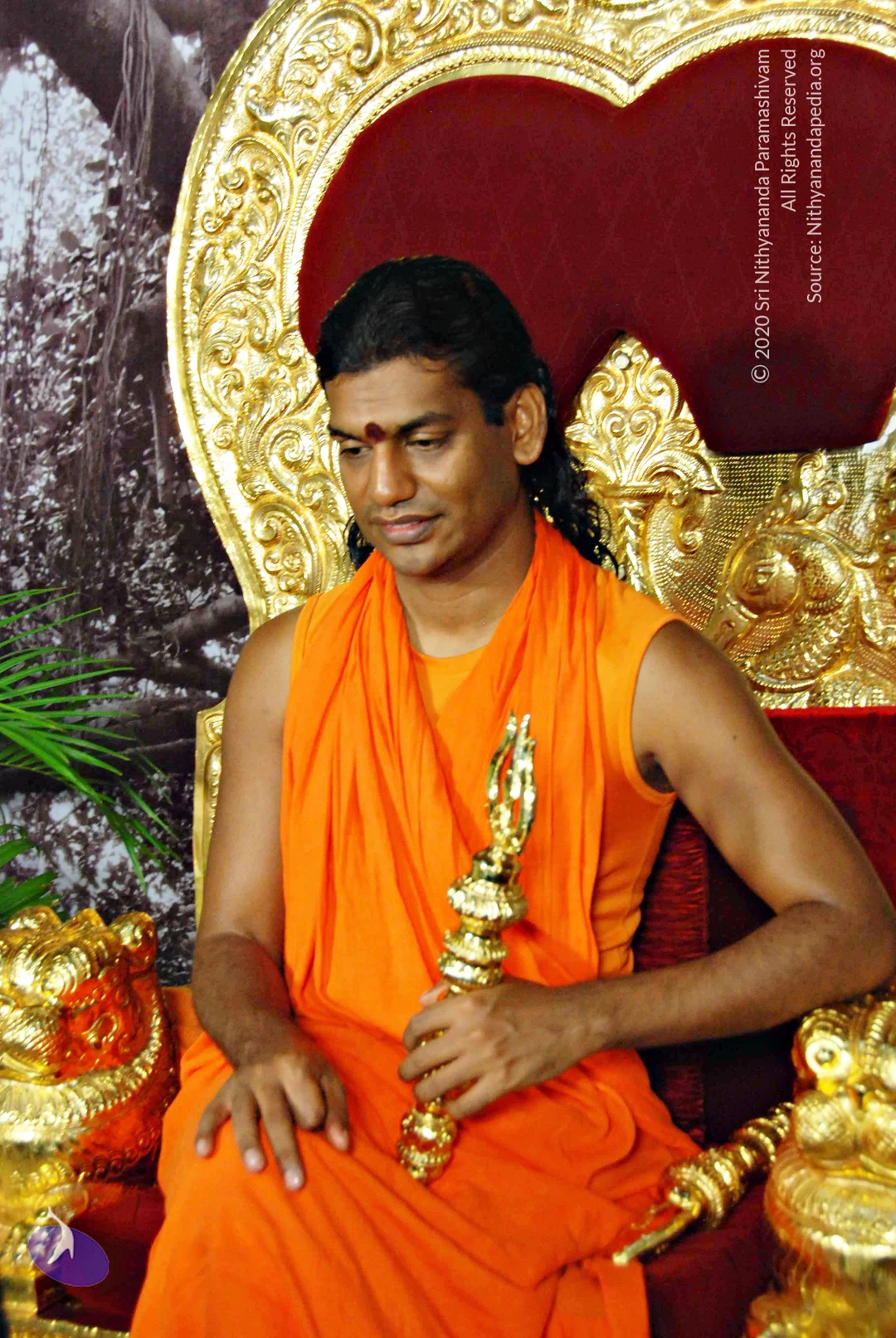
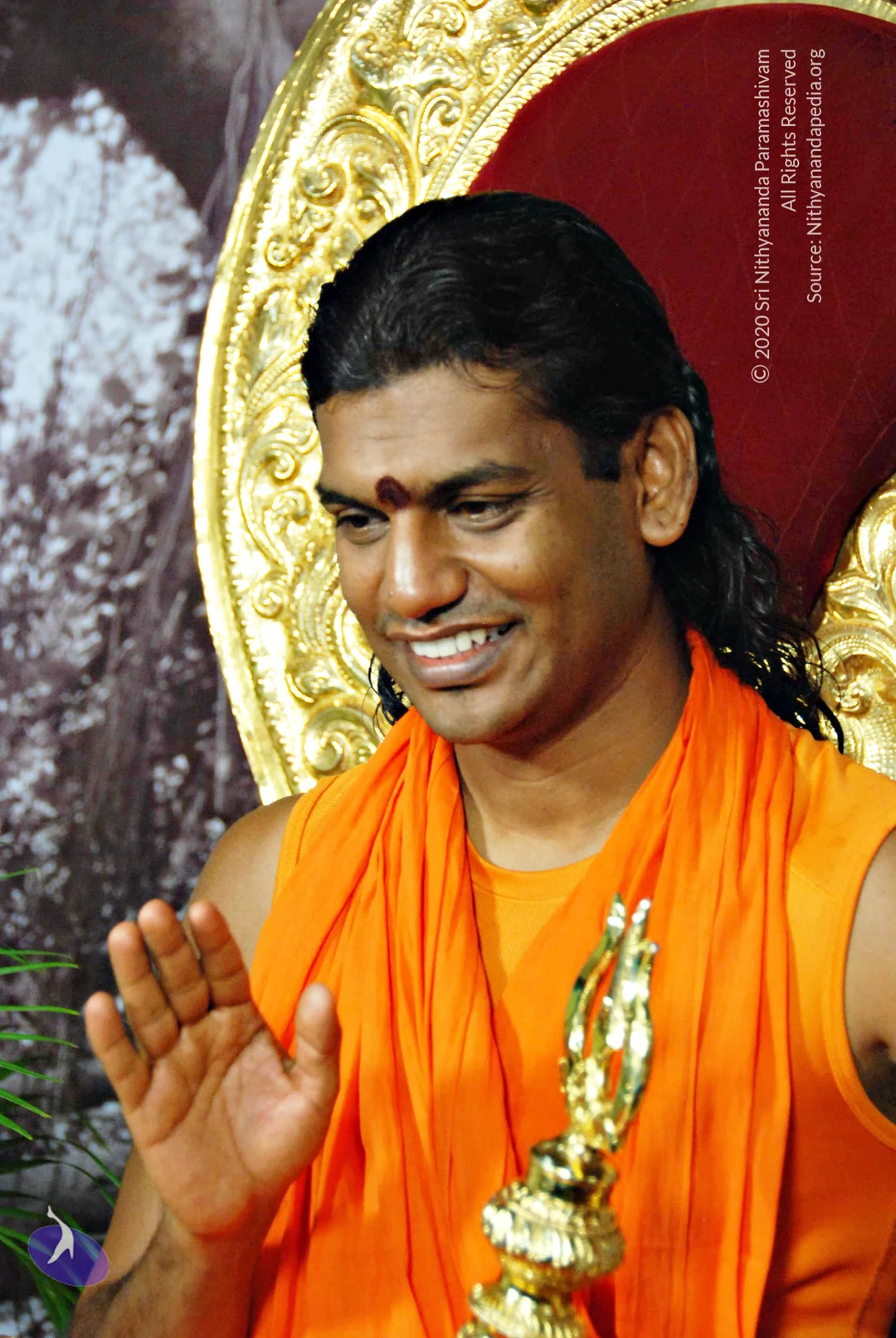
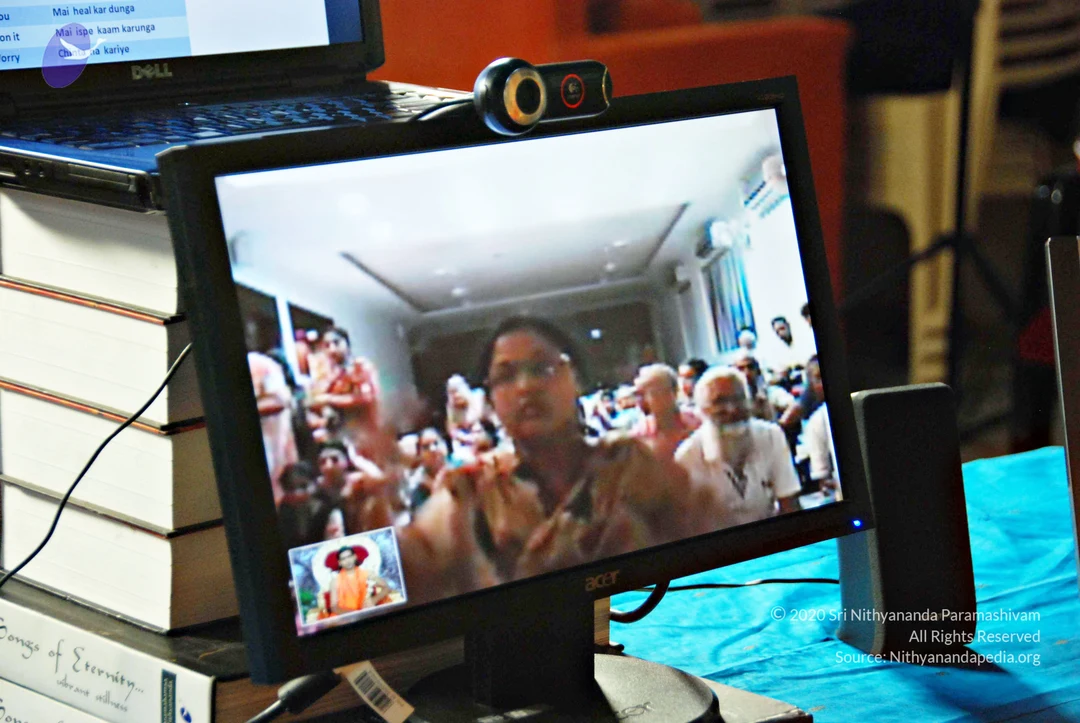
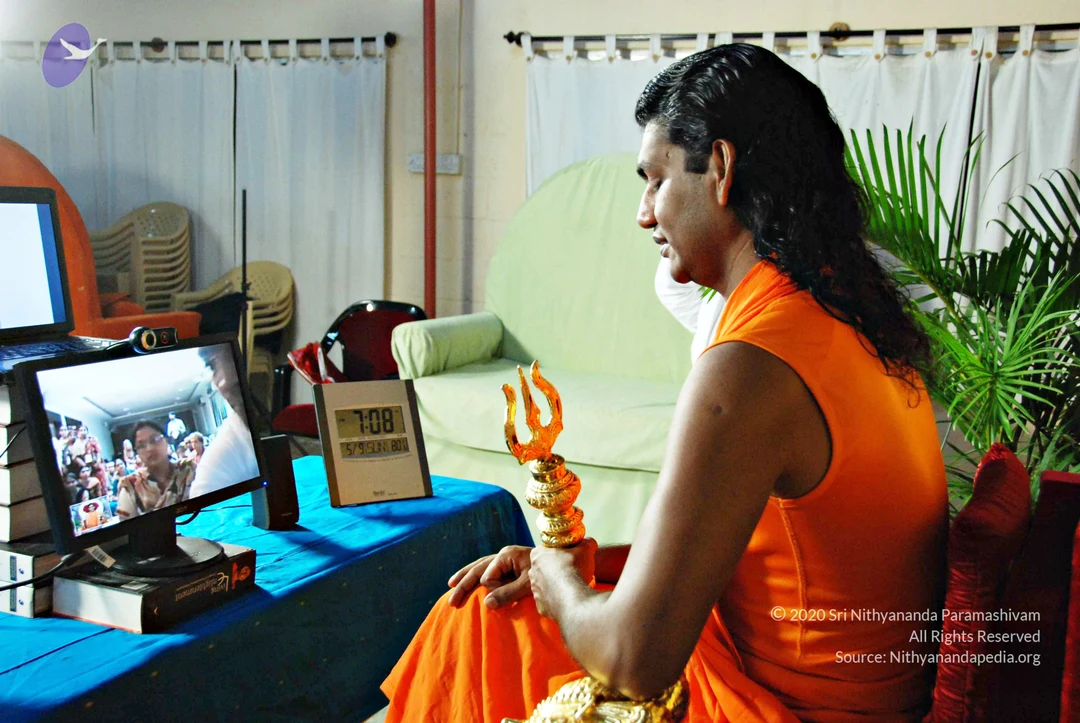
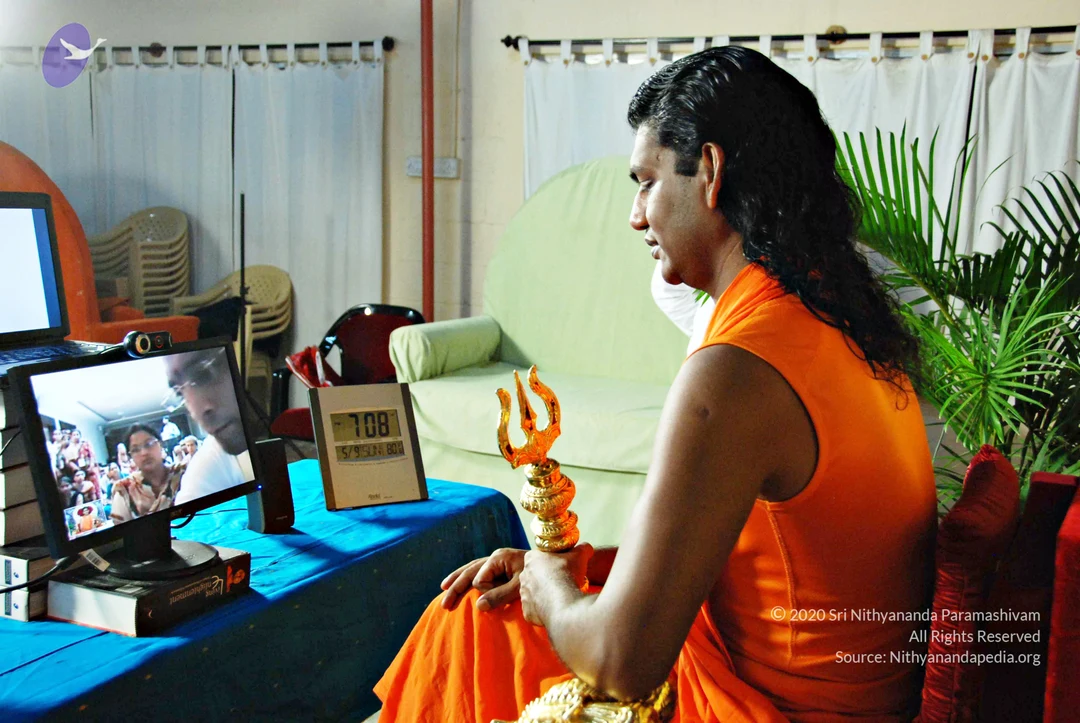
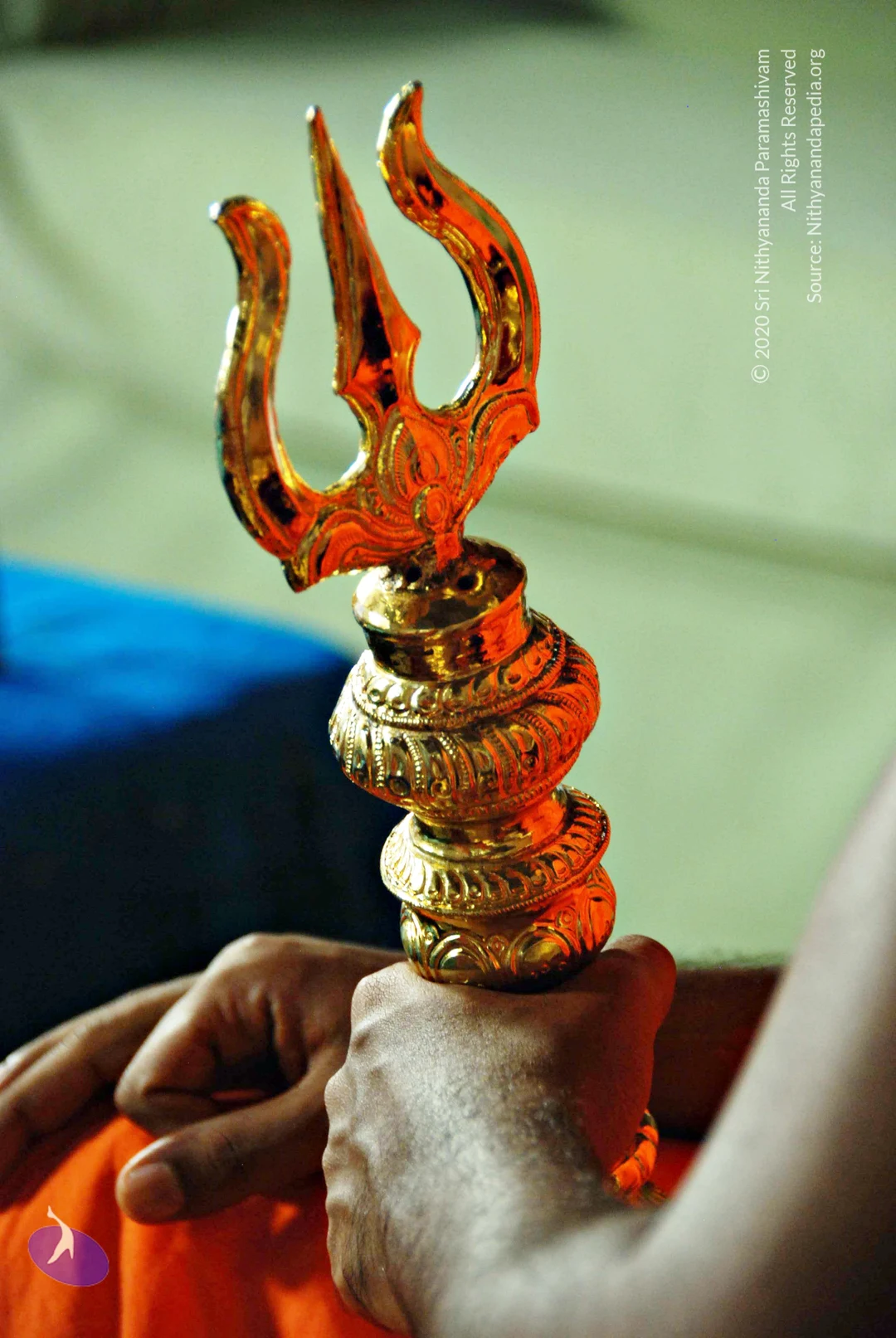
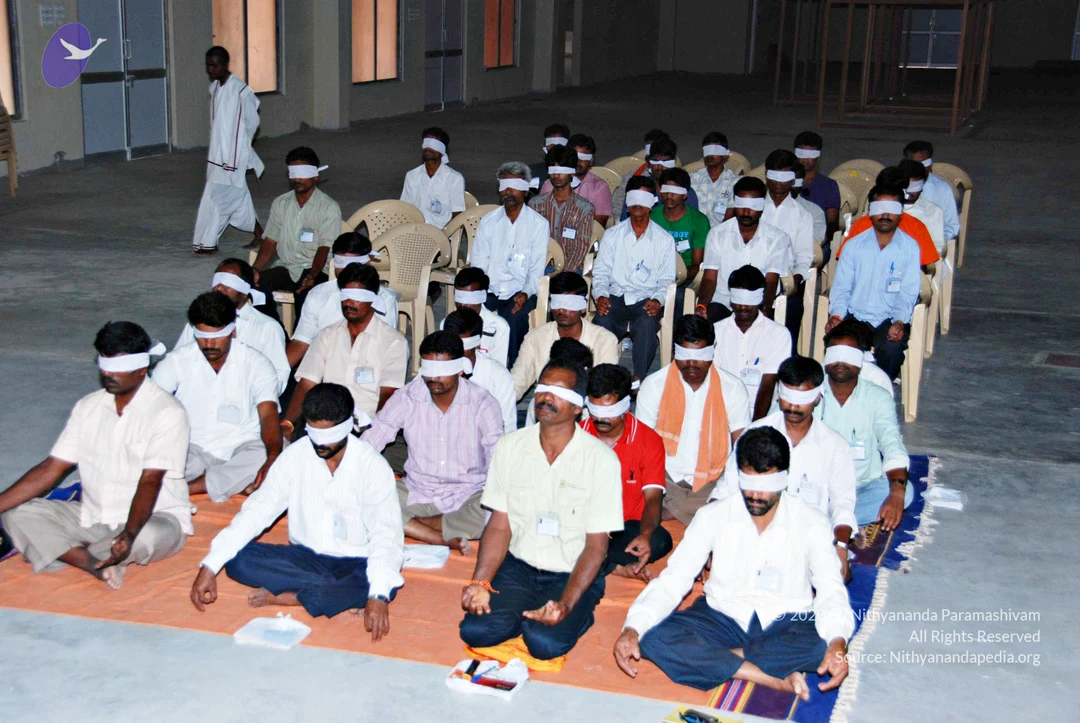
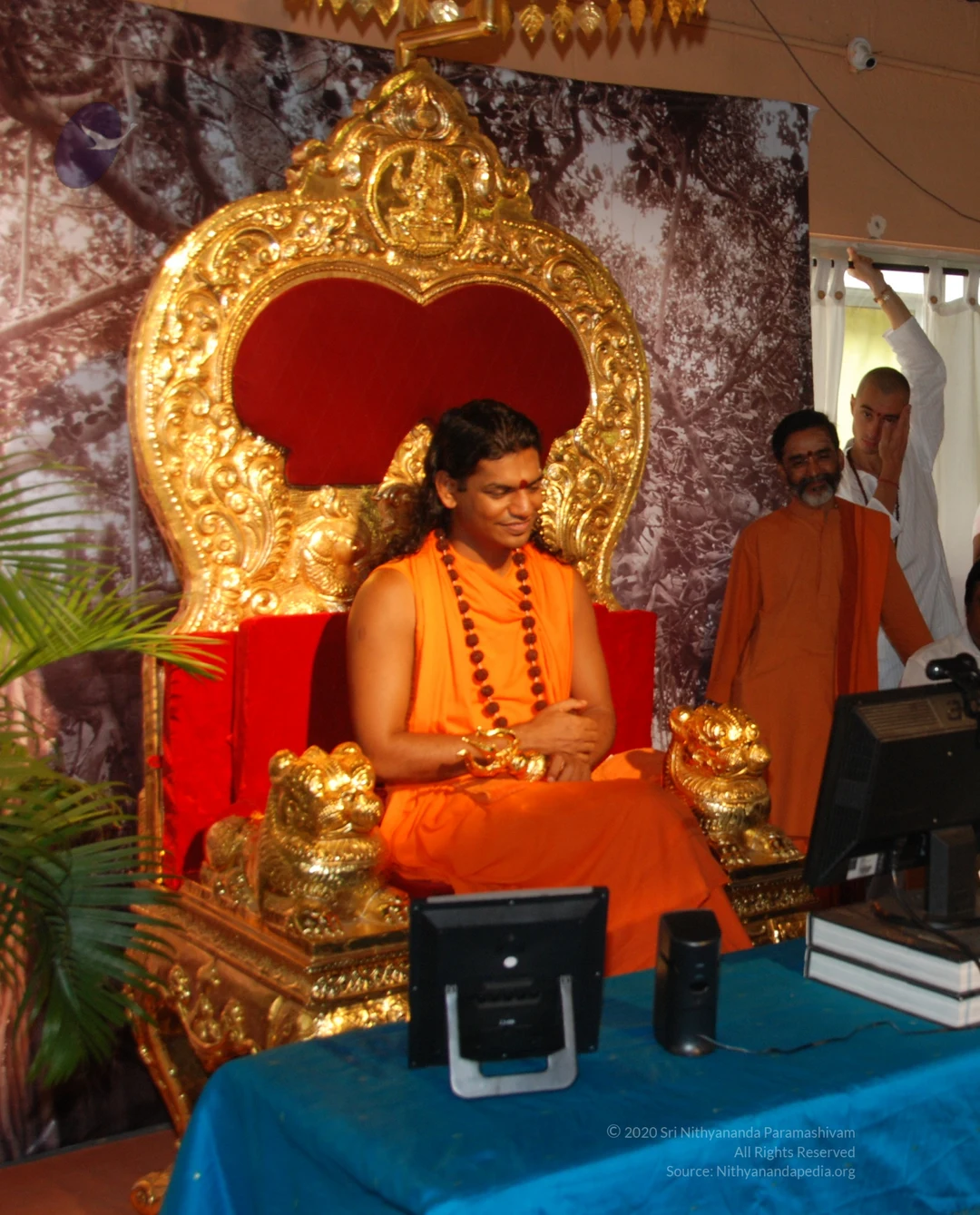
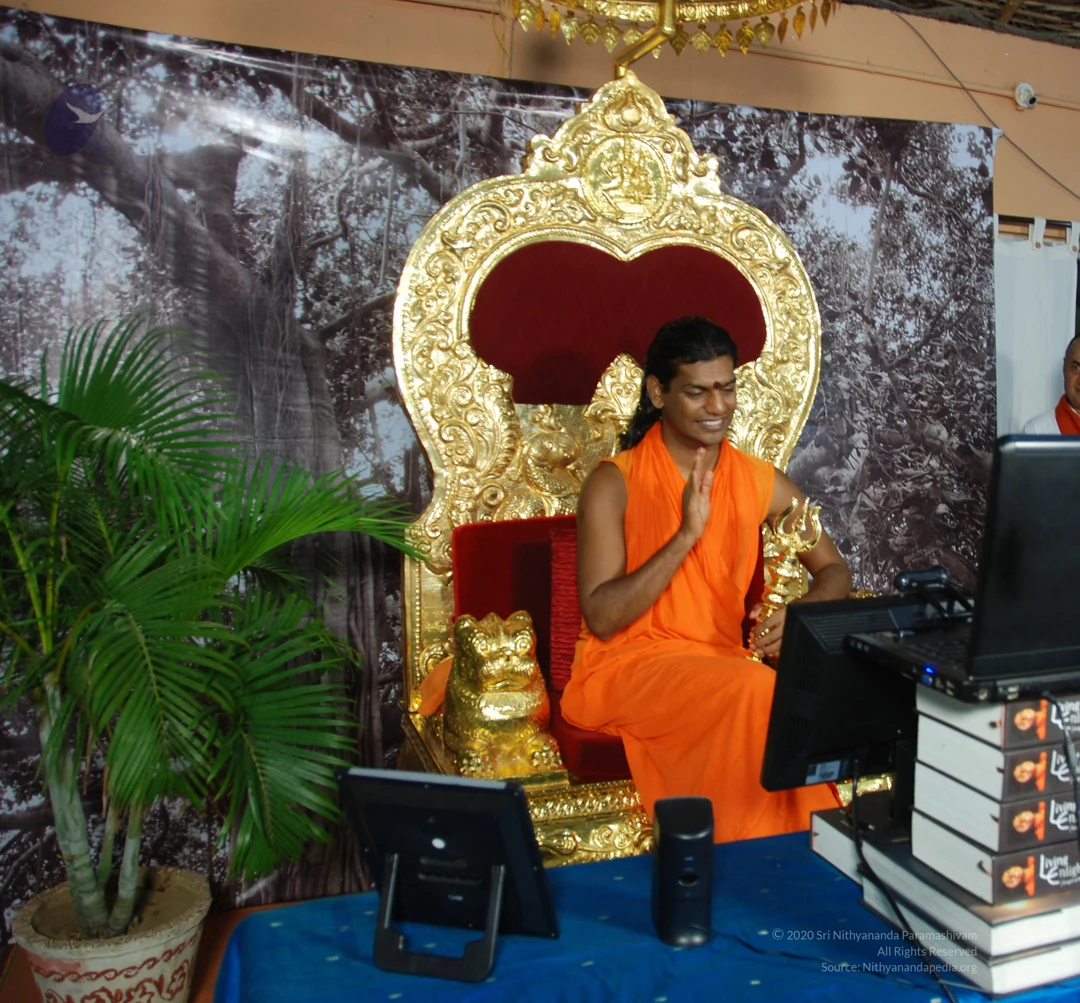
A seated figure in saffron-orange robes with a rudraksha mala and red-and-white bindi sits smiling on an ornate gold-and-red throne with carved lion-like armrests, in front of a backdrop of a banyan-like tree photograph. A computer monitor and a blue-draped table with books are in front of the throne, and a potted palm stands to the left. To the right, a man with a grey beard in saffron robes stands beside a bald man in white with a mala, and a seated man in a white shirt operates a laptop. An ornate gold canopy hangs above. a person: the seated figure has long swept-back hair, saffron robes and a rudraksha mala, and sits on a throne, matching the page's reference to a morning message.A photo of a recording or broadcast setup in a plain room. A figure with long swept-back hair, an orange saffron robe and a rudraksha mala sits on a large ornate gold throne with a red cushioned back, flanked by golden lion figures, in front of a forest-tree backdrop. A bald man in an orange robe stands beside the throne. Behind, a man in white raises a hand and two women in white stand near white curtains. A blue-draped table in the foreground holds a monitor, a laptop and a speaker. Seated men in white shirts operate the equipment, and a man in white with a mala stands at the right edge.A man seated on an ornate gold-and-red throne waves his right hand in greeting while smiling. He wears an orange-saffron robe, a long necklace of dark rudraksha beads, and a red tilak on his forehead, and holds a golden sceptre-like staff across his lap. Golden lion-head armrests flank the throne. Behind him hangs a large pale photographic backdrop of a tree, and green palm fronds stand at left beside a dark monitor or stand.A man seated on an ornate golden throne with red cushions, smiling broadly. He wears an orange saffron robe draped over one shoulder, a long rudraksha mala necklace, a red bindi on his forehead, and has long swept-back dark hair. His hands rest clasped in his lap. Golden lion-head armrests flank him, a large dark monitor stands at the left edge, and green palm fronds and a white curtain with a silver-grey backdrop frame the scene.A photograph of a control or broadcast setup in a room with white curtains and wooden bookshelves. In the foreground, a woman with curly dark hair in an orange top sits with her back to the camera, facing a desk. On the blue tablecloth-covered table sit an open laptop displaying a list, a monitor showing a live video feed of a seated woman wearing headphones before a seated crowd, and stacked hardbound books. Behind the desk, a man in white clothing with a beaded necklace sits, and a standing woman in white with an orange shawl stands near a second wooden table with laptops and bags. A potted plant with long green leaves occupies the lower right.A photograph of a video-conference setup in a room with bookshelves and white curtains. In the foreground, a woman with curly dark hair in an orange top sits with her back to the camera, facing a monitor. The monitor shows a smiling woman wearing headphones, with a crowd visible behind her. A laptop on a blue tablecloth displays a list. Behind them, a man in white with an orange cloth sits, and another woman in white with an orange shawl stands at a wooden table with a laptop and bags. Books are stacked under the monitor, and green plants are in the foreground.
05

05-SWAMIJI-MEETING-RAMA-SENA

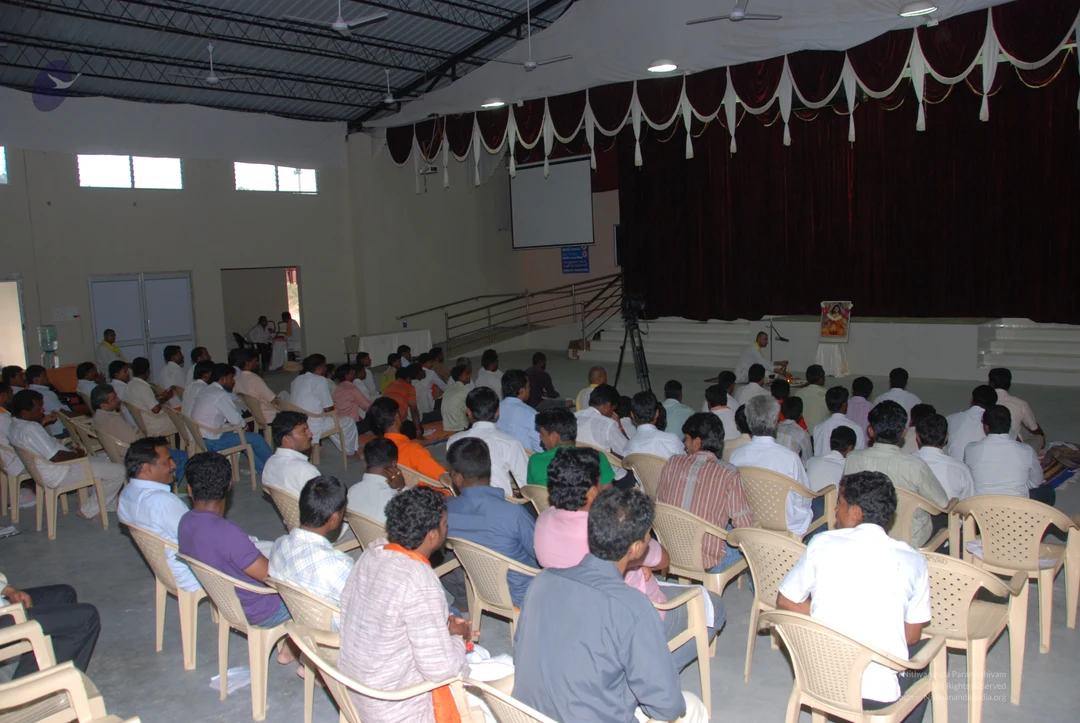
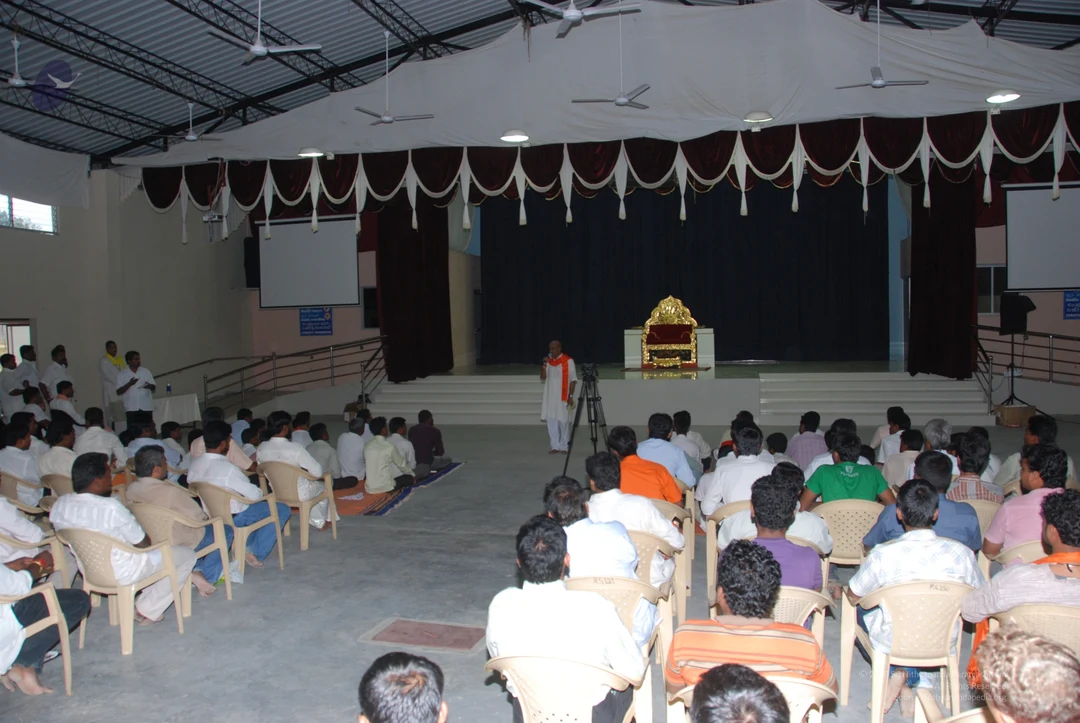
89 dated photos in previewSource gallery
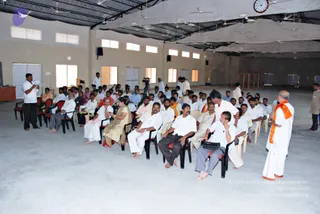
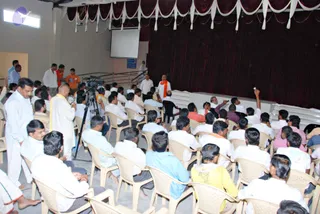
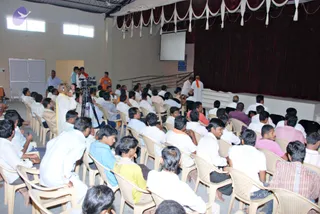
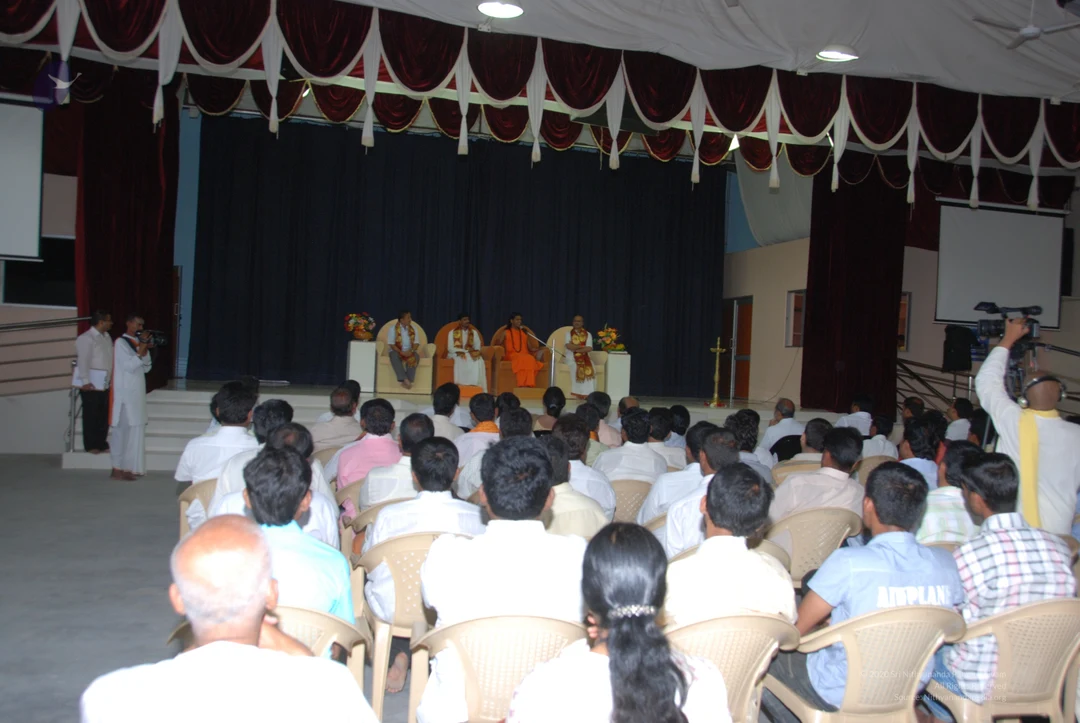
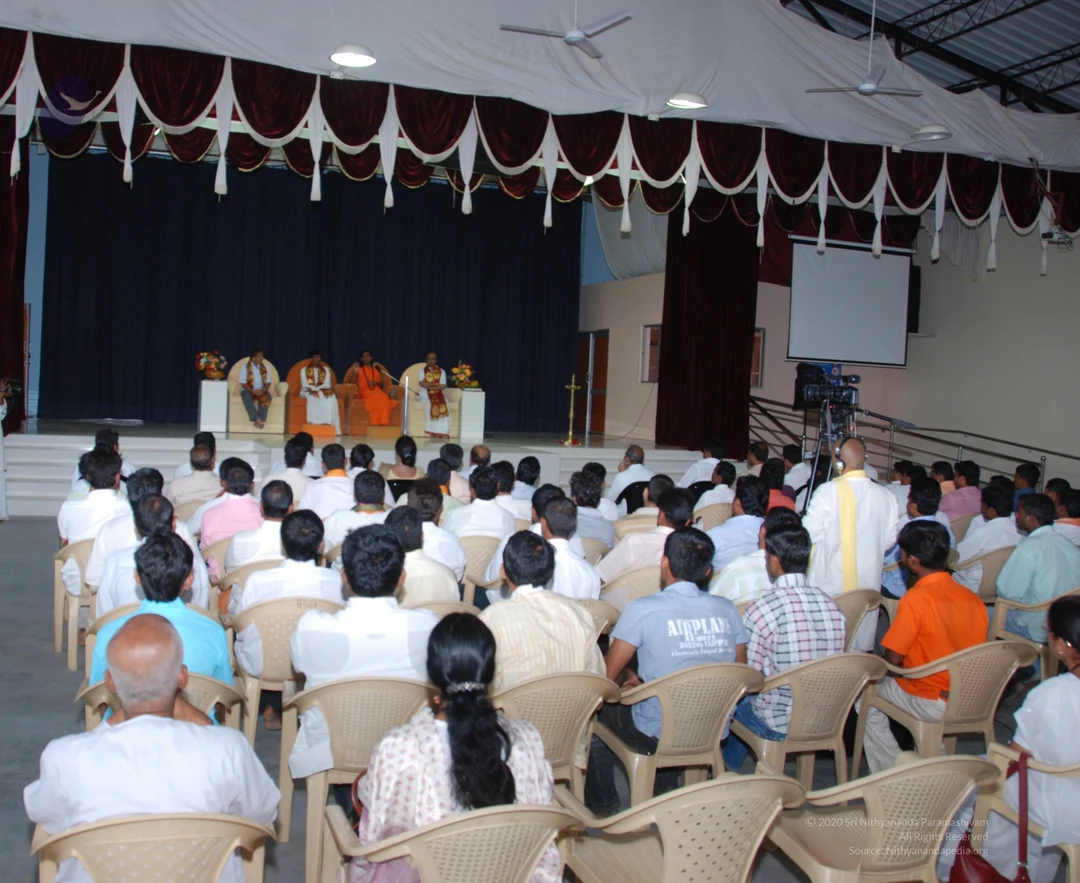
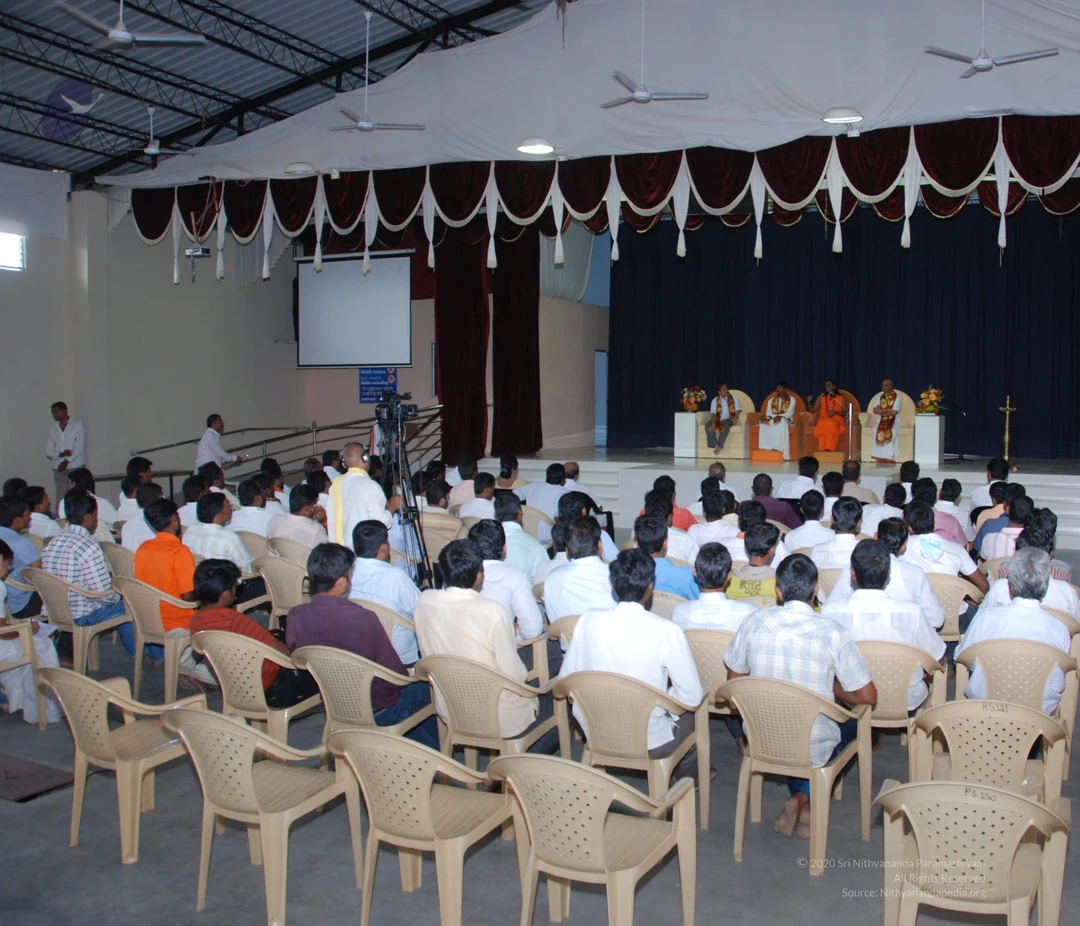
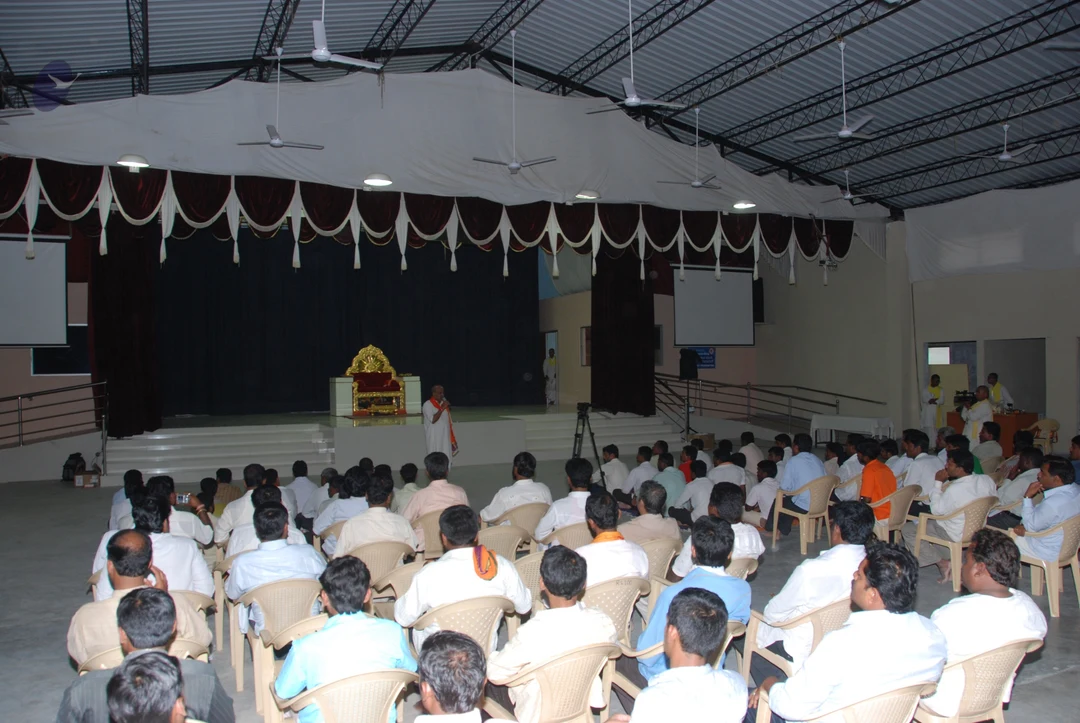
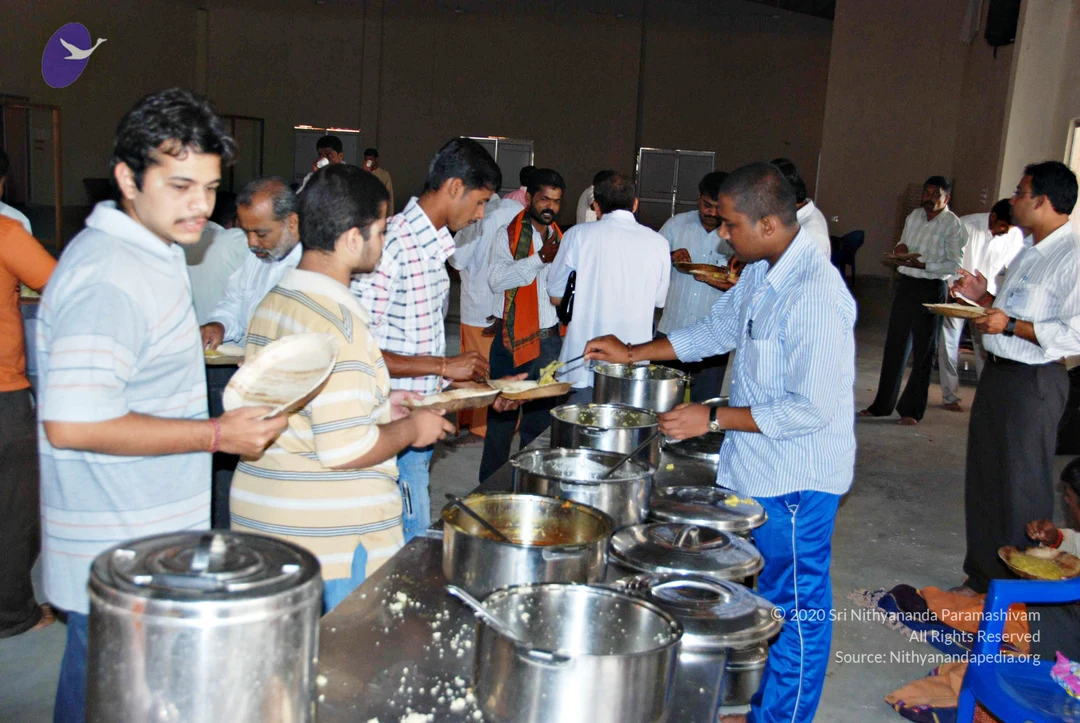
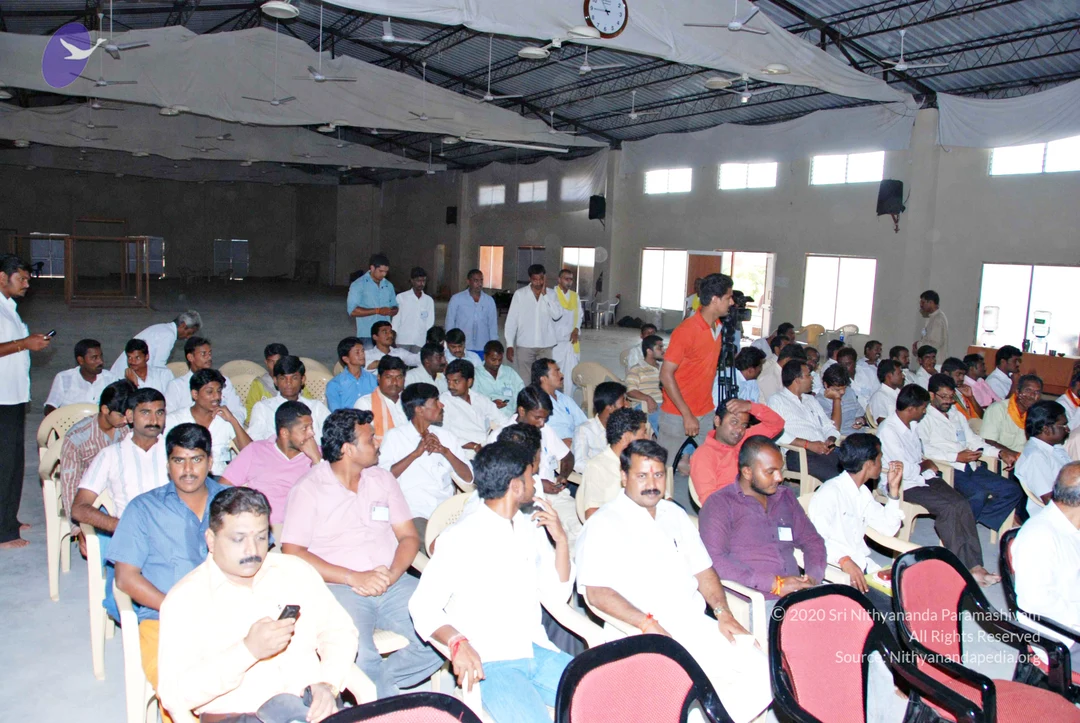
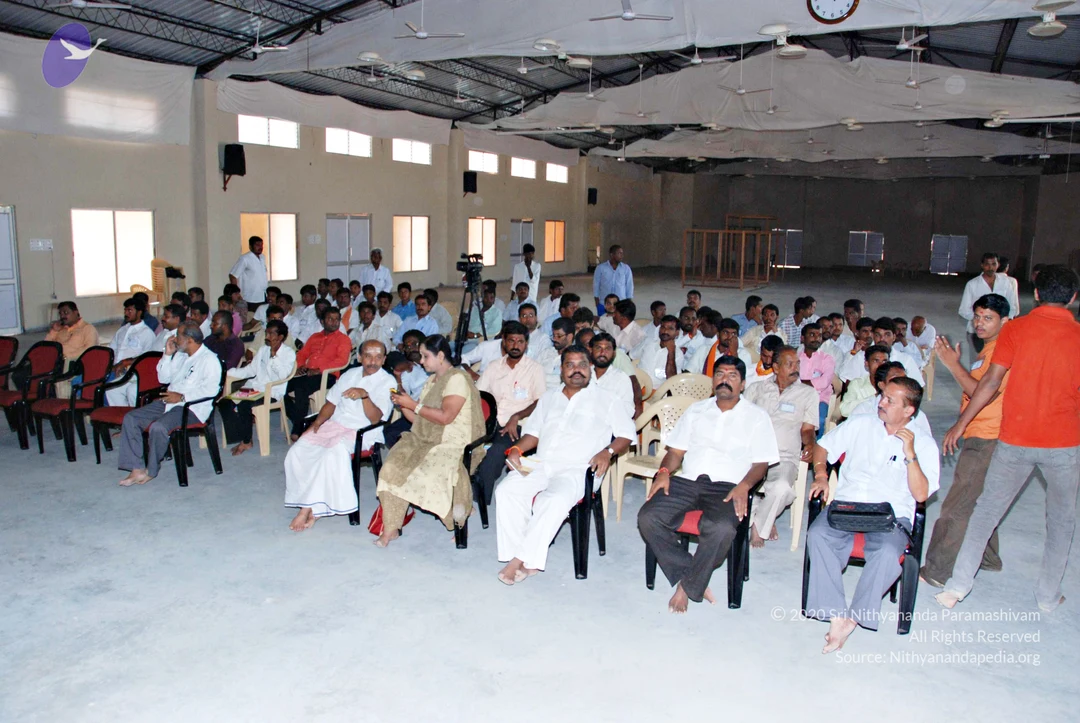
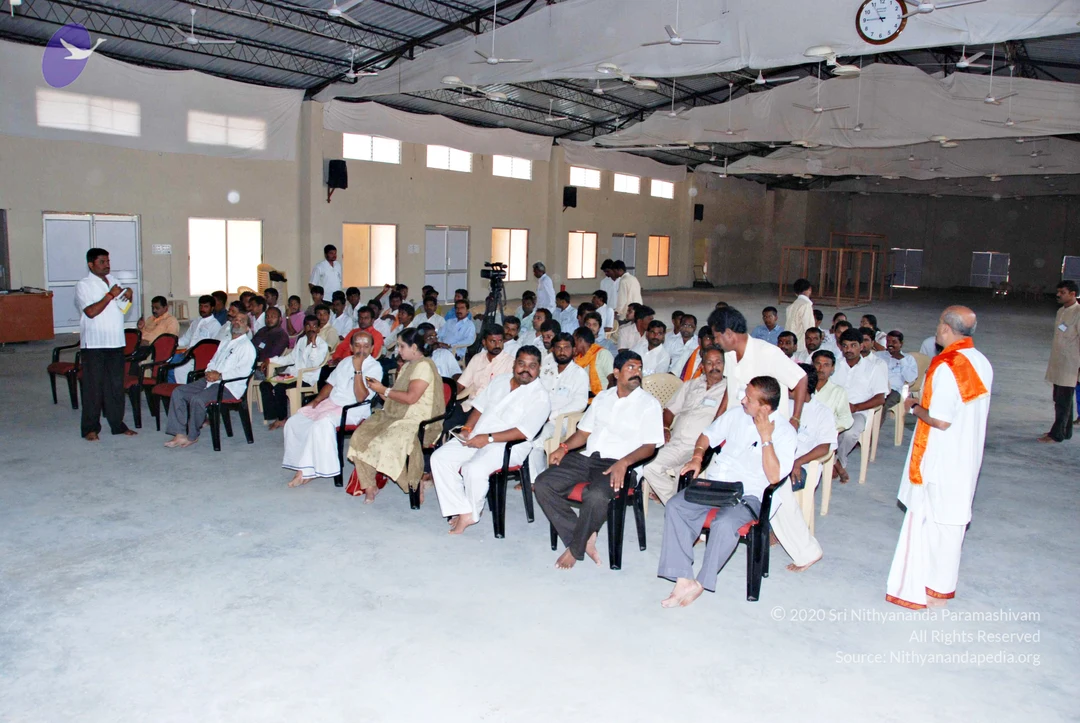
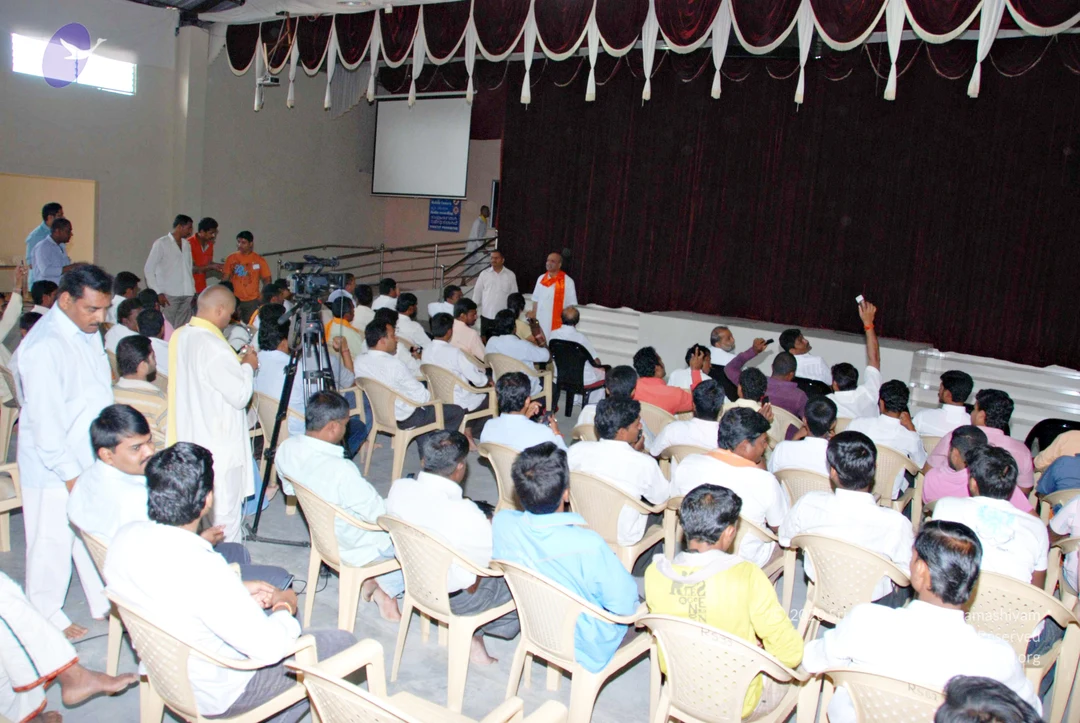
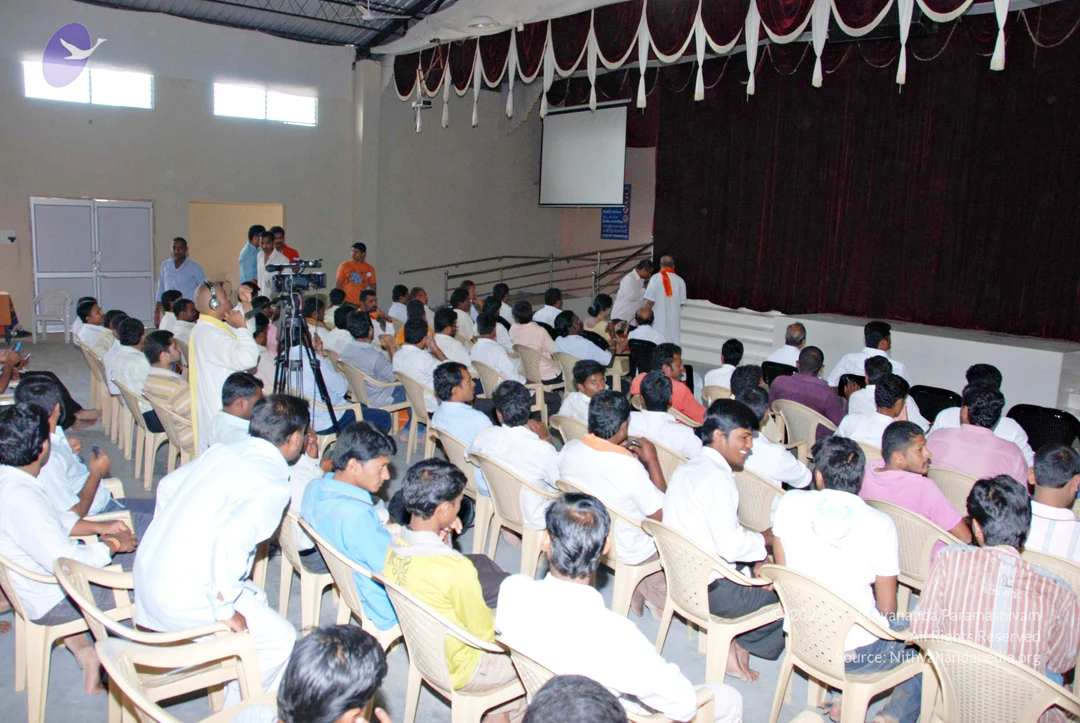
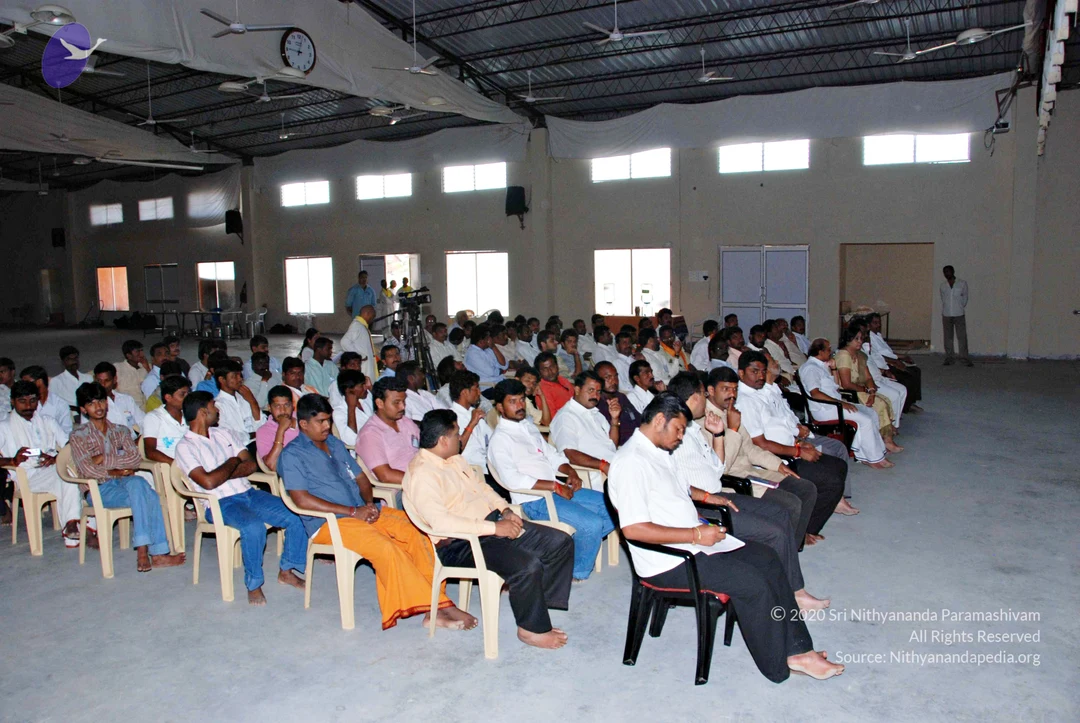
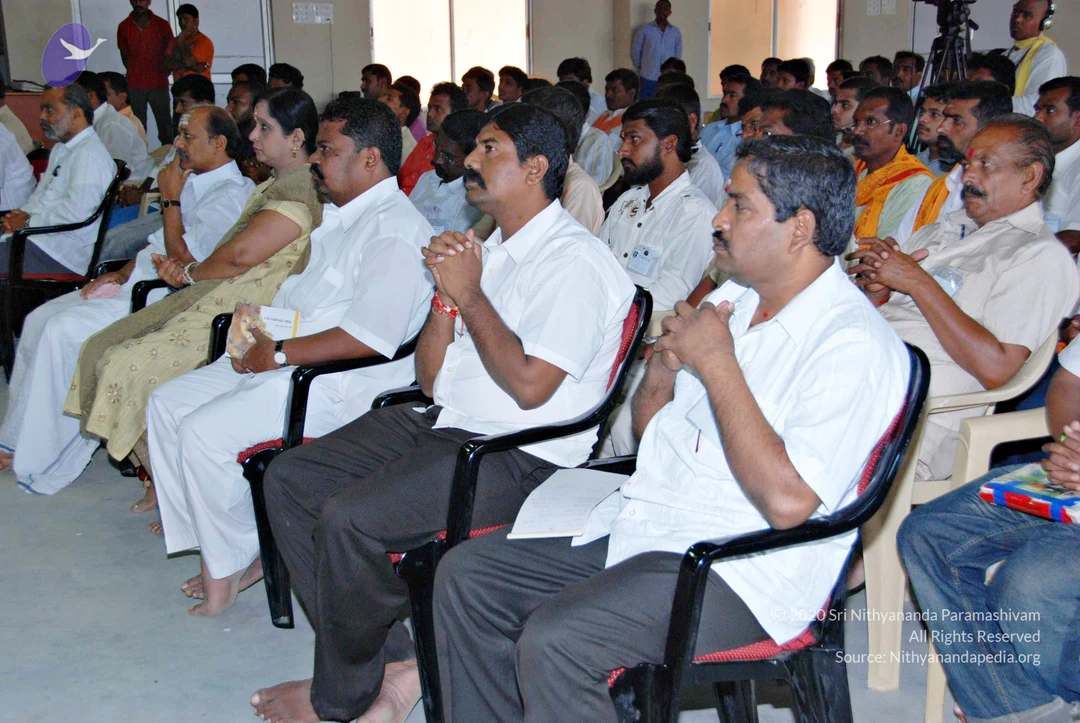
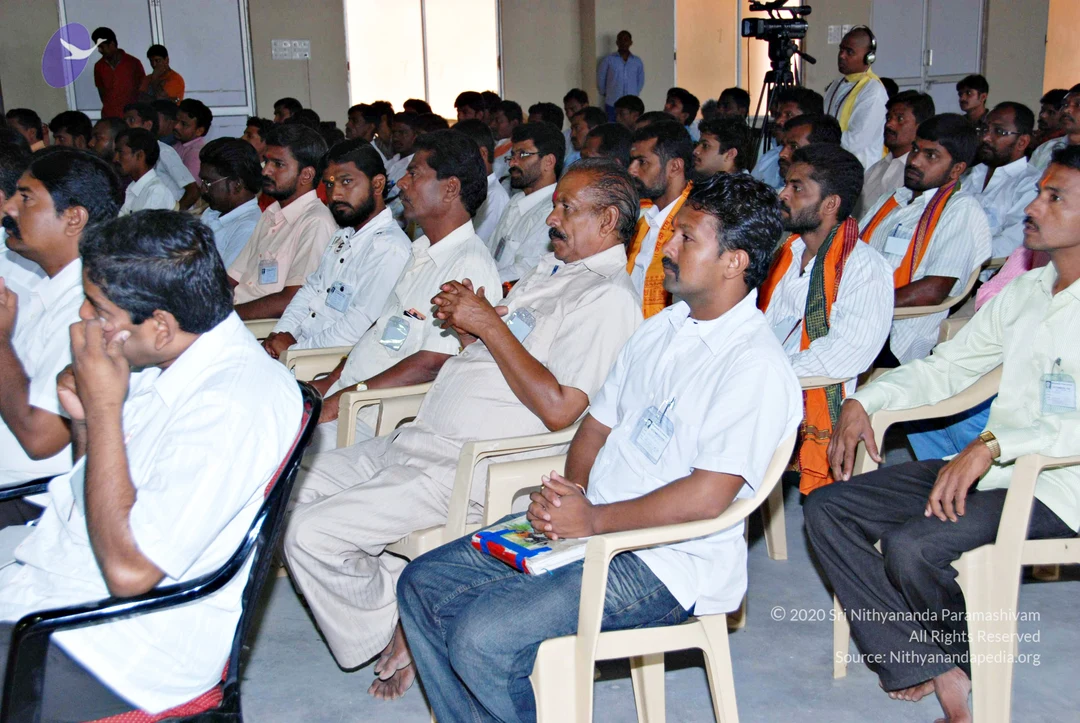
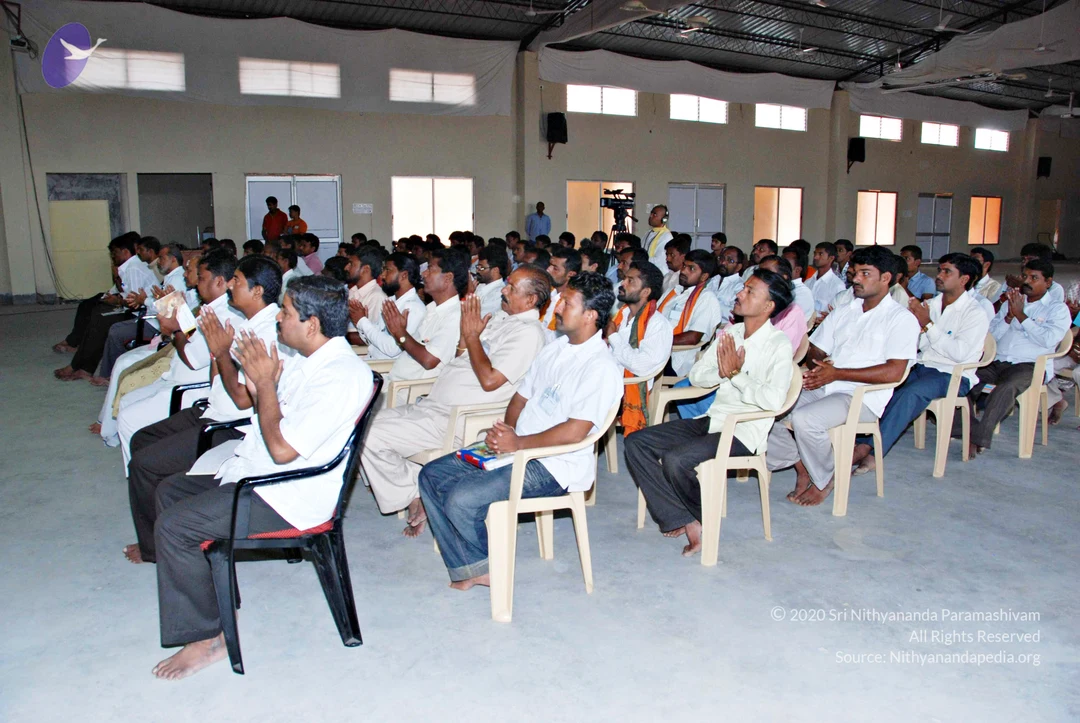
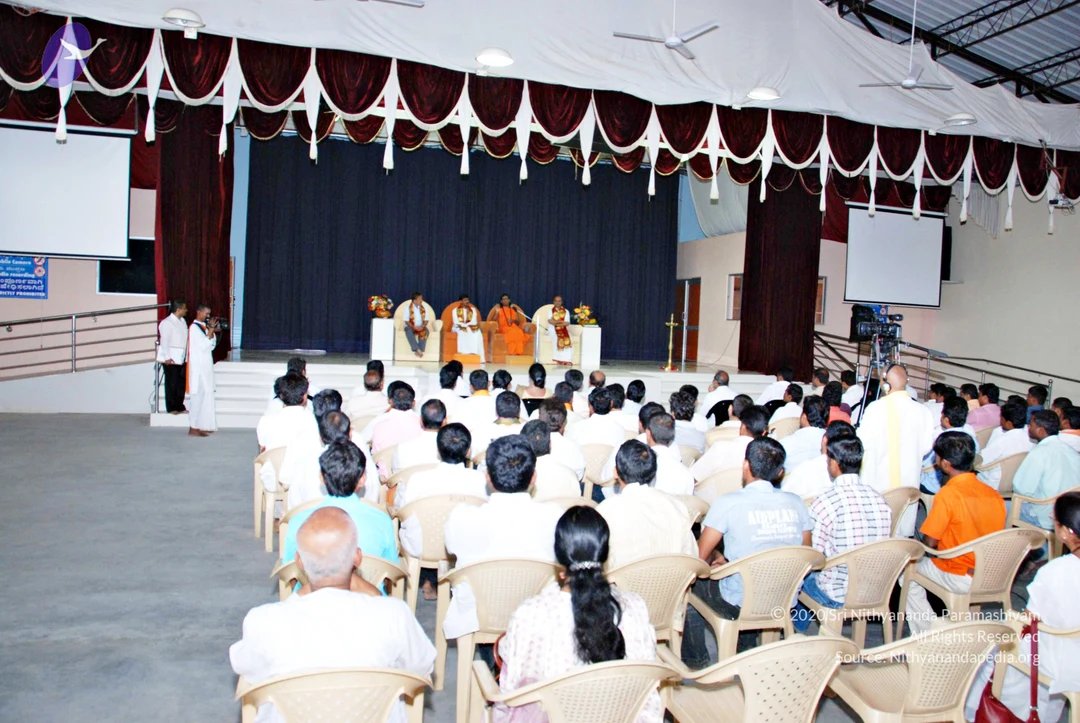
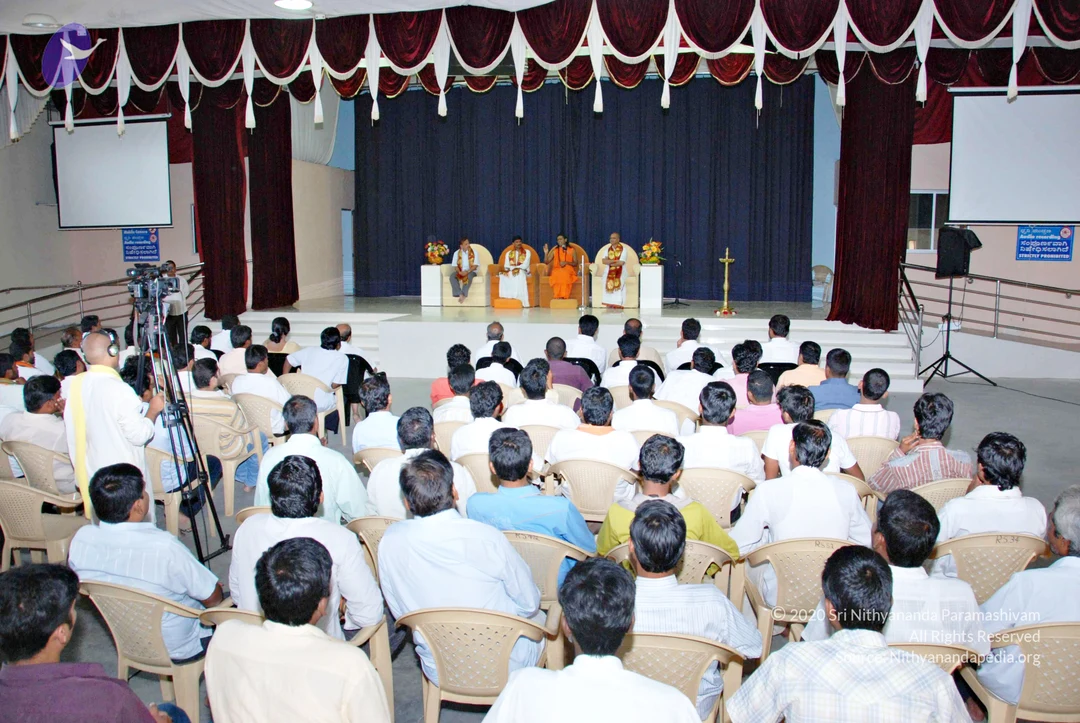
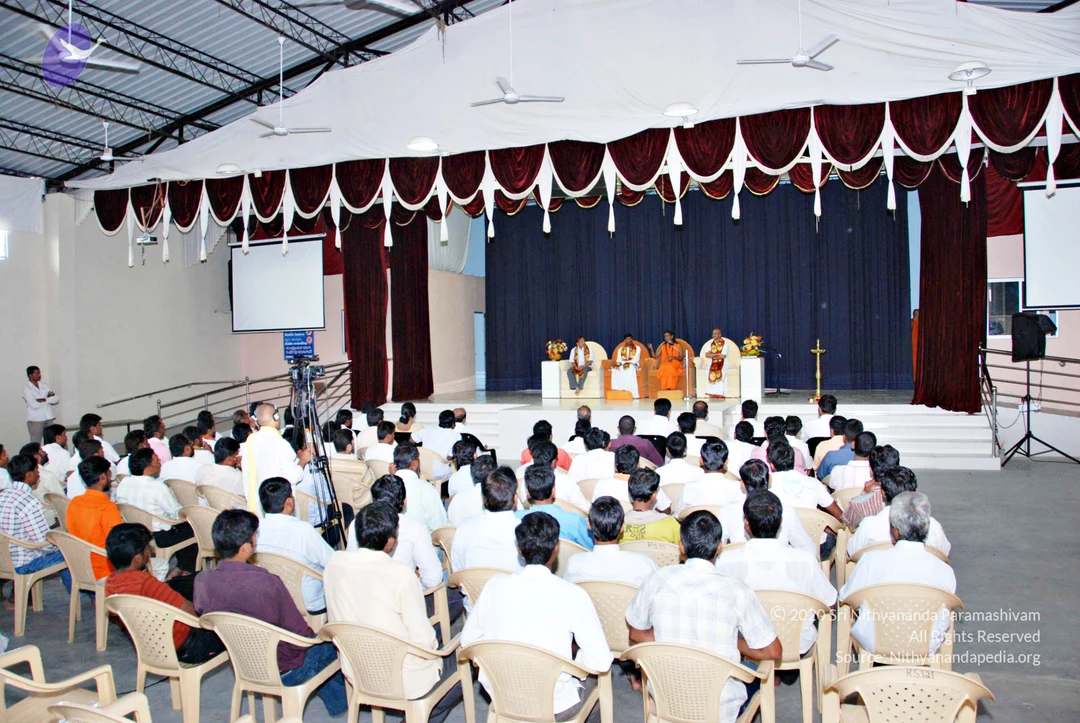
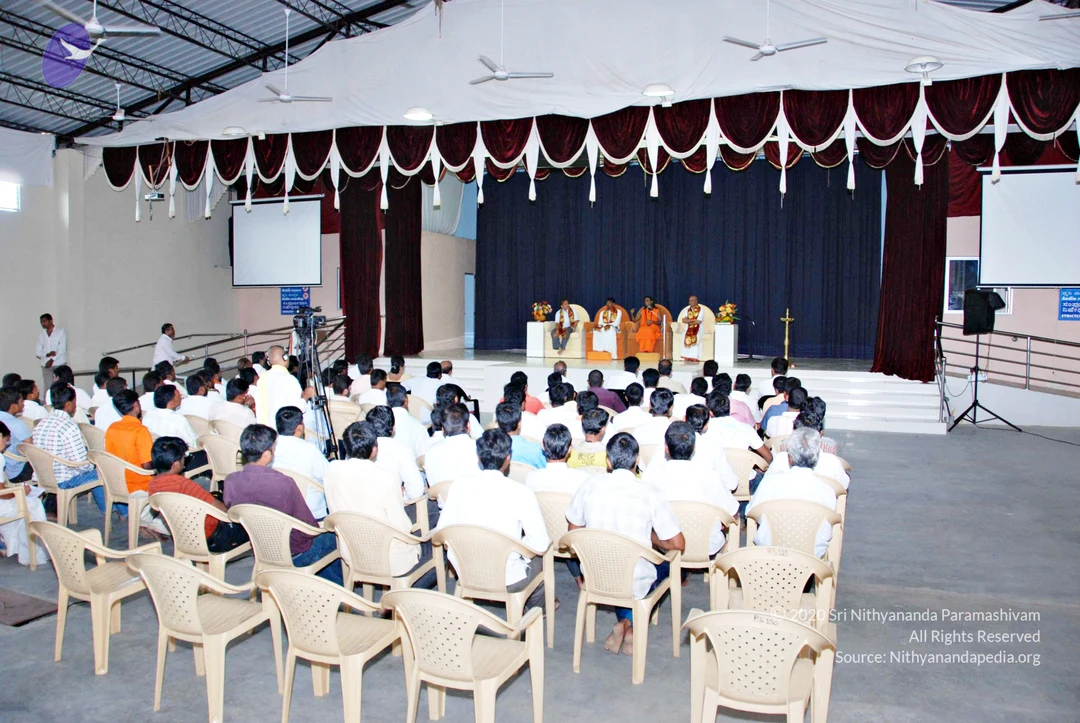
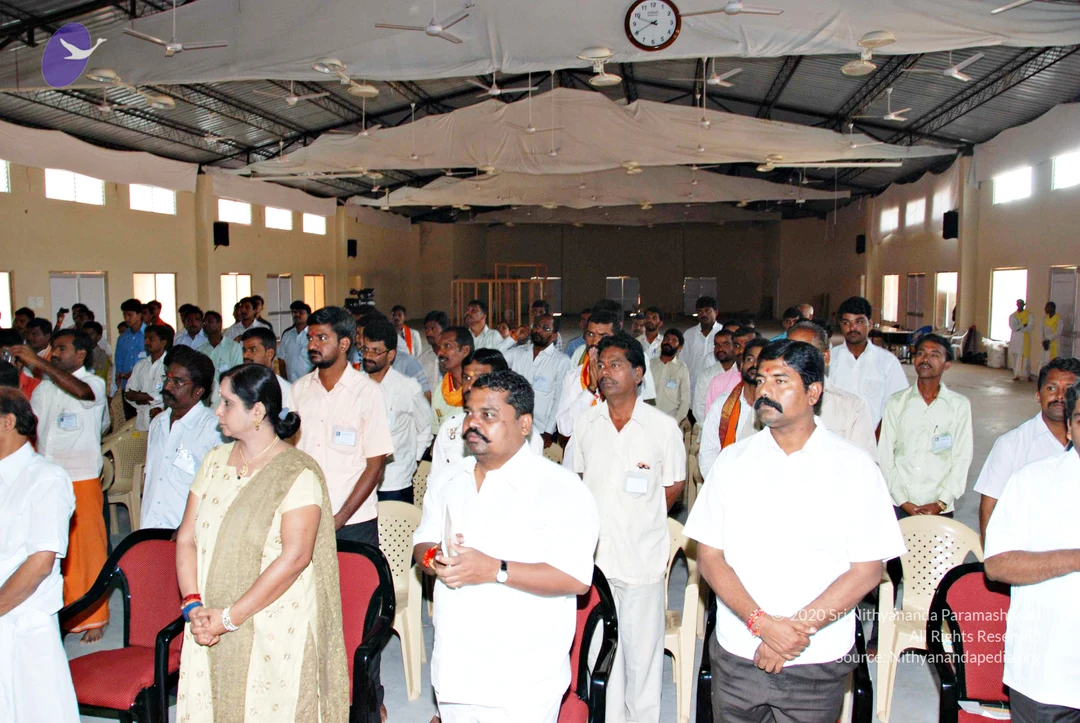
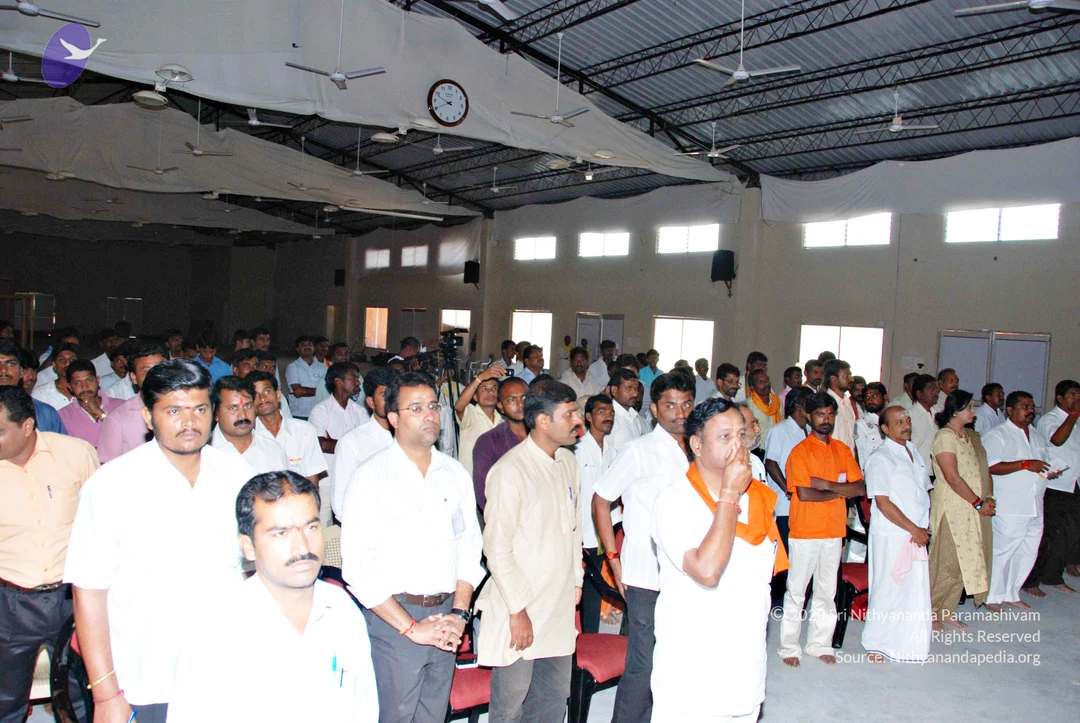
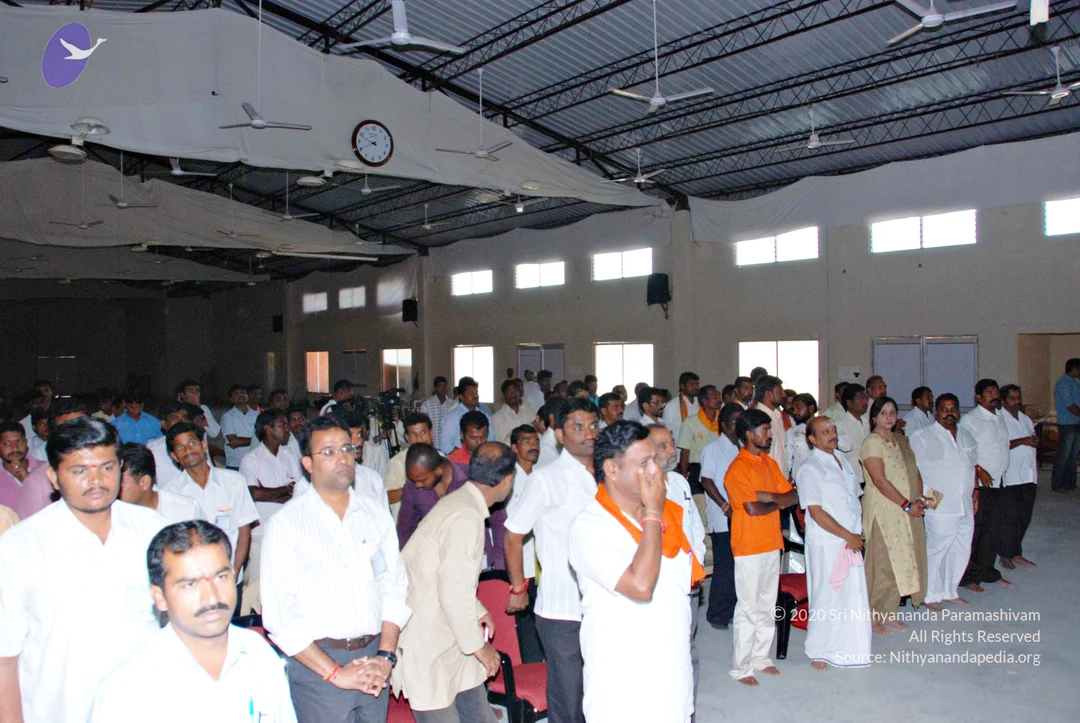
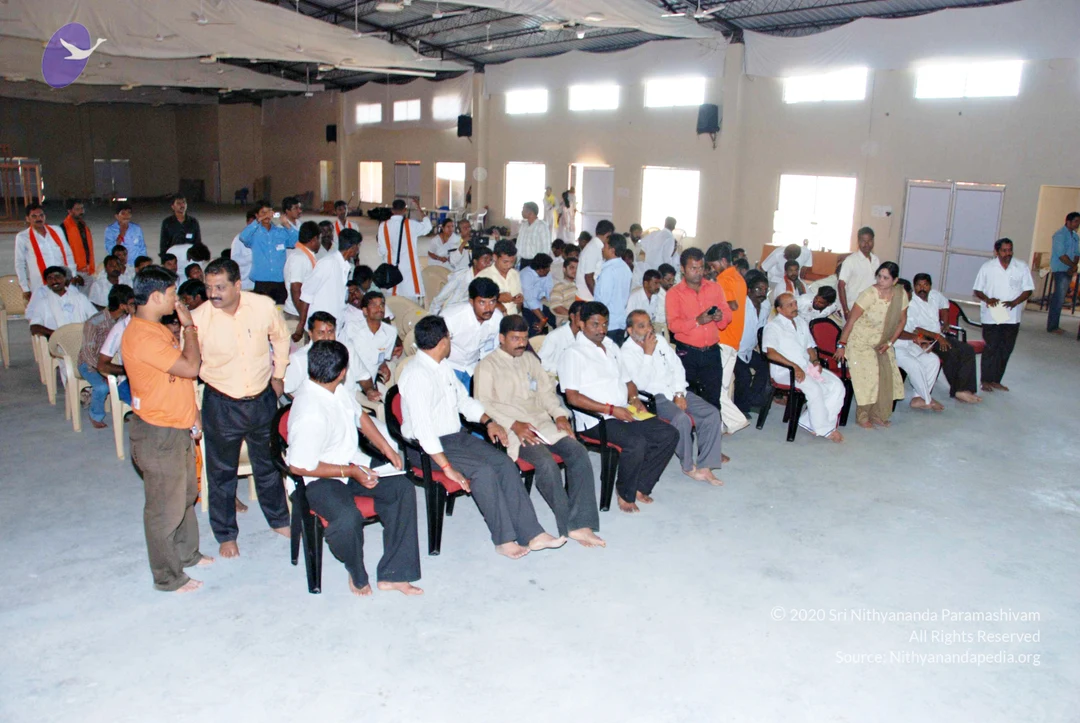
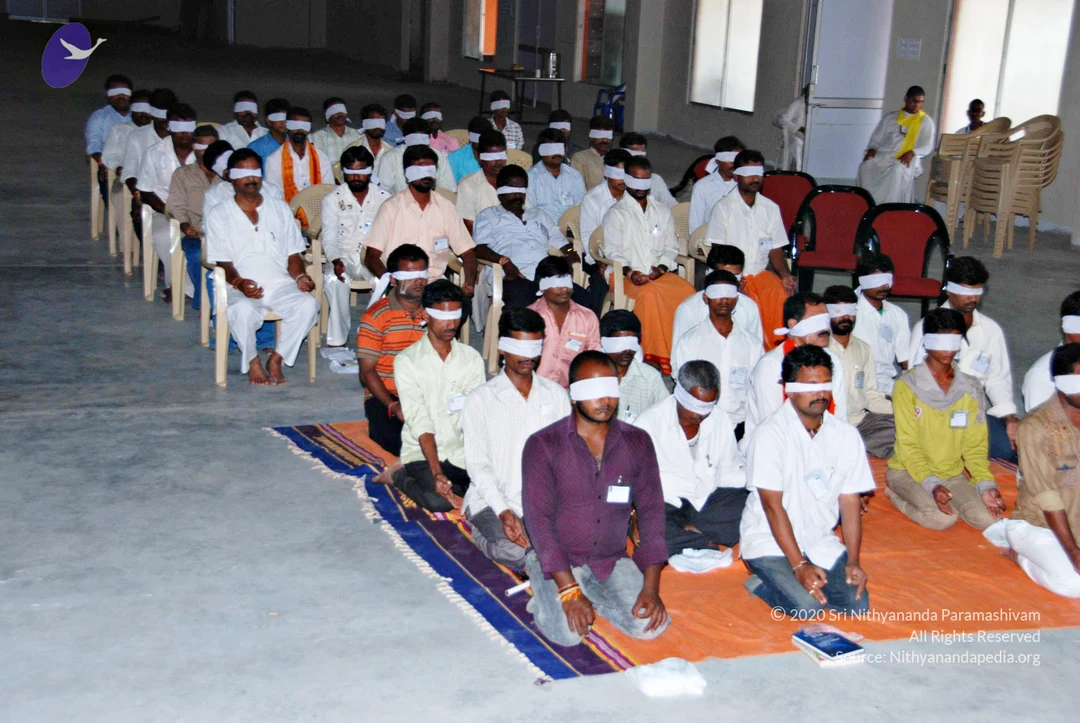
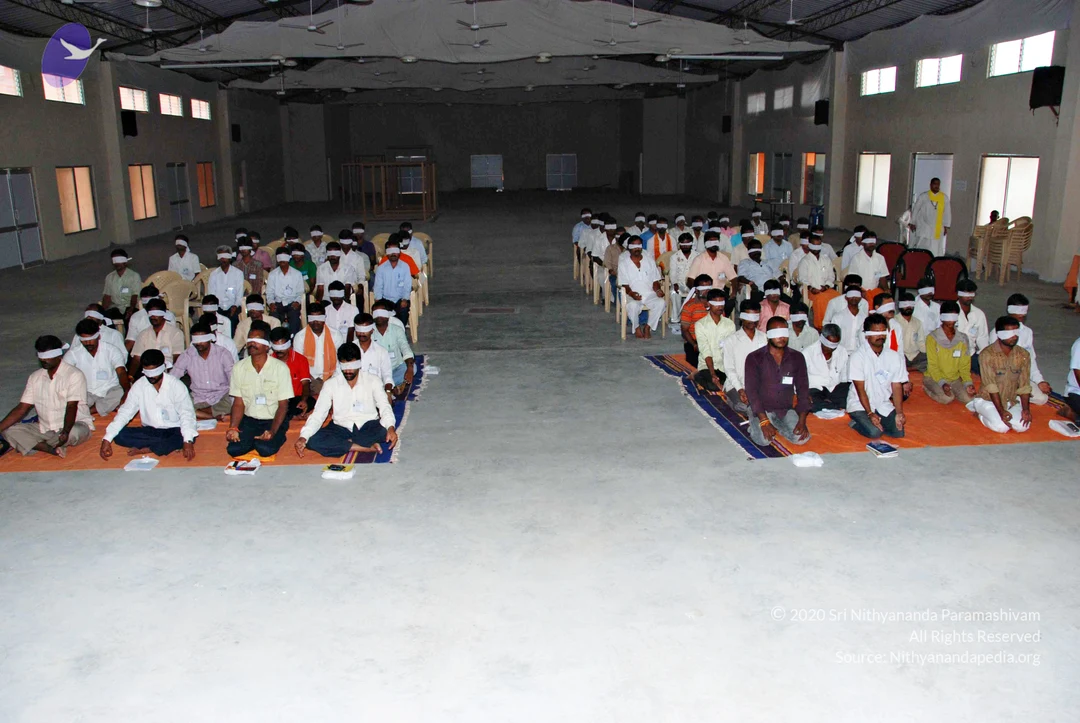
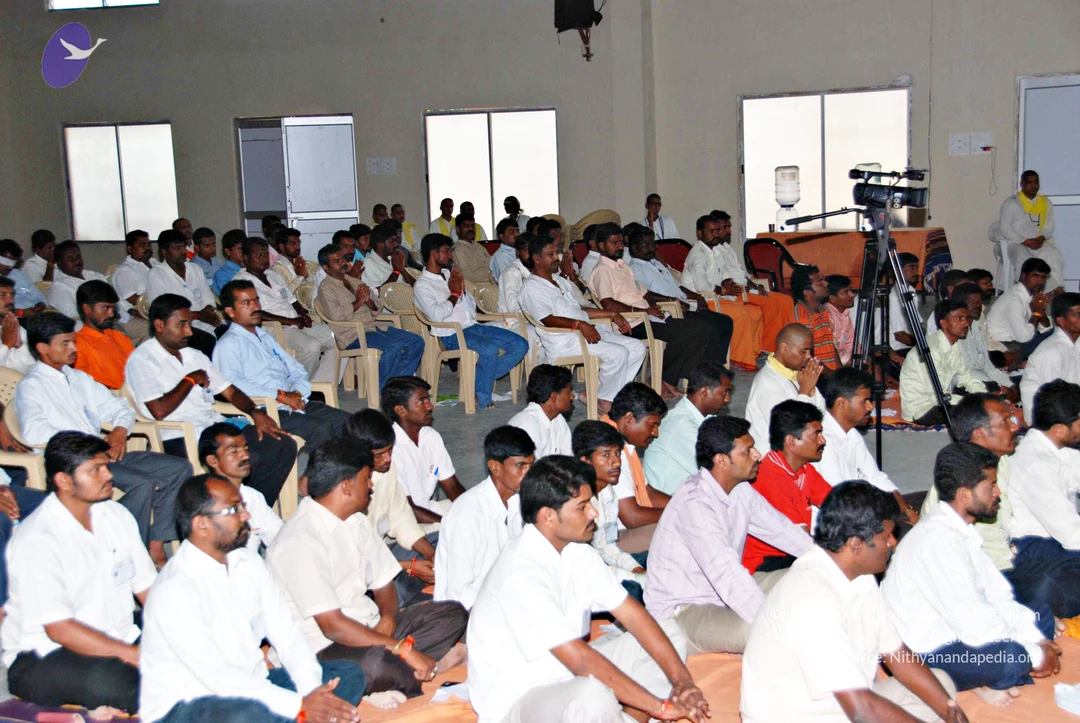
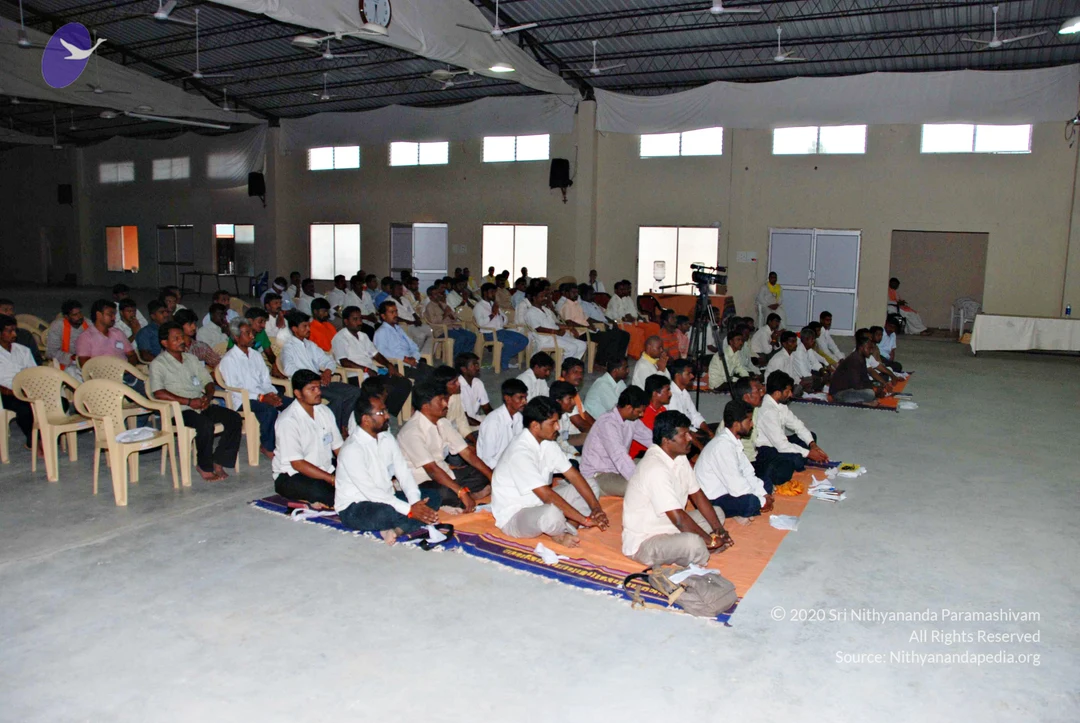
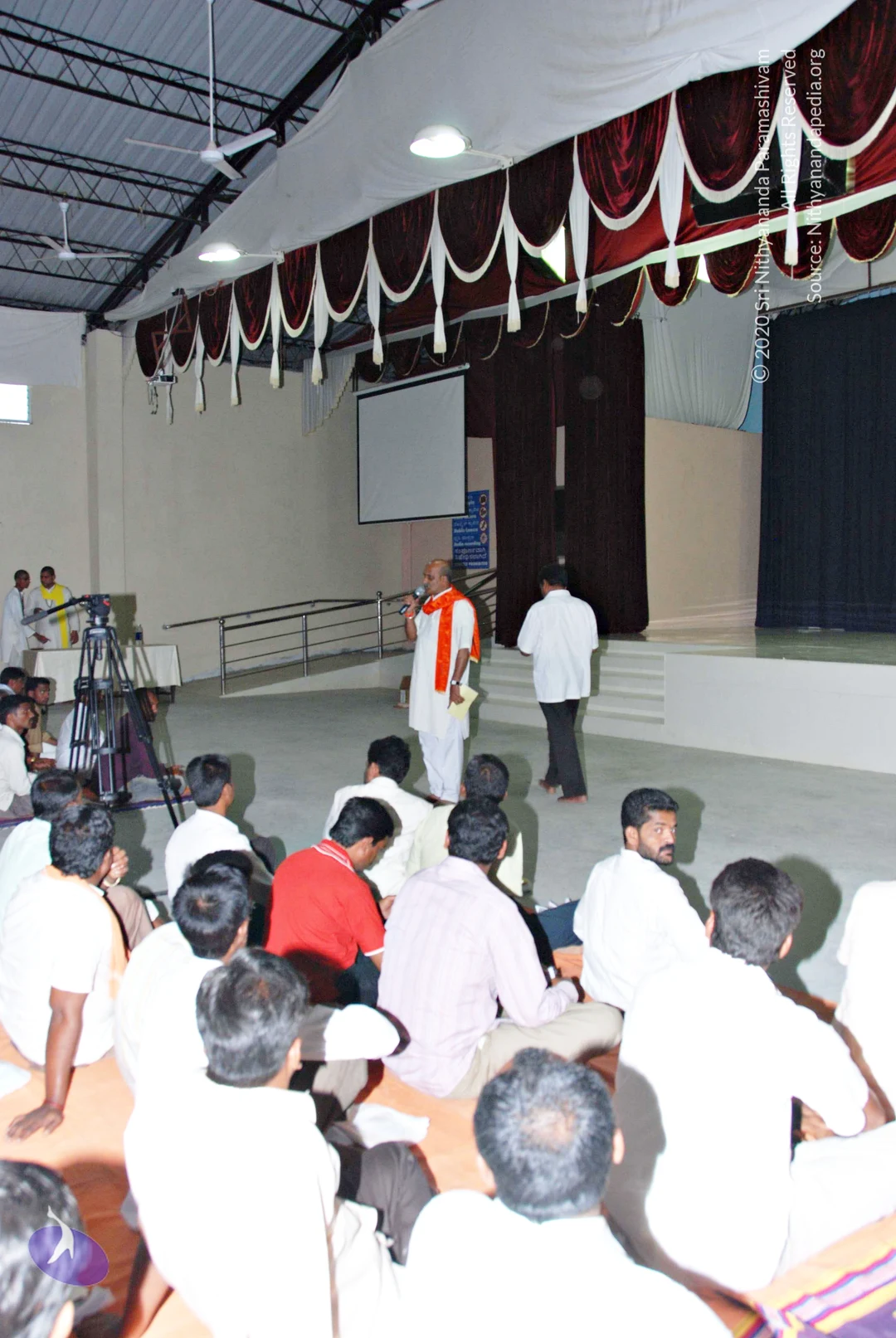
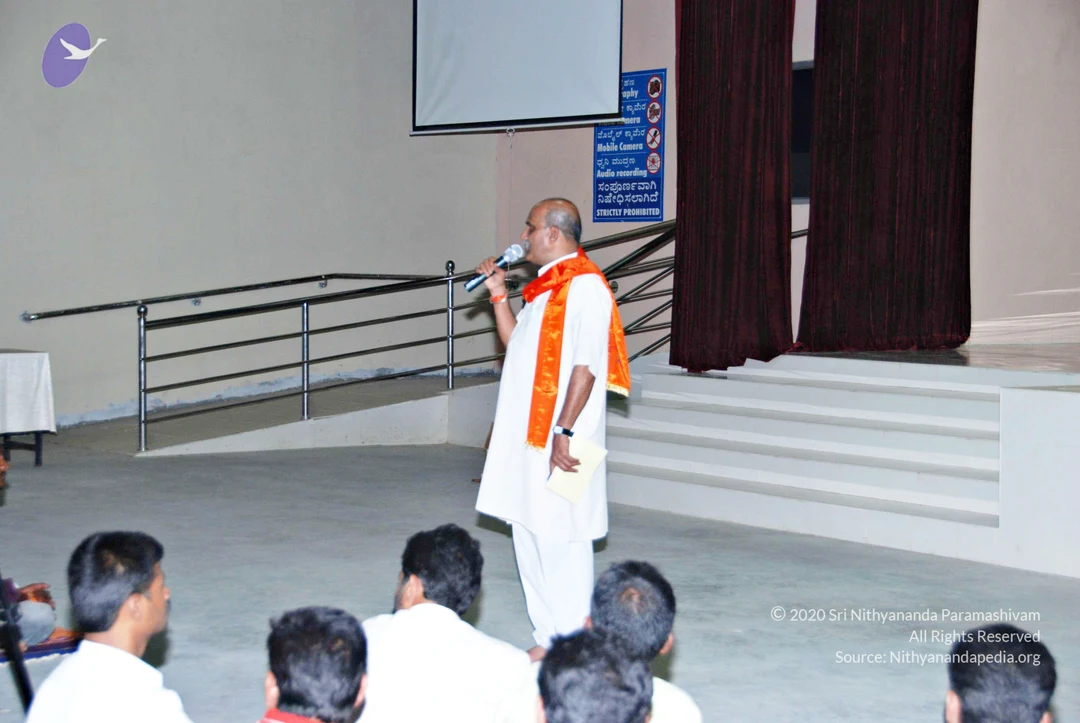
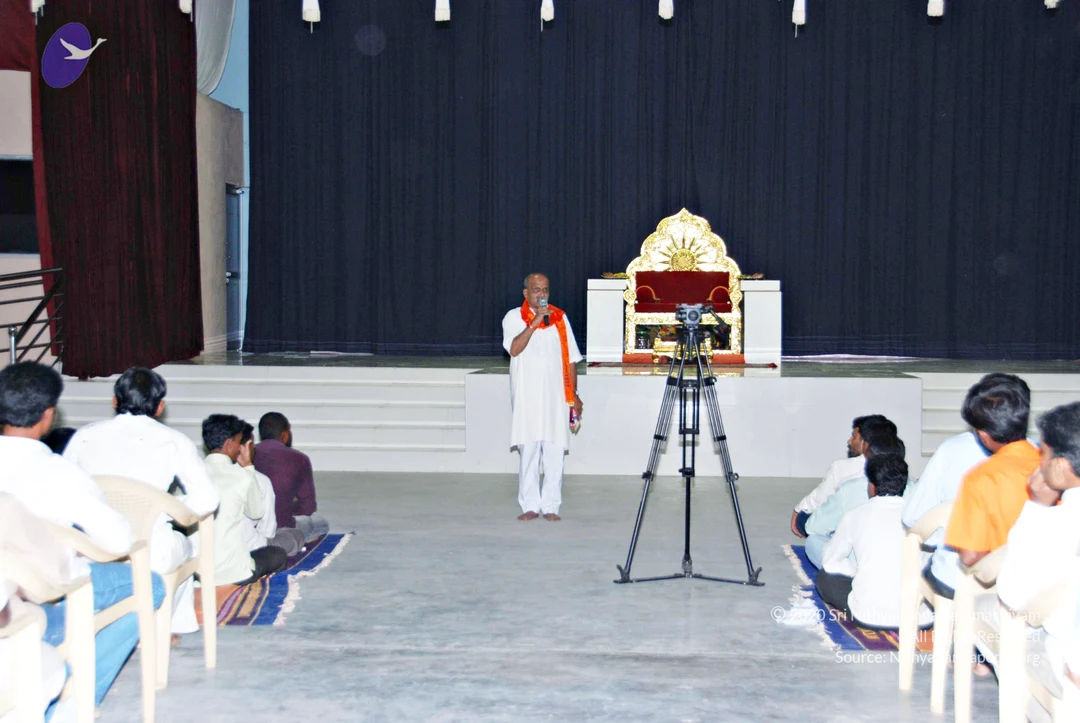
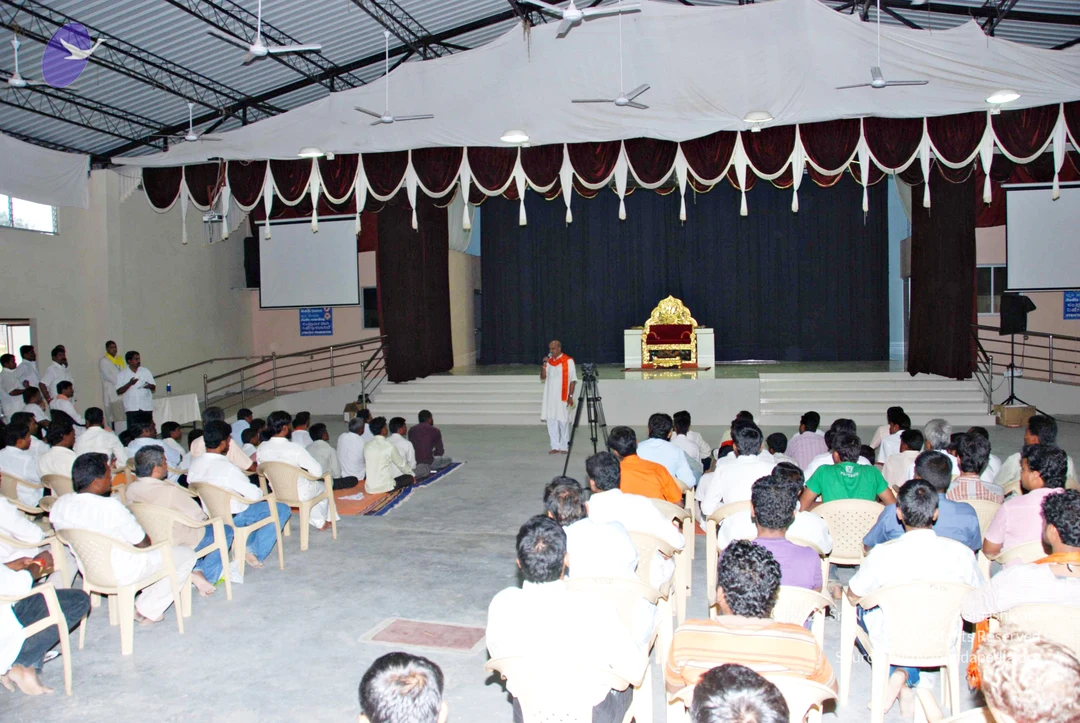
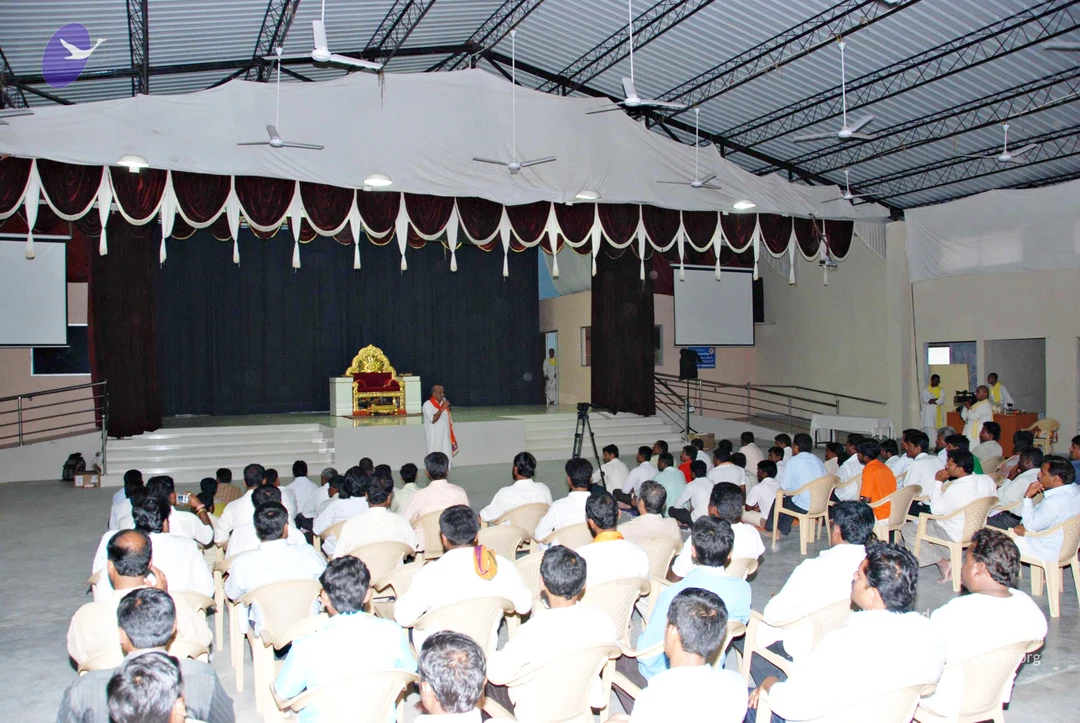
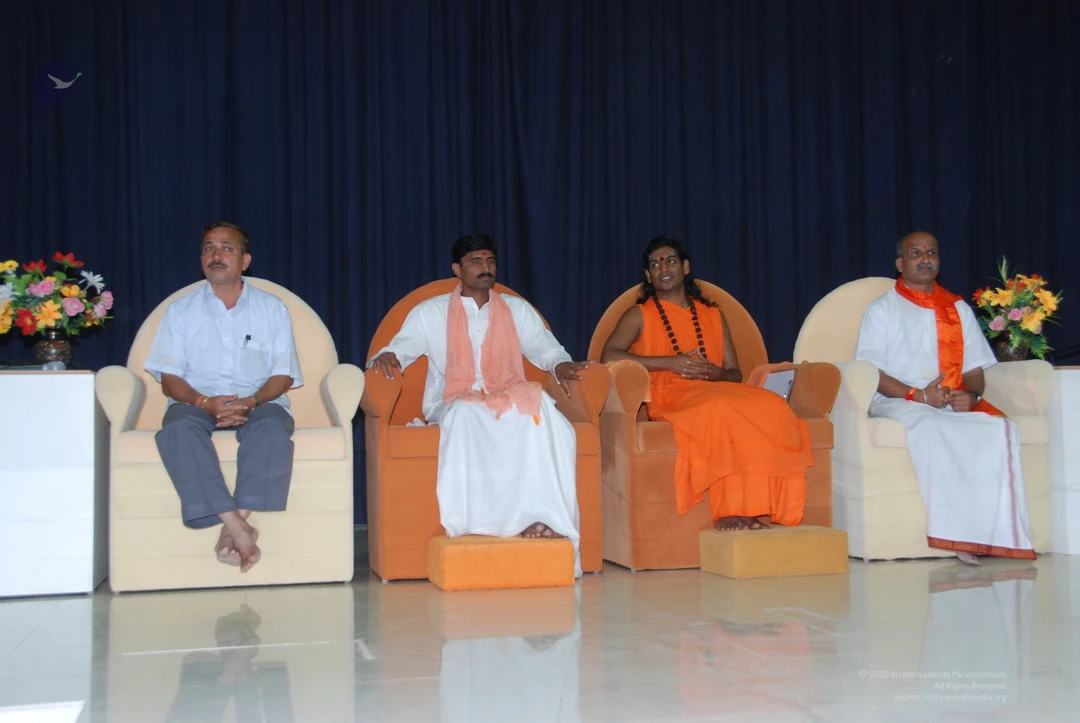
A serving line inside a plain, unfinished hall where people collect food from large stainless steel pots with lids and ladles set on a long steel counter. A young man in a light blue striped shirt on the right serves from a pot while others in striped shirts, white shirts and a man in an orange shawl wait with plates. Several people stand in the background and one seated person in a blue chair is eating at the lower right. The scene looks like a communal meal service.A photograph of a large, plain hall with a concrete floor, exposed roof trusses and white fabric ceiling panels with ceiling fans. Rows of white plastic chairs are filled with a crowd of seated men, mostly in white shirts and dhotis, with some in blue, pink and purple shirts and a few with orange or saffron scarves and tilak marks. A man in an orange shirt stands at the right holding a video camera on a tripod, and a few standing men in white and light blue shirts are at the back and left. A wall clock and a loudspeaker are visible on the walls. The scene appears to be a gathering of attendees listening to a talk, with no visible central figure identifiable as a person.A large indoor hall with pale walls, a high ceiling of white fabric panels and ceiling fans, and a wall clock at upper right. Rows of seated people face a camera on a tripod, with many attendees in white shirts and dhotis or trousers, a few in orange or light-coloured shirts, and a woman in a beige sari seated near the front. Several standing staff in white or blue shirts move along the sides and at the back. The floor is bare concrete and the room is largely empty of furnishings beyond the chairs. There is no visible a person candidate in the frame.A large, bare hall with plain pale walls, exposed ceiling trusses, ceiling fans and a wall clock, with a row of windows along the back wall. Rows of seated attendees in white shirts and dhotis, plus women in saris and salwar, face toward the front on plastic chairs. A man in a white shirt standing at left holds a microphone, while on the right a bald man in white dhoti and an orange-striped shawl stands facing the audience beside a man in a white shirt. A camera on a tripod stands among the seated rows. Several attendees sit barefoot on the bare floor area. The scene looks like a seminar or talk session.A hall of seated audience members in white shirts and trousers on rows of beige plastic chairs, facing a stage draped with dark red curtains and white-and-red swags. A projection screen is blank on the left. A man in a white-and-orange robe with an orange shawl stands near the stage edge, and a bald man in a yellow-trimmed white garment stands on the left beside a video camera on a tripod. Several staff in white and orange move through the aisles, and a man at the right raises a hand.Photograph of a seated audience in a plain hall with cream plastic chairs filling most of the frame, mostly men in white shirts and dhotis with some in colourful shirts. A video camera on a tripod stands at left with a cameraman beside it, and several standing staff in the back. On a raised stage at right, a bald man in white clothes with an orange shawl stands beside the stage, and a maroon curtain hangs behind. A white projection screen and draped white-and-maroon bunting decorate the ceiling. Several people count as physical participants and the scene shows roughly two dozen or more people in total.
06

06-SWAMIJI-SIGNING

14 dated photos in previewSource gallery
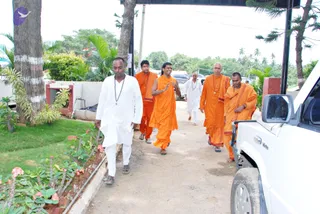
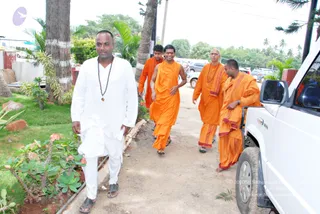
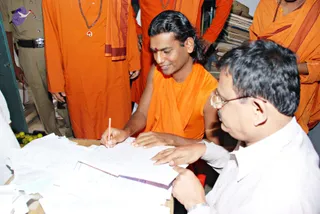
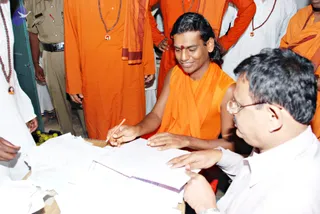
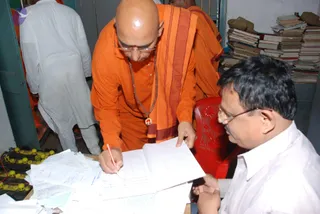
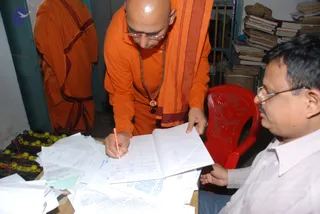
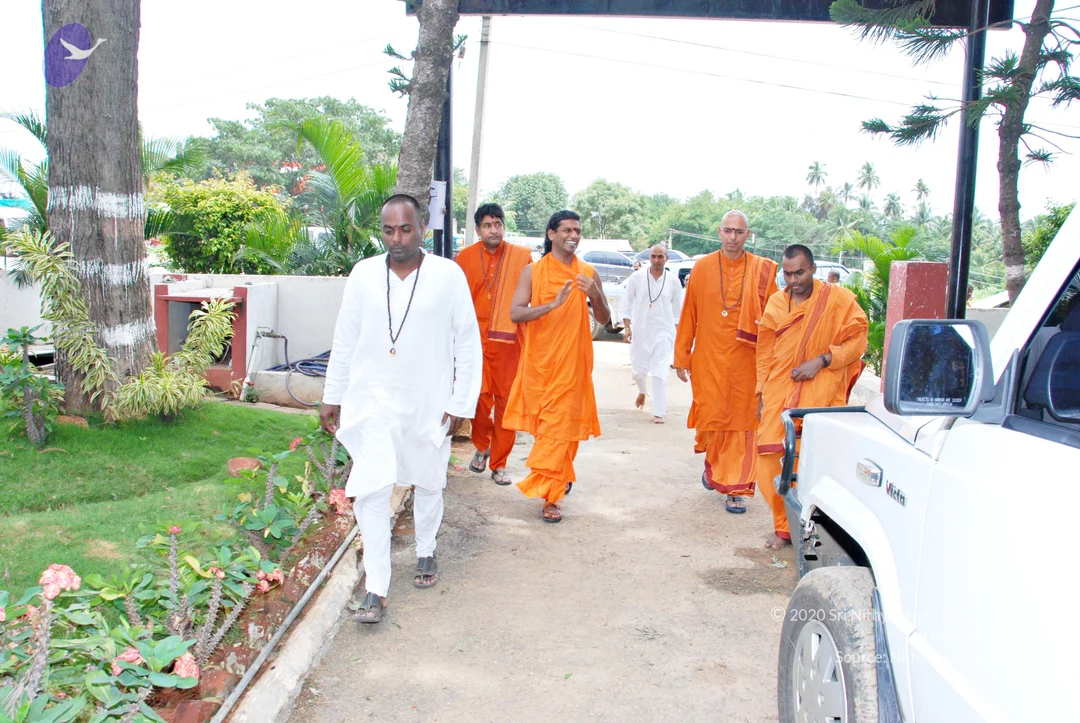
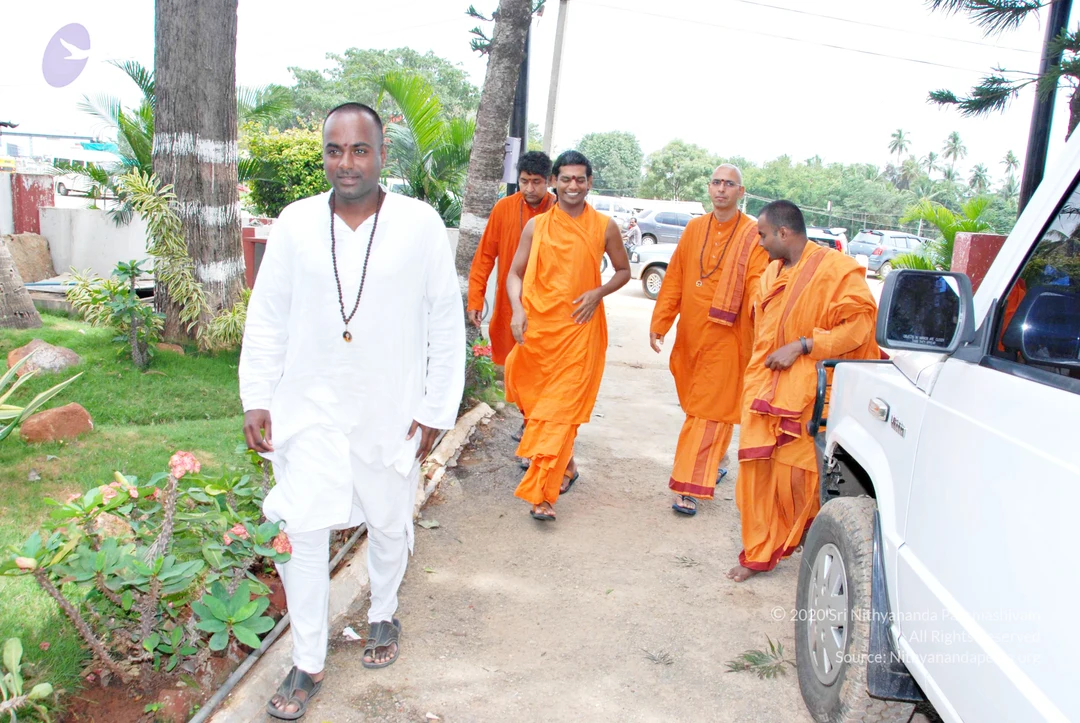
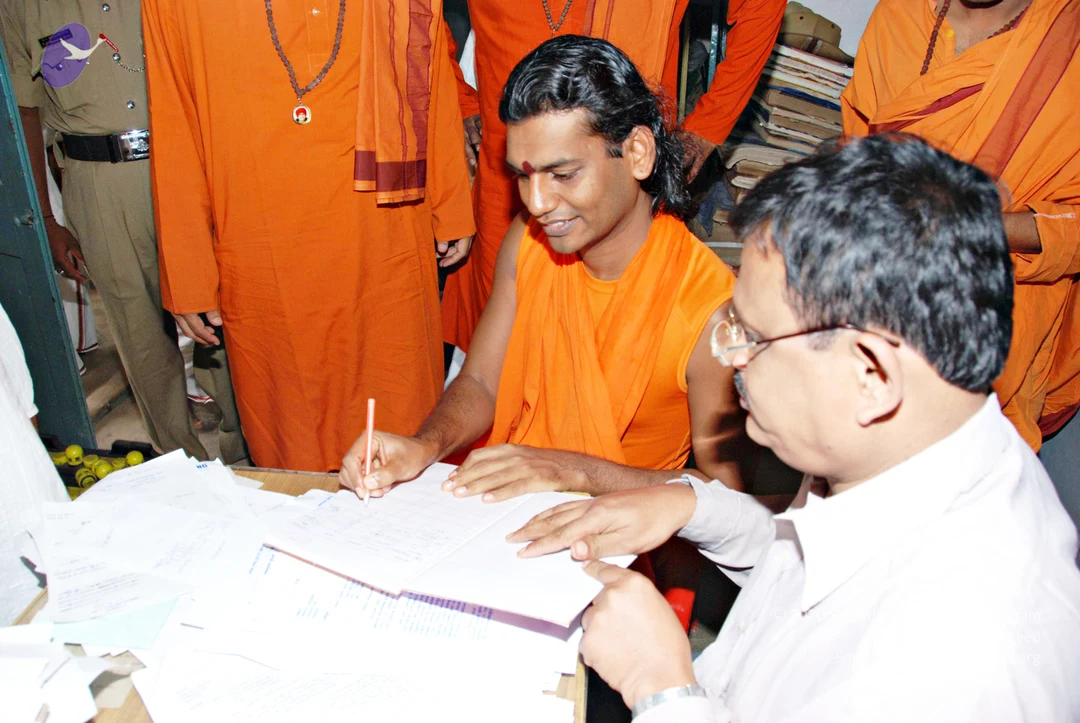
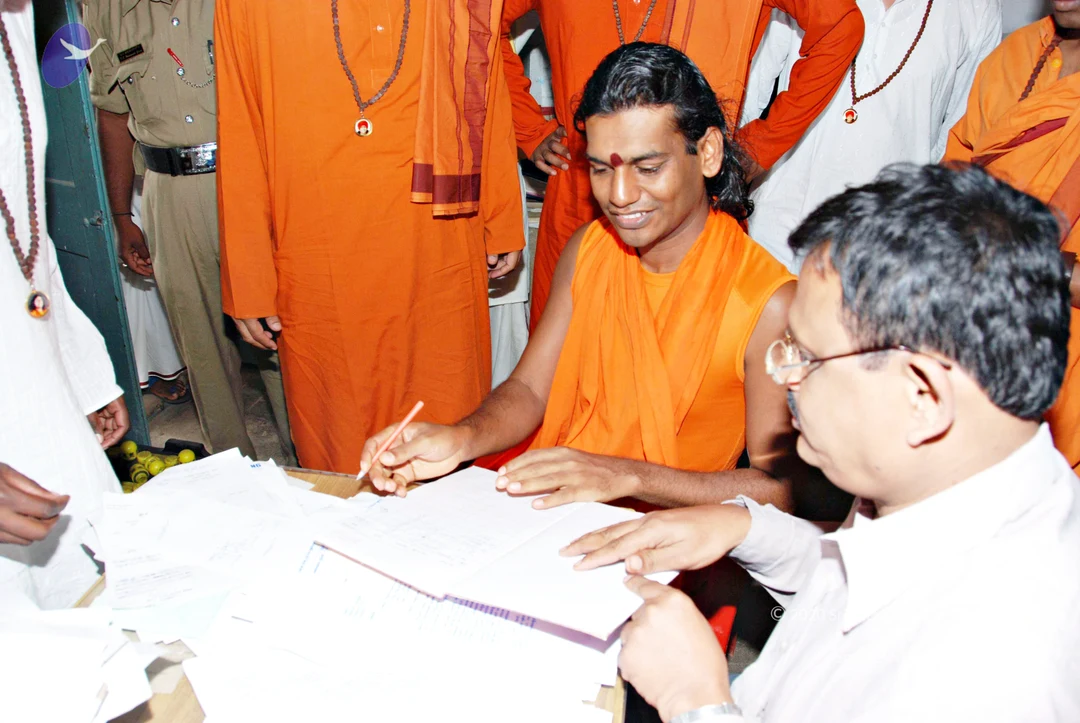
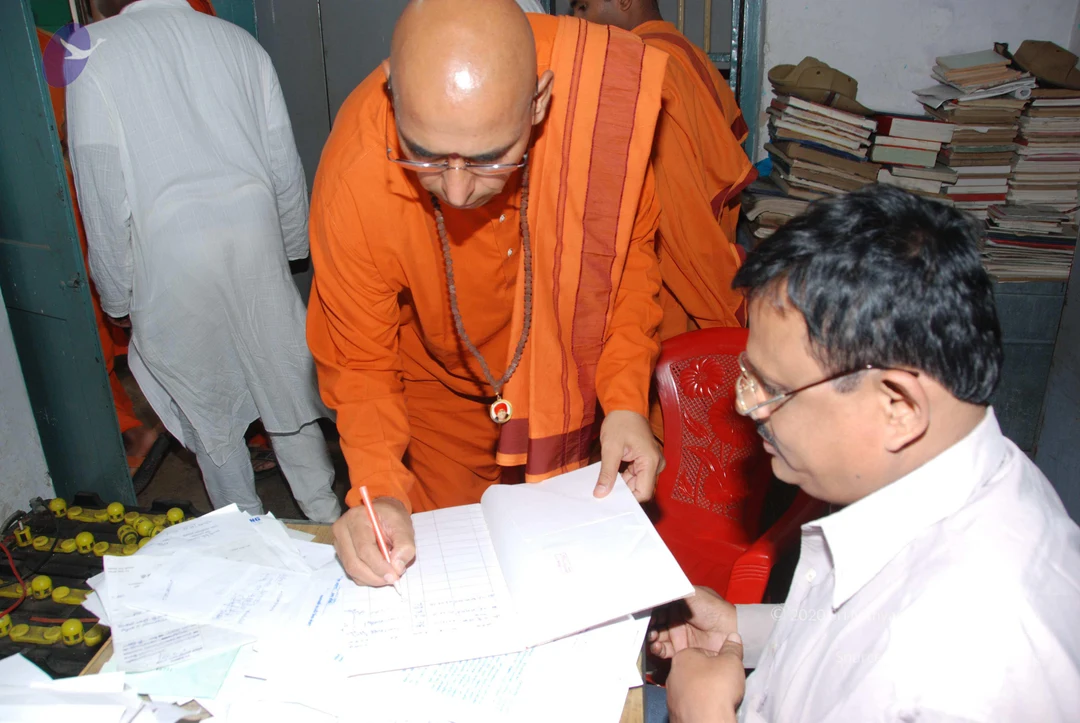
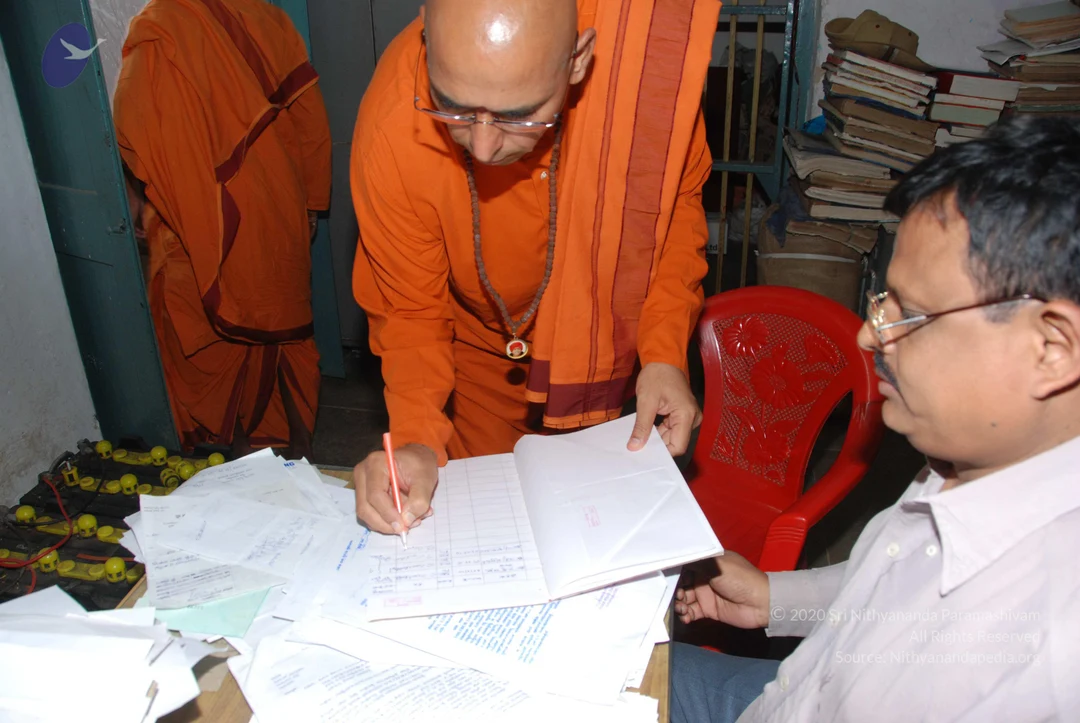
A photograph of a group walking along a paved path beside a green lawn with pink flowering plants, past a white vehicle at right. A man in white kurta and white dhoti wears a rudraksha mala and walks at left. In the centre, a smiling man in saffron/orange robes gestures with raised hands. Behind and beside him, several men wear saffron/orange robes with rudraksha malas, one with a shaved head at right. Another man in white walks further back. Palm trees, a tree trunk and a concrete gateway frame the scene. The centre figure has long dark hair swept back, and the saffron-robed figures wear rudraksha malas, but these cues alone do not establish which person is a person.Outdoor photo on a concrete walkway beside a lawn with flowering plants, palm trees and parked cars behind. A man in white ritual clothing with a dark rudraksha-style mala and pendant walks in the foreground in sandals. Four men follow behind in saffron-orange robes: one in a plain saffron wrap, one with an orange shawl and mala, one bald with spectacles in orange garments, and one at right with bare feet near a white vehicle's open door. The vehicle is white with side mirror and tyre visible.A photograph of a seated man with long, swept-back black hair and a red bindi, wearing an orange sleeveless top and orange wrap, signing or writing with a pen on a stack of white papers on a wooden table. Facing him in the foreground, a man in a white shirt with glasses and a wristwatch is holding the papers. Behind them, several men in orange kurta-style robes stand, one wearing a rudraksha mala and a pendant, and a uniformed officer in khaki stands at the left edge. Stacks of files and documents are visible on a shelf at the upper right, and a few yellow objects sit on the table at the left. a person candidate: the seated man shows long hair and orange clothing with a red bindi, but his appearance is only partly visible in this context, so identity is uncertain.A man with long swept-back dark hair and a red bindi, wearing an orange sleeveless top and orange shawl, sits at a table signing papers with a pen. Beside him, a man in glasses and a white shirt holds the documents steady. Standing behind are several men in orange robes with rudraksha malas, a uniformed officer in khaki, and a man in white. Bowls of lemons sit on the table. Printed text is absent; a small copyright mark appears at the lower area.A bald man in orange monastic robes with an orange shawl and a brown rudraksha mala with a small gold pendant bends over a desk, writing with a red pen in a ledger-style register. Seated beside him in a white shirt and glasses is a man in a red plastic chair, holding the page. Papers and folders are scattered on the table, with stacks of old books on shelves behind. Another orange-robed figure stands at the upper right and a man in white kurta is partly visible at the left edge. The setting looks like a plain office room with a row of electrical switches at the lower left.A photograph of an office or administrative room with shelves of books and papers. A bald man in orange robes and an orange shawl, with a rudraksha mala and a red pendant, stands bent over a desk writing in a ledger with a red pen. Beside him a seated man in a white shirt and glasses looks at the ledger. Another person in orange robes stands partly visible at the left edge. Loose papers cover the table, and a red plastic chair sits at the right. The description is based on visible clothing and objects only; the candidate's identity is not established from appearance.
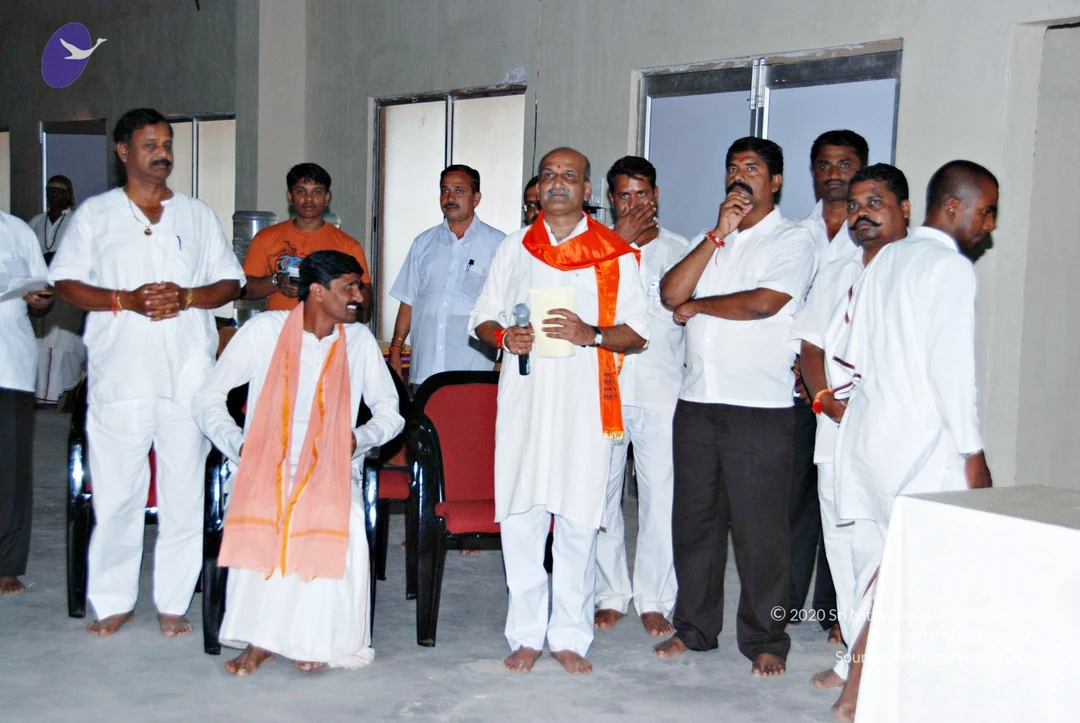
07

07-SWAMIJI-MEETING-KRISHNAPPA

2 dated photos in previewSource gallery
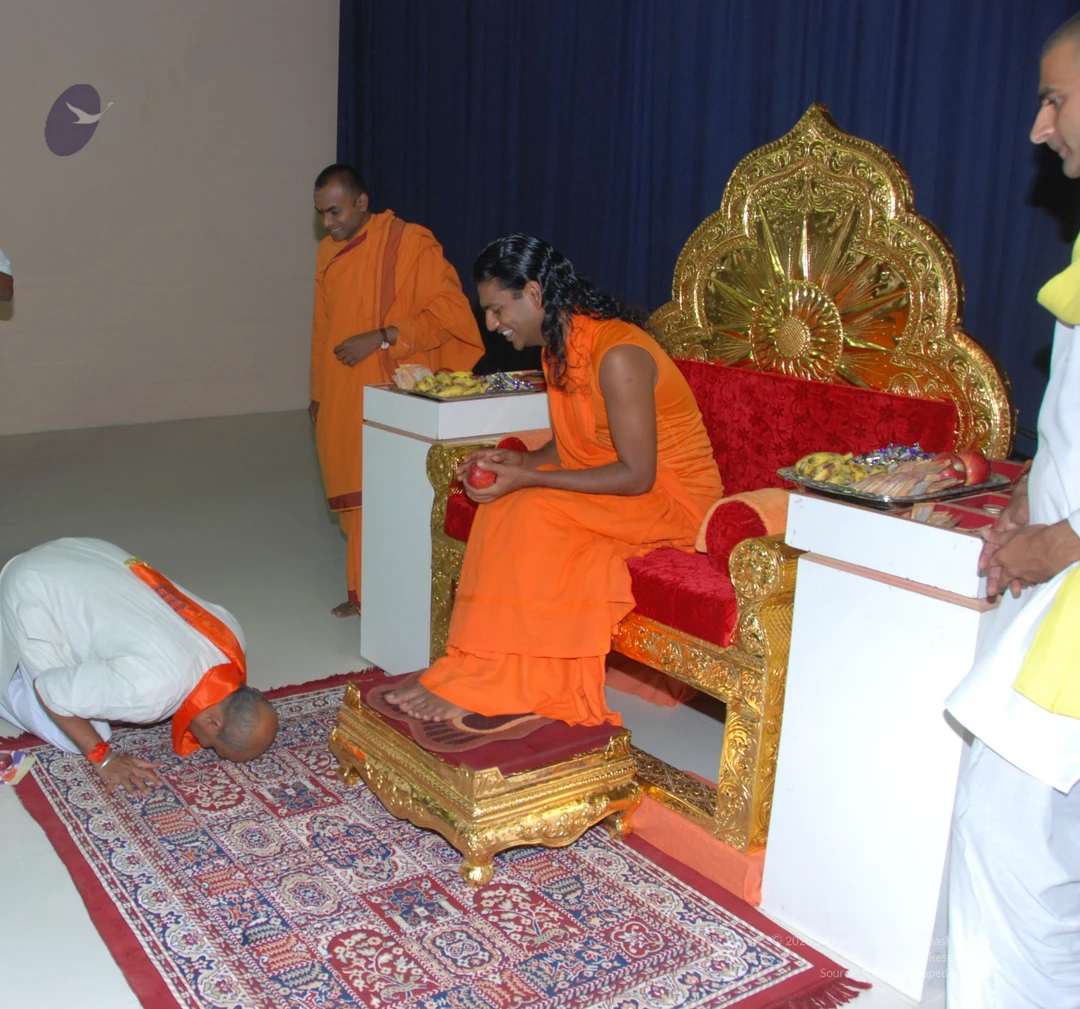
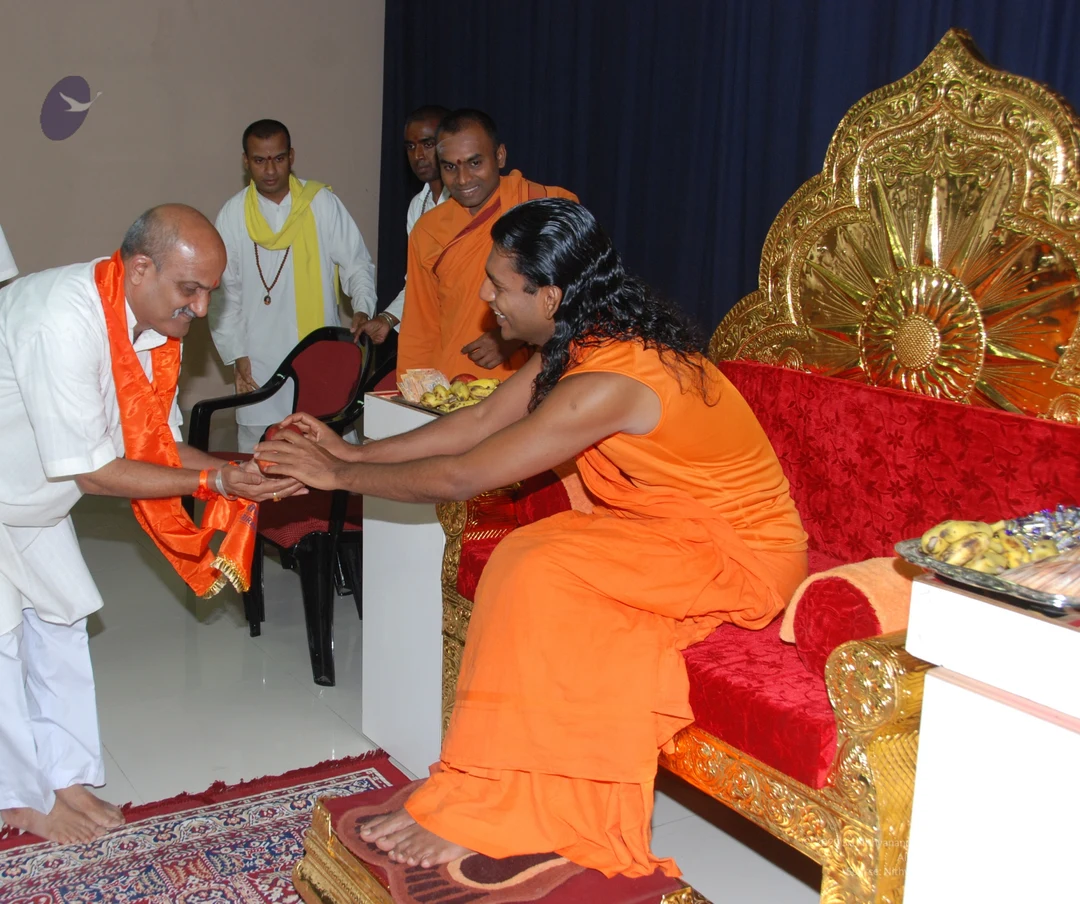
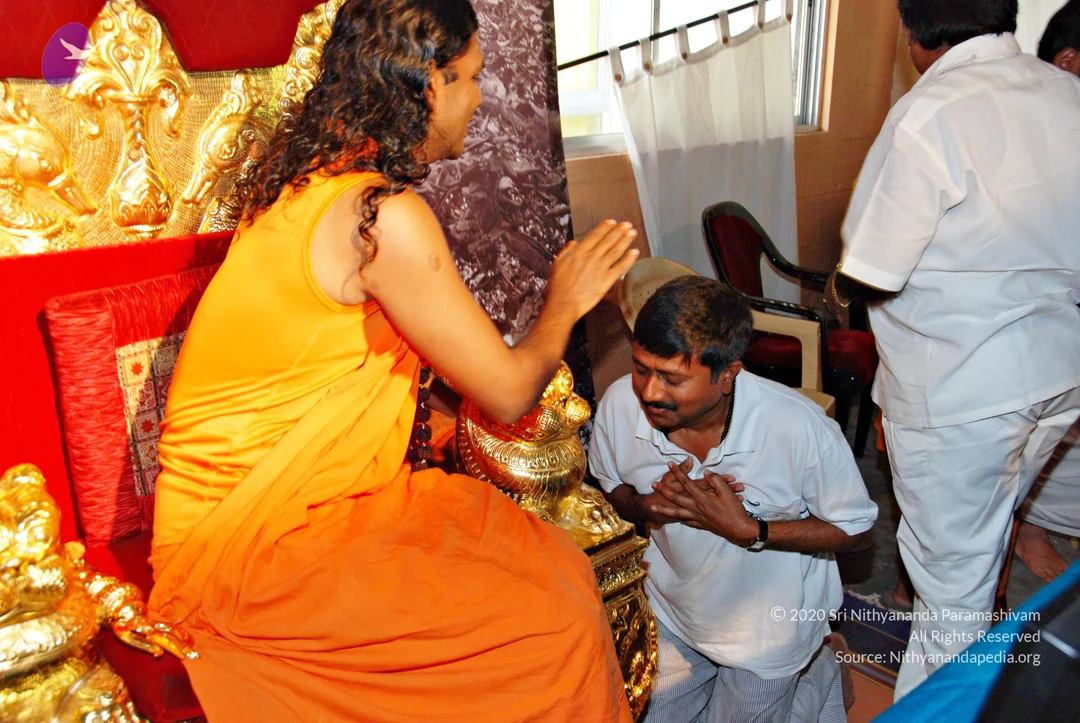
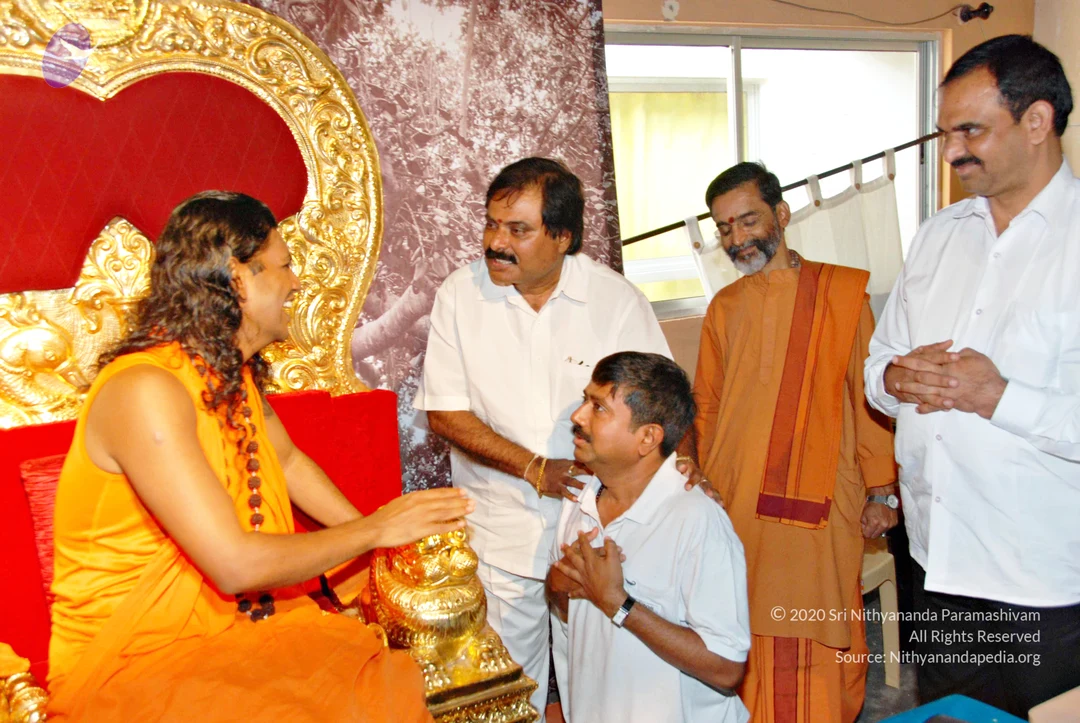
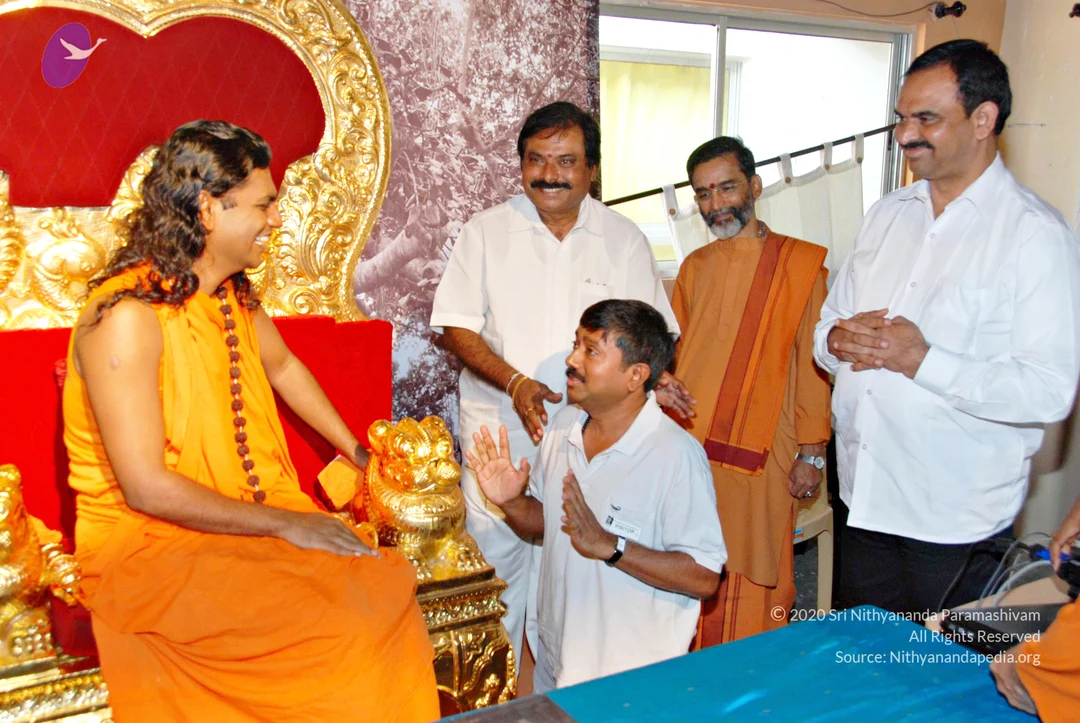
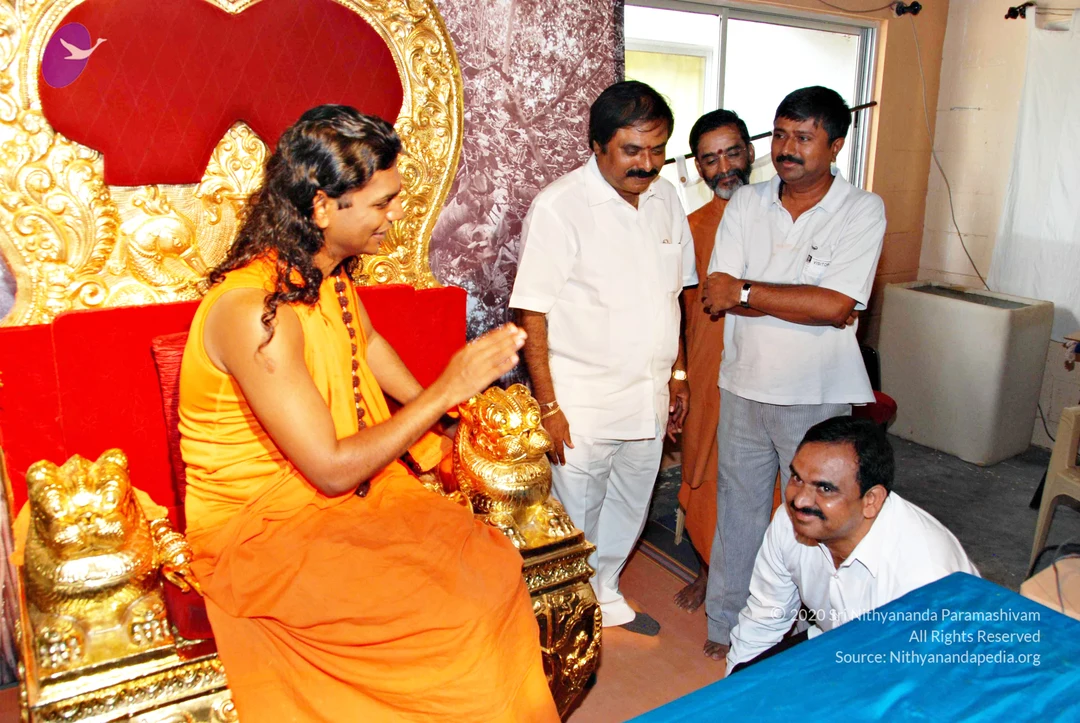
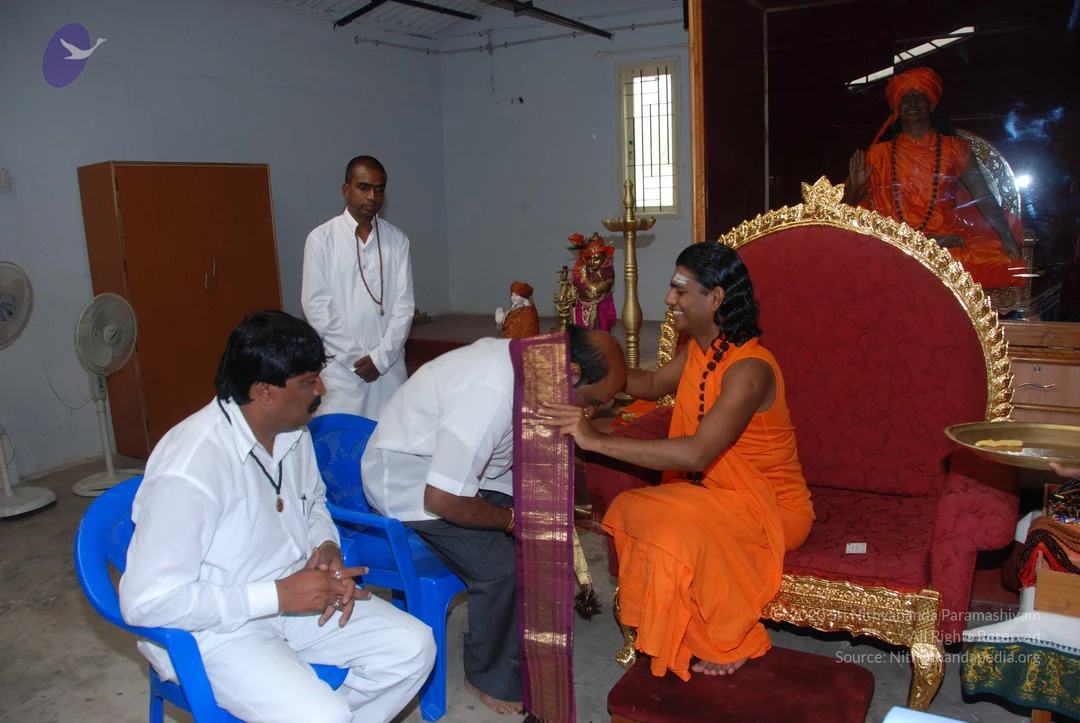
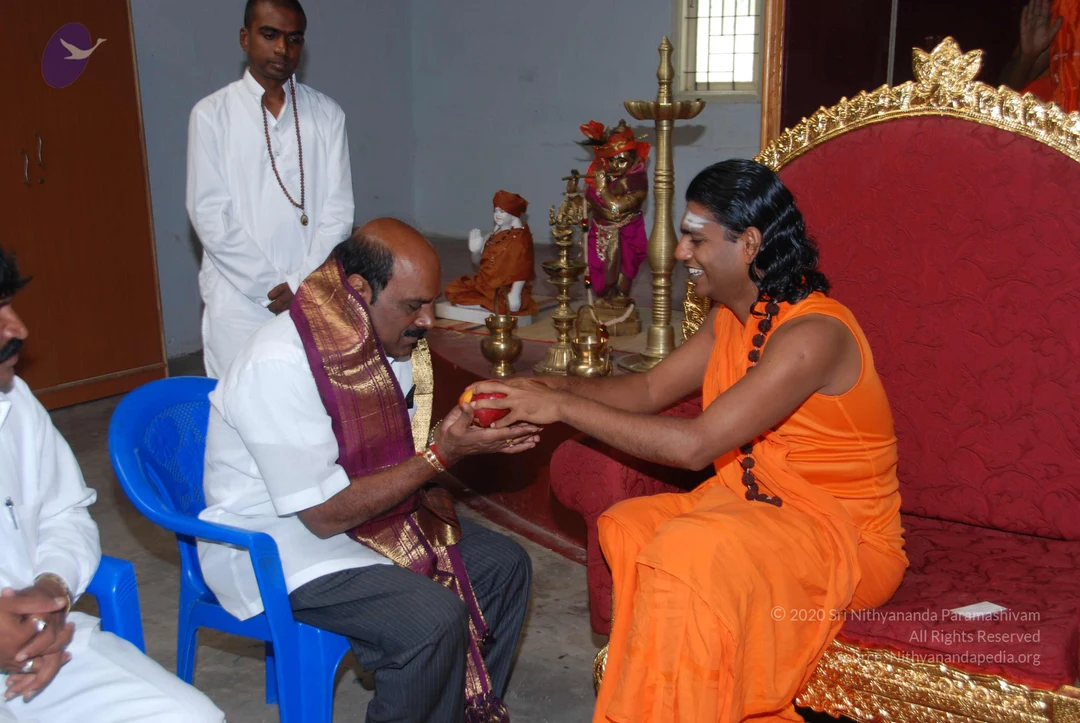
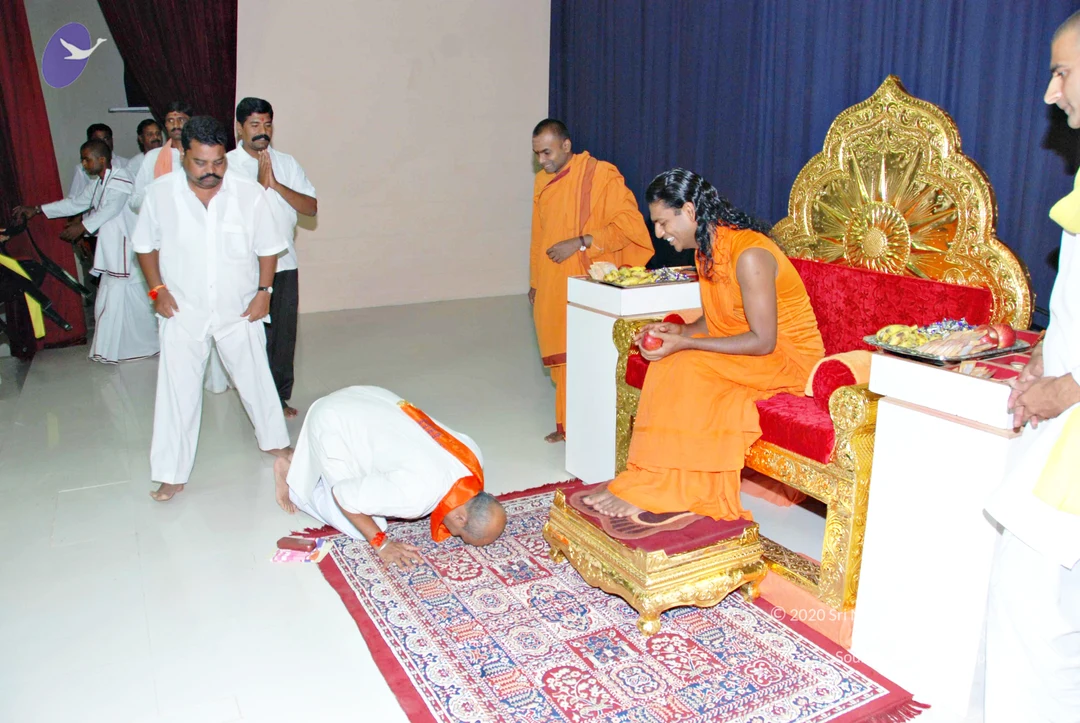
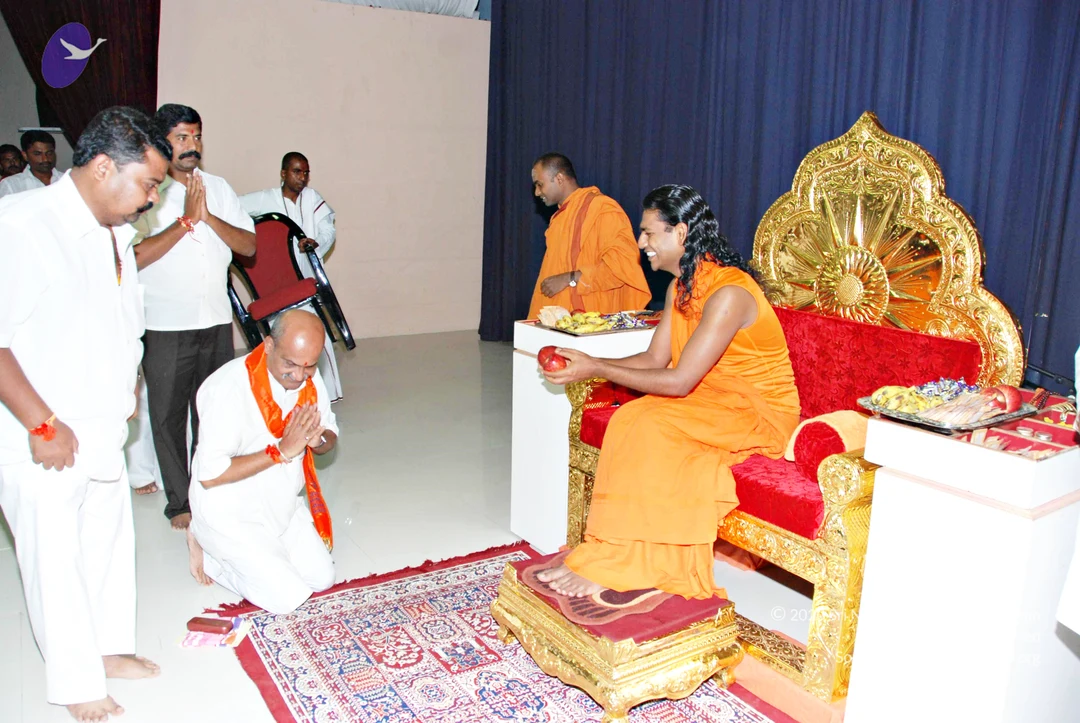
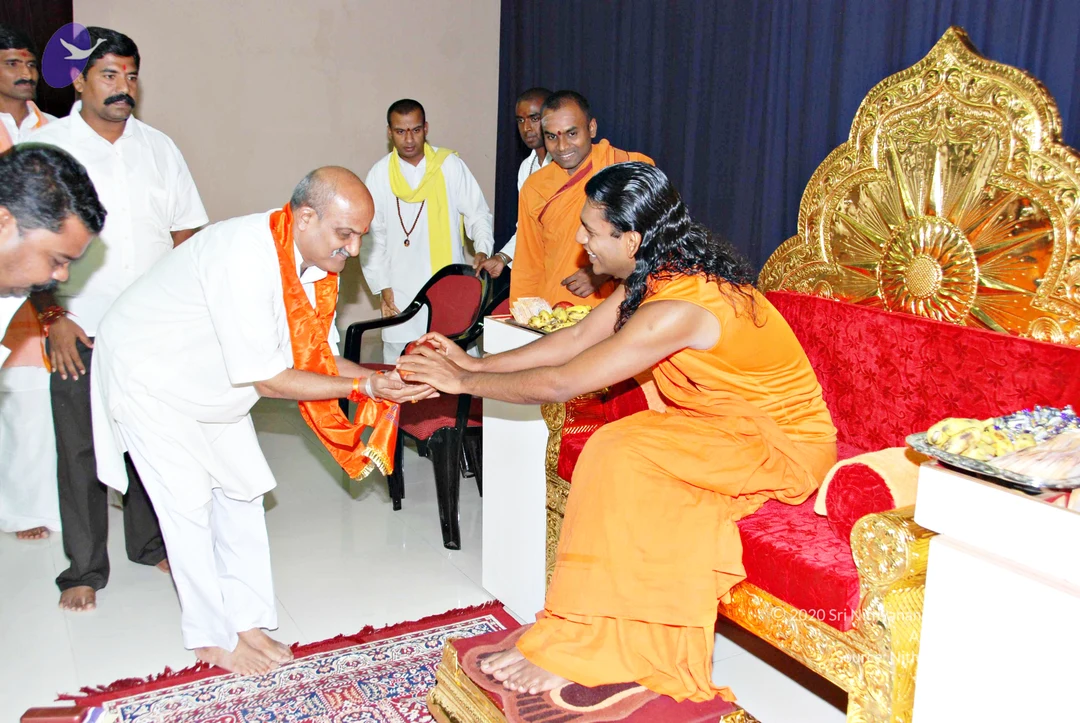
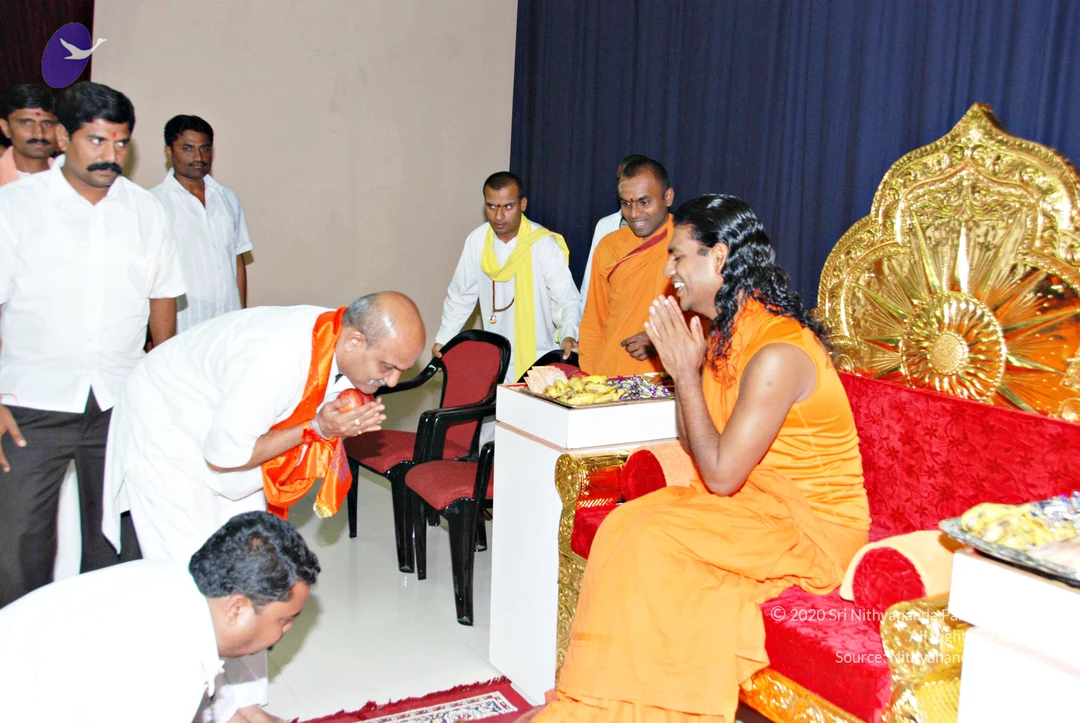
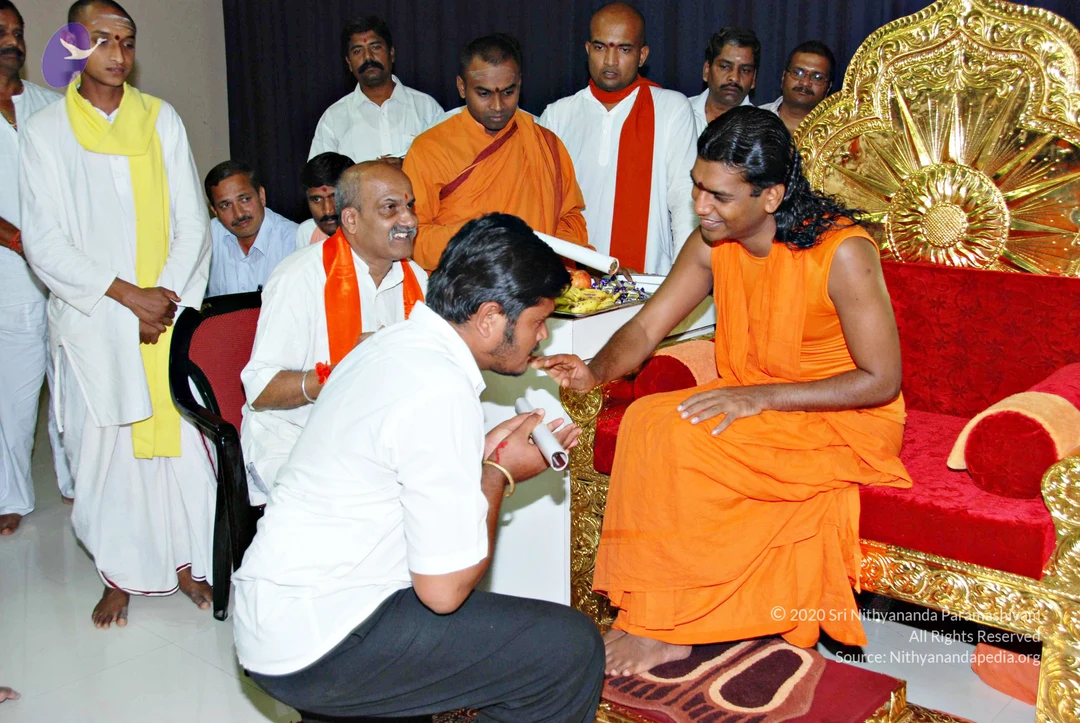
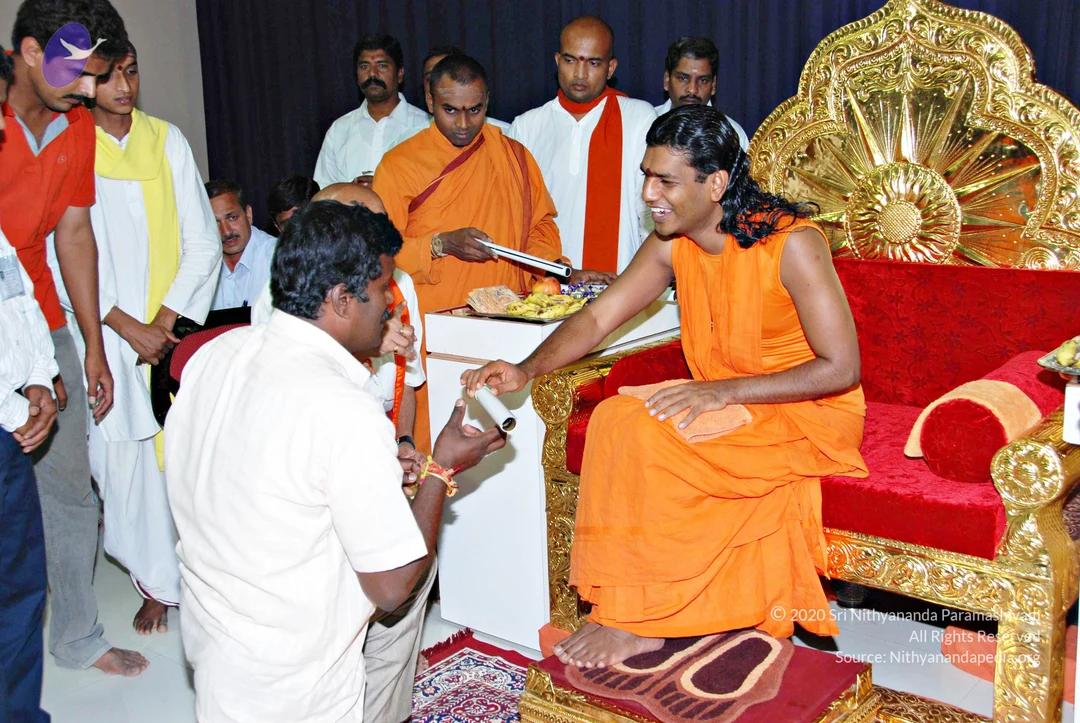
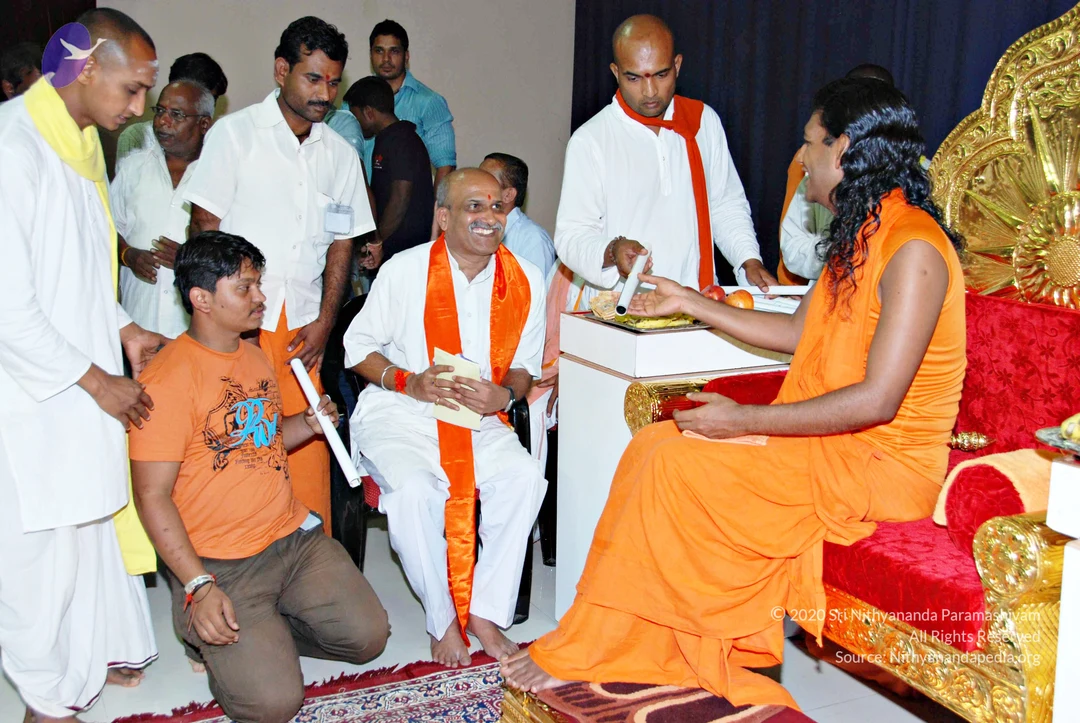
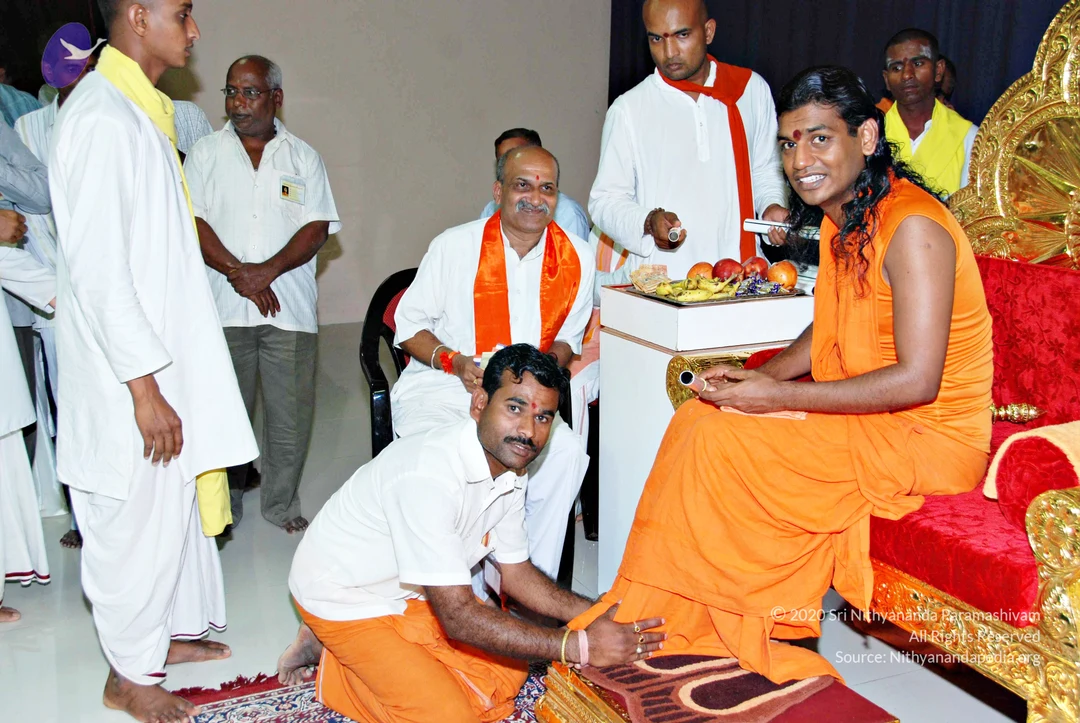
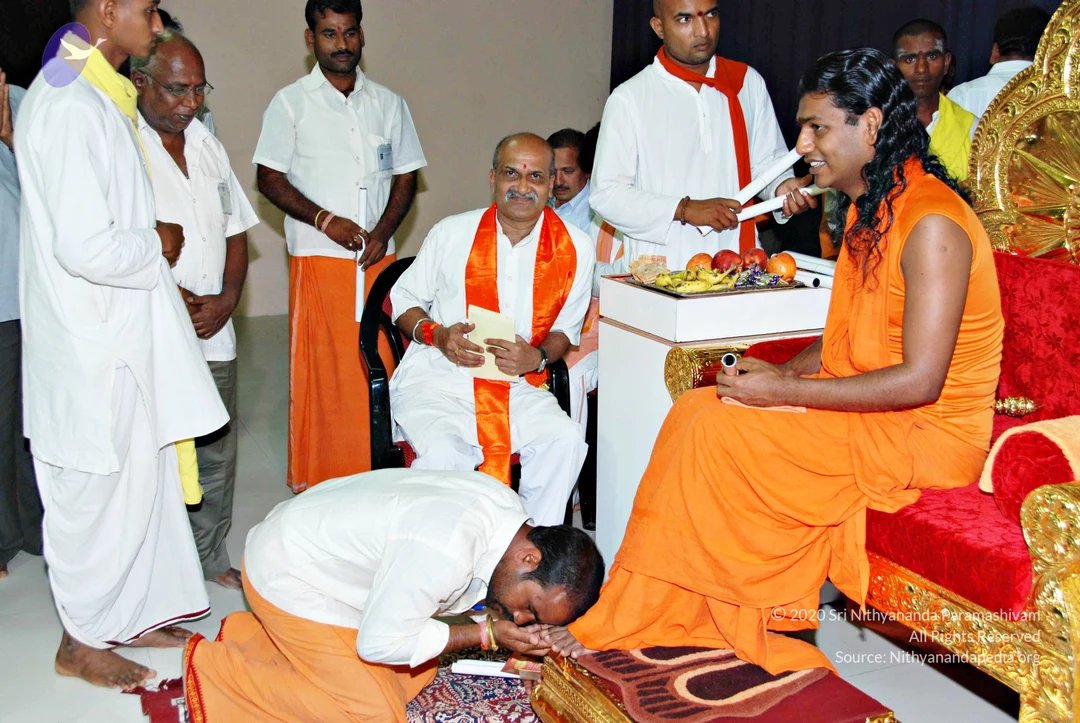
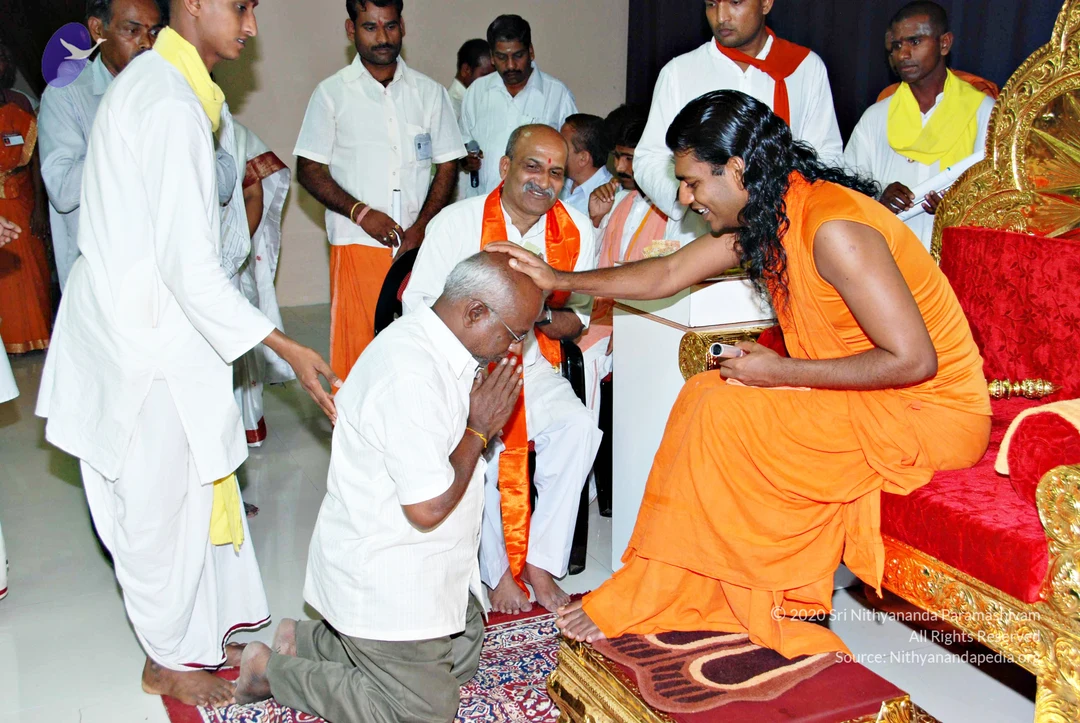
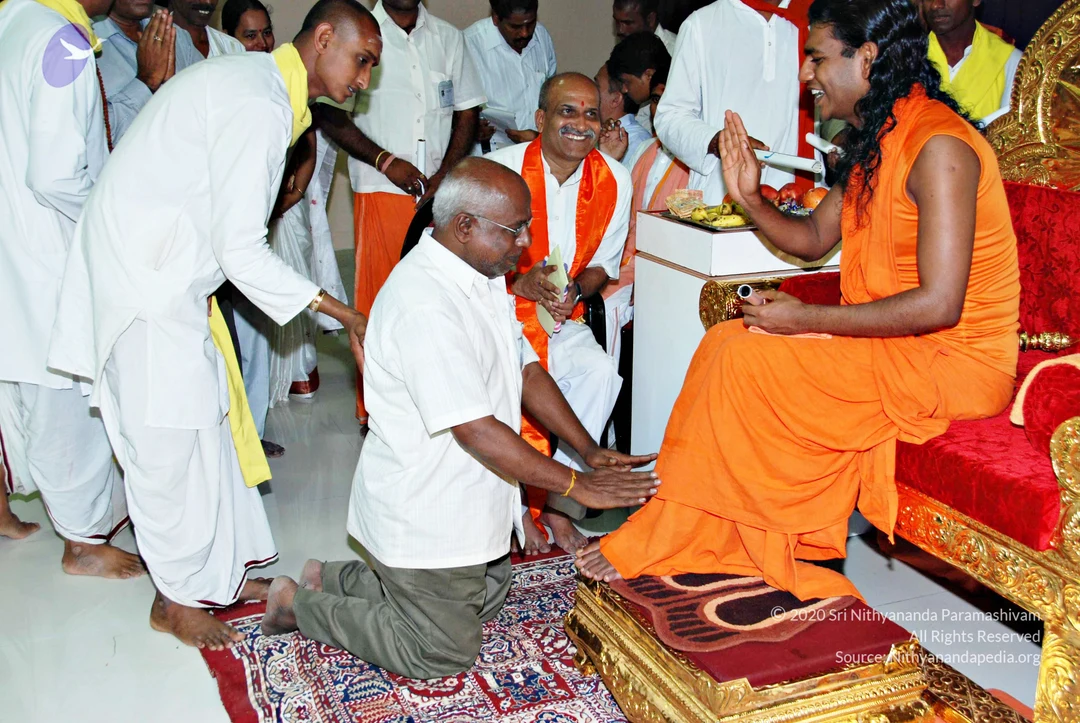
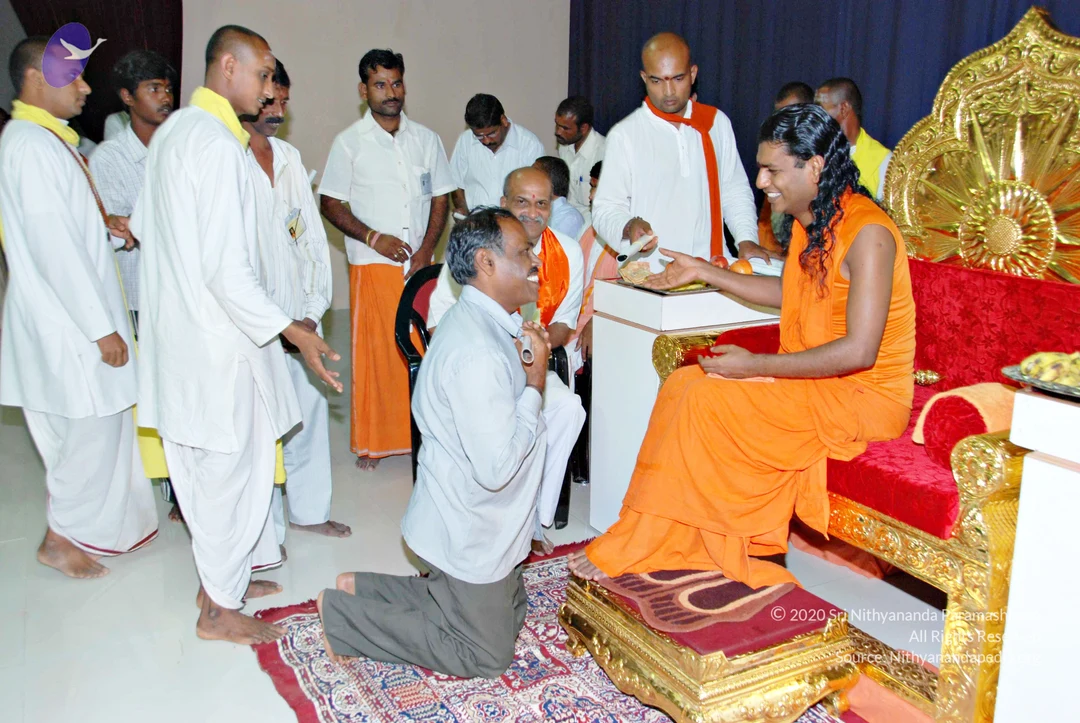
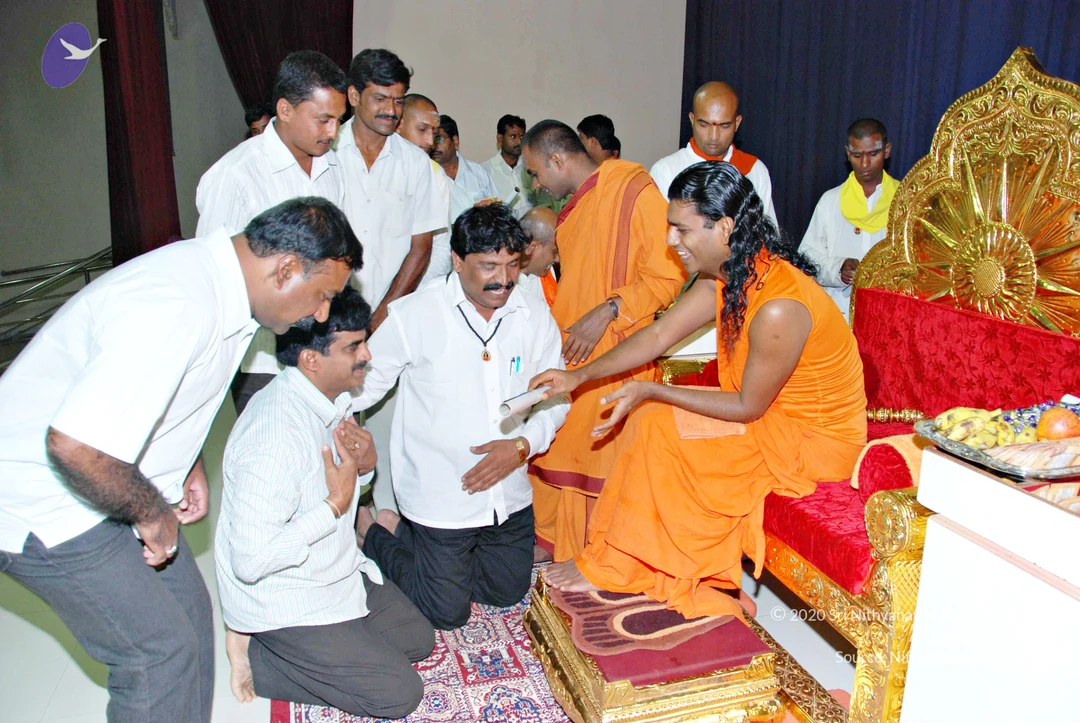
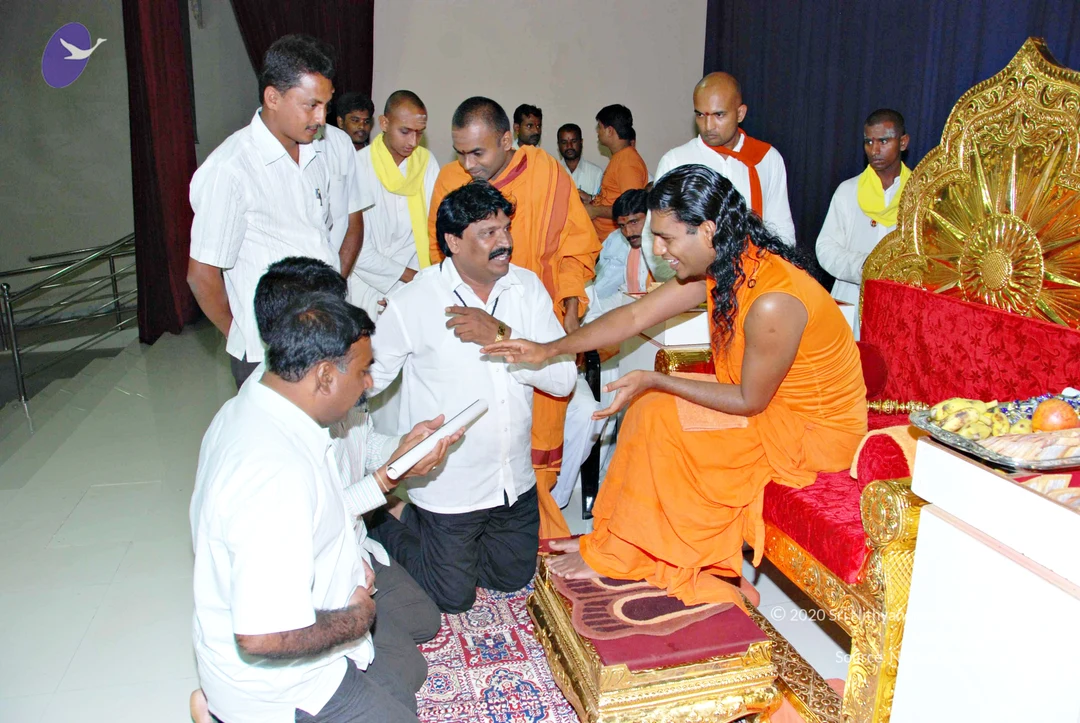
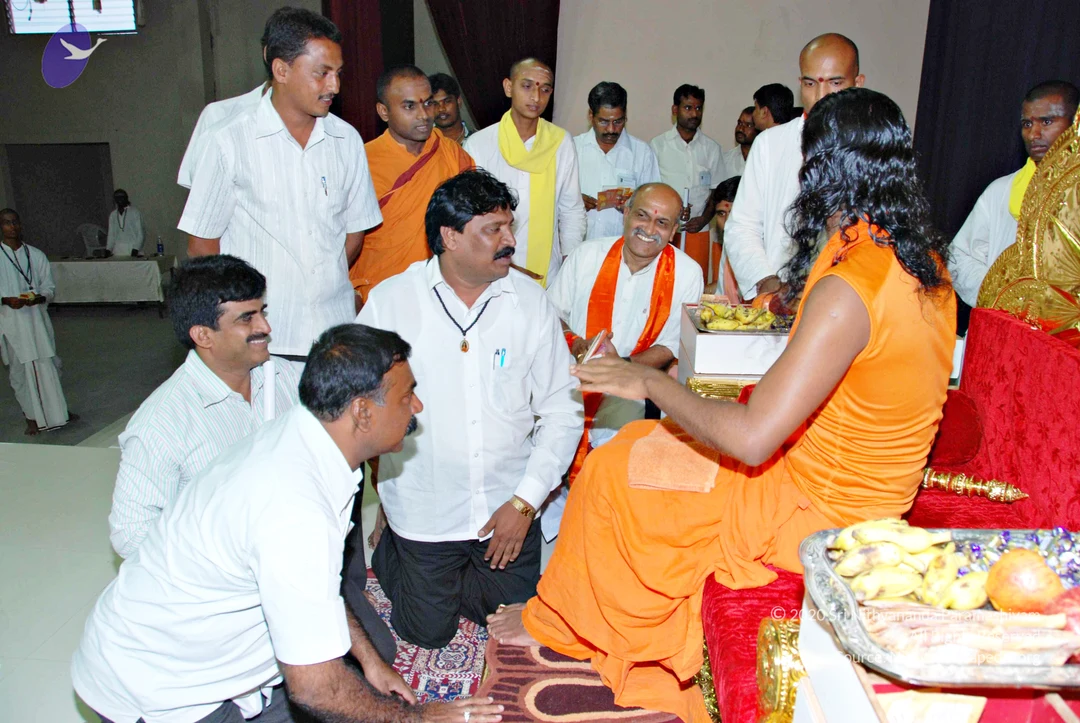
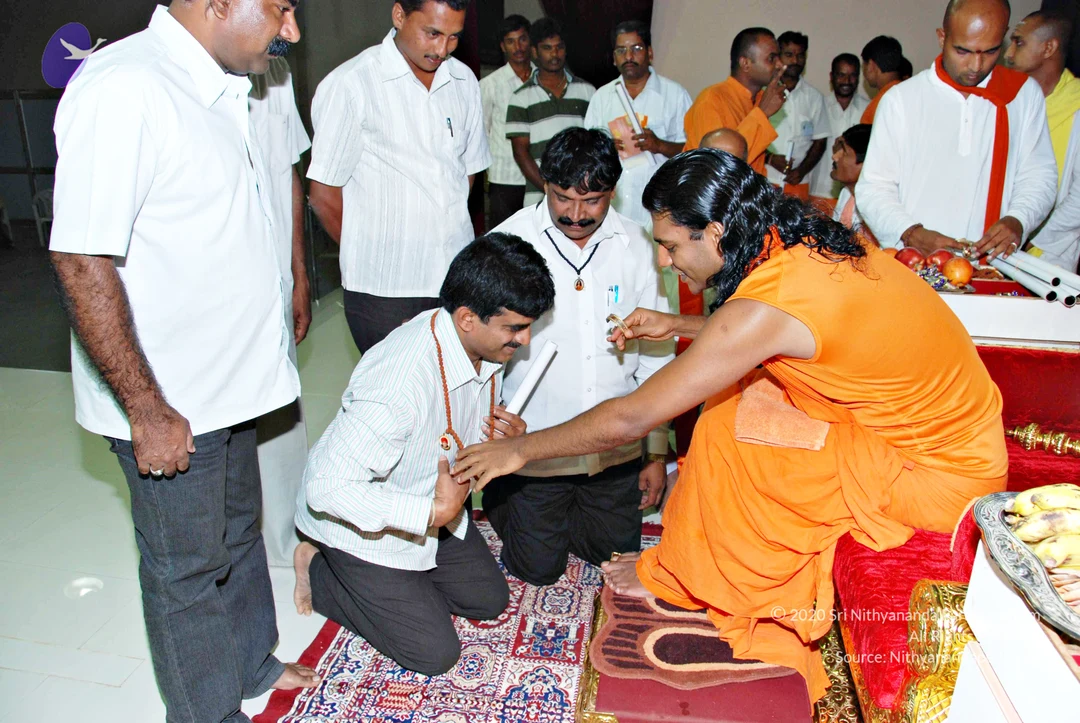
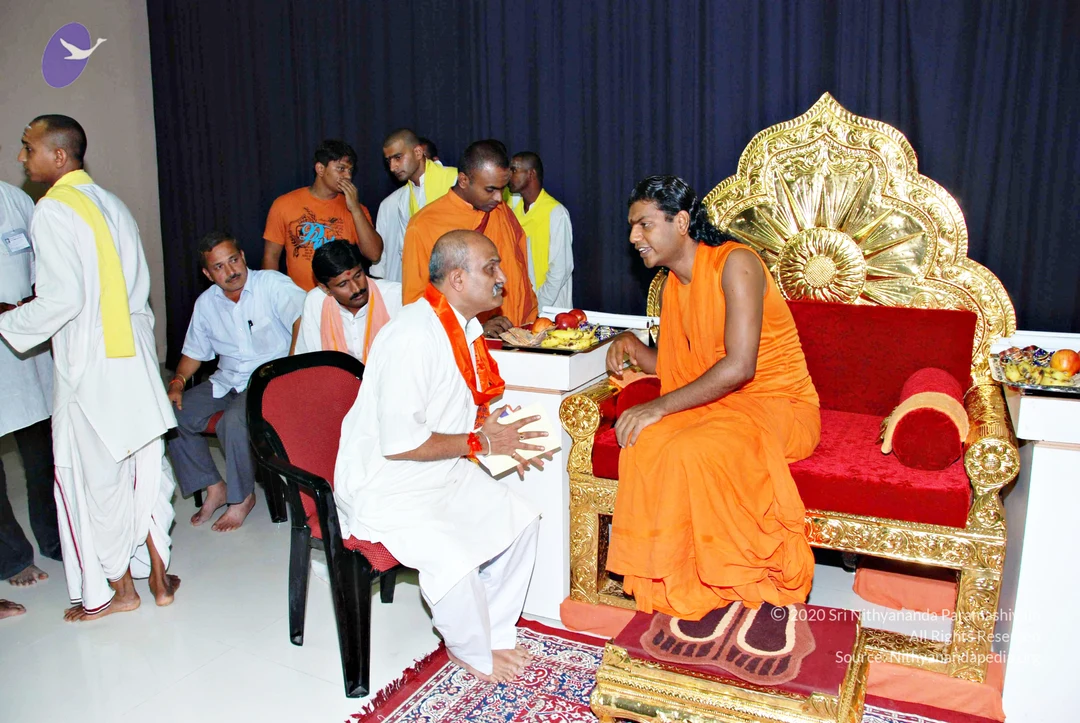
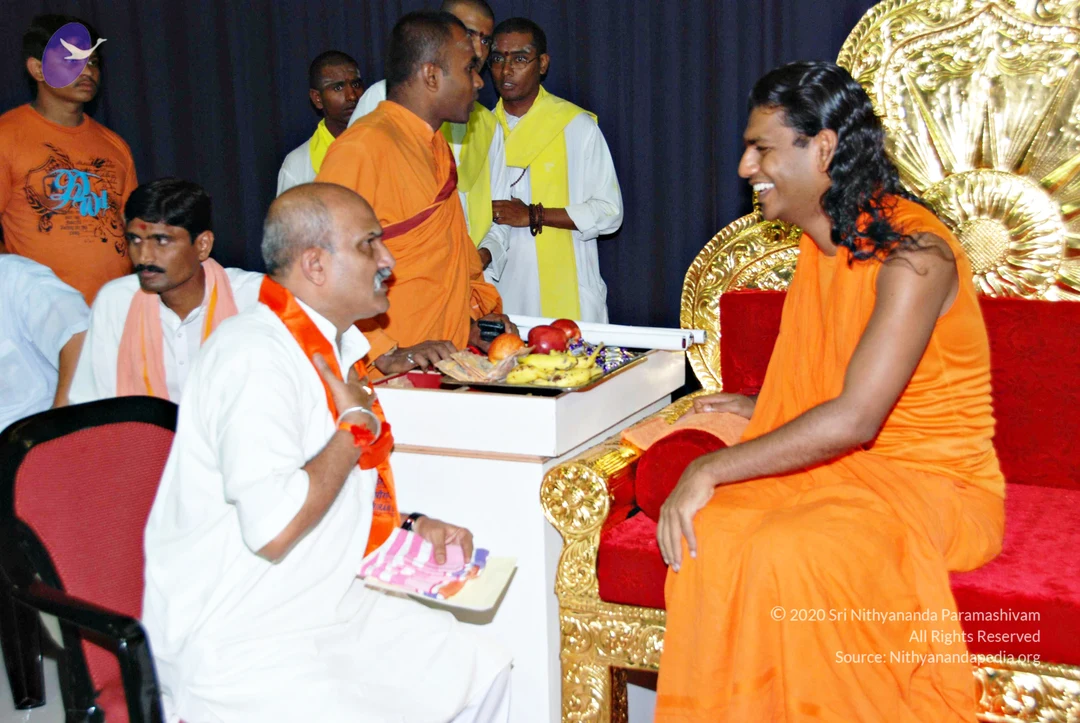
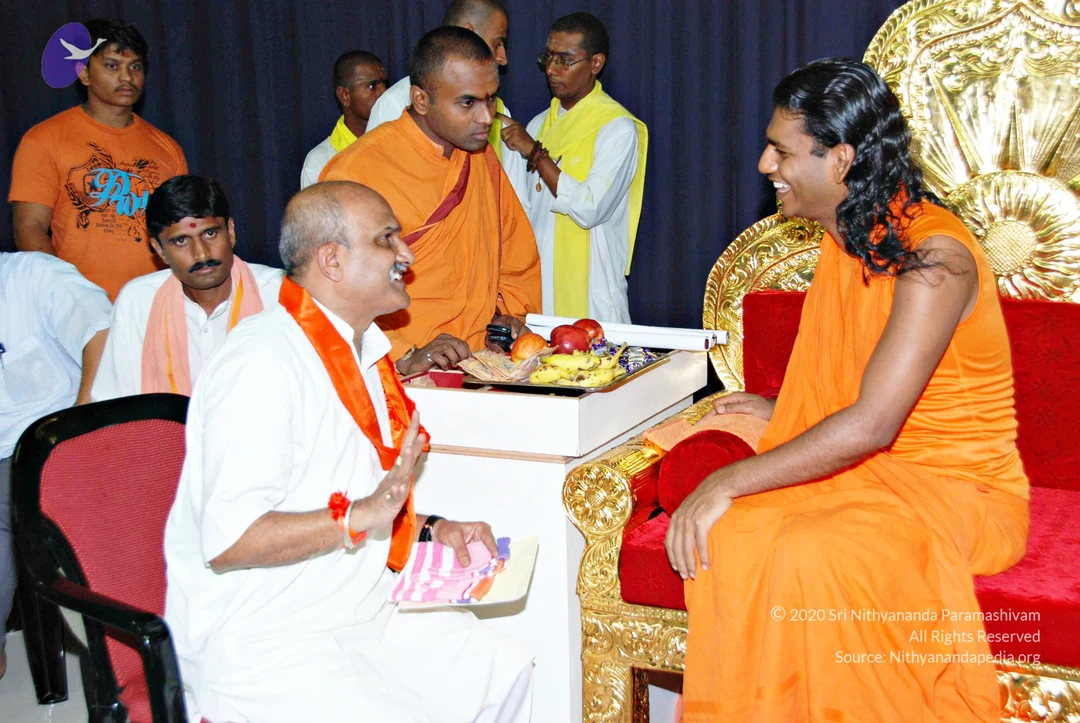
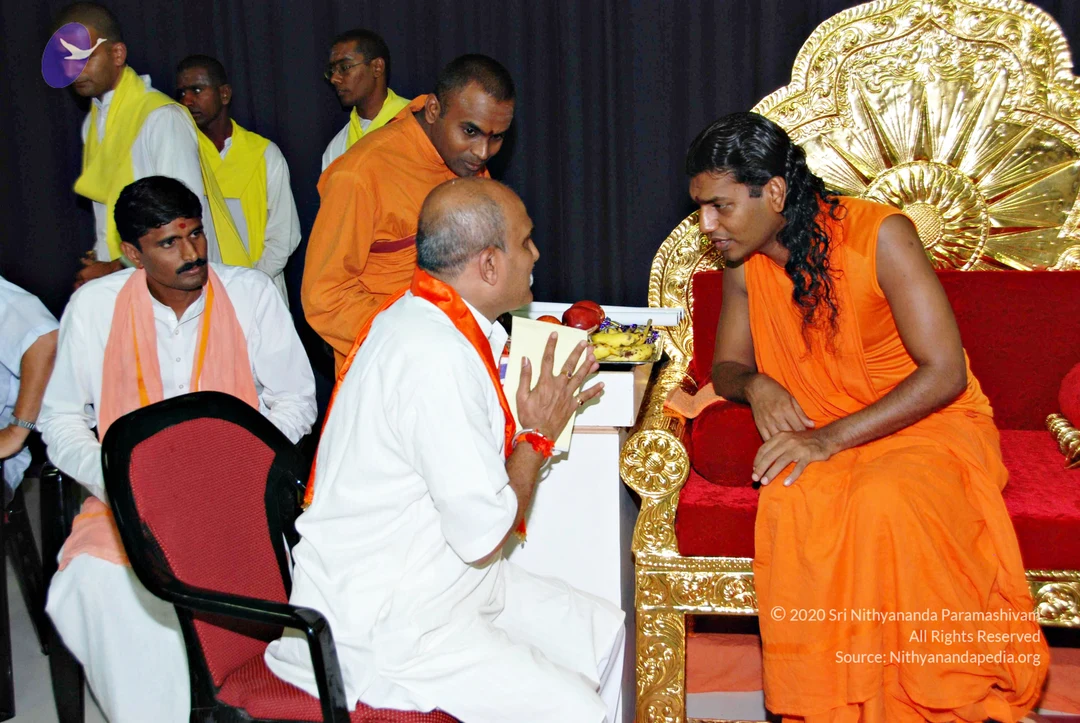
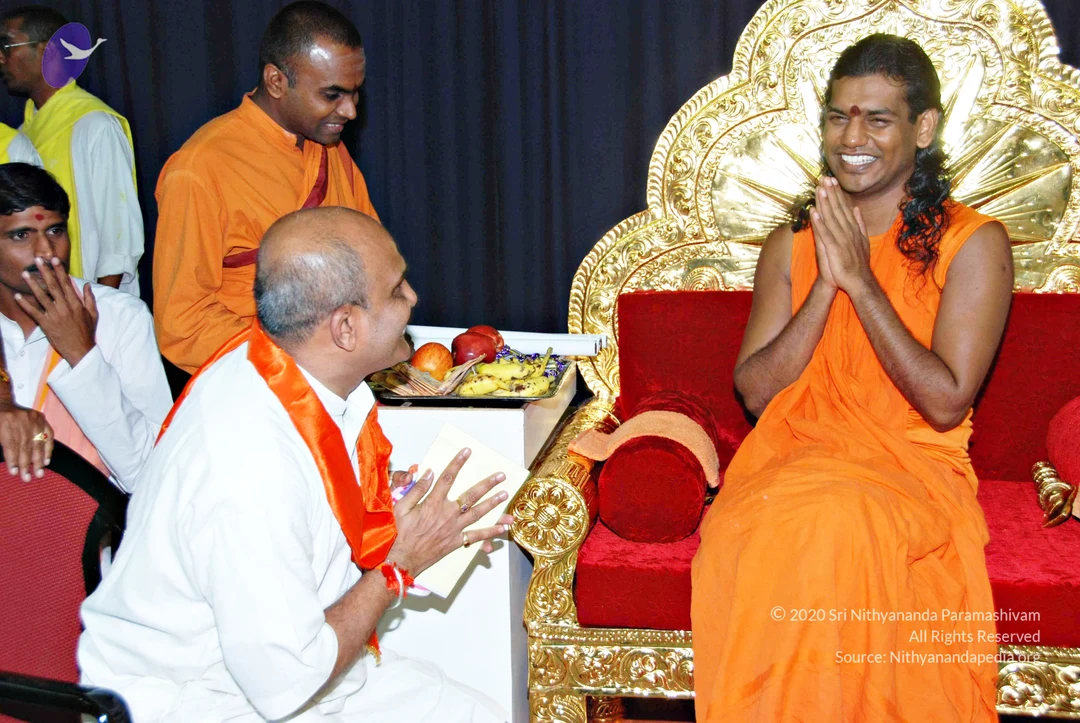
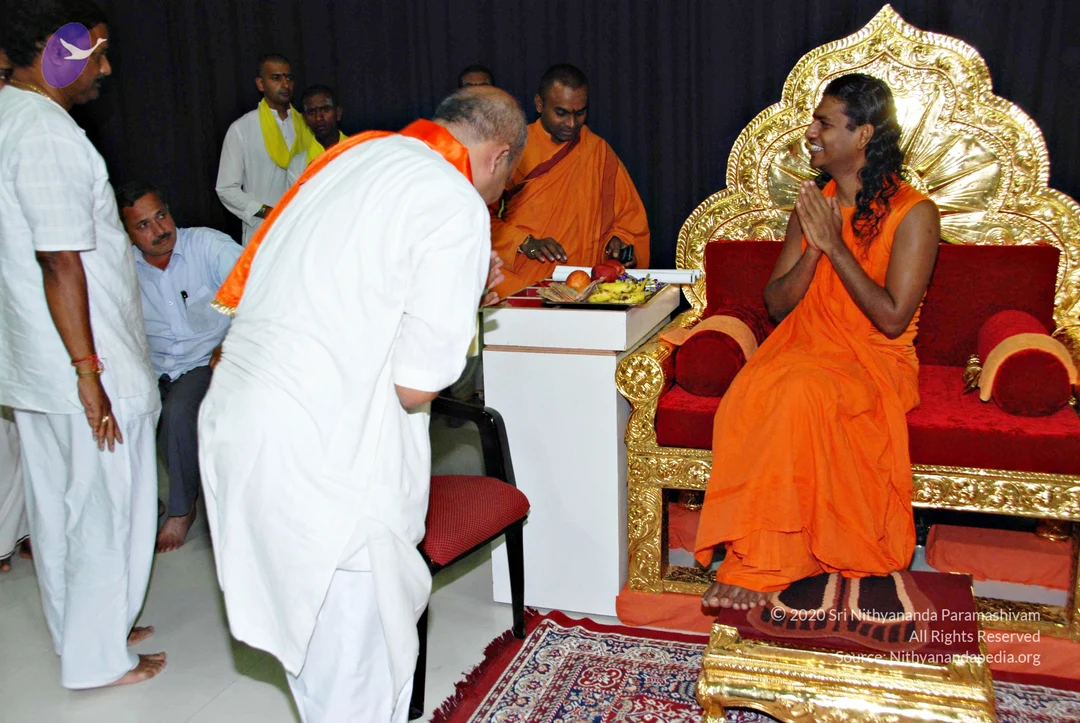
Indoor room with white walls and a window grille. A man with long dark hair, wearing an orange robe, rudraksha mala and bare feet, sits on an ornate red and gold throne-style chair smiling while a man in white shirt and dark trousers bends forward to touch his feet. A seated man in white shirt with a pendant sits on a blue plastic chair at left, and a standing man in white dhoti-style clothing with a mala stands behind. A purple and gold shawl is draped over the chair. A brass oil lamp, a small deity murti and a framed portrait in orange robes with a turban hang on the right wall, and an orange-robed figure with a mala is shown in the framed photo above the chair. A brass tray with offerings sits at the right edge. A wall fan stands at left.Indoor photo in a plain room. A man with long dark hair, a white tilak on his forehead, an orange robe and a dark rudraksha mala sits on a red upholstered gold-trimmed throne, smiling, and hands a red apple or fruit to a seated man in a white shirt, dark trousers and a purple-and-gold shawl who extends both hands to receive it. The seated man sits on a blue plastic chair. Behind them a standing man in white with a rudraksha mala stands by a wooden cabinet. Brass oil lamps, a brass kalasha-style vessel and small deity murtis sit on a red-carpeted step. A white-clad person is partially visible at left.
08

08-LBT-YOGA

8 dated photos in previewSource gallery
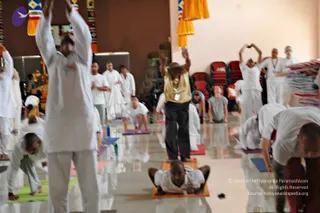
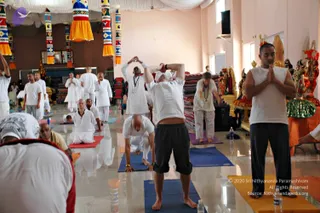
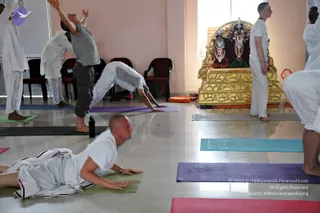
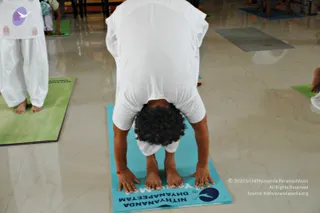
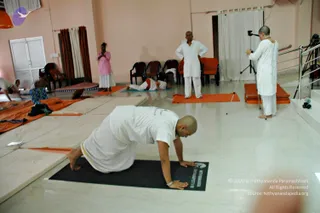
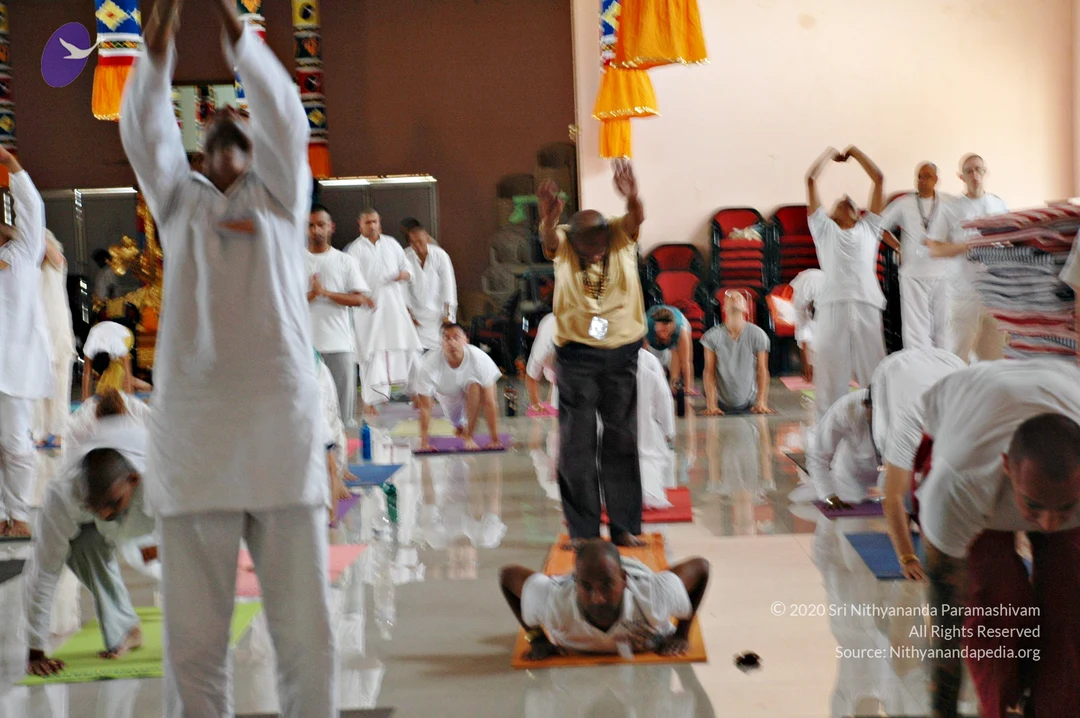
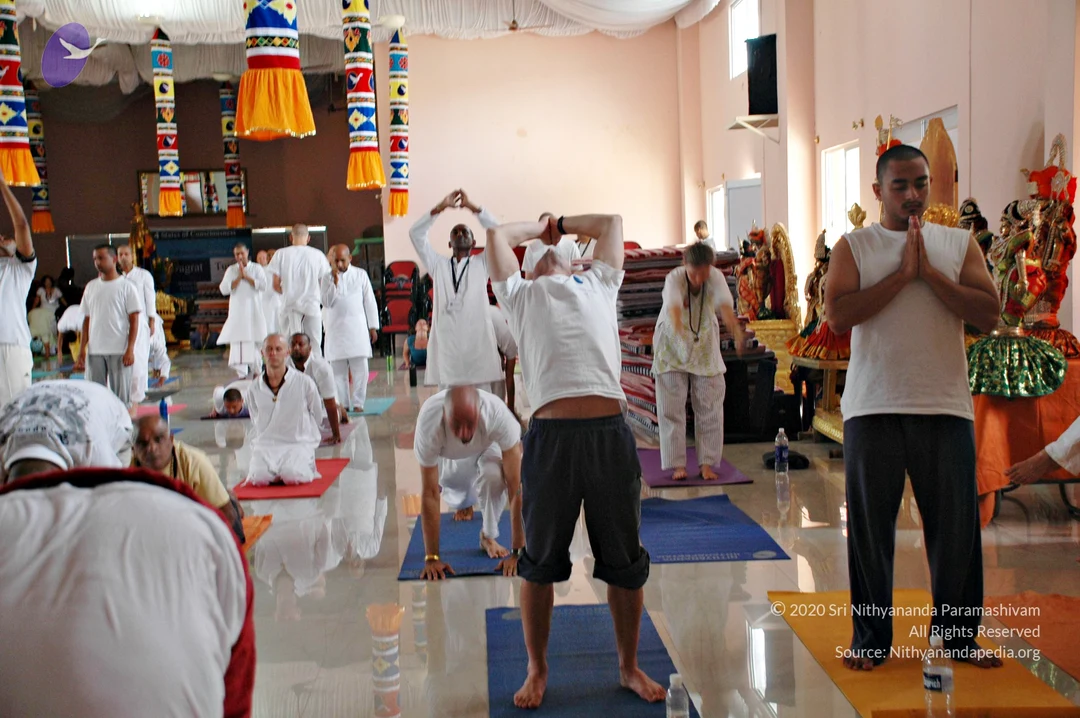
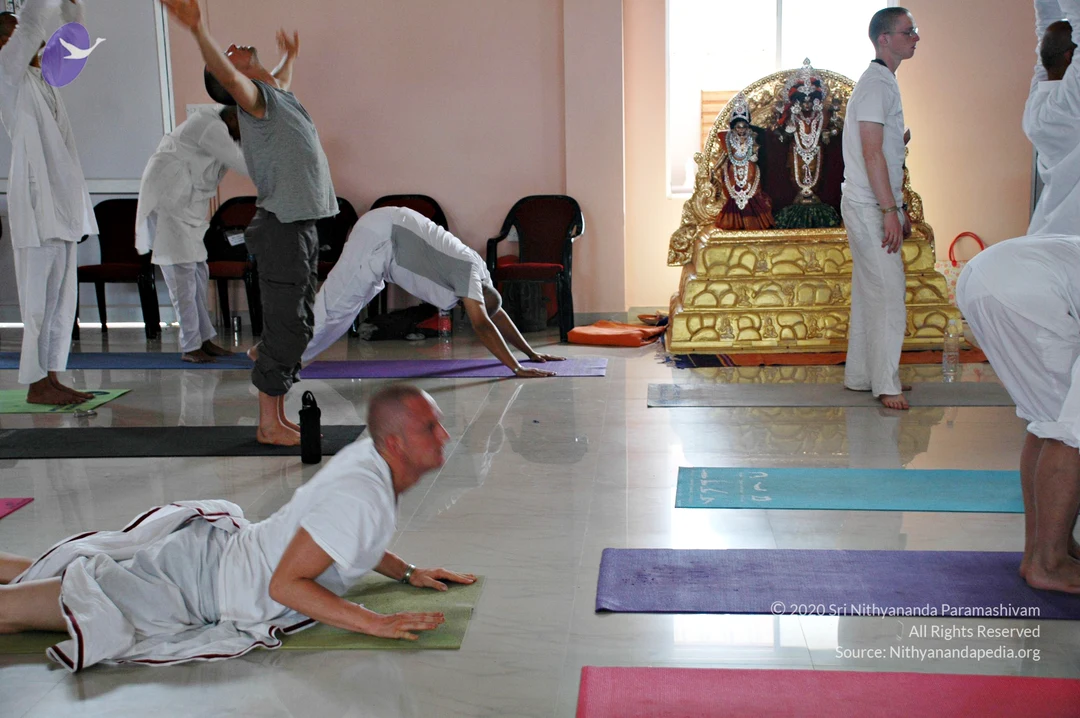
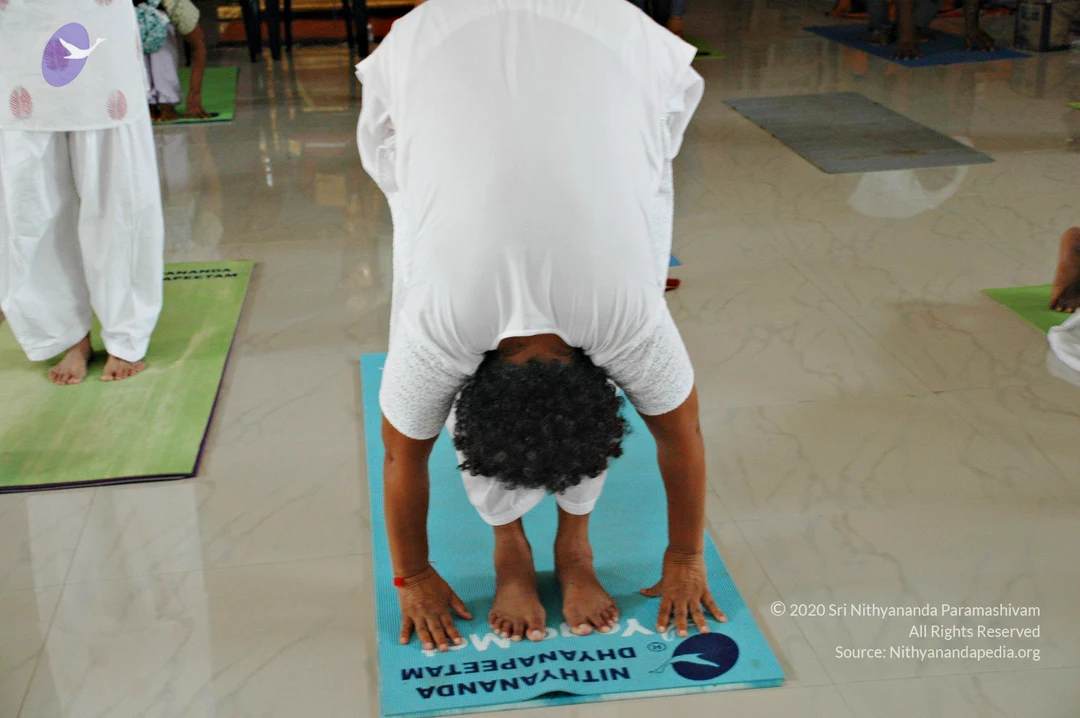
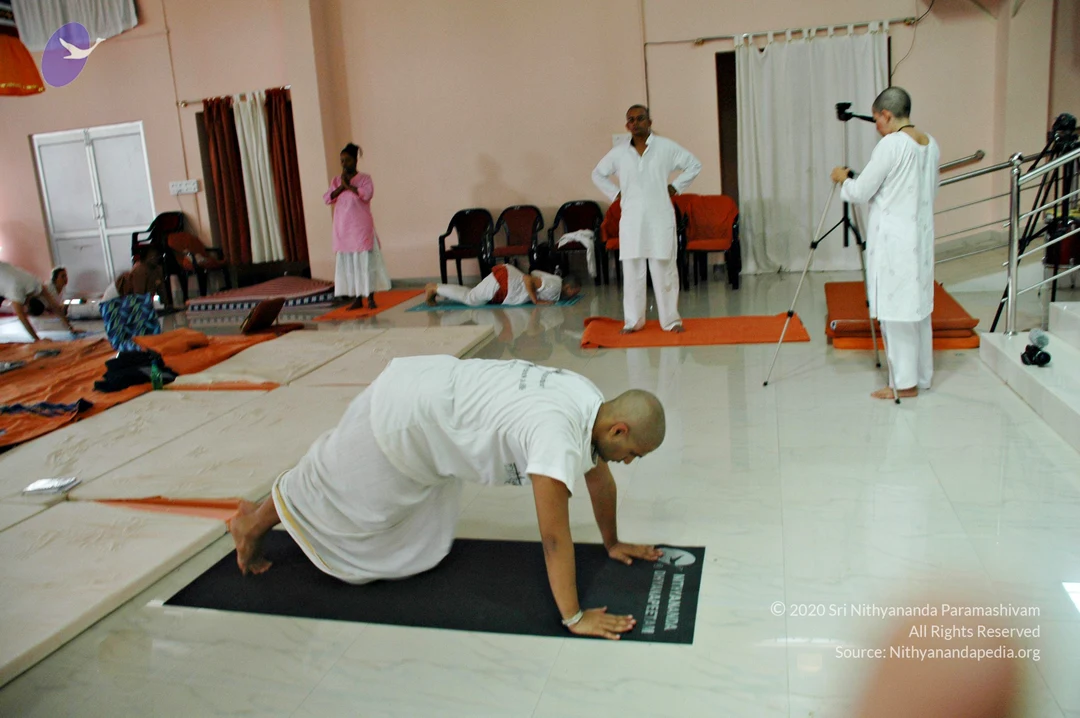
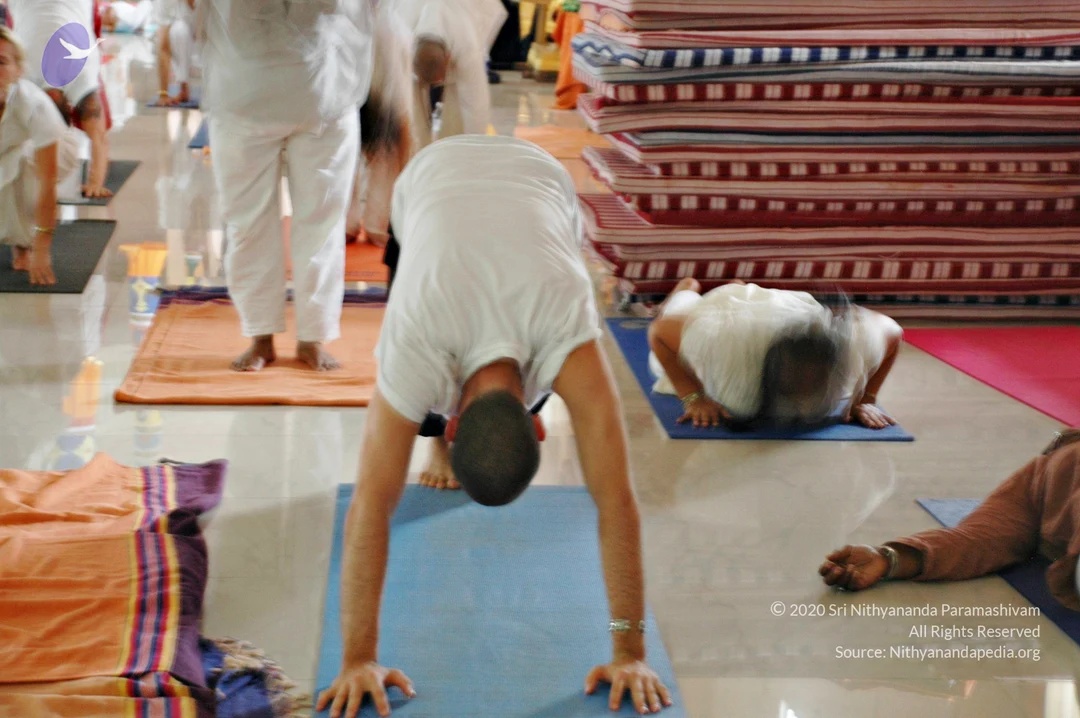
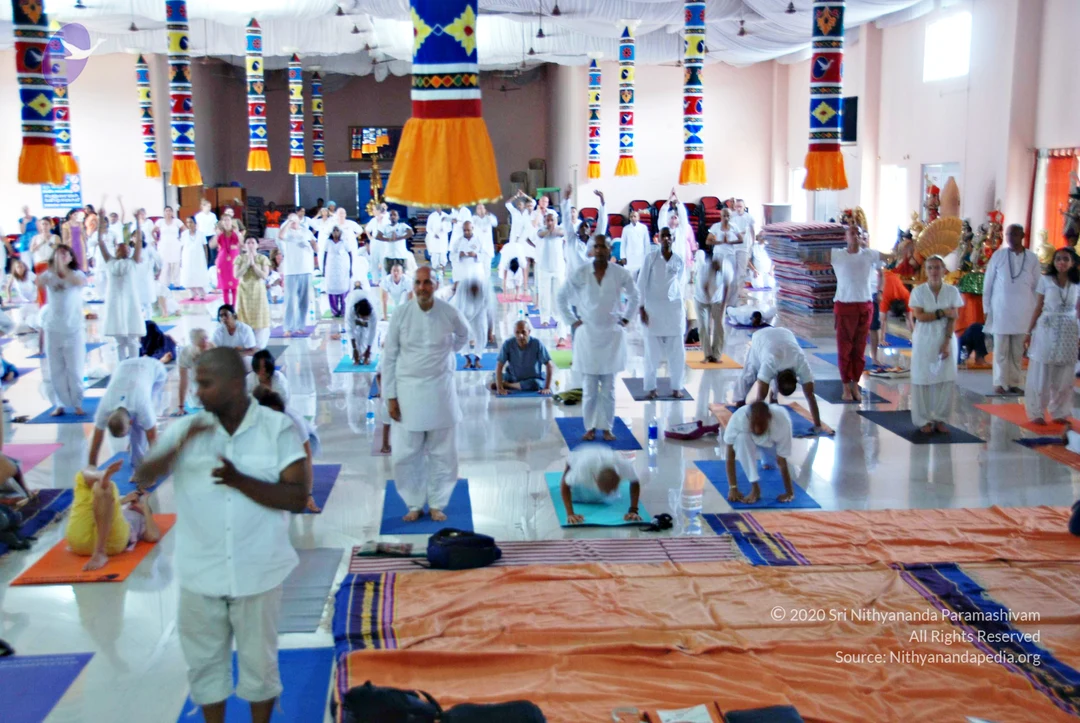
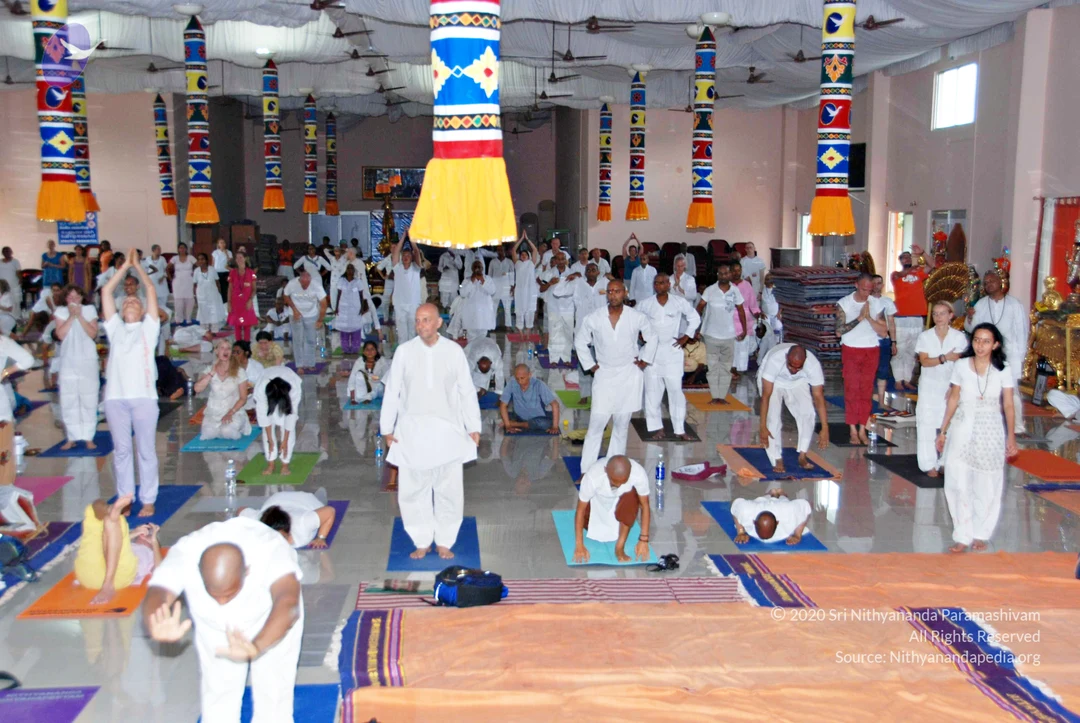
A yoga session in a hall with cream walls and a brown wall, decorated with orange and colourful hanging fabric panels. Many participants in white clothing stand, bend and stretch on mats across a polished reflective floor. In the foreground a man in white stretches forward on an orange mat, and a man in a gold shirt with dark trousers and a neck mala stands in a forward bend on an orange mat. Some people raise their arms overhead, others with hands joined above their heads. Red chairs line the back wall and a stack of folded blankets is visible at right. A yoga group practice is in progress.A large group of practitioners performs yoga in a bright hall with a polished reflective floor. Many wear white clothes; some have shaved heads. In the foreground a man in a white sleeveless top and dark shorts stands on a blue mat with his hands raised, and at right a man in a white sleeveless top and dark trousers stands on a yellow mat in prayer pose with palms together. Others bend forward, kneel on red and blue mats, or stand with arms overhead. Colourful woven tassel hangings with orange fringes hang from the ceiling. At right stand decorated deity murti figures with gold and green ornaments and an orange cloth draped over a platform. A bottle of water sits on the floor.A yoga session in a bright hall with pale pink walls and polished floor. Several people in white clothes stretch on coloured yoga mats: one man lies prone with palms down, another in grey top and dark trousers arches backwards with arms raised, and a bald man in a white shirt and trousers bends forward on the left. A standing man in white with glasses looks on at right. Behind them stands a golden throne-like seat holding a deity murti pair adorned with white garlands and a green cloth backdrop. Chairs and a water bottle are scattered around the room. The people visible total about six.A photograph of a yoga practitioner in a forward bend on a light blue yoga mat printed with NITHYANANDA DHYANAPEETAM and a bird logo. The person wears a white sleeveless top and white trousers, with dark curly hair and bare feet, hands pressed flat on the mat. Other practitioners on green and dark mats are visible at the edges of a polished marble hall, some in white pants and bare feet.A photograph of a yoga session in a pale pink hall with a polished white marble floor. In the foreground a bald man in a white t-shirt and white dhoti kneels on a black mat, bent forward with both palms flat, as if in a yoga pose. Behind him, several people lie on orange mats and another stands on an orange mat in white clothing. A man in white kurta and white trousers stands watching near folded chairs, and a woman in pink top and white skirt stands to the left. On the right, a bald person in white robes operates a camera on a tripod beside a metal railing. White curtains hang in the background.A yoga session in a bright hall with polished floors. In the foreground a man in a white t-shirt and white trousers bends forward with hands flat on a blue mat, head lowered, a red headset or cord visible near his ears. Behind him a woman in white clothing leans forward in a child's pose on a blue mat, and further back other practitioners in white stand and bend on mats. Stacks of striped red and cream mattresses line the right side, and an orange and purple cloth lies on the left. A hand in a rust-coloured sleeve rests on a mat at the lower right. No a person candidate is visibly present.
09

09-TAMIL-KALPATARU

9 dated photos in previewSource gallery
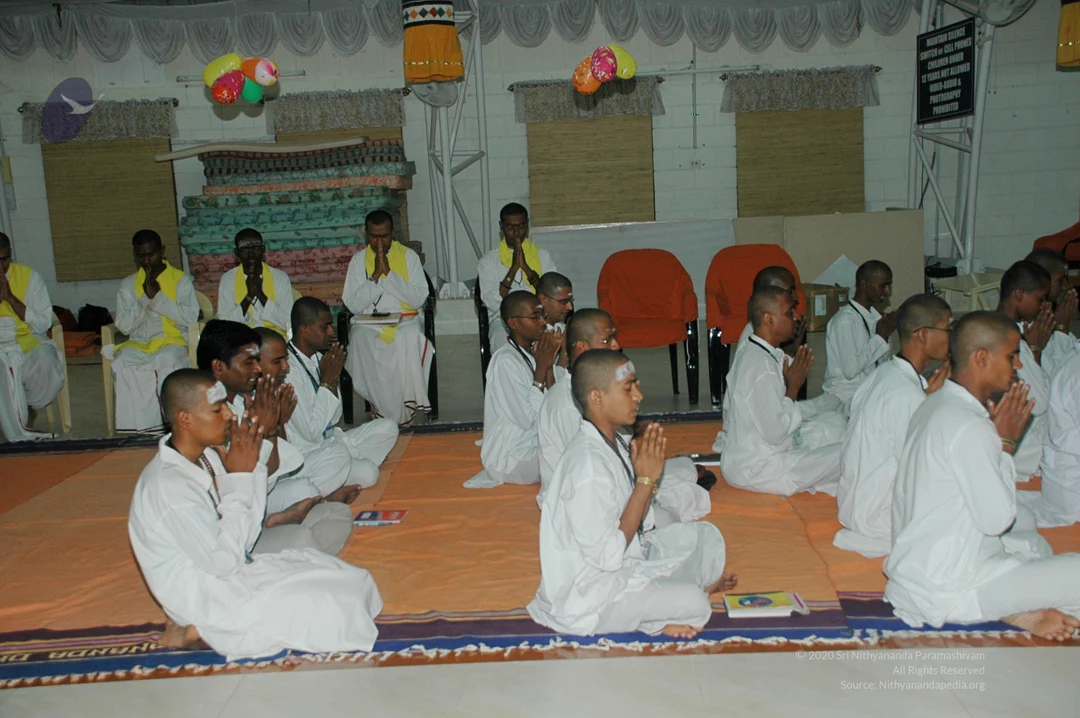
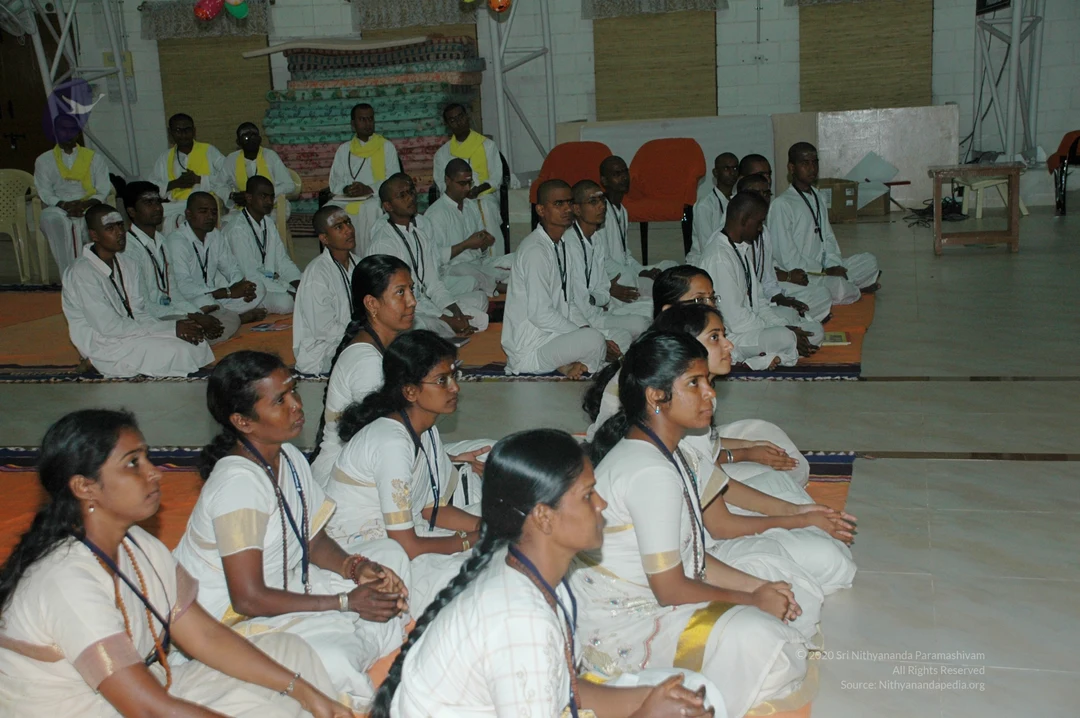
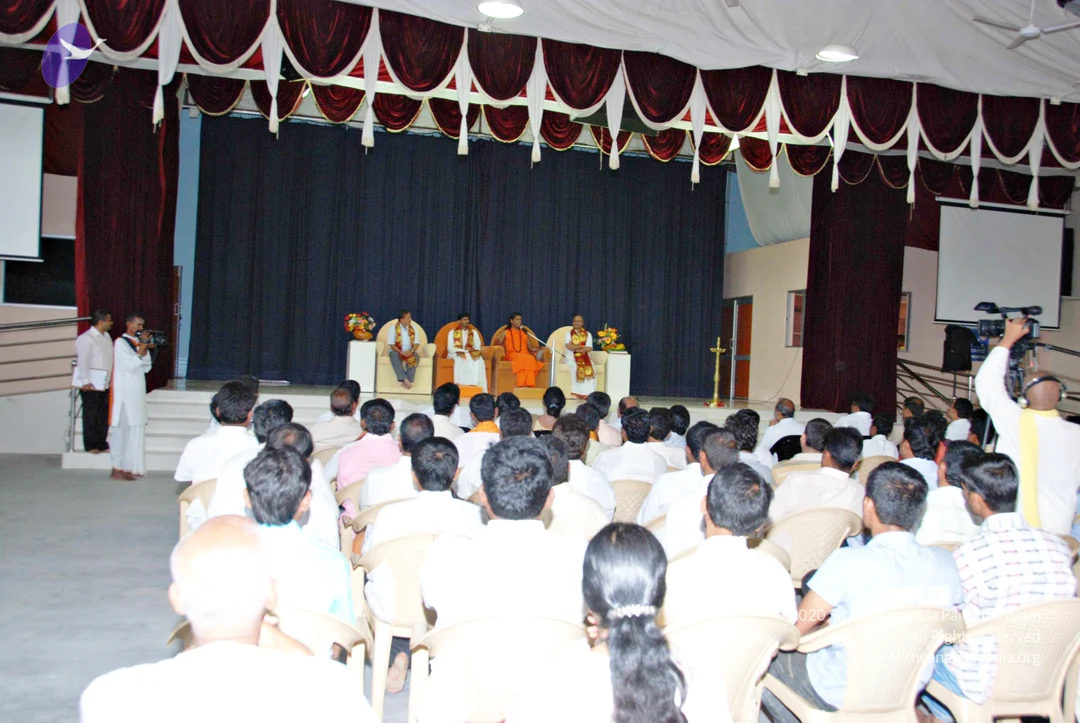
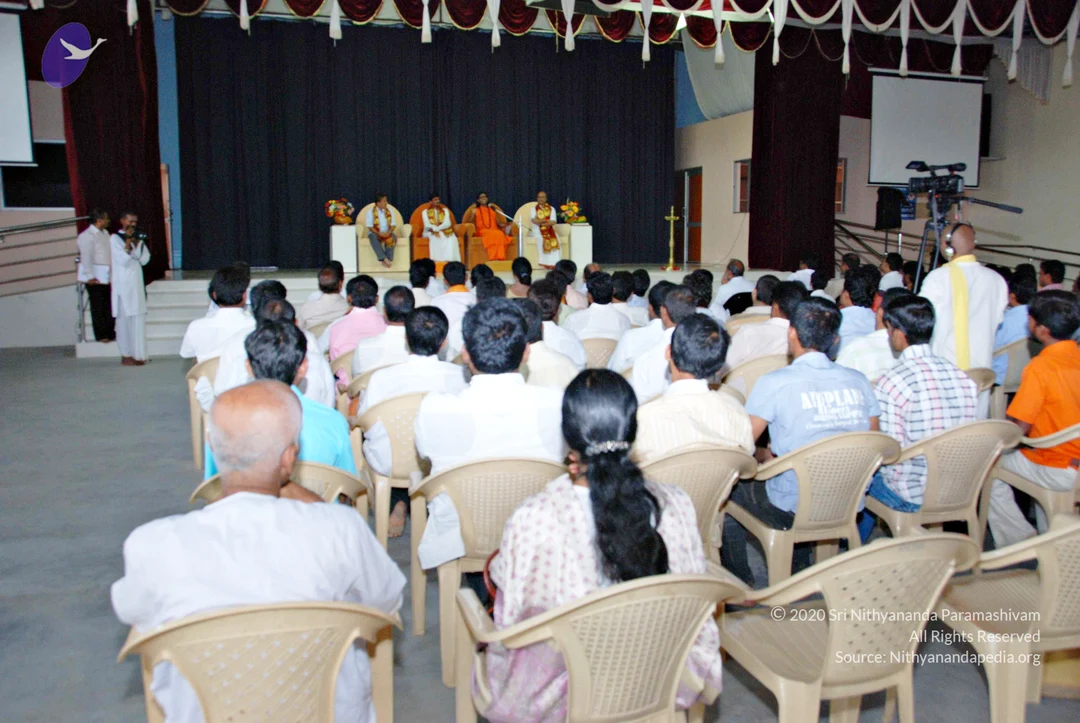
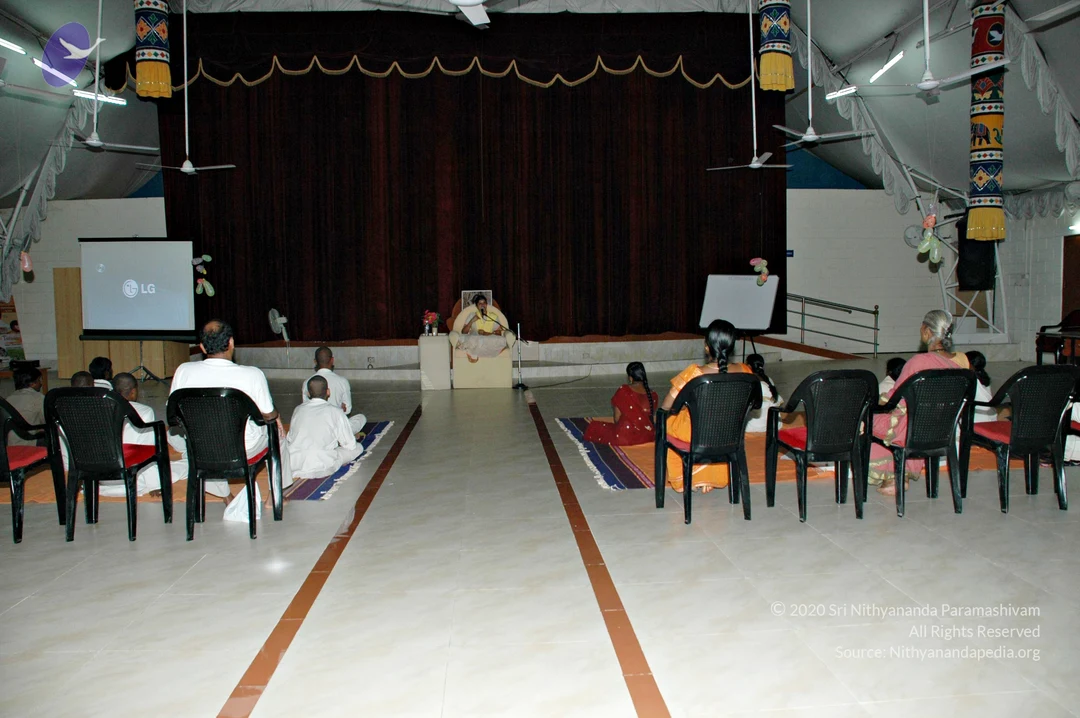
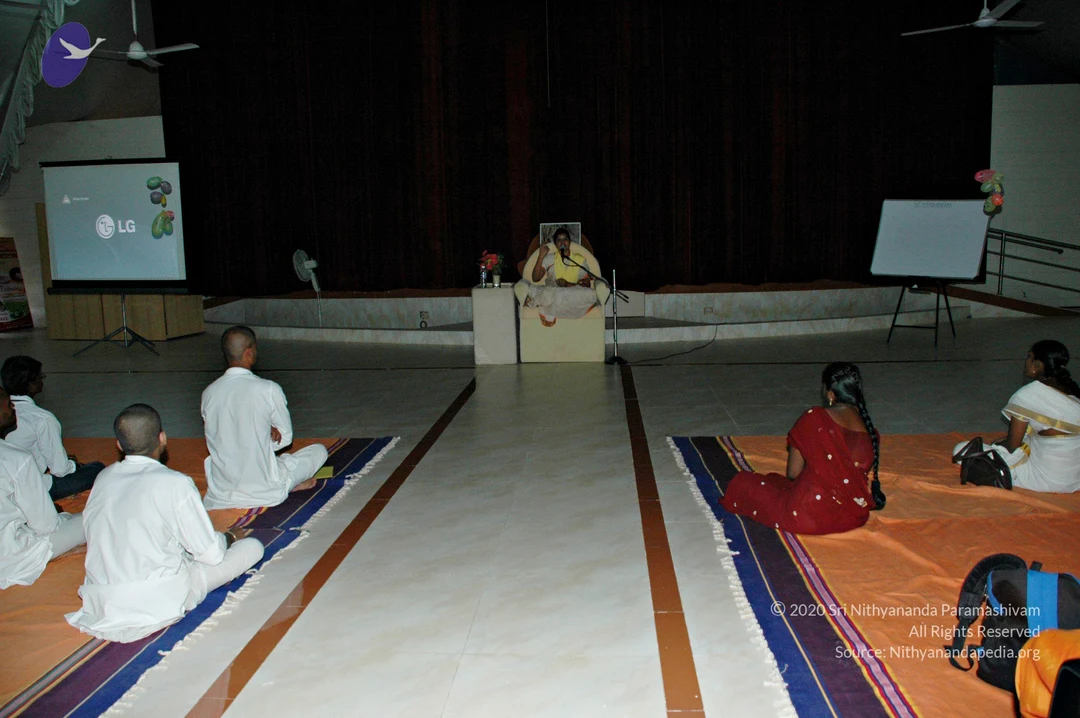
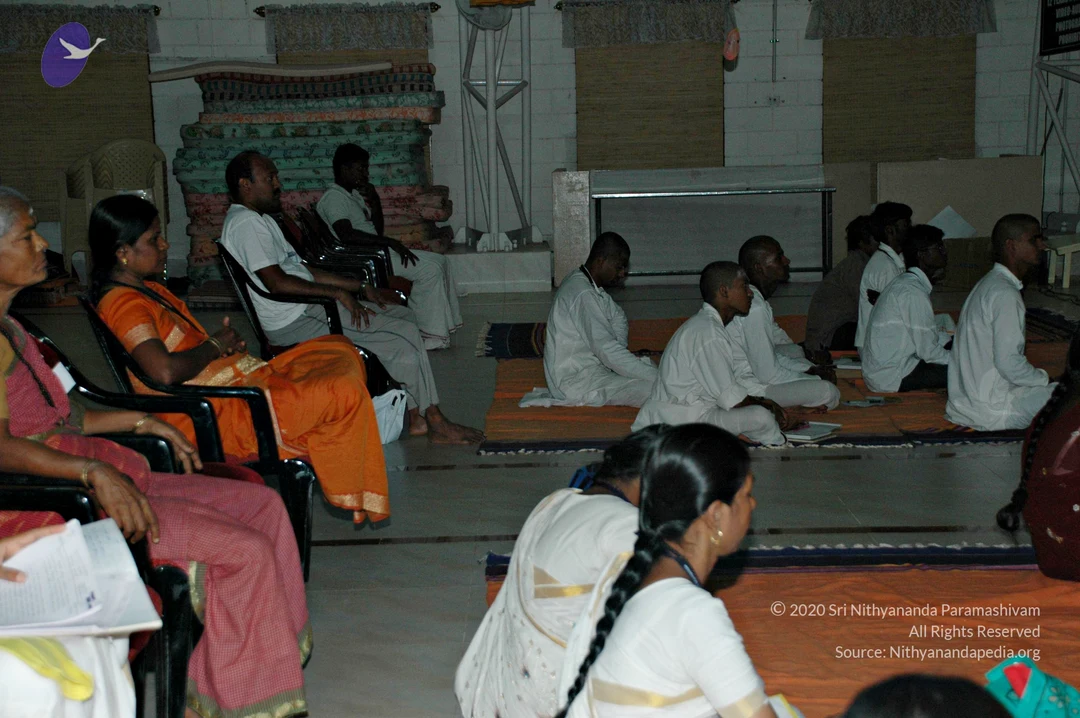
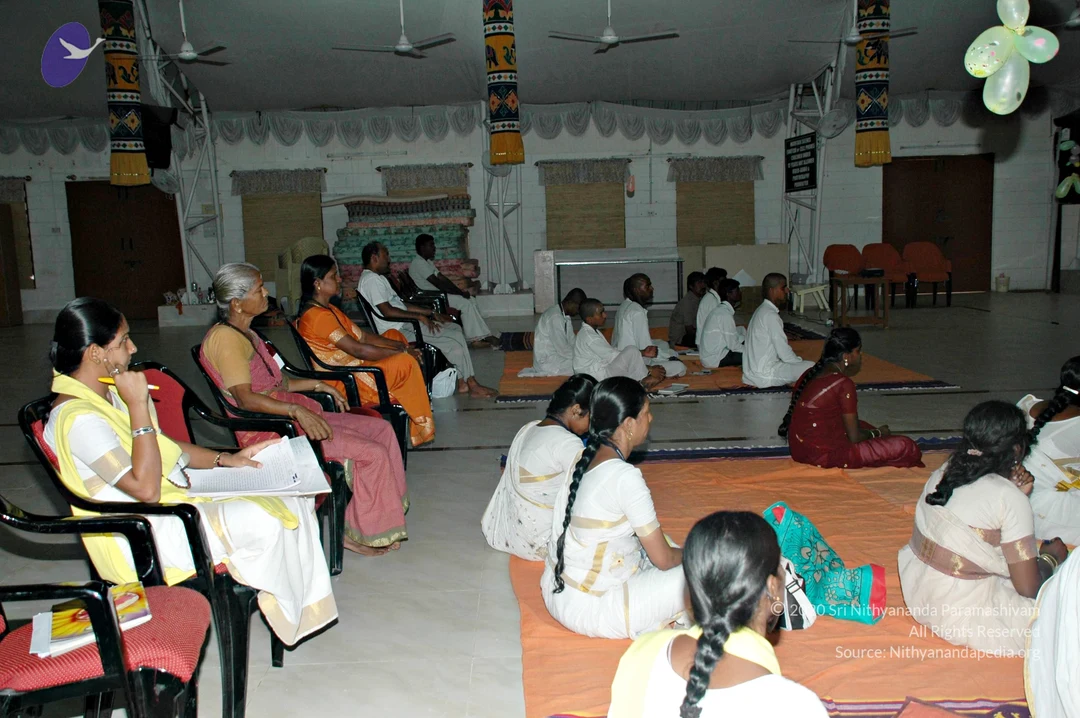
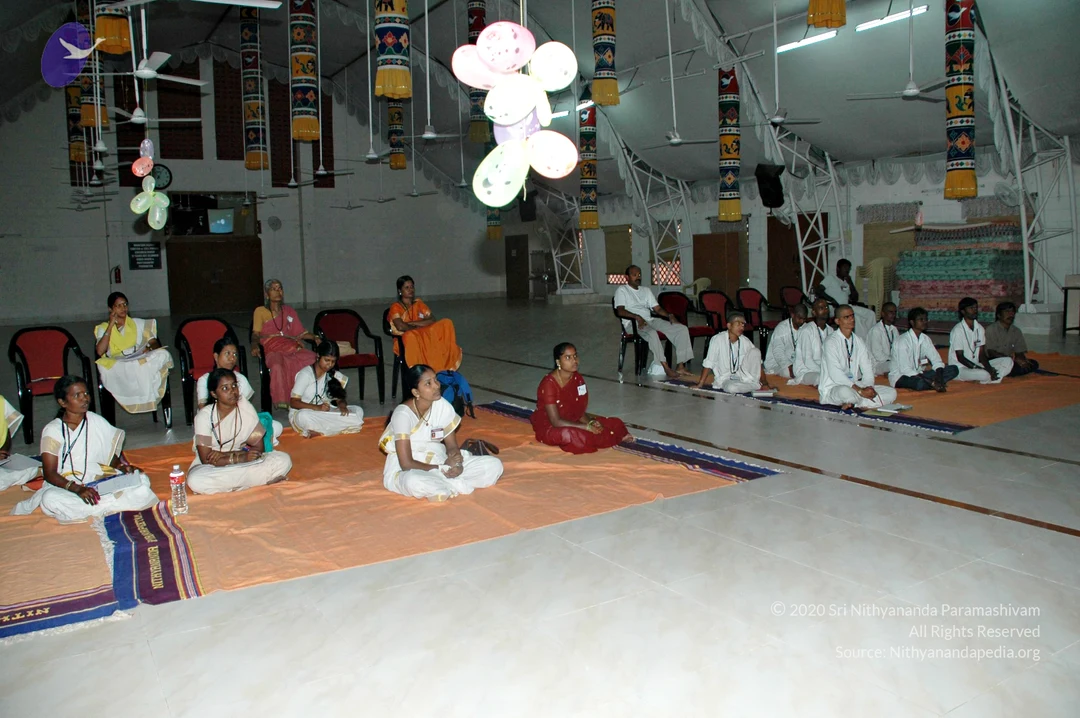
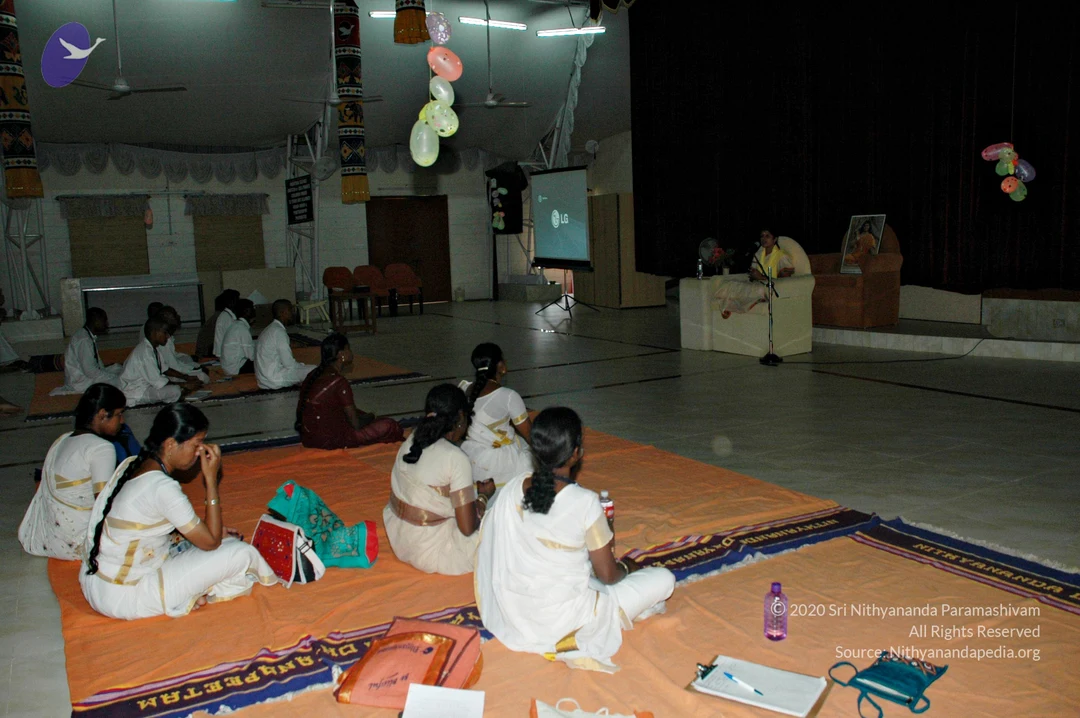
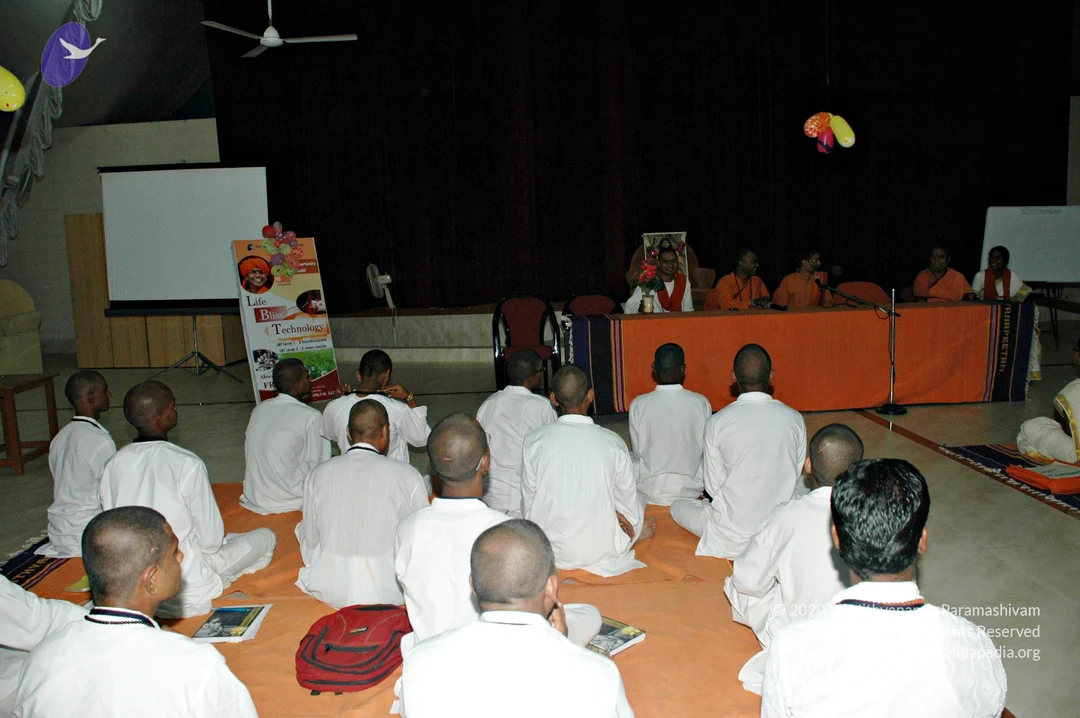
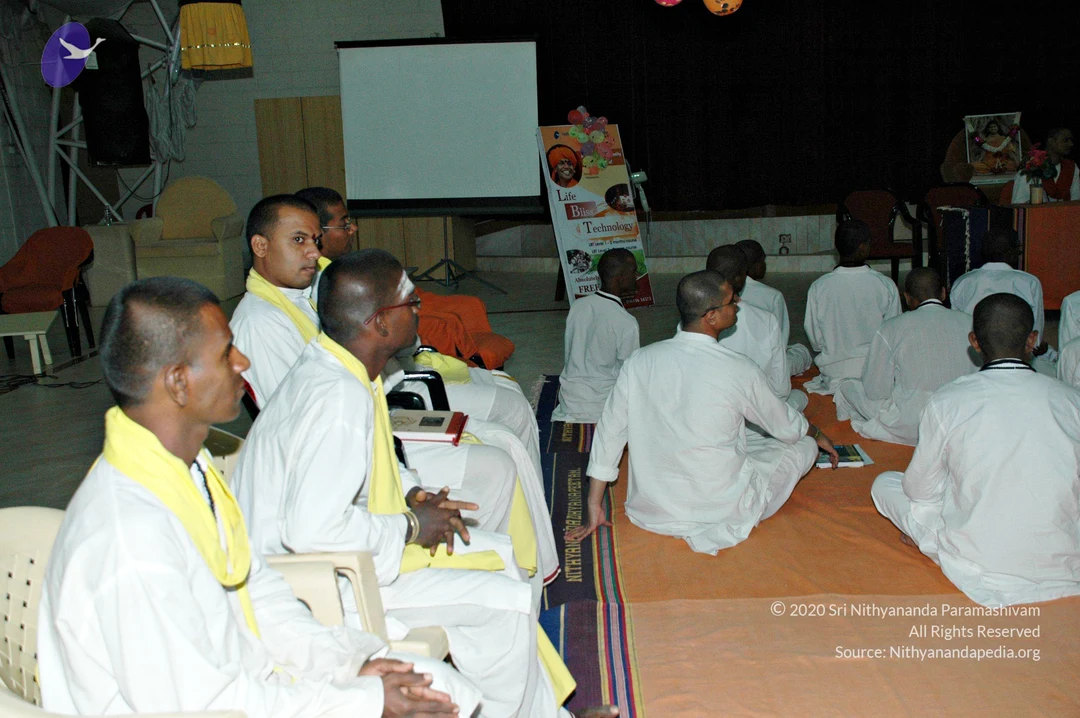
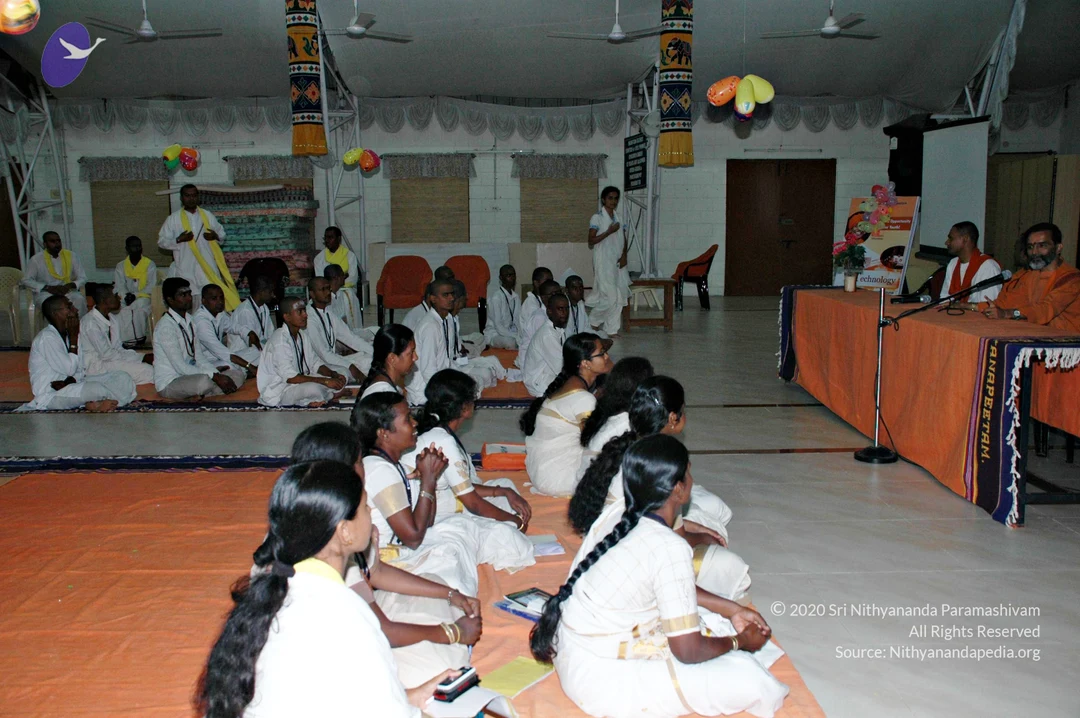
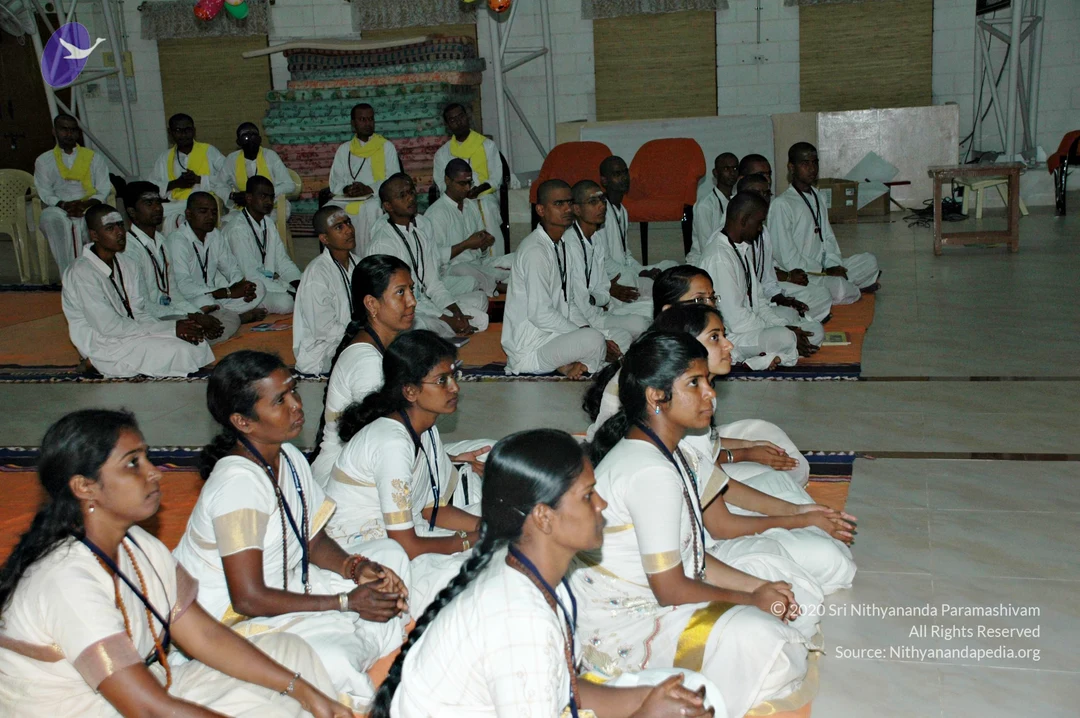
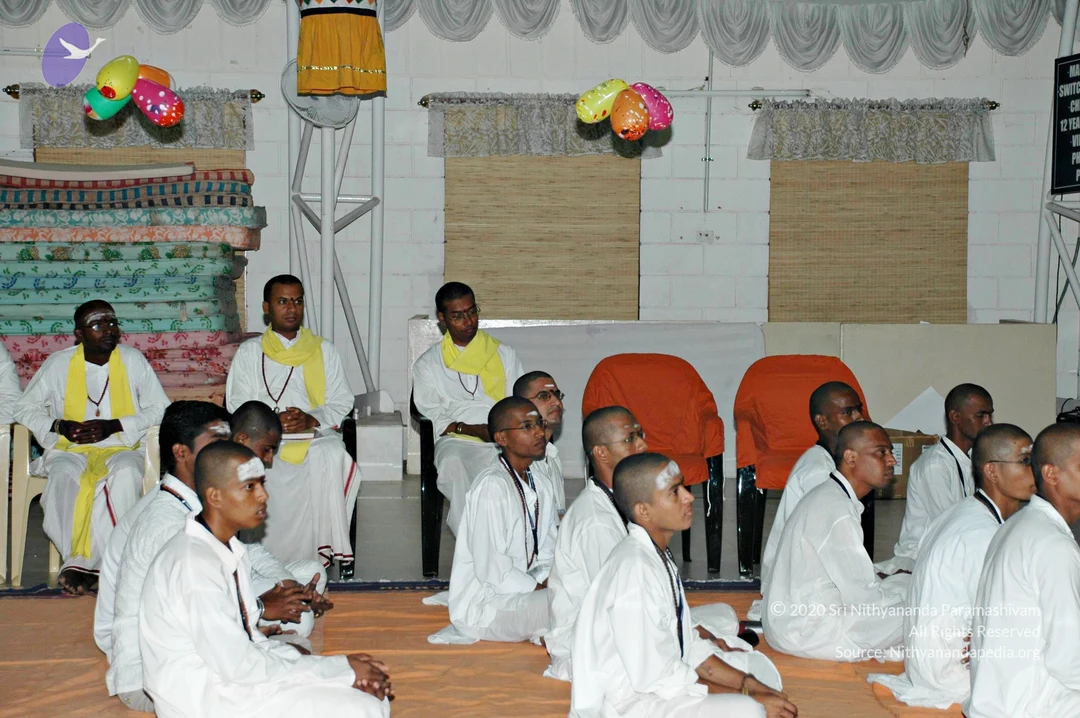
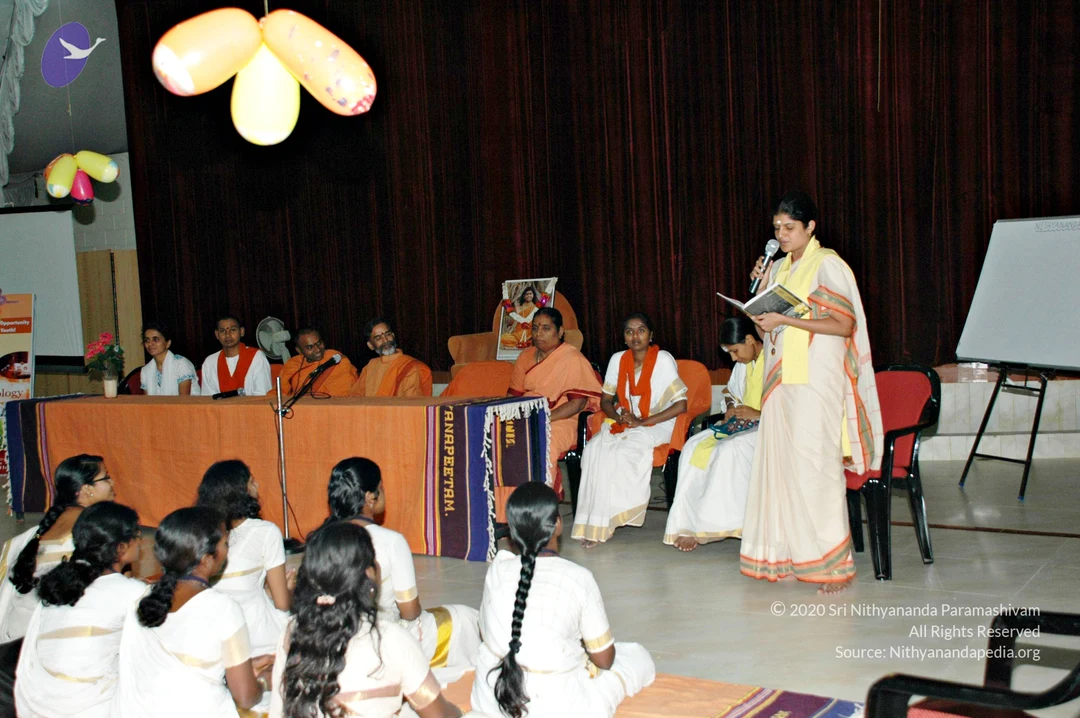
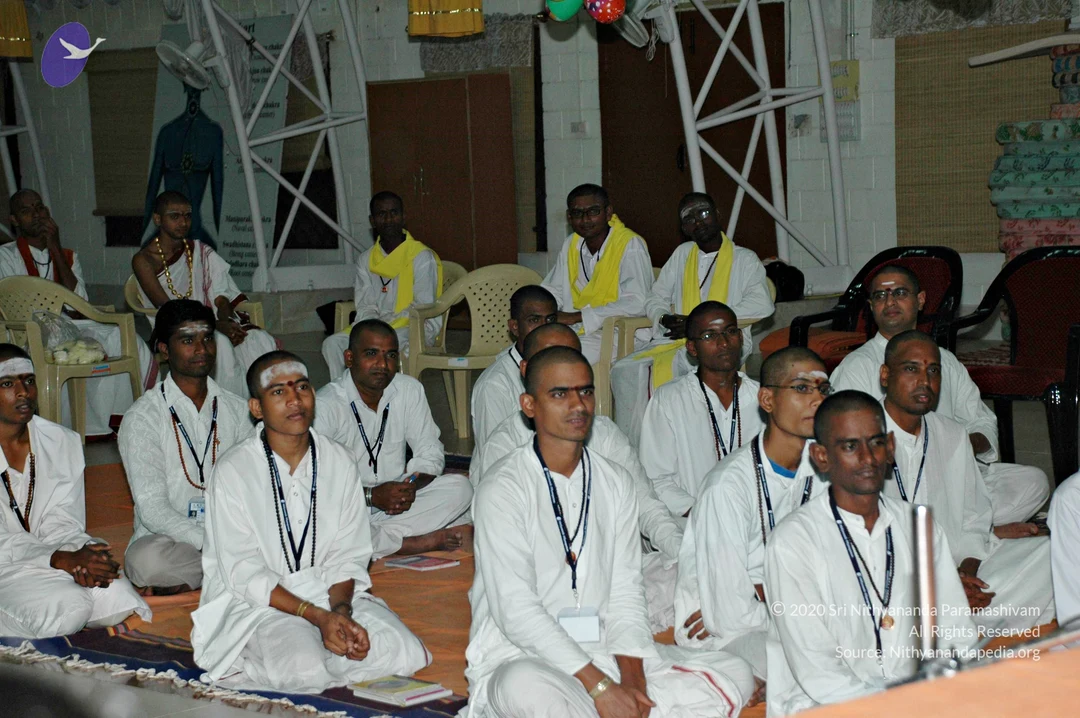
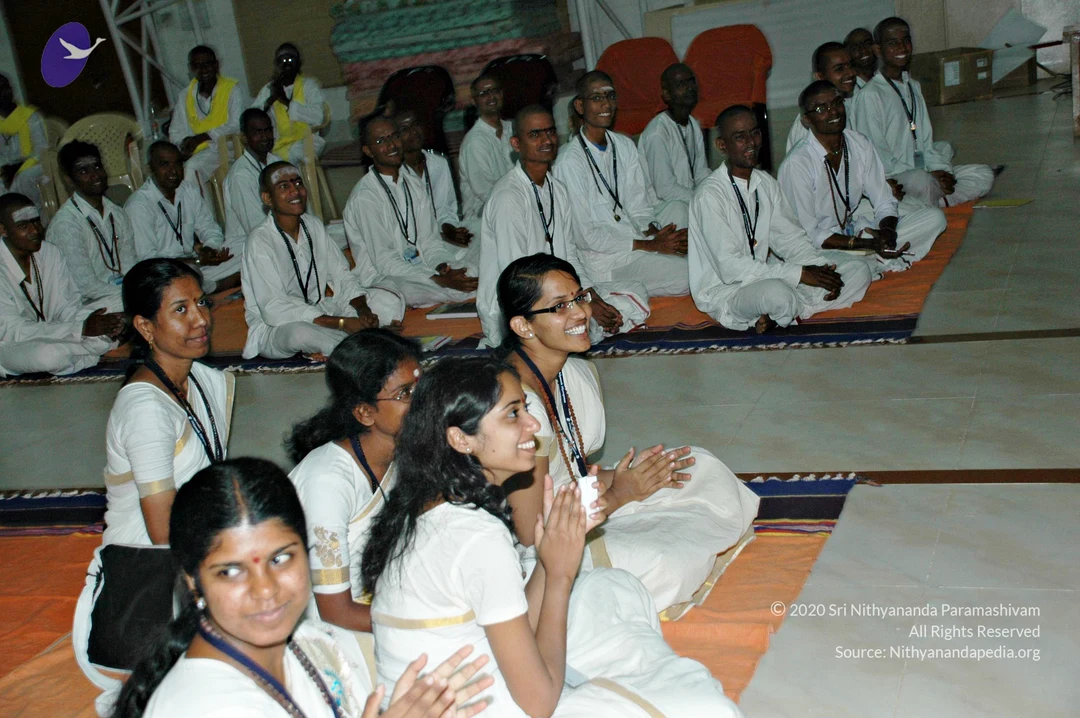
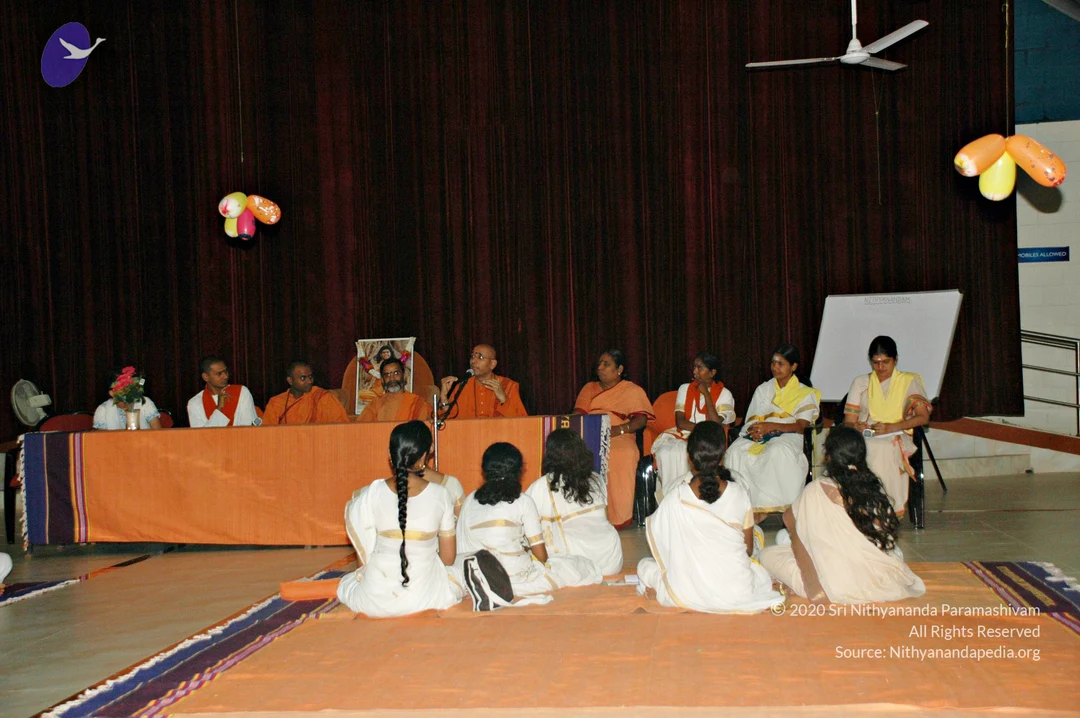
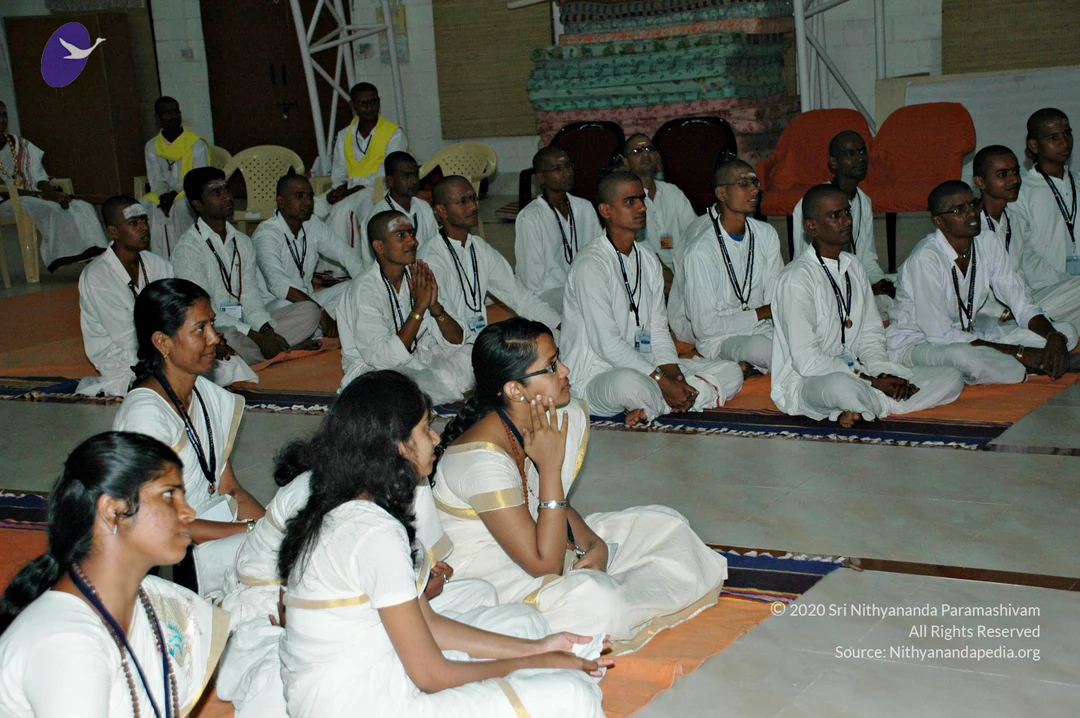
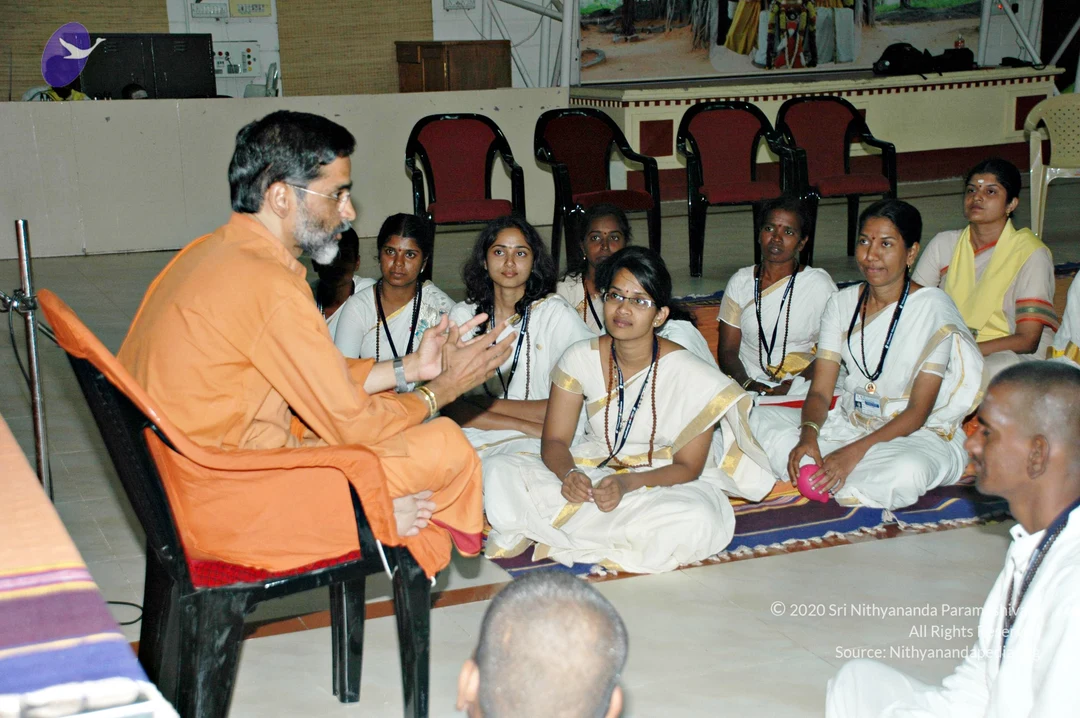
A photograph of a morning satsang hall with a dark maroon curtain backdrop and ceiling fans. On a low stage in the centre, a seated speaker in a yellow garment sits beside a framed portrait and a small flower arrangement, with a microphone before them. Audience members sit on black and red chairs and on floor mats in front of the stage: men in white dhotis and kurtas on the left, and women in orange, red and pink saris on the right, most seen from behind. A projector screen labelled LG stands at the left and a white board at the right.A seated teacher sits on a raised cream dais at the far end of a hall, wearing a yellow top and white cloth, with a microphone stand beside him. A framed photo sits above, flanked by small flowers and a red-and-white bouquet in a vase. Audience members sit cross-legged on orange mats with blue-striped borders: several men in white shirts and white dhotis, a woman in a red saree with a long braid, and a woman in a white saree with a gold border. A projector screen on the left shows an LG logo and a green graphic, and a whiteboard stands on the right. Bags sit on the mats in the foreground.Indoor hall with a tiled floor and a row of folded striped mattresses stacked against the back wall. Seated participants fill the room: on the left, a woman in a pink-and-white checked sari sits on a black chair holding papers, and a woman in an orange-bordered sari sits beside a man in a white shirt on chairs. On the right, several shaved-headed men in white kurtas sit cross-legged on orange and blue mats, and women in white saris sit in the foreground. No central figure is clearly visible; the scene reads as a seated morning talk or satsang audience.Indoor hall with white walls, ceiling fans and decorative striped banners hanging from the pillars. Seated devotees fill the floor and chairs: on the left, a woman in a white and yellow sari holds a notepad and pen while seated in a chair, beside an older woman in a pink sari and a woman in an orange sari. On the right, rows of people in white clothes sit cross-legged on orange and blue mats, several with long braids, facing a stage area with a low colourful platform and a central podium. Balloons decorate the upper corner.A photograph of a seated group inside a large hall with white walls, ceiling fans and hanging decorative tassels and paper balloons. Around 20 people sit on orange mats on a tiled floor, most wearing white clothes, with several in white sarees and white shirts; one woman in a red sari sits near the front and a woman in an orange sari sits on a chair at the back. Some attendees wear lanyards and a few sit on red chairs. A water bottle rests on the left mat.A seated group of young men in white ceremonial clothes sits on an orange mat in a hall during a talk. Several wear lanyards with identity badges, and the front-left man has a rudraksha mala and a red tilak on his forehead. Behind them, a man in a white shirt with a badge sits on a red-cushioned chair, hand near his face. Plastic chairs are stacked at the right and water bottles sit on a side table near the back wall.
10

10-KANNADA-ASP

6 dated photos in previewSource gallery
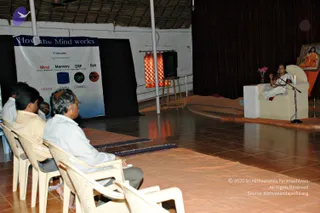
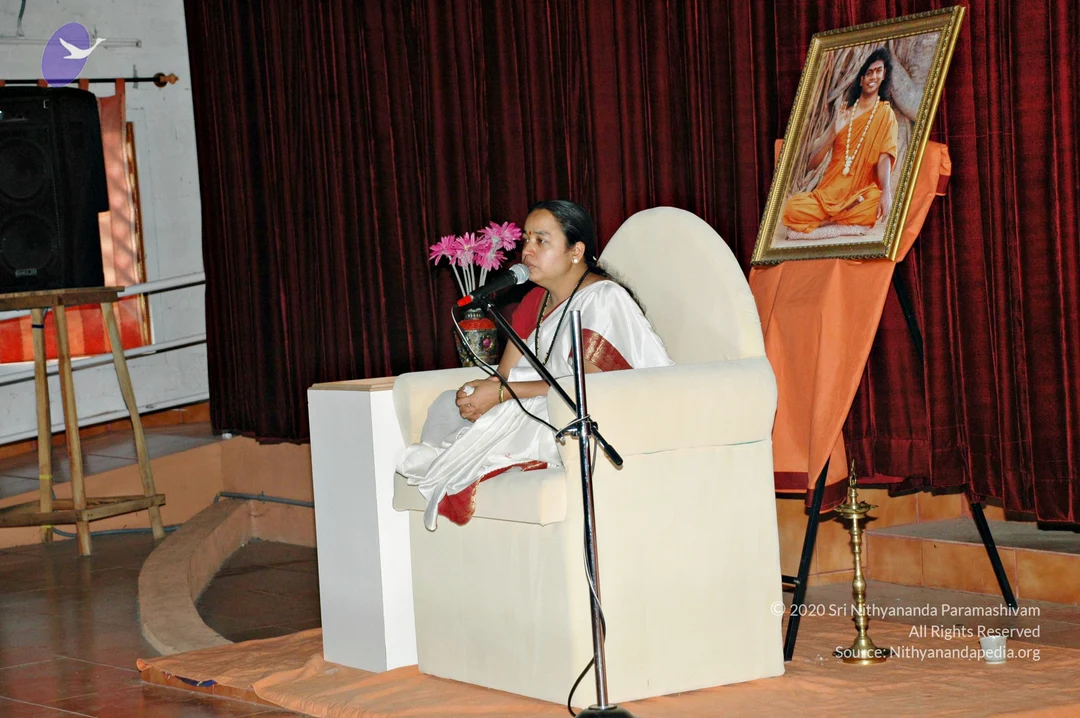
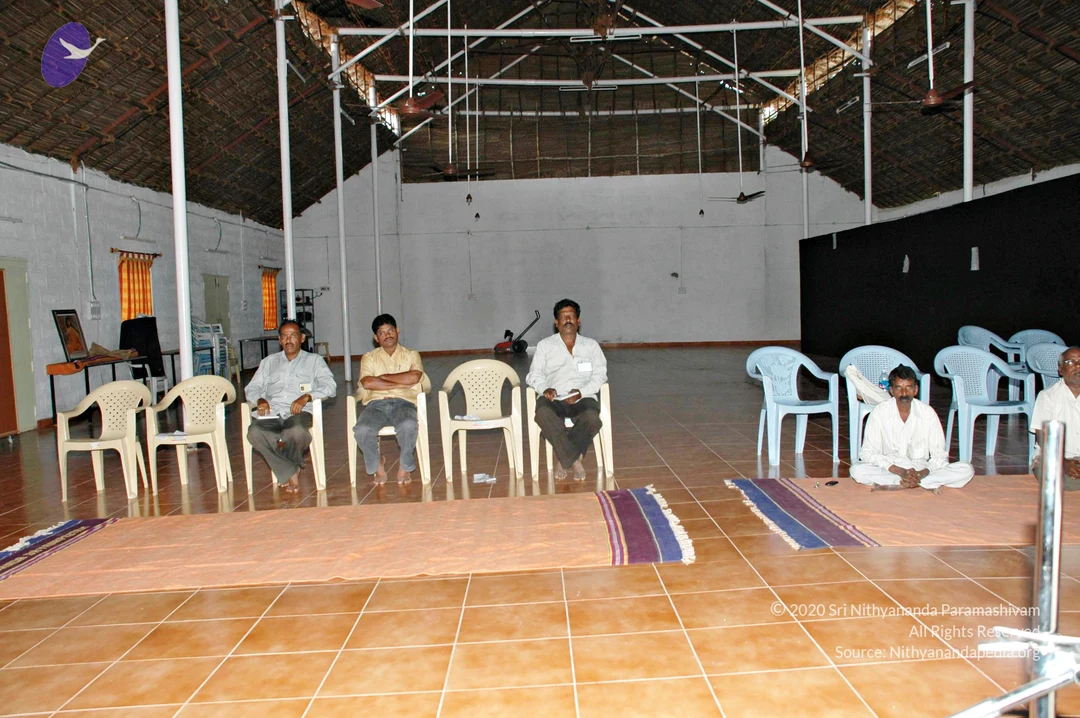
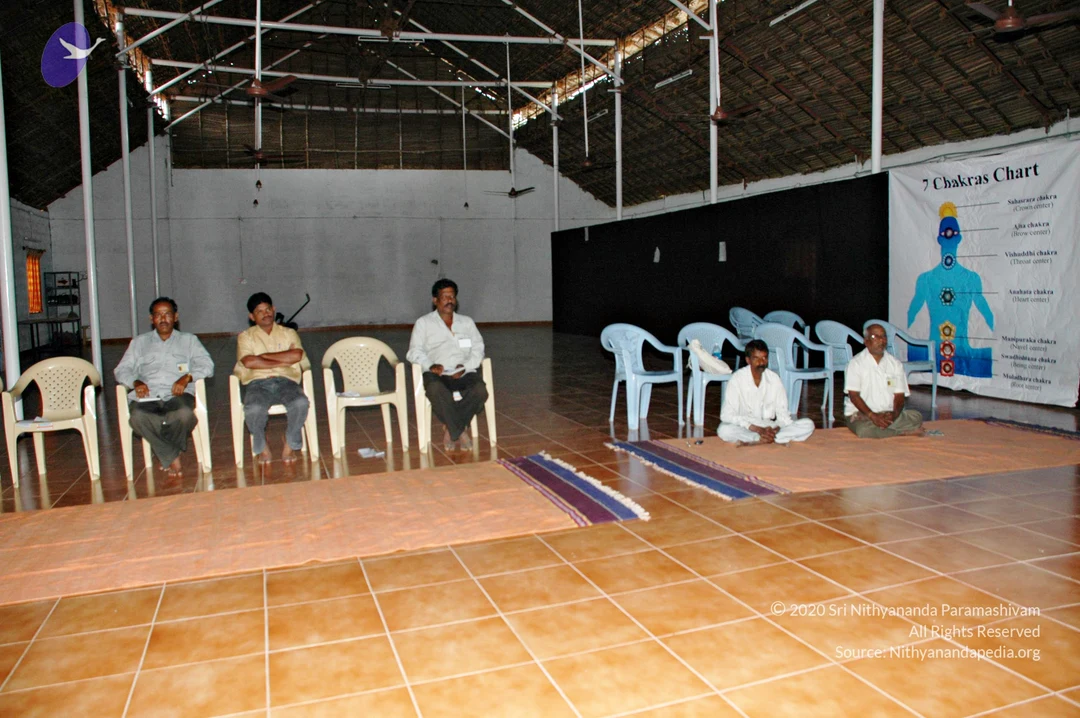
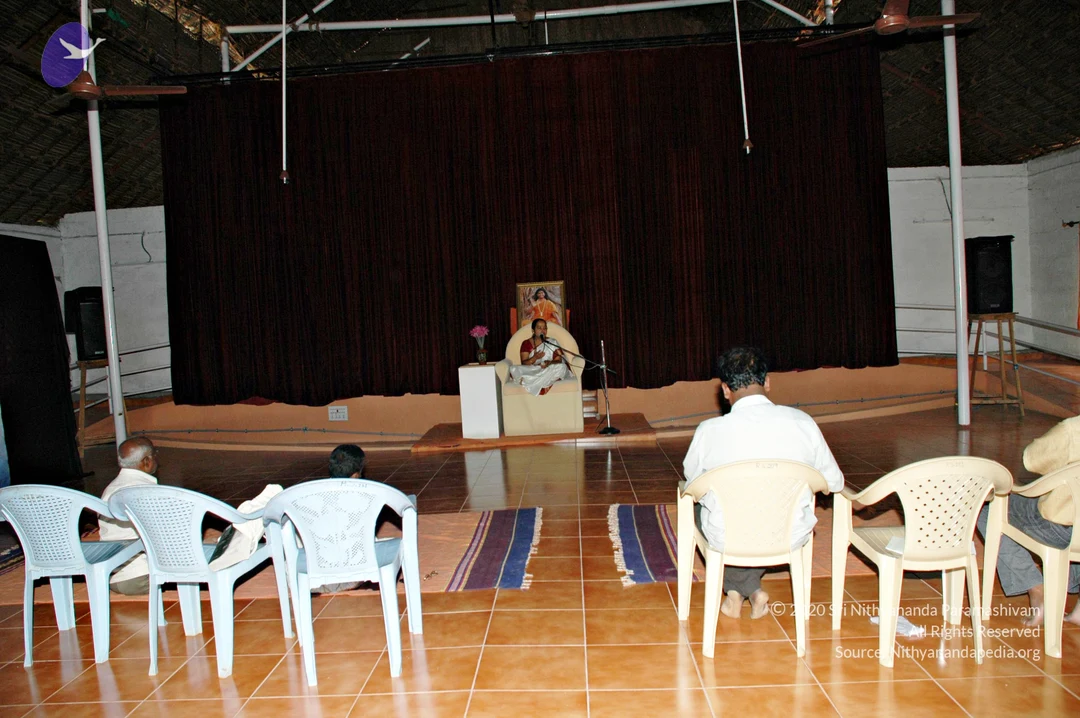
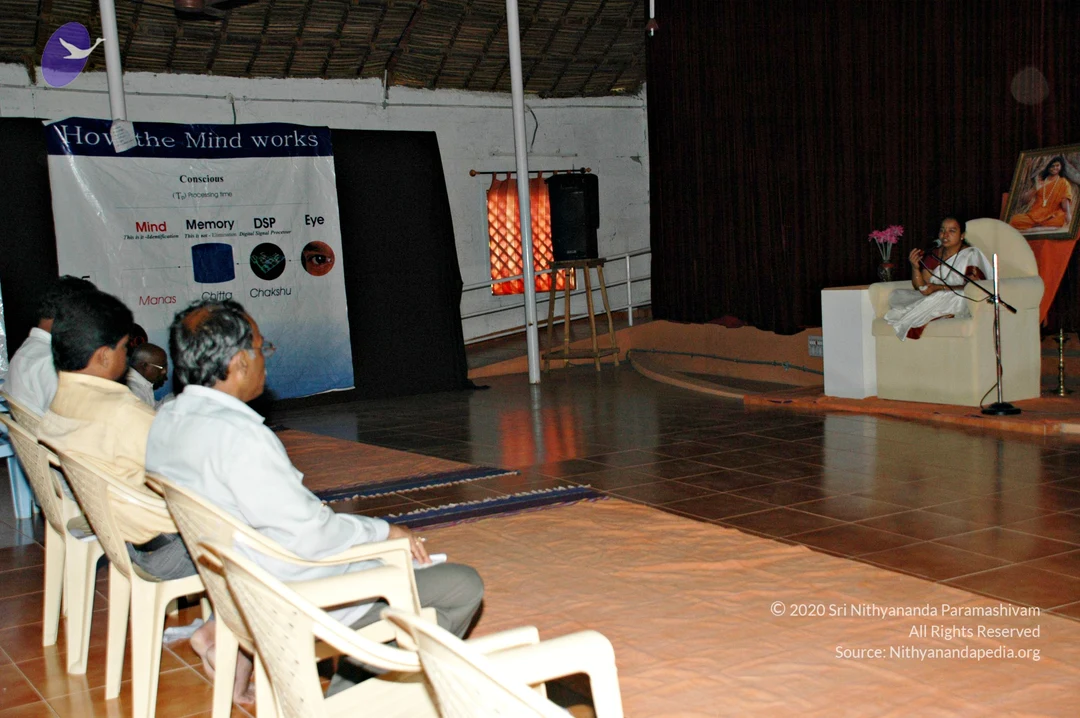
A woman in a white sari with red border sits in a cream upholstered armchair on a low stage, speaking into a microphone on a stand. Pink flowers stand in a vase beside her, and a gilded framed portrait on an orange-draped easel to the right shows a figure in orange robes and a rudraksha mala seated in a rocky setting; the portrait is a printed picture, so the figure is a depiction, and a candidate's appearance is consistent with a person but the cues are not distinctive enough to confirm, so the a person field is unsure. A brass oil lamp stands on the floor and maroon curtains hang behind the stage, with a speaker at the left edge.A large hall with a thatched roof and white walls, with tiled floor. Five men sit on plastic chairs facing the camera: one in a white shirt and light trousers on the left, one in a yellow shirt with arms crossed, one in a white shirt and dark trousers in the centre, and a man in white sitting cross-legged on a mat on the right. Purple and striped mats lie on the floor in front of them. A framed picture stands on a table at the left wall, and blue plastic chairs are stacked along the right side.Interior of a plain hall with a tiled floor, exposed ceiling beams and ceiling fans. Five men sit in an indoor session. On the left, three men sit on white plastic chairs, one in a light shirt and dark trousers, one in a yellow shirt with arms folded, and one in a white shirt and dark trousers. On the right, two men sit cross-legged on mats, one in white clothes and one in a white shirt. Behind them is a stack of light blue plastic chairs and a banner titled 7 Chakras Chart showing a blue human figure with coloured chakra points labelled from Sahasrara to Muladhara.A woman in a white sari with a red and gold border sits in a white chair on a stage, speaking into a microphone on a stand. She wears a long necklace, drop earrings, and has long dark hair with a pink flower pinned in it. Behind her hang dark curtains and a black backdrop, with an orange draped cloth at the right edge and a grey wall in the background. The setting appears to be a discourse or satsang venue.A photograph of a covered indoor hall with a tiled floor and a dark brown curtain backdrop. On a raised platform, a seated figure in a white garment with a red shawl sits in a cream armchair behind a white table holding a pink flower, speaking into a microphone stand, with a framed picture of a deity hanging behind. Four people sit on white plastic chairs on the floor facing the stage, two in white shirts and one in a light shirt with bare feet, and a person in a white shirt is partly visible at the front. Two striped mats lie on the floor, and speakers stand at the sides of the stage.A hall with a thatched ceiling and a seated speaker on a raised platform at right, wearing a white sari with a mic in hand. A framed portrait of a saffron-robed figure with long hair stands beside her on the platform. Left foreground, several seated men in pale shirts face the stage on white plastic chairs. A banner on the left reads 'How the Mind works' with diagrams labelled Mind, Memory, DSP and Eye, beside Manas, Chitta and Chakshu.
11

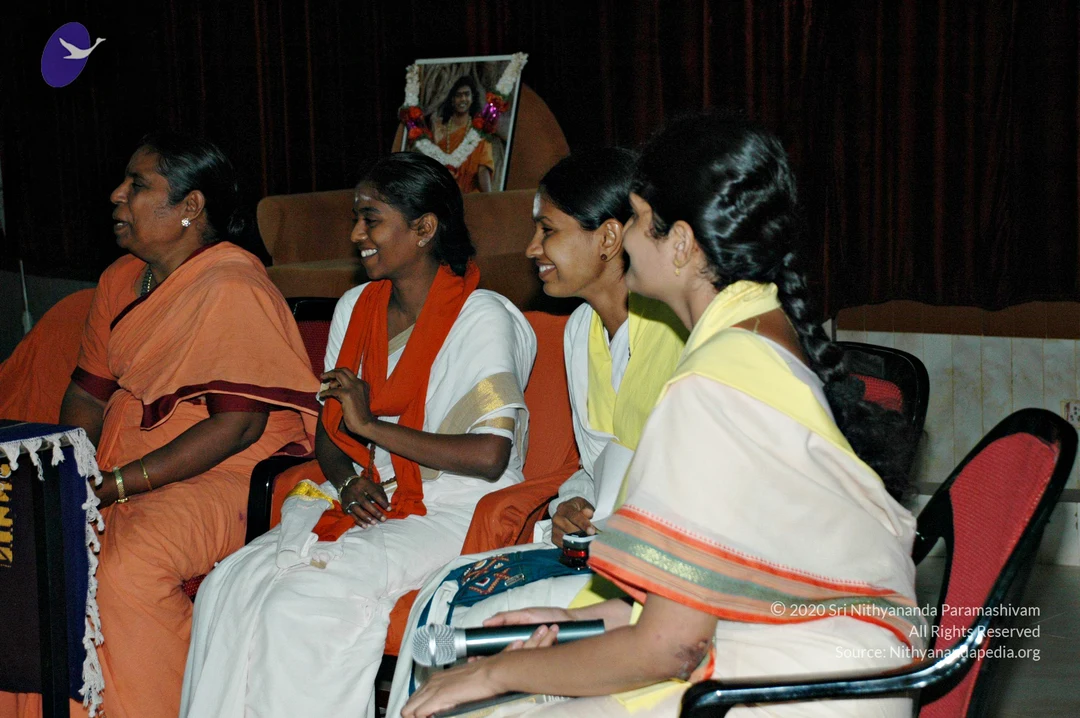
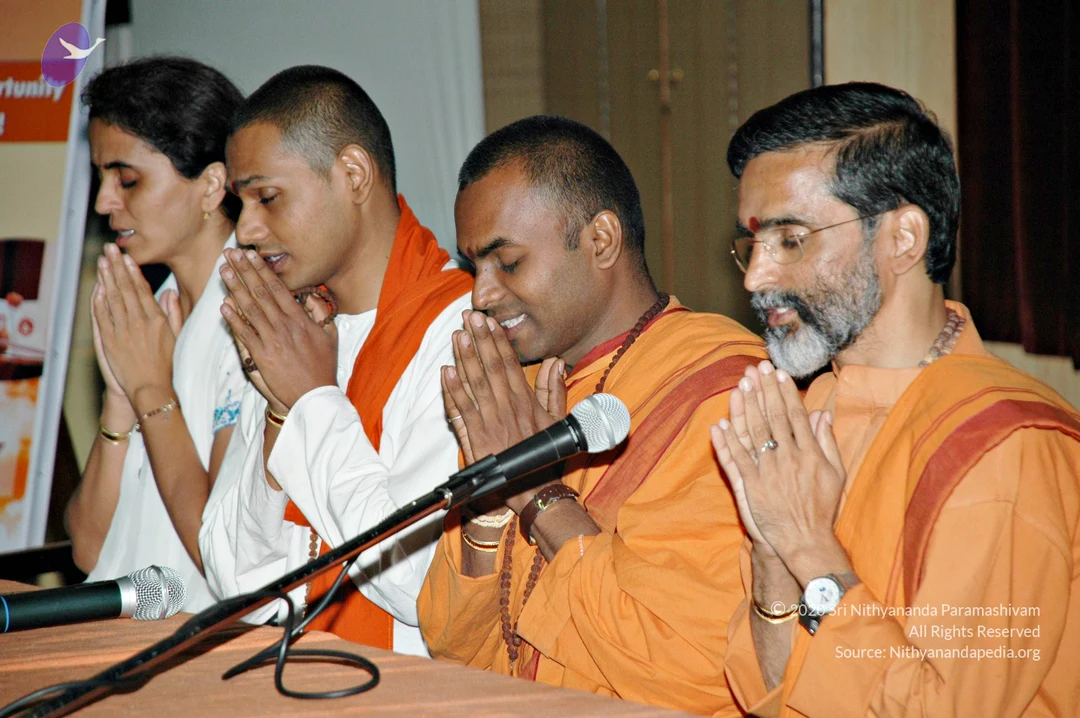
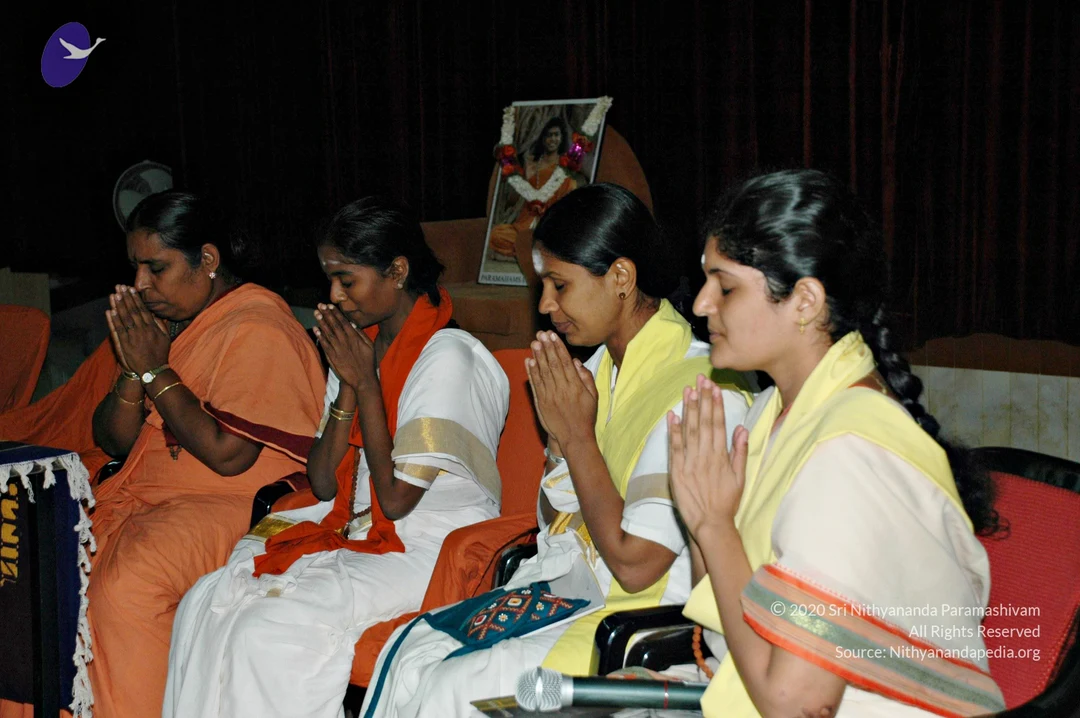
11-LBT-EVENING-PROGRAM

81 dated photos in previewSource gallery
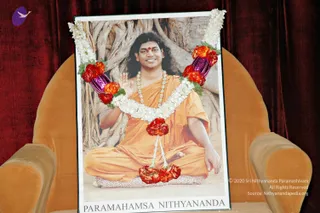
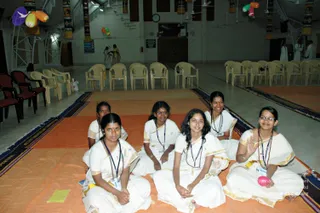
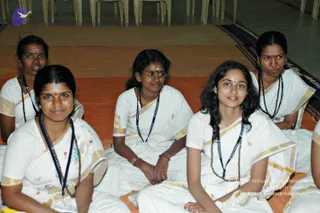
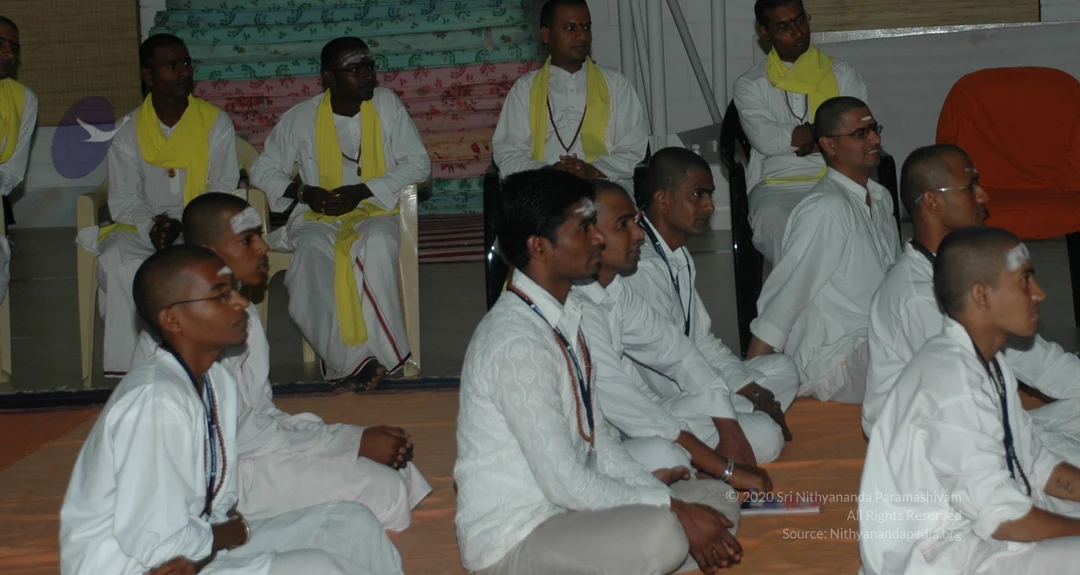
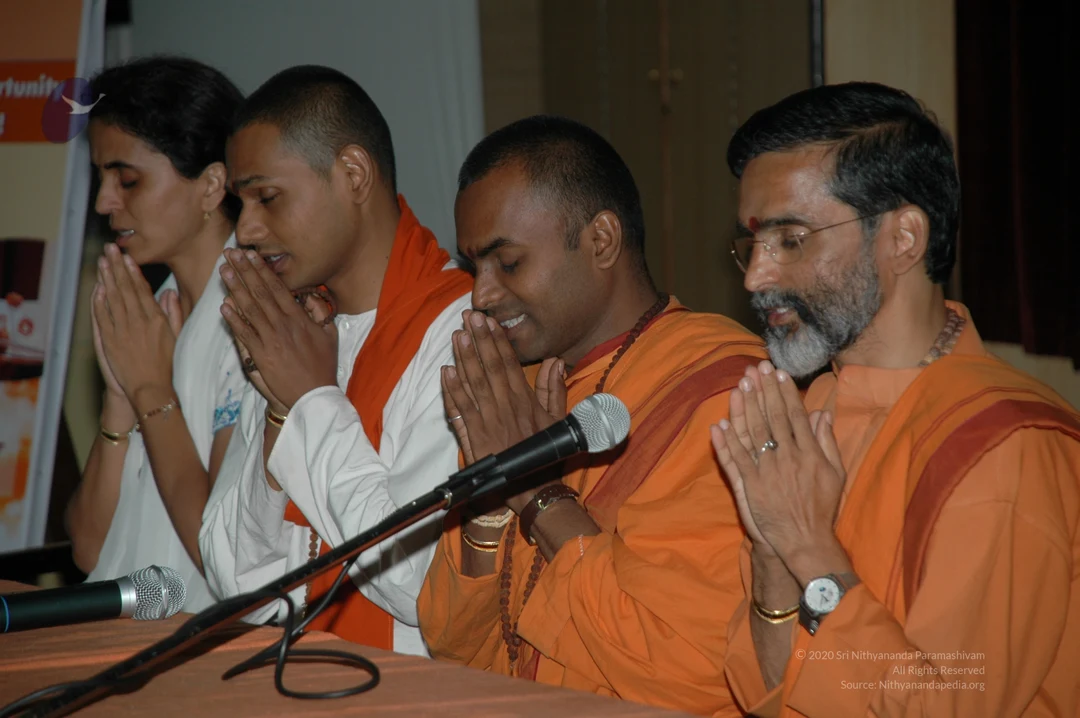
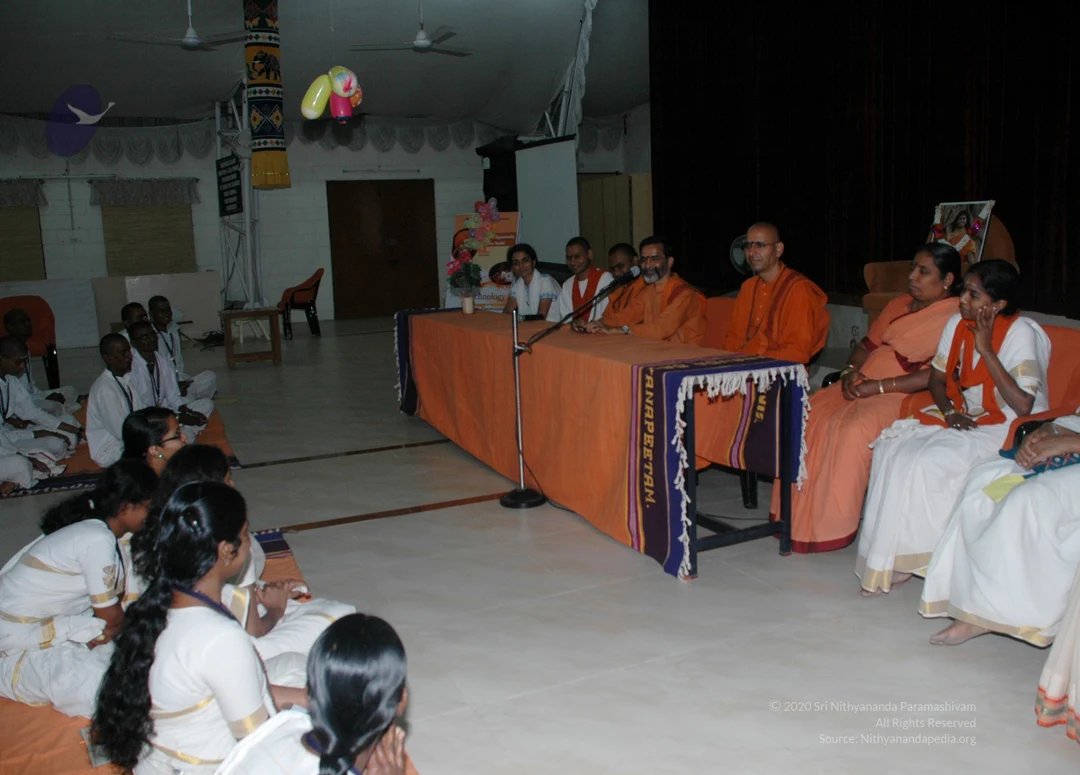
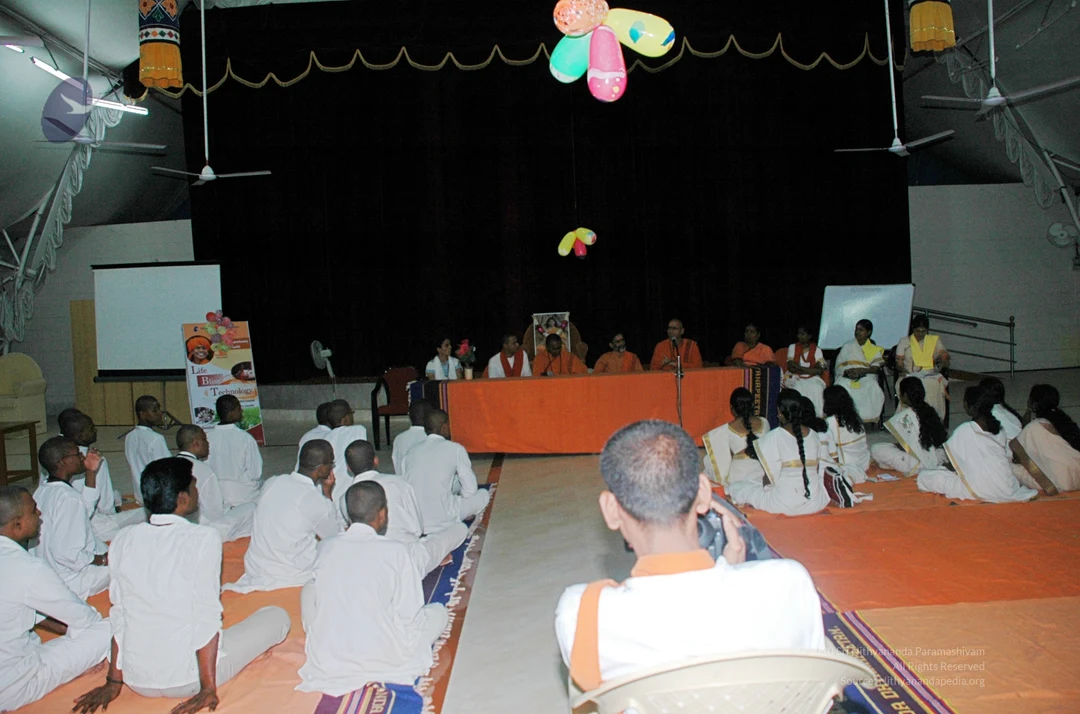
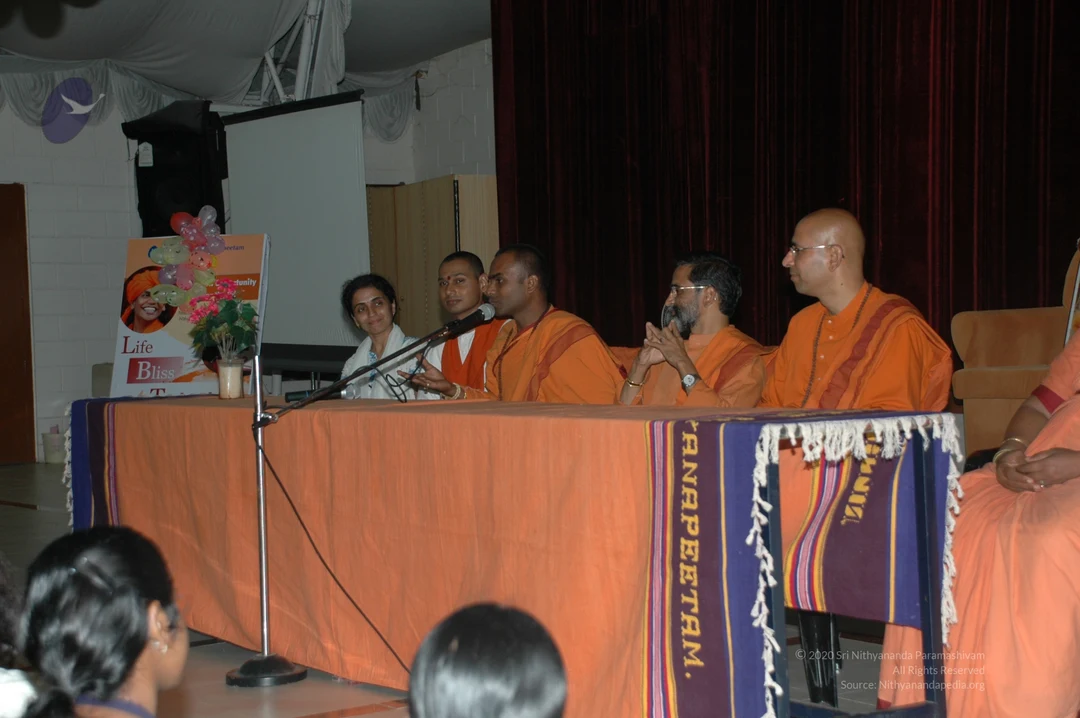
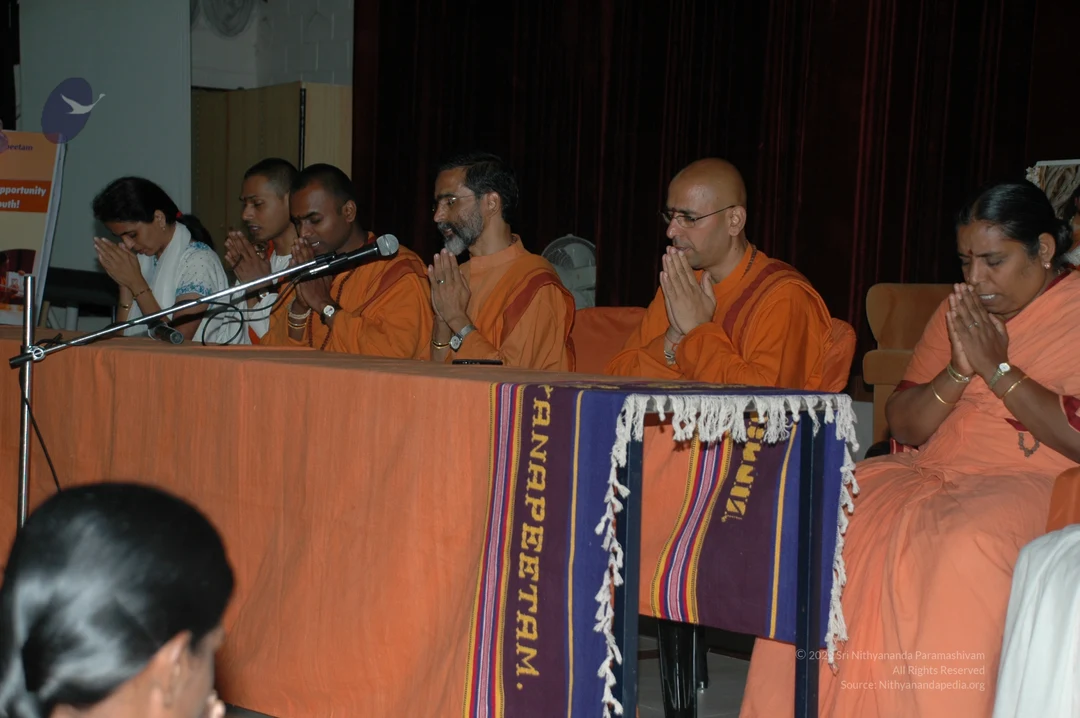
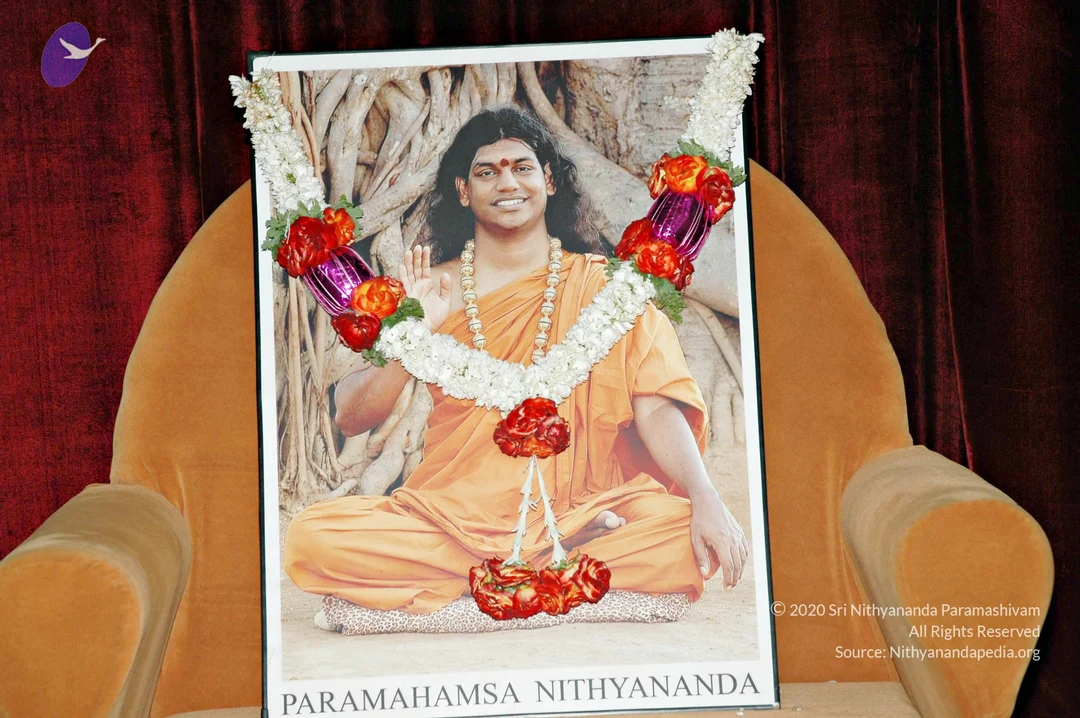
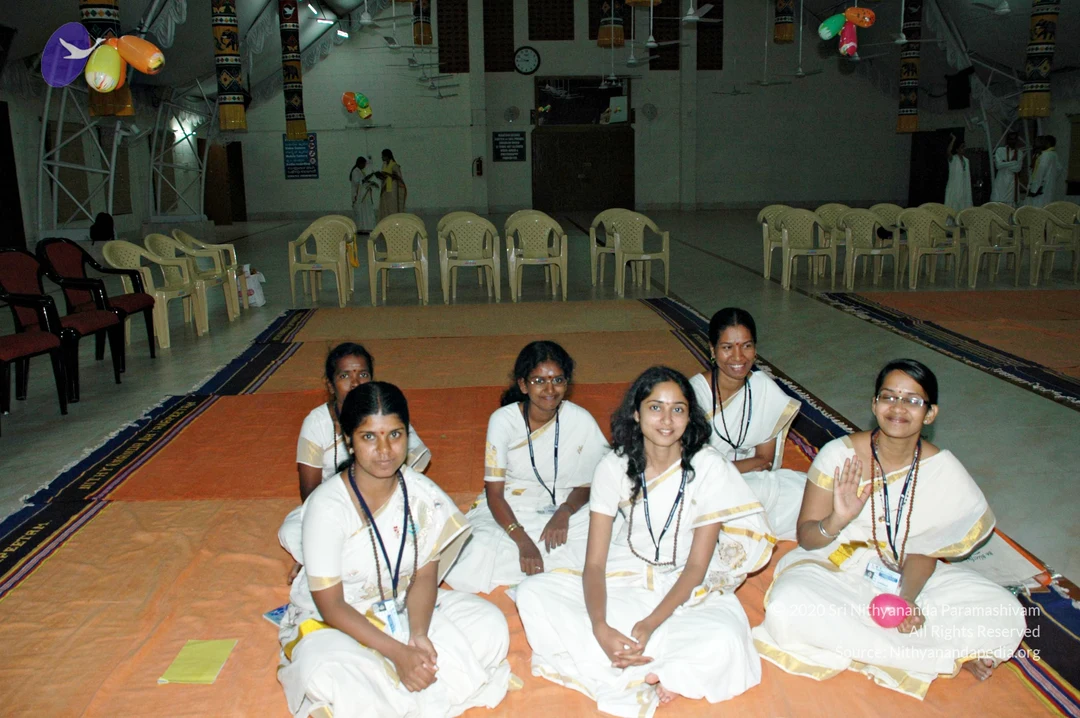
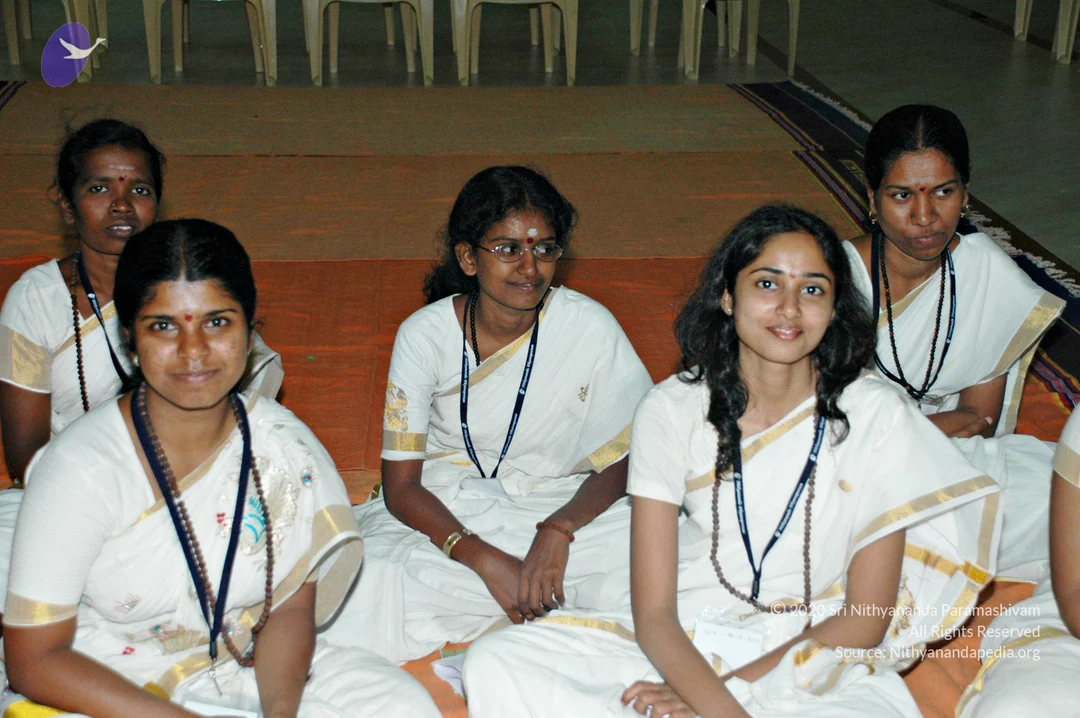
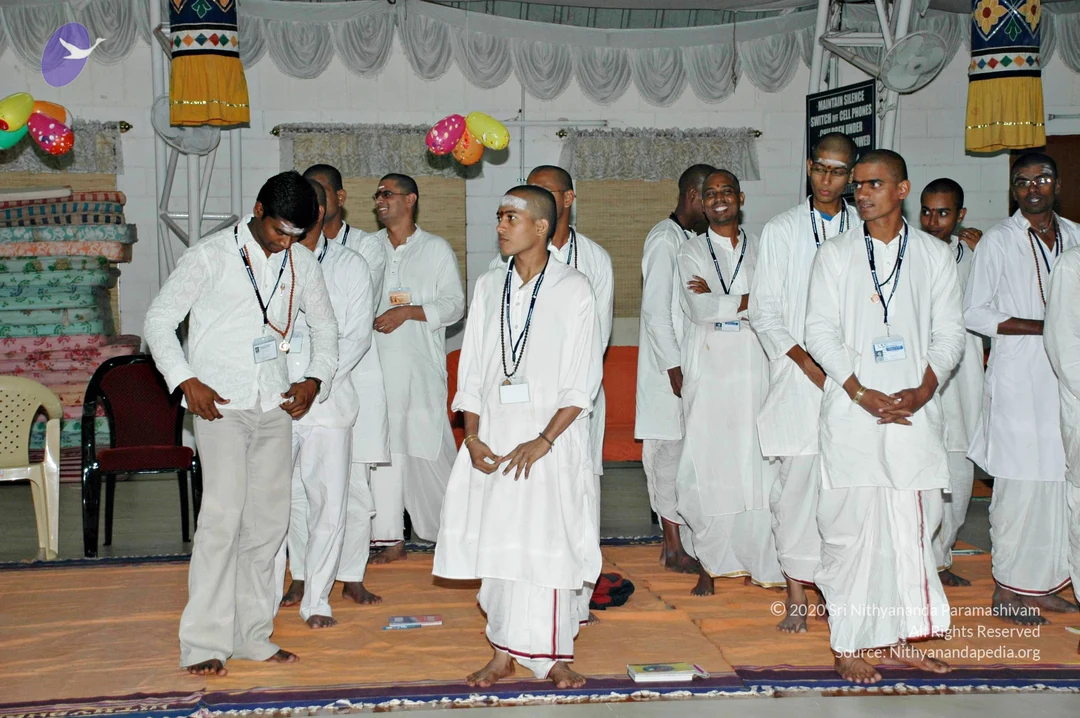
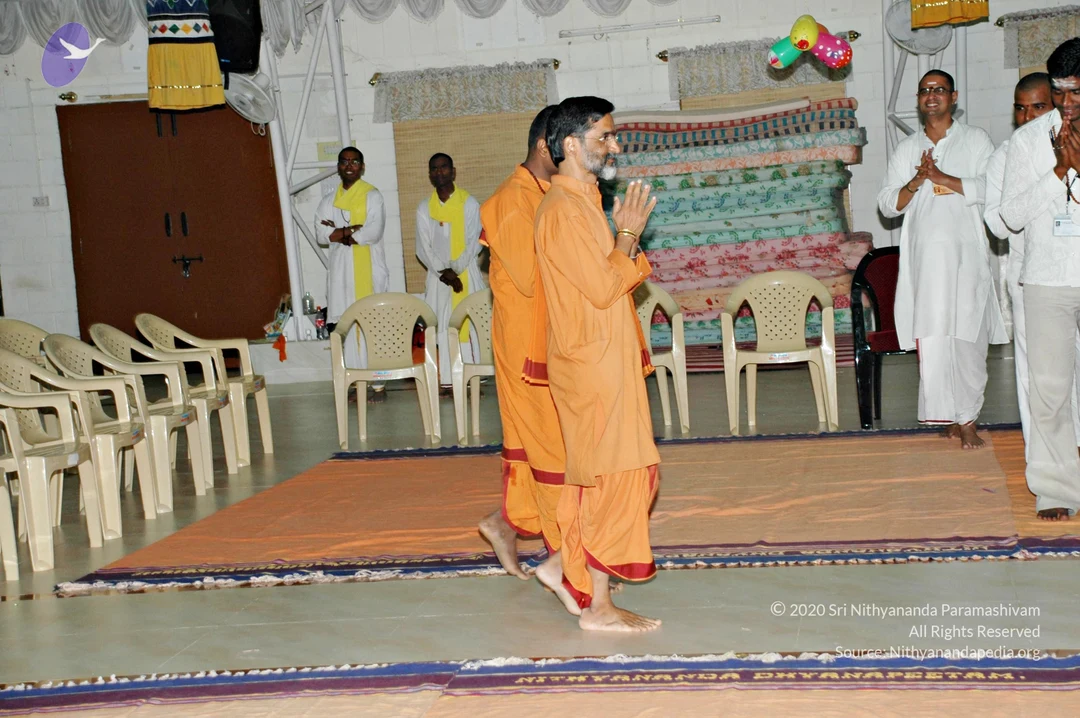
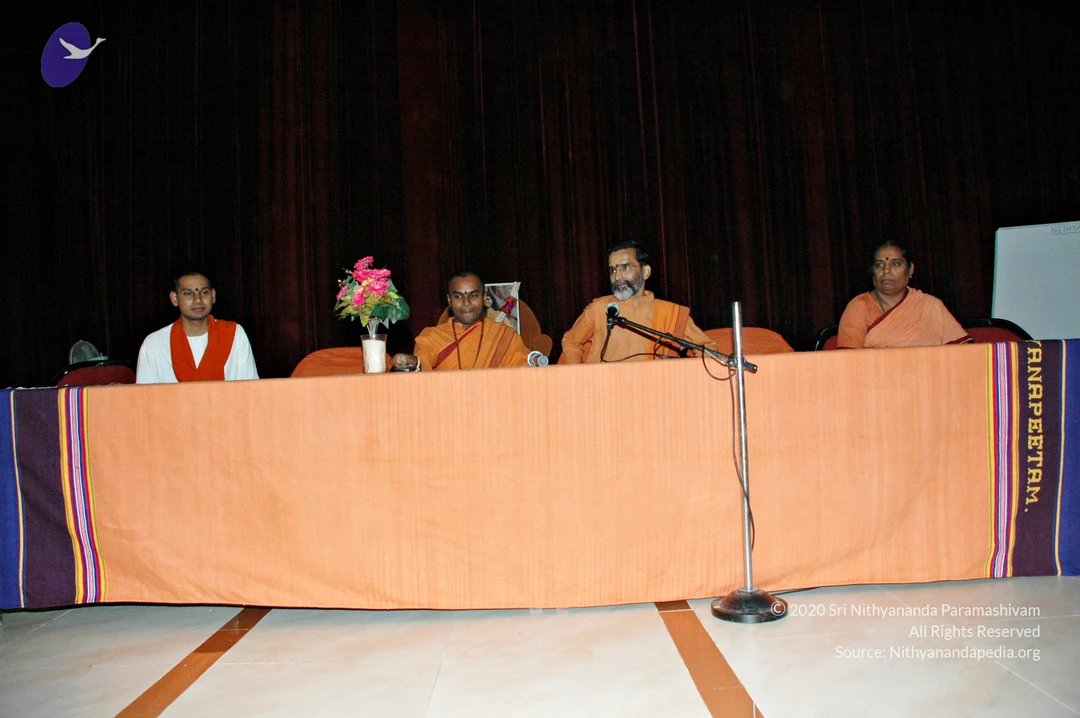
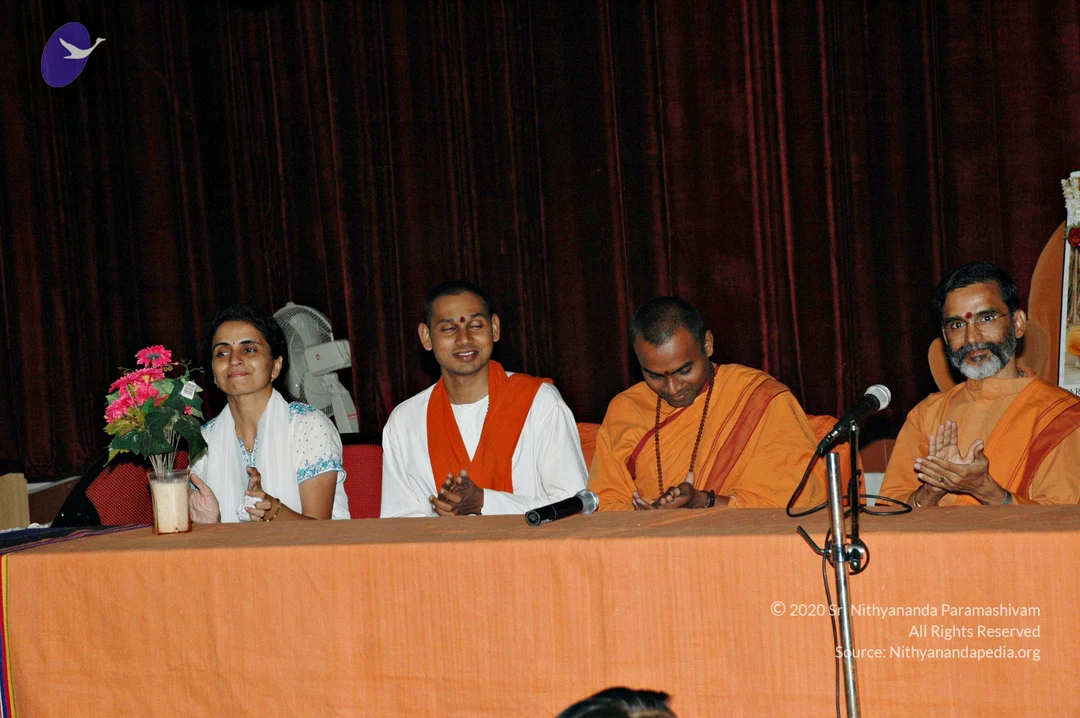
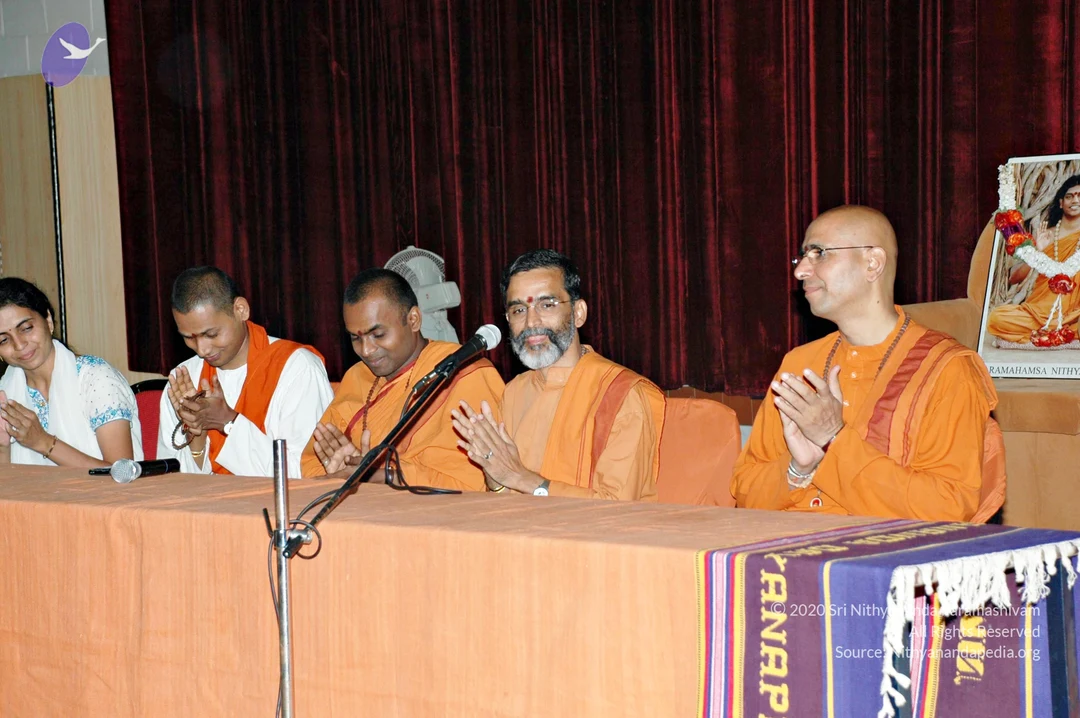
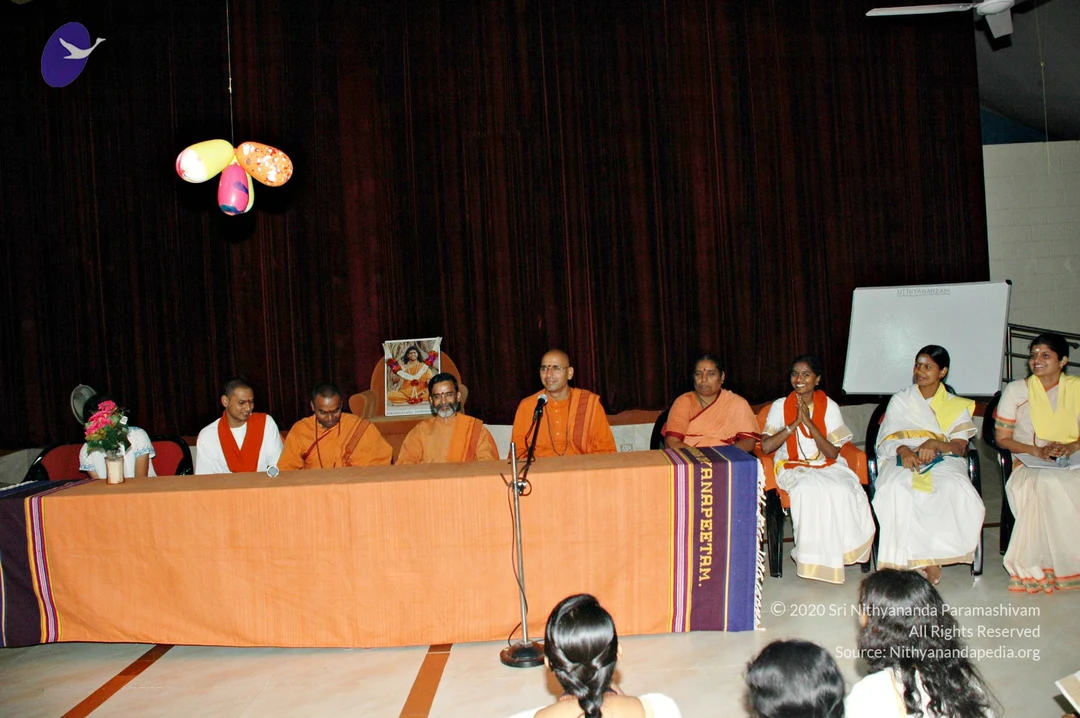
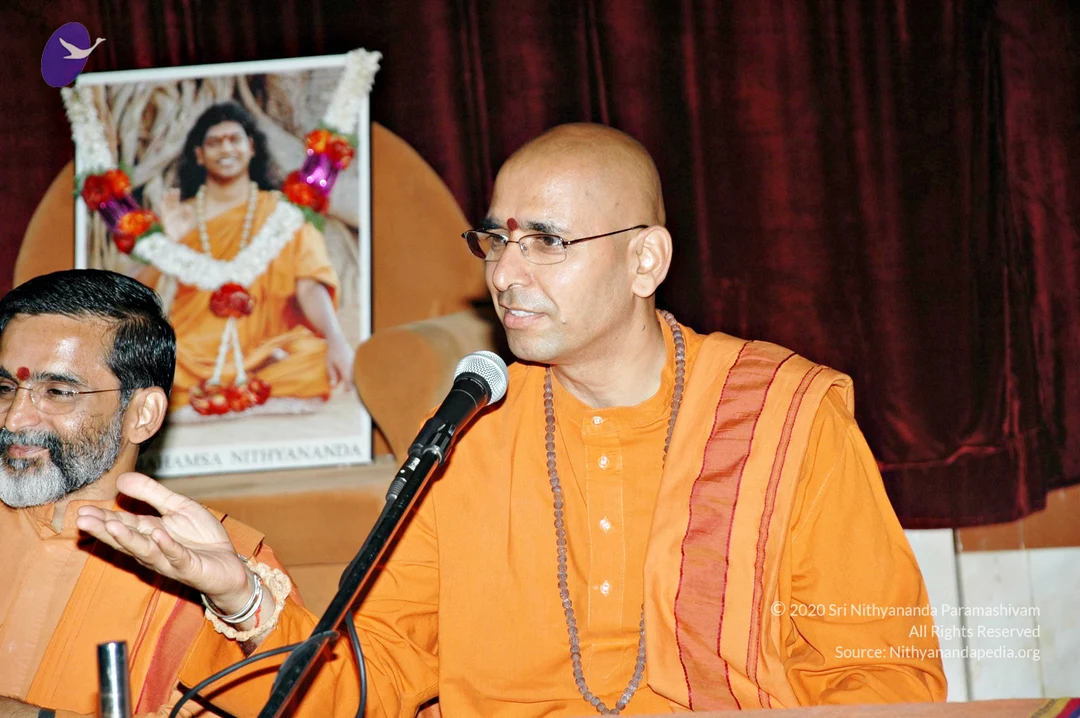
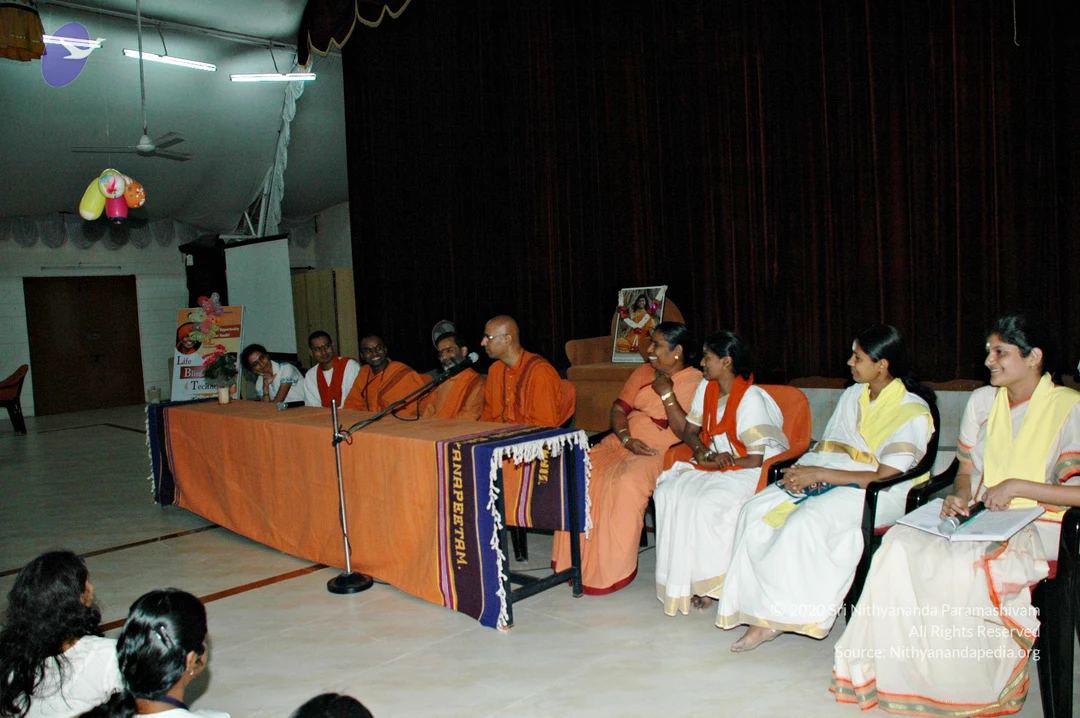
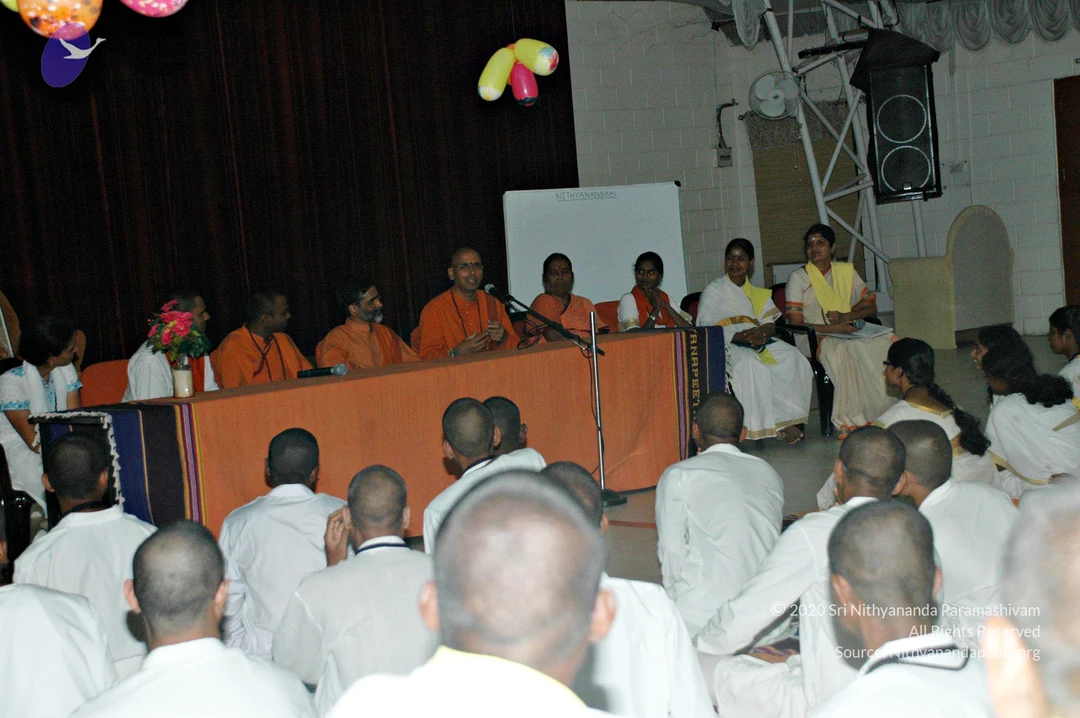
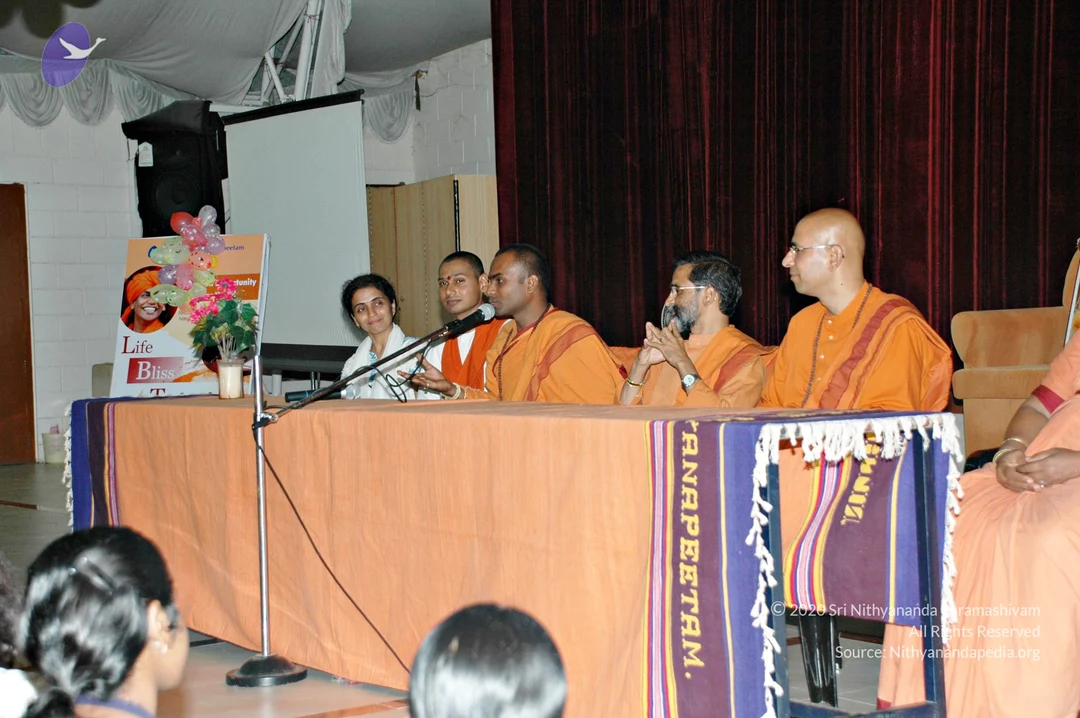
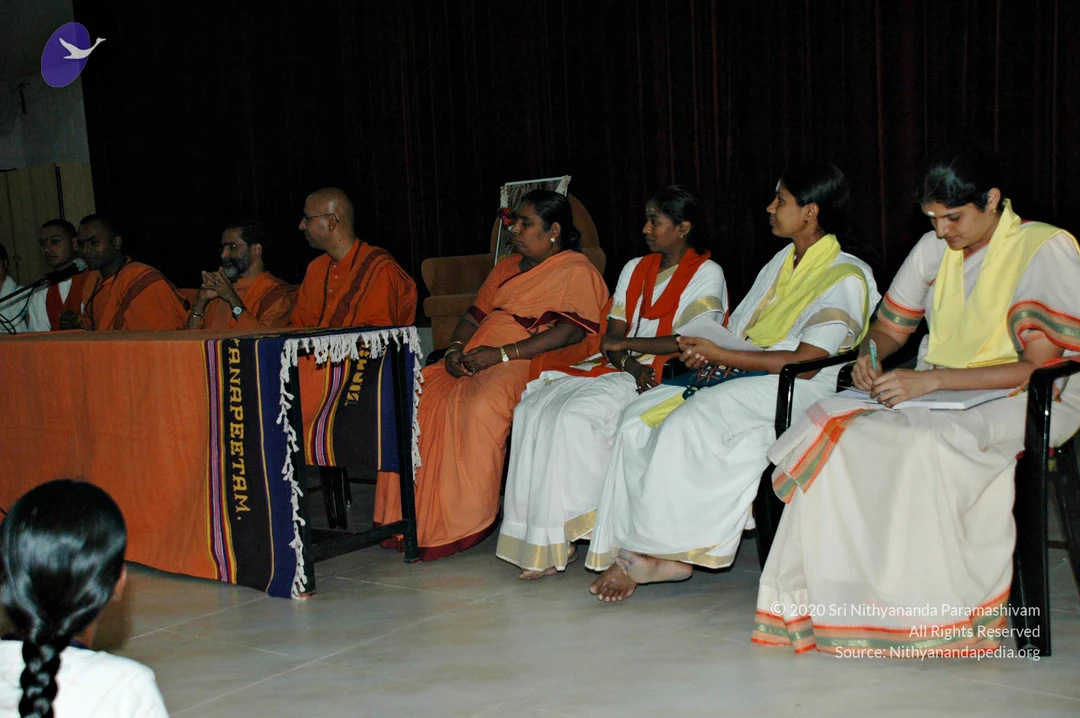
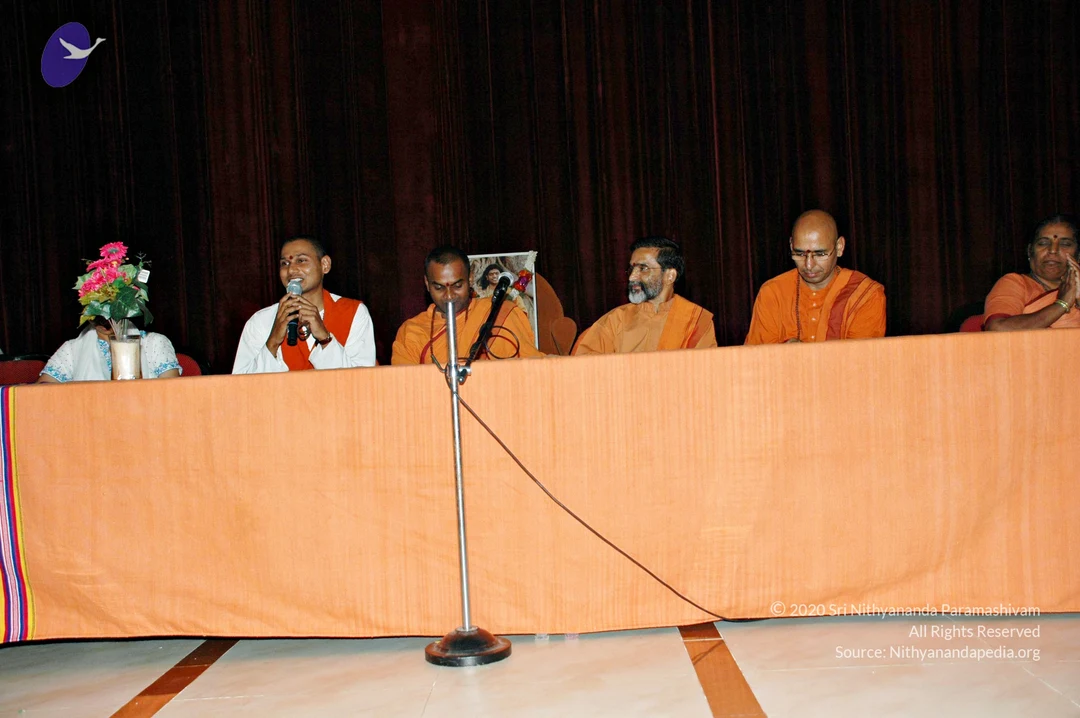
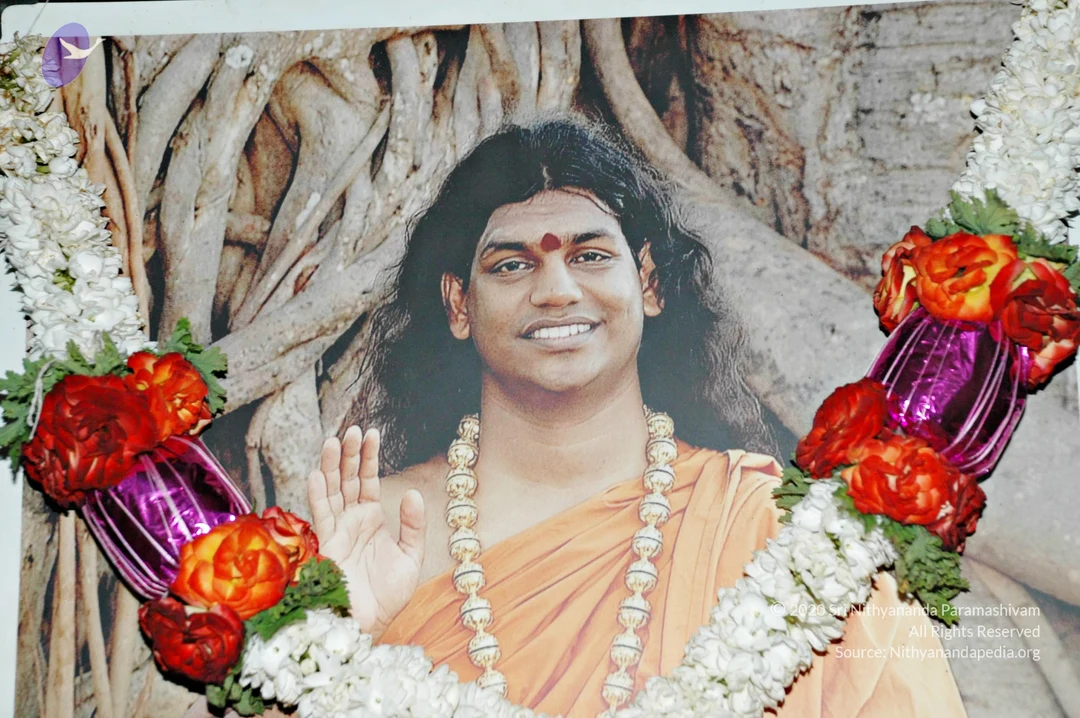
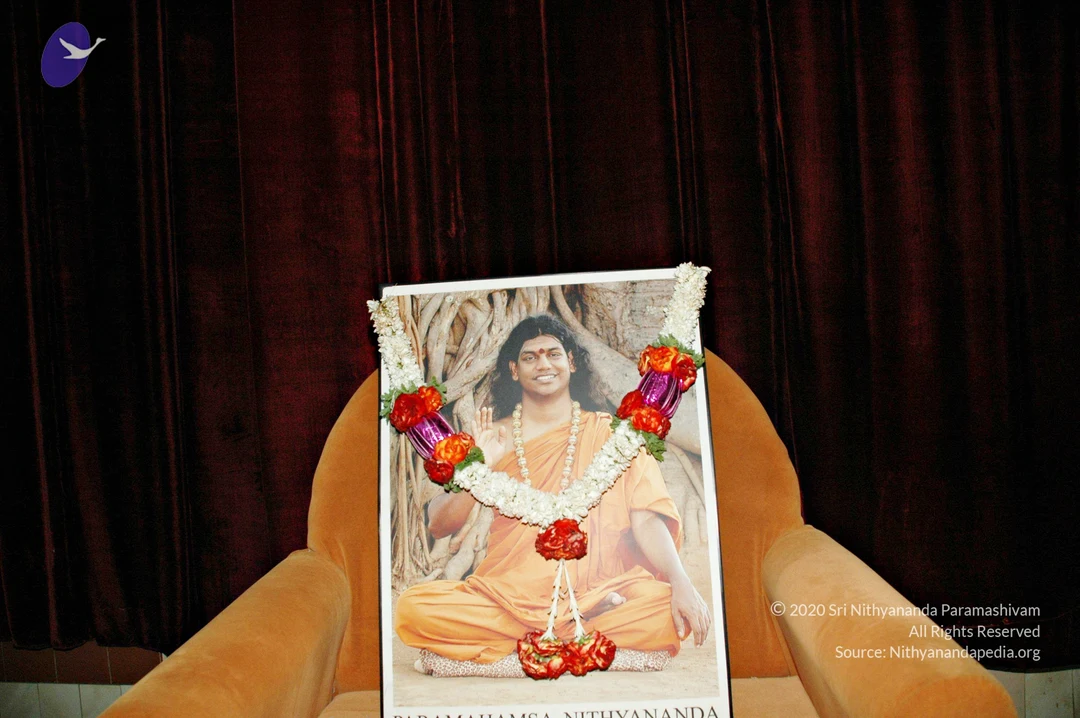
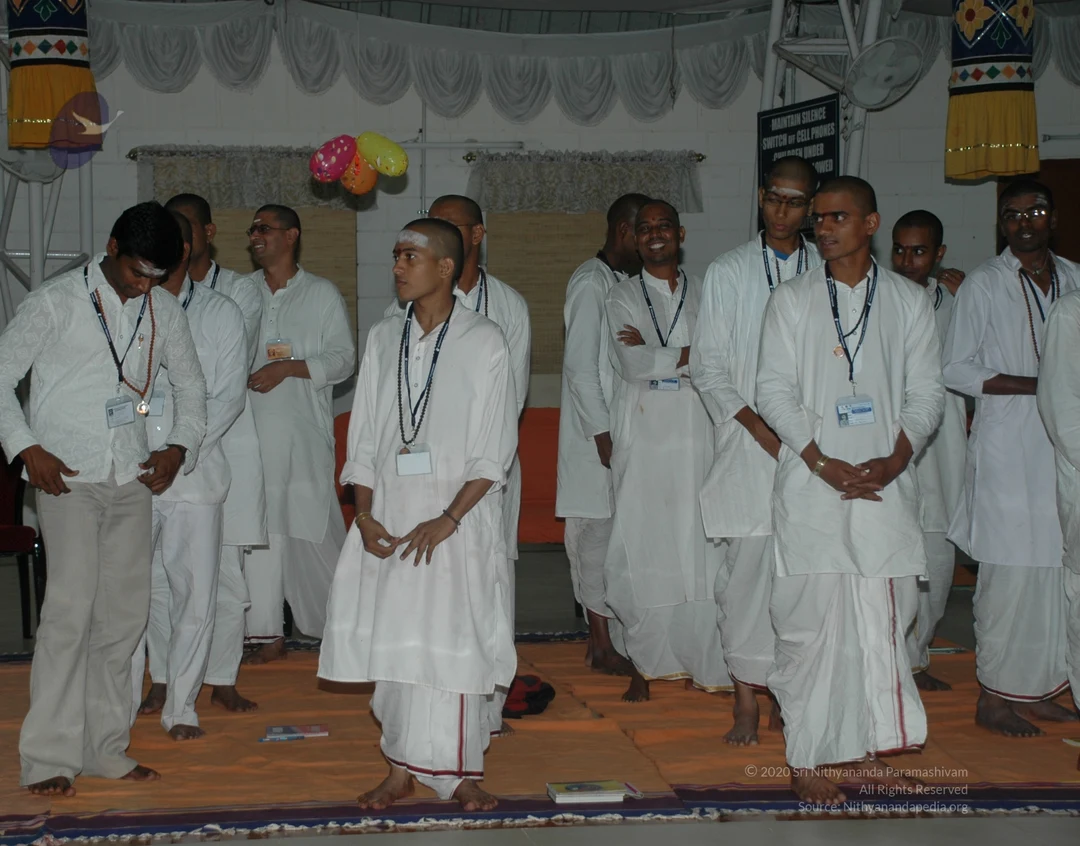
A framed printed portrait sits on an orange velvet armchair in front of a deep red velvet drape. The portrait is labelled "PARAMAHAMSA NITHYANANDA" at the bottom and shows a smiling man with long dark hair, a red bindi, an orange robe and white and gold beaded necklaces, seated cross-legged with one hand raised in blessing against a backdrop of gnarled tree roots. The frame is draped with white jasmine garlands and red and orange flowers, with a red flower garland hanging at the base. The photo is of a printed portrait, so no physical people are present.A photograph inside a large hall with cream walls, ceiling fans and colourful paper decorations hanging from the ceiling. Six women sit cross-legged on orange and blue mats, wearing white saris with gold borders and blue lanyards with identity badges; several also wear rudraksha-style beaded necklaces. Rows of empty beige and red chairs stand behind them, and a few people in white move in the background near a wall clock.A group of five women sits cross-legged on a floor covered with orange and dark patterned mats in a hall with white plastic chairs visible behind them. All wear white sarees with gold borders and rudraksha malas, and most have a blue lanyard around the neck. The woman in front left wears a red bindi and smiles, the woman in the centre wears glasses and a red bindi, and the woman on the right front has long wavy hair and smiles. No man or figure resembling a person is visible.A group of young men in matching white kurta-style shirts and white dhotis stand on an orange floor mat in a hall decorated with colourful balloons, draped yellow and blue fabric and white curtains. Several wear blue and white lanyards with ID badges, some have white tilak marks on their foreheads, and a few wear beaded mala necklaces. The man at left bends forward, while others stand in a line watching. Stacked patterned cushions and a black chair appear at left, and a sign on the wall reads Maintain Silence. Switch off your cell phones. No a person candidate is visible in this scene.A hall with a tiled floor and a row of white plastic chairs on the left. Two men in orange robes walk barefoot across a orange carpet with blue-and-gold border, the front man with hands in anjali mudra and a short beard, the second man behind him in orange with red trim. Behind them stand several men in white kurtas and yellow shawls with hands folded, and a stack of colourful folded mats and blankets against the wall. The men in orange are unidentified by face; a person is unsure because the presentation cues are insufficient.A photograph of four people seated behind a long table draped in orange cloth with a purple and gold border reading partly "NITHYANANDAPEETHAM". On the far left a young man in white with an orange shawl sits beside a second man in orange robes with a vermilion-marked forehead. Next, a bearded man in orange robes and wire-rimmed glasses sits at a microphone on a stand, and on the far right a woman in an orange sari sits. A vase of pink flowers stands on the table. A dark curtain forms the backdrop and a whiteboard is visible at the right edge.
12

12-GALLERIA

4 dated photos in previewSource gallery
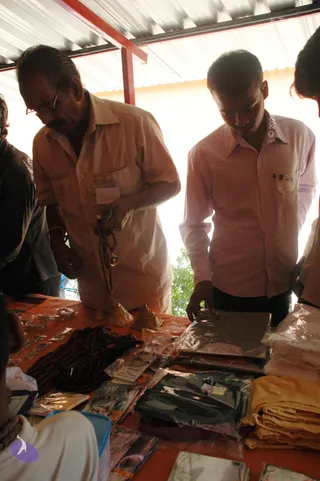
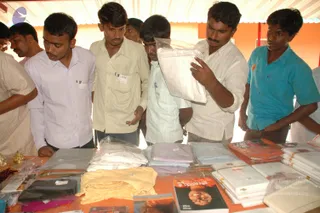
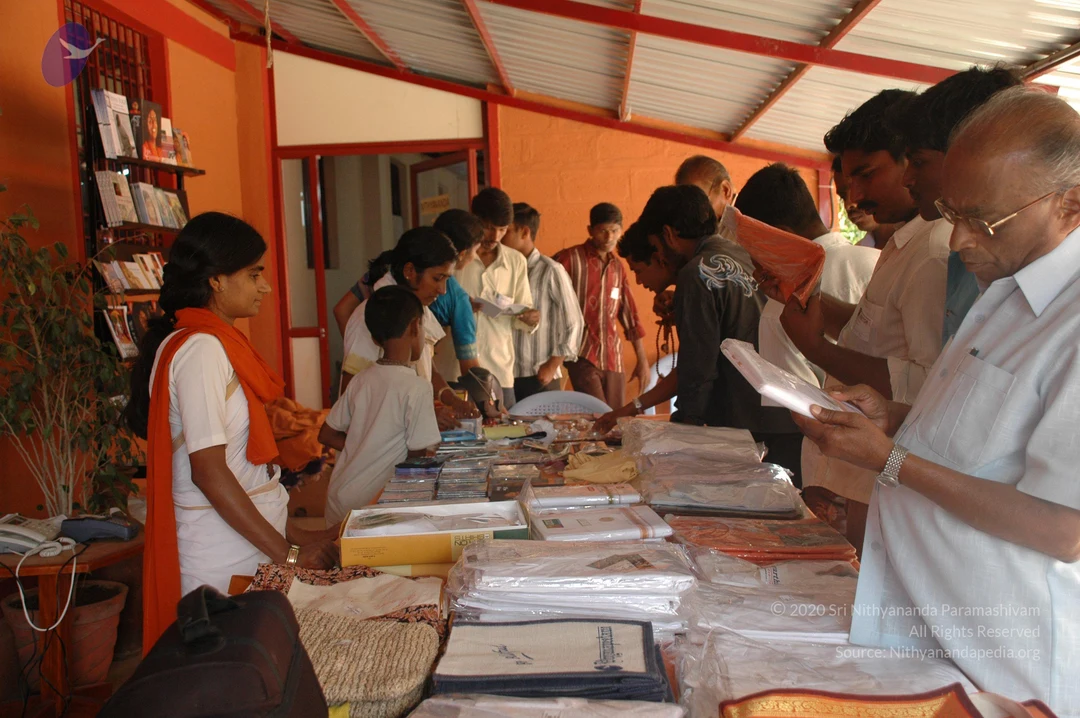
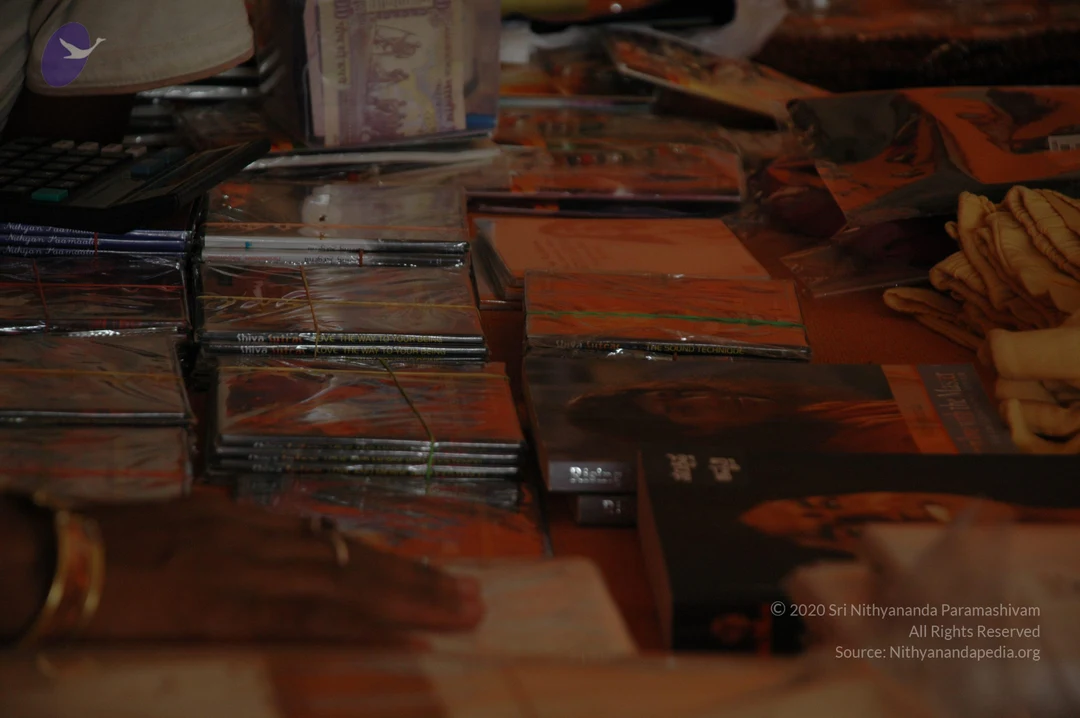
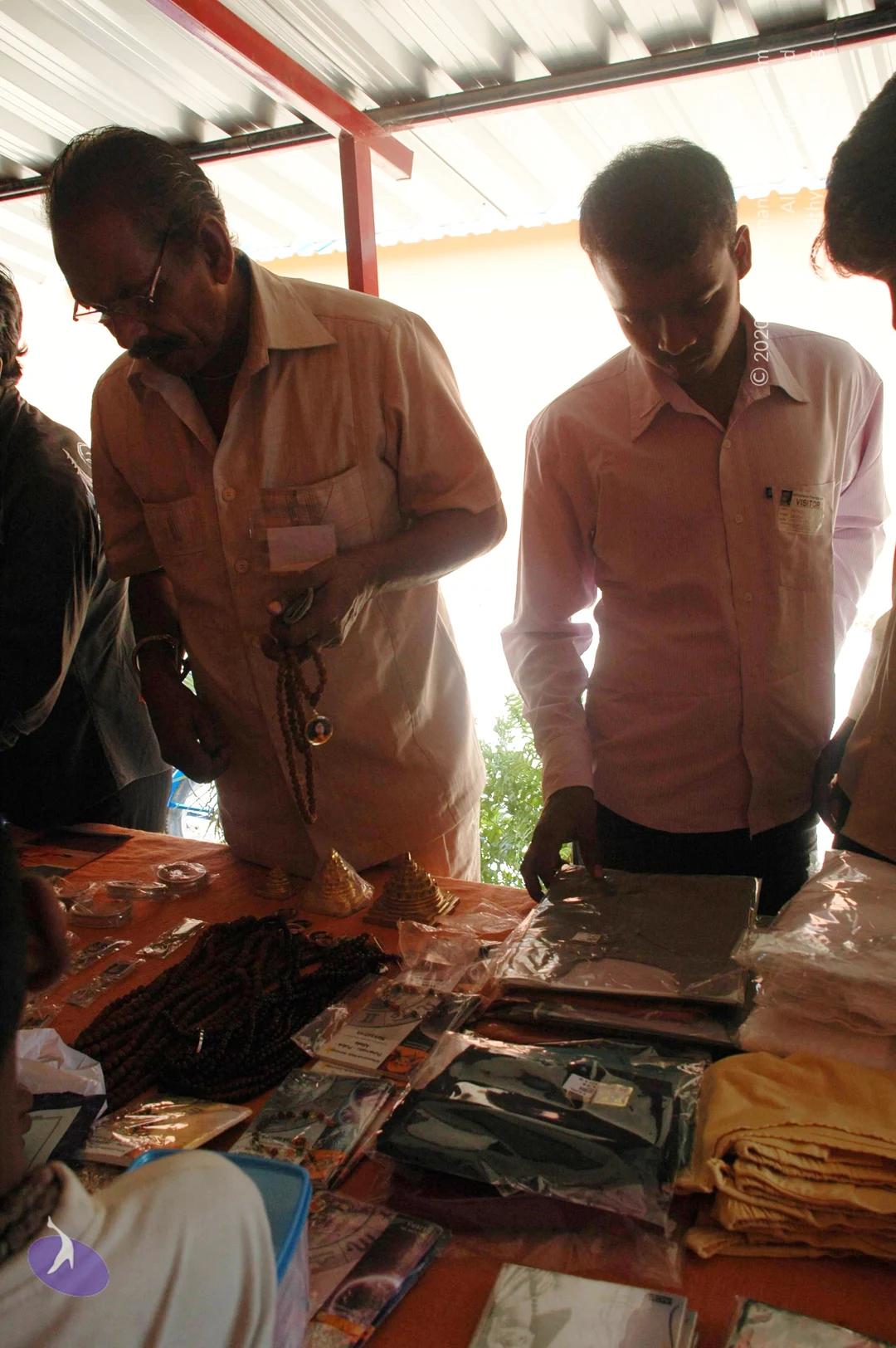
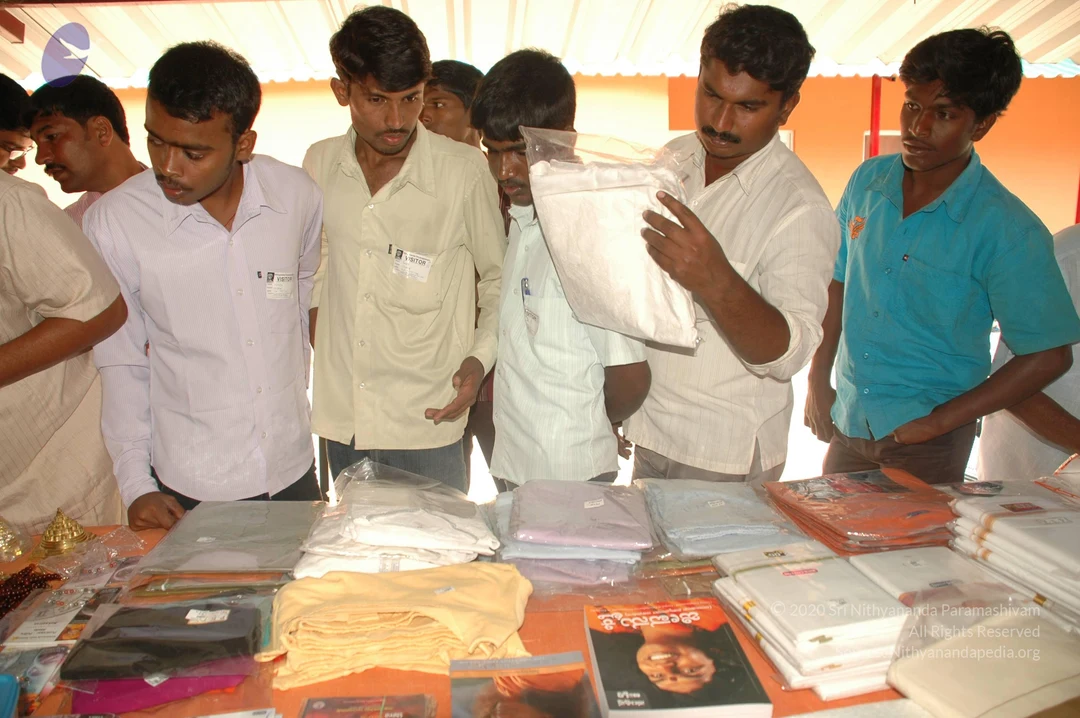
A bookstall or merchandise counter in an orange-walled building with a red-and-white corrugated roof. A young woman in white with a saffron-orange shawl stands at left behind a table covered with clear-wrapped bundles, folded cloth, CDs and booklets. Several men and women in casual and white clothing crowd the table, one older man at right in a pale blue shirt and glasses browses a booklet. Shelves of books and pamphlets line the back wall, and a potted plant and telephone sit at left.A close, dim photograph of a merchandise table at an ashram-style event. Stacks of shrink-wrapped CDs and DVDs with orange and red cover art are arranged in piles, some bound with rubber bands. Several hardcover books with dark covers and orange imagery lie on the right. A calculator sits at the upper left beside a bundle of Indian rupee notes, and a stack of folded fabric or cloth items appears at the right edge. A person's bangled wrist and hand rest at the lower left edge. No people are fully shown, and no one's face is visible.Two men stand at a stall with an orange cloth covered table under a corrugated metal roof. The older man on the left wears glasses and a pale peach short-sleeved shirt and holds a dark rudraksha-style mala with a small round pendant. The younger man on the right wears a pink striped shirt with a visitor badge and looks down at a plastic-wrapped folded garment. The table displays dark beaded malas, gold-coloured pyramid objects, packaged clothing, folded yellow-orange cloth and printed booklets or cards. No swami figure is visible in the scene; the pendant is too small to read.A stall display with several young men in collared shirts examining folded cloth and packaged goods on a table draped in orange. Piles of white and pastel folded garments, a bundle of yellow fabric, dark cloth and a white plastic-wrapped package are laid out. A book with a portrait cover sits at the front. Brass items and beads appear at the left edge. A man in white shirt holds up a packaged white item. The setting is a covered open hall with orange walls and a corrugated roof.
13

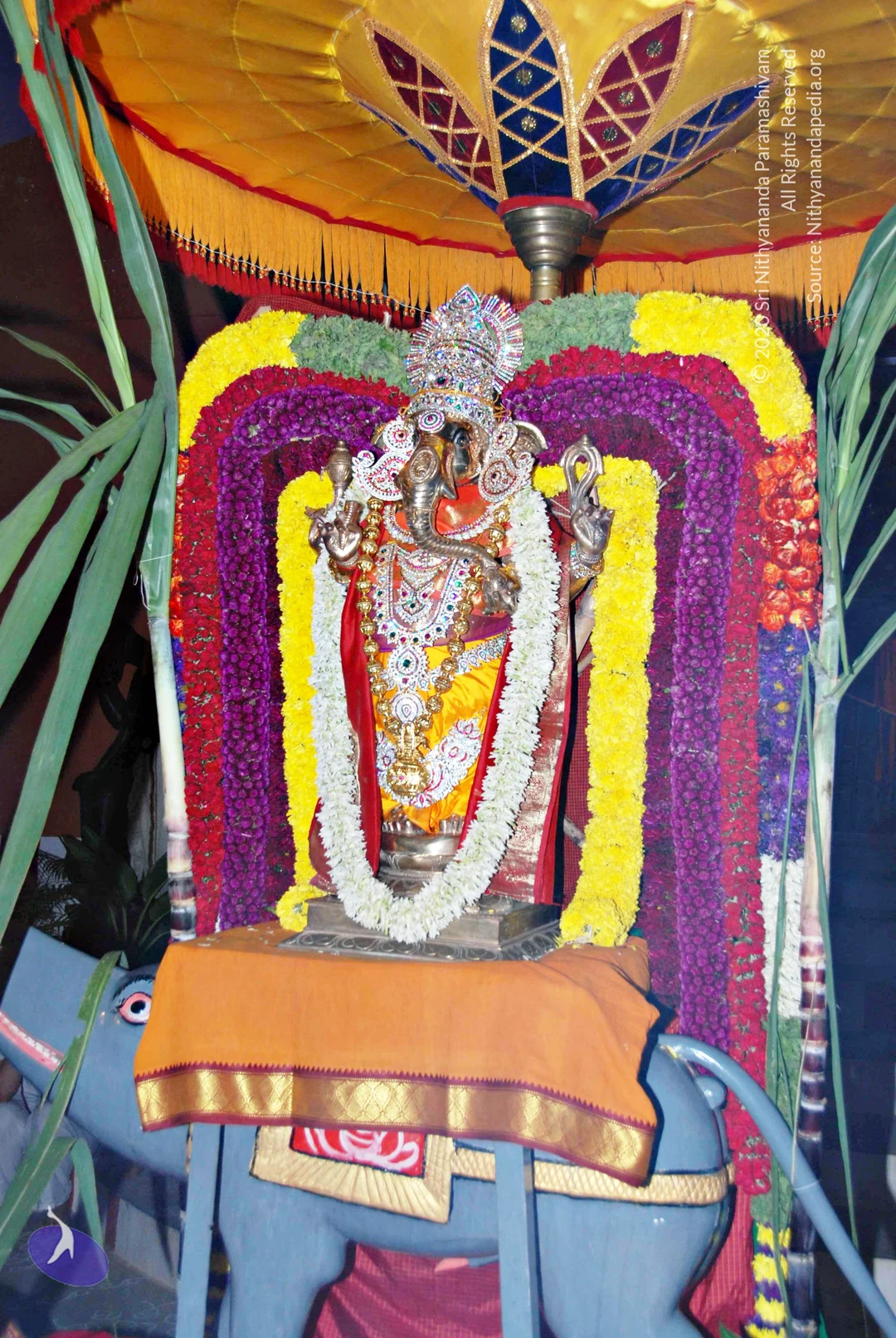
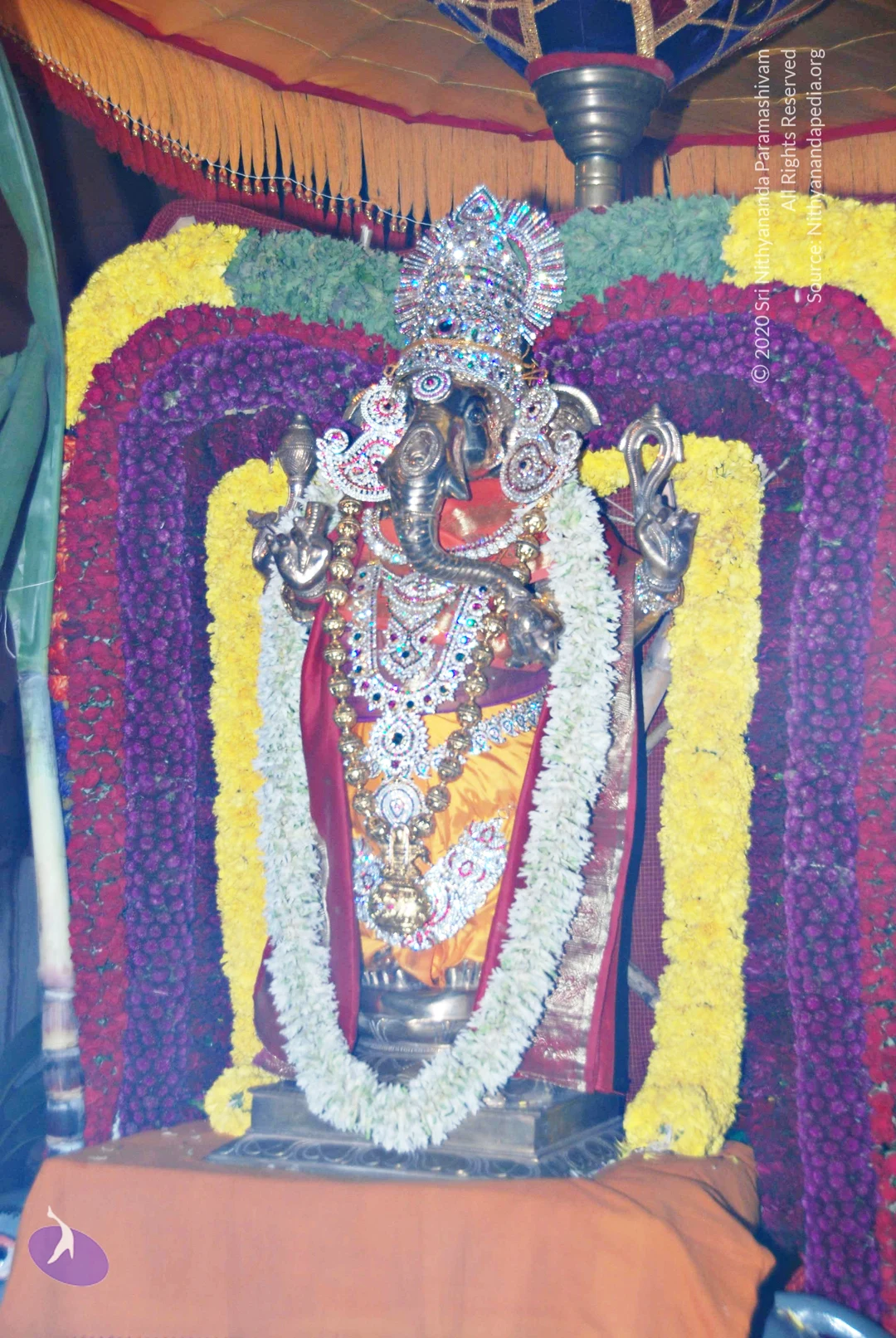
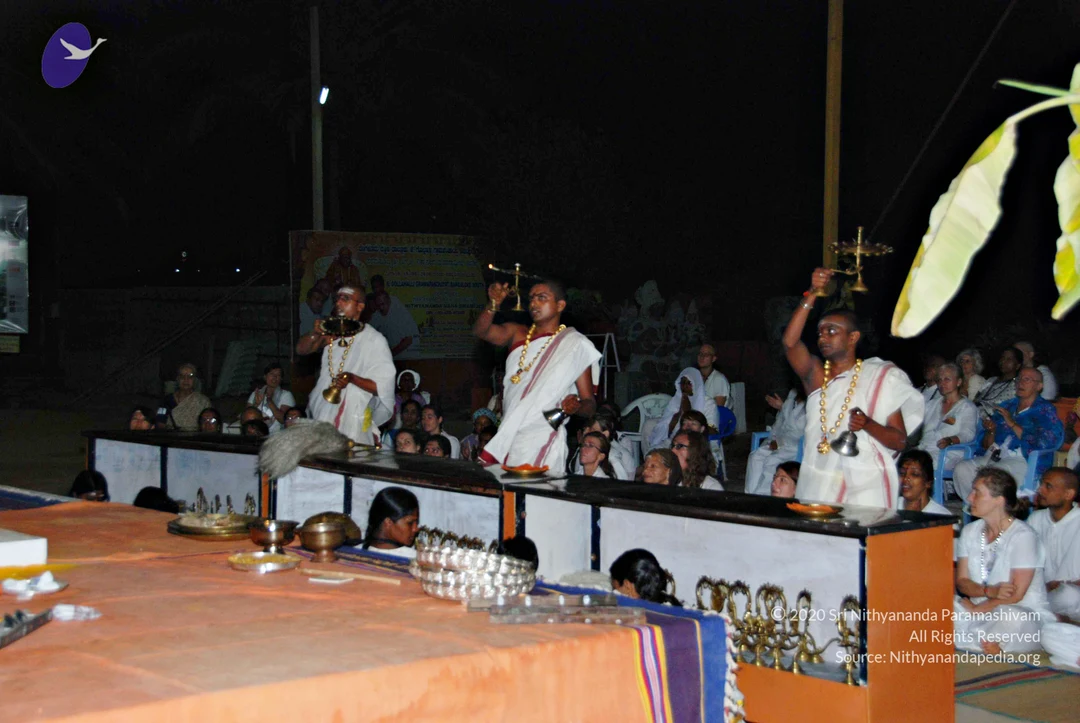
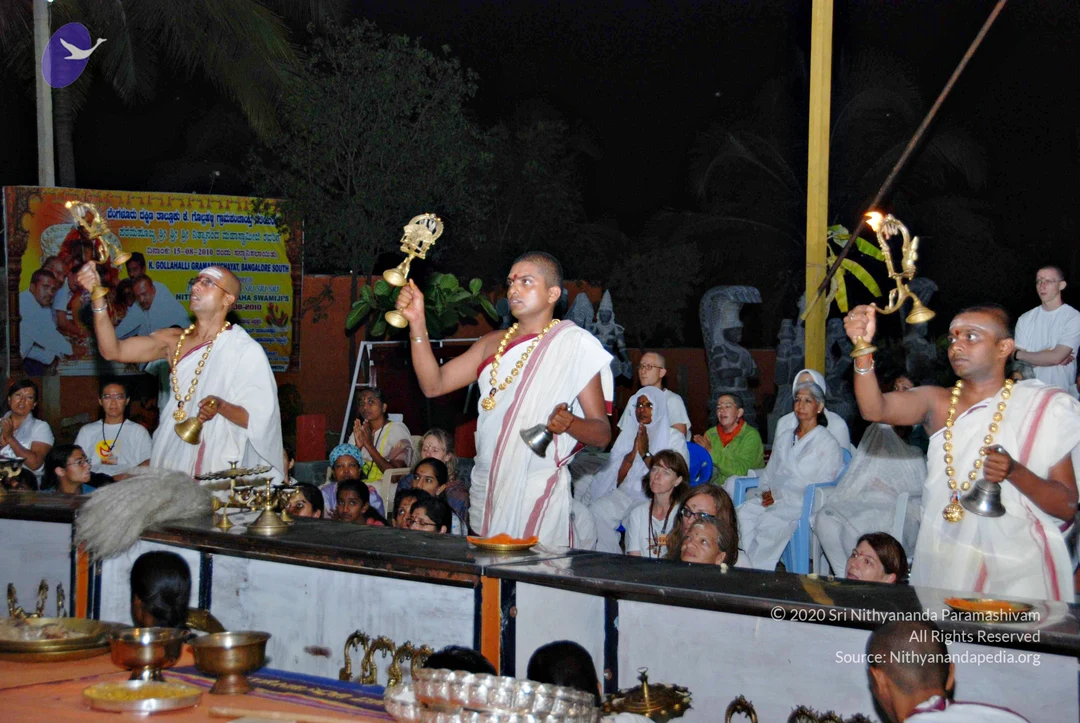
13-GANAPATHI-HOMA

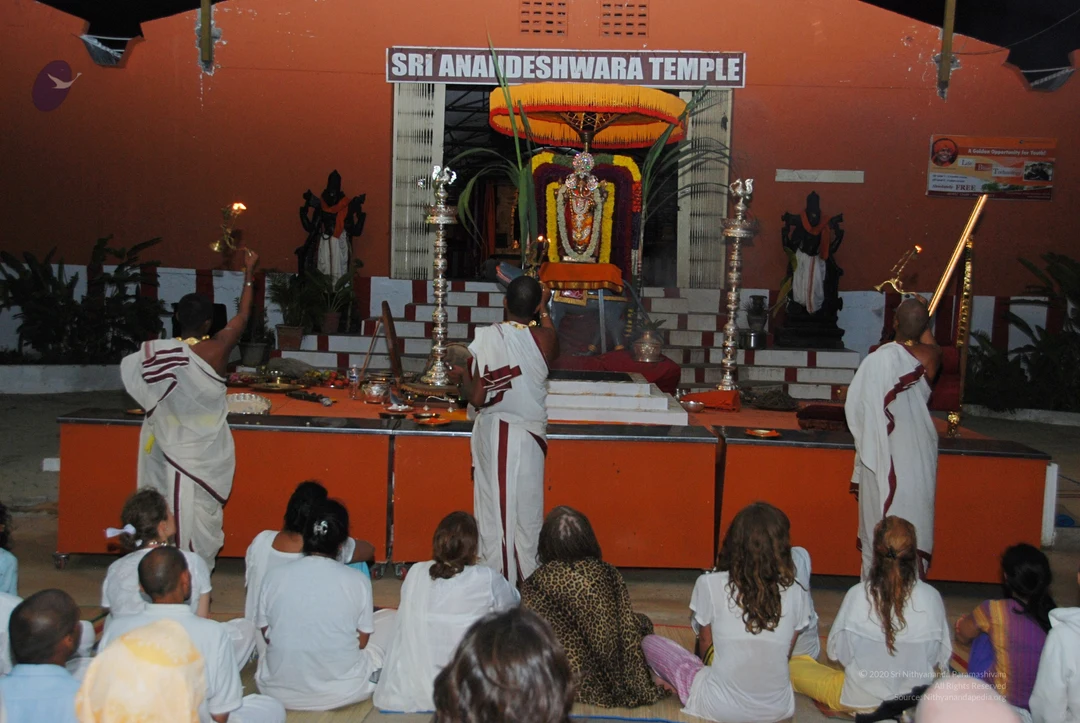
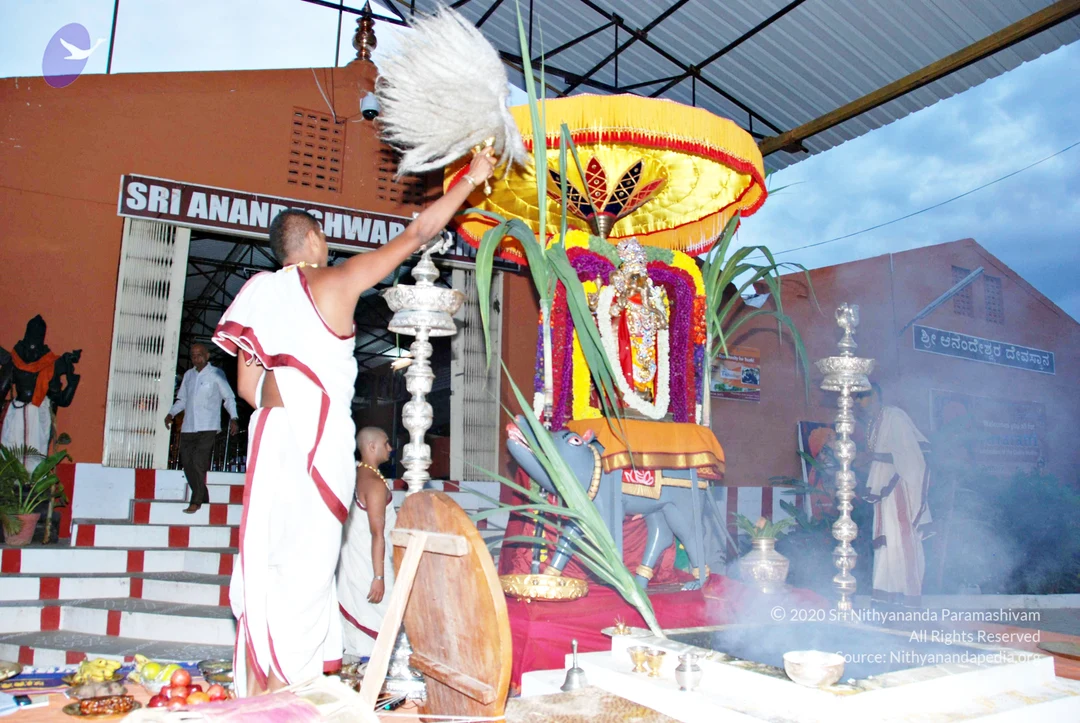
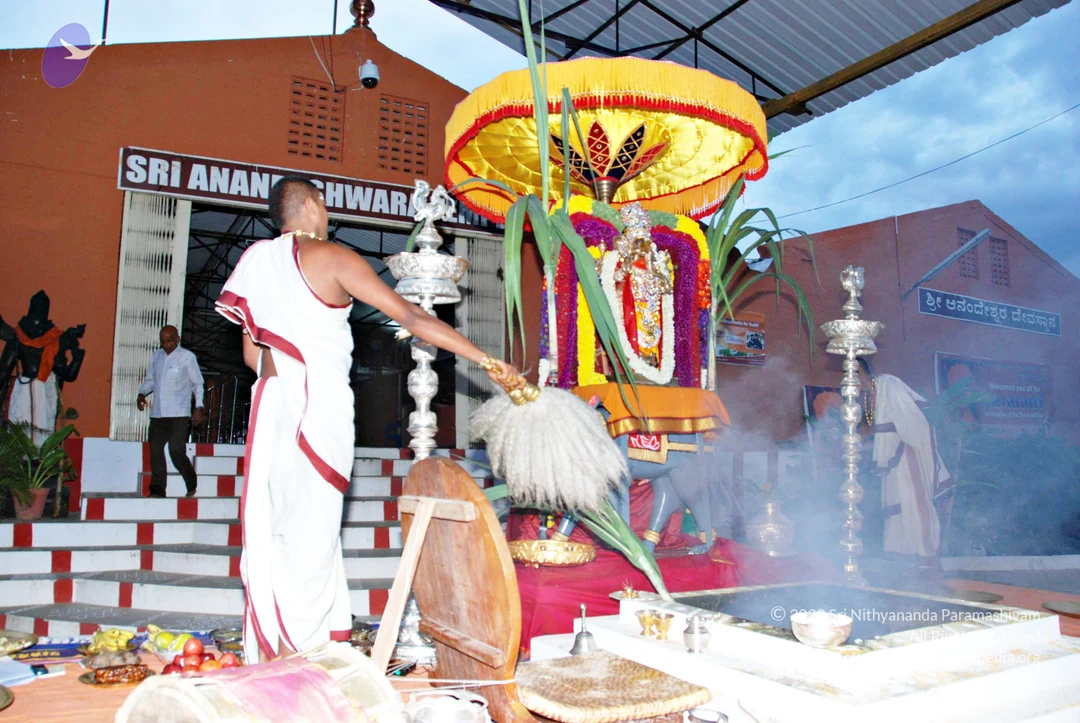
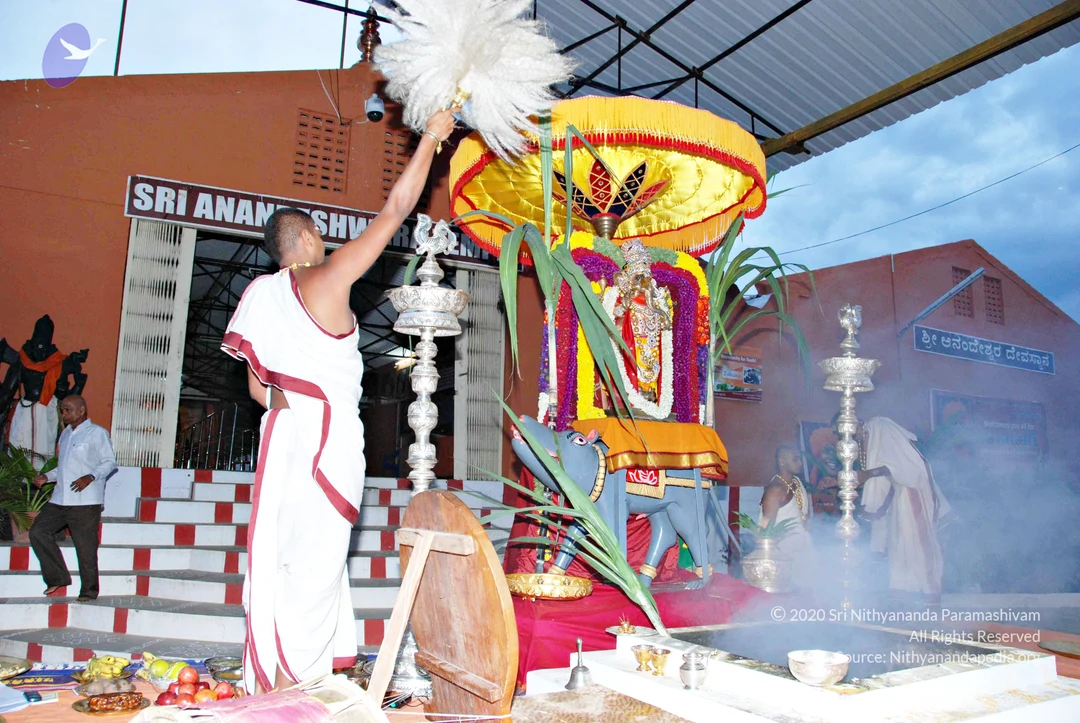
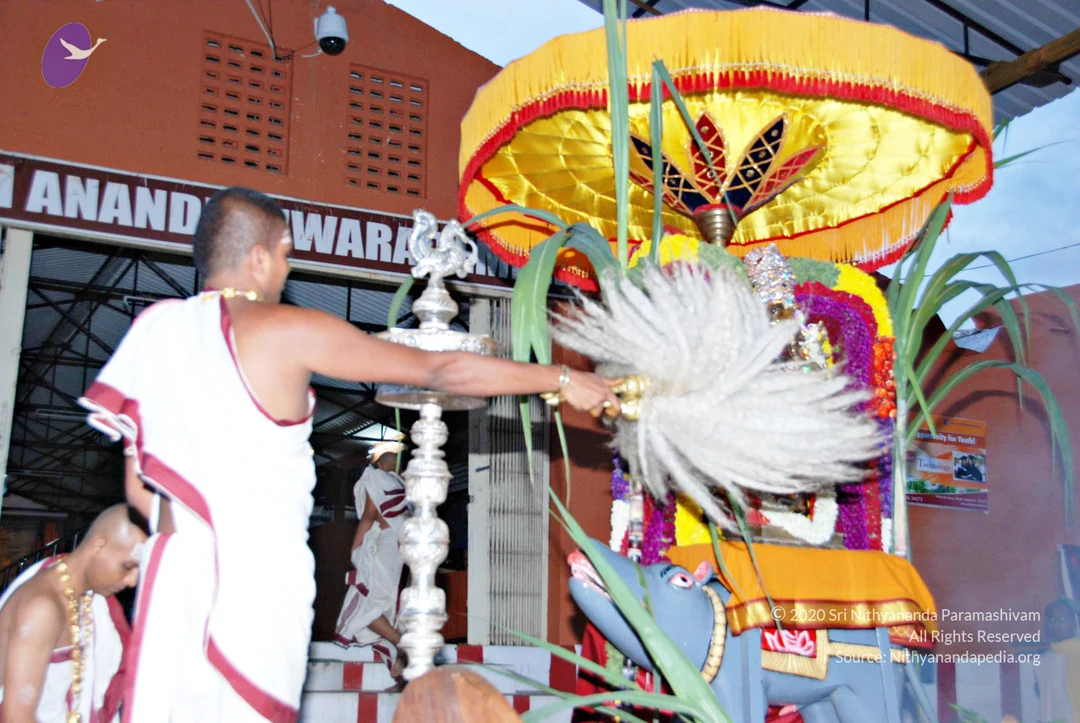
69 dated photos in previewSource gallery
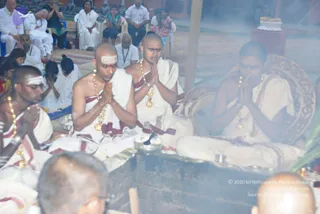
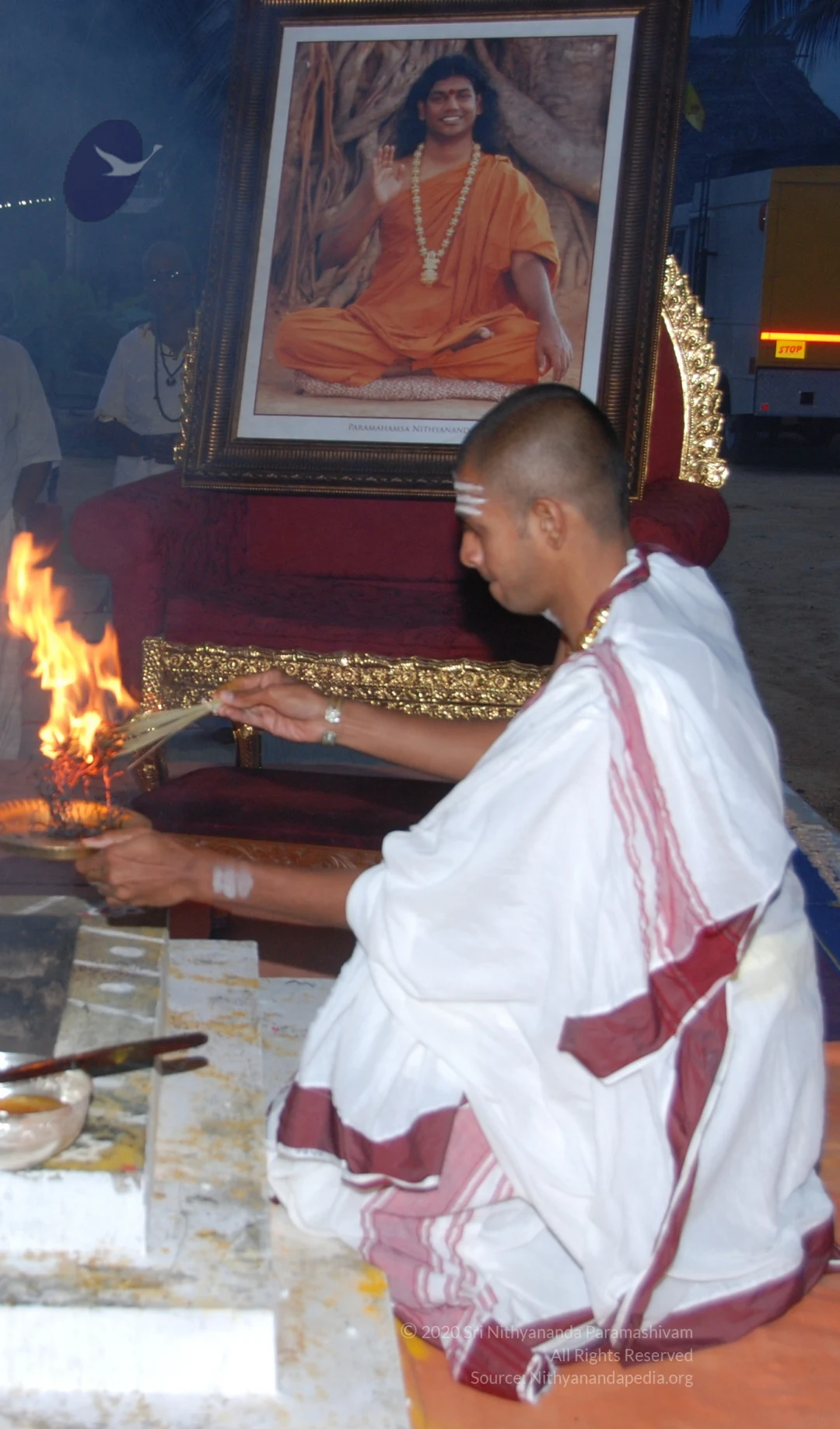
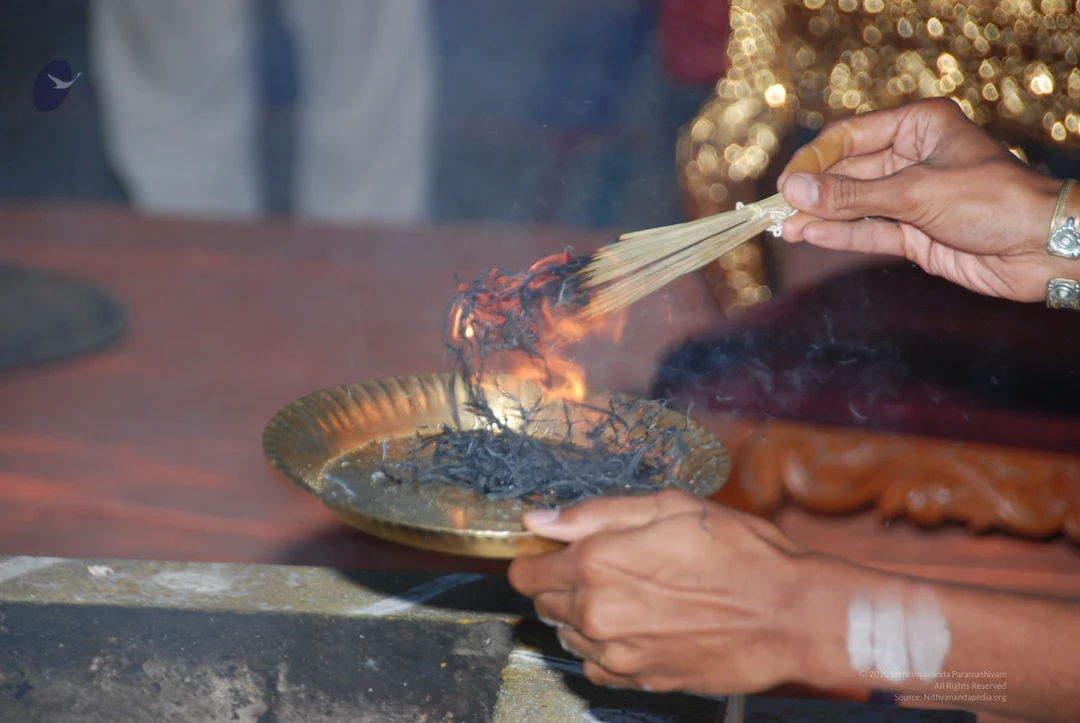
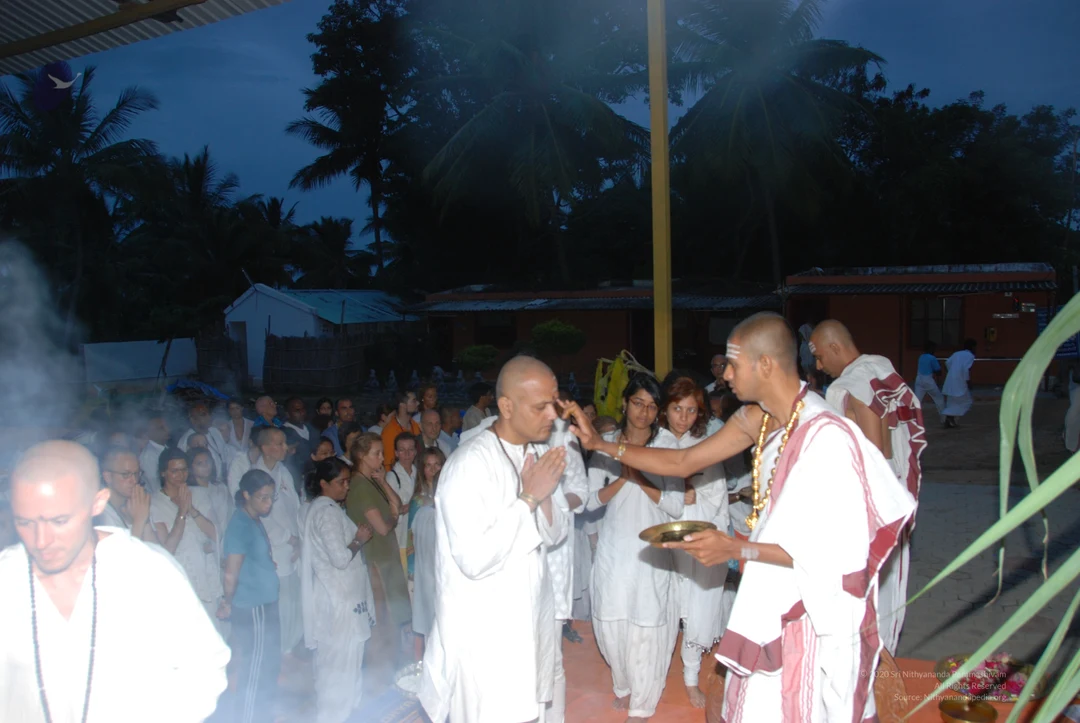
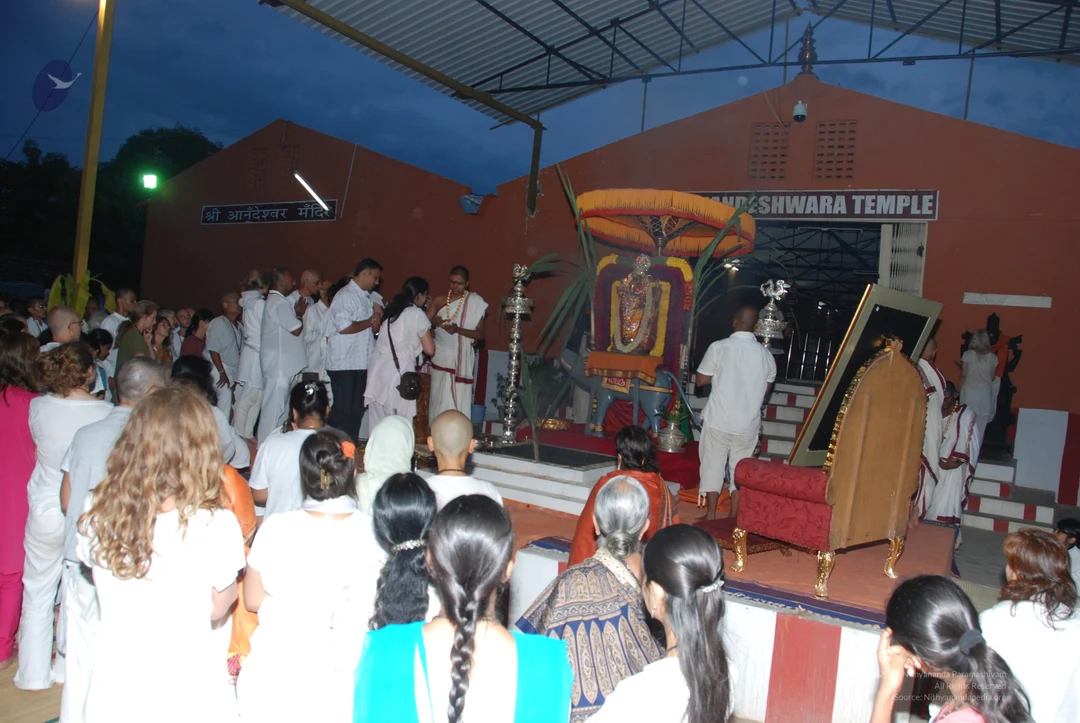
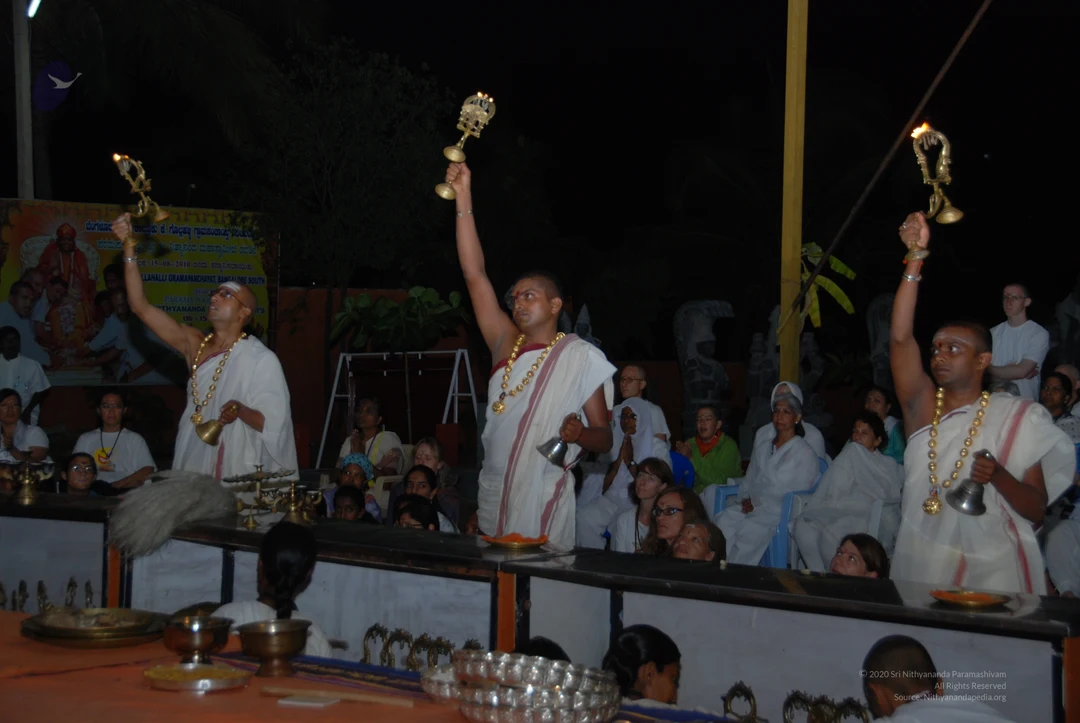
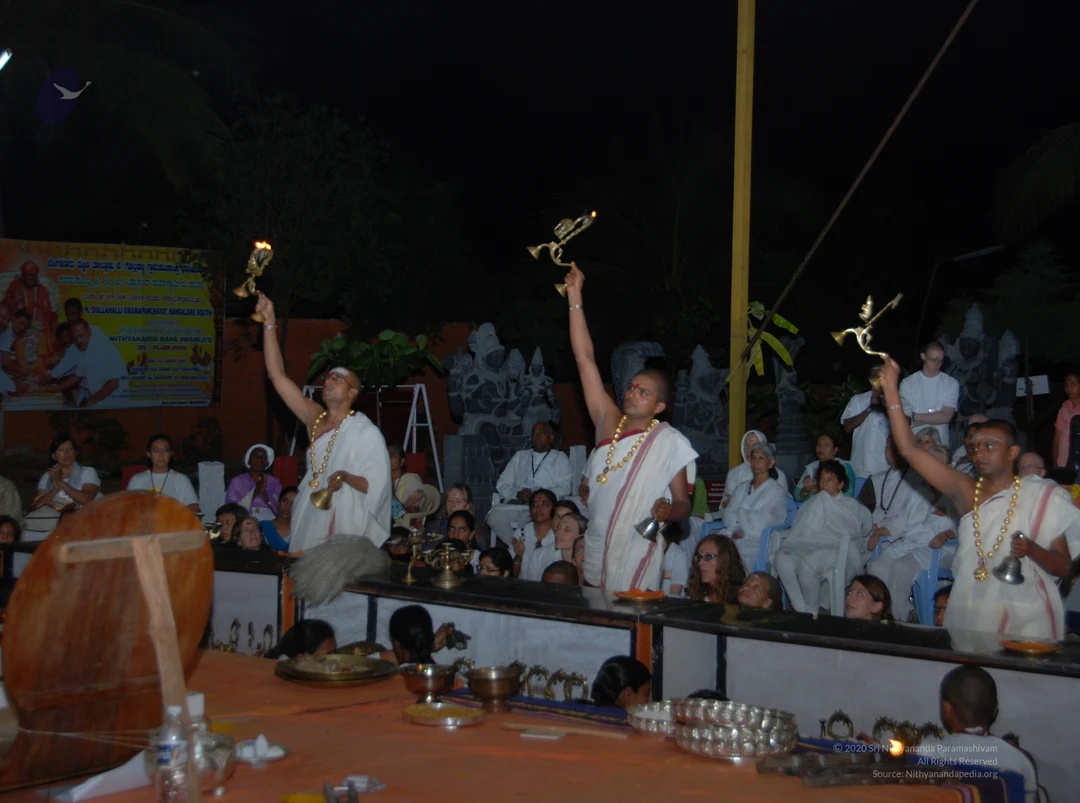
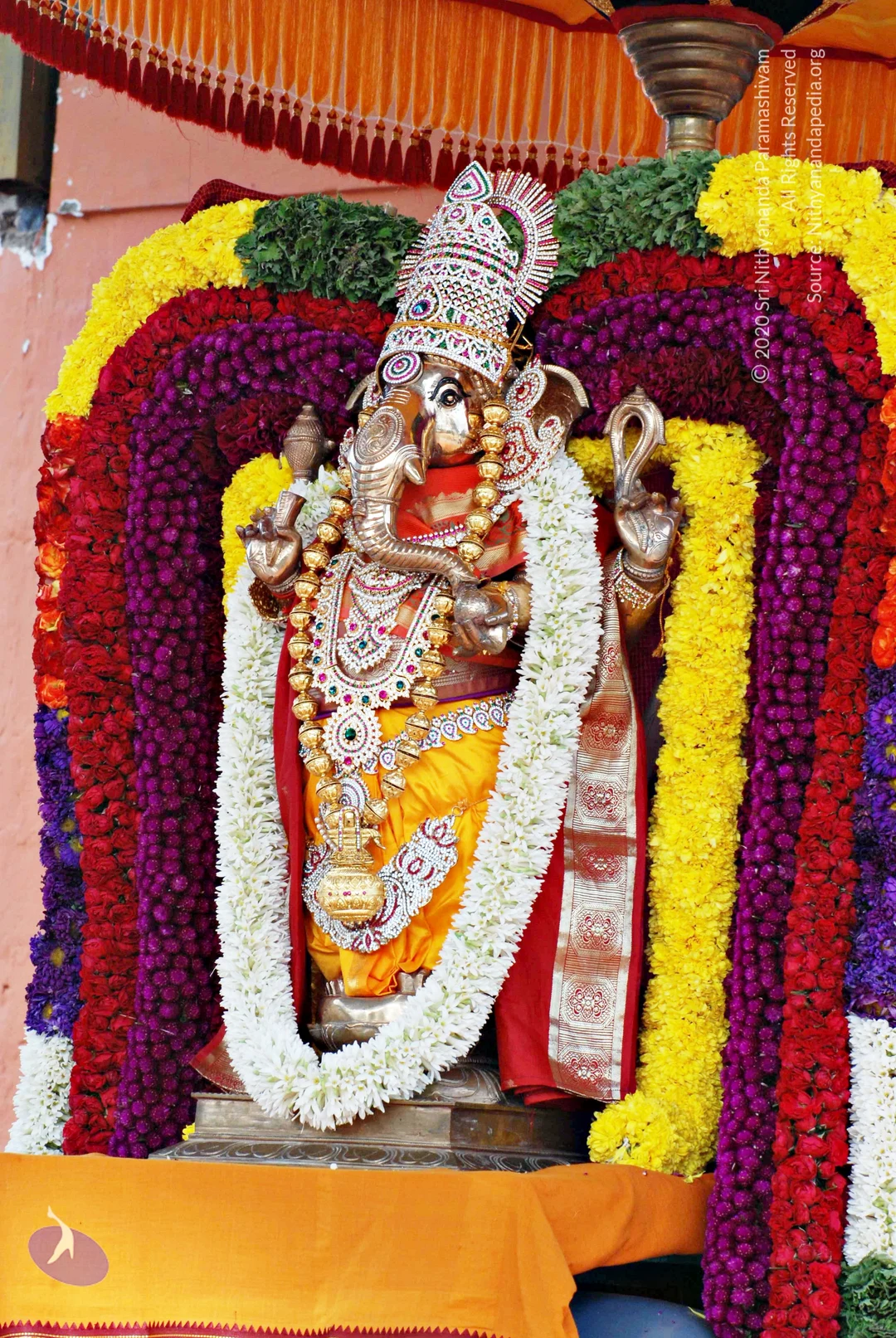
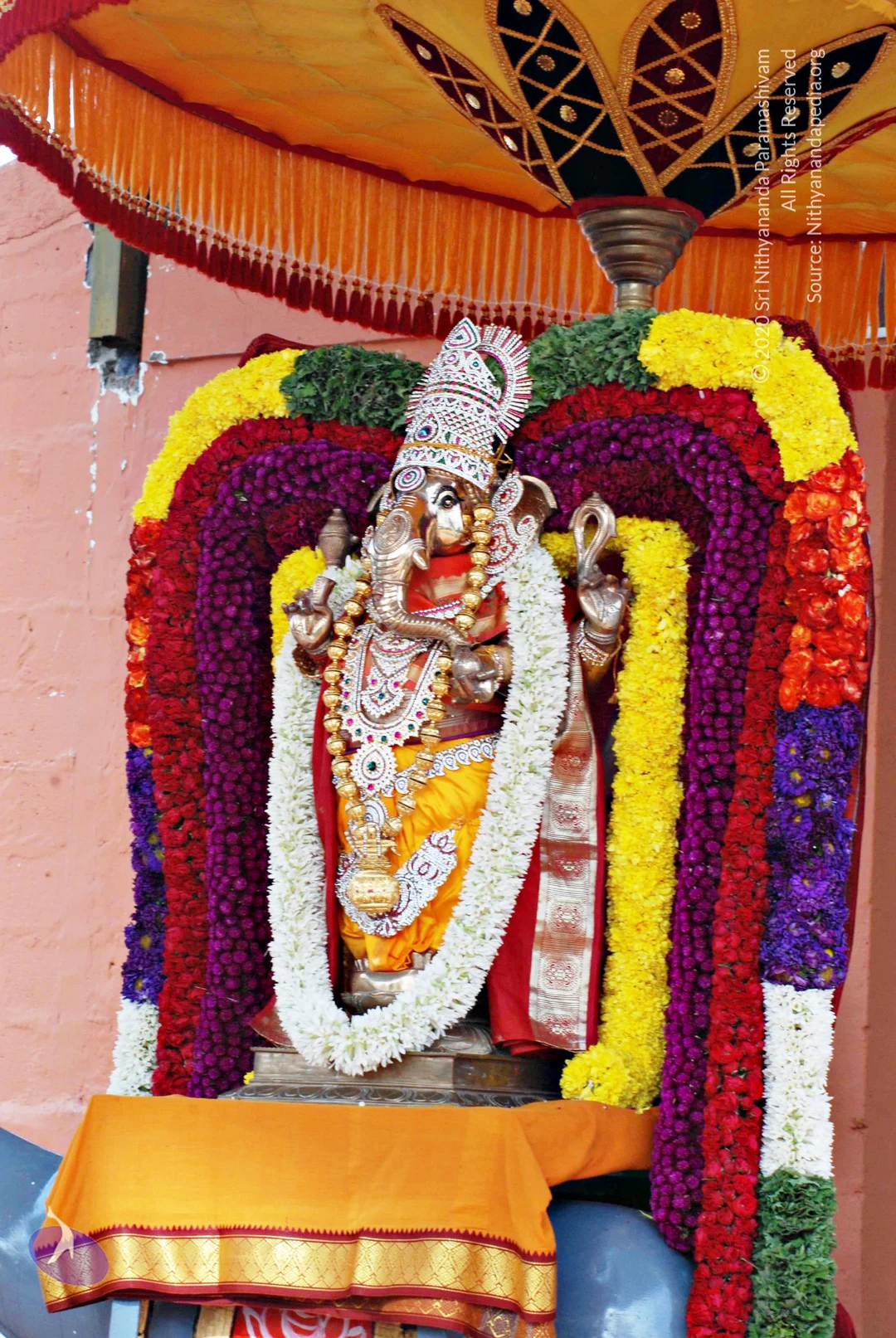
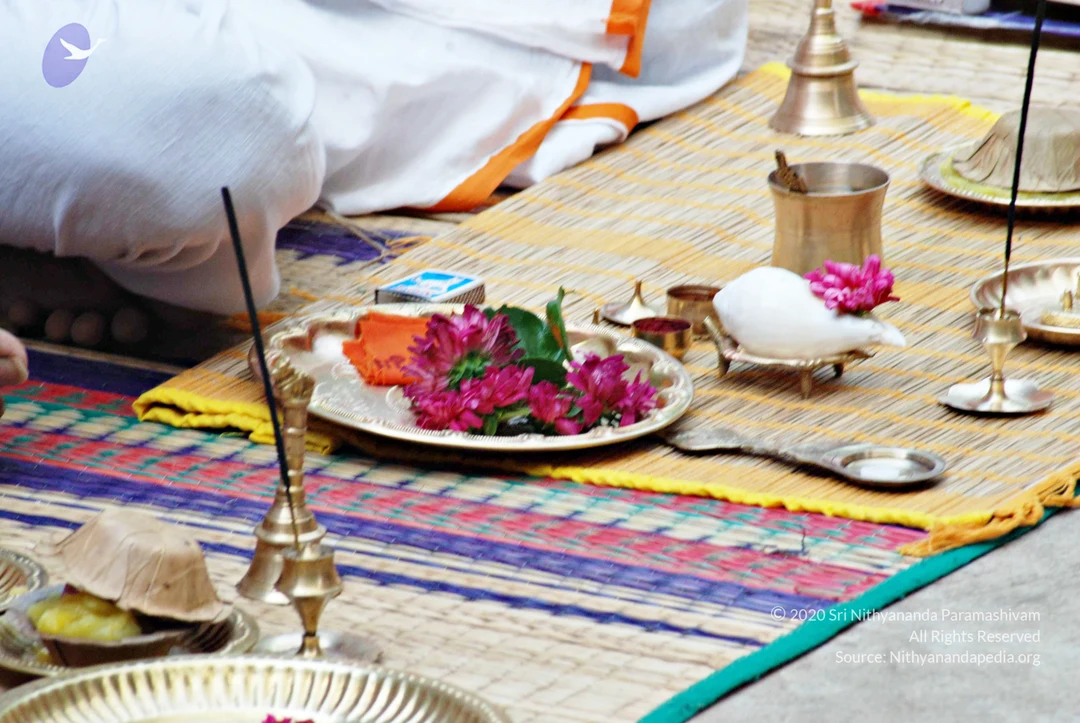
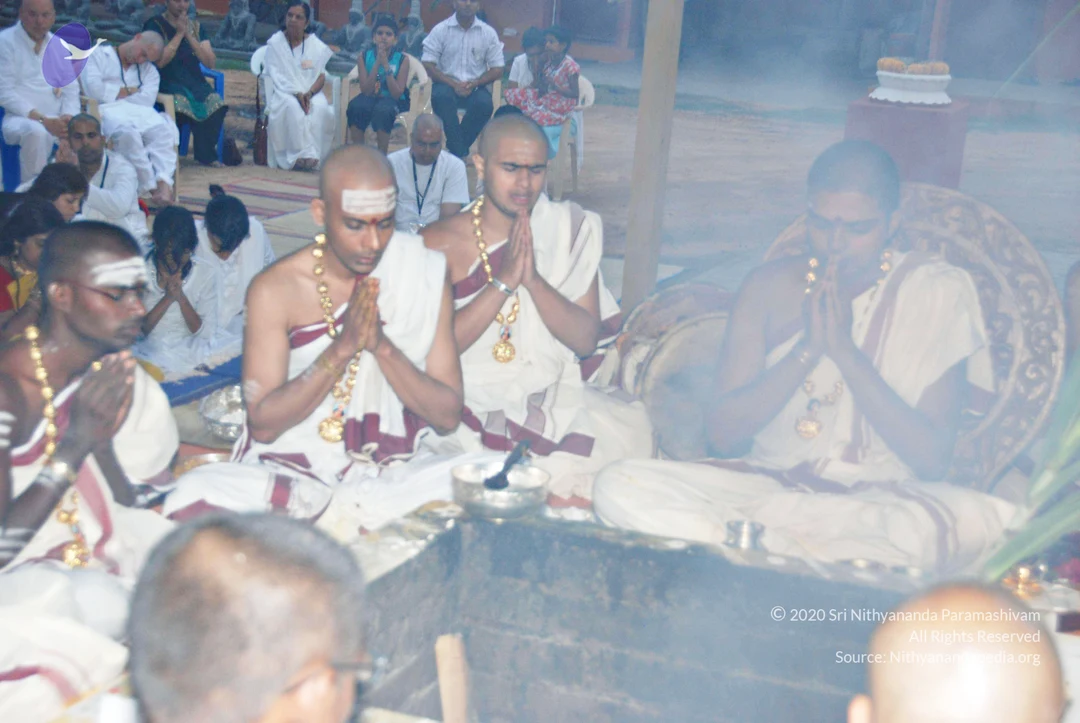
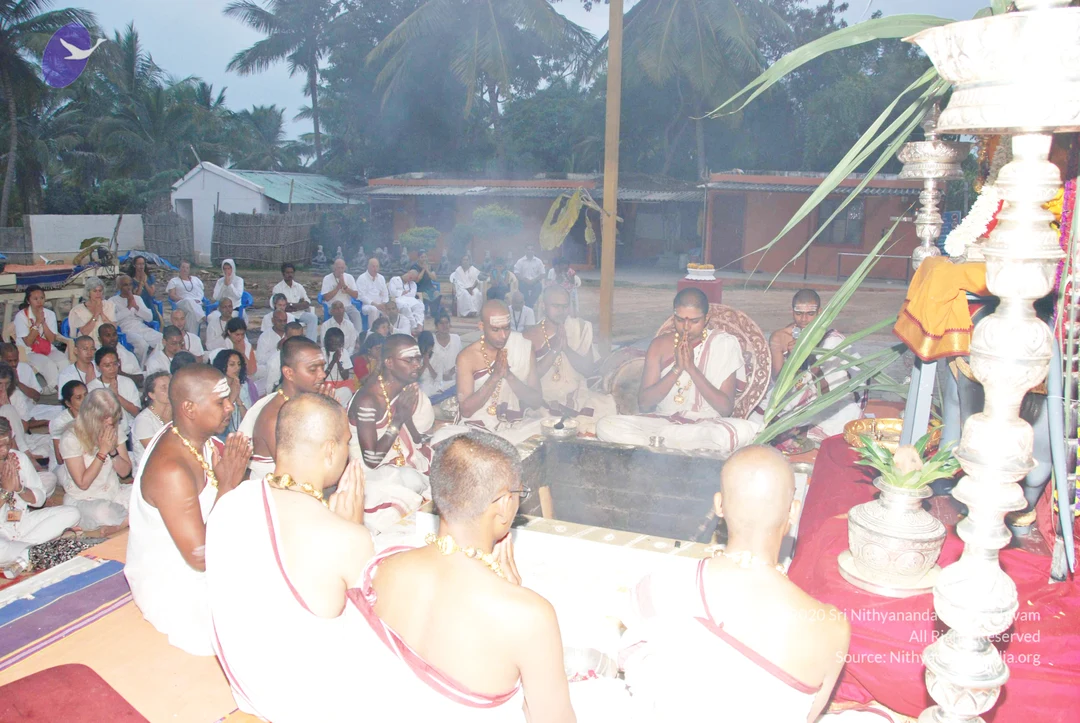
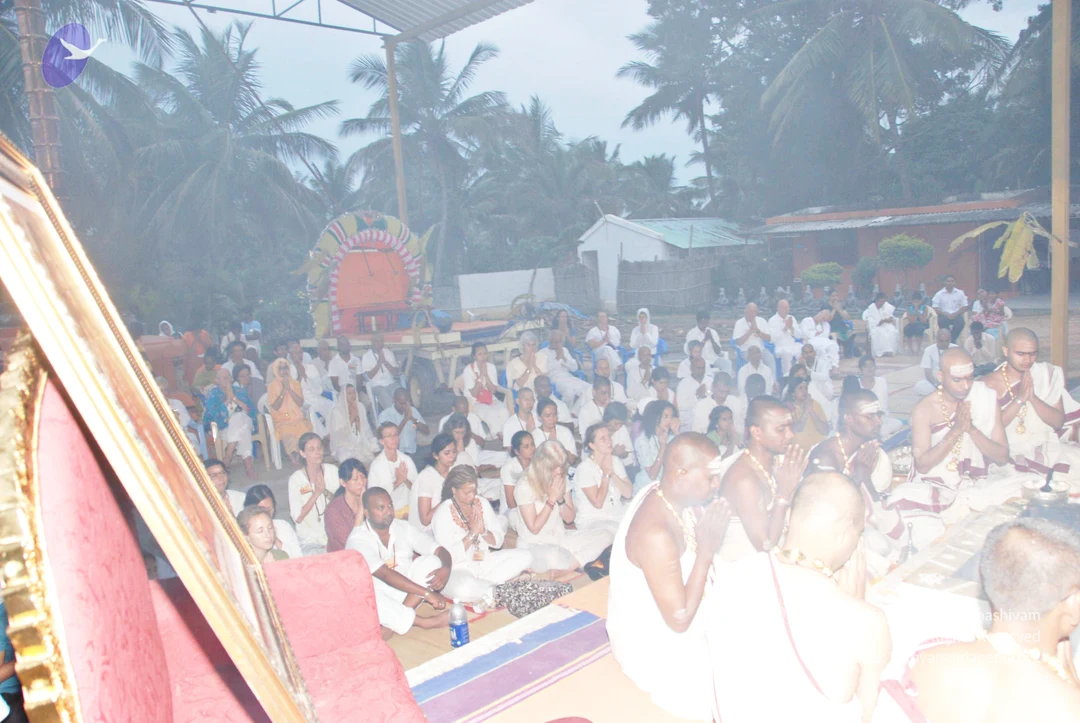
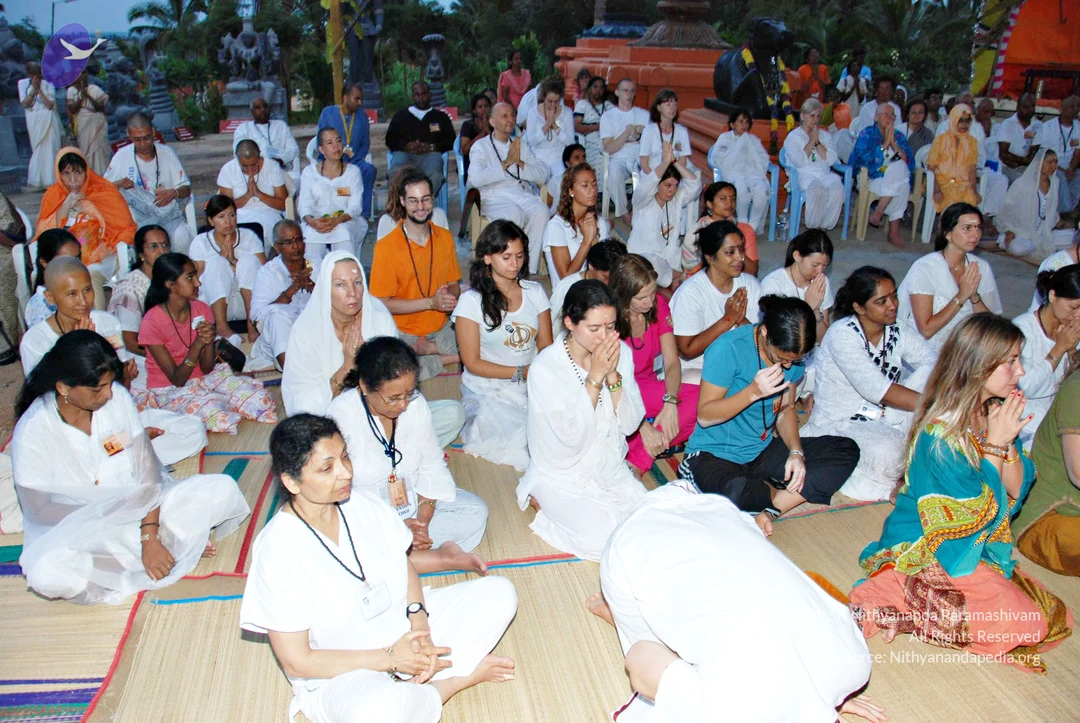
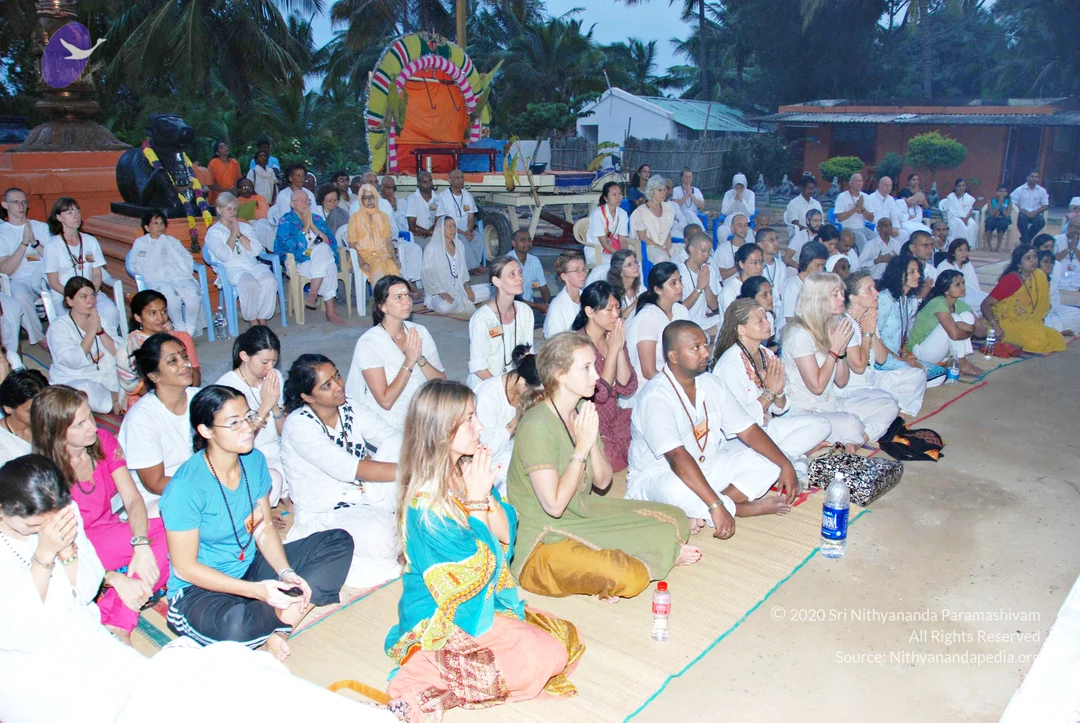
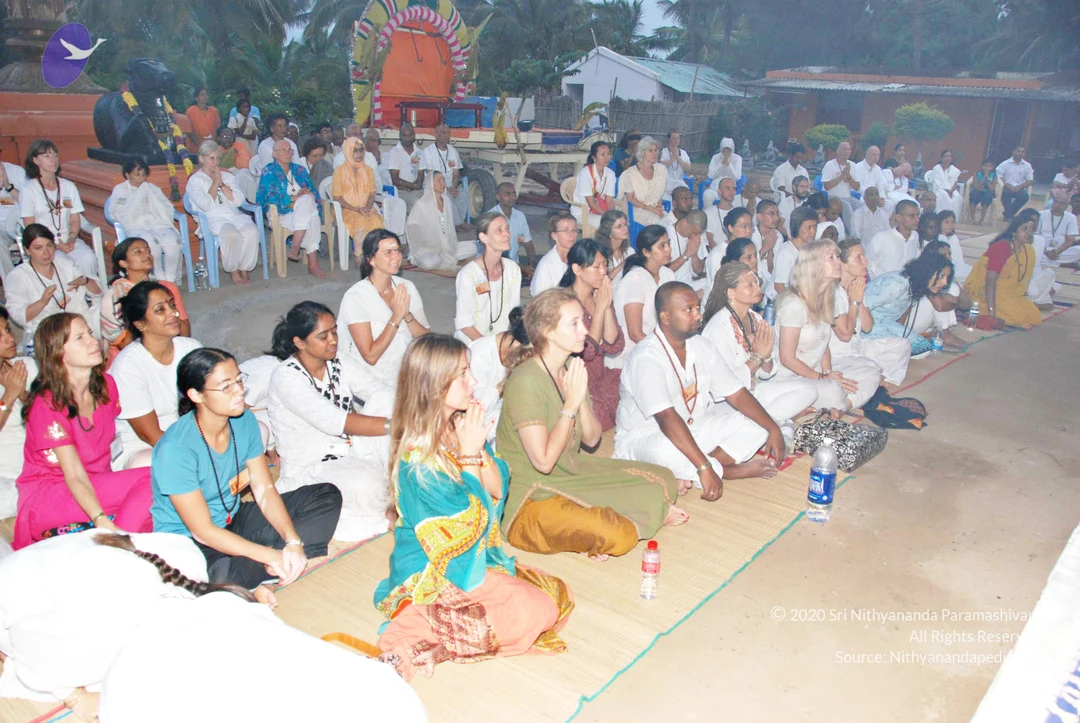
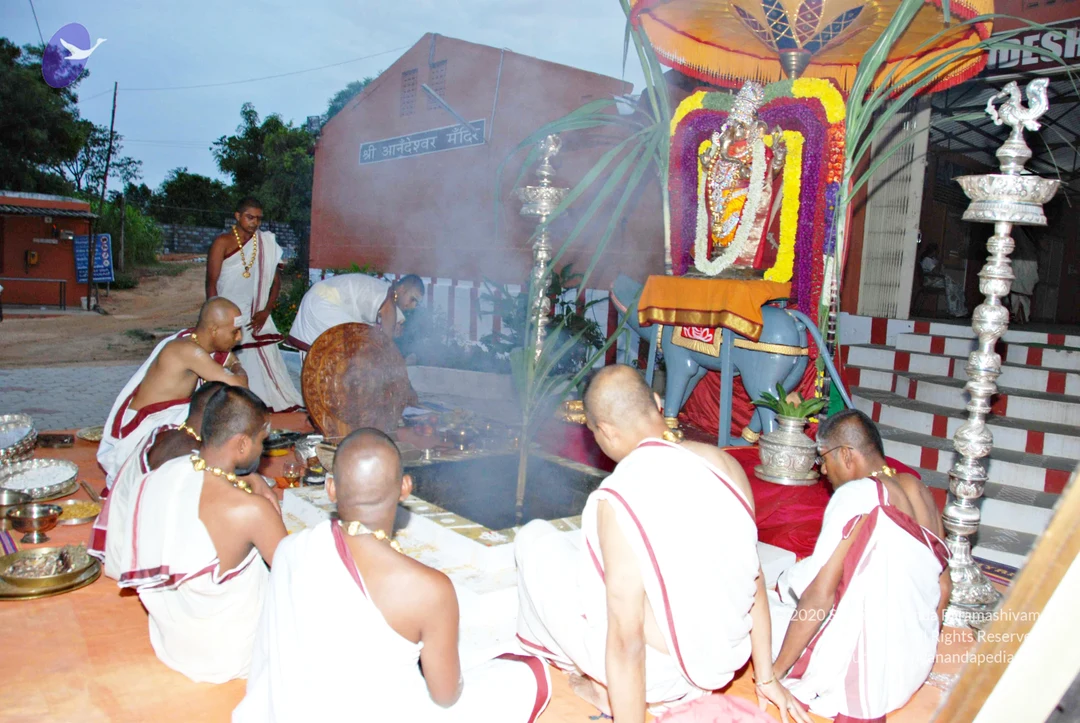
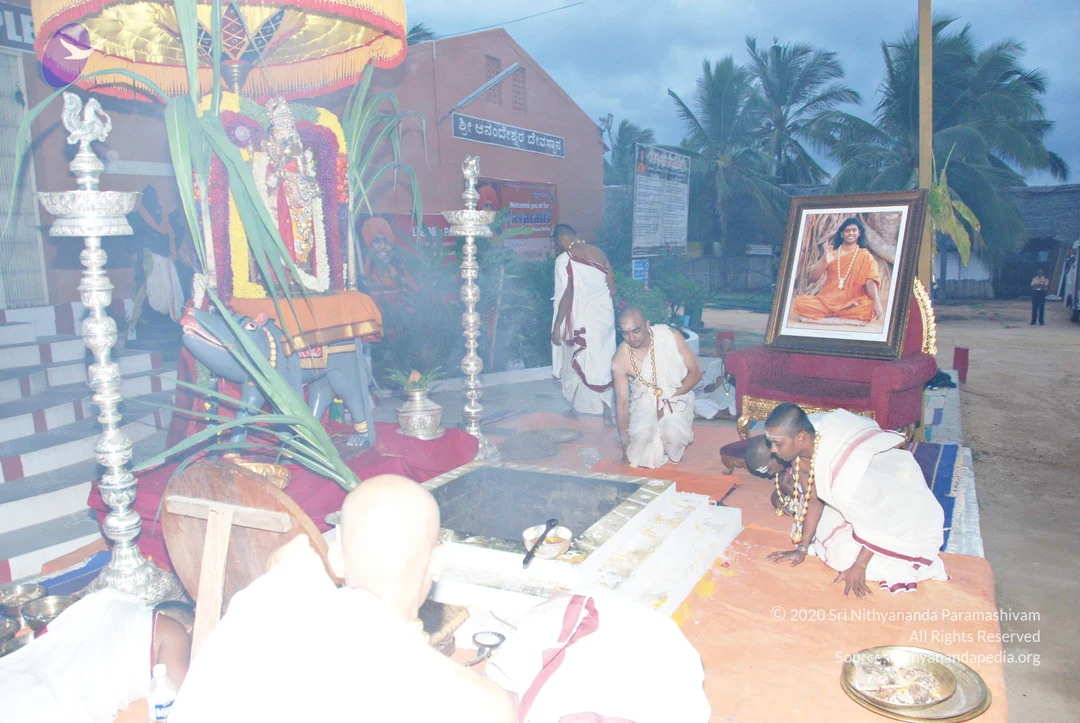
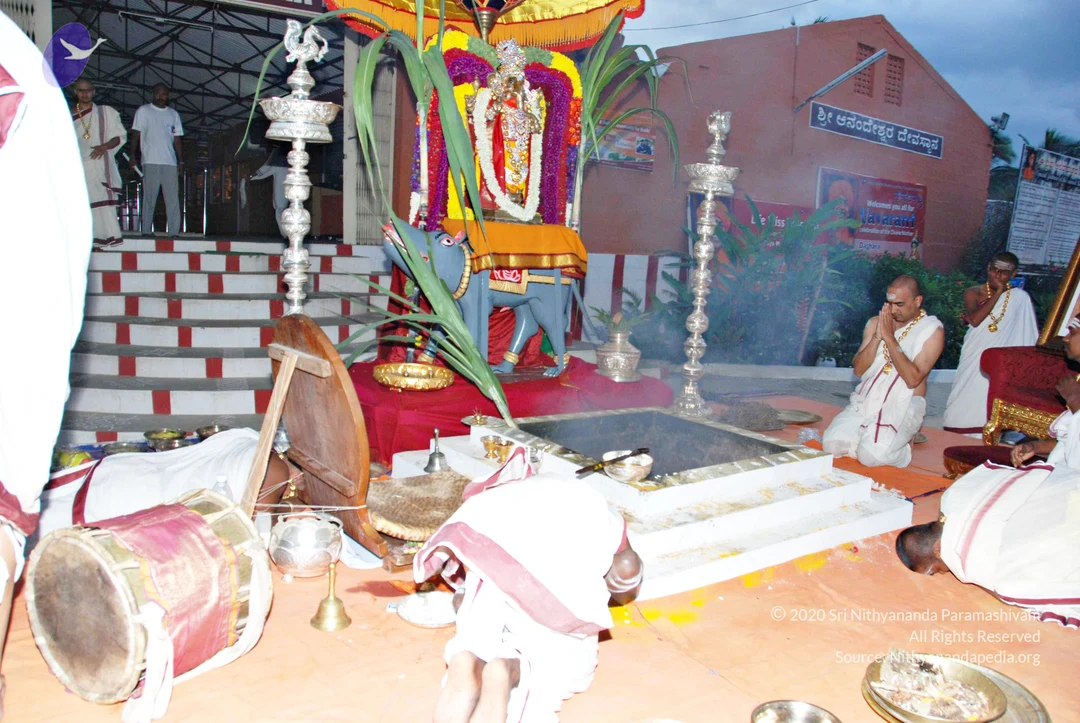
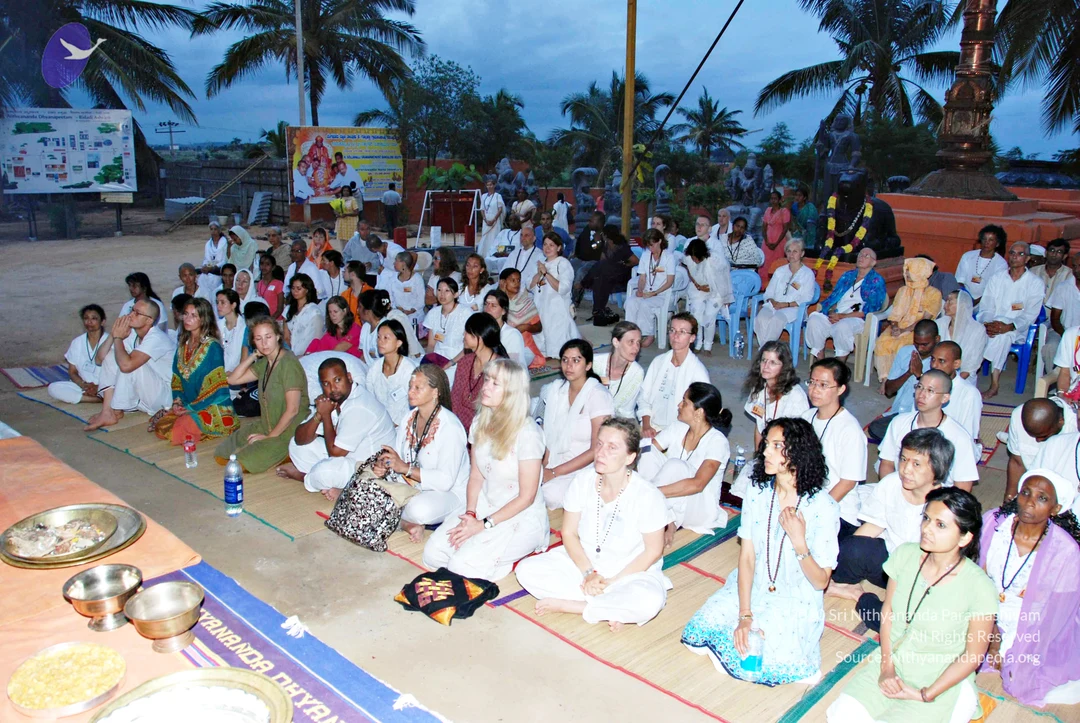
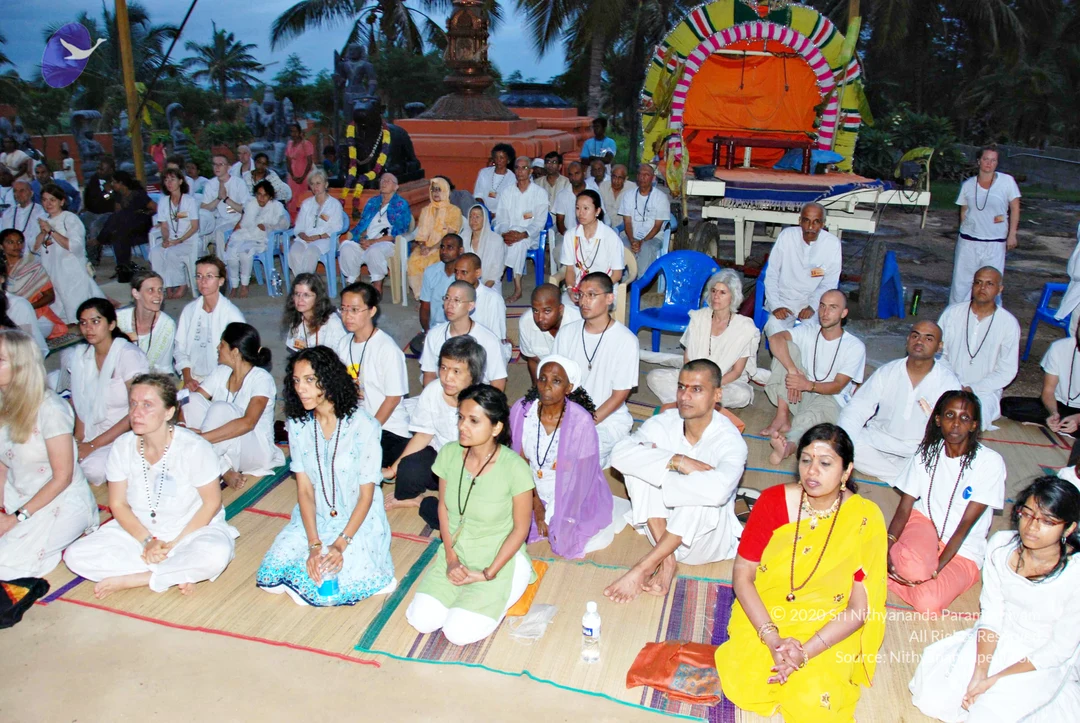
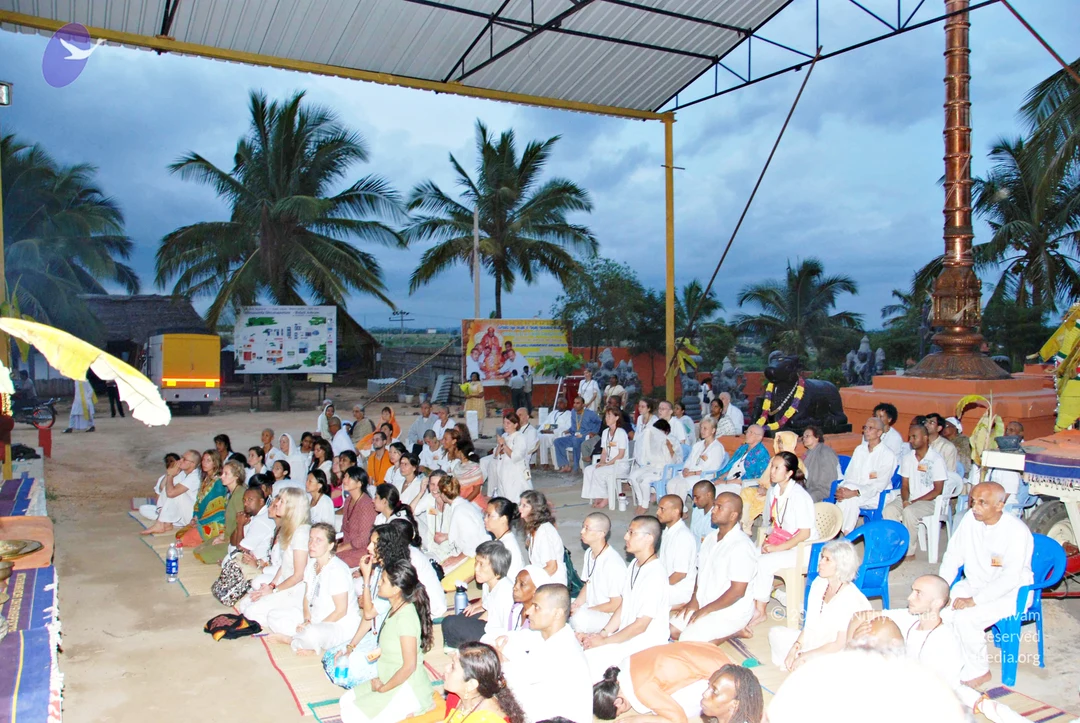
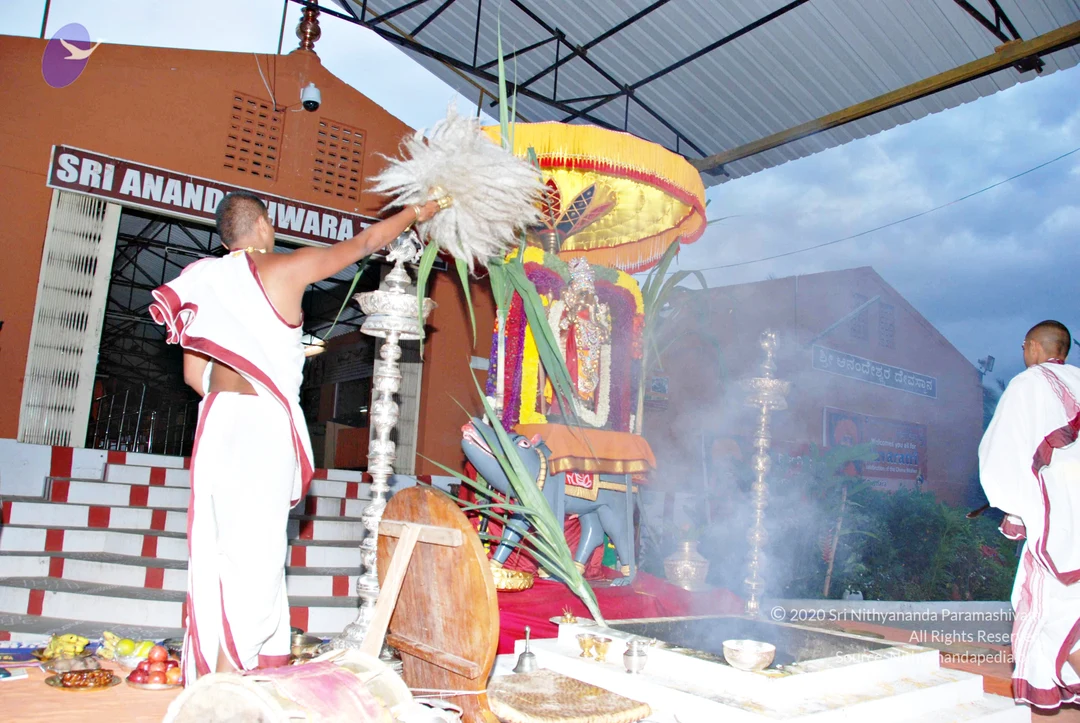
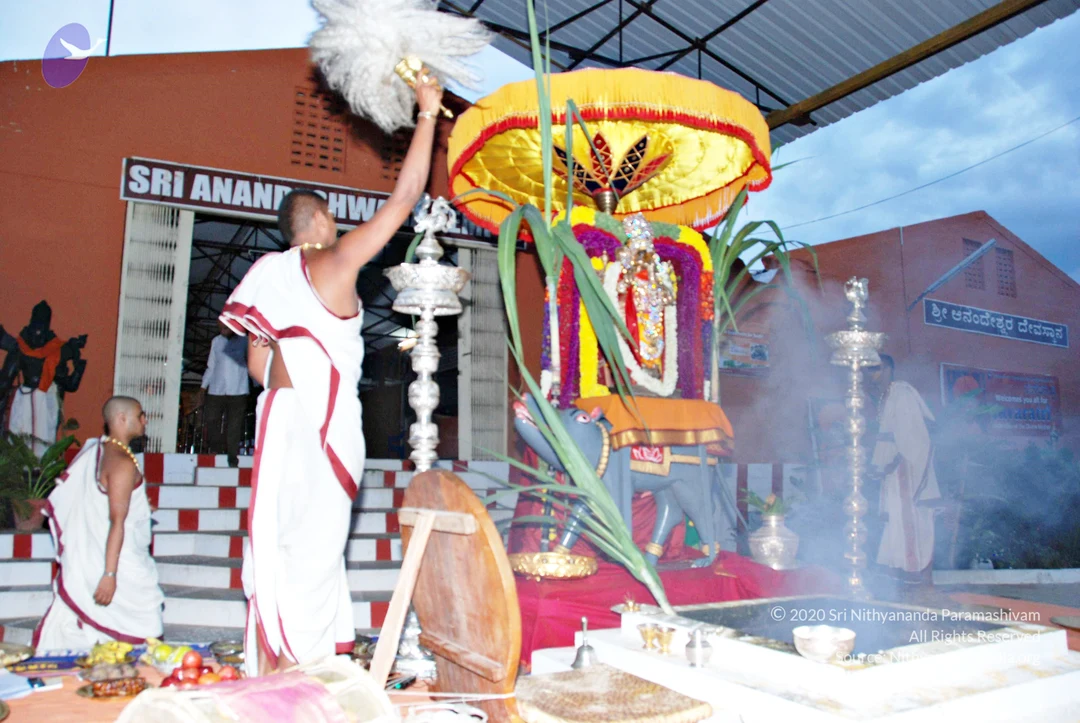
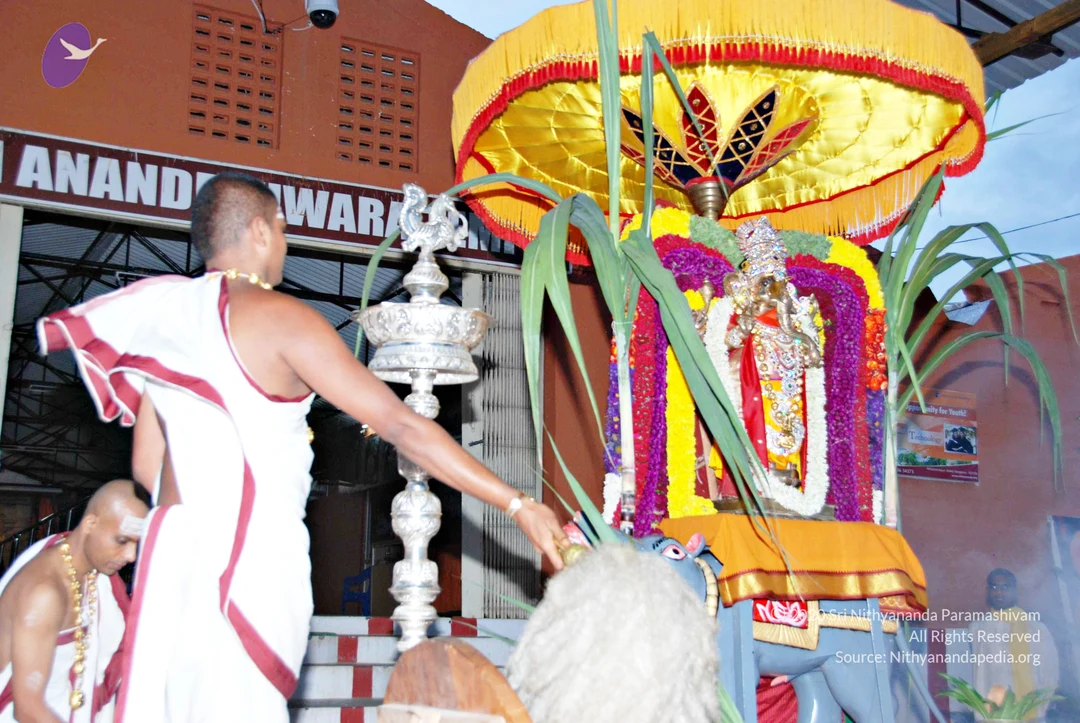
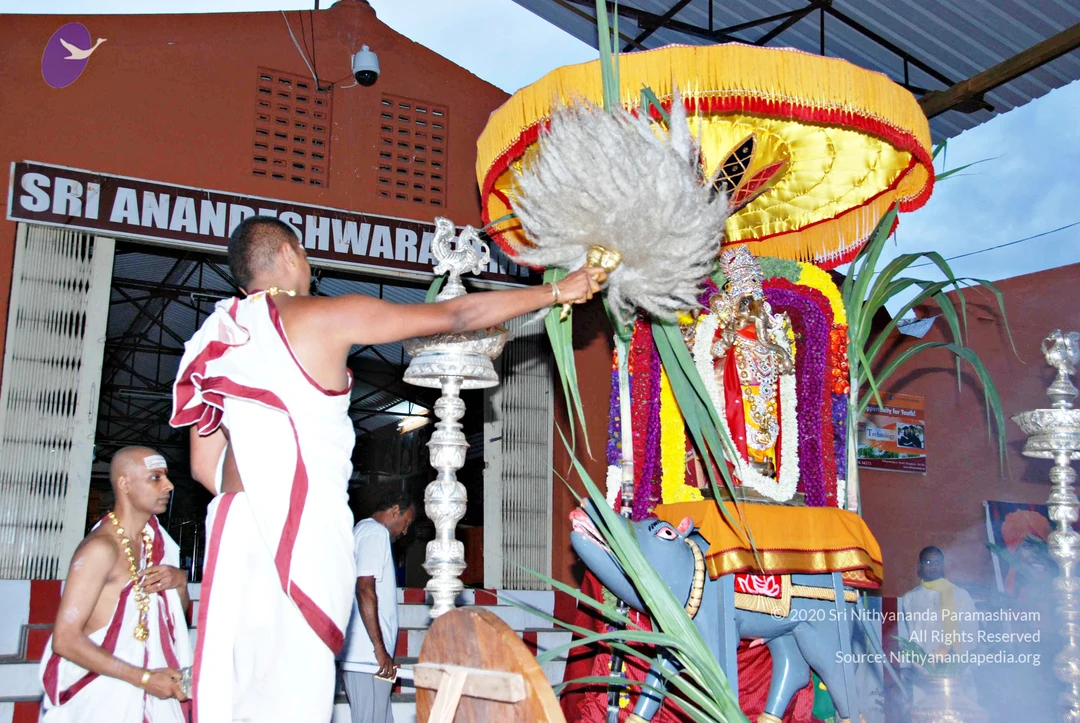
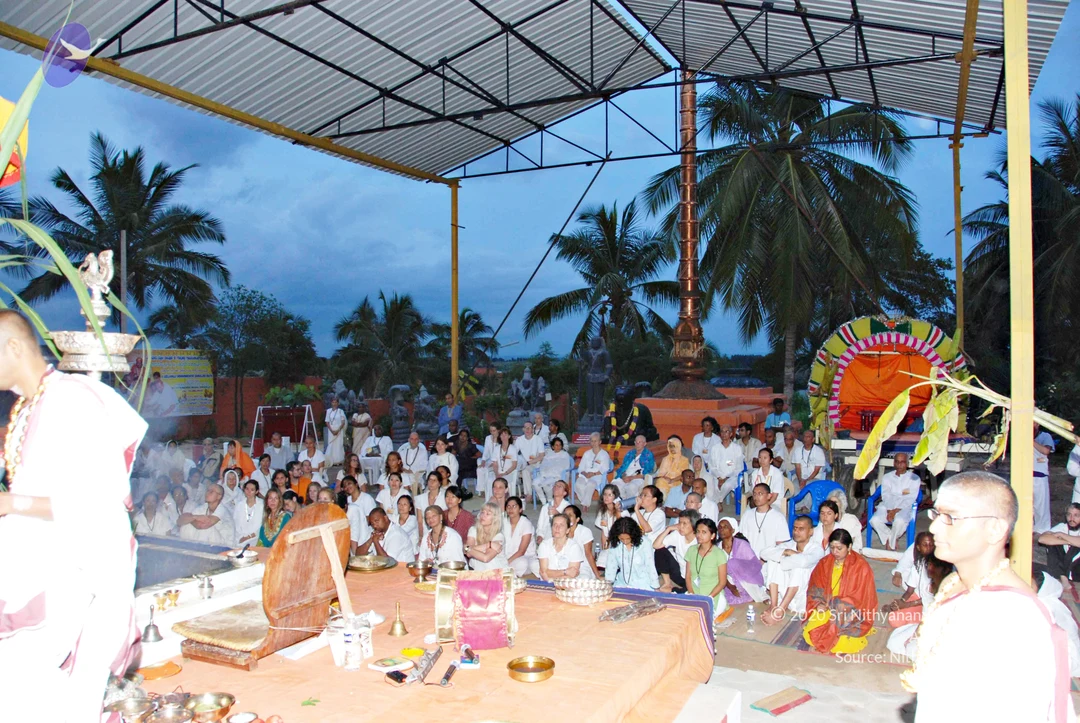
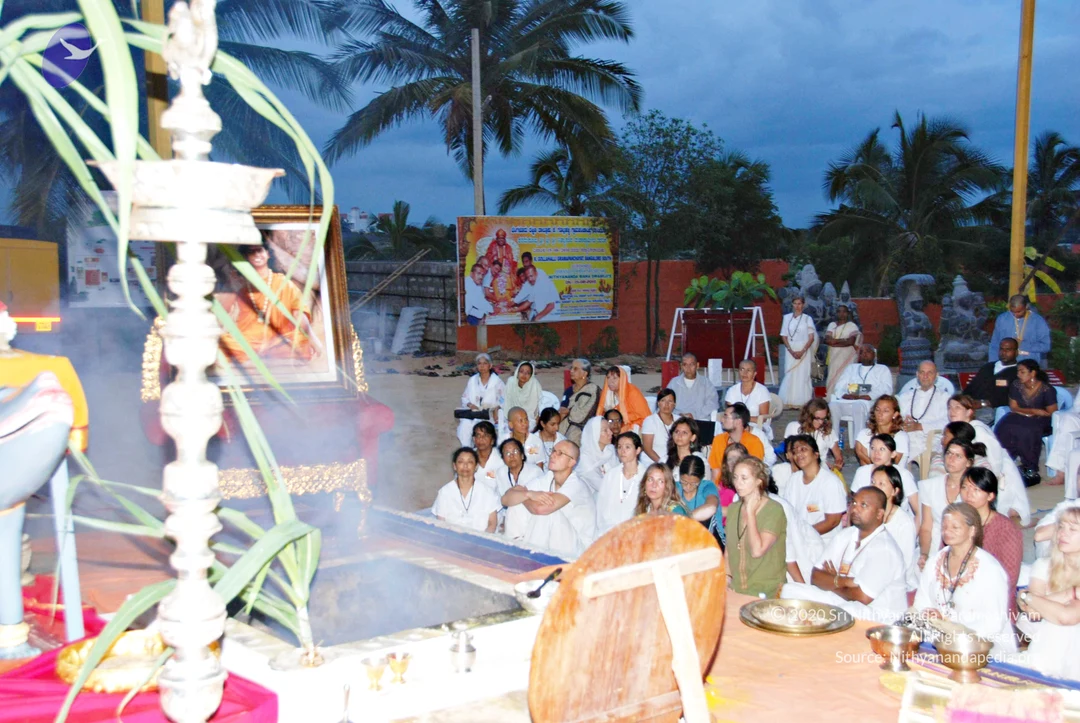
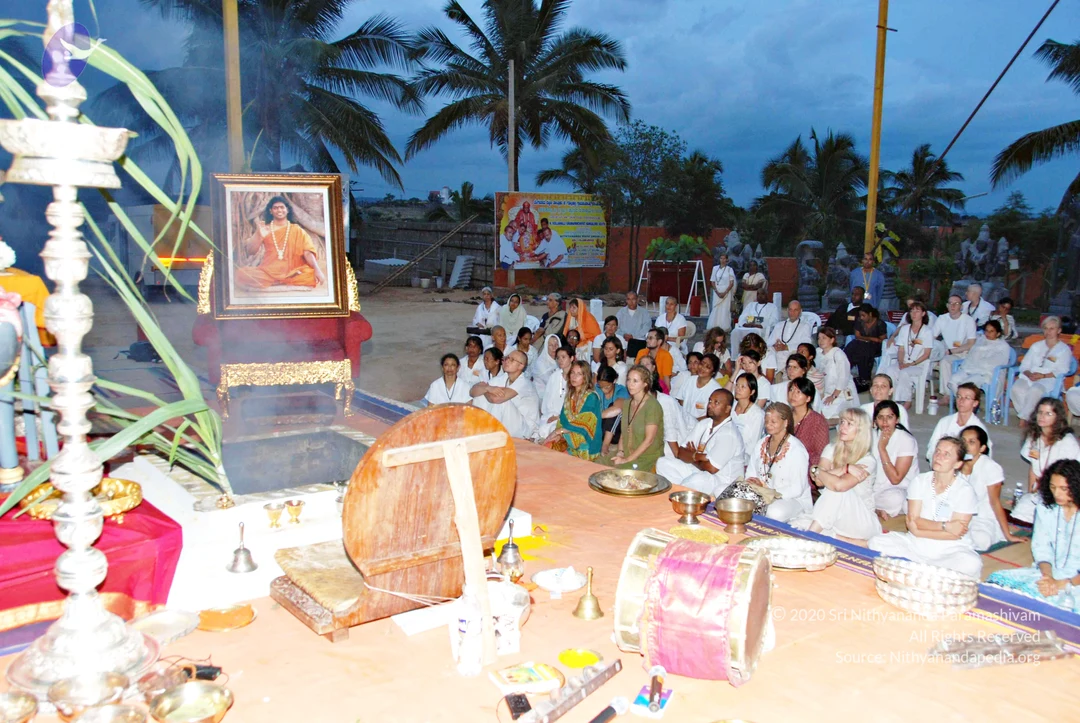
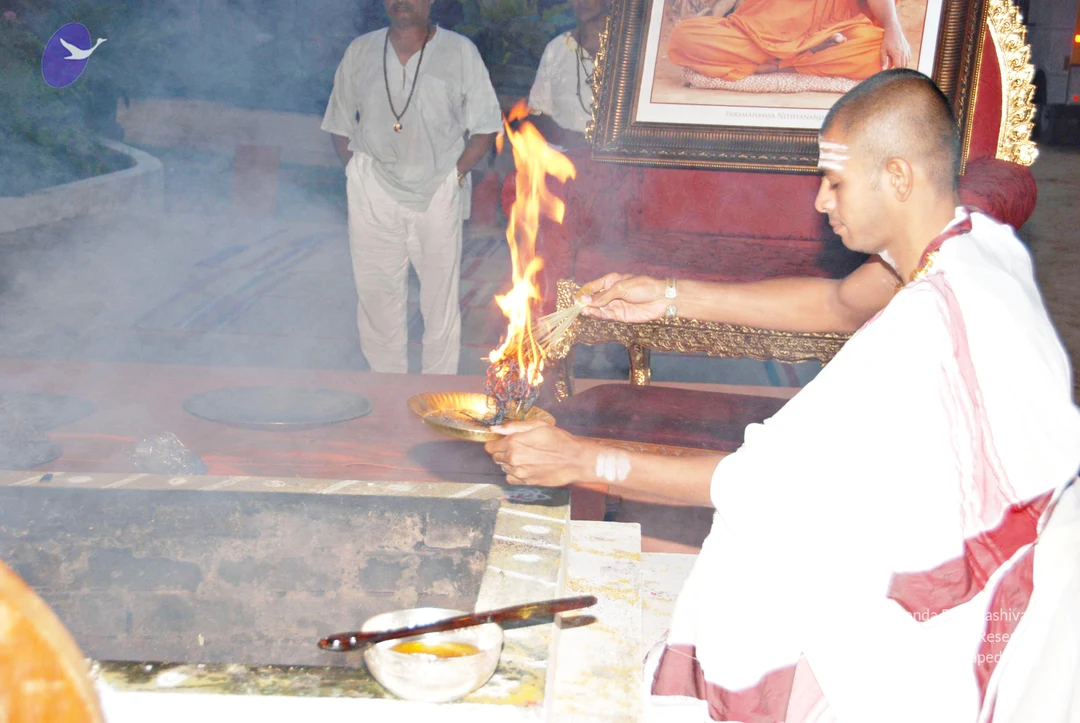
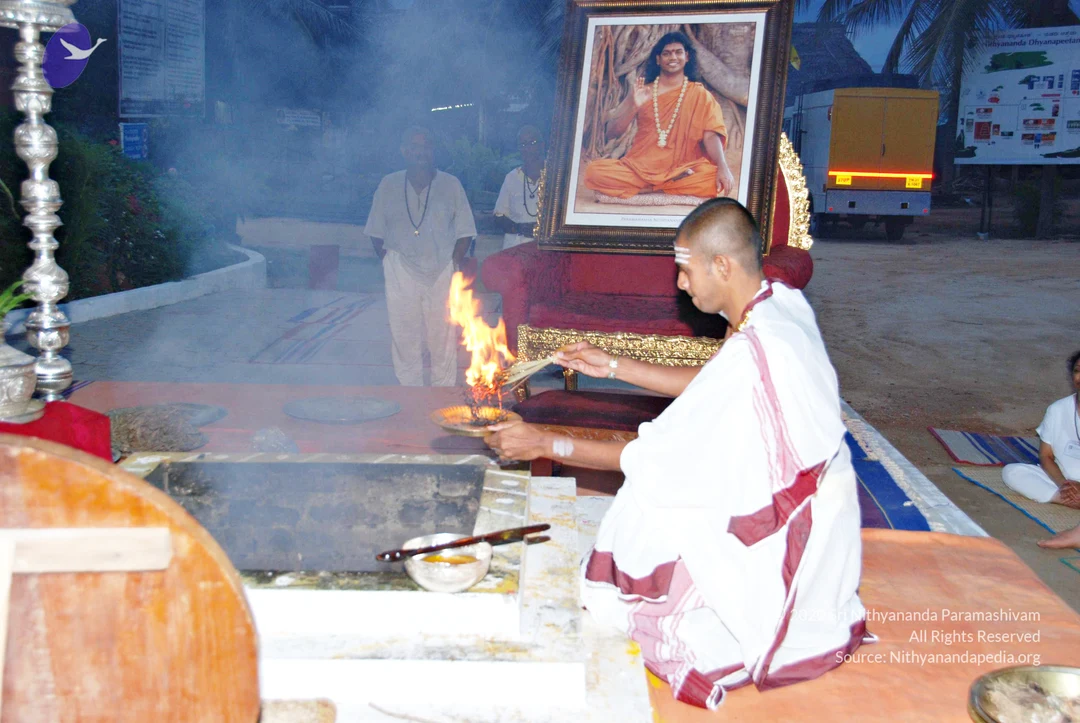
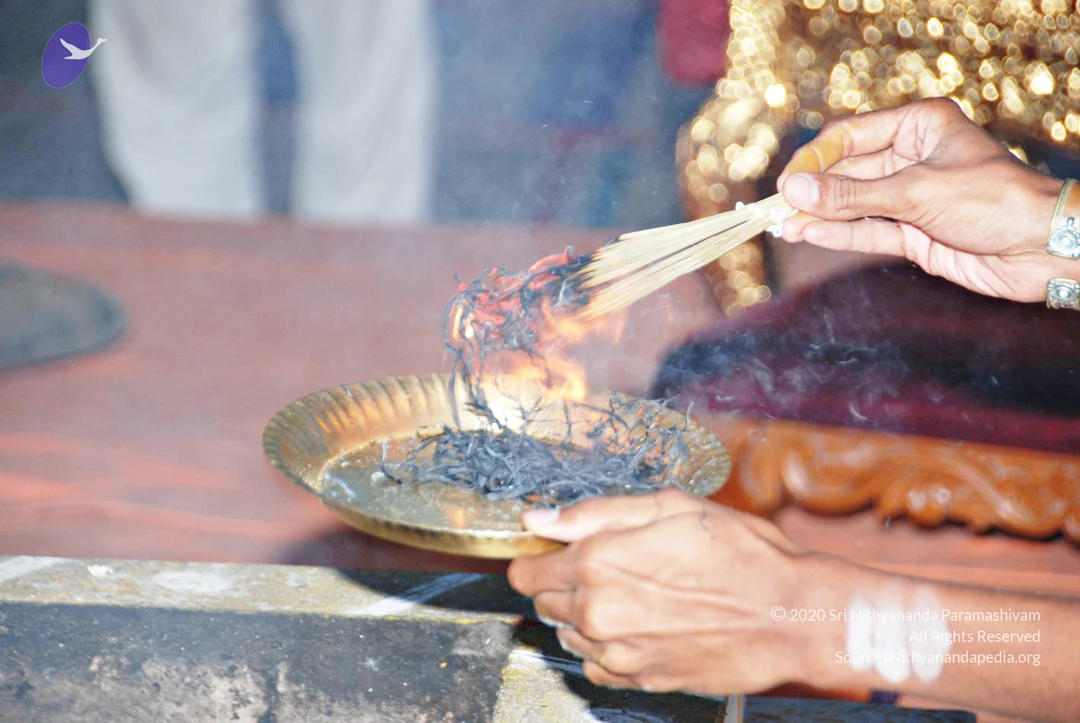
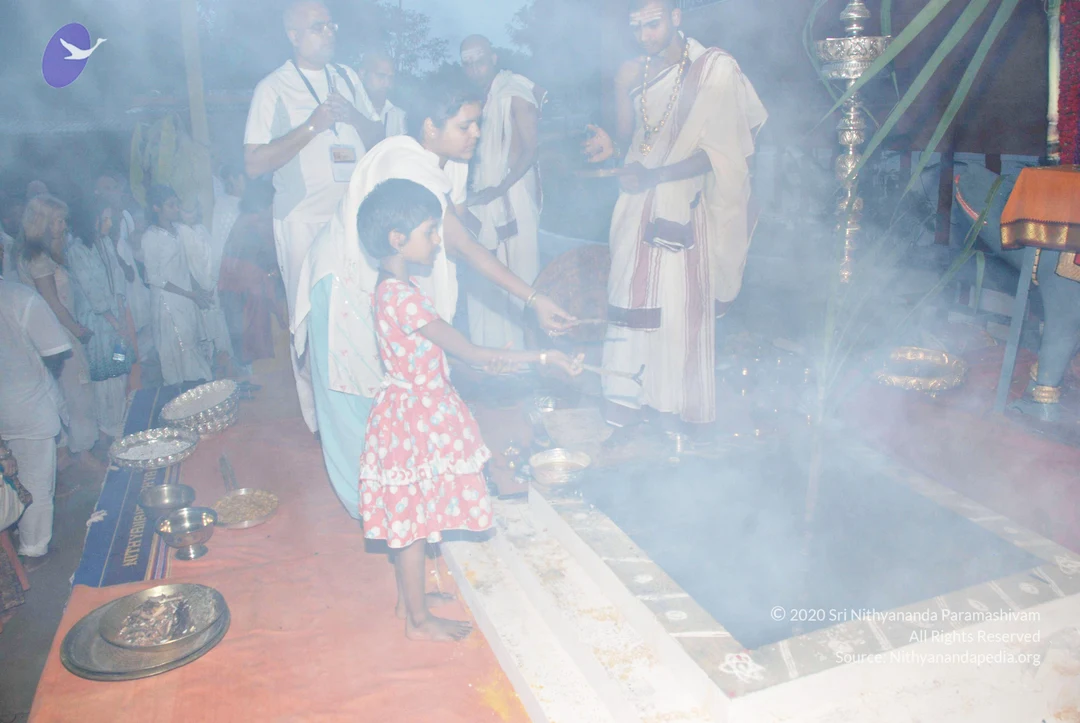
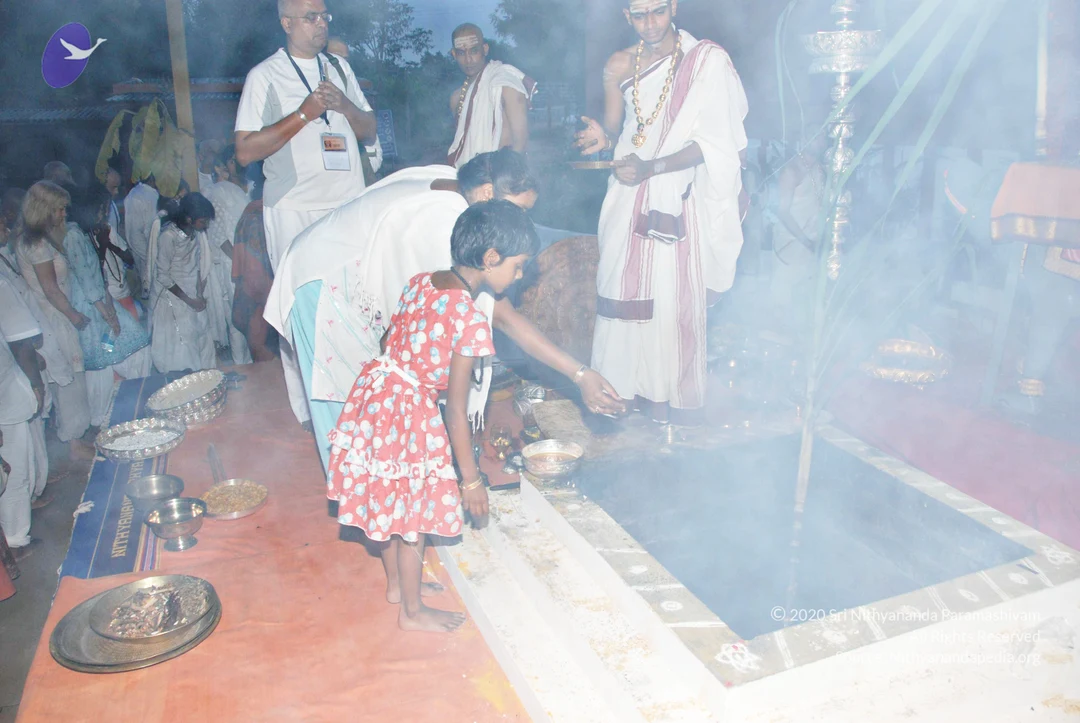
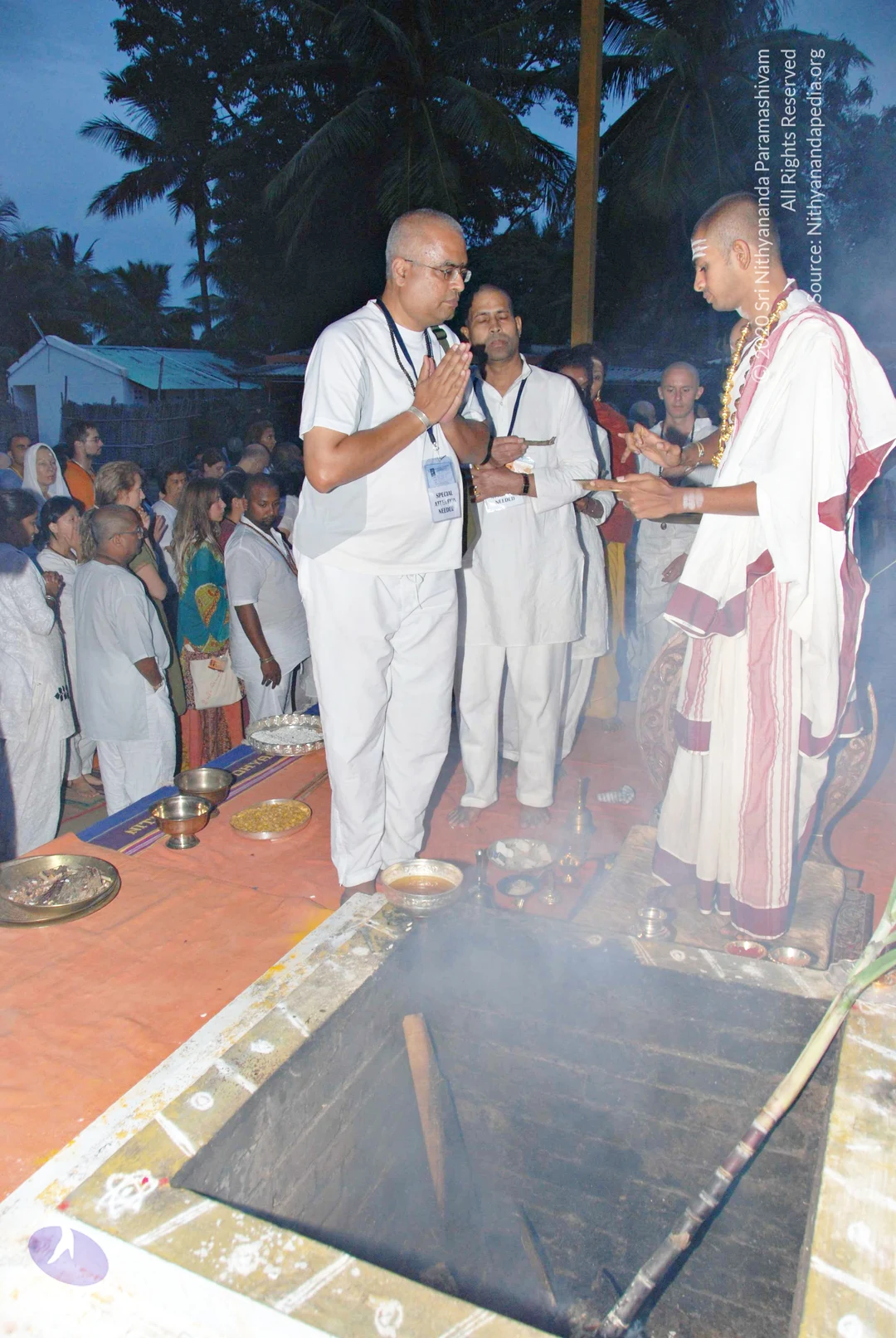
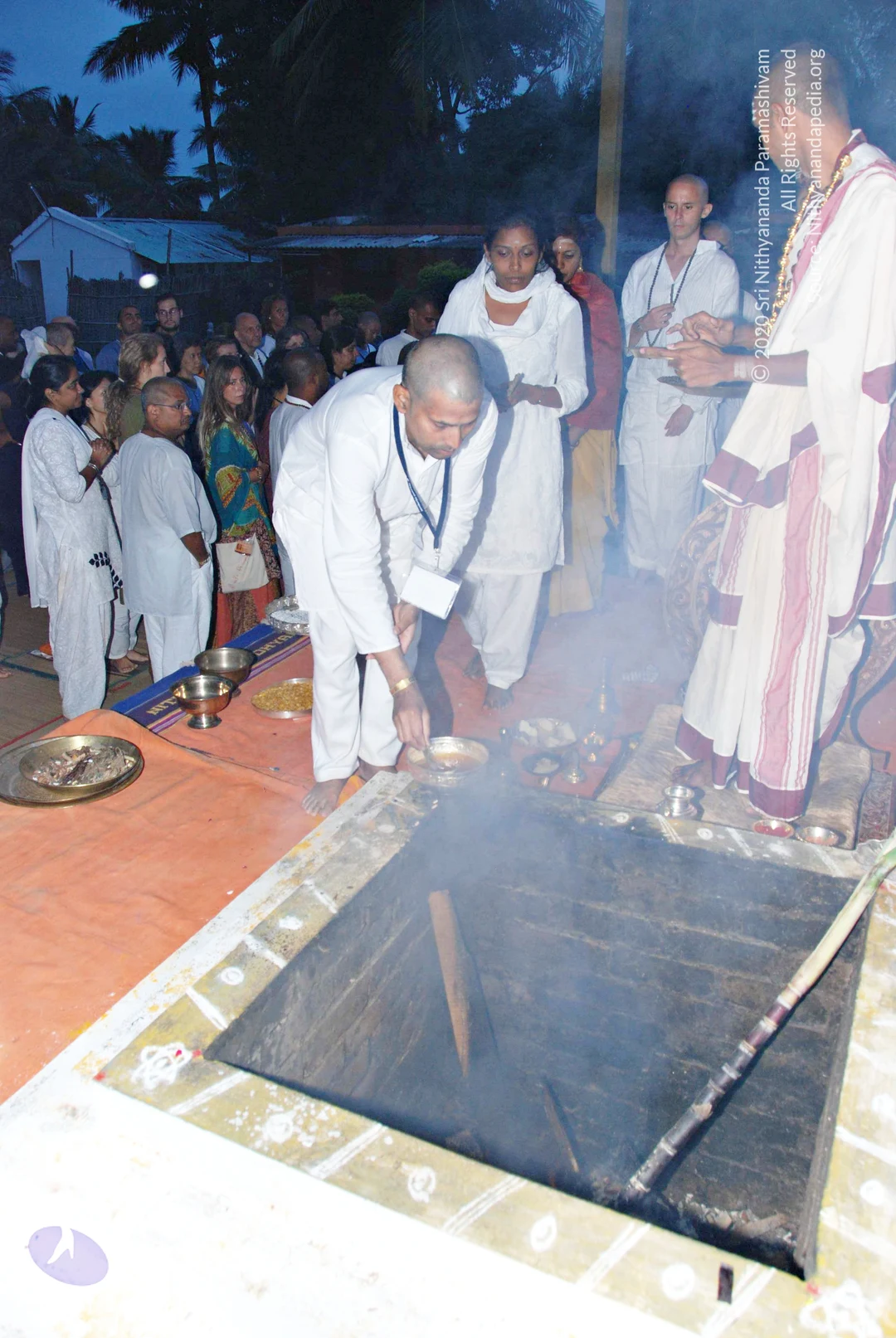
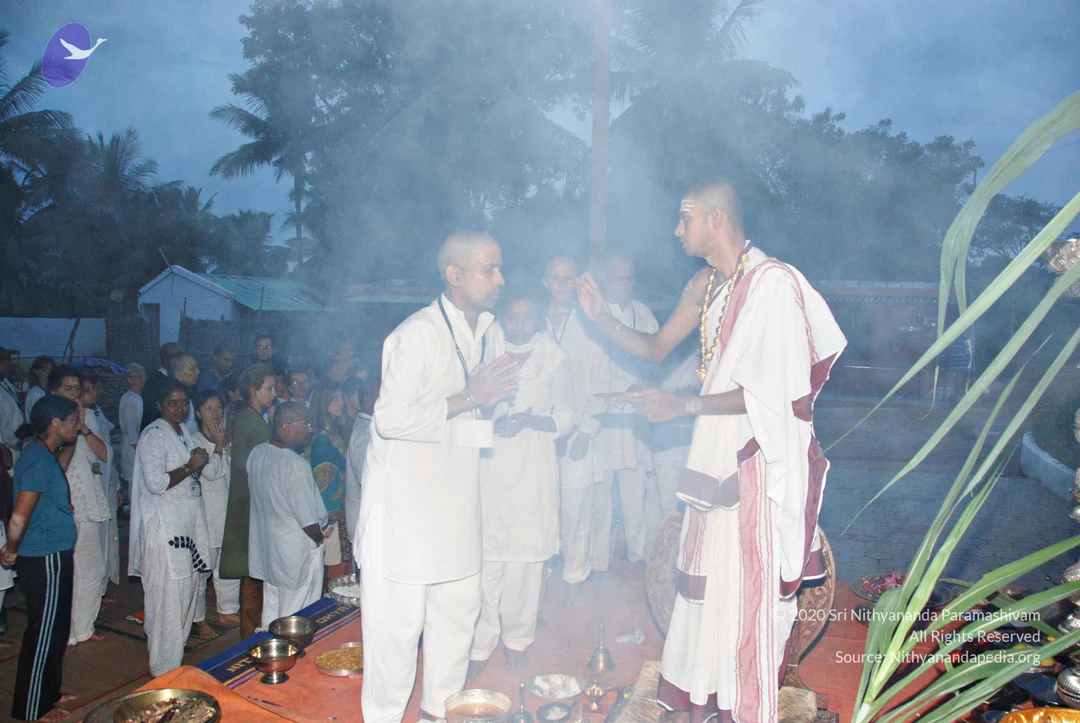
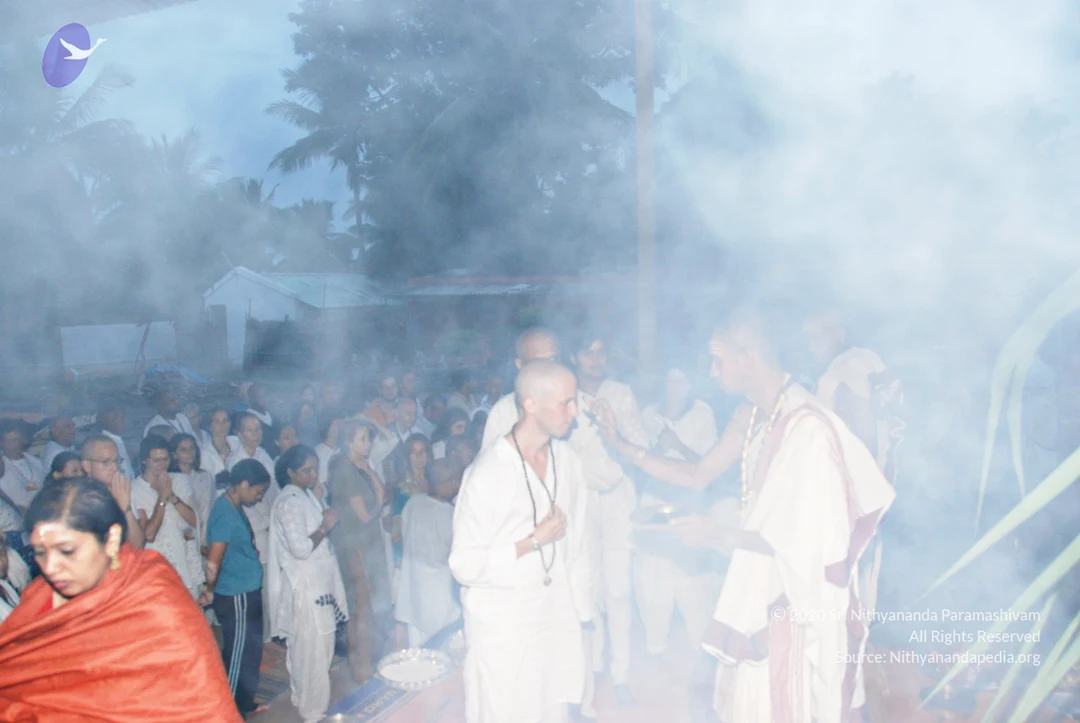
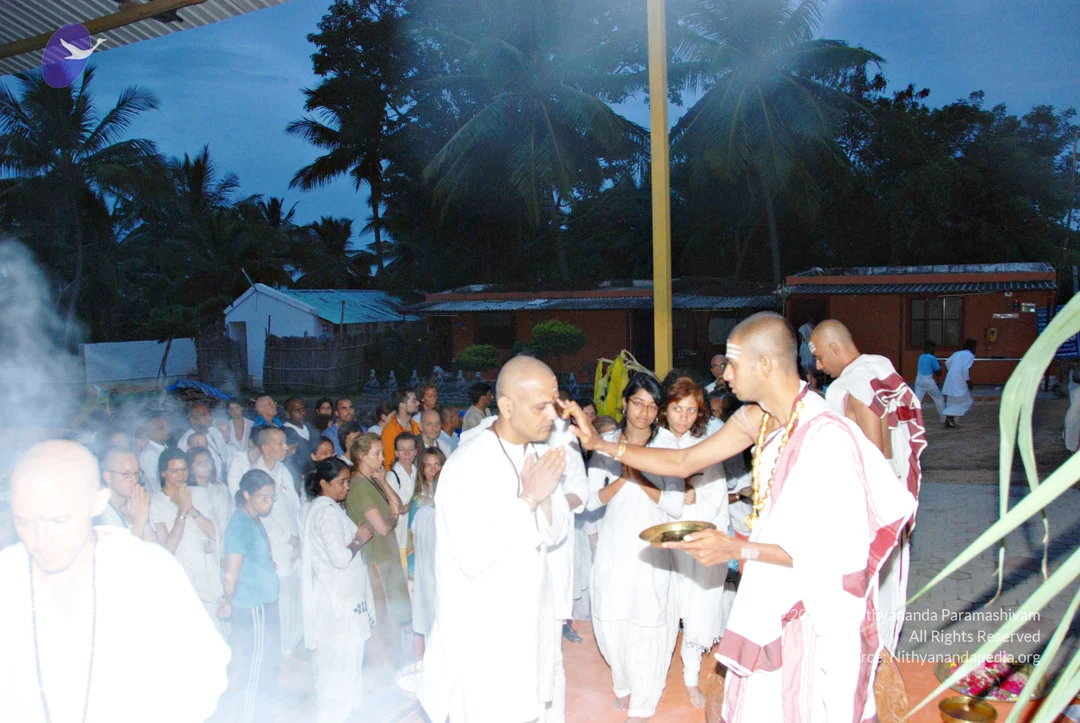
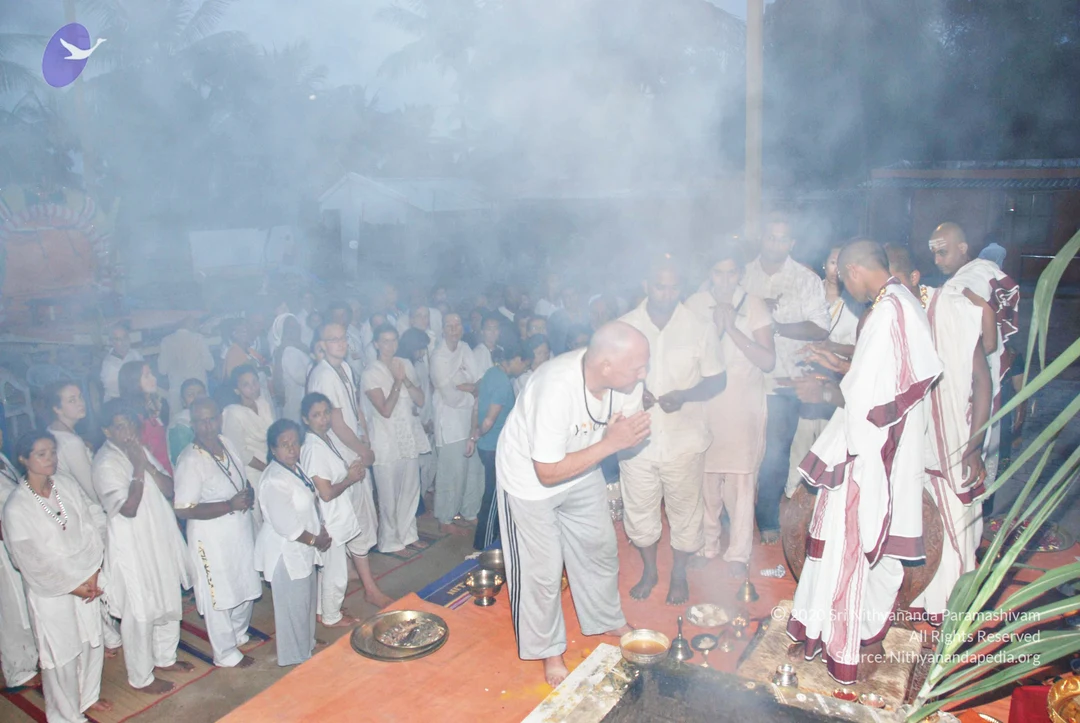
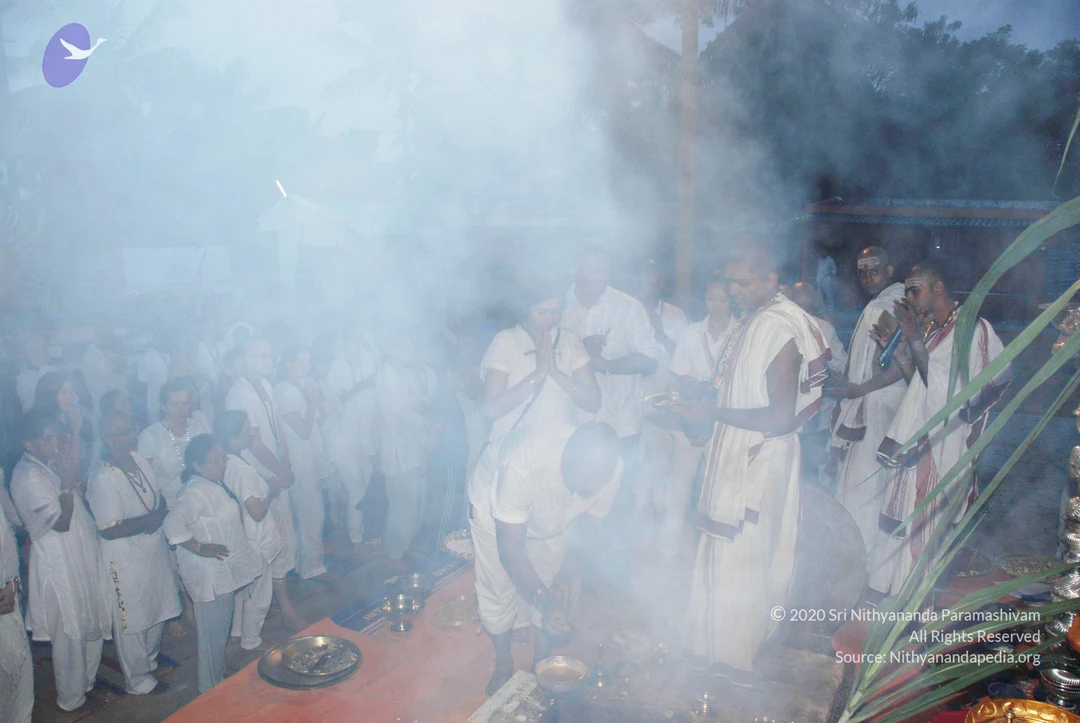
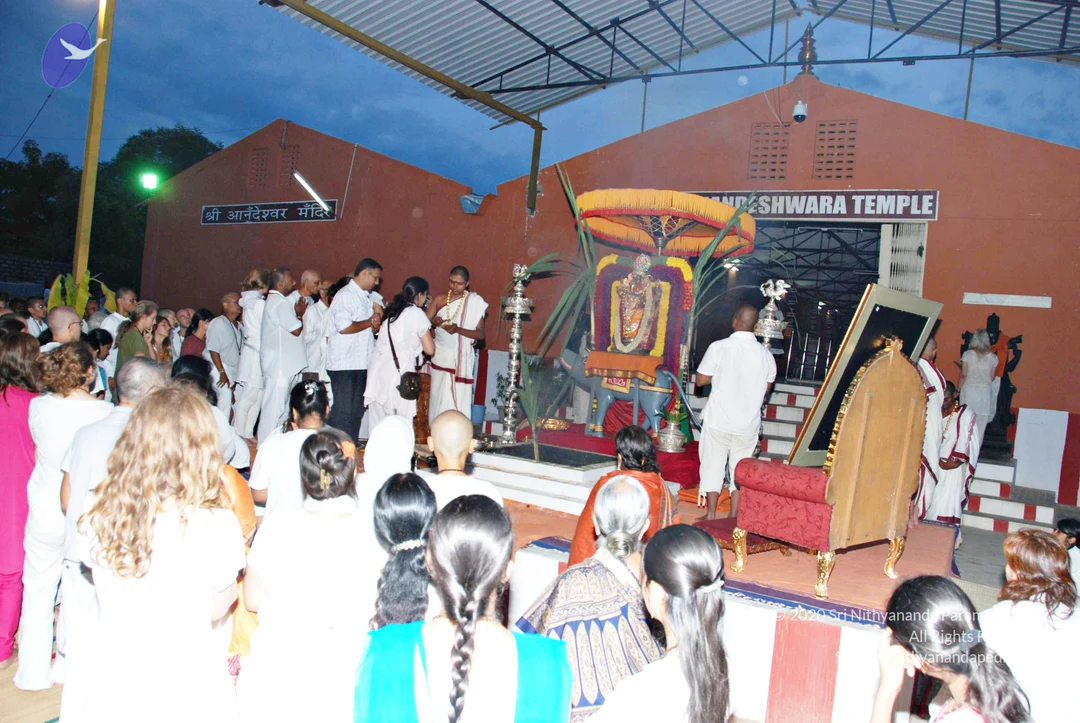
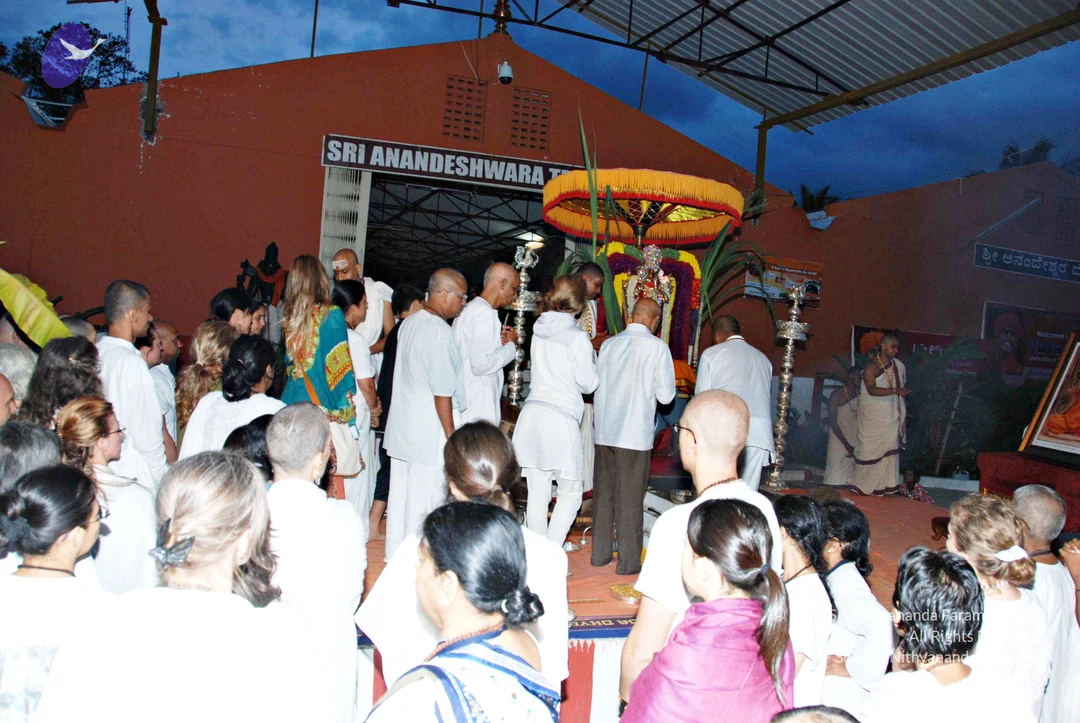
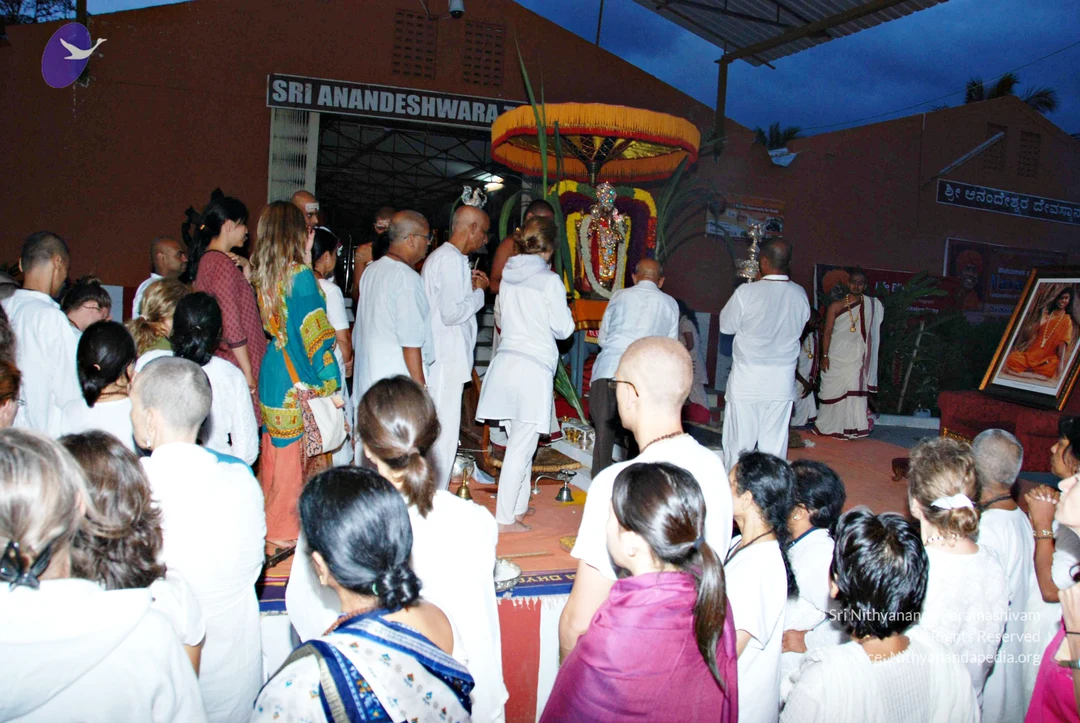
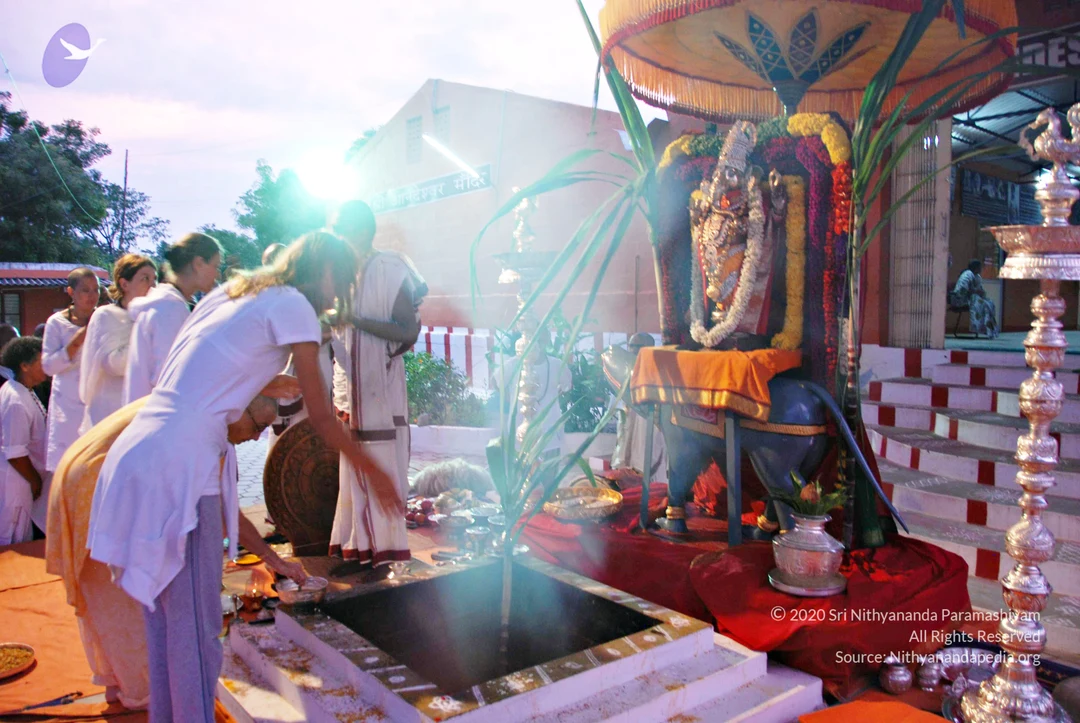
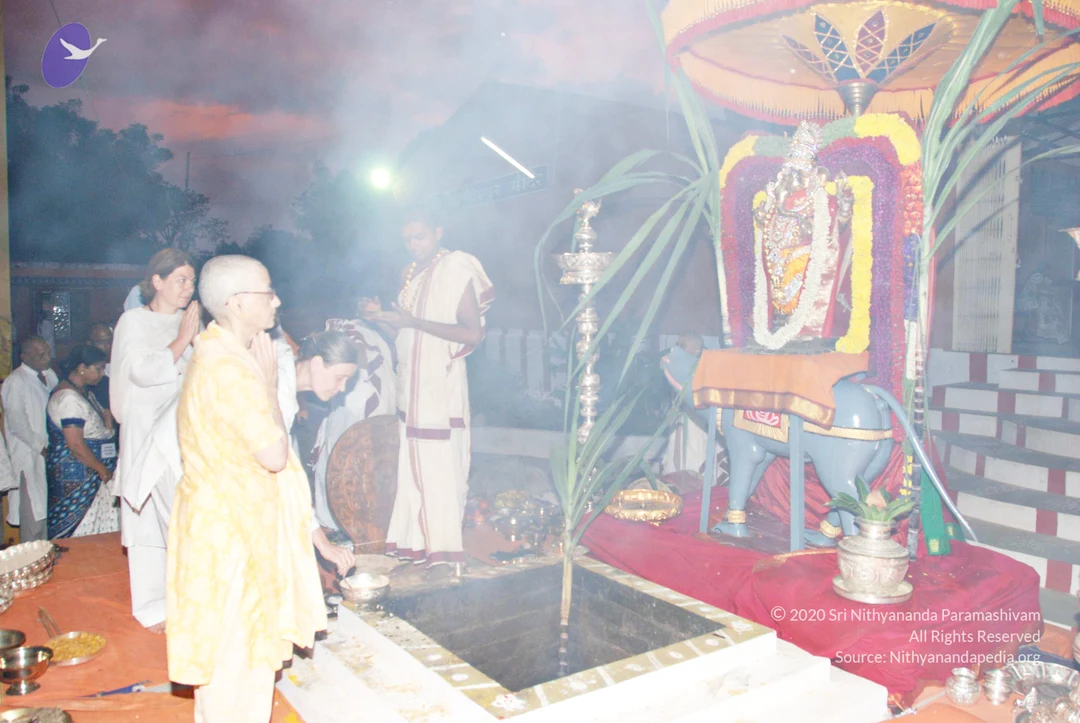
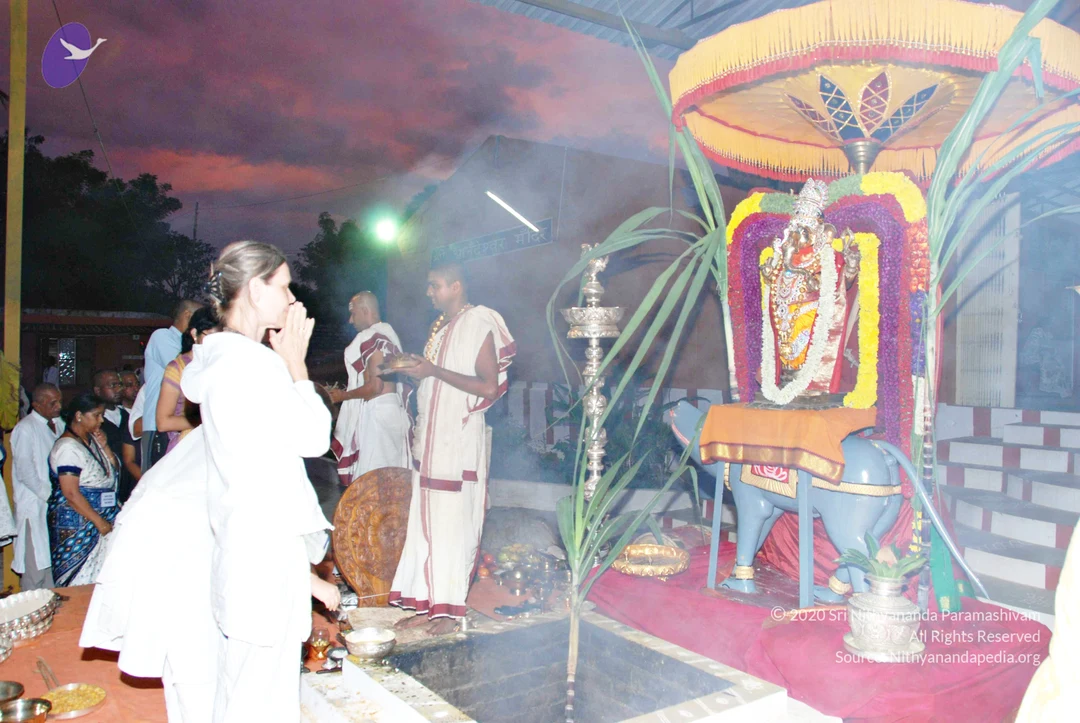
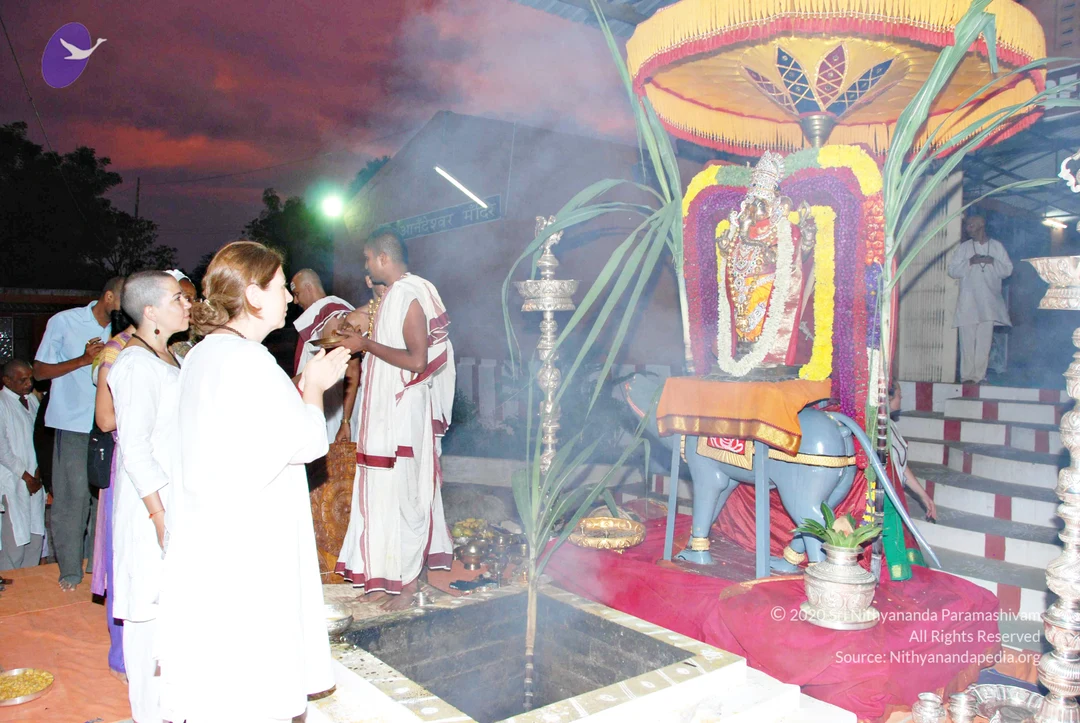
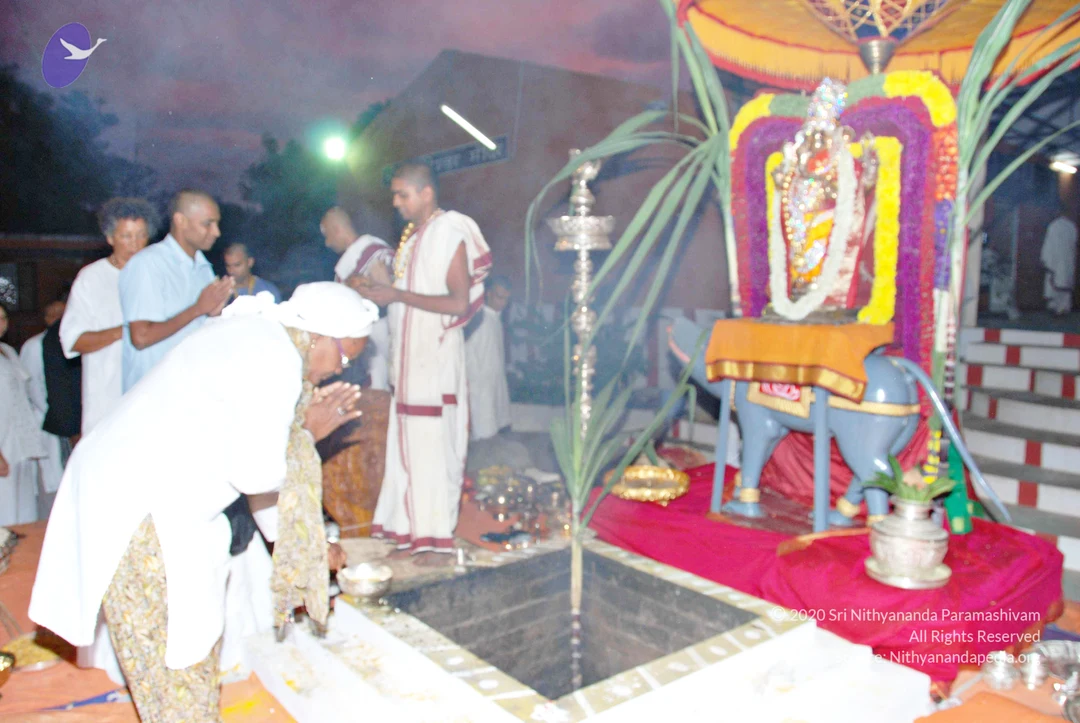
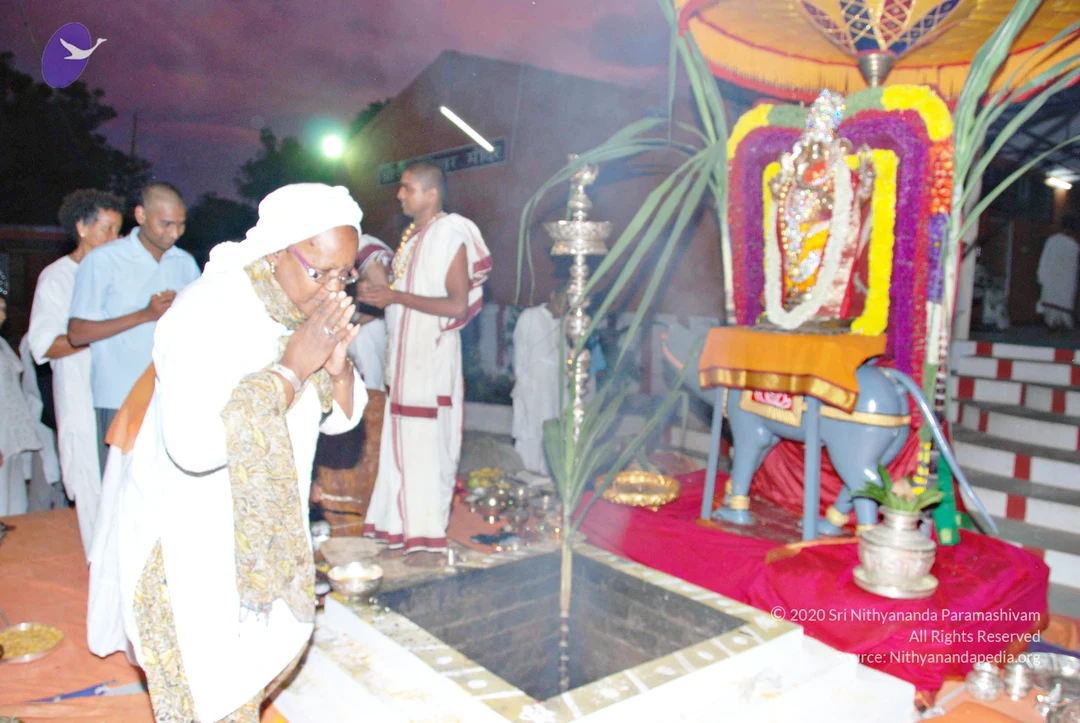
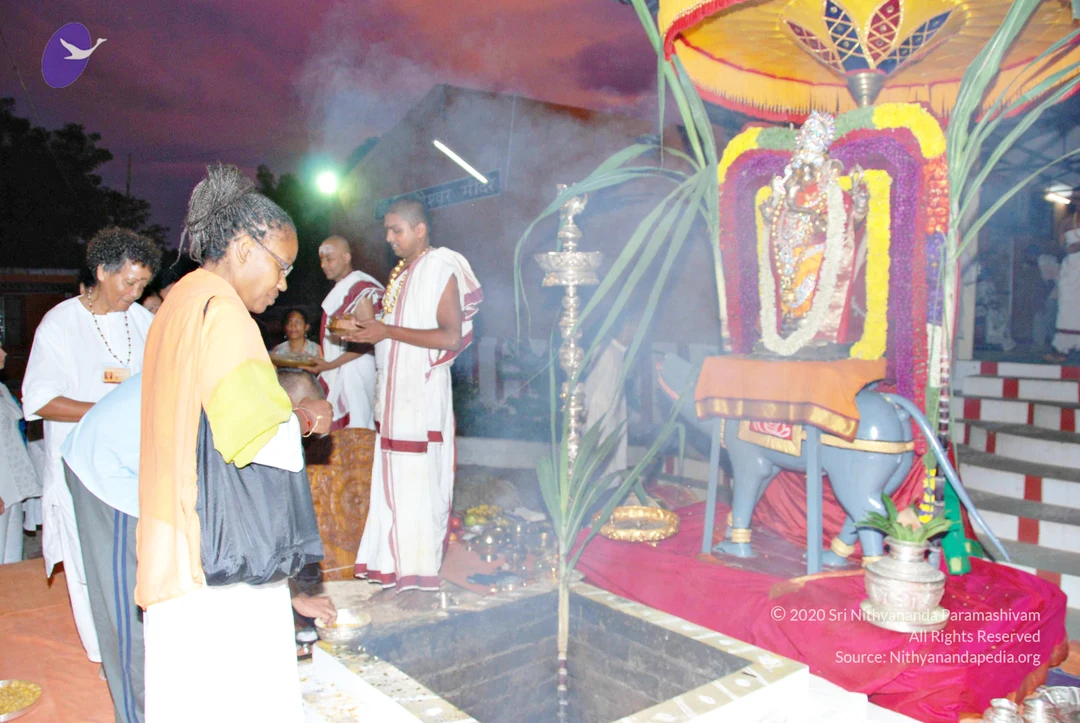
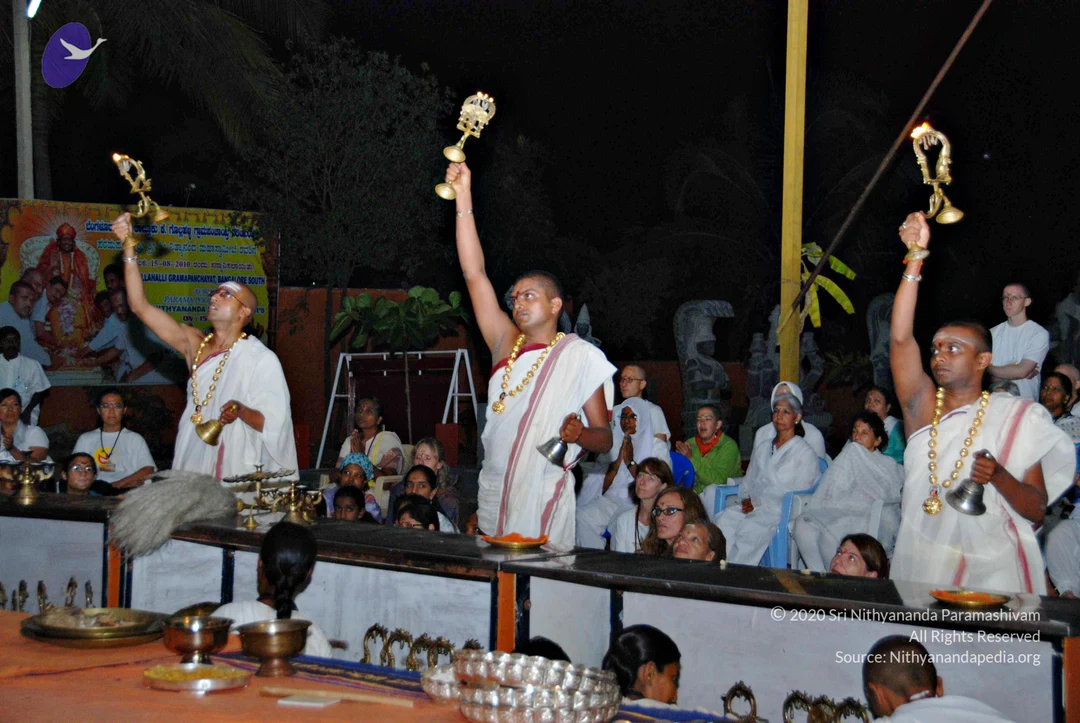
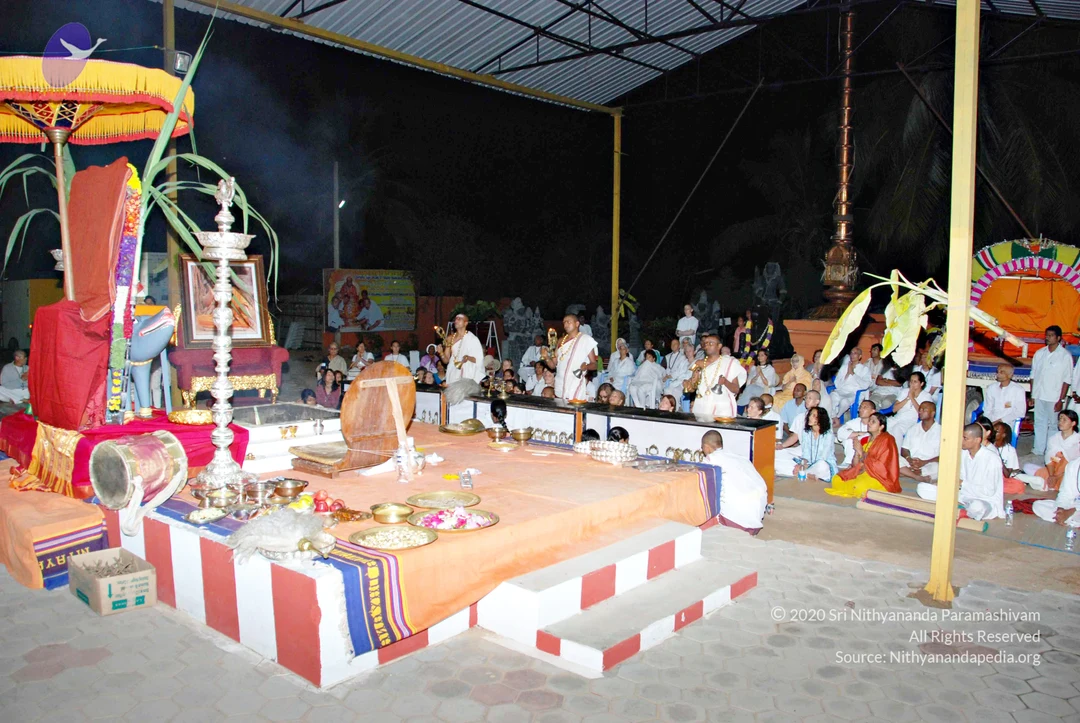
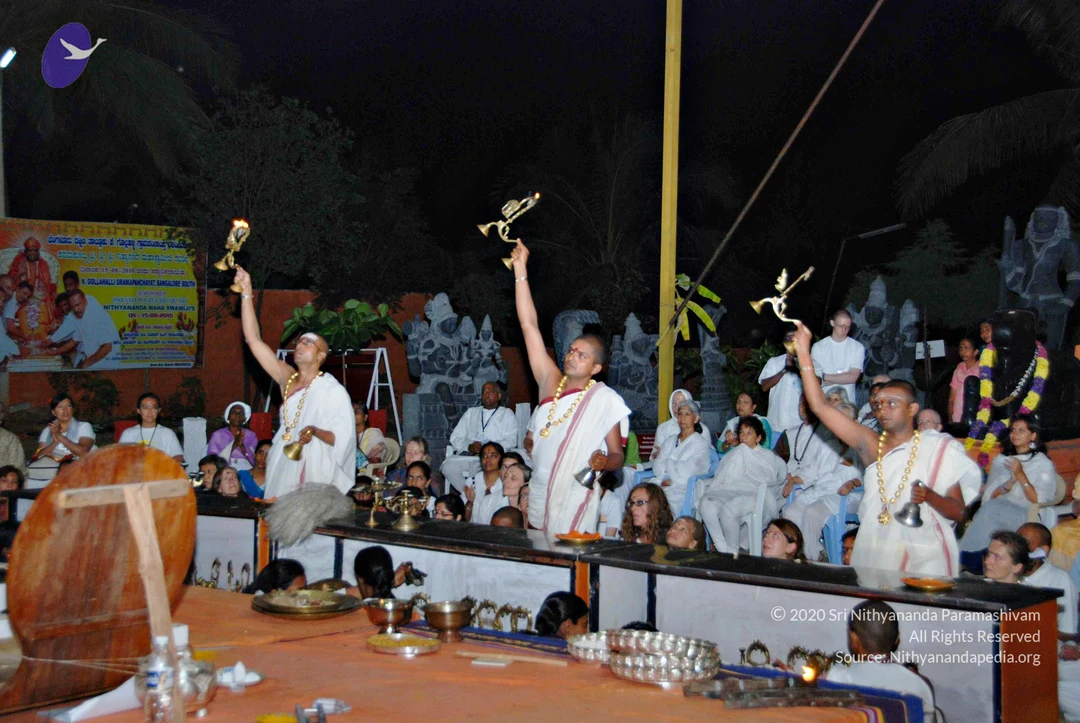
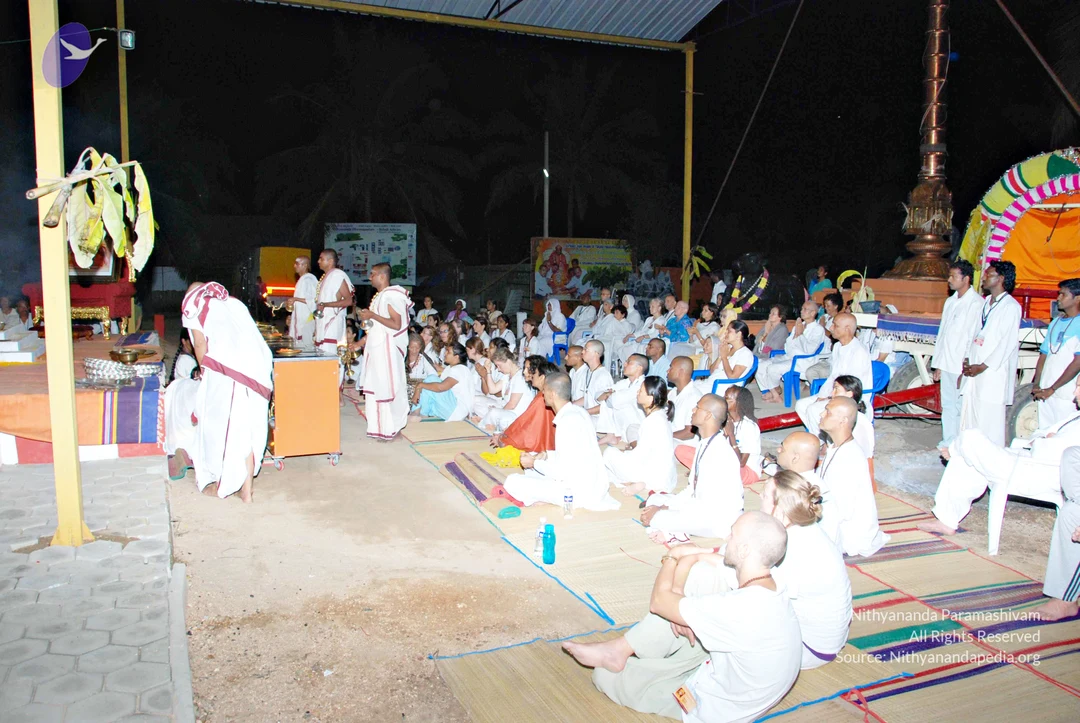
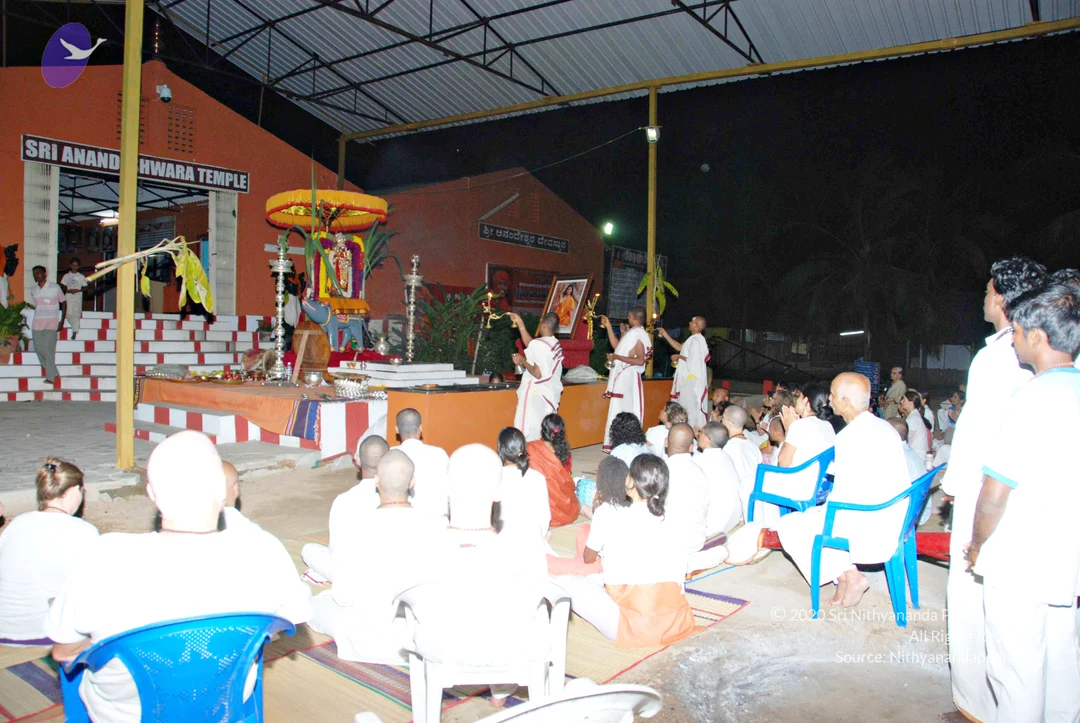
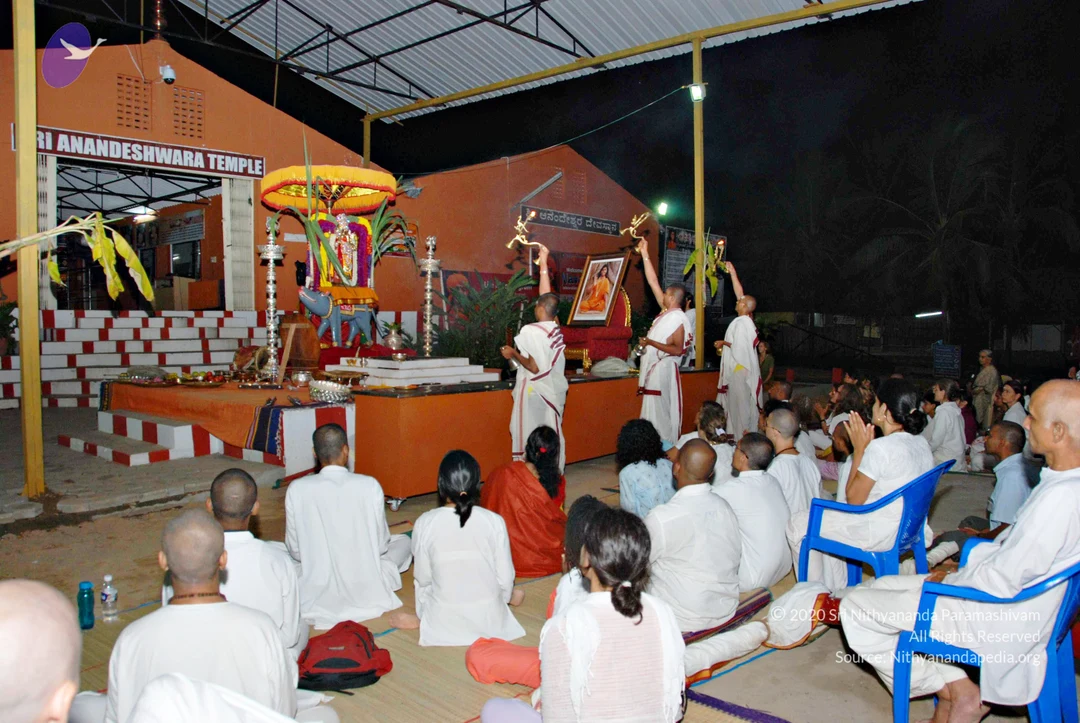
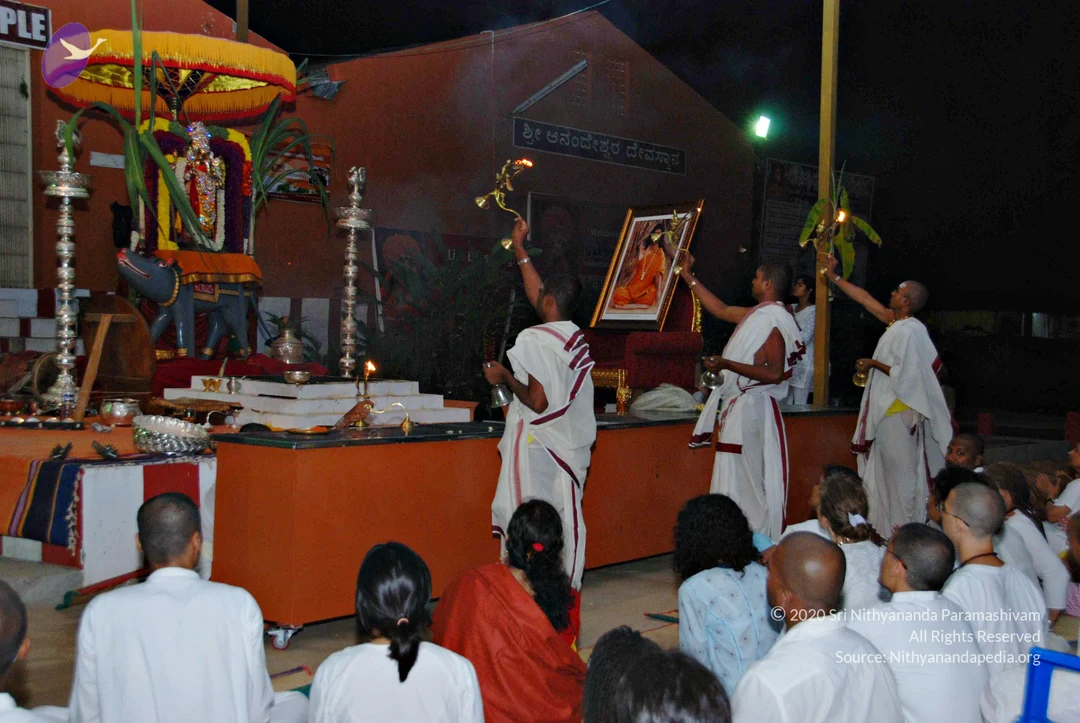
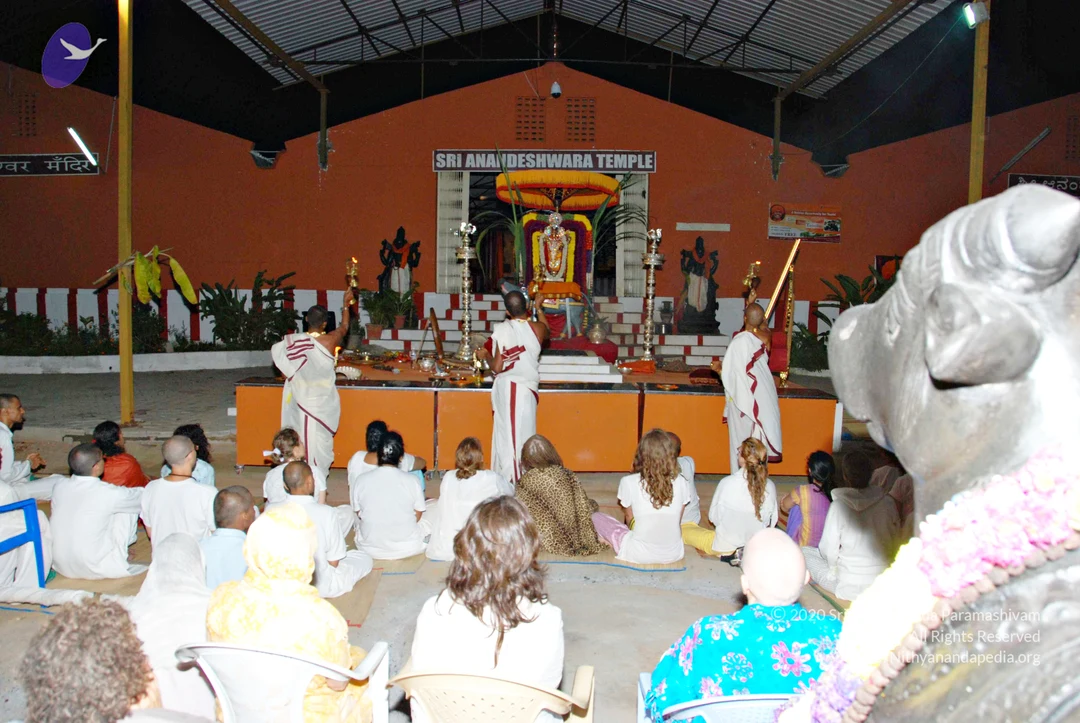
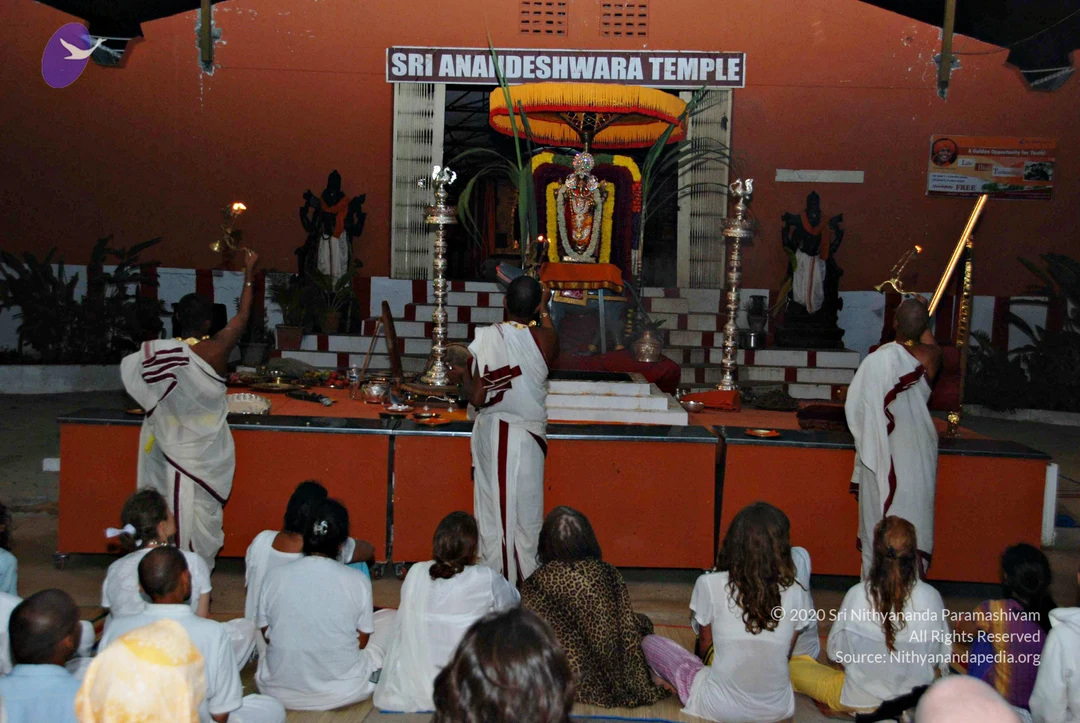
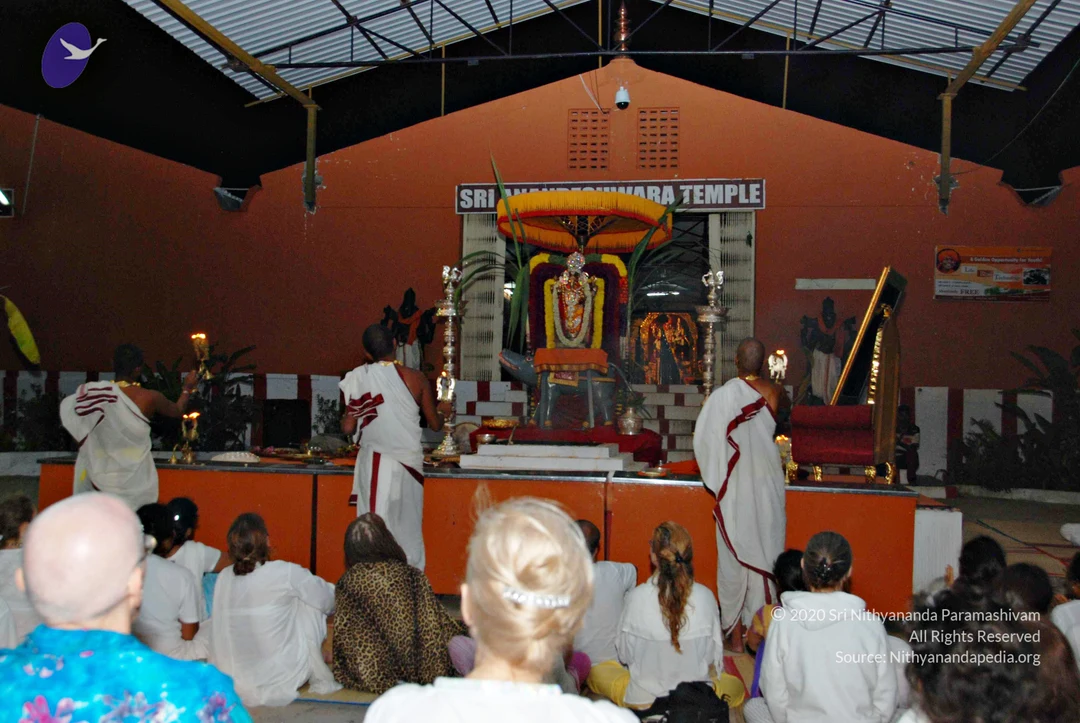
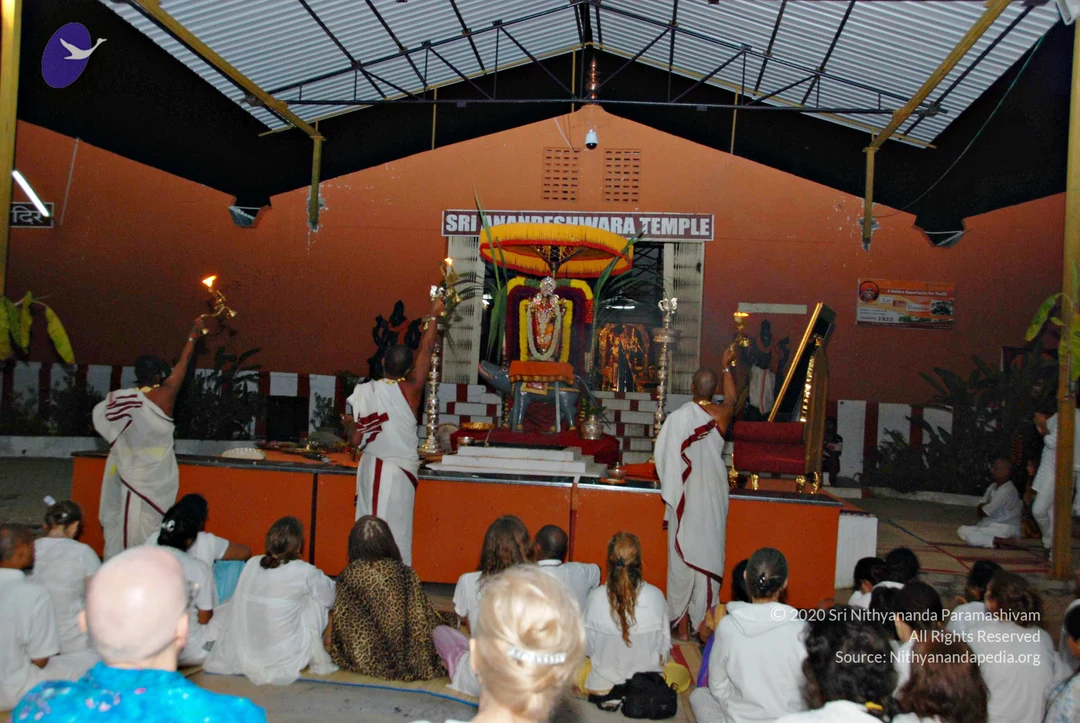
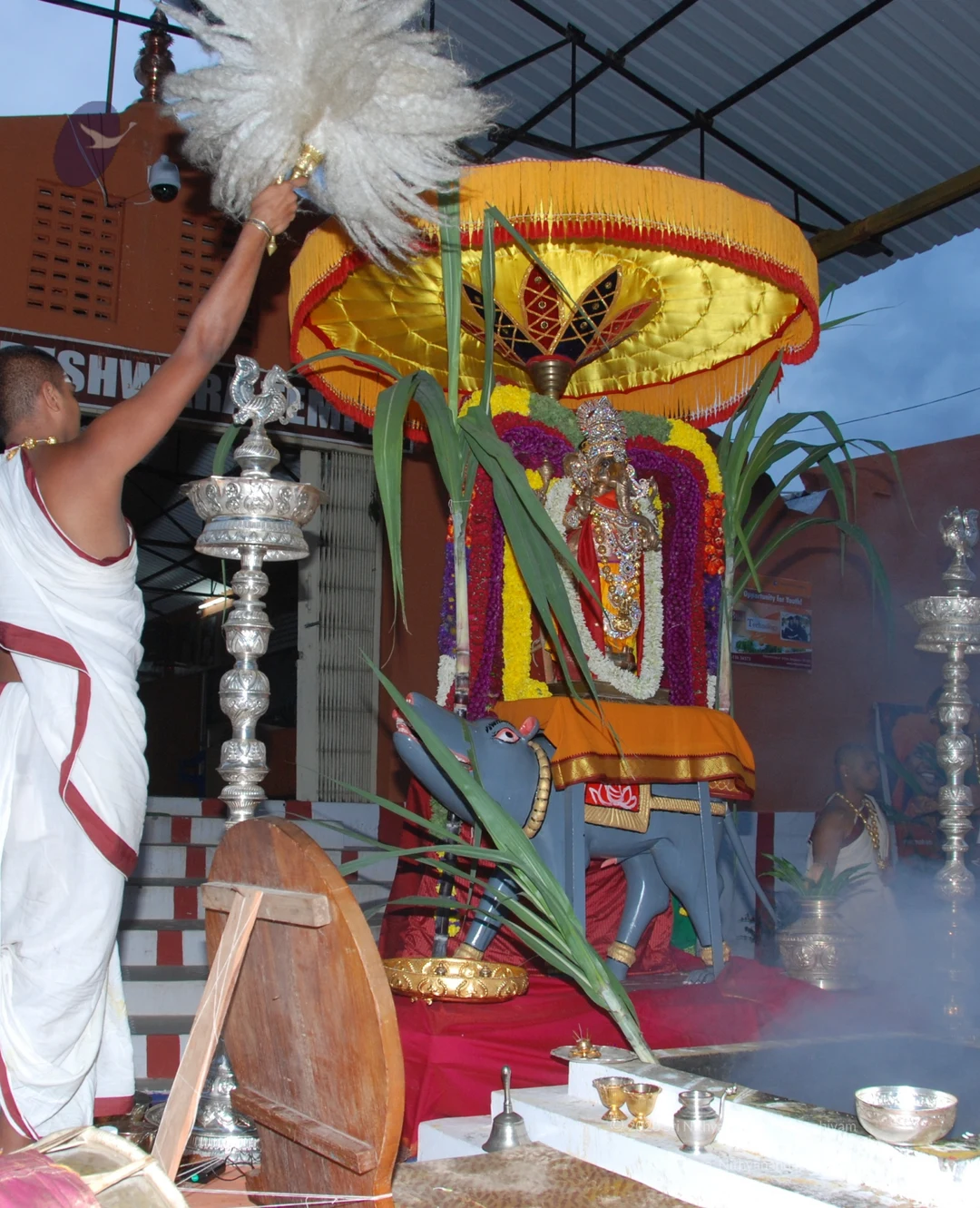
A photograph of a homa ritual with smoke rising around a stone fire pit. Three shaved-headed priests in white dhotis with maroon borders and gold necklaces sit with palms pressed together in prayer, the central one wearing a white tilak on his forehead. Behind them, seated devotees in white clothes watch, and a plate of offerings with fruit sits on a pedestal at the top right. The setting is an open-sided hall with a round decorative drum-shaped object at right.Outdoor ritual homa at dusk in an ashram courtyard with palm trees and simple tin-roofed buildings behind. A smoking fire pit stands in the centre. Several shaved-headed priests in white dhotis with red-bordered shawls sit around it, hands joined in prayer, with white vibhuti marks and gold necklaces. Behind them a large seated crowd in white clothes watches and folds their hands. On the right, silver kalasha vessels, a silver lamp stand, garlands and a red cloth covered seat frame the scene. A seated figure in saffron-coloured cloth sits on a raised platform, but the appearance is not clear enough to identify him.A wide outdoor photo of a large seated congregation in white clothes during a Vedic ritual under an open canopy, with palm trees behind. Many devotees sit on mats and white chairs with hands folded in namaskar. In the foreground, several men in white dhotis with bare upper bodies and gold-coloured necklaces sit with palms pressed together, and one bald man in white in the right foreground also has his hands joined. A pink cushioned seat sits at the left edge beside a gilded frame. Behind the crowd, a decorated orange and green ratha-like structure stands near white huts, and smoke or haze hangs over the scene.Outdoor ritual gathering of devotees seated on woven mats in rows, many with palms pressed together in namaskar. Most wear white ritual clothing; a woman on the left wears an orange shawl, a man in the centre wears an orange shirt with a rudraksha-style mala, and a woman at right wears a turquoise top with a patterned saffron-and-green skirt. One man in the foreground bows forward in prostration. Behind them stands a large black stone deity murti, with an orange-painted temple structure and palm trees in the background. No clearly identifiable central figure is visible in this frame.Outdoor evening gathering of many devotees seated on mats and white plastic chairs, most in white clothing, with hands pressed together in anjali. In the background stands a decorated ratha or chariot with a colourful painted canopy, and a dark stone deity murti sits on a raised platform beside a tall lamp with a purple emblem. Palm trees and an orange building frame the scene. Water bottles rest on the mat in front. The seated devotees appear to be engaged in prayer or chanting; no individual is clearly identified as a person.Outdoor evening gathering of many seated devotees on woven mats, most with palms pressed together in anjali mudra, facing forward toward an unseen focal point. Many wear white ritual clothing; some women wear white saris or kurtas, a few wear colourful dresses in pink, teal, olive and orange, and several have rudraksha malas around their necks. Behind them stand an orange-and-red decorated structure with yellow garlands and a dark stone sculpture, a palm-lined compound and simple buildings. Plastic water bottles sit on the mat. The scene resembles a satsang or evening meditation session.
14

September 05 2010

344 photosView all
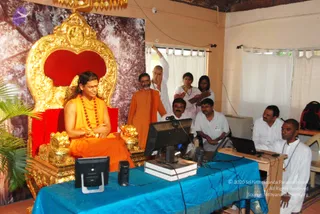
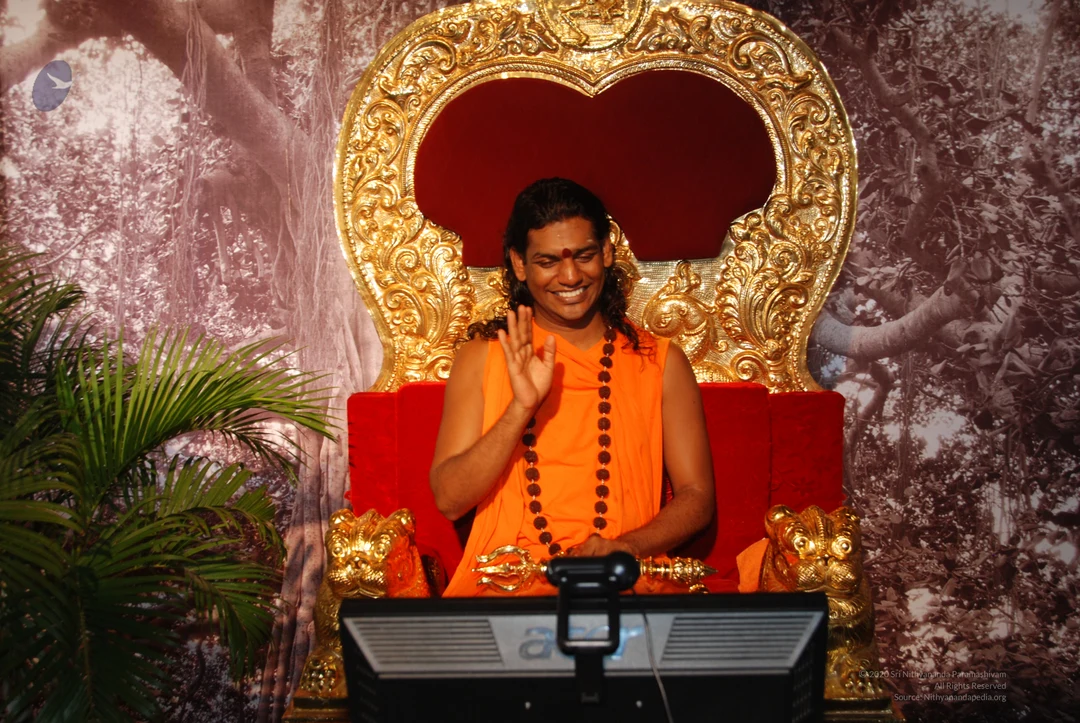
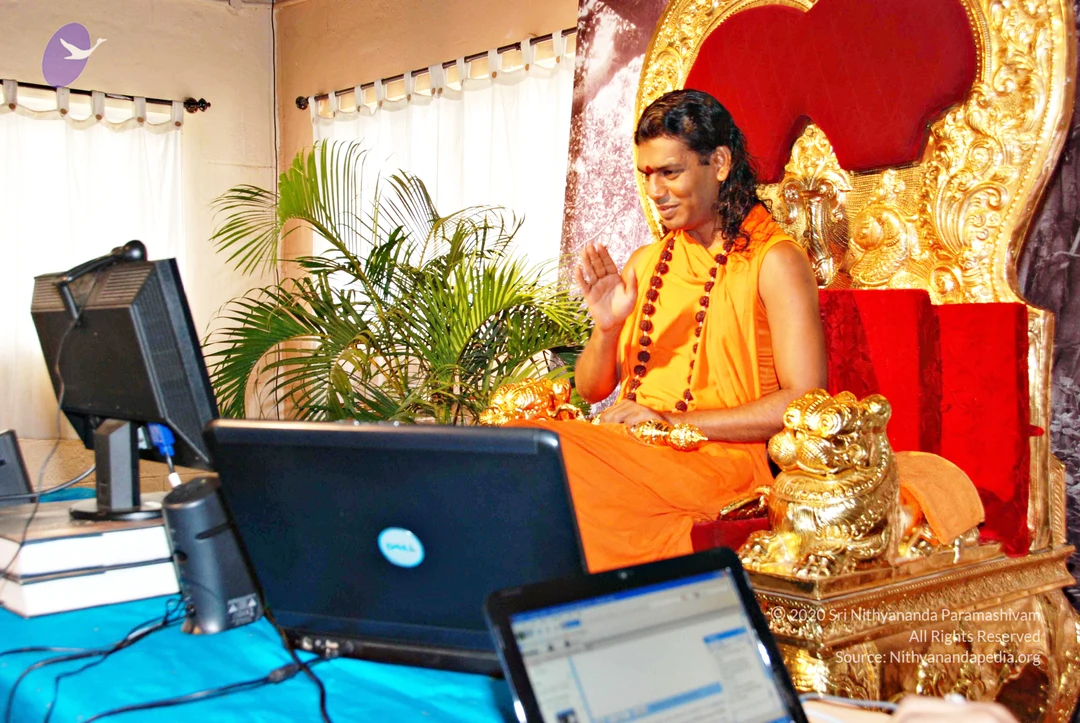
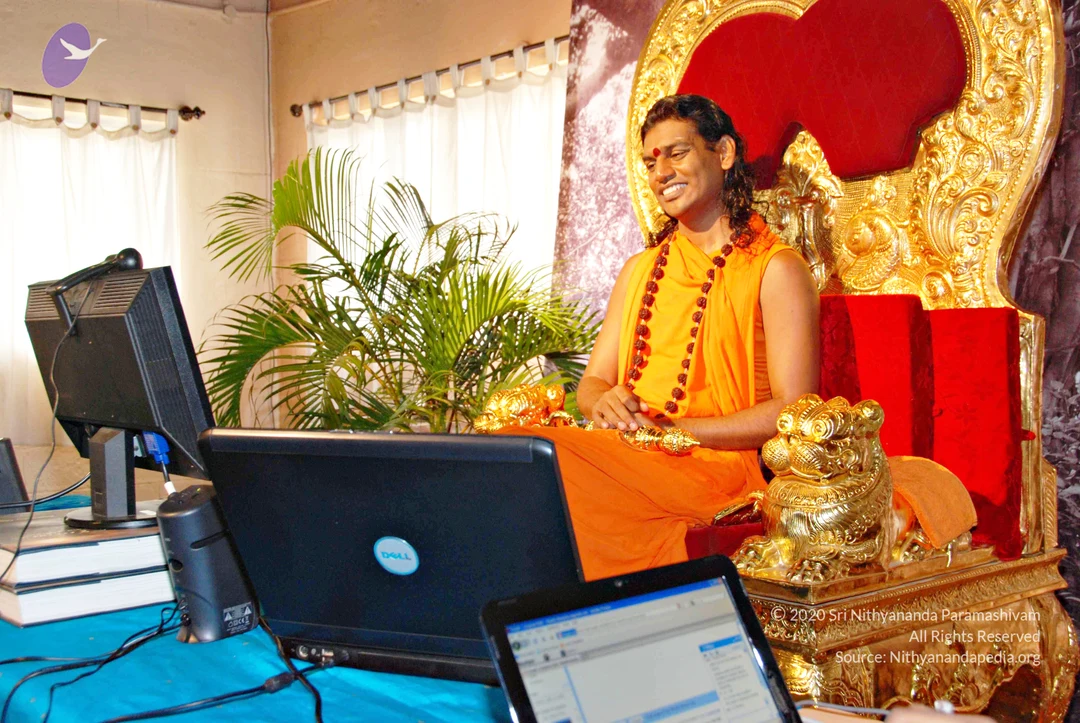
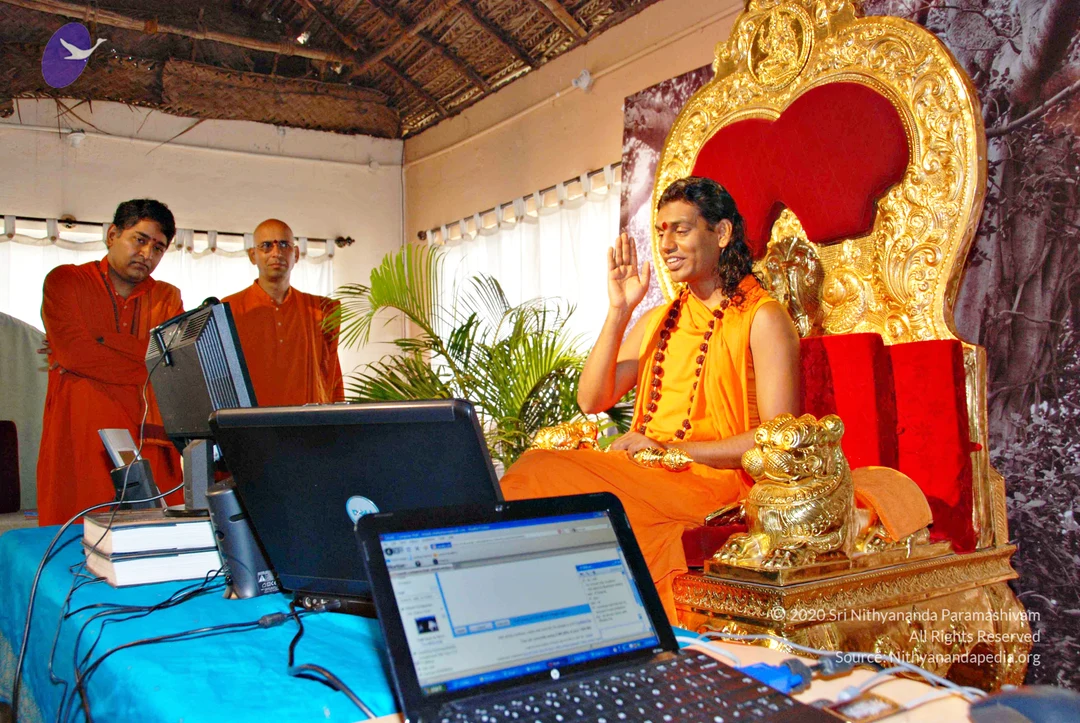
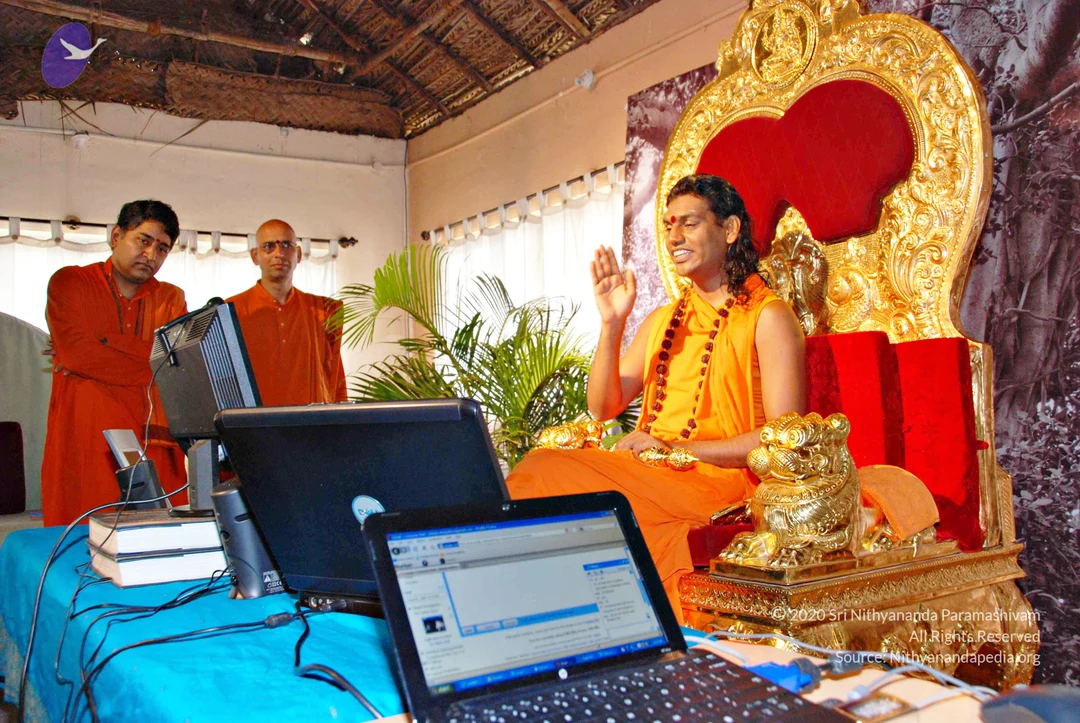
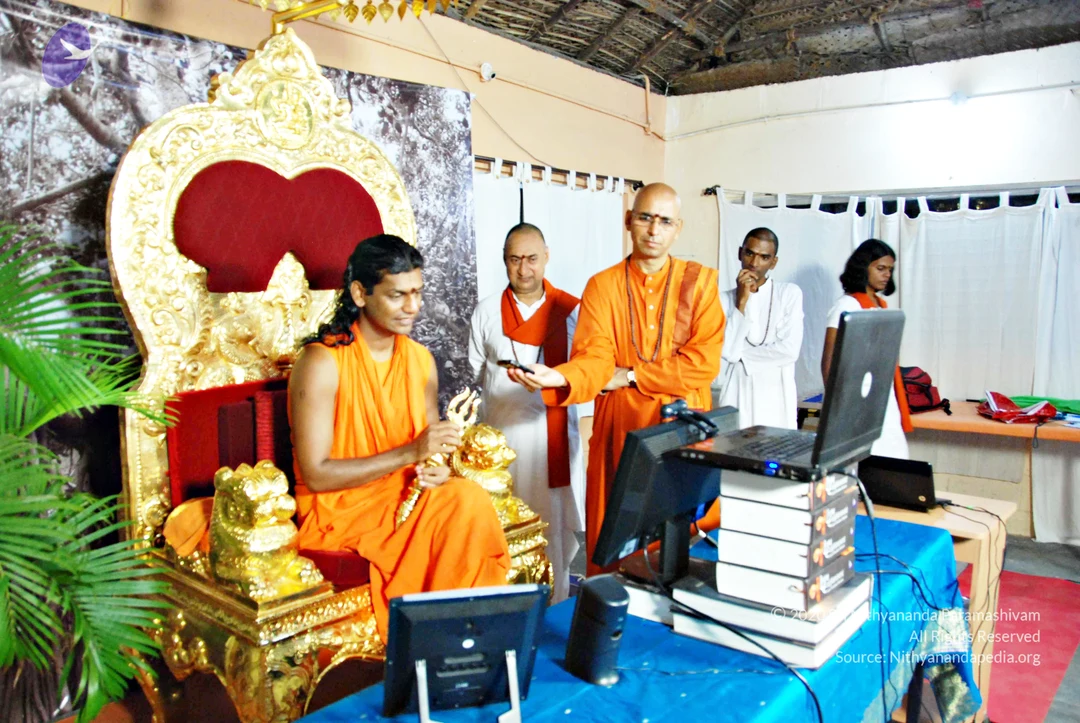
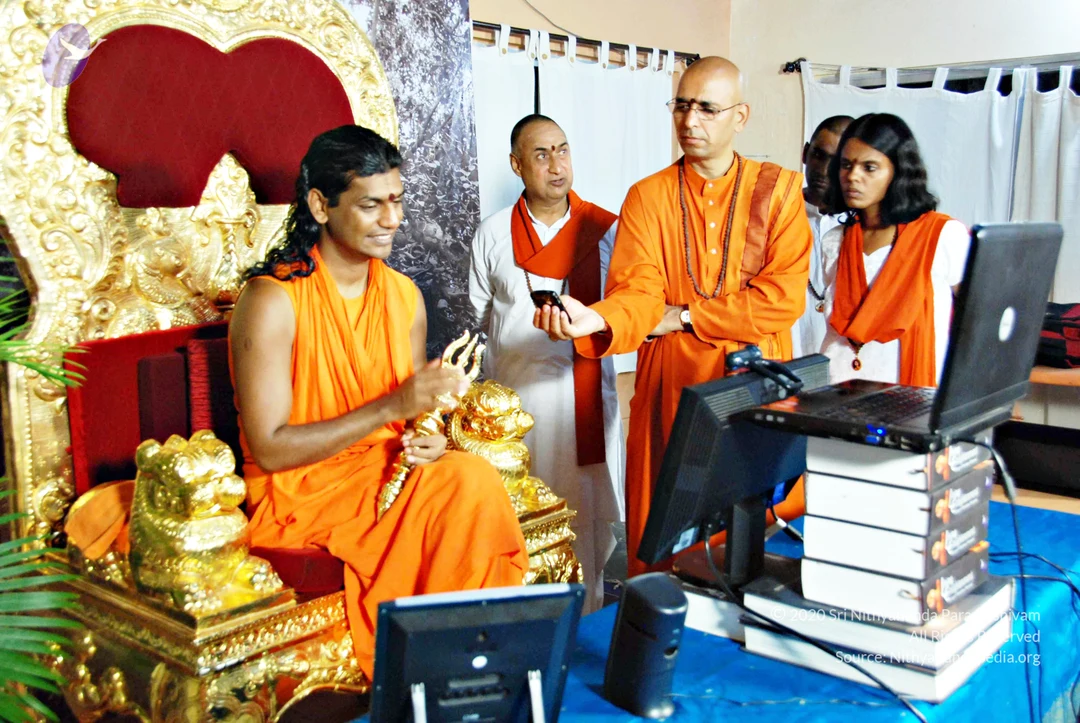
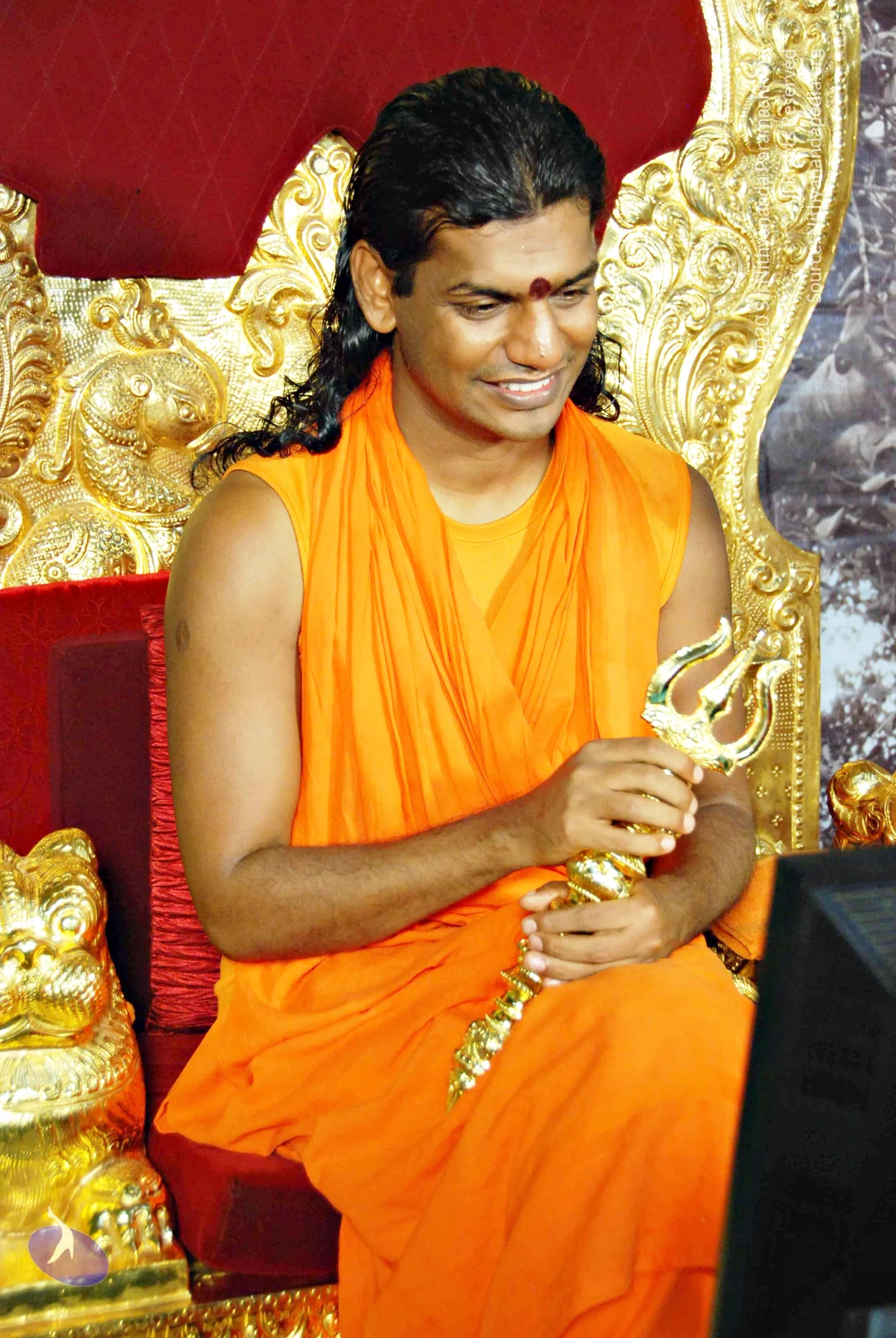
A photo taken in a simple indoor room with white walls and sheer curtains. Seated on an ornate golden throne with a red velvet back is a man with long swept-back hair, wearing an orange saffron robe and a long rudraksha mala, raising one hand in greeting while smiling. Swamiji (probable), based on the long swept-back hair, saffron robe and rudraksha mala, seated on the throne. Behind him is a potted palm and a dark forest backdrop. In the foreground are laptops and a monitor on a blue tablecloth. Two men in orange robes stand at the left, one bald and wearing glasses, the other partly visible.

September 05 2010

Original wiki page
Contents

Title:

Revival of Vedic tradition: Nithyananda Morning message
Video and Audio:

Revival of Vedic tradition: Nithyananda Morning message
VideoAudio

Transcript:

(00:18)

Sadashiva samarambham shankaracharya madhyamam Asmad acharya paryantam vande guru paramparaam

I welcome you all with My love and respects. Today’s subject is revival of Vedic tradition. Why? It’s the need of the hour. Because this is the last hour human Consciousness is having. If you don’t revive, this is going to be the last hour. Vedic tradition, is the only tradition, please understand, one and only tradition which can give spiritual solution for all the problems of the human Consciousness; whether it is the problems of inner world questions and quest like life, death, body, mind Consciousness or the social problems - peace, unity, love, existing together, co-existence, ahimsa or the personal relationship level problems - understanding each other, accepting each other or creating wealth without sucking other's blood, cut throat lifestyle, consumeristic lifestyle.

(03:01)

I tell you these are the major problems humanity is facing which really, really, really makes us feel; I wanted to add some more really; makes us feel this may be the last hour of the planet earth because the unconsciousness of the human beings and the ability to destroy others through weapons, not just the traditional weapons like atomic bombs and all that, chemical weapons and now something new is happening, ideological weapons, spreading ideas through media and communication systems and dismantling certain unique lifestyles; tribes way of living in the planet earth.

(04:14)

Understand, there are few tribes whose lifestyles have been dismantled, destroyed so badly, the great art, tradition and the extraordinary powers they were having; whole science has left planet earth; the science of herbs, the science of living with nature, science of handling the extraordinary power. Just yesterday I saw Youtube clip of shaman; a shaman levitating so casually. A shaman, shaman is a group of spirituals souls; a spiritual tradition from South Africa. Very casually, just he is chanting some mantra and he is levitating four feet above the sky and after few minutes, he is relaxing. It was a lifestyle. You don’t need to gather around some Enlightened Master and do all kinds of pranayam, then slowly levitate after four days or three days. It was a lifestyle for certain tribes, certain spiritual groups. But so much, so much of color has been lost, so much of variety has been lost, because of this trying to globalize everything under one brand.

(05:59)

Same way we need to understand the nature based cultures. That’s the right word I wanted to say; the traditions and cultures which understands, nature is a living intelligence, who are interested in coexisting with nature, not abusing it, exploiting it. Vedic tradition grew up with Ganges and Himalayas; grew up with nature; coexistence; the tradition which has spiritual solution for all possible problems happened, happening, yet to happen. All the major problems planet earth is facing now: wars, ideological conflicts and economically depriving one section; You will be surprised just hand full of people in the world are having around 60% of the wealth of planet earth; just four communities, four group, just four group. It means, the whole world is serving that four group. Enormous wealth is accumulated, centered, under few people.

(07:58)

Whoever has six feet body, has a right over whatever exists on the planet earth. Because planet earth provided everything for all the people, whoever has six feet body. So all six feet bodies, when I say six feet I don’t mean exactly six feet, I mean just the body, the human body. All the human bodies have a right over whatever exists. Just few people depriving other bodies is a root of violence, source of violence.

(08:56)

I tell you, these major dangers human society is facing: terrorism, consumerism, which is responsible for terrorism and conflict ideologies or ideological conflicts and the diseases which are spreading rapidly because of consumerism not only in the level of food, cloth, furnitures, lifestyle, in even in the level of music, sex, life style; in all levels. HIV is just because of consumerism in the level of sex. That is responsible for HIV. And obesity: consumerism in the level of food. So many psychological disorders are just because of consumerism in the level of music; music which creates so much of restlessness; So much of violence because of the visuals which are creating restlessness.

(10:48)

So, in every way, we are heading towards the last hour of planet earth. If we take responsibility and revive this great Vedic tradition, the other day I was reading an article, the future religion has to be accepting many Gods or all Gods. Only the religion which accepts many Gods or all Gods can give peace; permanent solution for all religious terrorism on the planet earth. If you want a permanent solution for the religious terrorism on the planet earth, the Vedic tradition, the Hindu tradition is the only solution; which accepts many Gods or all Gods. We don’t have problem; any number of Gods; Rama, Krishna, Shiva, Buddha, Jesus, Mohammed, with all of us can coexist, in one puja room, happily. We don’t have problem. We don’t have devil who need to be rejected. Even the Yama, lord of death, is one more God for us. The lord of destruction and rejuvenation, Mahadeva, Shiva is God for us. So we don’t have devil, we don’t have demon. Even destruction is taken care by God, under the controlled condition, in deep compassion, for rejuvenation.

(12:37)

When the earth is overloaded, Krishna comes and He does the whole destruction, rejuvenation under the controlled condition. So even for that we don’t need to depend on devil. God takes care of that job also; devil if, devil is out of job in Vedic tradition. So understand, it is time, it is time that we revive Vedic tradition, which accepts all Gods, which is ready to coexist with all Gods. We are happy with all way of systems of eating, all systems of clothing, all systems of furnitures, all lifestyles.

(13:33)

Each system originated in each state is original. See the variety of dressing and eating in India. The difference between one state and other state is much more than difference between one country and other country. You just travel hundred kilometer, you will see just totally different world in food, the housing construction method or the clothing or the language or the lifestyle or the religion, you can’t imagine. Oh God! Morning I was in a different country and evening I was in a different- I am in a different country or what? Hundred kilometer is more than enough to see totally different world in India and peacefully coexisting. That’s the most funny part. We do not want companies, missionaries, machineries, which makes all of us like one mold, which takes away our unique way of lifestyle, our unique way of existing.

(15:06)

Please understand every tribe needs to be kept alive as they are. Every tradition need to be kept alive as they are. Every lifestyle, every food, tradition, every clothing tradition, every housing method, every way of furnitures, should be kept alive as it is.

(15:41)

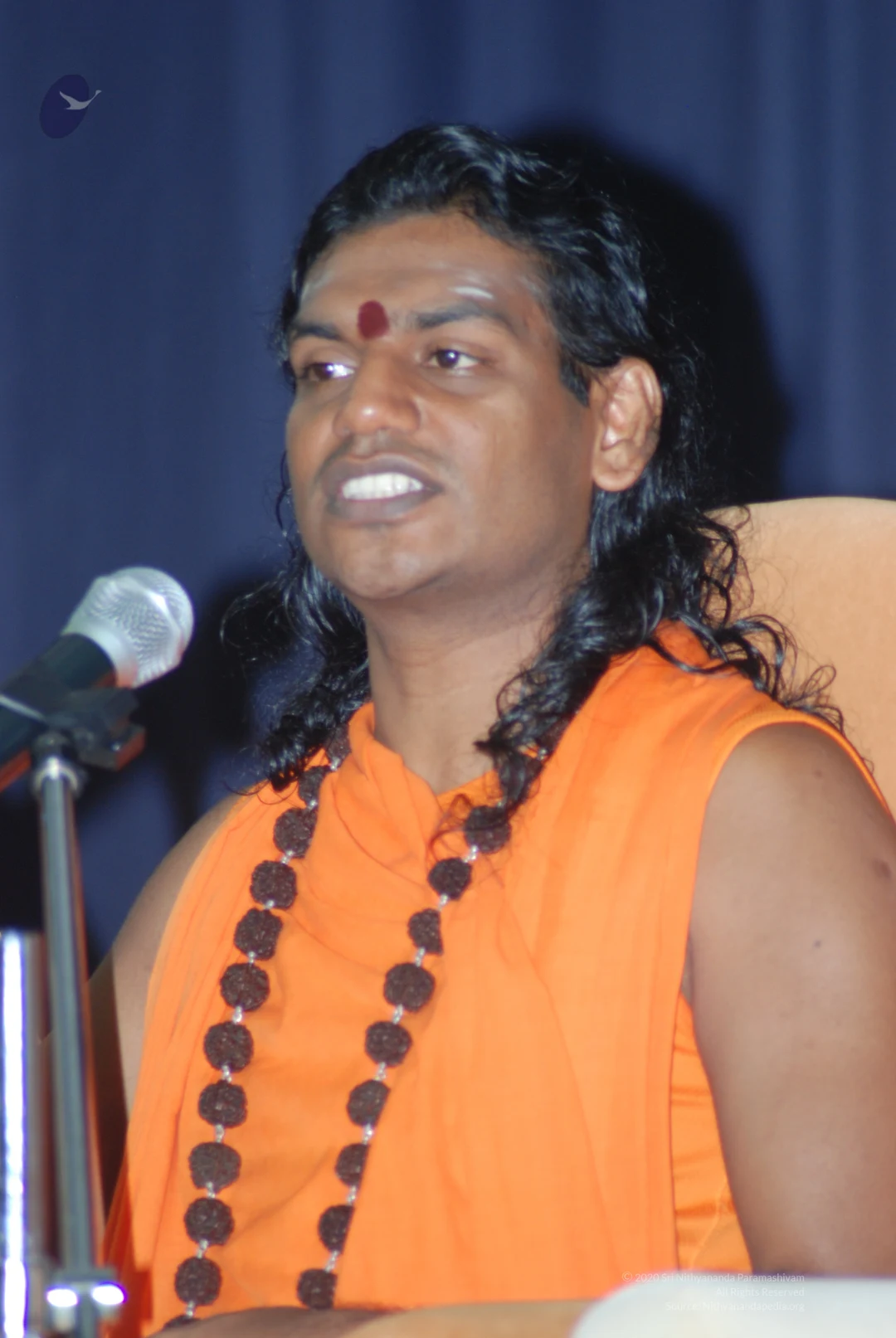
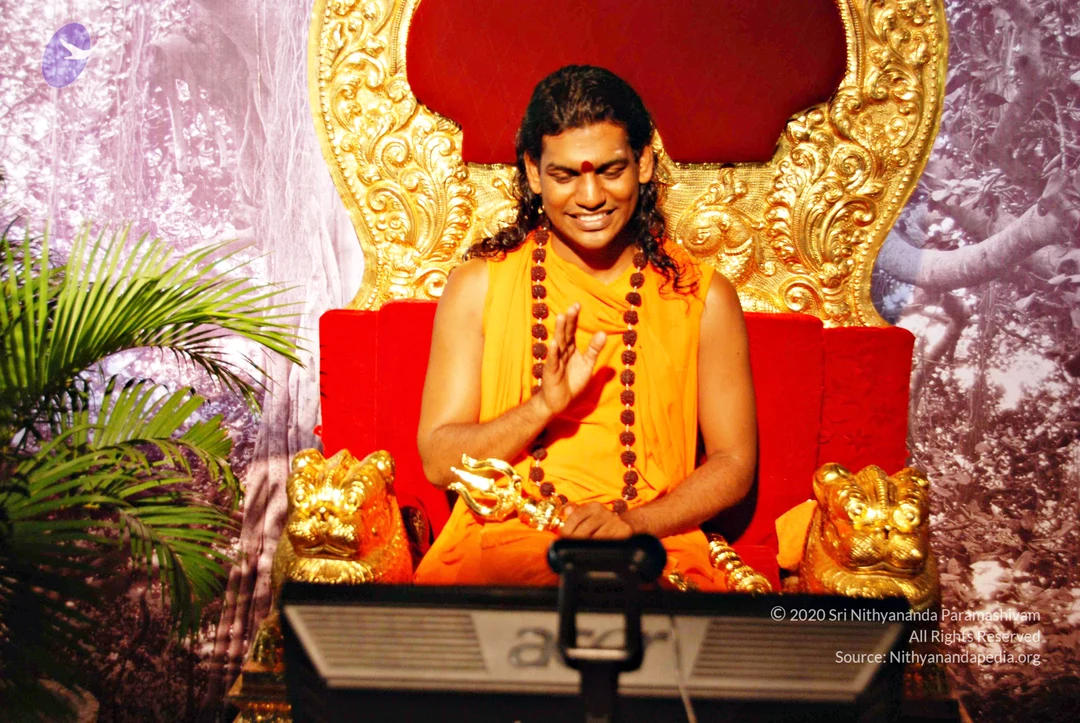
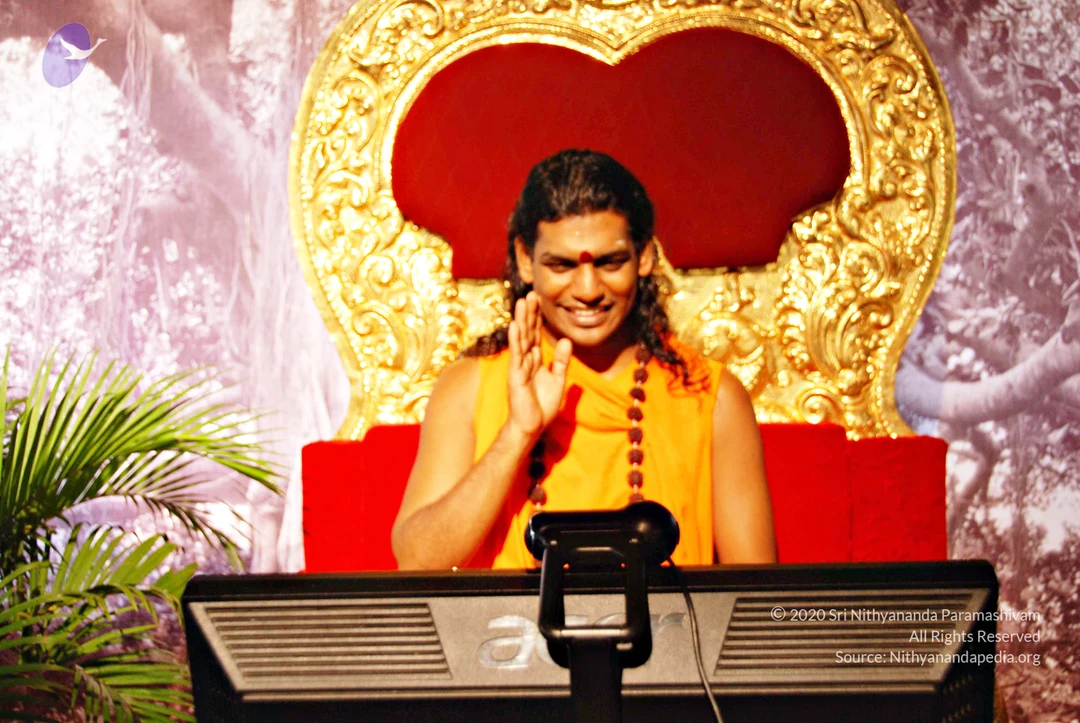
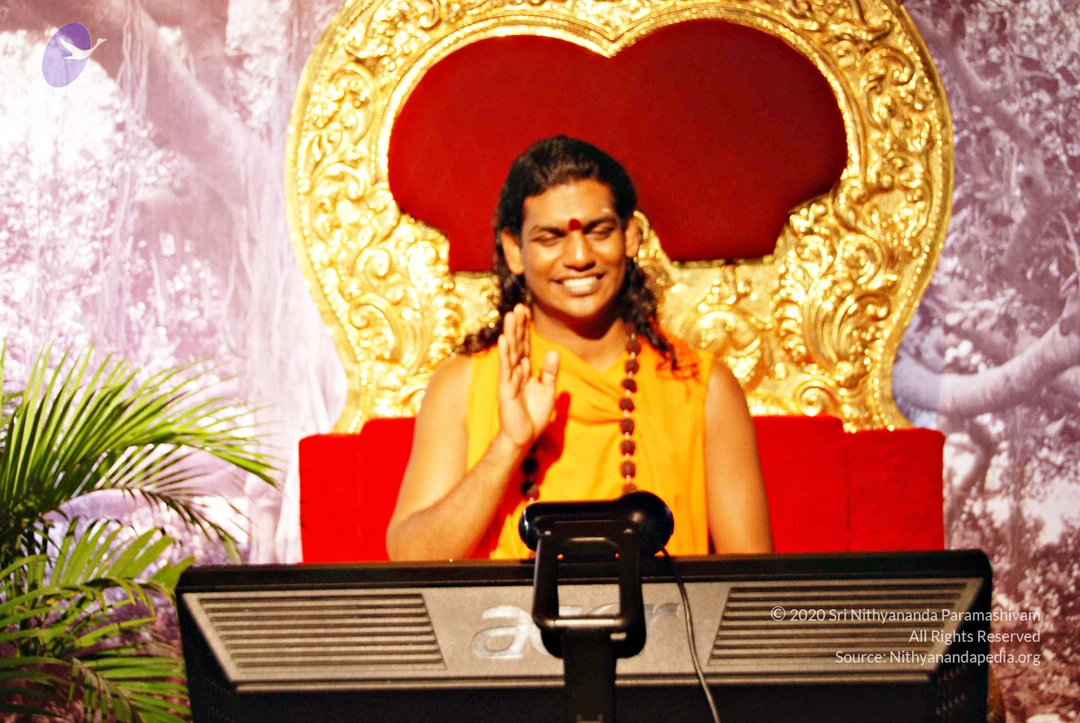
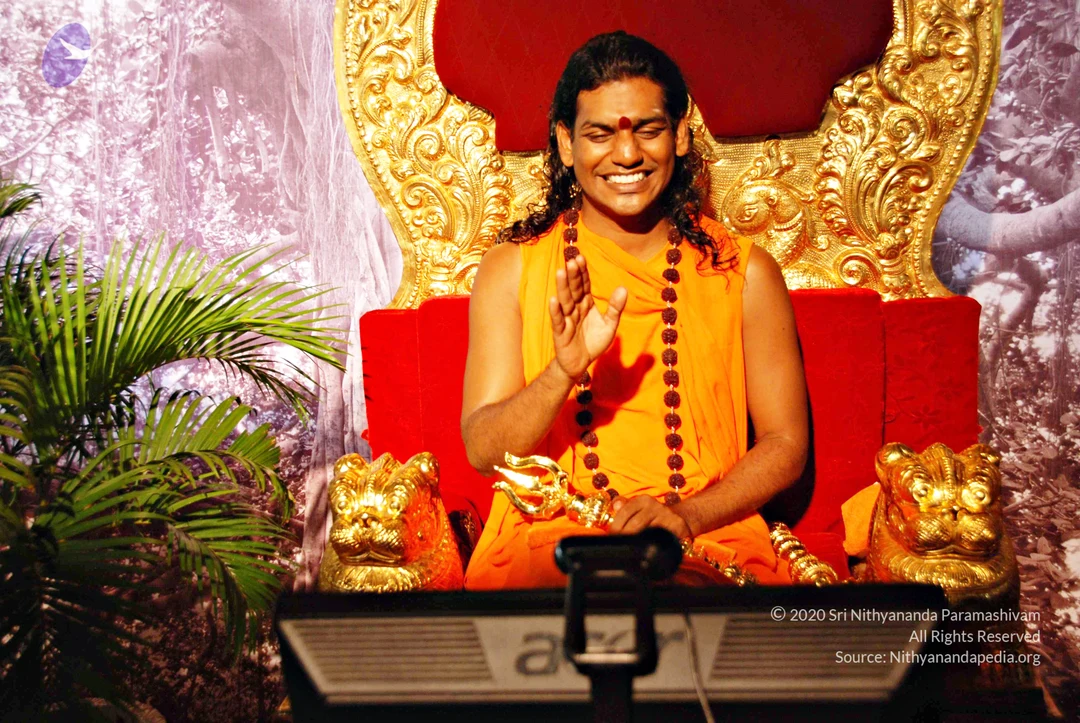
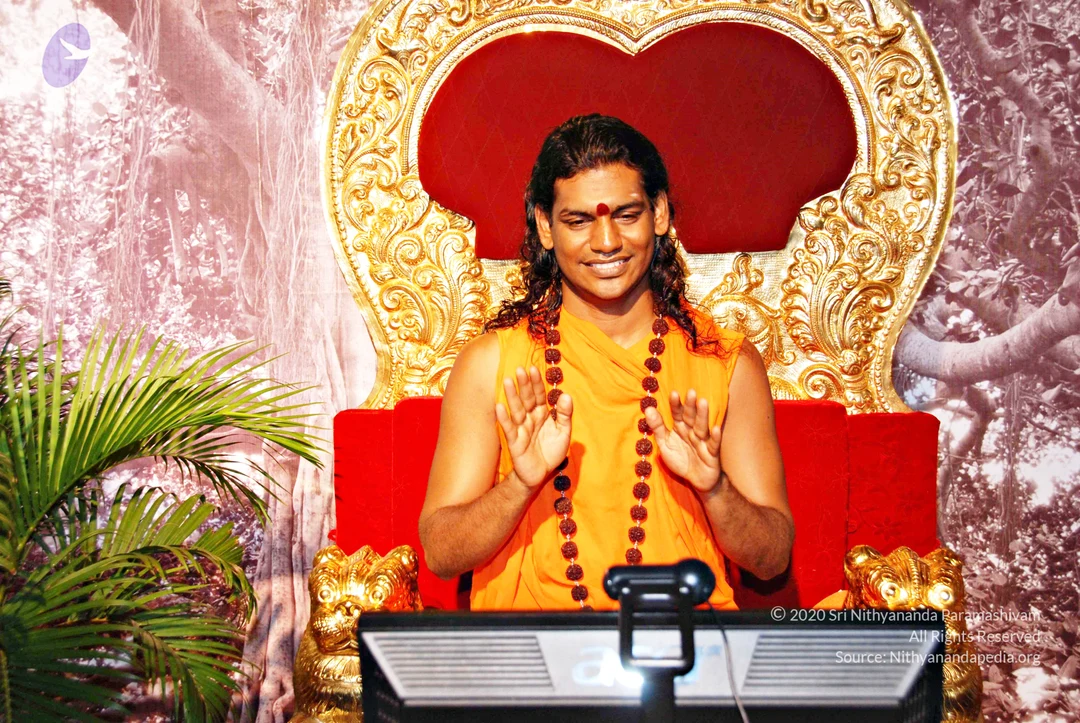
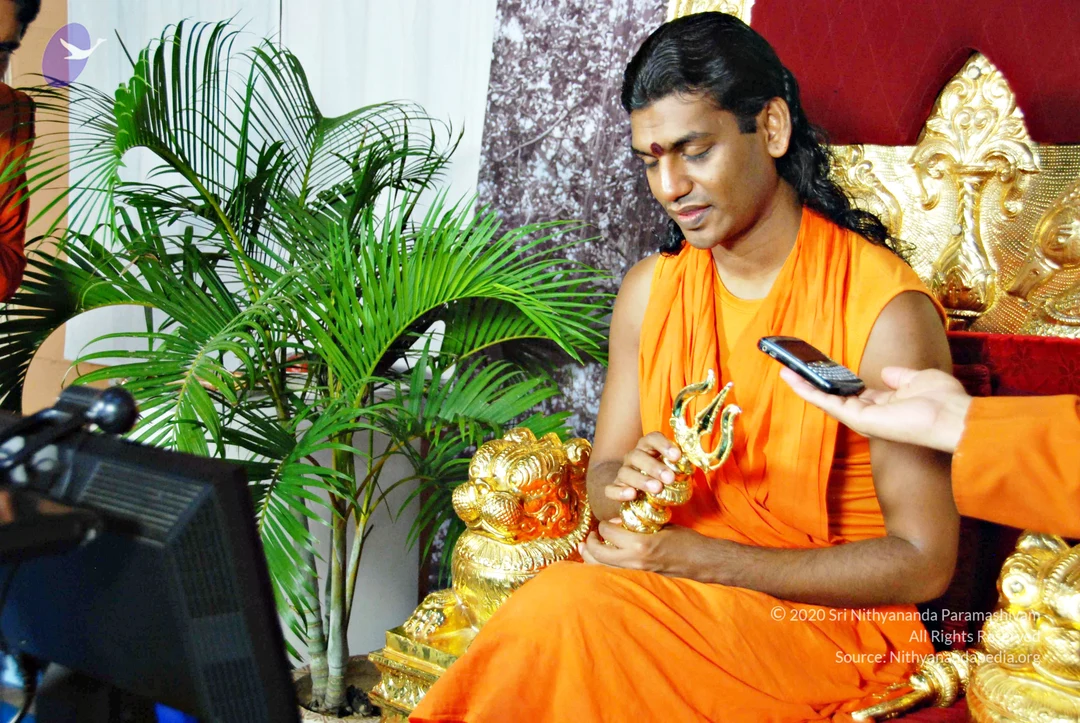
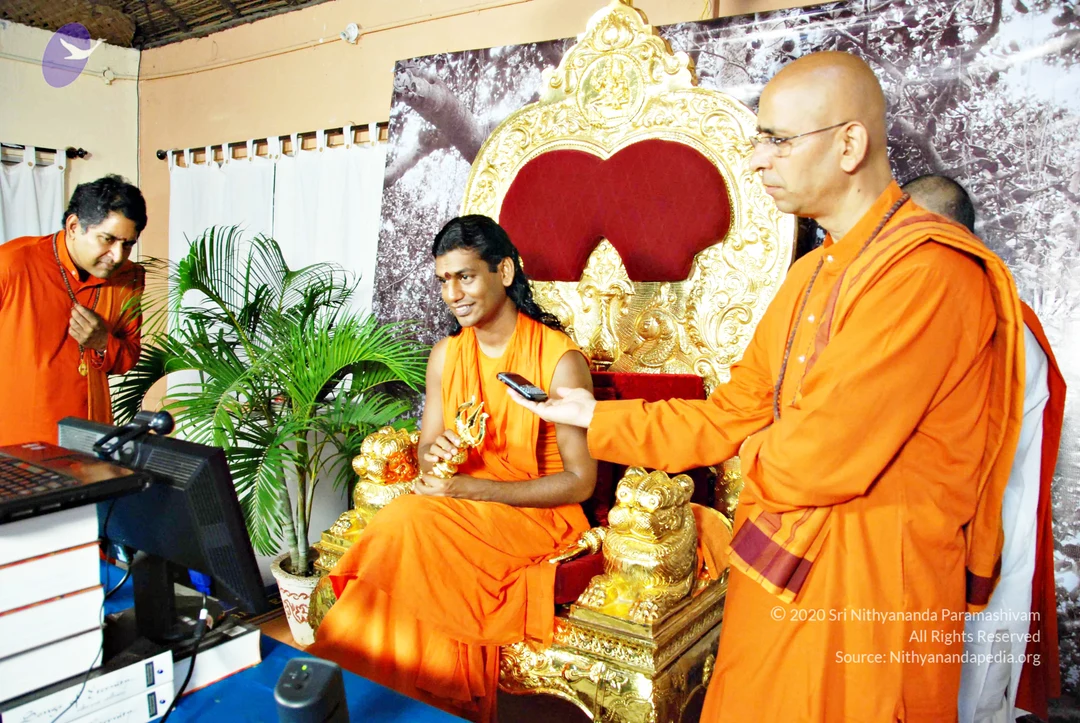
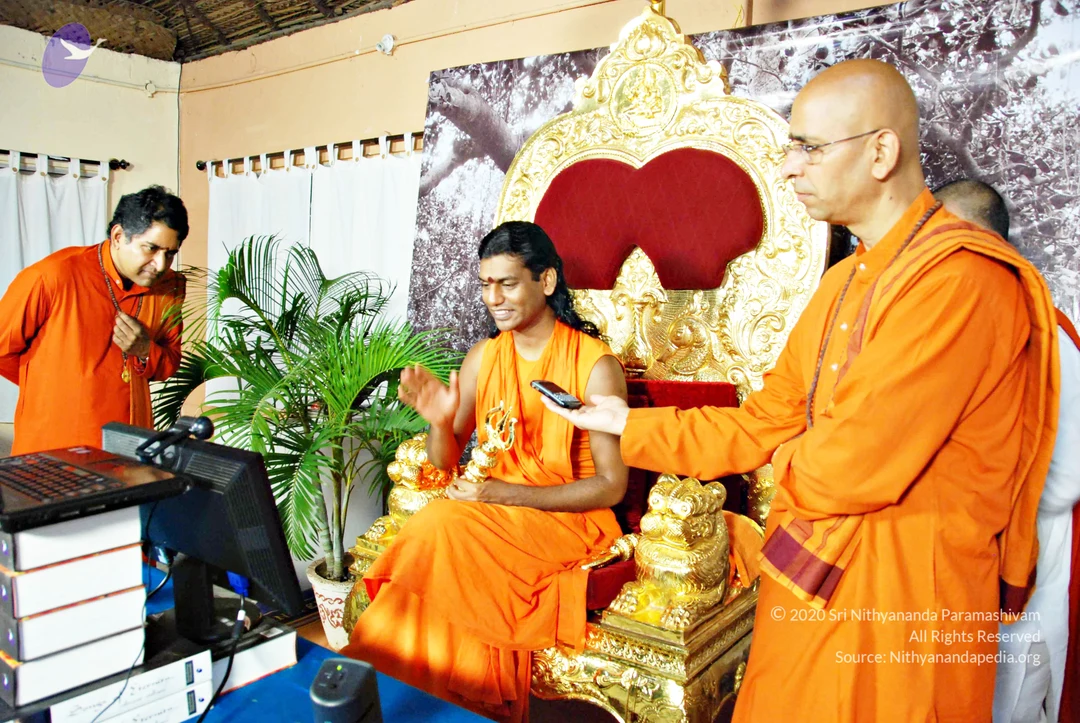
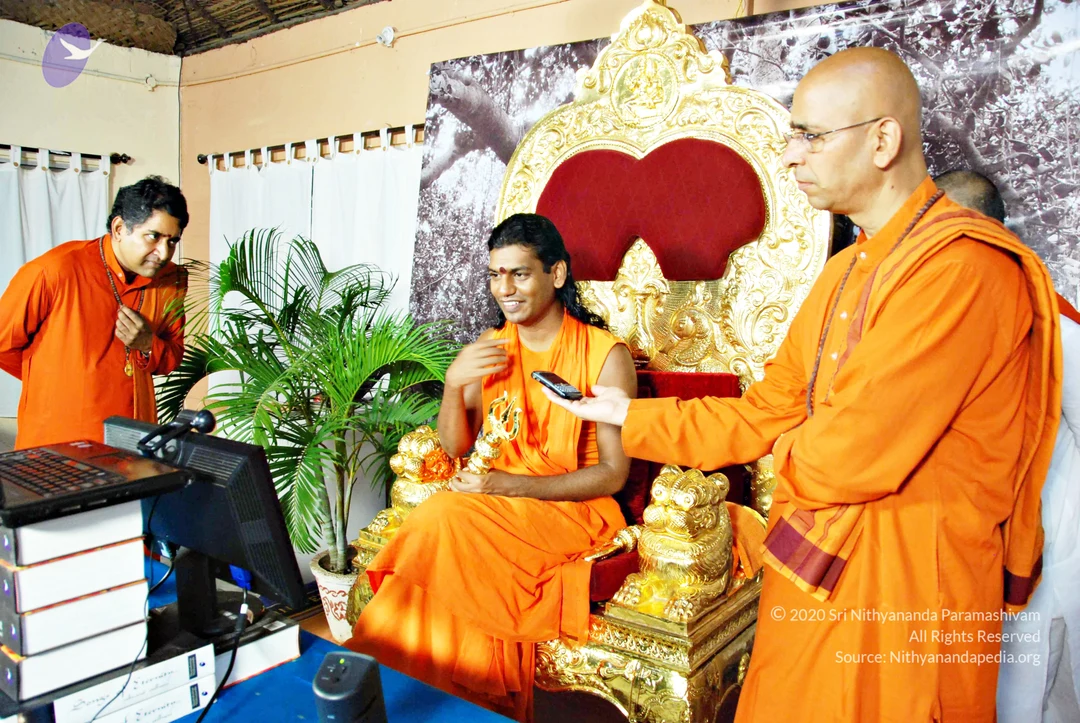
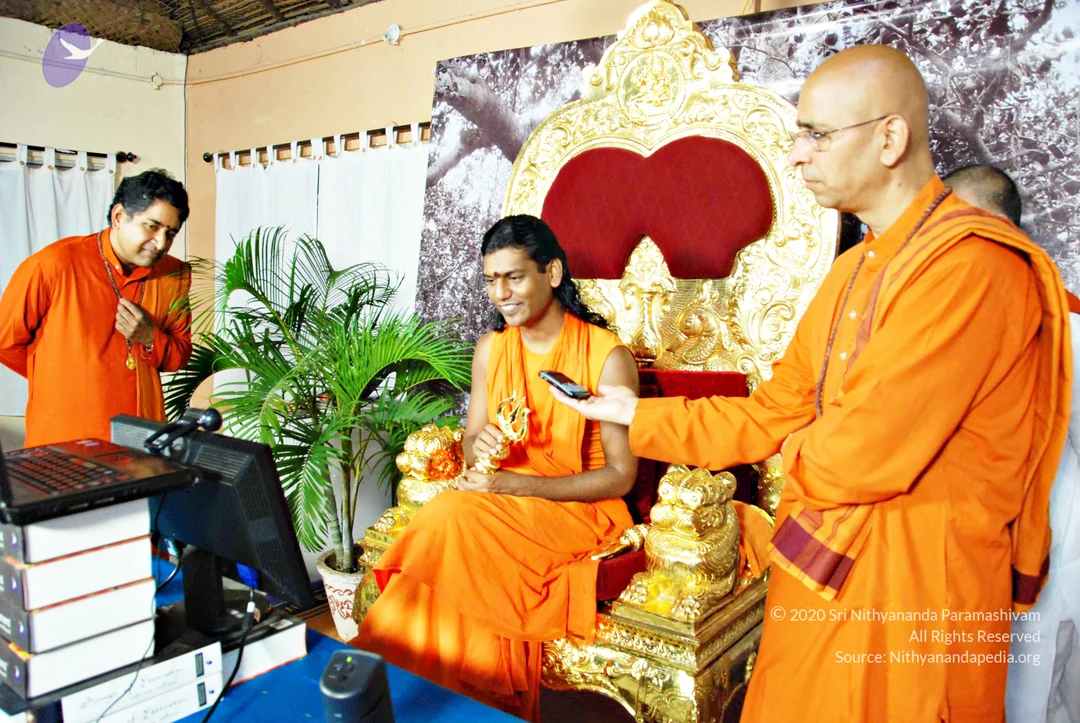
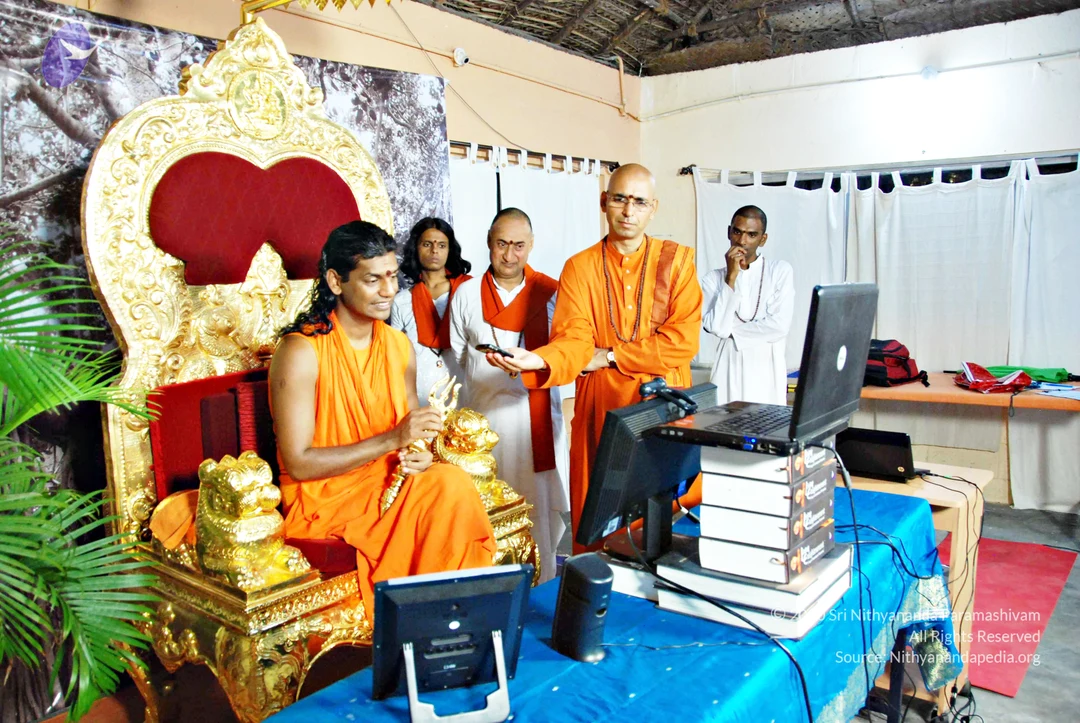
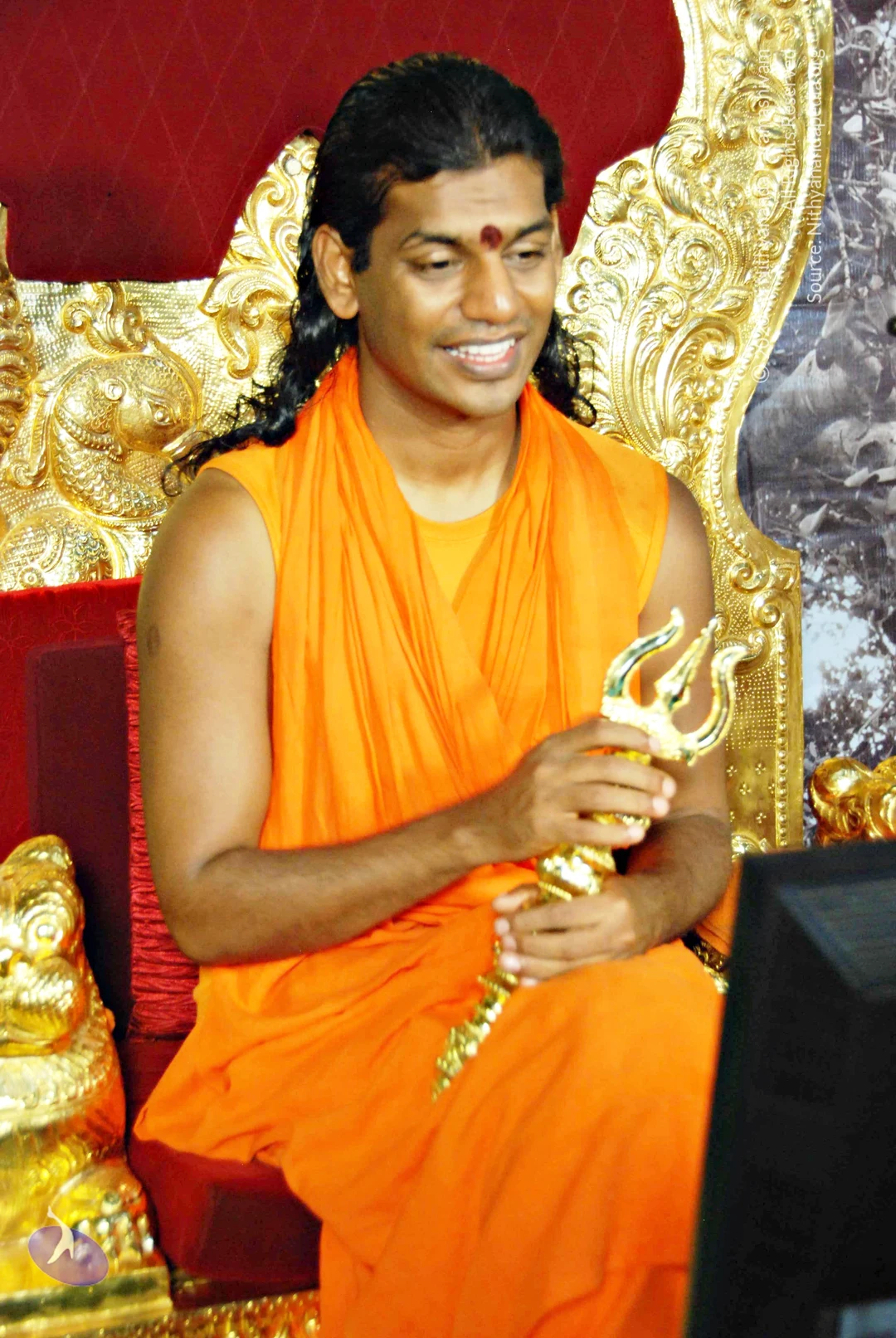
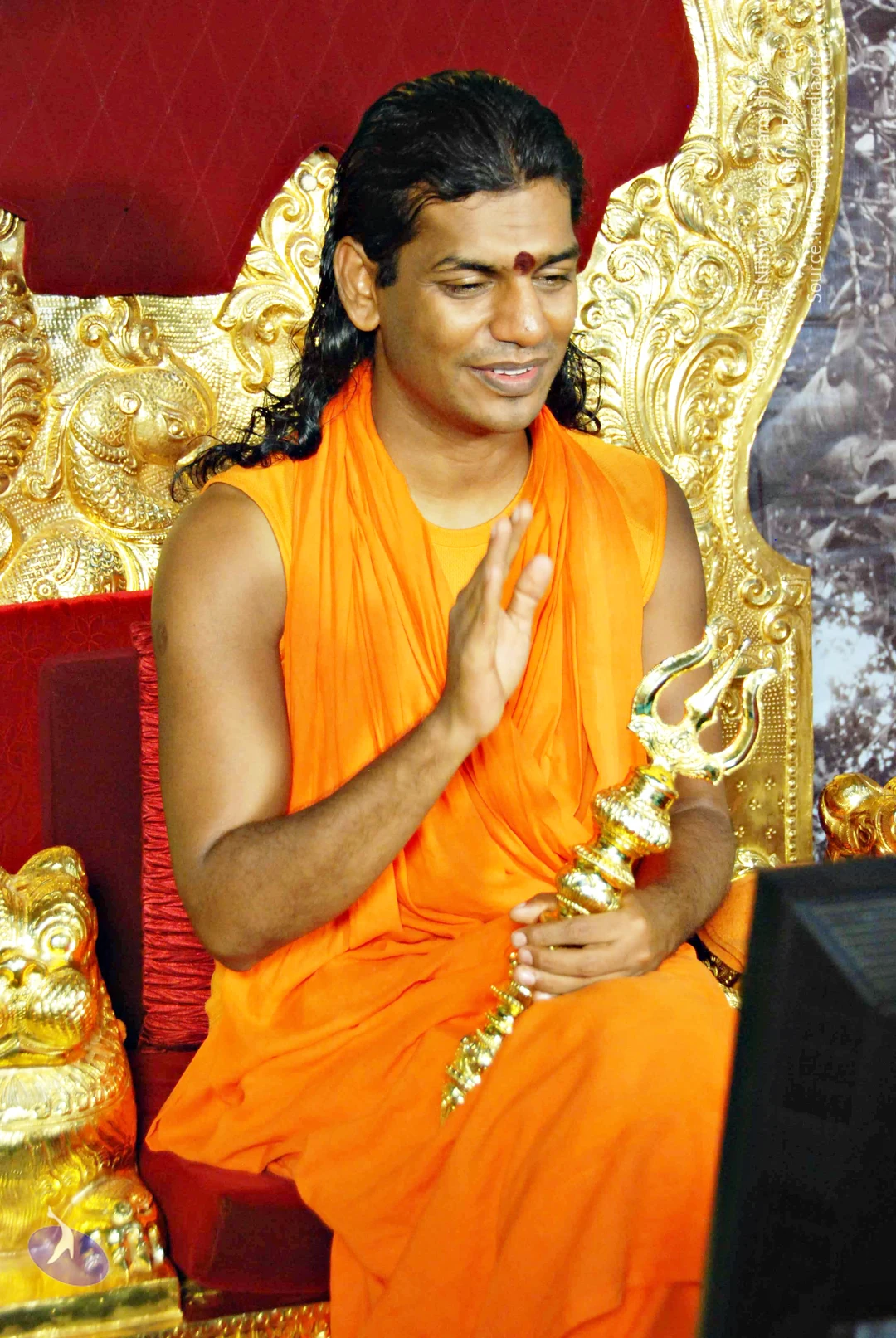
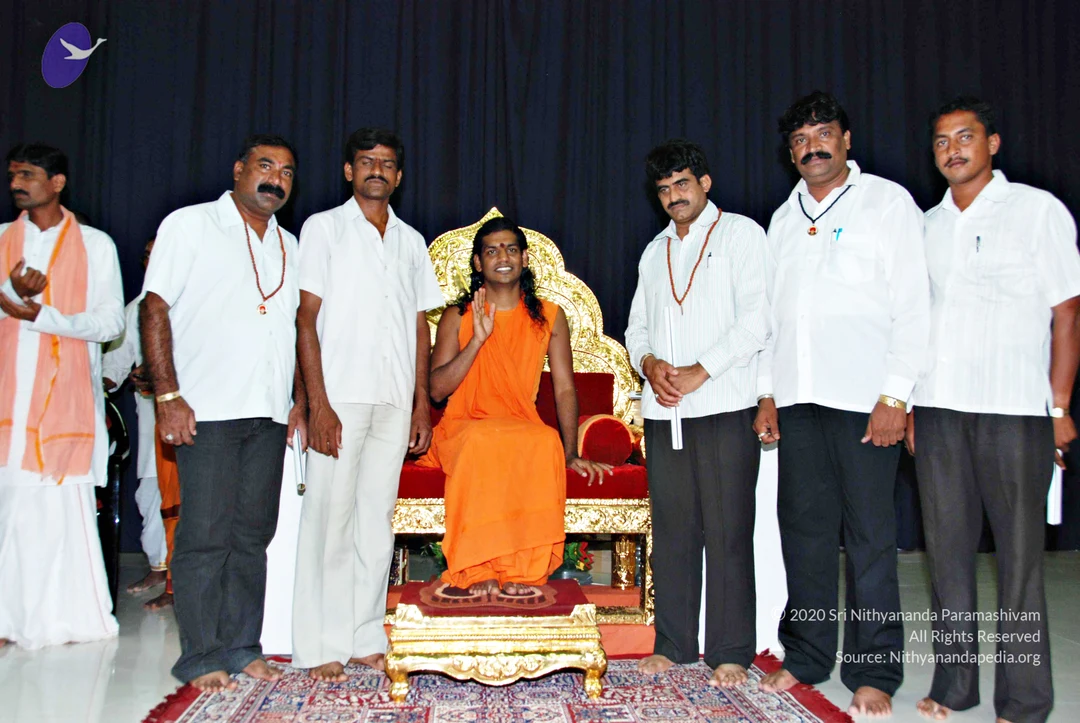
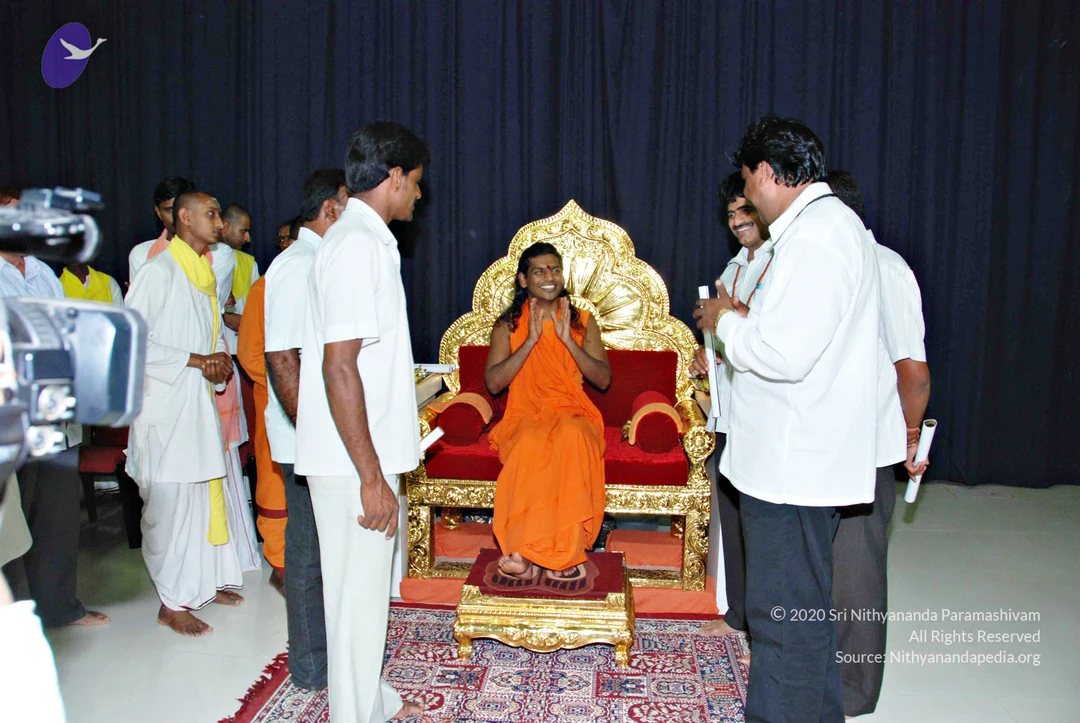
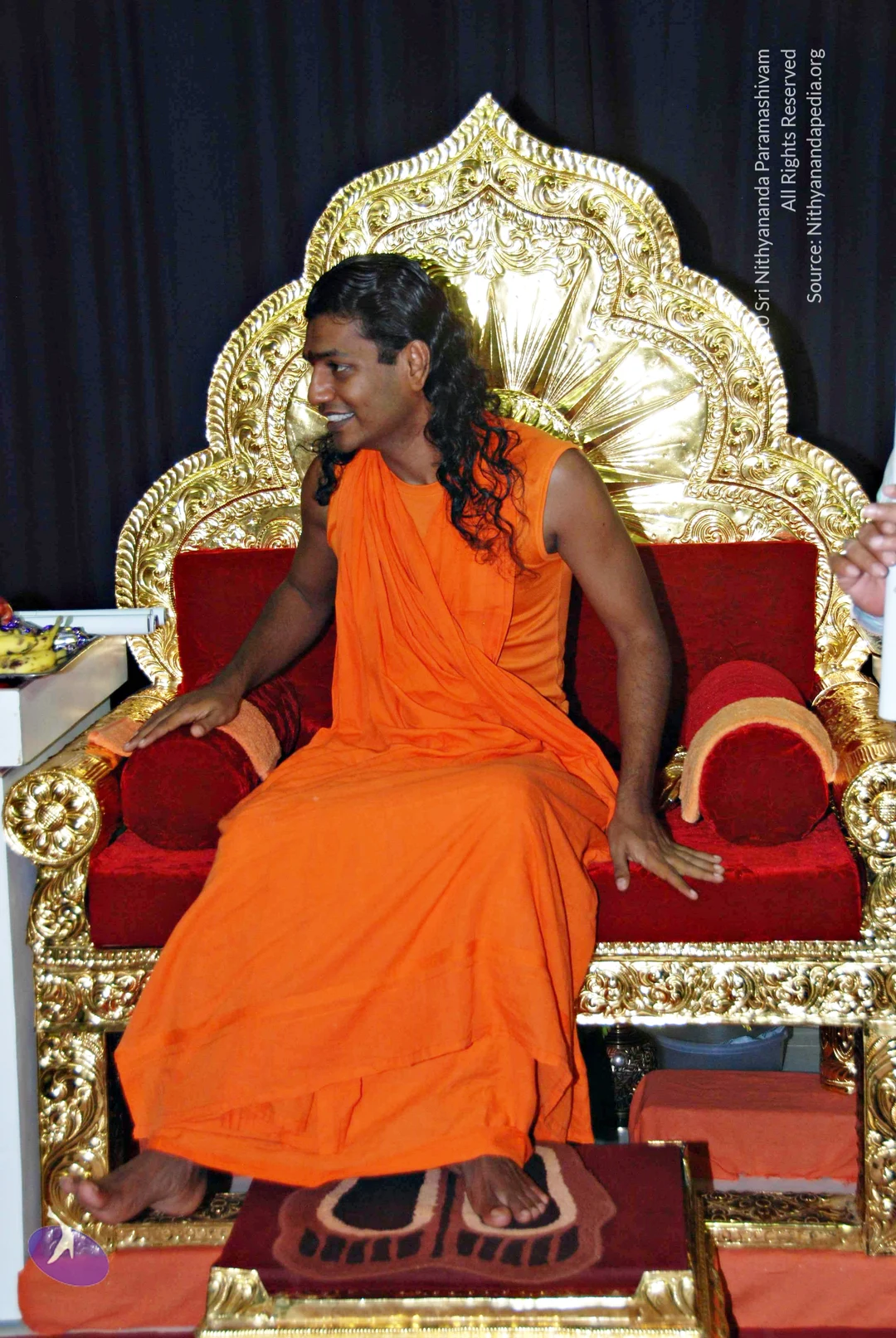
To tell you honestly this seat is not more costly than an ordinary middle class executive chair. People think, "Oh! Its ego! Too costly! Luxury!" No. This seat on which I am sitting is surely not more costly than any middle class CEO's chair in any company in India or any office in India. There are so many brands, the furniture brands. Their medium level furniture is more costly than this seat and this is not that comfortable. You need to be sitting straight only then you can sit in this. But I wanted this kind of furnitures just to retain the tradition.

(16:40)

Only when I made one more seat for my priest and put I understood. Even if you put the golden throne he doesn’t want to sit there. Because it is not that comfortable, you don’t know, only if you sit, you will understand. You need to sit straight, only then you can sit in that. Rarely when I am in Samadhi, I just lean, put the body, rest on it. But you can’t sit in this posture in which I am sitting now, for long time in this seat. You have to be a yogi, only then you can sit in this throne. That design of the very throne will let only yogis to sit on it. Others can’t sit on it. Others can’t use it. It’s a independent intelligence by its own design.

(17:31)

Understand, the Vedic tradition has unique thing, in everything, in every level; whether it is food, cloth, housing, furniture, dance or medicine; in anything. Let us revive it, because this is the only tradition which can allow varieties, means which has a breadth and broadness for coexistence, which can coexist, which is based on ahimsa, nonviolence, which does not claim the monopoly in any line.

(18:21)

So I sincerely request all of you to stand strong, live and radiate Vedic tradition in every step, so that this may not be the last hour of planet earth as predicted and not only as predicted by the many of the ancient western civilizations, as getting executed by the modern western civilization. Let’s not allow it. More than the word western civilization, I think this word: the materialism based civilization, because it’s not that India is just moving, keeping itself away. So, it is time we get back to Vedic tradition, keep it alive, it will keep you alive. Keep Vedic tradition alive that will keep you alive. Let’s all live and radiate the Vedic tradition, live and radiate the eternal bliss, Nithyananda. Thank you.

(19:51)

Title:

Technique For Sudden Enlightenment, LEP Day 13

Description:

In this video, Swamiji talks about pranayama . Bahirmatrukanyasa is a powerful process of pranayama where levitation is done through emptying the lungs by throwing the air outside to prepare body from fear of death to prepare for enlightenment.

Video and Audio:

VideoAudio

Title:

Ananda Lingam: An Extraordinary Happening

Description:

In this documentary, we take you through the panch bhootas (five elements) that makeup matter. Paramhamsa Nithyananda describes how siddha technology is used to create an alchemy that can have intense healing effects - physical, emotional and spiritual. The result of this technology is Ananda Linga, the 21 feet lingam in Nithyananda Dhyanapeetam ashram in India.

Video and Audio:

Ananda Lingam: An Extraordinary Happening

VideoAudio

Title:

2012: The Truth As It Is by Nithyananda

Description:

2012 - everyone has spoken about it, NASA, philosophers, psychologists, scientists, gurus, everyone. Is it the end of the world? Is it the doomsday? Is it the Armageddon? Why does the Mayan calendar end in 2012? What is the truth? What is the prophecy?

Or is it shift in consciousness... which only enlightened civilizations and masters have deeply understood? Is it the time which marks the beginning of enlightened humanity?

Coming straight from the experience of enlightenment, Paramahamsa Nithyananda, a rare living enlightened master, unravels the truth of 2012, as it is. This video is a trailer to the upcoming detailed video where the master opens up 2012 as the beginning of construction and rejuvenation of human consciousness.

Sign up now at www.dhyanapeetam.org/2012 for the exclusive first rights to the detailed video on "2012 - The Truth As It Is" by Paramahamsa Nithyananda.

Video and Audio:

2012: The Truth As It Is

VideoAudio

Photos:

Panchatapas
Morning-Message
Sarvadarshan
Swamiji-Meet-With-Ram-Sena
Online-Kalpataru-Darshan
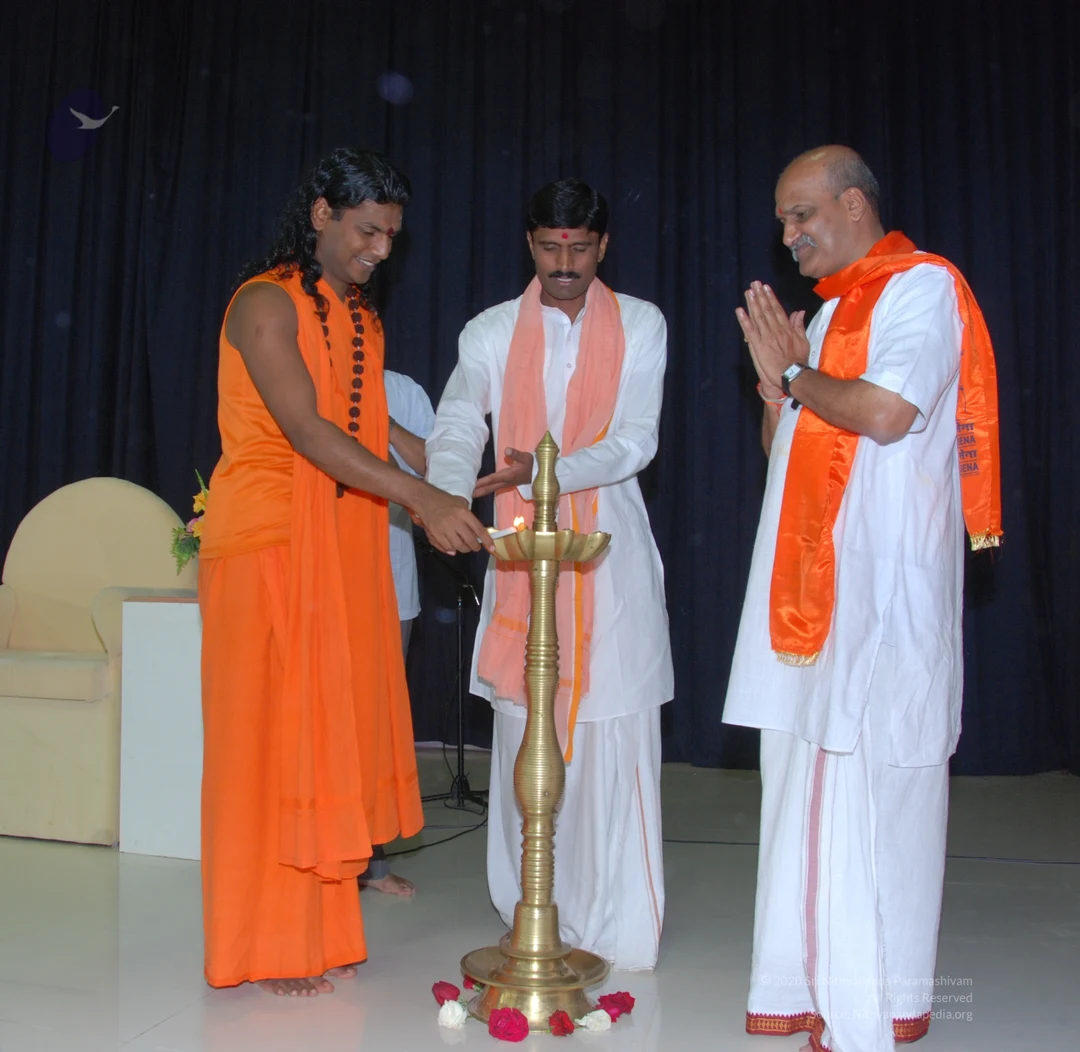
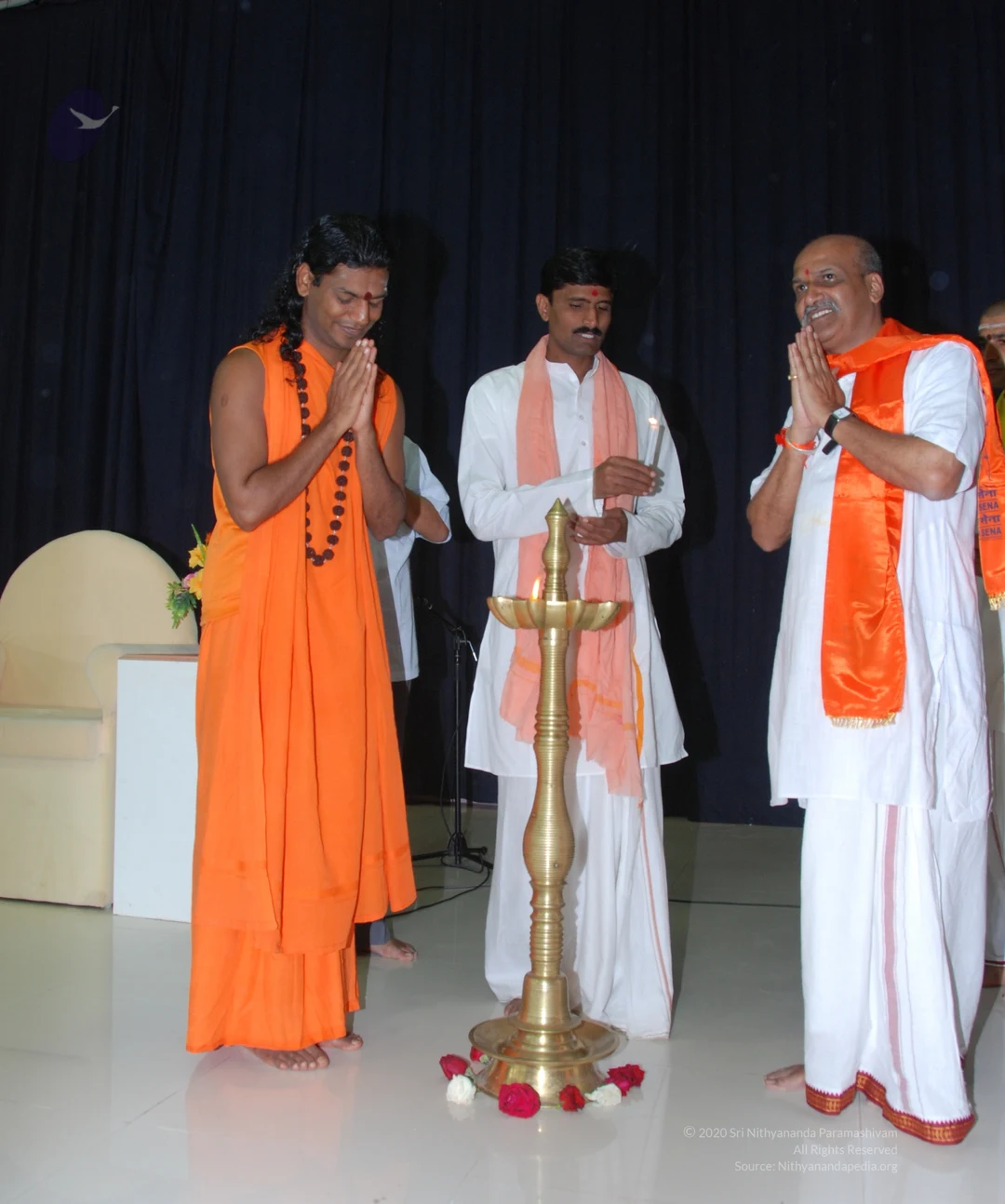
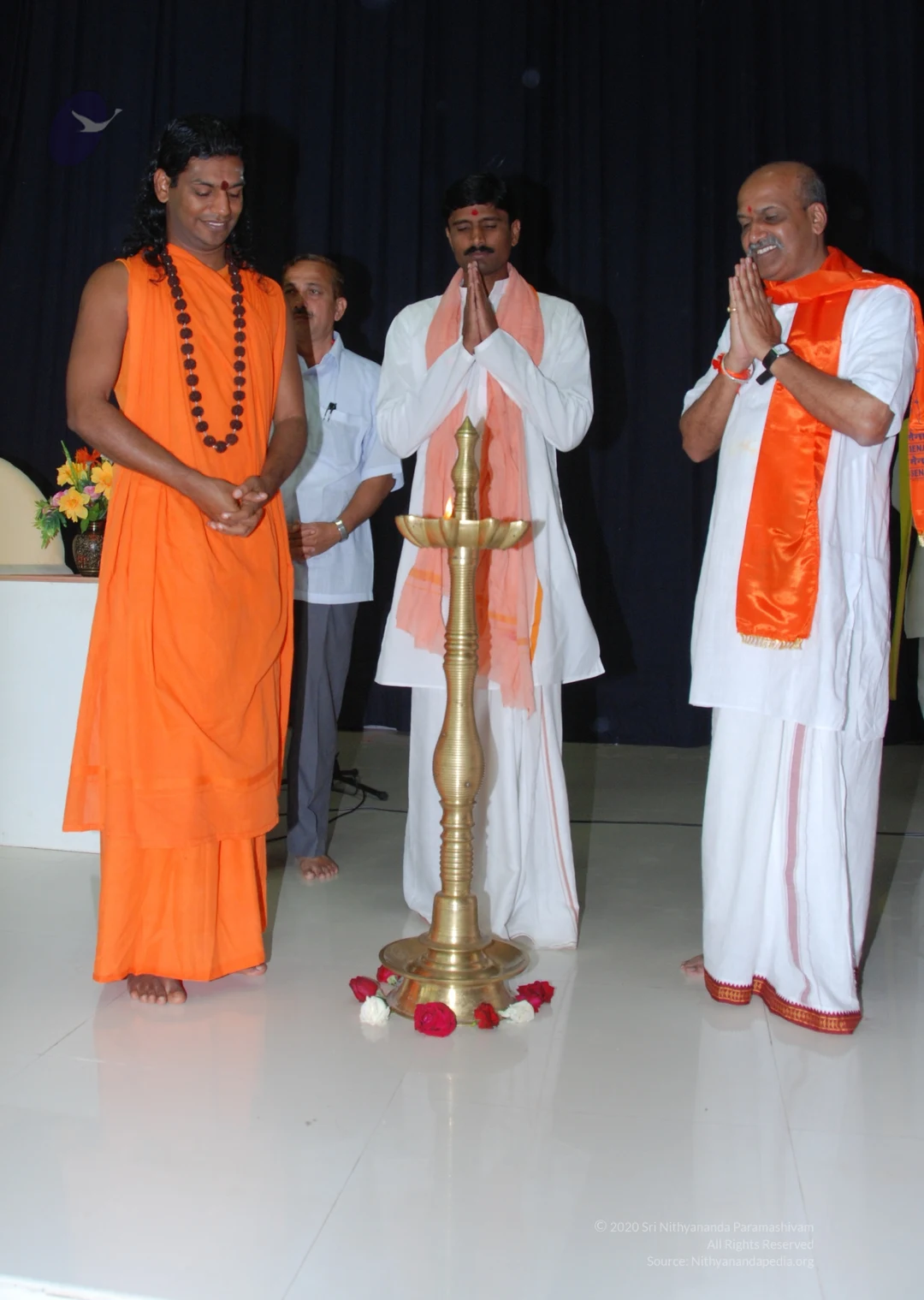
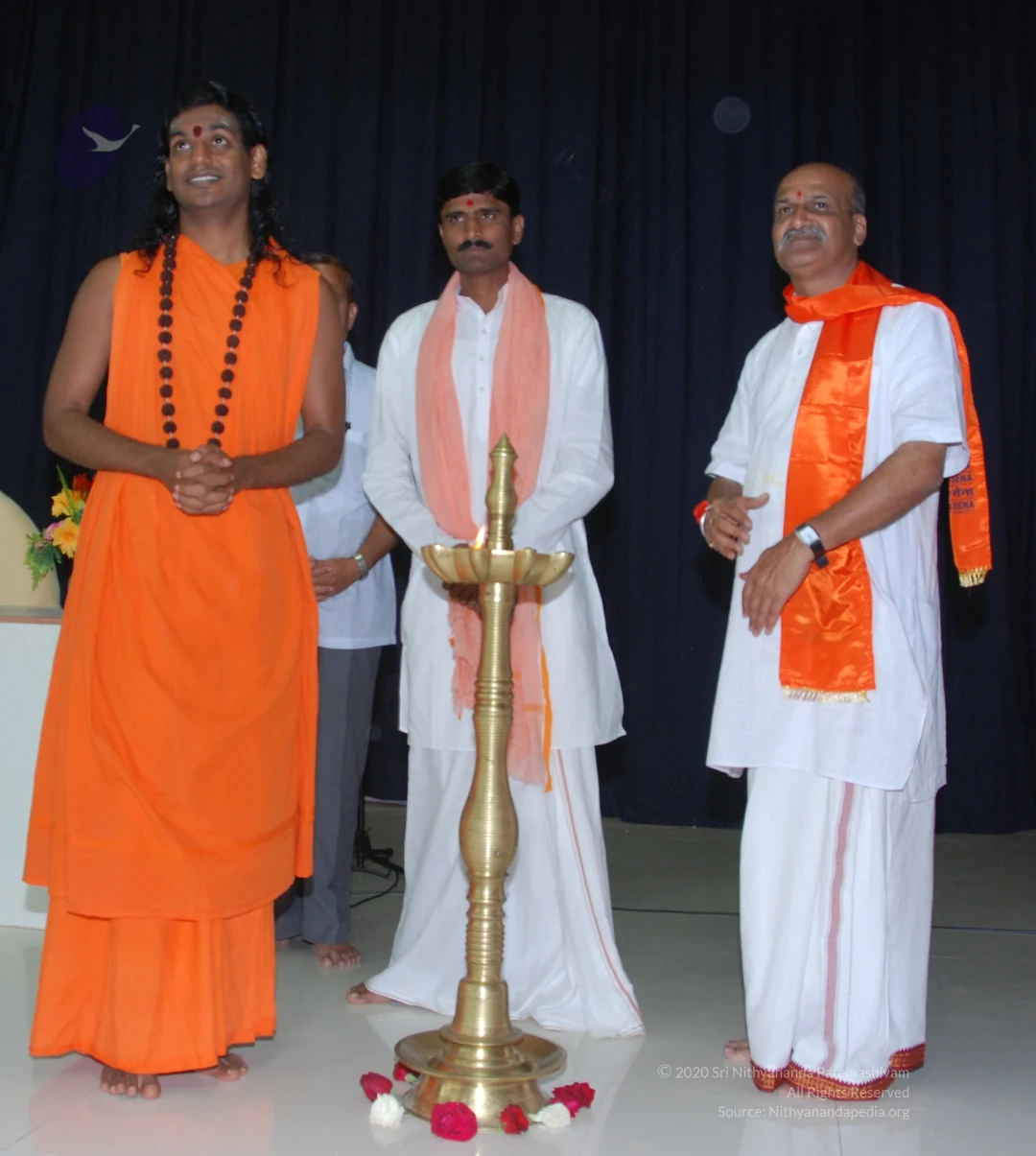
Lbt-Inagural-Function
Online-Kalpataru-Session-Evening
Ganapathi-Homa
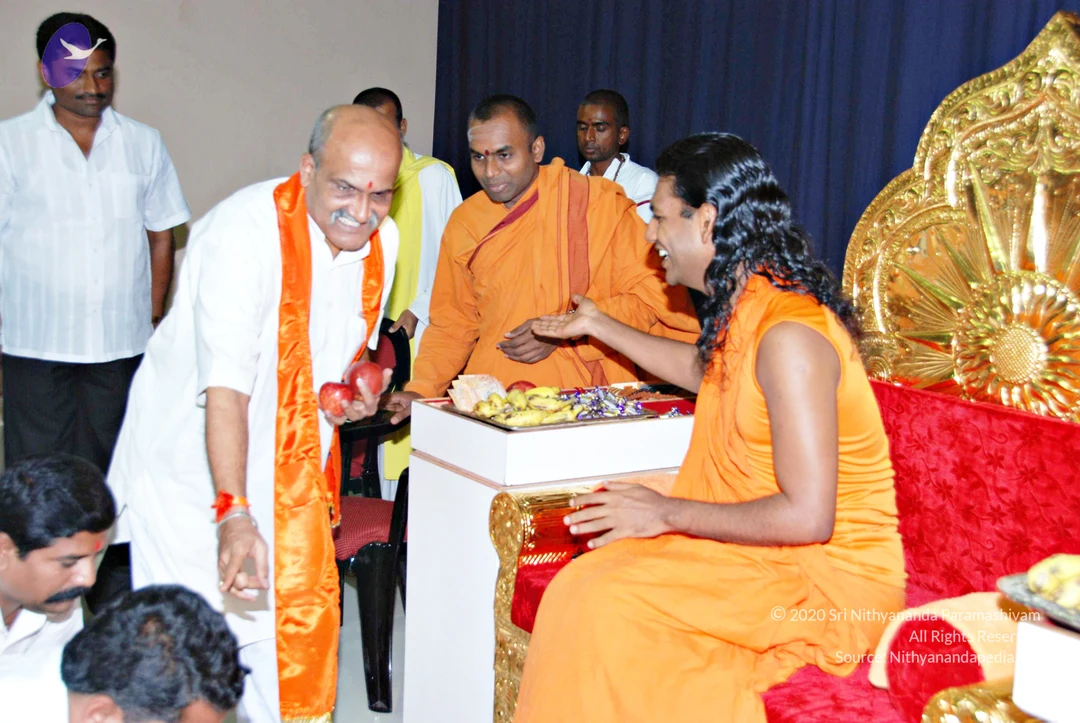
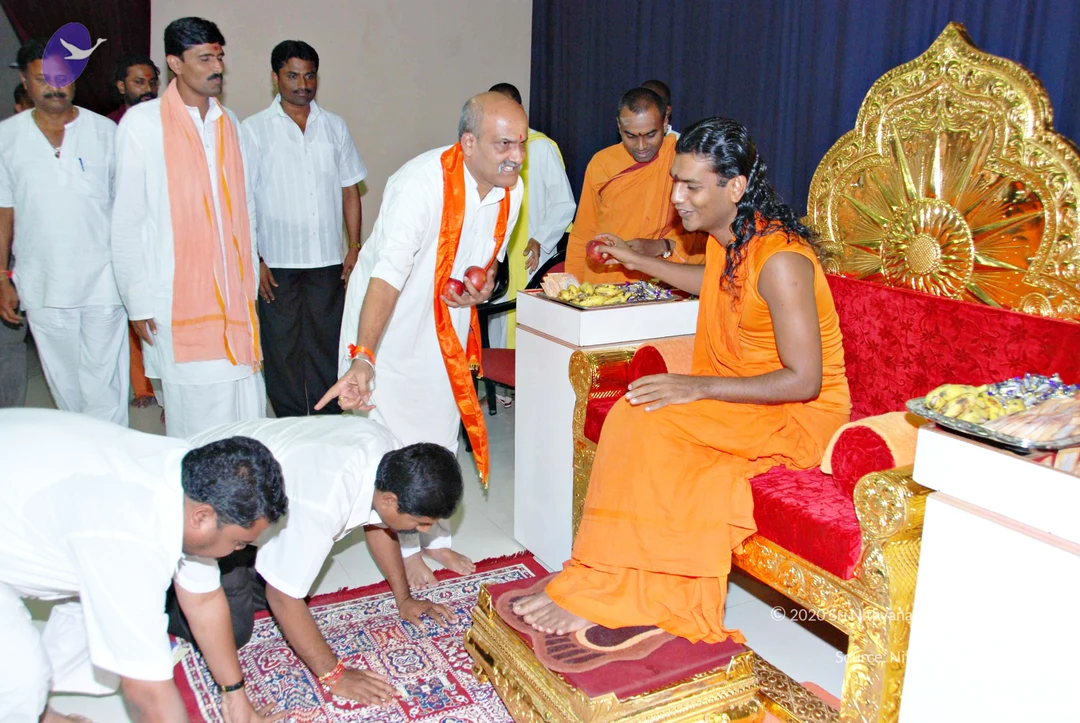
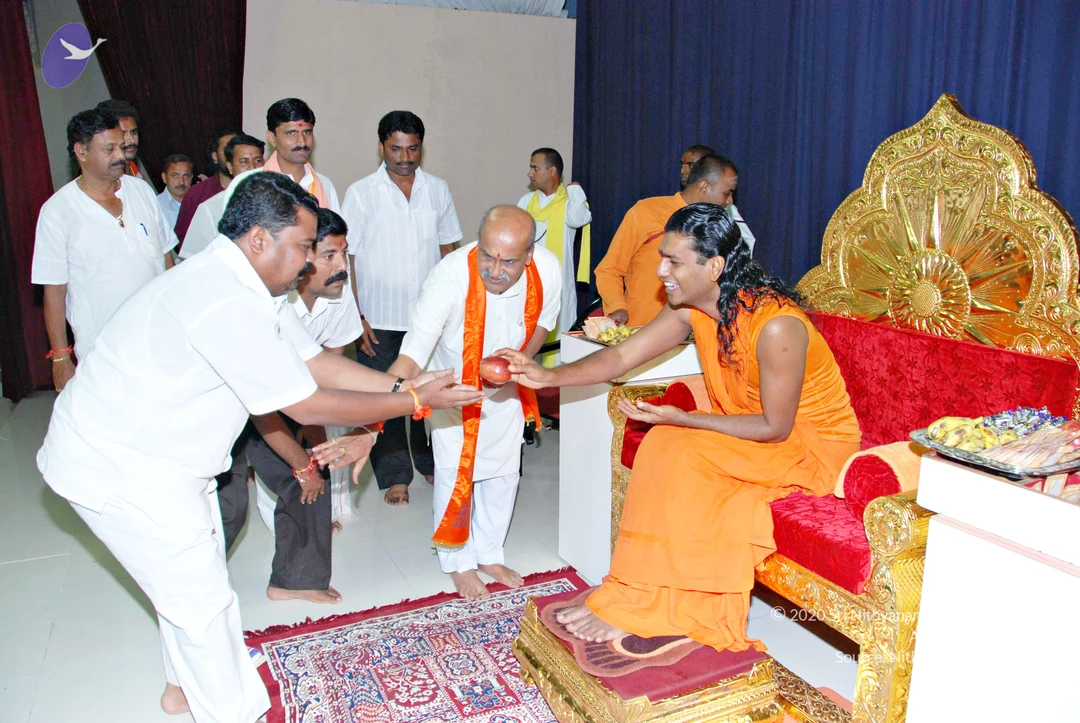
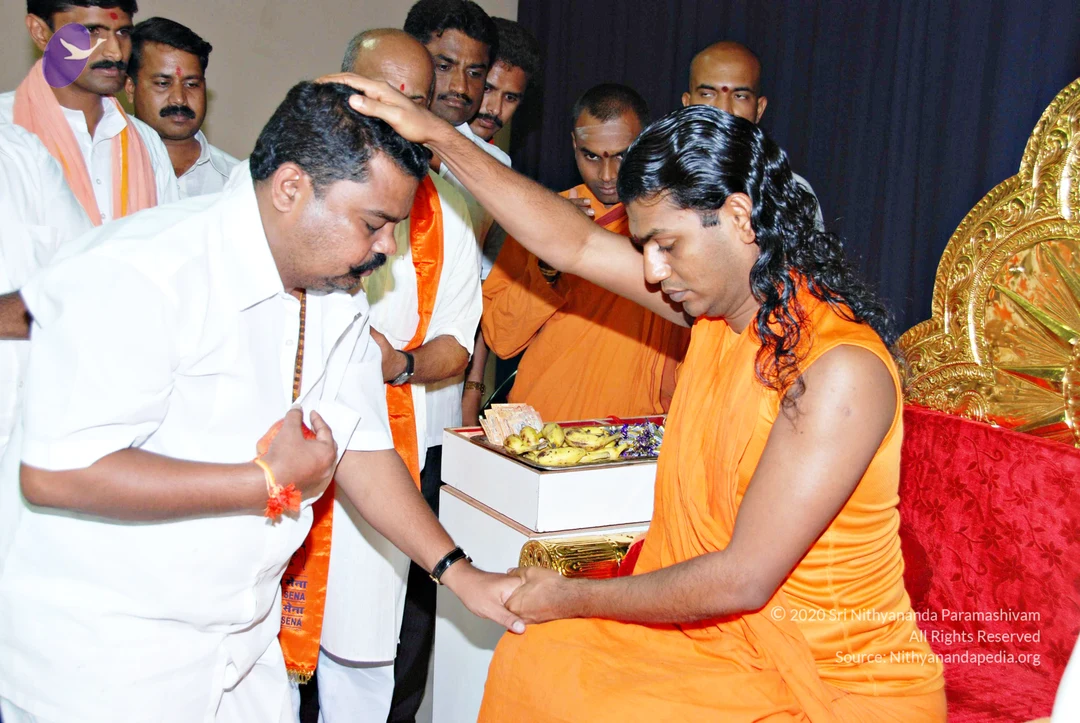
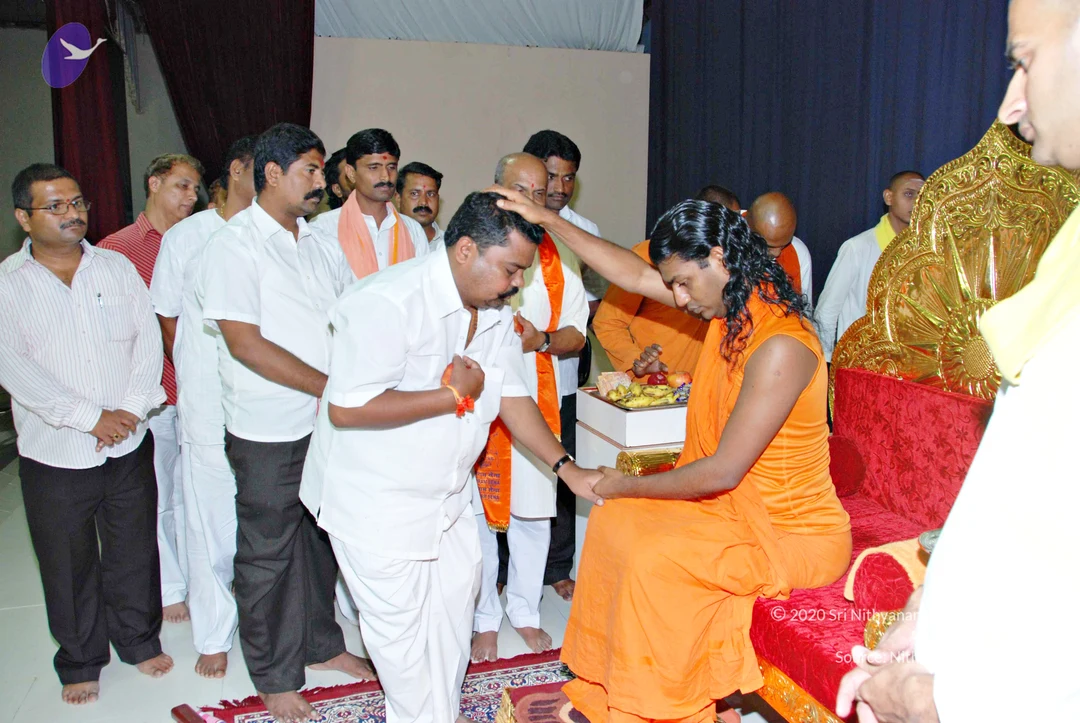
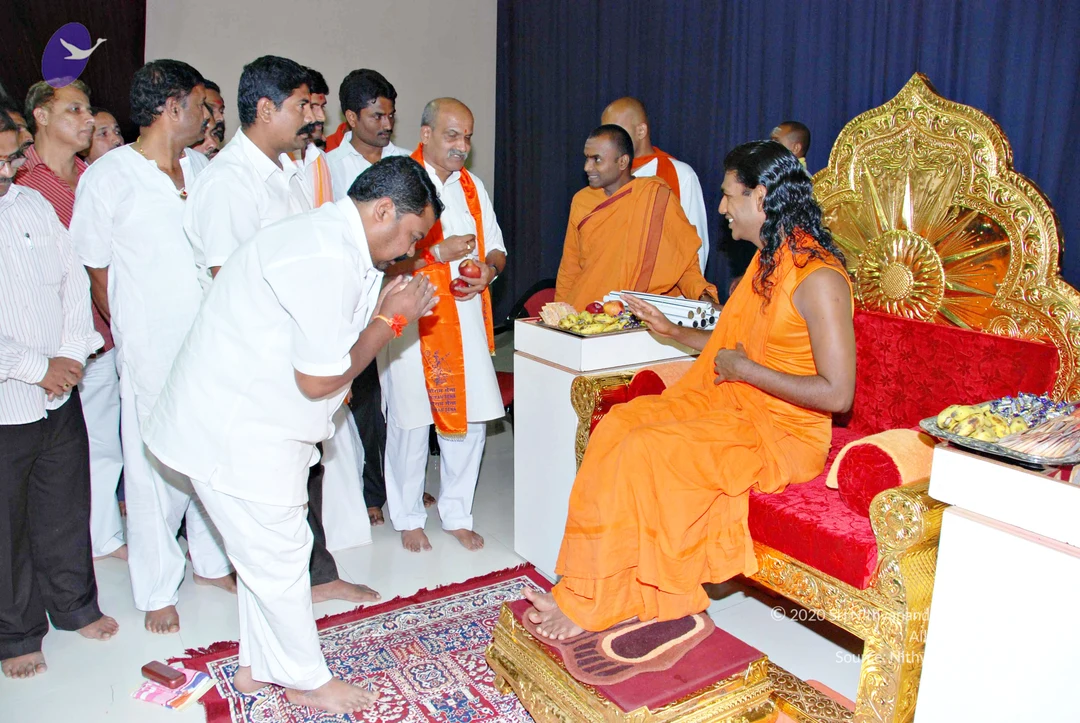
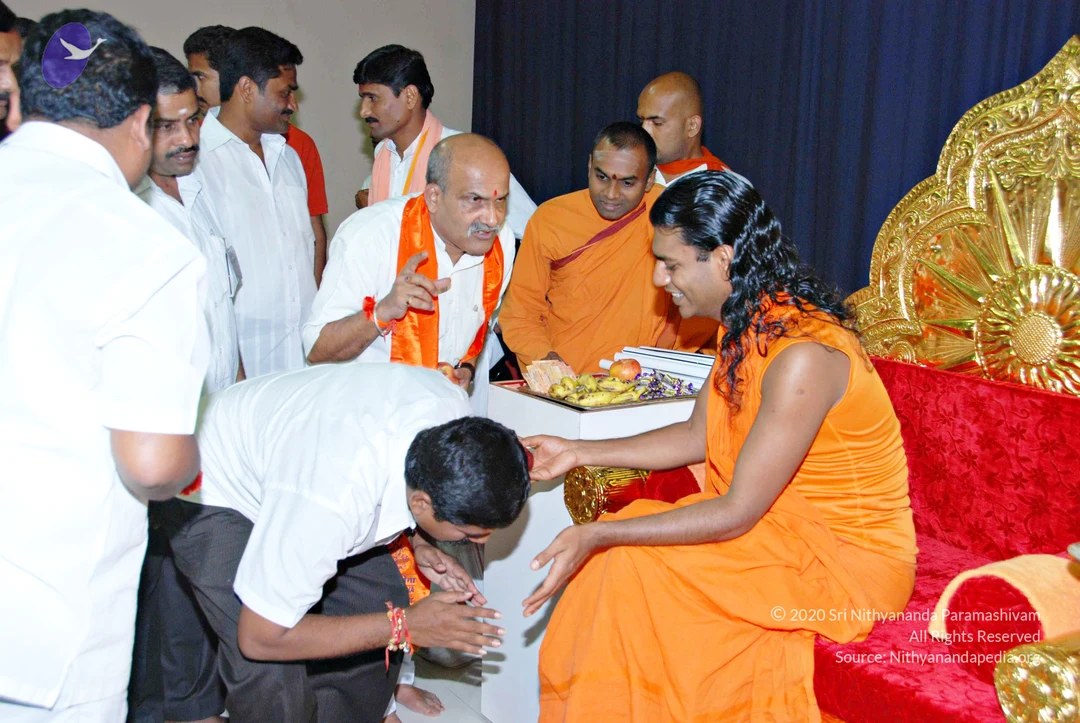
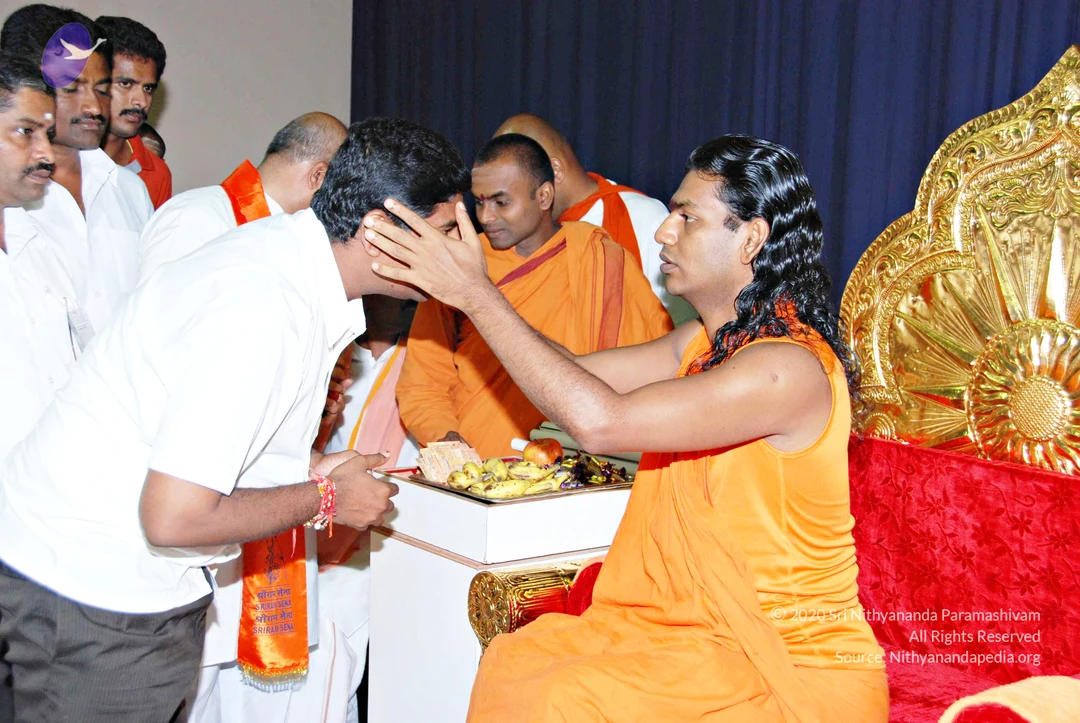
Swamiji-Giving-Darshan-To-Rama-Sena-Team
Photos Of The Day:

01-SATSANG
02-SARVA-DARSHAN

03-PANCHA-TAPAS

04-SWAMIJI-KALPATARU-DARSHAN

05-SWAMIJI-MEETING-RAMA-SENA

06-SWAMIJI-SIGNING
07-SWAMIJI-MEETING-KRISHNAPPA

08-LBT-YOGA

09-TAMIL-KALPATARU

10-KANNADA-ASP

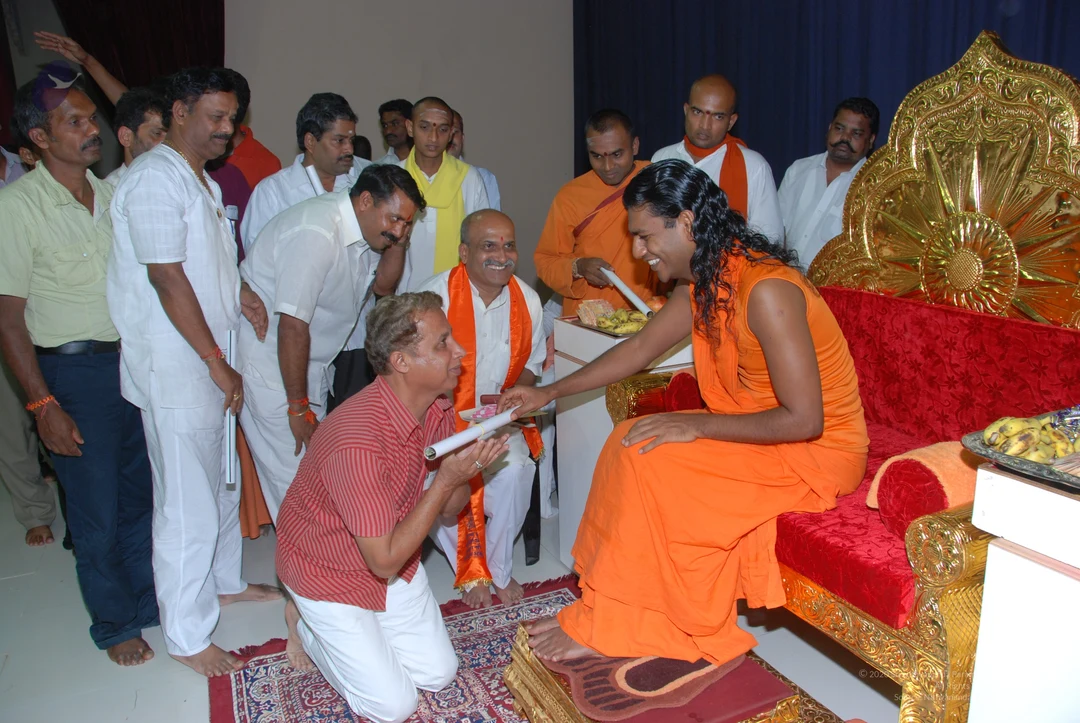
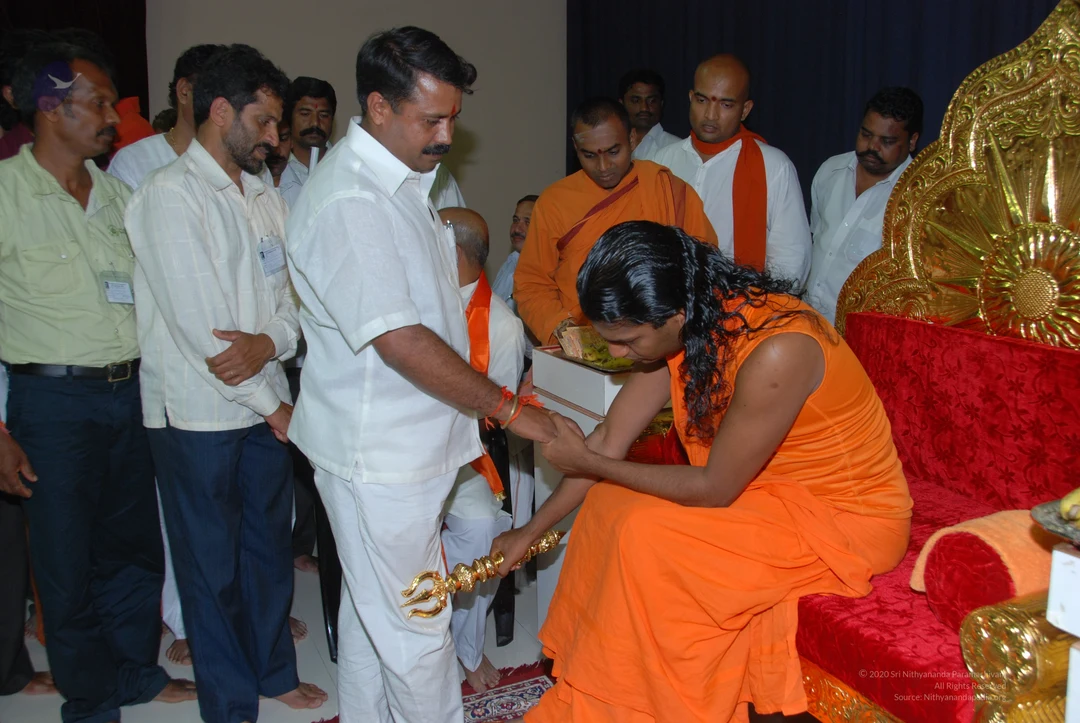
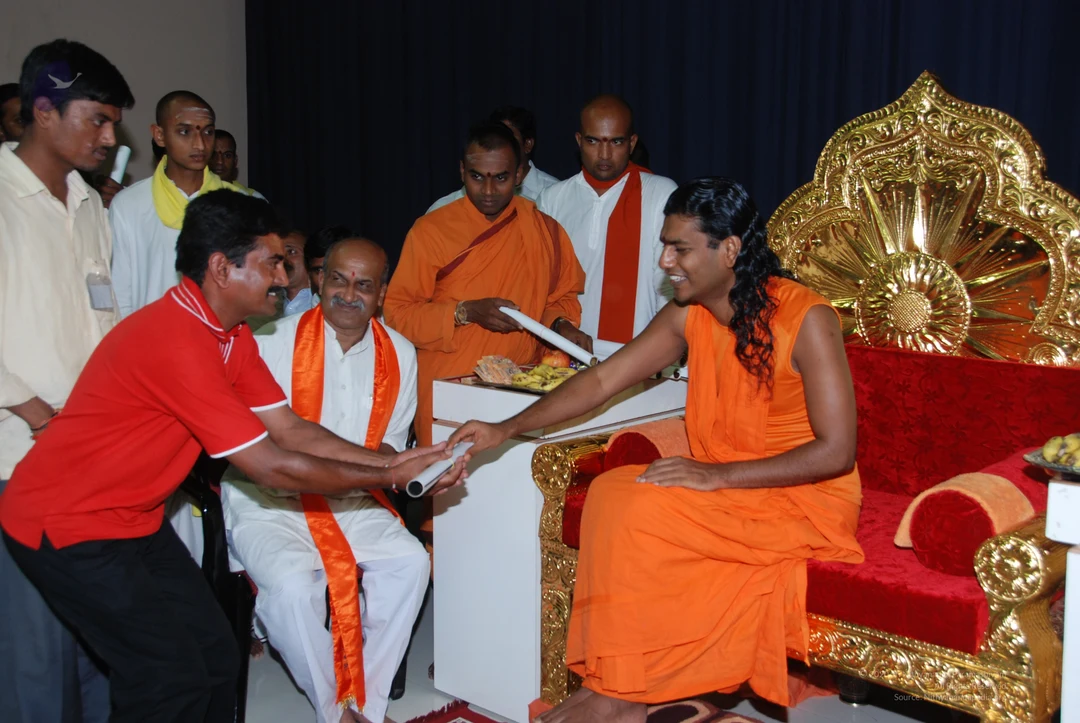
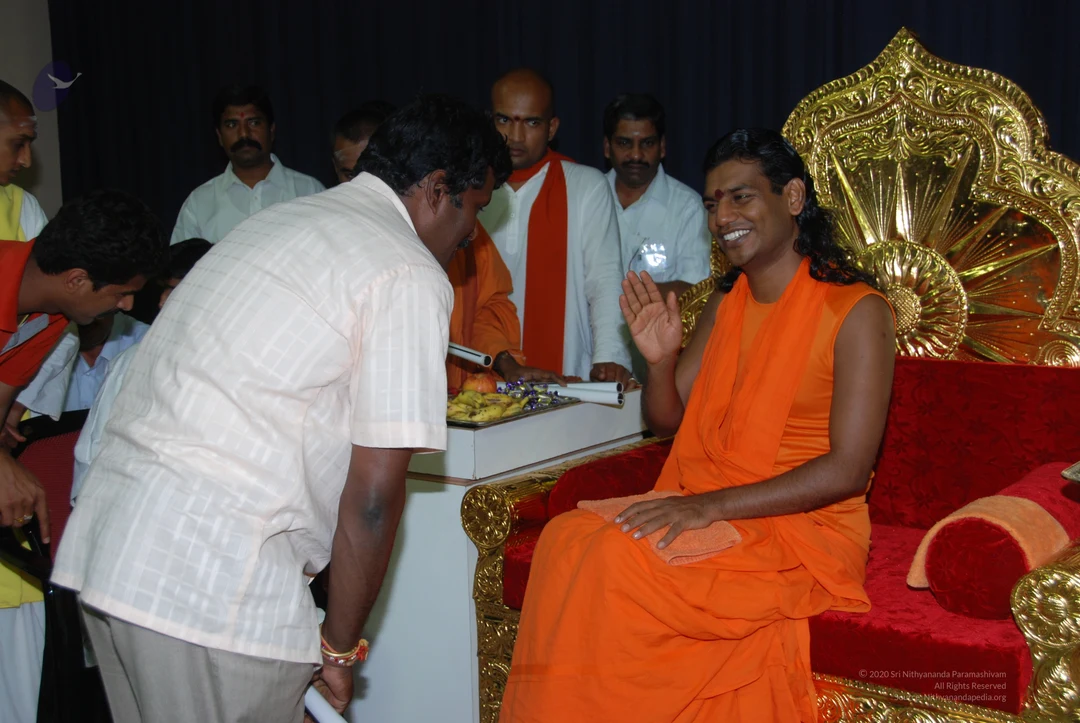
11-LBT-EVENING-PROGRAM

12-GALLERIA

13-GANAPATHI-HOMA

14-E-KALPATARU-EVENING-DARSHAN
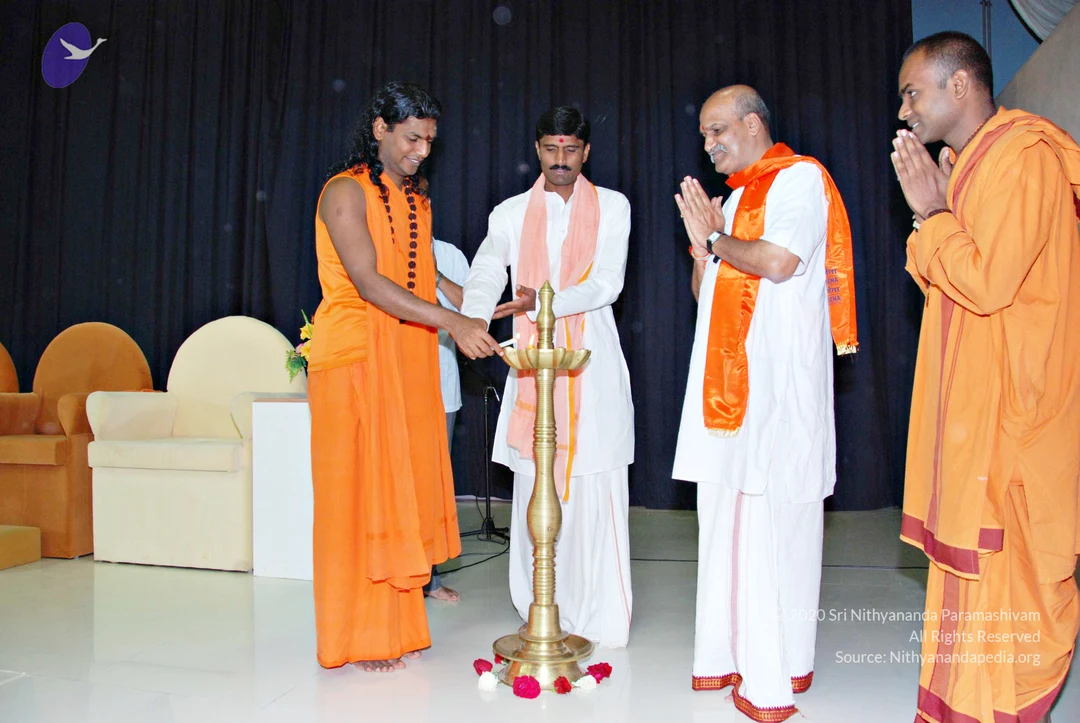
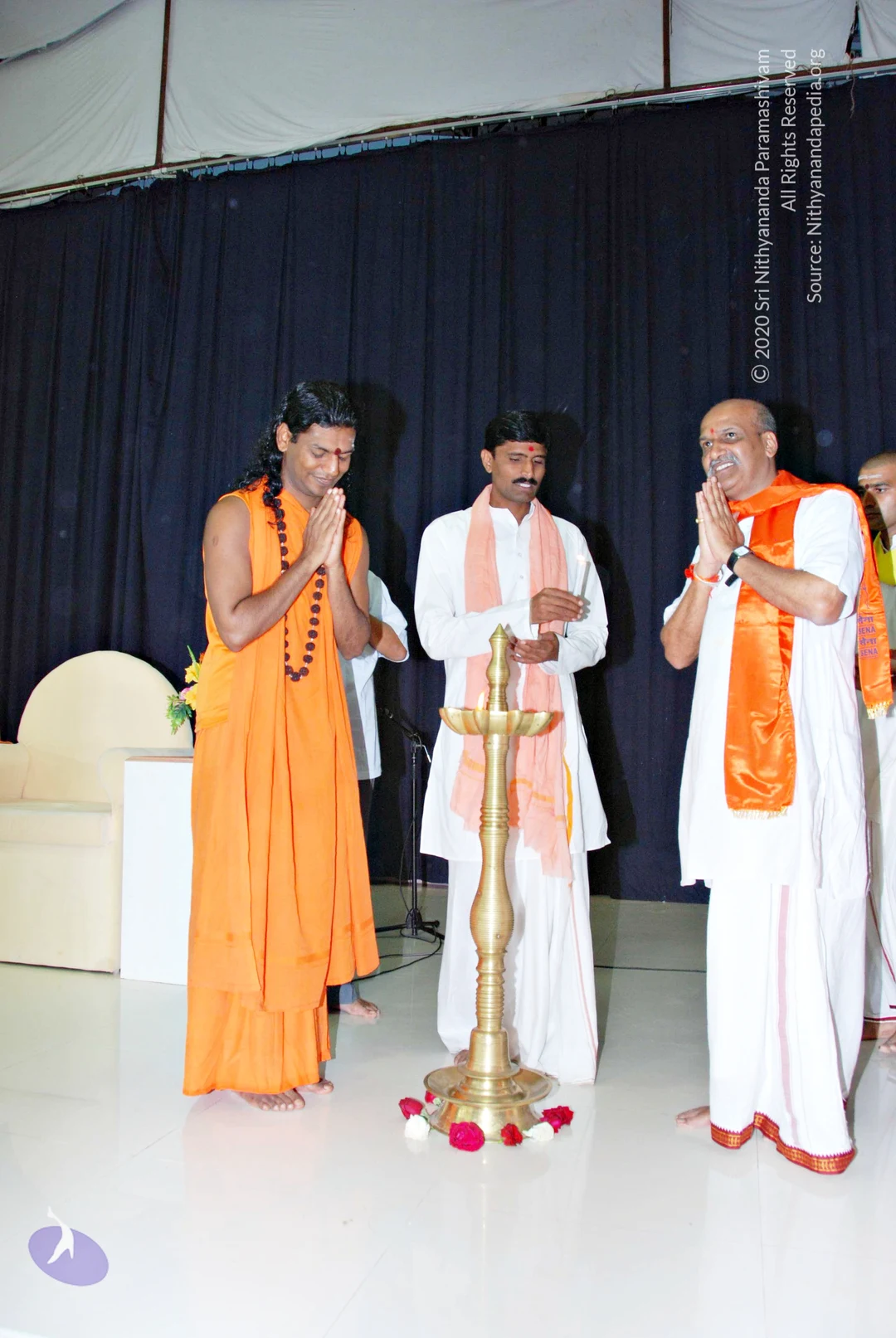
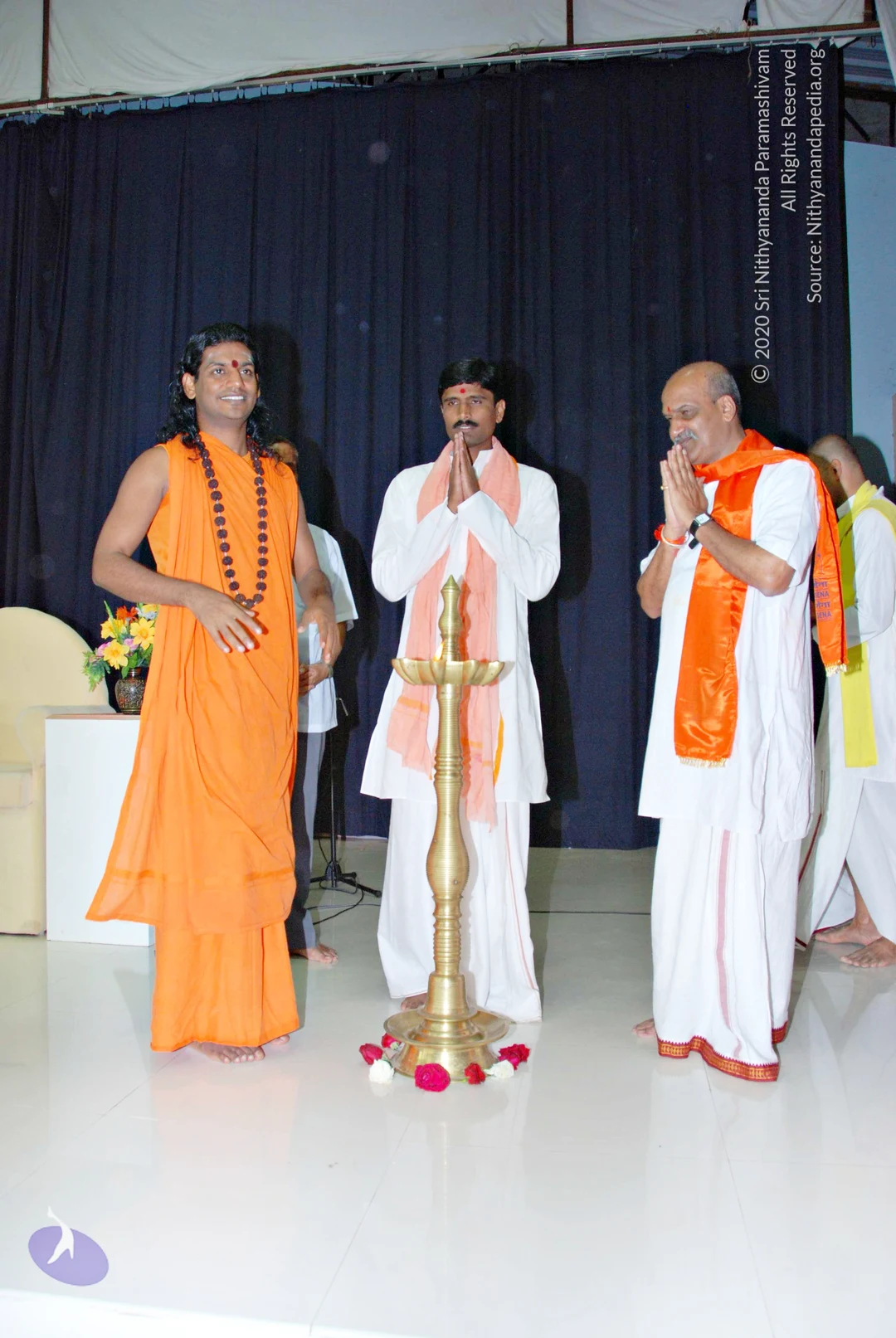
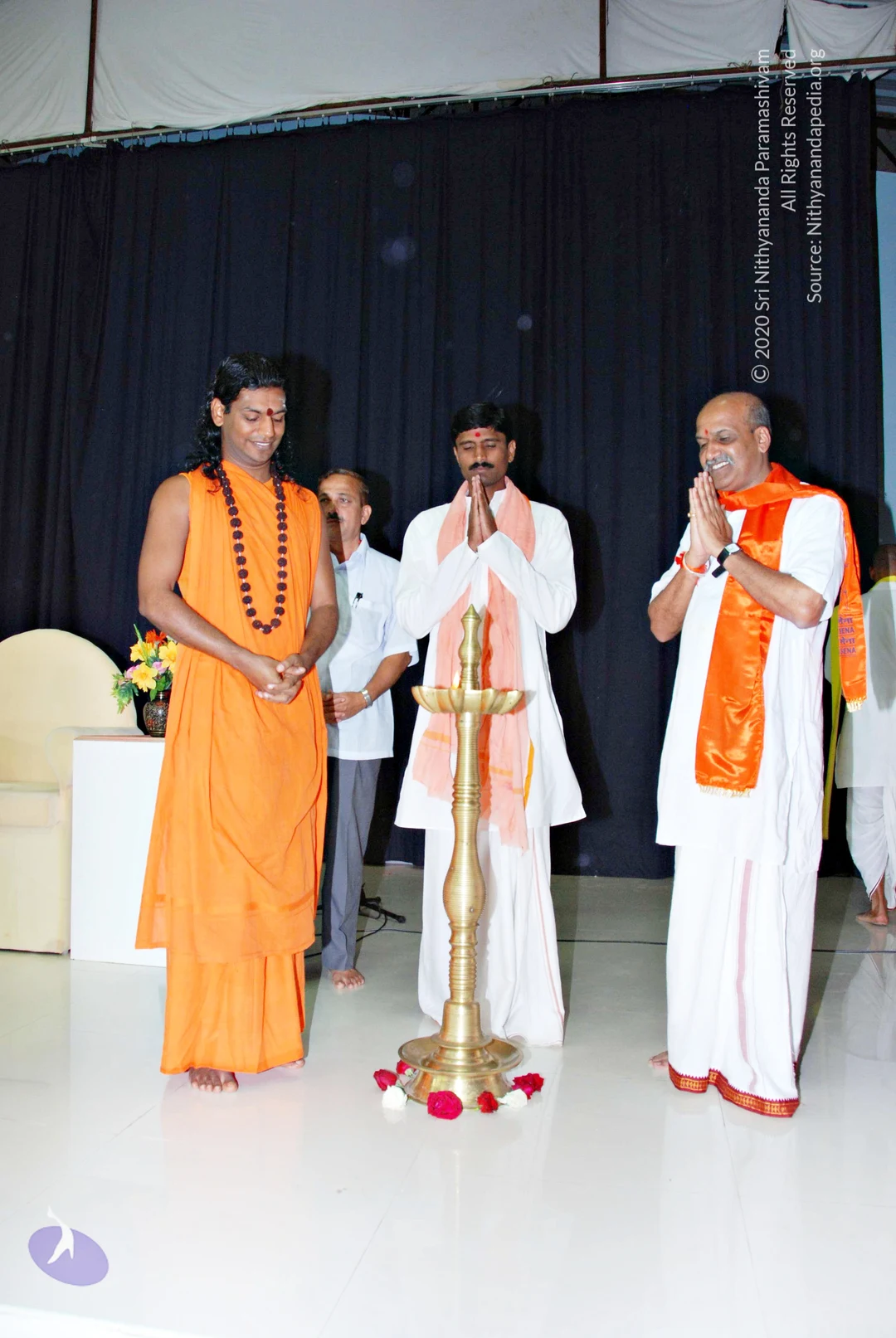
15-DARSHAN-RAMA-SENA