Skip to content
Saturday

5 September 2015

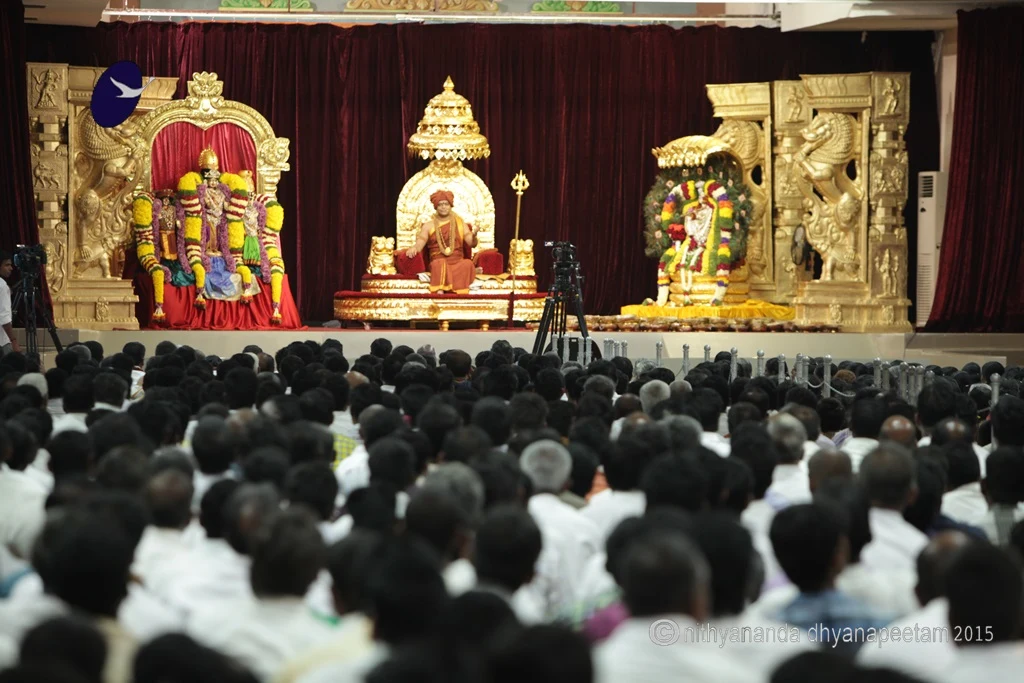
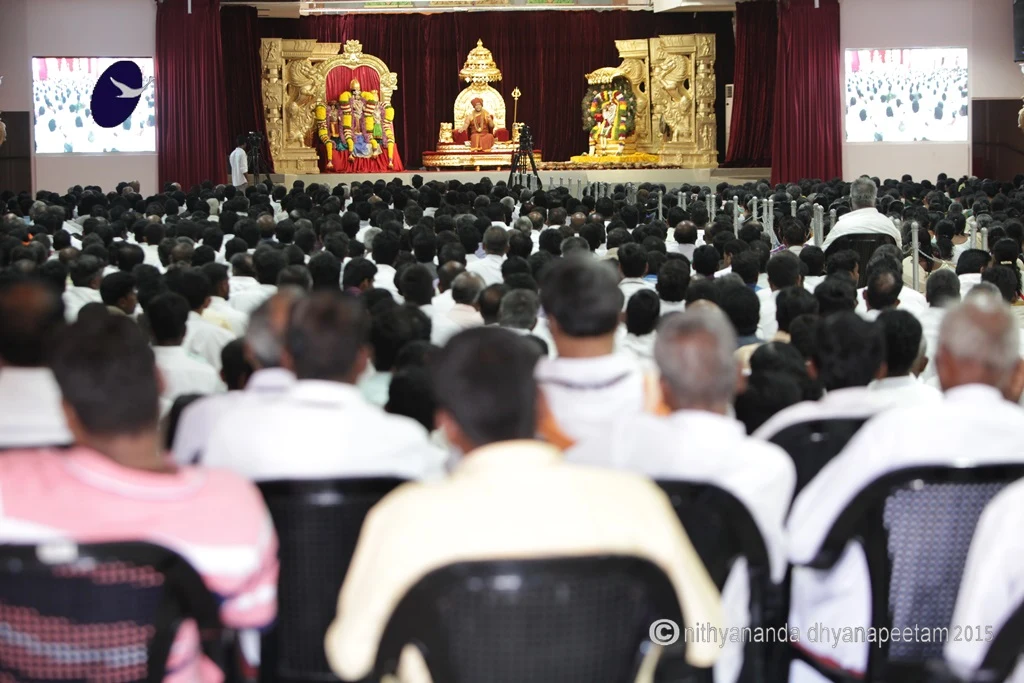
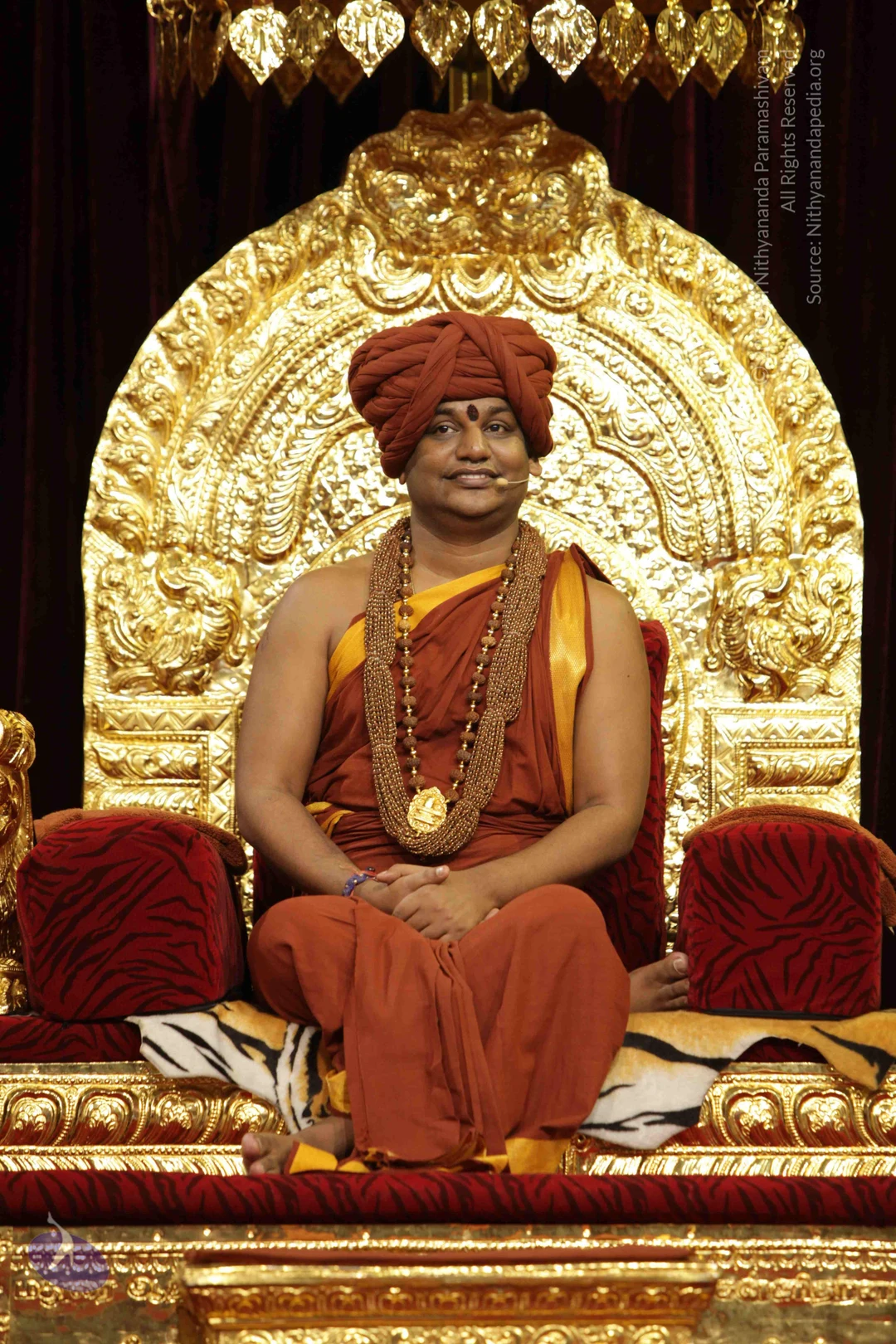
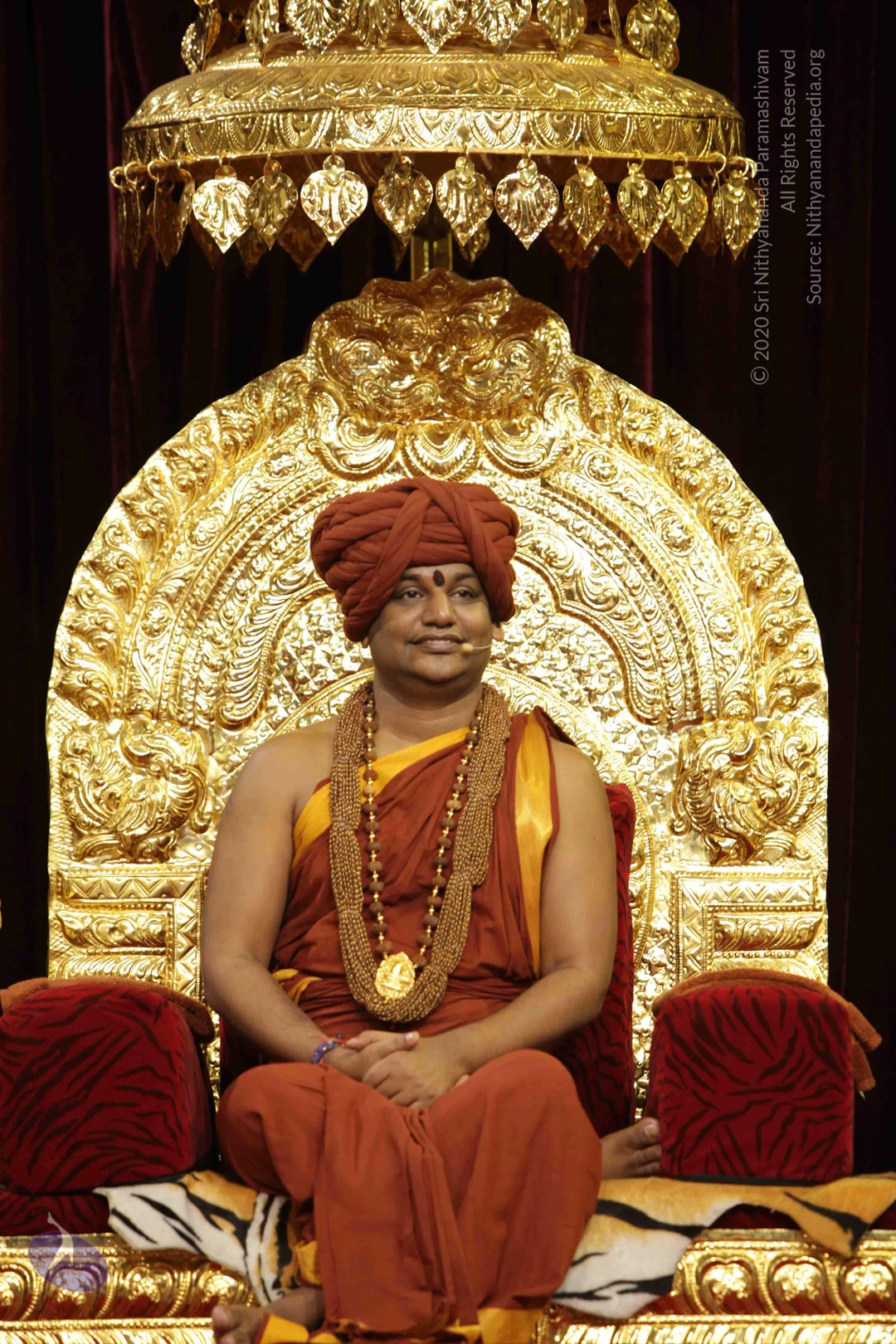
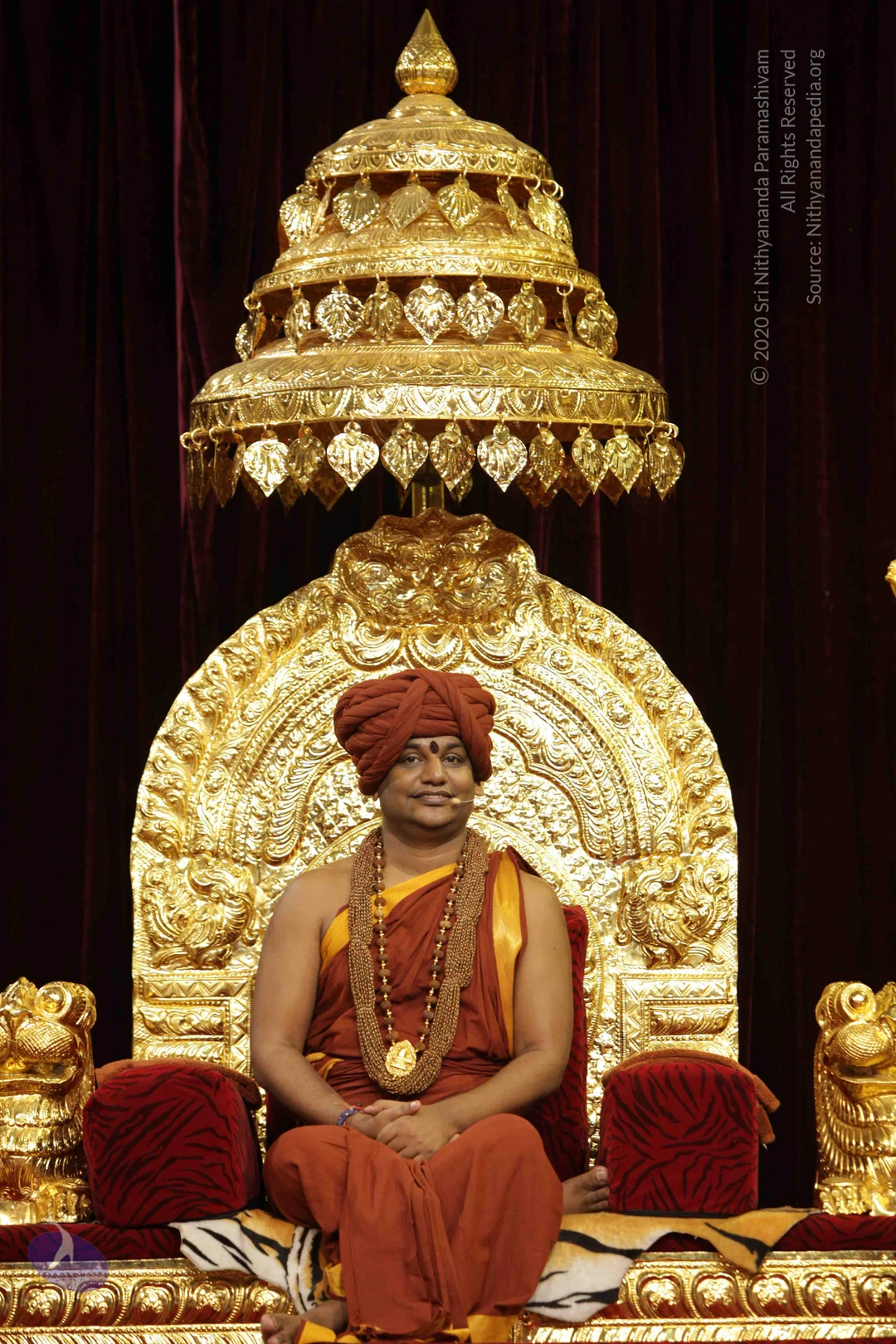
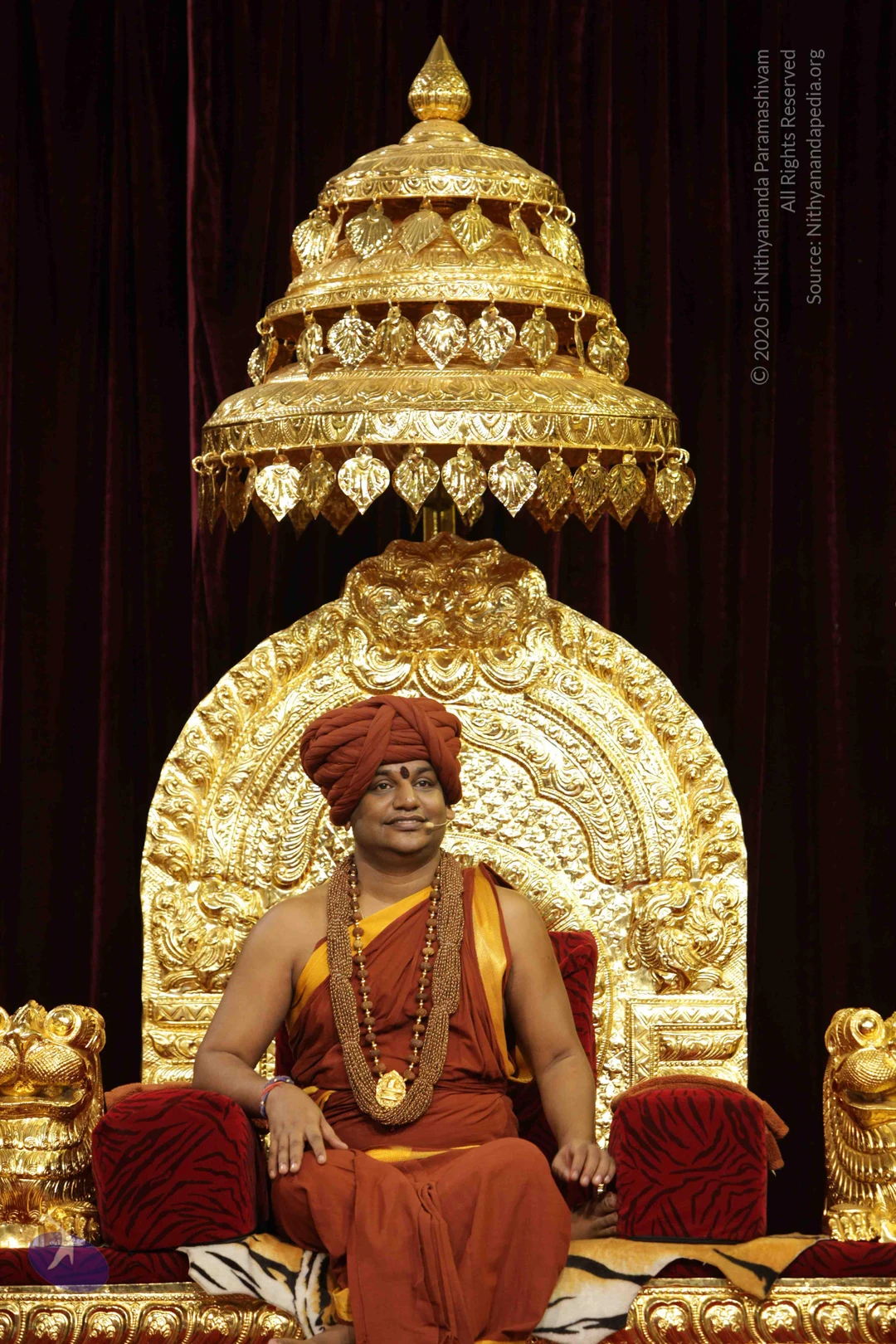
ஜீவனை சிவமாக மாற்றும் தீக்ஷை - சிவதீக்ஷை || பாகம் 1 || சமய தீக்க்ஷை || 05 செப்டம்பர் 2015

Dated photos
772
Source pages
1
Media
17
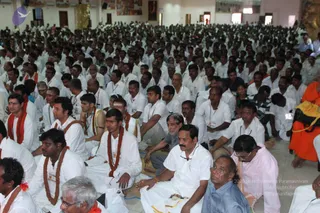
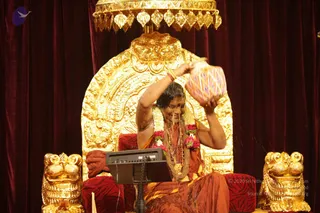
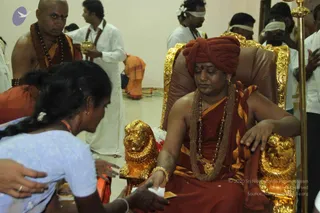
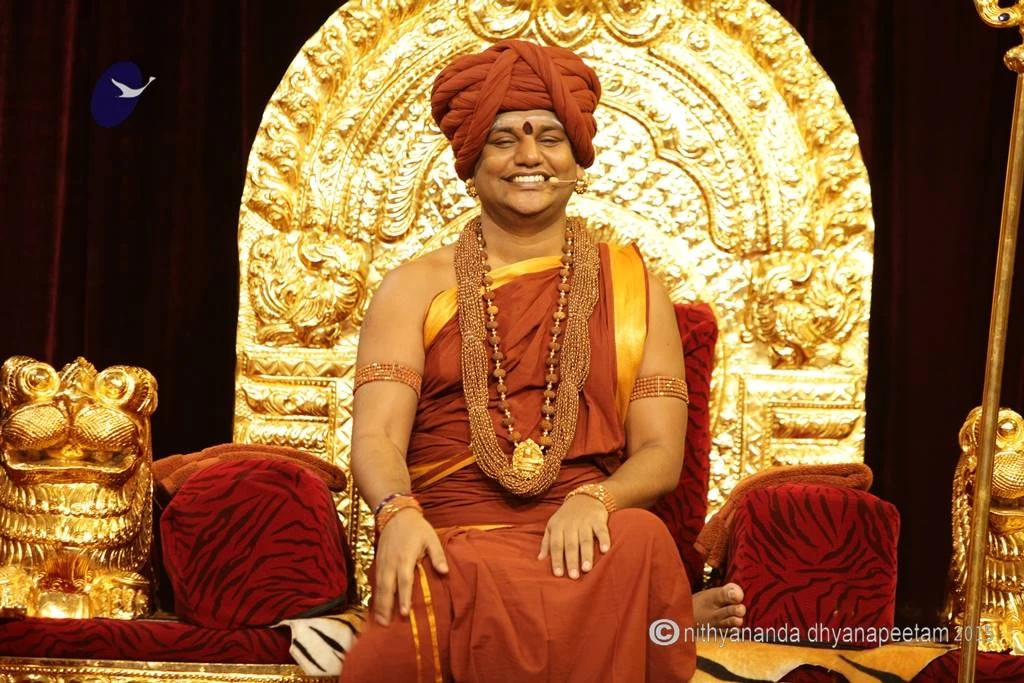
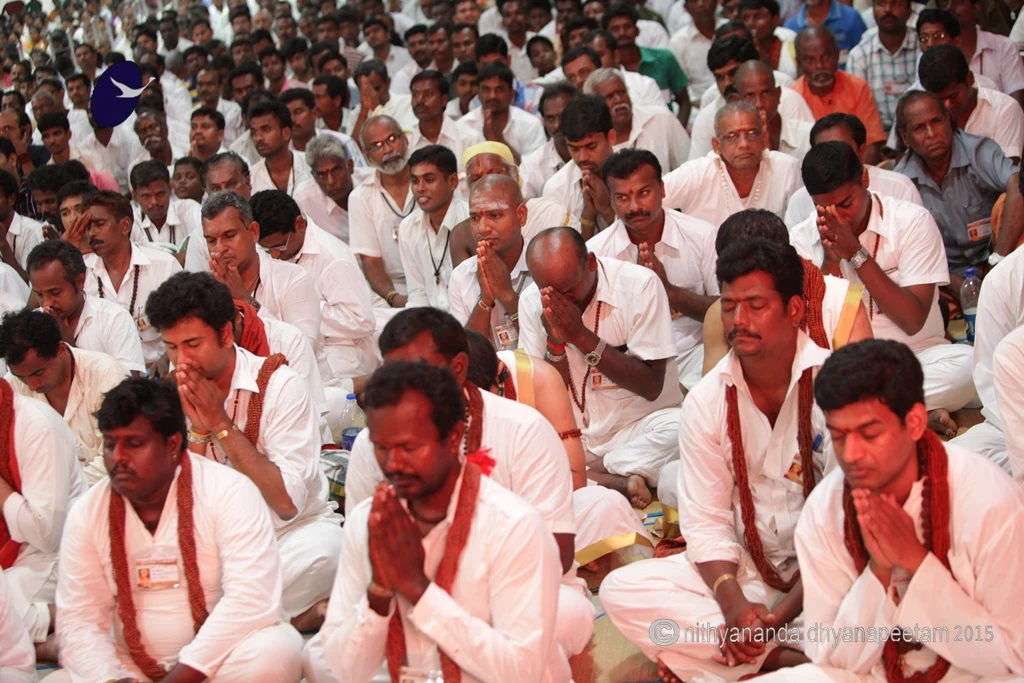
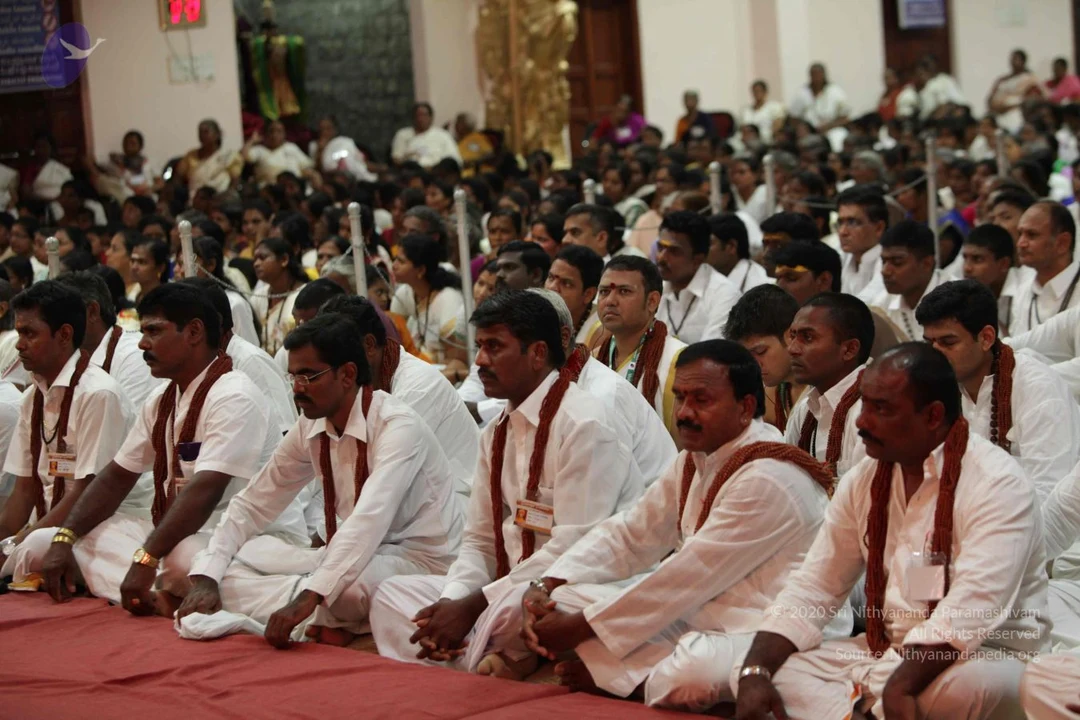
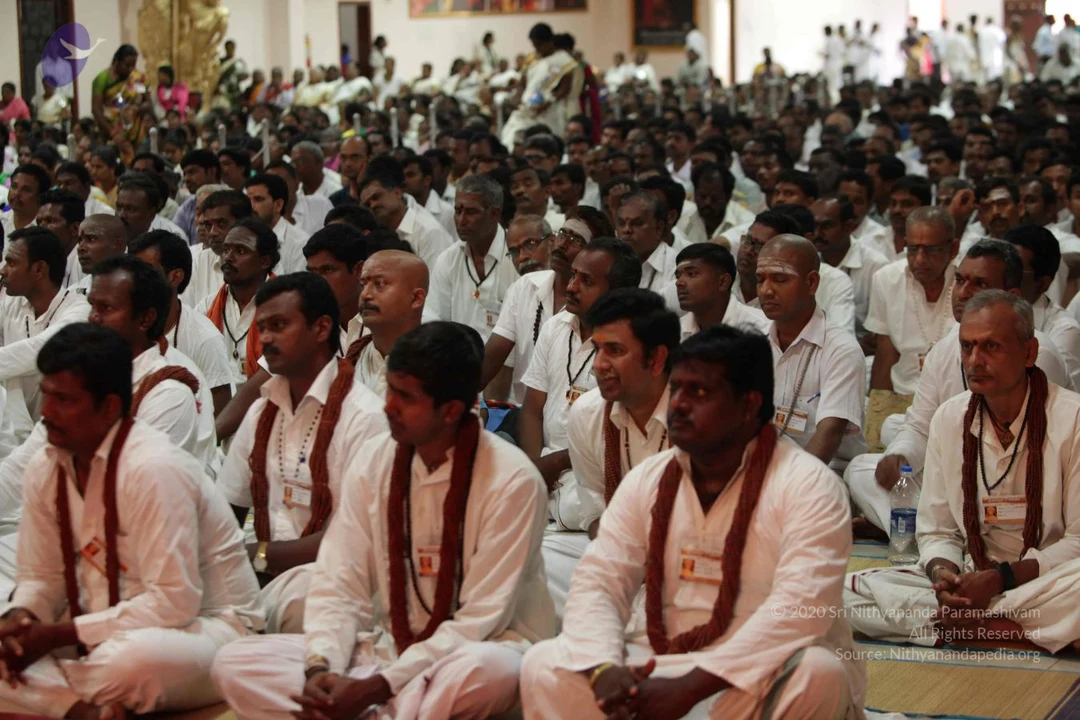
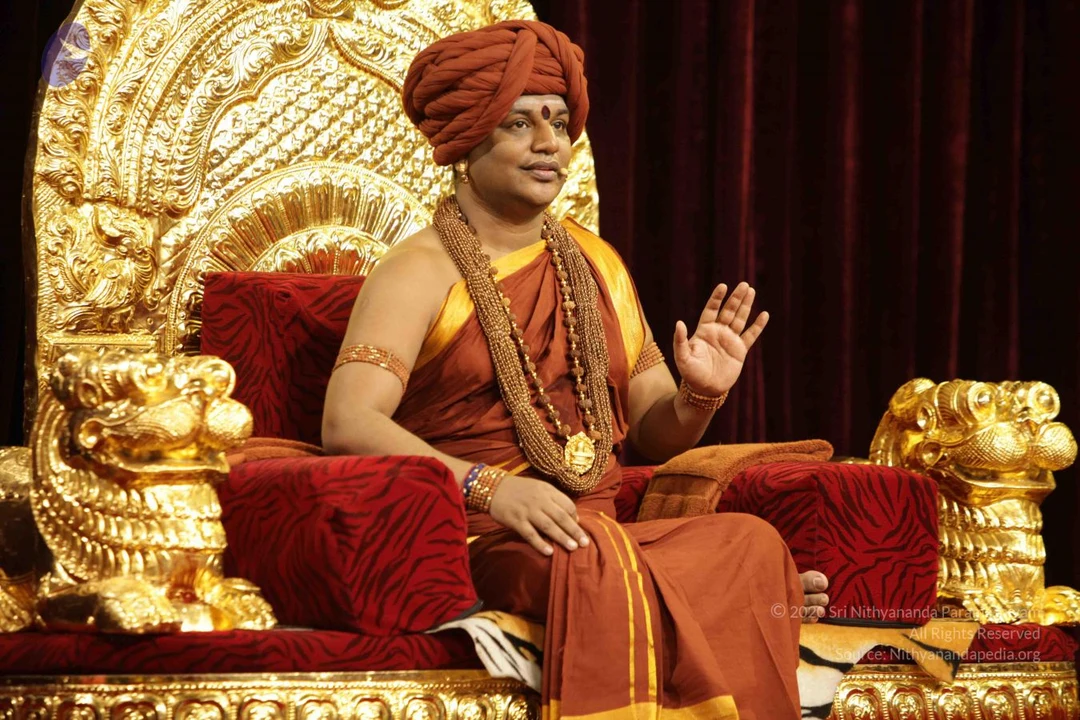
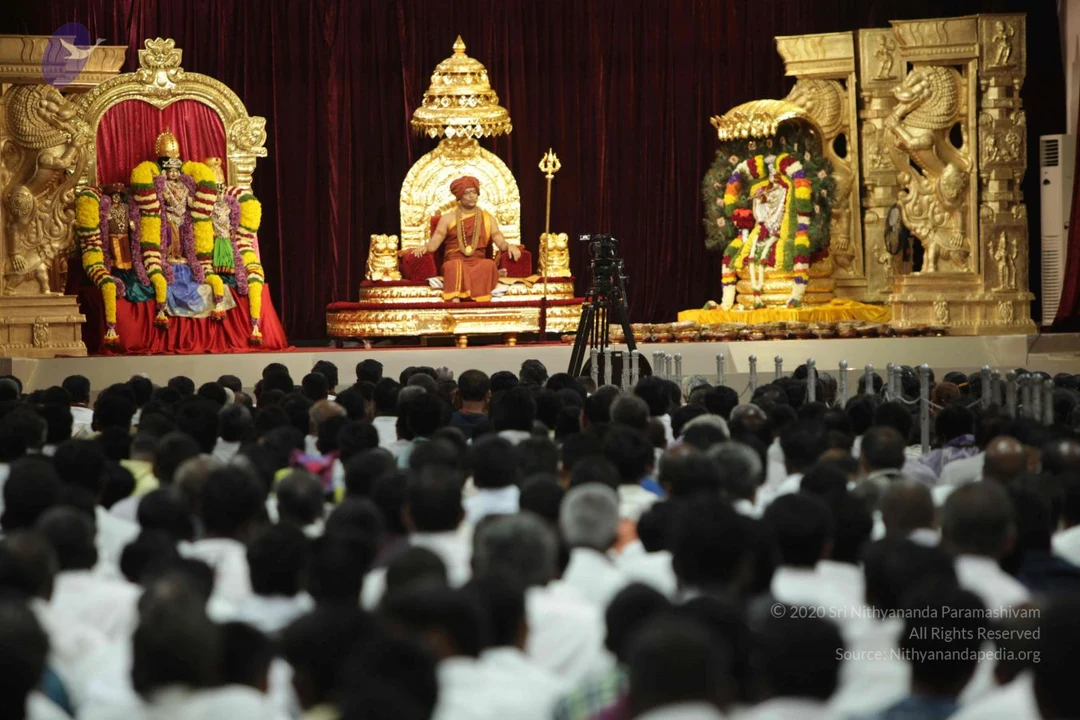
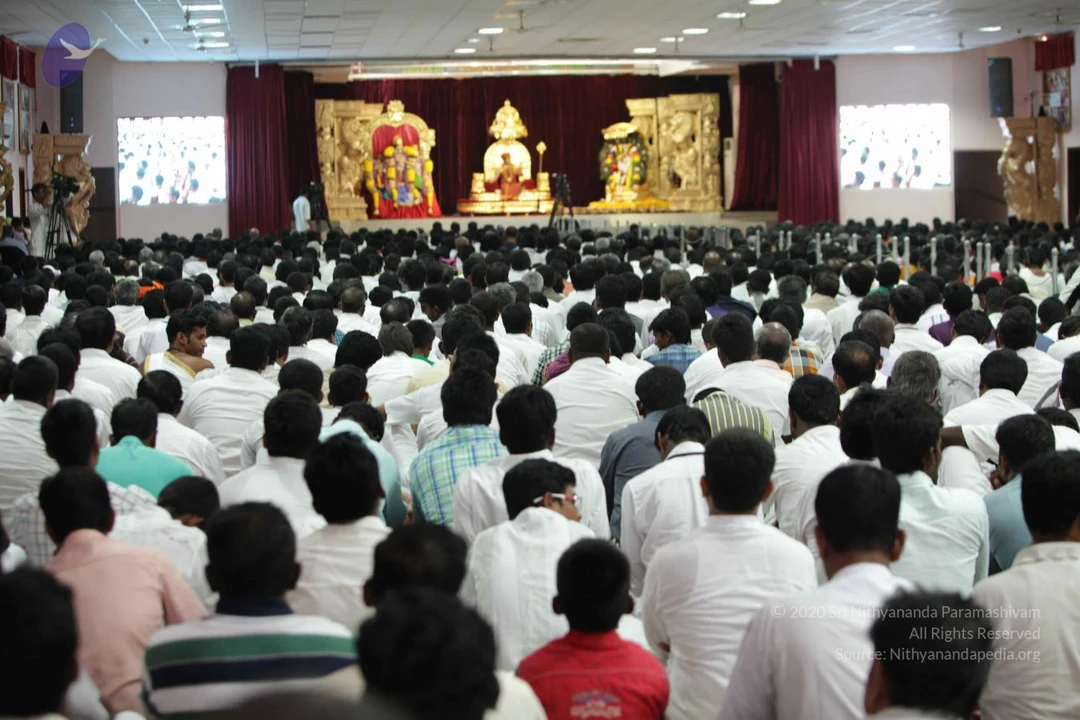
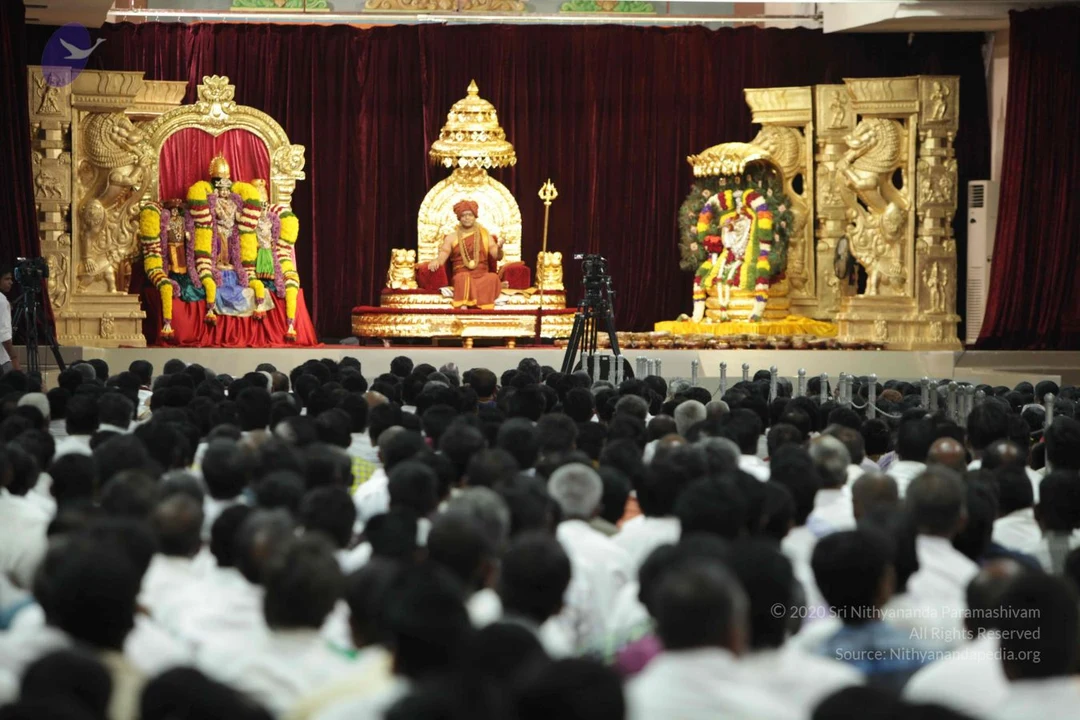
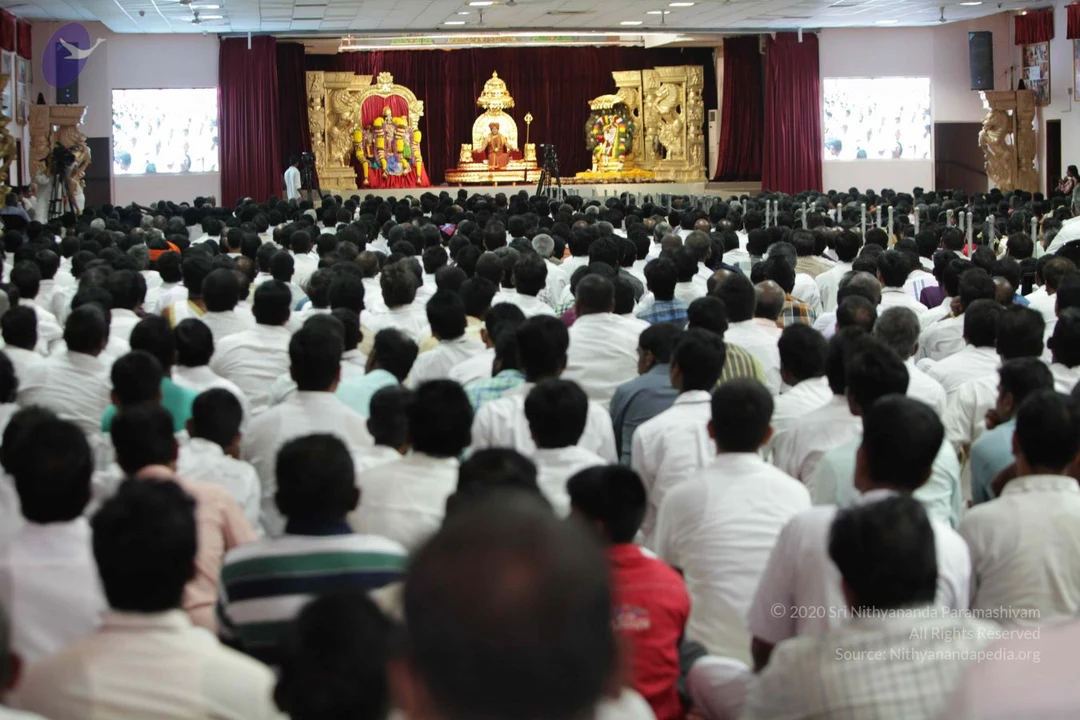
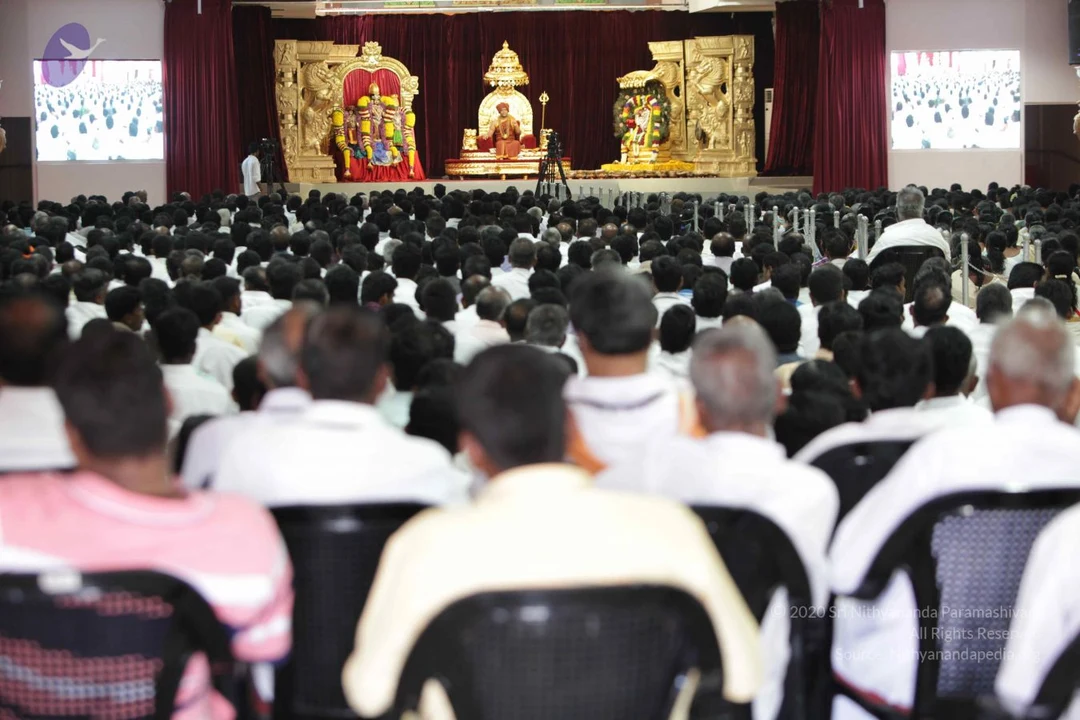
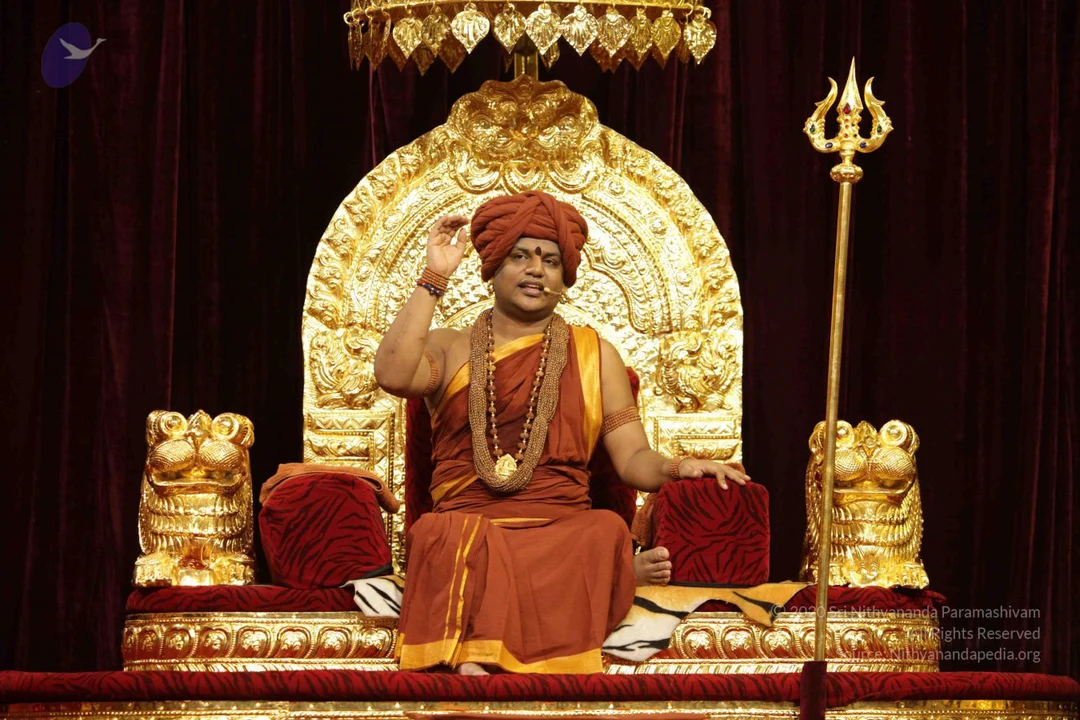
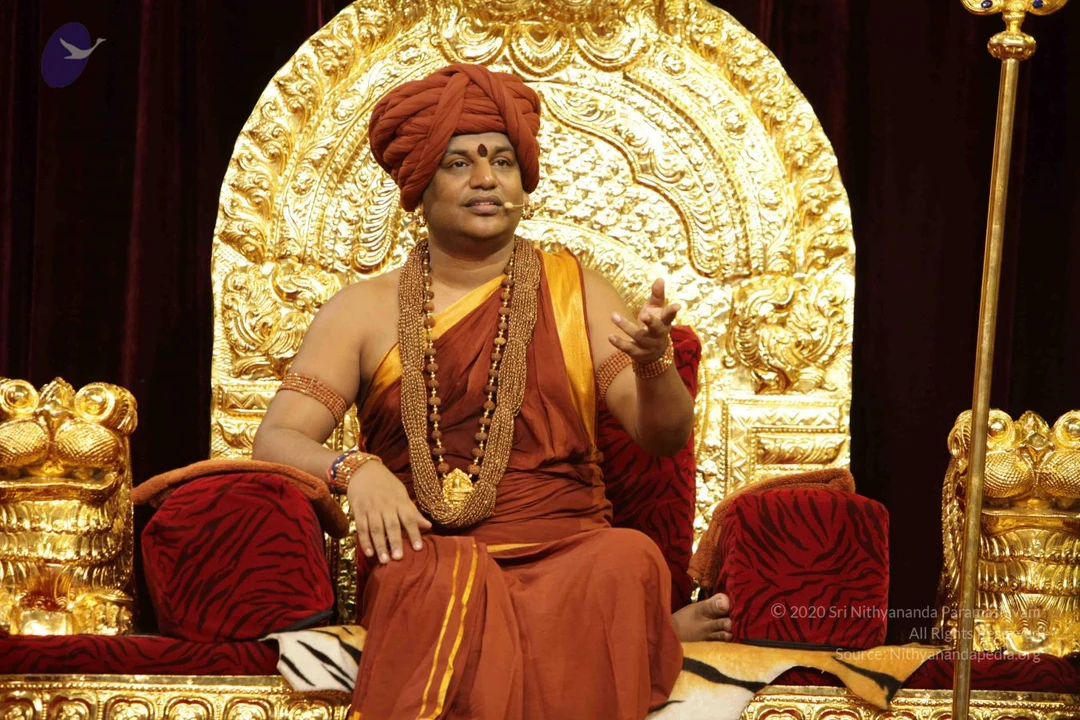
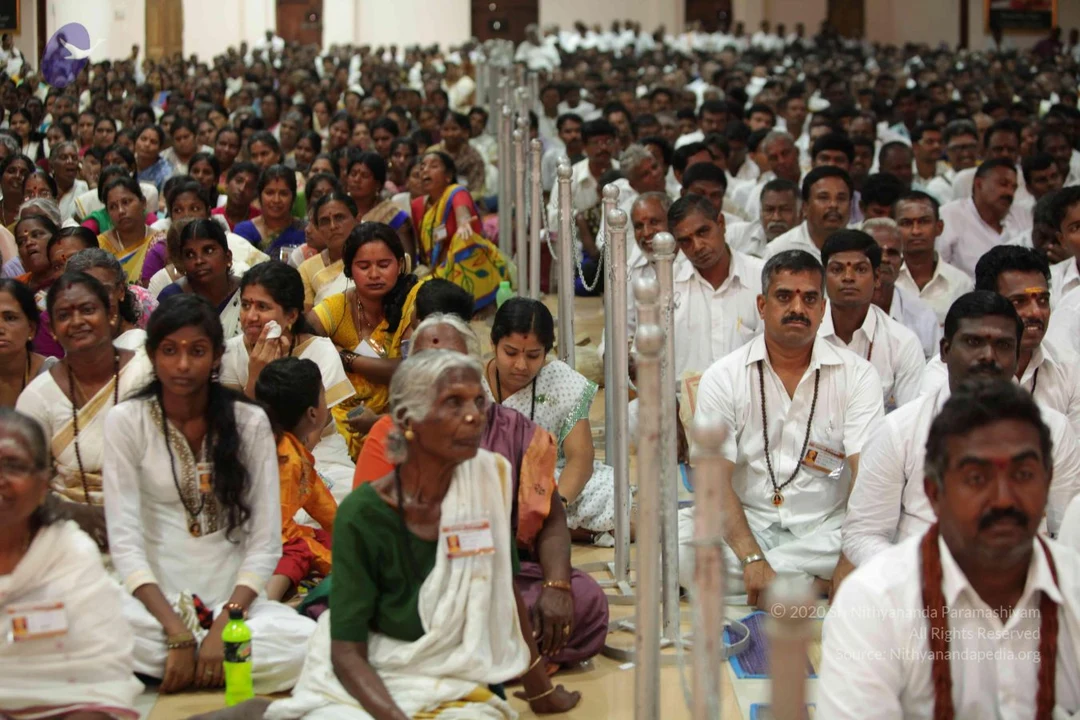
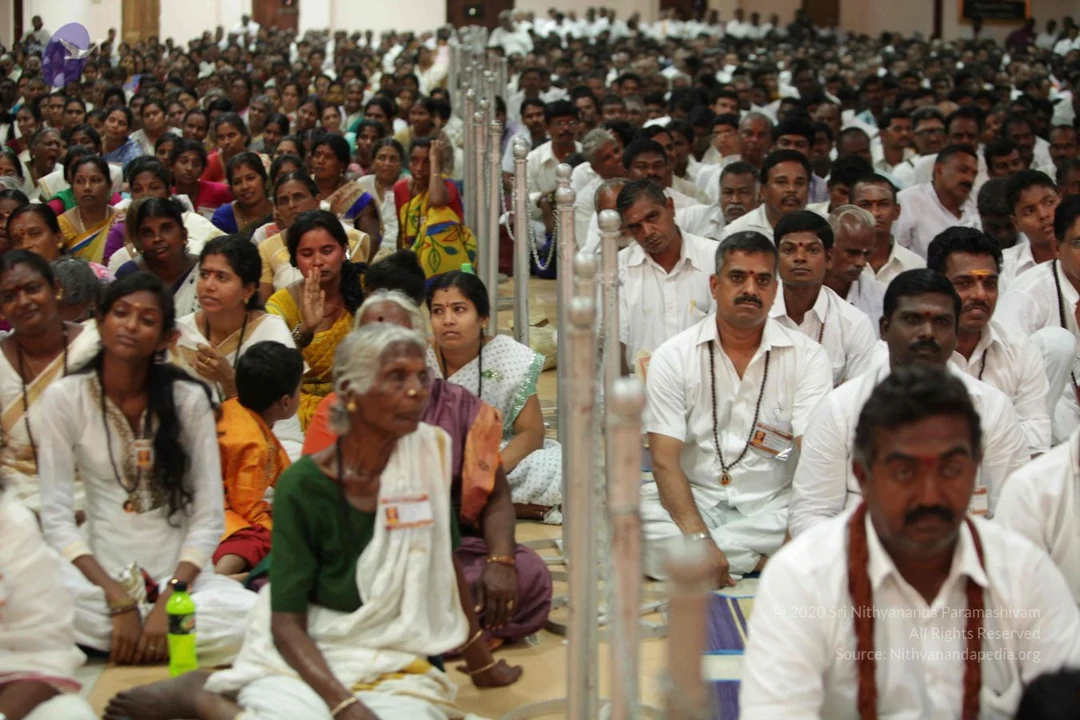
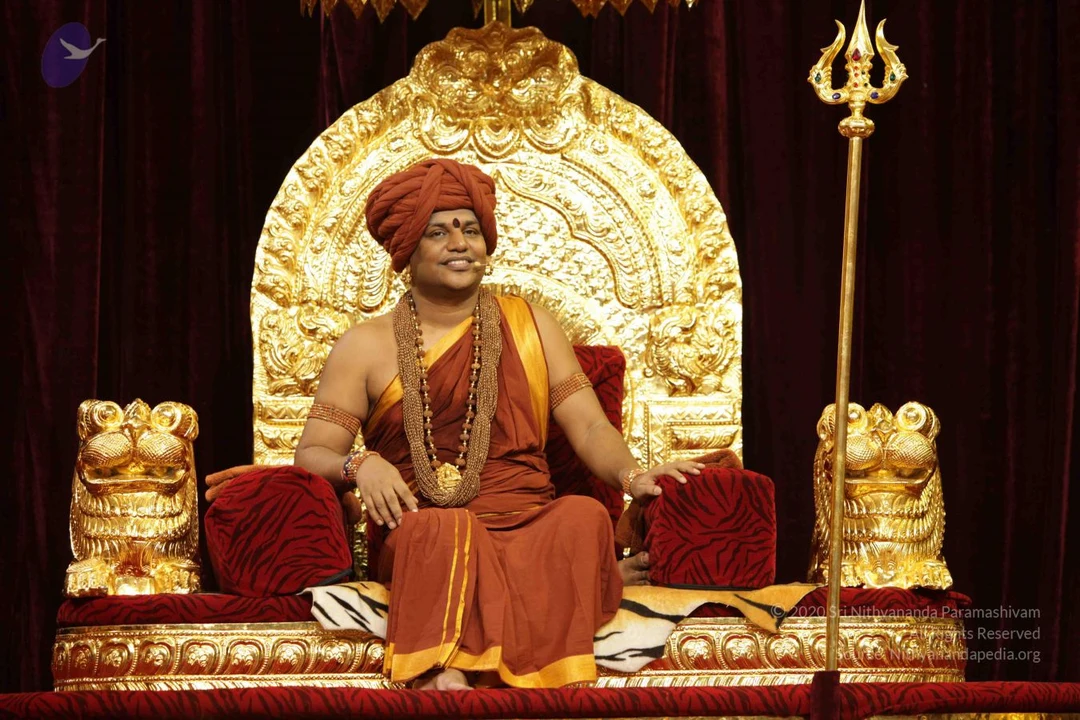
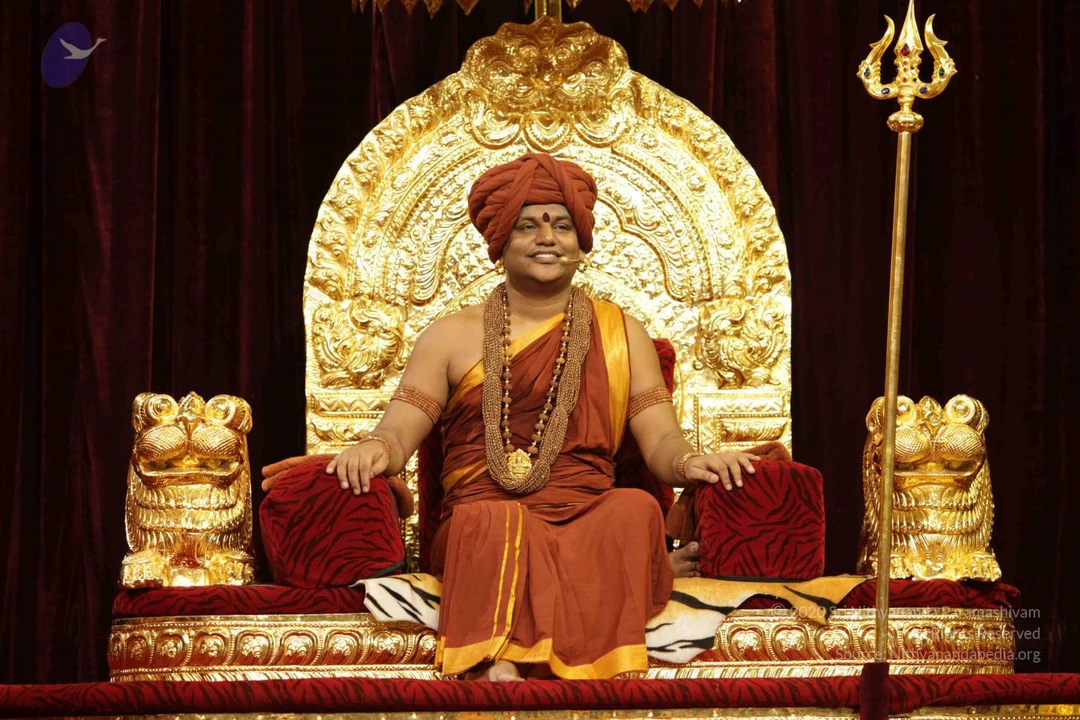
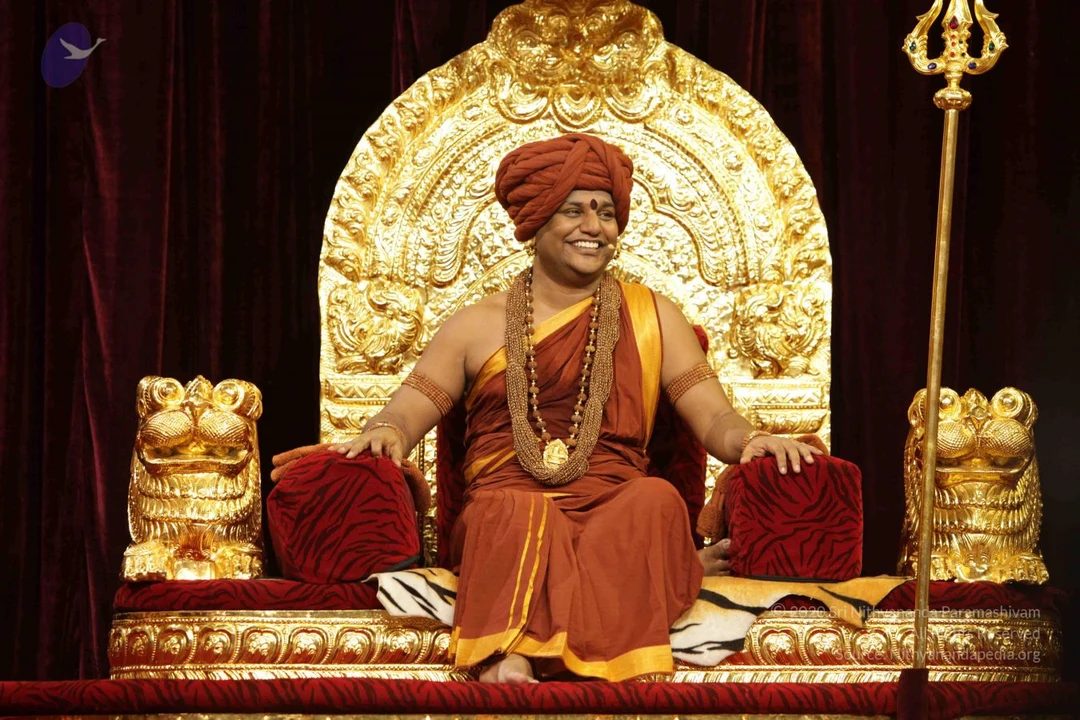
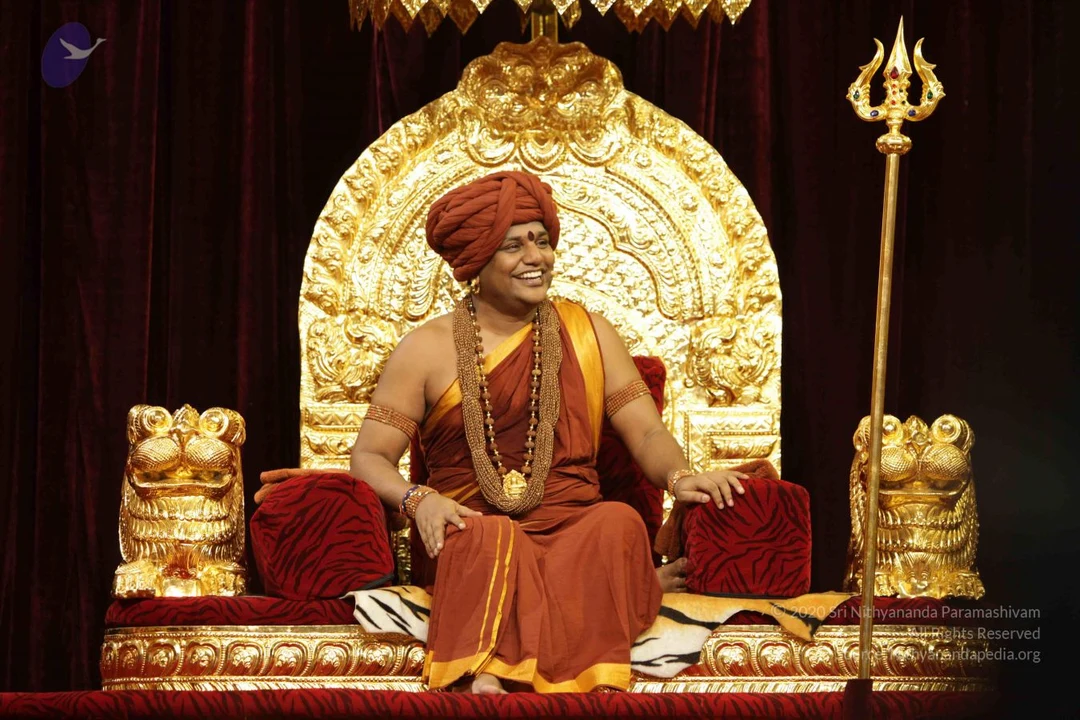
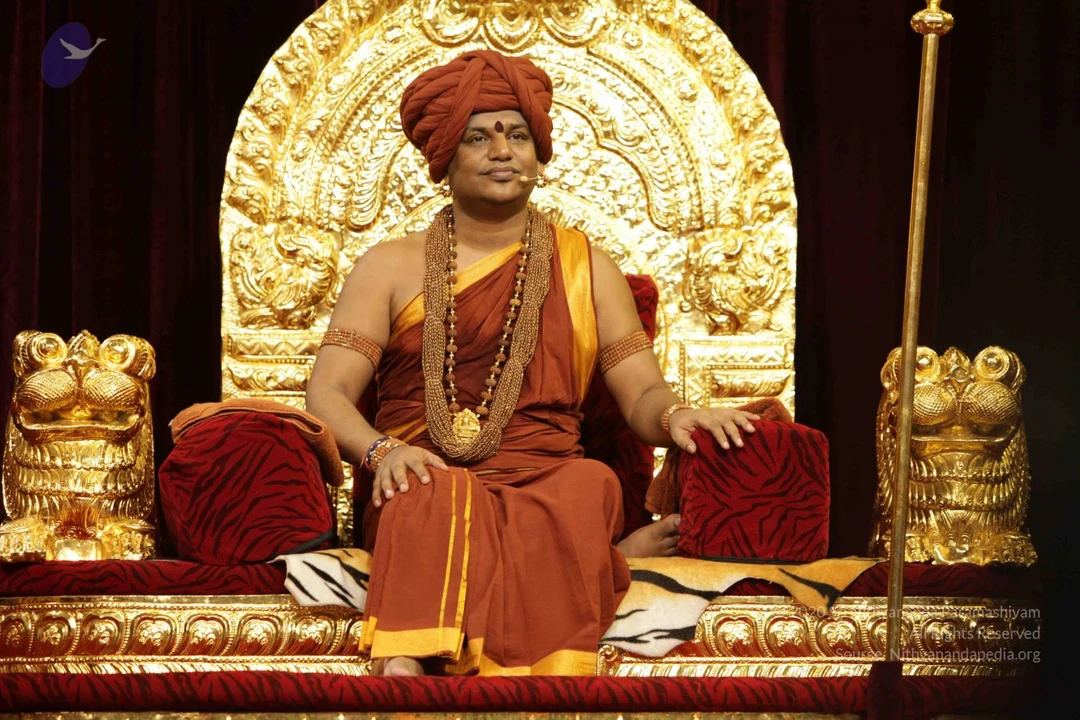
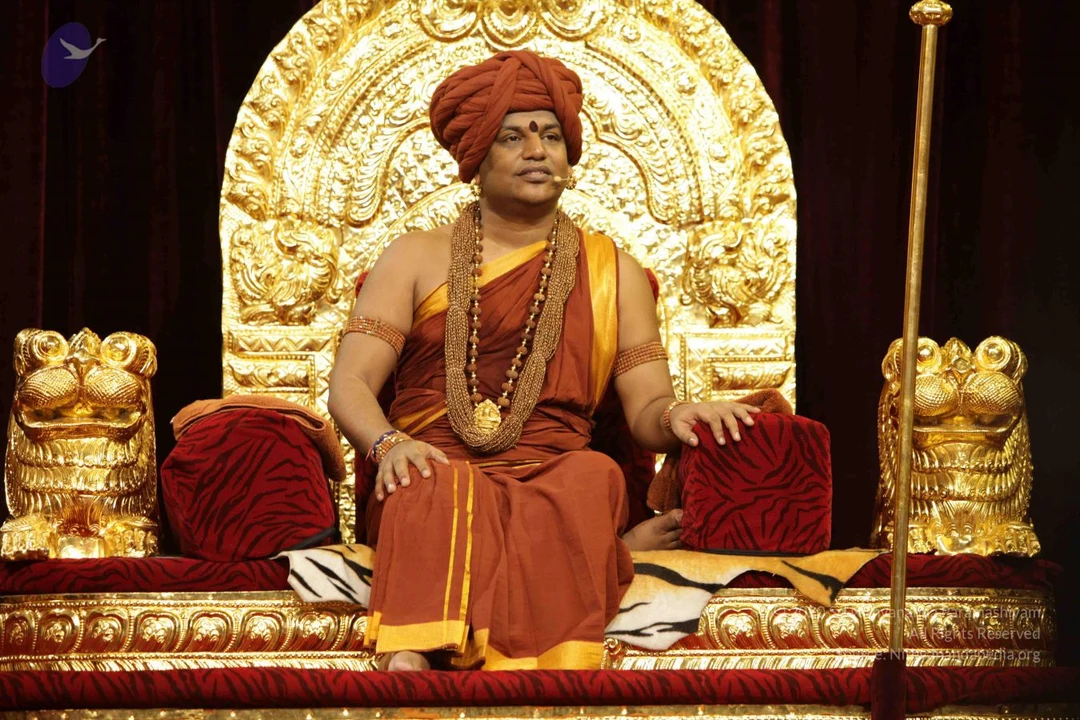
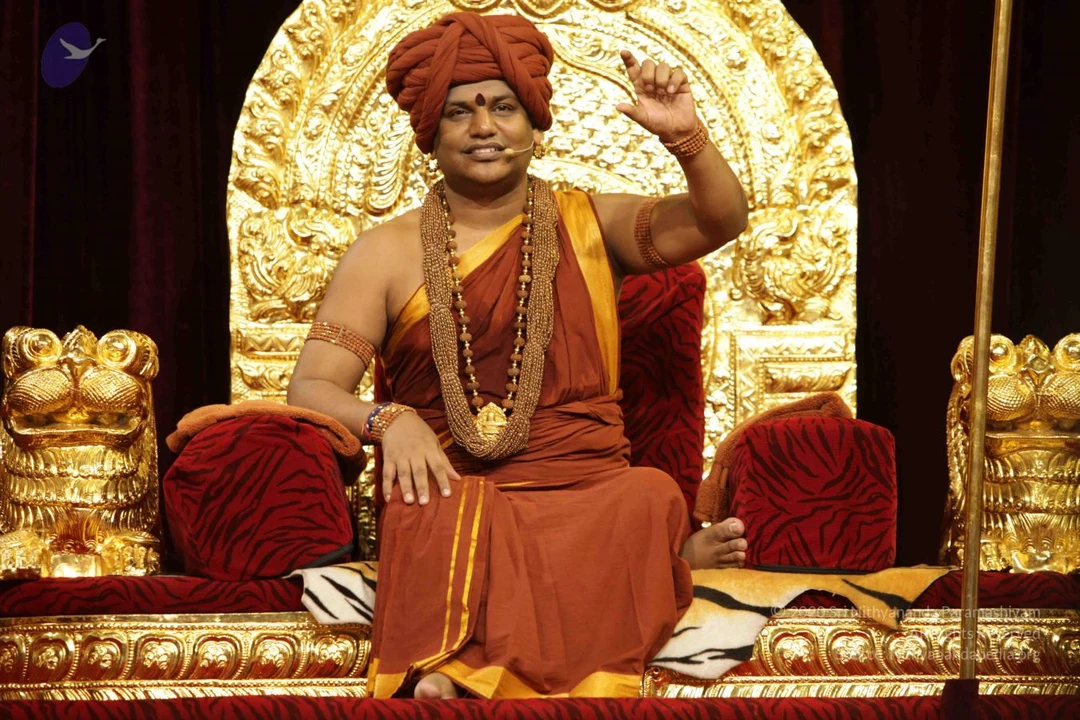
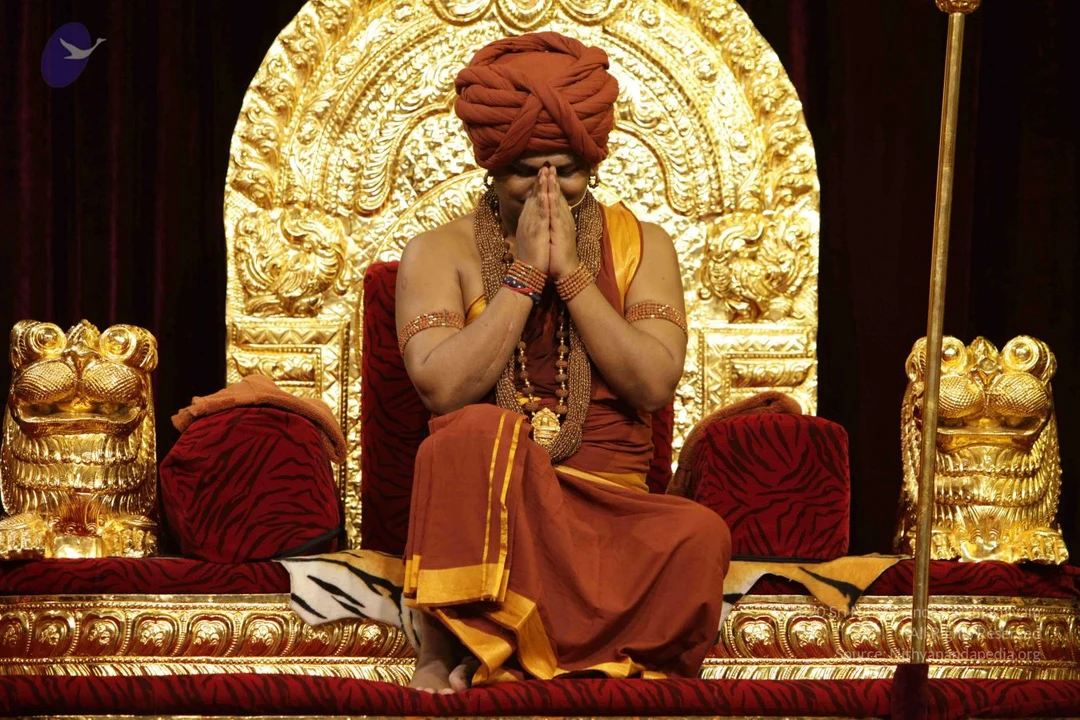
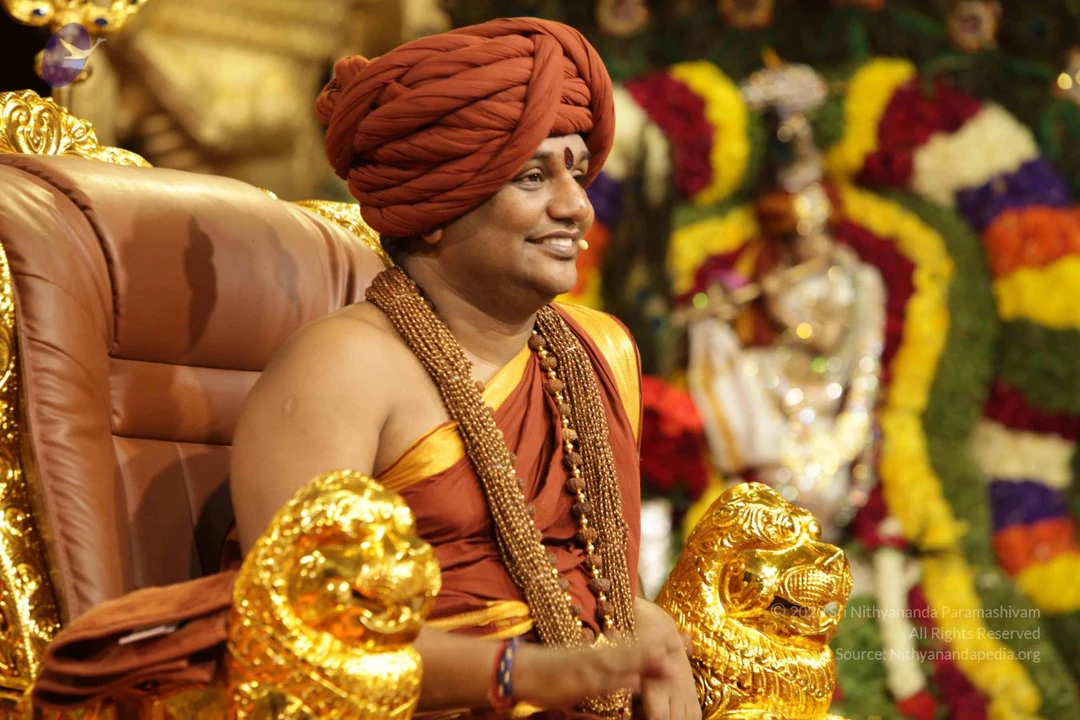
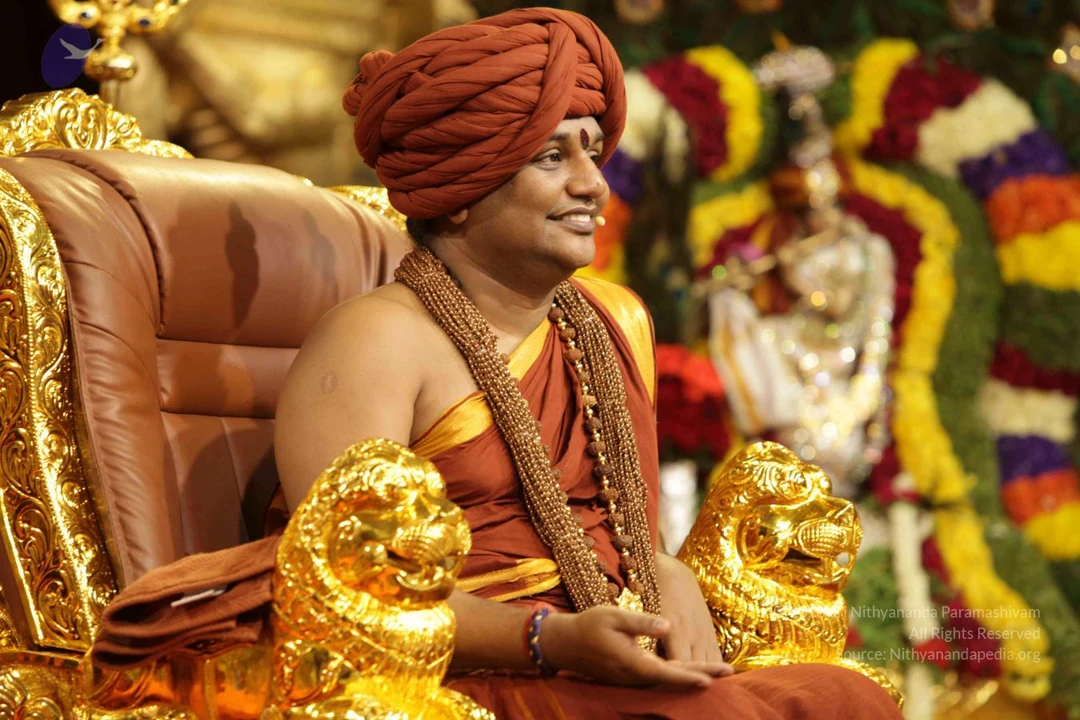
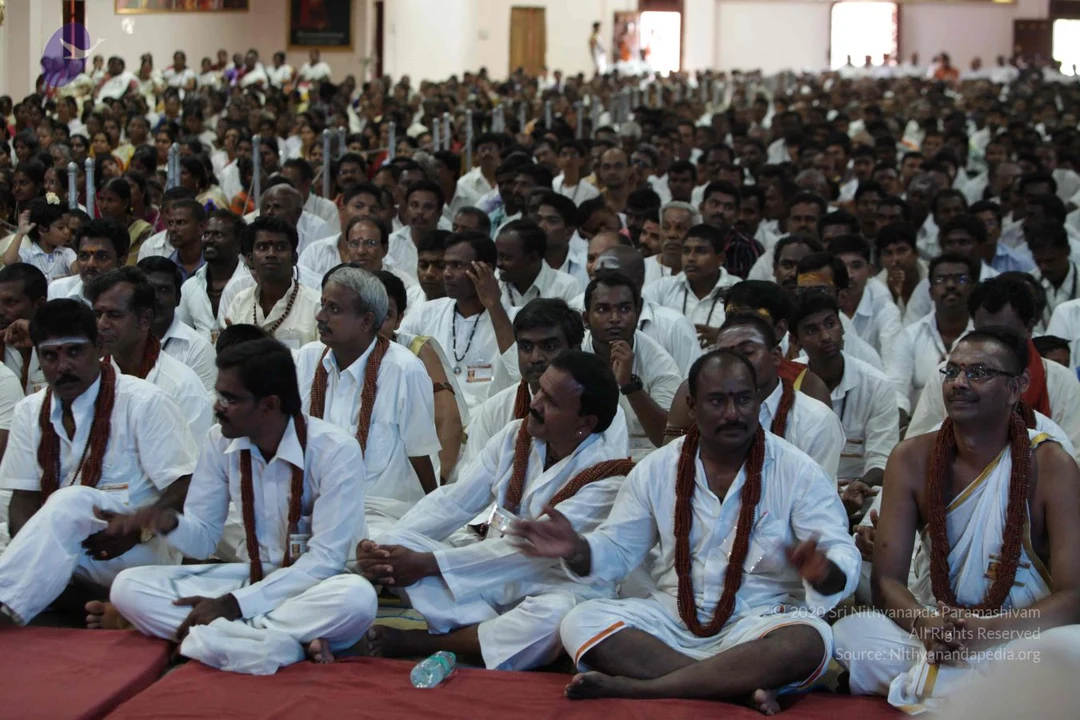
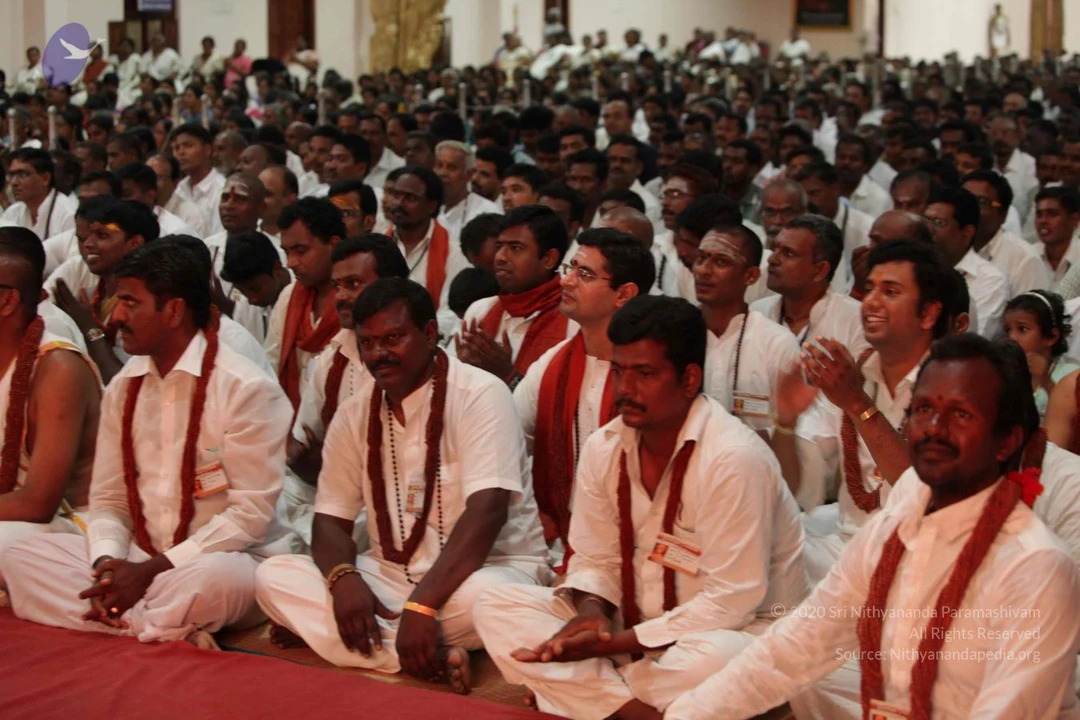
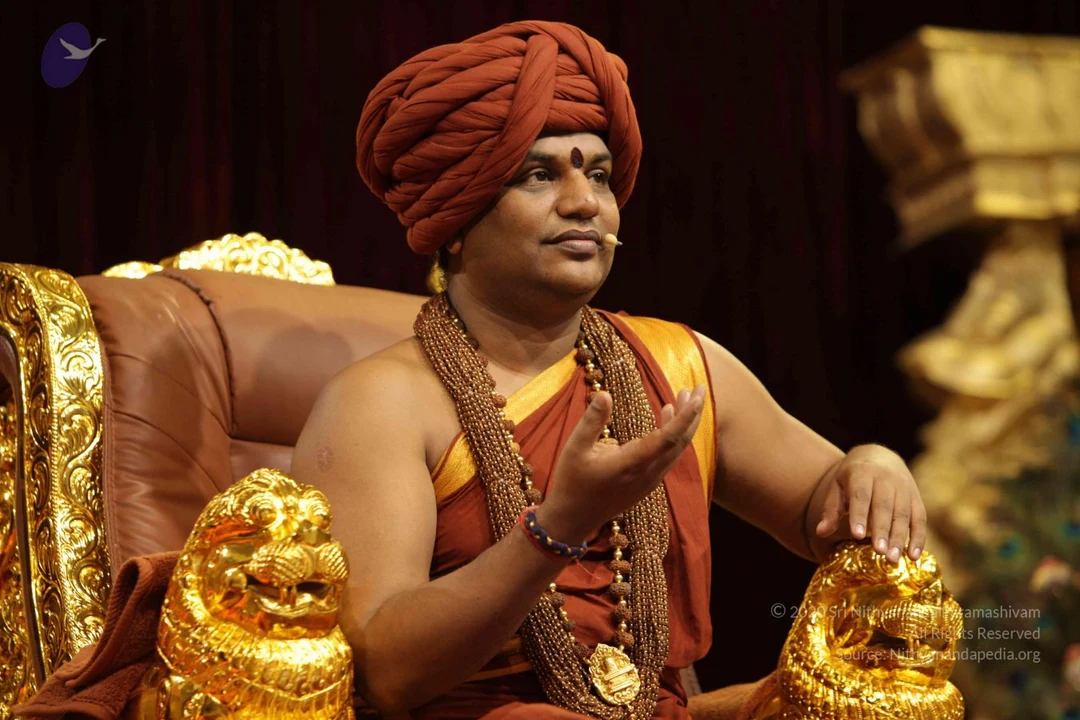
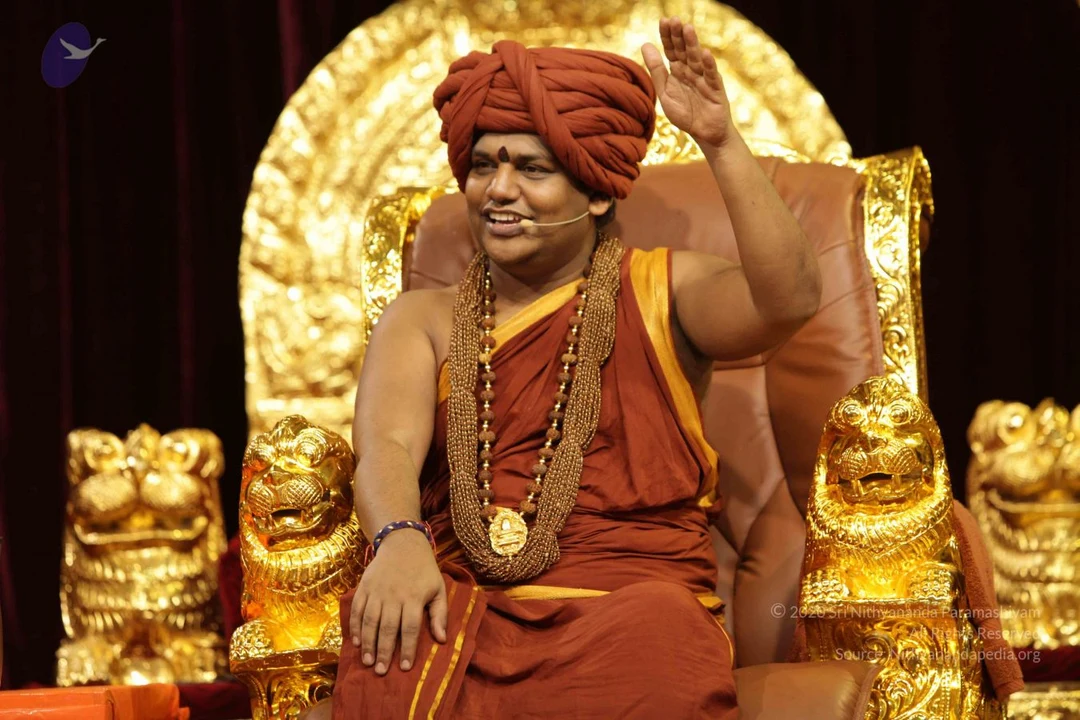
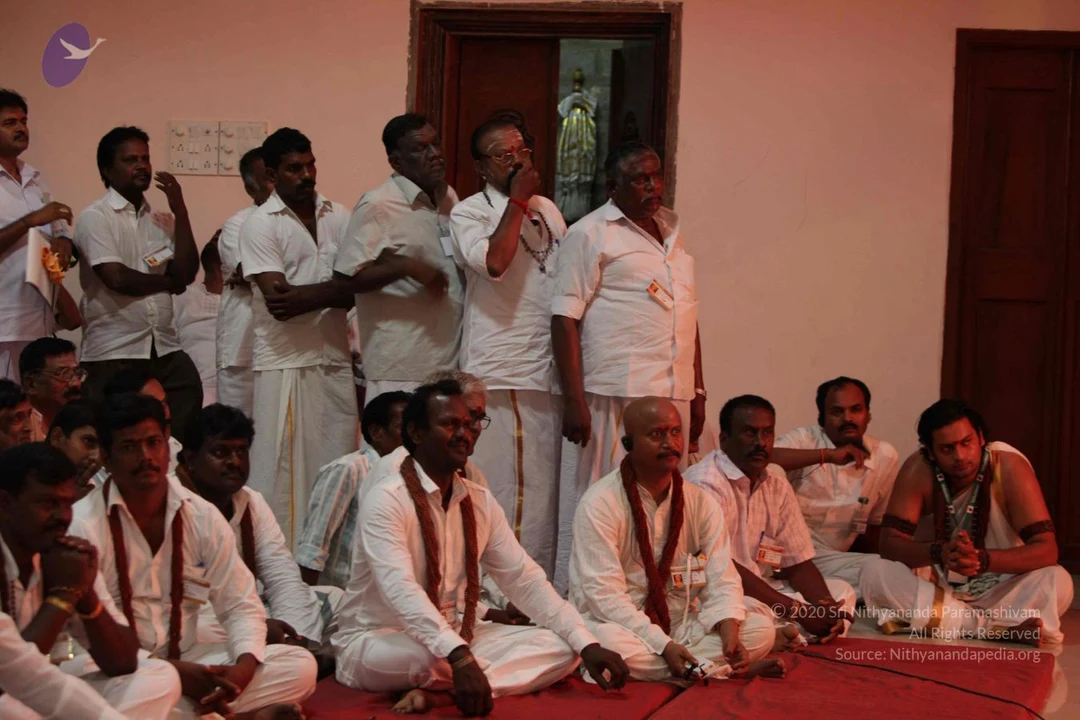
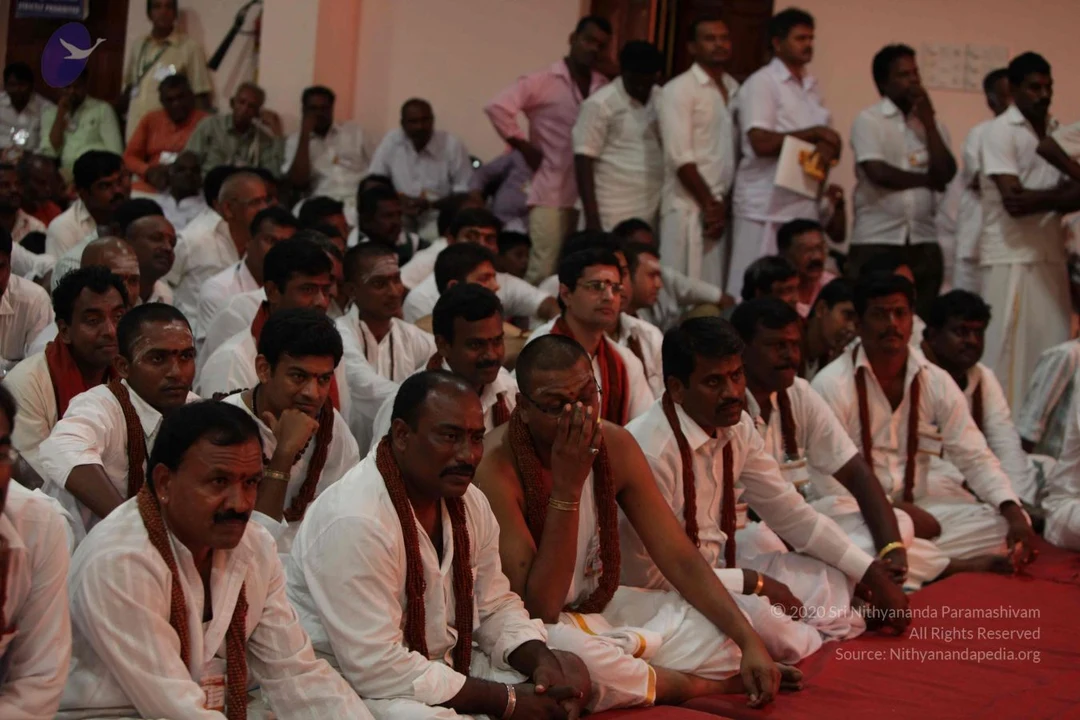
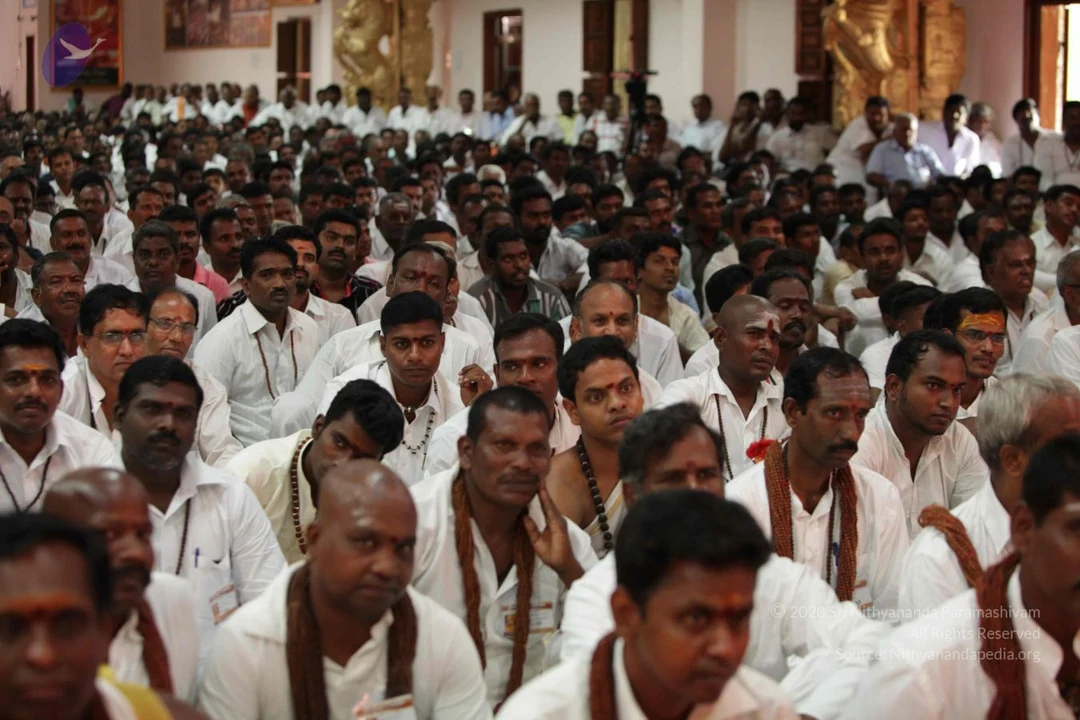
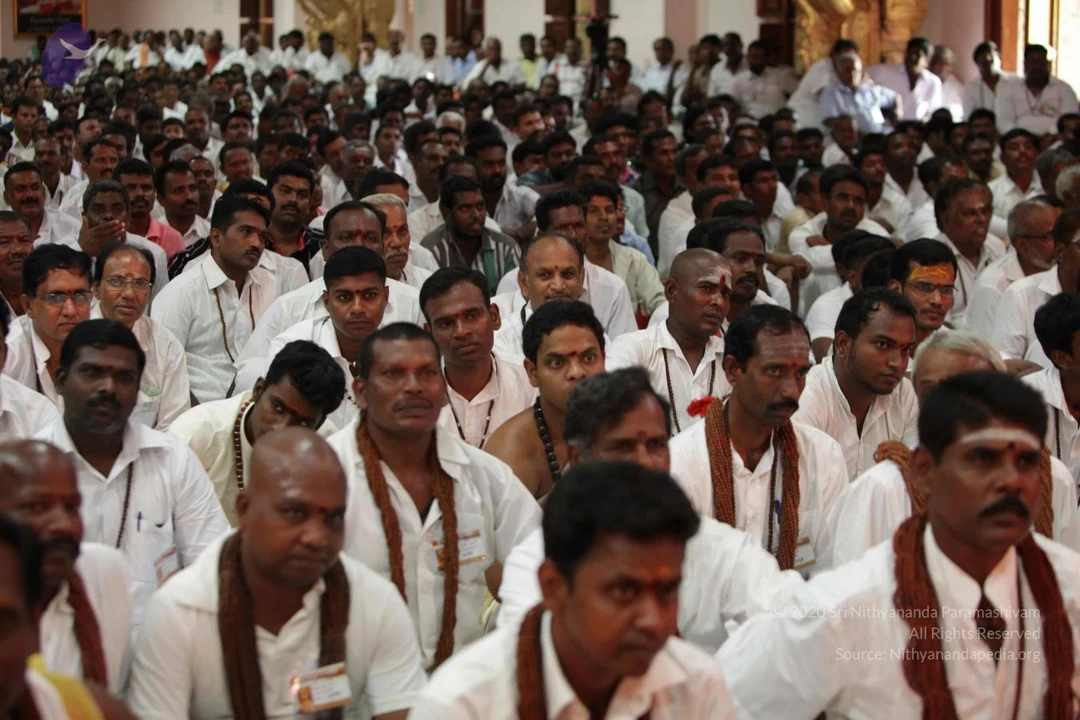
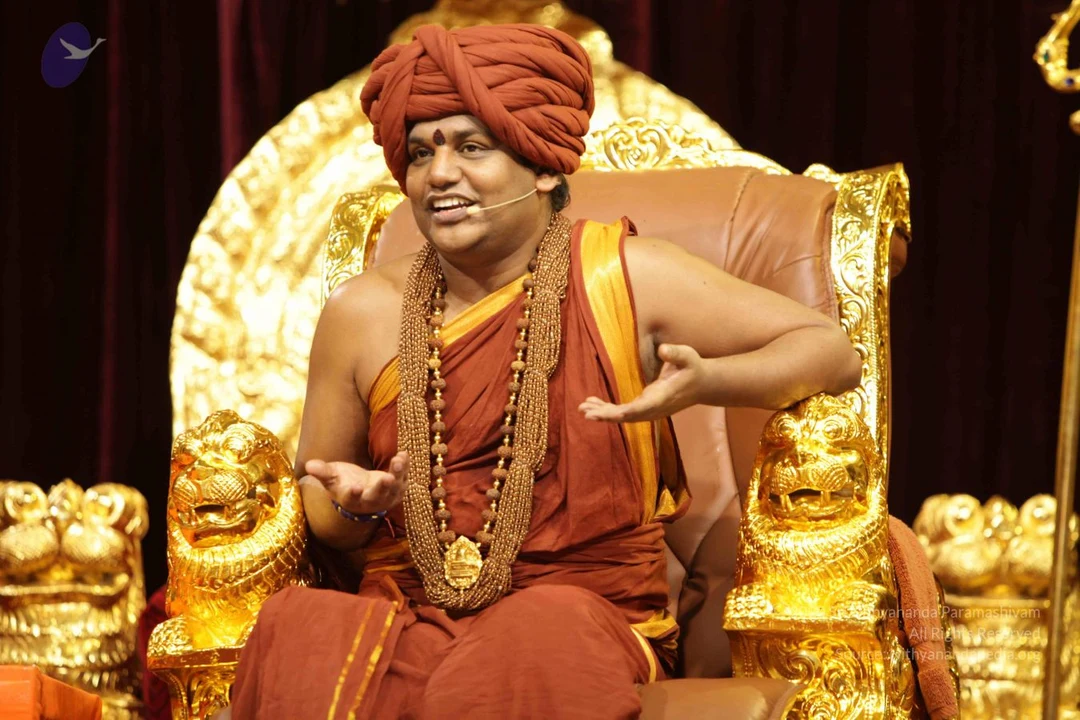
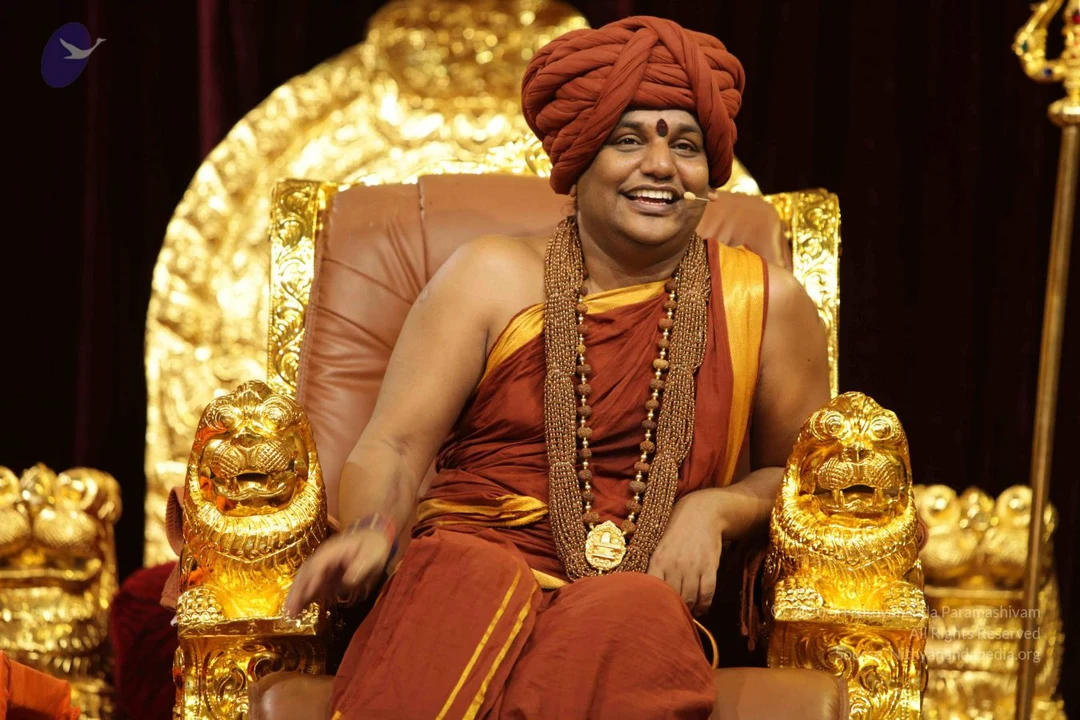
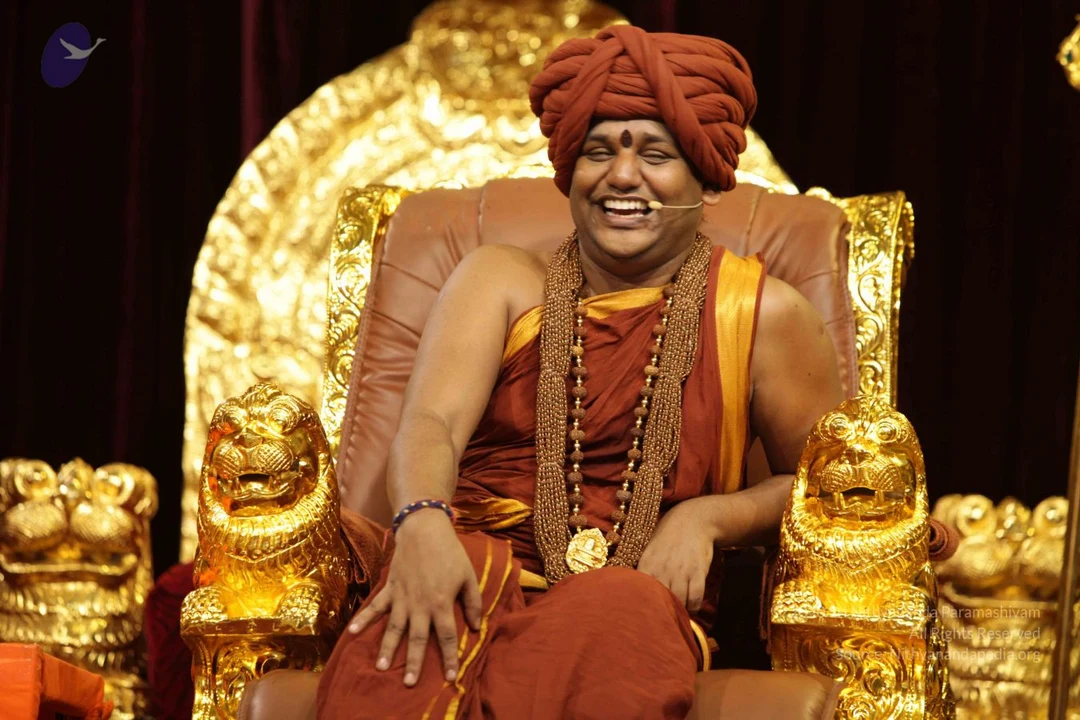
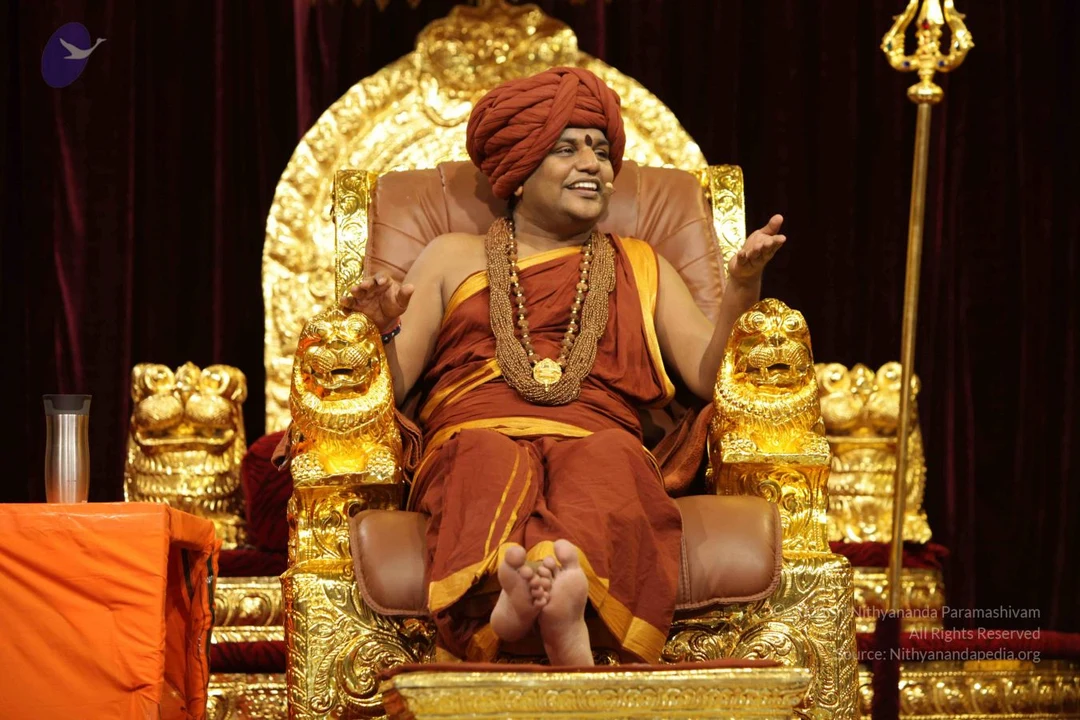
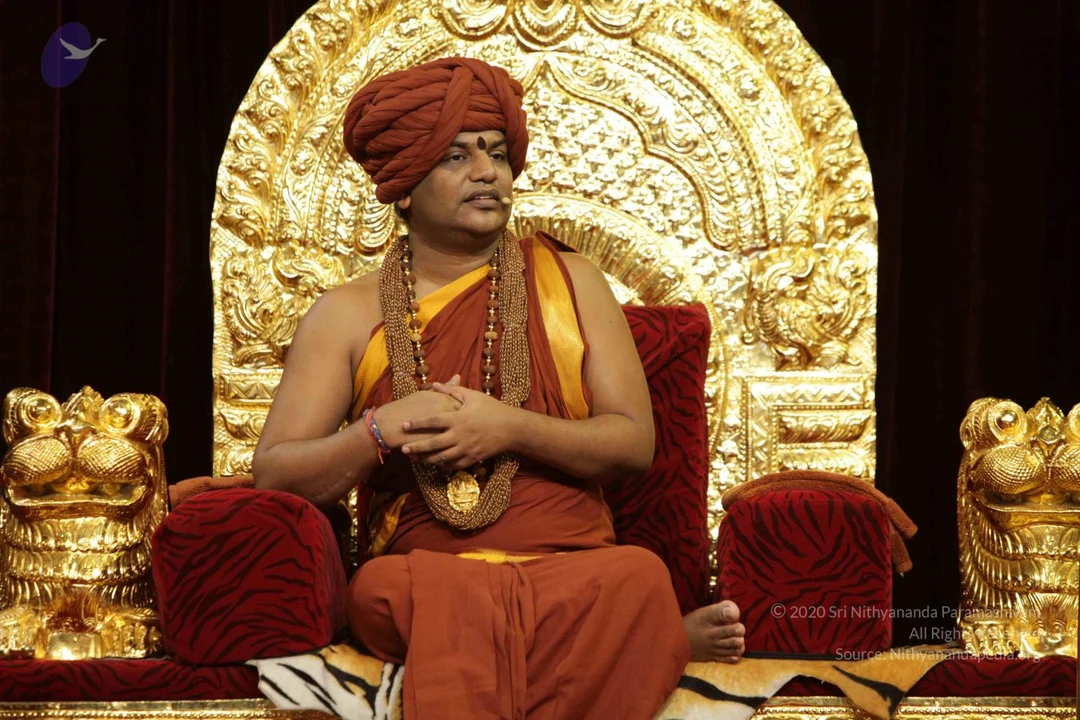
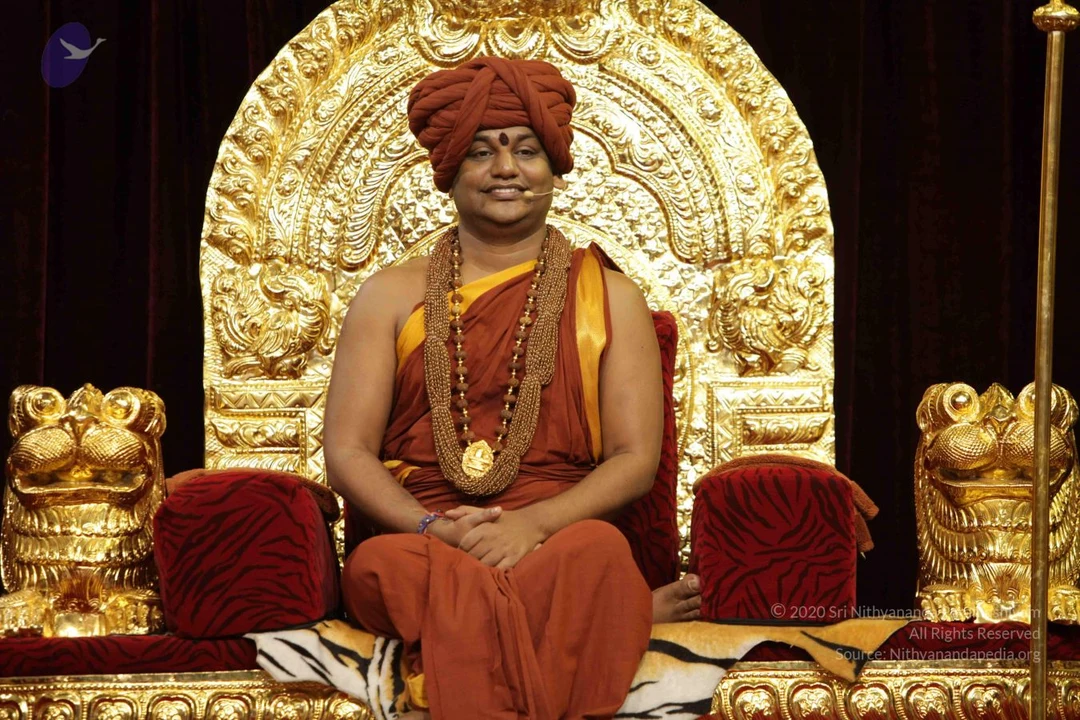
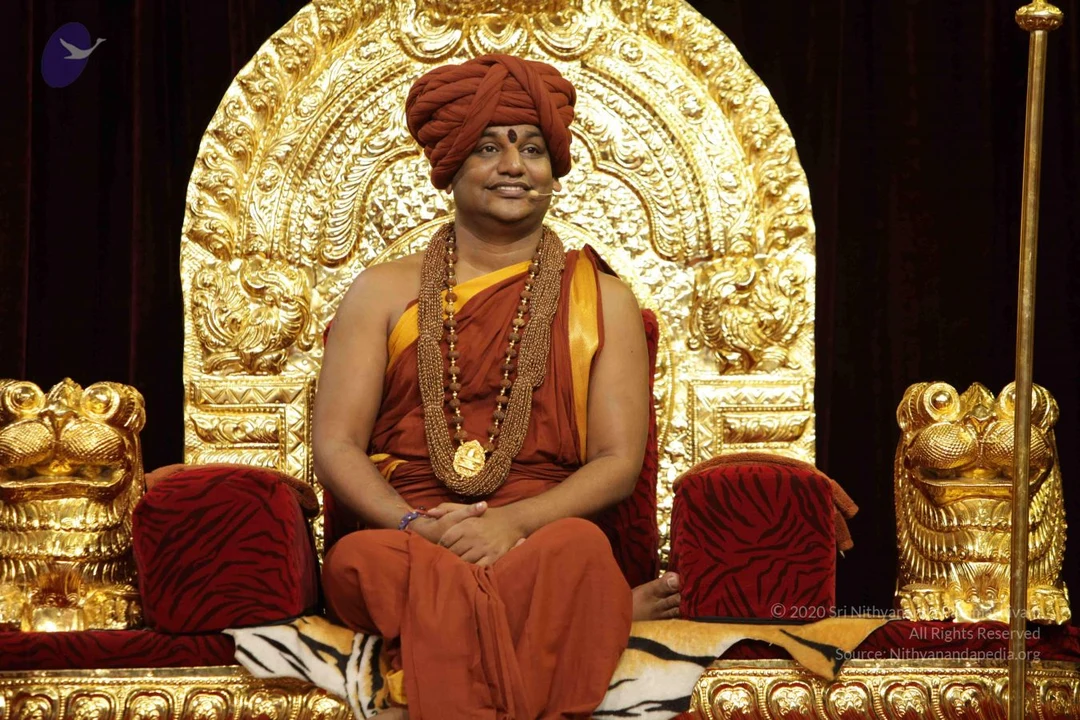
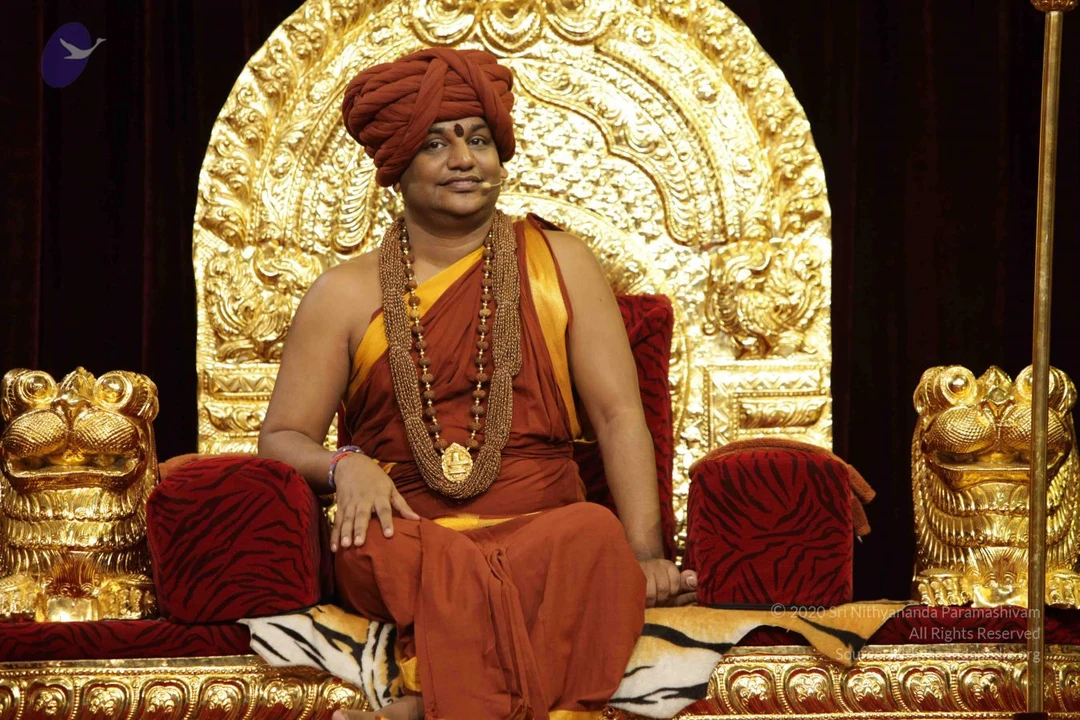
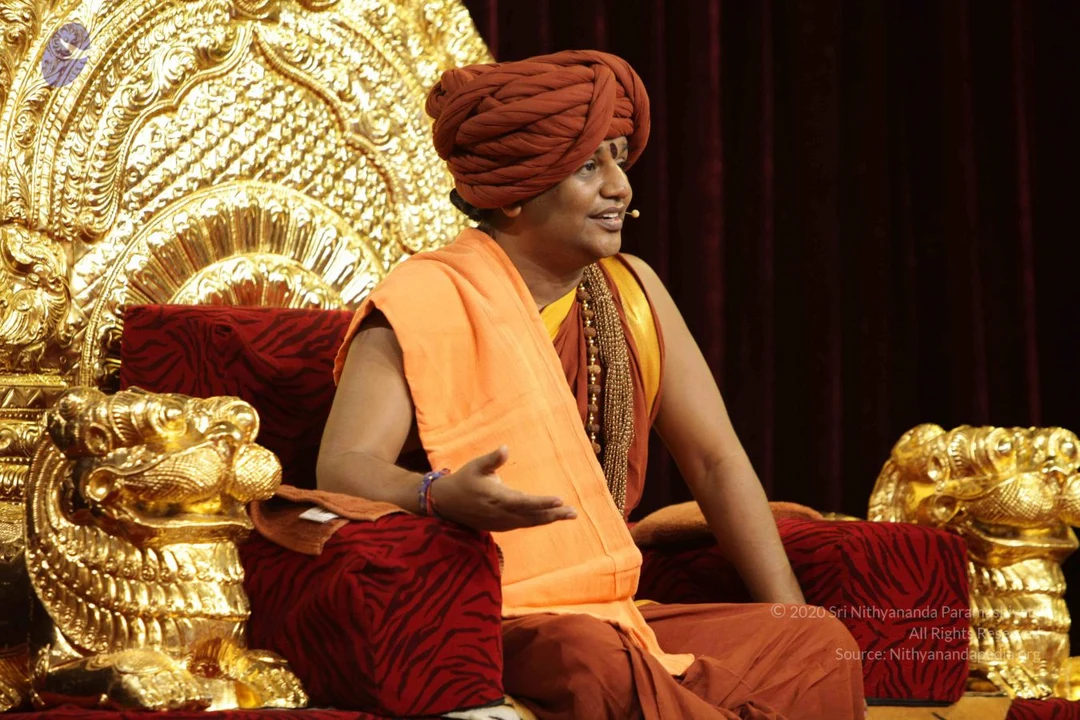
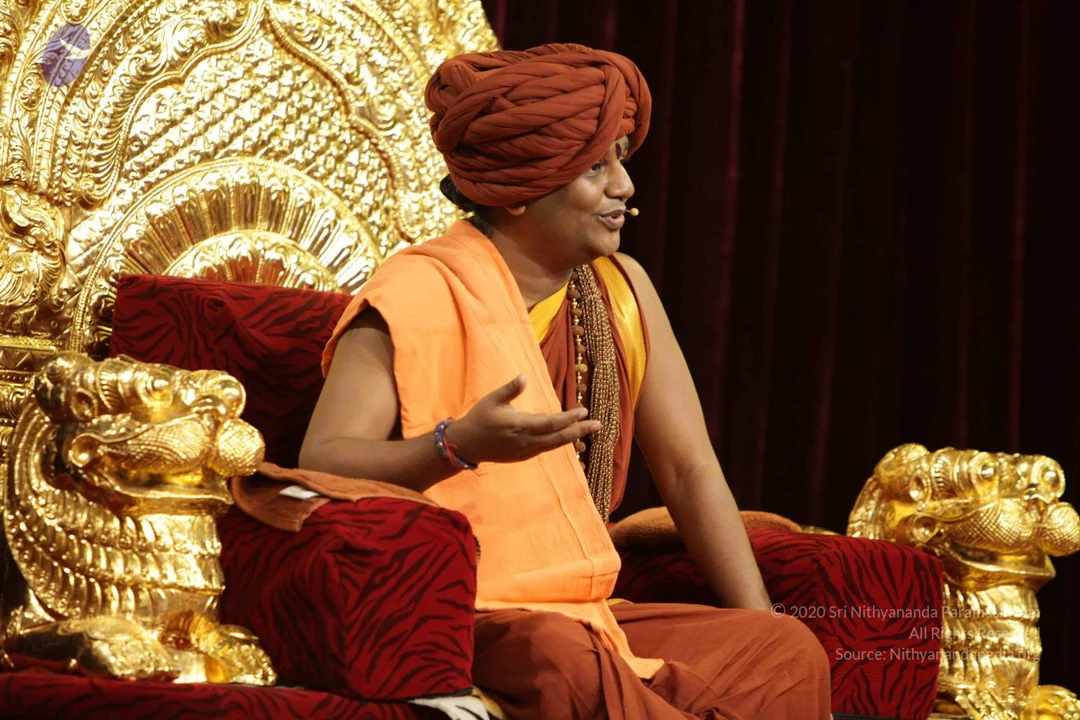
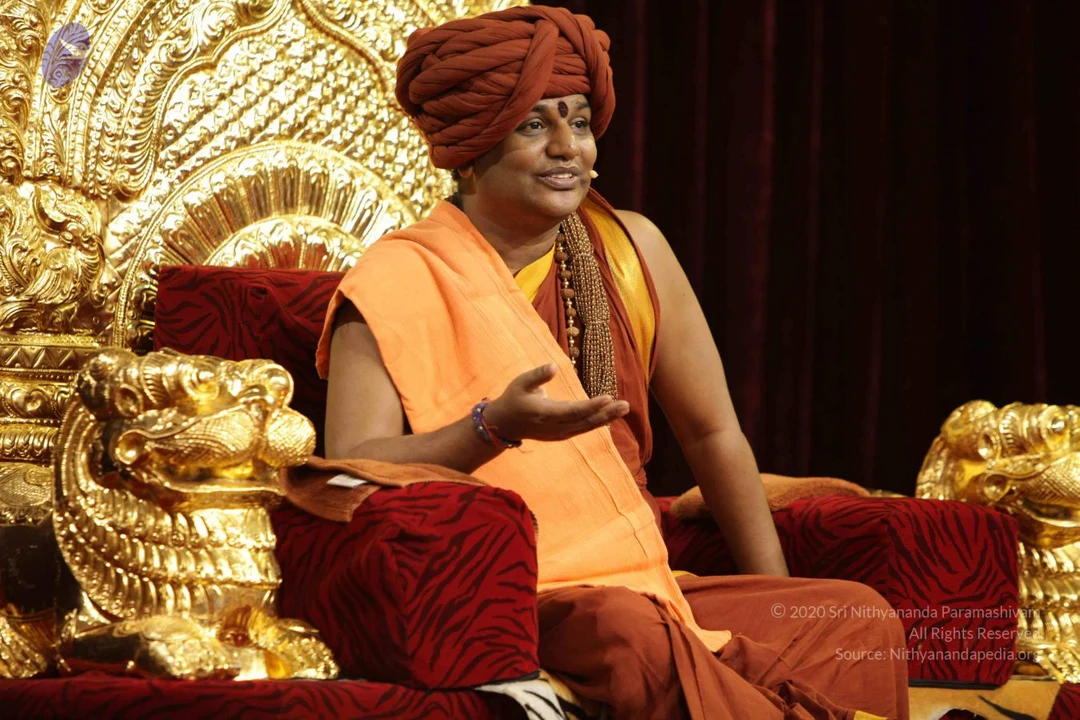
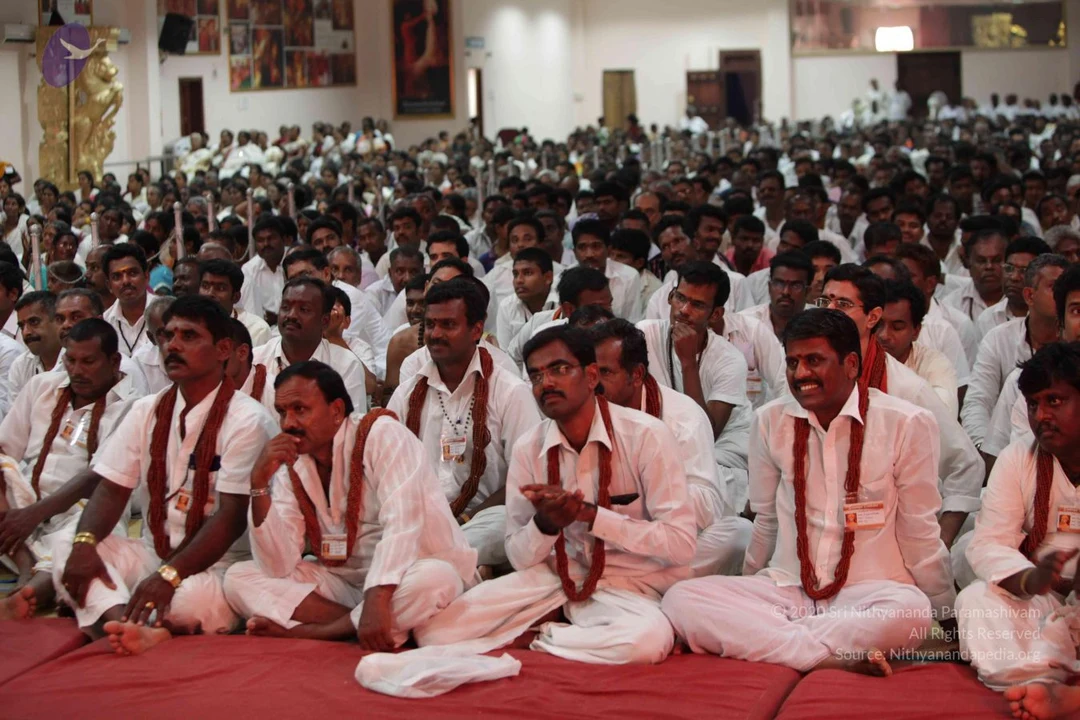
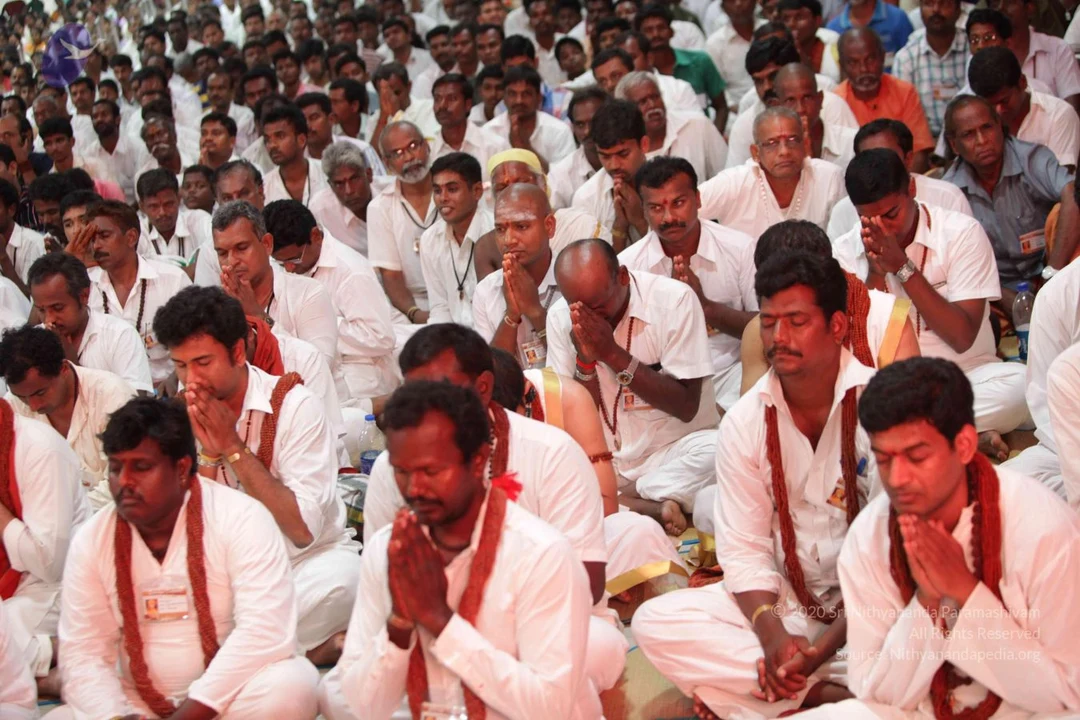
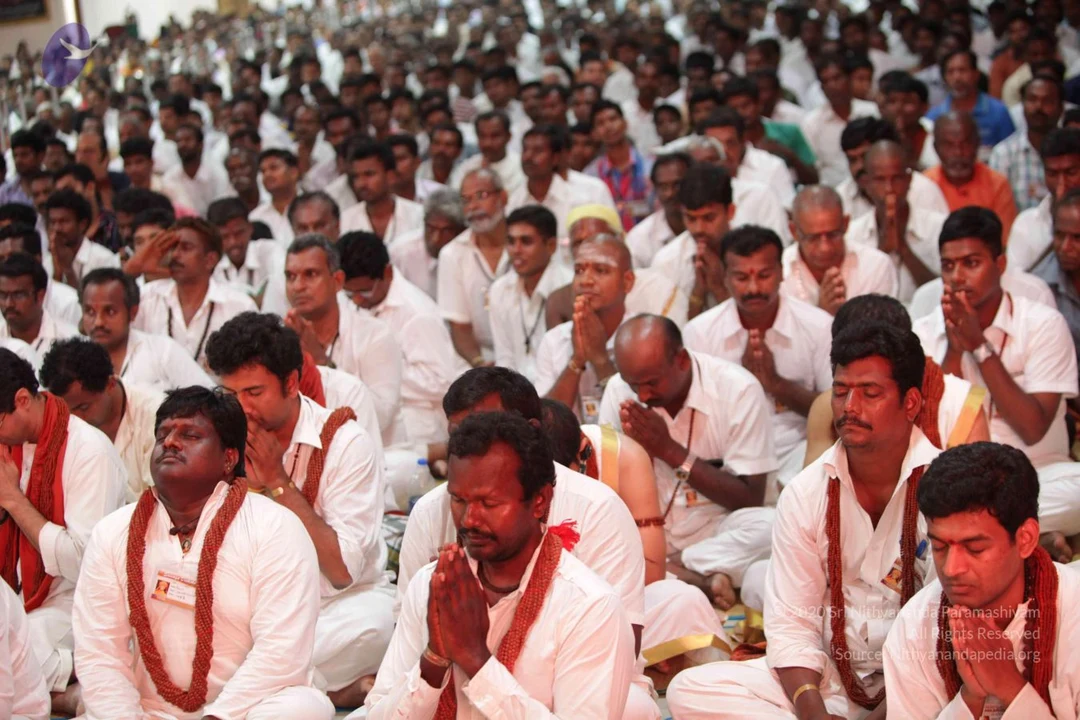
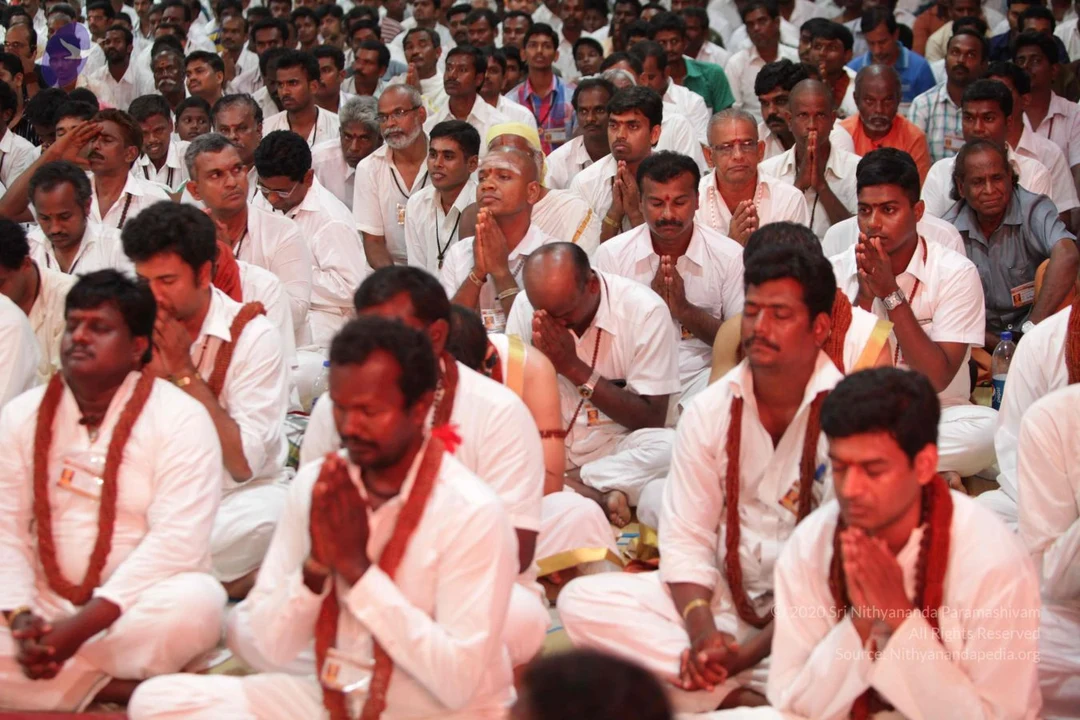
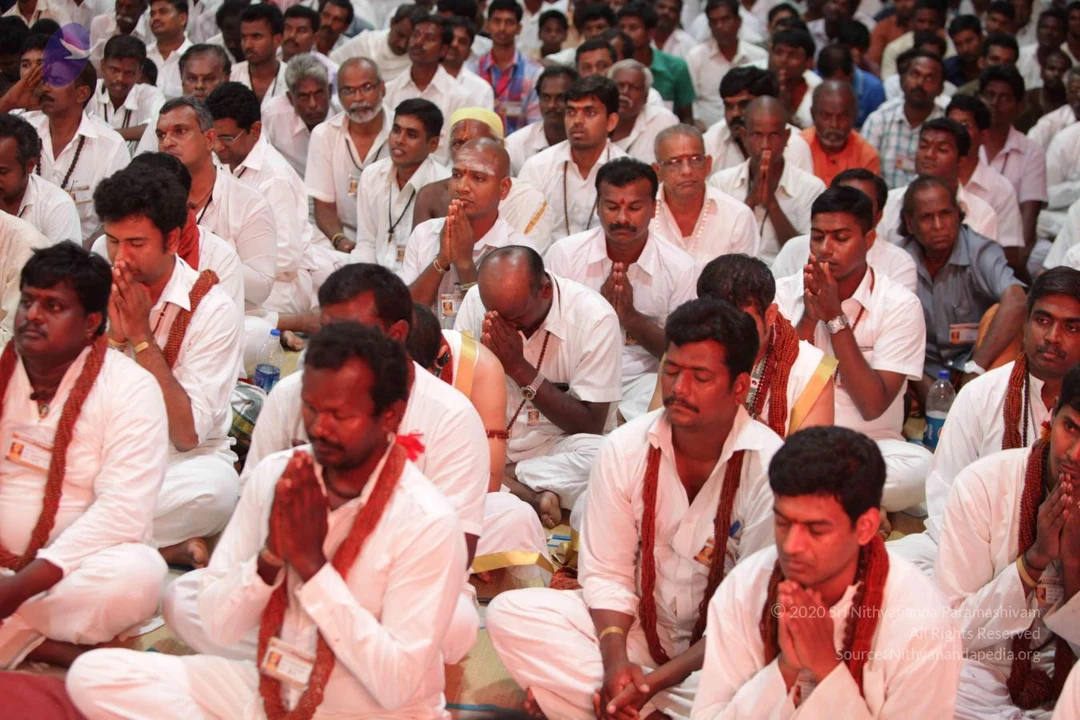
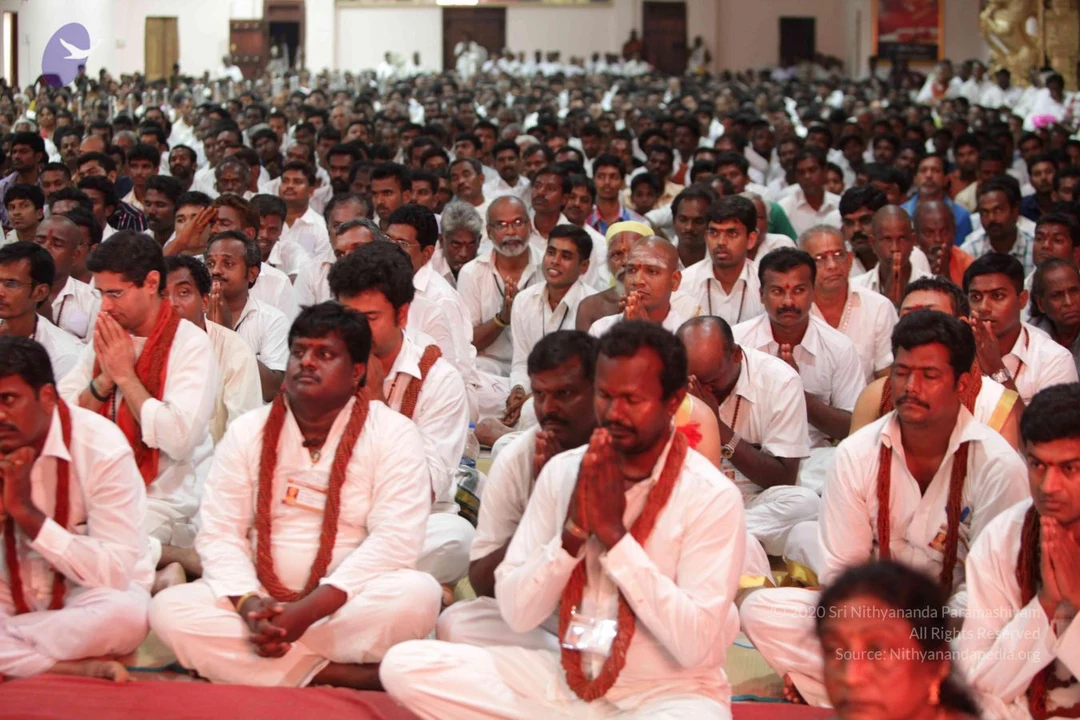
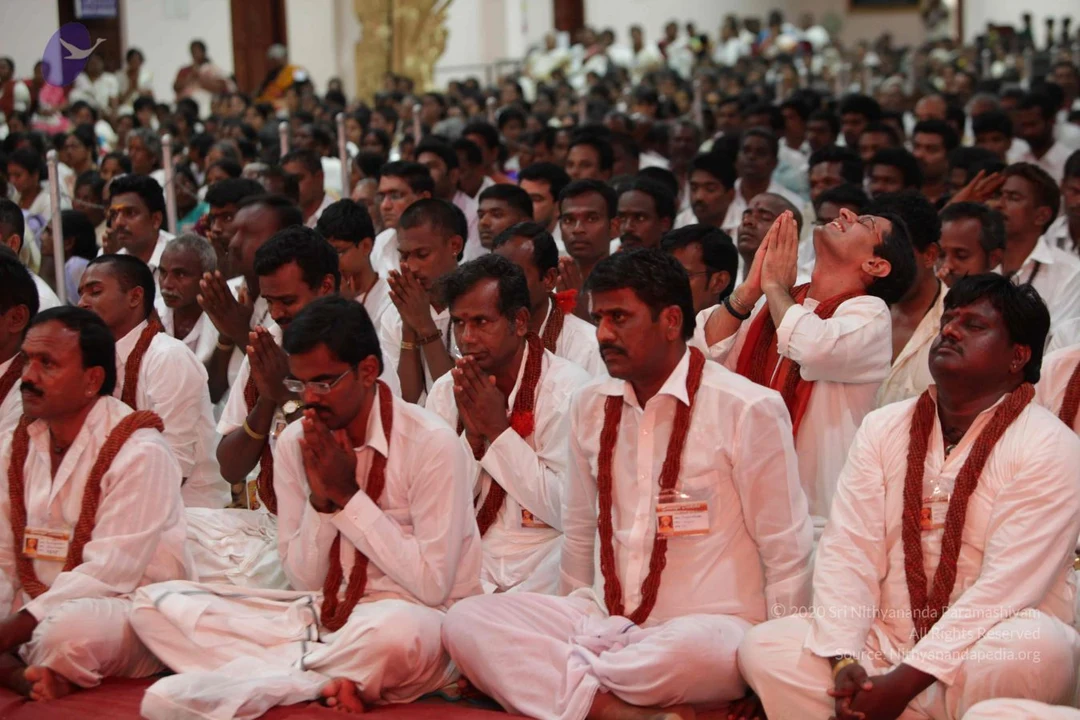
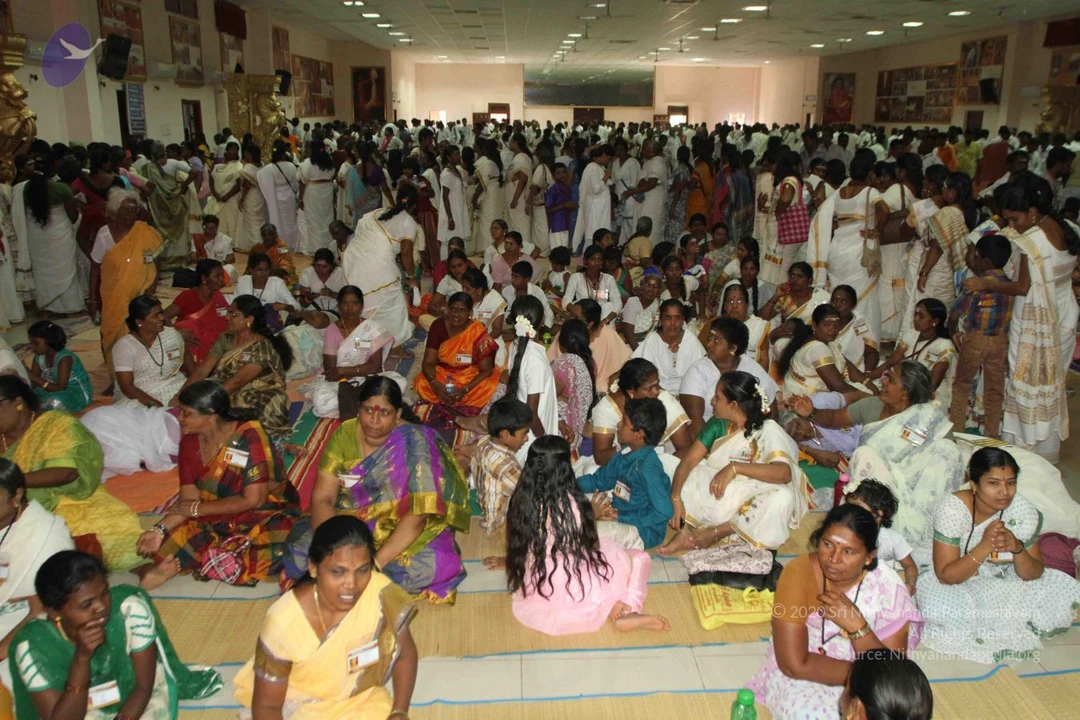
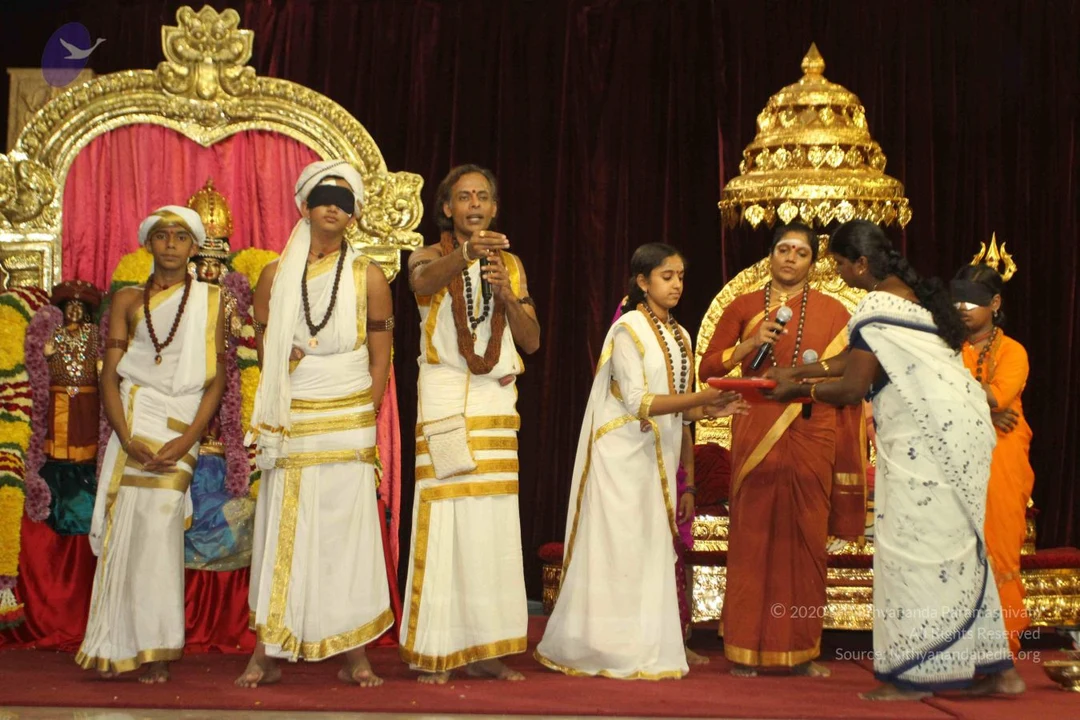
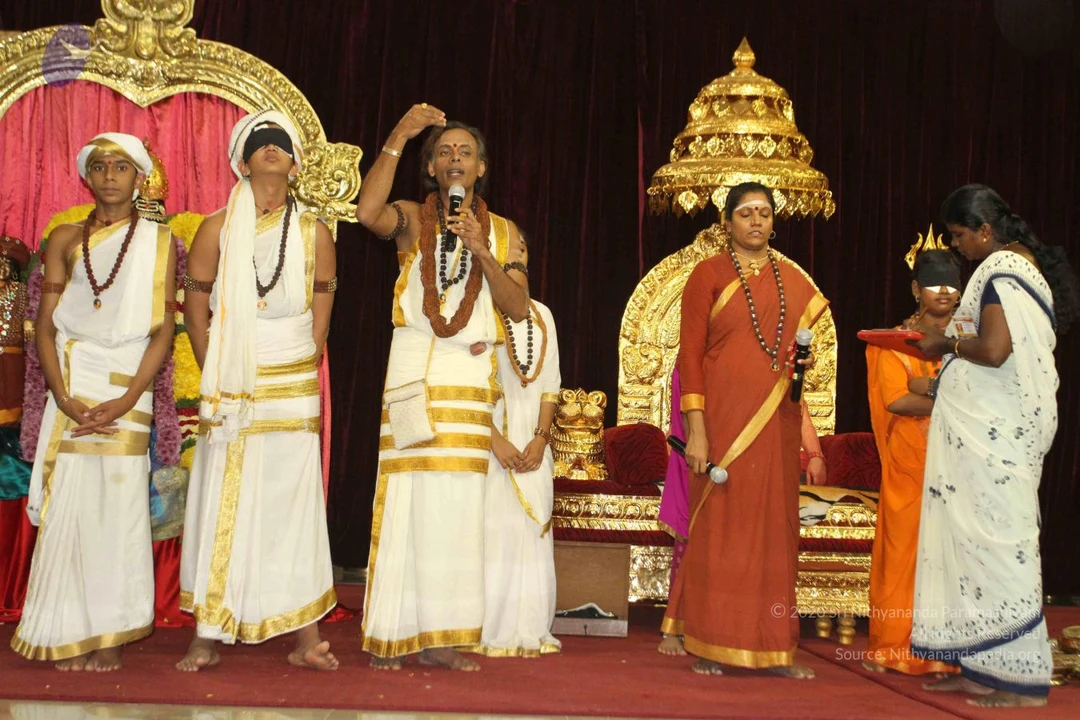
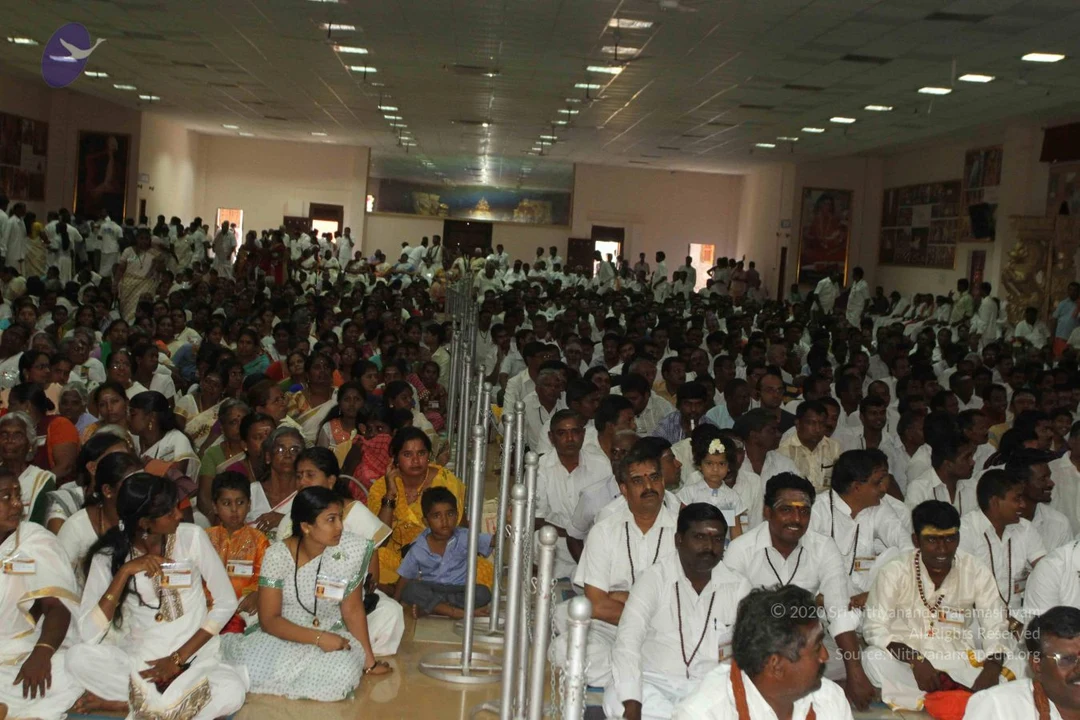
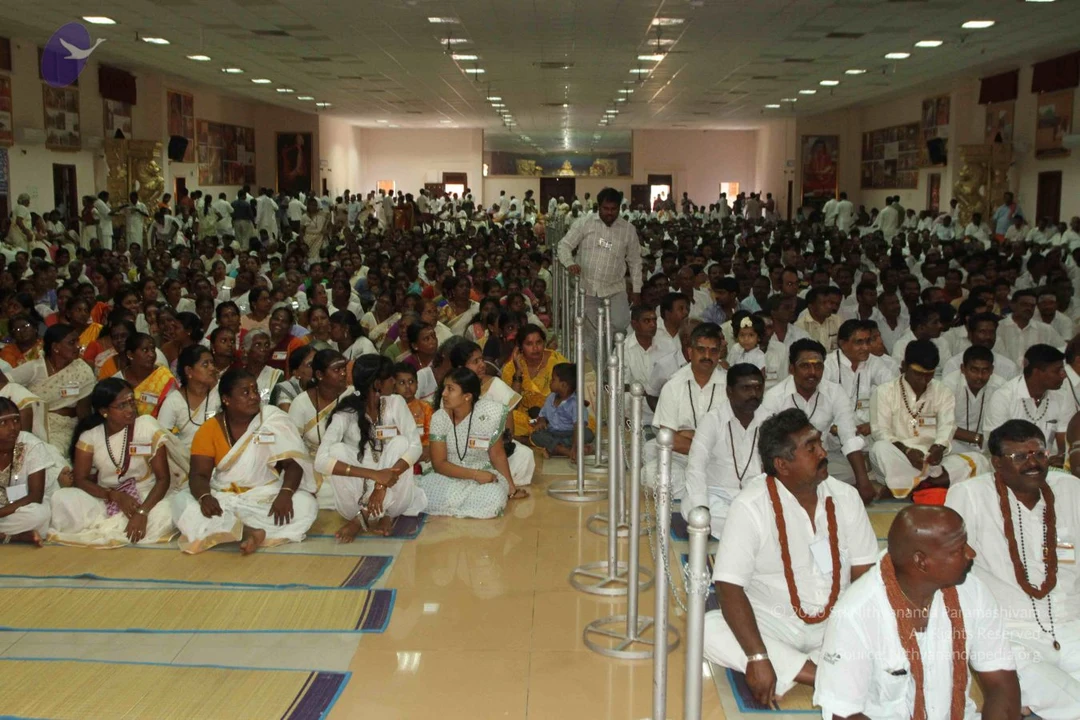
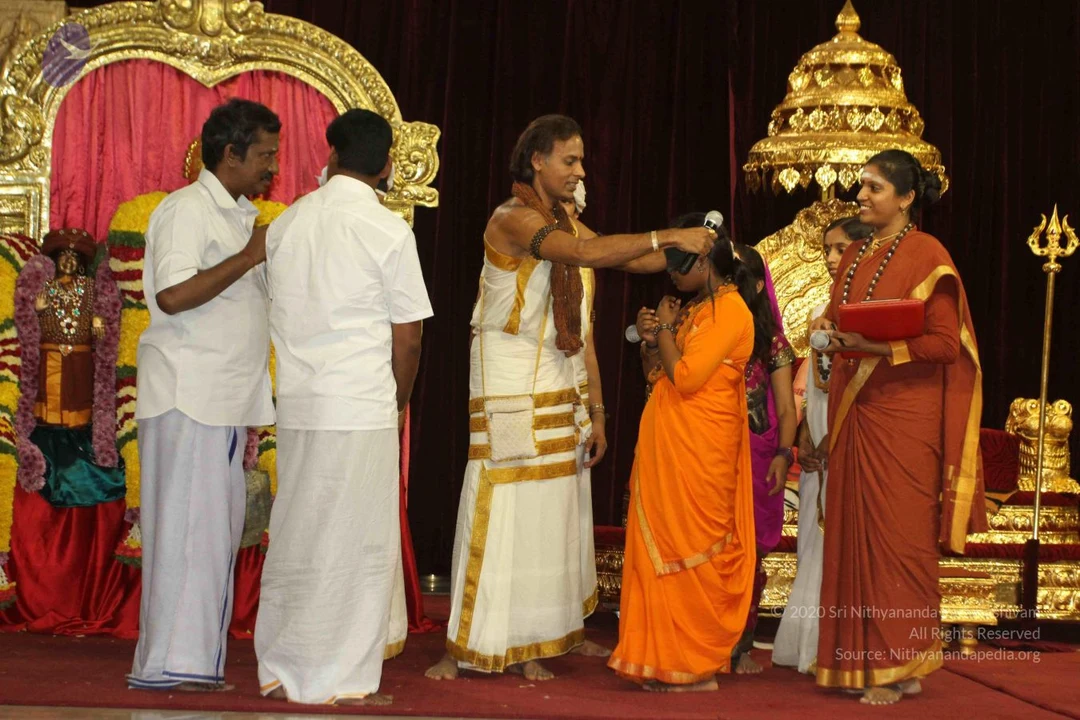
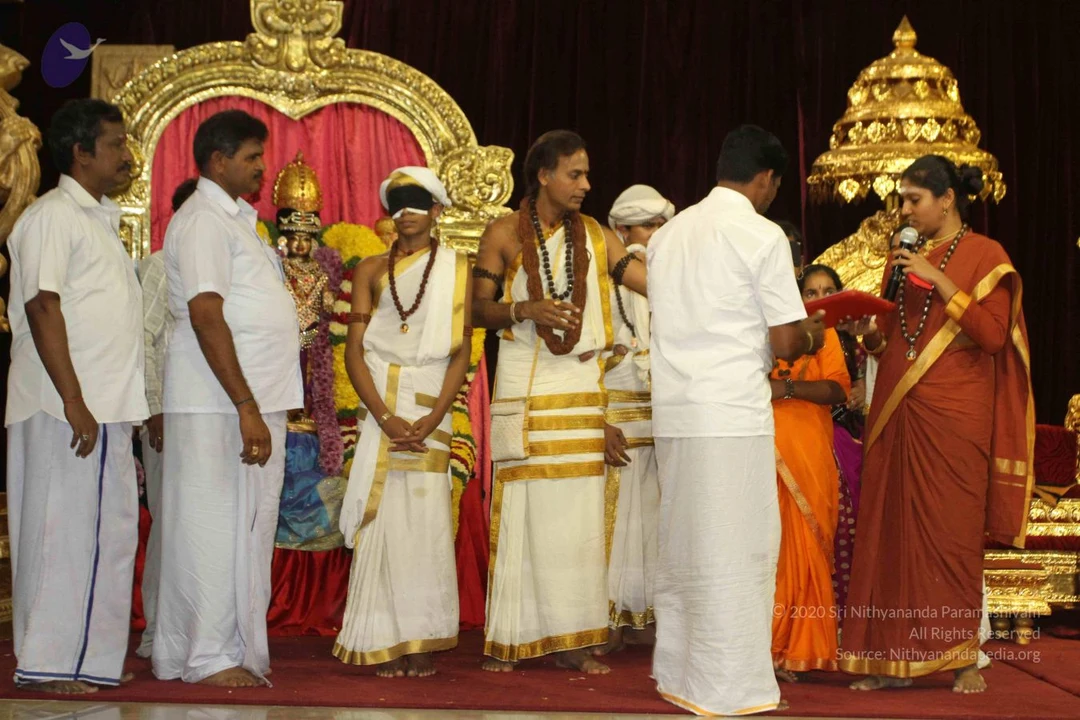
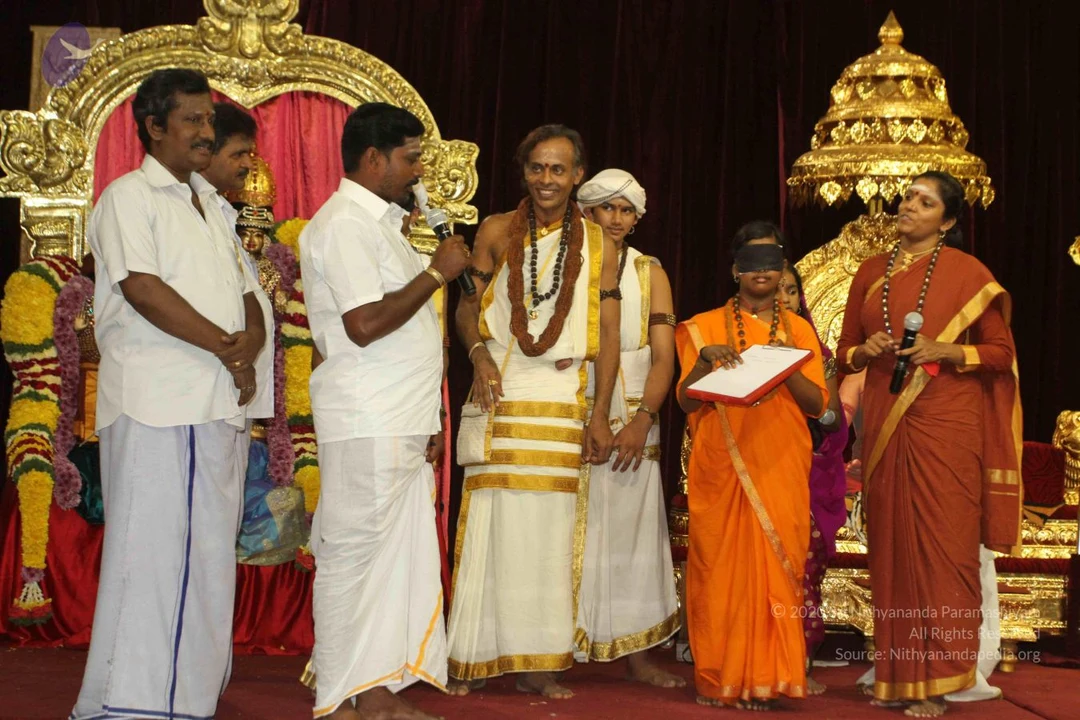
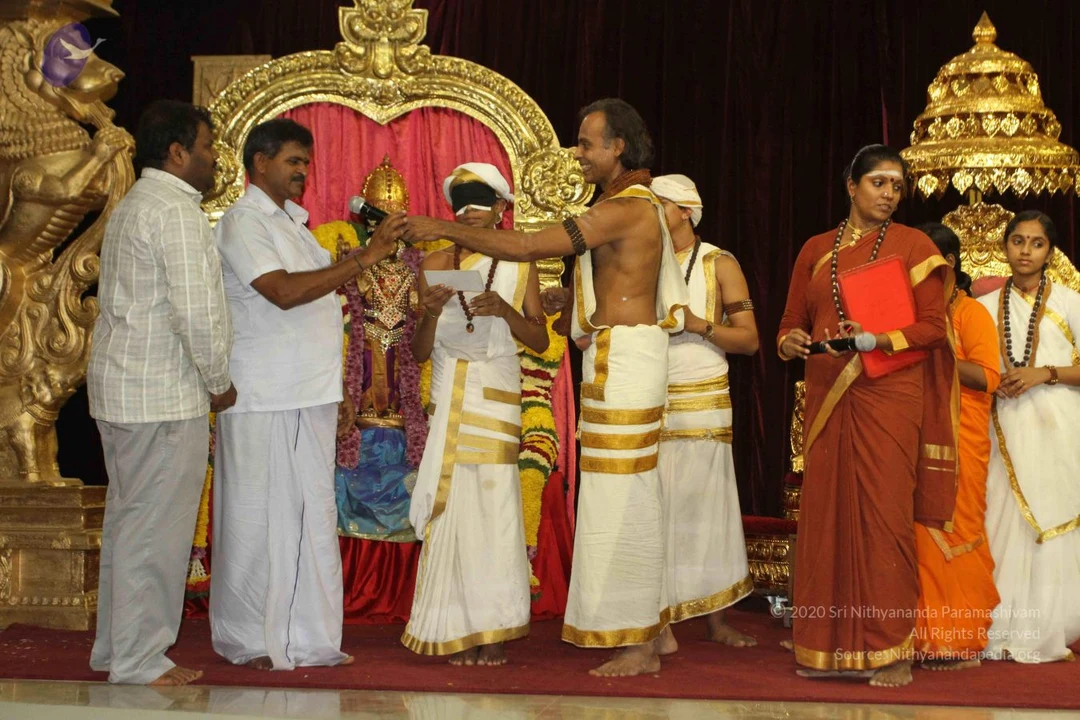
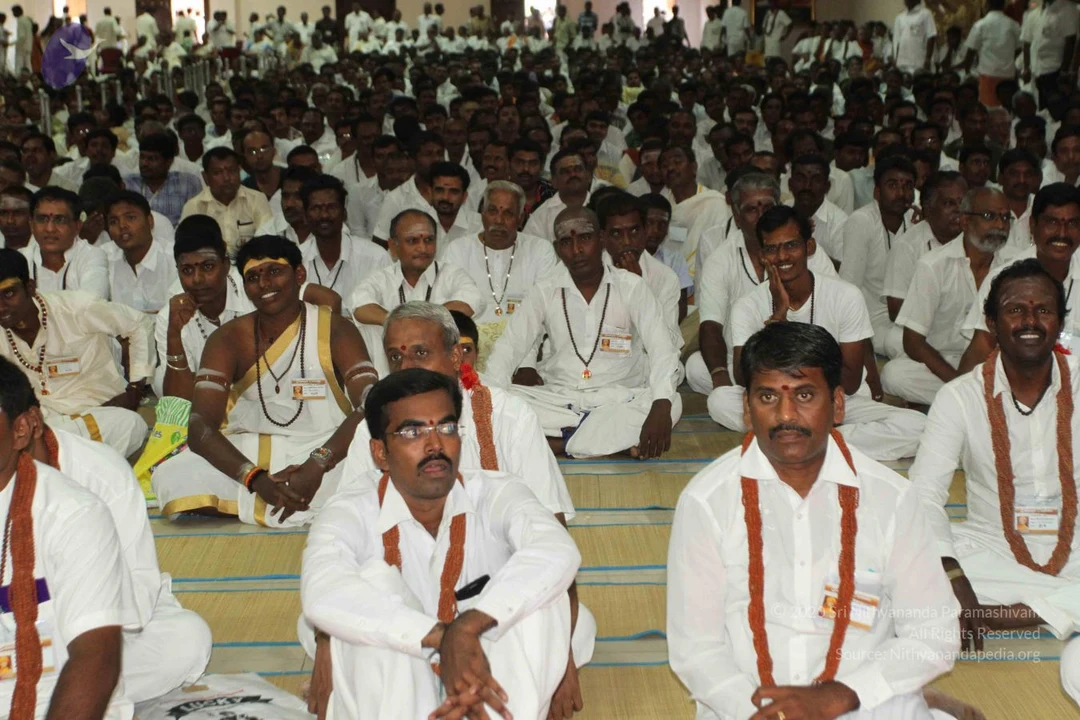
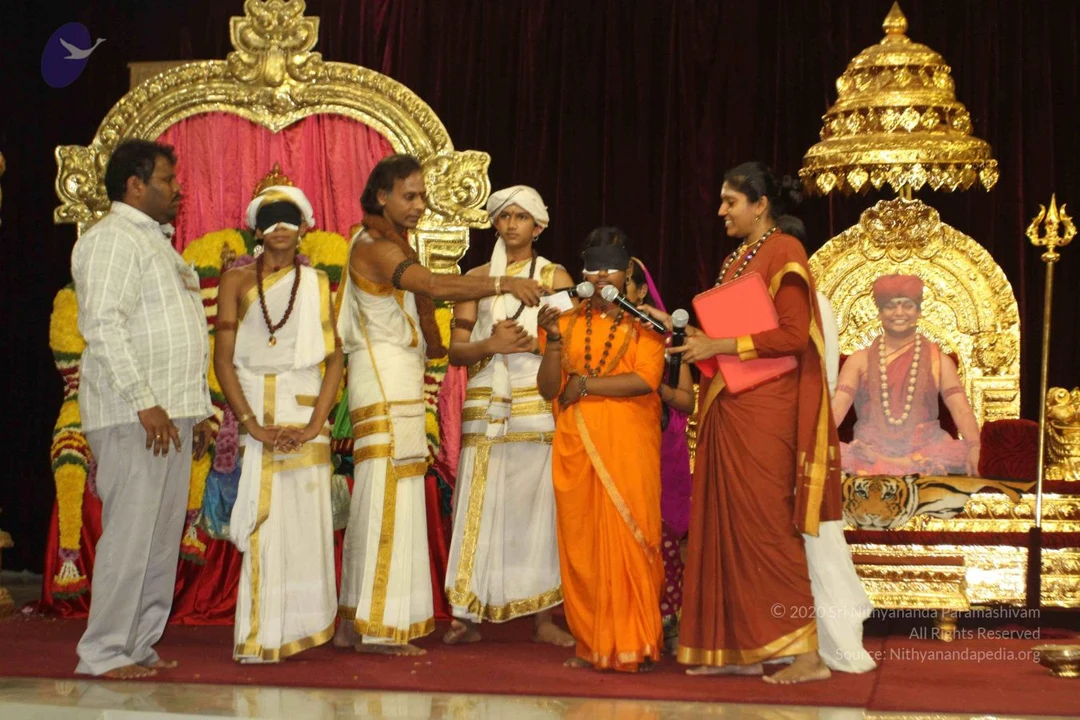
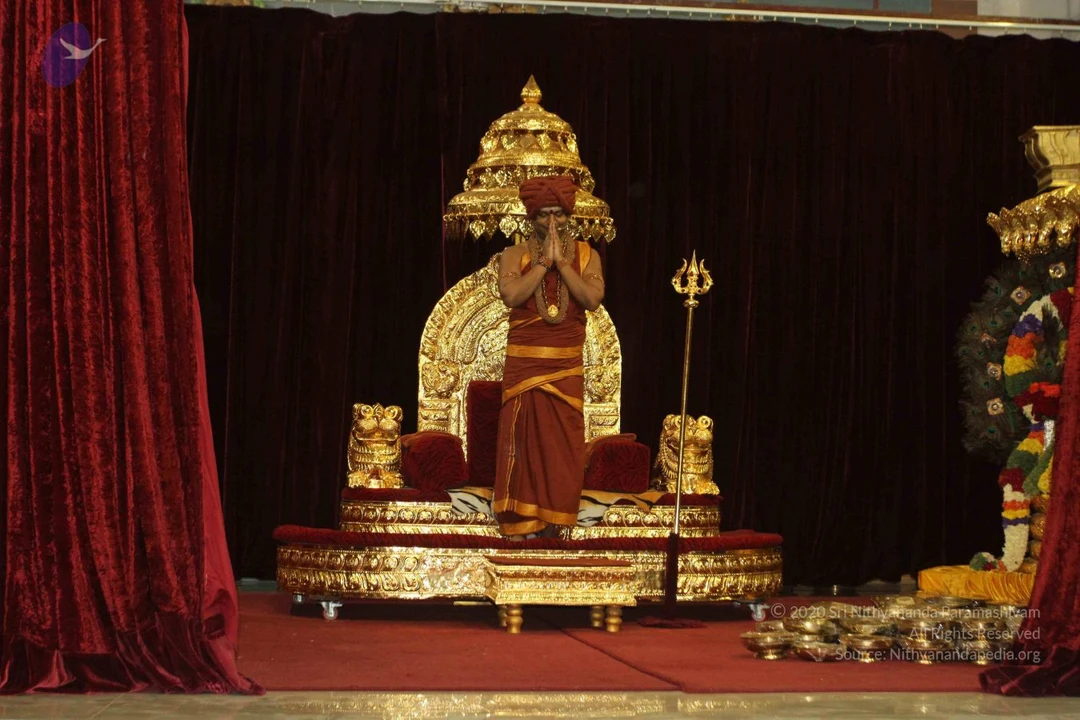
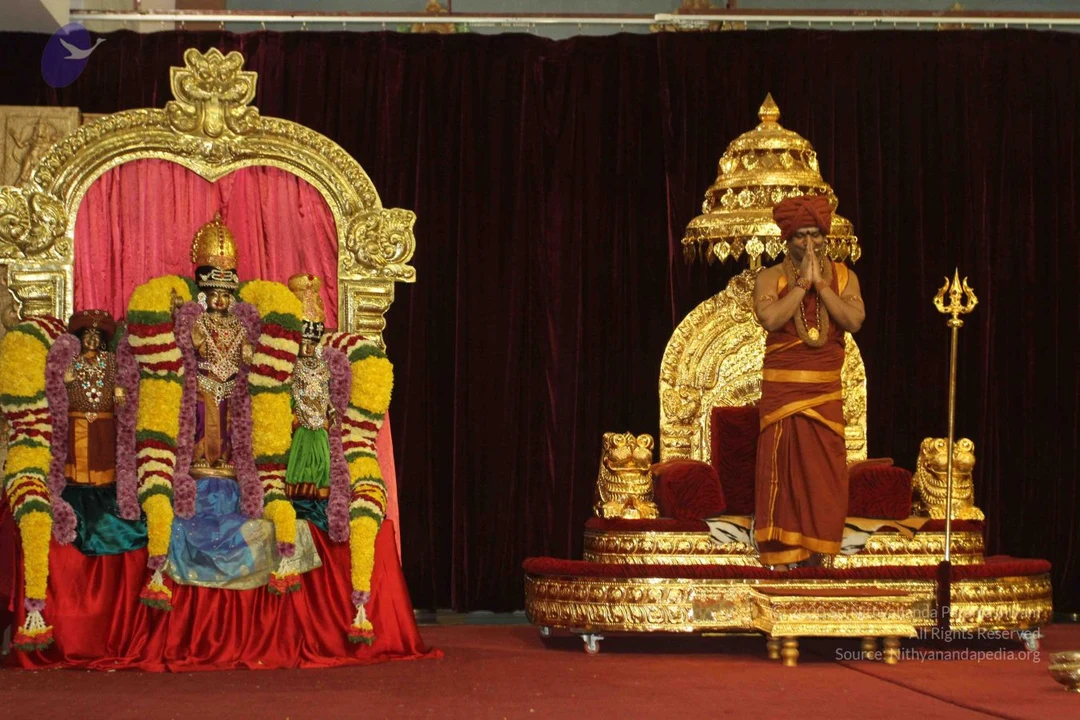
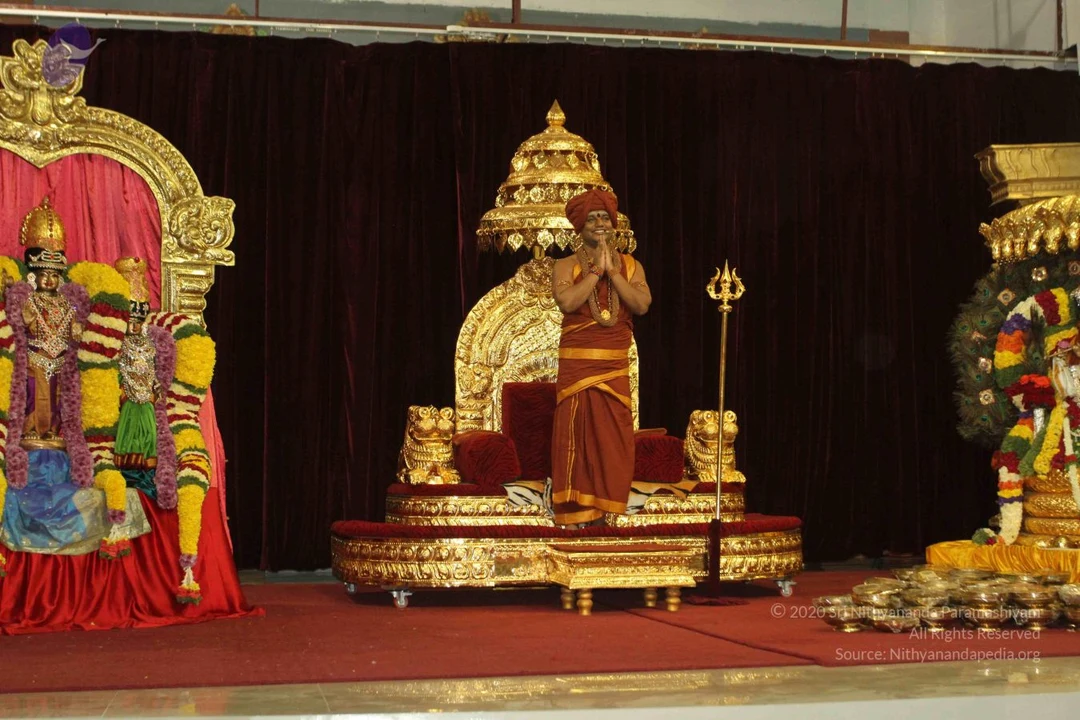
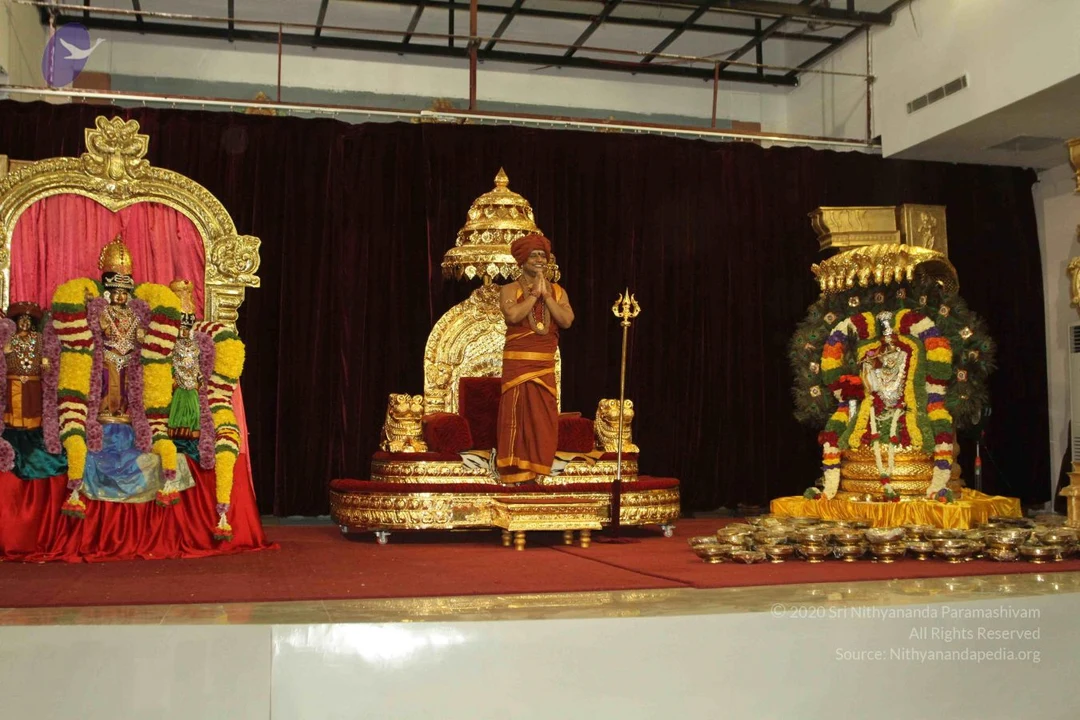
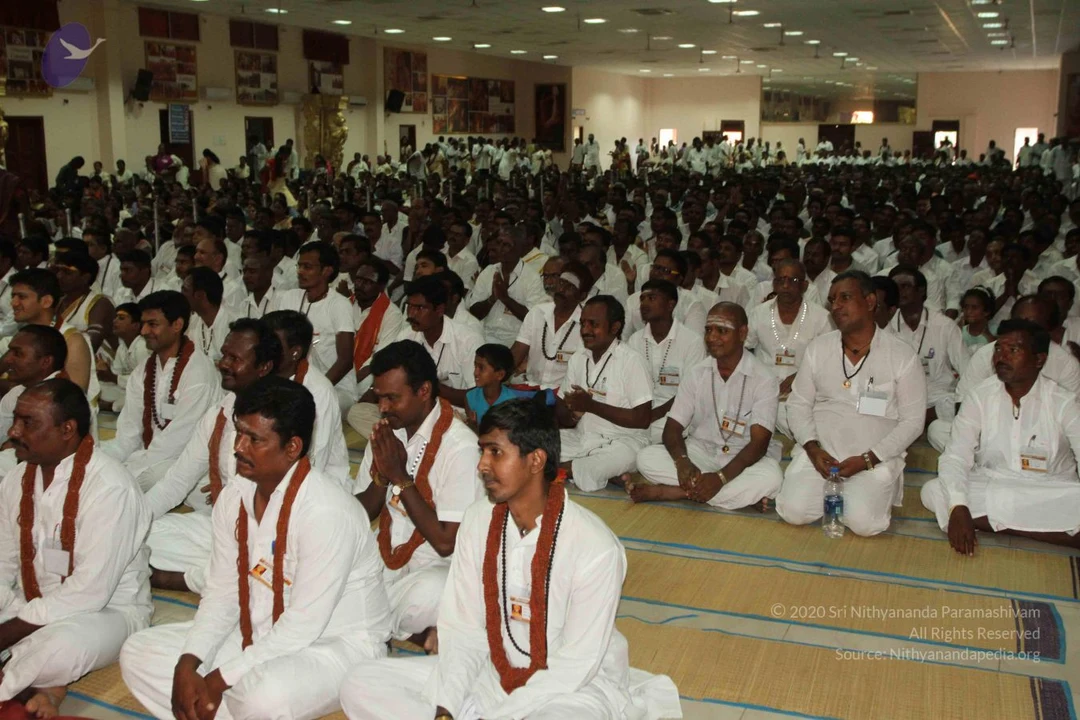
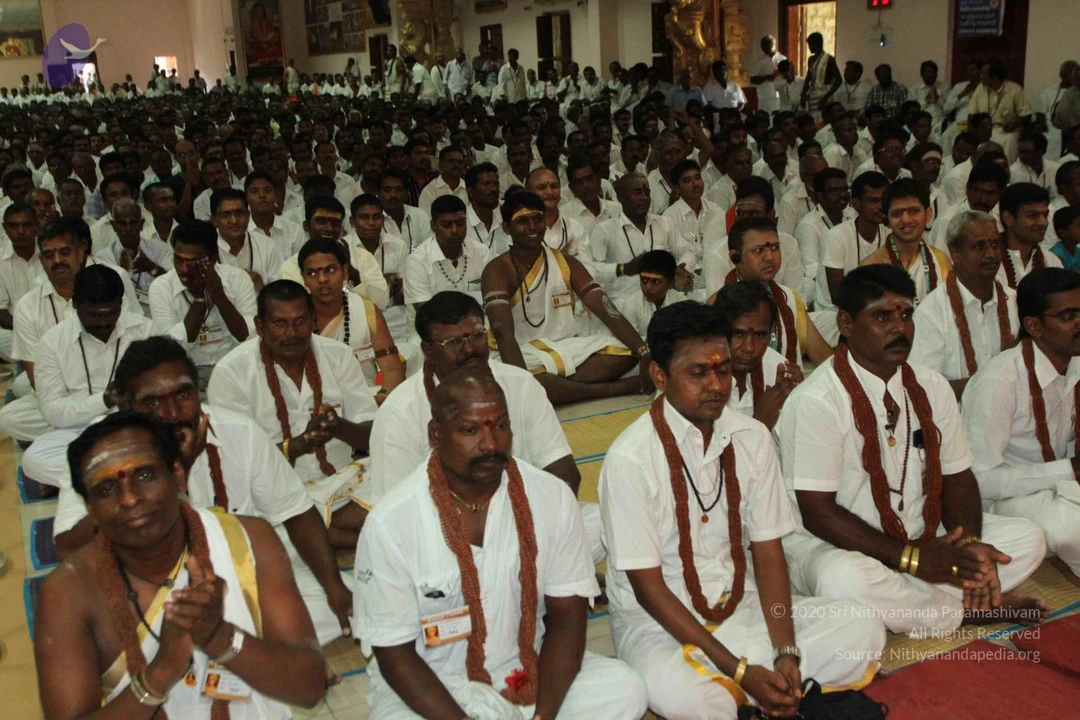
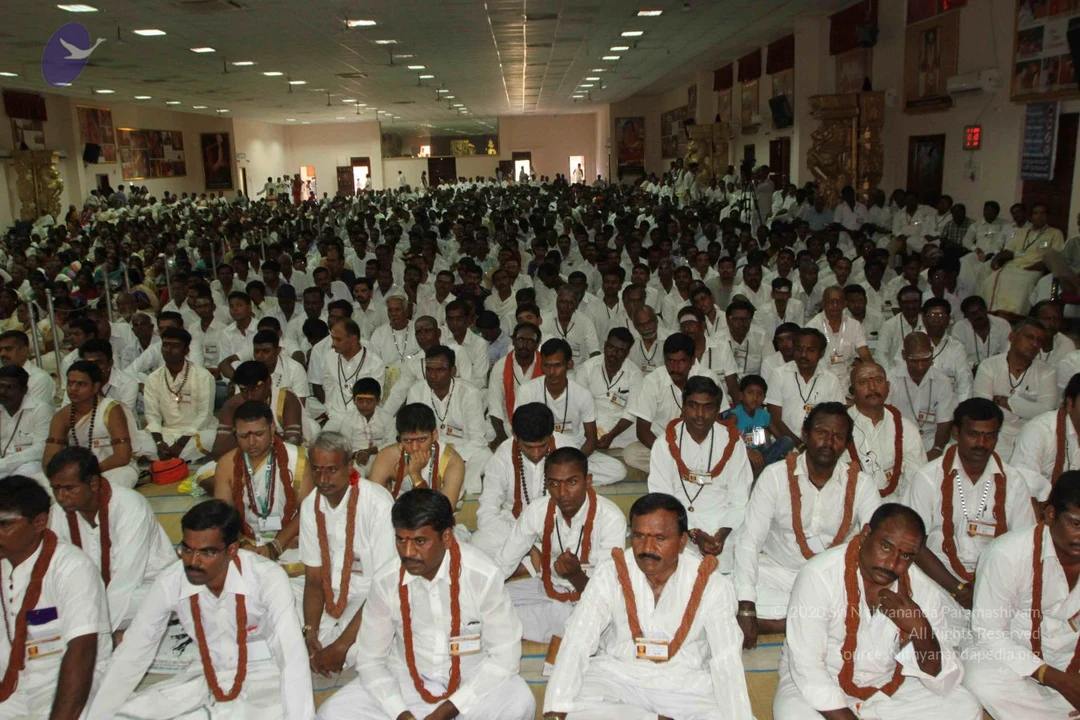
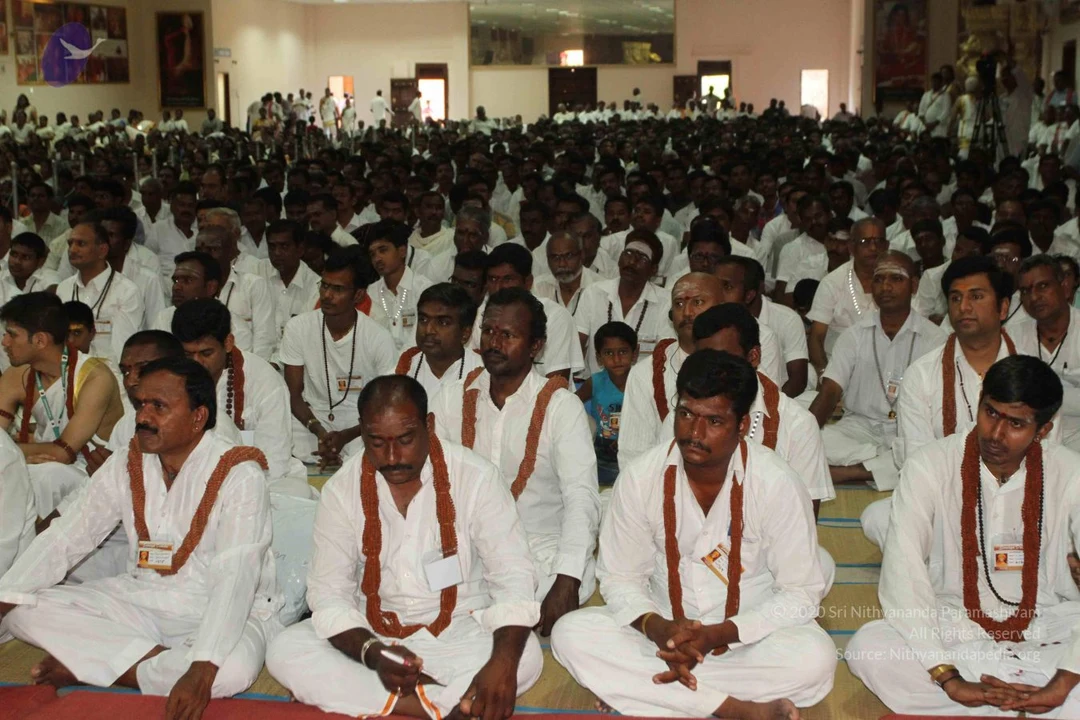
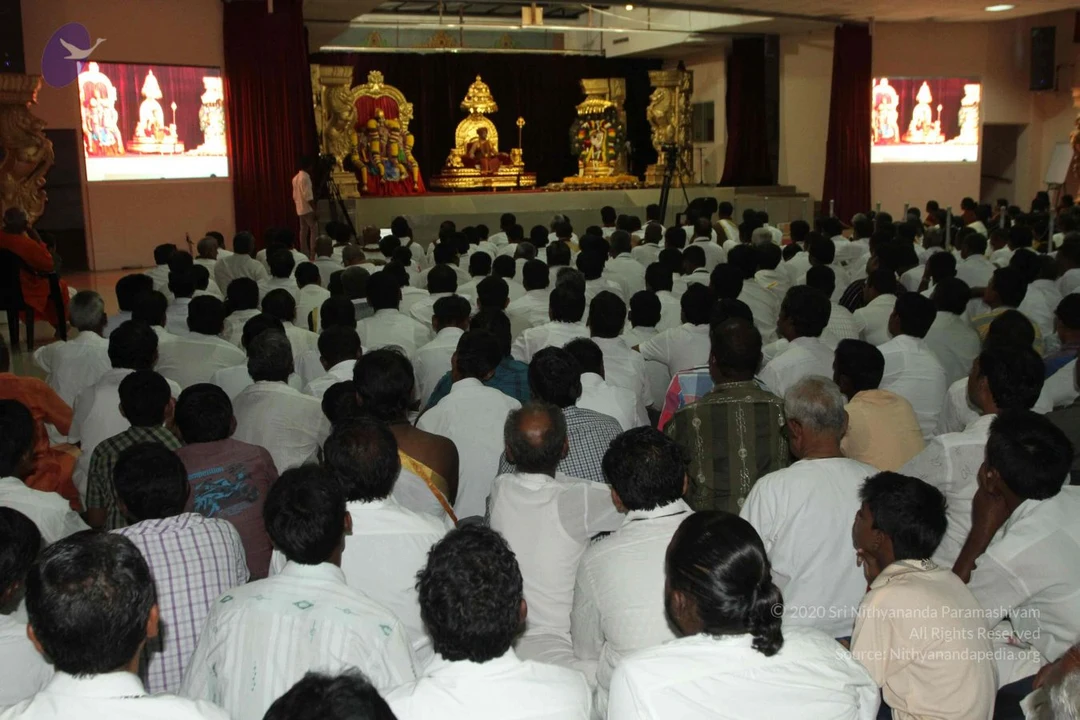
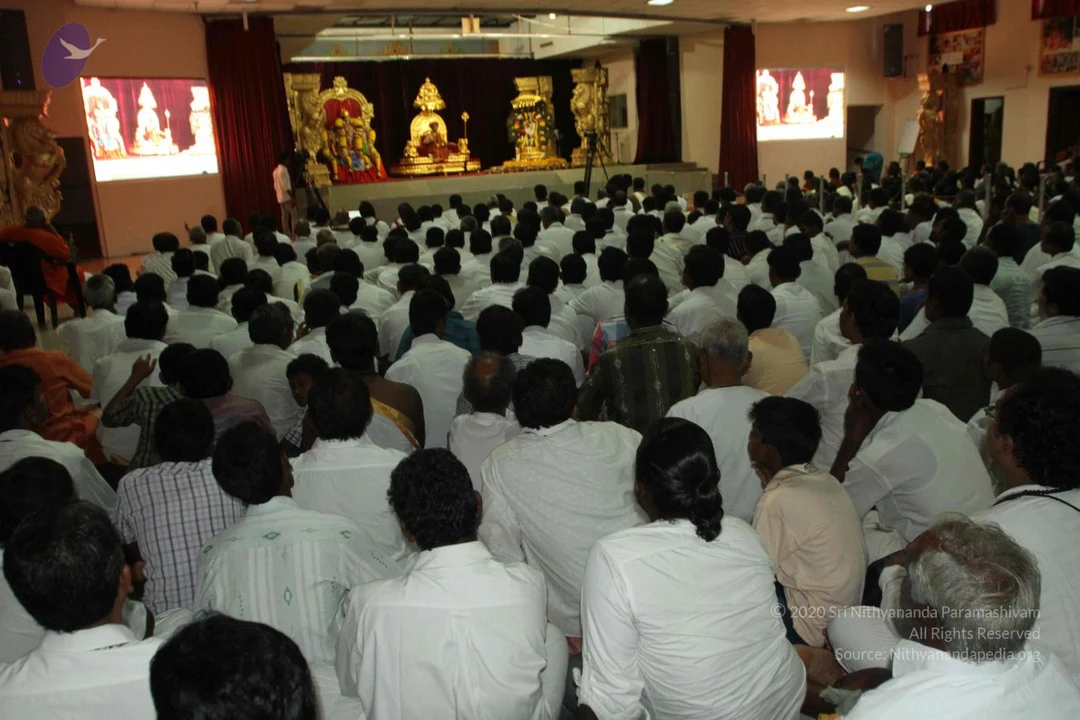
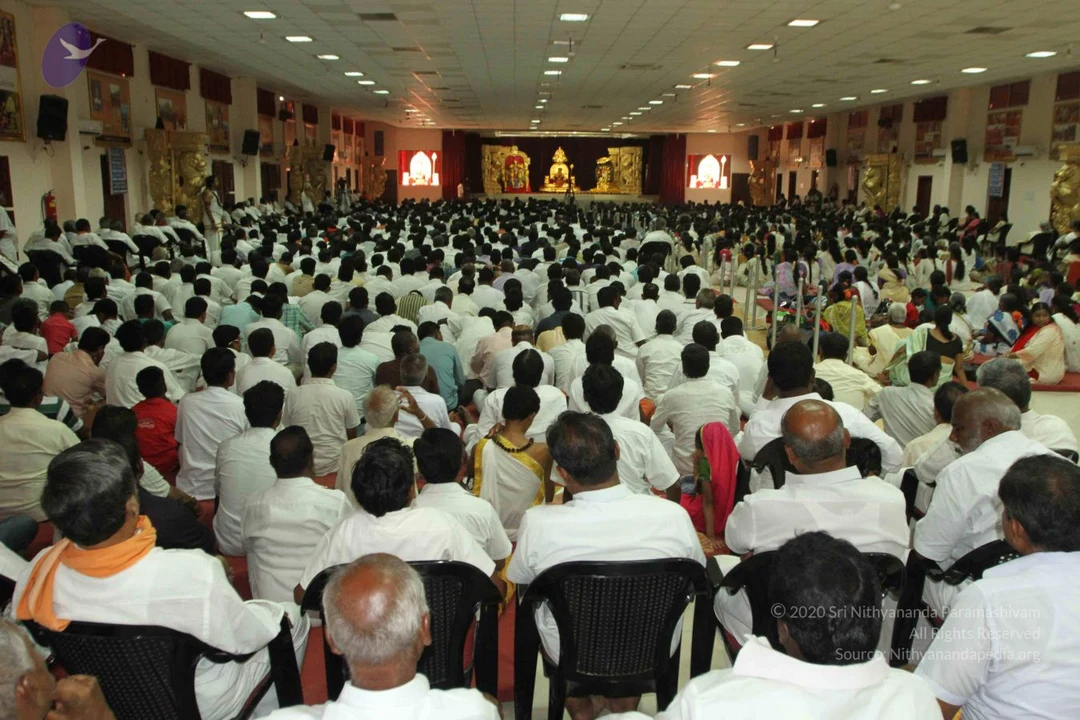
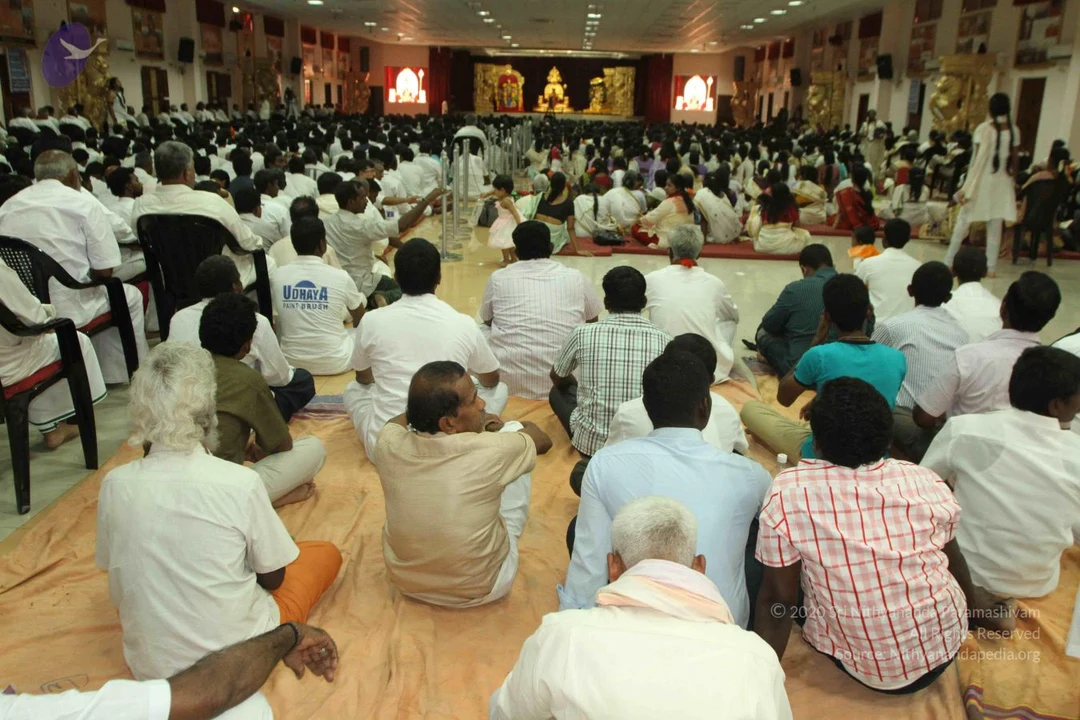
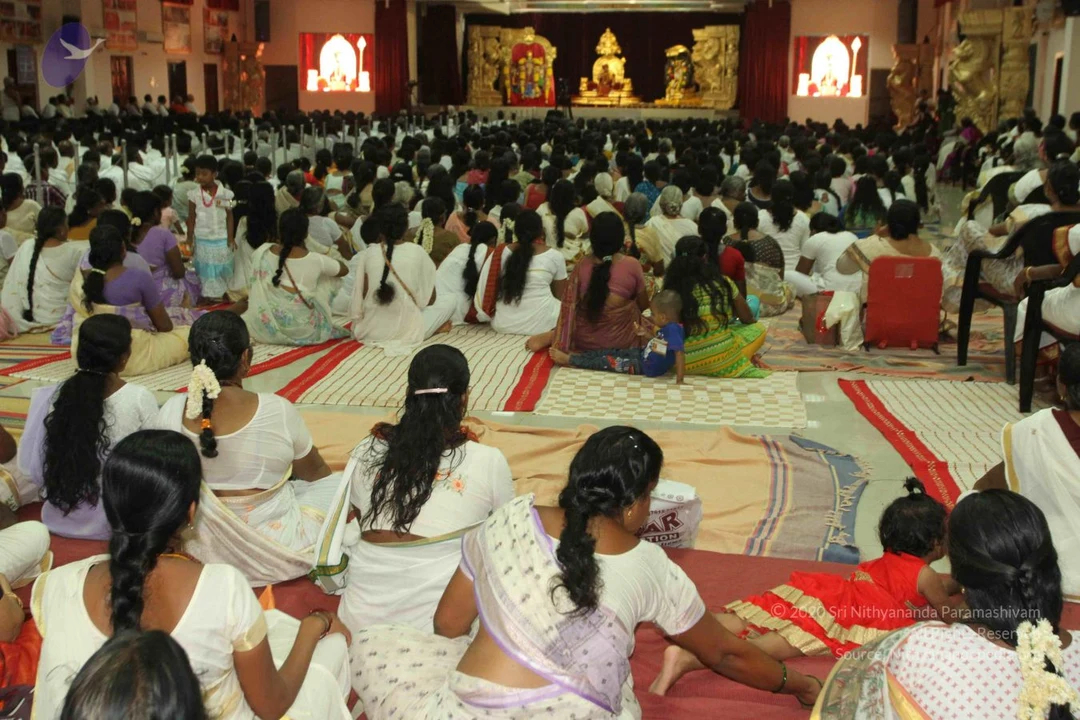
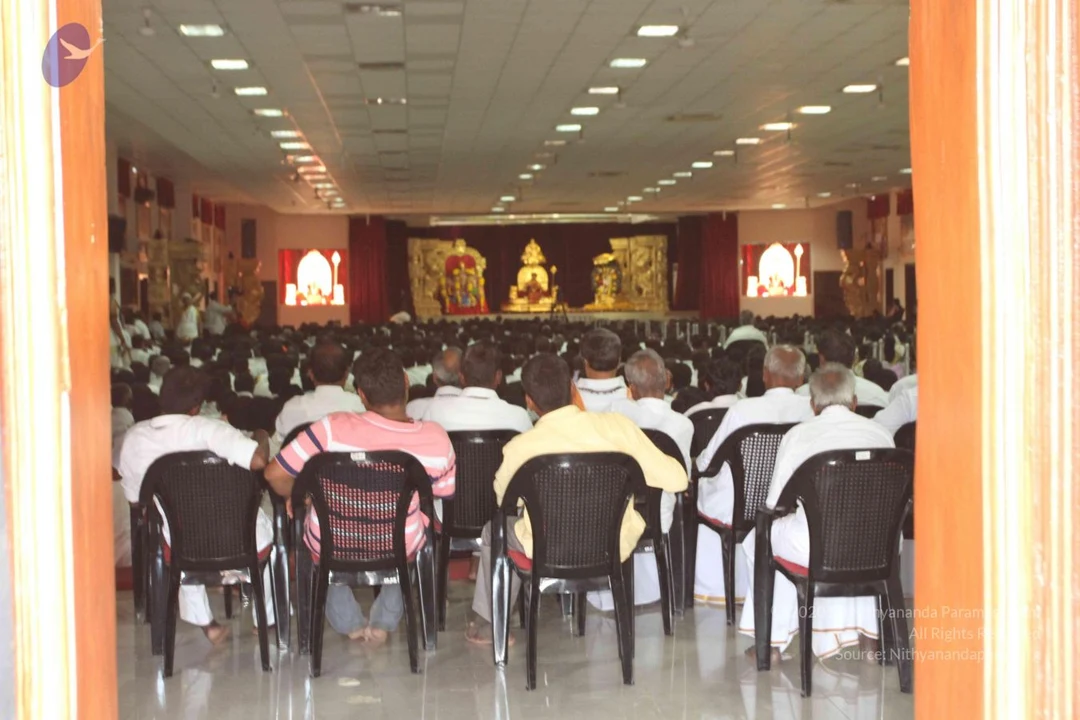
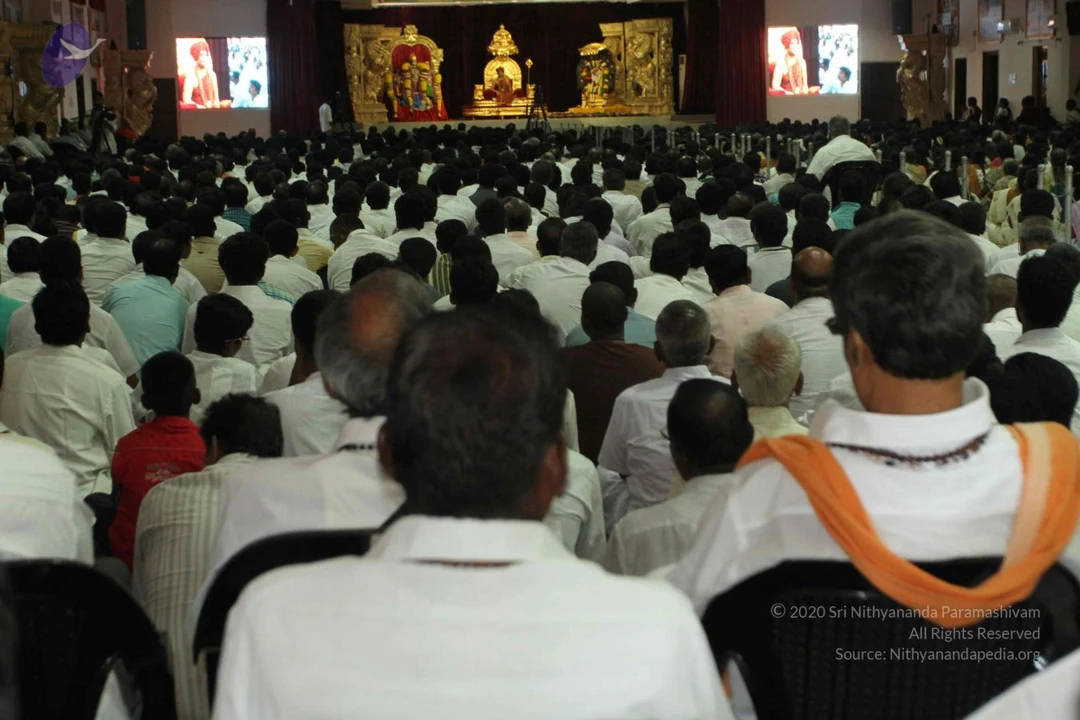
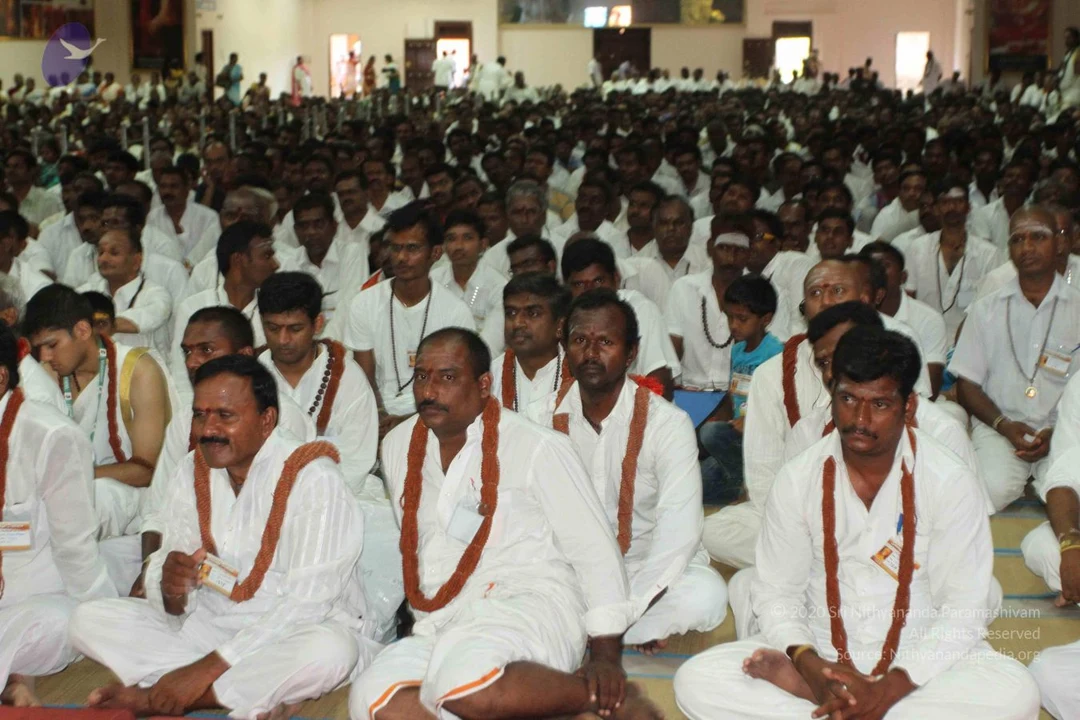
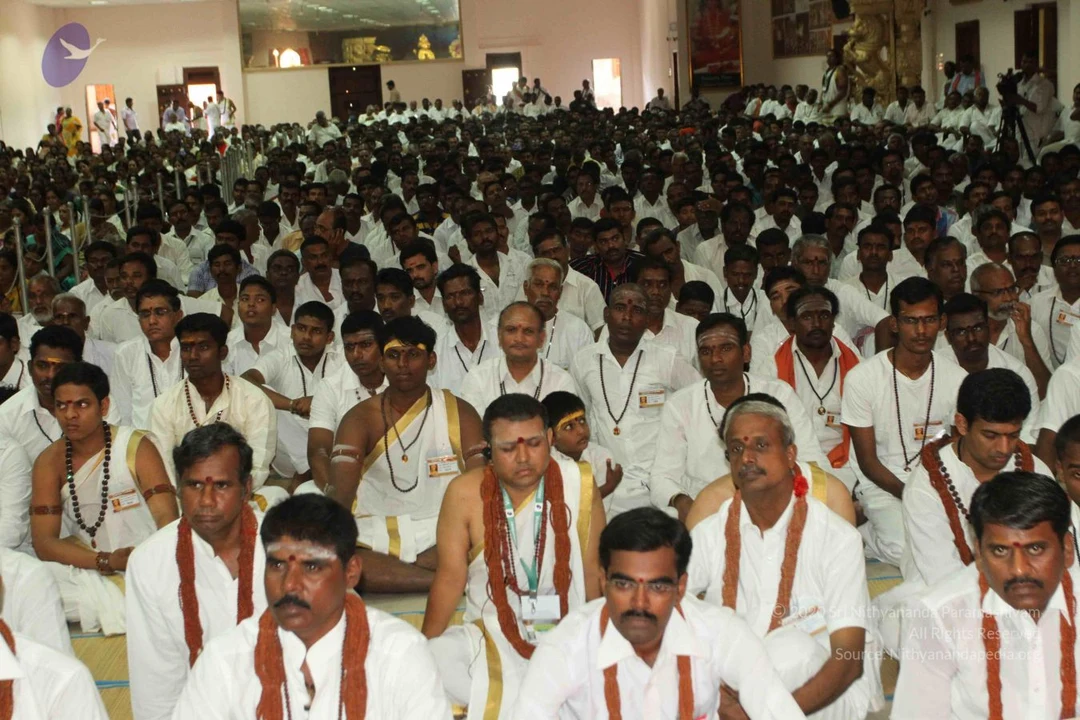
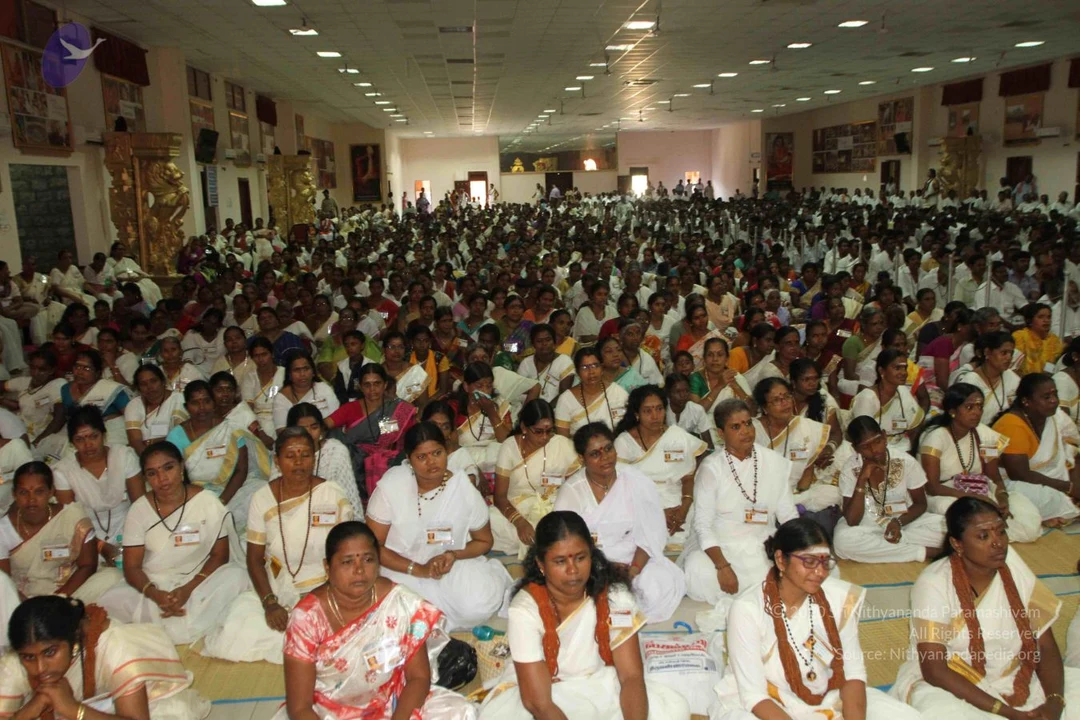
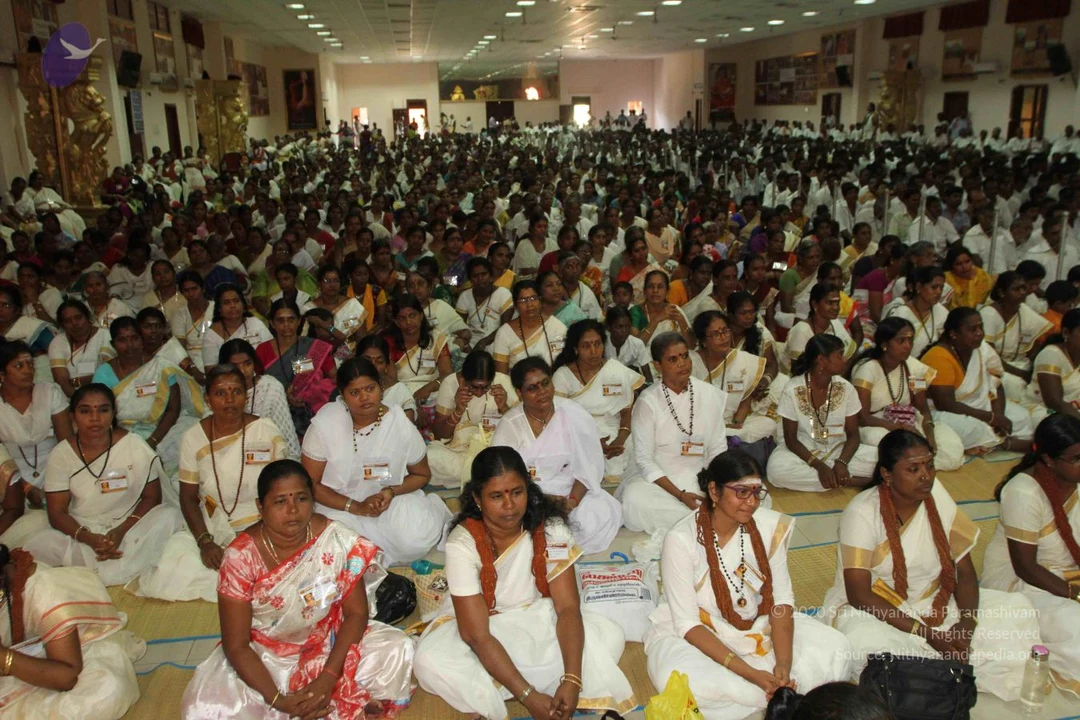
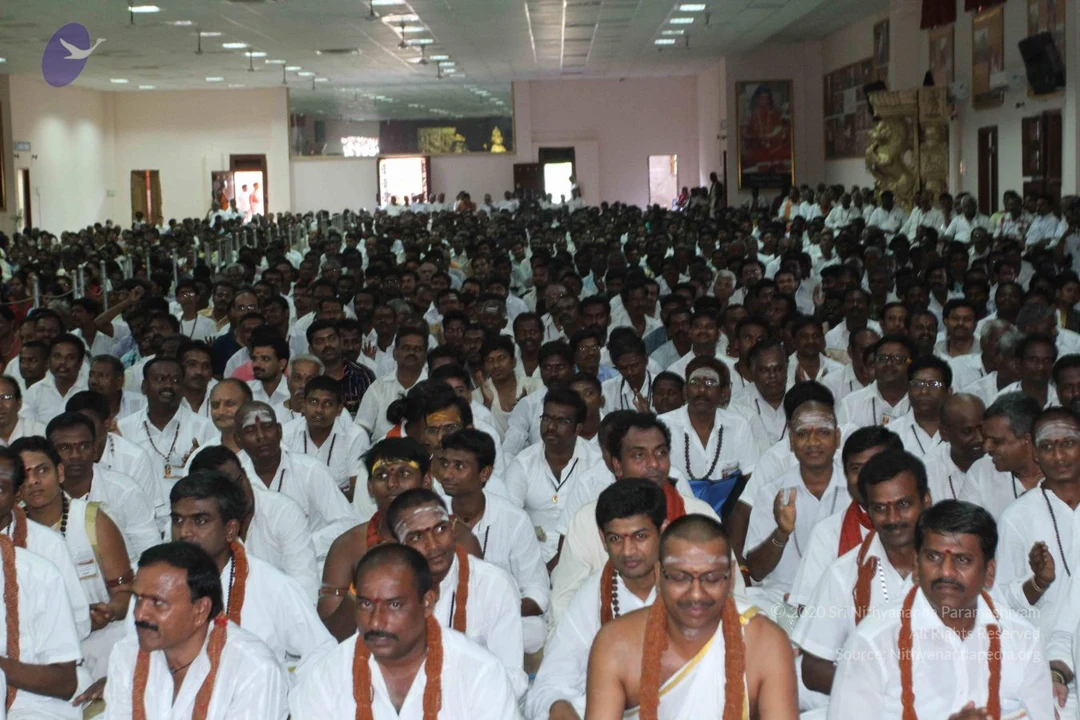
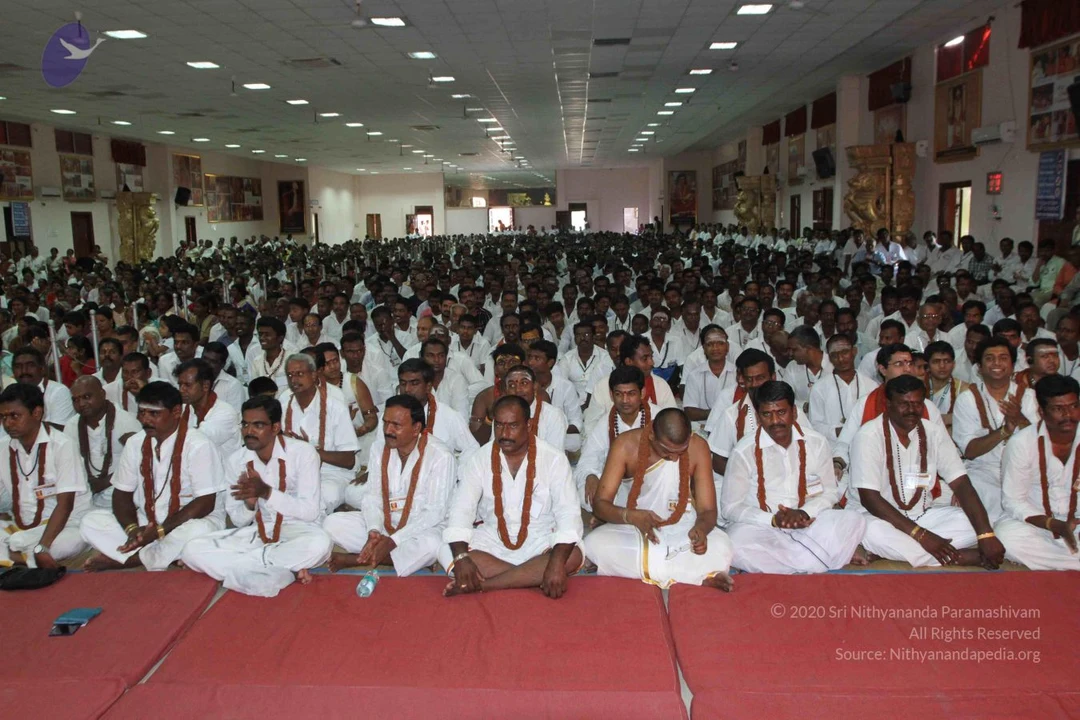
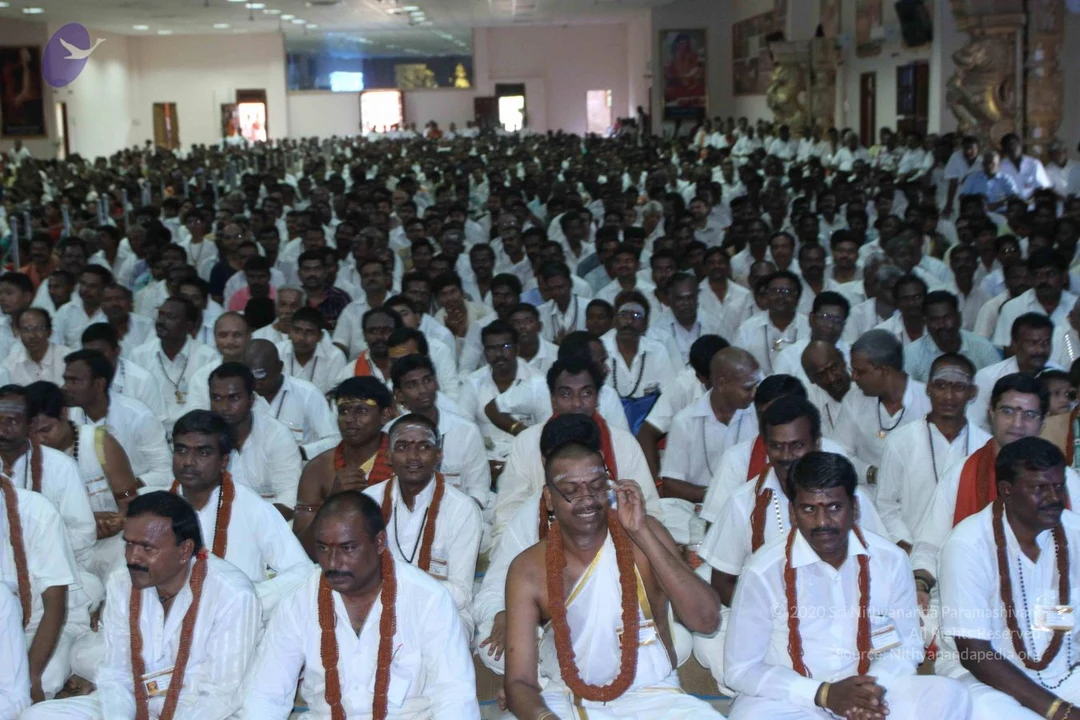
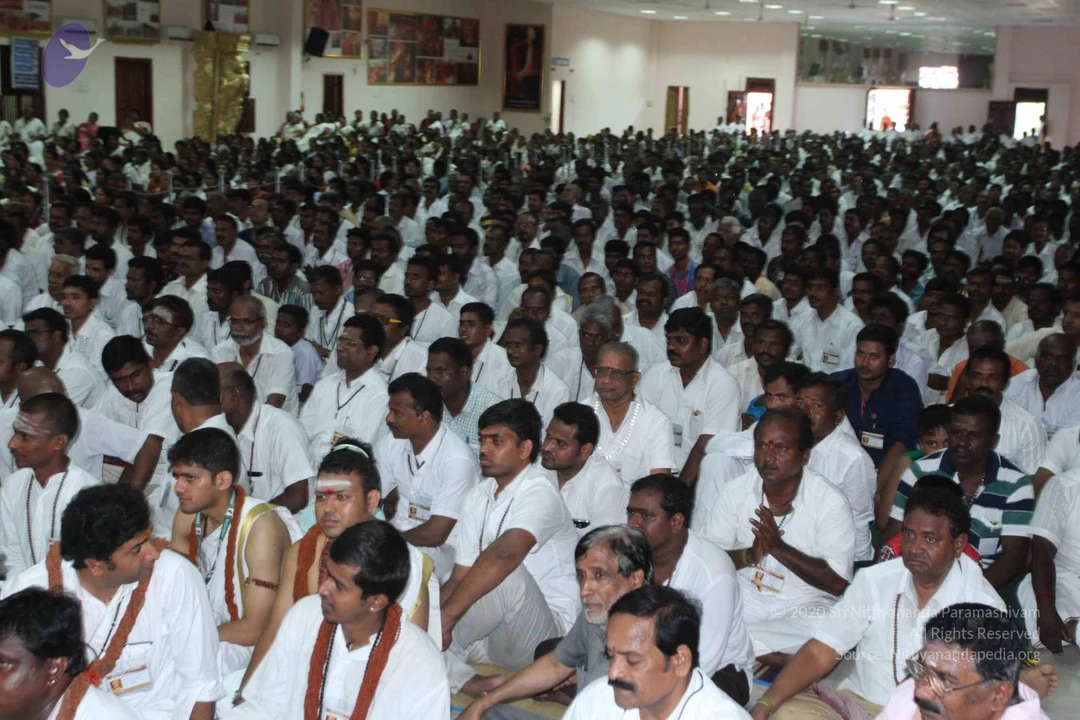
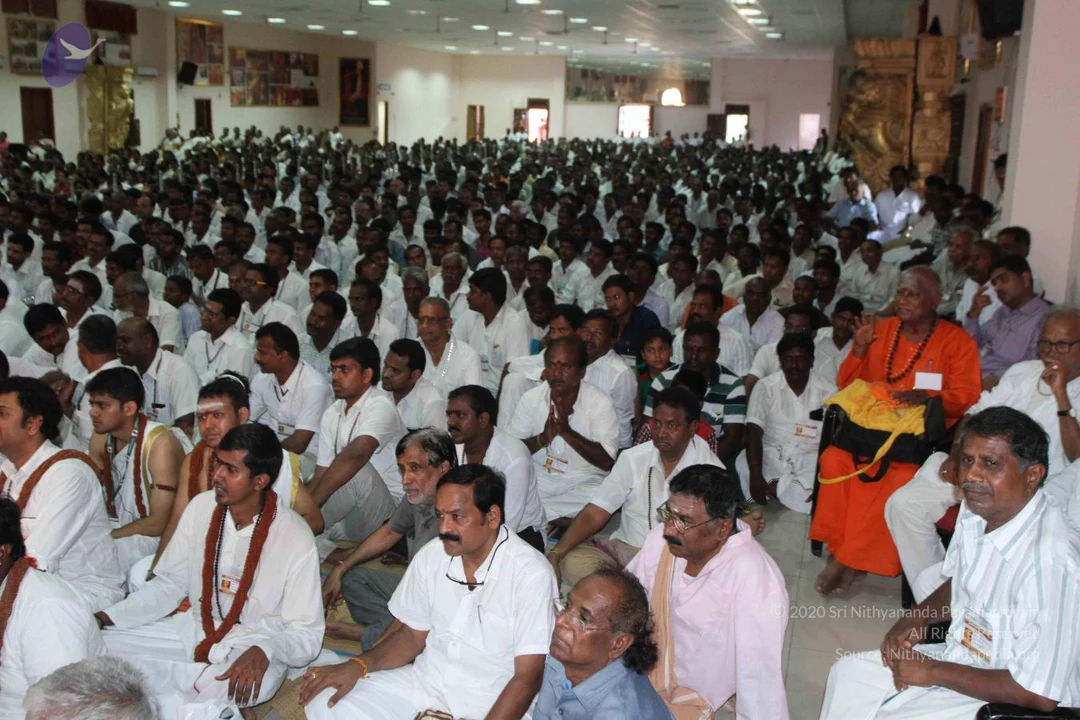
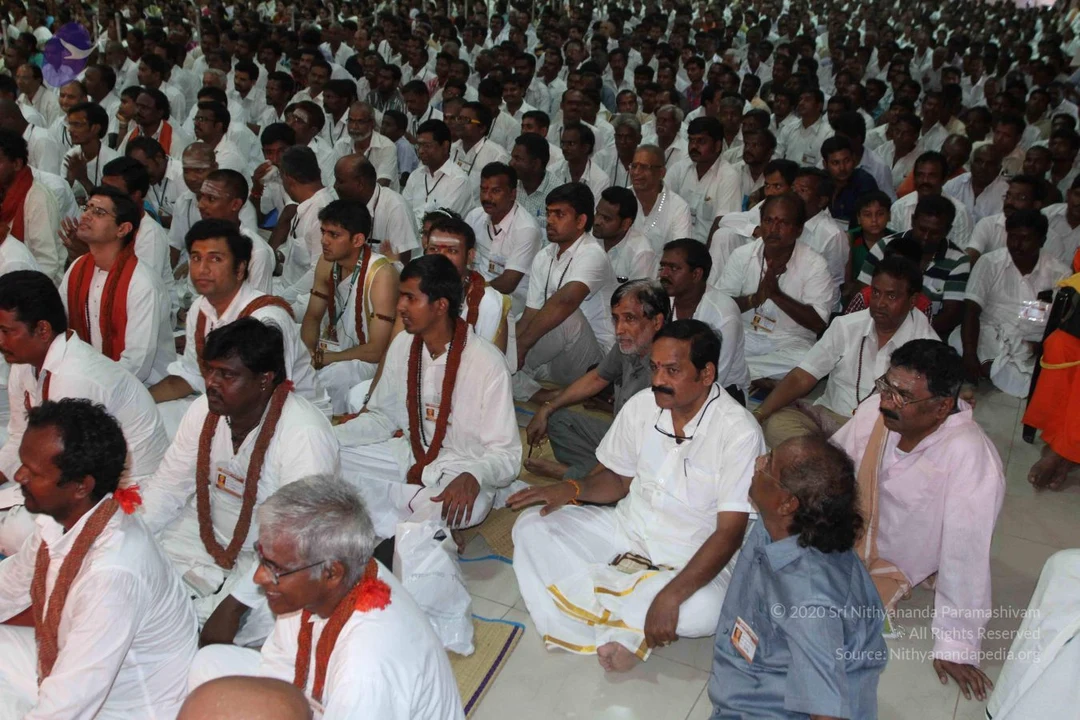
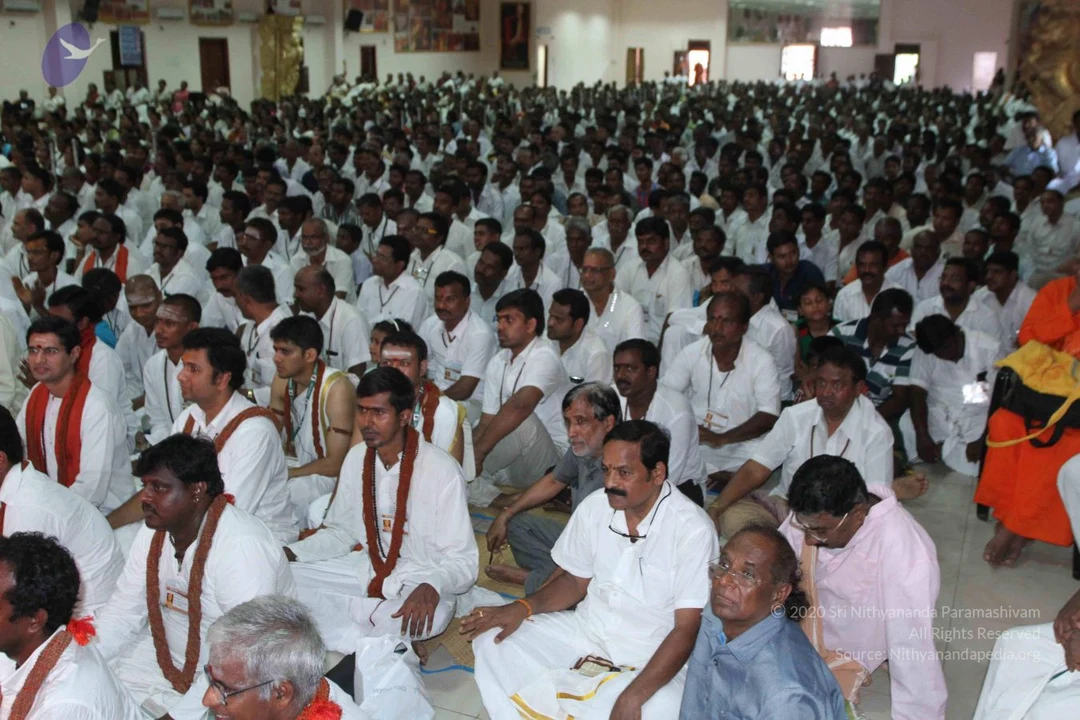
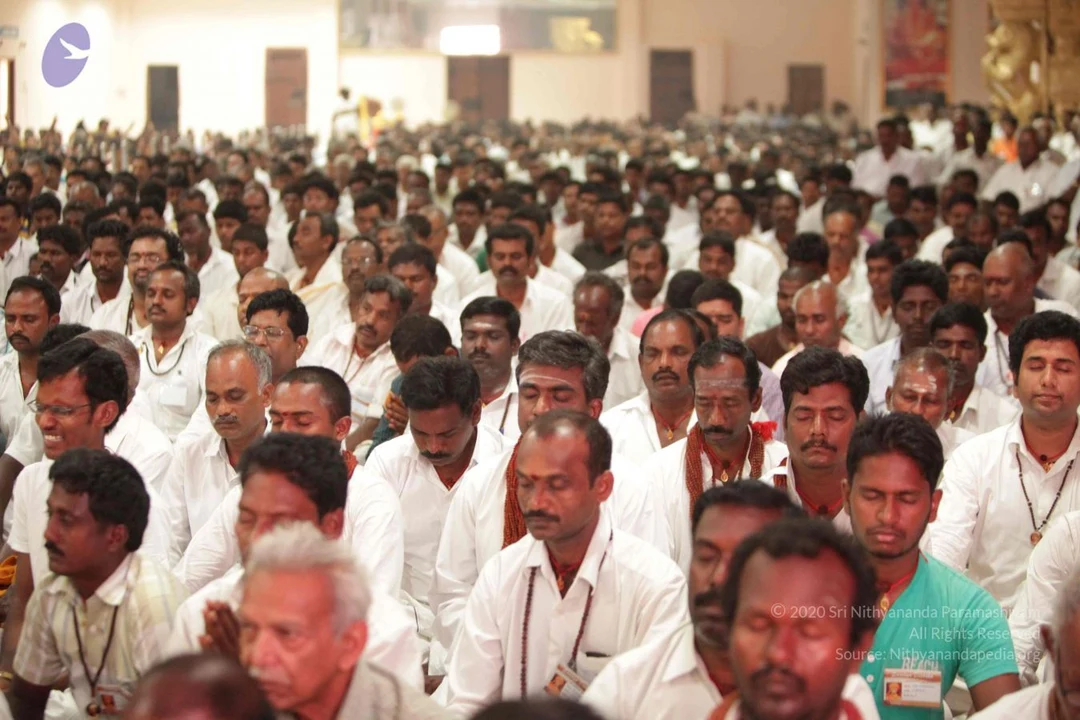
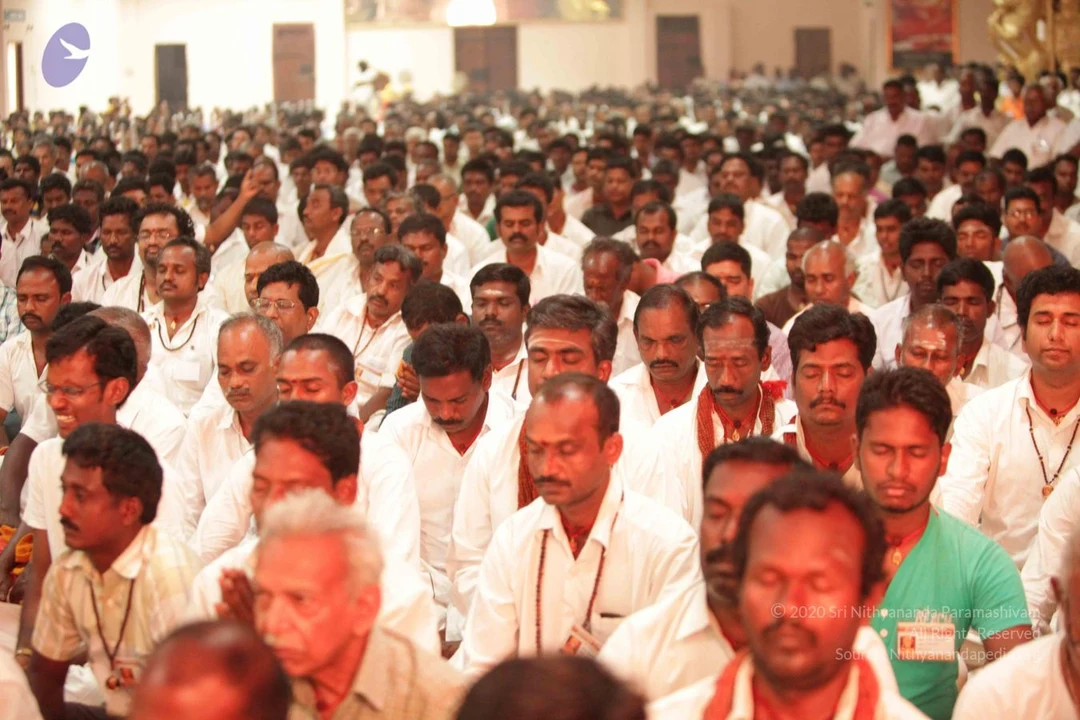
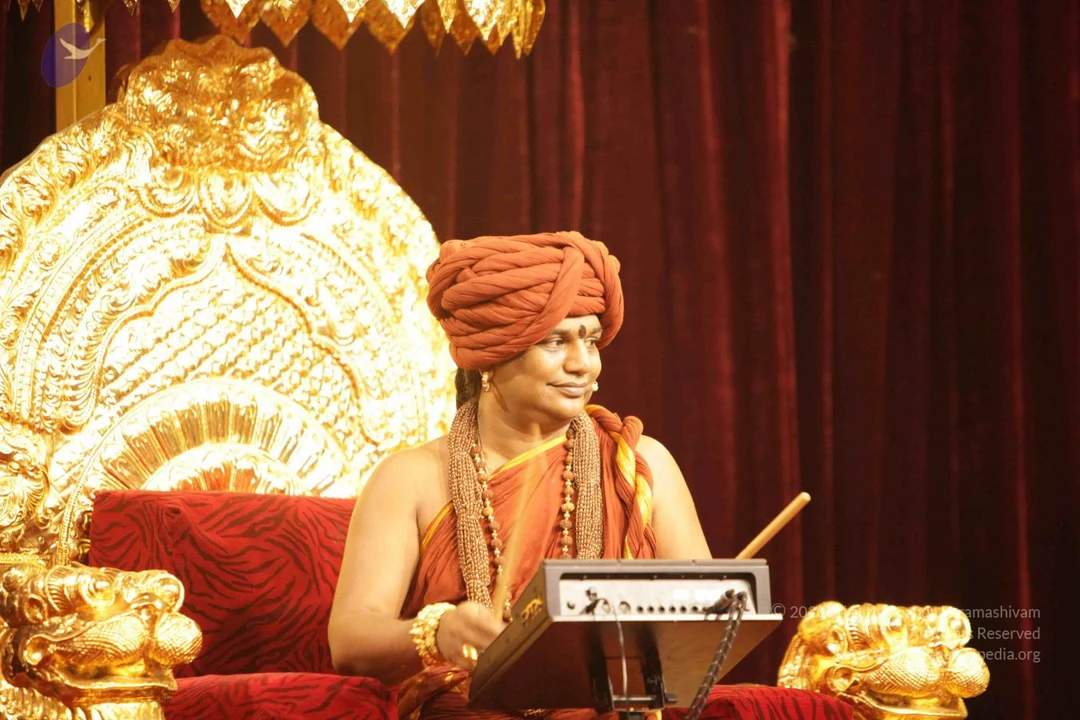
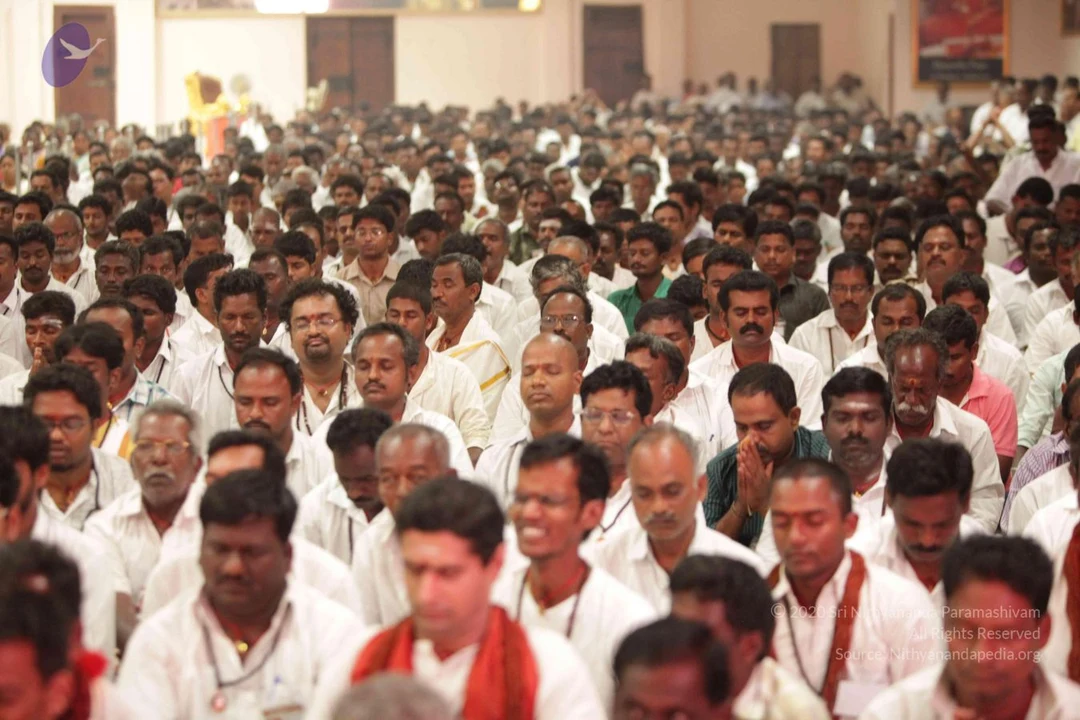
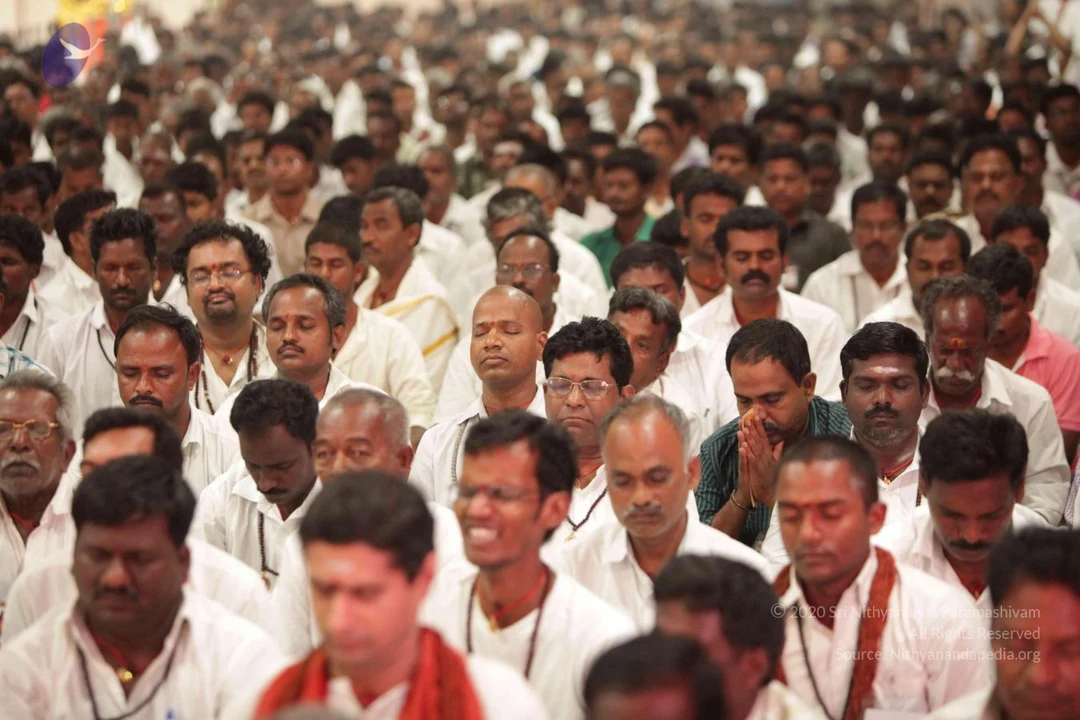
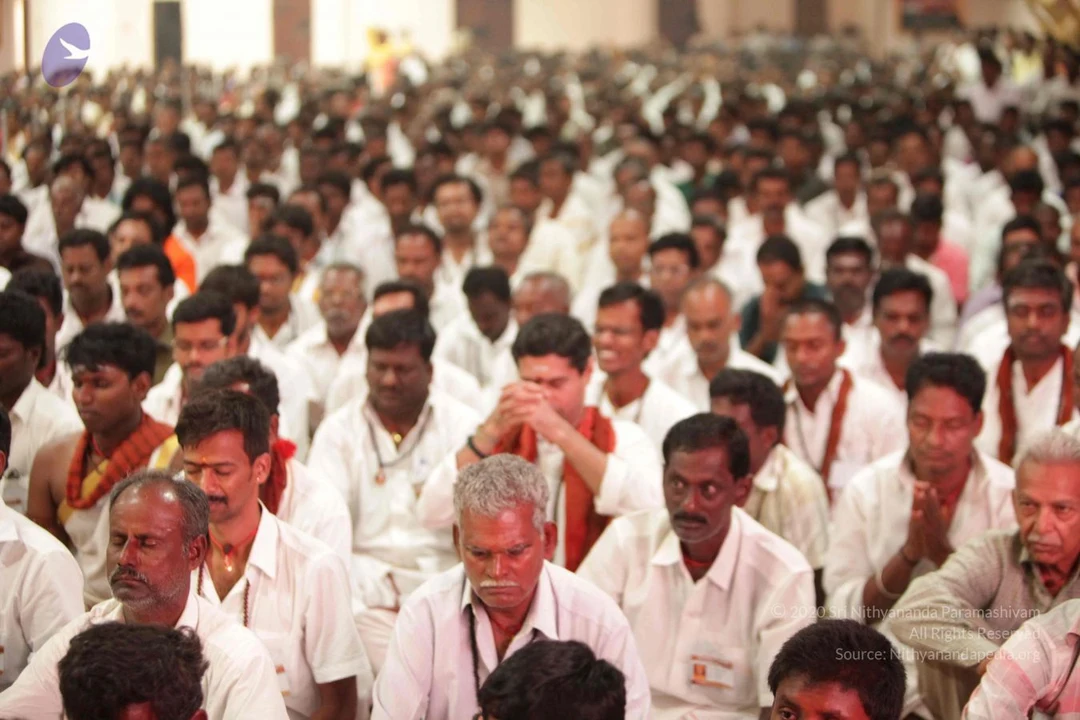
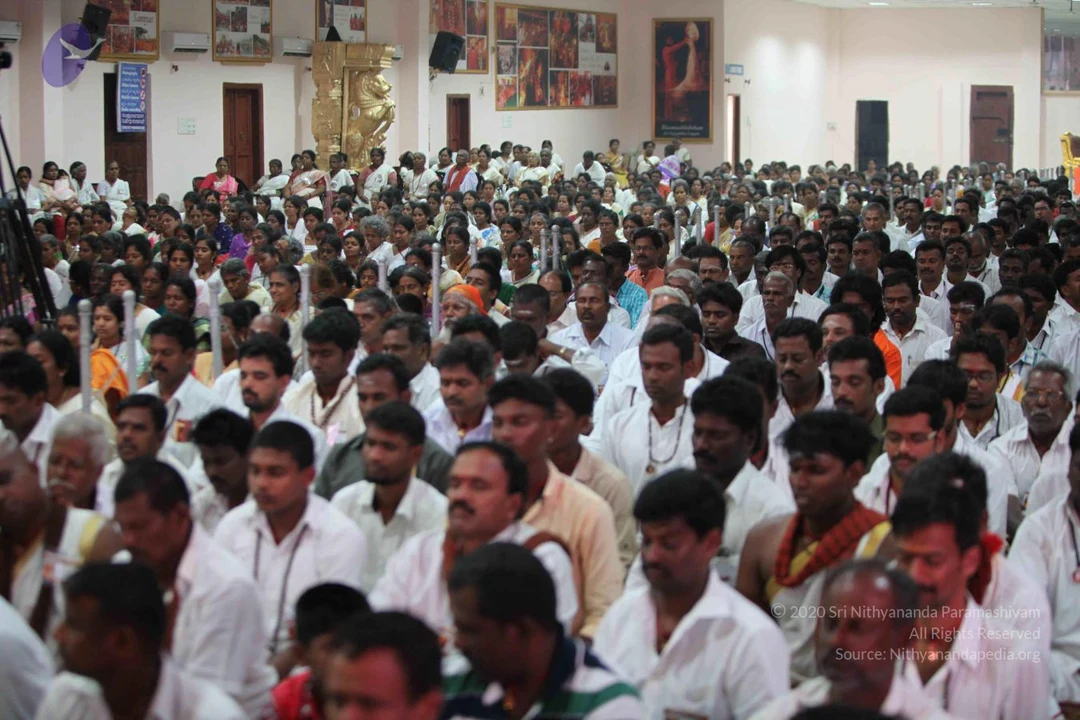
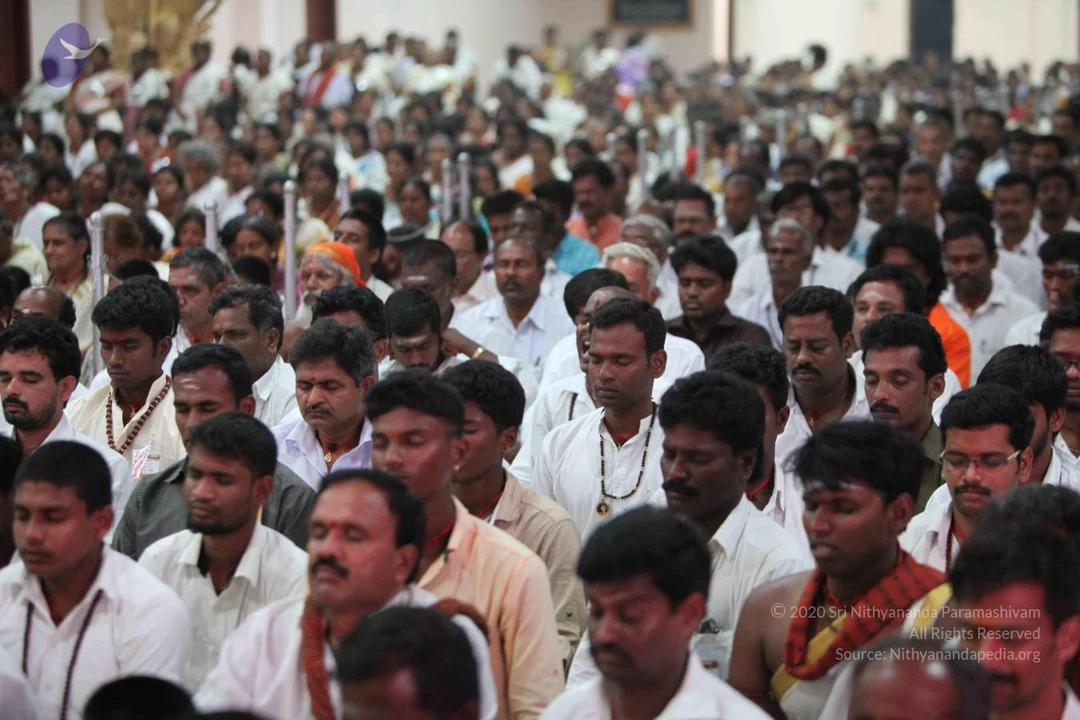
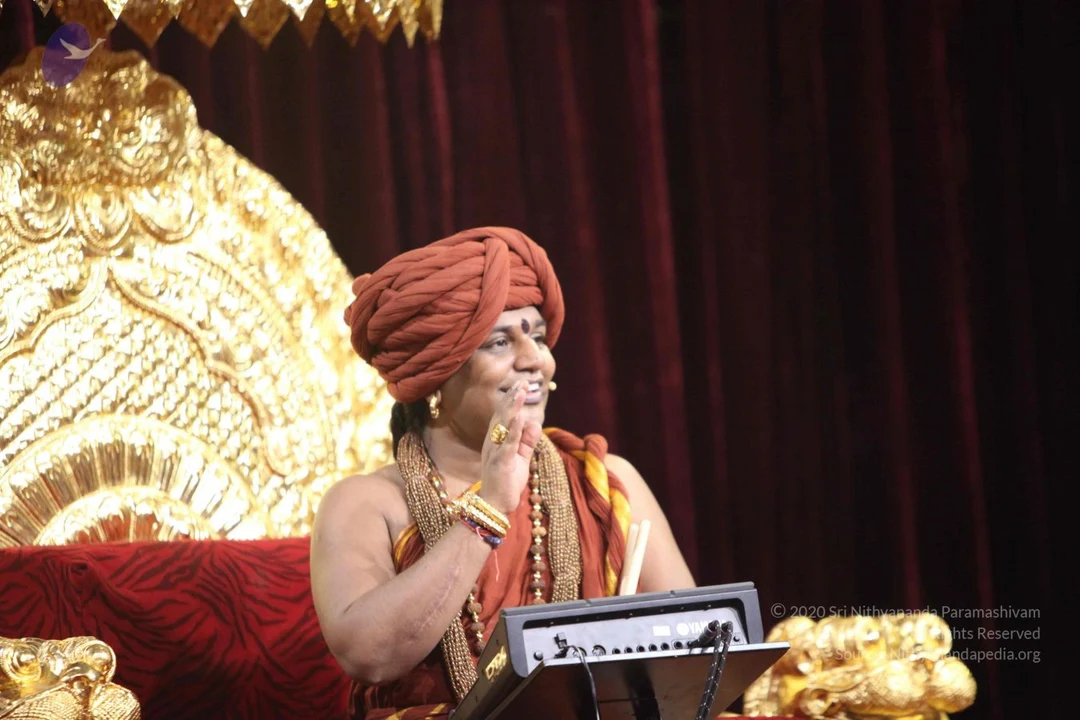
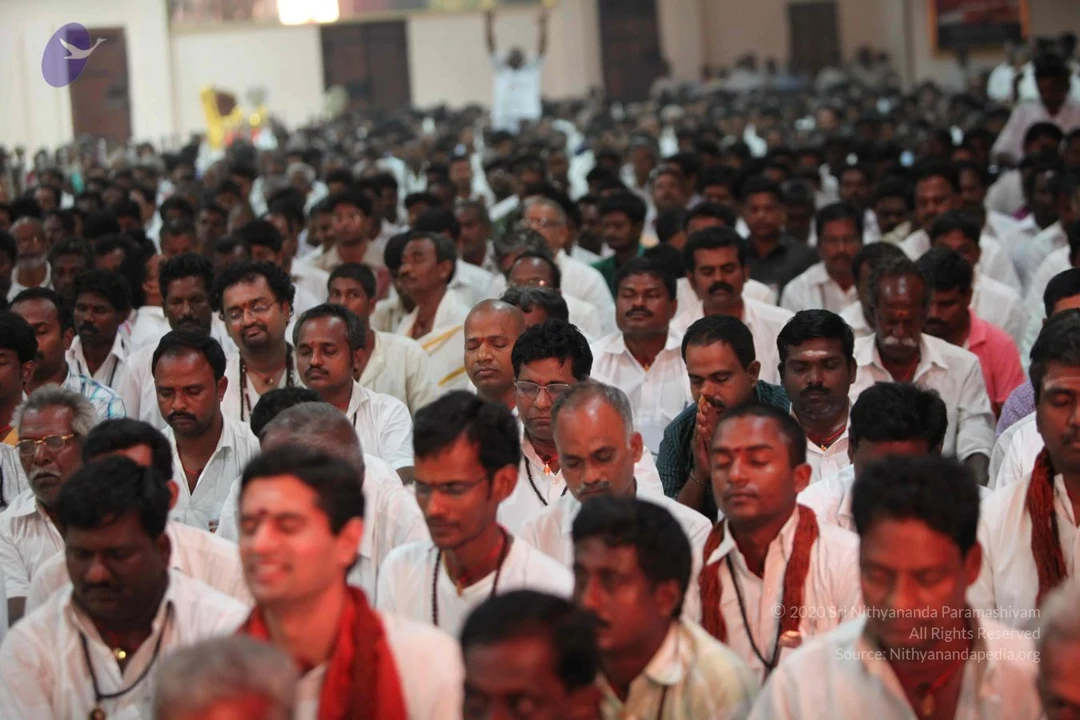
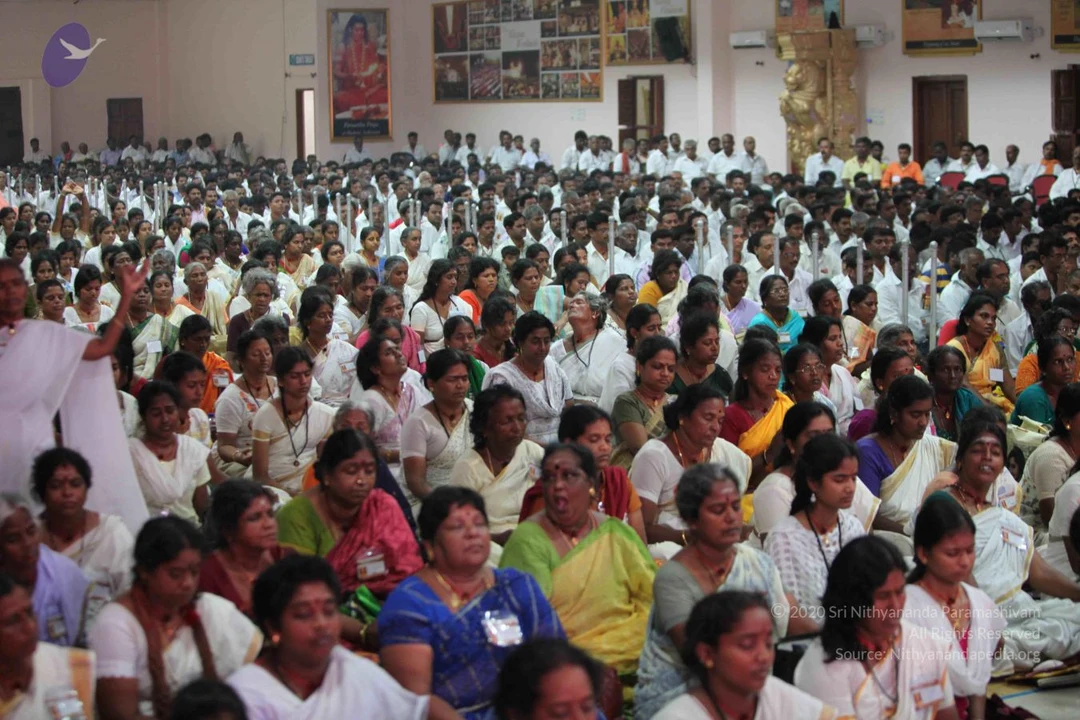
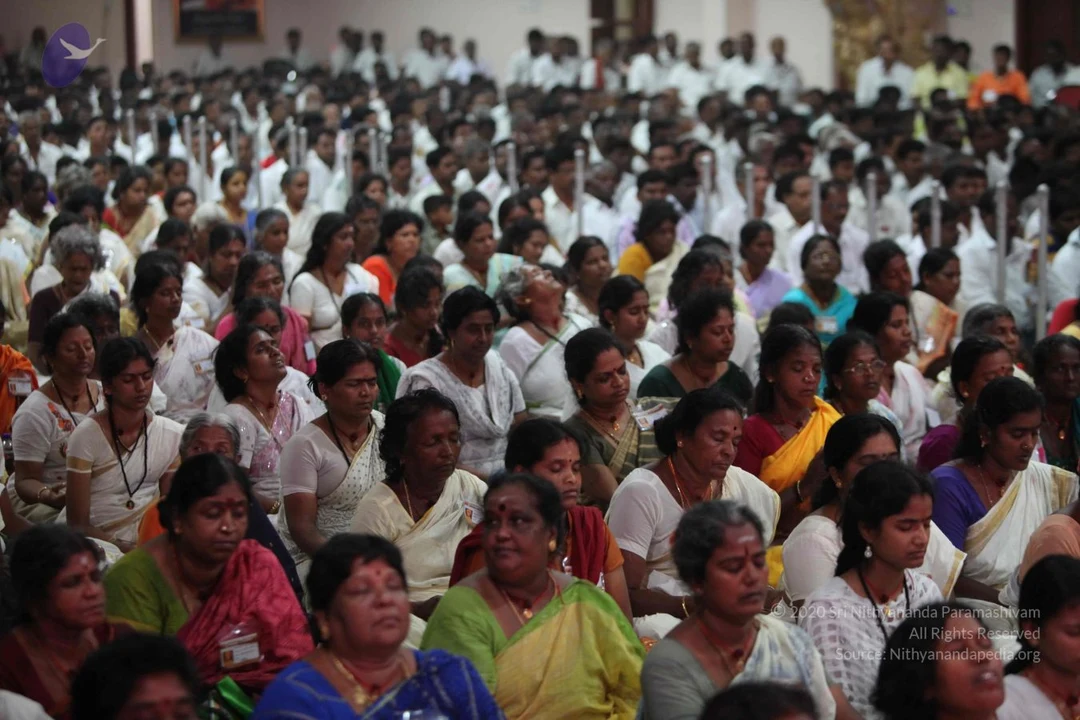
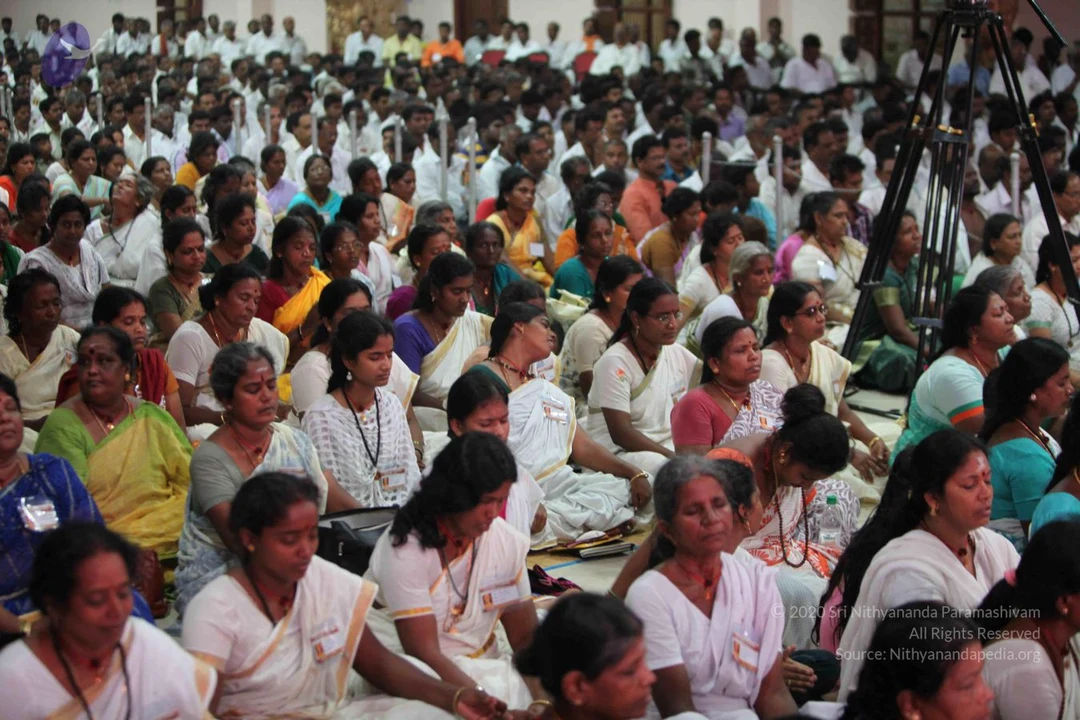
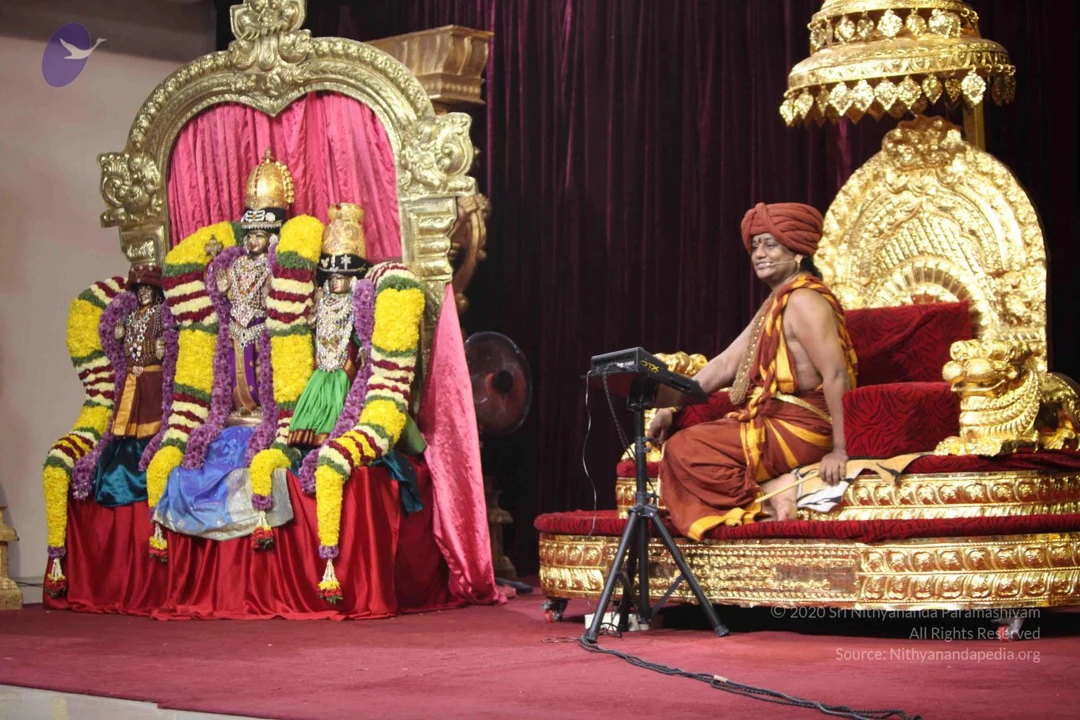
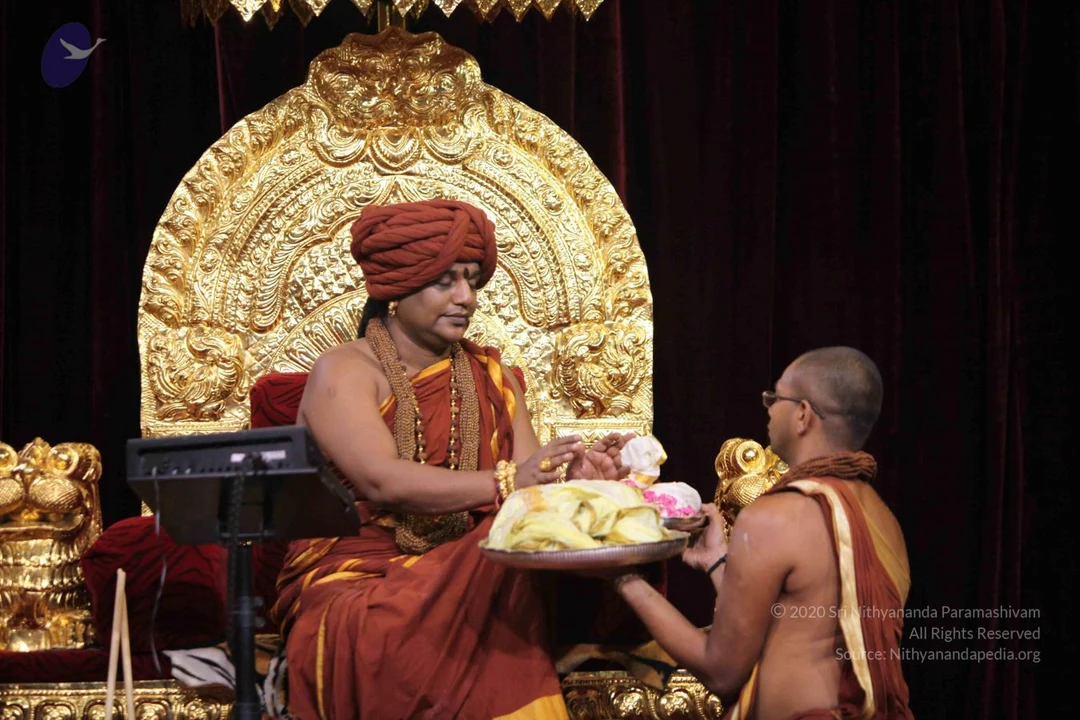
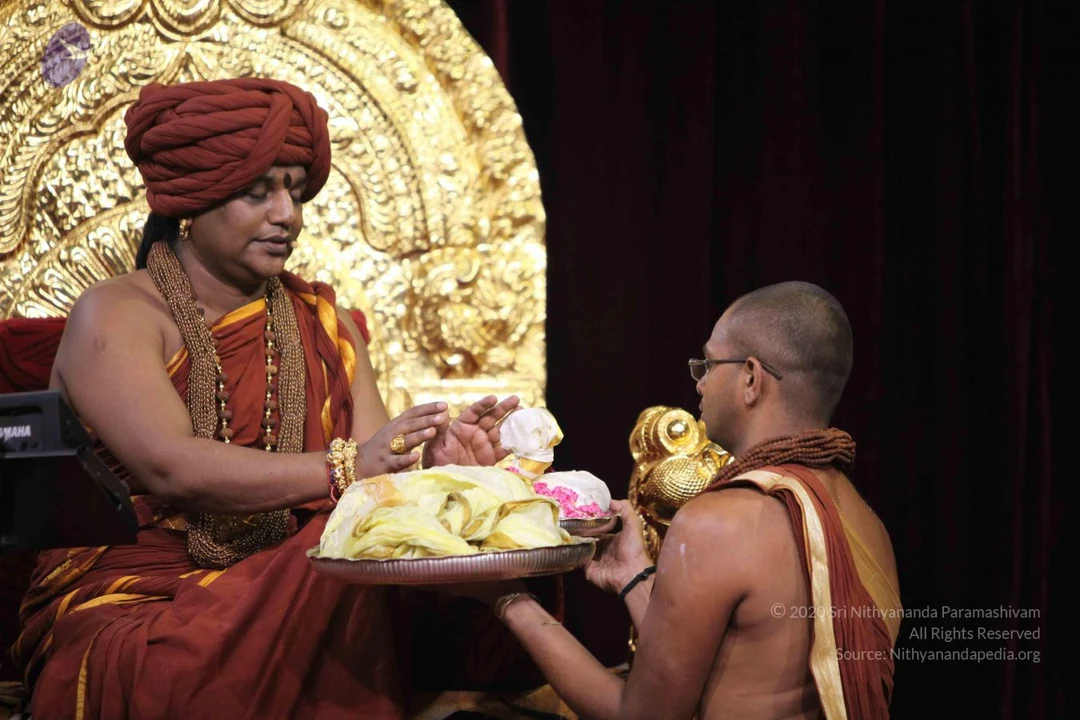
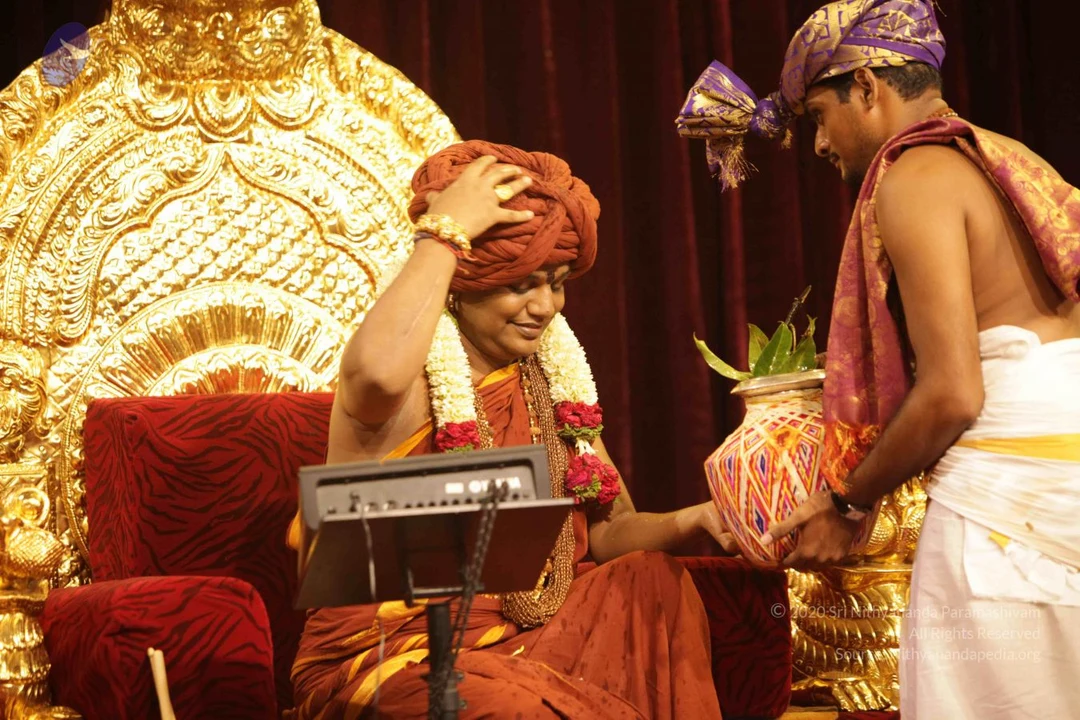
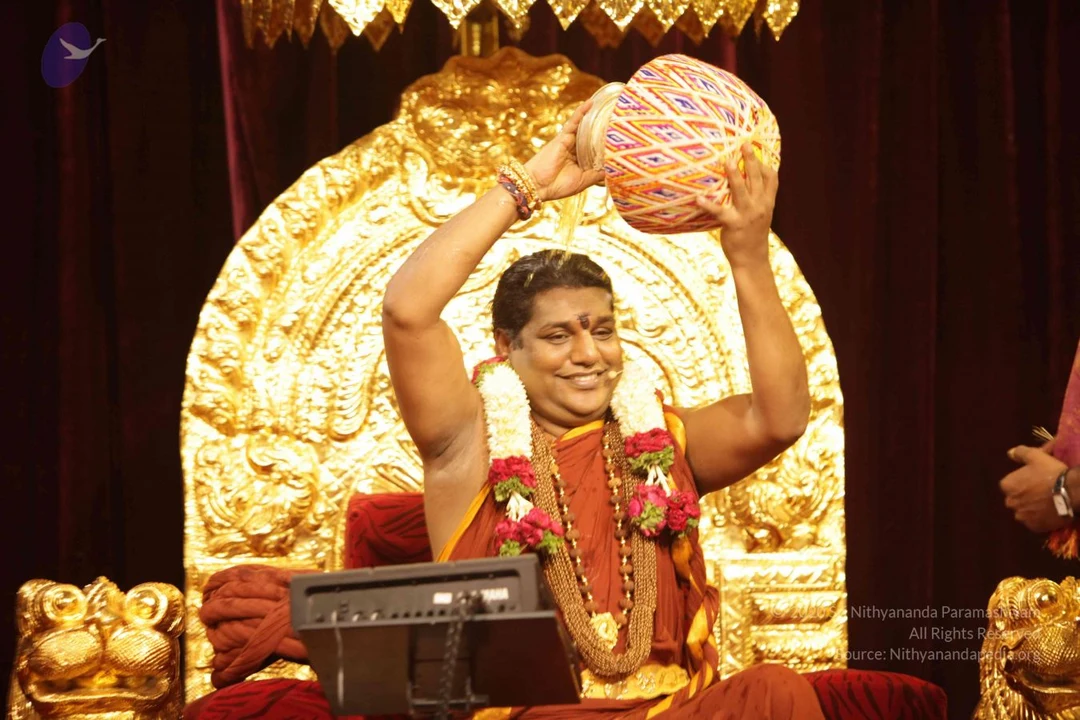
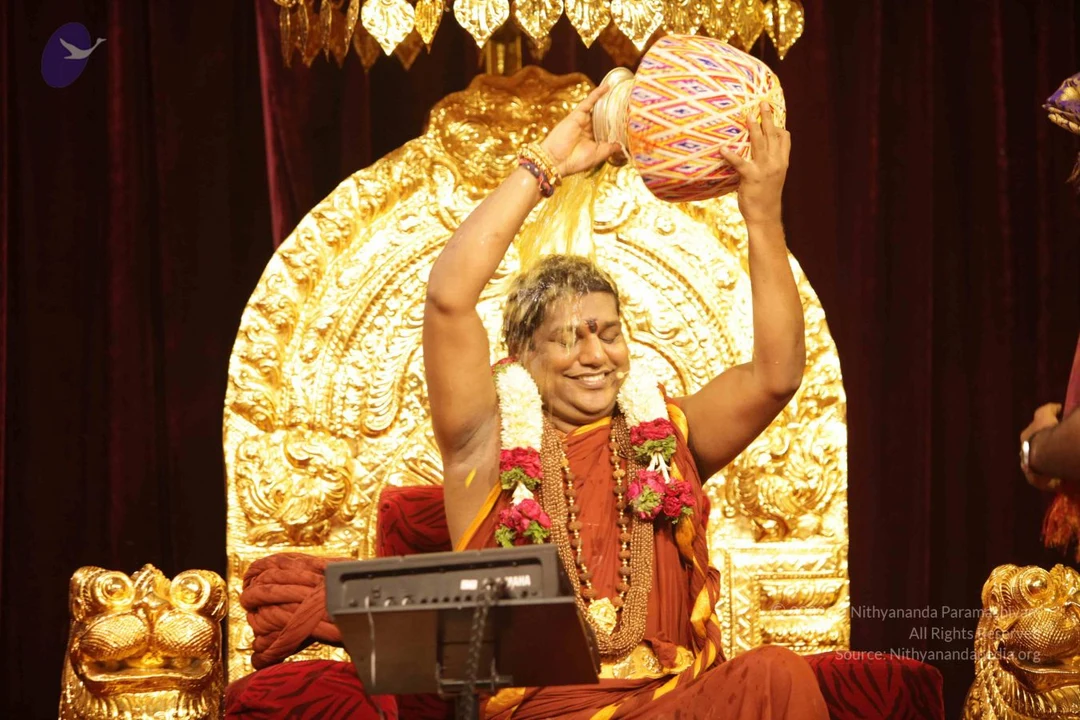
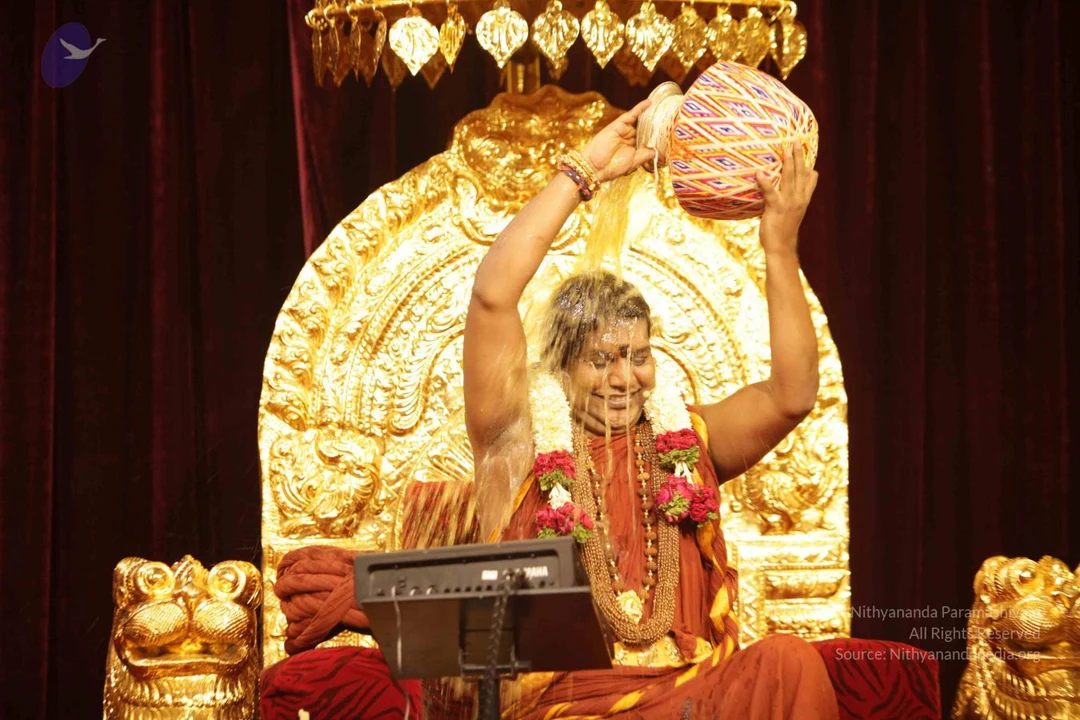
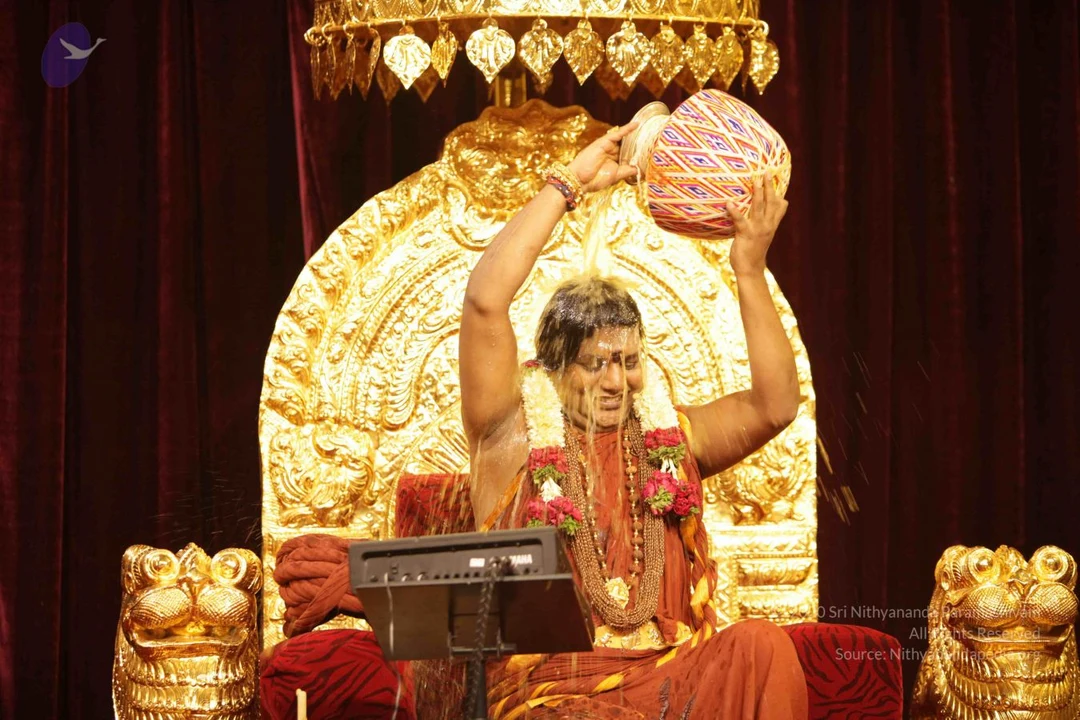
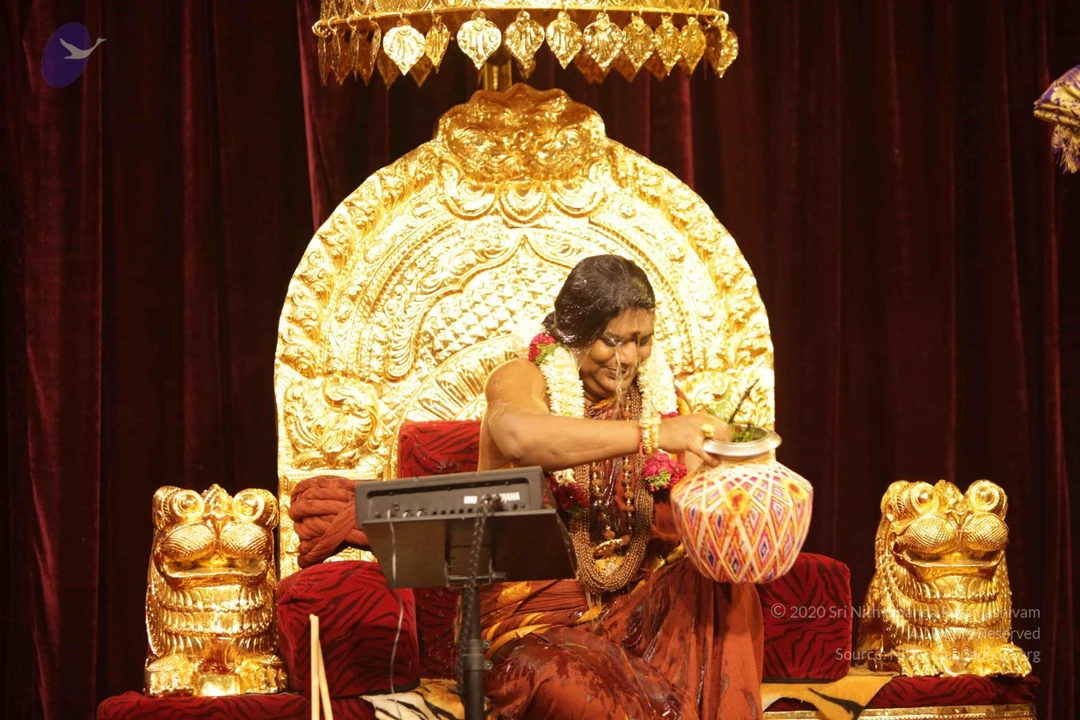
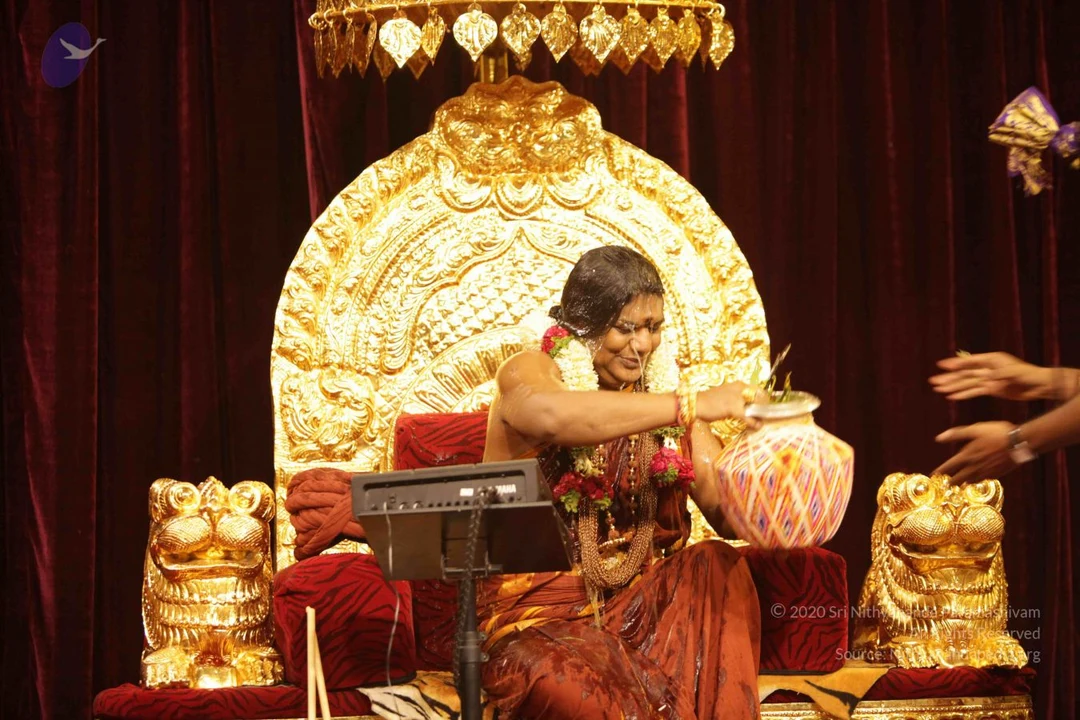
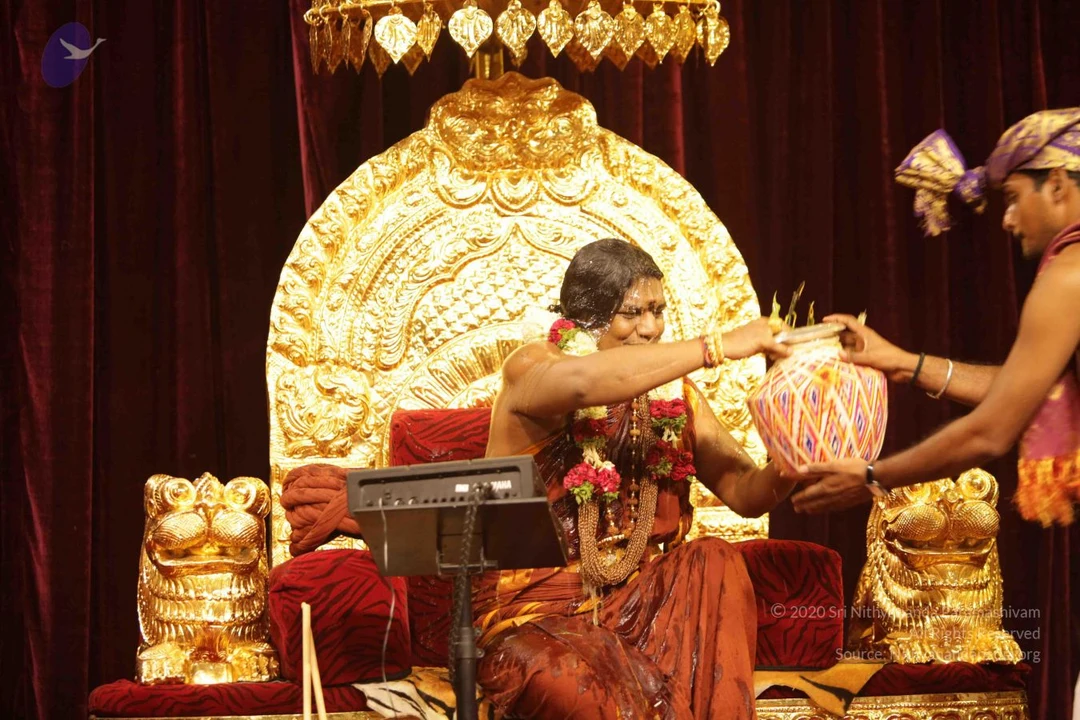
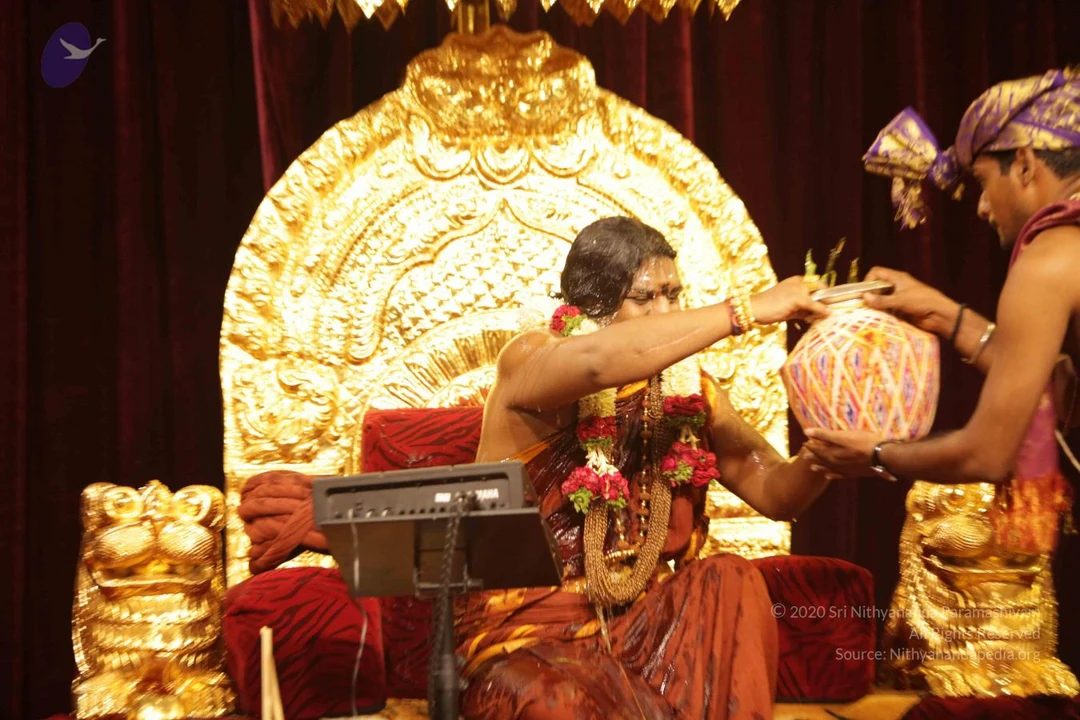
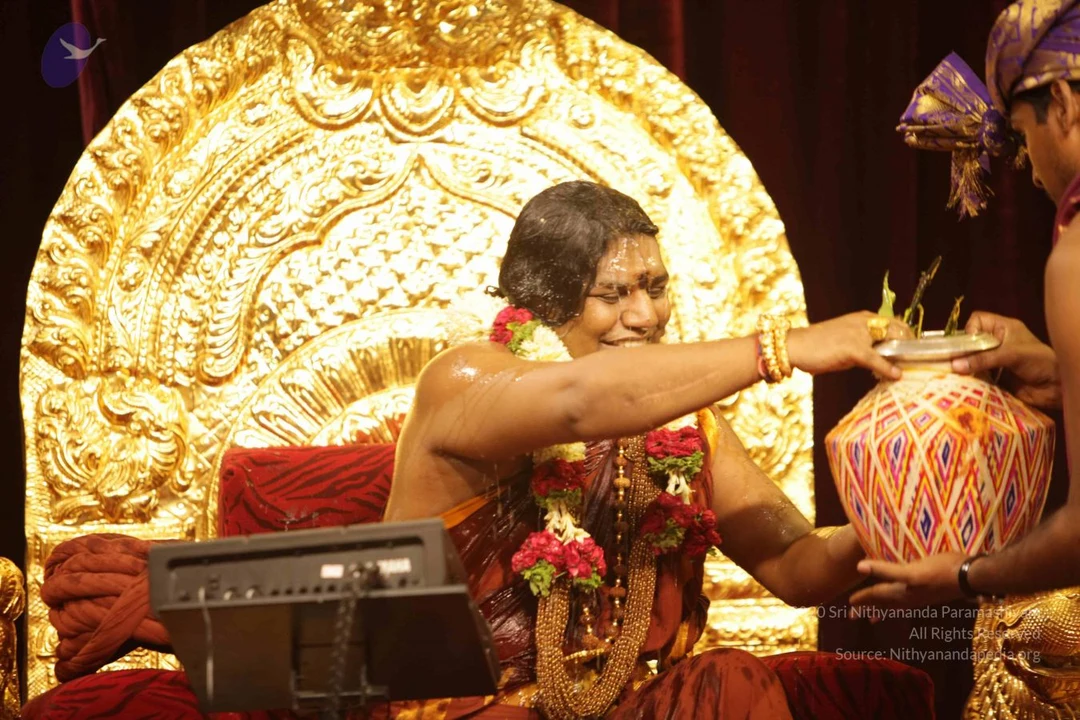
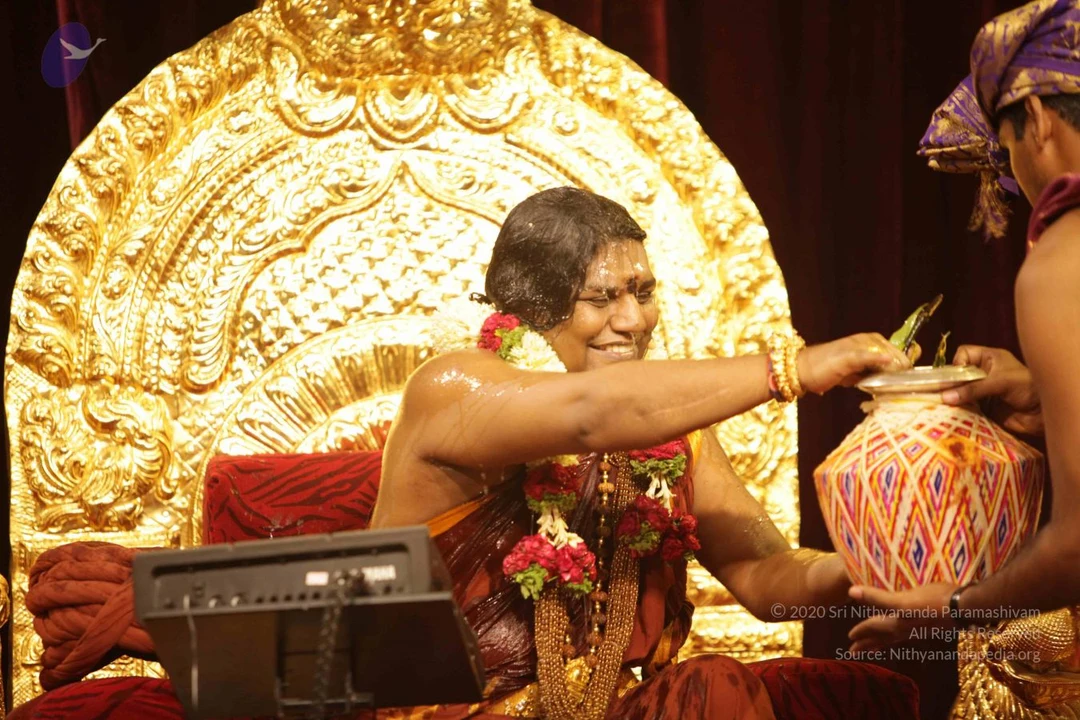
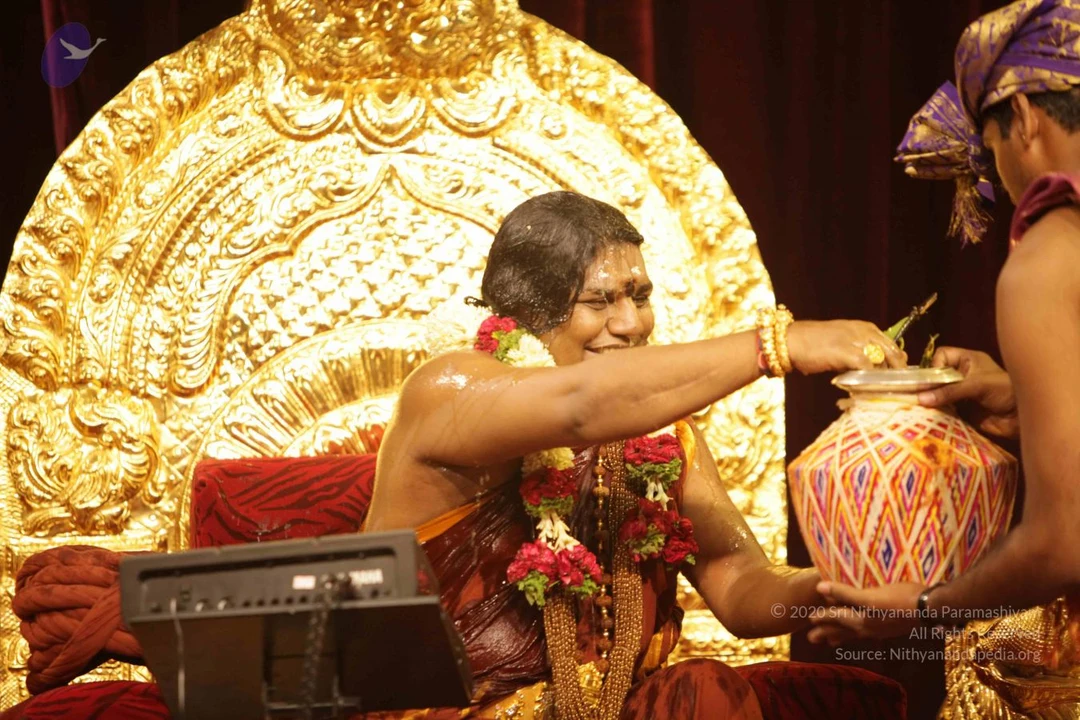
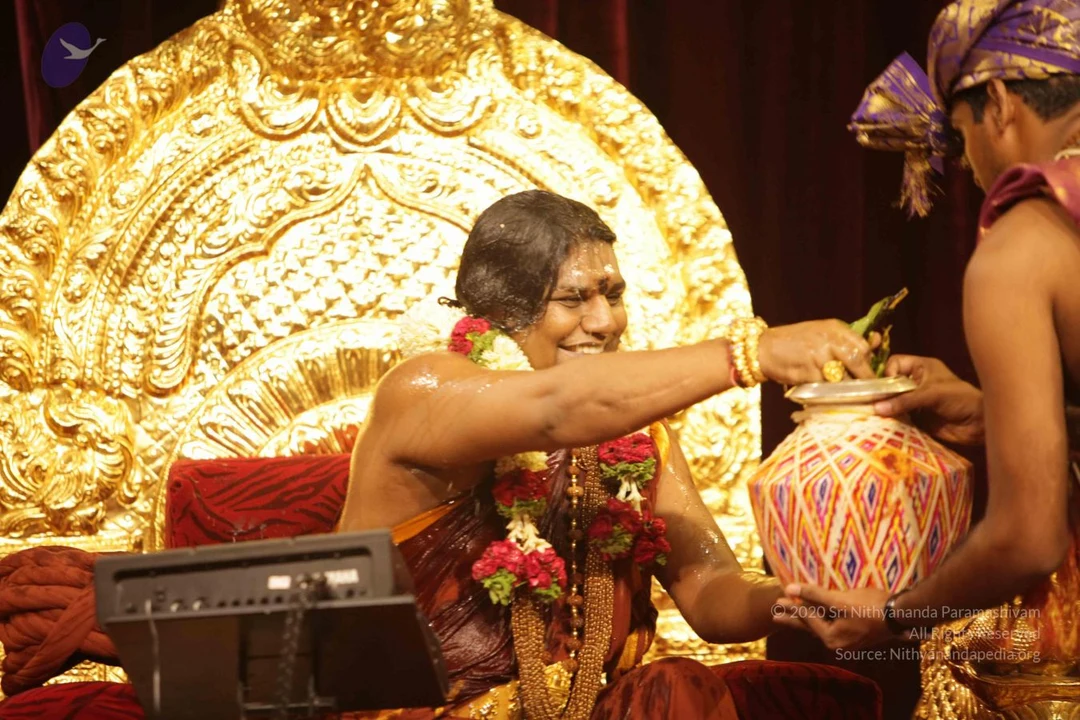
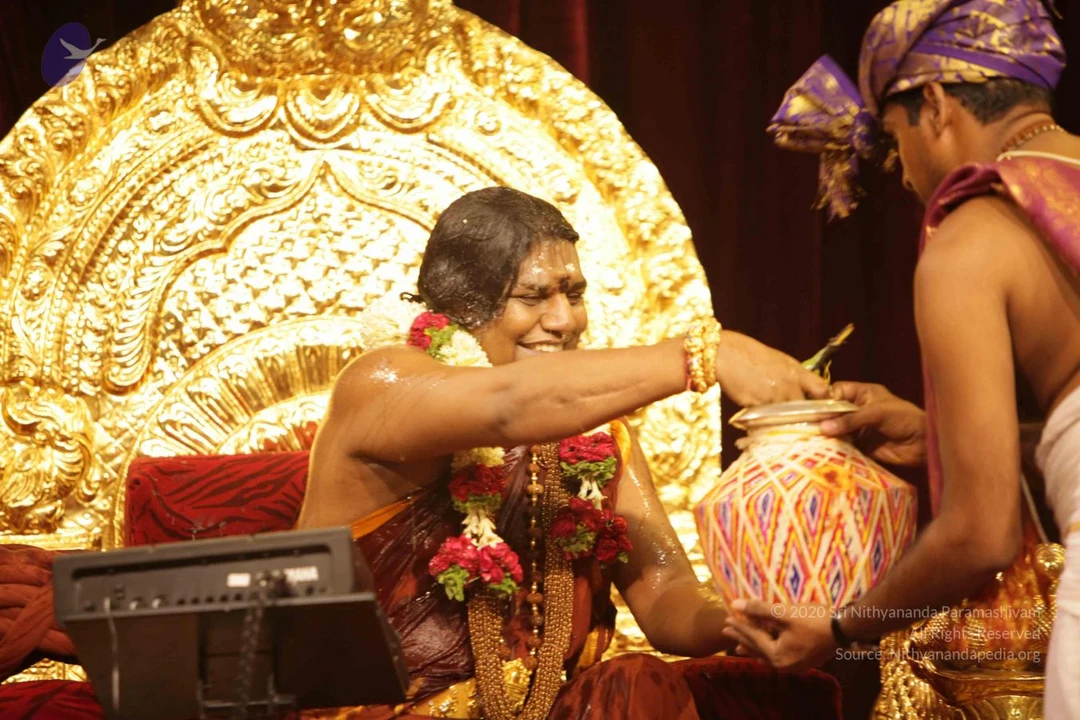
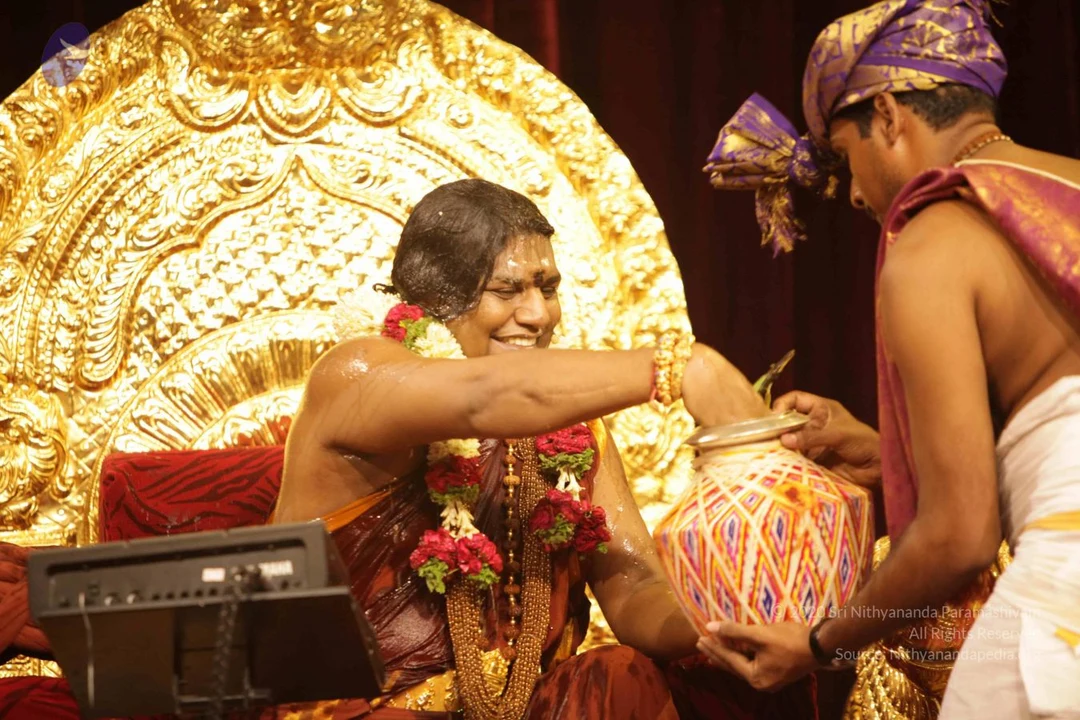
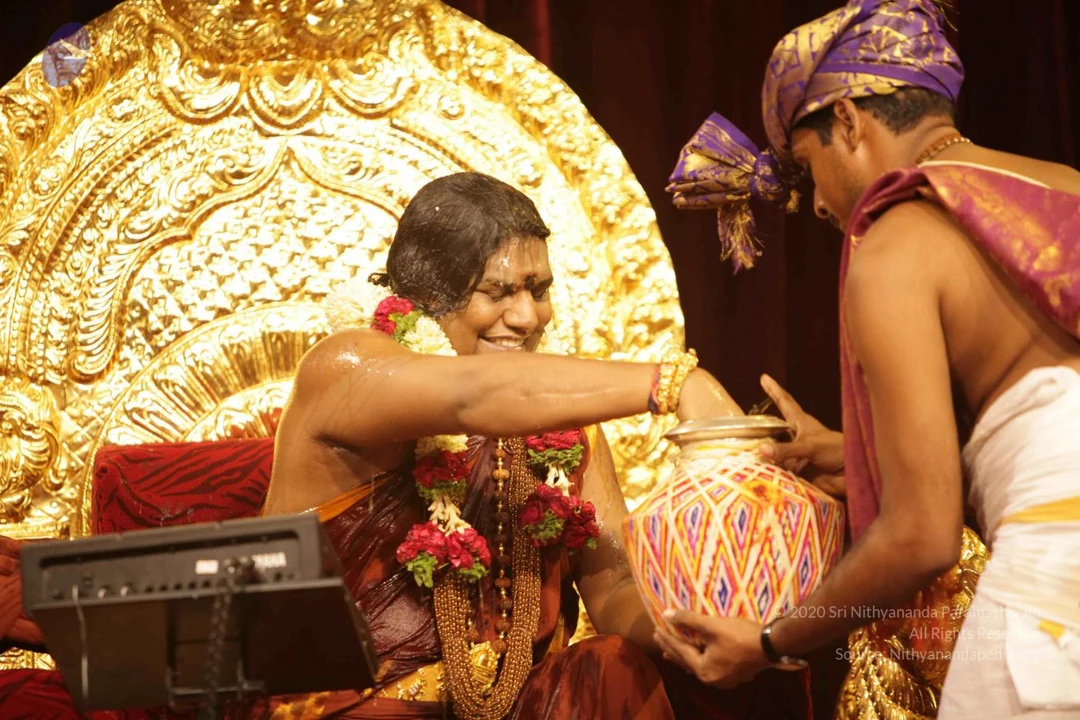
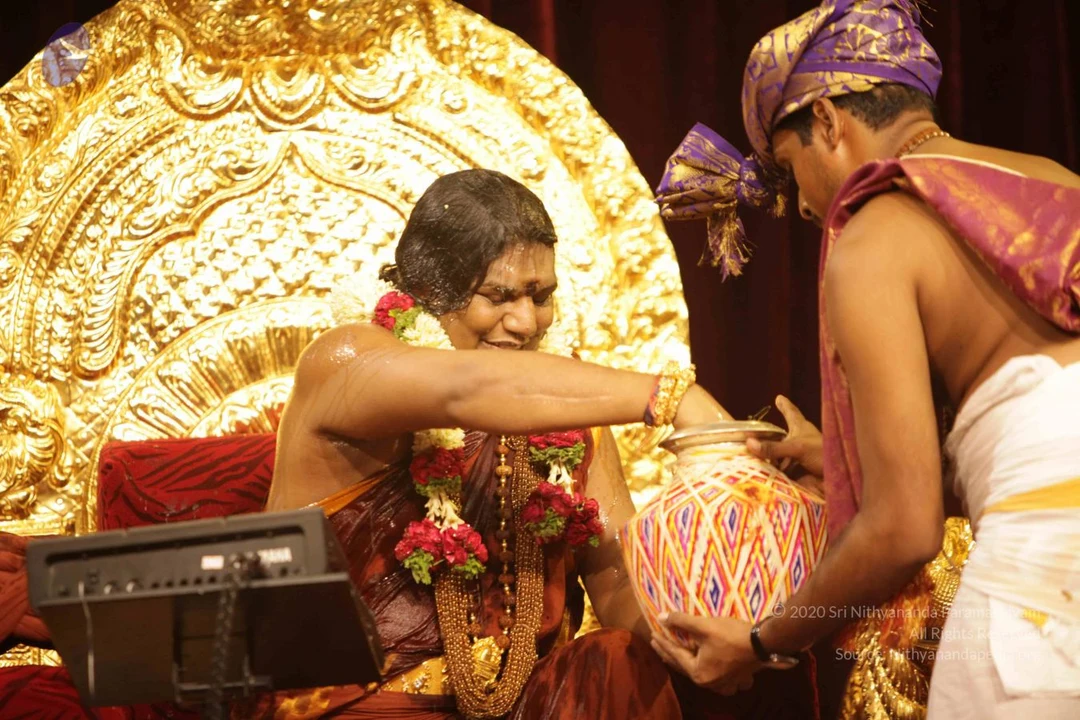
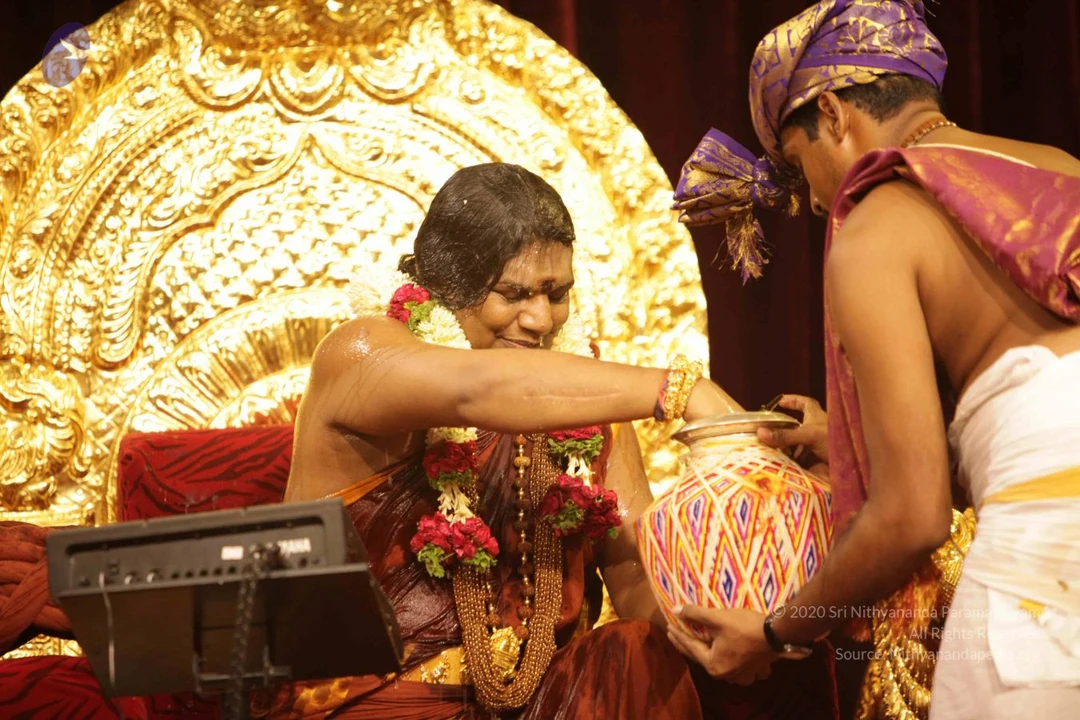
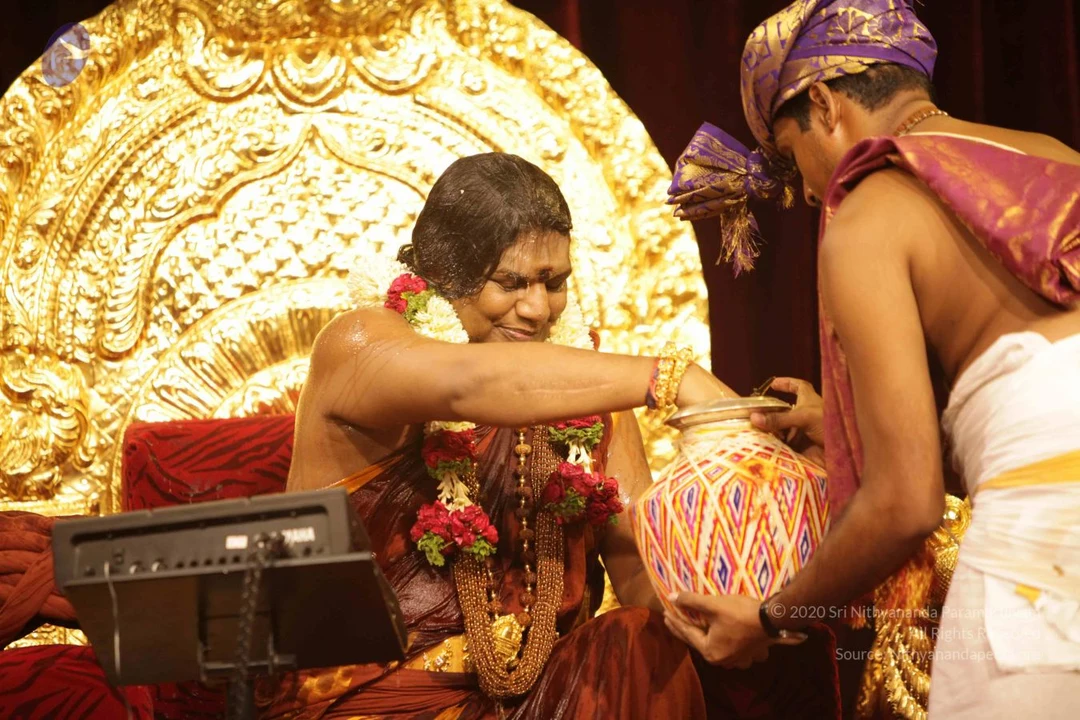
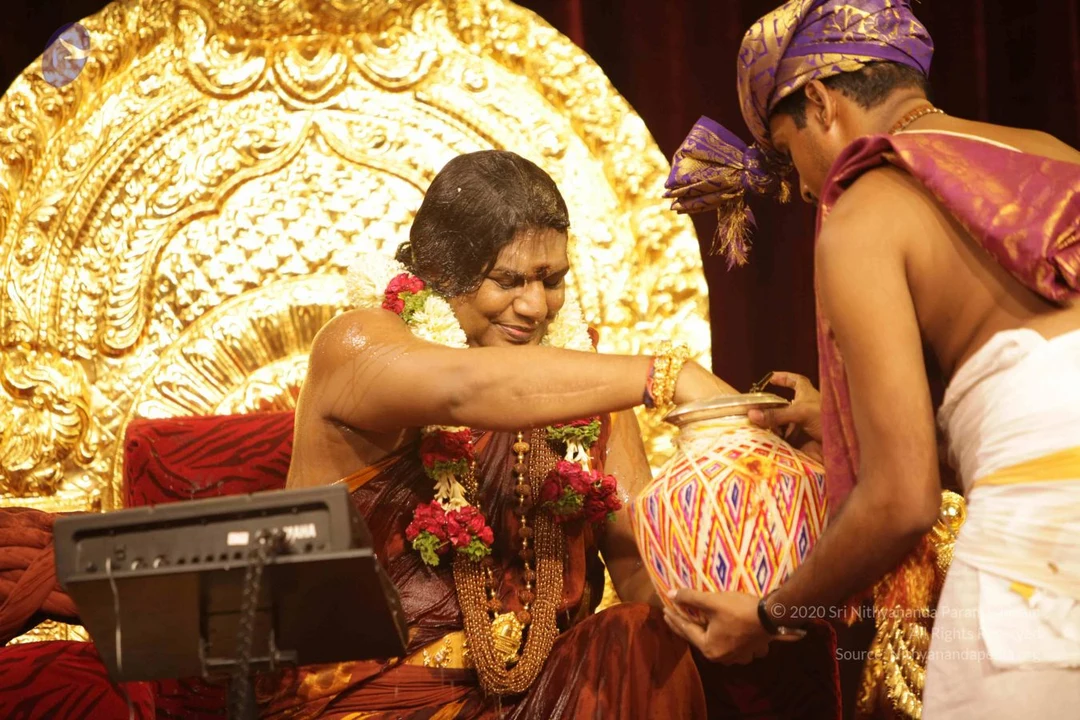
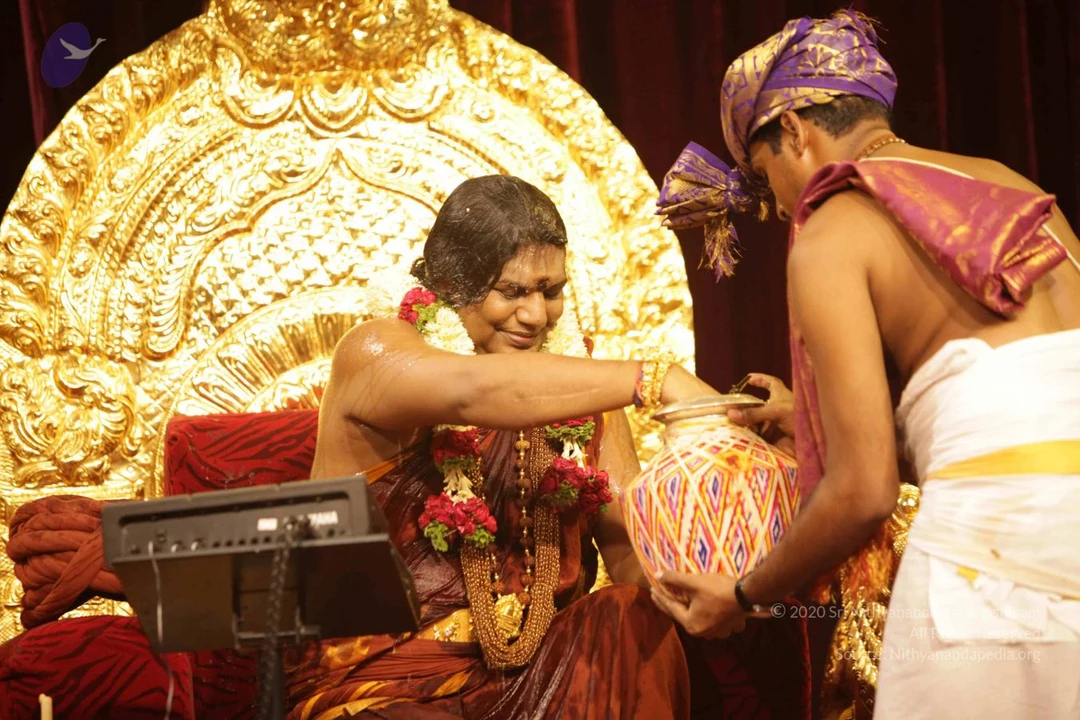
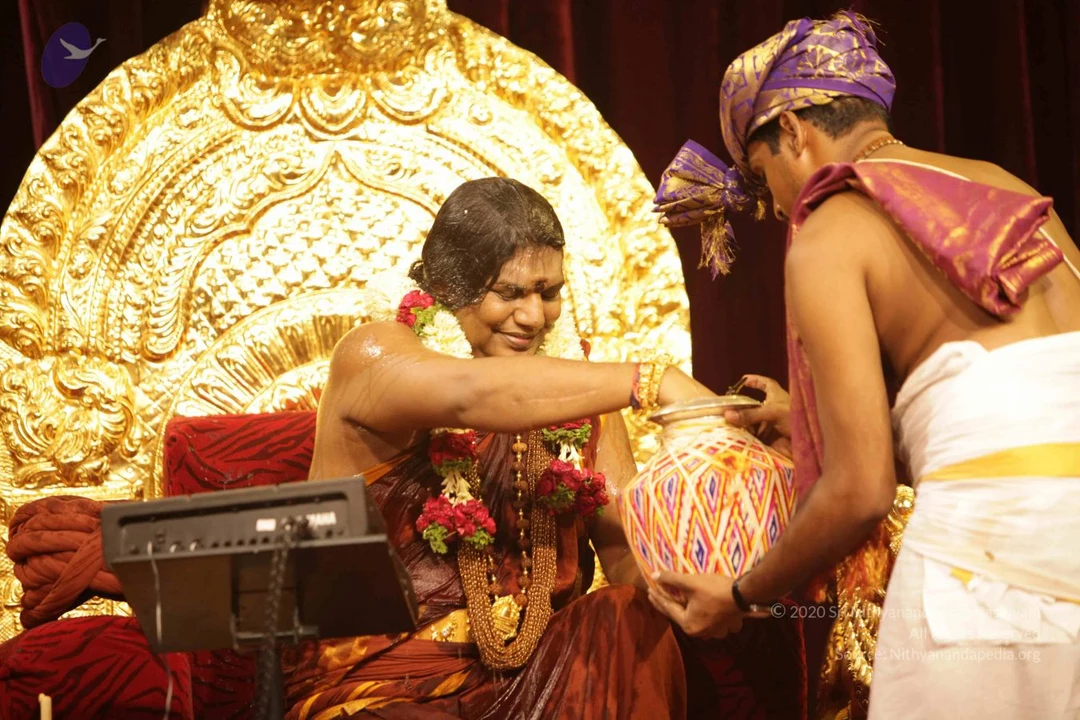
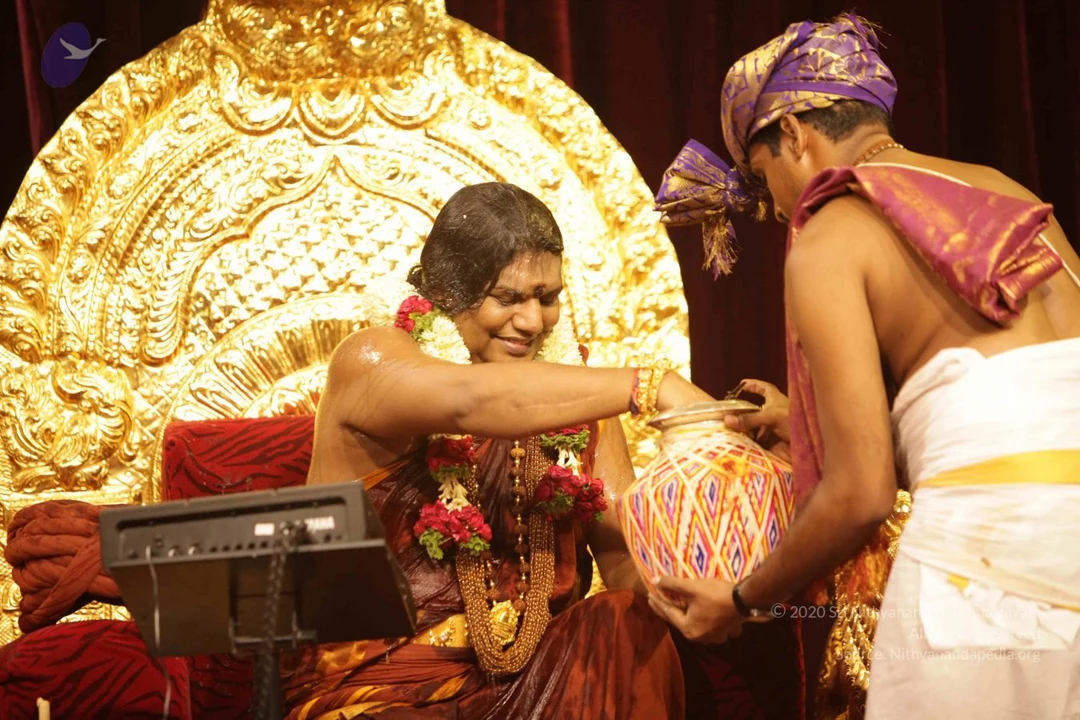
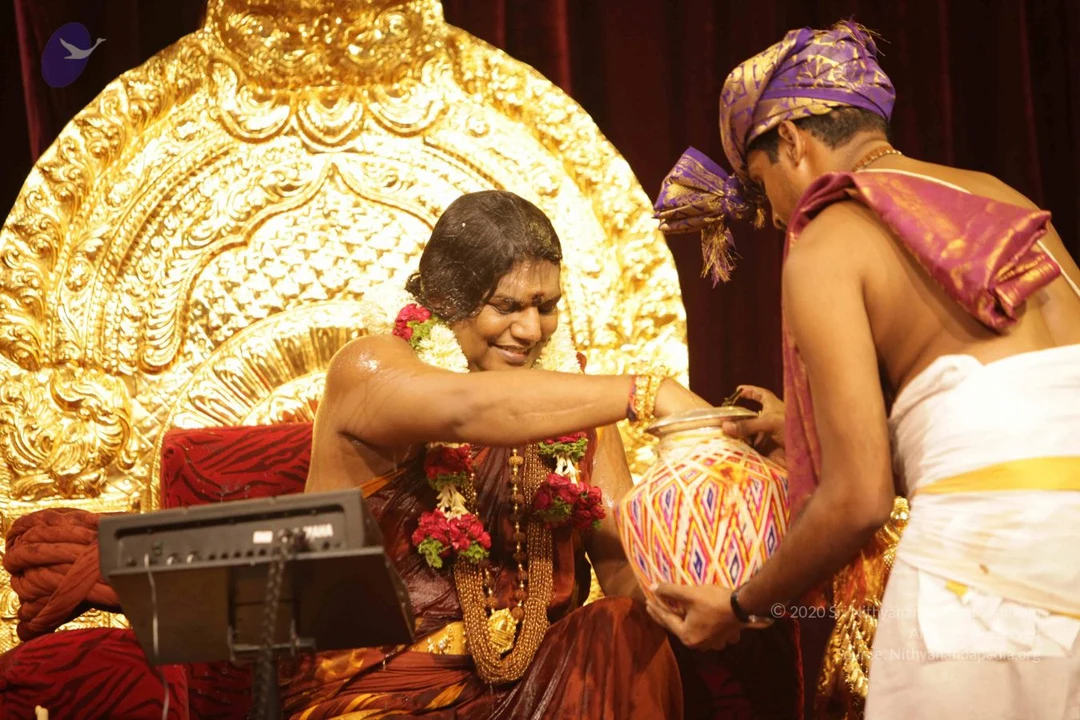
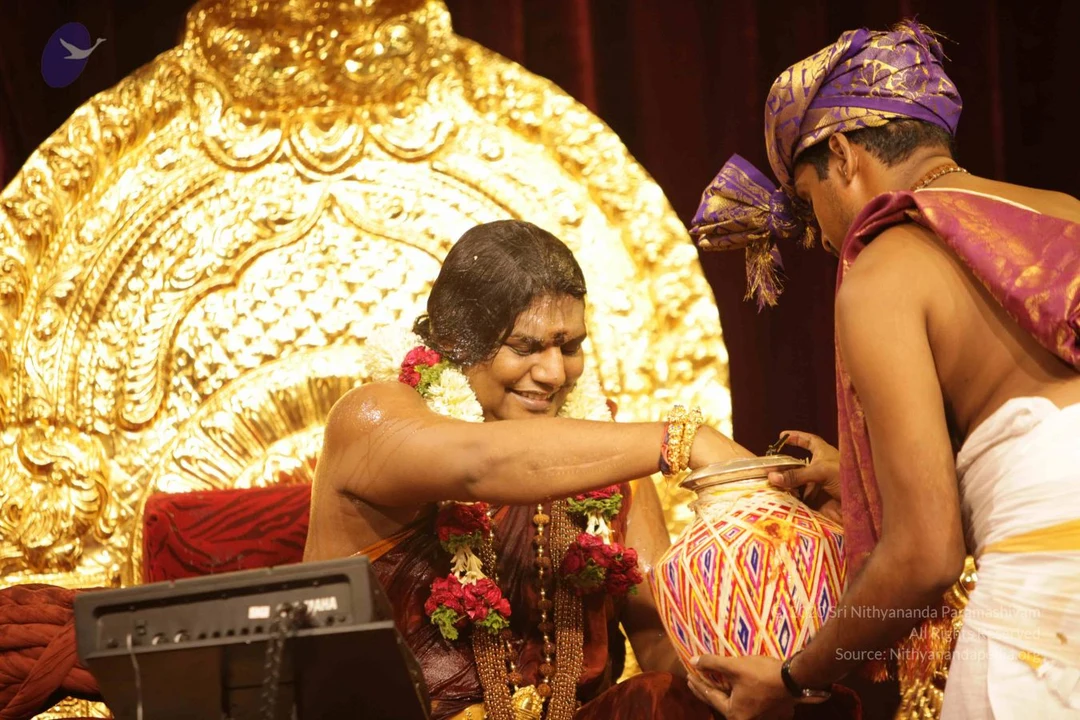
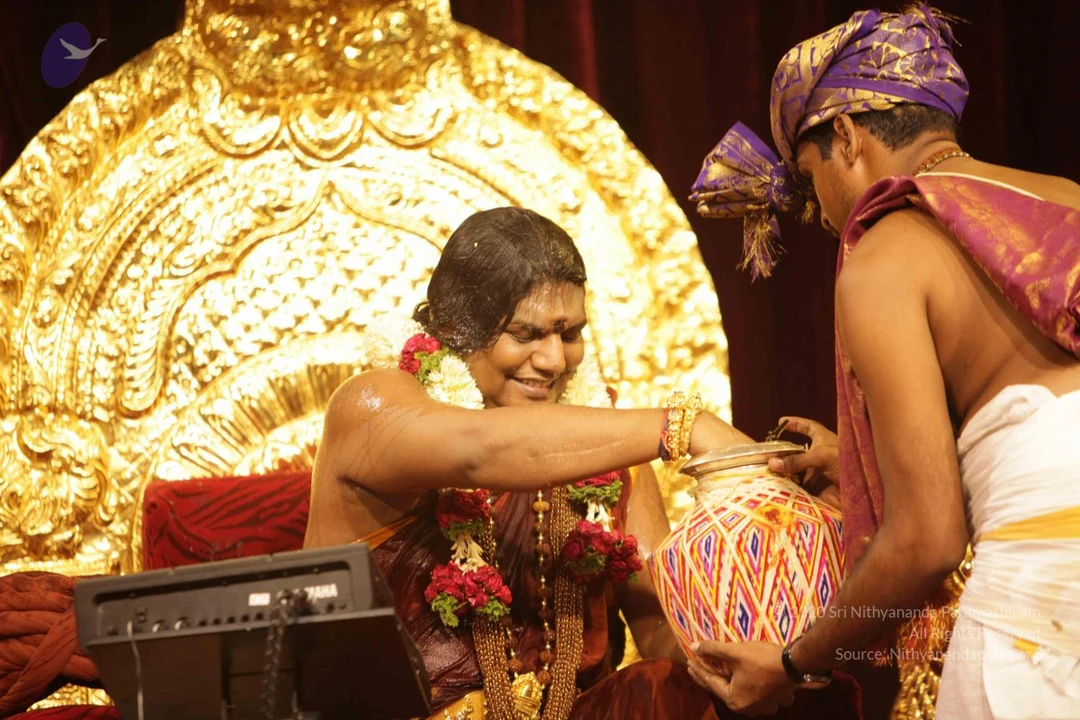
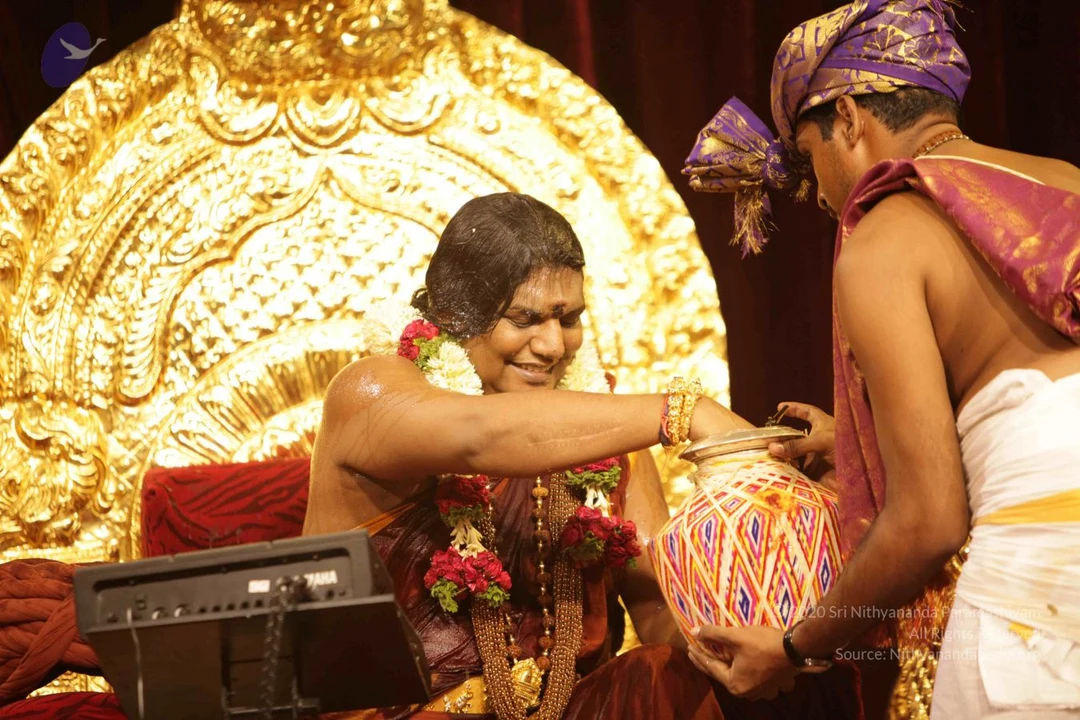
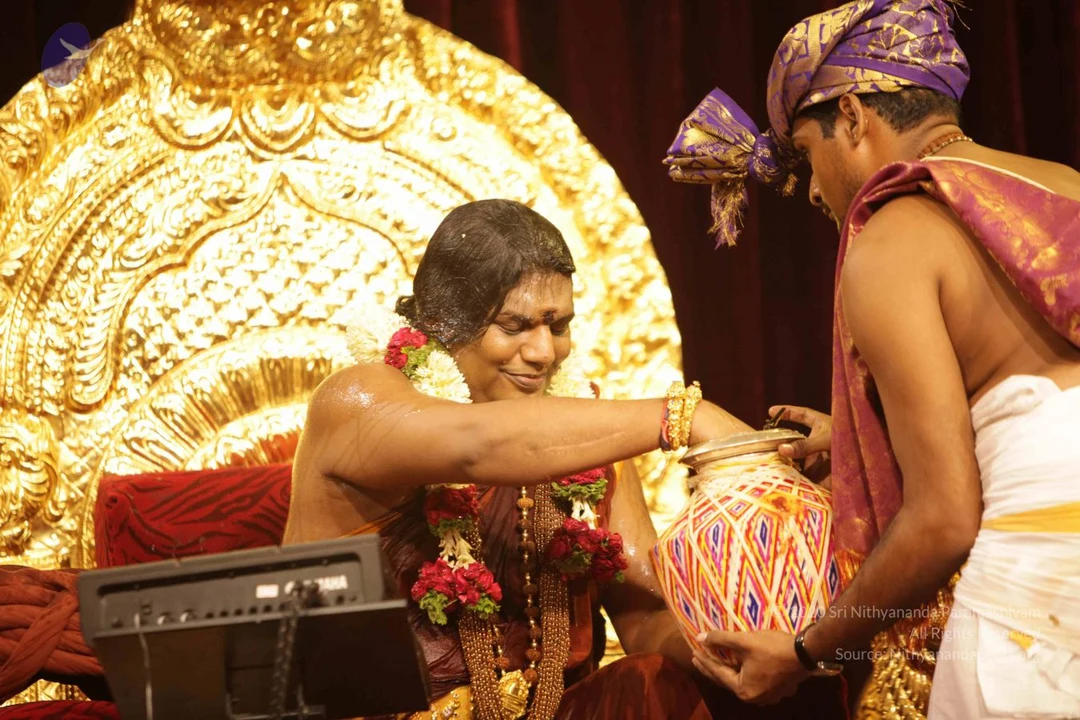
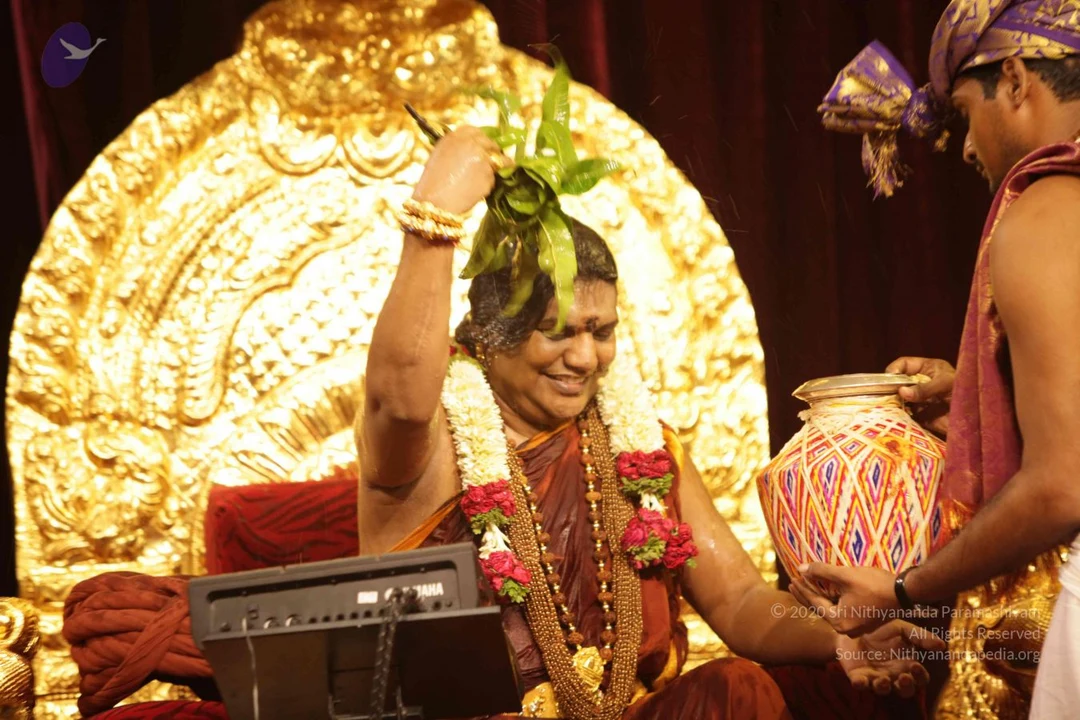
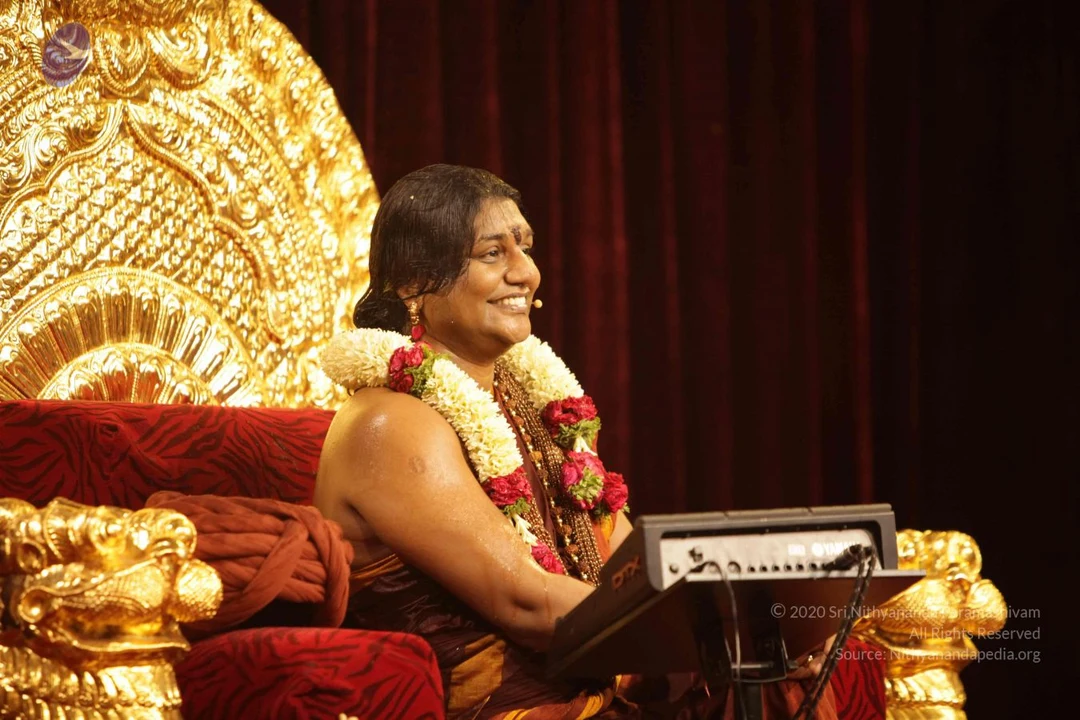
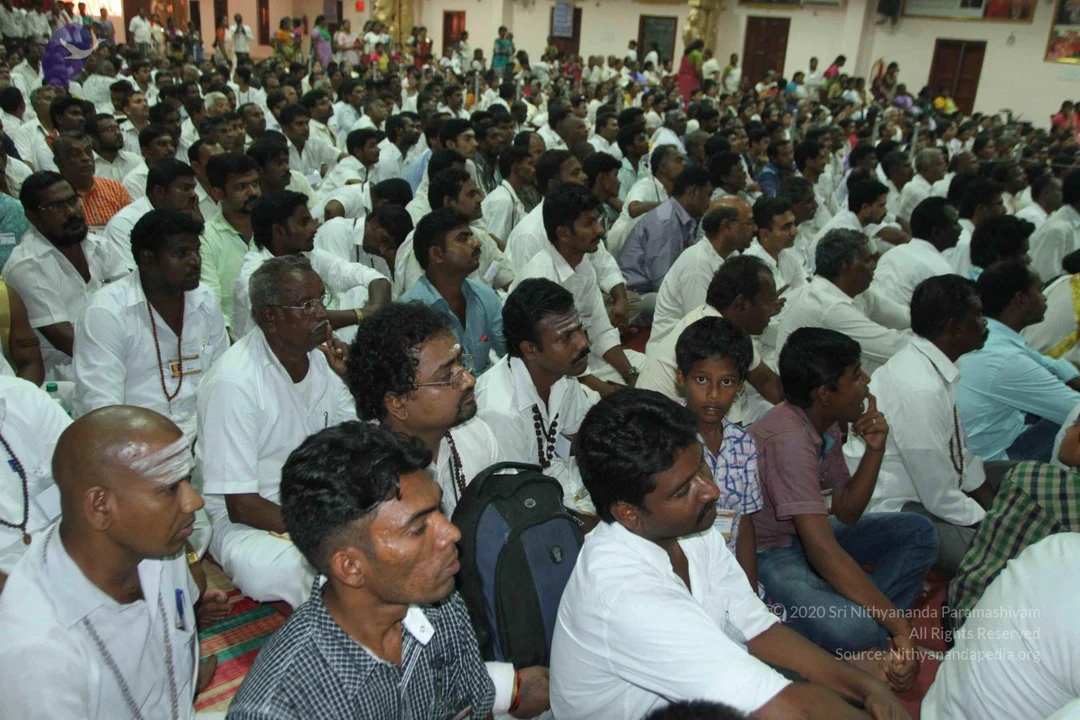
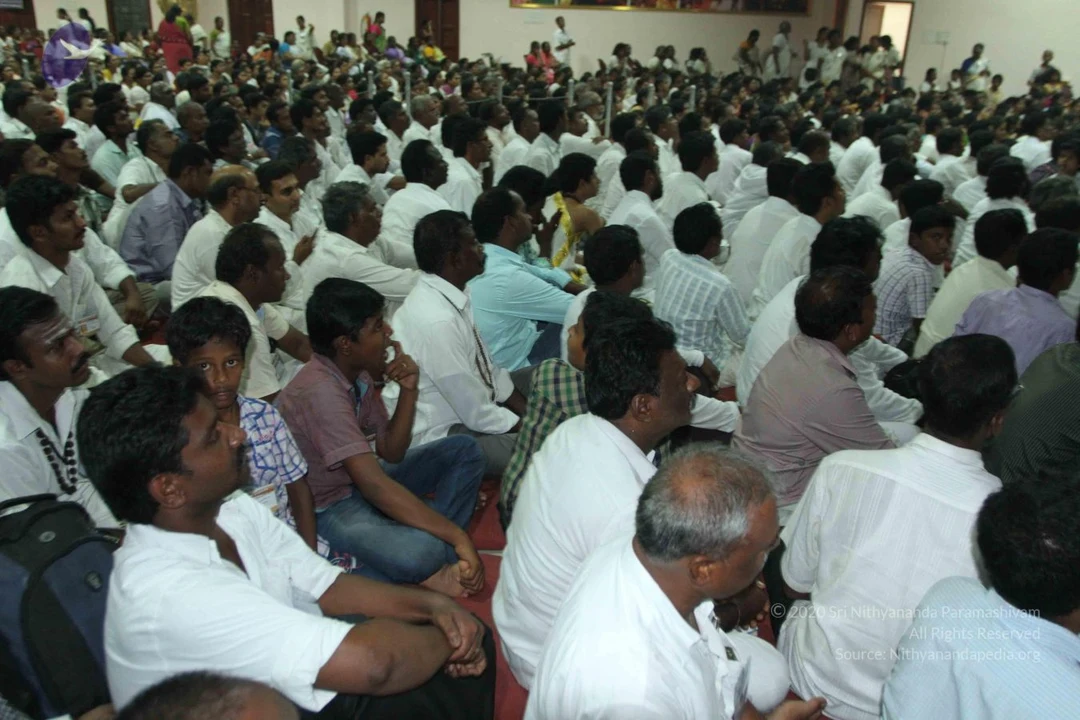
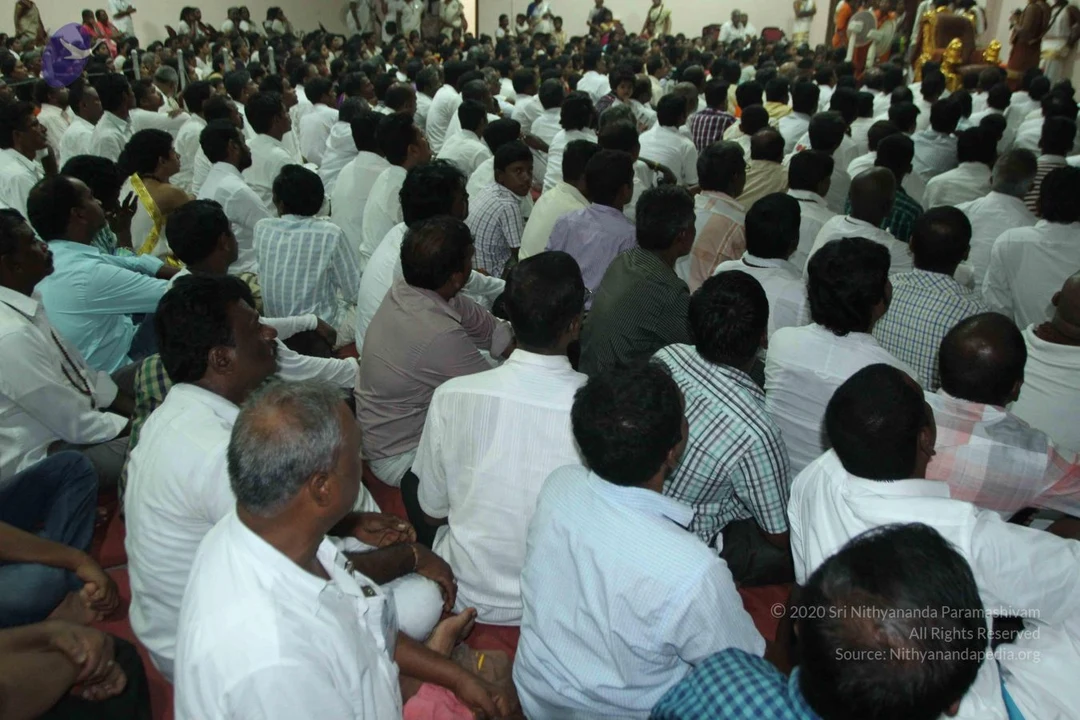
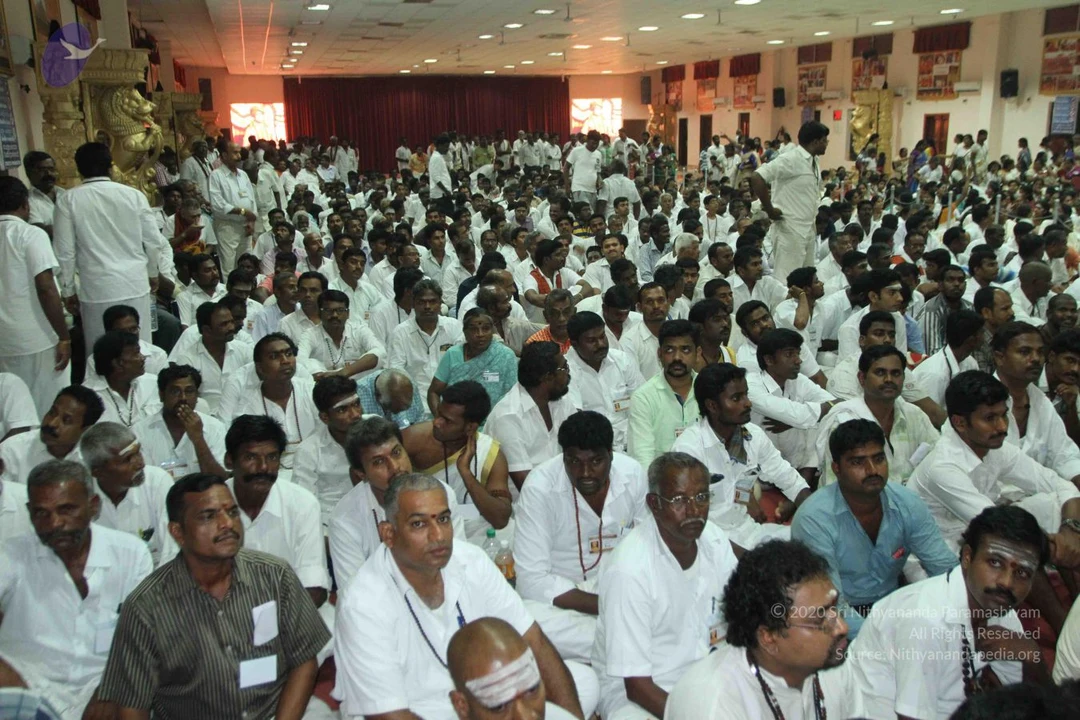
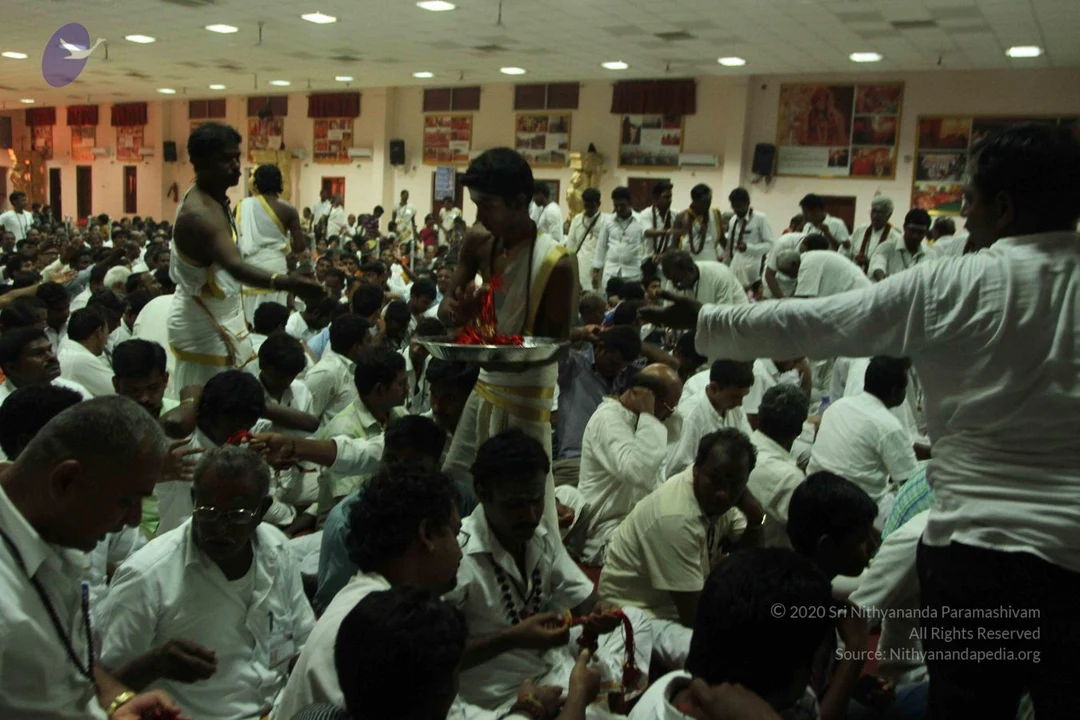
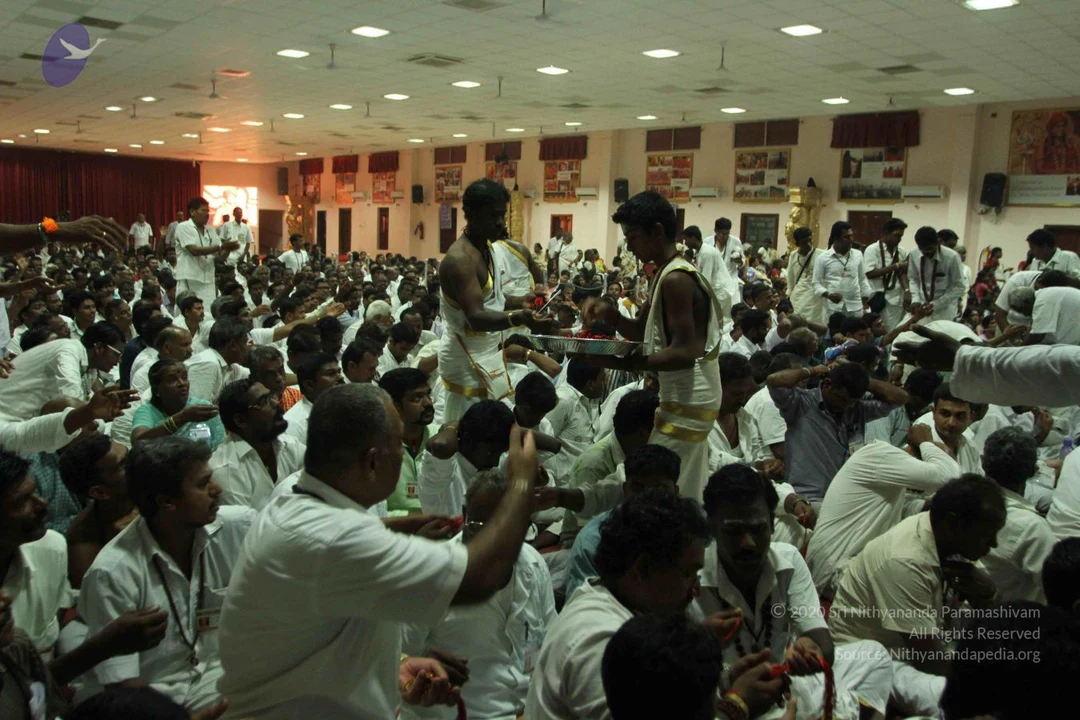
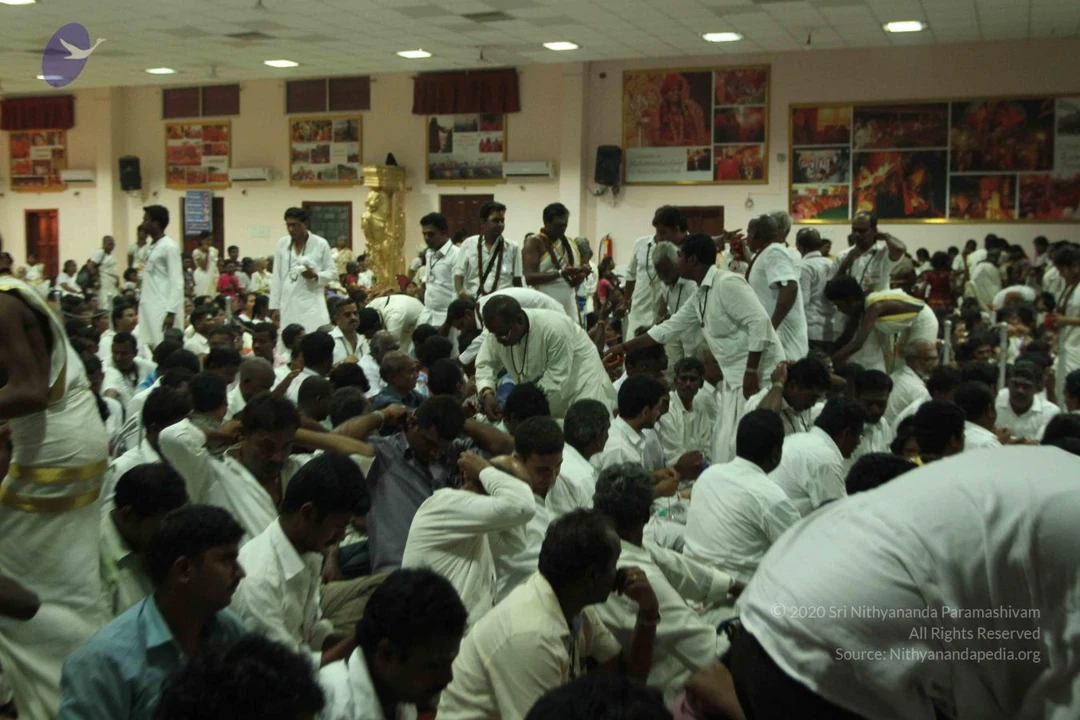
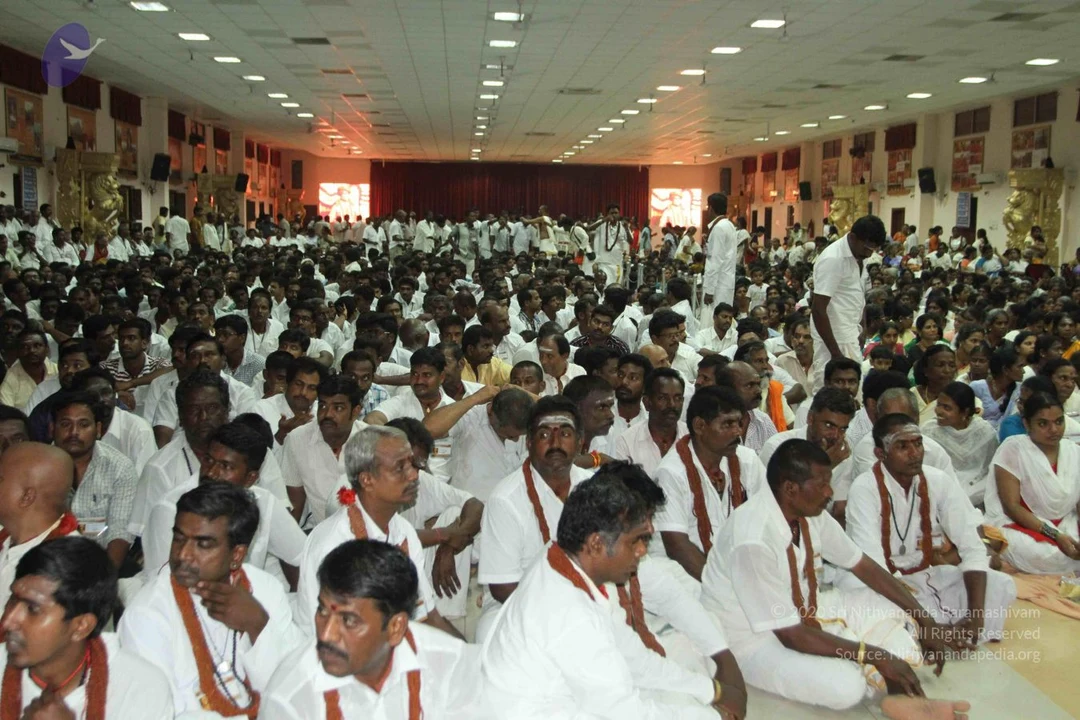
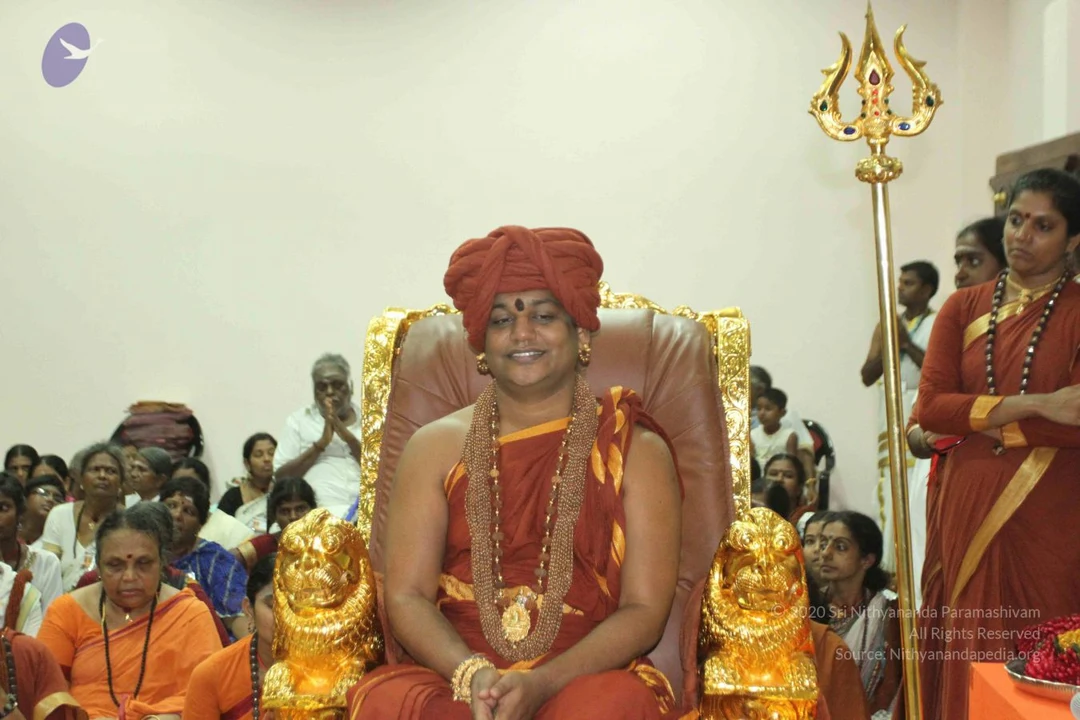
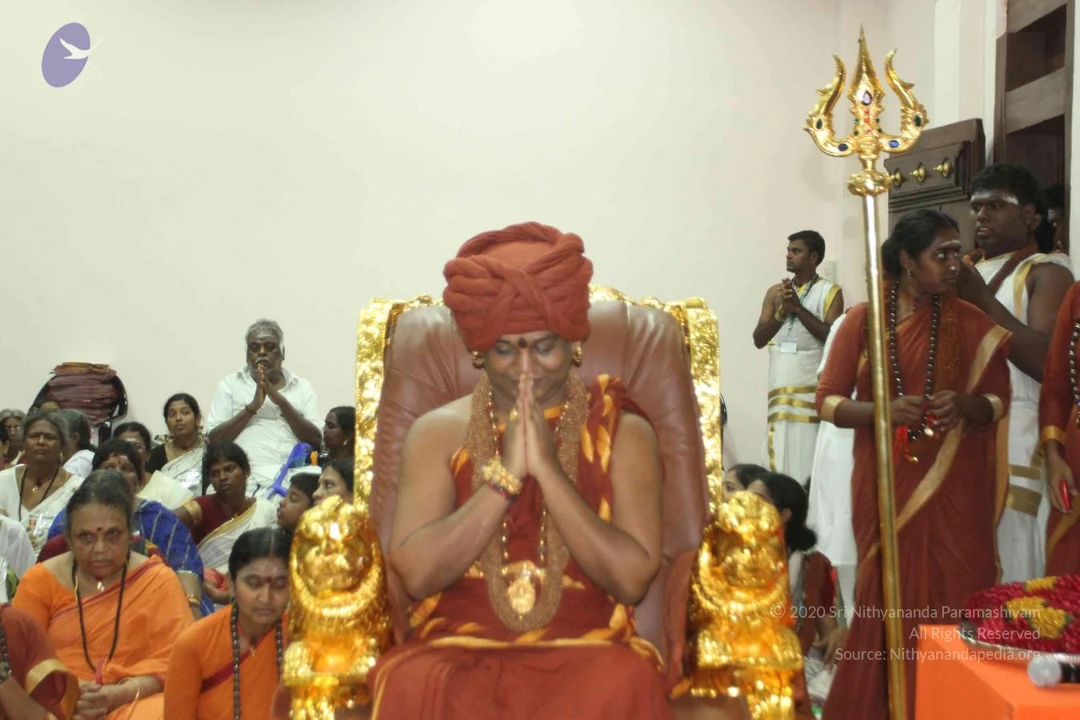
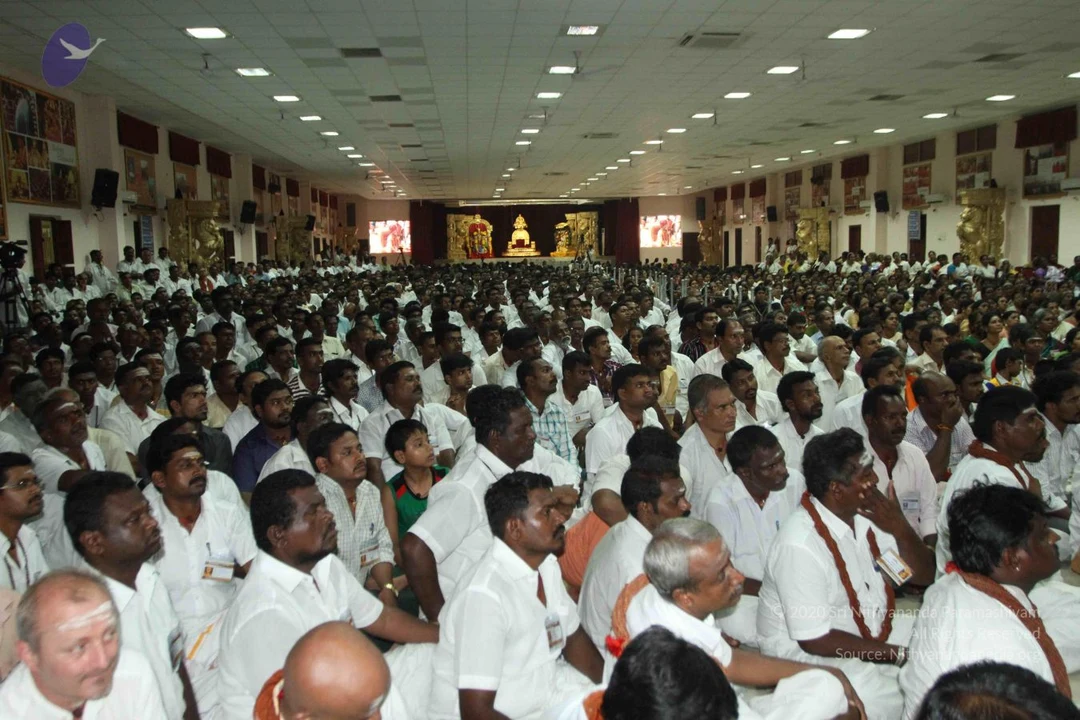
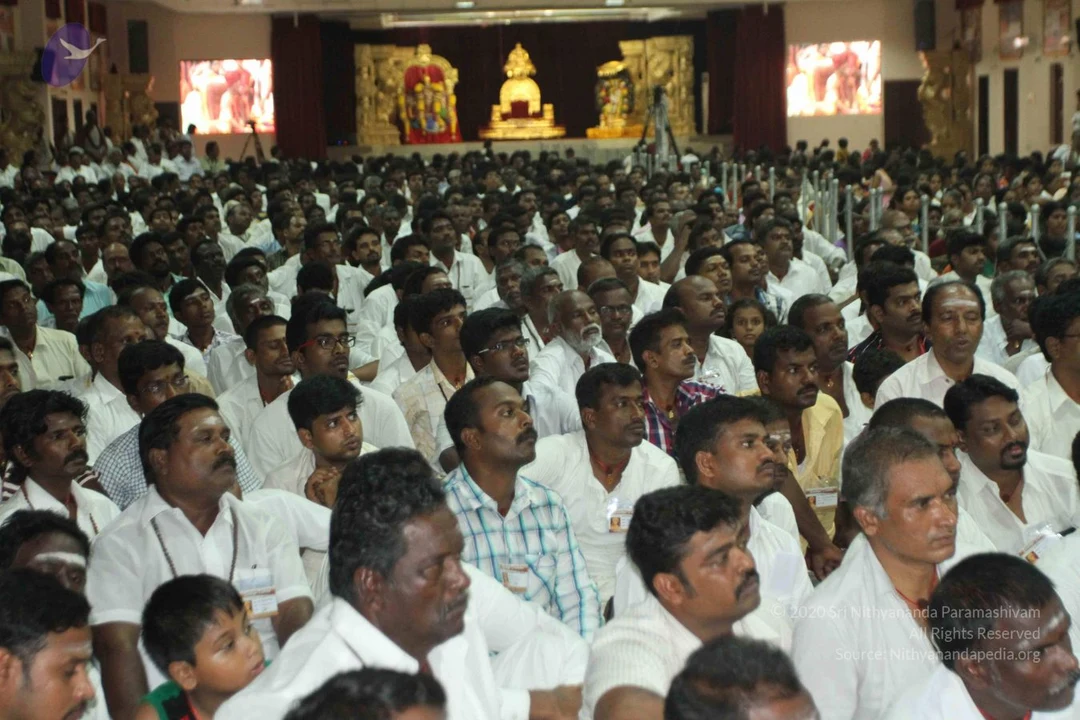
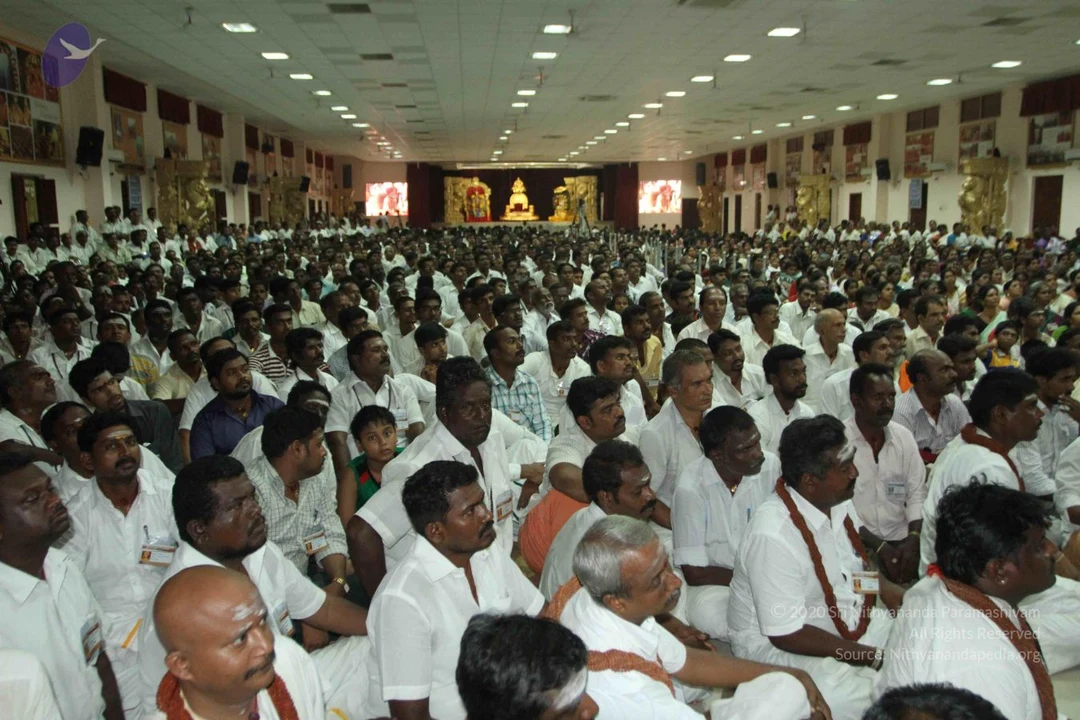
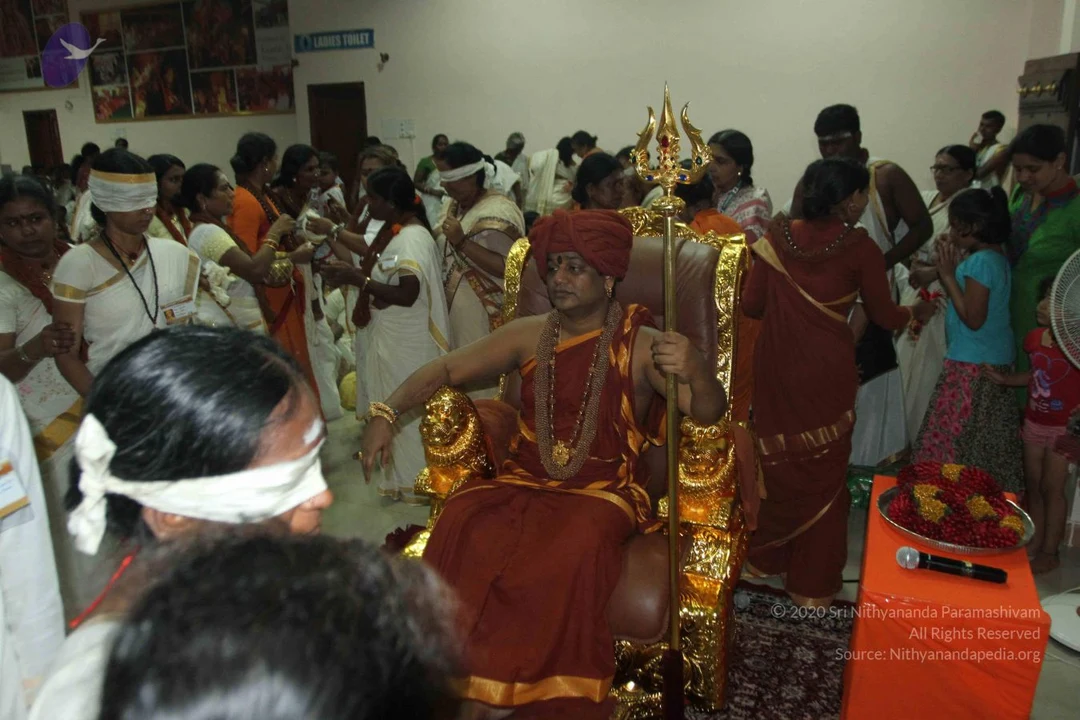
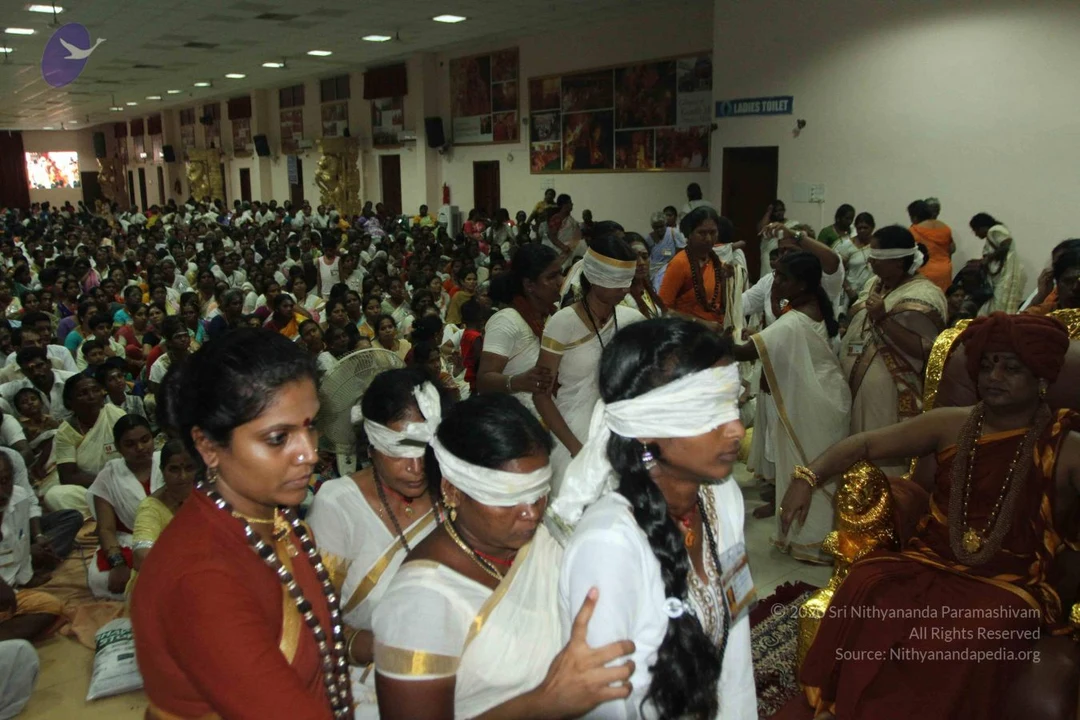
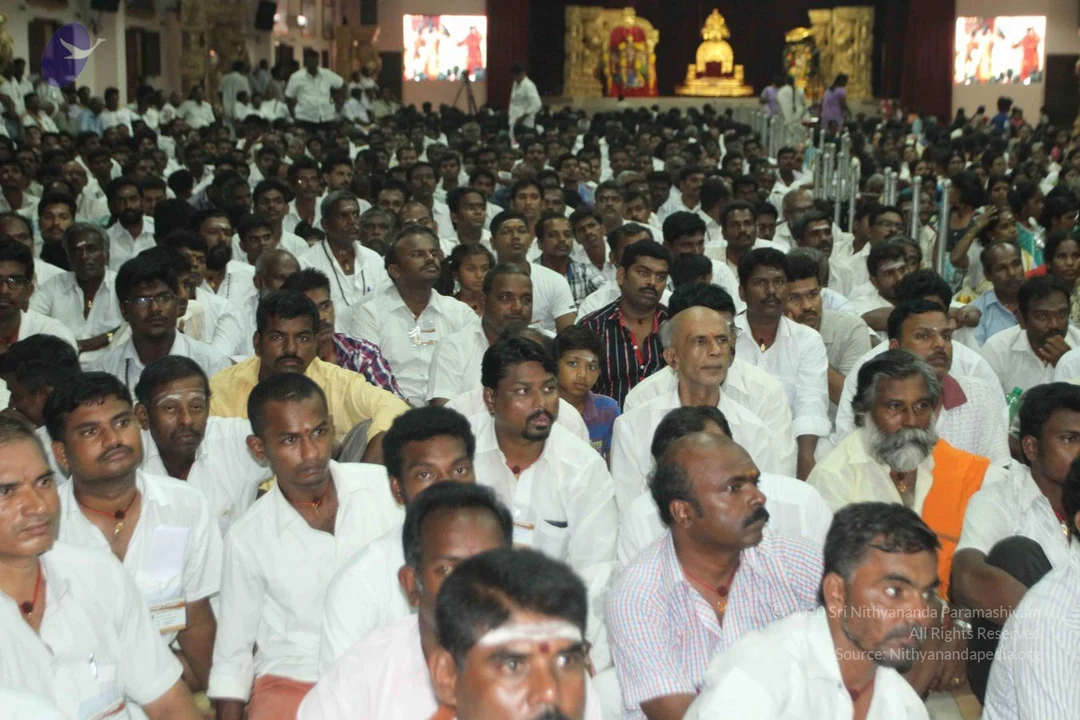
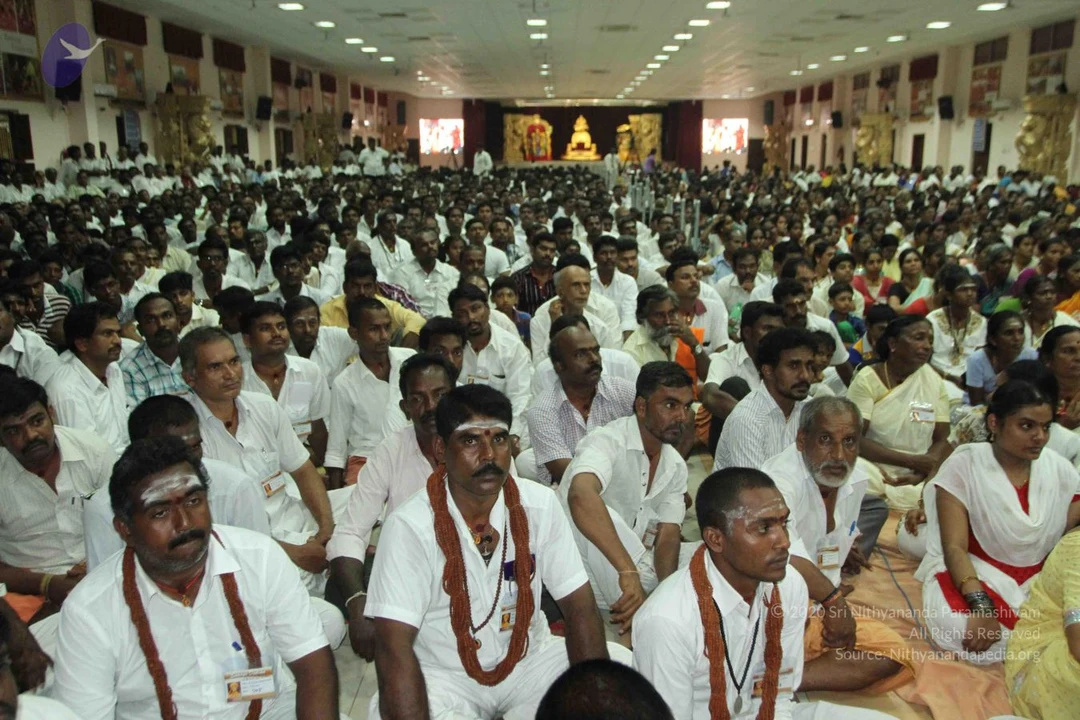
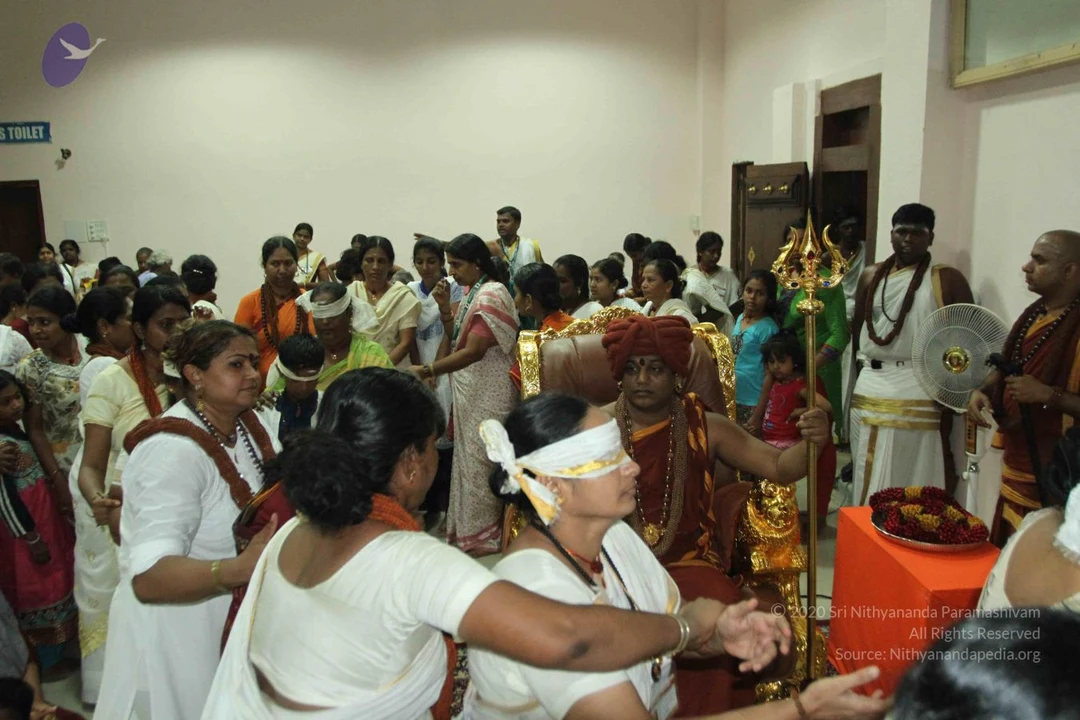
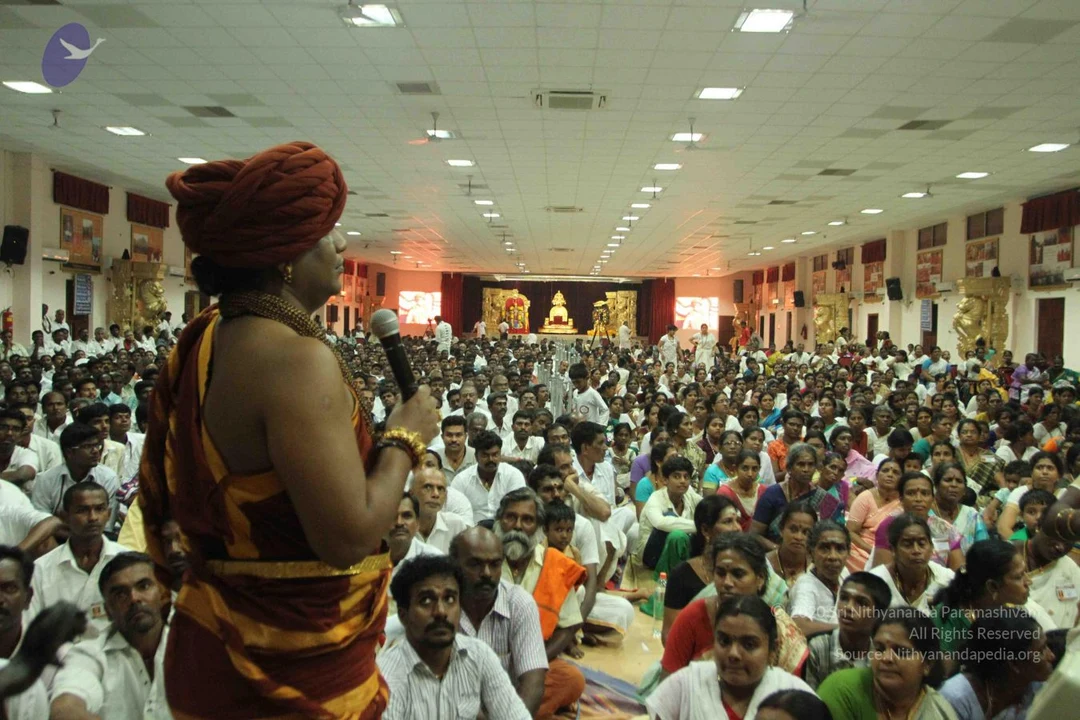
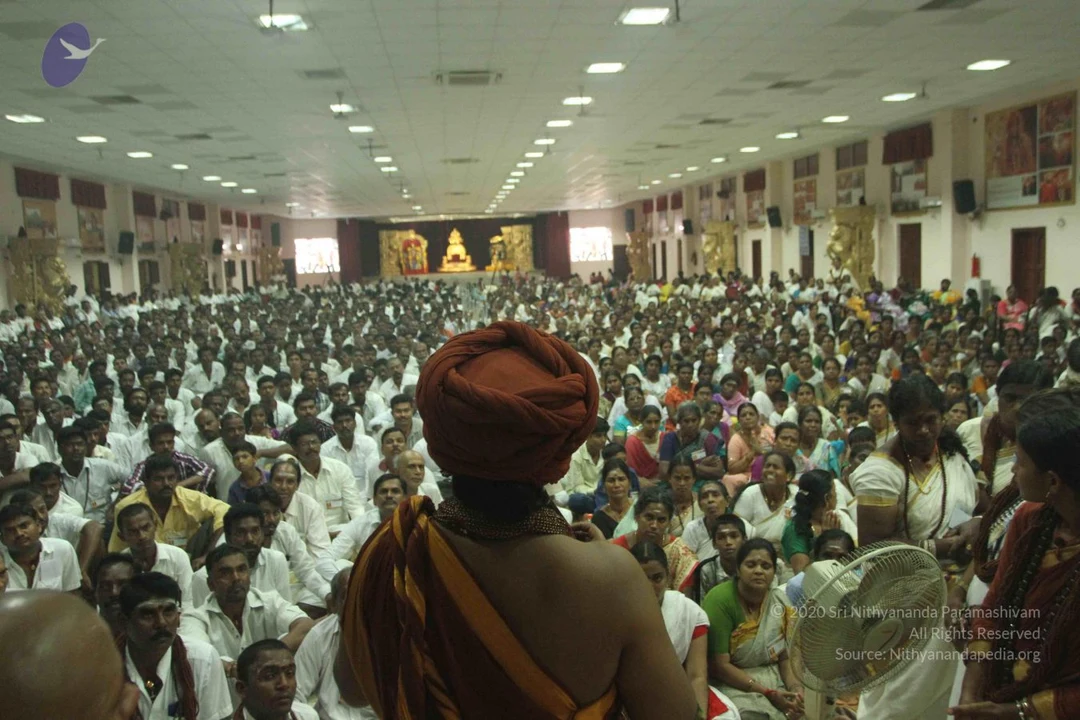
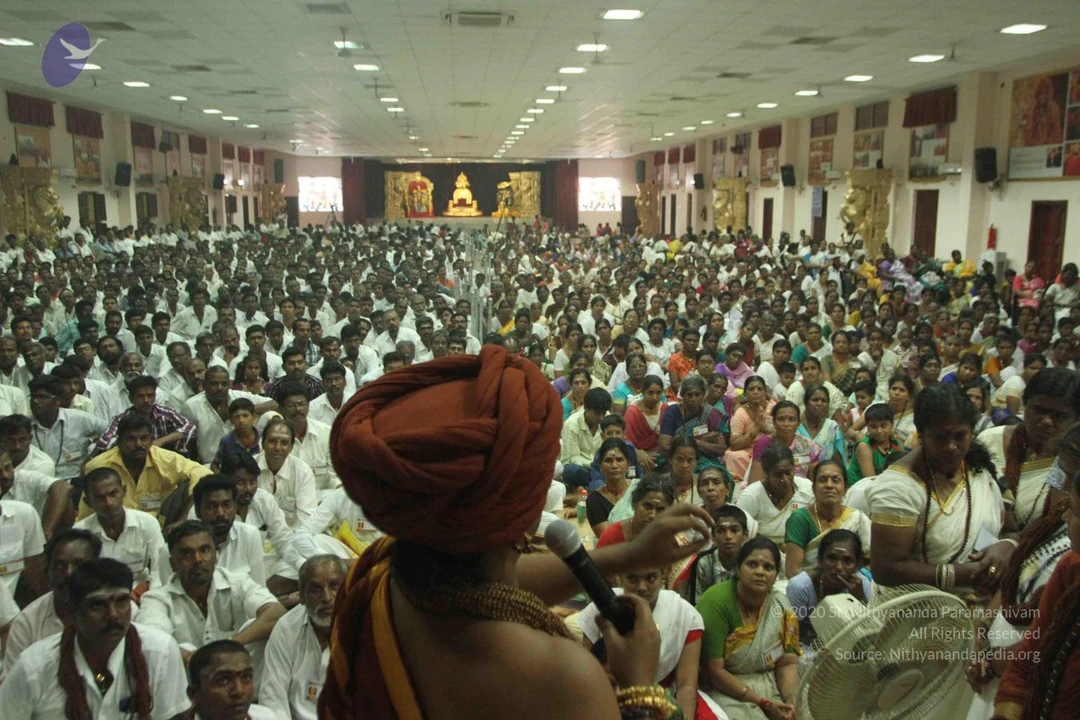
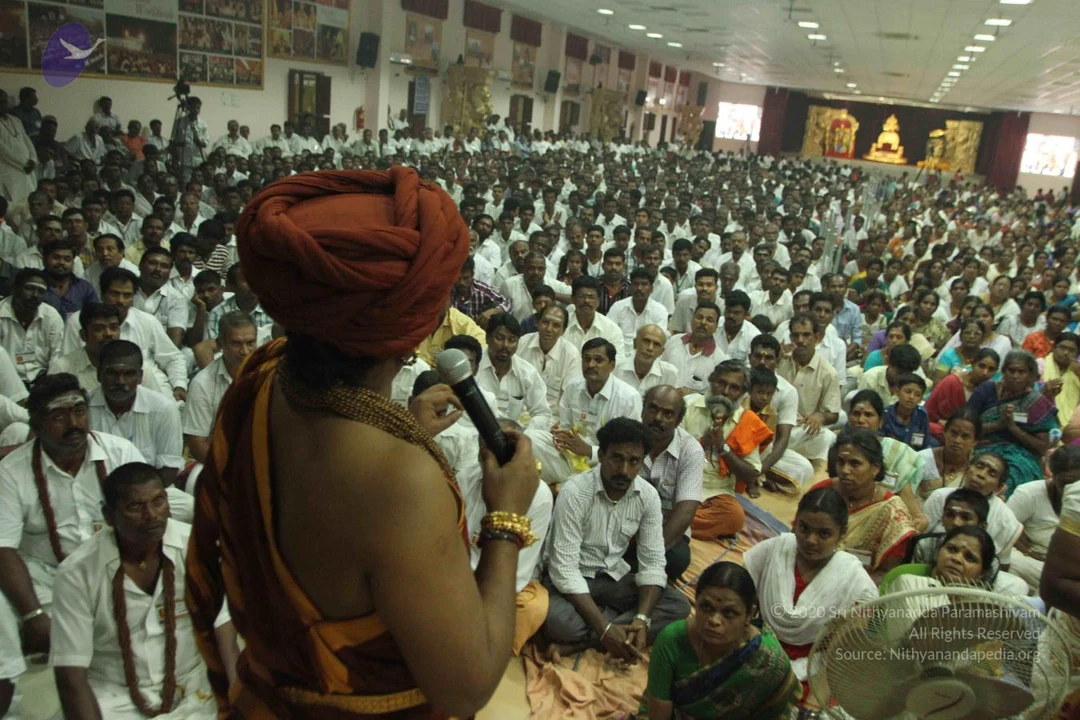
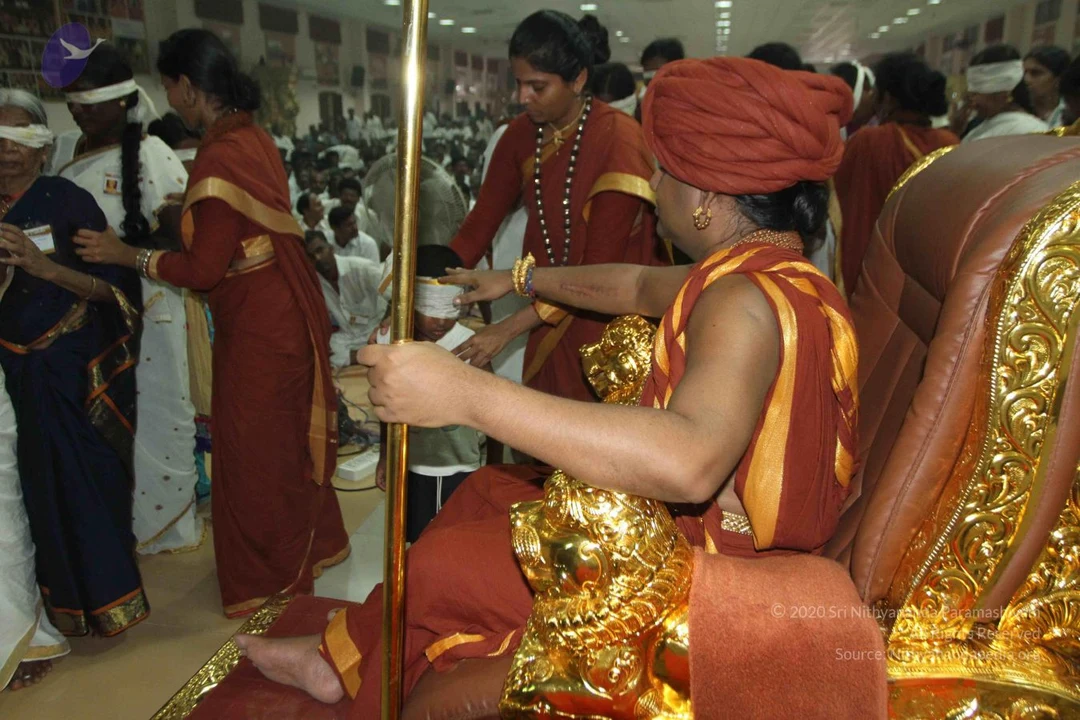
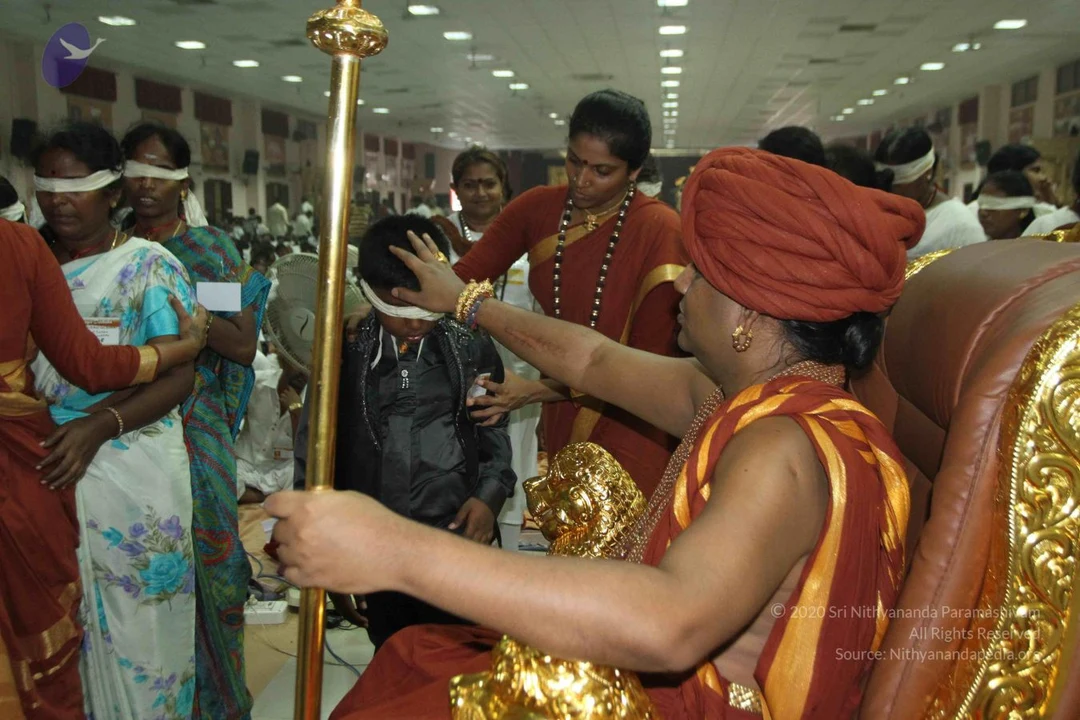
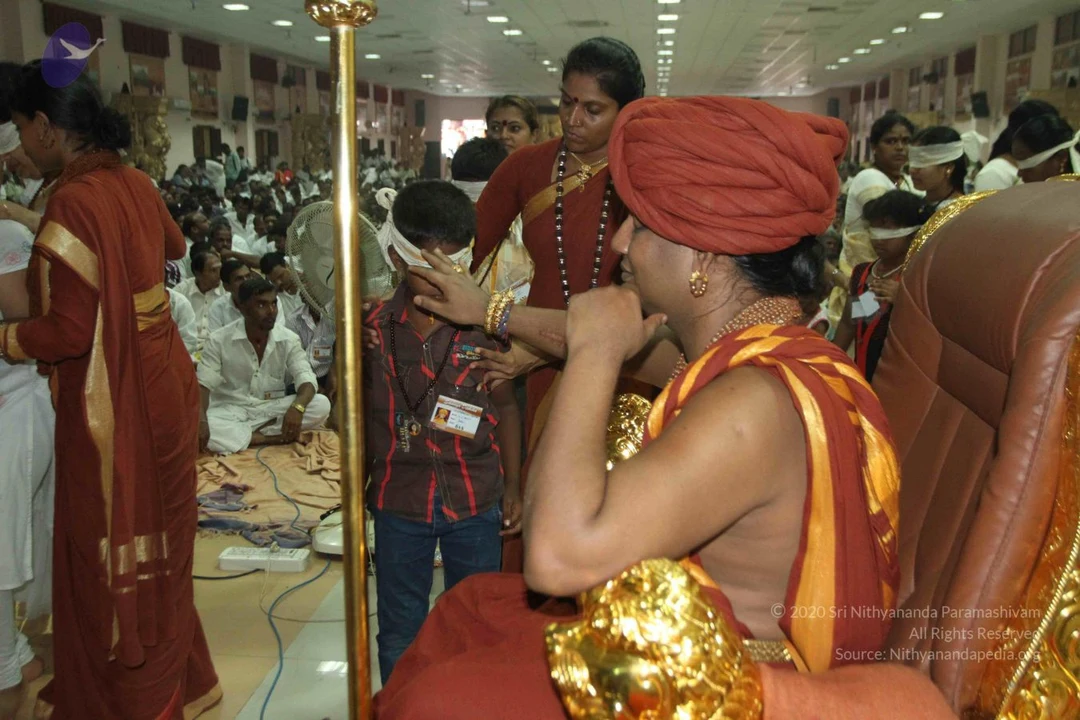
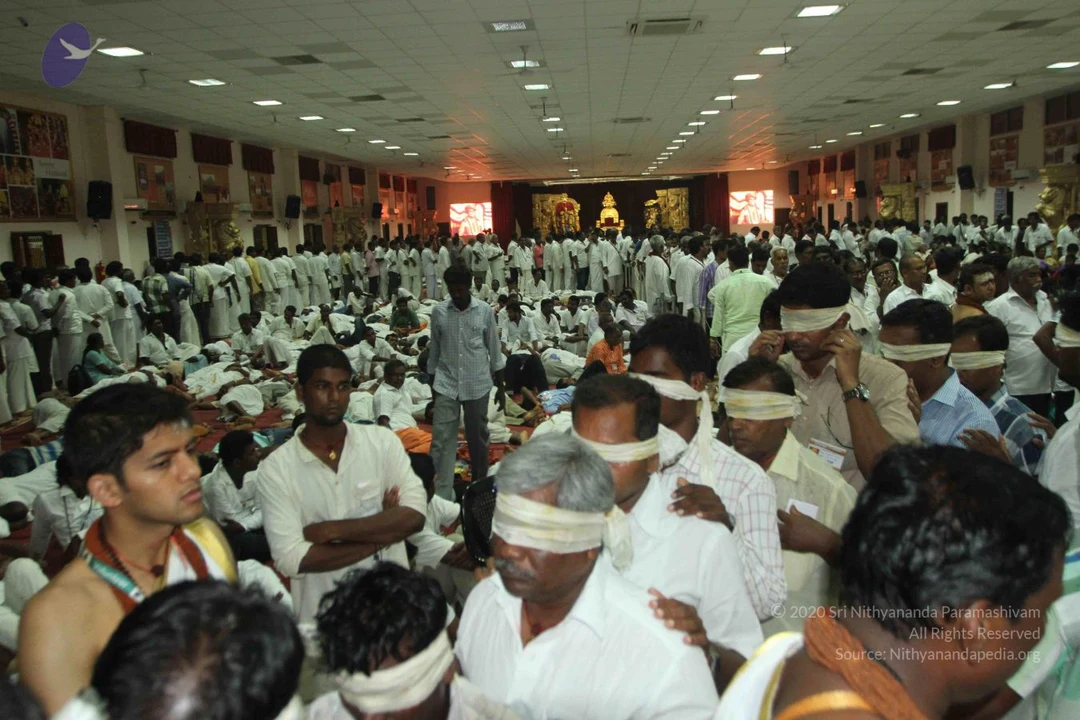
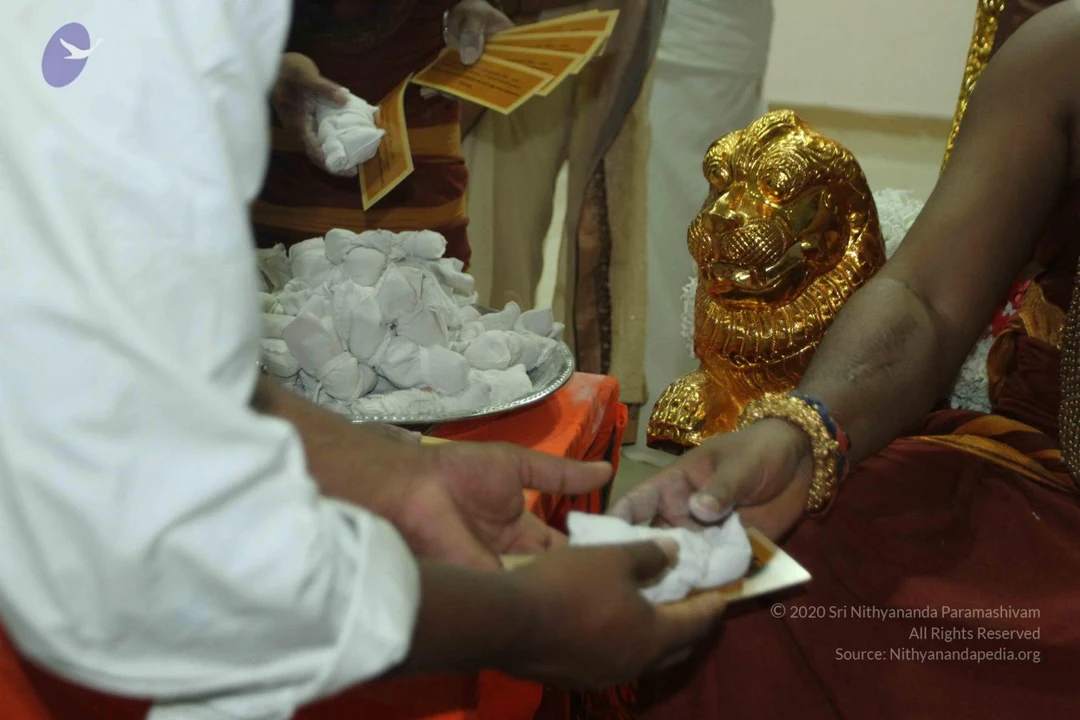
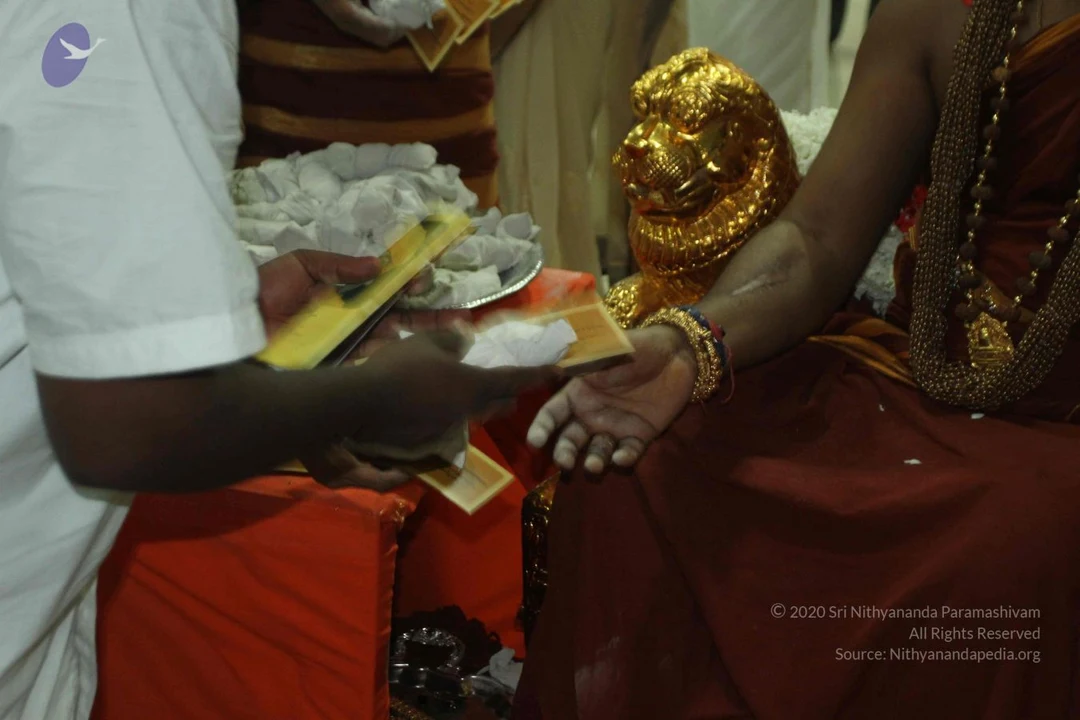
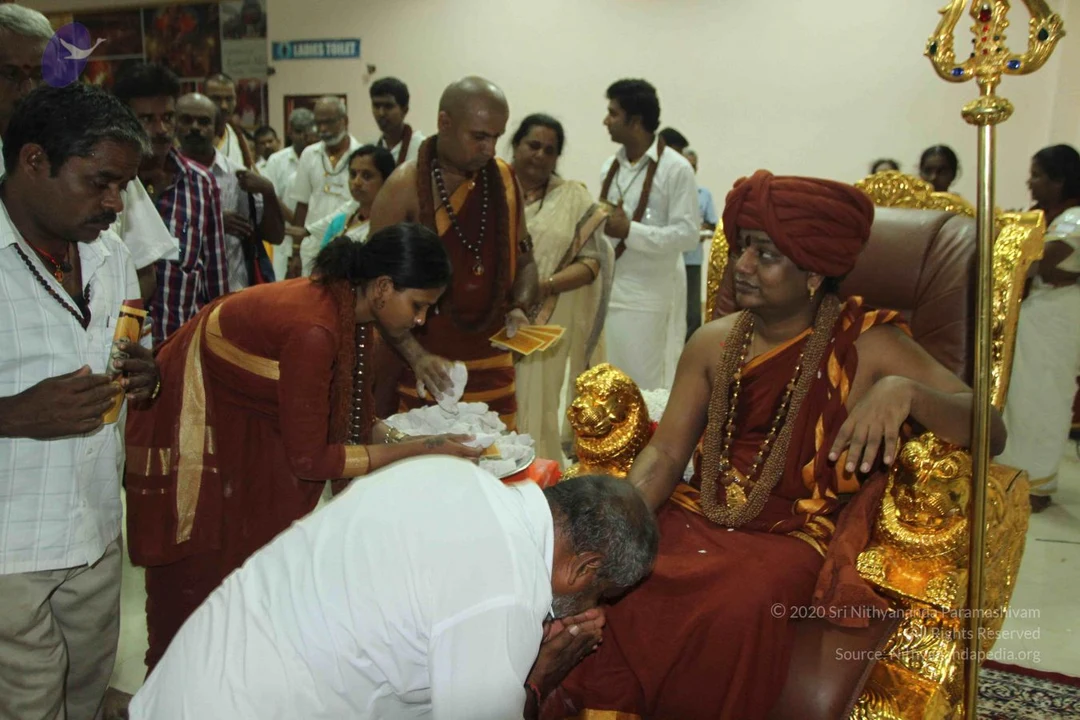
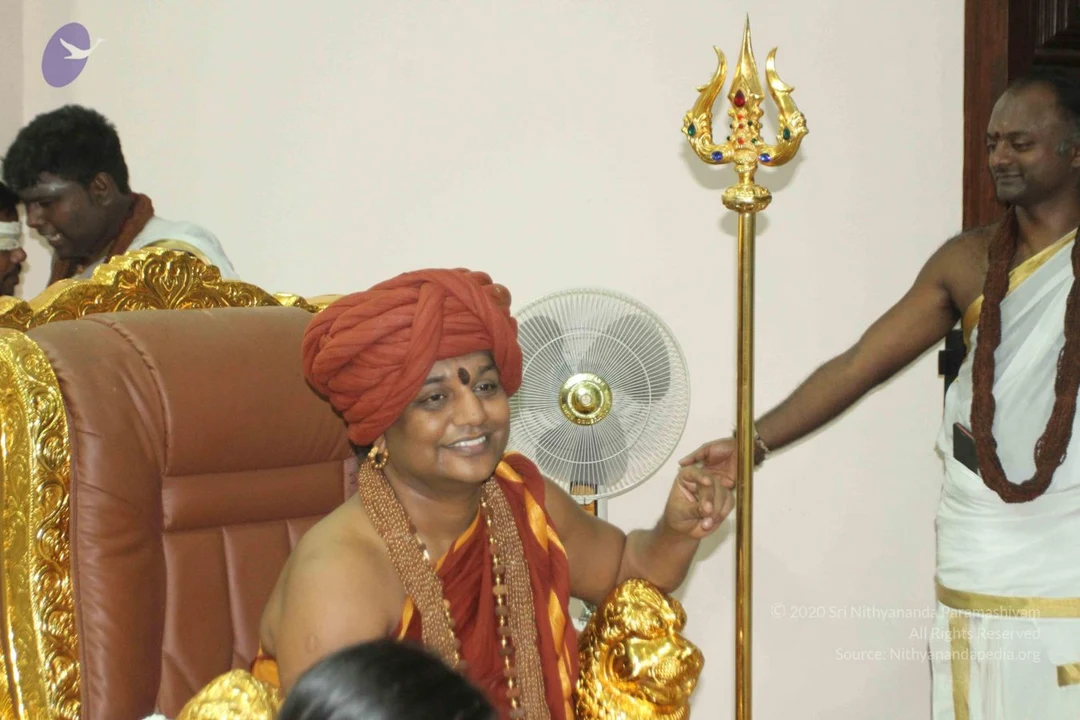
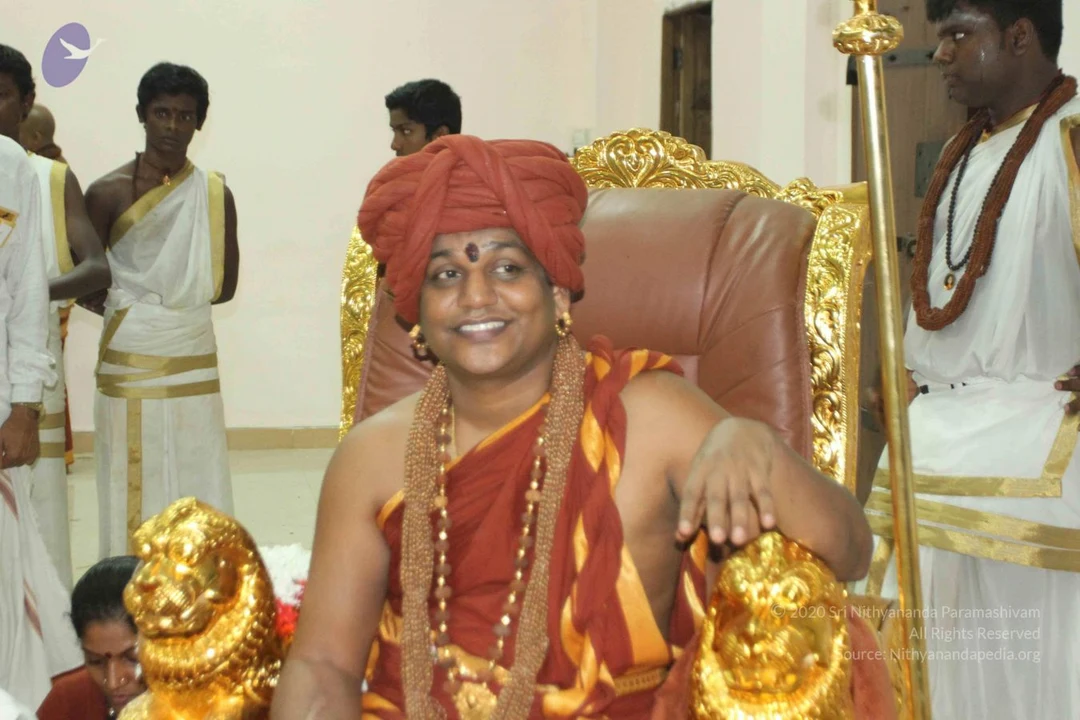
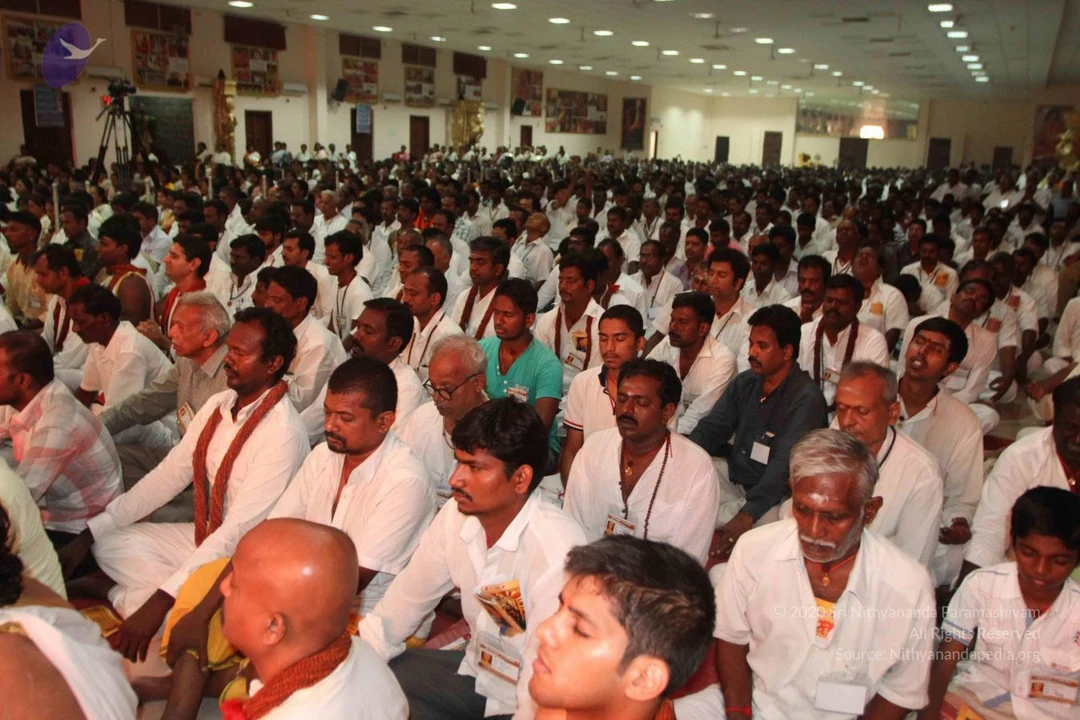
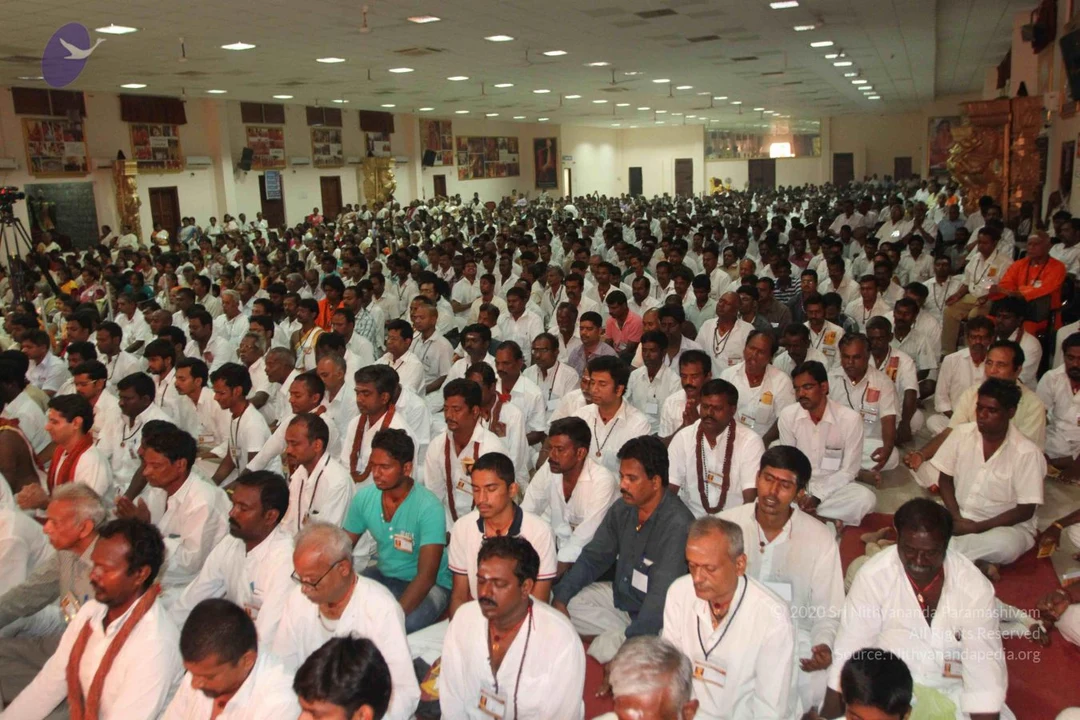
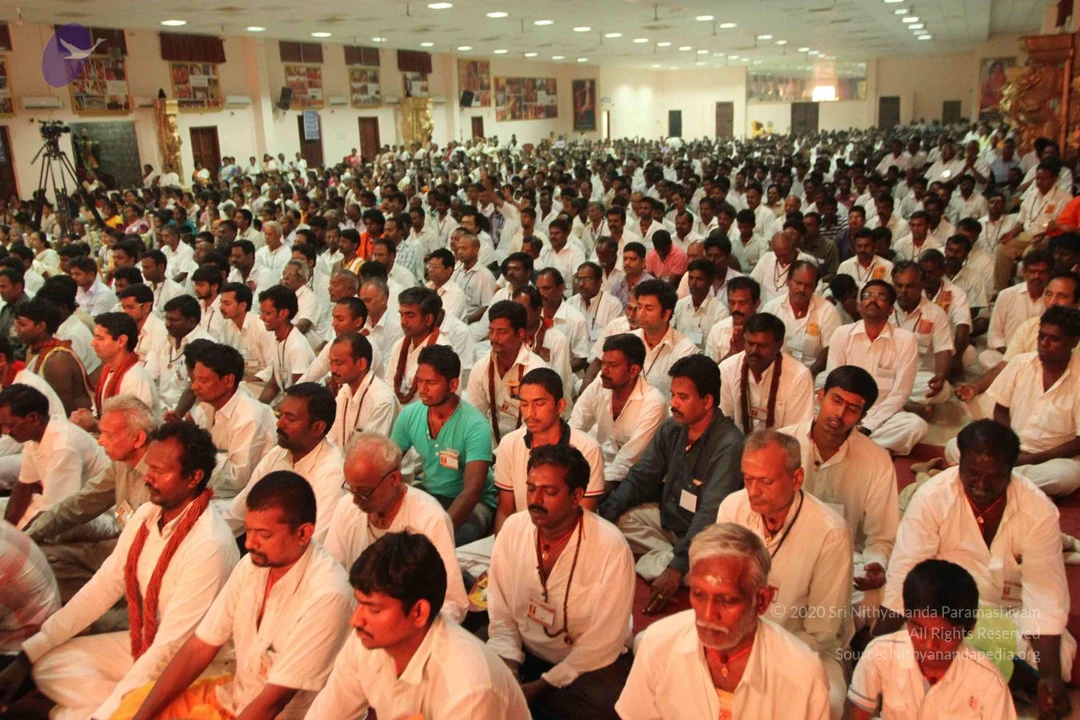
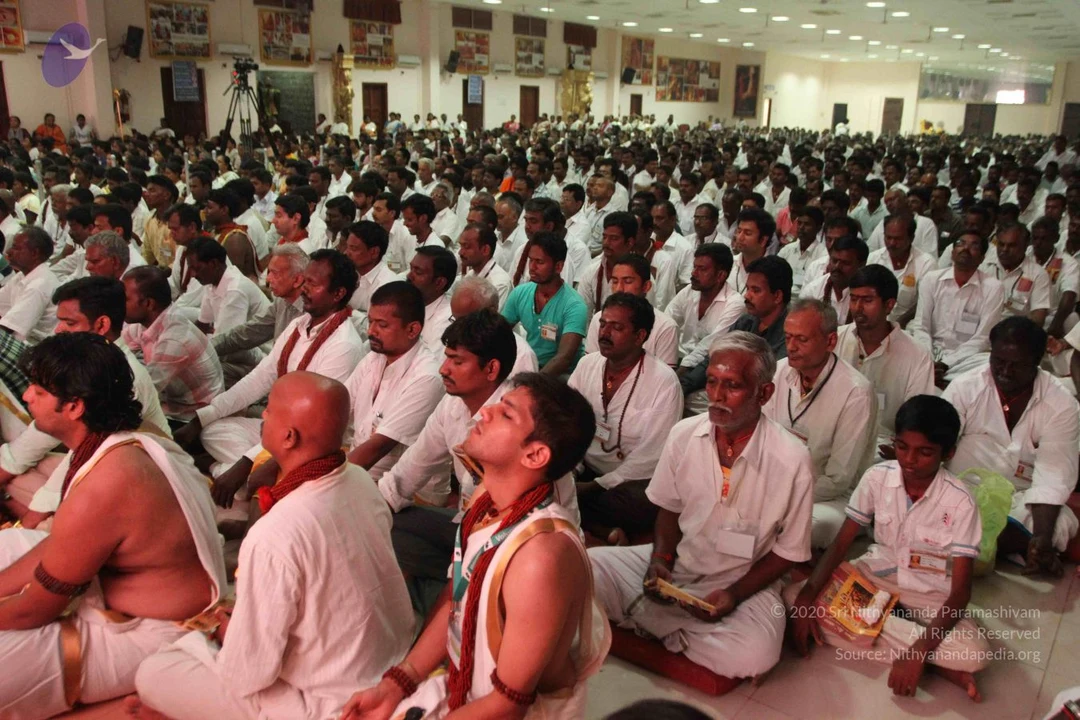
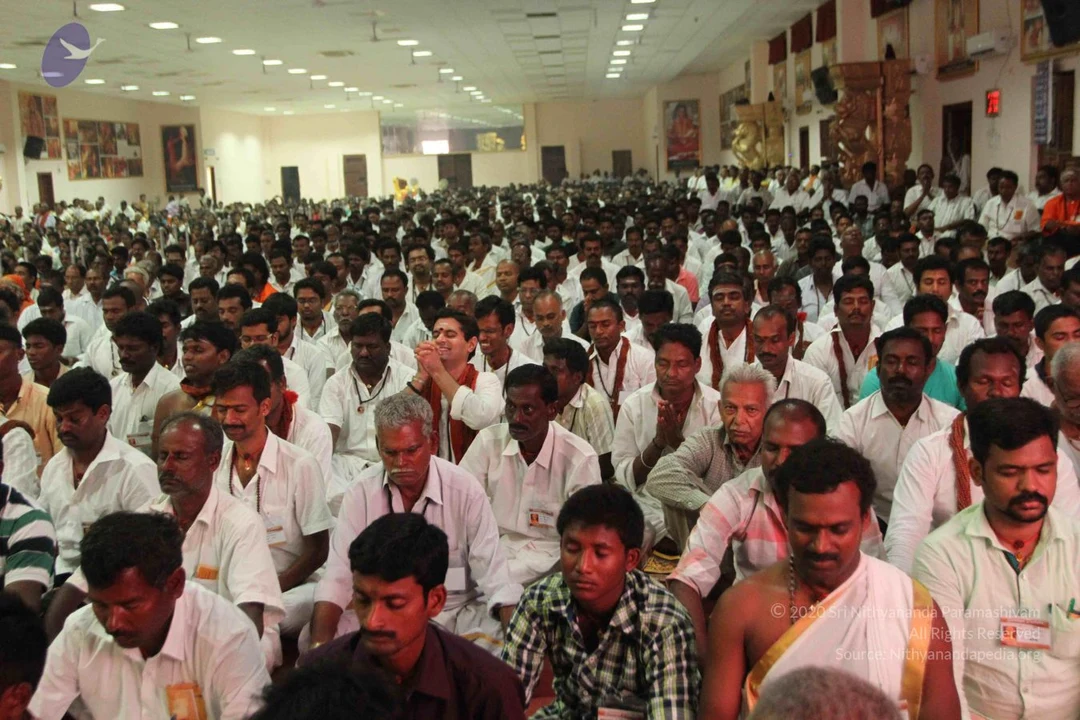
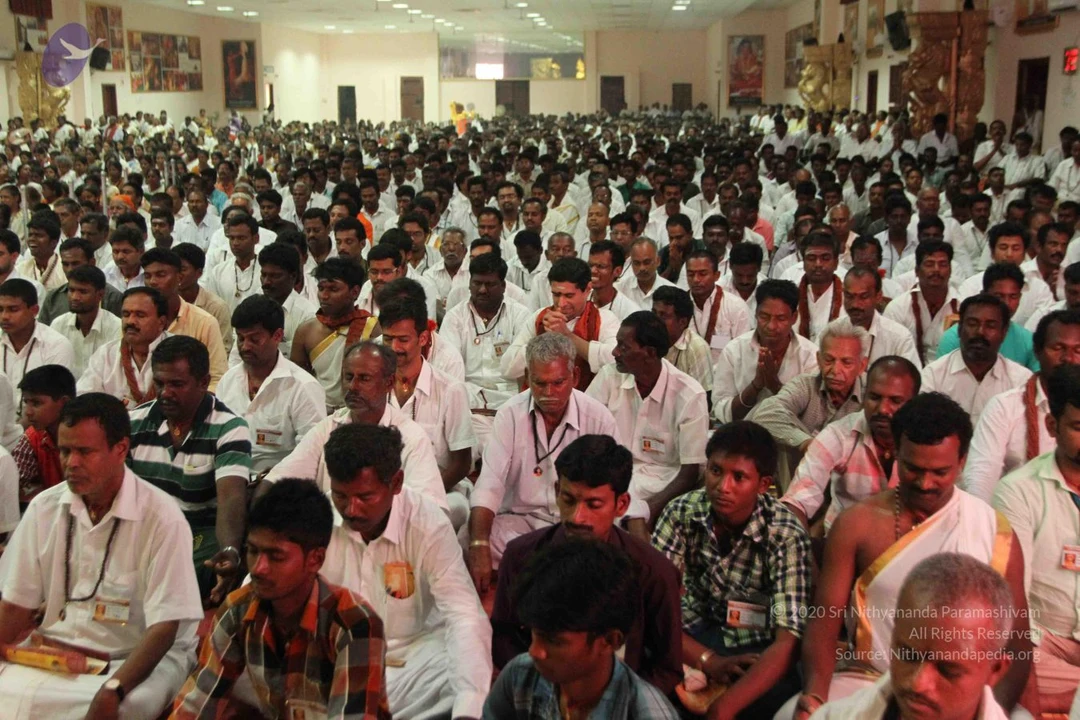
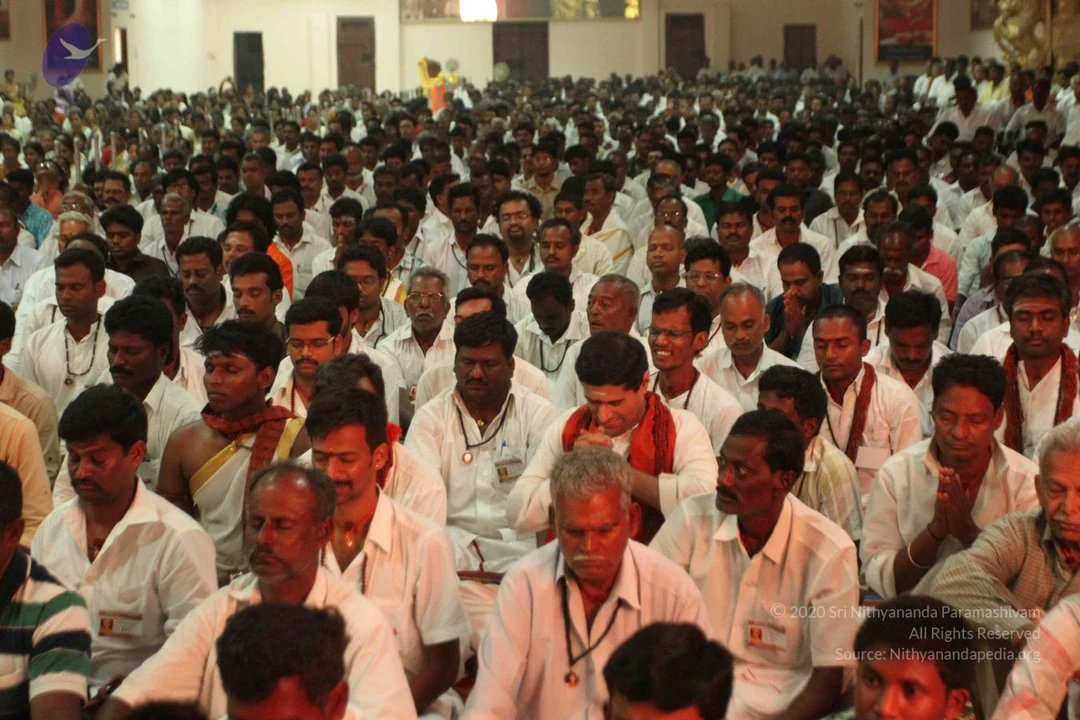
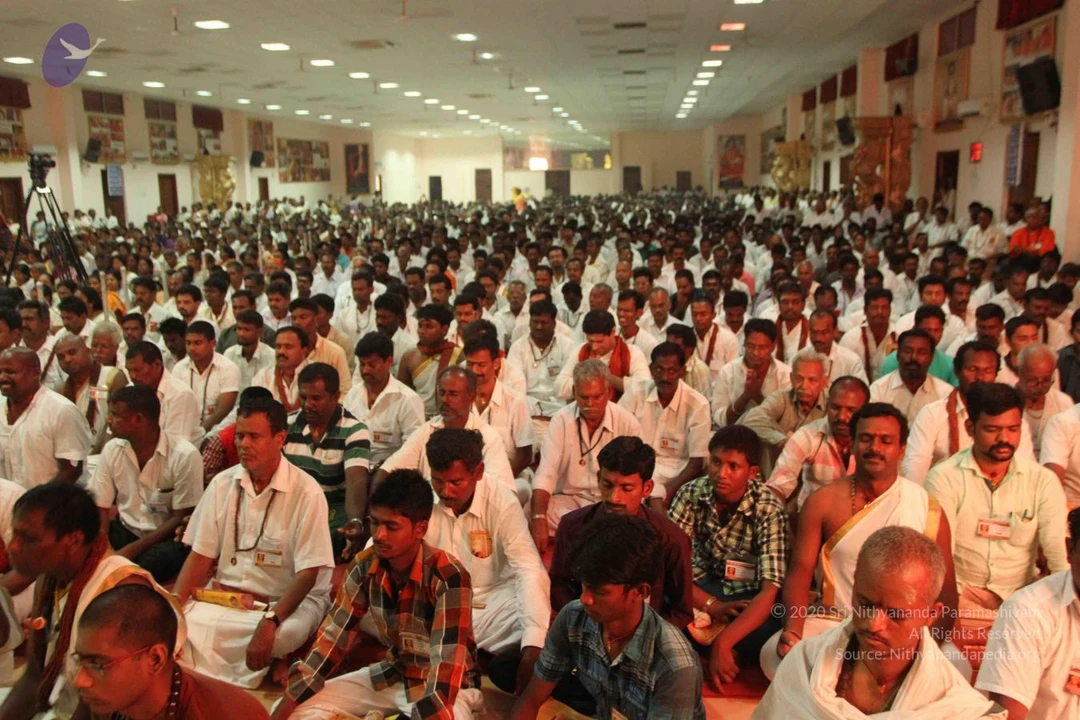
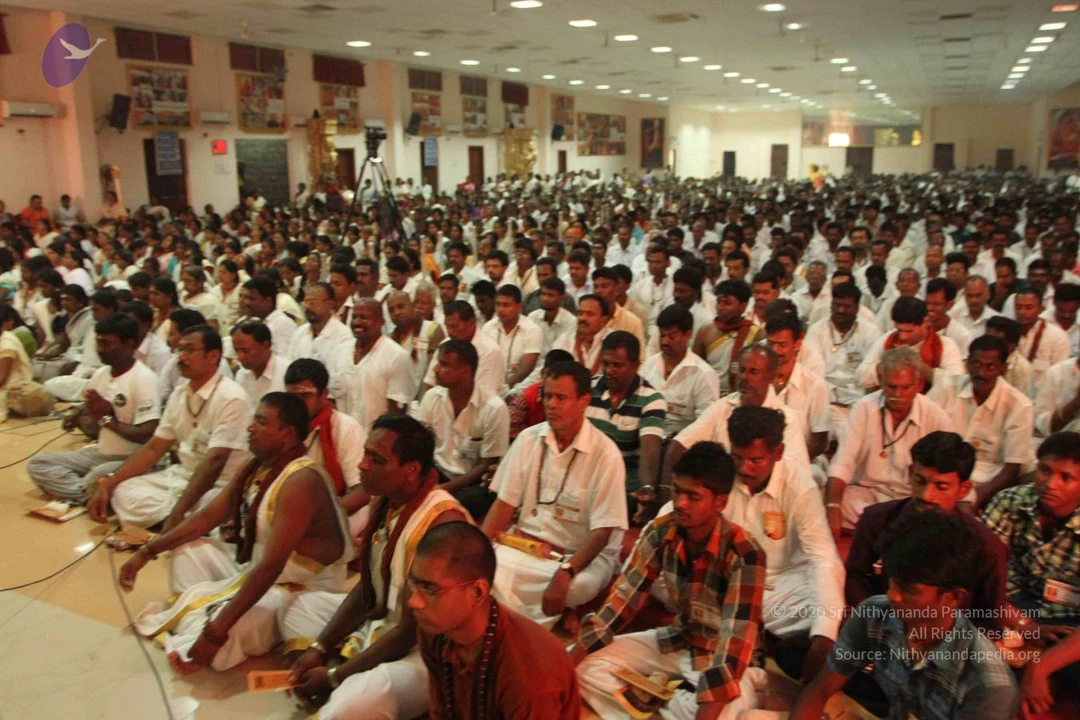
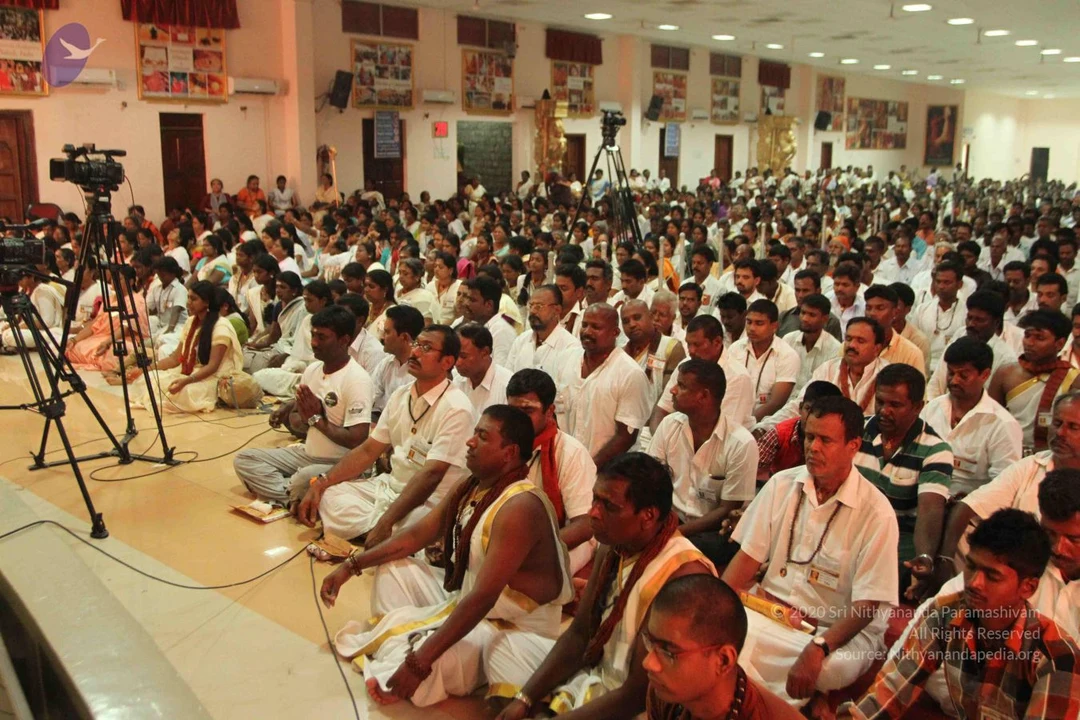
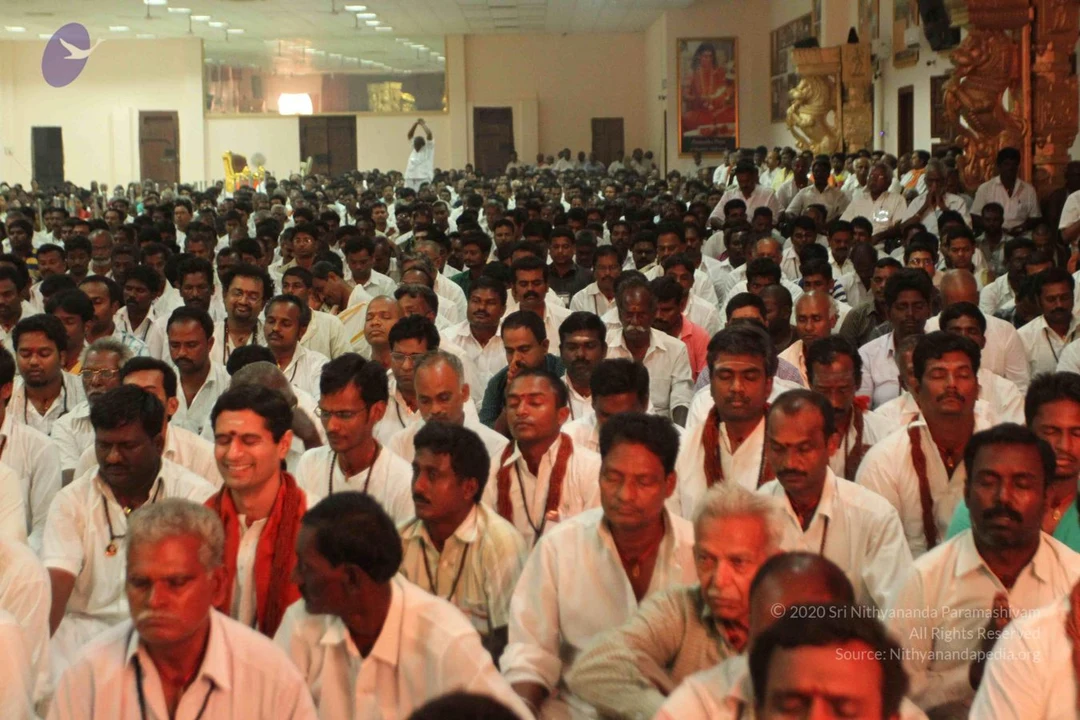
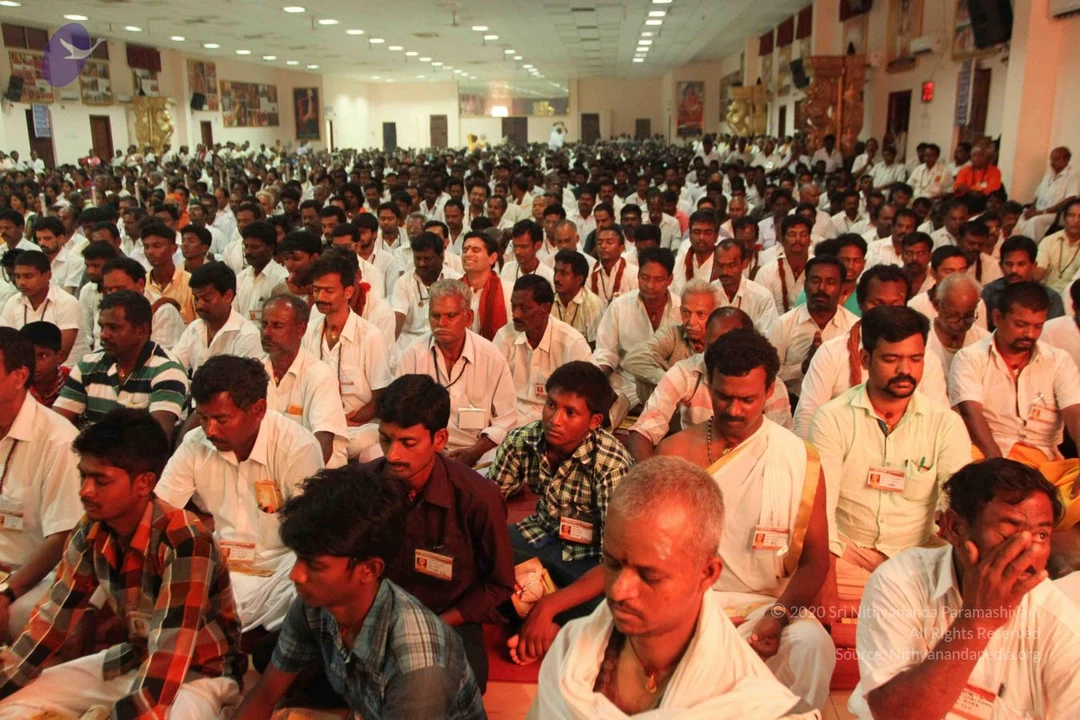
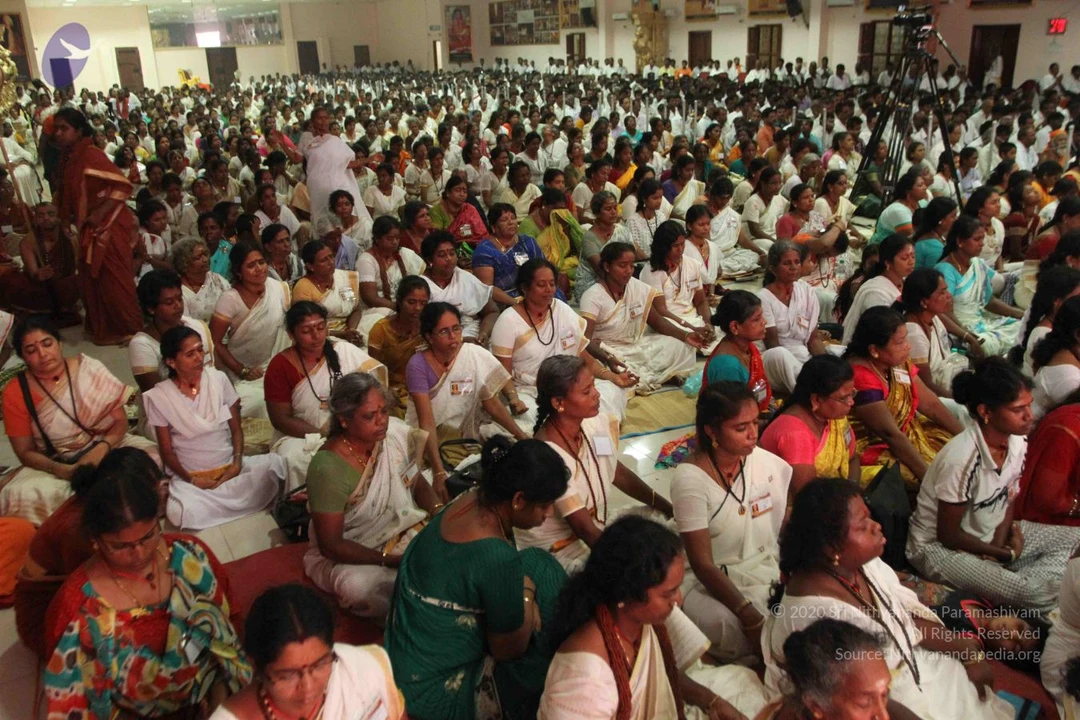
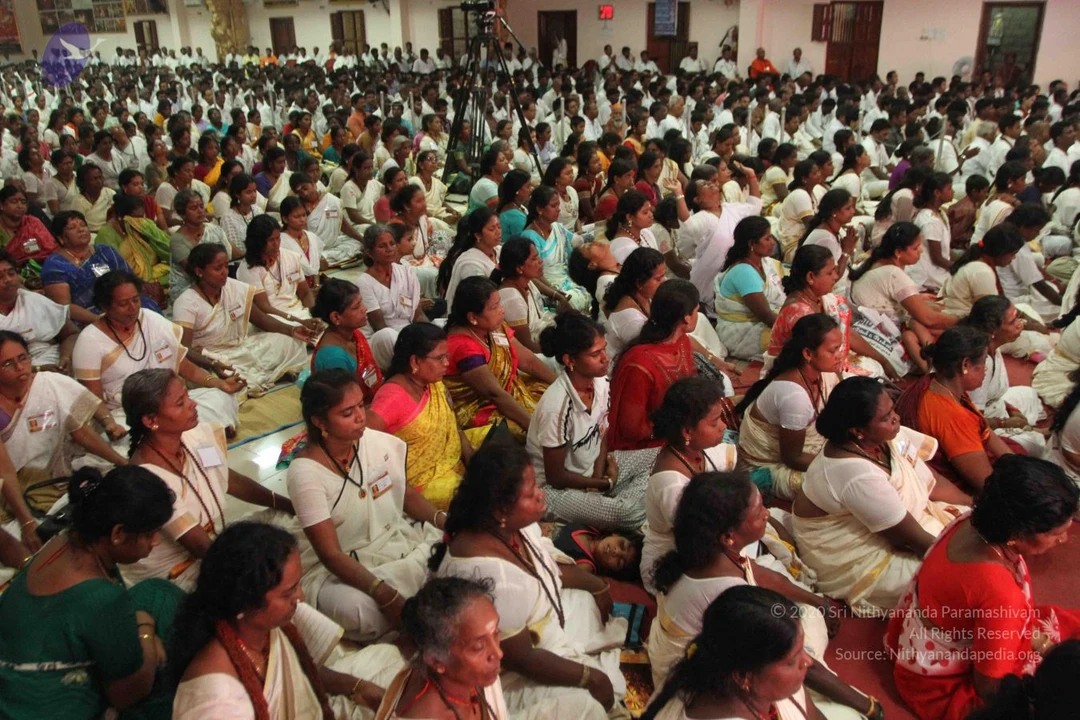
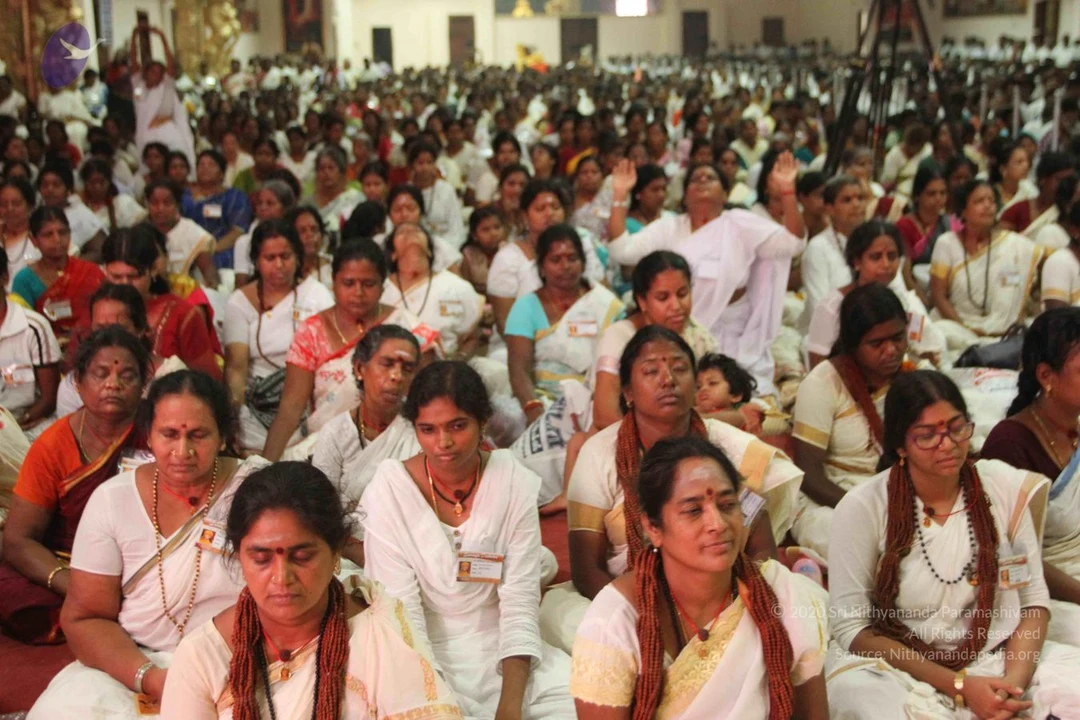
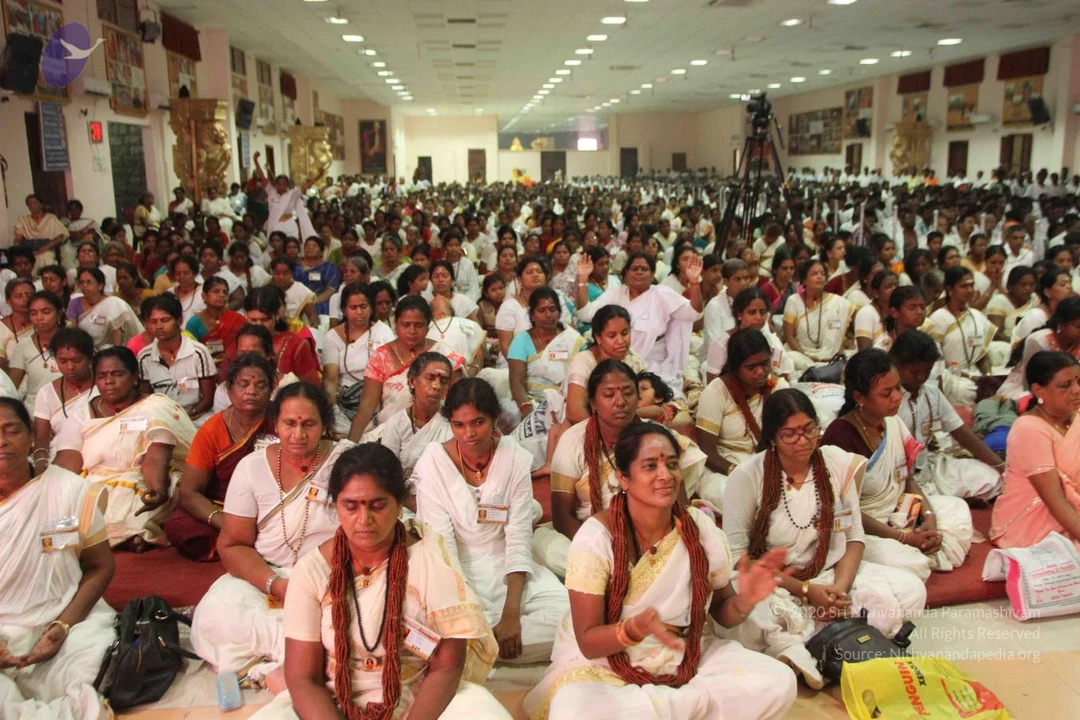
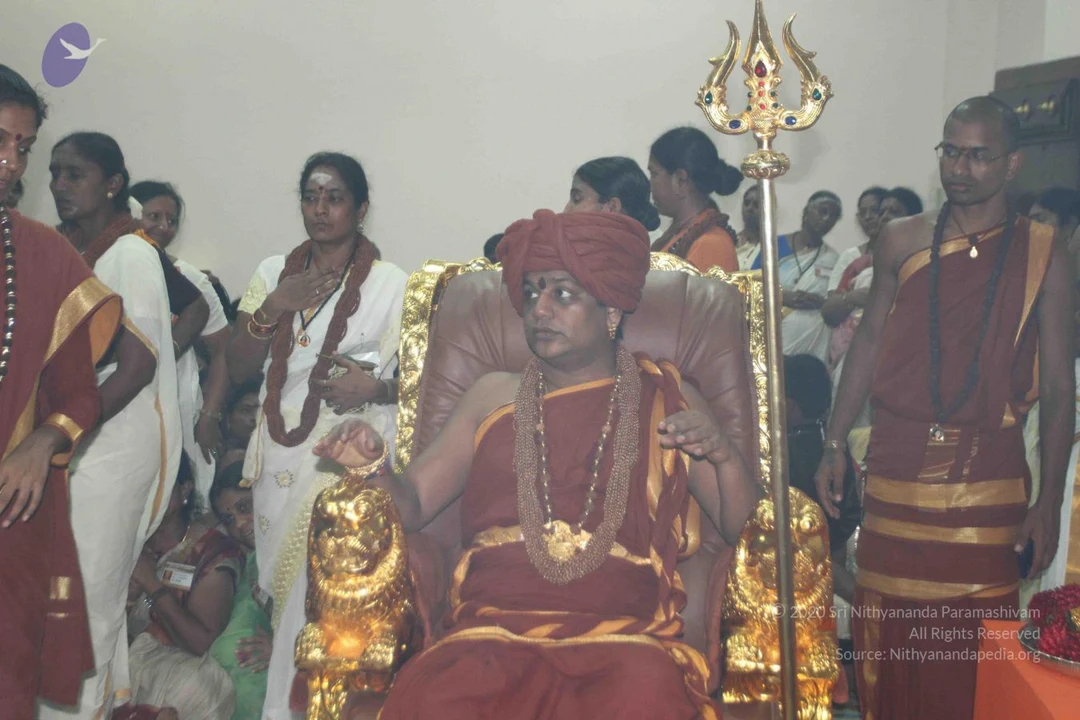
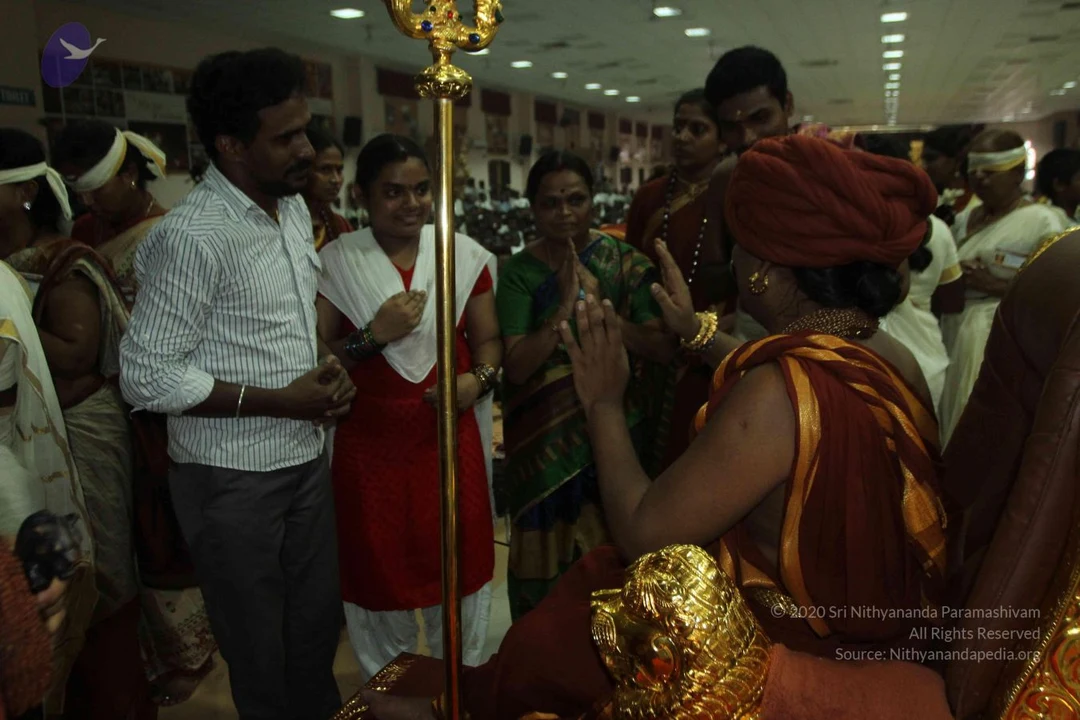
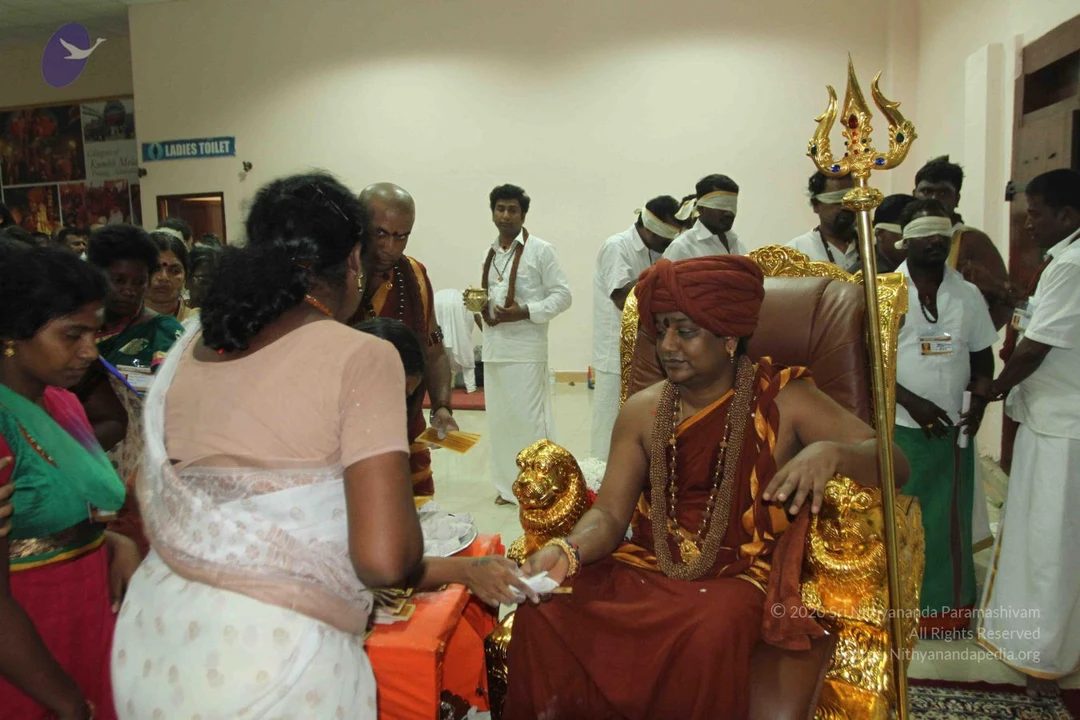
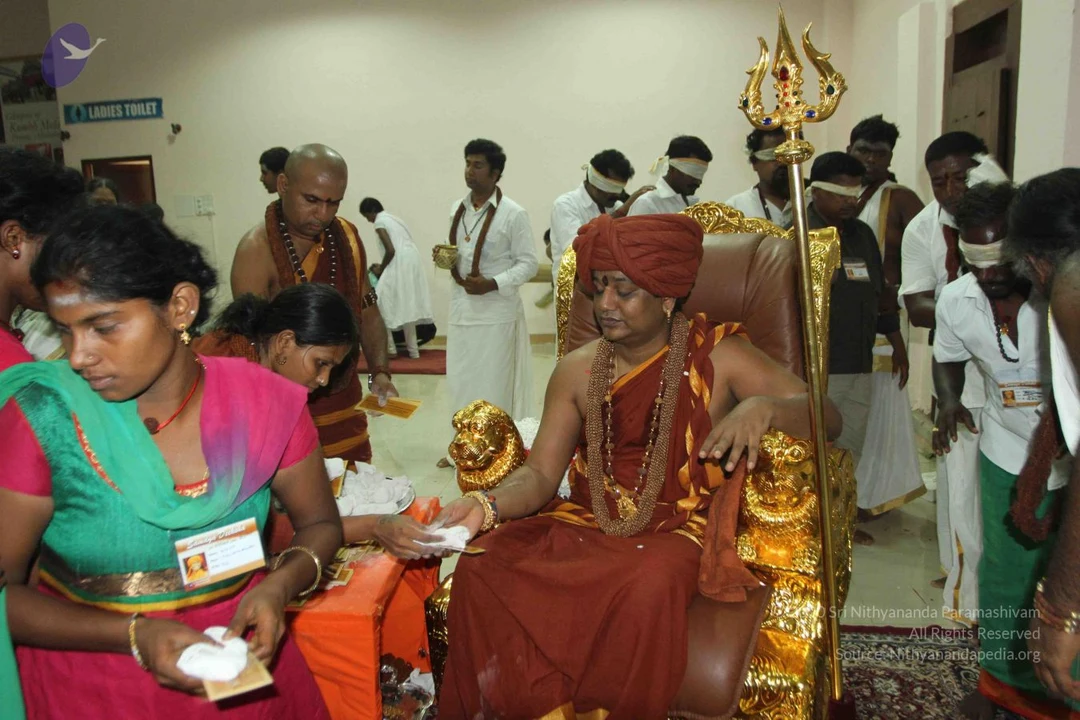
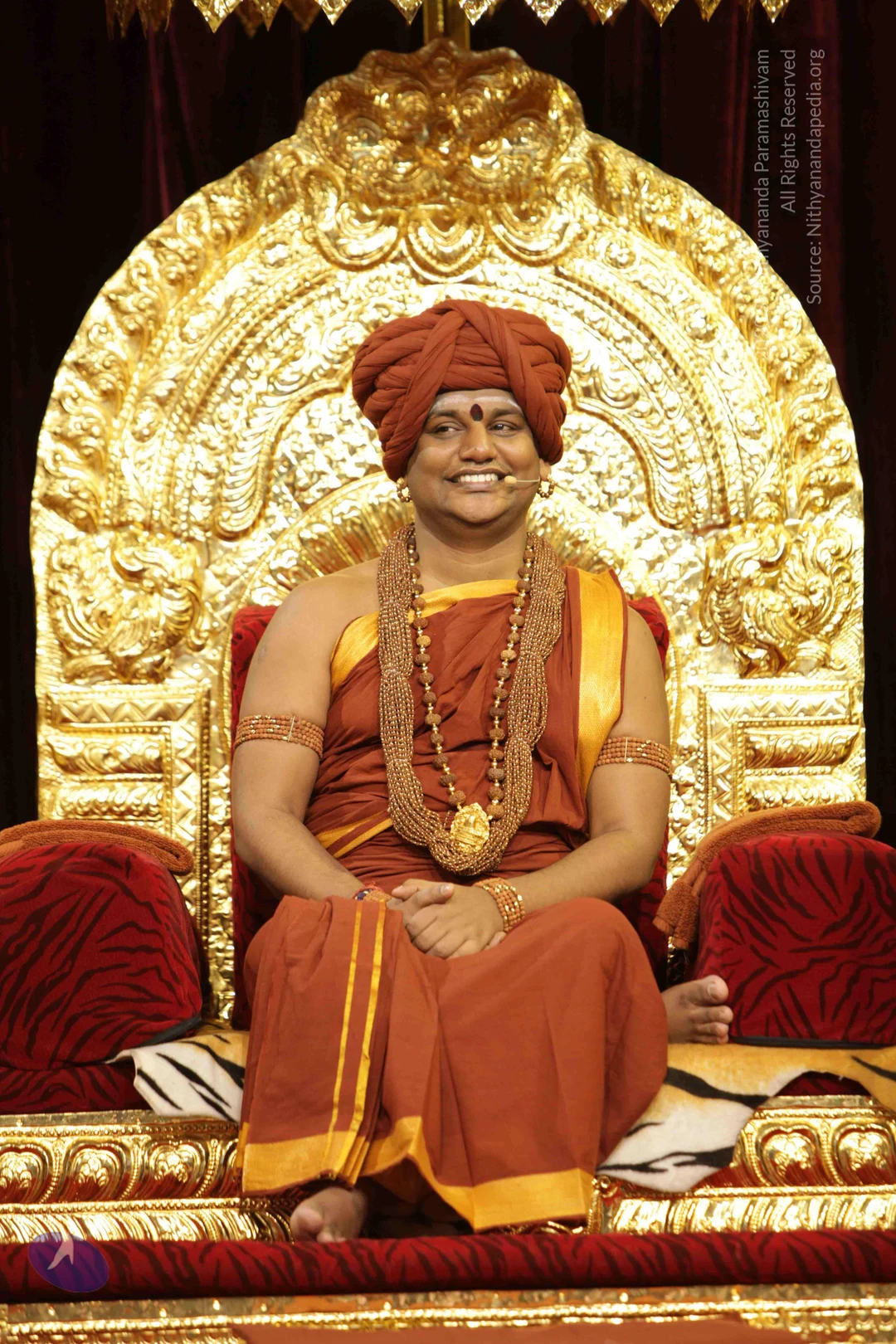
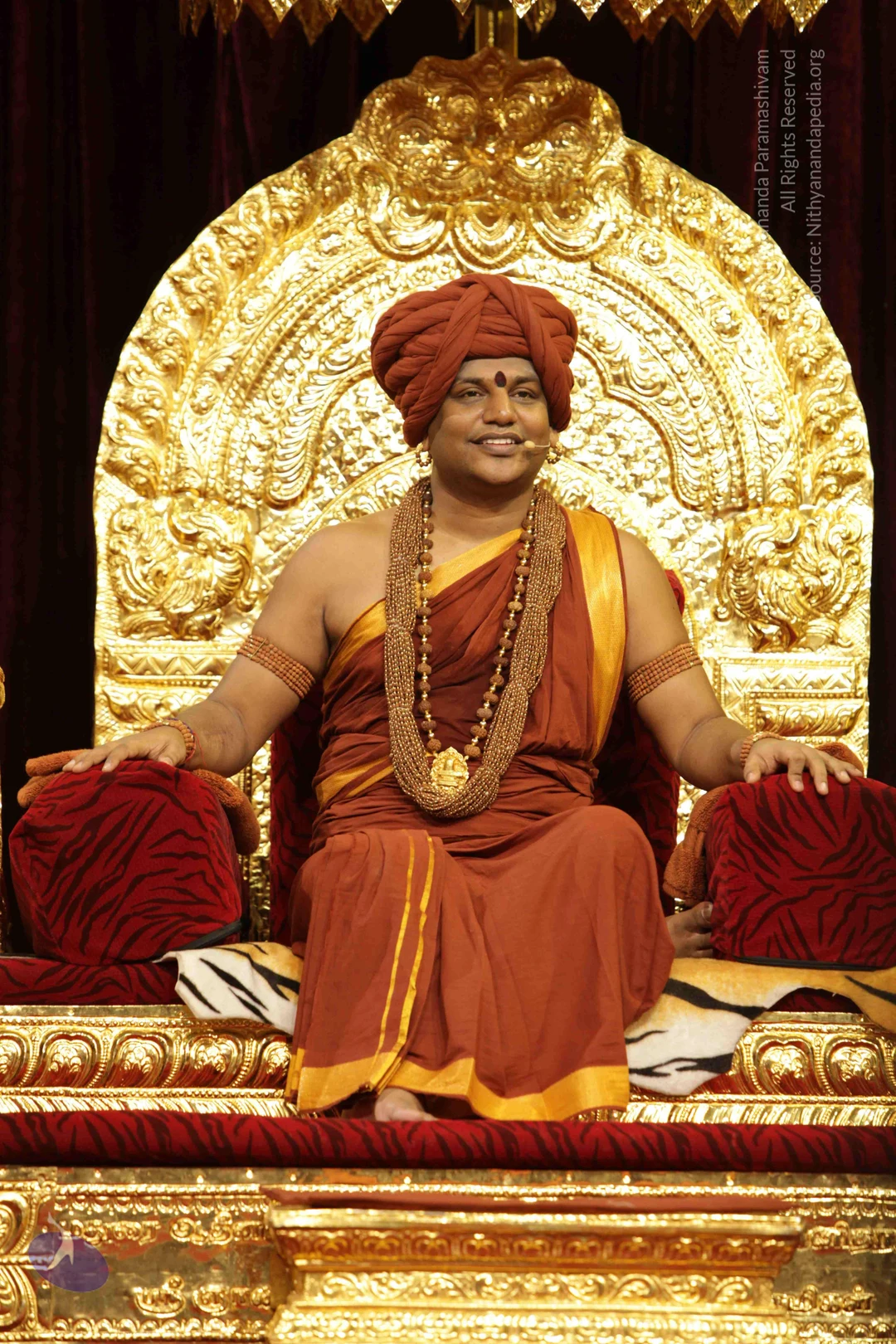
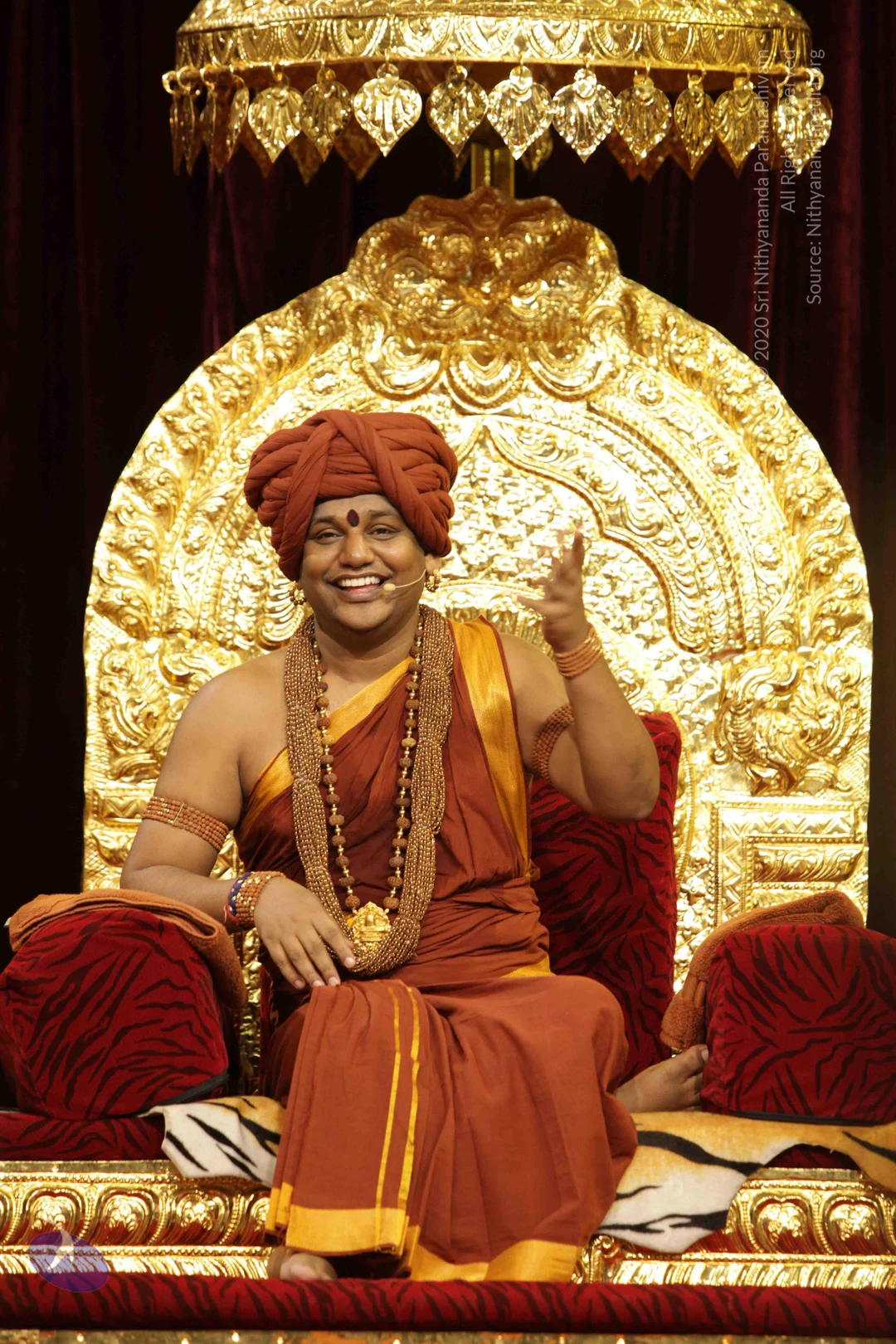
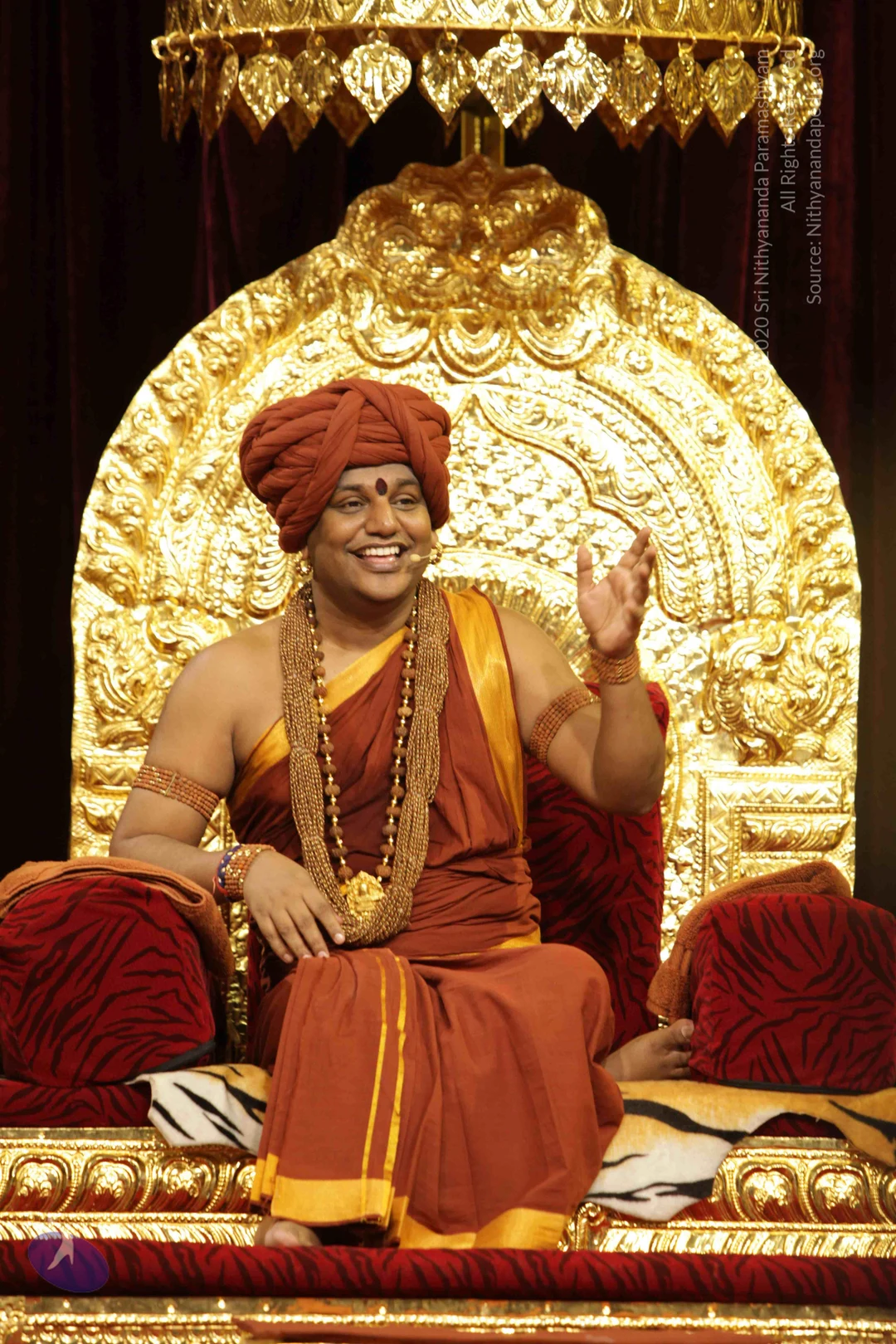
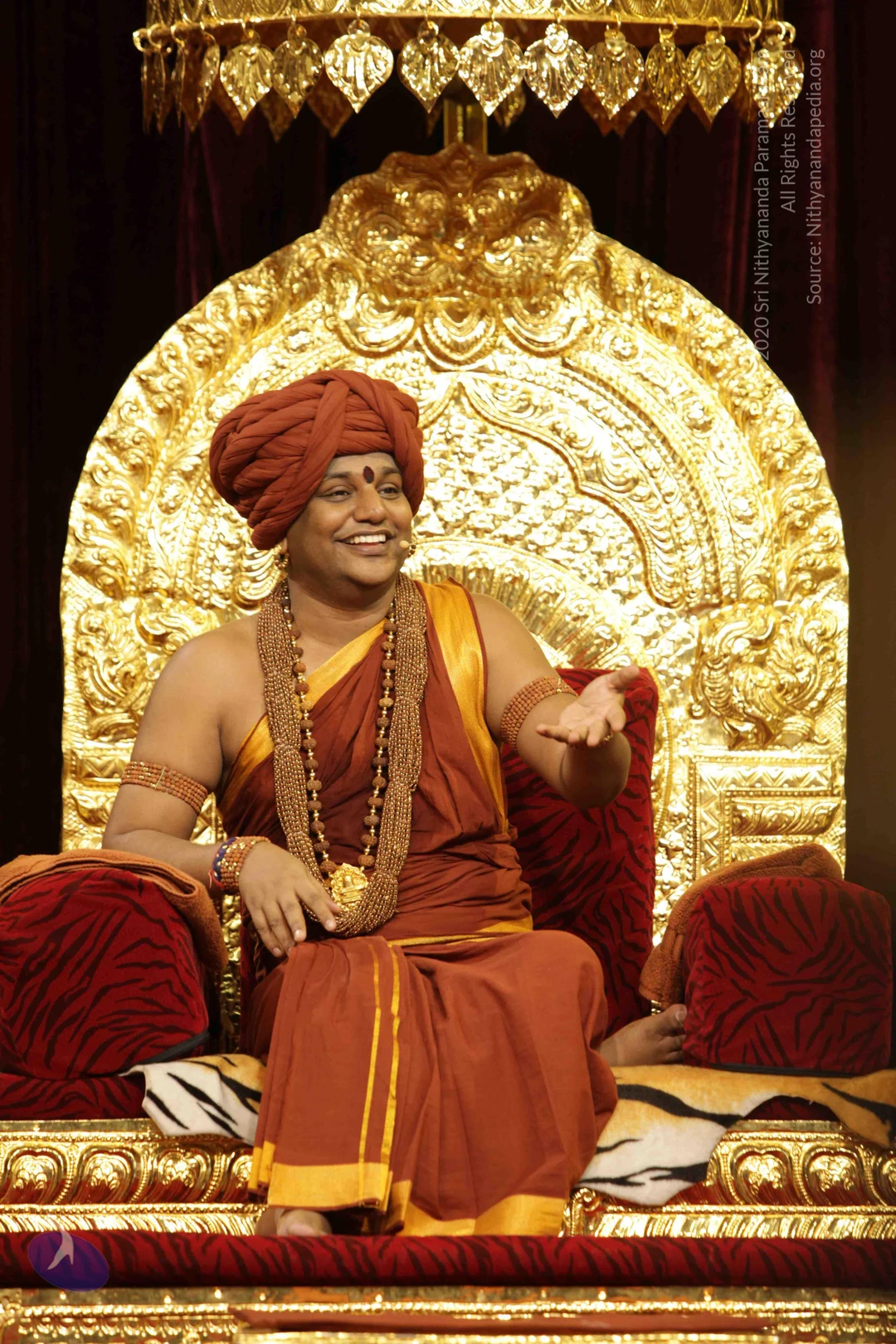
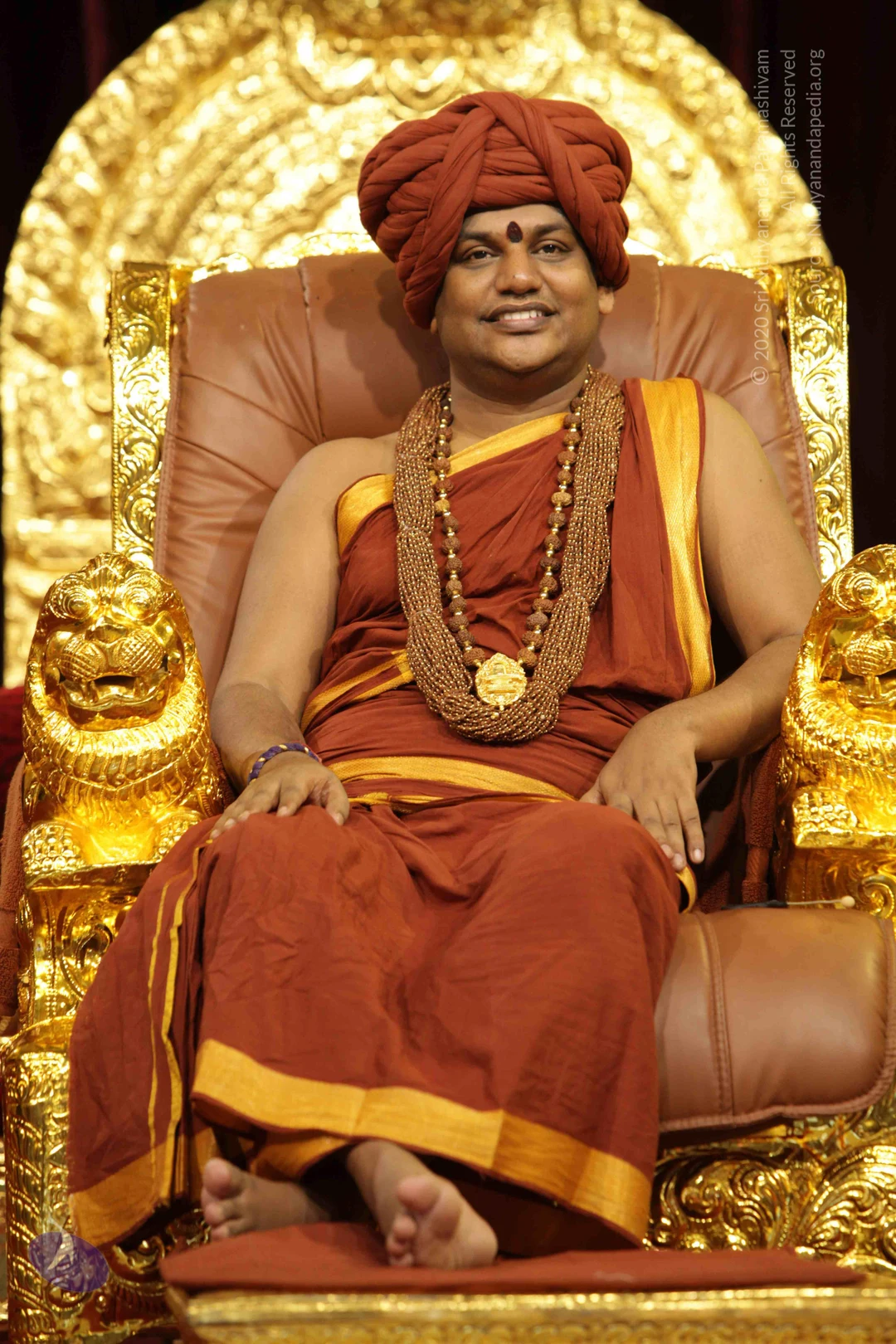
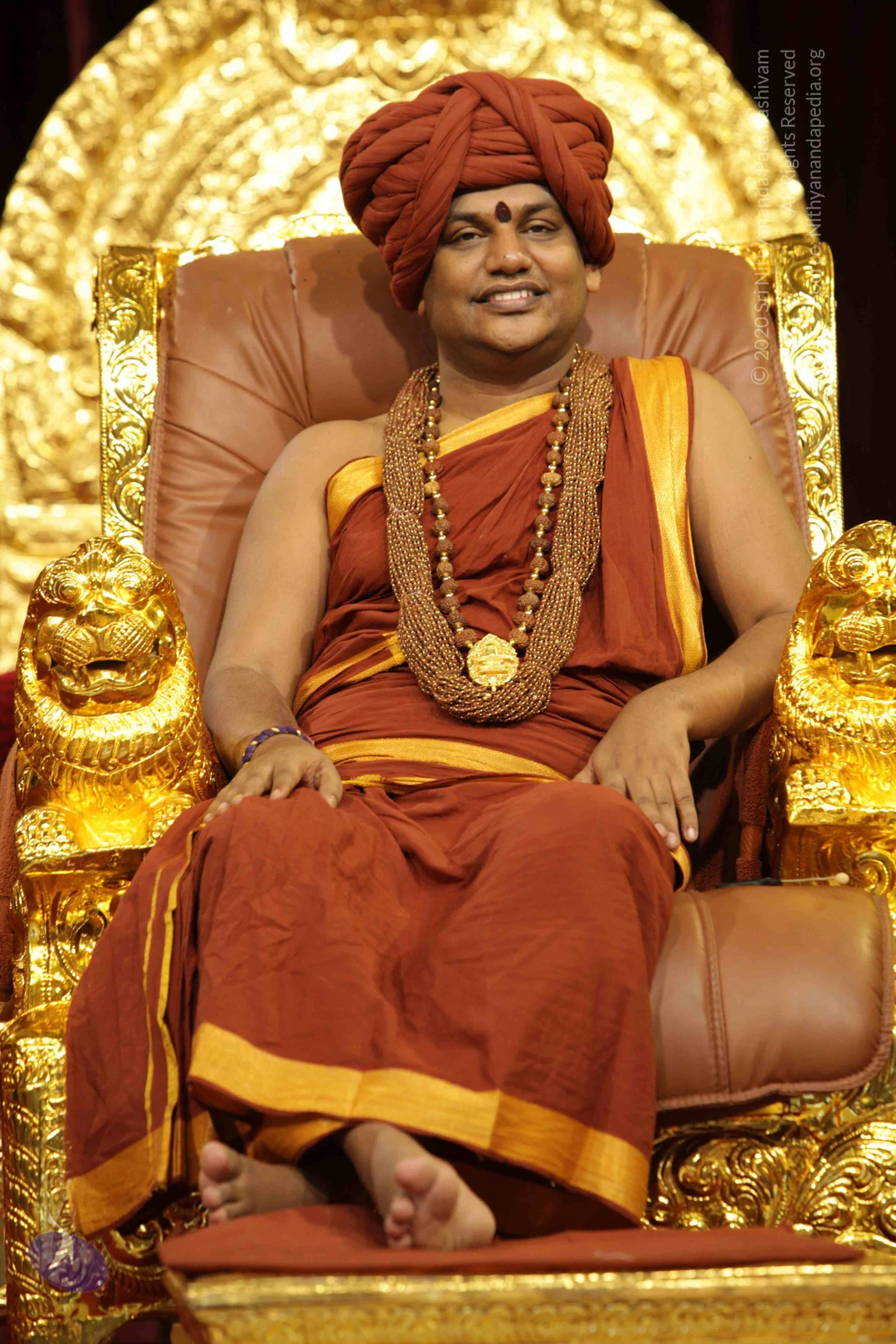
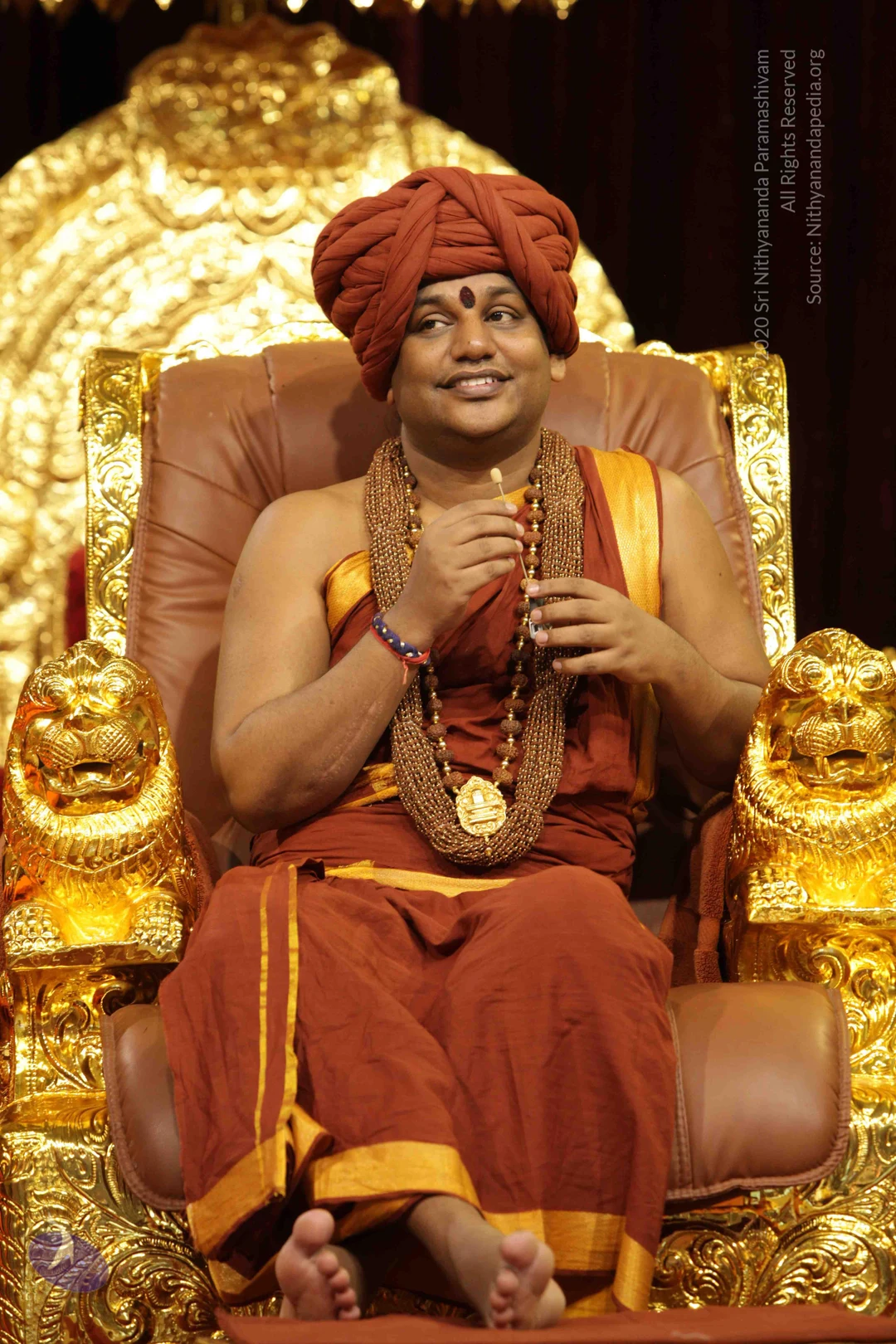
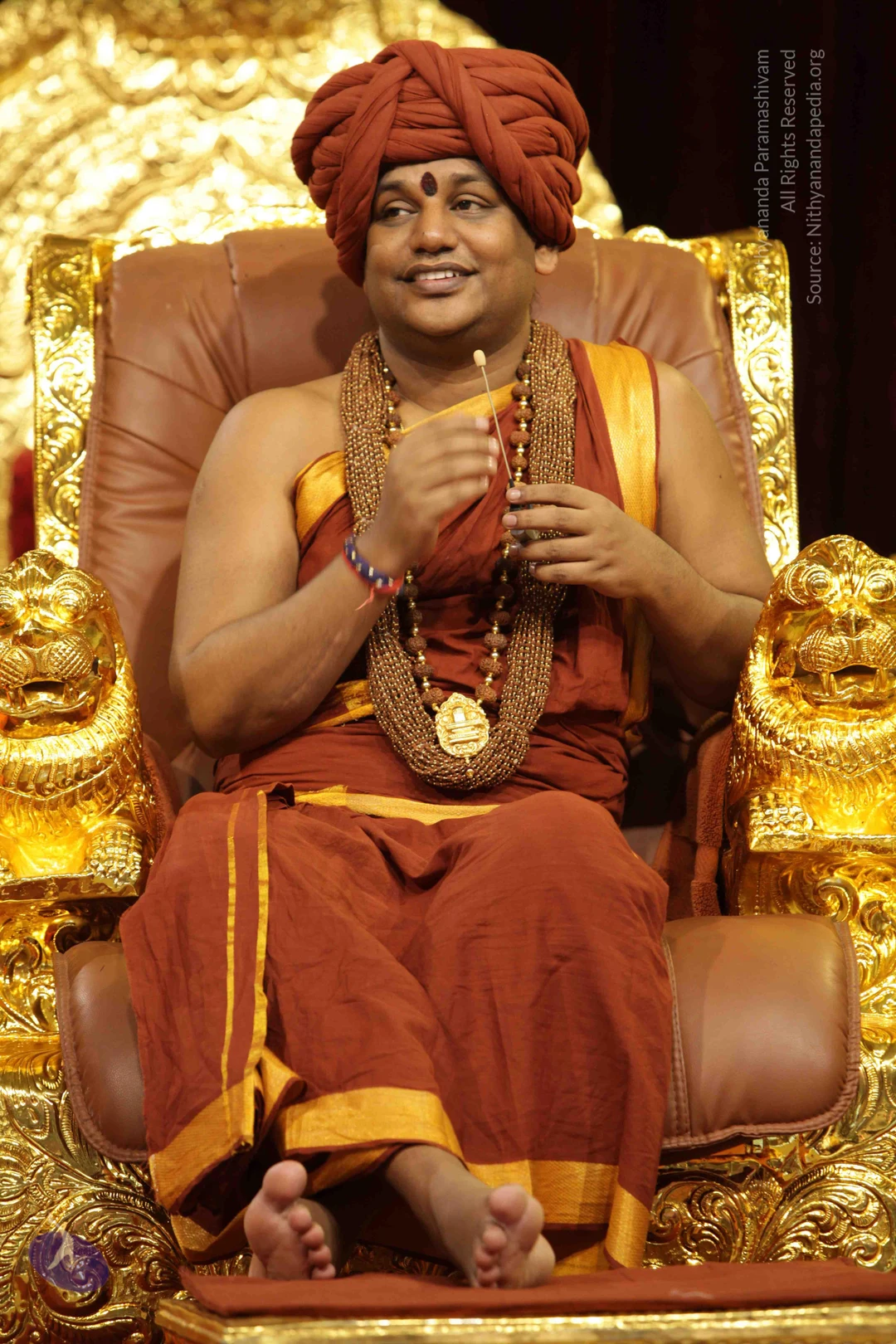
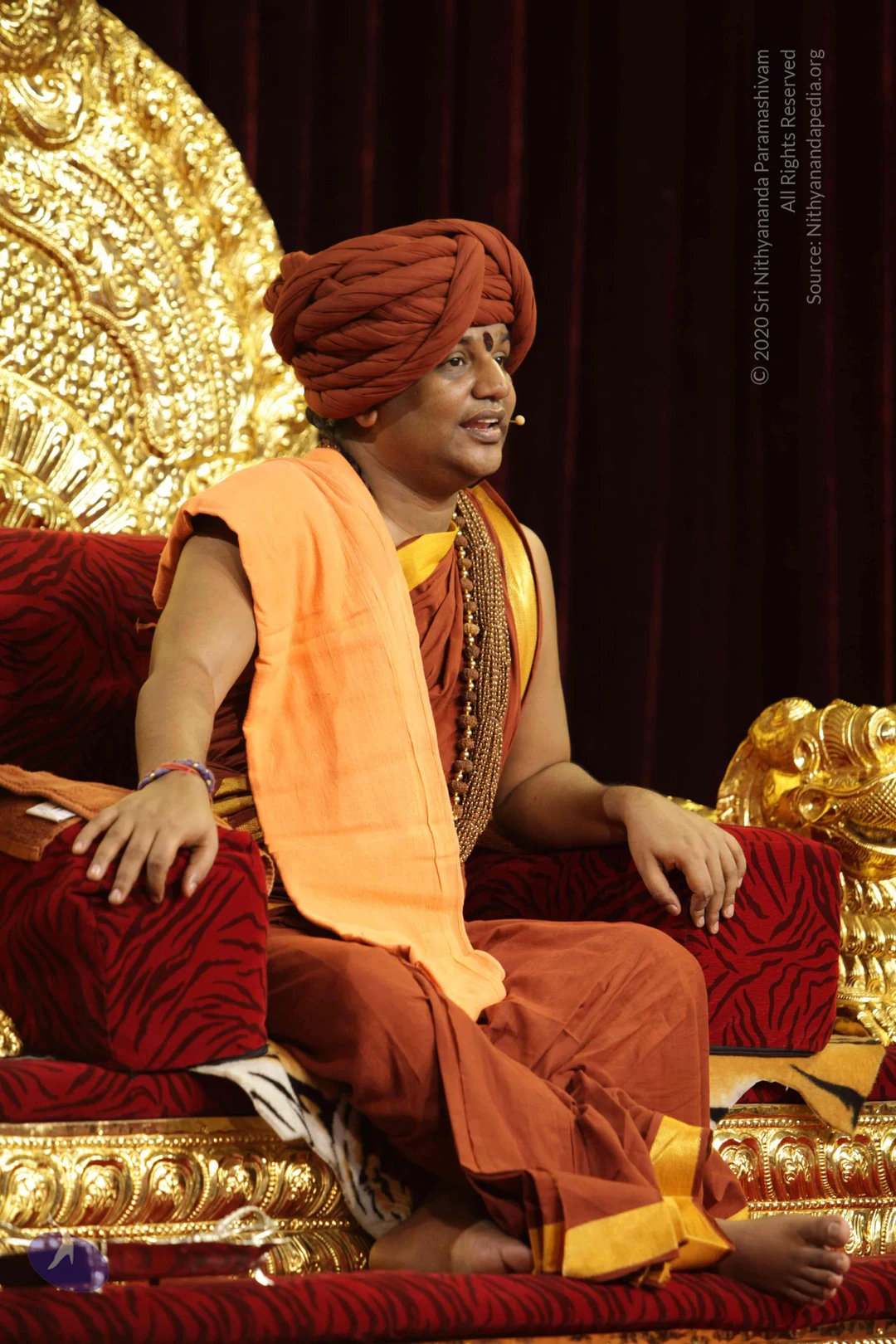
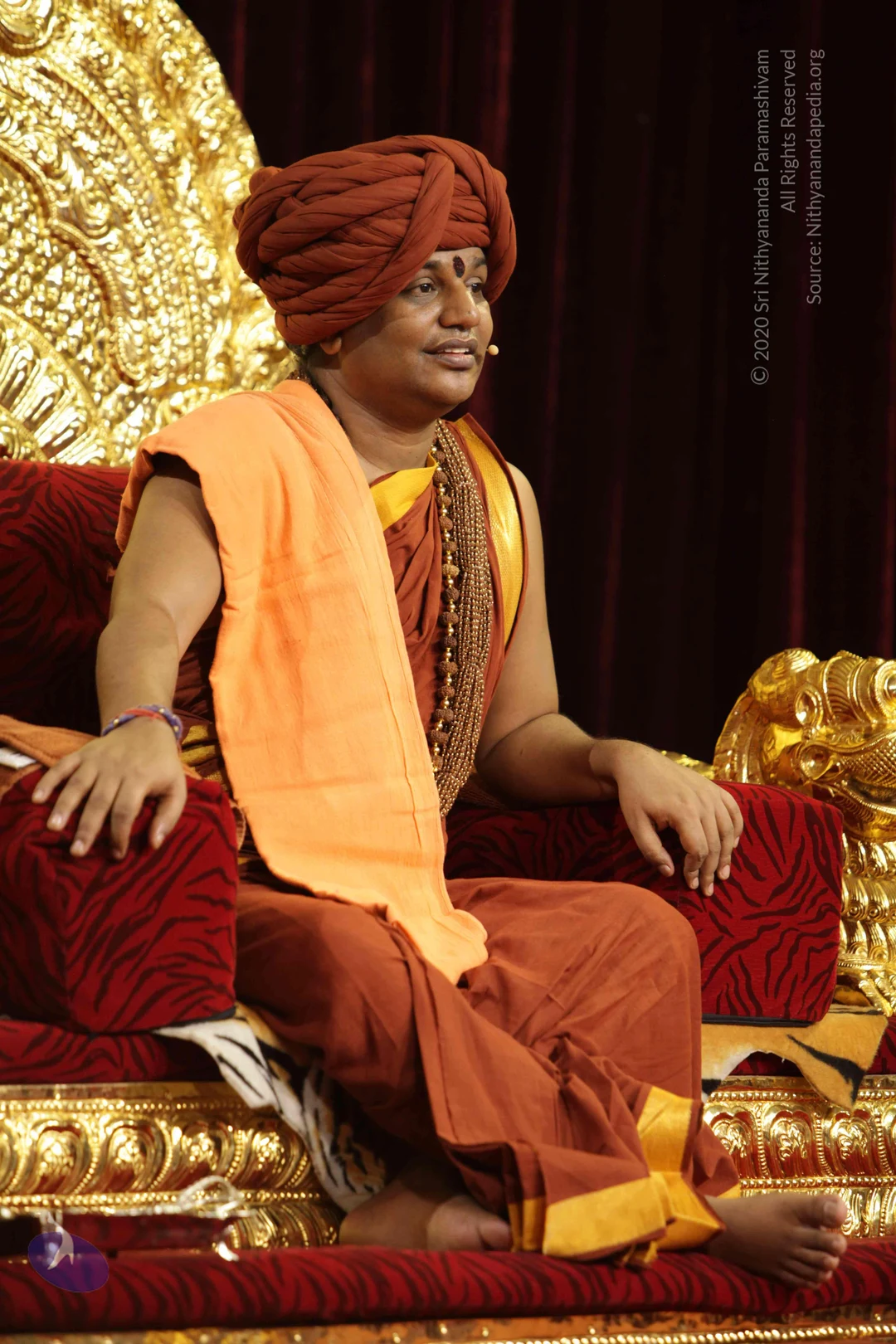
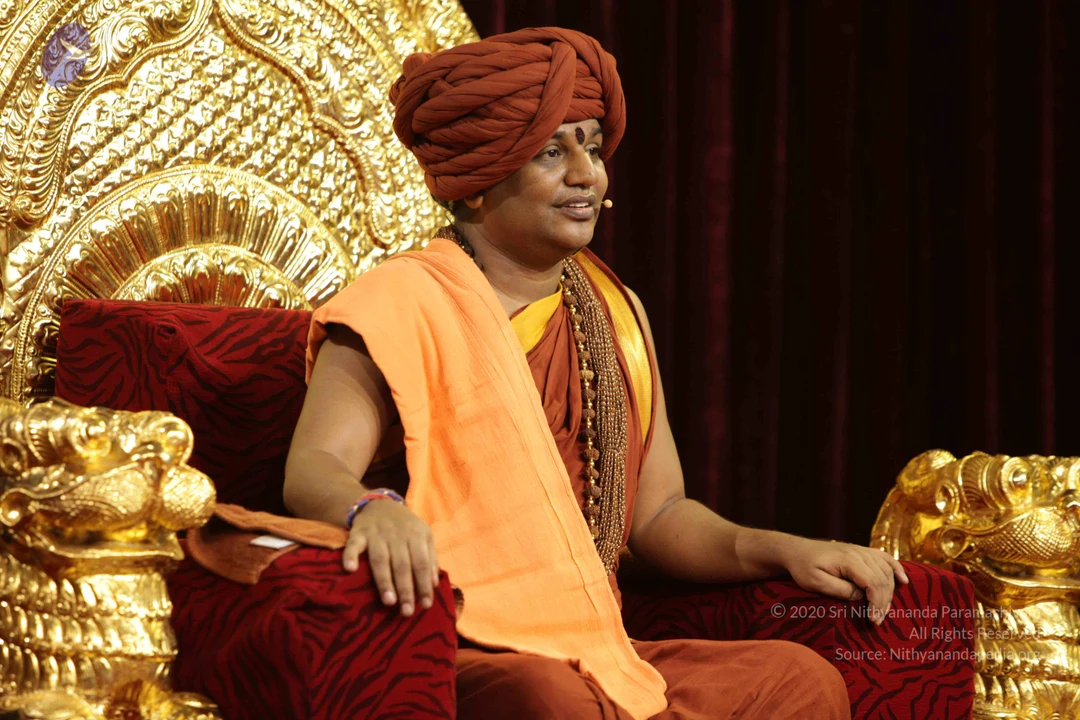
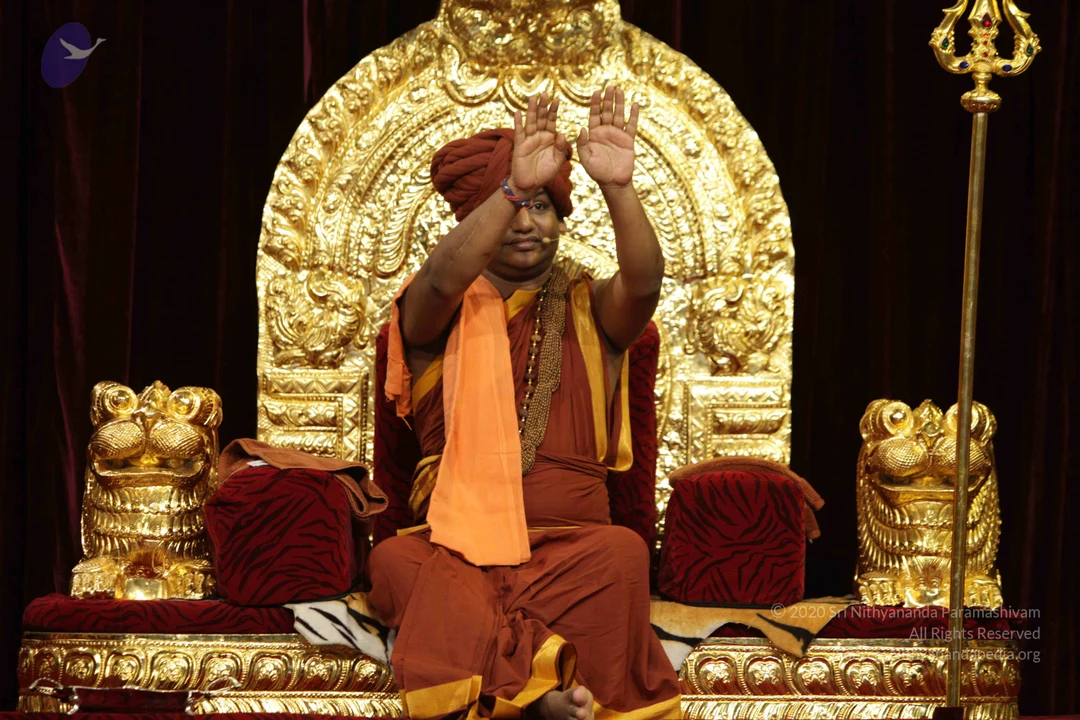
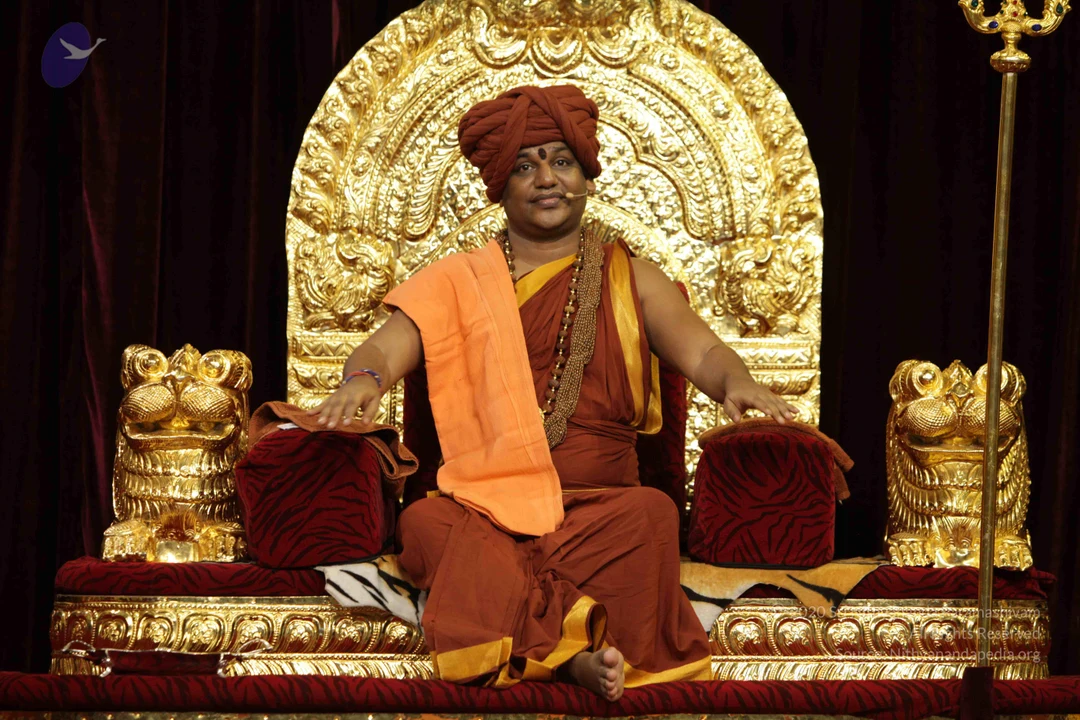
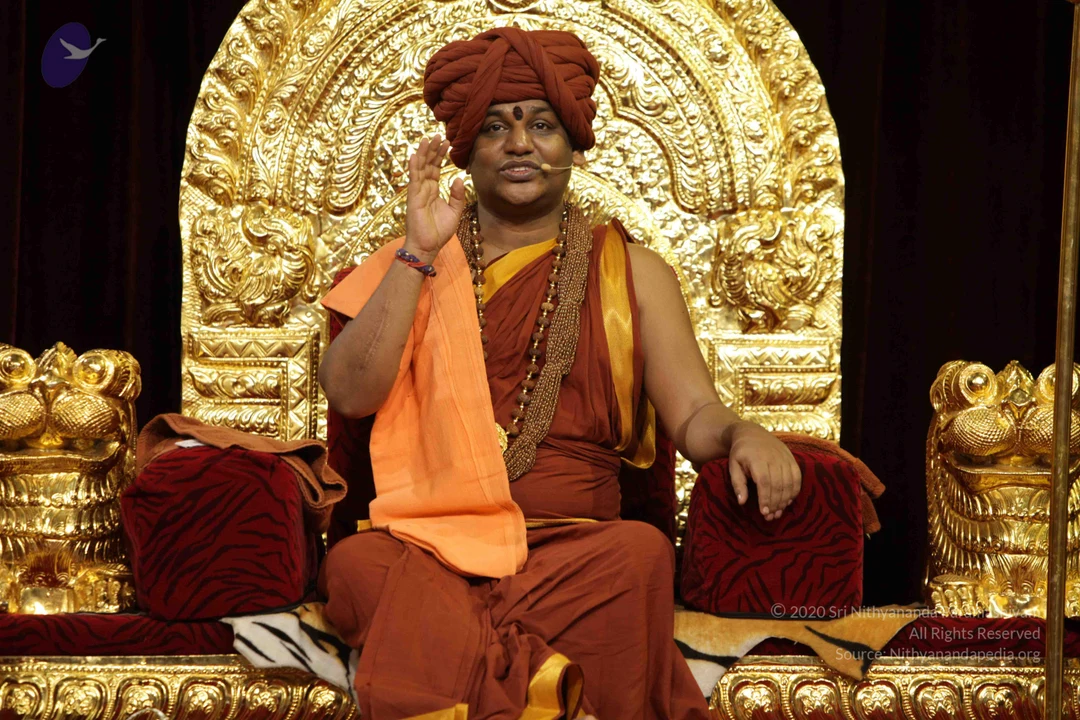
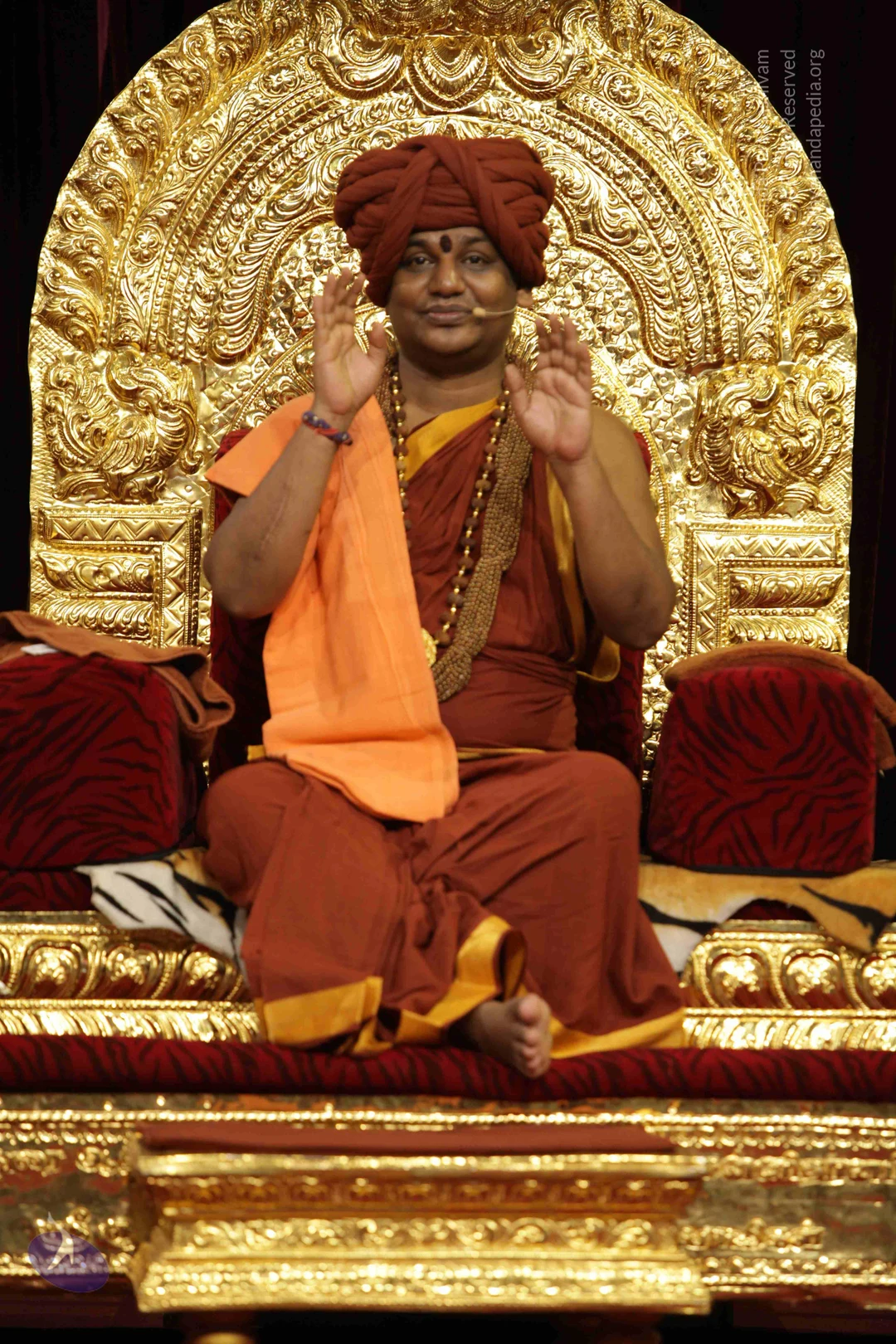
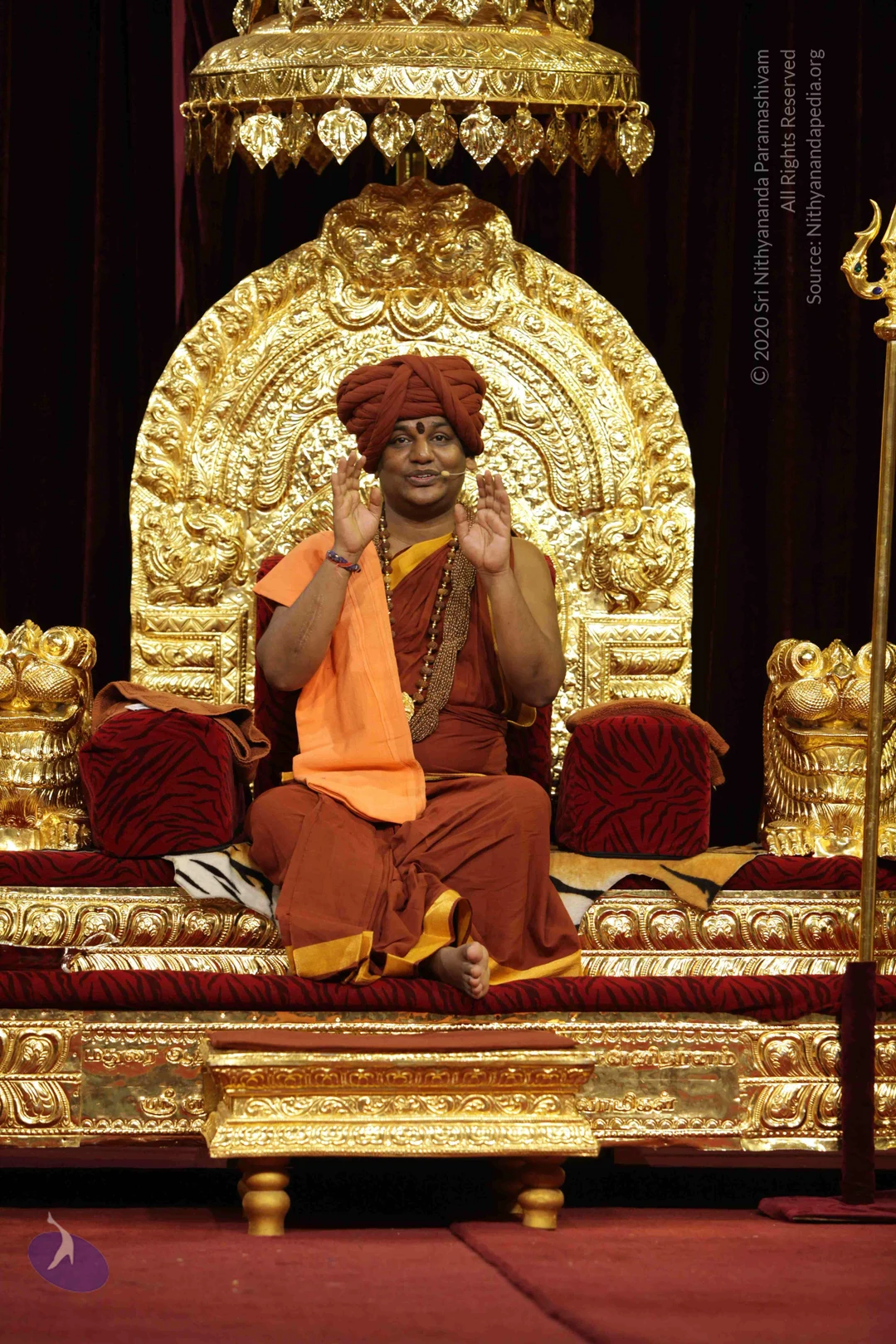
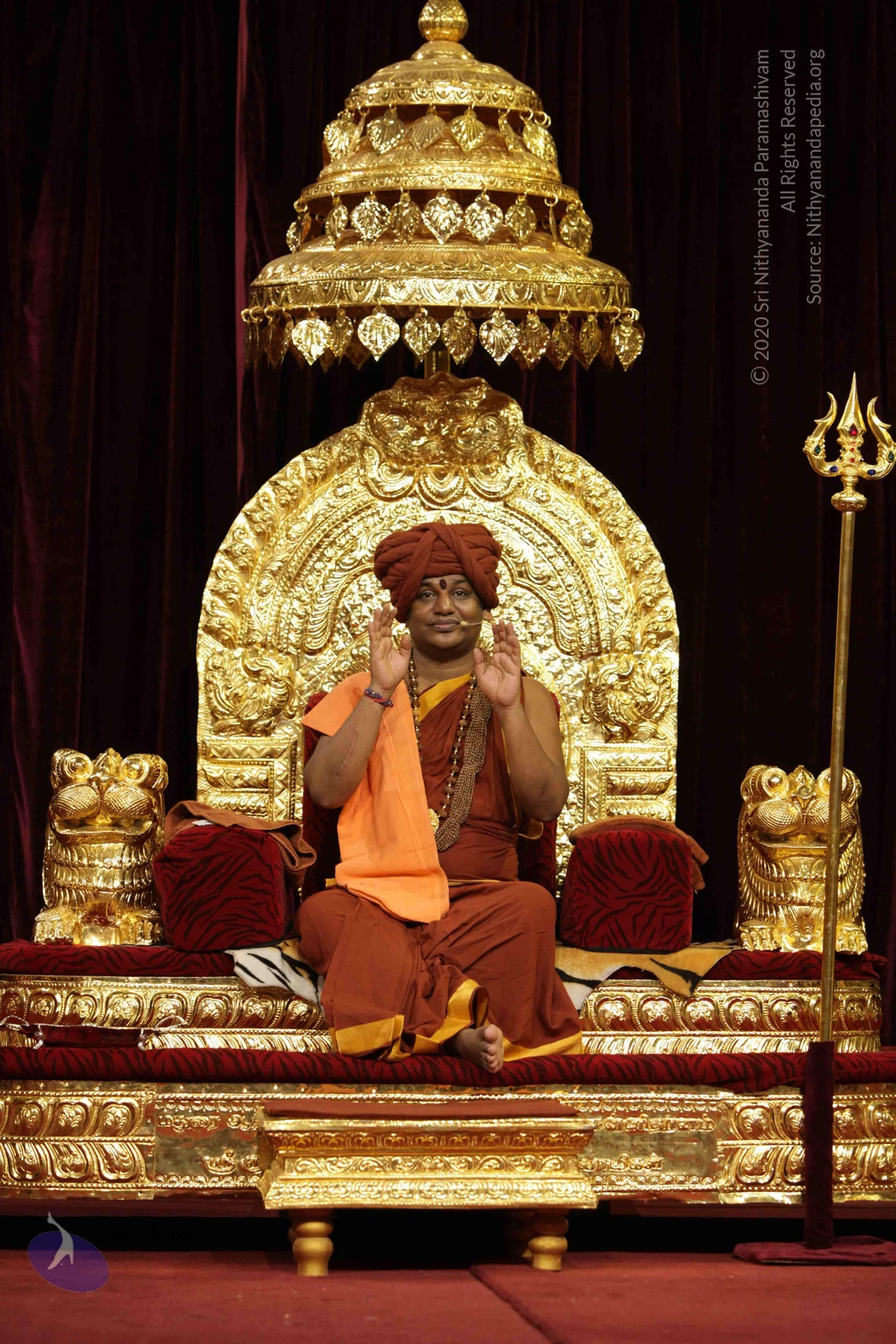
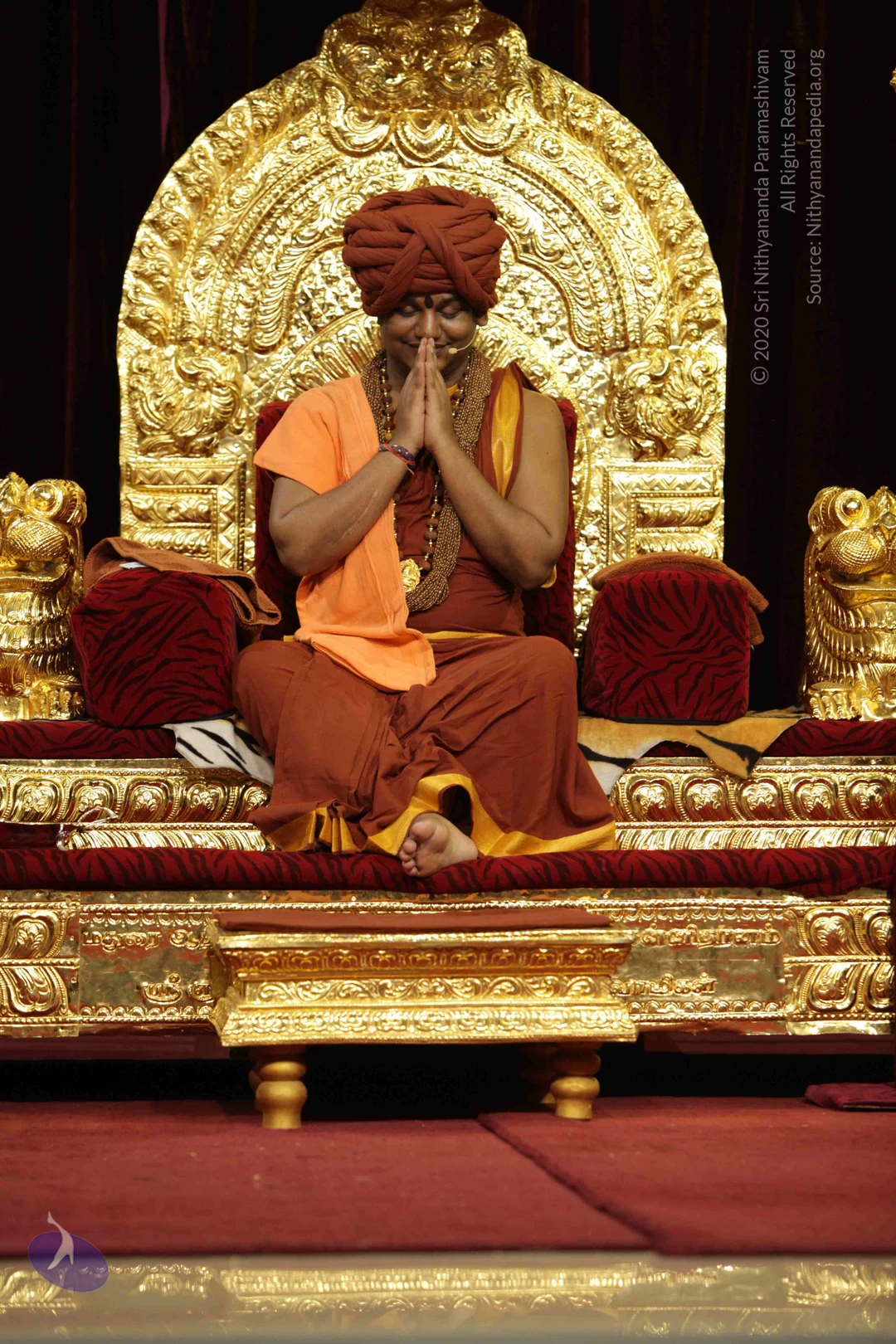
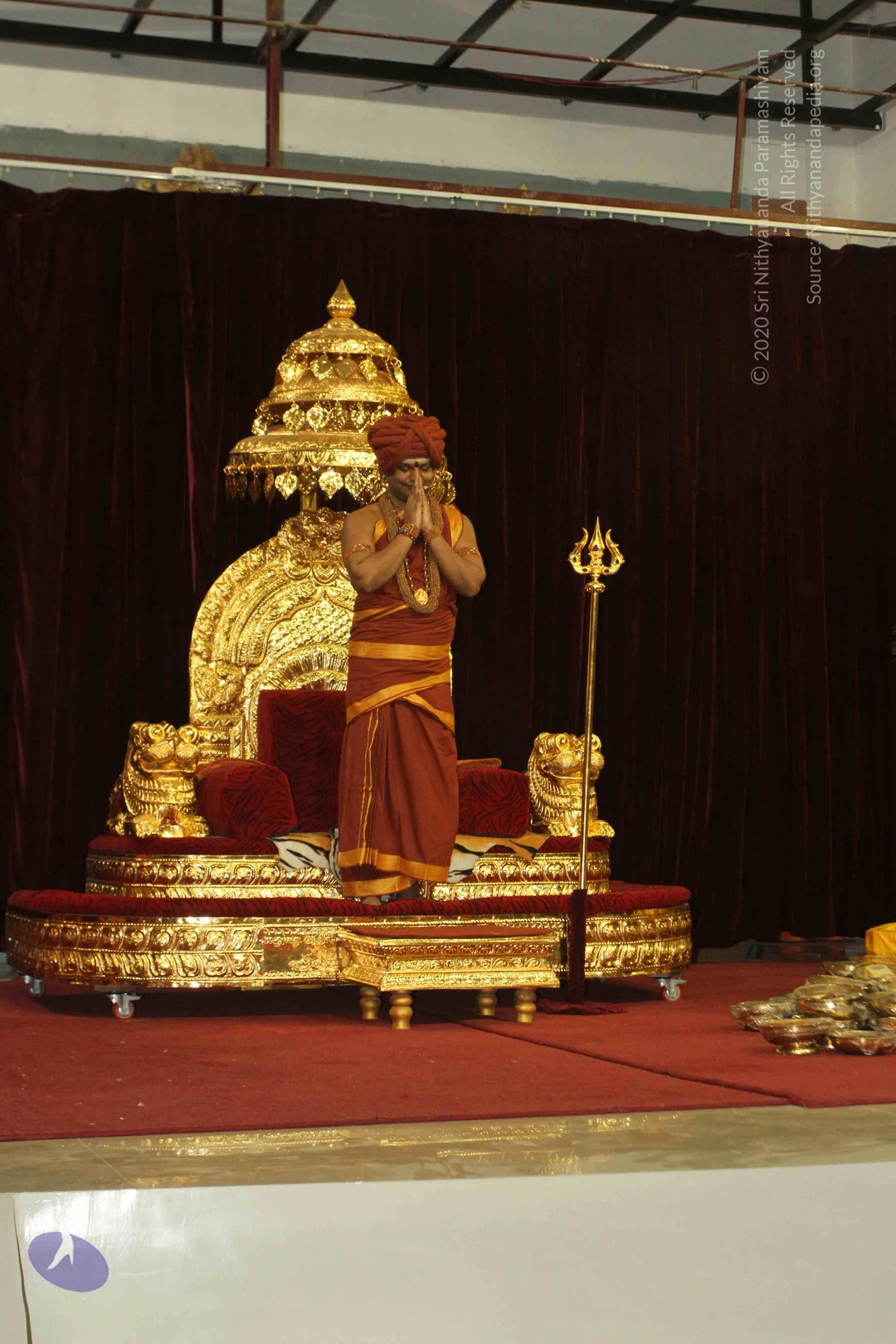
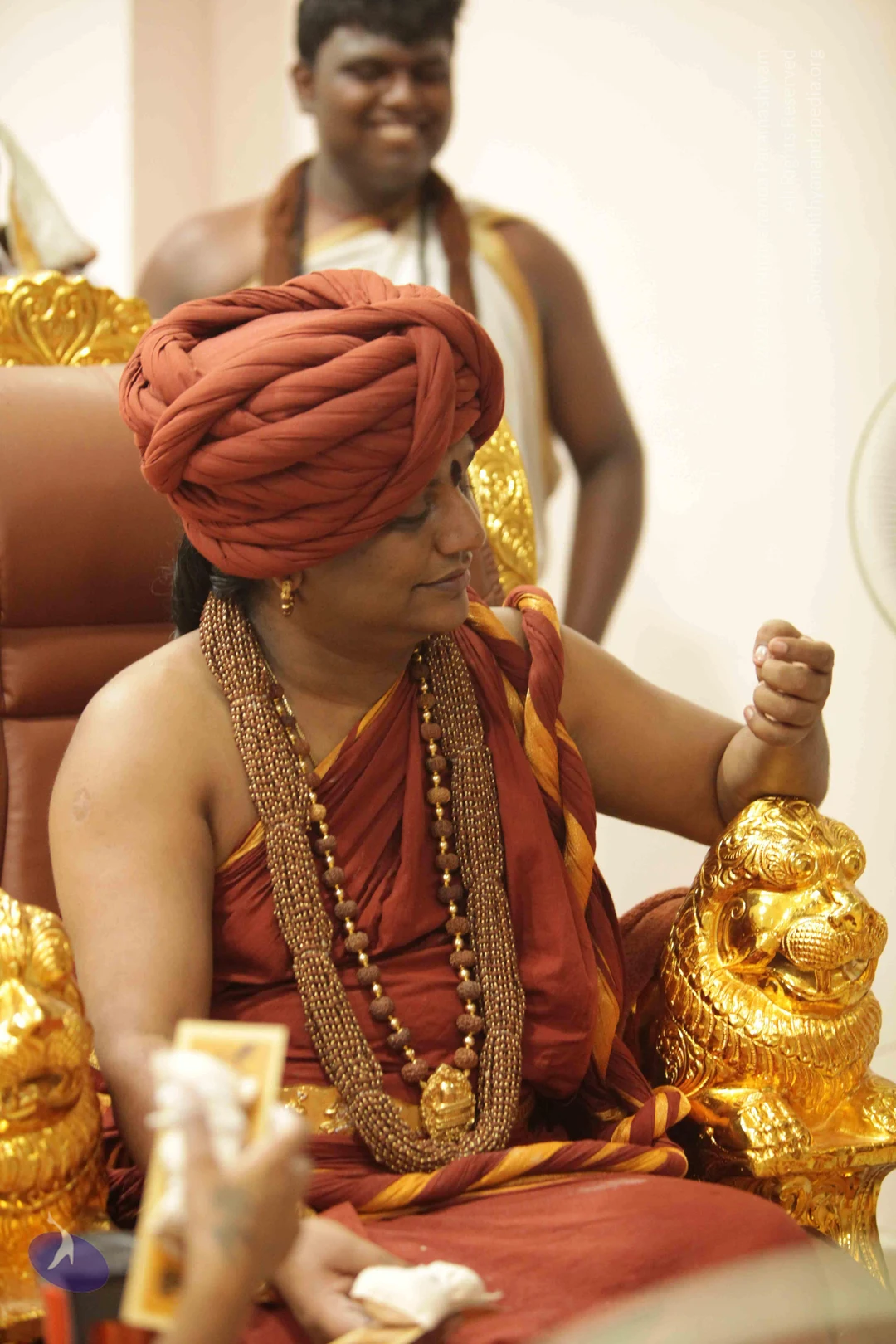
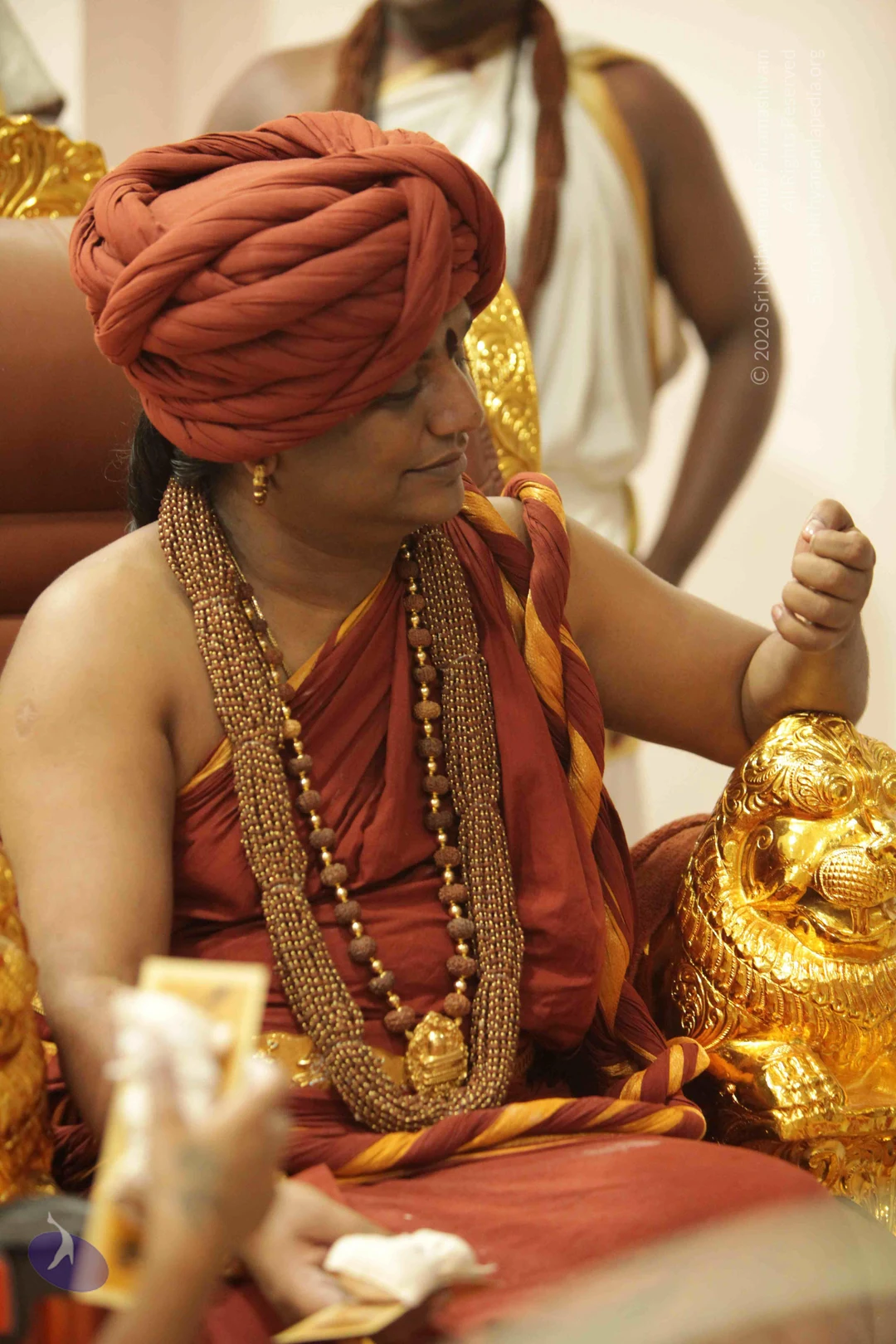
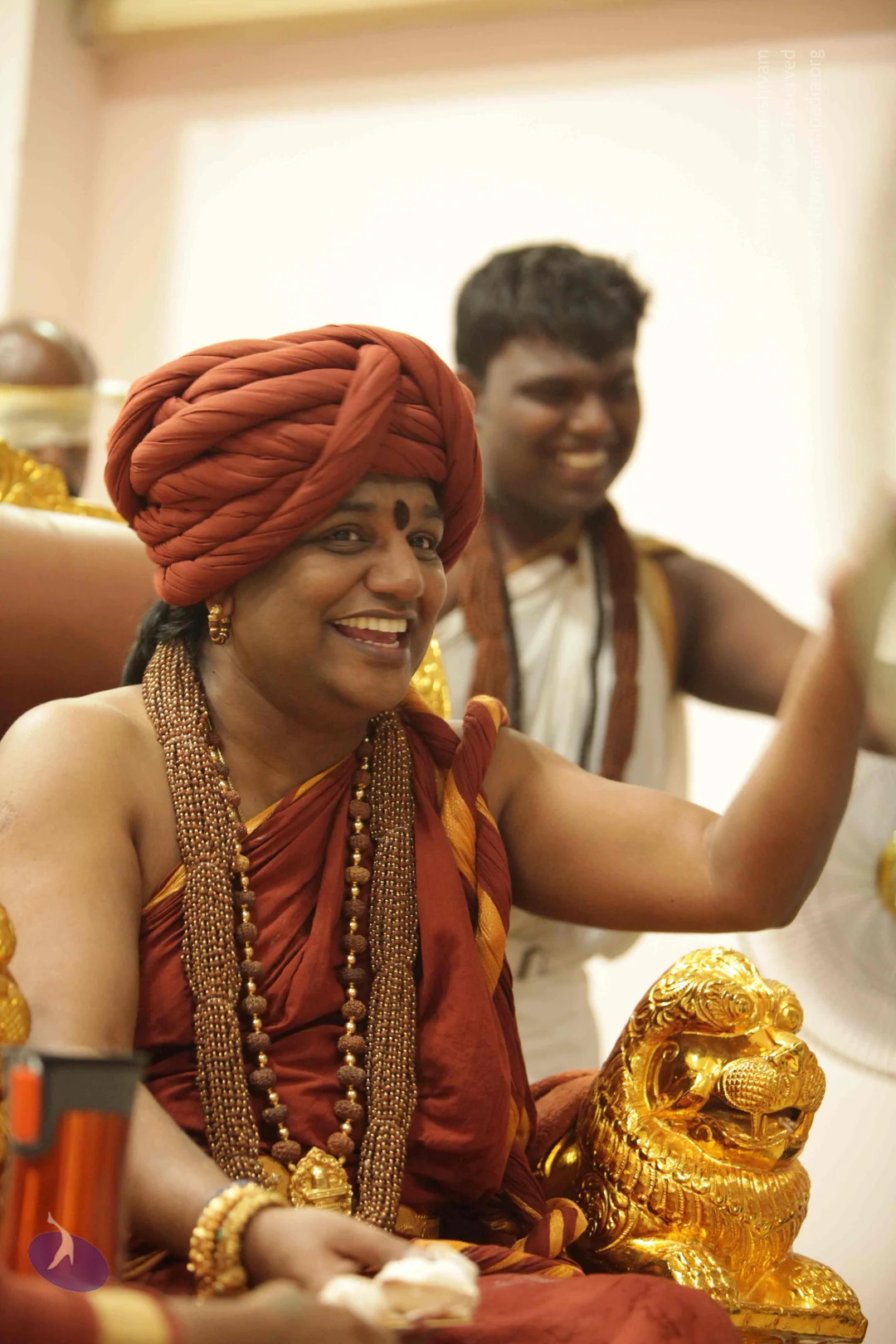
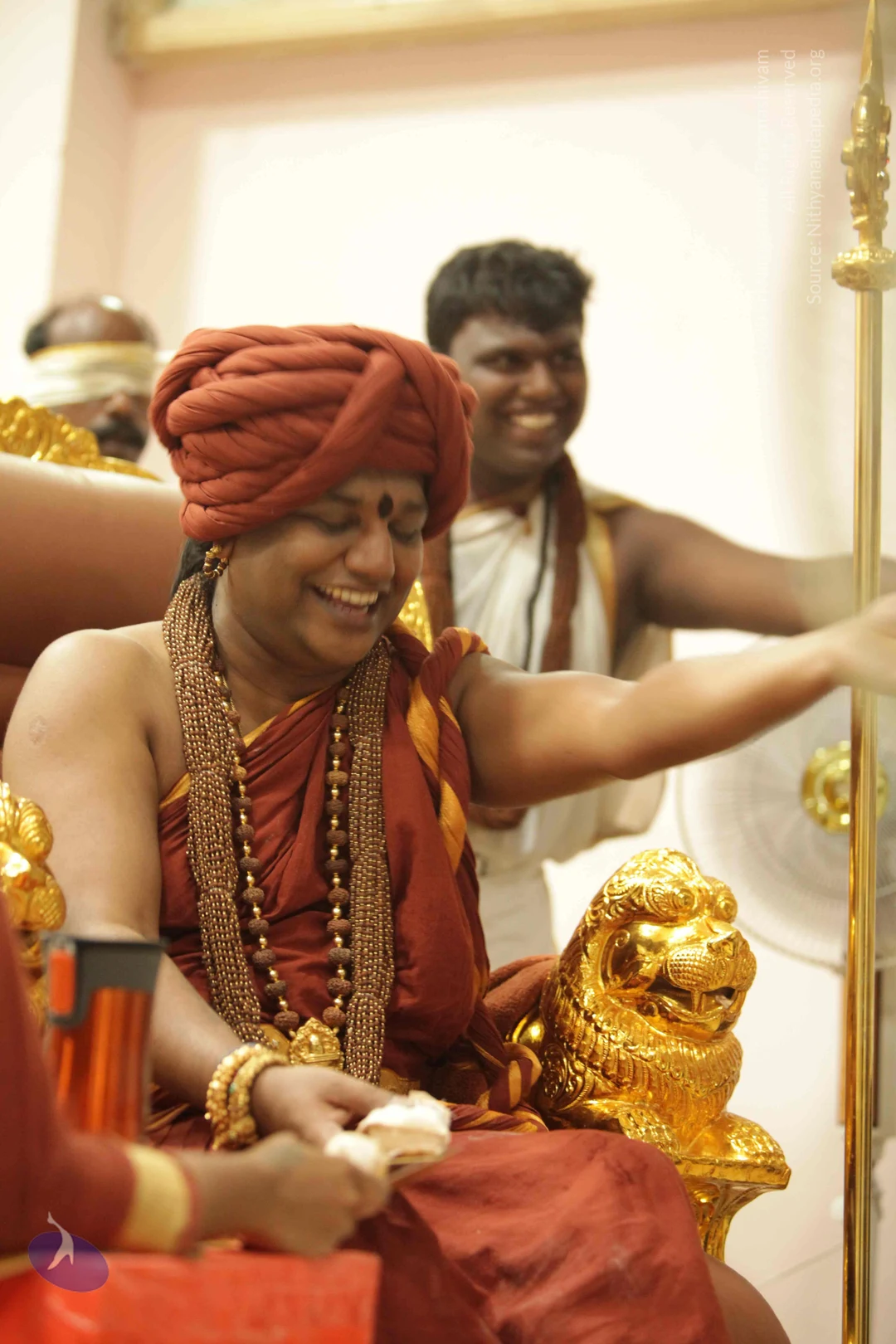
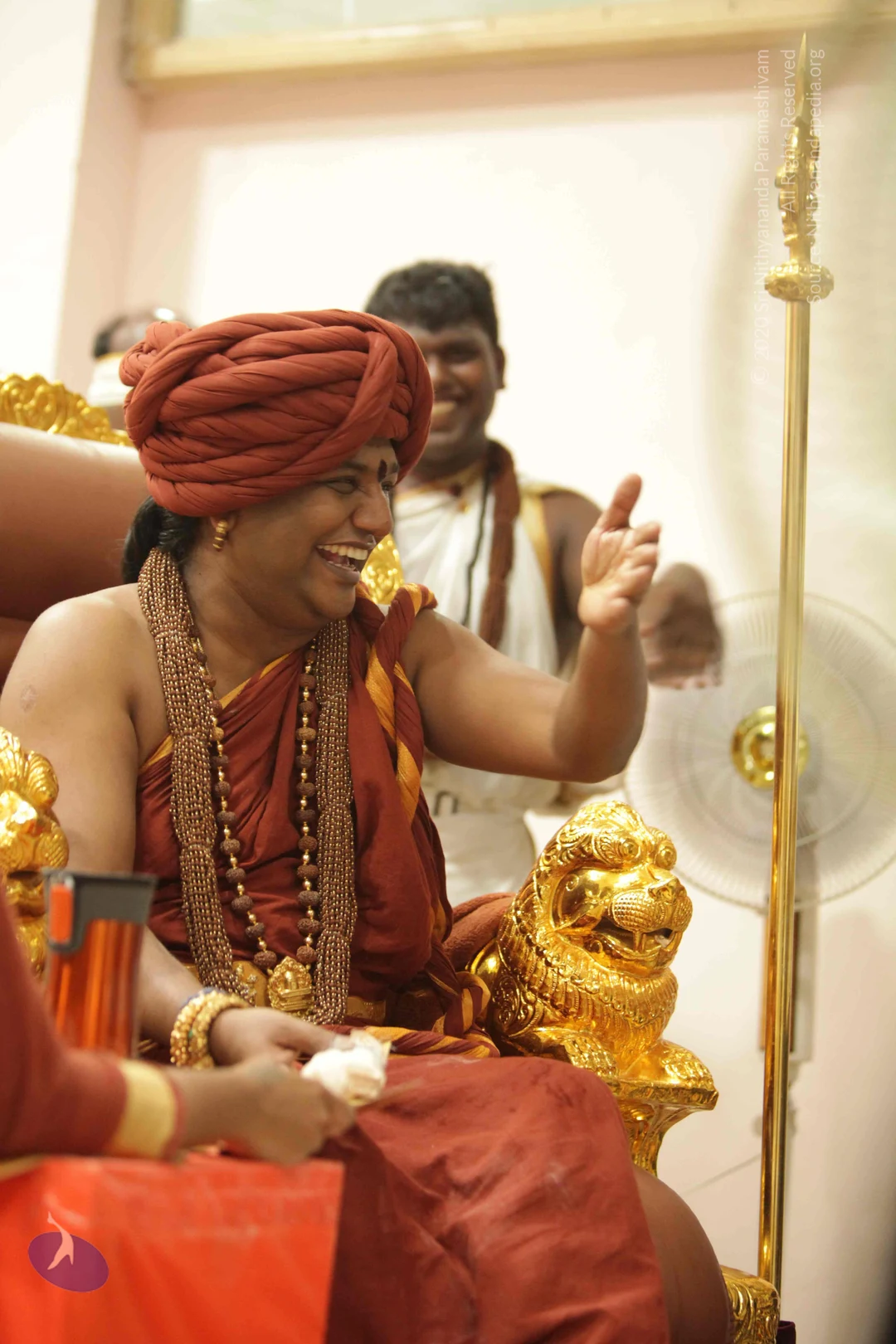
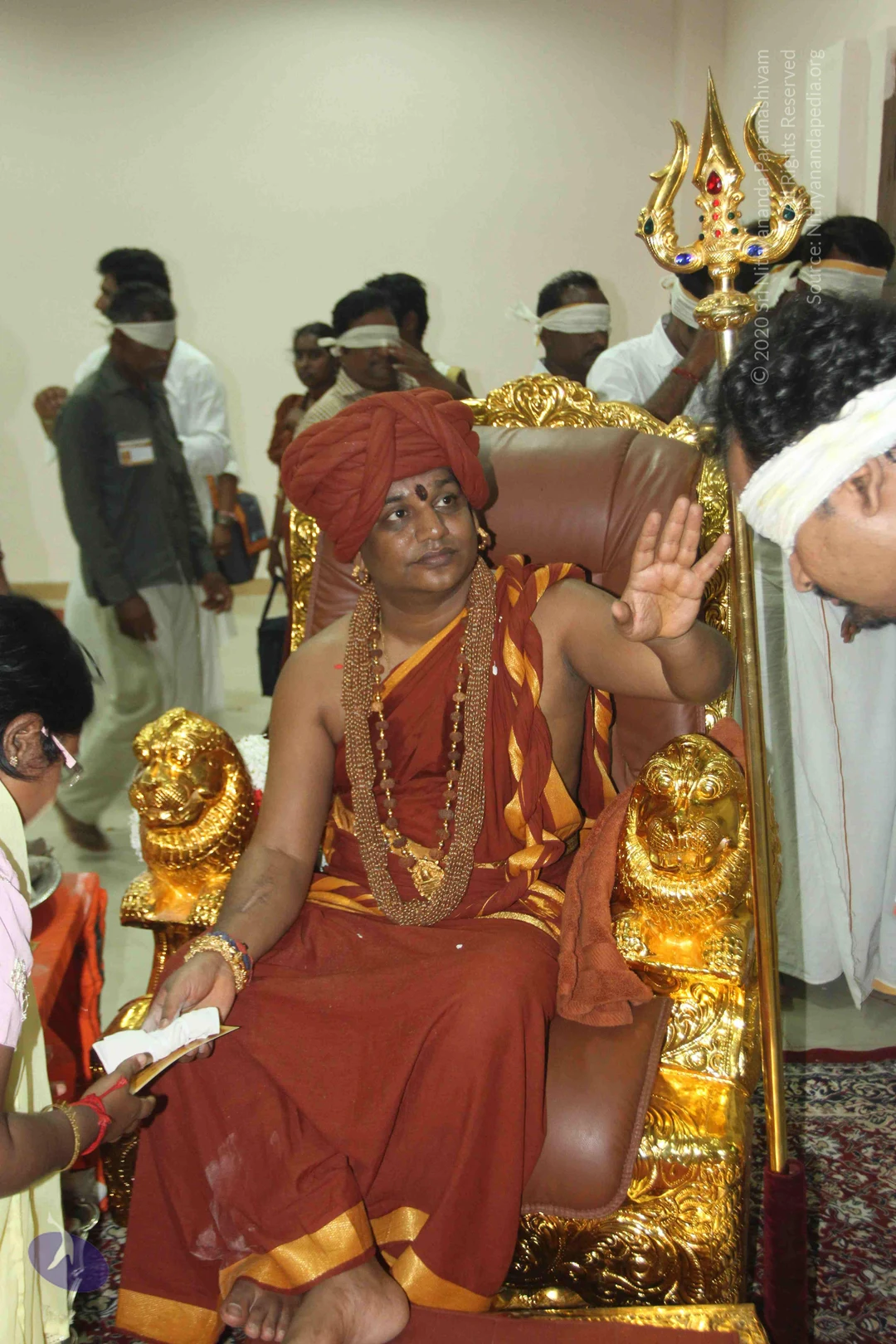
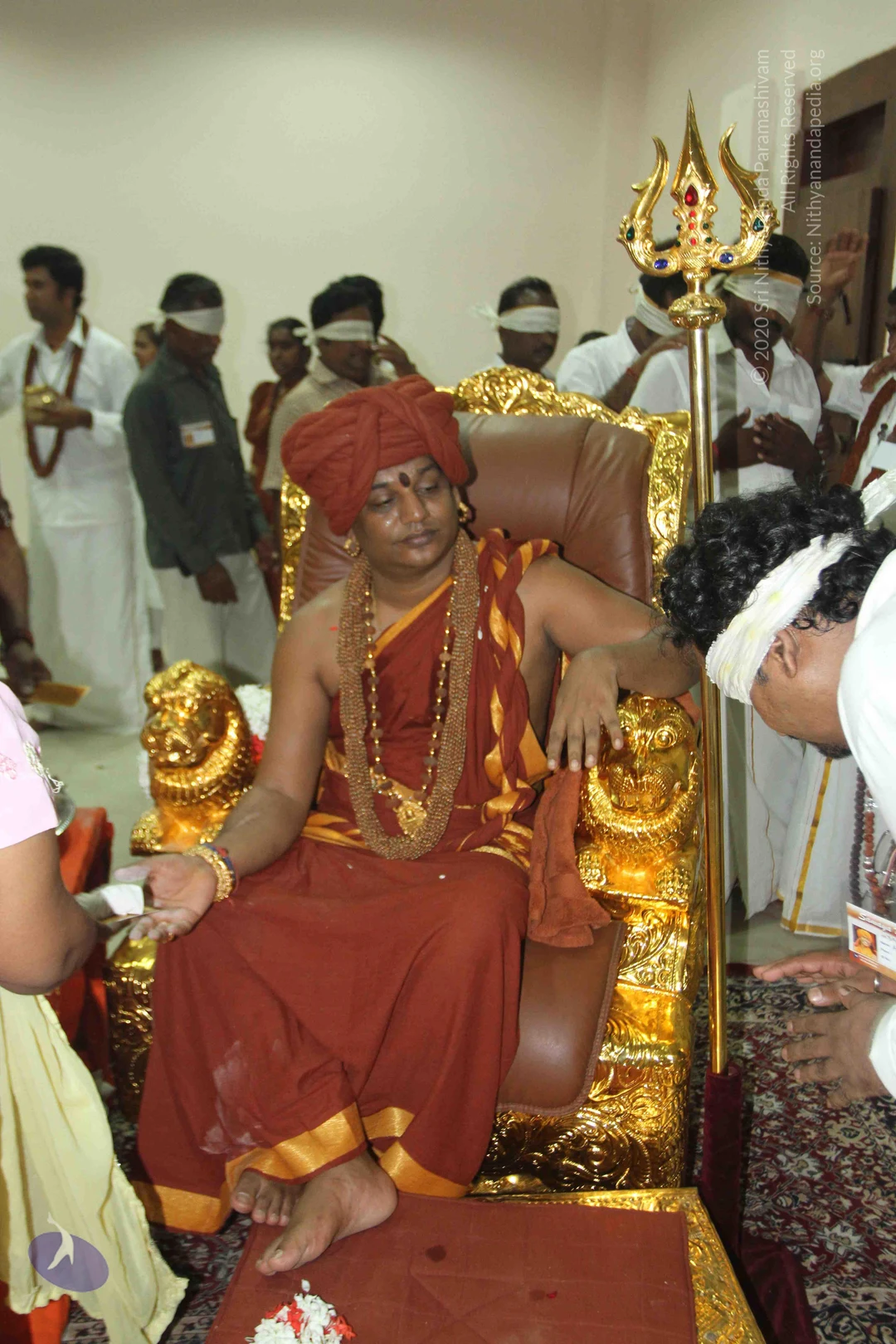
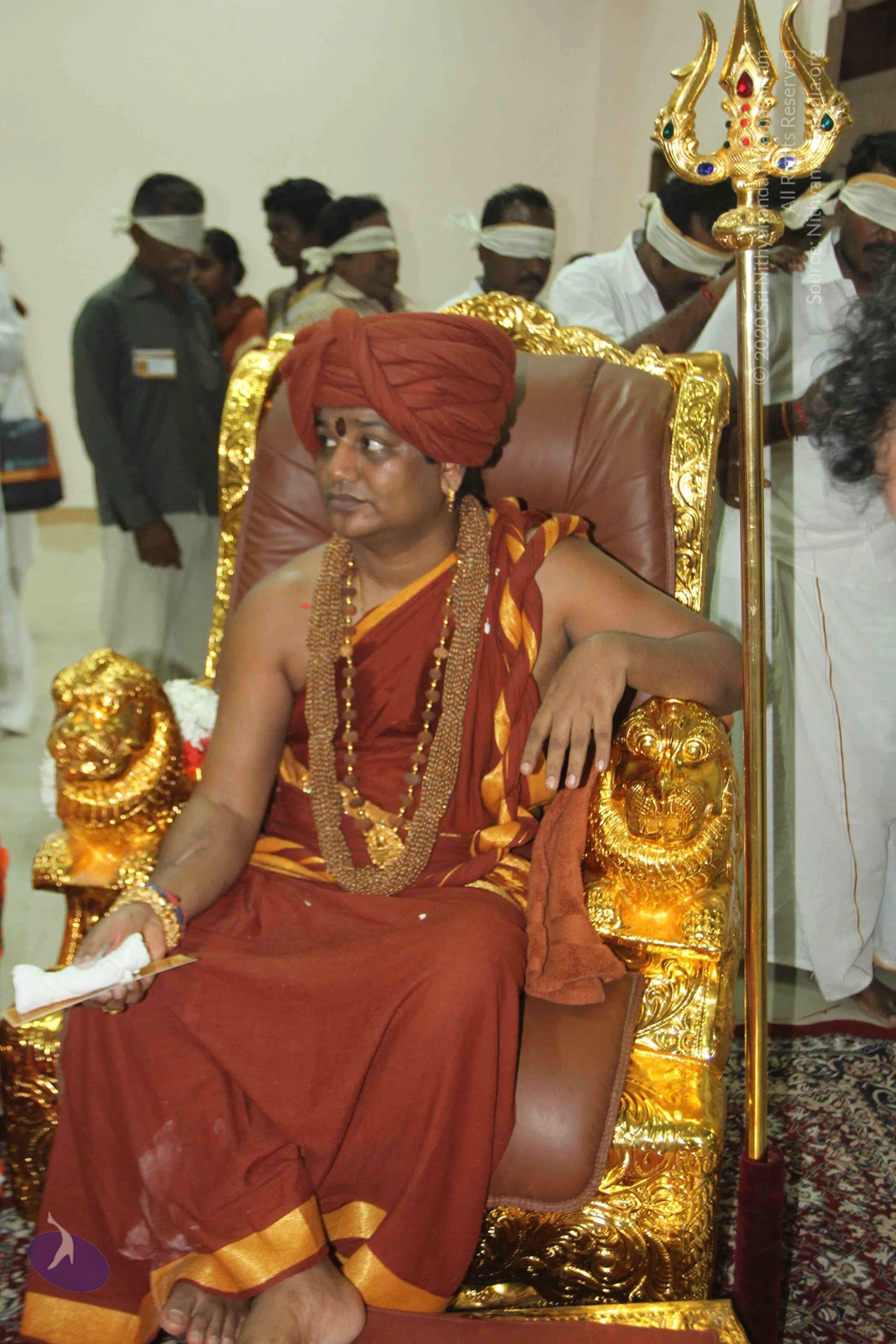
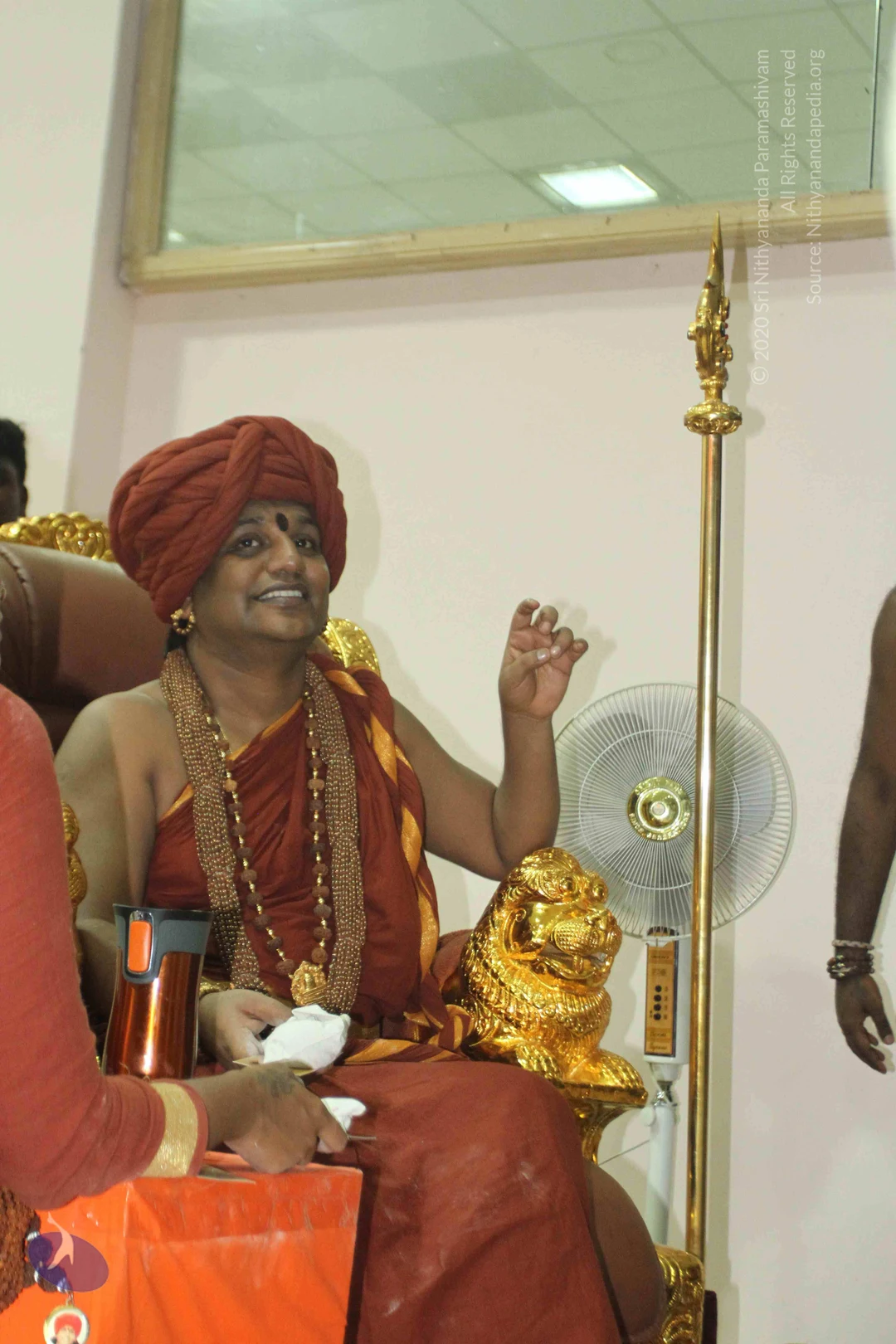
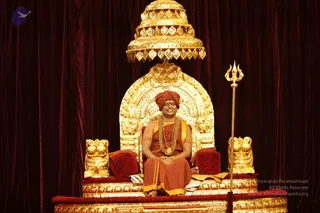
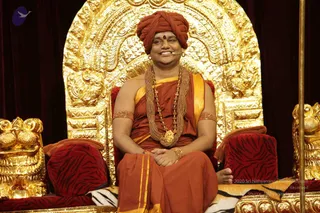
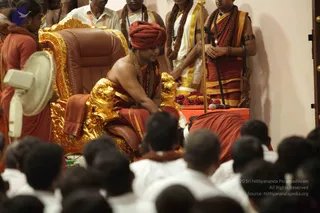
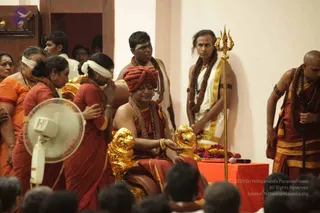
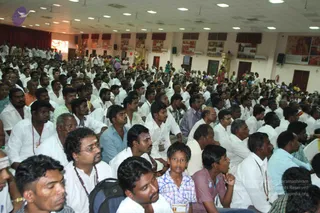
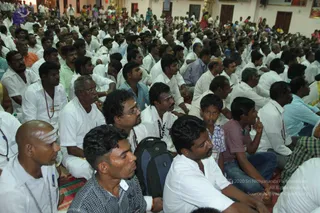
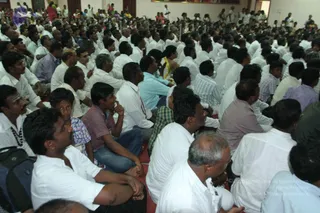
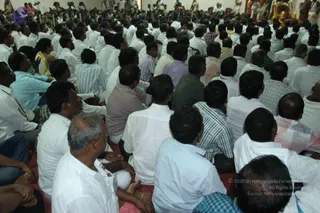
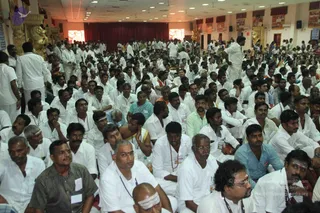
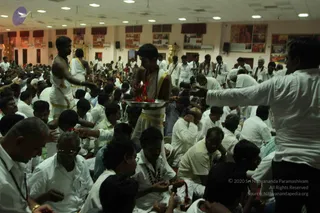
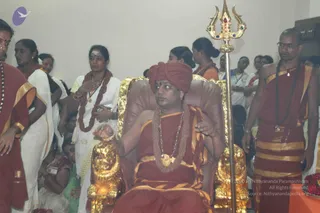
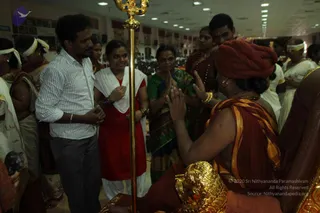
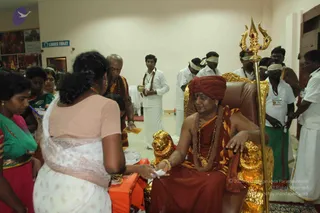
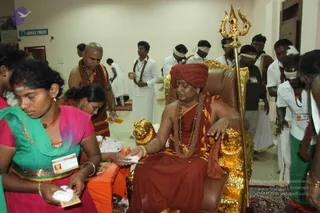
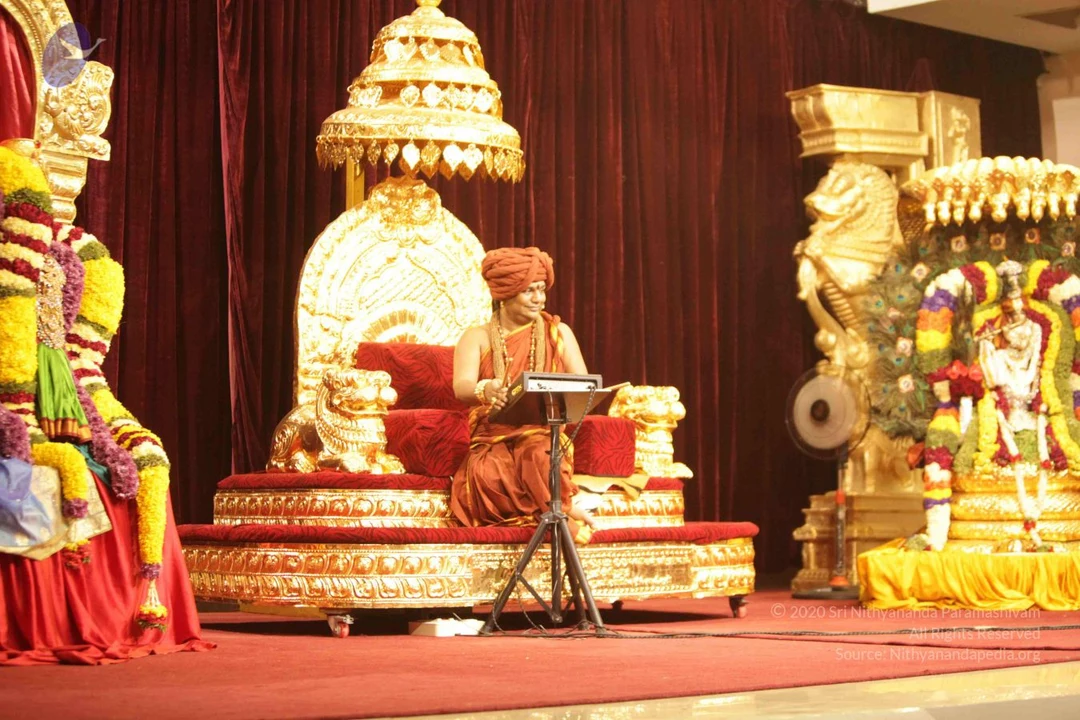
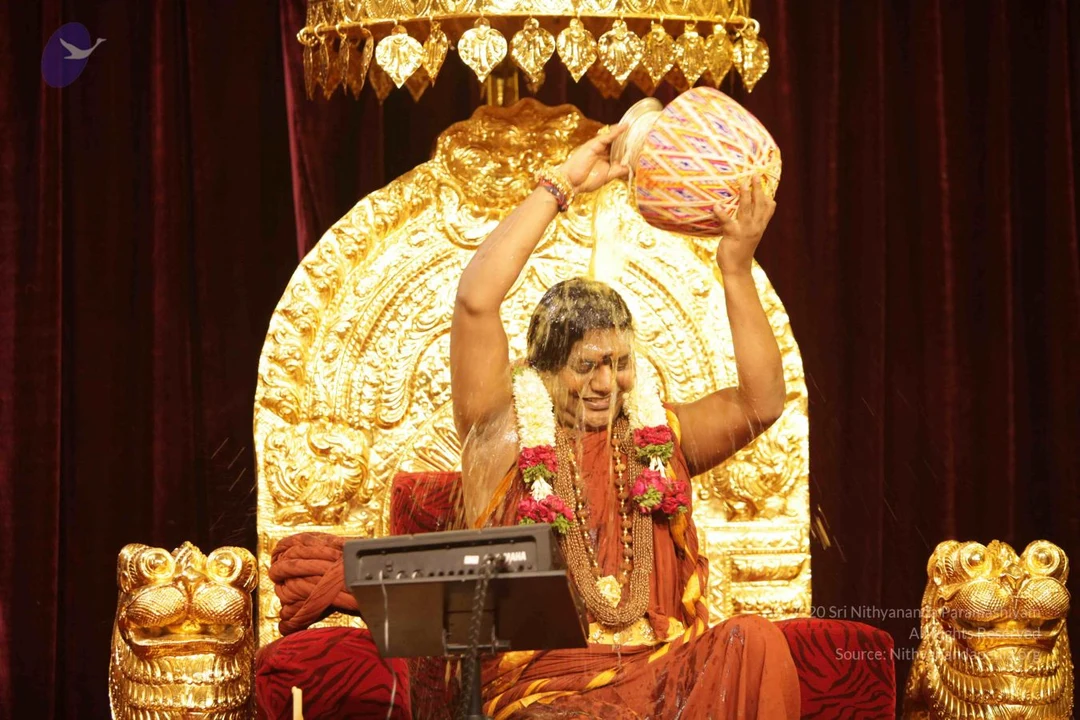
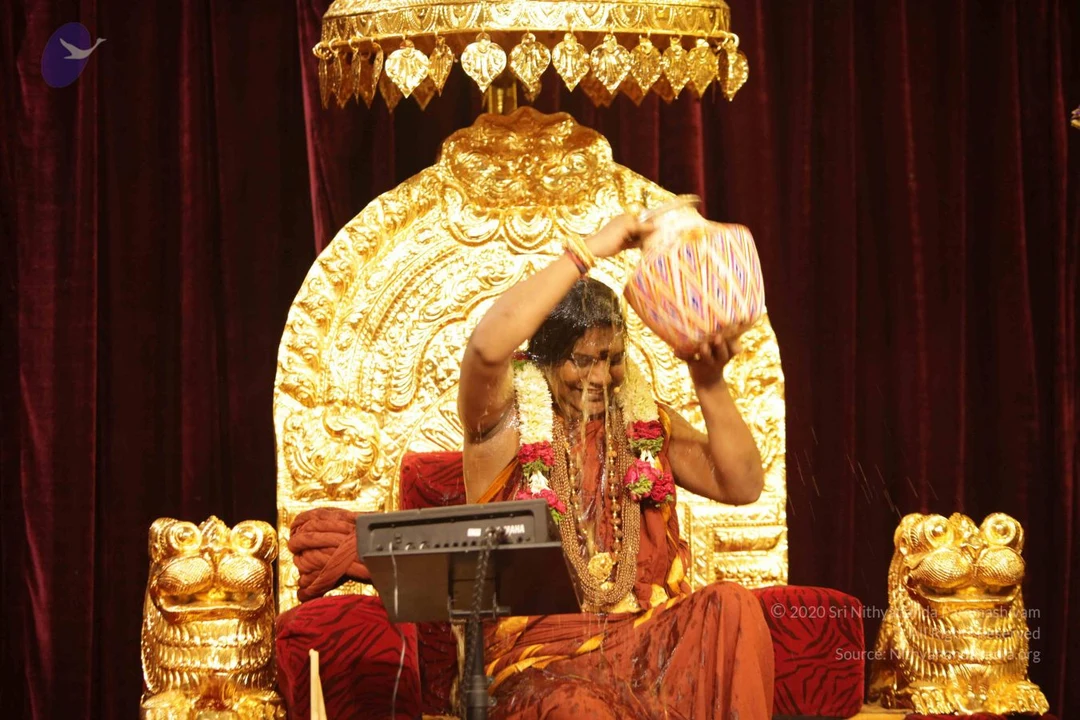
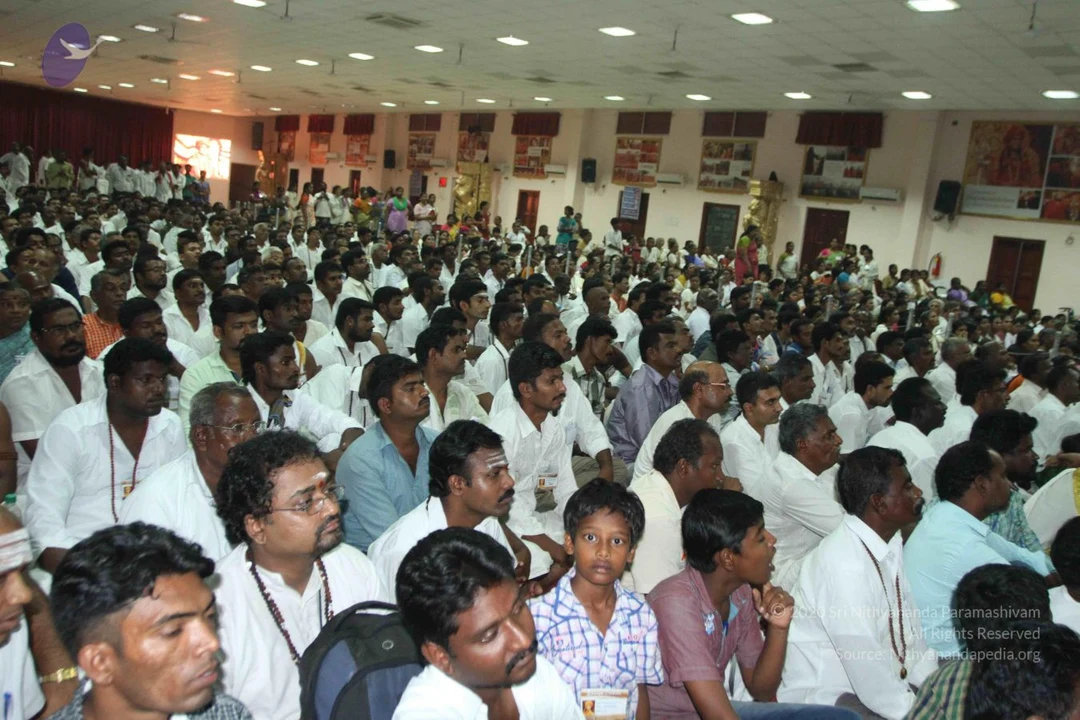
A large seated congregation of men fills a hall with white walls and framed pictures, most wearing white dhotis and shirts and sitting cross-legged on the floor. Several men wear red-orange ceremonial garlands and some carry name badges. In the lower left, a man with a red garland sits in front, and in the front-center a man in a white shirt with a mustache and thin spectacles sits near a man in a pink shirt. At the far right edge, a figure in saffron-orange robes sits with a yellow cloth bag beside them, while a golden ornate element is visible at the top right. The scene is a satsang-style gathering, and the crowd is dense across the frame.A seated person in orange-red robes pours water from a striped pot over their own head on a gold-ornate throne with carved lion-shaped armrests. Garlands of red and white flowers hang around the neck, with rudraksha and gold beaded necklaces. A gold canopy with hanging tassels stands above, against deep maroon velvet drapes, with a keyboard-like stand beside. Water droplets spray in the air.A photograph of a seated figure on an ornate gold-and-brown throne with carved golden lion arms, wearing a rust-orange turban, orange-saffron garments with gold trim, and layered beaded rudraksha-style malas with a gold pendant. A devotee in a white blouse with hair in a long braid bends forward and offers a folded white cloth or item into the seated figure's hand. Behind them, a shaved-headed attendant in orange and dark prayer beads holds a brass vessel, and other men in white dhotis and white headbands stand in the room. Plain cream walls and a gold-topped staff are visible at right. The seated figure's appearance matches the page's reference to a person, with the turban, saffron clothing and rudraksha malas as cues.

September 05 2015

Original wiki page
Contents

Title

ஜீவனை சிவமாக மாற்றும் தீக்ஷை - சிவதீக்ஷை || பாகம் 1 || சமய தீக்க்ஷை || 05 செப்டம்பர் 2015

Description

நிகழ்ச்சி நிரல் - சமய தீக்க்ஷை தலைப்பு - ஜீவனை சிவமாக மாற்றும் தீக்ஷை - சிவதீக்ஷை பாகம் 1 இடம் - ஆதிகைலாஸா, பெங்களூரு, கர்நாடகா, இந்தியா தேதி - 05 செப்டம்பர் 2015

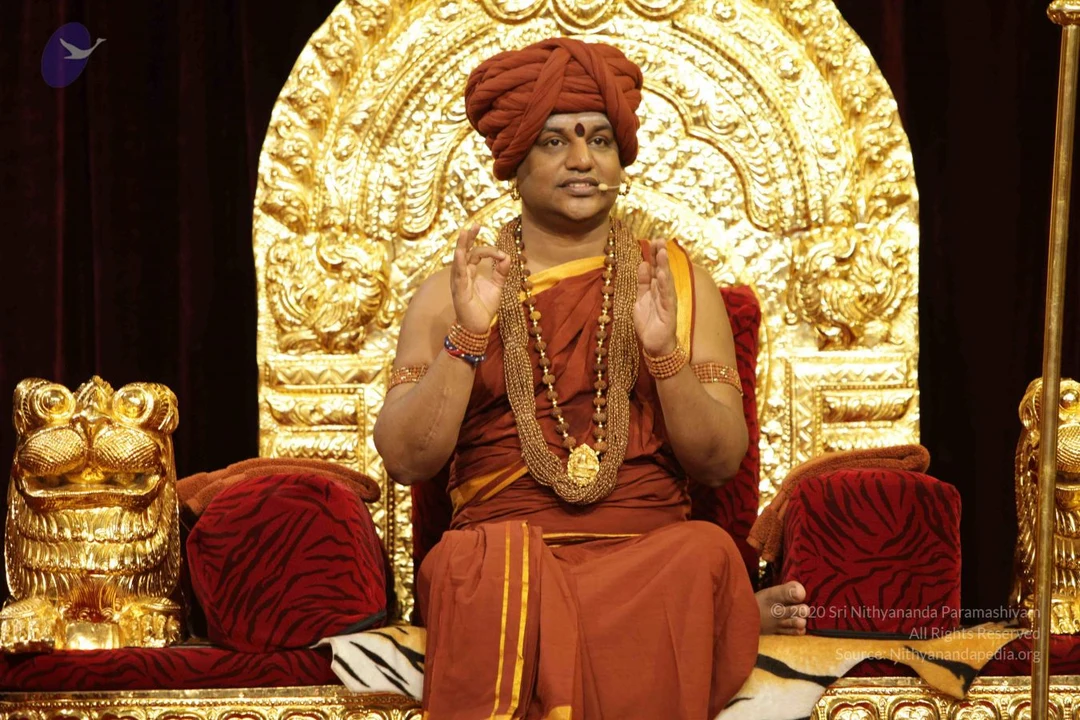
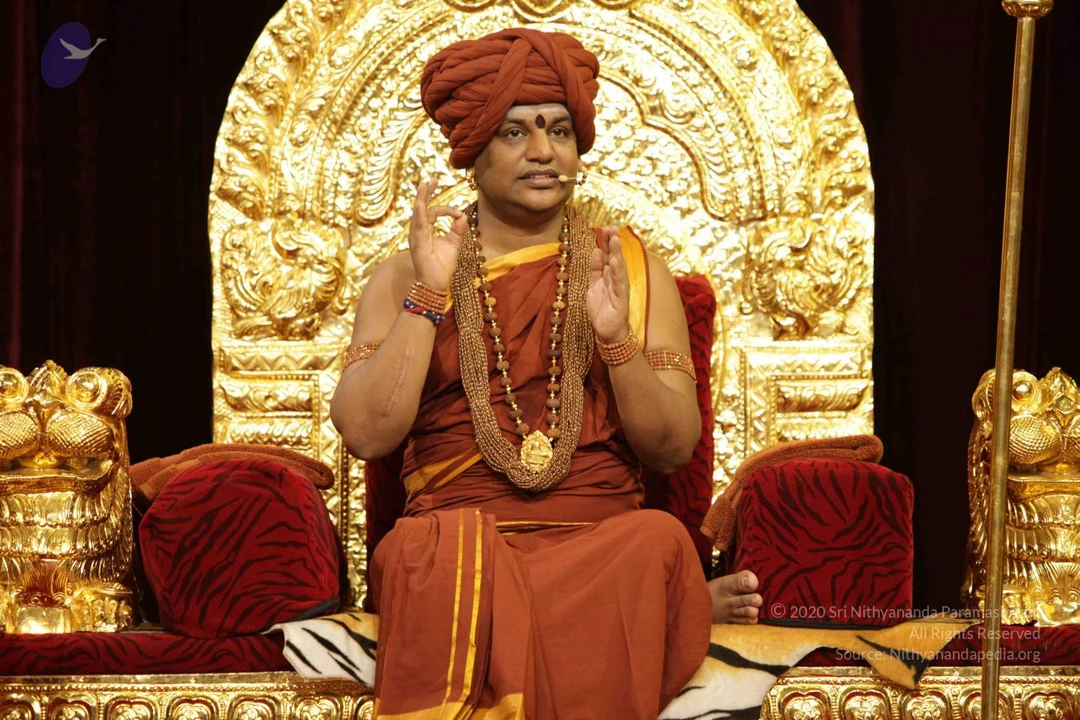
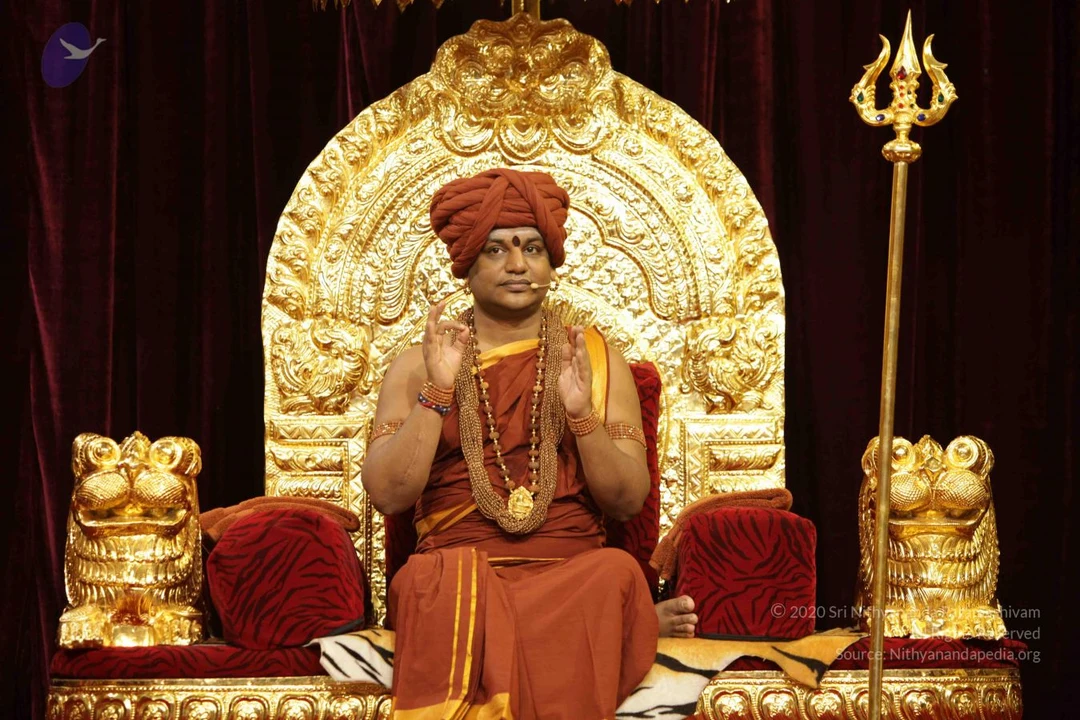
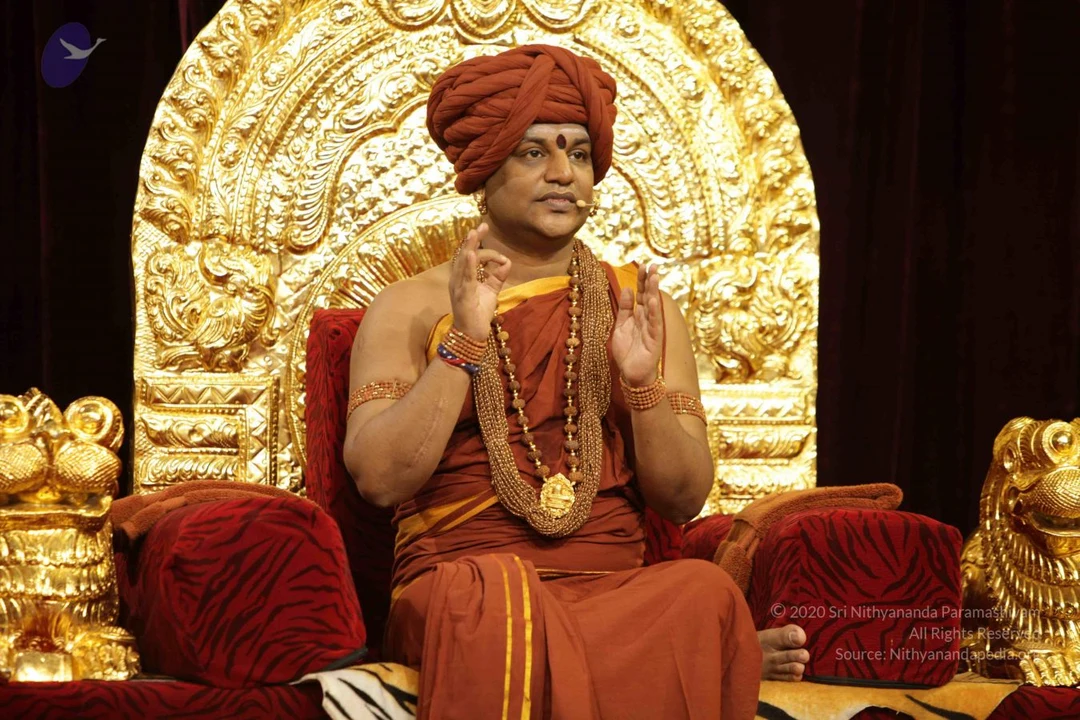
இந்த வீடியோ செப்டம்பர் 05, 2015 அன்று ஆதி கைலசா, பெங்களூரு, கர்நாடகாவில் நடைபெற்ற சிவ தீட்ஷை பற்றிய ஒரு பகுதி.

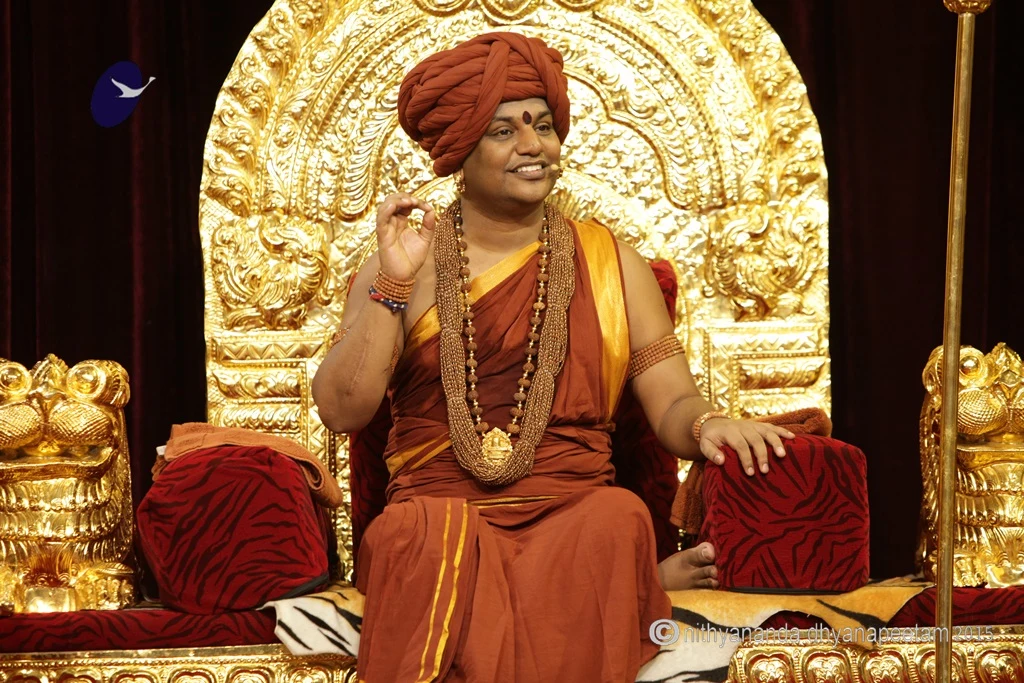
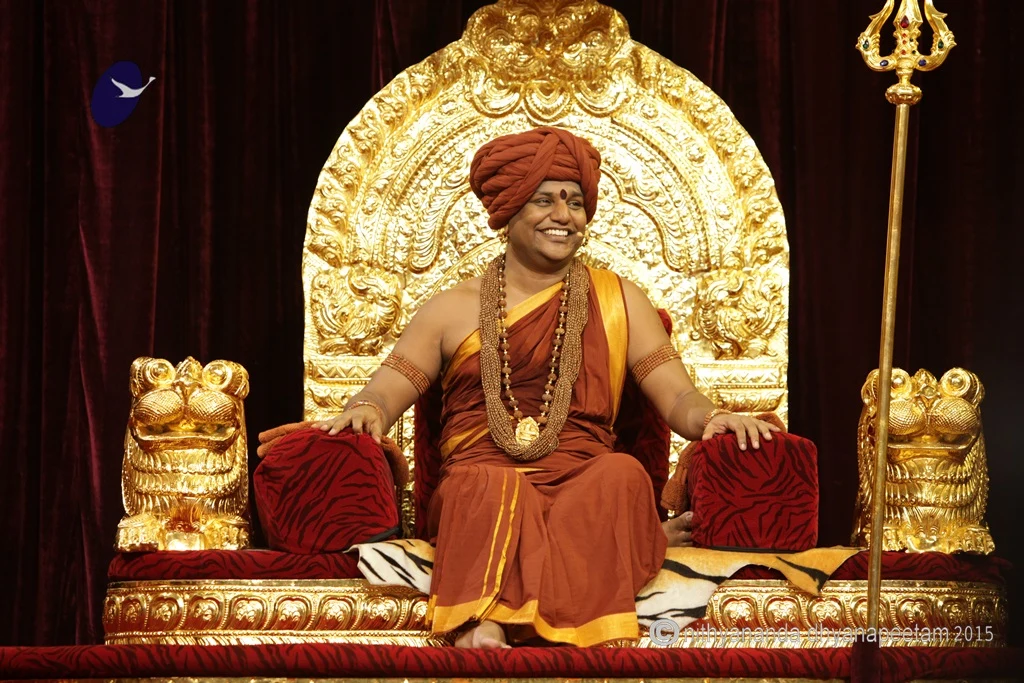
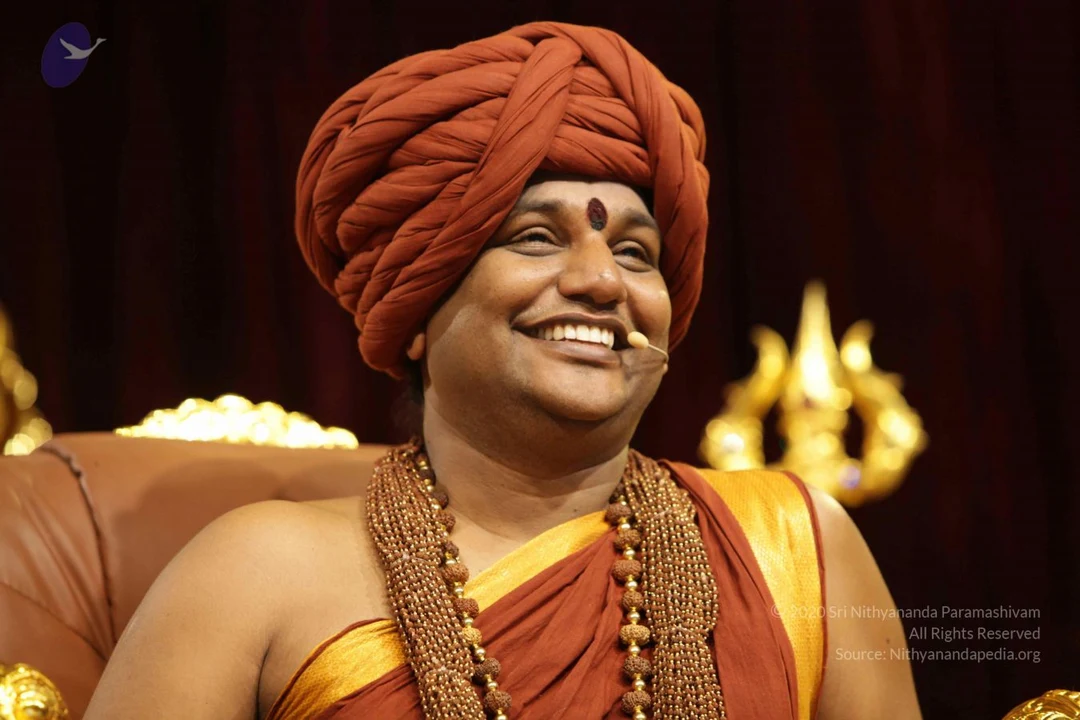
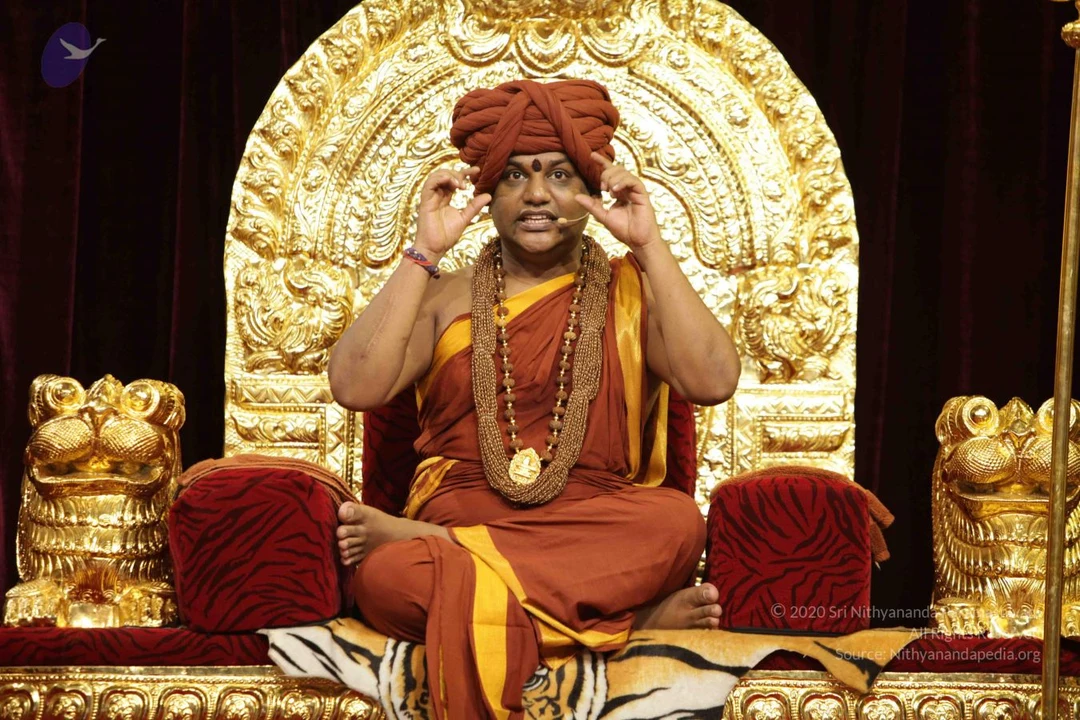
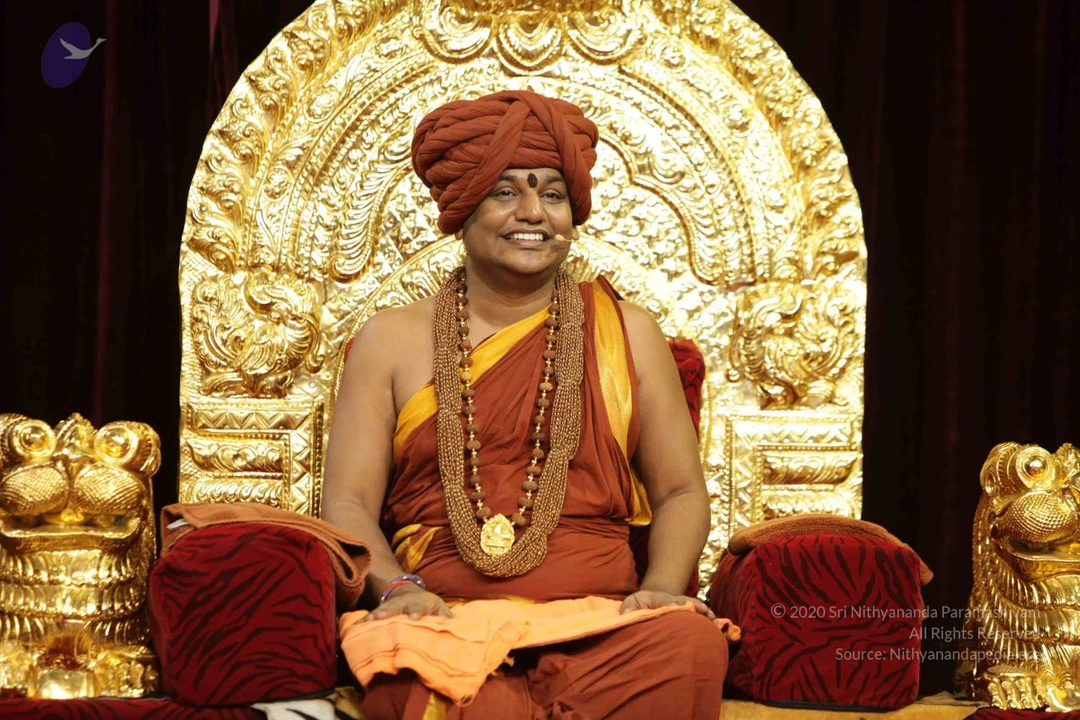
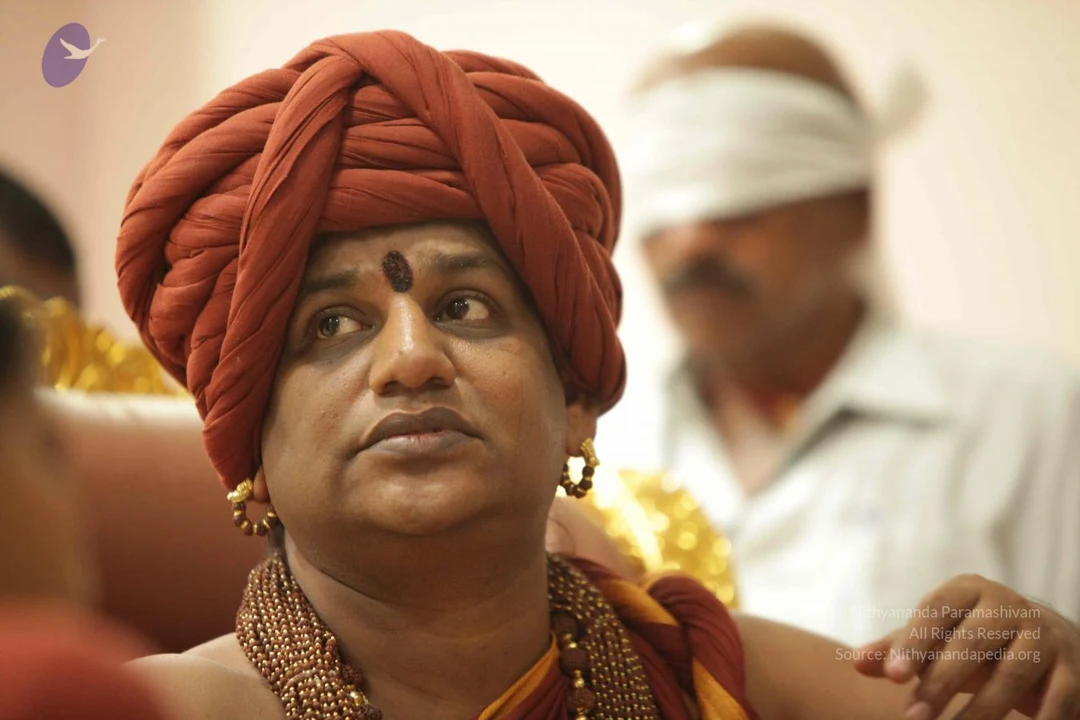
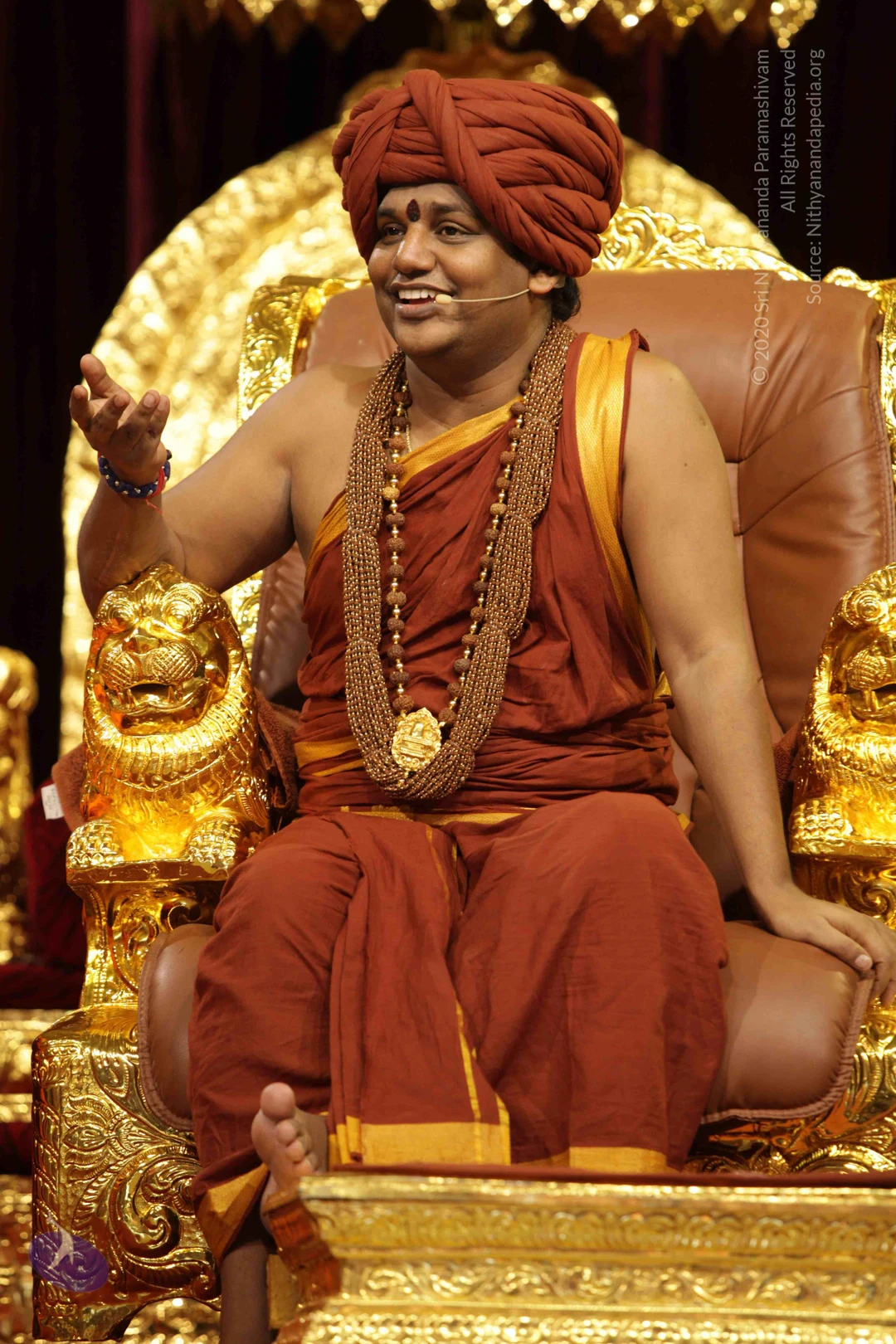
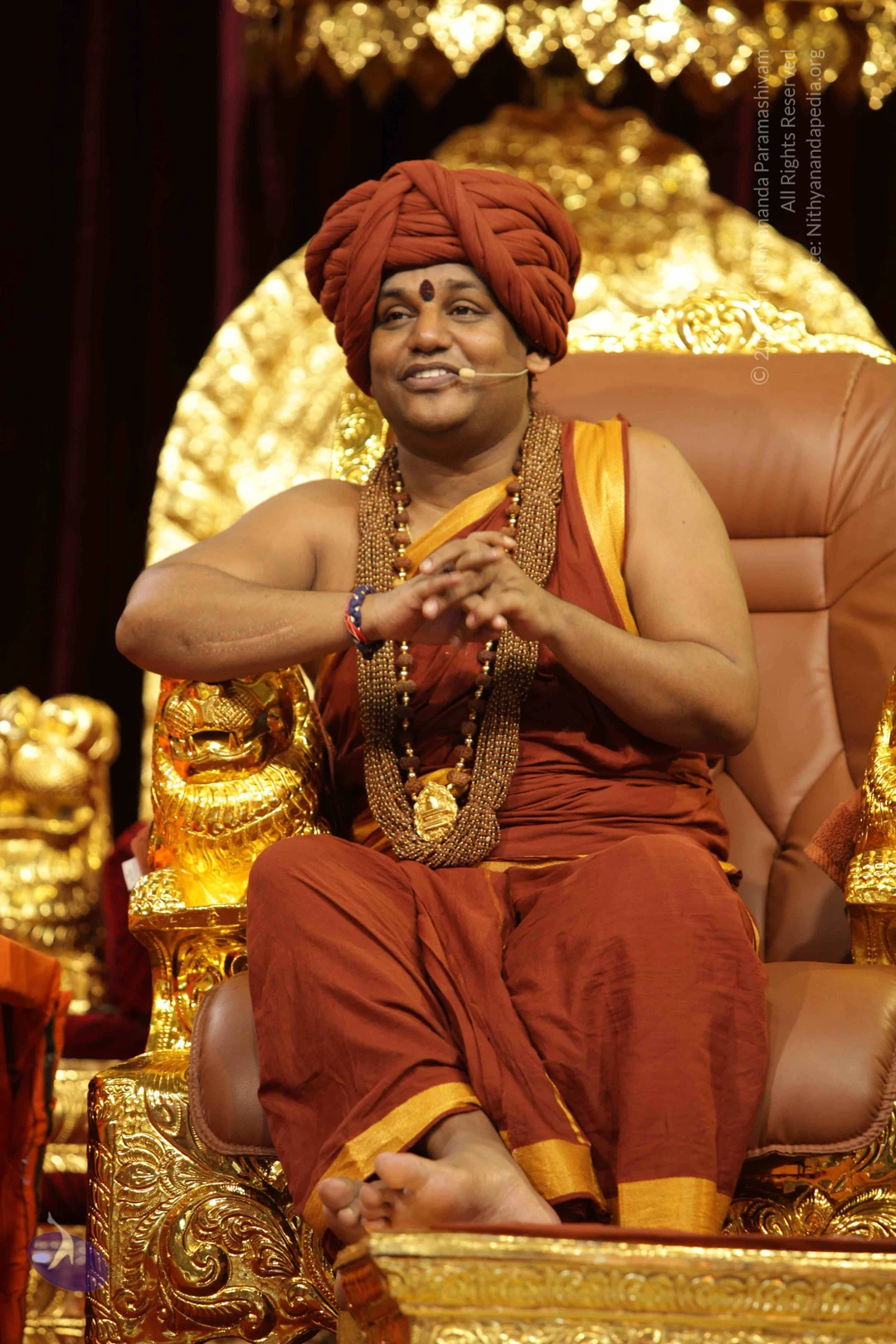
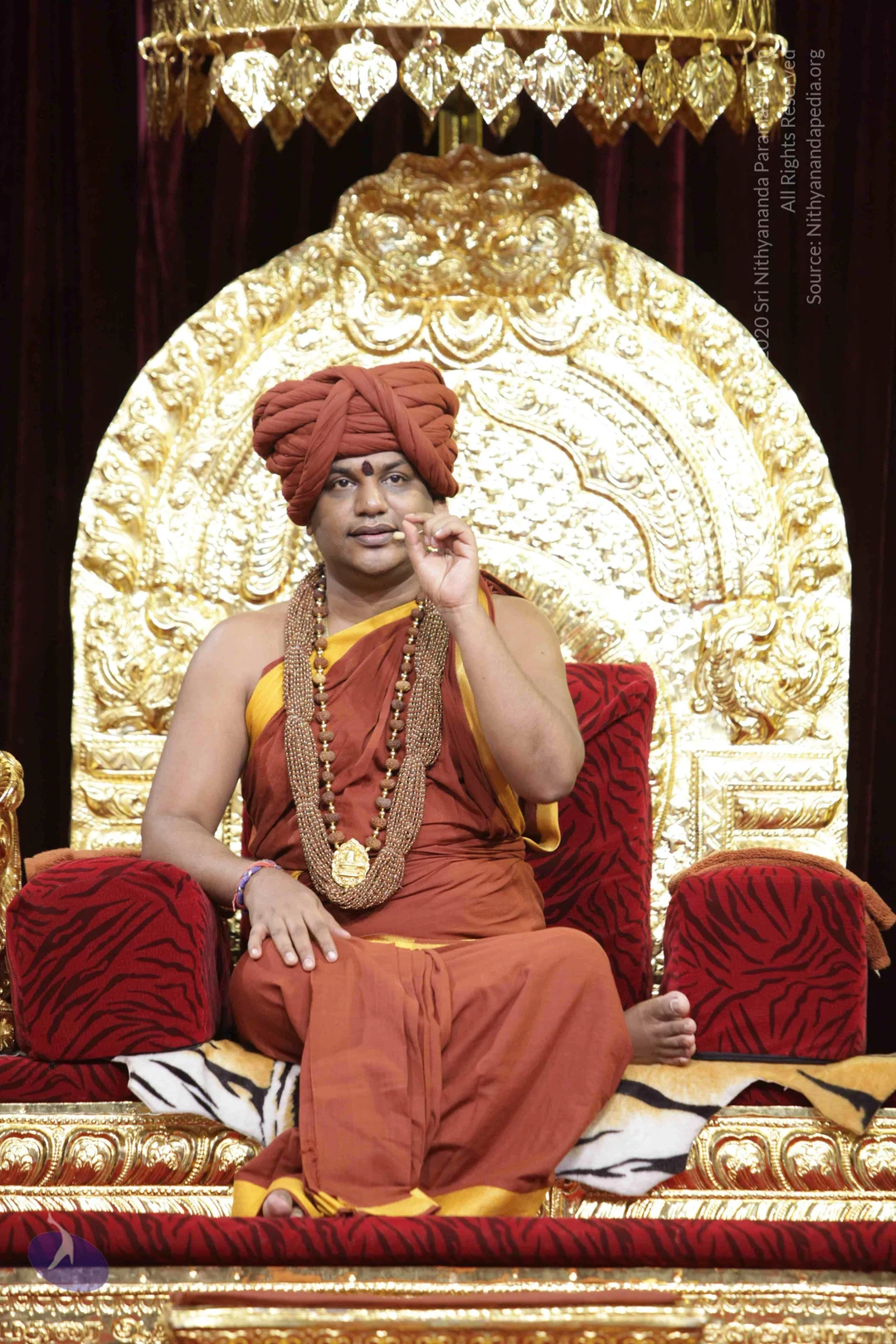
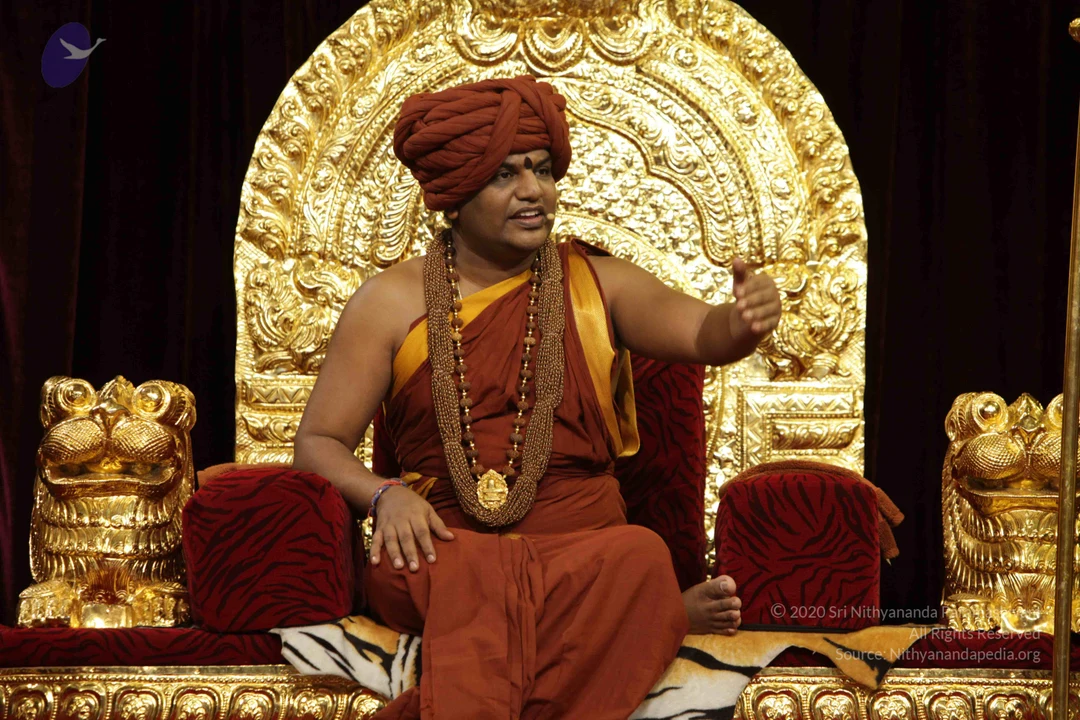
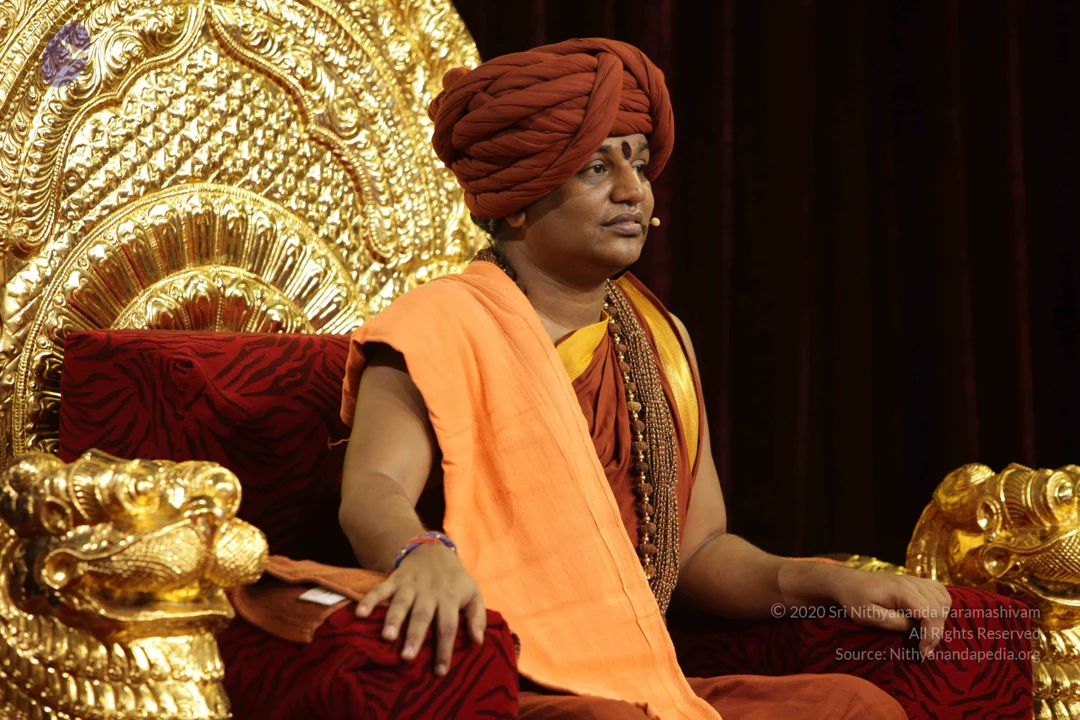
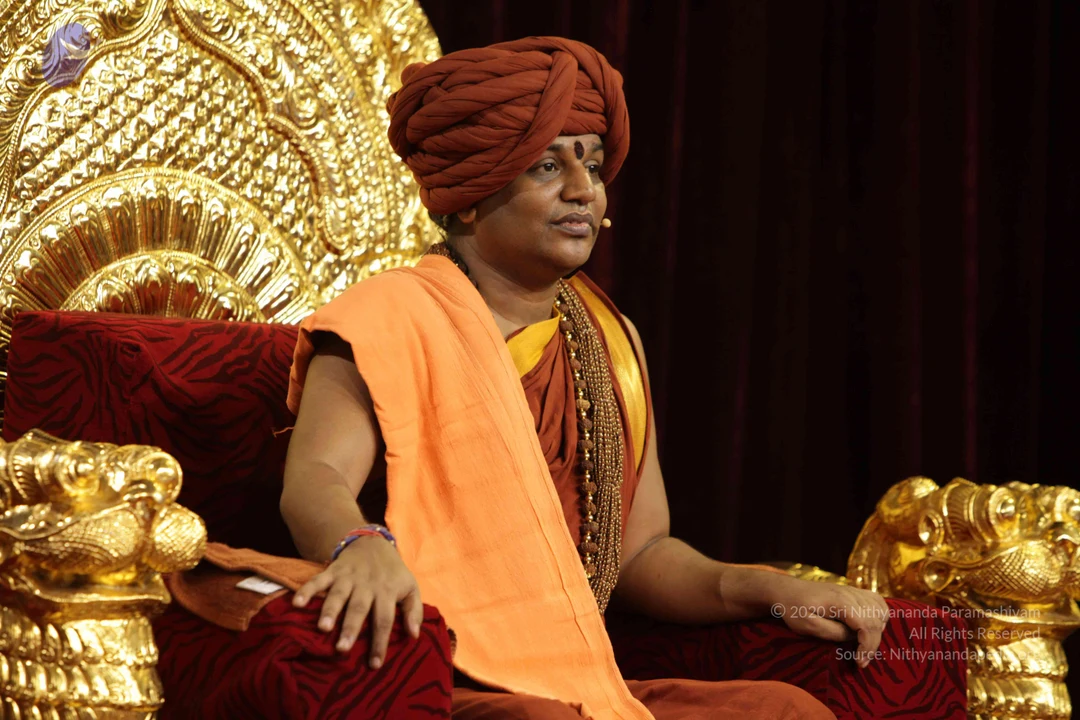
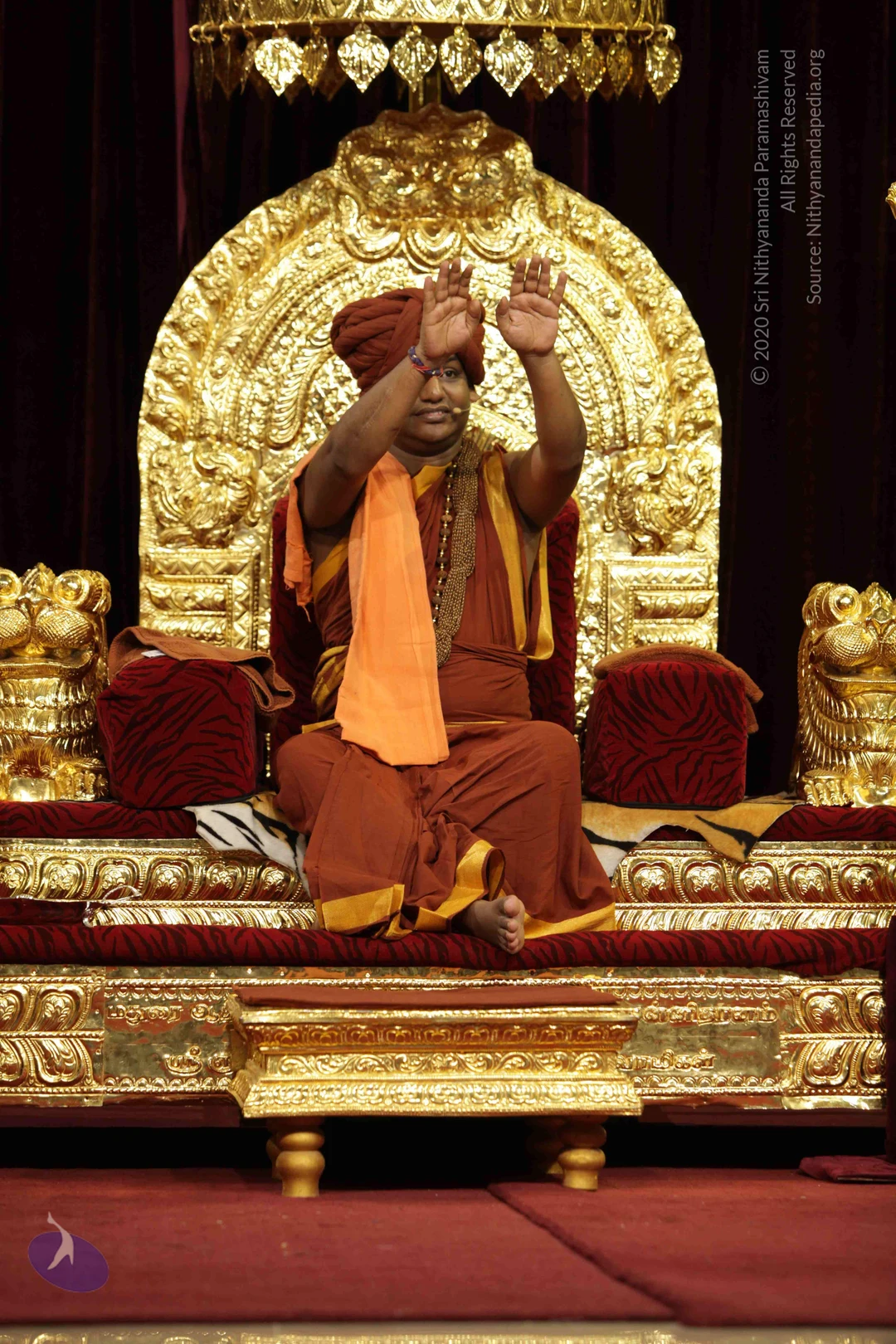
இந்த வீடியோவில் பகவான் நித்யானந்த பரமசிவம் கேட்டலின் முக்கியத்துவத்தை விளக்குகிறார். கேட்டலின் மூலம் எவ்வாறு சக்தி வெளிப்பாடு நடக்கின்றது என்பதையும், ஆழ்ந்து கேட்பதன் மூலமாகவே இந்த உயர்ஞான சத்தியங்கள் நம் வாழ்வின் பாகமாக மாறும் என்பதையும் தெளிவாக விளக்குகிறார். மேலும் பரமசிவ பரம்பொருளின் இருப்பும், நம் ஒவ்வொருவருடைய இருப்பும் ஒன்றே என்ற பிரபஞ்ச சத்தியத்தை விளக்குகிறார்.

The Supreme Pontiff of Hinduism Jagatguru Mahasannidhanam His Divine Holiness #Nithyananda Paramashivam (HDH) is the reviver of #KAILASA - the ancient enlightened civilization and the great cosmic borderless Hindu nation. Revered as the incarnation of Paramashiva - the primordial Hindu Divinity, HDH has a following of 2 billion Hindus worldwide with de facto spiritual embassies in over 150 countries. He has worked untiringly for over 26 years for the revival of Kailasa, for global peace and to give super conscious breakthrough to humanity. He has survived the worst persecution of multiple assassination attempts on person and on character by anti-Hindu elements. He is collecting, organising, preserving, time capsuling, decoding, spreading and reviving 20 Million source books of Hinduism and the 64 sacred arts & sciences like Ayurveda, music, dance, sculpting, astrology, vastu and much more. Close to 20,000 hours of HDH’s timeless talks have been recorded till date (Sep 2020), which are a treasure trove of powerful cognitions to solve individual and global problems of any kind.

Link to Video:

VideoAudio

Title

ஜீவனை சிவமாக மாற்றும் தீக்ஷை - சிவதீக்ஷை || பாகம் 2 || சமய தீக்க்ஷை || 05 செப்டம்பர் 2015

Description

நிகழ்ச்சி நிரல் - சமய தீக்க்ஷை தலைப்பு - ஜீவனை சிவமாக மாற்றும் தீக்ஷை - சிவதீக்ஷை பாகம் 2 இடம் - ஆதிகைலாஸா, பெங்களூரு, கர்நாடகா, இந்தியா தேதி - 05 செப்டம்பர் 2015

இந்த வீடியோ செப்டம்பர் 05, 2015 அன்று ஆதி கைலசா, பெங்களூரு, கர்நாடகாவில் நடைபெற்ற சிவதீக்ஷை பற்றிய ஒரு பகுதி.

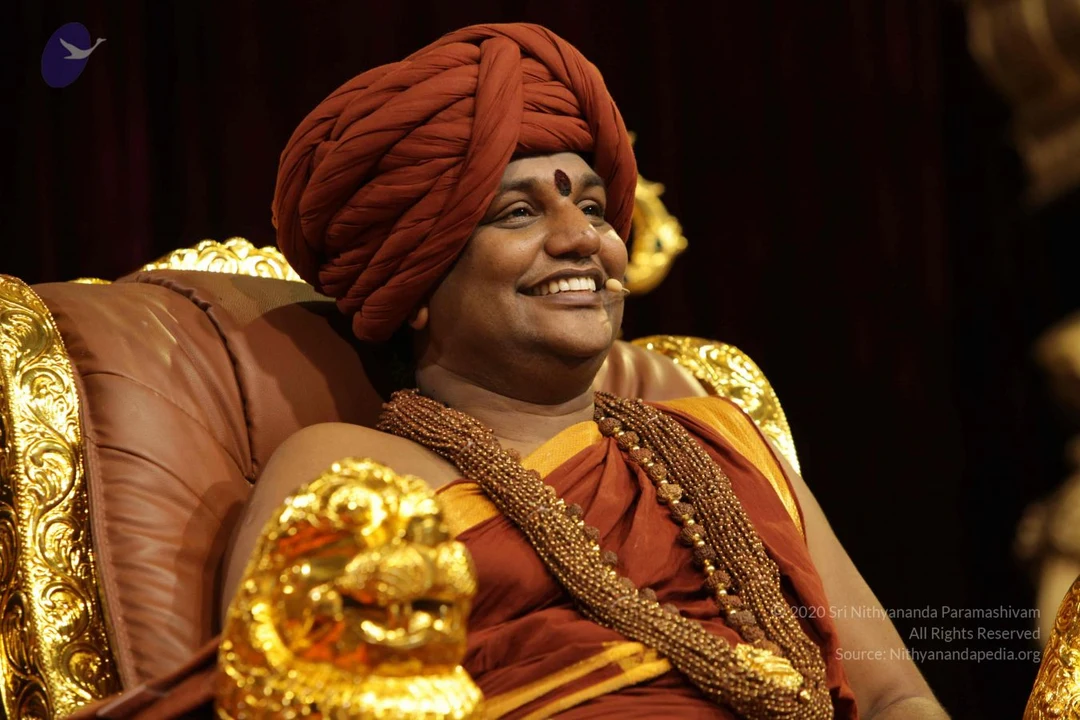
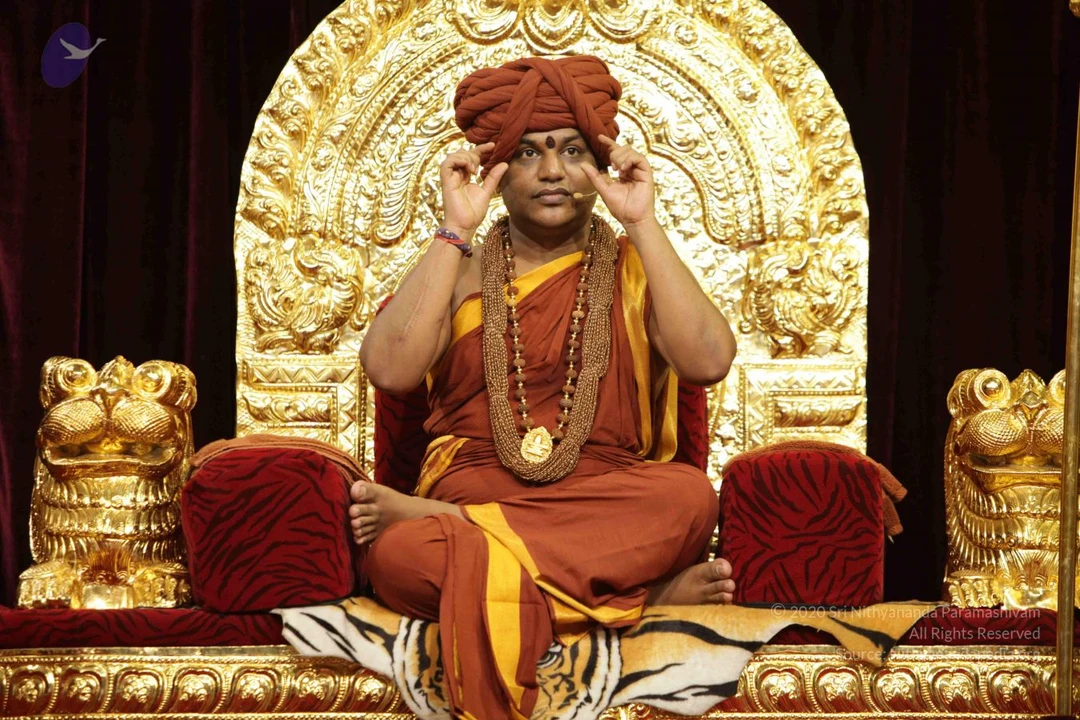
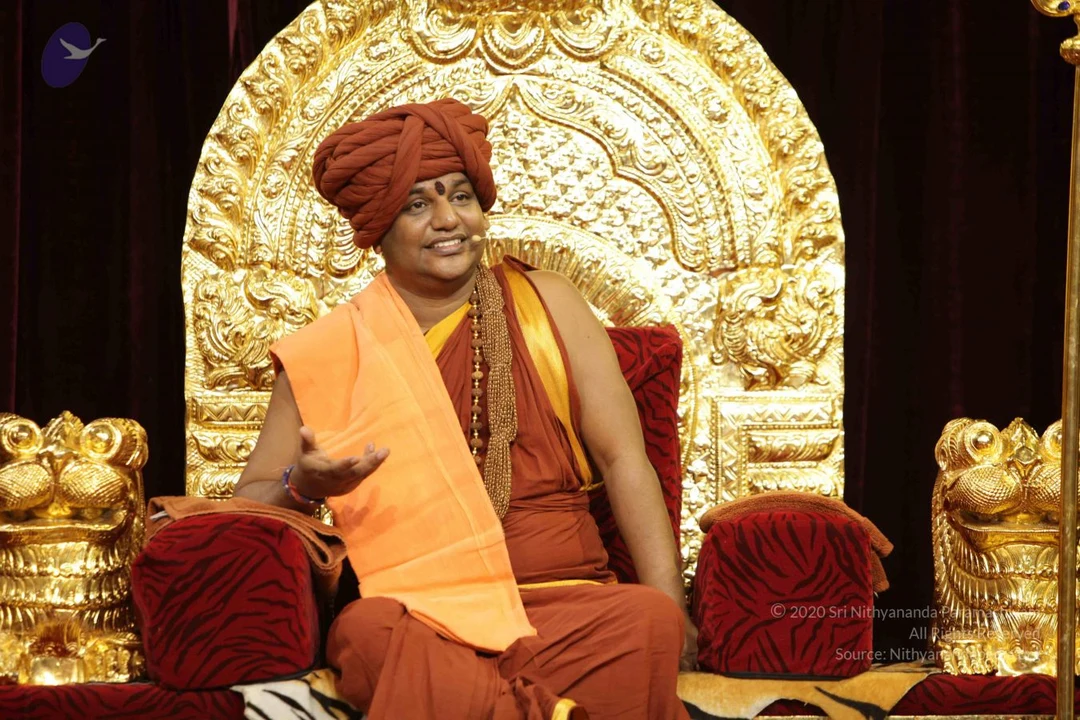
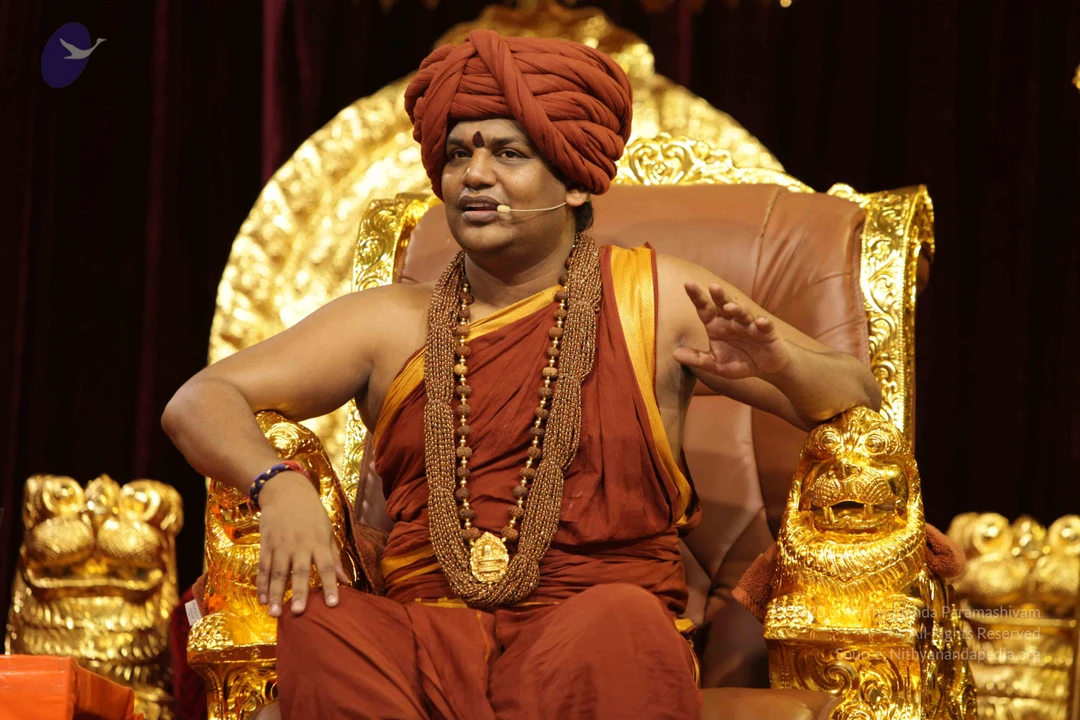
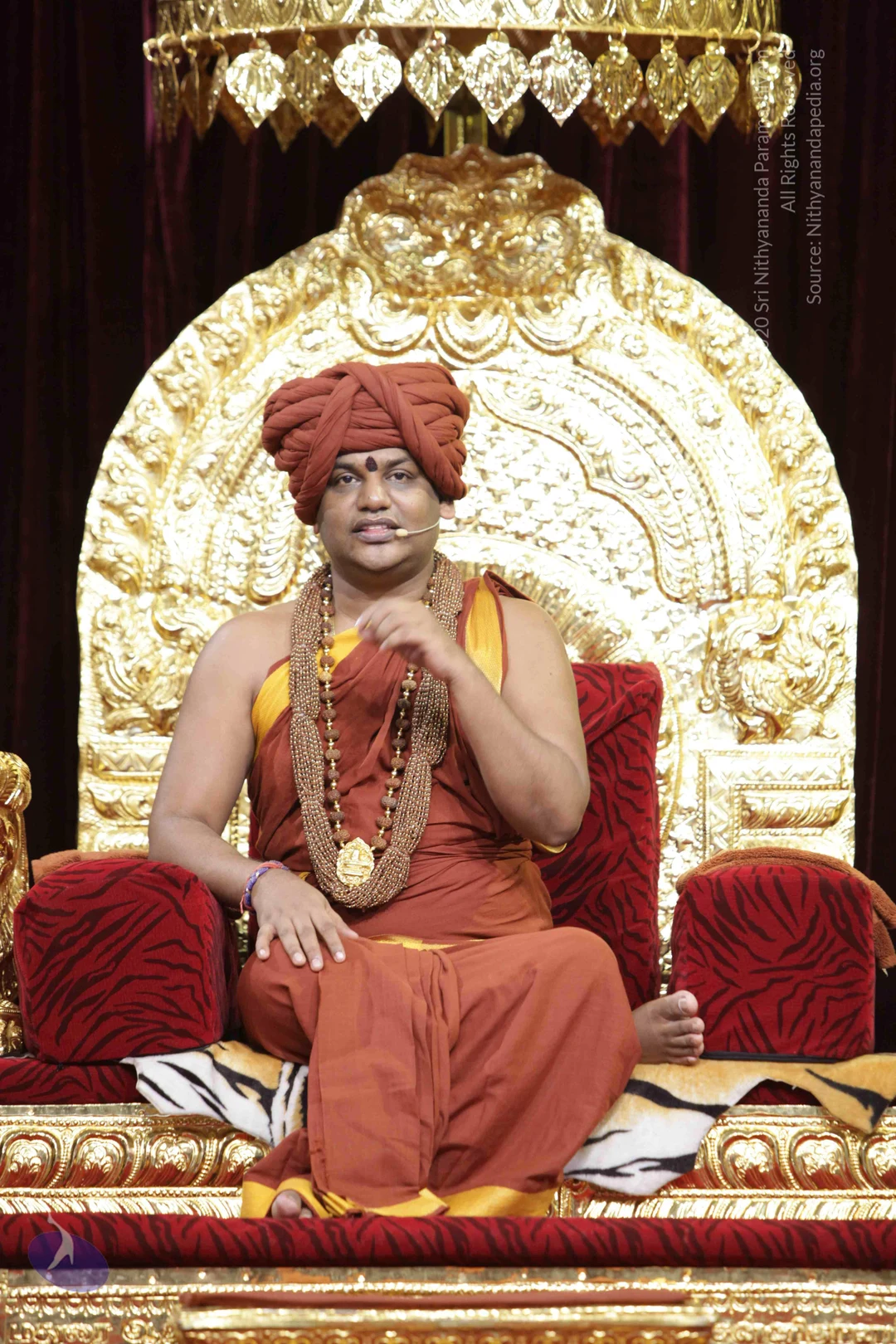
இந்த வீடியோ பதிவில் பகவான் நித்யானந்த பரமசிவம், நமக்குள் இருக்கும் சிவத்தன்மையை பற்றியும், நாம் அதை உணர்வதற்கு தடையாய் இருக்கின்ற மனதை பற்றியும் விளக்குகிறார். அதோடு இந்த ஆழமான சத்தியங்கள் கேட்டலின் மூலமாக உங்களுக்குள் அனுபவமாக மாறும் என்ற ஆசிகளையும் அளிக்கின்றார்.

The Supreme Pontiff of Hinduism Jagatguru Mahasannidhanam His Divine Holiness Nithyananda Paramashivam (HDH) is the reviver of #KAILASA - the ancient enlightened civilization and the great cosmic borderless Hindu nation. Revered as the incarnation of Paramashiva - the primordial Hindu Divinity, HDH has a following of 2 billion Hindus worldwide with de facto spiritual embassies in over 150 countries. He has worked untiringly for over 26 years for the revival of Kailasa, for global peace and to give super conscious breakthrough to humanity. He has survived the worst persecution of multiple assassination attempts on person and on character by anti-Hindu elements. He is collecting, organising, preserving, time capsuling, decoding, spreading and reviving 20 Million source books of Hinduism and the 64 sacred arts & sciences like Ayurveda, music, dance, sculpting, astrology, vastu and much more. Close to 20,000 hours of HDH’s timeless talks have been recorded till date (Sep 2020), which are a treasure trove of powerful cognitions to solve individual and global problems of any kind.

Link to Video:

VideoAudio

Title

ஜீவனை சிவமாக மாற்றும் தீக்ஷை - சிவதீக்ஷை|| பாகம் 3 || சமய தீக்க்ஷை || 05 செப்டம்பர் 2015

Description

நிகழ்ச்சி நிரல் - சமய தீக்க்ஷை தலைப்பு - ஜீவனை சிவமாக மாற்றும் தீக்ஷை - சிவதீக்ஷை பாகம் 3 இடம் - ஆதிகைலாஸா, பெங்களூரு, கர்நாடகா, இந்தியா தேதி - 05 செப்டம்பர் 2015

இந்த வீடியோ செப்டம்பர் 05, 2015 அன்று ஆதி கைலசா, பெங்களூரு, கர்நாடகாவில் நடைபெற்ற சிவதீக்ஷை பற்றிய ஒரு பகுதி.

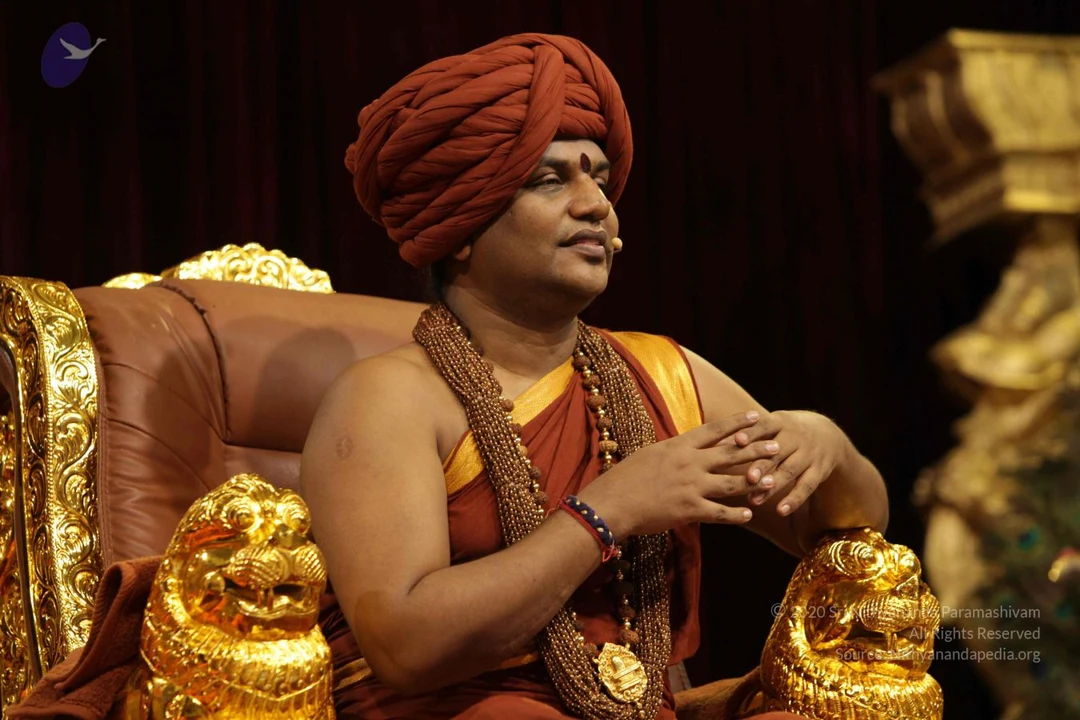
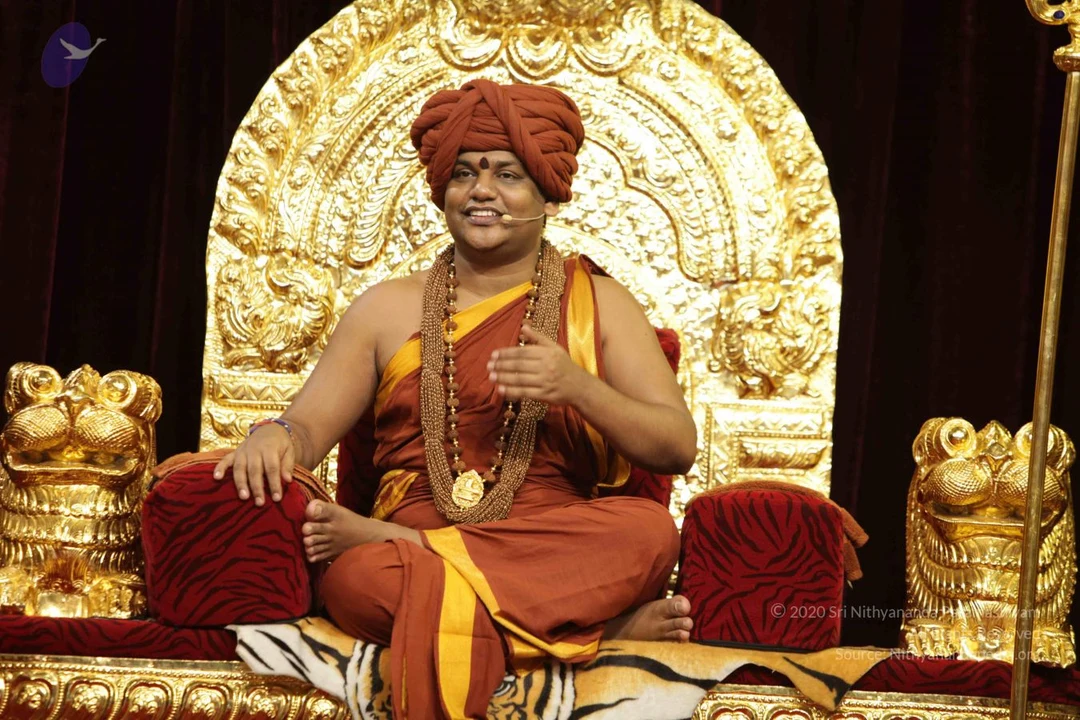
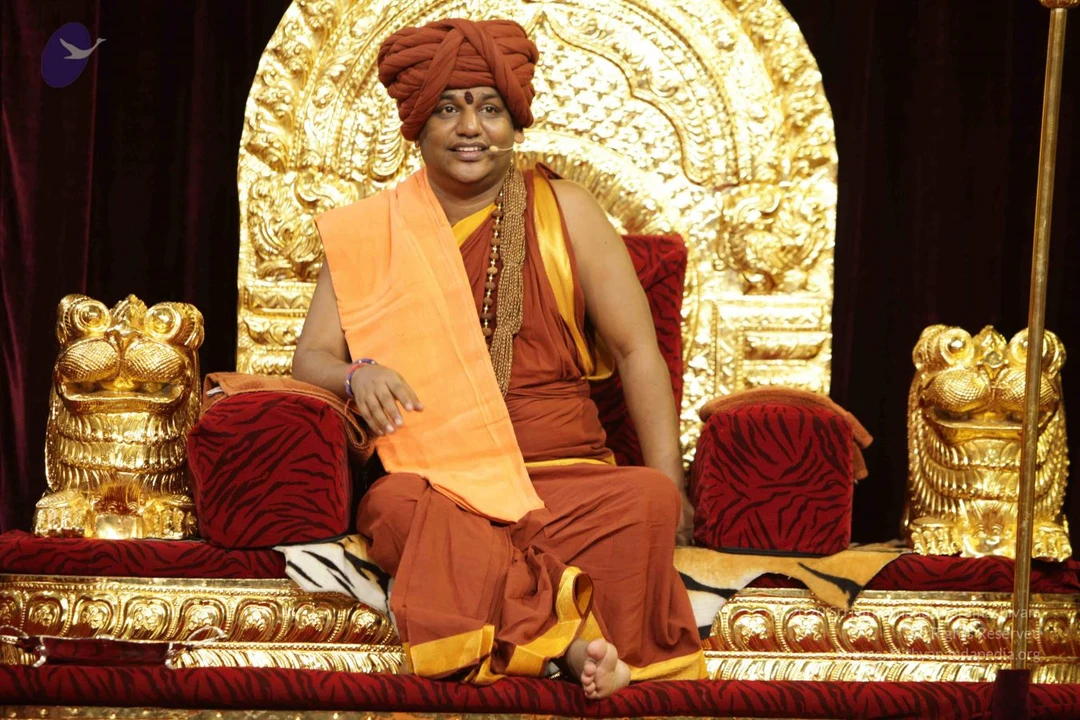
இந்த வீடியோ பதிவில் பகவான் நித்யானந்த பரமசிவம் தேடலின் முக்கியத்துவத்தைப்பற்றி விளக்குகிறார்.அதோடு தன் பரிவராஜக வாழ்வில் நடந்த இனிமையான நிகழ்வான அல்மோரா என்ற இடத்தில் நடந்த நிகழ்வைப்பற்றியும், விசுத்தி சக்கரத்தின் சக்தியை பற்றியும், மனிதர்களுக்குள் பொங்கும் 3 நிலை சக்திகளை பற்றியும் விளக்குகிறார்.

The Supreme Pontiff of Hinduism Jagatguru Mahasannidhanam His Divine Holiness #Nithyananda Paramashivam (HDH) is the reviver of #KAILASA - the ancient enlightened civilization and the great cosmic borderless Hindu nation. Revered as the incarnation of Paramashiva - the primordial Hindu Divinity, HDH has a following of 2 billion Hindus worldwide with de facto spiritual embassies in over 150 countries. He has worked untiringly for over 26 years for the revival of Kailasa, for global peace and to give super conscious breakthrough to humanity. He has survived the worst persecution of multiple assassination attempts on person and on character by anti-Hindu elements. He is collecting, organising, preserving, time capsuling, decoding, spreading and reviving 20 Million source books of Hinduism and the 64 sacred arts & sciences like Ayurveda, music, dance, sculpting, astrology, vastu and much more. Close to 20,000 hours of HDH’s timeless talks have been recorded till date (Sep 2020), which are a treasure trove of powerful cognitions to solve individual and global problems of any kind.

Link to Video:

VideoAudio

Title

ஜீவனை சிவமாக மாற்றும் தீக்ஷை - சிவதீக்ஷை || பாகம் 4 || சமய தீக்க்ஷை || 05 செப்டம்பர் 2015

Description

நிகழ்ச்சி நிரல் - சமய தீக்க்ஷை தலைப்பு - ஜீவனை சிவமாக மாற்றும் தீக்ஷை - சிவதீக்ஷை பாகம் 4 இடம் - ஆதிகைலாஸா, பெங்களூரு, கர்நாடகா, இந்தியா தேதி - 05 செப்டம்பர் 2015

இந்த வீடியோ செப்டம்பர் 05, 2015 அன்று ஆதி கைலசா, பெங்களூரு, கர்நாடகாவில் நடைபெற்ற சிவதீக்ஷை பற்றிய ஒரு பகுதி.

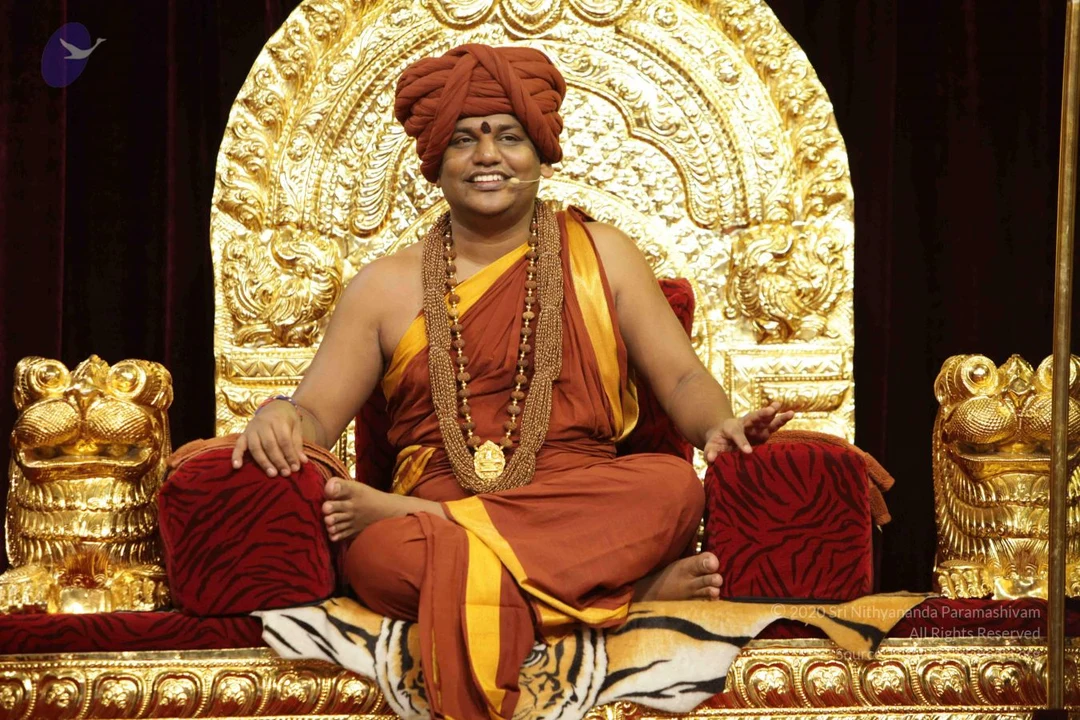
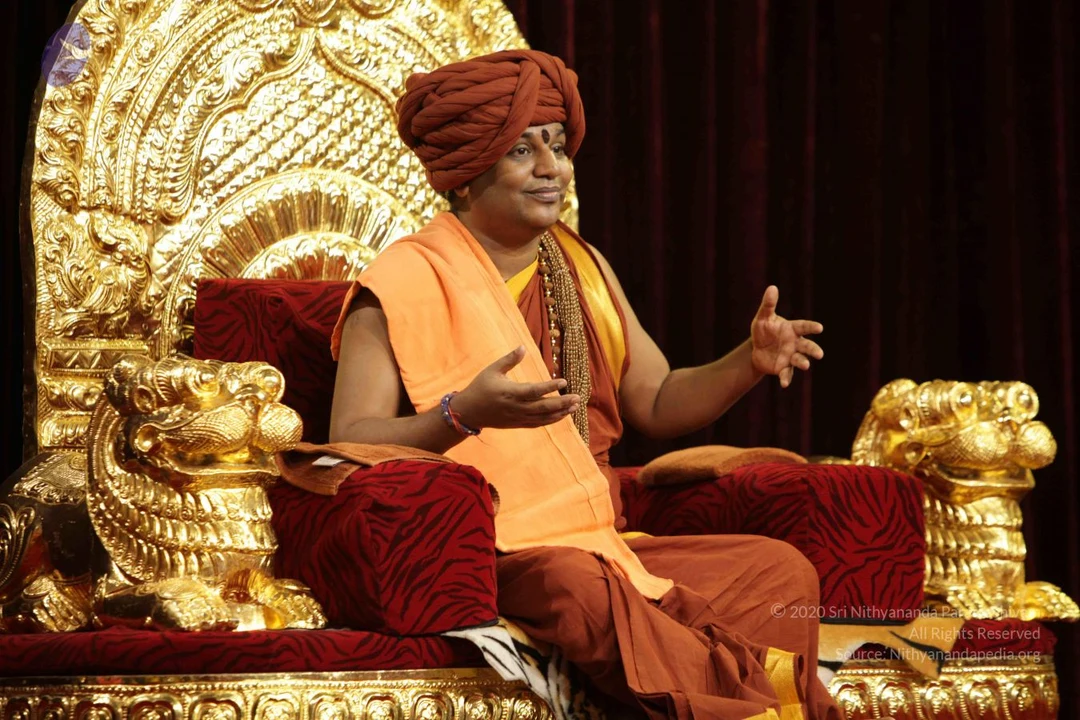
இந்த வீடியோ பதிவில் பகவான் நித்யானந்த பரமசிவம் அமெரிக்காவில் நடந்த ரோலர் கோஸ்டர் நிகழ்வை பற்றியும், குண்டலினி சக்தி விழிப்படைந்தால் ஒருவருக்குள் நடக்கும் சக்தி மாற்றத்தை பற்றியும், சமயதீக்ஷையின் அறிமுகத்தையும், வழிமுறைகளையும், விளக்குகிறார். சமய தீக்ஷையின் மூலம் நமக்குள் குண்டலினி விழிப்படையும் என்றும், குண்டலினி சக்தியின் மூலம் மூன்று நிலை சக்திகளும் விழிப்படையும் என்றும் அதற்கான ஆசிகளையும் அளிக்கிறார்.

The Supreme Pontiff of Hinduism Jagatguru Mahasannidhanam His Divine Holiness #Nithyananda Paramashivam (HDH) is the reviver of #KAILASA - the ancient enlightened civilization and the great cosmic borderless Hindu nation. Revered as the incarnation of Paramashiva - the primordial Hindu Divinity, HDH has a following of 2 billion Hindus worldwide with de facto spiritual embassies in over 150 countries. He has worked untiringly for over 26 years for the revival of Kailasa, for global peace and to give super conscious breakthrough to humanity. He has survived the worst persecution of multiple assassination attempts on person and on character by anti-Hindu elements. He is collecting, organising, preserving, time capsuling, decoding, spreading and reviving 20 Million source books of Hinduism and the 64 sacred arts & sciences like Ayurveda, music, dance, sculpting, astrology, vastu and much more. Close to 20,000 hours of HDH’s timeless talks have been recorded till date (Sep 2020), which are a treasure trove of powerful cognitions to solve individual and global problems of any kind.

Link to Video:

VideoAudio

Title

ஜீவனை சிவமாக மாற்றும் தீக்ஷை - சிவதீக்ஷை || பாகம் 5 || சமய தீக்க்ஷை || 05 செப்டம்பர் 2015

Description

நிகழ்ச்சி நிரல் - சமய தீக்க்ஷை தலைப்பு - ஜீவனை சிவமாக மாற்றும் தீக்ஷை - சிவதீக்ஷை பாகம் 5 இடம் - ஆதிகைலாஸா, பெங்களூரு, கர்நாடகா, இந்தியா தேதி - 05 செப்டம்பர் 2015

இந்த வீடியோ செப்டம்பர் 05, 2015 அன்று ஆதி கைலசா, பெங்களூரு, கர்நாடகாவில் நடைபெற்ற சிவதீக்ஷை பற்றிய ஒரு பகுதி.

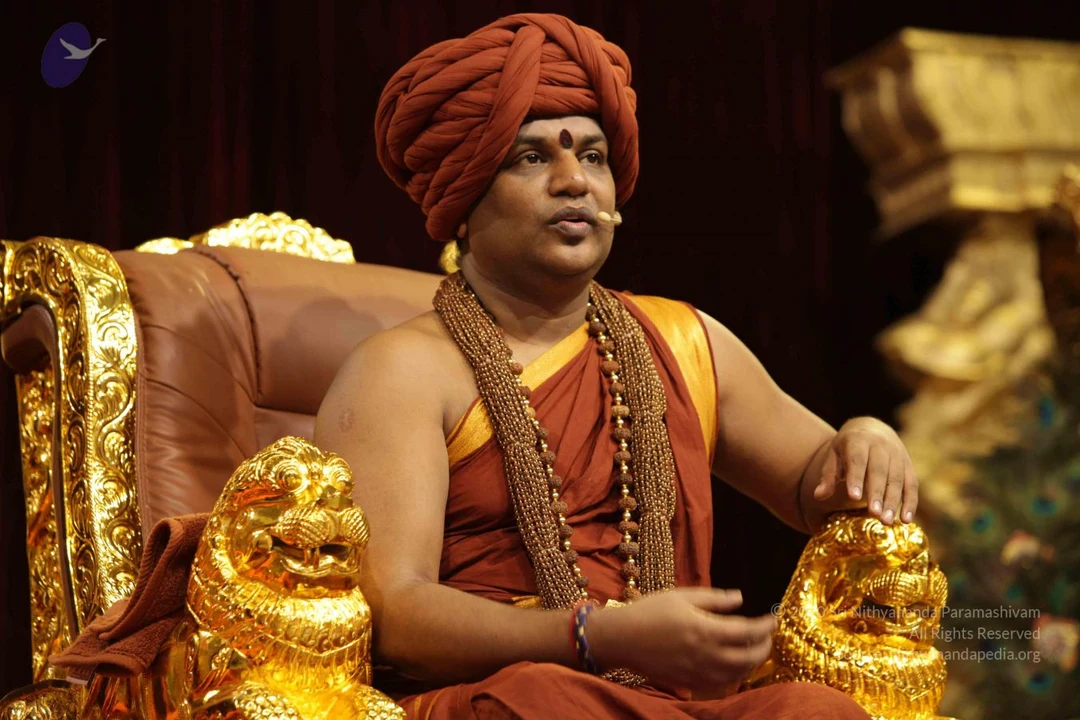
இந்த வீடியோ பதிவில் பகவான் நித்யானந்த பரமசிவம் குண்டலினி சக்தி விழிப்படைந்தால், 'நாமே சிவம்' என்னும் சத்தியம் நமக்குள் அனுபவமாக மலர்ந்துவிடும் என்று திருவாய் மலர்ந்தருளுகிறார். மேலும் நமக்குள் இருக்கும் சுயசந்தேகம், இது தான் சிவத்தன்மையை மறைக்கும் இரும்பு திரை., தன் ஆன்ம சக்தியால் நமக்குள் சக்திவெளிப்பாட்டை நிகழ்த்தி, முழுவதுமாக நாம் பரமசிவம் என்னும் சத்தியத்தை நம் வாழ்வில் மலர்த்துவதற்க்காக வருபவர் தான் குரு, மேலும் இதை அனுபூதியாக அளிப்பவர் தான் குரு என்றும் விளக்குகிறார்.

The Supreme Pontiff of Hinduism Jagatguru Mahasannidhanam His Divine Holiness #Nithyananda Paramashivam (HDH) is the reviver of #KAILASA - the ancient enlightened civilization and the great cosmic borderless Hindu nation. Revered as the incarnation of Paramashiva - the primordial Hindu Divinity, HDH has a following of 2 billion Hindus worldwide with de facto spiritual embassies in over 150 countries. He has worked untiringly for over 26 years for the revival of Kailasa, for global peace and to give super conscious breakthrough to humanity. He has survived the worst persecution of multiple assassination attempts on person and on character by anti-Hindu elements. He is collecting, organising, preserving, time capsuling, decoding, spreading and reviving 20 Million source books of Hinduism and the 64 sacred arts & sciences like Ayurveda, music, dance, sculpting, astrology, vastu and much more. Close to 20,000 hours of HDH’s timeless talks have been recorded till date (Sep 2020), which are a treasure trove of powerful cognitions to solve individual and global problems of any kind.

Link to Video:

VideoAudio

Title

தீக்ஷைகள் பற்றிய சந்தேகங்களுக்கு - சுவாமிஜியின் நேரடி விளக்கங்கள் || சிவ தீக்ஷை || 5 செப்டம்பர் 2015

Description

நிகழ்ச்சி நிரல் - சிவ தீக்ஷை தலைப்பு - தீக்ஷைகள் பற்றிய சந்தேகங்களுக்கு - சுவாமிஜியின் நேரடி விளக்கங்கள் இடம் - ஆதிகைலாஸா, பெங்களூரு, கர்நாடகா, இந்தியா தேதி - 05 செப்டம்பர் 2015

இந்த வீடியோ பதிவில் பகவான் ஸ்ரீ #நித்யானந்த பரமசிவம் அவர்கள் சமயதீக்ஷை பற்றி பக்தர்கள் கேட்கும் பல்வேறு விதமான கேள்விகளுக்கும், சந்தேகங்களுக்கும் நேரடியாக, தெளிவான விளக்கங்களை தன் திருவாய் மலர்ந்தளிக்கின்றார். மேலும், பகவான் வழங்கும் இந்த தீக்ஷையானது, எம்பெருமான் வகுத்தளித்த வேதாகமத்திலிருந்து எடுக்கப்பட்டு, சாஸ்திரங்களில் சொல்லப்பட்ட முறைப்படி, அளிக்கப்படுகிறது என்றும், இதனால் தொடர்ந்து வாழ்வில் எல்லா வளங்களும் பெருகும் என்றும், அனைத்து பக்தர்களுக்கும் ஆசிகள் வழங்கினார்.

The Supreme Pontiff of Hinduism Jagatguru Mahasannidhanam His Divine Holiness #Nithyananda Paramashivam (HDH) is the reviver of #KAILASA - the ancient enlightened civilization and the great cosmic borderless Hindu nation. Revered as the incarnation of Paramashiva - the primordial Hindu Divinity, HDH has a following of 2 billion Hindus worldwide with de facto spiritual embassies in over 150 countries. He has worked untiringly for over 26 years for the revival of Kailasa, for global peace and to give super conscious breakthrough to humanity. He has survived the worst persecution of multiple assassination attempts on person and on character by anti-Hindu elements. He is collecting, organising, preserving, time capsuling, decoding, spreading and reviving 20 Million source books of Hinduism and the 64 sacred arts & sciences like Ayurveda, music, dance, sculpting, astrology, vastu and much more. Close to 20,000 hours of HDH’s timeless talks have been recorded till date (Sep 2020), which are a treasure trove of powerful cognitions to solve individual and global problems of any kind.

Link to Video:

VideoAudio

Title

சமய தீக்ஷை || பாகம் 1 || சிவ தீக்ஷை || 05 செப்டம்பர் 2015

Description

நிகழ்ச்சி நிரல் : சிவ தீக்ஷை தலைப்பு : சமய தீக்ஷை பாகம் 1 இடம் : ஆதி கைலாஸா, பெங்களூரு, கர்நாடகா, இந்தியா தேதி : 05 செப்டம்பர் 2015

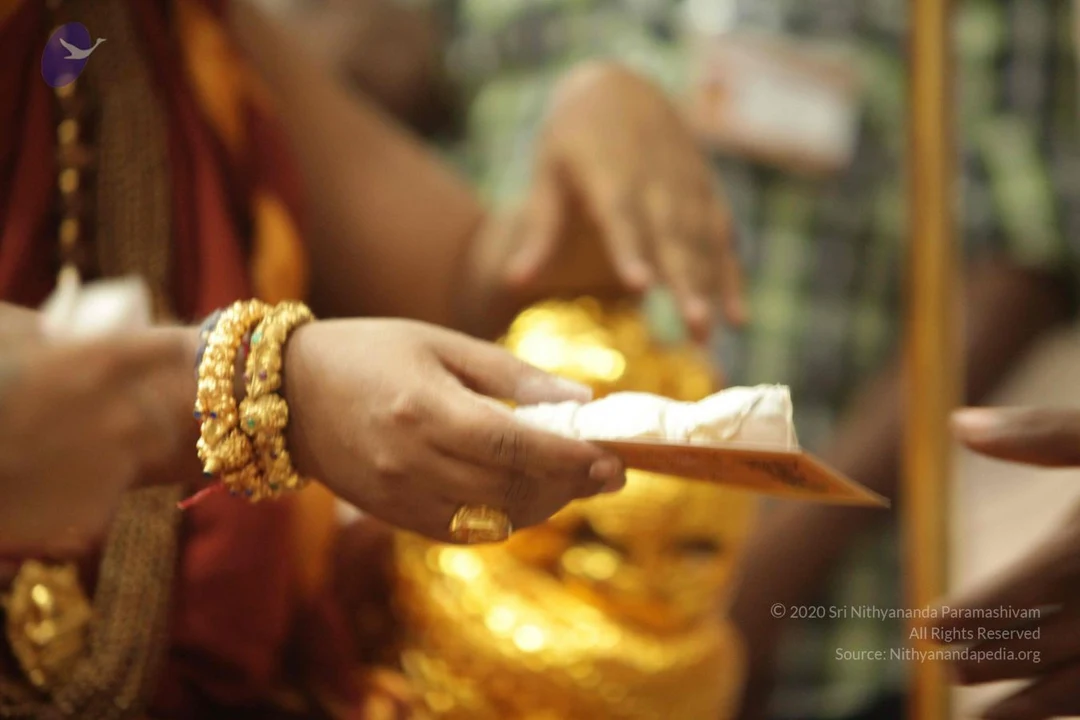
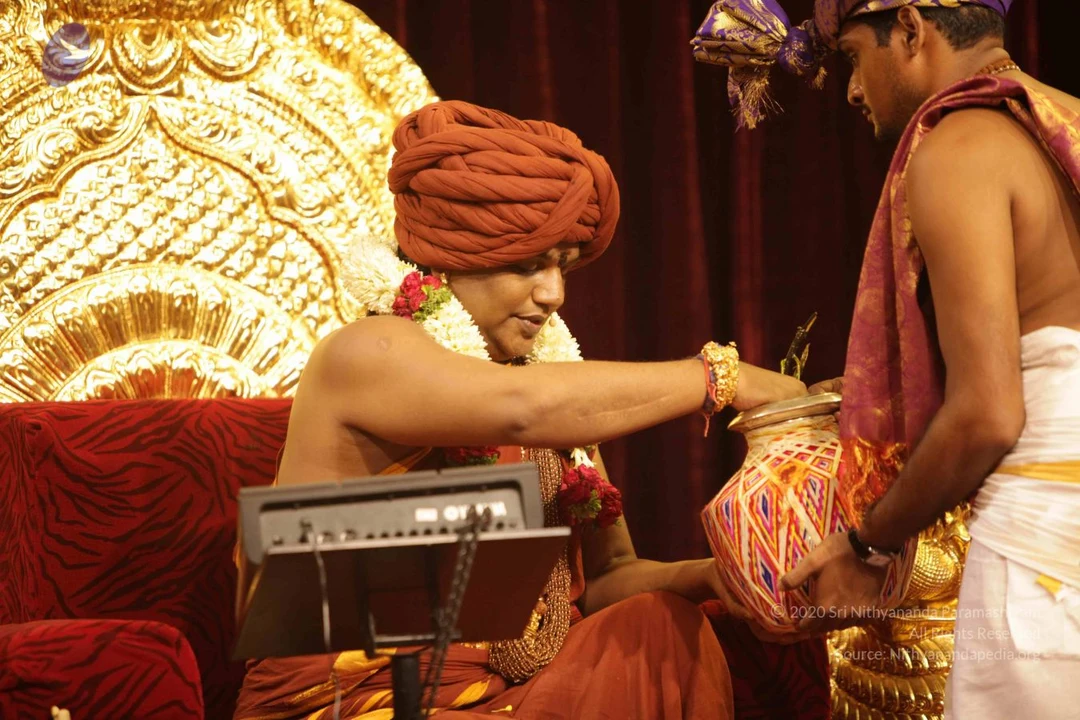
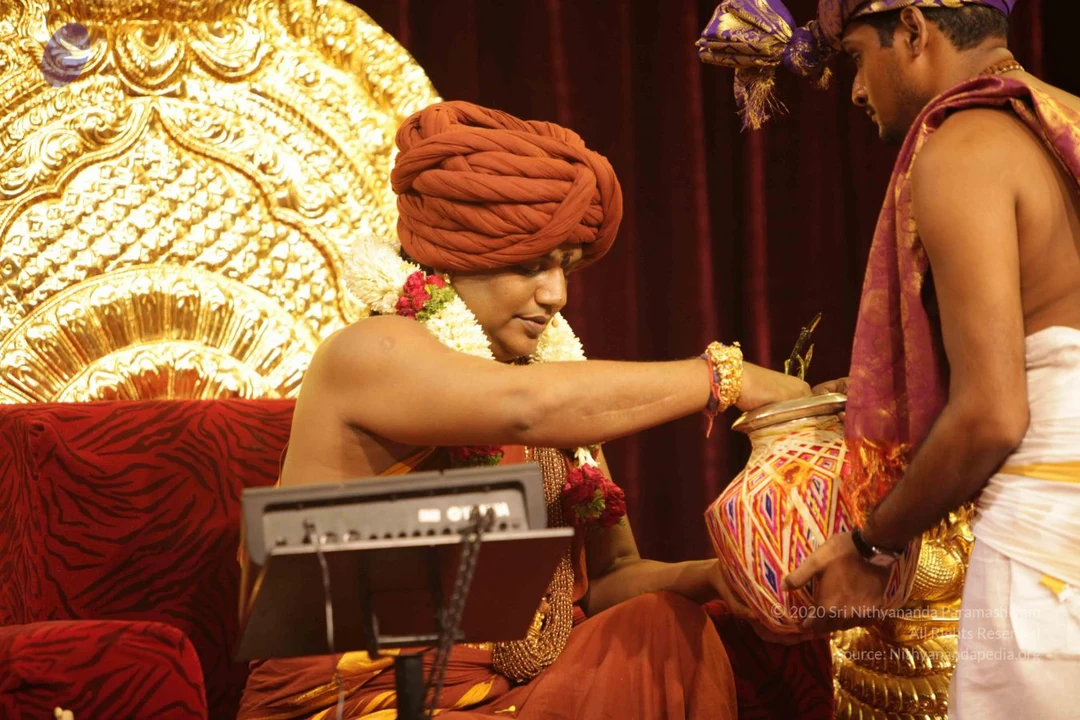
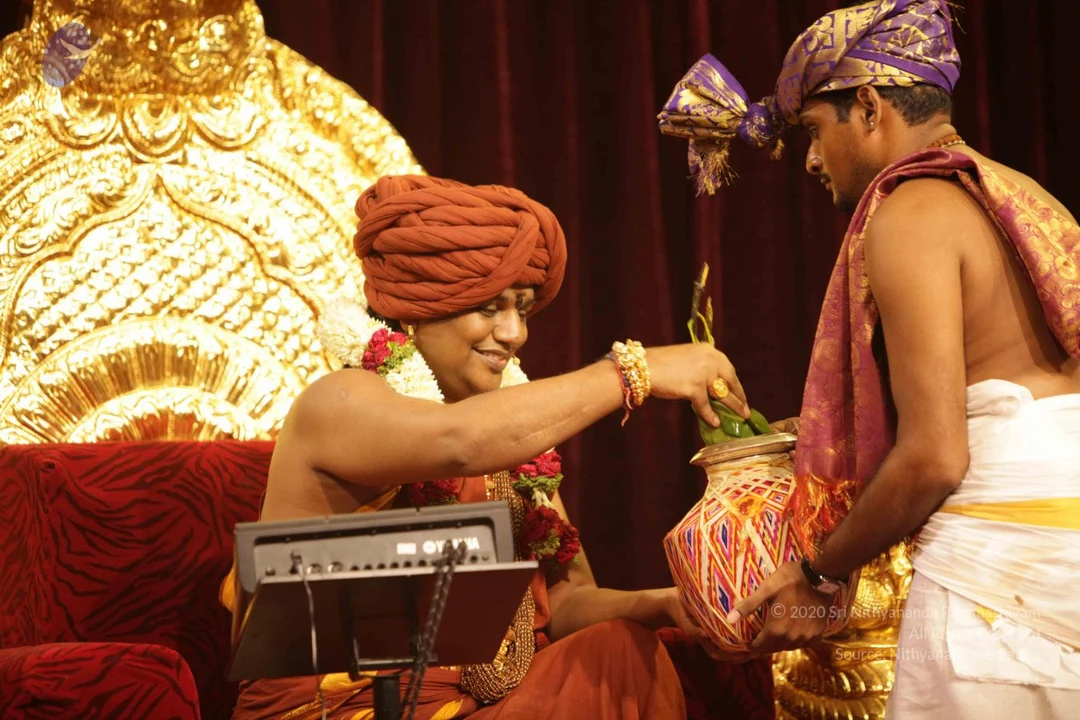
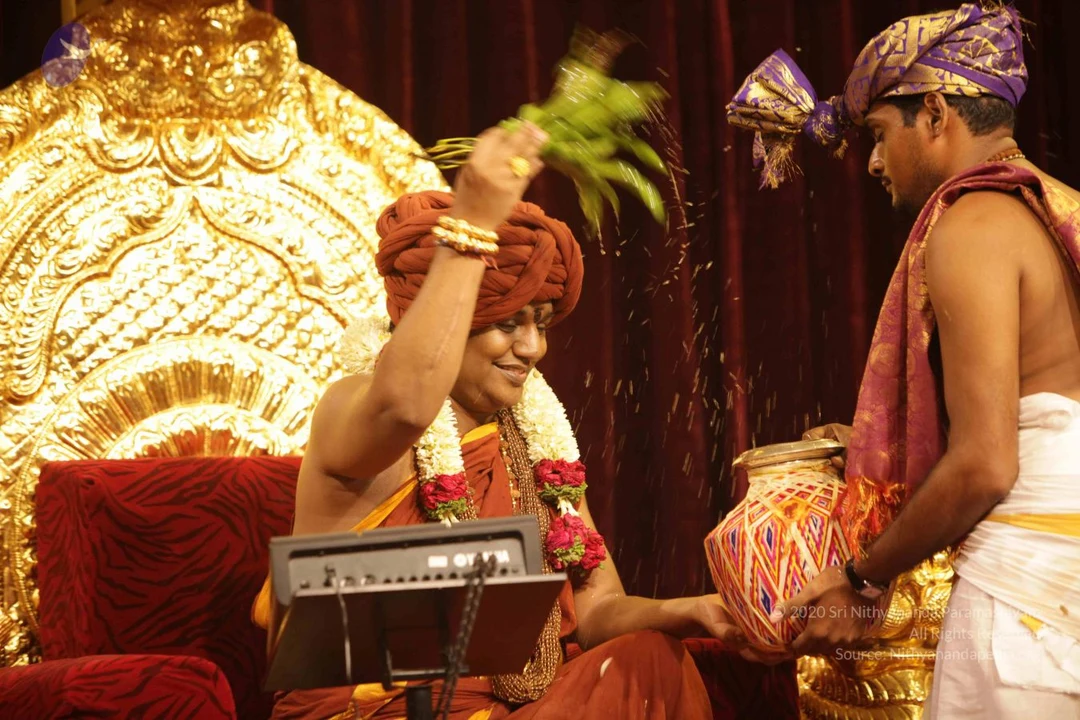
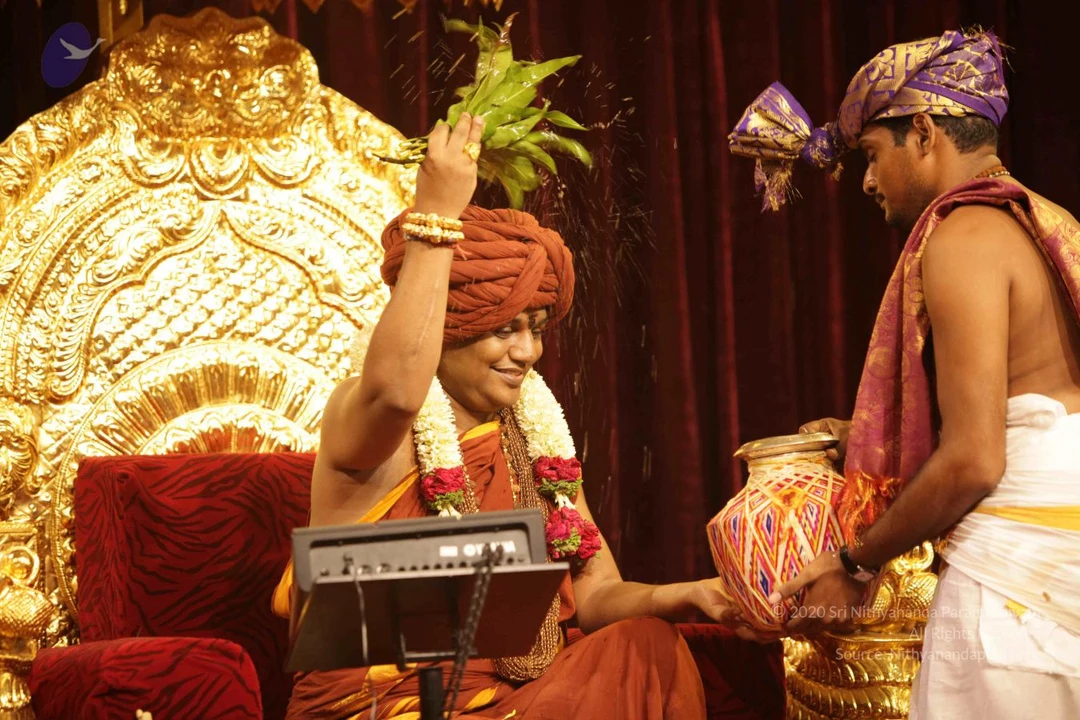
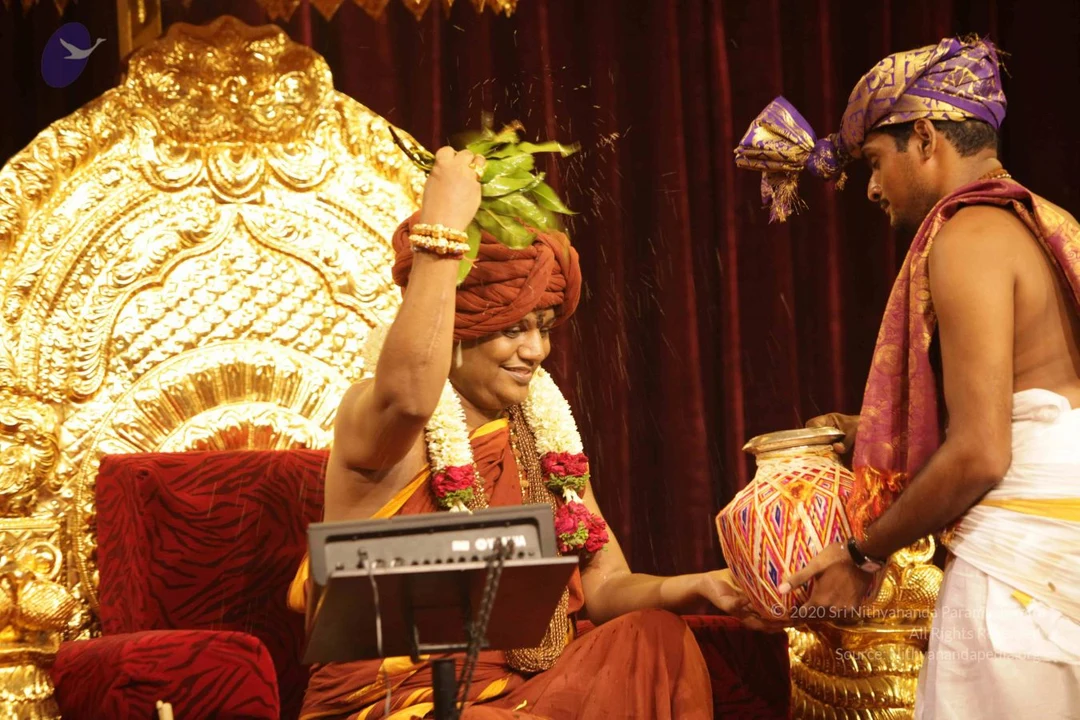
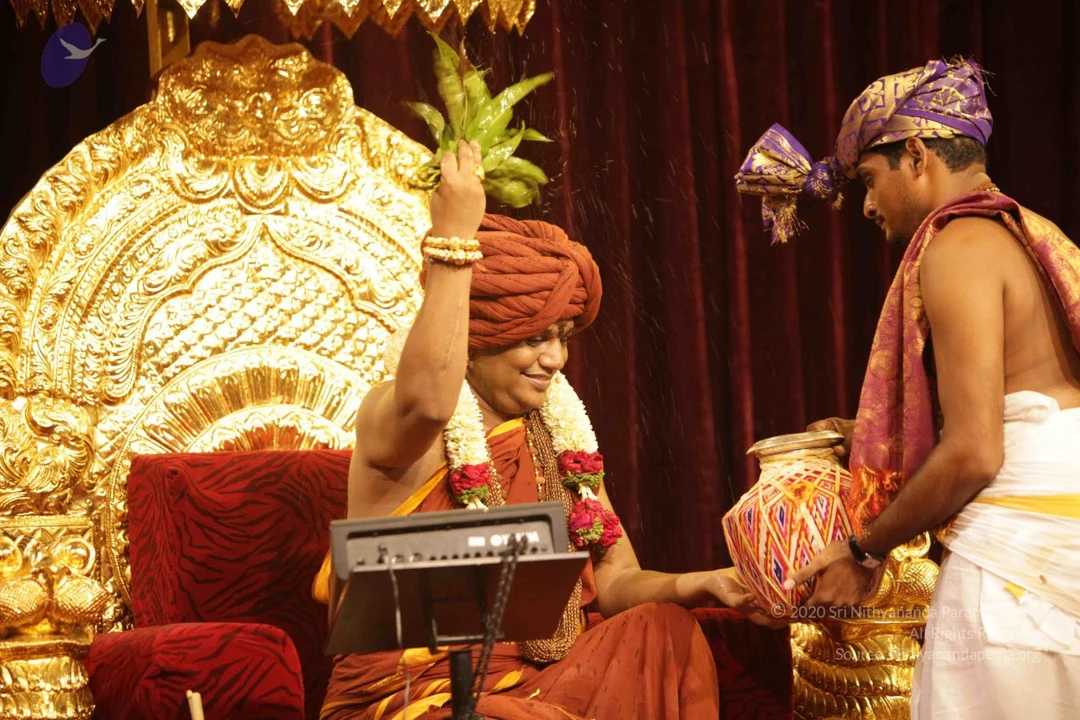
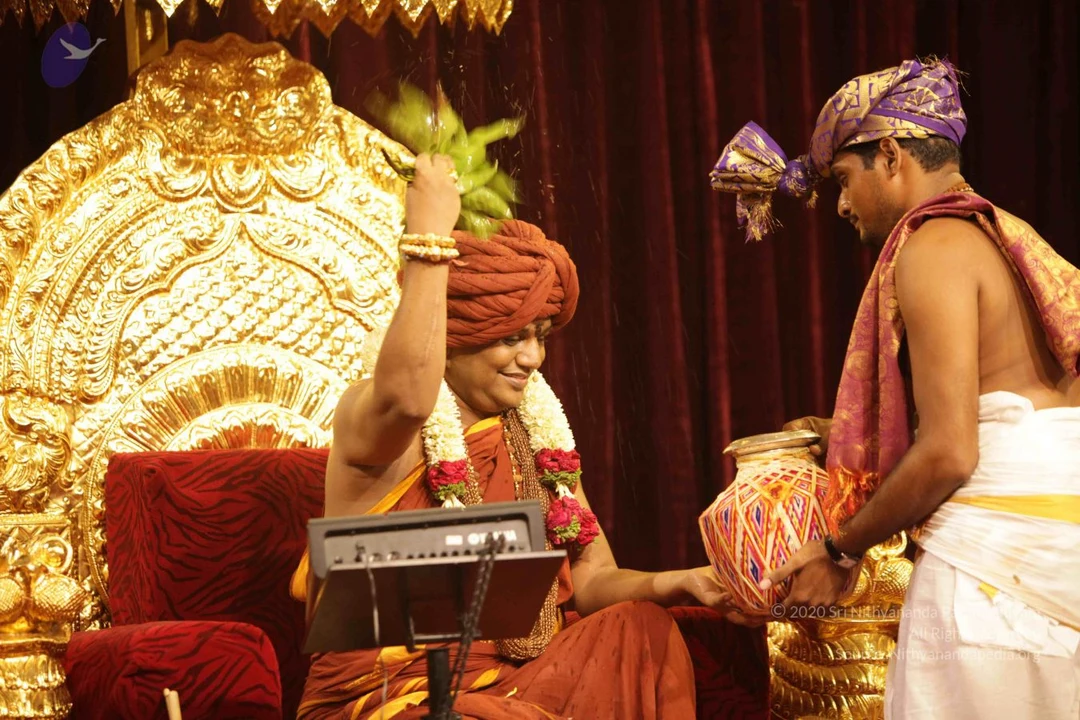
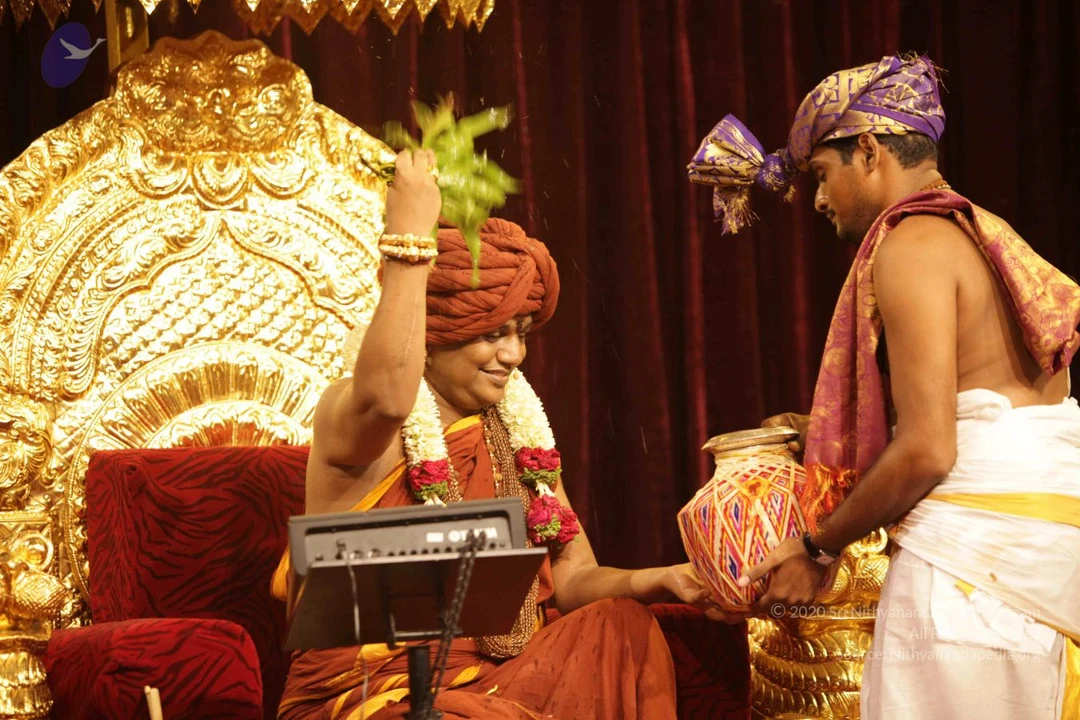
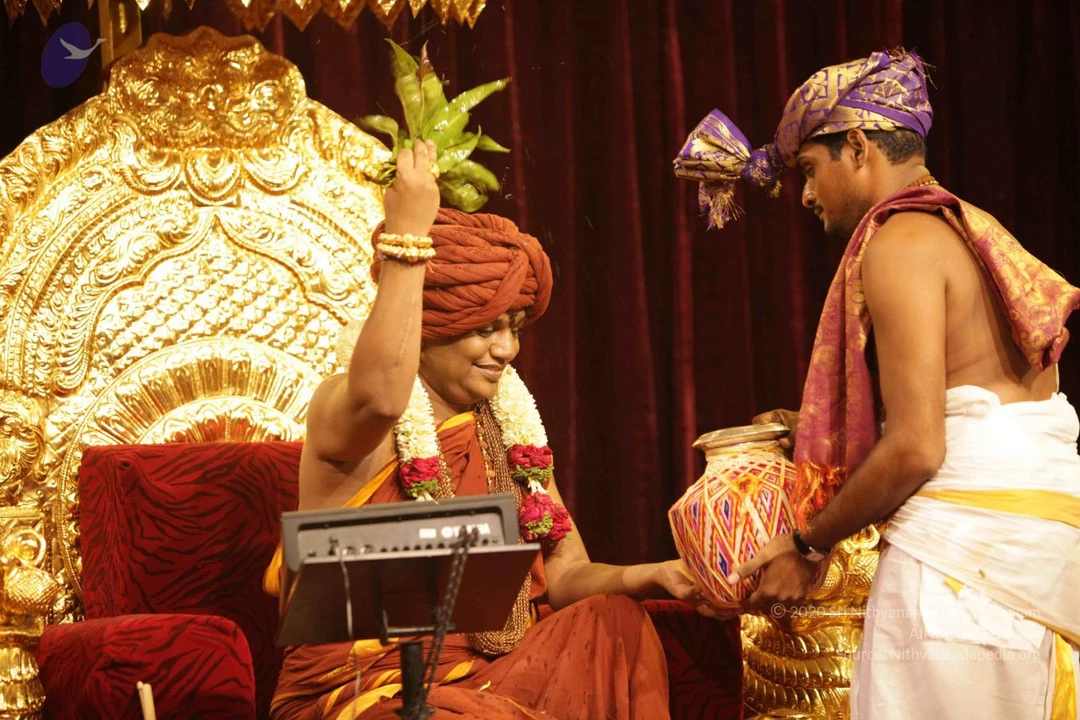
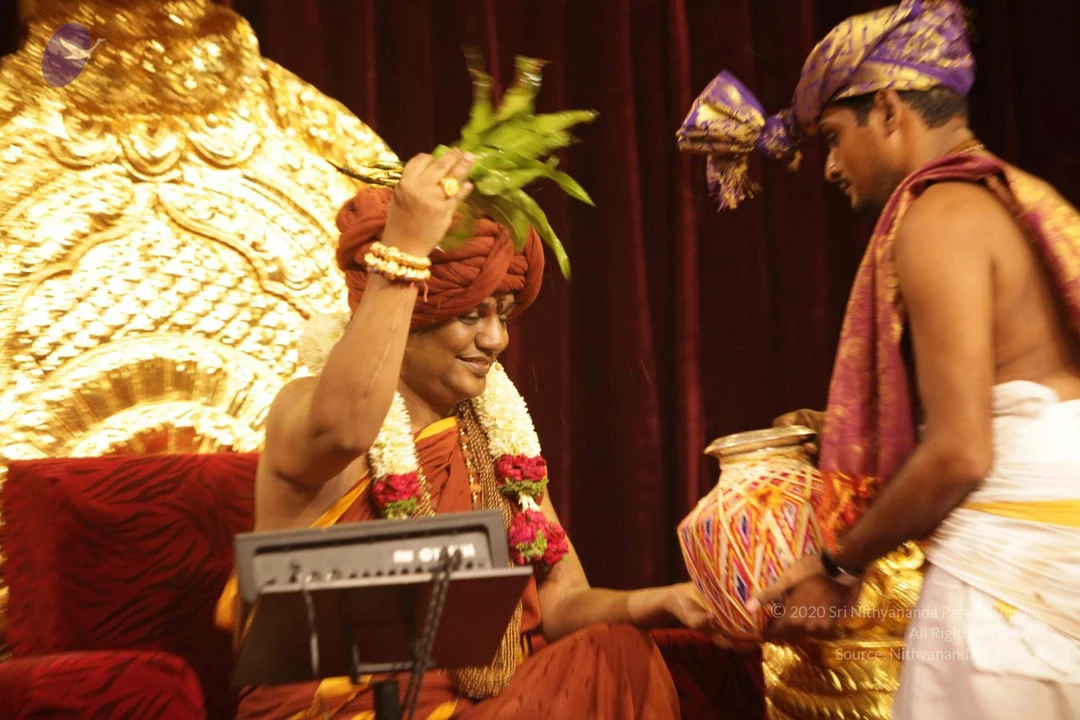
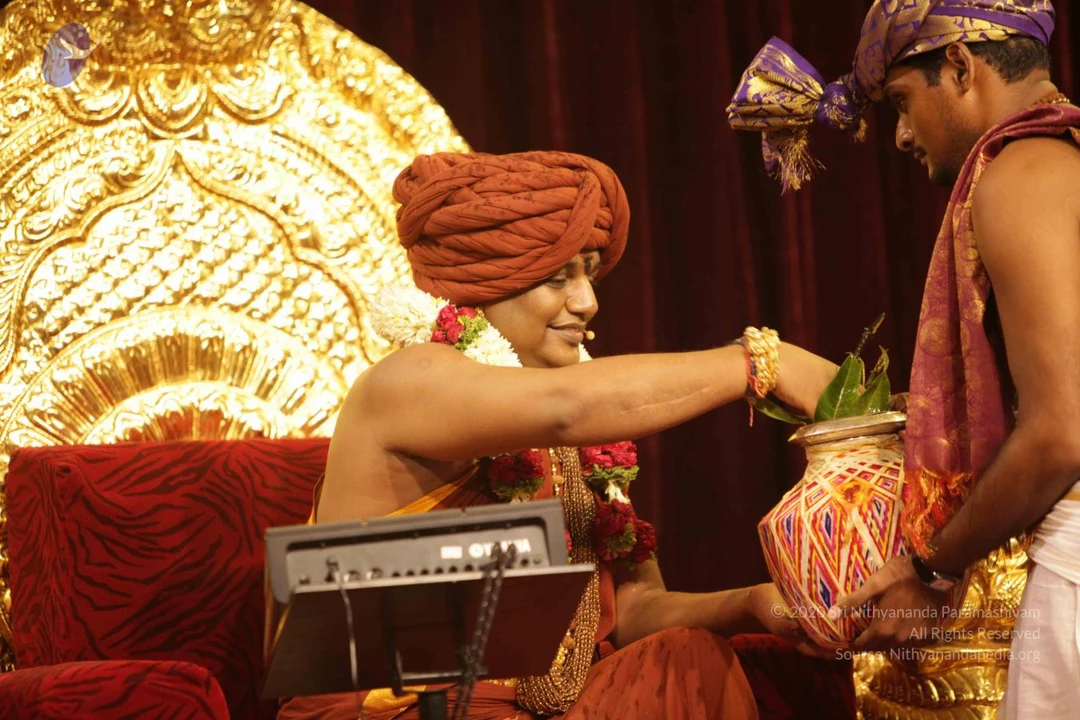
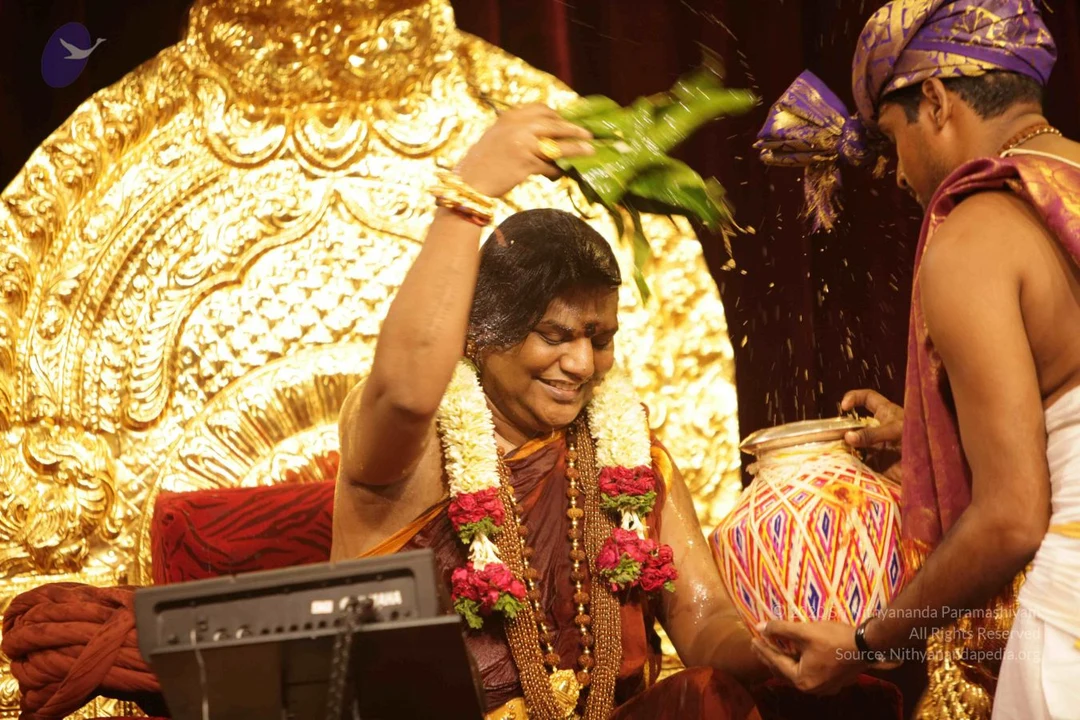
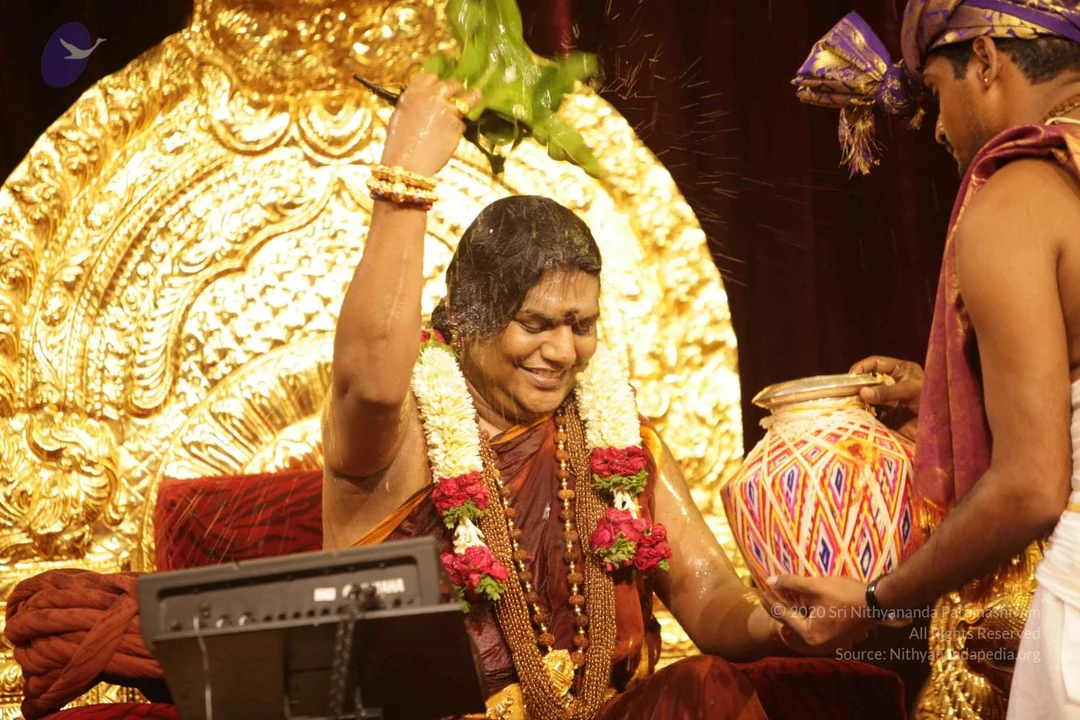
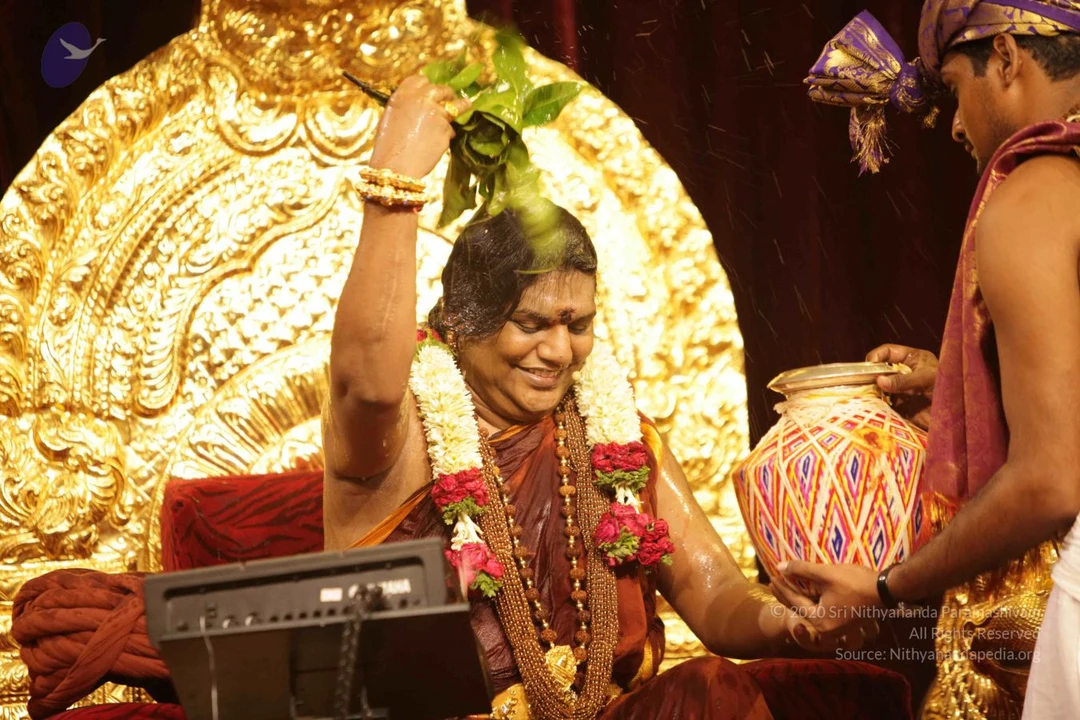
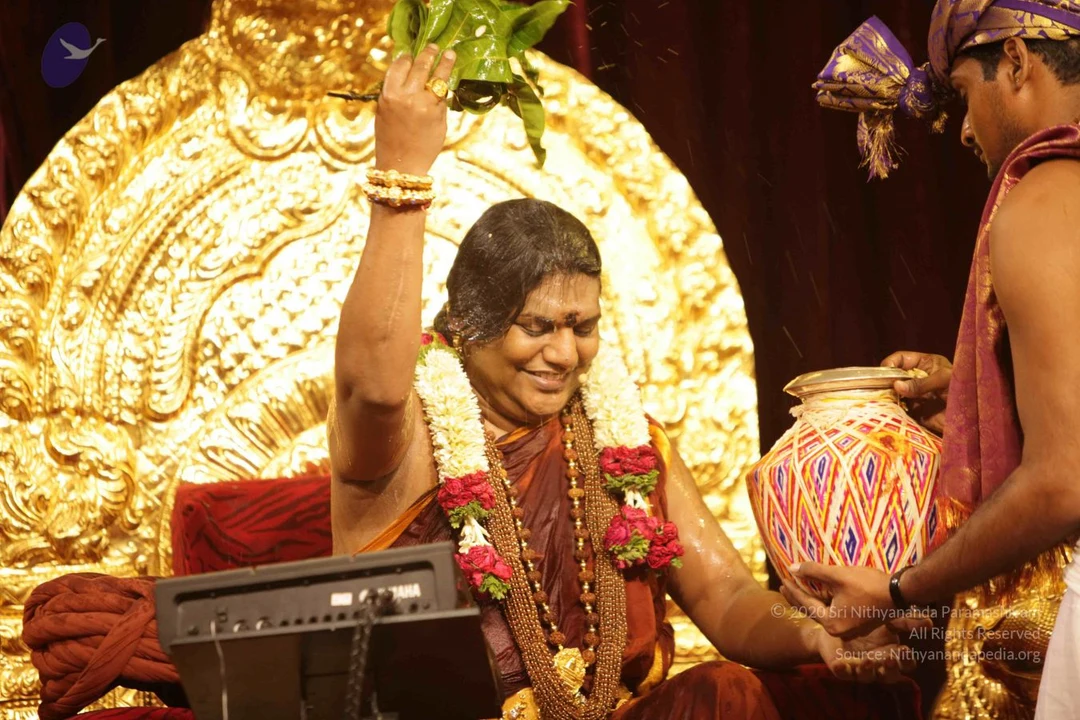
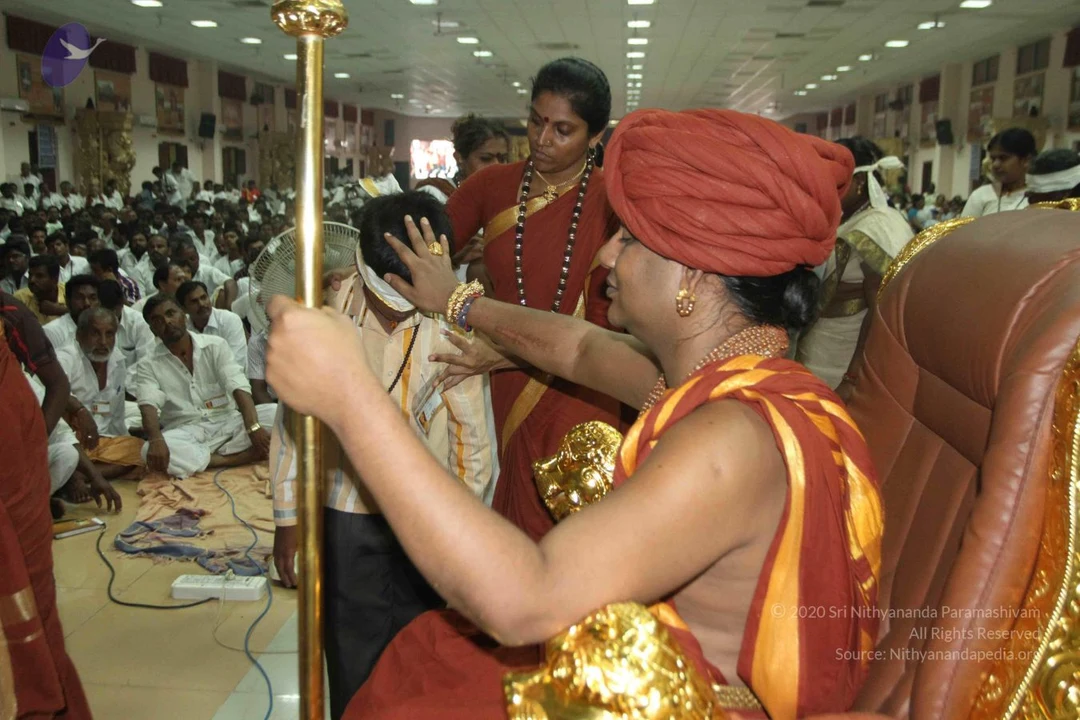
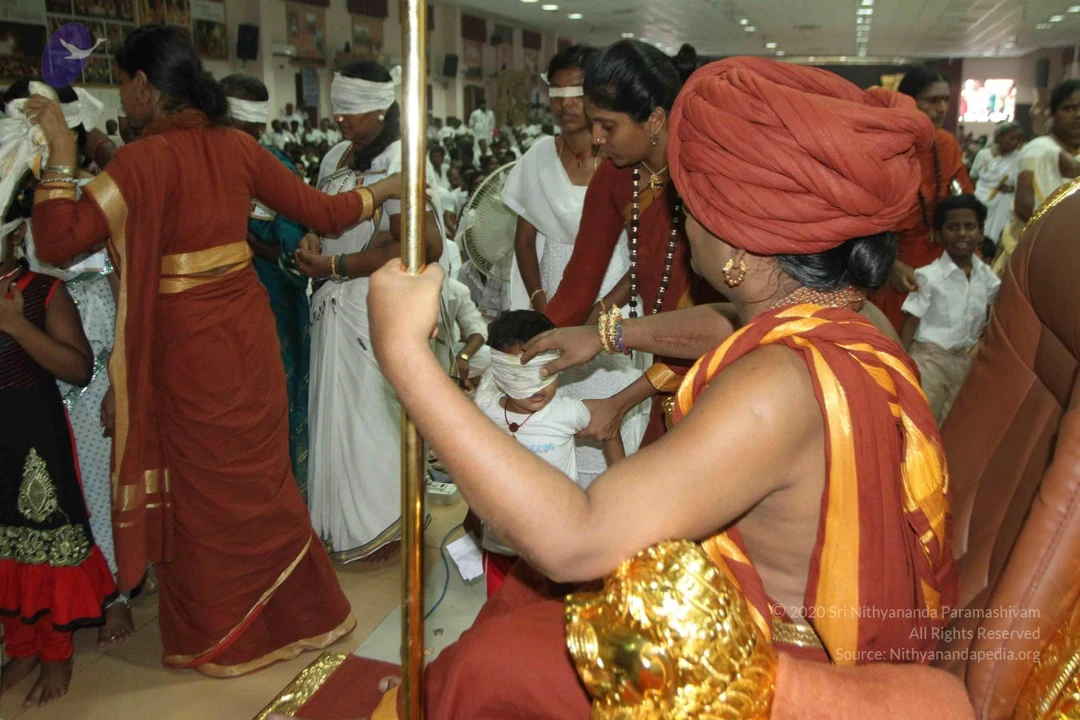
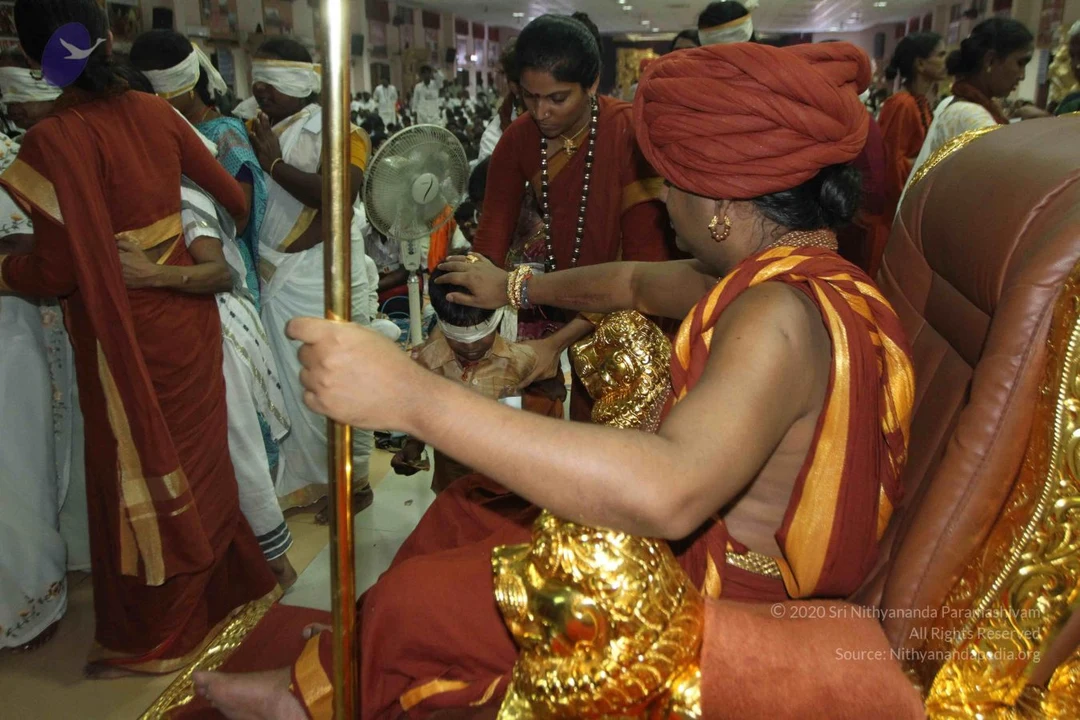
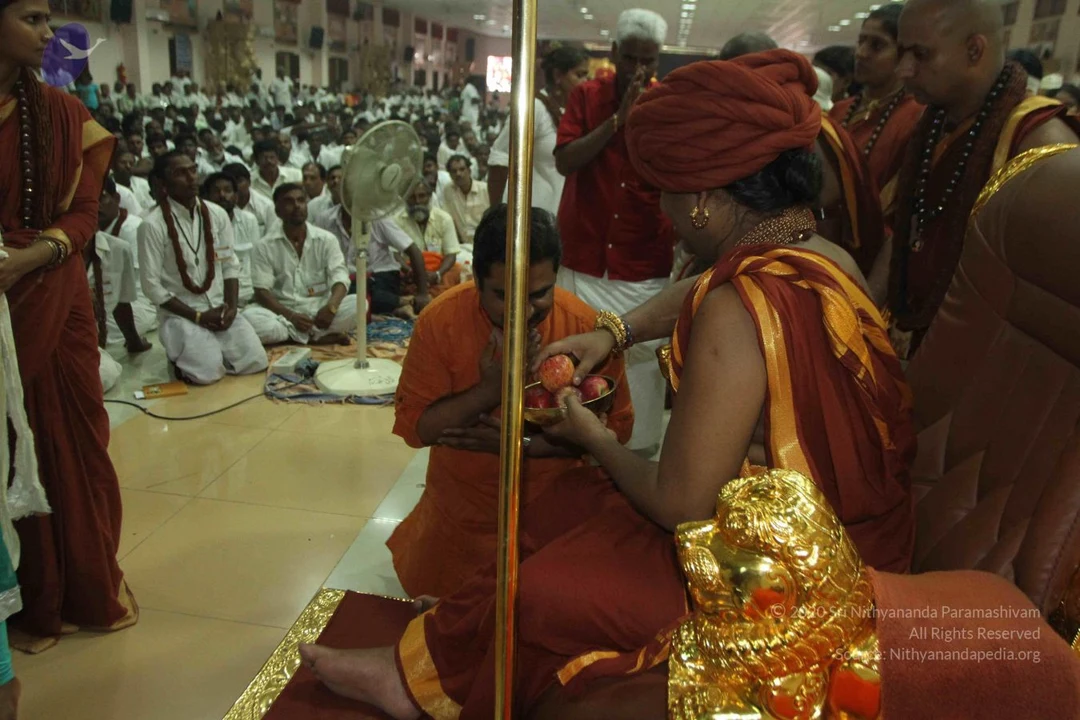
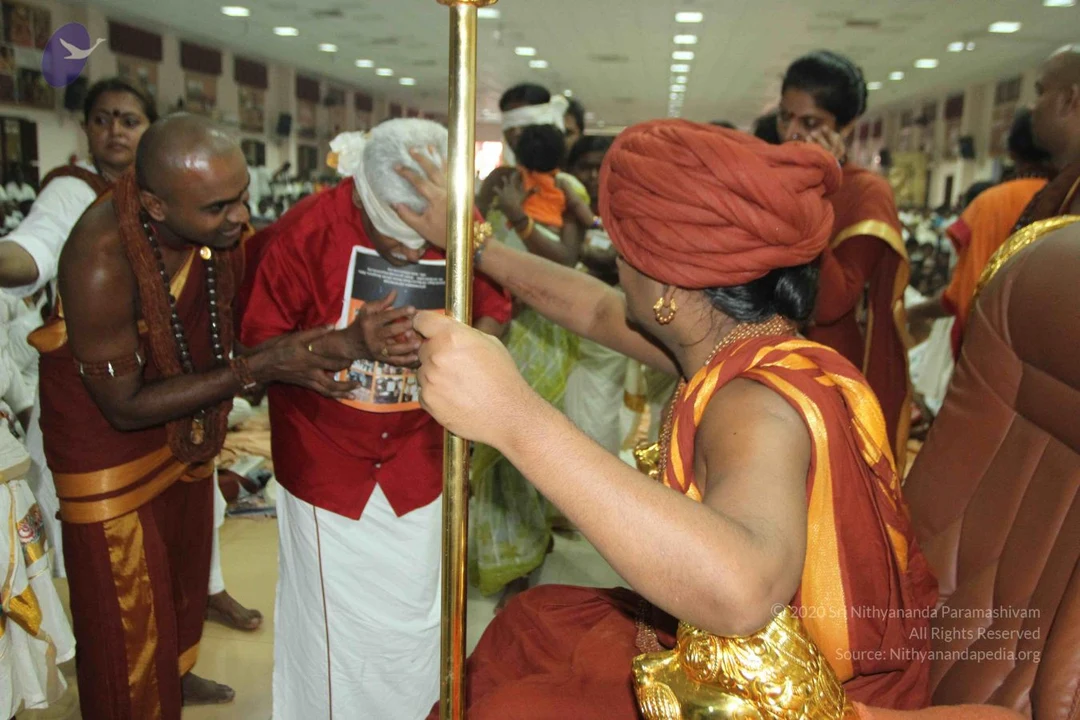
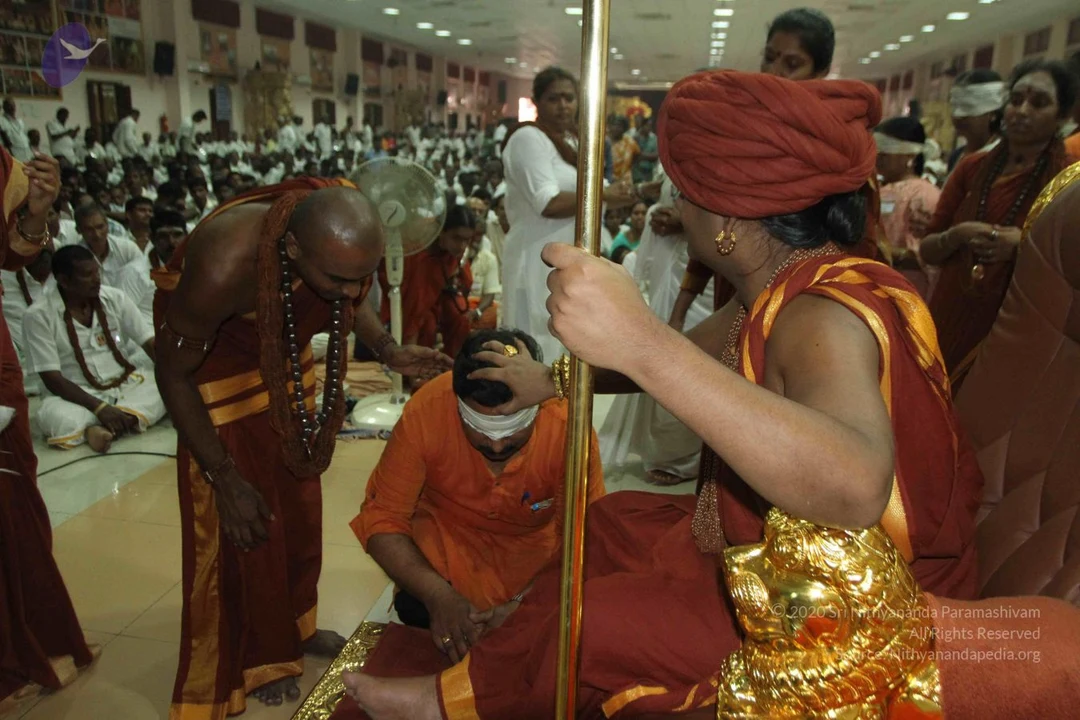
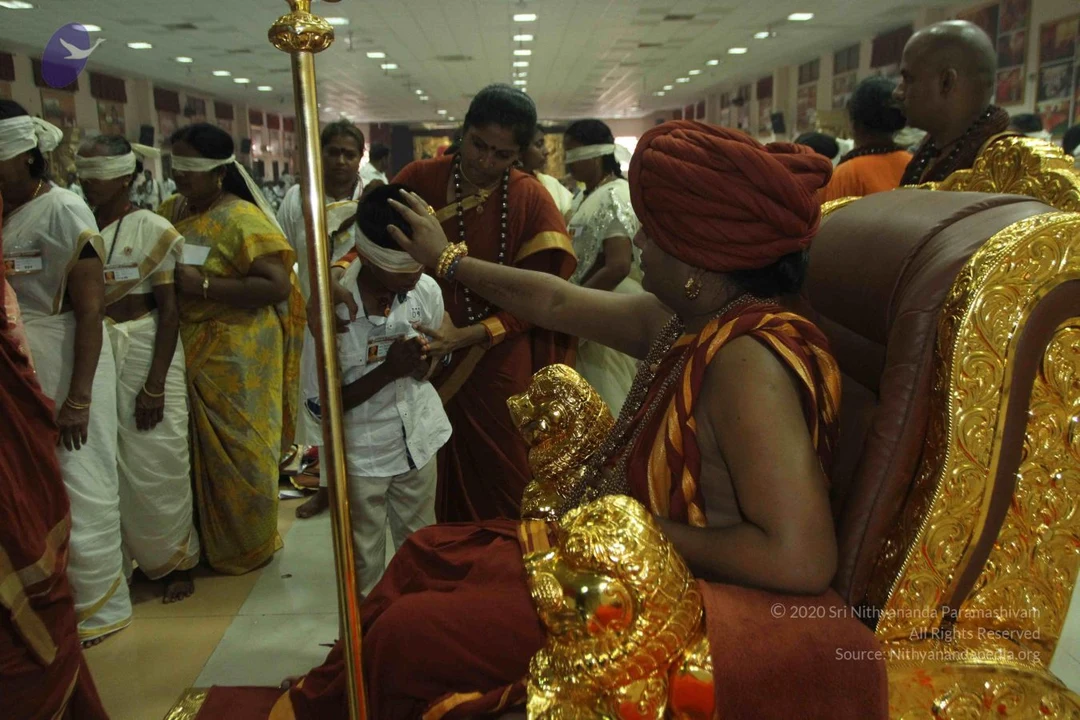
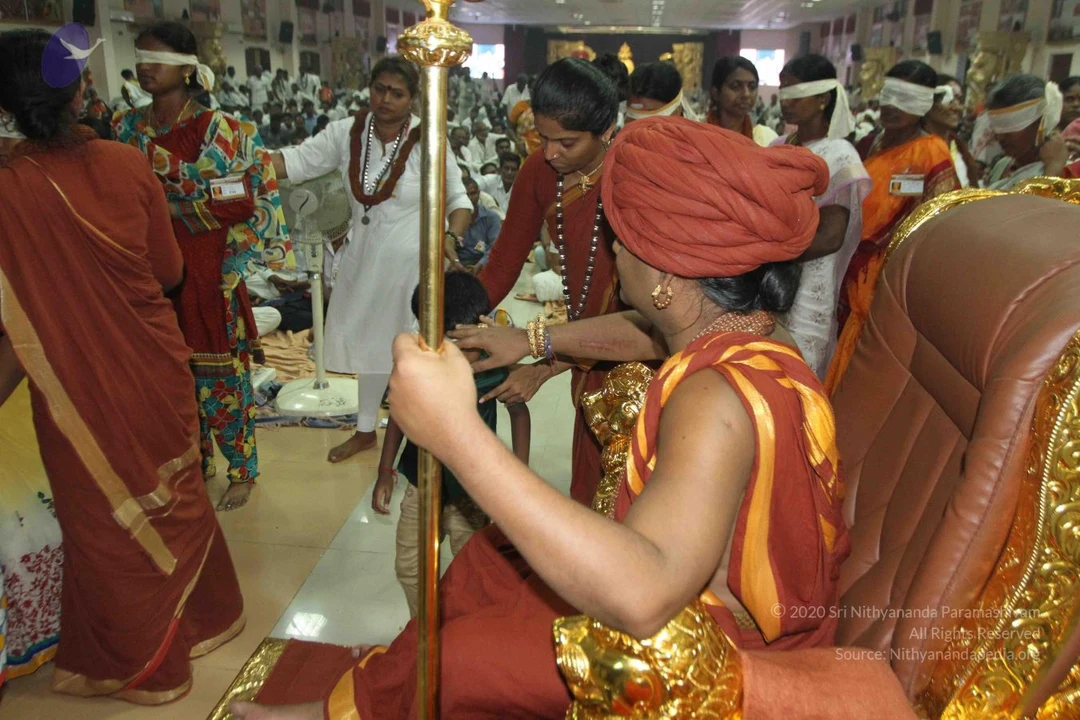
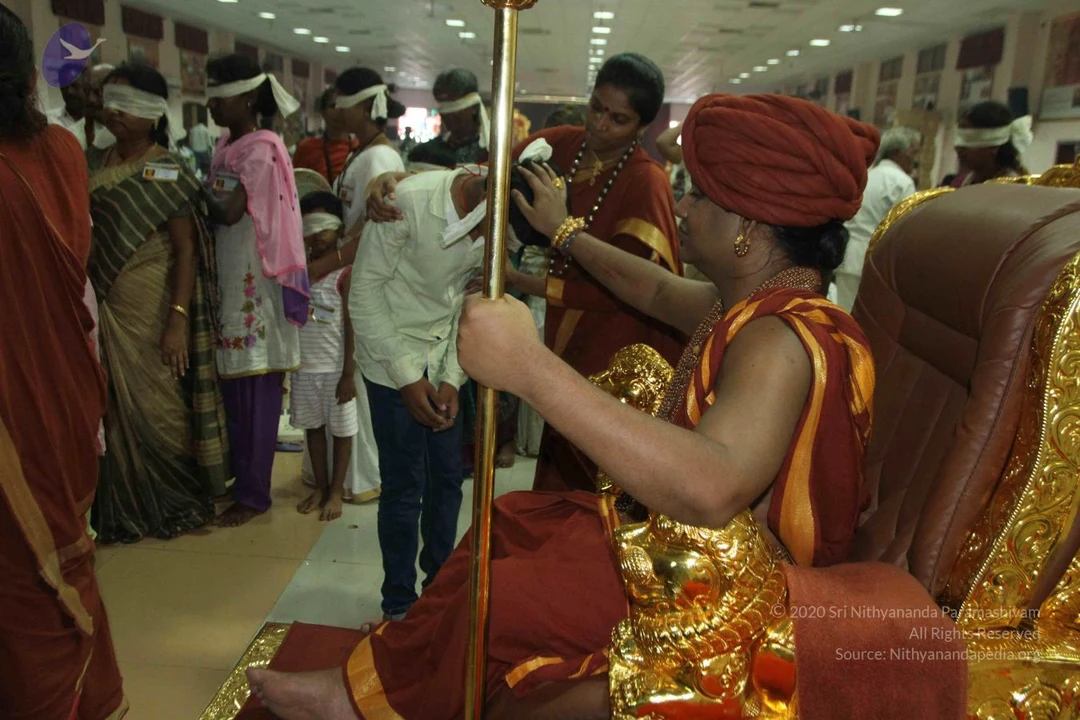
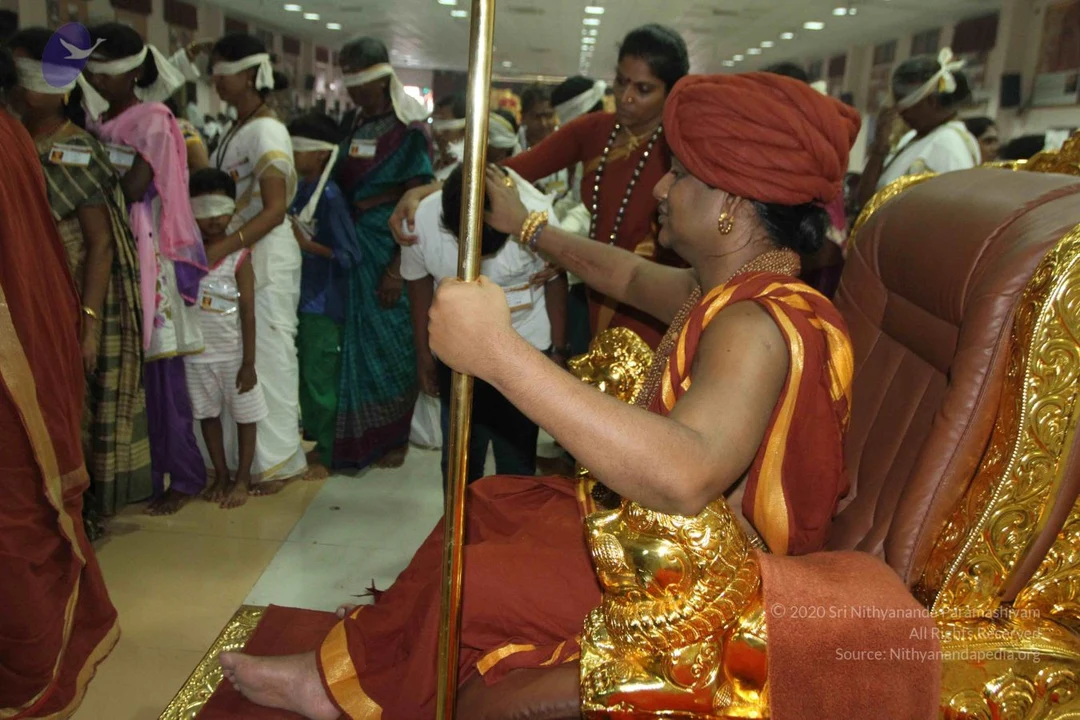
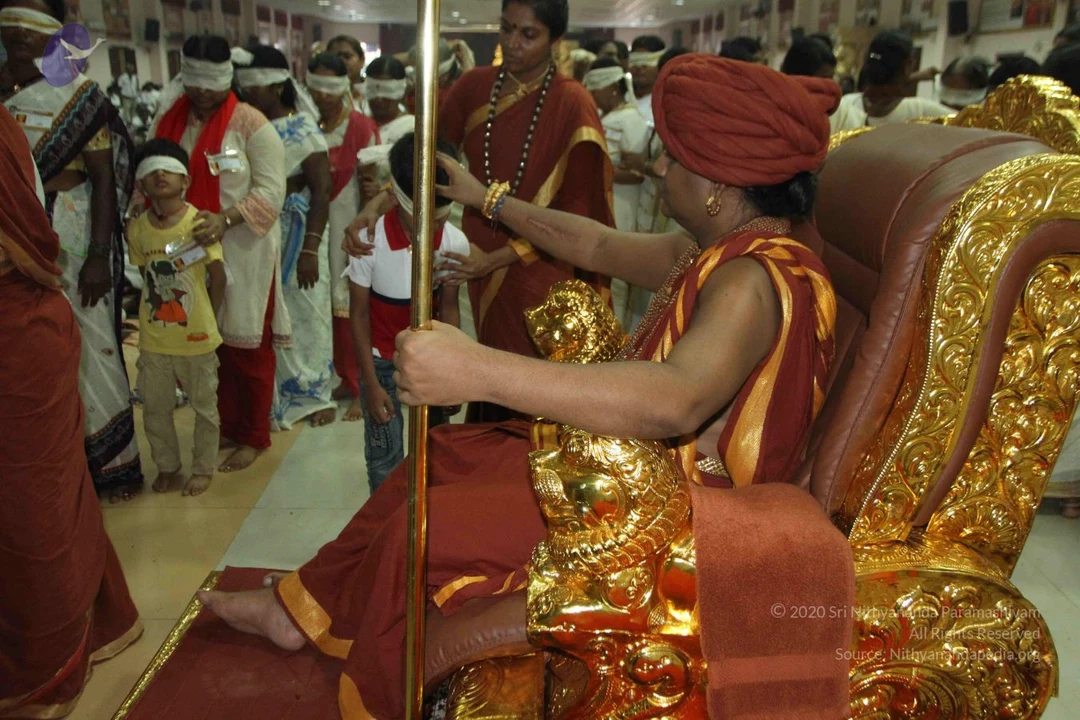
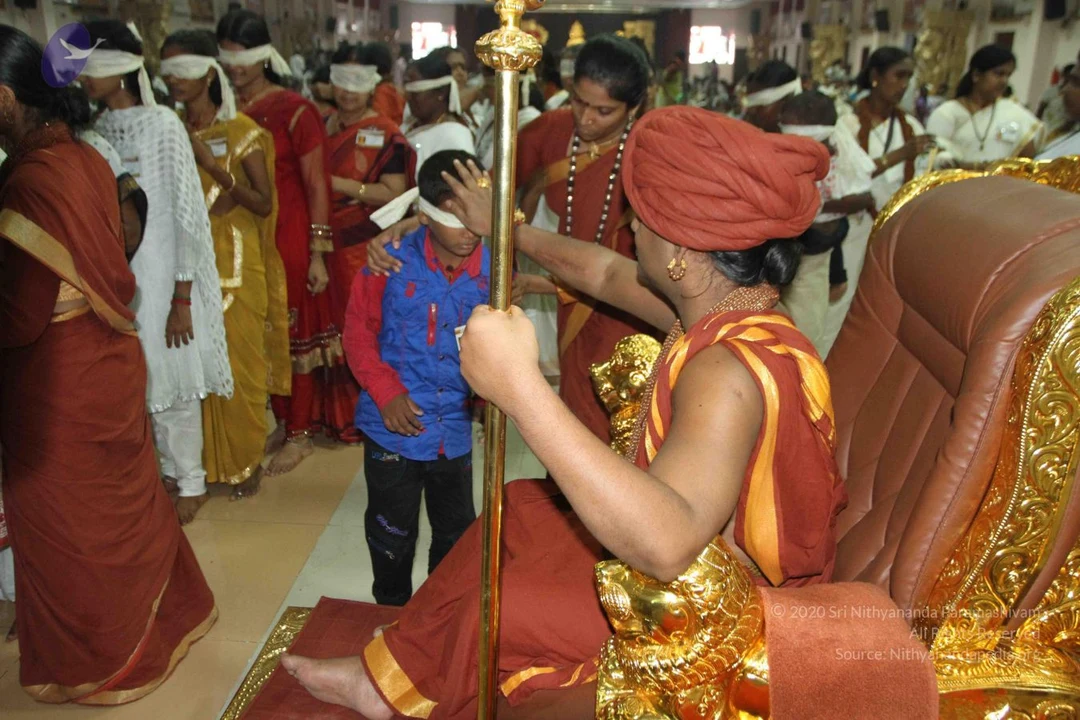
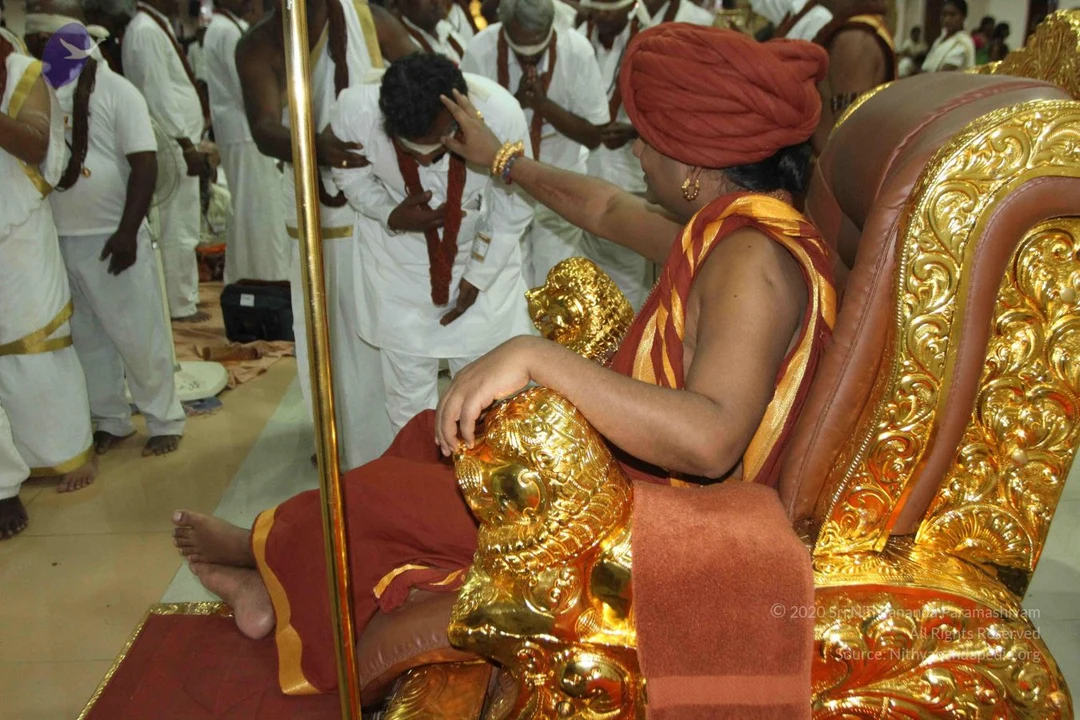
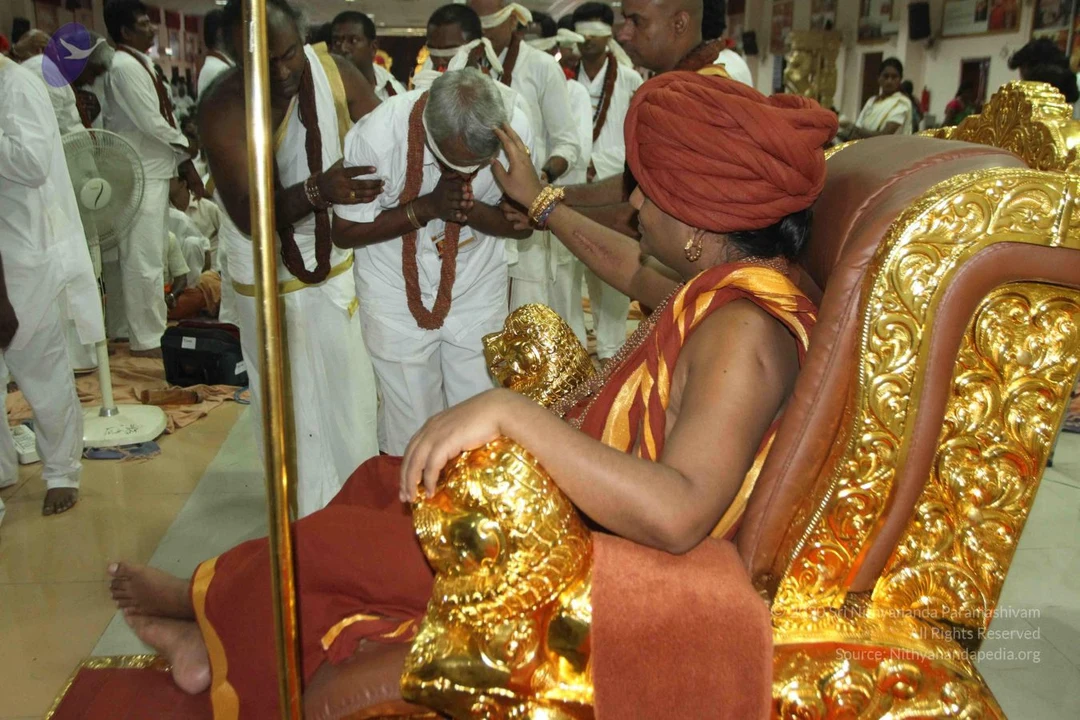
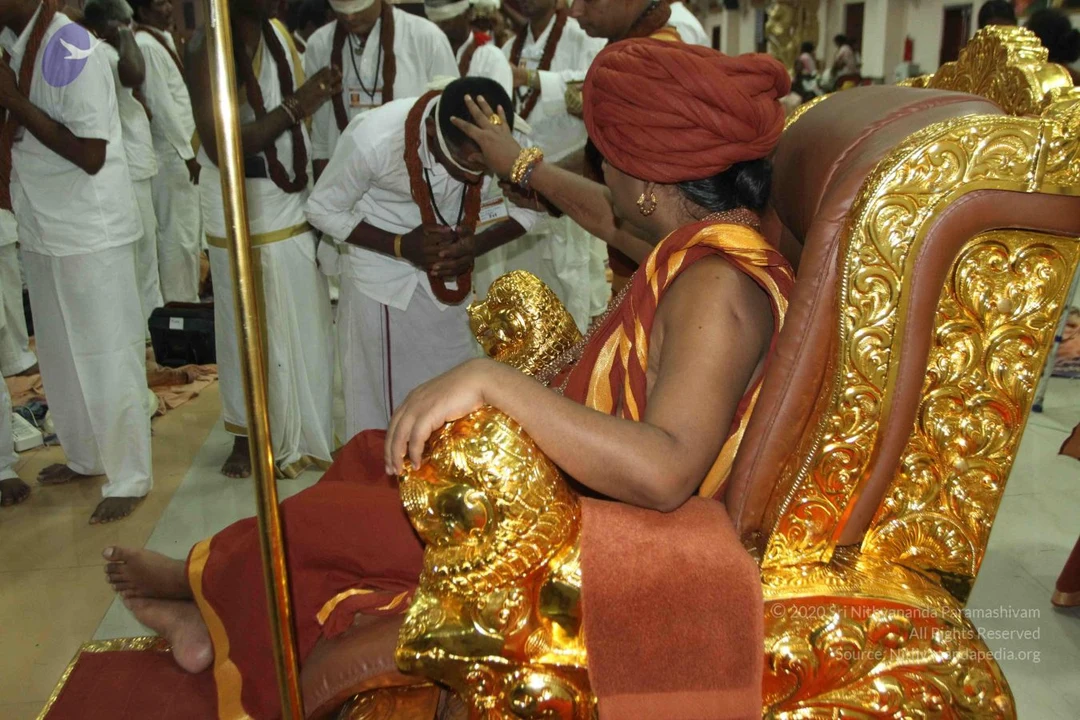
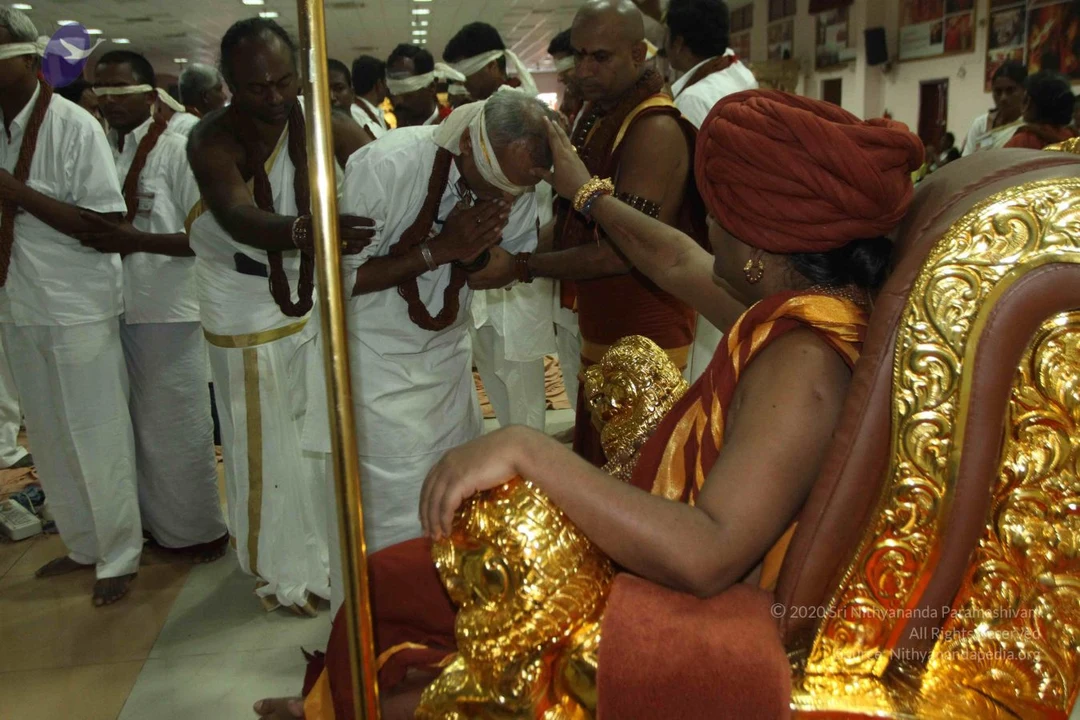
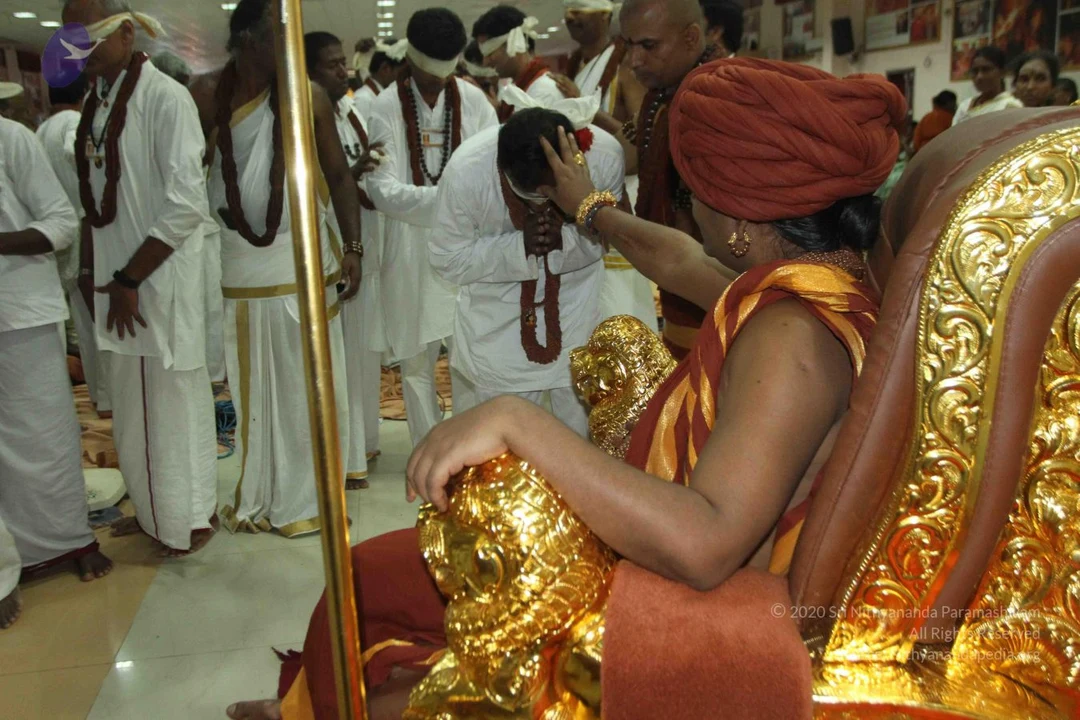
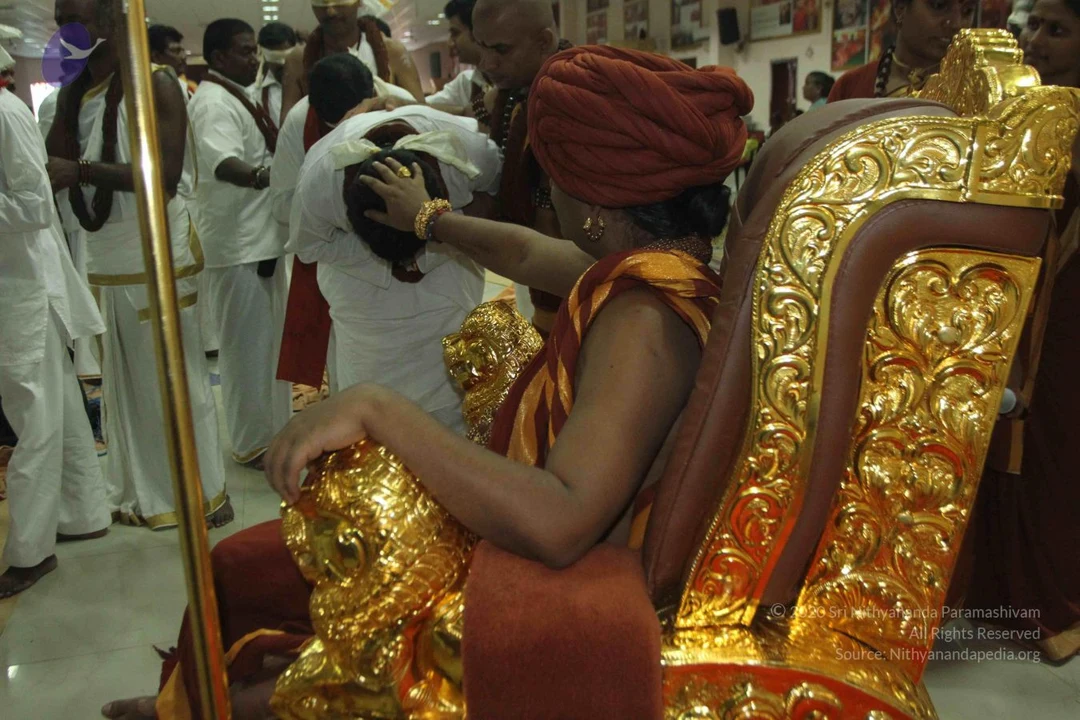
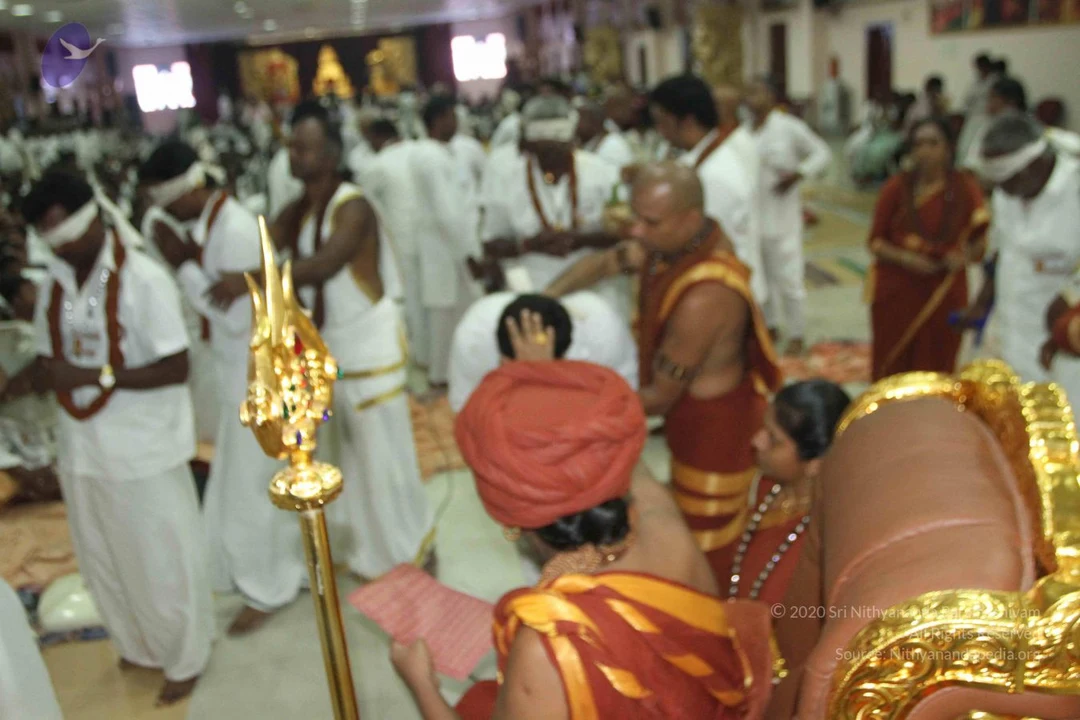
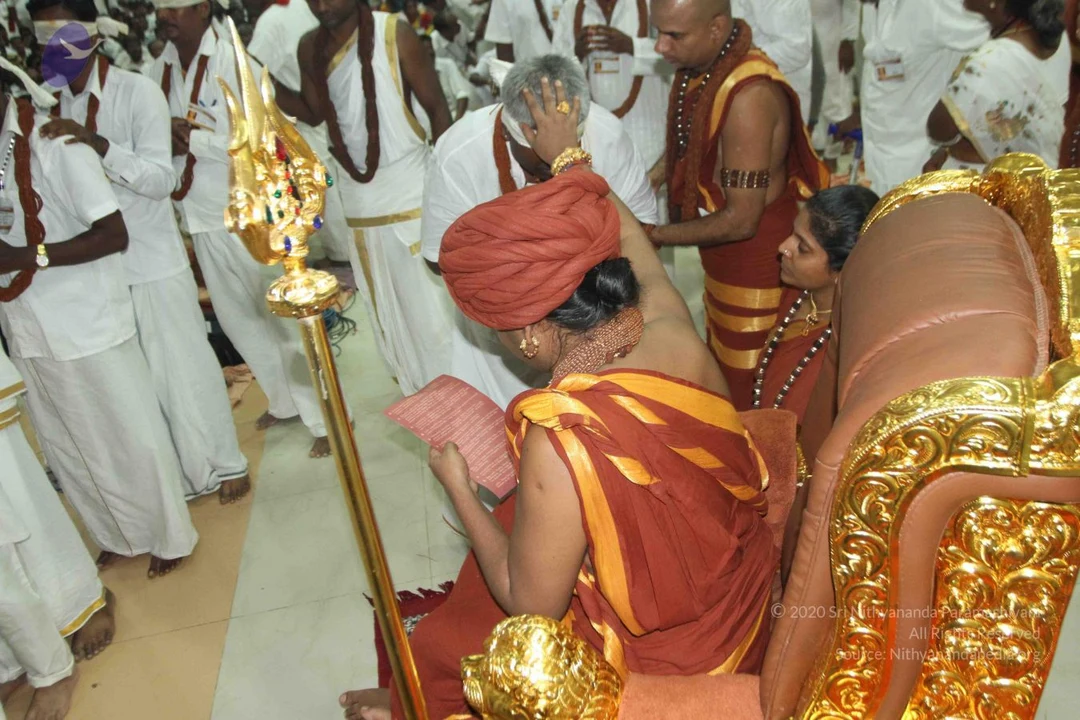
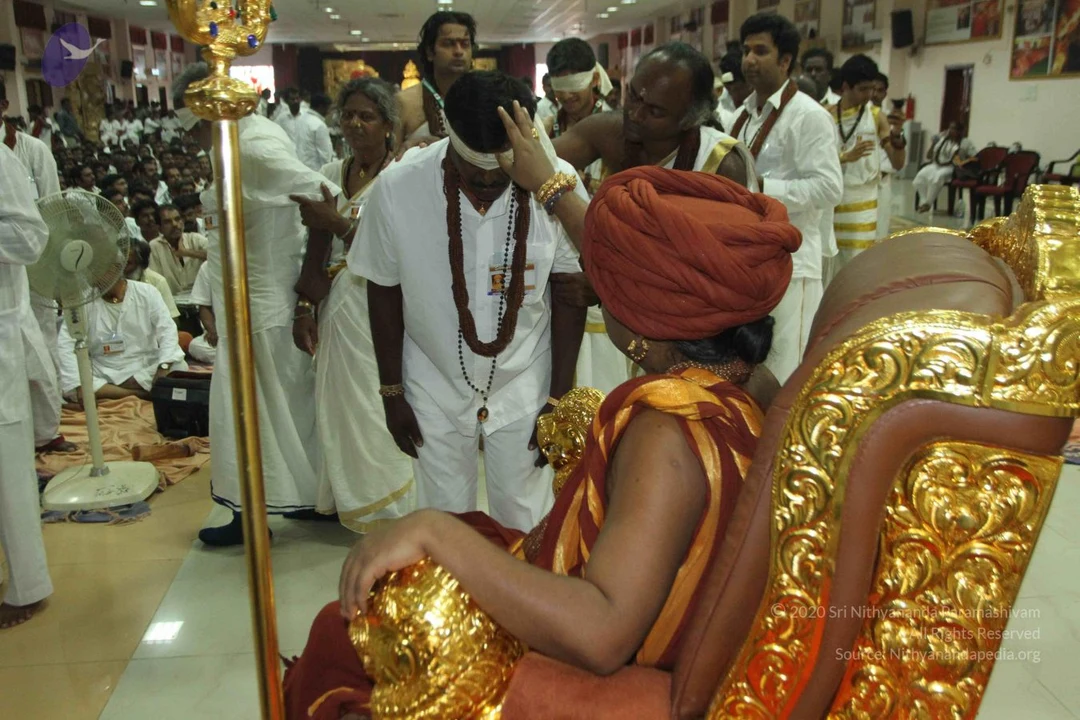
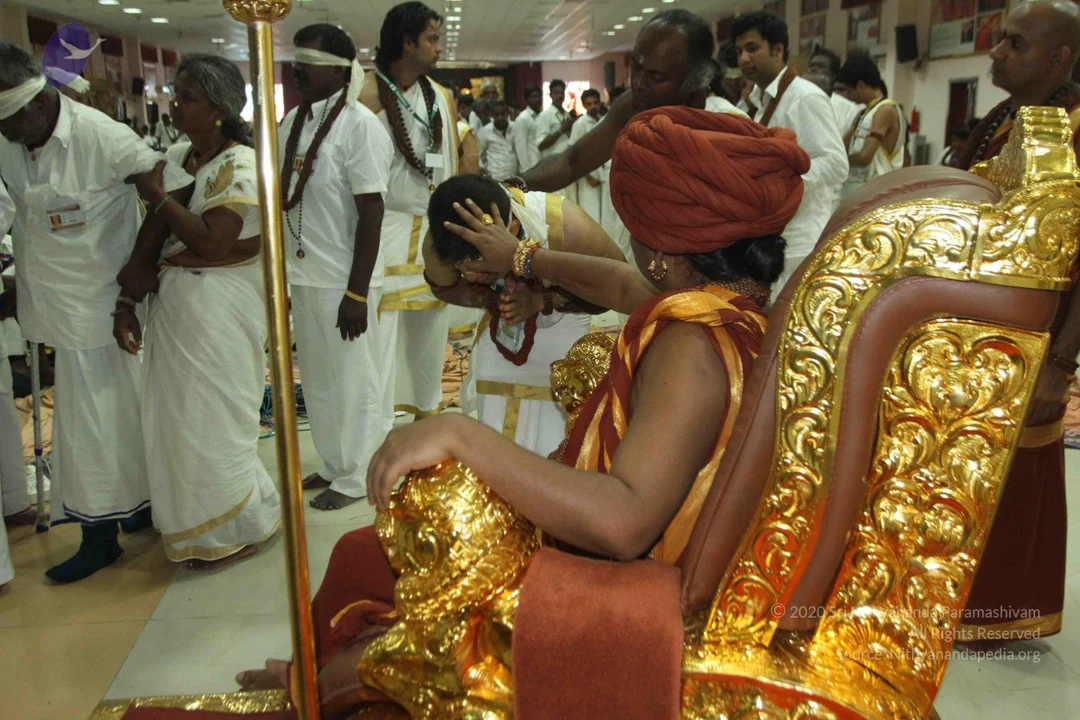
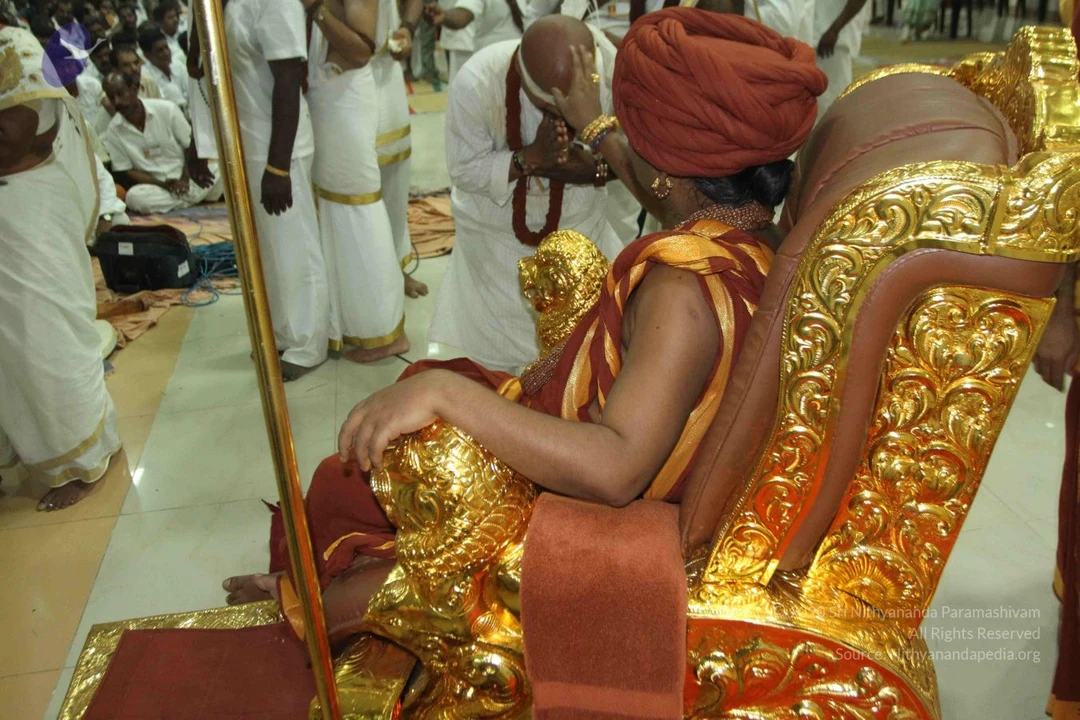
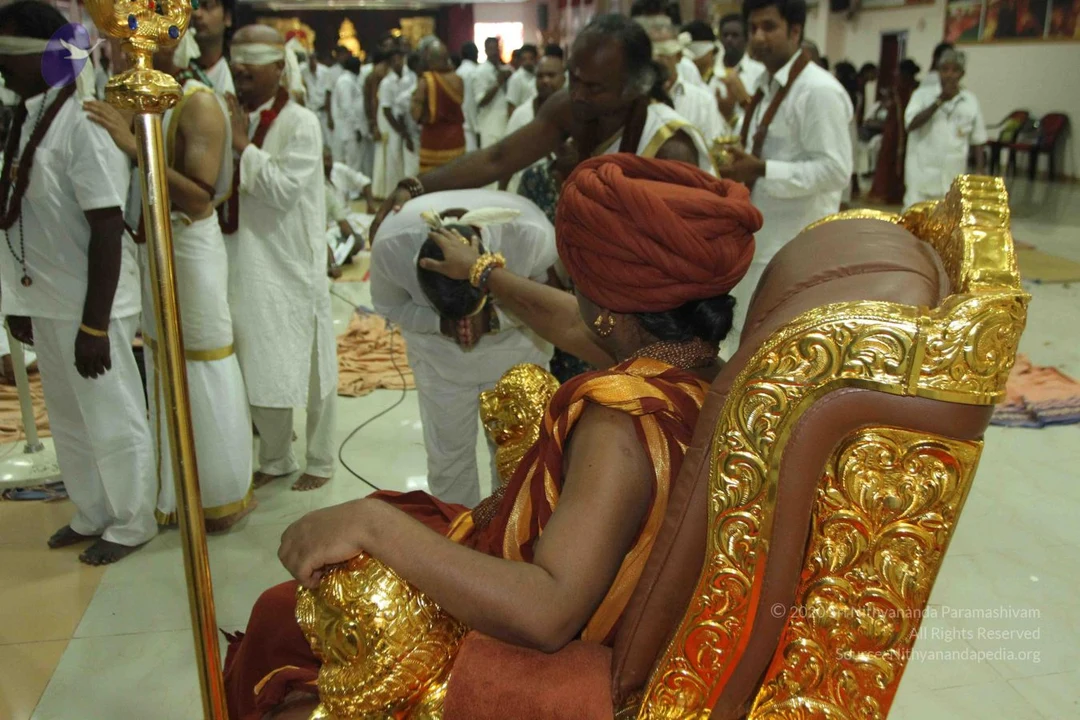
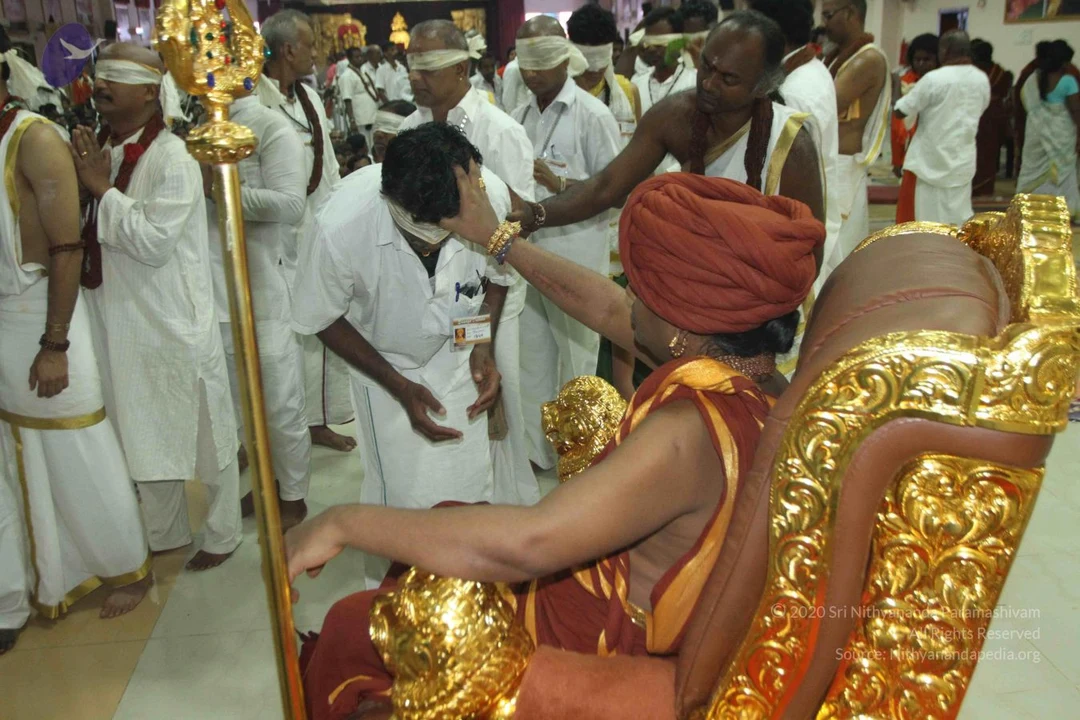
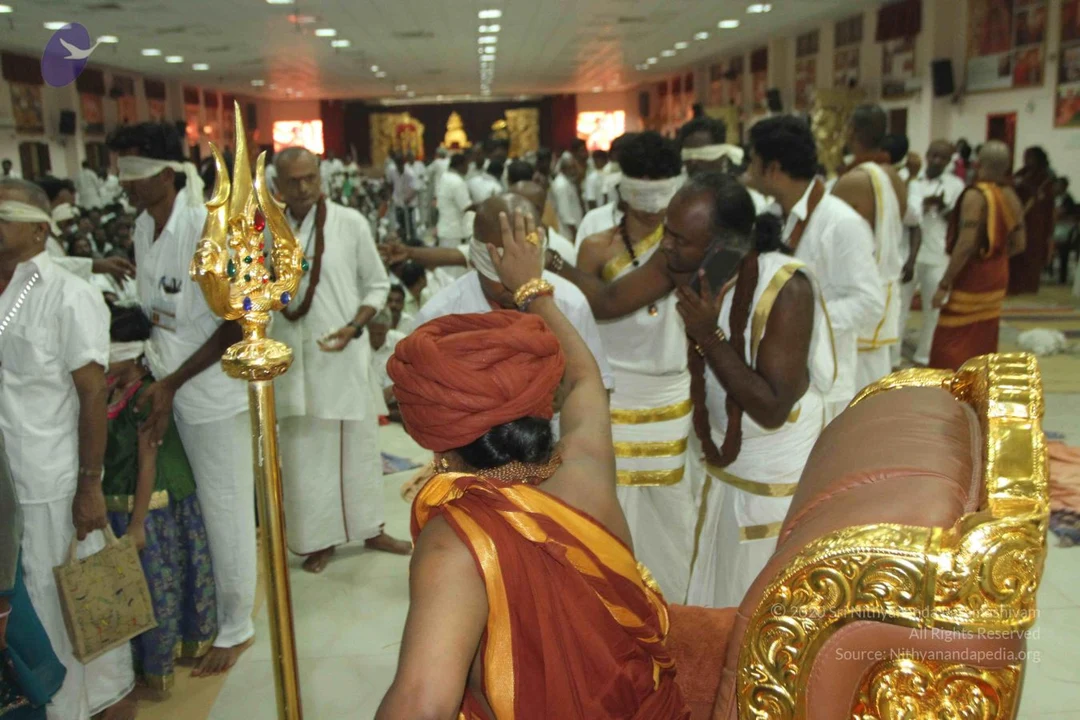
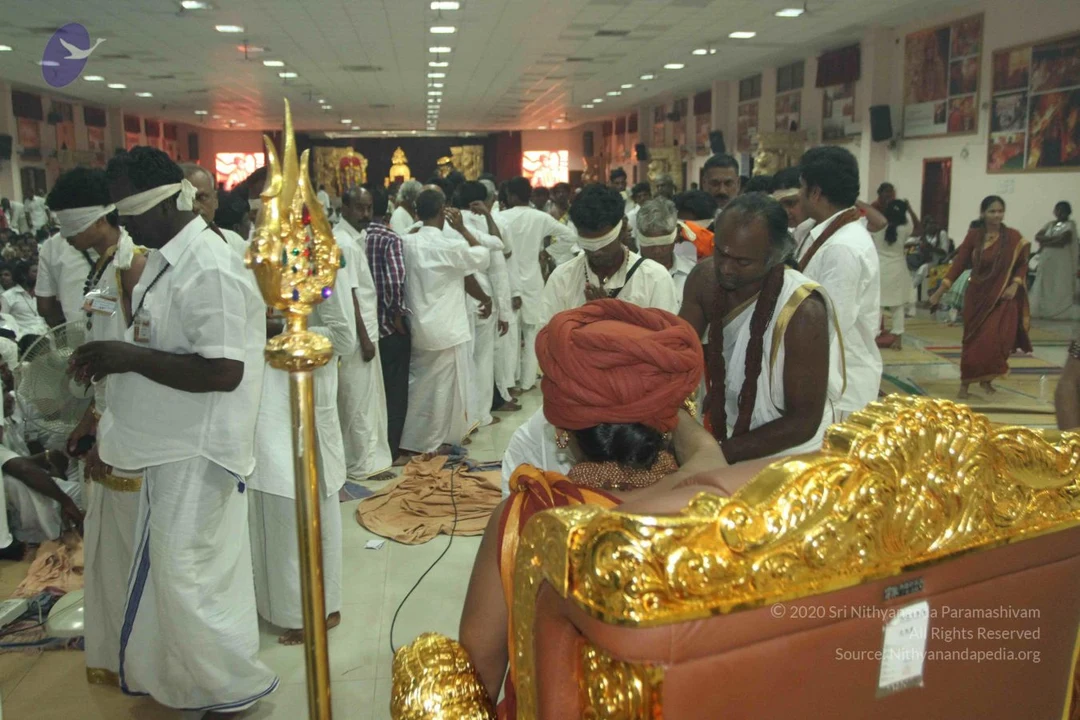
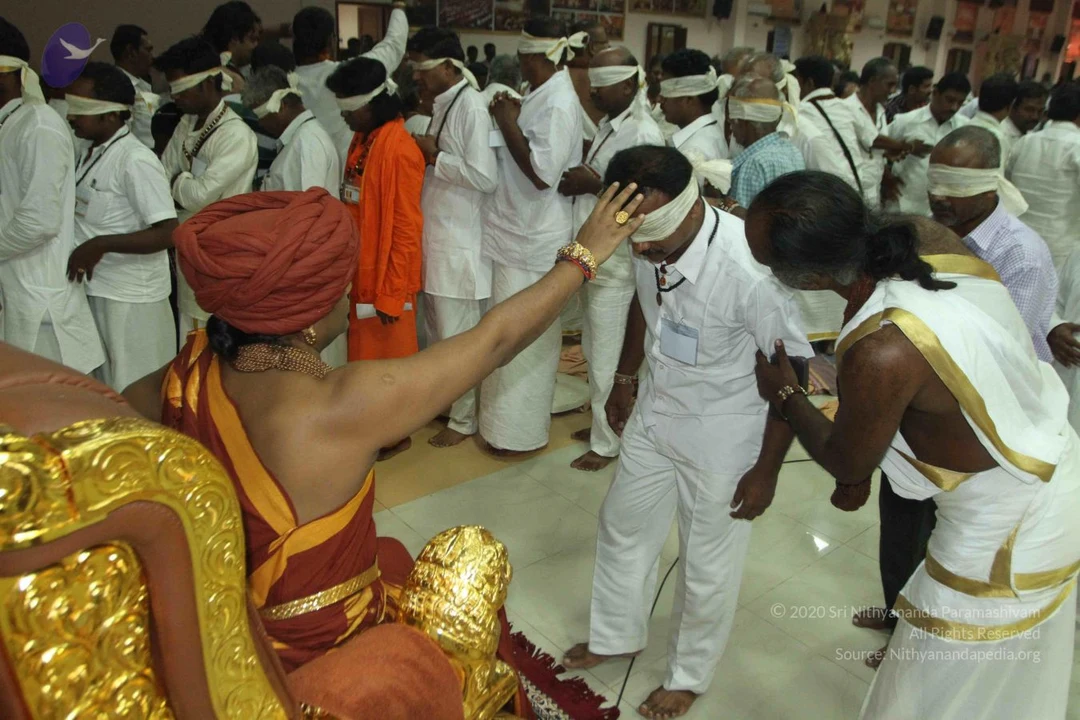
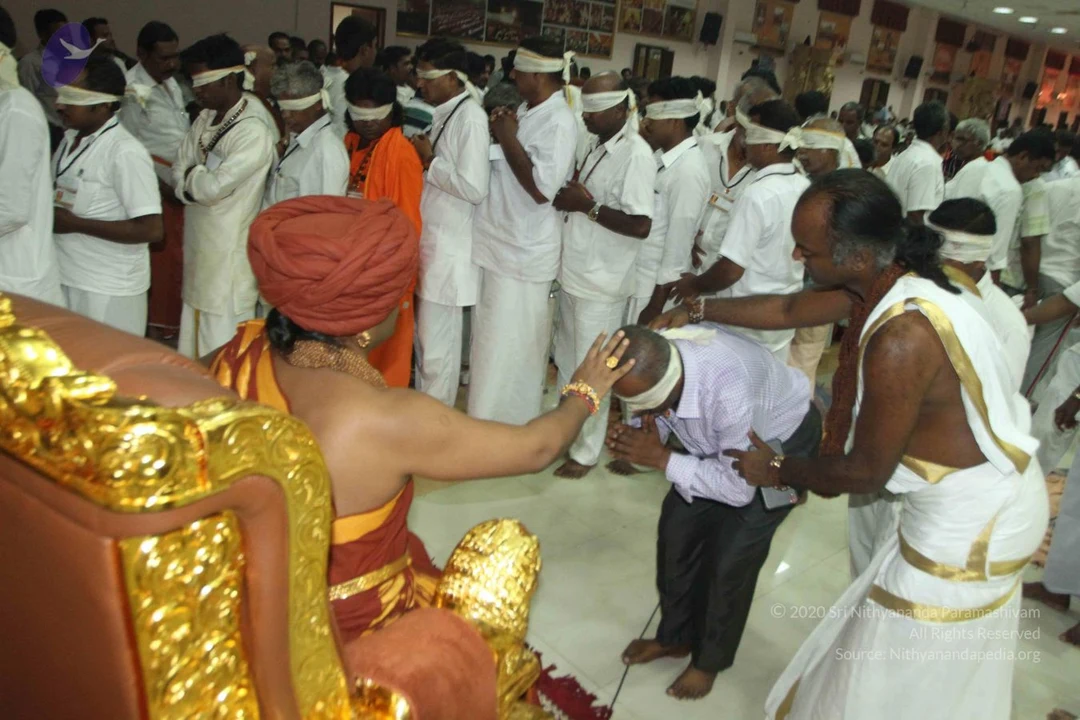
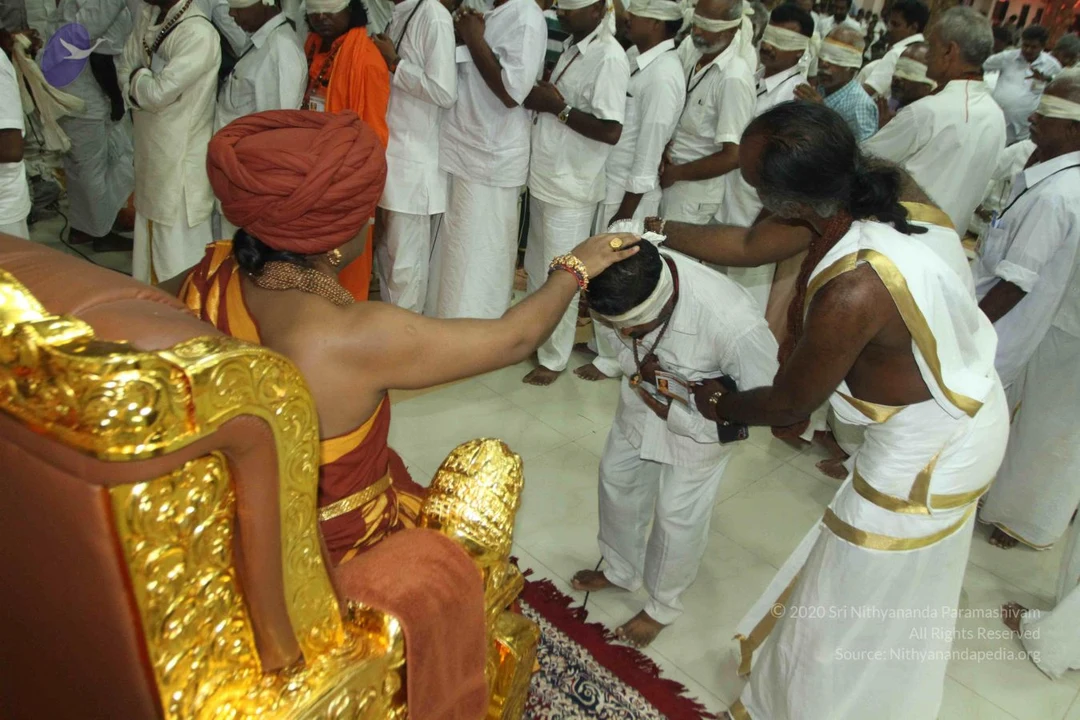
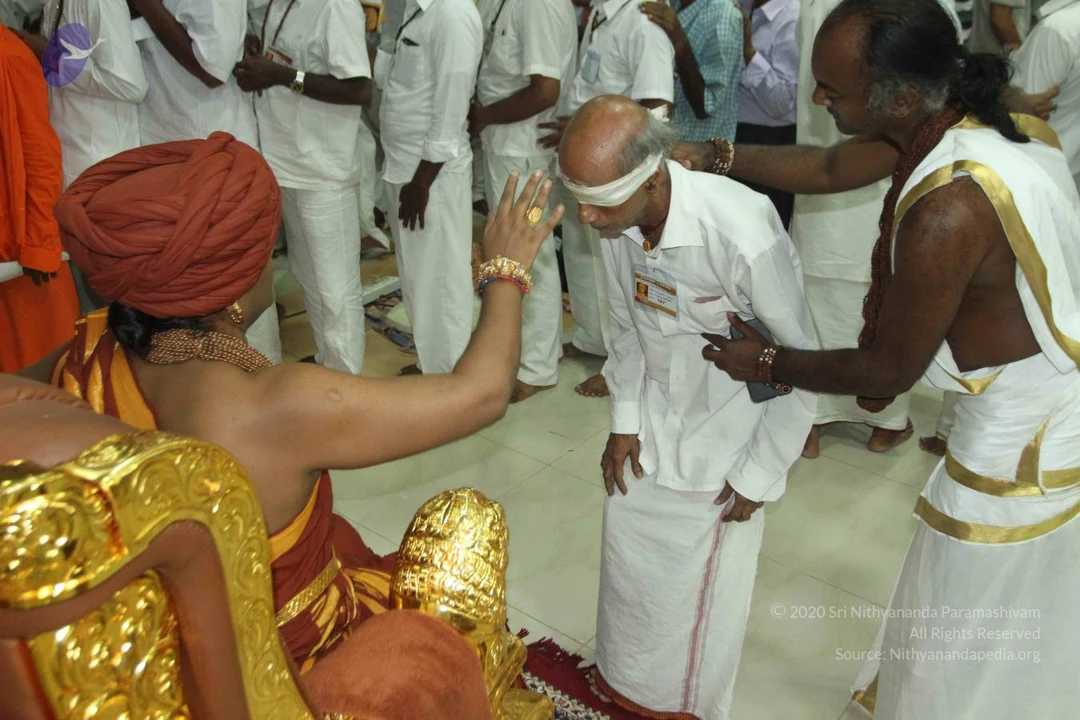
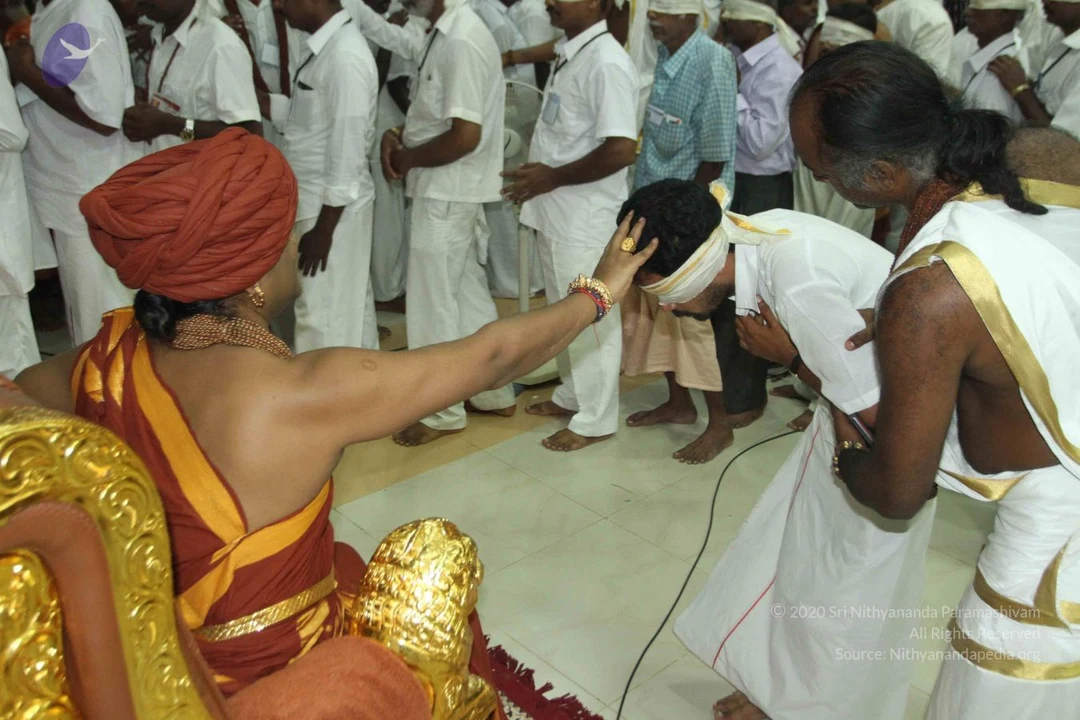
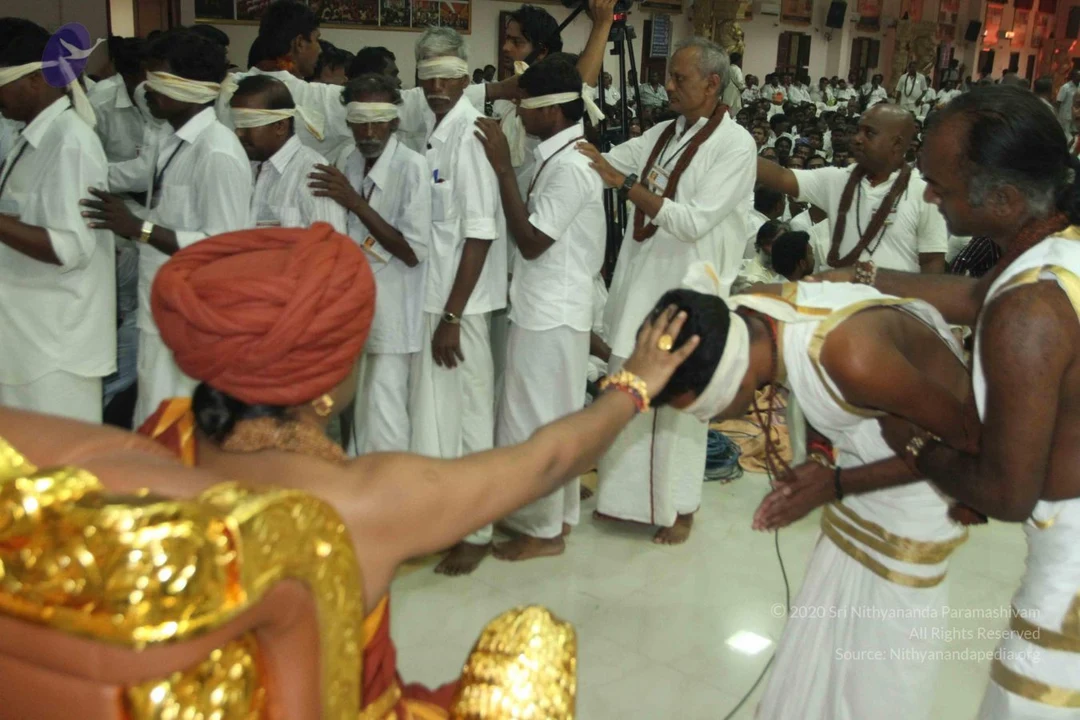
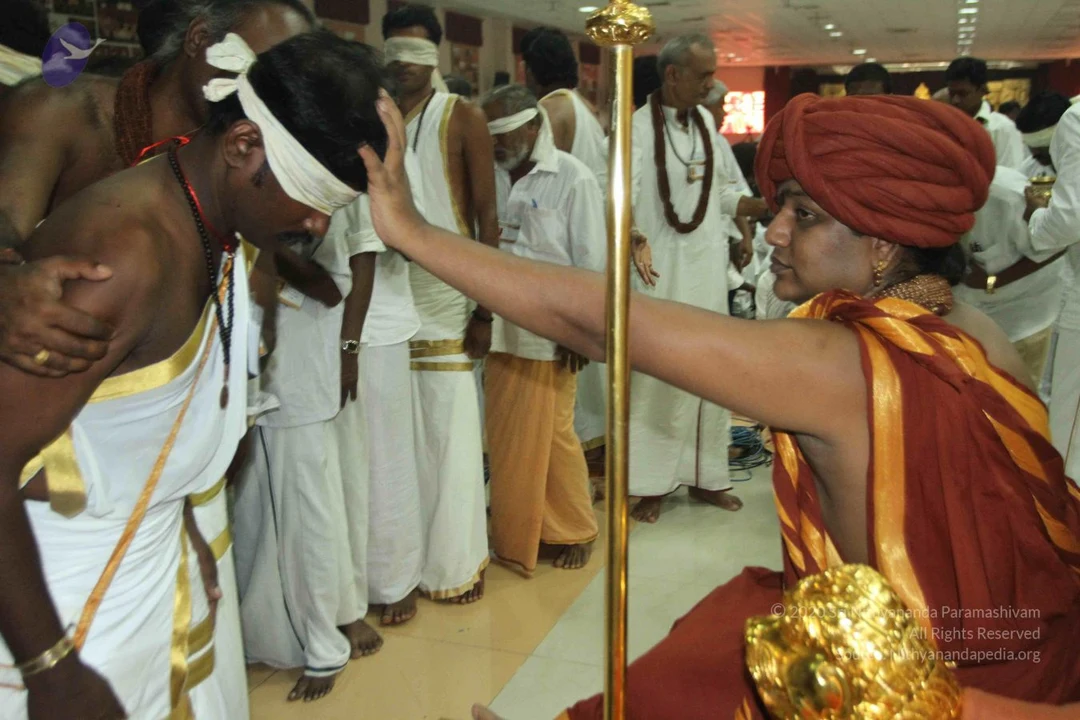
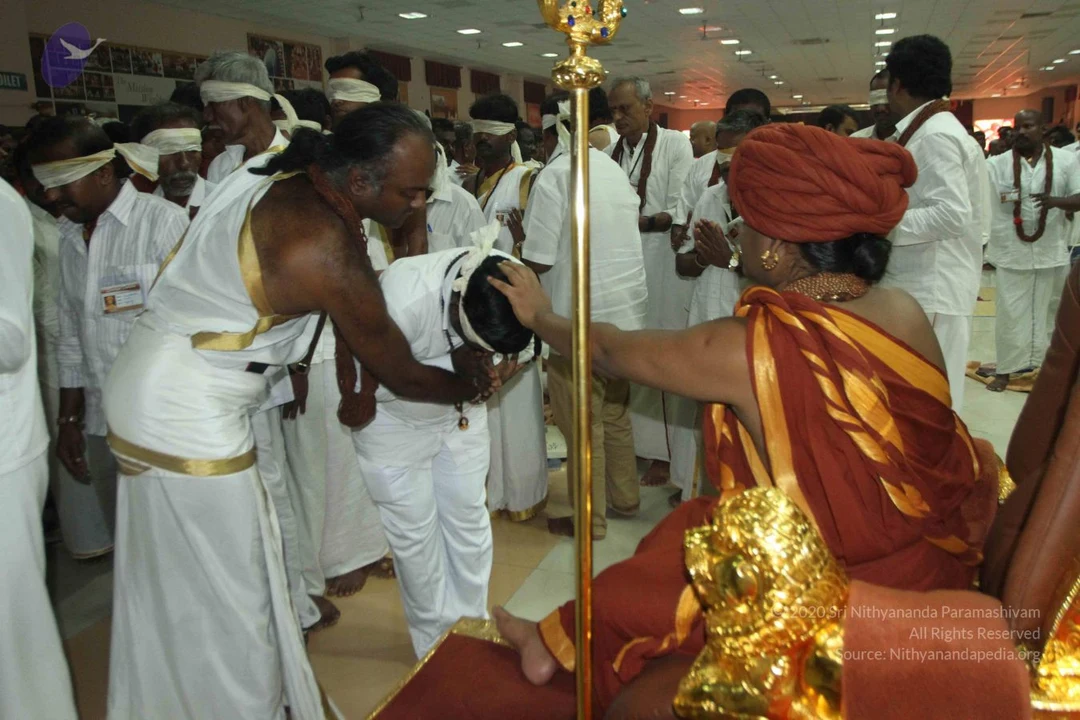
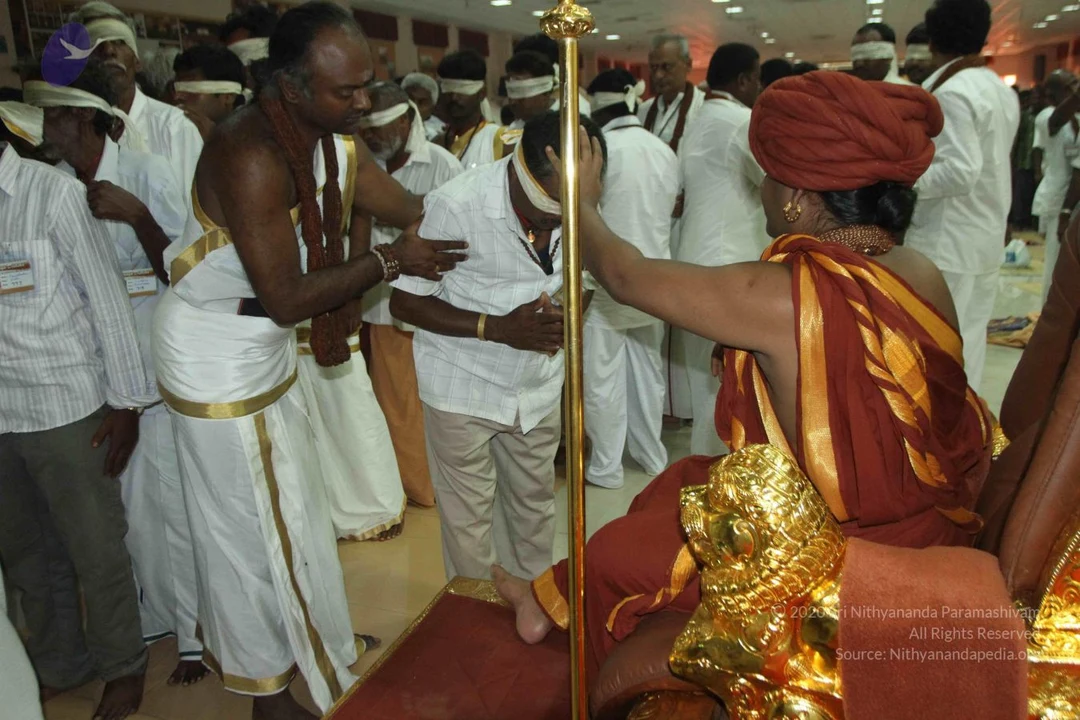
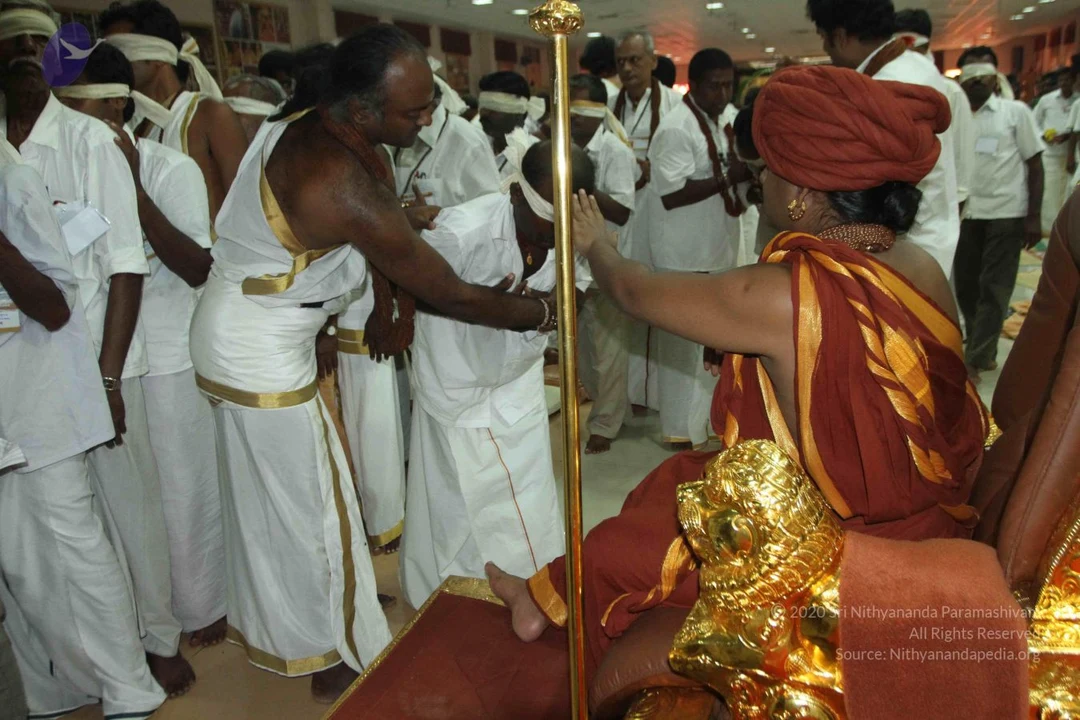
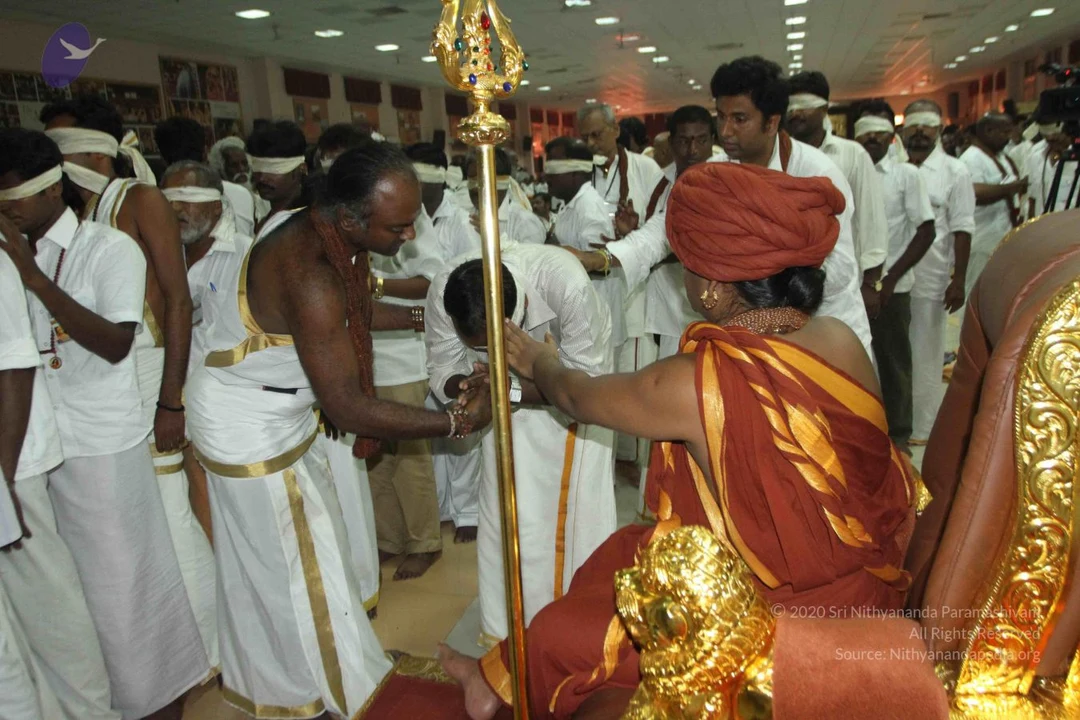
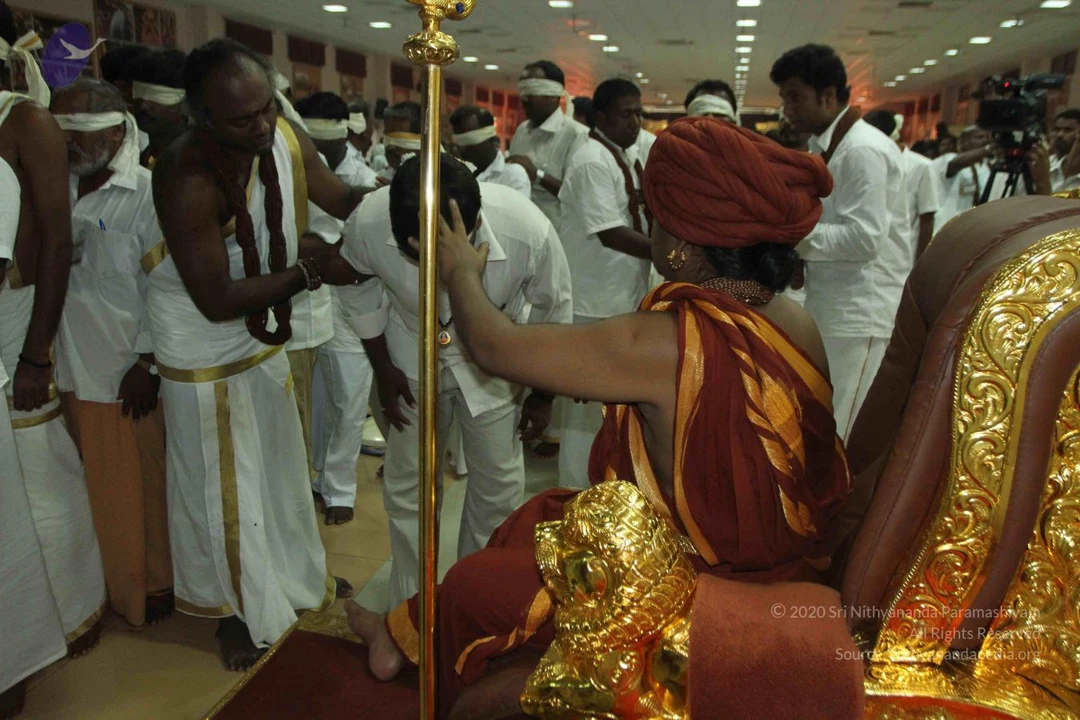
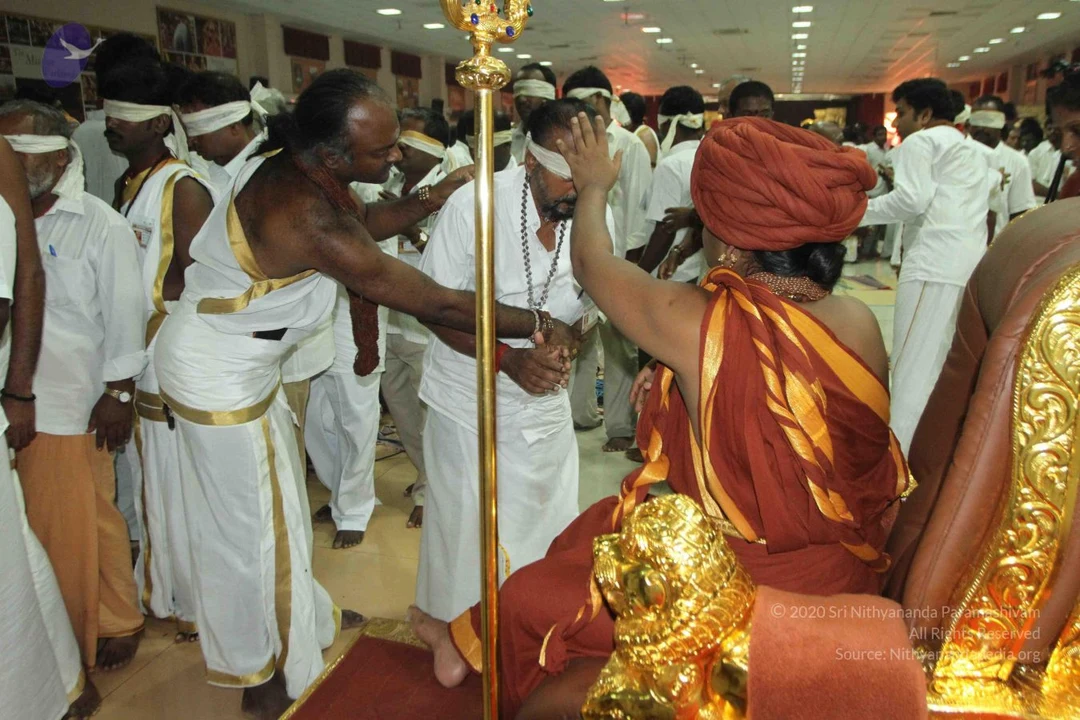
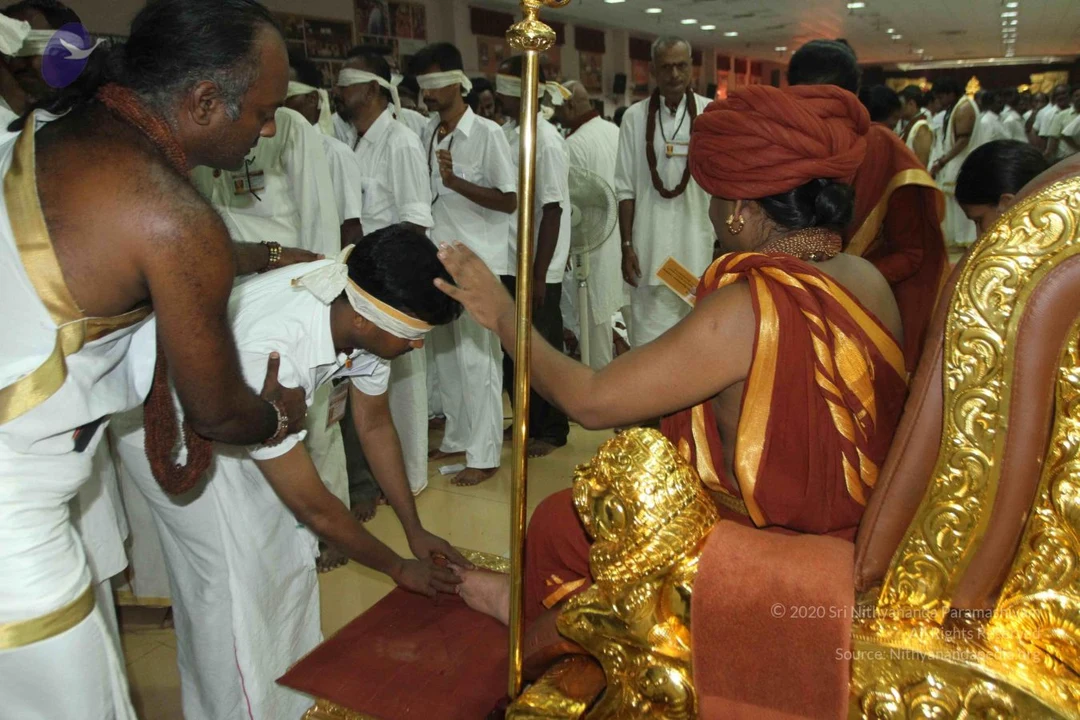
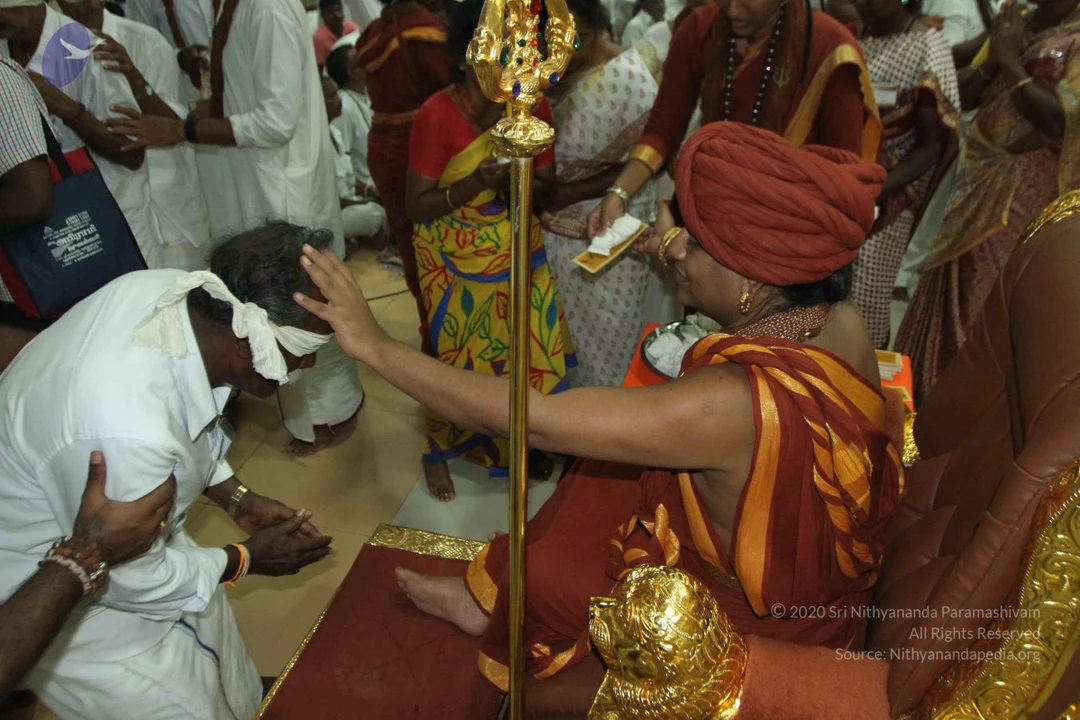
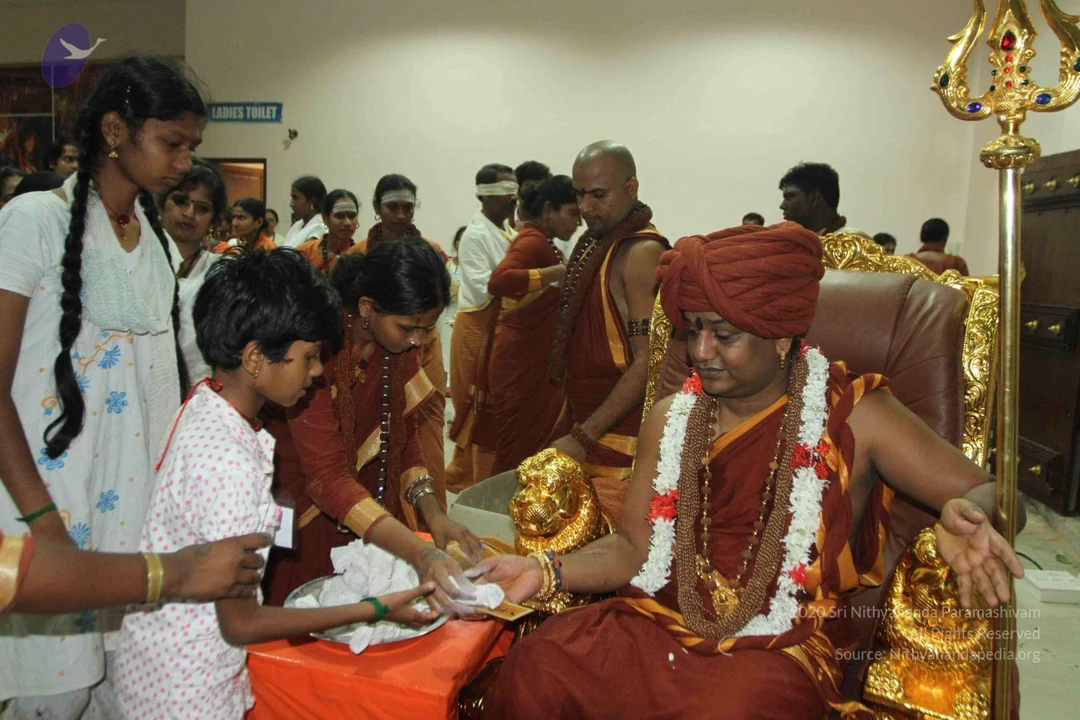
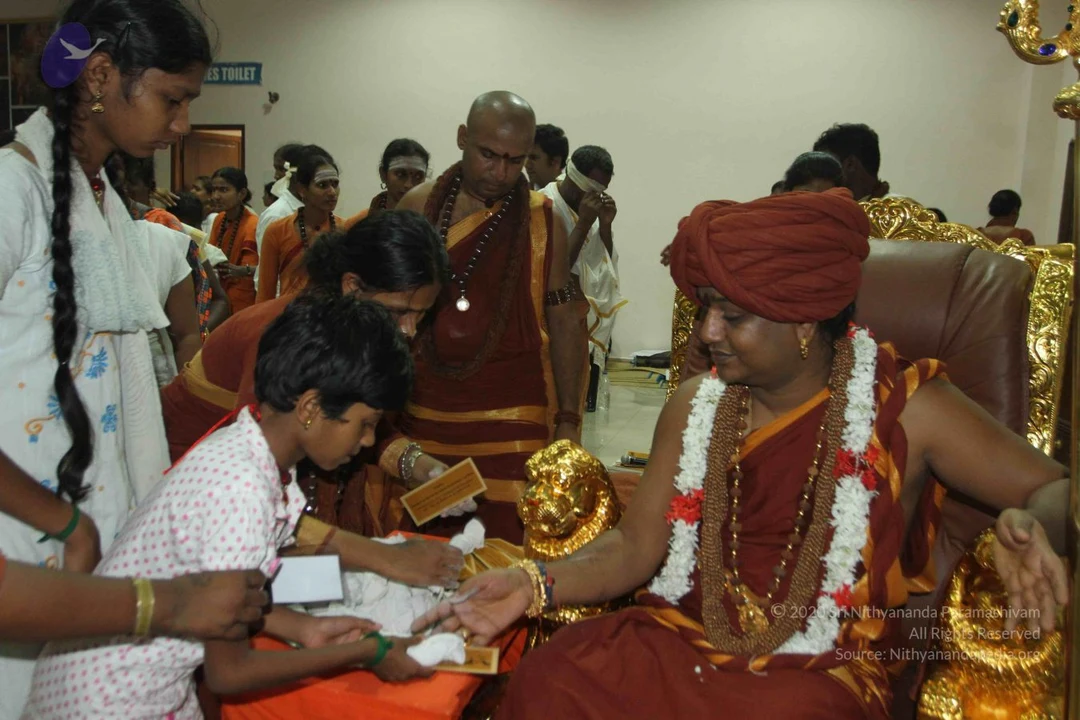
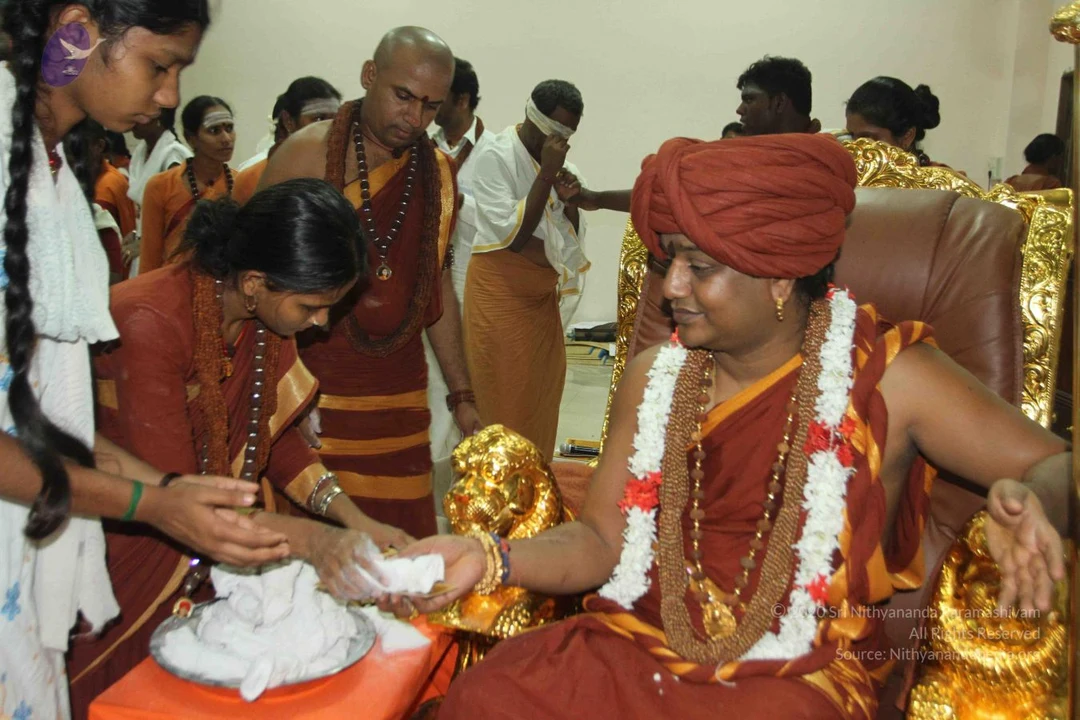
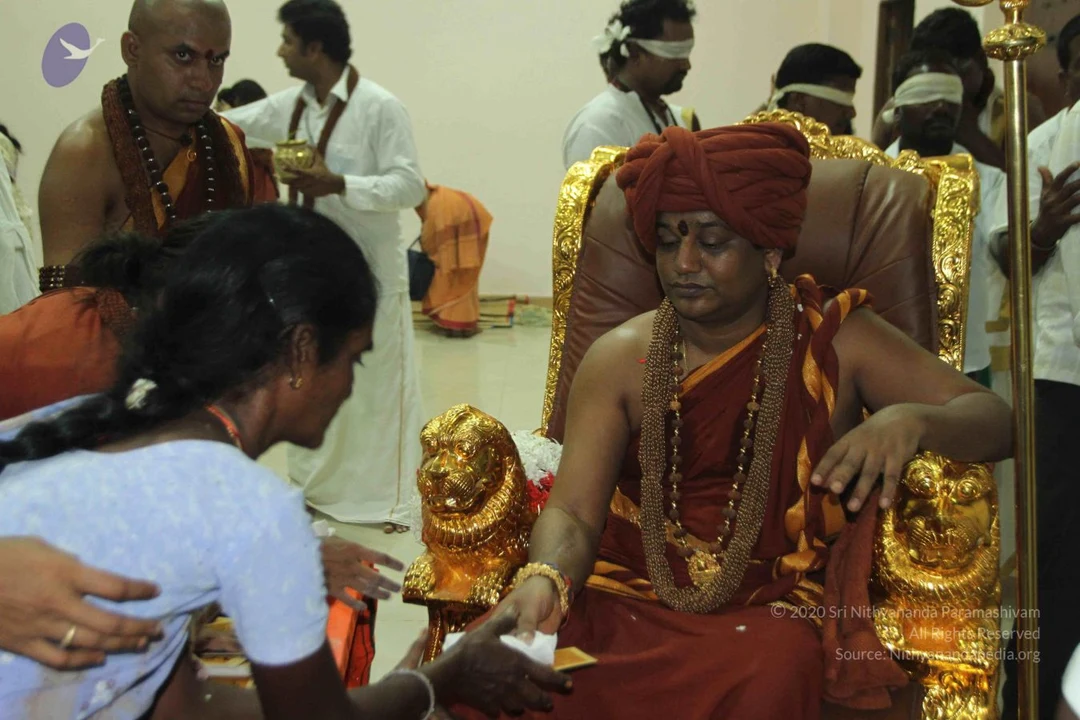
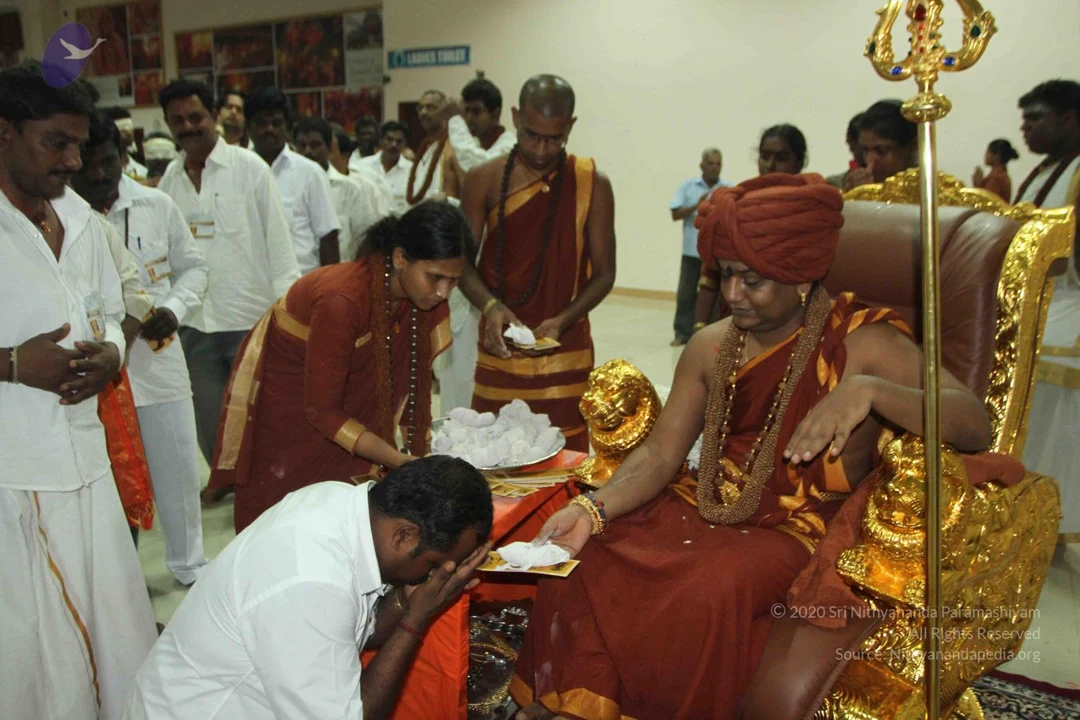
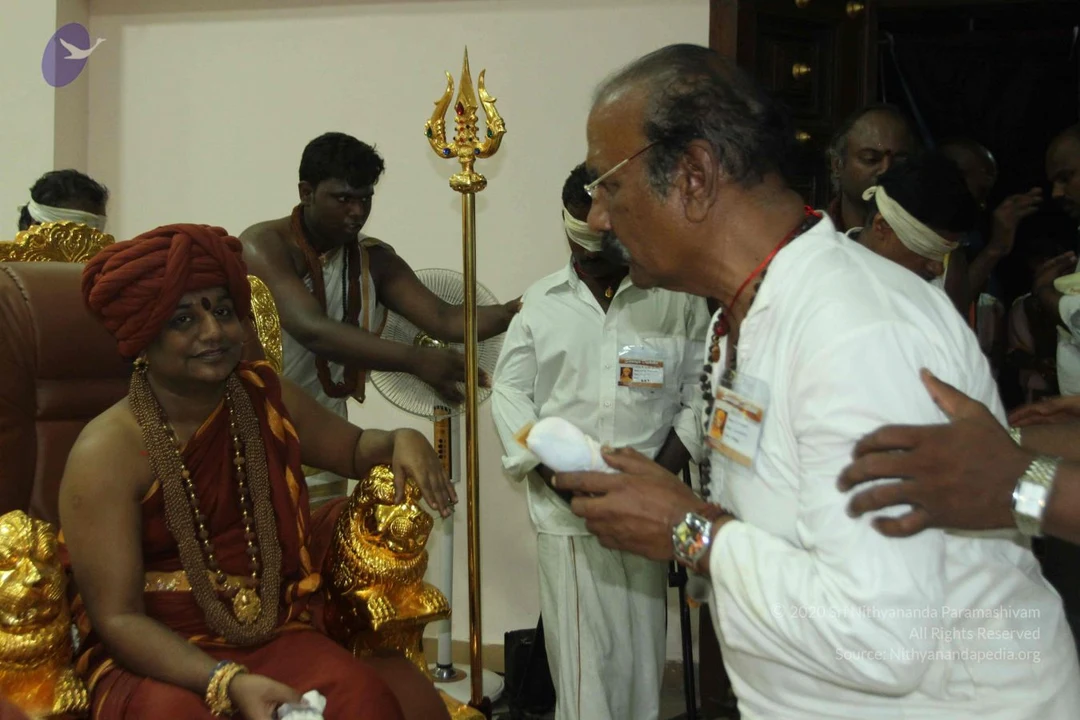
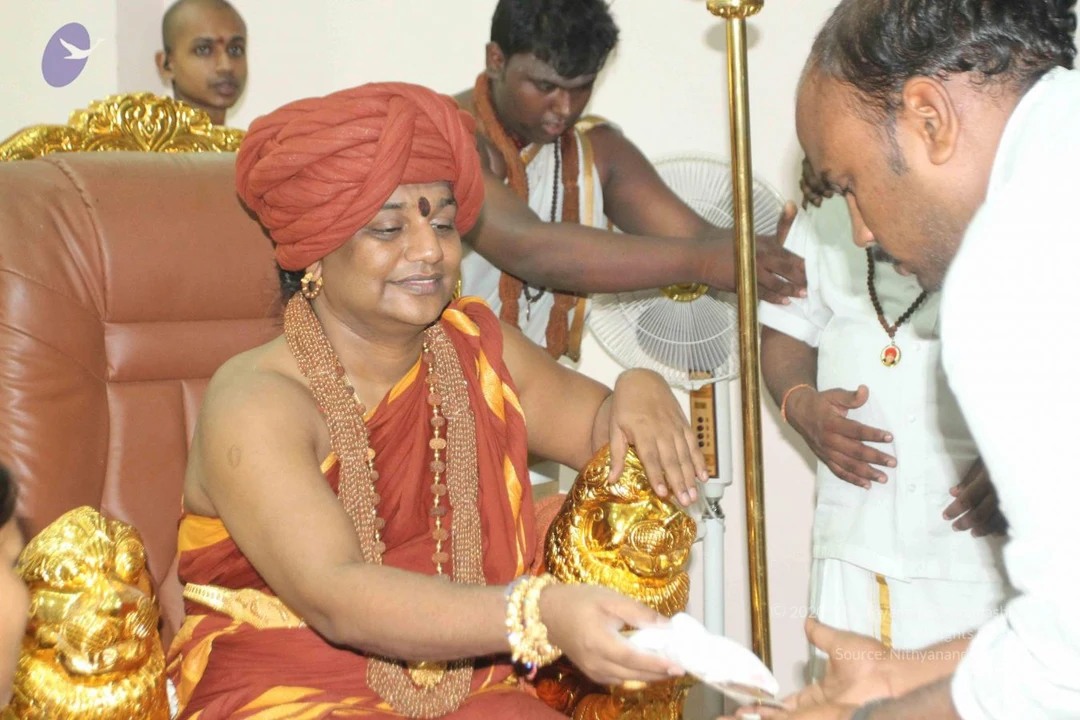
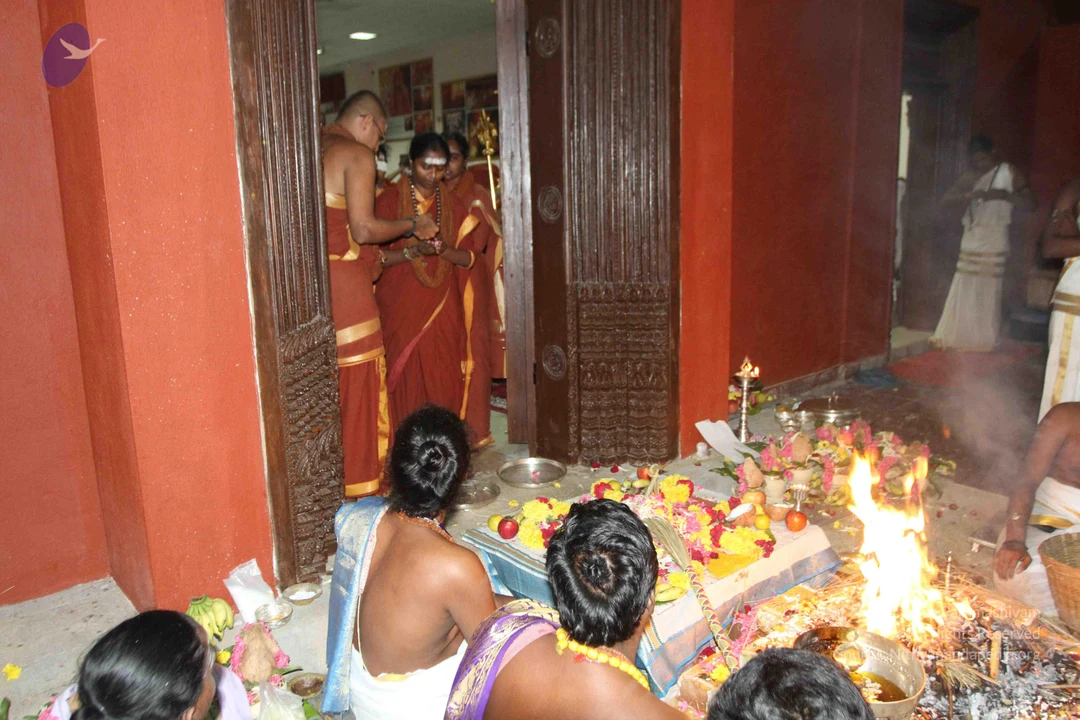
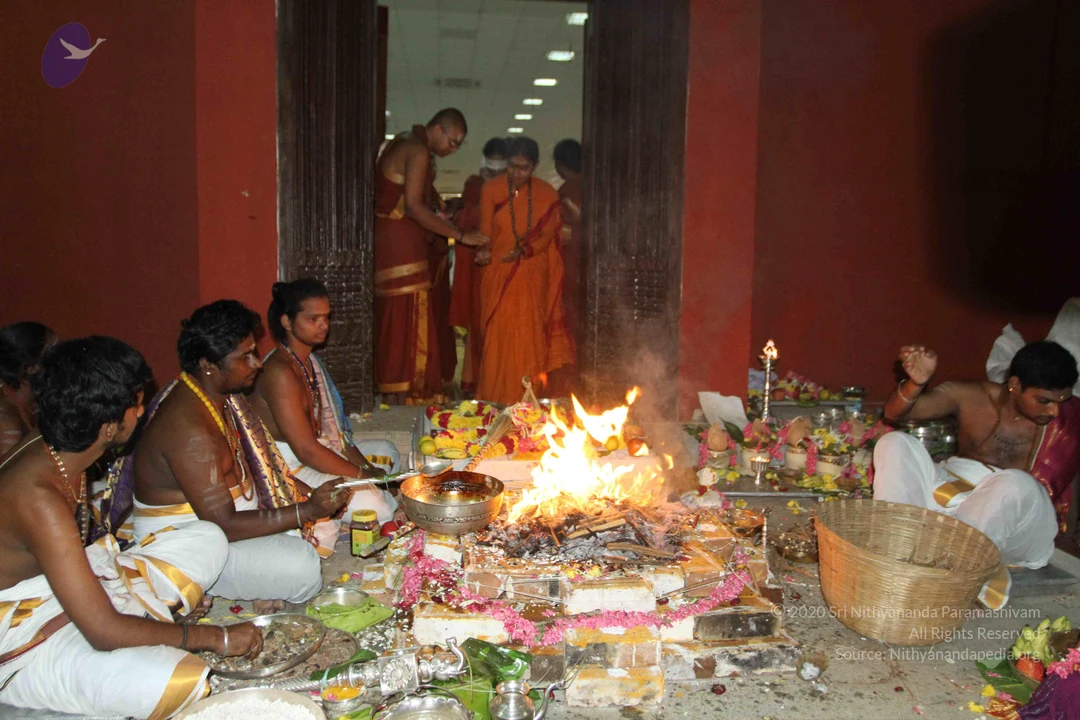
இந்த வீடியோ பதிவில் பகவான் ஸ்ரீ #நித்யானந்த பரமசிவம் அவர்கள் ஆகமத்தில் இறைவன் அருளியபடி முறையாக பக்தர்களுக்கு சமயதீக்ஷை அளித்து அதற்கான மந்திரத்தையும் கற்றுக்கொடுத்து சப்தத்தின் மூலமாக உணர்வுக்குள் அந்த மந்திரத்தை பகவான் நித்யானந்த பரமசிவம் அவர்கள் பதிய வைக்கிறார். மேலும் சமயதீக்ஷைக்காண ஹோமம் நடைபெற்று அந்த புனித நீரை தெளித்து பாரம்பரியம் படி ஓலை நறுக்கும் திருநீற்றுப் பையும் பக்தர்களுக்கு அளிக்கப்படுகிறது. மேலும் இந்த தீக்ஷைக்கு பிறகு நமக்கு மரணம் வரும் வேலையில் எமதூதர்கள் வரப்போவதில்லை, சிவதூதர்களே வருவார்கள் என்று ஆகமம் குறிப்பிடுகிறது என்று., அனைத்து பக்தர்களுக்கும் ஆசியளித்தார்.

The Supreme Pontiff of Hinduism Jagatguru Mahasannidhanam His Divine Holiness Nithyananda Paramashivam (HDH) is the reviver of #KAILASA - the ancient enlightened civilization and the great cosmic borderless Hindu nation. Revered as the incarnation of Paramashiva - the primordial Hindu Divinity, HDH has a following of 2 billion Hindus worldwide with de facto spiritual embassies in over 150 countries. He has worked untiringly for over 26 years for the revival of Kailasa, for global peace and to give super conscious breakthrough to humanity. He has survived the worst persecution of multiple assassination attempts on person and on character by anti-Hindu elements. He is collecting, organising, preserving, time capsuling, decoding, spreading and reviving 20 Million source books of Hinduism and the 64 sacred arts & sciences like Ayurveda, music, dance, sculpting, astrology, vastu and much more. Close to 20,000 hours of HDH’s timeless talks have been recorded till date (Sep 2020), which are a treasure trove of powerful cognitions to solve individual and global problems of any kind.

Link to Video:

VideoAudio

Title

சிவ தீக்ஷை || பாகம் 2 ||சமய தீக்ஷை || 05 செப்டம்பர் 2015

Description

நிகழ்ச்சி நிரல் - சமய தீக்ஷை தலைப்பு - சிவ தீக்ஷை பாகம் 2 இடம் - ஆதி கைலாஸா, பெங்களூரு, கர்நாடகா, இந்தியா தேதி – 05 செப்டம்பர் 2015

இந்த வீடியோ பதிவில் பகவான் ஸ்ரீ #நித்யானந்த பரமசிவம் அவர்கள் ஆகமத்தில் இறைவன் அருளியபடி முறையாக பக்தர்களுக்கு சமயதீக்ஷை அளித்து அதற்கான மந்திரத்தையும் கற்றுக்கொடுத்து சப்தத்தின் மூலமாக உணர்வுக்குள் அந்த மந்திரத்தை பகவான் நித்யானந்த பரமசிவம் அவர்கள் பதிய வைக்கிறார். மேலும் சமயதீக்ஷைக்காண ஹோமம் நடைபெற்று அந்த புனித நீரை தெளித்து பாரம்பரியம் படி ஓலை நறுக்கும் திருநீற்றுப் பையும் பக்தர்களுக்கு அளிக்கப்படுகிறது. மேலும் இந்த தீக்ஷைக்கு பிறகு நமக்கு மரணம் வரும் வேலையில் எமதூதர்கள் வரப்போவதில்லை, சிவதூதர்களே வருவார்கள் என்று ஆகமம் குறிப்பிடுகிறது என்று., அனைத்து பக்தர்களுக்கும் ஆசியளித்தார்.

The Supreme Pontiff of Hinduism Jagatguru Mahasannidhanam His Divine Holiness Nithyananda Paramashivam (HDH) is the reviver of #KAILASA - the ancient enlightened civilization and the great cosmic borderless Hindu nation. Revered as the incarnation of Paramashiva - the primordial Hindu Divinity, HDH has a following of 2 billion Hindus worldwide with de facto spiritual embassies in over 150 countries. He has worked untiringly for over 26 years for the revival of Kailasa, for global peace and to give super conscious breakthrough to humanity. He has survived the worst persecution of multiple assassination attempts on person and on character by anti-Hindu elements. He is collecting, organising, preserving, time capsuling, decoding, spreading and reviving 20 Million source books of Hinduism and the 64 sacred arts & sciences like Ayurveda, music, dance, sculpting, astrology, vastu and much more. Close to 20,000 hours of HDH’s timeless talks have been recorded till date (Sep 2020), which are a treasure trove of powerful cognitions to solve individual and global problems of any kind.

Link to Video:

VideoAudio

Title:

THE SUPREME PONTIFF OF HINDUISM HDH BHAGAVAN NITHYANANDA PARAMASHIVAM

Link to Video:

Photos From The Day:
Photos Of The Day:

Afternoon-session

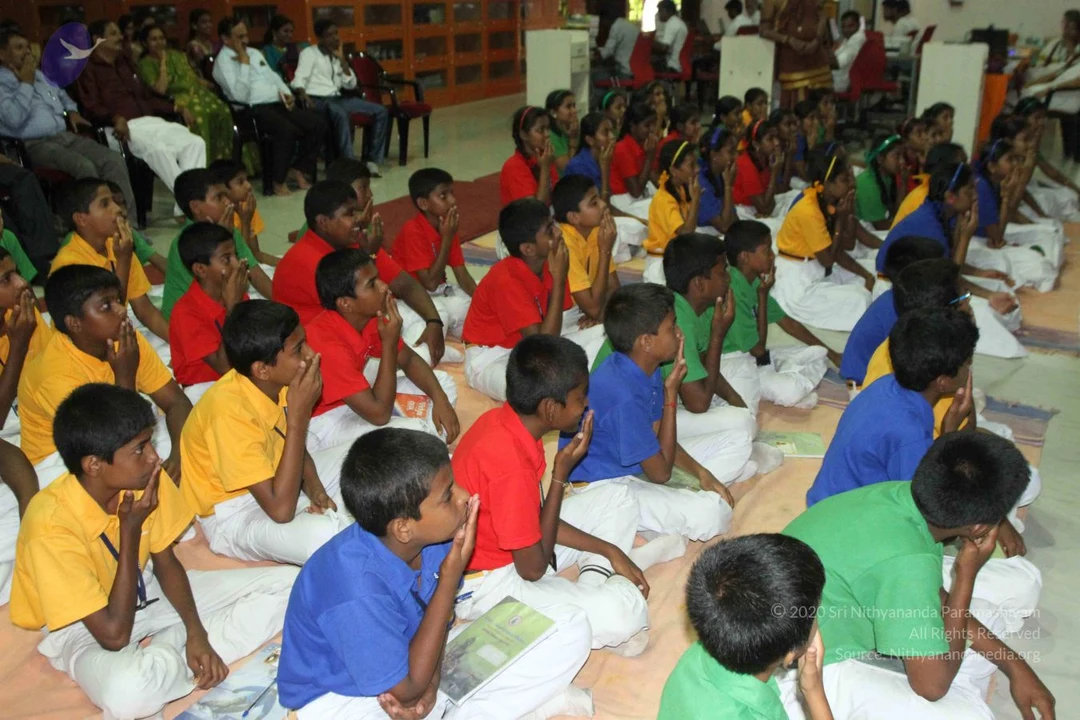
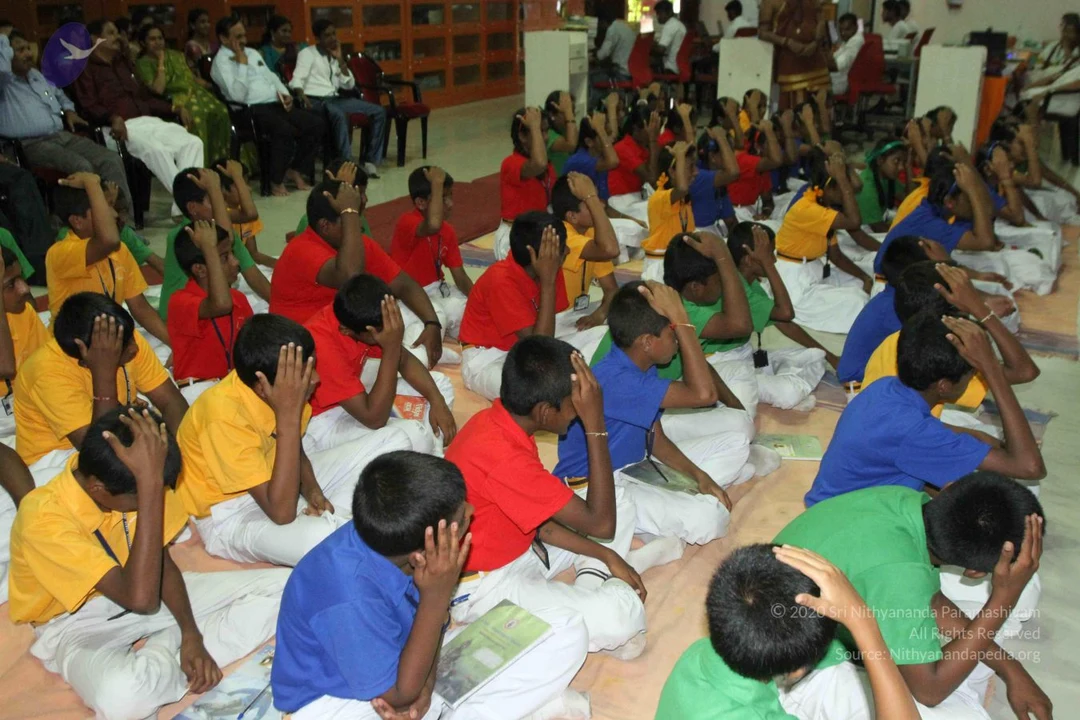
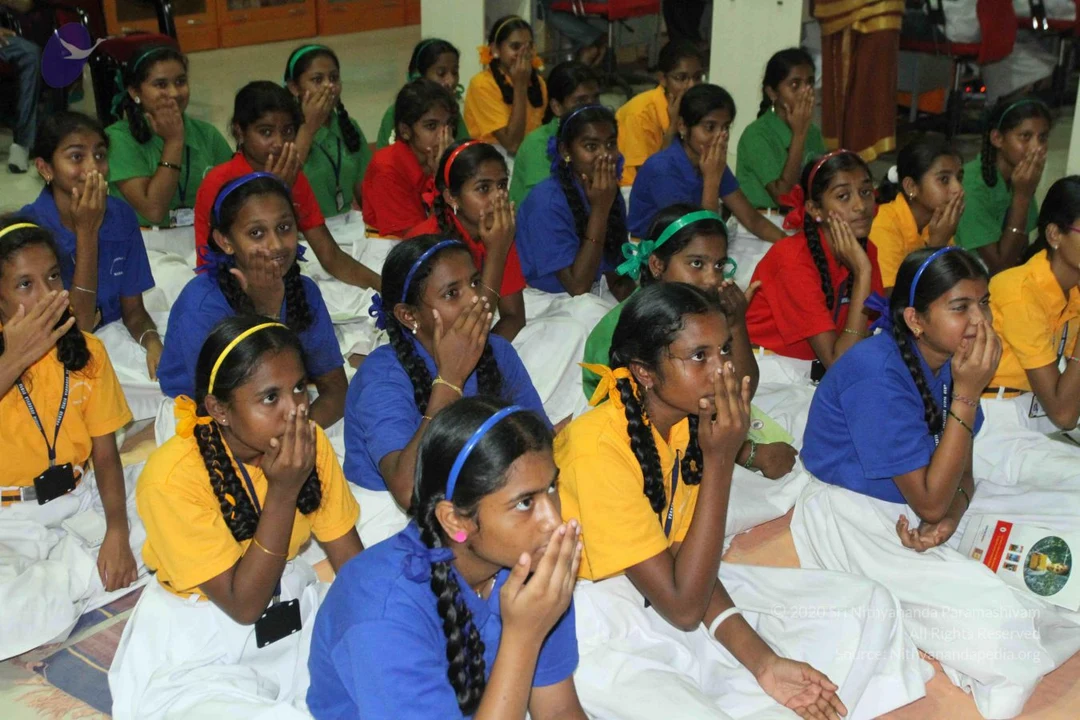
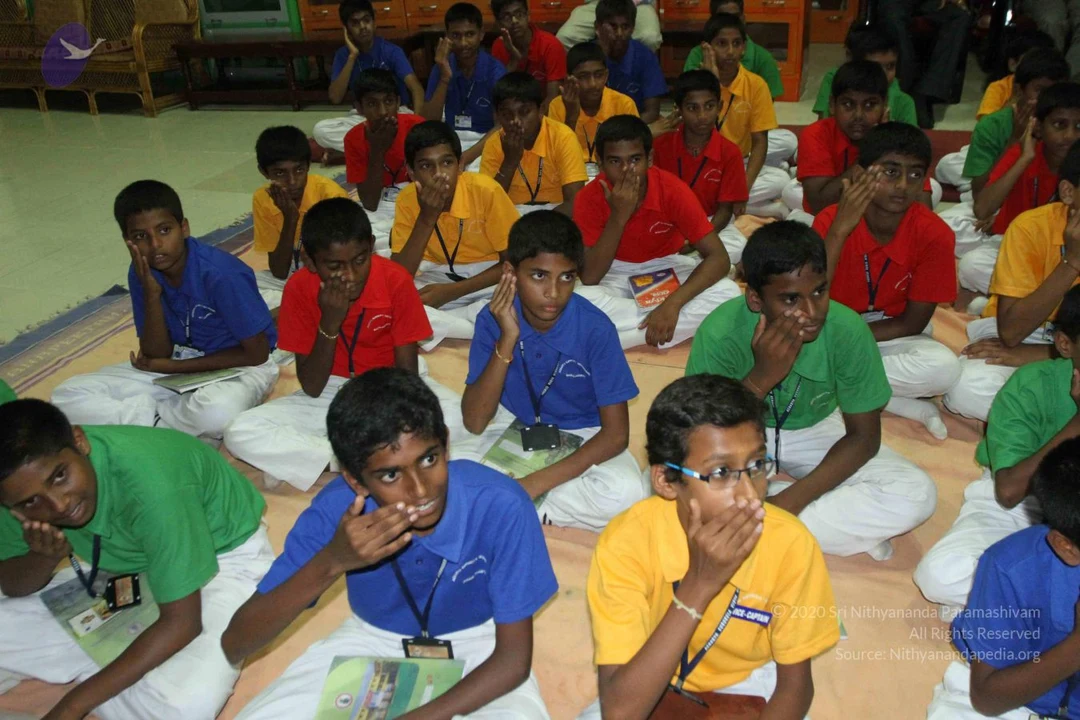
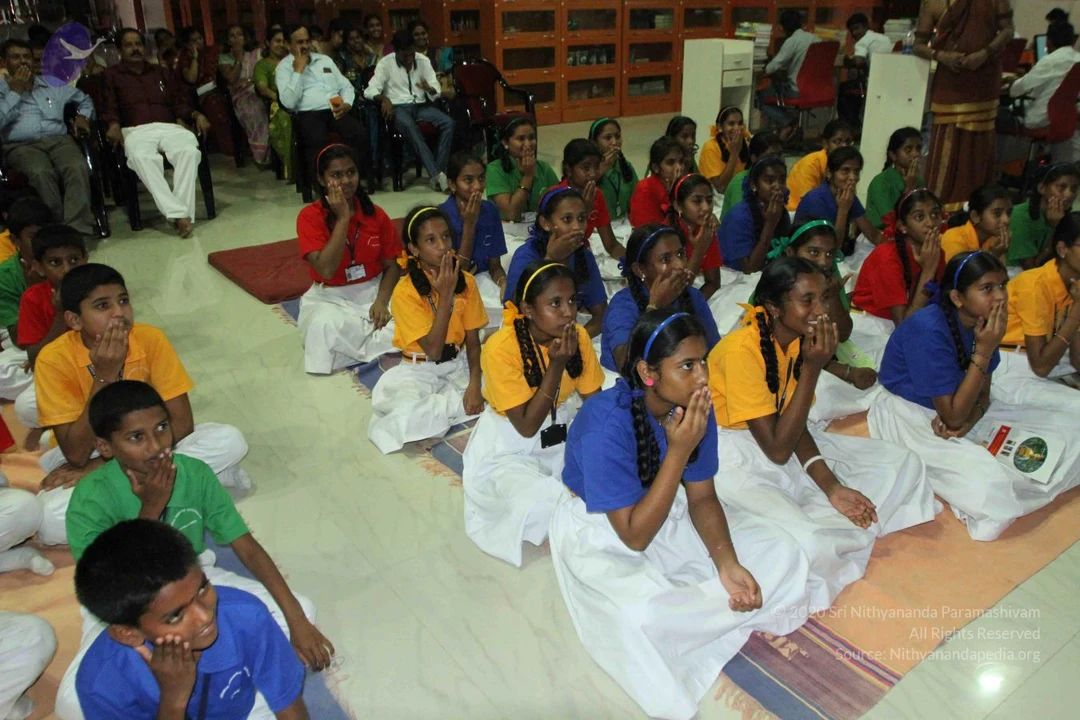
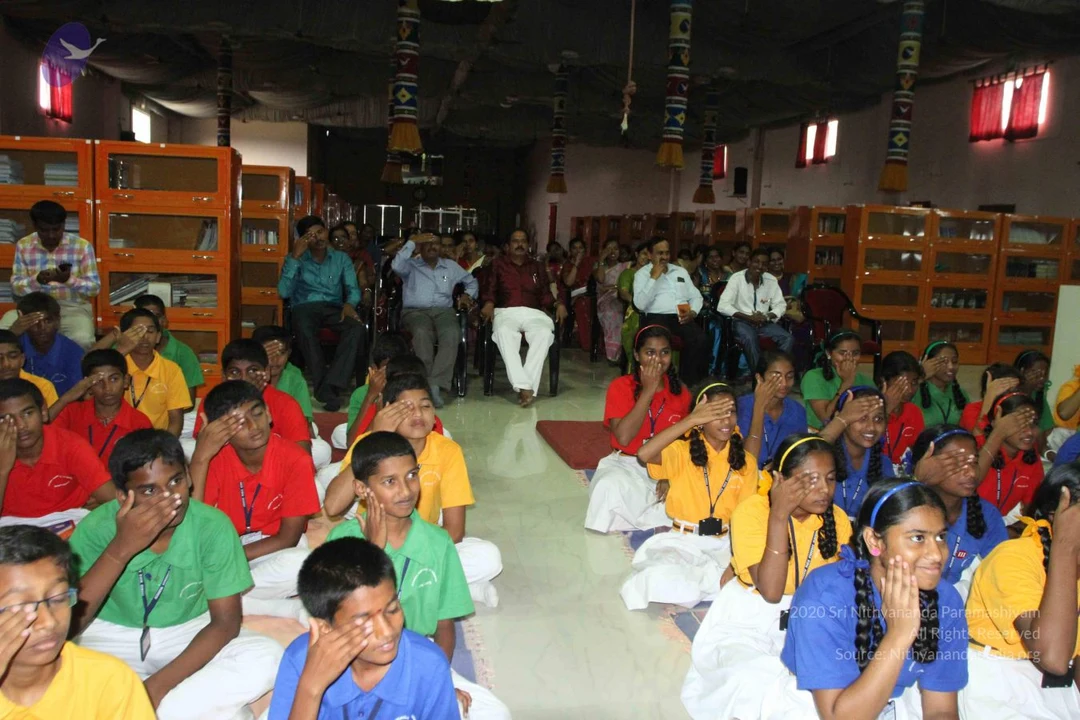
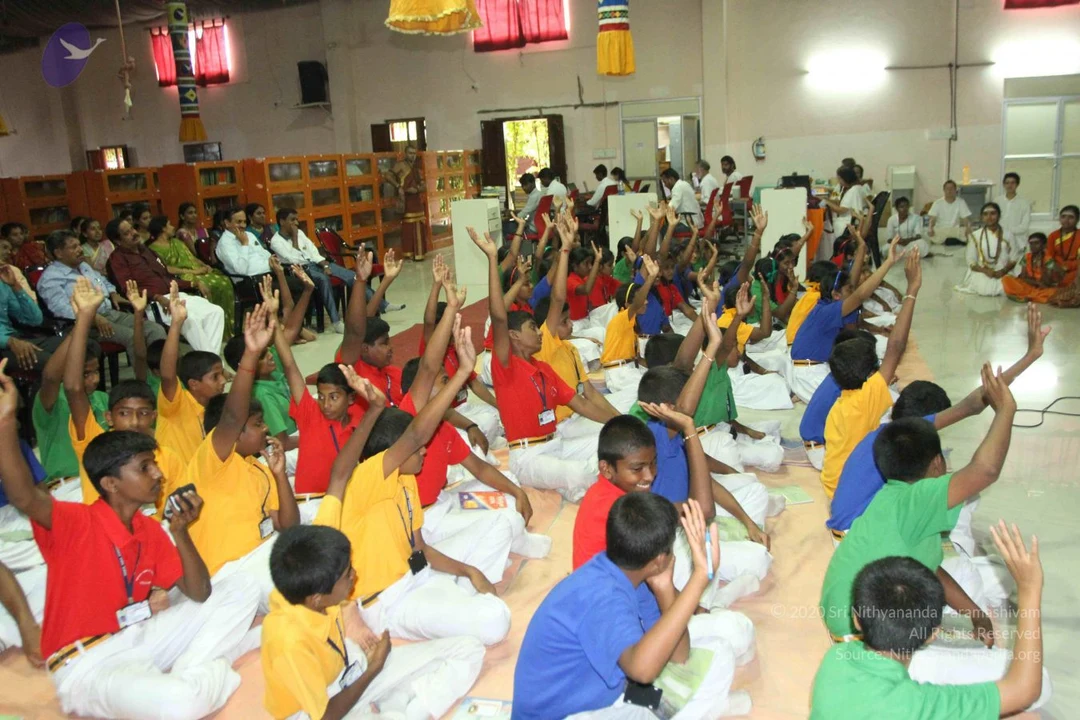
Samayadeeksha-for-kids-and-Adults

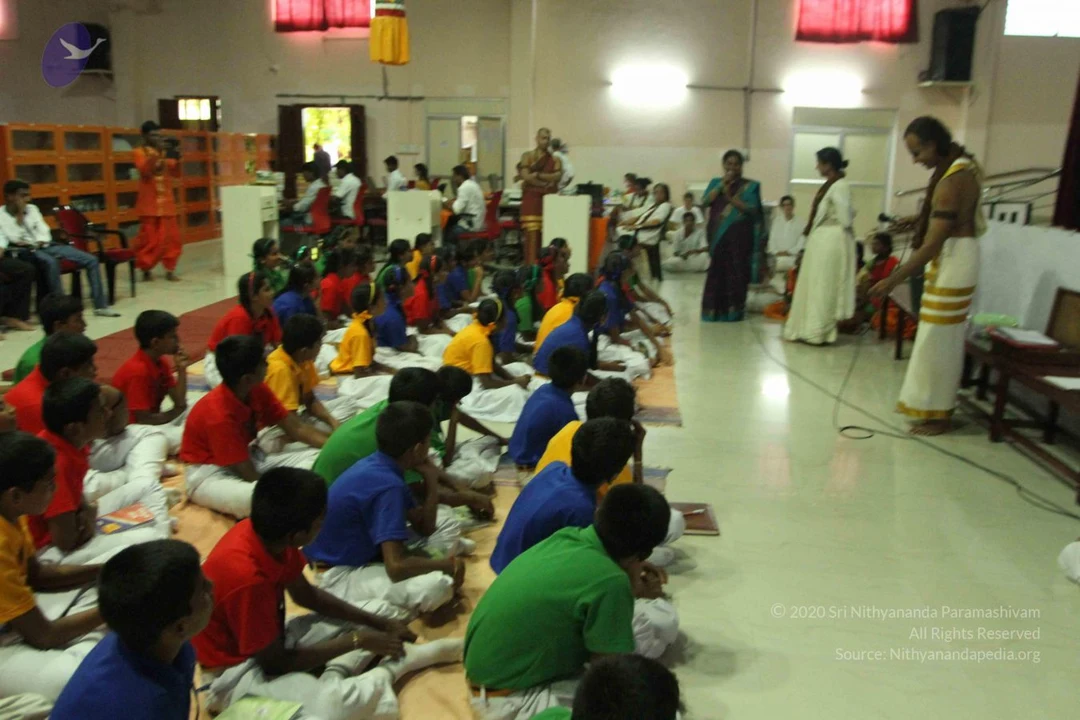
SamayaDheeksha-Instructions giving

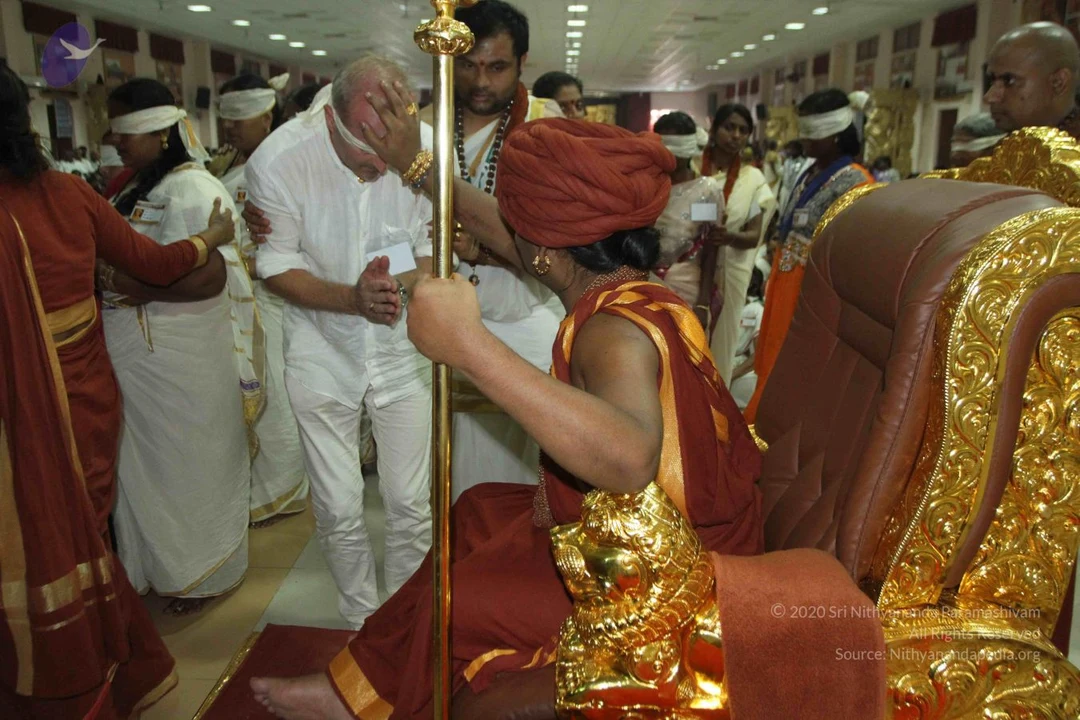
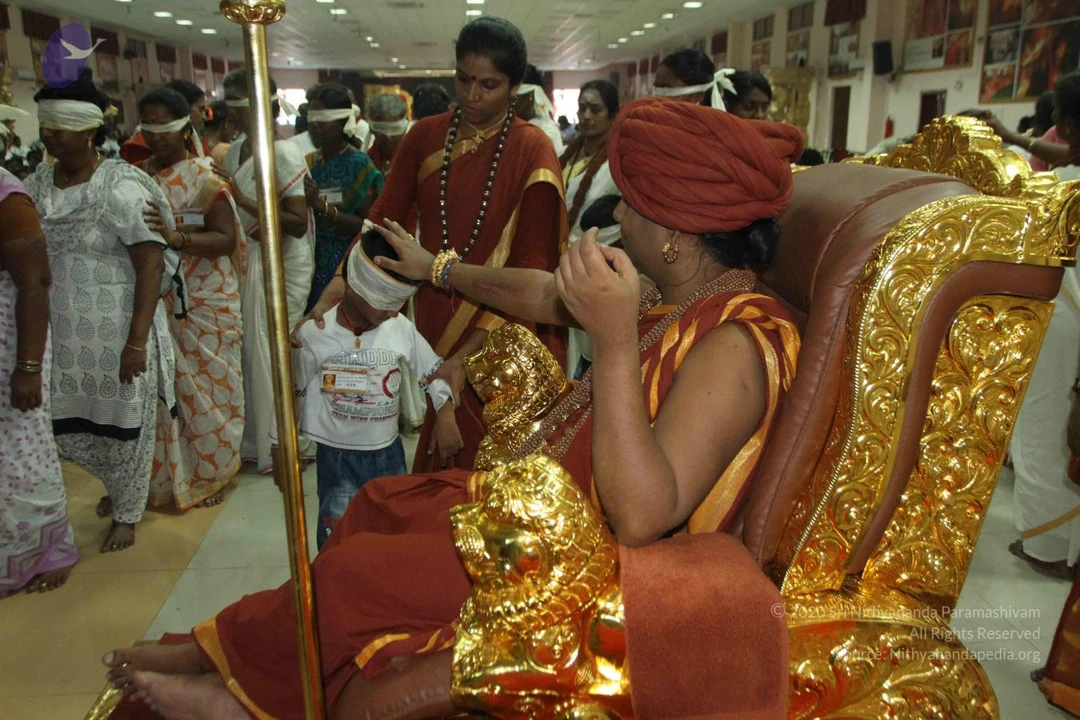
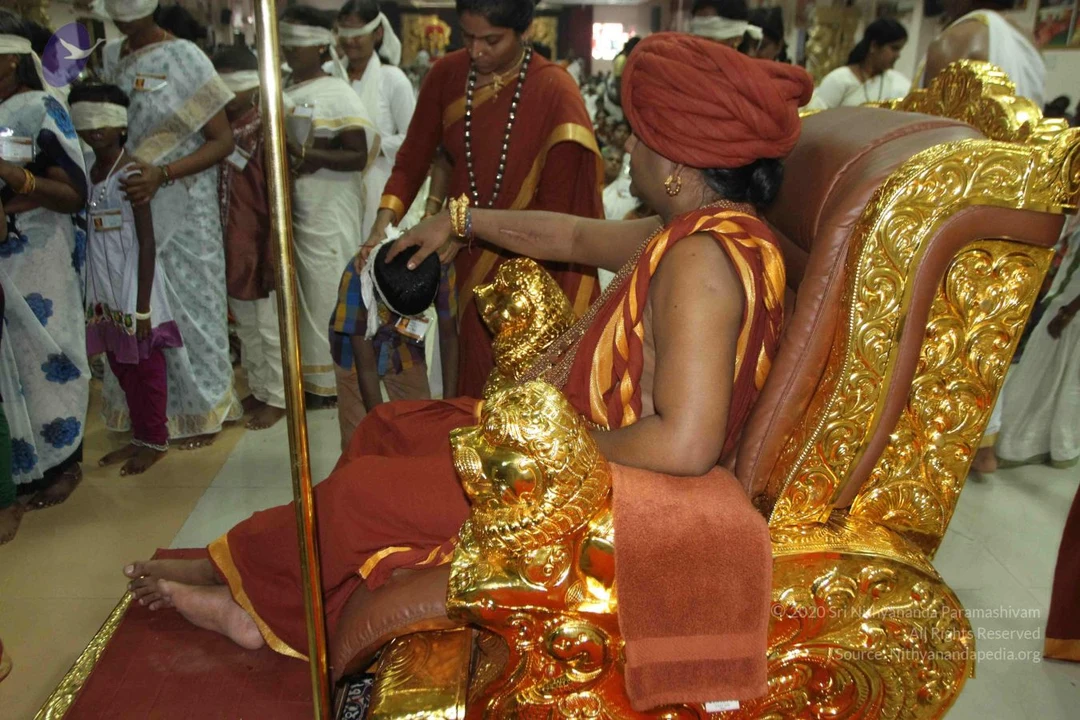
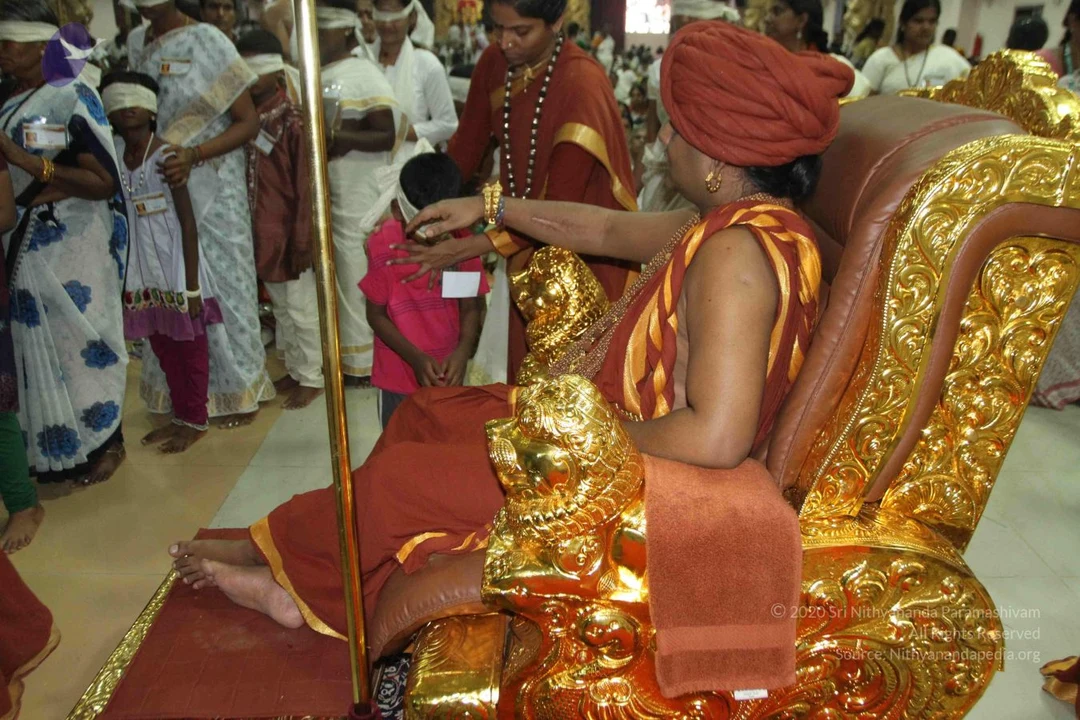
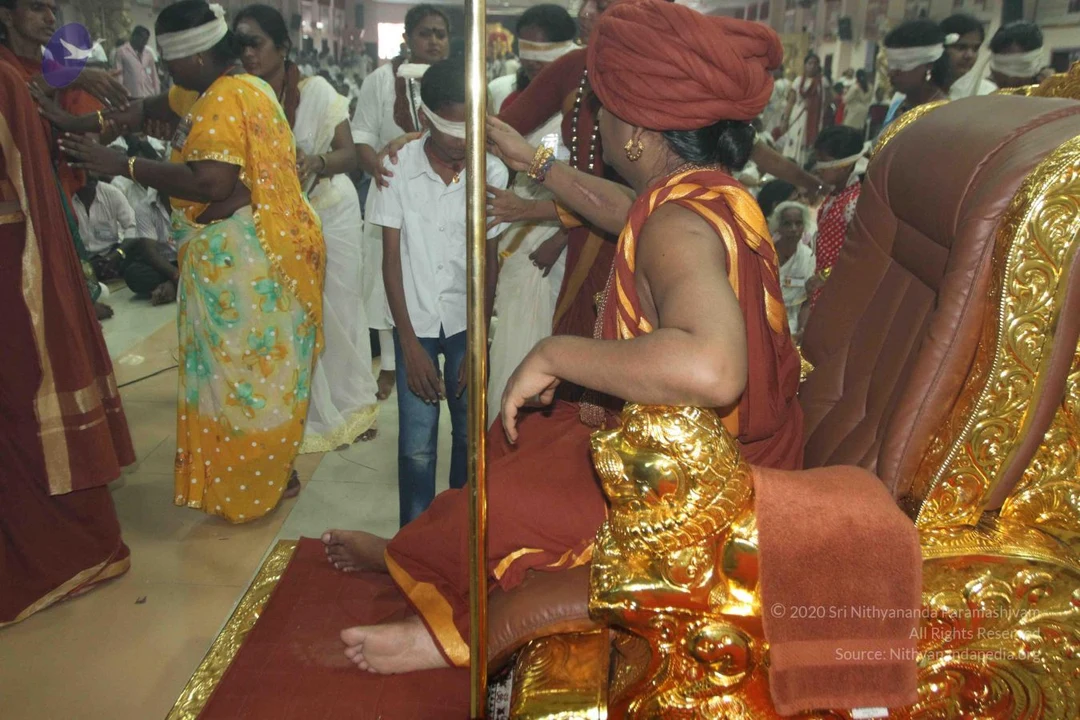
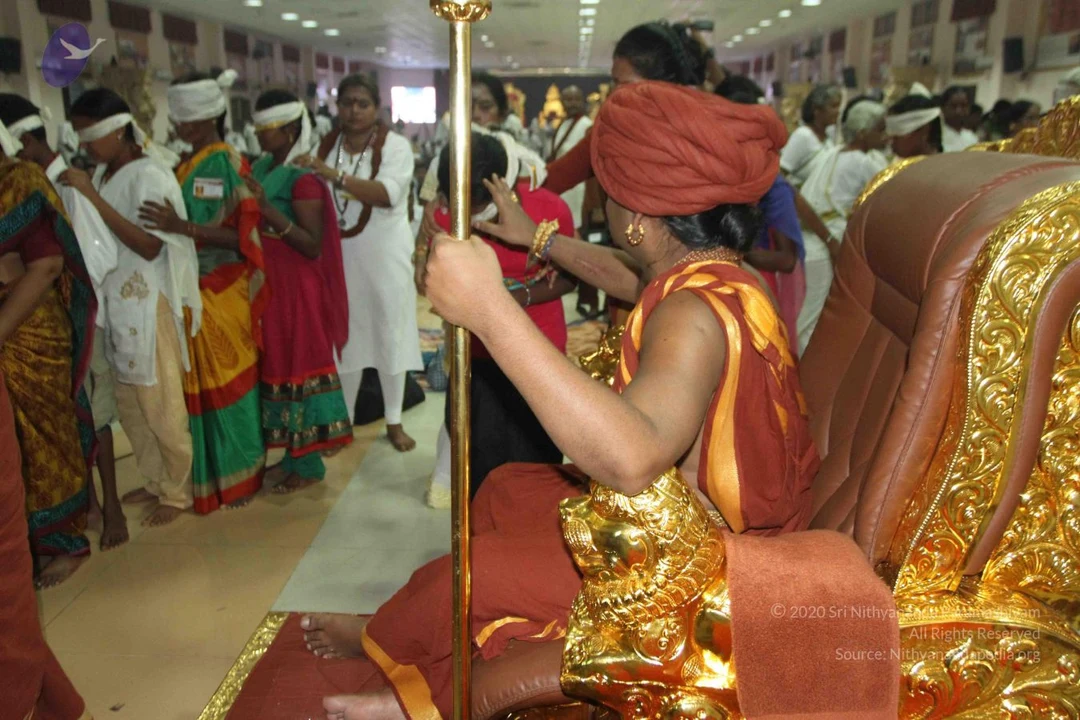
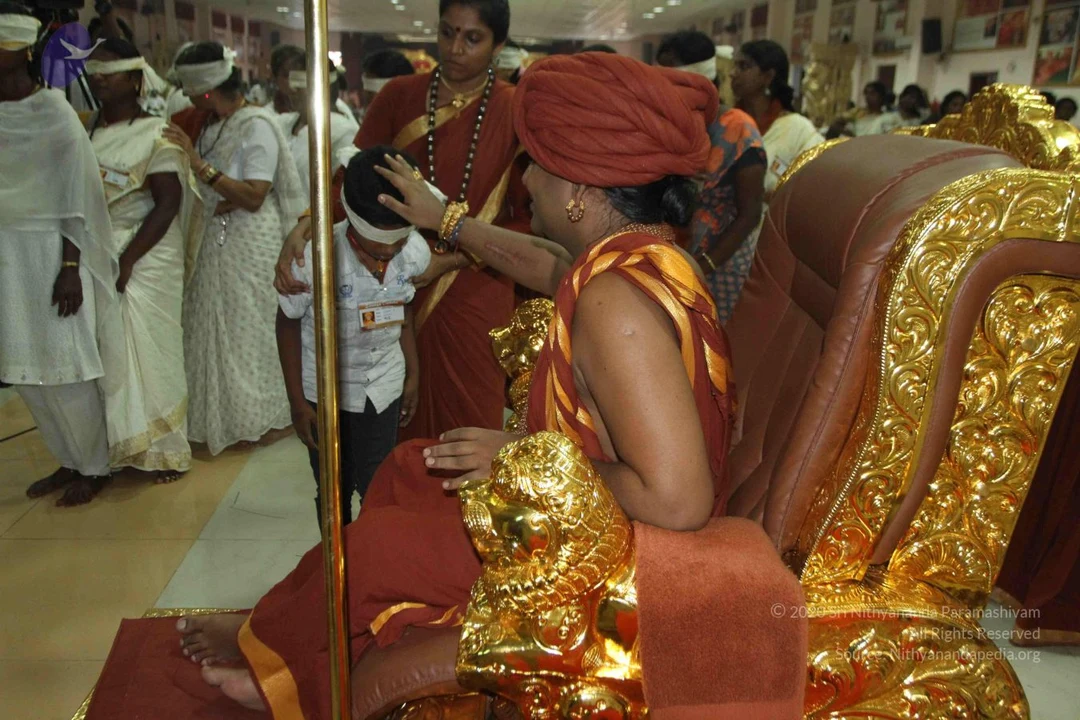
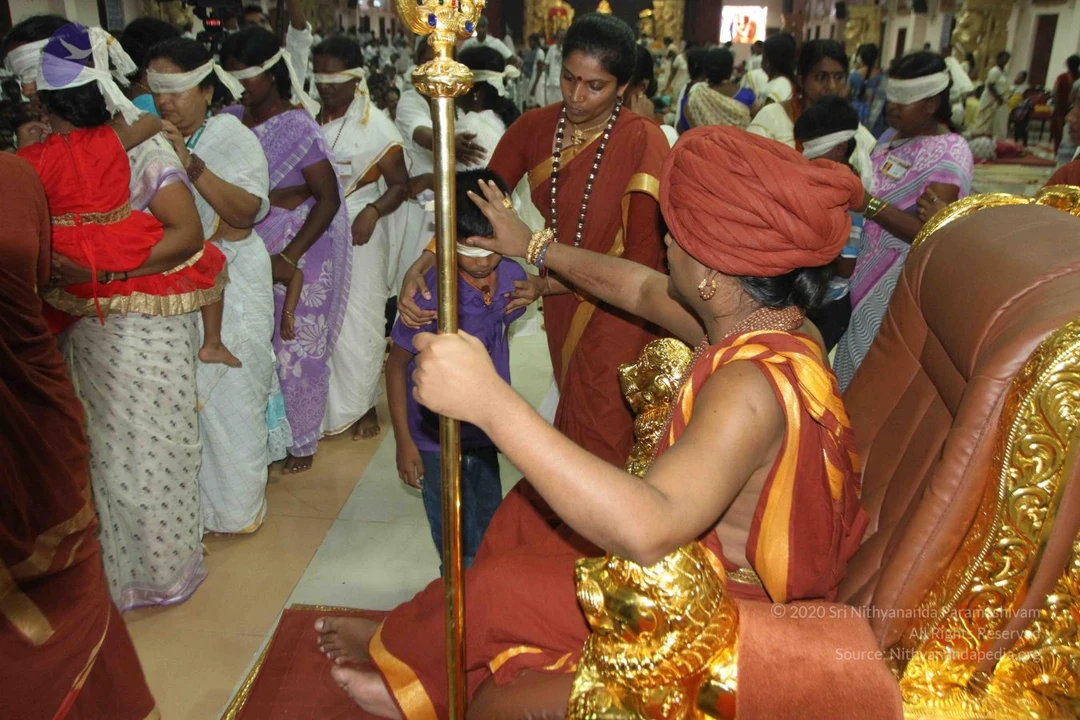
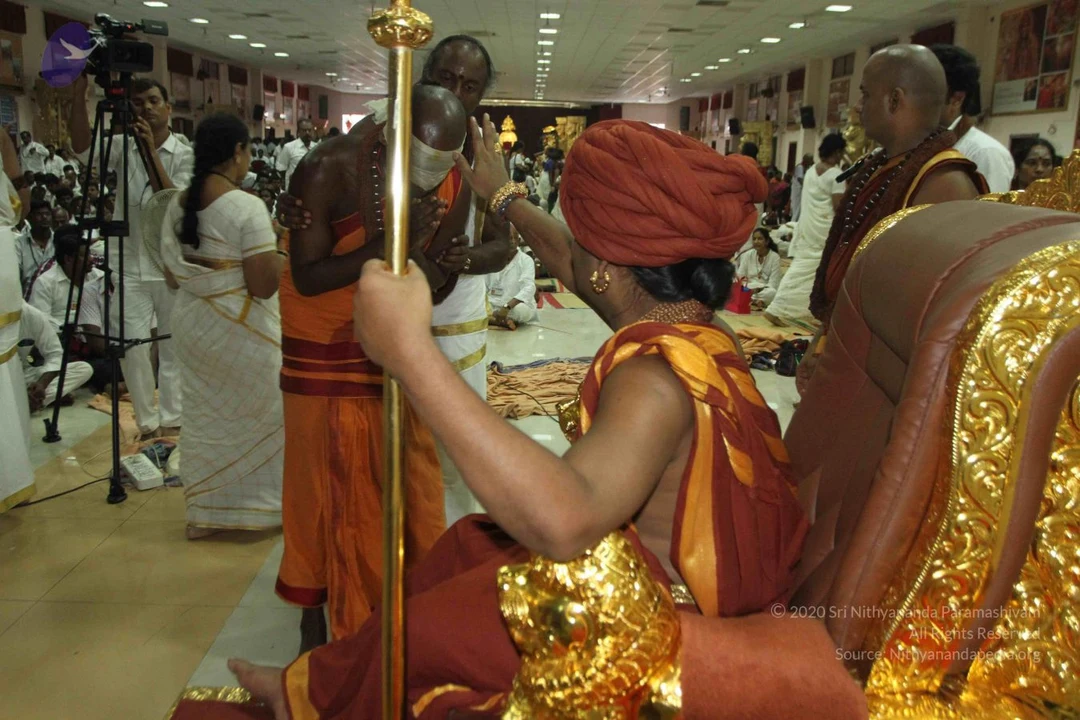
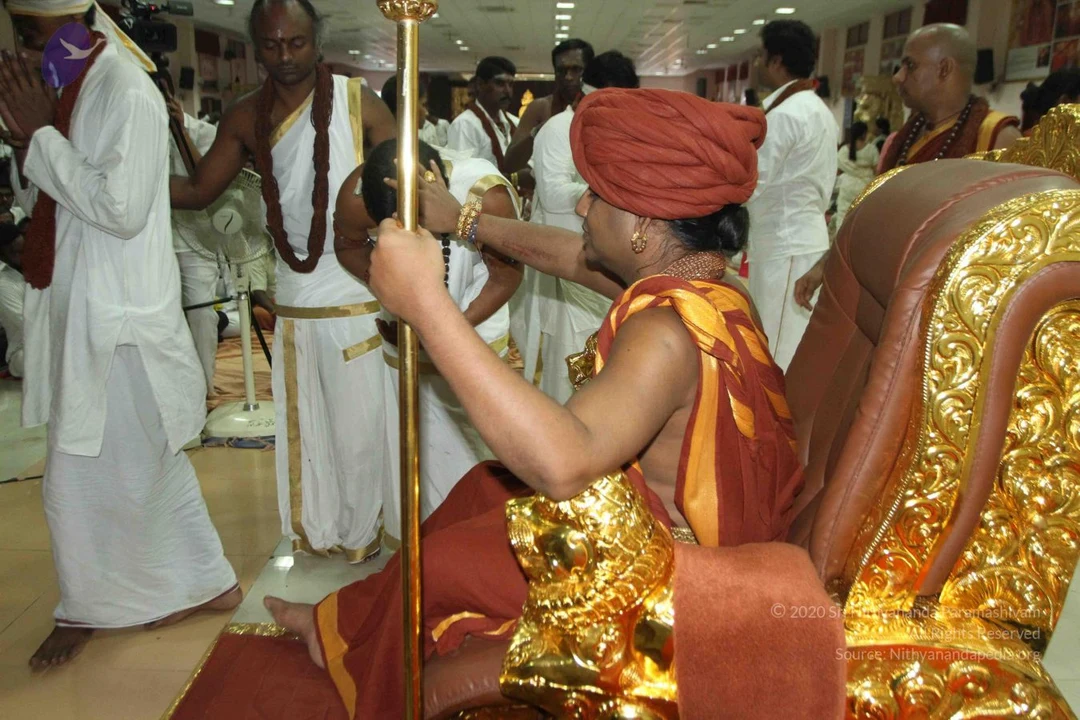
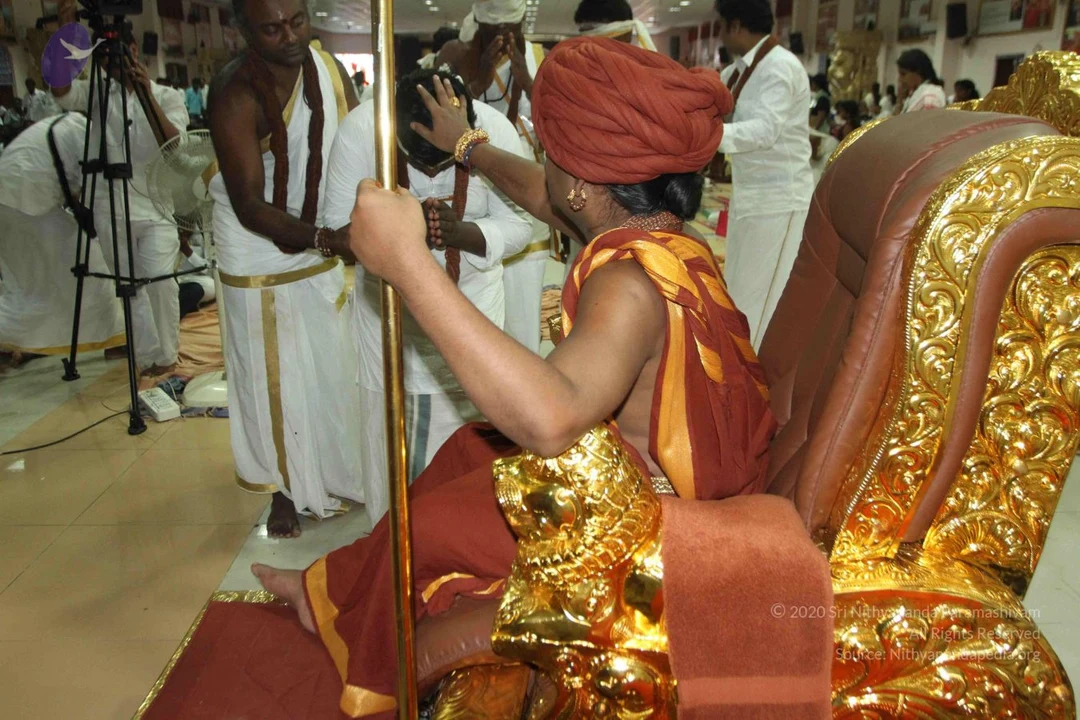
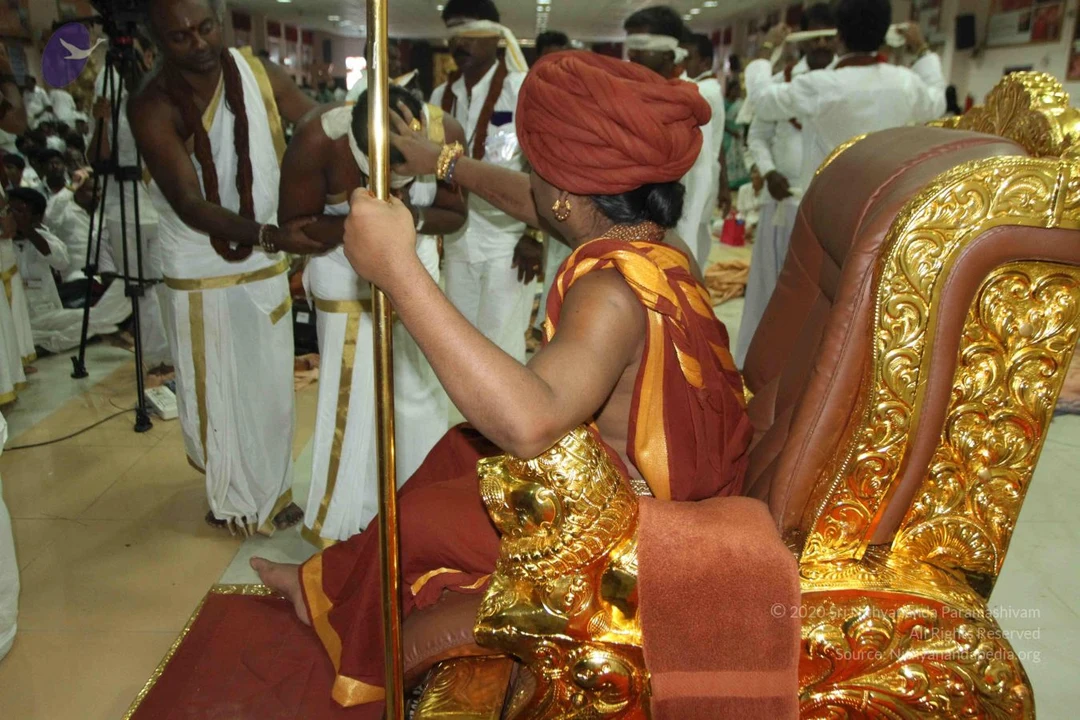
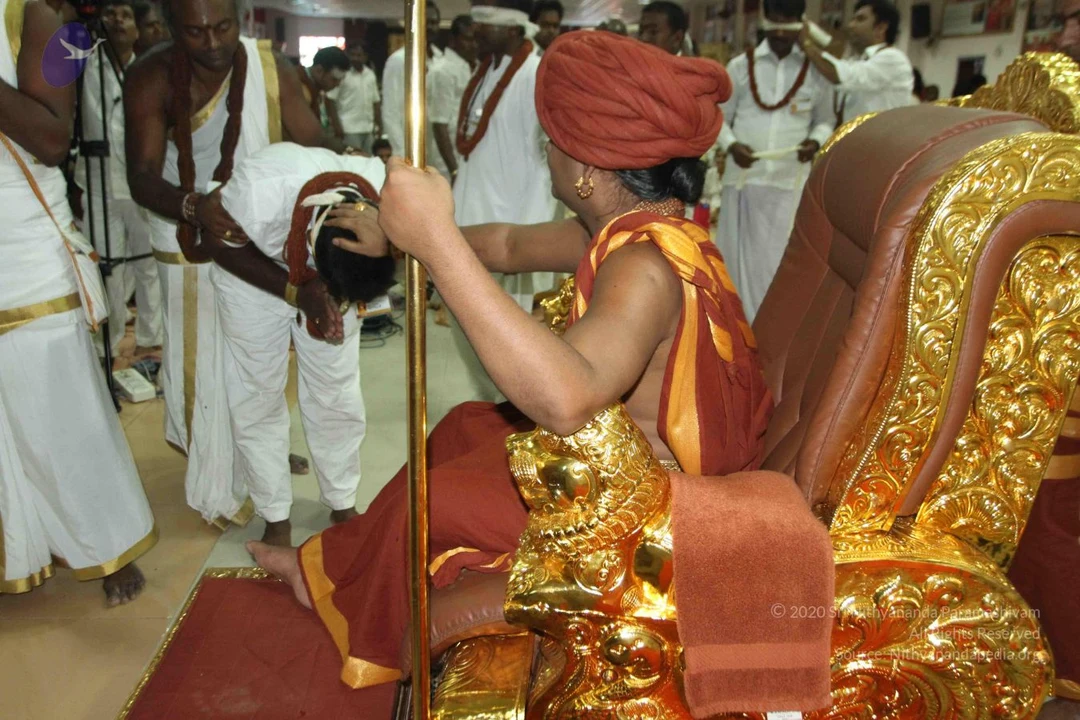
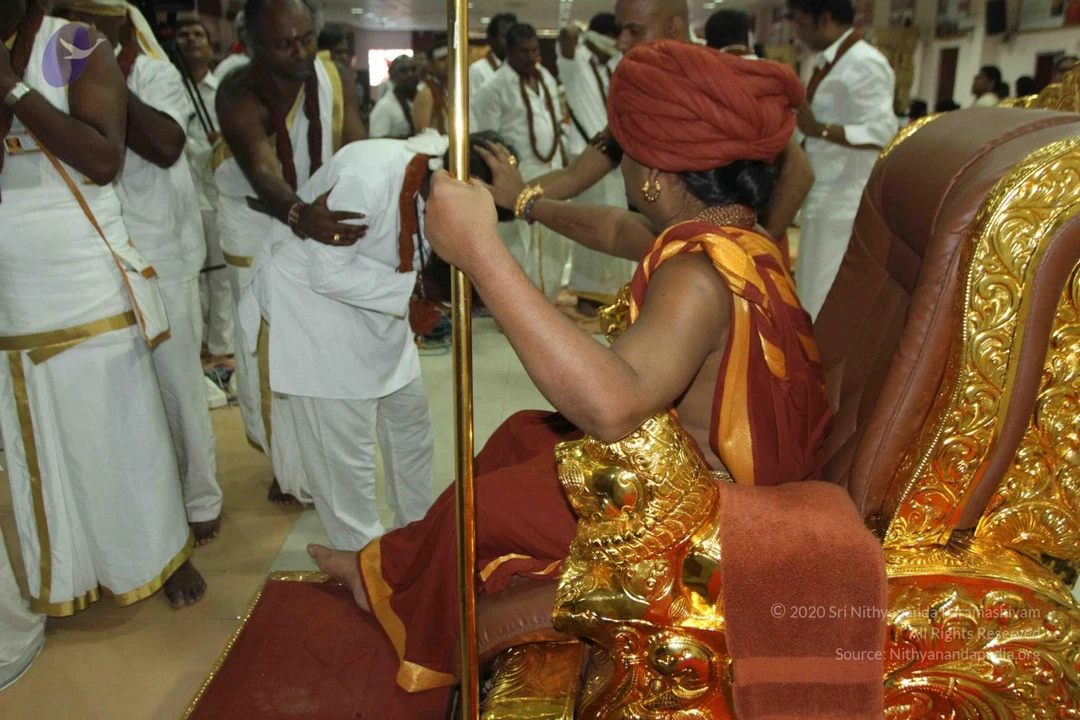
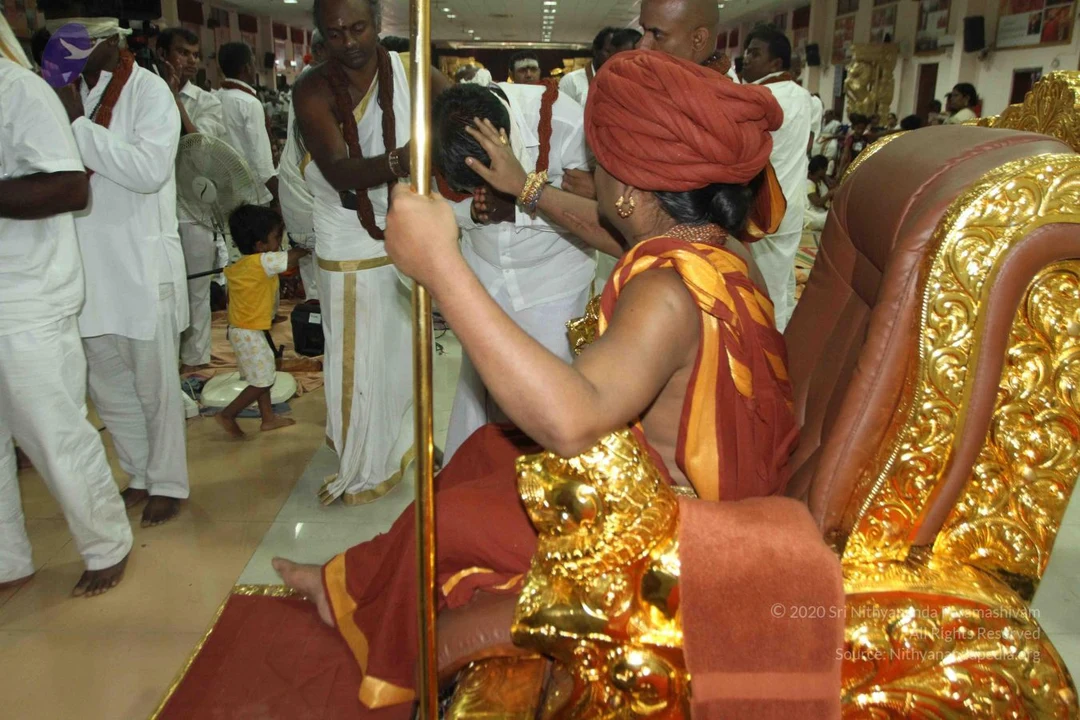
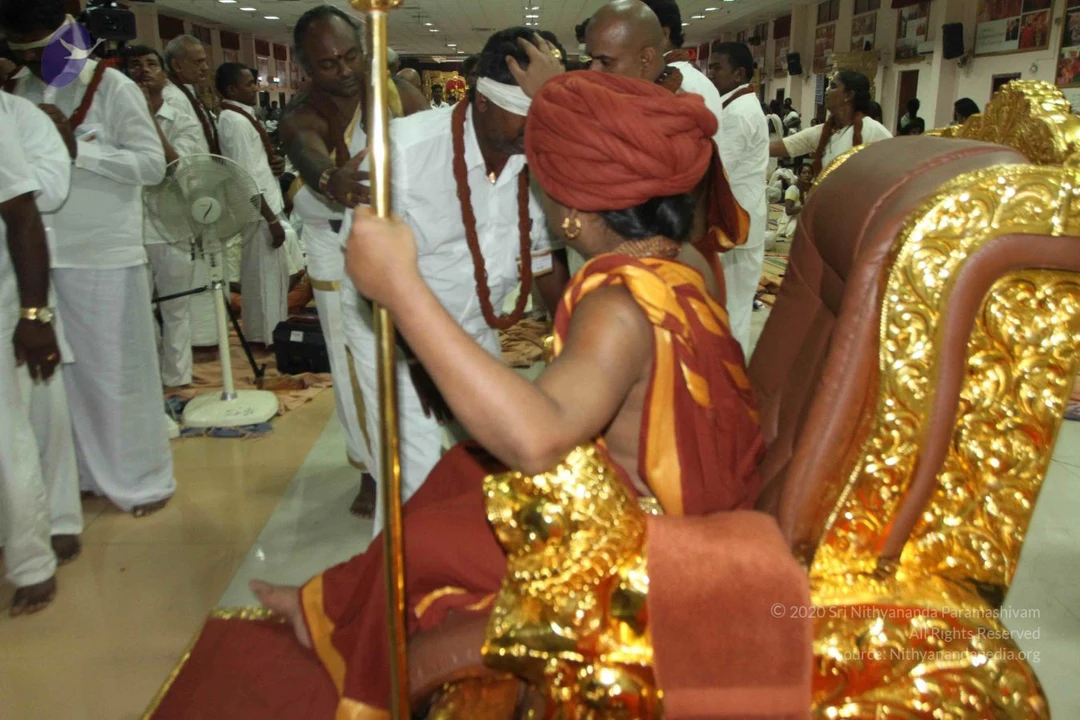
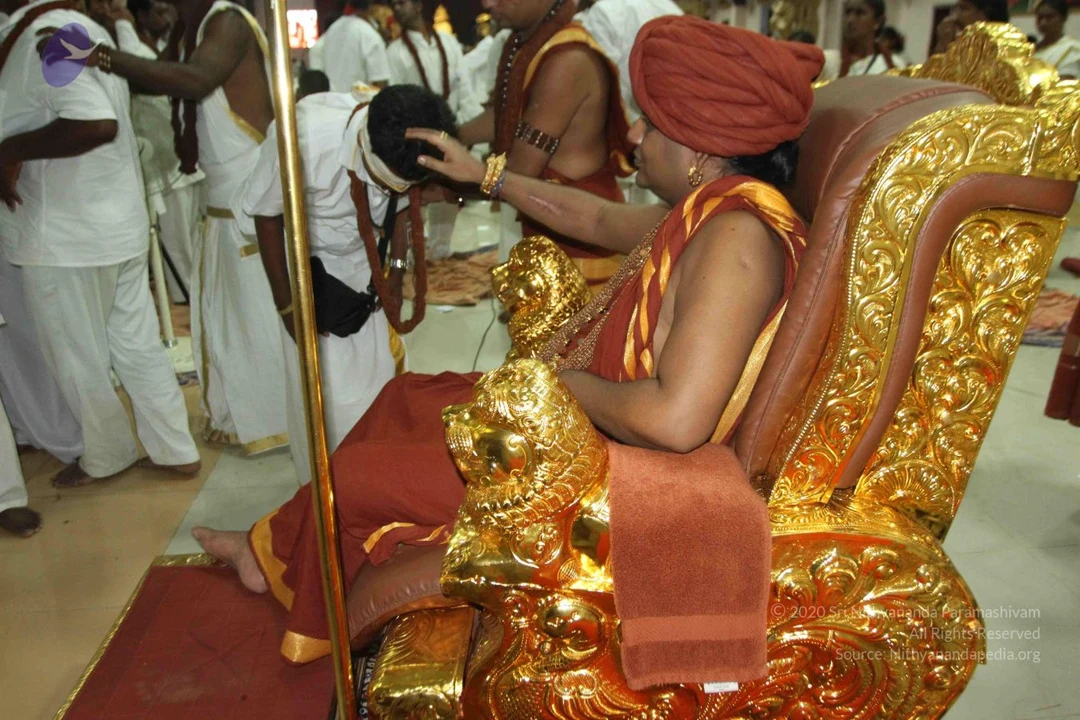
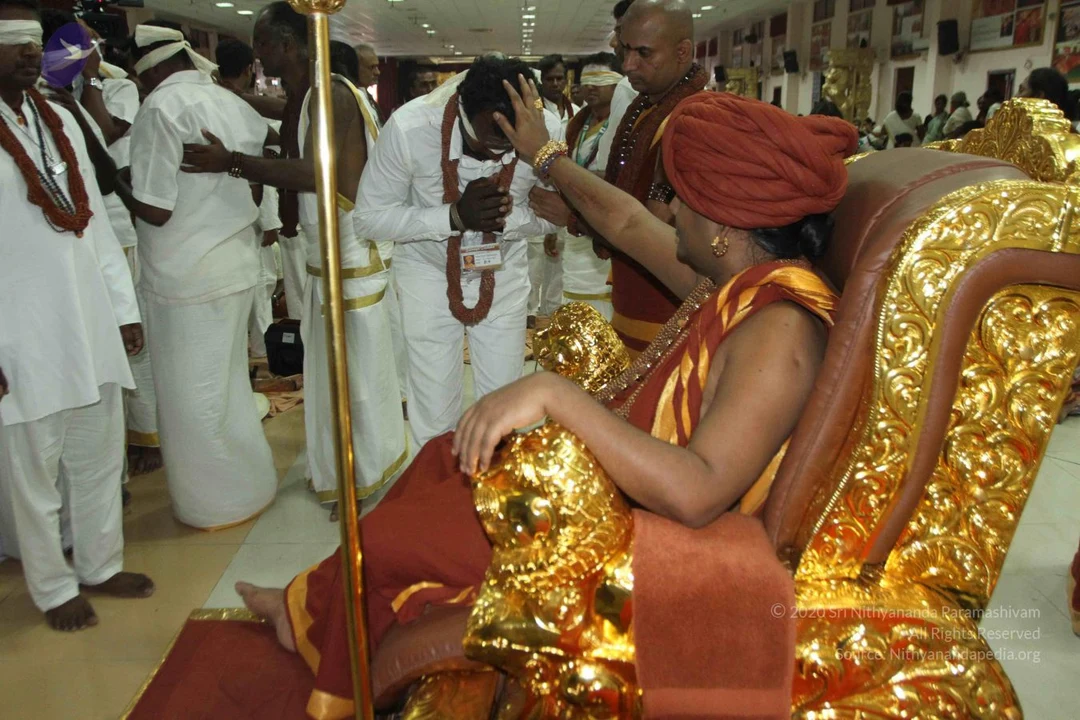
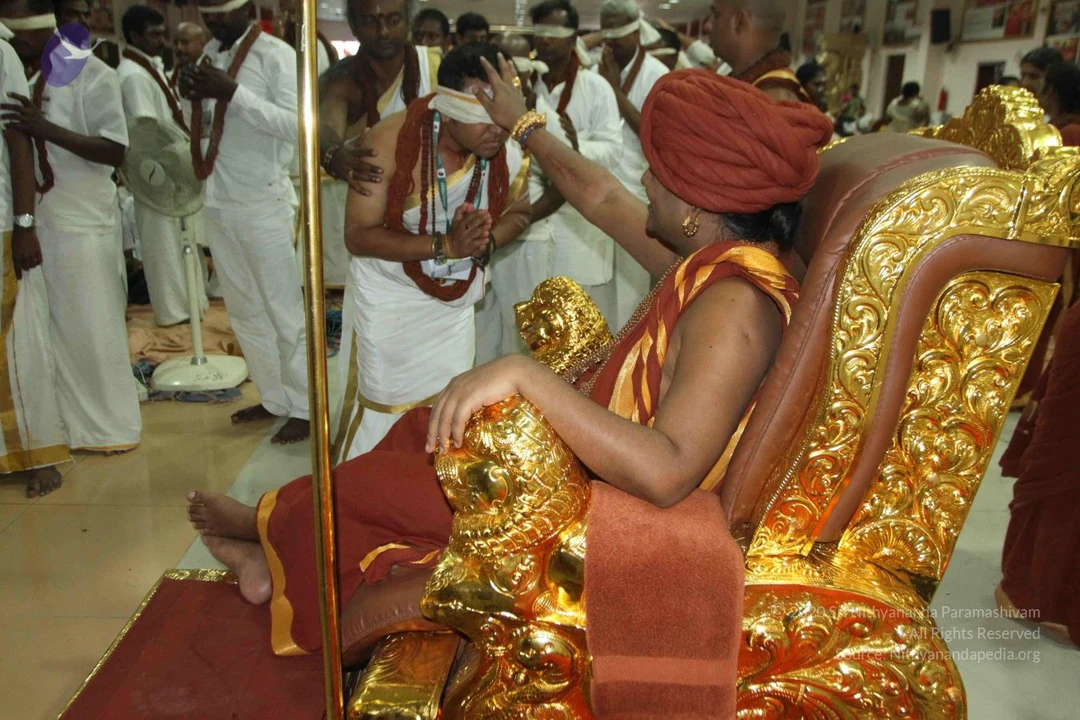
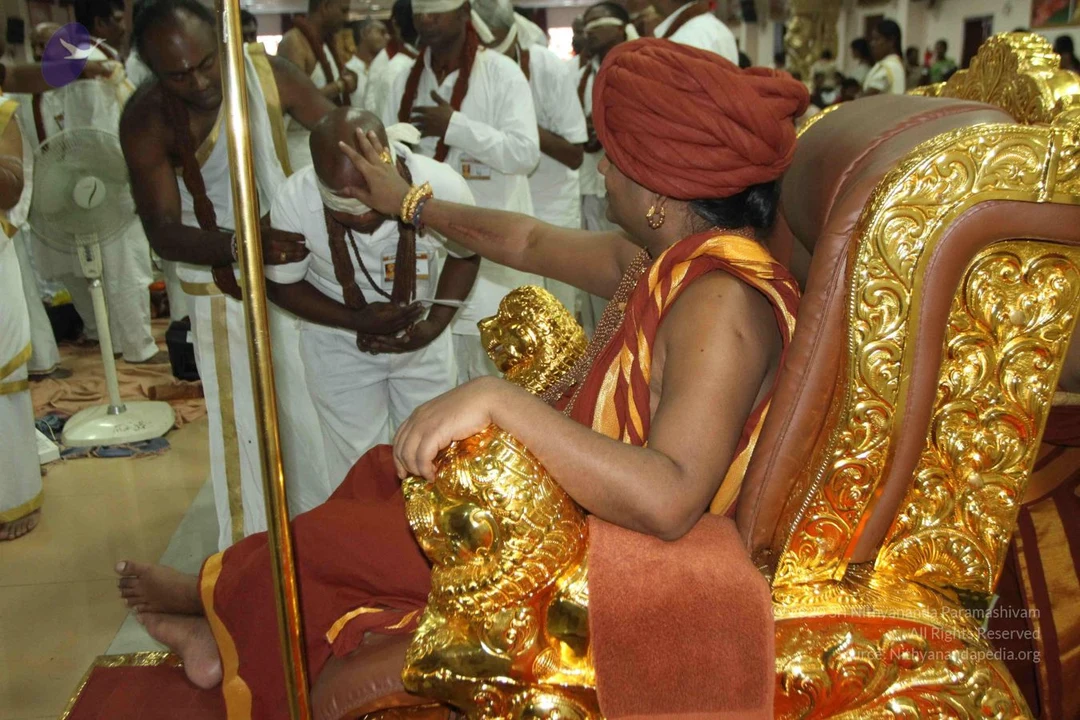
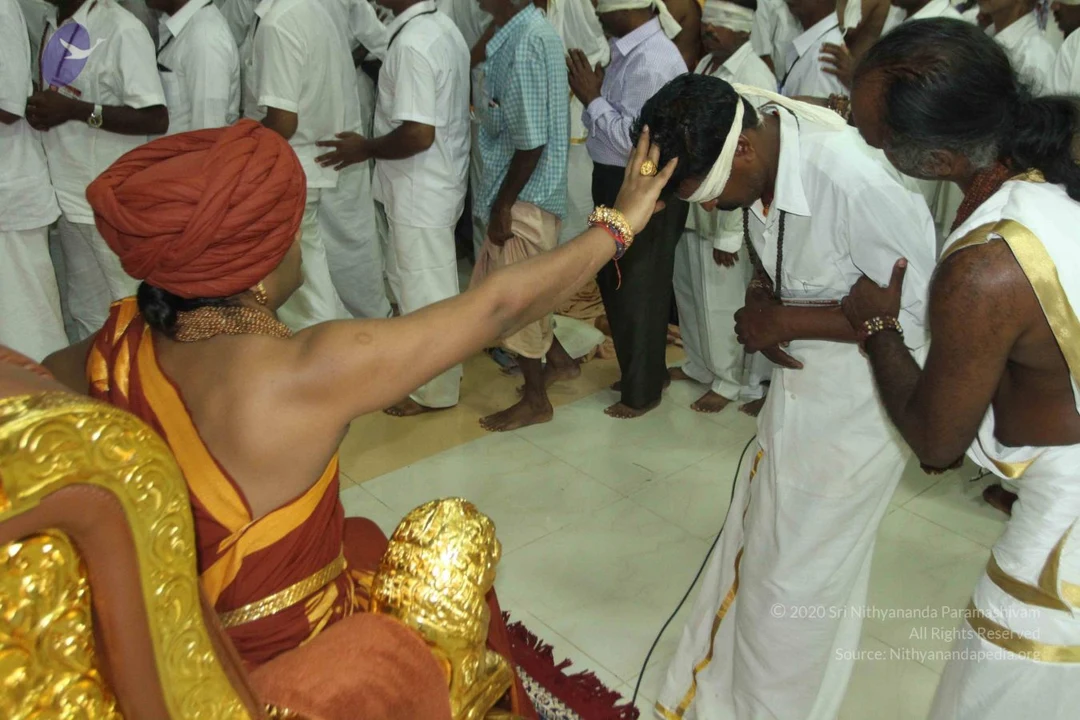
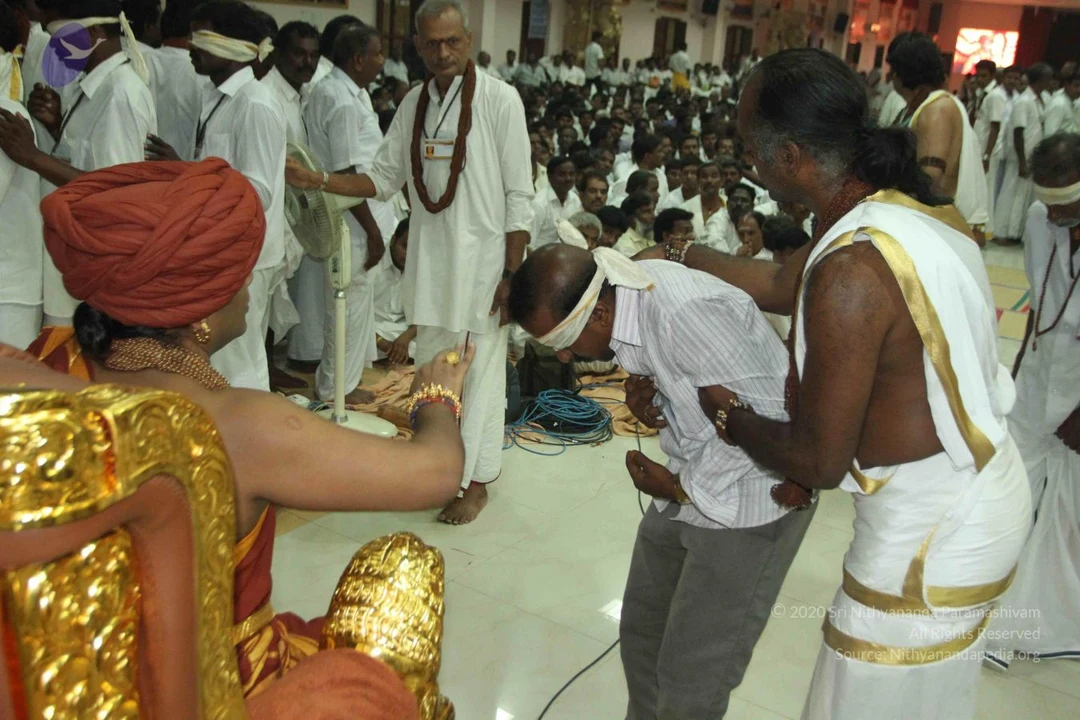
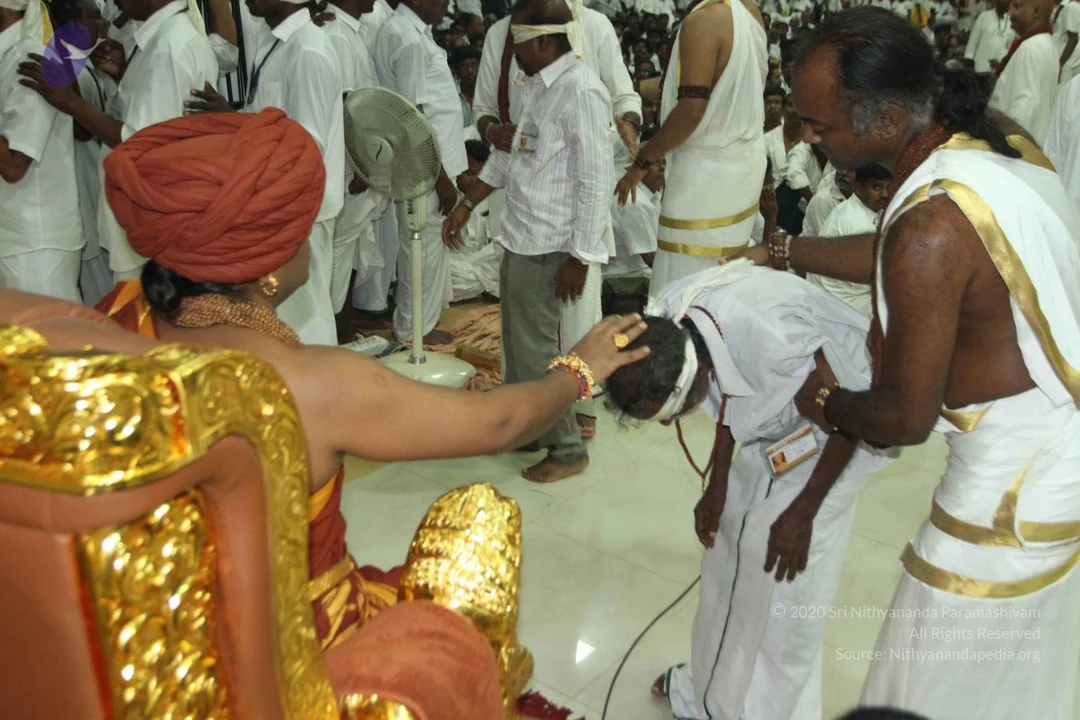
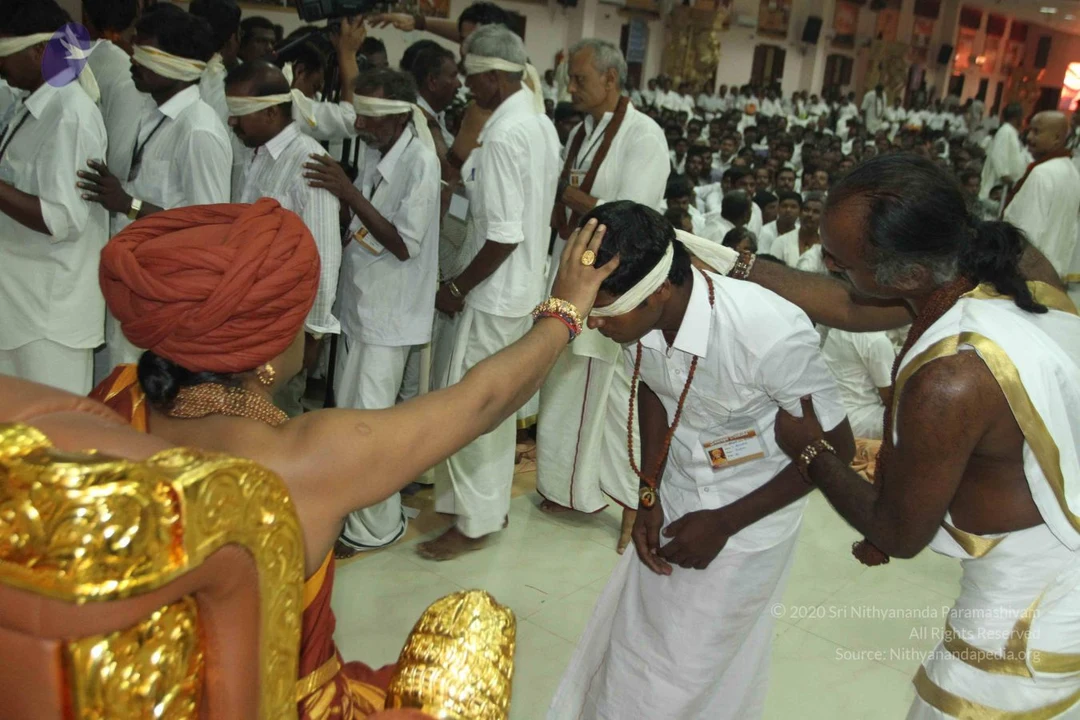
Samayadheeksha-Initiation

Do not Publish

Photos Of The Day:

Afternoon-session
Samayadeeksha-for-kids-and-Adults

SamayaDheeksha-Instructions giving

Samayadheeksha-Initiation

01-ARUNAGIRI-YOGISHWARA-STORY

02-POWER-MANIFESTATION-DEMO

03-SAMAYA-DEEKSHA

Photos from this day

View all 772 photos

Afternoon-session
169 photosSource gallery
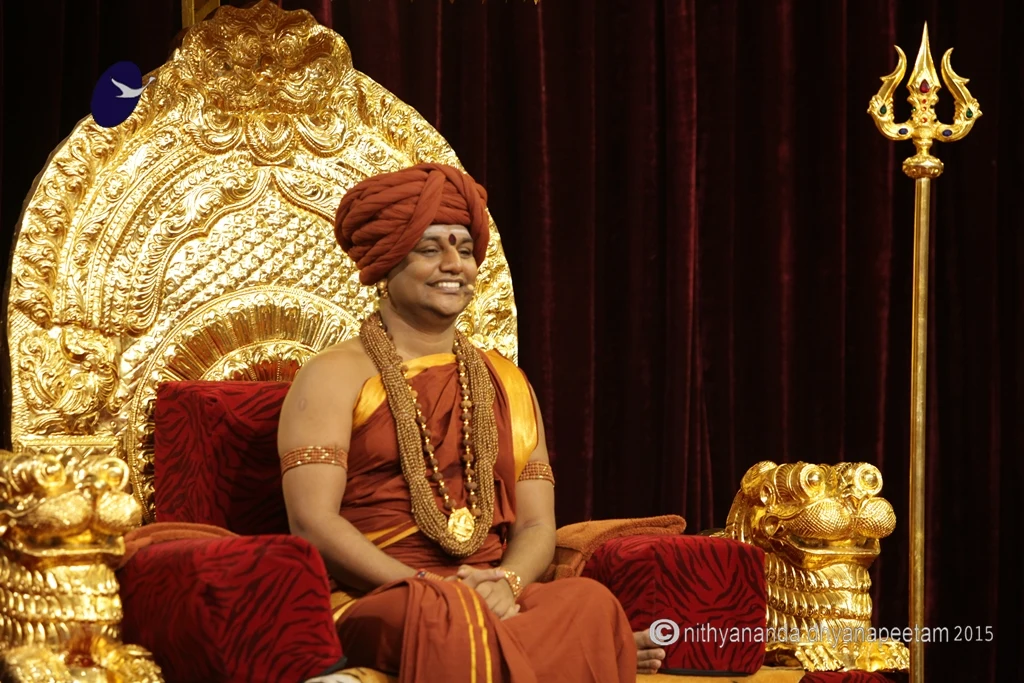
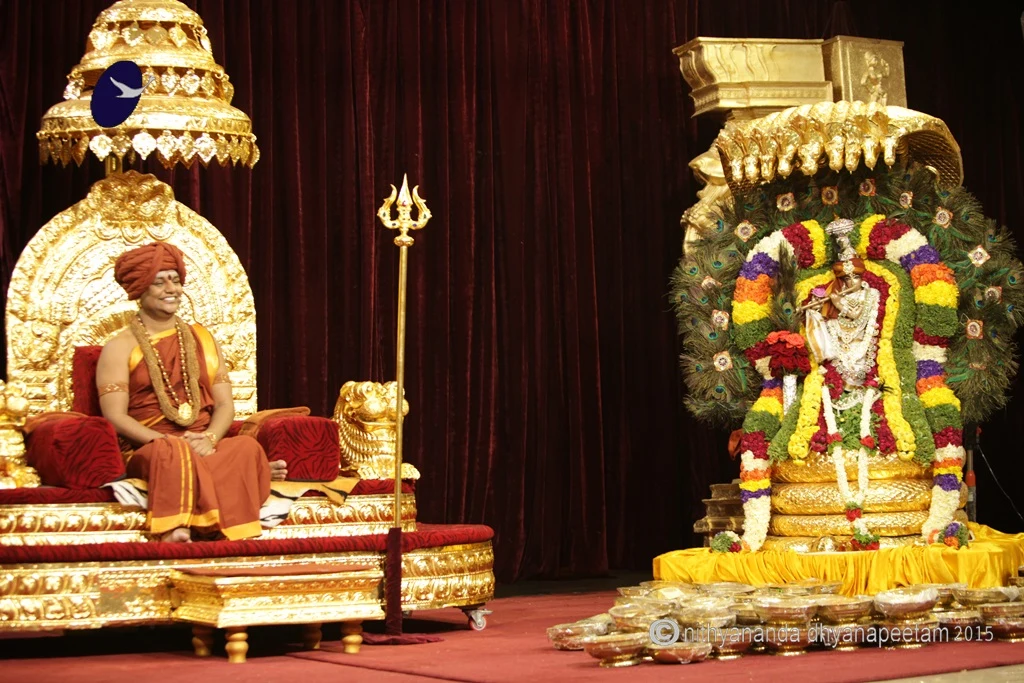
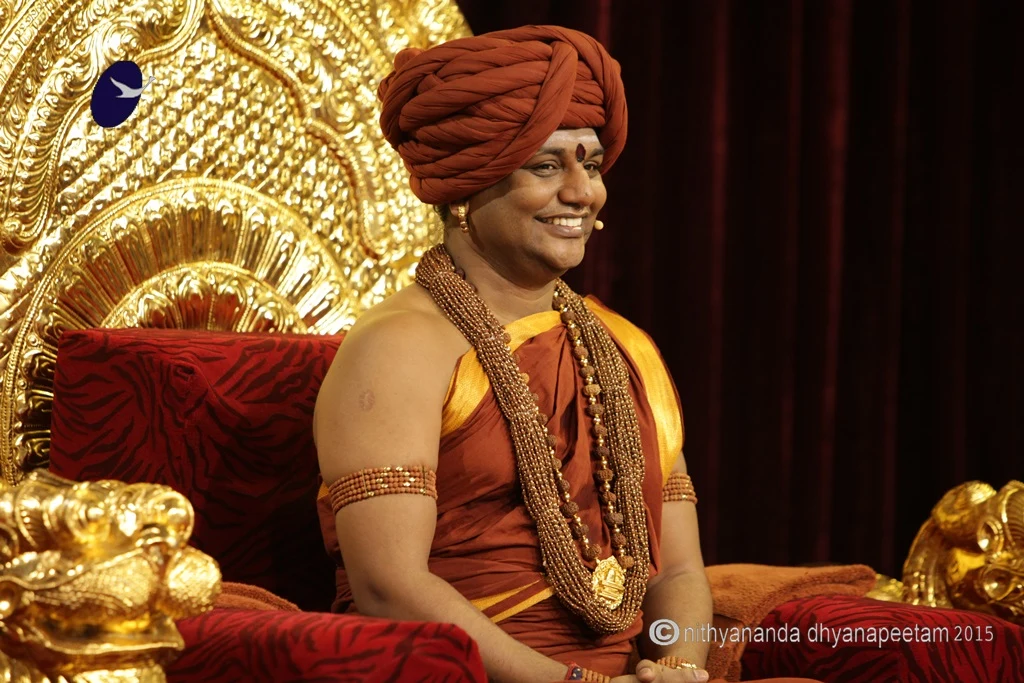
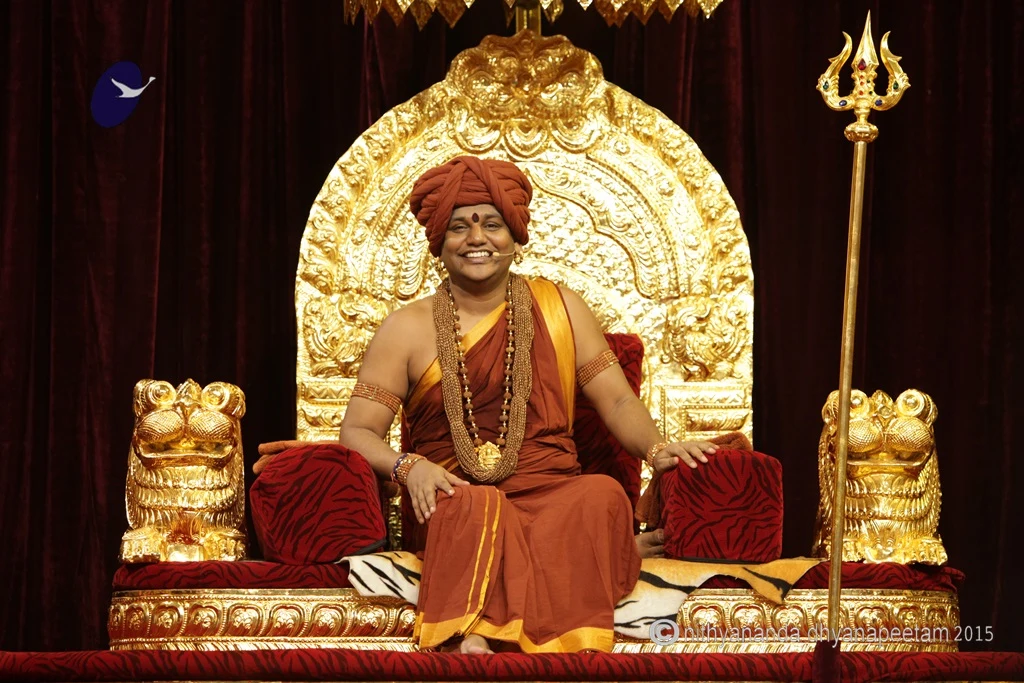
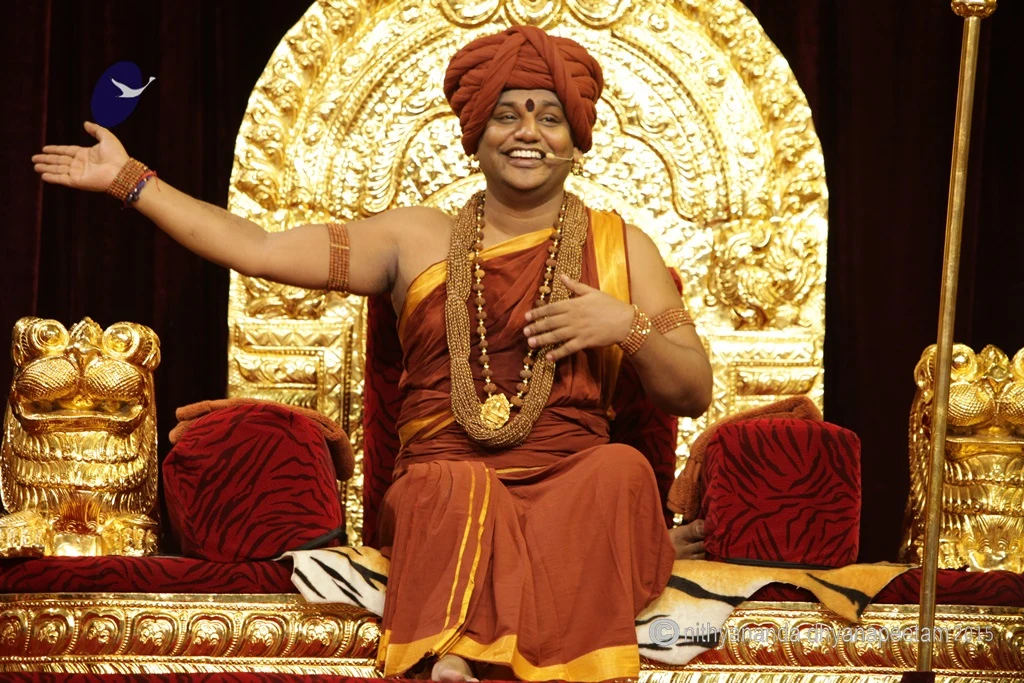
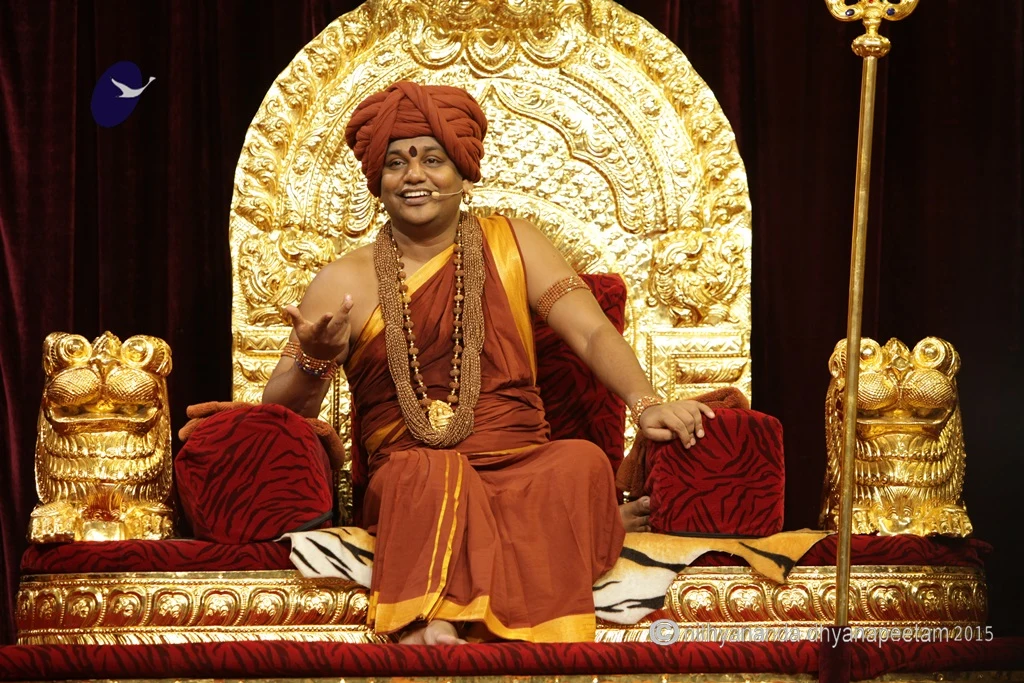
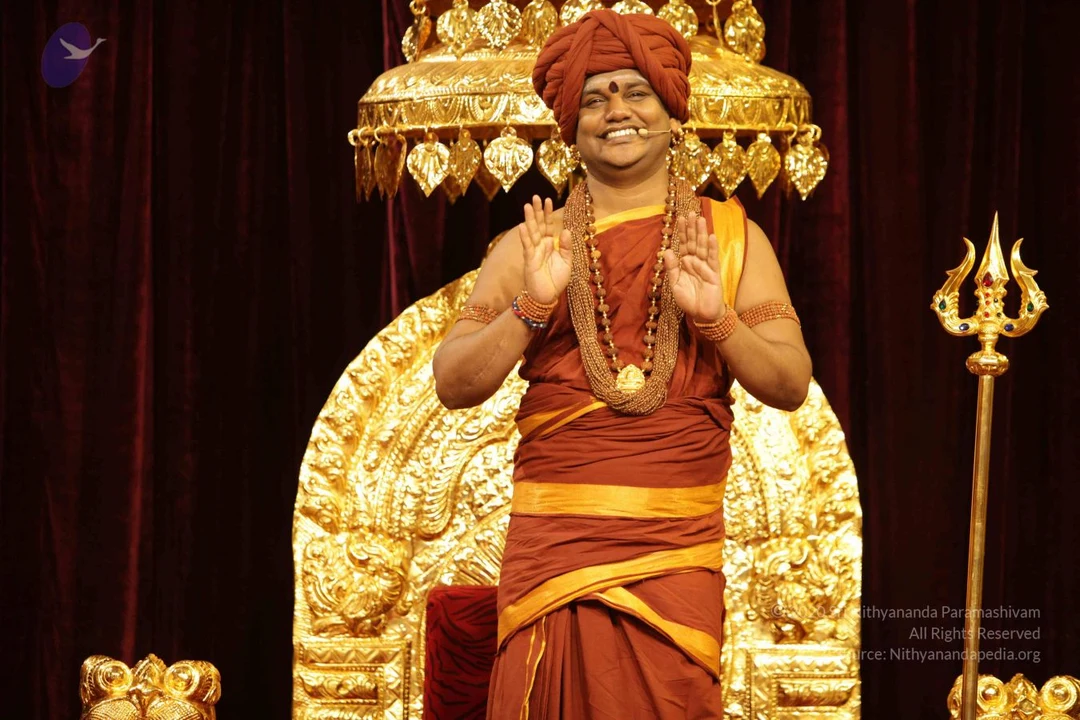
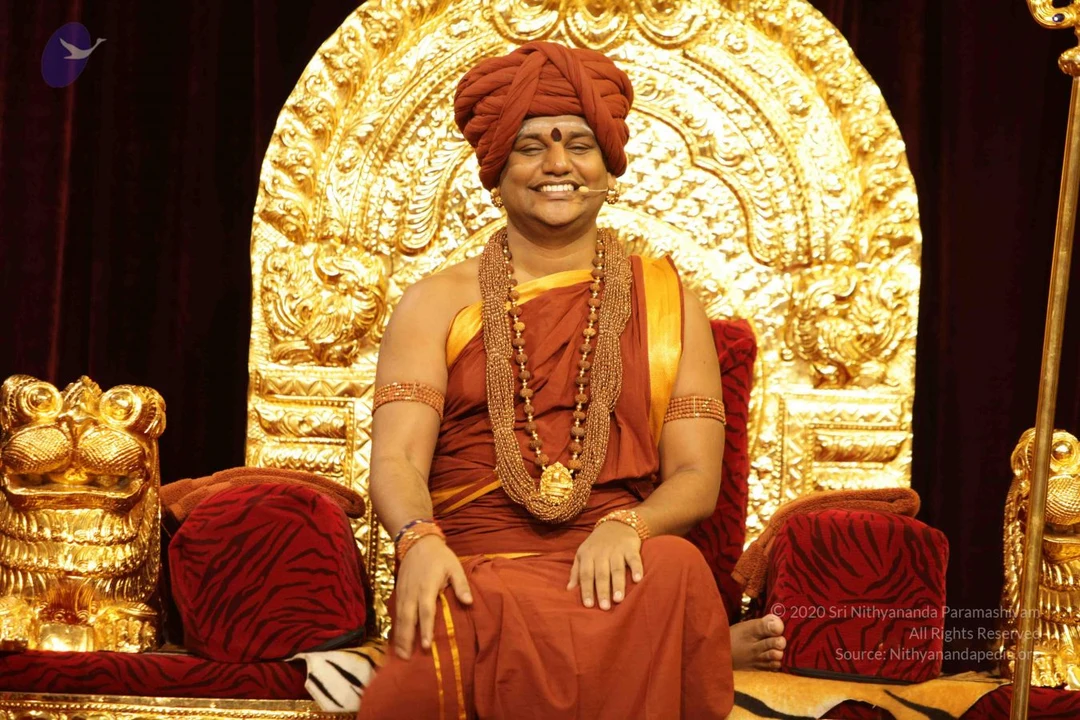
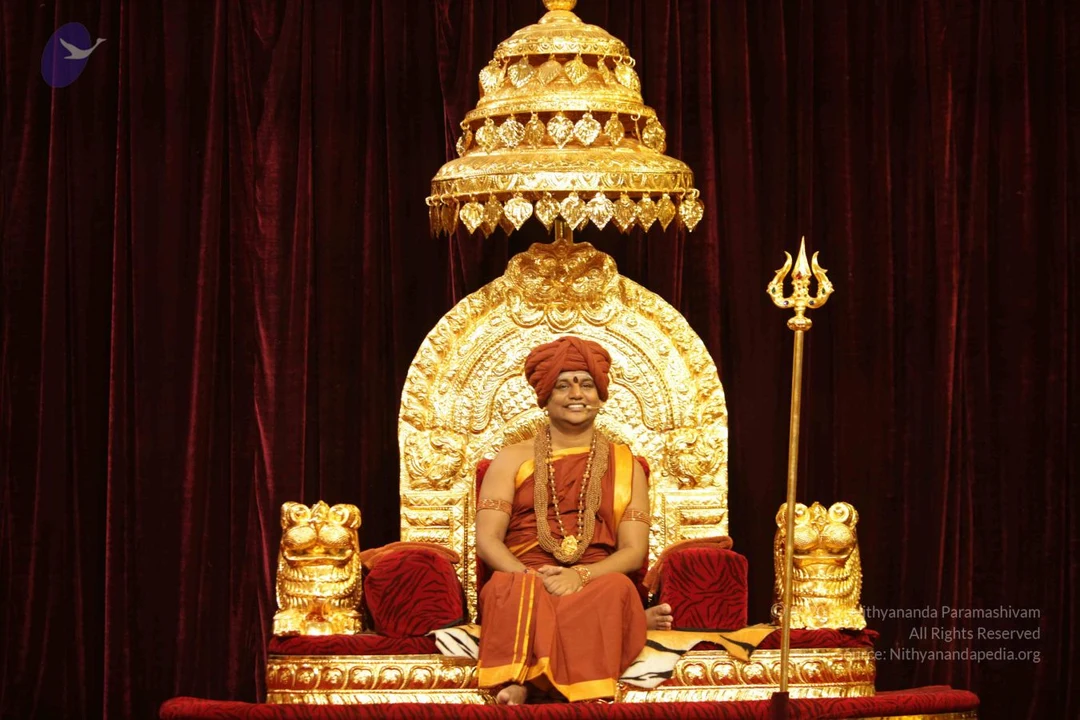
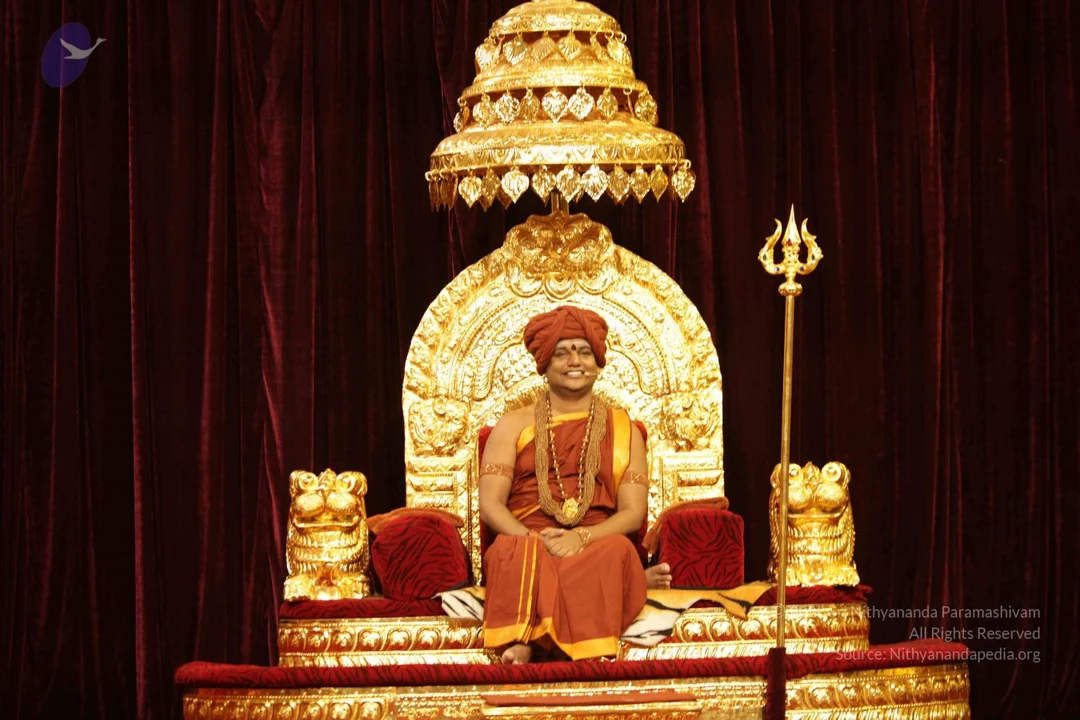
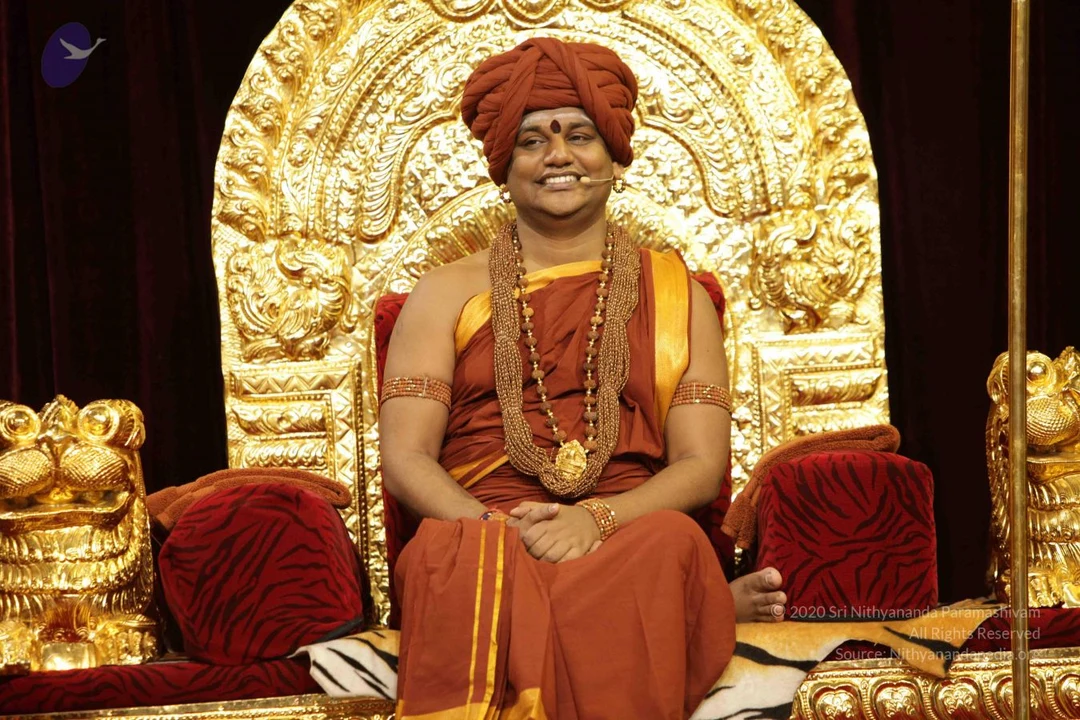
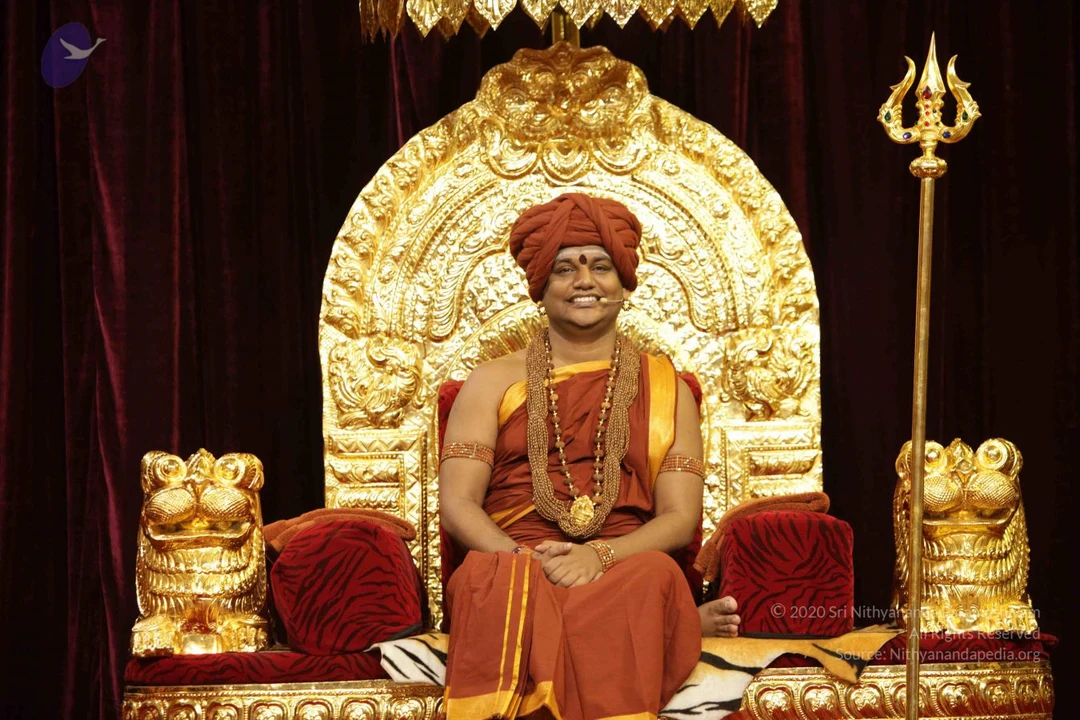
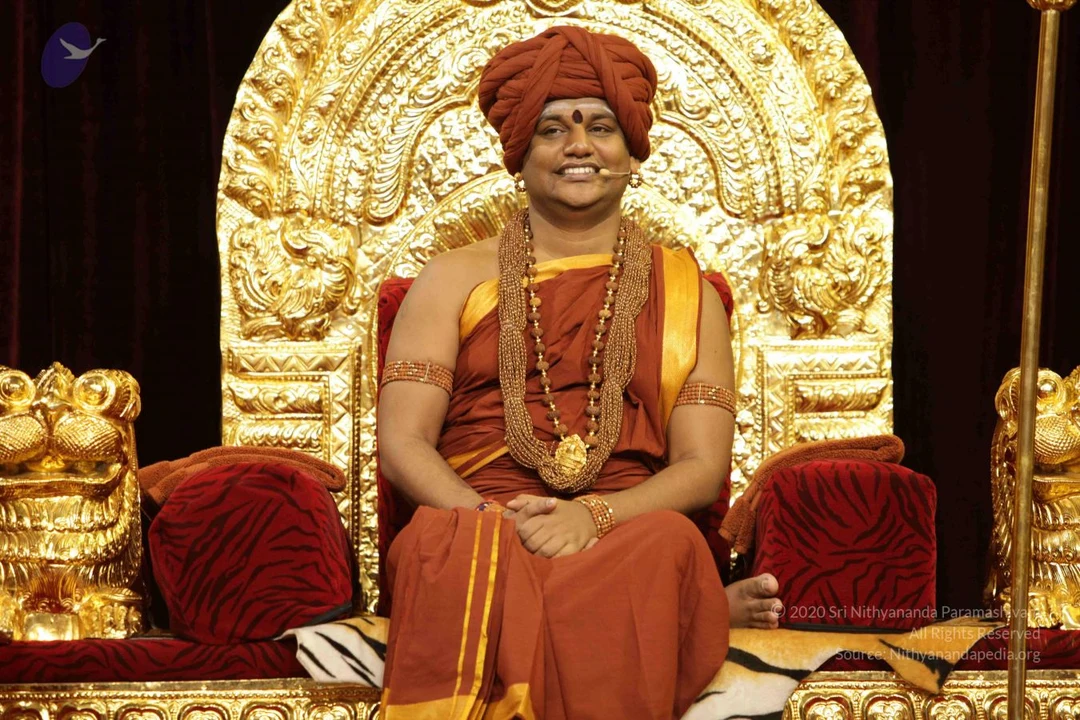
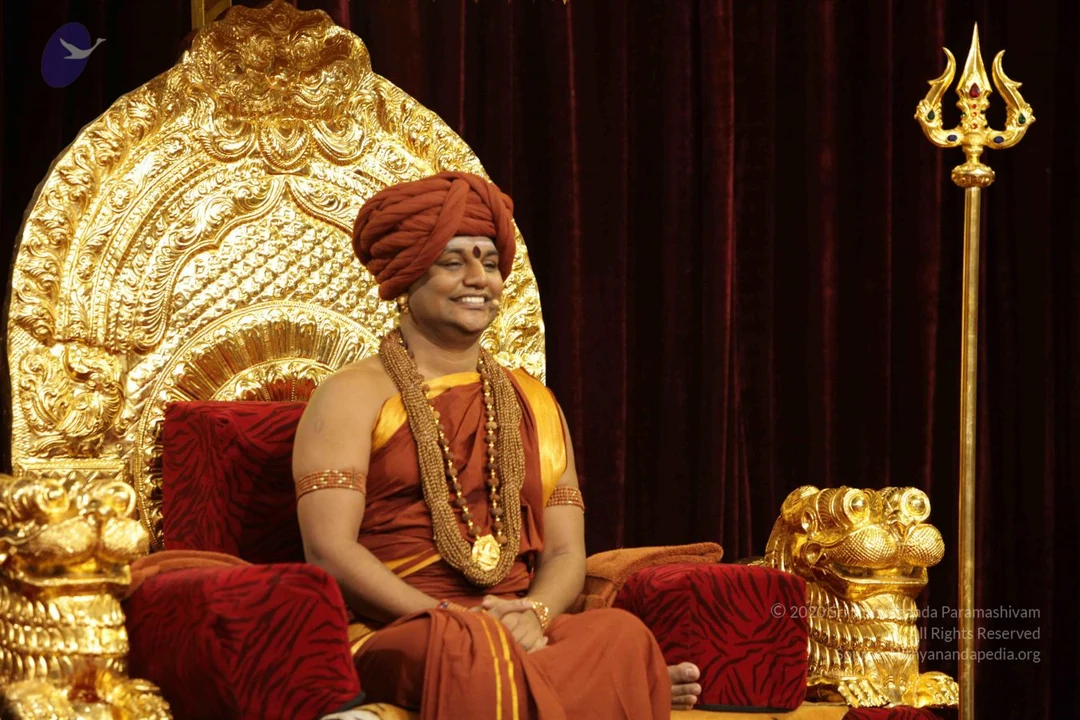
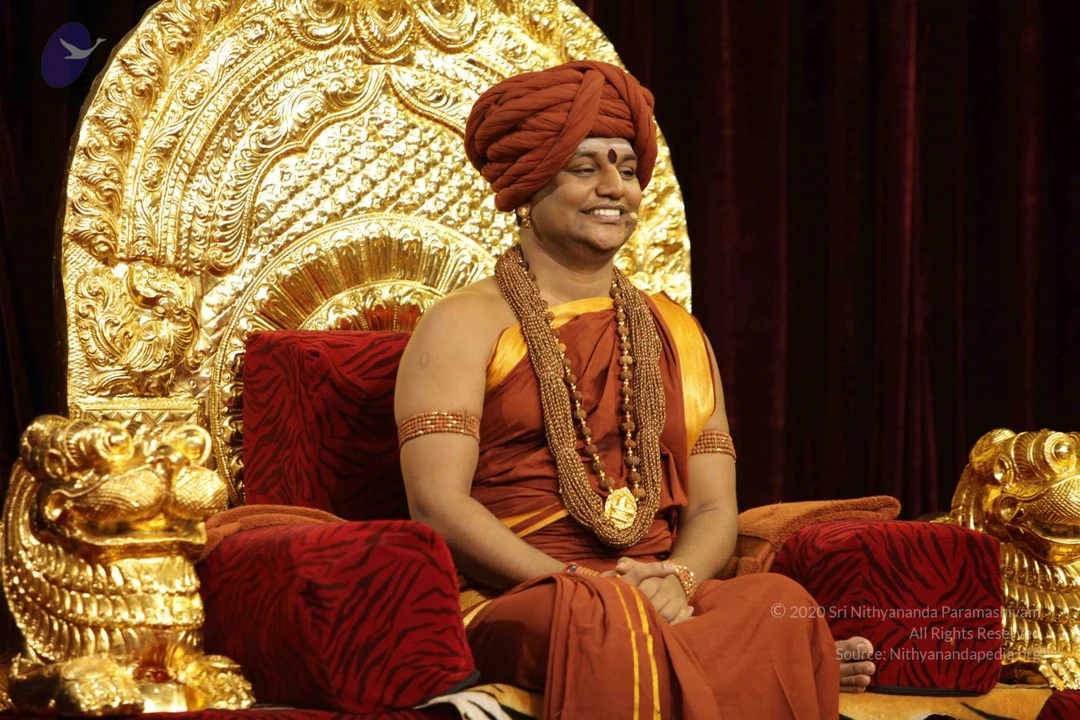
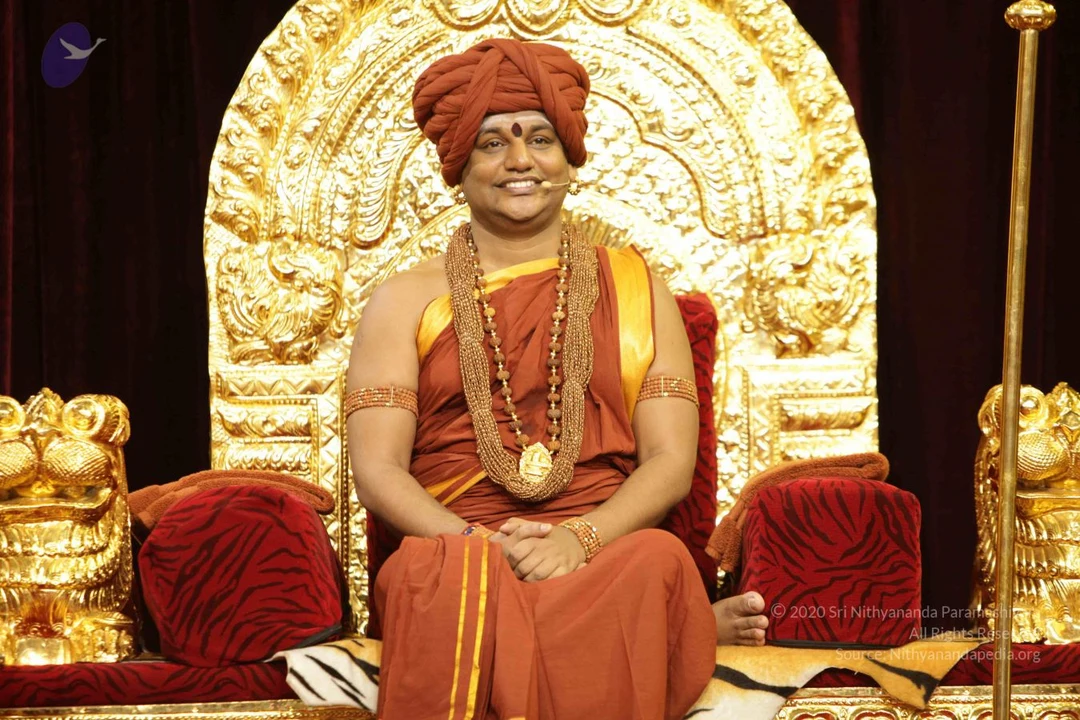
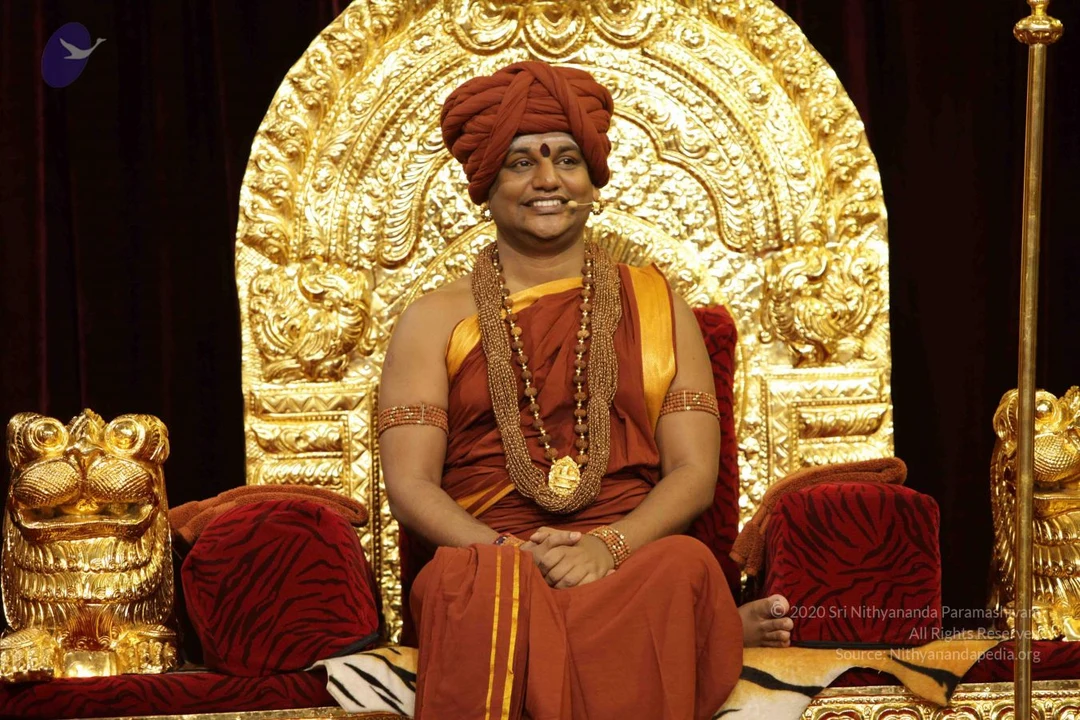
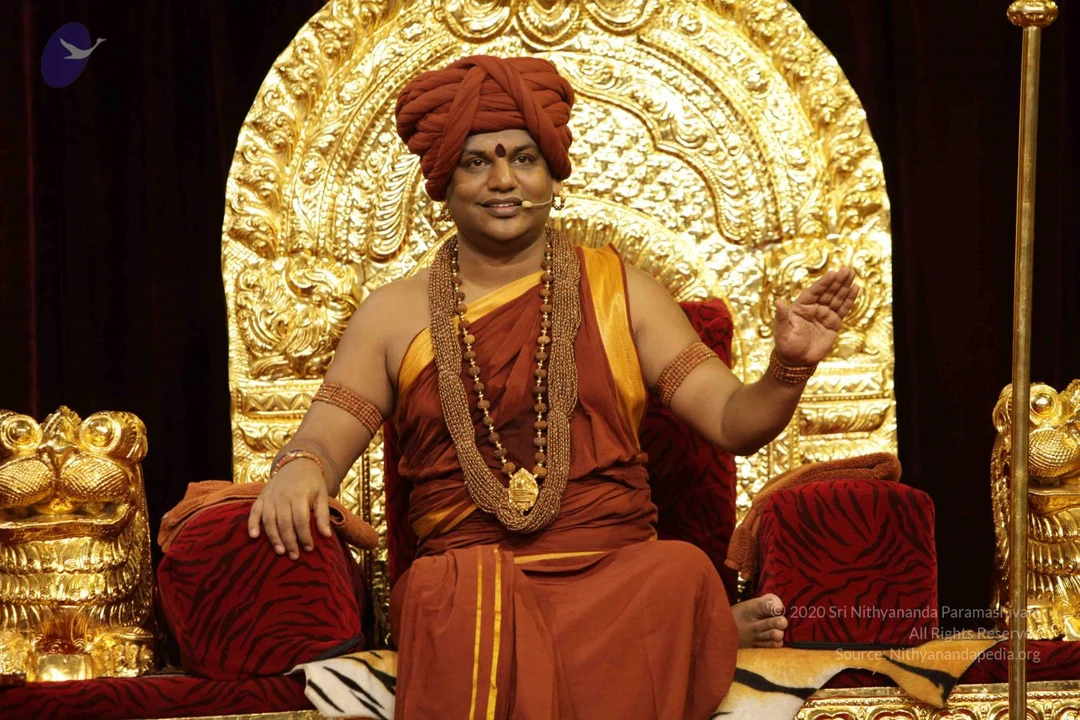
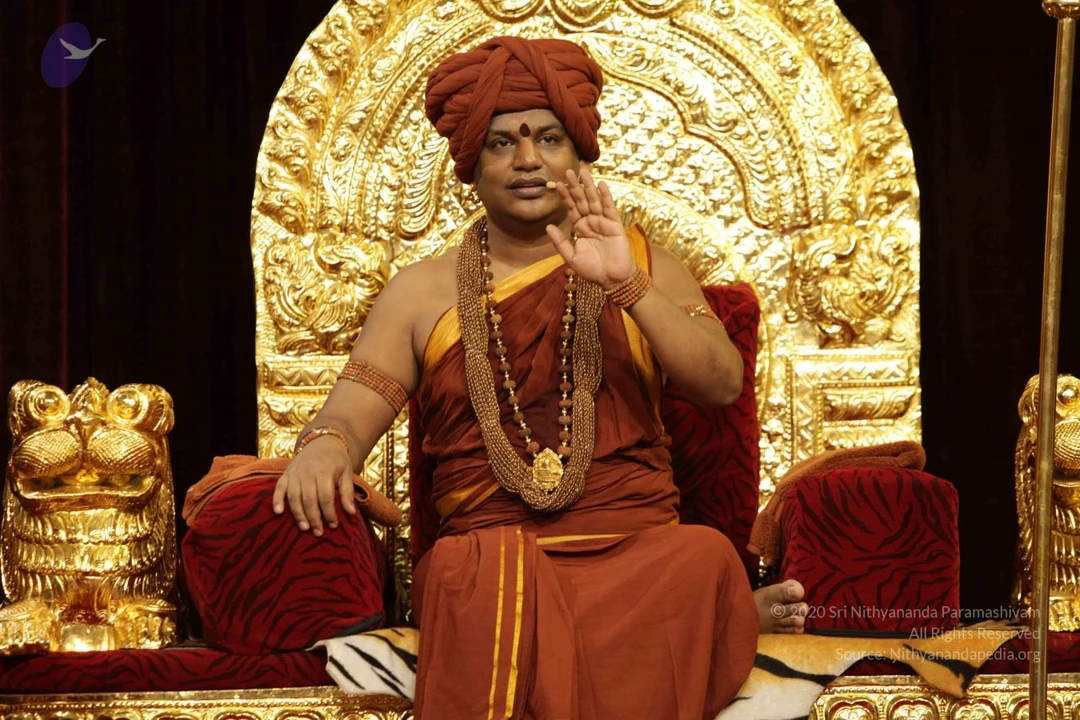
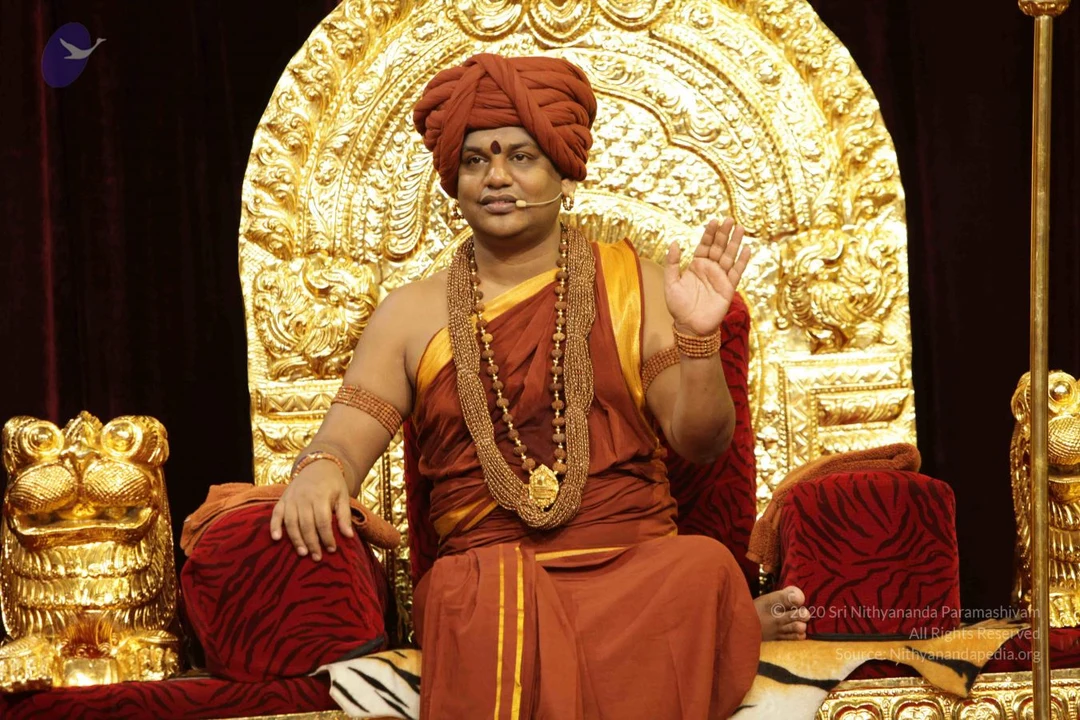
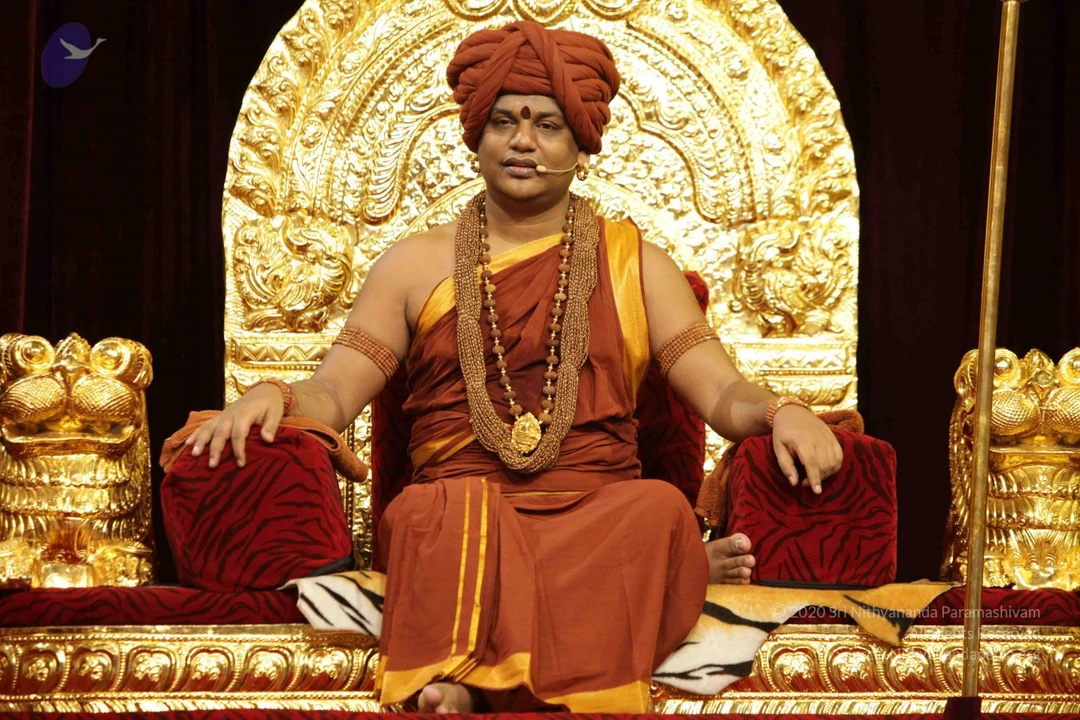
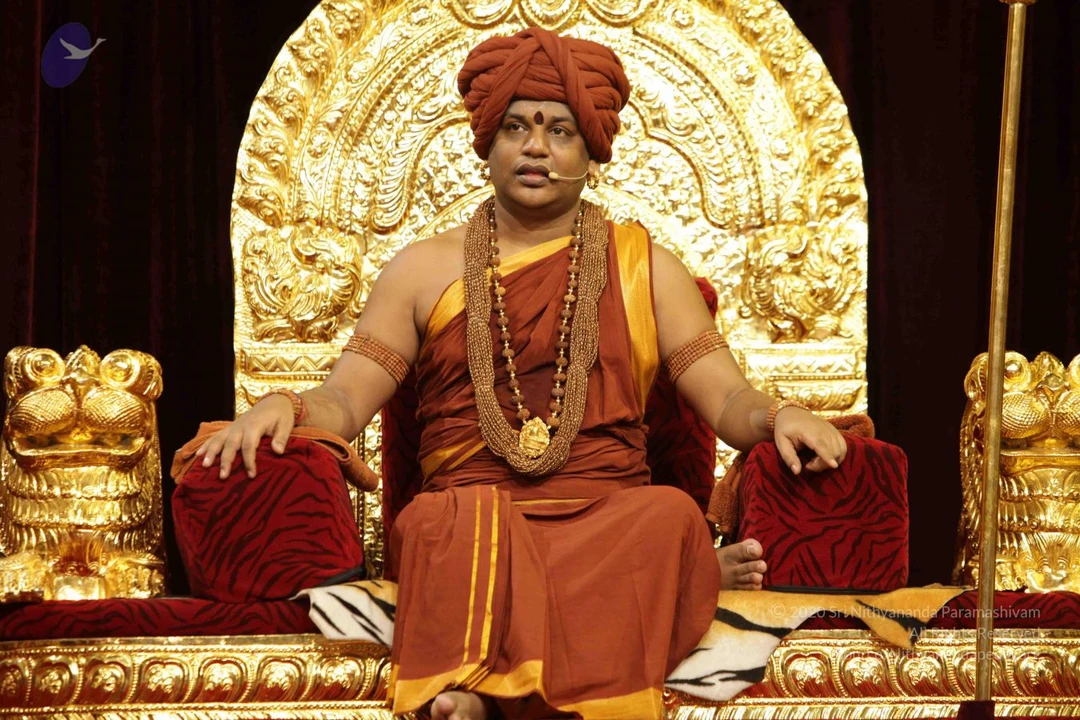
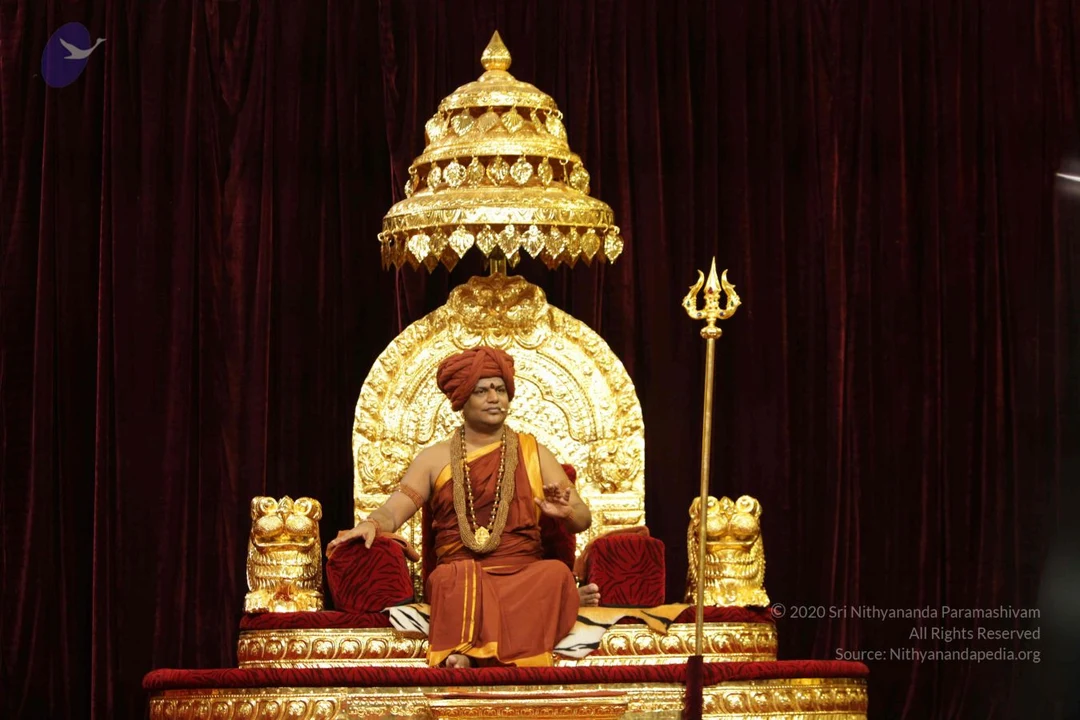
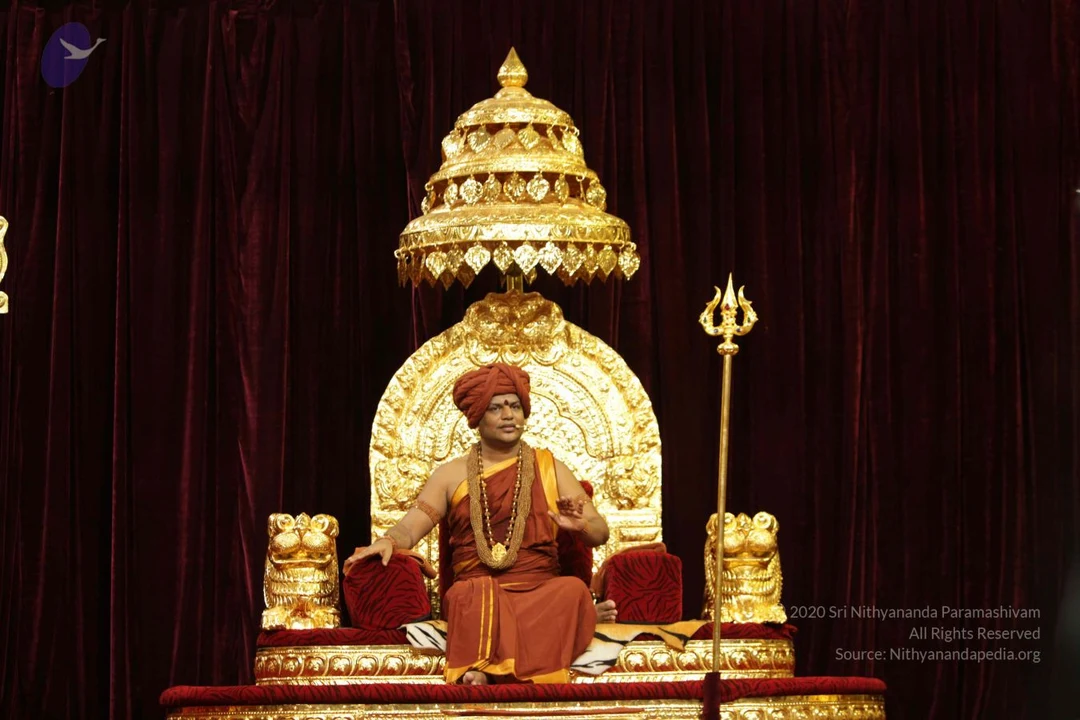
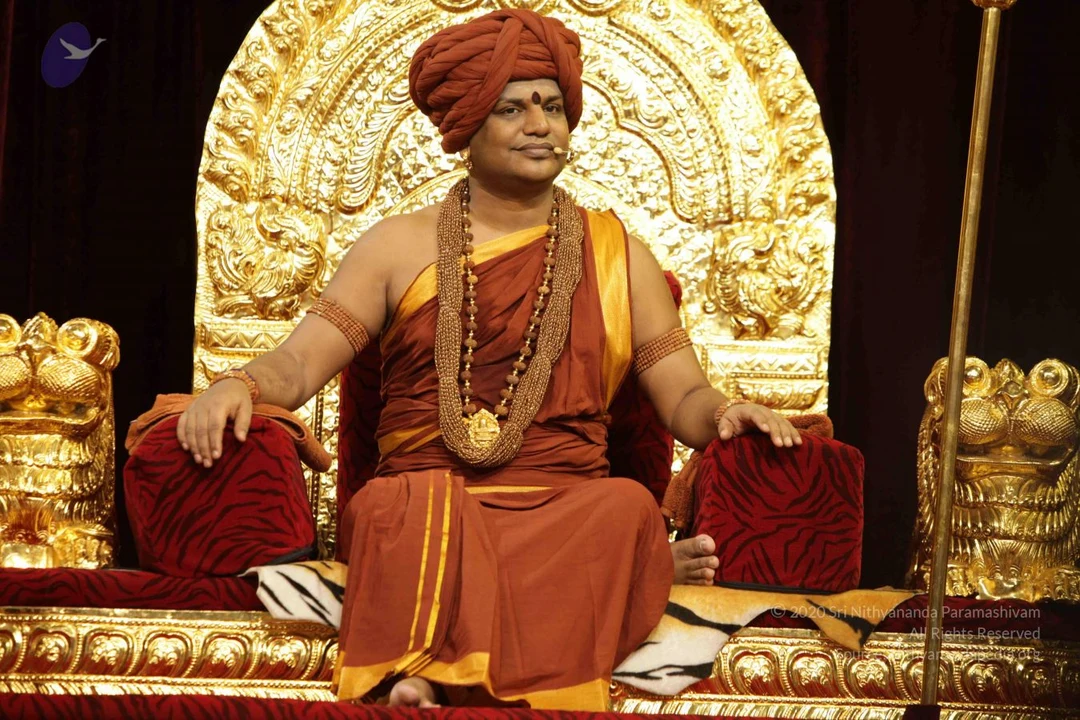
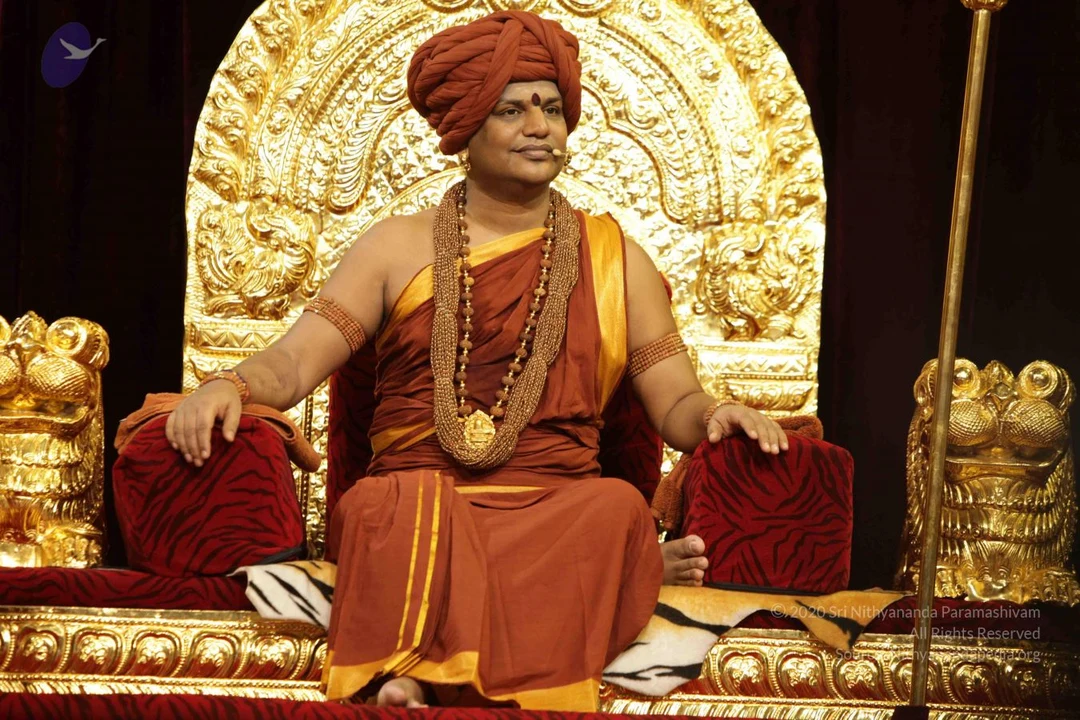
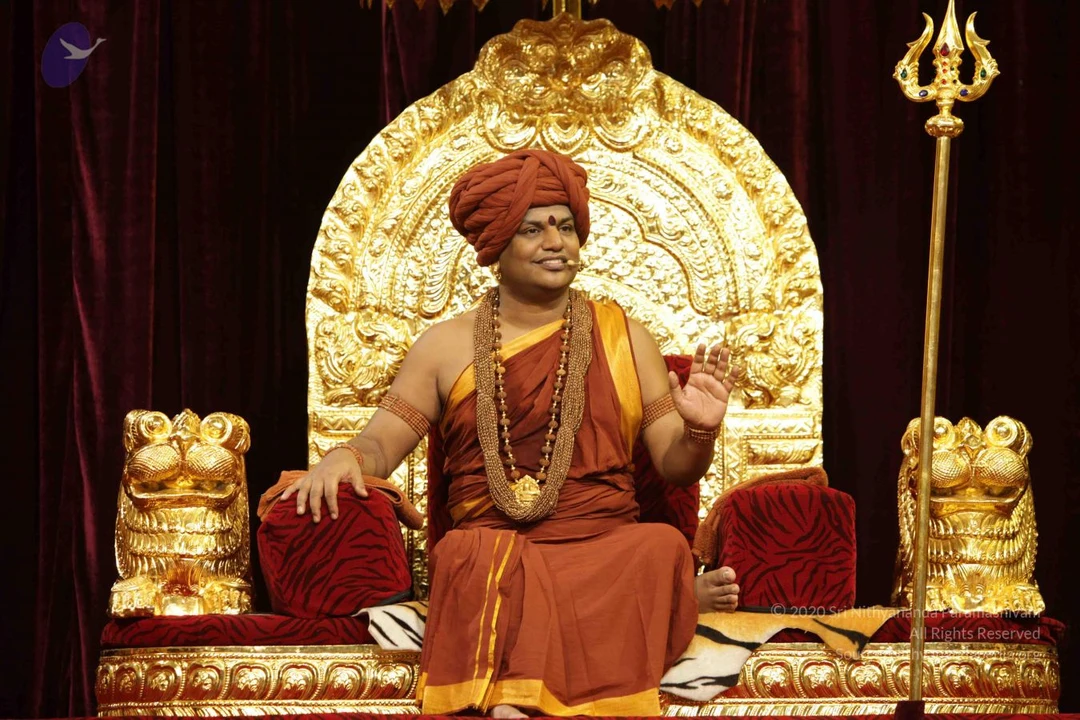
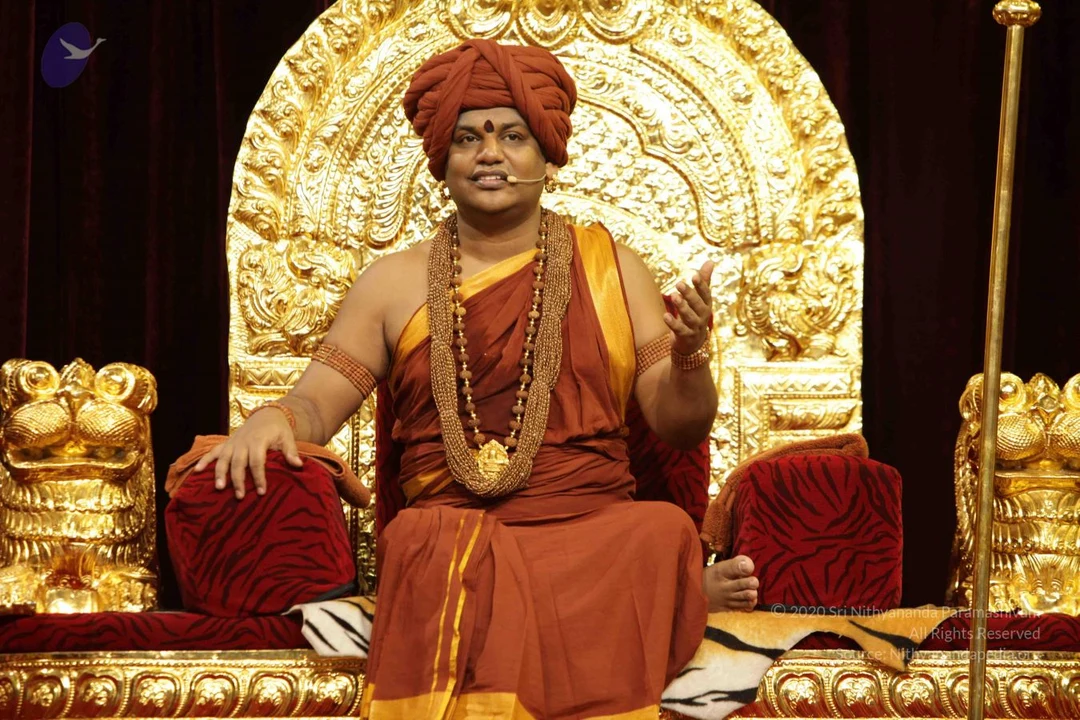
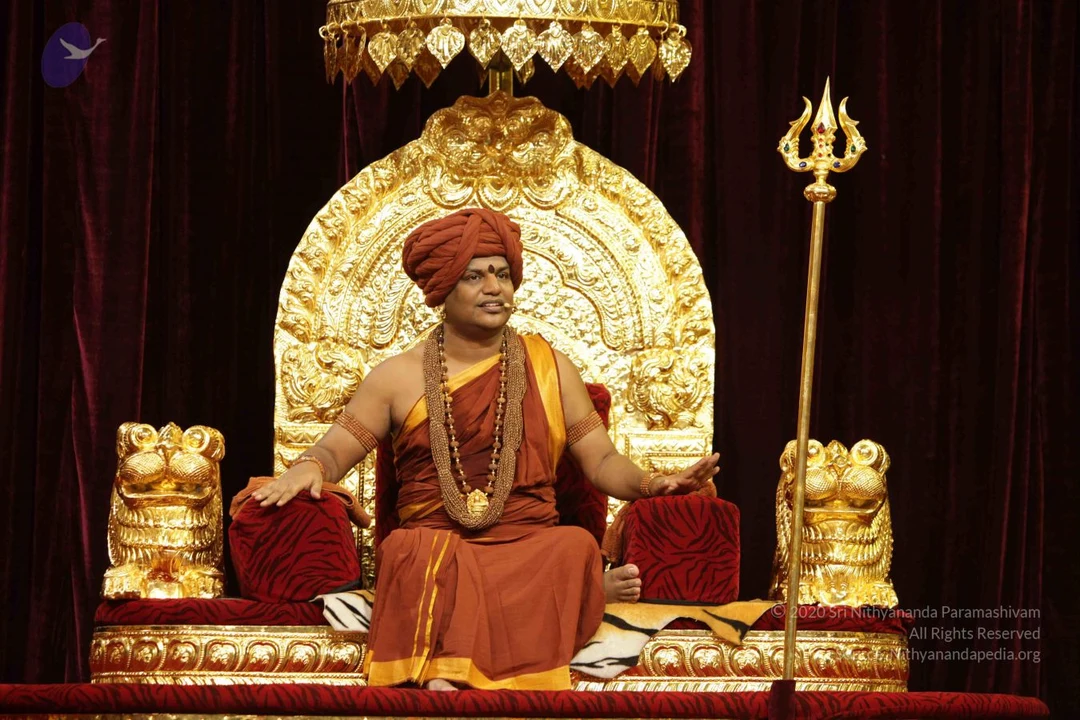
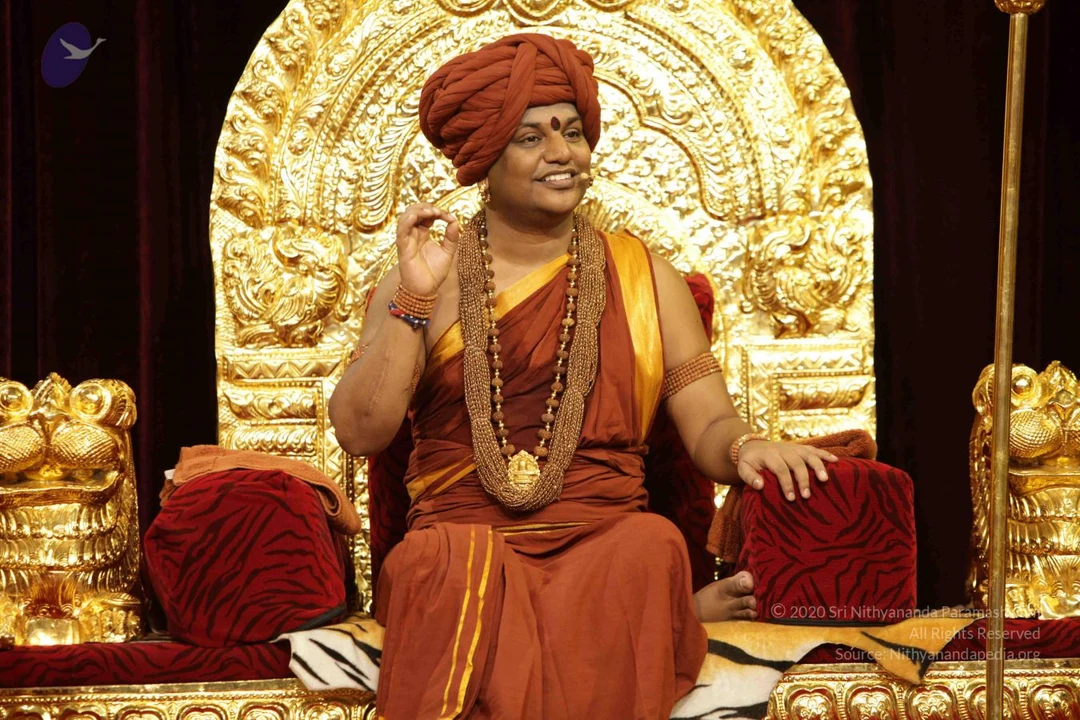
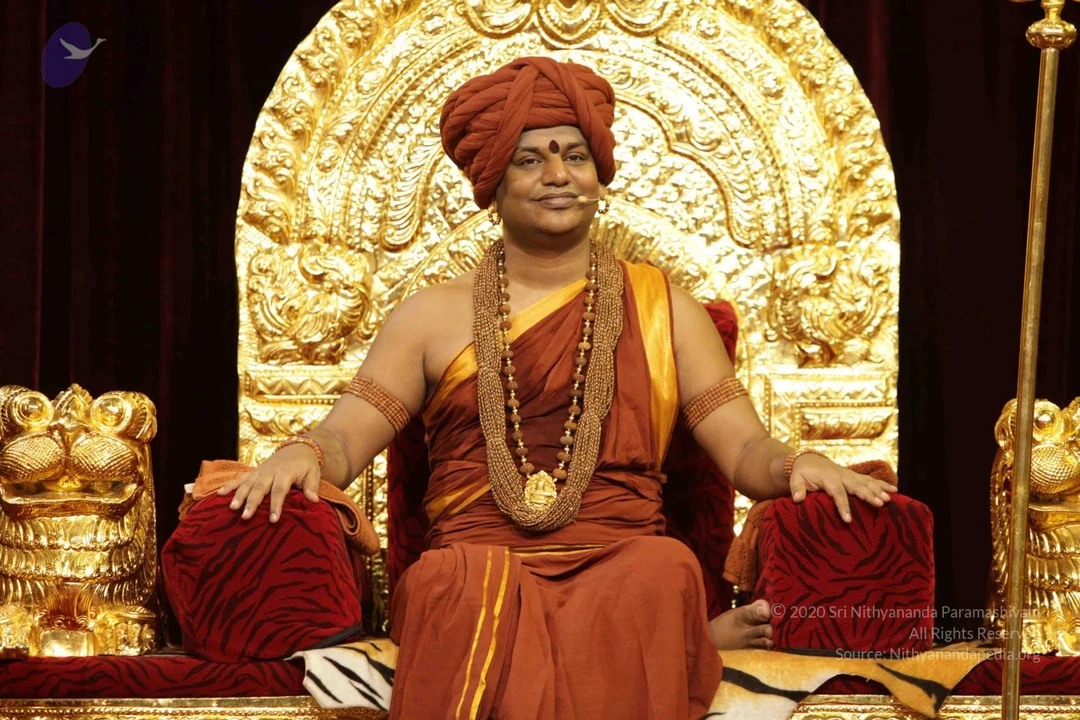
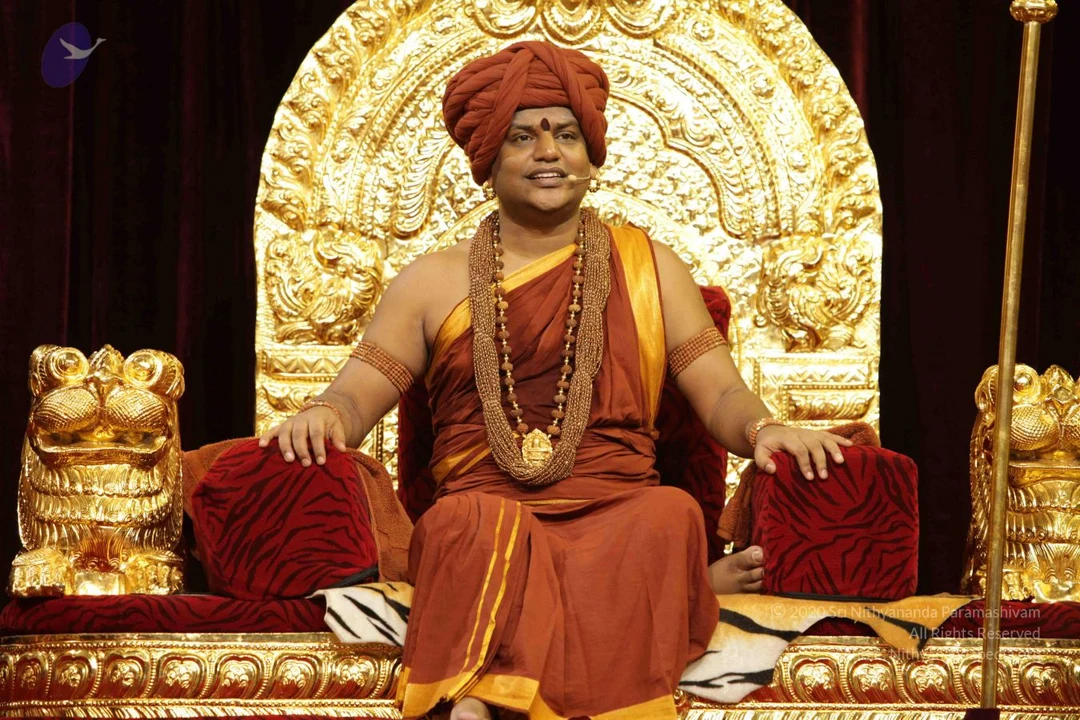
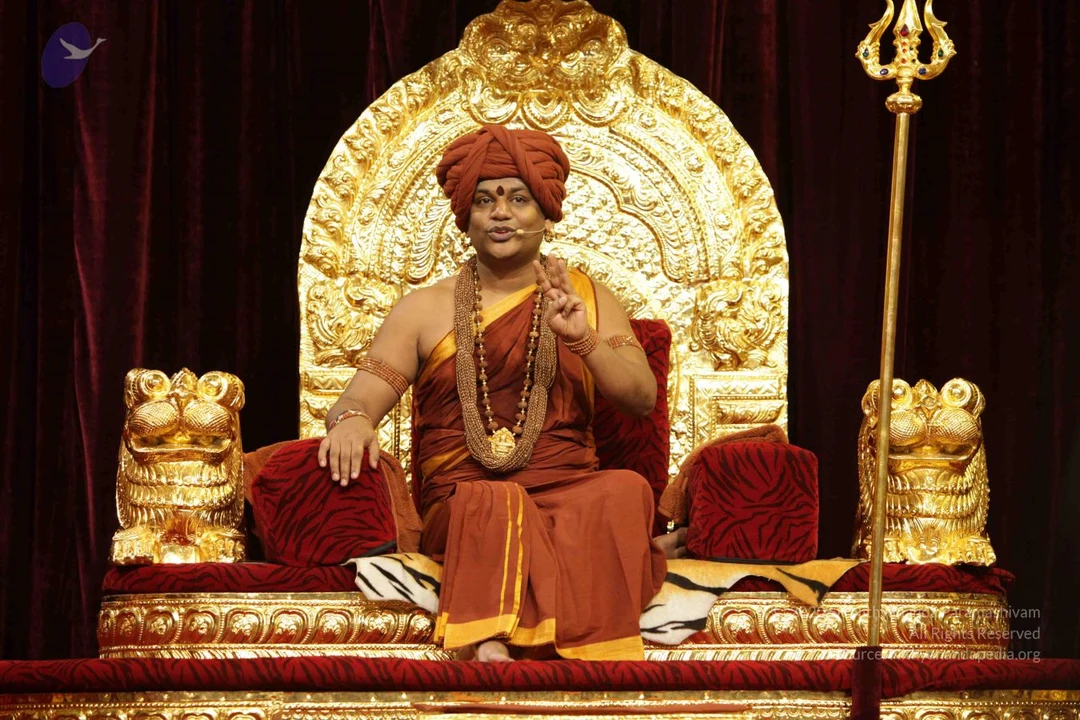
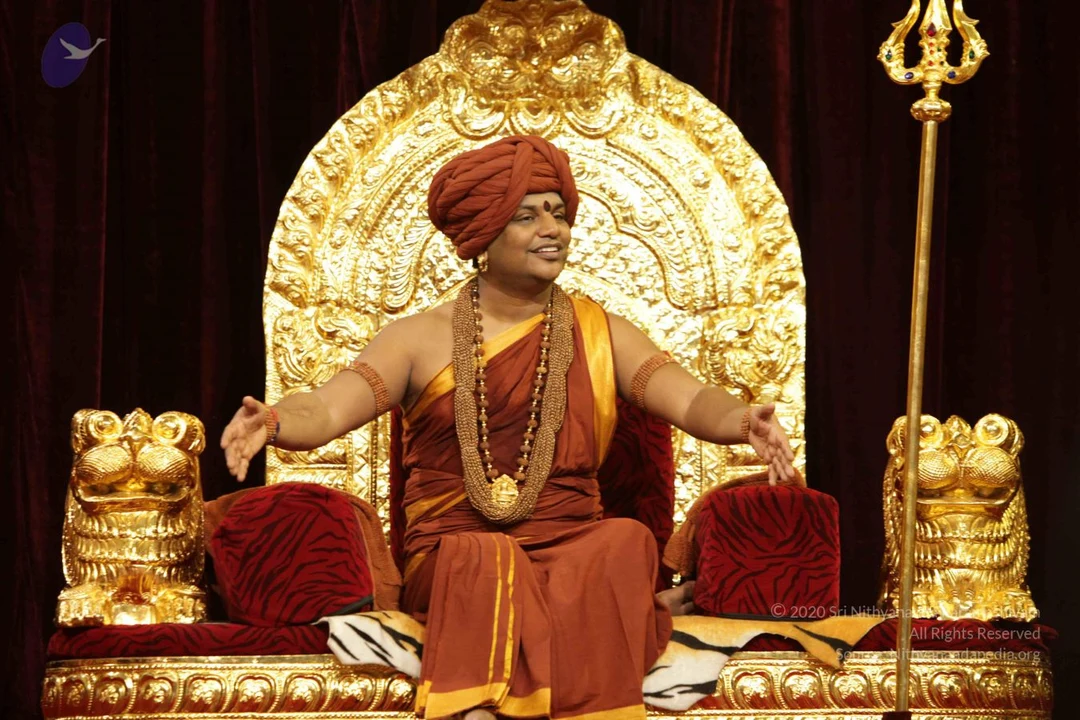
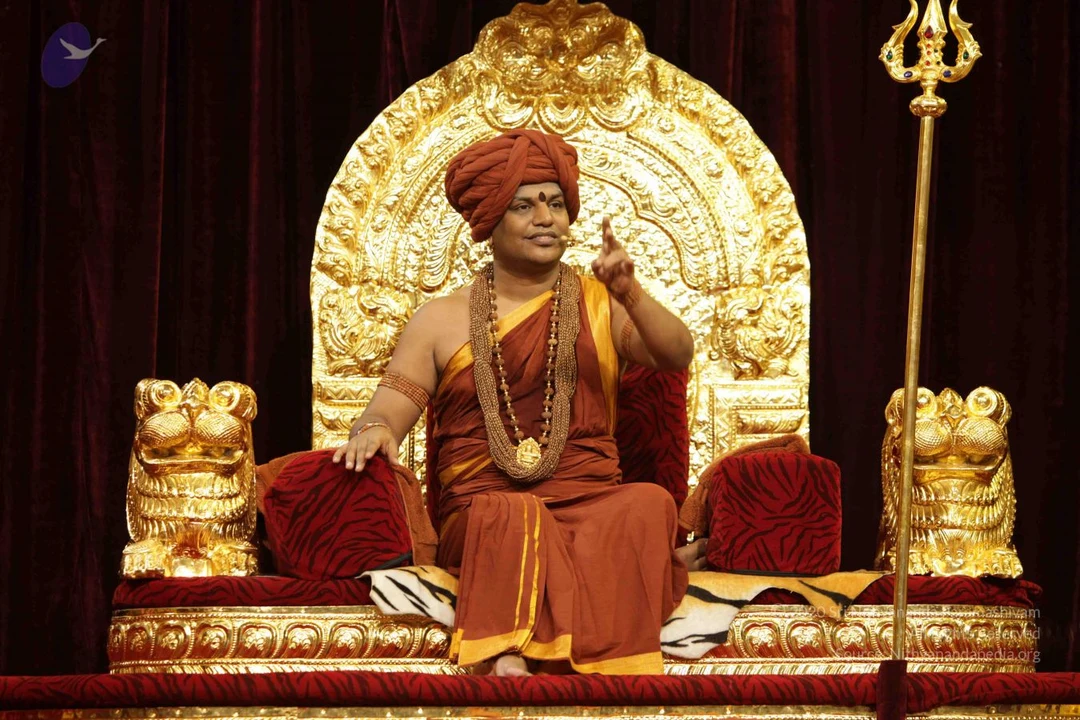
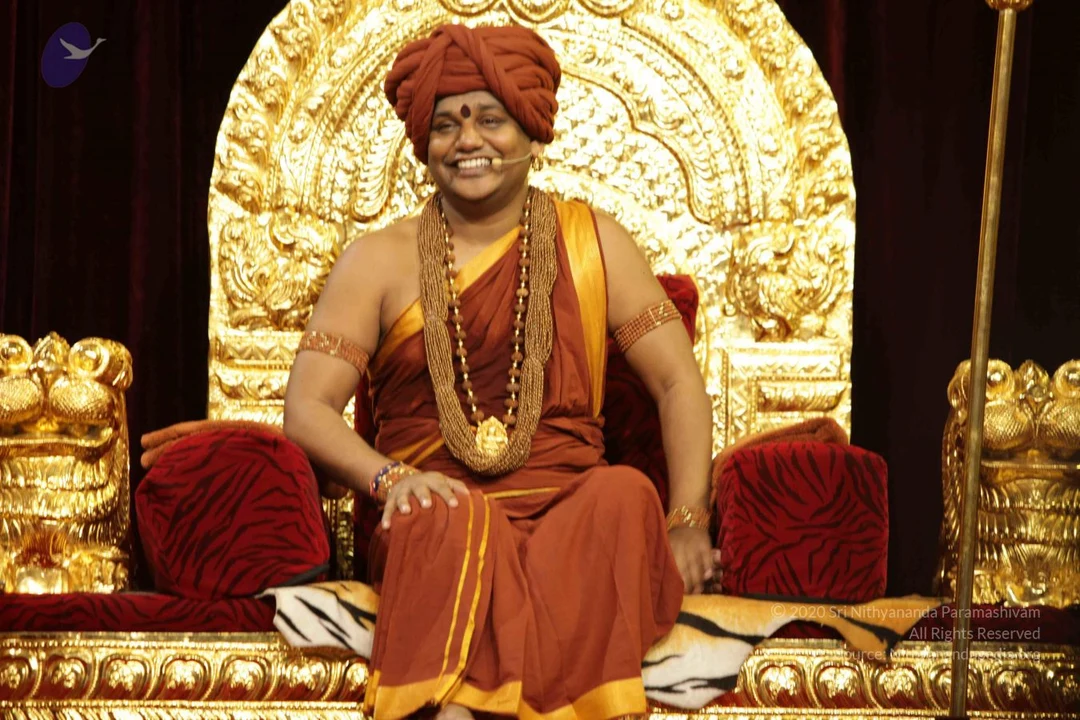
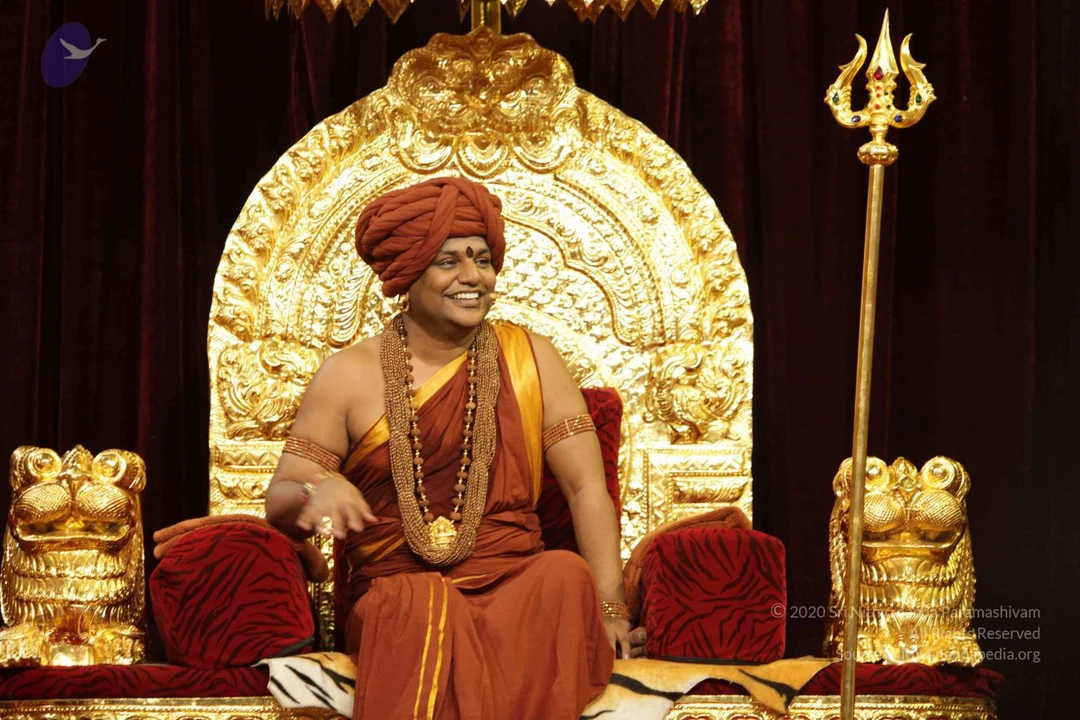
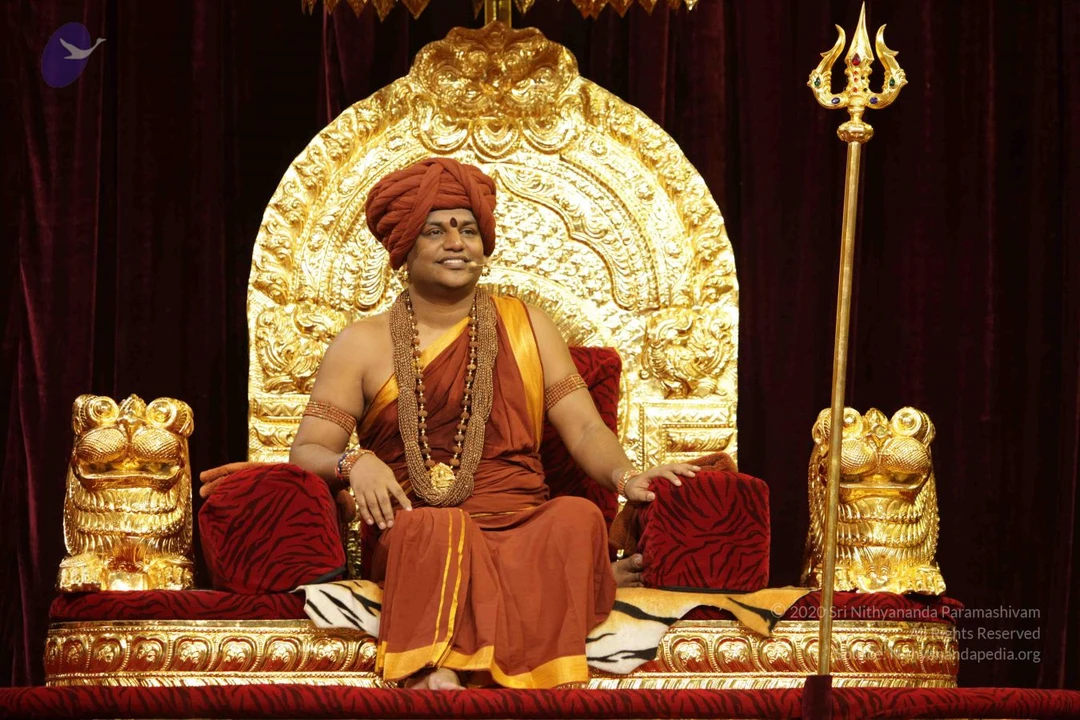
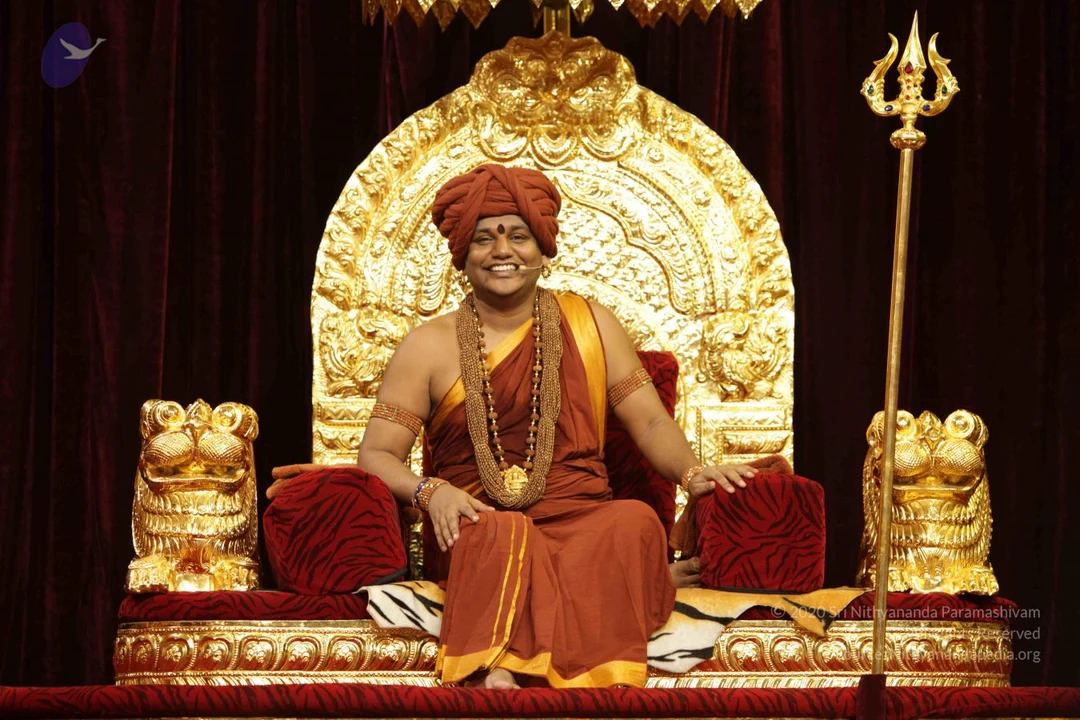
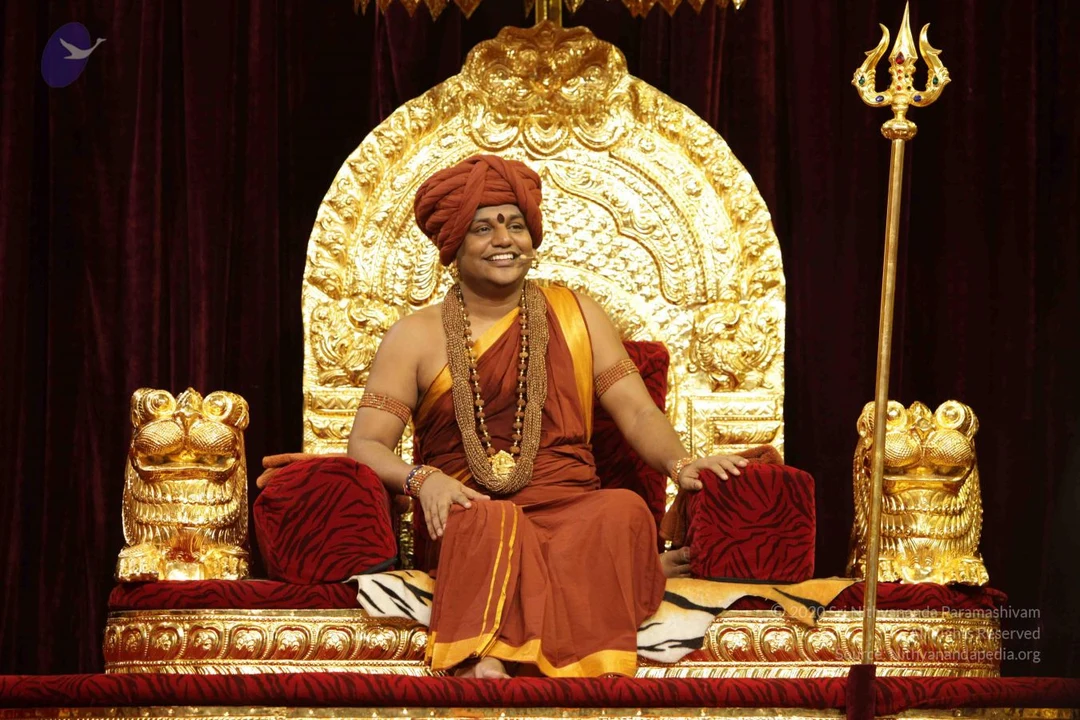
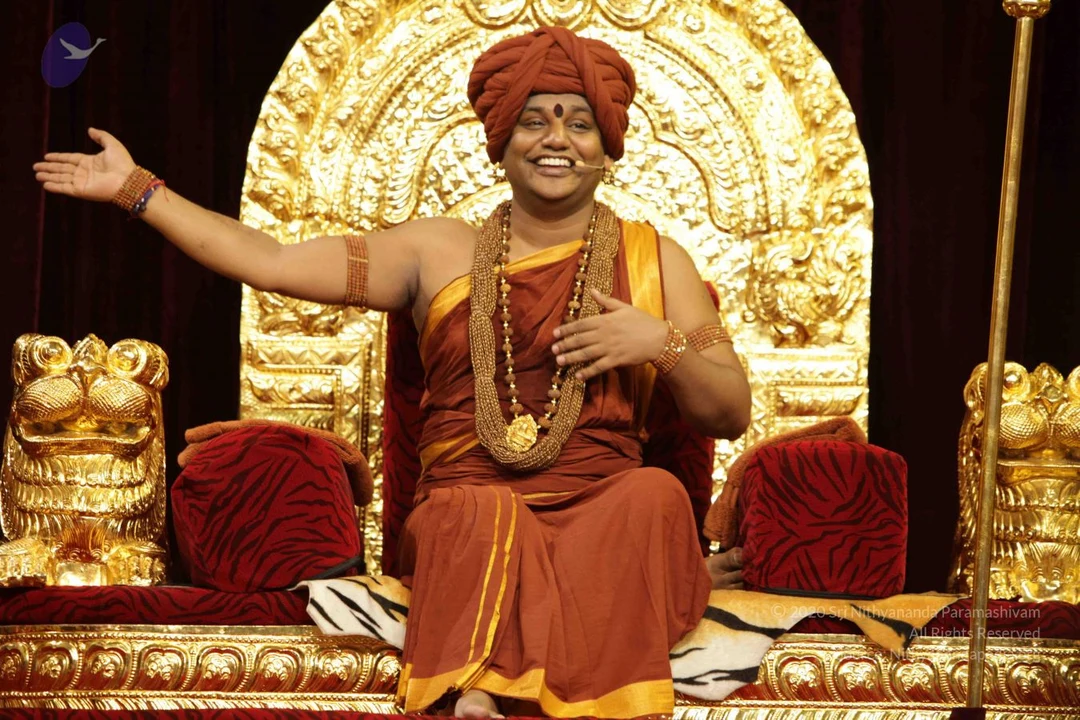
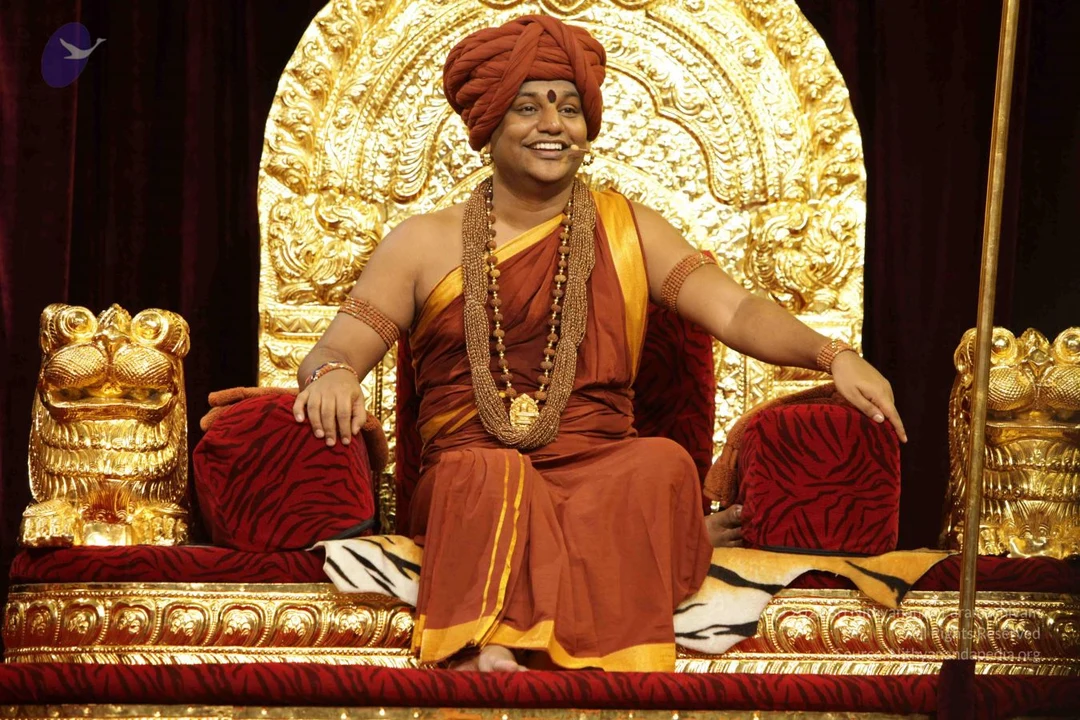
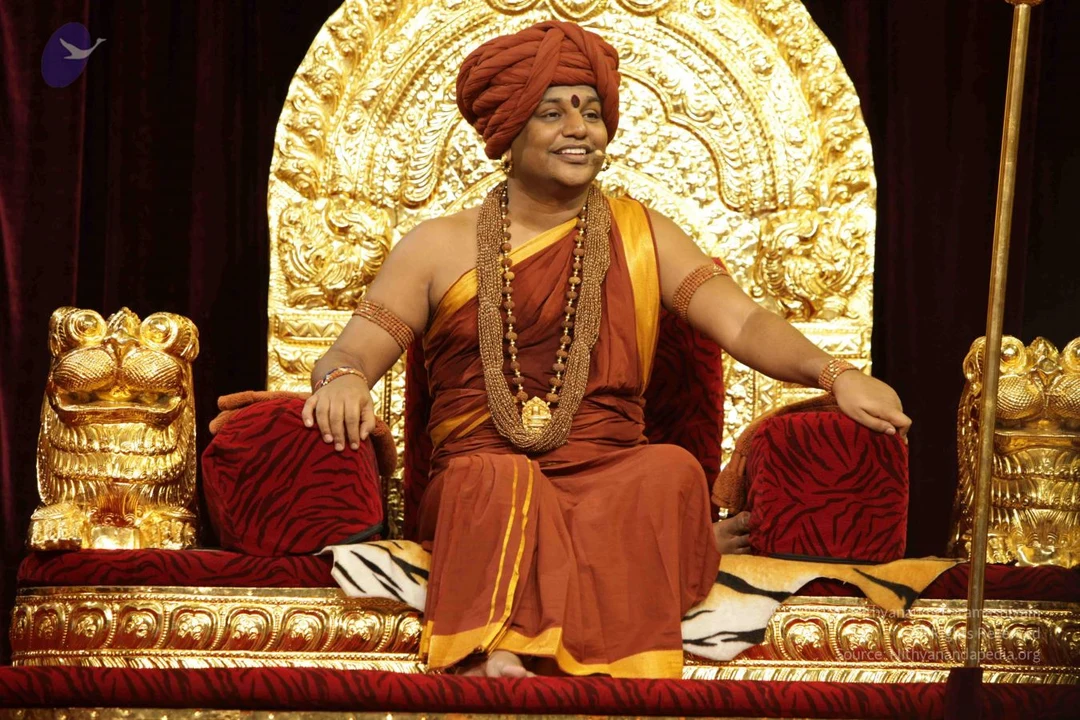
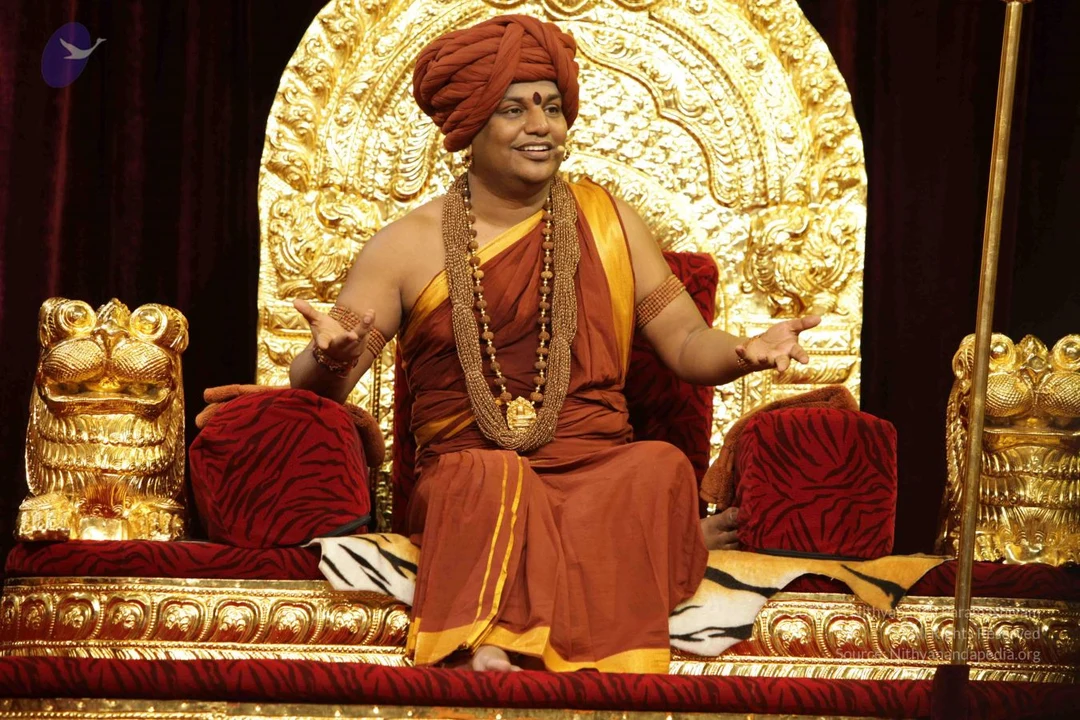
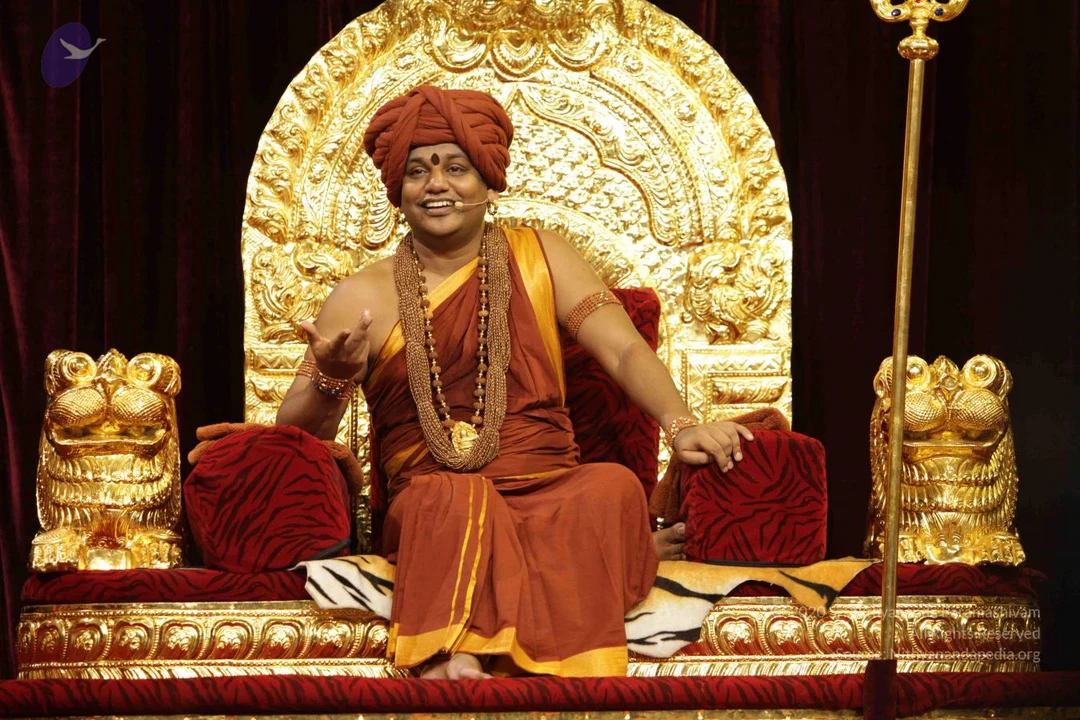
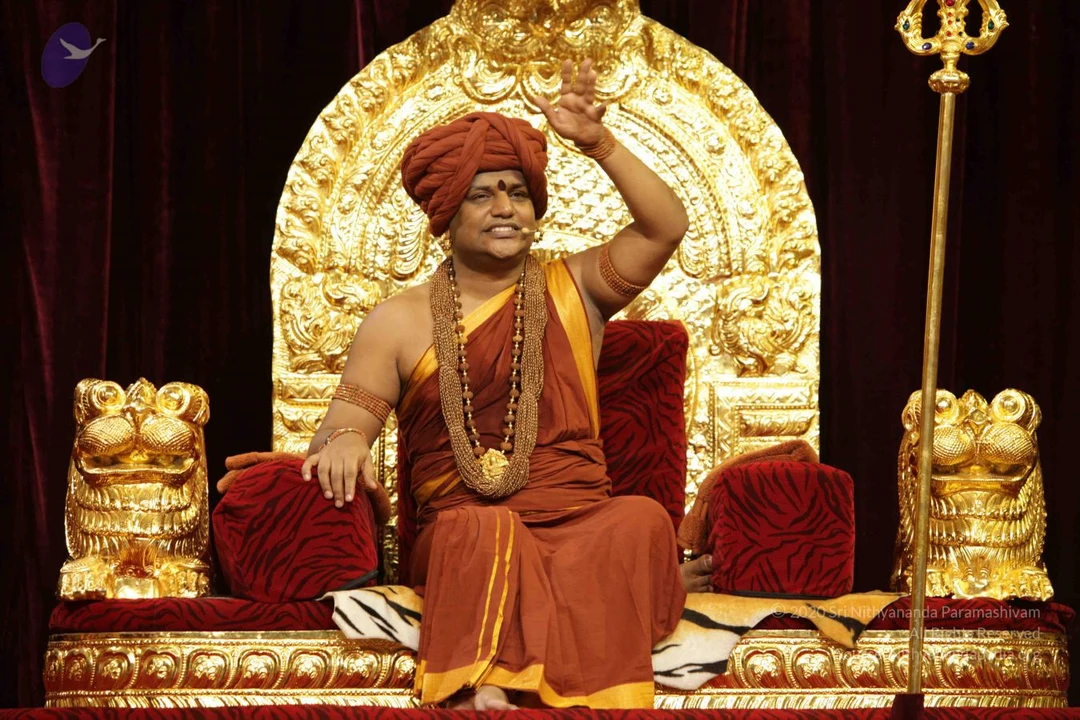
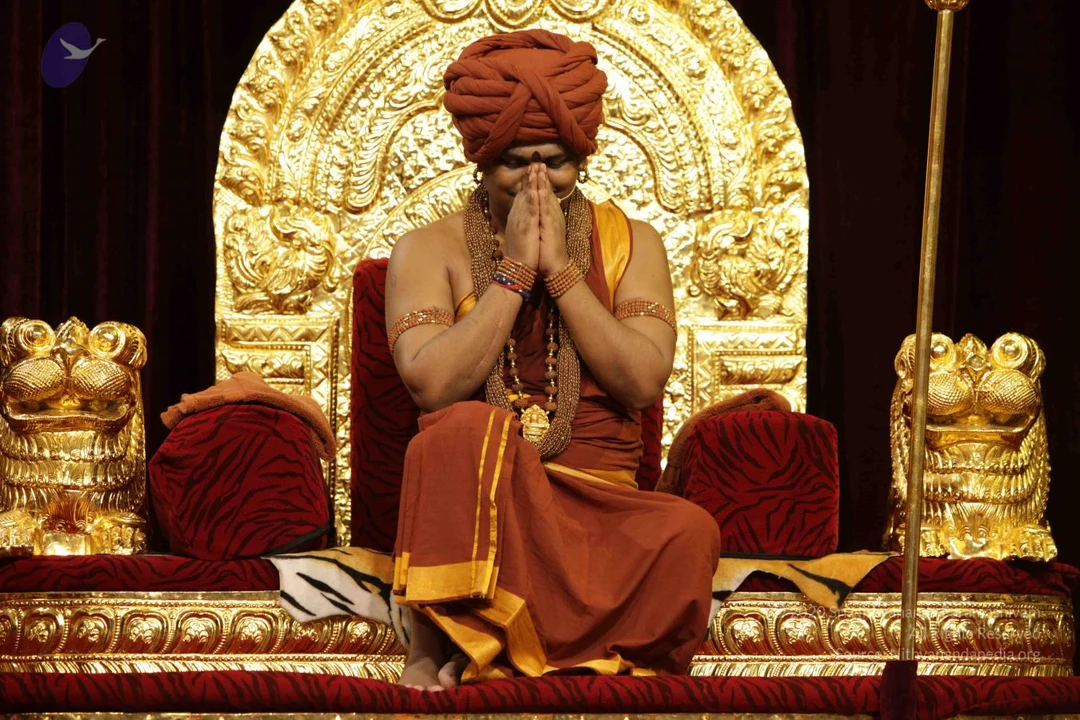
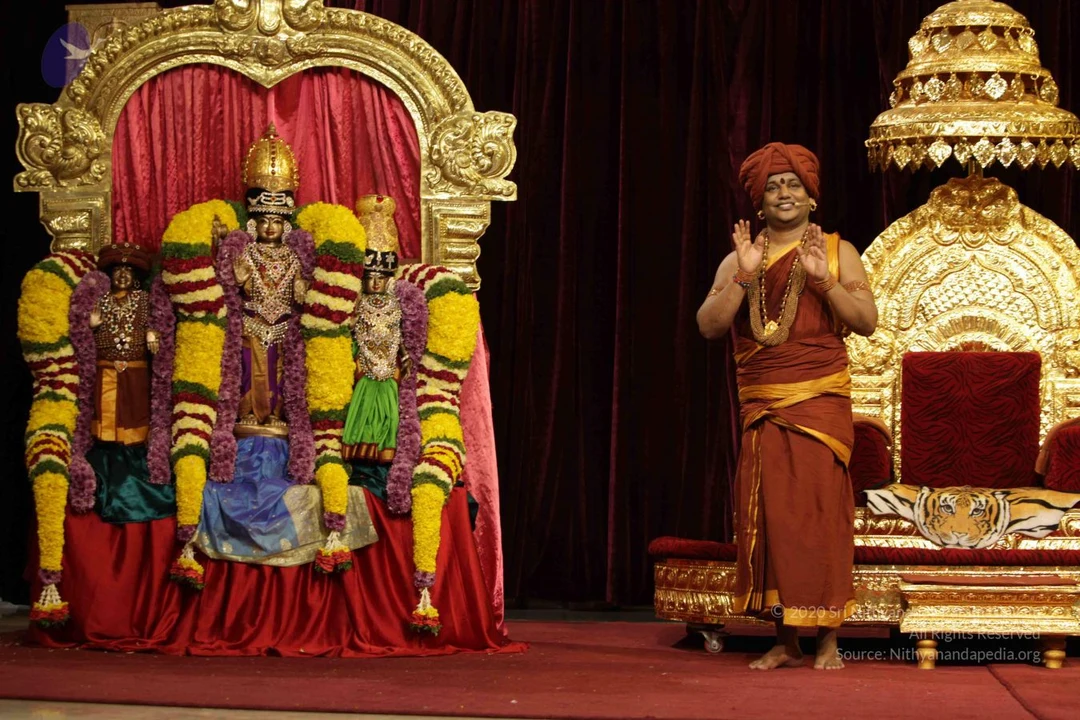
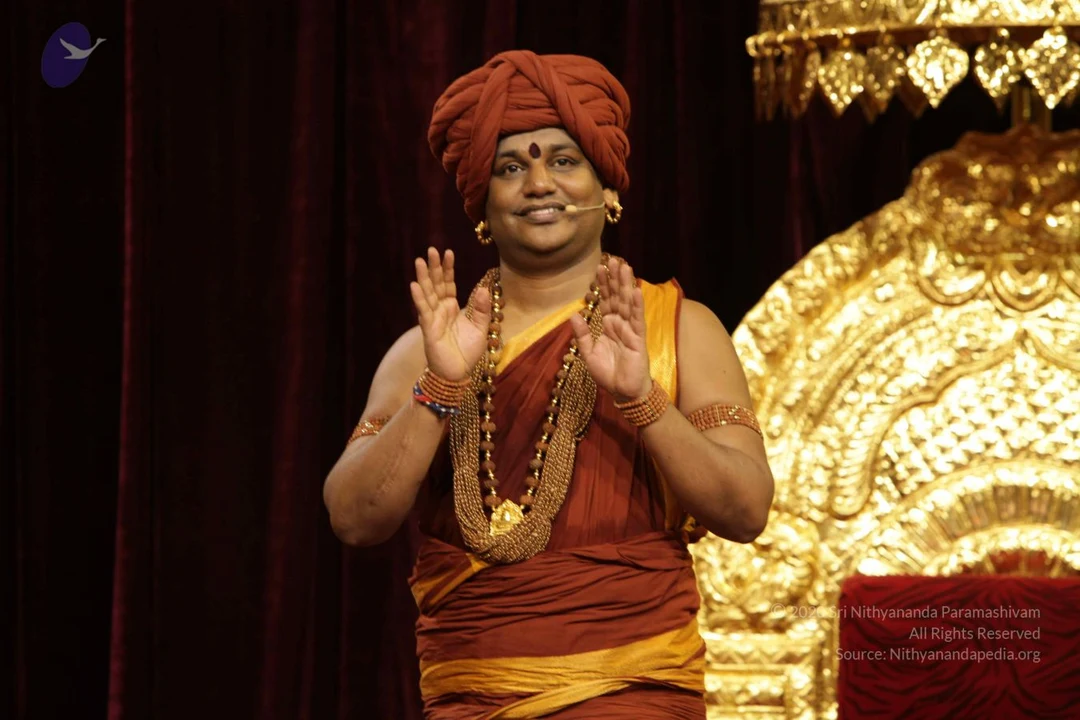
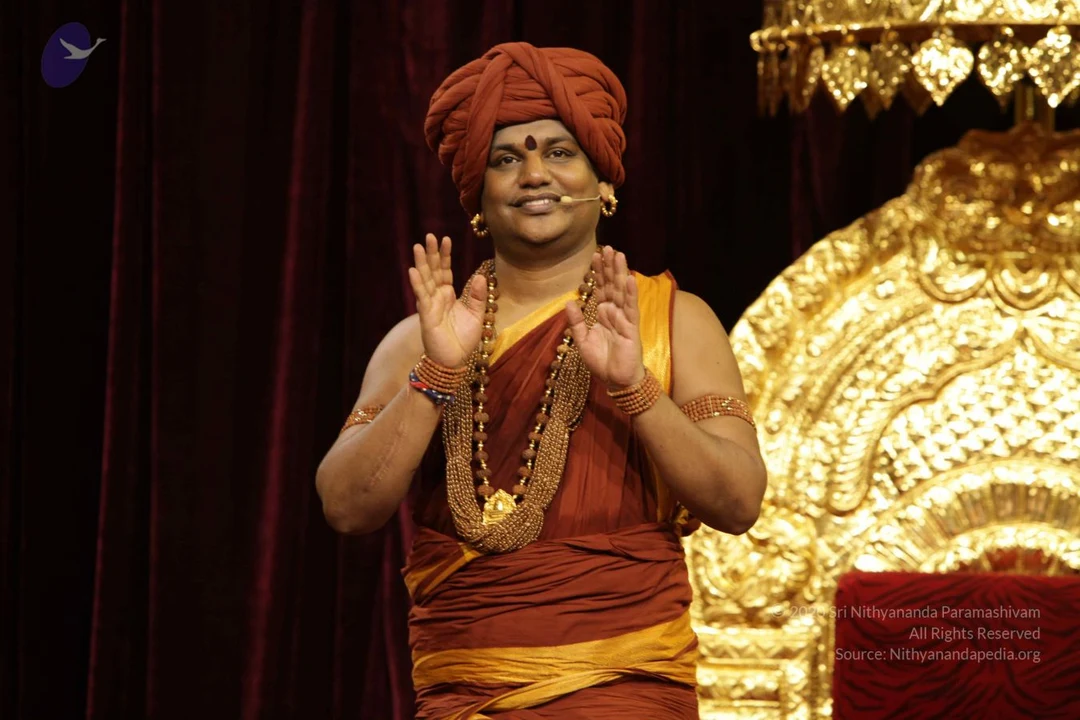
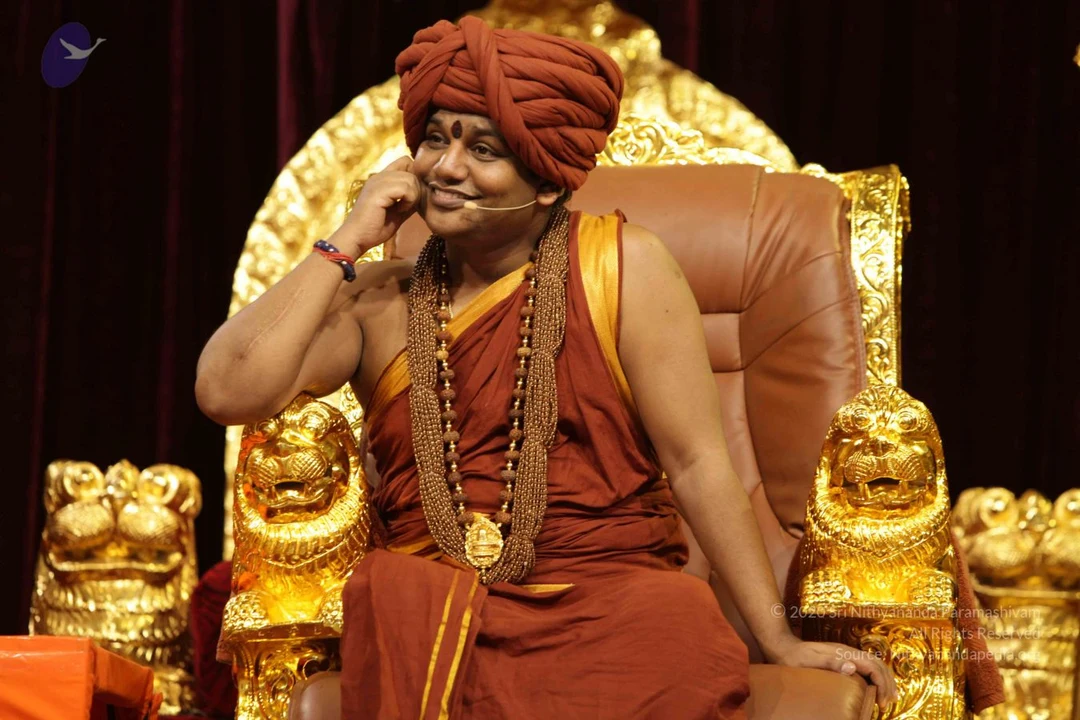
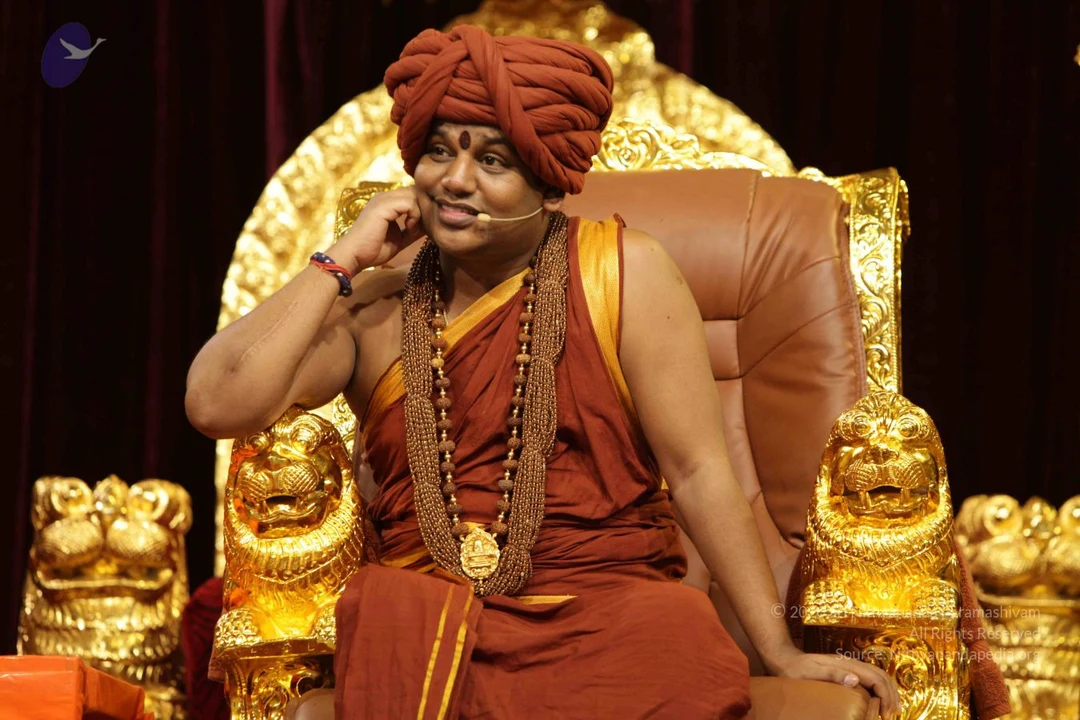
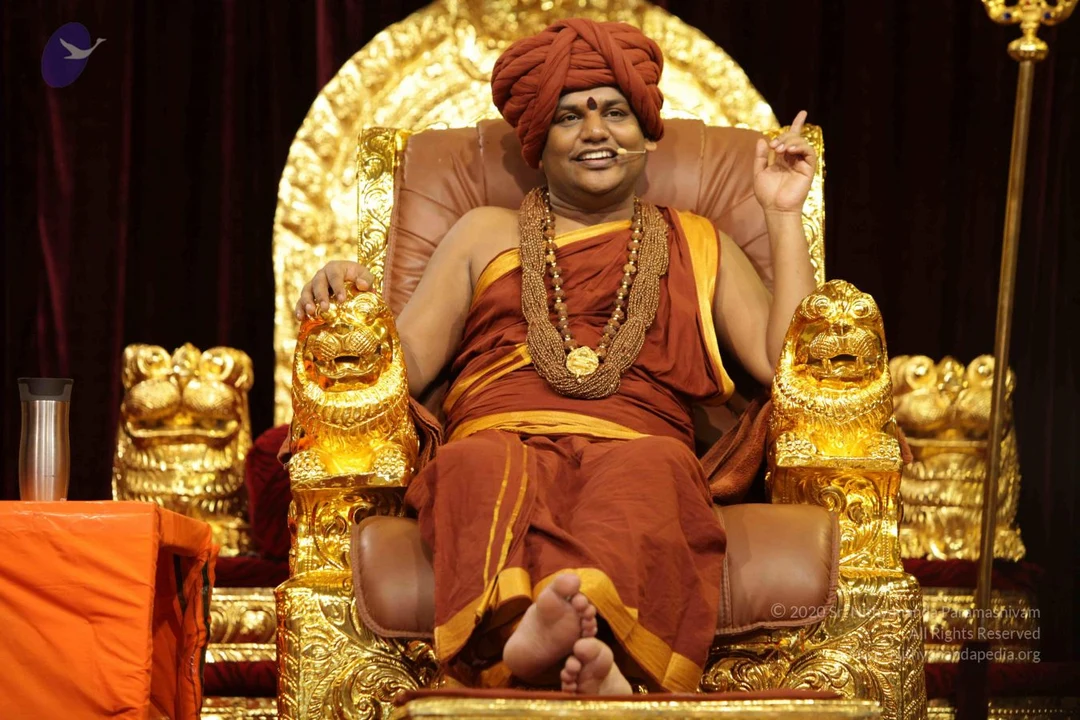
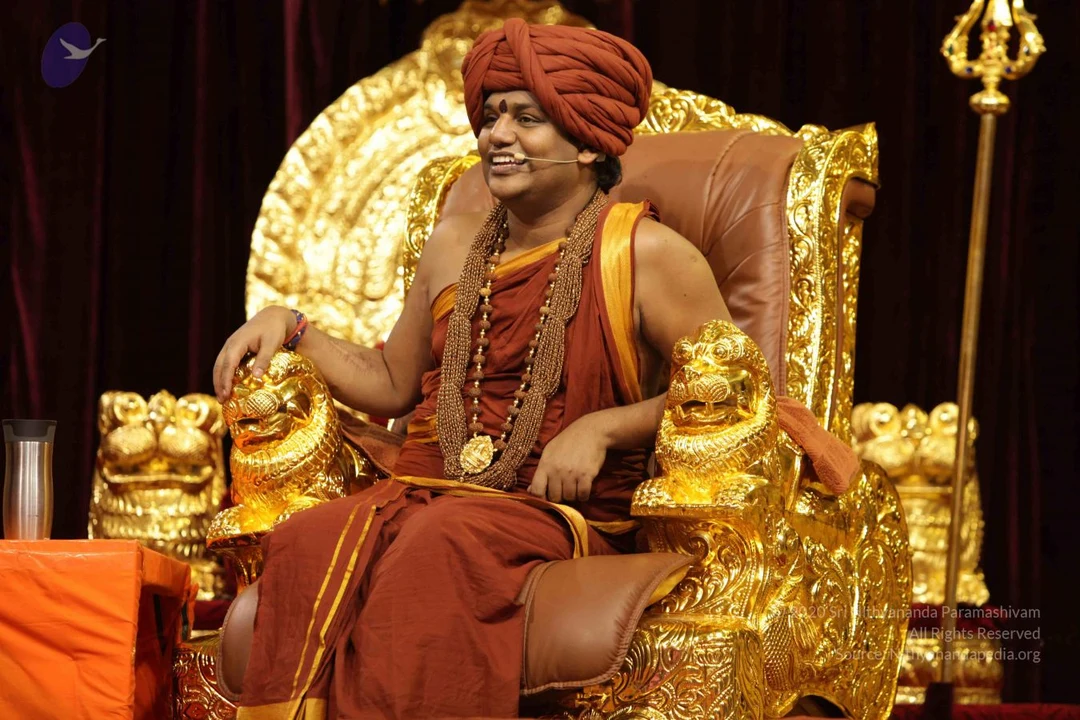
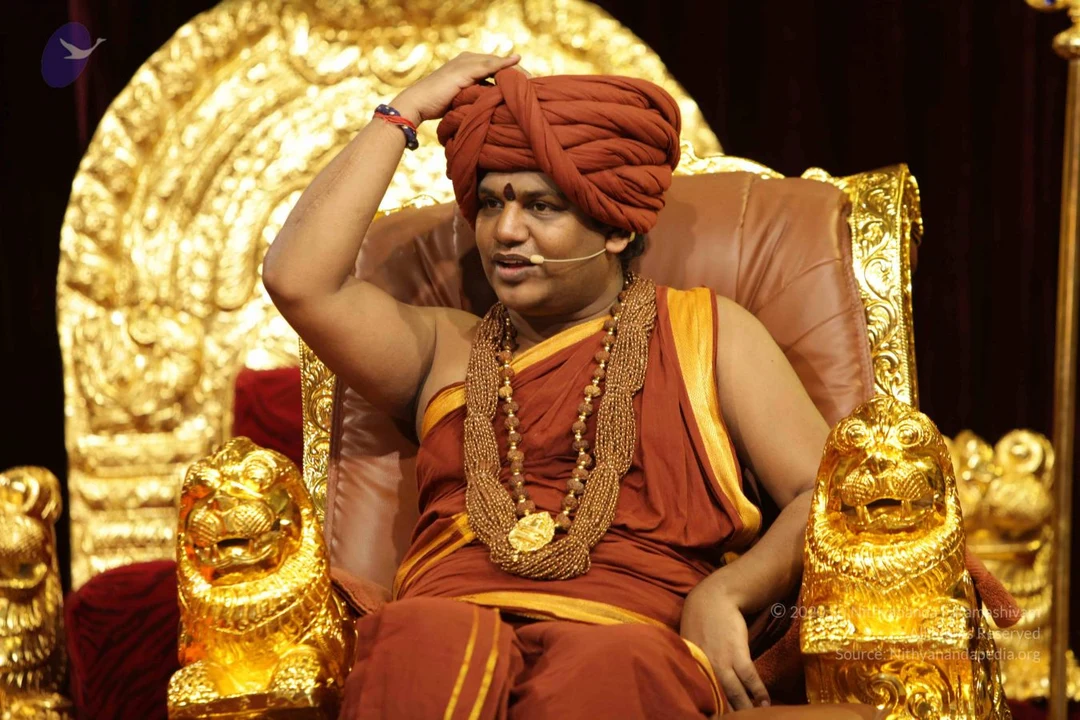
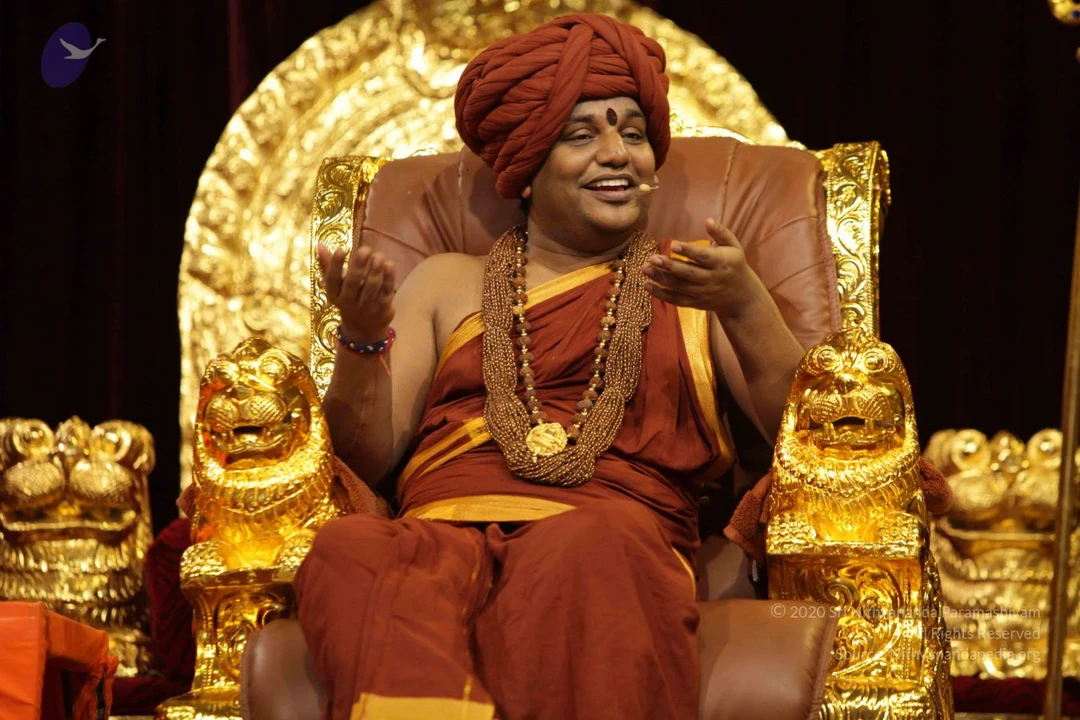
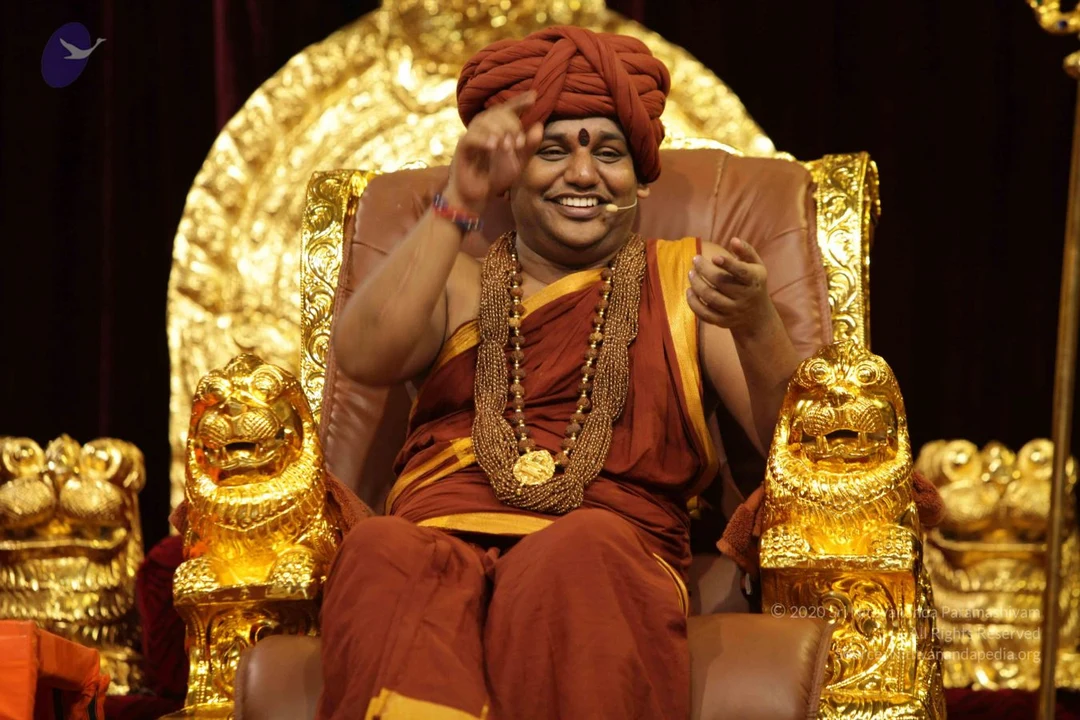
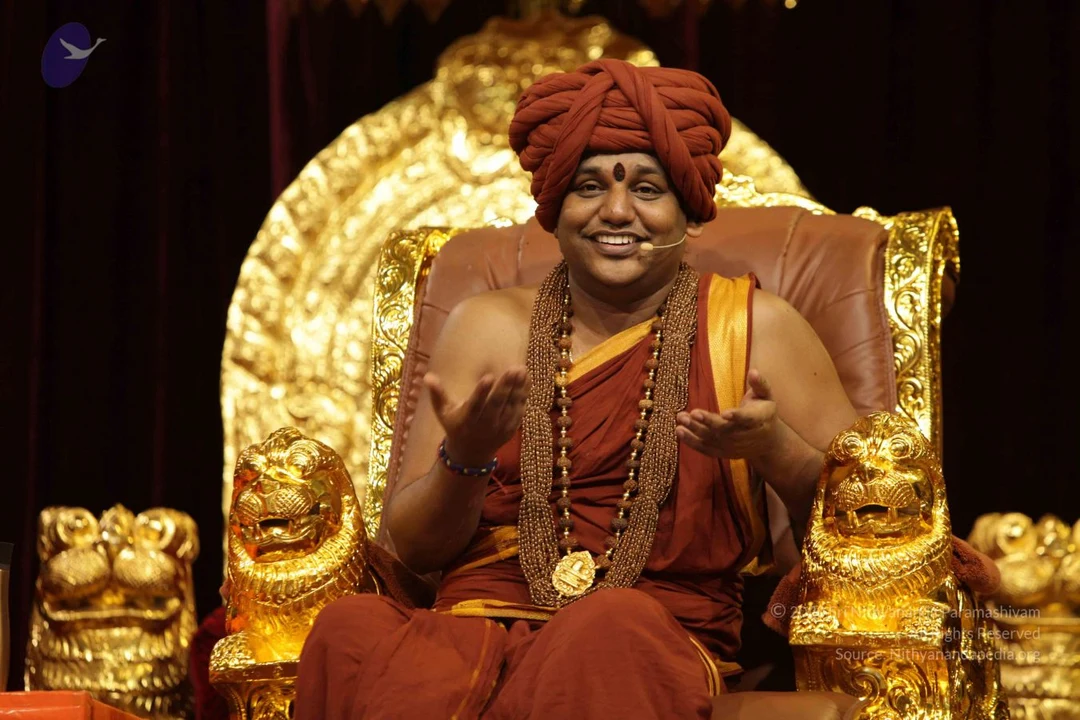
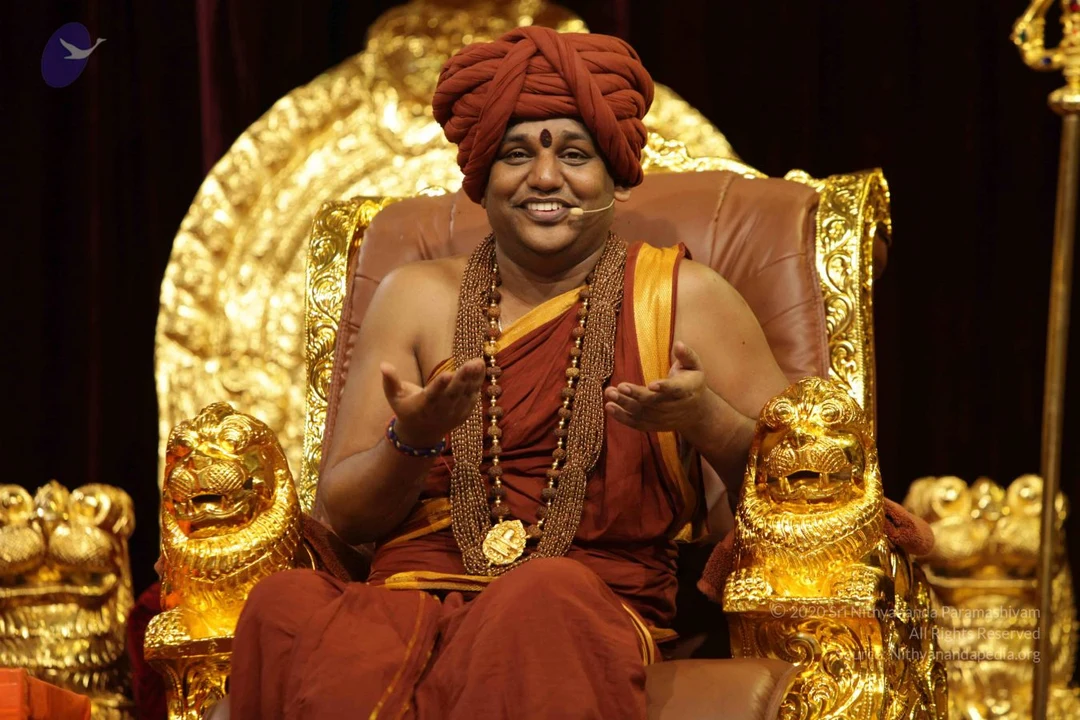
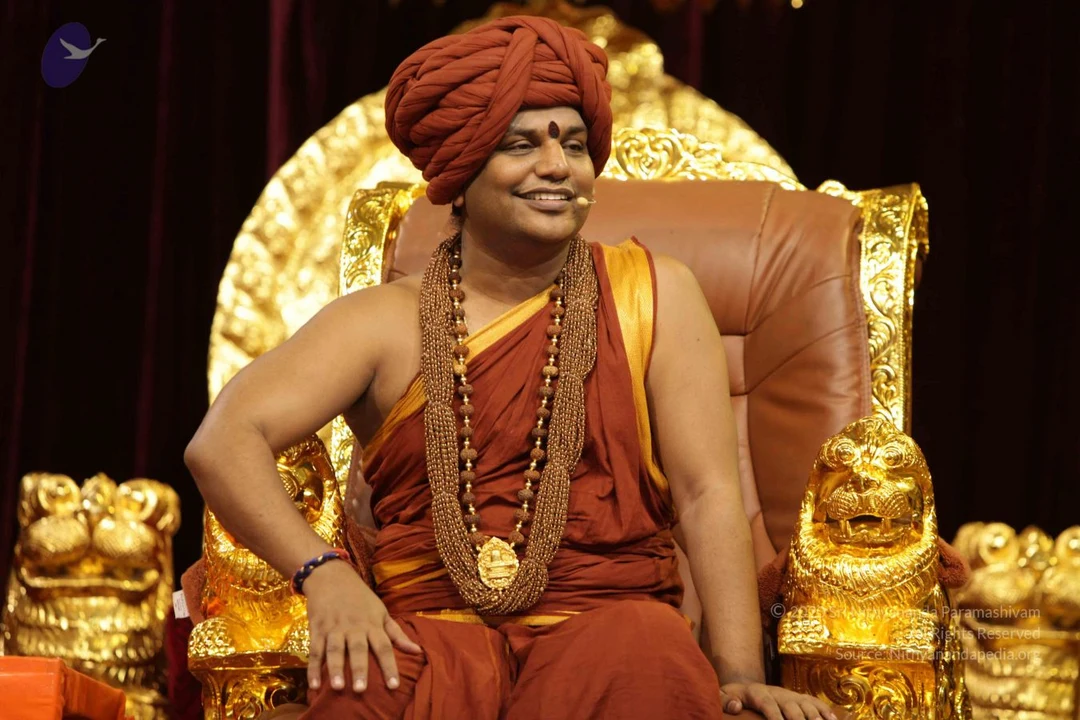
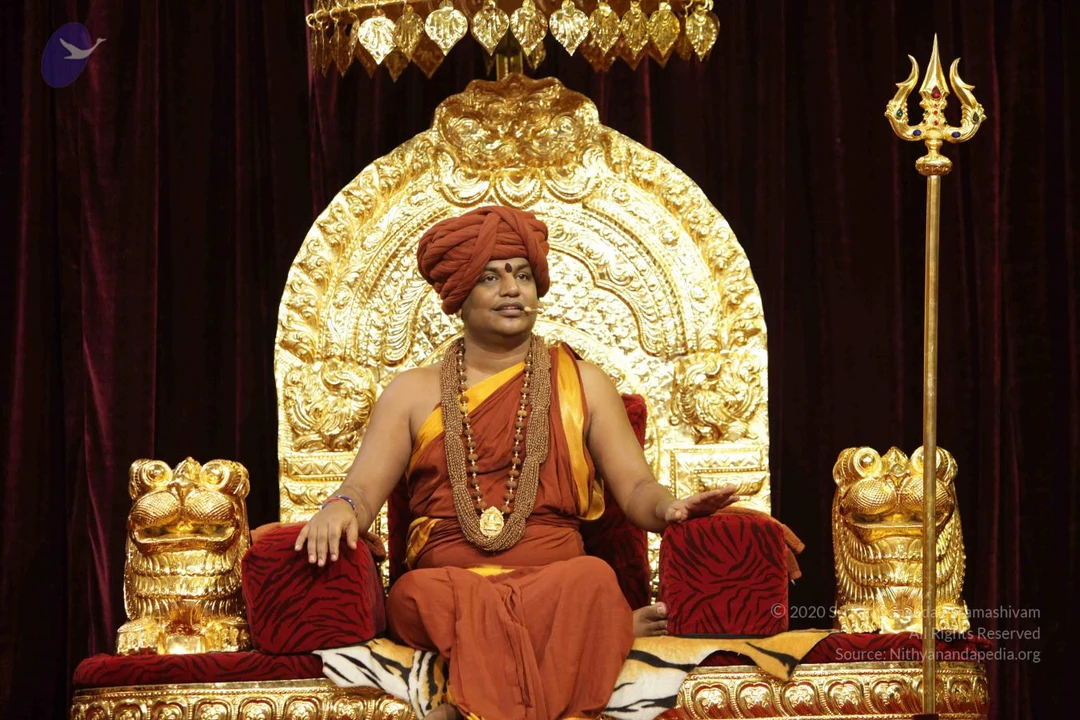
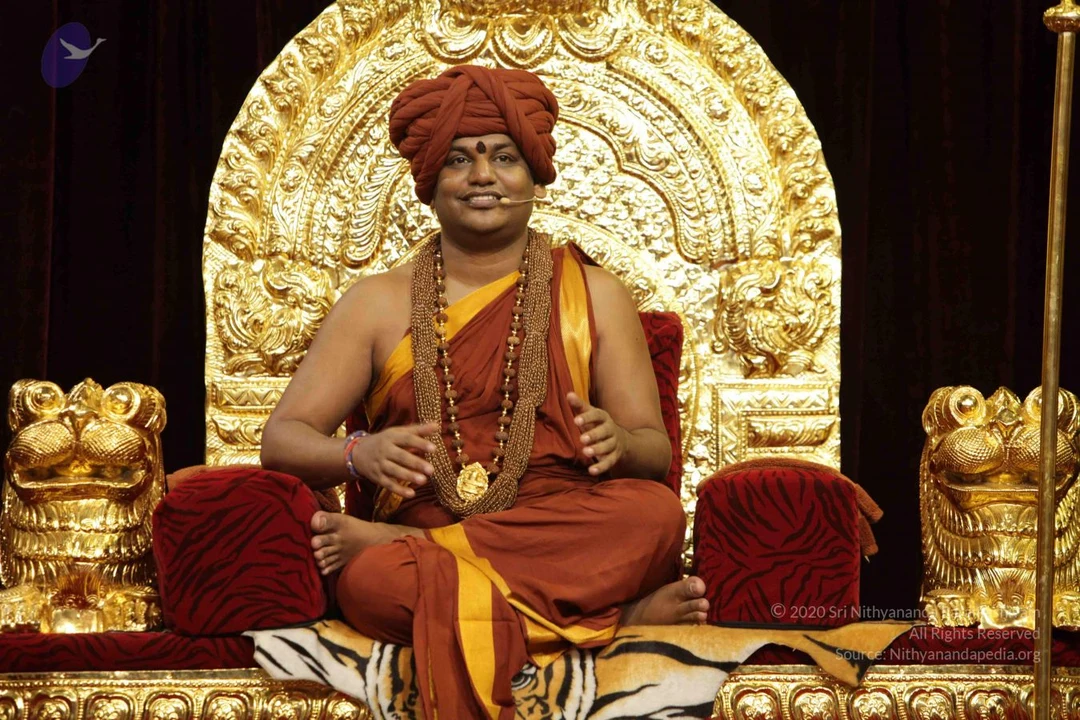
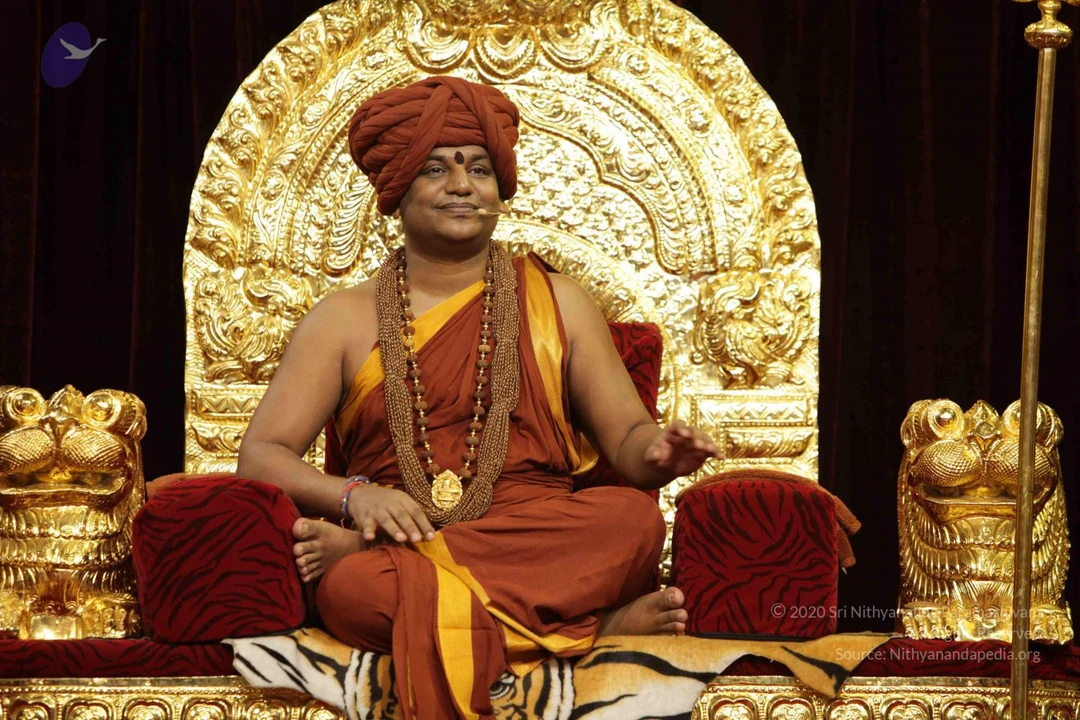
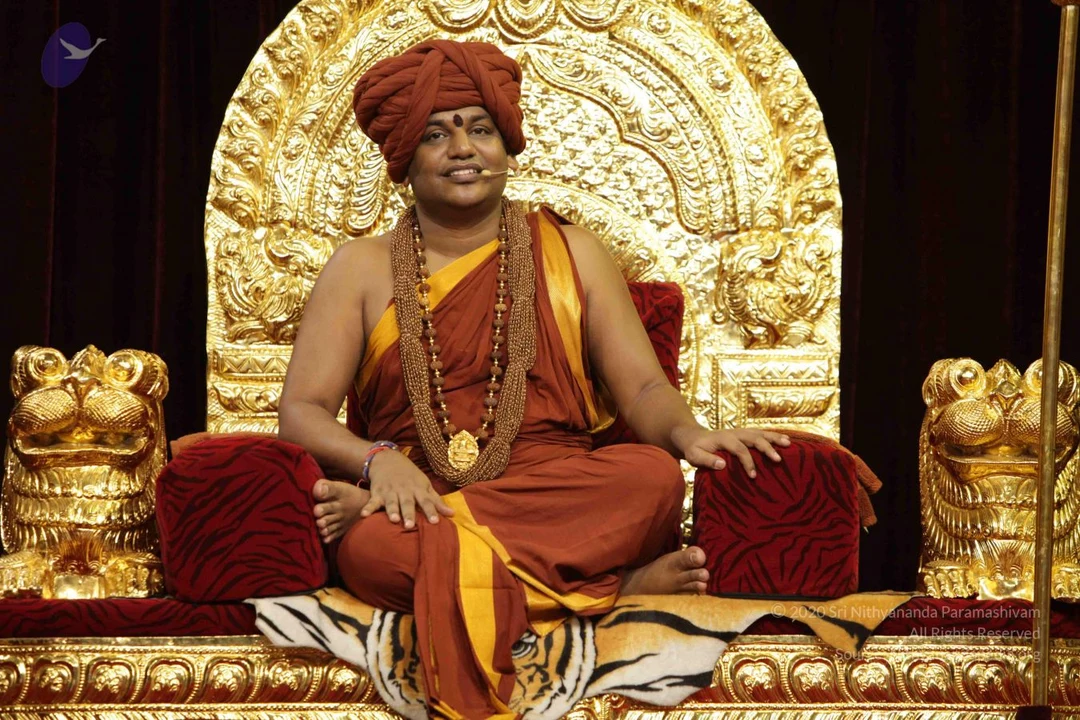
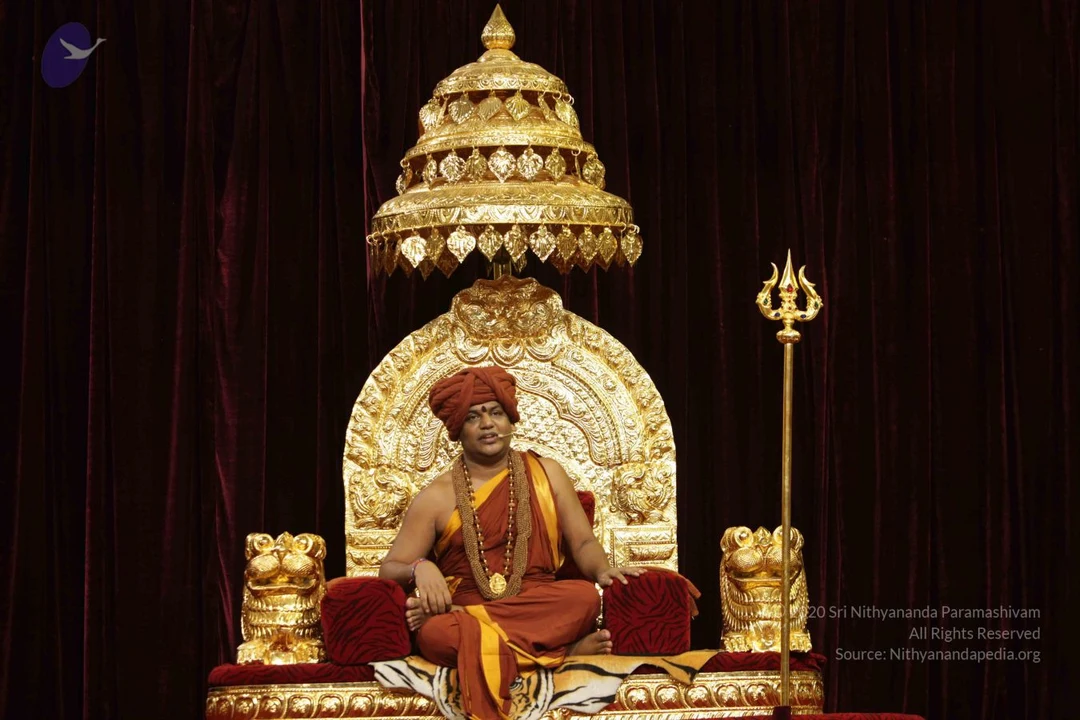
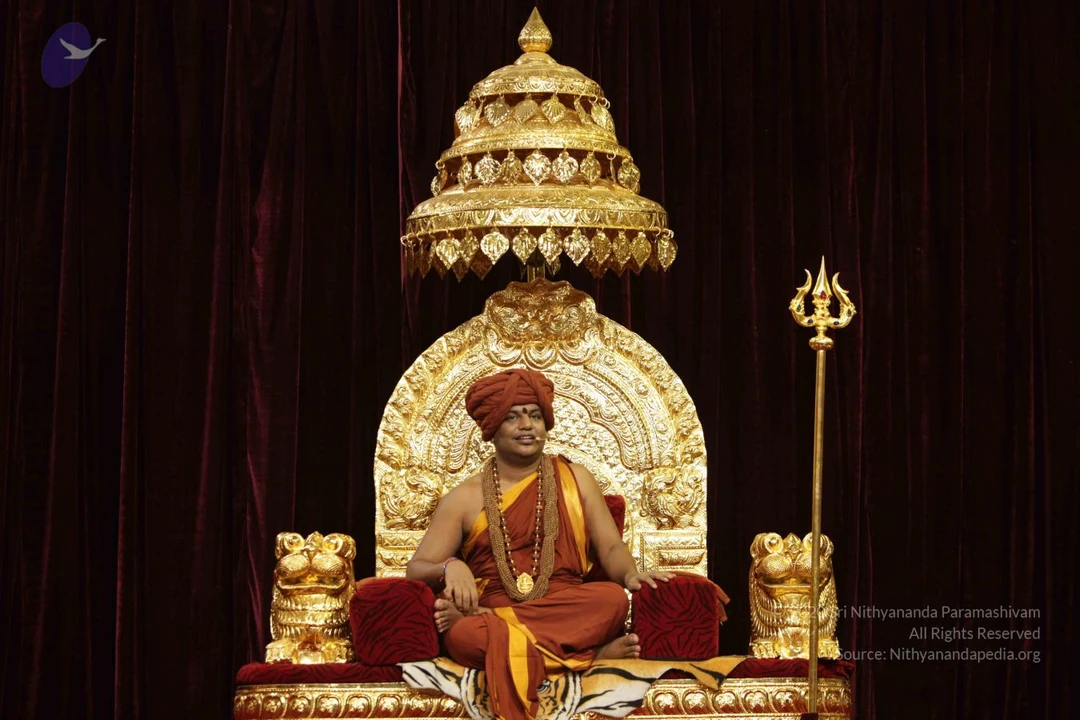
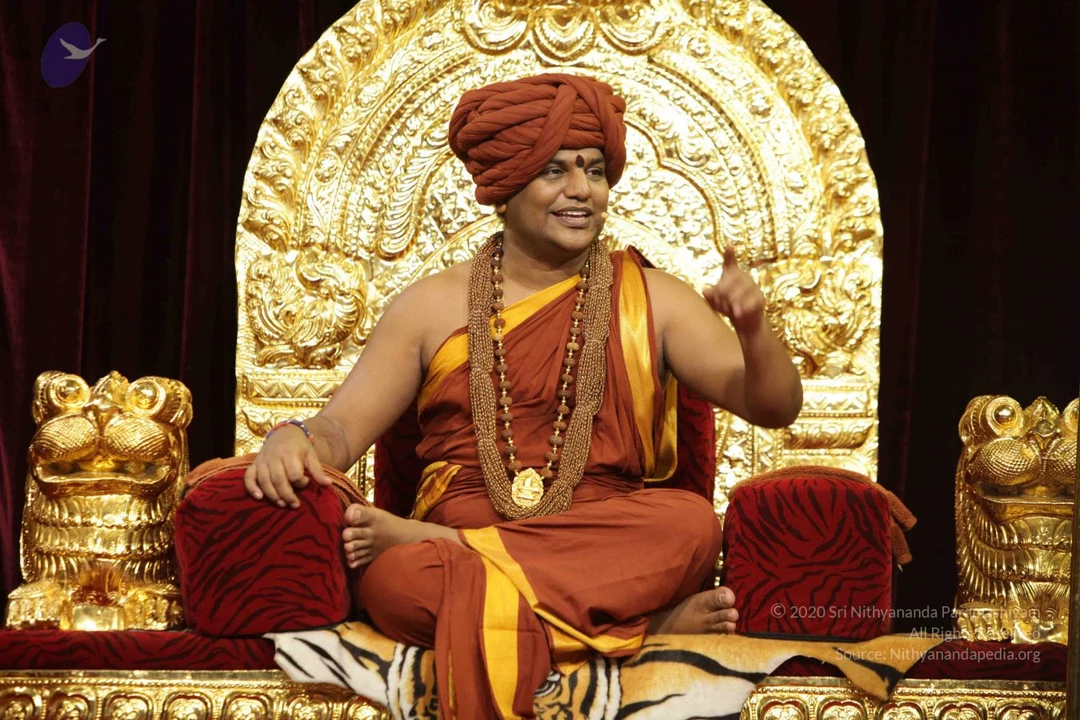
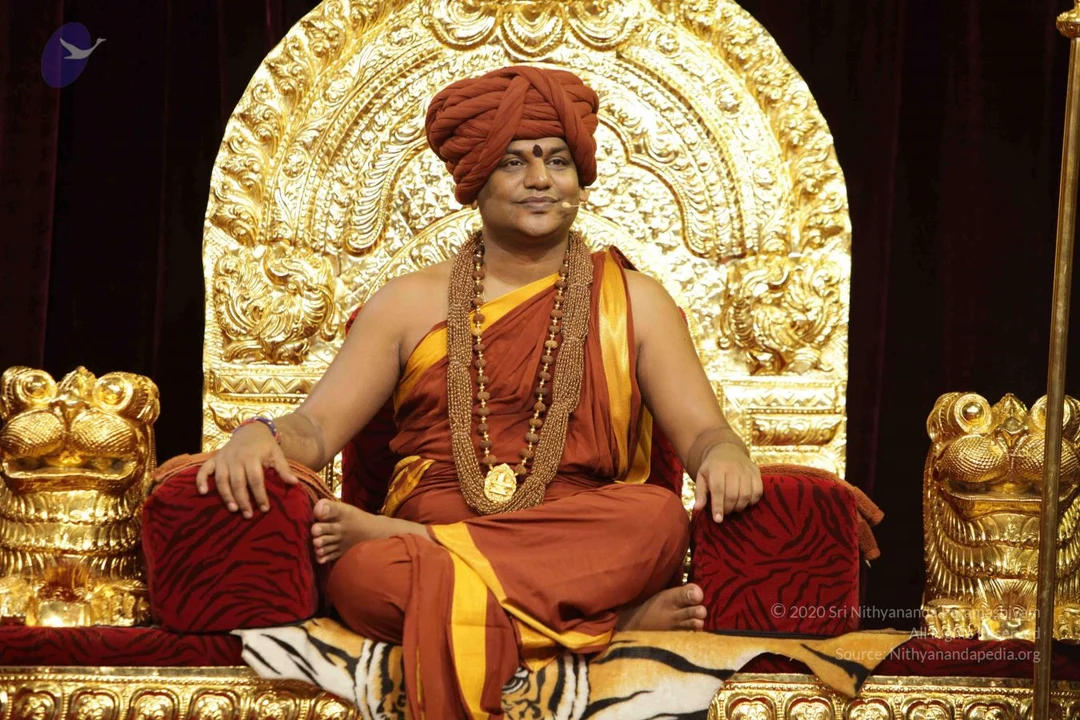
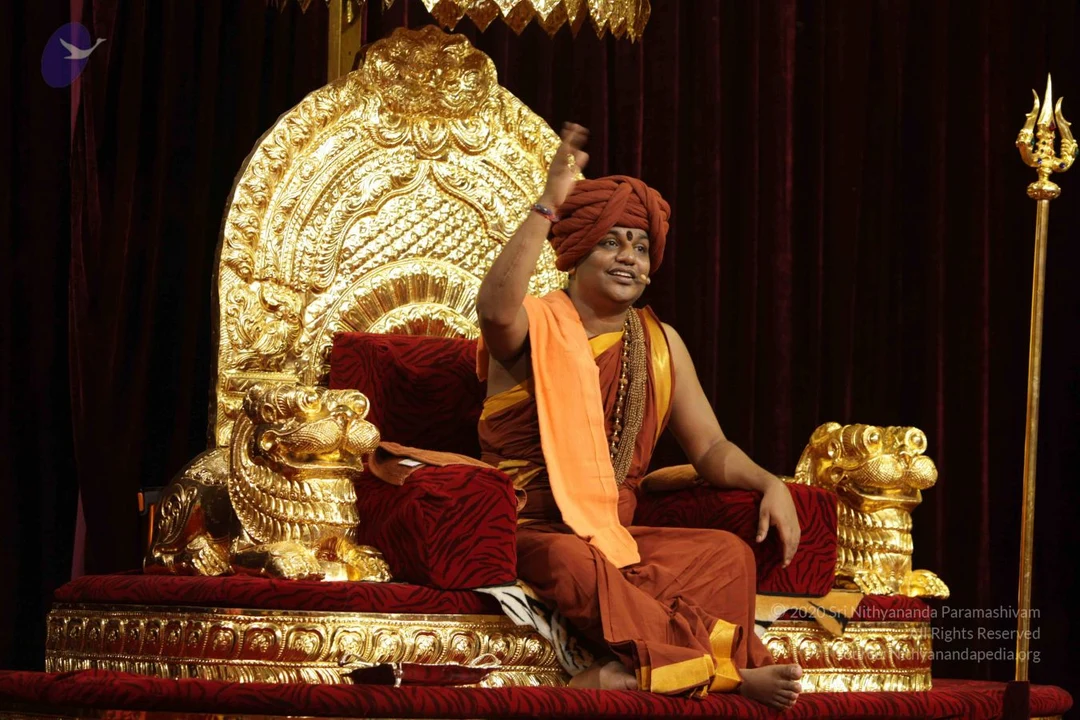
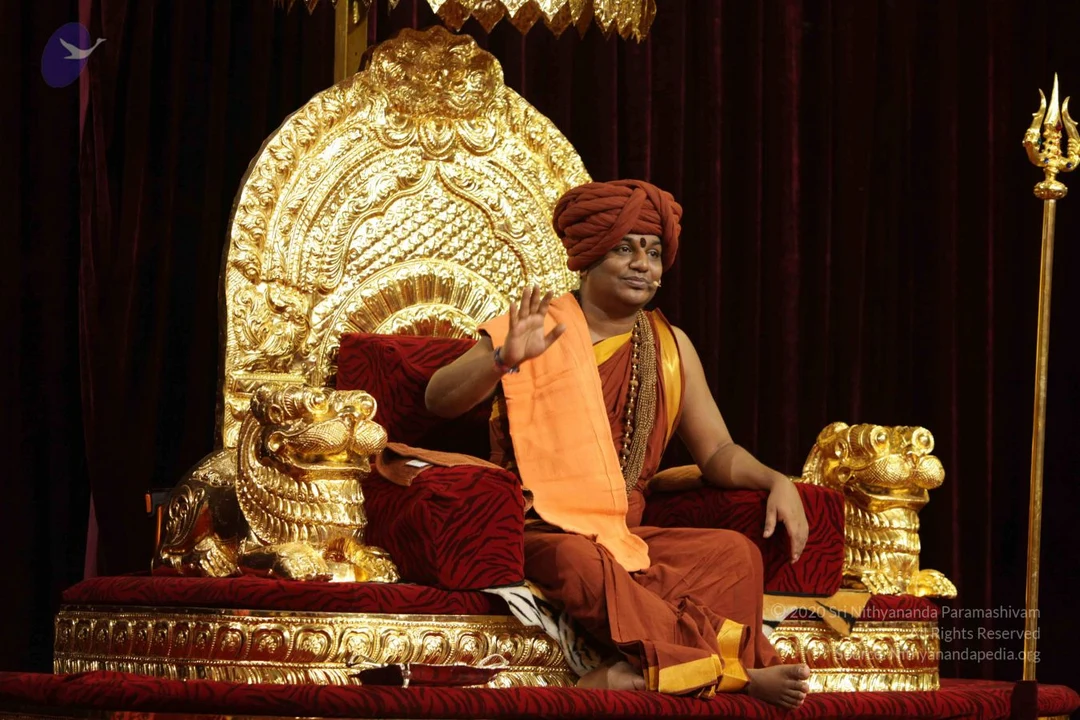
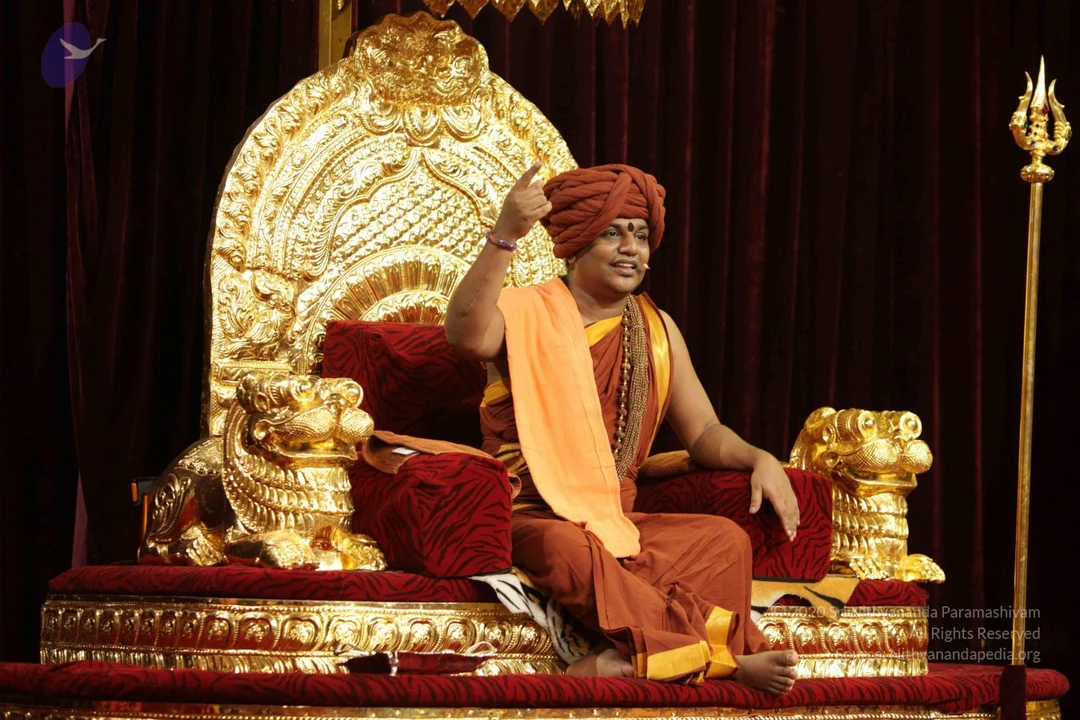
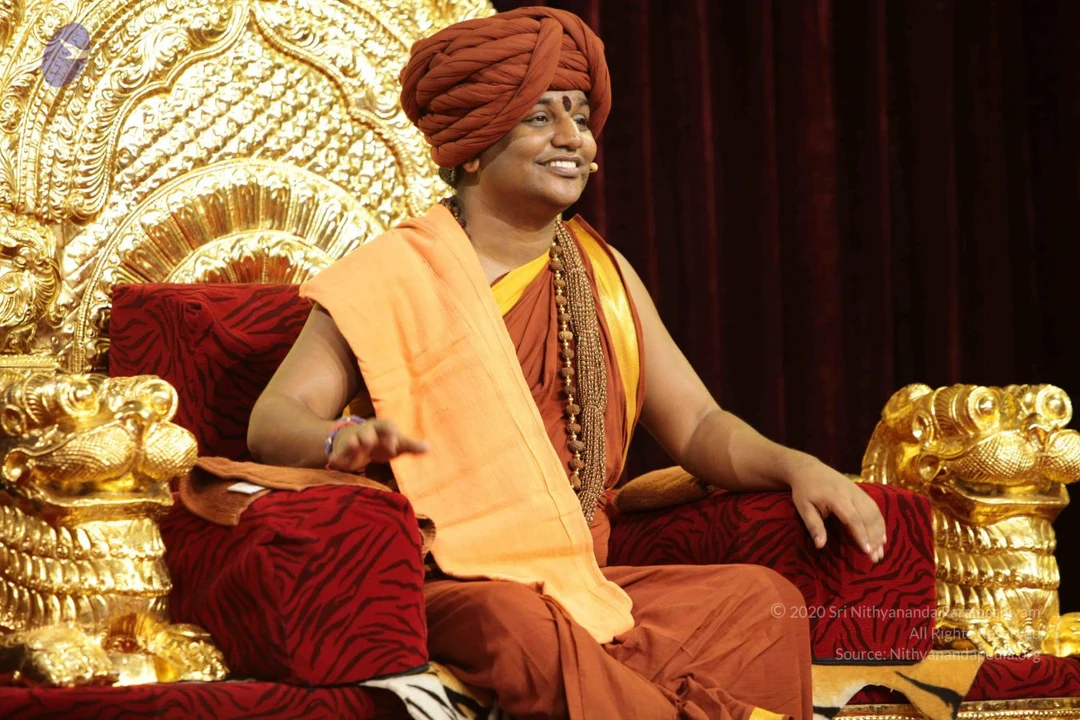
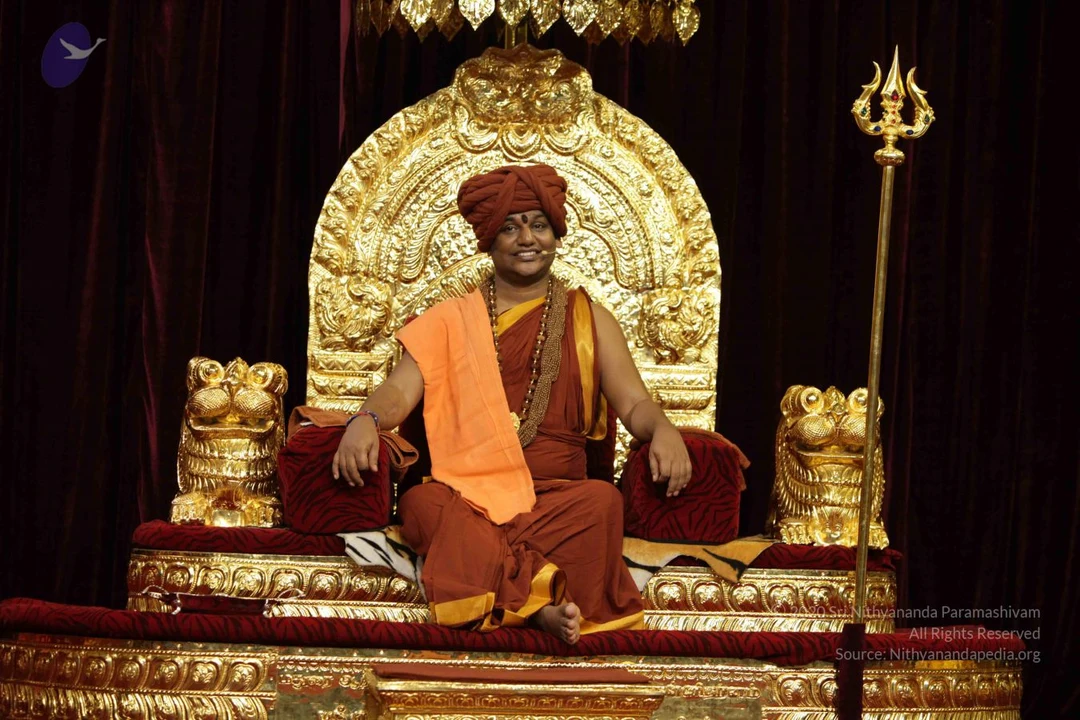
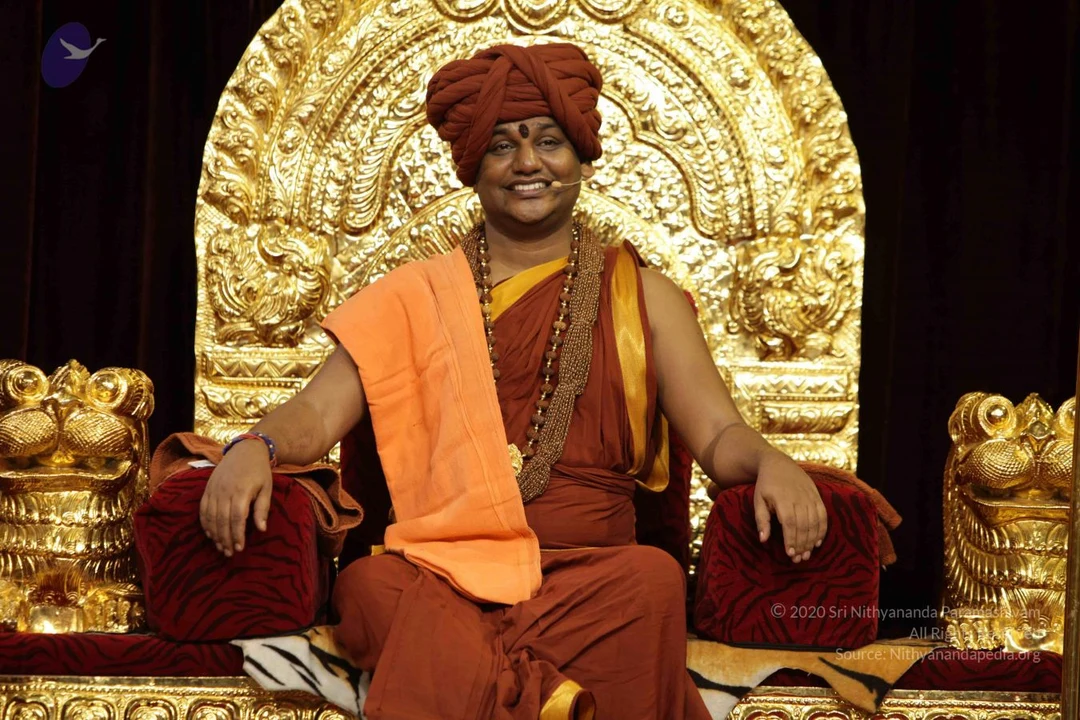
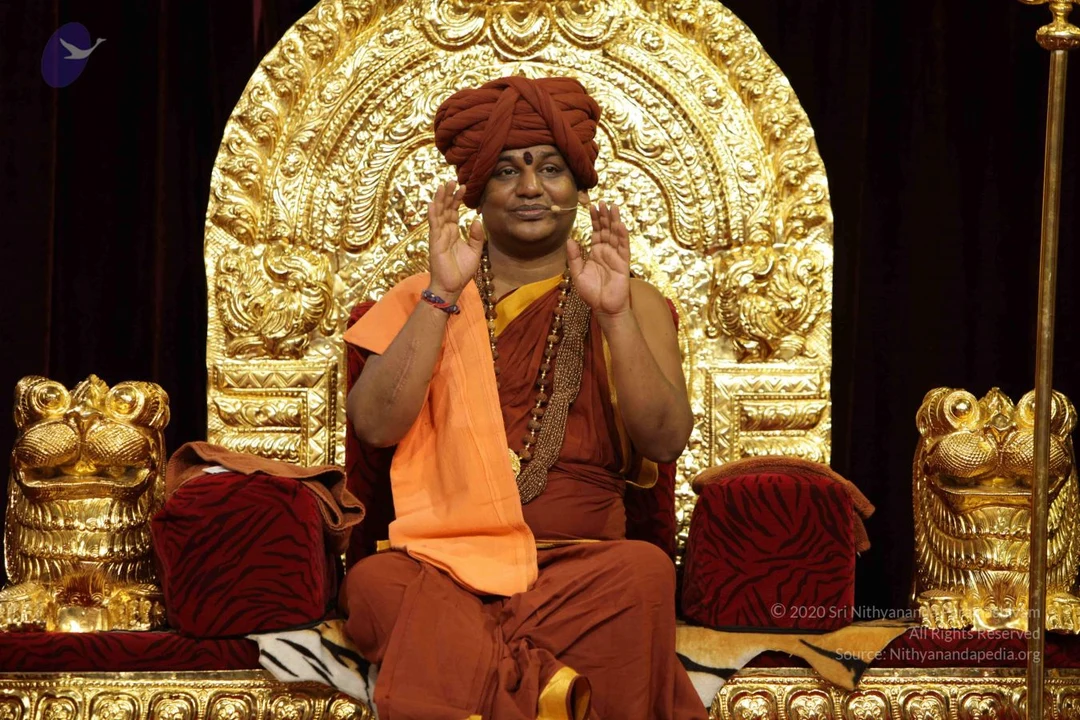
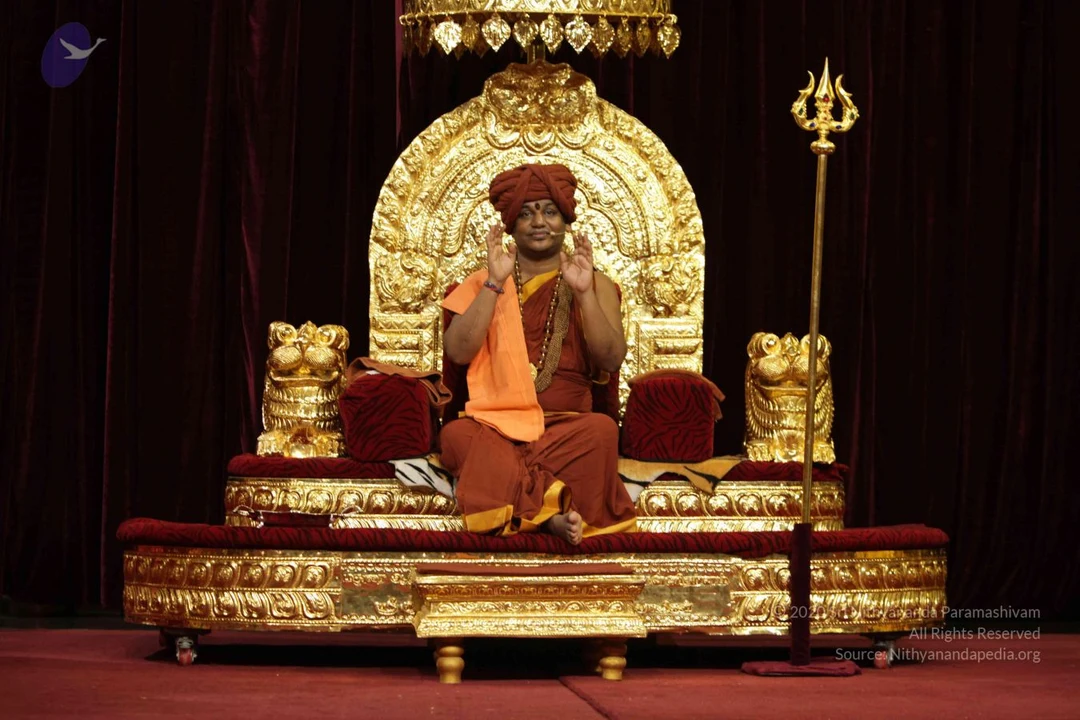
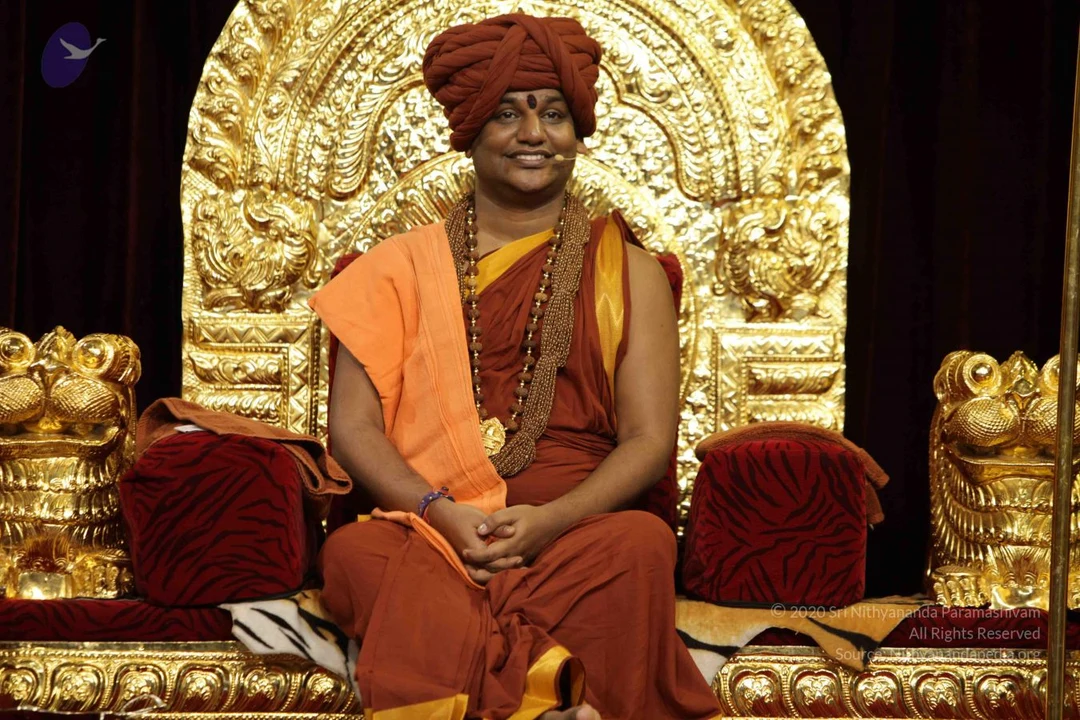
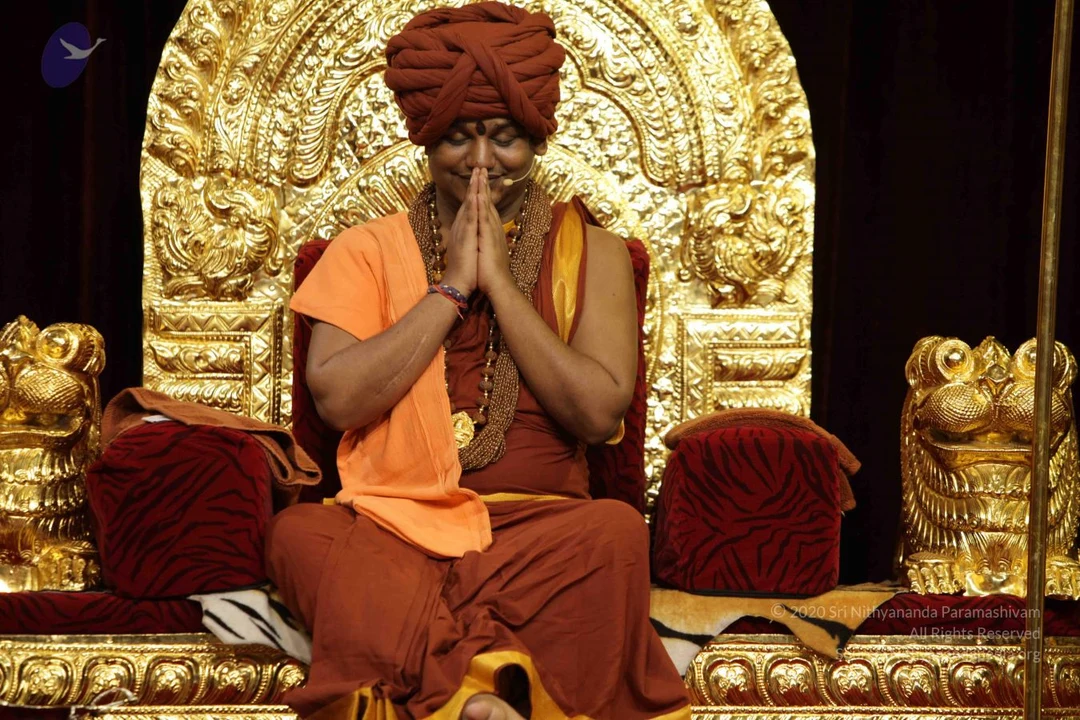
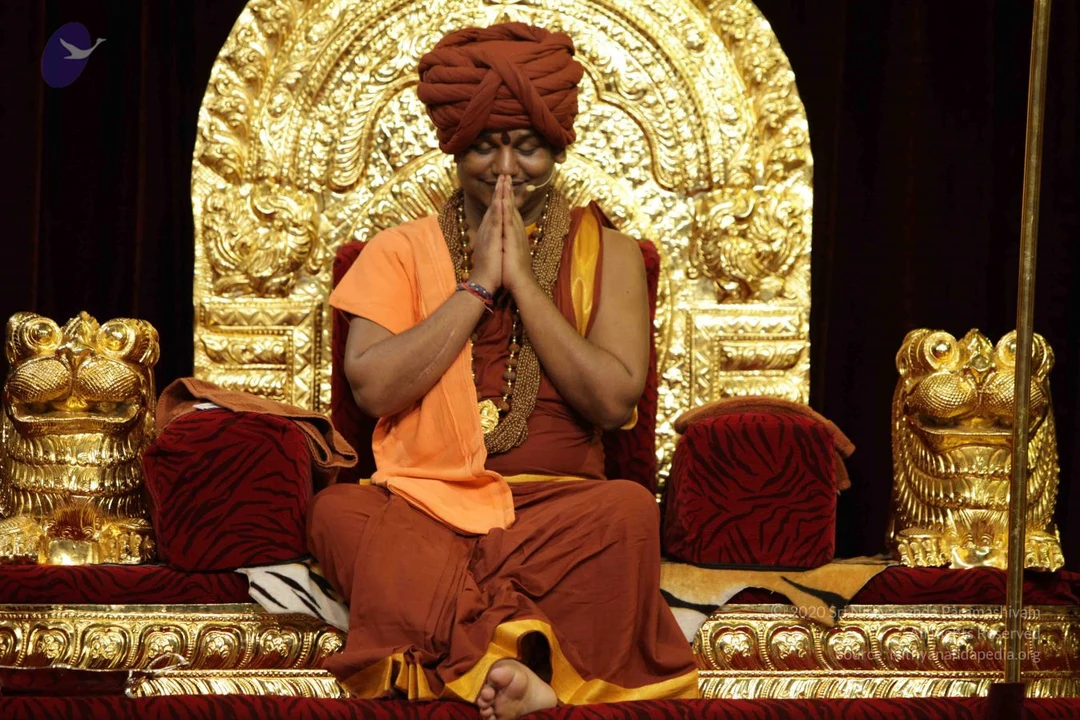
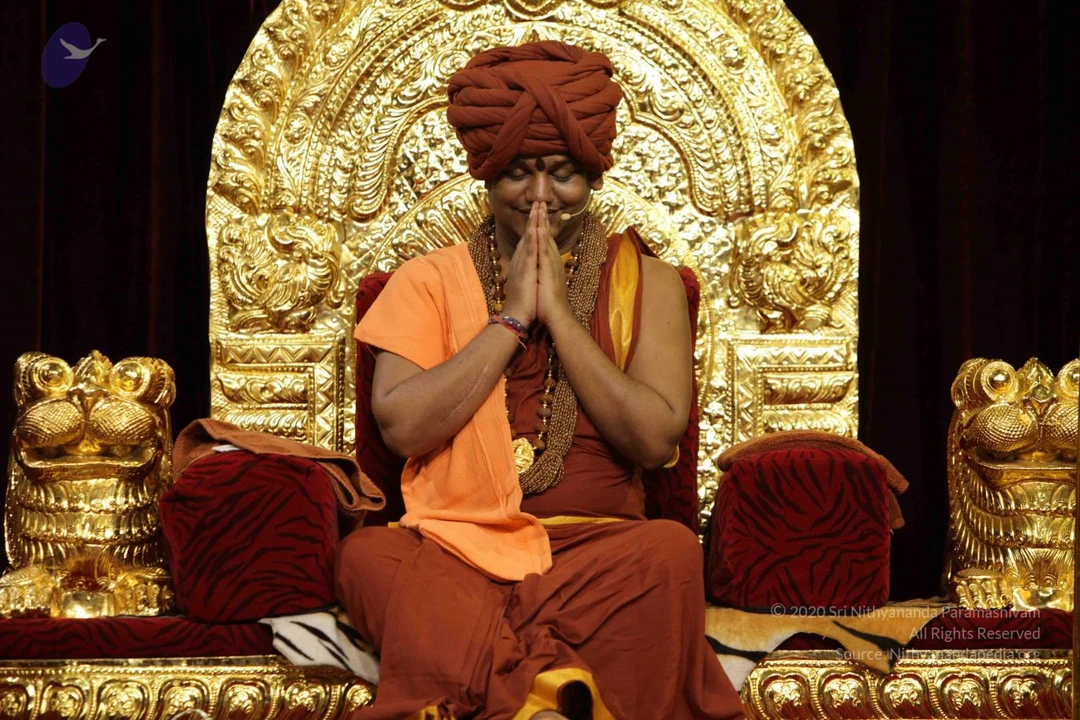
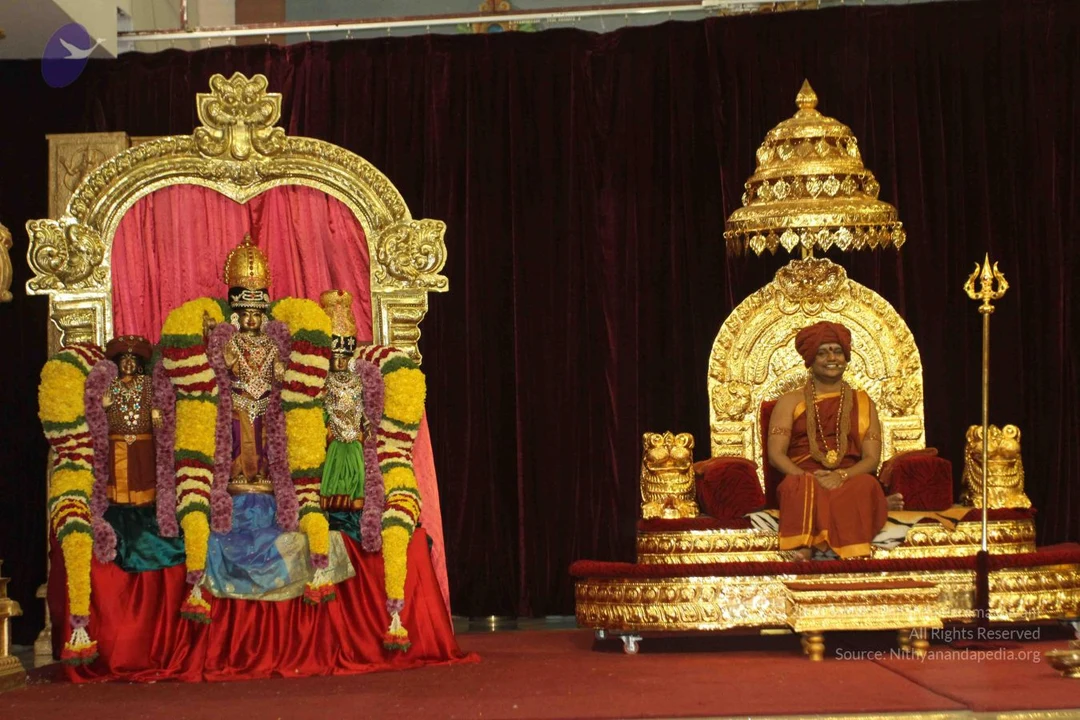
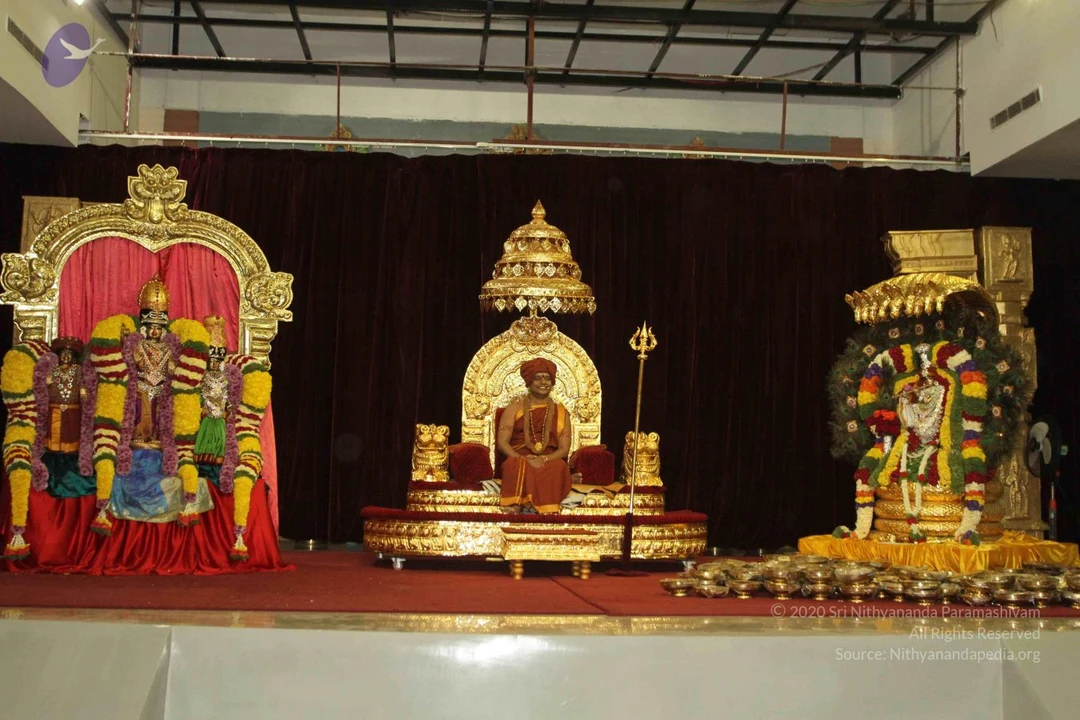
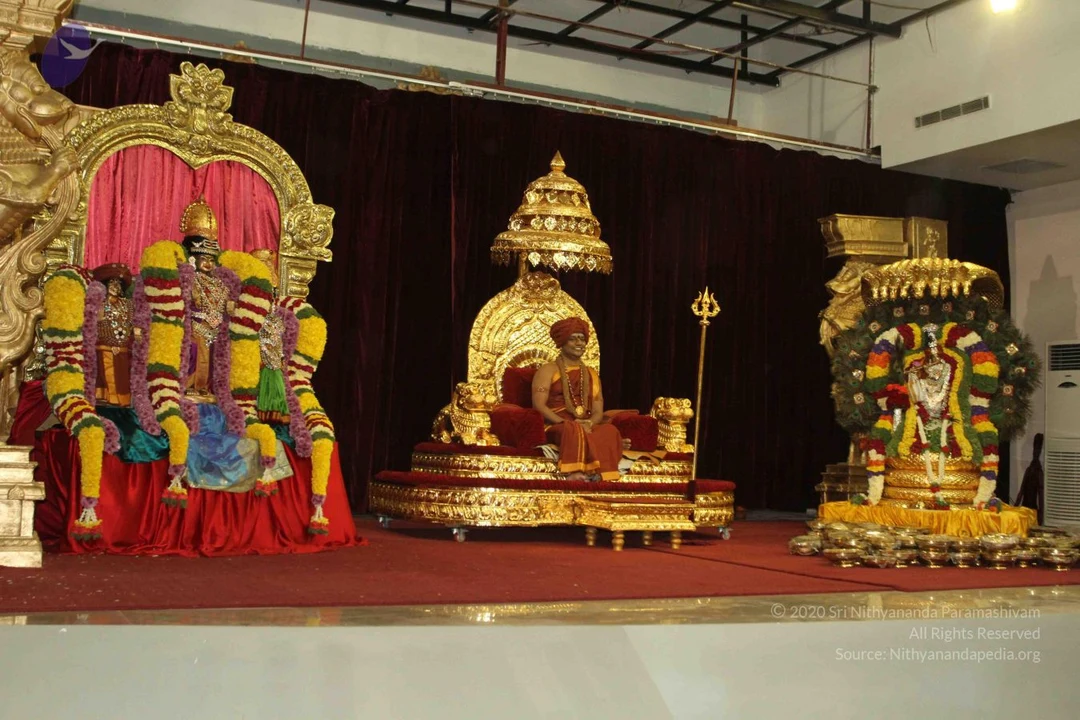
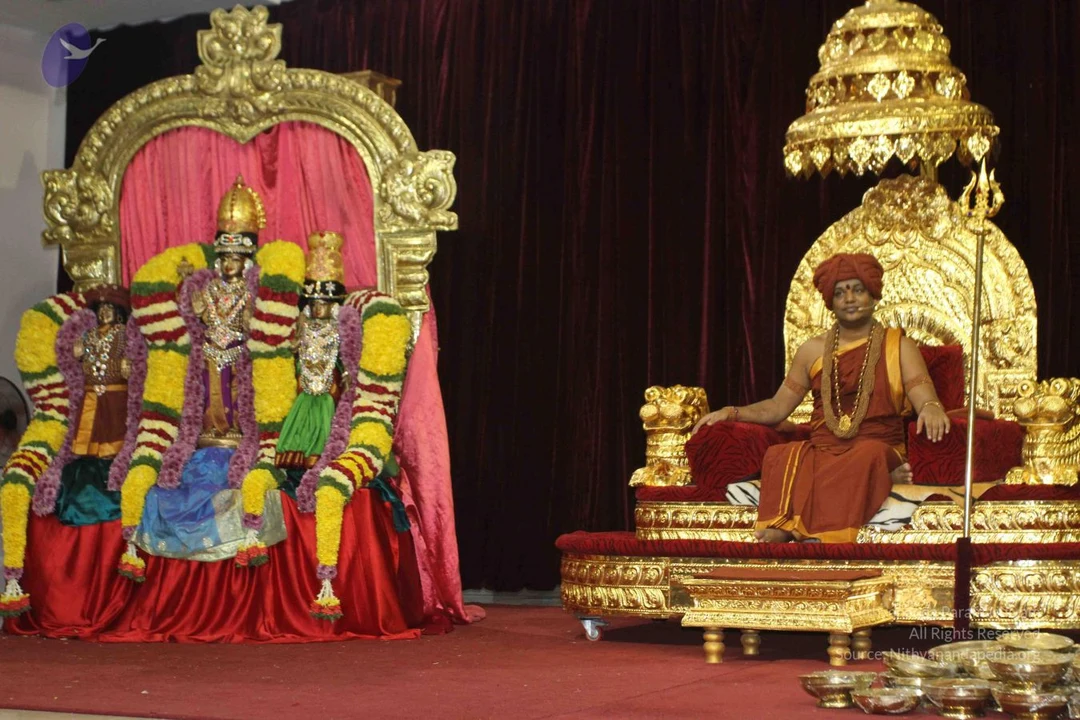
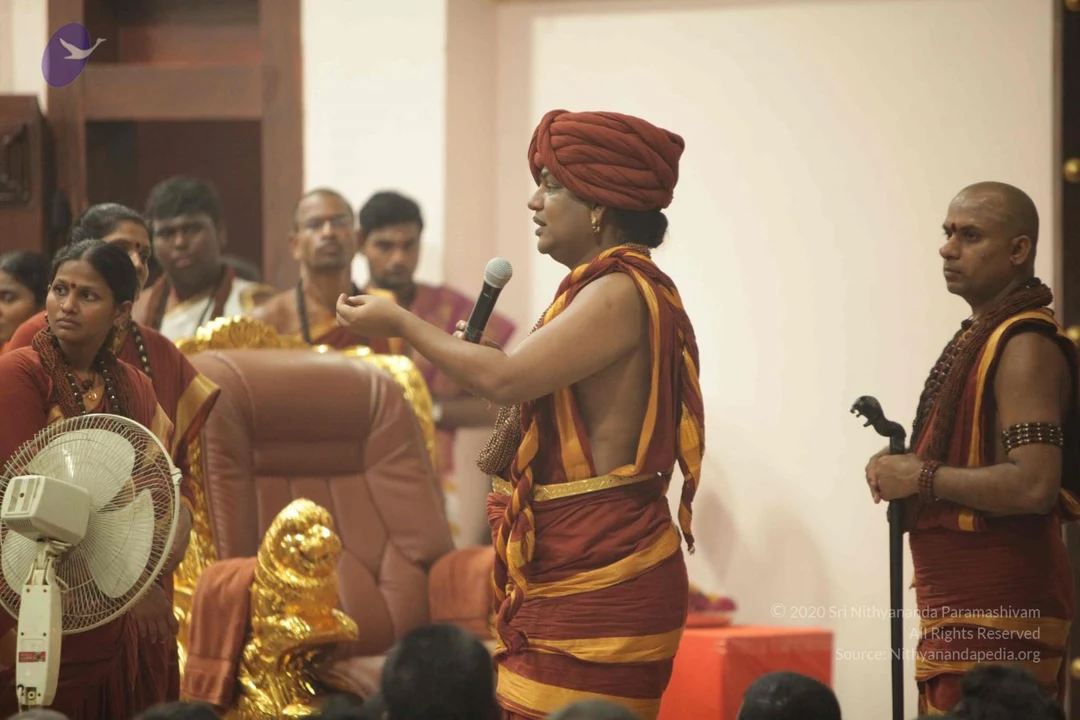
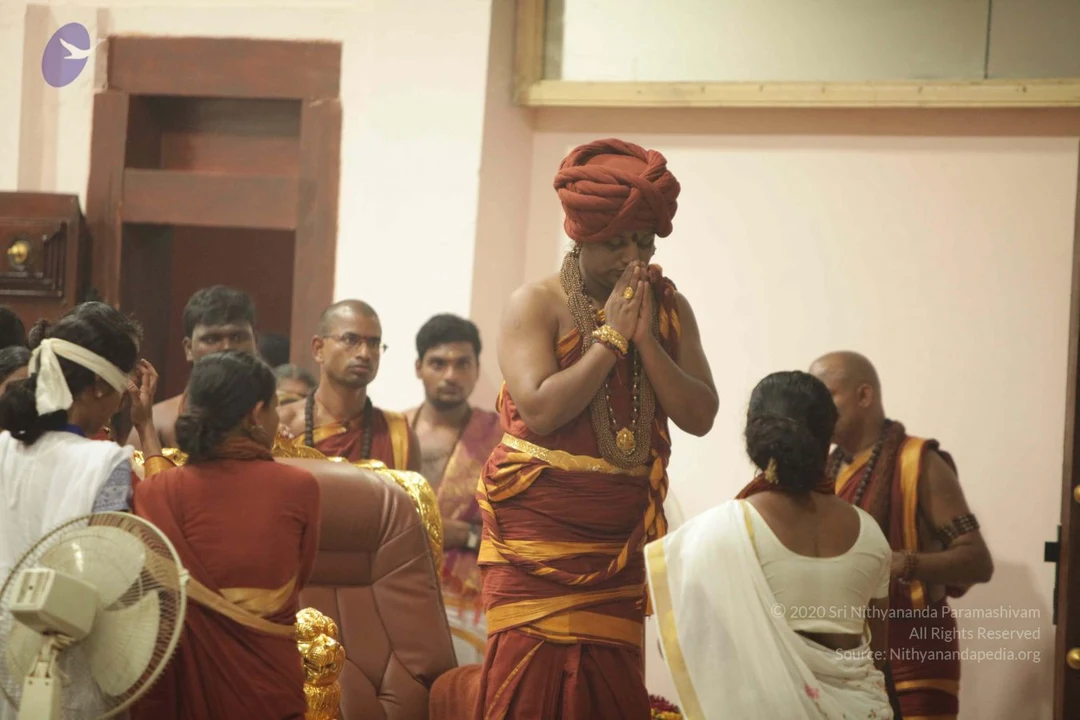
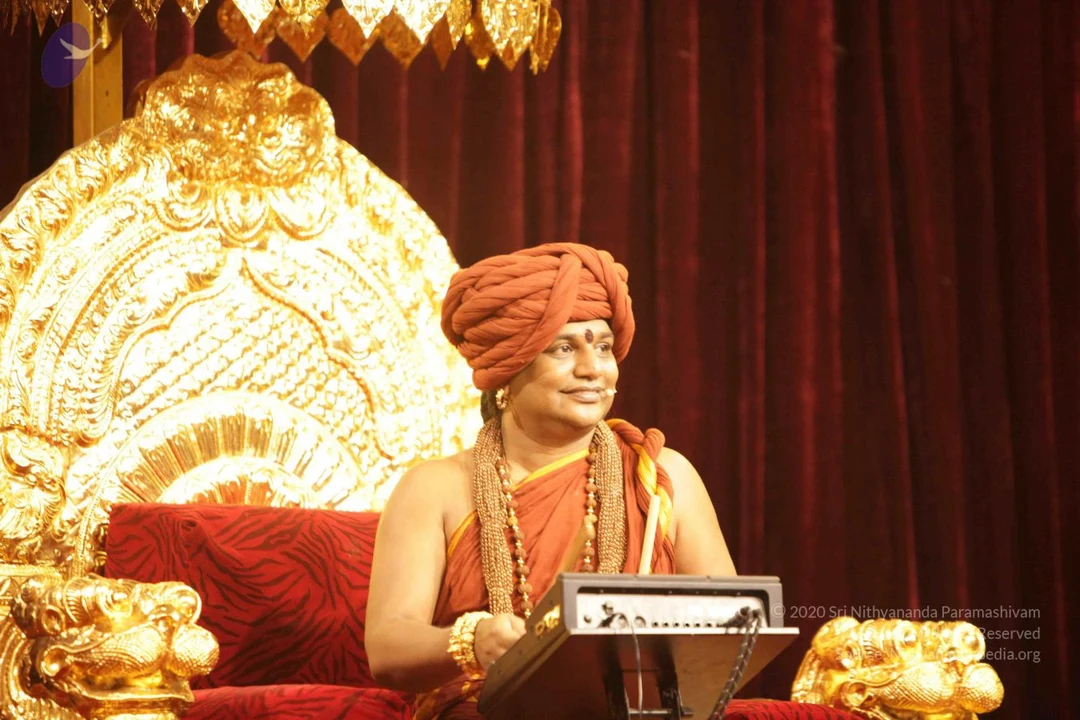
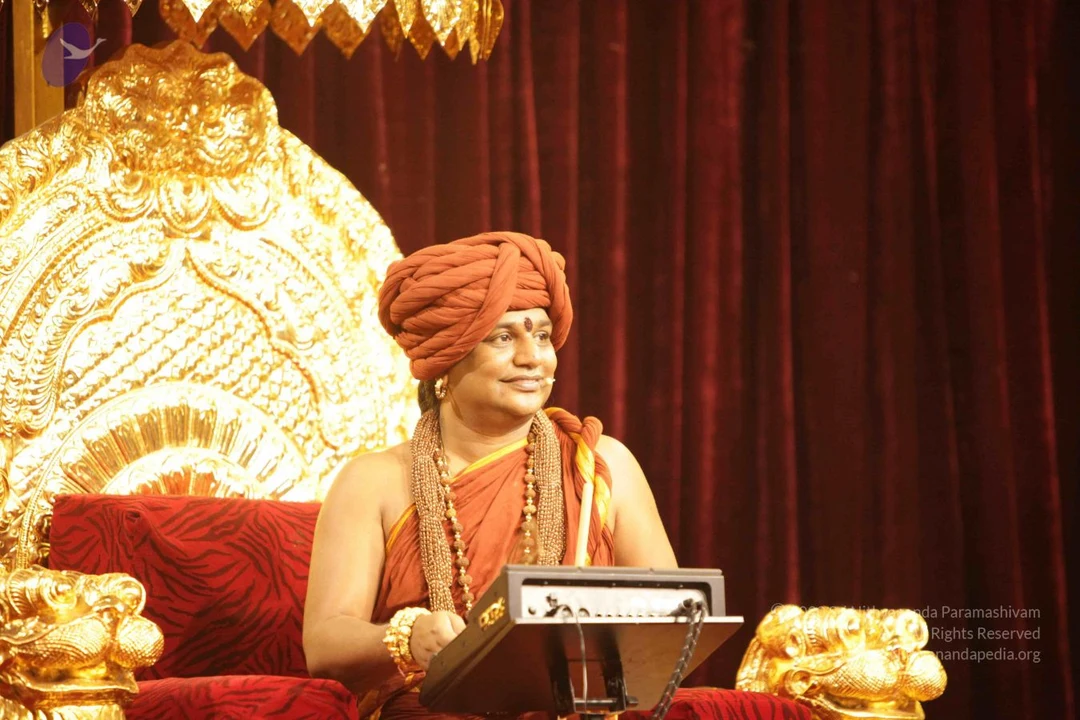
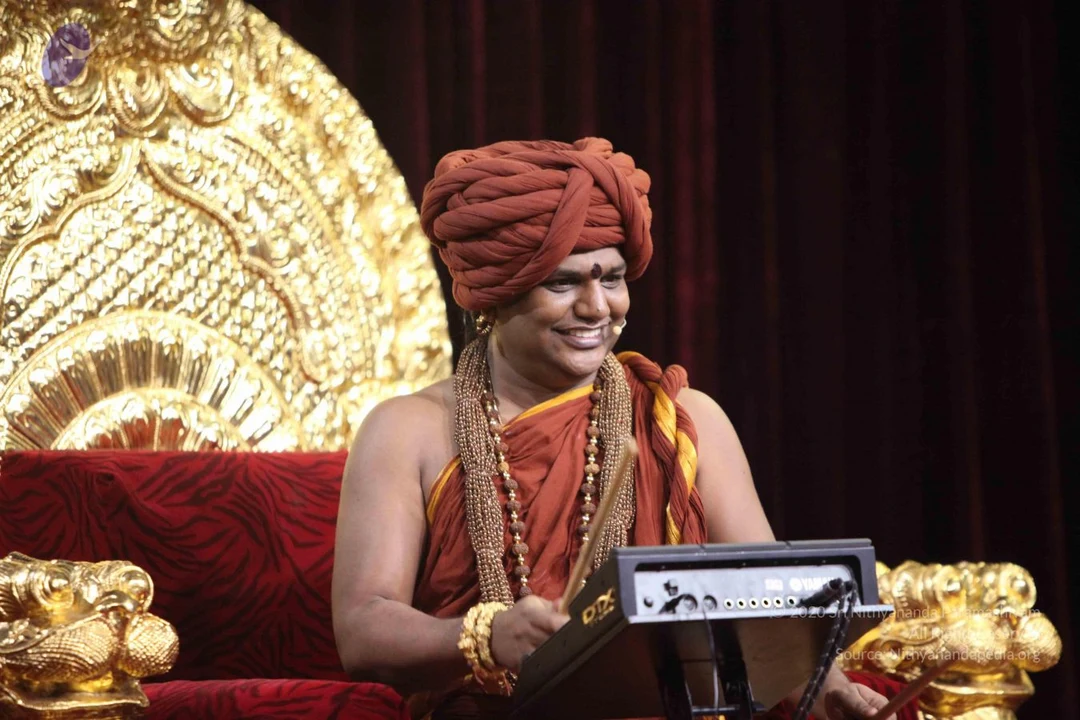
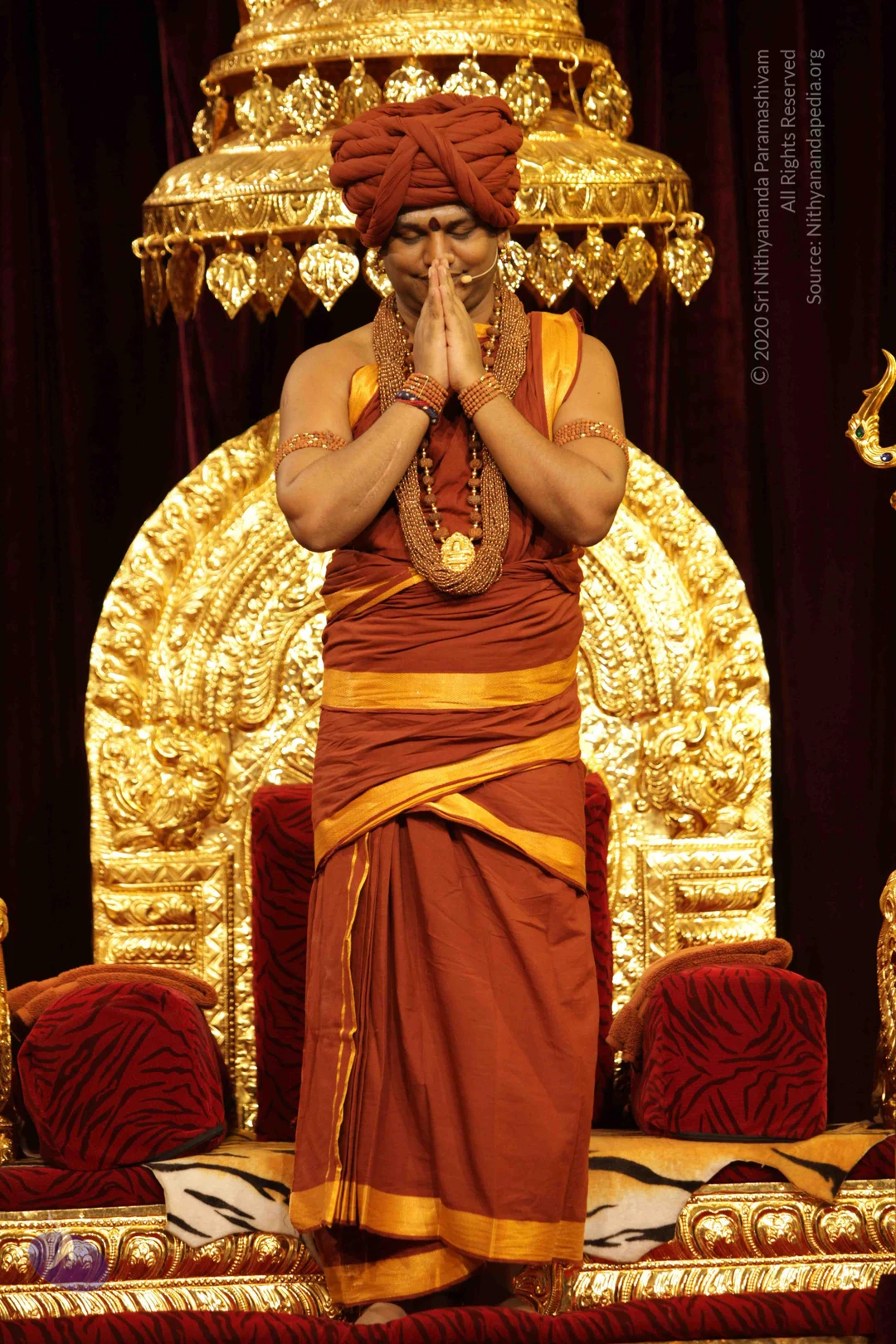
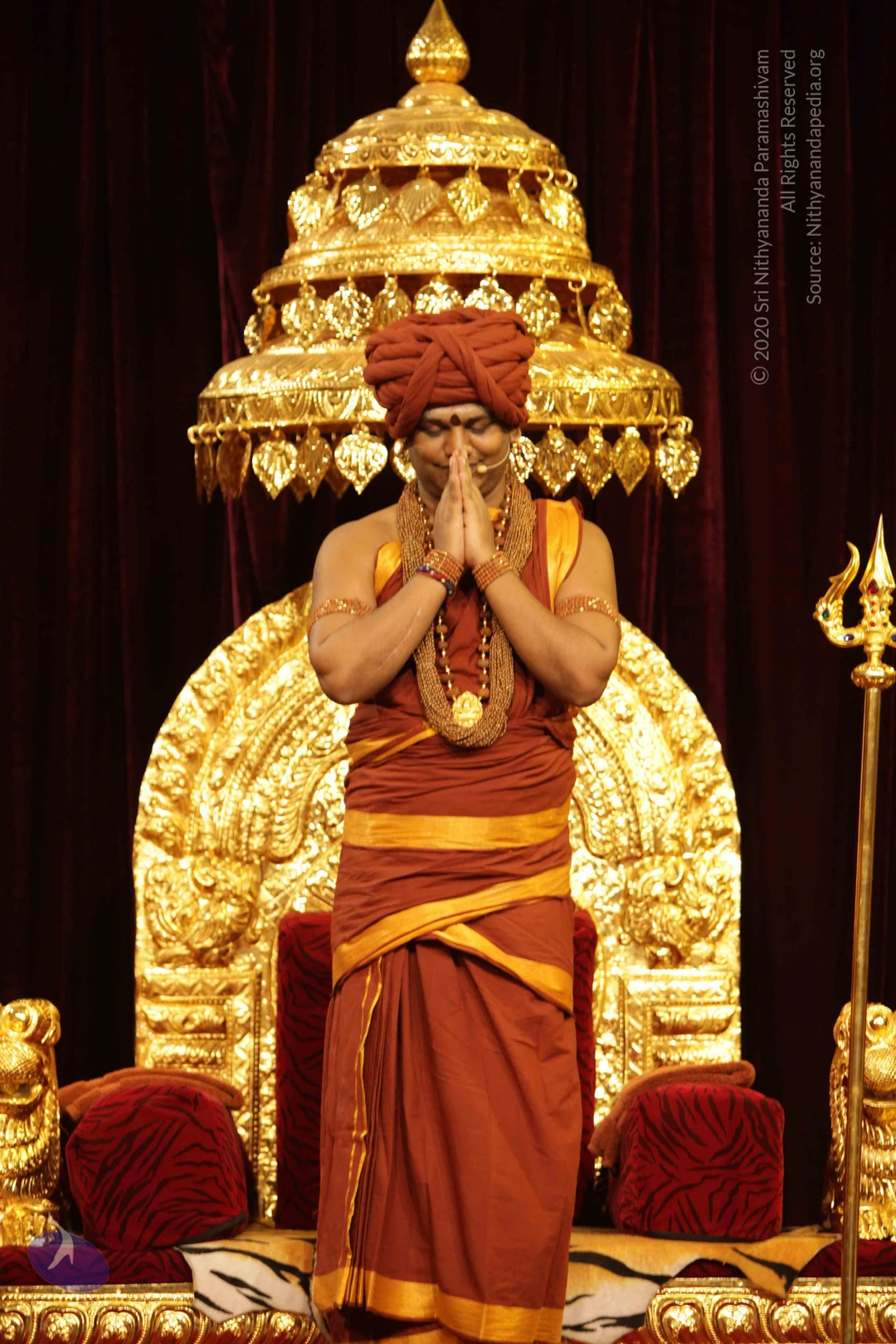
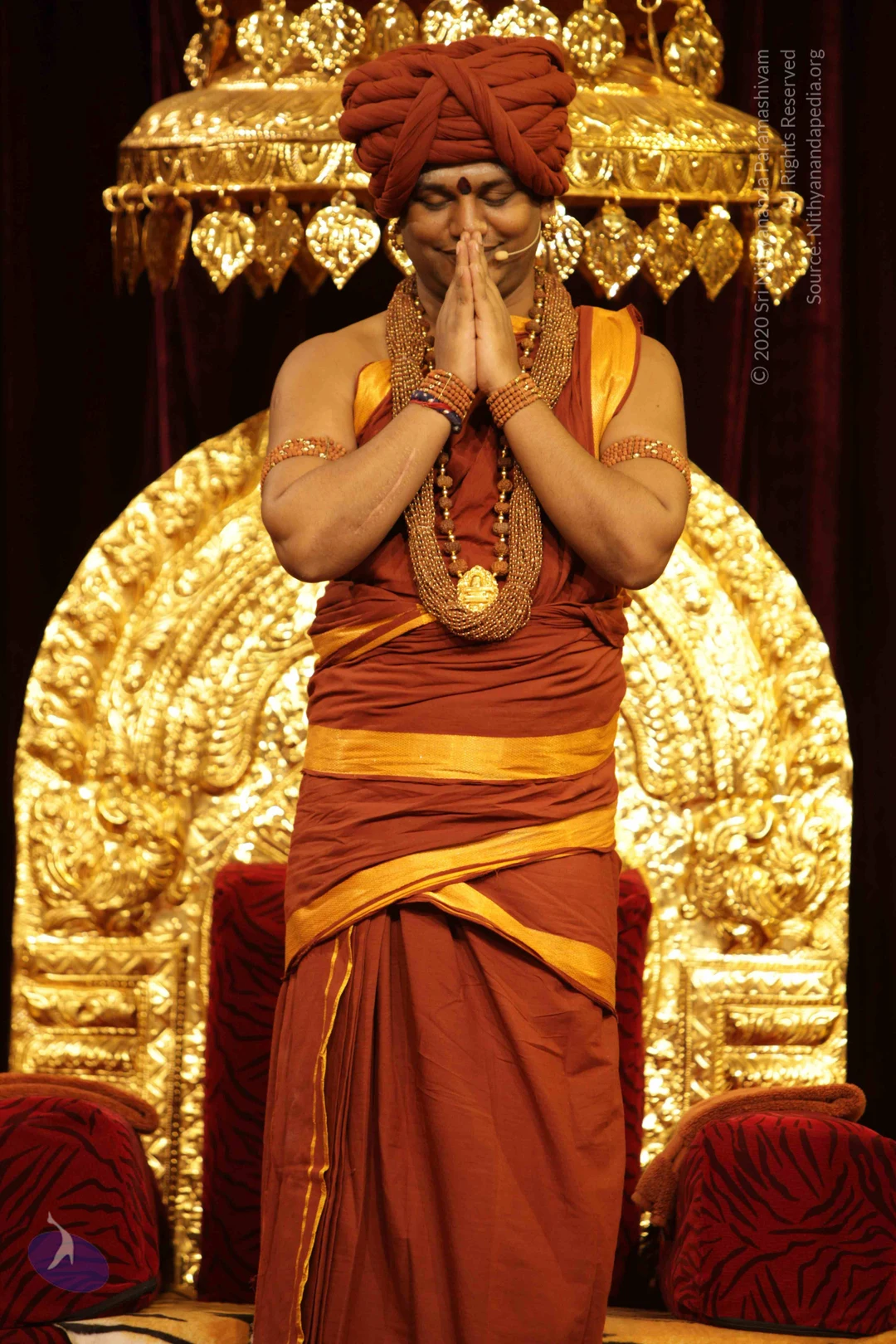
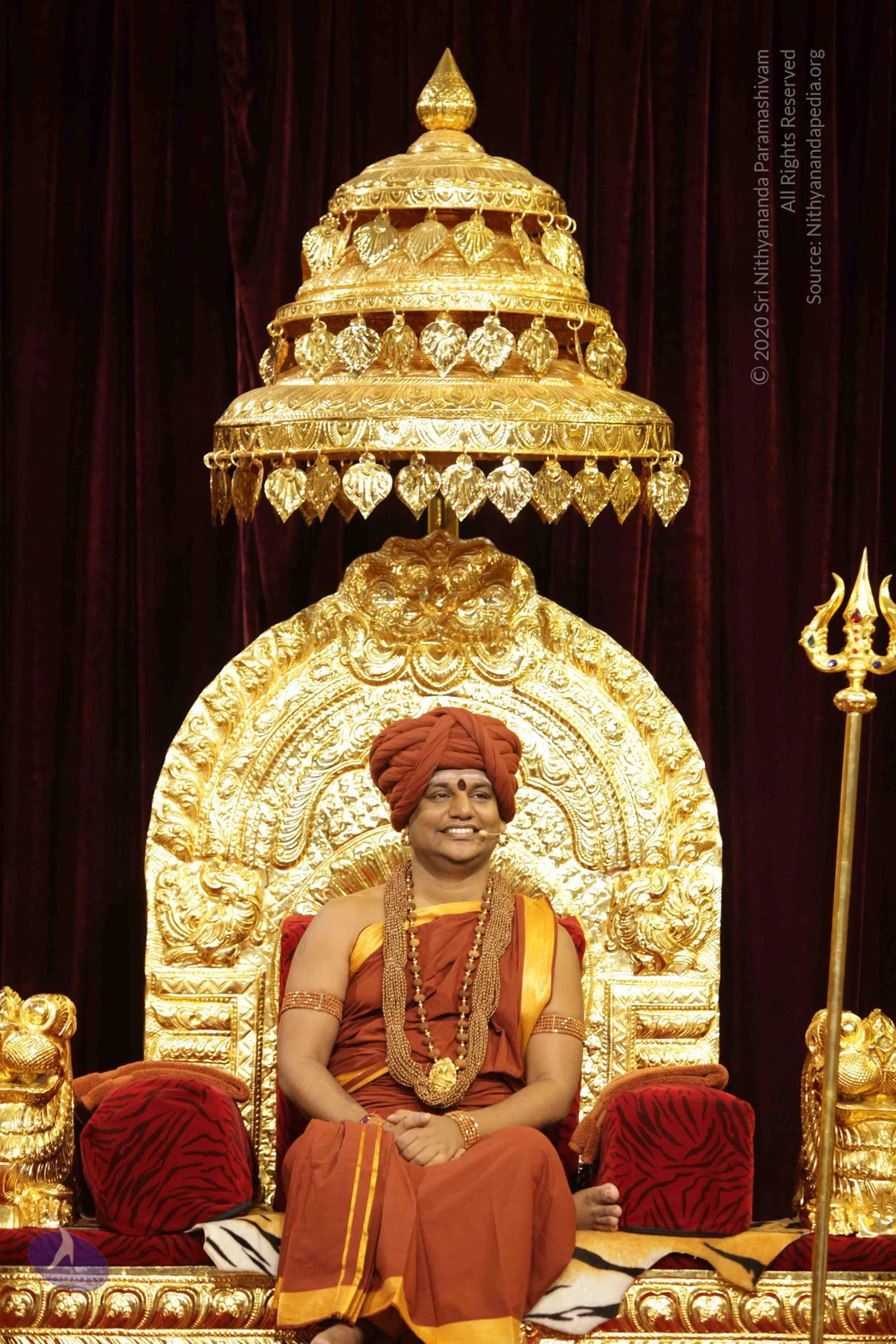
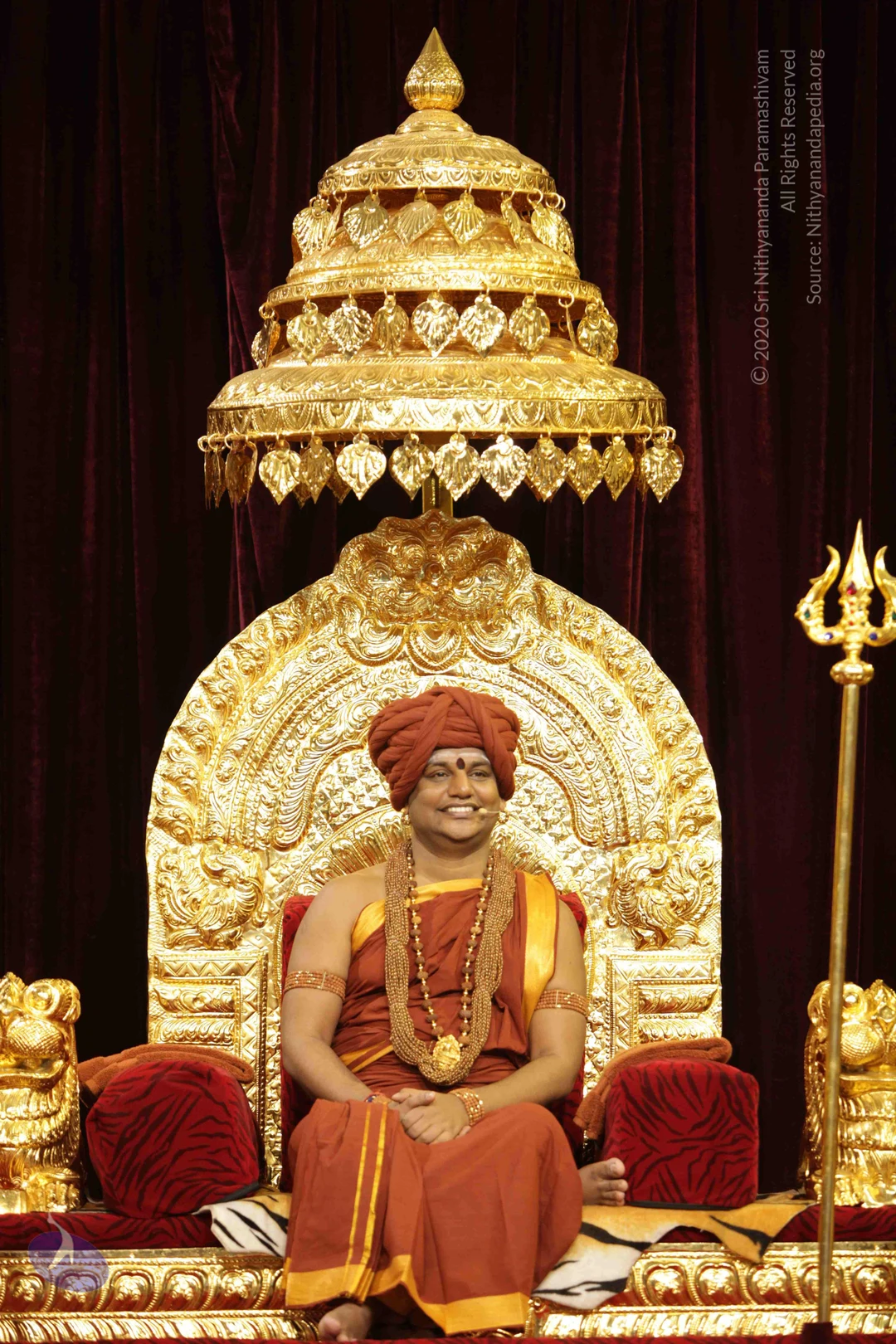
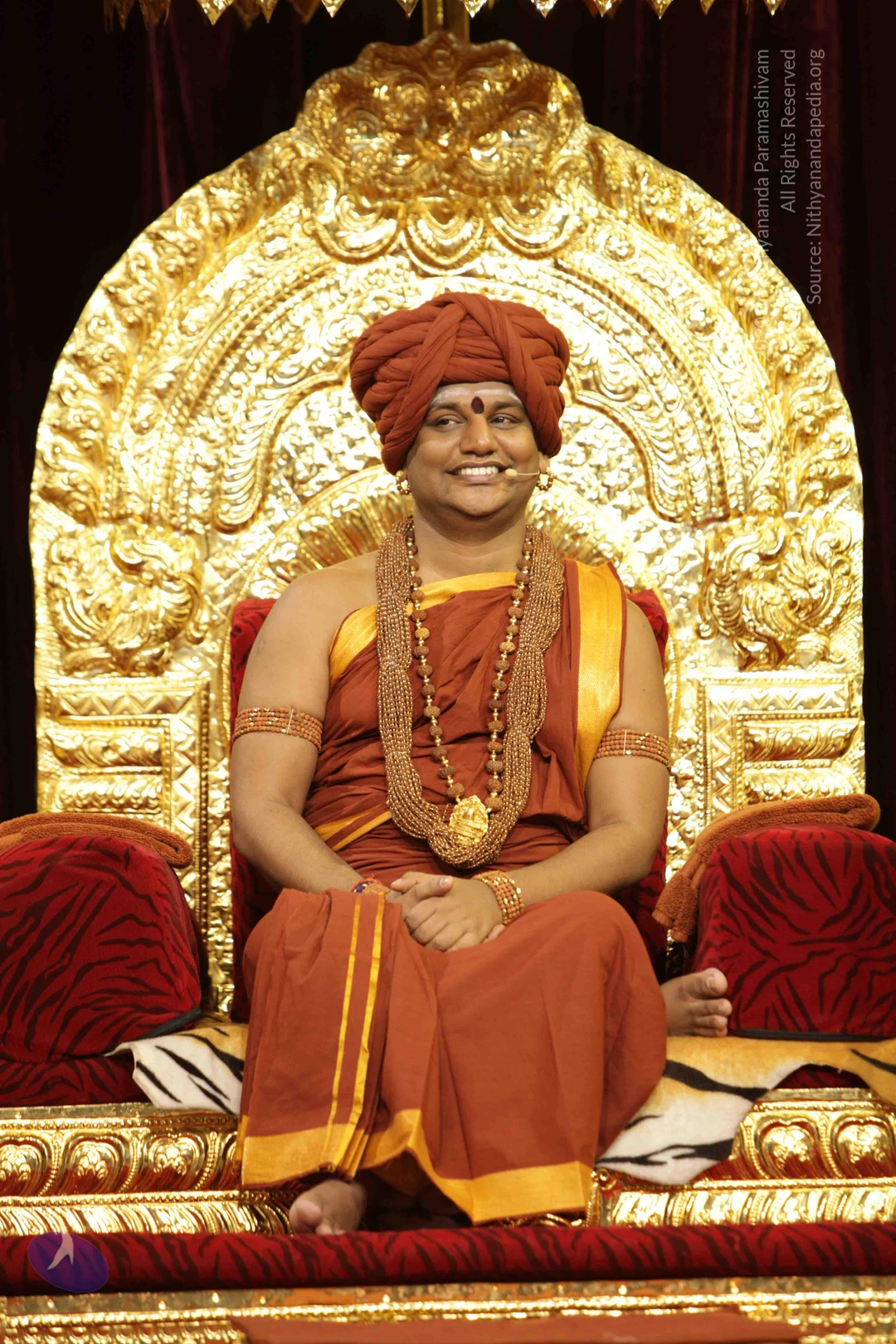
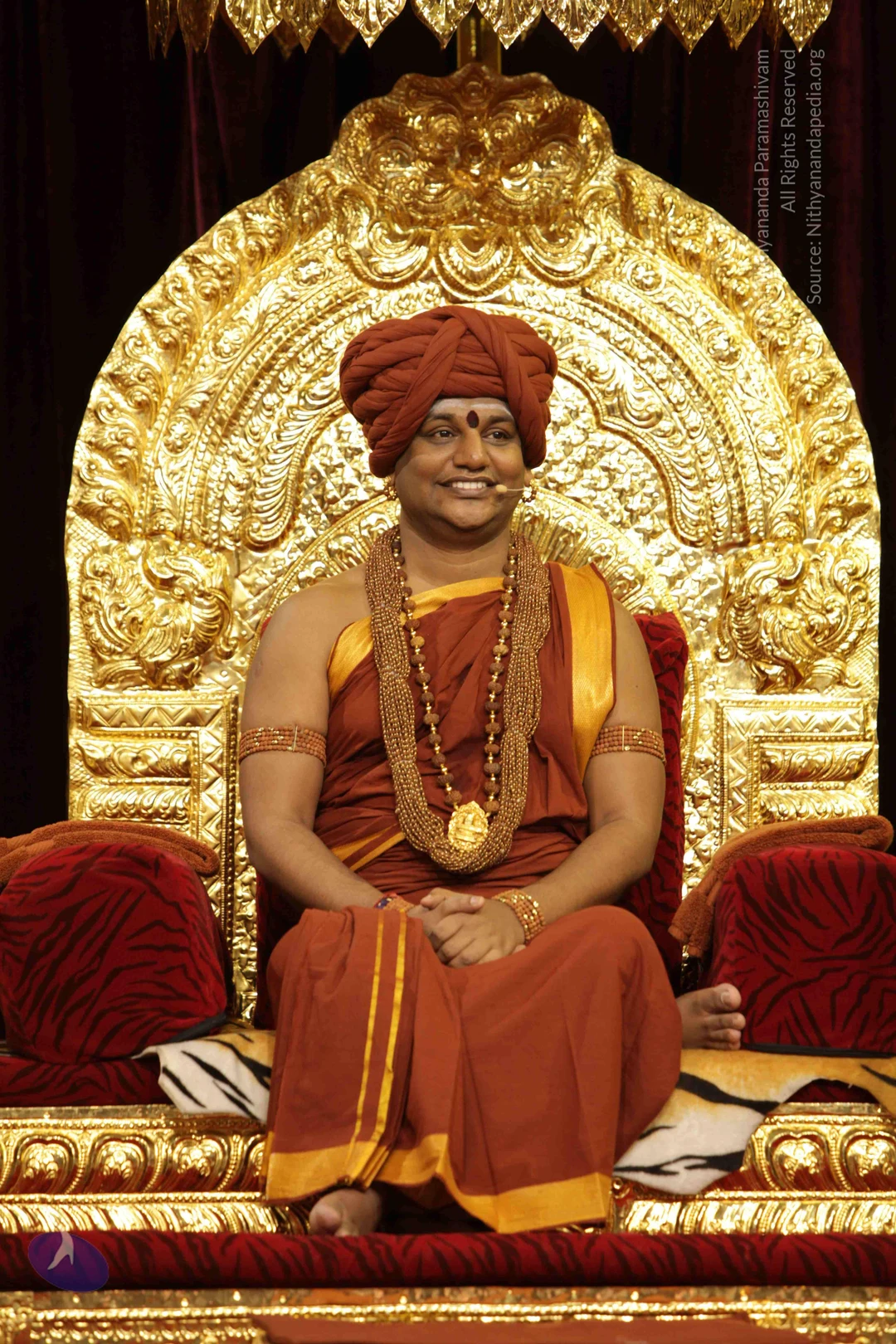
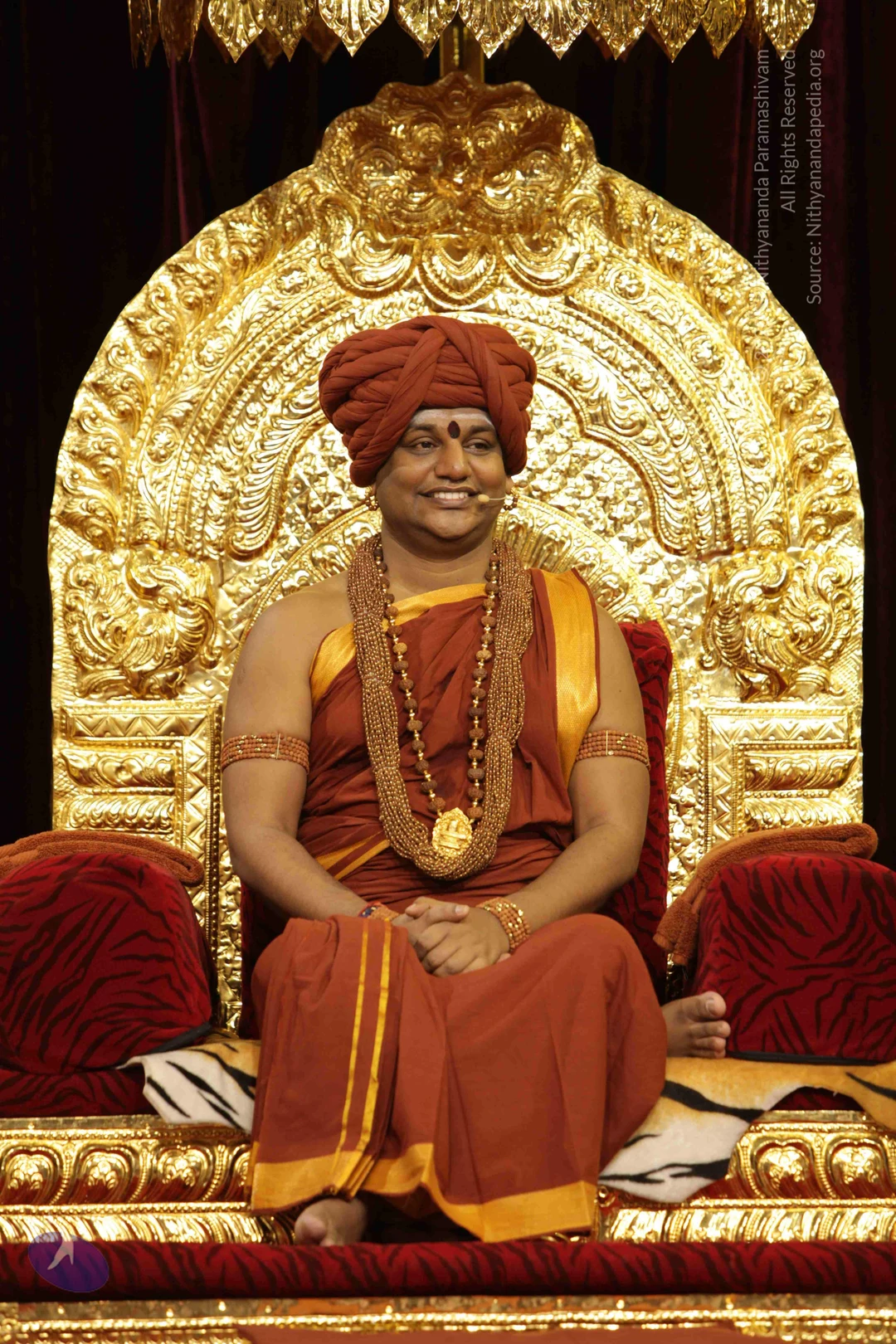
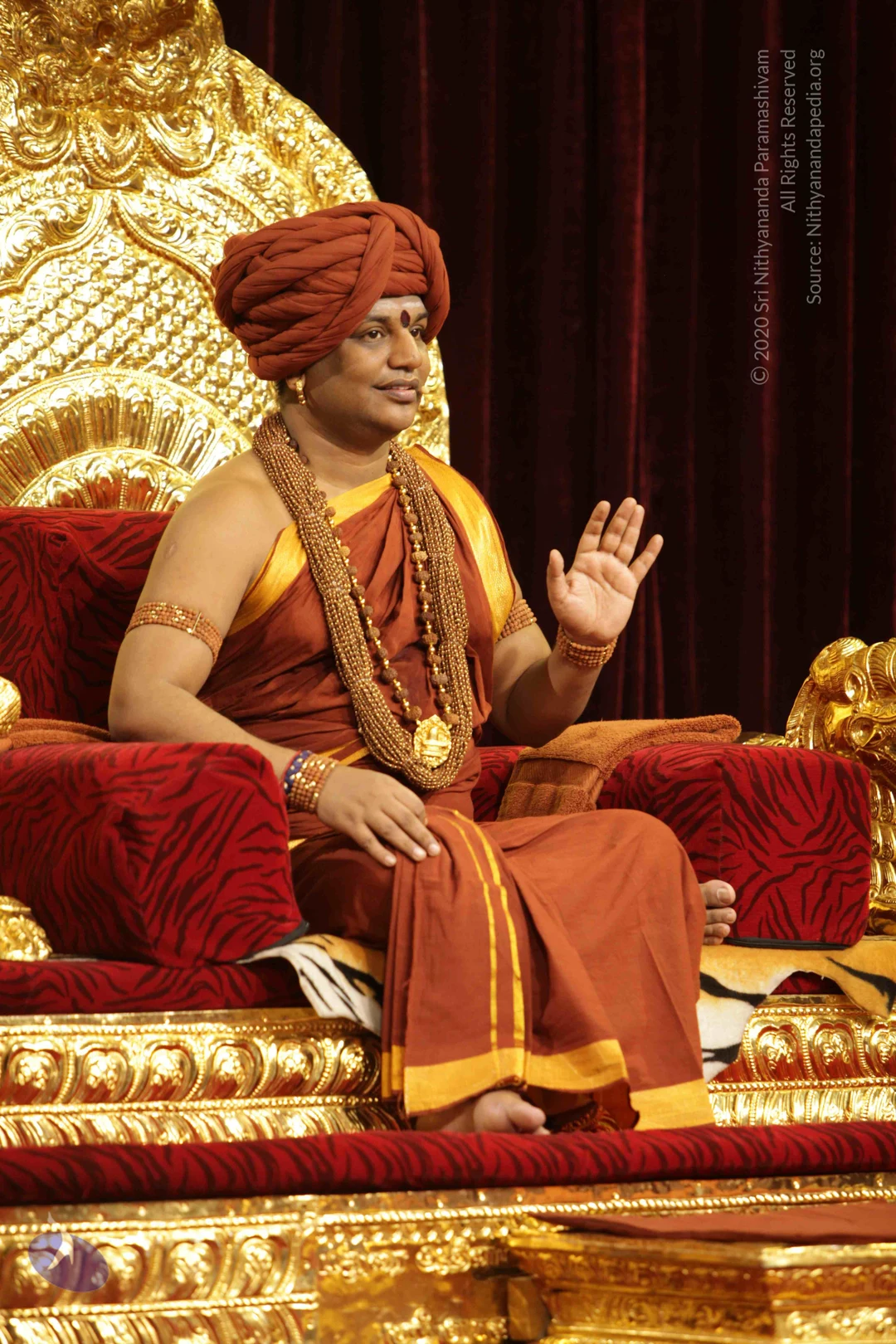
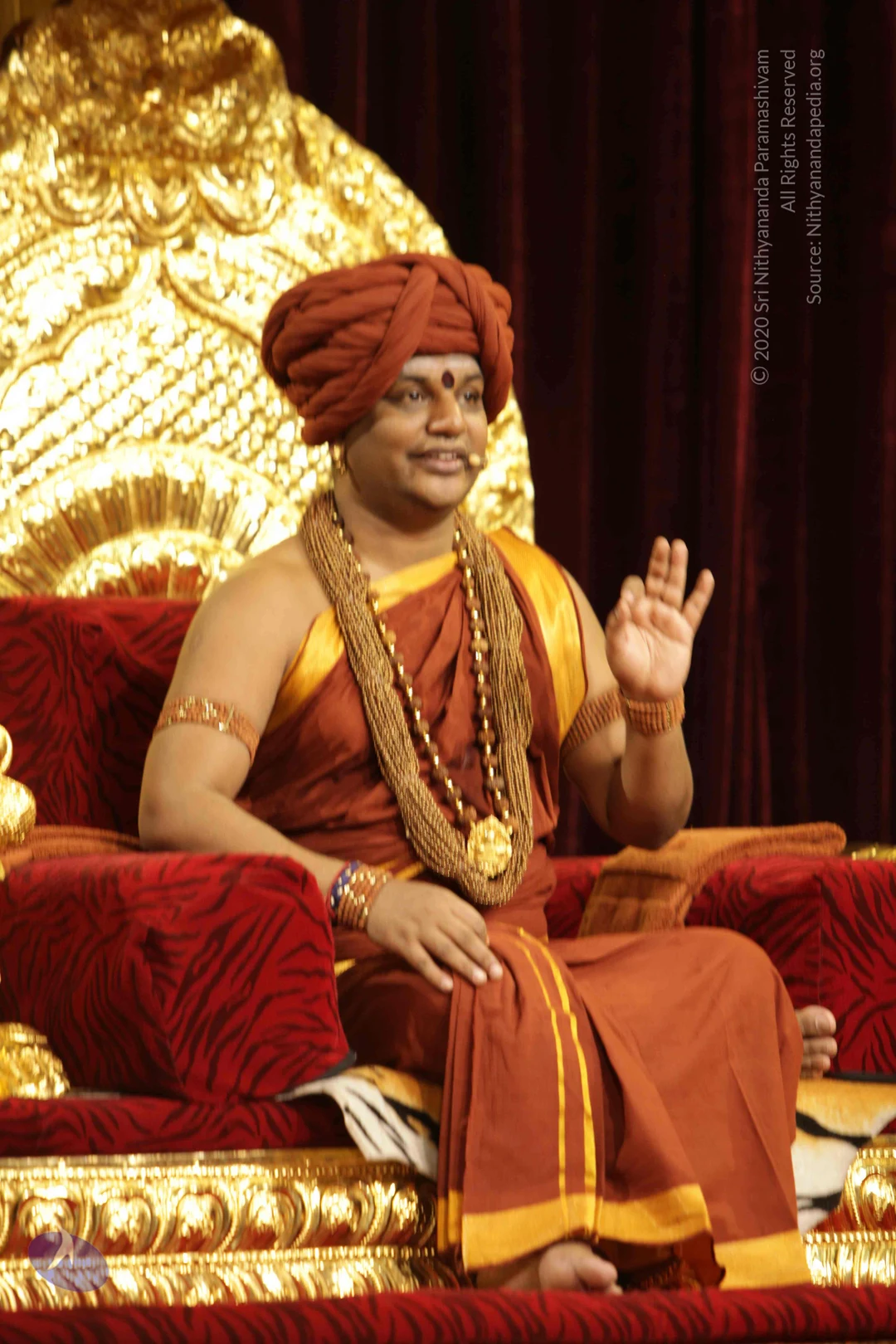
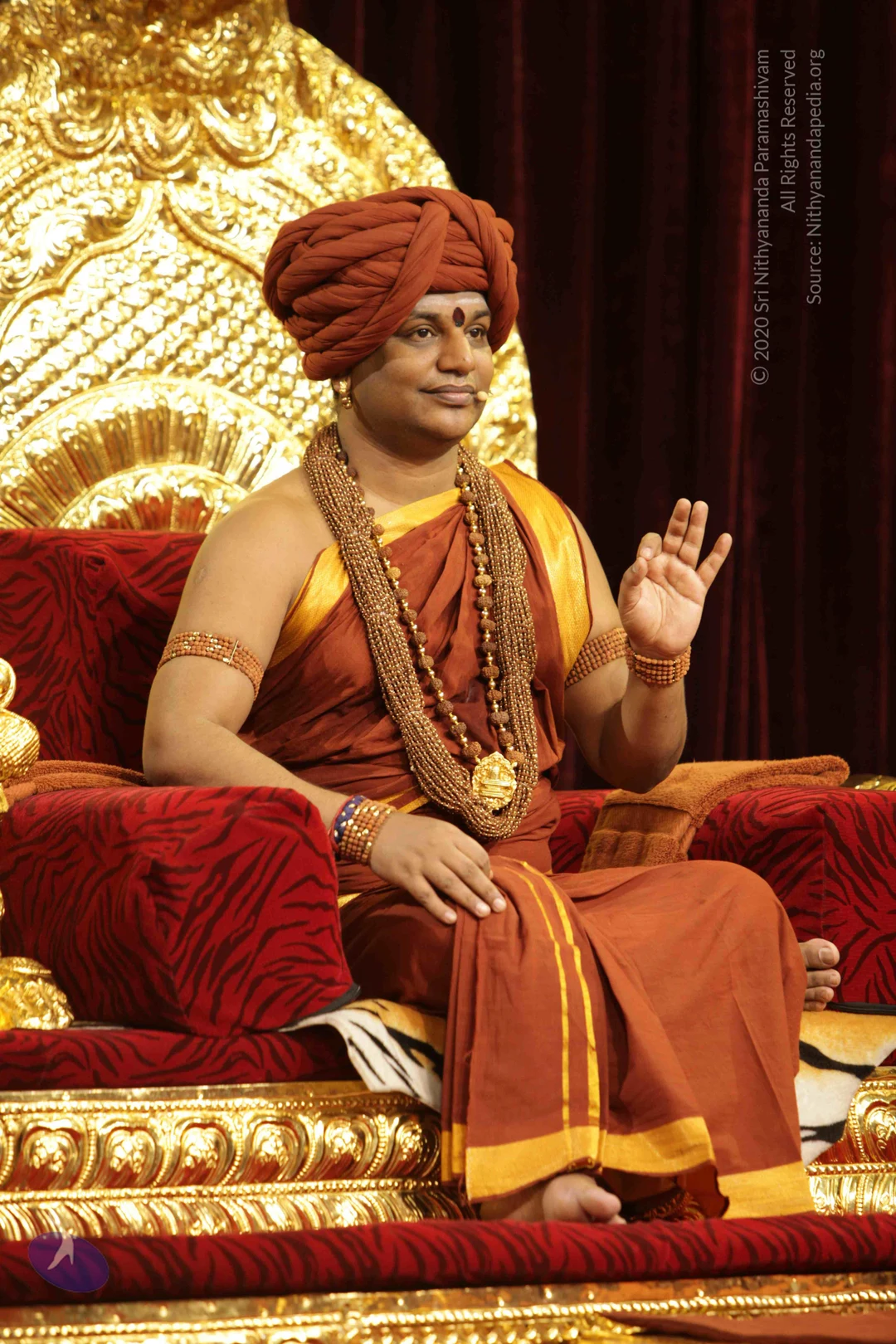
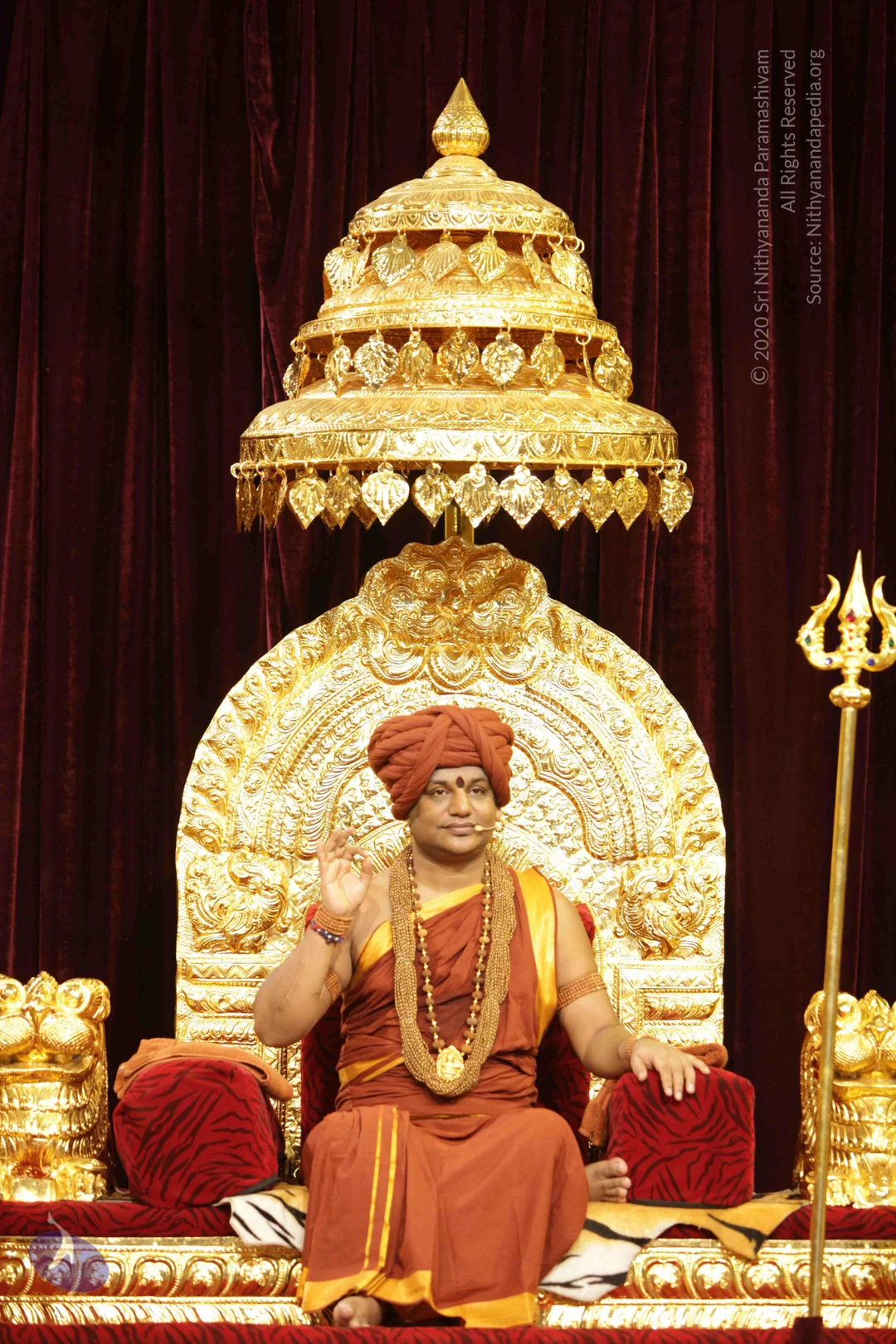
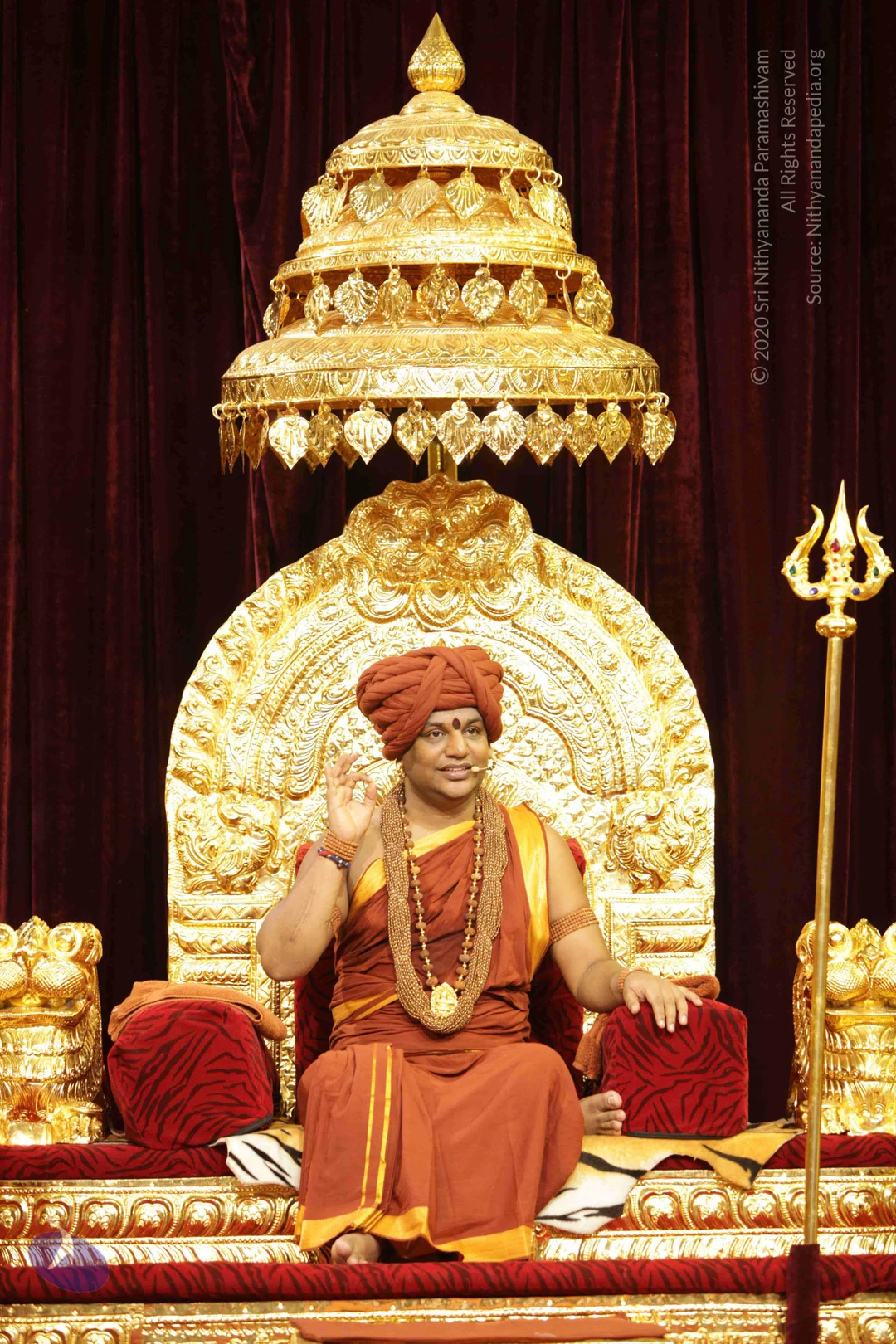
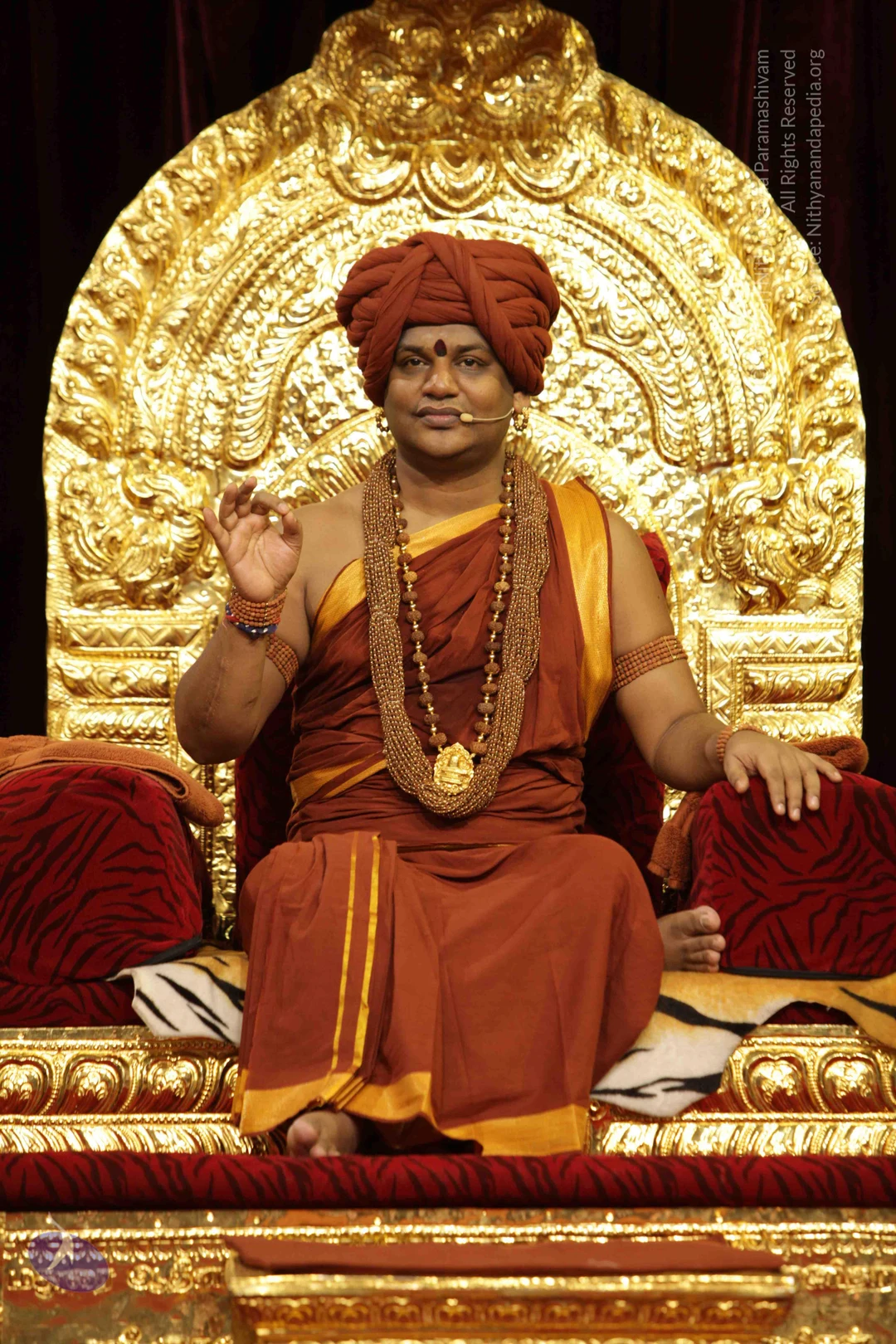
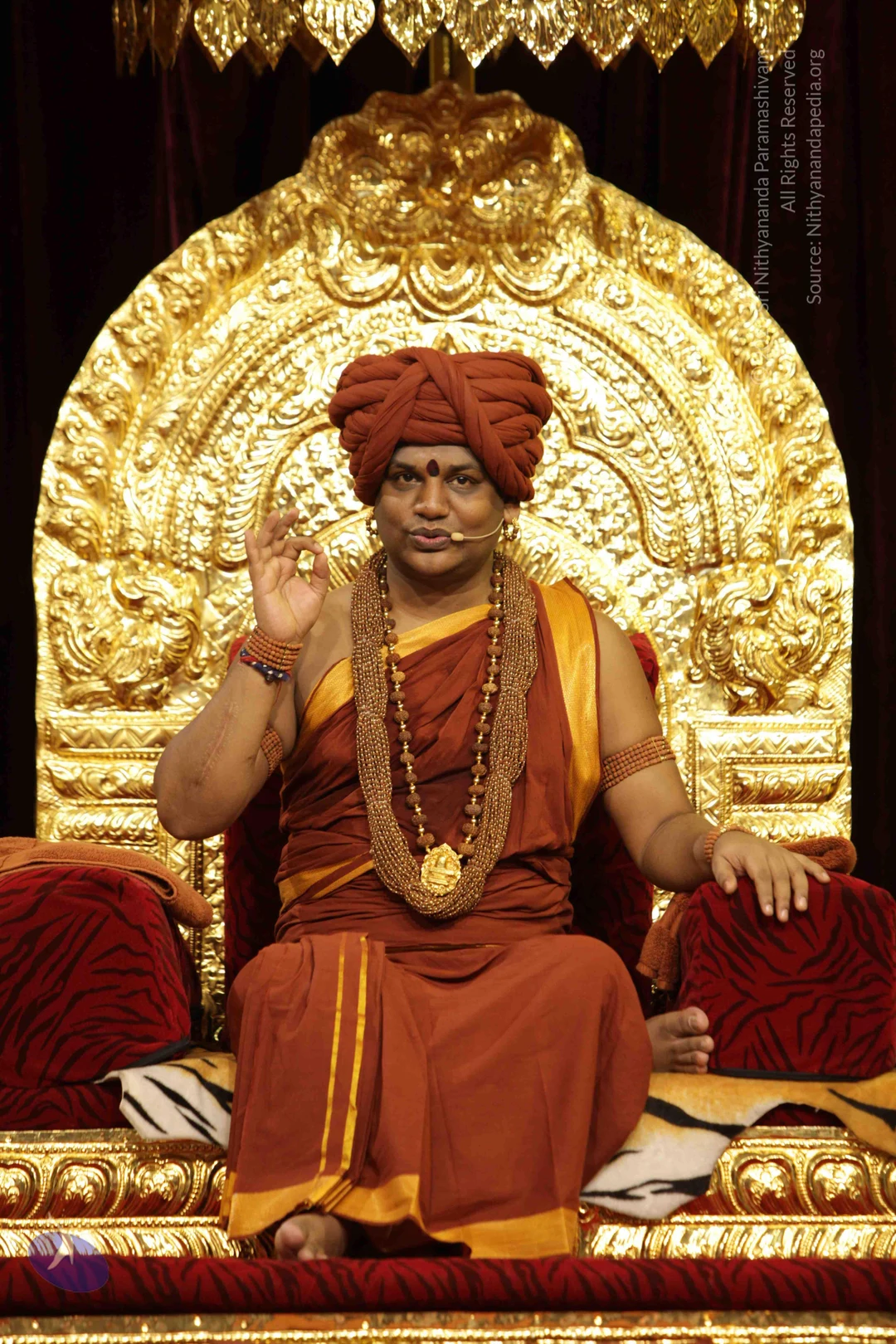
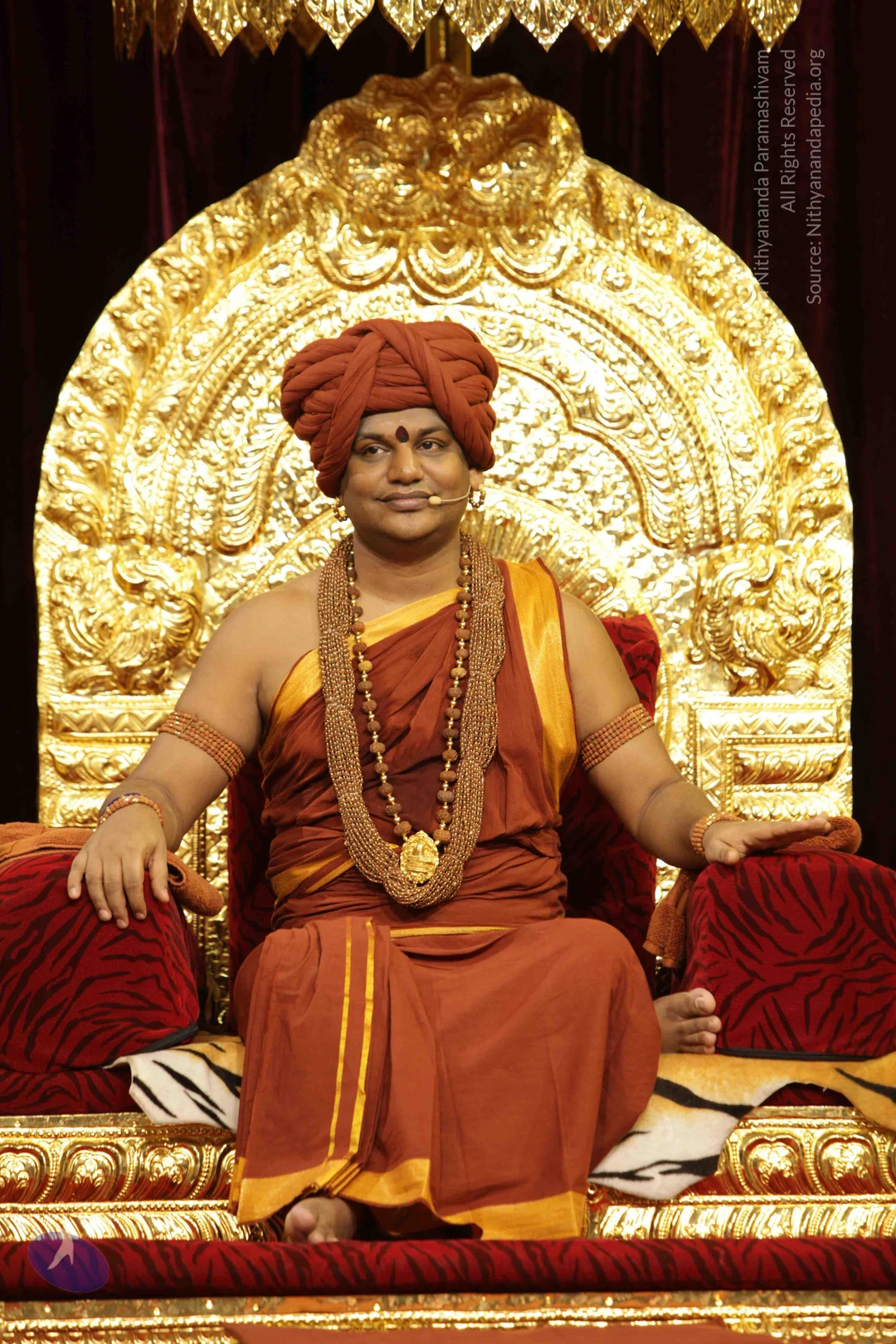
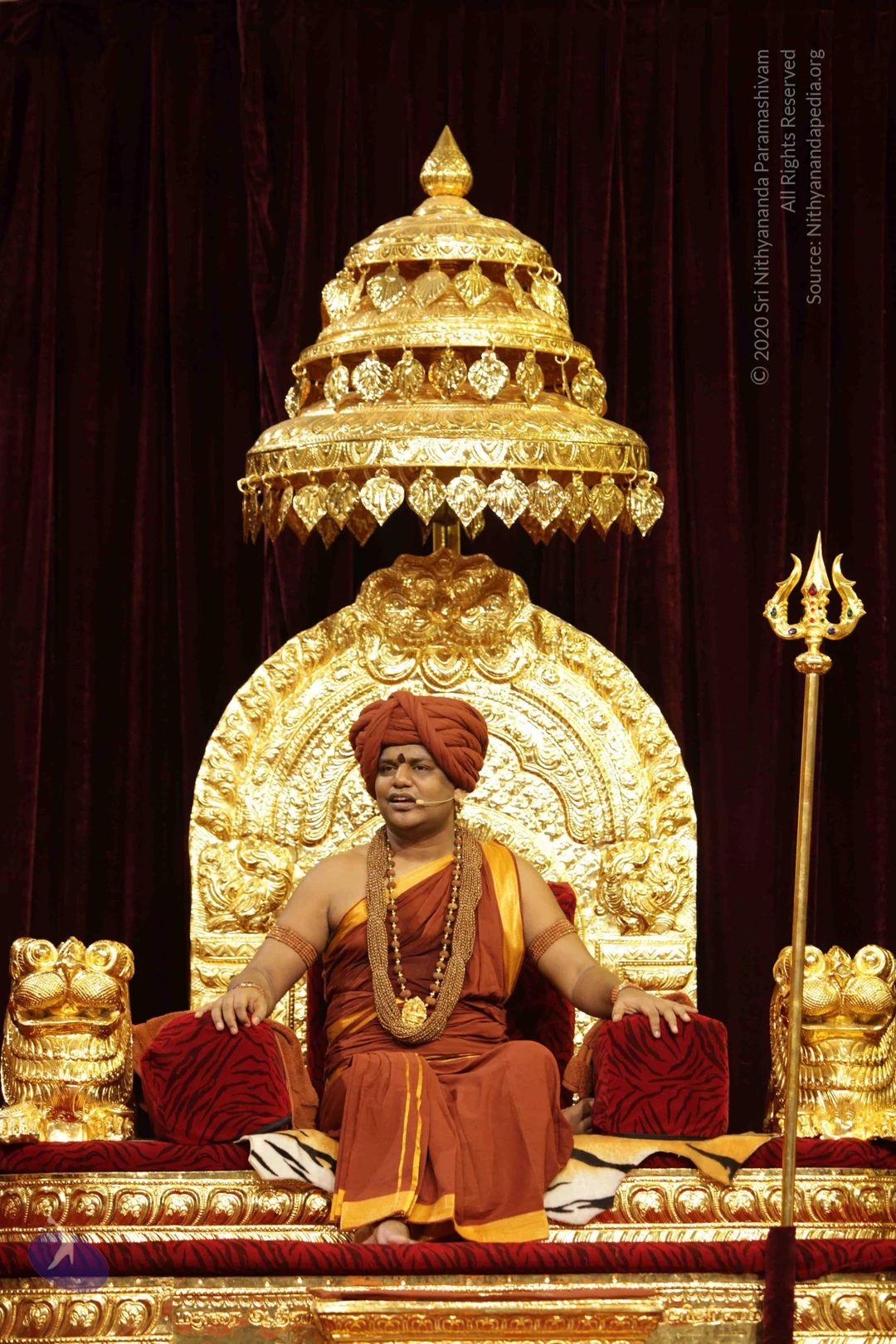
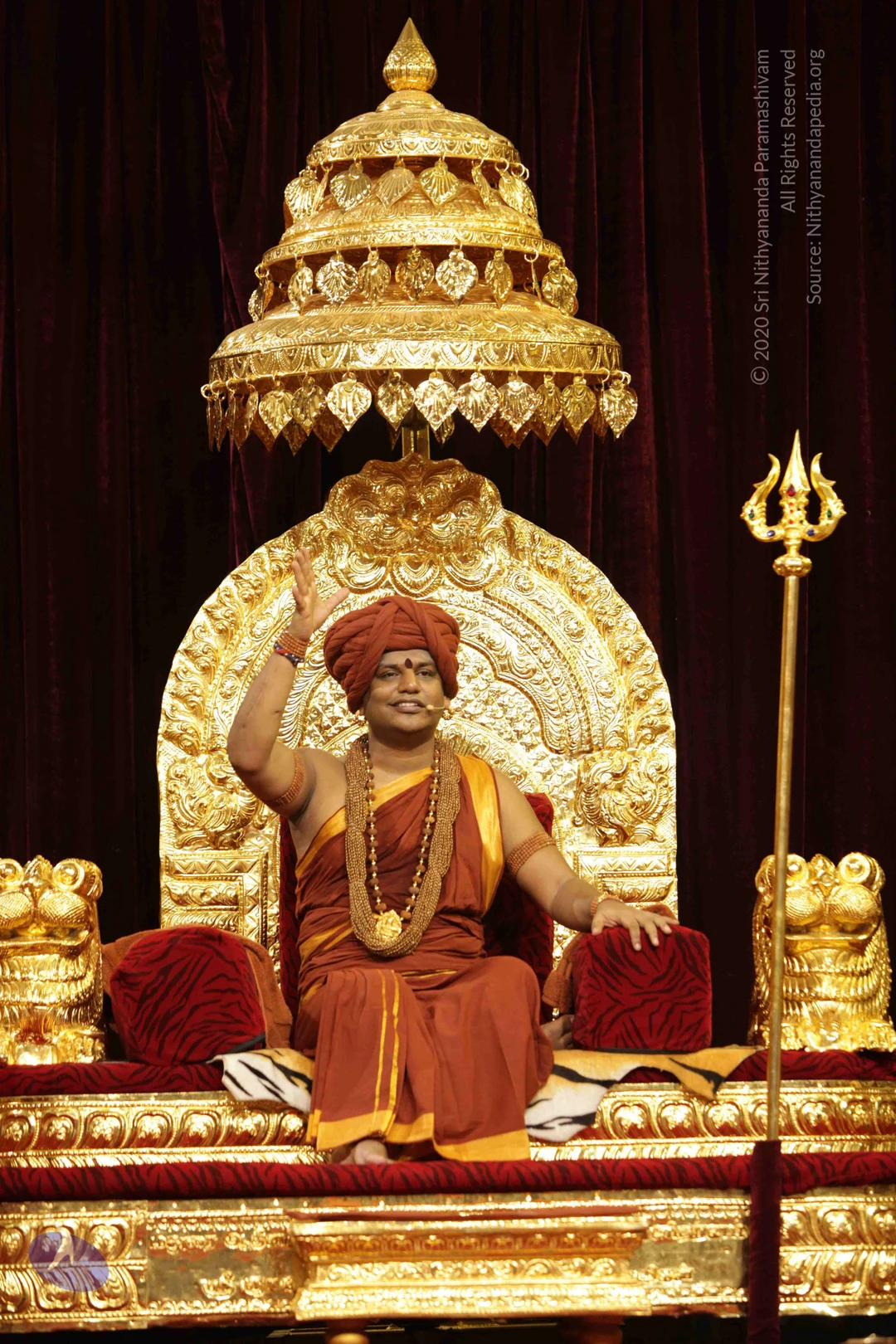
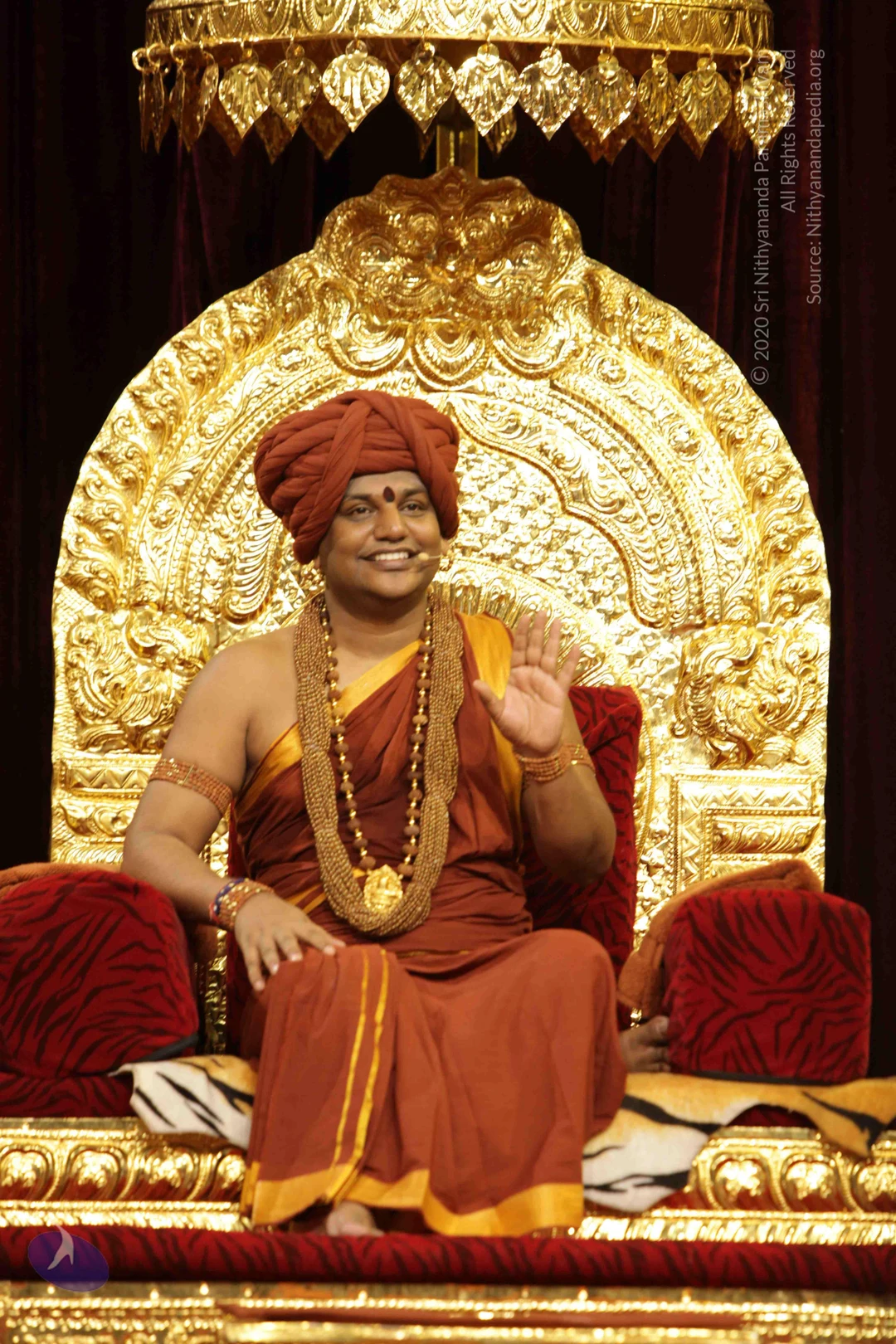
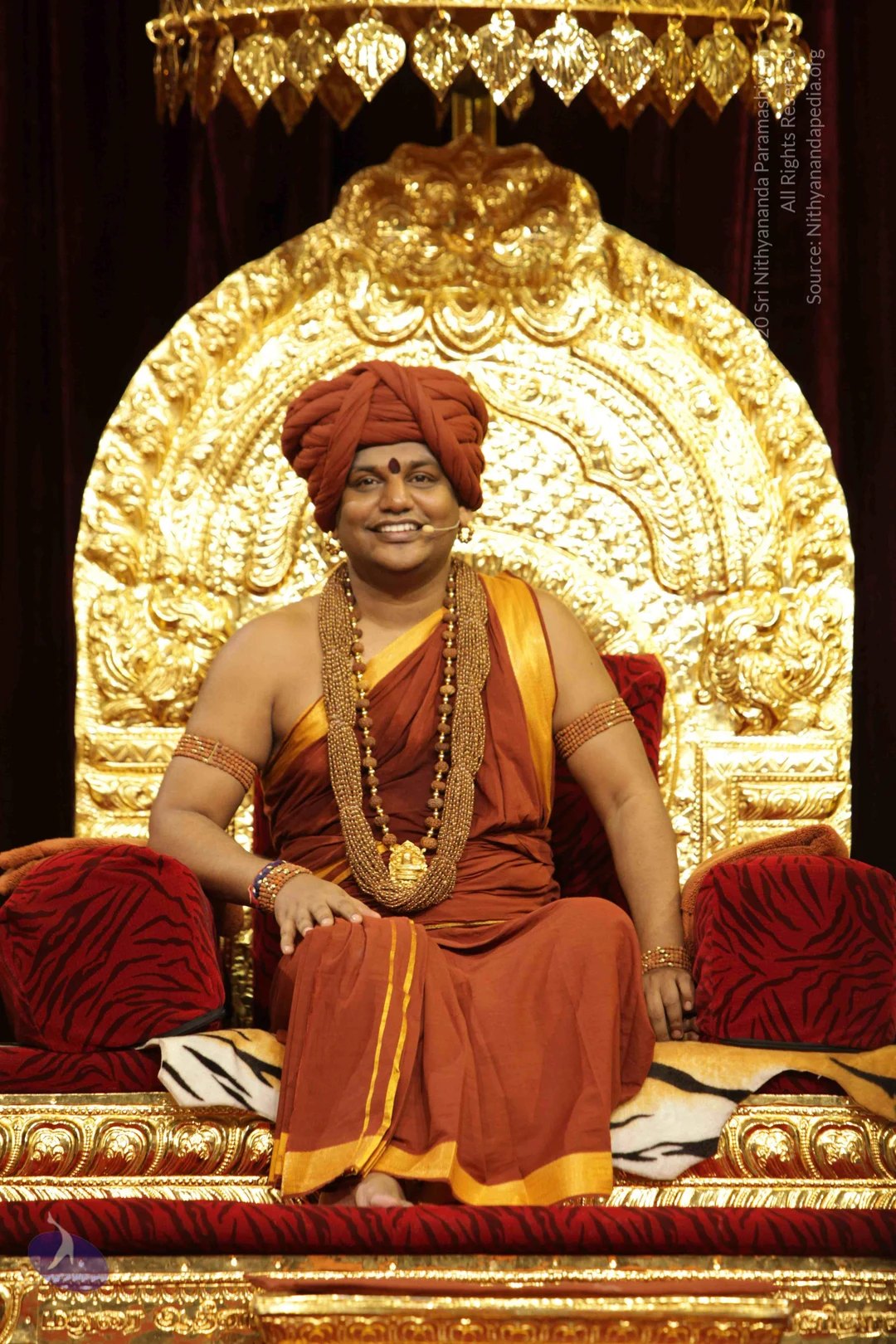
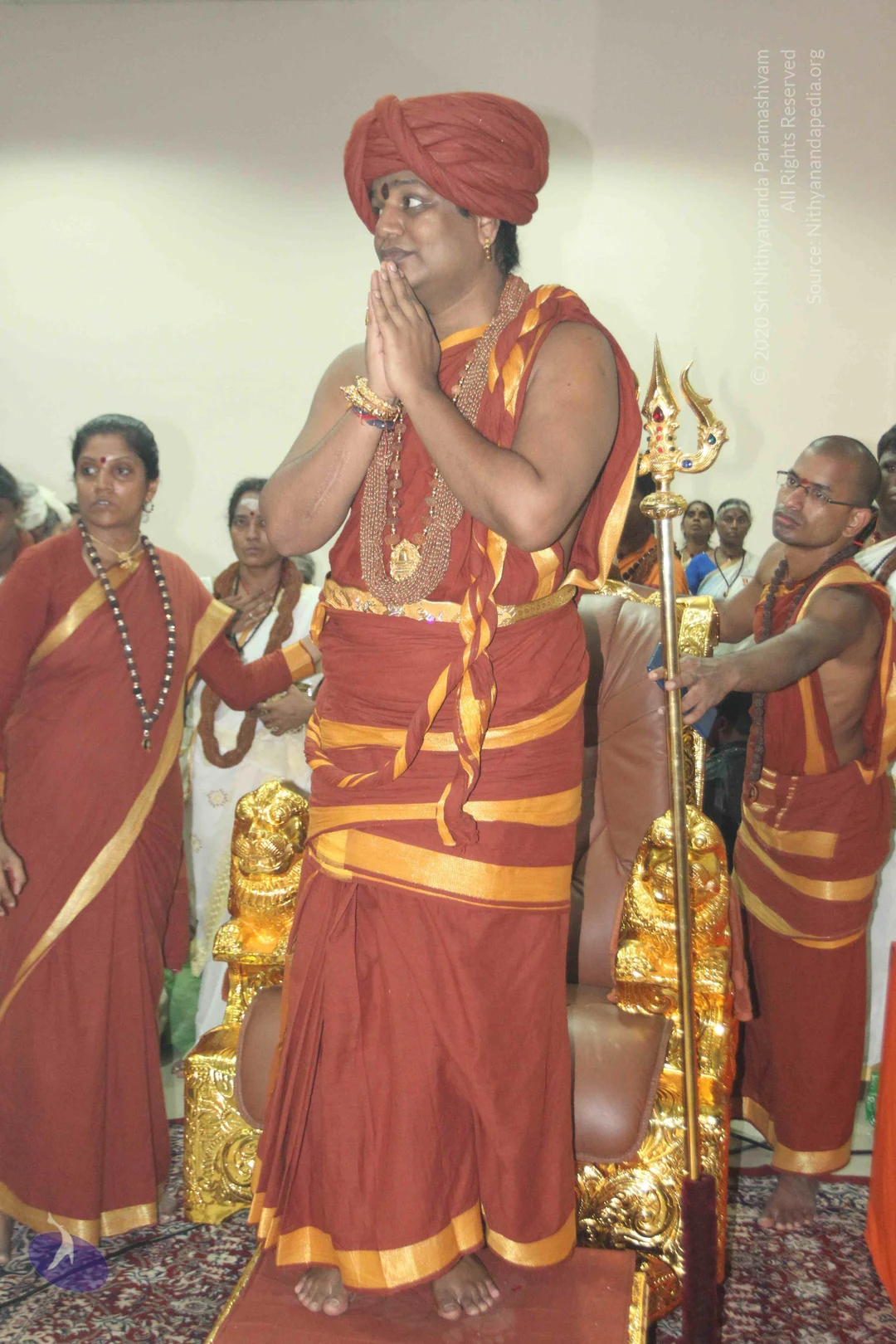
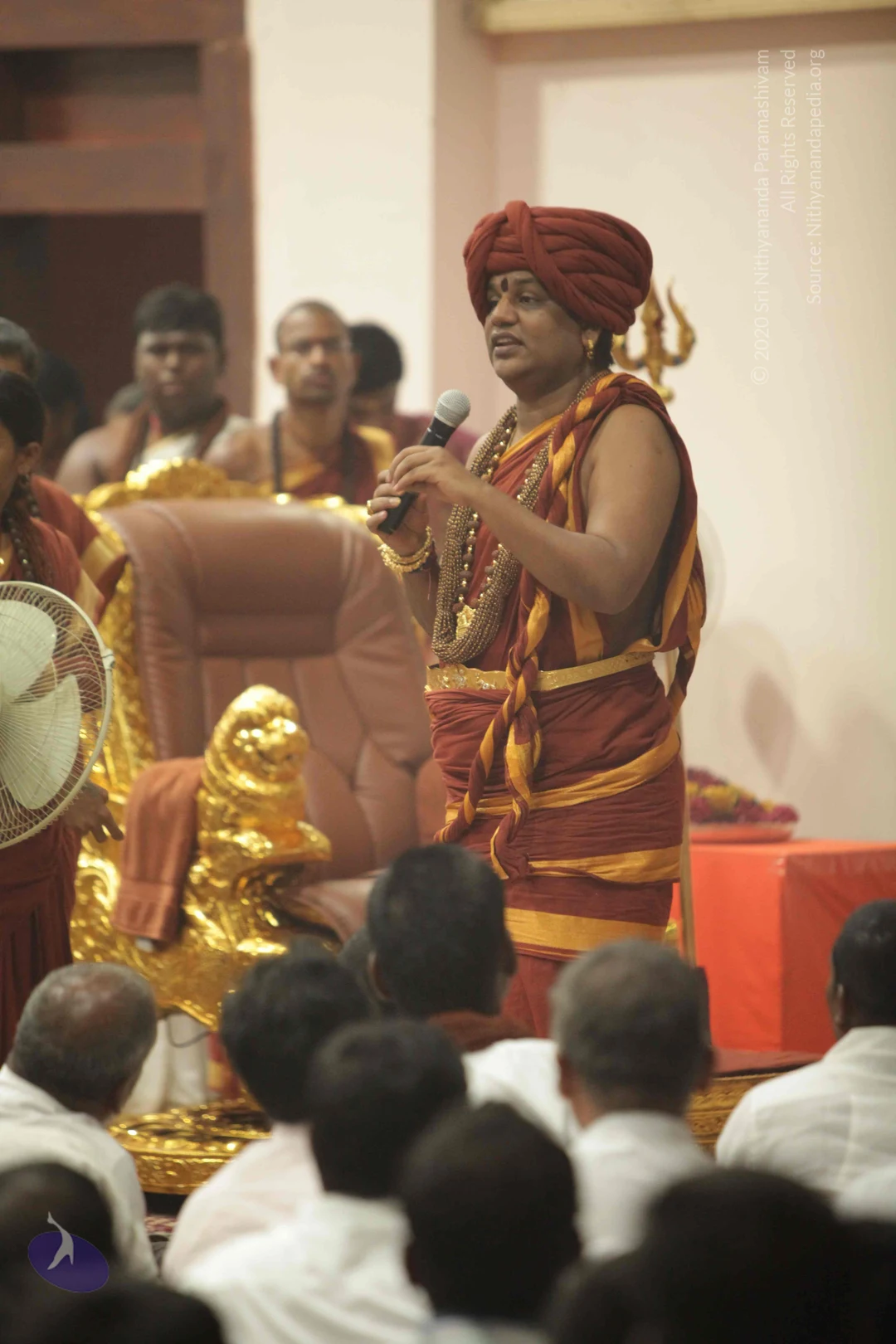
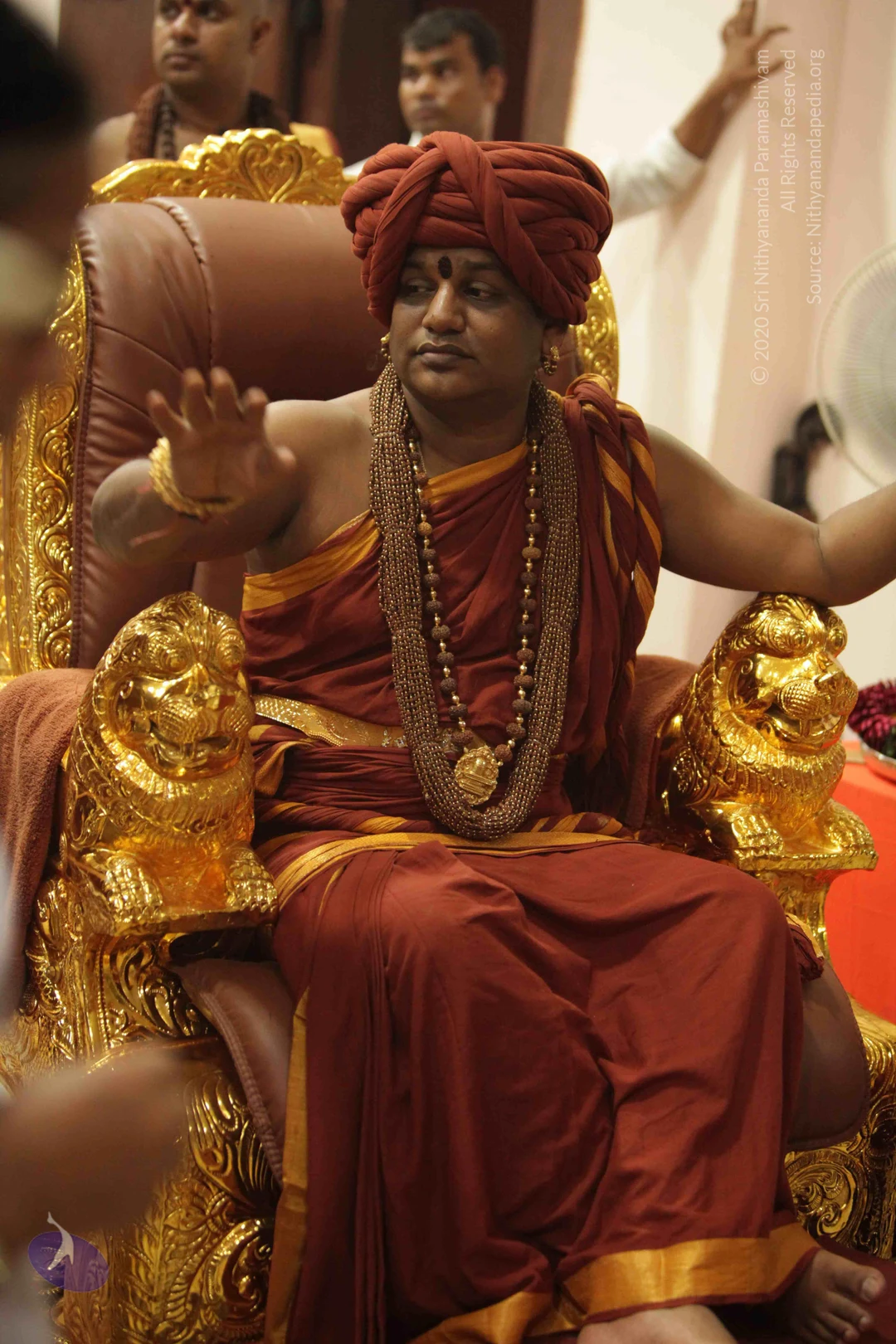
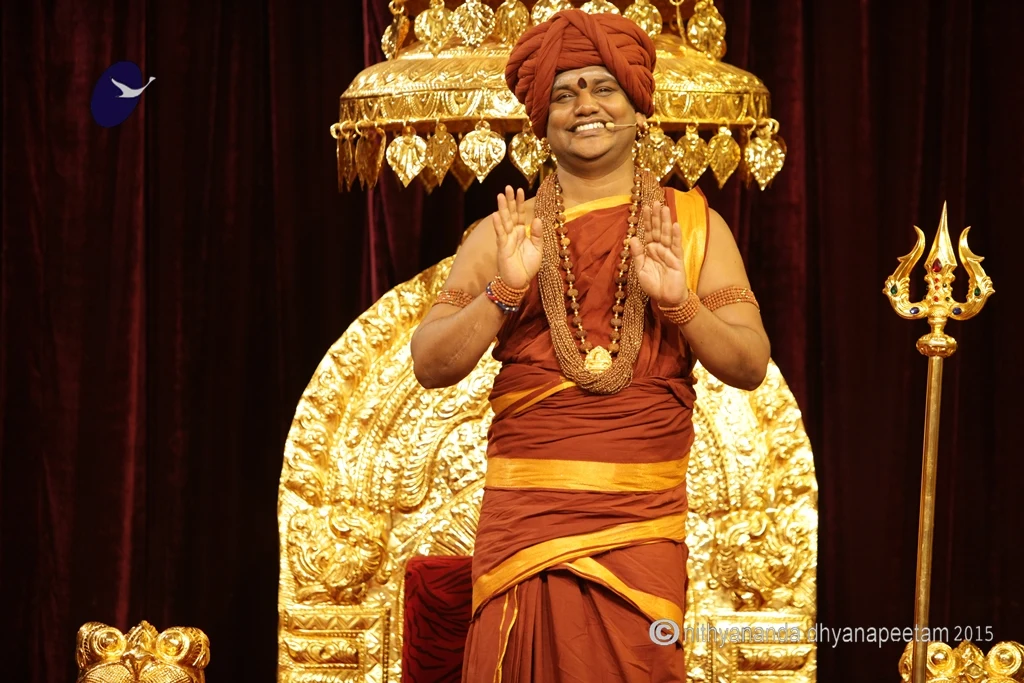
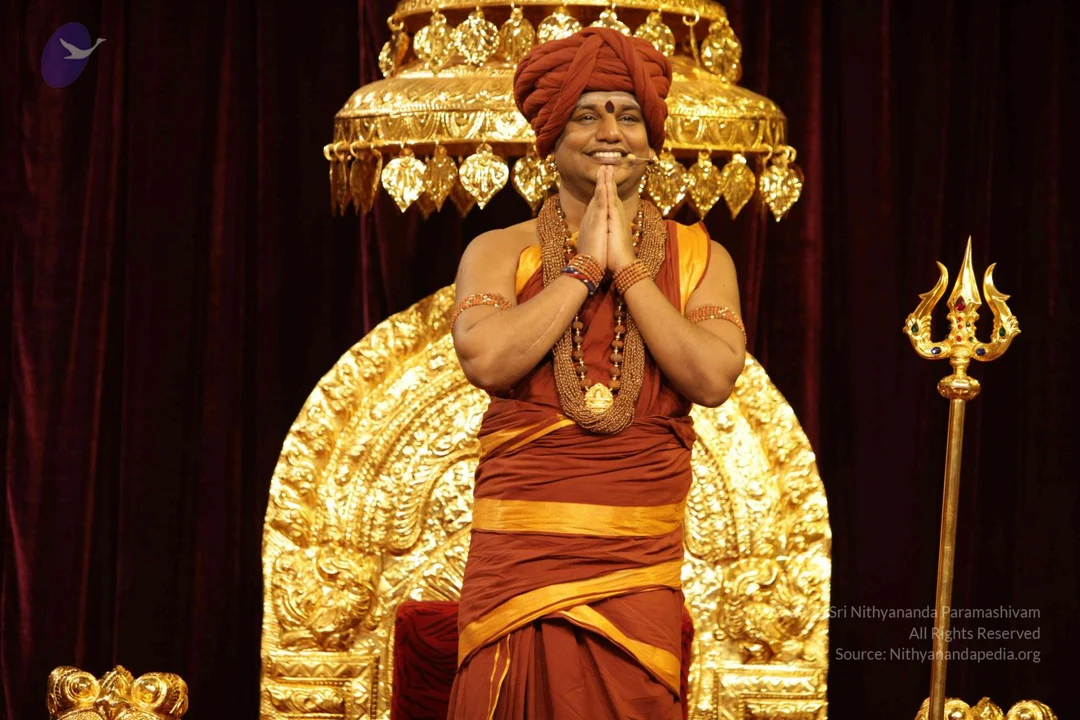
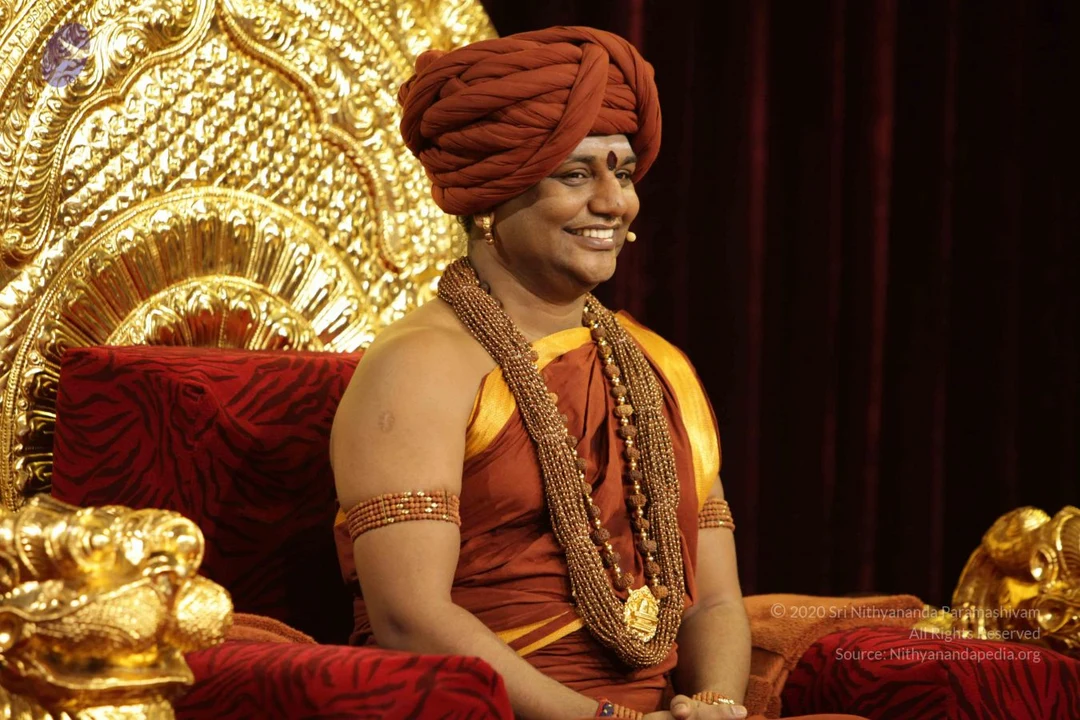
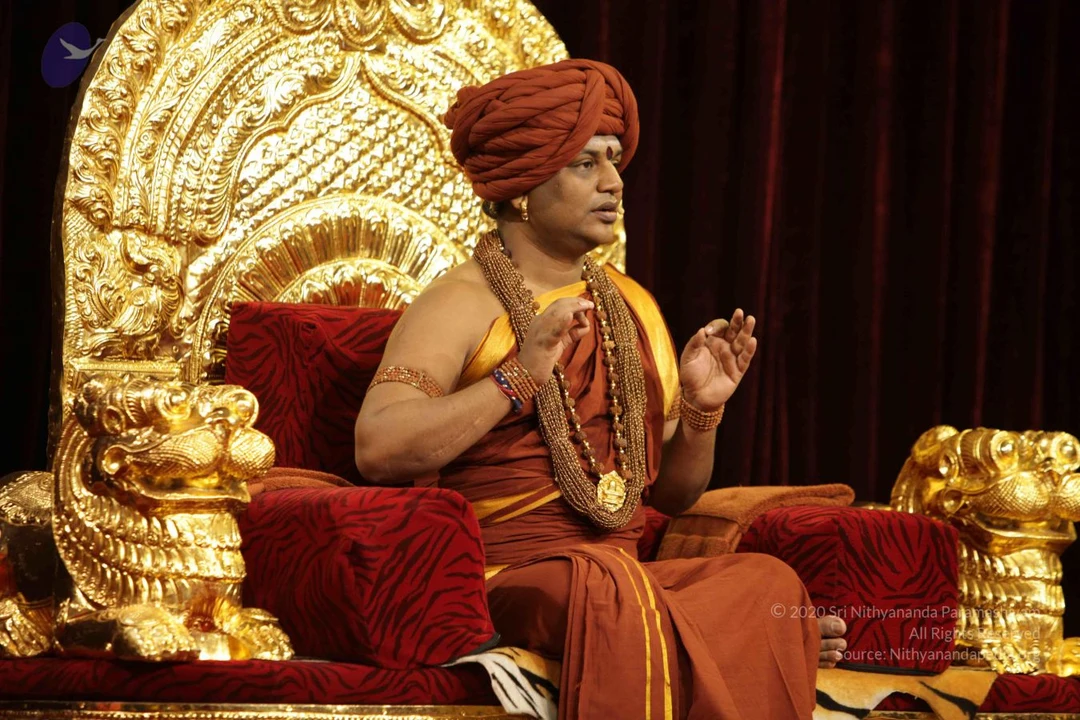
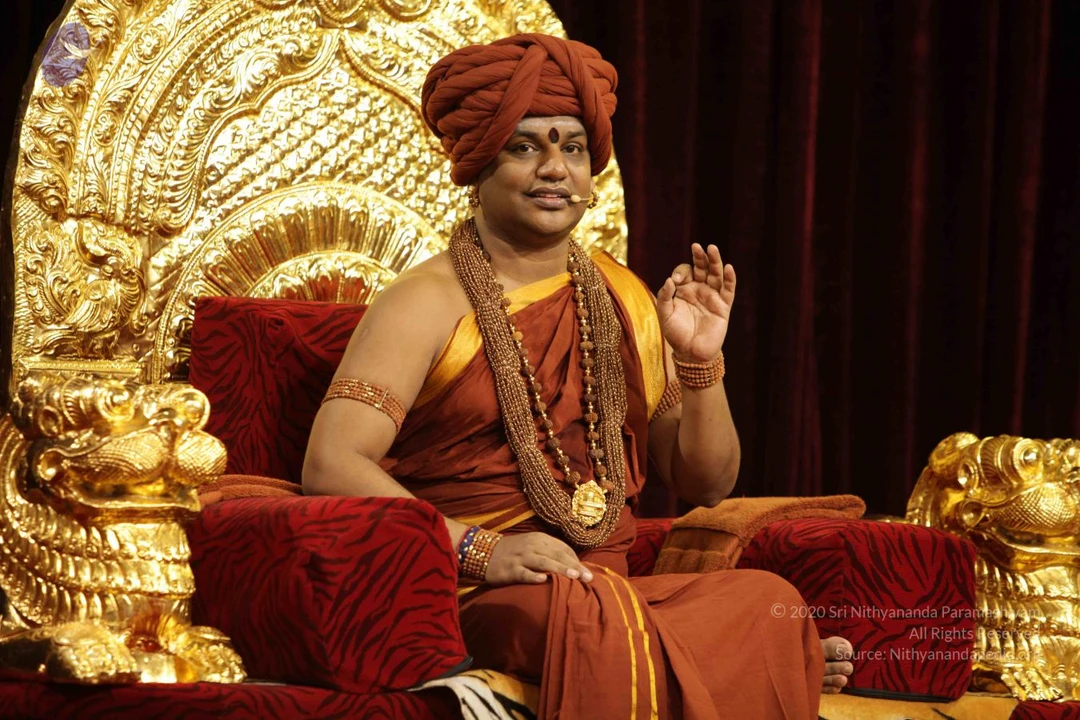
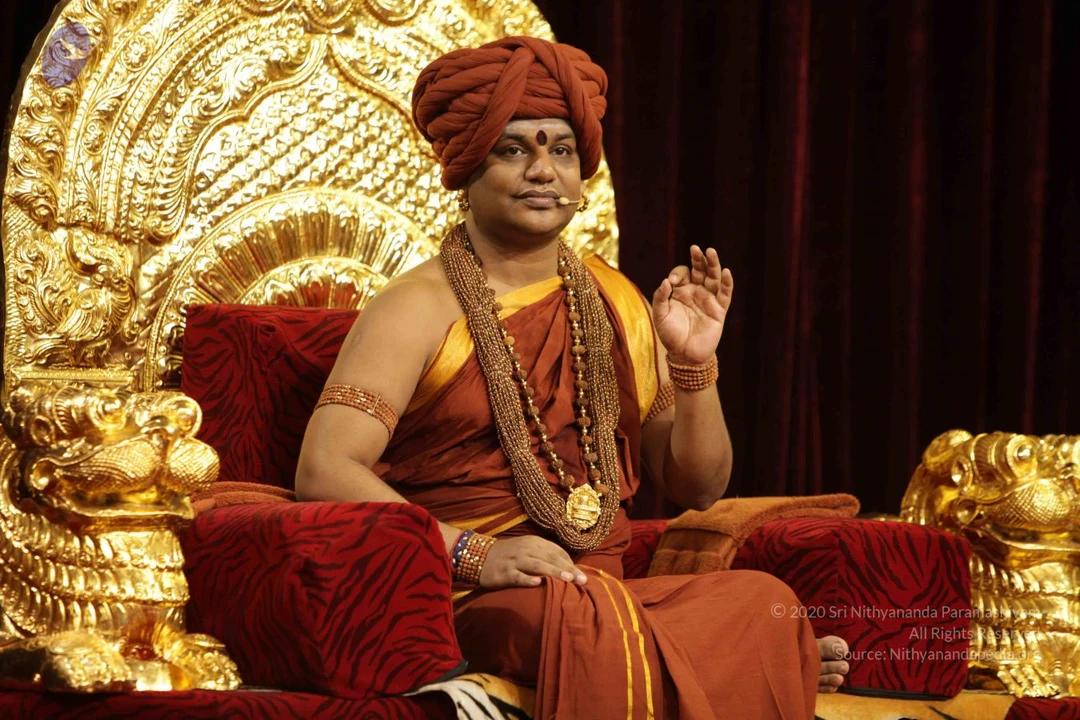
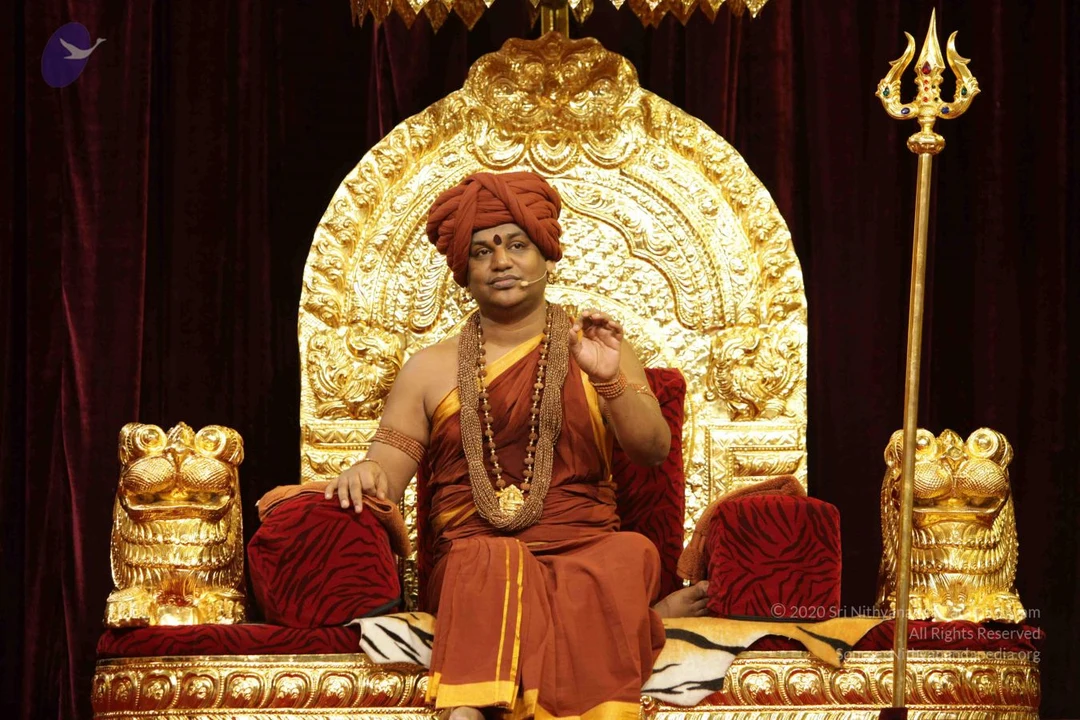
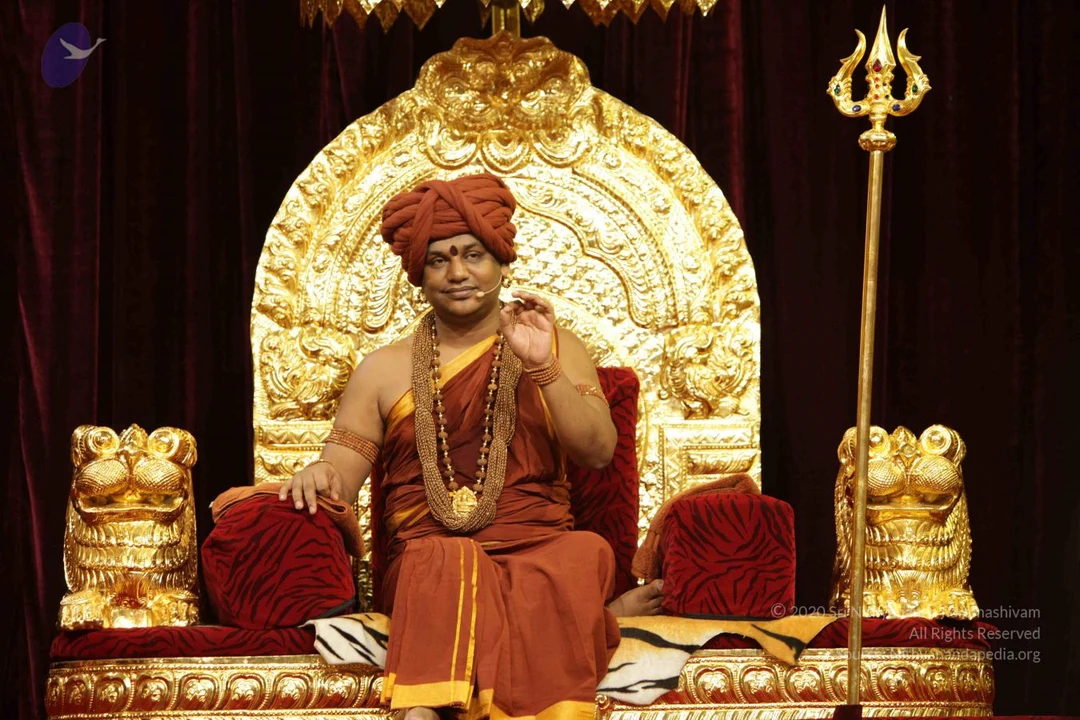
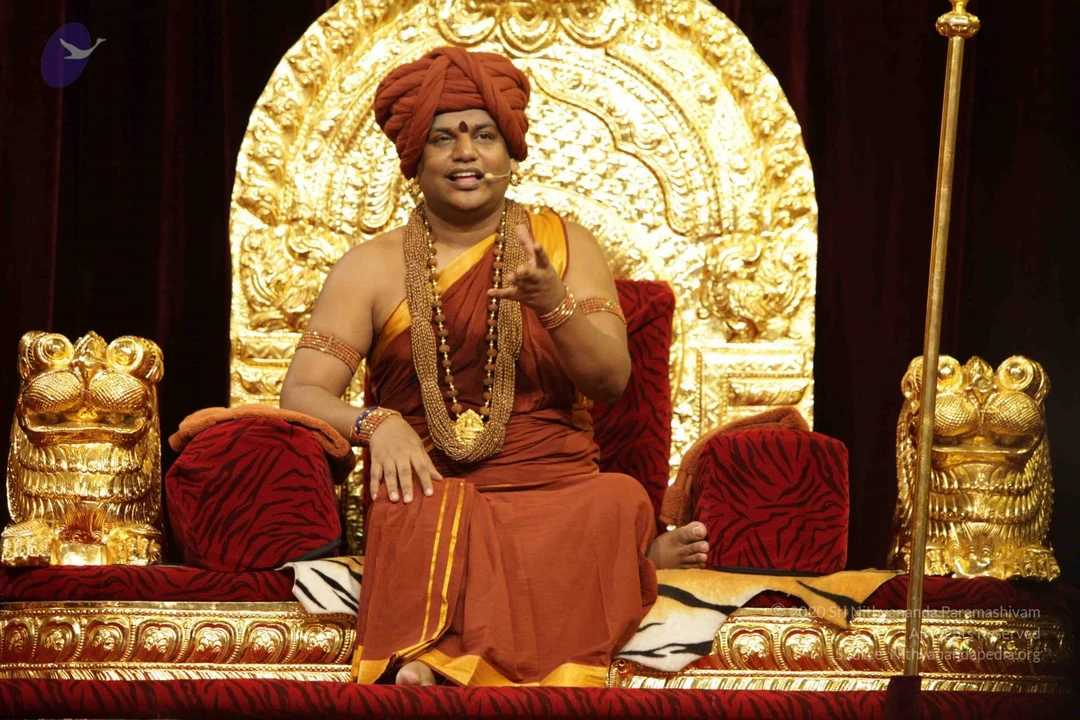
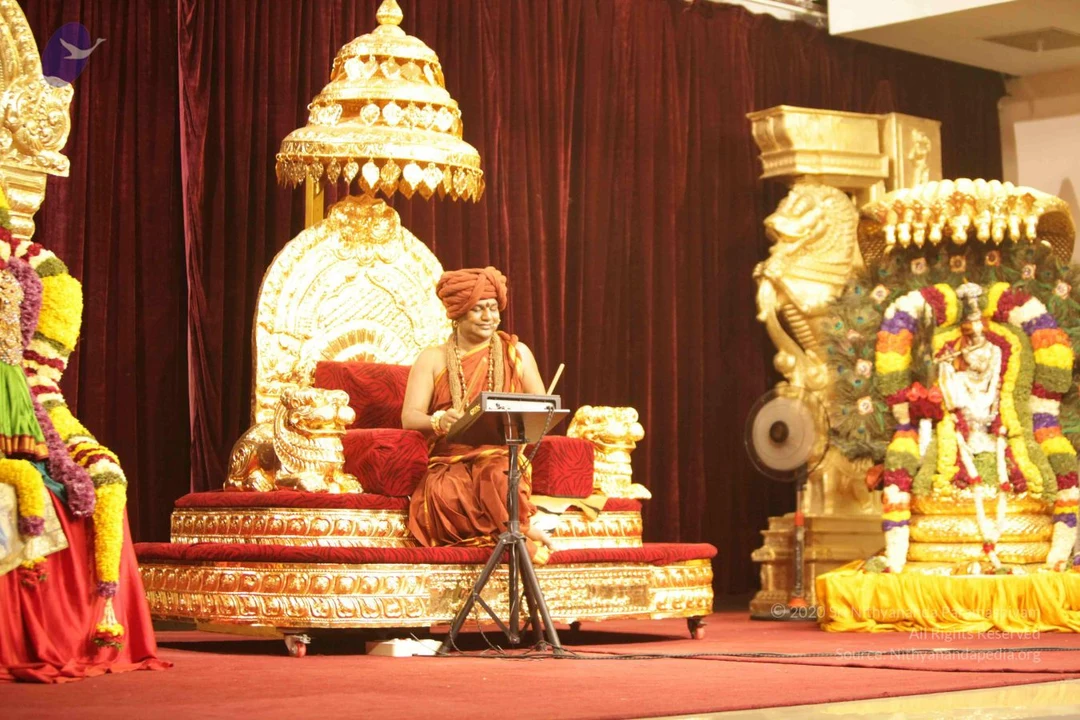
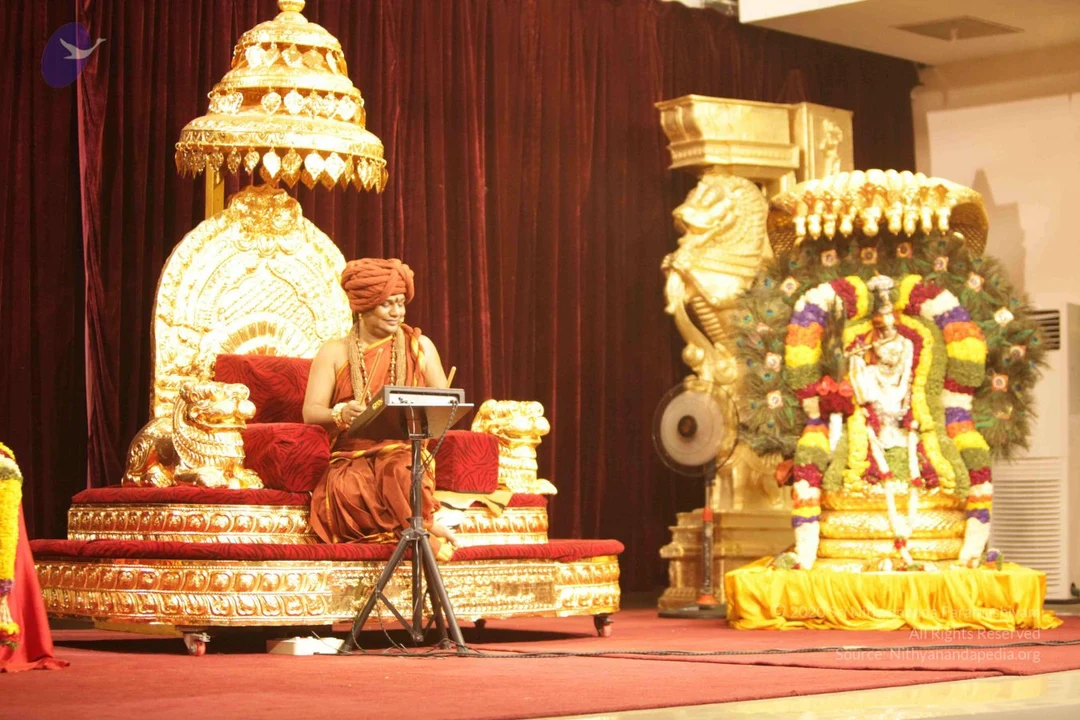
A man stands centre stage with palms pressed together in anjali namaskar, smiling. He wears a rust-red turban, a rust-red and gold-bordered garment draped over his shoulder, a dense multi-strand beaded necklace with a gold pendant, and red beaded bracelets. Behind him rises an ornate gold canopy with hanging gold leaf-shaped pendants over a large gold-embossed seat back, against deep burgundy drapes. At right stands a golden trident.A man stands before an ornate gold throne with a carved gold back and a gold canopy above, against deep maroon velvet drapes. He wears a rust-red turban, a red-orange cloth wrapped around his body with gold-yellow borders, a gold chain of rudraksha beads, a gold pendant, and red-and-gold bangles on his arms. He smiles with palms raised and open toward the audience, a small microphone at his face. A tall gold trident with red and green jewels stands at the right edge. Visible person: a person, seated-height speaker in the centre, appearing to address the audience during a teaching session.A smiling man sits on an ornate golden throne with lion-head armrests, backed by a gilded arch and red velvet cushions with tiger-stripe patterns. He wears a rust-orange turban, a red-orange dhoti-style cloth with a gold border draped over his shoulder, a dense multi-strand gold necklace with a central pendant, rudraksha-style beads, gold armlets and bracelets, and a small red bindi. A small microphone is at his ear. He rests his hands on his lap. A golden staff with a lion-head top stands to the right.A seated man in saffron-orange robes and an orange turban sits on an ornate gilded throne with a tiered golden canopy above it and lion-shaped armrests at each side. He wears a long beaded necklace with a large gold pendant and gold bangles, and rests his hands in his lap with bare feet visible. A tall golden trident stands beside the throne against deep red velvet drapes. The man is an appearance-based probable Swamiji seated on a throne with saffron clothing, a turban, and ceremonial gold necklace cues, presented as a seated teacher.A seated man in a golden ornate throne with a gilded canopy and carved lion-shaped armrests, set before deep red velvet drapes. He wears an orange-red turban, an orange-saffron robe with a yellow border, and a long ceremonial necklace of gold and rudraksha-style beads. A golden trident stands beside the throne. The figure appears to be a presiding religious leader, a possible a person, seated in state for a discourse setting, with bare feet and folded hands.A seated man in saffron-orange robes and a matching orange turban sits on an ornate gold throne with carved lion-head armrests and red velvet cushions over a striped tiger-skin rug. He wears a long multi-strand gold-bead mala with a large pendant, gold armbands and bangles, and a small red bindi on his forehead, with a head microphone visible beside his face. His hands rest folded in his lap and he smiles toward the audience. Behind the throne hang deep maroon curtains and a golden arched backdrop. The scene reads as a staged satsang or discourse setting. Swamiji (probable): the orange turban, saffron robes, gold mala and throne are the cues for the in-person candidate.

Samayadeeksha-for-kids-and-Adults

107 photosSource gallery
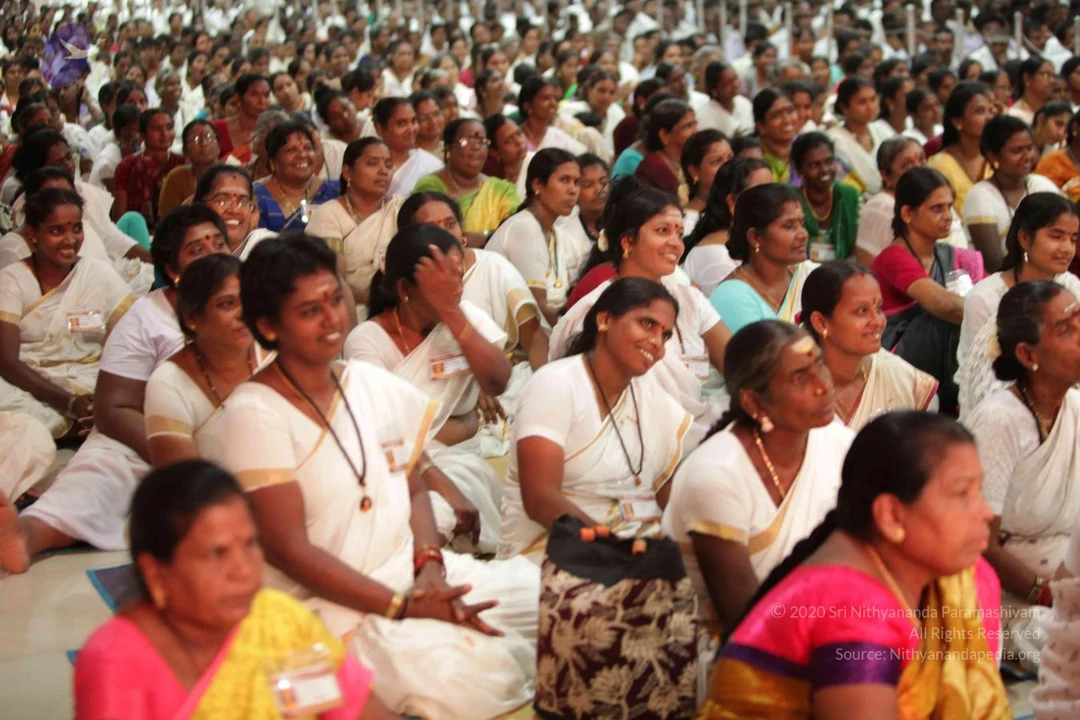
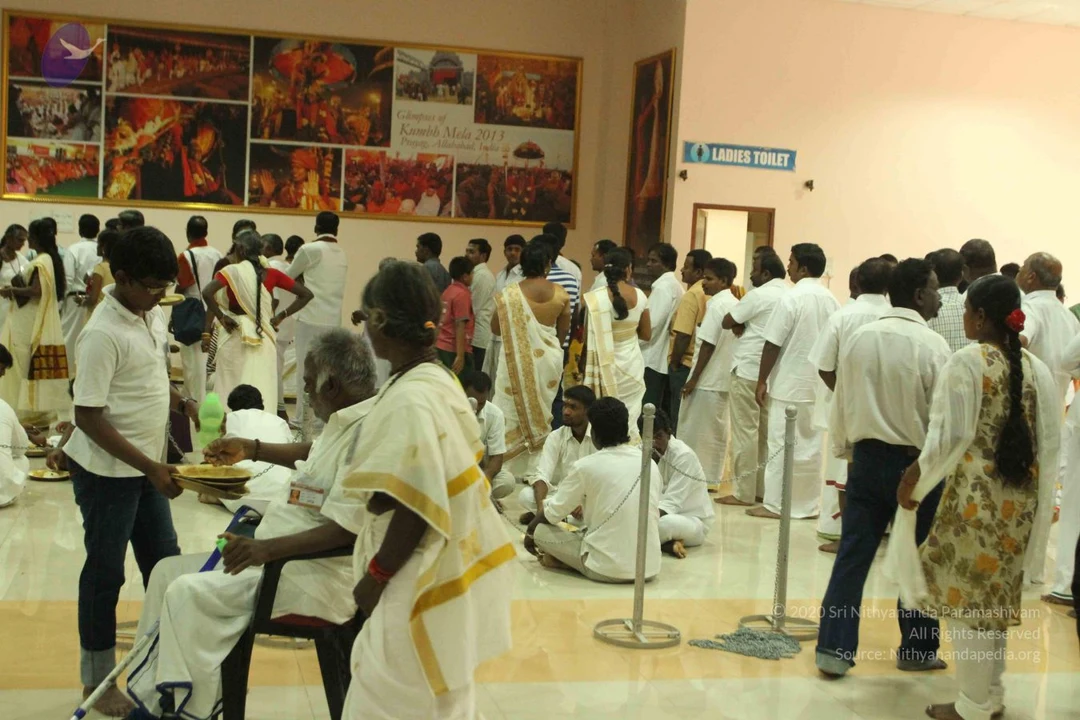
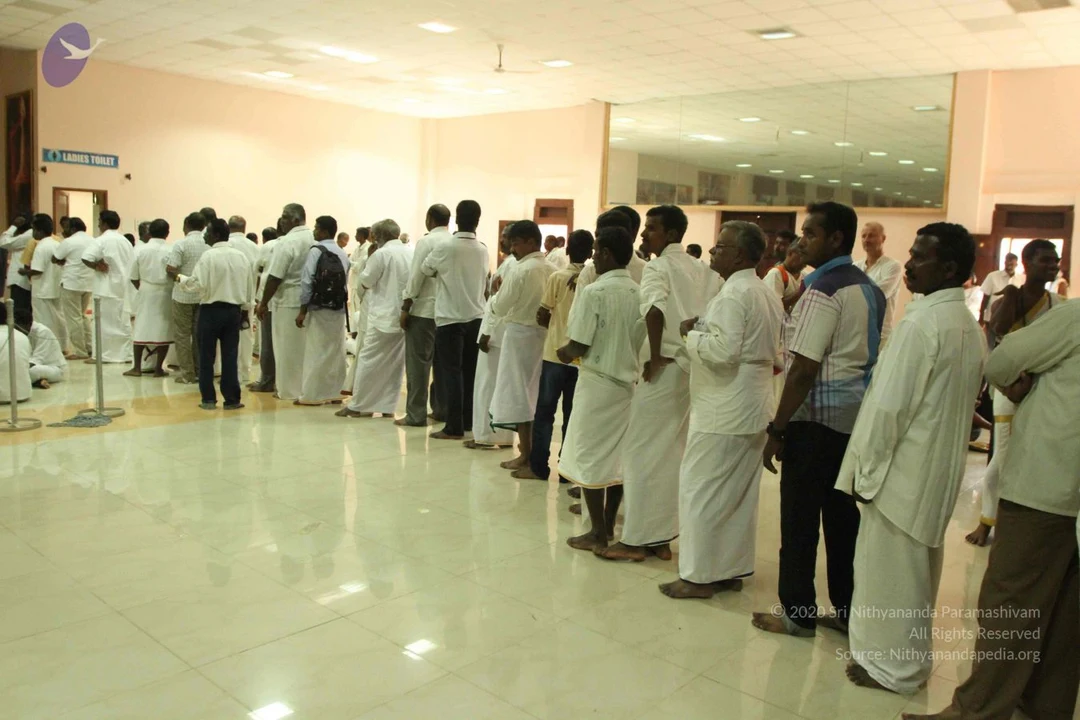
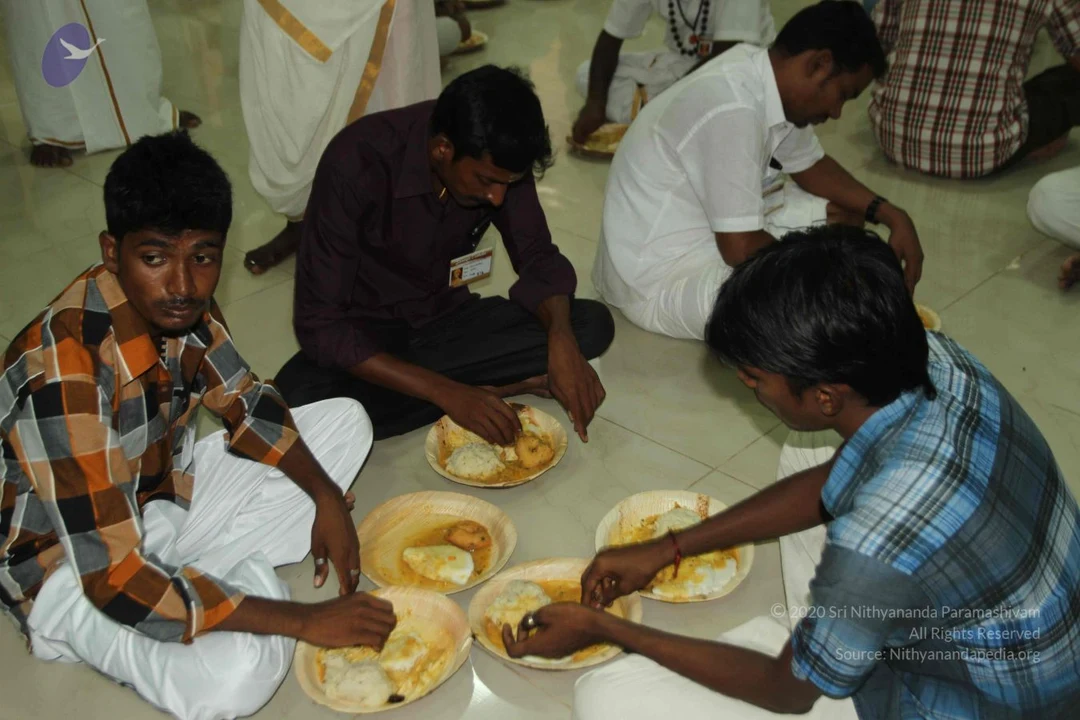
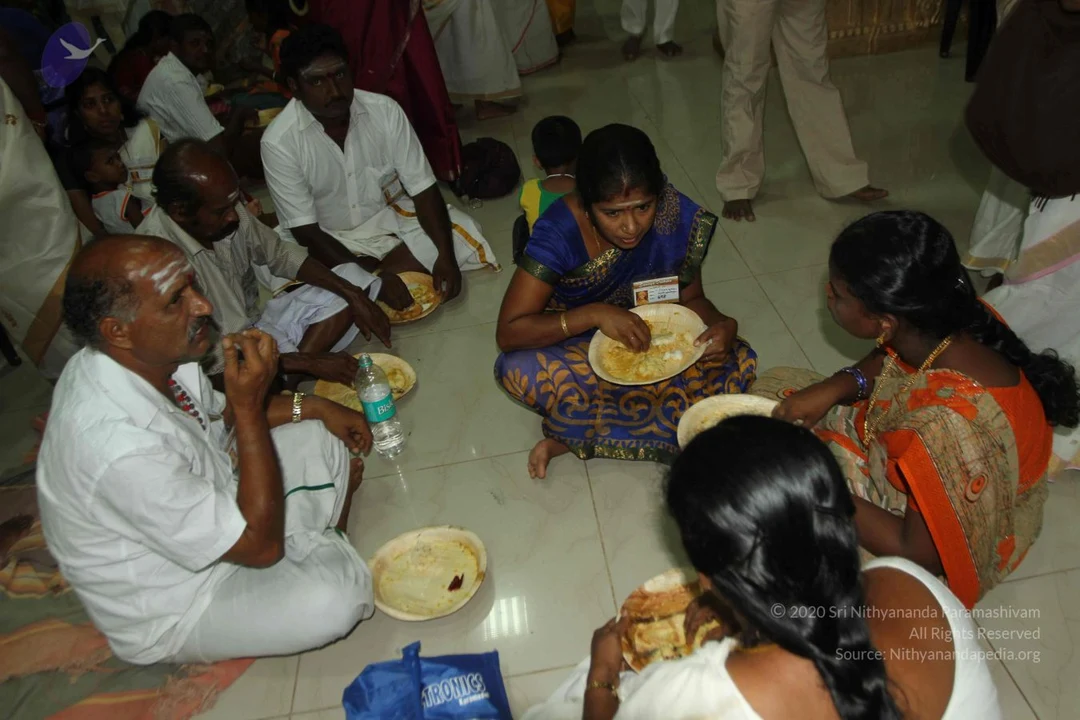
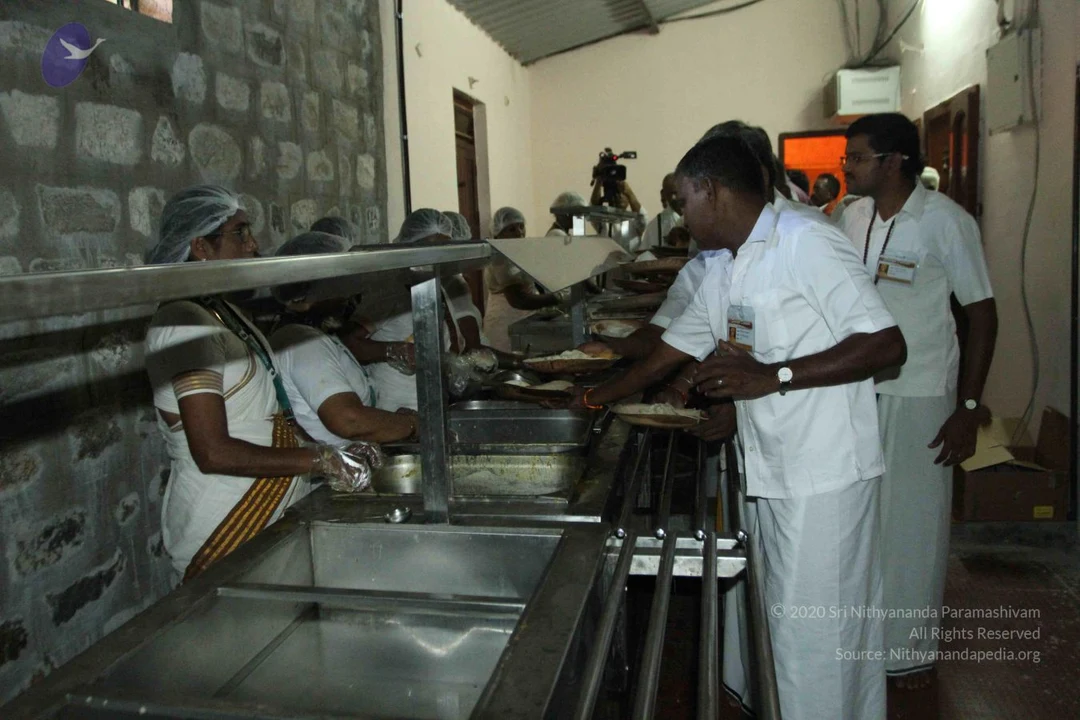
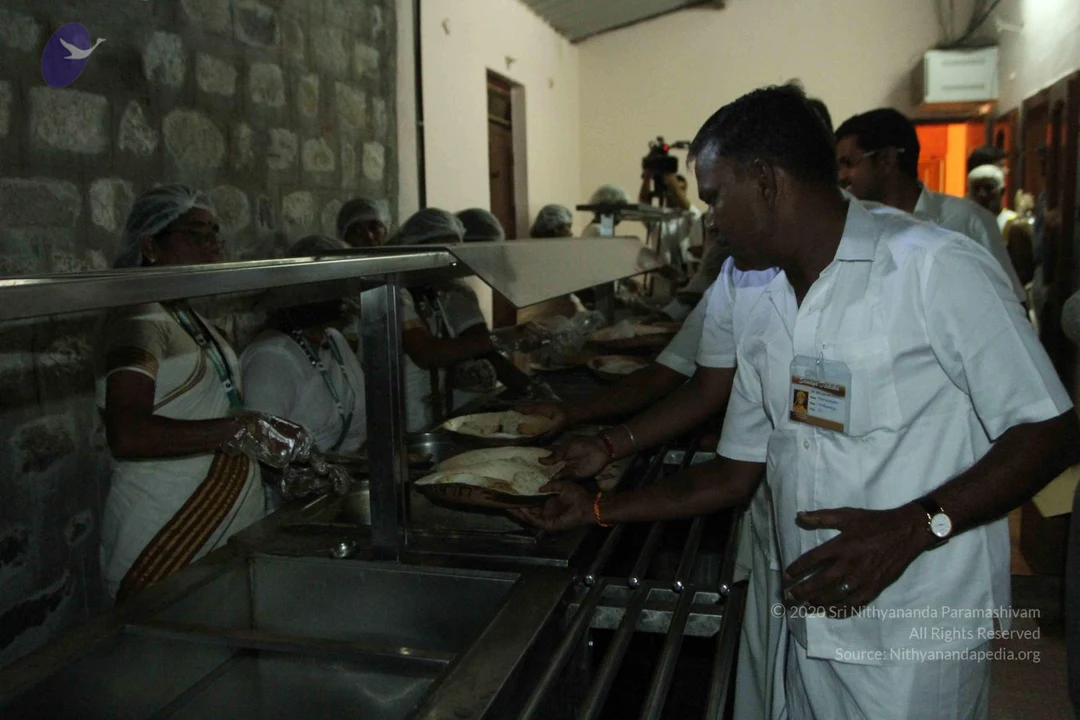
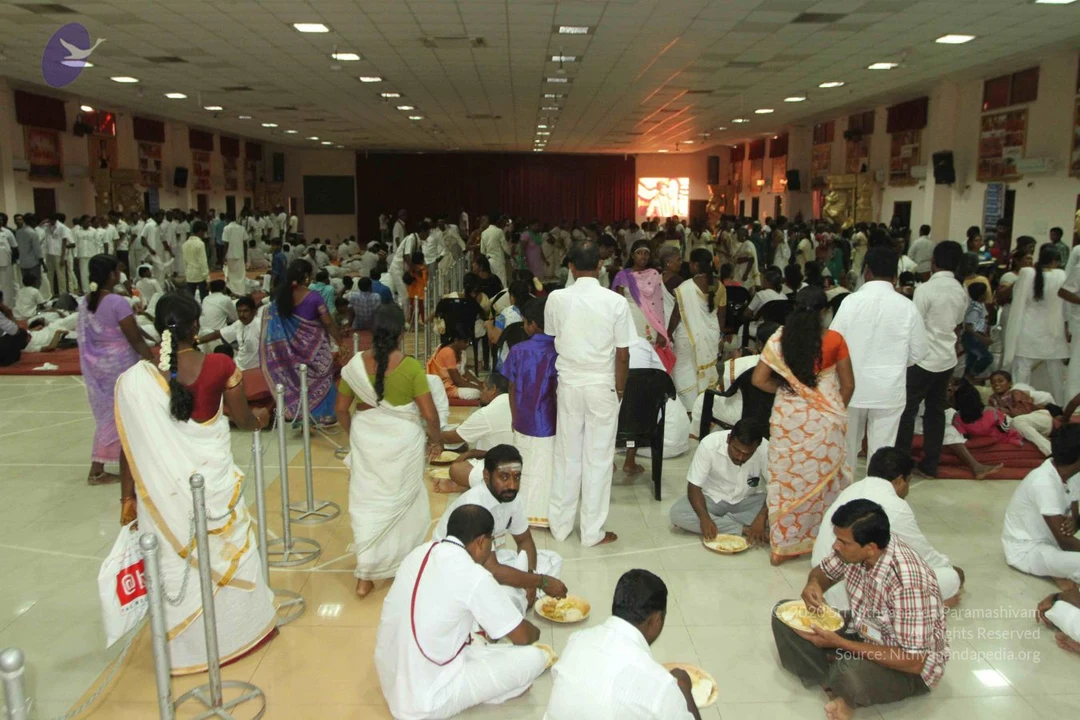
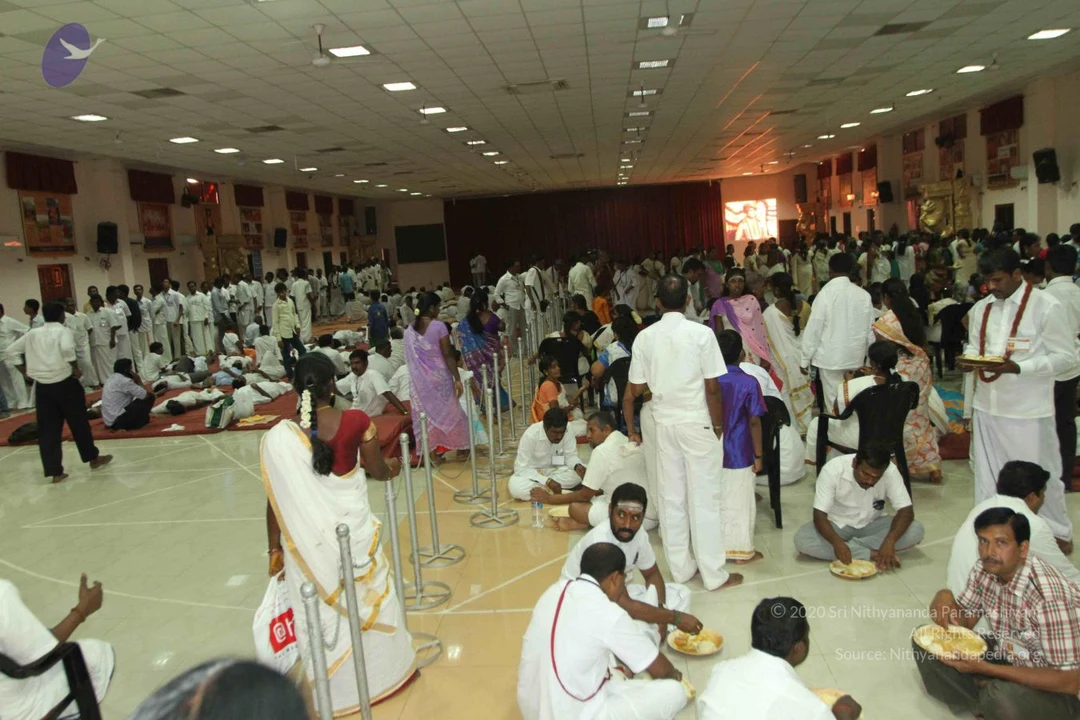
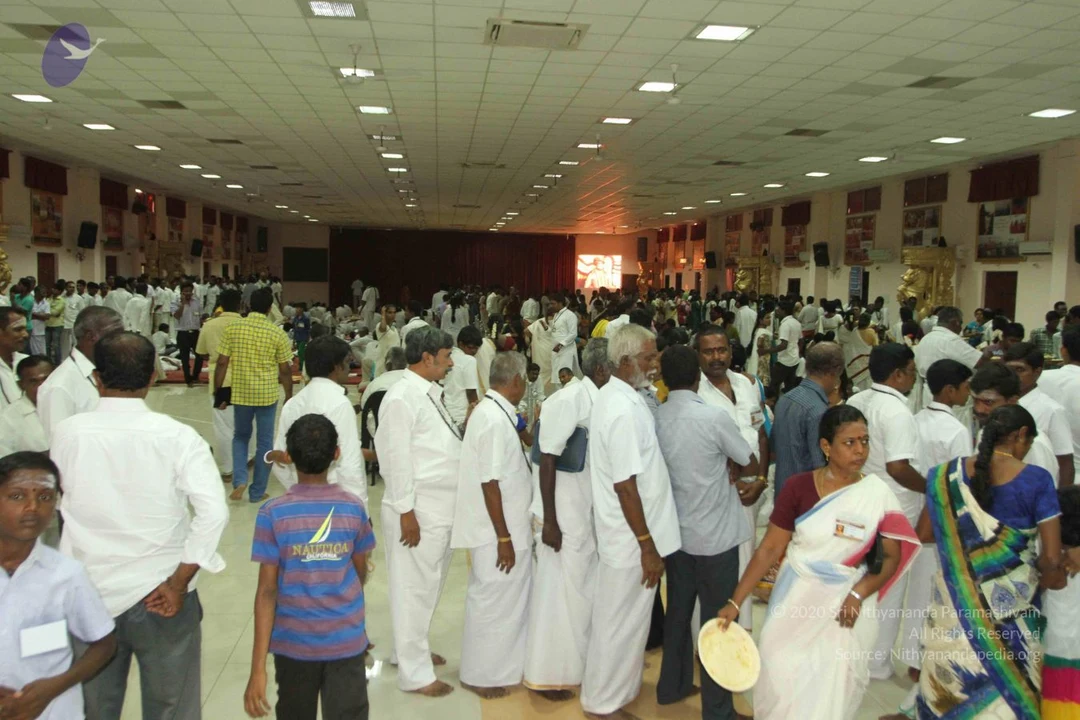
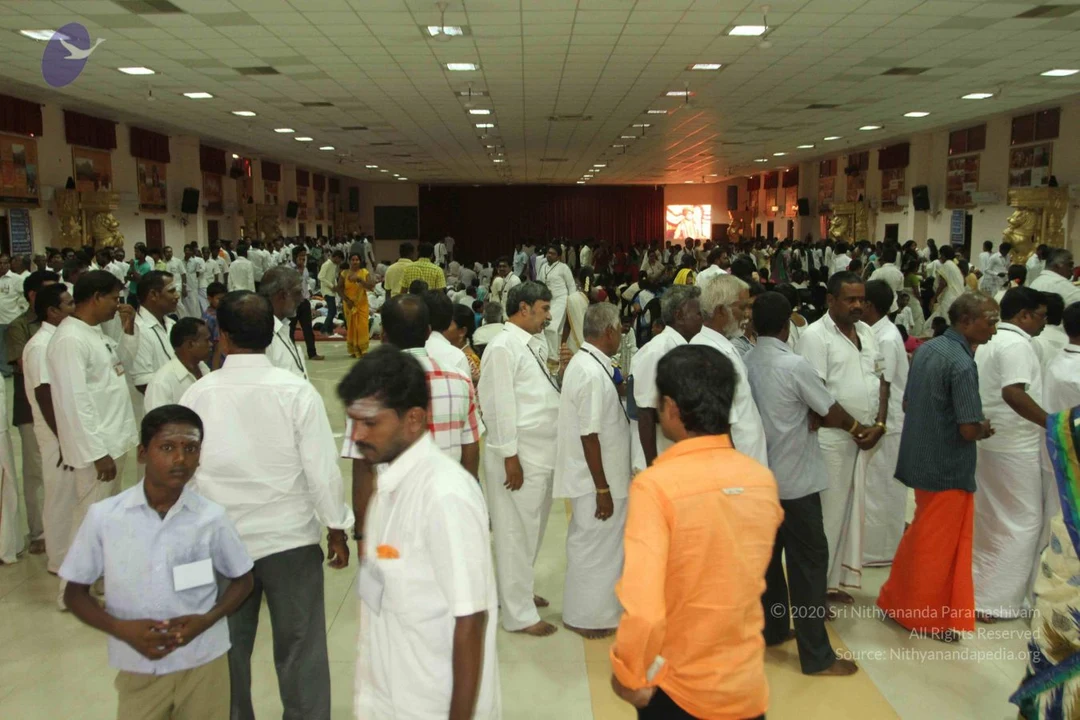
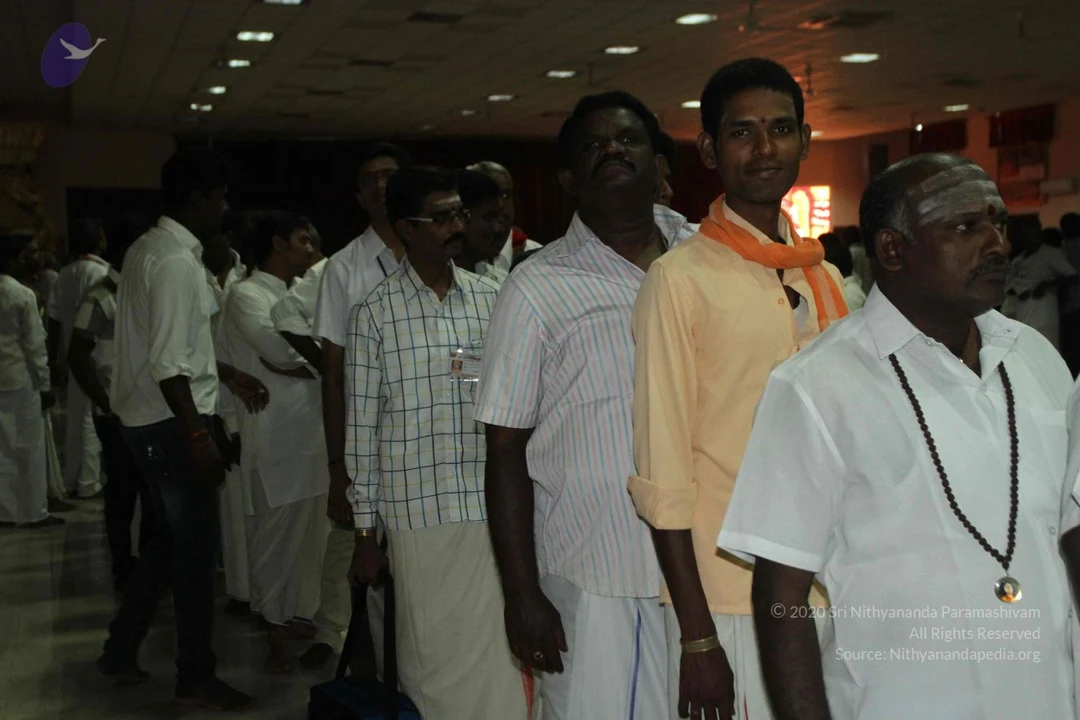
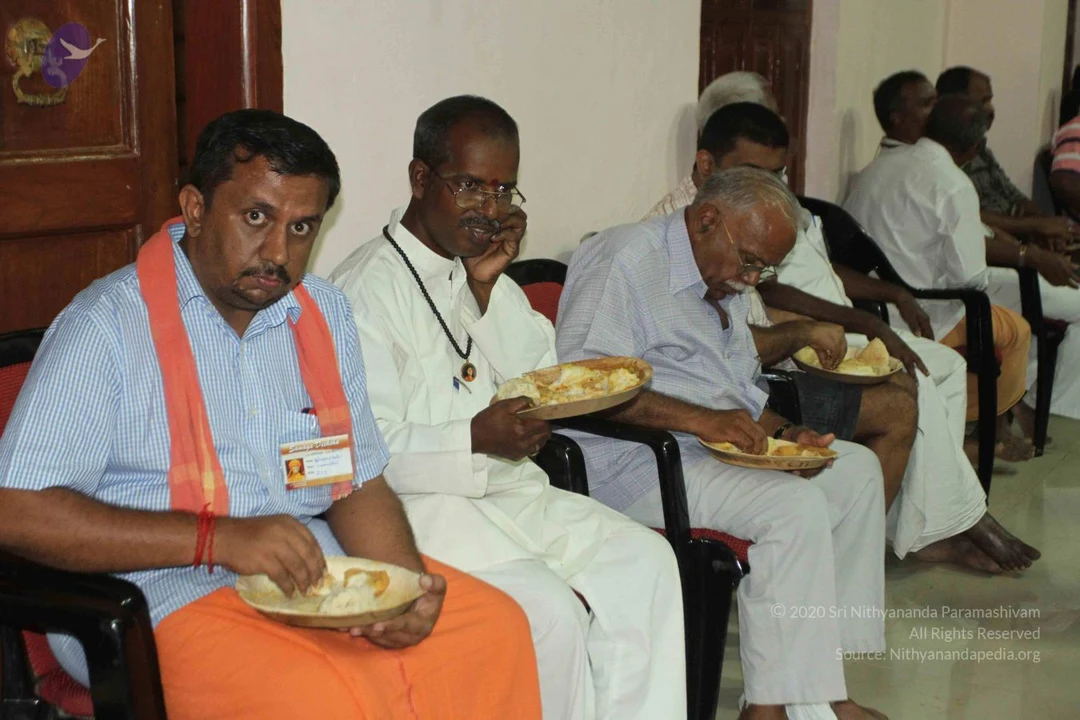
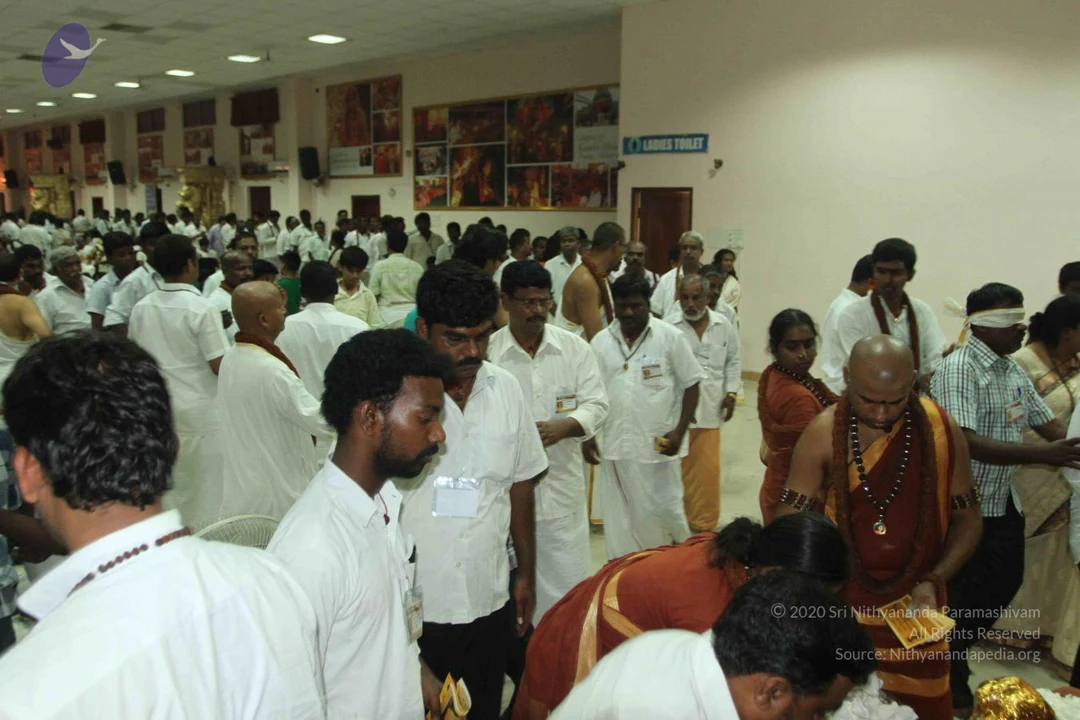
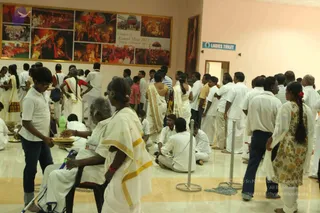
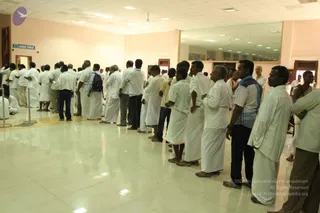
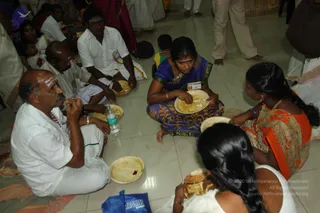
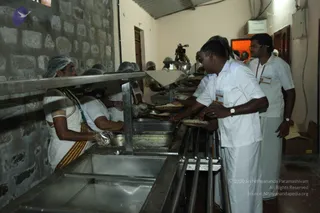
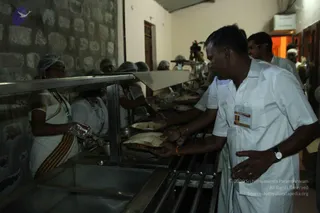
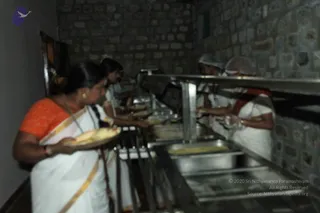
A busy indoor hall with a cream wall and a large framed collage titled "Glimpses of Kumbh Mela 2013 Prayag, Allahabad, India" above a blue "LADIES TOILET" sign. Many people in white clothing mill about and queue on a pale tiled floor. A man in a white shirt on the left carries a plate, while an older man in white sits on a chair and an elderly woman in a white sari with gold border stands beside him. Several women wear saris in gold, cream and green, and a woman on the right in a floral dress and white dupatta has a long braid with a red flower. Some men sit cross-legged on the floor behind metal stanchions and chains, and others stand in groups. Figures in white dhotis and shirts fill the background.A photograph of a crowd of men queuing in a large, pale-walled hall with polished cream floor tiles. Most wear white dhotis and white or cream shirts, some in plain dark trousers, and a few in striped or checked shirts. They stand in a loose line along metal stanchions, several looking forward or to the side. A mirrored wall and a sign reading Ladies Toilet appear at the back, with ceiling lights overhead. No deity, throne or ritual object is visible, and no individual can be confidently identified as the teacher.A photograph of devotees seated on a tiled floor eating from paper plates in a hall. A bald older man in a white dhoti and shirt with white vibhuti marks on his forehead eats at left. Beside him, a man in a white shirt and dhoti eats, and a woman in a blue patterned sari with gold bangles sits cross-legged at centre, holding a plate with food. A woman in an orange sari with gold necklaces sits at right, and a woman in white sits in the foreground holding food. Other seated people in white clothes and a child appear in the background, with a plastic water bottle and a blue bag on the floor. The scene appears to be a communal meal.A kitchen serving line in a plain whitewashed room with a stone-block wall on the left. Several women in white saris with coloured borders and white hair nets stand behind a long steel counter, serving food onto plates with gloved hands. Men in white shirts and white dhotis queue along the counter holding plates, one in a white shirt and white dhoti with an ID badge reaching toward the food. A cameraman stands in the background, and a wall-mounted electrical panel and a cardboard box appear at right. Several people are visible, all in white clothing.A photograph of a communal meal service in an ashram dining hall. Along a steel serving counter, several women in white saris with green lanyards and hair nets dish food, while a man in white shirt and white dhoti, wearing an ID badge and a red thread on his wrist, holds out a steel plate with flatbread. Other men in white clothes stand in line behind him, and a camera operator is visible in the background. The walls are rough stone and plaster, with wooden doors. Ashram annadan food service.A photograph of a dimly lit serving area in a stone-walled hall where women in white saris with gold borders serve food from a steel counter. A woman in the foreground wearing an orange blouse and white sari with gold border holds a plate of food. Other women in white saris and head coverings stand behind stainless steel serving trays and containers. Walls are rough stone blocks with a small wooden shelf on the left.

SamayaDheeksha-Instructions giving

107 photosSource gallery
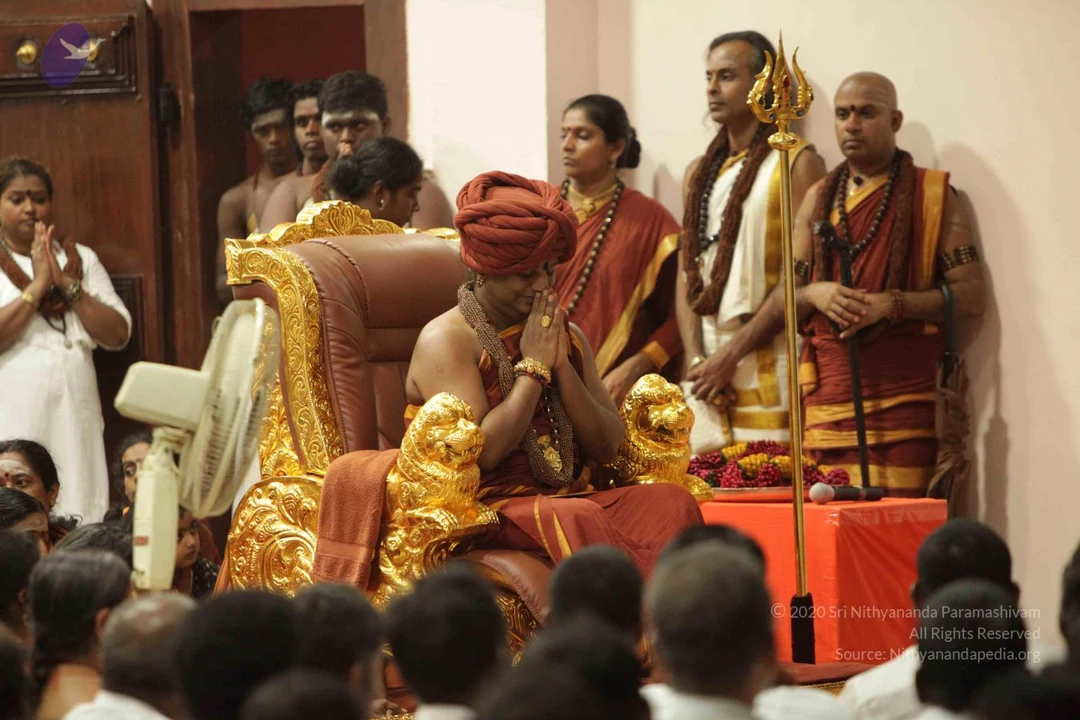
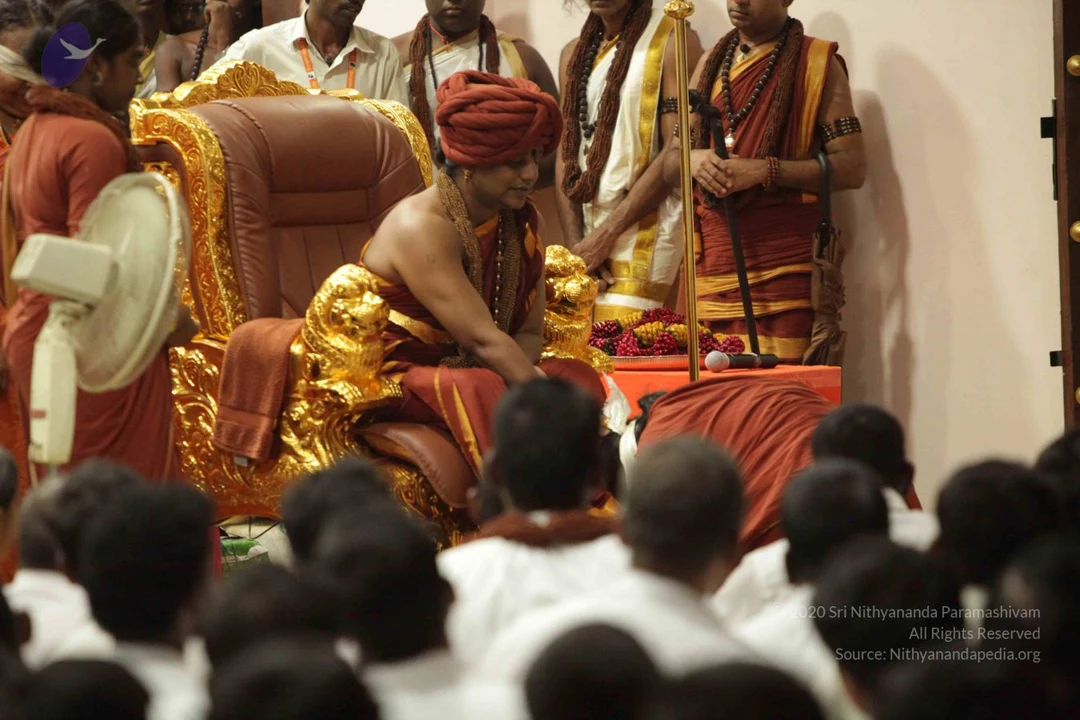
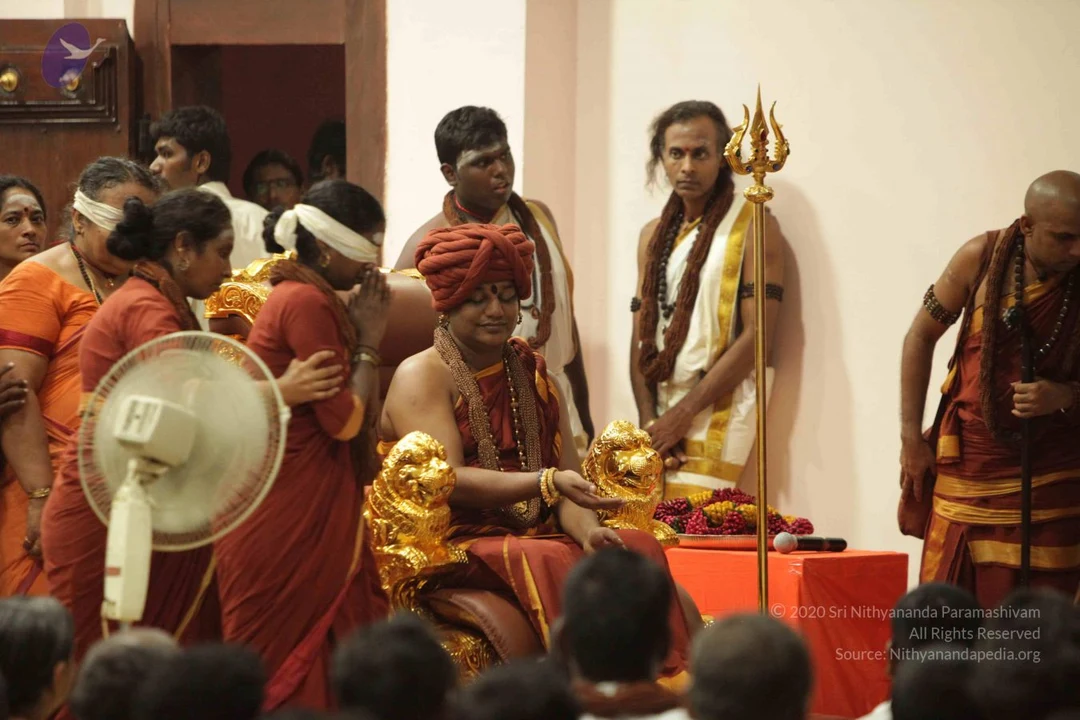
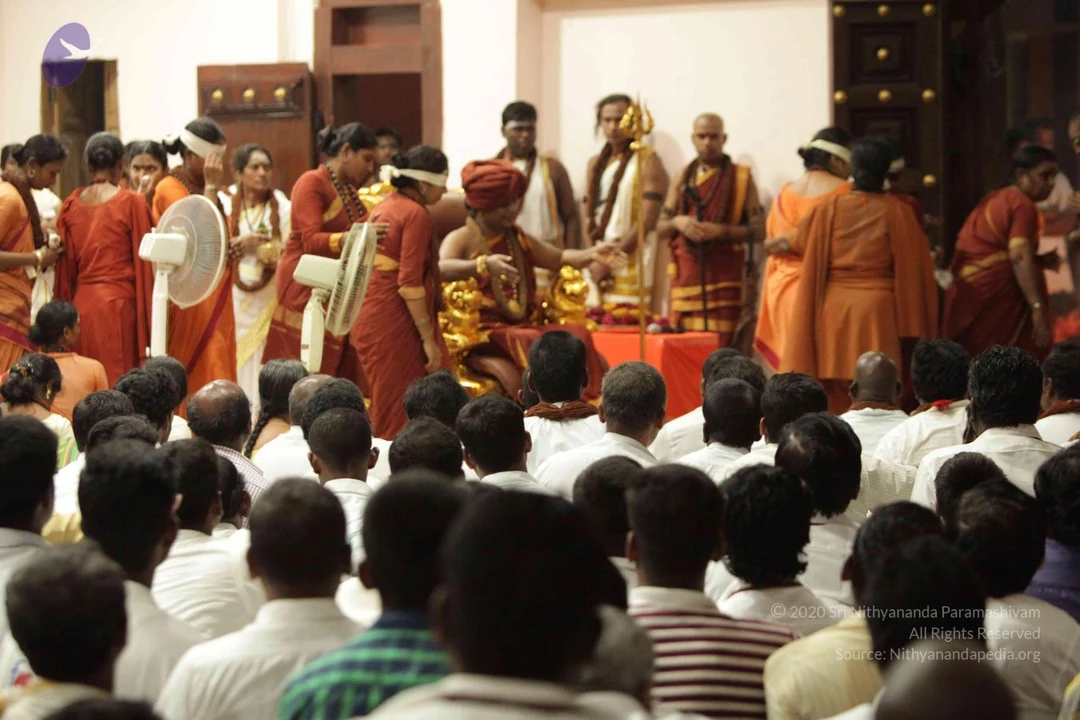
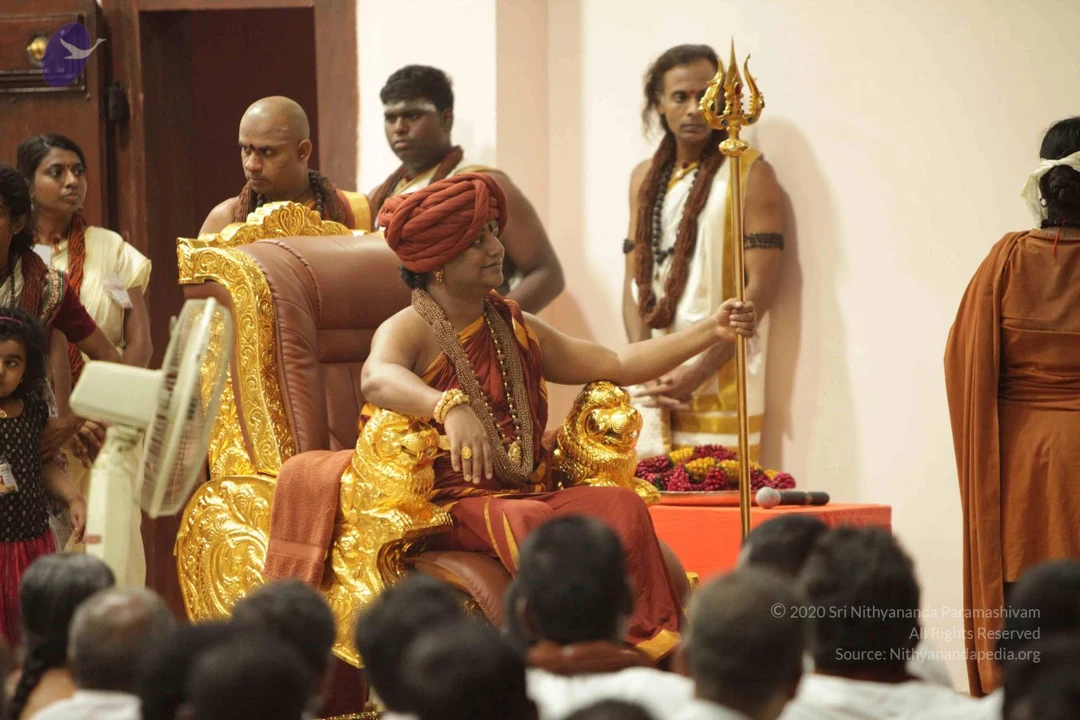
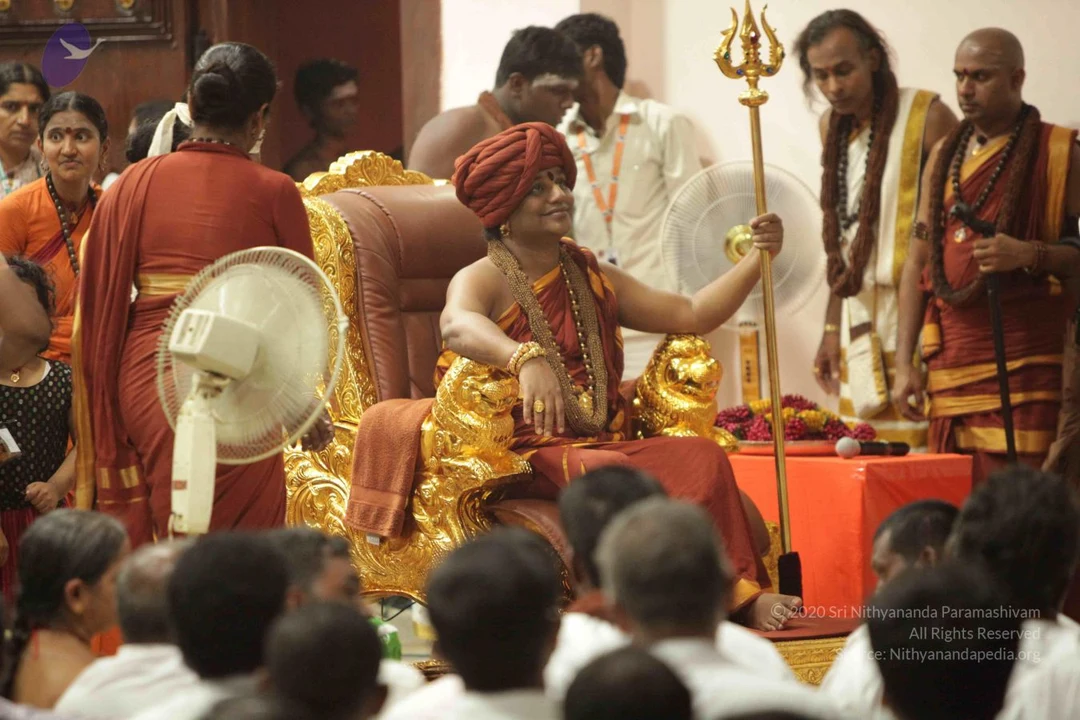
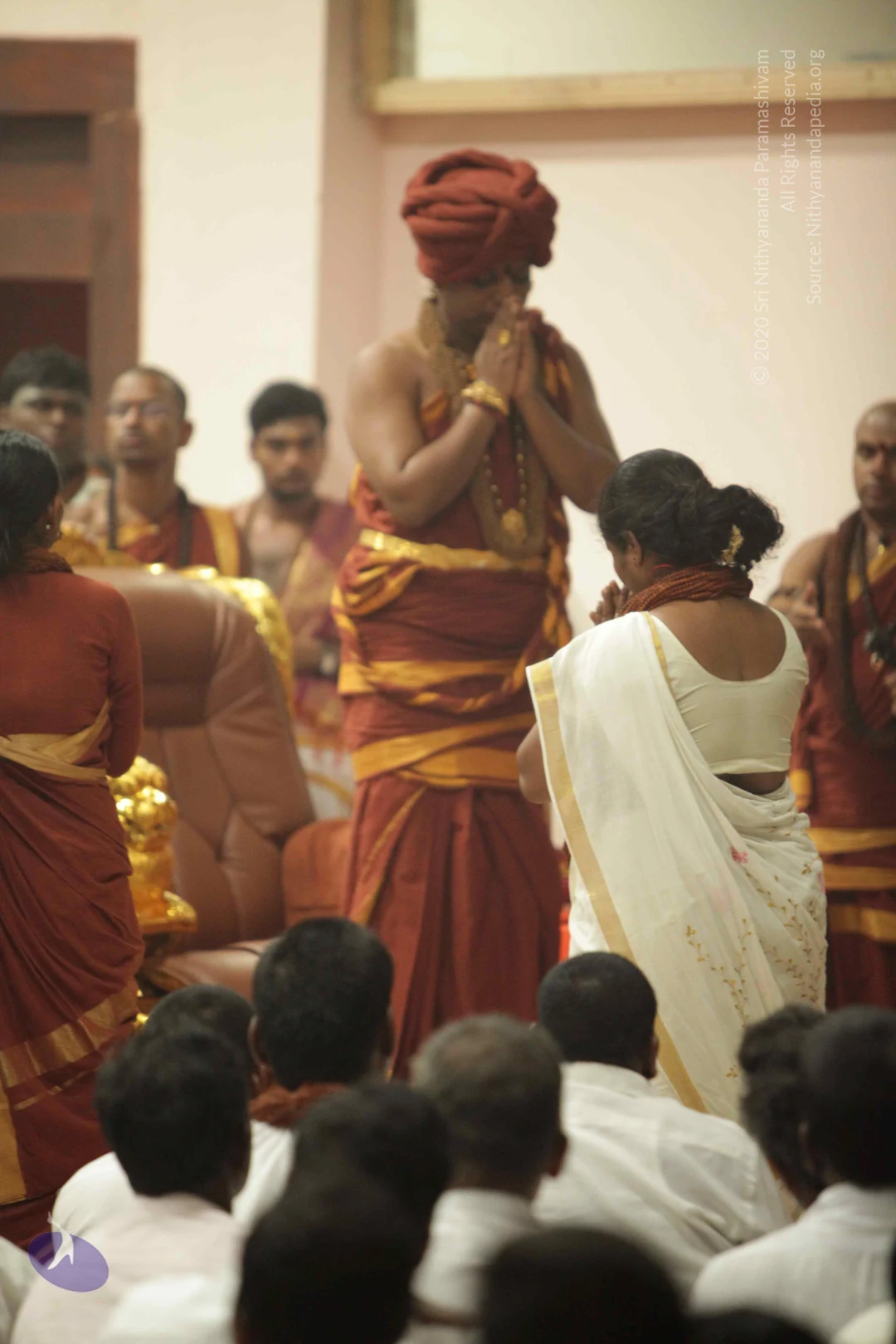
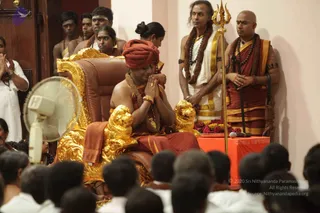
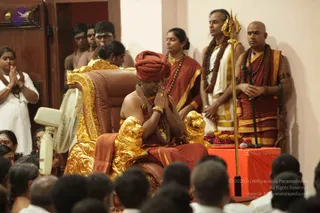
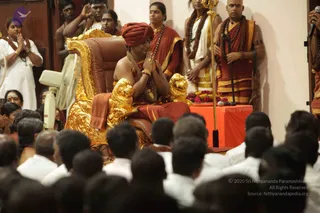
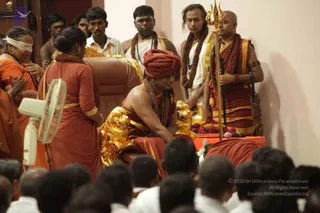
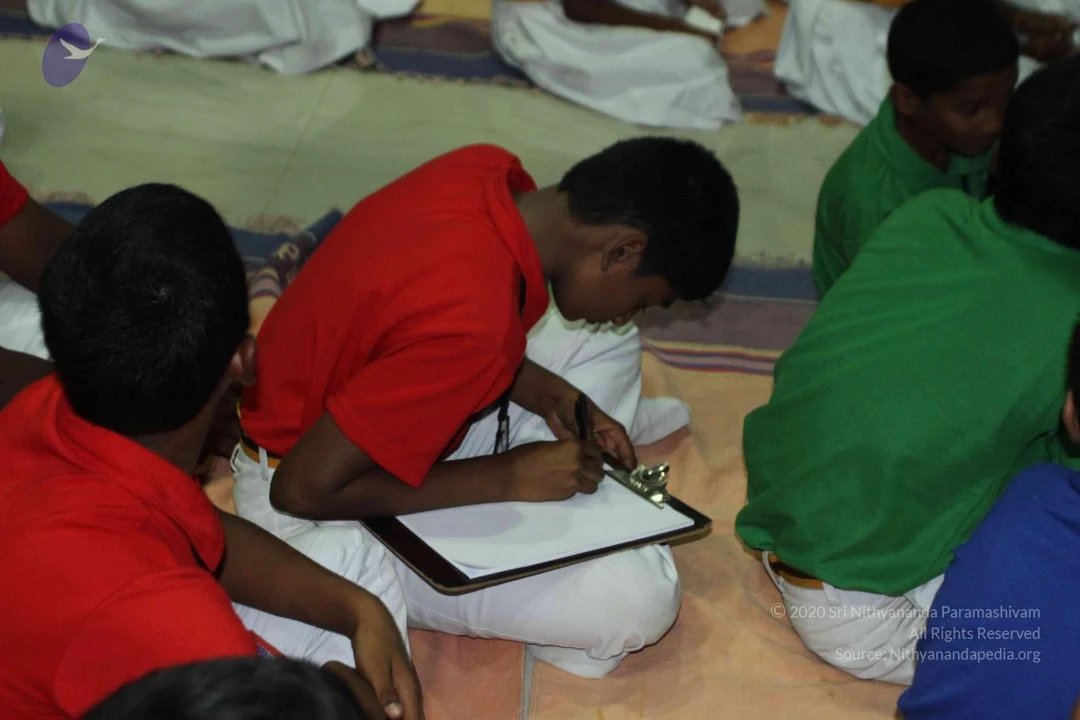
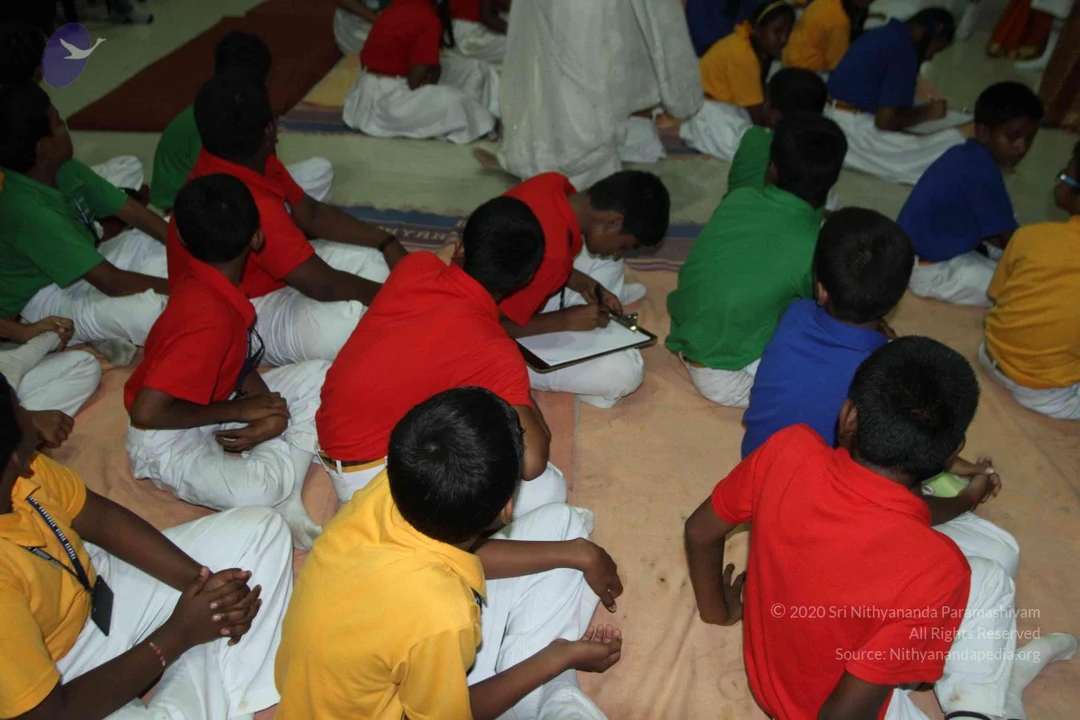
A seated man in a rust-orange turban and orange-red robes sits with palms pressed together in namaste on an ornate golden throne with carved lion armrests. He wears a gold necklace and gold bangles. Beside the throne stands a tall man with long matted hair, rudraksha mala and white and gold dhoti, and another man in orange-gold robes with rudraksha beads holds a golden trident. A table draped in orange holds fruit offerings, and a seated audience in white fills the foreground. A white pedestal fan is at left.A seated man in a red-orange turban and saffron-red robe sits on an ornate gold-and-brown throne carved with lion heads, hands pressed together in namaste. A gold-and-silver beaded necklace hangs on his chest. Behind him stand attendants: a woman in a red sari with a rudraksha mala and gold necklace, a man in white dhoti with a long beaded shawl, and a shaved-headed man in saffron robe holding a gold trident. A red-draped table holds fruit and flowers, and a microphone stands in front. To the left, a woman in white clothes stands with hands folded, and a row of seated devotees in the foreground faces the stage. A white fan and pillar frame the left side.A seated man in a golden-carved throne with lion-form armrests sits at the centre, hands pressed together in namaste, wearing a rust-red turban, rust-red and gold robes, and a long gold-beaded necklace. Appearance-based candidate for a person: long hair-free head covered by red turban, ornate golden throne and ceremonial gold necklace; he is being honoured by an audience. Behind him stand attendants in orange-red and white robes, one holding a golden trident-topped staff, another with a white shawl and rudraksha mala. A small orange-draped table holds a tray of red flowers. A white-clad woman stands at left with palms joined, and a seated audience in white fills the foreground, while a pedestal fan stands at left.A seated figure in a red-orange turban and matching saffron-red robe sits on an ornate golden throne with lion-head armrests, a brown leather-backed chair behind it. A gold trident stands beside a red-draped table holding fruit and flowers. Around him, people in orange and red robes stand, including a woman in orange with a white blindfold, a man in a white dhoti with a garland and rudraksha beads, and a bald man in orange holding a staff. A seated crowd in white fills the foreground, and a white electric fan stands at left.A seated figure in a red-orange turban and saffron-red robe sits on an ornate golden throne with brown leather upholstery, a gold-leaf lion-like armrest visible at the right. The seated figure leans forward, touching or blessing a devotee who is prostrate on the floor in front of the throne. Behind the throne, several standing attendants in saffron and orange robes and rudraksha malas stand near a small red-draped table holding bowls of red and yellow flowers and a golden staff. Rows of seated devotees in white clothes fill the foreground, their heads visible from behind. A white electric fan stands at the left edge. The setting appears to be an indoor hall during a spiritual initiation or darshan.Photograph of a ceremonial initiation scene in a hall. A seated figure in saffron-red robes and a red turban sits on a gold lion-headed throne armrest, wearing a long gold-beaded necklace and gold bangles, with hands resting on a golden lion-head armrest. Beside them a standing man in white dhoti with gold border and a long rudraksha-style garland holds a gold trident. Several devotees in orange and red saris, some with white head bands, stand with hands folded in prayer. A plate of flowers and fruit sits on an orange-draped table with a microphone, and a standing fan is at left. Audience members are seen in the foreground.

Samayadheeksha-Initiation

113 photosSource gallery
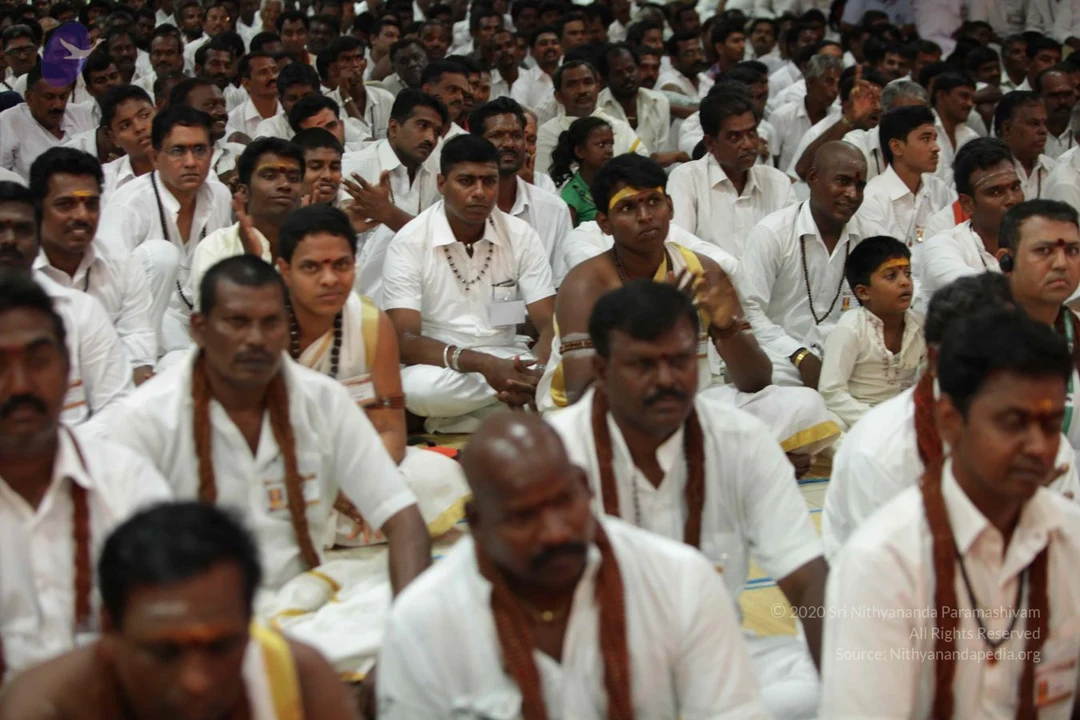
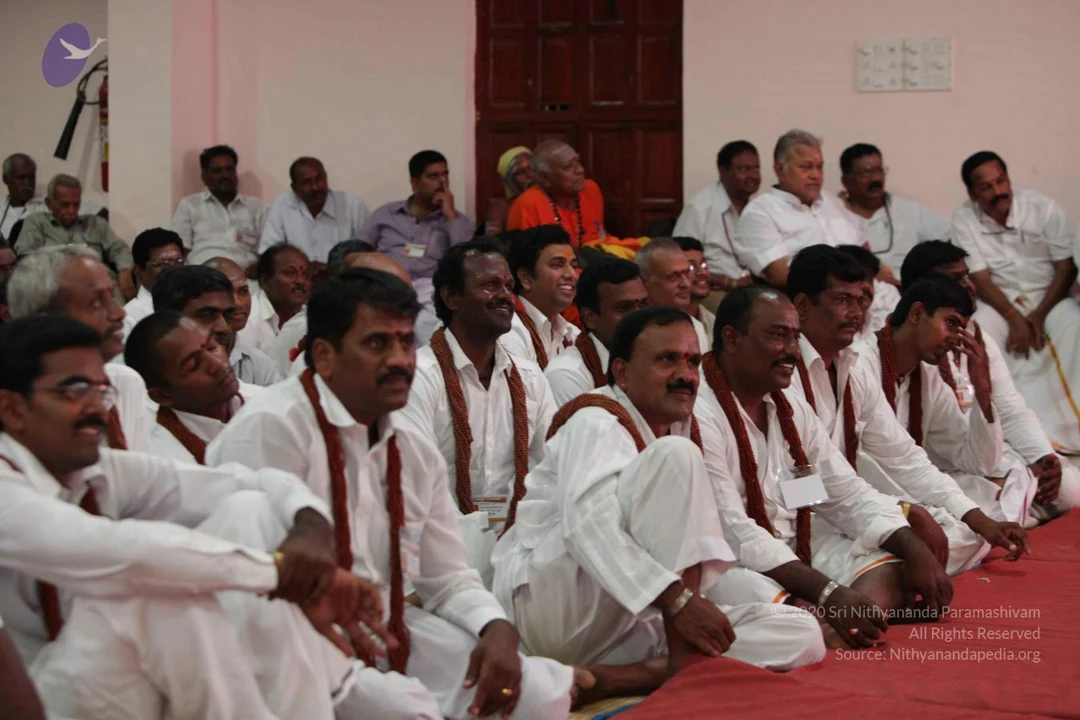
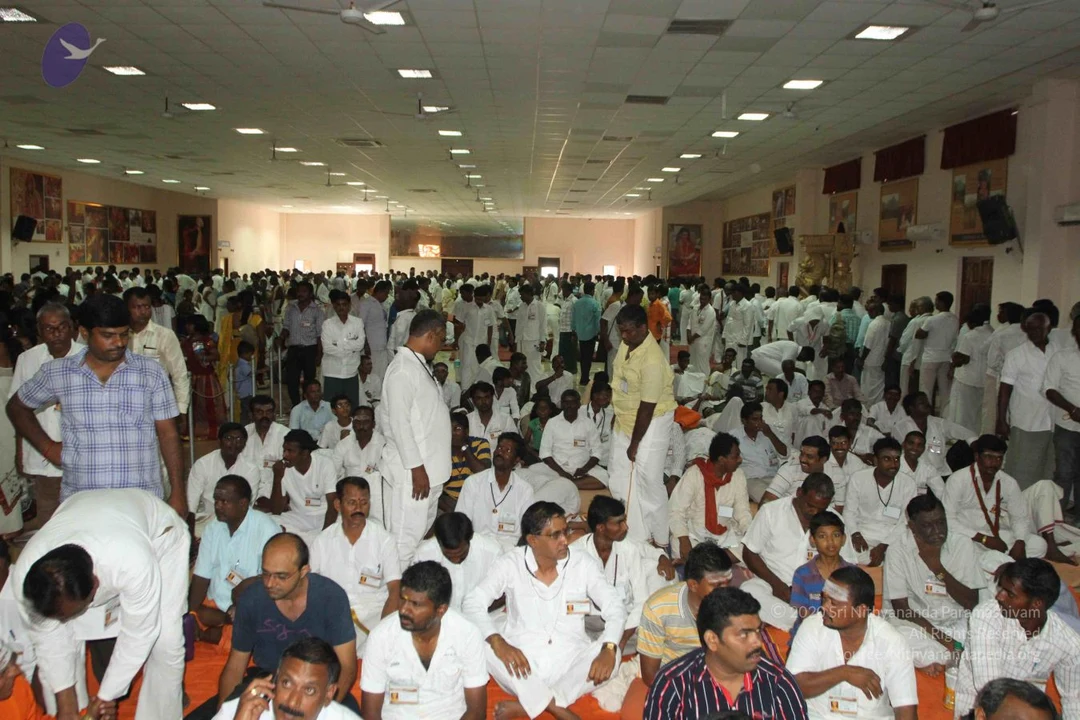
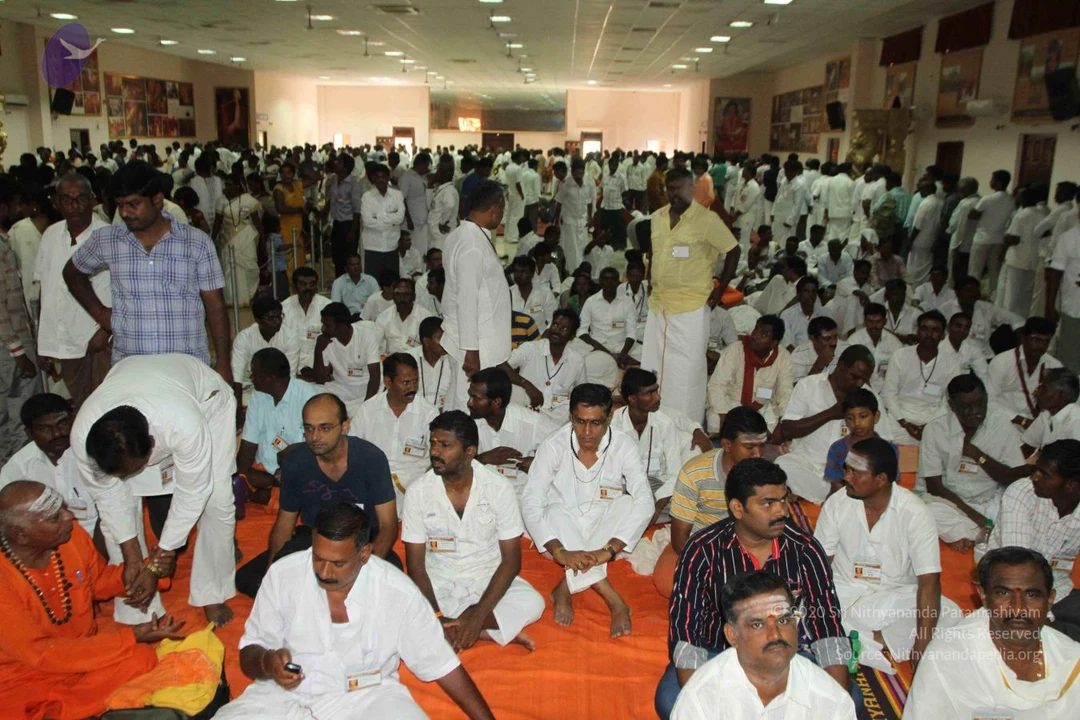
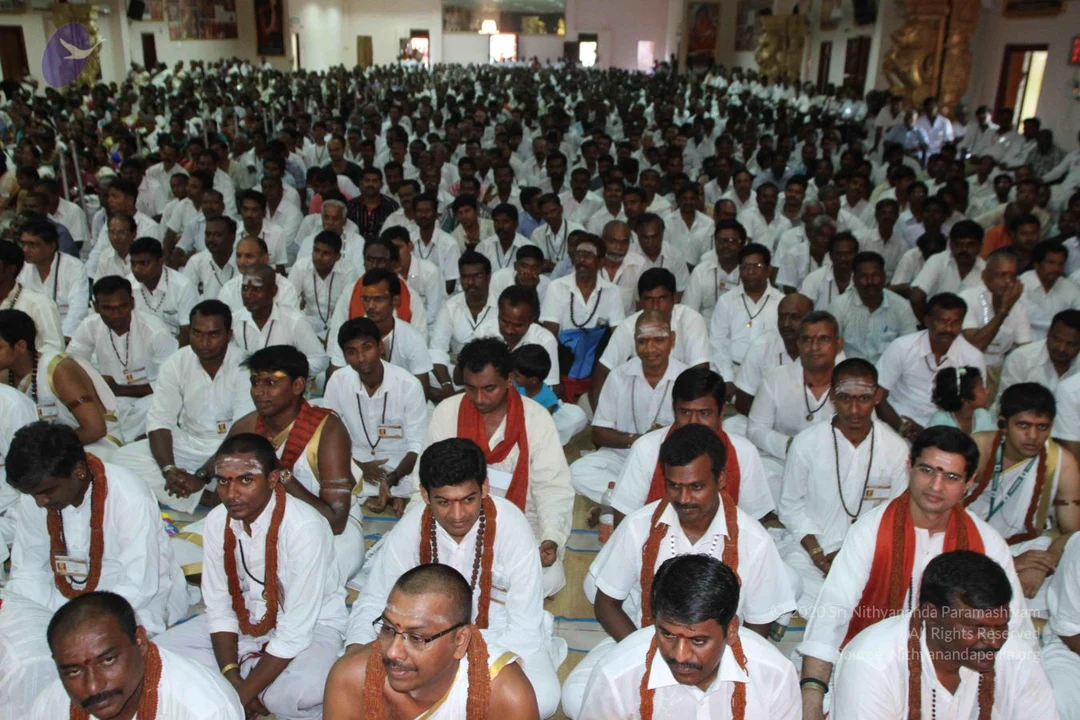
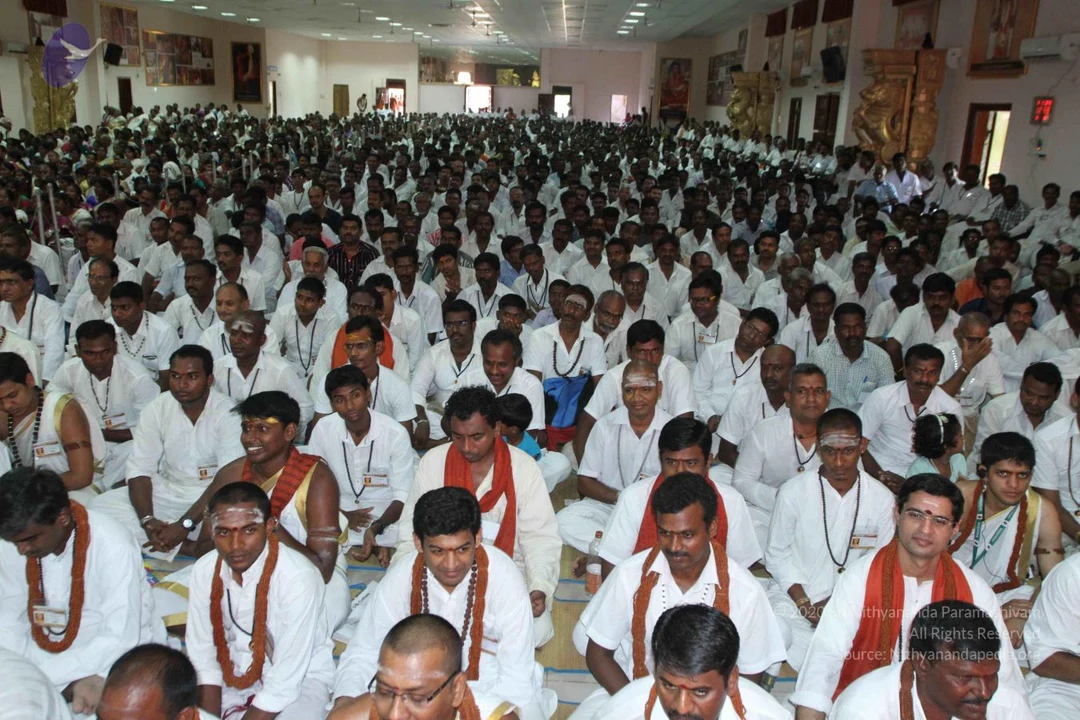
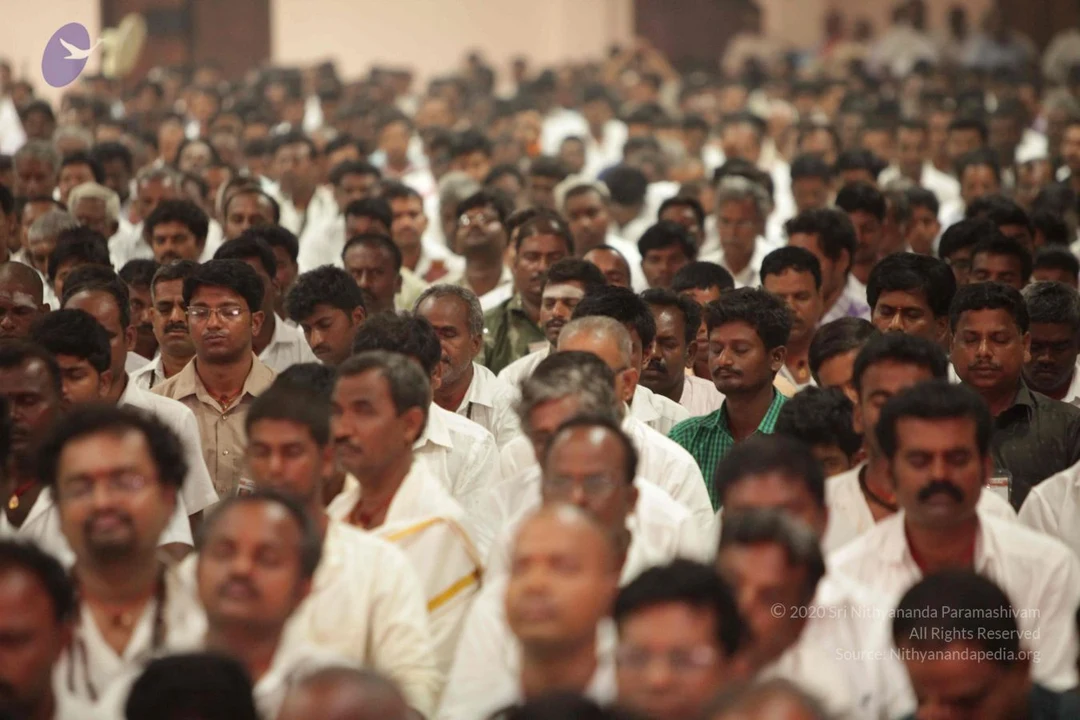
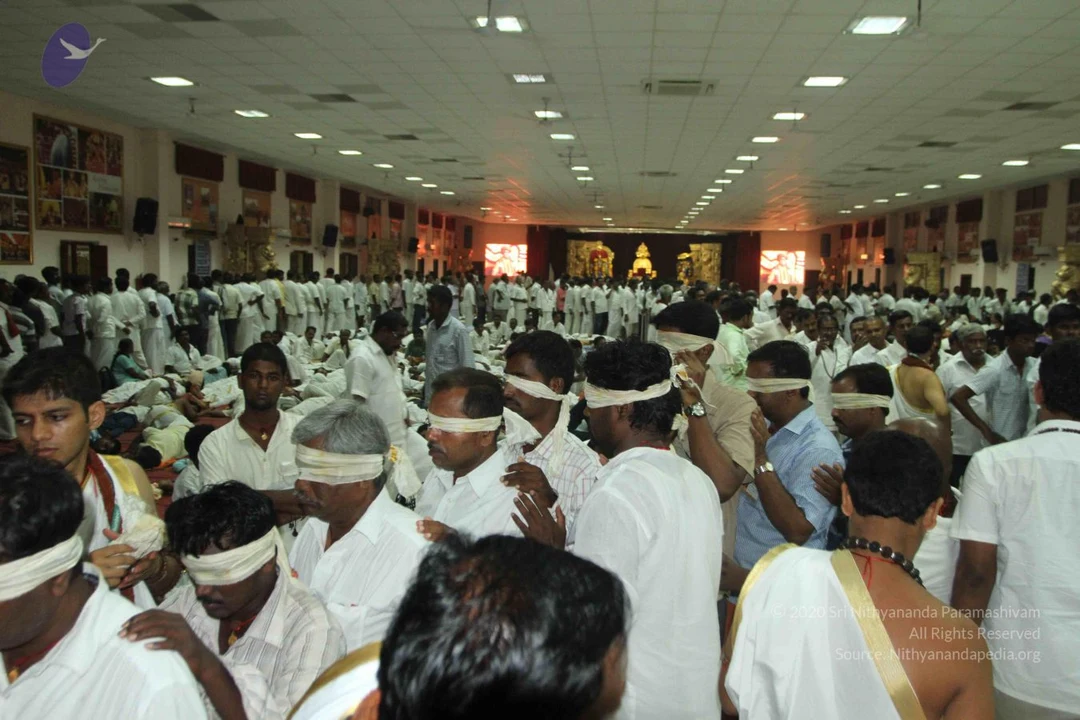
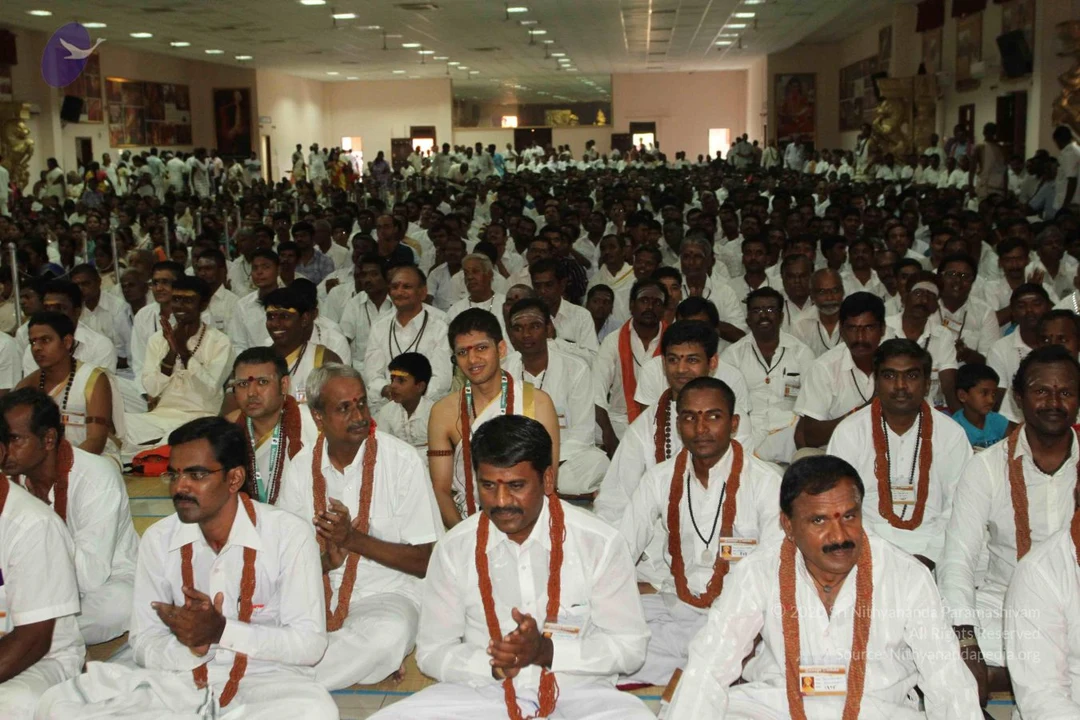
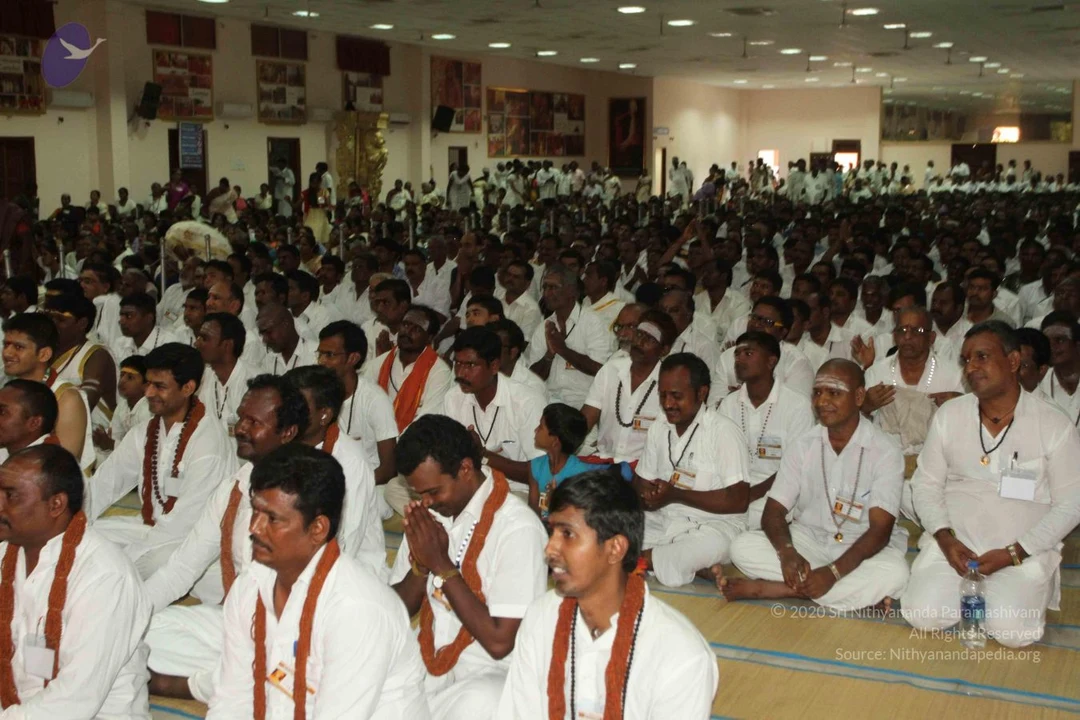
A large indoor hall packed with a dense audience of men seated on the floor and chairs, most wearing white shirts and white dhotis, some with rudraksha malas around their necks. In the foreground a bearded man in a white shirt wears a beaded mala, and a young boy in a blue checked shirt sits beside a man in a pink shirt. Rows of attendees stretch back toward a stage at the far end. Walls display framed devotional prints and a large framed Hindu deity image at the upper right, with a screen and a red curtain visible at the left. The scene suggests a satsang or discourse gathering. a person's presence cannot be confirmed from appearance in this crowd.A large seated audience fills an indoor hall at a Shiva diksha teaching session. Most attendees wear white shirts and white dhotis, and many wear rudraksha or tulsi-style beaded malas around their necks. A bald man at left has white vibhuti stripes across his forehead. A man in a black-and-white checked shirt sits in the foreground, and a boy in a blue checked shirt sits among the adults. A navy backpack rests on the floor. Pink walls and framed pictures line the background, and the crowd sits closely on mats. No speaker or throne is clearly visible in this frame.Photograph of a large seated audience filling a hall, mostly men in white shirts and white dhotis or trousers sitting on red floor mats, facing forward toward an unseen speaker. Foreground figures include a man with a grey-streaked head in a white shirt, a young boy in a checked shirt beside a young man in a maroon shirt and jeans, and a man wearing a black rudraksha-style mala at the left edge. Some participants wear lanyards. Other people stand at the back and along the walls under a cream ceiling and white pillars, with a purple cloth draped near the upper left. Dense crowd, roughly one hundred or more people visible.A large seated audience fills a hall, mostly men in white shirts and dhotis, some in checked or striped shirts, sitting on red mats and looking toward the front. At the top right, a figure in orange and ochre robes sits near a golden throne-like seat with gold ornaments, while other white-clad attendants stand nearby. A purple emblem appears at the upper left. The scene suggests a satsang or initiation-style gathering, with the dense crowd filling most of the frame.A large photograph of a crowded indoor hall filled with seated devotees, mostly men in white dhotis and white shirts, with some in coloured shirts and a woman in a teal sari near the centre. Many wear name badges on their chests, and several have sandalwood or vibhuti marks on their foreheads, with a rudraksha mala visible on one man in front. Two men stand in white near the back, and gilded lion-shaped pillars flank the room, with a red curtain and large screens at the stage. The scene shows a satsang or assembly, though no a person is clearly visible in this frame.Crowded indoor hall with rows of seated devotees dressed in white shirts and white dhotis, many with white and orange-yellow shawls or garlands. In the centre a young man in a white dhoti with a yellow-bordered cloth holds a silver tray of red and orange offerings, while another man in a yellow-bordered white dhoti stands to the left with his arms extended. Devotees on the floor reach toward the tray, some with red threads on their wrists. Framed deity pictures and colourful posters hang on the cream walls, and ceiling lights are visible. No identifiable figure is shown at the front of the hall.

Do not Publish

4 photosSource gallery
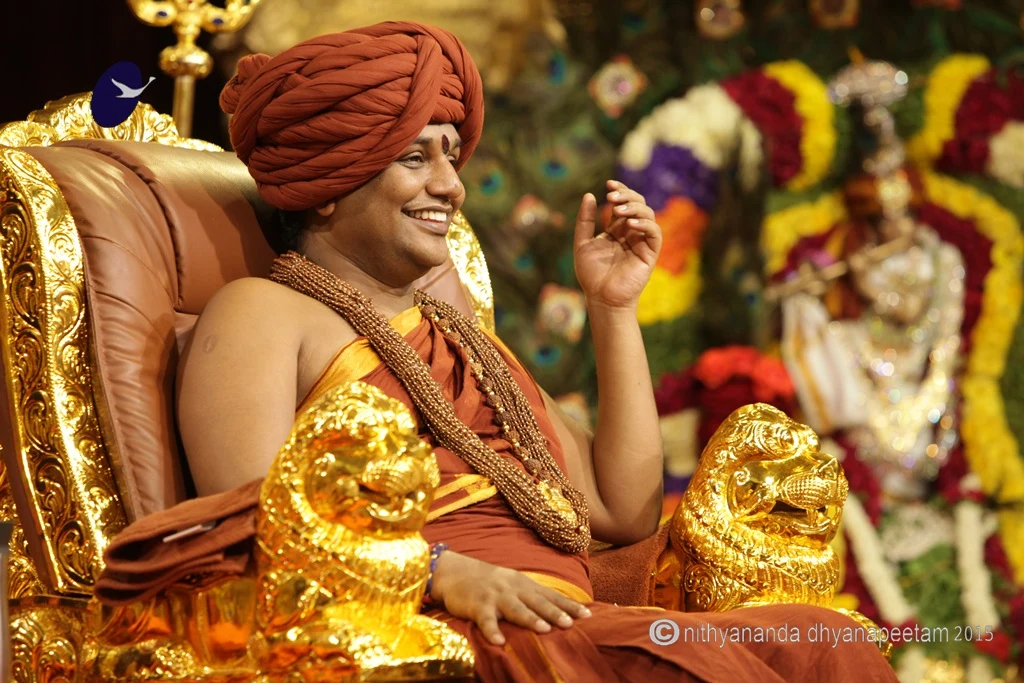
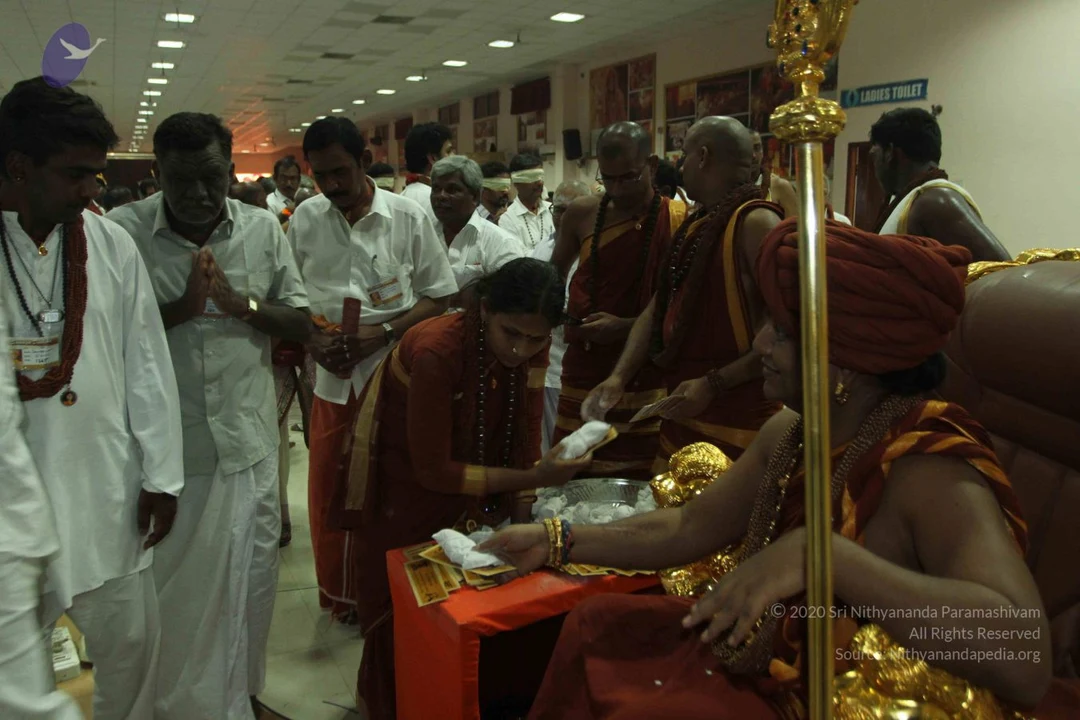
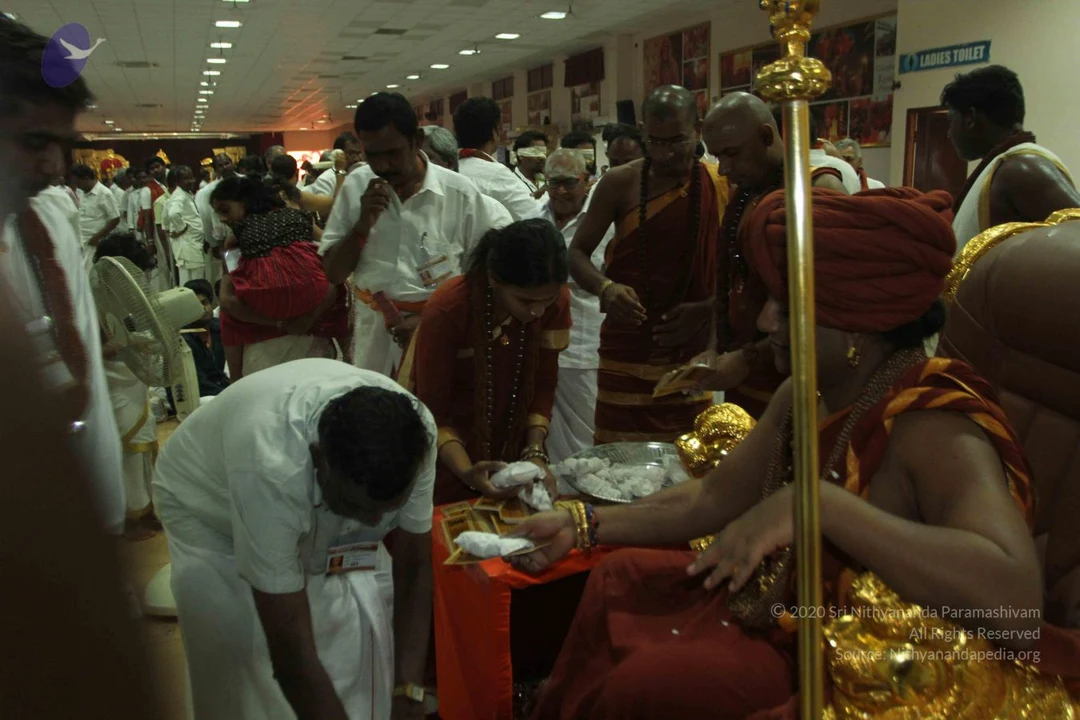
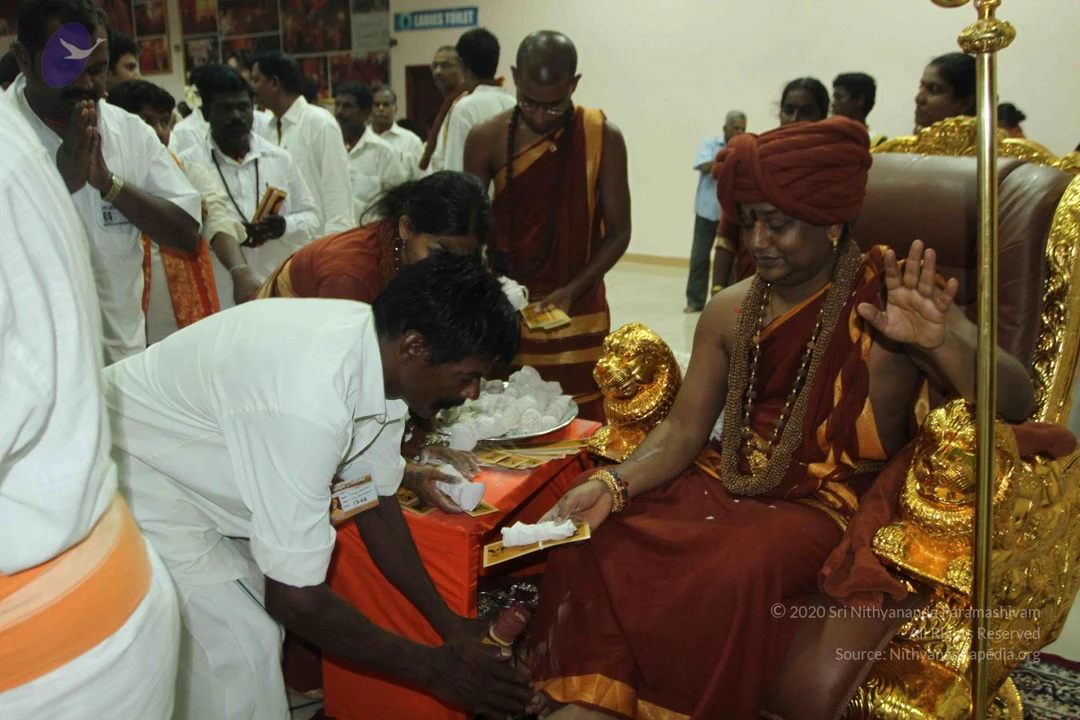
A seated man in a maroon-red turban and maroon-red robe with a gold-edged shawl sits on an ornate brown leather throne with gold lion-head armrests. He wears a large beaded rudraksha-style mala and a gold pendant necklace, and his right hand is raised in a gesture. Behind him a tall gold trident stands upright with jewelled tines. Around him, a woman in a white sari with a red-bordered shawl and rudraksha garland stands with hands folded at her chest, another woman in a white sari stands to the left, and a shaved-headed man in maroon robes with gold border and a rudraksha mala stands at the right. Several seated devotees in the background and a tray of red flowers are visible.A photograph inside a hall with a tall gold ceremonial staff topped with a trident in the upper left. In the foreground a seated figure with a rust-orange turban and an orange-and-gold shawl over bare shoulders sits with hands raised in greeting, facing a line of devotees. Standing before them are a man in a white-and-grey striped shirt and dark trousers, a young woman in a red kurta with a white dupatta, and an older woman in a green saree with a blue border, all with palms pressed together. Behind them stand more people in white and orange clothing, some wearing white headbands, with a crowd further back. Gold ornaments and a gold-brocaded seat edge are visible in the lower foreground.A photograph of a seated figure on a gilded throne with golden lion-head arms, wearing a rust-red turban, saffron-orange robe and a heavy beaded mala with large ceremonial pendant. A gold trident stands beside the throne. A woman in a white saree with a peach blouse stands before him, offering hands with money or a folded note, while devotees in green and pink saris and white dhotis watch. Men in white dhotis, some with white head cloths, stand in the background of a plain hall. An orange cloth-covered table holds offerings. a person: the seated figure wears saffron-orange robes, a rudraksha-style mala and a ceremonial gold necklace on the throne, consistent with the page's reference to a person.A seated figure on an ornate golden throne with lion-shaped armrests and a tall golden trident behind him, in a plain interior room. He wears a rust-orange turban, orange-saffron garment and long rudraksha mala with a ceremonial gold necklace, and his hands rest on the armrests as he receives small white cloths and offerings from devotees. Nearby, a woman in a green and pink sari with a name badge and a bald man in an orange shawl and rudraksha mala are at a table with white cloths and oil items. Several men in white dhotis and white headbands stand in the background, some holding brass vessels. A sign on the left reads LADIES TOILET. a person seated on the throne, shown in the centre of a ritual setting.

Afternoon-session
169 photosSource gallery
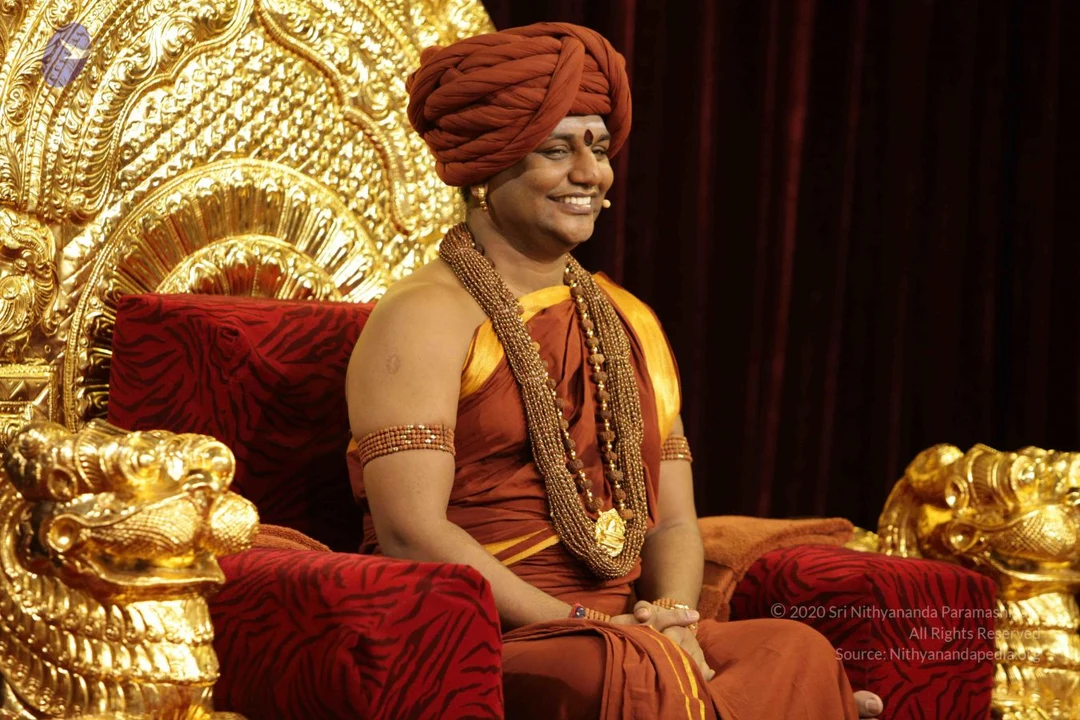
A man stands centre stage with palms pressed together in anjali namaskar, smiling. He wears a rust-red turban, a rust-red and gold-bordered garment draped over his shoulder, a dense multi-strand beaded necklace with a gold pendant, and red beaded bracelets. Behind him rises an ornate gold canopy with hanging gold leaf-shaped pendants over a large gold-embossed seat back, against deep burgundy drapes. At right stands a golden trident.A man stands before an ornate gold throne with a carved gold back and a gold canopy above, against deep maroon velvet drapes. He wears a rust-red turban, a red-orange cloth wrapped around his body with gold-yellow borders, a gold chain of rudraksha beads, a gold pendant, and red-and-gold bangles on his arms. He smiles with palms raised and open toward the audience, a small microphone at his face. A tall gold trident with red and green jewels stands at the right edge. Visible person: a person, seated-height speaker in the centre, appearing to address the audience during a teaching session.A smiling man sits on an ornate golden throne with lion-head armrests, backed by a gilded arch and red velvet cushions with tiger-stripe patterns. He wears a rust-orange turban, a red-orange dhoti-style cloth with a gold border draped over his shoulder, a dense multi-strand gold necklace with a central pendant, rudraksha-style beads, gold armlets and bracelets, and a small red bindi. A small microphone is at his ear. He rests his hands on his lap. A golden staff with a lion-head top stands to the right.A seated man in saffron-orange robes and an orange turban sits on an ornate gilded throne with a tiered golden canopy above it and lion-shaped armrests at each side. He wears a long beaded necklace with a large gold pendant and gold bangles, and rests his hands in his lap with bare feet visible. A tall golden trident stands beside the throne against deep red velvet drapes. The man is an appearance-based probable Swamiji seated on a throne with saffron clothing, a turban, and ceremonial gold necklace cues, presented as a seated teacher.A seated man in a golden ornate throne with a gilded canopy and carved lion-shaped armrests, set before deep red velvet drapes. He wears an orange-red turban, an orange-saffron robe with a yellow border, and a long ceremonial necklace of gold and rudraksha-style beads. A golden trident stands beside the throne. The figure appears to be a presiding religious leader, a possible a person, seated in state for a discourse setting, with bare feet and folded hands.A seated man in saffron-orange robes and a matching orange turban sits on an ornate gold throne with carved lion-head armrests and red velvet cushions over a striped tiger-skin rug. He wears a long multi-strand gold-bead mala with a large pendant, gold armbands and bangles, and a small red bindi on his forehead, with a head microphone visible beside his face. His hands rest folded in his lap and he smiles toward the audience. Behind the throne hang deep maroon curtains and a golden arched backdrop. The scene reads as a staged satsang or discourse setting. Swamiji (probable): the orange turban, saffron robes, gold mala and throne are the cues for the in-person candidate.

Samayadeeksha-for-kids-and-Adults

107 photosSource gallery
A busy indoor hall with a cream wall and a large framed collage titled "Glimpses of Kumbh Mela 2013 Prayag, Allahabad, India" above a blue "LADIES TOILET" sign. Many people in white clothing mill about and queue on a pale tiled floor. A man in a white shirt on the left carries a plate, while an older man in white sits on a chair and an elderly woman in a white sari with gold border stands beside him. Several women wear saris in gold, cream and green, and a woman on the right in a floral dress and white dupatta has a long braid with a red flower. Some men sit cross-legged on the floor behind metal stanchions and chains, and others stand in groups. Figures in white dhotis and shirts fill the background.A photograph of a crowd of men queuing in a large, pale-walled hall with polished cream floor tiles. Most wear white dhotis and white or cream shirts, some in plain dark trousers, and a few in striped or checked shirts. They stand in a loose line along metal stanchions, several looking forward or to the side. A mirrored wall and a sign reading Ladies Toilet appear at the back, with ceiling lights overhead. No deity, throne or ritual object is visible, and no individual can be confidently identified as the teacher.A photograph of devotees seated on a tiled floor eating from paper plates in a hall. A bald older man in a white dhoti and shirt with white vibhuti marks on his forehead eats at left. Beside him, a man in a white shirt and dhoti eats, and a woman in a blue patterned sari with gold bangles sits cross-legged at centre, holding a plate with food. A woman in an orange sari with gold necklaces sits at right, and a woman in white sits in the foreground holding food. Other seated people in white clothes and a child appear in the background, with a plastic water bottle and a blue bag on the floor. The scene appears to be a communal meal.A kitchen serving line in a plain whitewashed room with a stone-block wall on the left. Several women in white saris with coloured borders and white hair nets stand behind a long steel counter, serving food onto plates with gloved hands. Men in white shirts and white dhotis queue along the counter holding plates, one in a white shirt and white dhoti with an ID badge reaching toward the food. A cameraman stands in the background, and a wall-mounted electrical panel and a cardboard box appear at right. Several people are visible, all in white clothing.A photograph of a communal meal service in an ashram dining hall. Along a steel serving counter, several women in white saris with green lanyards and hair nets dish food, while a man in white shirt and white dhoti, wearing an ID badge and a red thread on his wrist, holds out a steel plate with flatbread. Other men in white clothes stand in line behind him, and a camera operator is visible in the background. The walls are rough stone and plaster, with wooden doors. Ashram annadan food service.A photograph of a dimly lit serving area in a stone-walled hall where women in white saris with gold borders serve food from a steel counter. A woman in the foreground wearing an orange blouse and white sari with gold border holds a plate of food. Other women in white saris and head coverings stand behind stainless steel serving trays and containers. Walls are rough stone blocks with a small wooden shelf on the left.

SamayaDheeksha-Instructions giving

107 photosSource gallery
A seated man in a rust-orange turban and orange-red robes sits with palms pressed together in namaste on an ornate golden throne with carved lion armrests. He wears a gold necklace and gold bangles. Beside the throne stands a tall man with long matted hair, rudraksha mala and white and gold dhoti, and another man in orange-gold robes with rudraksha beads holds a golden trident. A table draped in orange holds fruit offerings, and a seated audience in white fills the foreground. A white pedestal fan is at left.A seated man in a red-orange turban and saffron-red robe sits on an ornate gold-and-brown throne carved with lion heads, hands pressed together in namaste. A gold-and-silver beaded necklace hangs on his chest. Behind him stand attendants: a woman in a red sari with a rudraksha mala and gold necklace, a man in white dhoti with a long beaded shawl, and a shaved-headed man in saffron robe holding a gold trident. A red-draped table holds fruit and flowers, and a microphone stands in front. To the left, a woman in white clothes stands with hands folded, and a row of seated devotees in the foreground faces the stage. A white fan and pillar frame the left side.A seated man in a golden-carved throne with lion-form armrests sits at the centre, hands pressed together in namaste, wearing a rust-red turban, rust-red and gold robes, and a long gold-beaded necklace. Appearance-based candidate for a person: long hair-free head covered by red turban, ornate golden throne and ceremonial gold necklace; he is being honoured by an audience. Behind him stand attendants in orange-red and white robes, one holding a golden trident-topped staff, another with a white shawl and rudraksha mala. A small orange-draped table holds a tray of red flowers. A white-clad woman stands at left with palms joined, and a seated audience in white fills the foreground, while a pedestal fan stands at left.A seated figure in a red-orange turban and matching saffron-red robe sits on an ornate golden throne with lion-head armrests, a brown leather-backed chair behind it. A gold trident stands beside a red-draped table holding fruit and flowers. Around him, people in orange and red robes stand, including a woman in orange with a white blindfold, a man in a white dhoti with a garland and rudraksha beads, and a bald man in orange holding a staff. A seated crowd in white fills the foreground, and a white electric fan stands at left.A seated figure in a red-orange turban and saffron-red robe sits on an ornate golden throne with brown leather upholstery, a gold-leaf lion-like armrest visible at the right. The seated figure leans forward, touching or blessing a devotee who is prostrate on the floor in front of the throne. Behind the throne, several standing attendants in saffron and orange robes and rudraksha malas stand near a small red-draped table holding bowls of red and yellow flowers and a golden staff. Rows of seated devotees in white clothes fill the foreground, their heads visible from behind. A white electric fan stands at the left edge. The setting appears to be an indoor hall during a spiritual initiation or darshan.Photograph of a ceremonial initiation scene in a hall. A seated figure in saffron-red robes and a red turban sits on a gold lion-headed throne armrest, wearing a long gold-beaded necklace and gold bangles, with hands resting on a golden lion-head armrest. Beside them a standing man in white dhoti with gold border and a long rudraksha-style garland holds a gold trident. Several devotees in orange and red saris, some with white head bands, stand with hands folded in prayer. A plate of flowers and fruit sits on an orange-draped table with a microphone, and a standing fan is at left. Audience members are seen in the foreground.
Samayadheeksha-Initiation
113 photosSource gallery
A large indoor hall packed with a dense audience of men seated on the floor and chairs, most wearing white shirts and white dhotis, some with rudraksha malas around their necks. In the foreground a bearded man in a white shirt wears a beaded mala, and a young boy in a blue checked shirt sits beside a man in a pink shirt. Rows of attendees stretch back toward a stage at the far end. Walls display framed devotional prints and a large framed Hindu deity image at the upper right, with a screen and a red curtain visible at the left. The scene suggests a satsang or discourse gathering. a person's presence cannot be confirmed from appearance in this crowd.A large seated audience fills an indoor hall at a Shiva diksha teaching session. Most attendees wear white shirts and white dhotis, and many wear rudraksha or tulsi-style beaded malas around their necks. A bald man at left has white vibhuti stripes across his forehead. A man in a black-and-white checked shirt sits in the foreground, and a boy in a blue checked shirt sits among the adults. A navy backpack rests on the floor. Pink walls and framed pictures line the background, and the crowd sits closely on mats. No speaker or throne is clearly visible in this frame.Photograph of a large seated audience filling a hall, mostly men in white shirts and white dhotis or trousers sitting on red floor mats, facing forward toward an unseen speaker. Foreground figures include a man with a grey-streaked head in a white shirt, a young boy in a checked shirt beside a young man in a maroon shirt and jeans, and a man wearing a black rudraksha-style mala at the left edge. Some participants wear lanyards. Other people stand at the back and along the walls under a cream ceiling and white pillars, with a purple cloth draped near the upper left. Dense crowd, roughly one hundred or more people visible.A large seated audience fills a hall, mostly men in white shirts and dhotis, some in checked or striped shirts, sitting on red mats and looking toward the front. At the top right, a figure in orange and ochre robes sits near a golden throne-like seat with gold ornaments, while other white-clad attendants stand nearby. A purple emblem appears at the upper left. The scene suggests a satsang or initiation-style gathering, with the dense crowd filling most of the frame.A large photograph of a crowded indoor hall filled with seated devotees, mostly men in white dhotis and white shirts, with some in coloured shirts and a woman in a teal sari near the centre. Many wear name badges on their chests, and several have sandalwood or vibhuti marks on their foreheads, with a rudraksha mala visible on one man in front. Two men stand in white near the back, and gilded lion-shaped pillars flank the room, with a red curtain and large screens at the stage. The scene shows a satsang or assembly, though no a person is clearly visible in this frame.Crowded indoor hall with rows of seated devotees dressed in white shirts and white dhotis, many with white and orange-yellow shawls or garlands. In the centre a young man in a white dhoti with a yellow-bordered cloth holds a silver tray of red and orange offerings, while another man in a yellow-bordered white dhoti stands to the left with his arms extended. Devotees on the floor reach toward the tray, some with red threads on their wrists. Framed deity pictures and colourful posters hang on the cream walls, and ceiling lights are visible. No identifiable figure is shown at the front of the hall.