Skip to content
Friday

5 September 2014

THE SUPREME PONTIFF OF HINDUISM HDH BHAGAVAN NITHYANANDA PARAMASHIVAM

Dated photos
250
Source pages
1
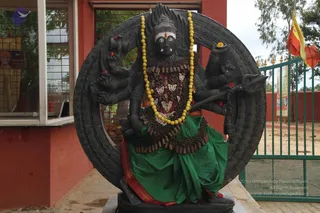
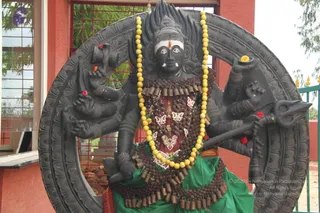
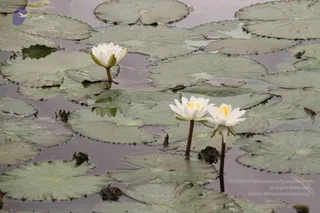
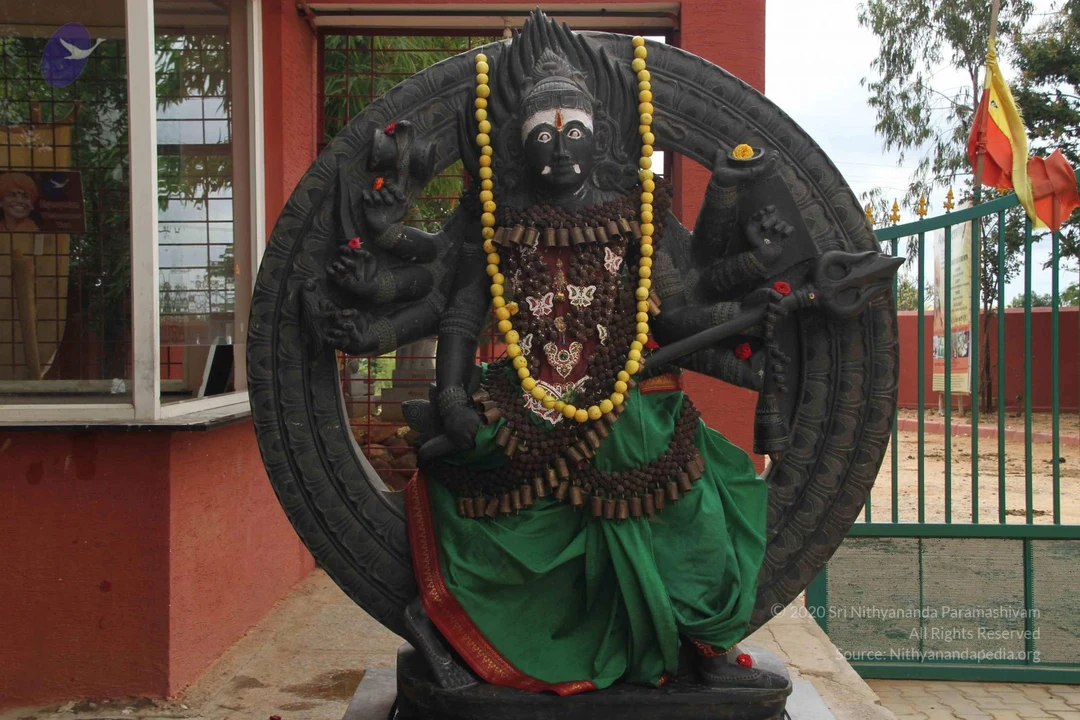
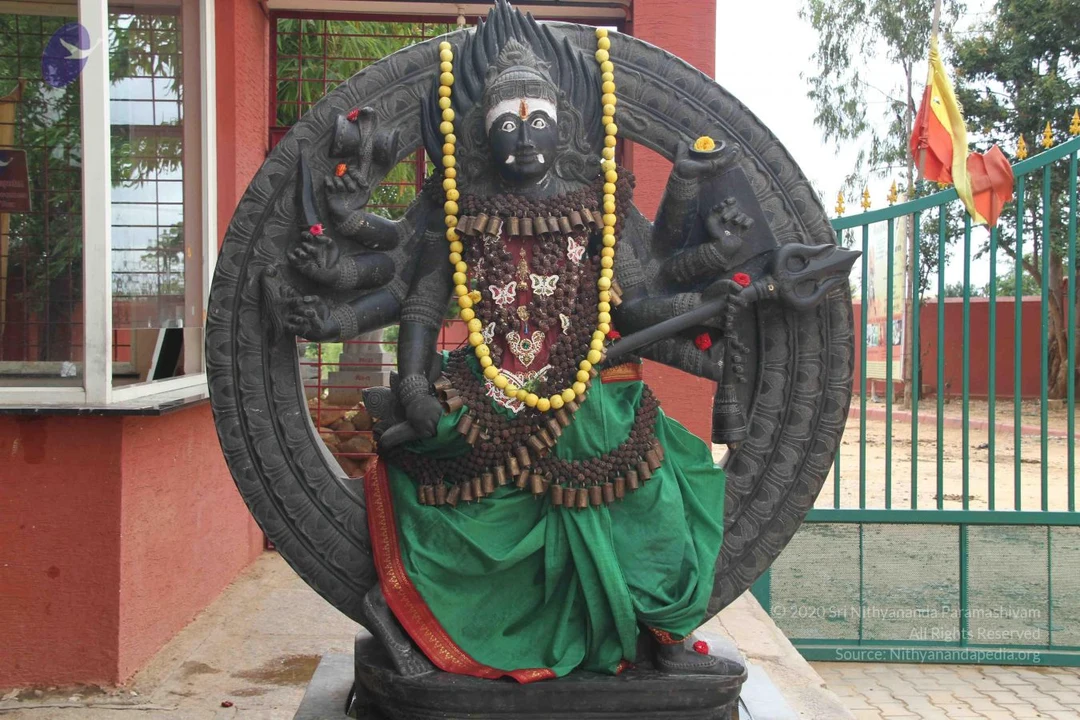
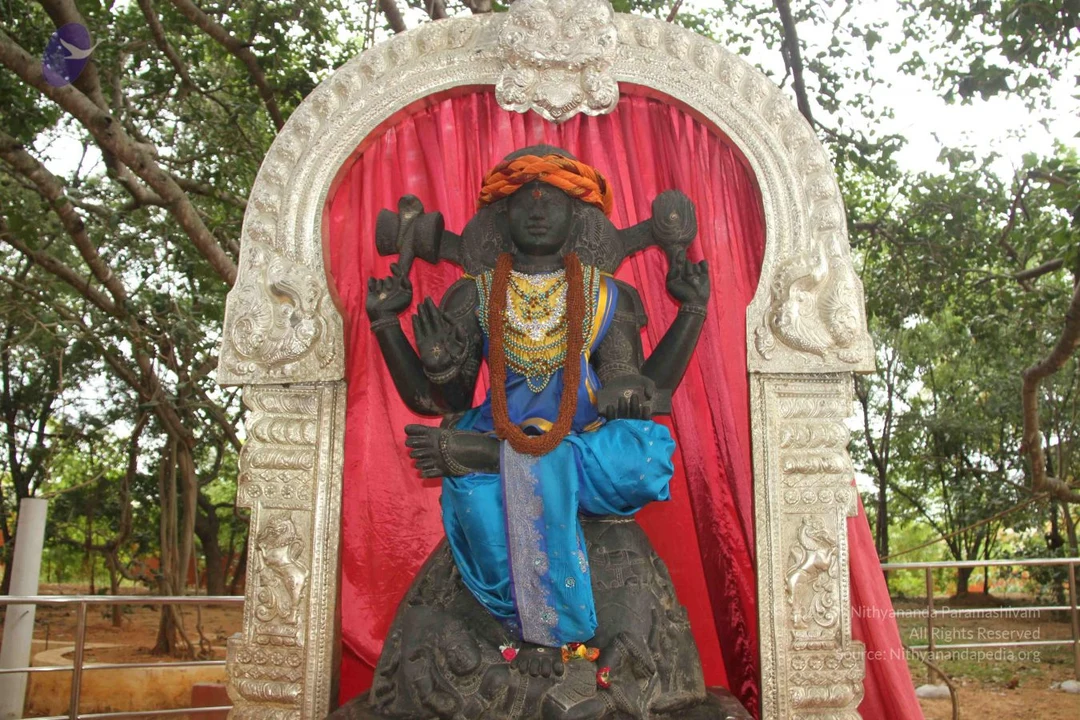
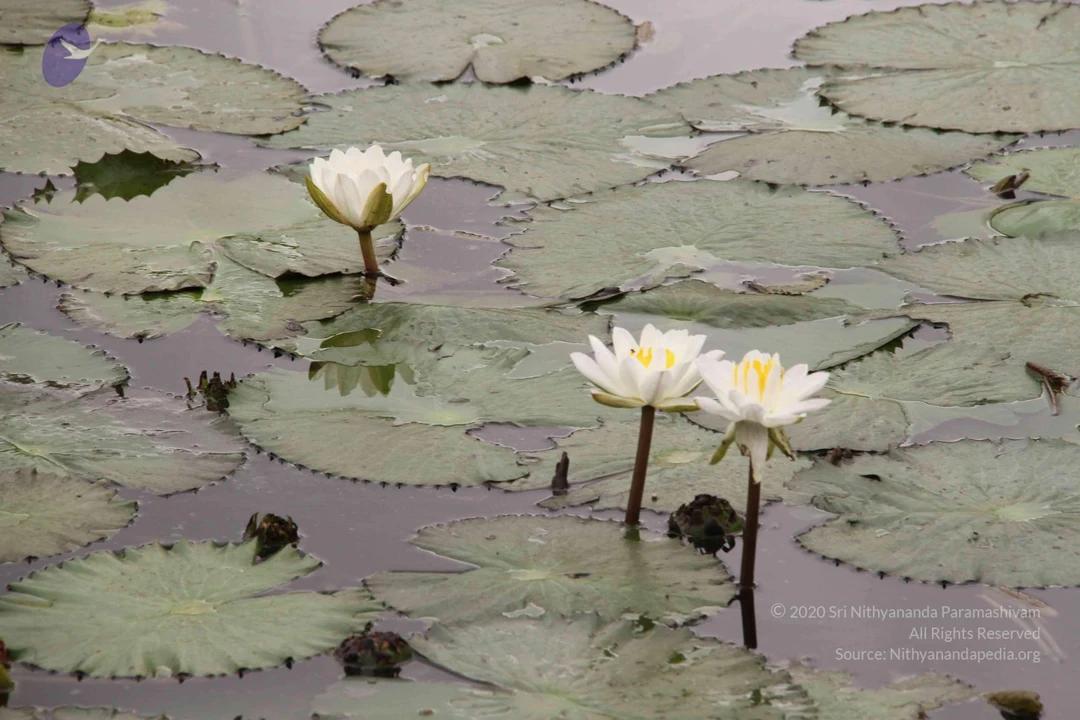
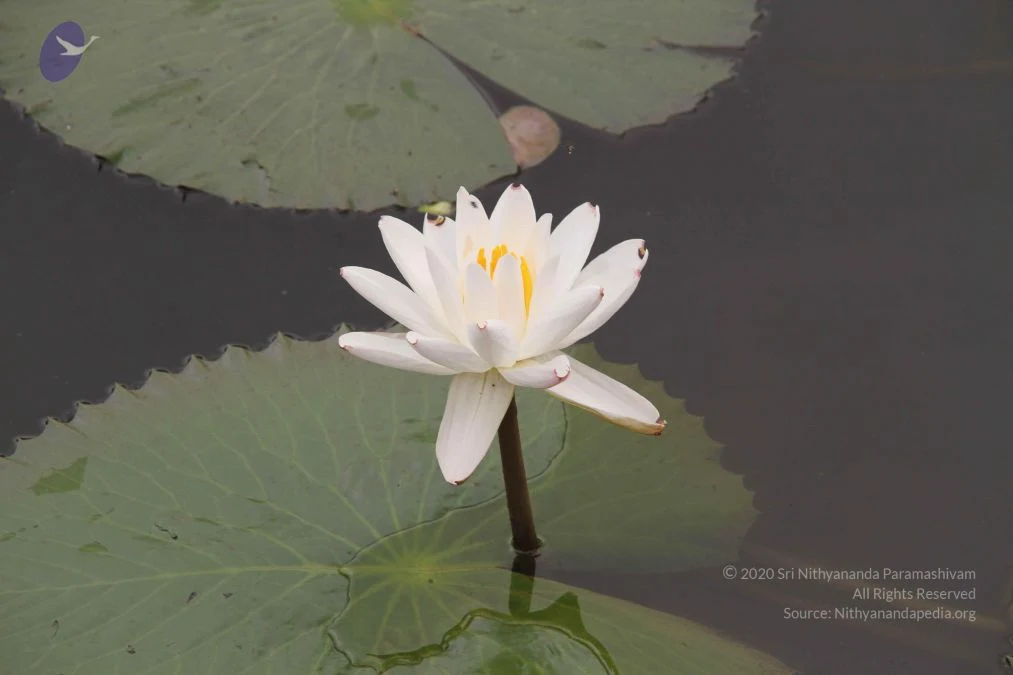
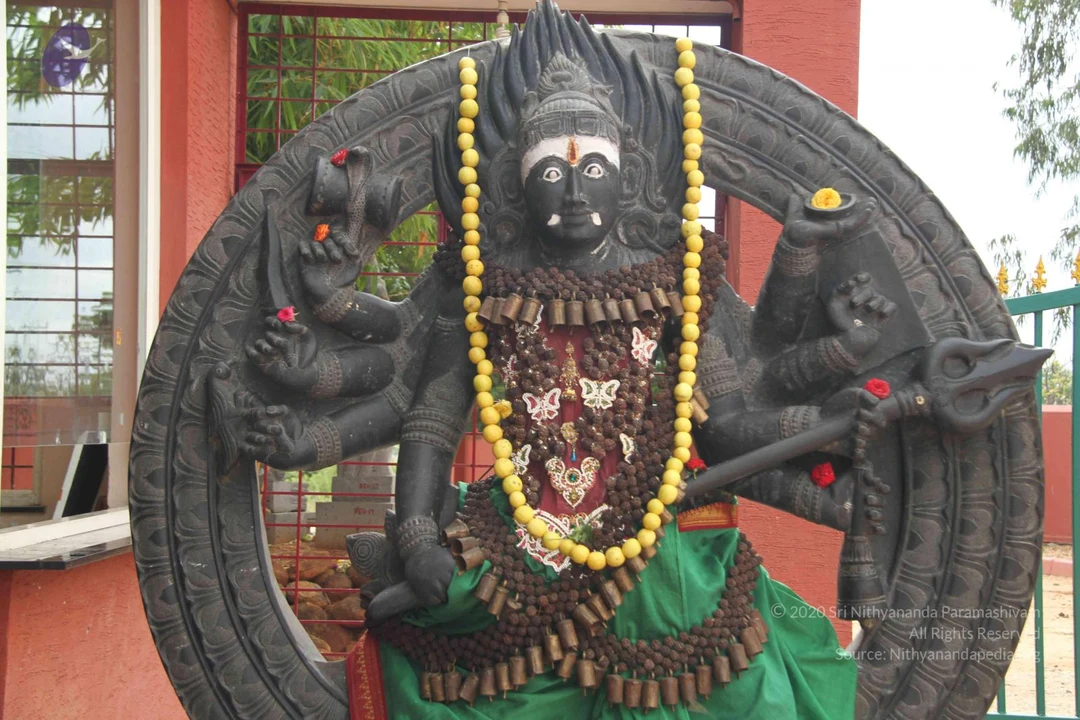
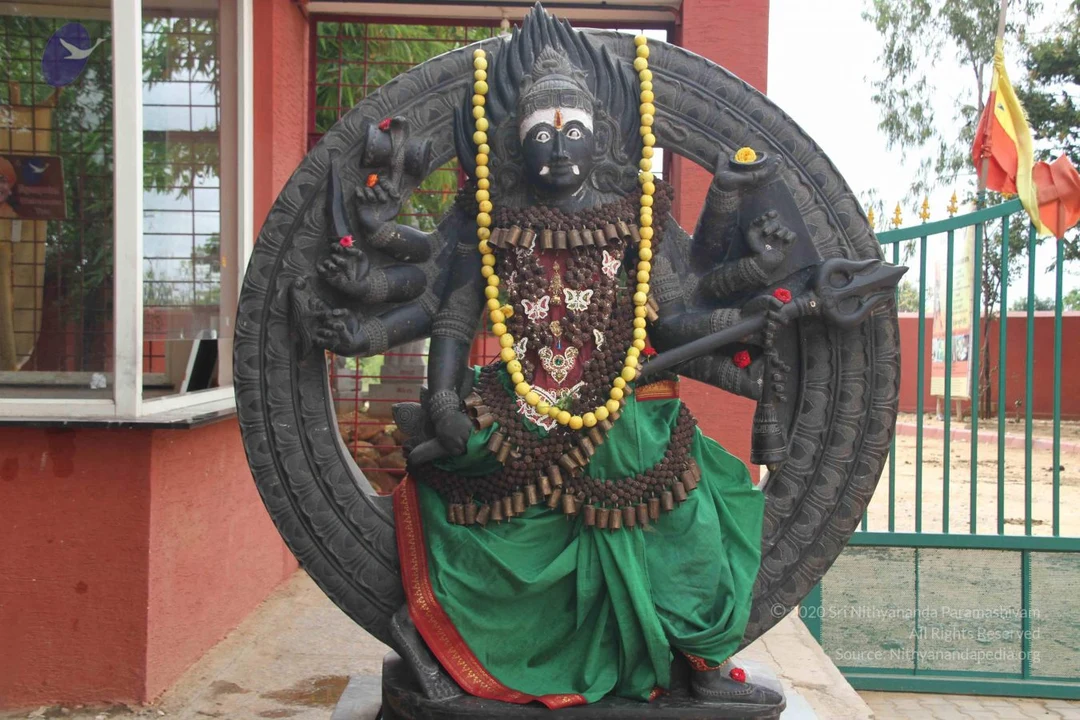
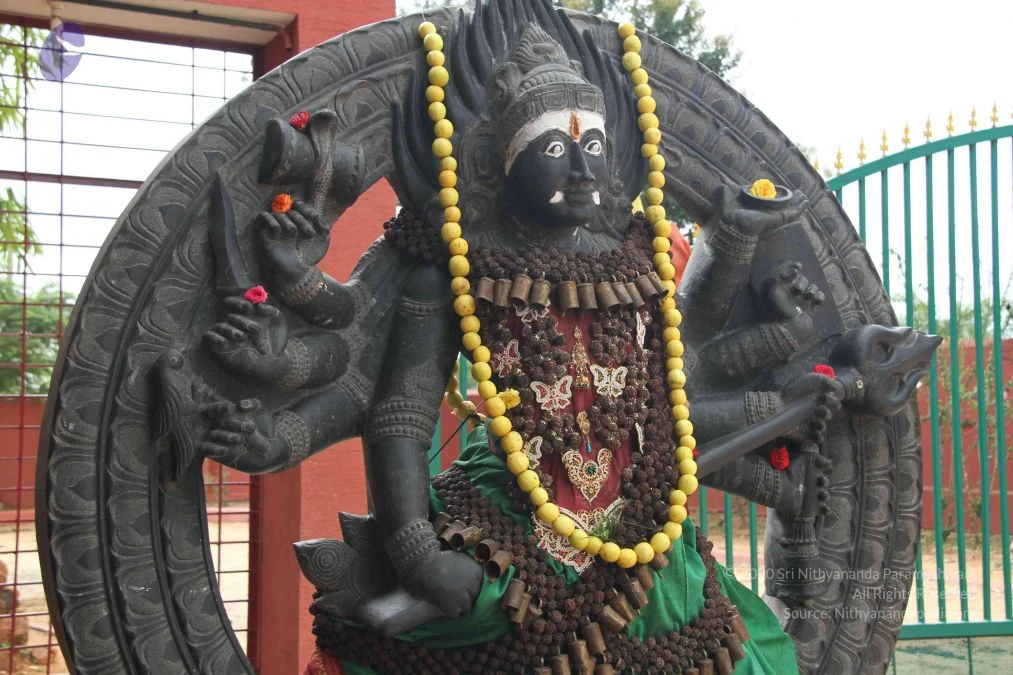
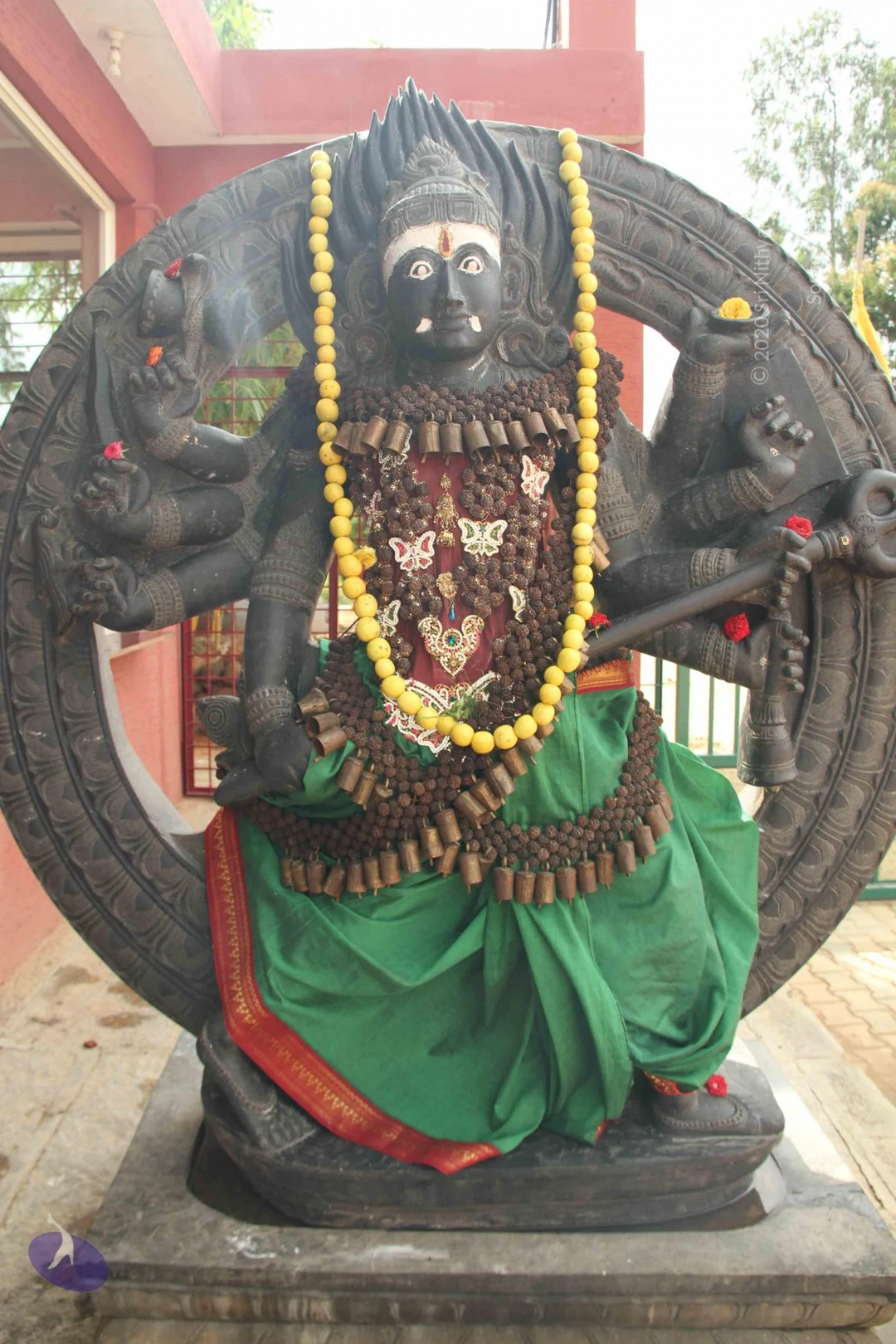
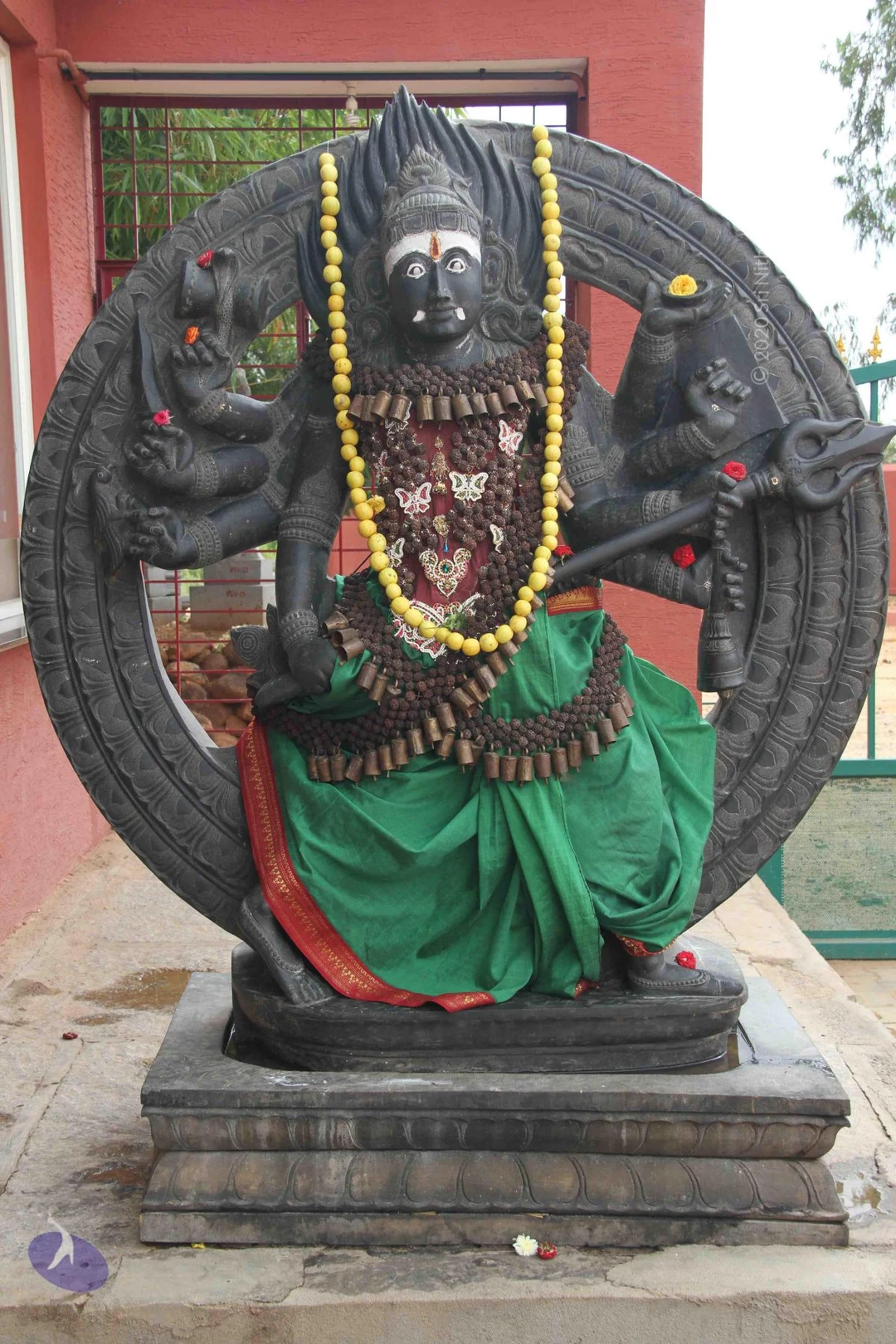
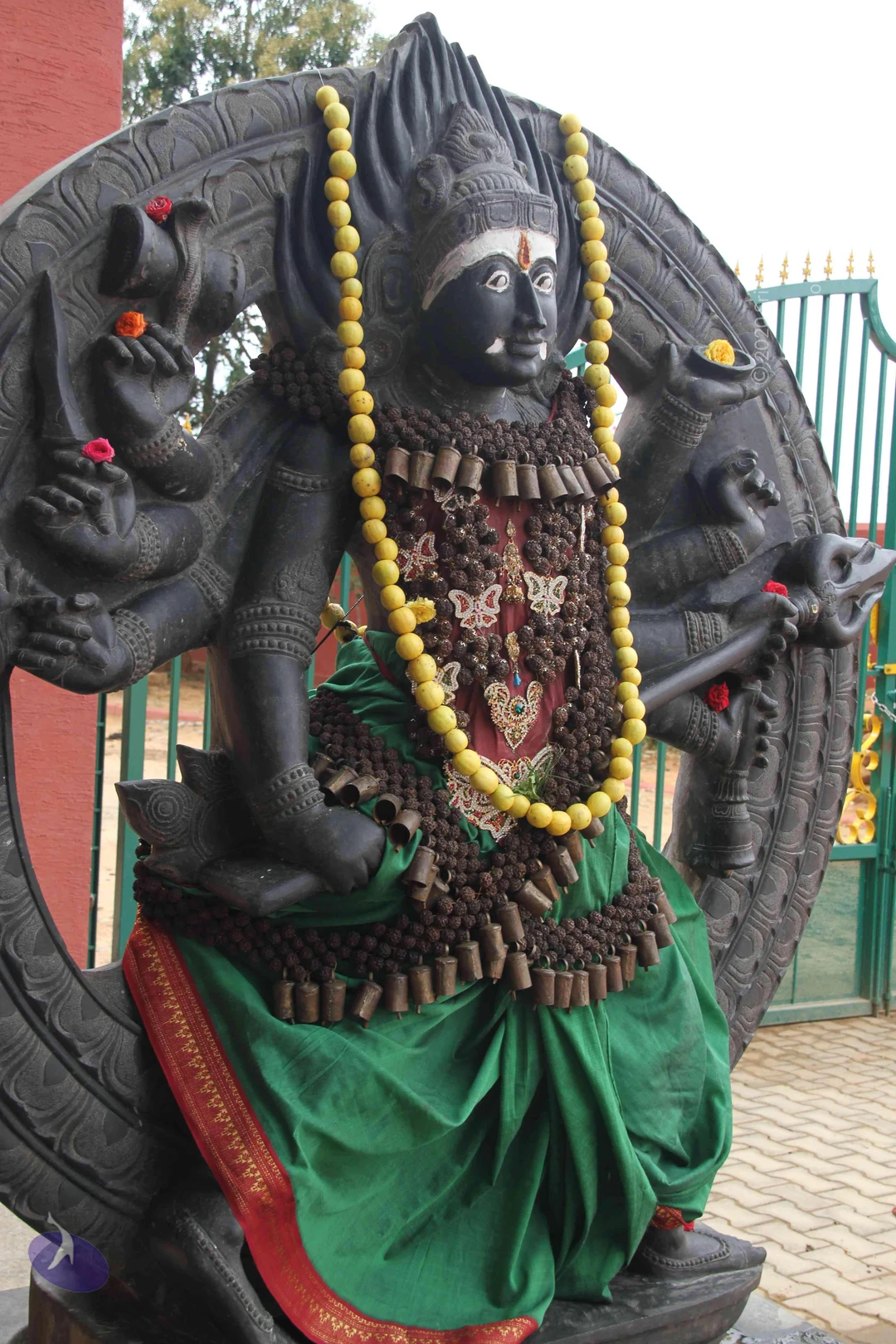
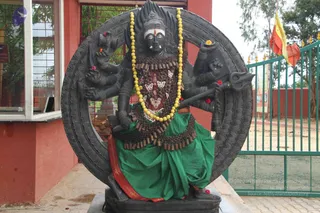
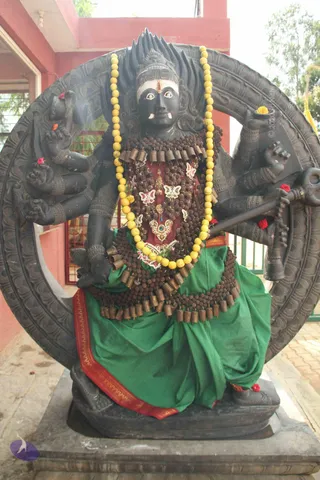
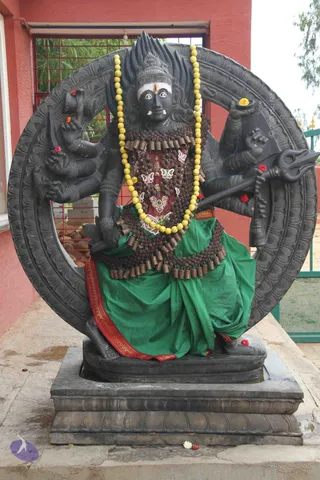
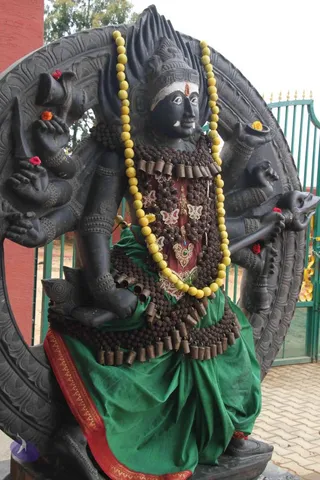
A large dark stone statue of a multi-armed deity murti stands in front of a red-walled building and a green metal gate. The murti has a black face with white eyes and a tall crown, wears a yellow garland and rudraksha beads with bell-like pendants, and is draped in a green cloth with a red border. It holds a trident and other implements, and red flowers rest near its hands. Behind it is a circular black stone halo, a saffron-and-yellow flag flies on the right, and a framed picture hangs in the left window.A large black stone murti of a multi-armed deity stands against a red-painted wall beside a green metal gate. The figure has a flame-like crown, white and orange forehead markings, and a fierce face. It wears a dense necklace of brown rudraksha beads, interspersed with bells, and a yellow flower garland. Its hands hold a trident, a drum or bowl-like object, and red flowers, with a green cloth draped at the waist. A circular halo-like frame surrounds the figure. Several red flowers and offerings are placed on the statue. No people are visible.Three white water lilies with yellow centres rise above a pond covered with round green lily pads. Two blooms stand near the centre-right, one on the left edge, each on a slender stem. Small dark buds float among the leaves, and the water is grey-purple. No people or a person are visible.

September 05 2014

Original wiki page

Photos from this day

View all 250 photos

Photos For The Day

10 photosSource gallery
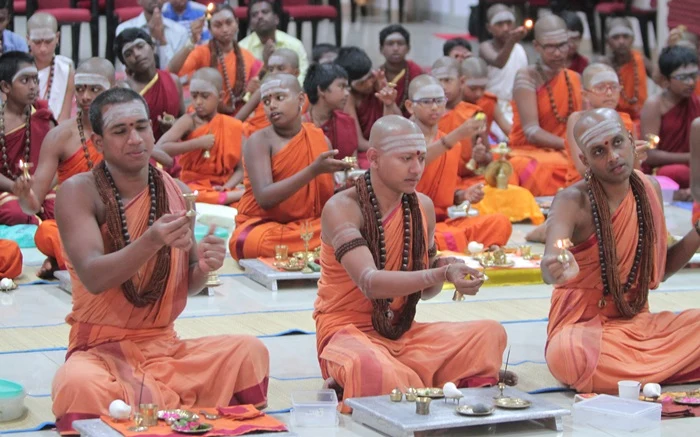
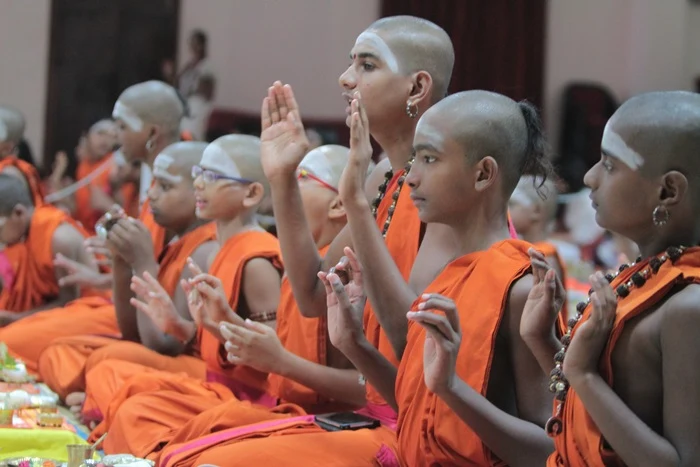
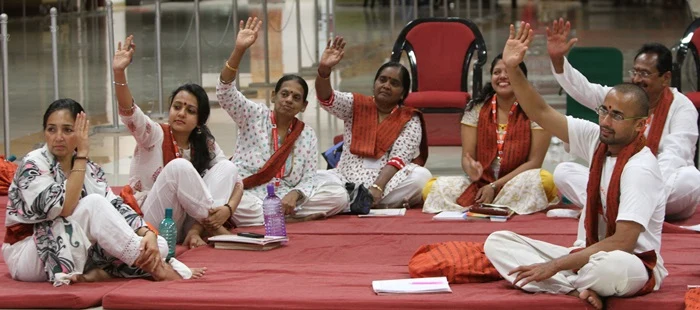
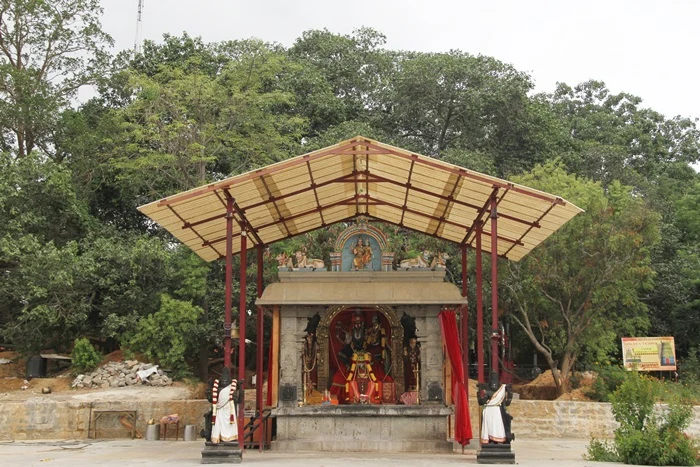
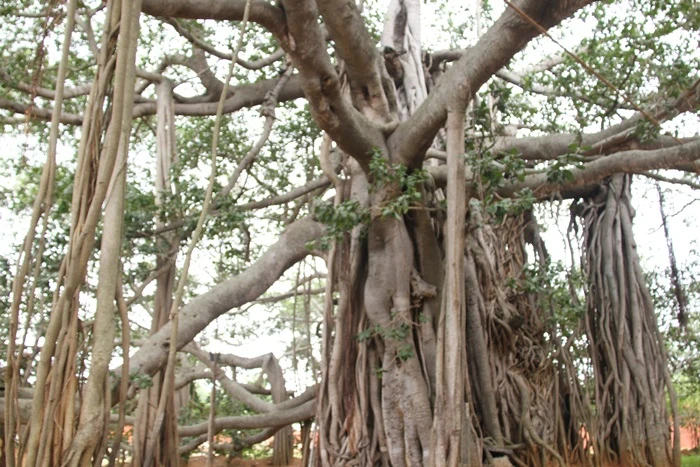
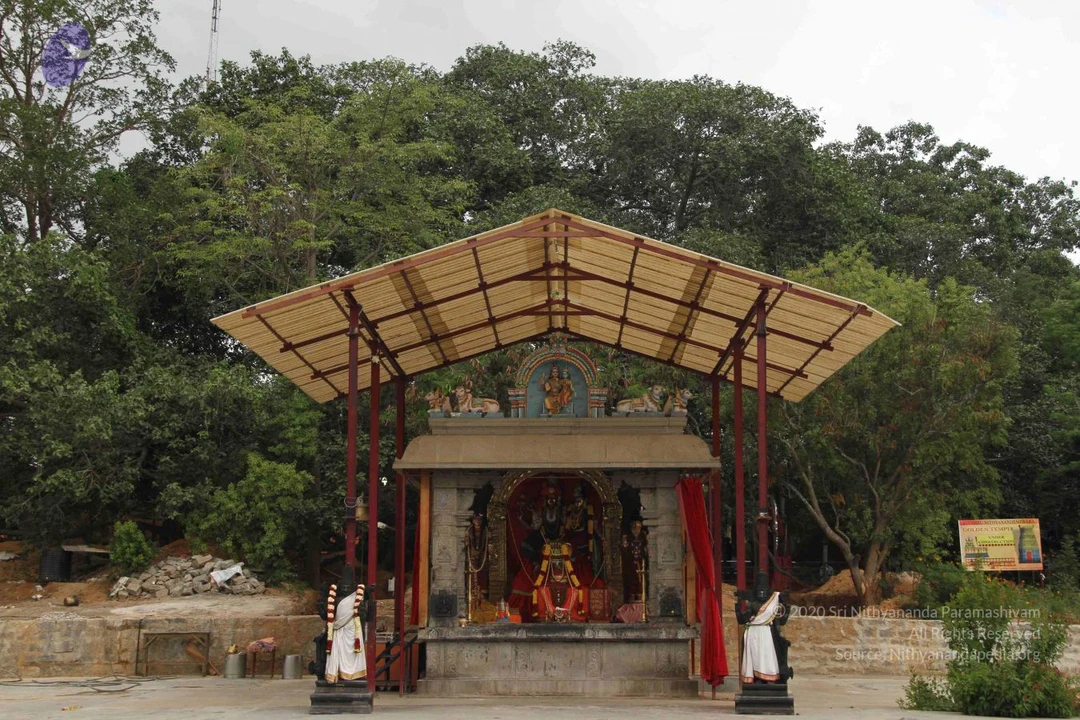
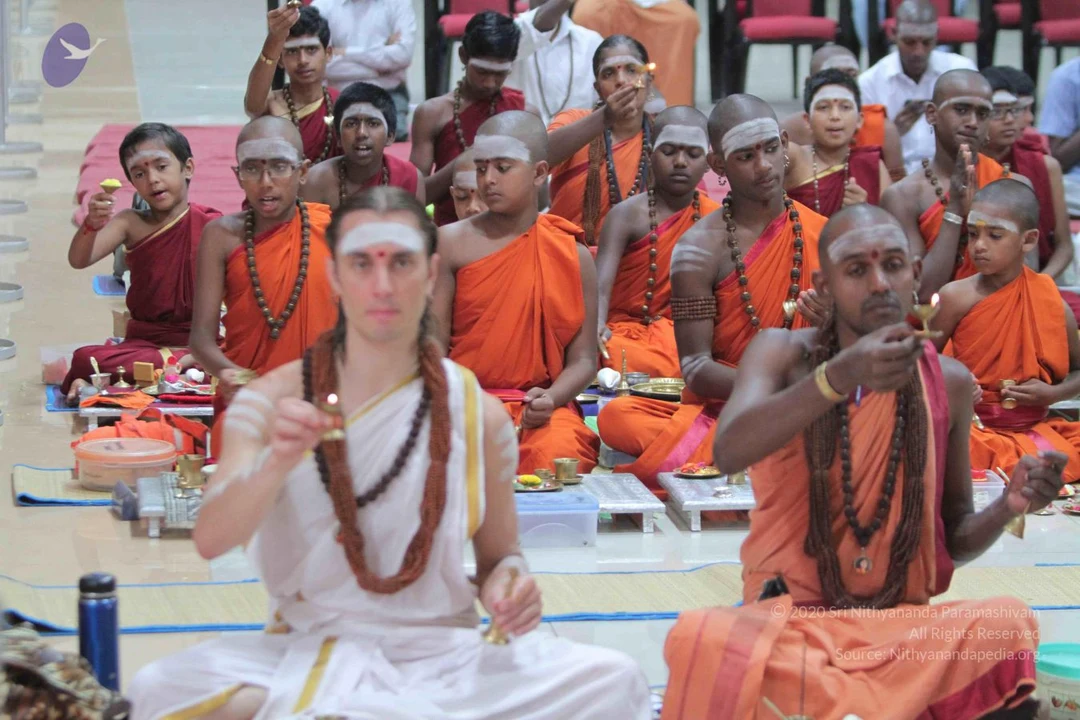
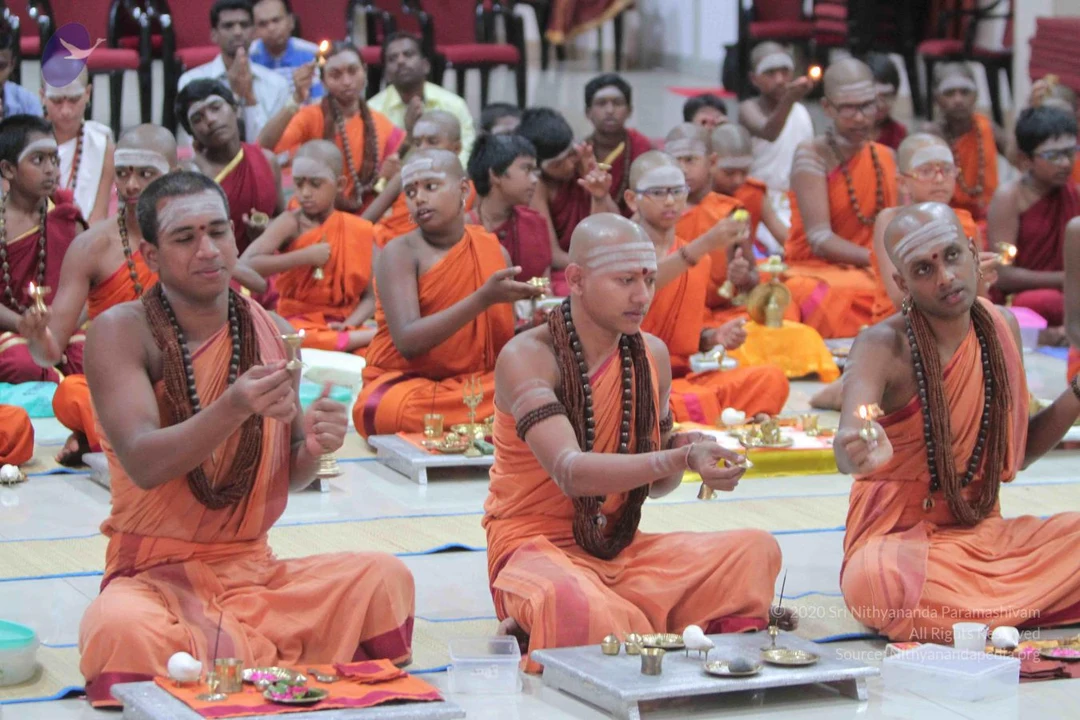
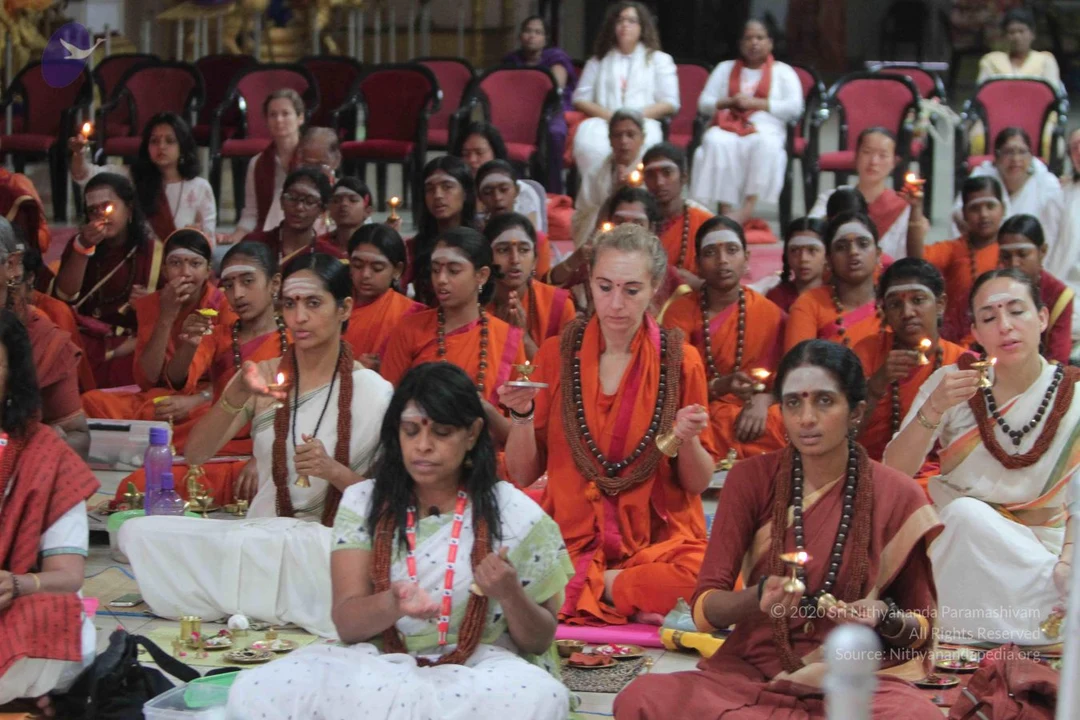
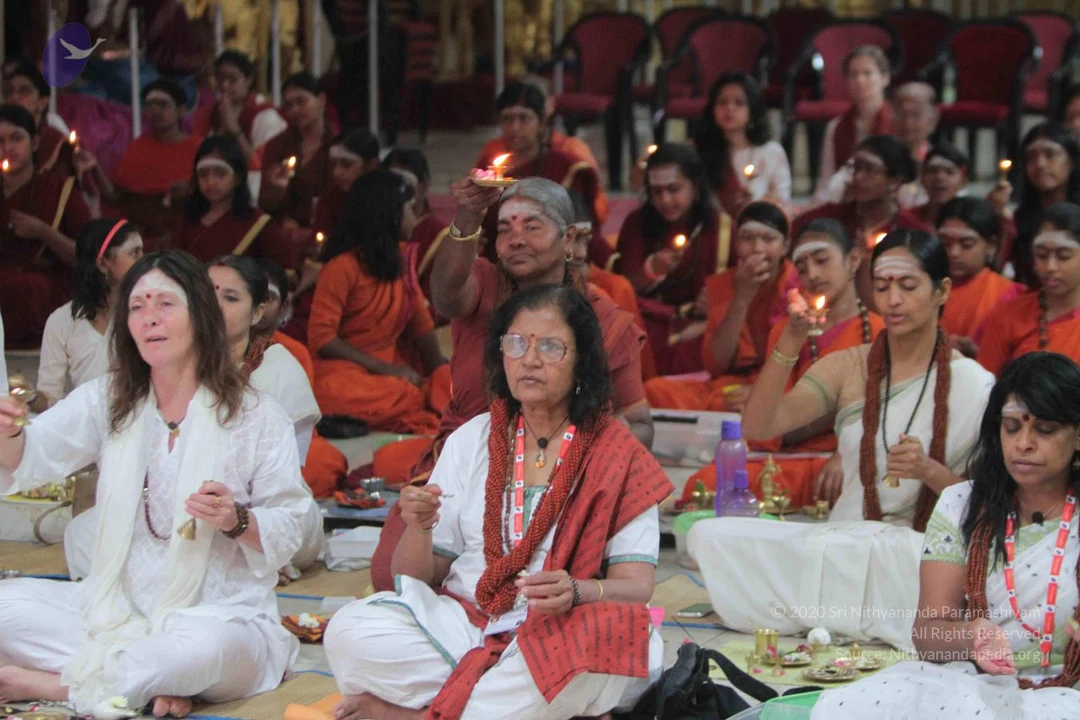
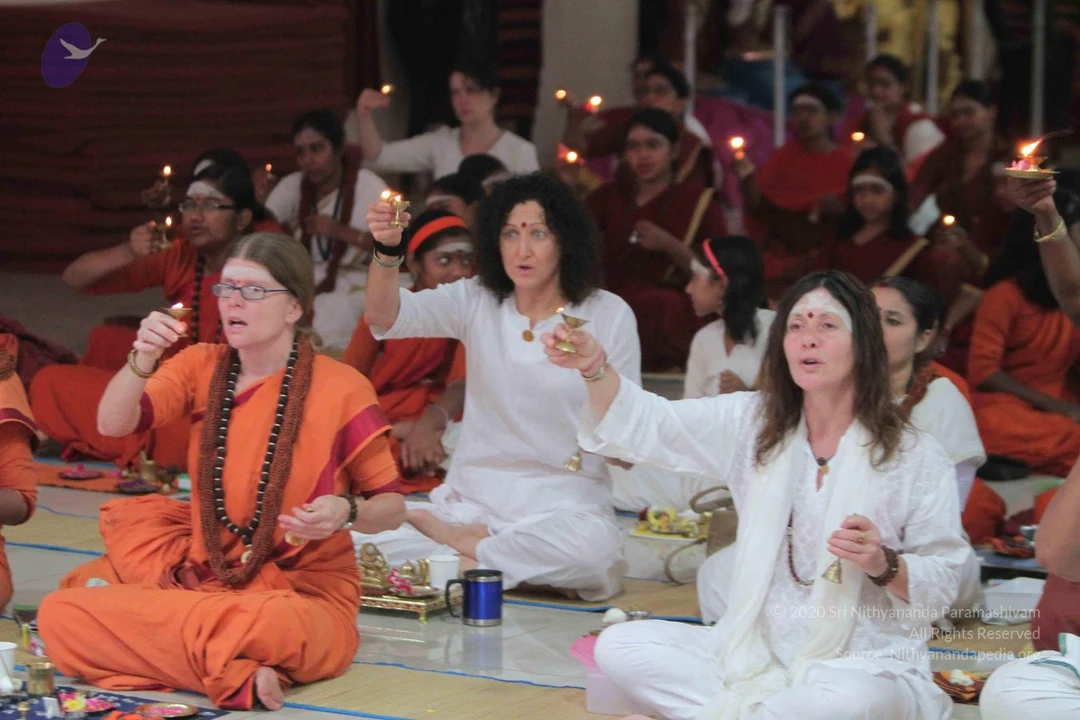
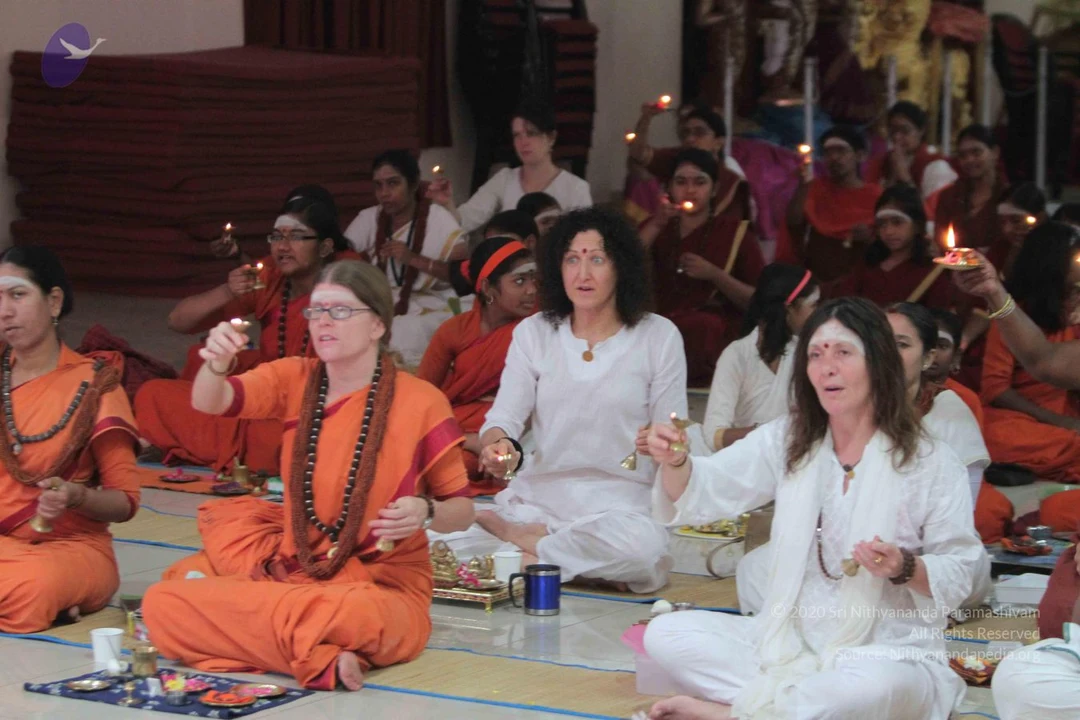
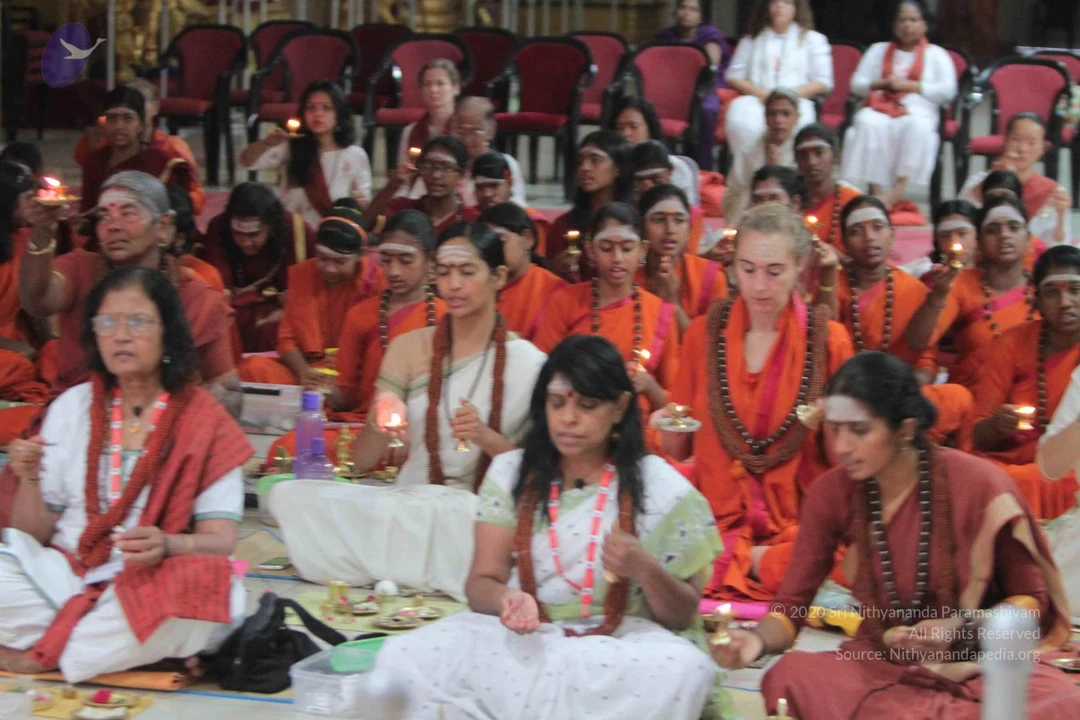
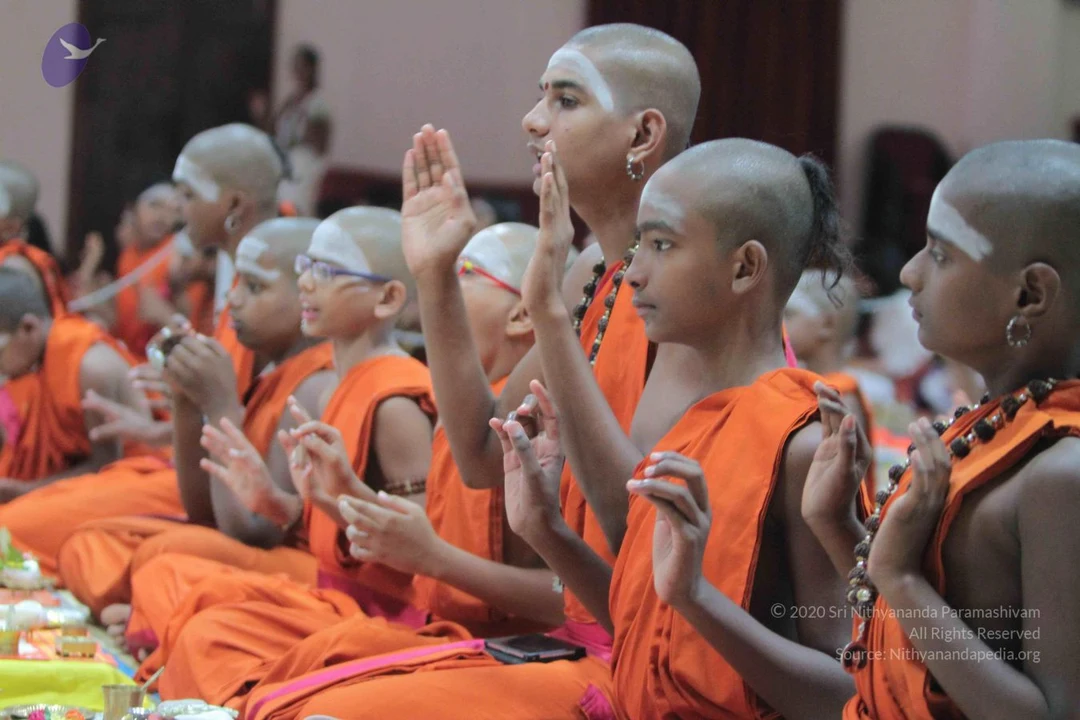
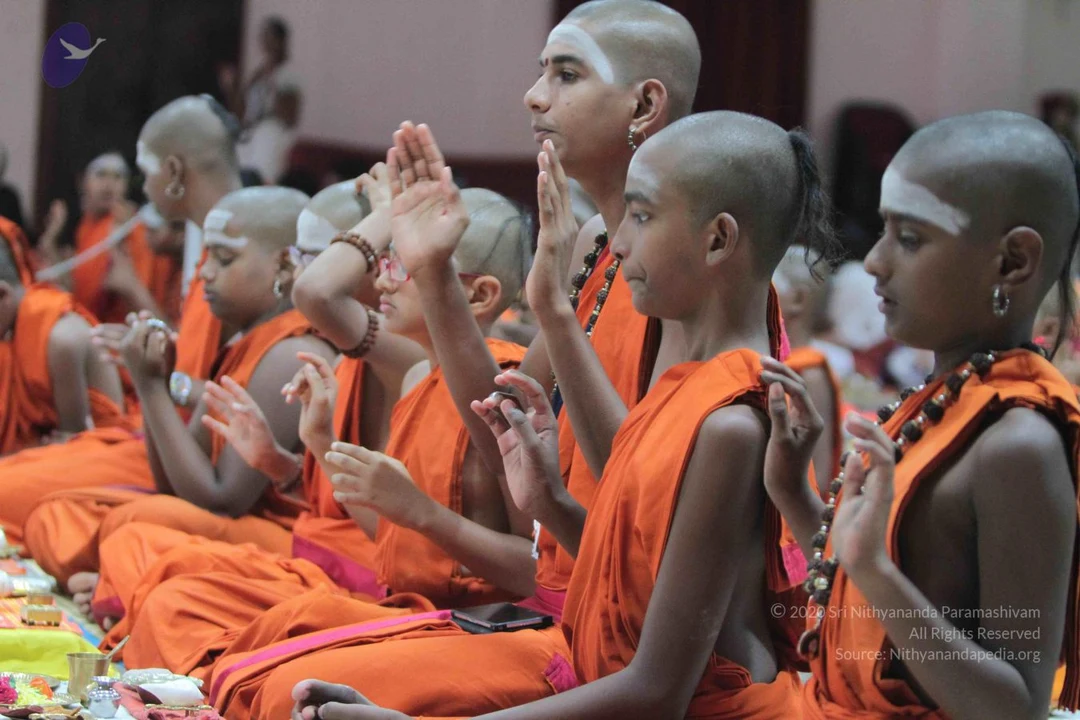
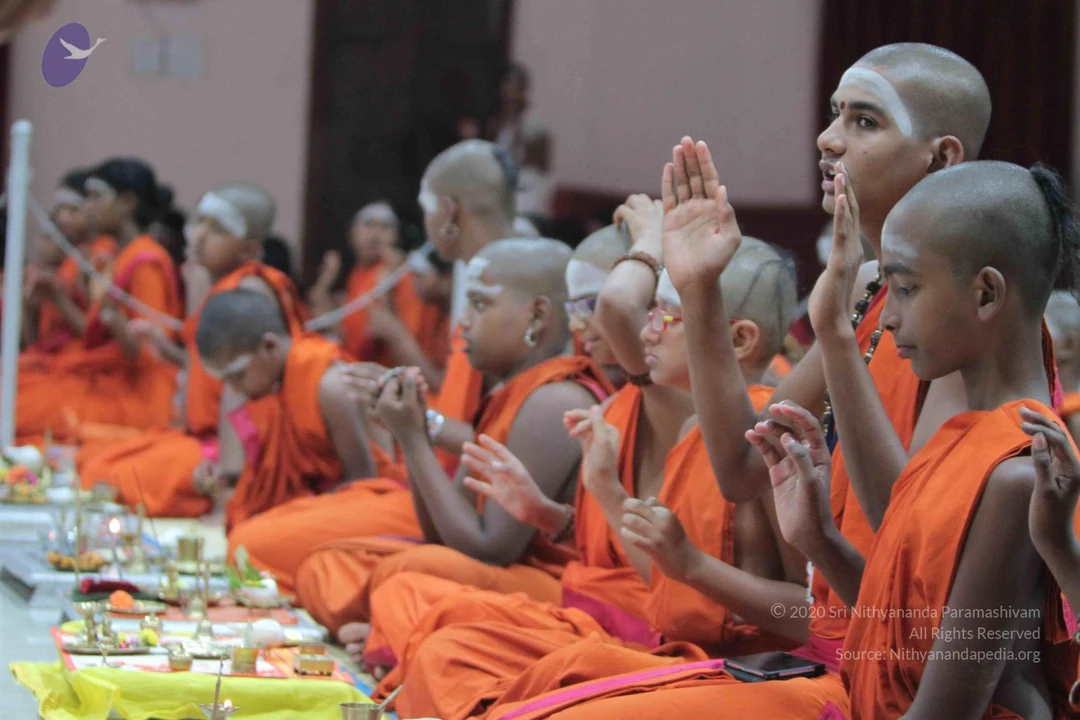
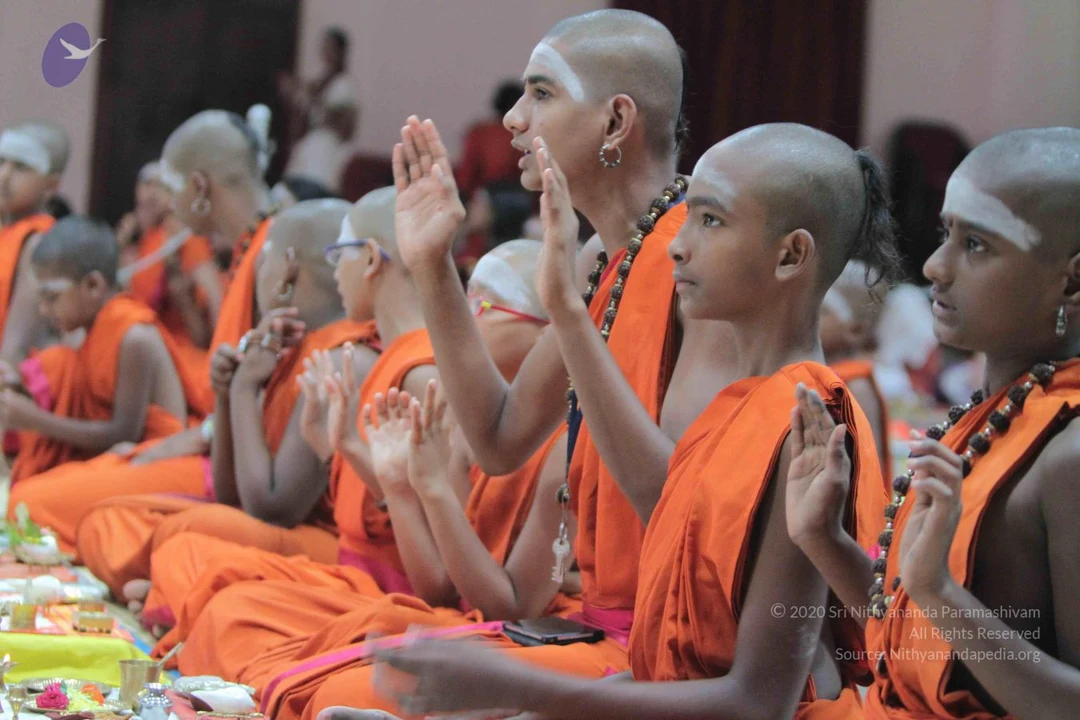
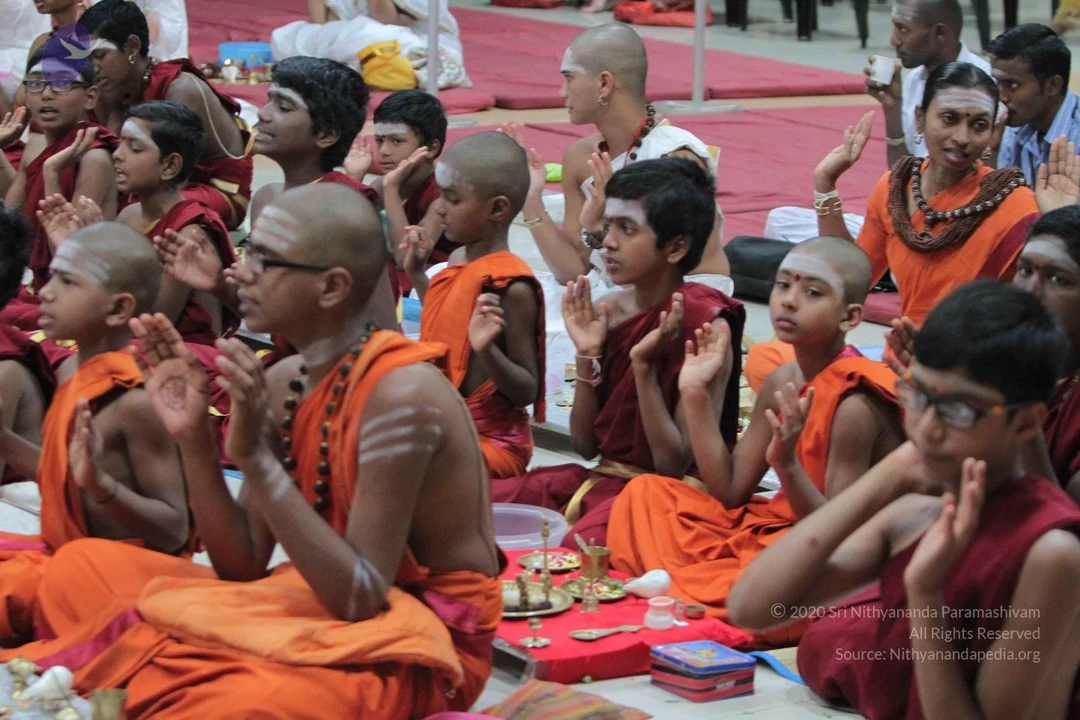
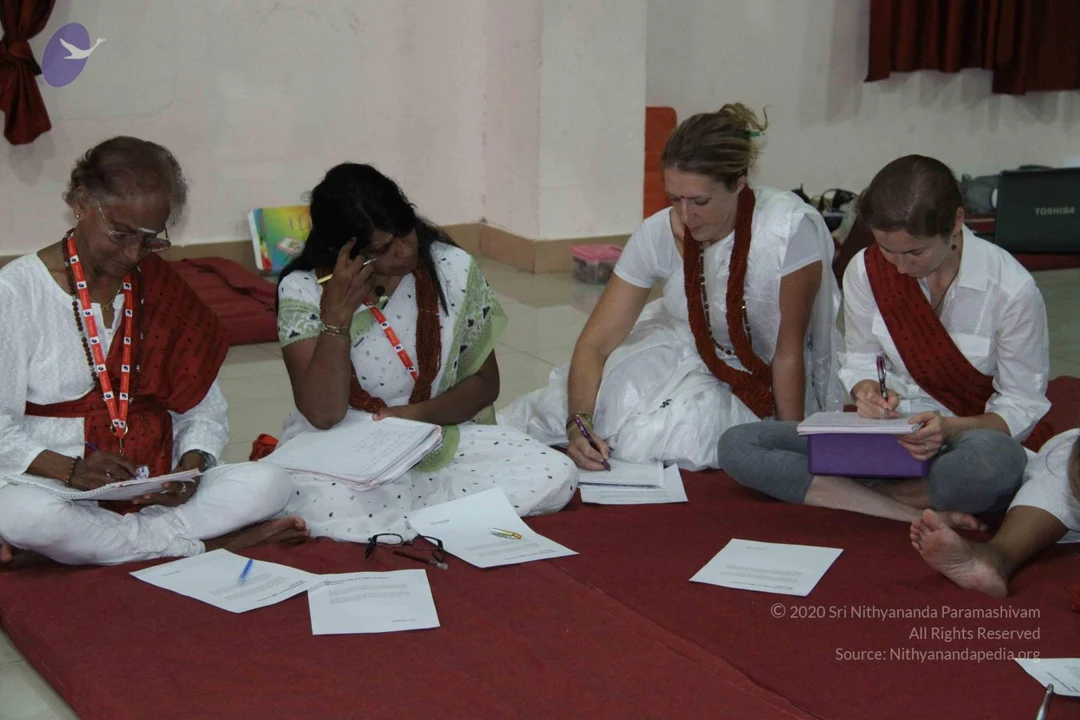
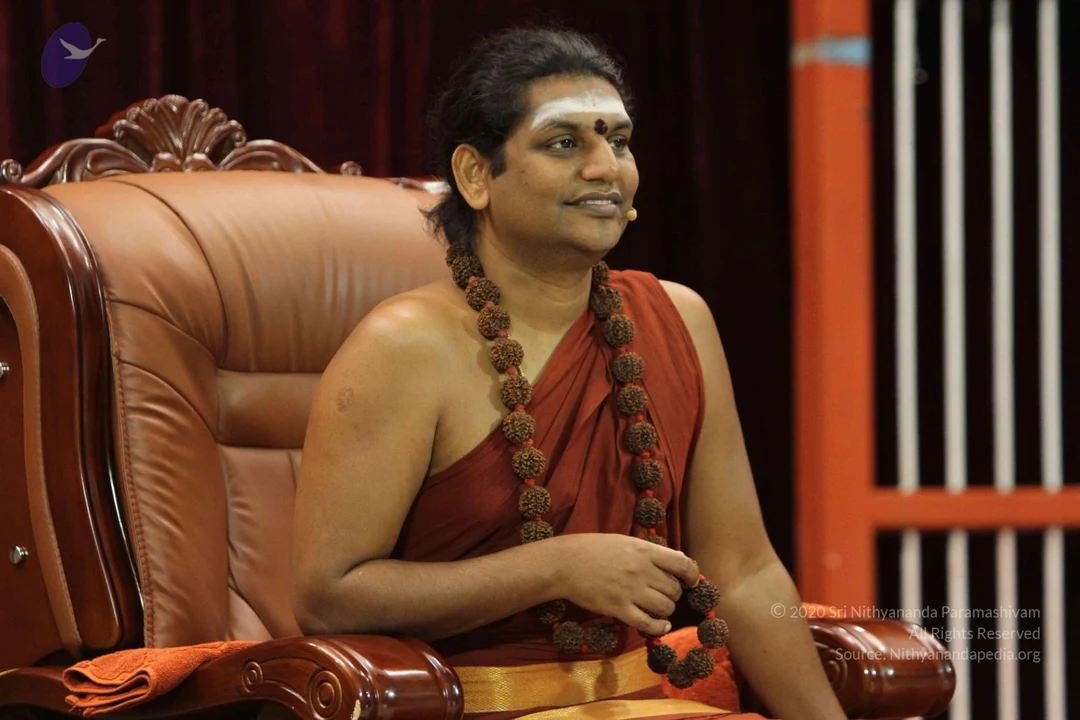
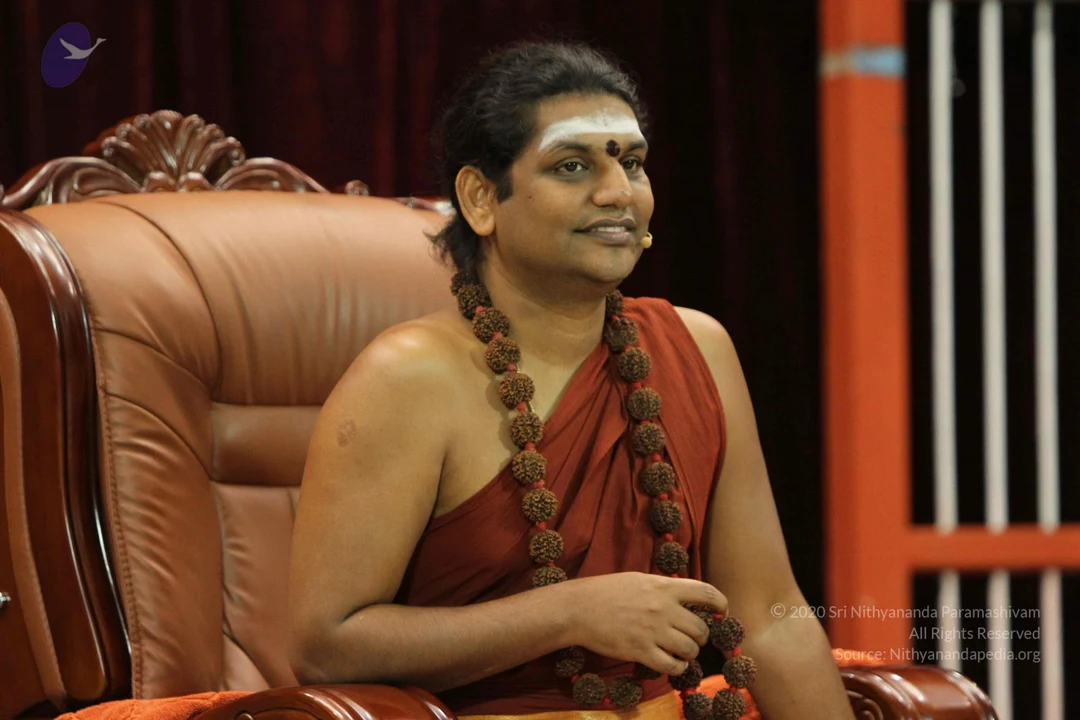
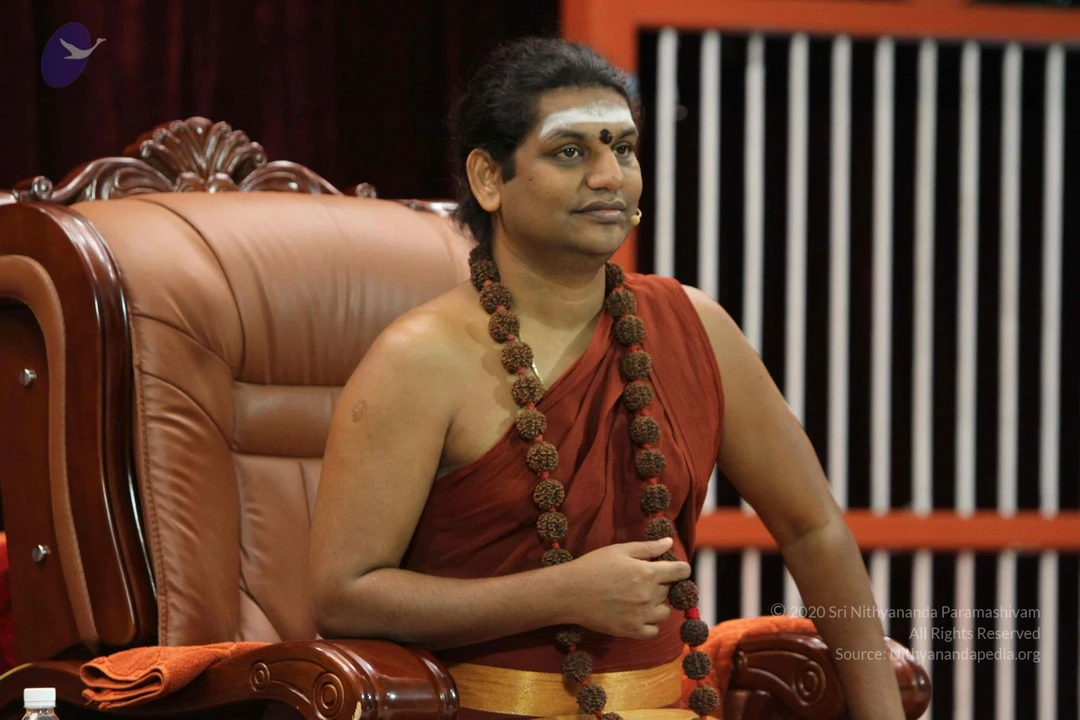
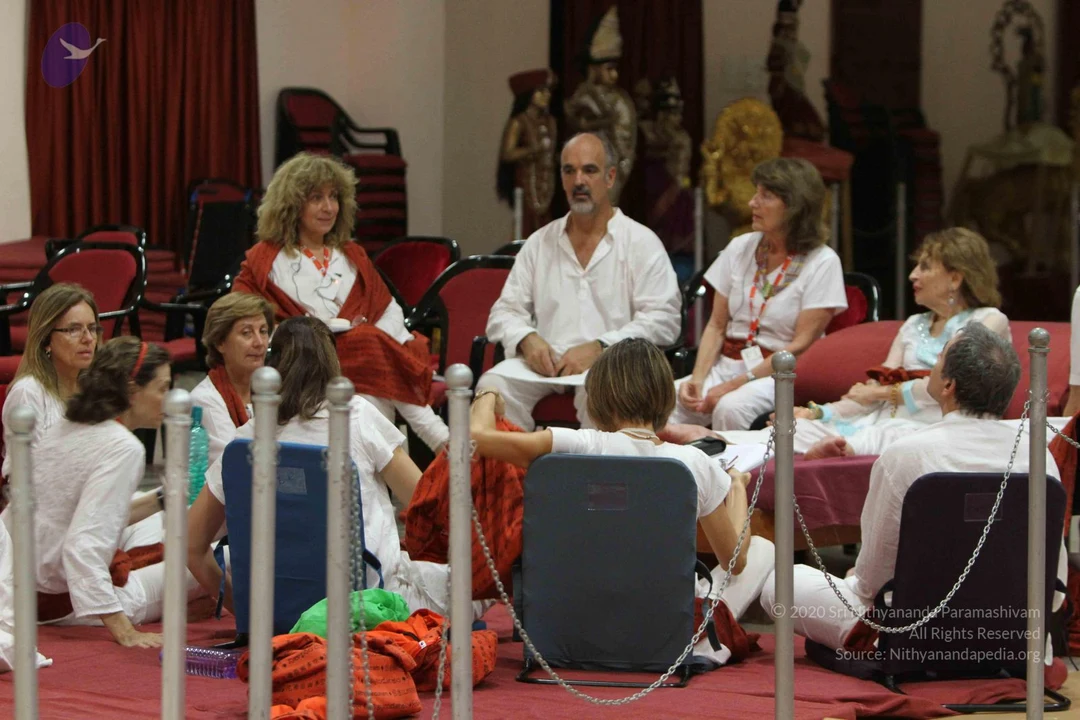
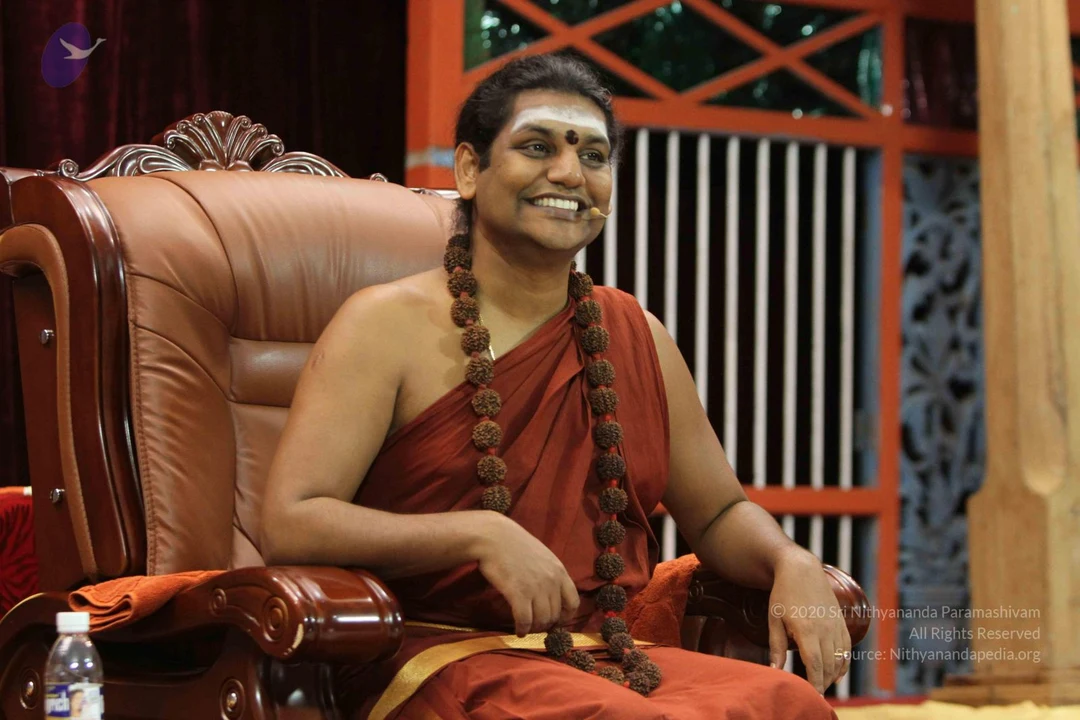
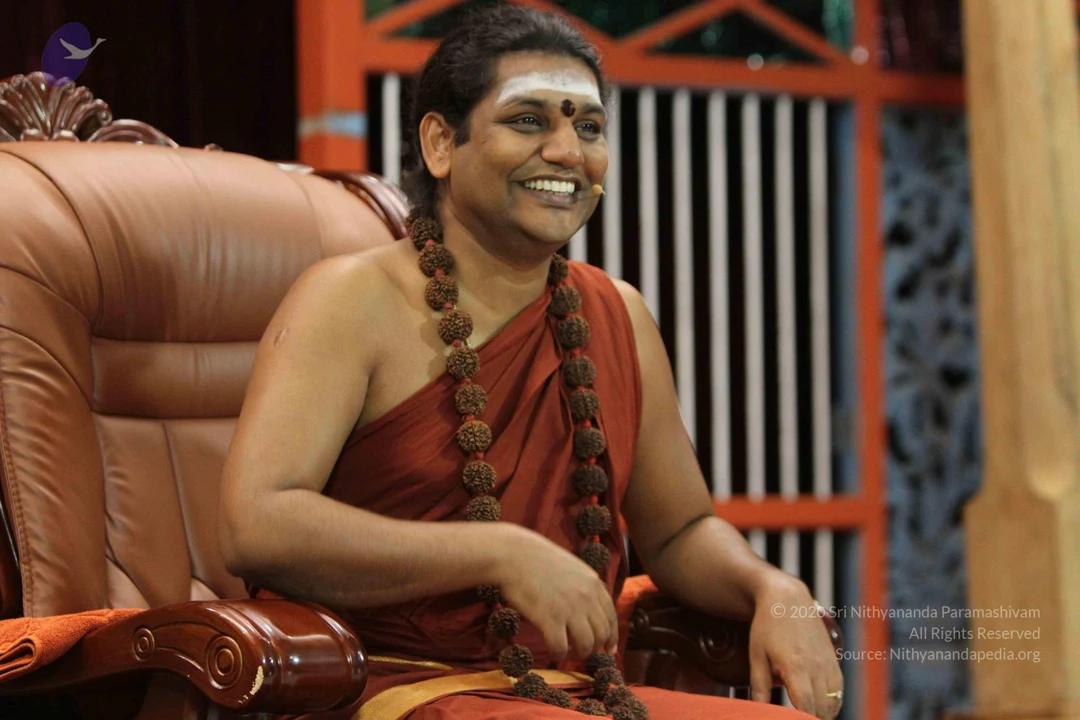
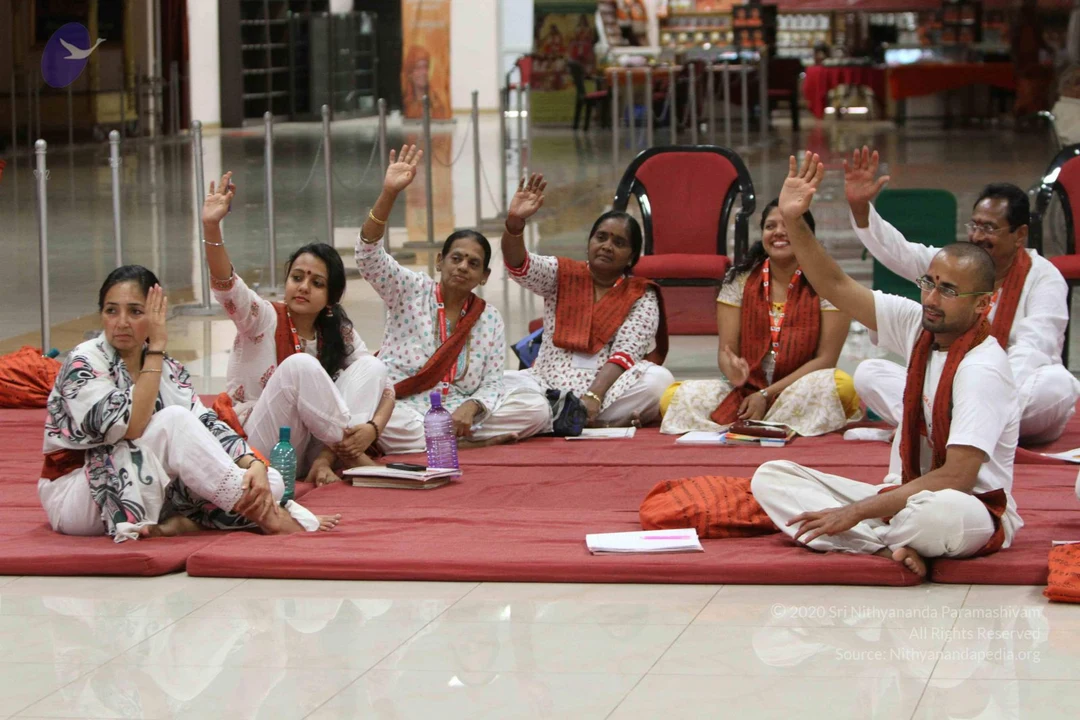
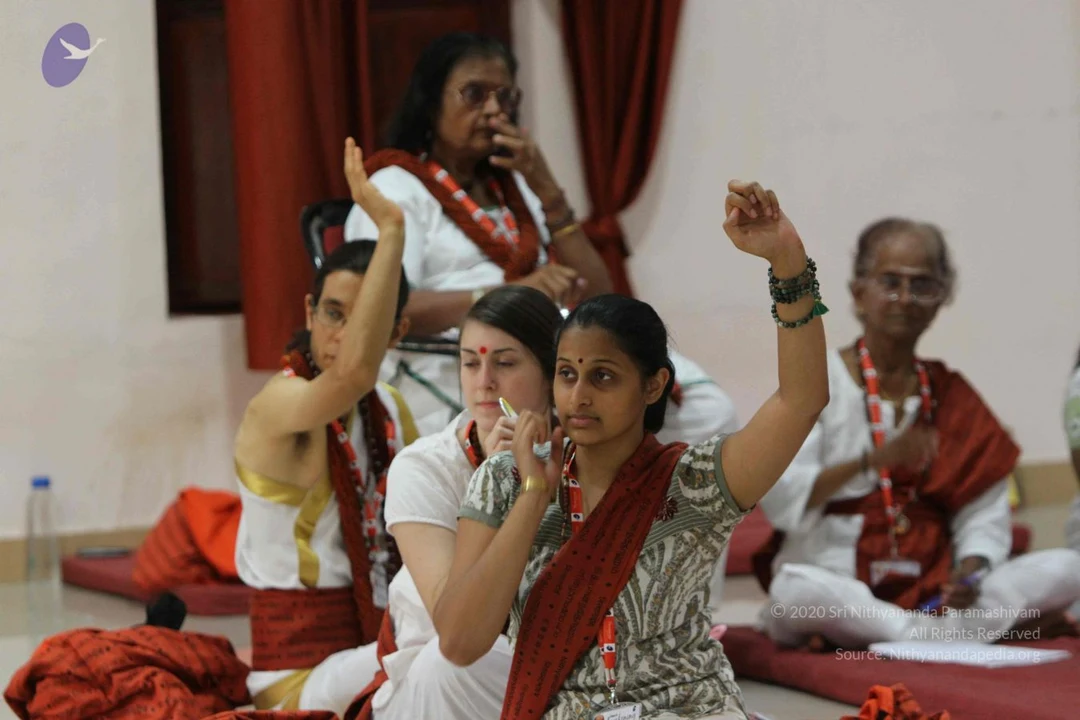
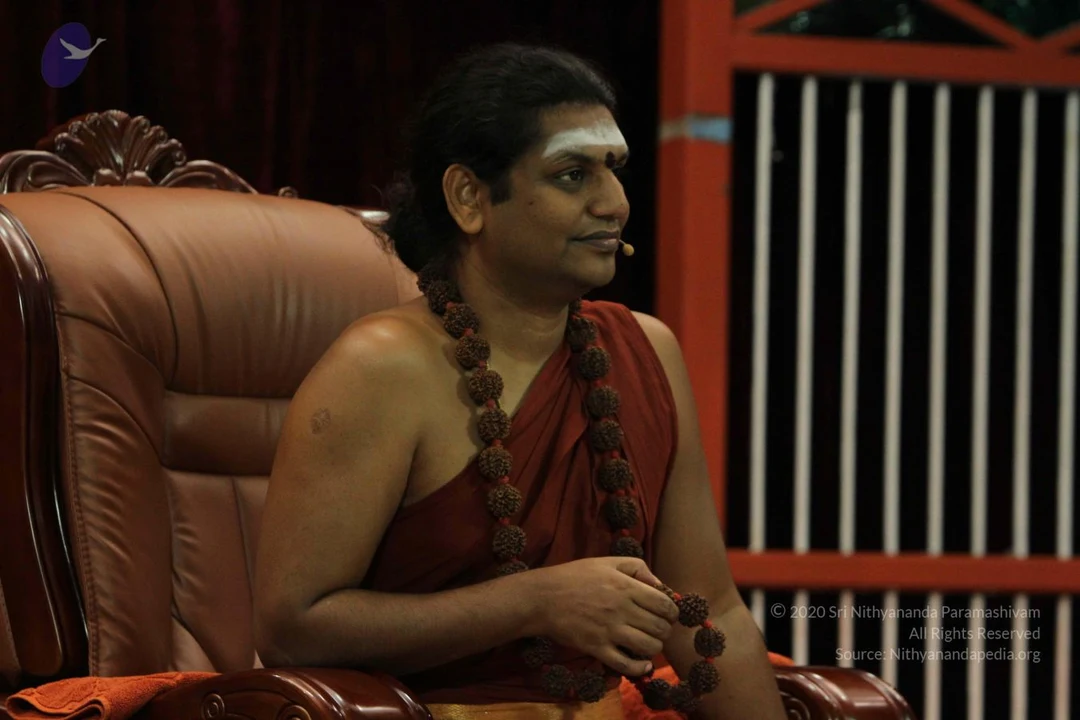
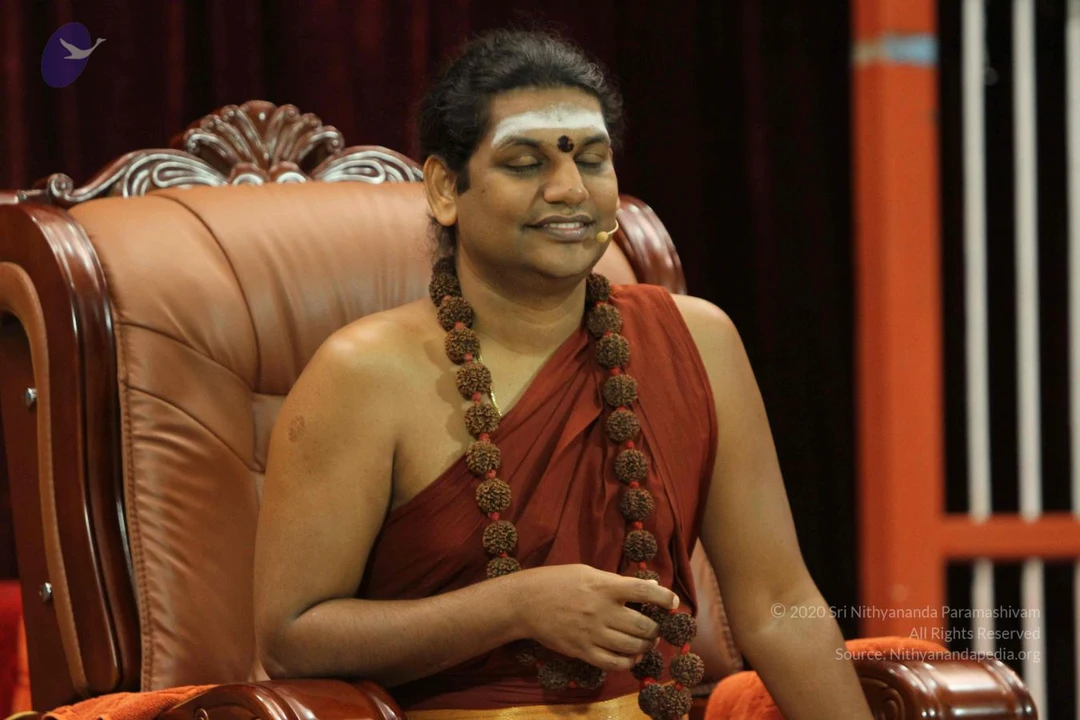
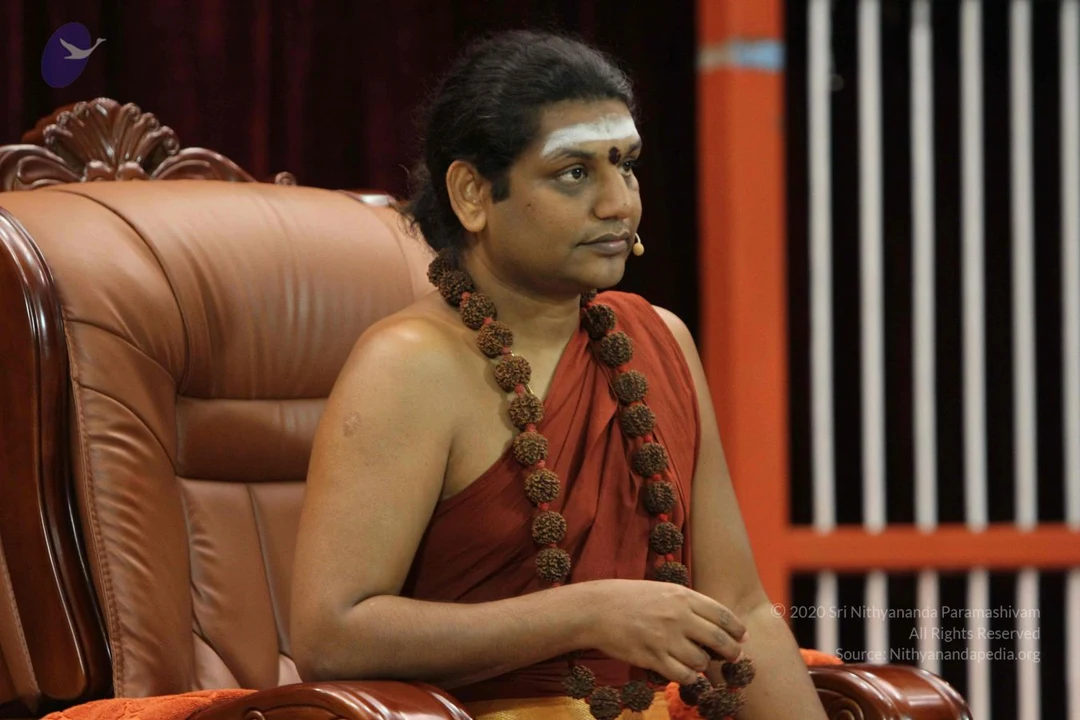
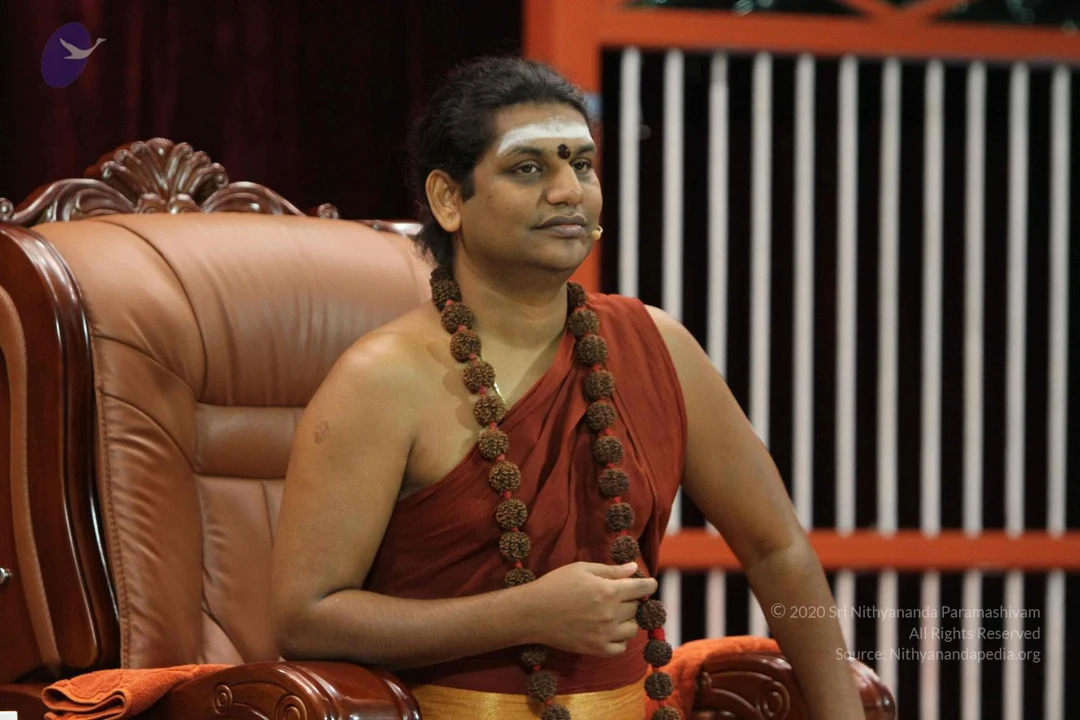
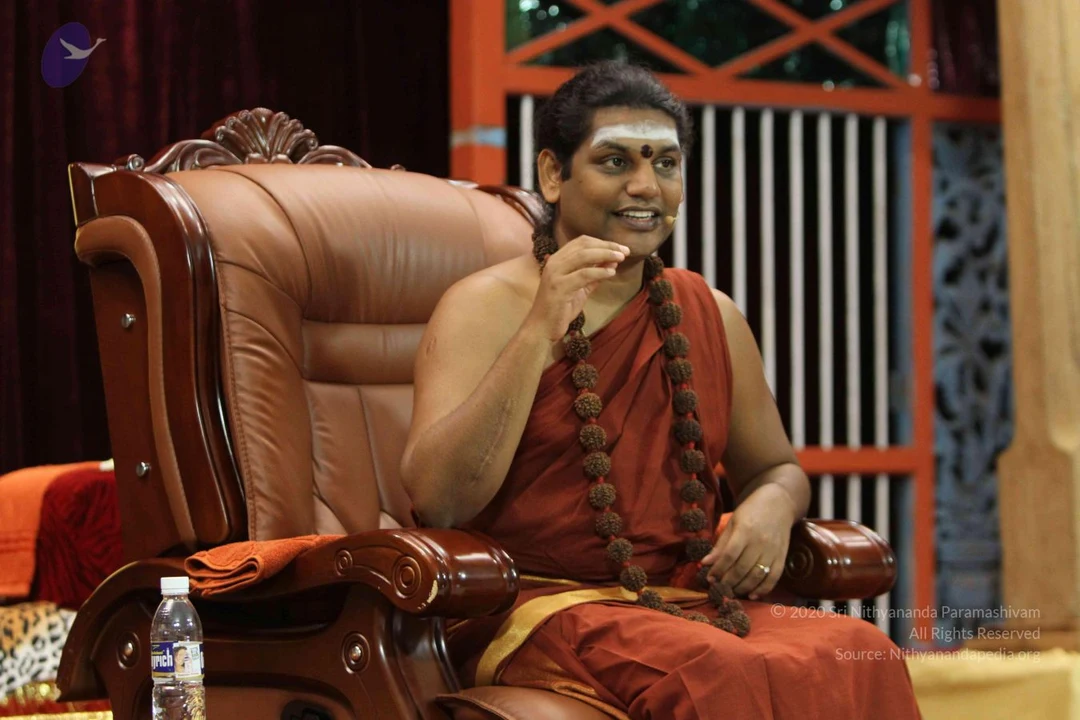
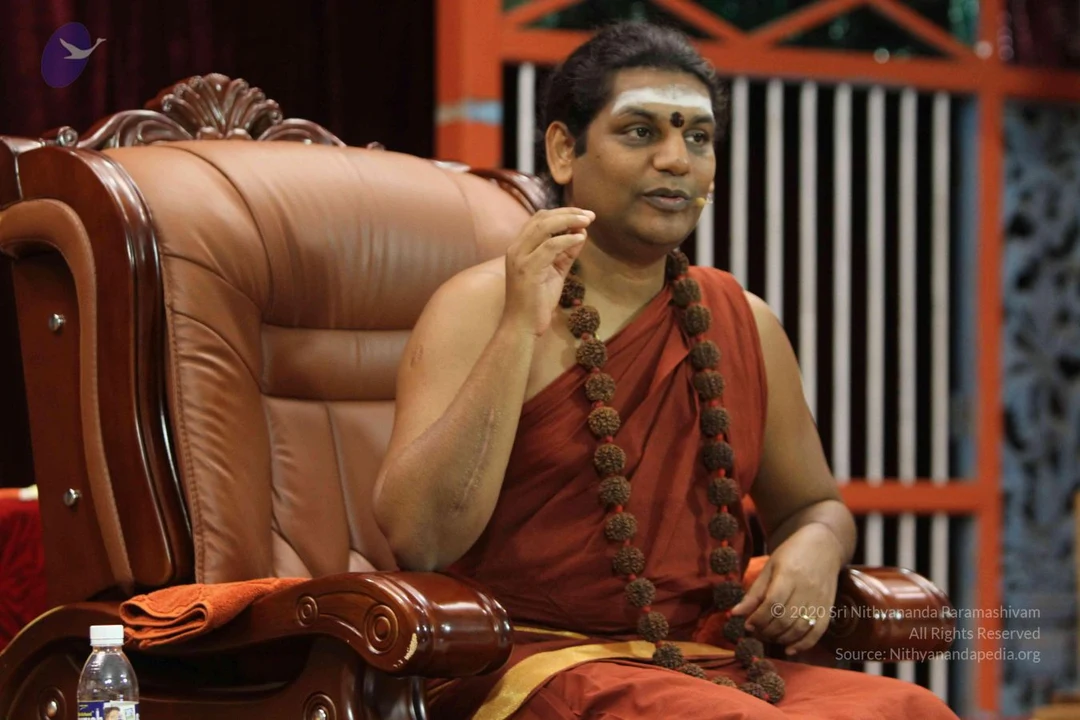
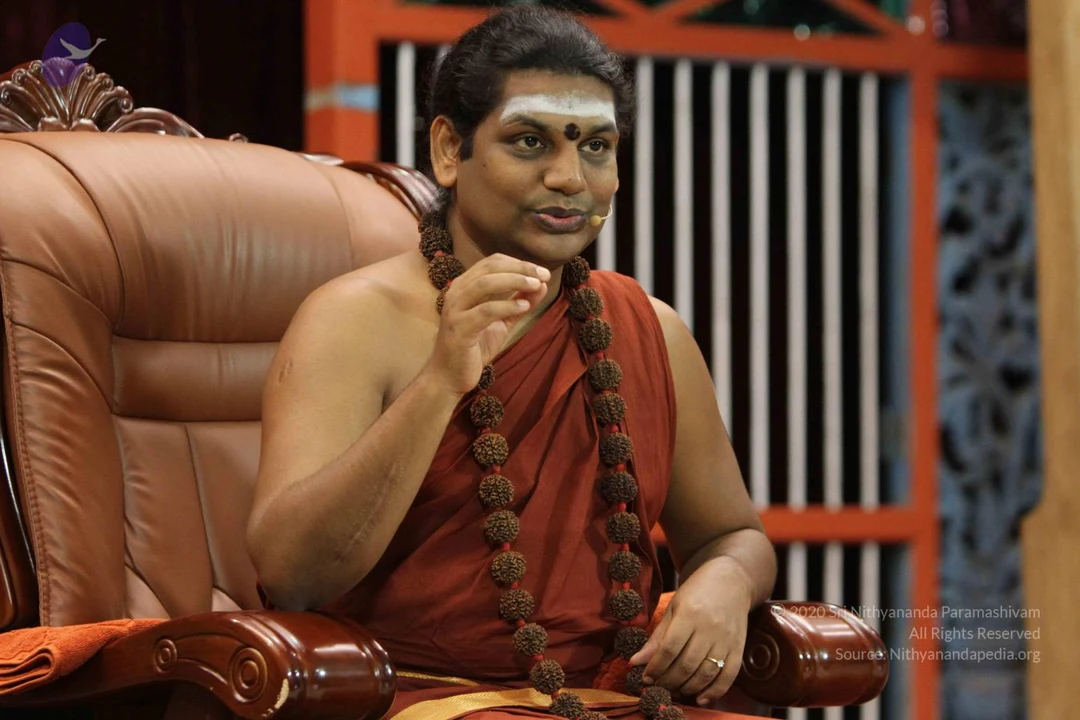
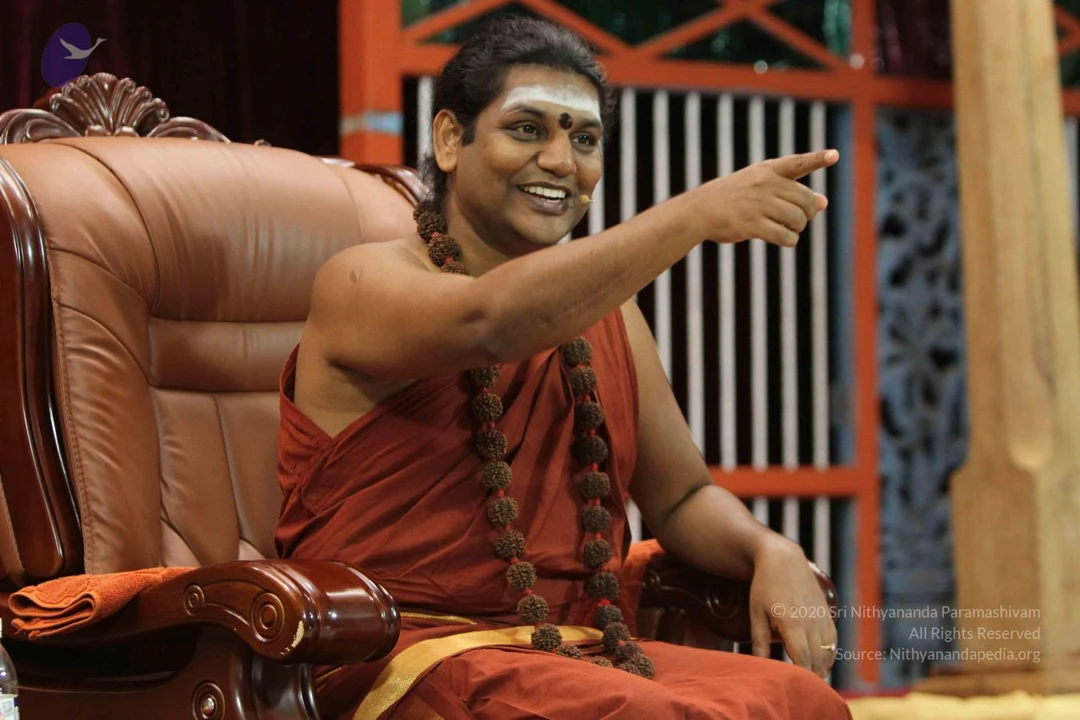
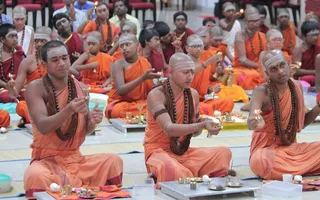
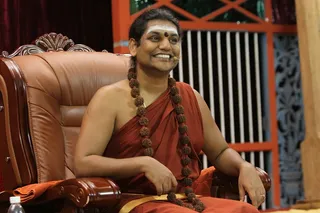
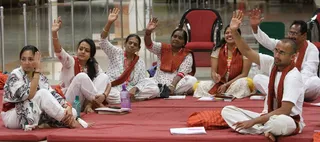
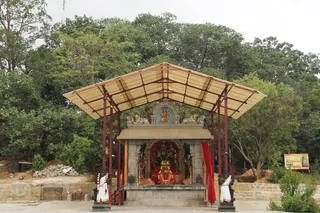
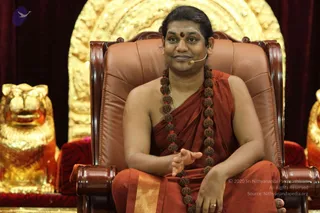
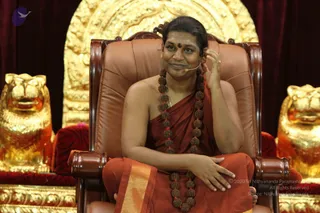
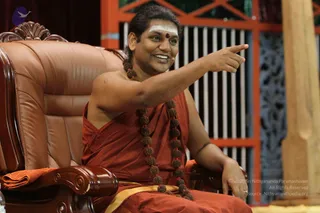
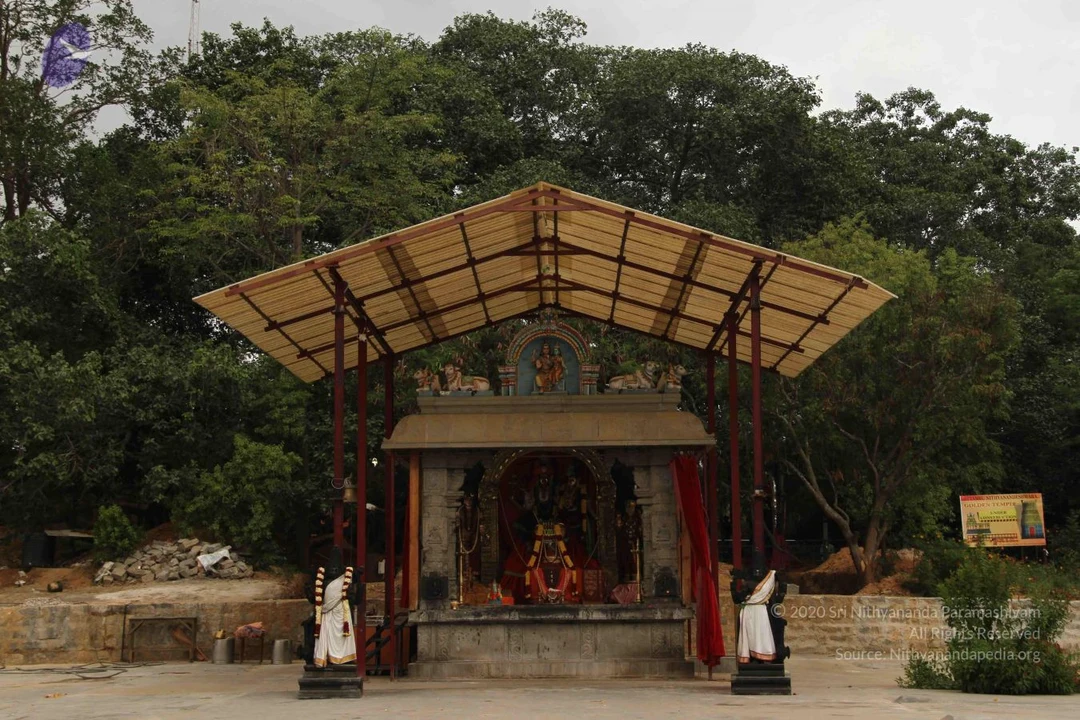
A photograph of a ritual gathering in a hall with pale floor mats. Several seated men in saffron-orange robes with rudraksha malas and white-marked foreheads hold small oil lamps and offering dishes at brass trays; the foreground priests hold lamps aloft while a row of seated devotees behind them, some in orange and red, also hold lit lamps. Small brass plates, kumkum and white offerings sit on silver trays. The scene reads as a pada puja with aarti and lamp offerings. a person is not clearly identifiable among the visible participants.A four-panel collage of puja setups on brass and silver trays. The top-left panel shows a figurine of a seated figure in saffron-orange robes on a green cushioned seat with a red cloth, beside a brass trishul, incense stick, marigolds and a brass bell. The bottom-left panel shows a framed portrait labelled "Paramahamsa Nithyananda" with a strand of rudraksha beads and rose petals over a brass plate. The bottom-right panel shows white conch shells, brass bowls, rose petals and a dark cloth on a purple background. The top-right panel shows a brass plate with a rudraksha mala, flowers and a red cloth. No physical people are visible.A group of young women in saffron and maroon sarees sit cross-legged on a cloth-covered stage, singing into microphones on stands during a kirtan performance. They wear rudraksha mala necklaces and have white markings on their foreheads. Small handheld cymbal-like instruments rest on wooden stands in front of them. Behind them stands an ornate golden wooden panel with lattice cross patterns and carved figures.A man seated in a large brown leather armchair with carved wooden armrests, smiling and looking to the side. He wears a rust-red sannyasi cloth draped over his shoulder and bare chest, with a long rudraksha mala of dark beads hanging across his body. He has white vibhuti stripes and a red bindi on his forehead, and a small headset microphone is attached near his face. A dark red curtain and a red-and-white wooden lattice screen stand behind him, and a plastic water bottle sits beside the chair. a person is seated in the centre, identified by the rudraksha mala, saffron-red robe and forehead markings, presiding over the setting as its seated speaker.A group of seven seated participants on red mats in a hall, raising their hands together as if answering a question or joining a group activity. Most wear white kurta-style or salwar clothing with orange or saffron shawls draped over their shoulders, and some wear red beaded necklaces. Several hold small notebooks or water bottles, and a red chair stands in the background near a pale marble floor. The man on the right front wears a white shirt and orange shawl, with a shaved head and glasses.Outdoor view of a small stone shrine beneath a large corrugated metal roof on red steel posts, set among dense banyan and other trees. Inside the shrine, a deity murti with a dark face and multiple arms stands in a gilded frame, flanked by two dark stone figures. Two standing statues in white dhoti-style clothing flank the shrine entrance, and a red cloth hangs at the right side. A paved courtyard, a low stone wall and a small signboard appear at the edges. No physical people are visible.

Bidadi-Temple

15 photosSource gallery
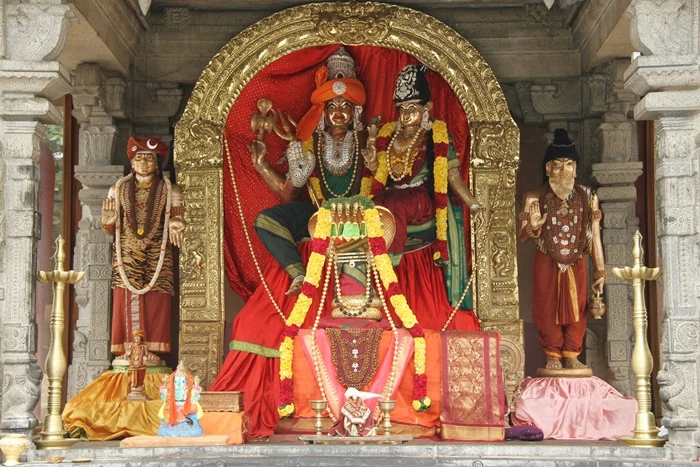
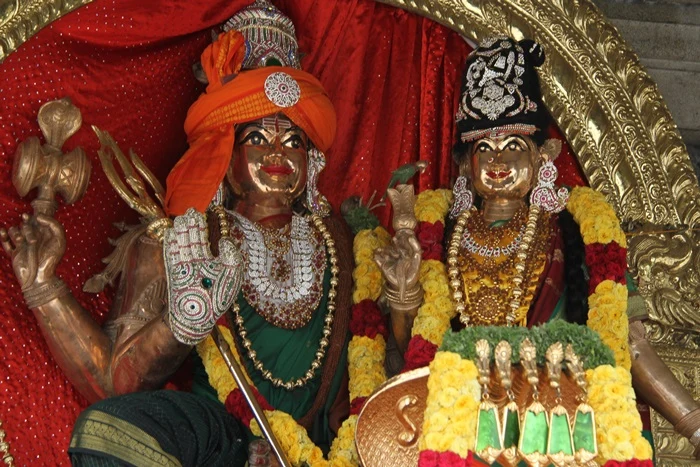
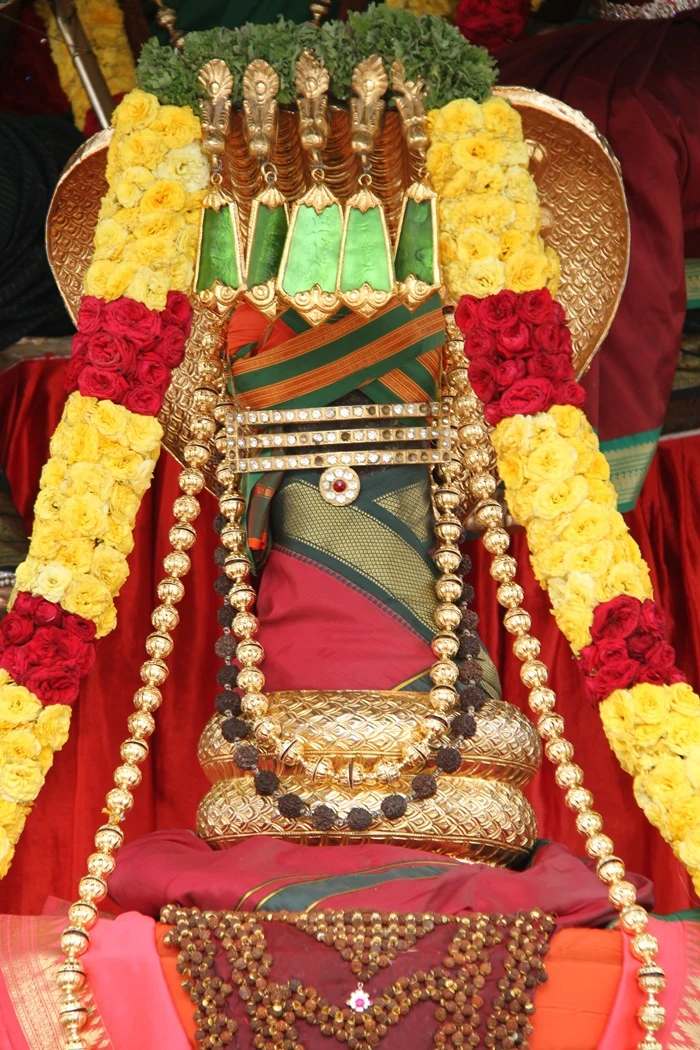
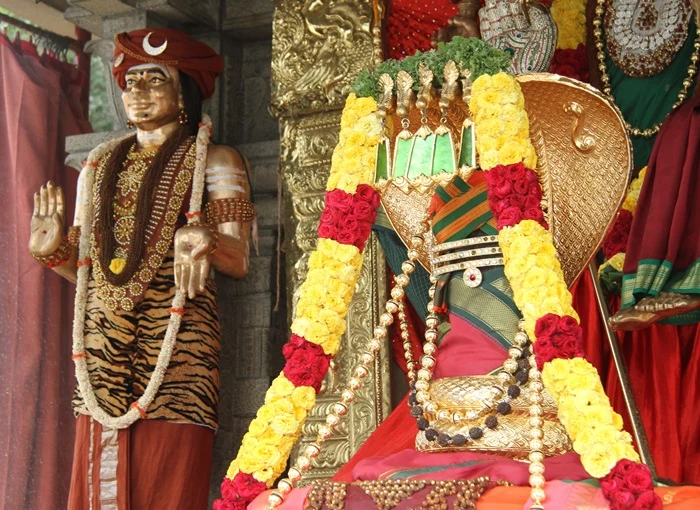
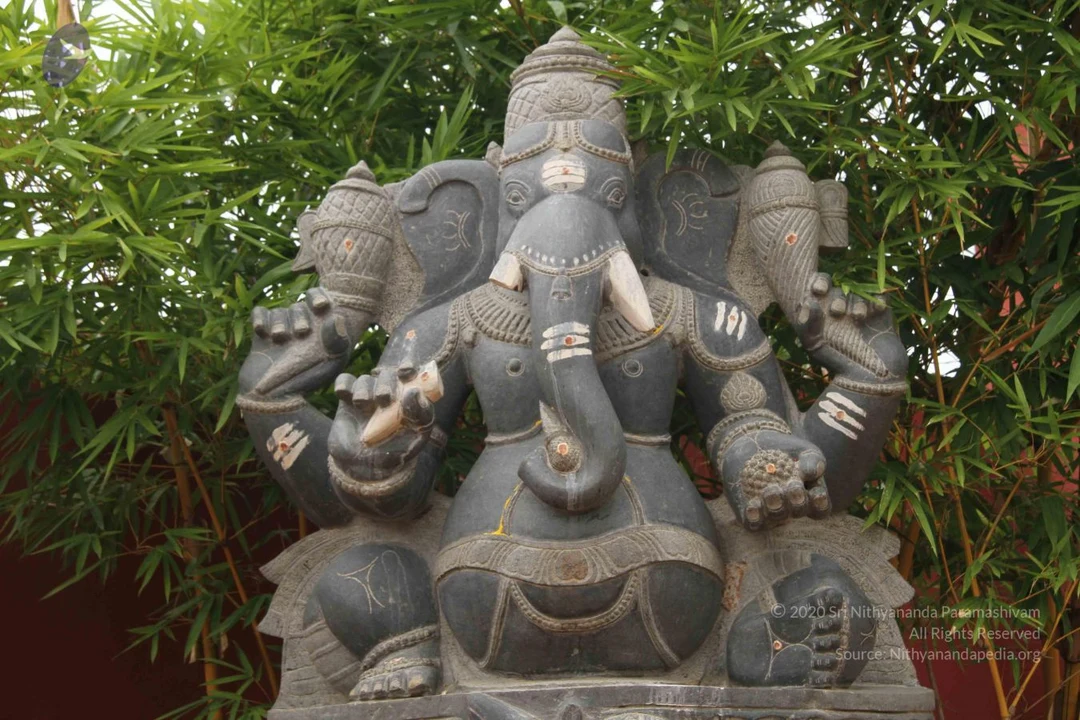
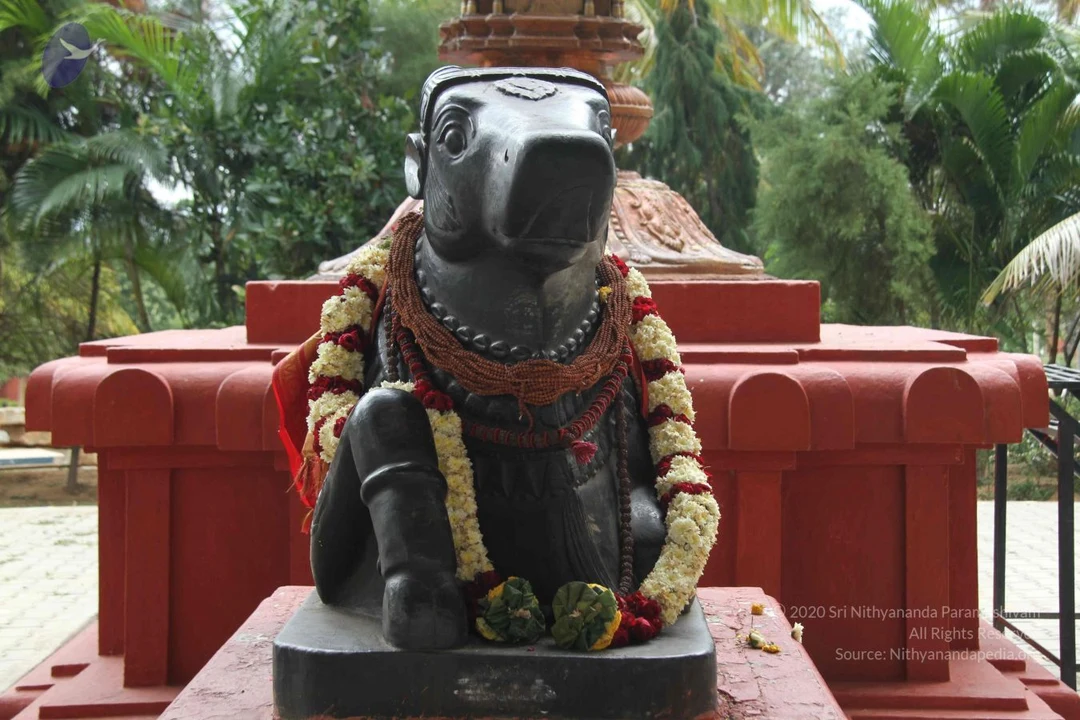
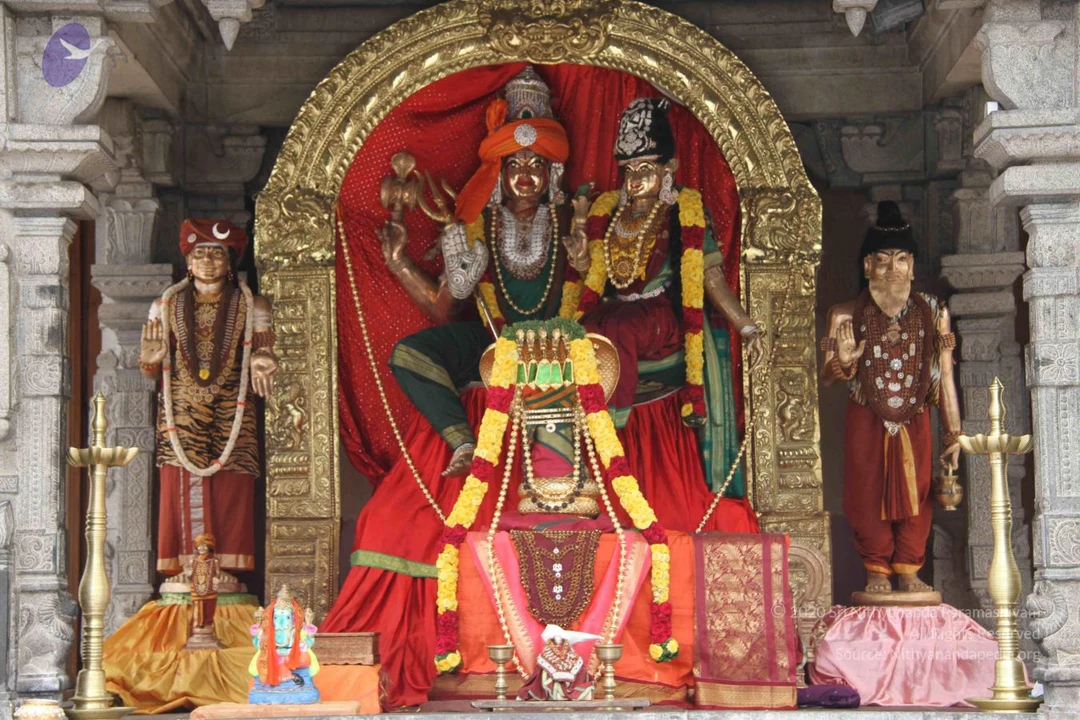
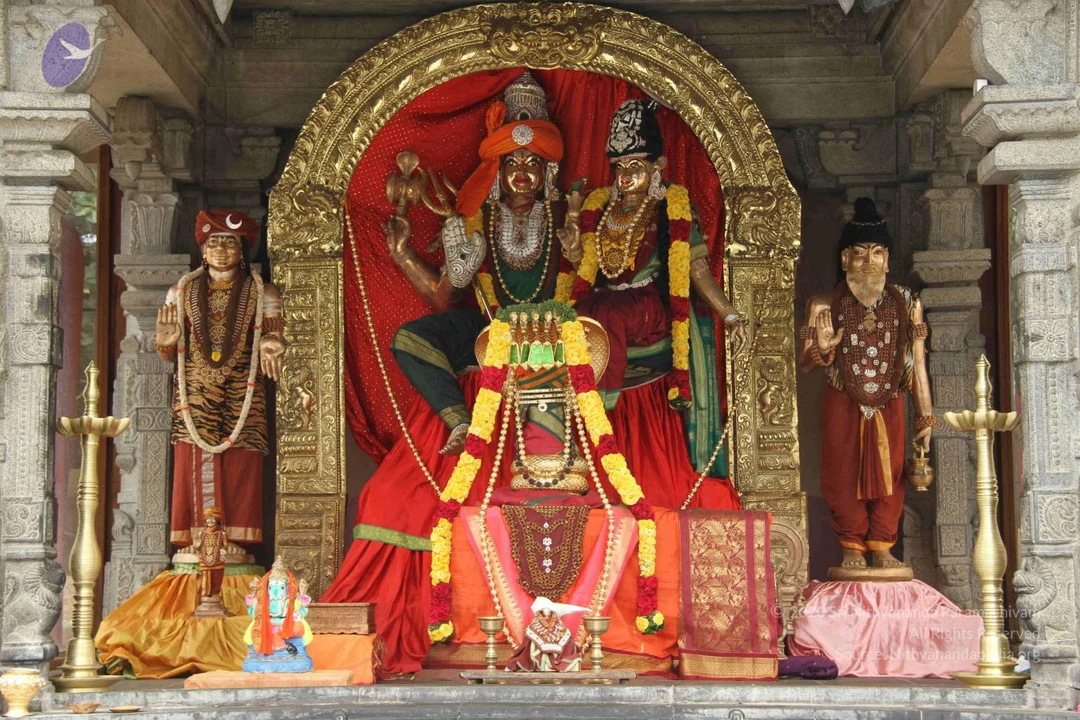
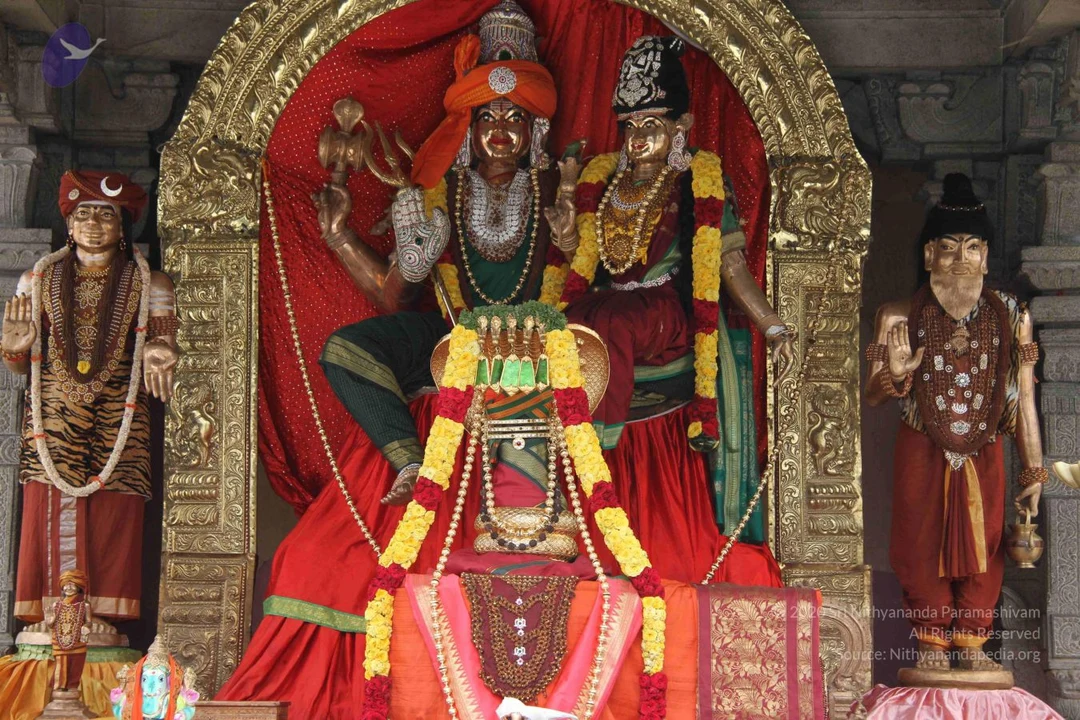
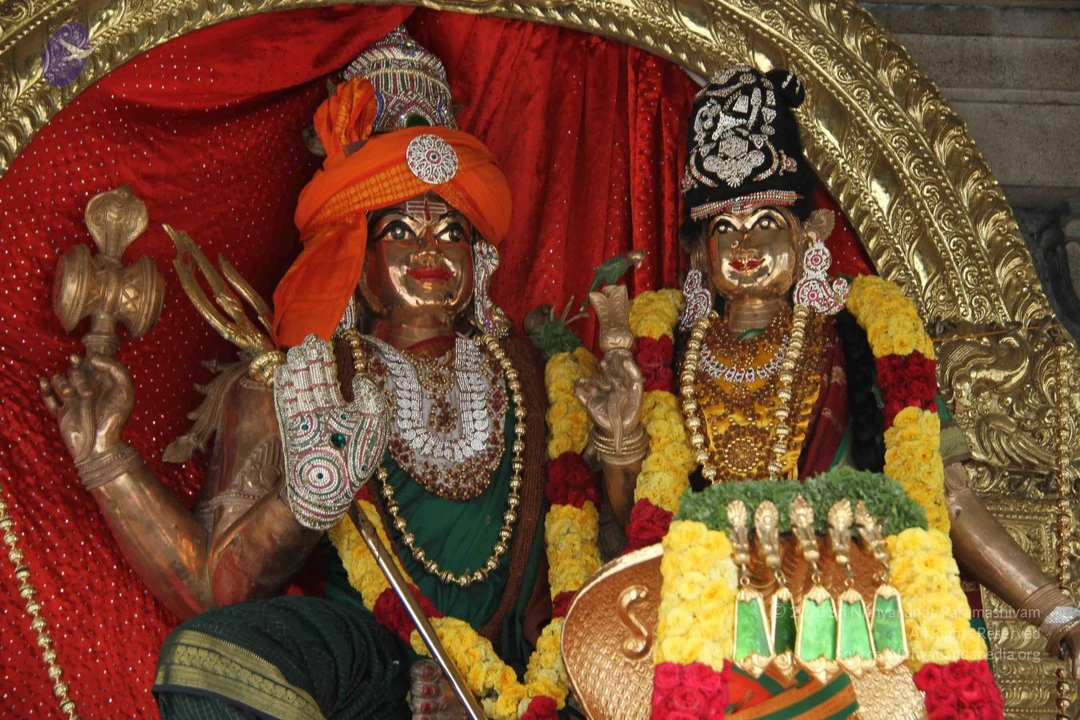
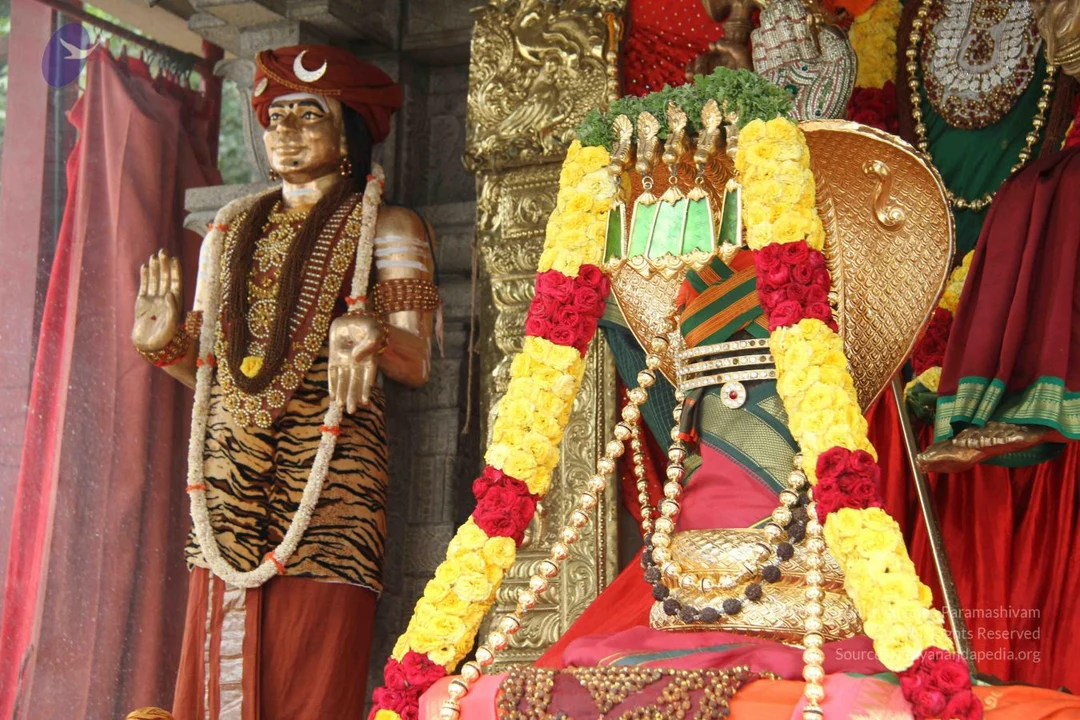
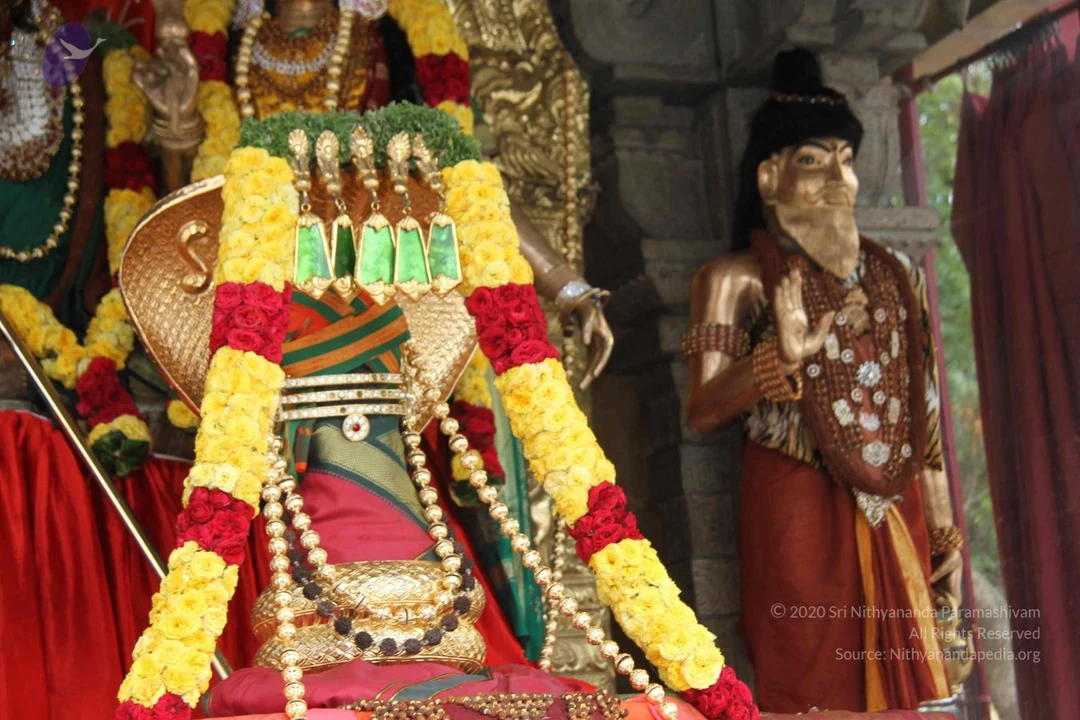
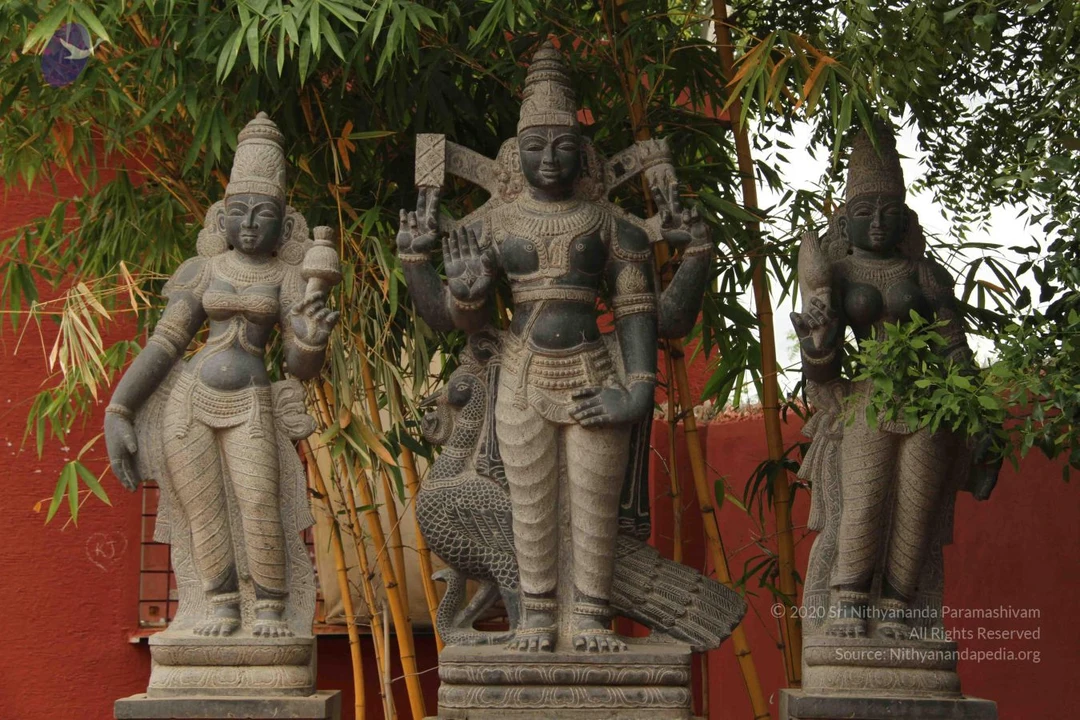
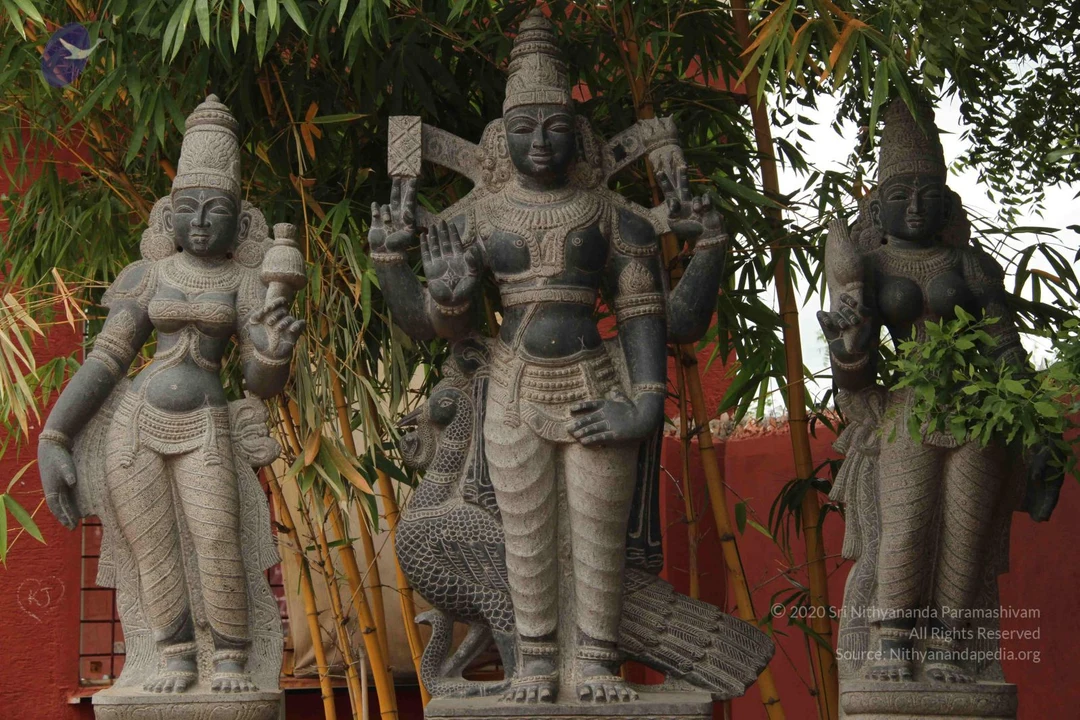
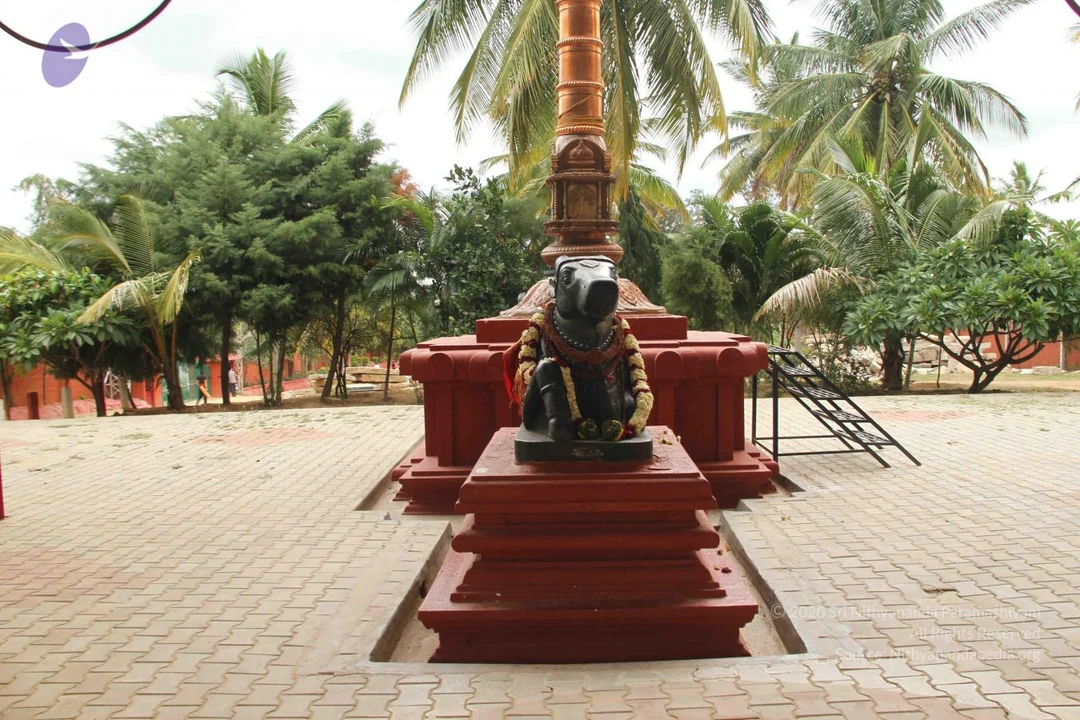
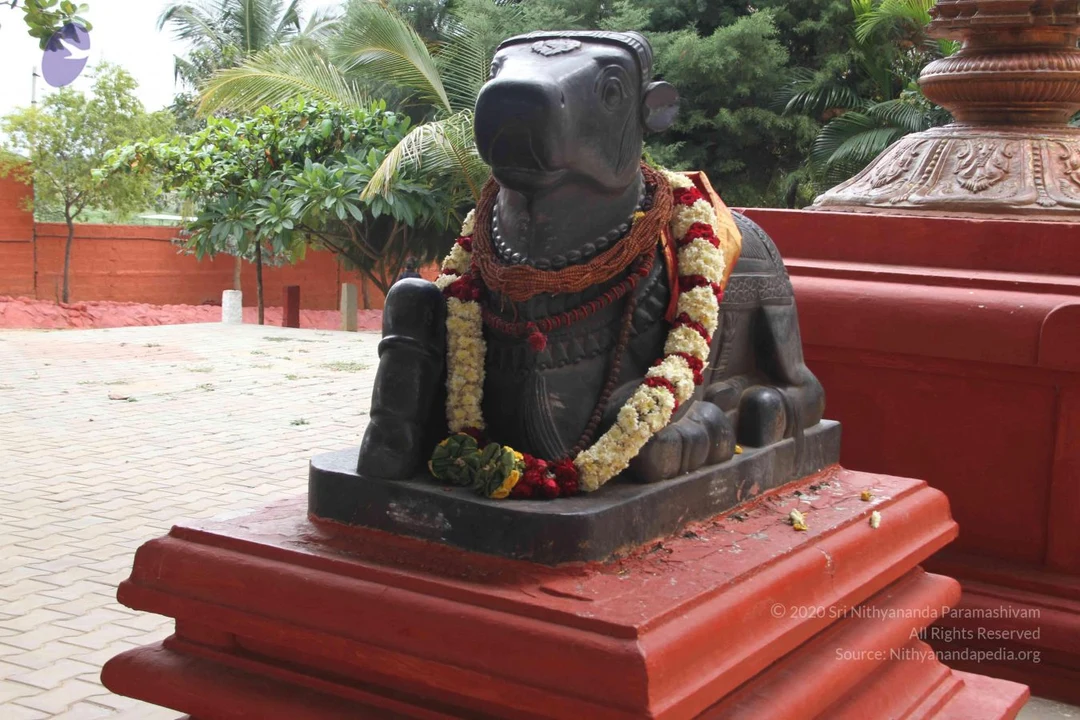
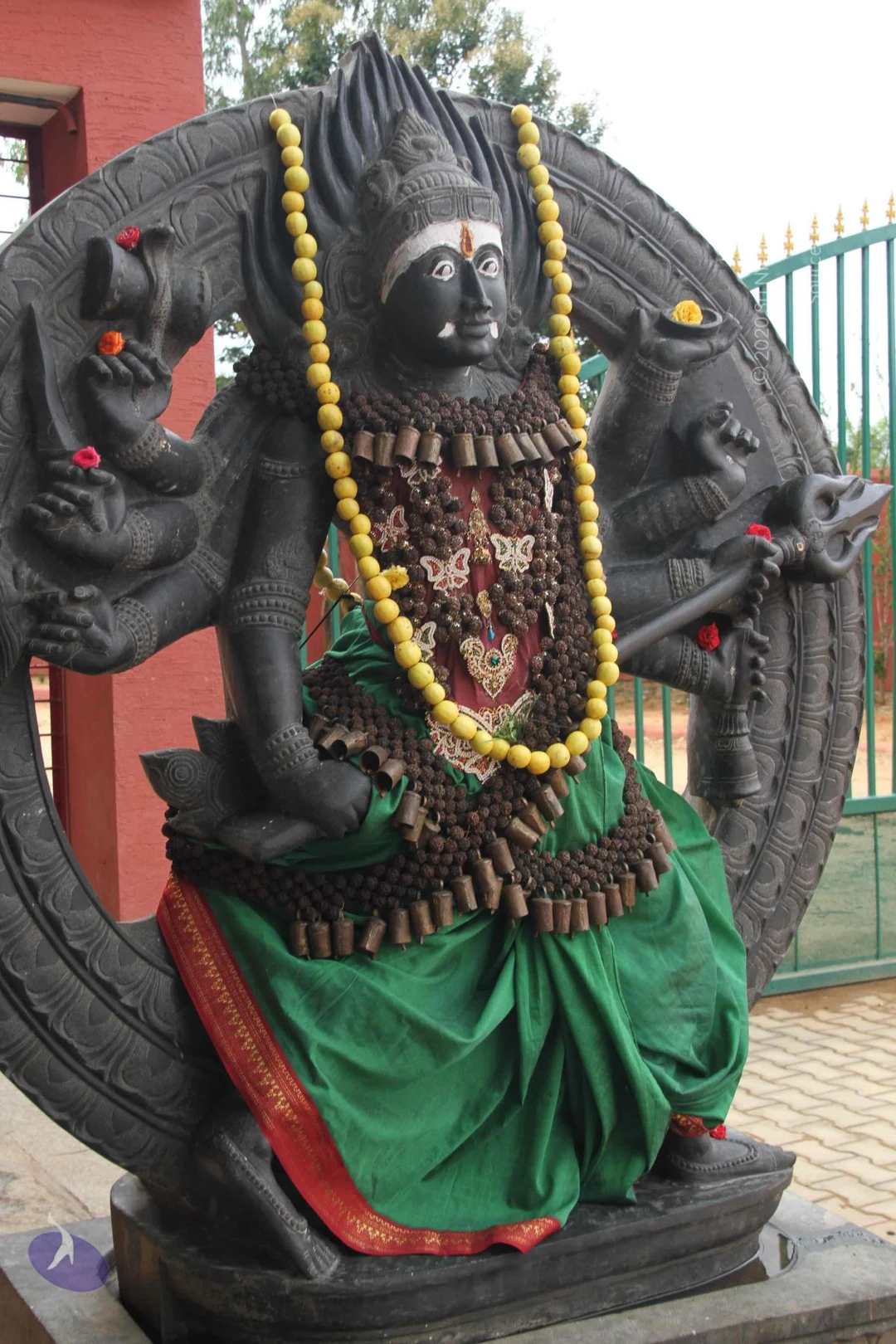
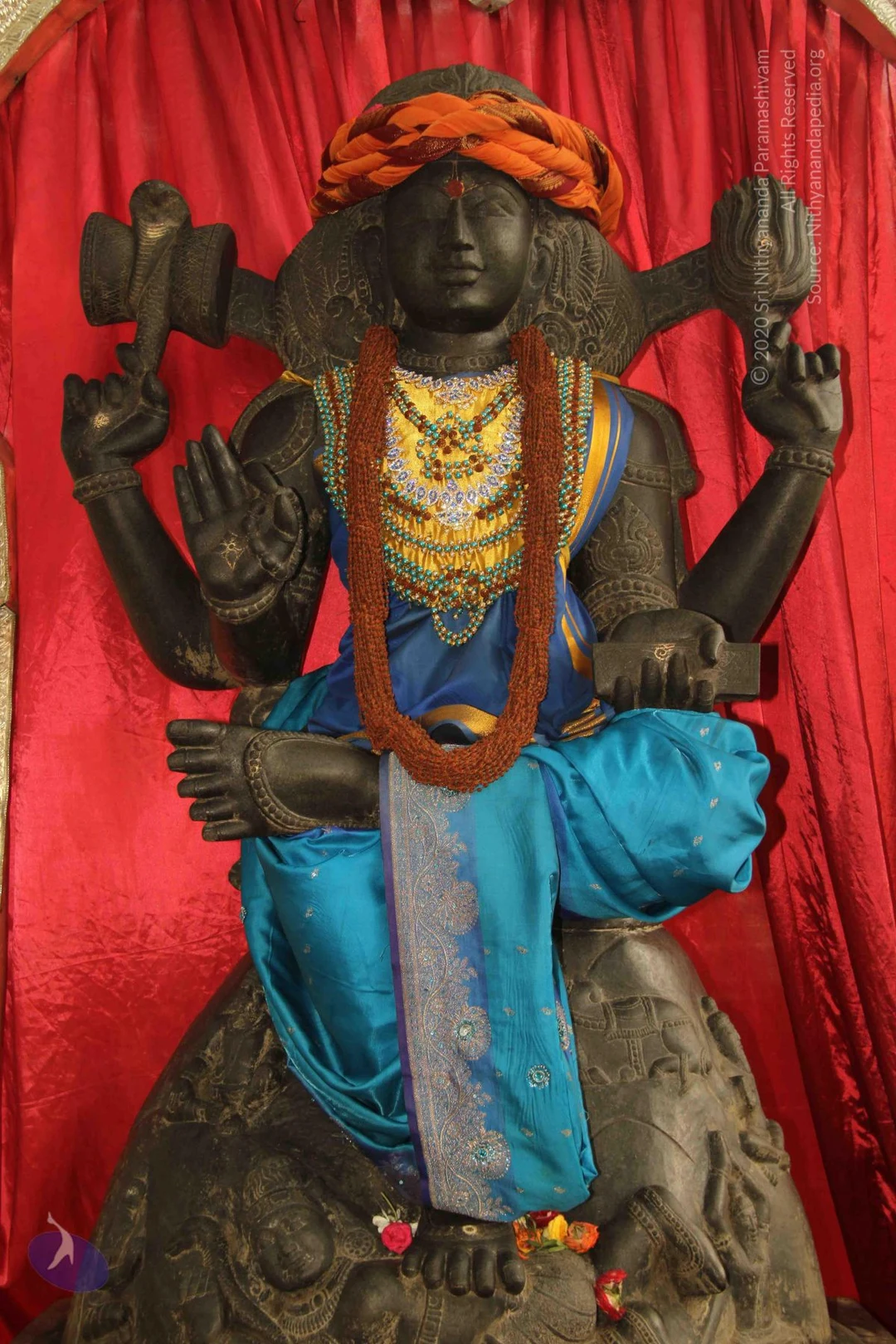
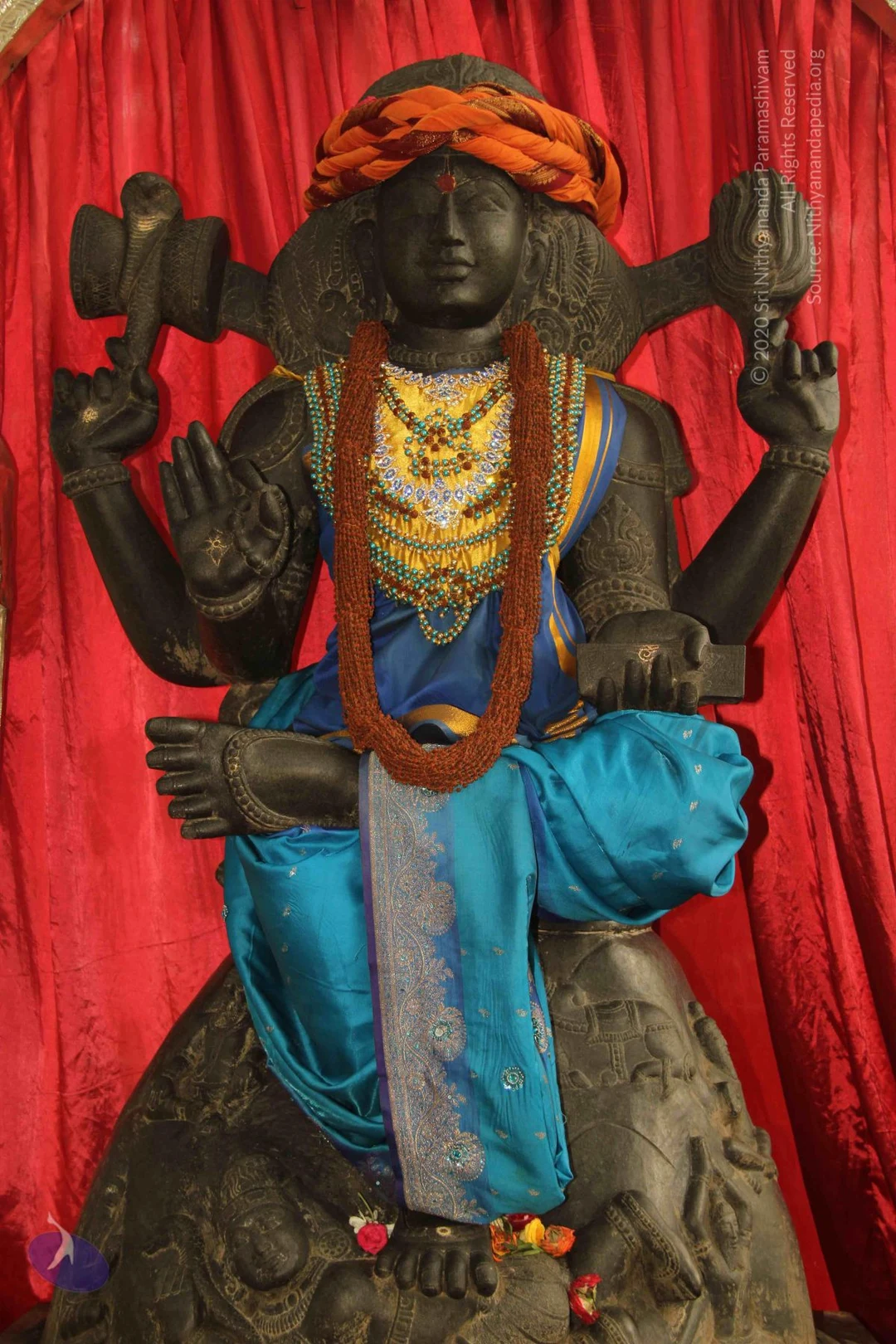
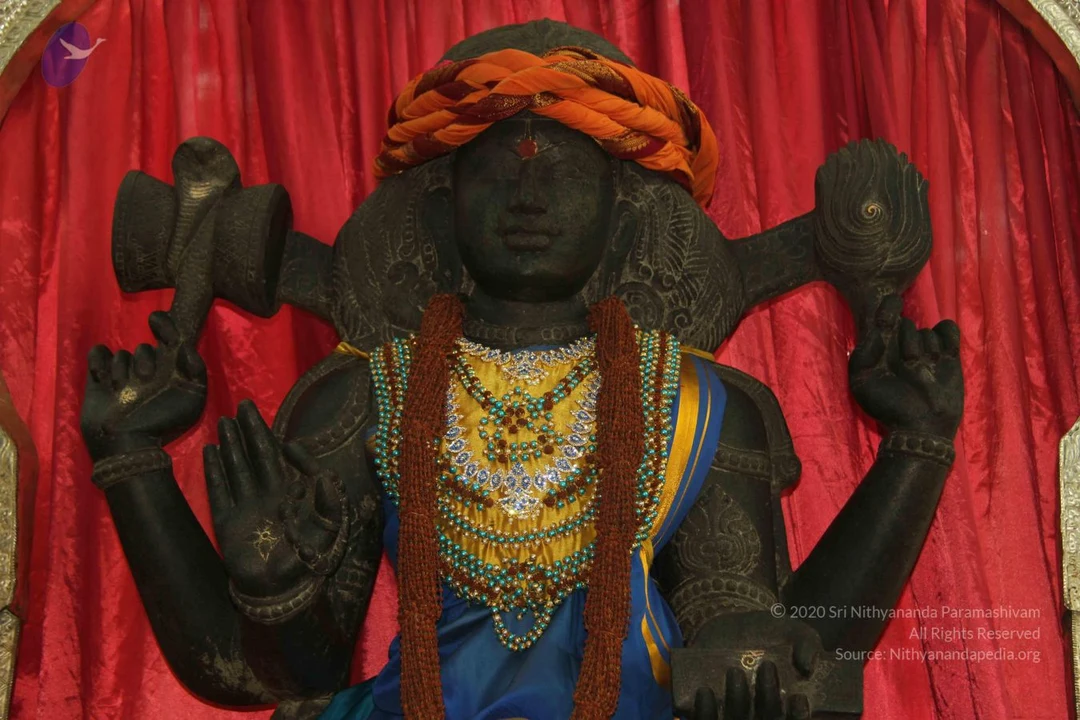
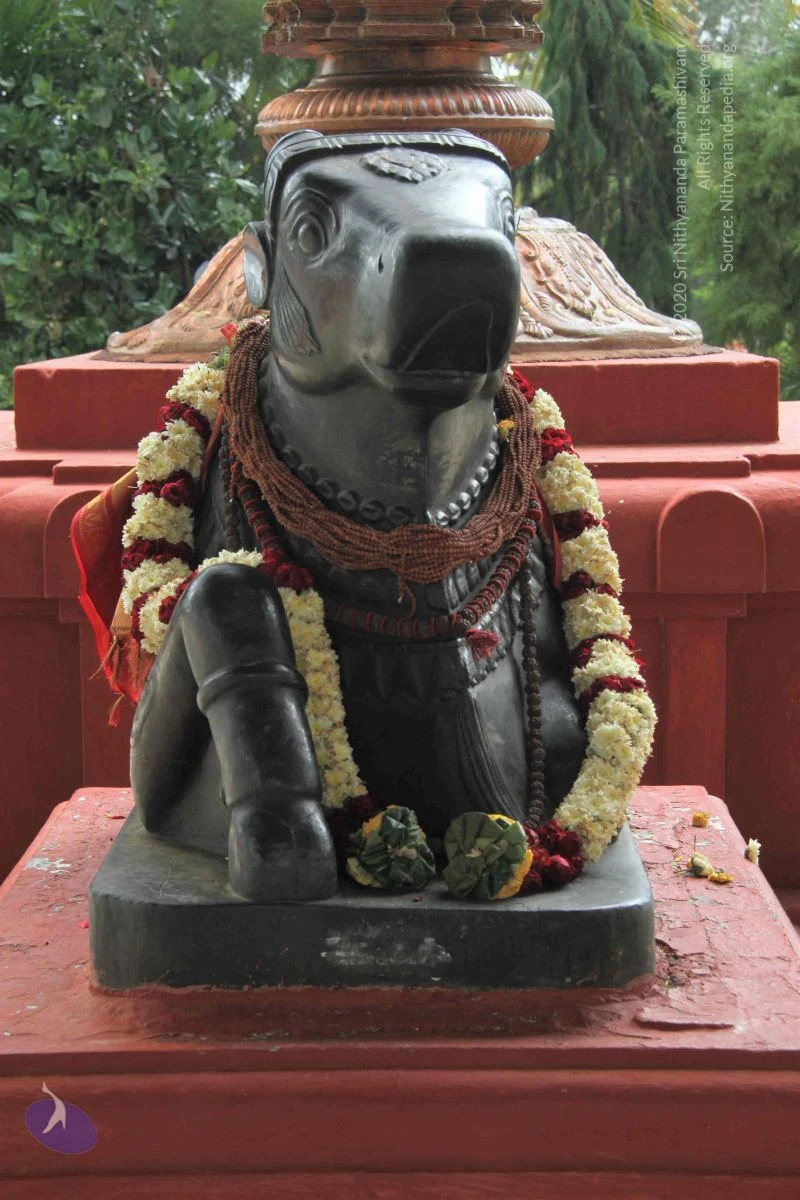
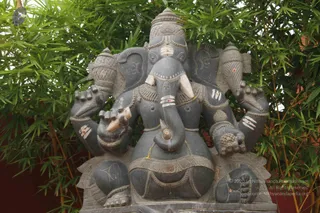
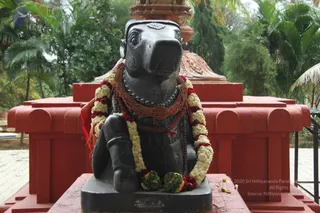
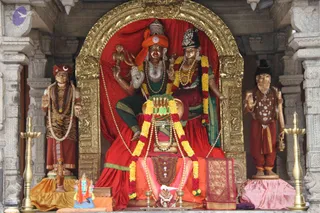
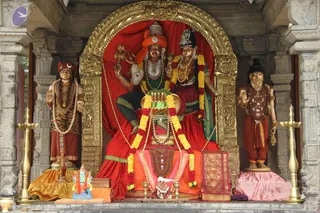
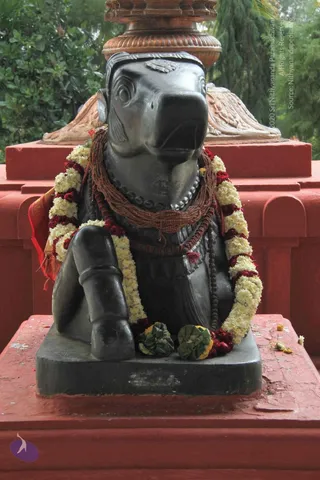
A large dark stone statue of a multi-armed deity murti stands in front of a red-walled building and a green metal gate. The murti has a black face with white eyes and a tall crown, wears a yellow garland and rudraksha beads with bell-like pendants, and is draped in a green cloth with a red border. It holds a trident and other implements, and red flowers rest near its hands. Behind it is a circular black stone halo, a saffron-and-yellow flag flies on the right, and a framed picture hangs in the left window.A black stone statue of a multi-armed deity murti stands in front of a red building beside a green metal gate, framed by a dark circular halo. The figure wears a green cloth, yellow beaded garland, rudraksha and tulsi-style bead necklaces, with a red kumkum mark on the forehead. Its hands hold a sword, a trident and a kalasha-like bowl, and a small saffron flag flies at the right. No people are visible in the scene.A dark grey stone statue of the elephant-headed deity Ganesha seated in front of green bamboo foliage. The murti has four arms, a crown-like headdress, a broad necklace and armlets, and white and red tilak markings on the forehead and trunk. One hand holds a broken tusk-like object and another holds a modaka sweet. The stone is weathered and the figure is shown frontally against a red wall.A black stone Nandi bull statue sits on a square pedestal in an outdoor temple courtyard. It wears a white vibhuti forehead mark, a rudraksha-bead and brown beaded necklace, and white and red flower garlands draped over its shoulders and body. Two green leaf offerings lie at its base, with scattered petals on the pedestal. Behind it stands a red stone shrine structure with a tiered tower, surrounded by palm and green foliage. No people are visible.A shrine niche with gold-framed arch and red drapery holds a seated deity murti with a raised hand holding a trident-like implement, wearing an orange turban, rudraksha-style beaded garlands and yellow marigold garlands. Flanking statues stand on either side: one on the left in orange and red with a rudraksha mala and tiger-striped cloth, and one on the right in red with a beaded necklace holding a small pot. Brass oil lamps stand at the corners, a kalasha-like offering with flowers sits before the figure, and the scene is decorated for pada-puja. No physical people are visible; all figures are statues.A shrine niche with a gilded arch framing a seated deity murti, with red draped cloth behind. Two figures in the centre sit on a red and pink base, one wearing an orange turban and holding a trident, the other with a tall dark crown and multiple garlands. Marigold and red flower garlands drape the murtis and a central linga-shaped form with a kalasha-like top sits before them. Standing statues flank the niche on both sides, one with a crescent-topped red turban and tiger-patterned clothing, the other in red dhoti with beaded necklaces. Brass oil lamps stand at either side, with a small blue deity figure with a red cloth at lower left. These are statues, not living people.

Pada-Puja
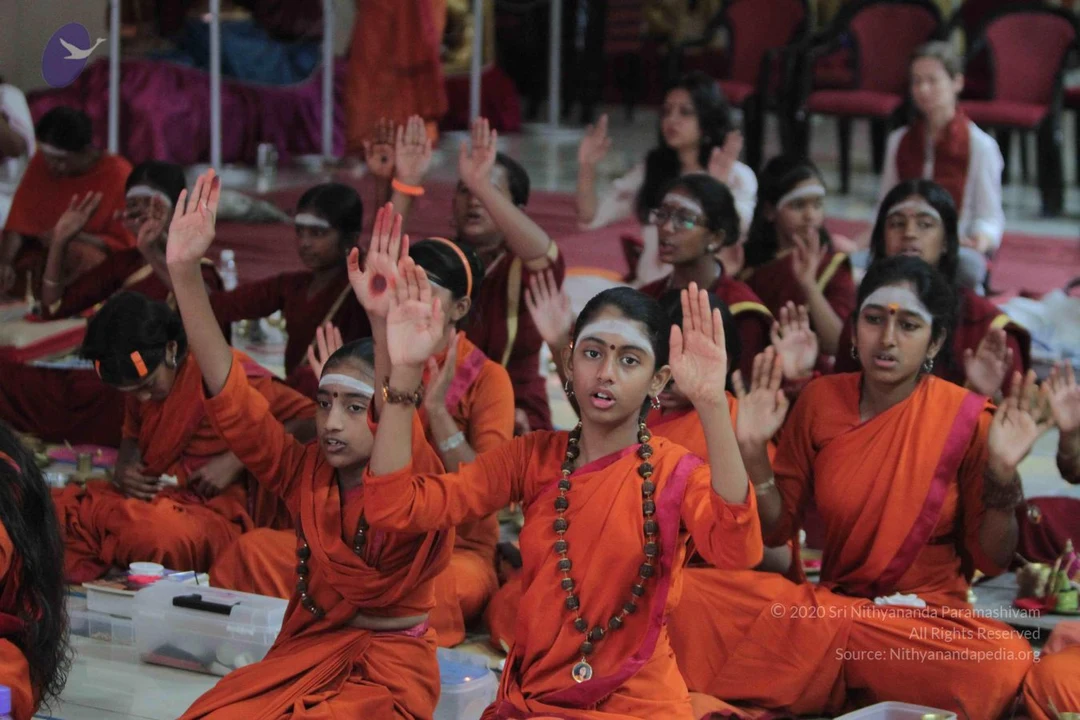
40 photosSource gallery
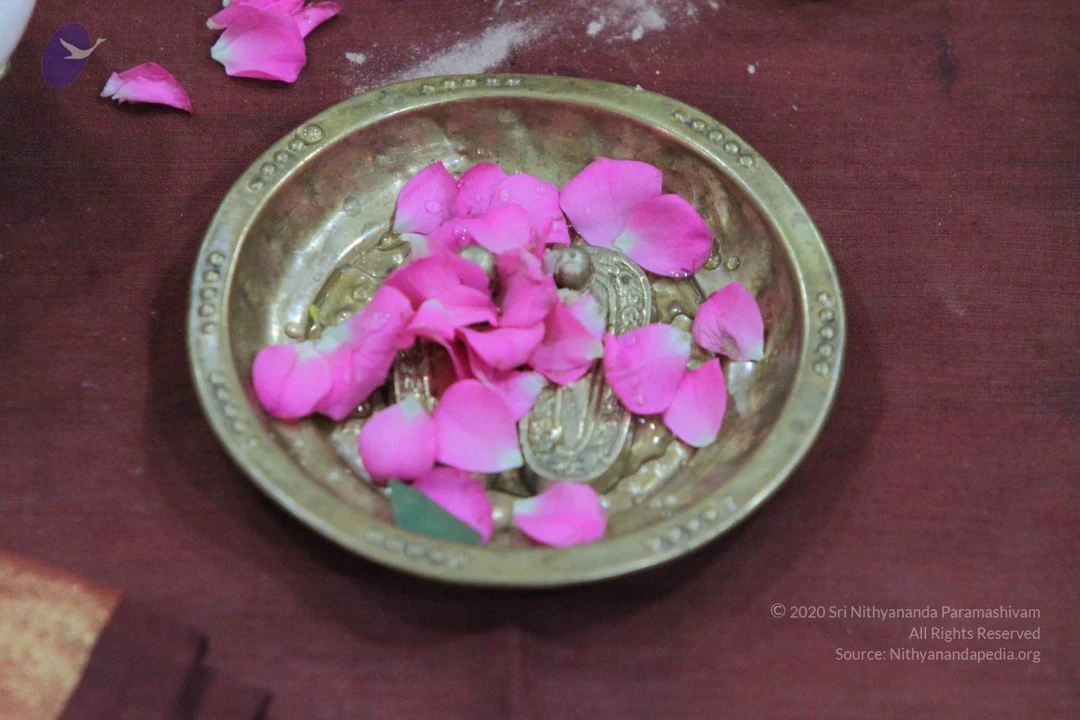
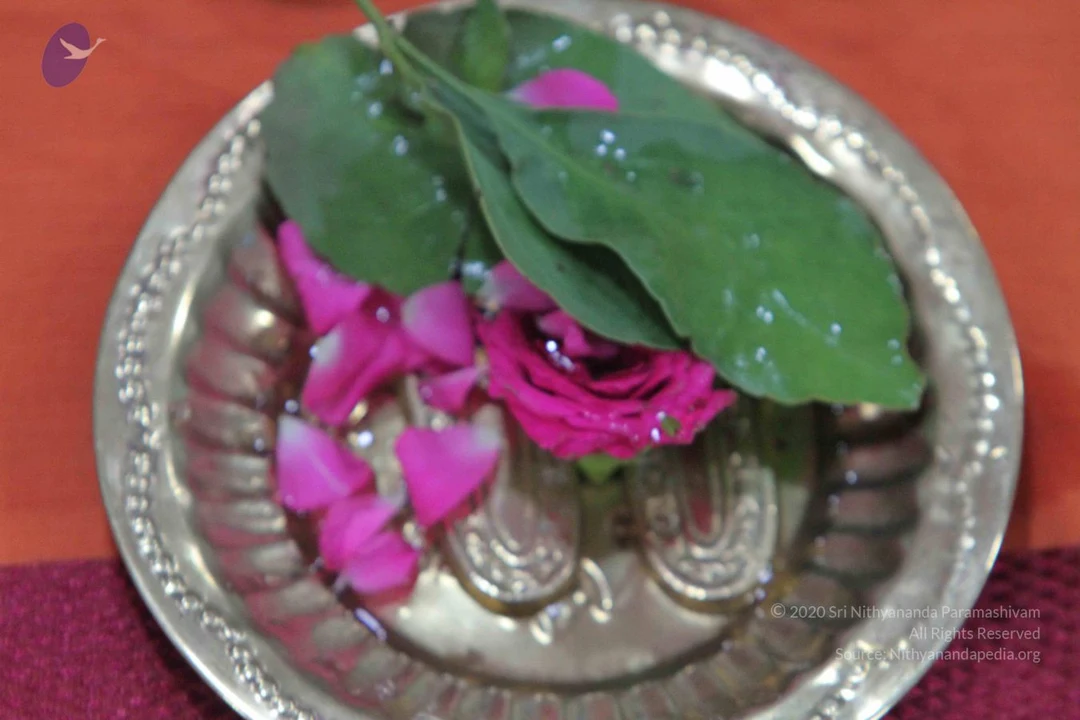
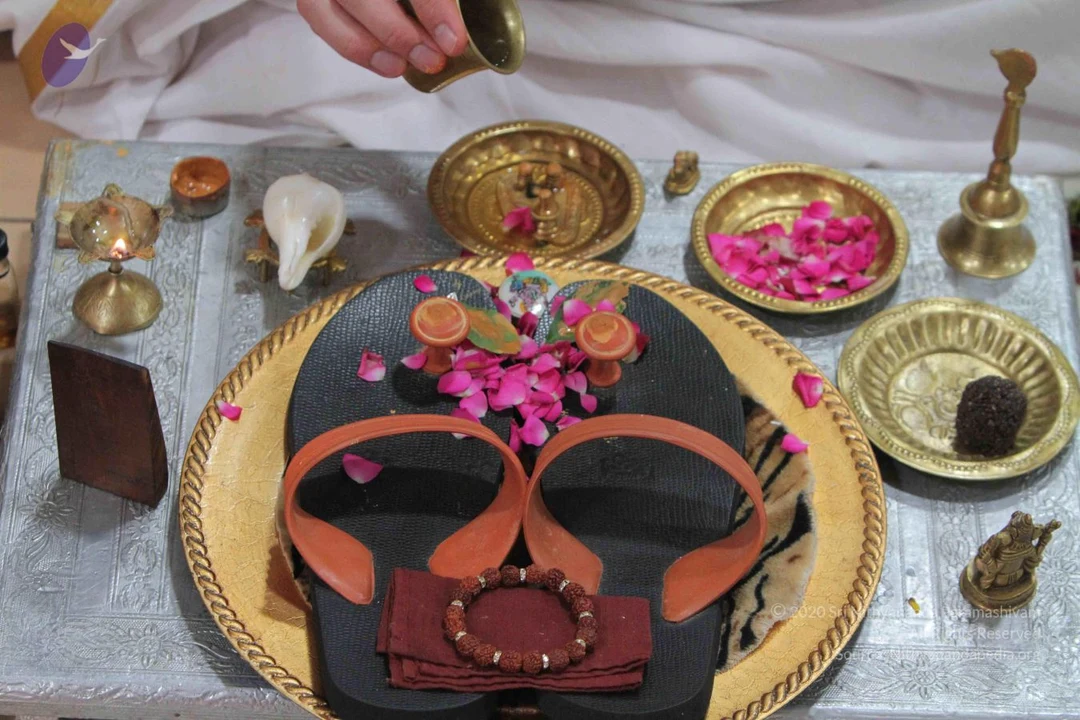
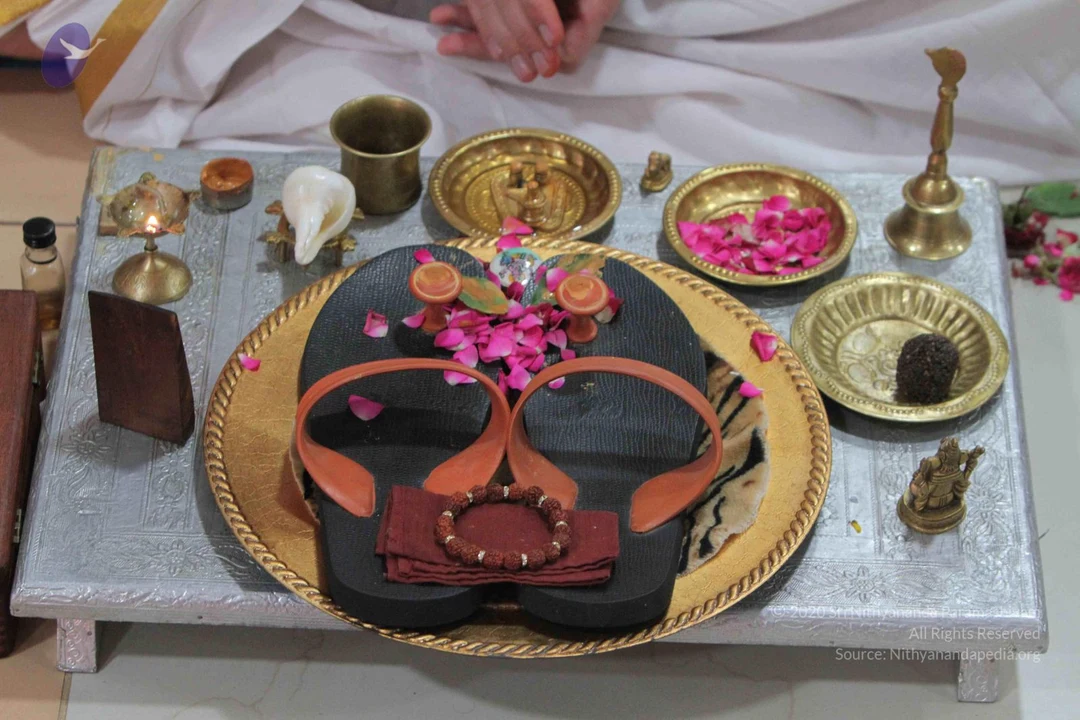
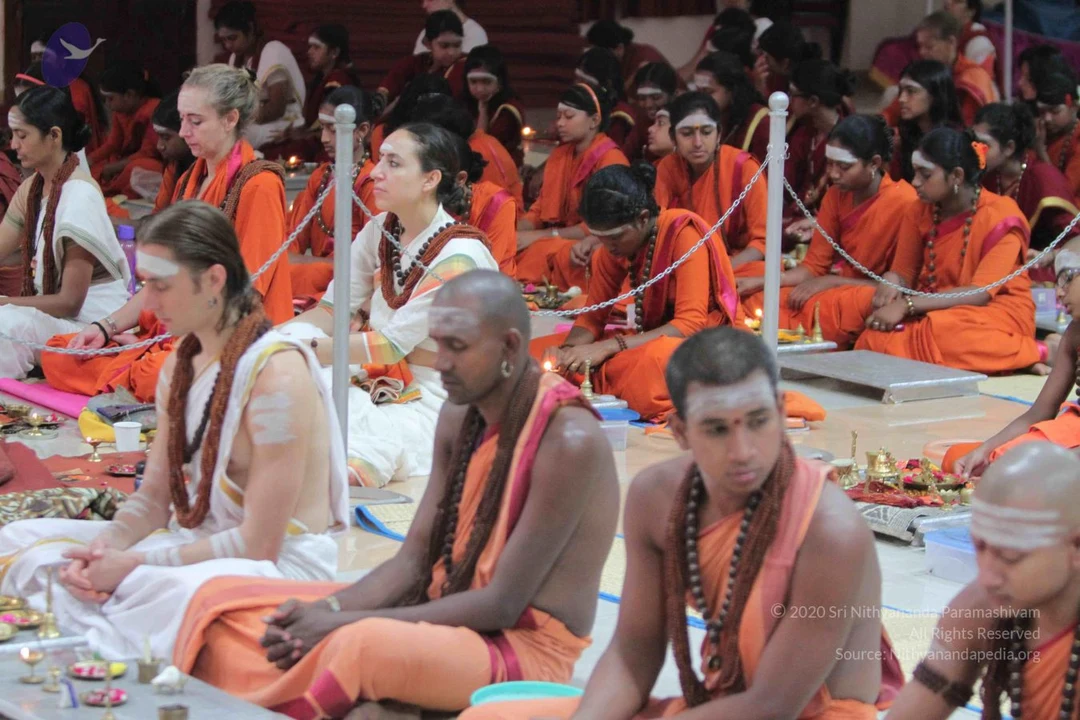
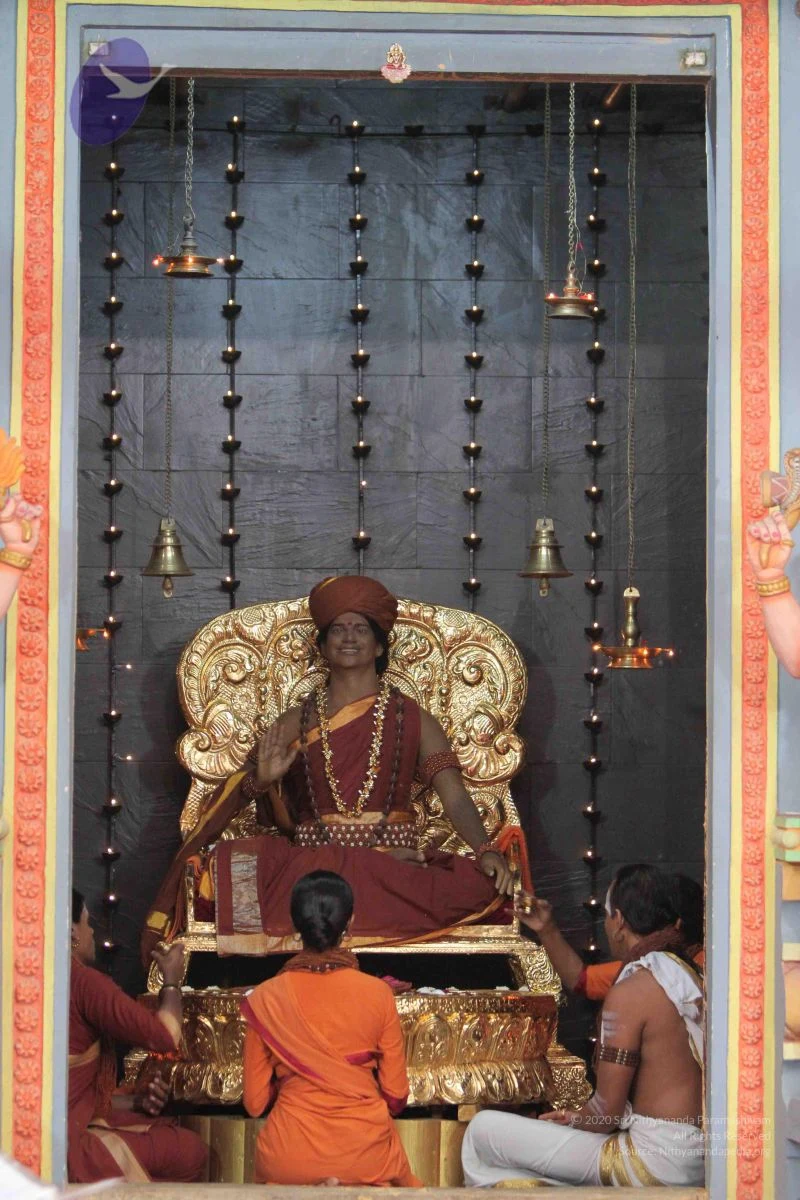
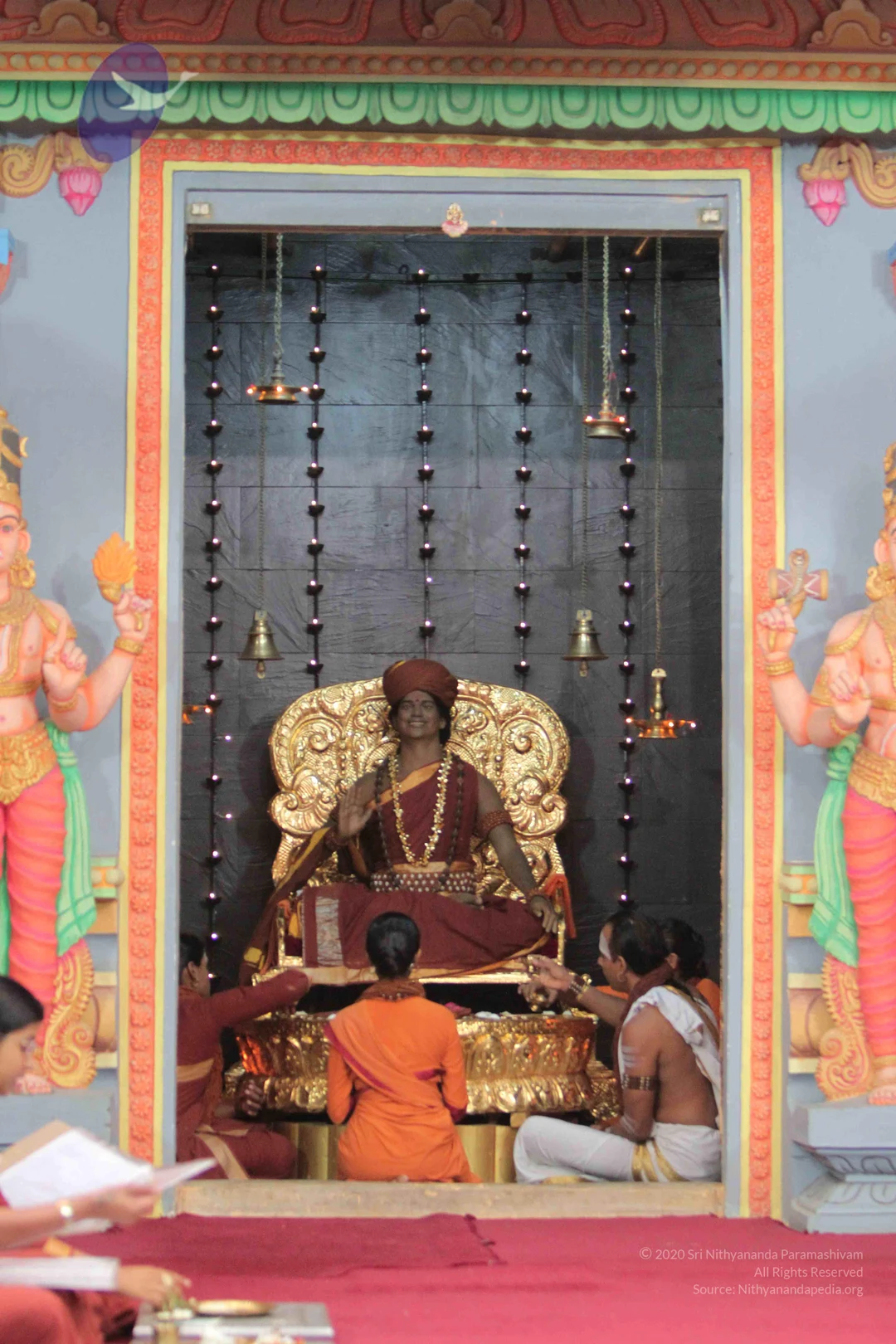
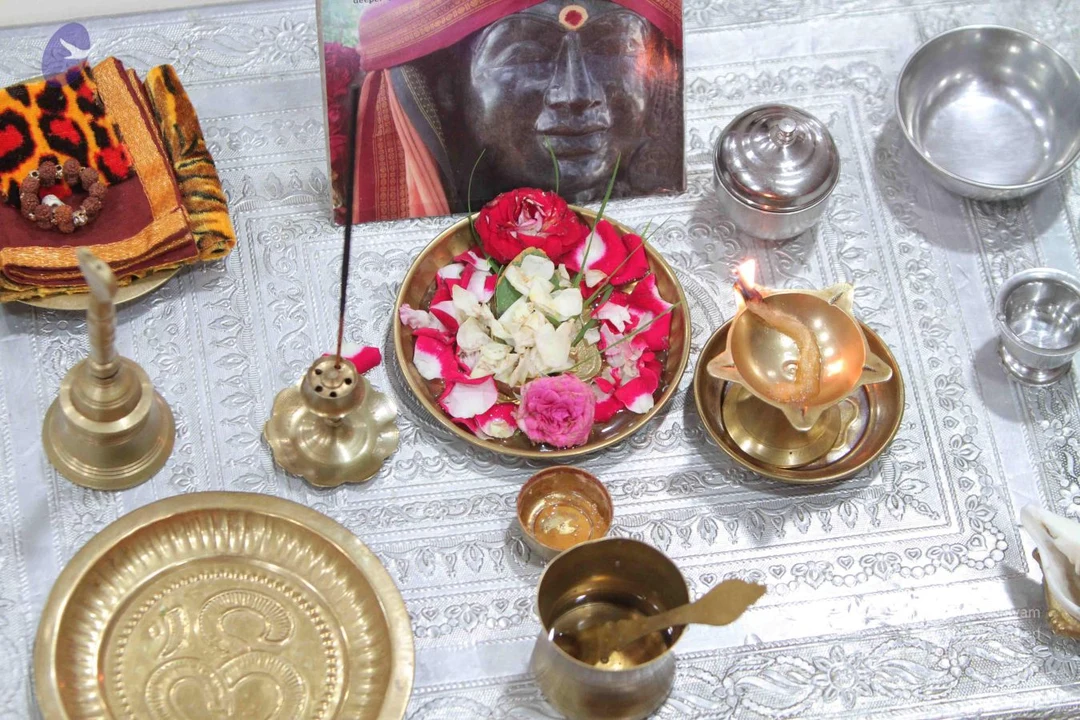
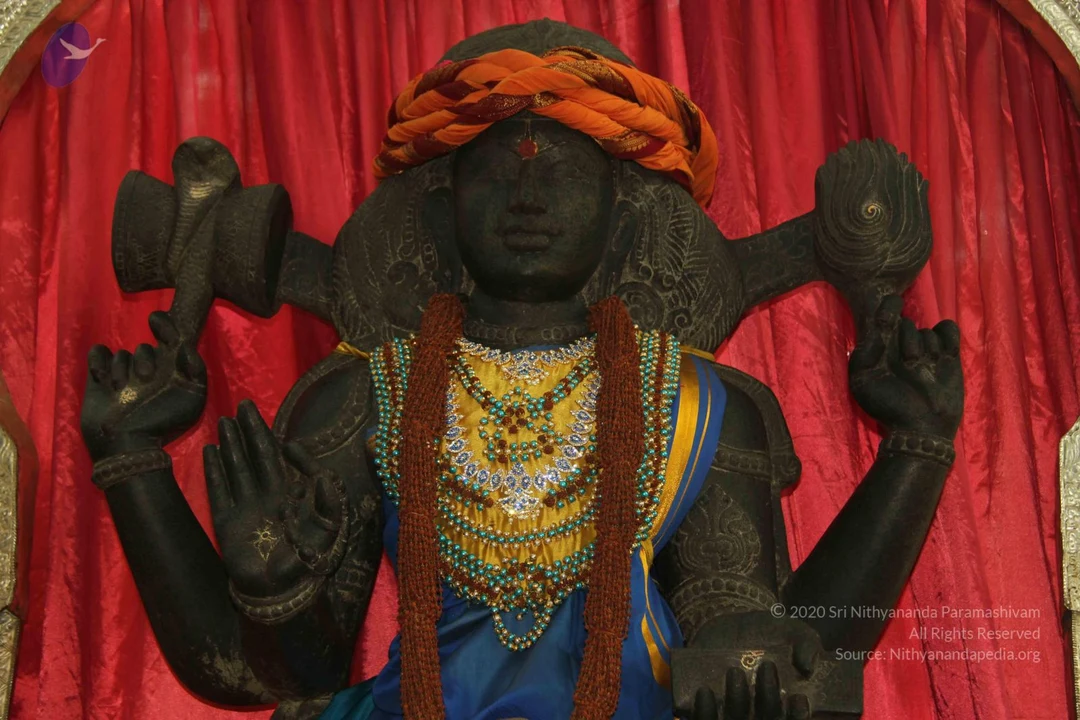
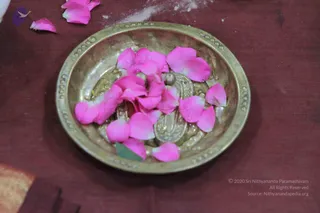
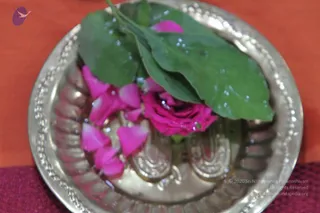
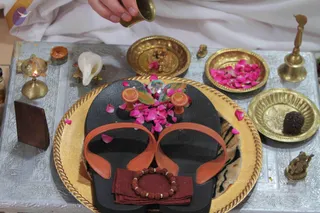
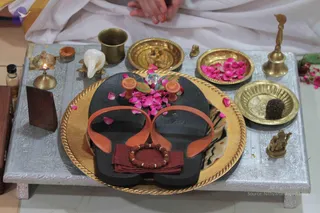
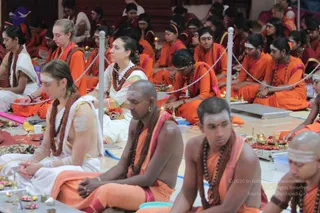
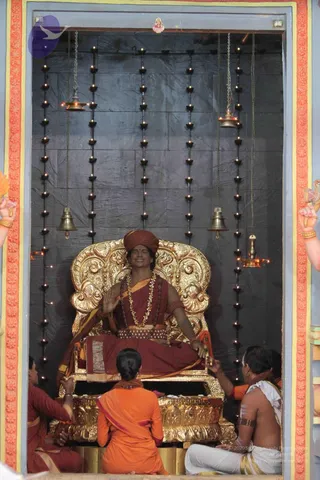
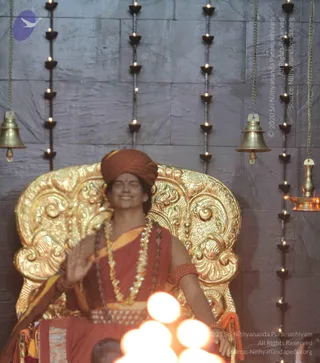
Close top-down photograph of a round polished brass dish on a maroon cloth. Pink rose petals are scattered over a small silver padukas or footprint-shaped murti at the centre, with a green leaf at the lower edge. Loose petals and white powder lie on the cloth nearby. No people are visible; this is a pada-puja offering arrangement.Close-up photograph of a polished silver offering plate holding a pink rose with its petals scattered, green leaves and water droplets, set on a red cloth. Rose petals and leaves rest in the shallow silver tray. No people are visible in the frame.A padapuja arrangement on a silver tray: a pair of black sandals with orange-brown straps rests on a gold-rimmed plate, scattered with pink rose petals. A hand in white sleeves pours liquid from a small brass cup at top. Around it are brass bowls, one holding rose petals, a brass bell, an oil lamp with a lit flame, a white conch shell, a rudraksha mala on a maroon cloth, a rudraksha bead, and a small brass deity figure. No people's faces are visible; the setting suggests a ritual worship of paduka.A photograph of a padapuja arrangement on a silver-plated wooden stand. At the centre is a pair of black sandals with orange straps resting on a gold-edged tray, with pink rose petals scattered over them and a rudraksha mala with a folded maroon cloth beneath. Around the tray are brass bowls holding rose petals and a rudraksha bead, a brass bell, a brass cup, a conch shell, a small brass lamp, a brass figurine, and a small bottle. The sleeve of a white garment with a gold border and hands are visible at the top, but no face is shown.Dense seated group of devotees in orange and saffron robes with rudraksha malas, many with white and orange sandal or ash marks on their foreheads, performing a ritual puja on a temple floor. Small brass oil lamps, brass vessels, and plates with offerings sit before them. In the front left, a woman in white robes with a rudraksha mala and a man with bare upper body and white paste on his chest and arms sit with hands folded. Other seated men in orange with shaved heads and white forehead bands sit near a low chain barrier. Background rows of similarly dressed participants fill the hall with columns and pink cushions.A seated figure in a maroon-red robe and matching red-orange turban sits on an ornate gold throne within a dark slate-grey shrine niche framed by orange and yellow borders. He wears a white flower garland and a beaded rudraksha-style necklace, and raises one hand in blessing. Hanging brass oil lamps and bells hang beside strings of dark beads on the wall. Two attendants in orange and maroon kneel before the throne, one in a white dhoti with bare upper body performing a ritual, the other seated at left. The scene suggests a pada-puja (foot-worship) ceremony. Swamiji (probable): the seated figure wears a red-orange turban, rudraksha-style beaded necklace and maroon robe, consistent with the page's reference to Swamiji at this event.

Kirtans

7 photosSource gallery
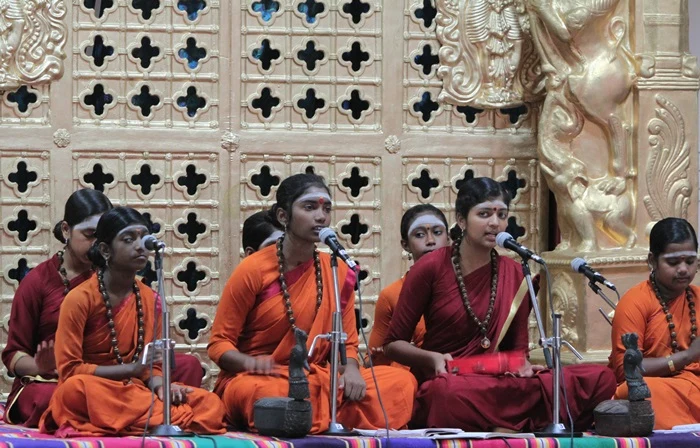
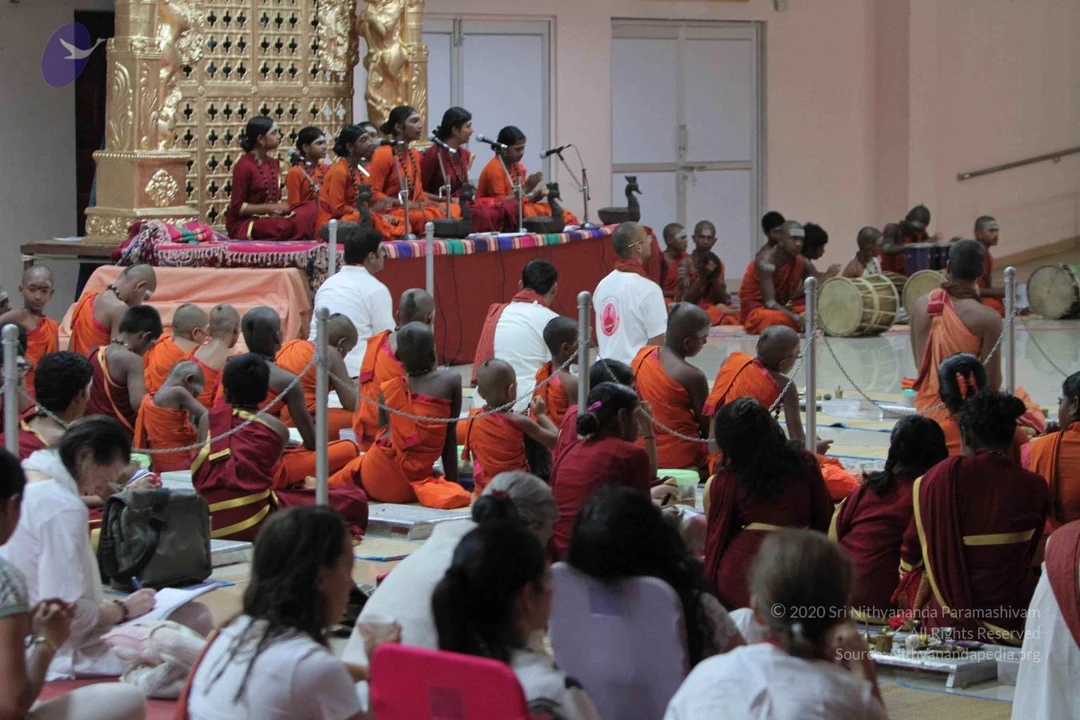
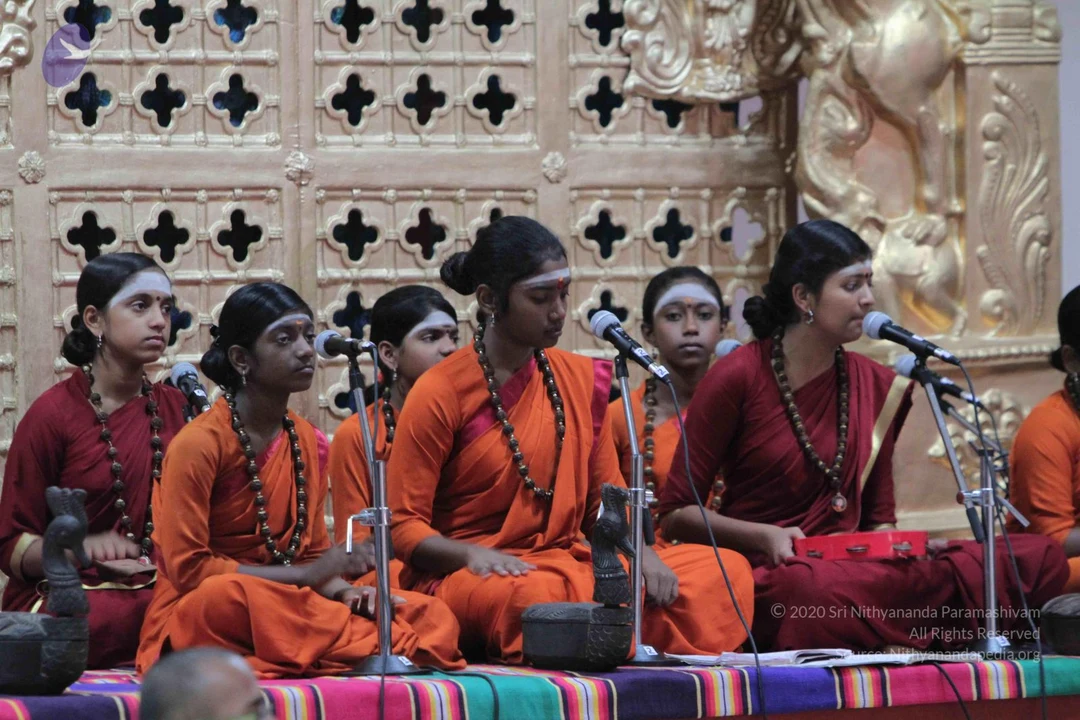
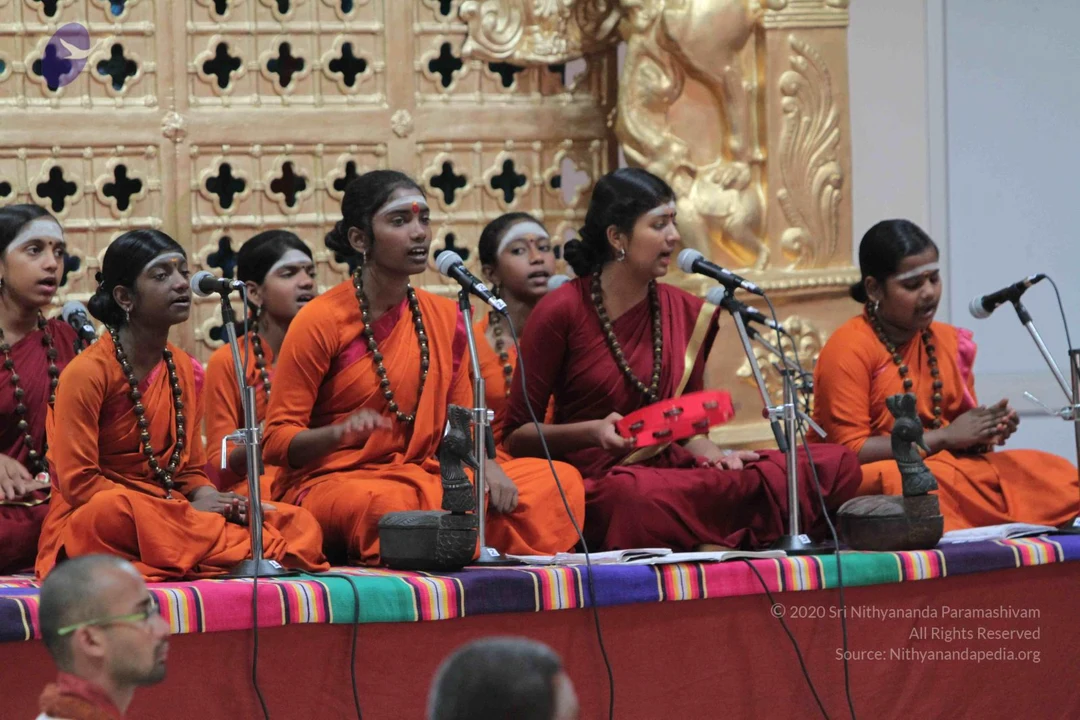
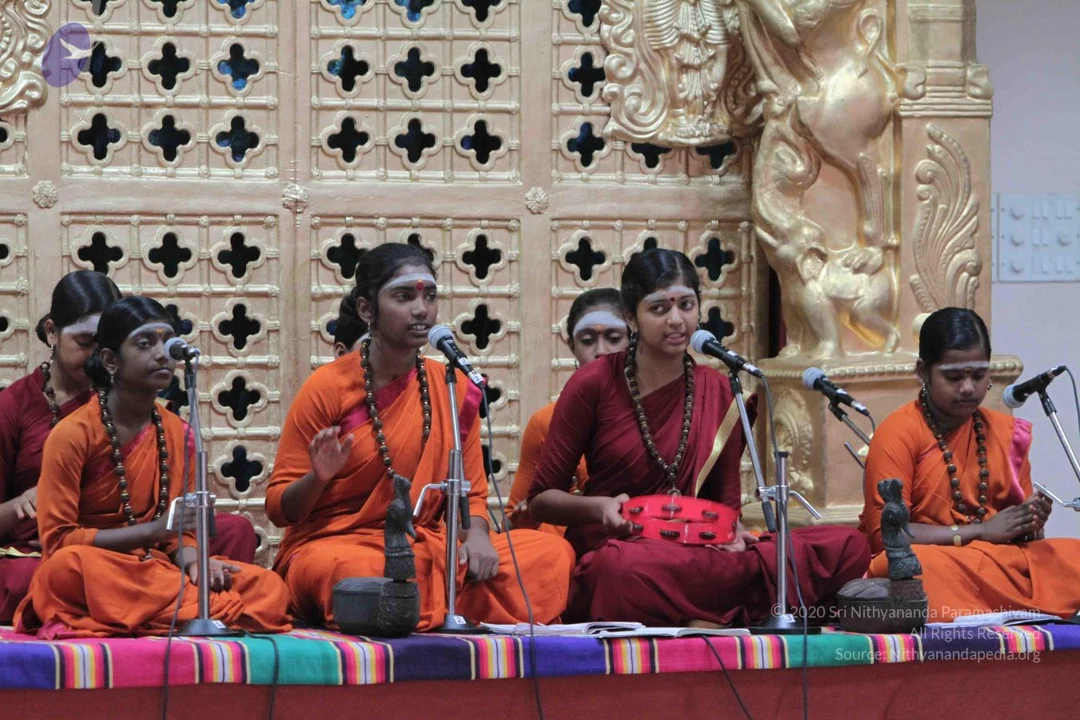
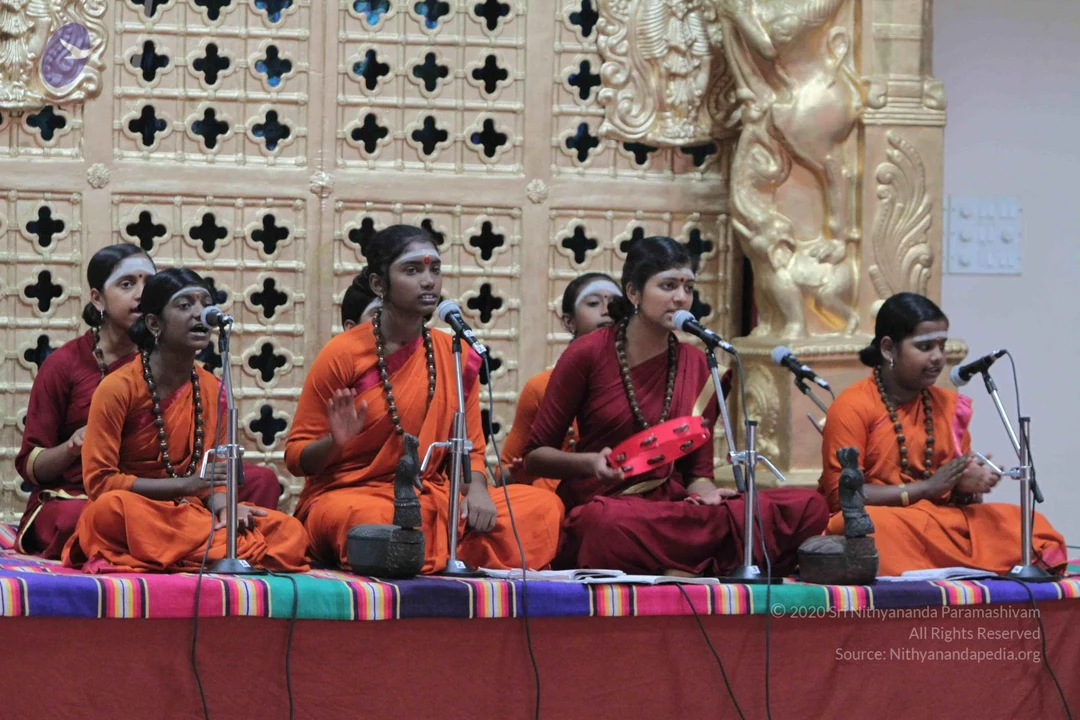
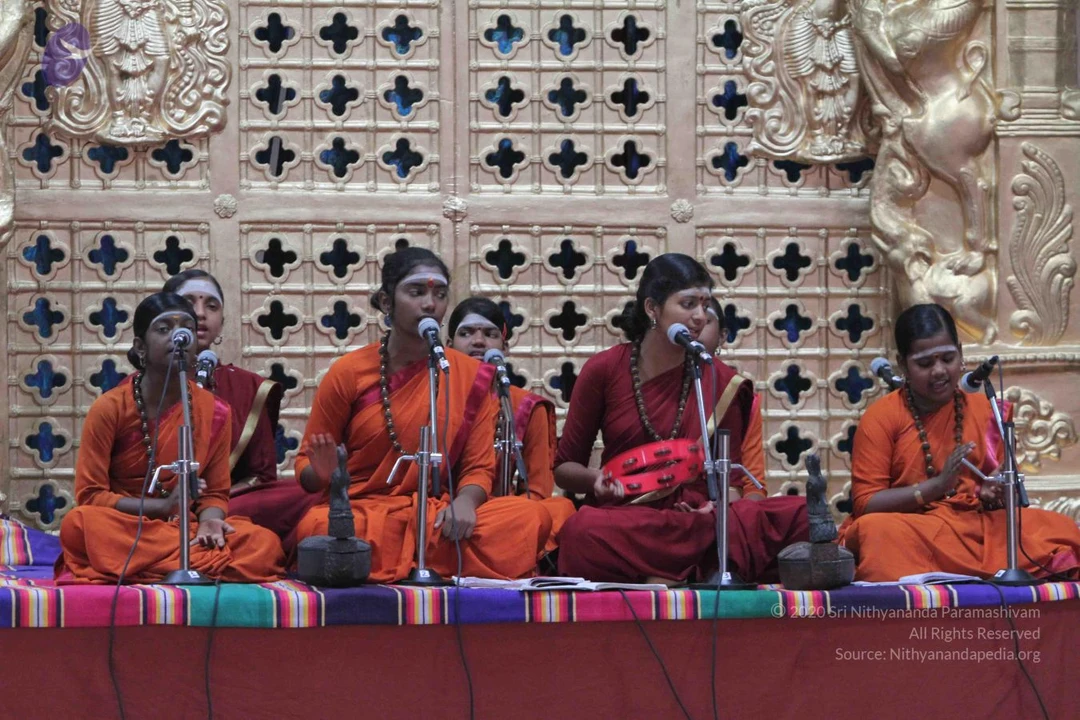
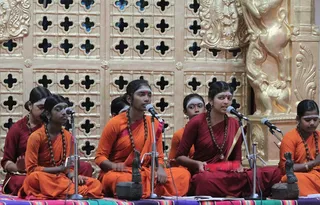
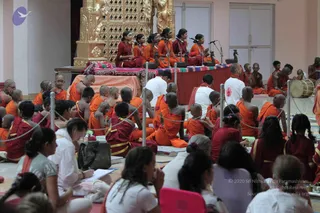
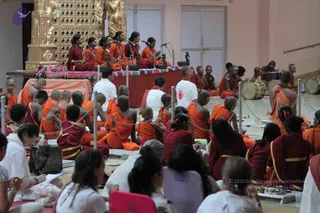
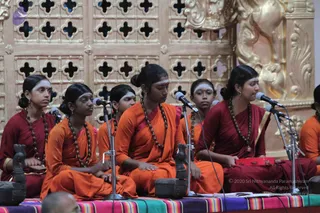
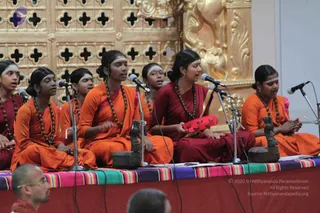
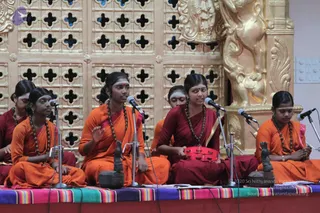
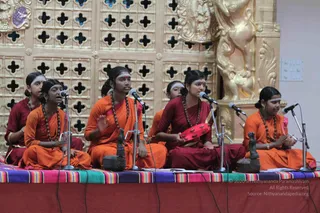
A hall of seated devotees during a kirtan performance. On a raised stage, a row of young girls in maroon and orange saris sit cross-legged behind microphones, several playing small hand instruments and one holding a bell-like object. Behind them stands an ornate gold-and-carved shrine structure with a golden deity figure at the top. In front, rows of young boys and men in saffron-orange robes sit on the floor, many shaved-headed, and a row of women in white and red saris sit on chairs and mats toward the foreground. A large drum rests at the right edge. Ropes on low posts separate the seating areas.A photograph of a temple hall during a kirtan performance. Several women in maroon and red saris with gold borders sit on a raised platform at the back, singing into microphones, with a few playing small hand instruments. Behind them stands an ornate gold carved wooden shrine with a decorative lattice panel. In front, rows of young boys and men with shaved heads wear saffron-orange robes and sit cross-legged on the floor, separated by low metal railings and chains. Several men in white shirts sit near the platform, and seated women in red and maroon saris and white clothing fill the foreground. Drums lie on the right side of the hall.A group of young women and girls in saffron and maroon garments sit cross-legged on a striped mat during a kirtan performance in a temple hall. Several wear rudraksha malas and have white and red tilak marks on their foreheads. Microphones on stands are in front of them, and a small red harmonium-style box and brass vessels sit on the mat. Behind them is an ornate carved golden wooden lattice screen with decorative sculptural panels.Photo of a group of young women seated on a stage performing devotional kirtan singing at microphones. They wear orange and maroon saris with rudraksha malas and white and red forehead markings. One woman in maroon plays a small red tambourine-style hand drum, and two brass oil lamps sit on the stage. Behind them is an ornate gold-painted lattice screen with carved relief figures. In the lower left foreground a bald man in glasses and a maroon garment is partially visible, along with another partially visible person at bottom centre. The backdrop and stage cloth are colourful.A group of young women performing devotional kirtan on a raised stage. Several seated singers wear saffron-orange garments and rudraksha malas, with white and red forehead marks. One singer in a maroon sari holds a red tambourine and sings into a microphone, while others in orange sit with hands raised or folded. Behind them, an ornate wooden lattice screen with cross-shaped cutouts and a gilded carved figure of a mythical creature. Small dark stone figurines sit on the front of the stage on a striped multicoloured cloth. Several microphones on stands are in front of the performers.A group of young women in saffron-orange and maroon saris sit on a multicolored striped cloth-covered stage, singing into microphones with rudraksha malas around their necks and white forehead markings. One woman in maroon plays a small red tambourine, and another gestures with her hand while singing. Two small metal figures stand on the stage in front. Behind them is an ornate golden carved wooden screen with lattice panels and a carved bird and figure. The scene appears to be a devotional kirtan performance. Six women are visible.

IA-Darshan

14 photosSource gallery
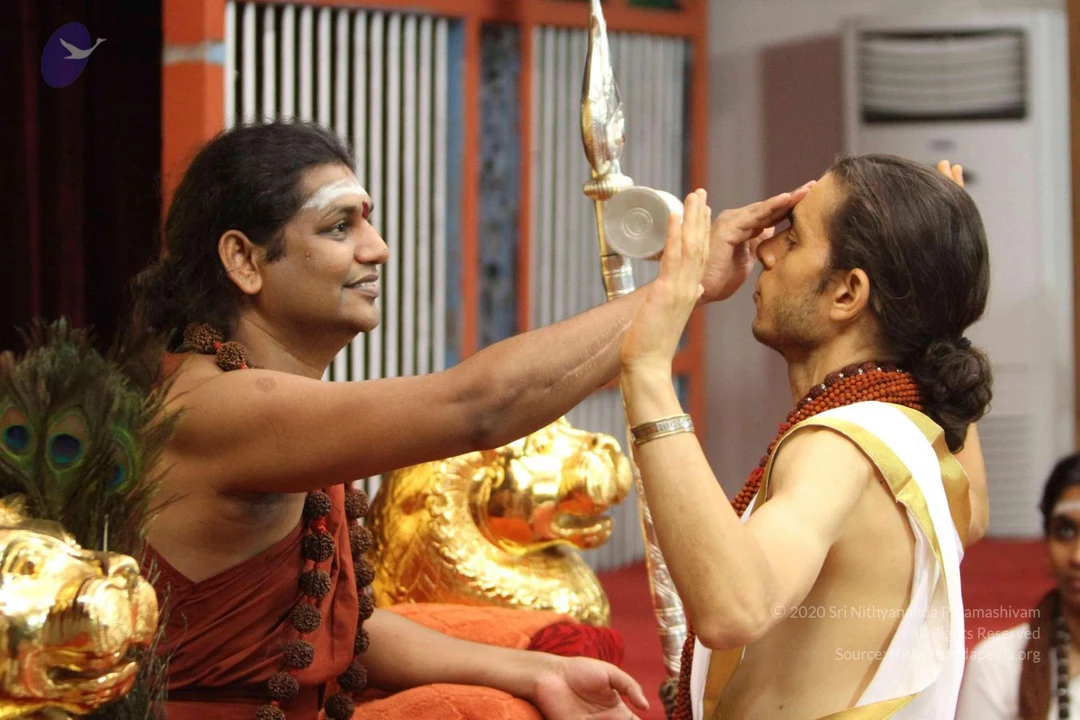
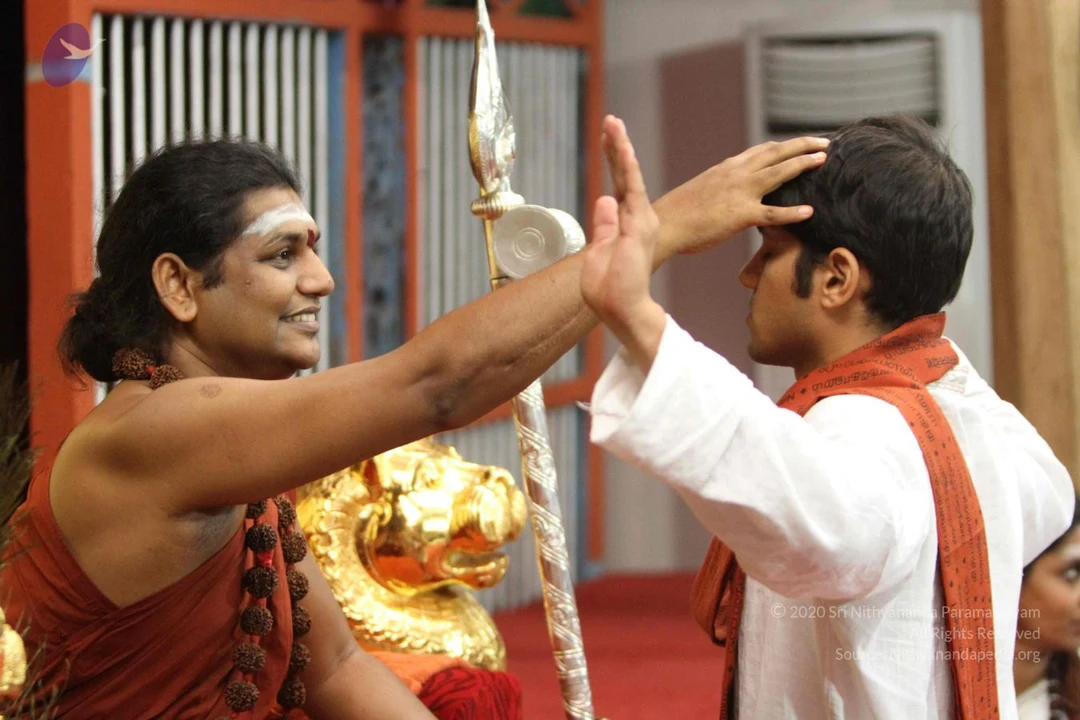
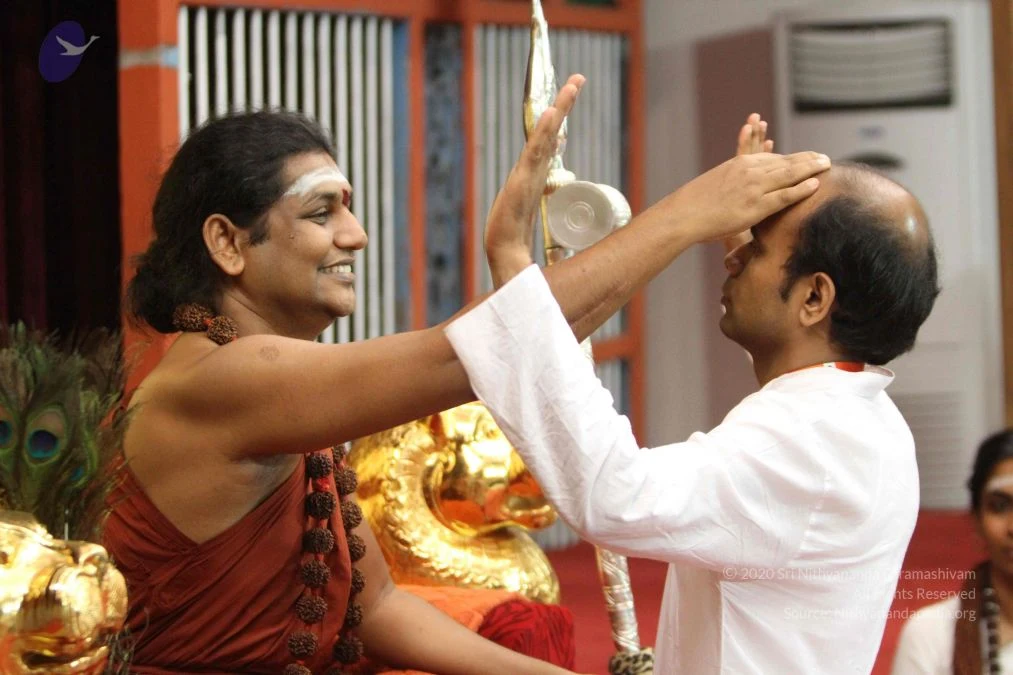
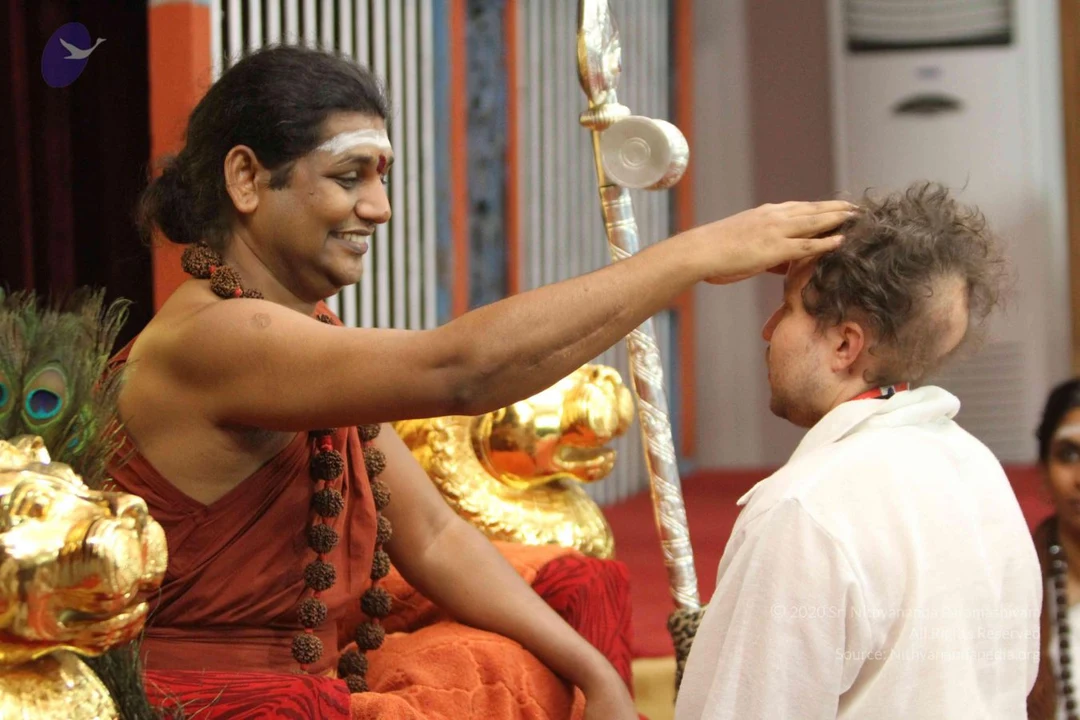
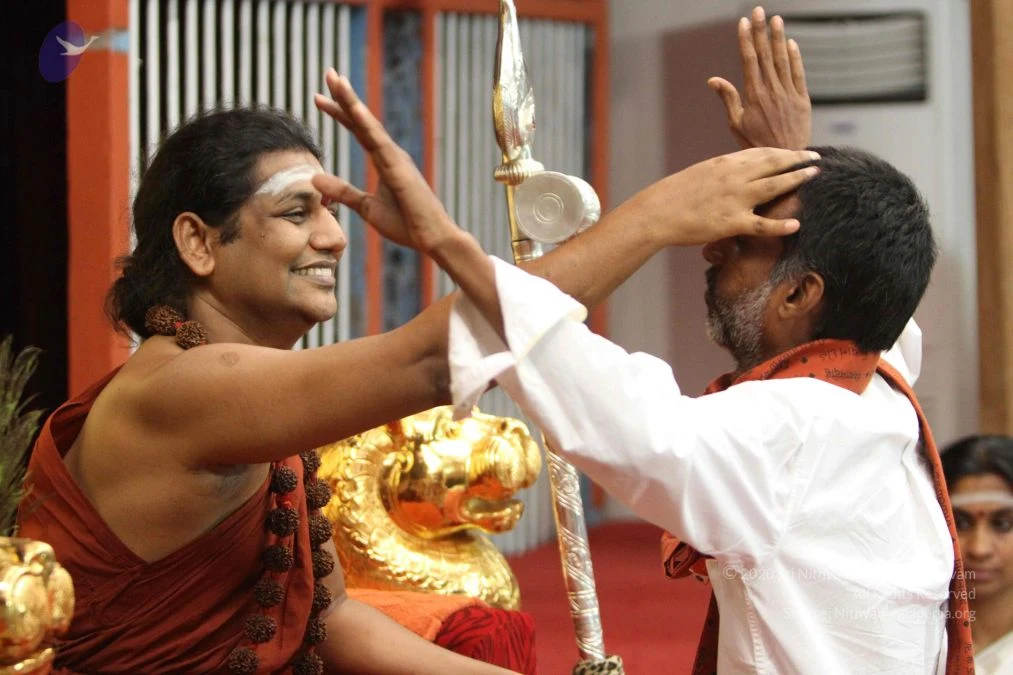
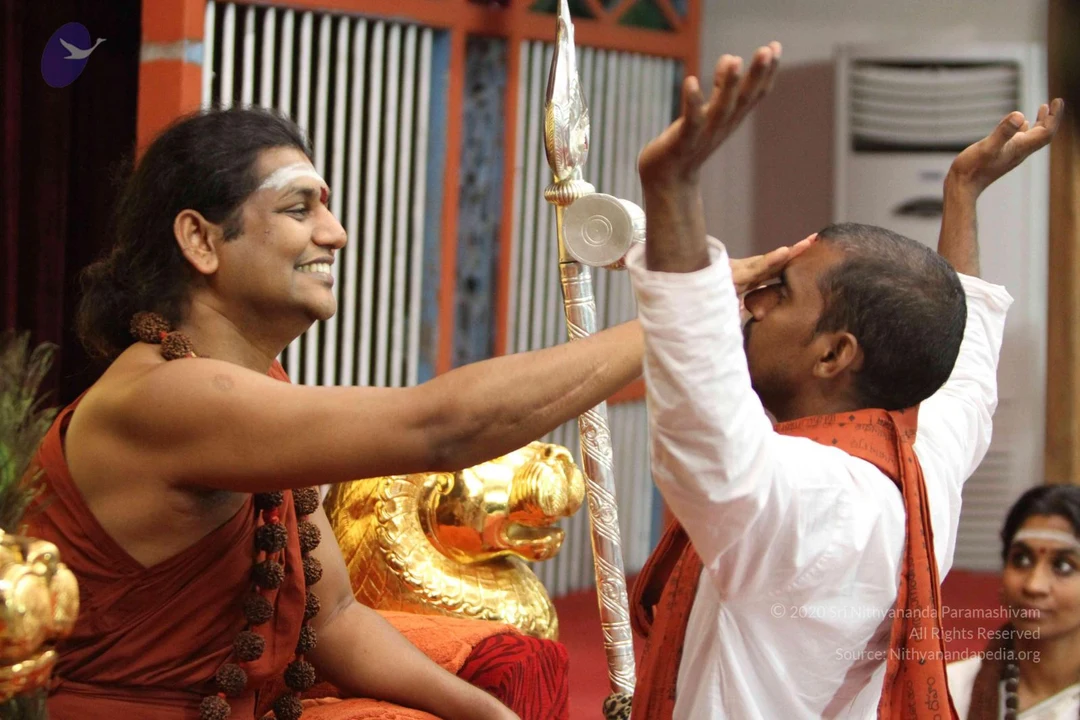
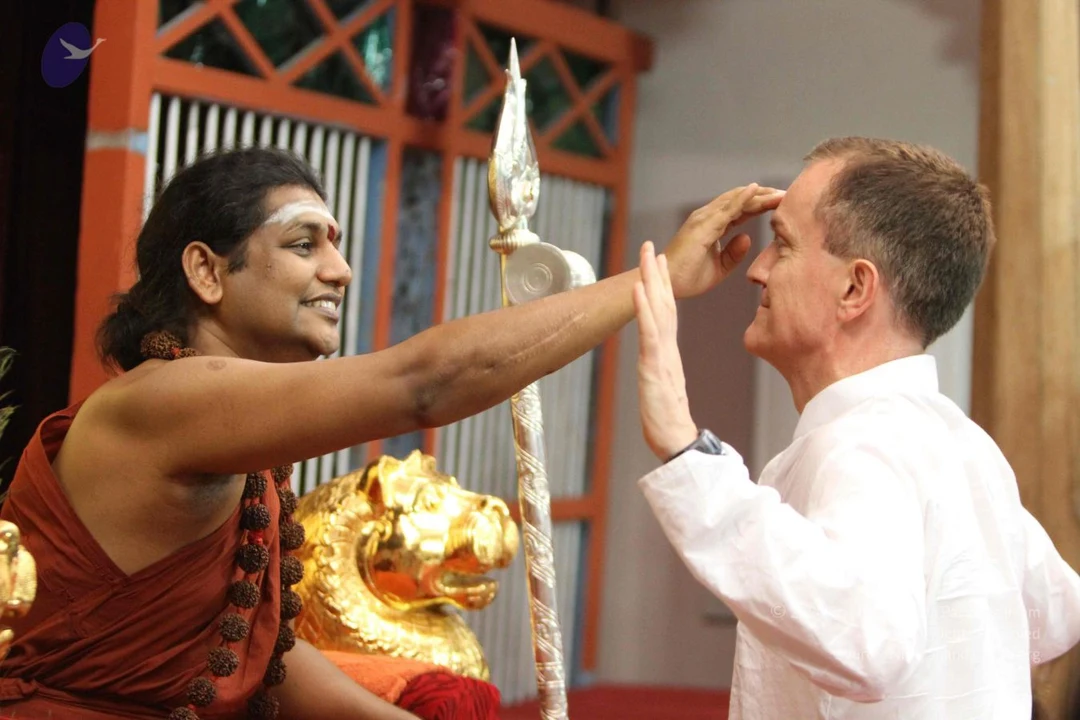
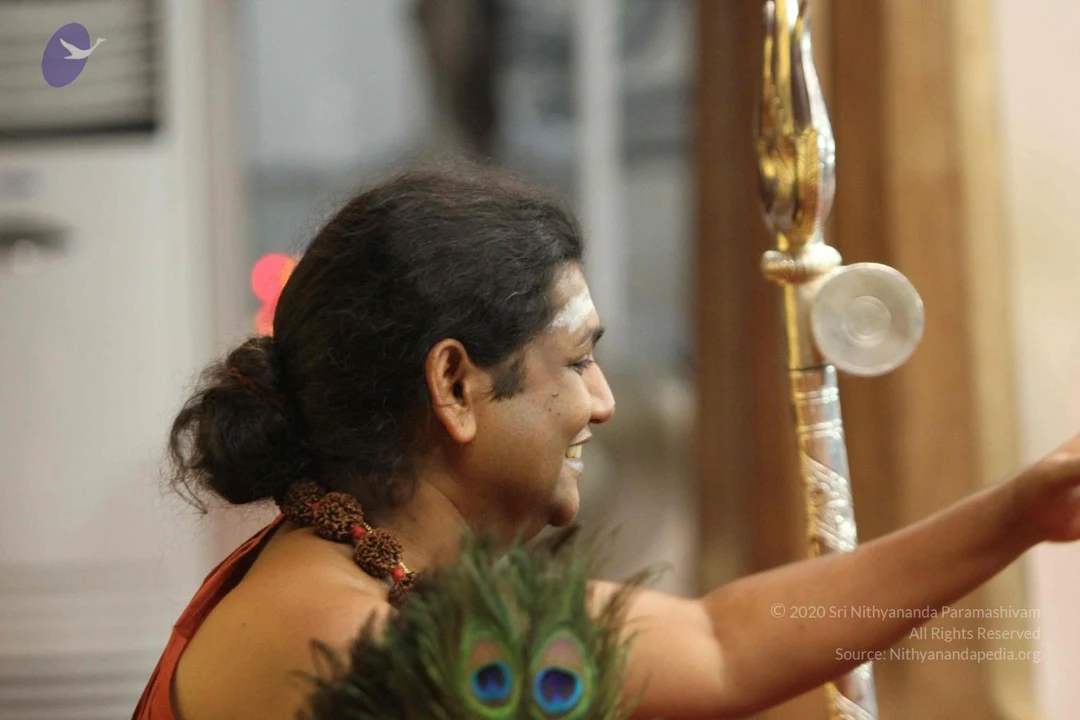
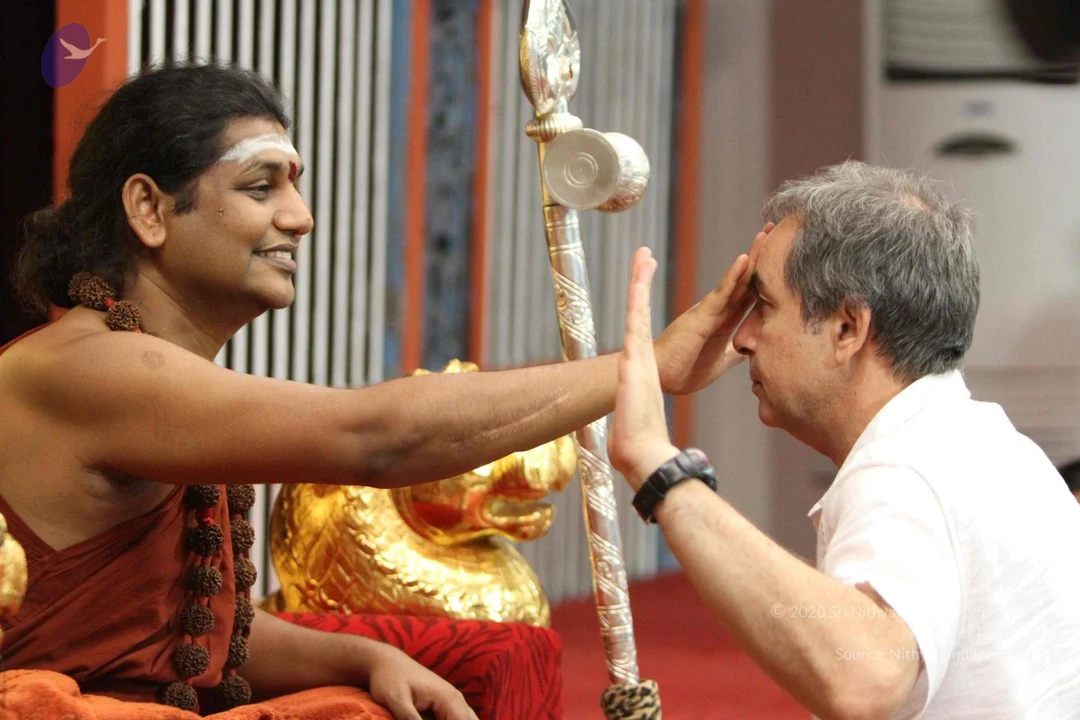
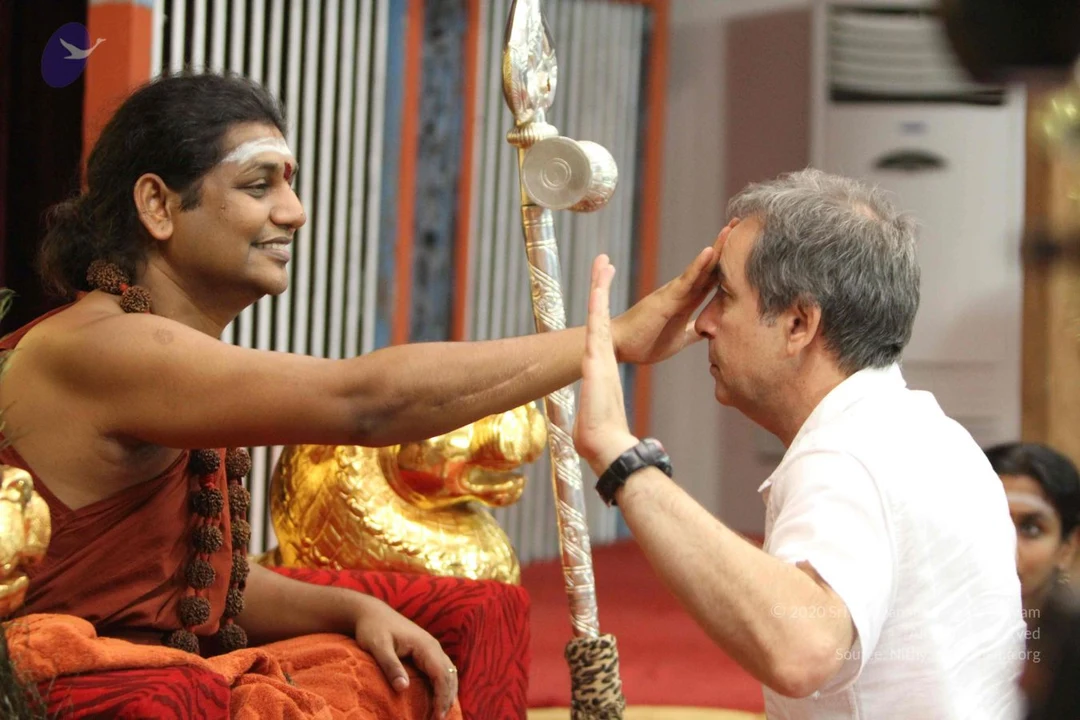
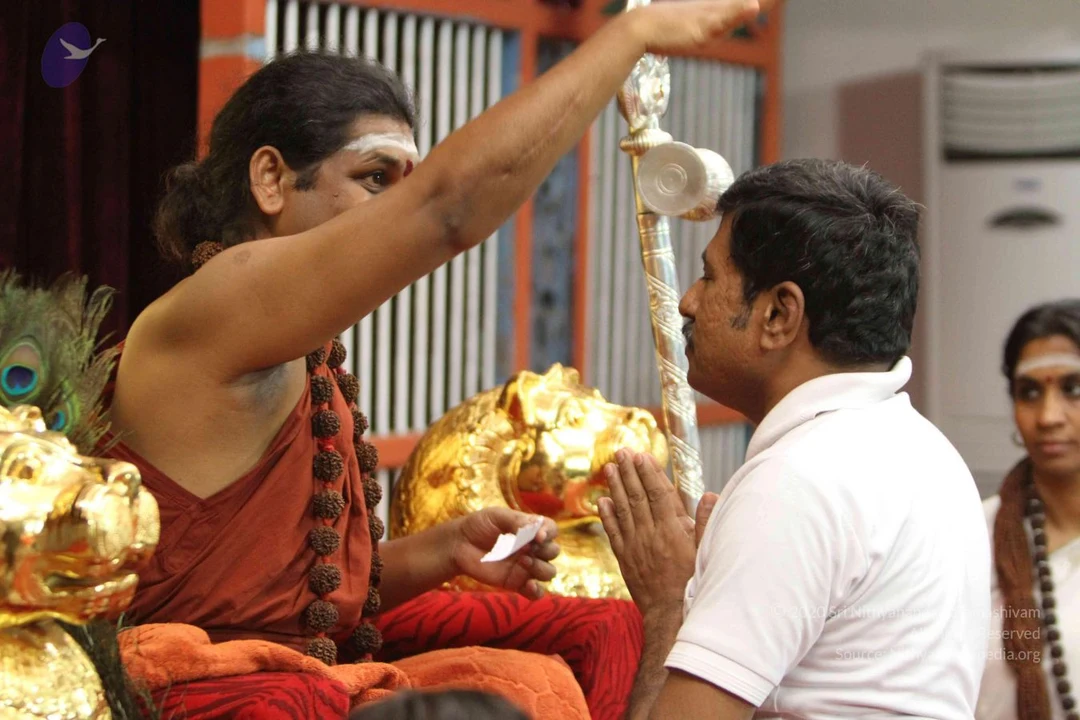
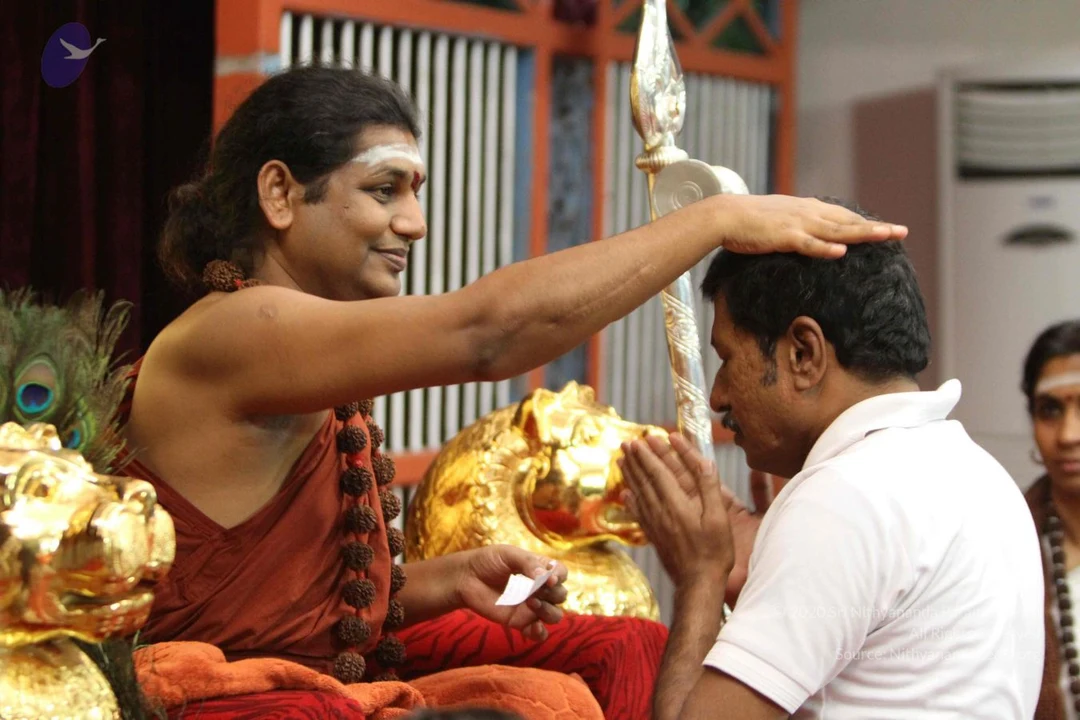
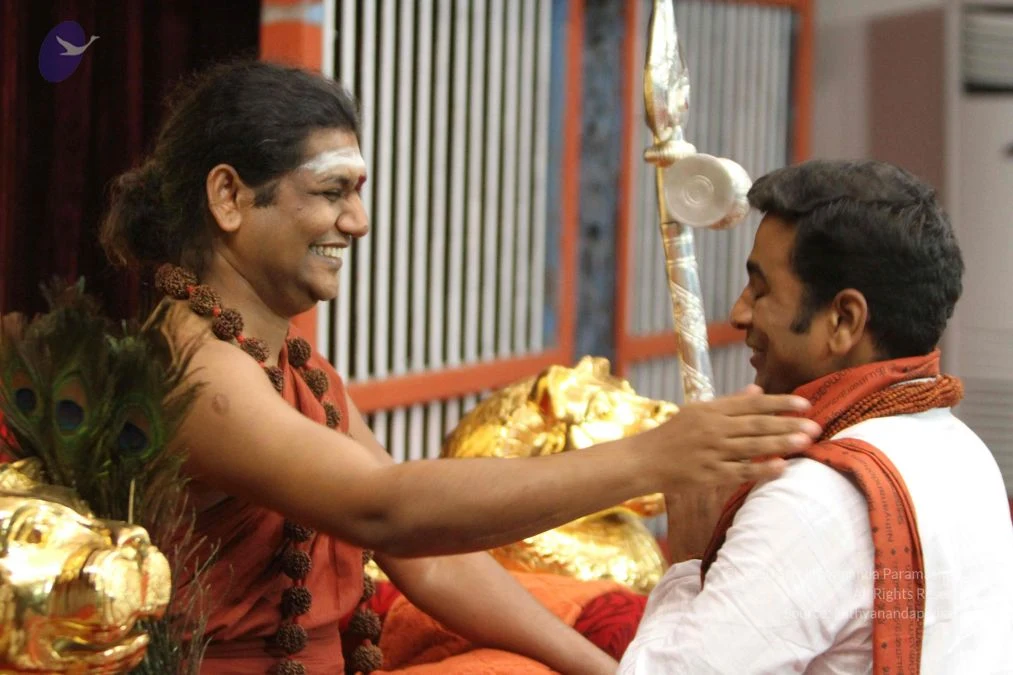
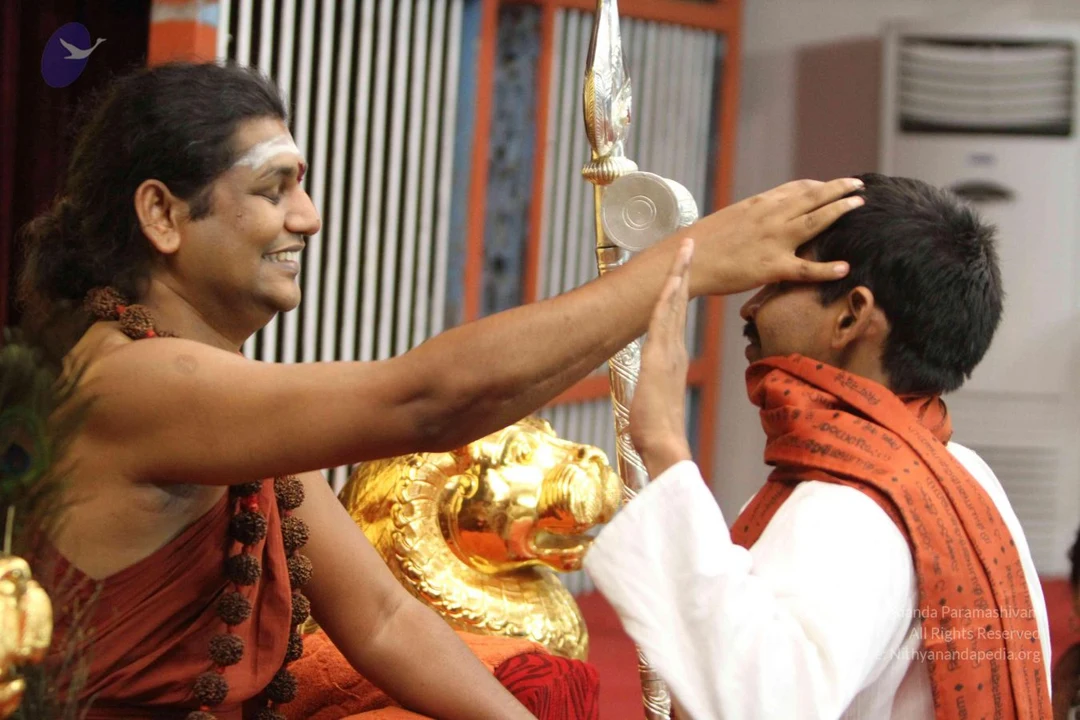
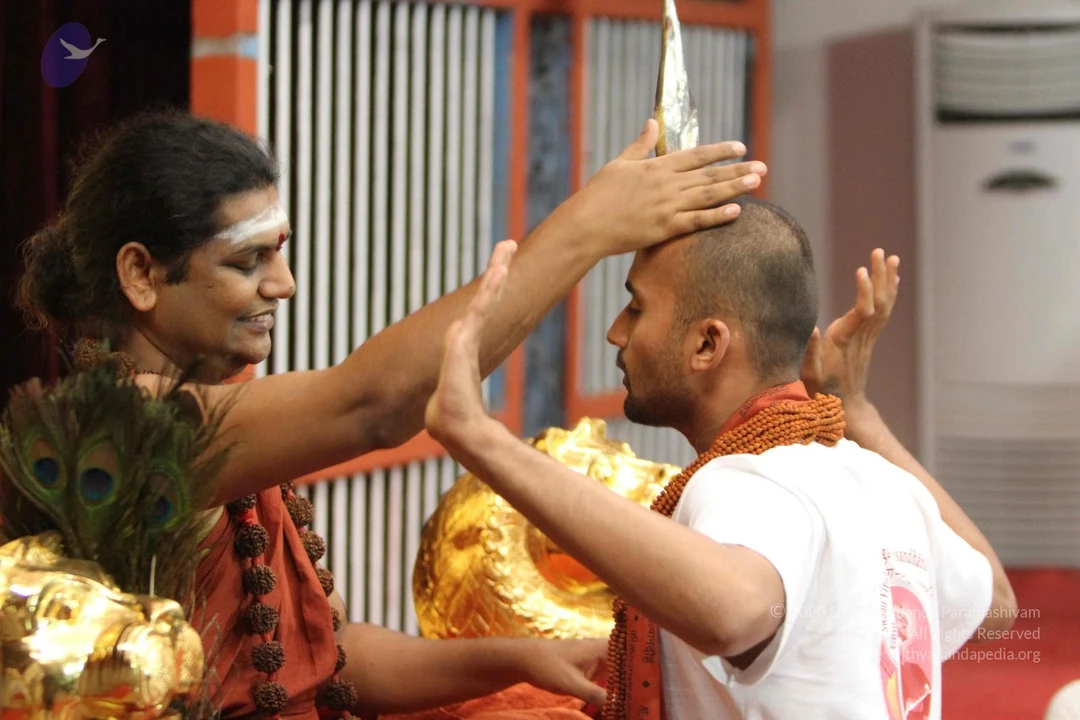
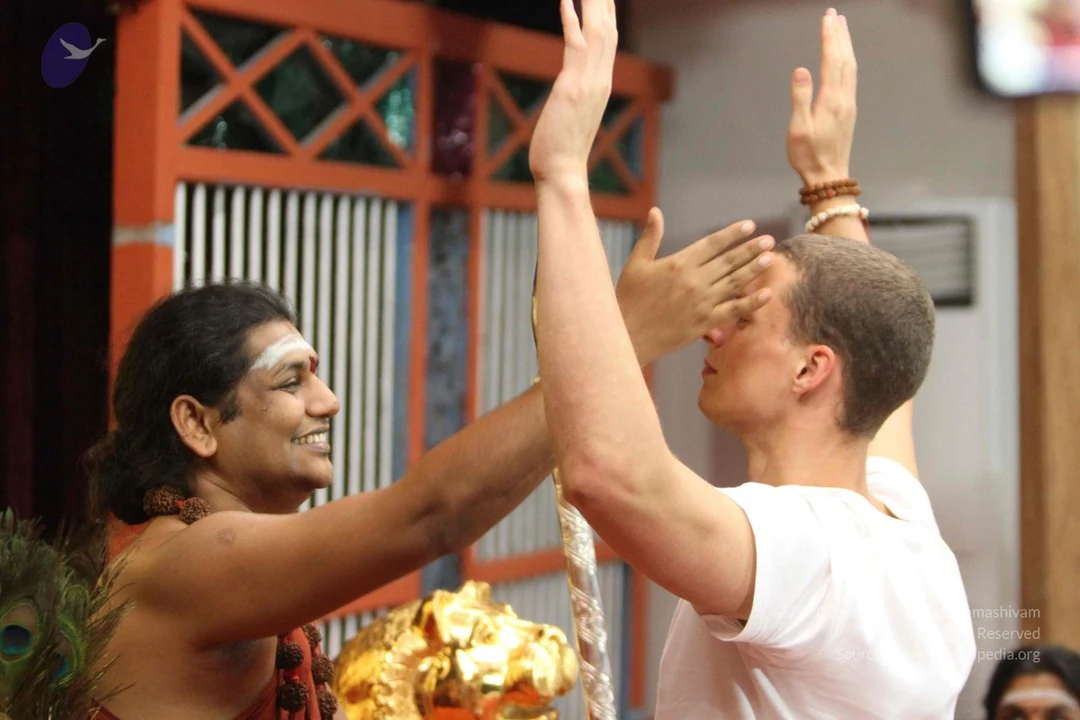
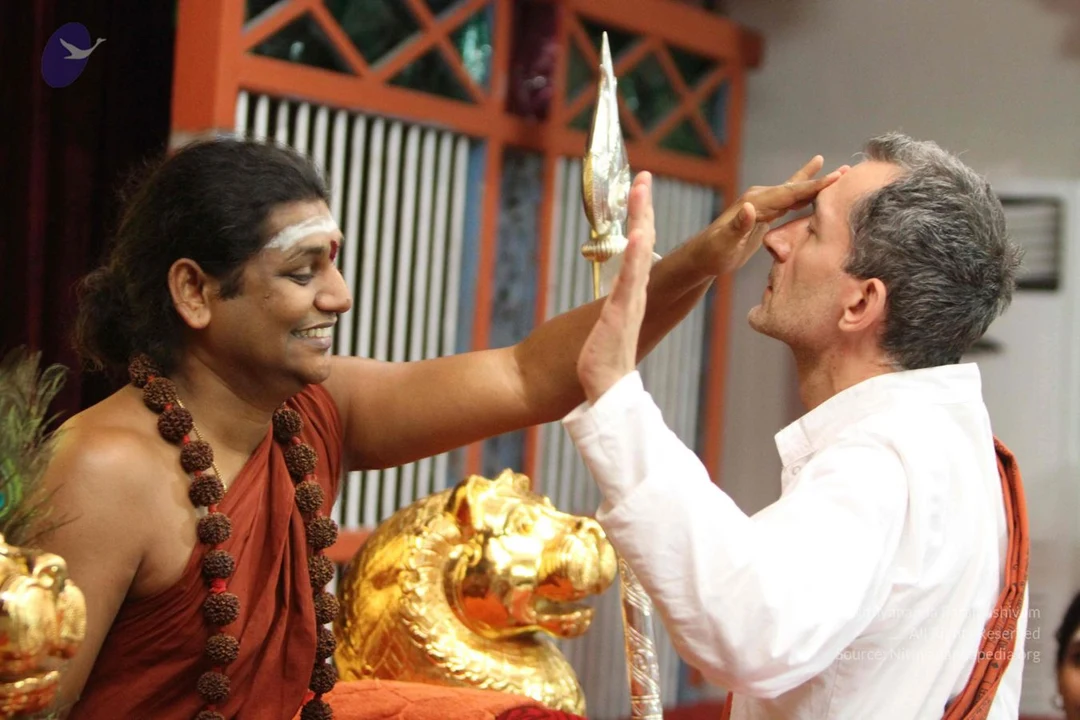
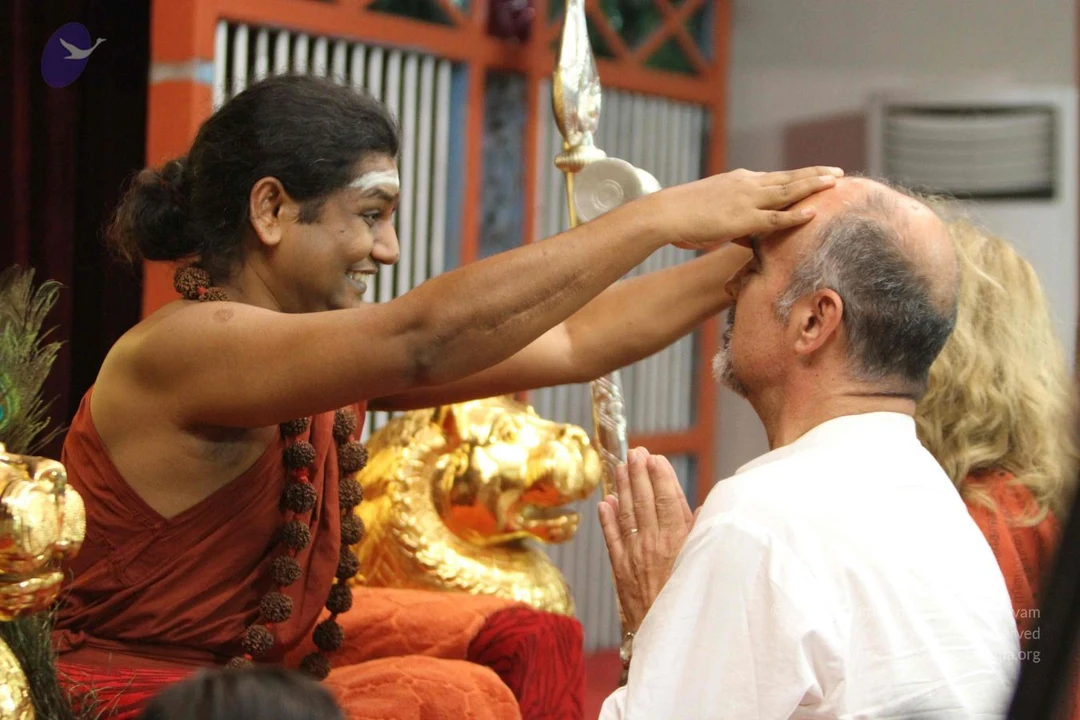
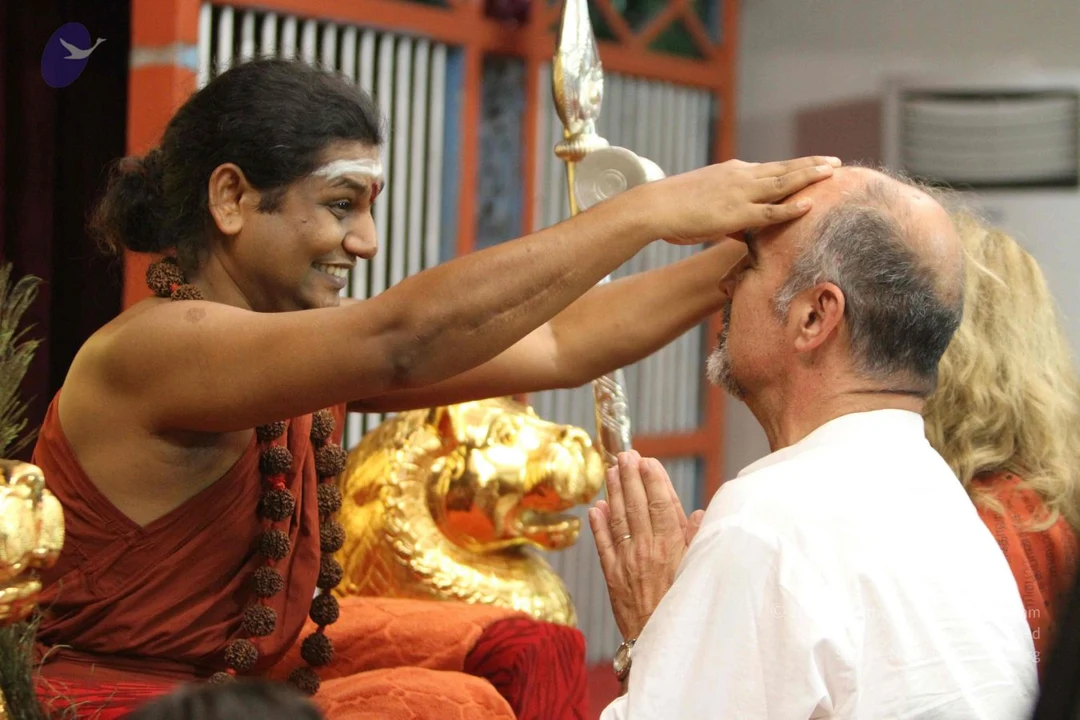
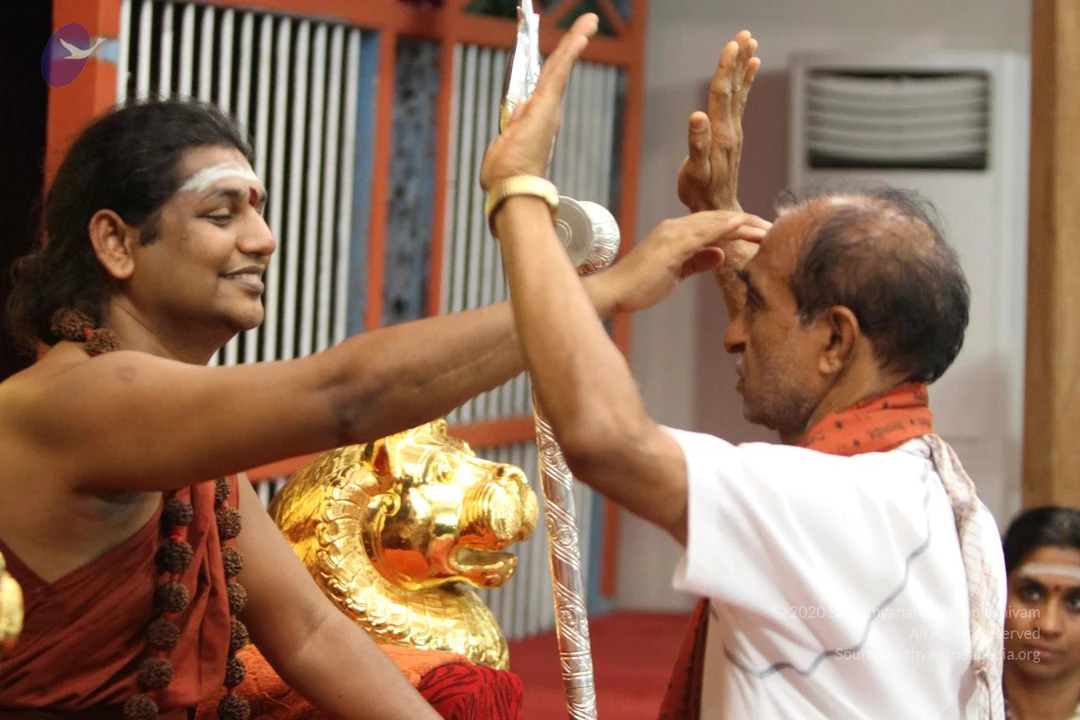
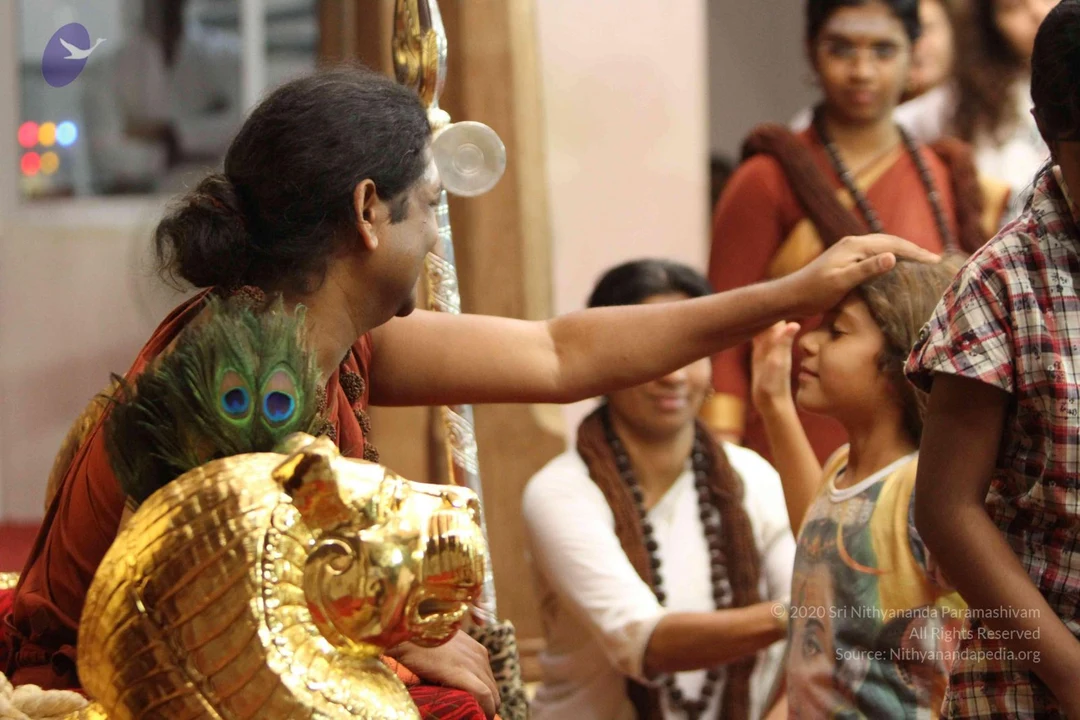
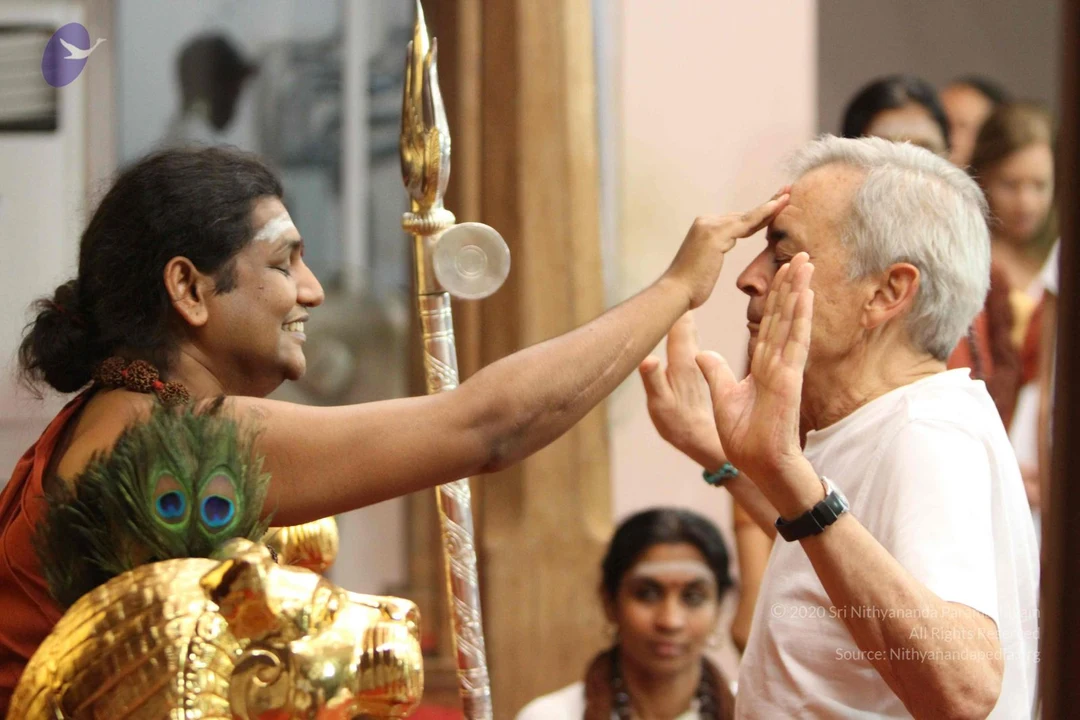
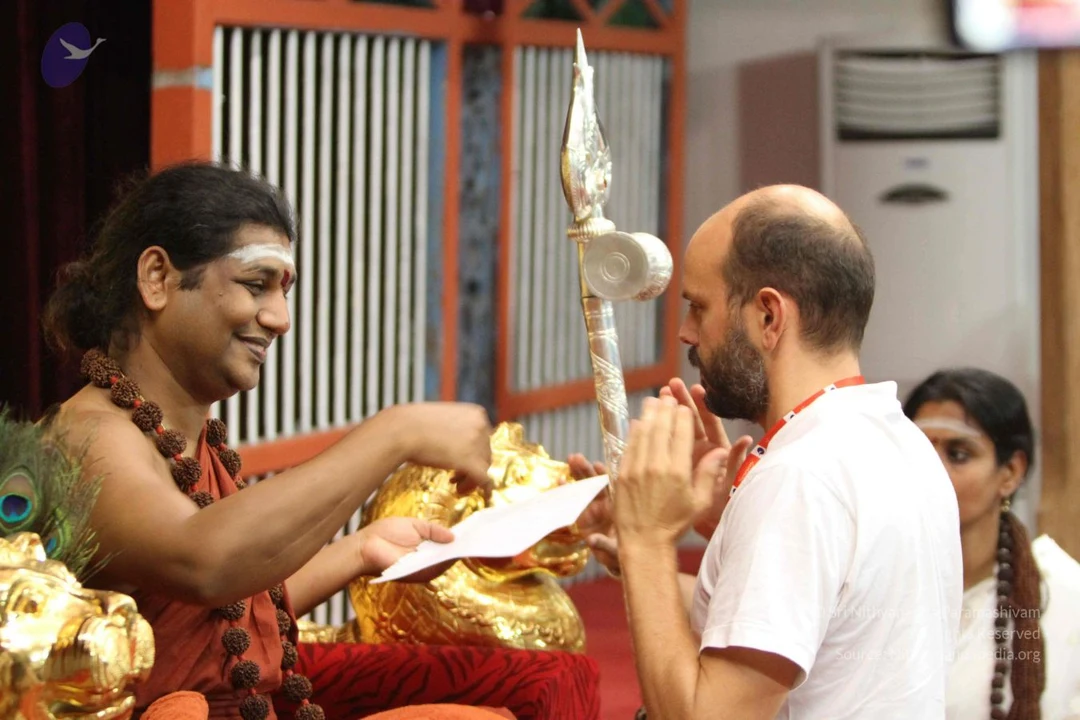
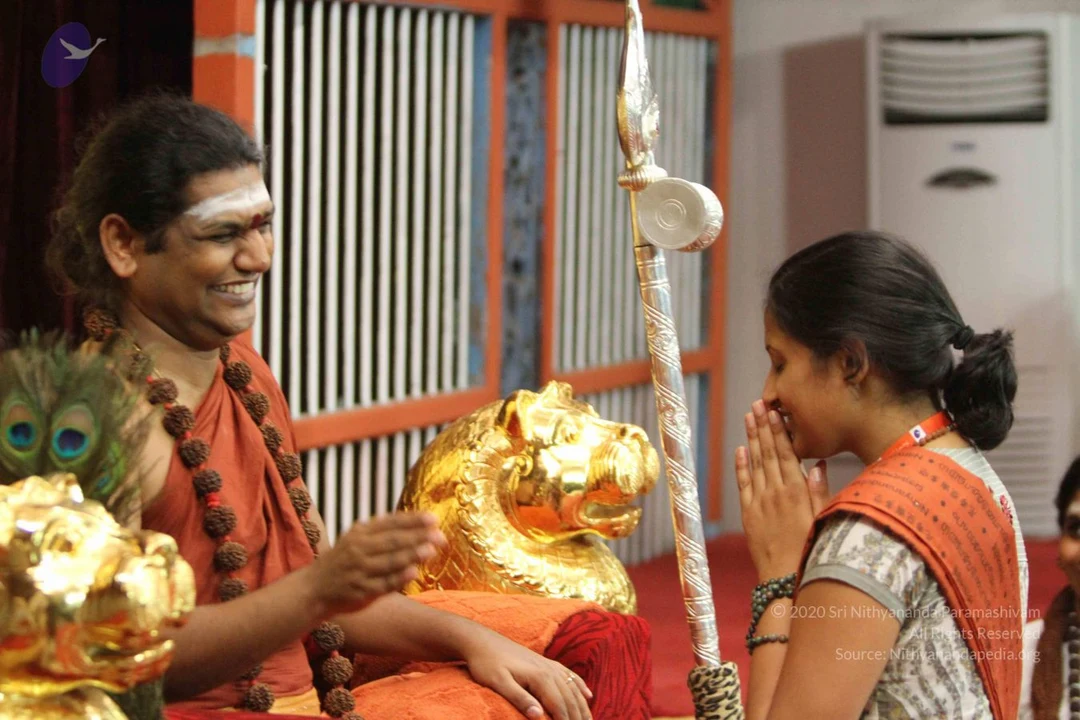
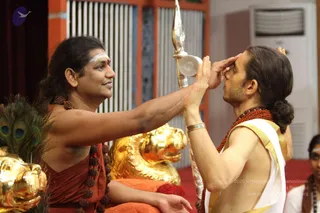
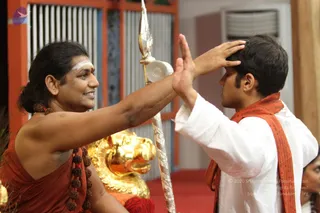
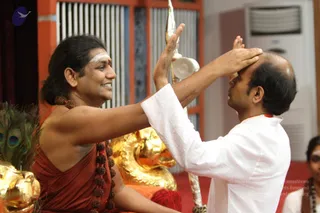
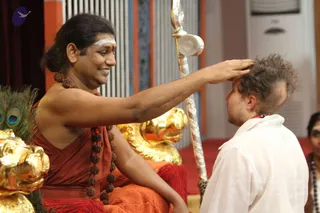
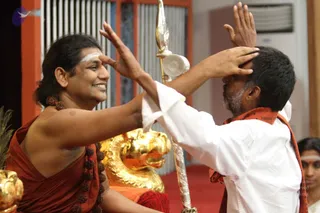
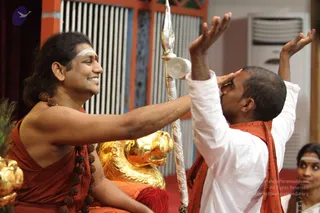
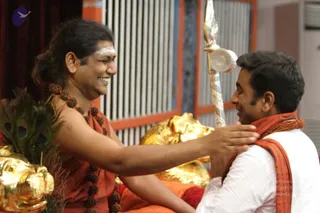
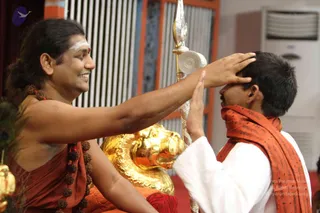
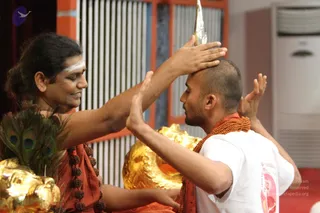
A photo of a seated man with short dark hair, a white forehead band and a red bindi, wearing an orange-red cloth draped over bare shoulders and a rudraksha mala with large beads. He lifts his hand to touch the forehead of a younger man kneeling before him, who wears a white dhoti with a gold border, a bare upper body, a long red-brown rudraksha necklace, a silver bangle and a hair bun. Behind them is a silver staff with a finial, a golden lion-faced seat and a peacock-feather fan on the left. A partly visible person in white stands at the right edge beside an air conditioner, in an ashram-style hall with red and orange tones. The gesture suggests a blessing ritual.Two men face each other in a temple-style hall with orange and red wooden latticed screens behind them. The man on the left, bare-chested with an orange cloth wrapped at the waist, wears a long rudraksha mala with large beads and a white tilak on his forehead, and extends his right arm to press his palm on the forehead of a younger man. The younger man wears a white kurta and an orange-red shawl with a dark patterned border, and holds his right palm up in a gesture of receiving. A golden lion-head sculpture and a silver ceremonial staff stand beside them, and a red carpeted floor is visible below. A partially visible woman appears at the right edge. a person is shown in this blessing gesture, with a rudraksha mala and bare chest cues as the blessing giver; the scene resembles a padapuja-style blessing.A photograph of a seated man in a rust-red robe with a bare upper body and a rudraksha mala with multiple strands around his neck, a white vertical tilak on his forehead and a red dot, smiling as he places his palm on the head of a bald man in a white kurta with a saffron shawl. A golden peacock-feather fan and a gold ceremonial staff stand nearby, with a gold figure behind them and a red carpet below. A woman in white is partly visible at the right edge. The seated man matches the a person appearance cues of a rudraksha mala, rust-red robe and sannyasi attire, and is receiving devotees in a blessing ritual. The white-kurta man is a devotee receiving the blessing.A seated man in a rust-orange robe, wearing a long rudraksha mala and white-and-red forehead markings, places his right hand on the head of a bearded man in a white shirt with a red cord around his neck. The seated man has long swept-back hair and bare upper arm visible. Behind them are a golden lion-form throne armrest, a silver staff with a finial, a peacock-feather fan, and an orange-draped seat. Swamiji (probable): the seated man has long swept-back hair, rudraksha malas and ornate ceremonial gold details, and is giving blessing as the recipient of honour. A woman in a dark garment is partly visible at the right edge.A photograph of a padapuja-style blessing in an ashram hall. A man with long swept-back dark hair, a white tilak on his forehead, a saffron-orange wrap and a large rudraksha mala with bead necklace sits smiling, with a golden lion-headed seat behind him. Facing him, a bearded man in a white shirt and orange shawl raises both palms toward the seated man's forehead in blessing. A silver ceremonial staff stands beside them and a woman in white with a tilak watches at the right edge.A photograph of a seated figure in saffron-orange robes with a bare shoulder, long swept-back dark hair, a white forehead mark and rudraksha malas on the chest, smiling and extending an arm toward a standing man in a white kurta with an orange shawl who raises both hands near his face. The seated figure sits beside a golden lion-form seat and a silver staff with a ring finial, in a temple-like hall with orange and white lattice panels and an air conditioner. Swamiji (probable) is the seated figure in saffron robes with rudraksha malas and long hair, giving a blessing during a pada-puja style ritual. A woman in a white sari with a forehead mark is partly visible at the right edge.

IA

60 photosSource gallery
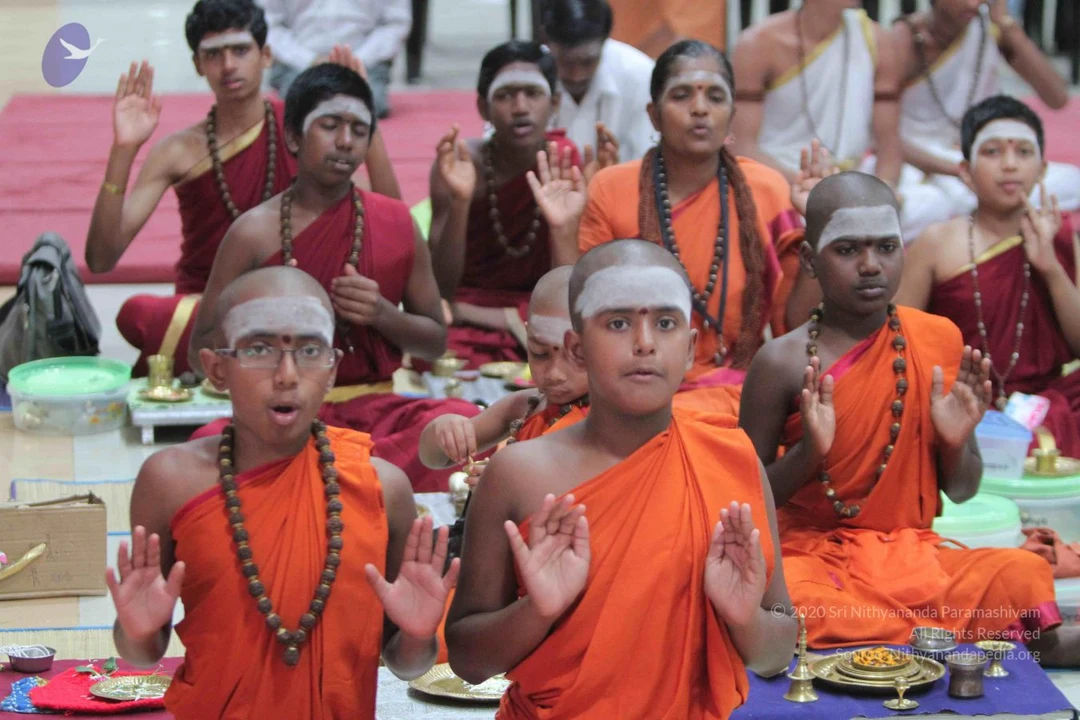
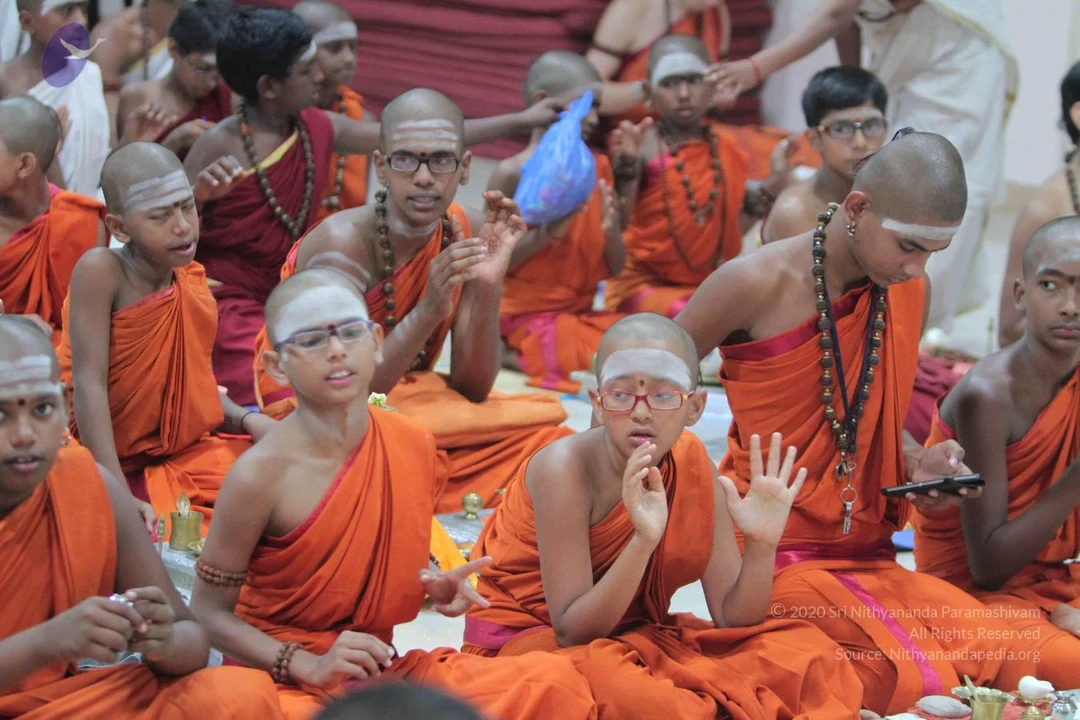
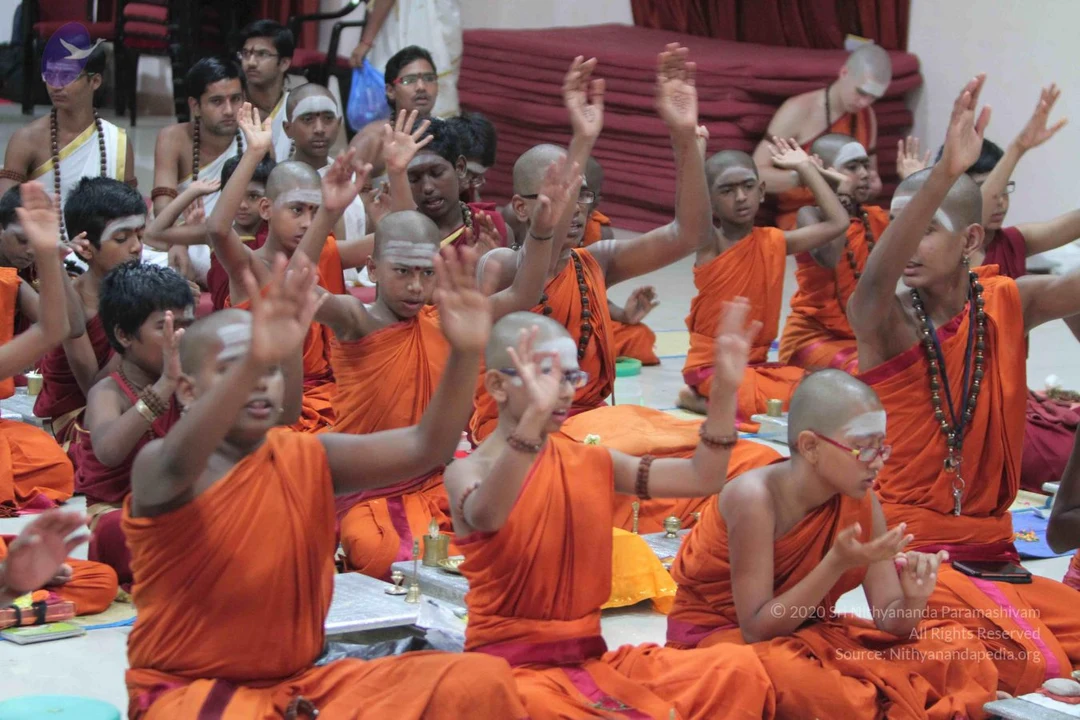
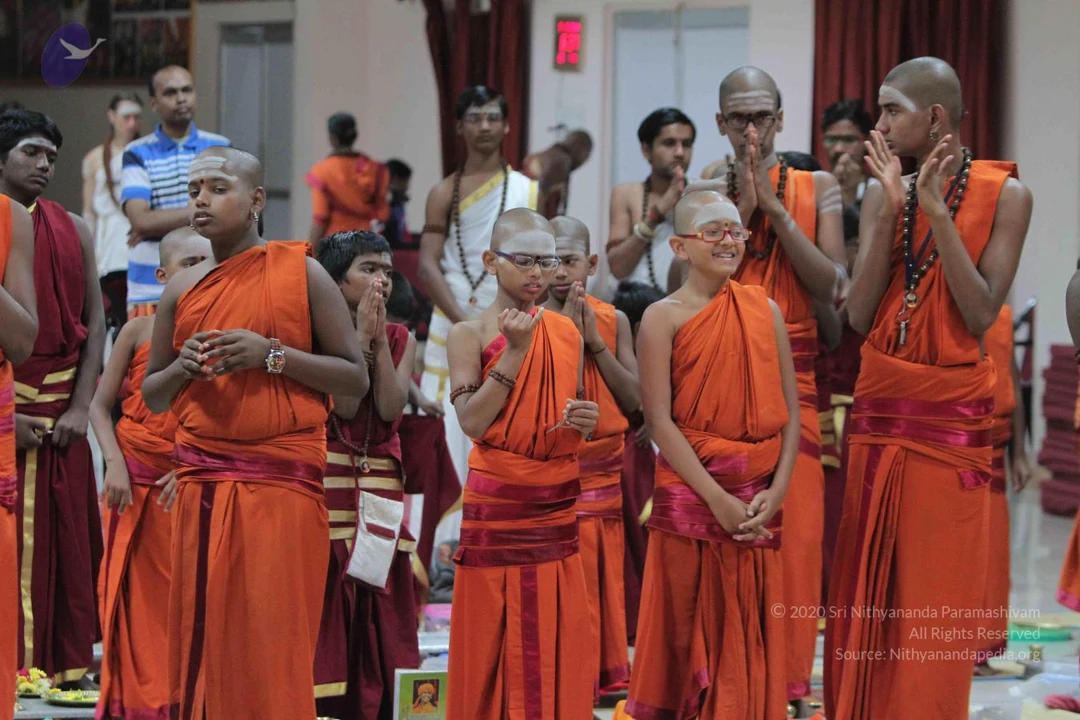
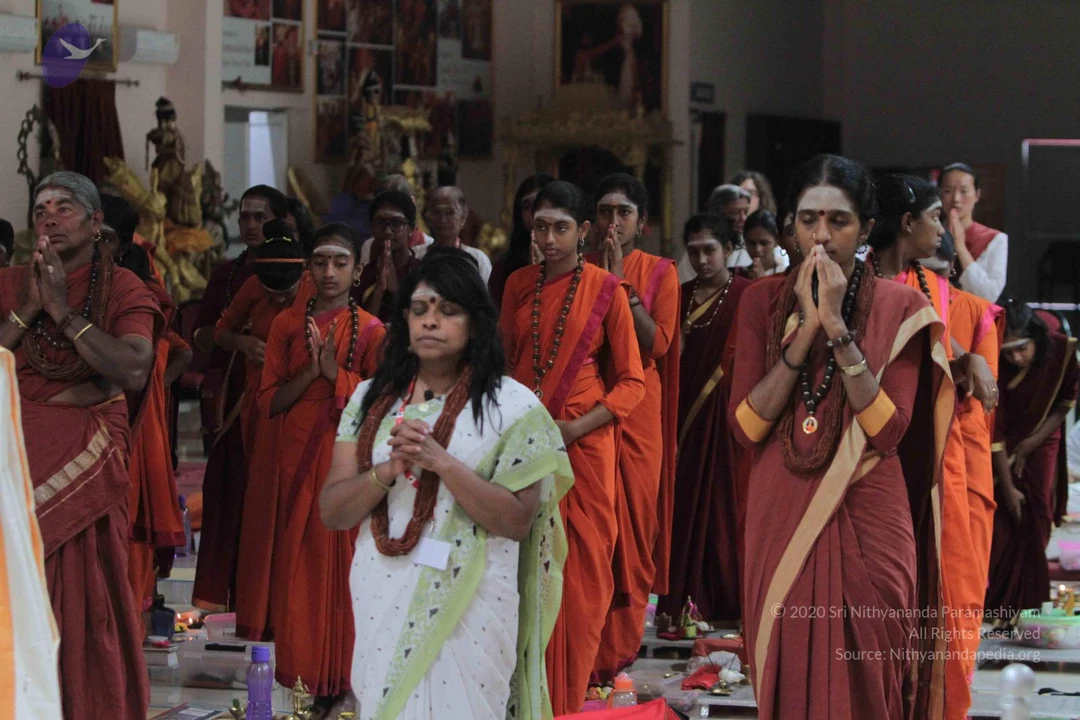
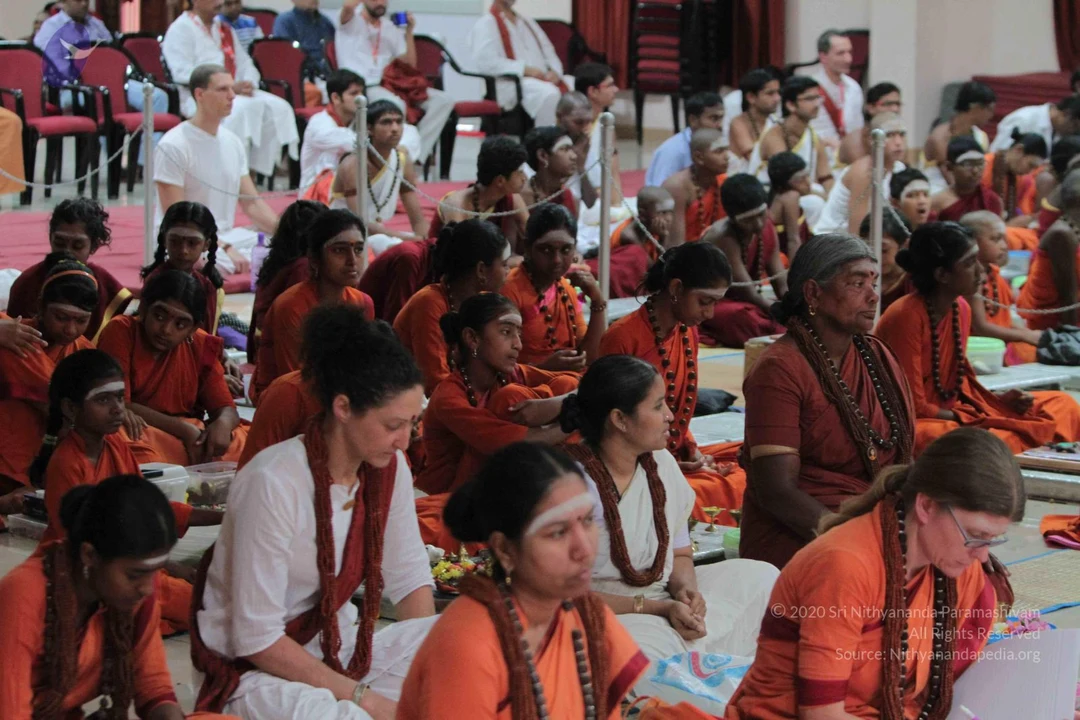
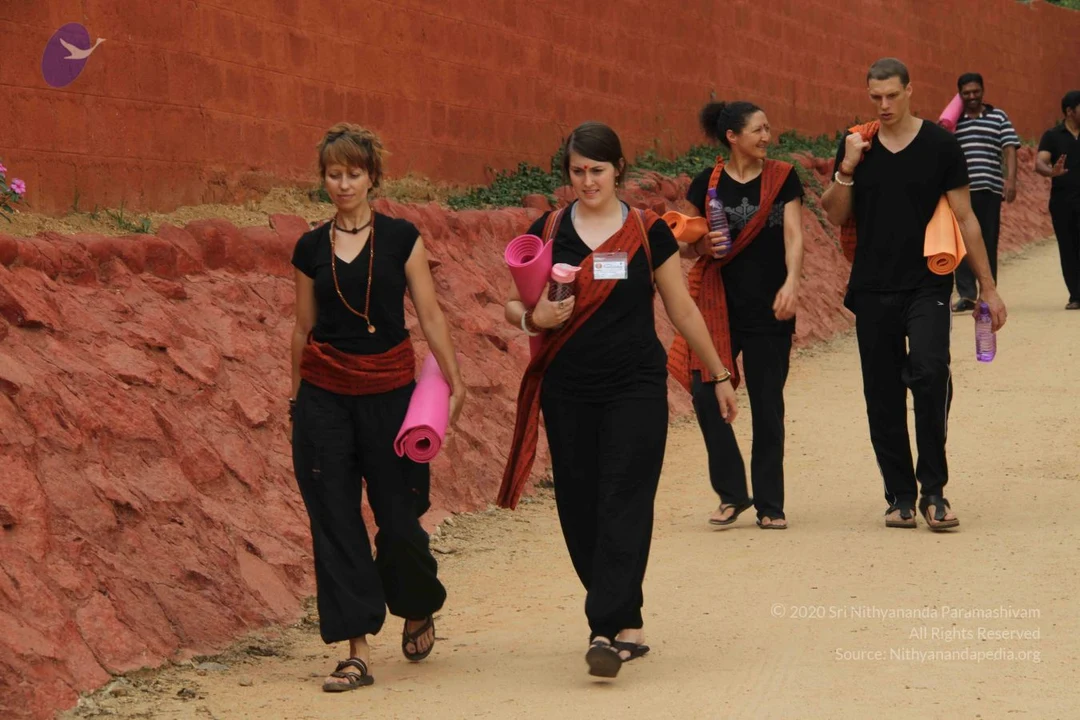
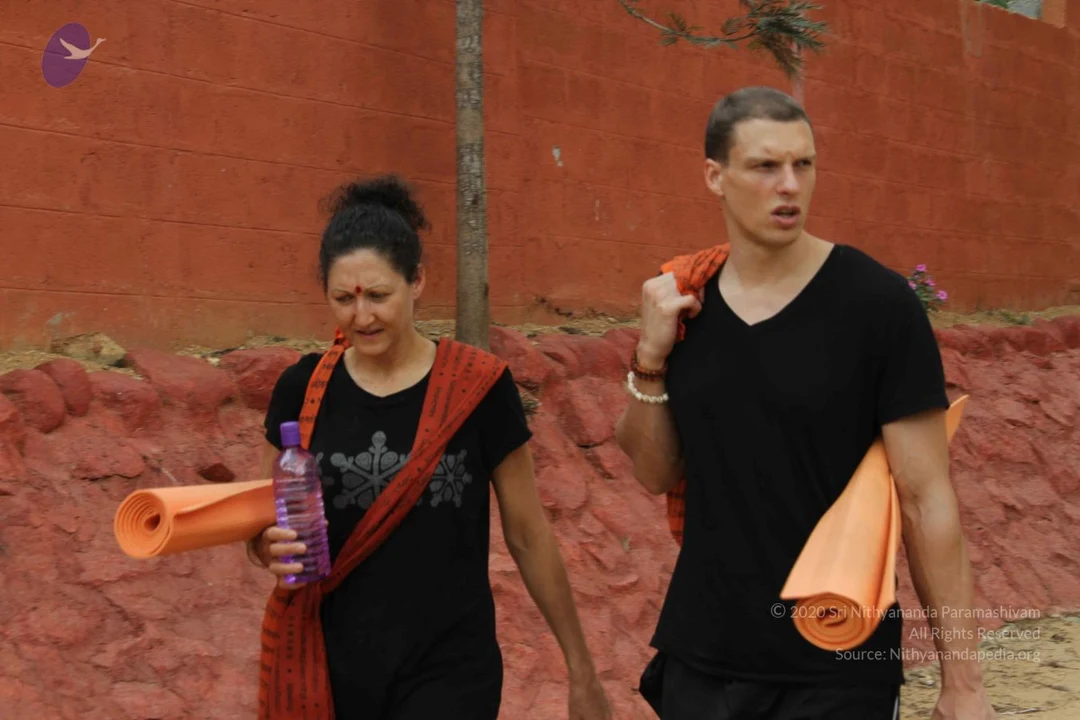
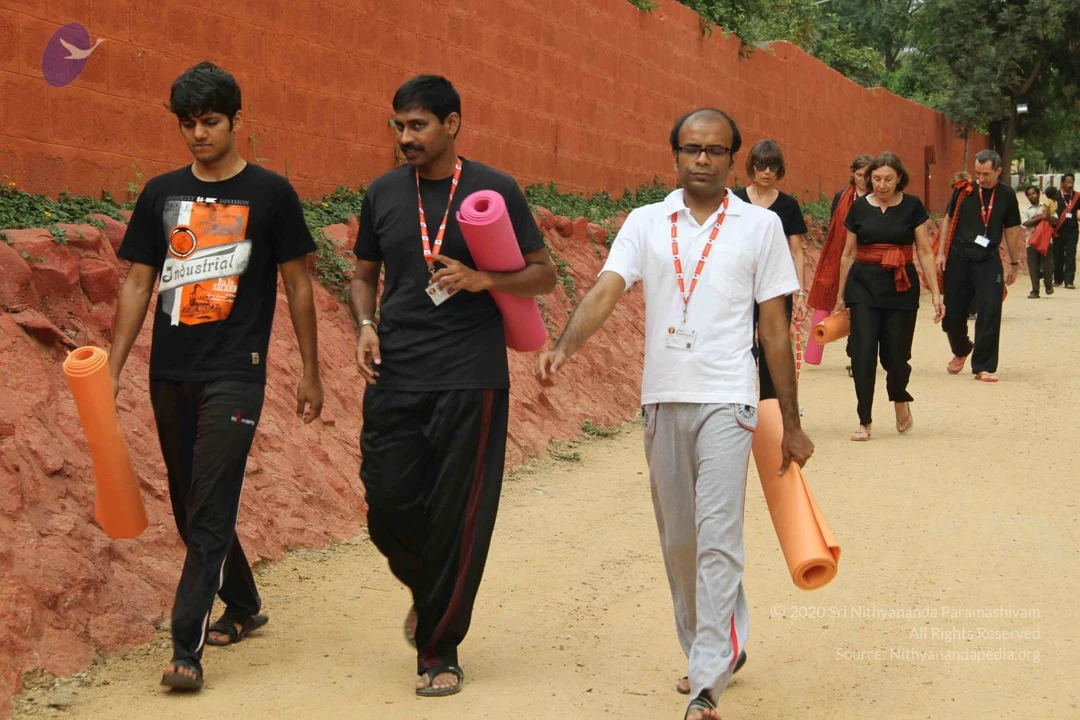
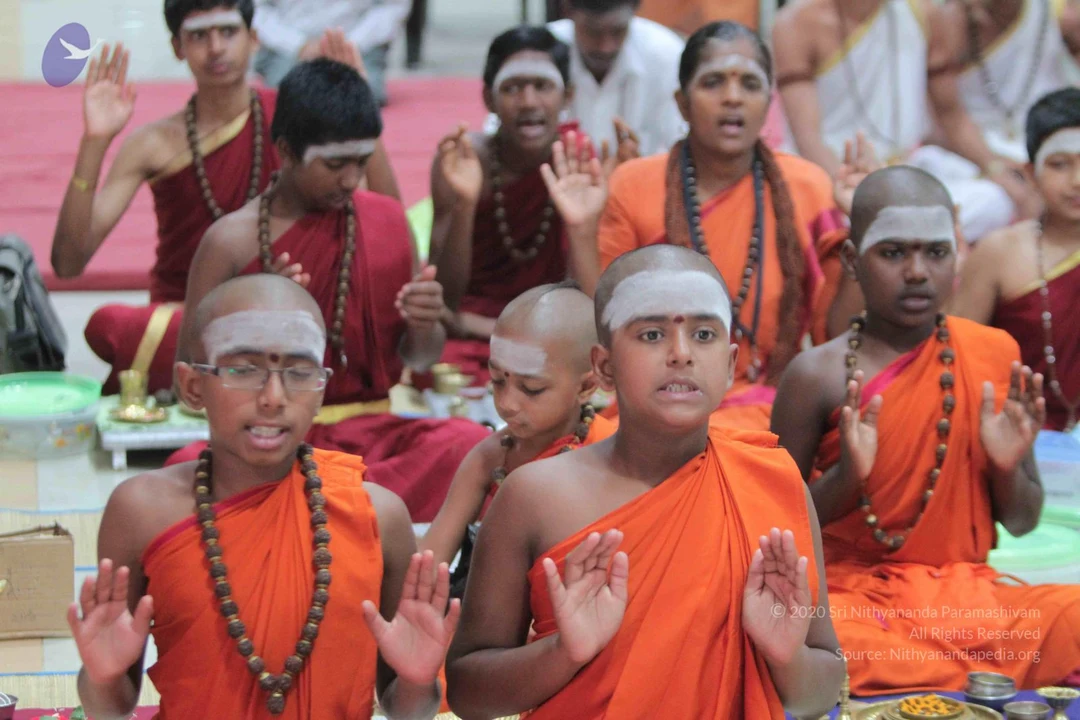
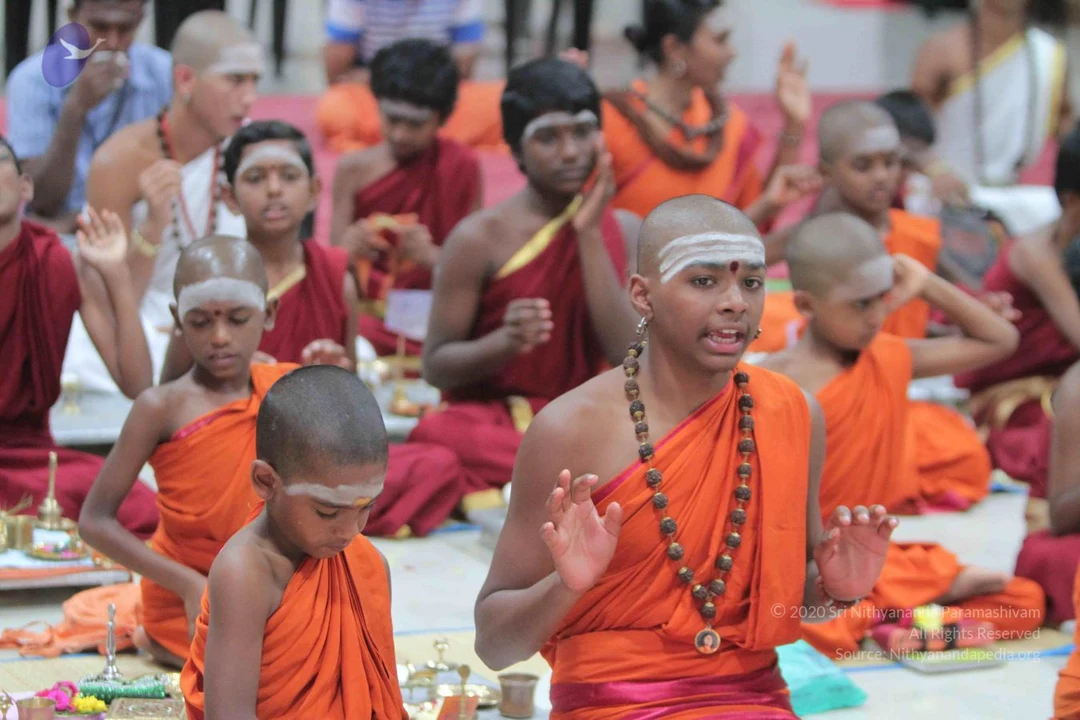
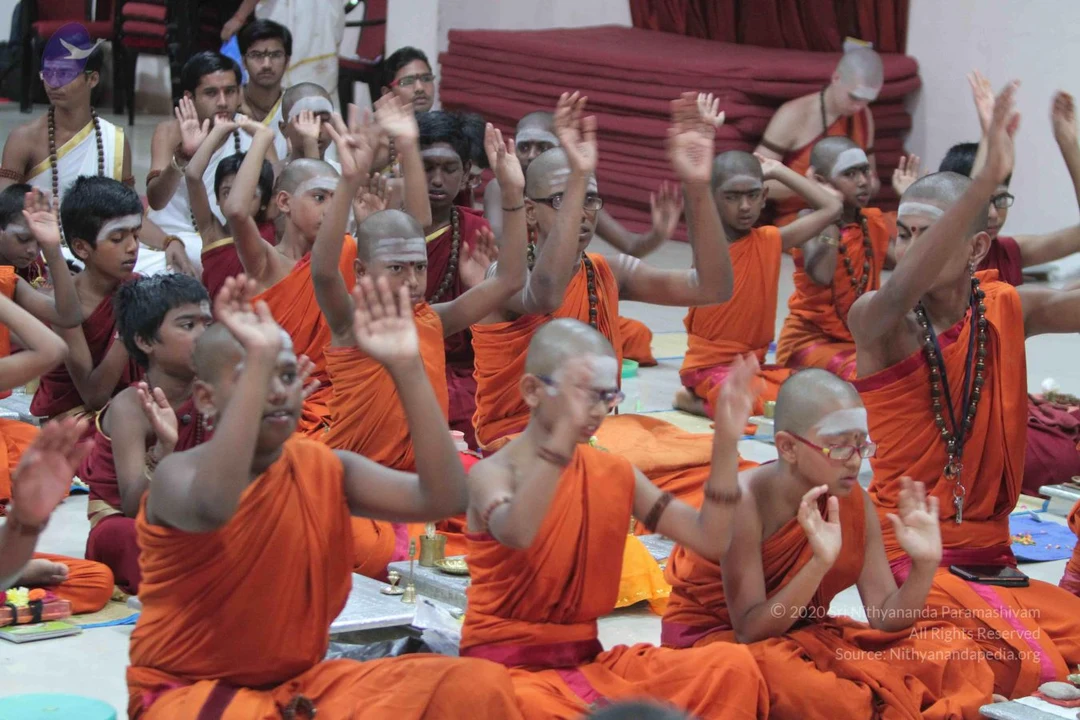
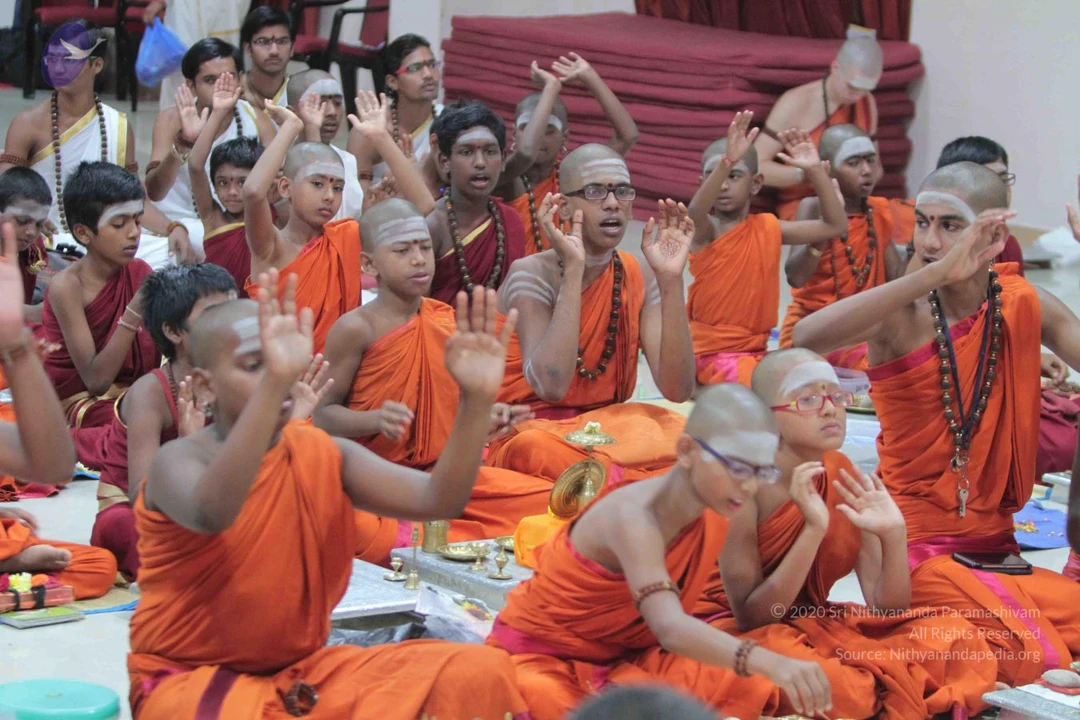
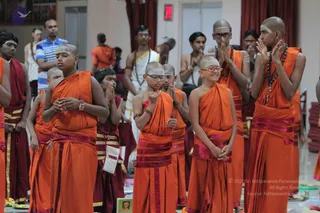
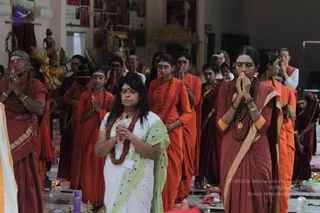
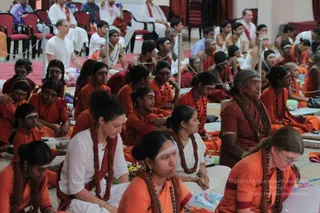
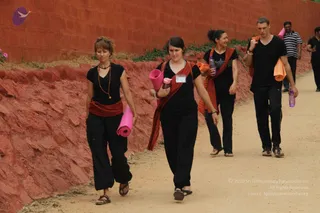
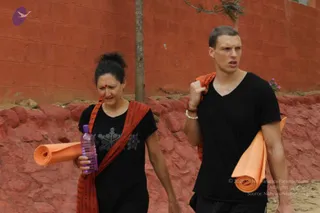
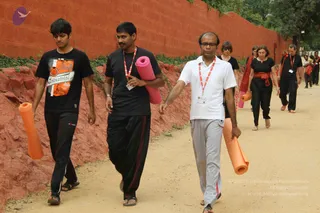
A photograph of a group of young boys and novices in saffron-orange robes with red-maroon waist sashes, shaved heads with white markings on their foreheads, many with hands folded in anjali mudra during a pada-puja style gathering in an indoor hall. Several wear rudraksha malas and some wear eyeglasses. Behind them, adults in white dhoti-style clothing and a man in a striped blue shirt stand watching, and red curtains and a red-lit clock are visible on the wall. Small offerings and a framed picture sit on the floor in the foreground. No identifiable a person candidate is clearly visible.A photograph of a temple hall during a devotional ritual, with a row of people standing with palms pressed together in namaste. Foreground: a woman in a white sari with a light green border and a red-beaded mala, hands folded at her chest. Behind her, women in orange and rust-red saris and rudraksha malas stand in rows, many with white and red forehead markings. Small oil lamps and offering trays sit on the floor, and a deity murti and framed pictures are visible on the back wall. No single person is identifiable as a person.A crowded indoor hall during a seated ritual gathering. Many devotees sit on the floor in rows, most wearing orange and saffron garments with rudraksha malas and white or red tilak marks on their foreheads. Several women in the foreground wear orange saris and rudraksha necklaces, and one woman in white holds a plate near brass offerings. A man in white stands near the left edge, and rows of red chairs line the back of the hall with more seated devotees. Red carpeting and wooden pillars with rope barriers are visible. No clearly identifiable a person candidate is evident in this crowd.Photograph of four people walking along a sandy path beside a tall red laterite stone wall with green plants at its base. Foreground left, a woman in black top and black trousers wears an orange-brown beaded necklace and a red-brown sash at her waist, carrying a rolled pink yoga mat. Centre, a woman in black with a white name badge and a red-brown shawl over her shoulder holds a pink mat and a water bottle. Behind them, a woman with hair tied up in black clothing and a red-orange shawl carries an orange mat, and a man in a black shirt and black trousers carries an orange mat over his shoulder, with a water bottle in hand. Two more people in dark clothes are visible at the far right edge.A woman and a man walk outdoors past a rust-red stone wall with a thin tree trunk between them. The woman, with dark hair in a bun and a red bindi, wears a black t-shirt with a grey snowflake-style design and an orange-red patterned shawl across her body, and carries a rolled orange yoga mat and a purple water bottle. The man, with short hair and a white beaded bracelet, wears a black v-neck t-shirt, has an orange-red shawl draped over his shoulder, and carries a rolled orange yoga mat under his arm. Both appear to be walking toward the camera.Several people walk along a sandy path beside a tall terracotta-red wall with greenery at its base. In the foreground a young man in a black graphic t-shirt and dark trousers carries an orange yoga mat, and beside him a man in a black t-shirt and black dhoti-style trousers holds a pink mat. A bespectacled man in a white polo shirt and grey trousers carries an orange mat, wearing a red lanyard with an ID badge. Behind them, more participants in black clothing, some with red sashes, walk in a line, several also carrying rolled mats.

Adhi-Kailasa

45 photosSource gallery
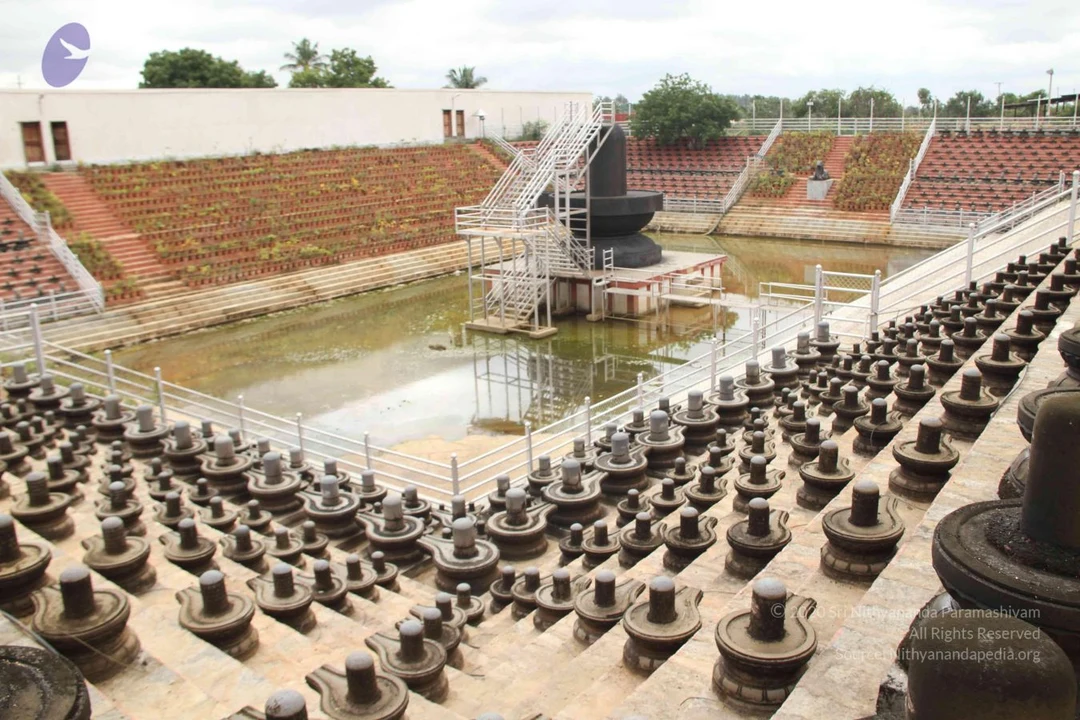
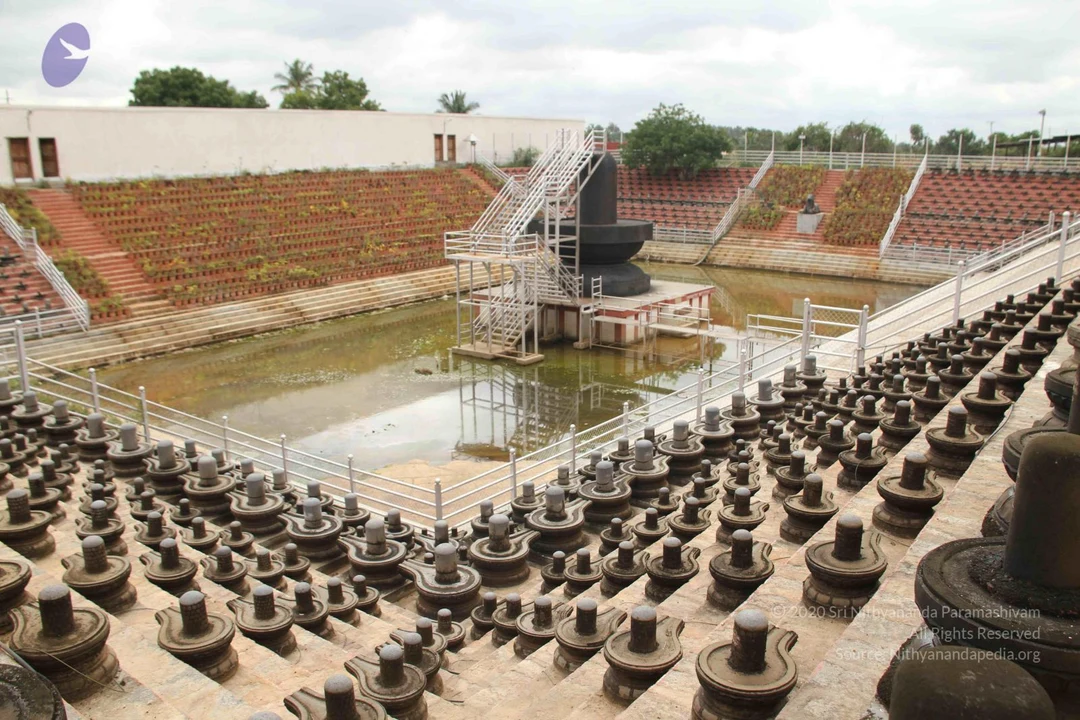
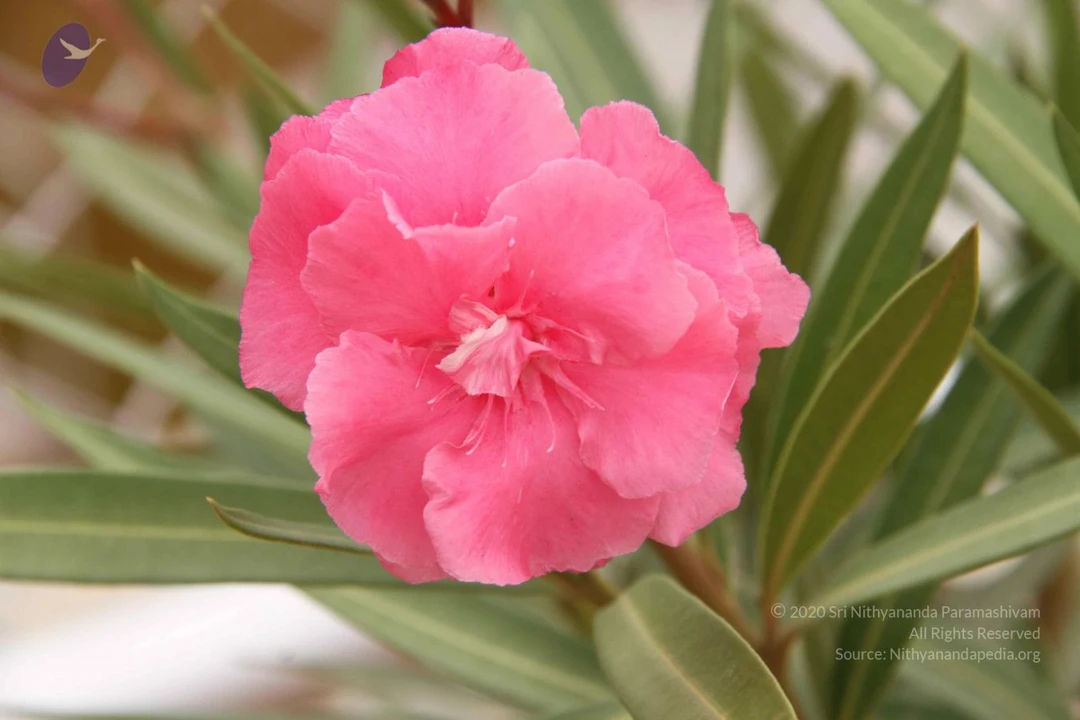
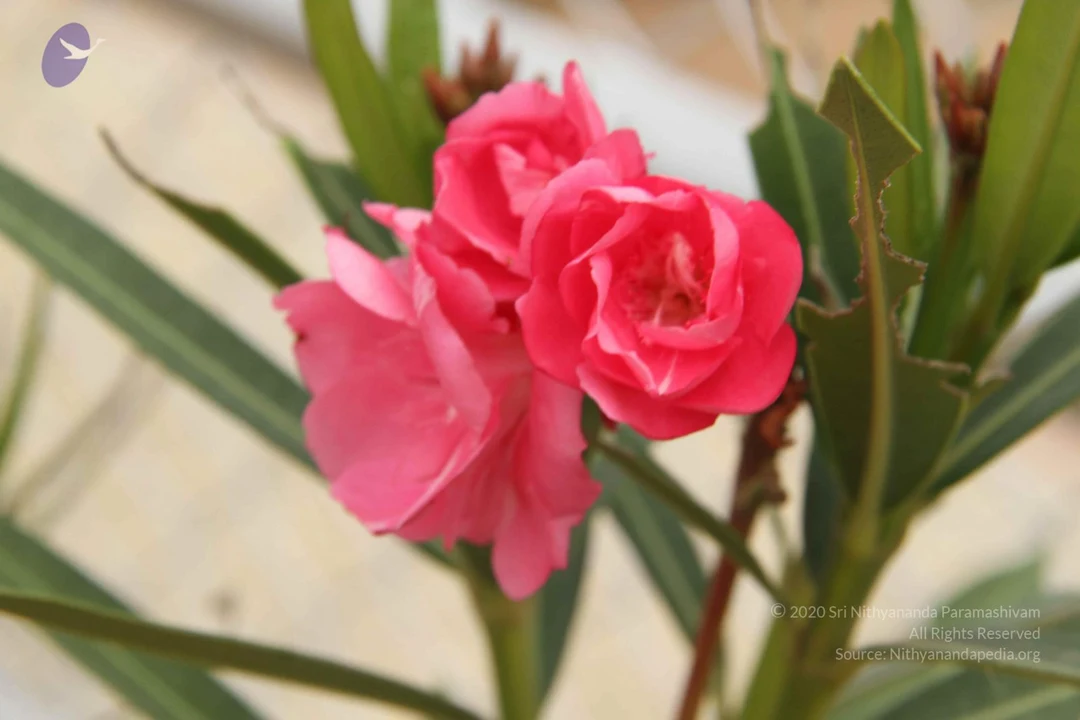
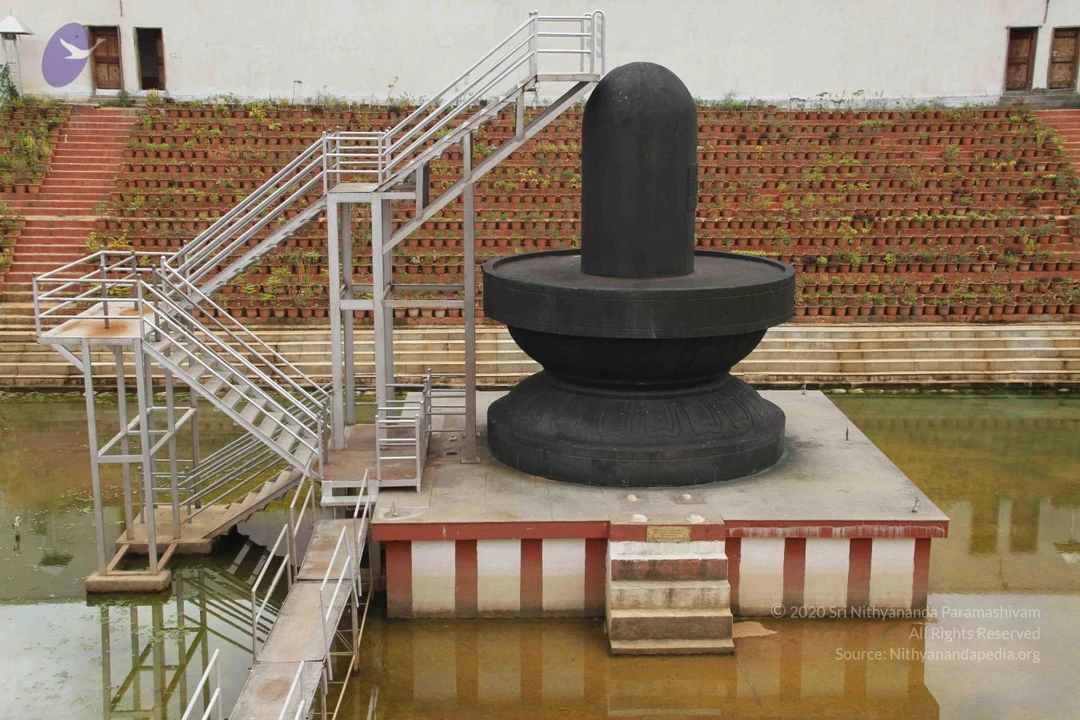
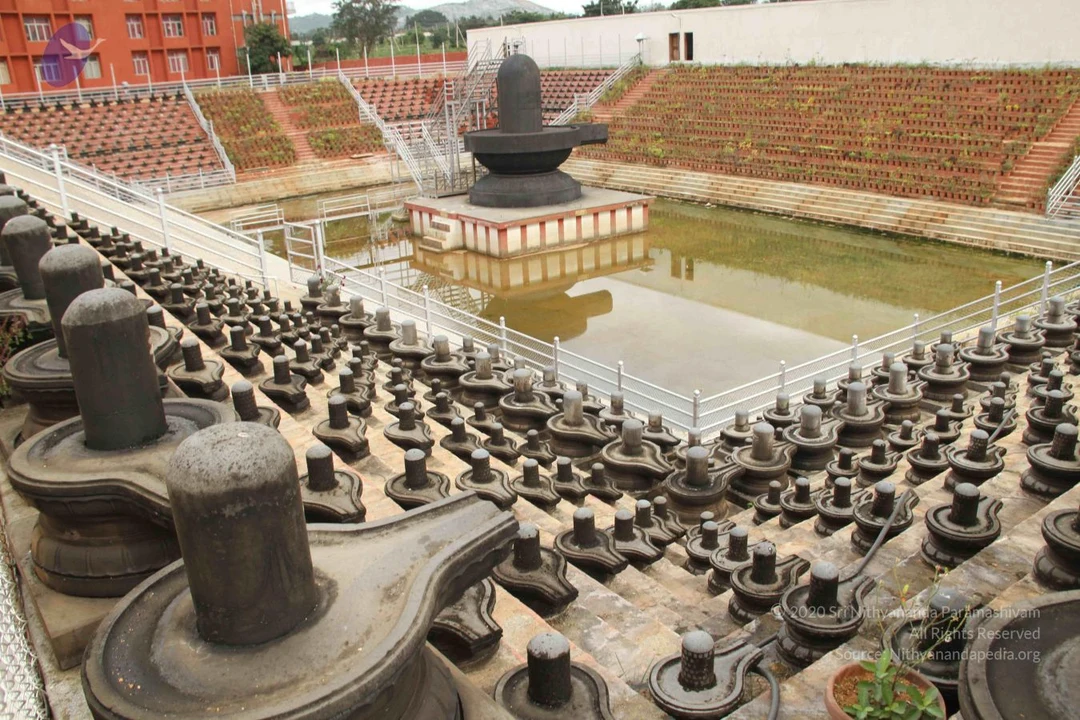
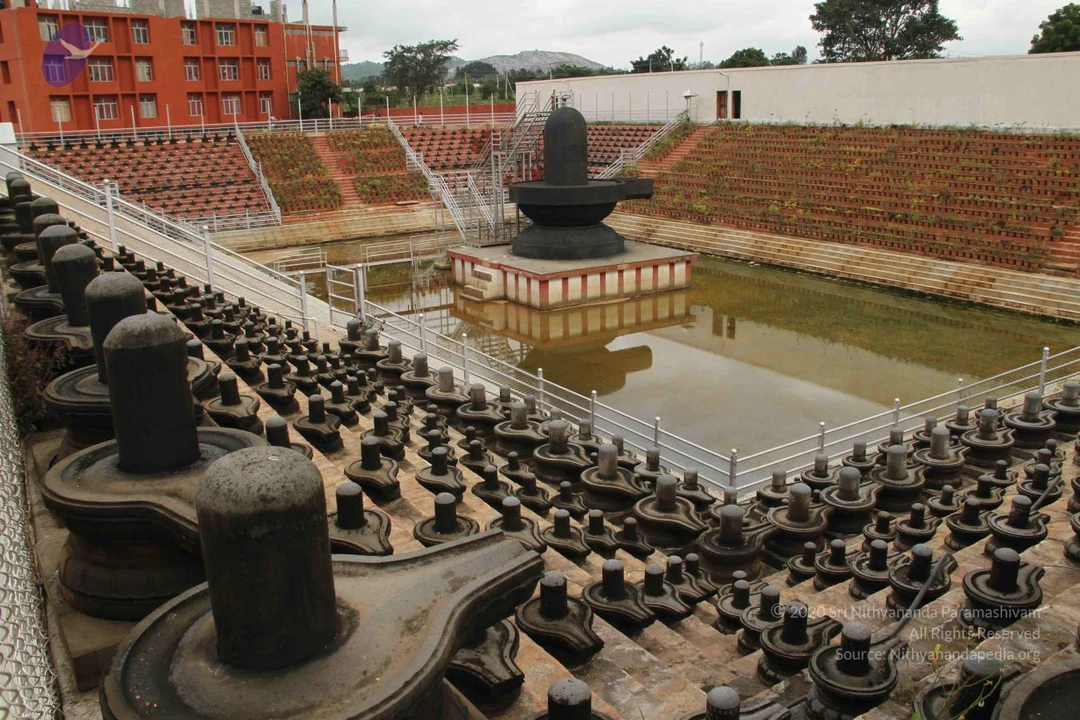
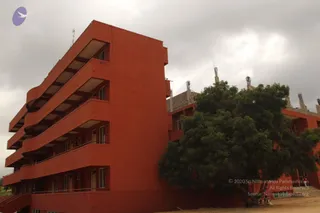
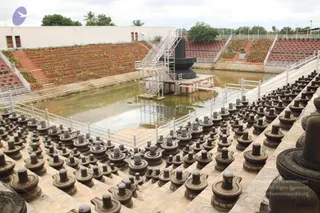
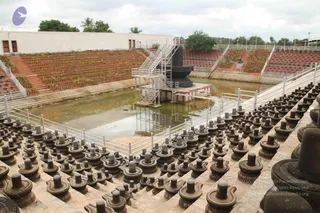
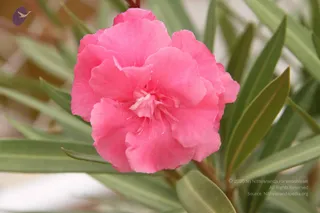
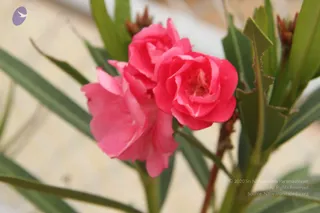
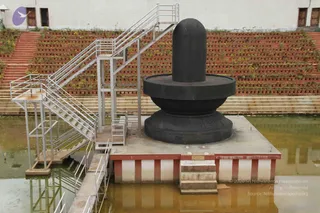
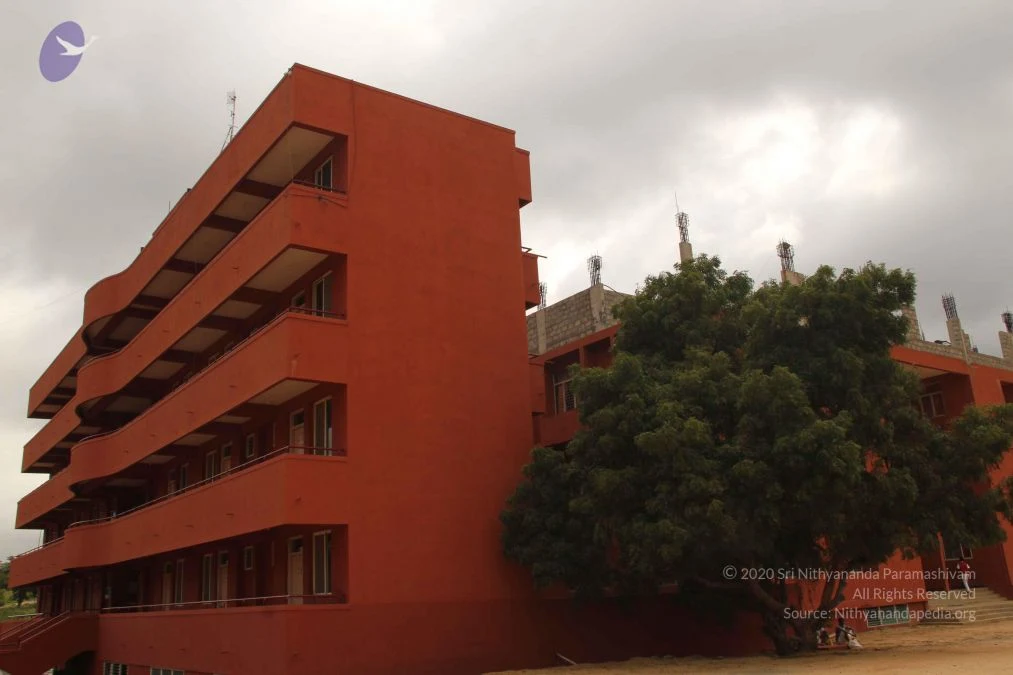
Exterior of a multi-storey red-orange building with stacked balconies and recessed walkways, photographed under an overcast grey sky. A large dense green tree stands at the right corner beside the building, with a few small figures sitting in its shade near the base. Rooftop antennas and a partly constructed concrete block structure appear behind the tree. No ritual activity or a person candidate is visible.Wide view of an outdoor temple water tank at a Shiva temple complex, with a large black central lingam rising from a shallow greenish pool on a square platform reached by a metal staircase. Rows of small black Shivalingams line the stone steps in the foreground, and terraced red-brick tiers with greenery rise behind. A white wall and palm trees sit under an overcast sky. No people are visible.Outdoor photograph of a large stepped tank at a temple complex. A massive black stone Shivalinga stands on a raised platform in the middle of greenish water, reached by a white metal staircase and railings. Rows of smaller black stone lingams sit on the terraced stone steps in the foreground, and tiered brick-red terraces with greenery rise on both sides. A white building and palm trees appear at the back under a cloudy sky. No people are visible.Close-up photograph of a double-petalled pink oleander flower with ruffled, layered petals and a pale centre, surrounded by long narrow green leaves with pale midribs. No people or ritual activity are visible.Close-up photograph of two pink double-petaled flowers. A blurred pale background sits behind the blossoms. No people are visible.A large black stone Shiva lingam stands on a raised square platform in a water tank at a temple complex. The lingam has a rounded top and a wide circular yoni-pitha base with carved detailing. A metal staircase with railings leads up from the water to the platform. Behind it, tiered red brick steps are lined with potted green plants against a white wall with wooden doors. A small plaque is set on the platform's front face. No people are visible.

darshan

28 photosSource gallery
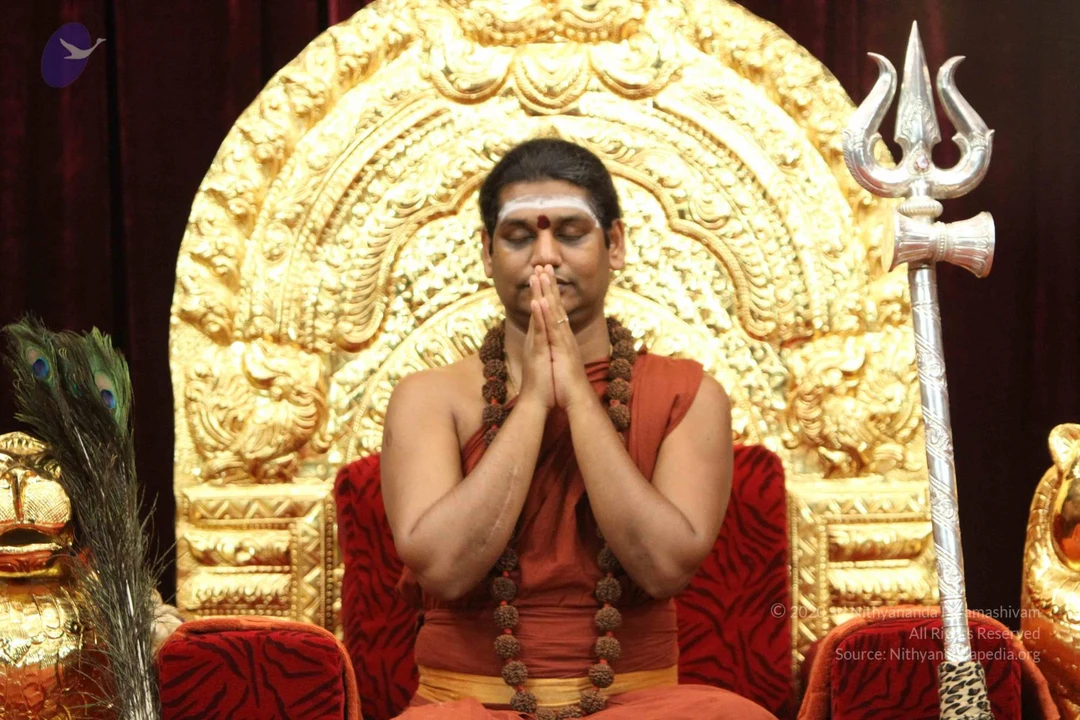
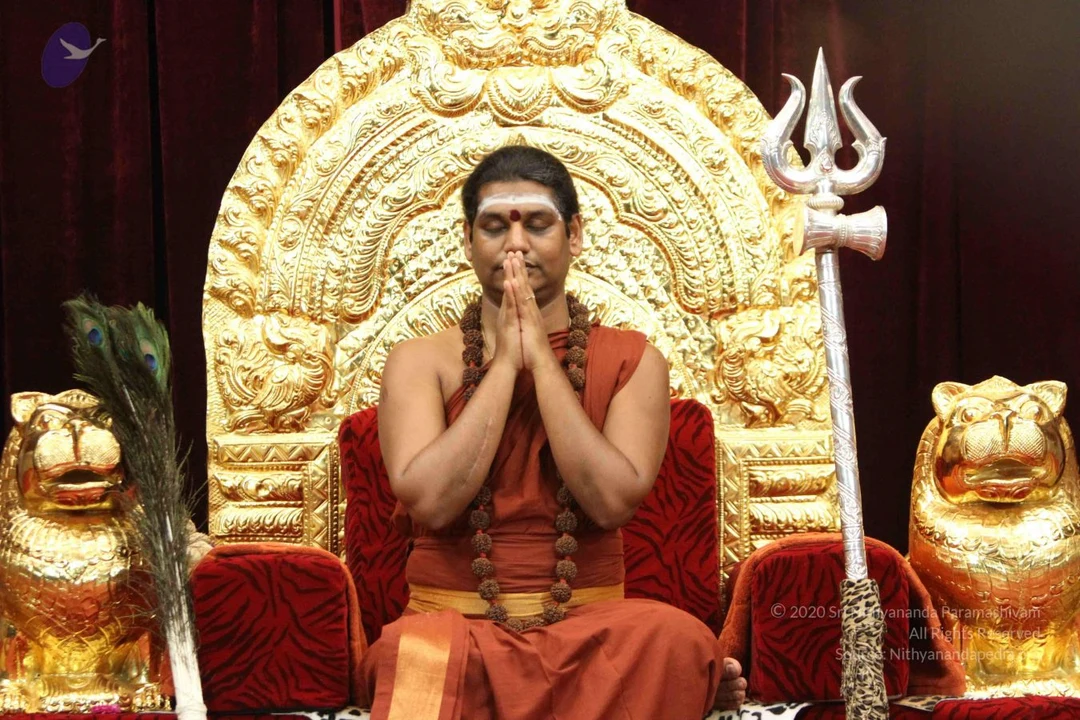
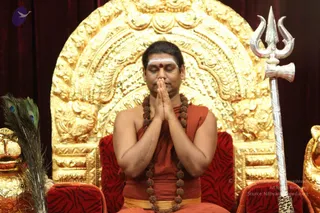
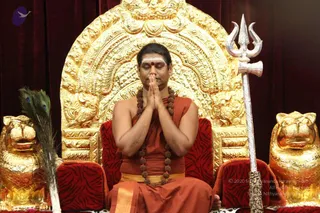
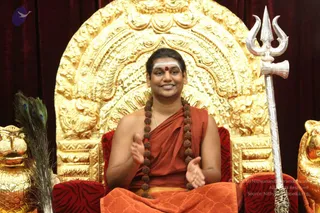
A seated man in an orange-saffron wrap and a long rudraksha mala with a yellow waistband sits before an ornate gold throne with a red cushioned seat, palms pressed together in namaste with eyes closed. He has a white forehead band and a red bindi. A silver trident stands at the right, and a peacock-feather fan and gold lion-like carvings flank the throne against a dark red curtain. Appearance-based cues (long swept hair not clearly visible, saffron wrap, rudraksha mala, ceremonial throne) suggest a person in a seated pose of reverence during a pada-puja style ceremony.A photograph of a seated man in saffron-orange robes on an ornate golden throne with a gold arched backrest carved with floral and scrollwork motifs, flanked by two golden lion-head sculptures on red velvet-upholstered seats. He sits with eyes closed and palms pressed together in anjali, wears a rudraksha mala with a golden-yellow sash at his waist, and has a white and red tilak on his forehead. A silver trident stands to the right, and a peacock-feather whisk rests at left against red draped fabric. This is a photo of a devotee-style ritual setting; the figure is presented in a throne-and-regalia context consistent with the page's pada-puja theme.A seated man in an ornate golden throne with carved lion-head arms and a dark red backdrop. He wears an orange-saffron cloth over his shoulder and a long rudraksha mala with a red bead, has a white tilak with a red dot on his forehead, and has his palms pressed together in a gesture of greeting. A silver trident stands to the right and a peacock feather fan is at the left. The figure is an appearance-based a person candidate with rudraksha mala and saffron clothing, seated on a throne in a pada-puja setting.A photograph of two men seated face to face in an ornate hall. On the left, a bare-chested man in saffron-orange cloth wears long swept-back hair, a white vibhuti line with a red mark on the forehead, and a multi-strand rudraksha mala; he smiles broadly and rests his right hand on the shoulder of the man opposite. The man on the right wears a white shirt with an orange-and-saffron shawl draped over his shoulders and is smiling with eyes closed. Behind them stand a silver staff topped with a ceremonial finial, golden lion-like figures, peacock feathers and orange cushions. The gesture suggests a blessing.A seated man with swept-back long dark hair, a white vertical tilak on his forehead, a red-brown bare-chested garment and a rudraksha mala on his shoulder places his right hand on the head of a kneeling young man in a white kurta and orange-saffron shawl printed with script. The kneeling man has his eyes closed and his hands raised in a palm gesture. A gold deity murti or peetha element and a silver staff with a finial stand beside them, with a peacock-feather fan at the left edge and an air conditioner and orange-framed window behind. Consistent with a padapuja blessing; the seated man has distinctive visible cues of long hair, rudraksha mala and bare-chested ochre attire.A seated person in an orange-red garment with a long rudraksha mala and a white-and-red forehead mark places a hand on the crown of a shaven-headed devotee in a white t-shirt and rudraksha mala. The devotee's palms are pressed together in reverence, and a golden kalasha-like object and a peacock-feather fan sit nearby against orange-and-white slatted panels in a temple hall. Appearance is consistent with the page's reference to a person candidate, but the presentation cues are limited to rudraksha and a red garment, so identity is uncertain.

Paduka-Puja

153 photosSource gallery
Close top-down photograph of a round polished brass dish on a maroon cloth. Pink rose petals are scattered over a small silver padukas or footprint-shaped murti at the centre, with a green leaf at the lower edge. Loose petals and white powder lie on the cloth nearby. No people are visible; this is a pada-puja offering arrangement.Close-up photograph of a polished silver offering plate holding a pink rose with its petals scattered, green leaves and water droplets, set on a red cloth. Rose petals and leaves rest in the shallow silver tray. No people are visible in the frame.A padapuja arrangement on a silver tray: a pair of black sandals with orange-brown straps rests on a gold-rimmed plate, scattered with pink rose petals. A hand in white sleeves pours liquid from a small brass cup at top. Around it are brass bowls, one holding rose petals, a brass bell, an oil lamp with a lit flame, a white conch shell, a rudraksha mala on a maroon cloth, a rudraksha bead, and a small brass deity figure. No people's faces are visible; the setting suggests a ritual worship of paduka.A photograph of a padapuja arrangement on a silver-plated wooden stand. At the centre is a pair of black sandals with orange straps resting on a gold-edged tray, with pink rose petals scattered over them and a rudraksha mala with a folded maroon cloth beneath. Around the tray are brass bowls holding rose petals and a rudraksha bead, a brass bell, a brass cup, a conch shell, a small brass lamp, a brass figurine, and a small bottle. The sleeve of a white garment with a gold border and hands are visible at the top, but no face is shown.Dense seated group of devotees in orange and saffron robes with rudraksha malas, many with white and orange sandal or ash marks on their foreheads, performing a ritual puja on a temple floor. Small brass oil lamps, brass vessels, and plates with offerings sit before them. In the front left, a woman in white robes with a rudraksha mala and a man with bare upper body and white paste on his chest and arms sit with hands folded. Other seated men in orange with shaved heads and white forehead bands sit near a low chain barrier. Background rows of similarly dressed participants fill the hall with columns and pink cushions.A seated figure in a maroon-red robe and matching red-orange turban sits on an ornate gold throne within a dark slate-grey shrine niche framed by orange and yellow borders. He wears a white flower garland and a beaded rudraksha-style necklace, and raises one hand in blessing. Hanging brass oil lamps and bells hang beside strings of dark beads on the wall. Two attendants in orange and maroon kneel before the throne, one in a white dhoti with bare upper body performing a ritual, the other seated at left. The scene suggests a pada-puja (foot-worship) ceremony. Swamiji (probable): the seated figure wears a red-orange turban, rudraksha-style beaded necklace and maroon robe, consistent with the page's reference to Swamiji at this event.

Initiation

42 photosSource gallery
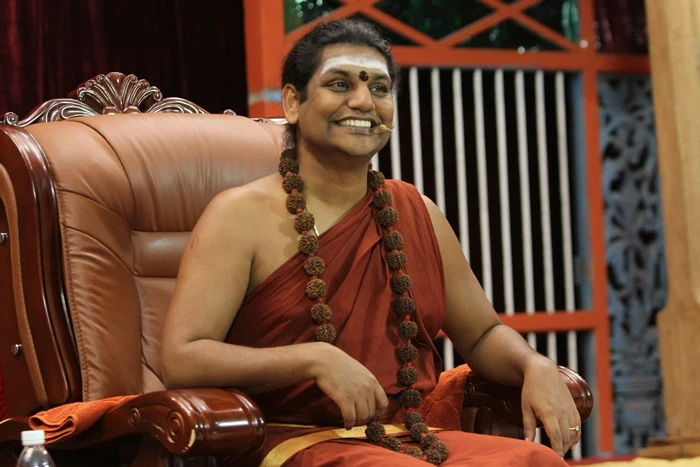
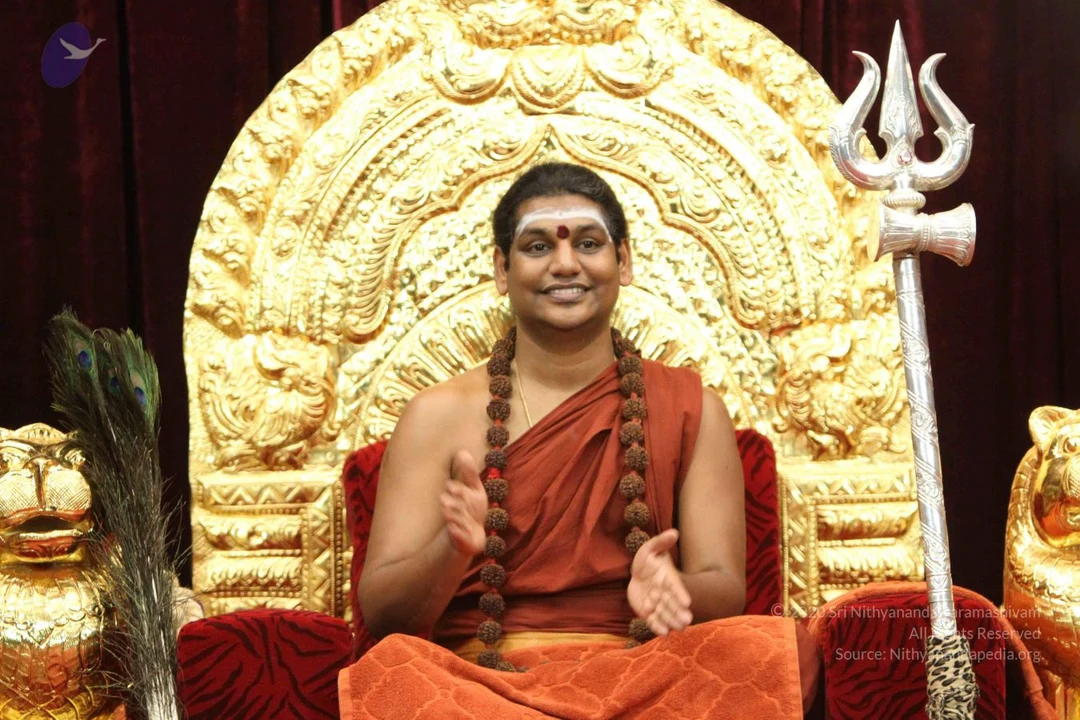
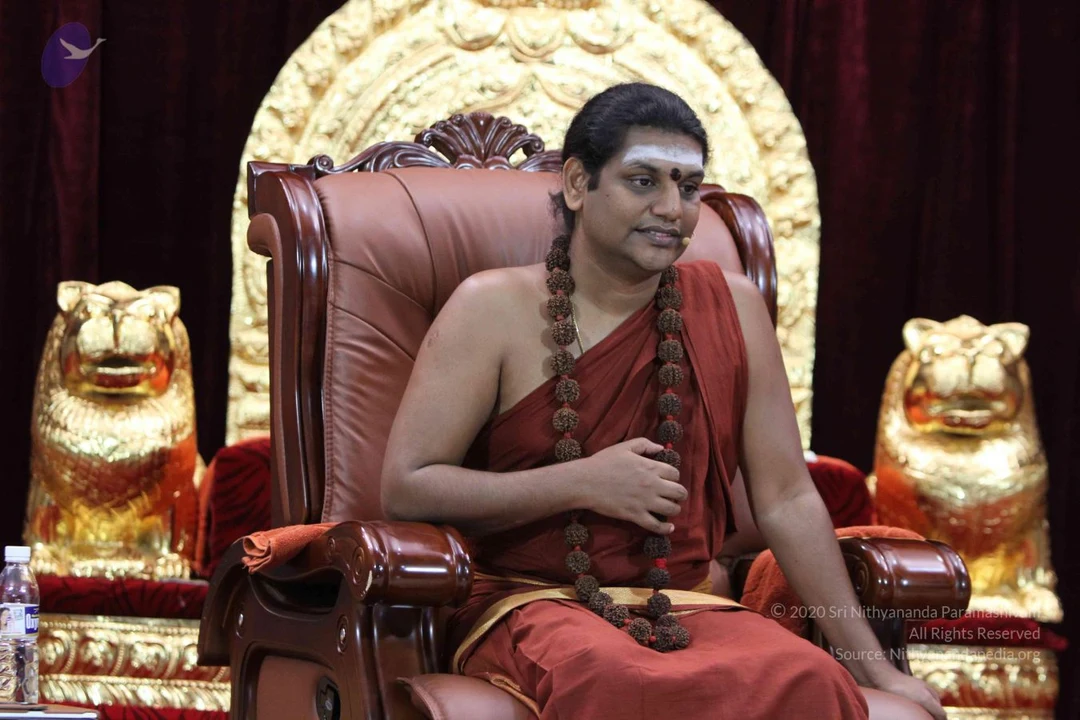
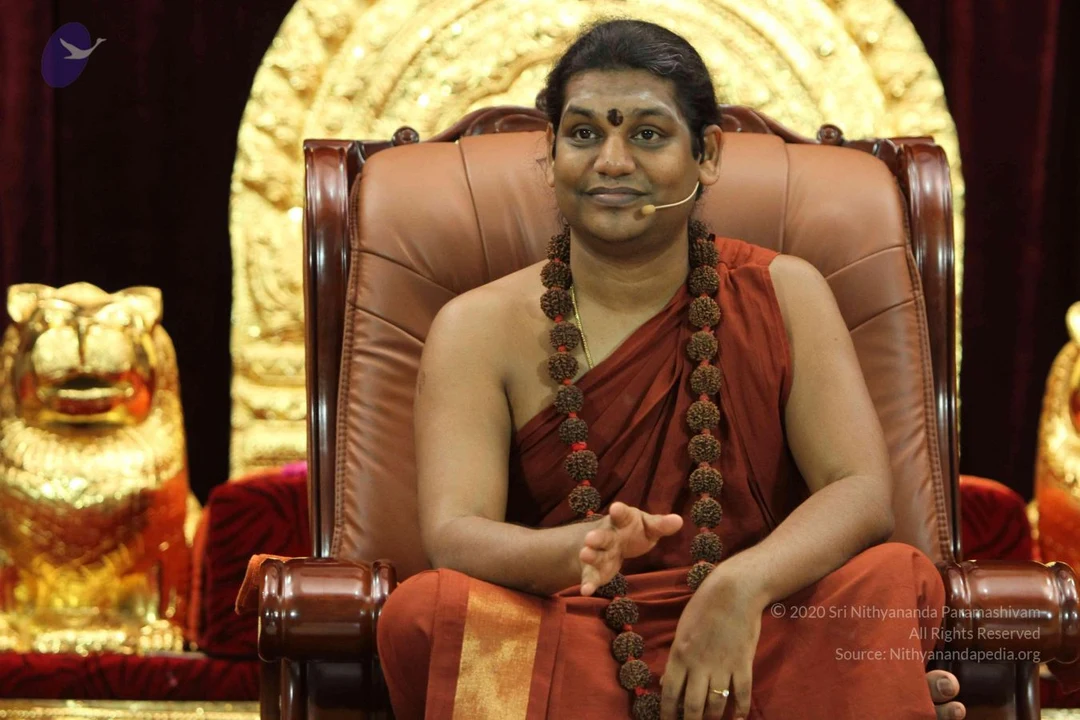
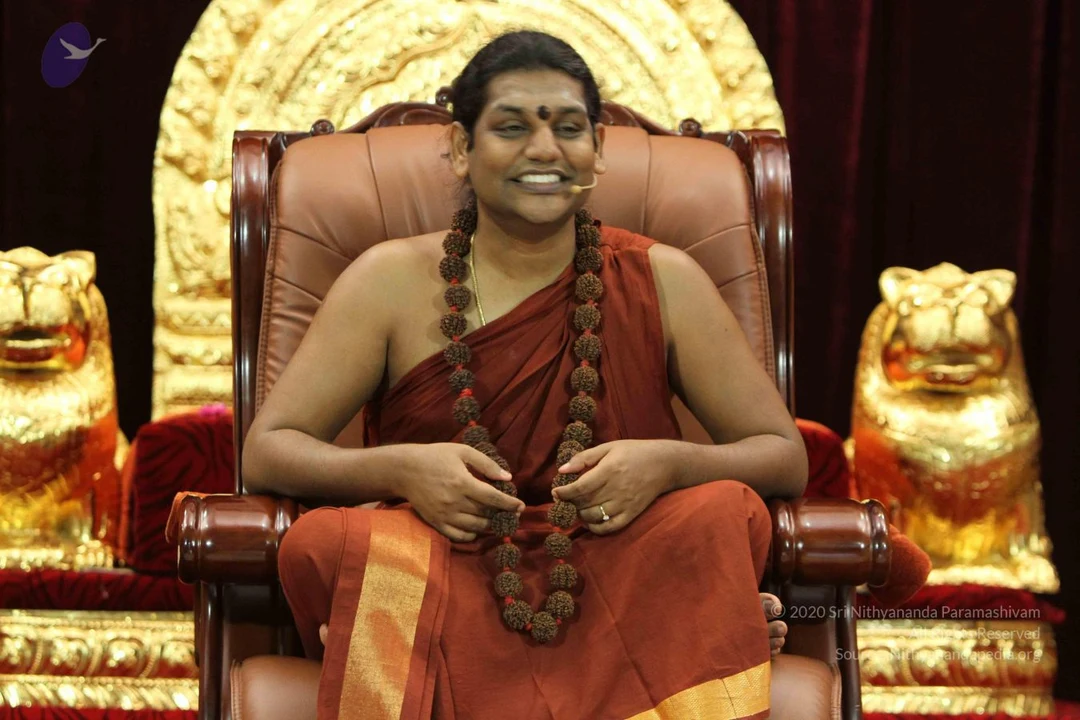
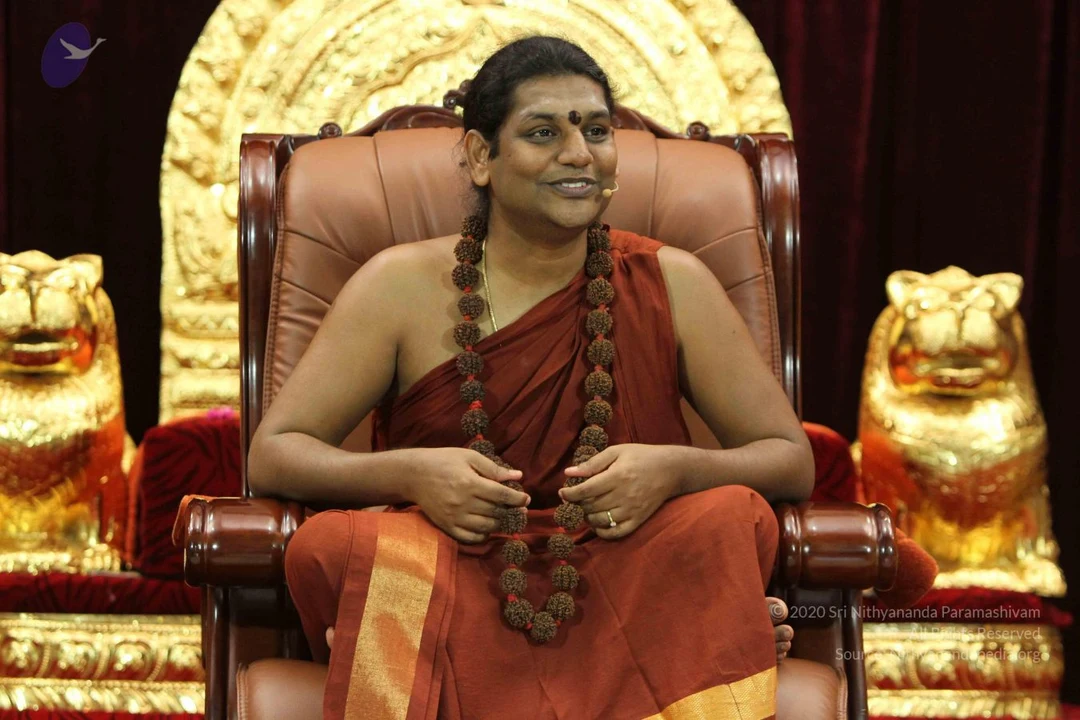
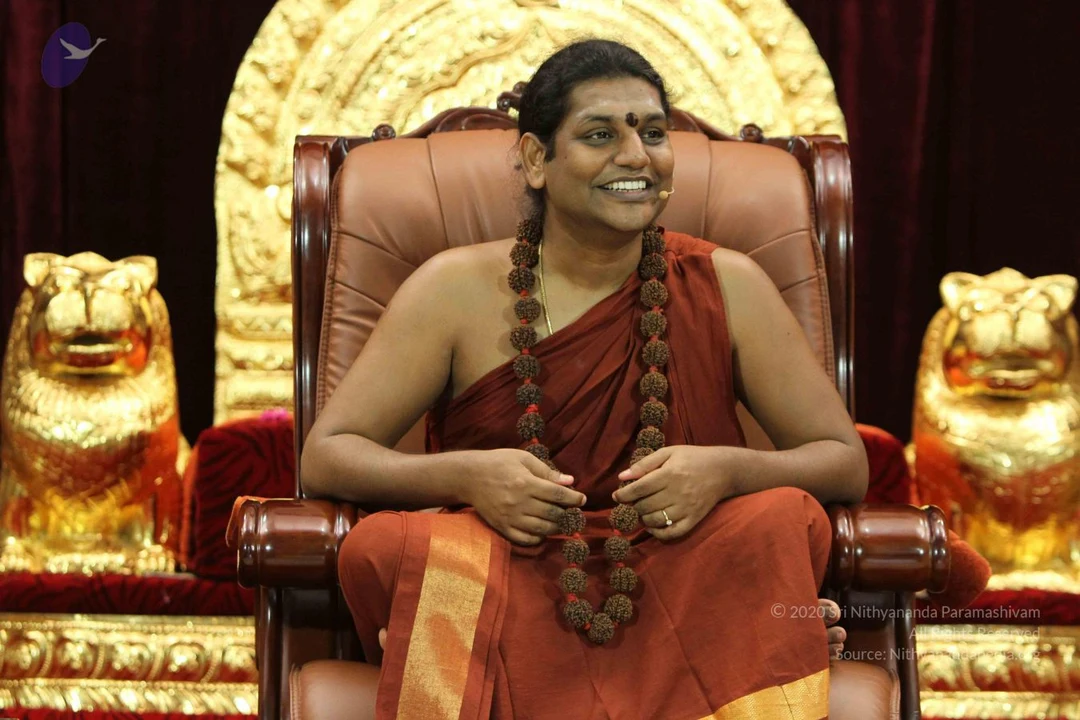
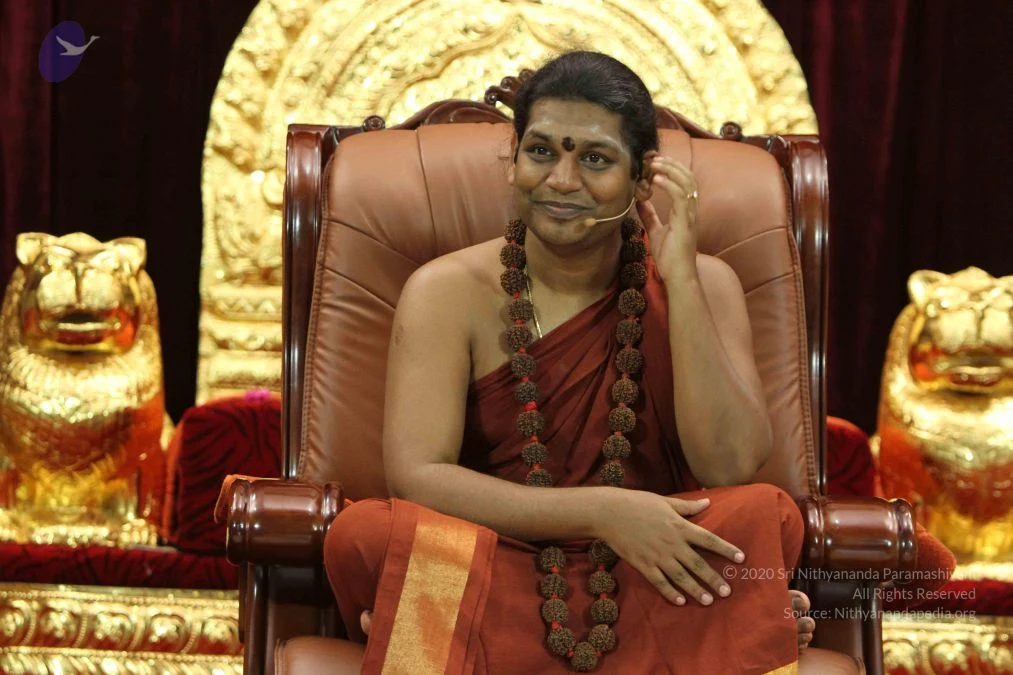
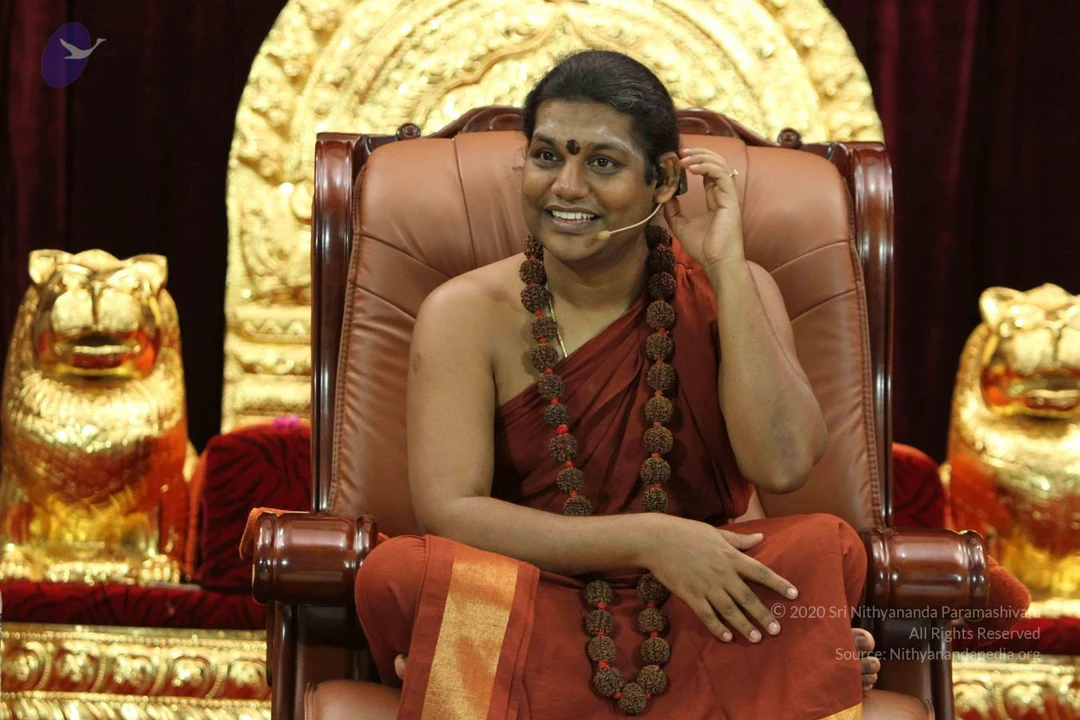
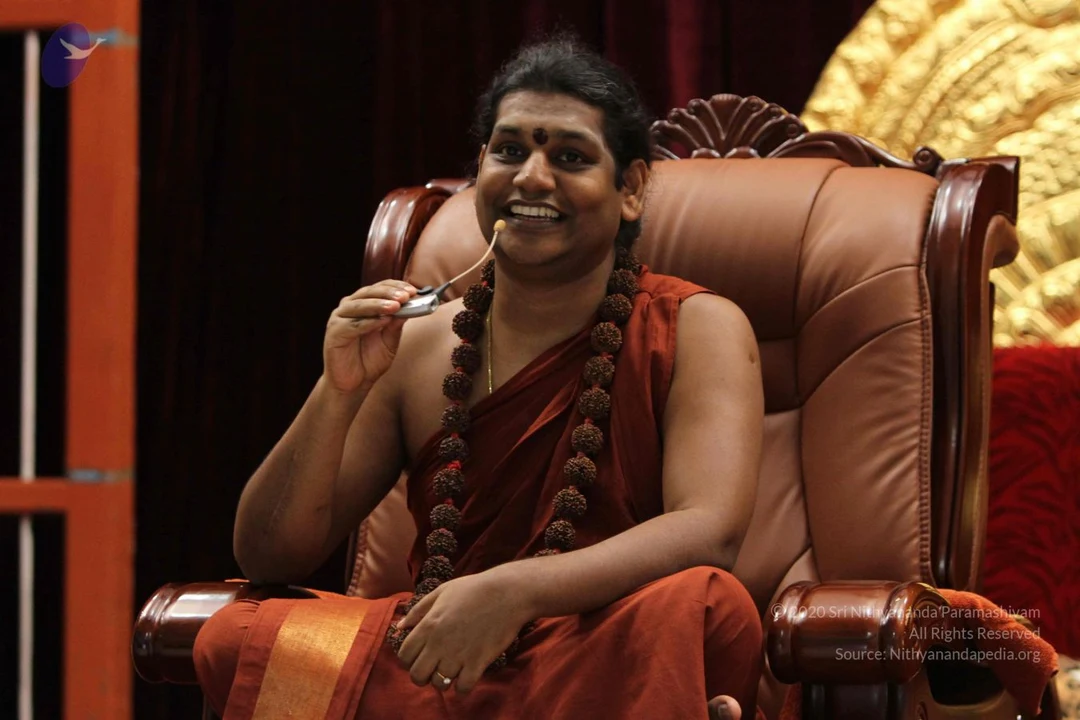
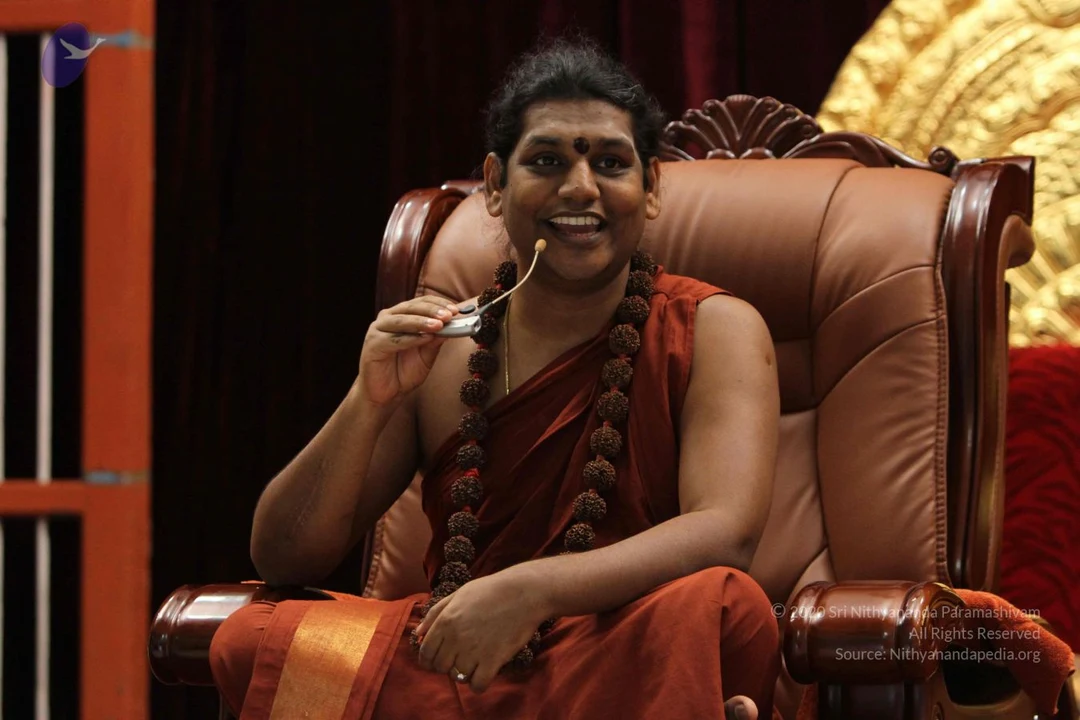
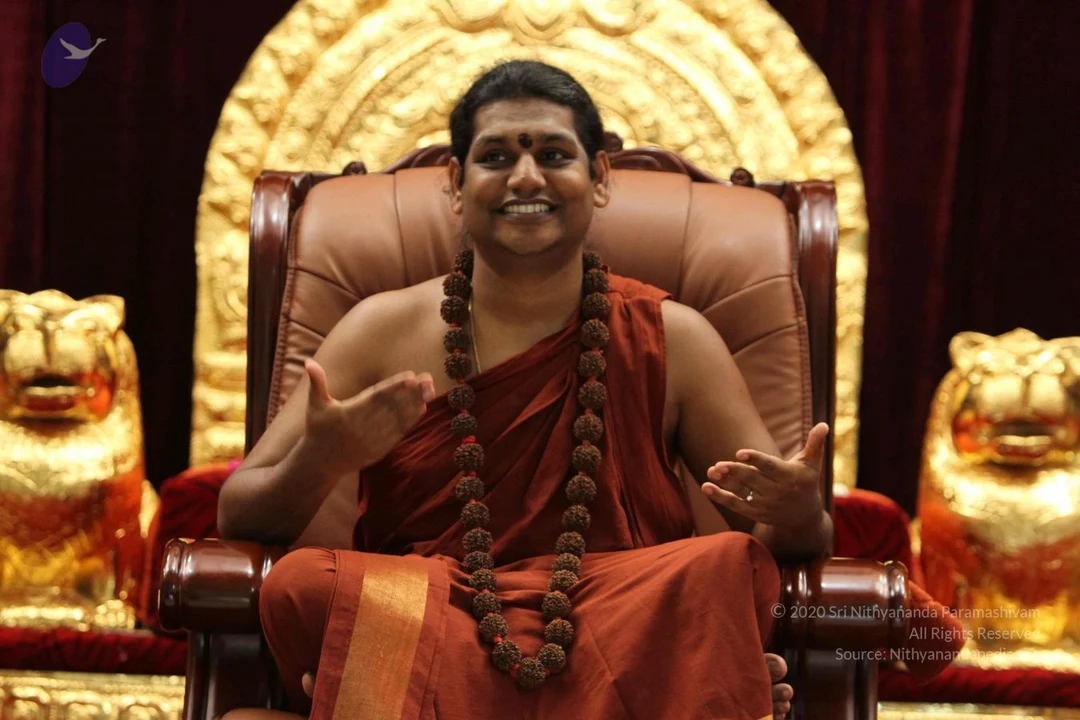
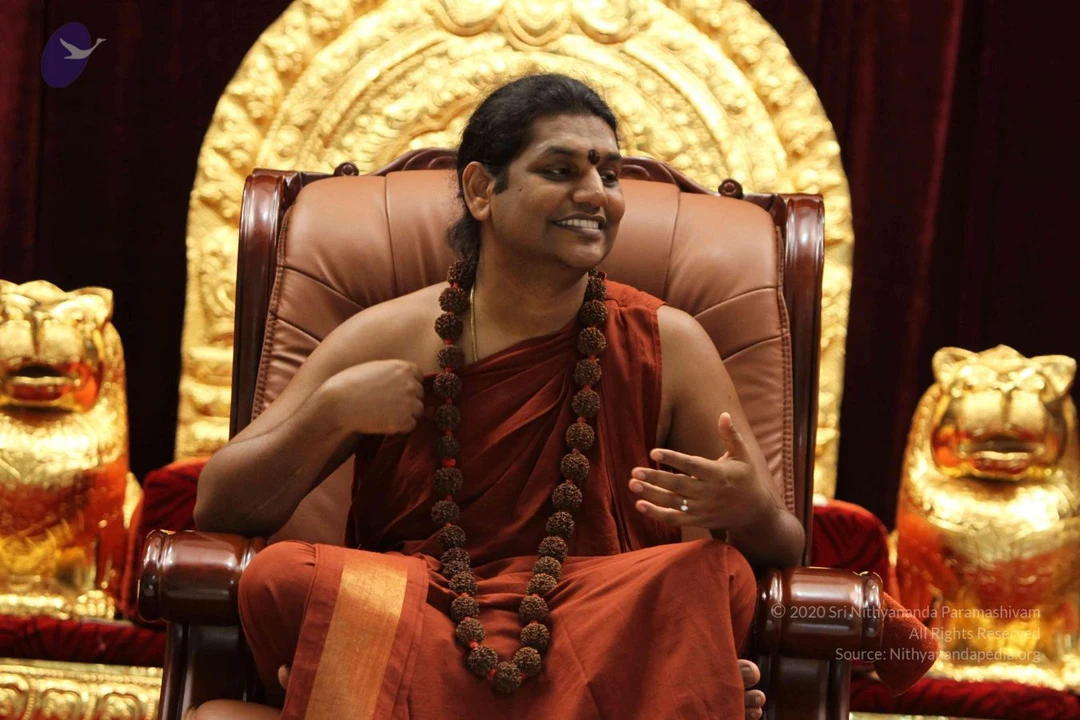
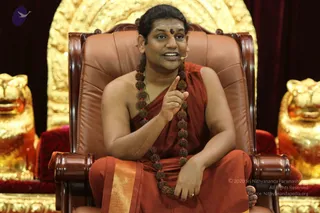
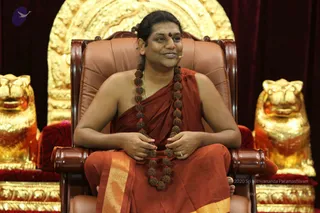
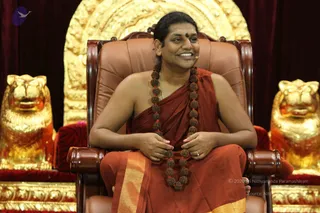
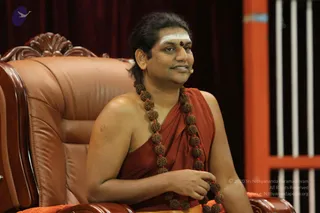
A person seated in a large brown leather throne-style chair before a gilded backdrop with golden lion figures at the sides. The person wears a rust-orange wrap with a gold-bordered hem, a long rudraksha mala with multiple beads, a gold chain, a red bindi on the forehead, and a small headset microphone. Hands rest in front, one holding a gold ring. Red velvet draping and a gold ornamental arch frame the scene. Swamiji (probable) seated on the throne, with long swept-back hair, a rudraksha mala and orange-saffron clothing. A pedia source credit appear at lower rightA bald-headed... 2 are wrong; correct: A man with long dark hair swept back sits in a brown leather armchair with carved wooden armrests, wearing a rust-orange cloth wrap over bare shoulders and a long rudraksha mala with a ceremonial gold necklace. He raises one index finger while speaking into a small headset microphone, with a dark kumkum mark on his forehead. Behind him, a large gold-leafed arched backdrop and gilded lion figures flank the chair against deep red drapes. Swamiji (probable) appears as the seated speaker, with cues of long swept-back hair, rudraksha mala and saffron wrap; the photo is a photograph of a single seated speaker.A smiling figure sits on a large brown leather throne-style chair in front of an ornate gold carved backdrop with golden lion sculptures flanking the chair on both sides and dark red drapery behind. The person wears a rust-orange and gold-bordered wrap over a bare shoulder, a long necklace of brown rudraksha beads, and a small red bindi on the forehead, with a small microphone clipped near the face. Hands rest in the lap, one holding the beads. Swamiji (probable) is seated centrally, with cues including long swept-back dark hair, a rudraksha mala and saffron-orange ceremonial wrap; the image is a photograph of a seated person on a throne. Overlaid ', '' and ''A seated figure in a brown leather armchair with carved wooden arms sits before an ornate gold relief backdrop flanked by two golden lion sculptures on red cushioned plinths. The person wears a rust-red and gold-bordered draped garment over bare shoulders and a long rudraksha mala with multiple strands, plus a thin gold chain. A small red mark is on the forehead and the hair is pulled back. Hands rest in the lap holding the beads, and the person smiles while looking off to one side. A microphone clip is visible near the ear.A smiling man with swept-back dark hair and a small red bindi sits in a brown leather throne-style chair with carved wooden arms. He wears a rust-red and saffron-bordered wrap over bare shoulders and a long necklace of rudraksha beads, with a thin gold chain visible at his neck; his hands rest in his lap. Behind him is a large gold carved backdrop, and two golden lion figures flank the chair on red velvet cushions. A small clip microphone is visible near his face. The image is a photograph; no other people appear. Swamiji (probable): the swept-back hair, rudraksha mala and saffron-toned wrap are present, so the appearance-based candidate is the seated man on the throne.A seated man in a leather-upholstered wooden throne chair sits before gilded lion statues and a golden ornamental backdrop with red velvet drapes. He wears a rust-red shawl draped over bare shoulders, a long rudraksha mala of brown beads hanging to his waist, and a small red-brown forehead mark, with a small microphone clipped near his face. His right hand rests on his lap while his left hand touches his ear, and he smiles.

Annadhan

7 photosSource gallery
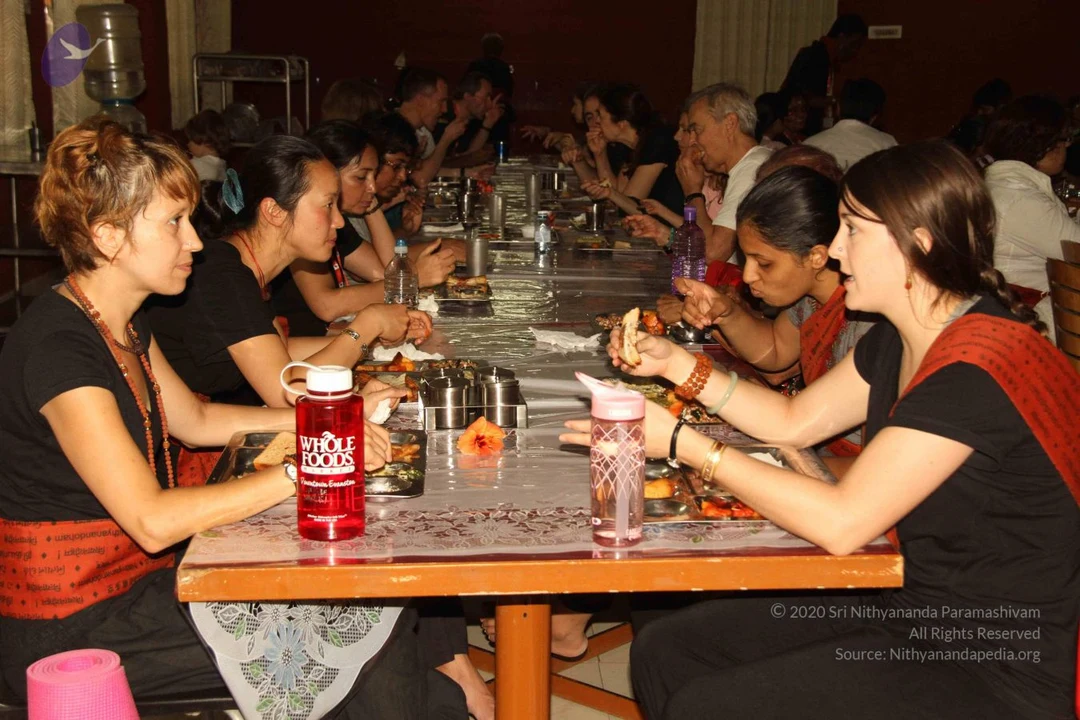
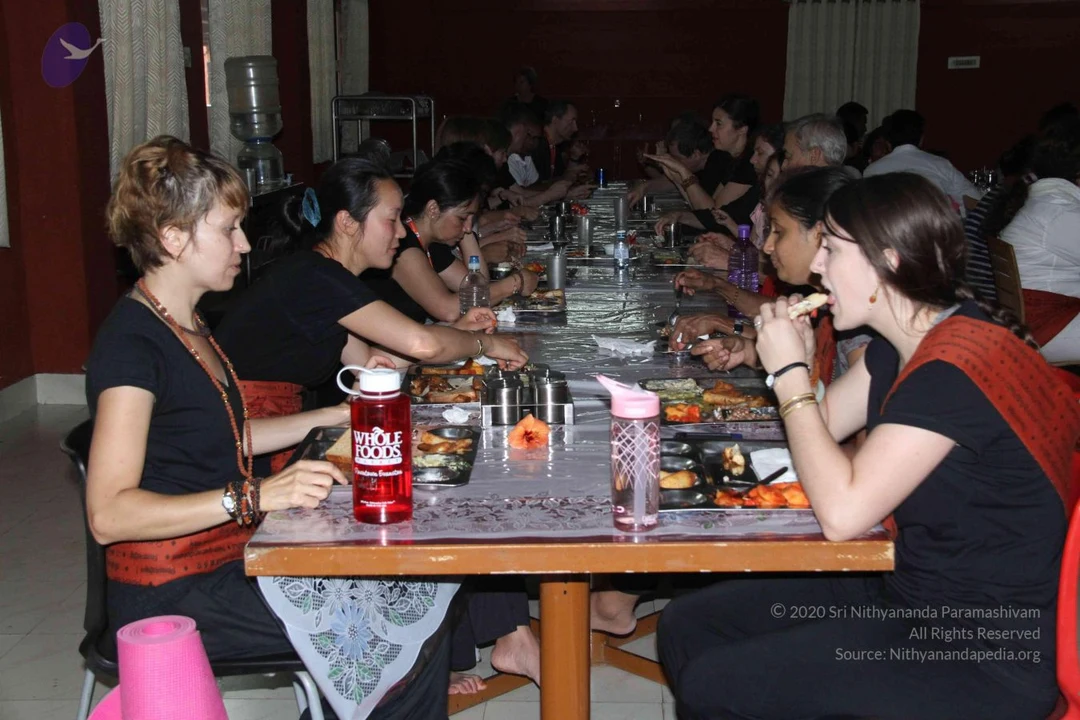
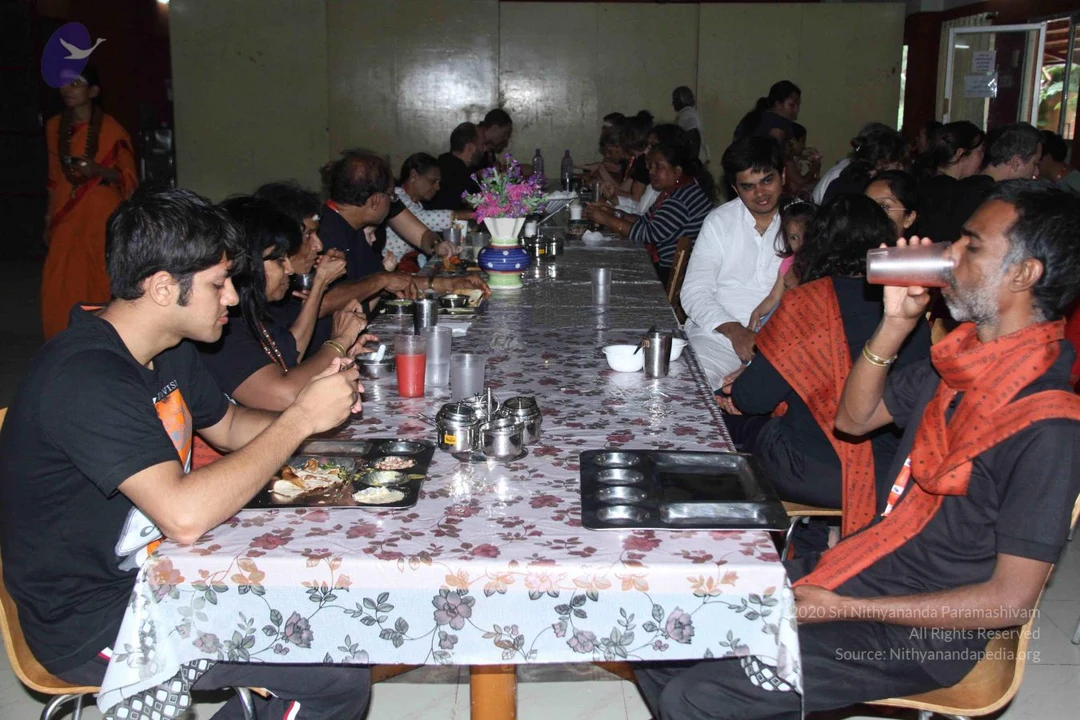
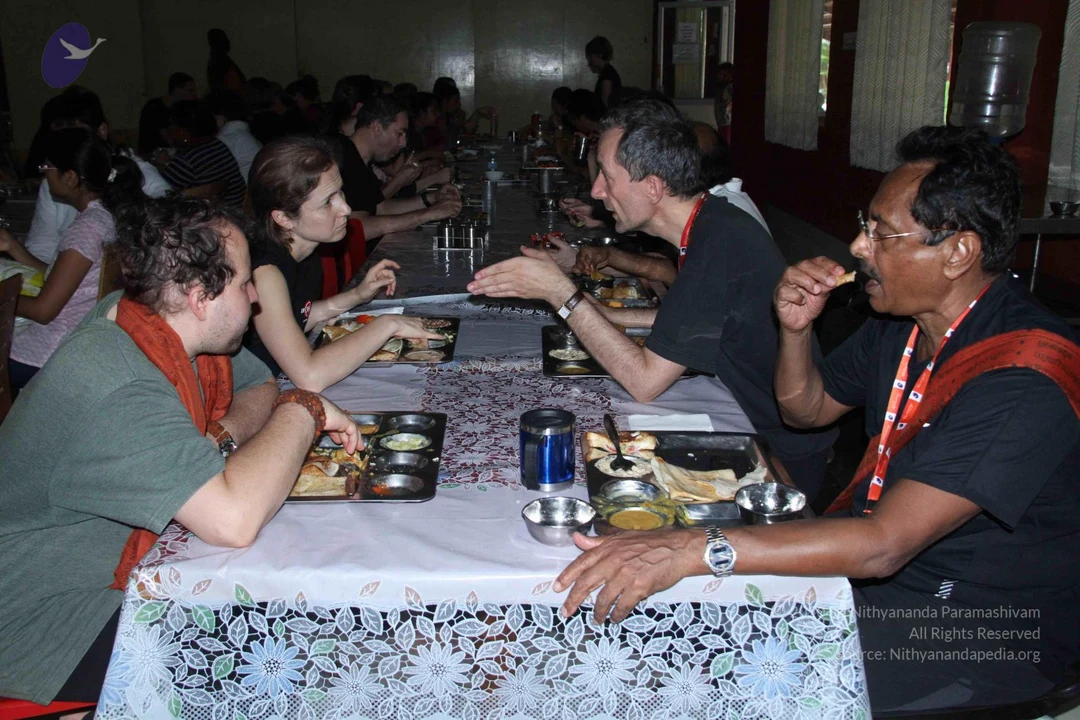
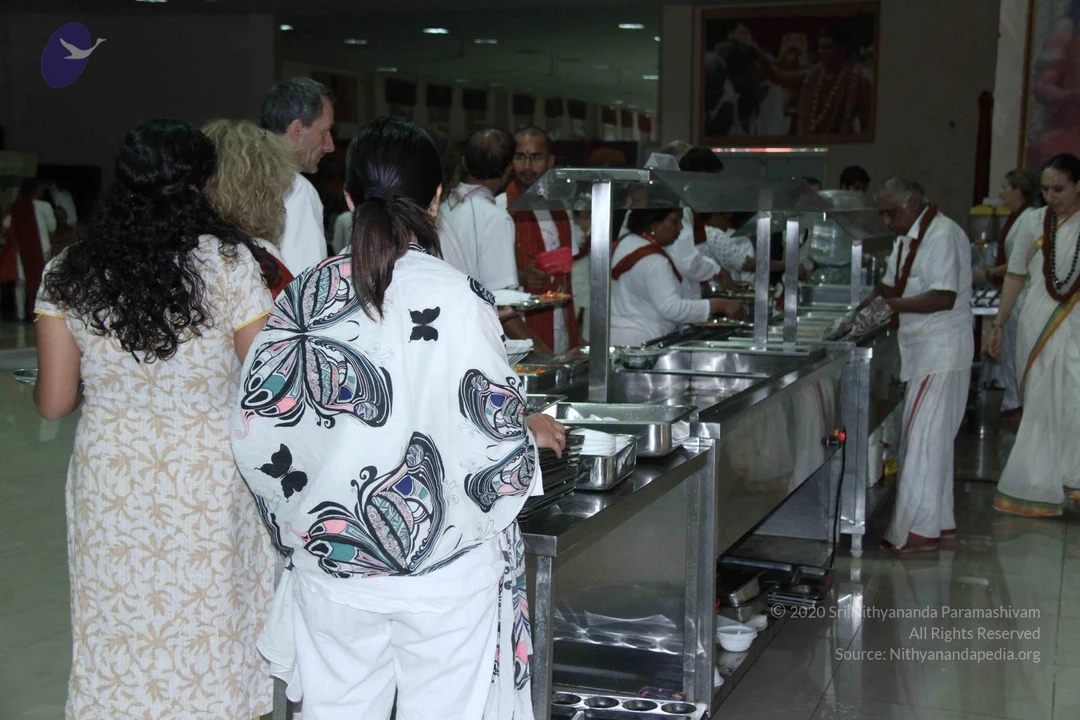
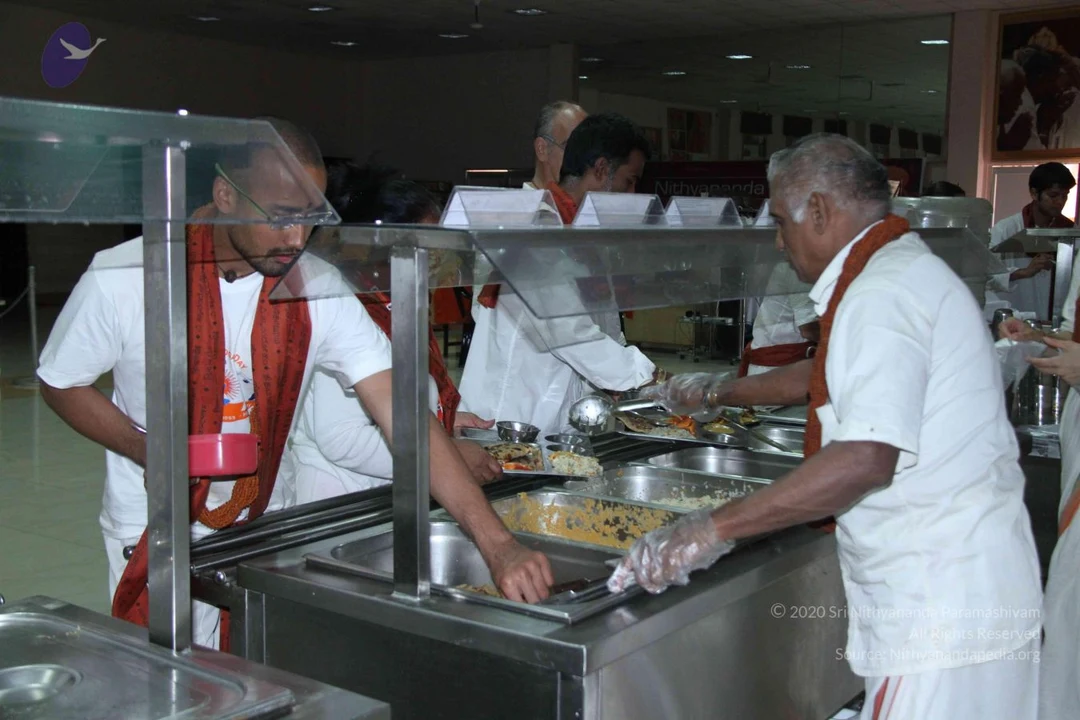
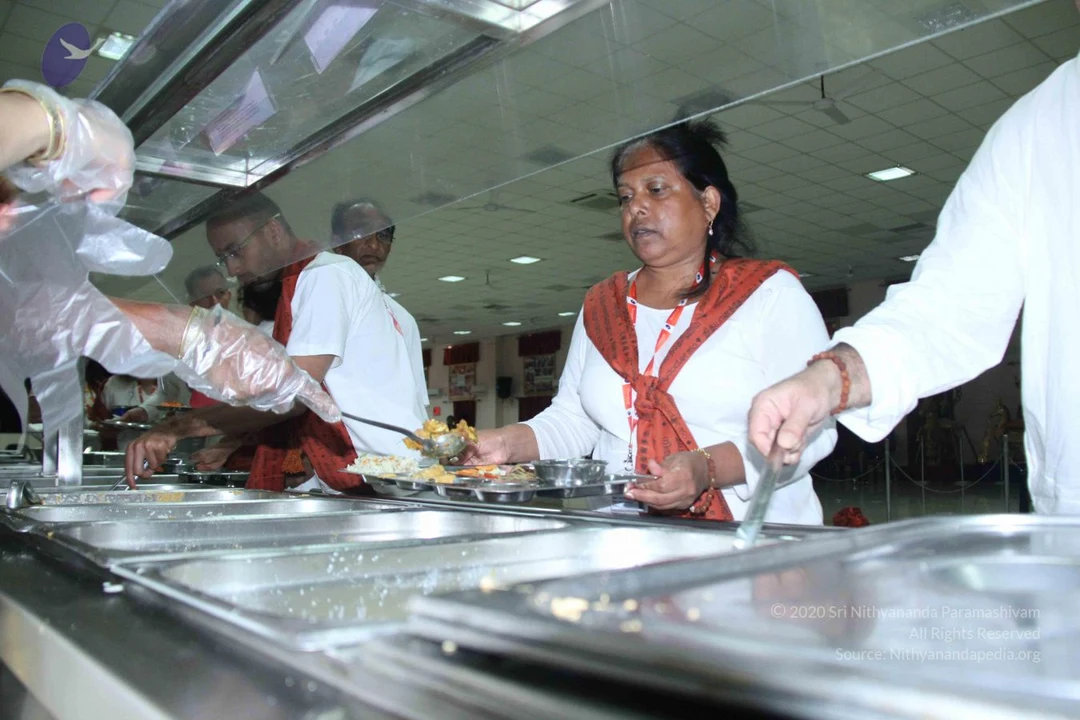
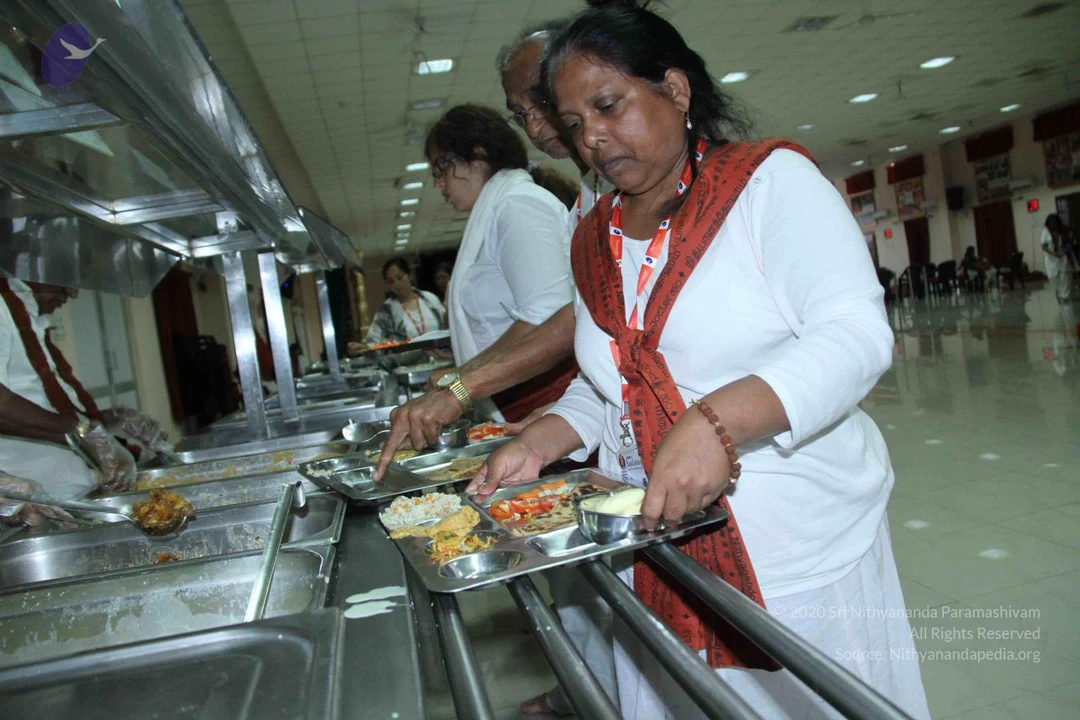
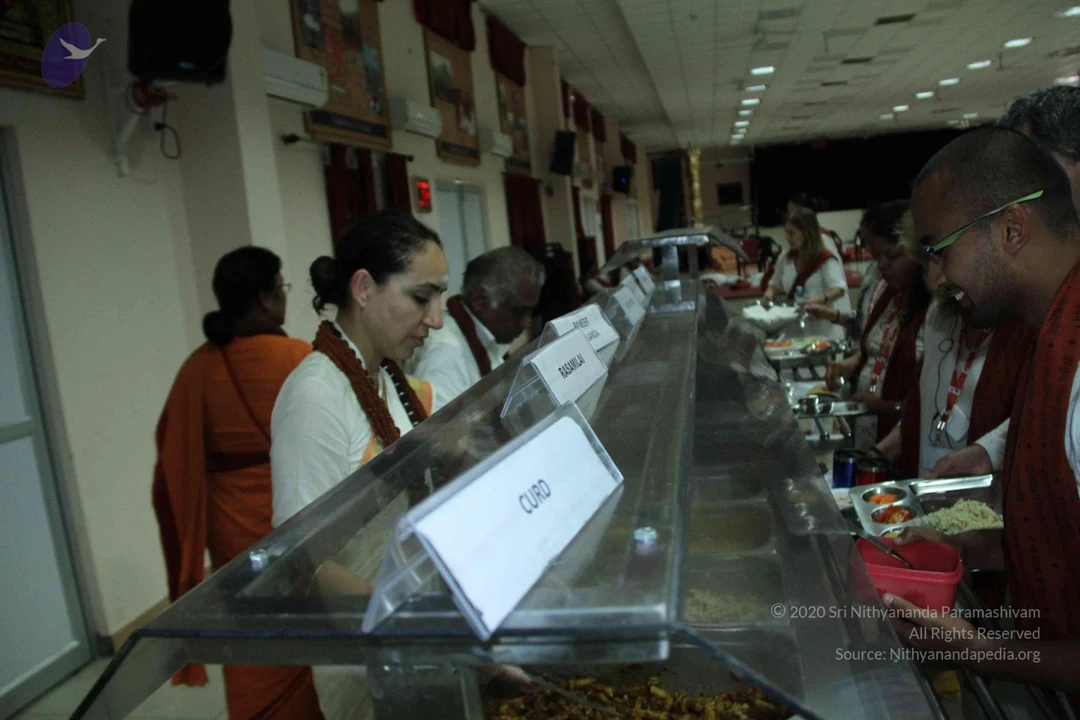
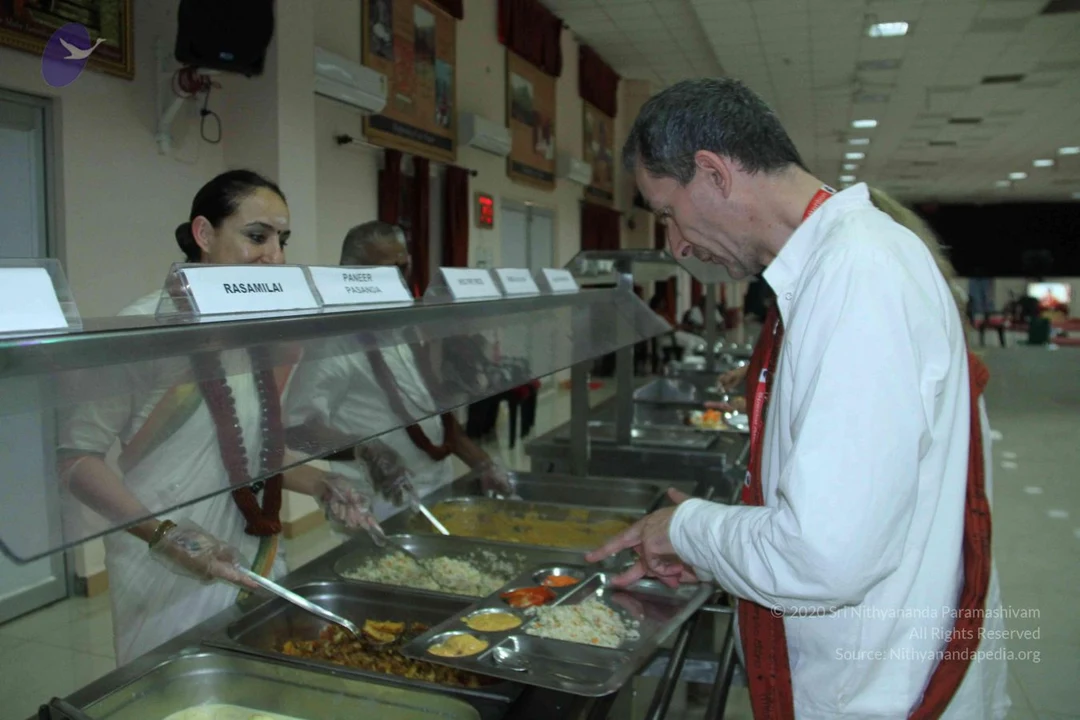
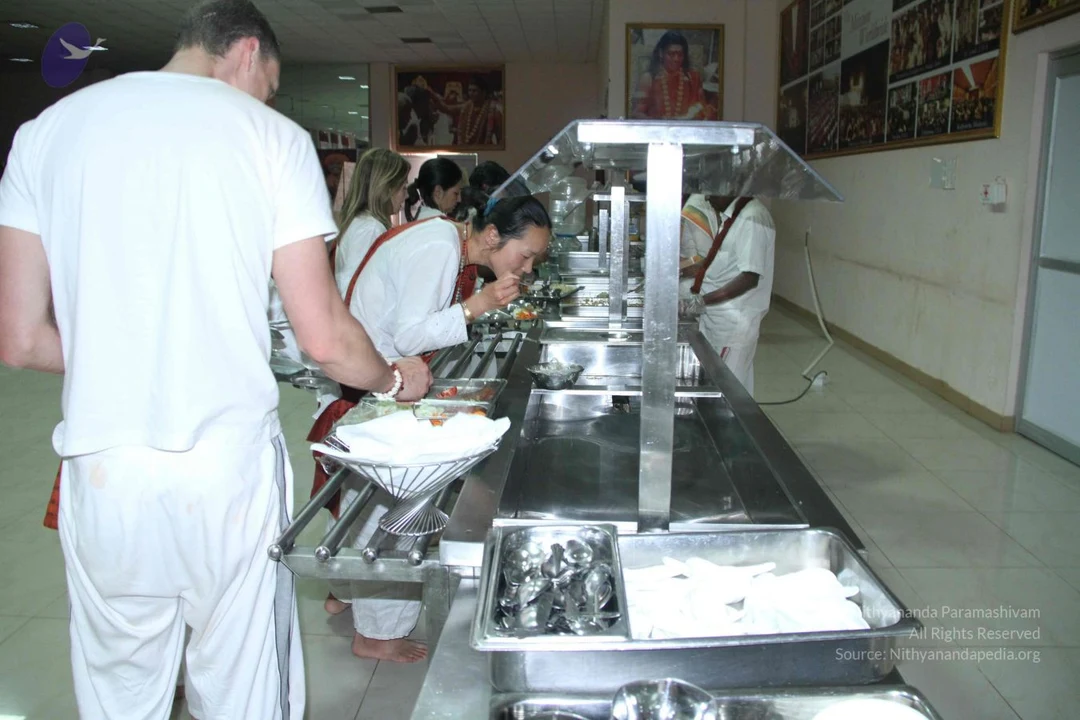
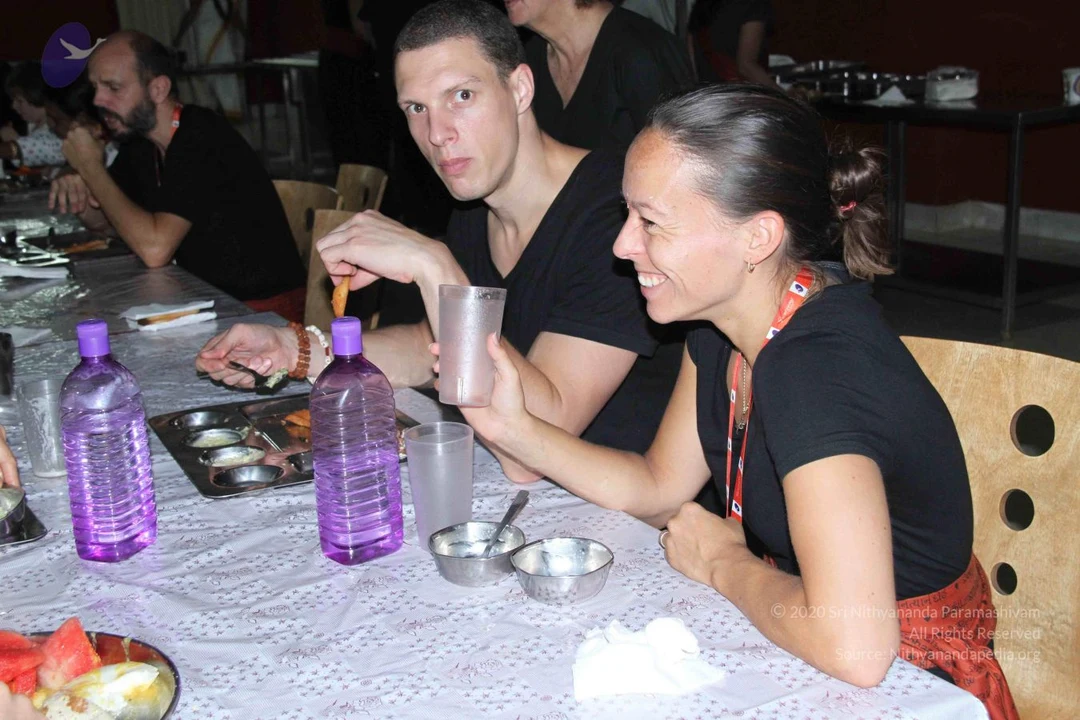
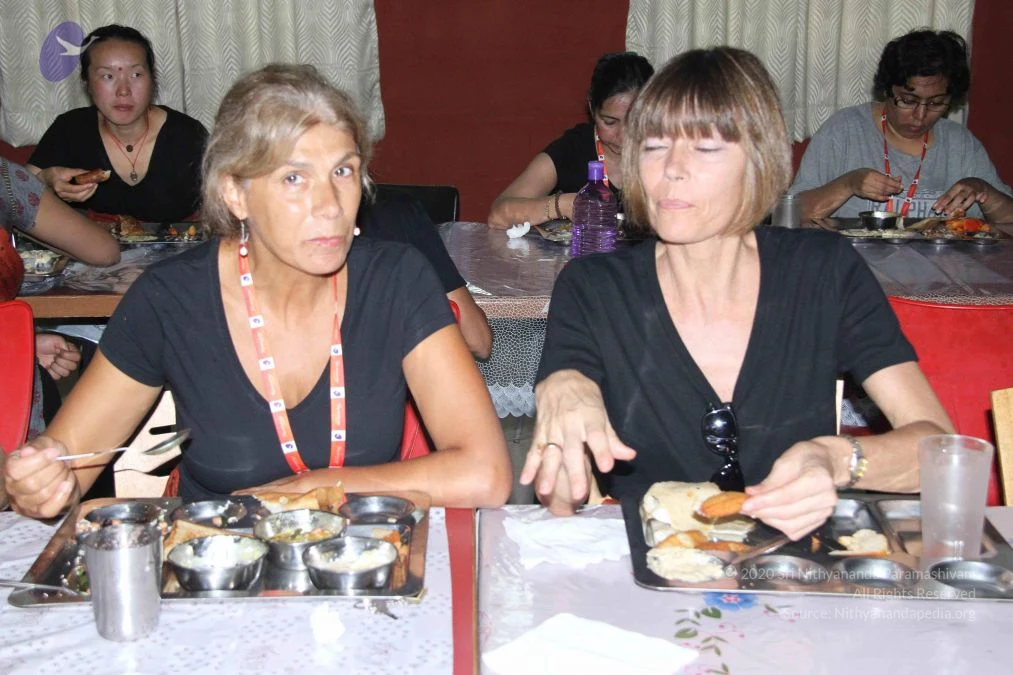
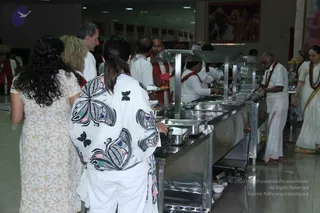
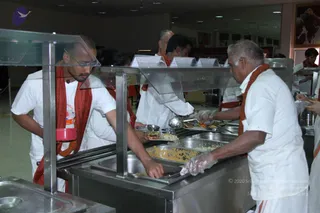
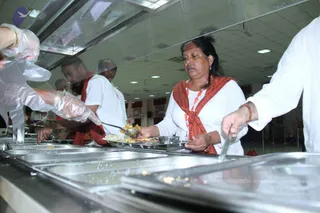
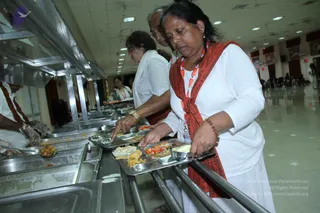
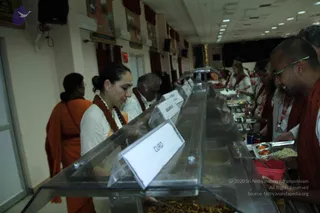
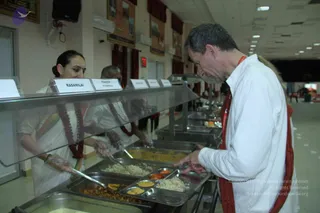
A photograph of an annadan meal service in a hall. Several people queue along steel serving counters with heated trays, while attendants in white clothes with red-orange shawls serve food. In the foreground, a woman with a butterfly-patterned white wrap and white trousers stands beside a woman in a beige patterned dress with curly hair. On the right, an older man in white shirt and dhoti with a red-orange shawl stands at the counter, and a woman in white sari with a red-orange shawl stands nearby. Framed artwork hangs on the wall behind.A photograph of volunteers serving food at a stainless steel buffet counter in an indoor dining hall. Several men wear white clothes with orange-red shawls draped over their shoulders. In the foreground an older man with grey hair in white shirt and white dhoti wears clear plastic gloves and uses a serving spoon to dish food from a steel tray of yellow curry. A younger man on the left in a white t-shirt and orange-red shawl with a rudraksha-style mala looks down at the food pans beneath a glass sneeze guard. Other volunteers stand behind the counter, and a framed picture hangs on the wall at top right. Steel bowls, a ladle and a serving tray are visible.Photo of a food service line at a temple hall. A woman in white clothes with an orange-red shawl and an orange lanyard, with a vertical forehead mark, serves rice and curry from a stainless steel tray using a ladle. Behind her, a man in a white shirt and orange shawl stands at the serving counter, and a gloved hand at left holds a spoon over the chafing dishes. Stainless steel food pans and a glass sneeze guard line the counter, and a food distribution scene like annadan is visible.Indoor photo of a cafeteria-style food line in a large hall with tiled floor and ceiling lights. A woman in the foreground wears a white top, an orange-red shawl and a lanyard, and holds a steel tray with rice, vegetables, a chapati and a small bowl while reaching toward food. Behind her, a man in white with an orange-red shawl and lanyard also reaches toward a tray, and another person in white stands further back near steel serving counters with dishes. Plain chairs line the far side of the hall. No a person candidate is visible in this scene.A buffet serving line in an indoor hall with a long glass food counter and handwritten labels reading CURD and RASAMLAI. A woman in white with a bun and rudraksha mala stands at the counter, while a man in white and red shawl, and a bald man in red-brown shawl and glasses hold steel plates. Another woman in orange sari stands at left. Framed pictures line the wall and red curtains hang between them. Several other devotees in white and red shawls queue along the counter.A buffet serving line inside a bright hall with fluorescent ceiling lights and framed photographs on the wall. A woman with hair tied back in a white garment and red-orange shawl with beaded necklace serves food from a steel tray using tongs, while a man with grey hair behind her, also in white with a red-orange shawl, stands at the counter. On the right a man in a white shirt with a red-orange shawl over his shoulders and red lanyard holds a plate and selects food from the trays. Trays hold rice, dal, curries and sweets labelled RASAMILAI and PANEER PASANDA on the sneeze guard signs.

Bidadi-Temple

12 photosSource gallery
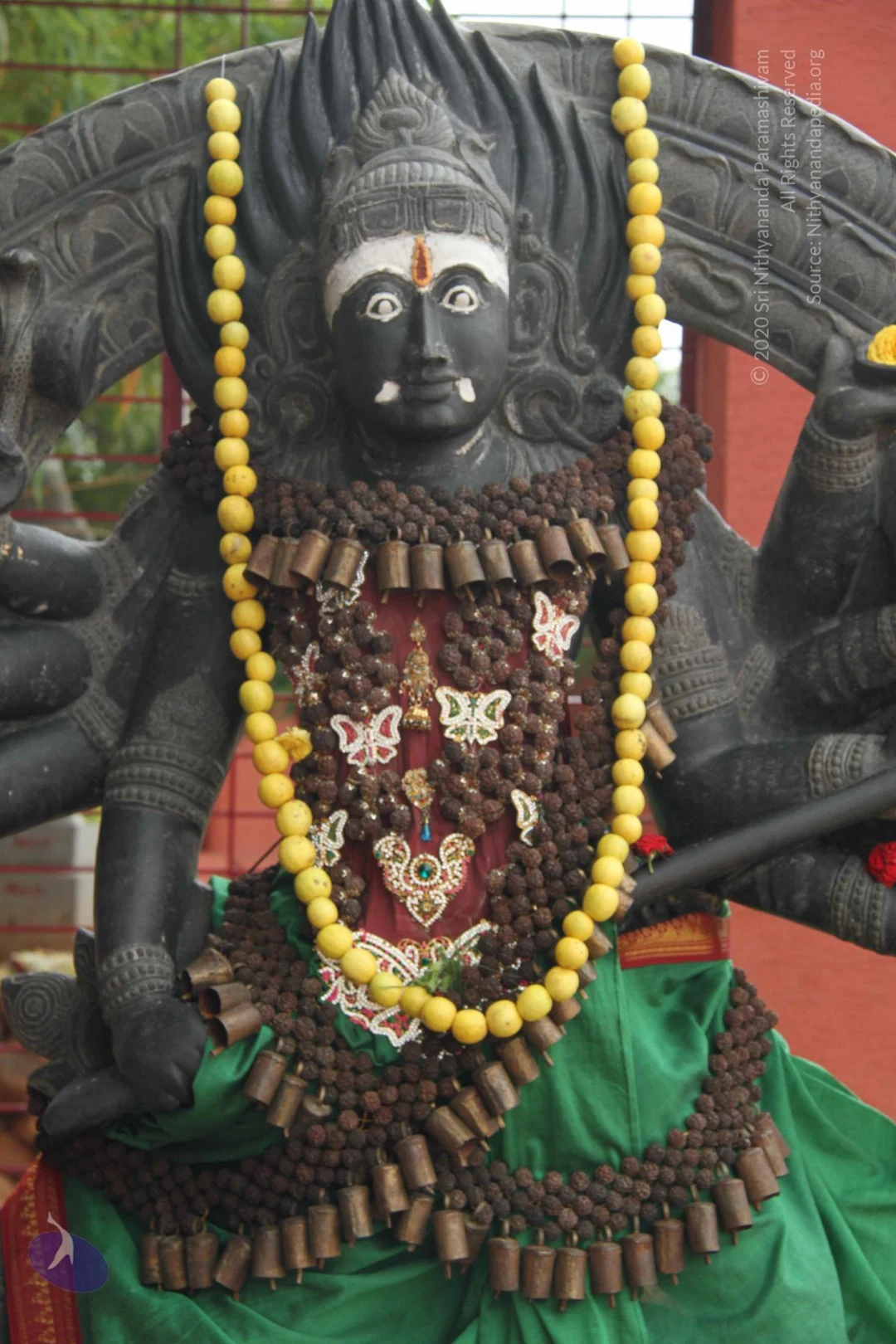
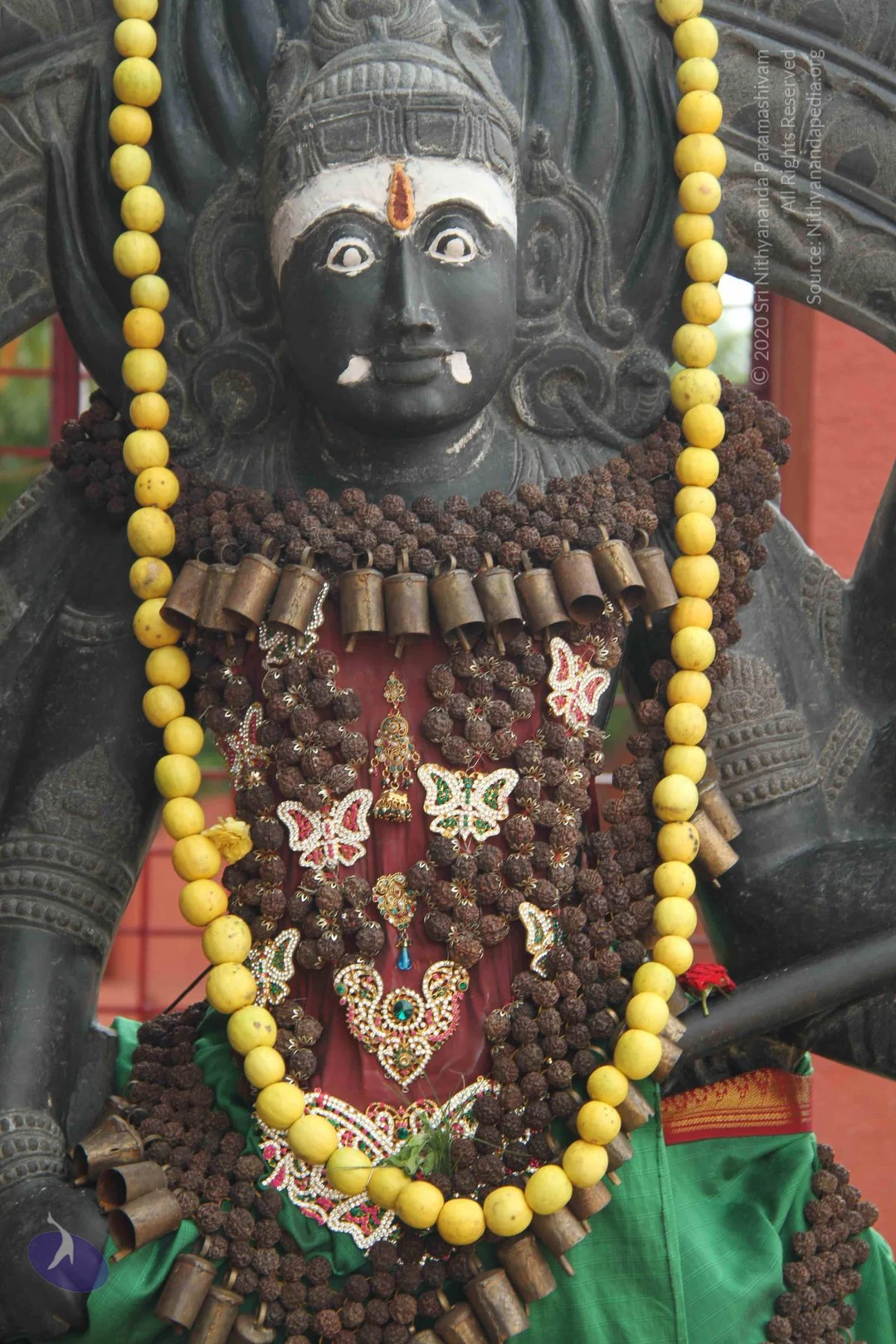
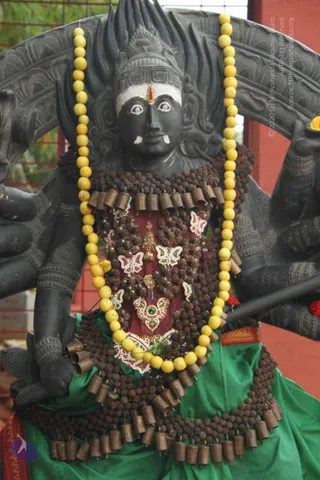
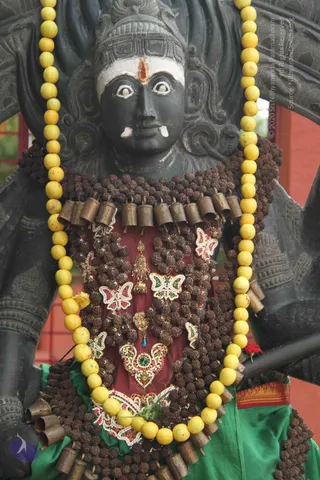
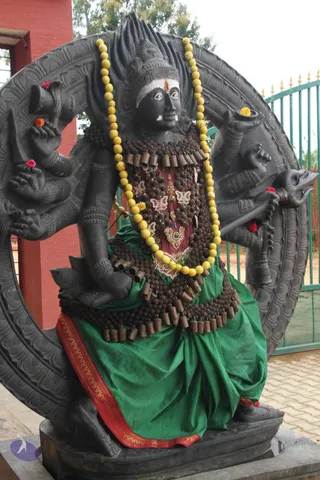
A large black stone deity murti stands in a sculpted circular halo, with multiple arms holding a trident, a cobra-like snake, a bowl and other objects. It wears a green cloth with a red border, a yellow bead garland, dense rudraksha beads, small bells and gold-toned ornaments with butterfly motifs. Red flowers and a yellow flower are placed on it, and a red-painted building stands behind. No people are visible.A large black stone statue of a multi-armed deity murti stands outdoors against a red-painted wall and a barred window. The figure is seated within a circular halo-like arch carved with a border pattern. It wears a dark rudraksha mala, a yellow beaded garland, bells, and a green cloth with a red border, with butterfly and gem ornaments on the chest. One hand holds a trident, another a bell, and another a small offering dish with a yellow flower. Red flower petals lie at its base and on the pedestal.Close-up of a large black stone deity murti. It is draped with a dense layer of brown rudraksha beads, small brass bells, a green cloth, jewelled butterfly and floral ornaments, and a long garland of yellow beads. Red flowers are tucked at the side and a dark stick rests against the figure. No physical people are visible.Close-up of a large black stone deity murti with a white and orange tilak on the forehead and white markings on the cheeks. The murti is dressed with heavy rudraksha mala garlands, yellow beaded necklaces, brass bells, and jeweled gold-toned ornaments including butterfly motifs and a pendant with red and green stones. A green cloth and red-bordered fabric drape the lower body, with a red flower at the side. No people are visible; the statue is the sole subject.A large black stone statue of a multi-armed deity. The murti wears a green cloth with a red-and-gold border, layered rudraksha bead garlands with small brass bells, and a yellow beaded mala. Several hands hold objects including a trident, a bell and a sword, and marigold and red flowers are placed on its arms and shoulders. A red brick wall and a green metal gate stand behind it under trees.A large black stone statue of a multi-armed deity murti standing within a carved circular arch, against a green metal gate and red wall. The figure wears a green cloth with a red-and-gold border, a red bodice decorated with gold-thread ornaments and butterfly motifs, and layers of dark rudraksha beads with small brass bells. A long yellow bead garland hangs over the chest. Several hands hold a trident, a bowl and small offerings with red and orange flowers. The statue is a murti, not a living person.

Pada-Puja
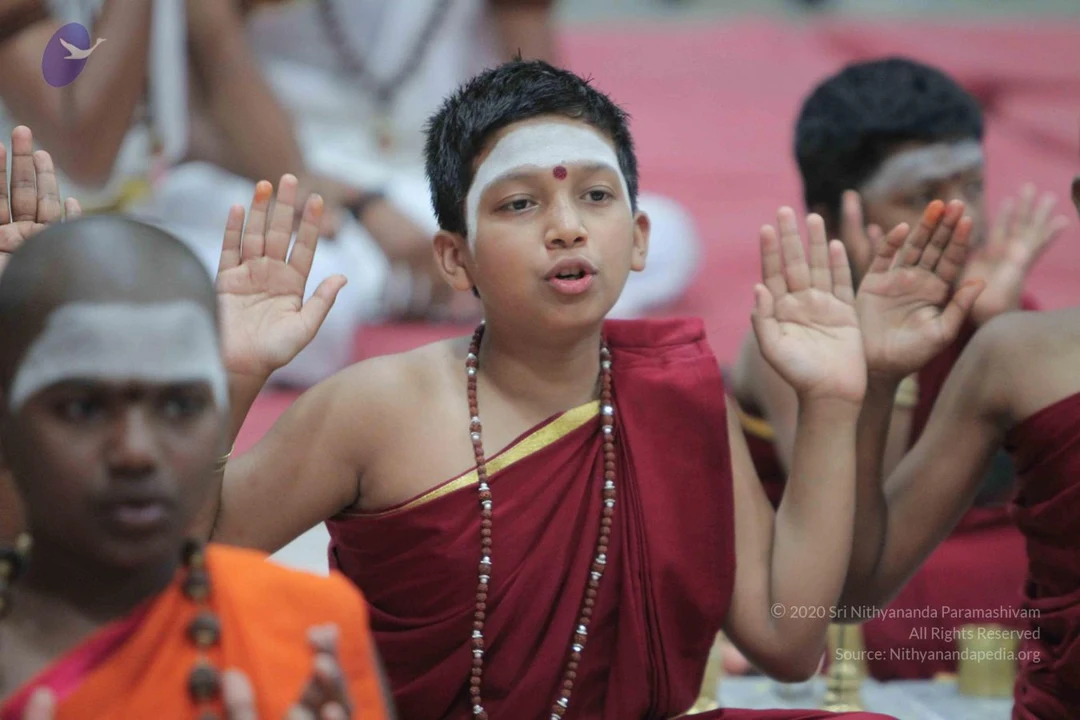
6 photosSource gallery
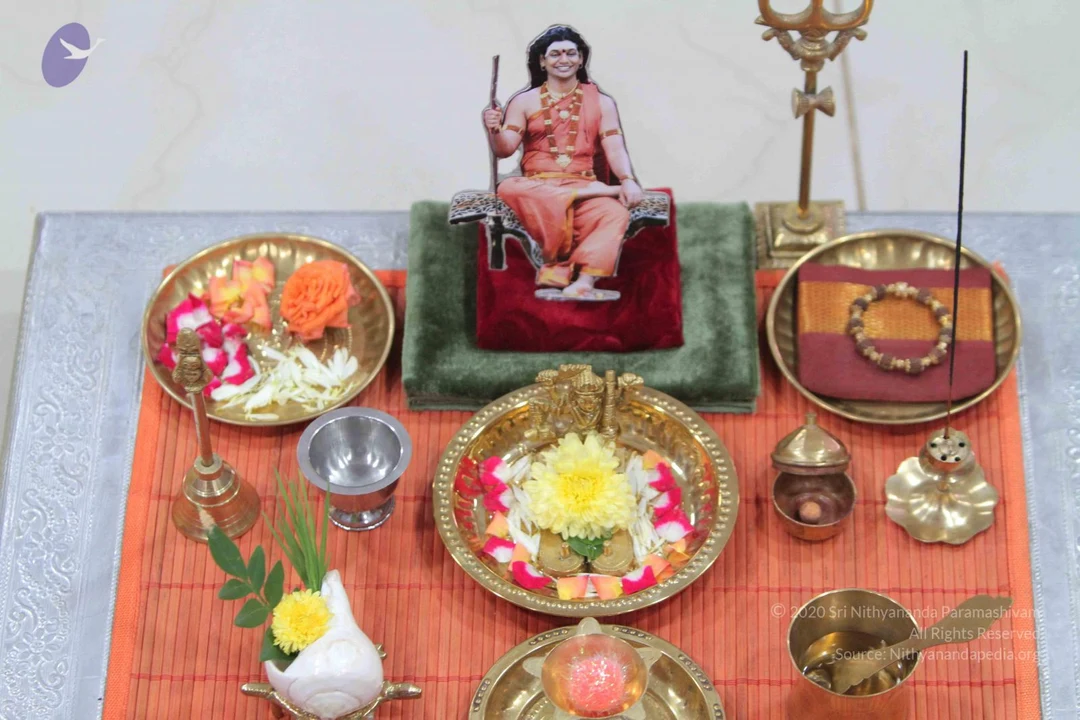
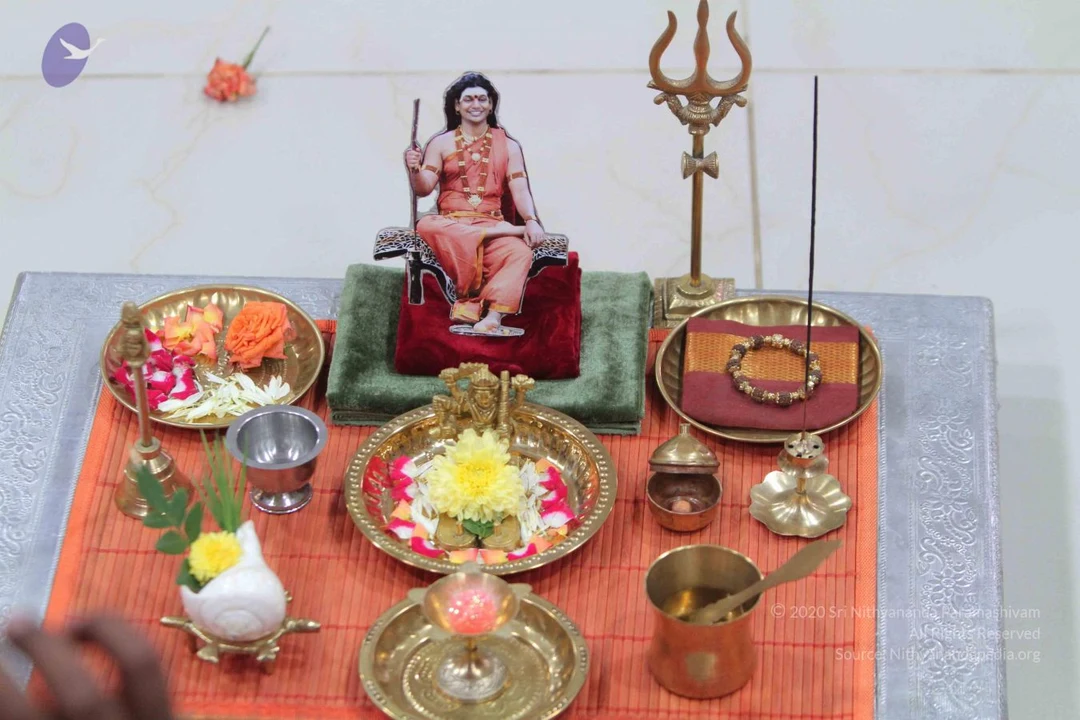
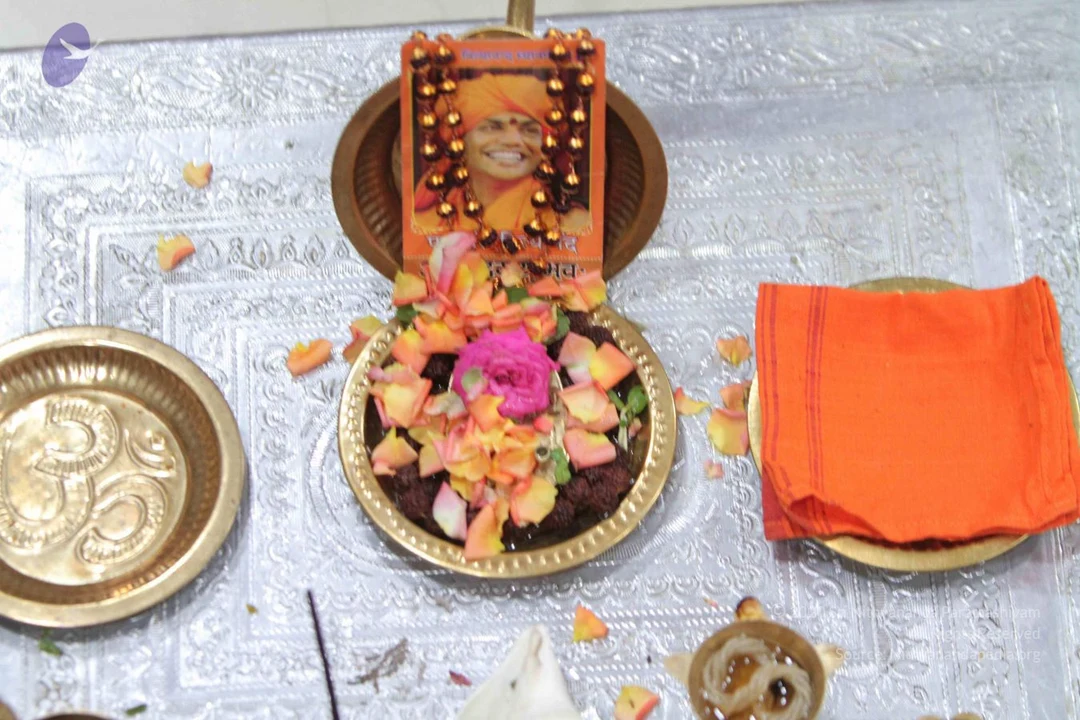
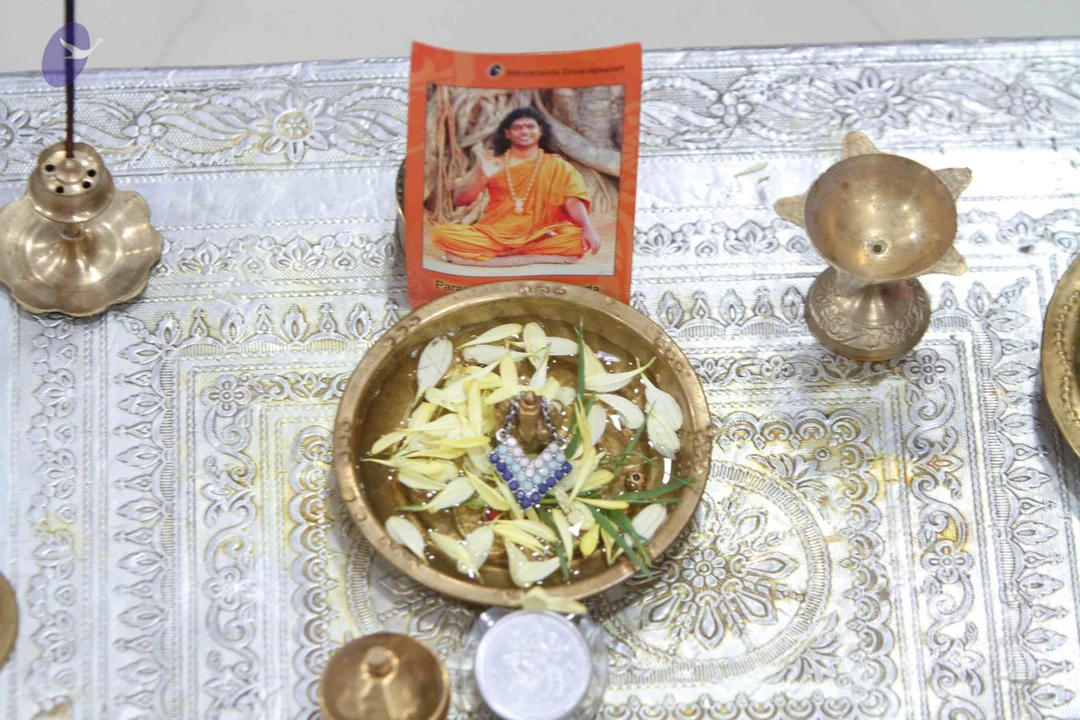
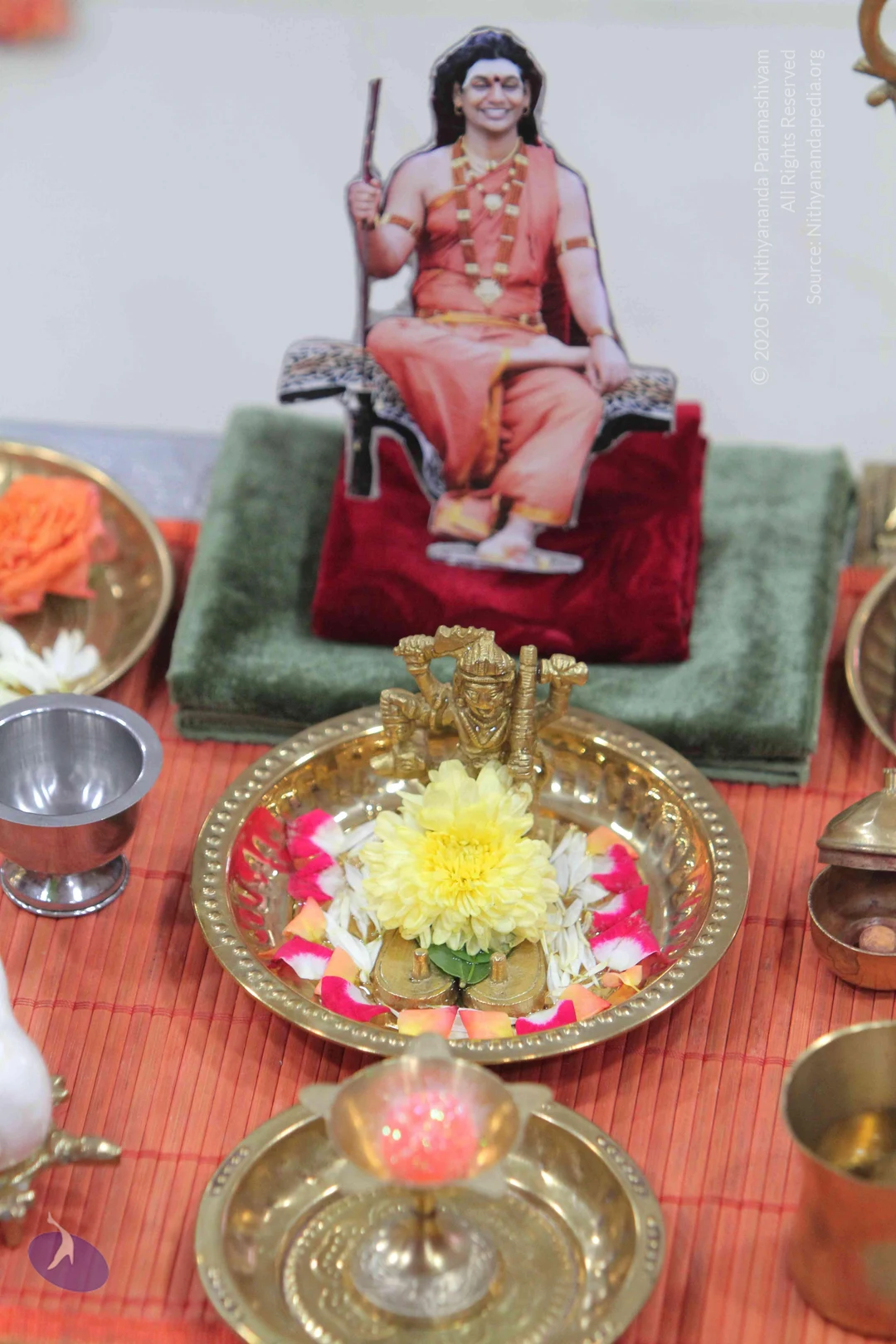
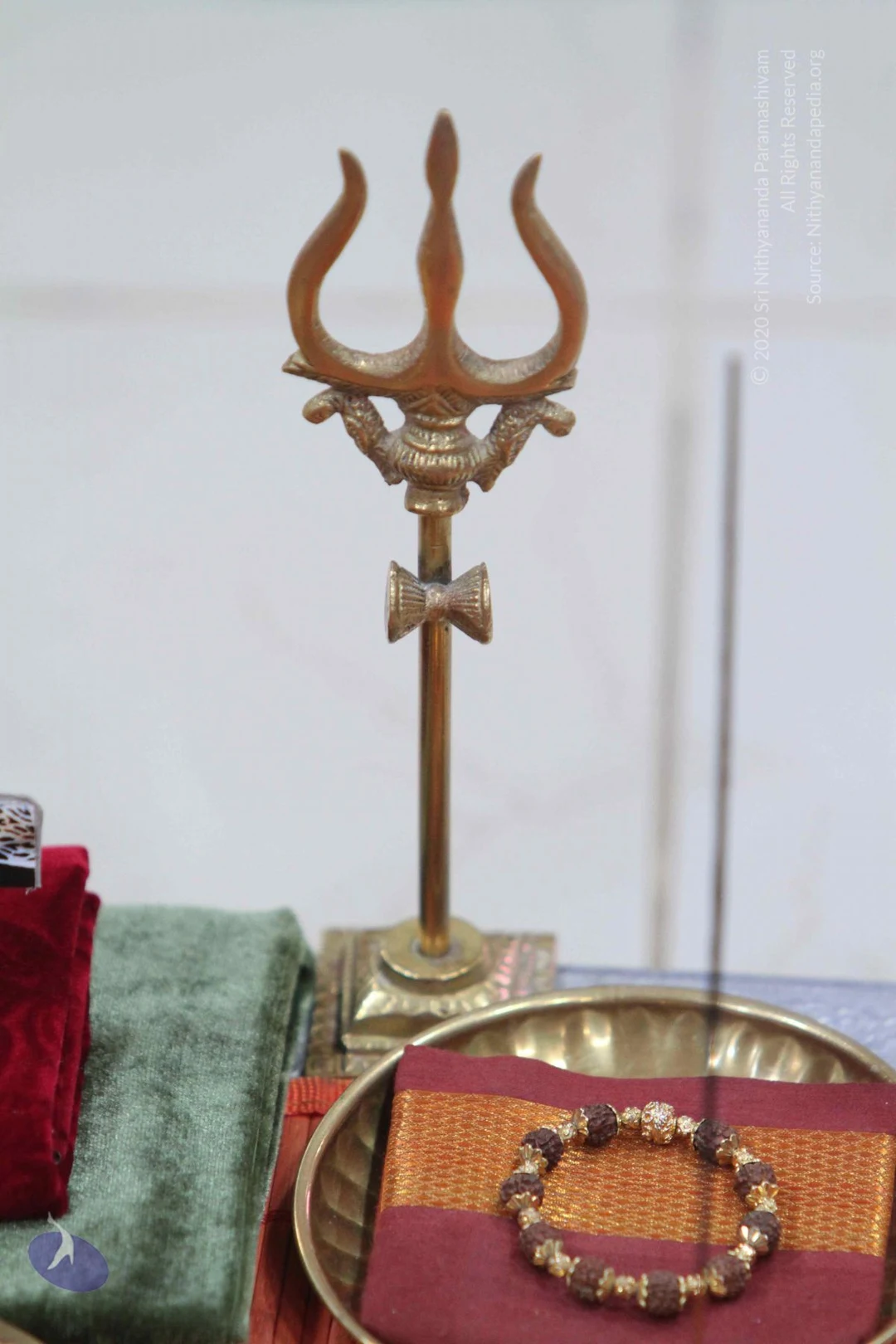
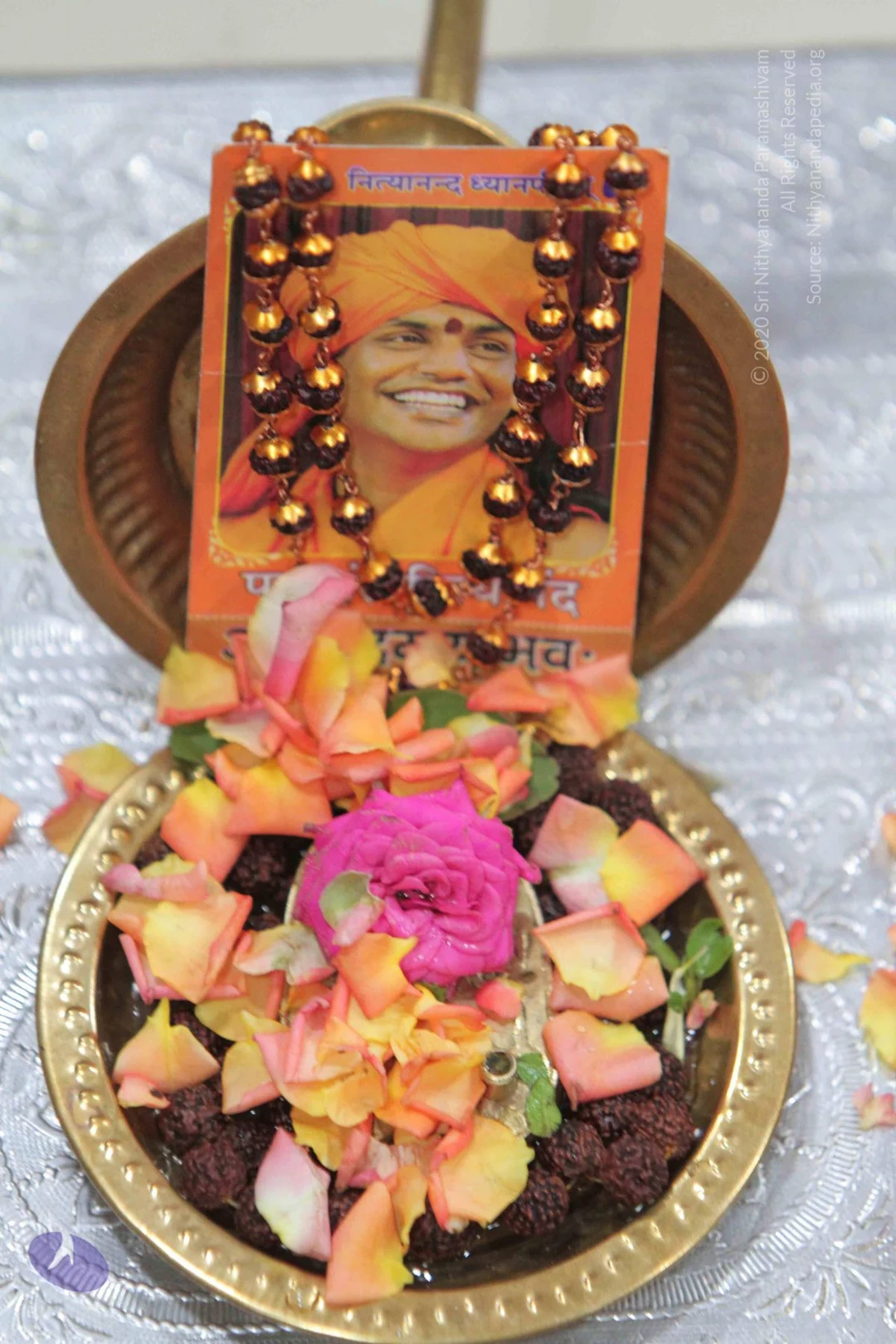
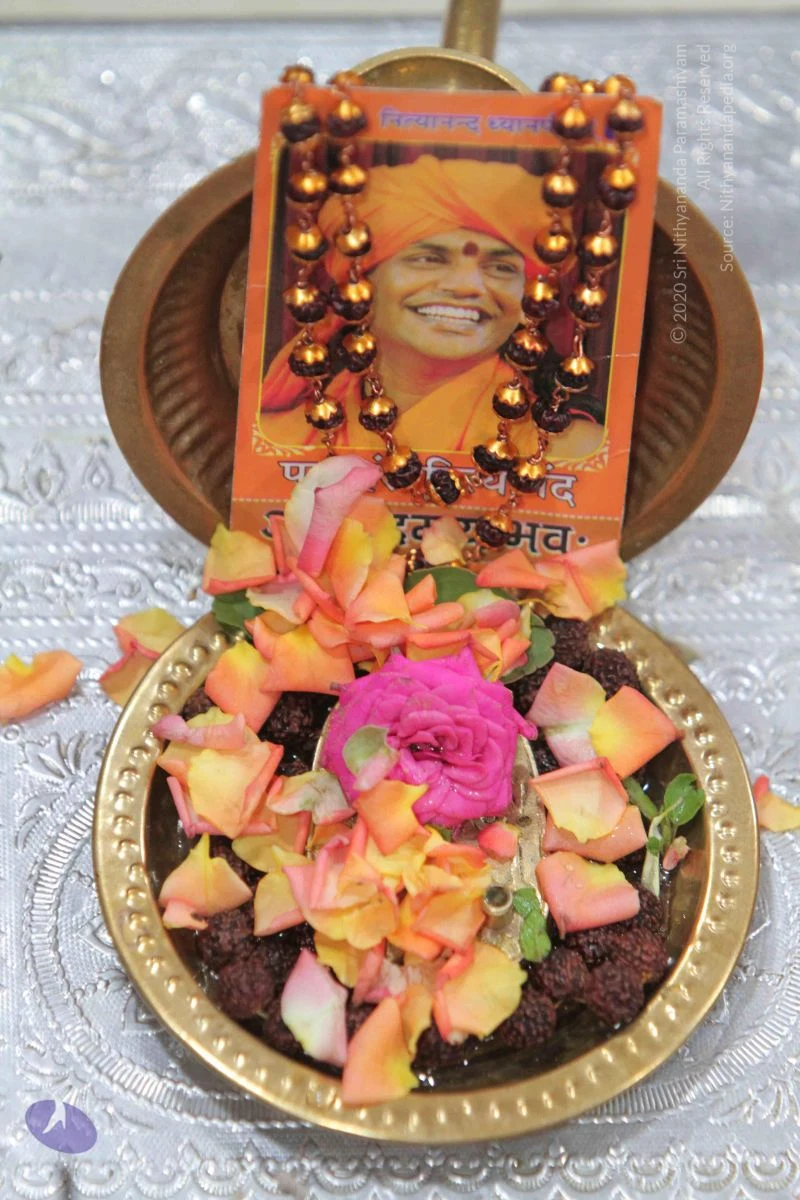
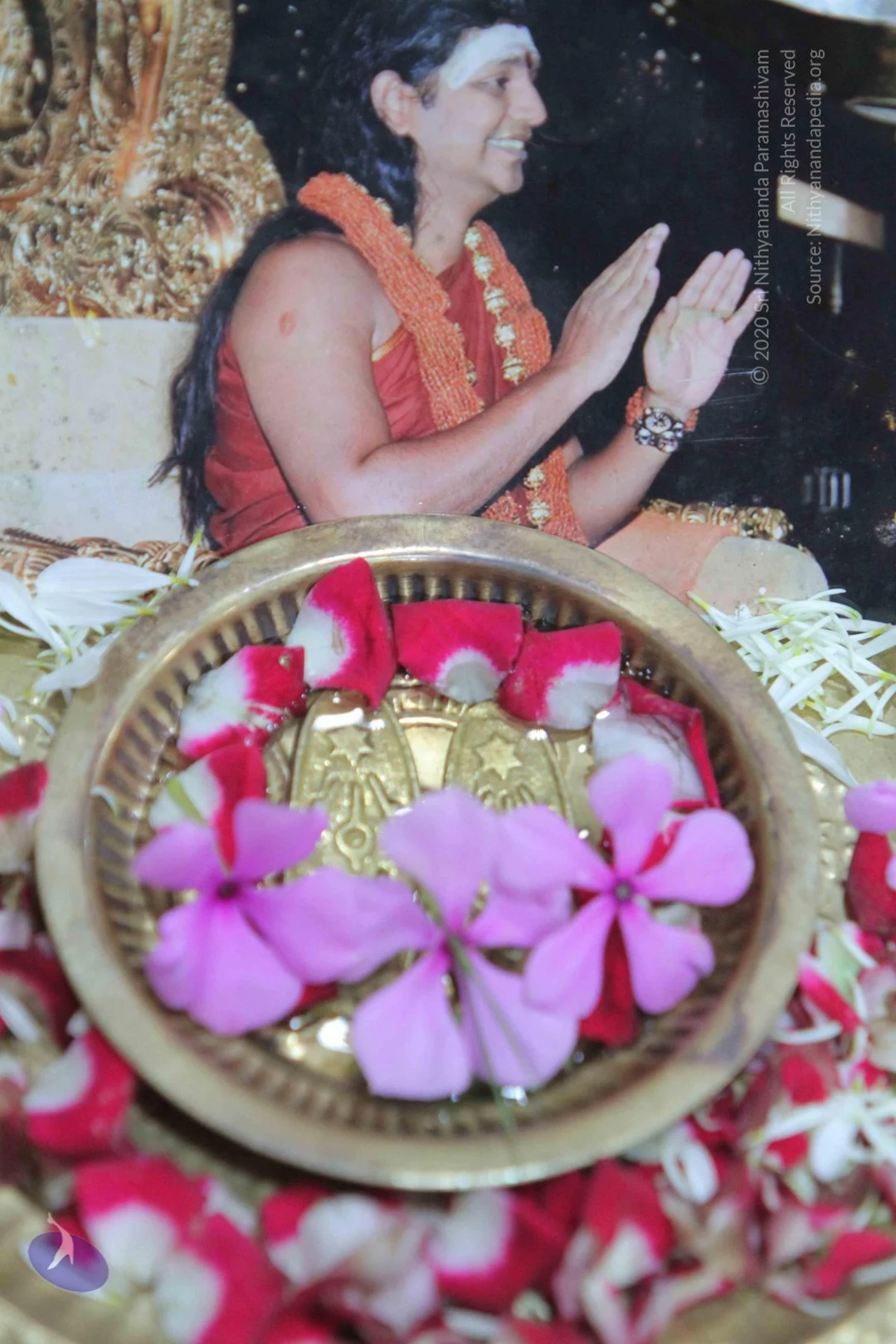
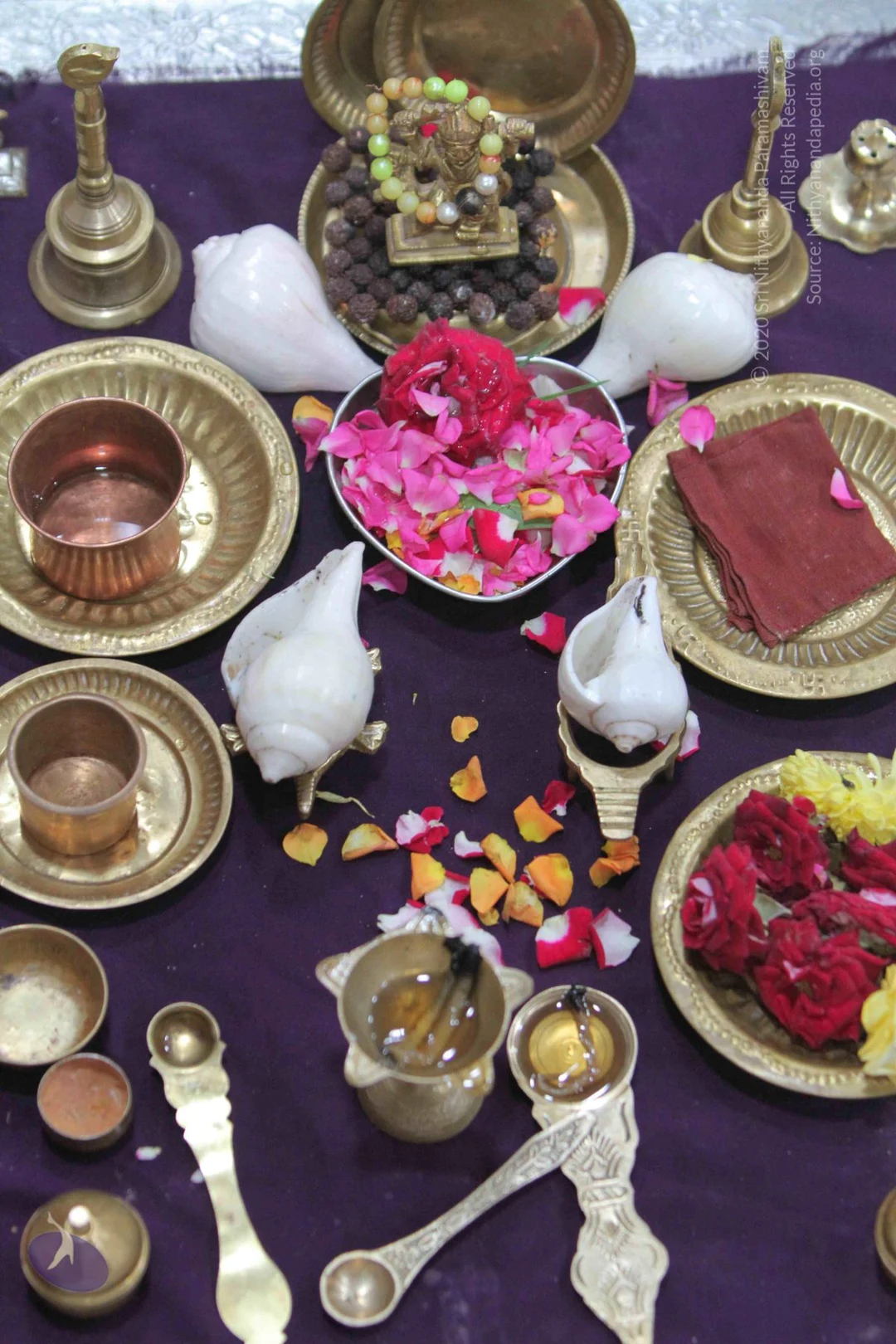
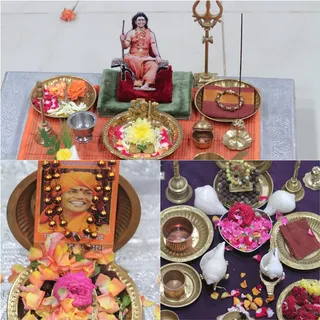
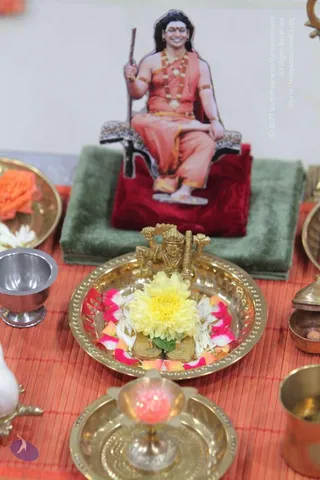
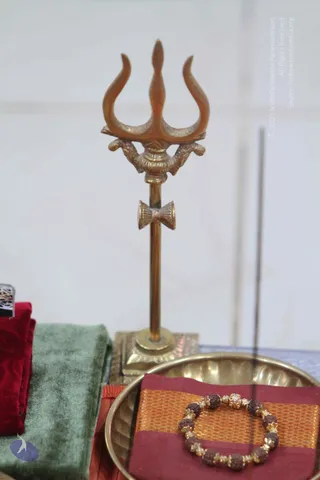
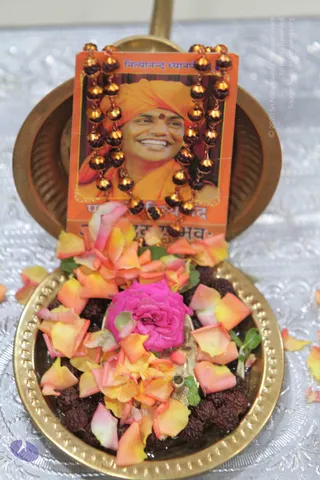
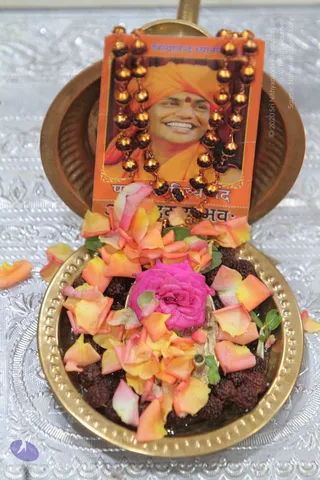
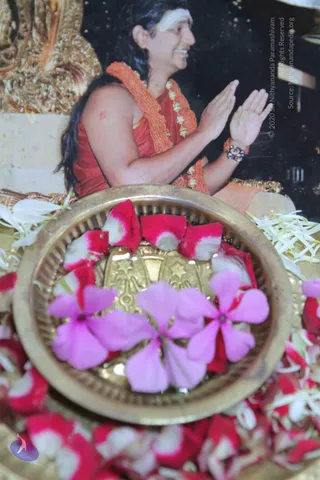
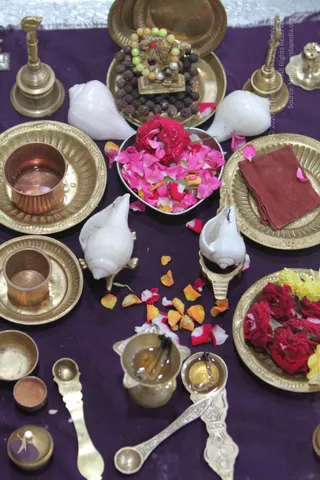
A ritual arrangement on an orange woven mat. A cut-out printed photograph of a smiling man in orange robes, rudraksha beads and a gold necklace, holding a staff and seated on a red velvet cushion over folded green cloth, stands behind the offering. In front, a brass plate holds a small brass deity murti, a yellow chrysanthemum, white and pink petals and a leaf. A brass lamp with a lit flame sits on a tray below. A steel cup and brass containers are nearby. No physical people are visible.Close photograph of a brass trishula (trident) standing on a square brass base, with a small bow-shaped brass collar on its shaft. Beside it on the lower right, a brass bowl holds a folded maroon cloth with gold zari border and a bracelet of rudraksha beads interspersed with gold-toned spacer beads. A green velvet cloth and a red velvet cloth lie at the left edge, and a thin incense stick is visible at right. No people are visible; the setting suggests a puja or altar arrangement.A printed orange card portrait labelled with Hindi text stands upright in a brass plate, held by a brass stand, with a rudraksha mala draped over it. The printed portrait shows a smiling man in an orange turban and orange robes with a red tilak; it is a depiction, not a physical person. Around its base lie a brass plate filled with dark rudraksha beads, pink and orange rose petals, a pink rose and green leaves, set on a silver shimmering cloth. No people are physically present.A brass tray holds rudraksha beads, a pink rose and scattered orange and peach rose petals, with a small green leaf. Behind it stands a brass vessel and a printed orange card showing a smiling man in an orange turban with a red bindi, draped with a rudraksha mala. A white embroidered cloth covers the surface. No physical people are visible; the card is a printed image, not a person present in the scene.A brass bowl filled with pink and red-and-white petals and three pink flowers sits in the foreground, with scattered white jasmine and petals around it. Behind it, a seated figure in a rust-red robe and an orange-beaded garland with white bead accents presses palms together in namaste, with a white tilak on the forehead, long dark hair and a beaded wristband. The image is a printed photograph on a dark background, with a gold ornate carving at upper left. This appears to be a pada-puja offering of flowers. Swamiji (probable): the figure wears distinctive orange beaded garland, long hair and rust-red robes, and is shown as a printed photo, so this is a depiction.Overhead photo of a brass puja arrangement on a purple cloth: two white conch shells, brass plates and copper cups of water, a bowl of pink and red rose petals, a folded maroon cloth, a brass bell, small brass spoons, a brass kalasha-style vessel with oil lamps, and a small brass deity murti set on a plate ringed by rudraksha beads and a green-and-white beaded mala. No people are visible.
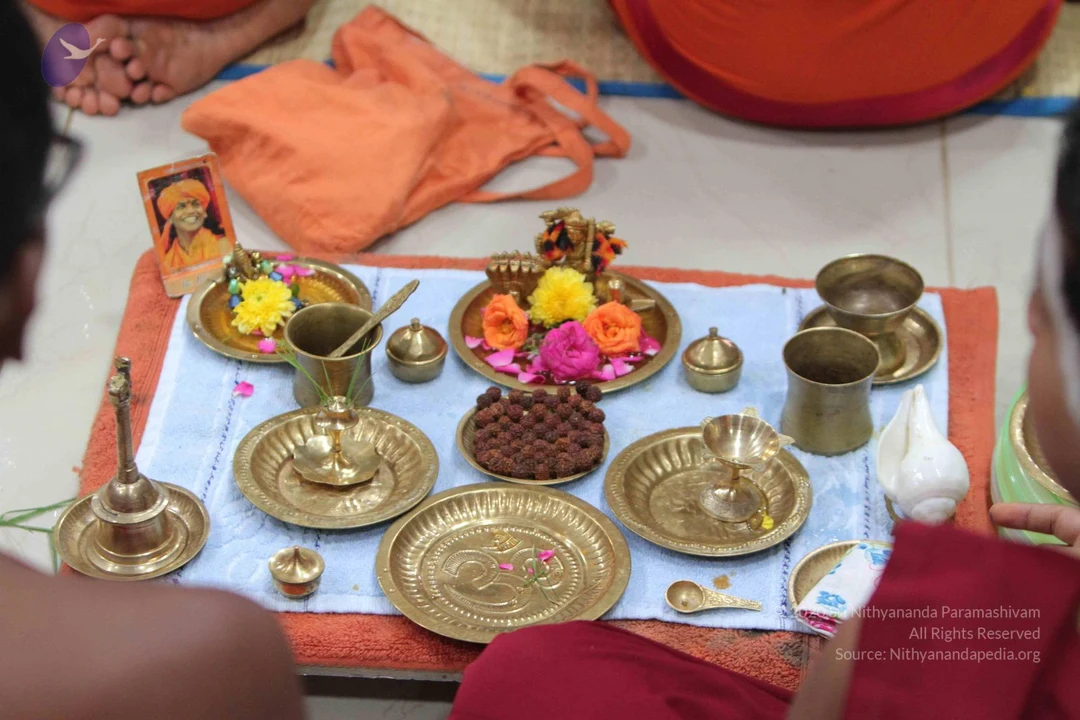
IA
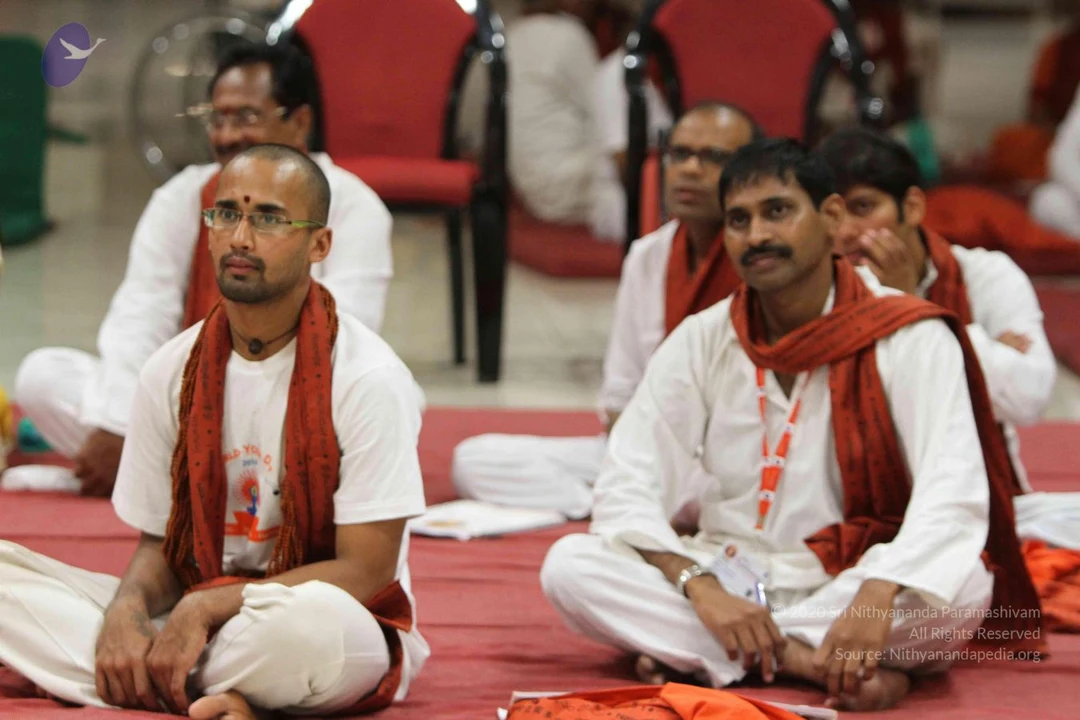
4 photosSource gallery
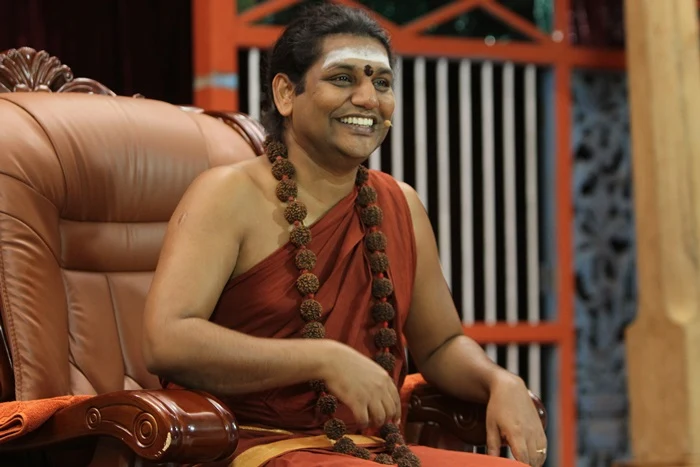
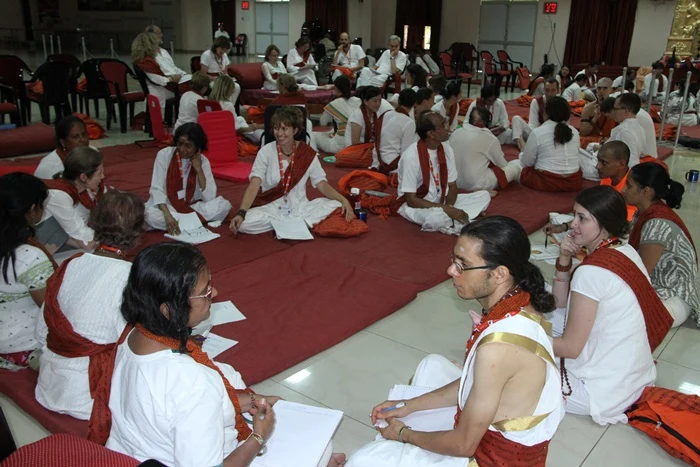
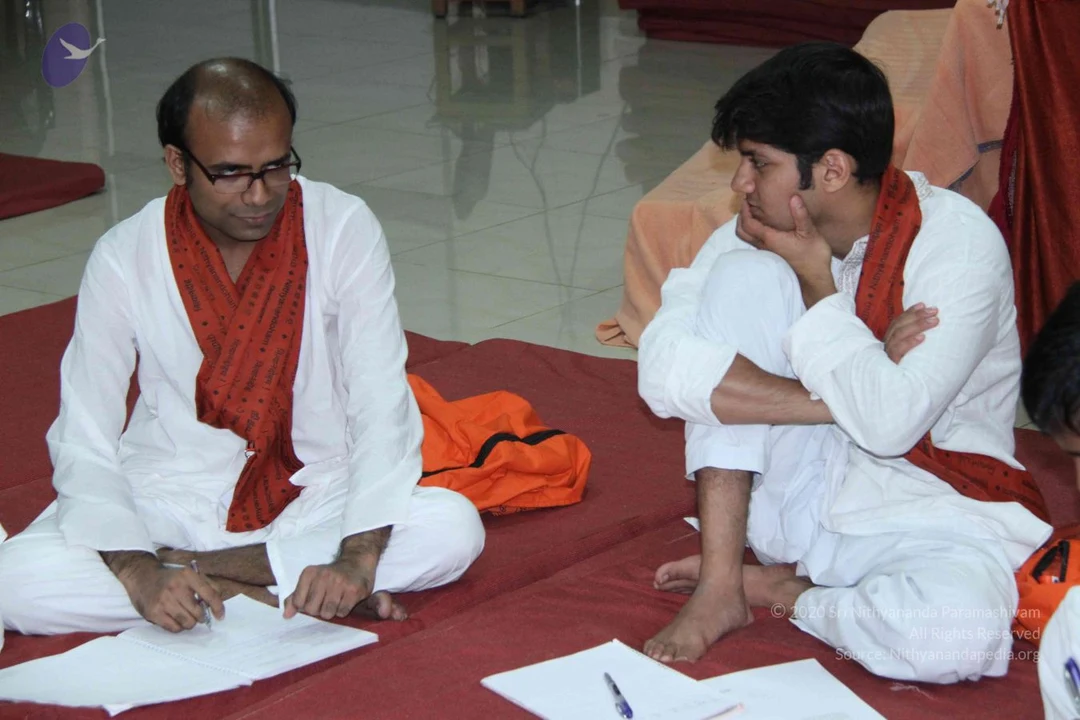
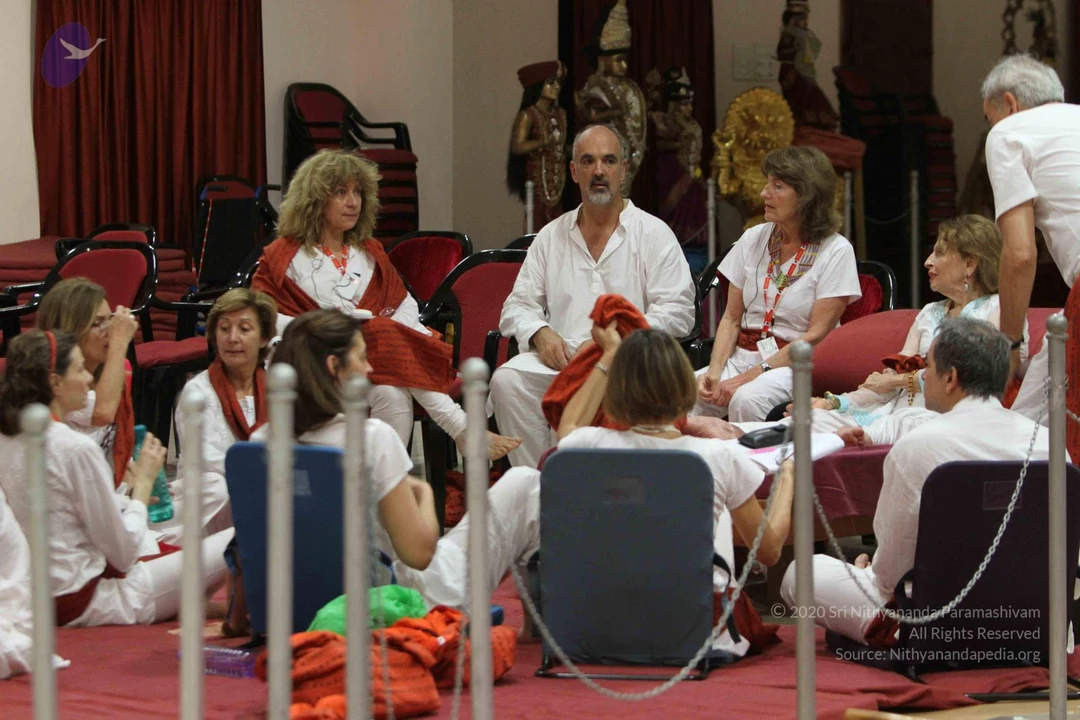
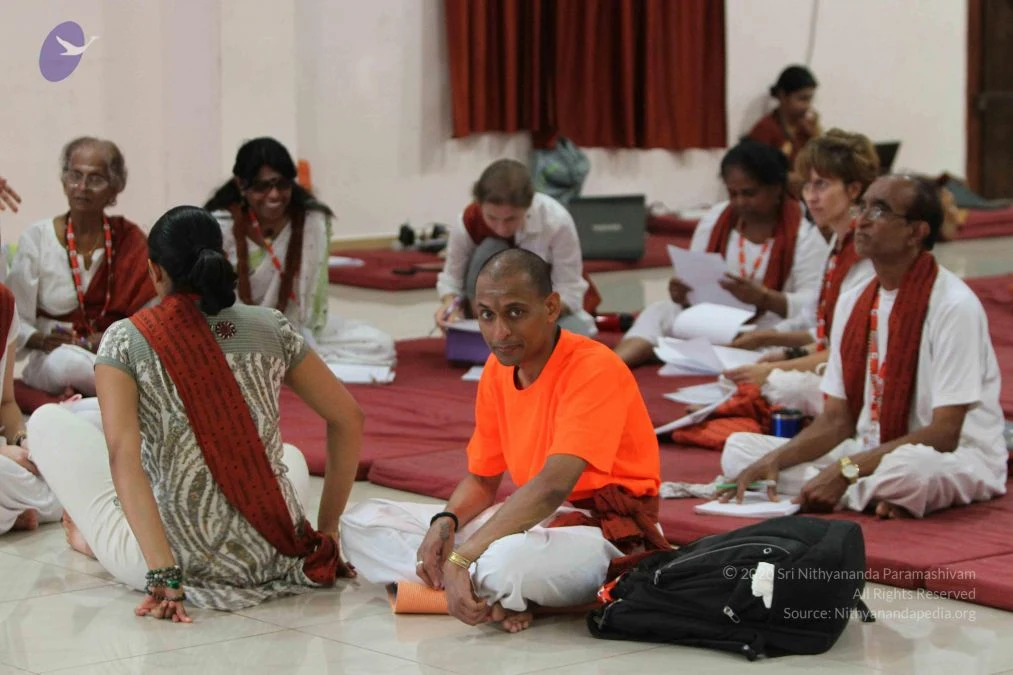
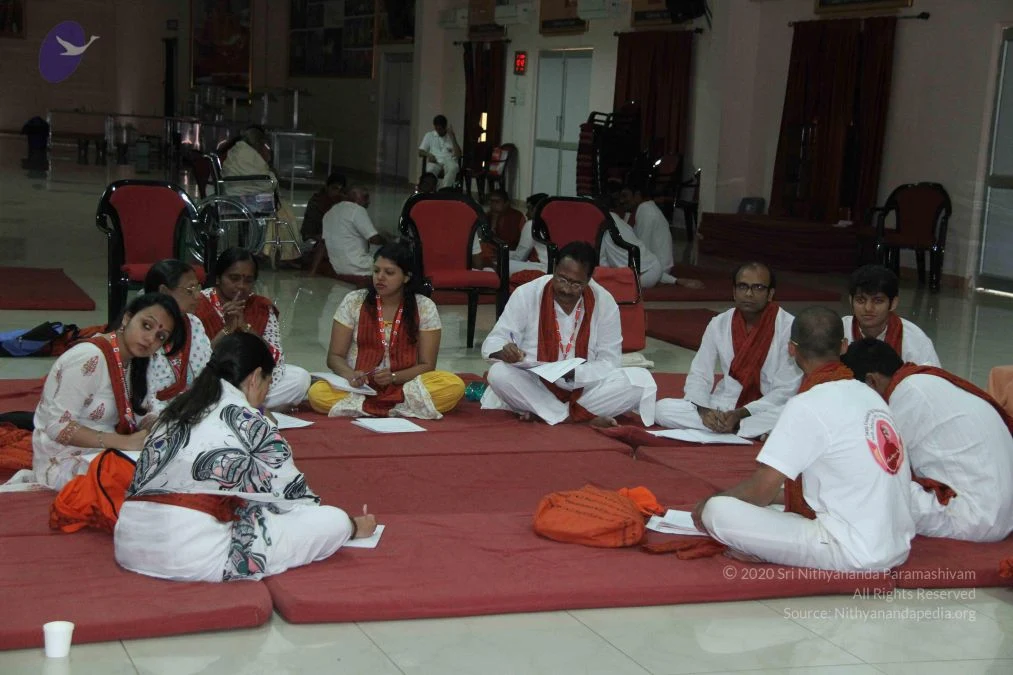
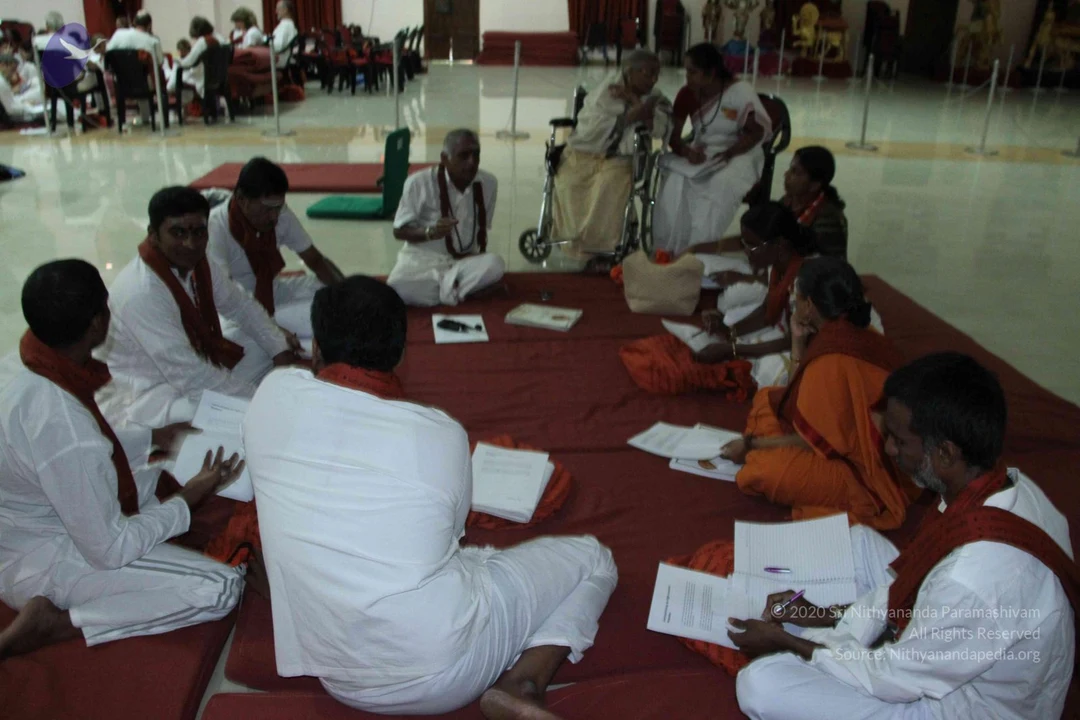
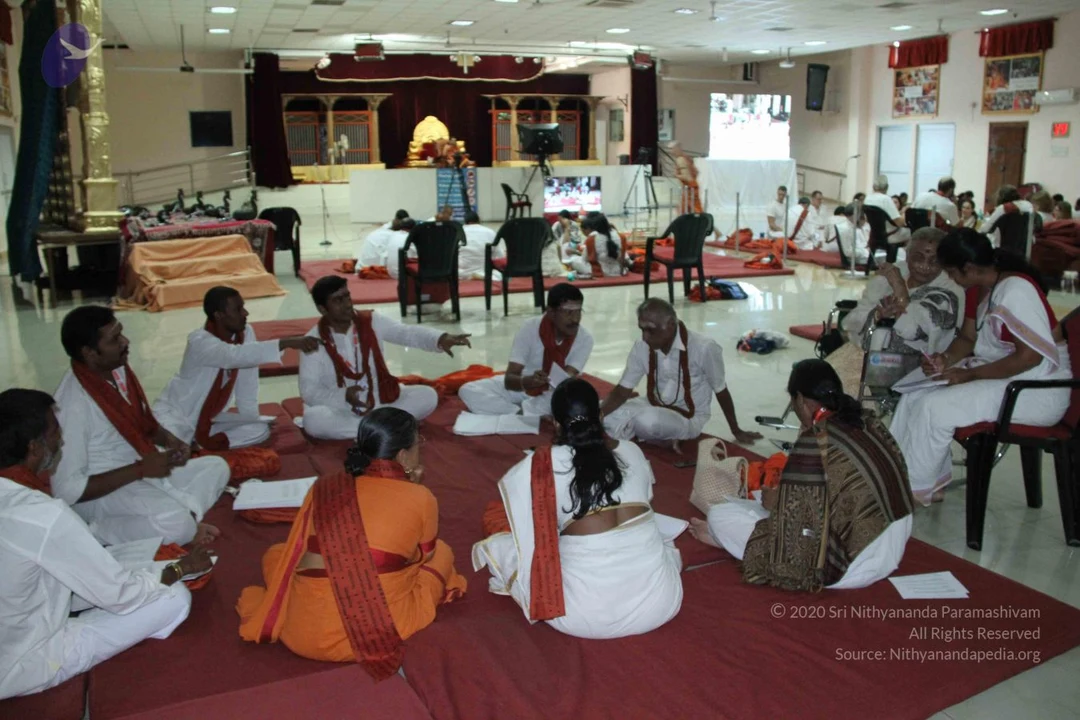
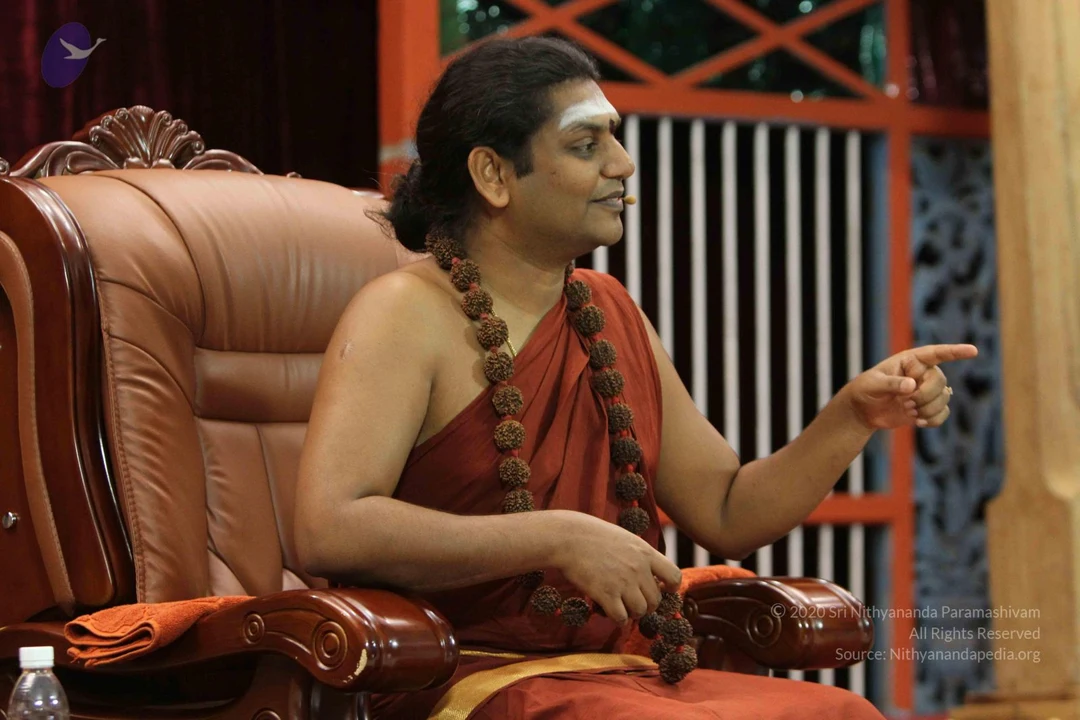
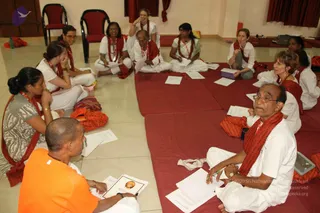
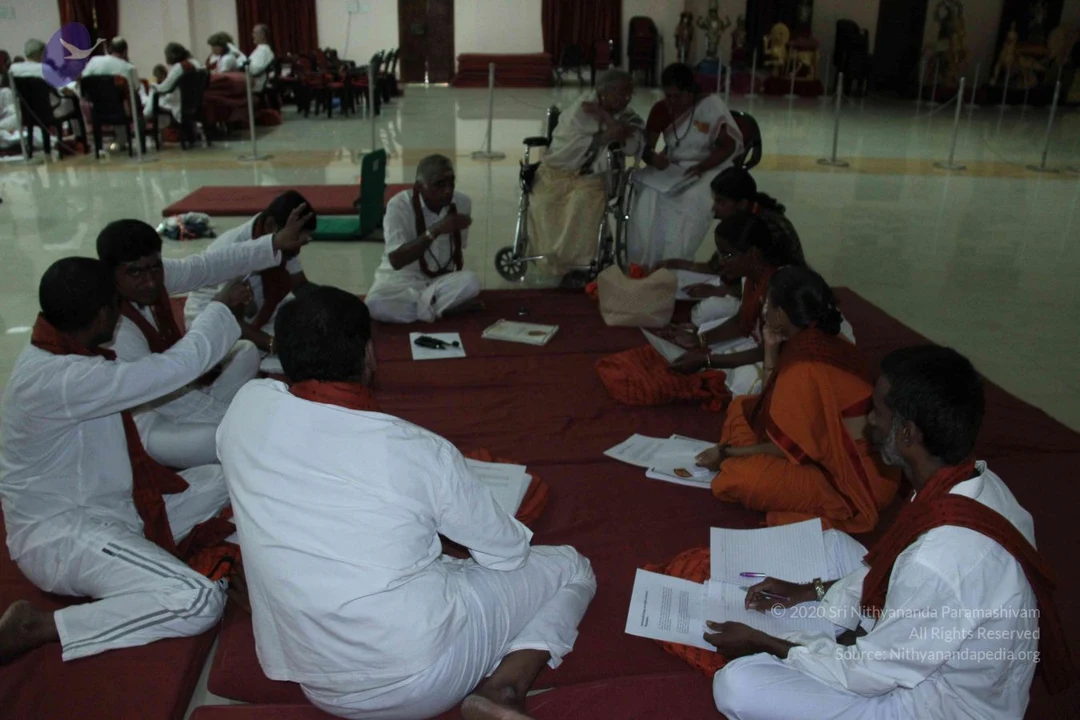
A man sits in a tan leather armchair with carved wooden trim, wearing a rust-red shawl draped over one shoulder and a long rudraksha mala with multiple strands. He has a white vertical tilak with a red dot on his forehead and a small microphone at his ear, and holds the beads in one hand while looking to the side. Behind him are deep red drapes and an orange and white frame. Appearance-based label: a person, seated in a throne-like chair, with rudraksha malas and a red shawl as the qualifying cues.A photograph of a smiling man with short dark hair, white vertical tilak on the forehead and a red bindi, seated on a brown leather throne-style armchair with carved dark wooden arms. He wears a rust-red unstitched robe with a gold border and a long mala of rudraksha beads, with one arm extended and pointing to the side. Behind him are red wooden lattice panels, white vertical bars and a carved wooden pillar, and a small lapel microphone is visible at his collar. Appearance cues include a rudraksha mala and a red robe, so this is a person seated in a teaching setting, with a small orange cloth folded on the armrest.A seated group discussion in a bare hall with cream tiled floor and maroon floor mats. Around a circle of about twenty people, most wear white clothes with orange-red shawls and red beaded necklaces. A bald man in an orange robe at lower left holds a printed booklet and a pen. At lower right an older bearded man in white with glasses and a red shawl sits cross-legged, holding a pen over papers. Others hold loose papers, and red bags and red chairs lie along the walls.A smiling man with swept-back dark hair and a small red bindi sits in a brown leather throne-style chair with carved wooden arms. He wears a rust-red and saffron-bordered wrap over bare shoulders and a long necklace of rudraksha beads, with a thin gold chain visible at his neck; his hands rest in his lap. Behind him is a large gold carved backdrop, and two golden lion figures flank the chair on red velvet cushions. A small clip microphone is visible near his face. The image is a photograph; no other people appear. Swamiji (probable): the swept-back hair, rudraksha mala and saffron-toned wrap are present, so the appearance-based candidate is the seated man on the throne.
Adhi-Kailasa
1 photoSource gallery
A black stone Nandi bull statue sits on a square dark pedestal before a red temple structure, decorated with garlands of white flowers and red blossoms and a brown rudraksha-style necklace. Leaf-wrapped offerings lie at its base, and red cloth drapes over one side. Green trees stand behind the shrine. No people are visible.
September 05 2014

1 photoView all
A seated figure in an ornate gold-carved throne raises one hand in blessing, wearing an orange-red turban with a red mark on the forehead, an orange-red robe with a yellow shawl, a white flower garland, beaded necklaces and a beaded armlet. Behind him a grey stone wall is hung with brass bells and rows of small oil lamps, and blurred lit oil lamps appear in the foreground. The figure appears to be a person seated on the throne in a pada puja setting, as the archive photo shows an in-person presence. Only one physical person is visible.