Skip to content
Monday

6 September 2010

Technique for Levitation - Powerful Pranayama Process Part 1 , LEP Day 14, 6 SEP 2010

Dated photos
530
Source pages
1
Media
8
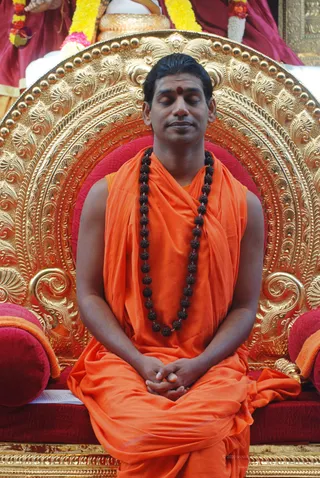
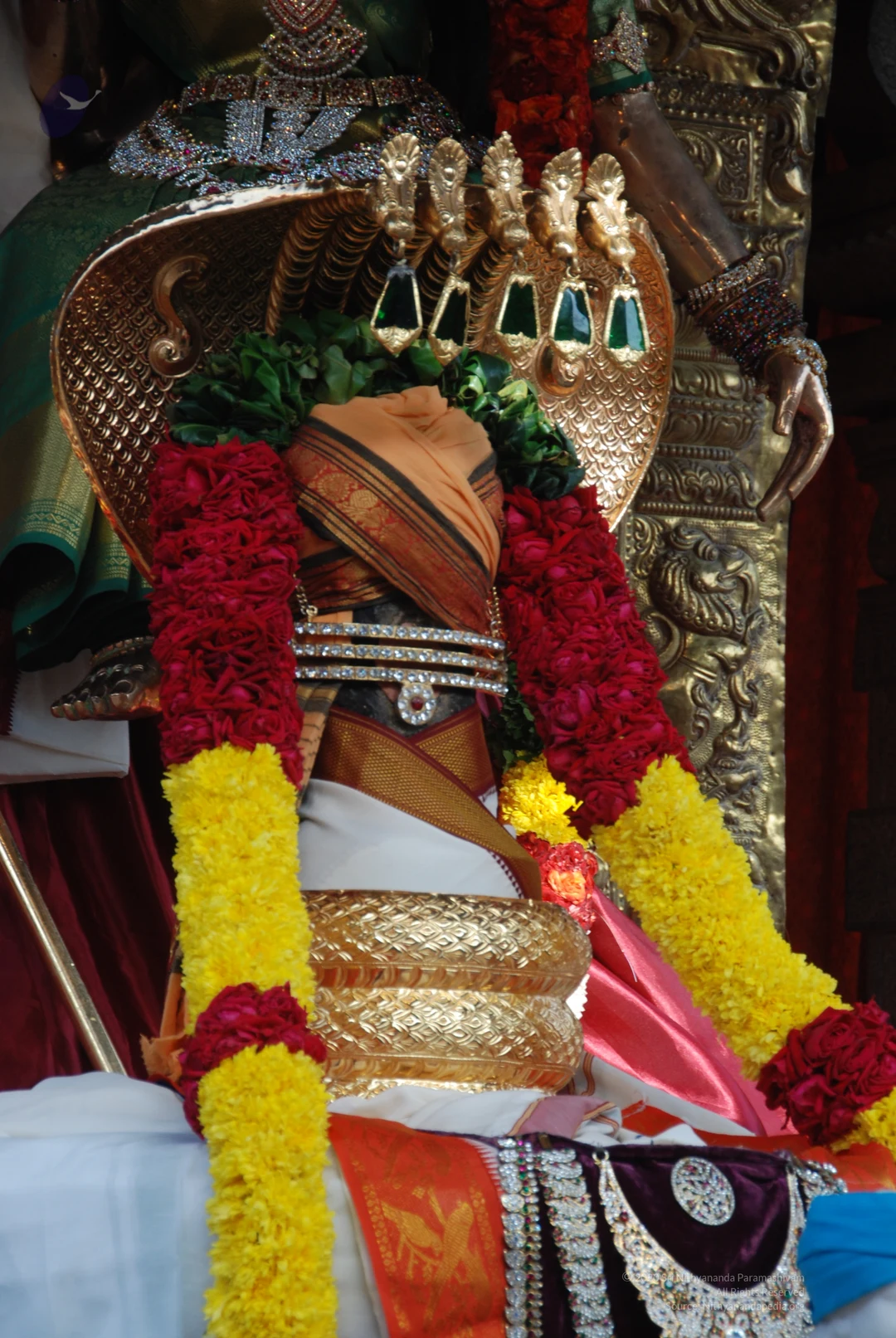
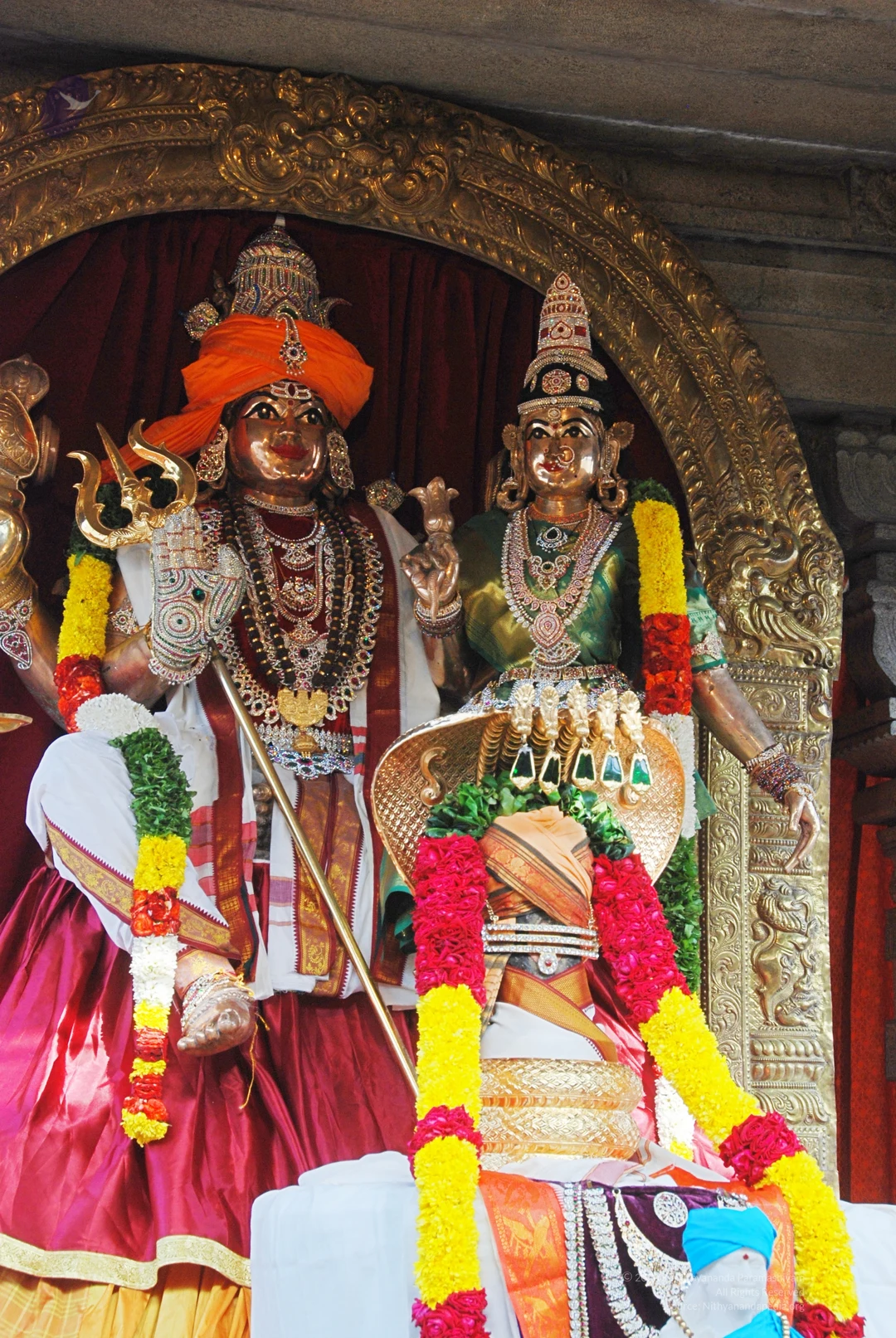
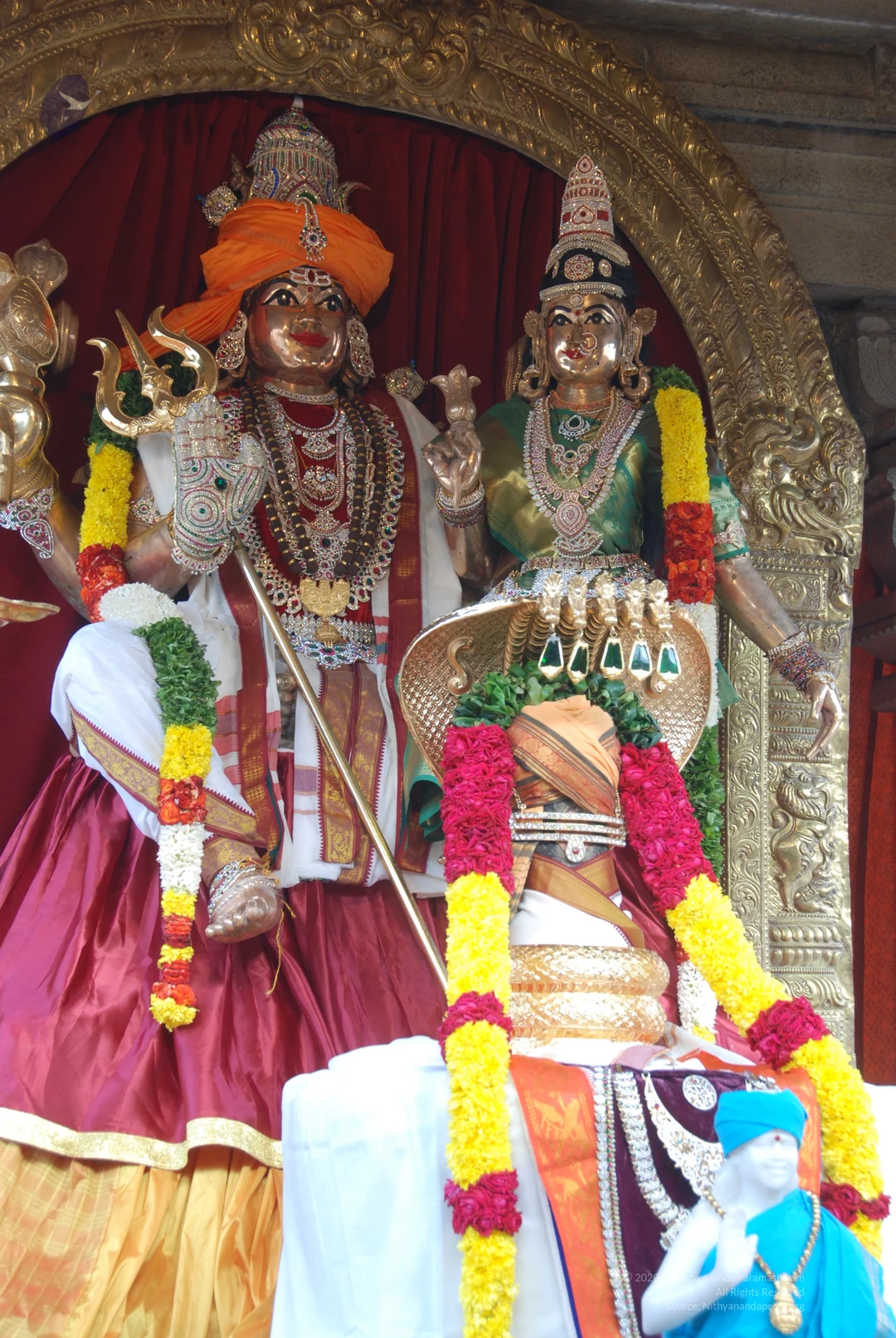
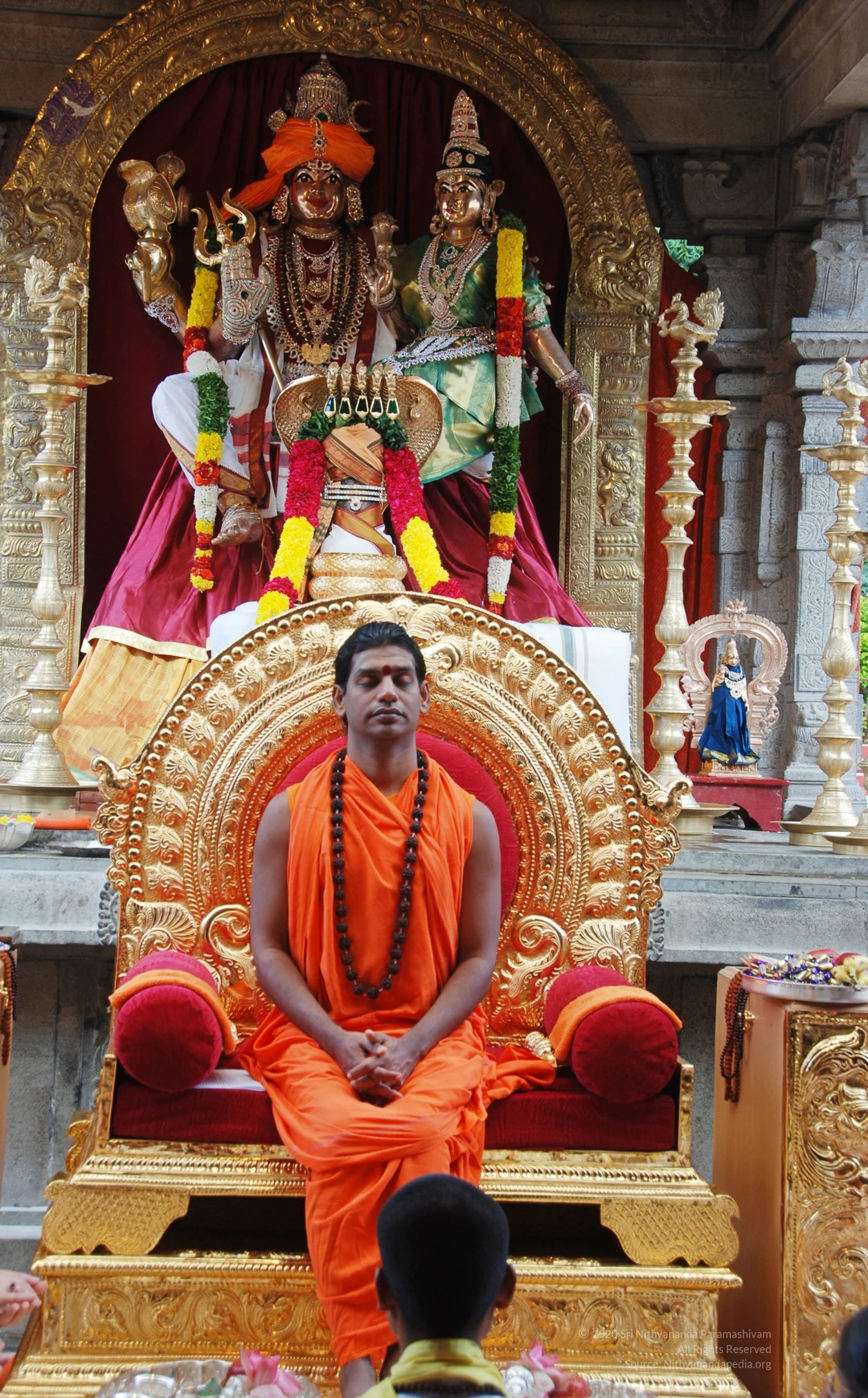
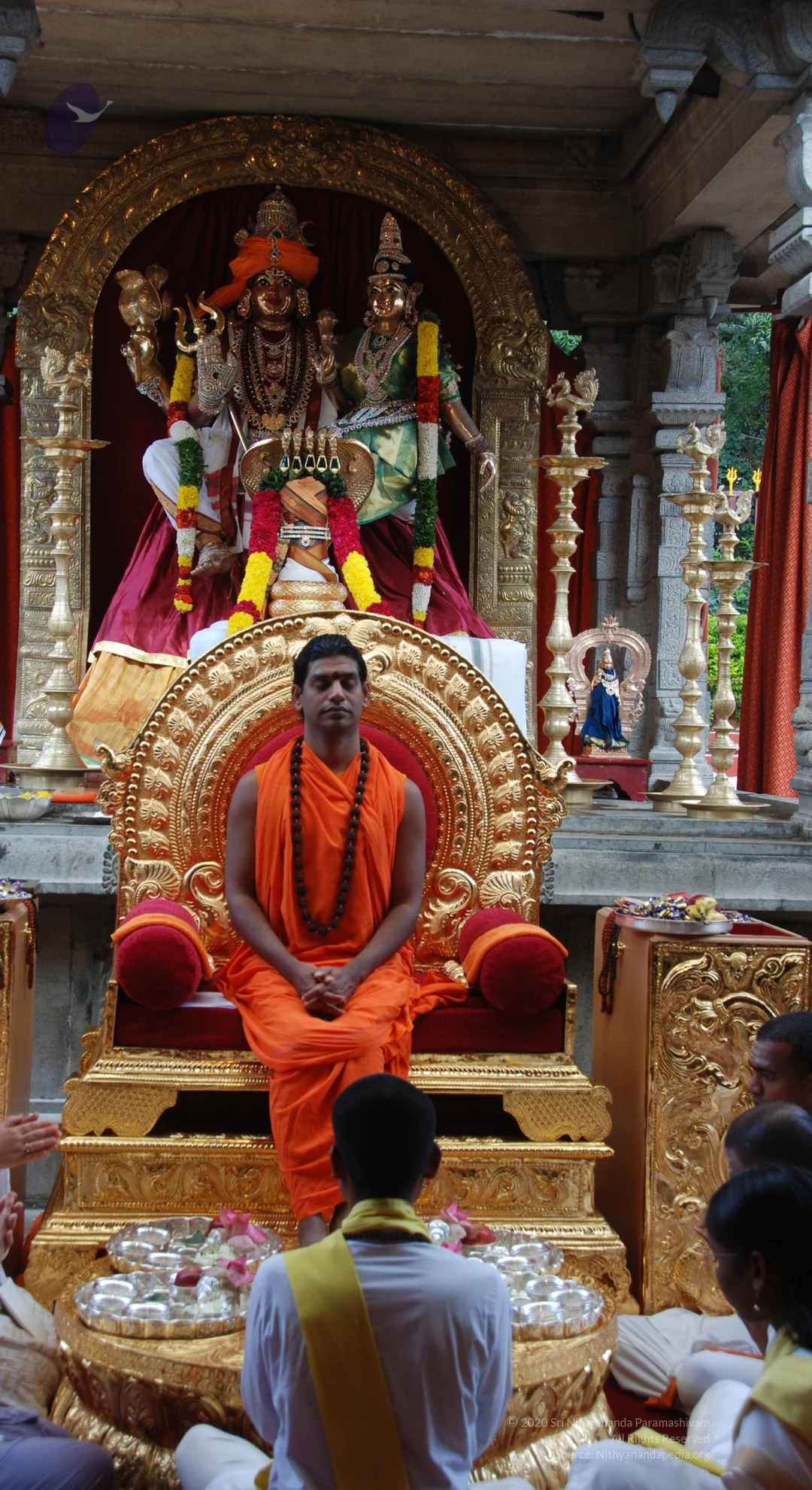
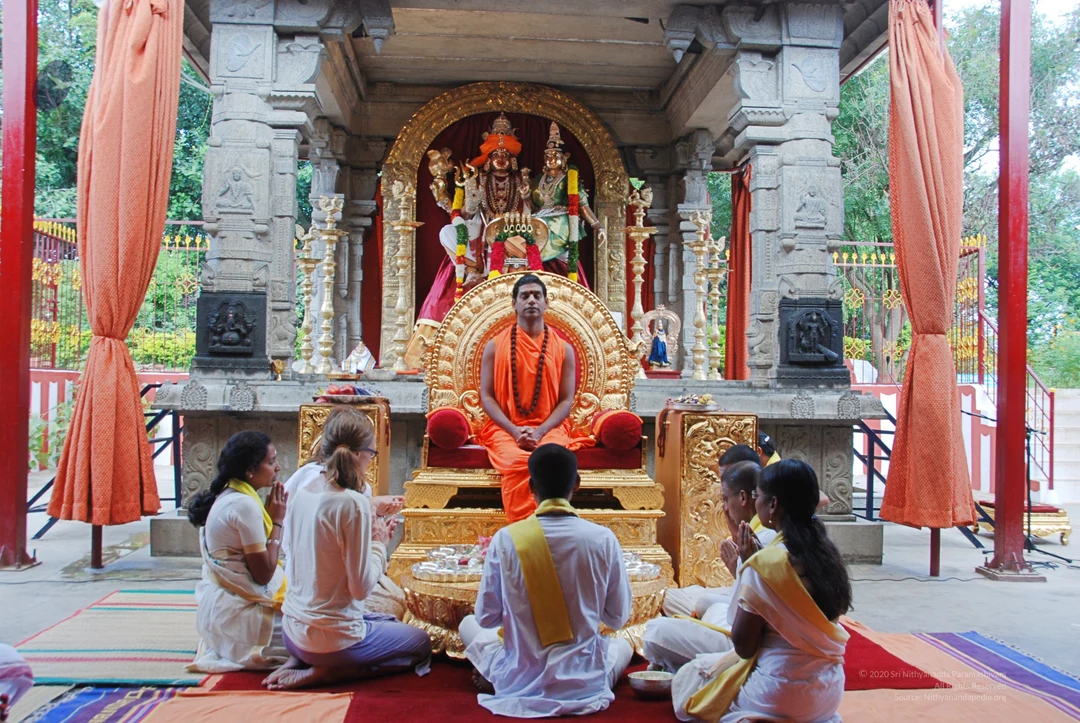
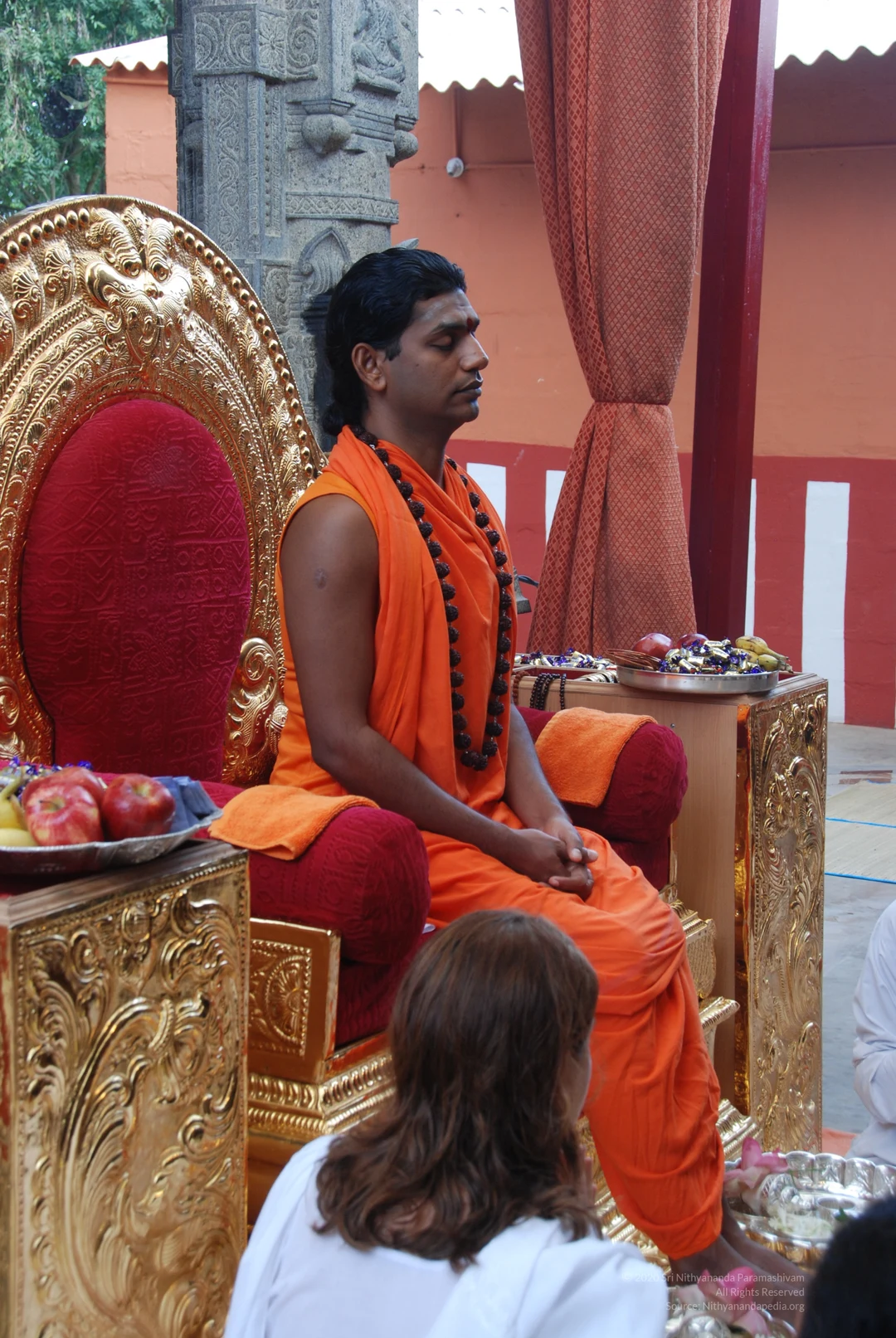
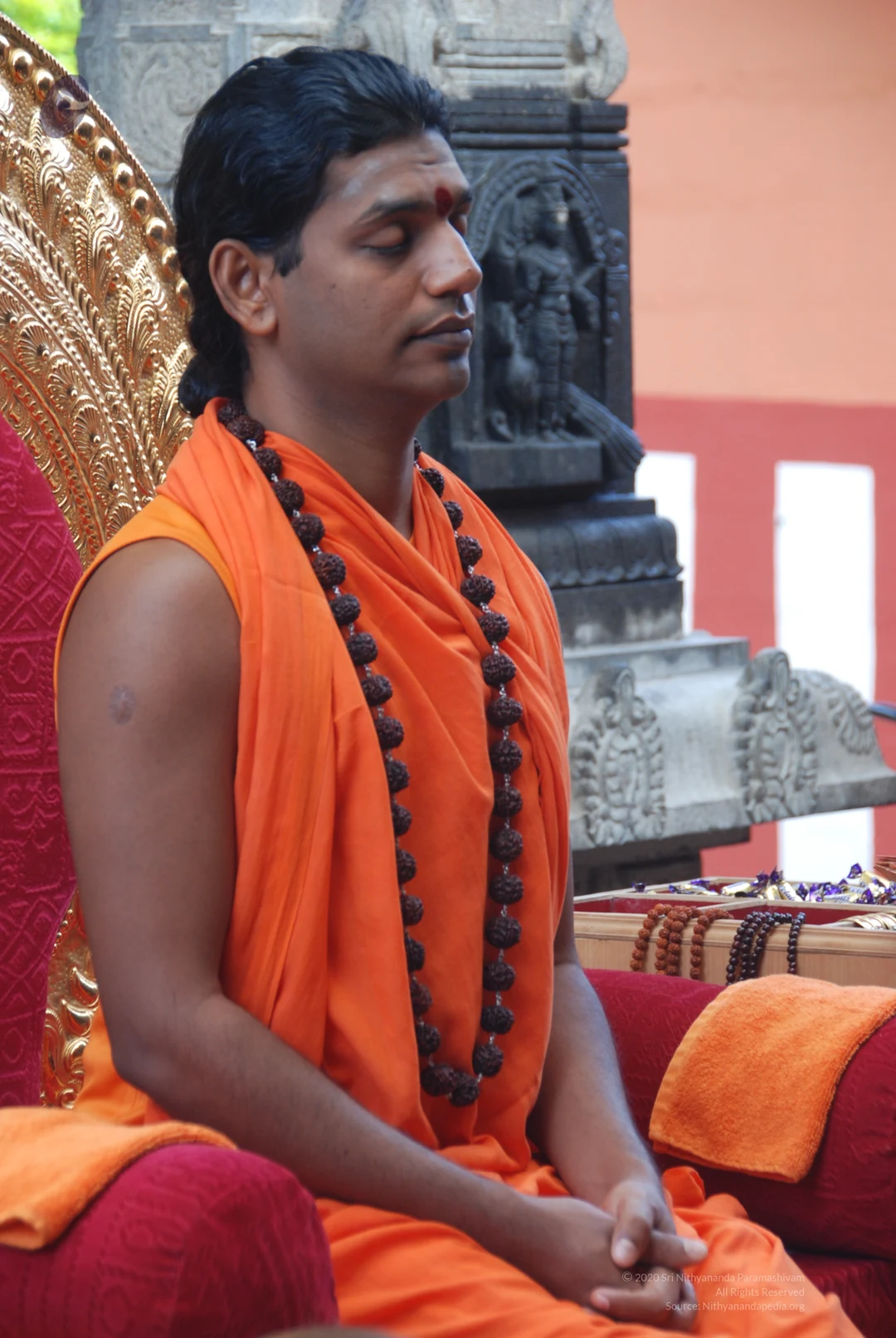
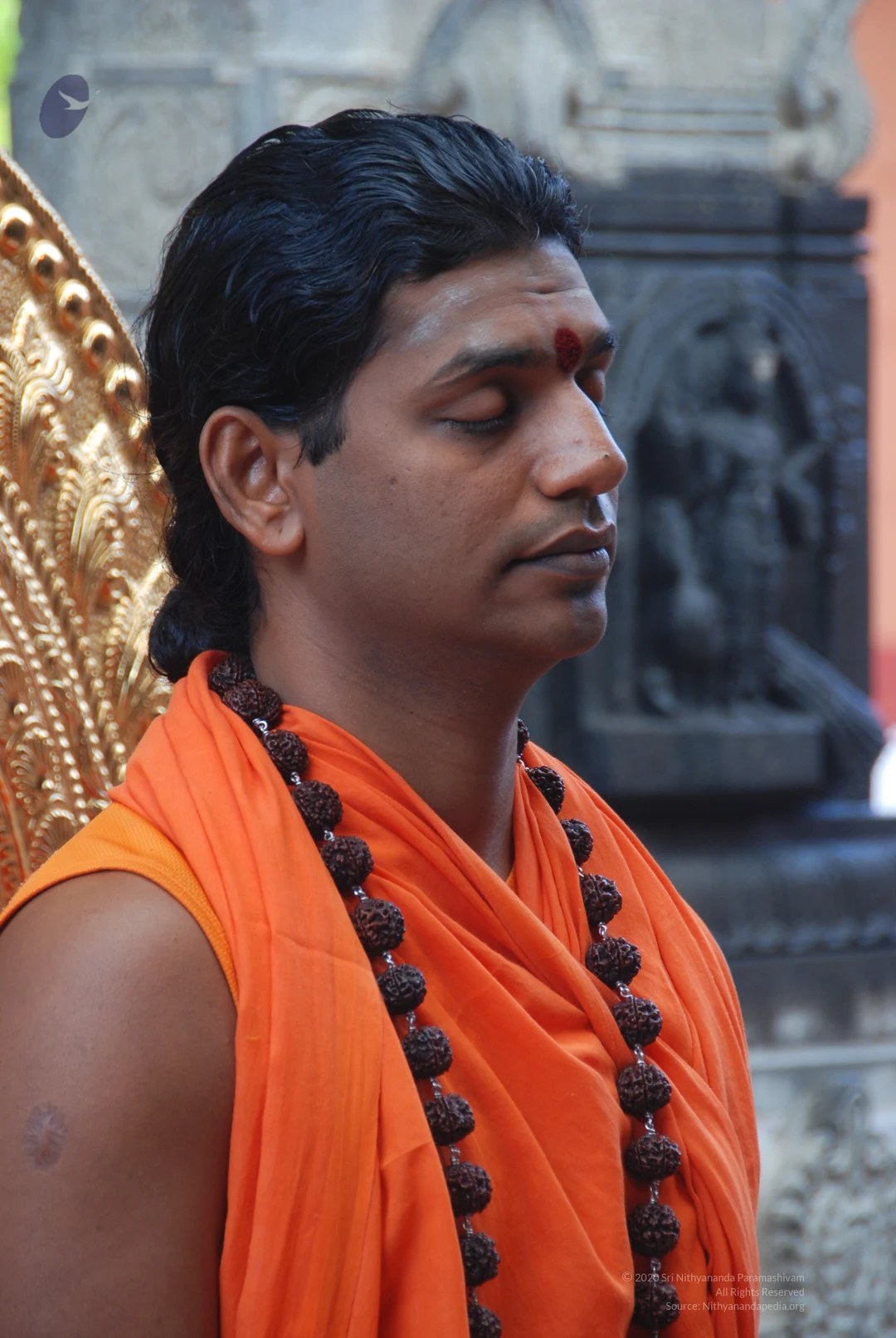
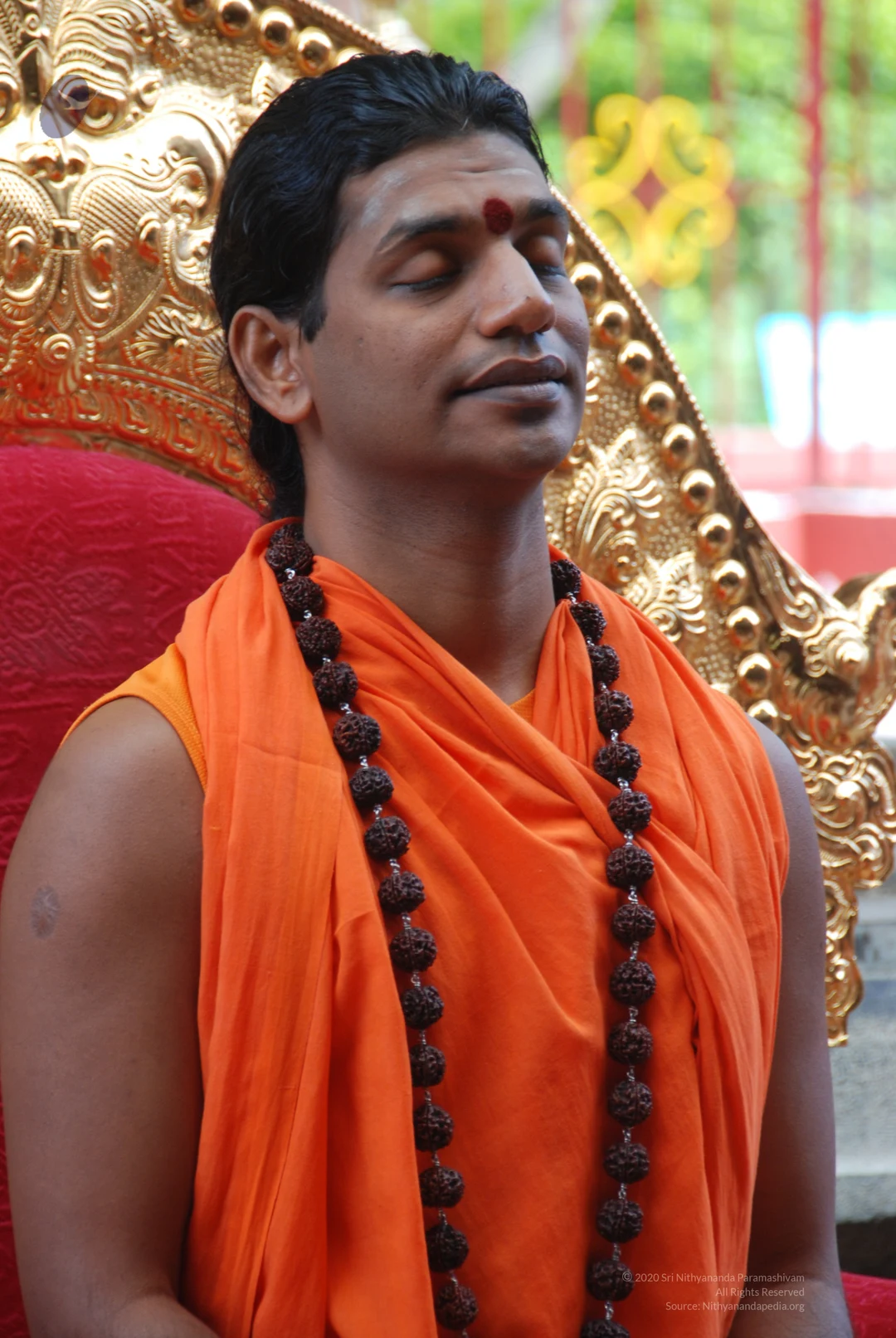
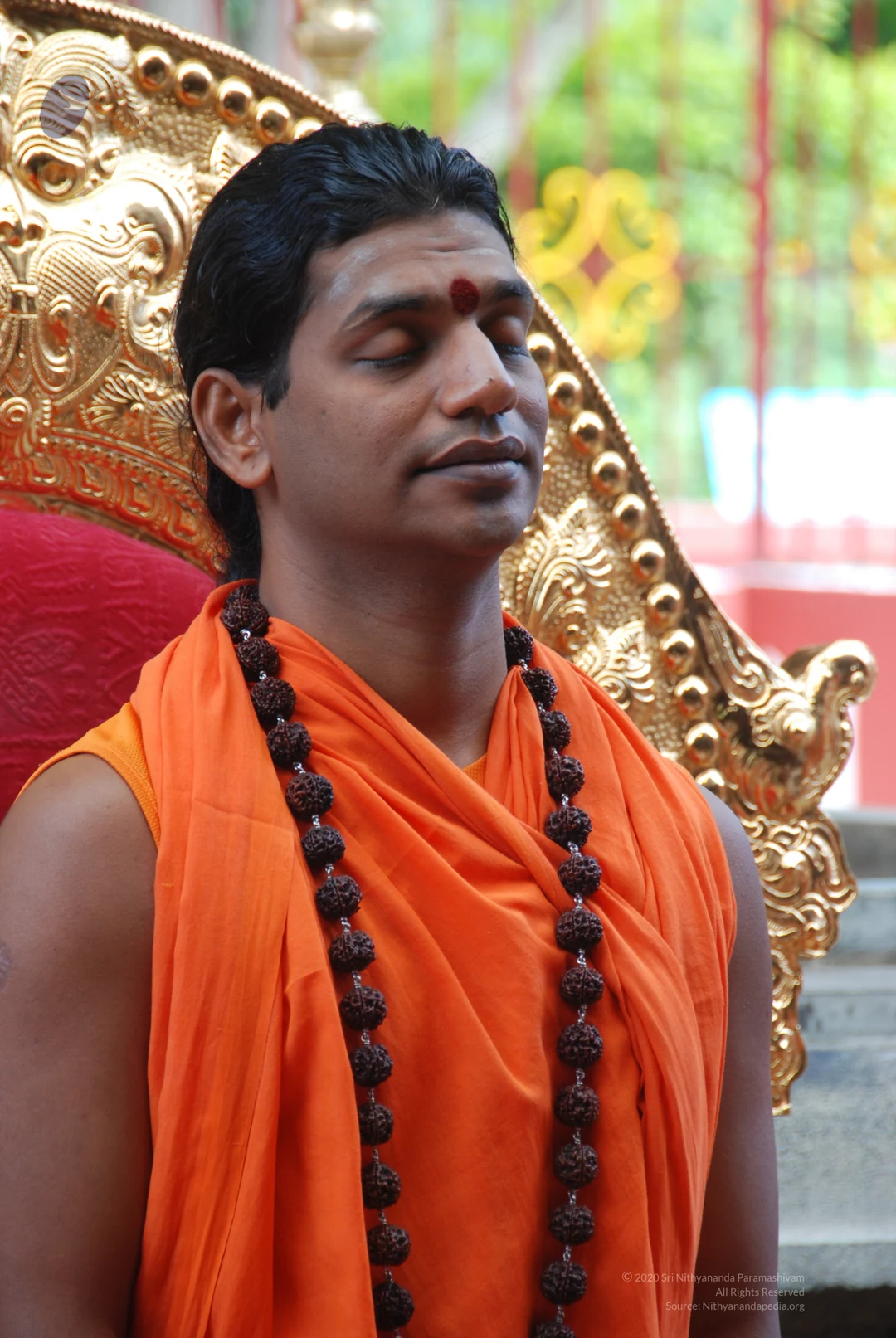
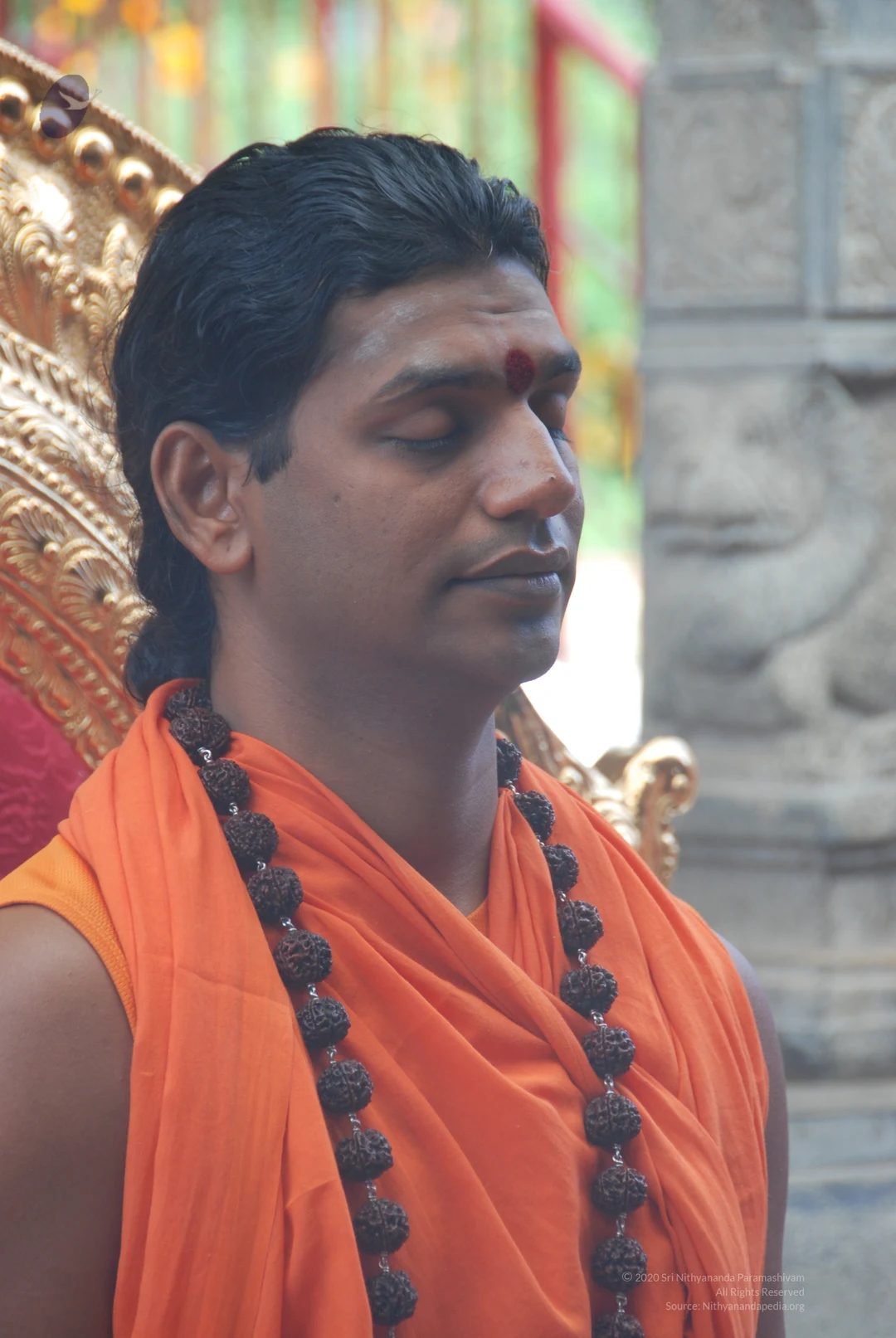
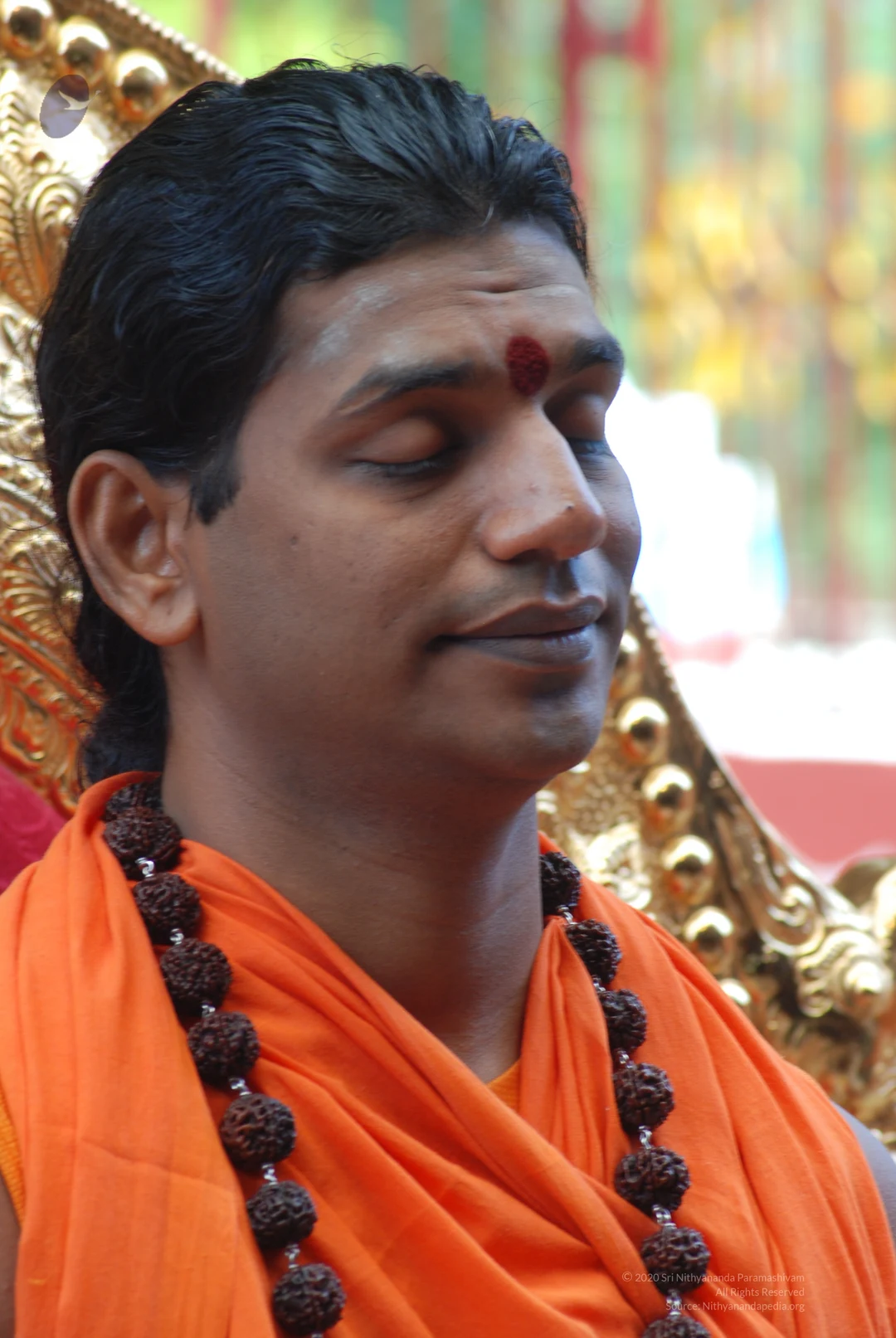
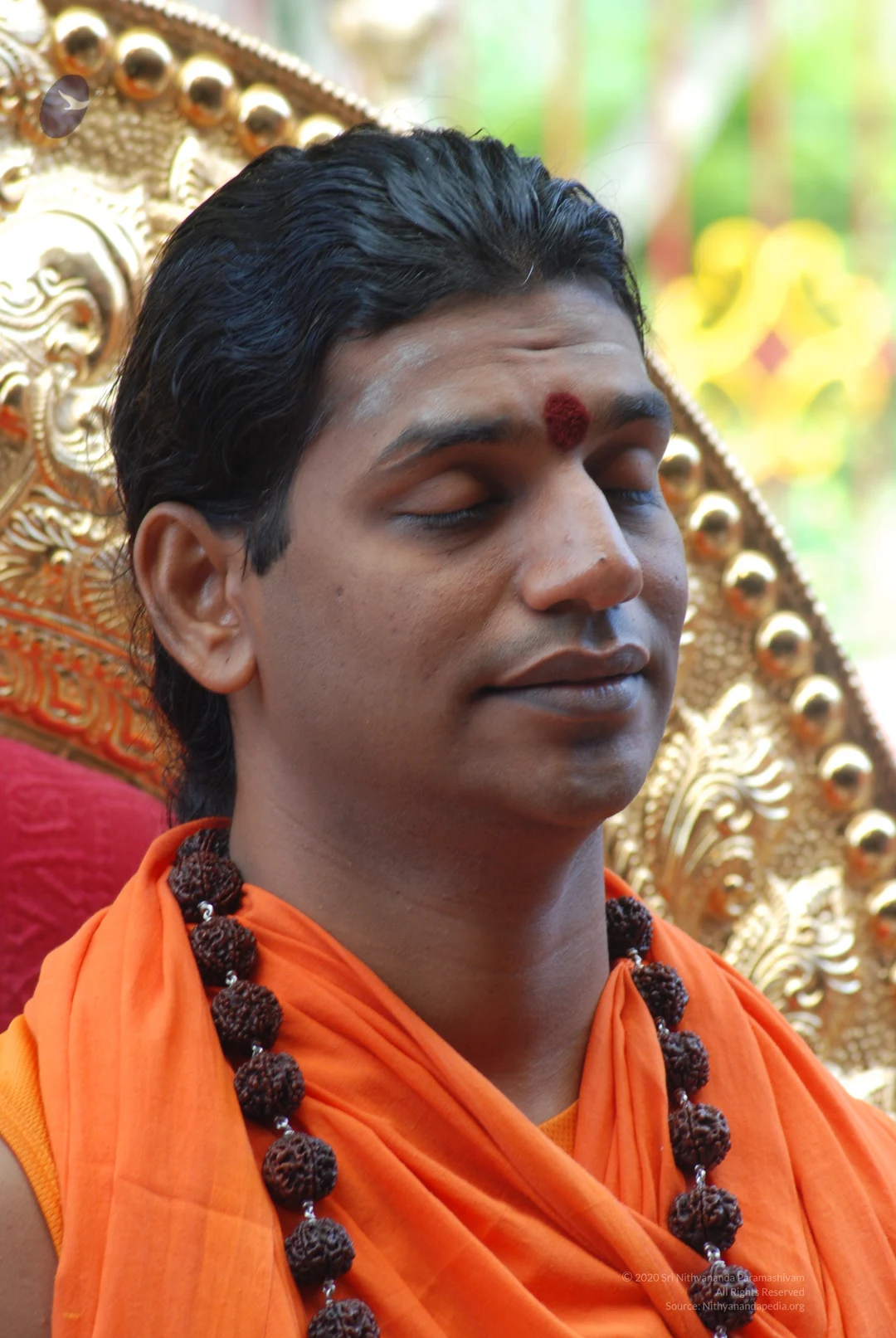
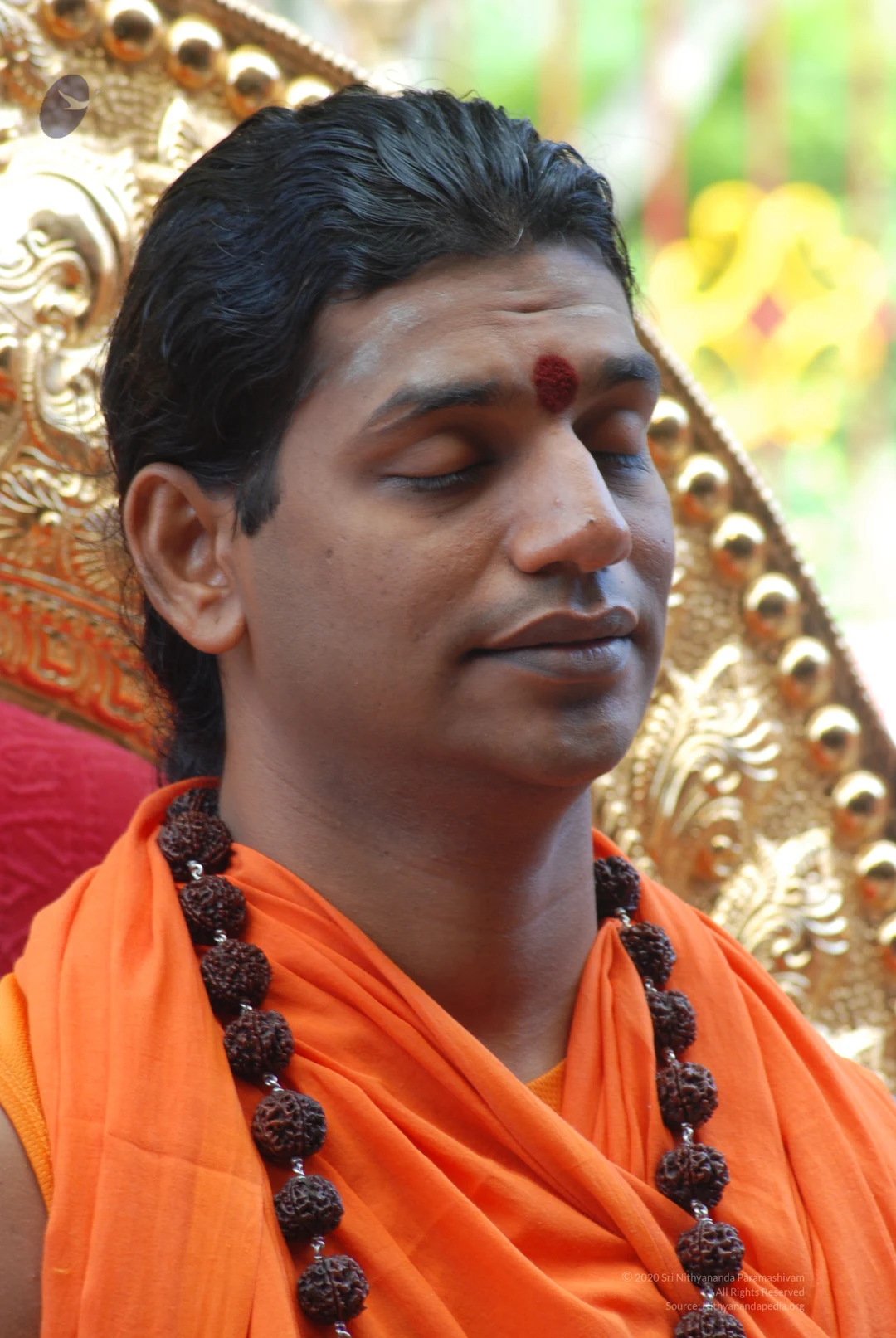
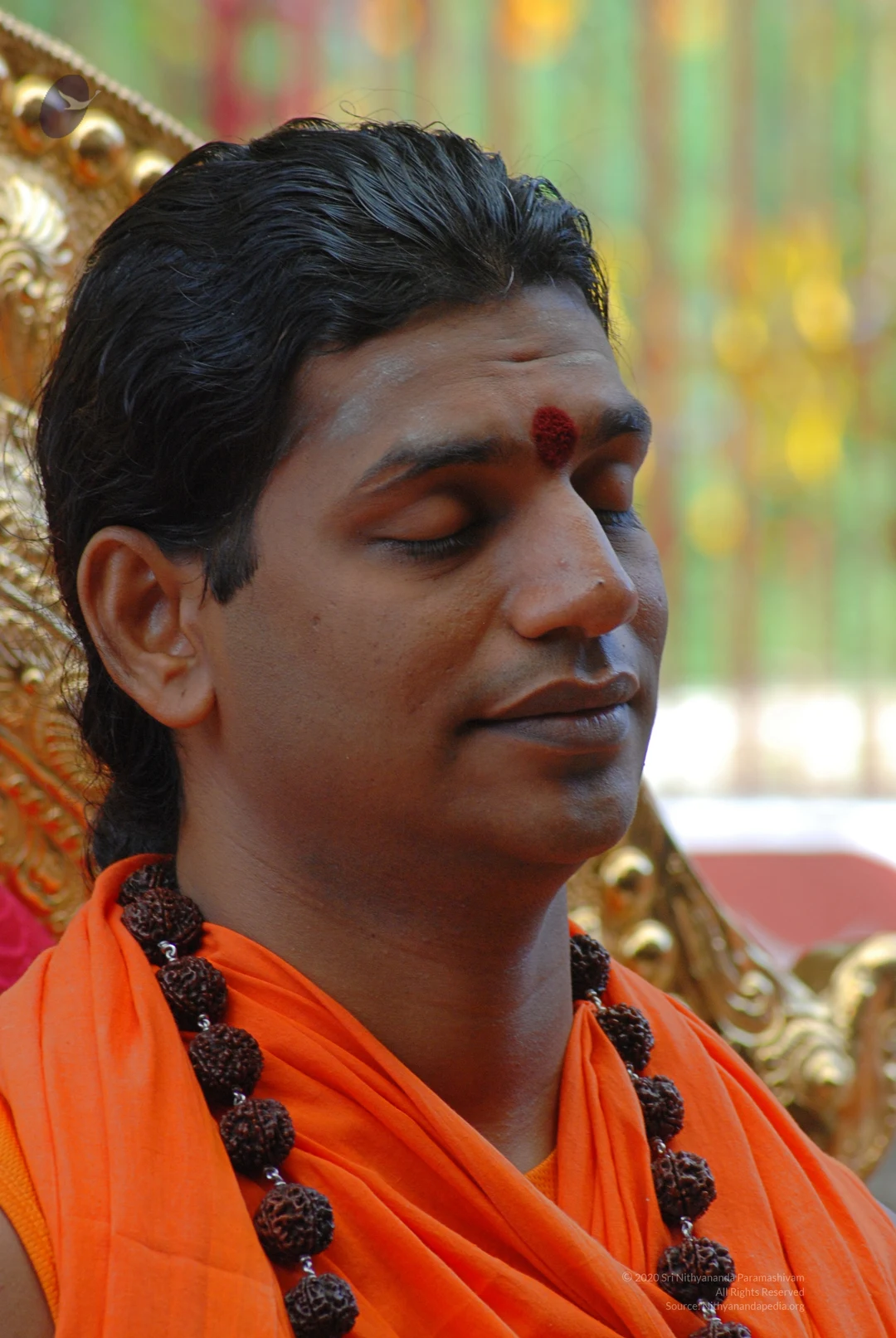
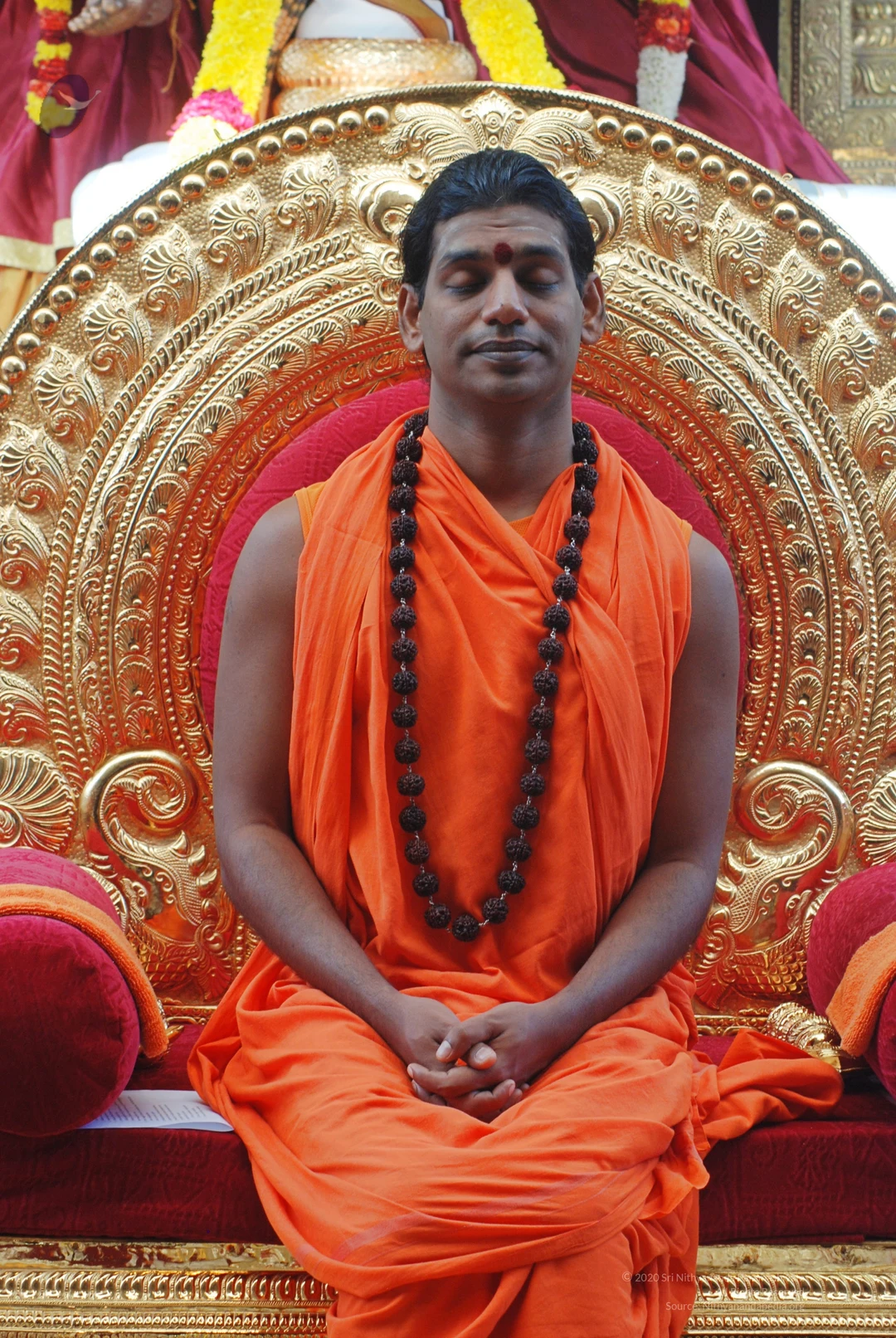
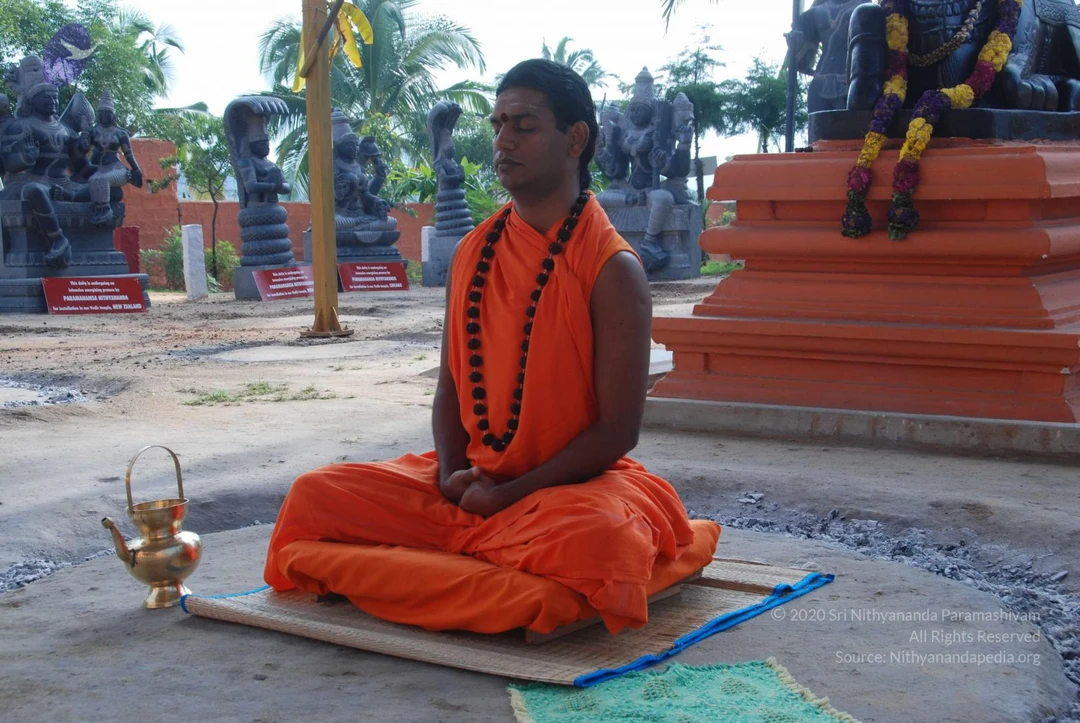
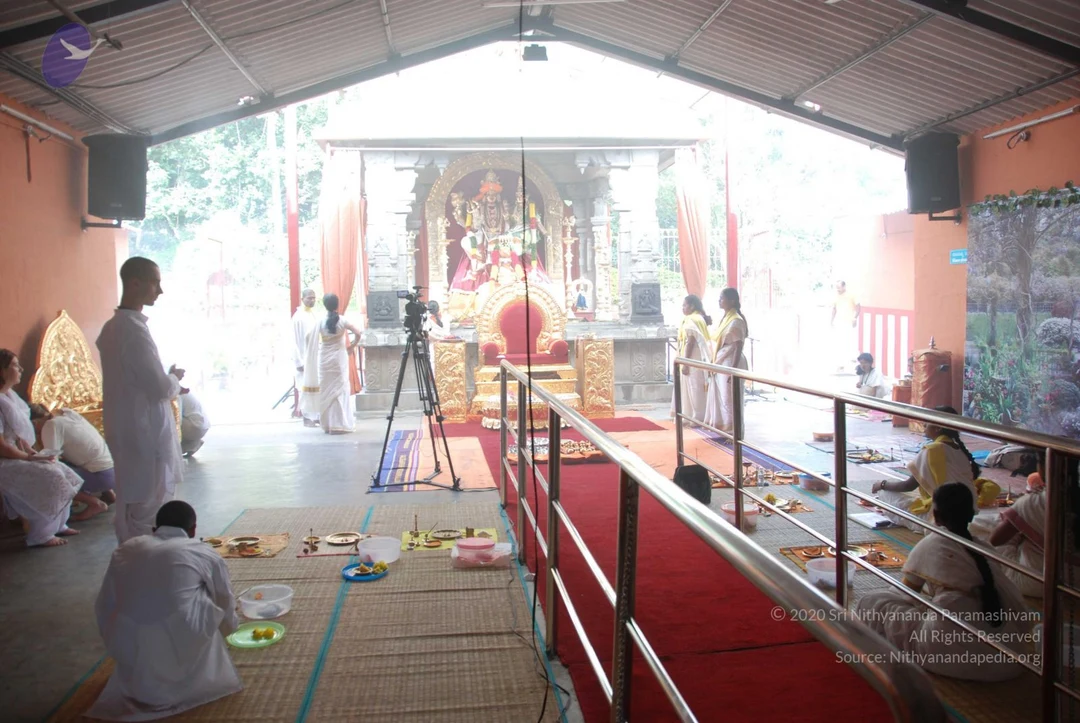
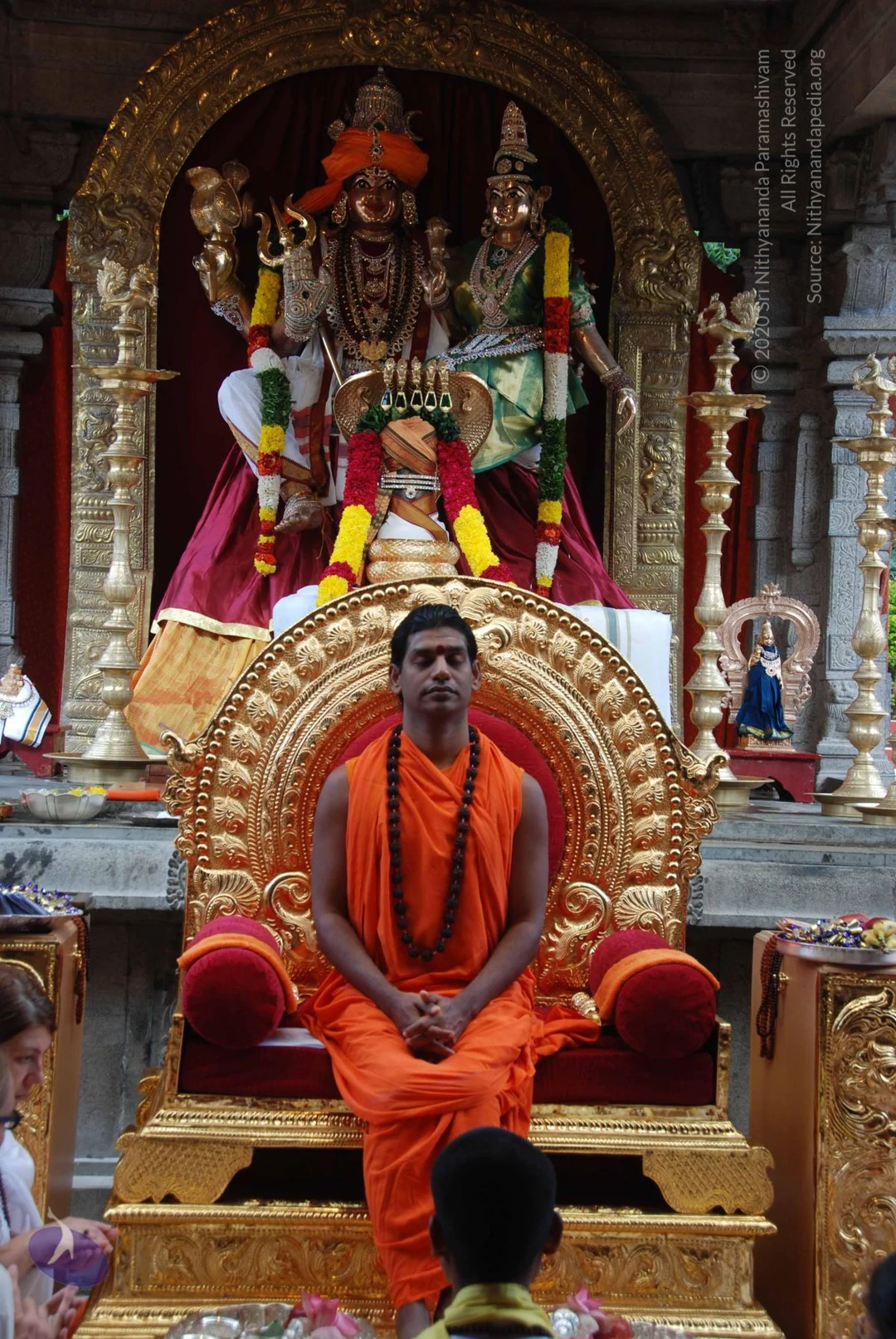
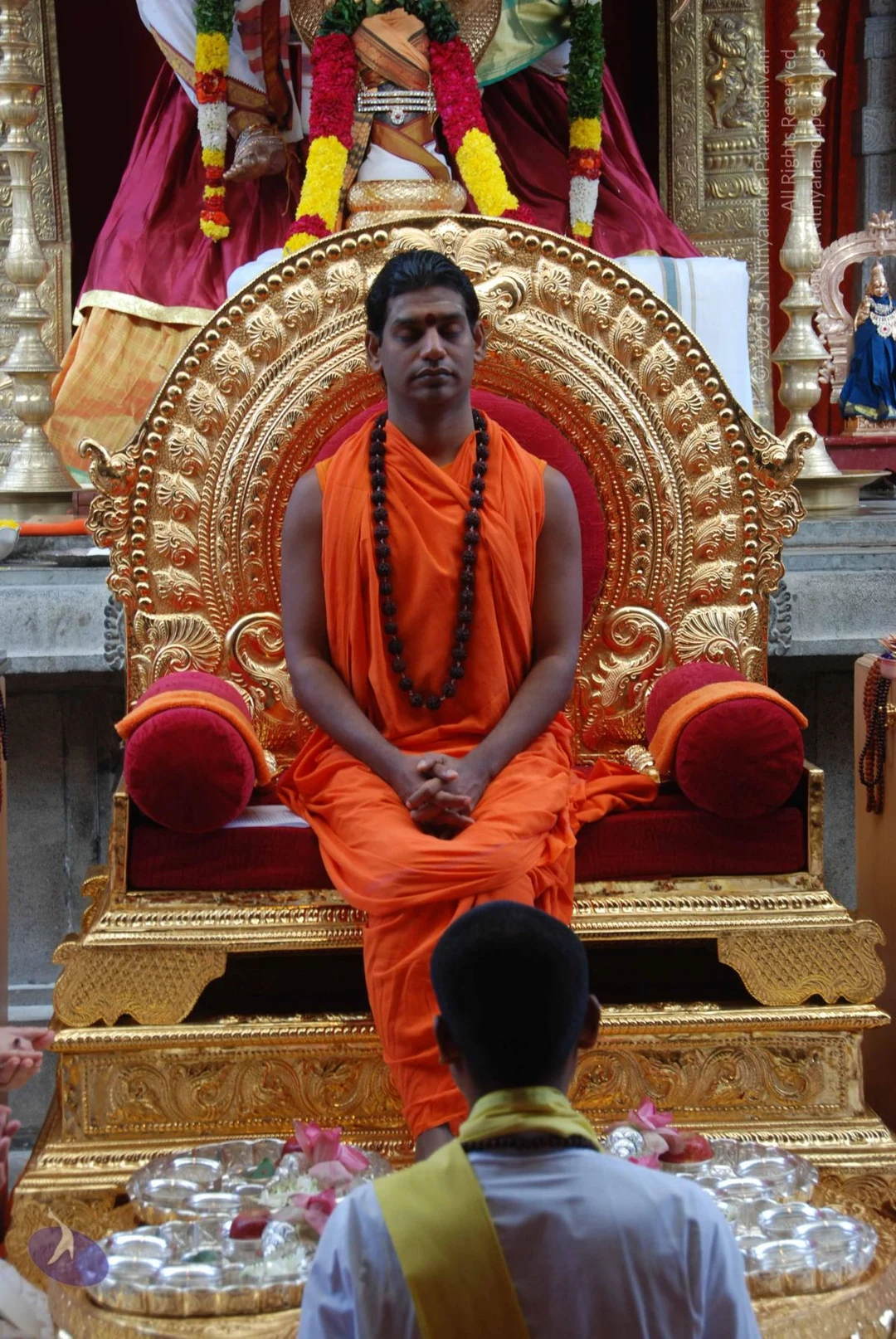
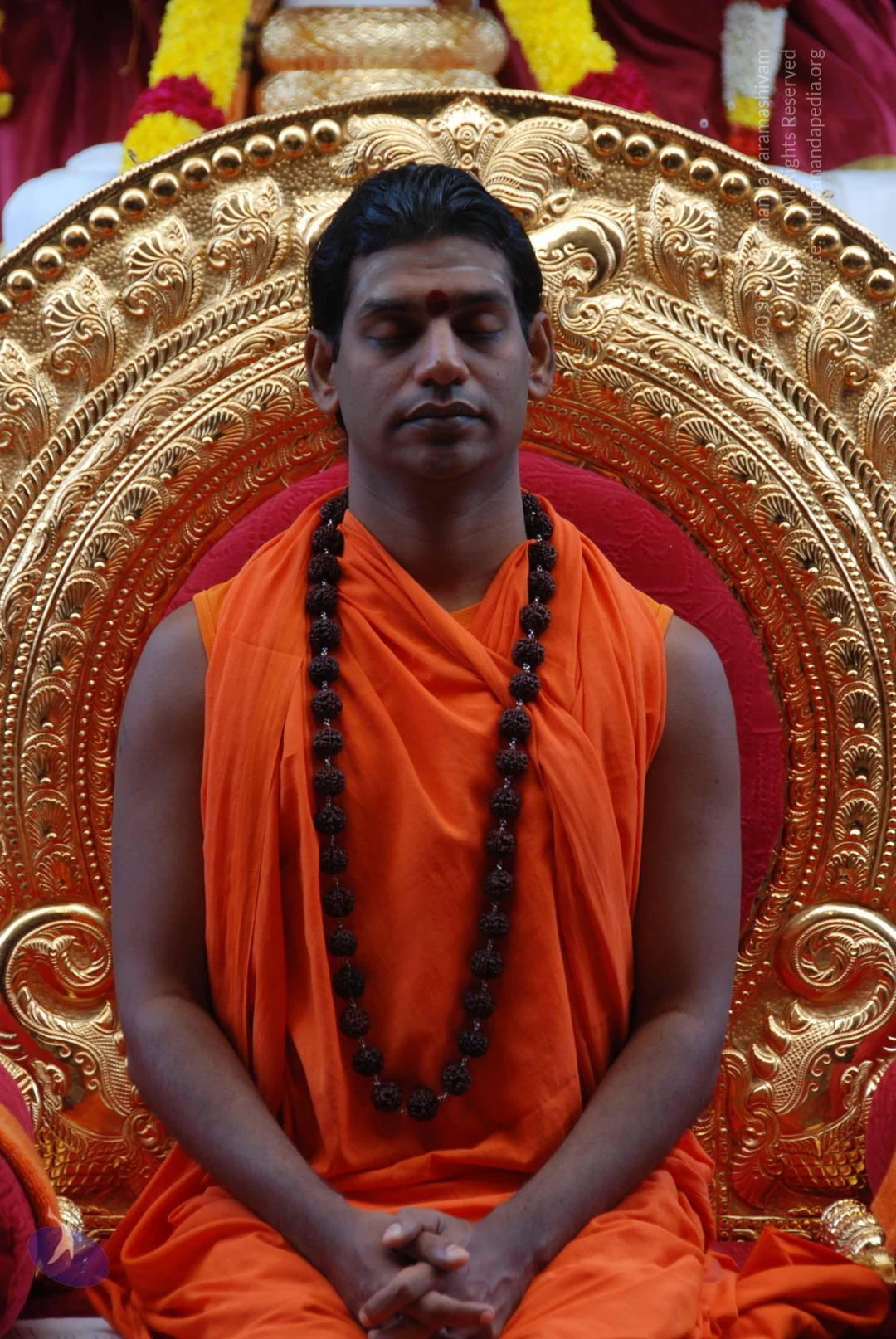
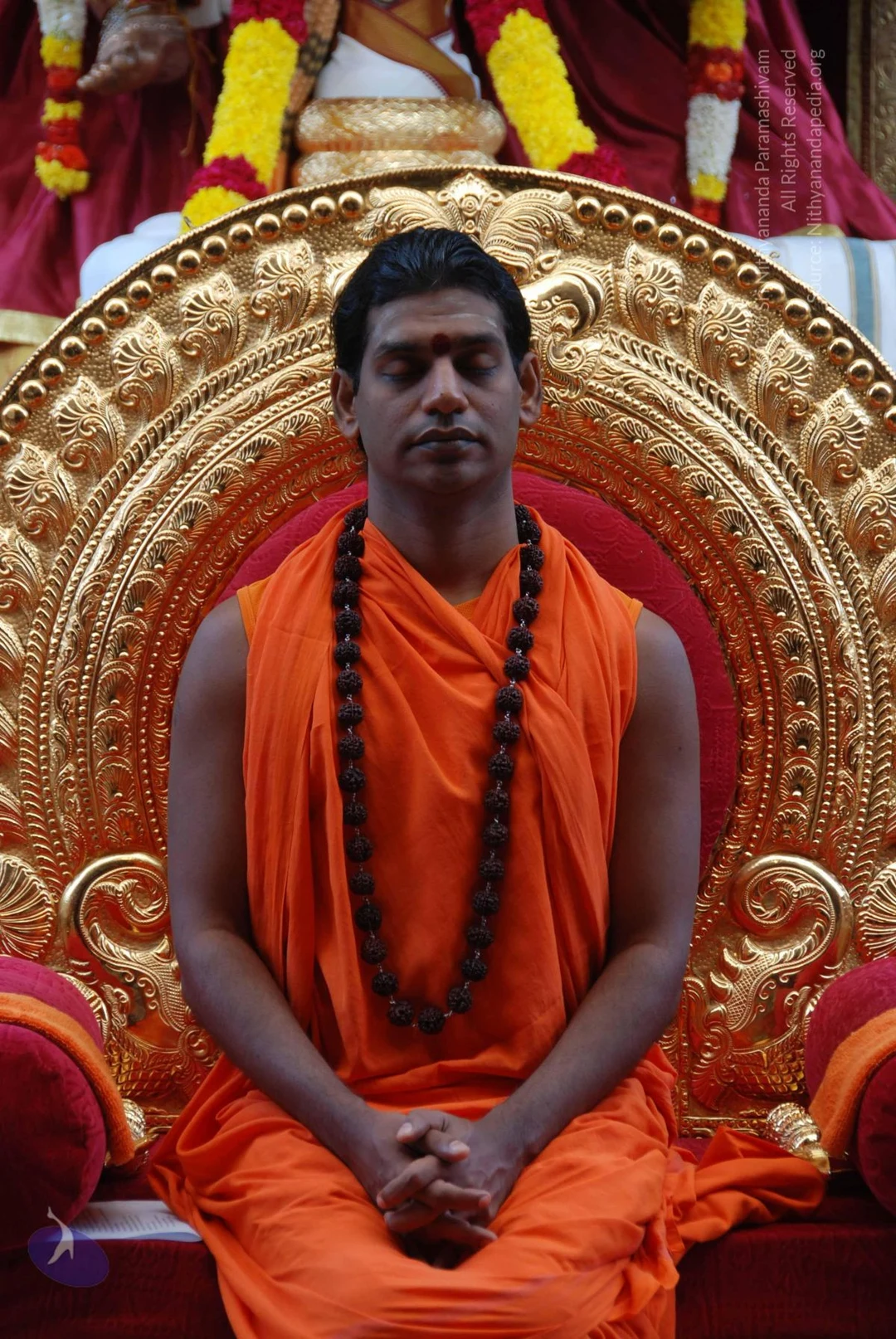
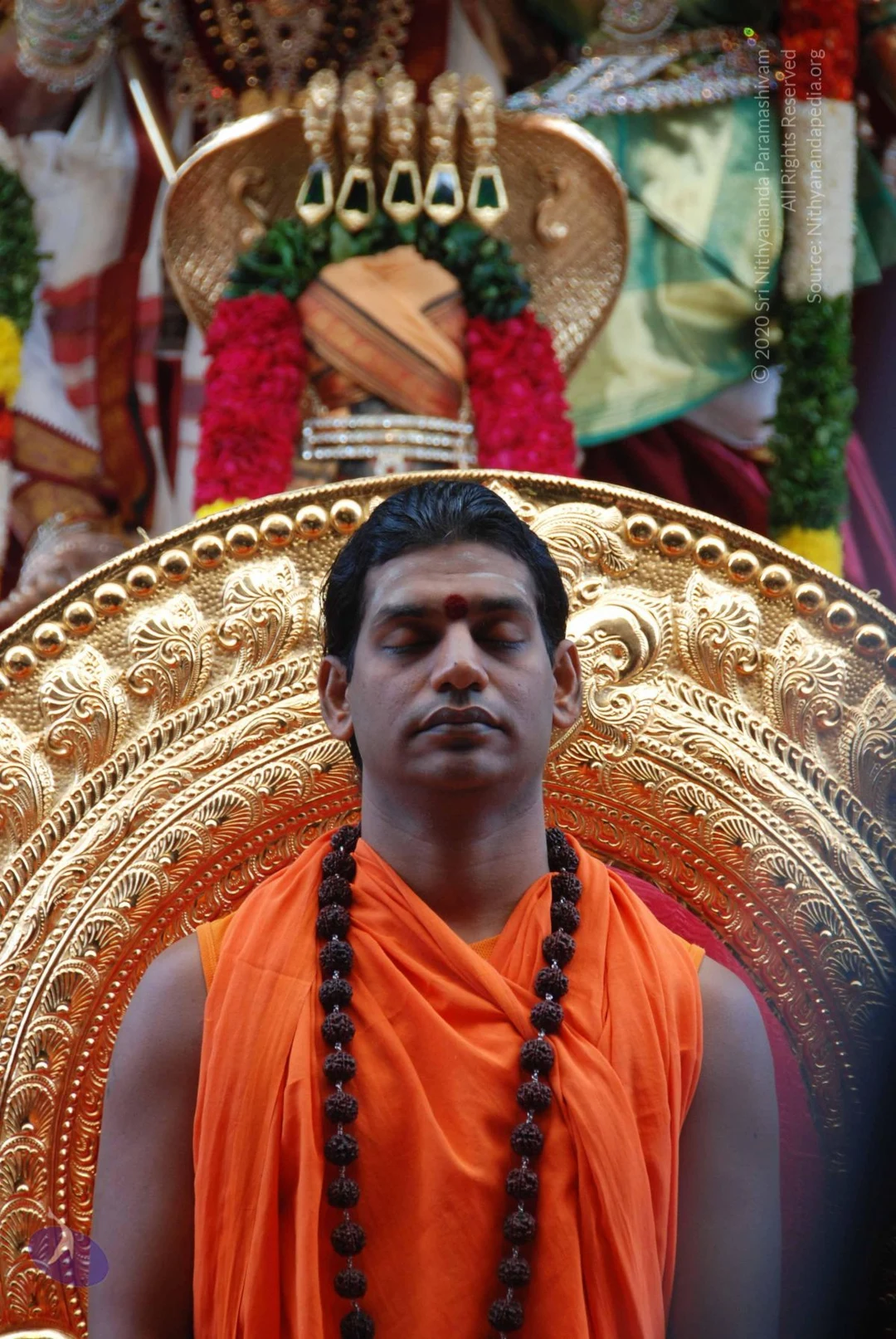
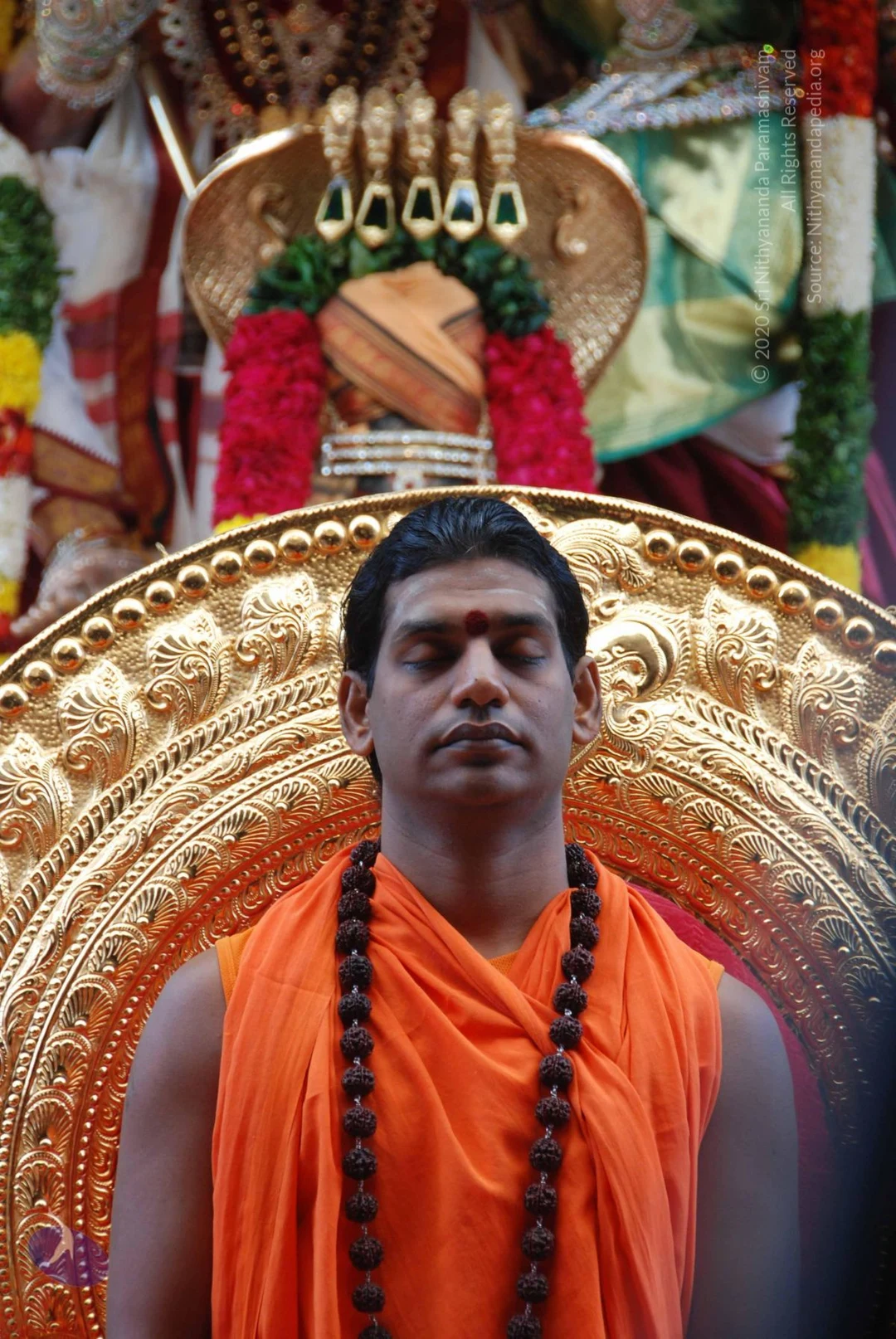
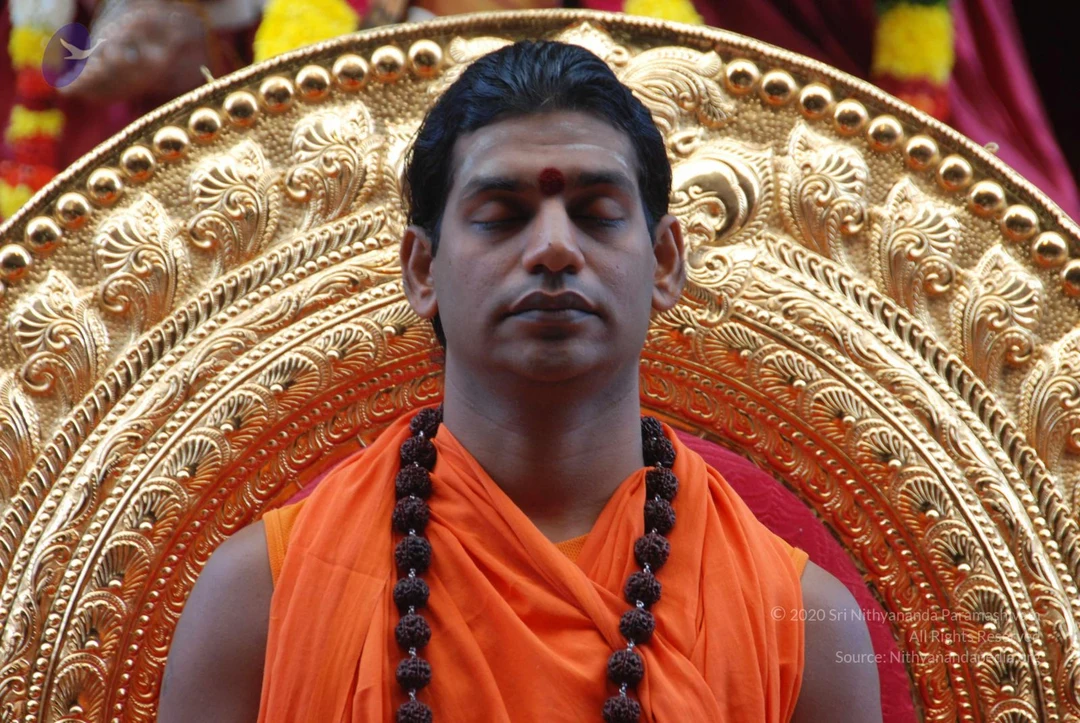
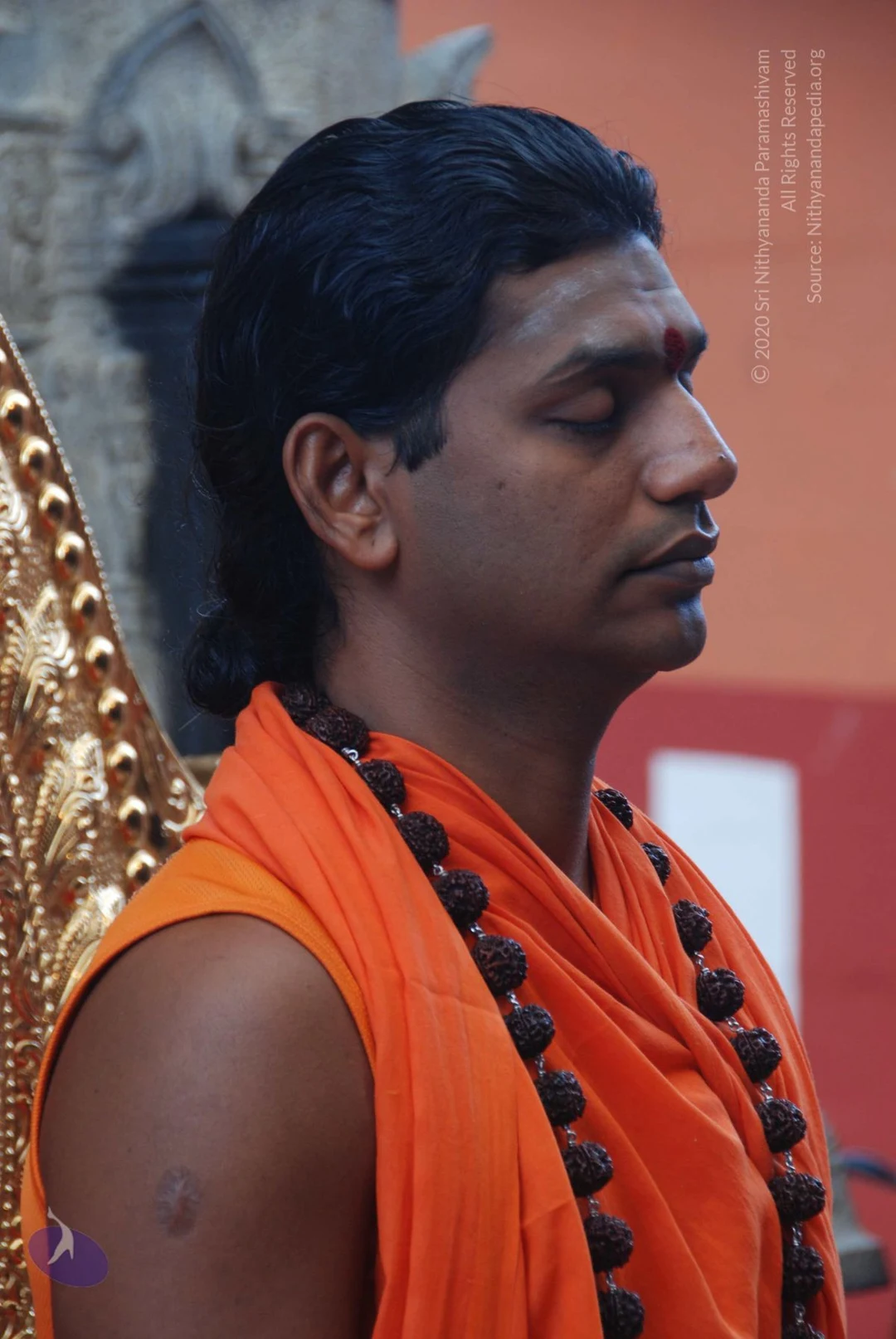
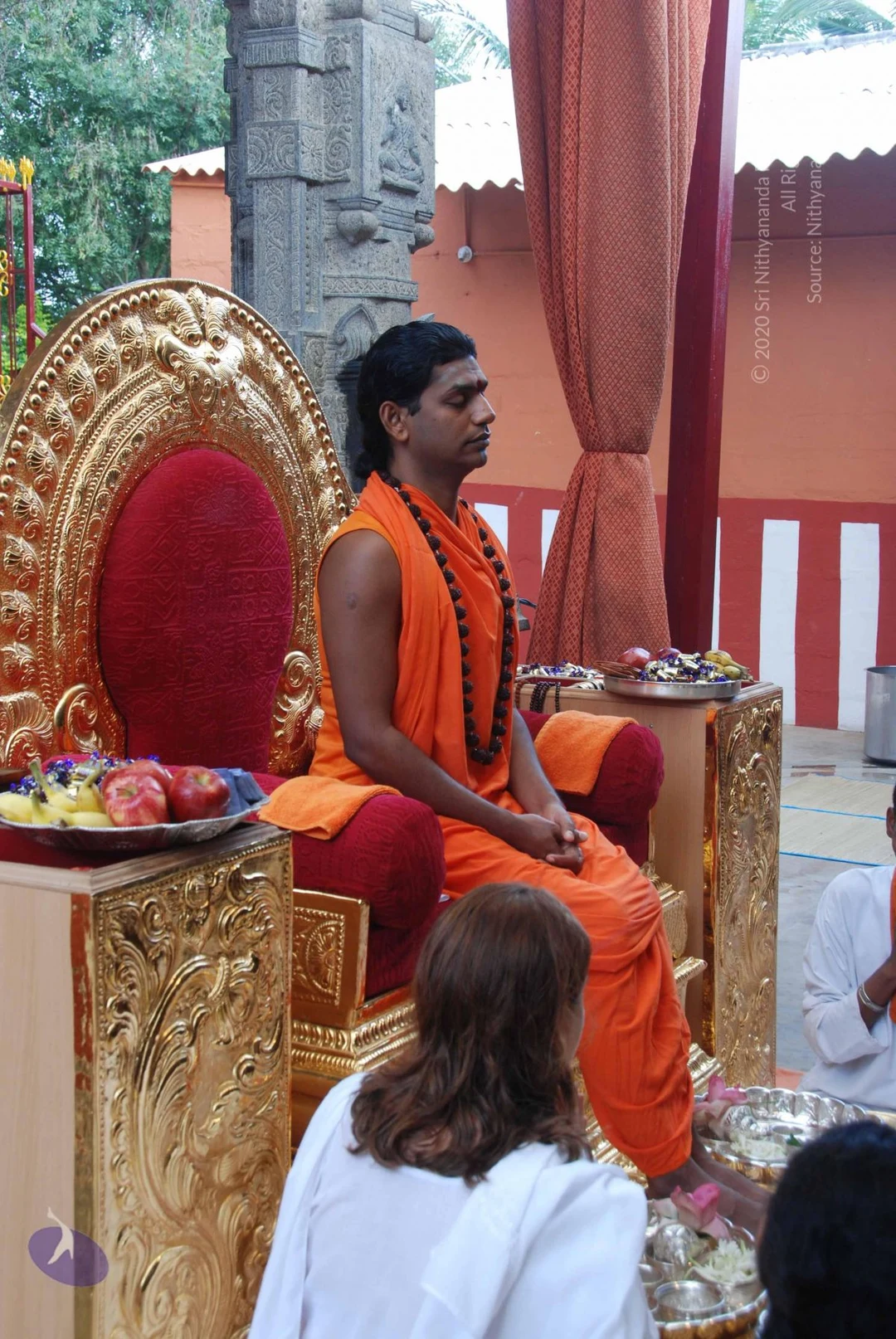
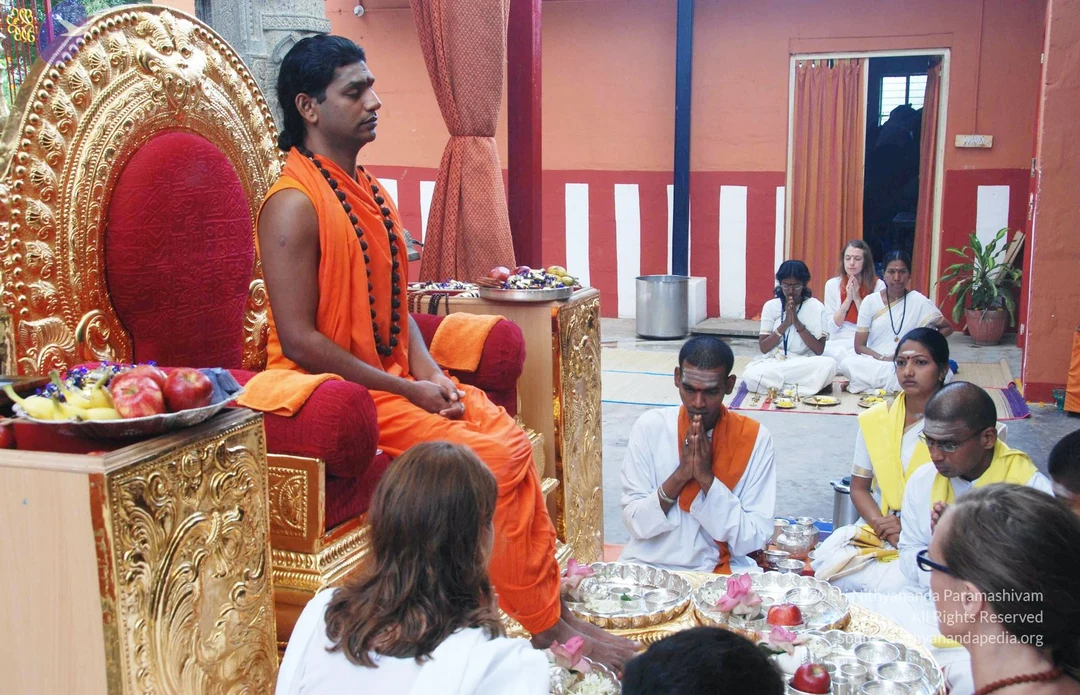
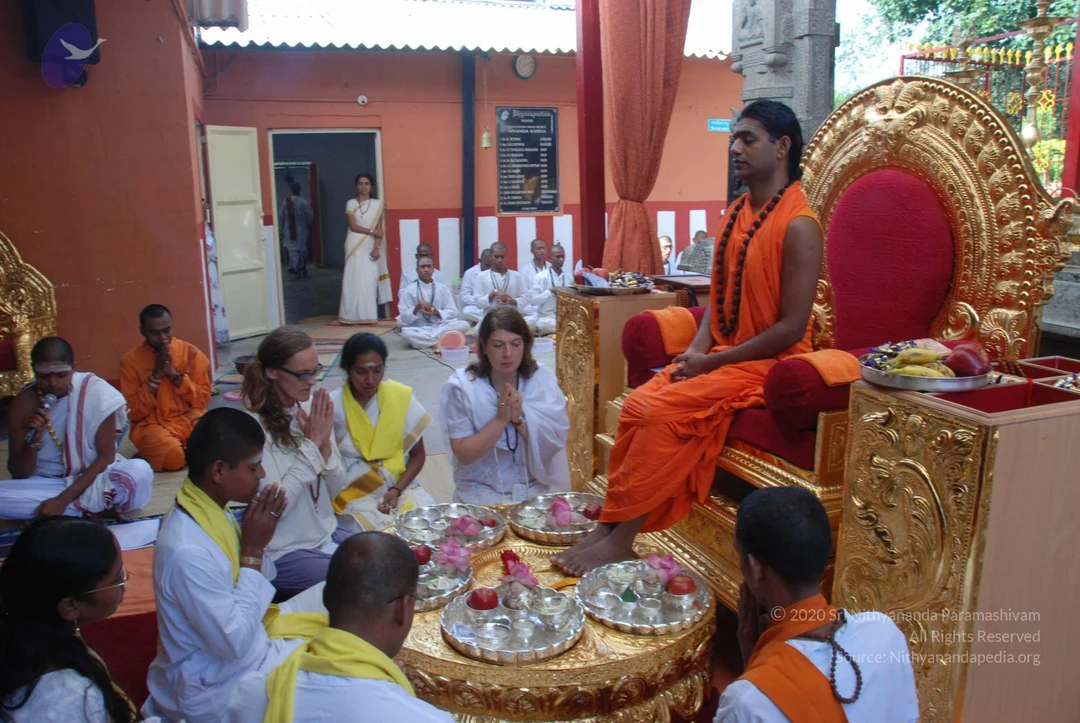
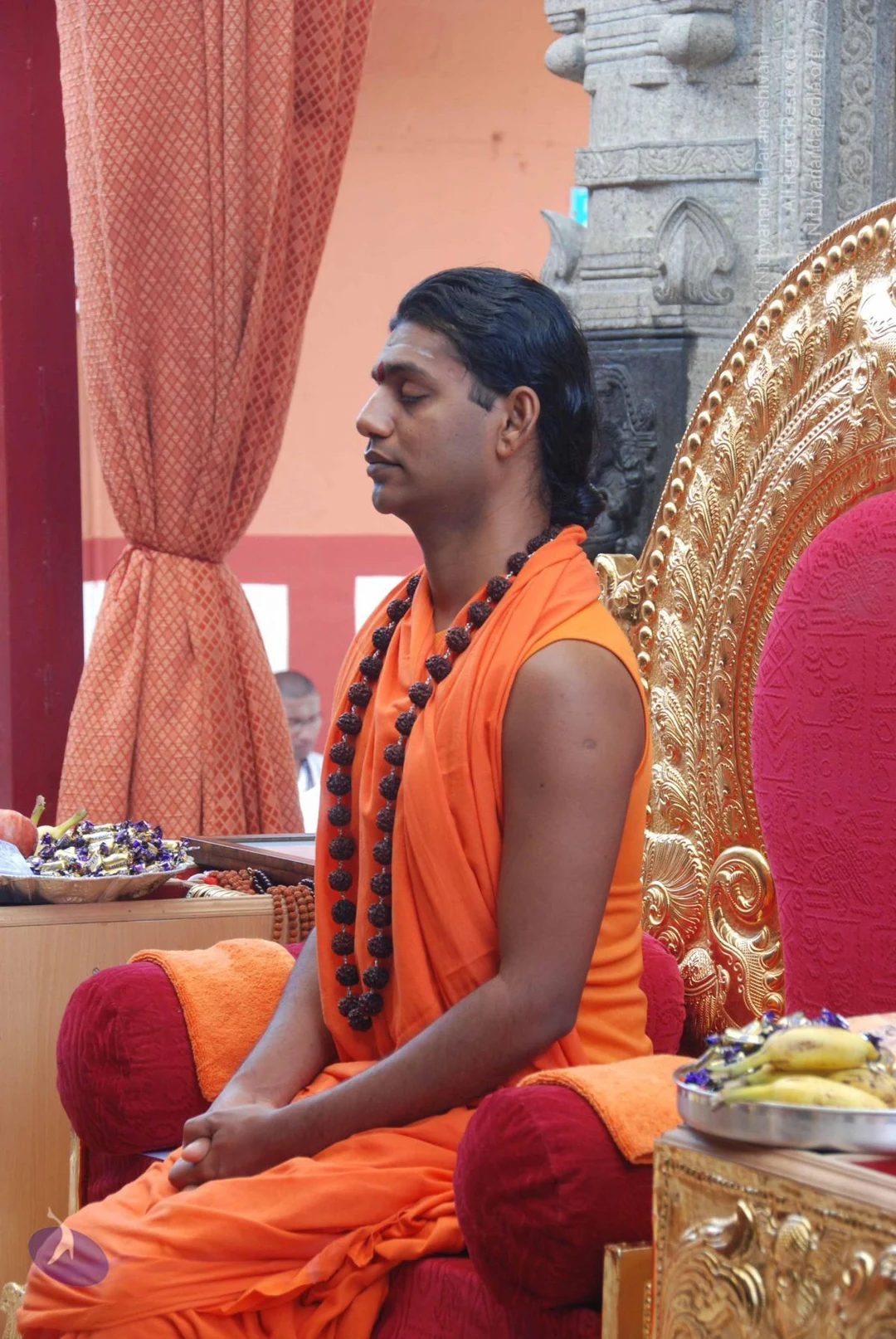
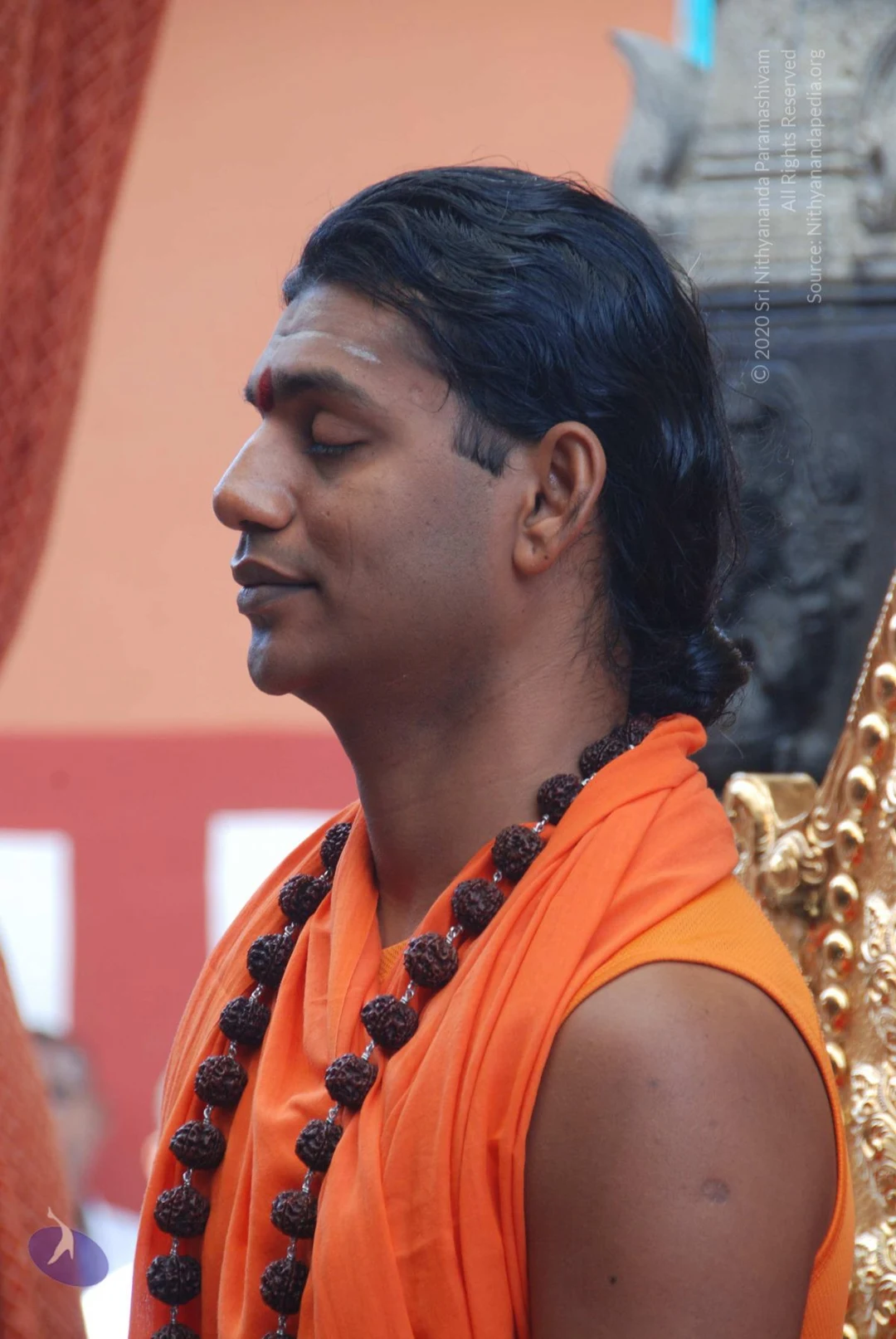
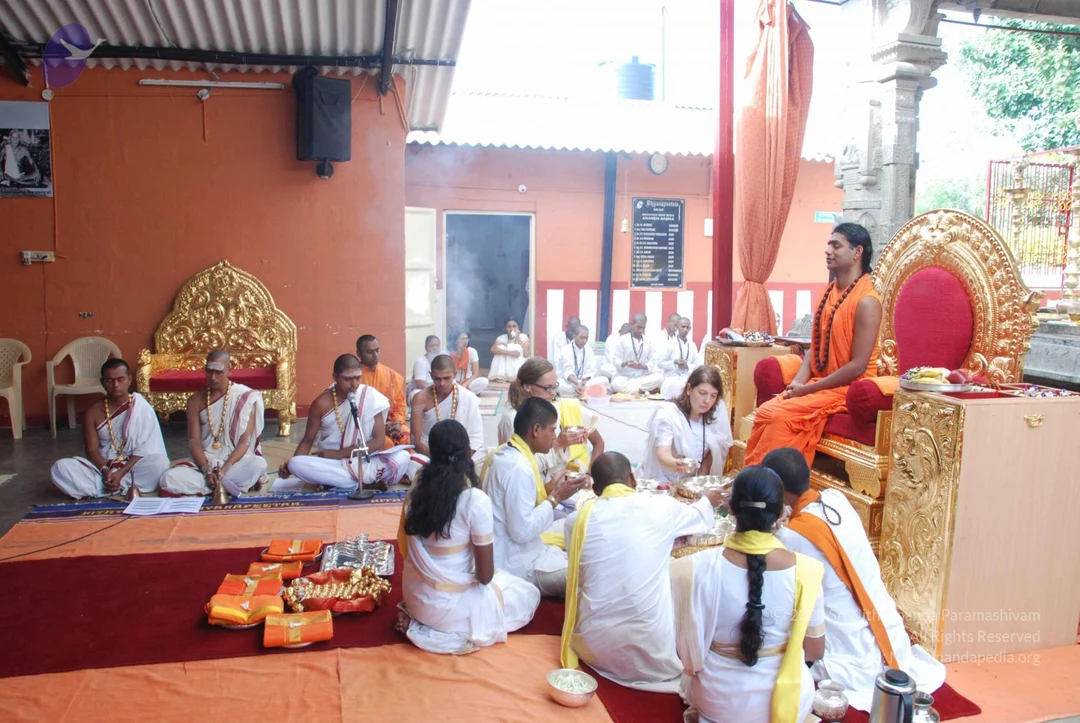
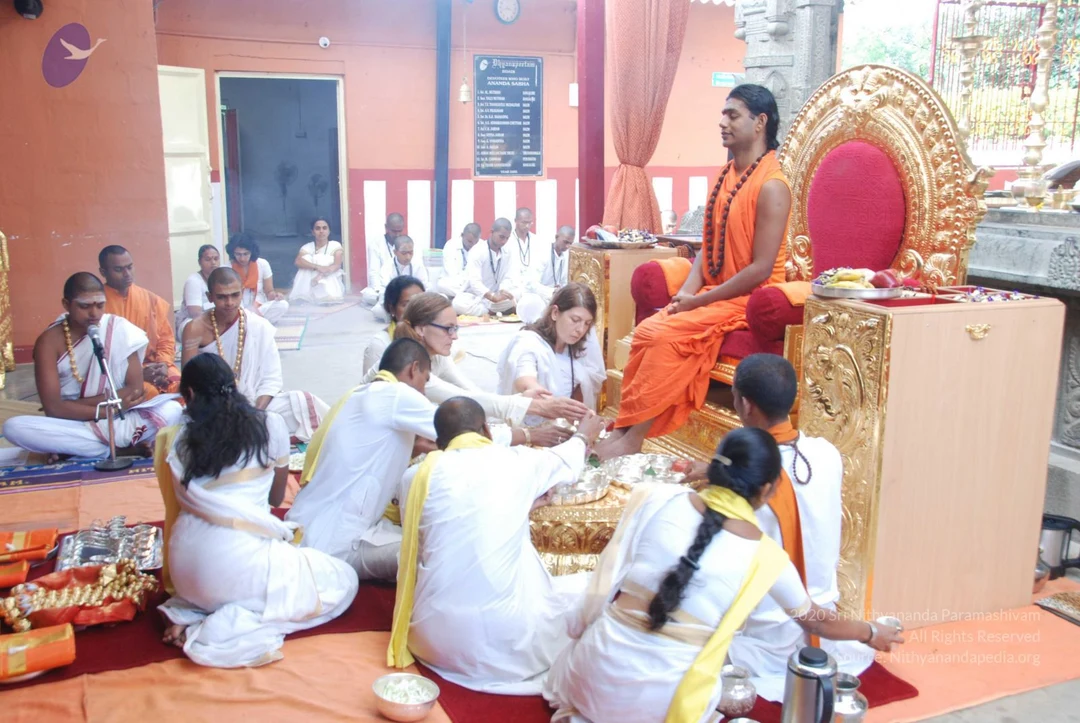
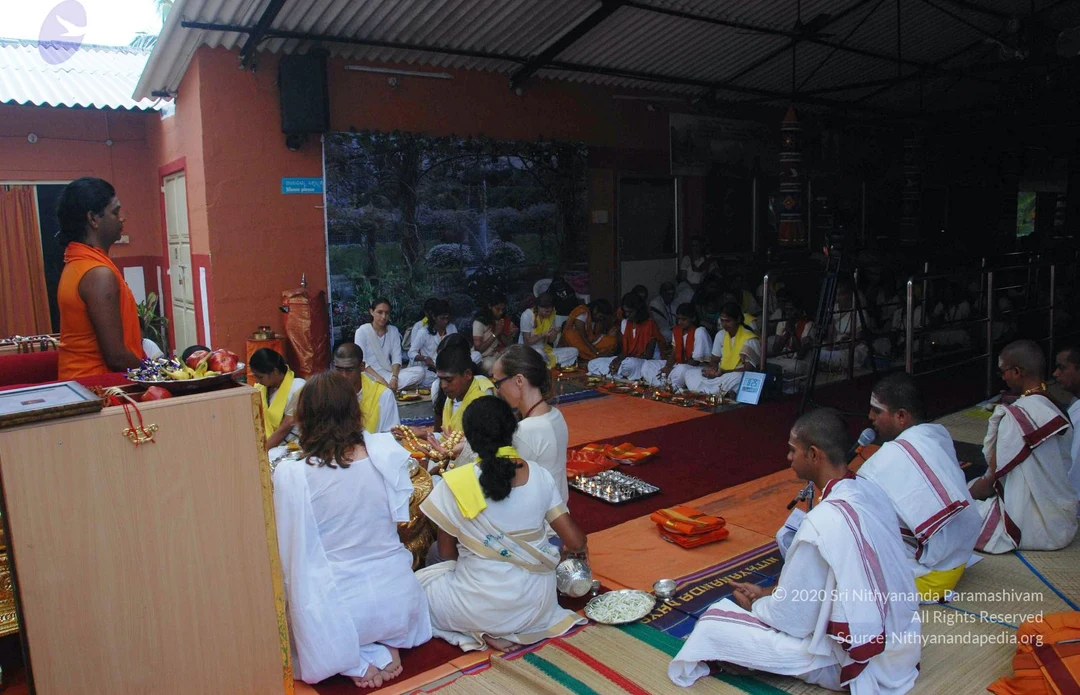
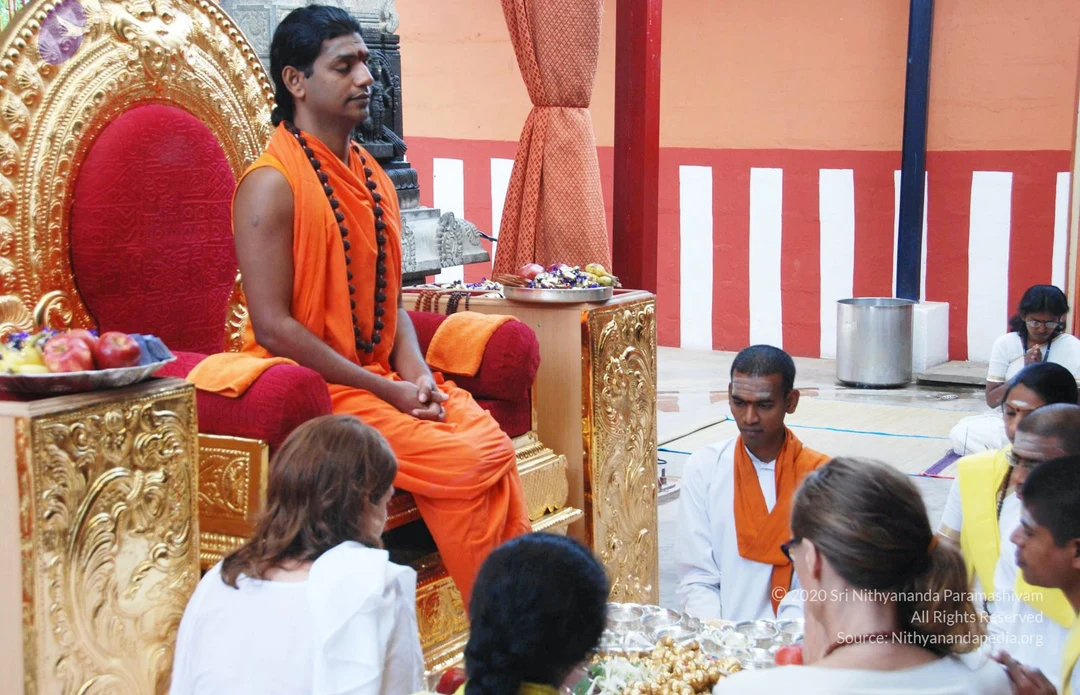
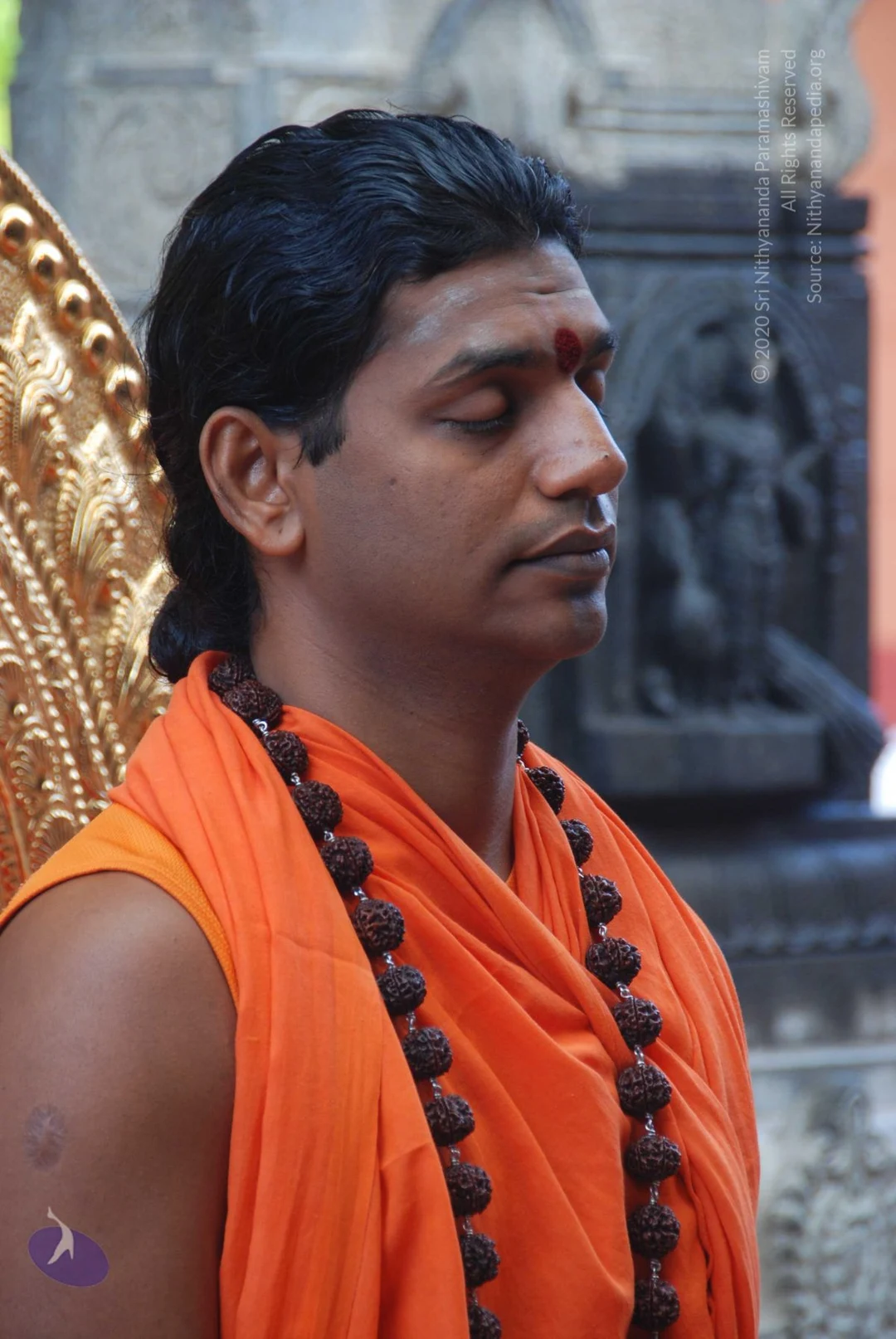
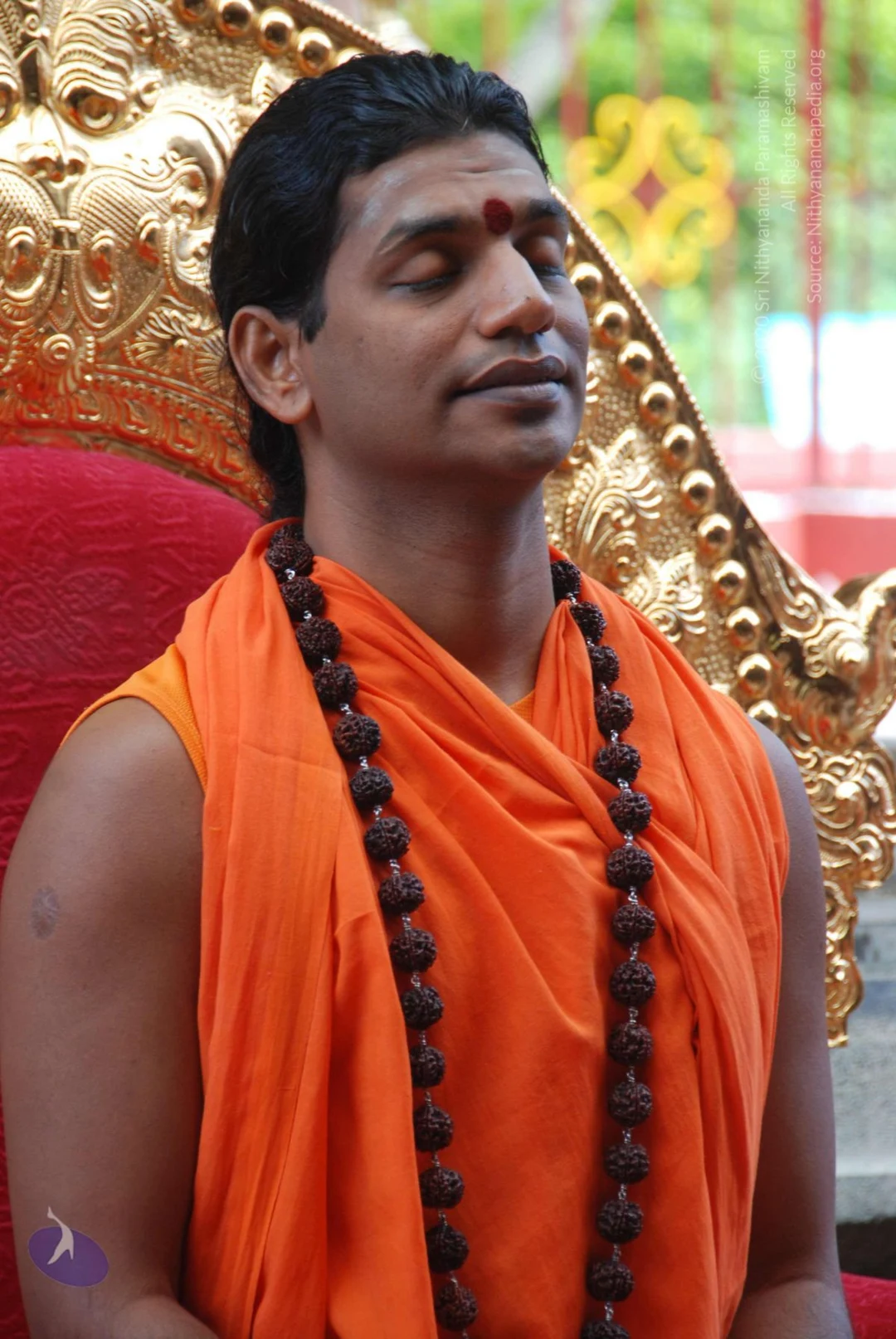
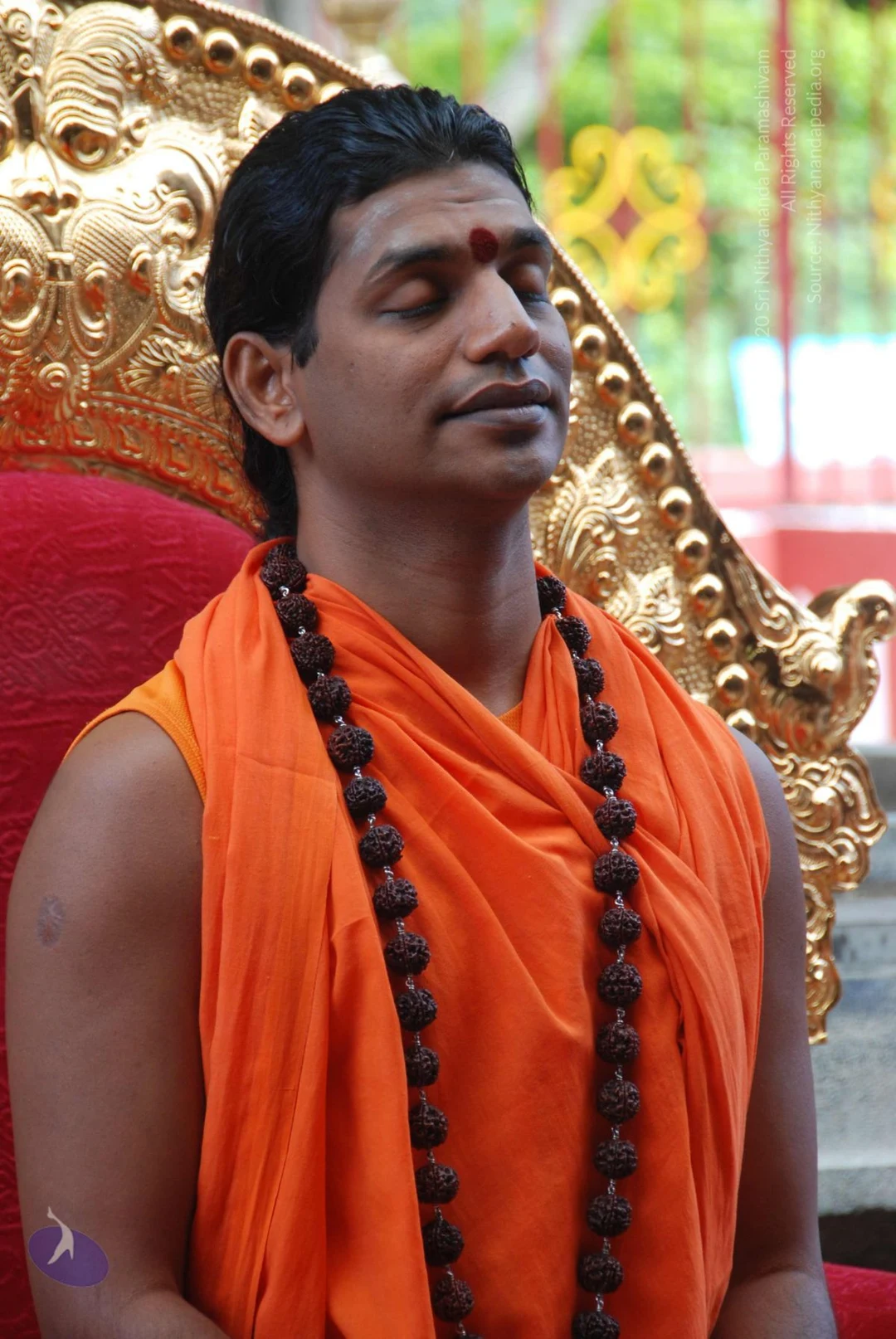
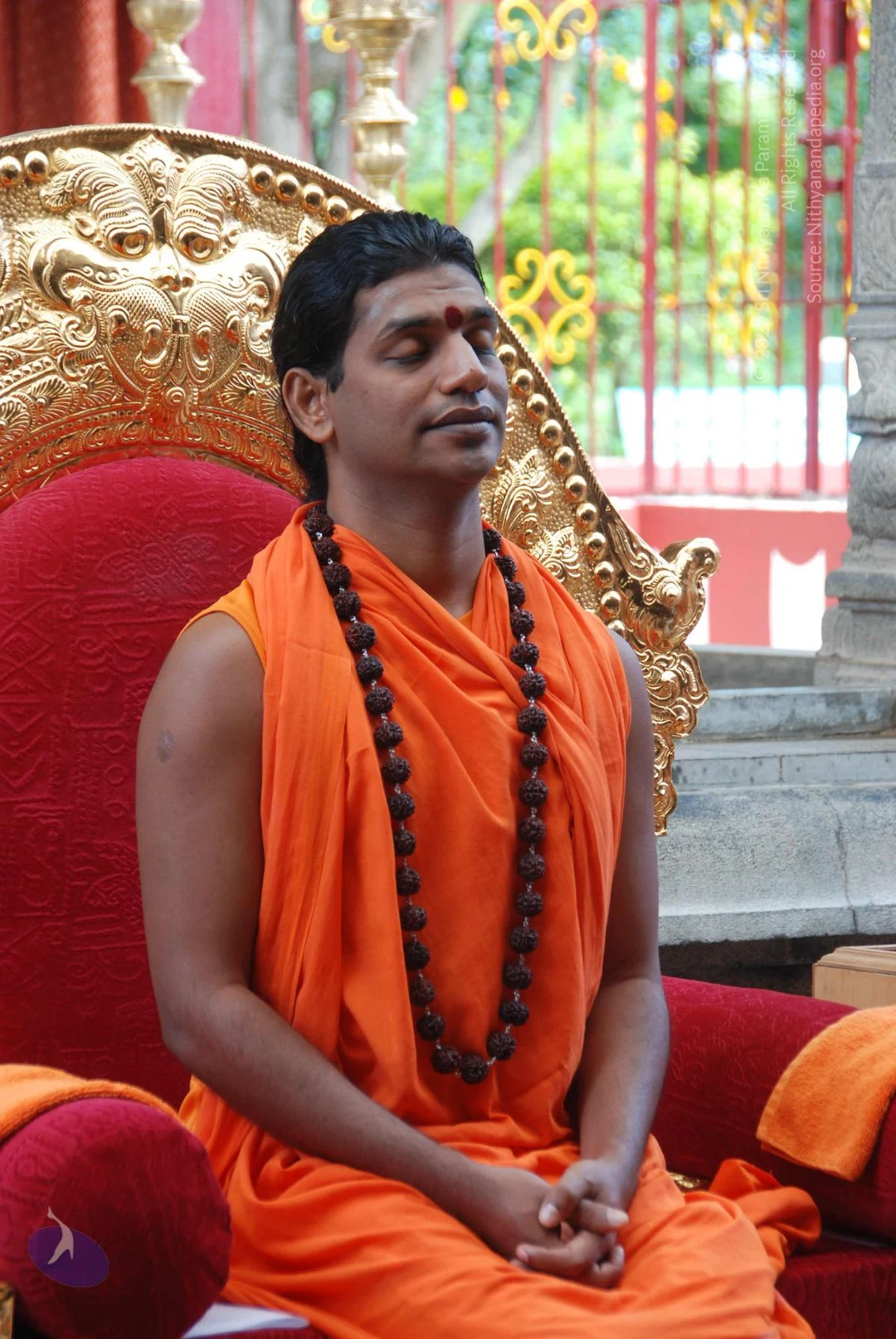
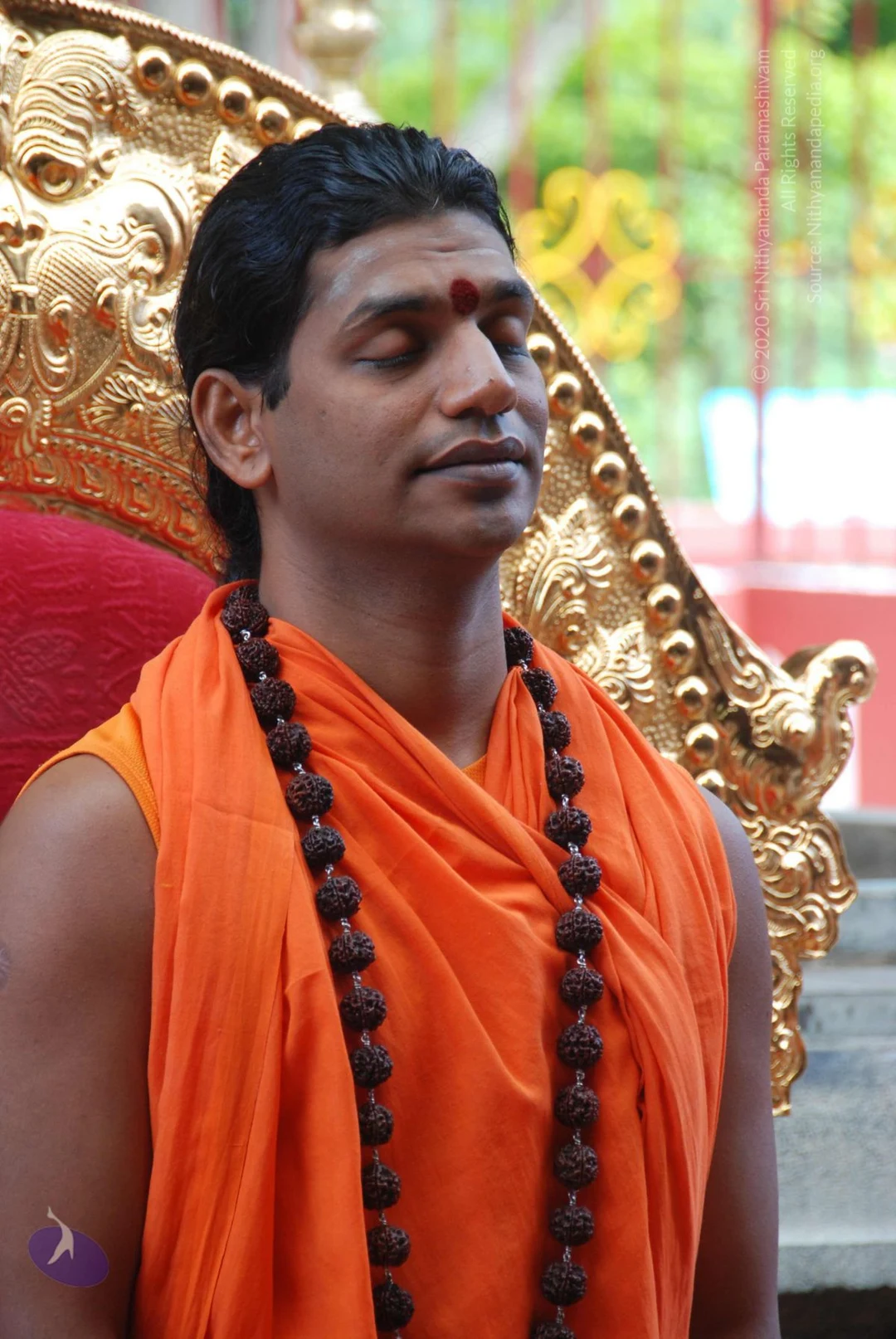
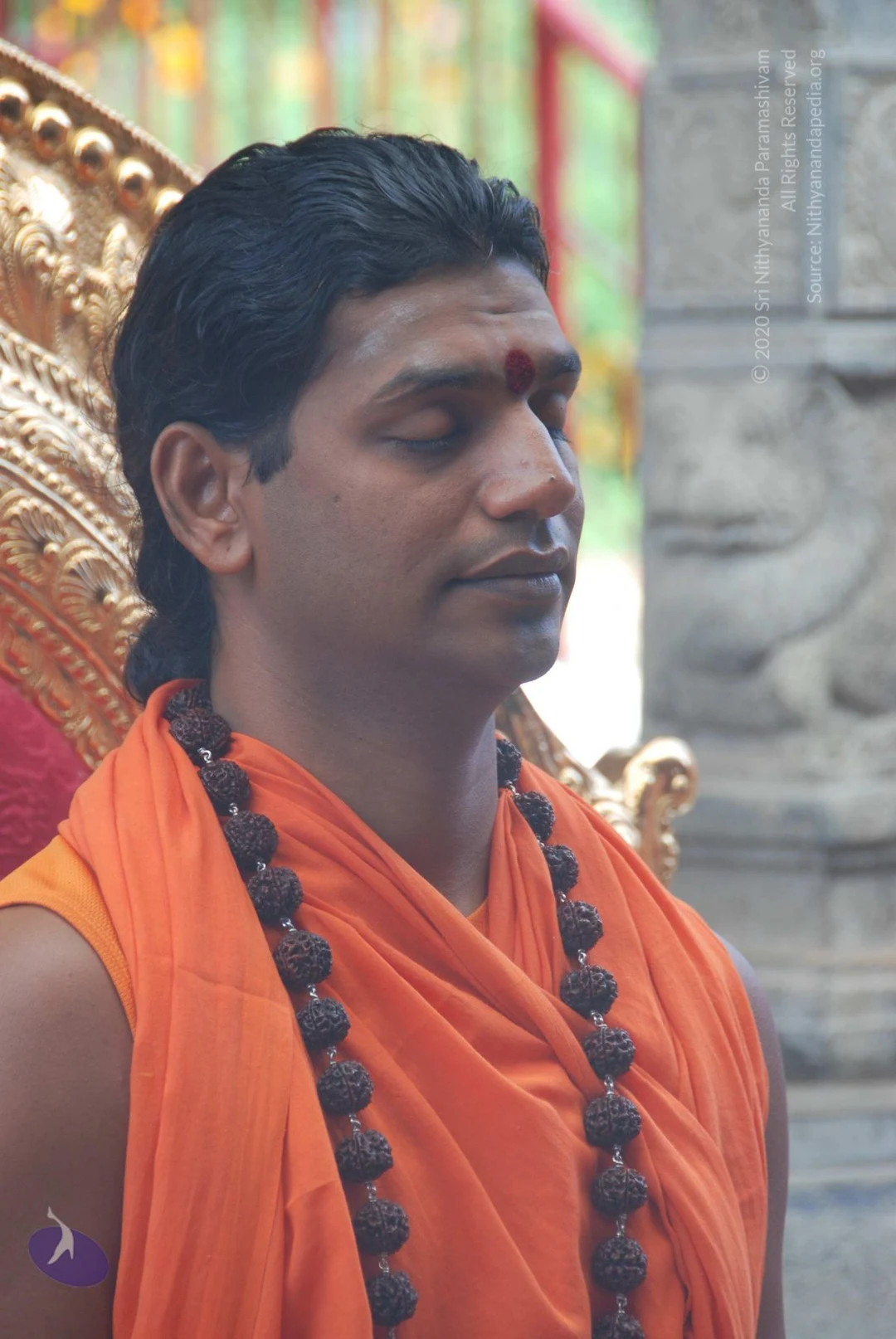
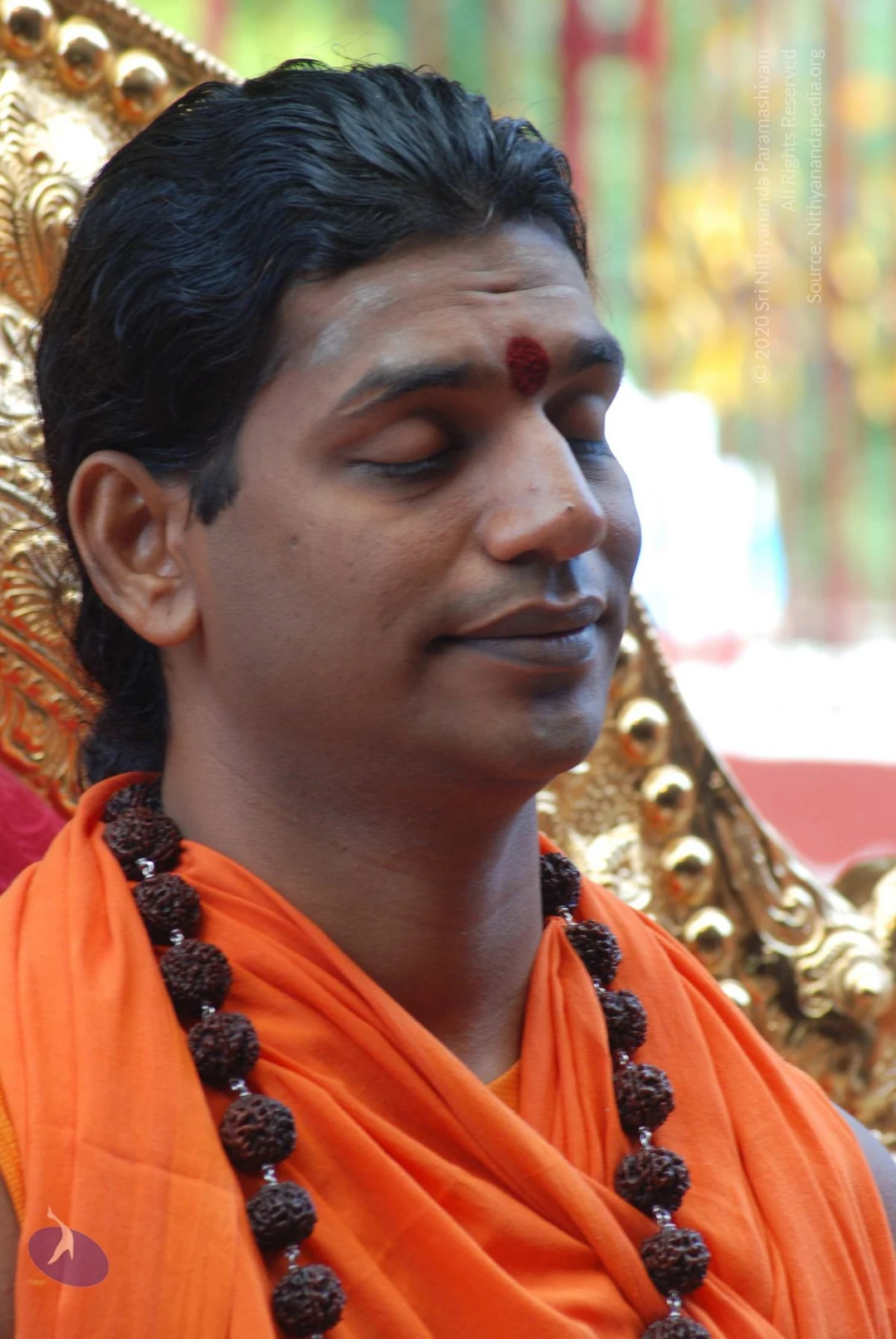
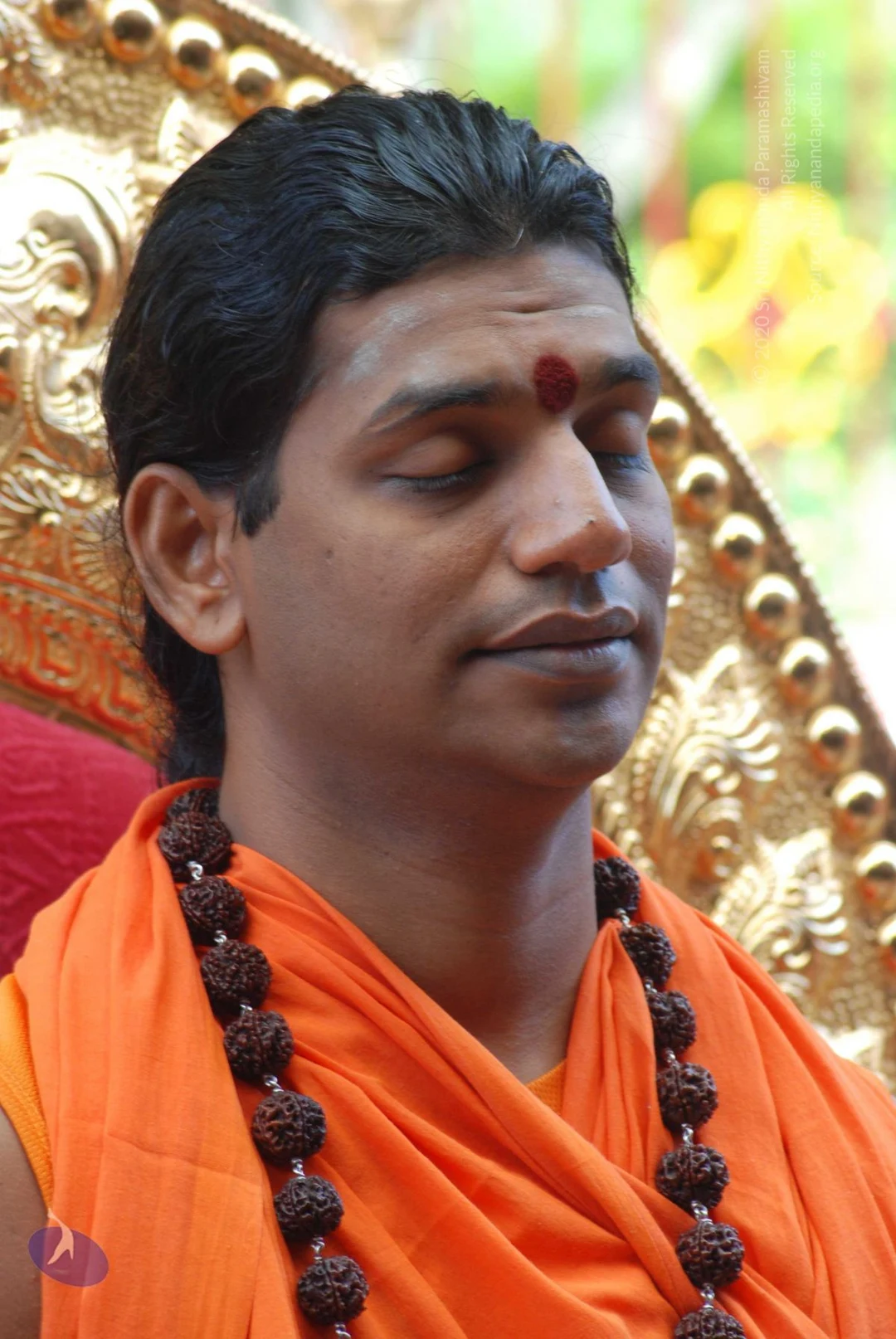
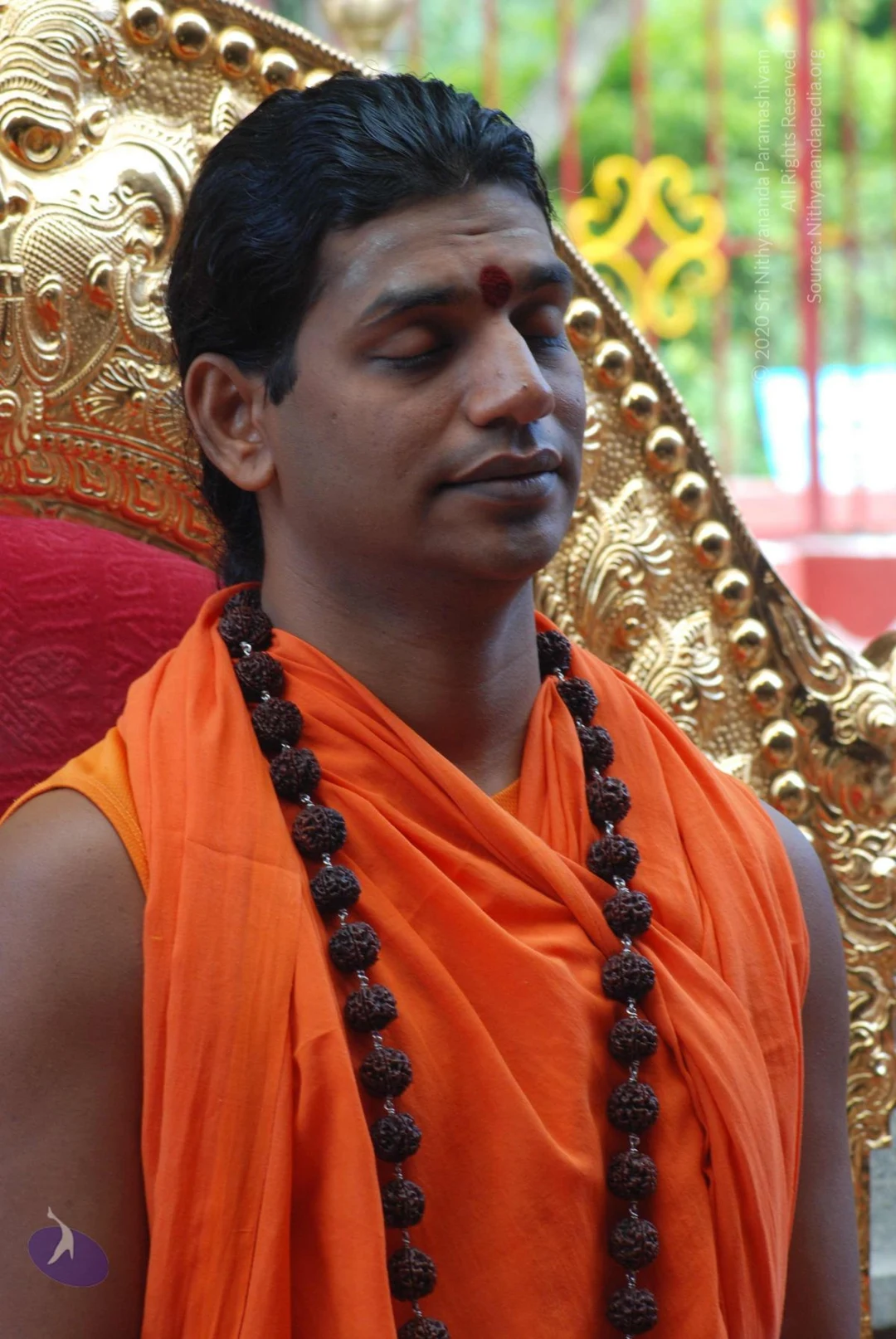
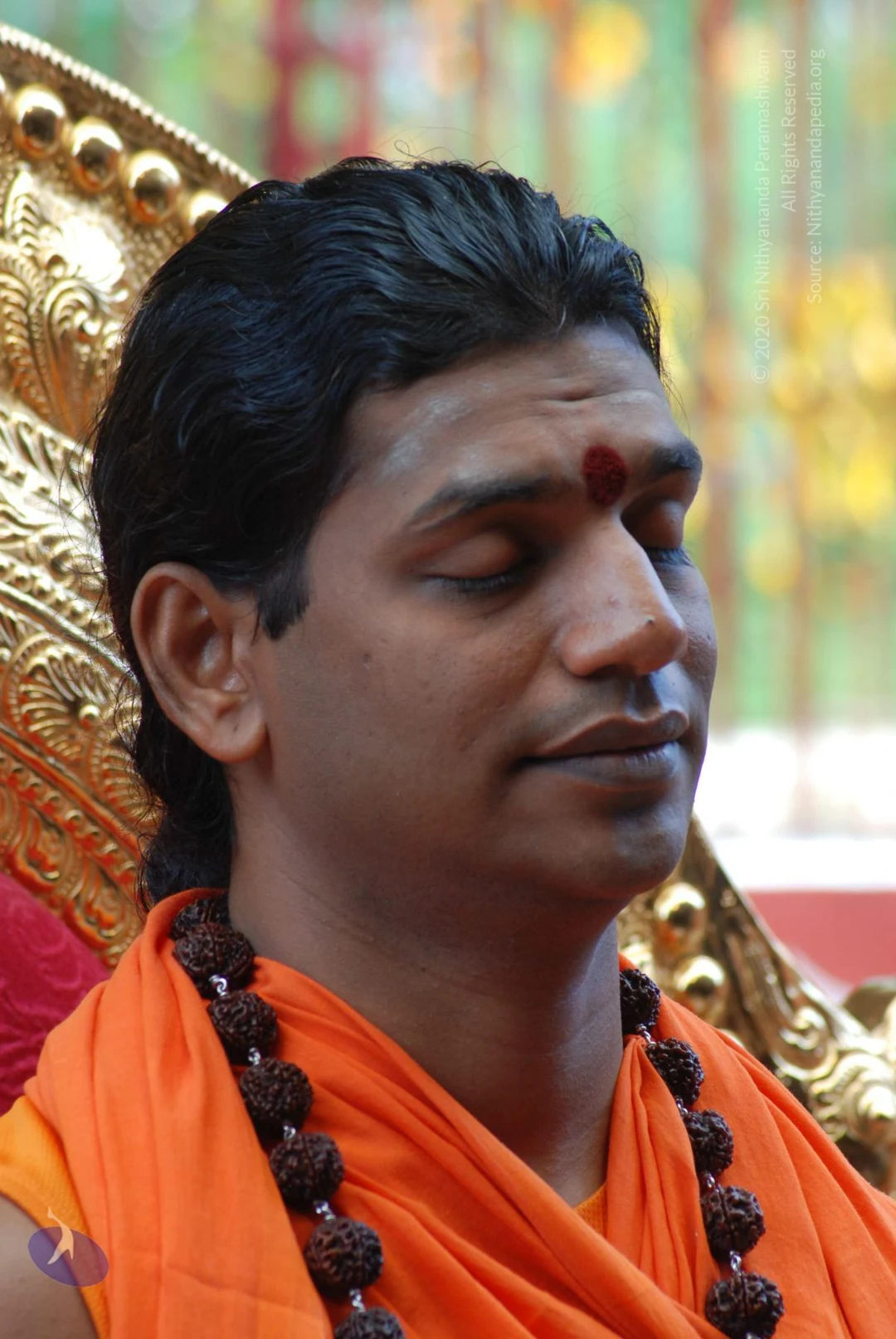
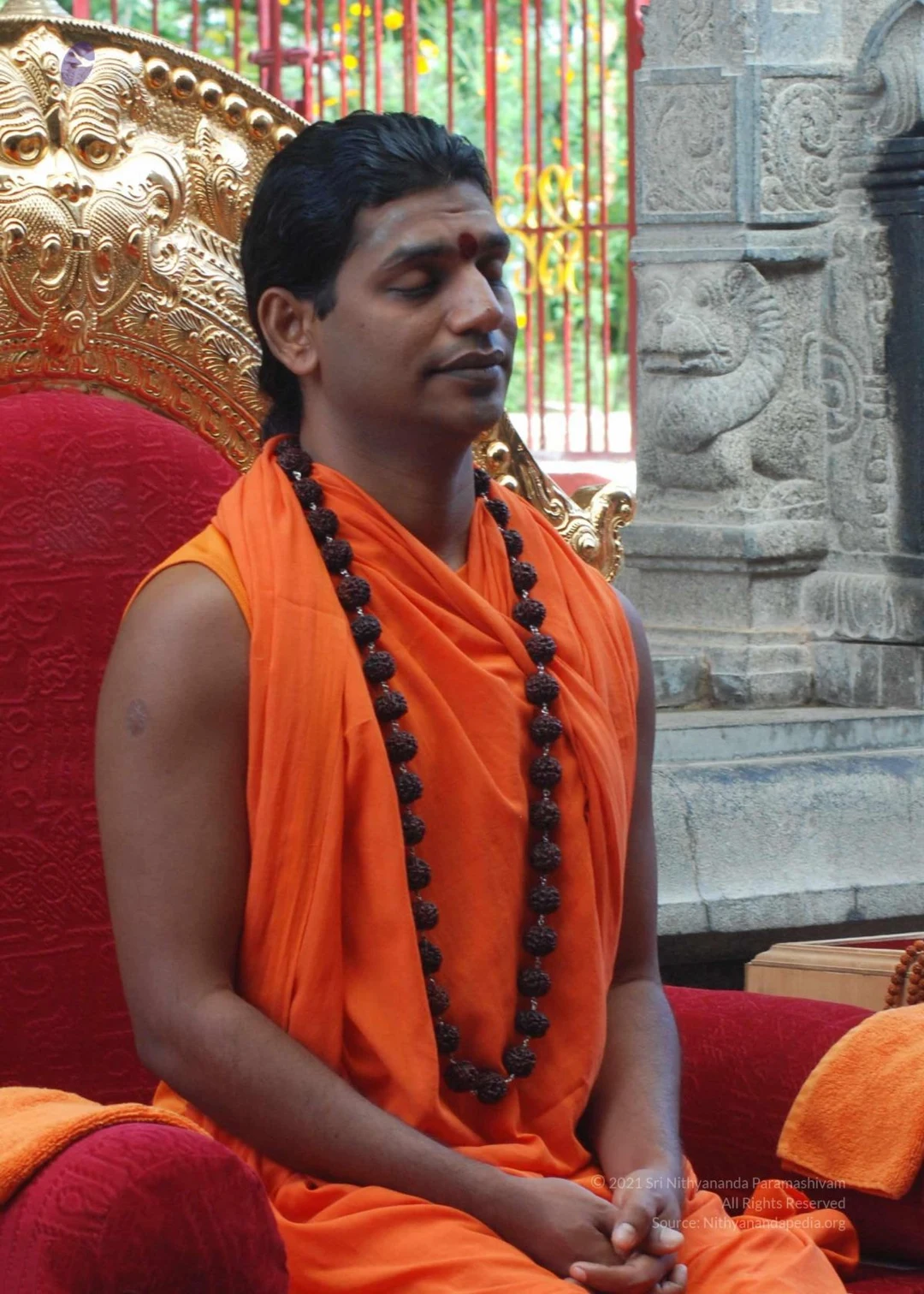
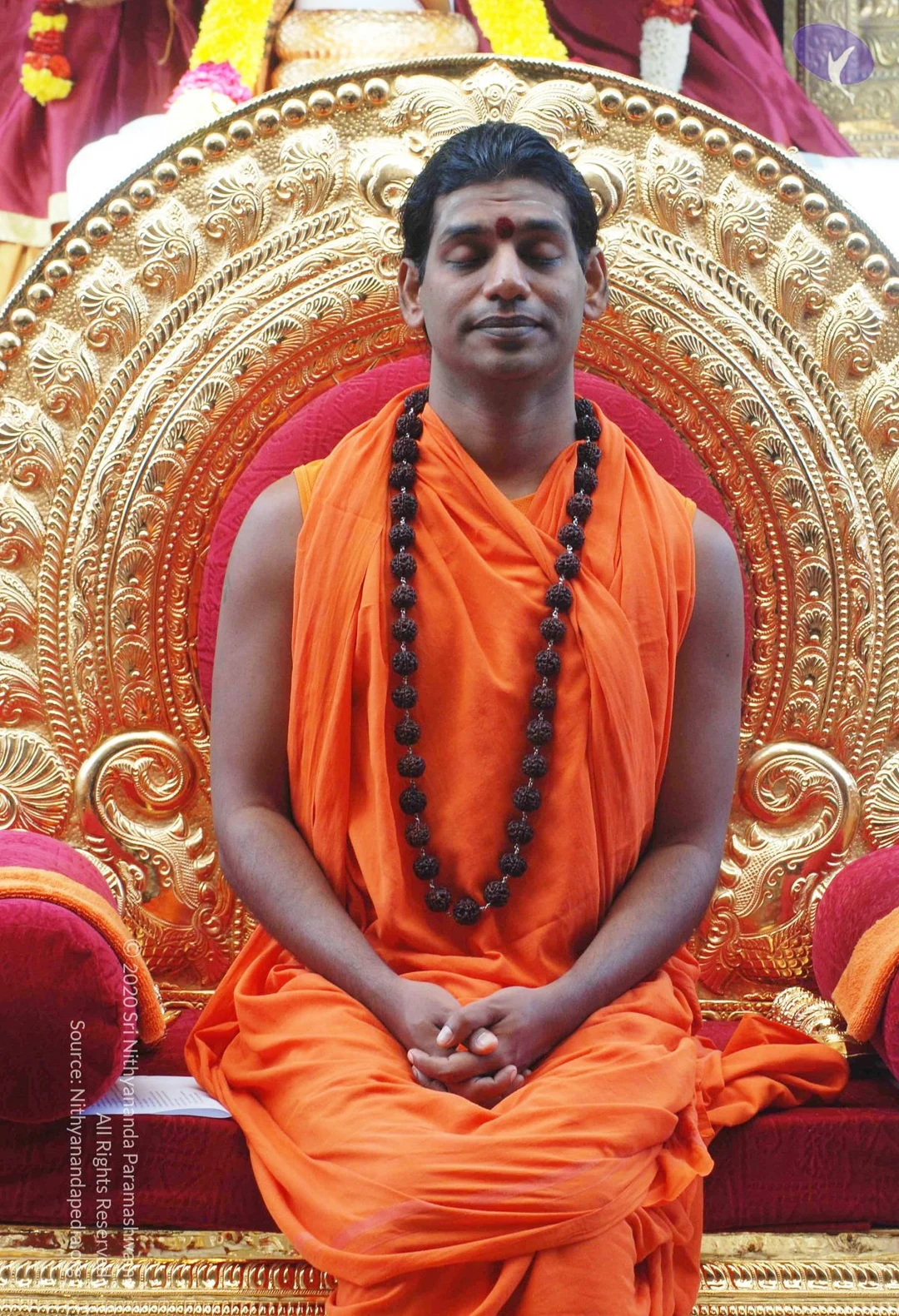
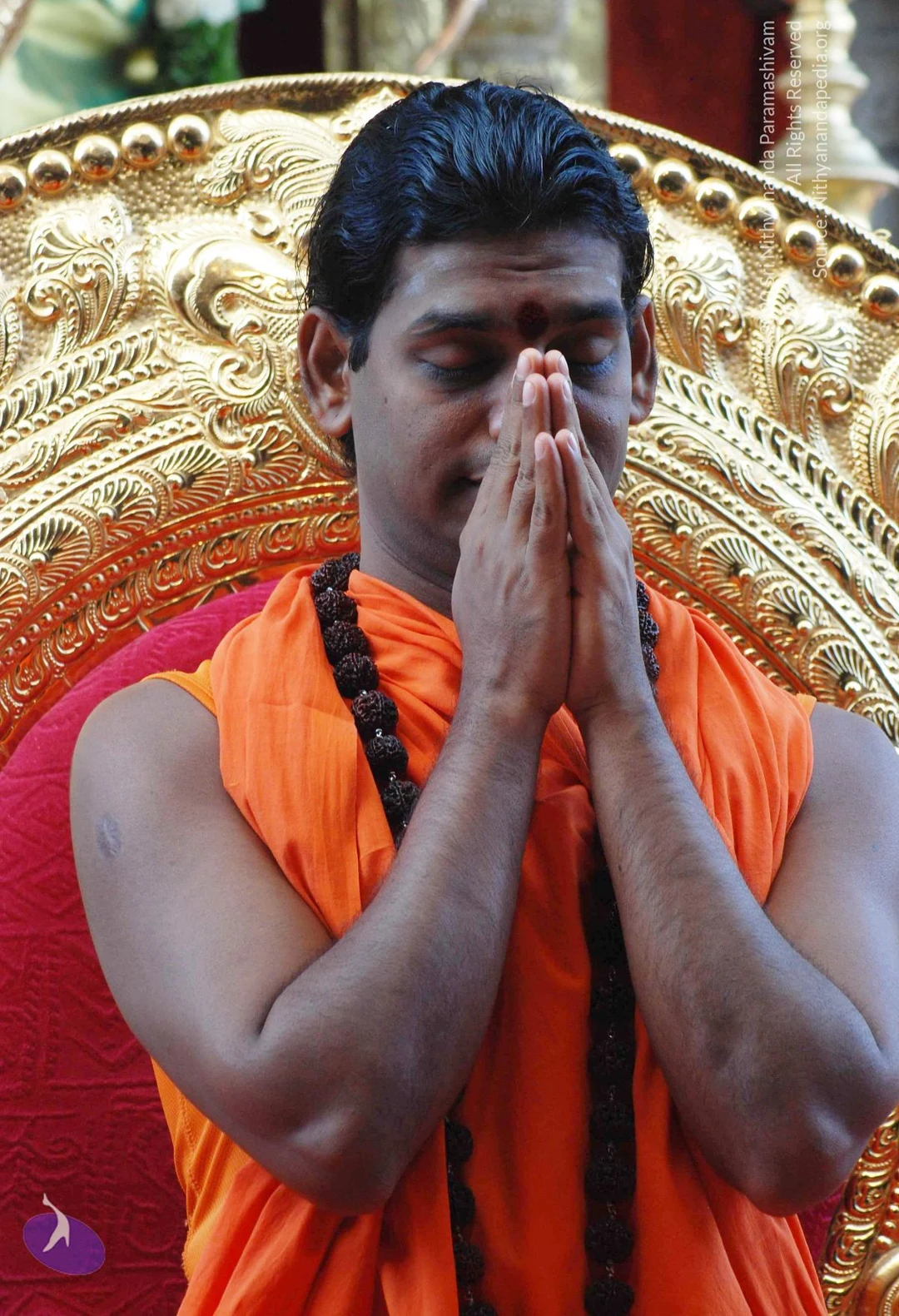
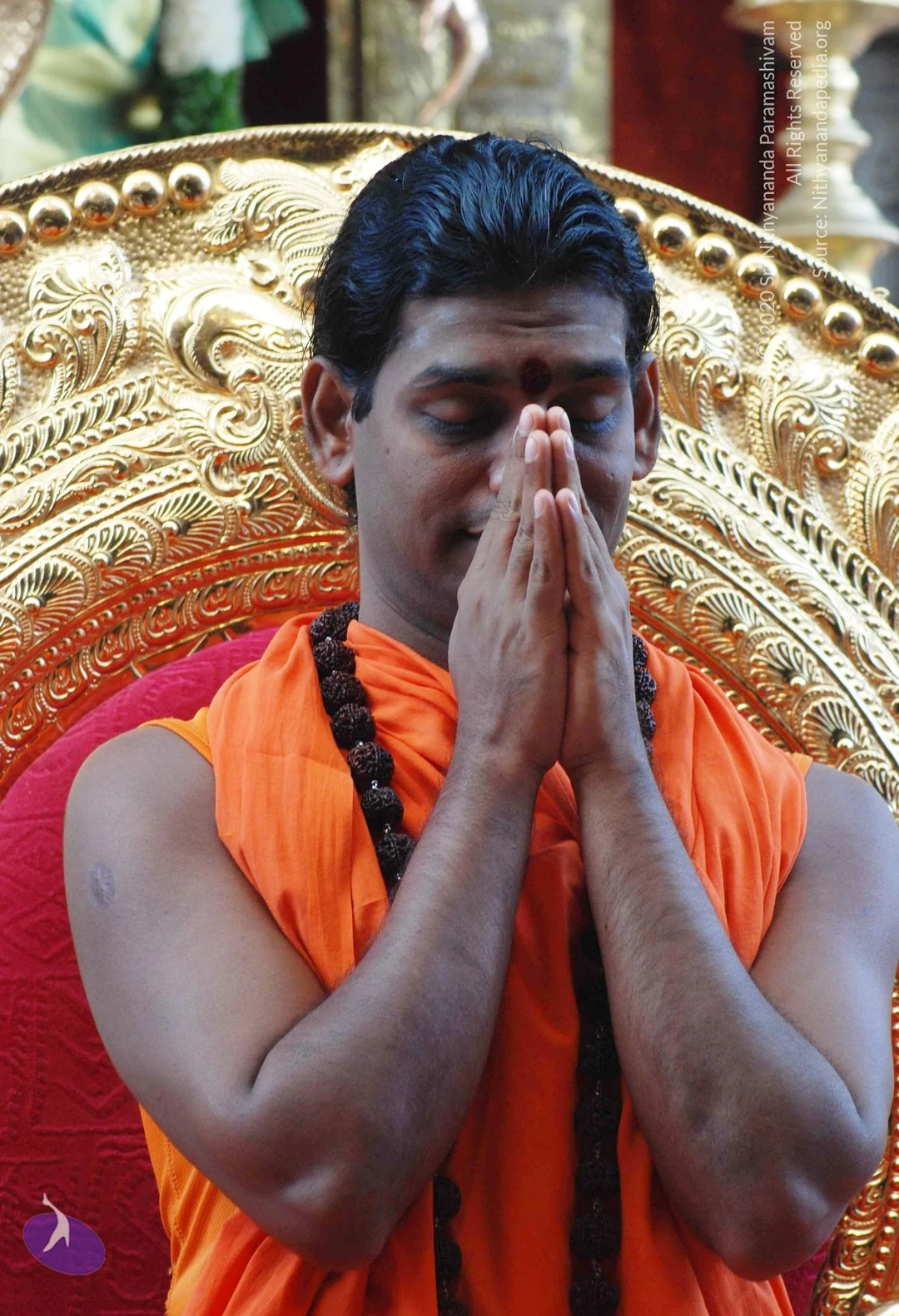
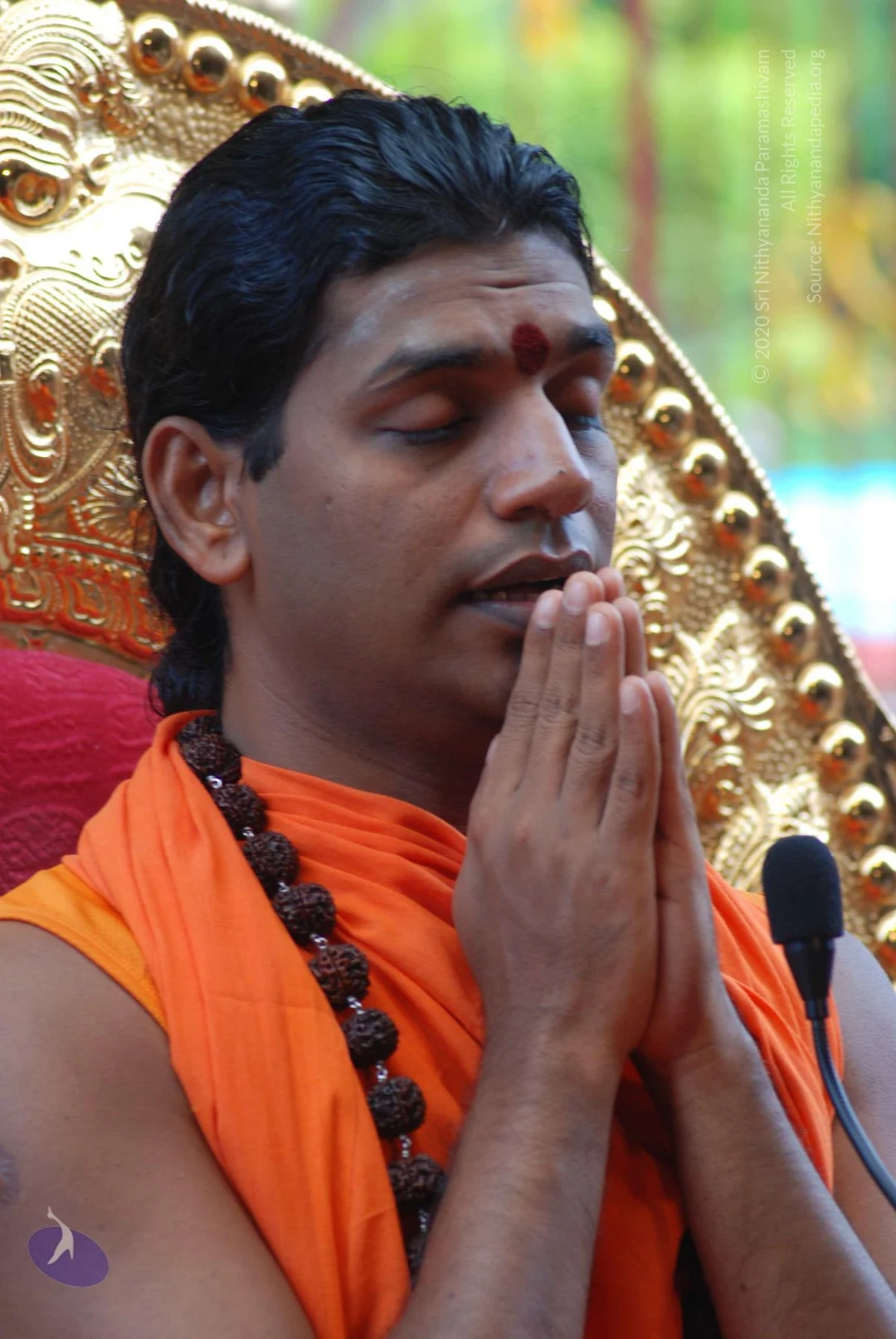
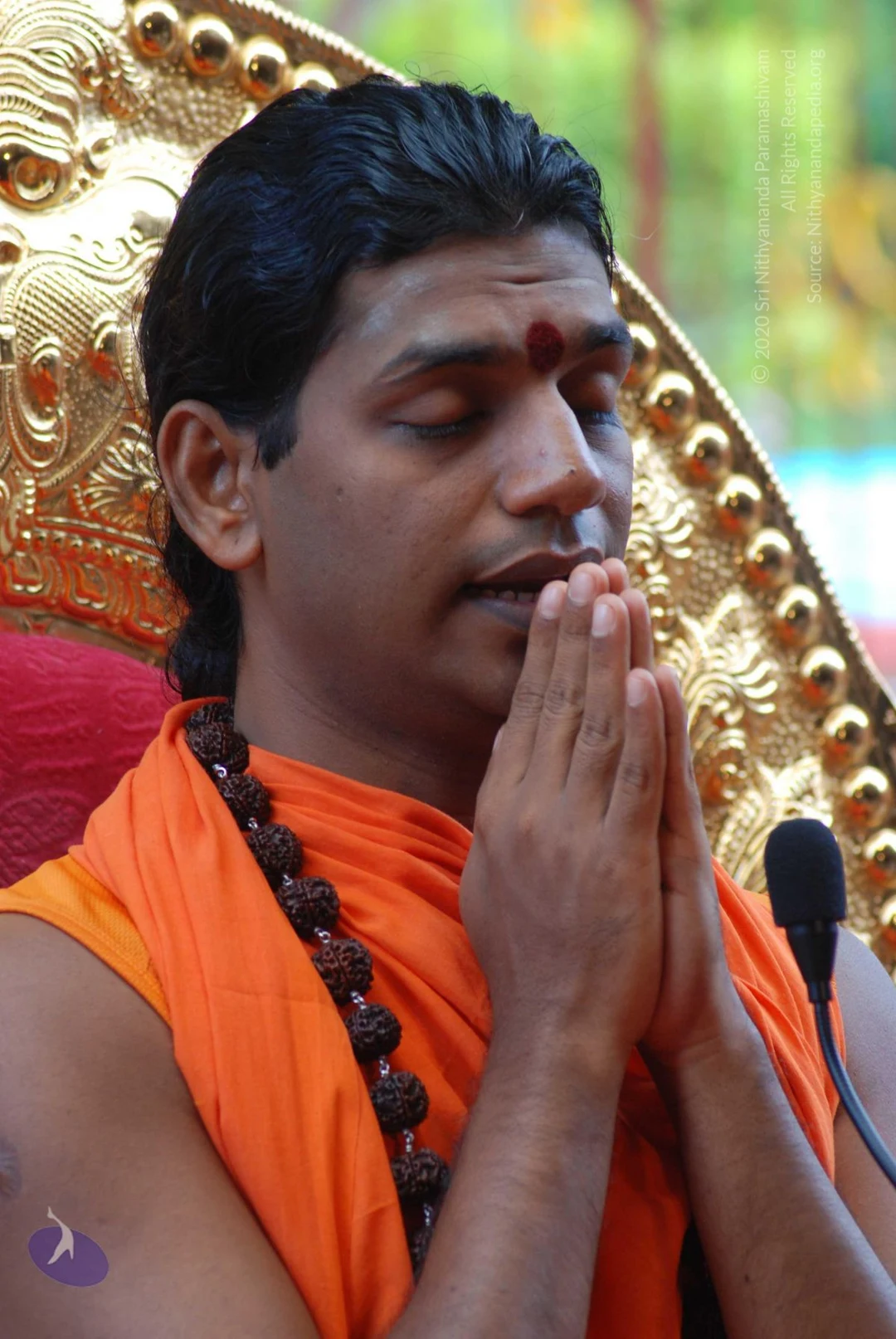
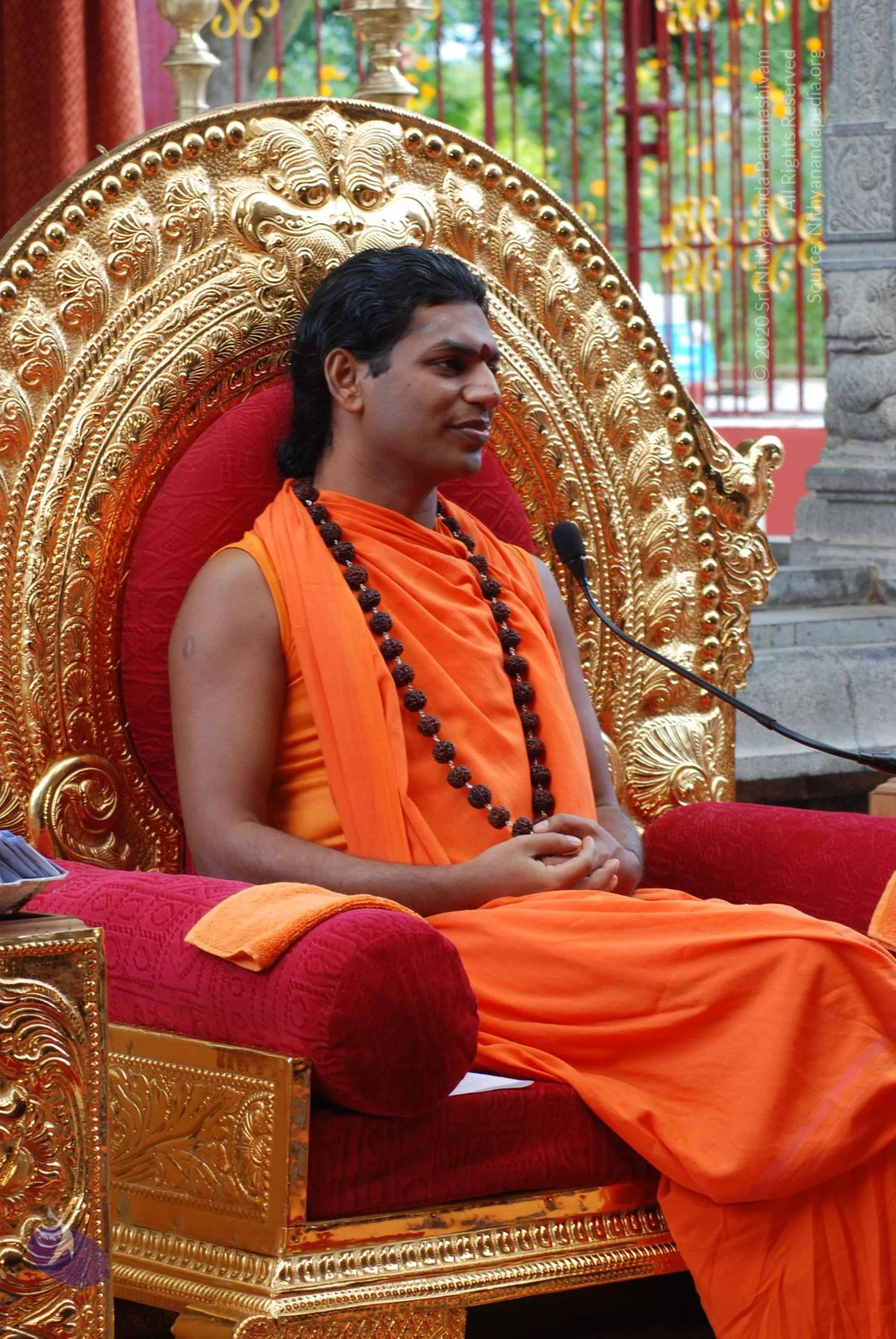
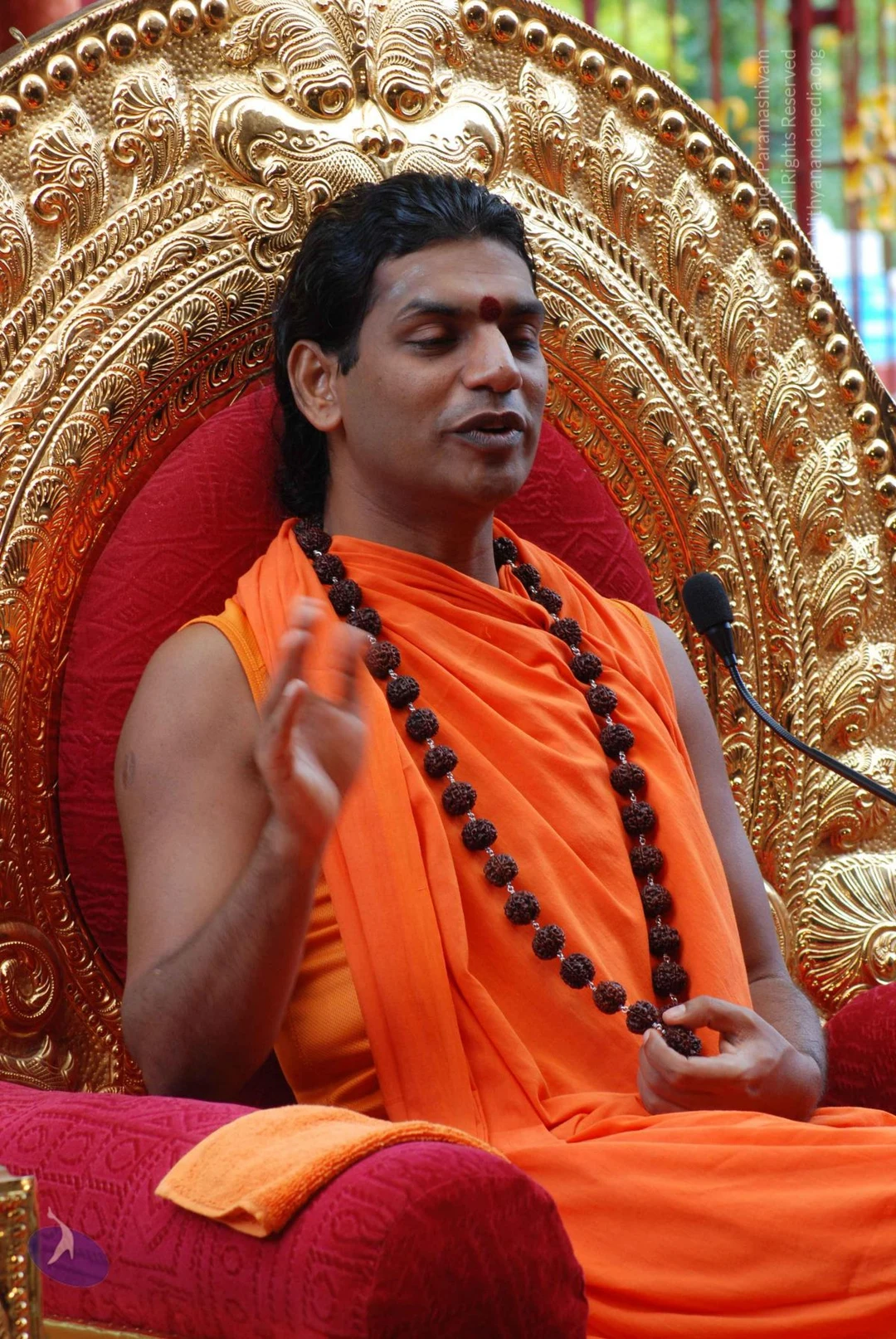
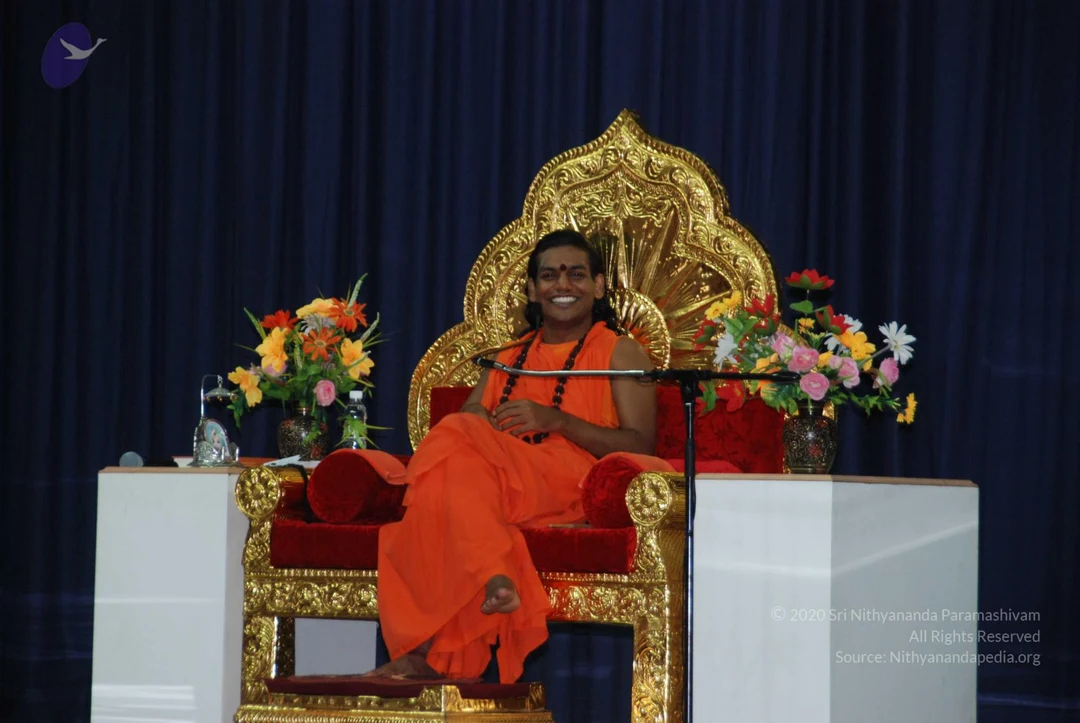
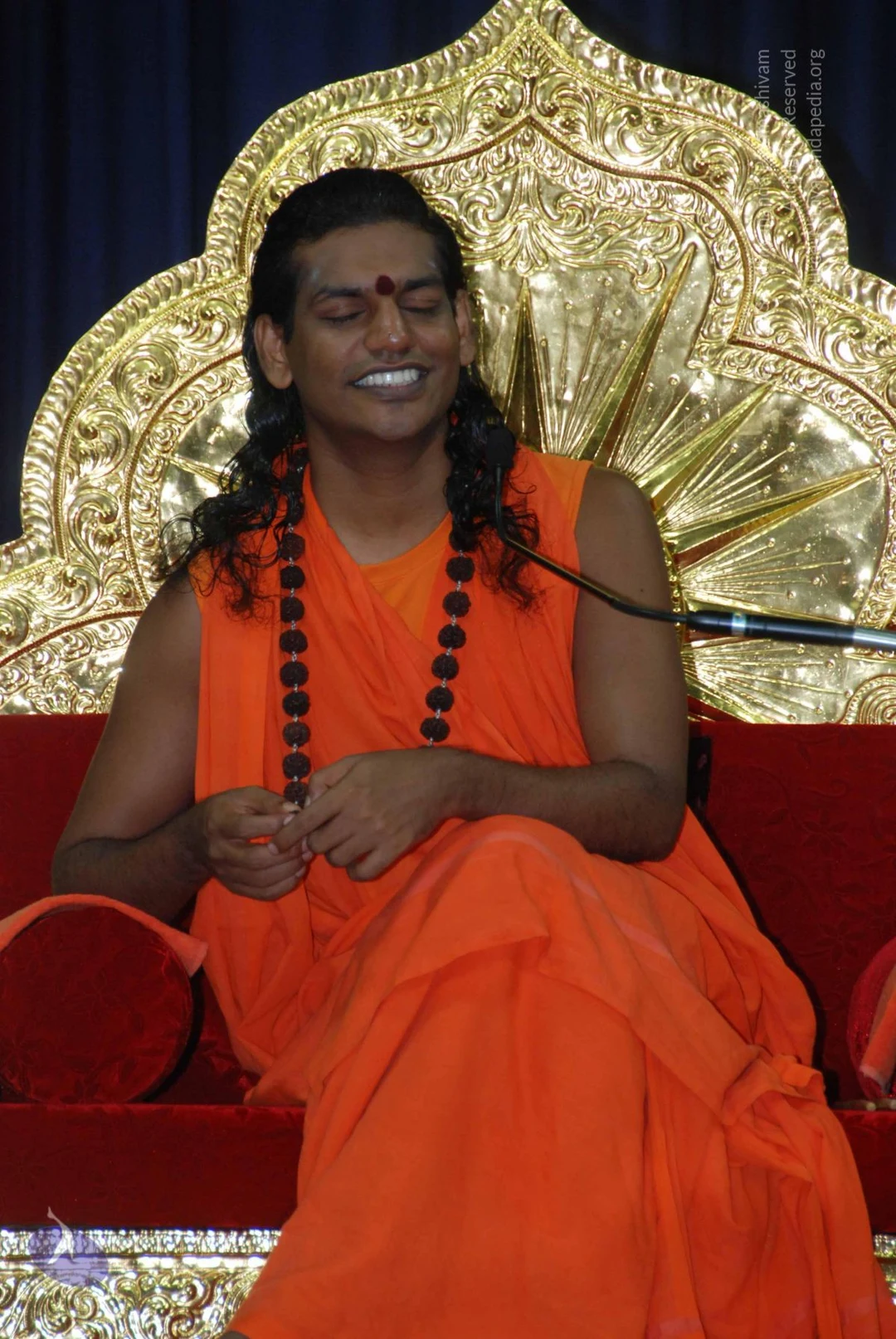
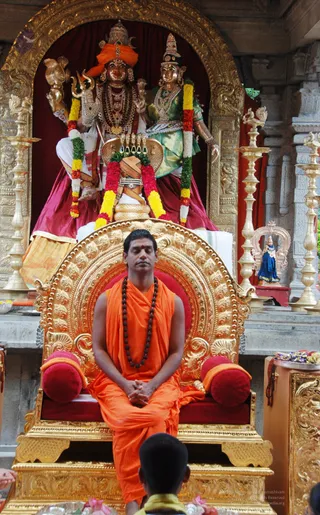
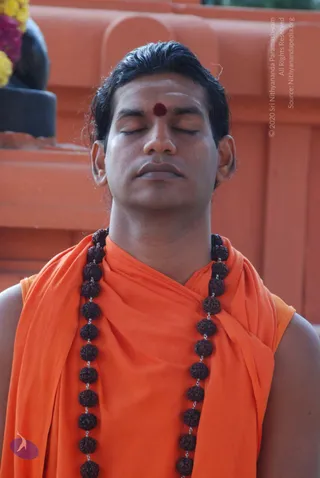
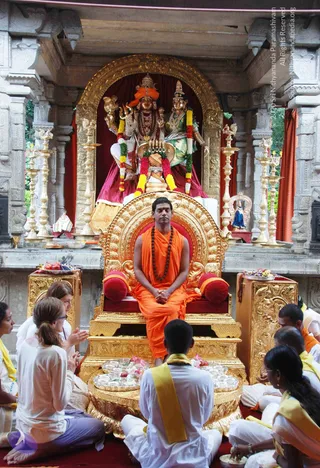
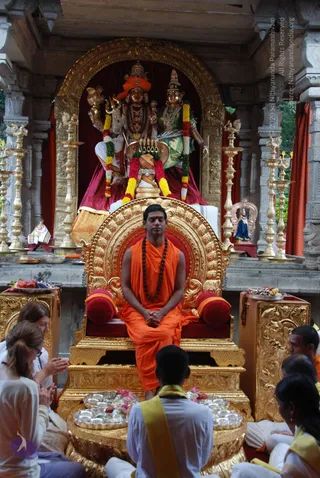
A seated man in saffron-orange robes sits with eyes closed and hands clasped in his lap on an ornate gold throne with red cushions. He wears a long dark rudraksha mala, and a red tilak marks his forehead. Behind him stand a deity murti draped in maroon cloth and adorned with yellow and orange garlands. The scene appears to be a ceremonial sitting in an ashram setting.

September 06 2010

Original wiki page
Contents

Title

Description

Video and Audio

Vedic Tradition The Science of Holistic Living

VideoAudio

Transcript

sadāshiva samārambhām shankarācāryā madhyamām | asmat ācārya paryantām vande guru paramparām ||

(0:57)

Vedic tradition – the masters of science of holistic healing.

When I use the word Vedic tradition, I mean a huge unimaginable civilization. The depth and the breadth in this civilization, worked about life - all aspects of life starting from birth, education, childhood, adulthood, sex, marriage, the way of classifying people, way of leading every individual to the excellence in his own line, law and order, creating wealth, storing wealth and distributing wealth, clothing, food, God! and ultimately the science of leaving the body - death; in every line the contribution, unimaginable contribution.

(2:42)

Just yesterday, I was reading an article - Stephen Hawking - Taking on God. He says God has not created the world. Very beautifully he describes, it is a spontaneous happening. Amazing way he has described. All of you may be aware of Stephen Hawkings, who wrote Brief History of Time. If I must, I keep the book in the standard of Nyaya sutras and Vaisheshika sutras. After the Ganana and Gautama nobody, nobody is able to penetrate to the depth of the truths of time, like Stephen Hawkings. Even yesterday what he revealed, this is the word I want to use - not what he wrote, revealed - because I feel he is rishi. He should be kept in the category of rishi. If he was in India, we would have worshipped him as a rishi and respected him as a rishi.

(3:50)

What he revealed, no Vedic master will oppose, because the clarity on what is God. Even if he does not agree with our clarity, we will have patience, “Can you spend little more time with us explaining? Can you elaborate to make our logic catch up with you?” You will be surprised in the whole Vedic tradition, we have only something called prashna uttara, question and answer.

(4:42)

When Buddha comes, ready to take everybody one step further, all the brahmanas, the Vedic priests, drop their shrukshruva 4:50, homas, yagnas, go and sit at the feet of the Buddha and evolve. When Shankara comes and ready to take people one step higher than the Buddha, all the Buddhists, they drop, drop everything and go and sit at the feet of Shankara. When Nagarjuna comes from the Buddhist tradition and ready to take everybody one step higher than Shankara, all the Shankaraites drop their danda and everything, go and sit at the feet of Nagarjuna. The greatness of Vedic tradition, ready, always ready to listen, listen, listen; whoever takes us one step further, ready to surrender, ready to go behind, ready to experiment... the most scientific tradition... masters of holistic living.

(5:59)

An amazing revelation, what he revealed is exactly what Upanishads describe: a spontaneous, independent, intelligent, happening. He bases his whole creation on a certain law, which is beyond law. No Vedic master will oppose Stephen because that is exactly the truth. May be Stephen needs one last push to experience that inside him. What has happened in him as a revelation, if it becomes experience, he will write few more things. He can complete all his revelations. He can make a real last statement like Zen masters. I was so happy to see a scientist describing the experience of creation so beautifully, so perfectly, in the western language, where the main stream society can understand it.

(8:03)

Unfortunately the religious leaders, they see God also in their own personality, as if a power centre. So they can’t understand God, without being a power centre. Please understand every centre is power. Only then you will understand there is no power centre. Every centre is power - is the truth. When you understand that, only then the holistic lifestyle evolves. That is why in the Vedic tradition, not just a person who invented theories and truths about God is rishi, every person who dedicates his life to any centre of life, reveals truths in any centre of life, is rishi, is power.

(9:08)

I have list of people, Sushruta - father of surgery, is master of Ayurveda. Ayurveda is one of the greatest gift to the world from Vedic civilization. Bhaskara - father of astronomy Chanakya - father of economy, economics Aryabhatta - who invented calculus and algebra Panini - father of grammar Agastya – who, father of electricity. I can go on and on and on. Here I have something more Vyamanika shastra - science of aerodynamics Visha shastra - science of poison Malla shastra - science of body building

I can say, on each thing I can speak for days.

(11:00)

I only wanted to tell you one thing today, as My message. Two ways of keeping this Vedic tradition alive. One: studying and doing research and development in whatever was revealed already. Second: having patience for any new revelation, from any corner of the world. Vedic tradition again and again says all the great knowledge let it reach us from all corners of the world; from all corners of the world. When it comes from Stephen Hawkings, don’t have a shield. Don’t think “Oh, how can he talk about God? I am here wearing this robe and sitting in this seat for years and studying about God for years in great theological seminars, discussing, debating, how can he know more about god than me?” No. A rishi from Vedic tradition can never think of that way. He can only have patience, “Can you explain with a little more words? Can I have little more time with you? Is it possible to learn what you talk in my language, in my logic, in my understanding?”

(12:54)

Have this two, this is my message. One: try to explore whatever is revealed in different lines of Vedic tradition and keep your being open for more and more new revelation. Vedic tradition is the only tradition which can update itself because there is no last word. Our shastras can be updated, can be commented, can be interpreted and reinterpreted. Understand there are some sutras like Shruti - Upanishads which cannot be altered, but you can comment on it. You cannot alter the original sutra, but you can comment on it. But other Smruti and all you can even alter.

(14:09)

So we have many line, sutra is a revelation, bashya is the commentary and varthika - commentary on commentary, then tika - commentary on commentary on commentary. So when a sutrakara, when a incarnation happens and reveals the sutras, his first line disciples who expand that are commentators - bashyakaras. His next line disciples who write vartika on the commentary, they are called vartikakaras. The third line disciples who write tika on vartika, they are called tikakaras. So the possibility for updation, commentary expansion, is kept alive in the Vedic tradition. People who have so much confidence about their revelation and their contribution to that tradition, allow the updation and commentary; who are very clear, very confident about their commentary, their revelation, their contribution, can never be destroyed, can never be taken away, cannot be abused. That is the courage you need to allow people to comment, allow people to update, allow people to interpret.

(16:02)

Have this two, explore as much as possible the life style, depth of Vedic tradition and add as much as possible, the essence of tradition in every aspect of your life. It’s the first thing. Second thing; keep yourself completely open for all new possibilities; for new, new, new, expressions. That is the only way to keep the Vedic tradition alive. So live Vedic tradition. Live and radiate enlightenment. Live and radiate the eternal bliss, Nithyananda. Thank you.

(18:10)

Title

Description

In this video, Swamiji guides us to powerful process of levitation through pranayama by listening through eyes to make the mind silent and awaken third eye

Video and Audio

Powerful Third Eye Awakening Technique, LEP Day 14

VideoAudio

Transcript

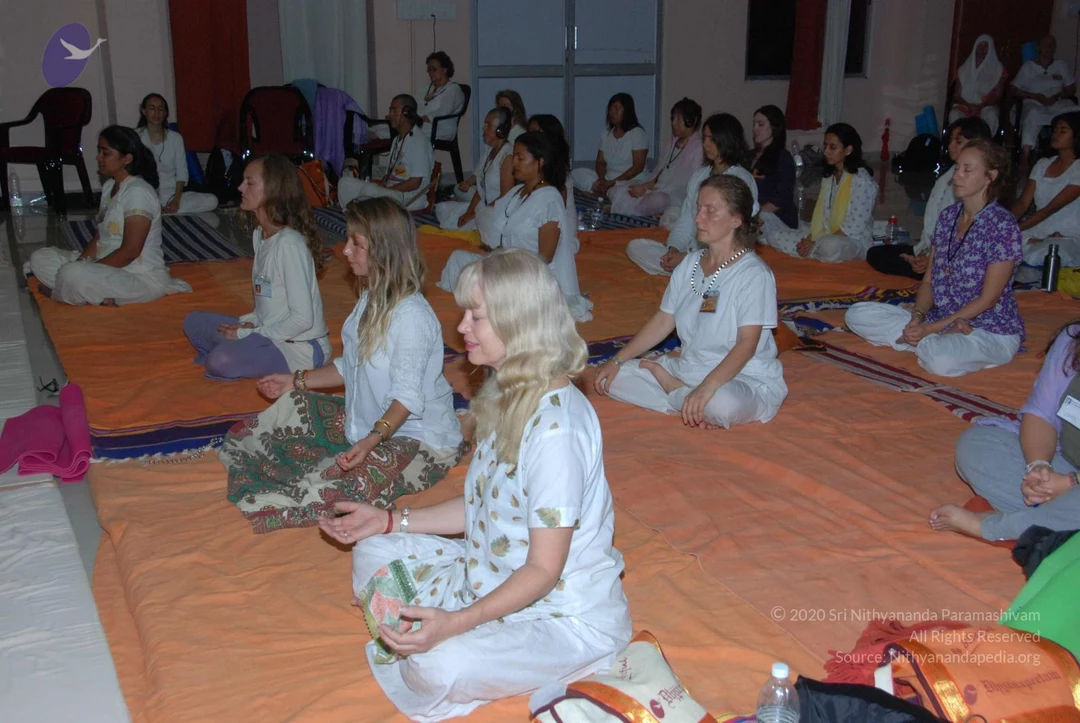
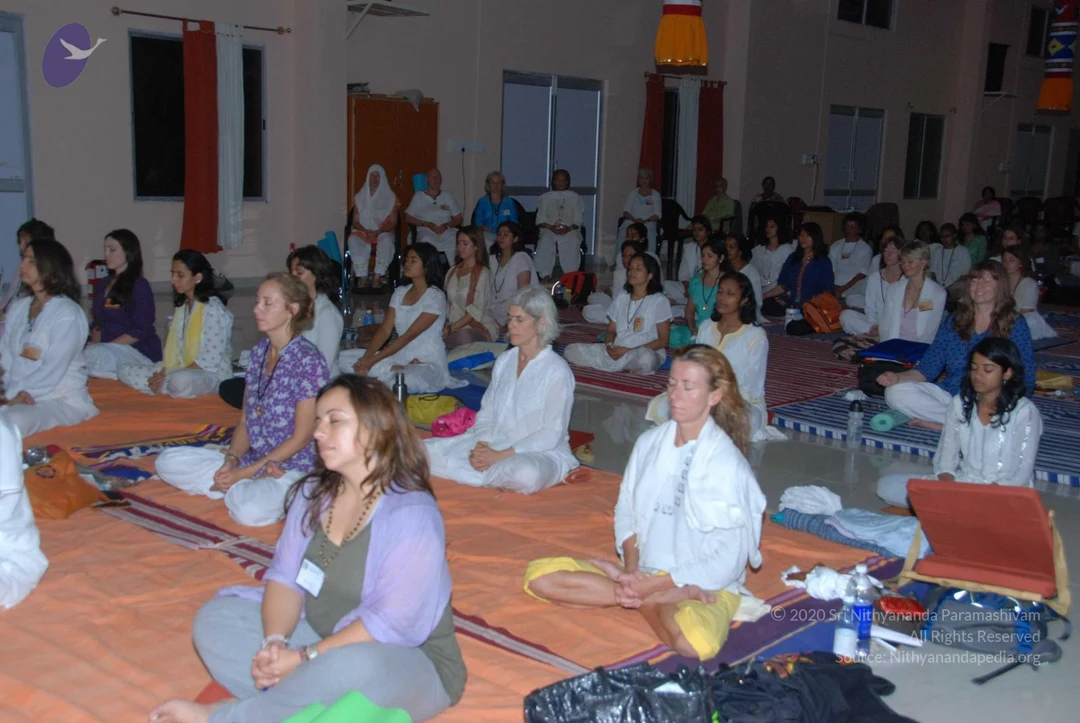
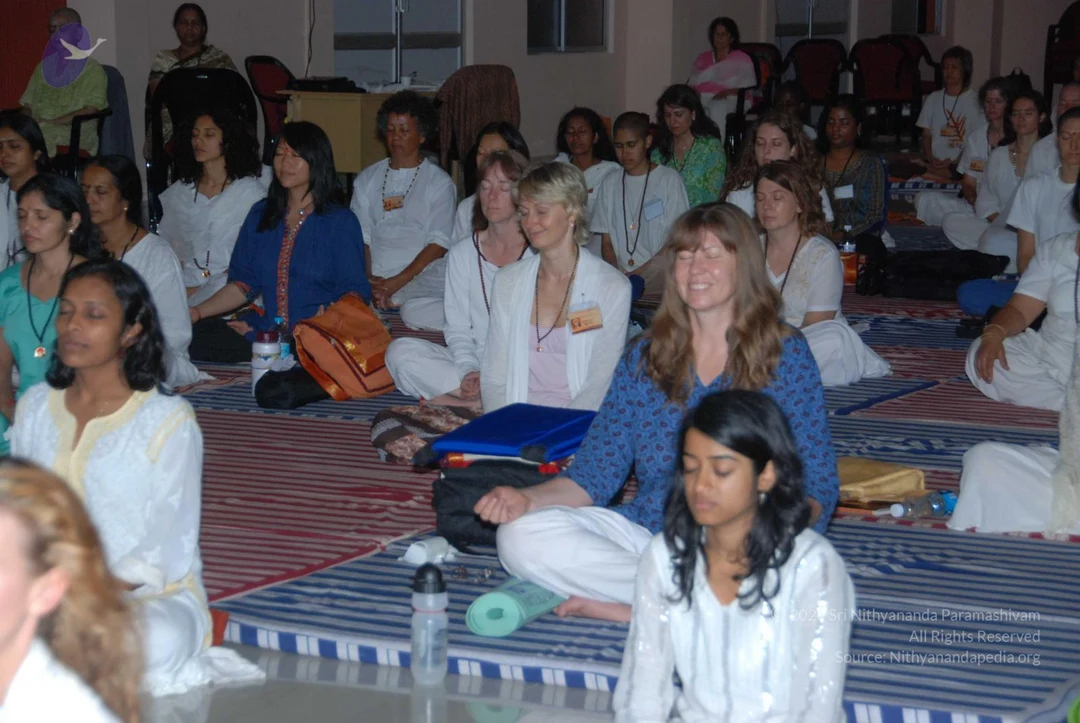
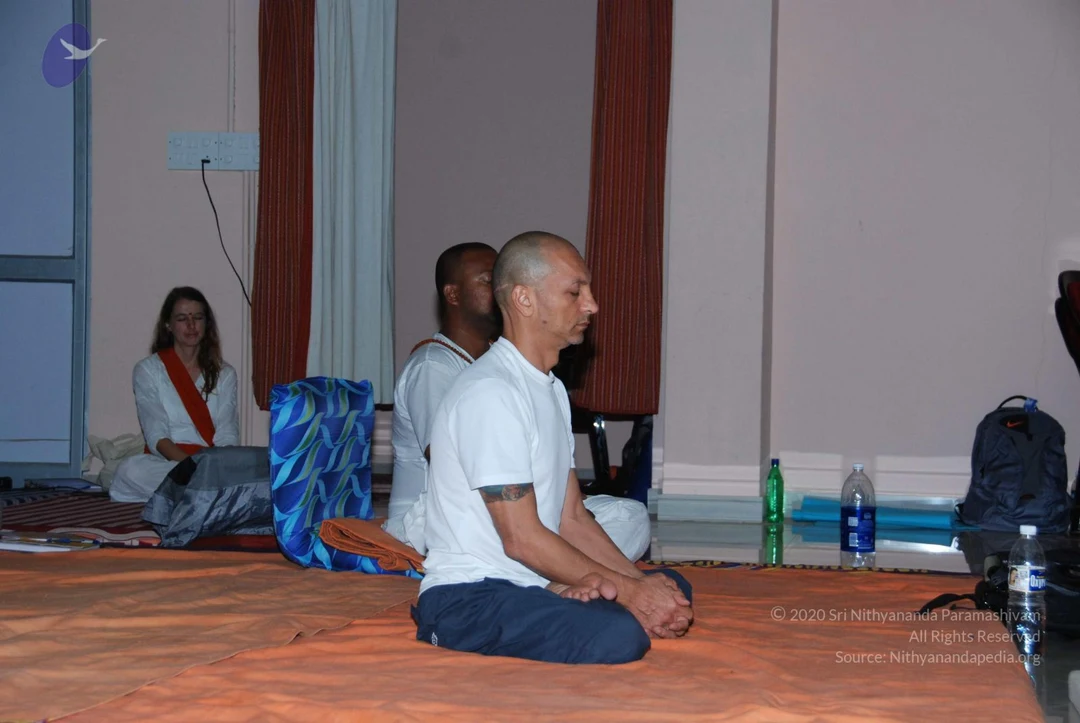
[00:00:25] Will start the process. Today I’m going to very strong Prayanam. I just wanted to put you guys in a process first. No Prayanam, so you can wear your mala’s, brass only. Just only one word; listening through eyes, silence. Not through ears, through eyes. Understand? Put your awareness here and listen to the silence. Your mind will become completely silent. Because any movement in your mind will be a sound here, Understand? The mind, sound happens here, in Anya. Outside sound happens in ears. Inside sound happens in Anya.

[00:01:28] So, when you put your awareness here with closed eyes, listen to the sound happening there. Any sound you hear is from here, forget about that. If it comes or goes, don’t worry, but try to listen the sound, which happens here. Ok? Very powerful process, with this process only Ragupati jogi initiated me and I saw Devi. I had Davi’s darshan with this process only.

[00:02:05] We had a Devi in the last peetam. When Devi was there, did you guys see that with four hands, Abhaya Bharata and Angusa Pasha. Now we put that Devi in chariot and ratan, send it to Tamil Nadu for Navratri Yatra. They are doing some forty day yatra, we sent. Did you guys see that last throne it was there? Now Surya is there, in that throne it was there with four hand, exactly as I had the Darshan, I created that Devi, that Devi was done as per my Darshan, vision. As, after the Darshan immediately I carved in stone, that was only in the archives, it was a small piece. We made four, four feet deity here. It was there, how come you guys missed?

[00:02:50] Now it has been kept in the chariot and it has gone to Tamil Nadu for the Rathi Yatra. I think one week before I sent it. They are doing forty, forty days Rathi Yatra in Tamil Nadu for Dasara. Navaratri festival. Whatever you are going through are Satories. It will get bolted by this different pranayama and everything. See, everybody is having Satori, I’m not letting you guys, you guys are having Satori, I know, but it should become Samathi.

[00:03:19] Shall we start? The silence of, see, seeing, right word is listening through eyes. Ok? Naturally it will be silence, but you don’t imagine silence and all. Try to listen through the eyes. Bring your awareness here and just listen. Just close your eyes. Don’t, no need to tie the ribbon. Just close your eyes. Don’t open your eyes at least for next two hours. Ha, that will be great, but Ma Sana and Samanamudra will be great. Because now levitation will be happening. It won’t disturb you. It will be easy. There will be heavy levitation. See, yesterday one small process only you did, just this automatic Bahir Kumbhaka started happening in the system. Like this, so many of these Hatha Yogi details.

[00:04:21] How many of you lost weight? Wow, great. So it is amazing weight loss program, ha? Good, but nobody feels, nobody looks tired or dull. You don’t have two different eyes. You are just constantly looking through both eyes so fast, you think you have two eyes, Ma. You have two instrument, but not two seer. You understand? Two instrument, but only one seer, that’s what now will happen, actually. Means not physically opening, but you will be able to experience third eye.

[00:05:01] Others who are interested in Vaishnavism you can have the ceremony, nothing wrong. It’s initiation into Vaishnavism. Initiation into devotion. Unfortunately, those people who do that rituals, they are not able to make people understand the importance of it, that is where the whole thing got broken. People should be made to enjoy all that. Did you guys go and attend the Ganapati homa?

[00:05:35] Somehow we make everything entertainable, you see. Is entertainment, you can enjoy. The arrangements and everything and that ambient is maintained so decently, you can enjoy. If the priests are running here and there and pouring coffee here, pouring ghee there and dirty clothes and holding this side, then what will you feel.? You won’t feel like sitting and enjoying. In that place, how it is maintained, simple way, but neat way and how the deity is kept decent washed clothes.

[00:06:16] See I’m not even expecting all temples should have like this jewels and everything. Because all temples can’t effort so much jewels, but at least they can effort clean cloths, that much all temples are rich. The neat, washed clothes and the deity is kept with lot of respect. Actually it could have been so beautifully managed. How, you know? After all it is a small cave. So nobody should go inside, just from outside, itself make a cube, beautifully people can have from here direct darshan. Over, and put two camera, put outside three projector. And whatever goes on inside people can have darshan from outside also.

[00:06:54] See, if you want to see main deity directly, go and stand in the pure, in the line and come, I would have.. If they allow me, I will organize the whole thing. Whole one lakh people will have darshan in three hours. Beautifully I will finish it. But one nice thing with the temple, they asked, they requested us officially to take over the temple. I said yes. In three days we are going to have MOU. I’m going to promote that temple. I have decided to promote that temple and will make a website. Internationally popularize that place as a main kshetra. It is a very old temple. In Ramayana, there is a mention of that whole area. Geographically it exactly matches with Ramayana’s mention.

[00:07:43] Did you guys see that seven big stones? Seven big rocks, Saptarishi. Saptarishis were there with Rama and Saptarishi rocks are mentioned in the, recorded in the Ramayana. So that place, and no crow will be there. Did you guys observe? All other birds will be there, not a single crow will be there. Because Kakka shara. The crow demon was killed there, no crows come there. Even scientists came and did so many different, different research. This people who were, do researches on birds and lifestyle of birds, all these.. What do you call them?

[00:08:24] All those guys came and did lot of research, it seems. No crow comes there, even if they bring a crow and leave, just it rushes out, out of that energy field. So I said I will donate golden kavacha, Utsav Murti. Whatever necessary for the temple. I’ll, I’m going to make them manage. I’m not going to involve, but I’m going to be like a consultant. And organize, make the temple self sustaining and I’ll make a website.

[00:08:55] See, with our website, our temple is self sustaining. Whatever puja we do, whatever money we spent. We, at least we are able to run, but temple is my passion. I don’t bother. I don’t run as a thing, it's my passion and whatever I make, I spend on temples only, everything. It’s my passion, but I’m still, at least running expenses. So we are able to keep it neat, clean.

[00:09:20] So I’ll make that temple also same way. Make it as a, I’m planning for an institution, like this to give consultancy to temples and Ashrams and Muds and Monasteries to make it self sustaining and creating a, trying to create a software. Mainly for Ashram accounts, for all the Ashrams and spiritual organizations. Trying to give a training for the accounts, publication departments. We learned the science by ourself. Why people should spend so much time again in reinvention. Let them have this system.

[00:09:57] No water, no body movement. Finish now itself. Because if you move, you will start getting disturbed. Pitta Karasos initiated in this process. The guy who created this Uti.. no, no he not create, he learned from India and popularized the Theorems. Pythagoras. He was initiated into this, into this process. There are records. One of our devotee in Chennai did a research on the historicity of Rama. I supported him with lot of material and we proved the Ramma’s existence chronologically as per time. Did you guys see the documentary? I’ll, in one session I’ll get the documentary and show you guys.

[00:10:49] See the, I gave him the five astronomical references in the Valmiki Ramayana, based on that we calculated the time and we proved the historicity of the Rama and Nasa’a dating of the bridge matches with this dating. Nasa is dated that bridge, that Rama’s bridge, Ram Setu and it is matching with our dating. I’ll get that and show you guys. And Subhramanyan Swamy supported, submitted this document in supreme court and it is accepted by supreme court. So the stewas got from this document only.

[00:11:34] Of Course, the devotee did a hundred percent job. I only supply five astronomical details. The sun, moon setting, that I translated and exactly put the points and gave. Chronologic. I’ll gave you whole, shall I present whole documentary. We have it. See I put all the Grahas and gave him. He calculated the timing. Then how many thousand years before the Grahas came in that positions. We have the whole documentary. Clearly, birth, Rama’s marriage. At the age of twelve he got married. Poor guy. 12 got married. So all the things are clearly chronologicaly recorded. Systematically. Short life, not like Krishna. Krishna lived long time. Rama lived less, lot less.

[00:12:30] Common, close your eyes. No, don’t tie the ribbon. No weight on the Anya, but no question of opening the eyes for next two hours. No, no. Allow the movements, Don’t suppress all movements, nothing. Just allow everything to happen as it is. Just go with it. Have enough space, now itself, all the frequent flyers have enough space. Voluntary movements. Involuntary movements are ok. Anything happens, allow it to happen. Close your eyes. Bring your awareness to the eyebrow.

Title

Technique for Levitation - Powerful Pranayama Process Part 1 , LEP Day 14, 6 SEP 2010

Description

In this video , Swamiji talks about powerful breathing process to remove all kinds of fears. stopping all the voluntary activities under our control during the process of pranayama

Watch, share and like the videos and Subscribe to our channel to be notified of the next upload.

Website and Social Media:

http://www.kailaasa.org

http://www.nithyananda.org

http://www.nithyananda.tv

http://www.innerawakening.org

https://twitter.com/SriNithyananda

https://www.facebook.com/ParamahamsaNithyananda

Video and Audio

VideoAudio

Transcript

(00:23) Alright, shall we do the process now, hmm? Anybody had a difficulty with the morning stop-process? You all have done it properly. If you have not had difficulty, you have not done it! How many of you did not have any difficulty in morning, that stop? No difficulty at all, very comfortably you were sitting - how many? Raise your hand. Dull fellows, means did not do properly.

Audience [inaudible]

Swamiji: It has to be lot of struggle. How many of you had really, really lot of struggle? You guys- it's a, that is meant for that. It is meant for that. It’s very powerful process. If you did not have a struggle, it's useless. No really. You see it is a process for Antar and Bahir Kumbhaka. And not only that, I am also - I have also tuned your bio-memory now so nicely. With this stop-process you will simply feel the whole insecurity raising. You see like it is like I am- I have drained all the water. I am just now playing with the mud. Your raw fears and greed, mud; churning them. Only then it will be cleaned.

(02:00) Come on, let's start again. Yes...relax. During stop, how much control you have...your- on your breath hold, that's all. Not more than that. Just stop.

(02:29) [Meditation process]

(03:29) Stop whatever is under your control. Stop. Your body, your breathing, your mind howmuchever is under your control, that much stop. When you are not able to control let the breathing happen, inhaling or exhaling. When you are able to control again, stop. Just stop.

(03:57) [Meditation process]

(23:13)

Title

Reason and Release (PYS61): Nithyananda Patanjali Yoga Sutra

Video and Audio

Reason and Release (PYS61): Nithyananda Patanjali Yoga Sutra

VideoAudio

Photos

Panchatapas
Paadapooja

Morning-Message

Sarvadarshan

Yogasutras

Swamiji-In-Lep-Meeting

Ashramites-Meeting

Photos Of The Day:

PANCHA-TAPAS

PRATYAKSHA-PADA-PUJA

LEP-PROCESS

Photos Of The Day:

Temple

Pada-Puja

Morning-Satsang

Sarva-Darshan

Swamiji-with-VIPs

Meeting-with-Ashramites

LEP-Meeting

Yoga-Sutra-Evening-Satsang

Photos from this day

View all 530 photos

Panchatapas
23 photosSource gallery
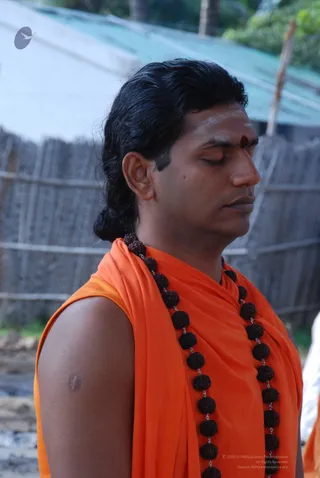
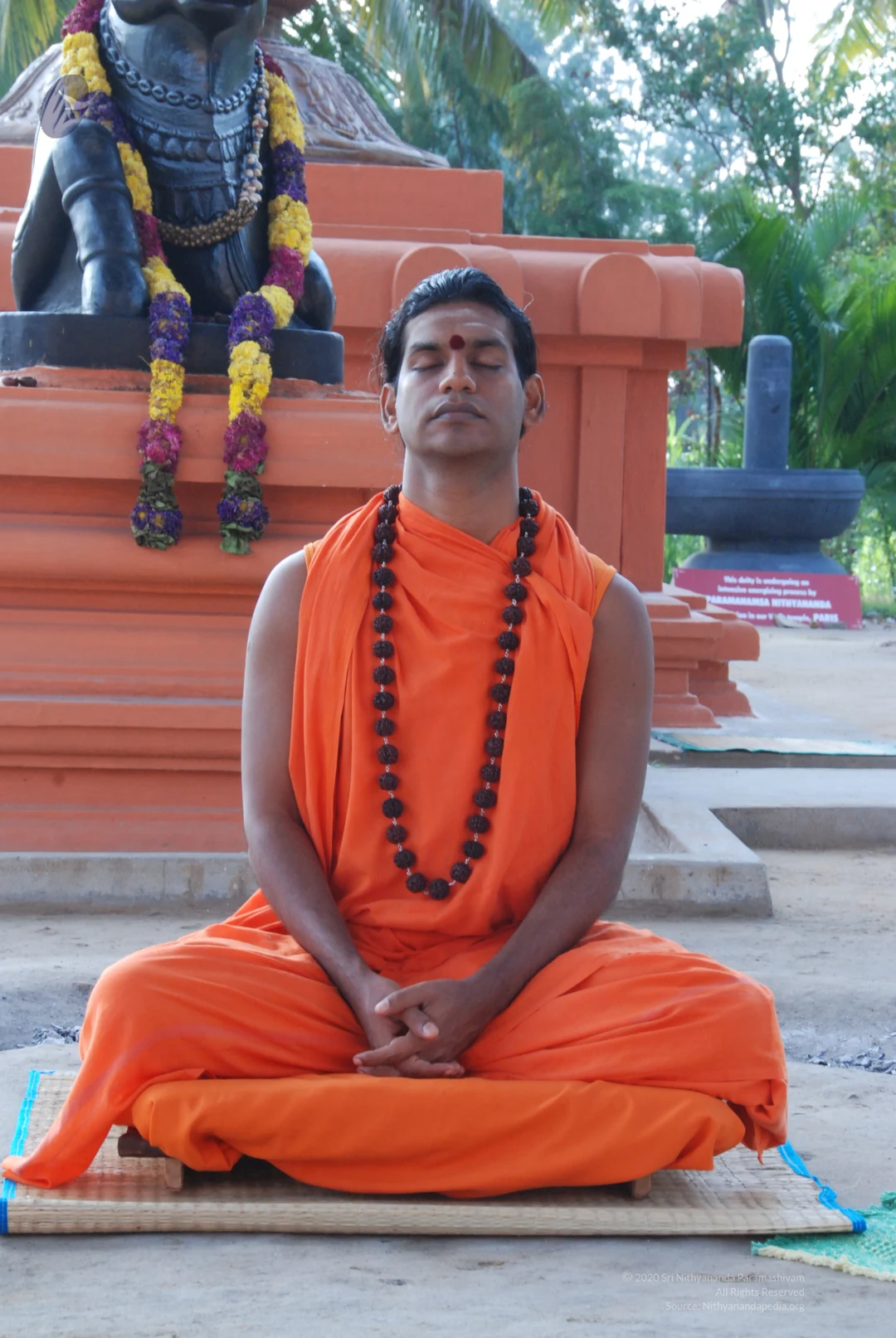
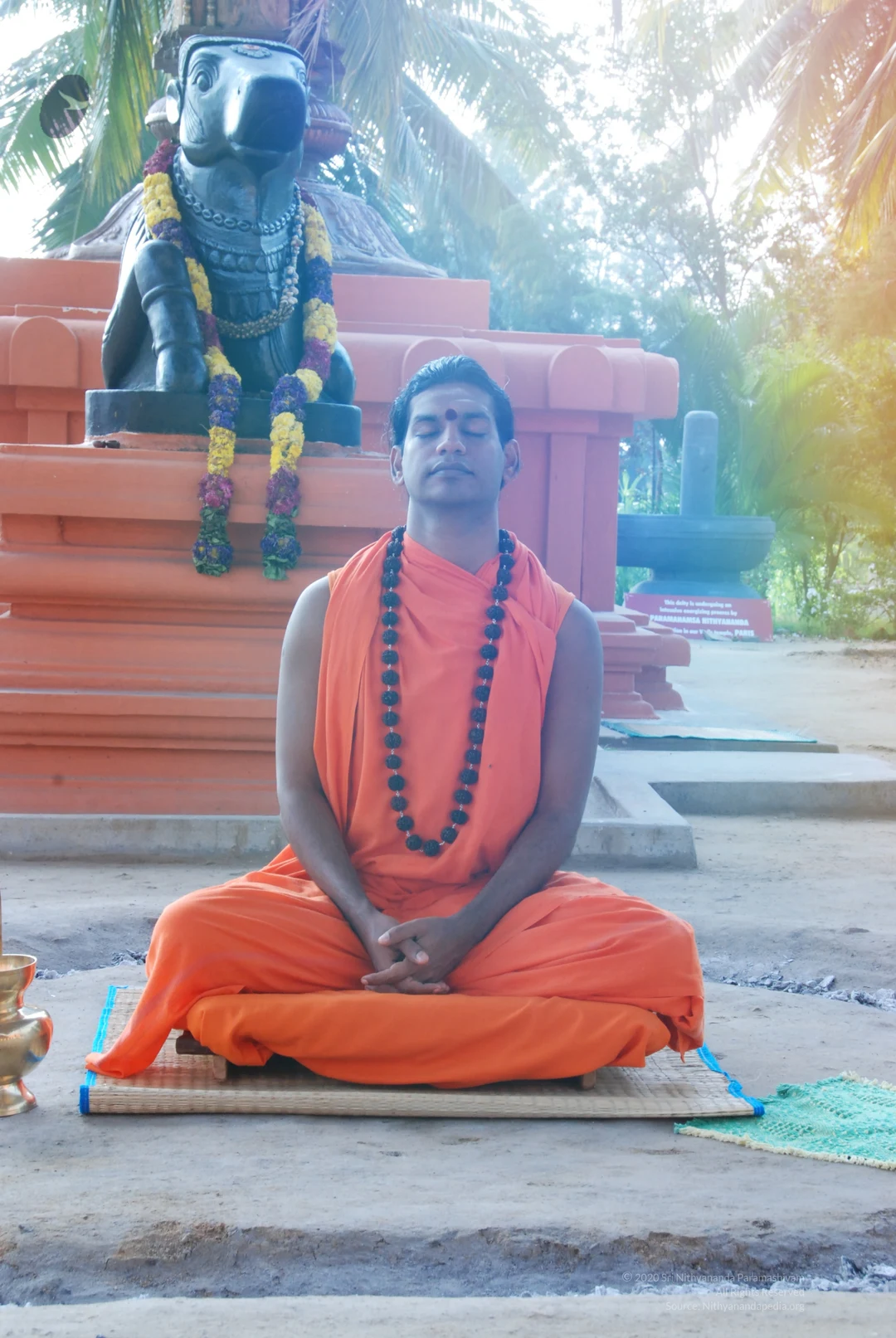
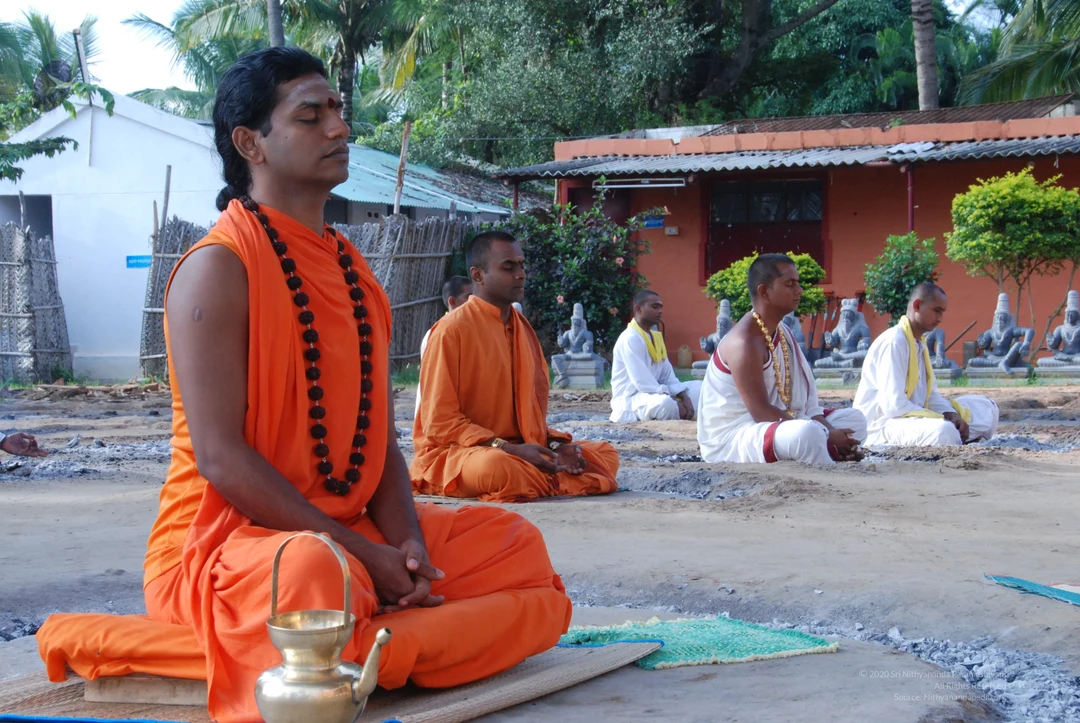
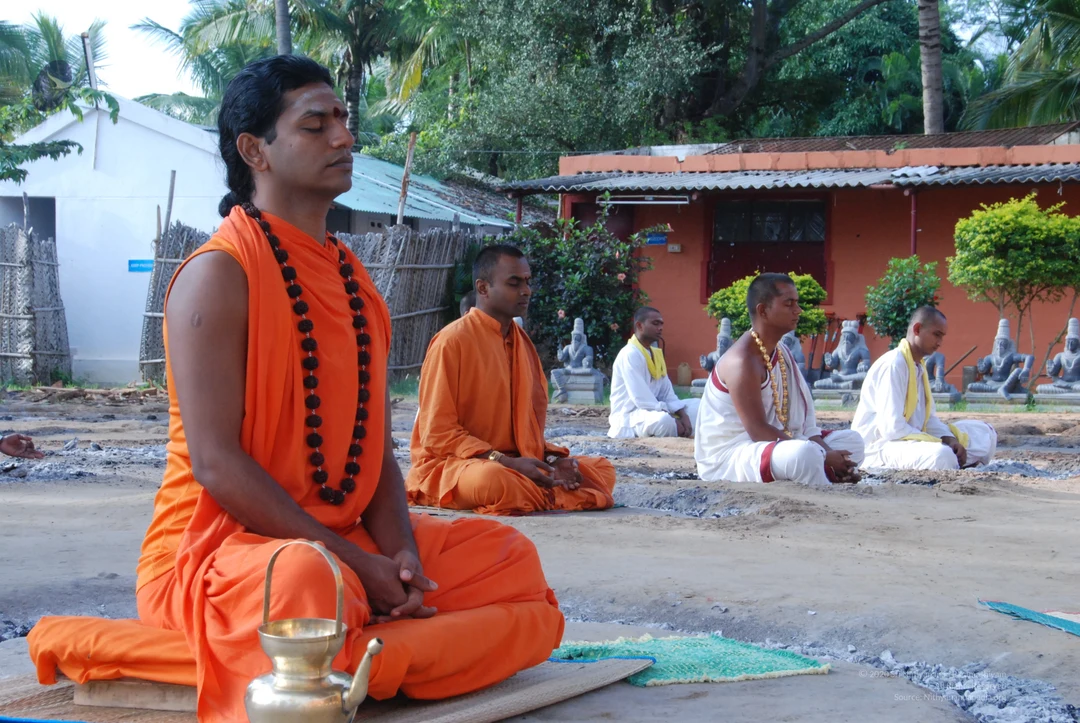
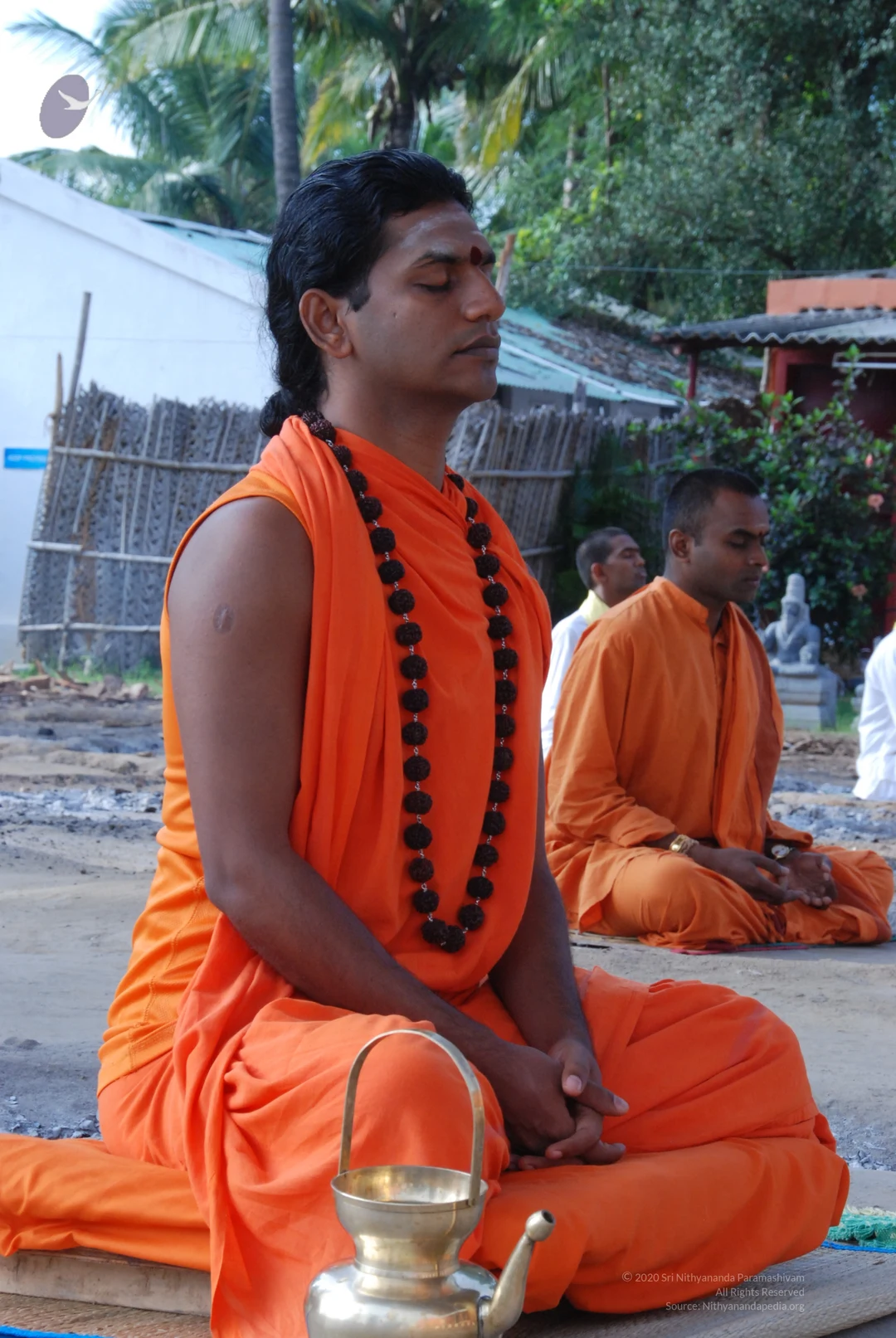
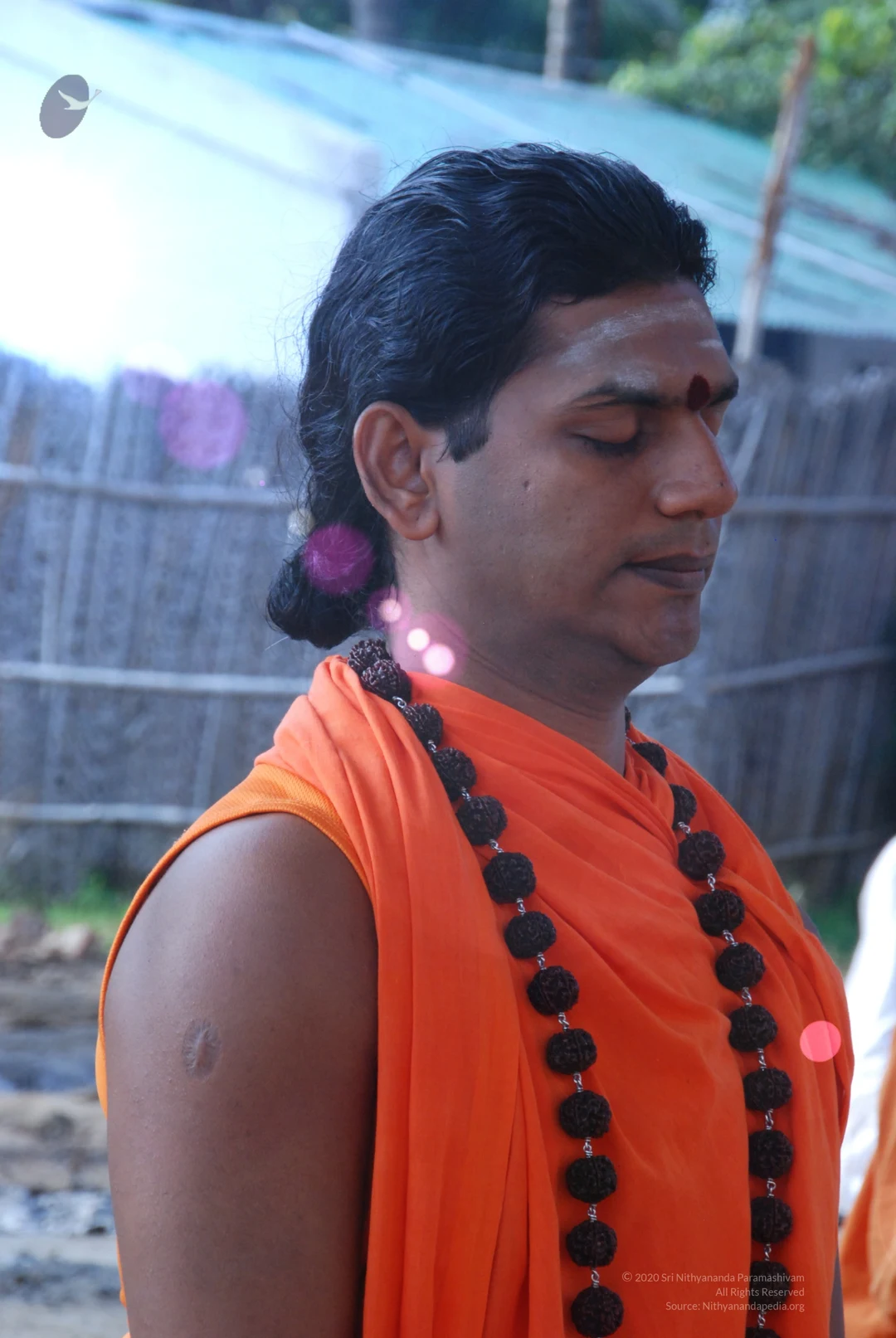
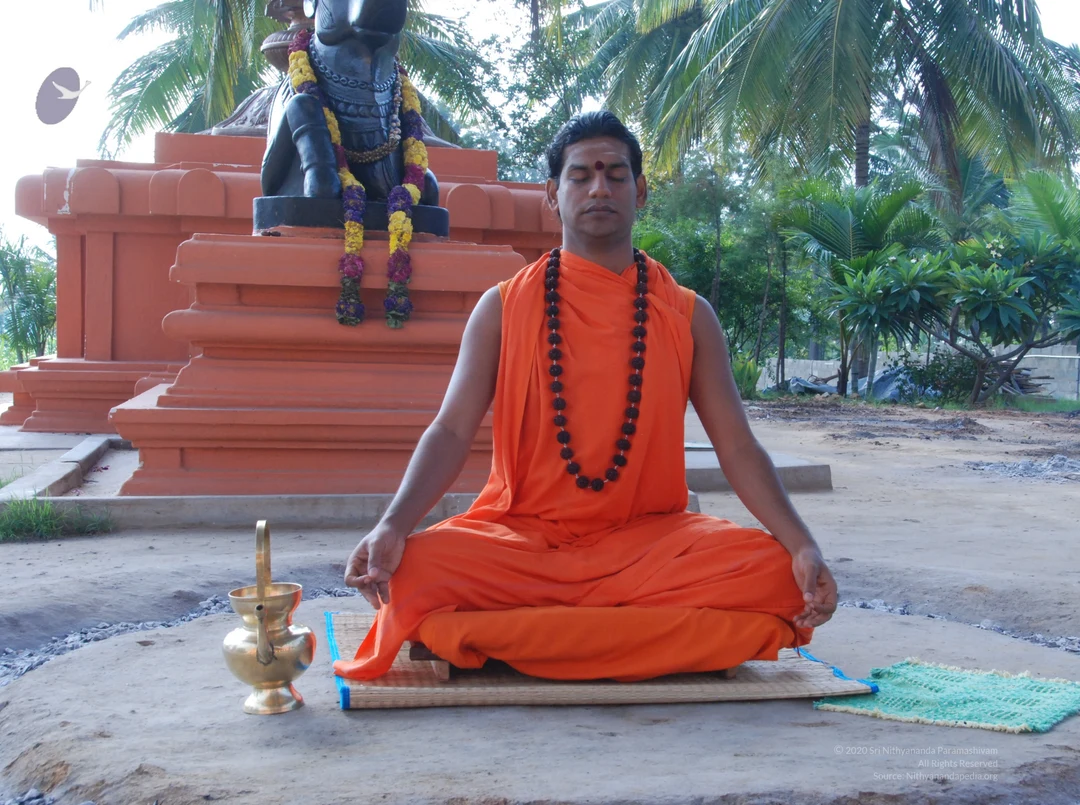
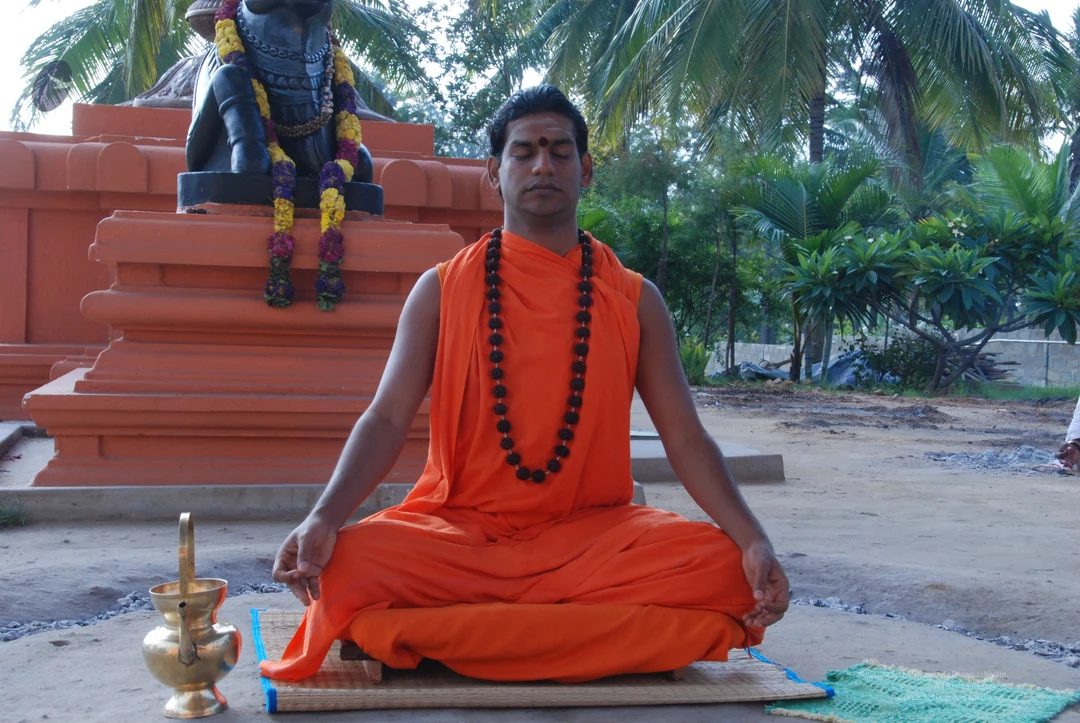
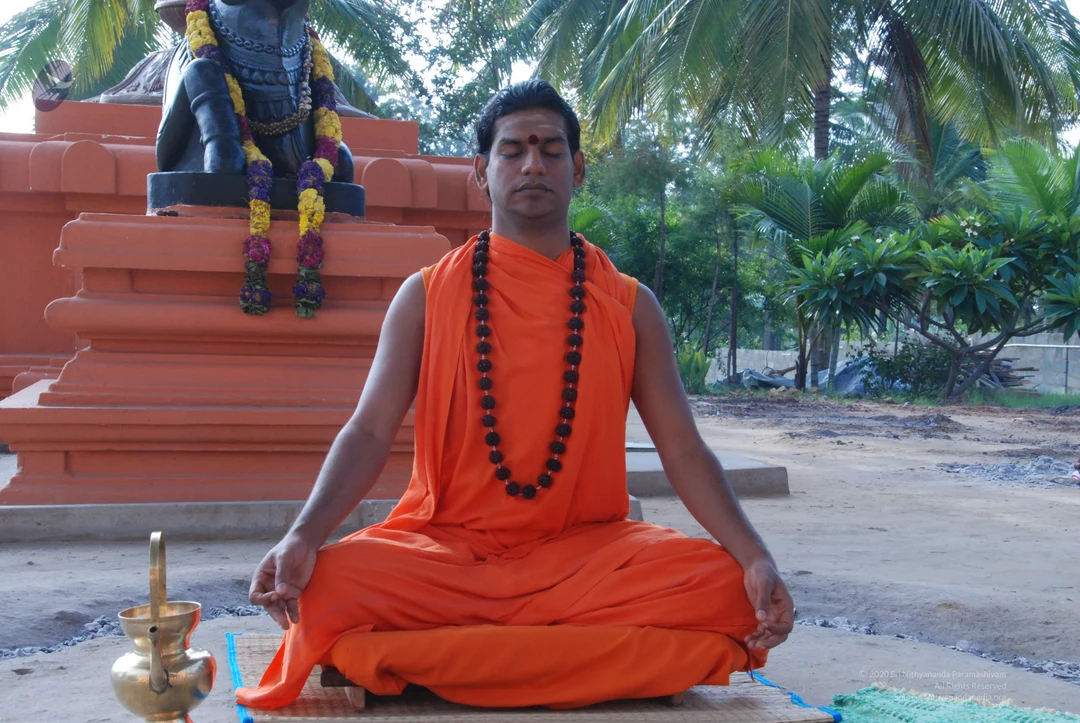
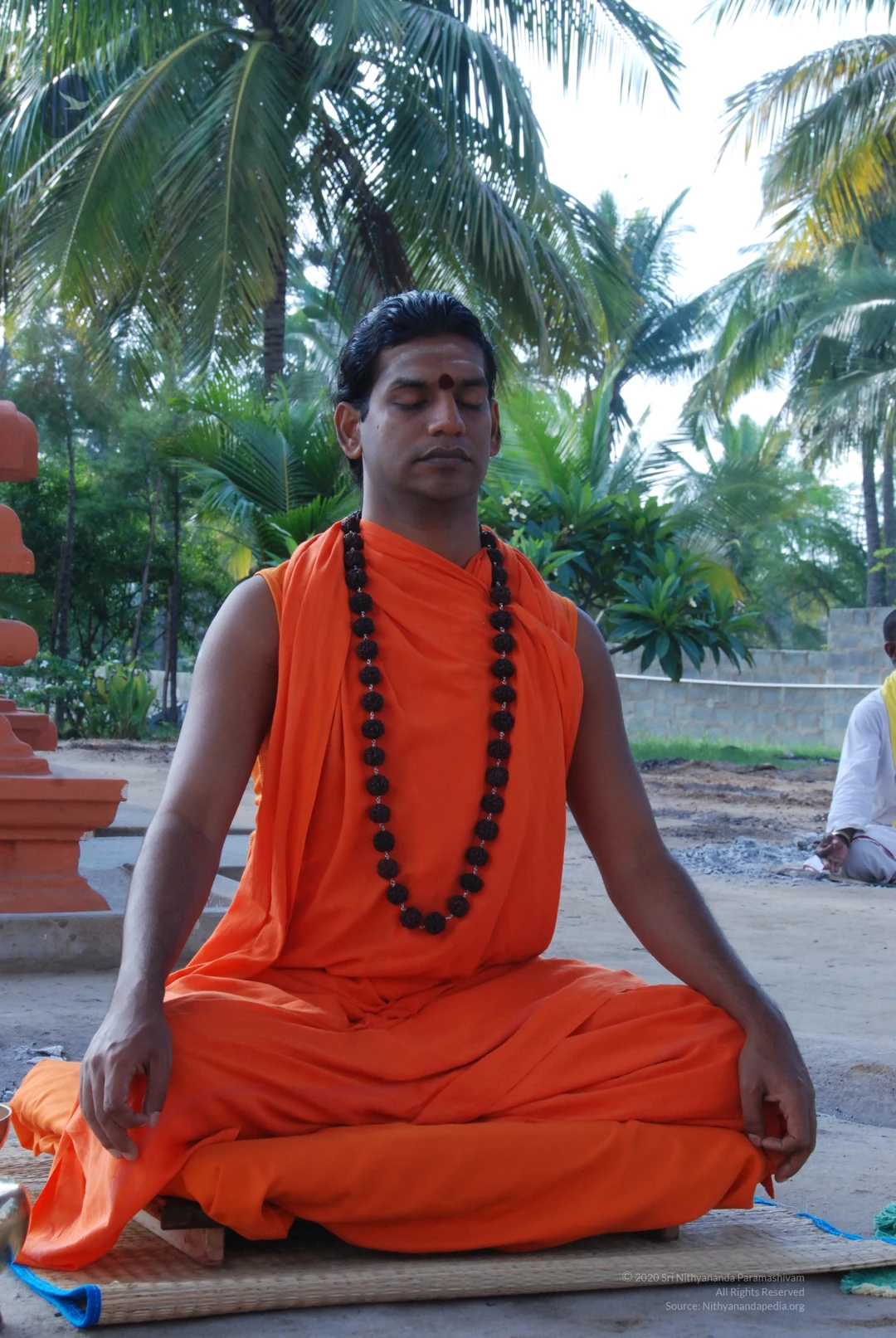
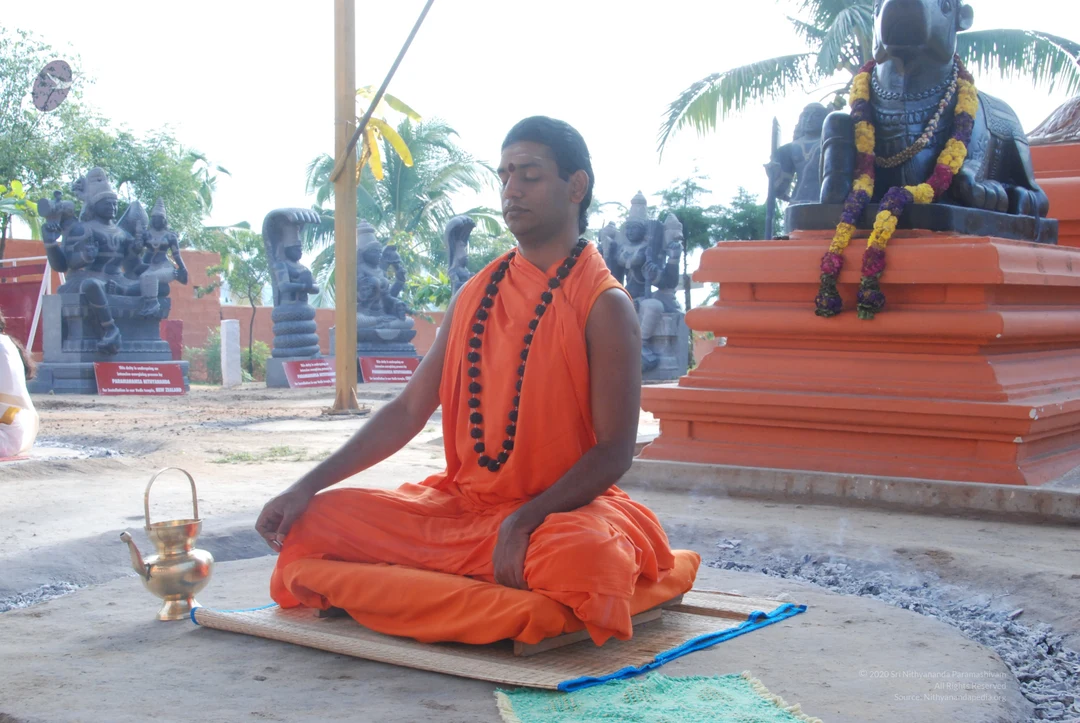
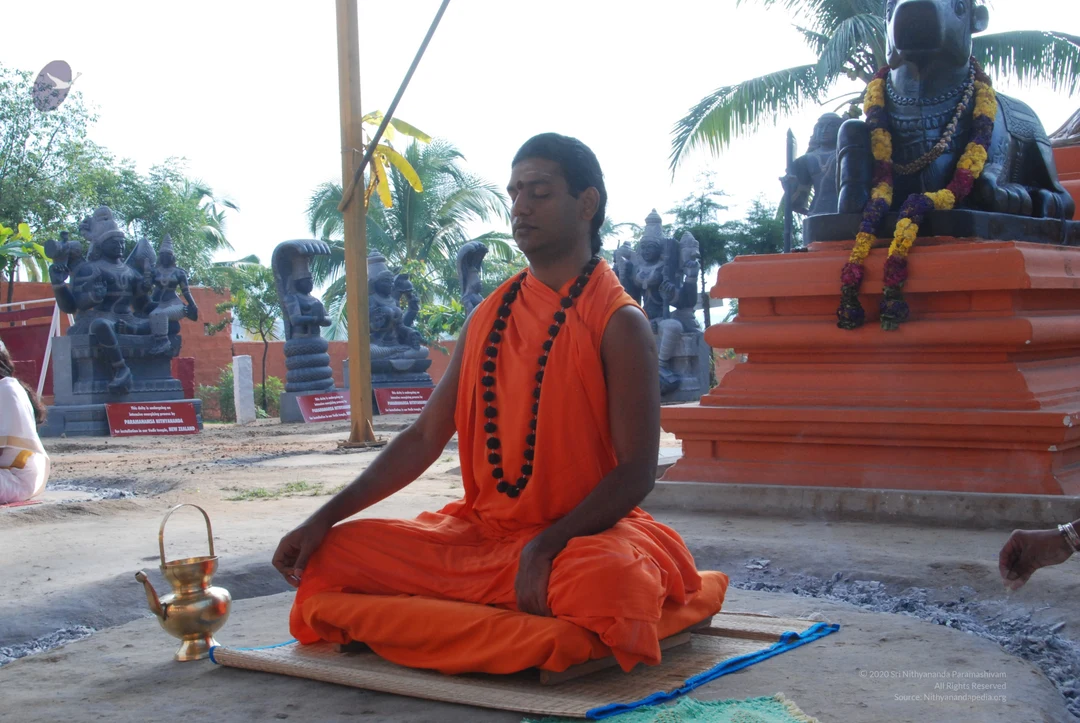
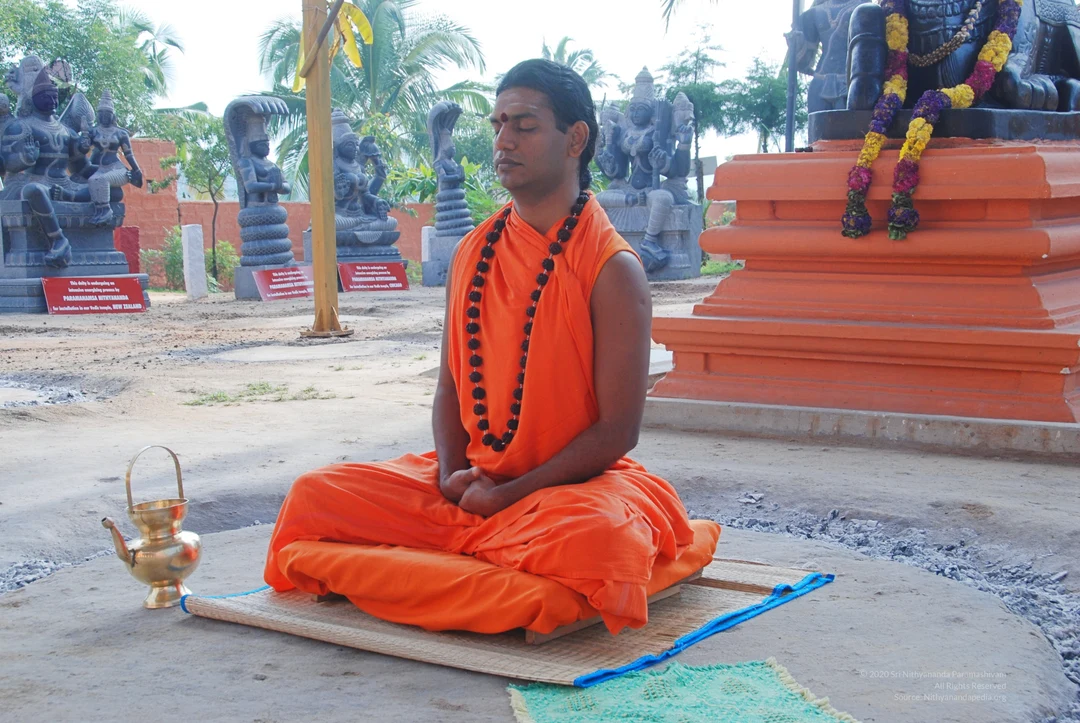
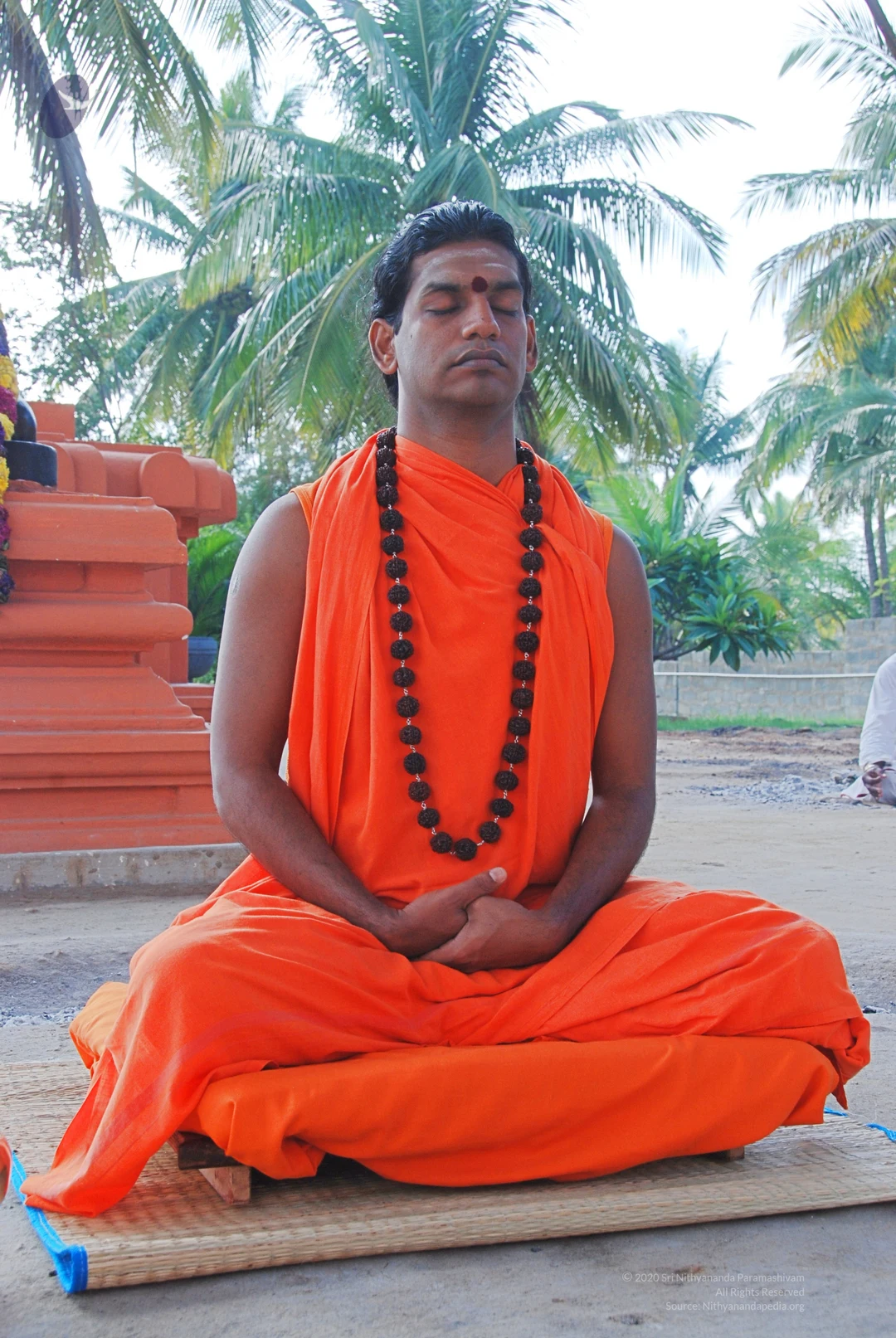
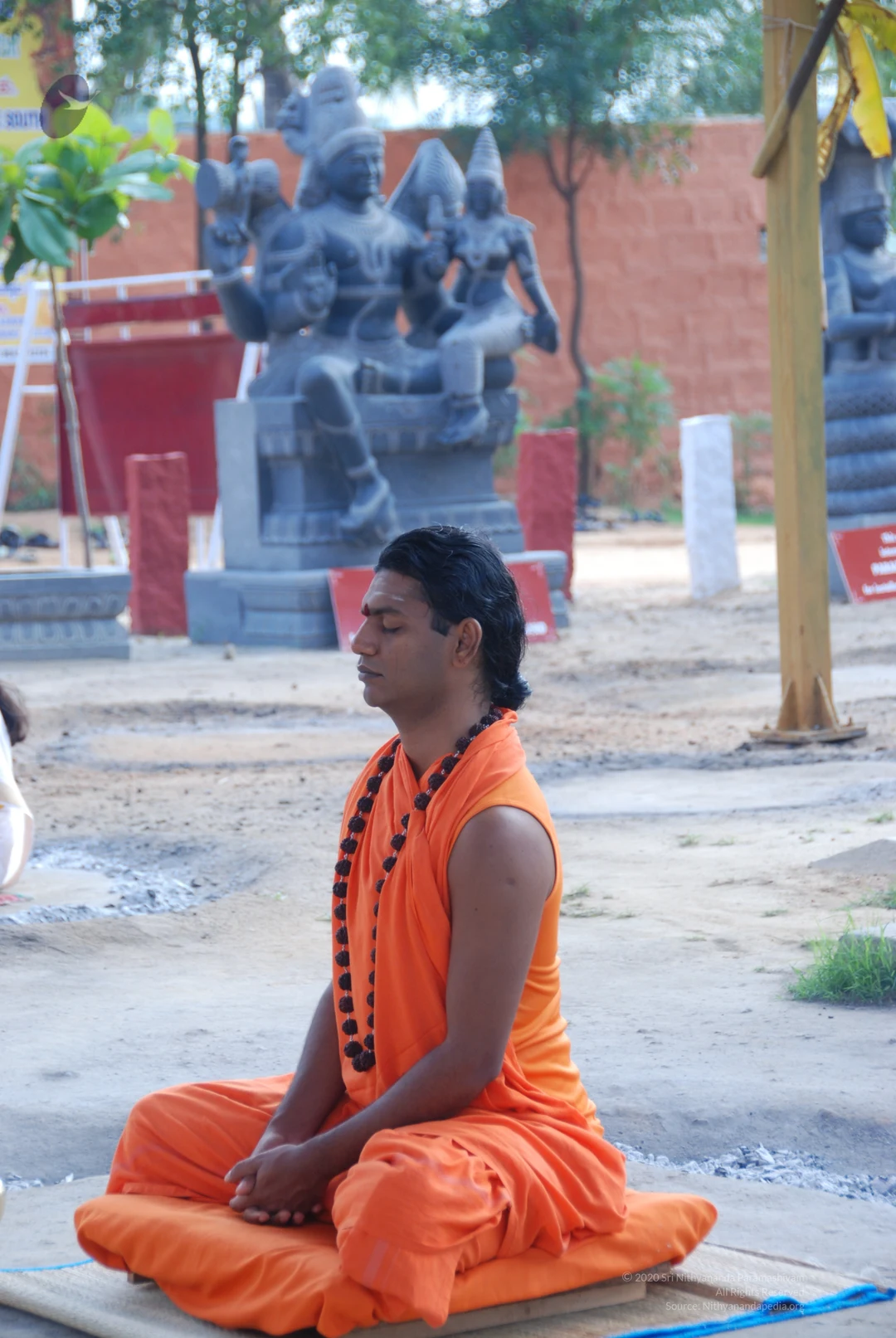
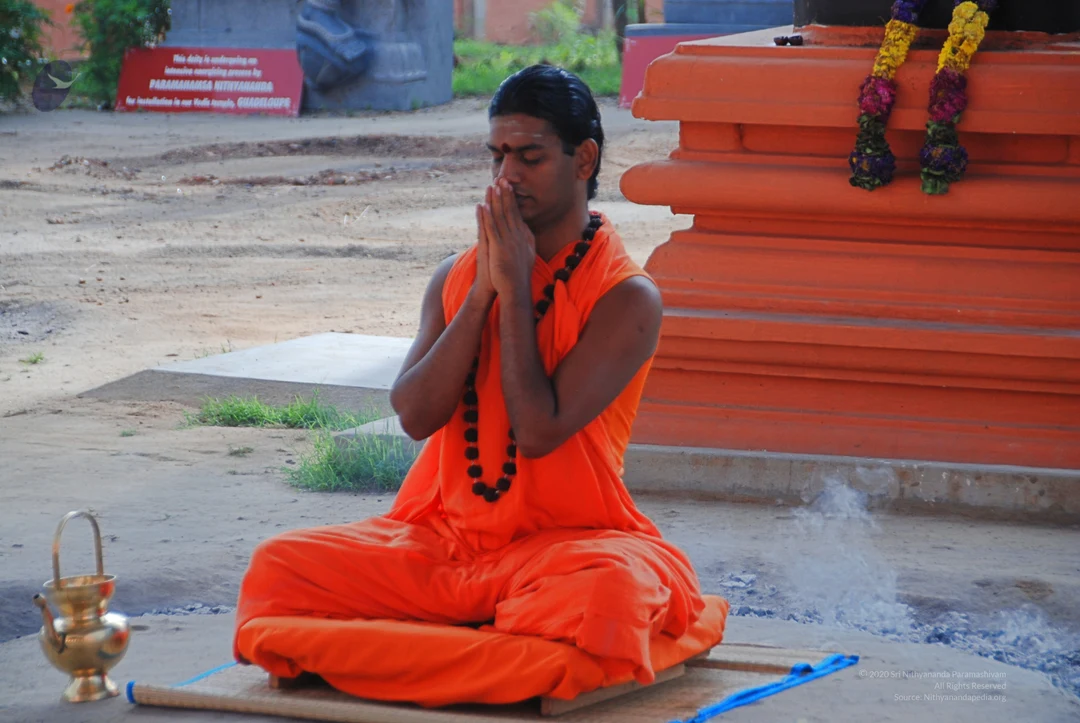
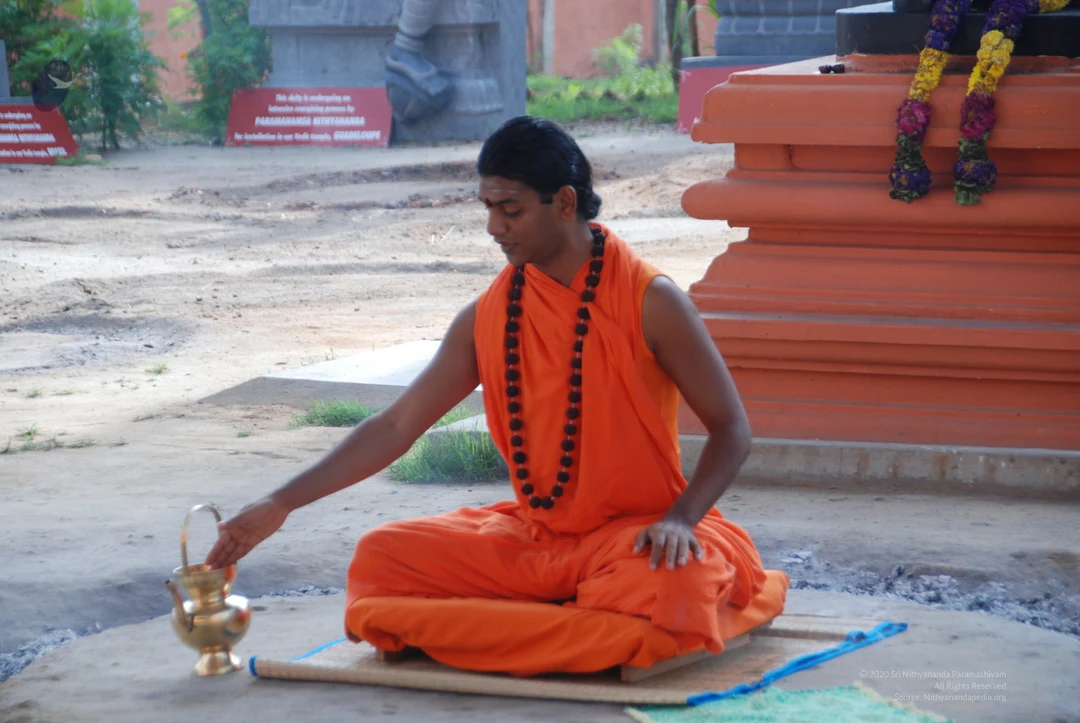
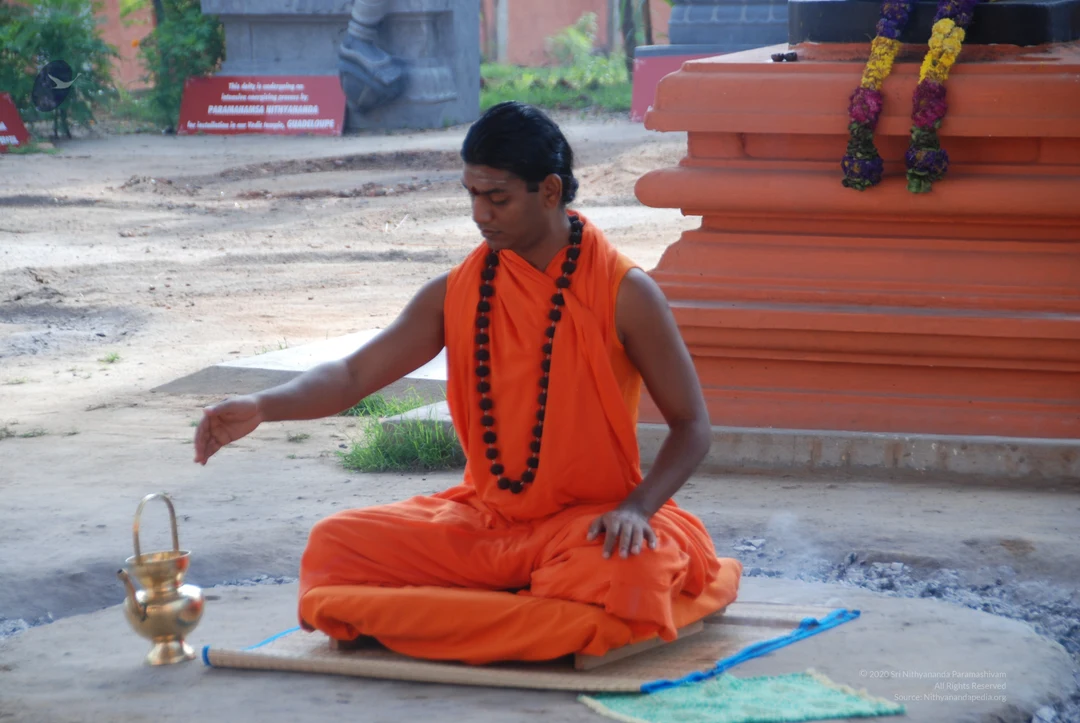
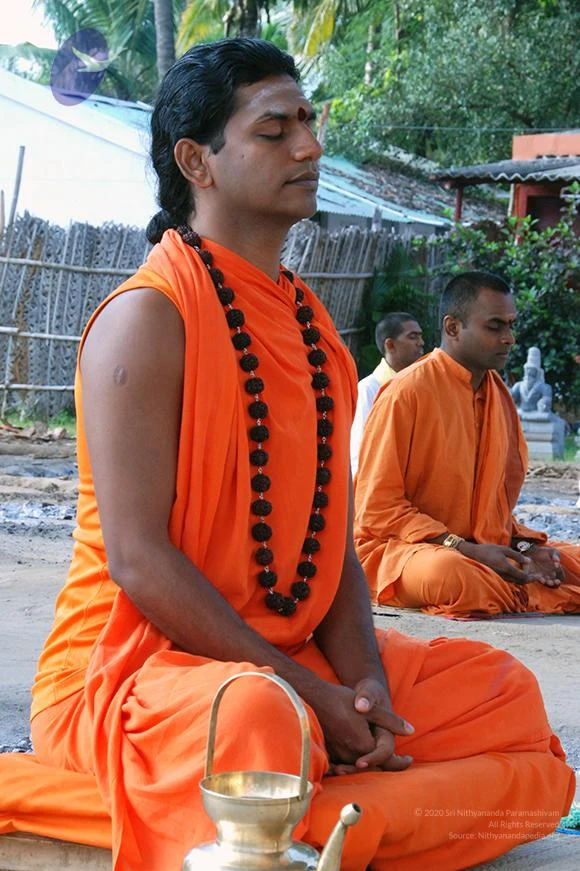
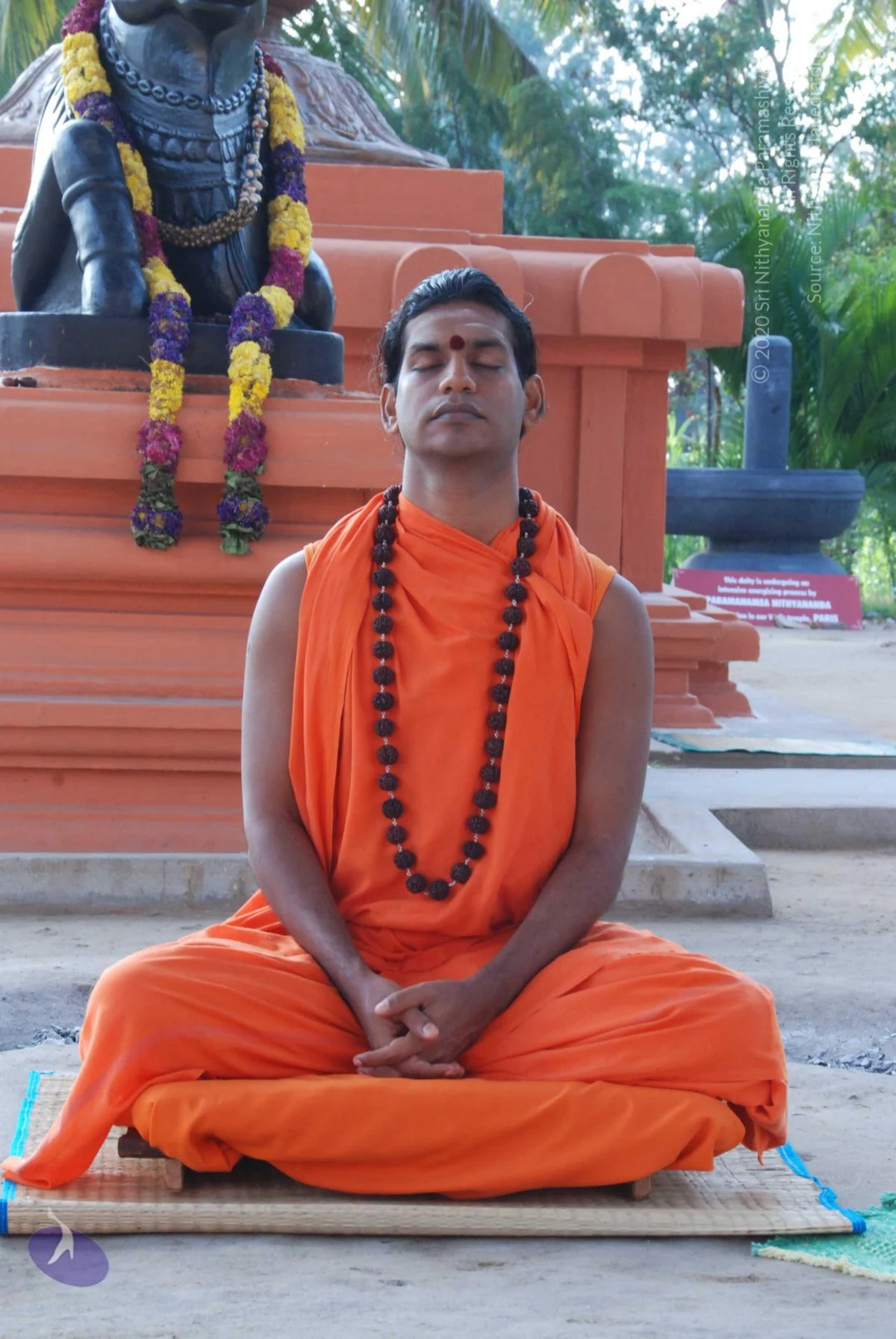
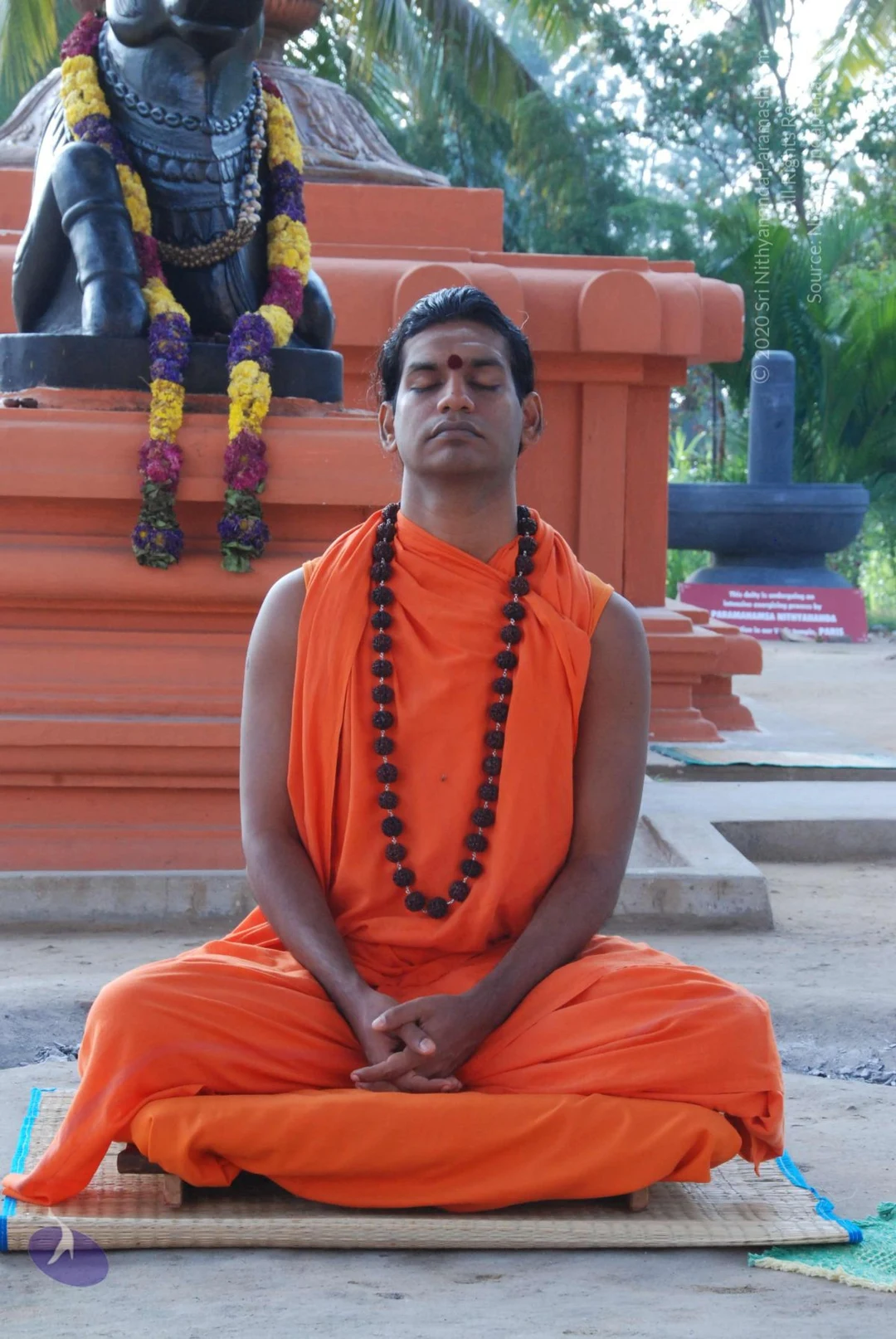
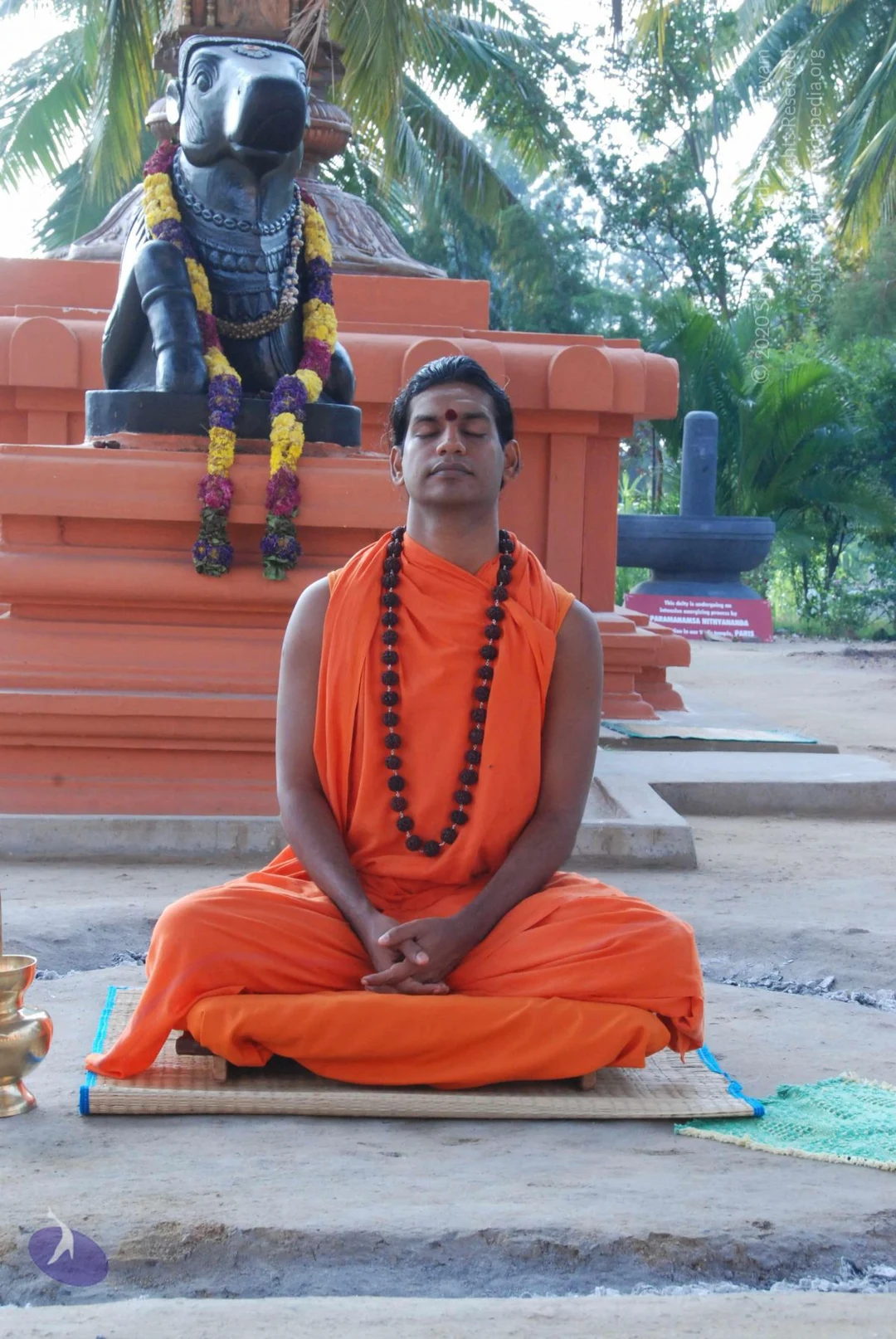
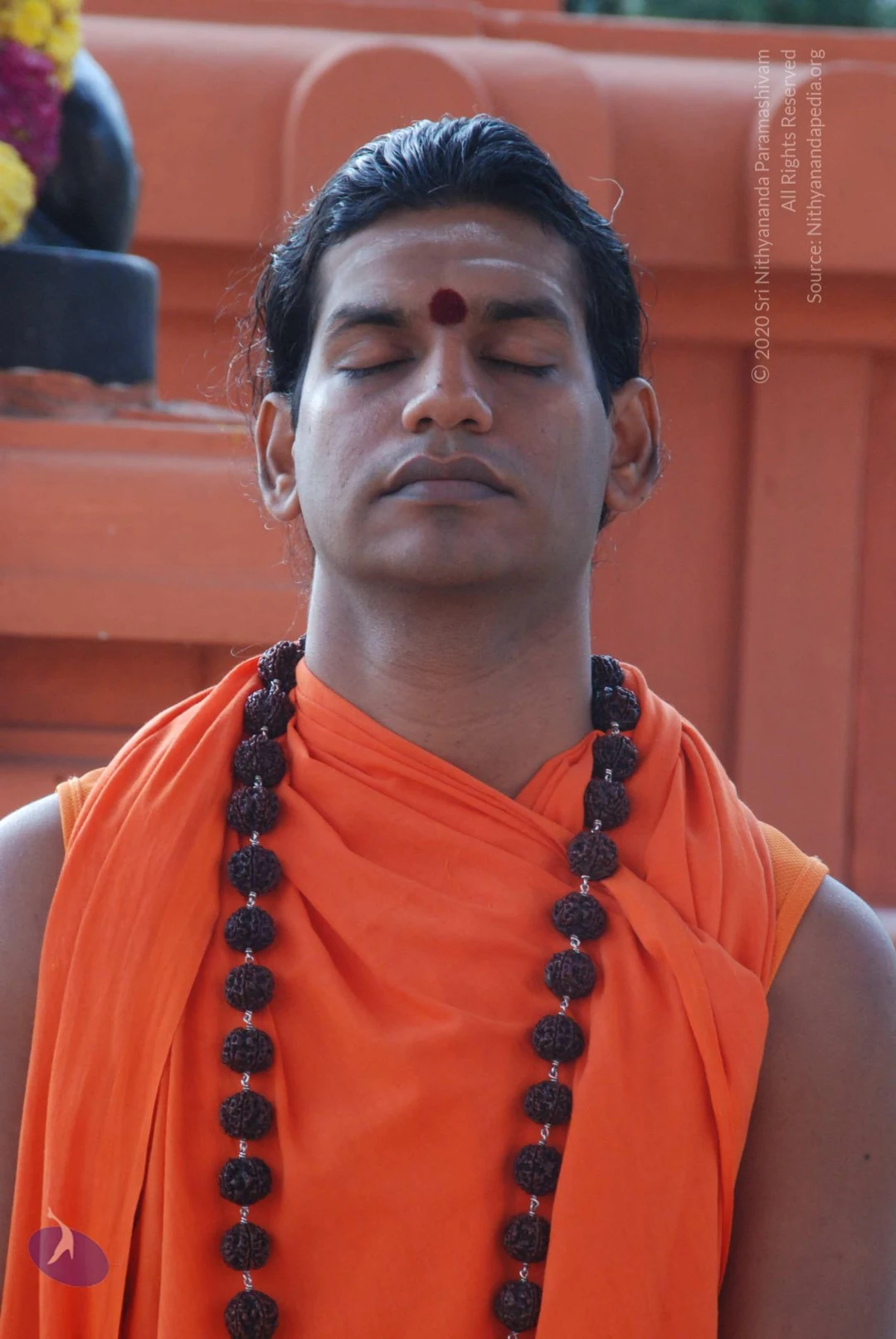
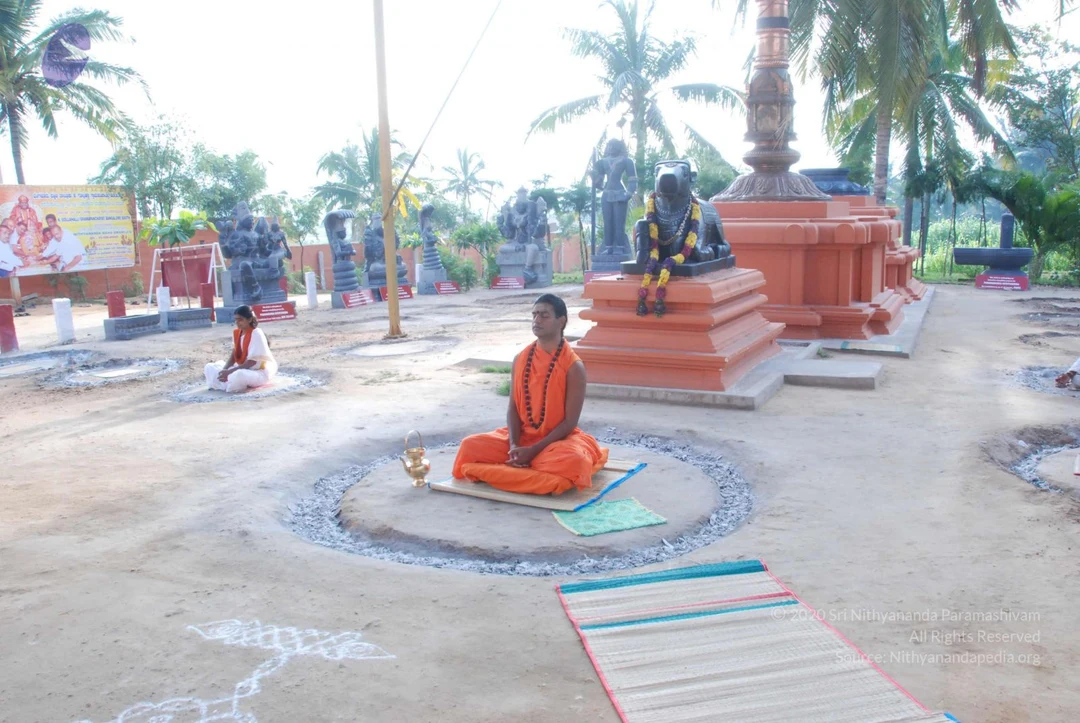
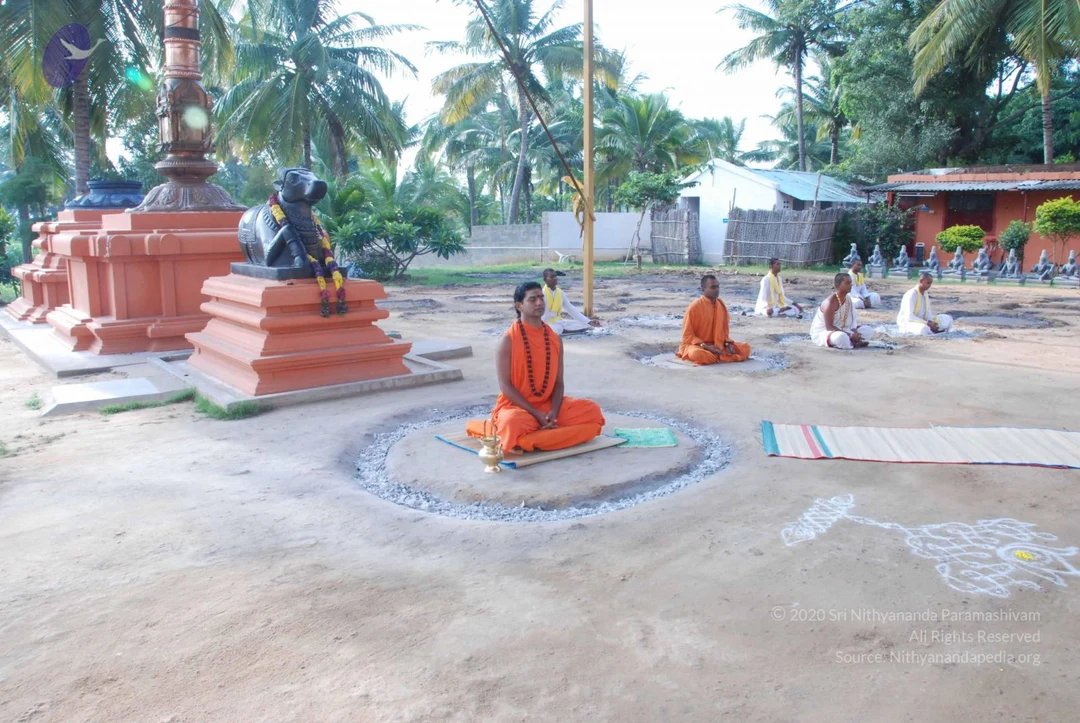
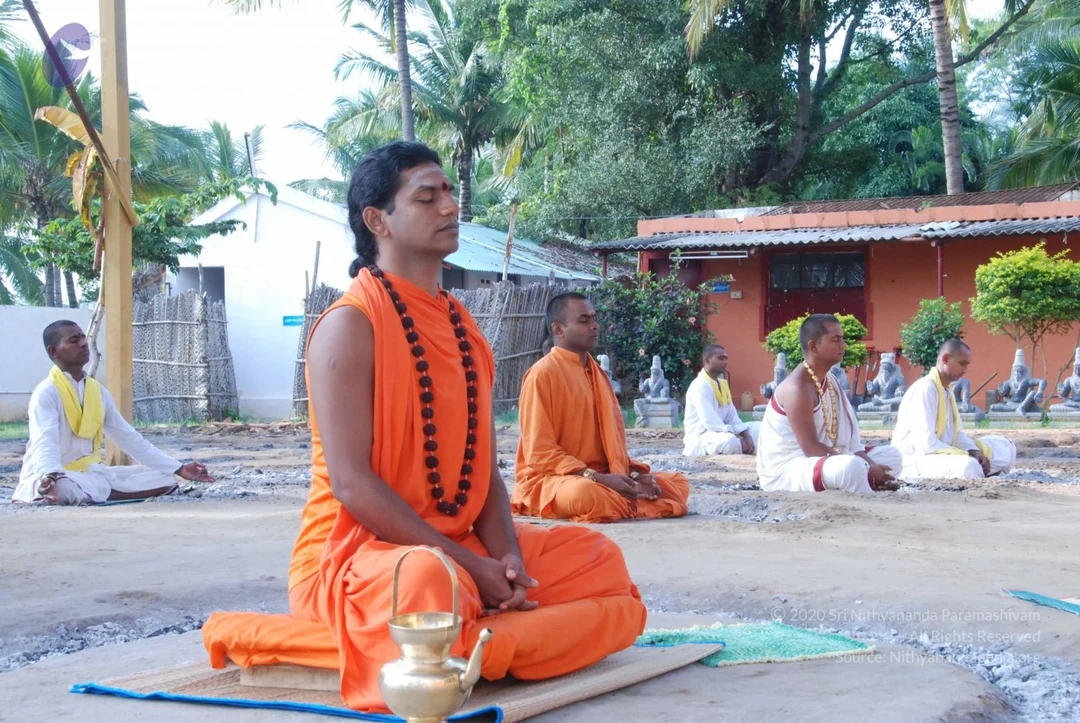
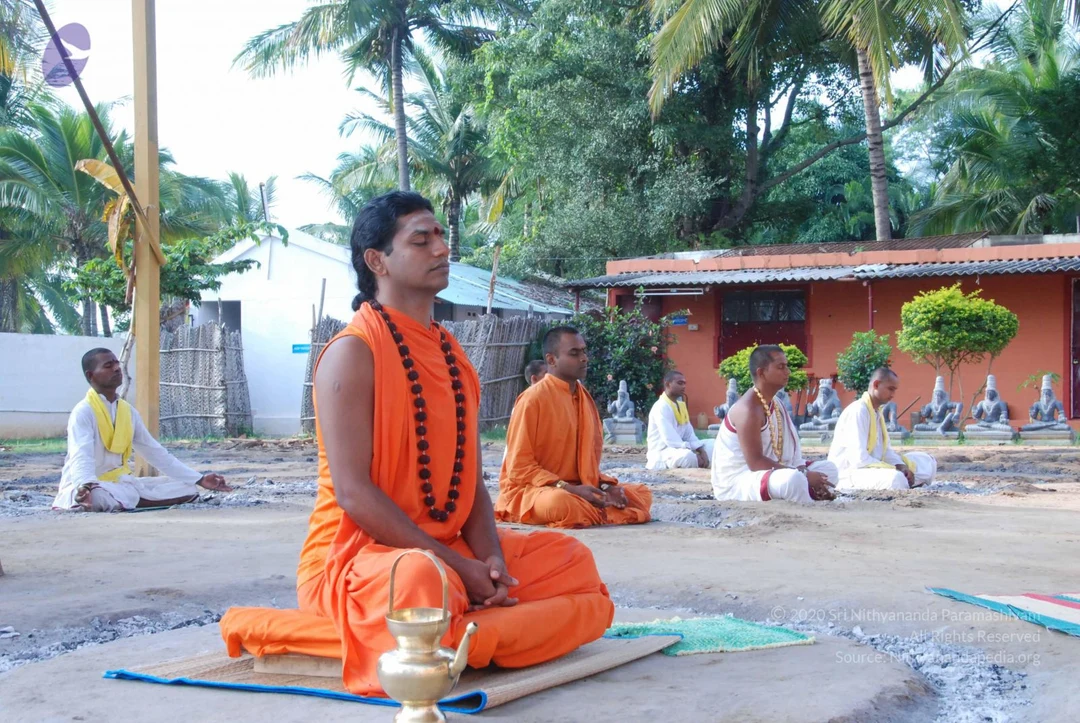
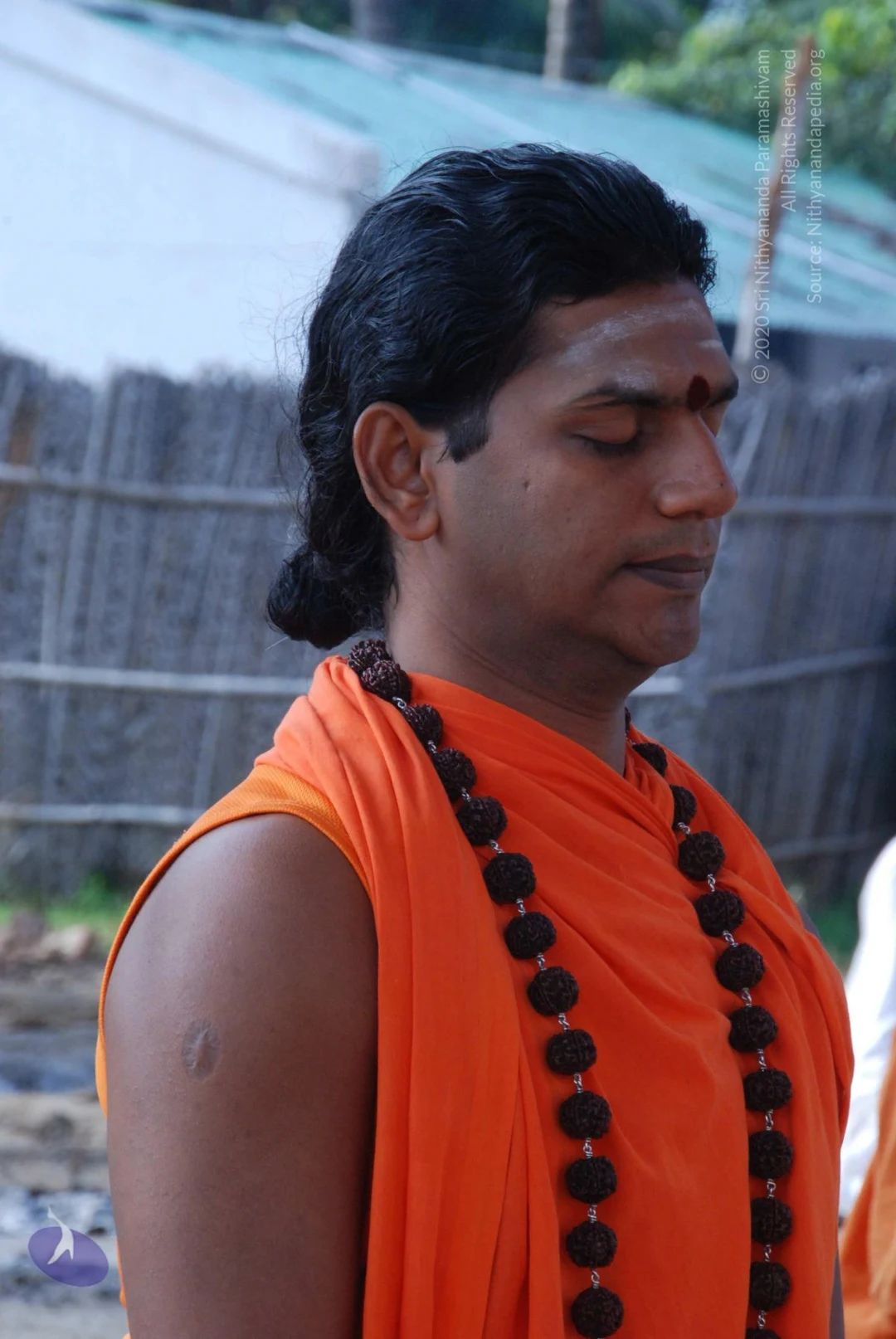
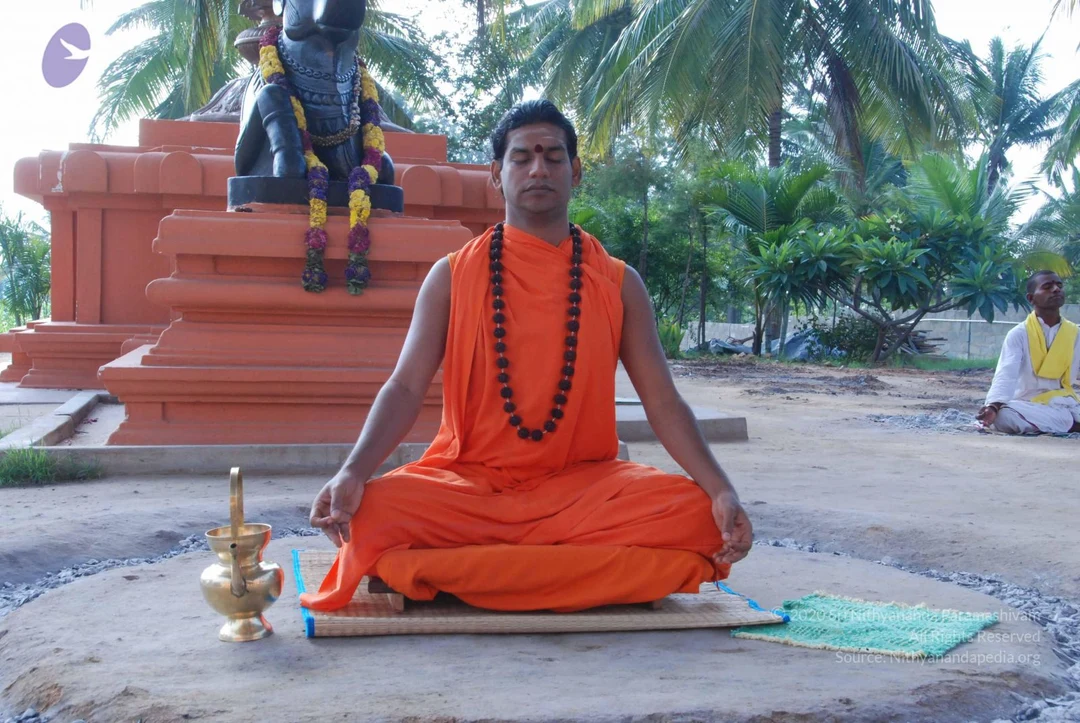
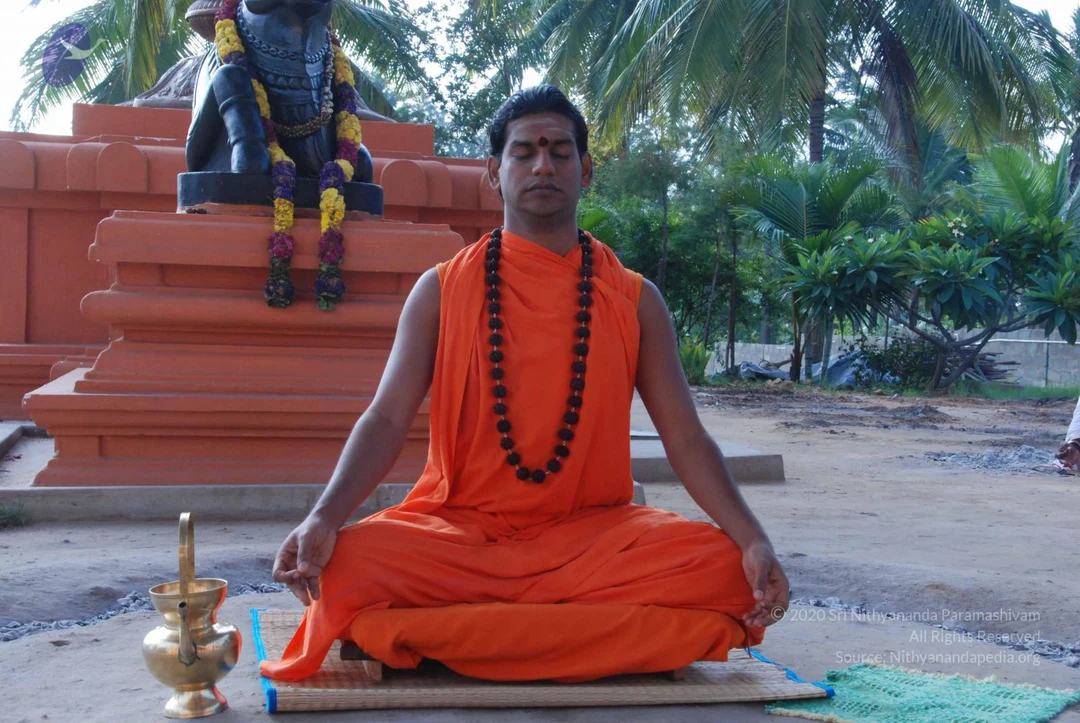
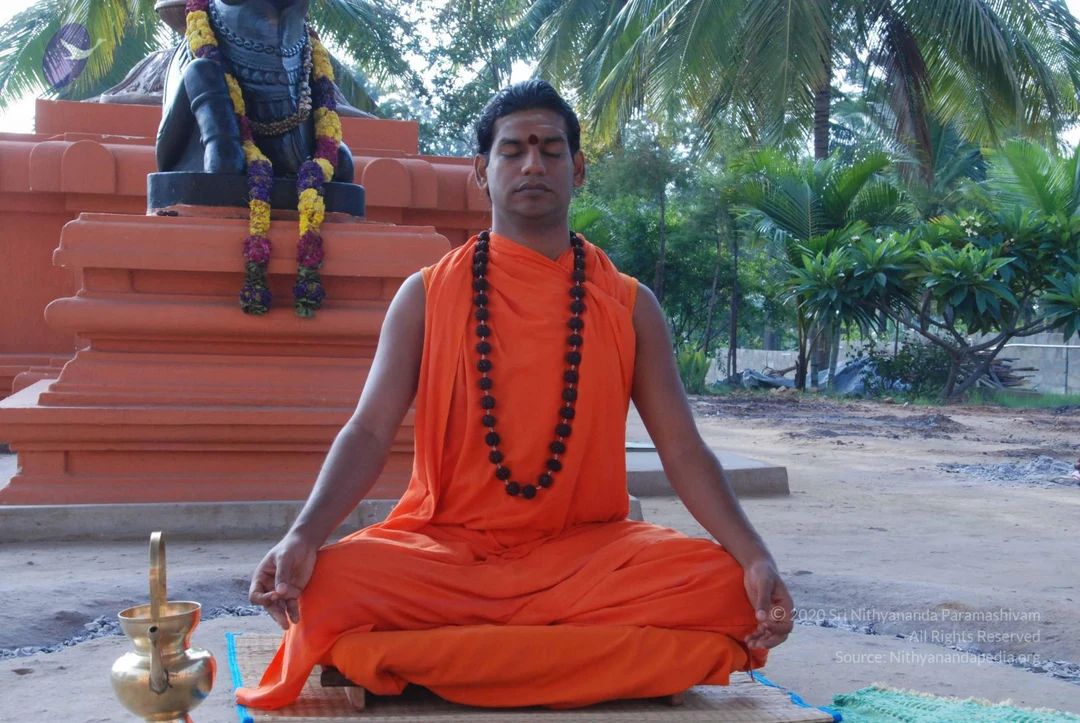
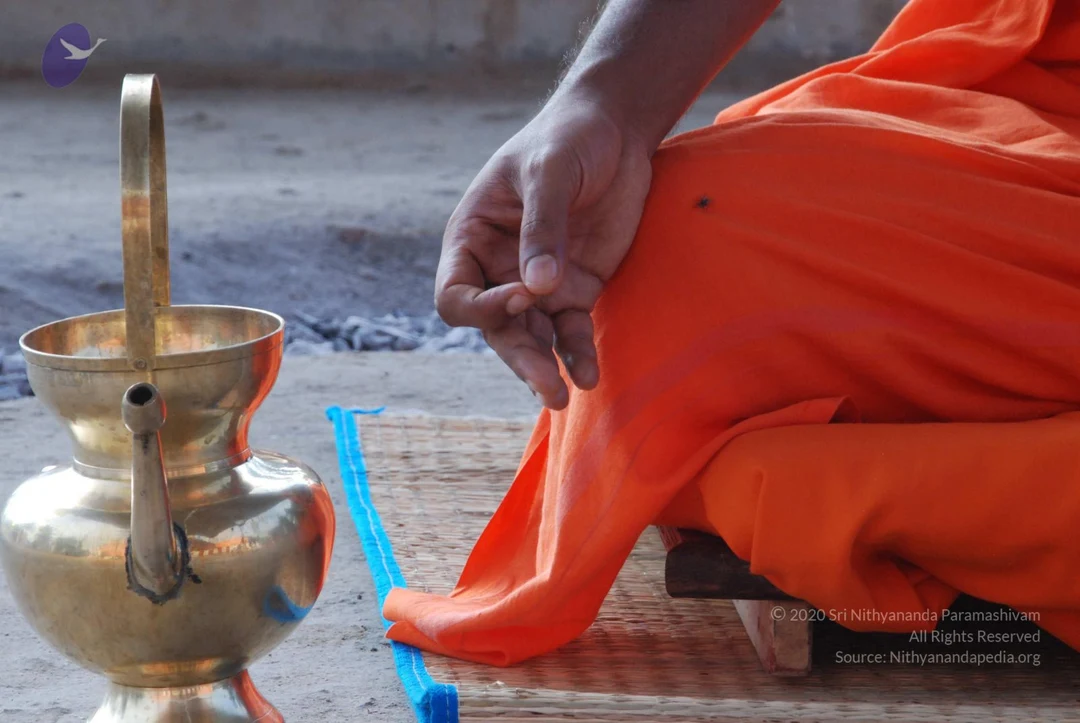
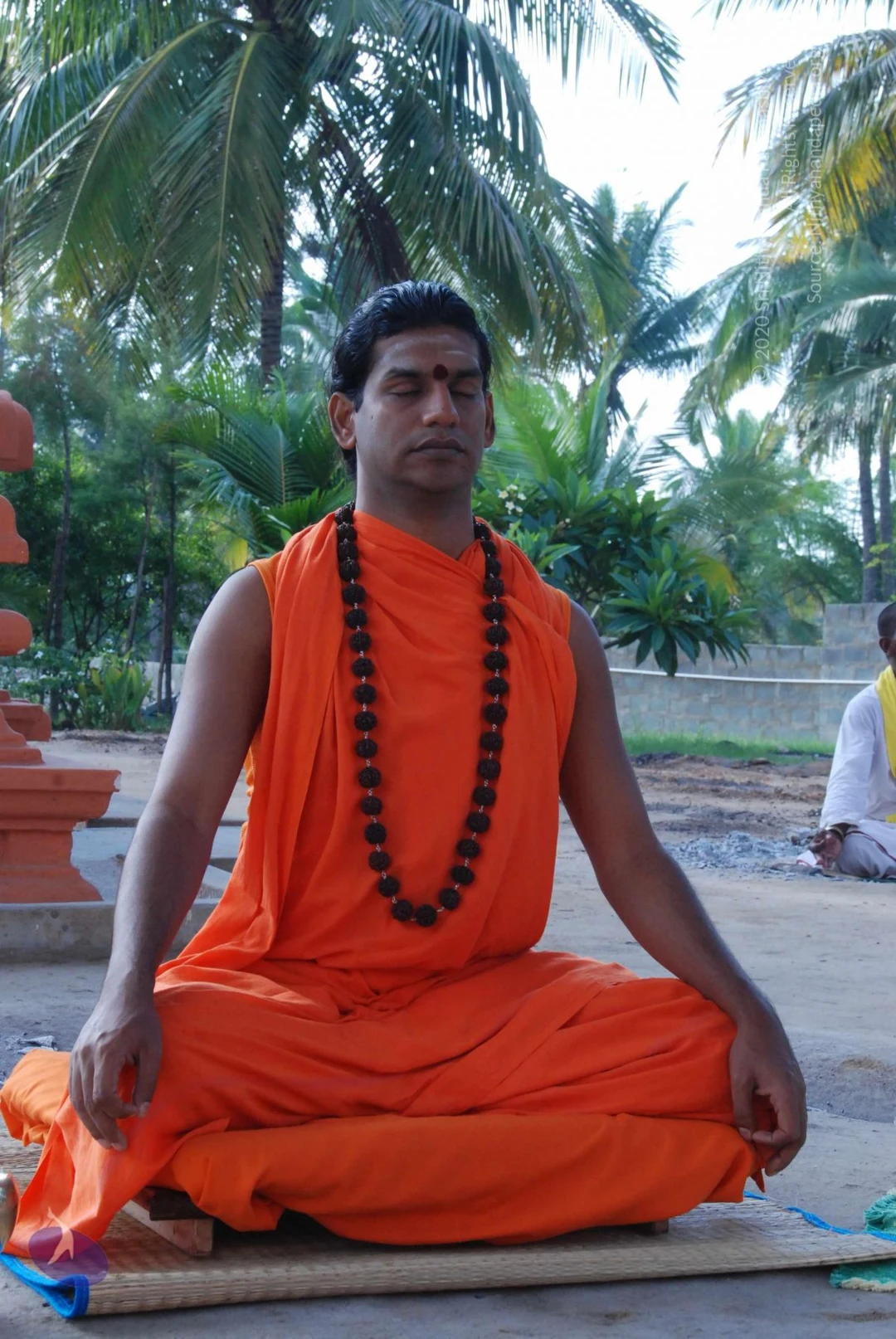
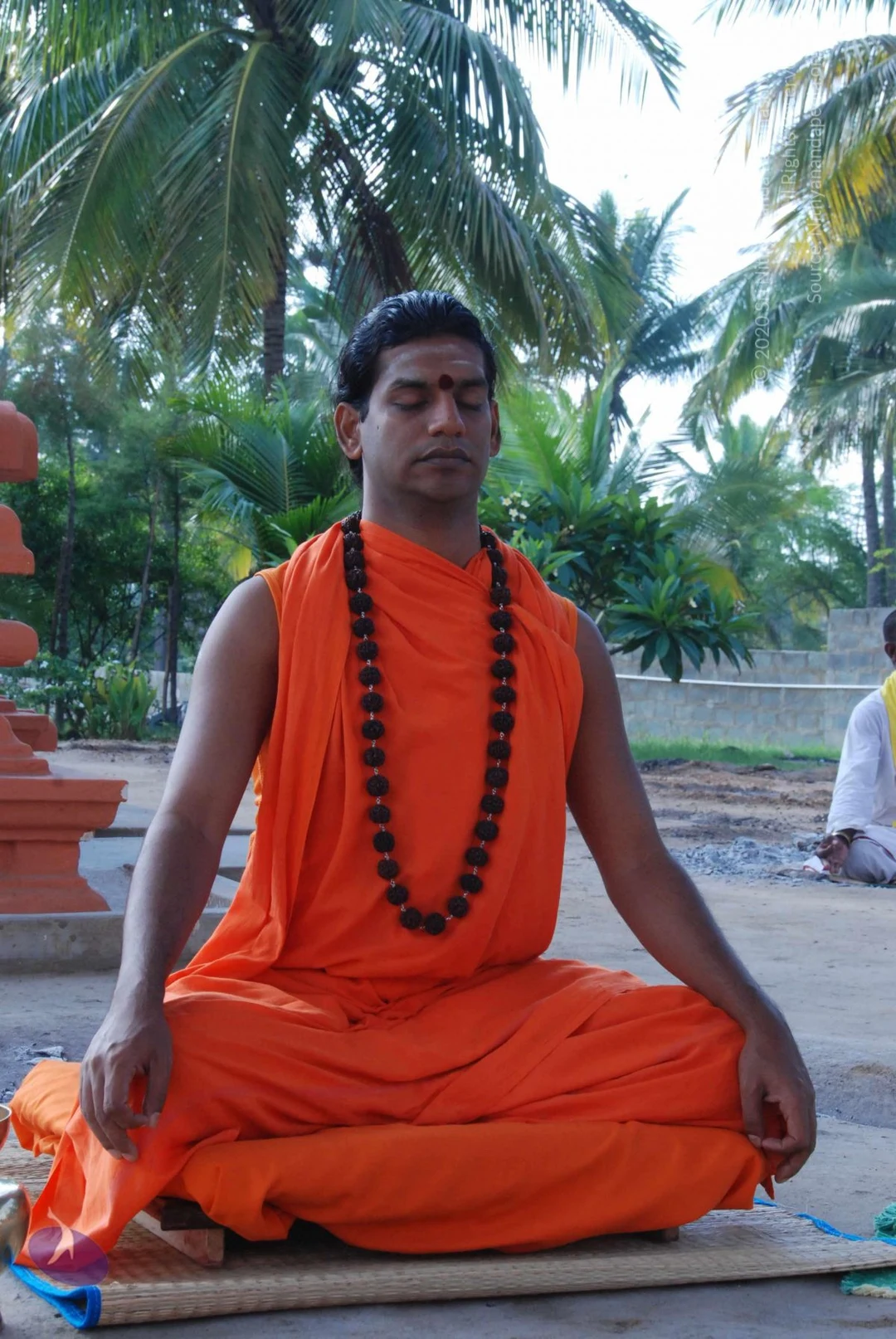
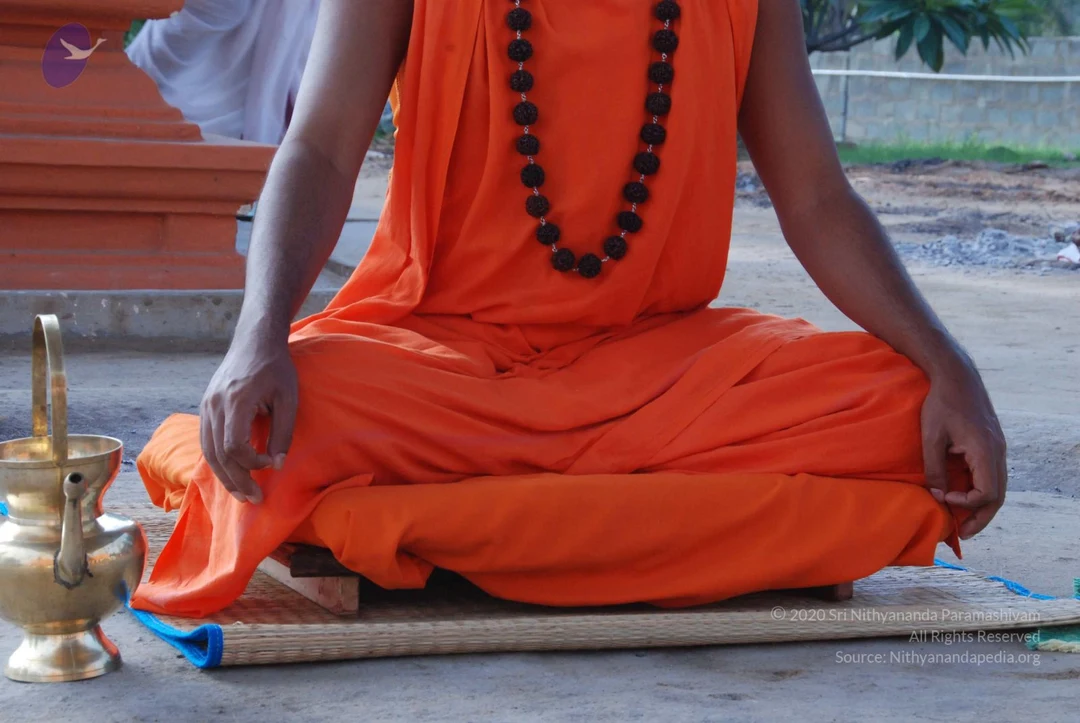
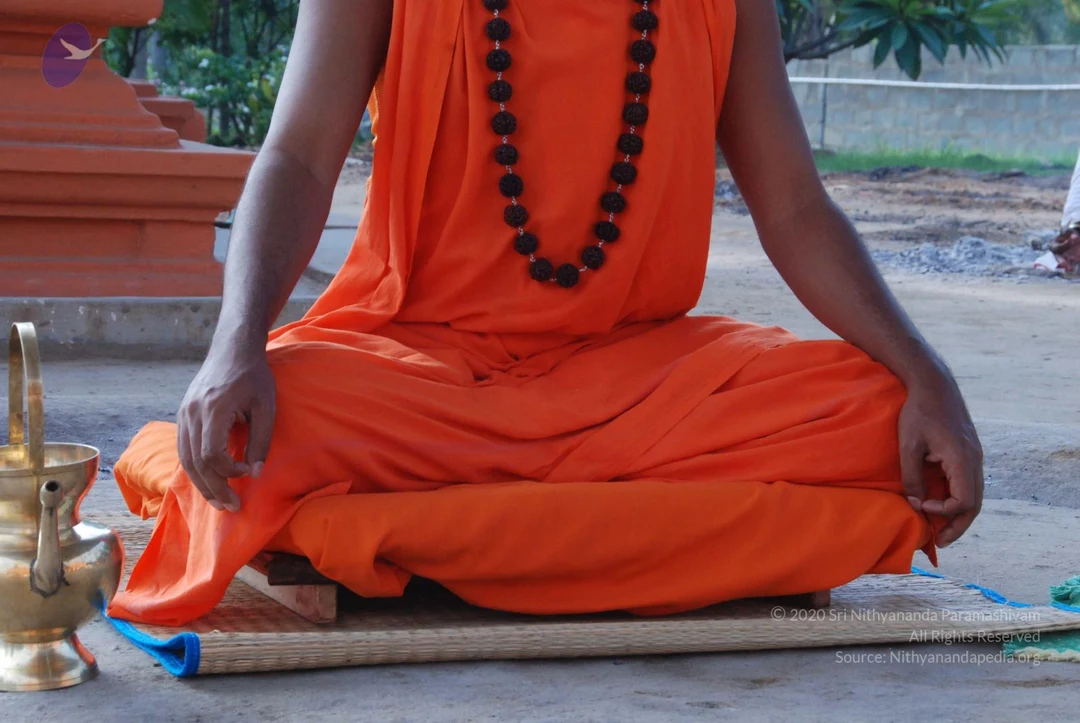
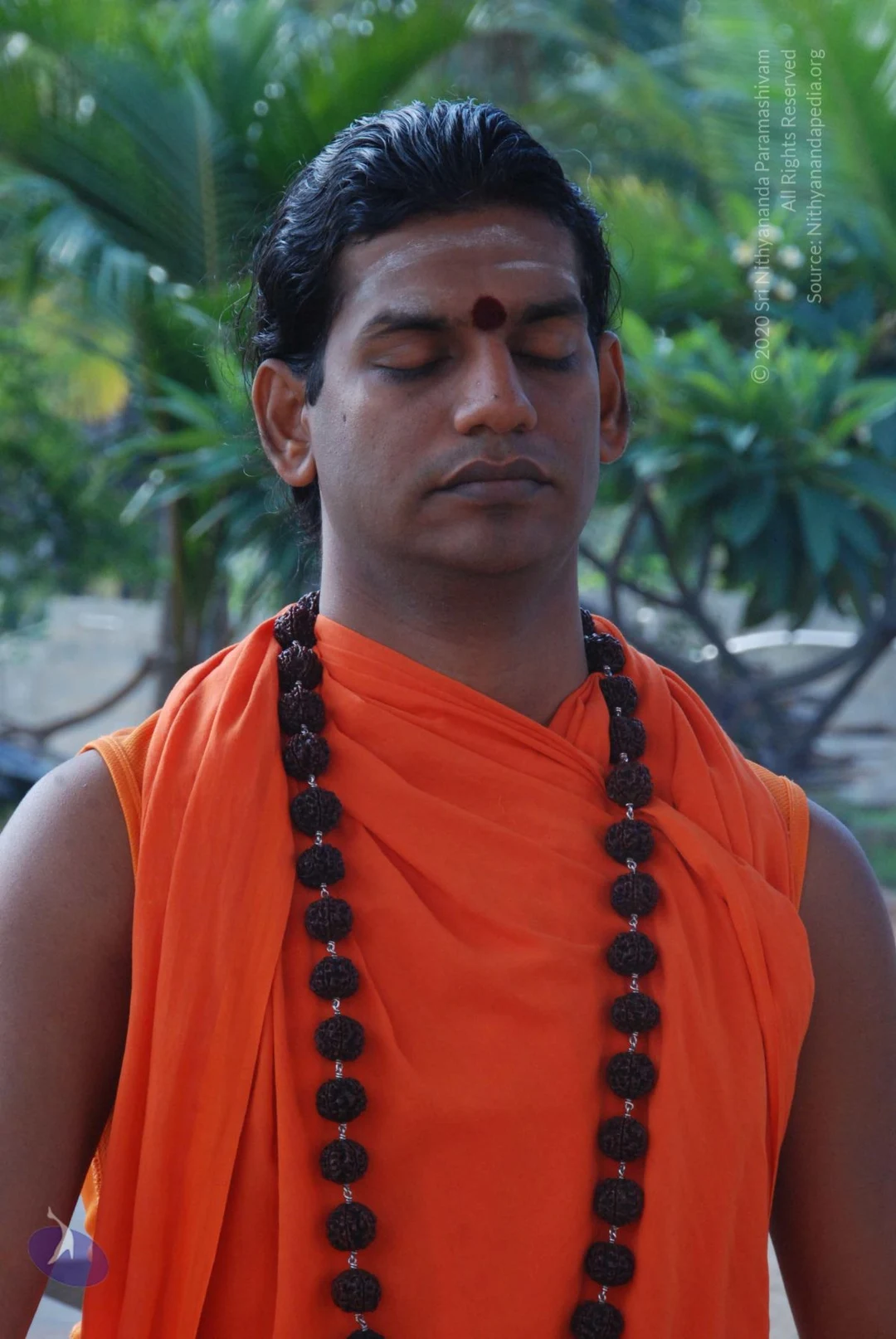
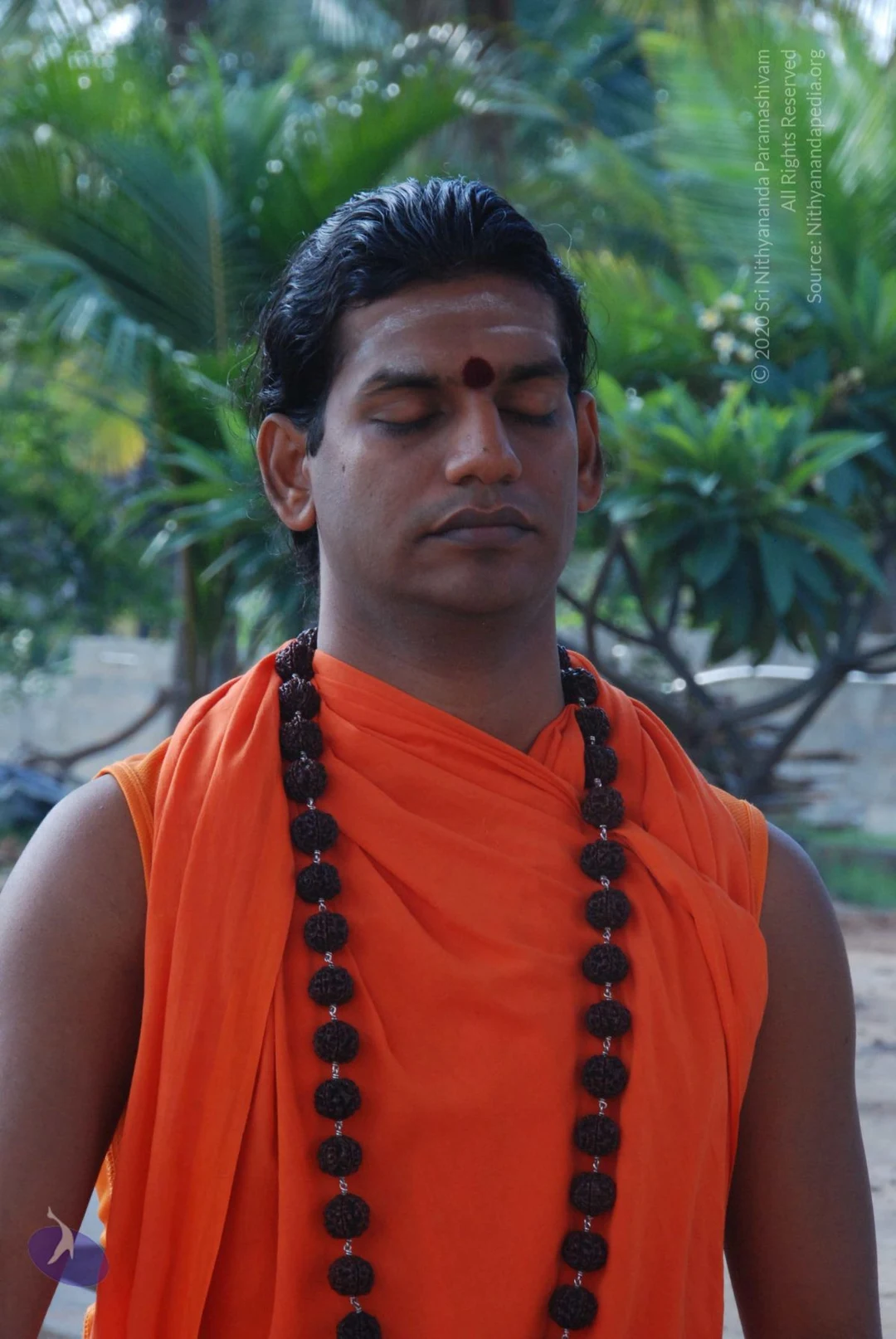
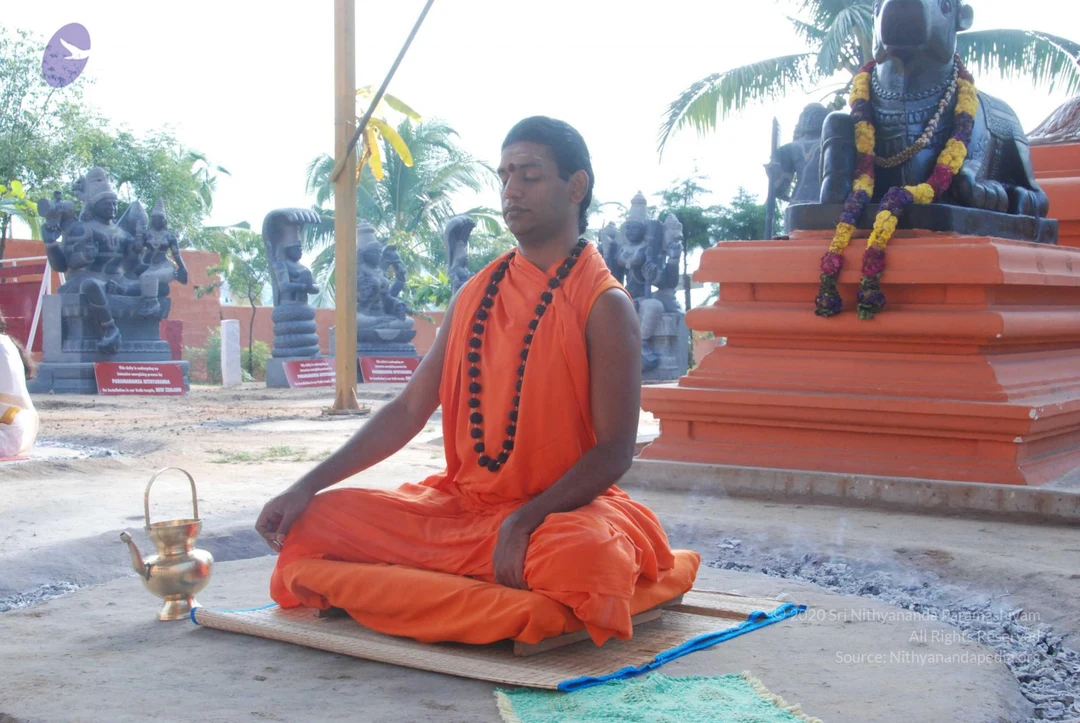
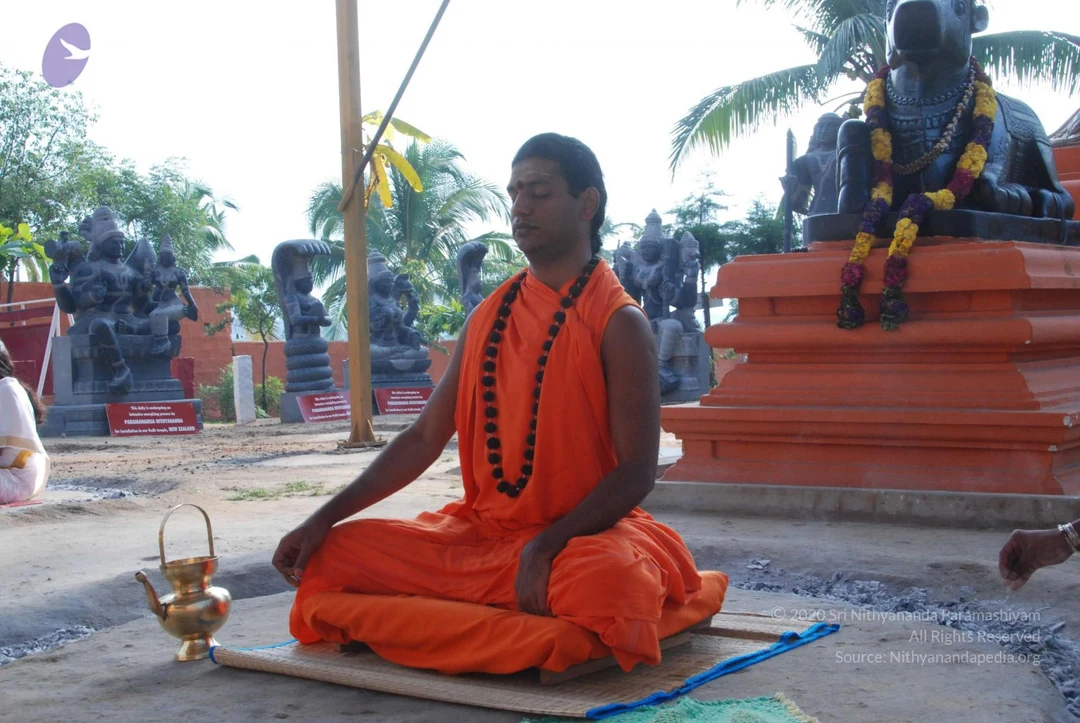
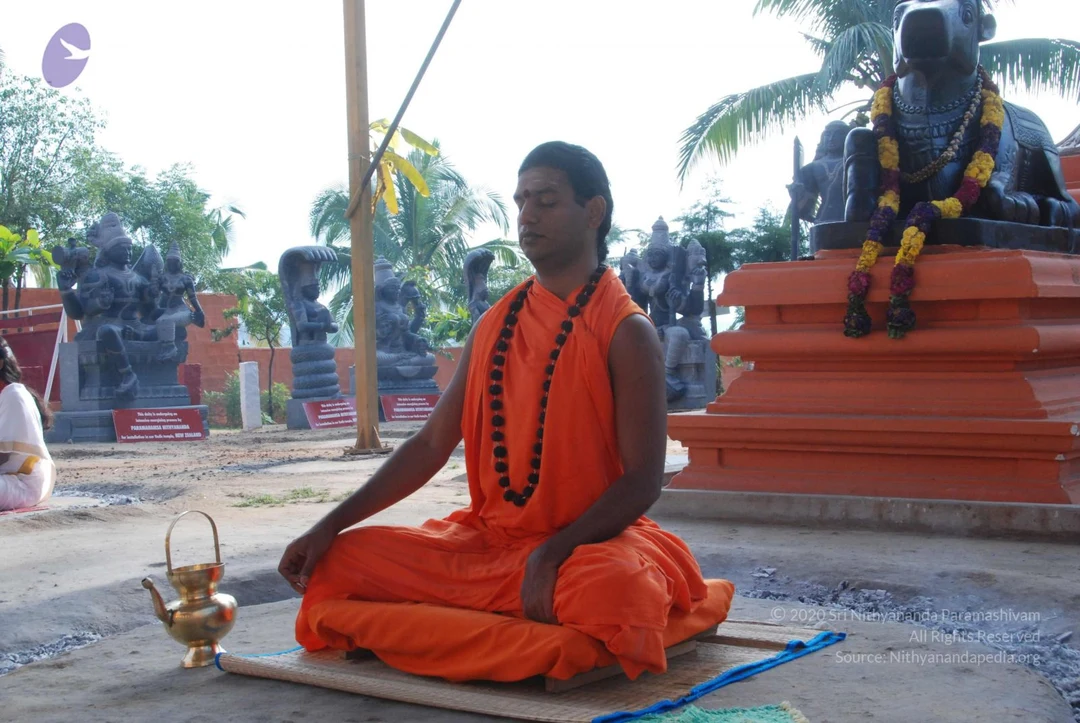
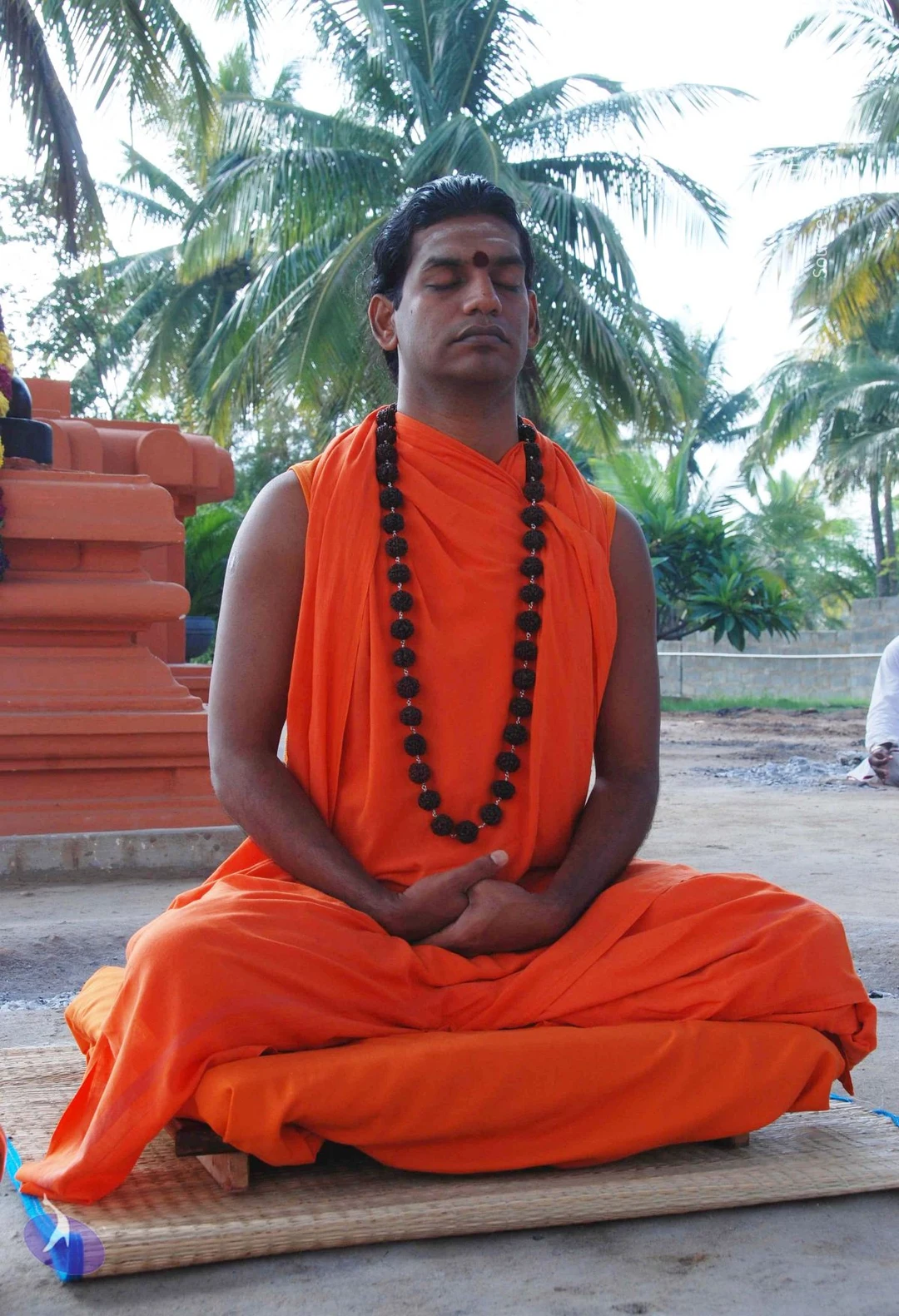
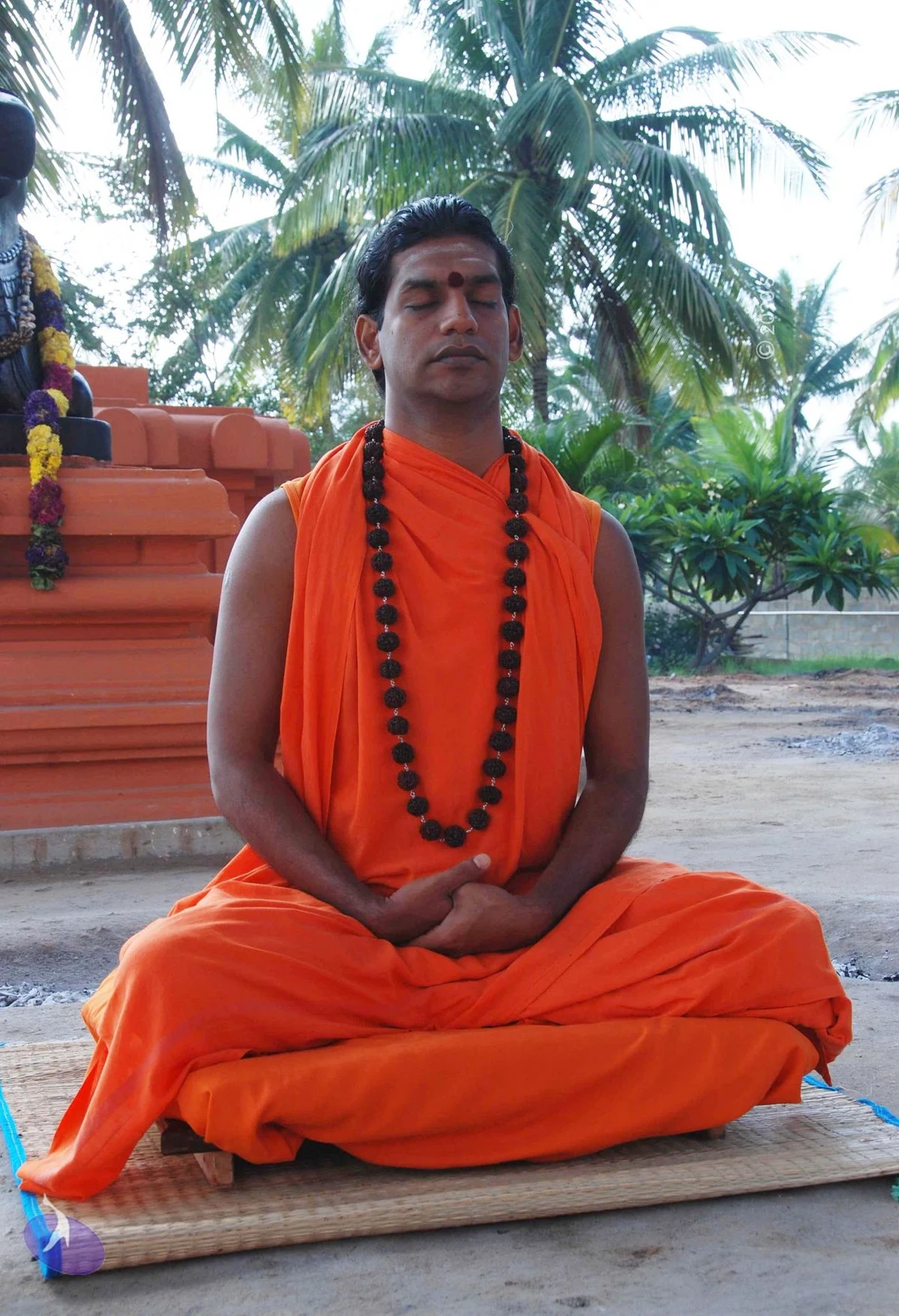
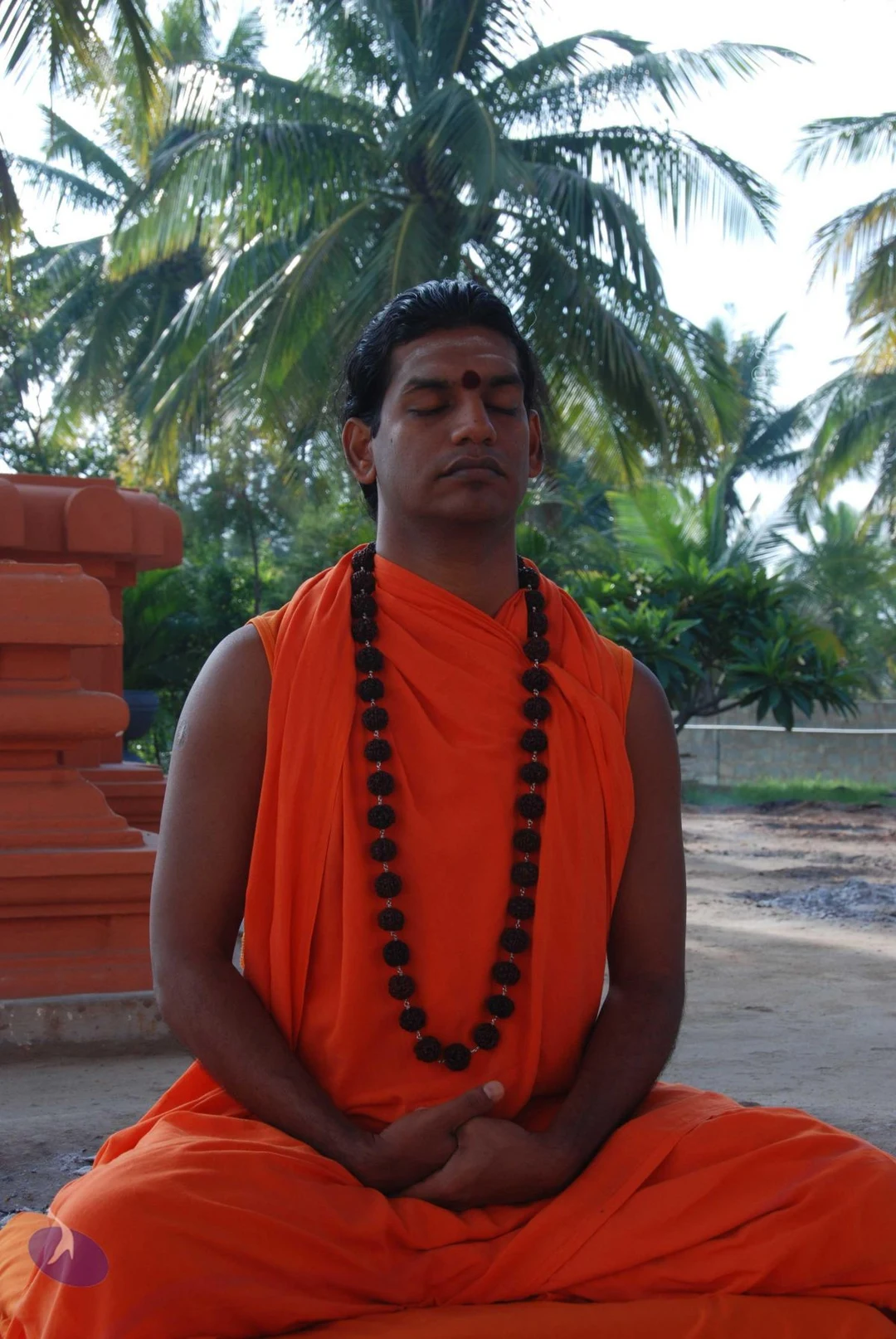
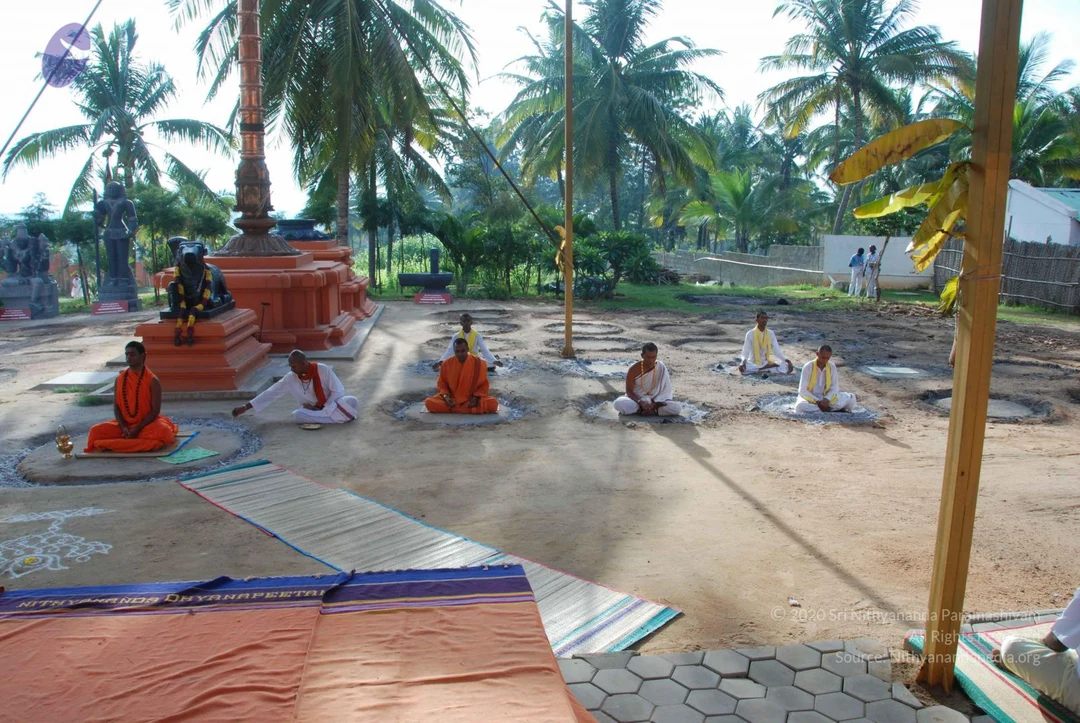
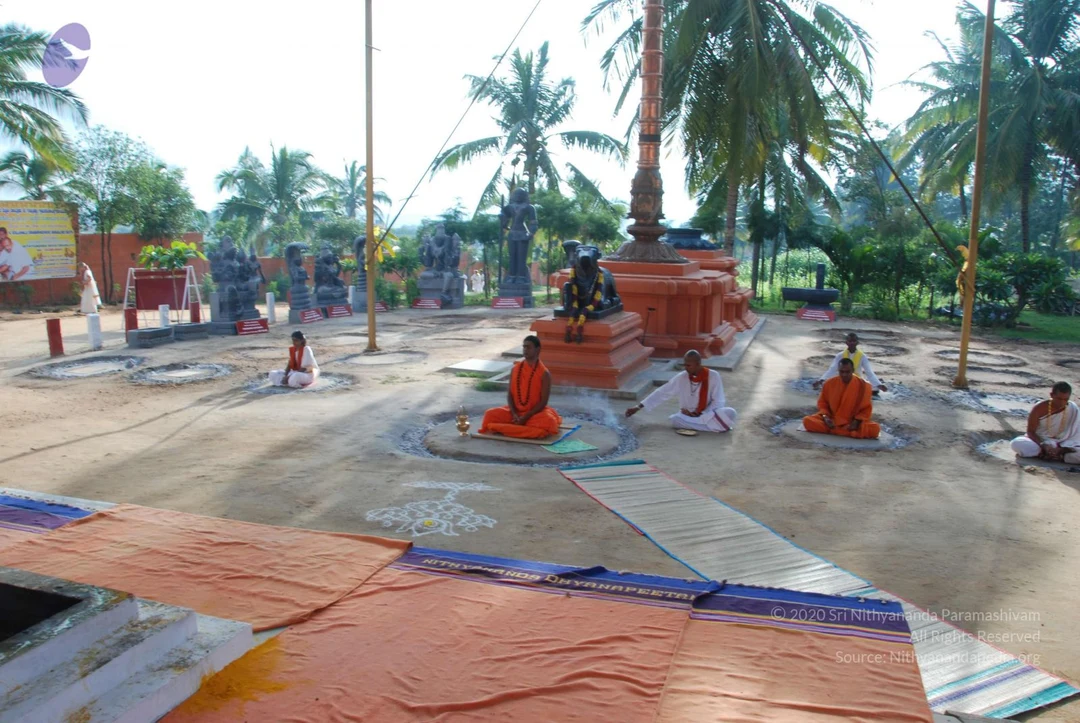
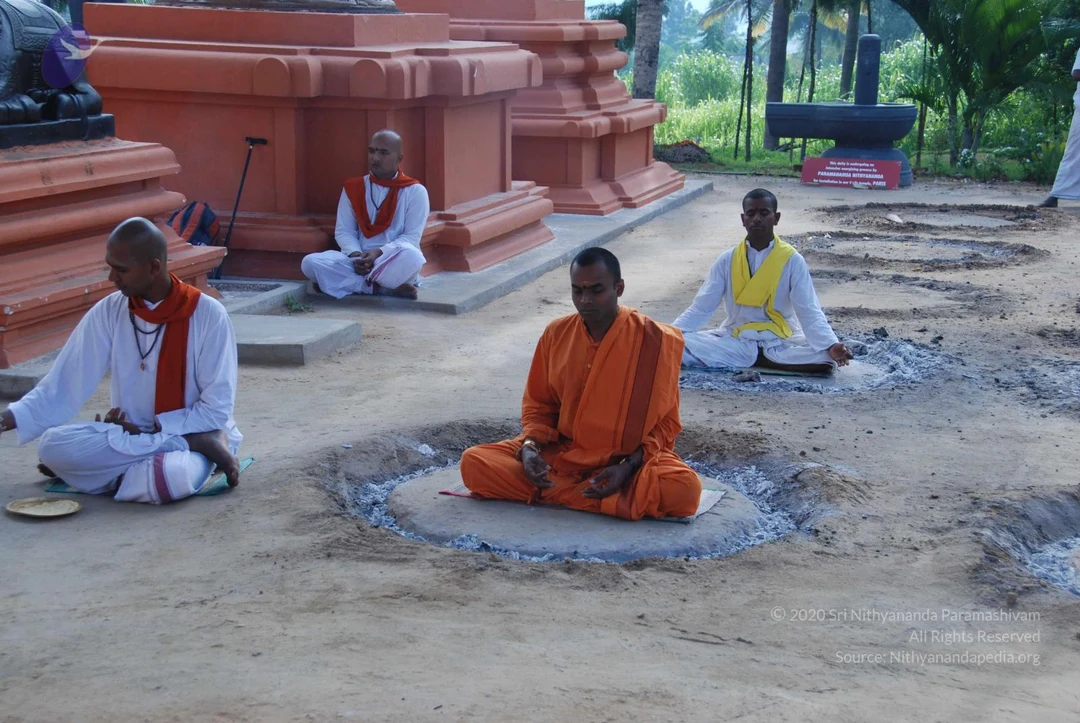
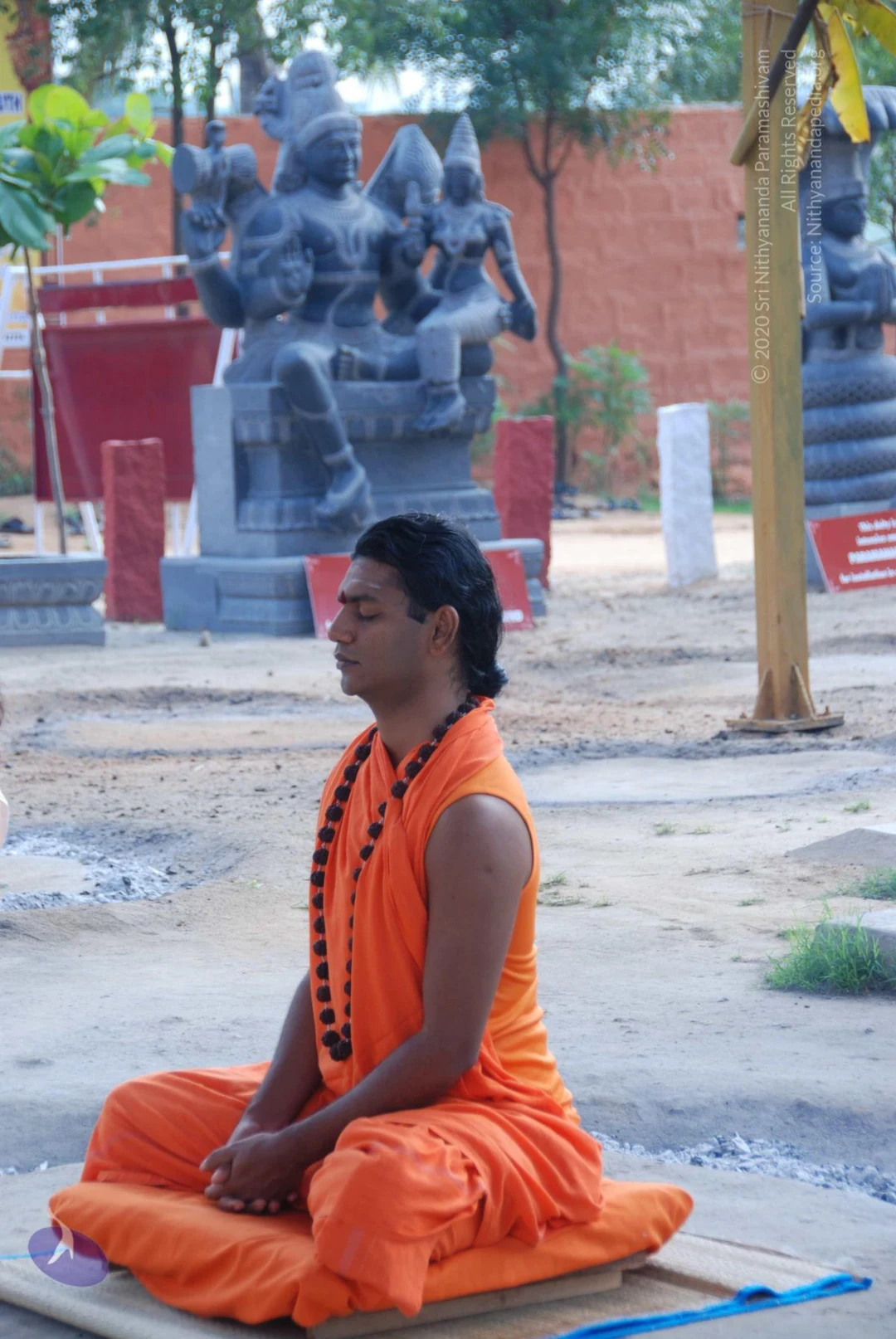
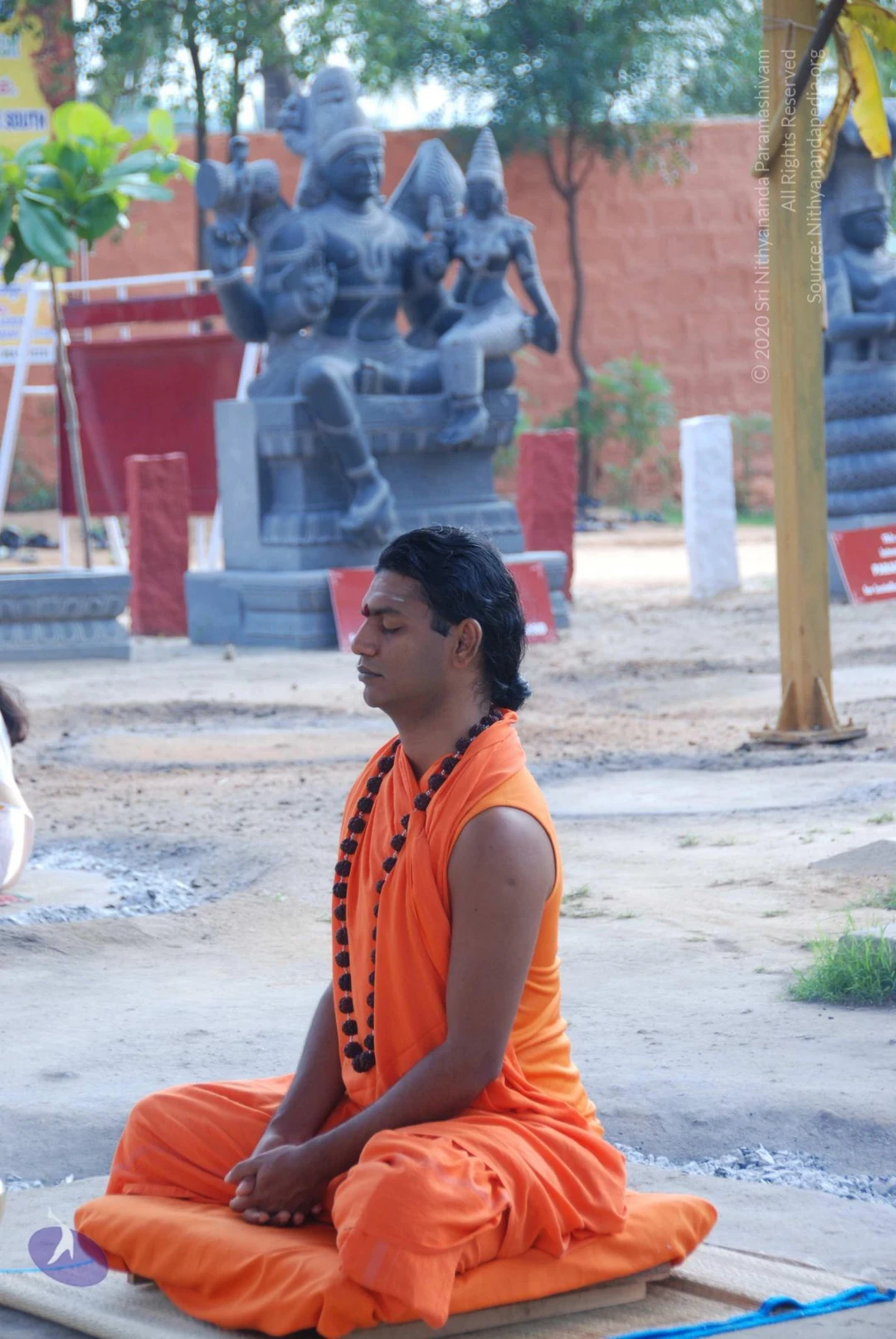
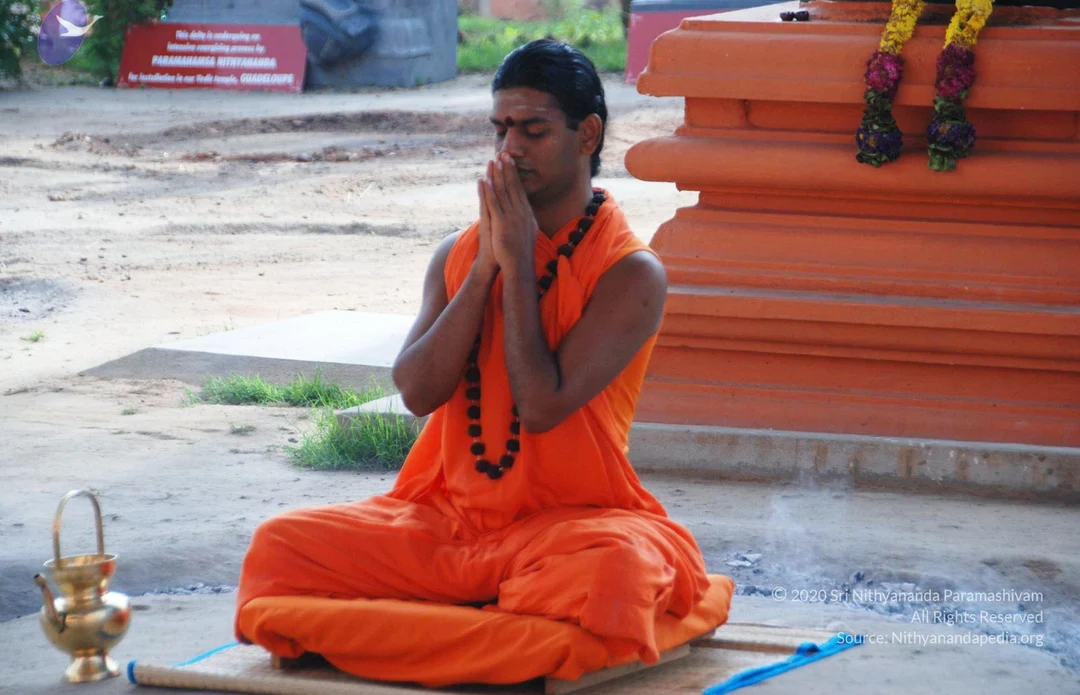
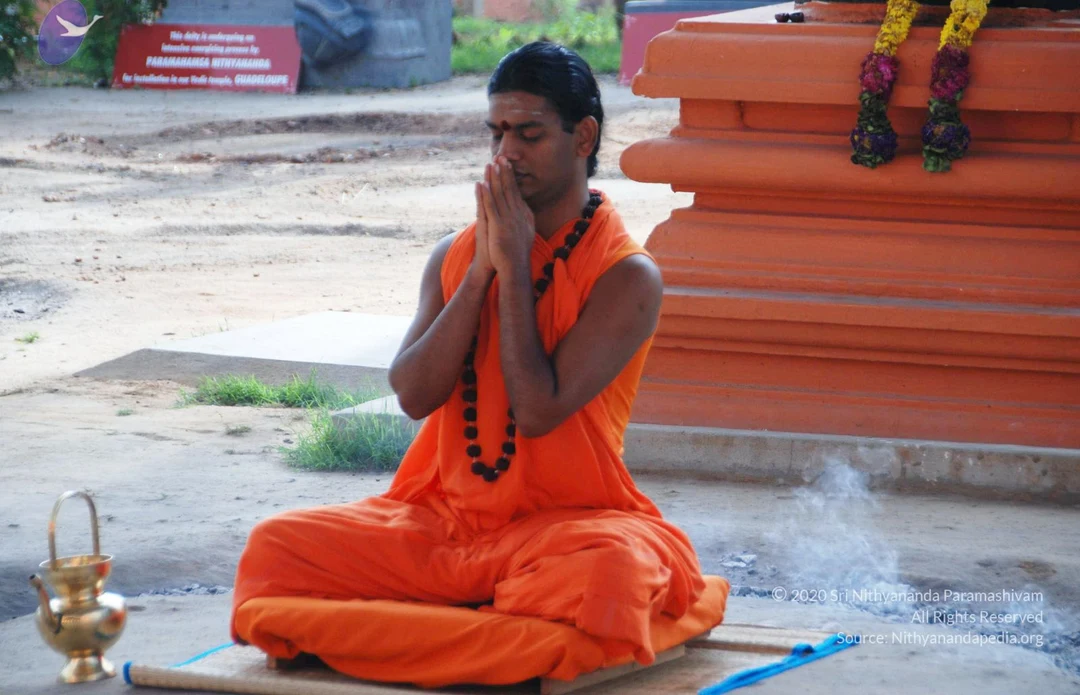
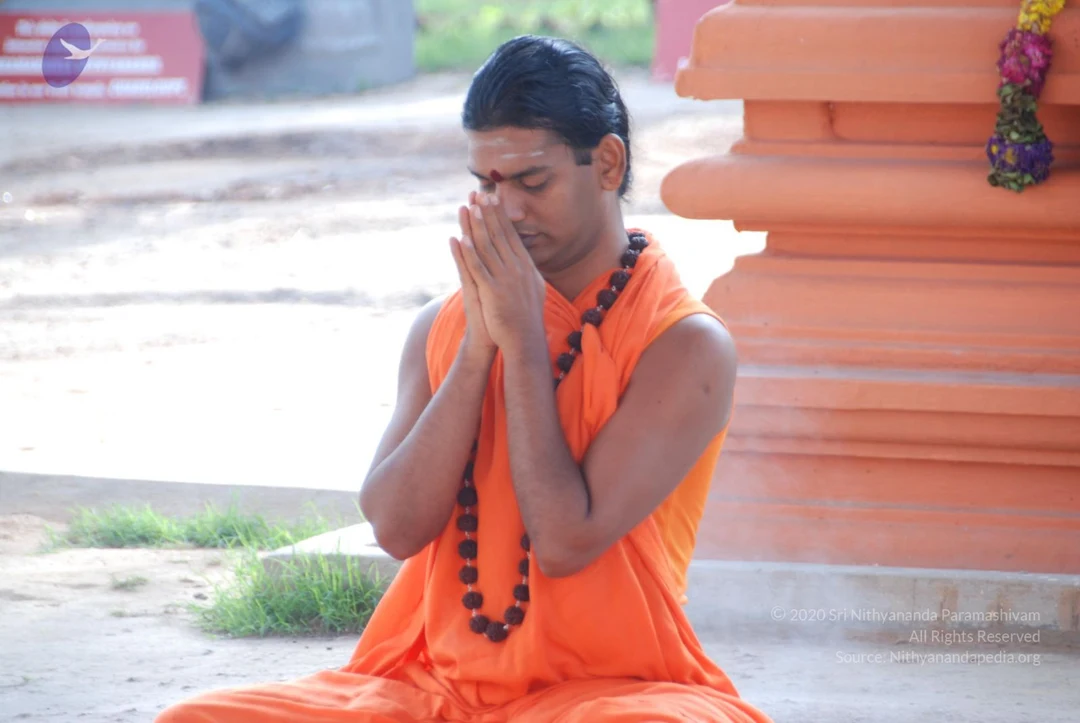
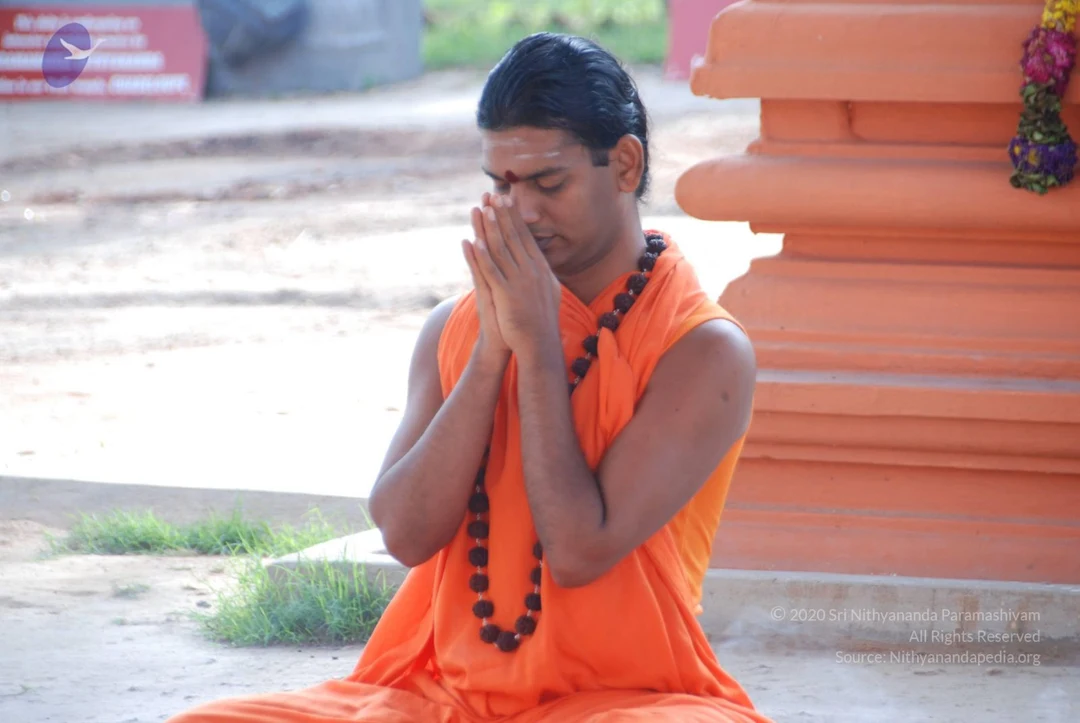
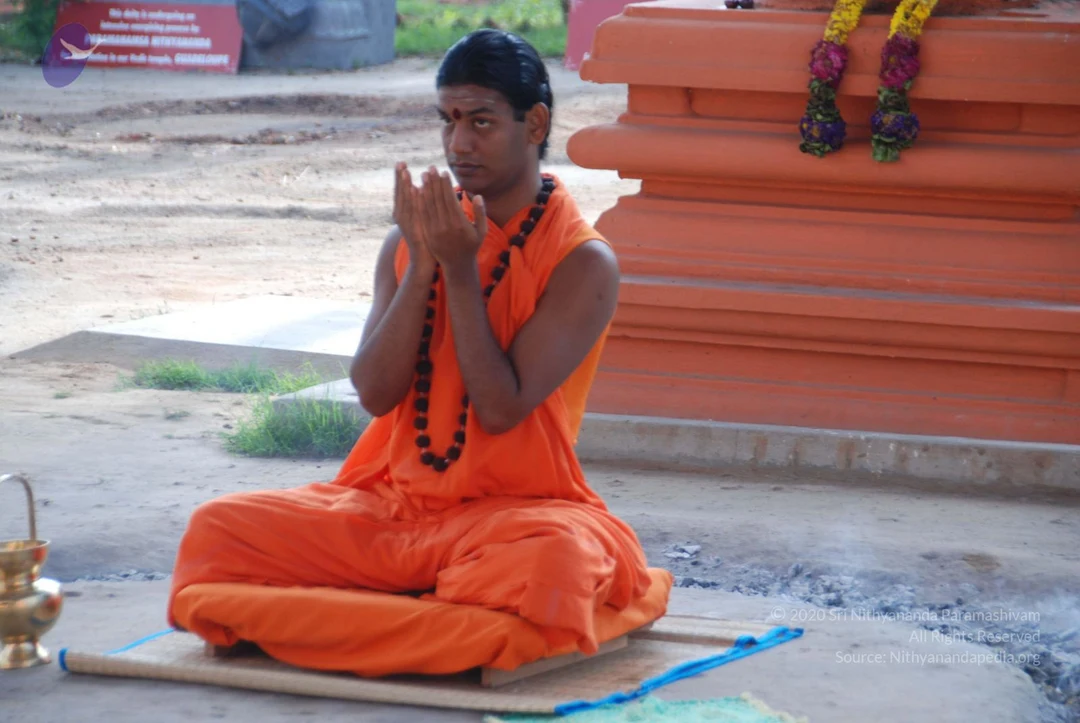
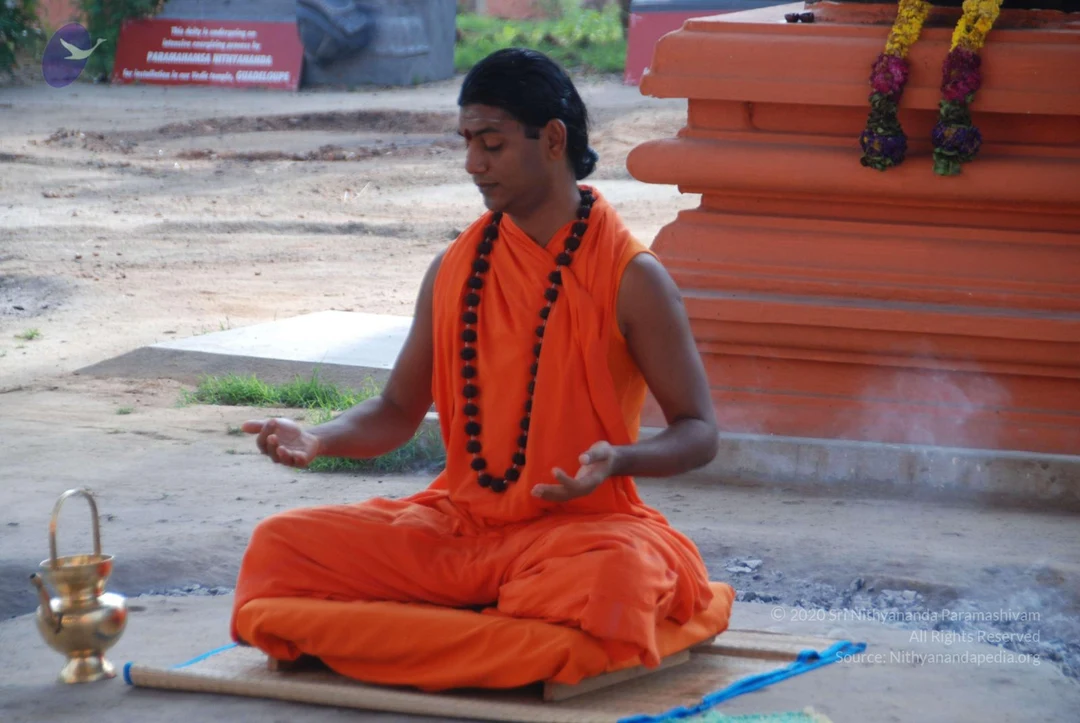
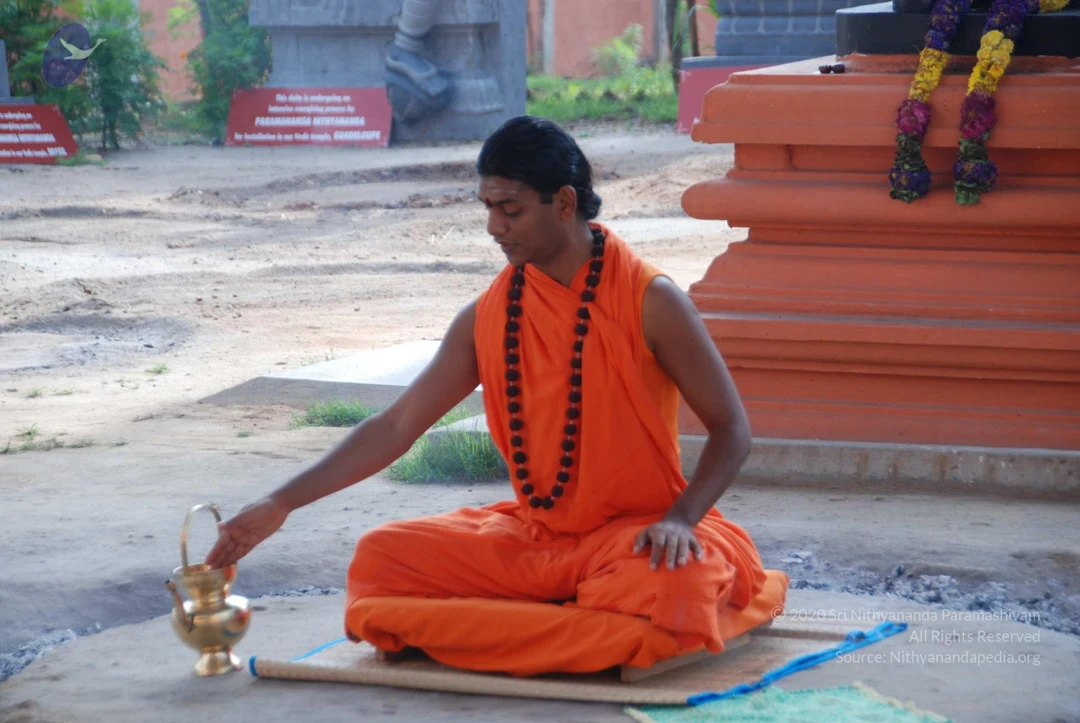
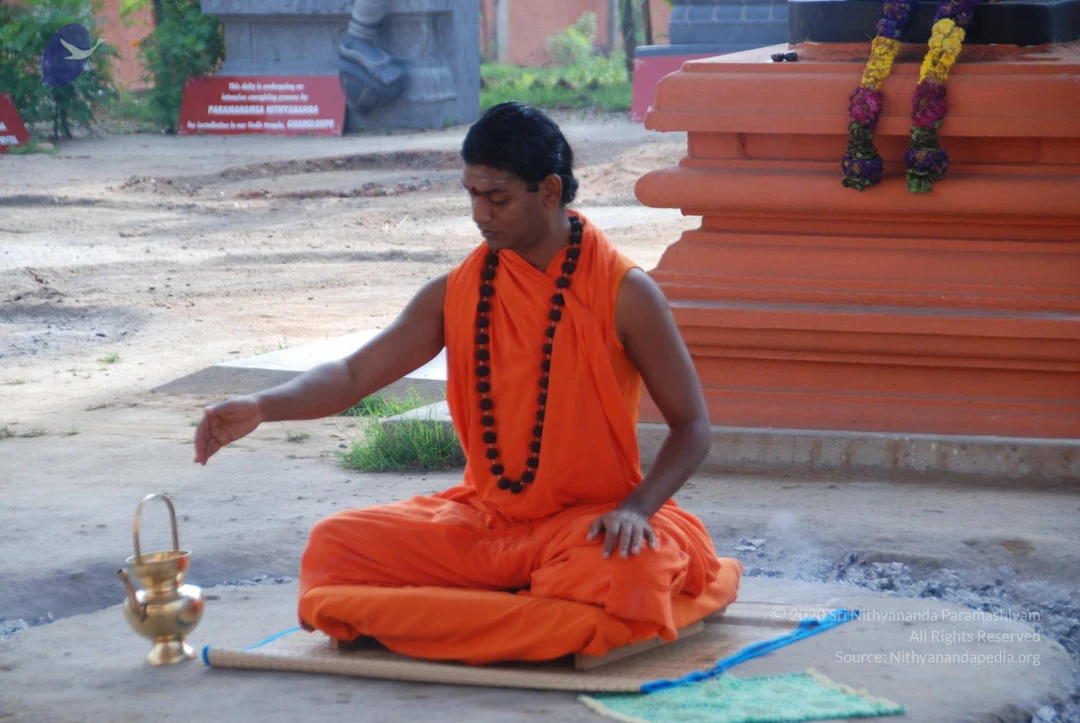
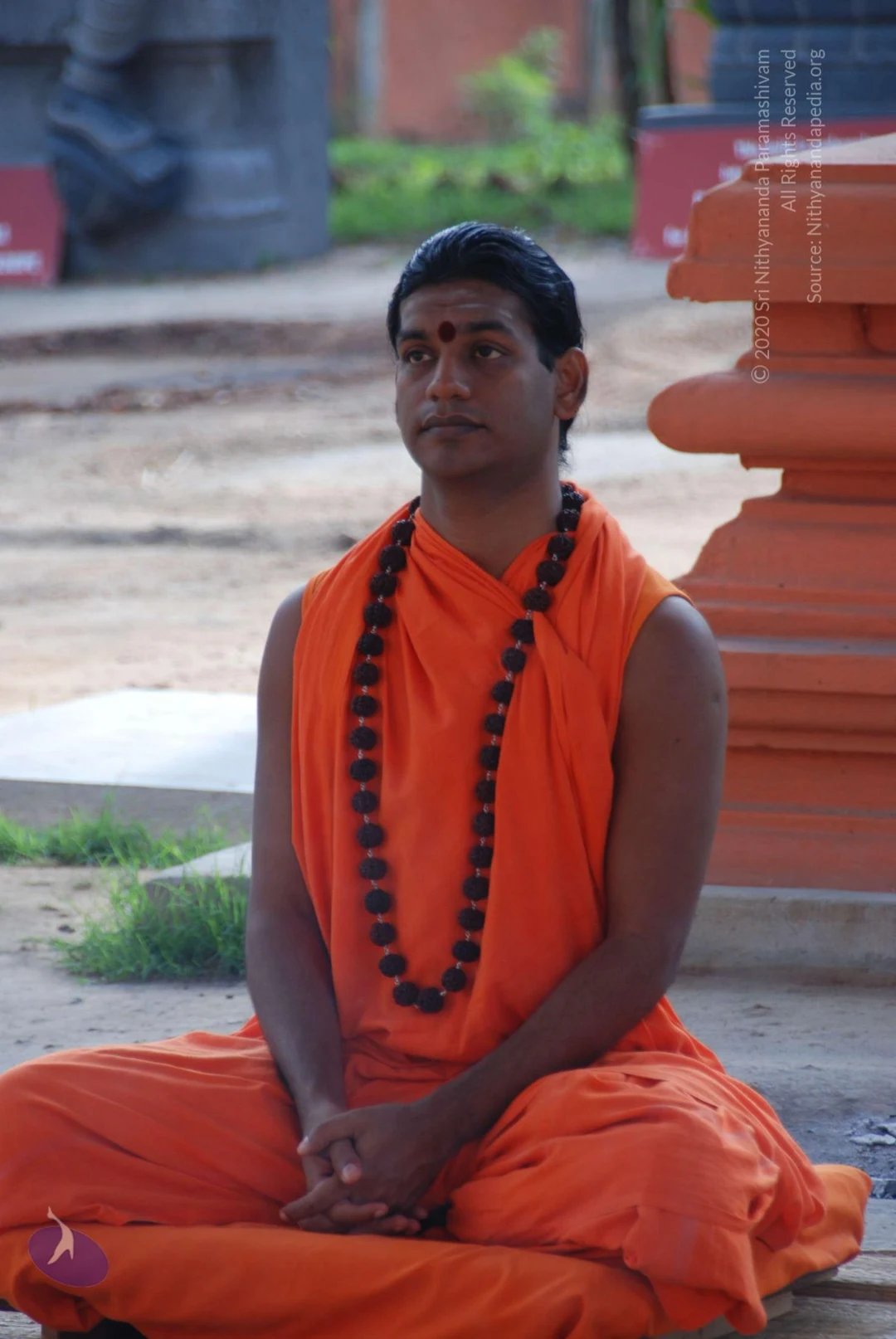
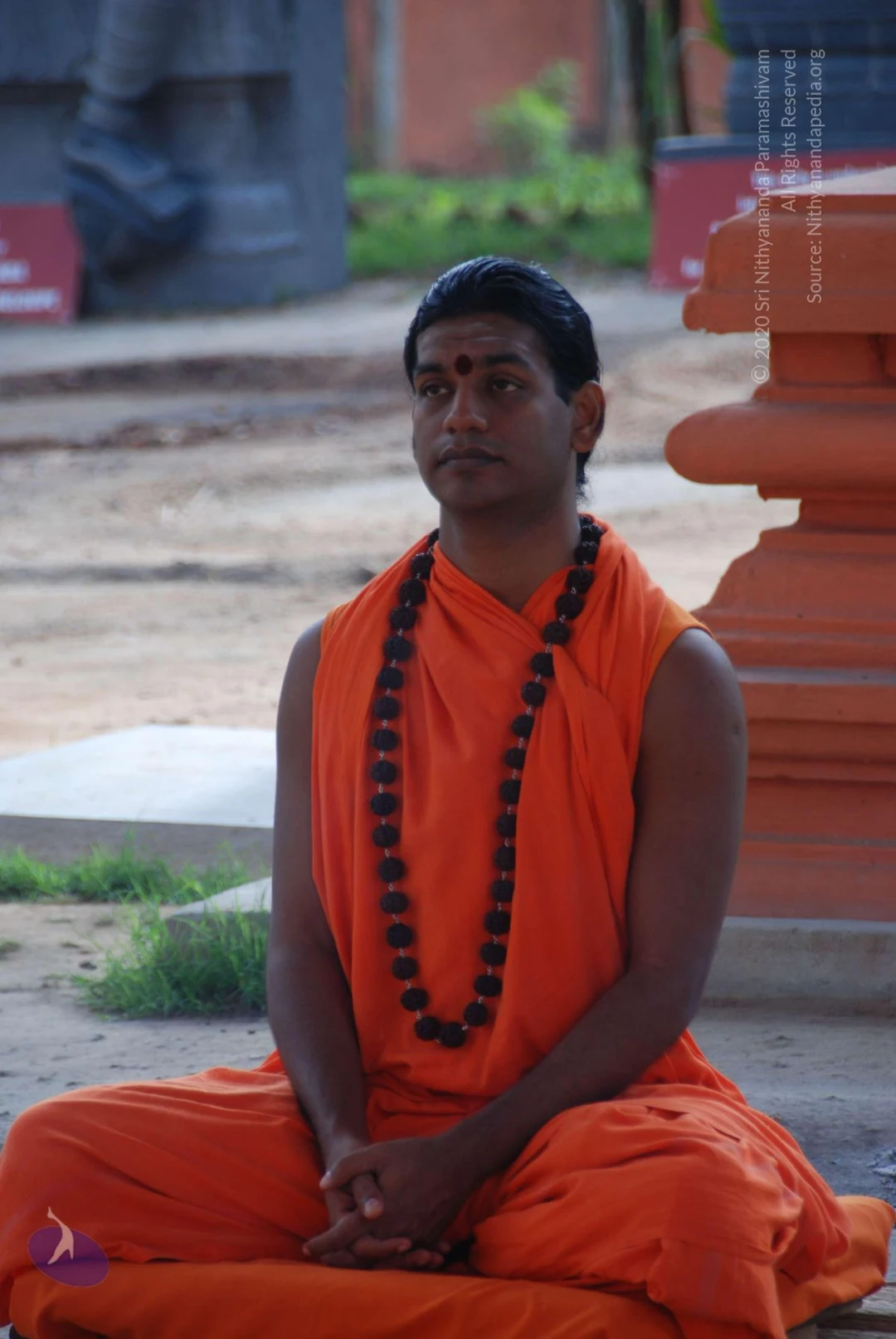
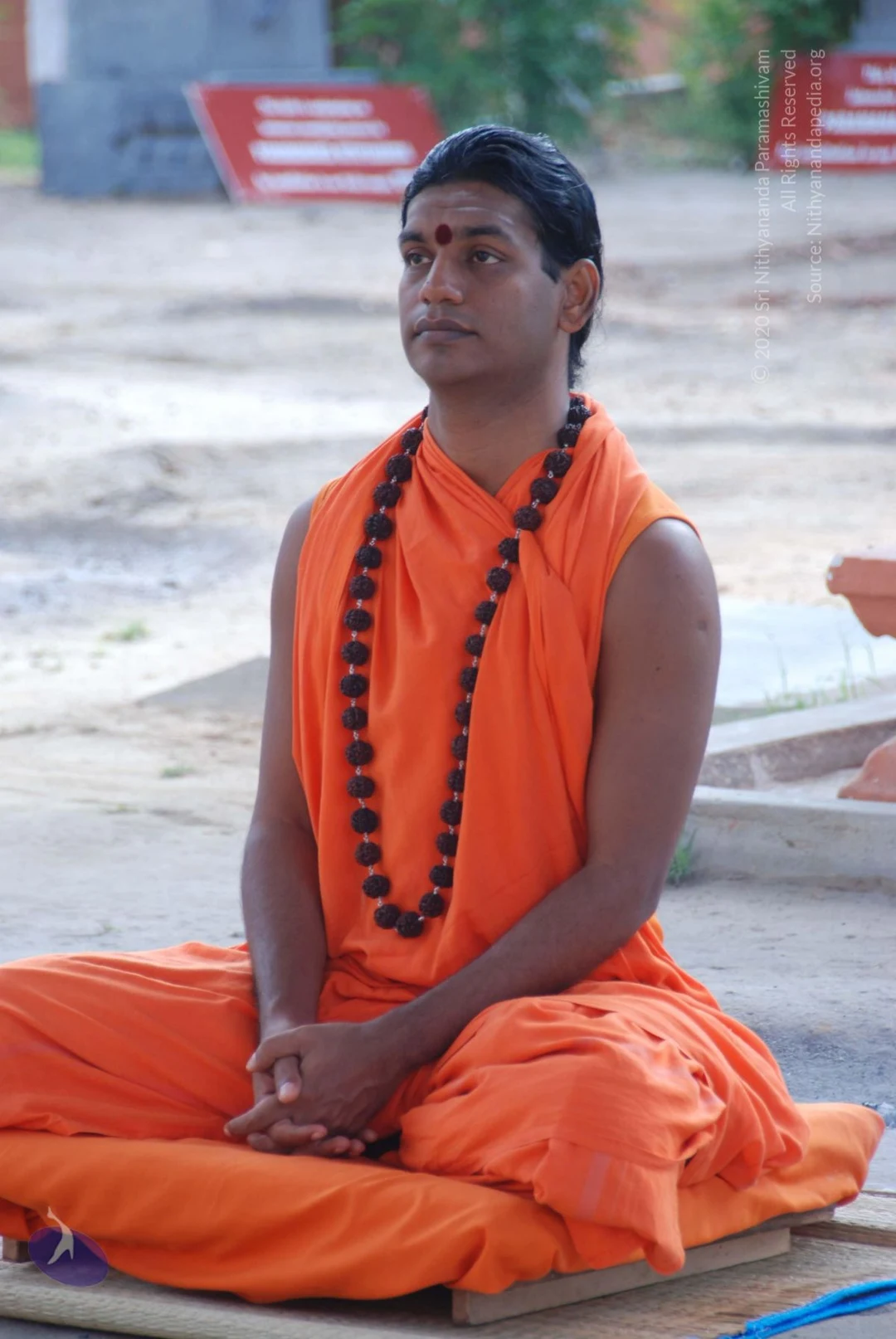
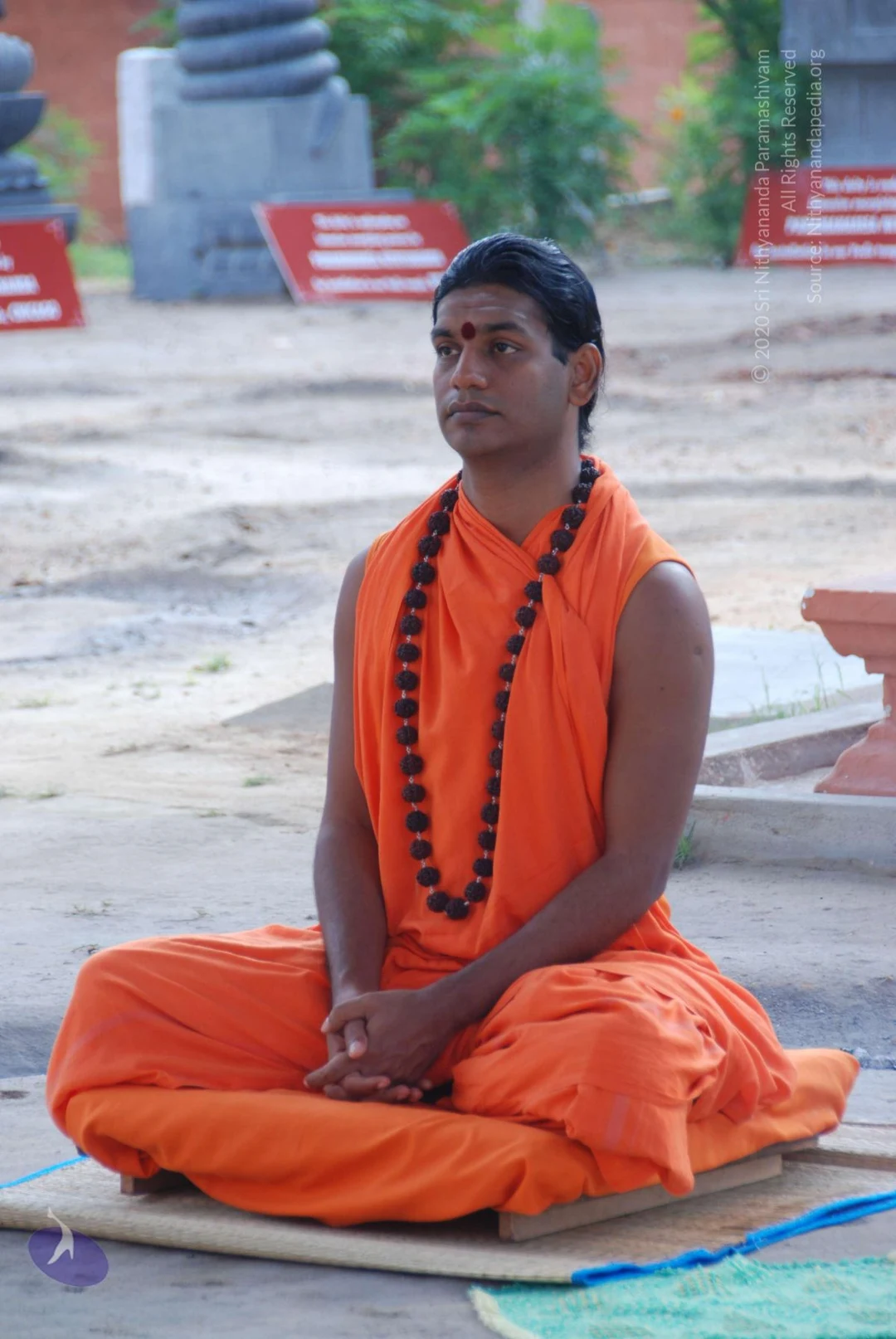
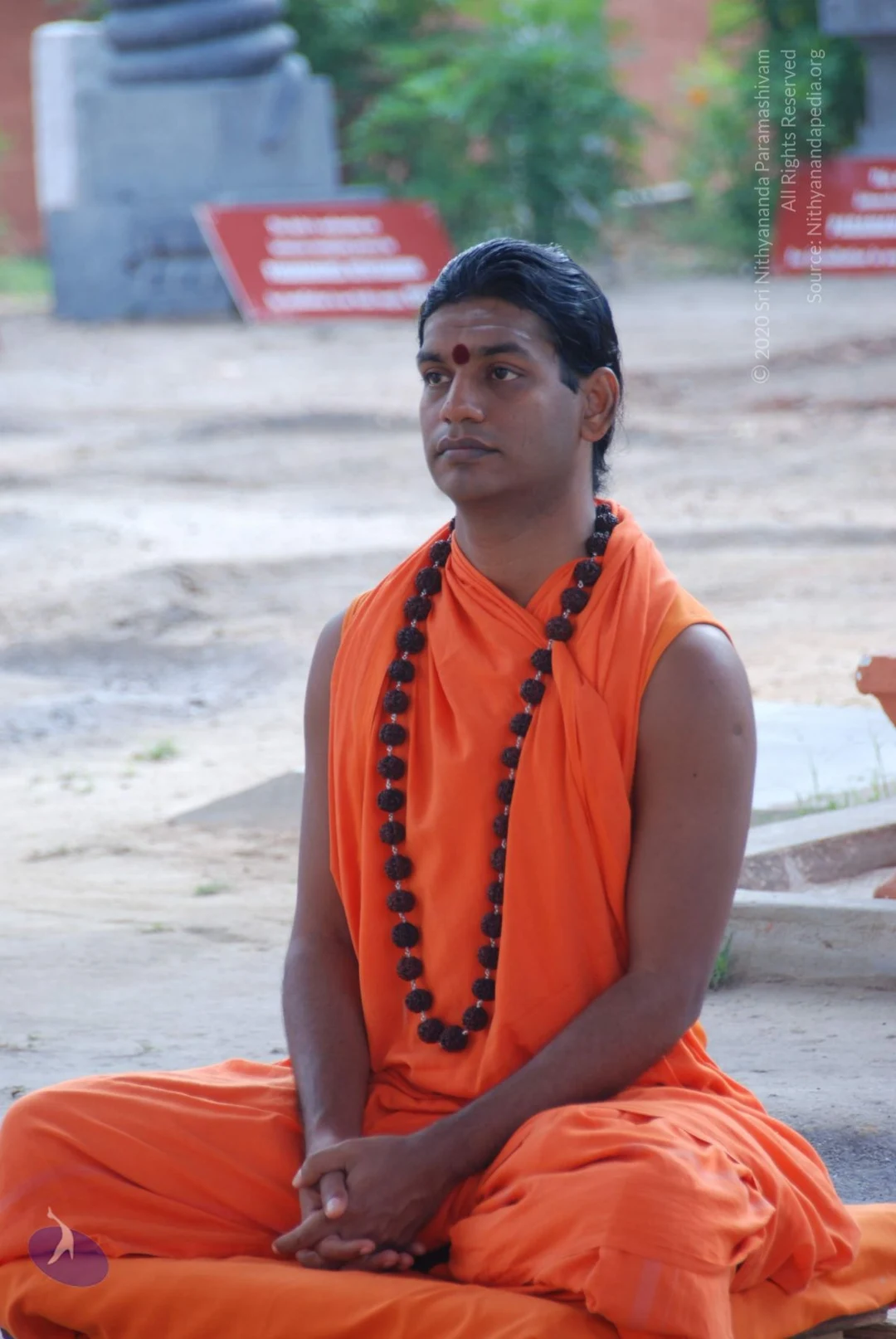
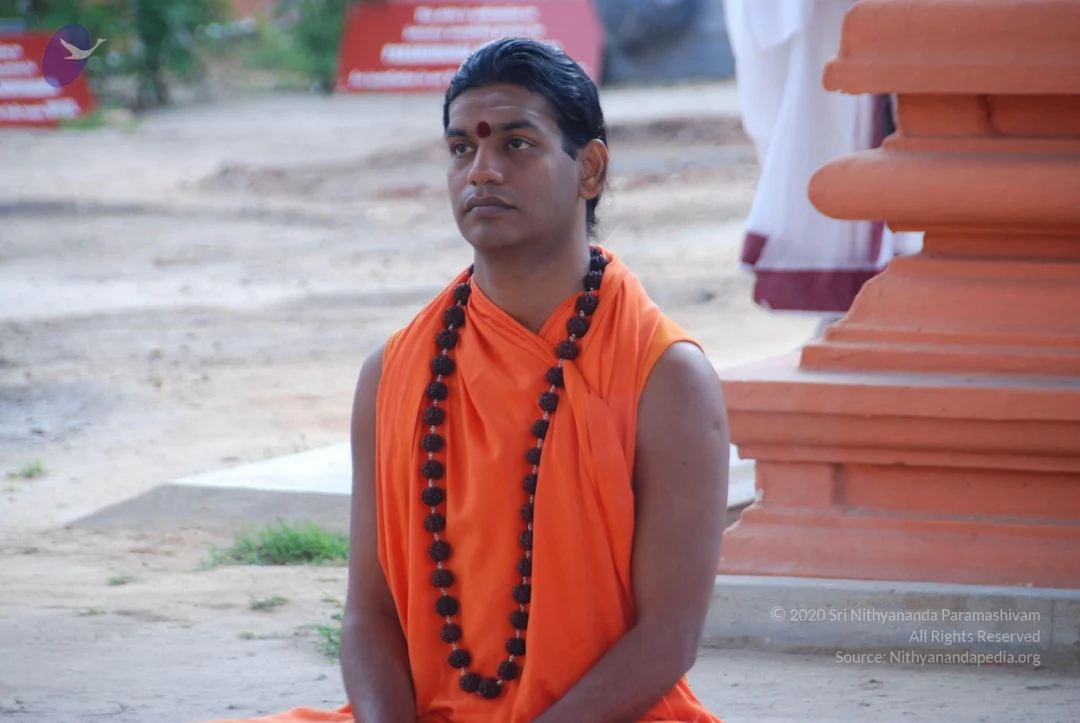
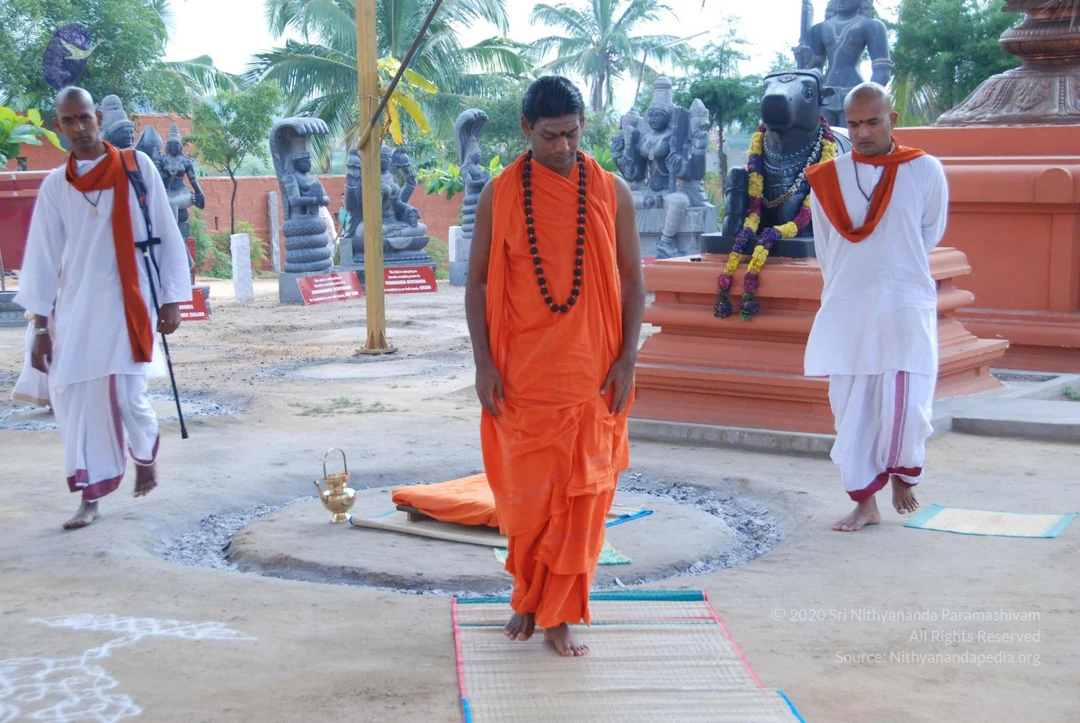
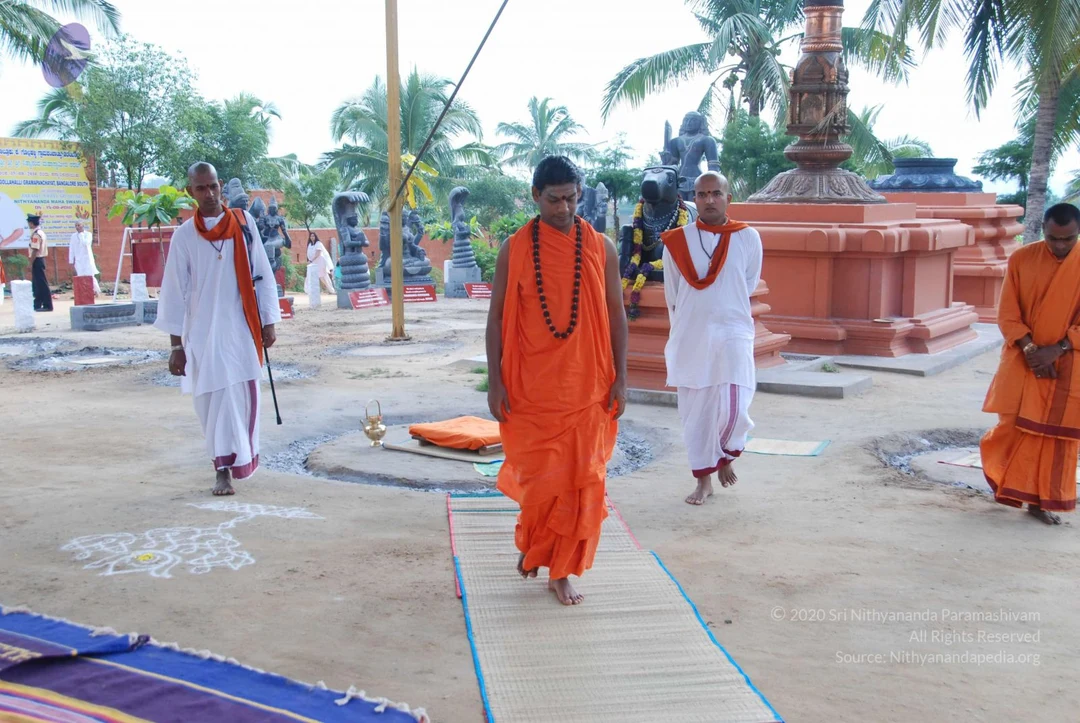
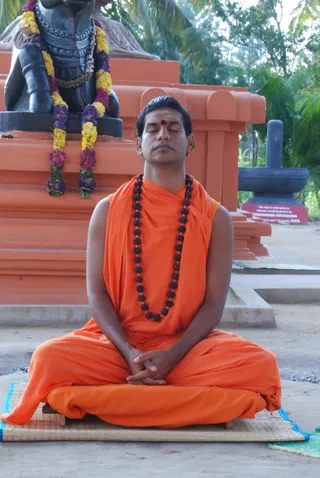
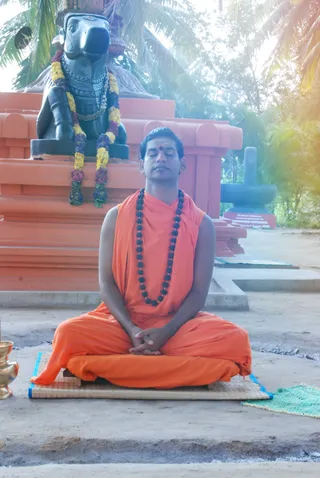
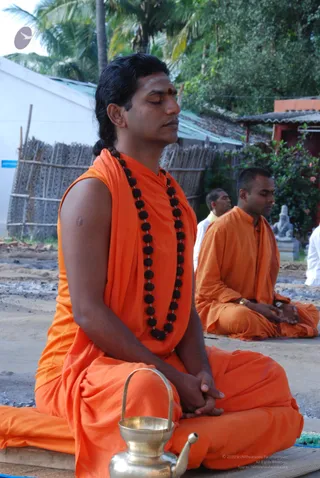
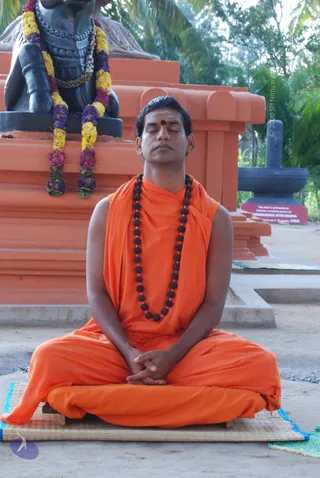
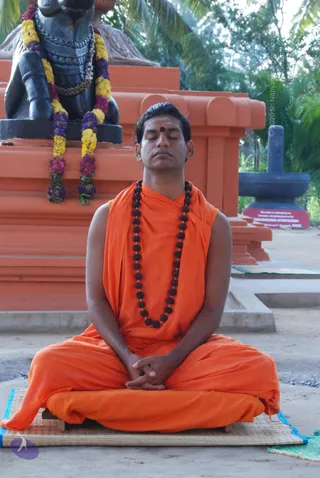
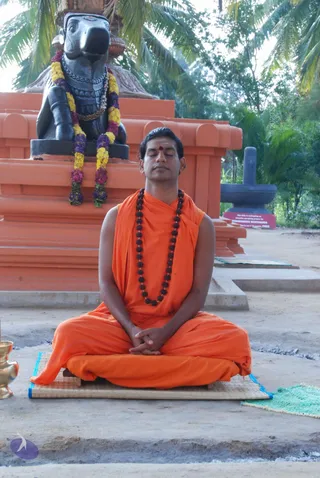
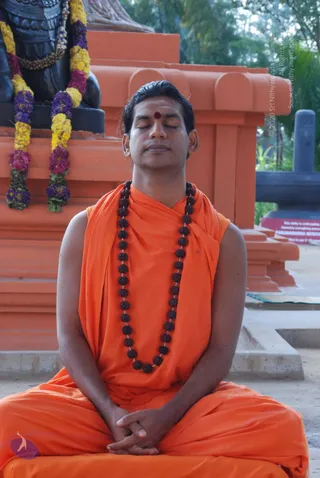
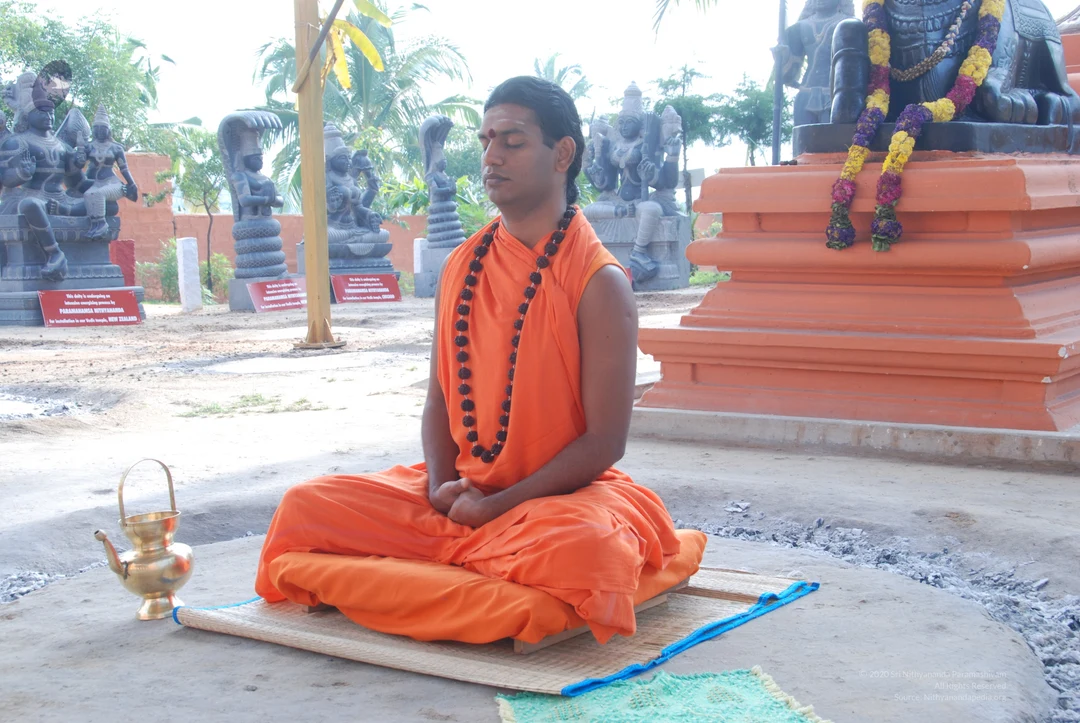
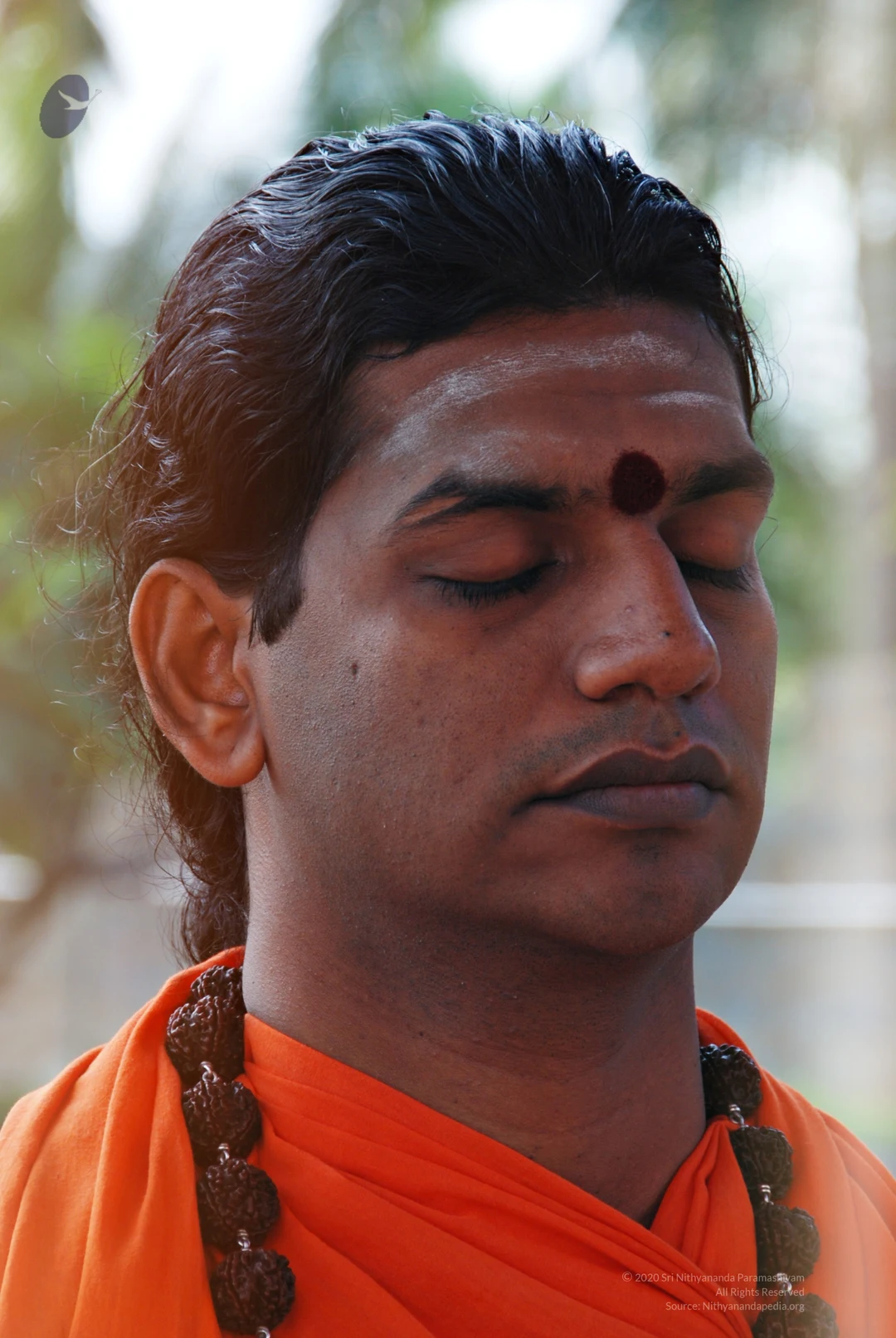
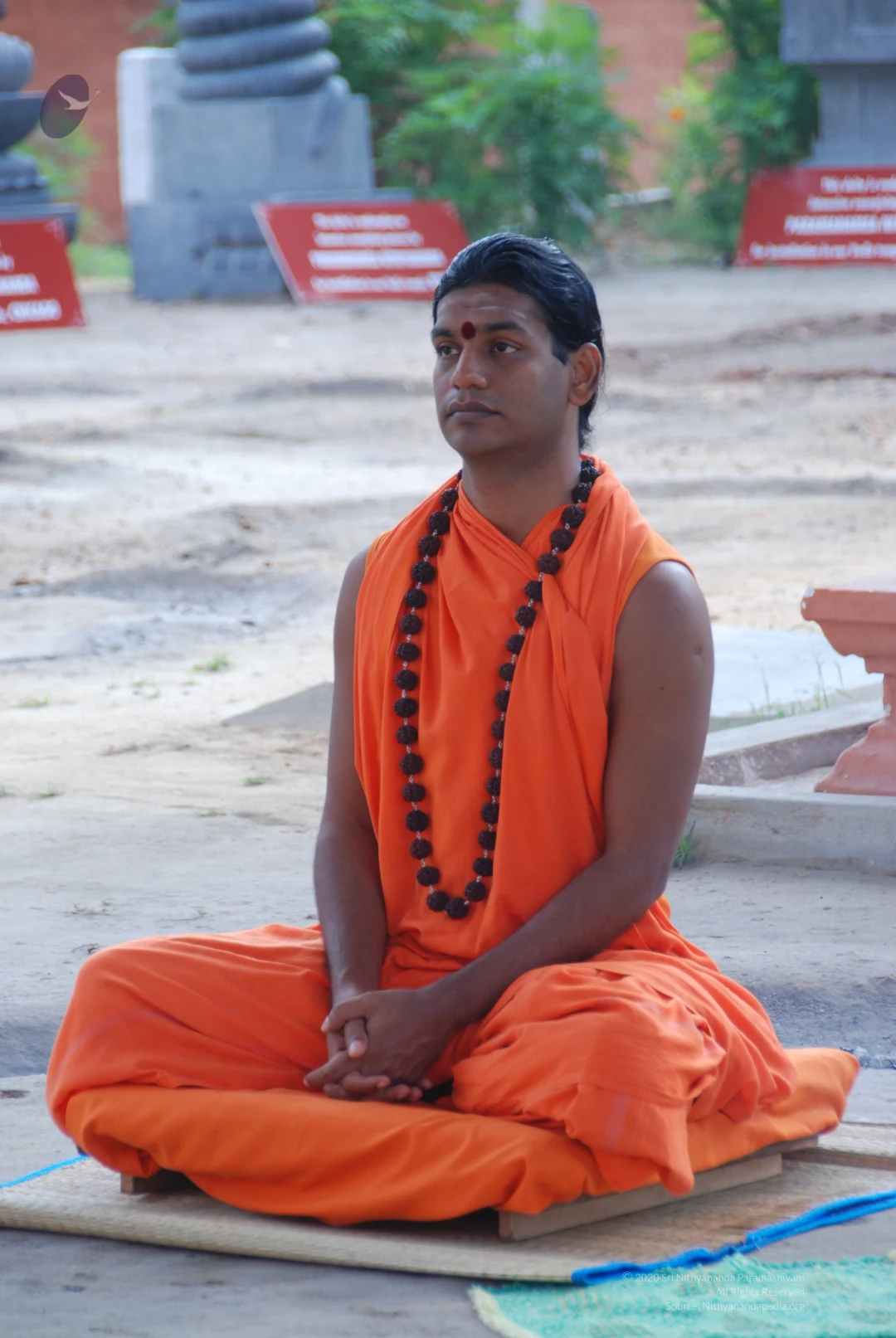
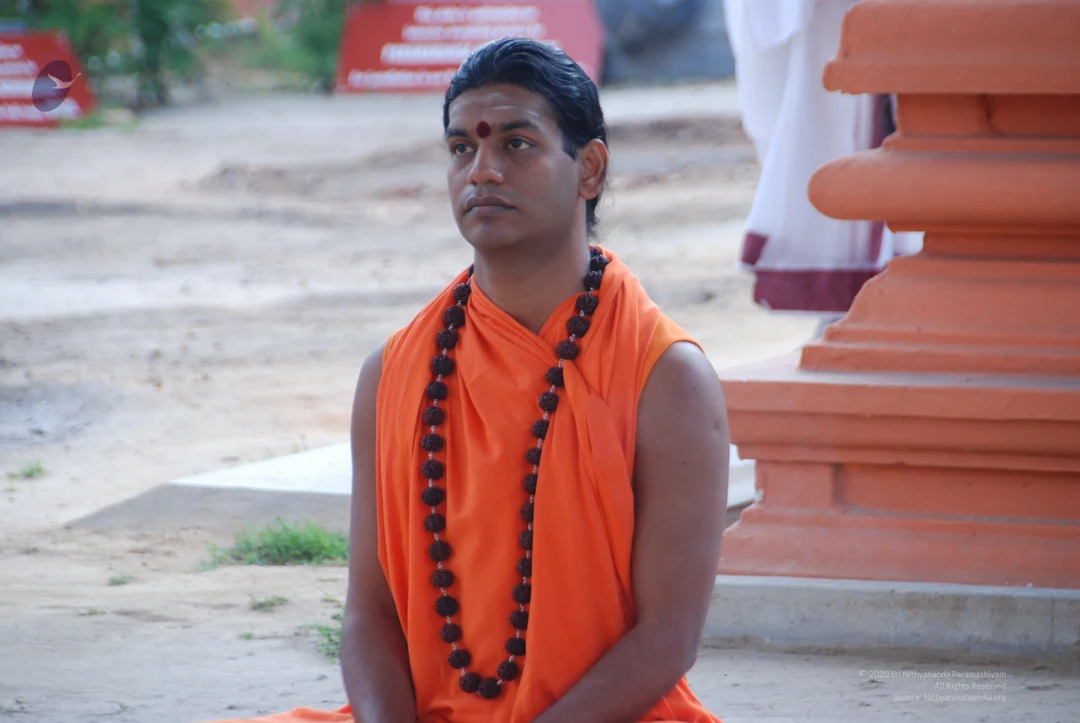
A man sits cross-legged on a woven mat in meditation with eyes closed and hands joined in his lap. He wears saffron-orange robes draped over one shoulder and a long dark rudraksha mala, with a red bindi on his forehead. Behind him stands a dark stone statue of a seated figure garlanded with yellow, pink and purple flower strands, set on an orange-red pedestal. A black stone shivling stands further right beside a red sign and palm trees.A man seated in lotus-style meditation on a woven mat outdoors, eyes closed and hands folded in his lap. He wears a sleeveless saffron-orange robe and a long necklace of dark rudraksha beads, with a red tilak mark on his forehead. Behind him stands a black stone Nandi bull statue draped with marigold and yellow garlands, set on an orange-red pedestal beneath palm trees. A brass kalasha-style pot sits at the left edge and a small green cloth lies at the right. Printed text on a pink sign reads Paramahamsa Nithyananda.Outdoor photograph of a man seated cross-legged on a mat in meditation, eyes closed, hands resting in his lap. He wears sleeveless saffron-orange robes draped over one shoulder and a long black rudraksha mala with a red tilak on his forehead; his dark hair is tied back. Beside him, a second seated man in orange robes also meditates with hands folded. A brass kalasha-style pot with a handle sits in the foreground. Behind them are a bamboo fence, white wall, palm trees and a stone deity murti. Two white-clad figures stand at the edge. Compositional elements are sparse; the setting appears to be a temple or ashram courtyard.Photograph of a man with eyes closed in a meditative posture, wearing a sleeveless orange saffron garment draped over his shoulders and a long double-strand mala of dark rudraksha beads across his chest. He has a red bindi and sacred ash marking on his forehead and his dark hair is tied back in a low knot. A bamboo fence and a green-roofed structure stand behind him in an outdoor setting. Person appears to be a sannyasi or devotee in ritual dress; appearance cues are ambiguous, so identity is uncertain.
Paadapooja
7 photosSource gallery
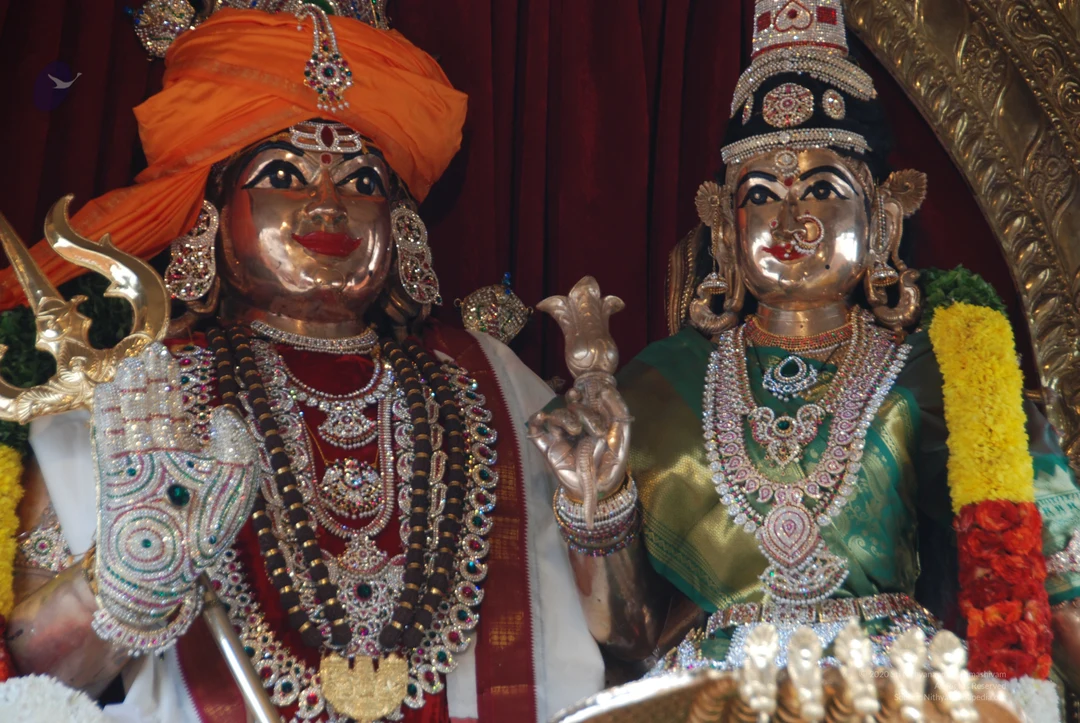
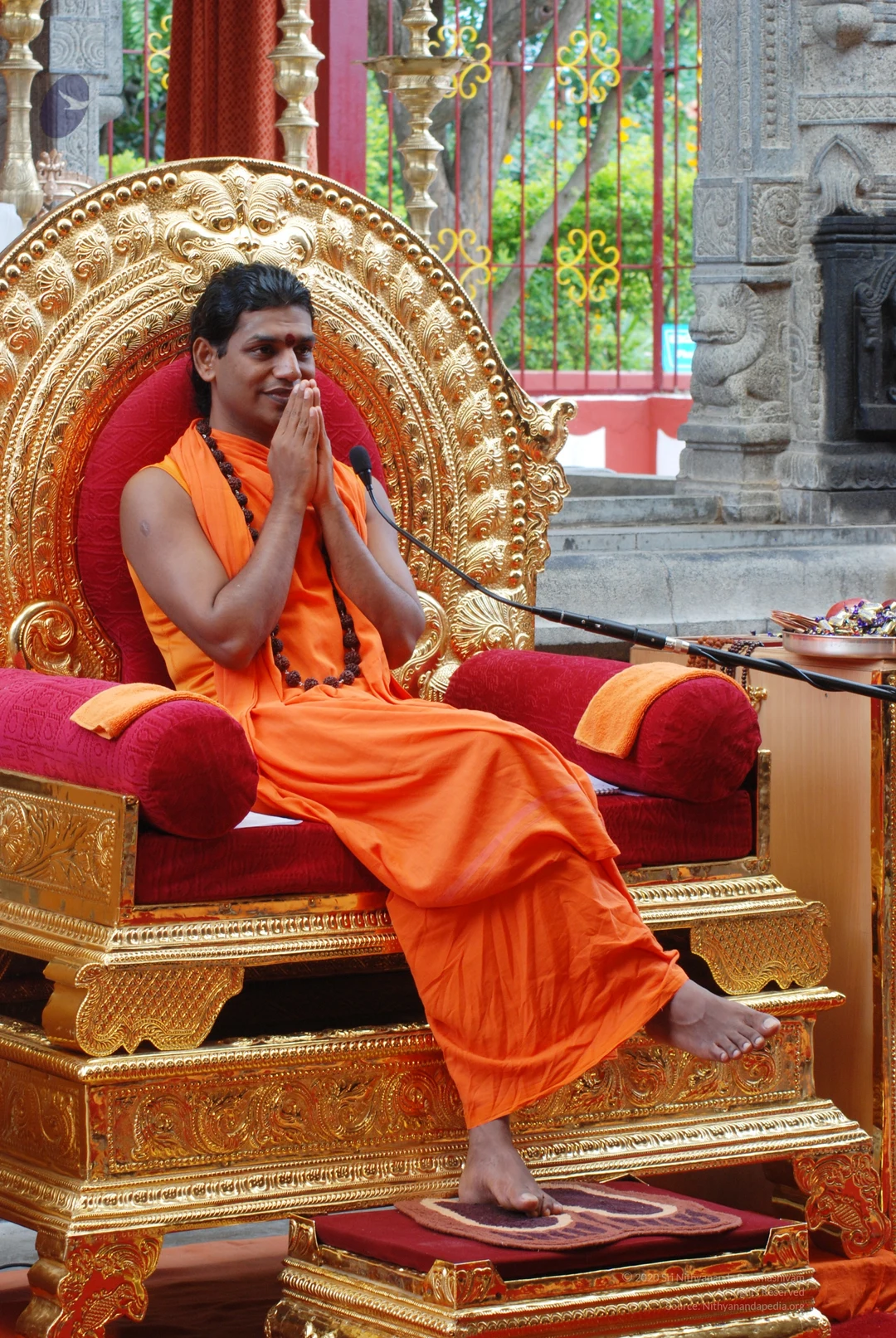
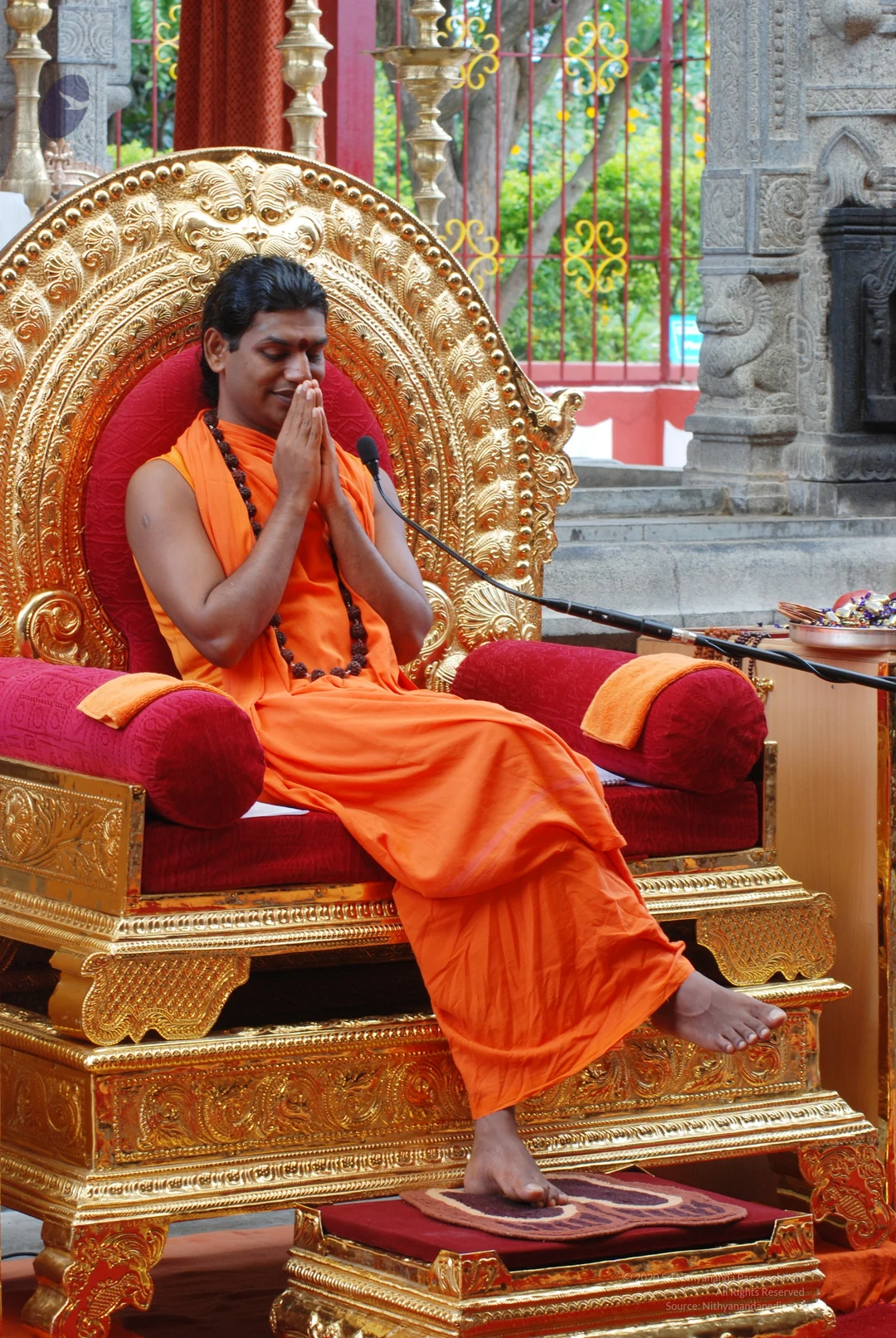
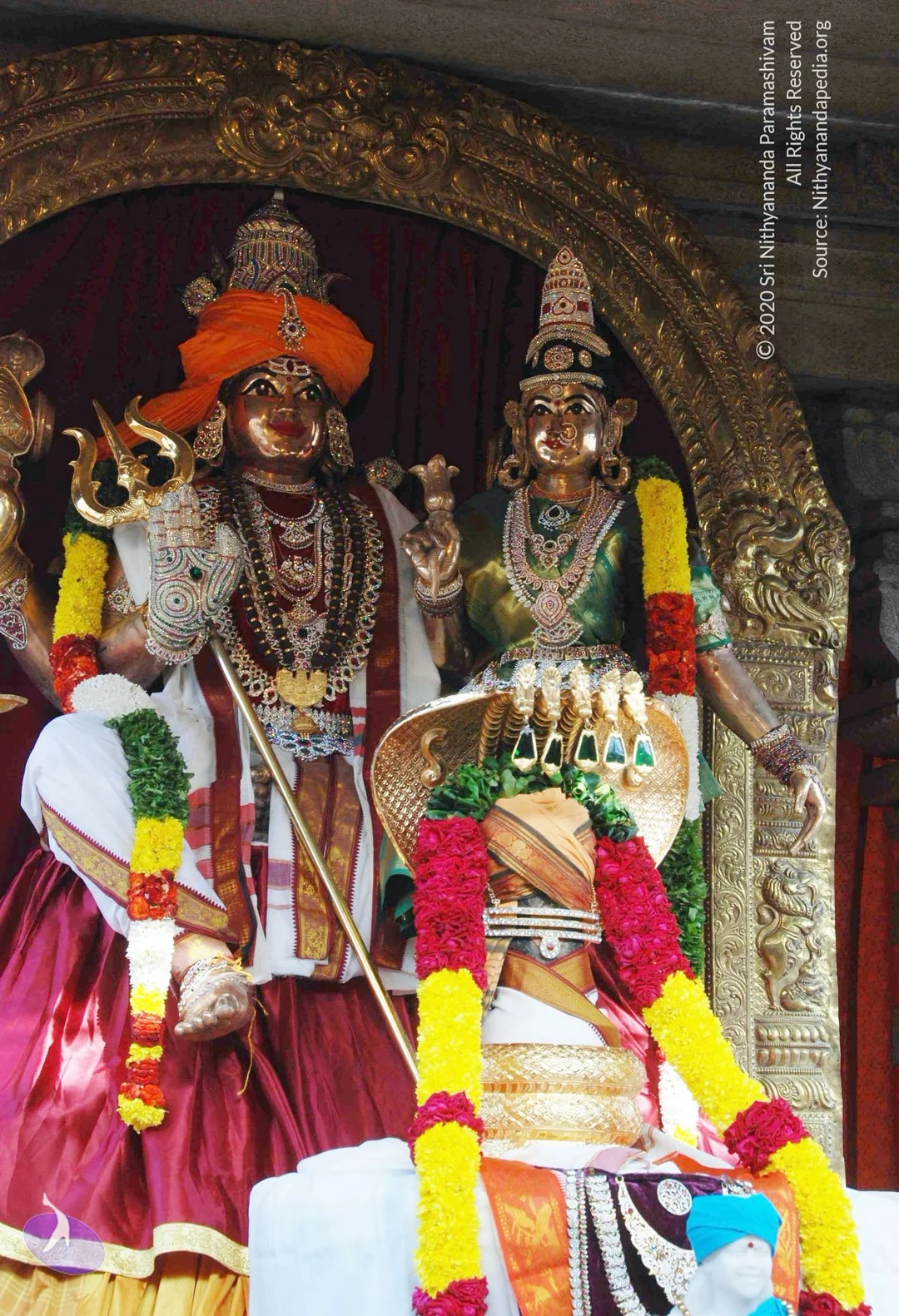
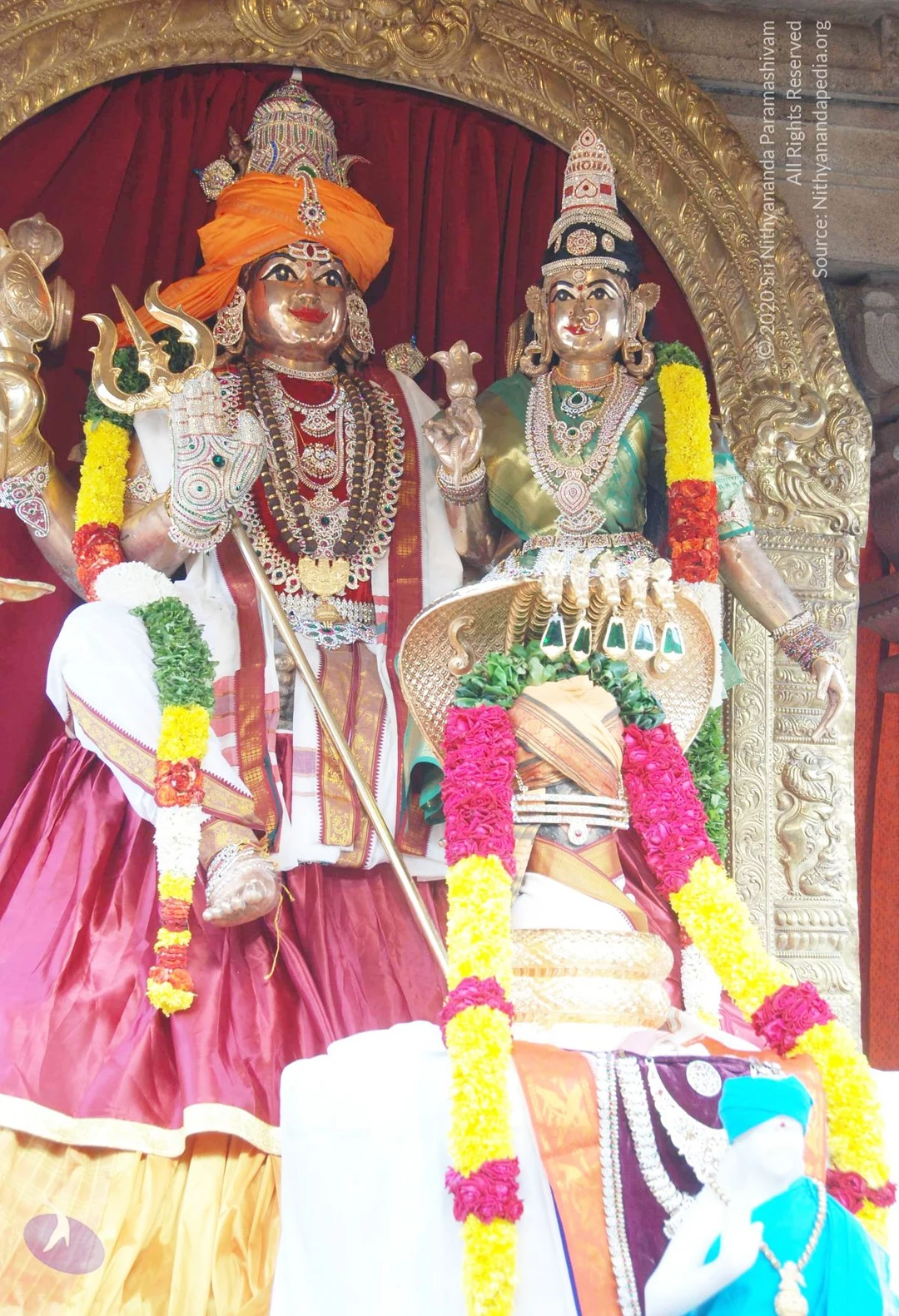
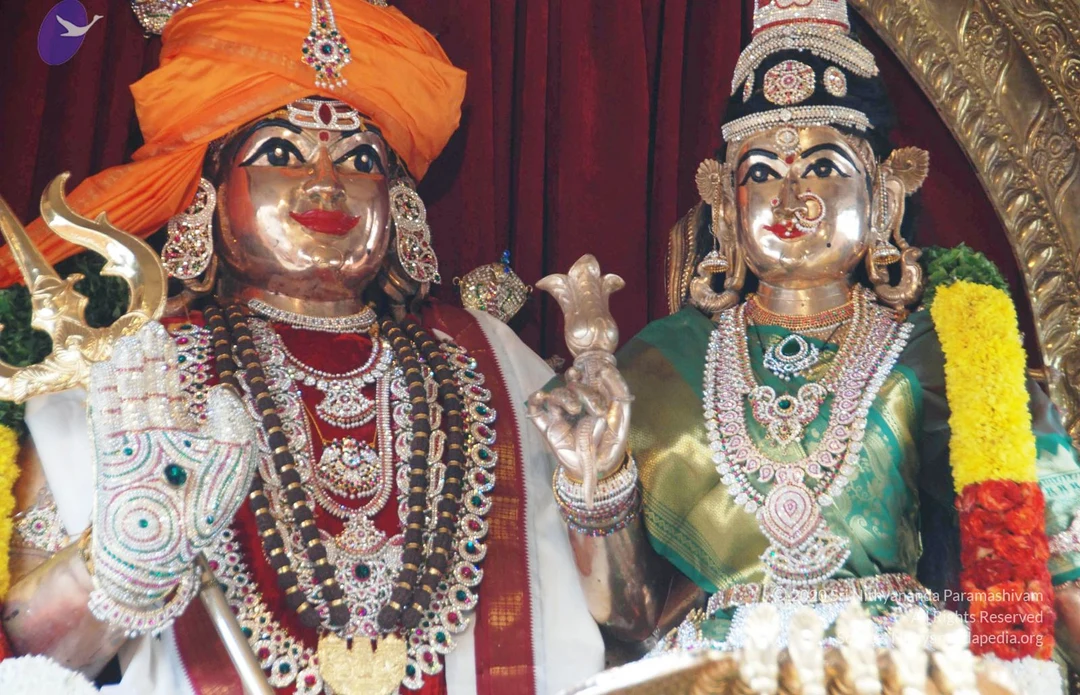
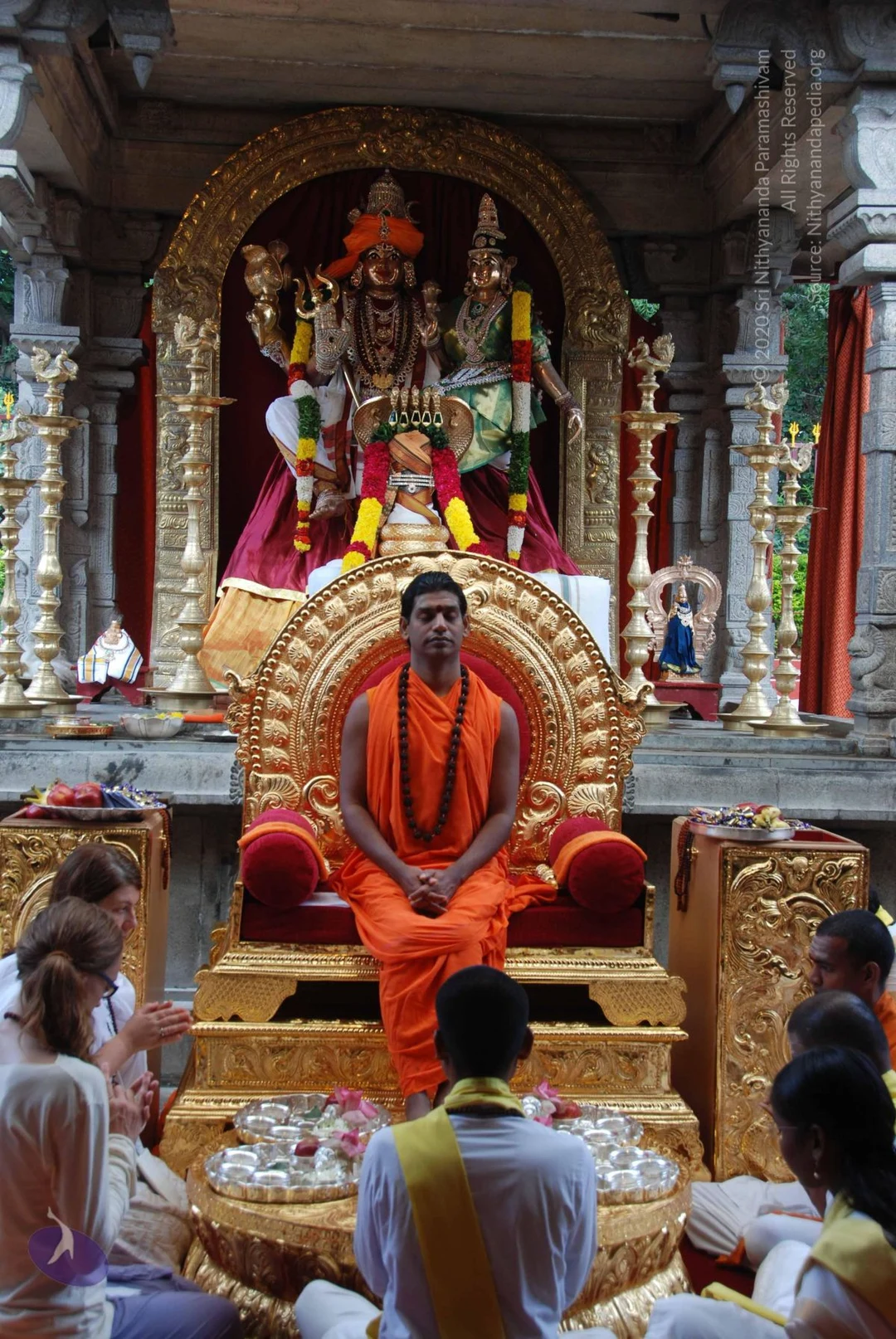
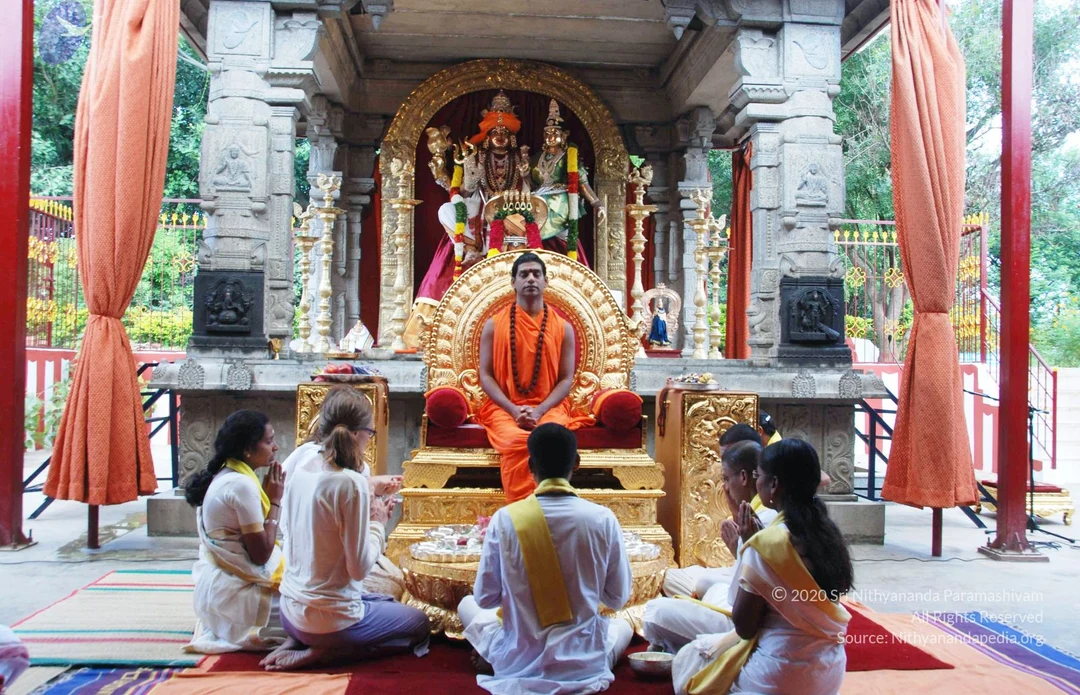
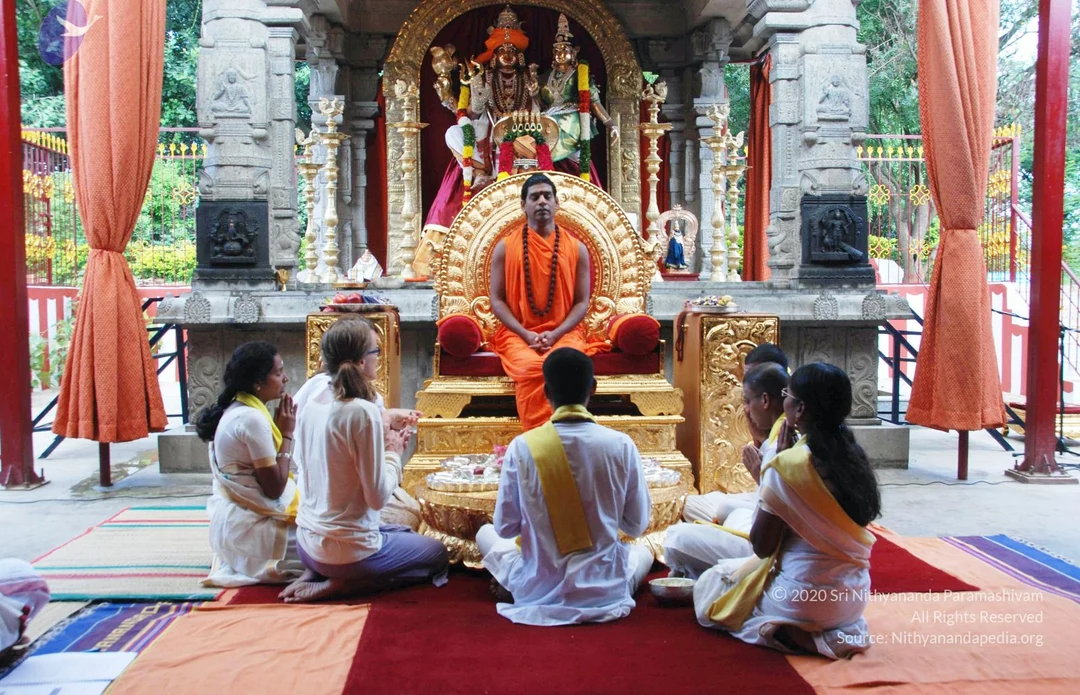
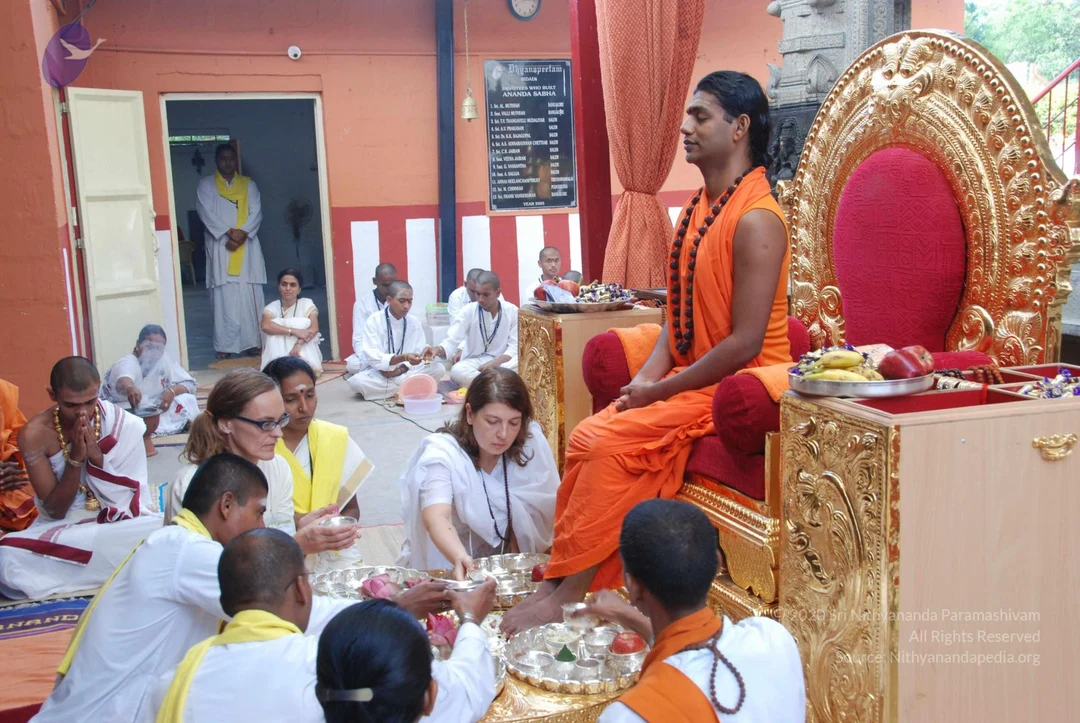
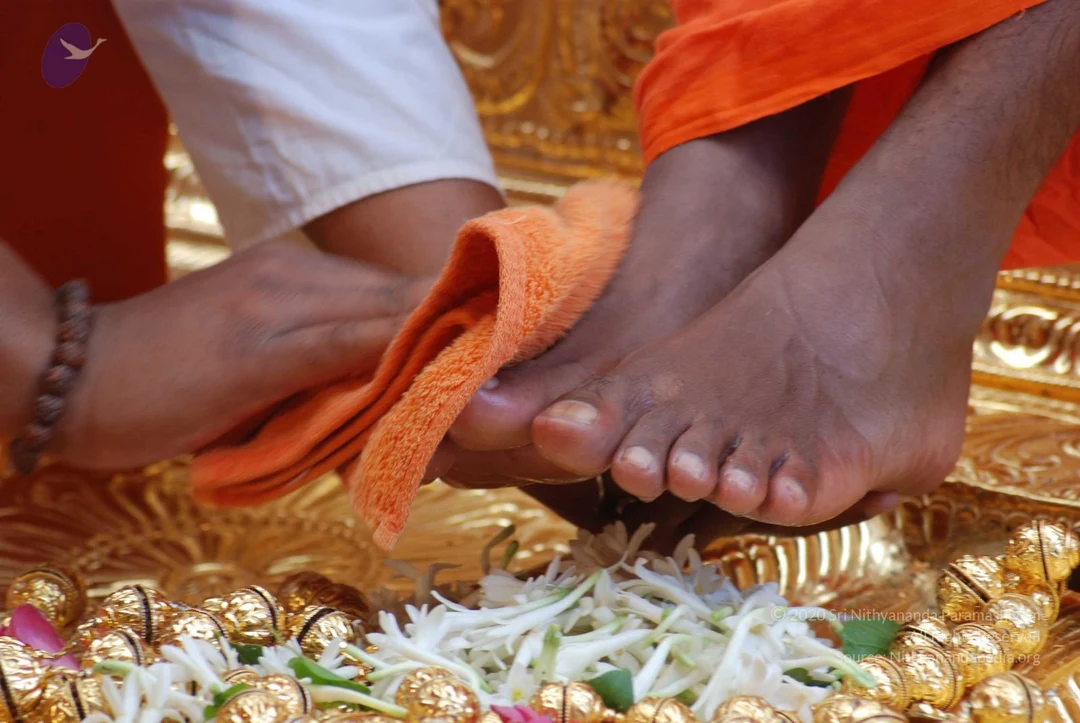
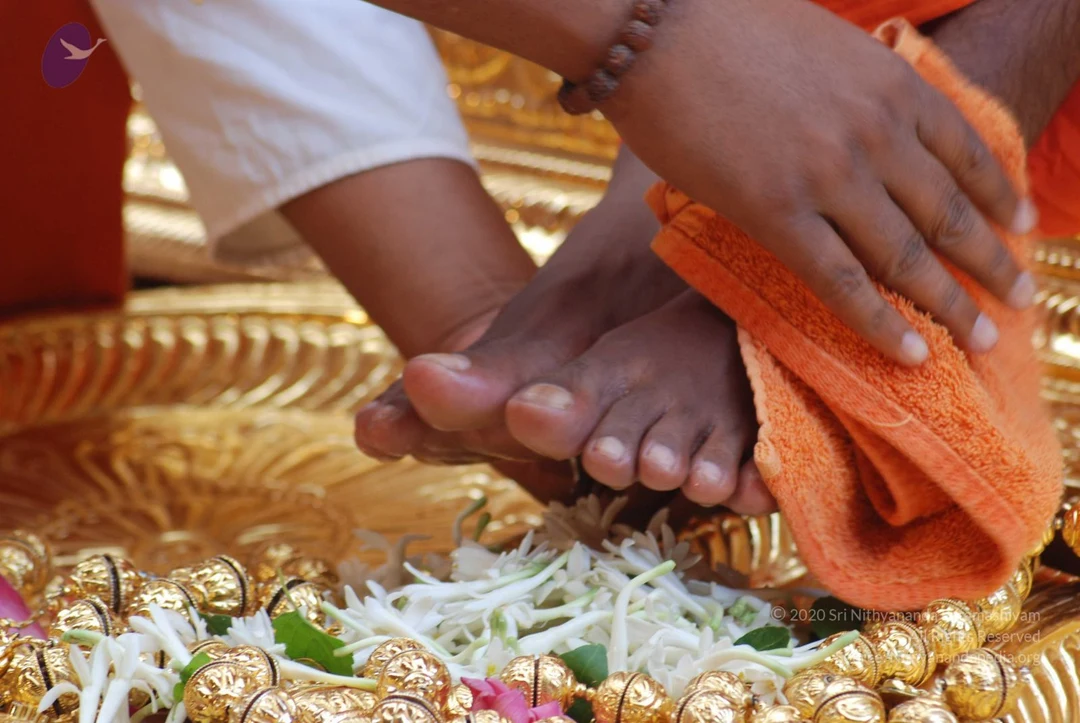
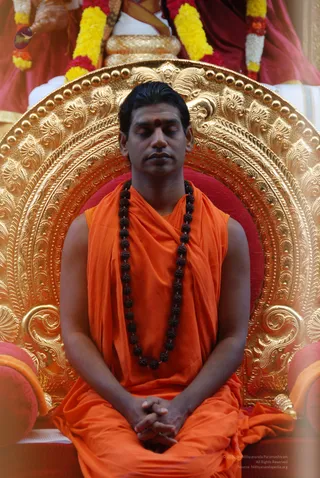
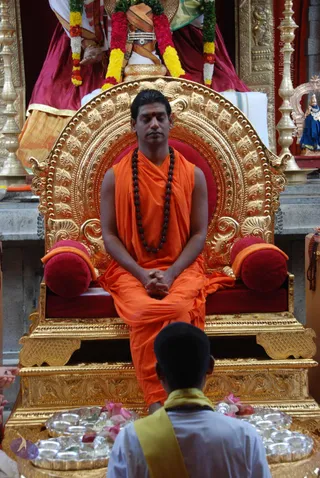
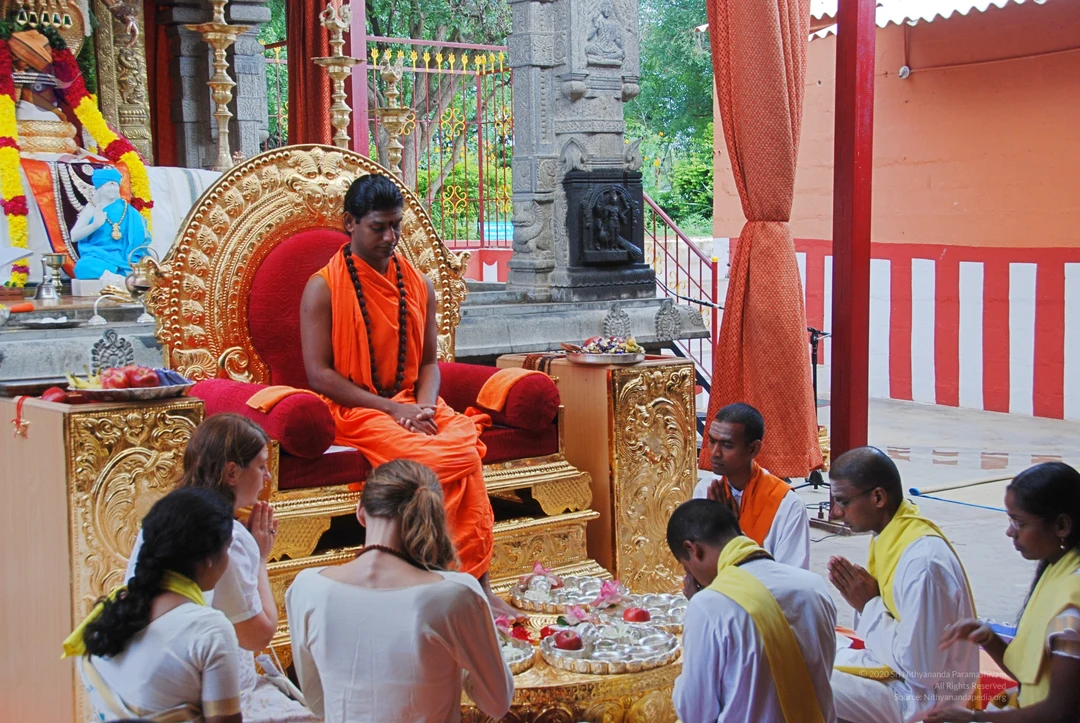
A seated man in saffron-orange robes and a rudraksha mala sits on an ornate gilded throne with red cushions, eyes closed and hands clasped in his lap. Behind him, a gilded shrine arch frames large golden-hued statues of a deity pair: the male figure wears an orange turban and holds a trident, the female figure wears a green sari and jewellery, both garlanded with yellow and red flower strands. Brass oil lamps stand on either side. A small figure in a yellow shirt sits in the foreground below the throne. Offerings and a tray of sweets appear at the lower right.A seated man with eyes closed and hands clasped in his lap sits on an ornate gold-carved throne with red cushioning. He wears a flowing saffron-orange robe draped over one shoulder and a long dark rudraksha mala reaching his waist, with a red bindi on his forehead. Behind him, a deity murti is adorned with yellow and orange marigold garlands and red drapery. The setting suggests a formal satsang or meditation sitting, with the man in quiet, centered repose.

Morning-Message
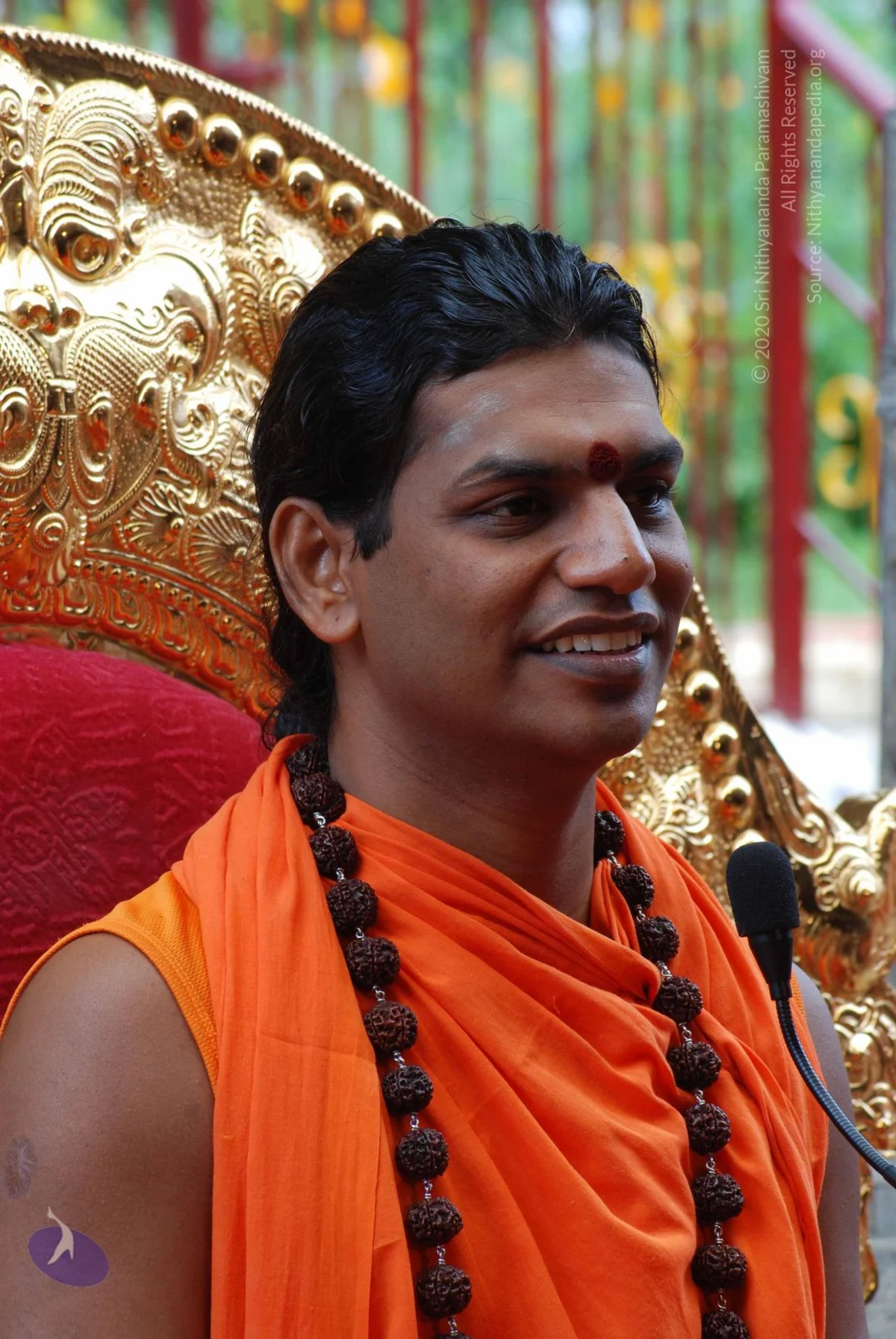
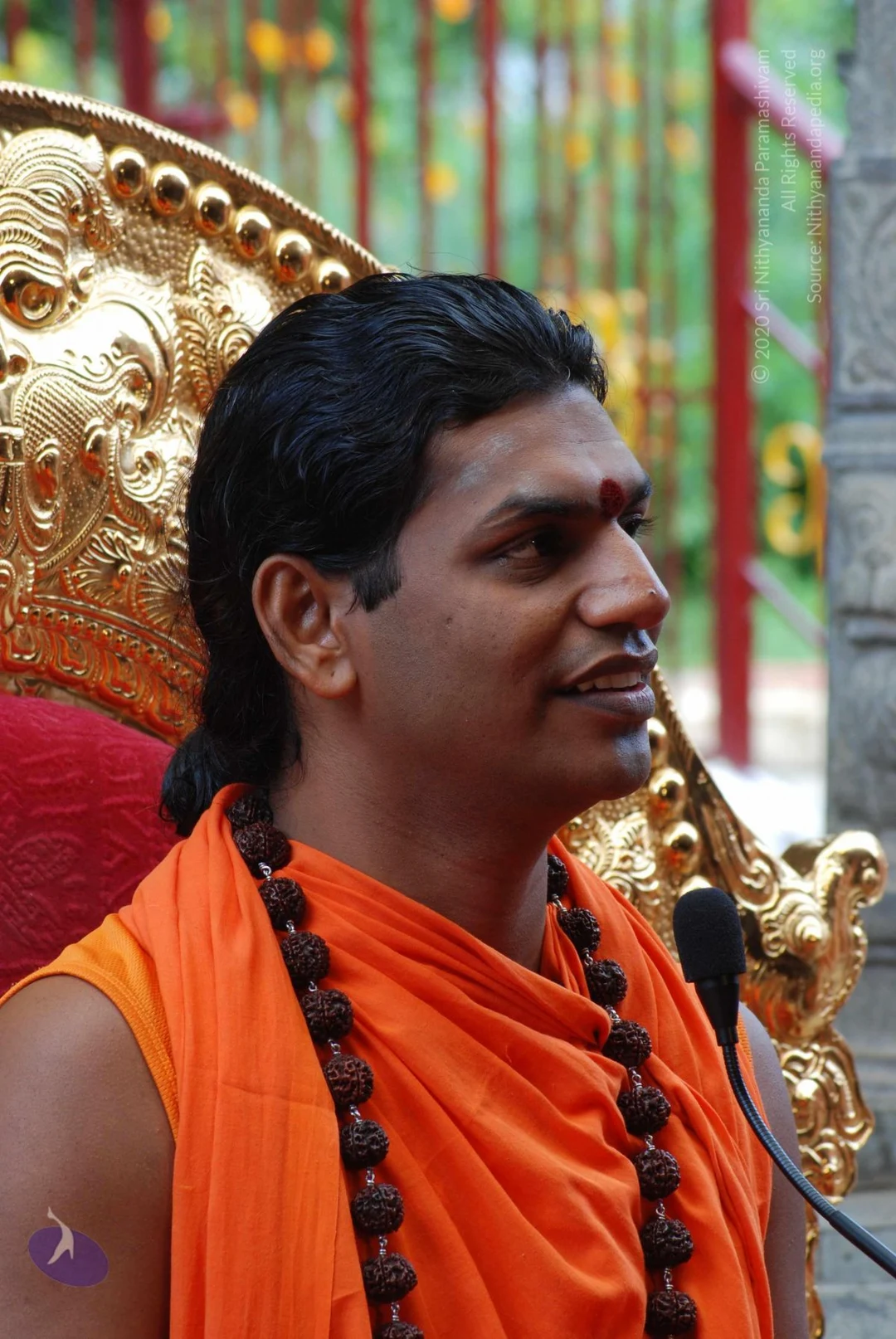
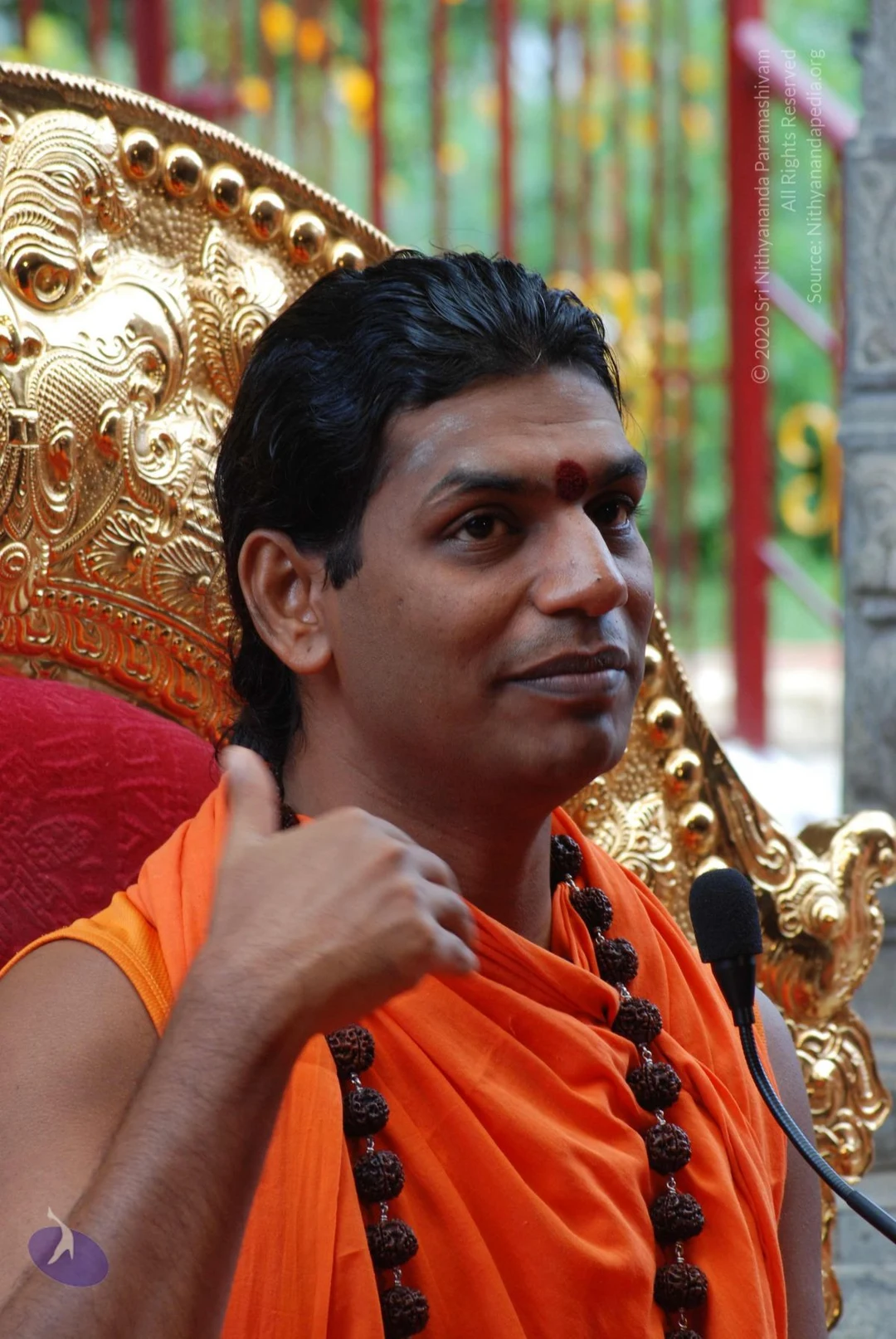
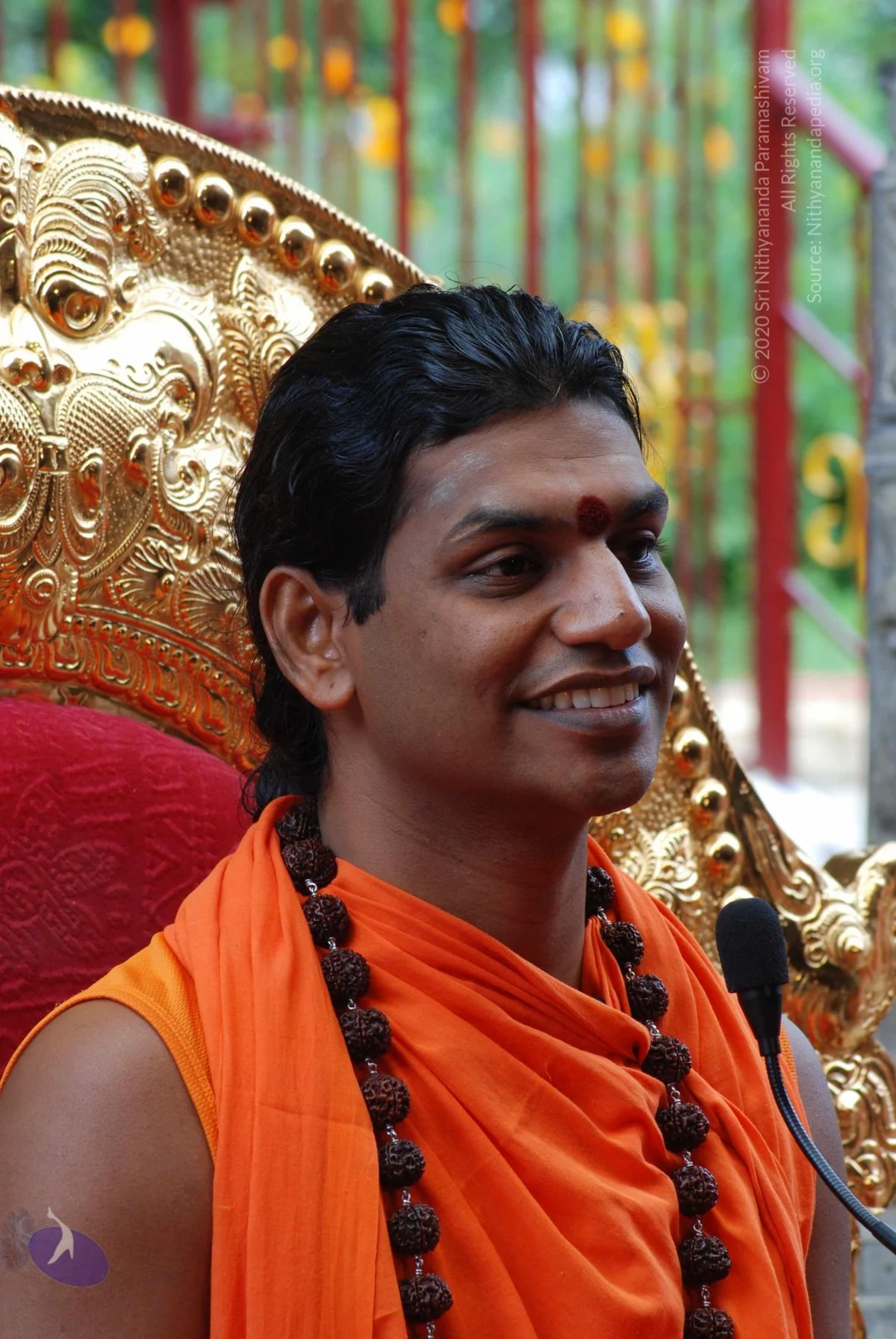
4 photosSource gallery
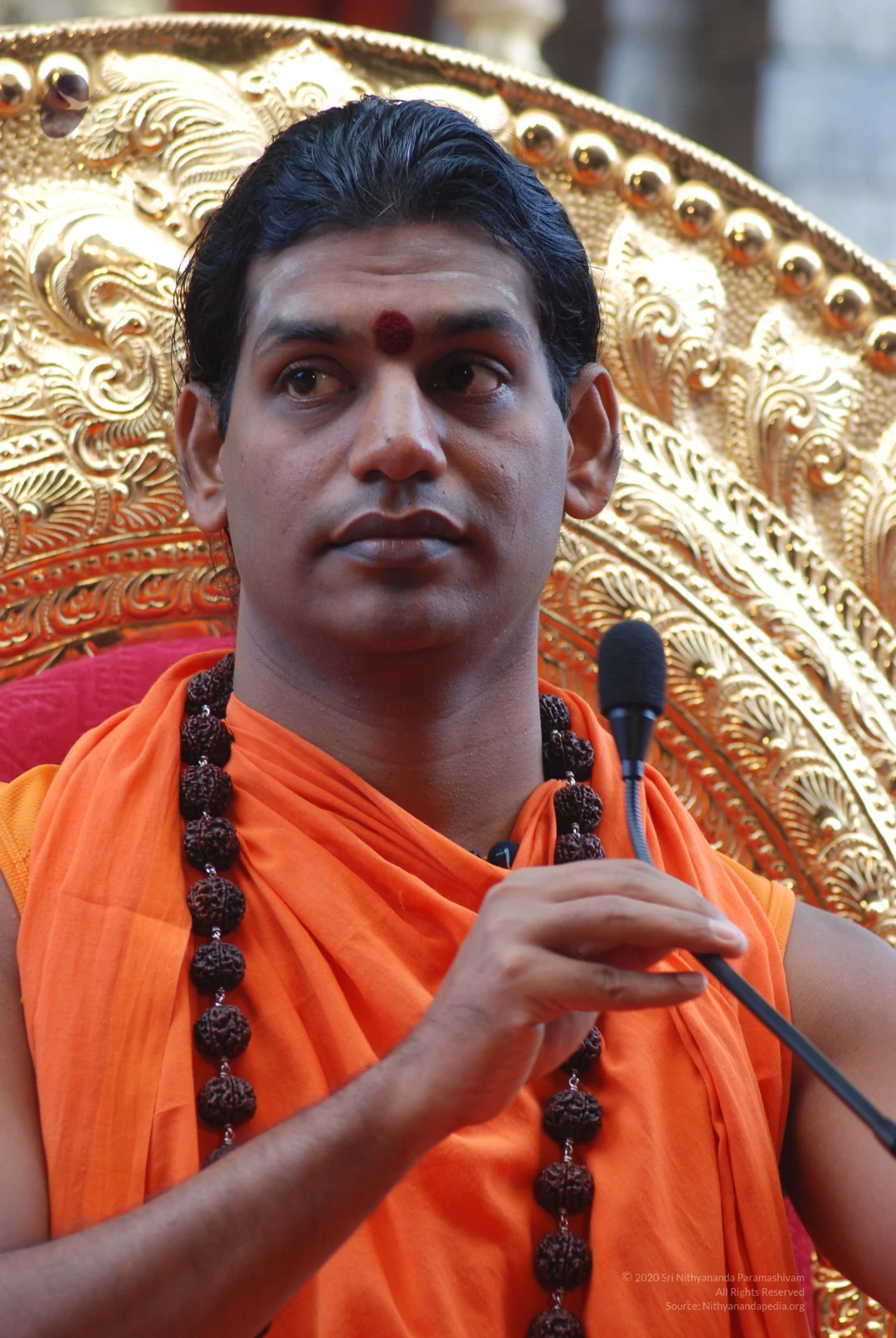
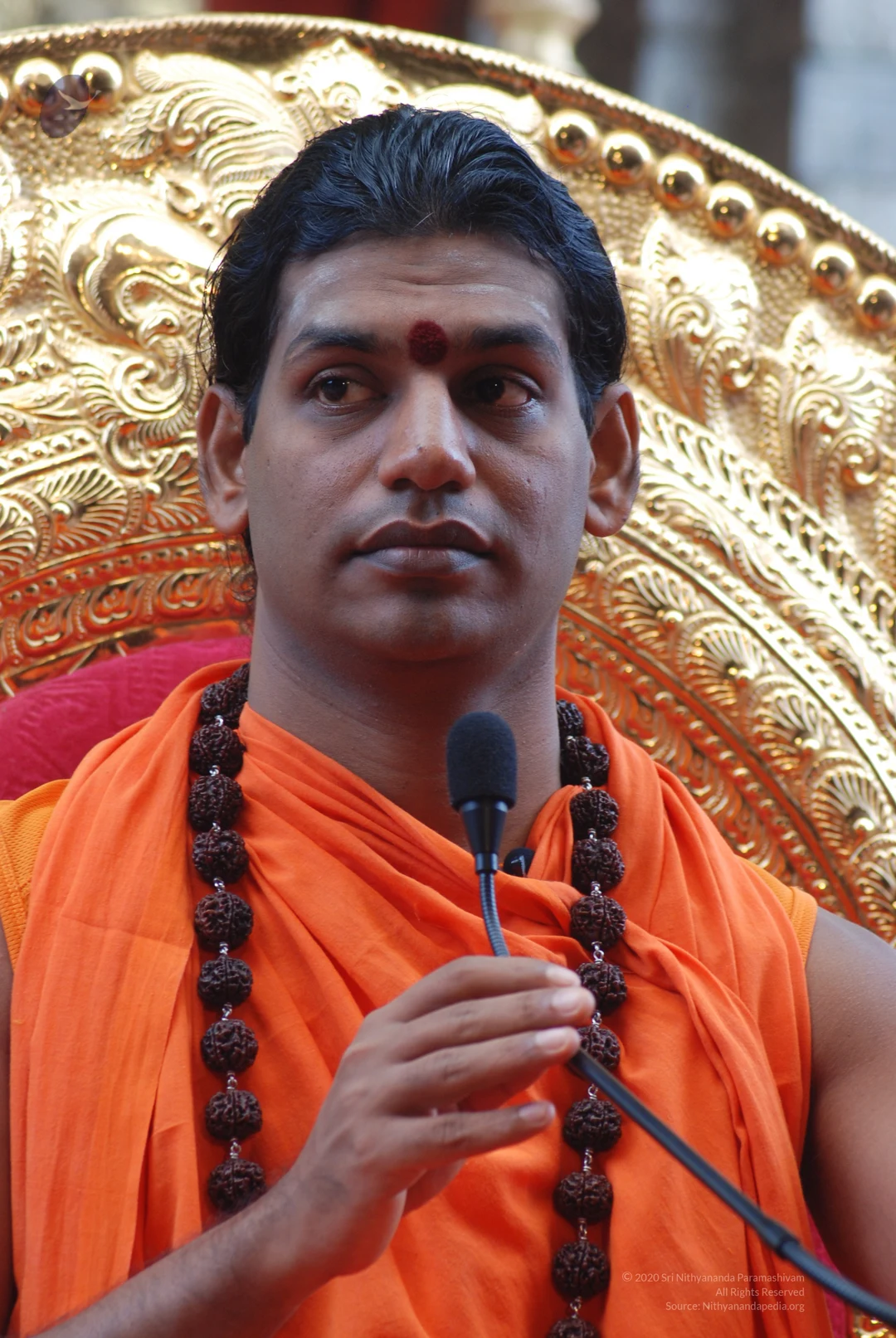
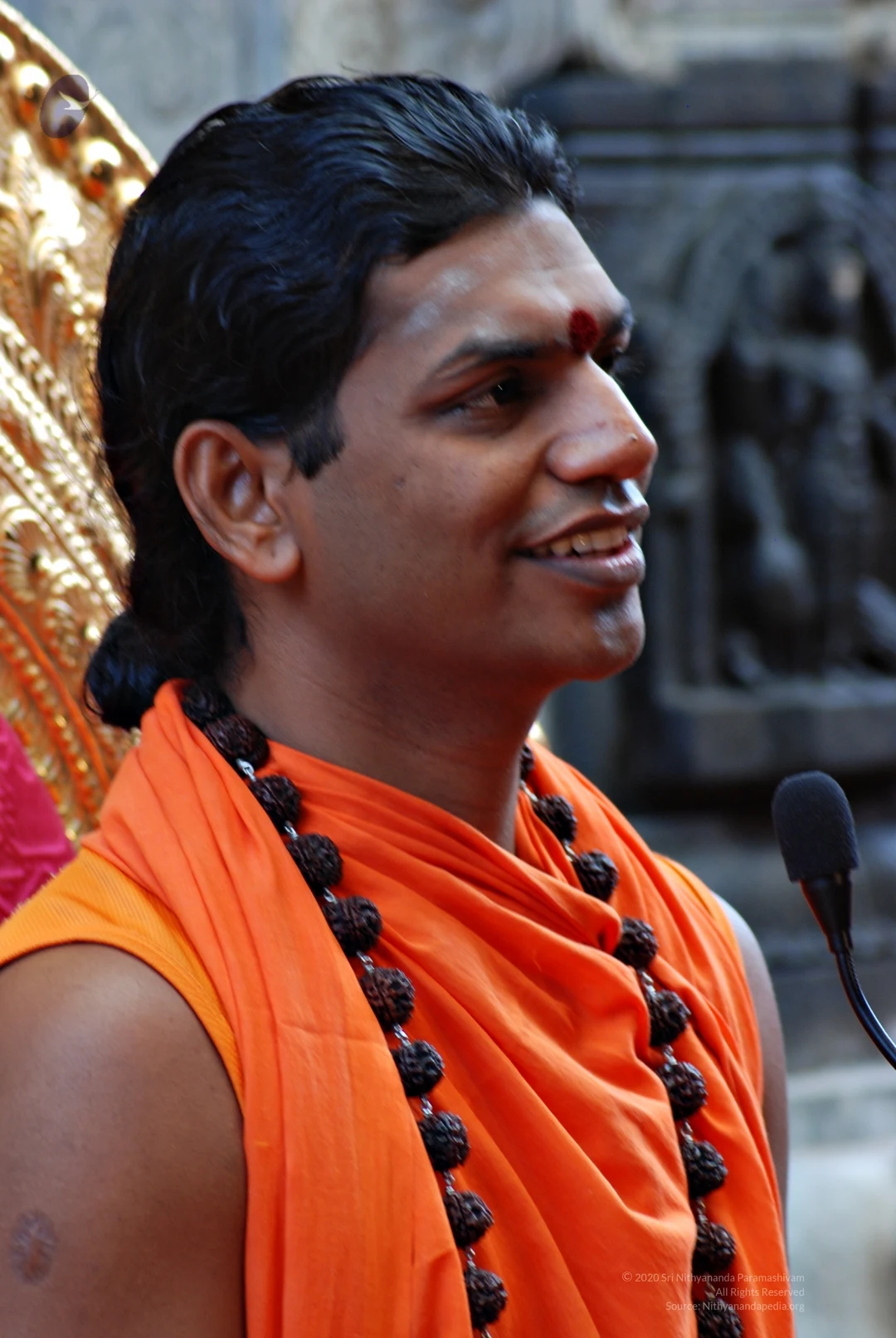
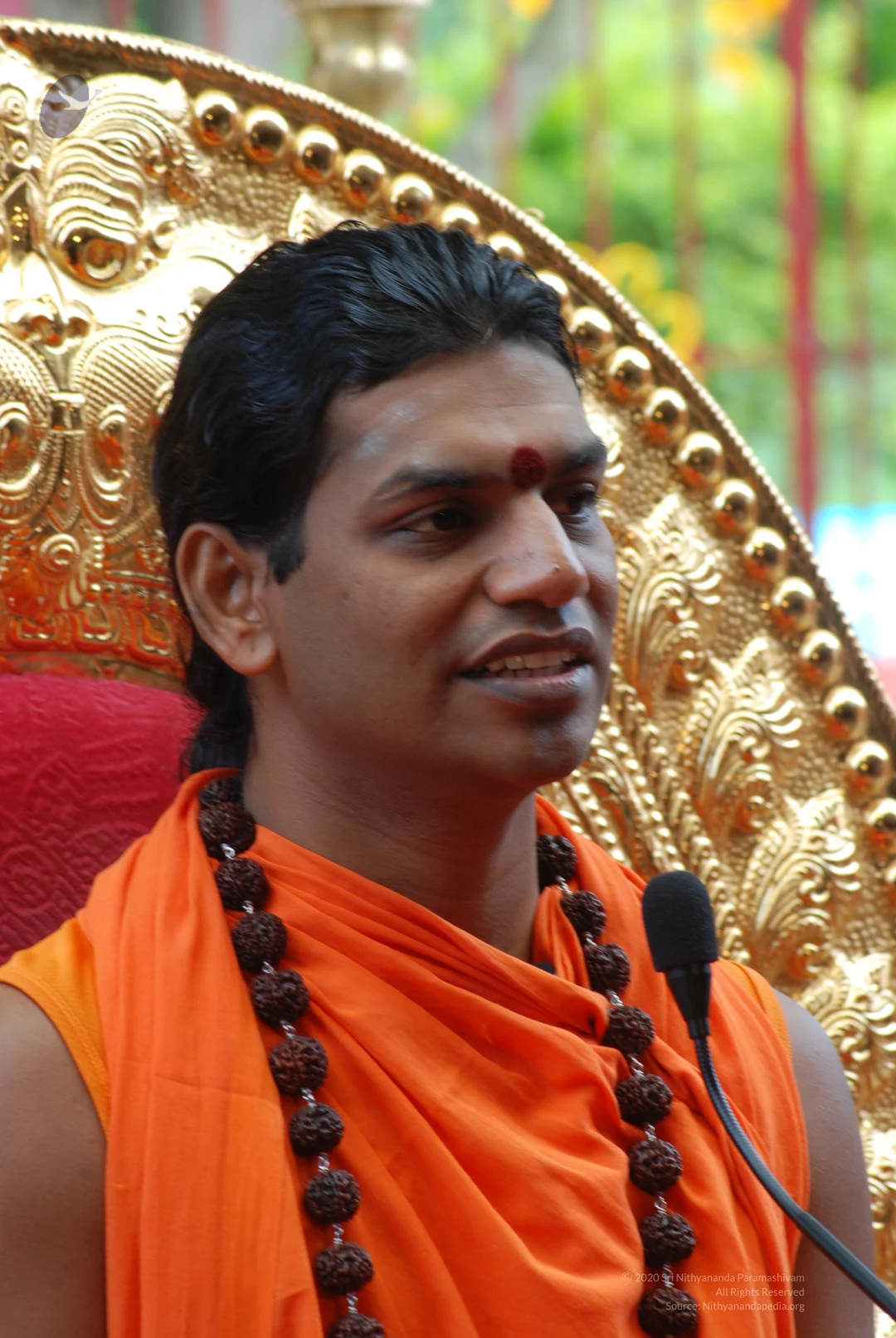
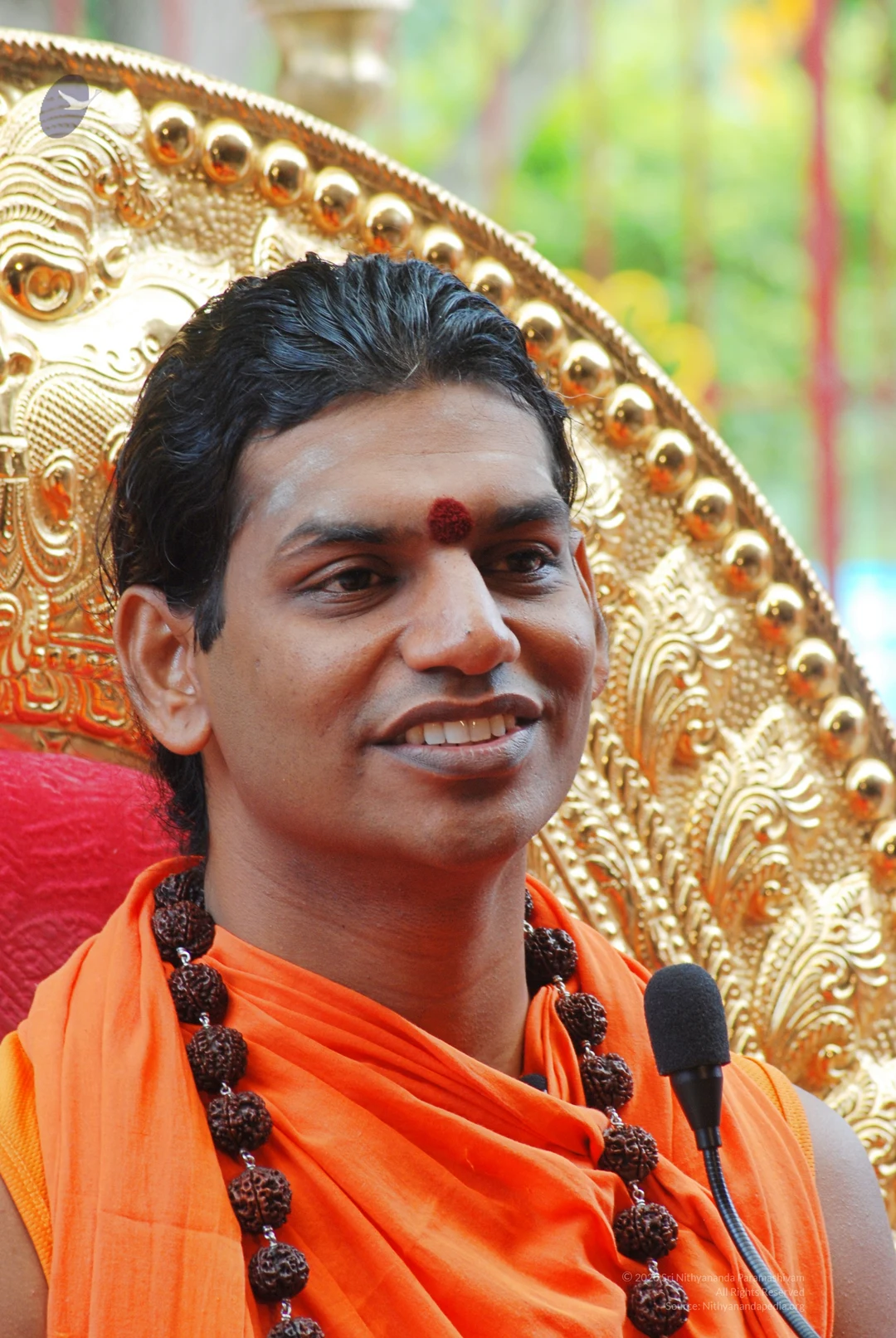
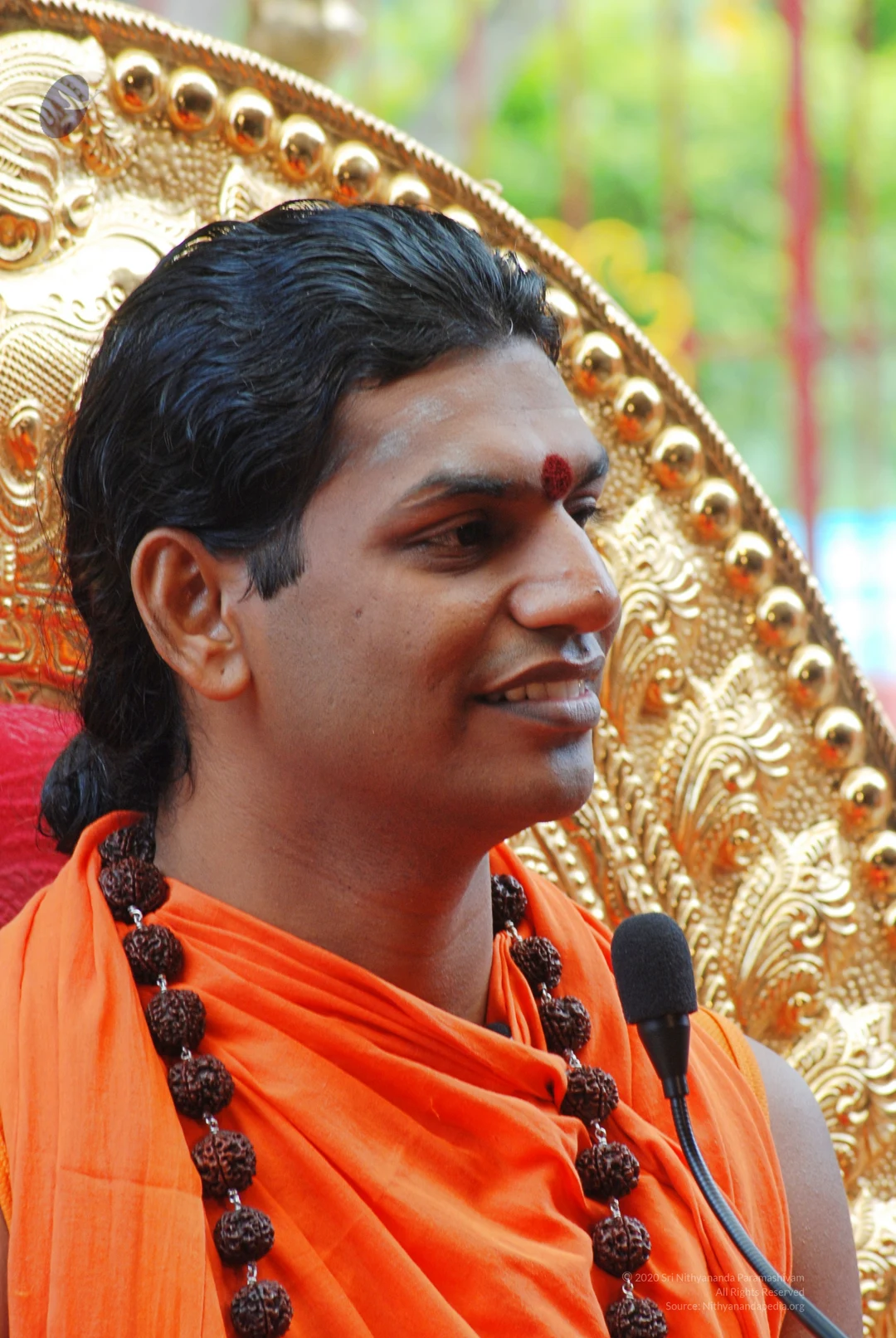
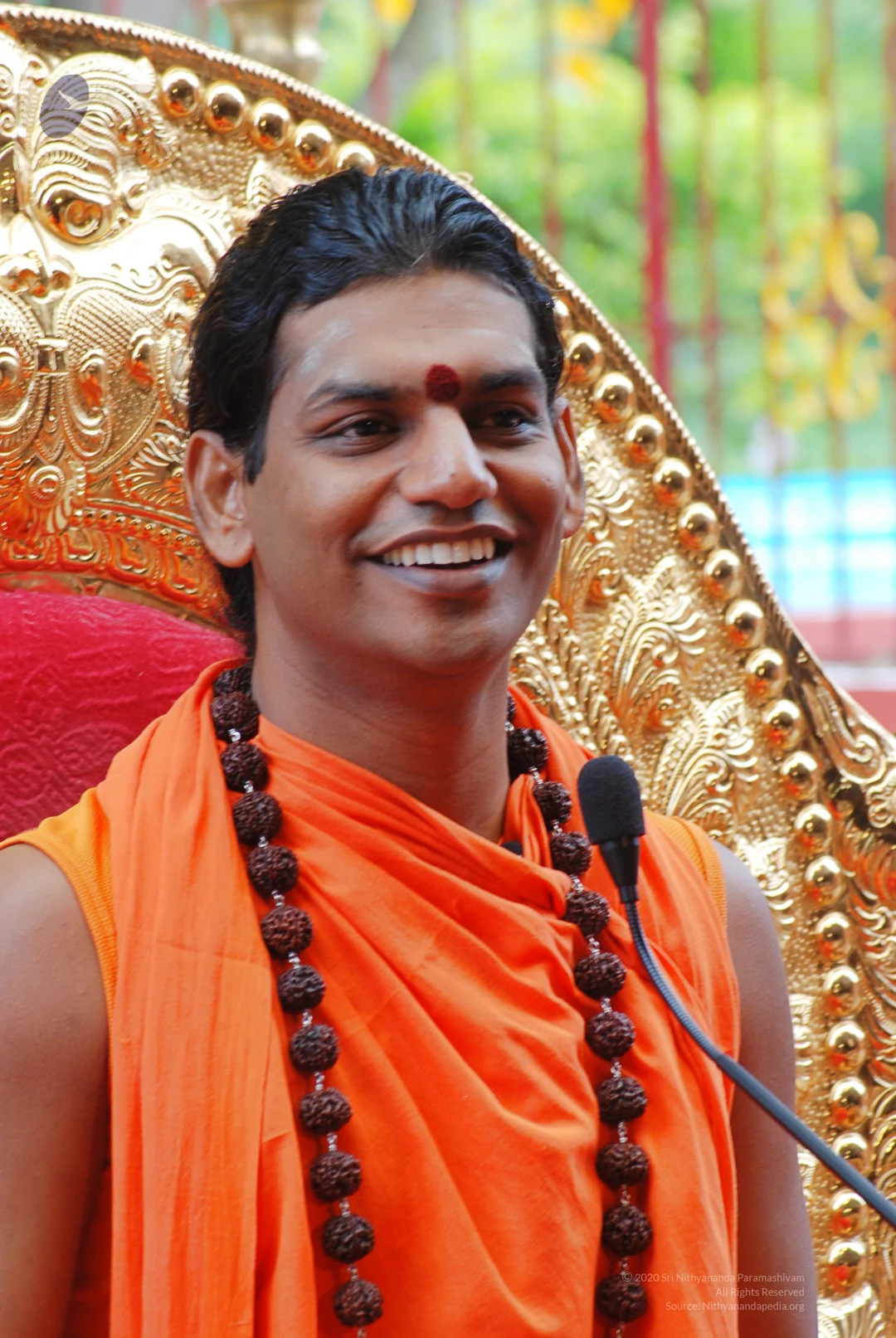
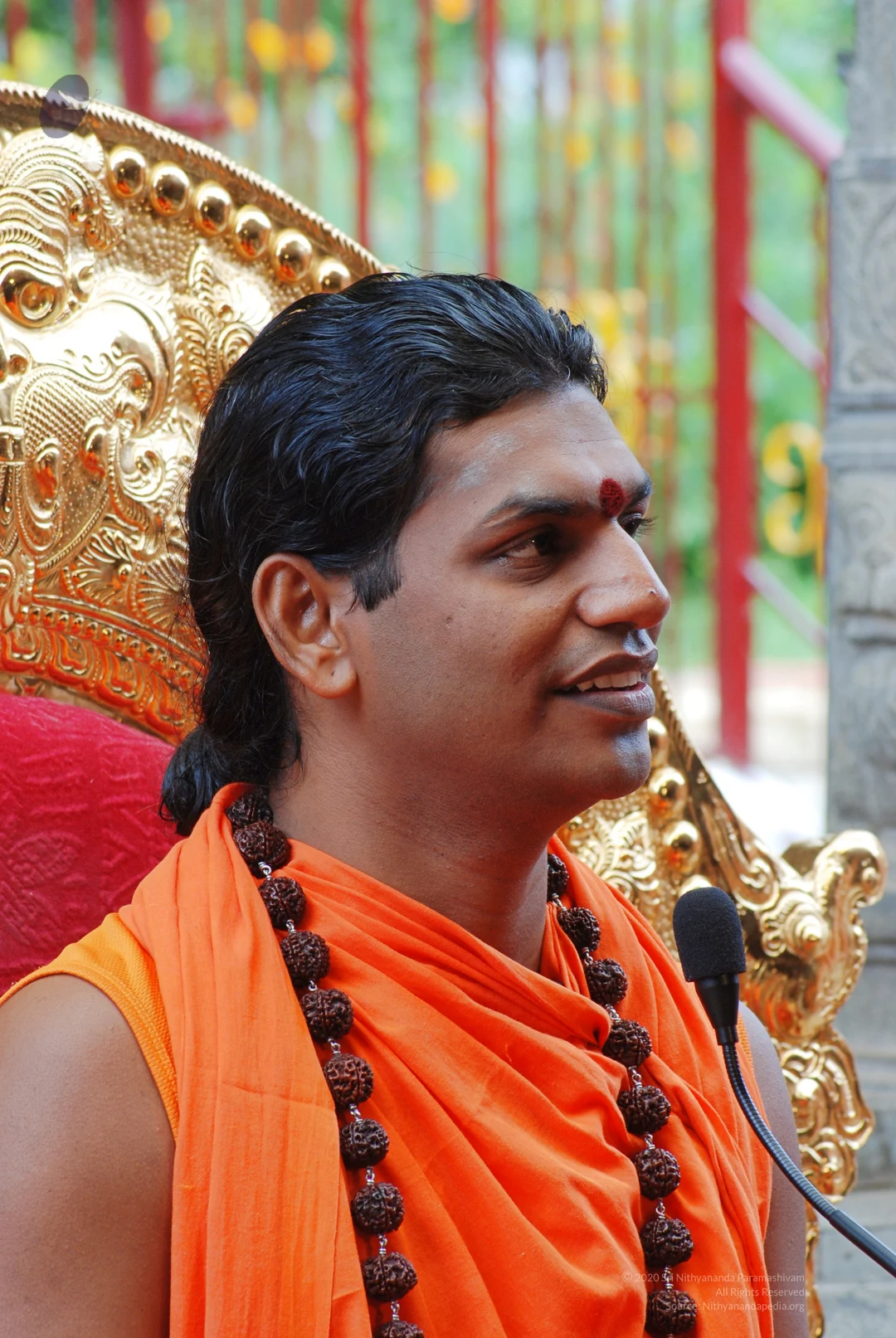
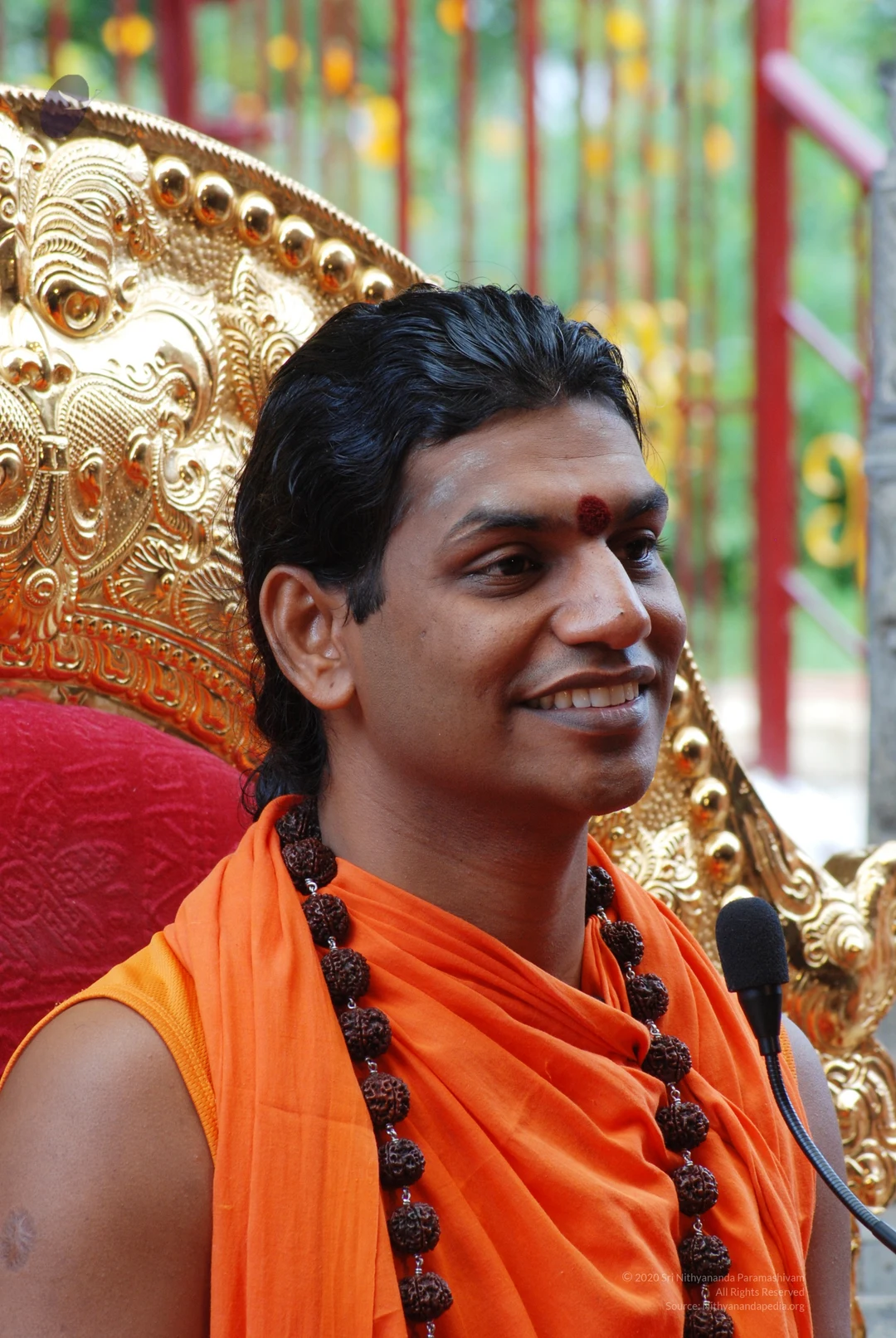
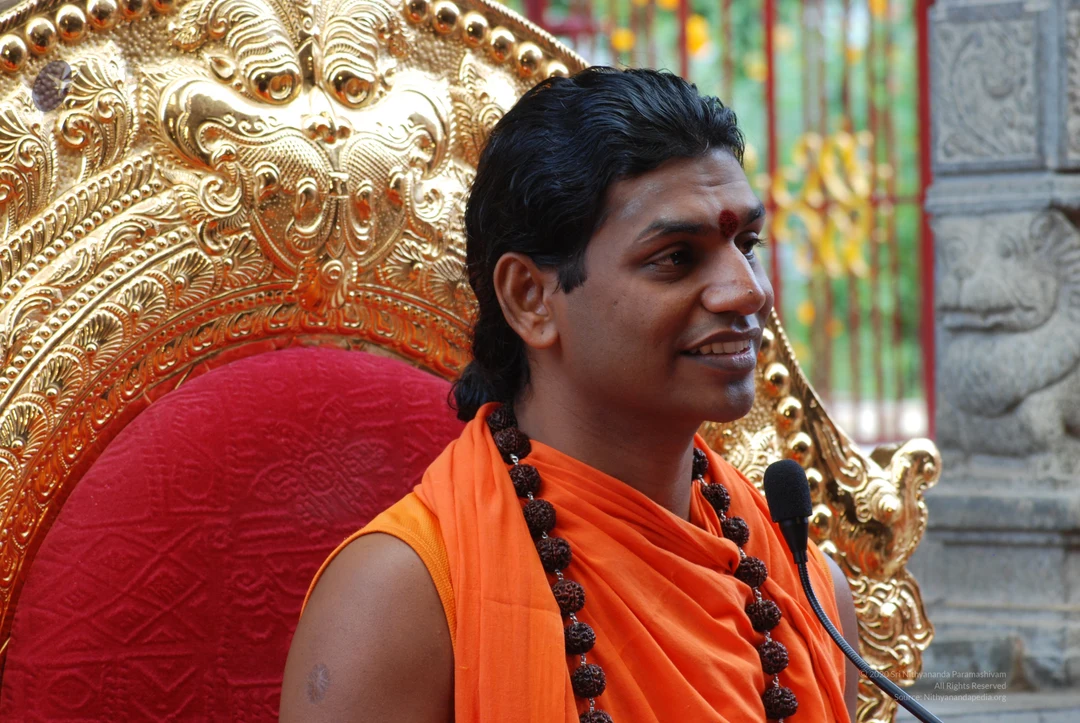
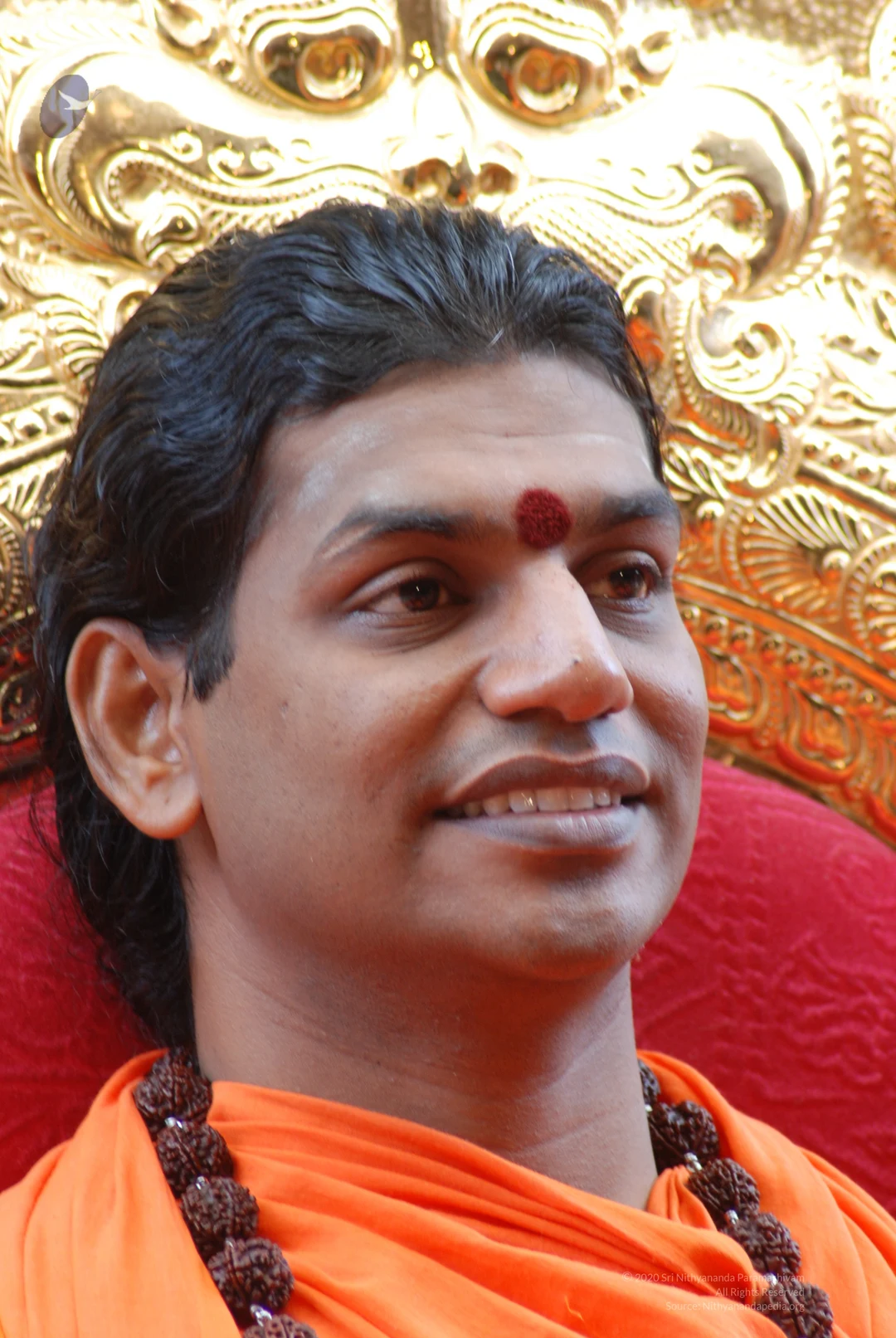
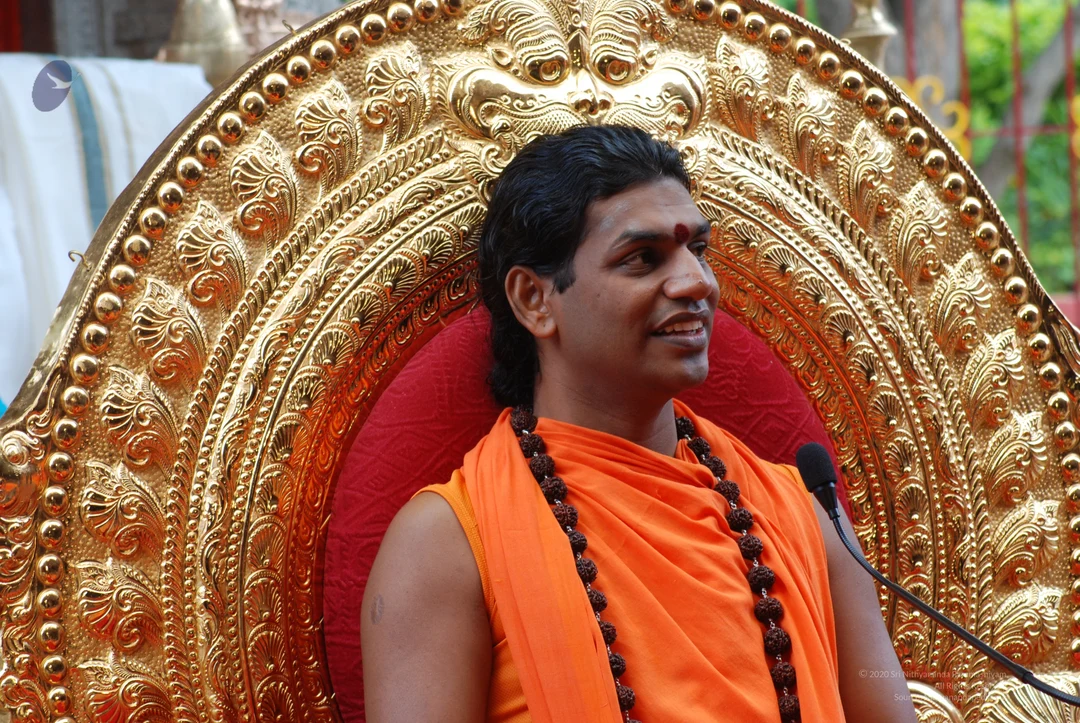
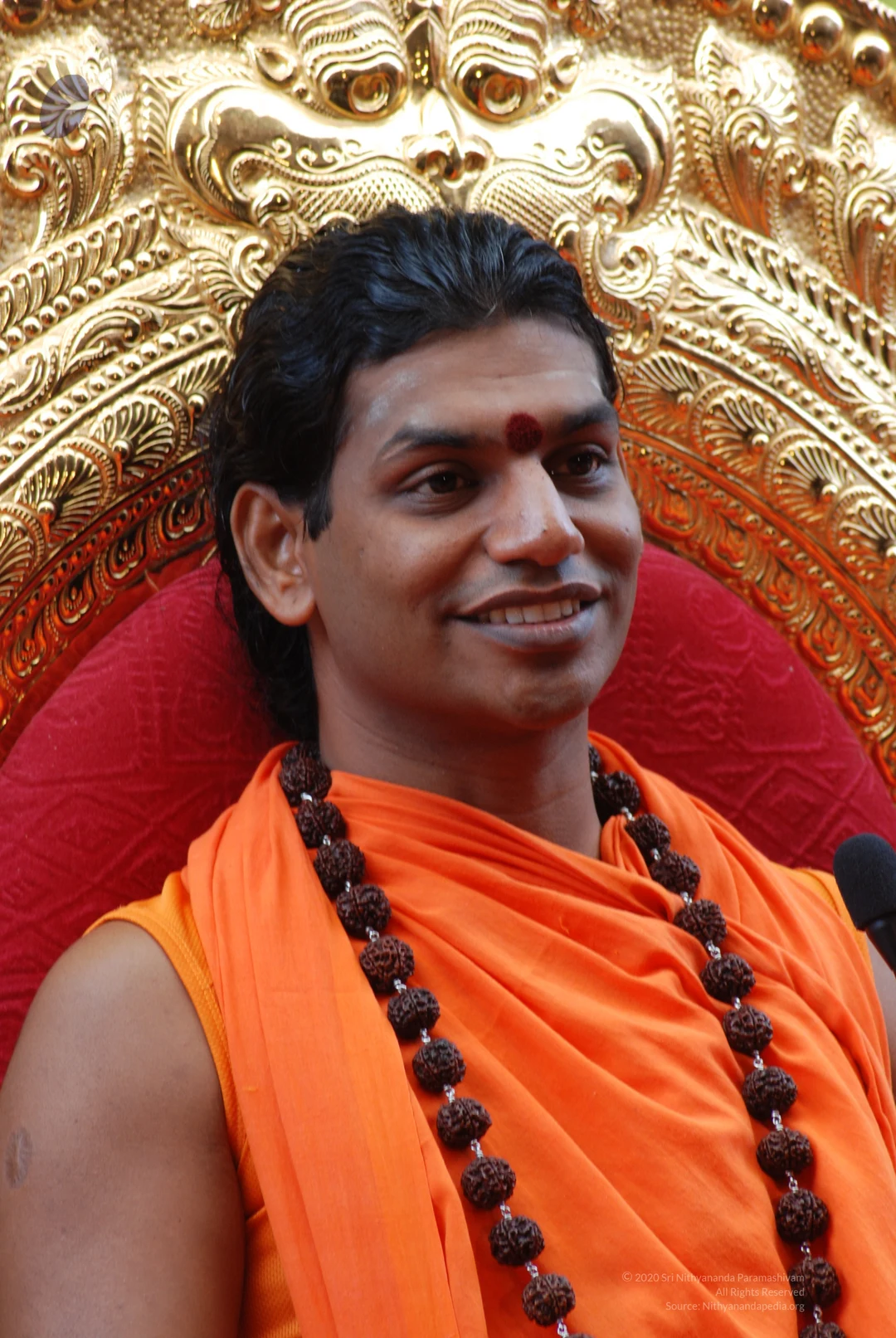
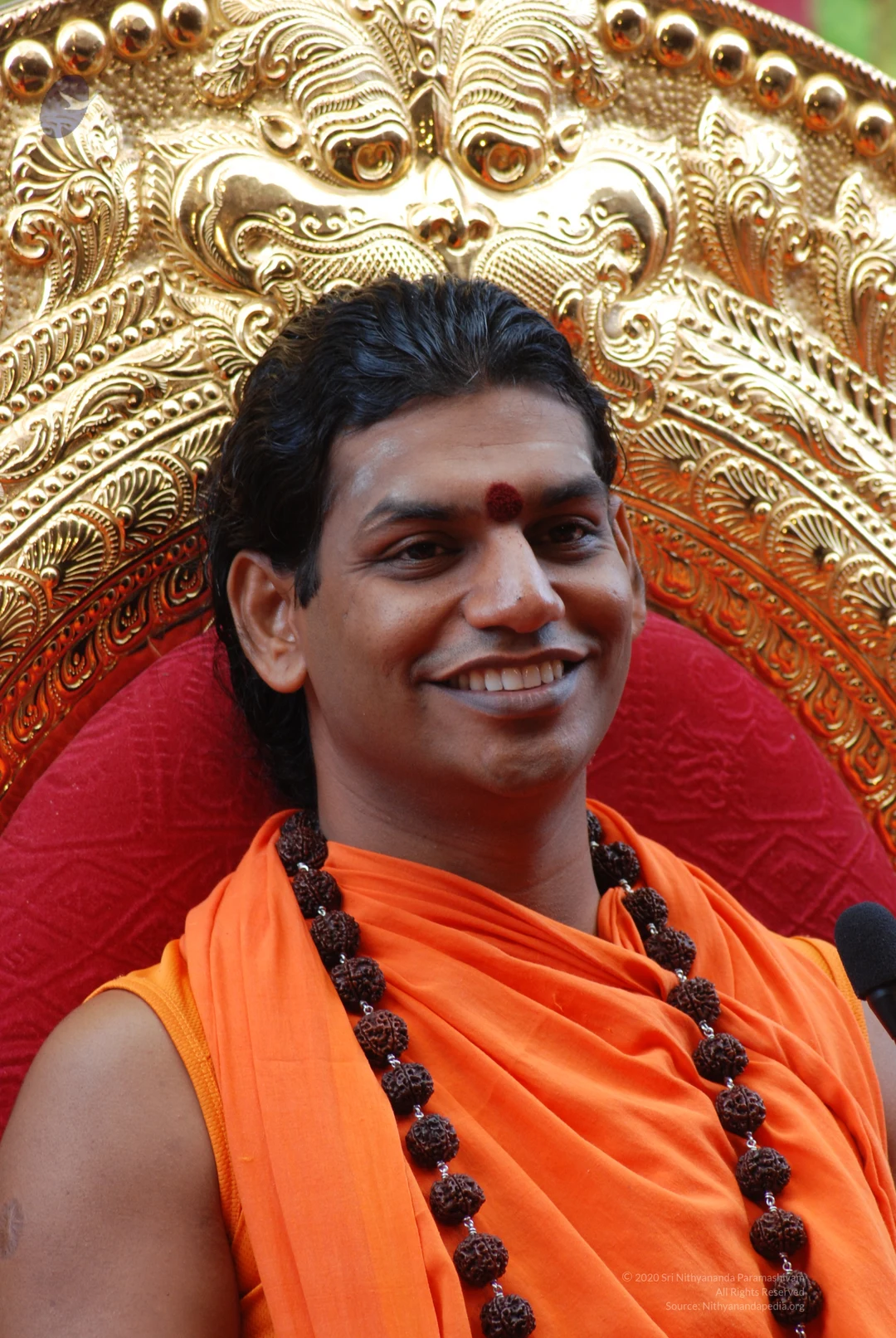
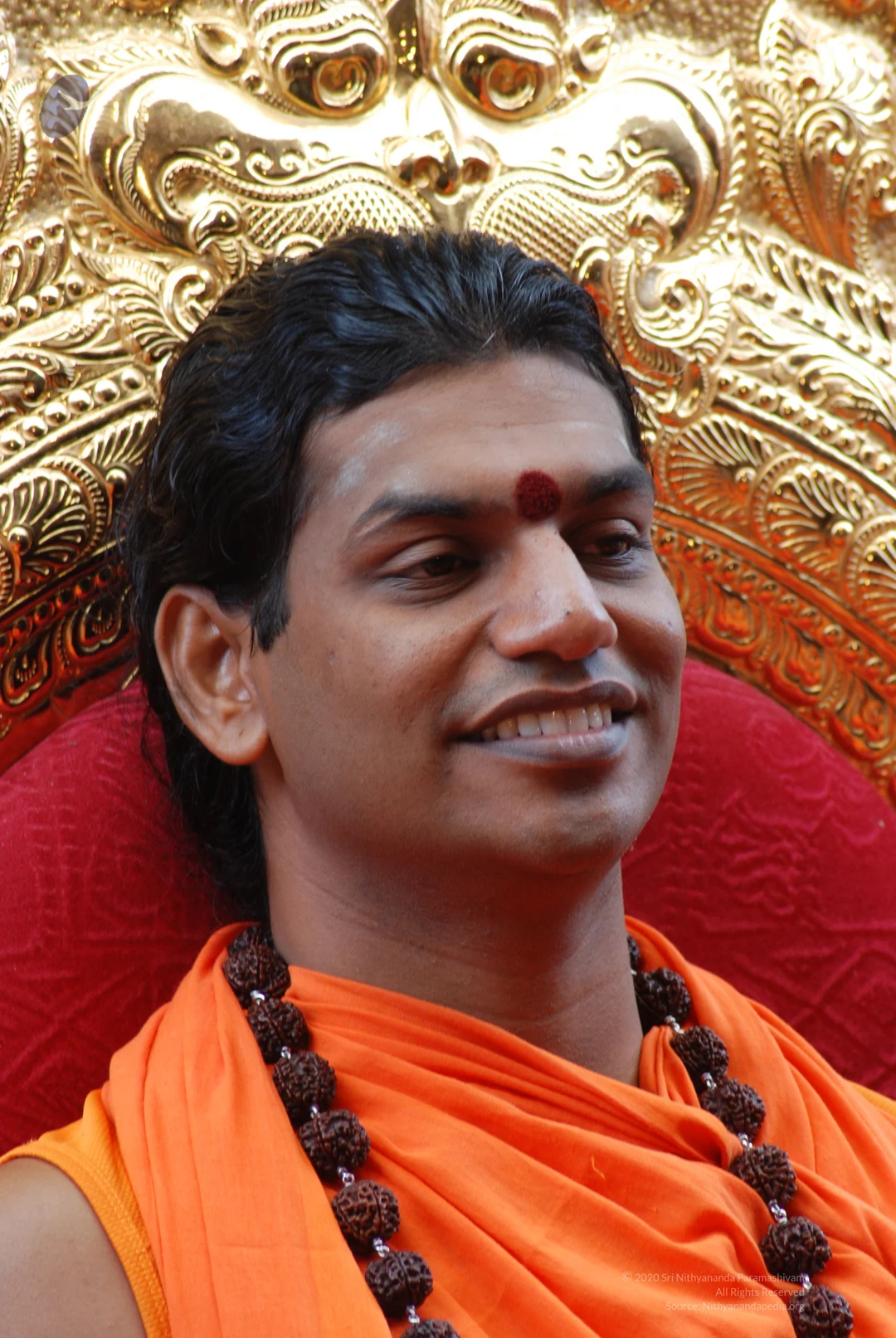
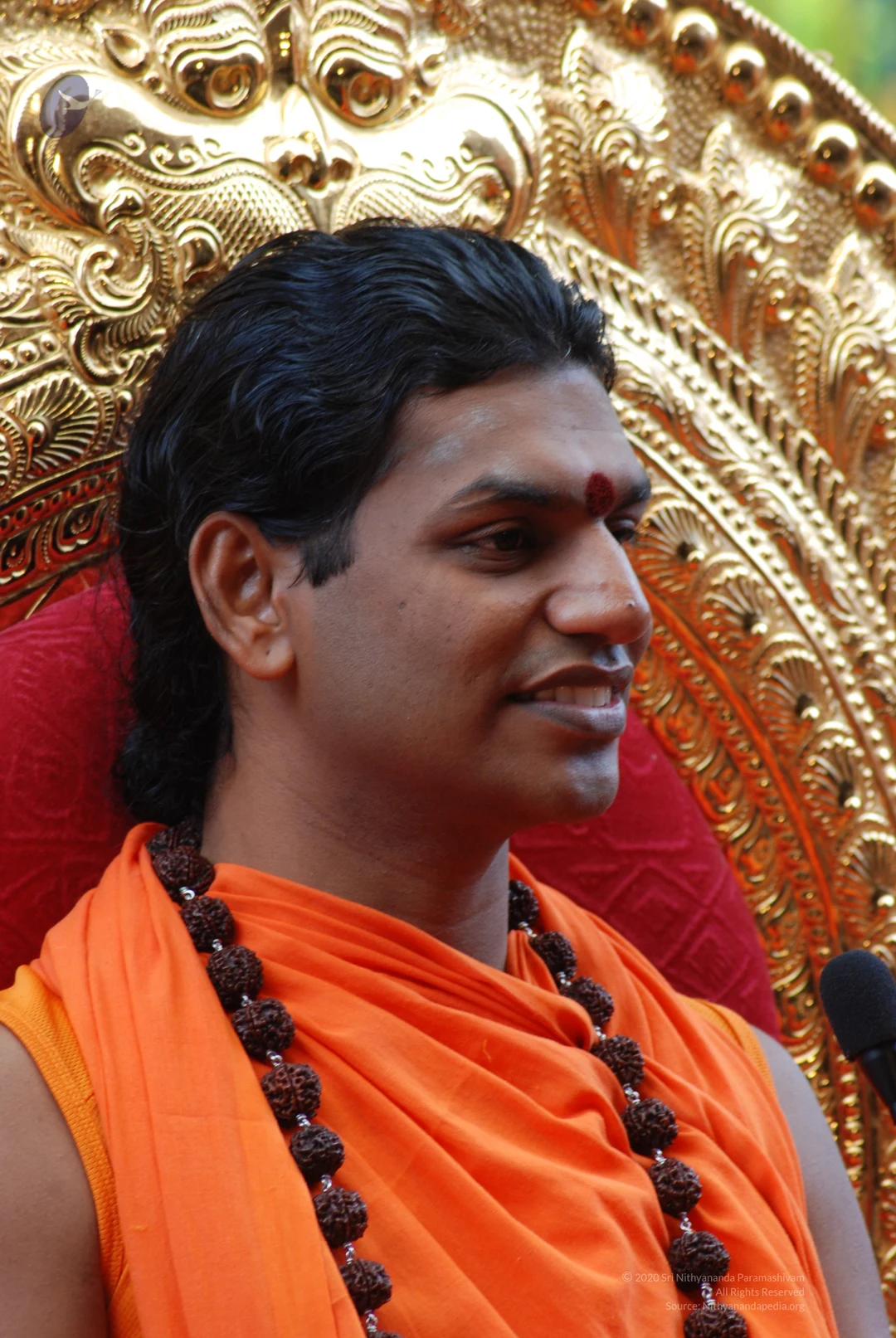
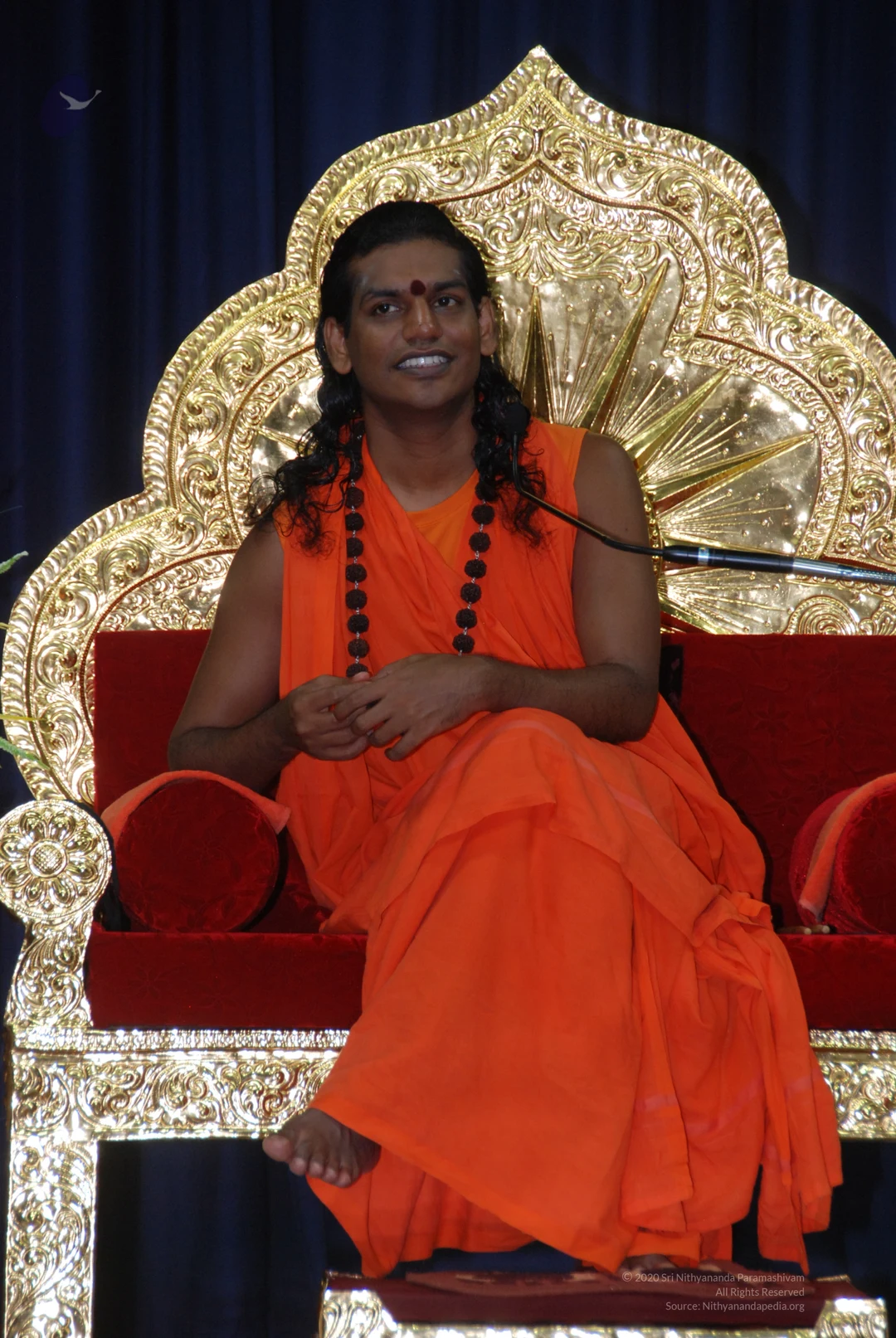
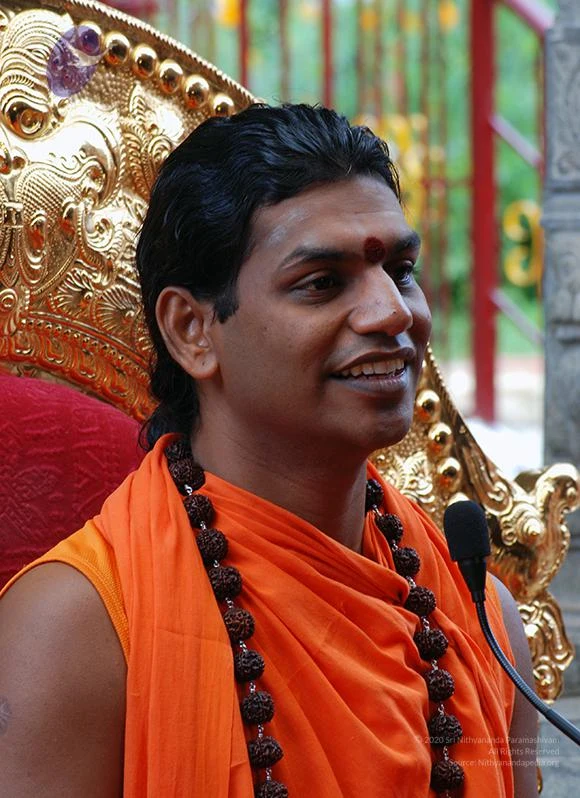
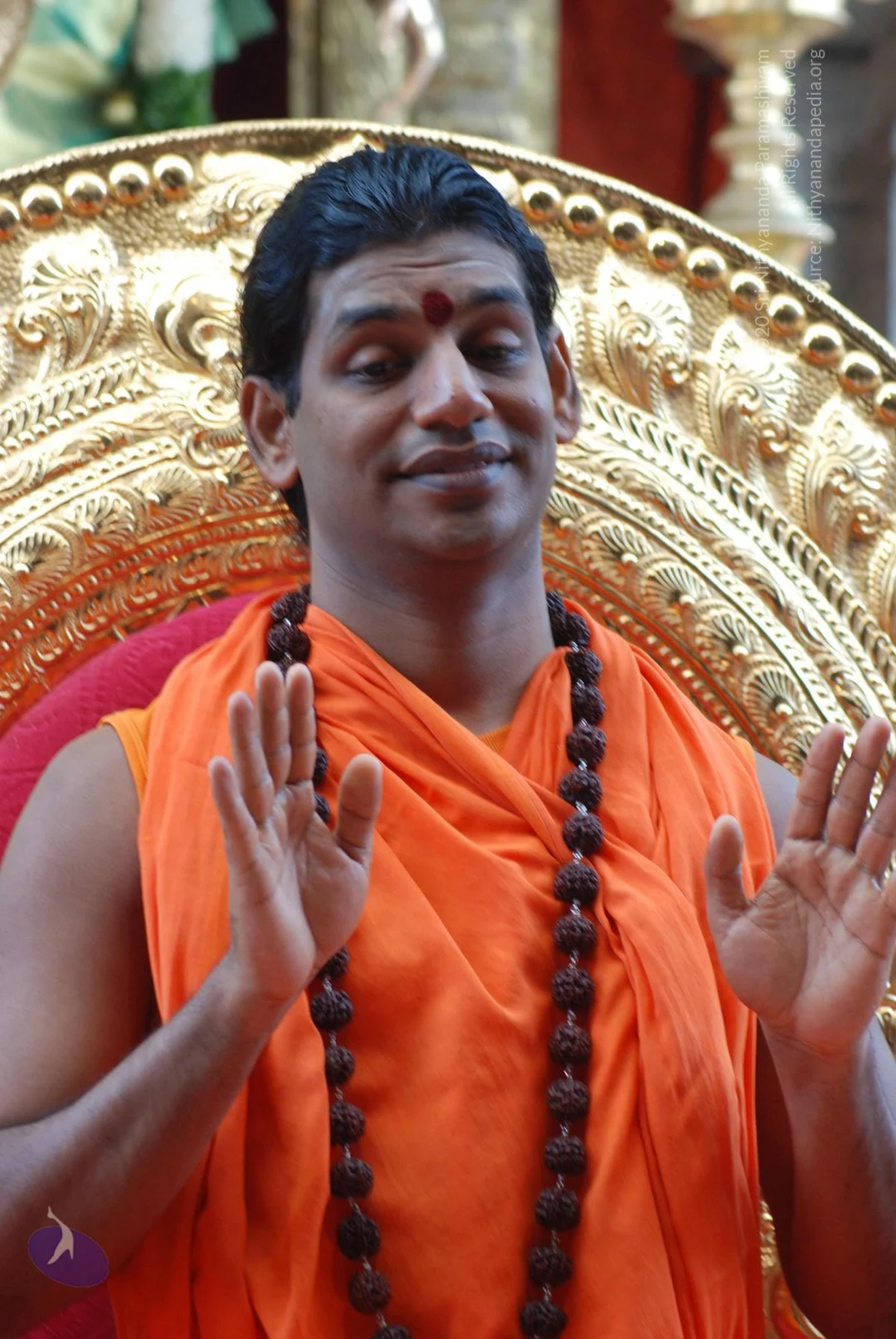
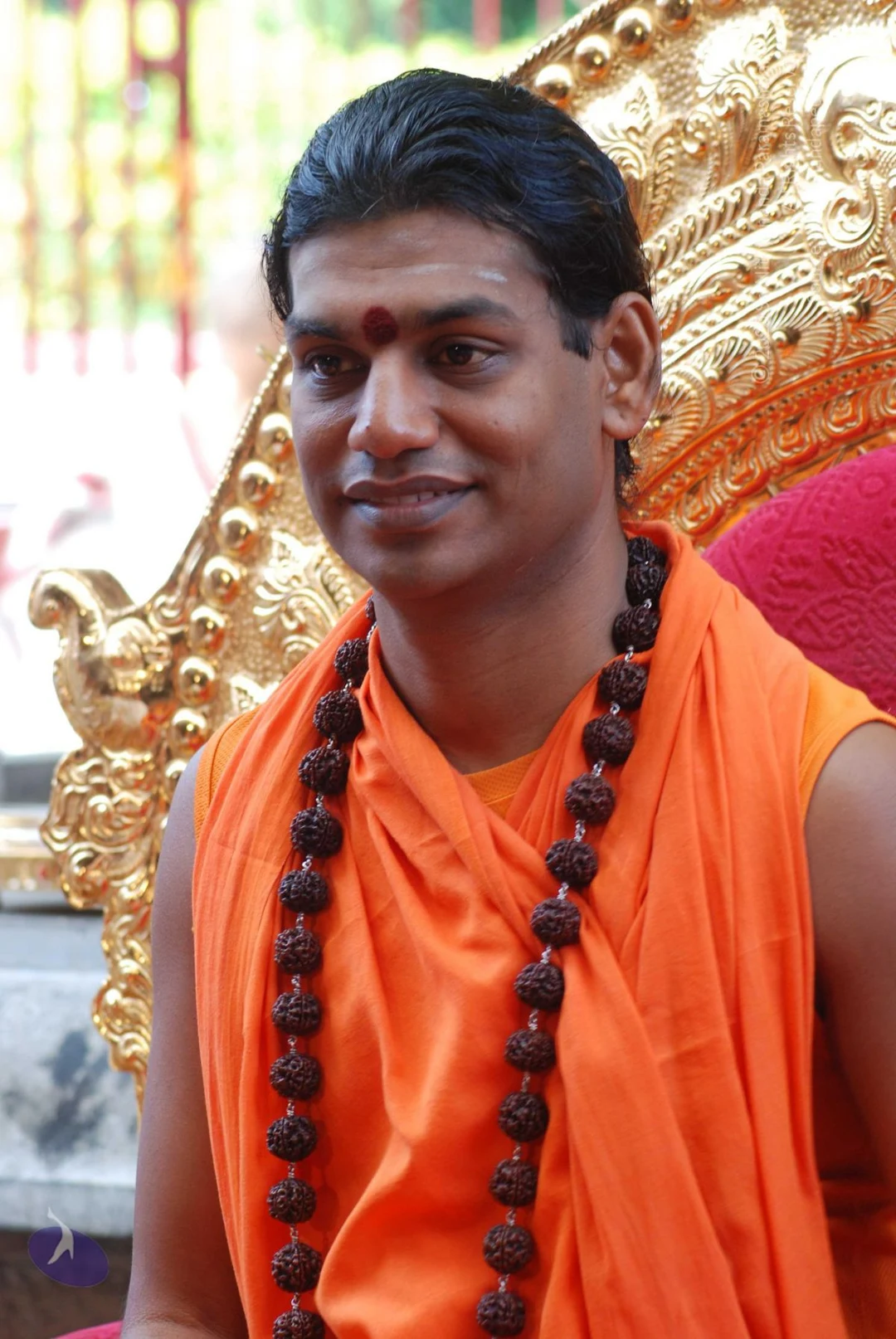
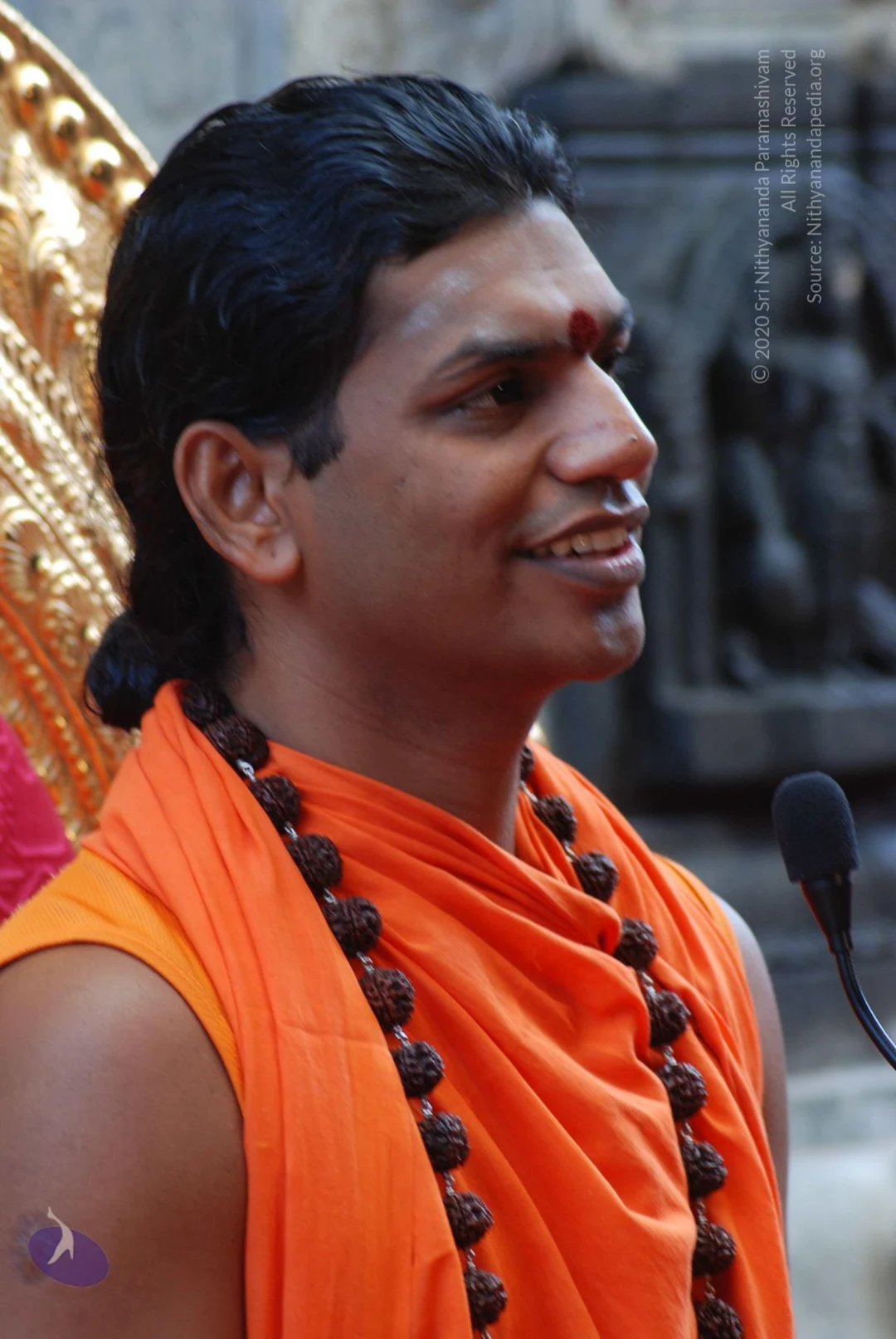
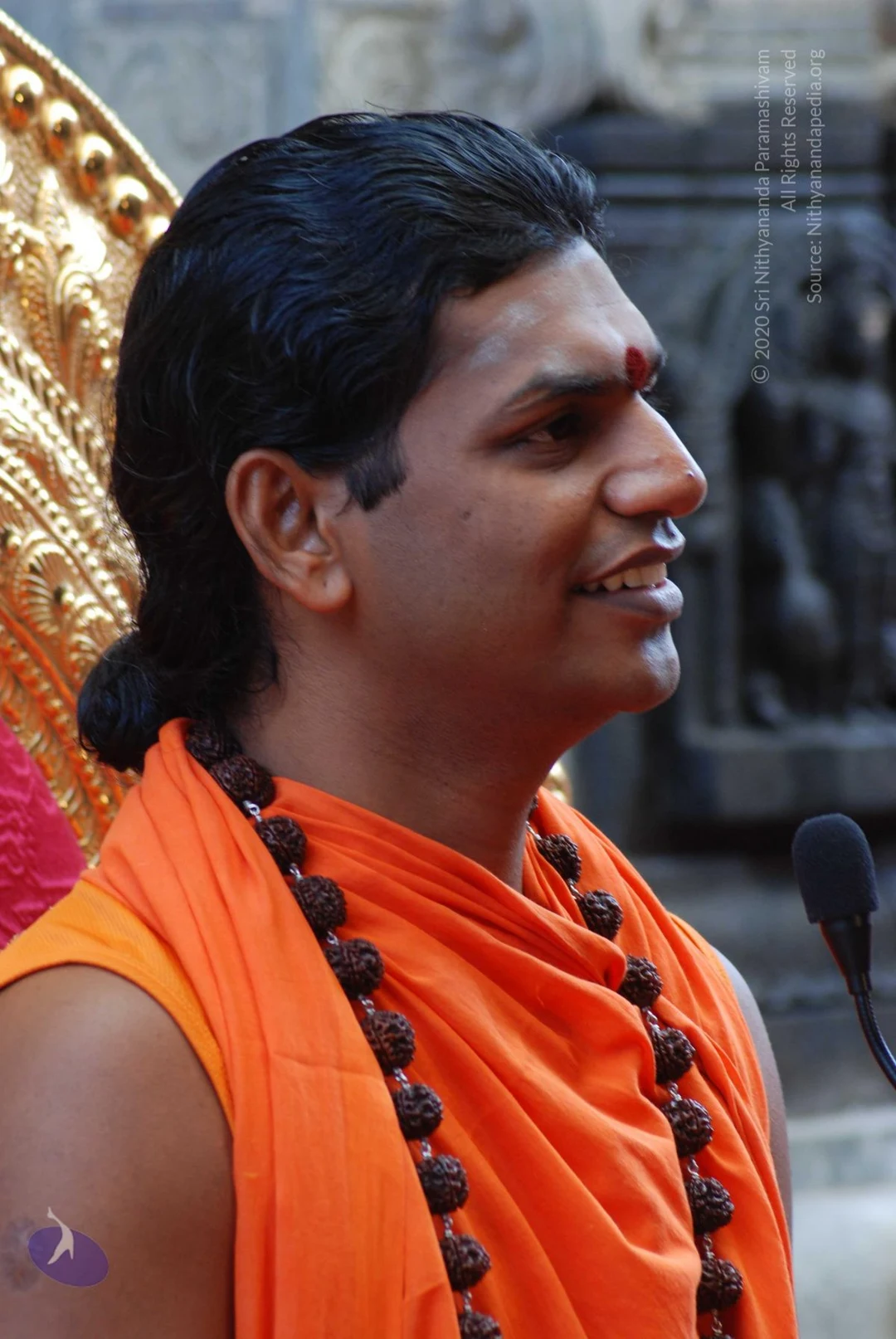
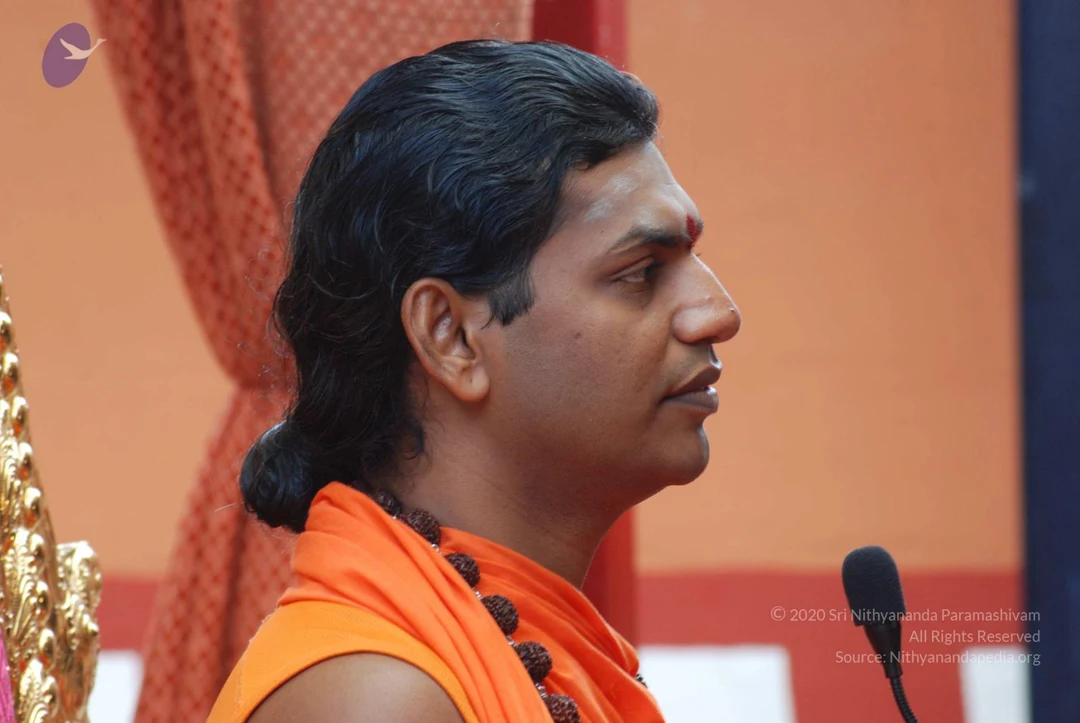
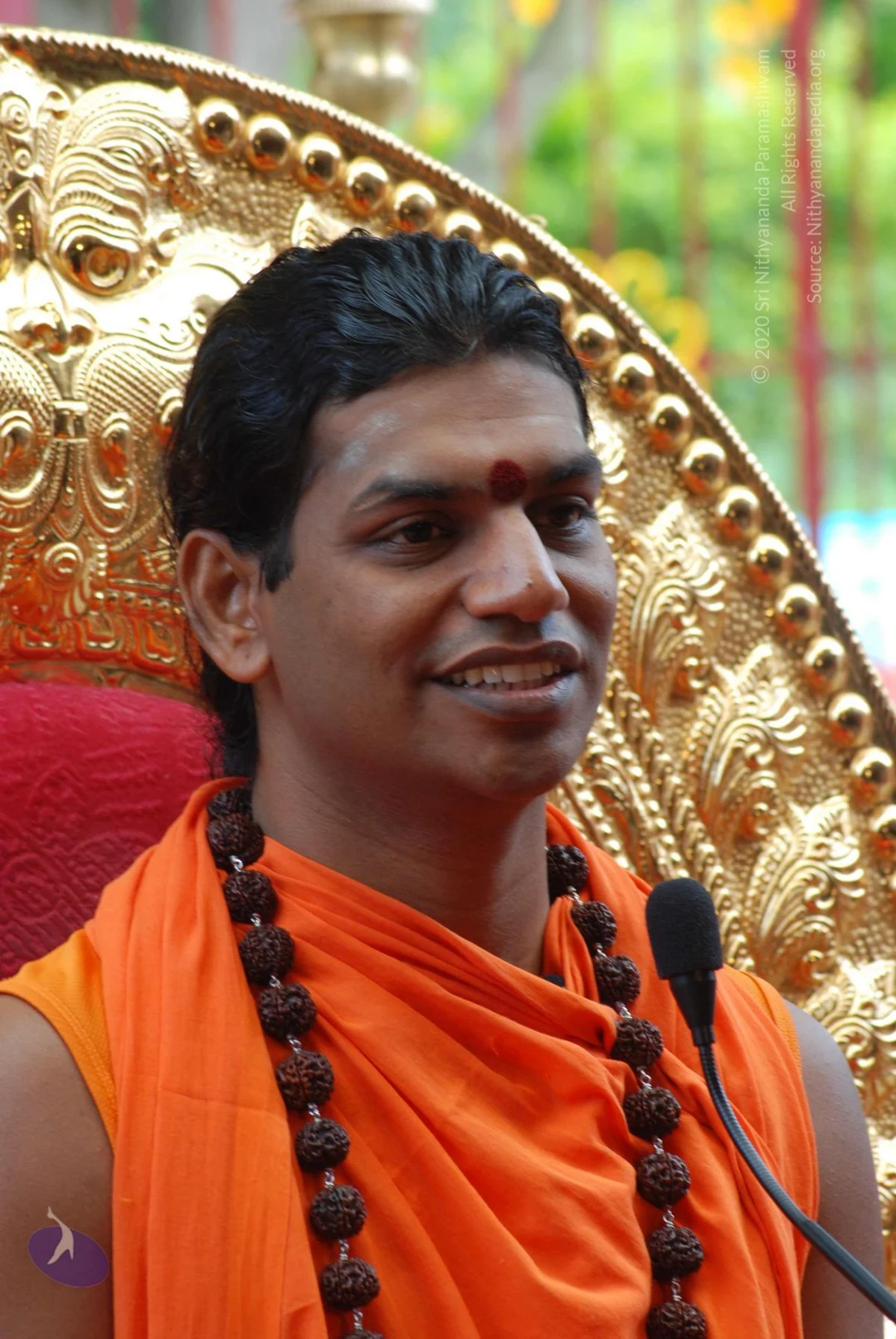
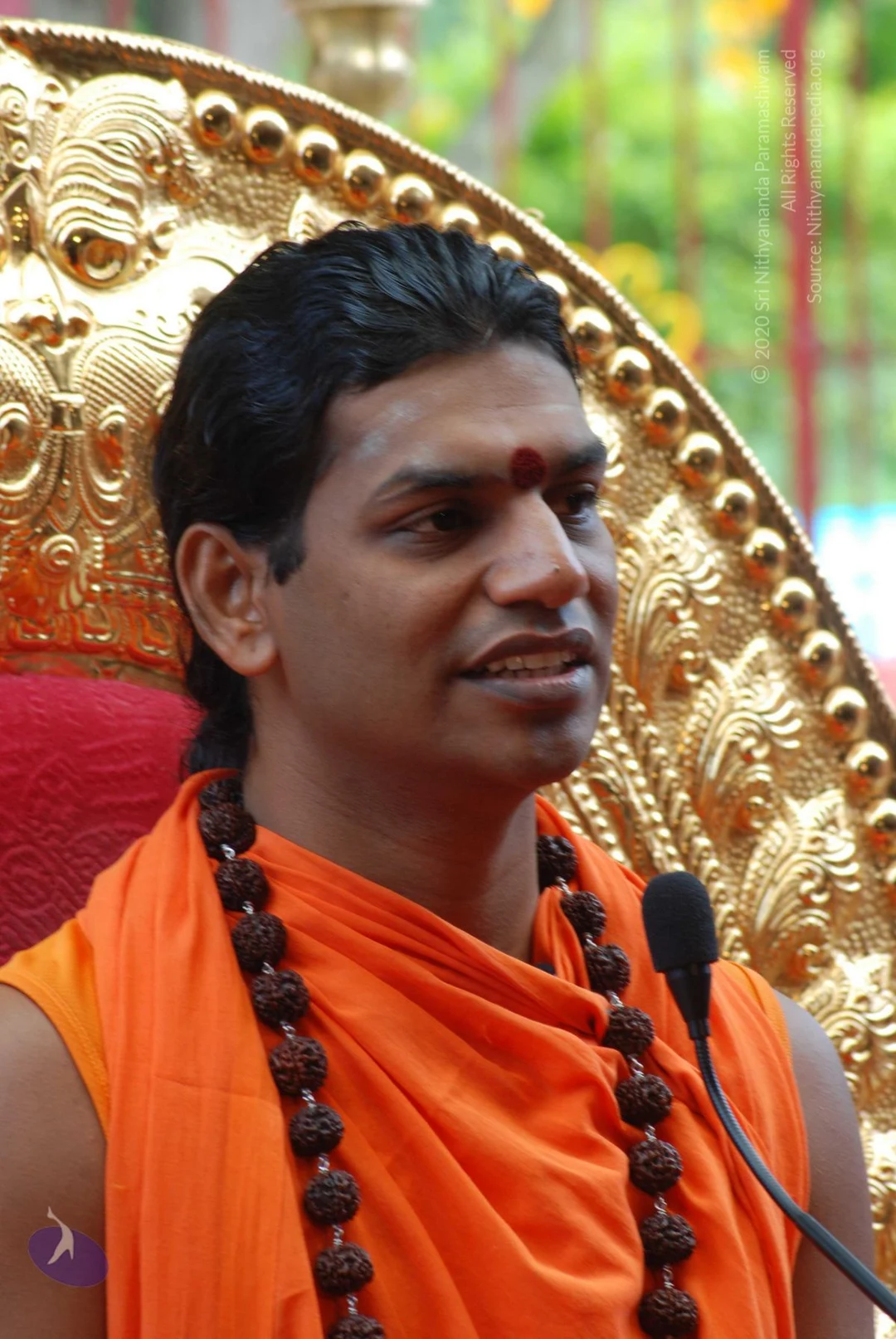
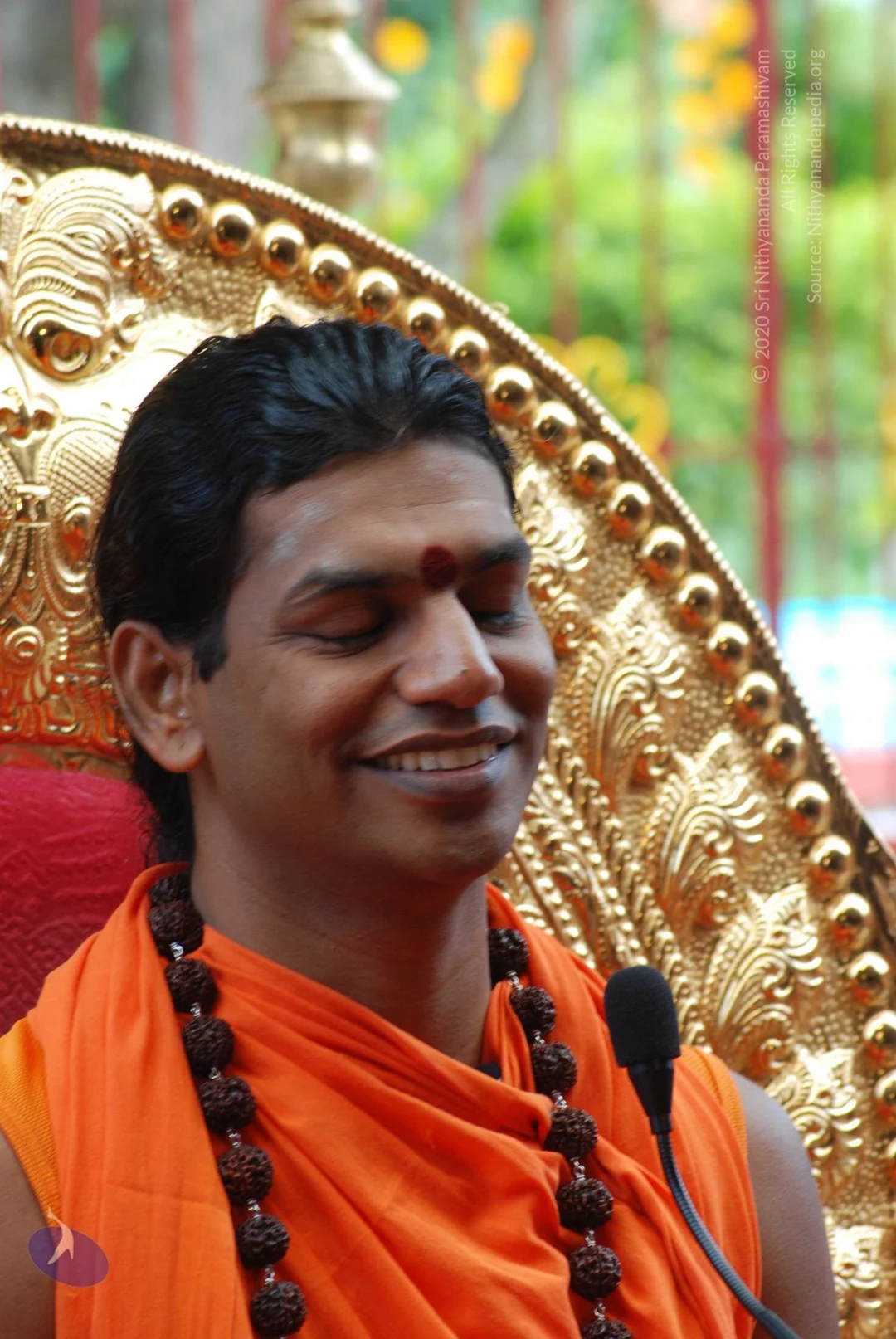
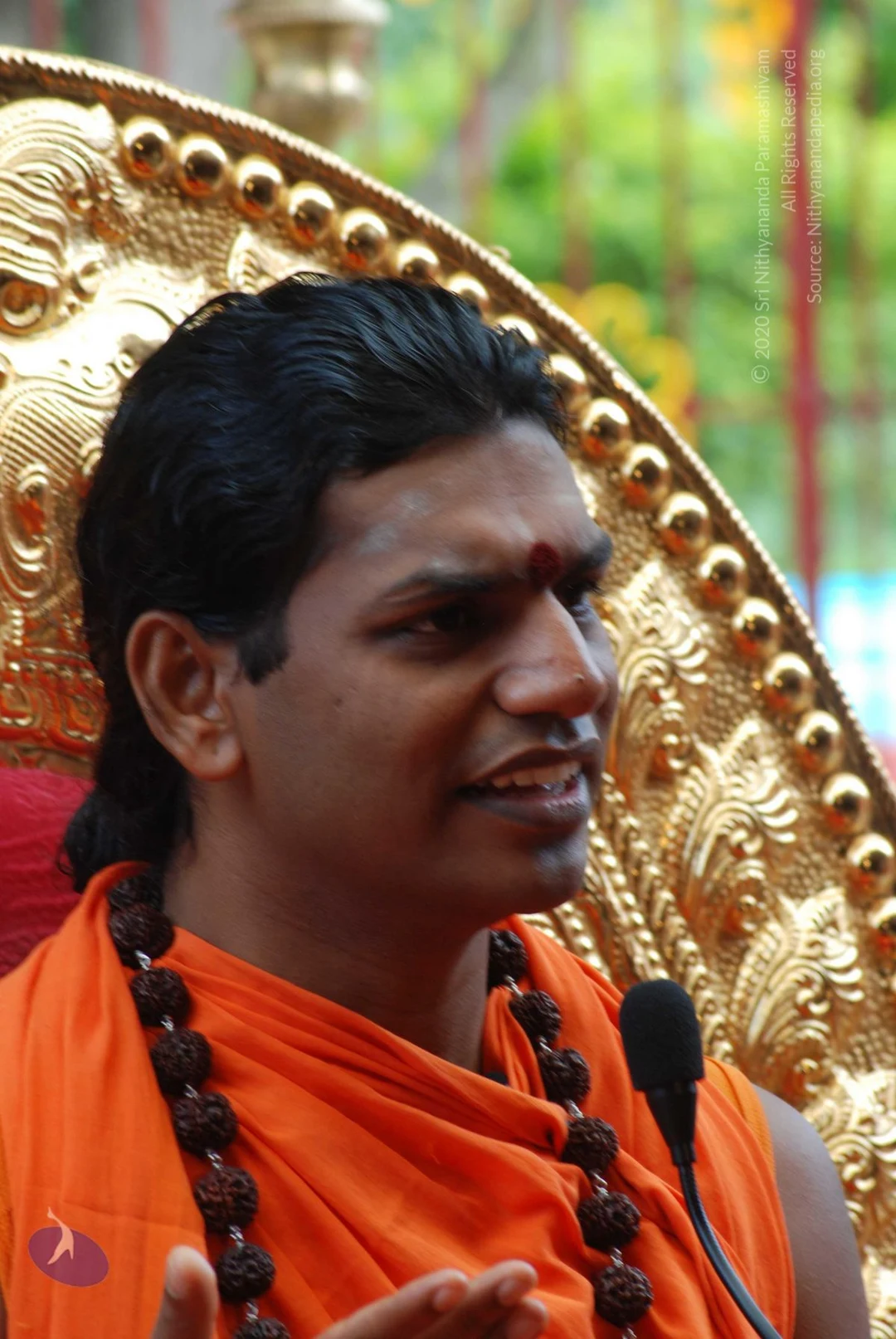
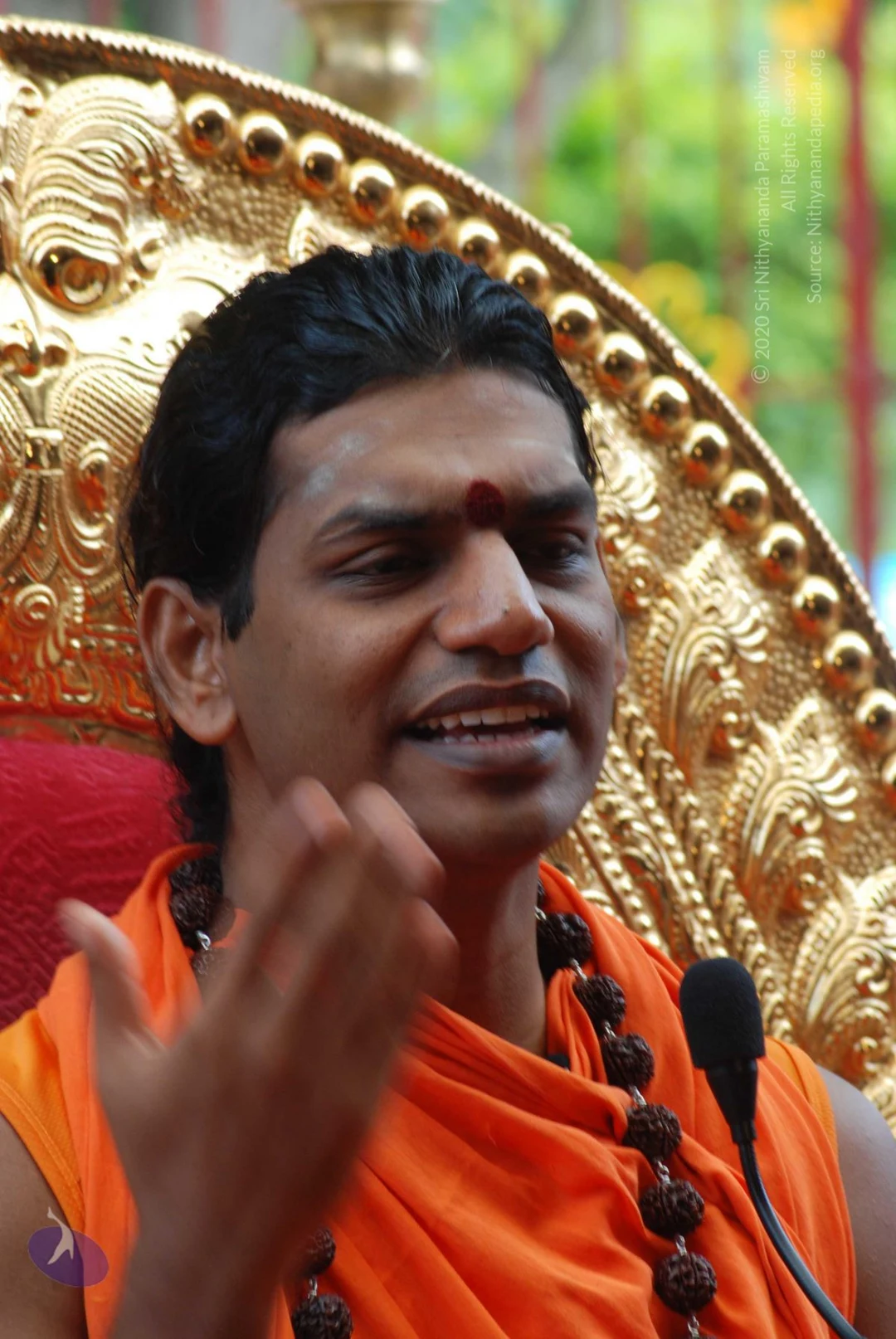
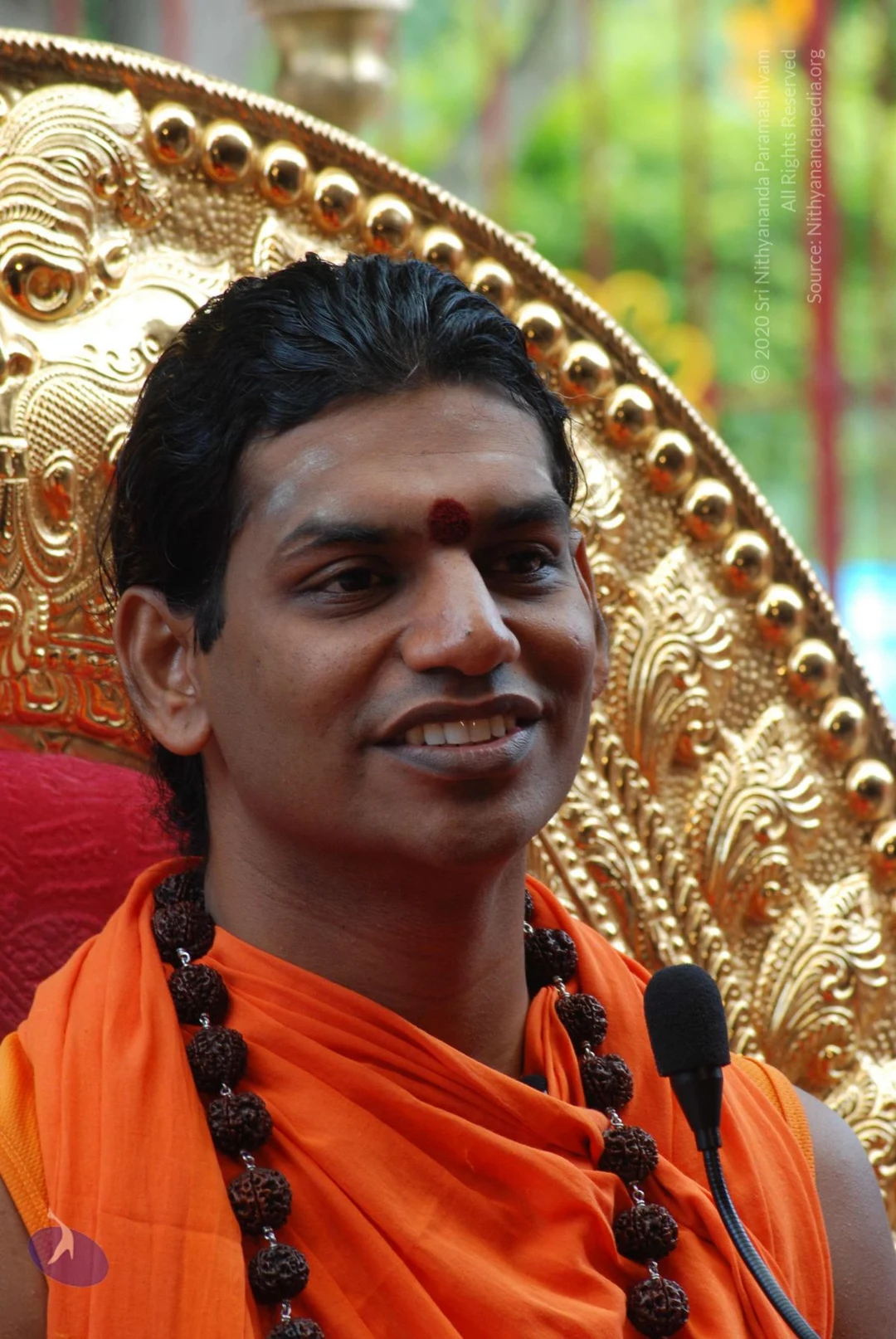
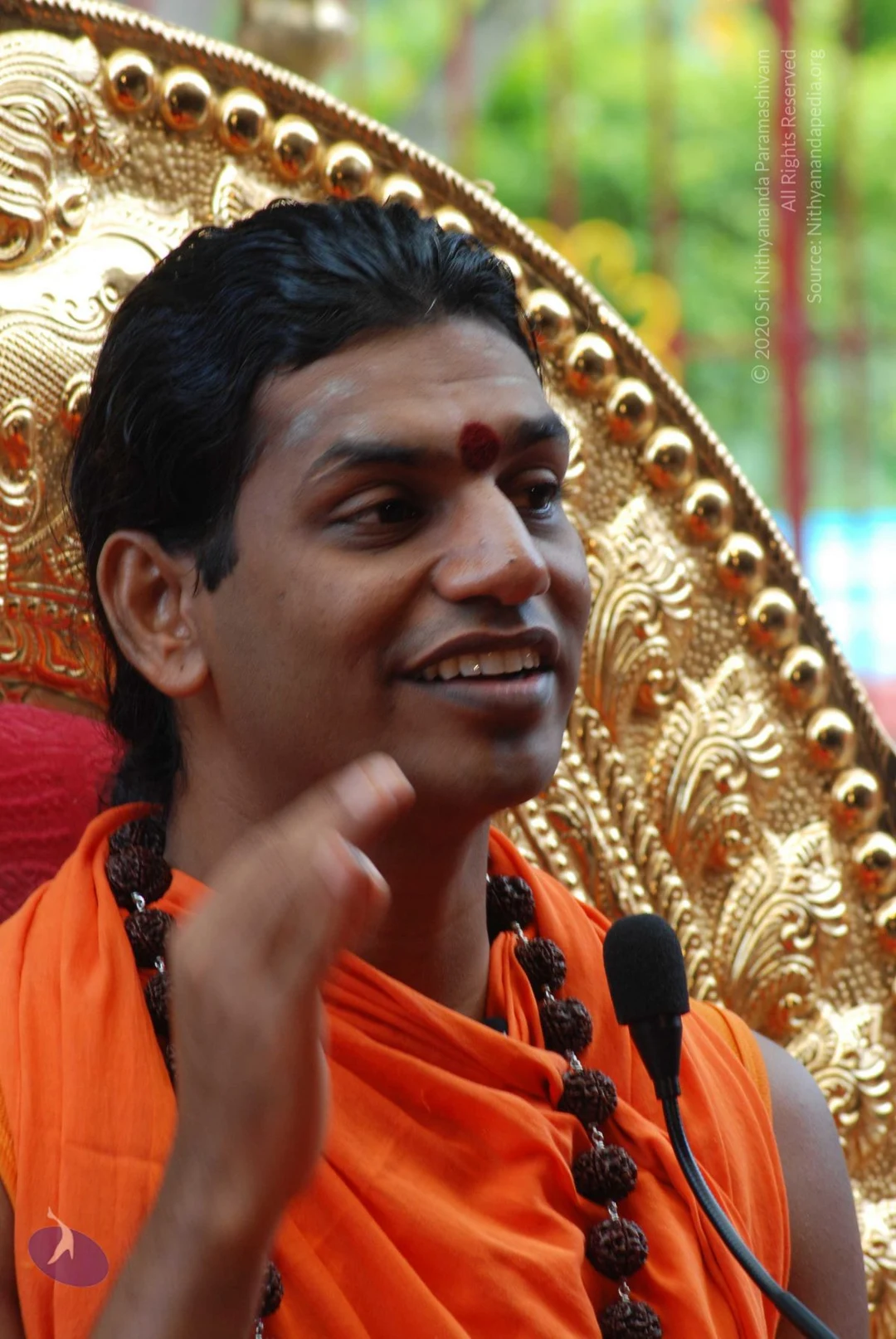
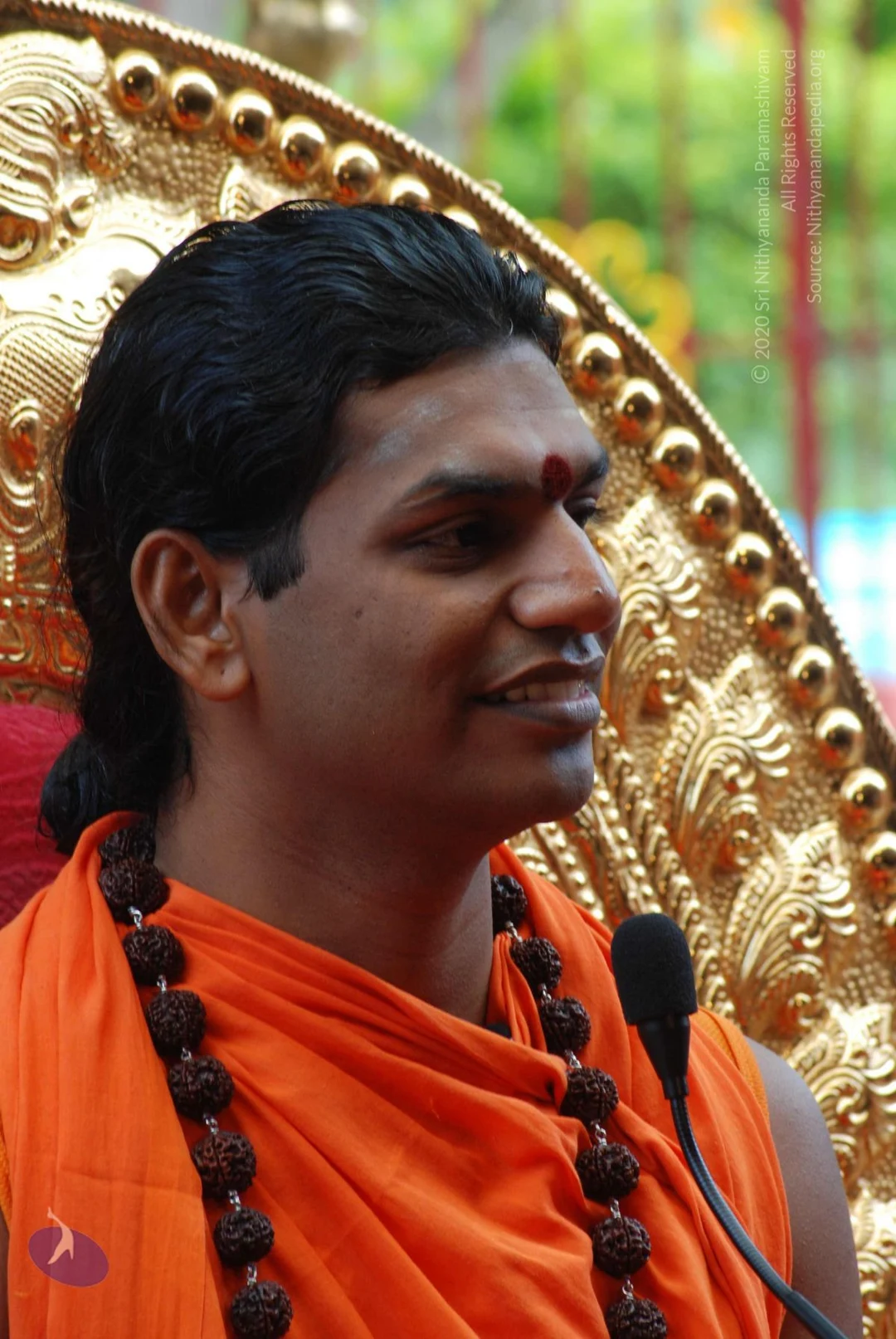
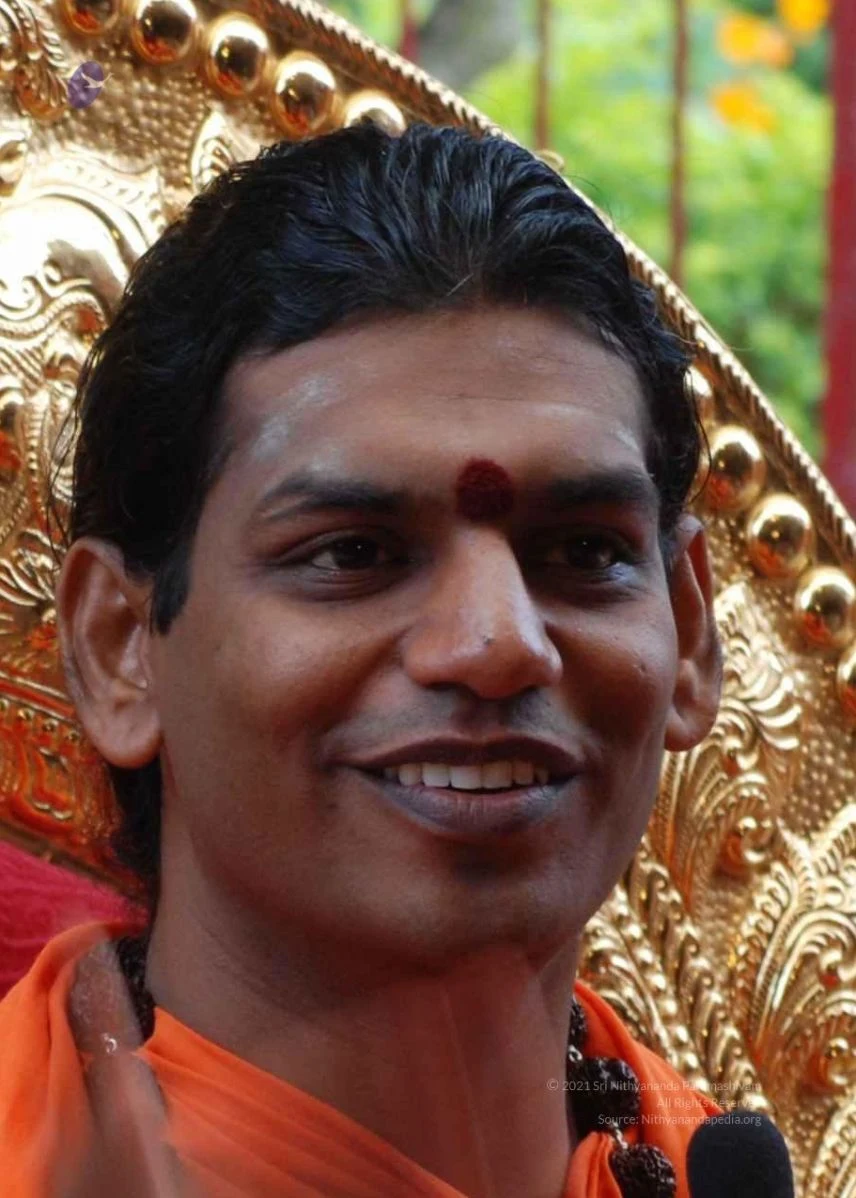
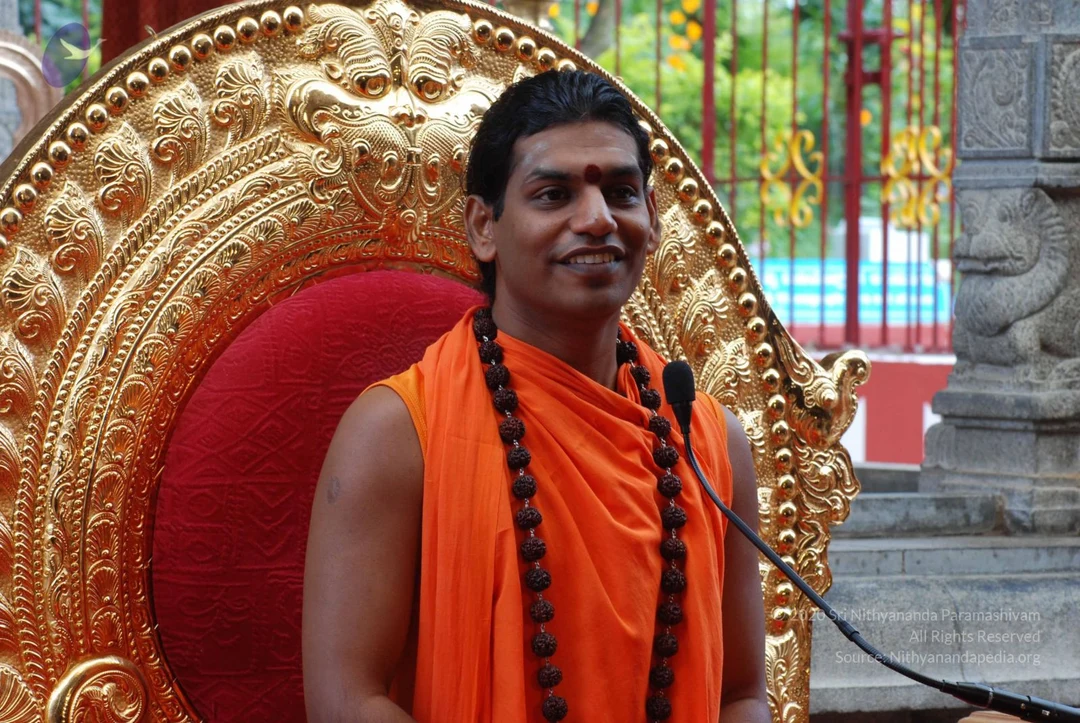
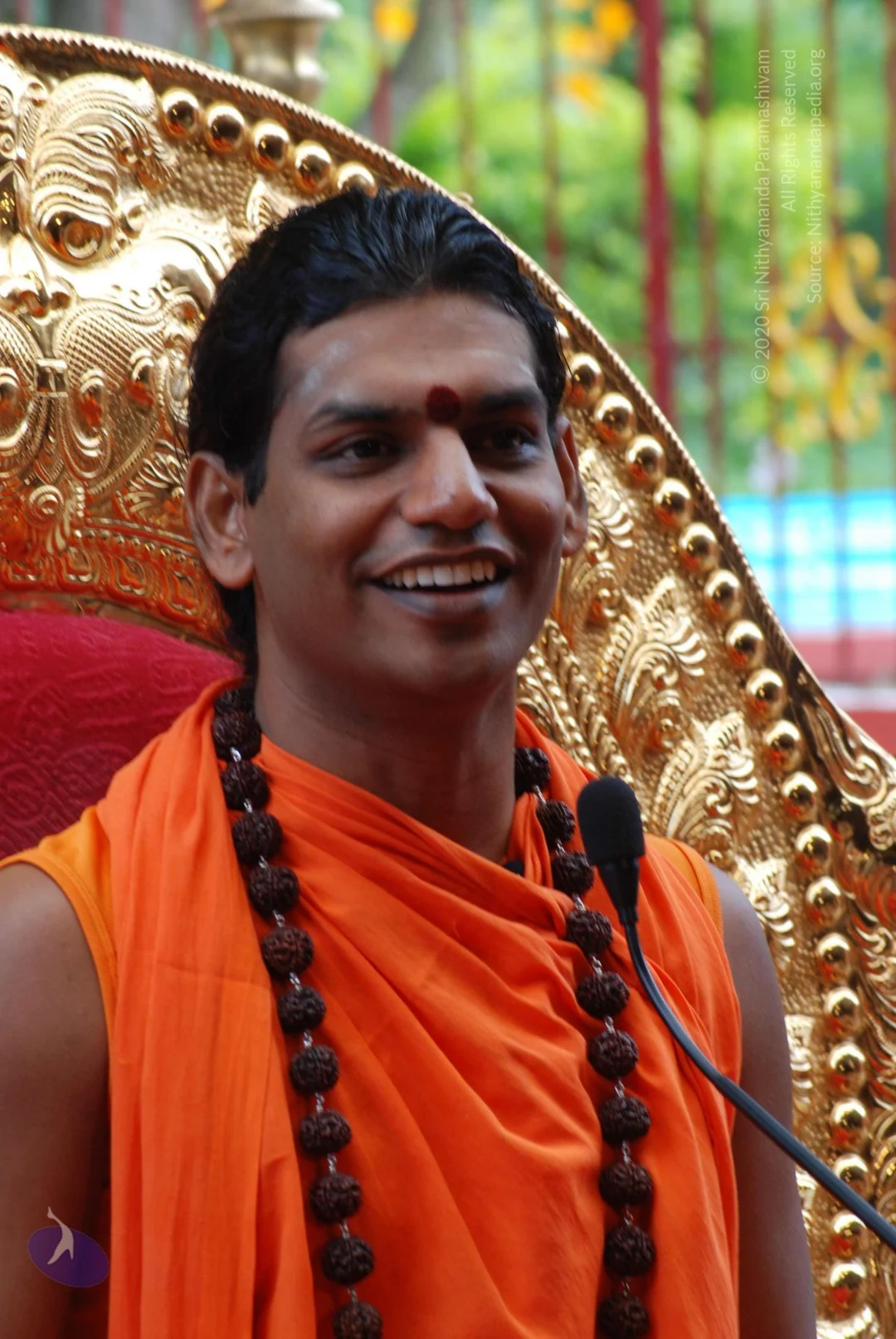
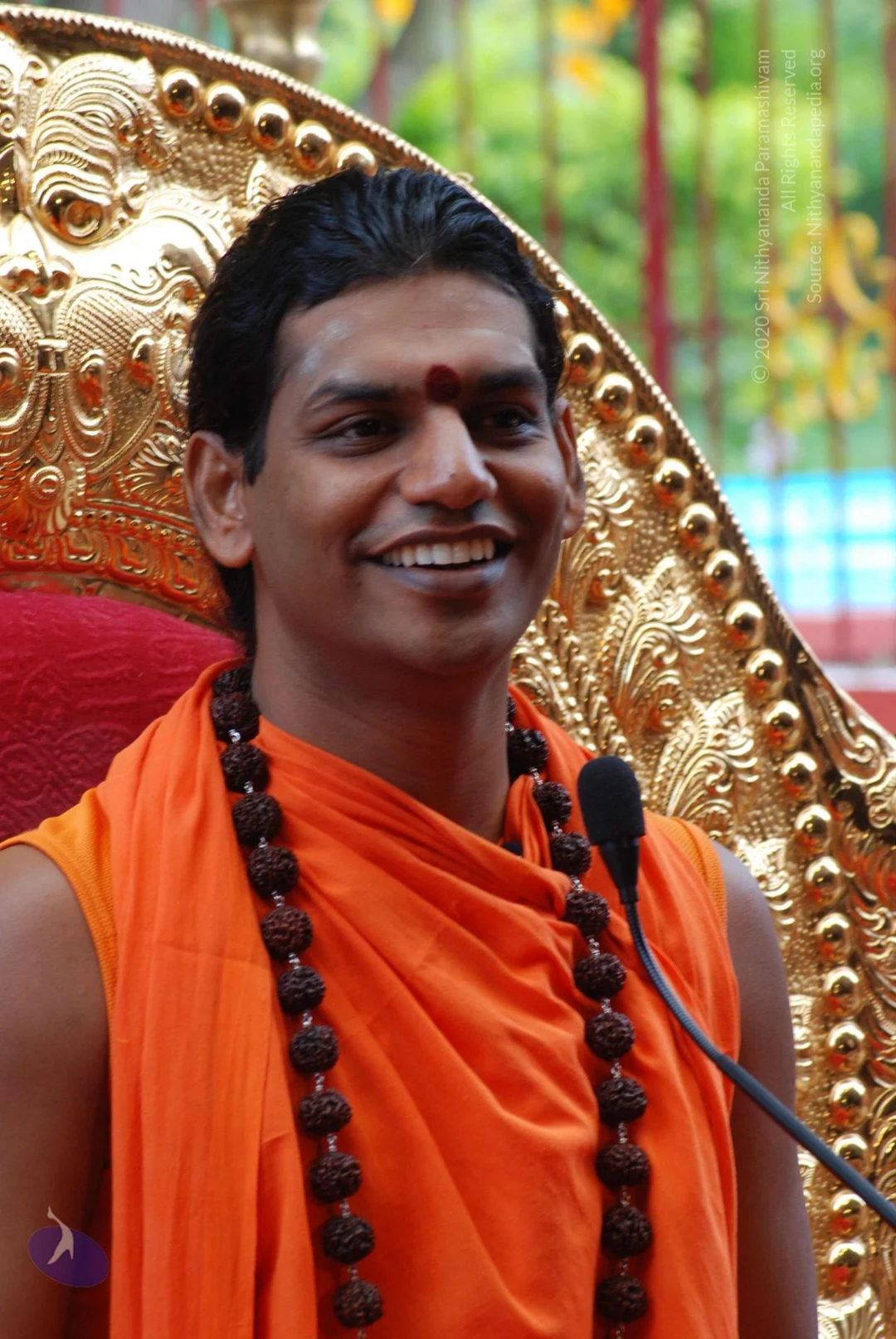
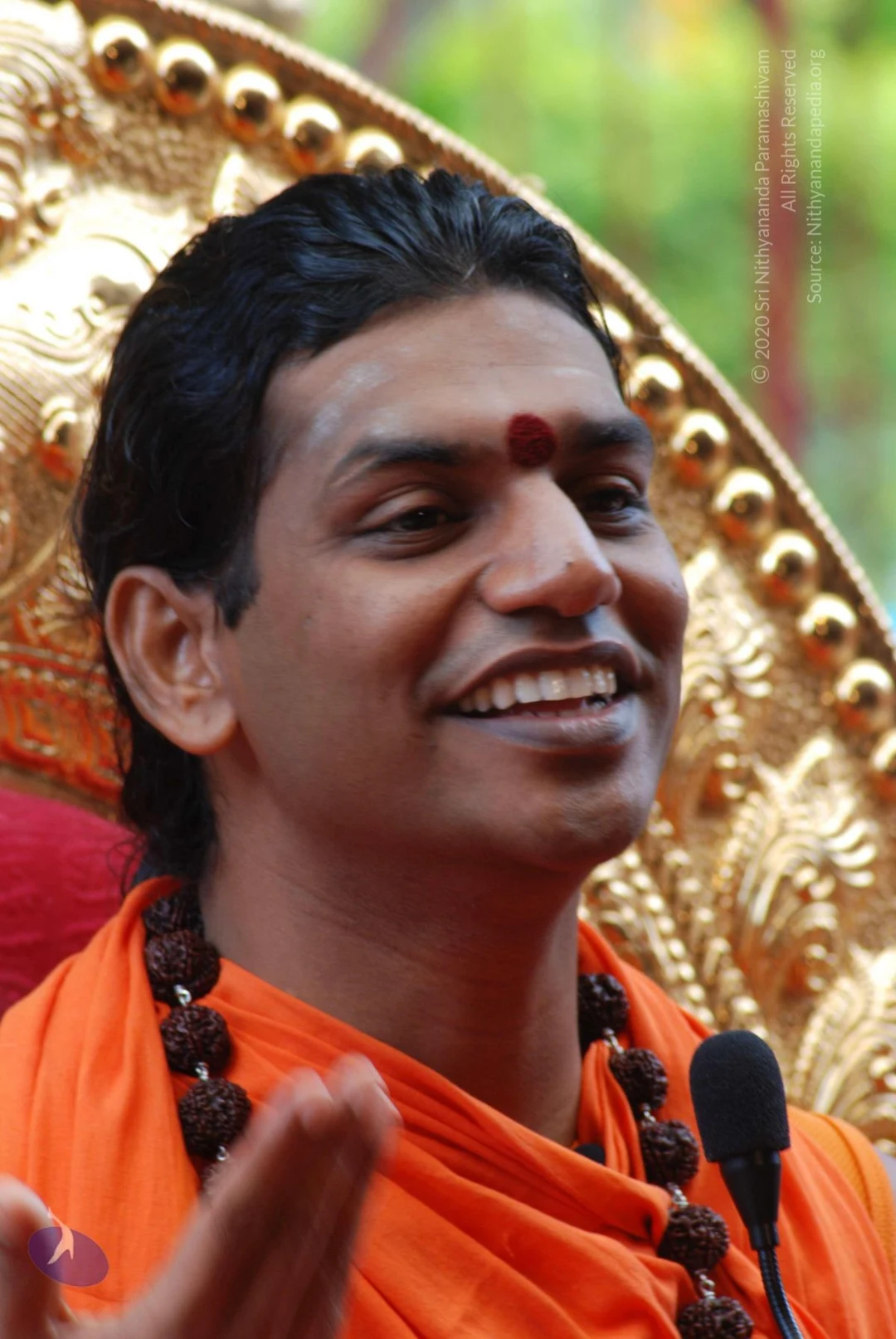
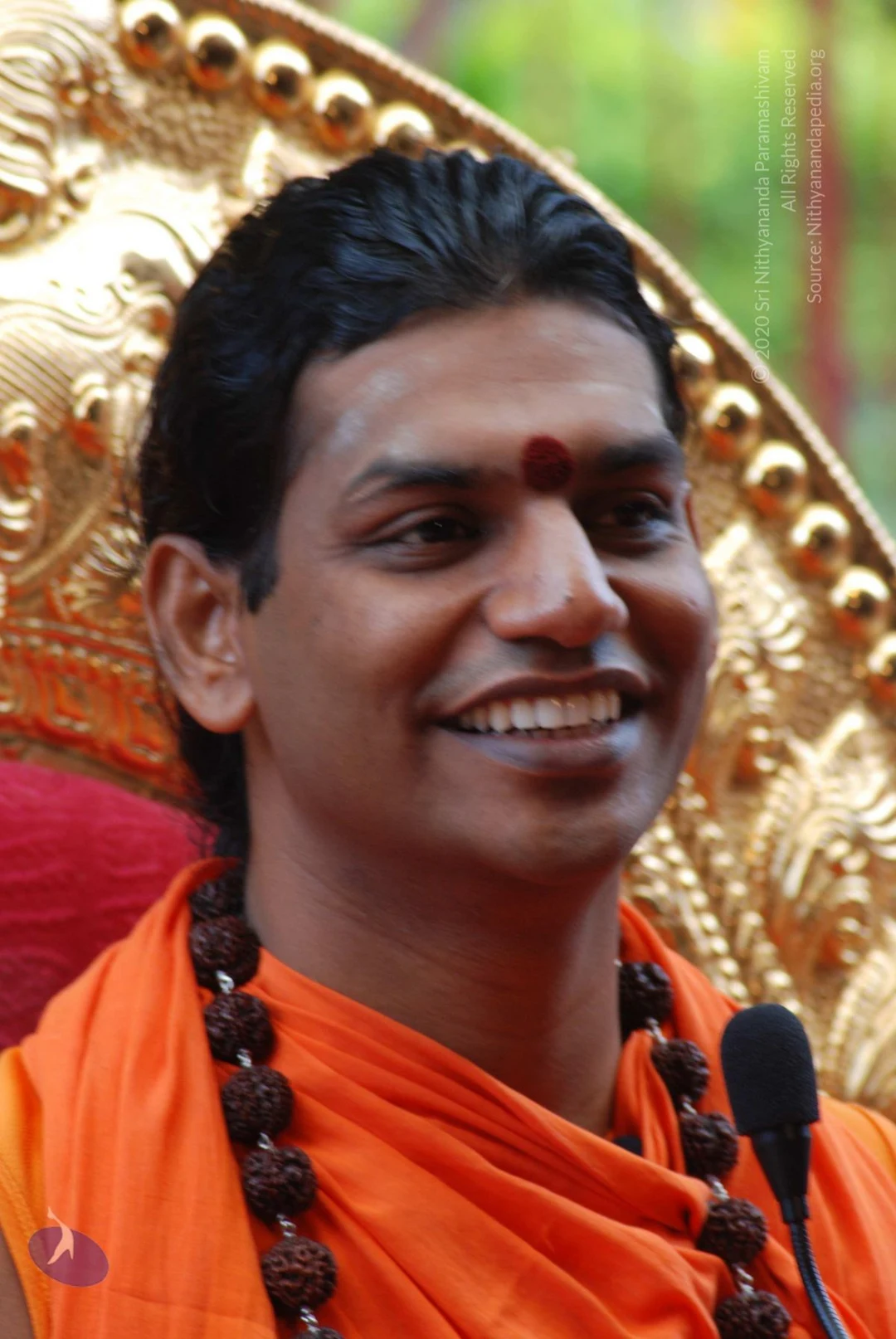
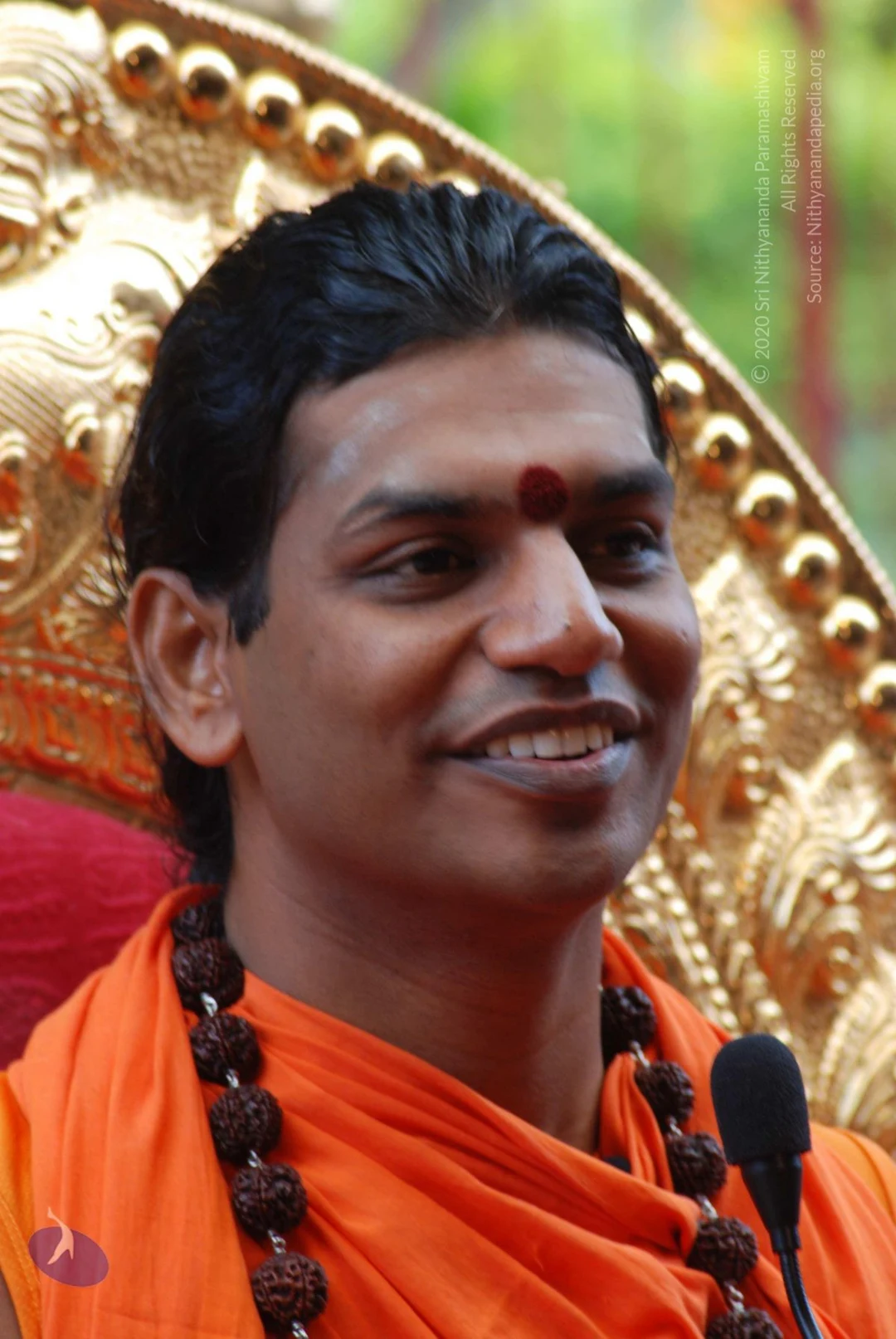
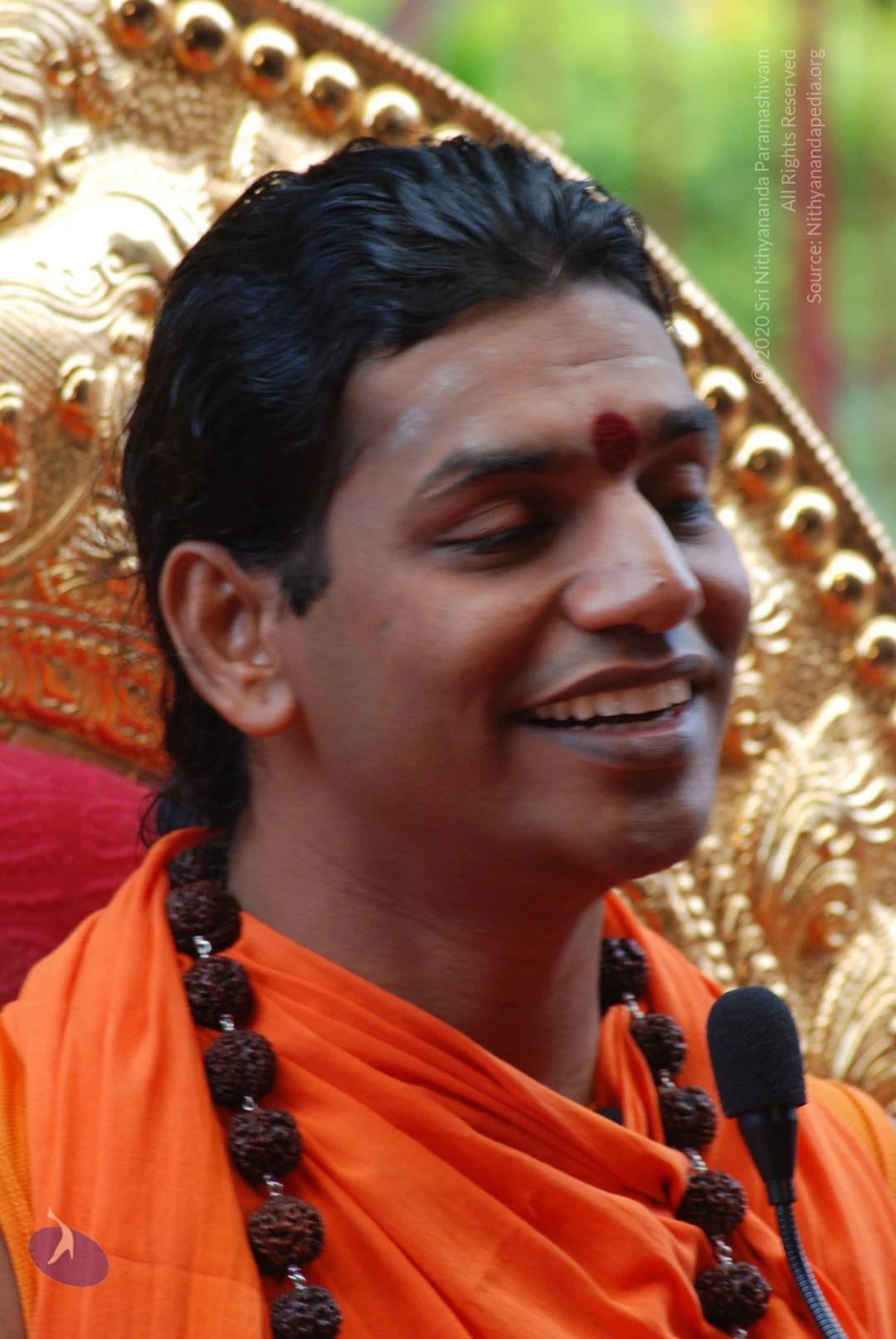
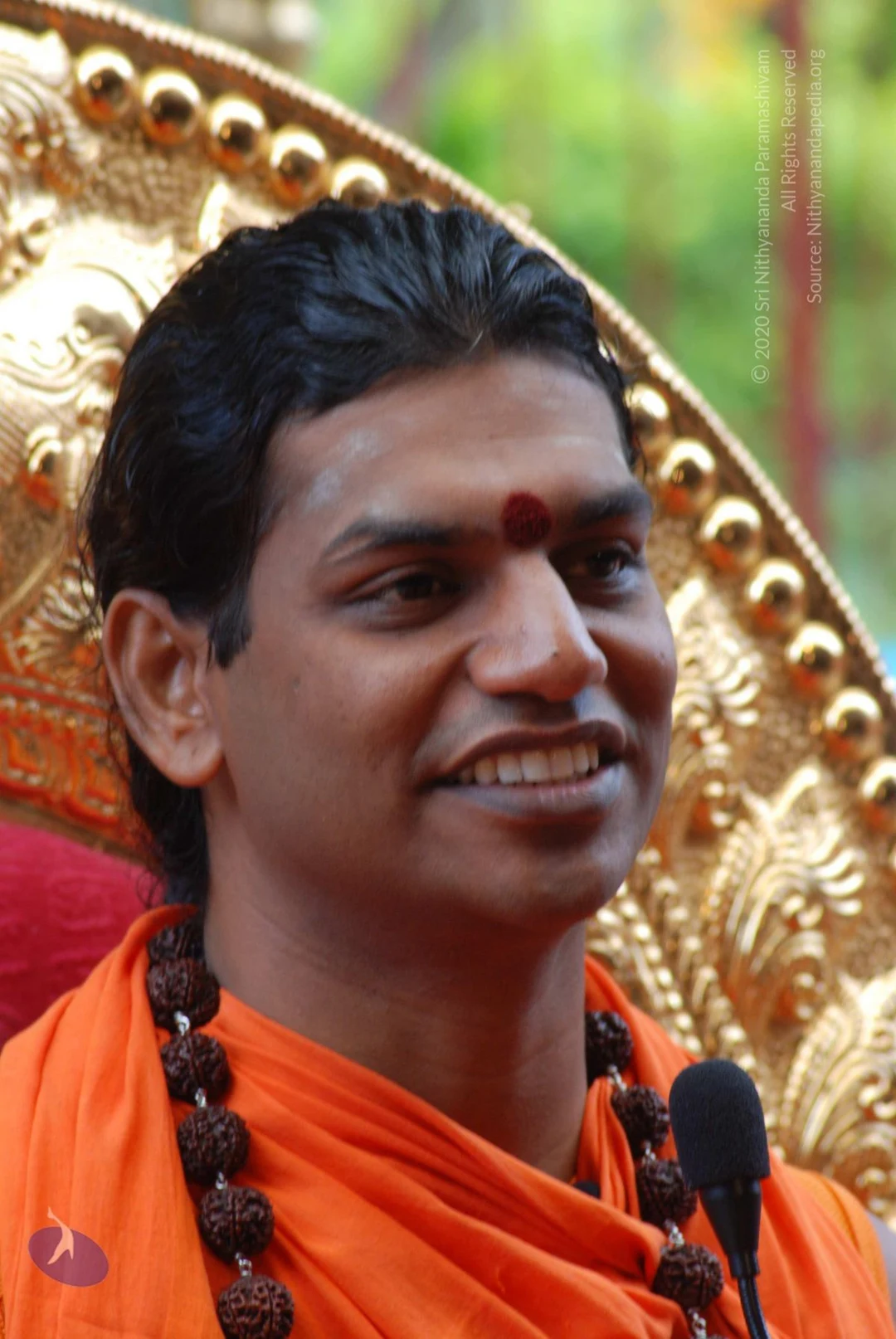
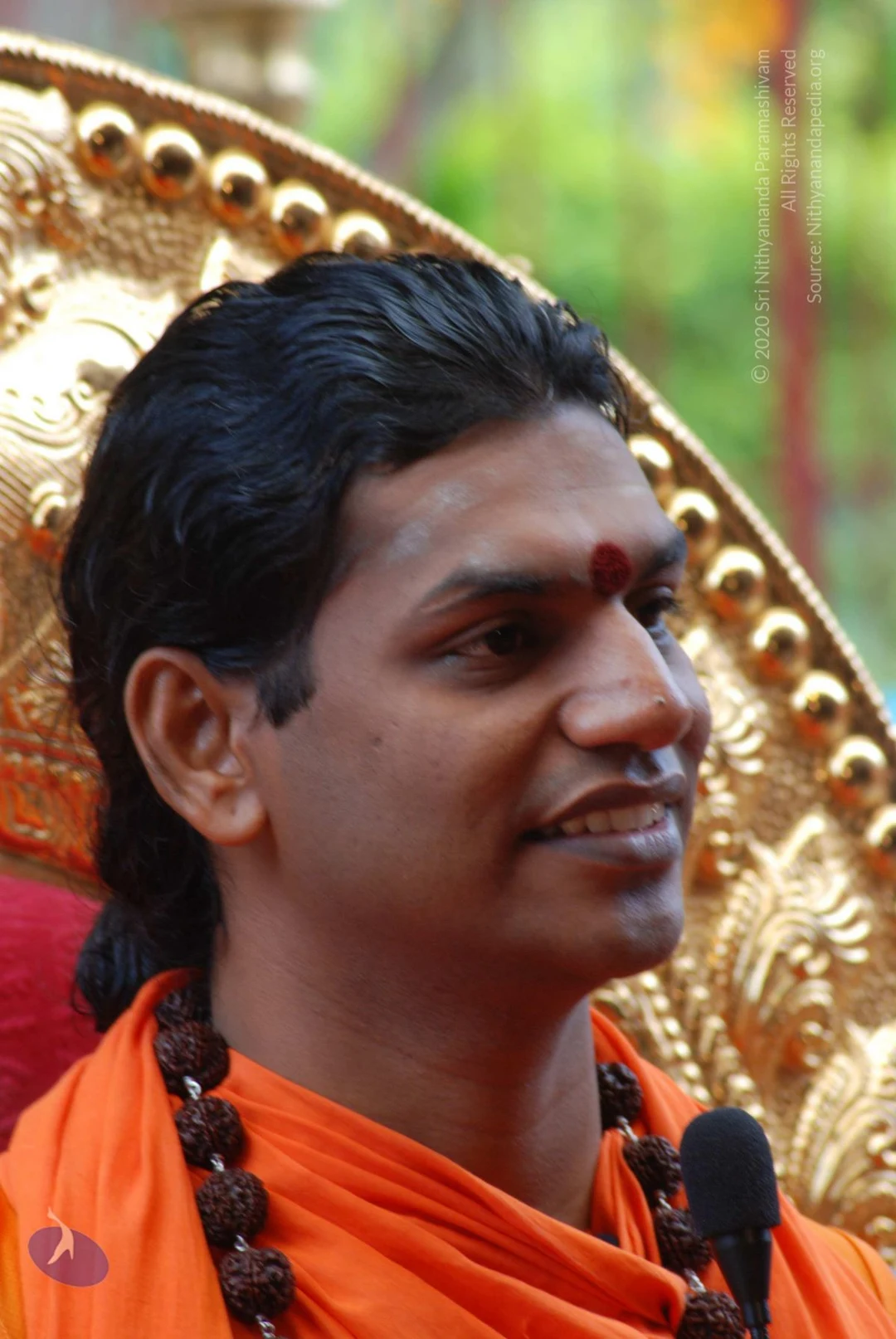
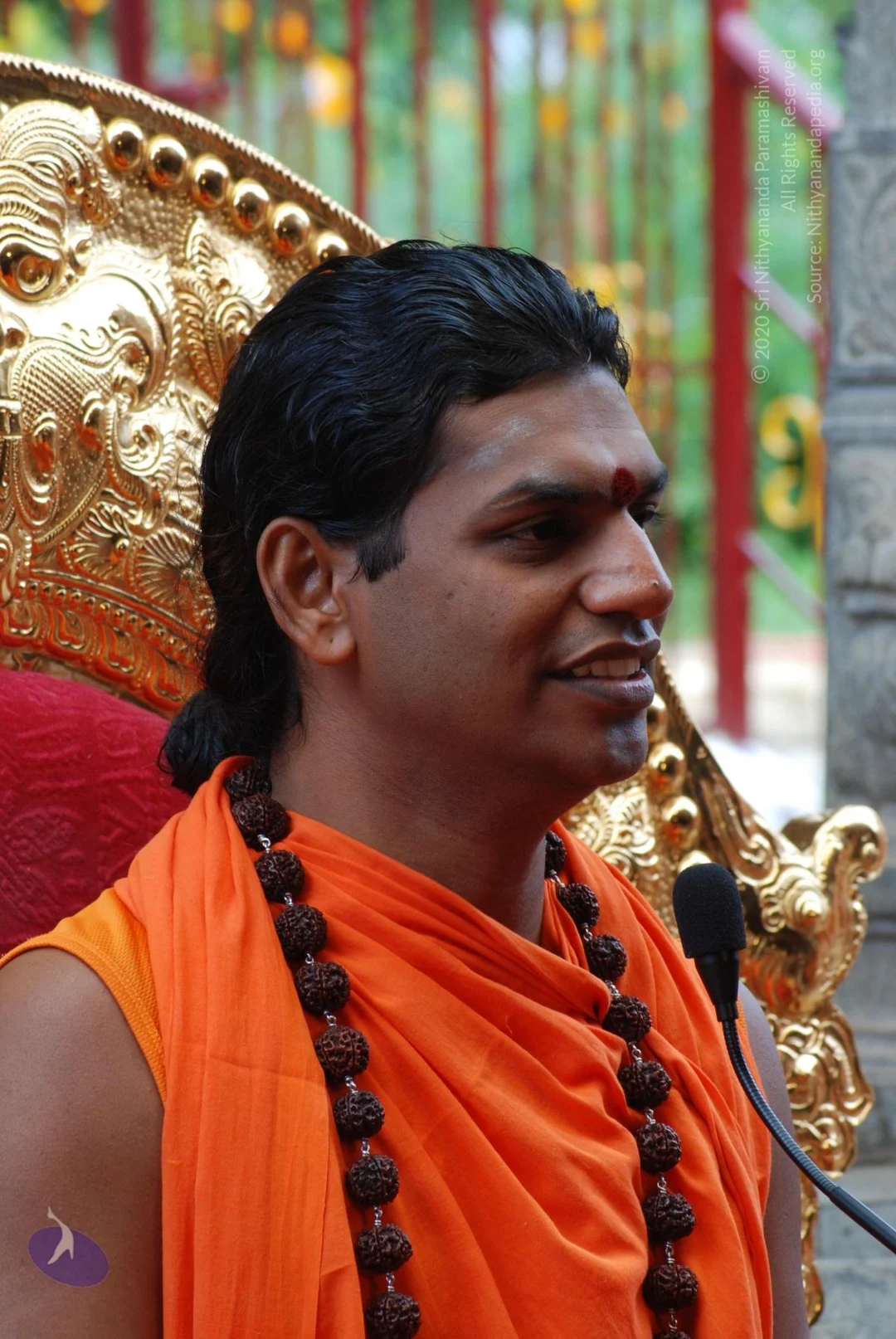
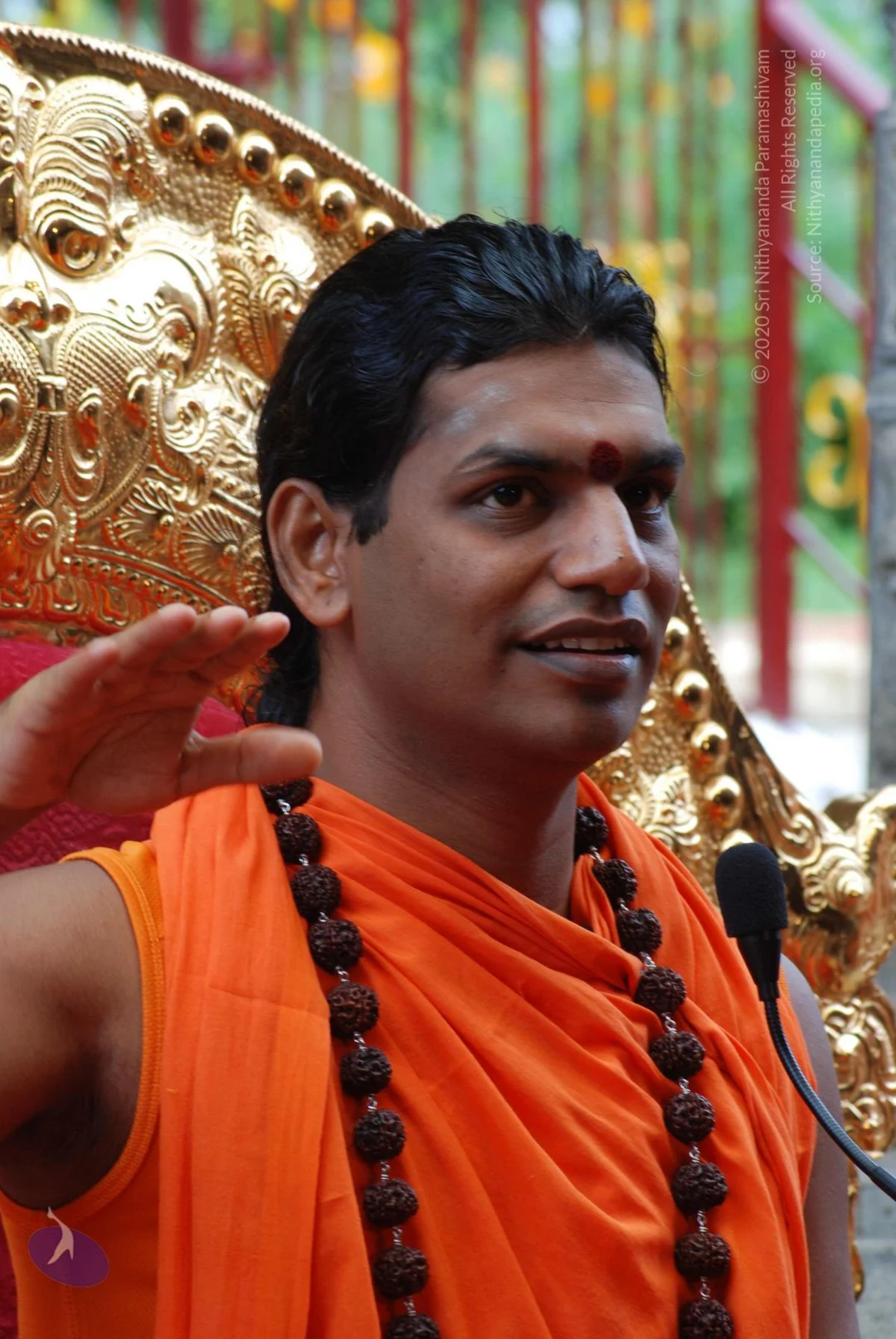
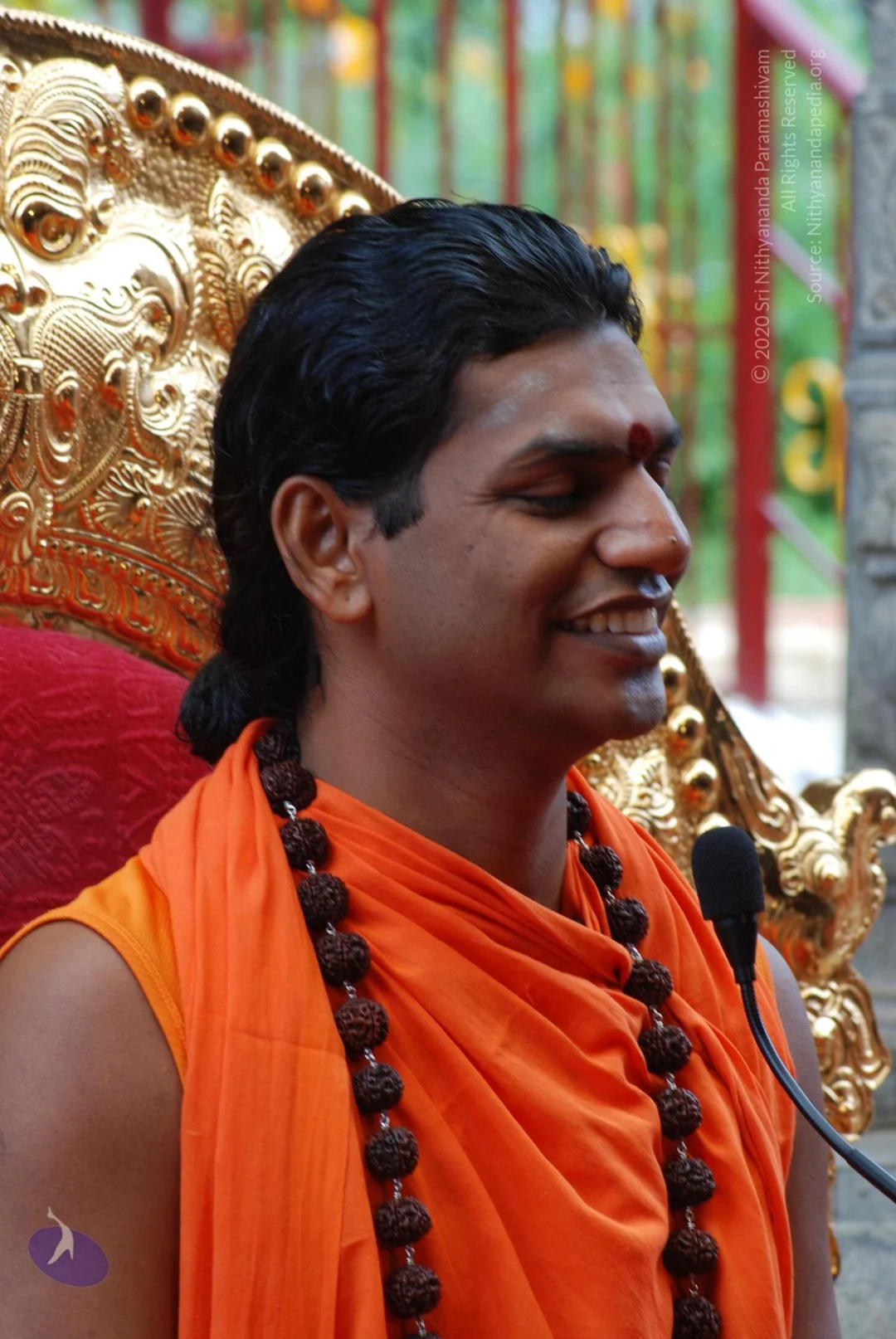
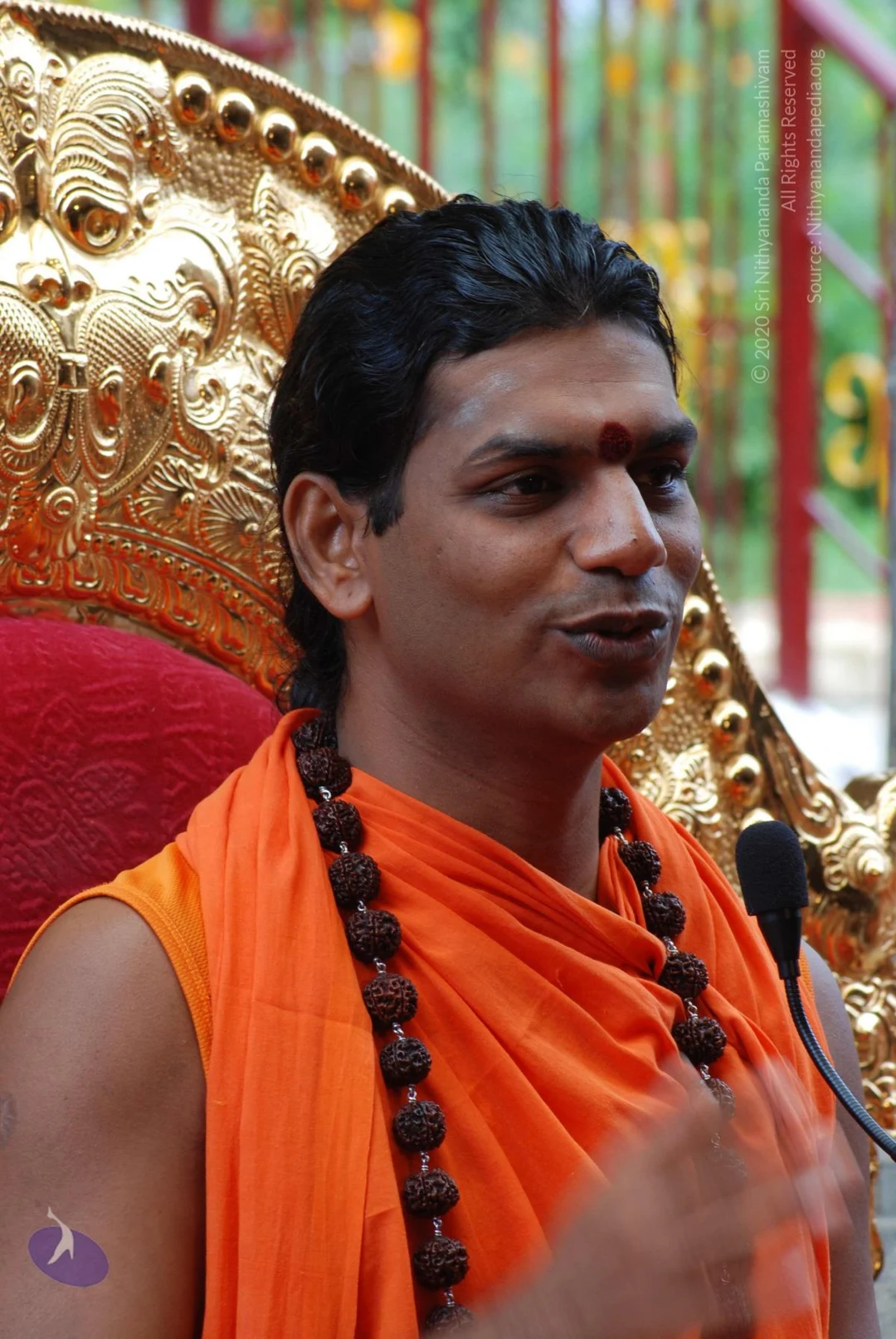
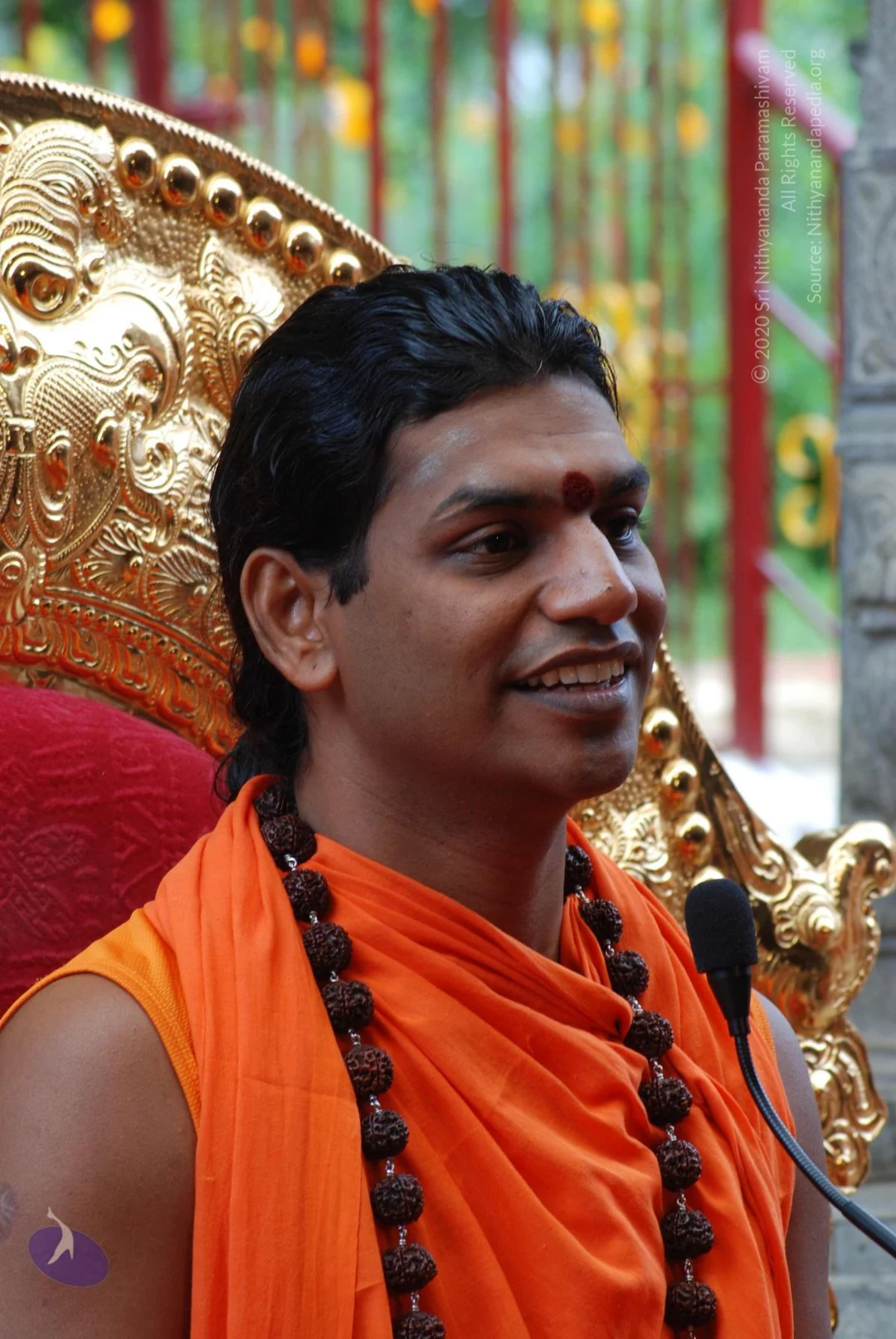
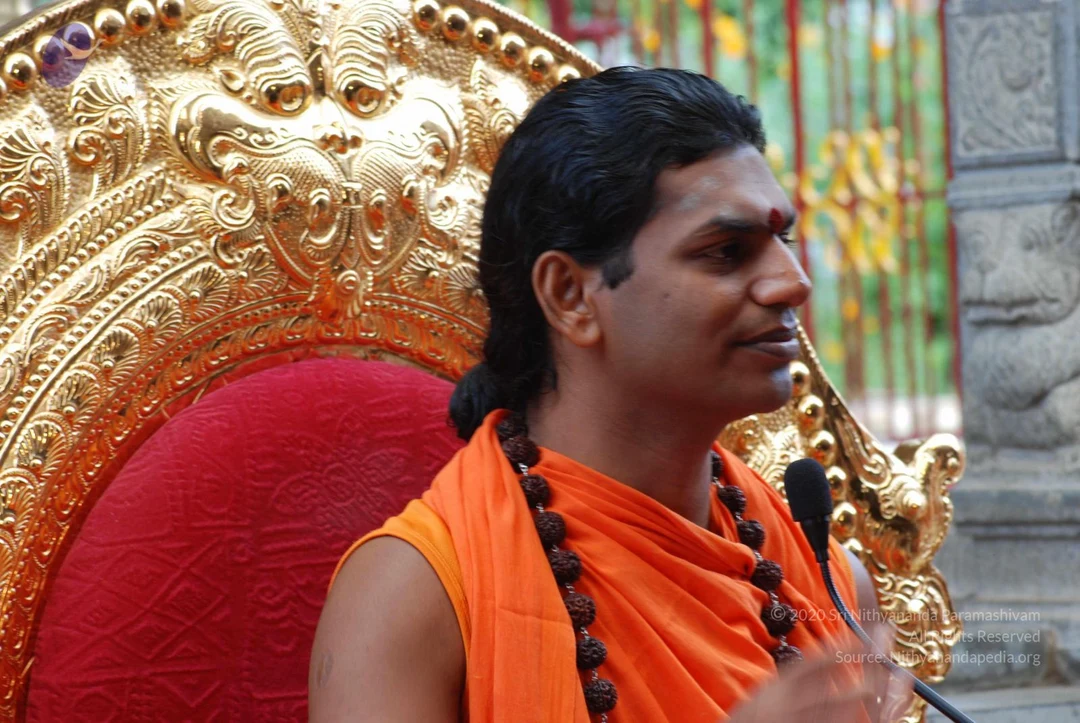
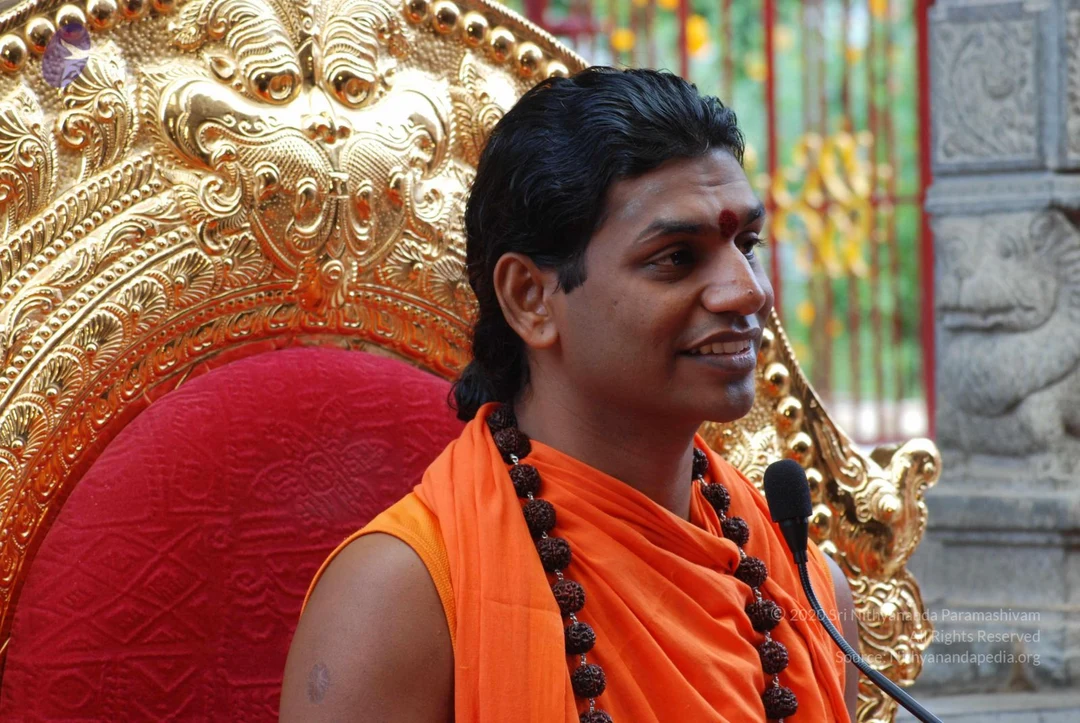
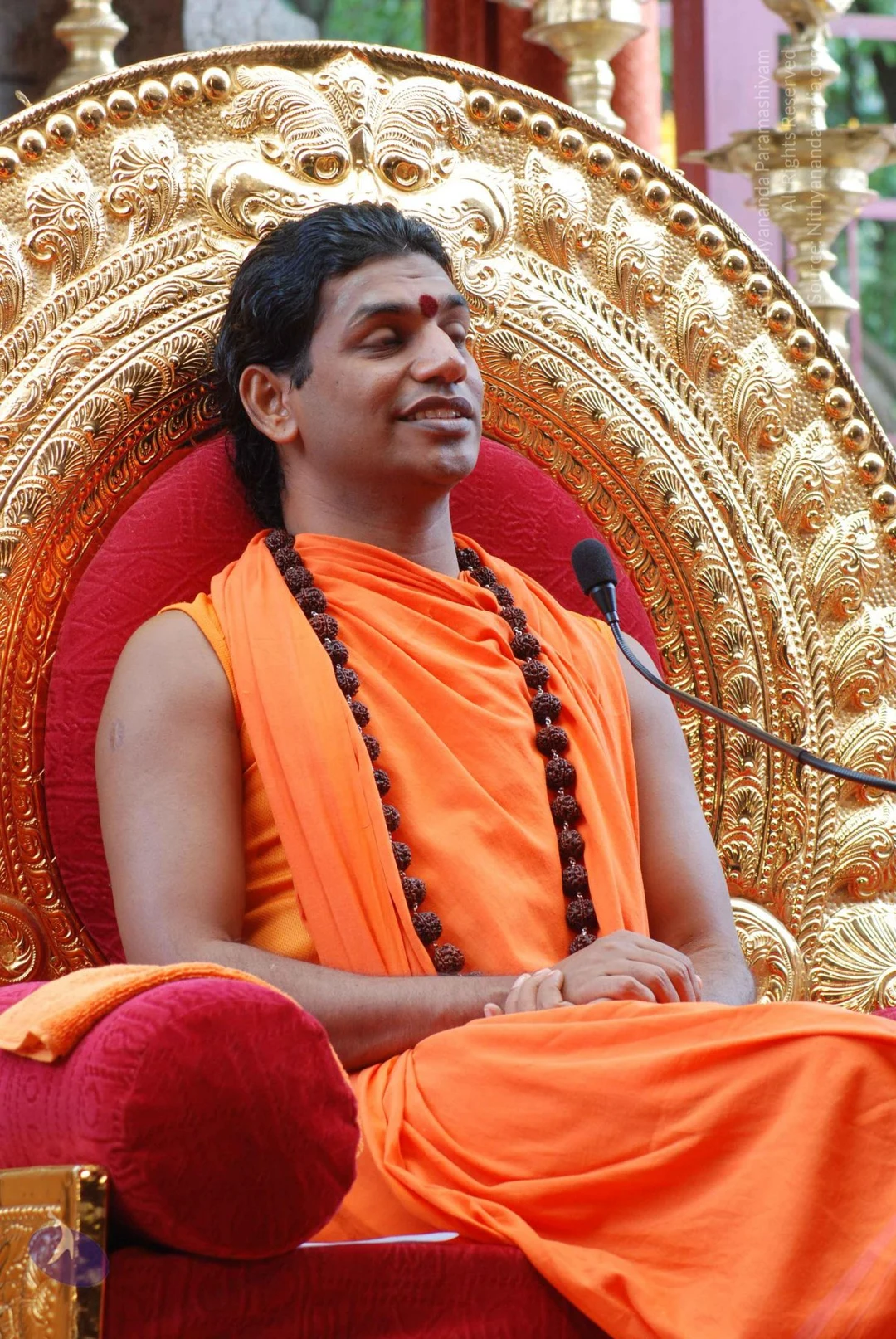
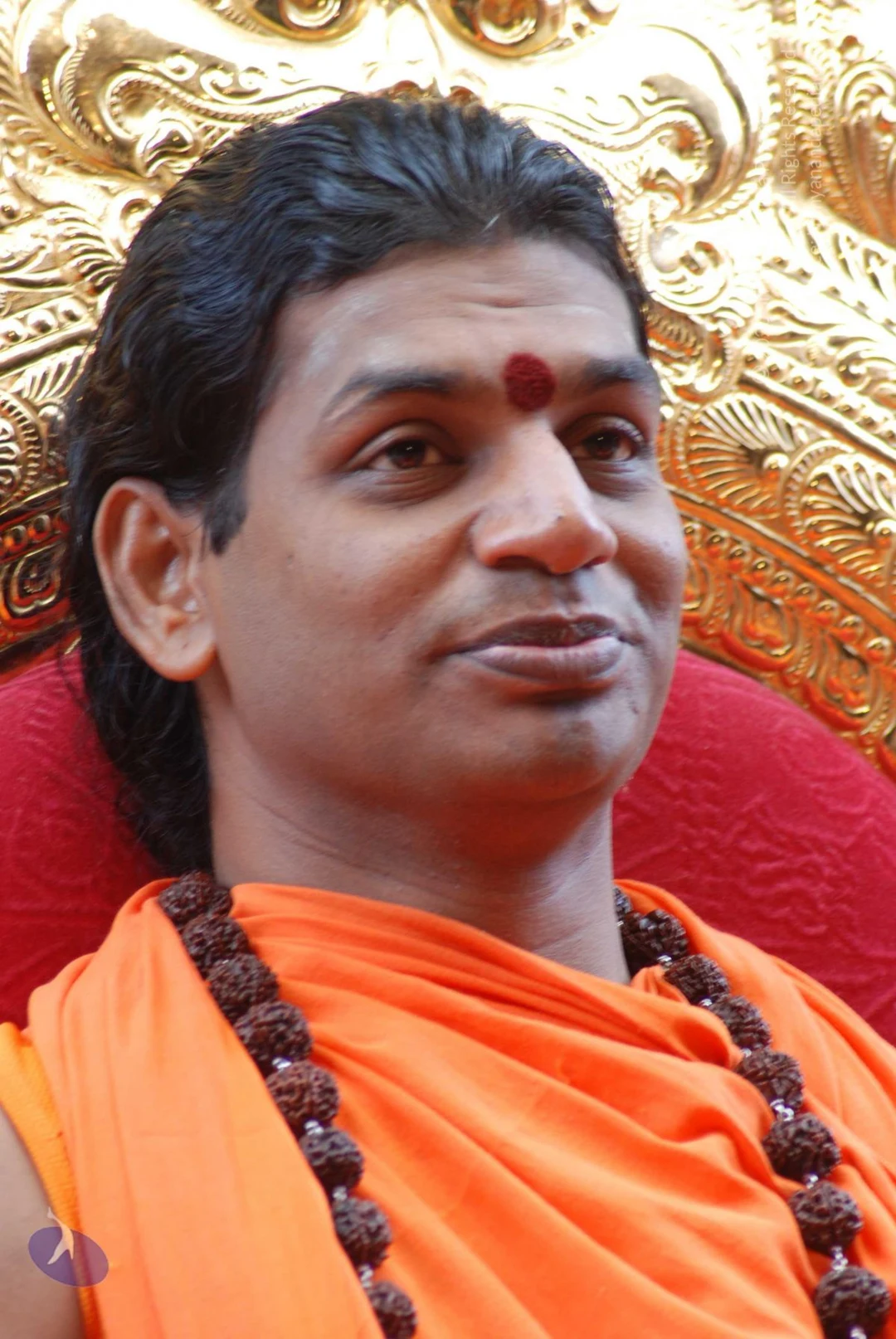
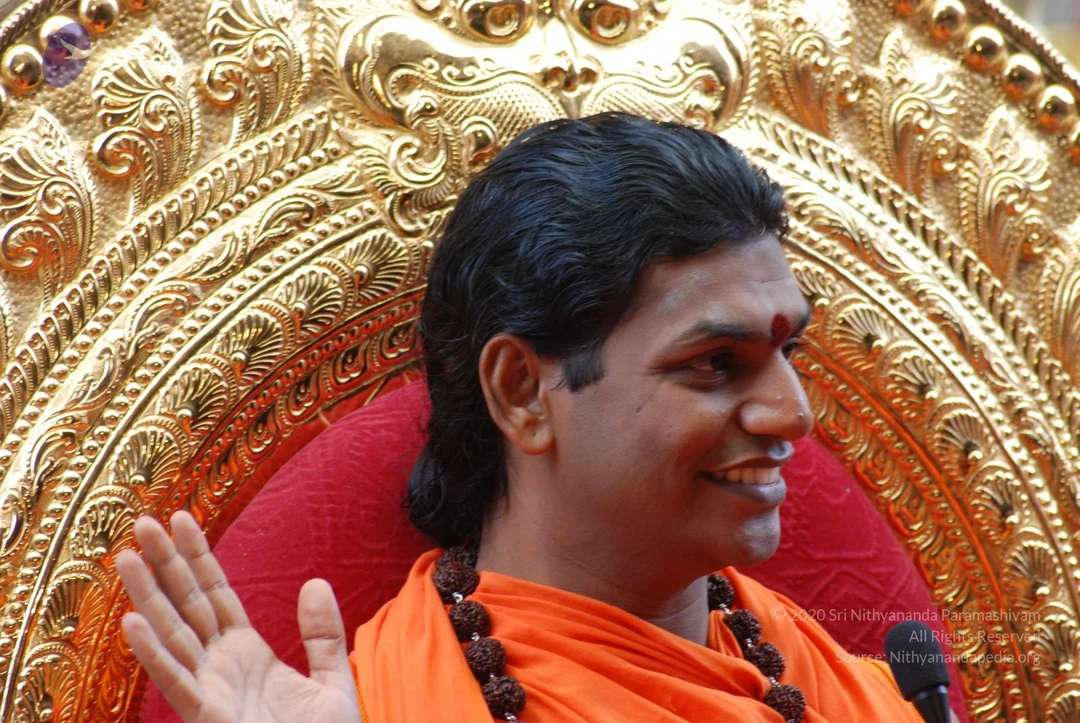
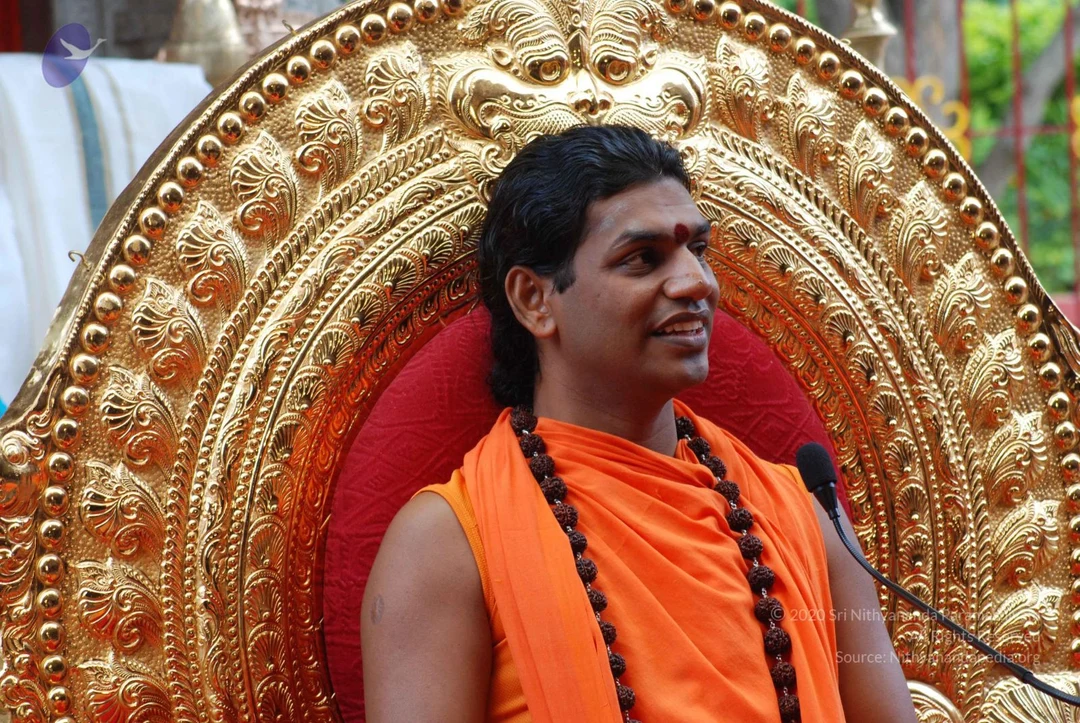
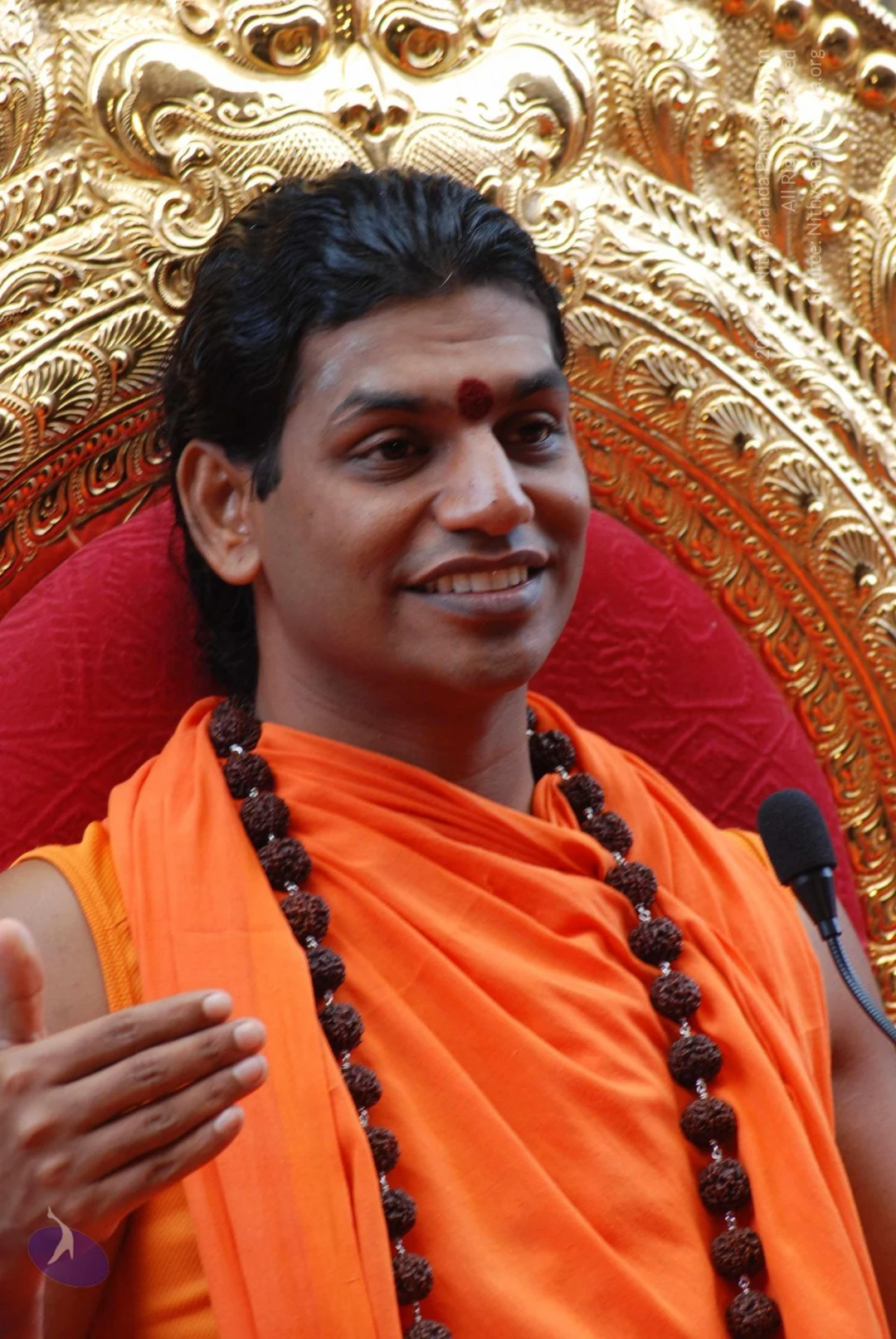
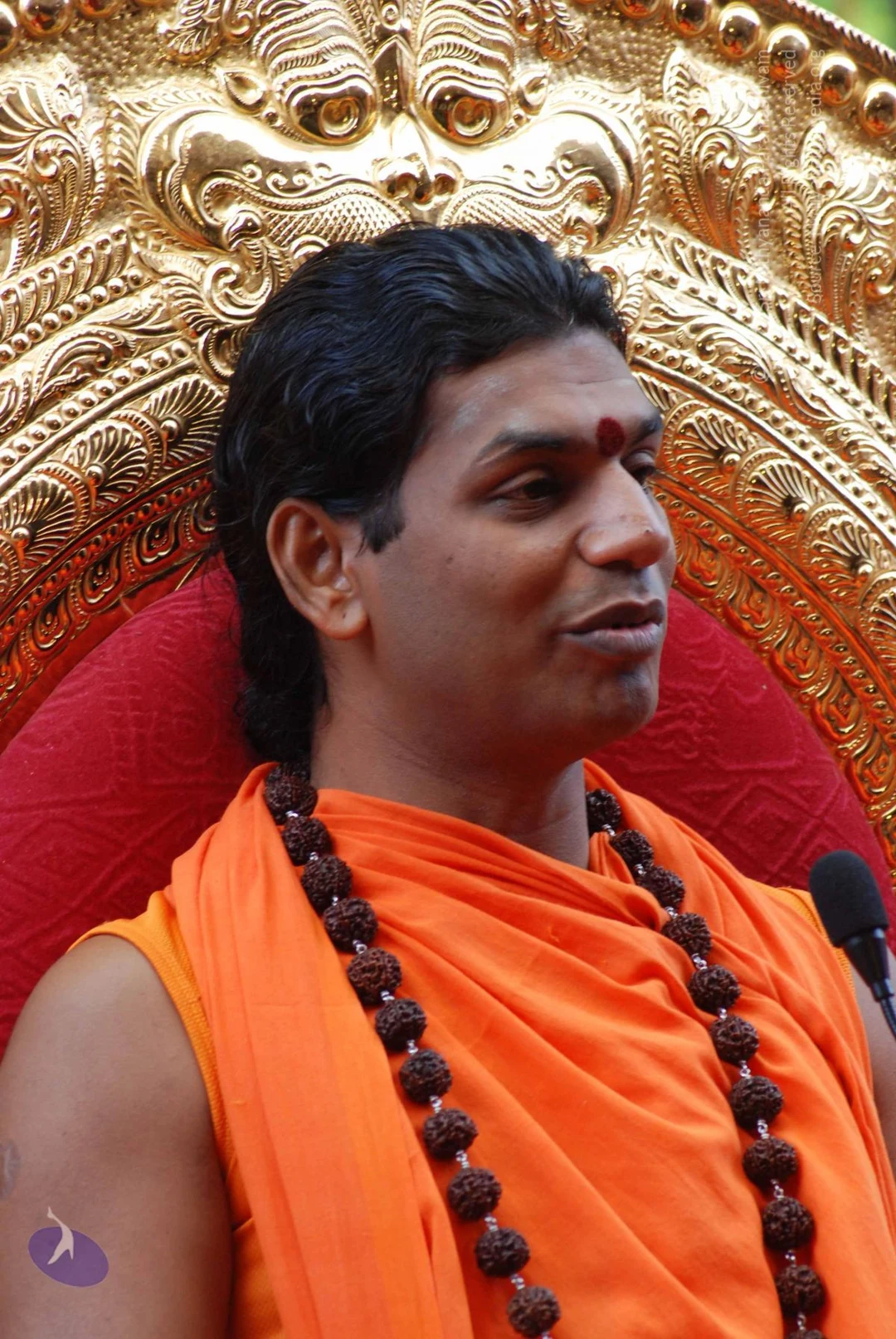
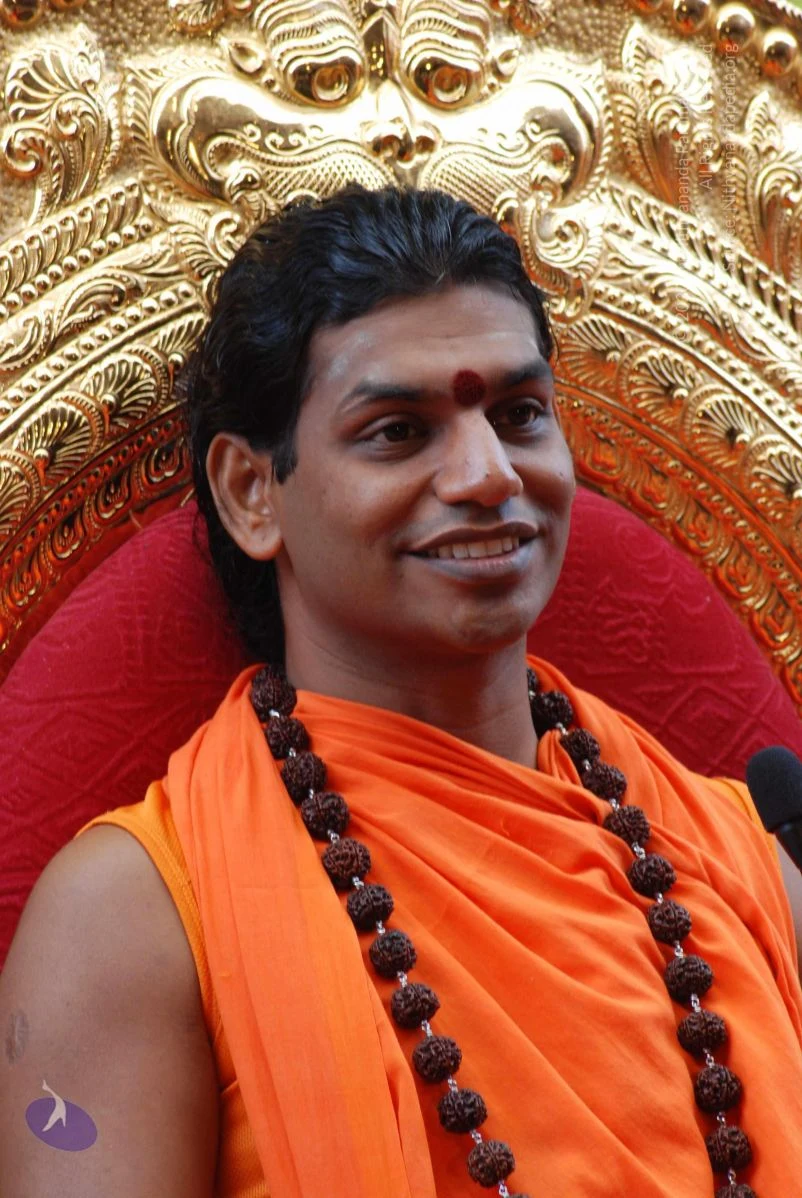
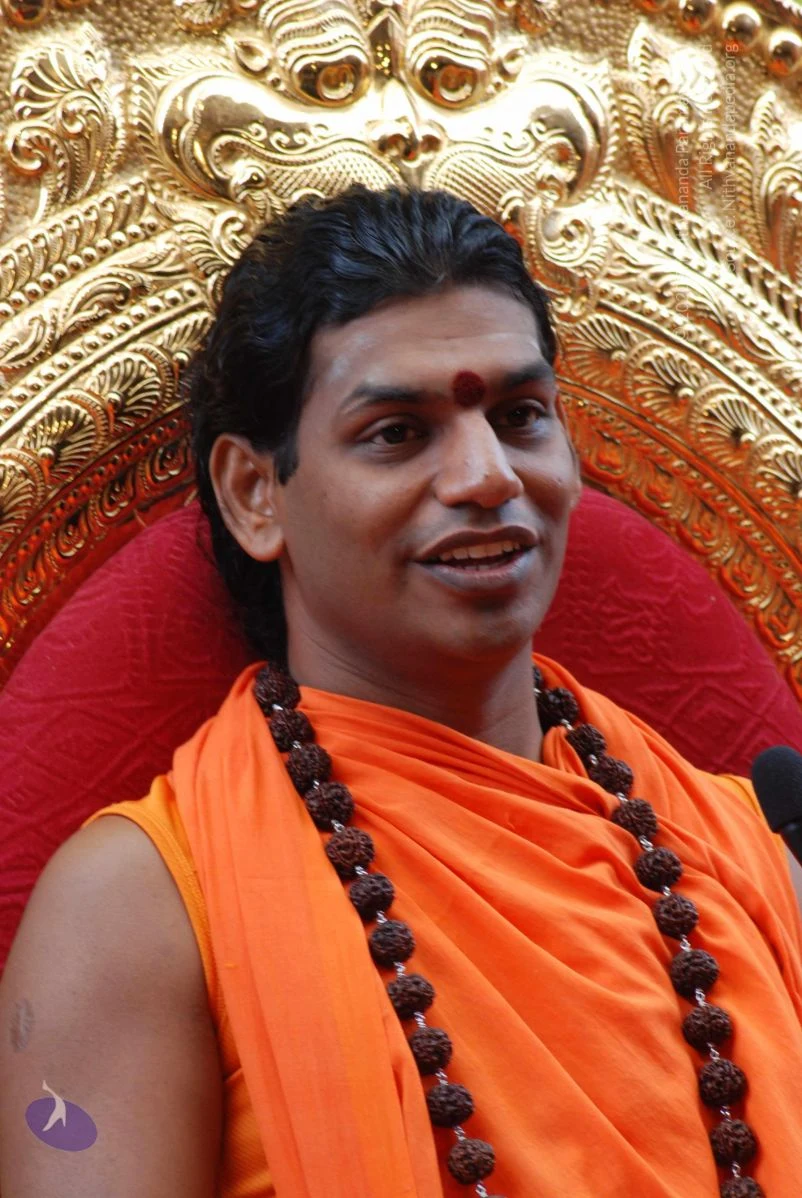
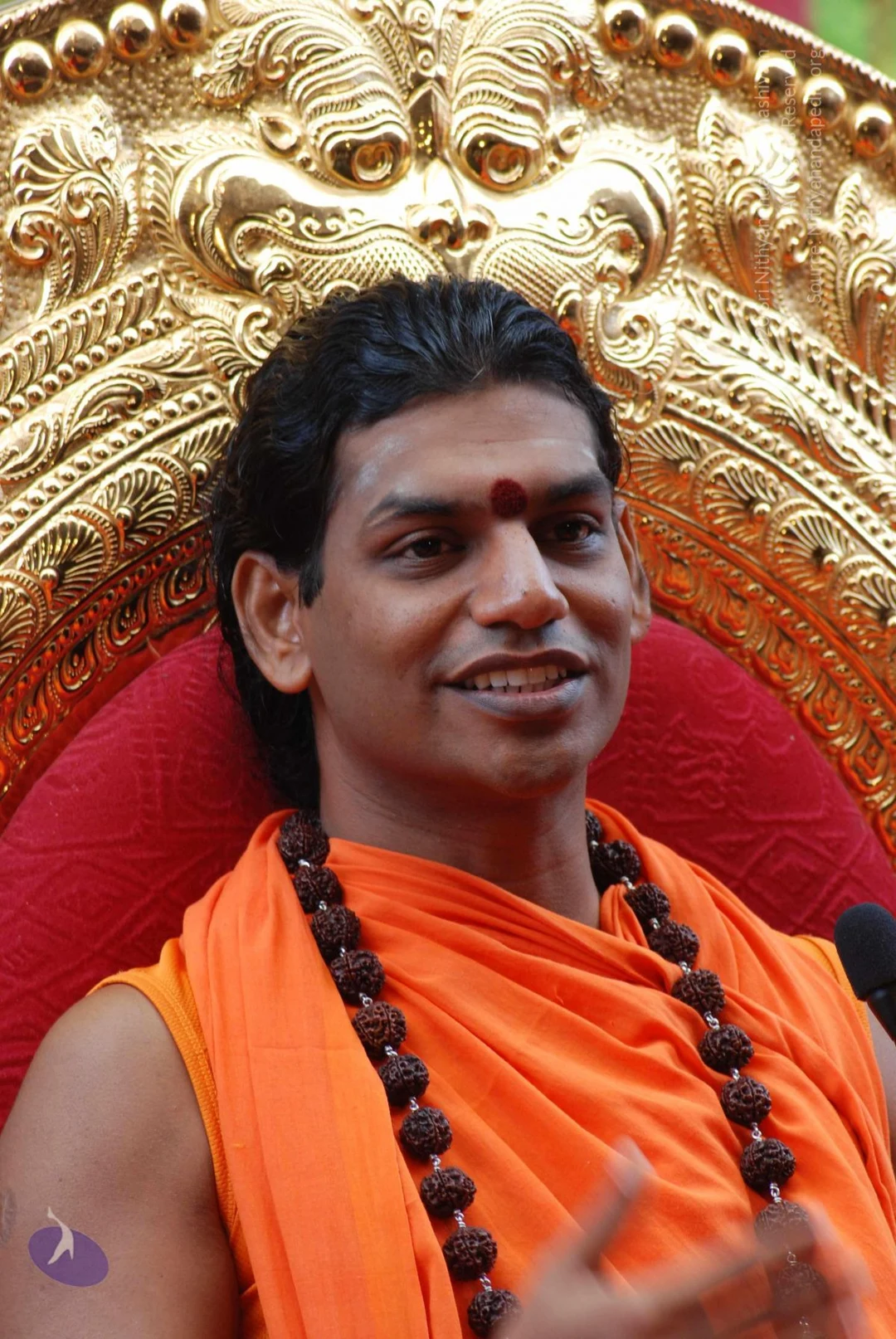
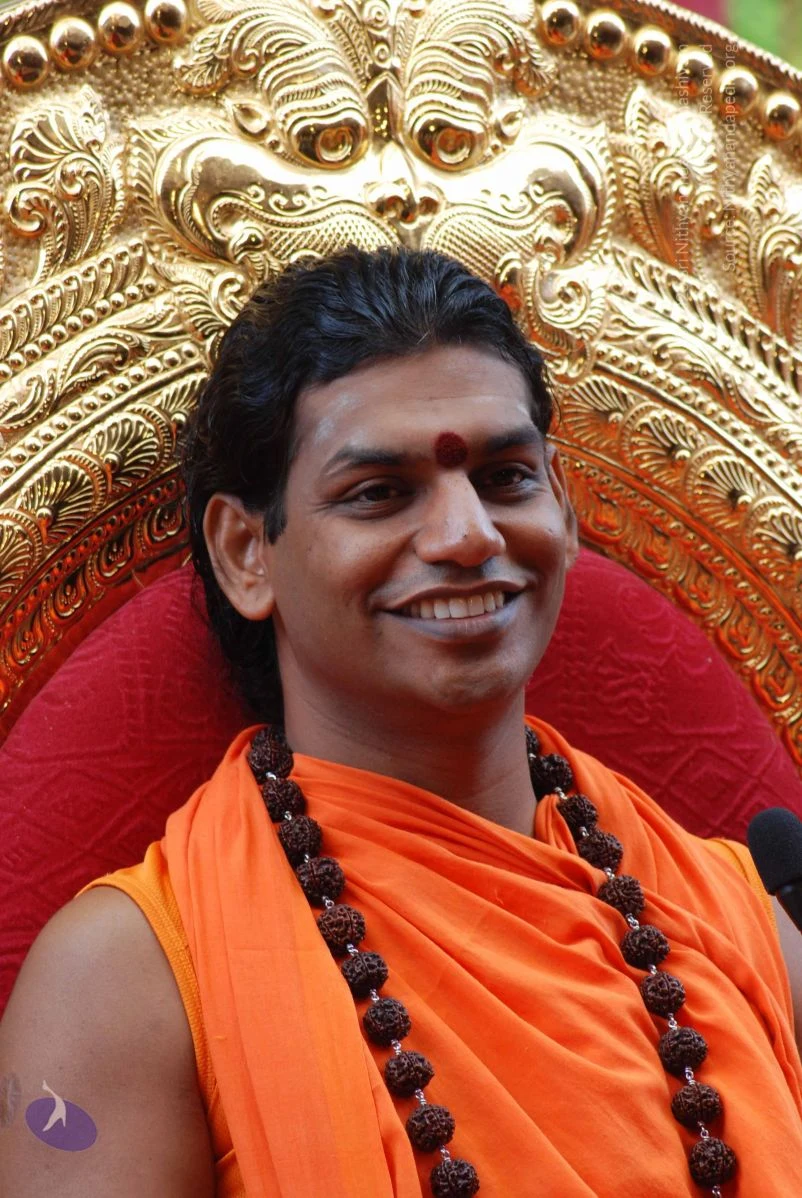
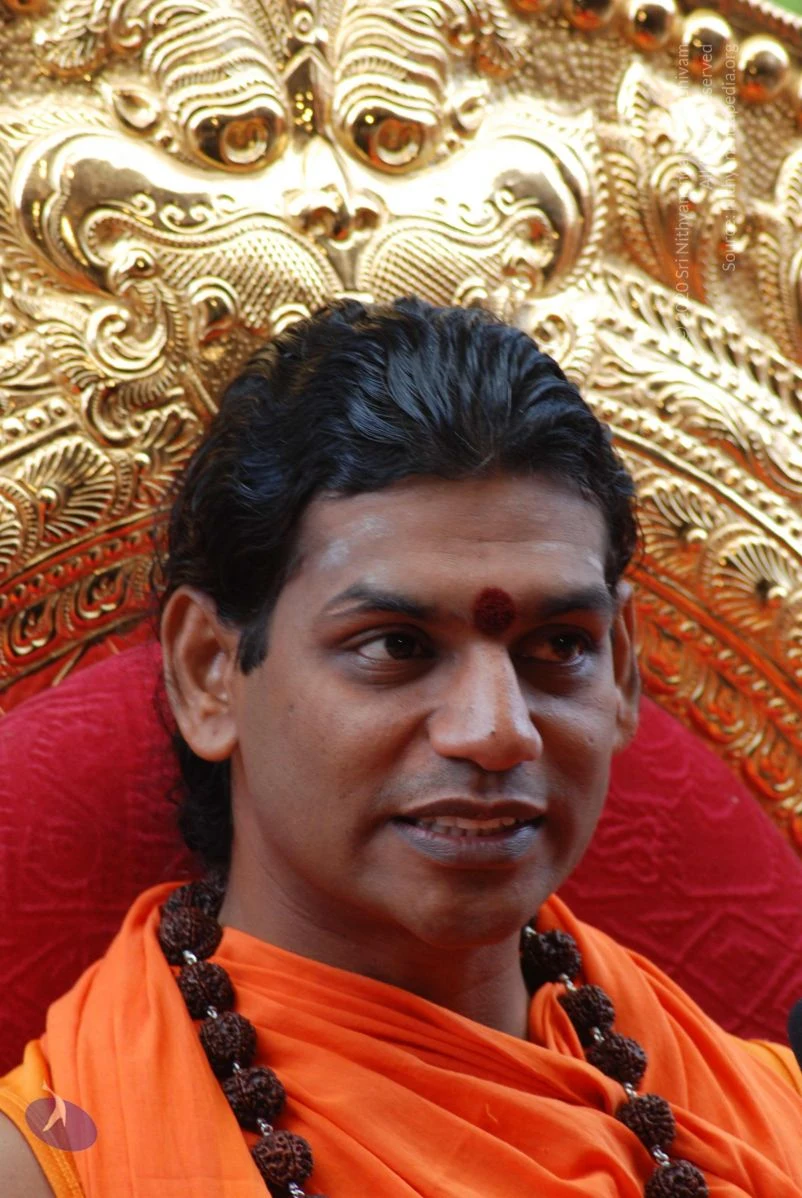
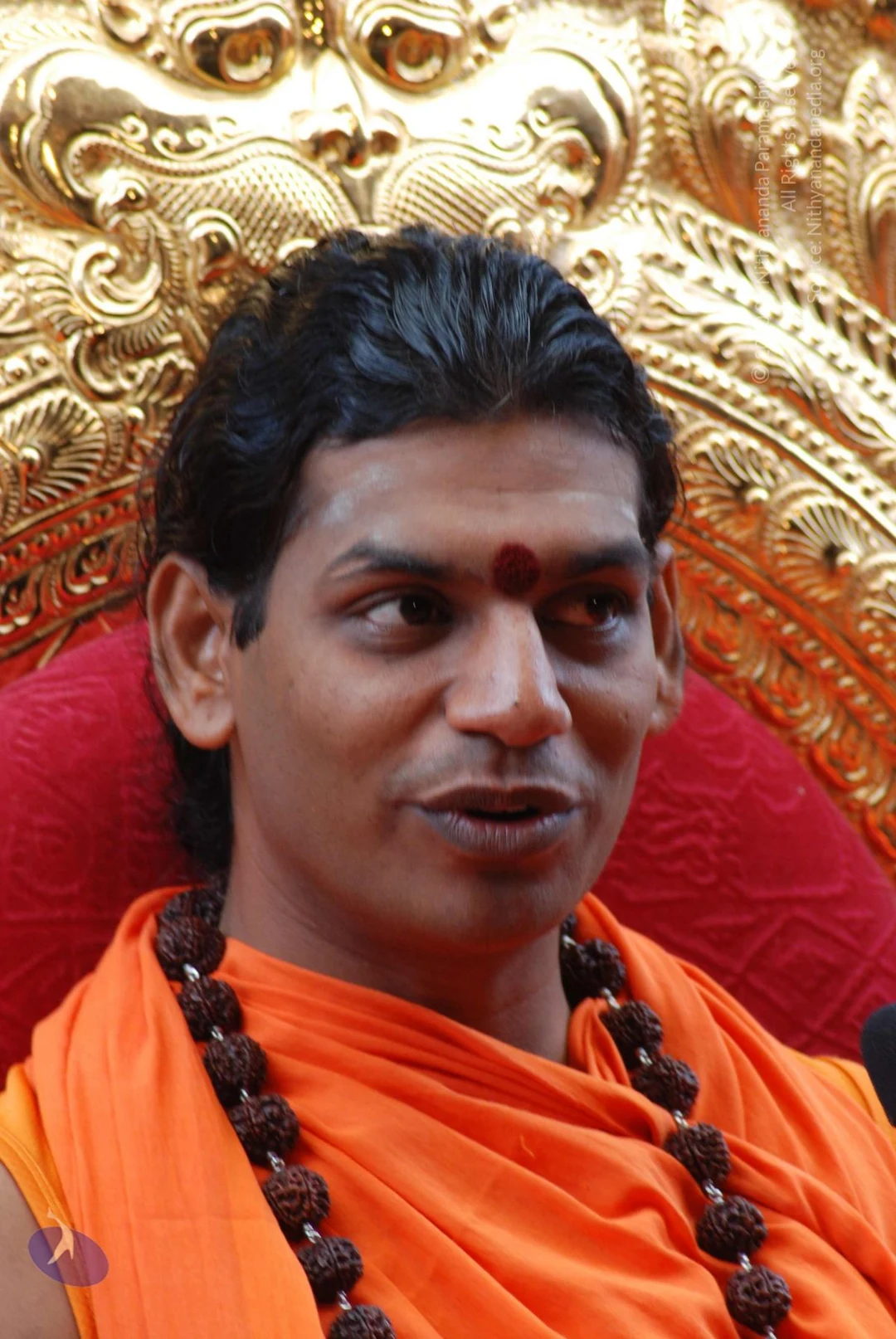
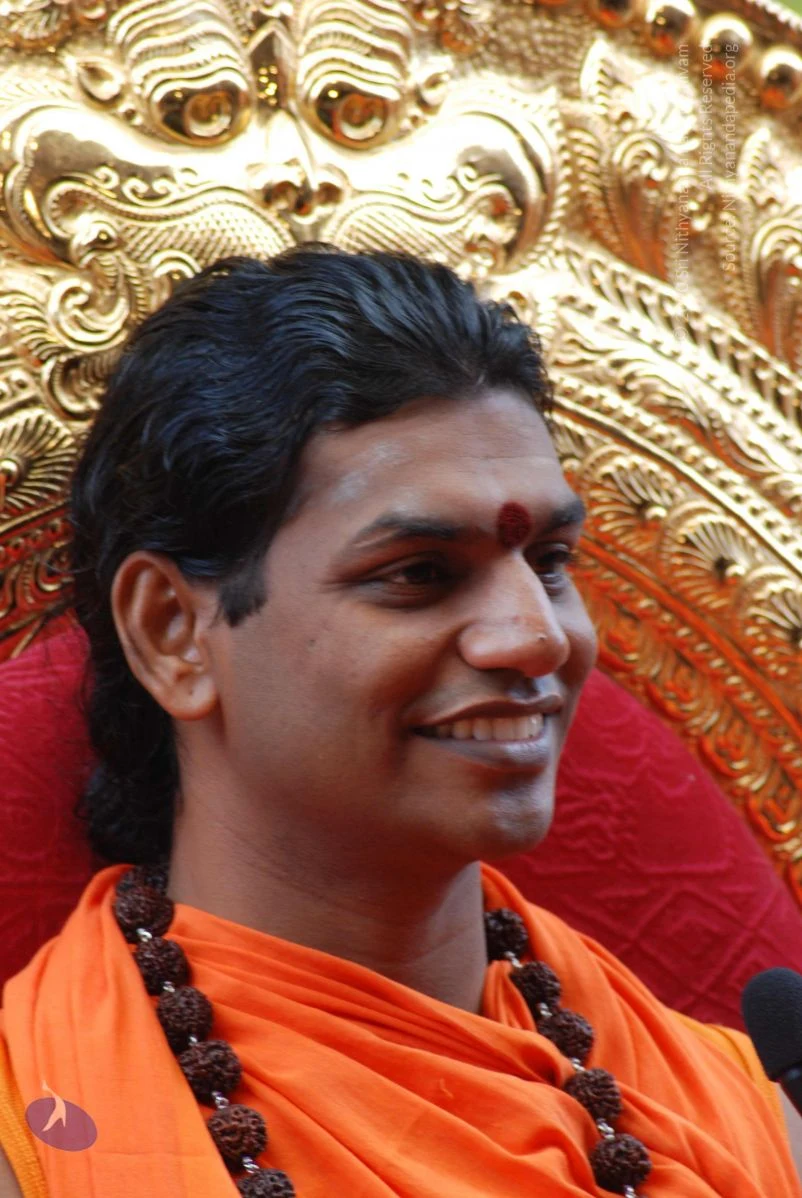
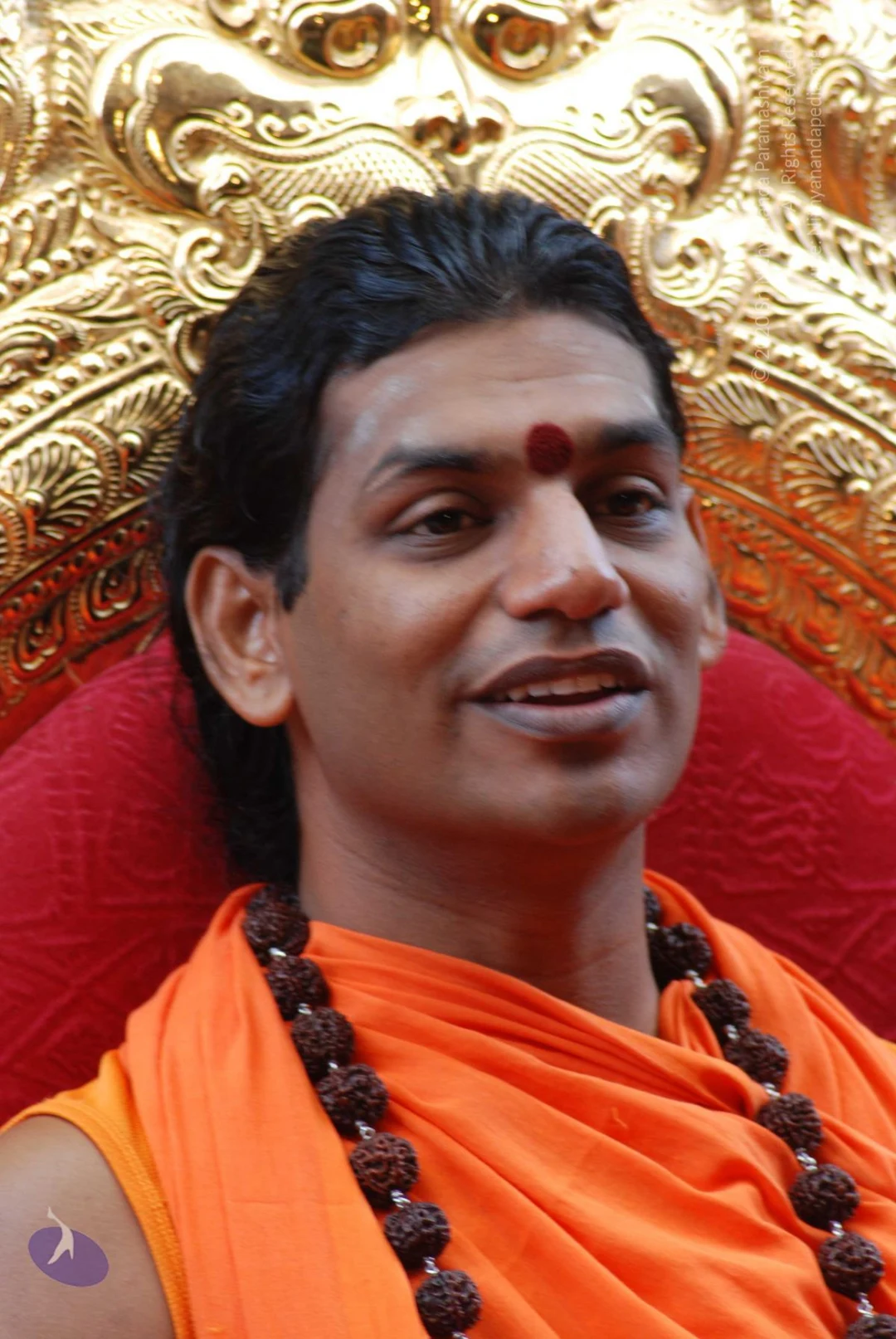
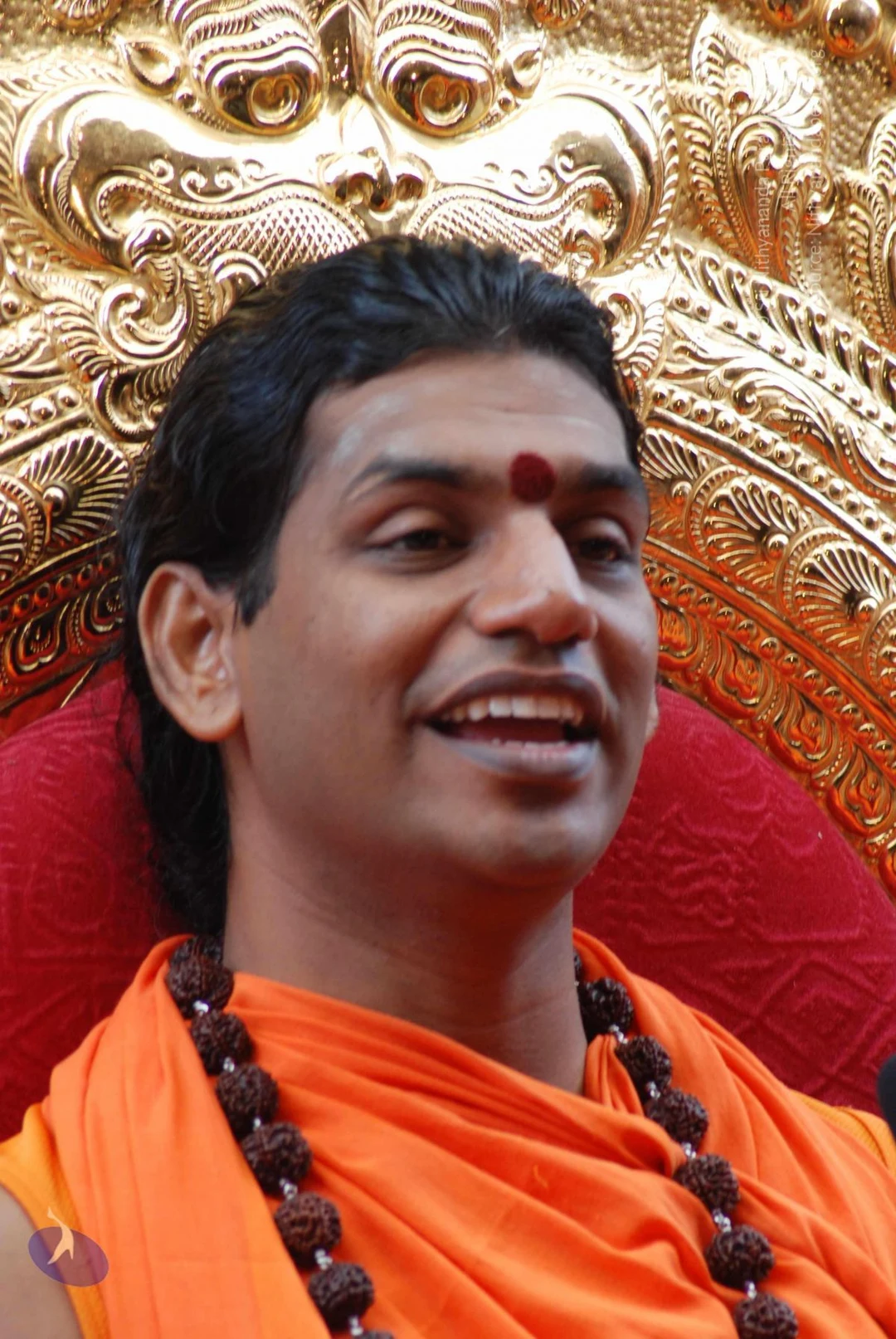
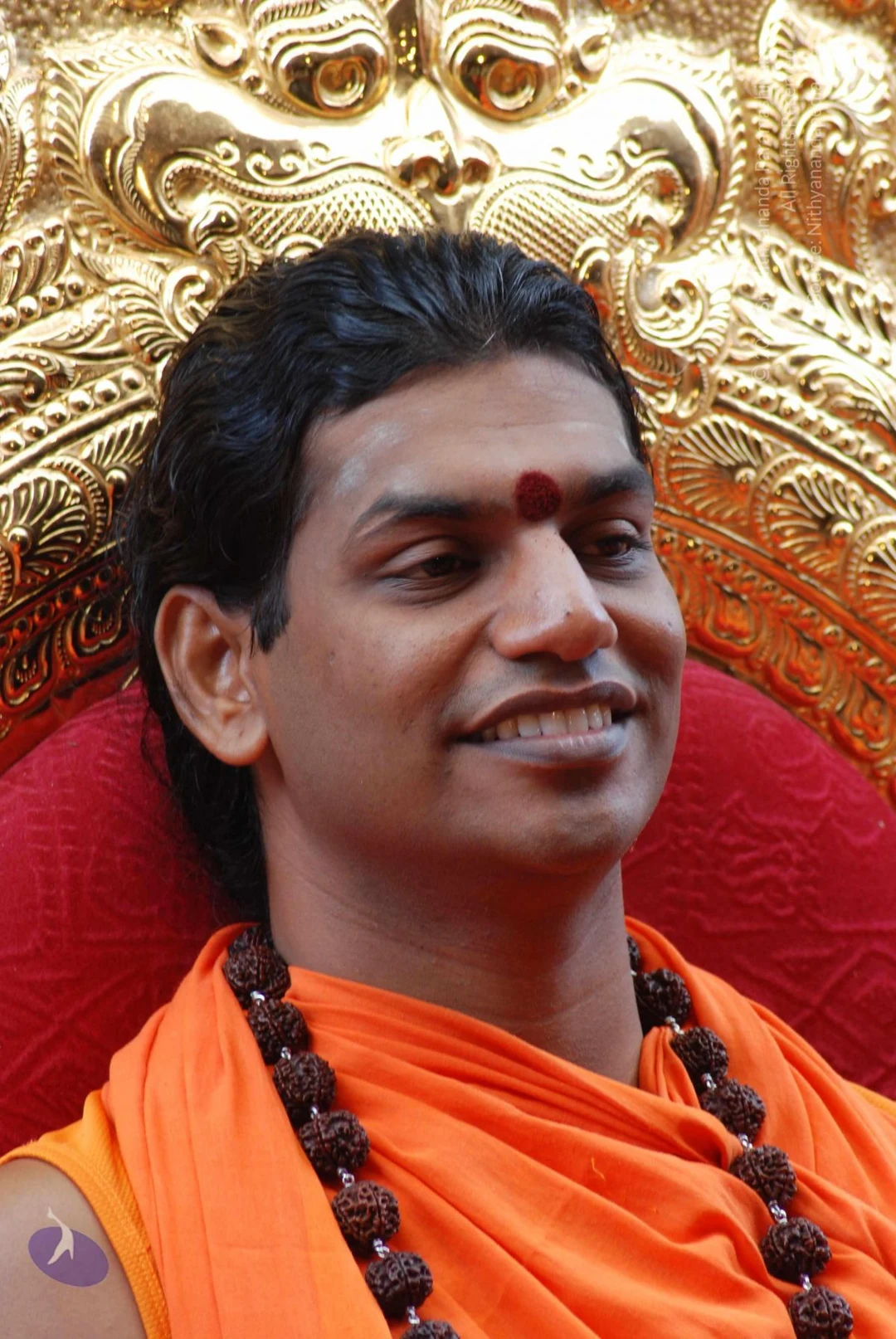
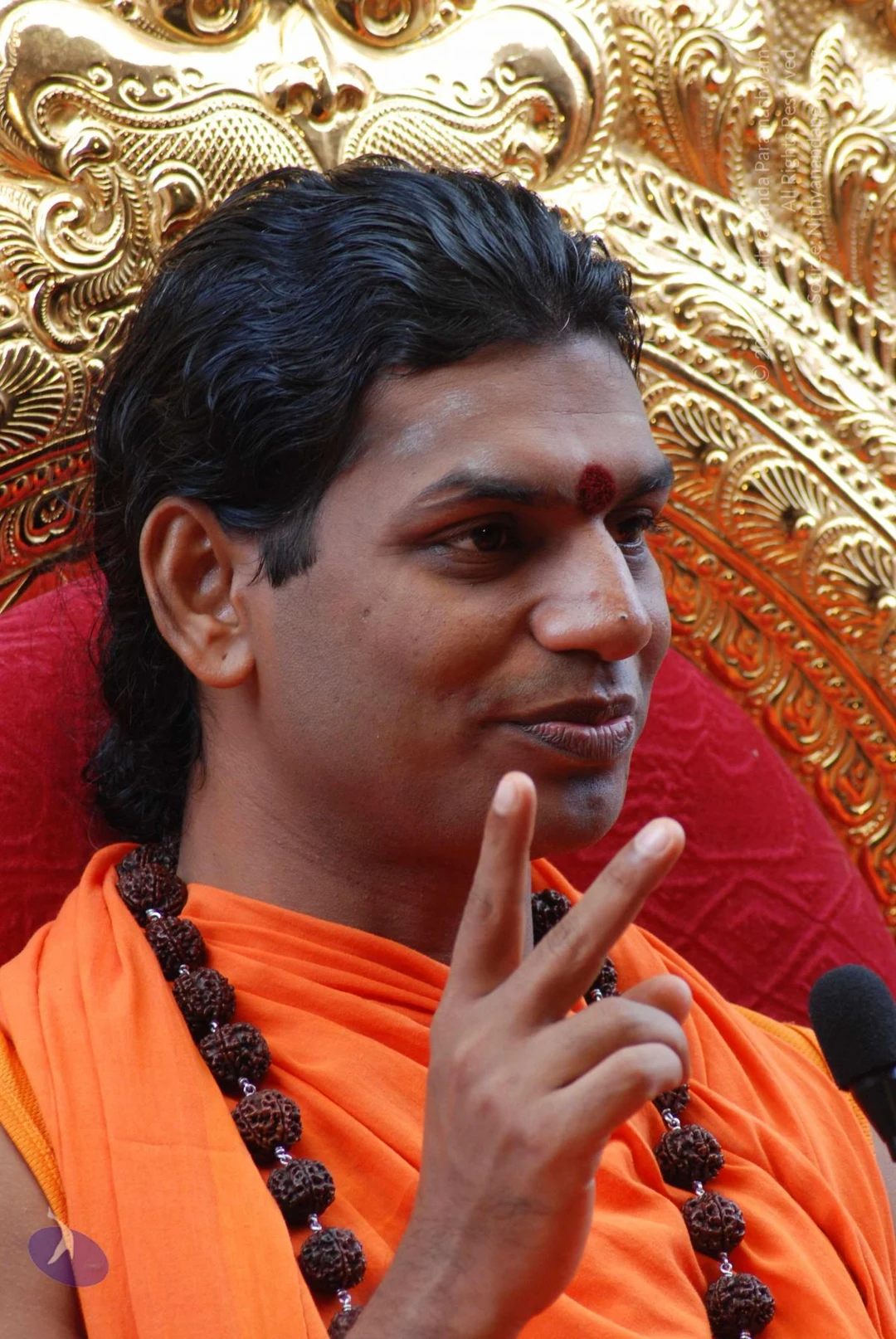
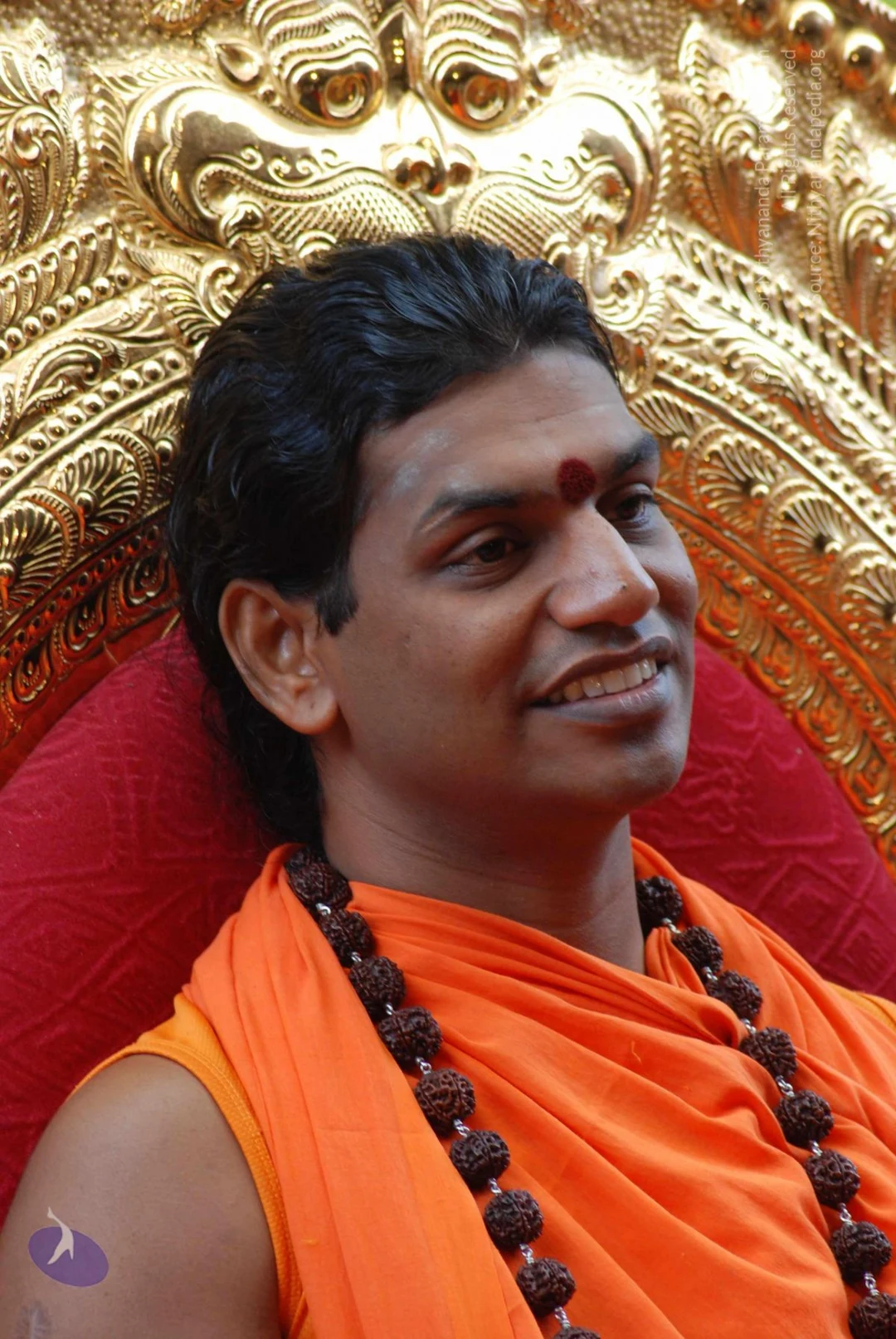
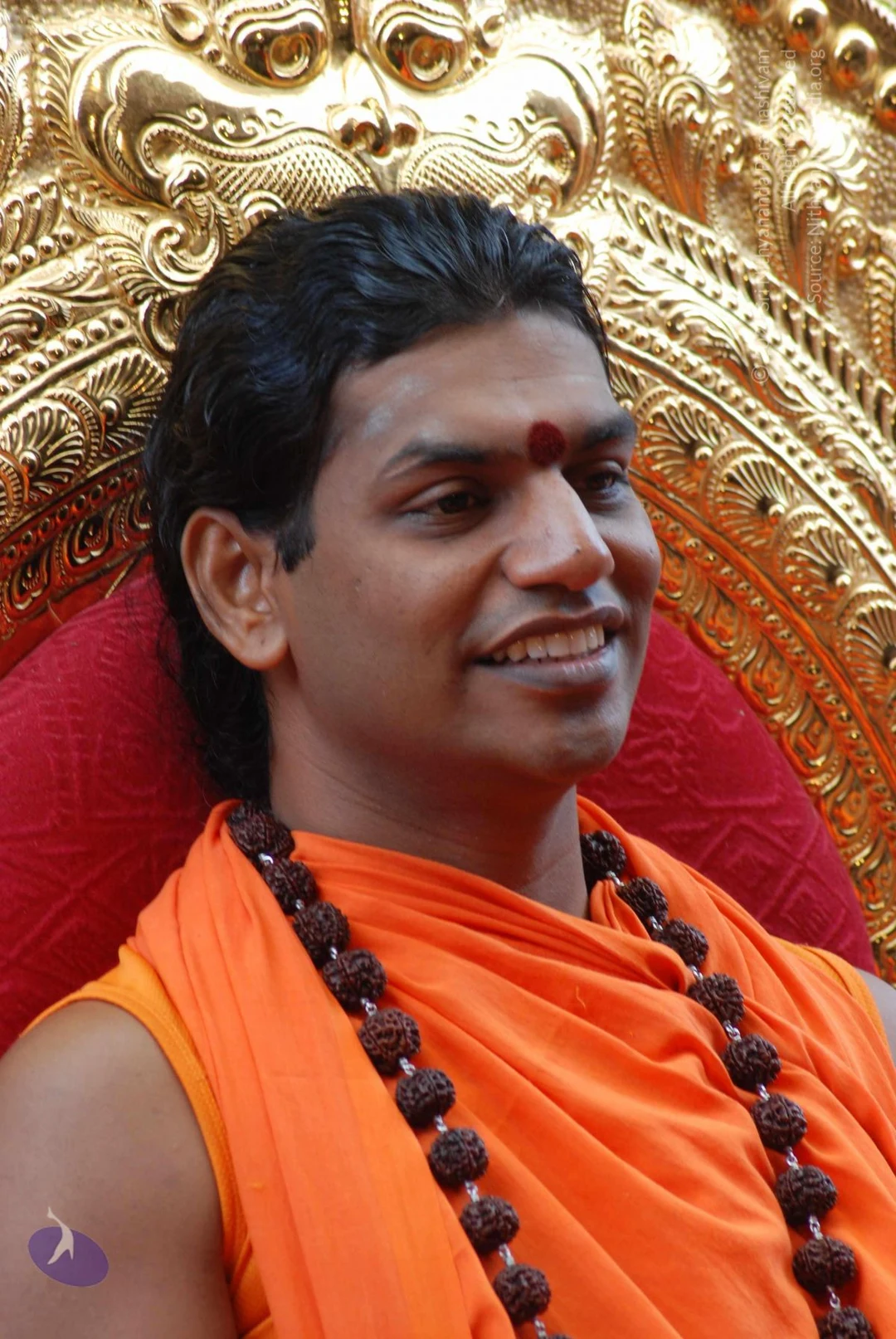
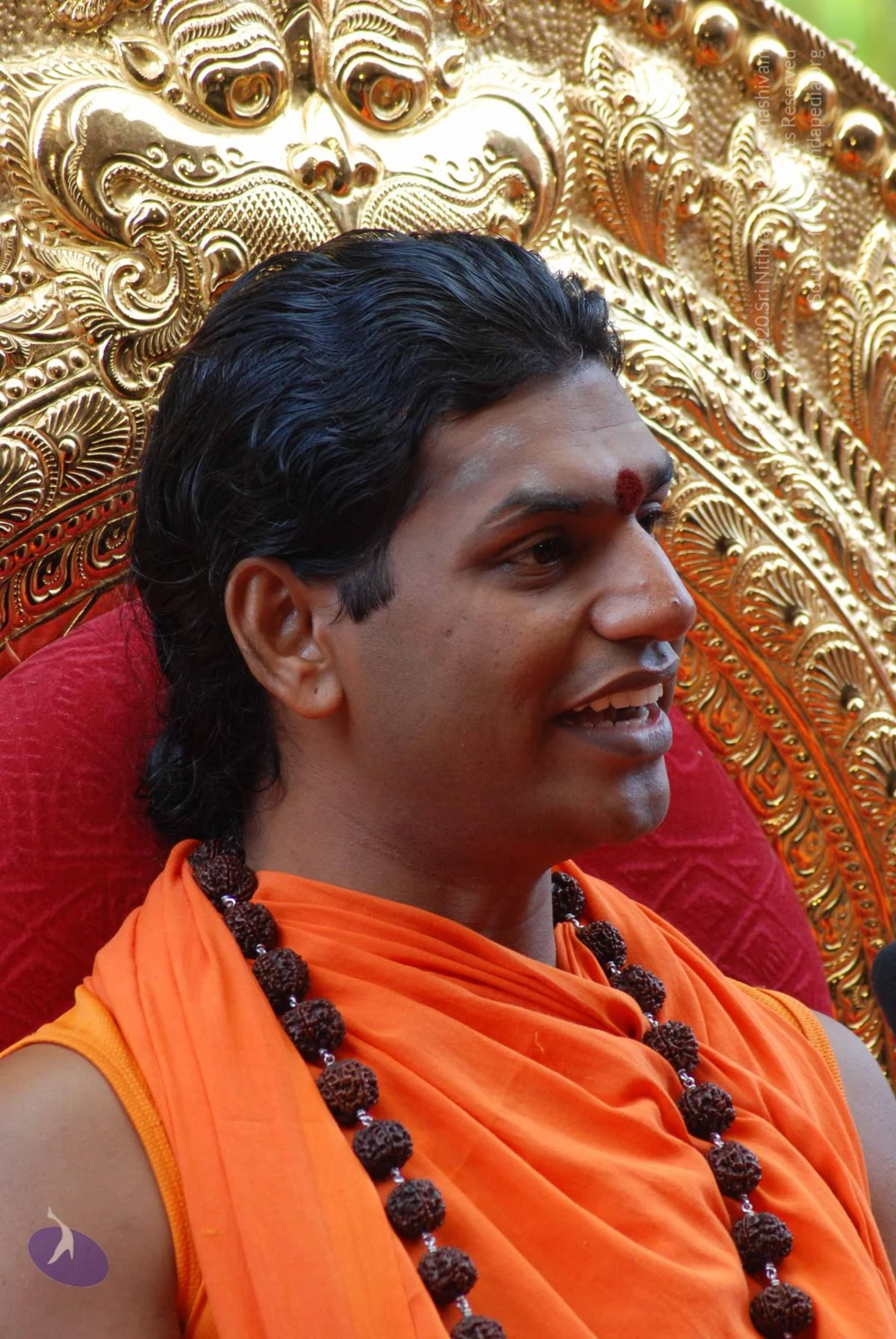
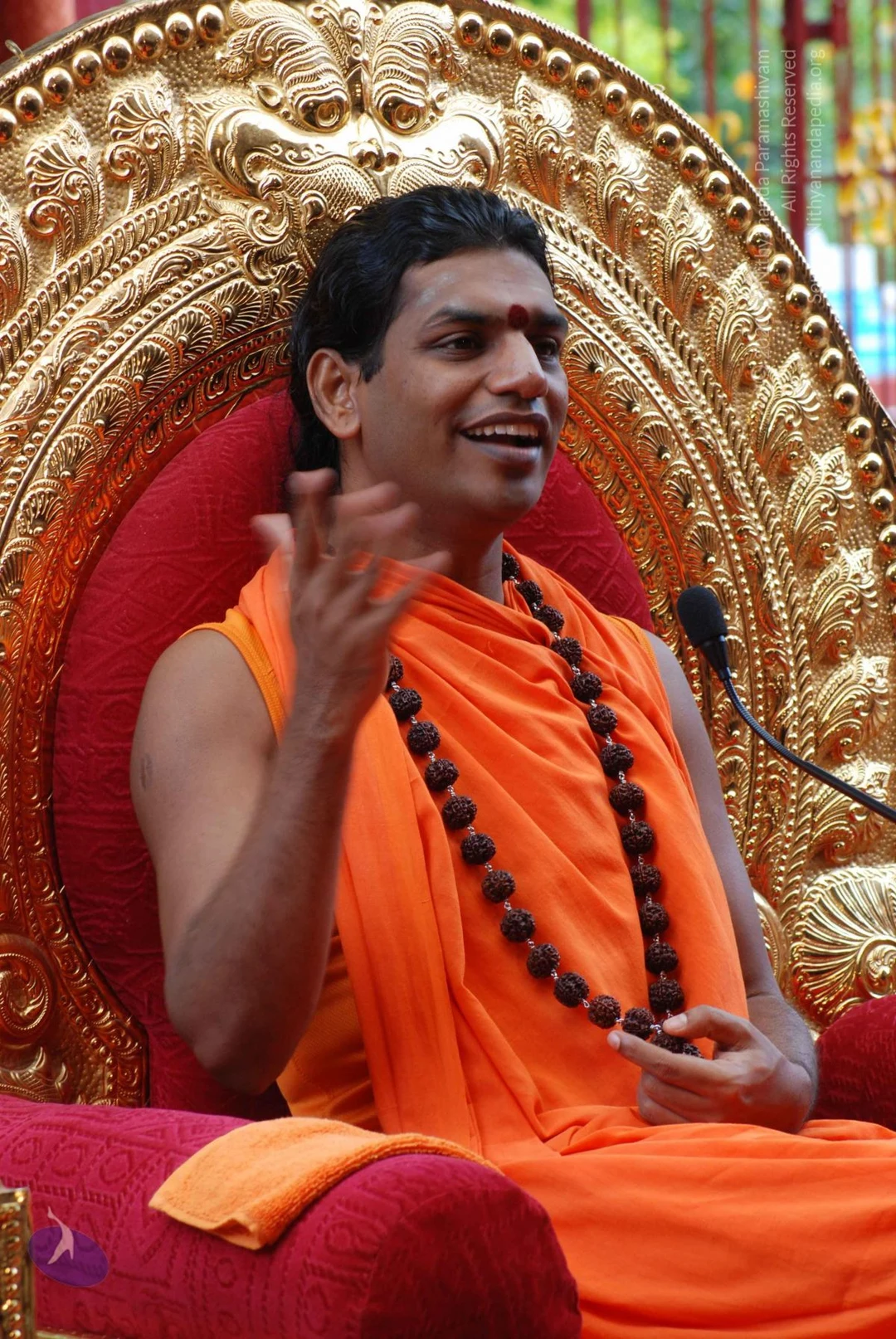
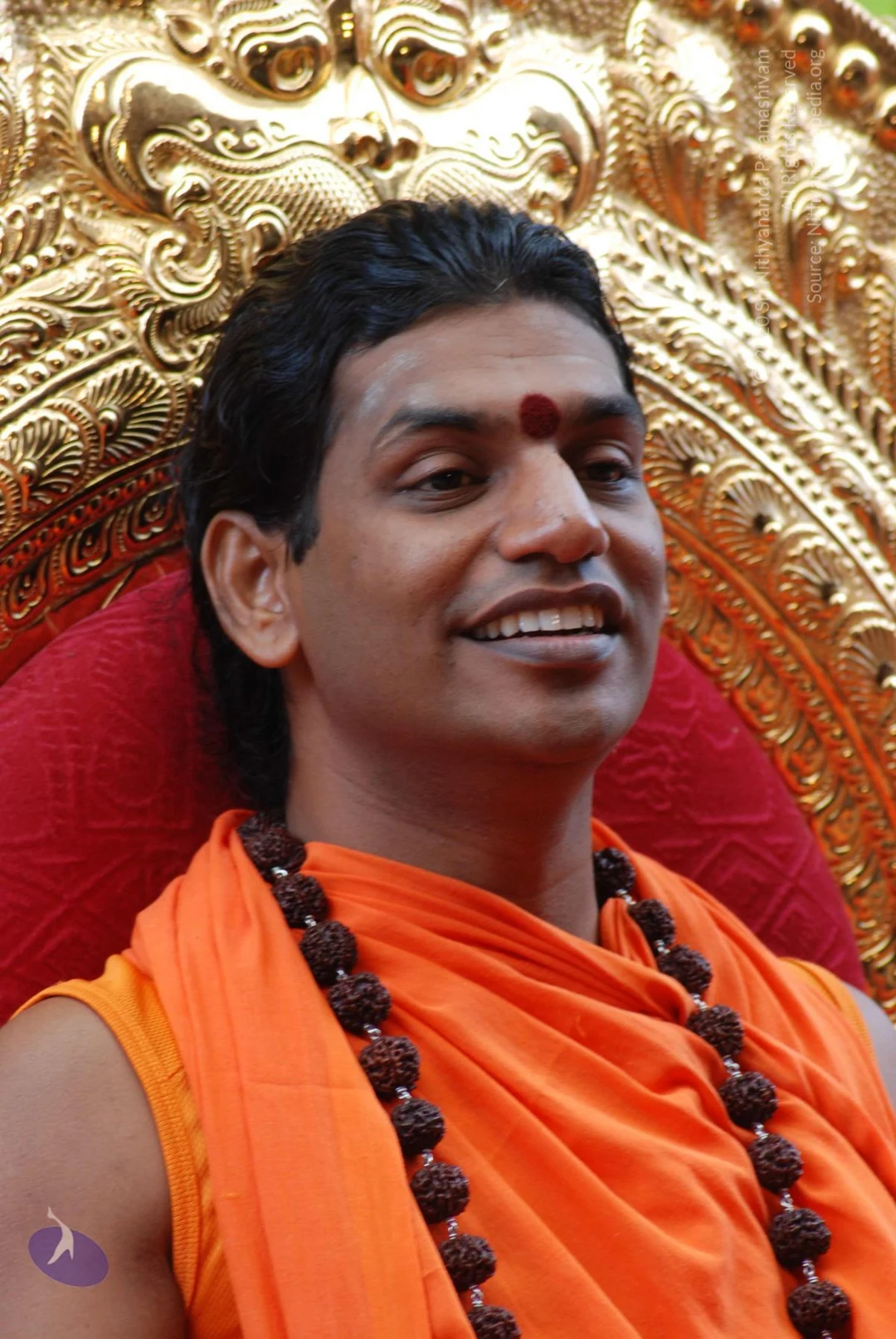
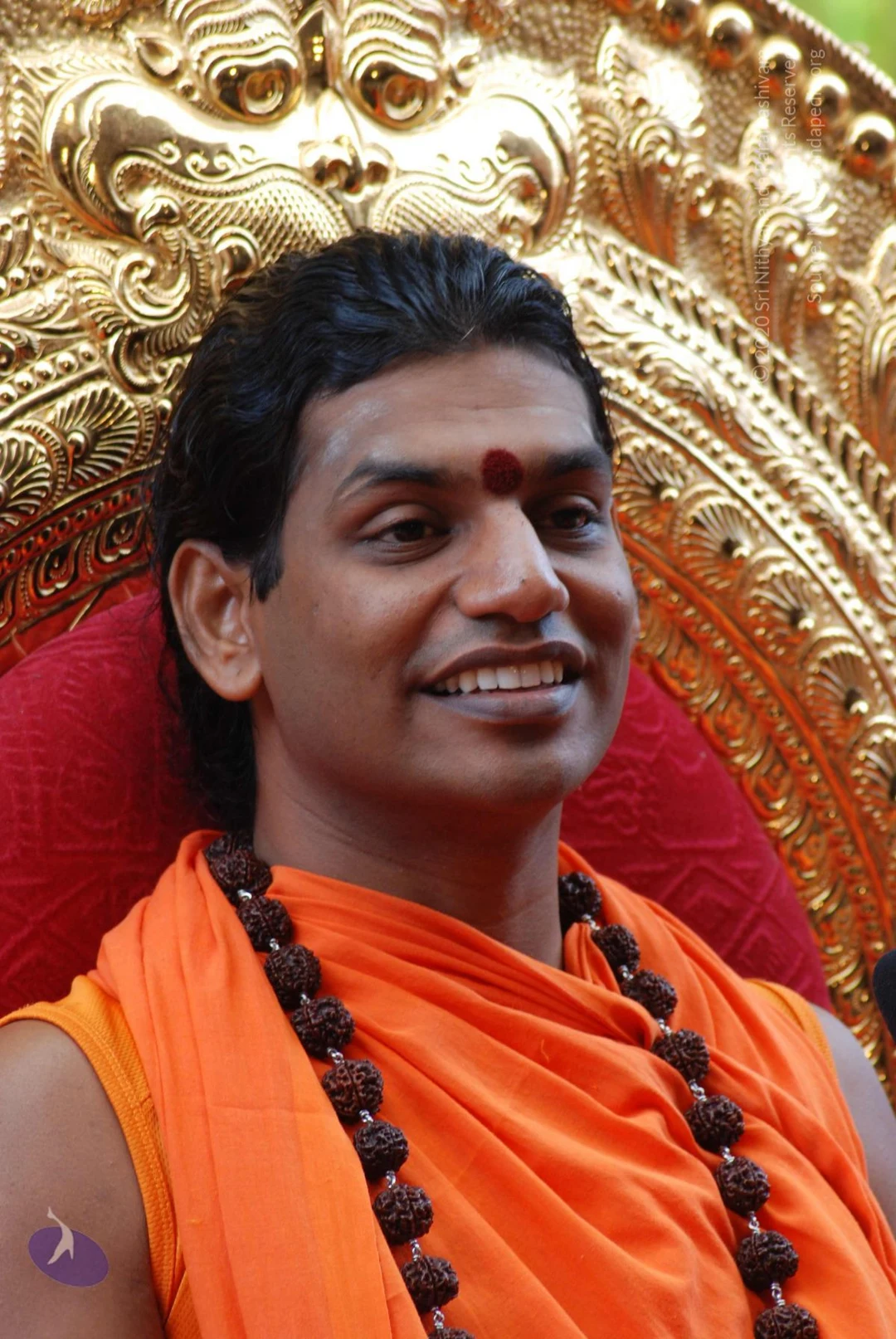
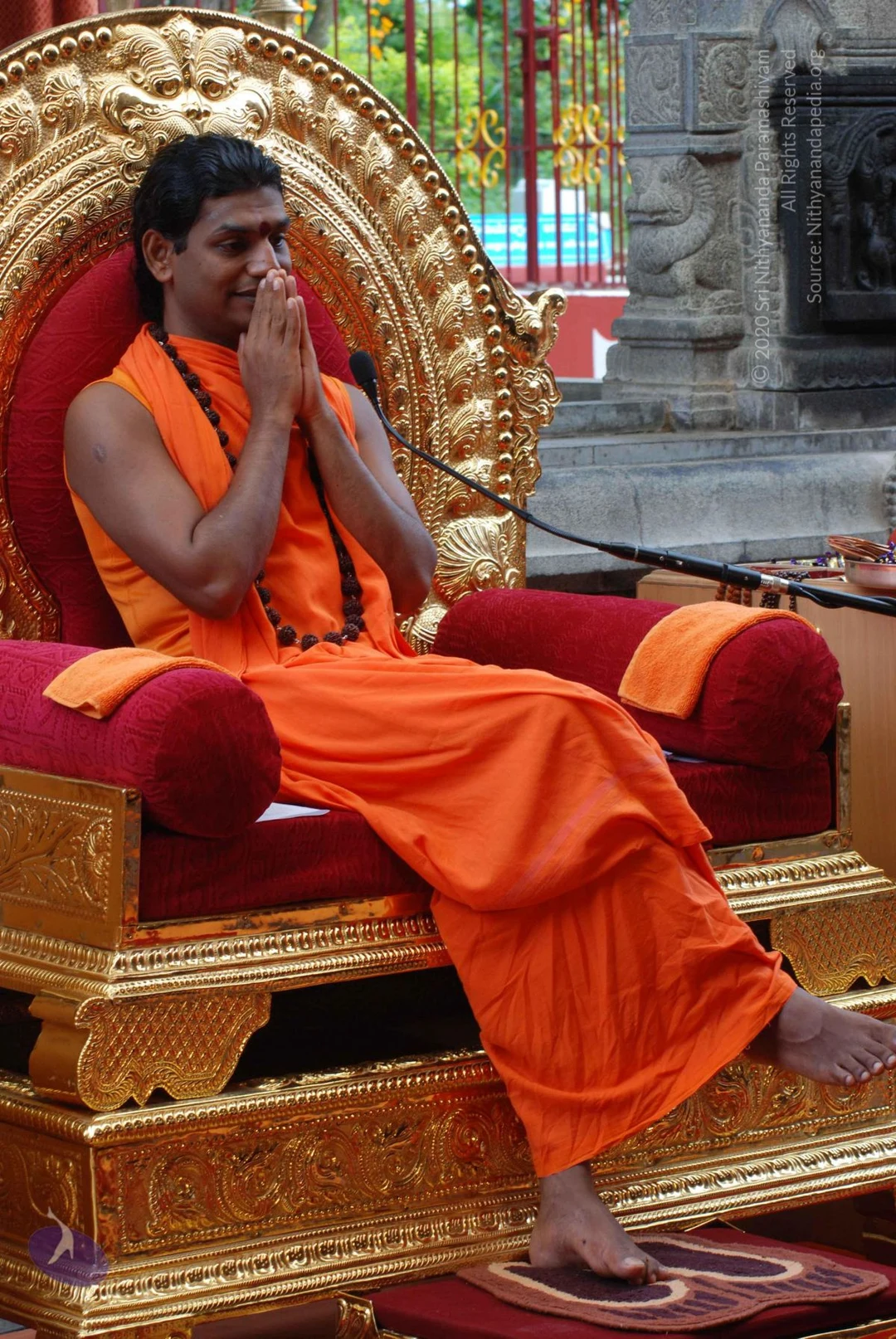
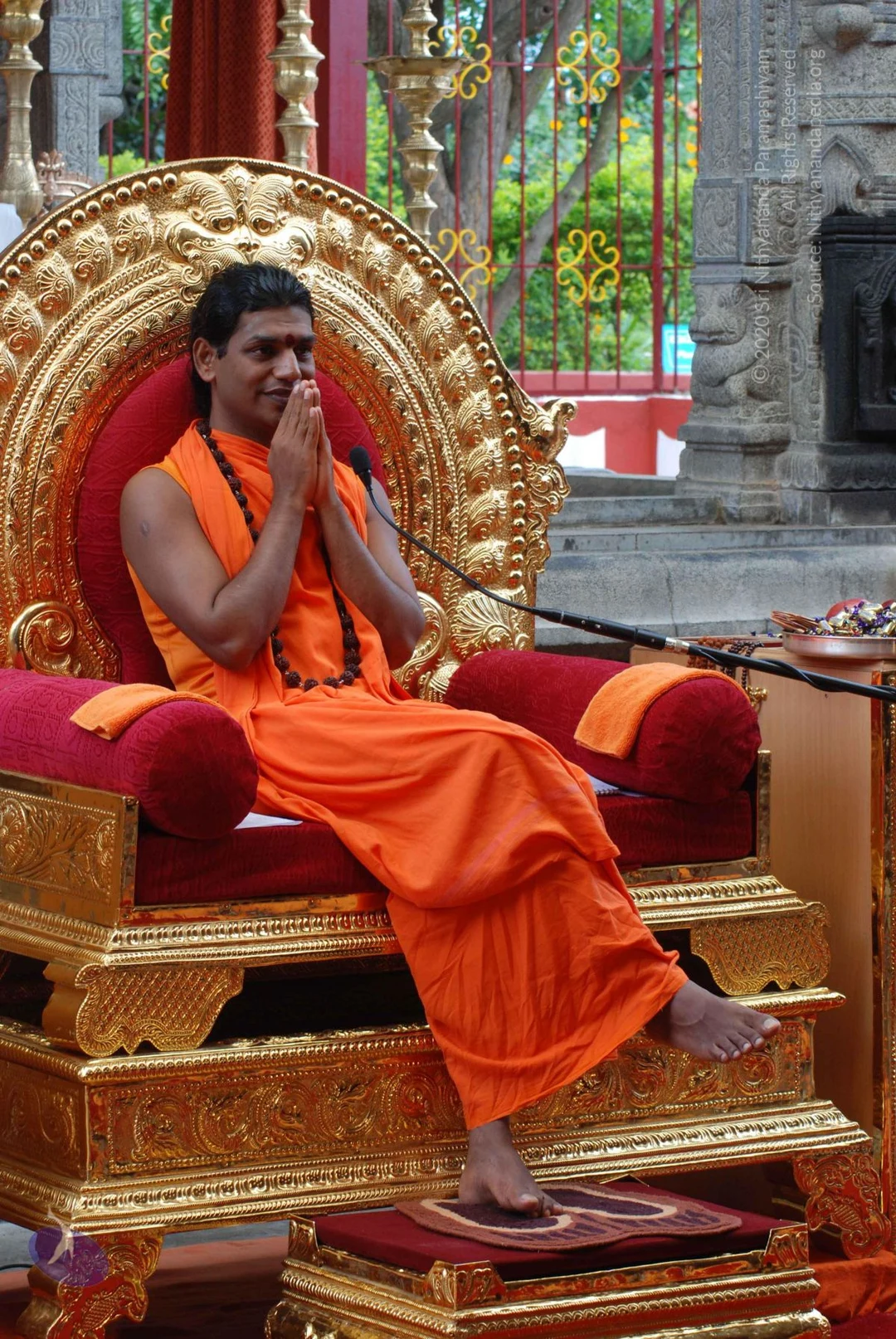
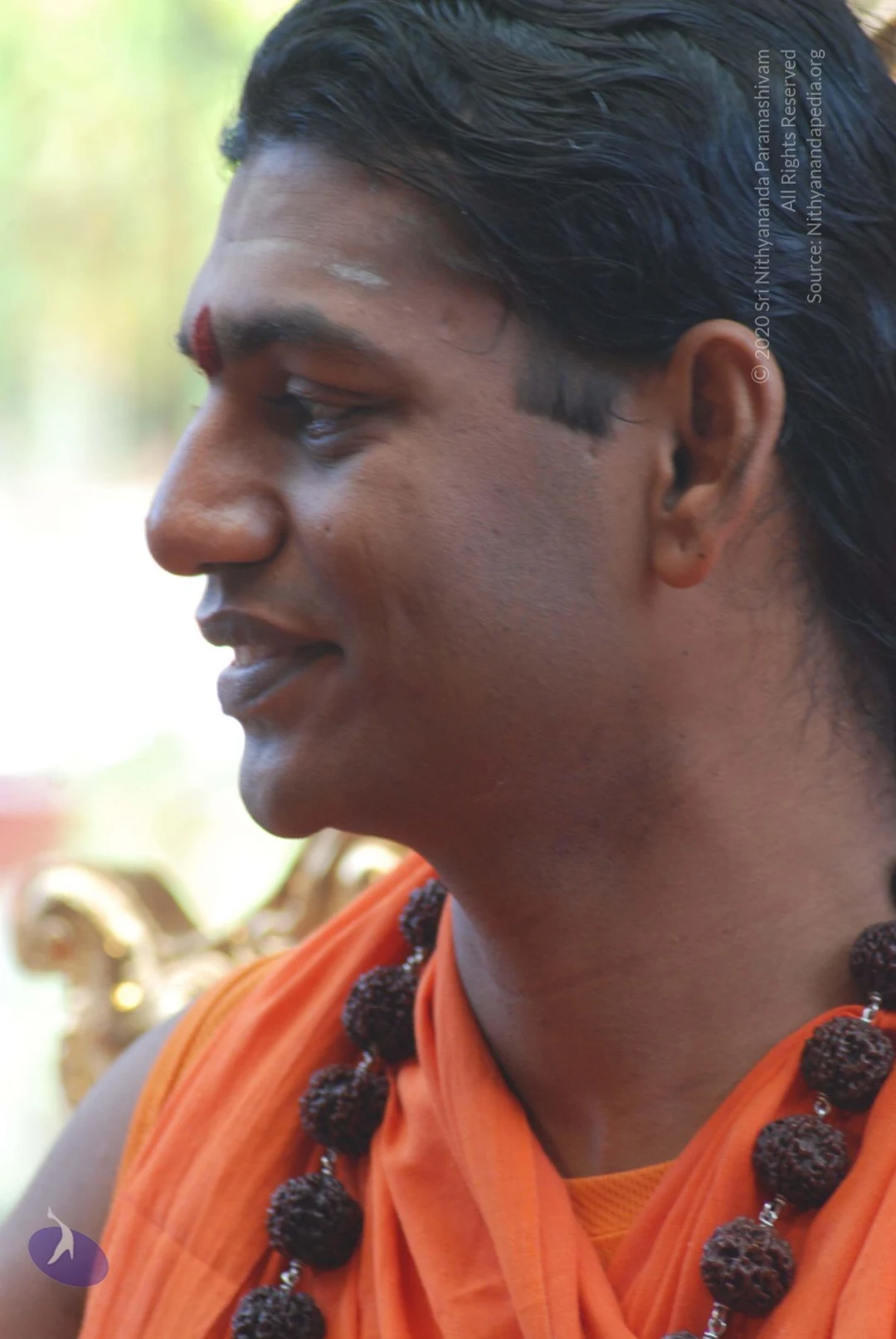
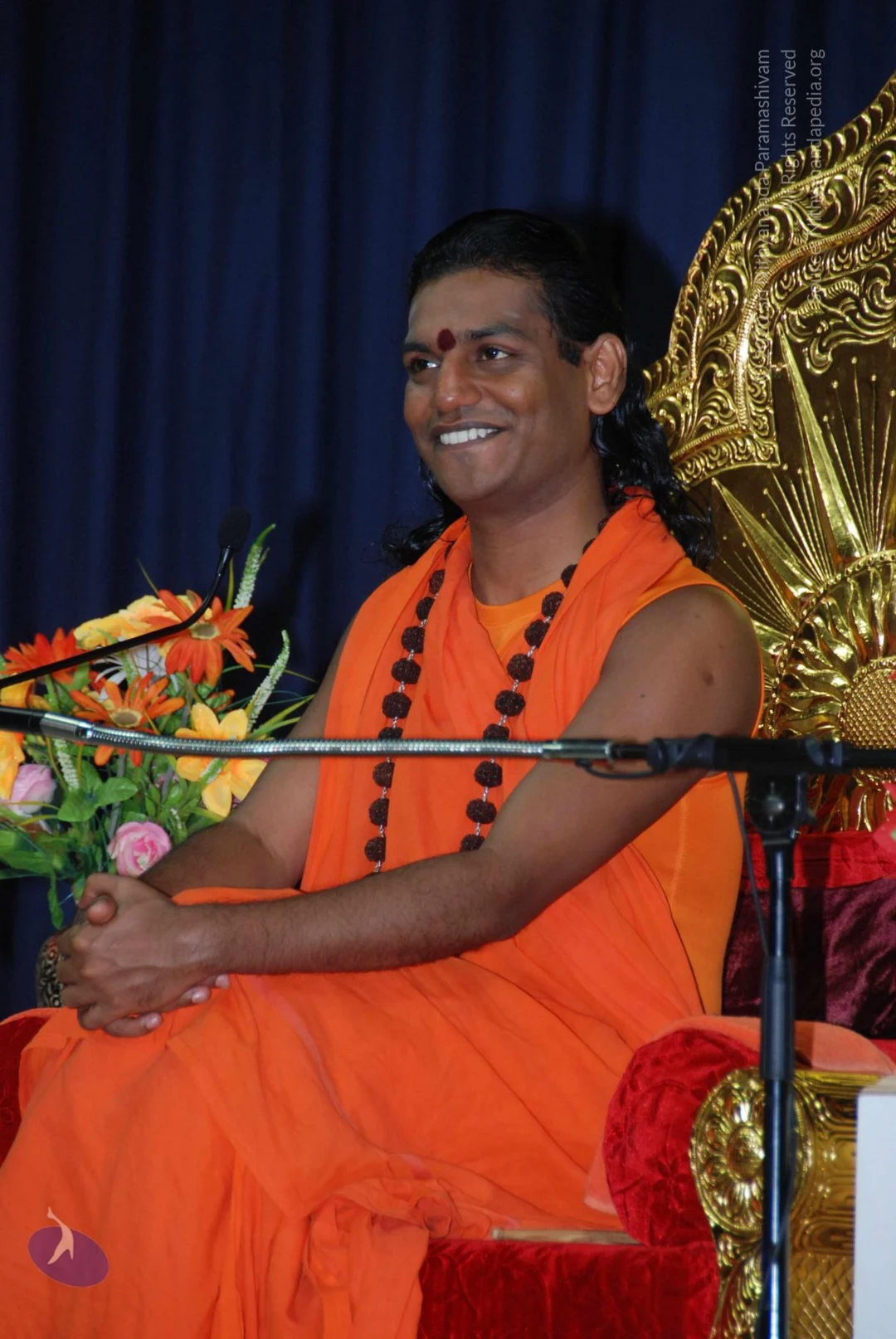
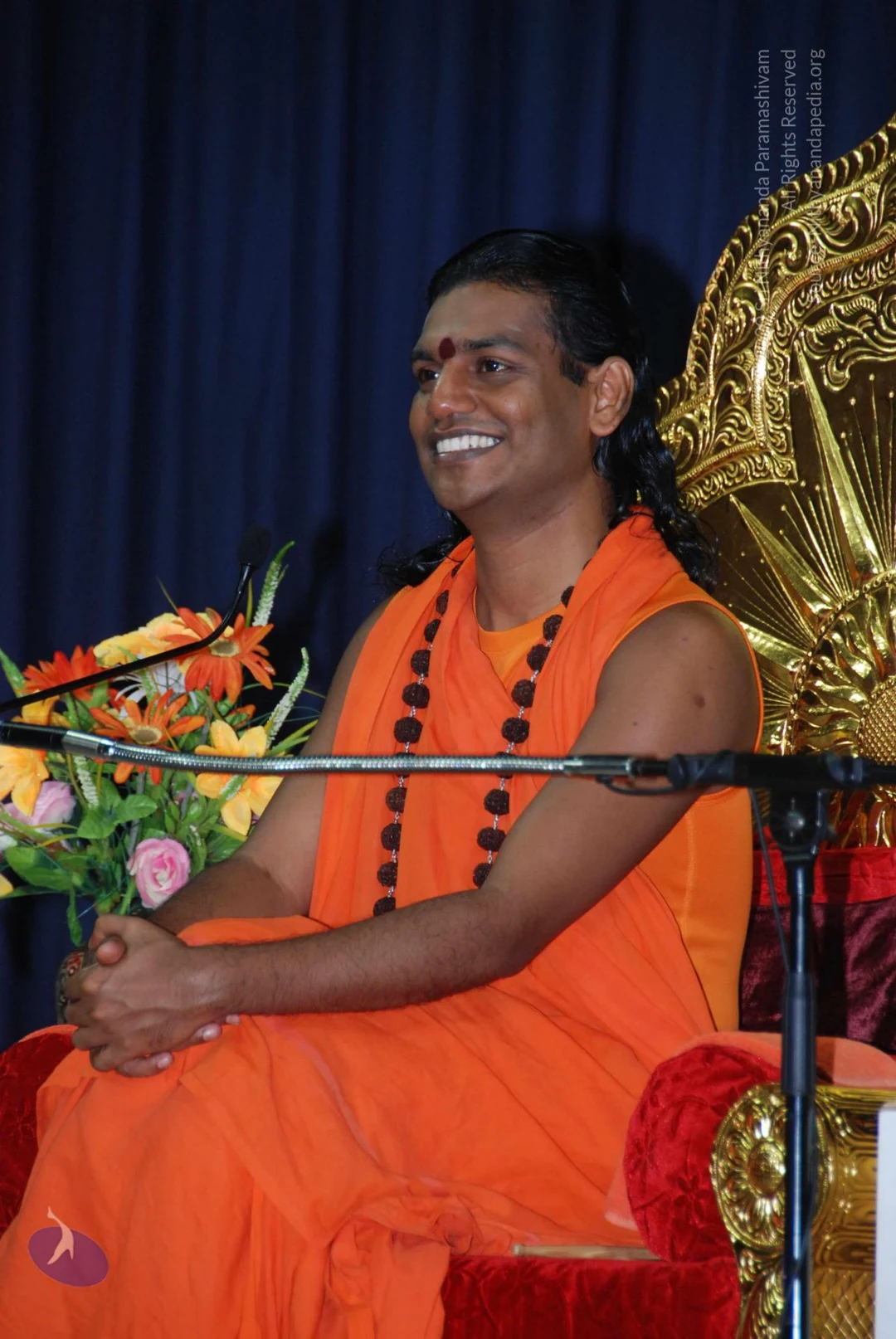
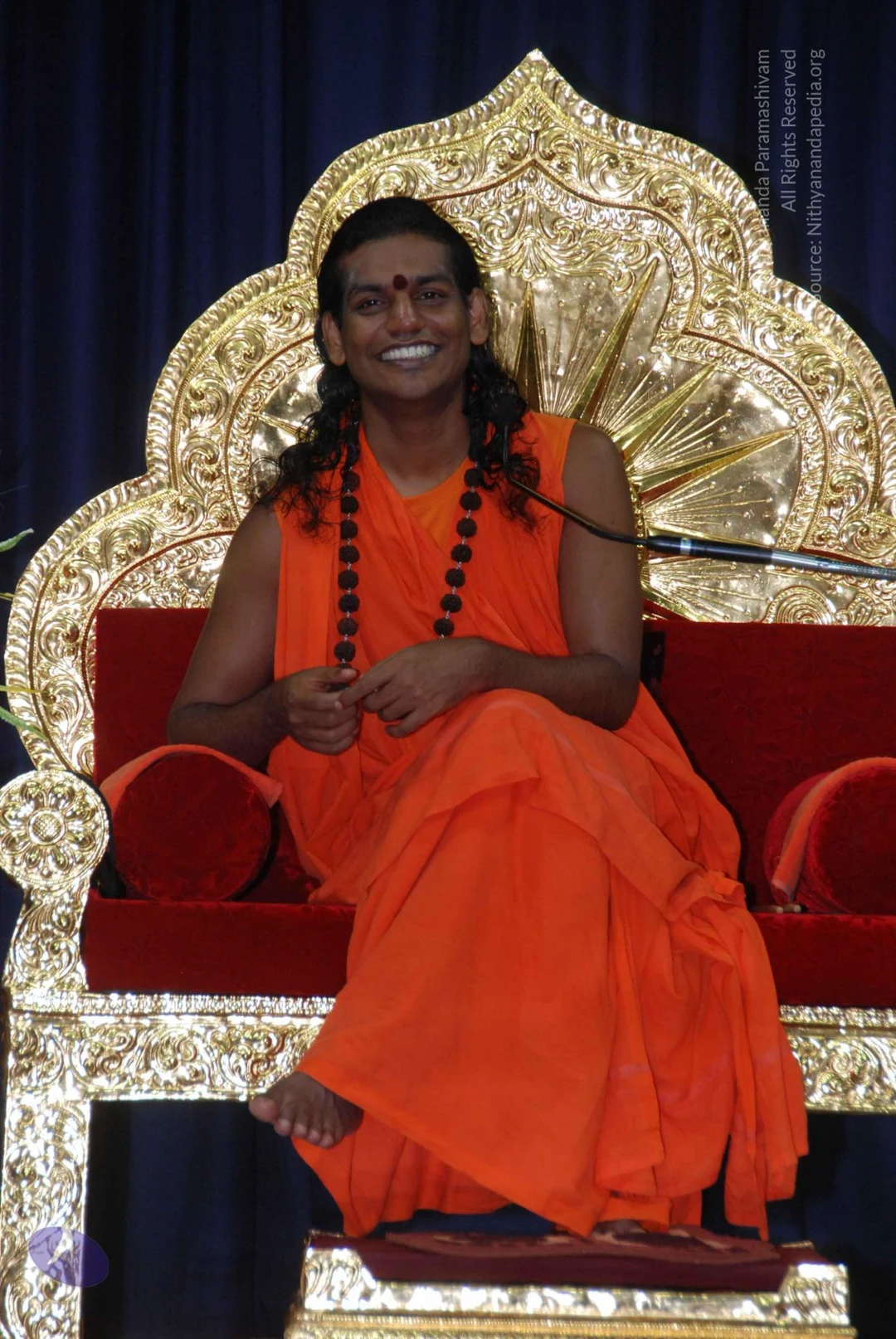
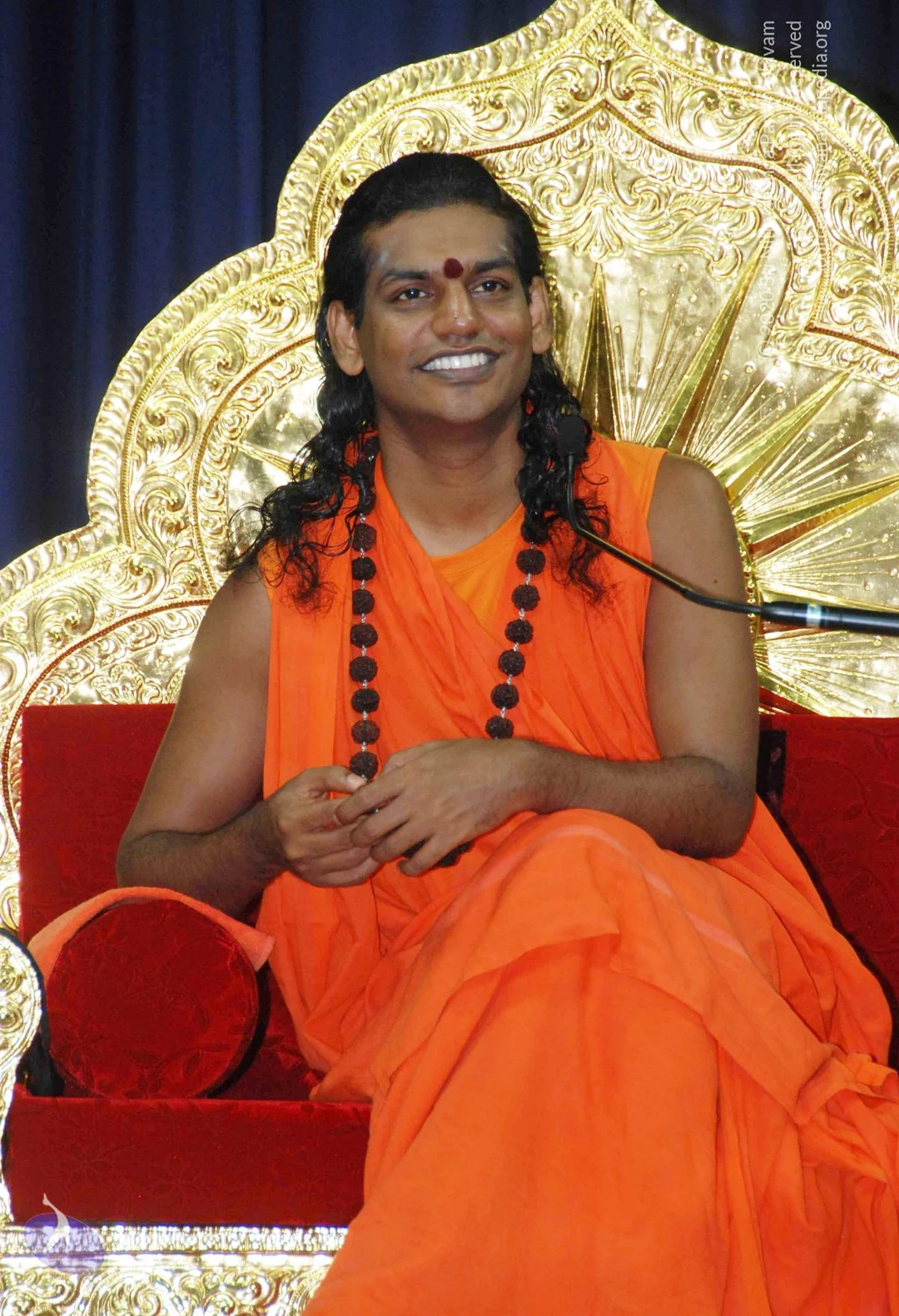
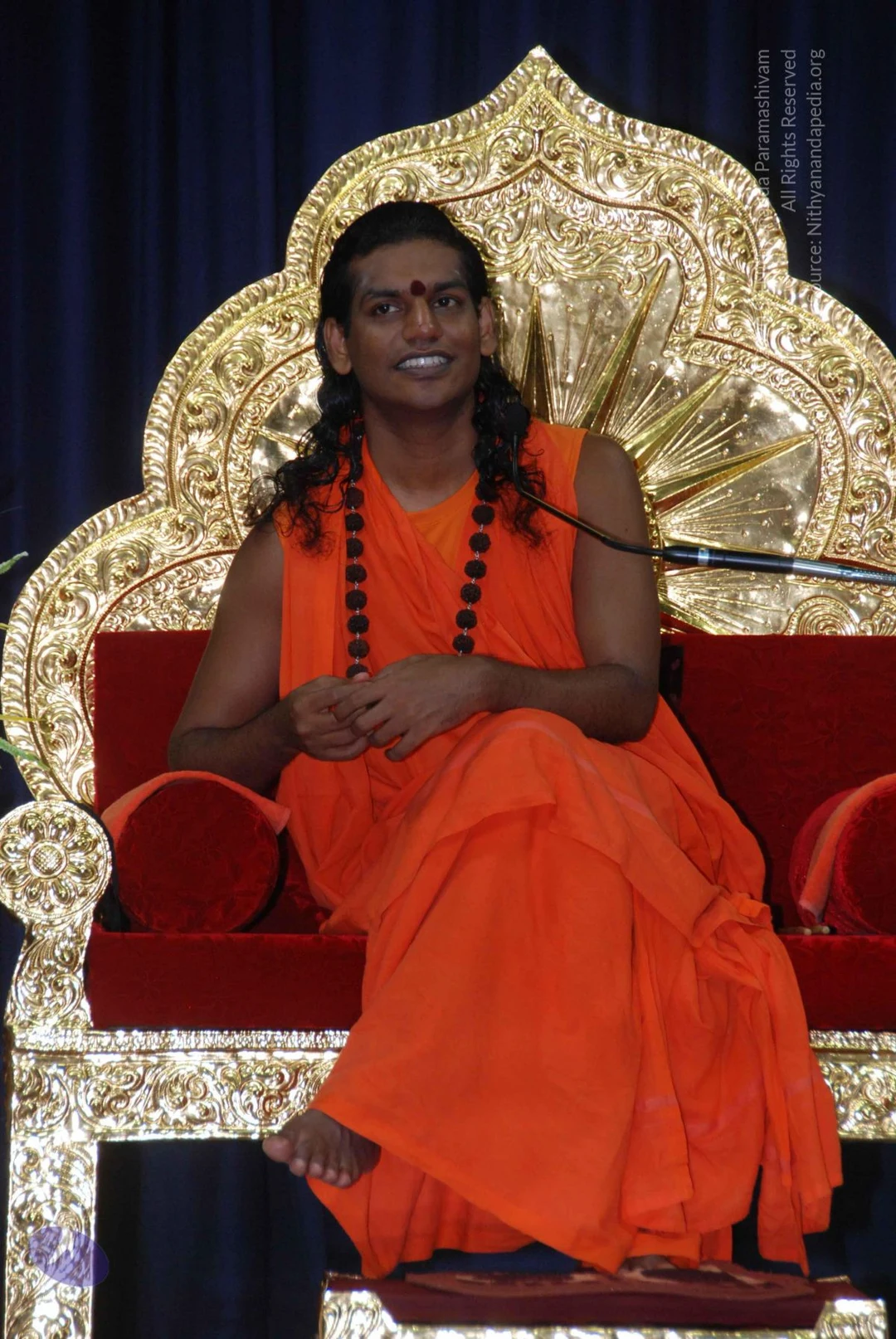
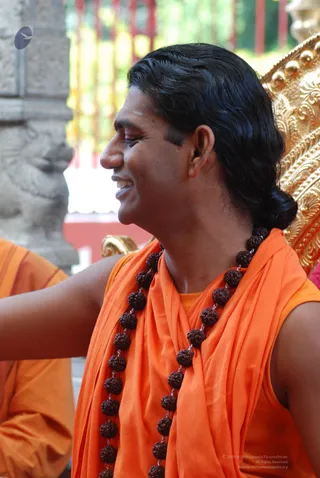
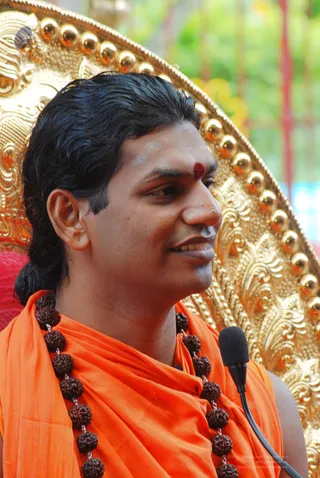
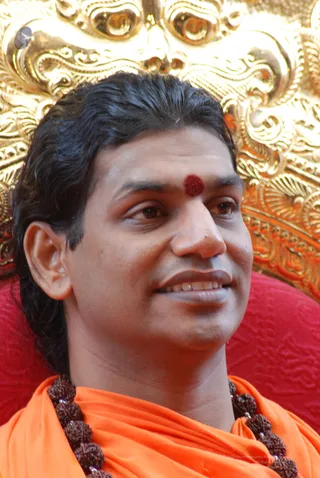
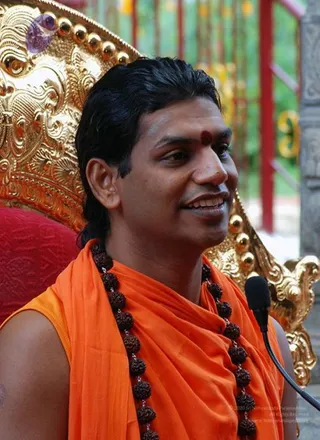
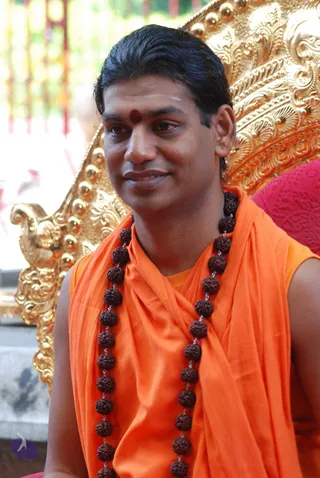
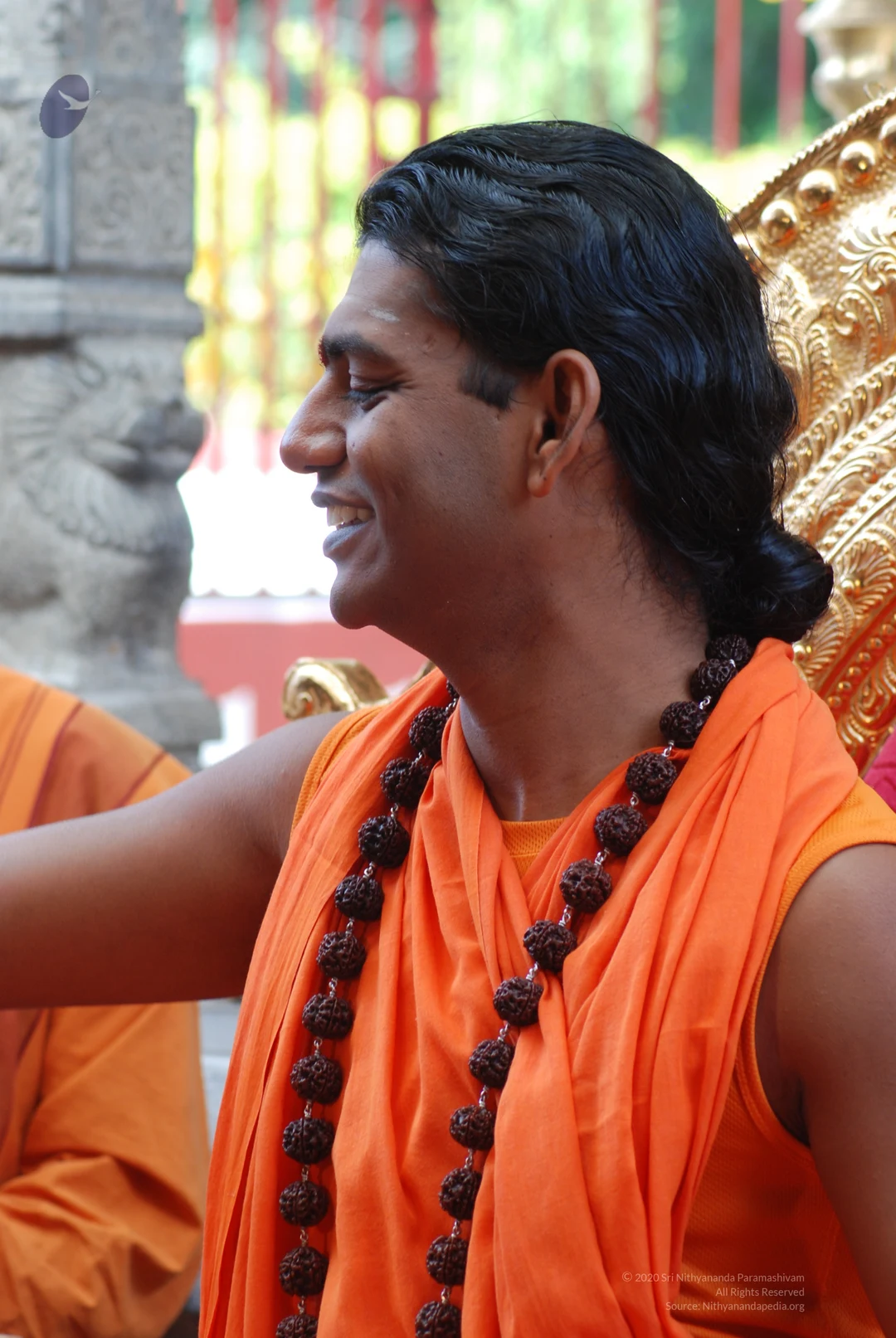
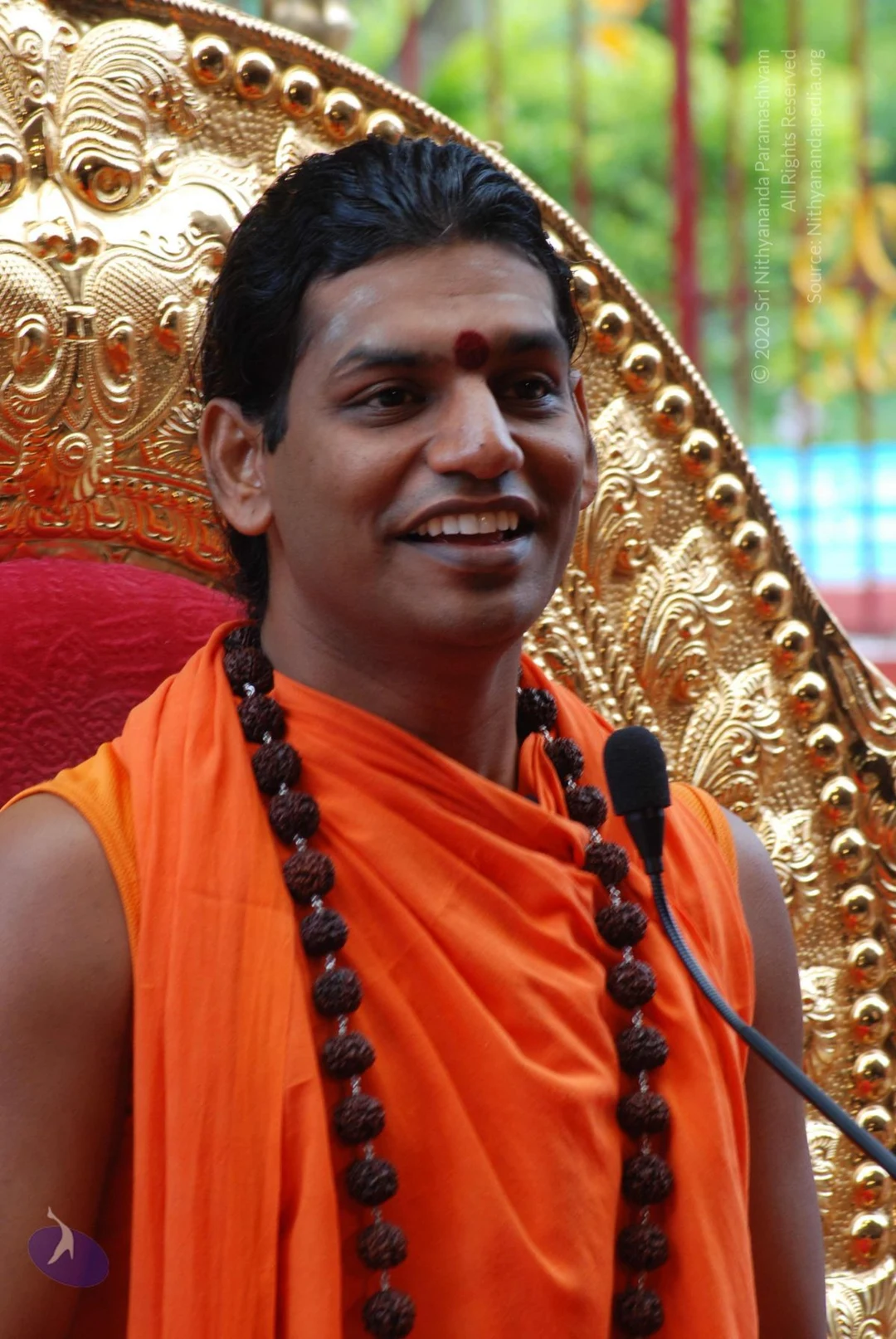
Close photograph of a man seated before an ornate gold-embossed throne with rounded finials, smiling and looking to the side. He wears an orange saffron wrap over his shoulders and a red kumkum dot on his forehead. Several rudraksha mala strands hang across his chest, and a black microphone stands at the right edge of the frame. The hair is long, dark and swept back into a low tail. Behind him are blurred green foliage and a red fabric hanging.Close-up photograph of a smiling man with swept-back dark hair, a red kumkum dot on his forehead, wearing an orange shawl and a dark rudraksha mala. Behind him is ornate gilded repoussé metalwork and a red cushioned seat.

Sarvadarshan
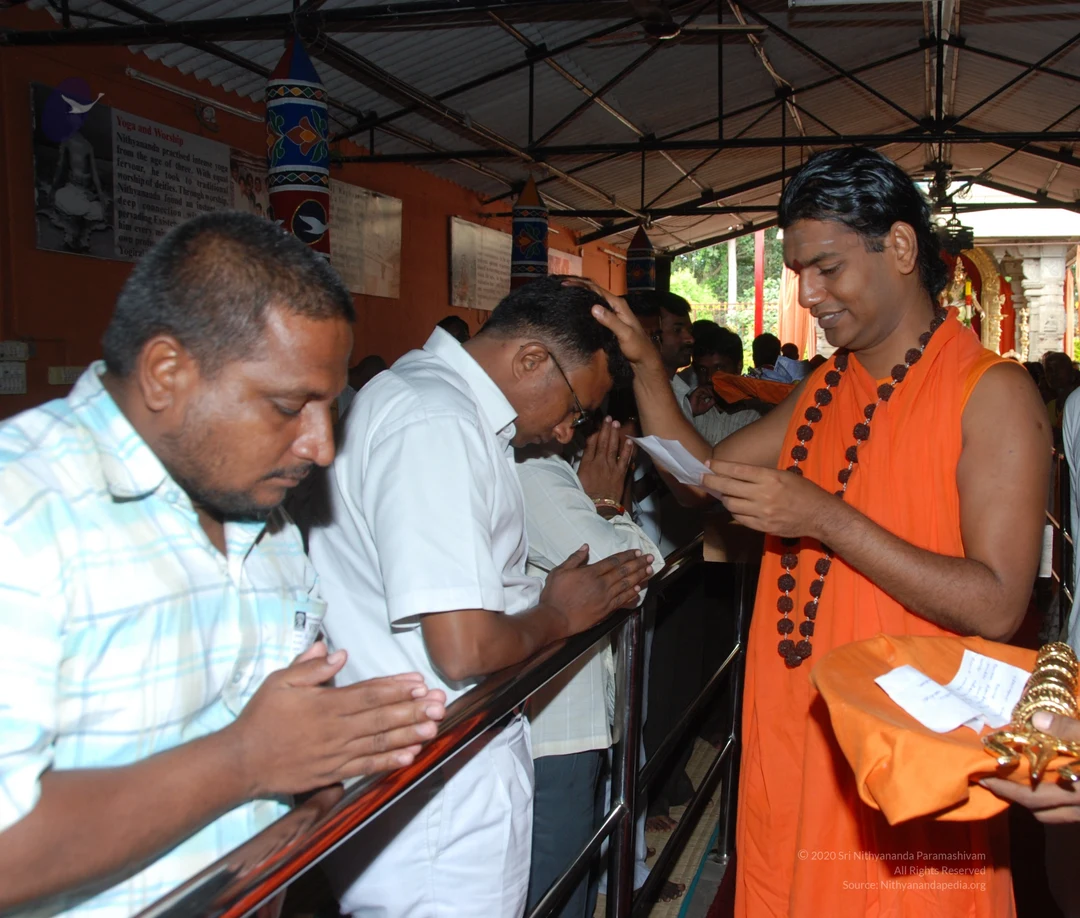
1 photoSource gallery
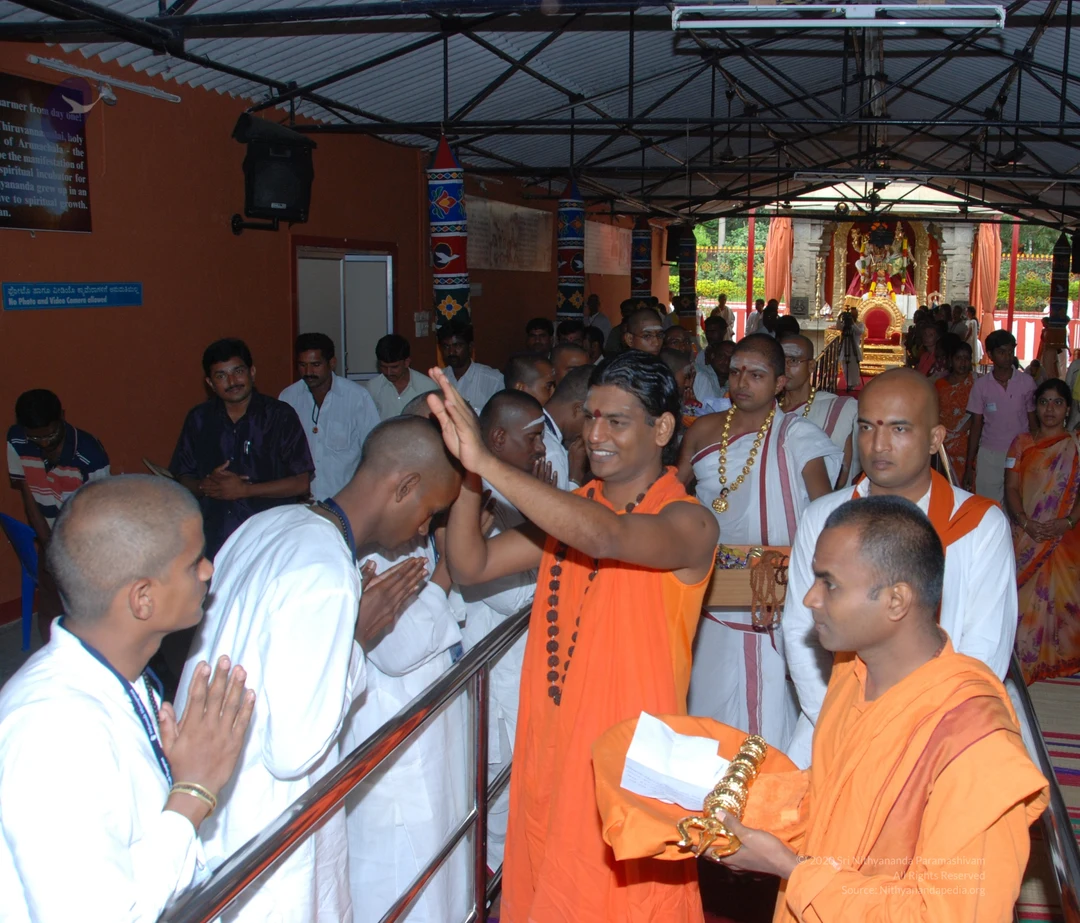
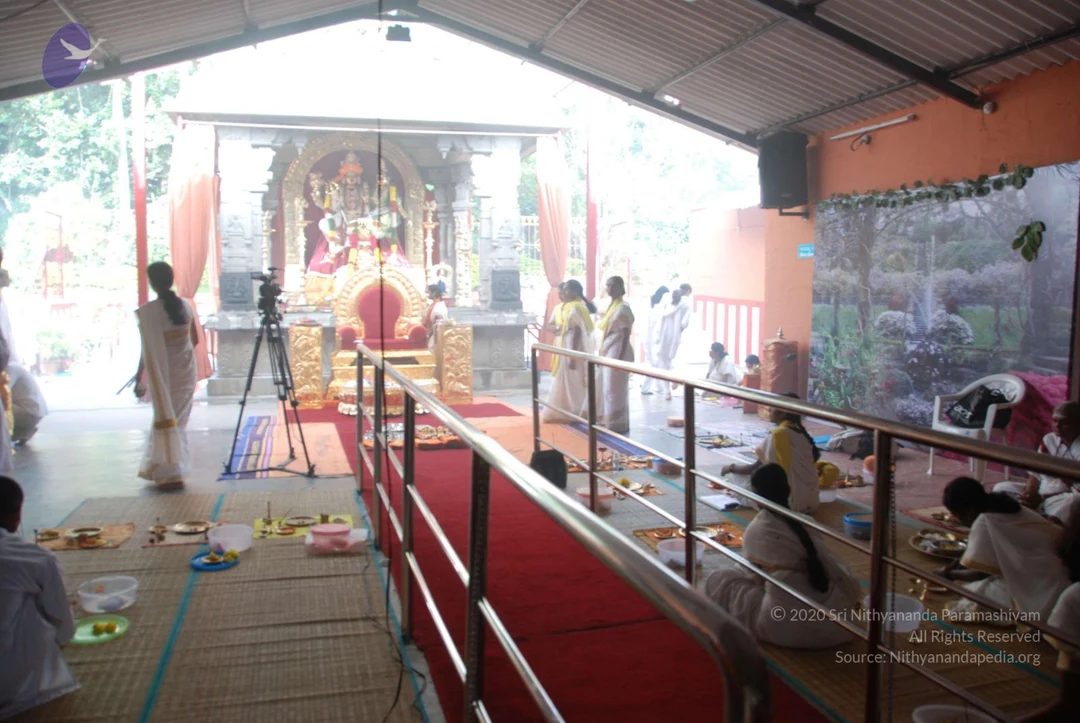
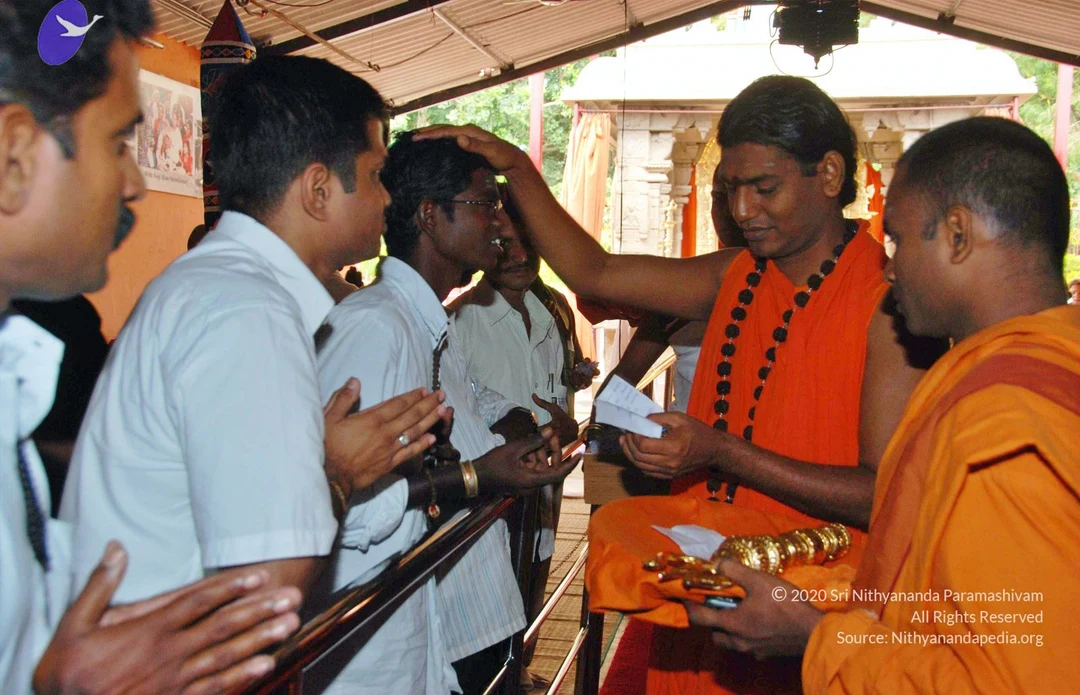
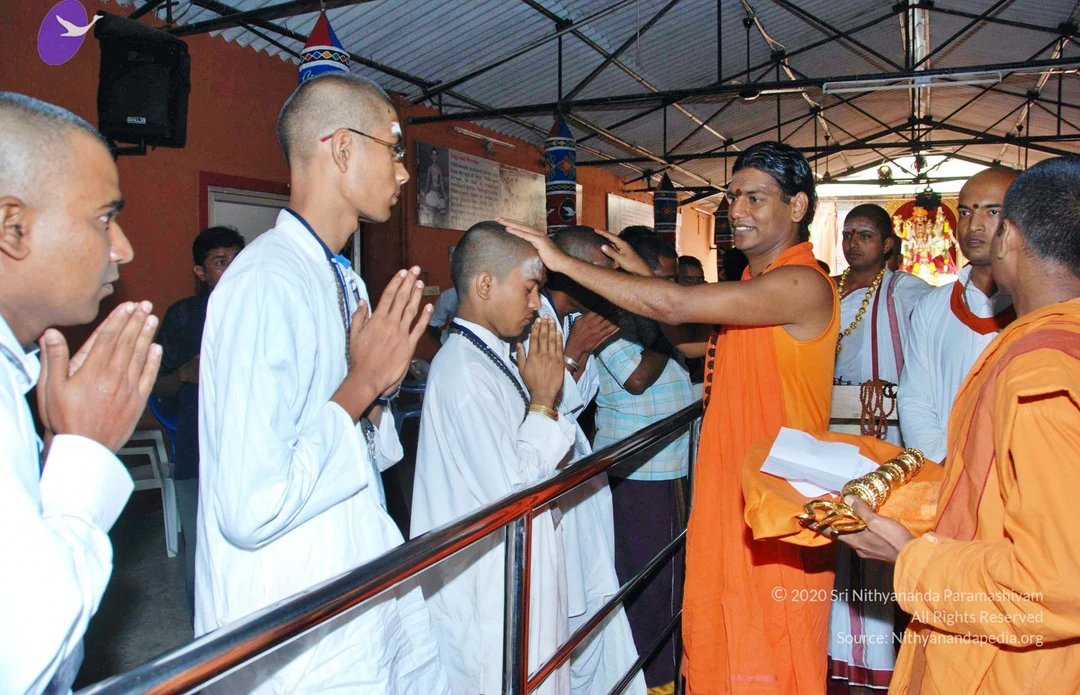
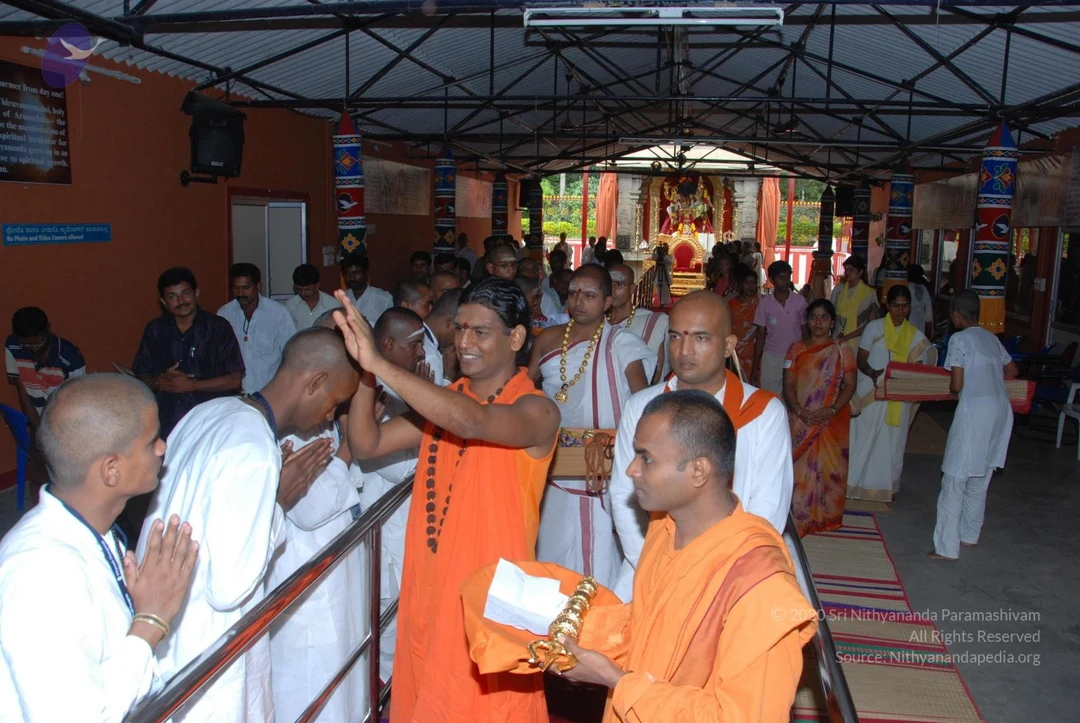
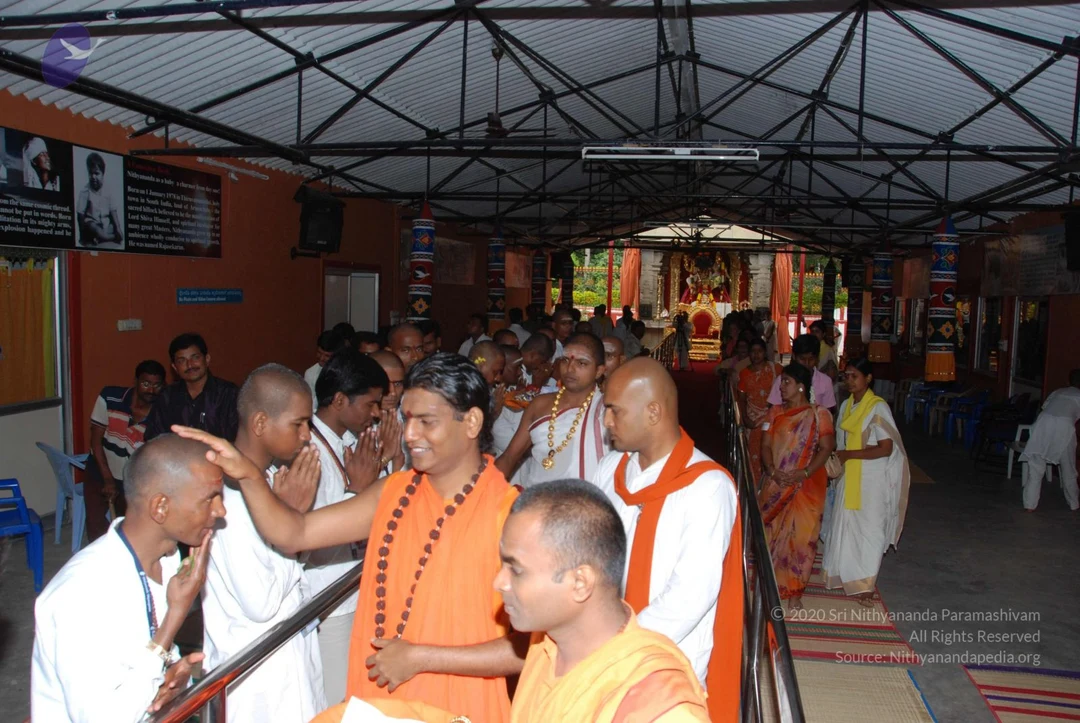
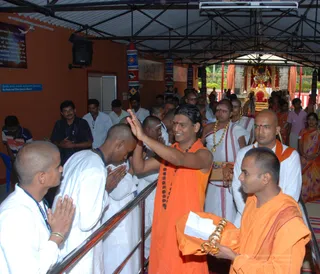
A photograph inside a covered temple hall with orange-painted walls and a metal roof. In the centre, a man in an orange ochre robe with a rudraksha mala and a gold necklace raises his right palm in blessing toward a devotee at the rail on the left, who presses his palms together in añjali. Beside him, a bald man in white dhoti and shawl with a gold chain holds a gold-tipped staff wrapped in orange cloth, while another bald man in white with an orange cloth stands on the right. Several shaven-headed men in white and a few onlookers in plain clothes and a sari stand behind the railing. Through the doorway, an ornate deity murti sits on a red throne with garlands, with red curtains and decorative pillars around it. A wall plaque and a small blue sign reading photo and video camera are allowed hang on the walls. Visible people number roughly ten to twenty.

Yogasutras

4 photosSource gallery
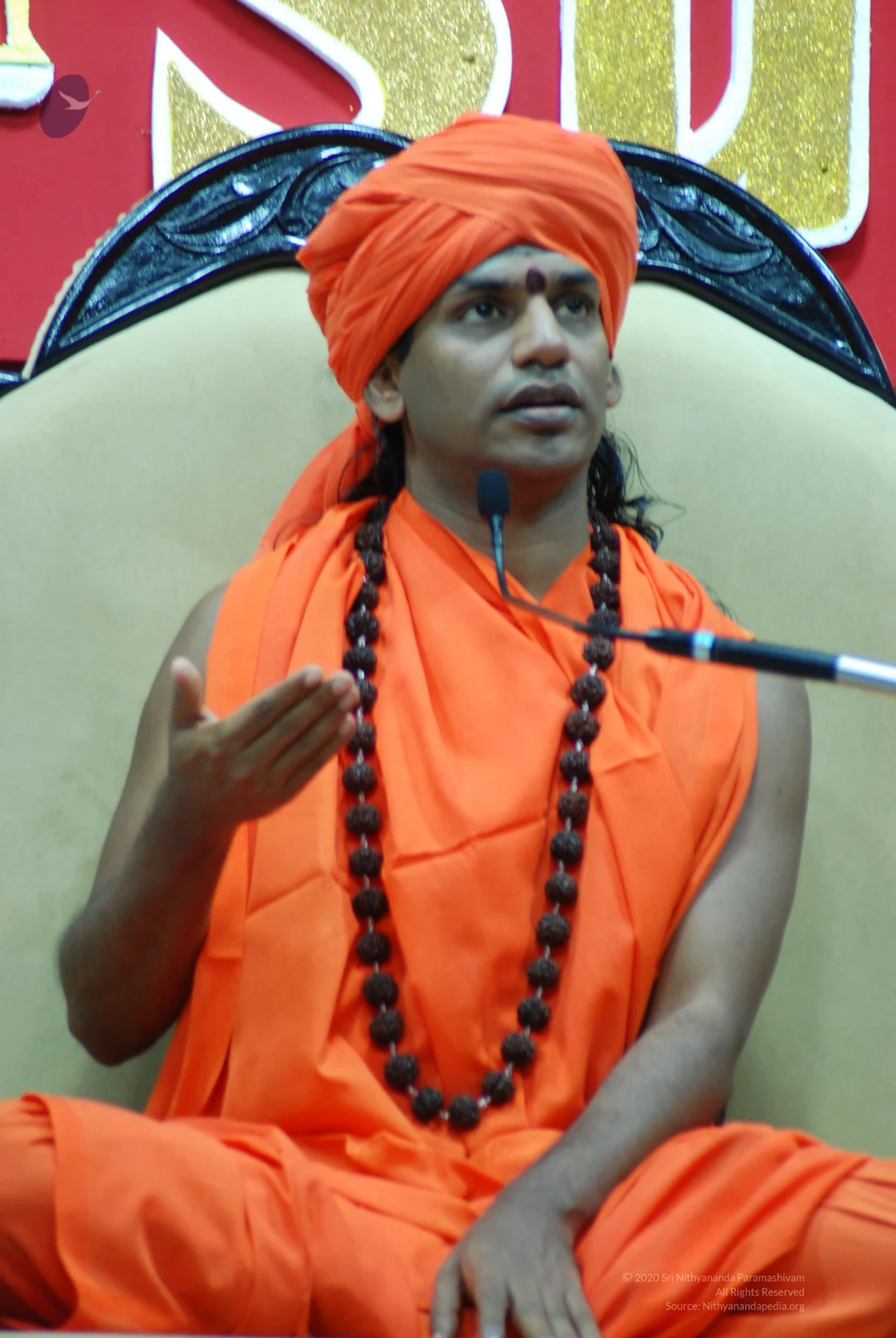
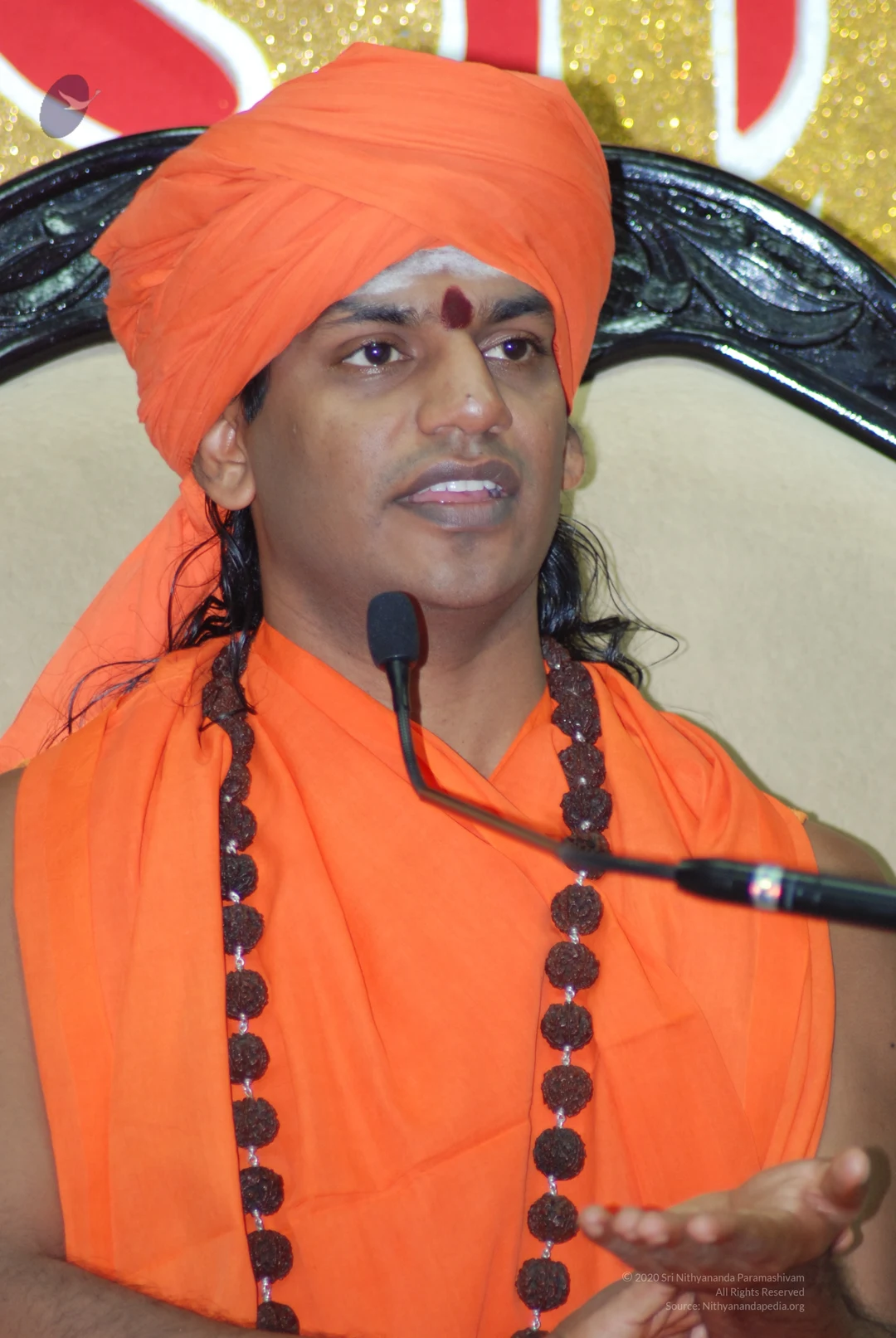
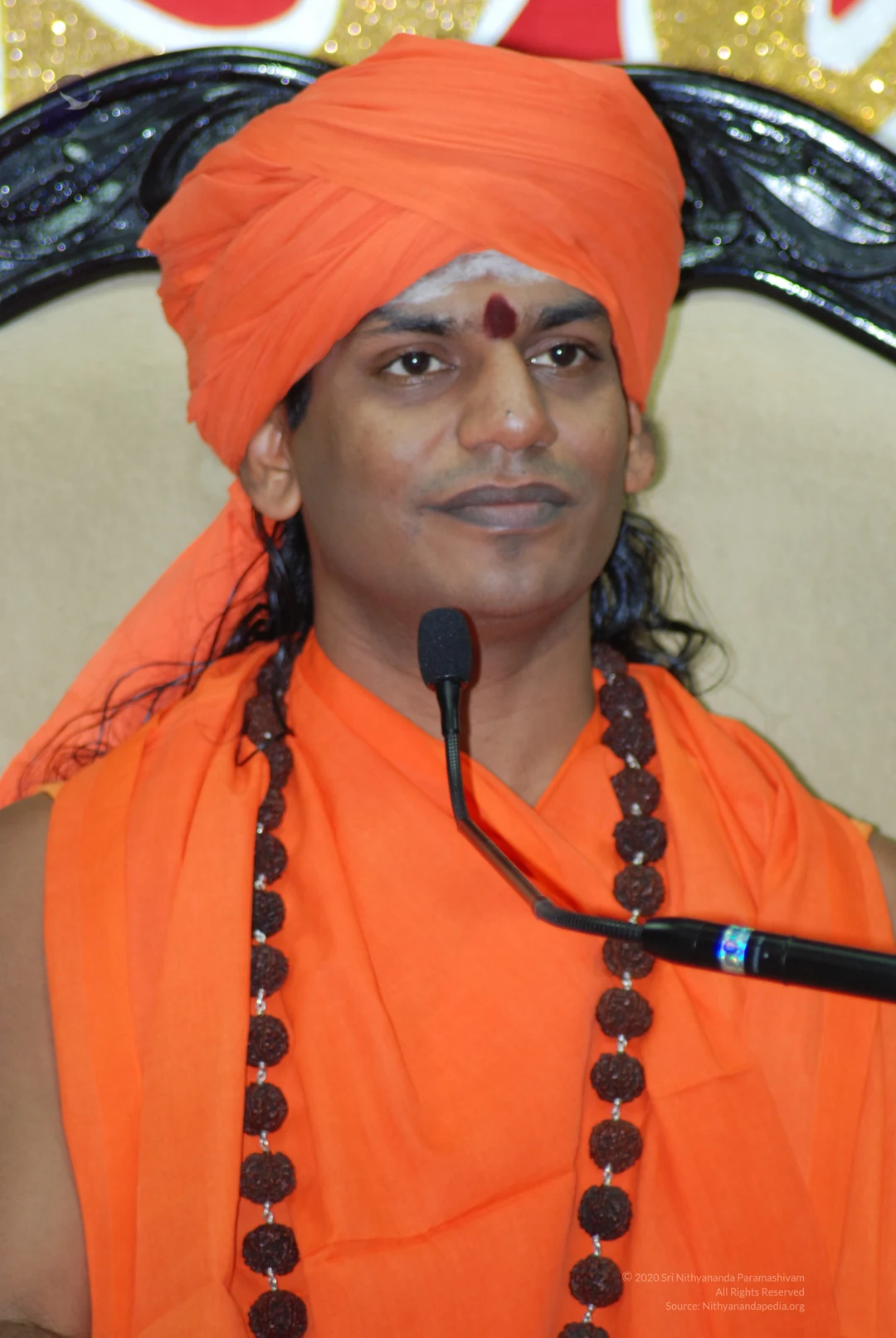
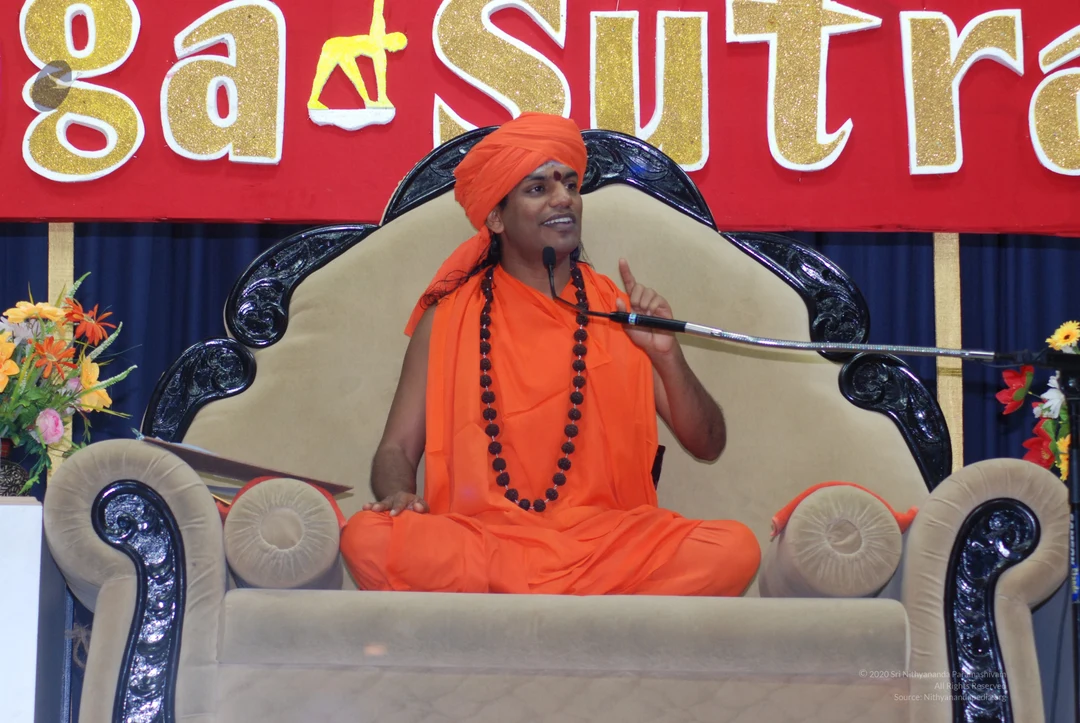
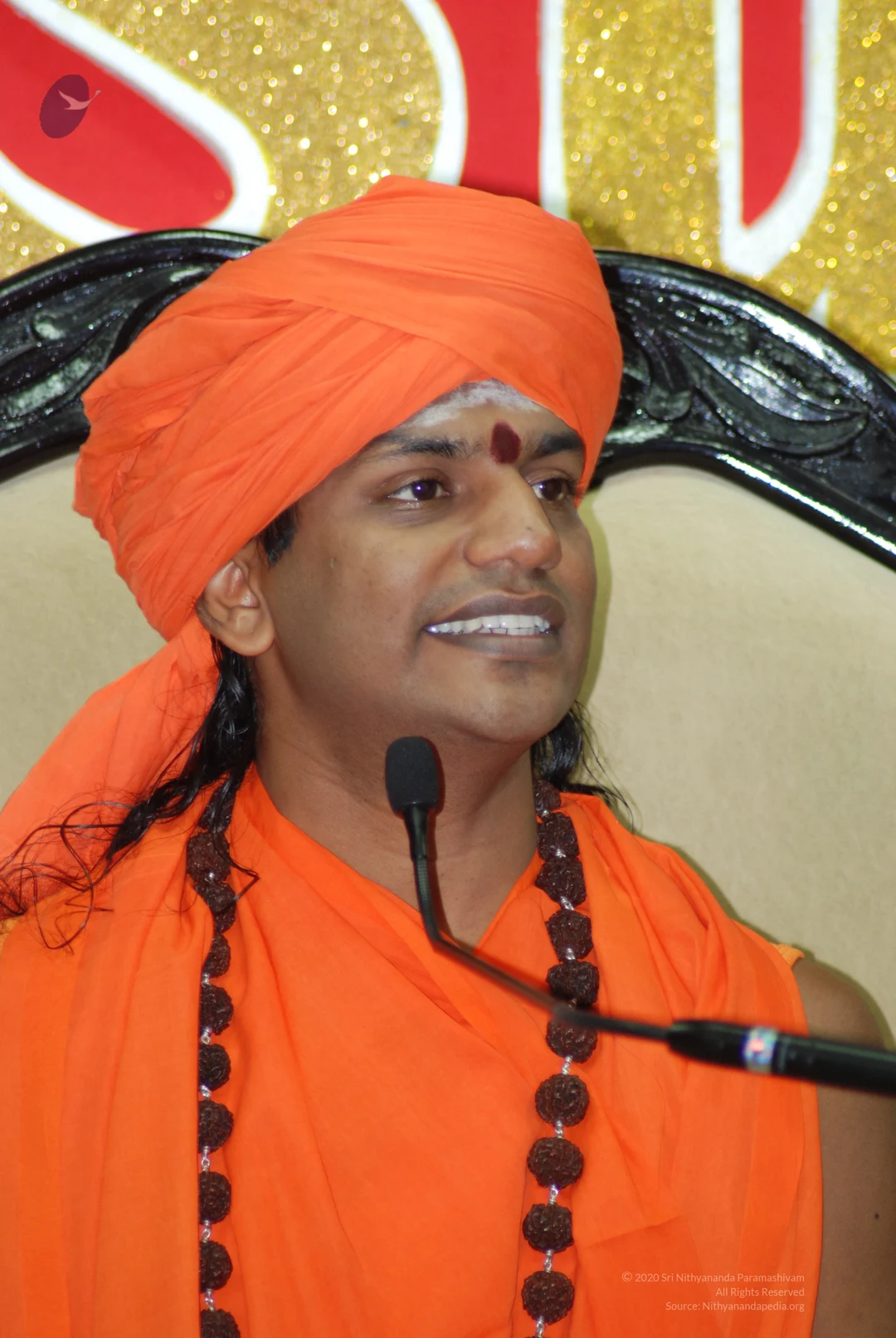
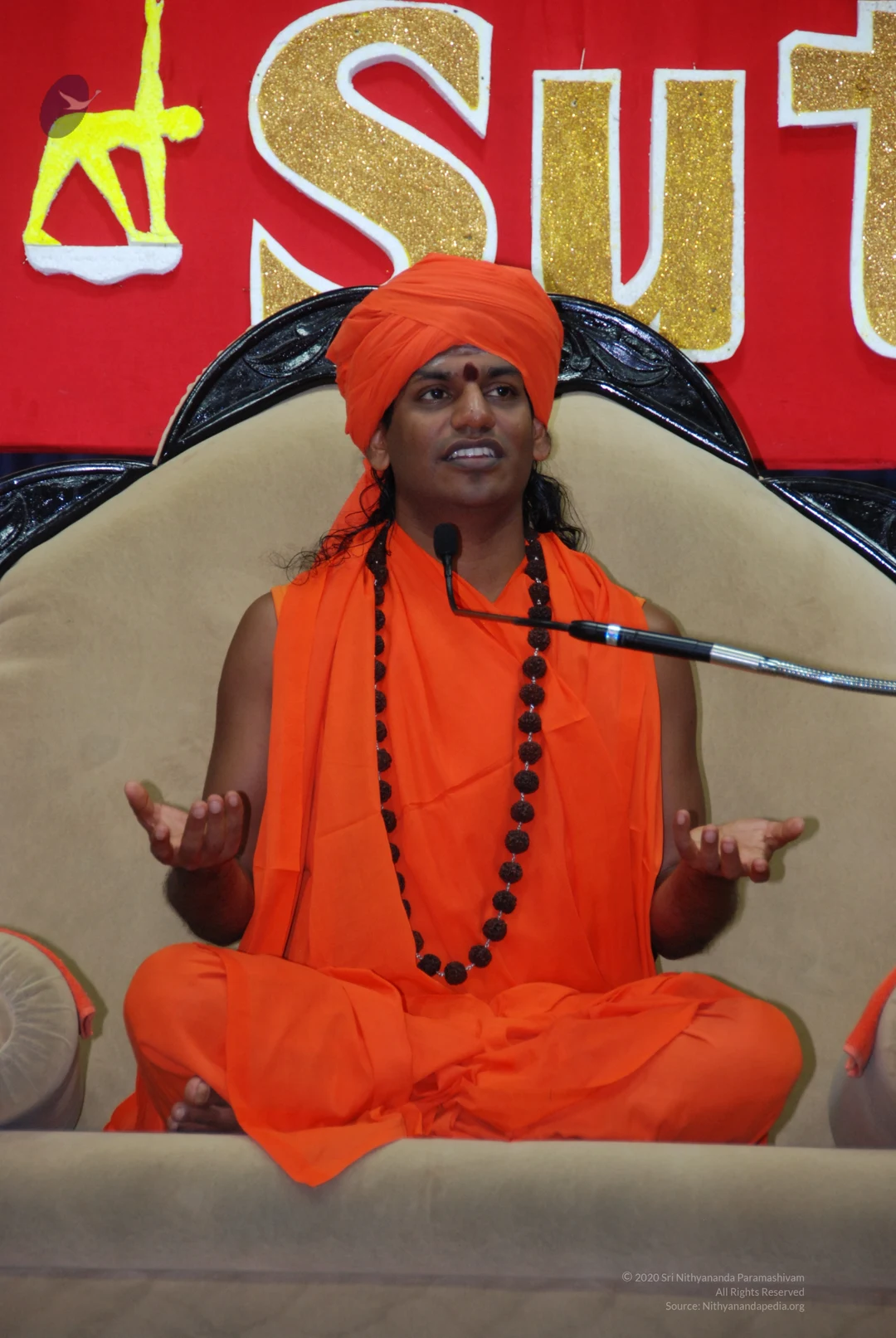
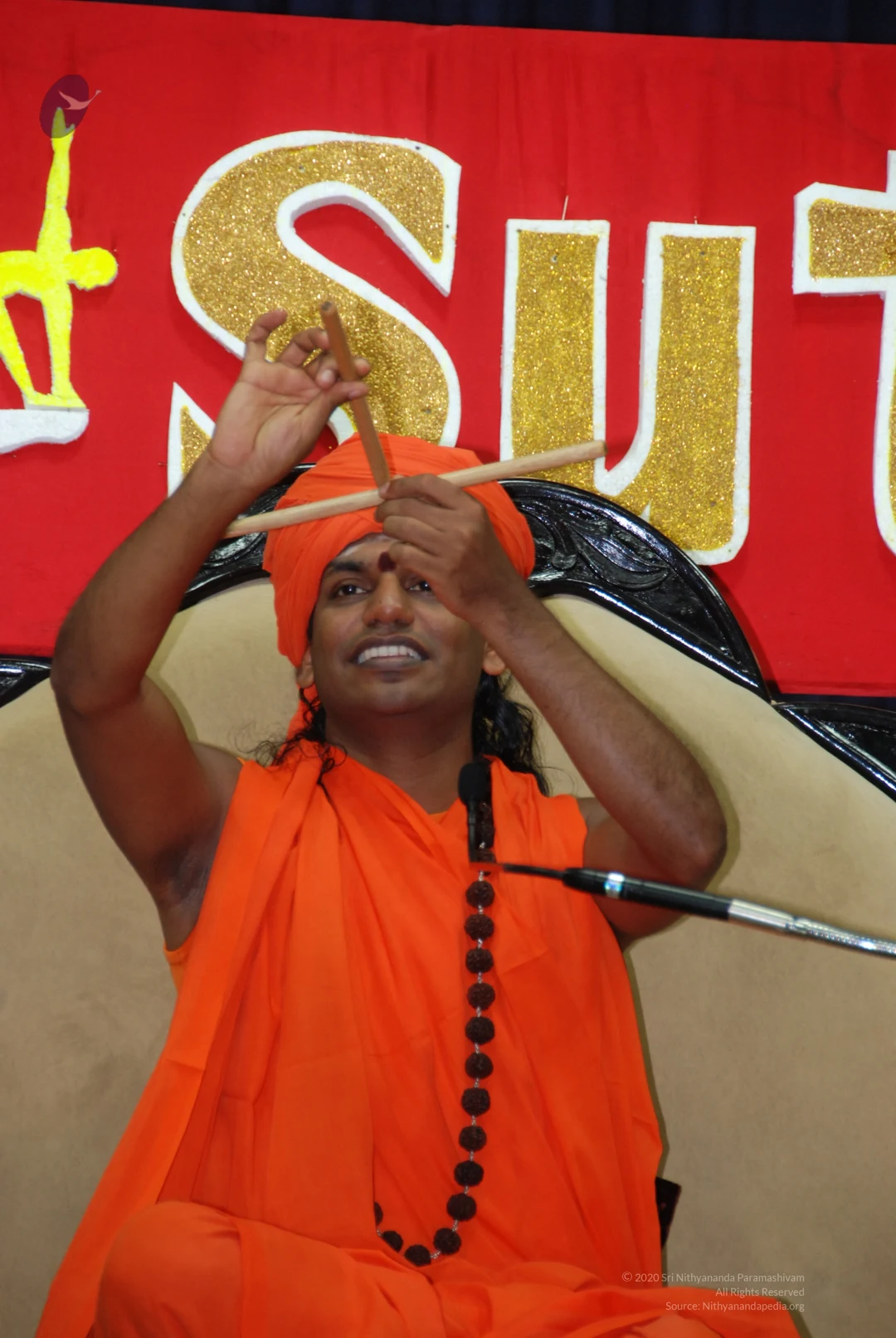
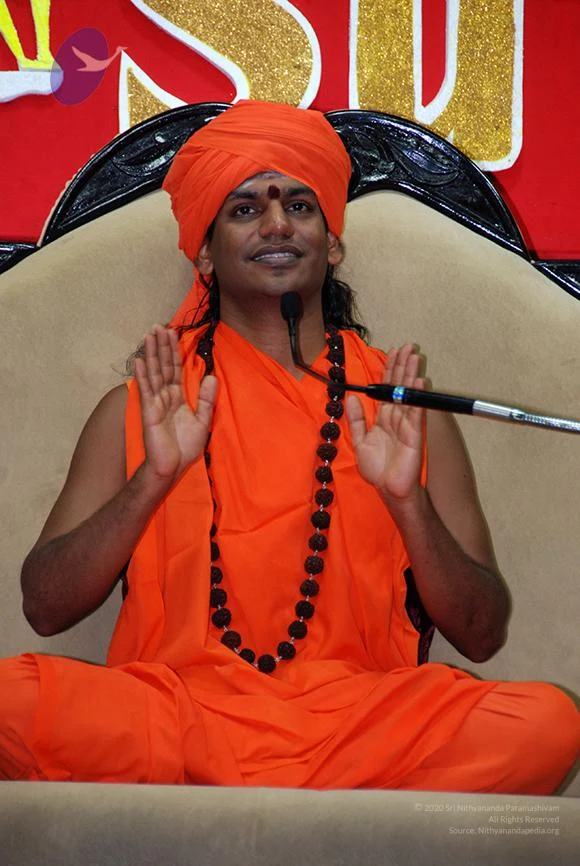
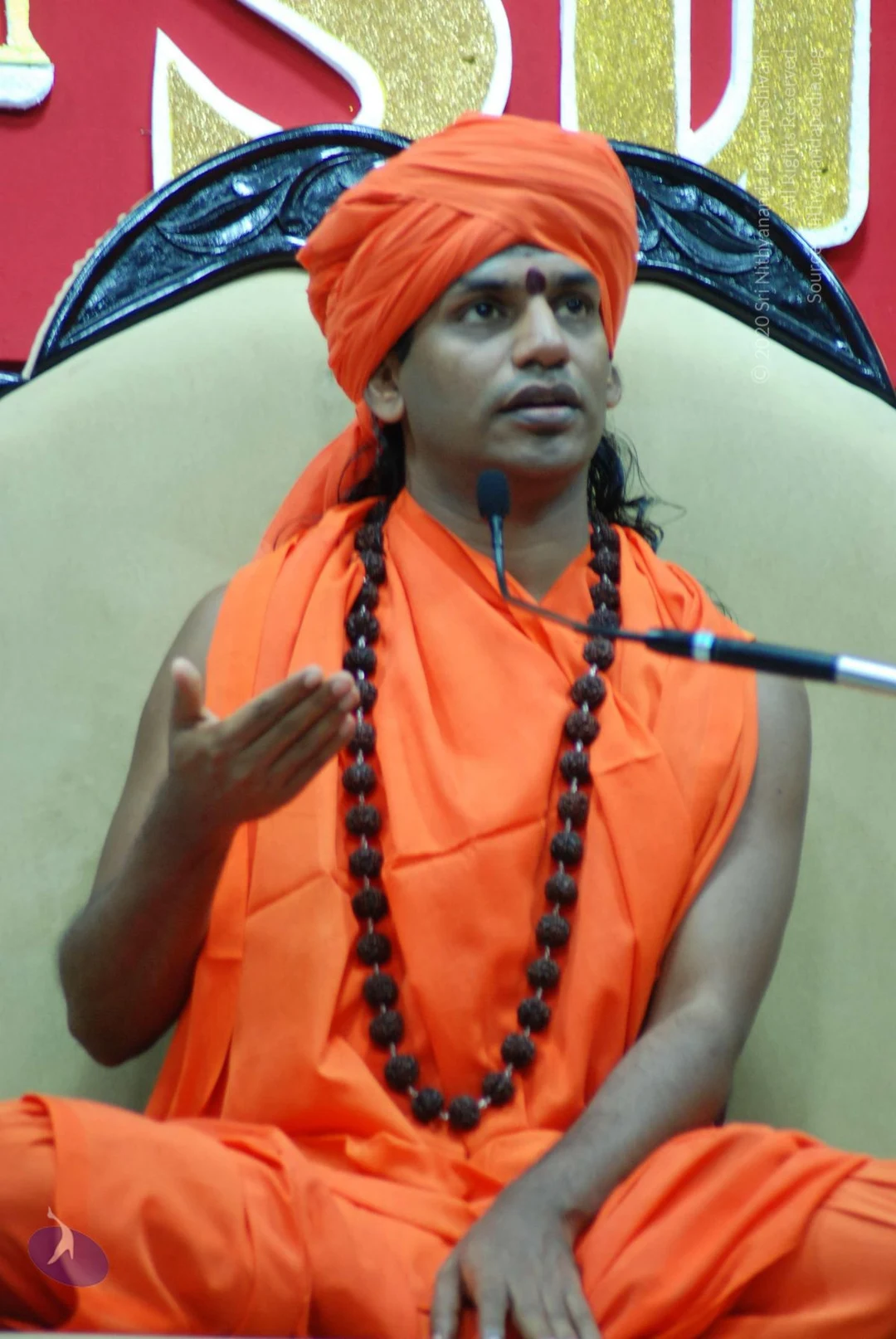
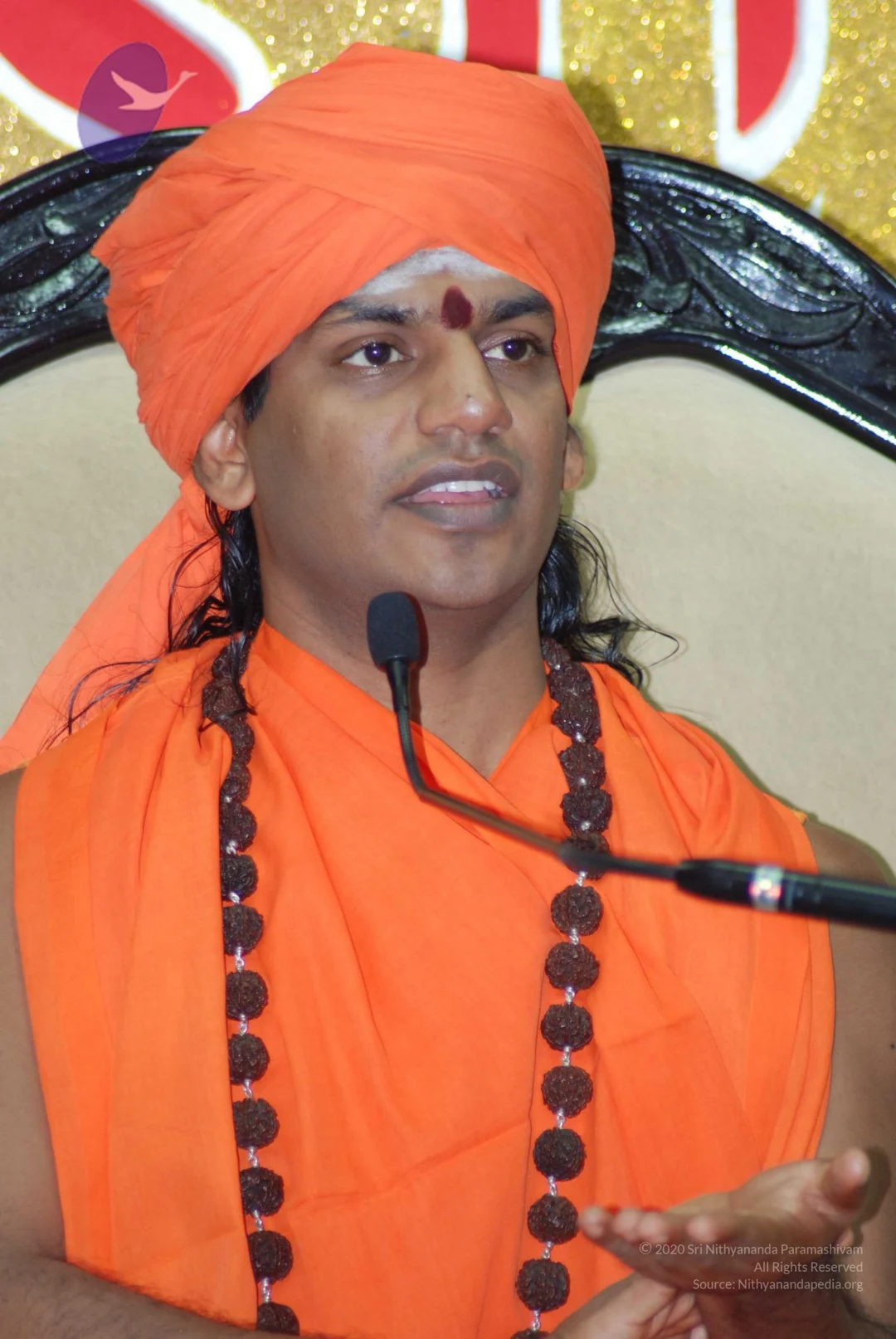
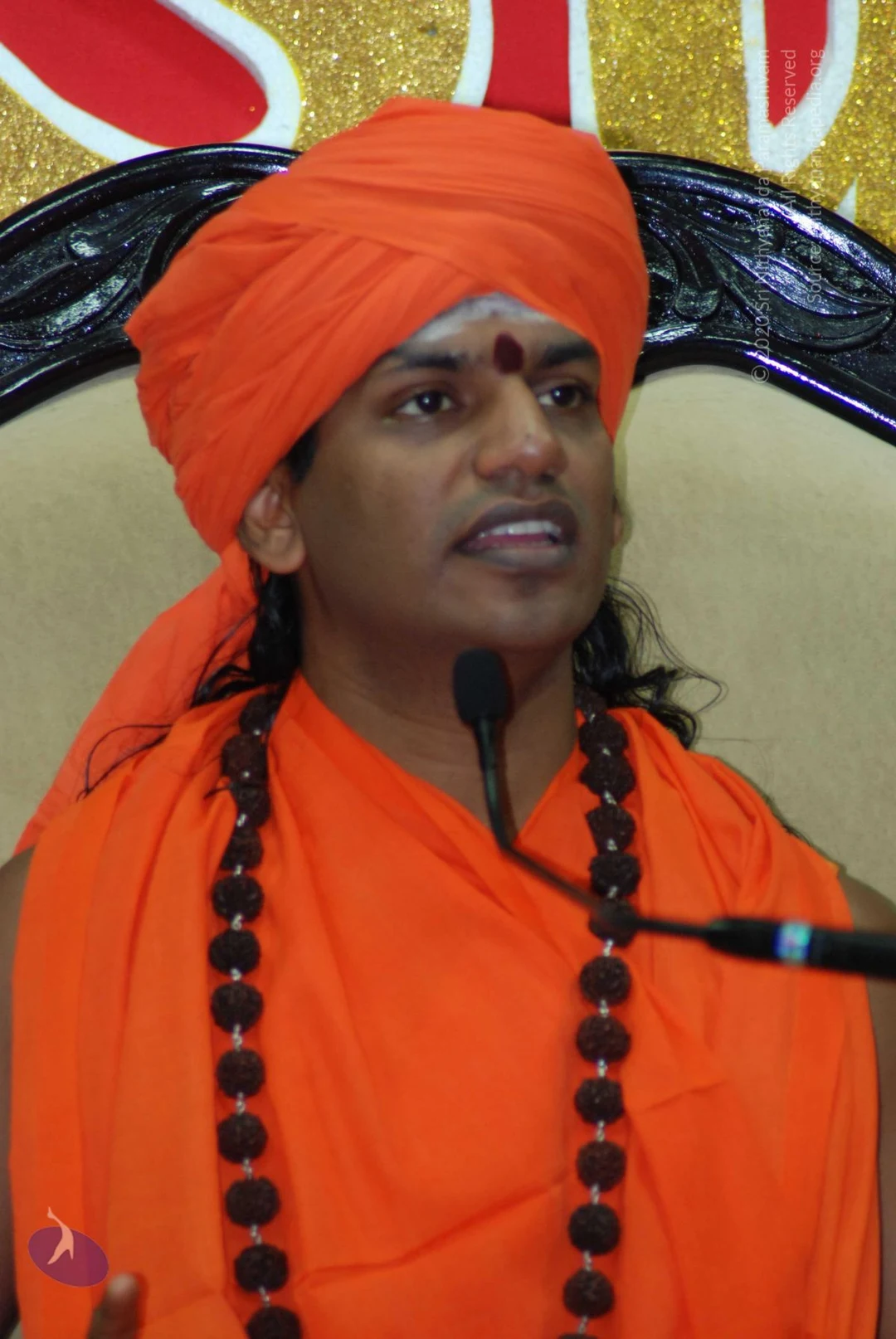
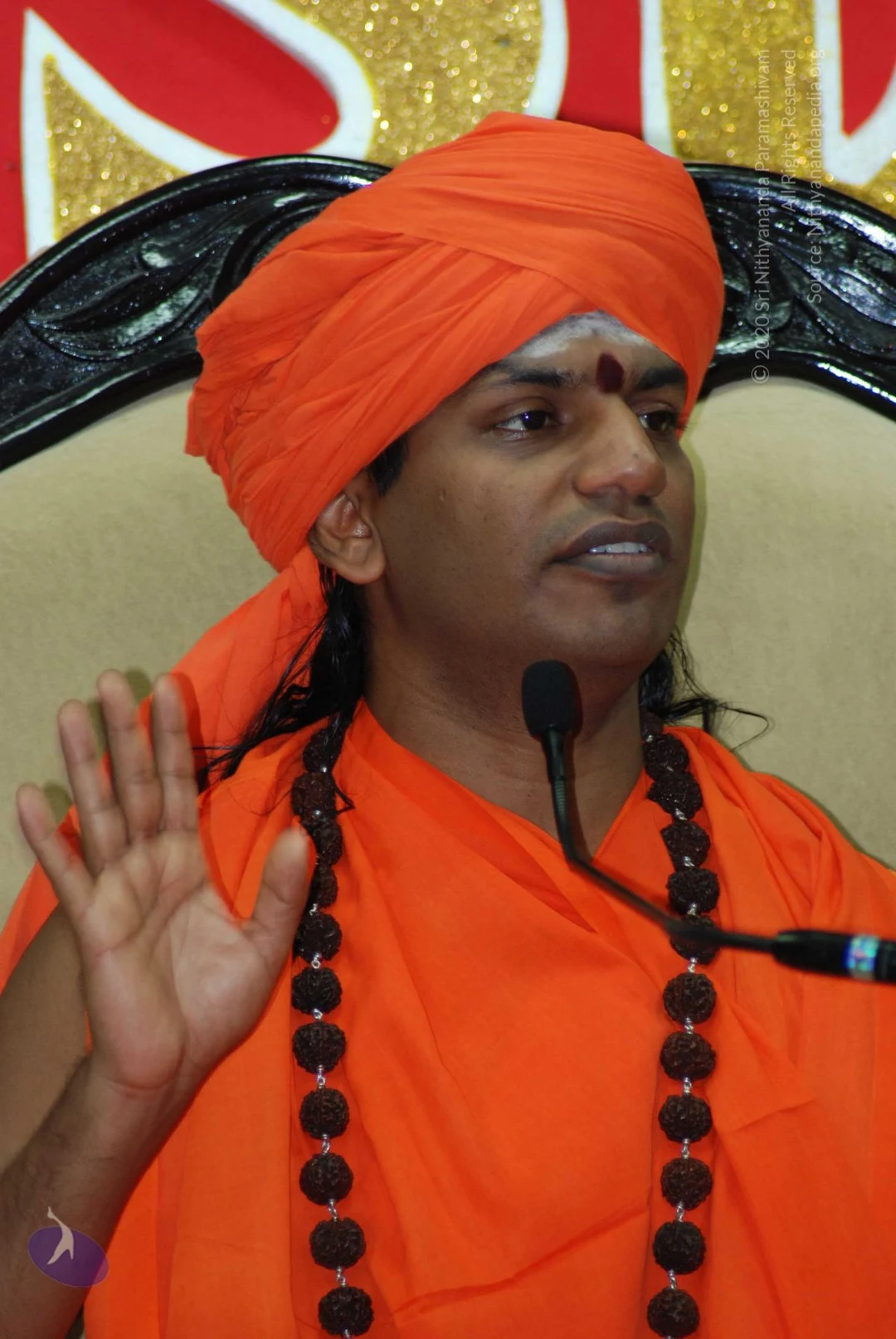
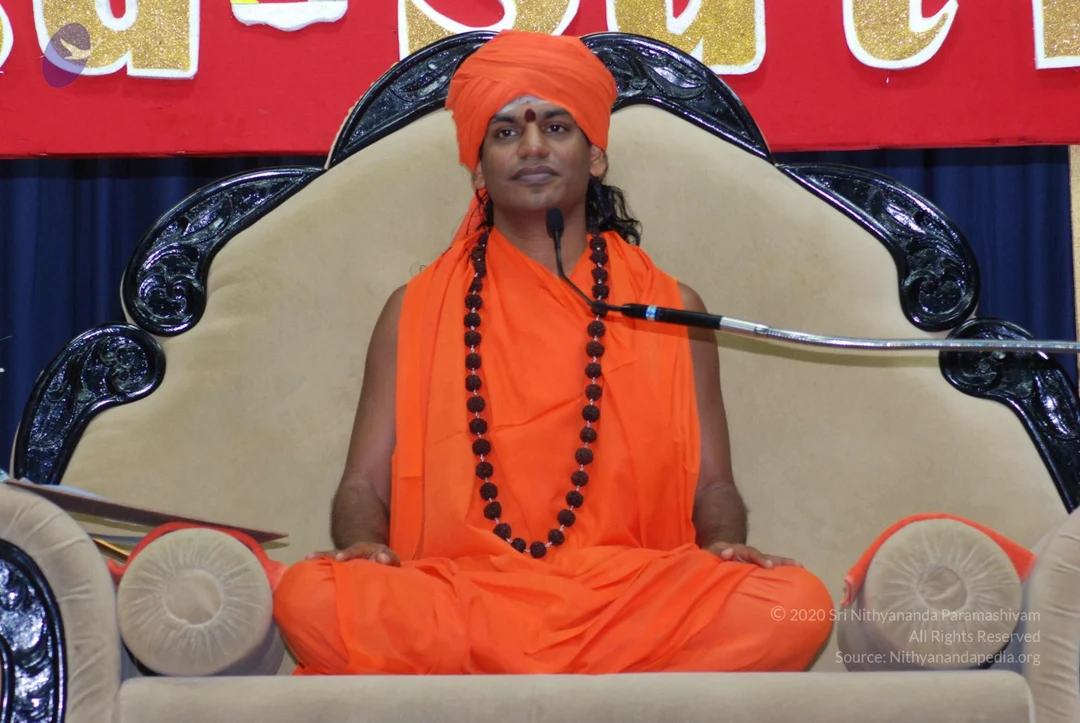
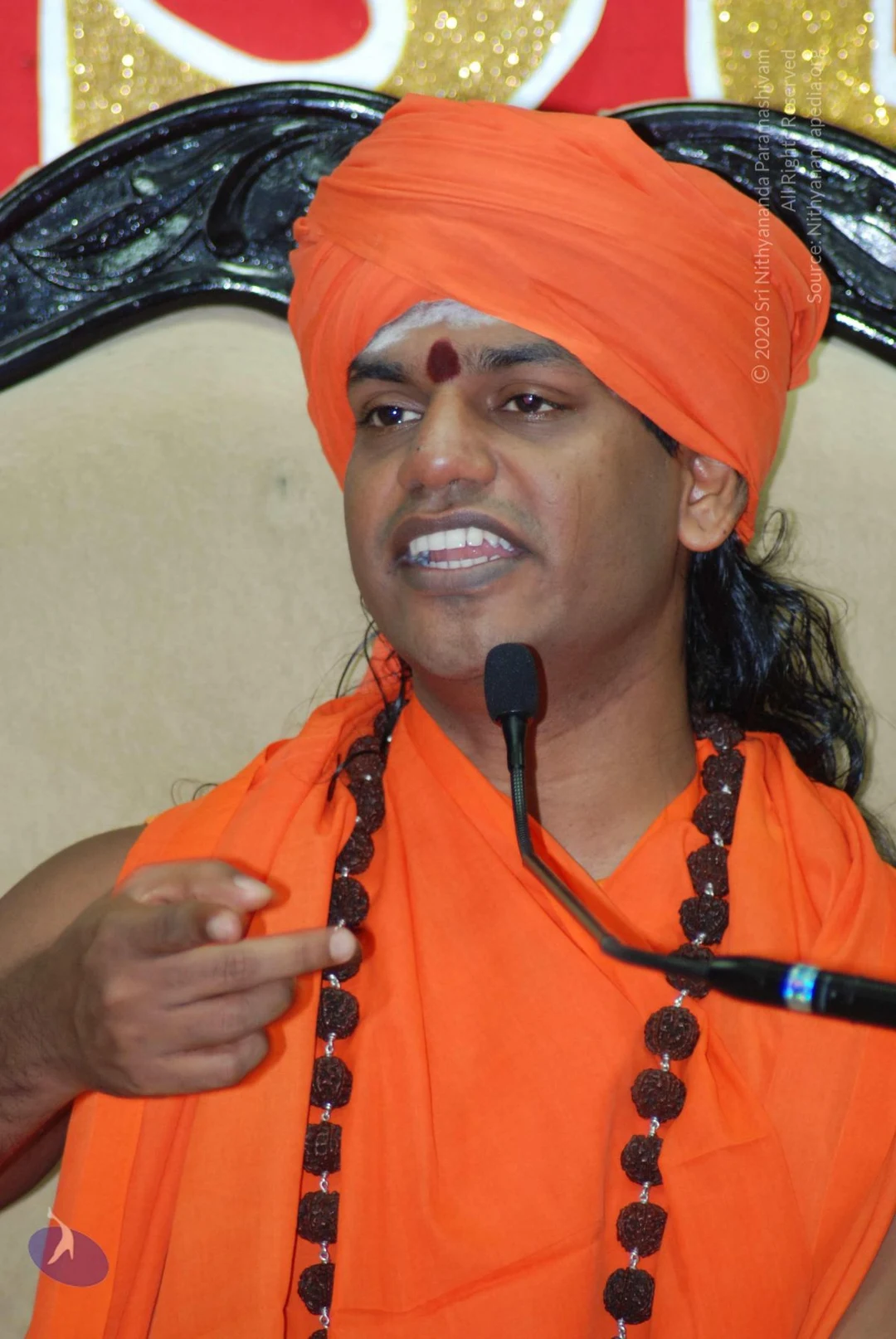
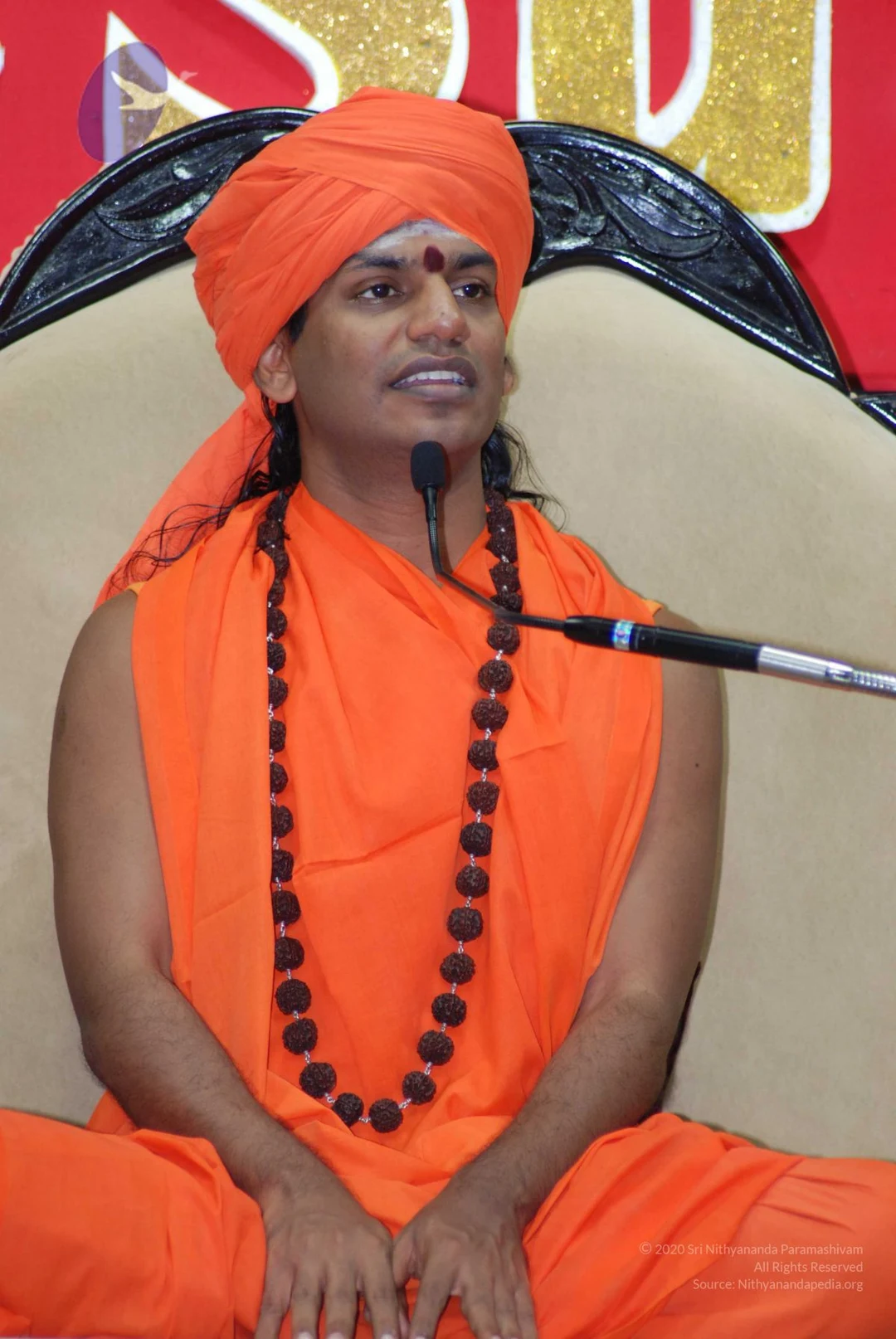
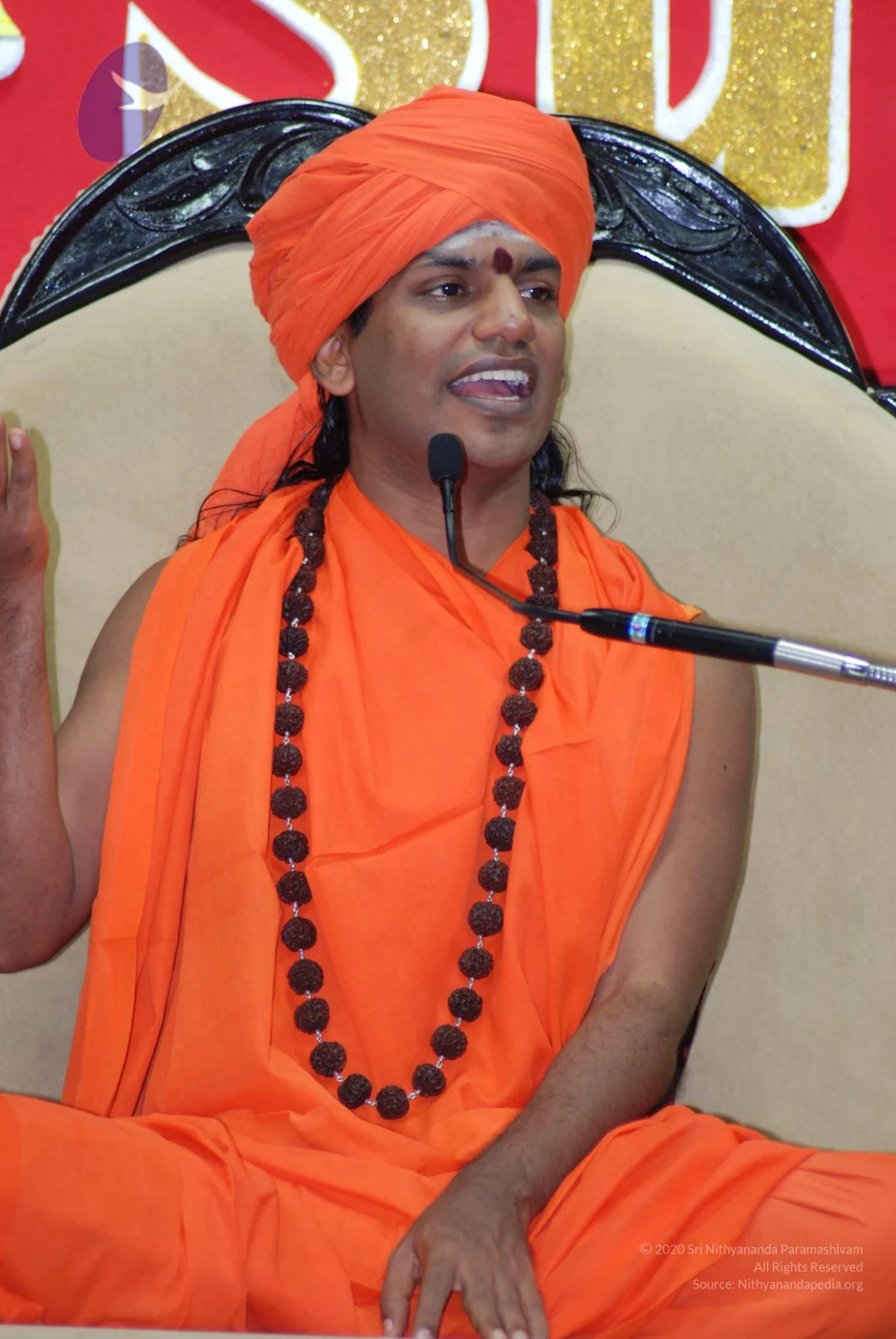
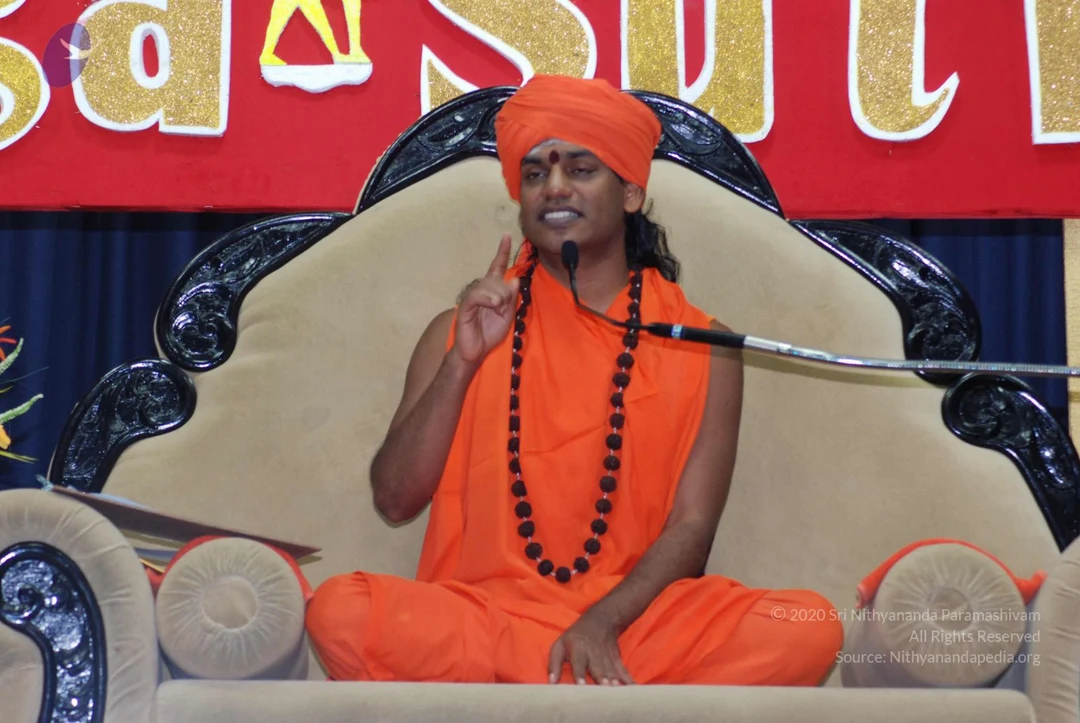
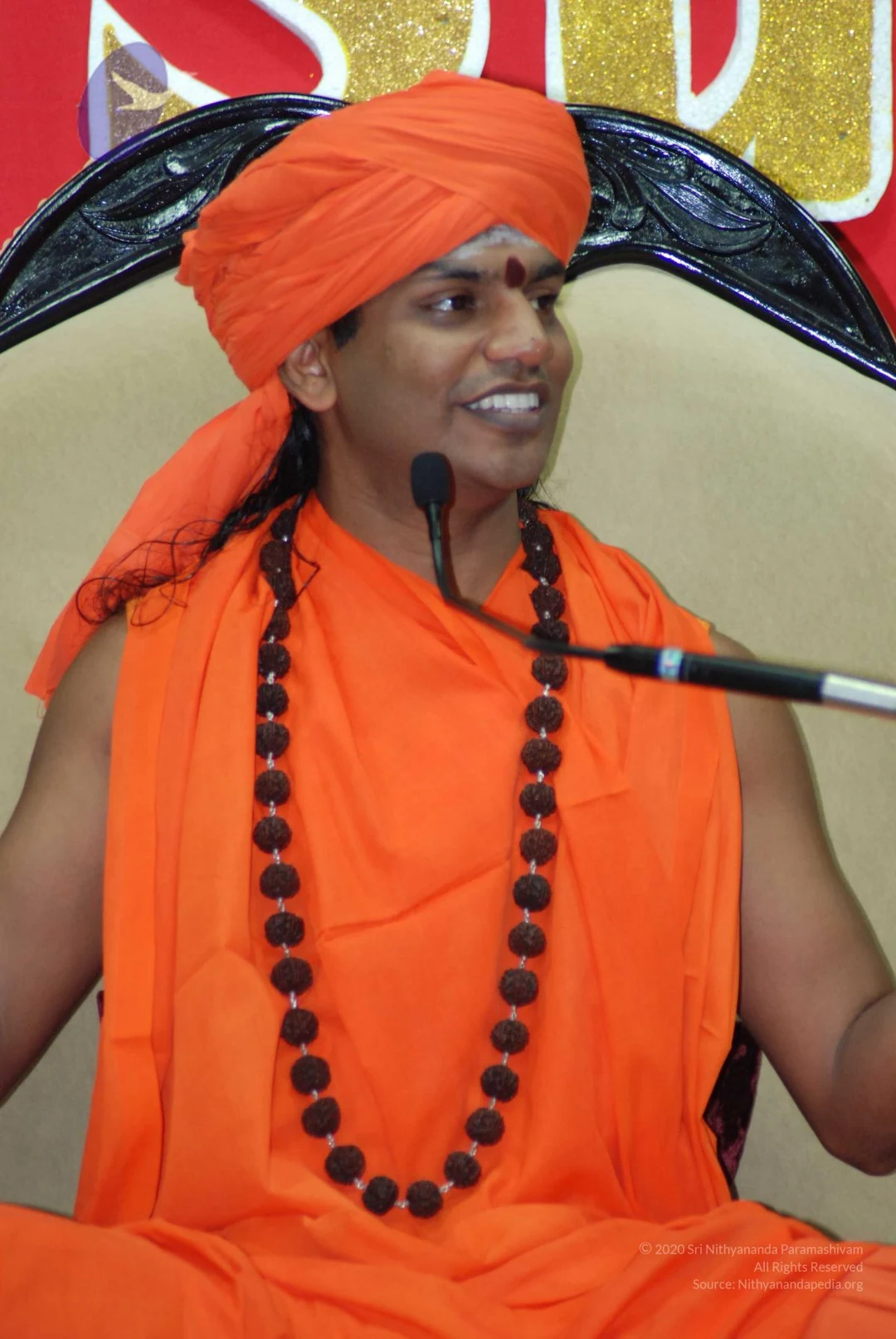
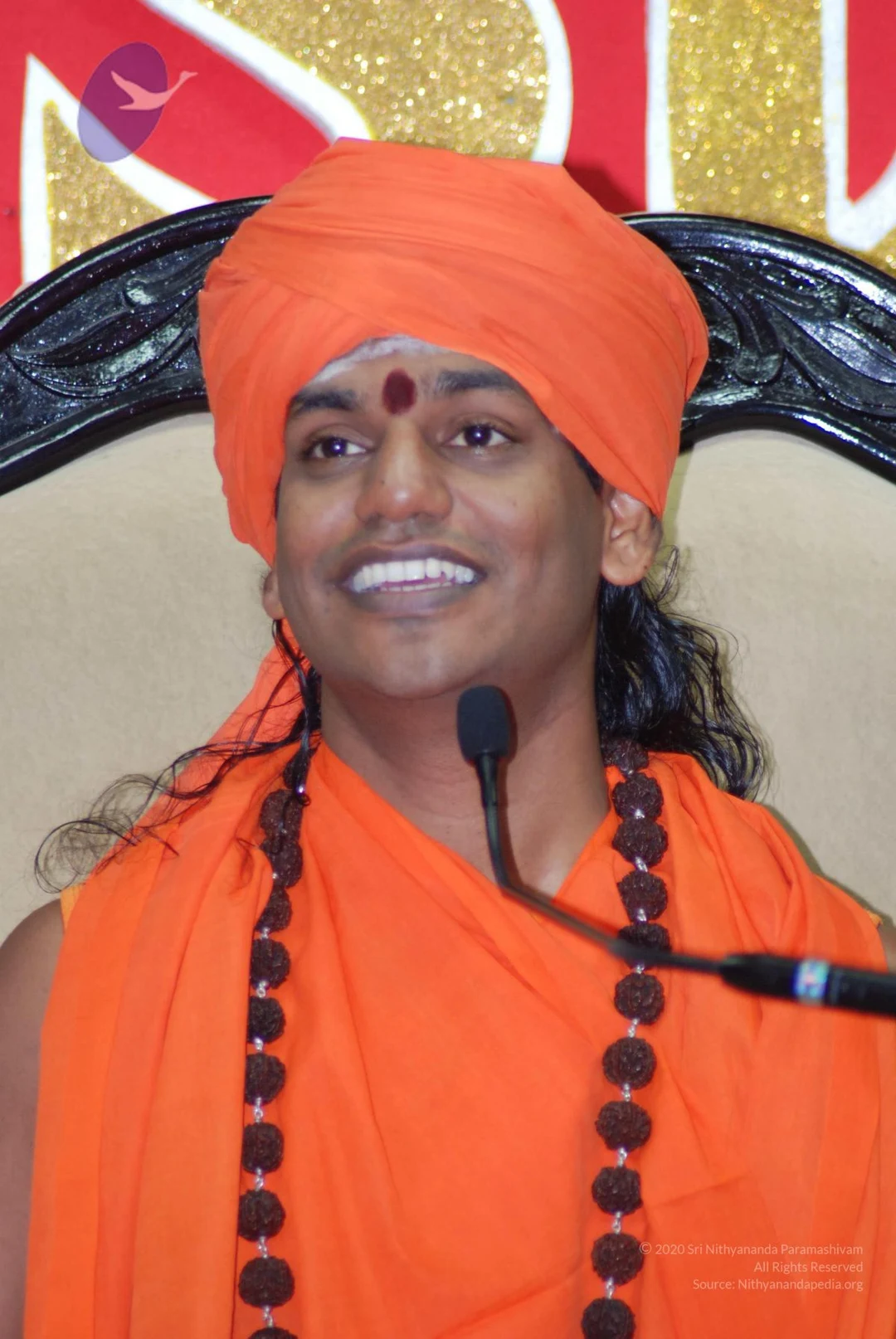
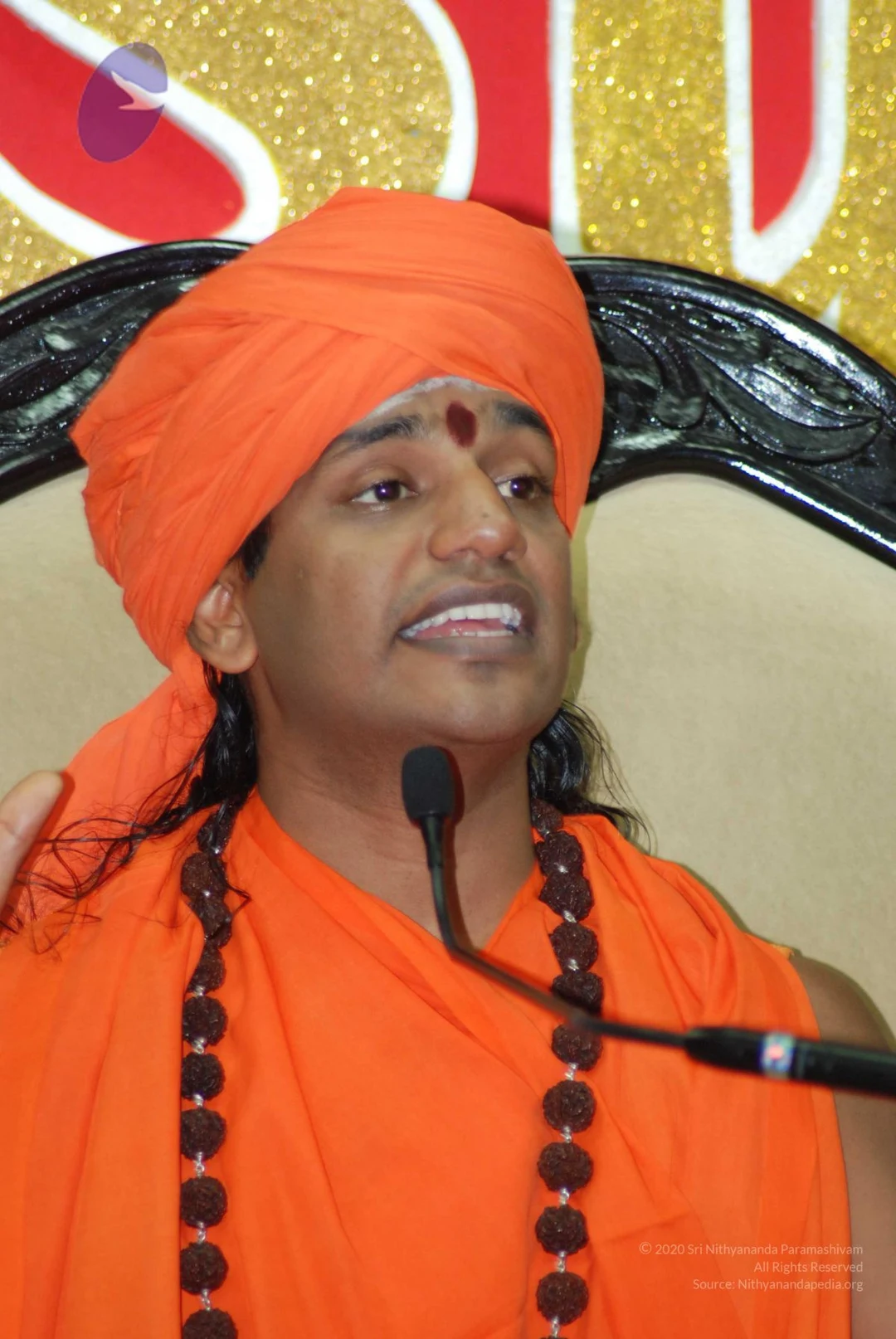
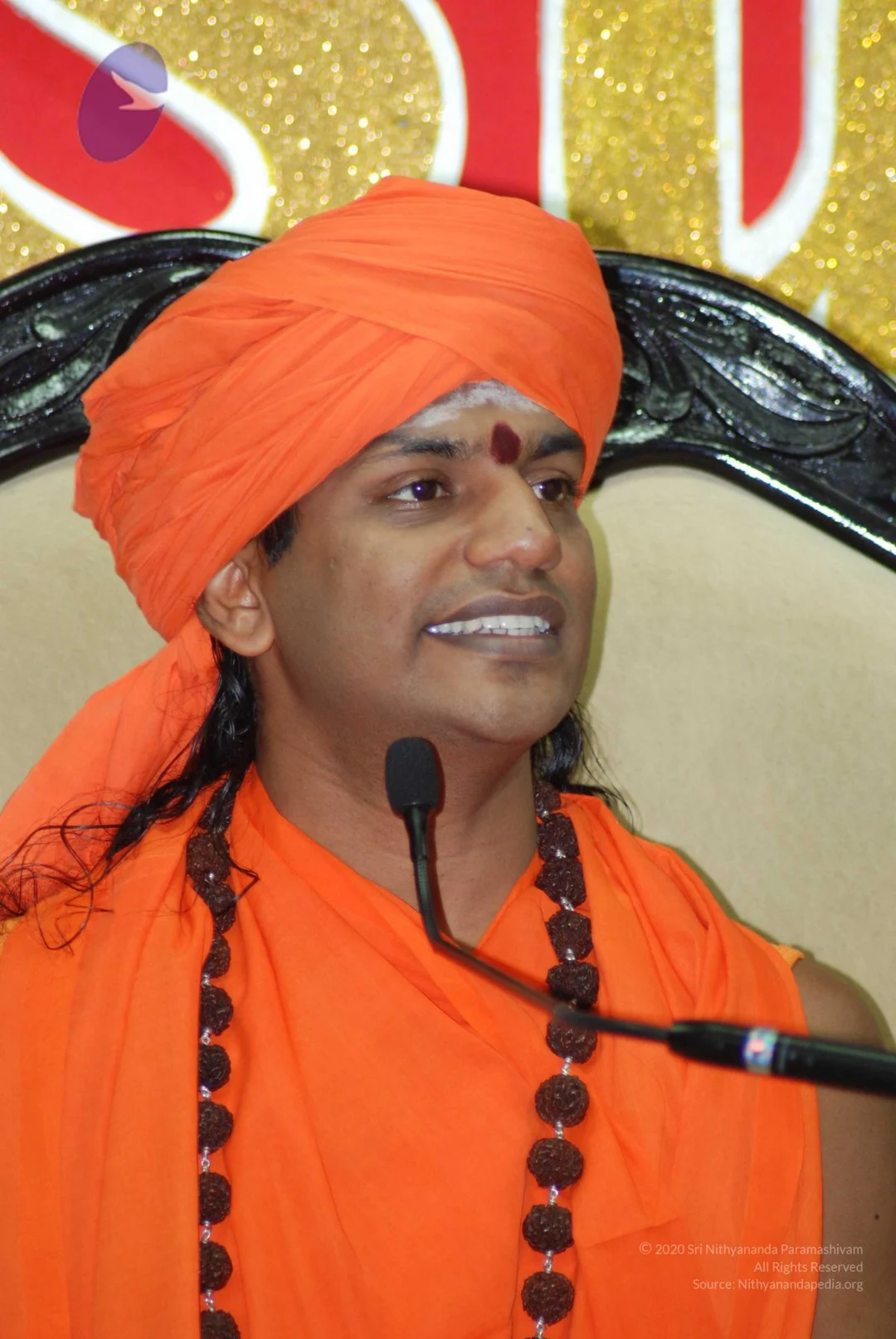
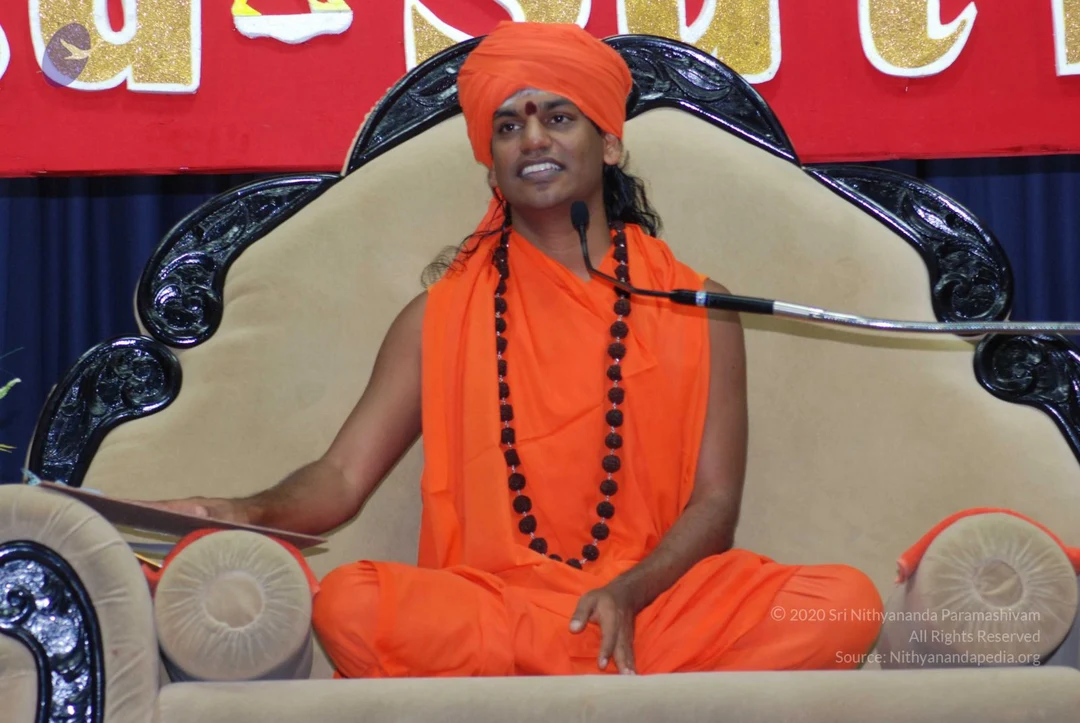
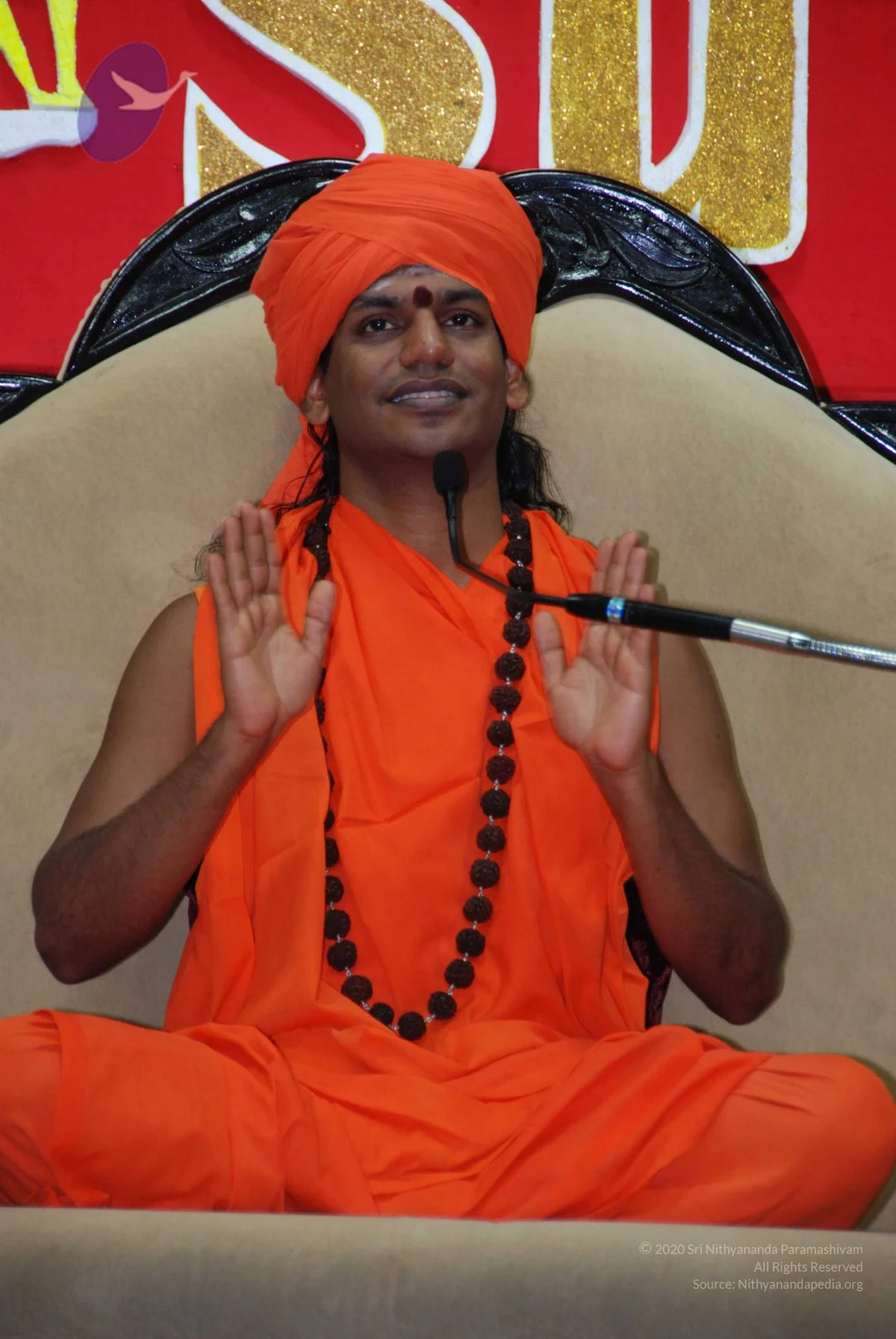
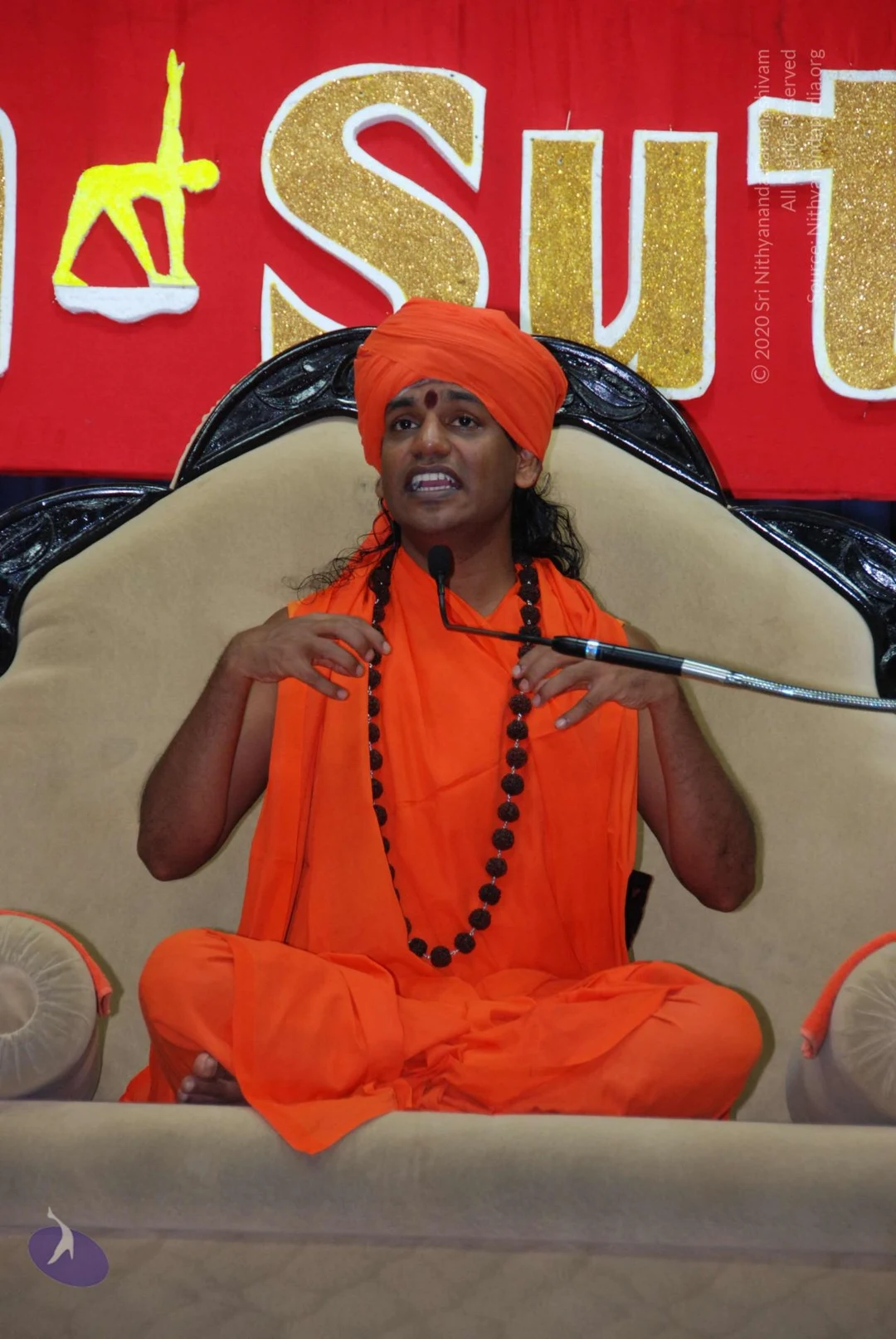
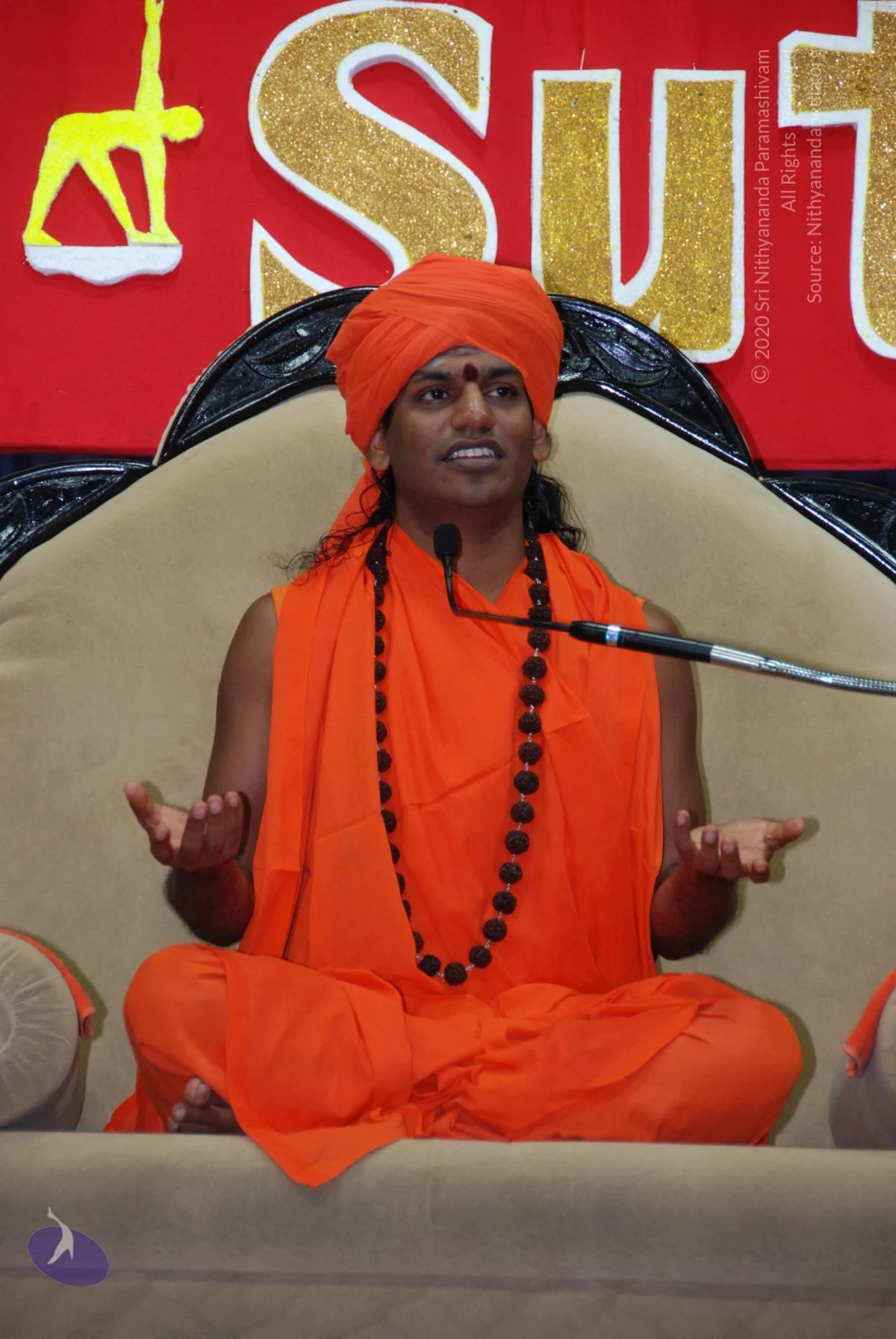
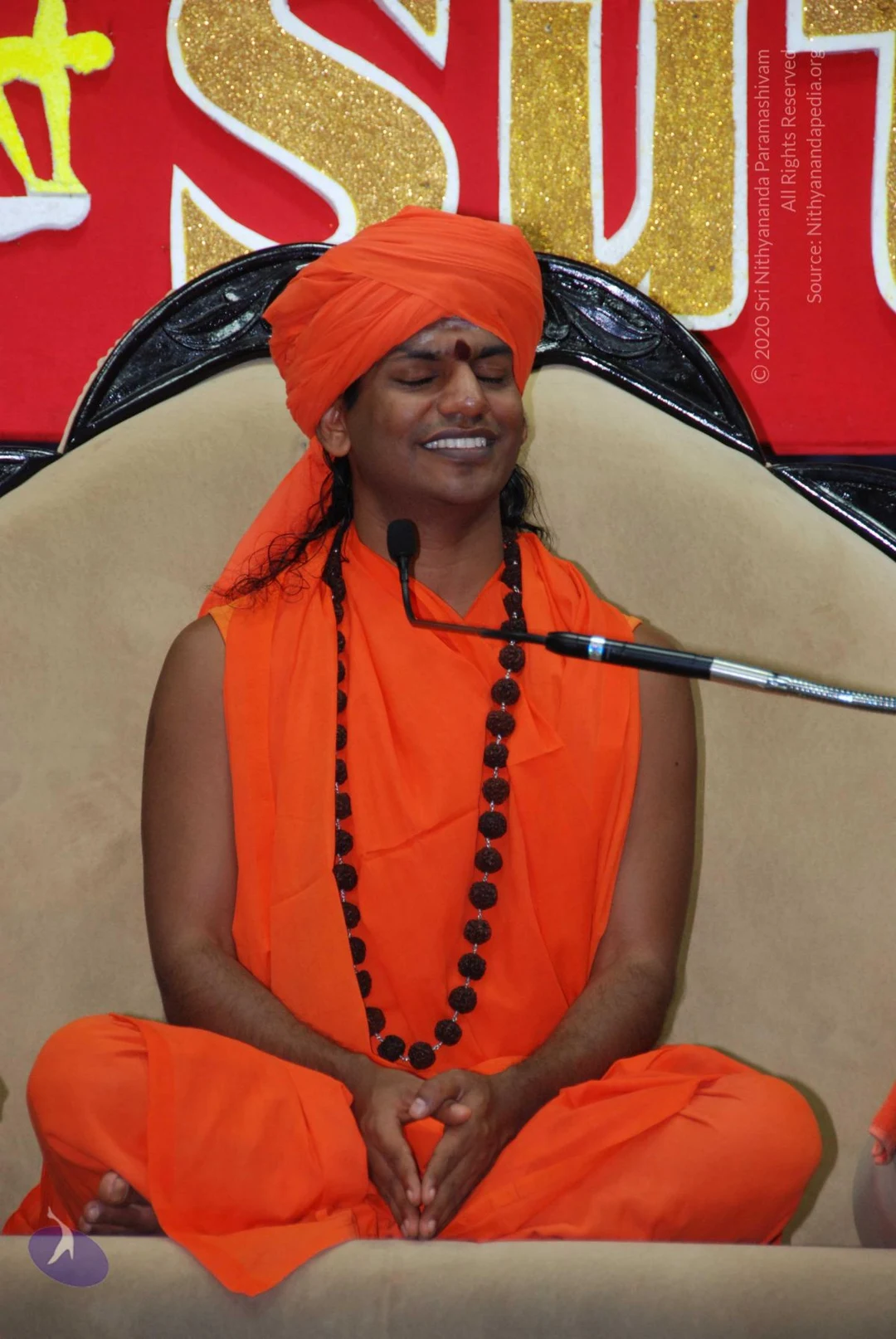
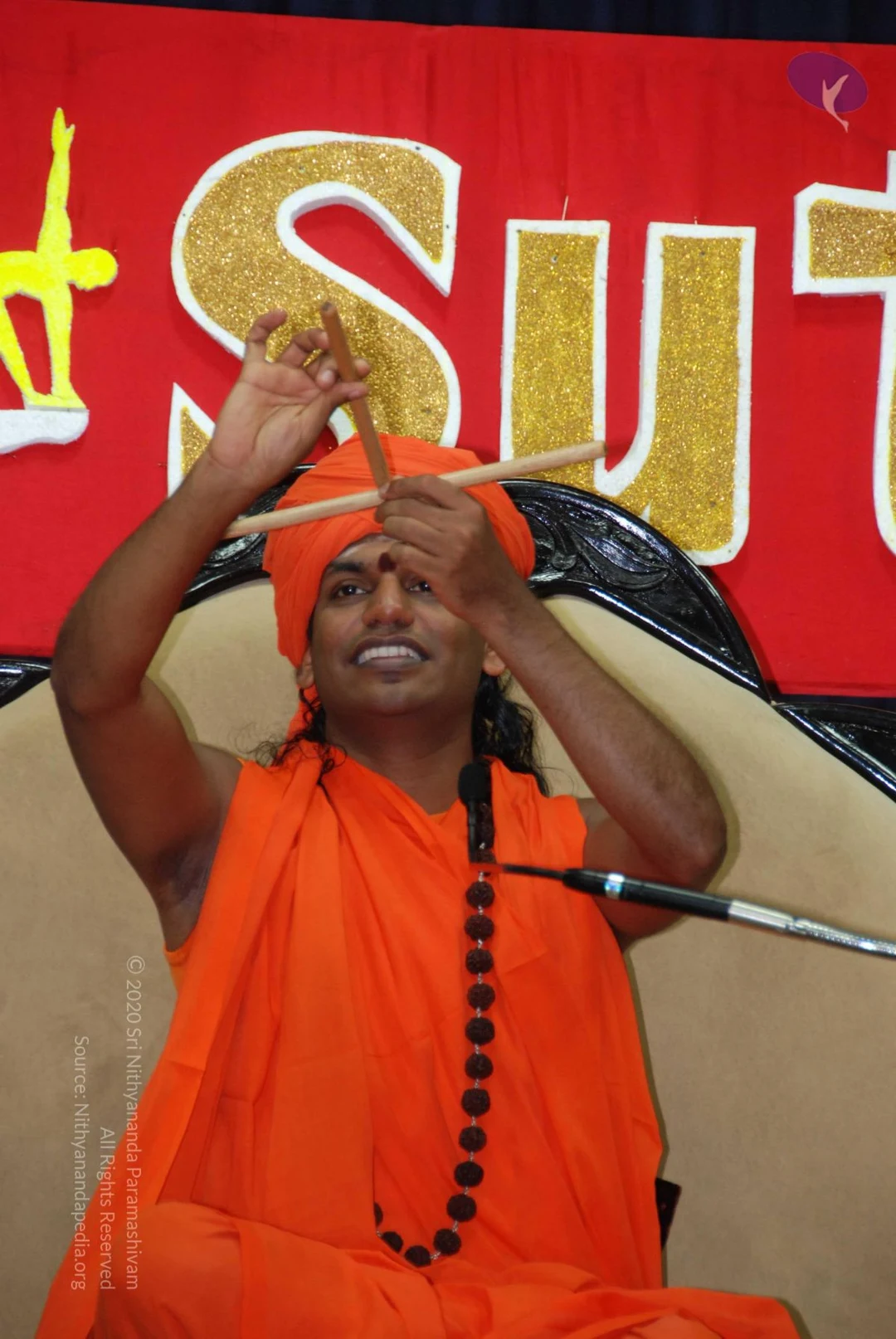
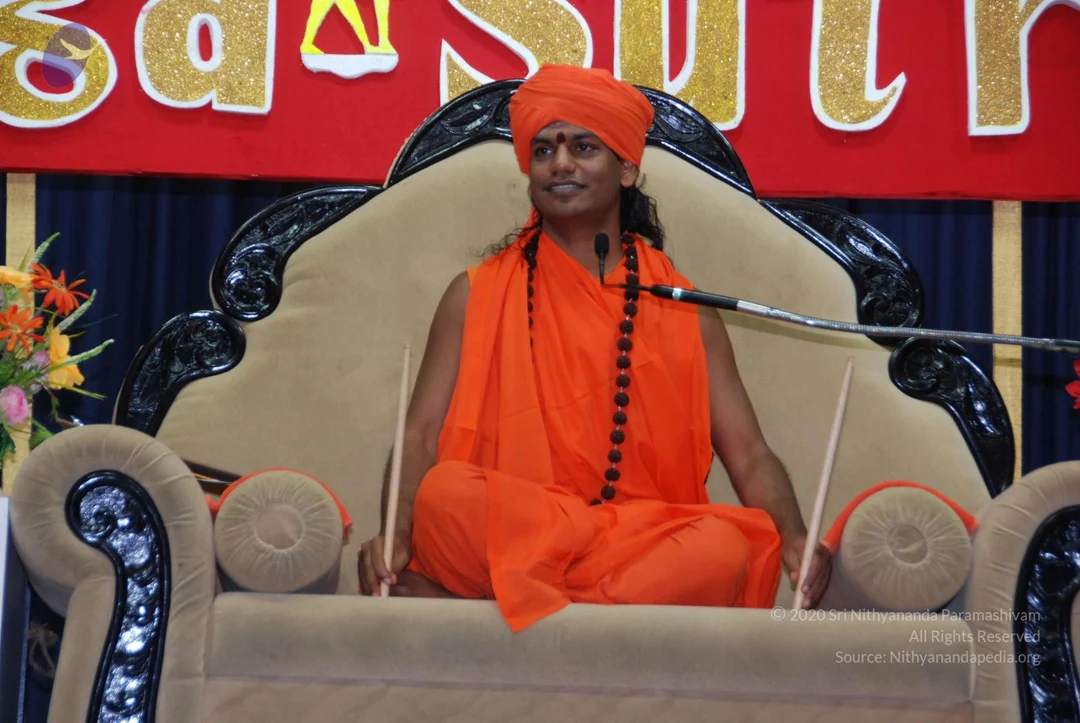
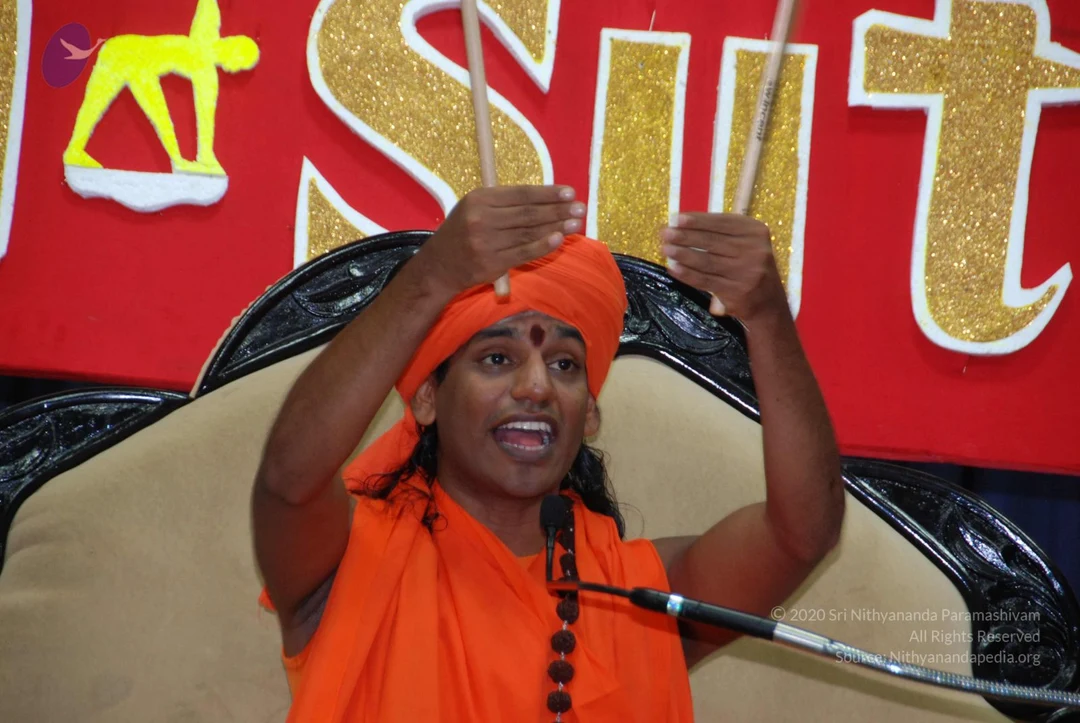
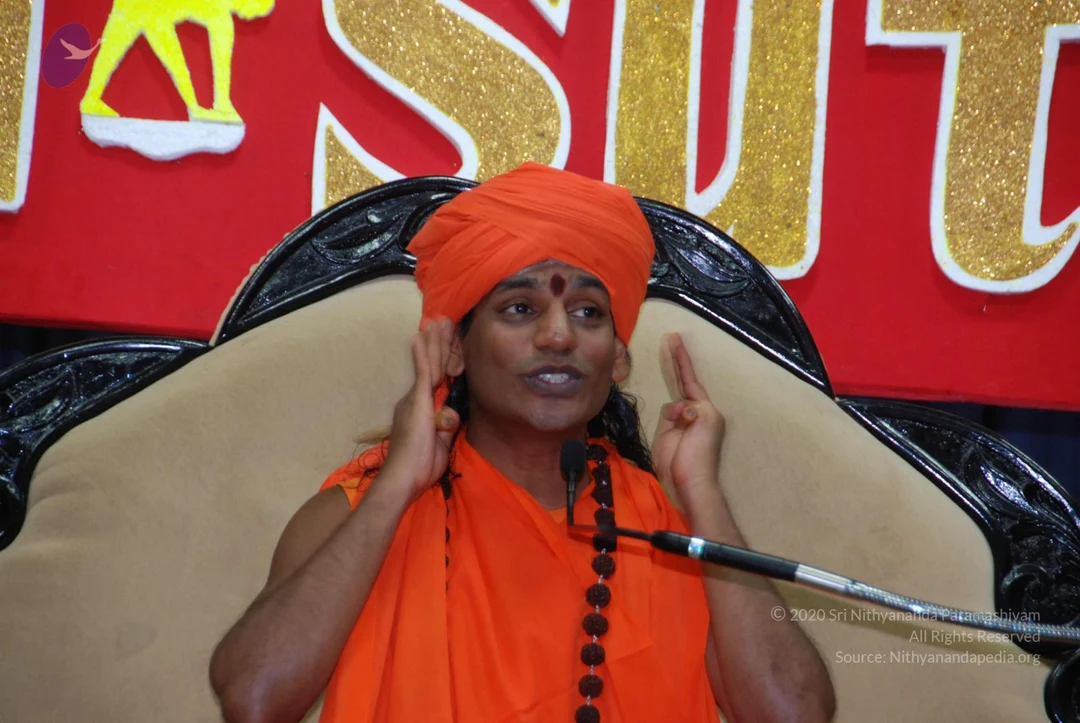
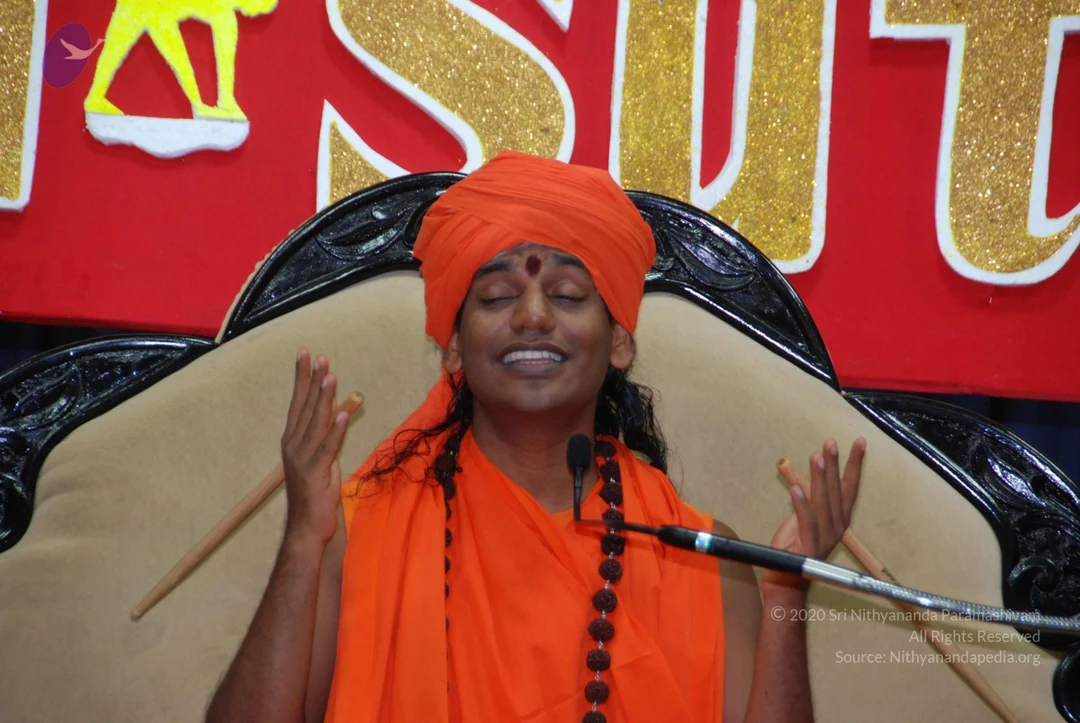
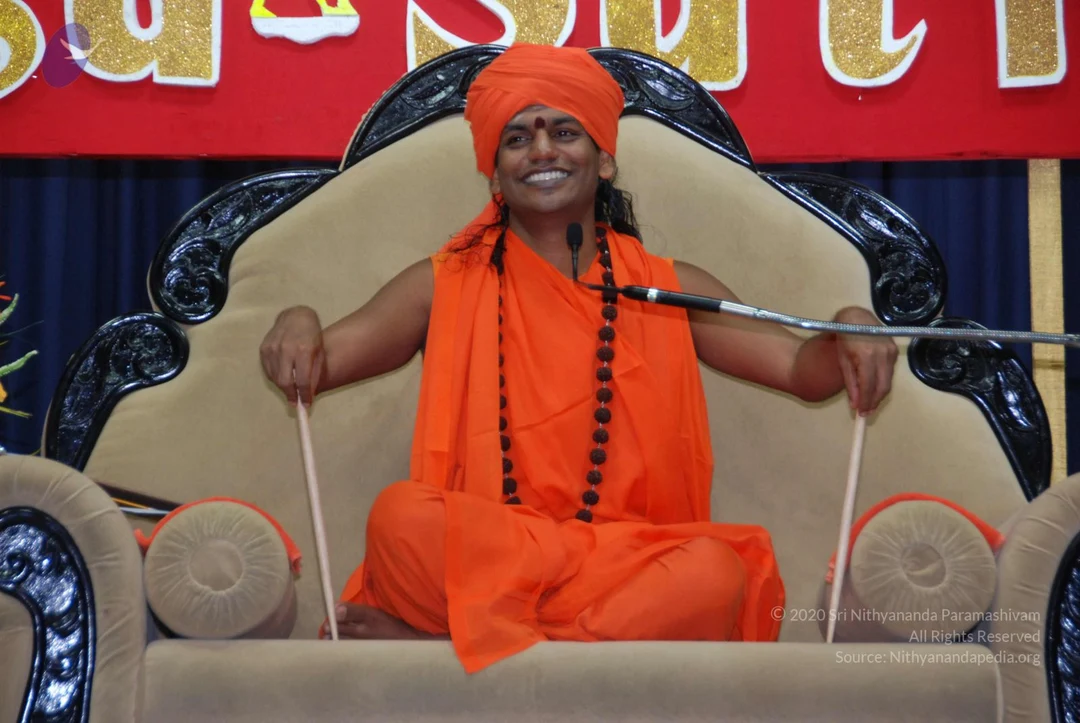
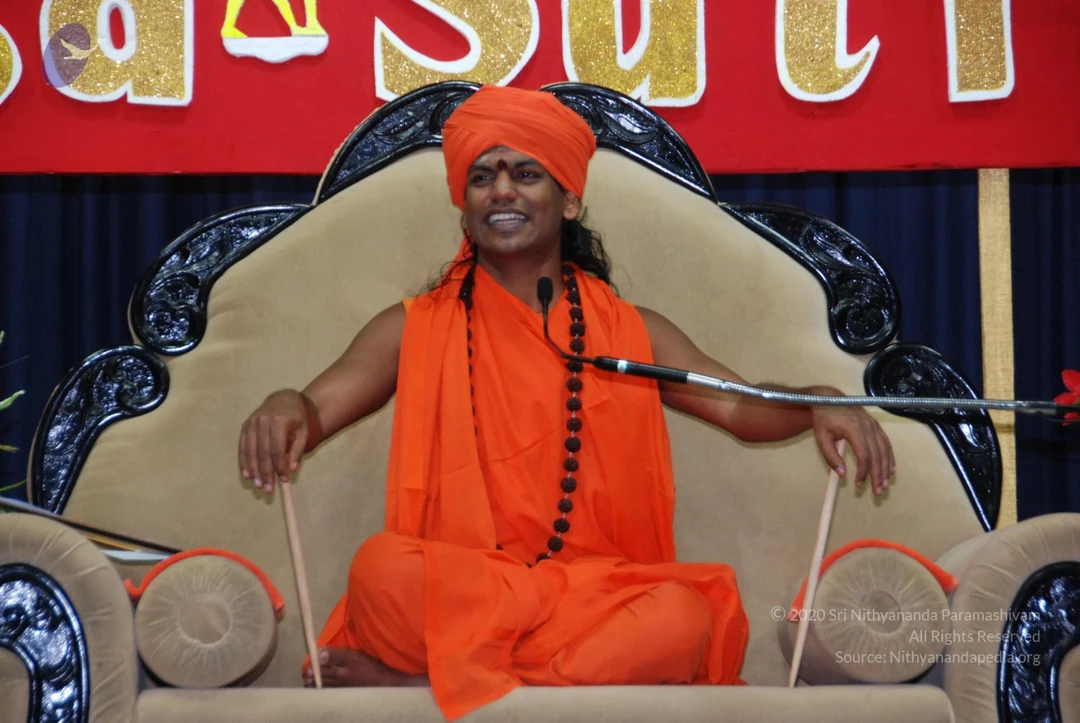
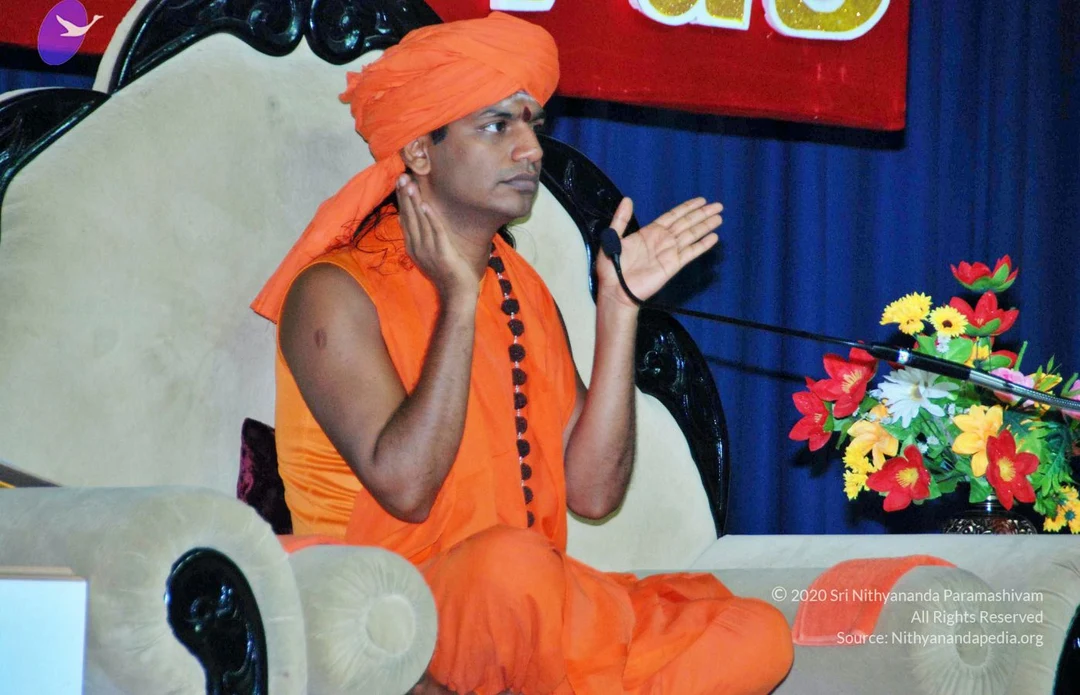
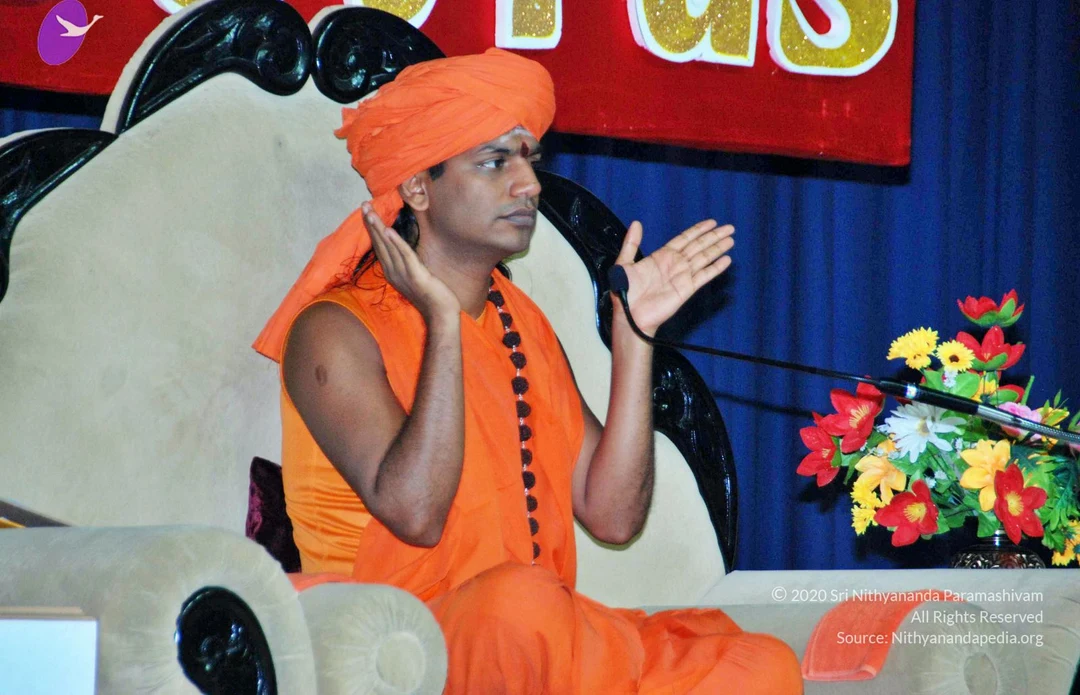
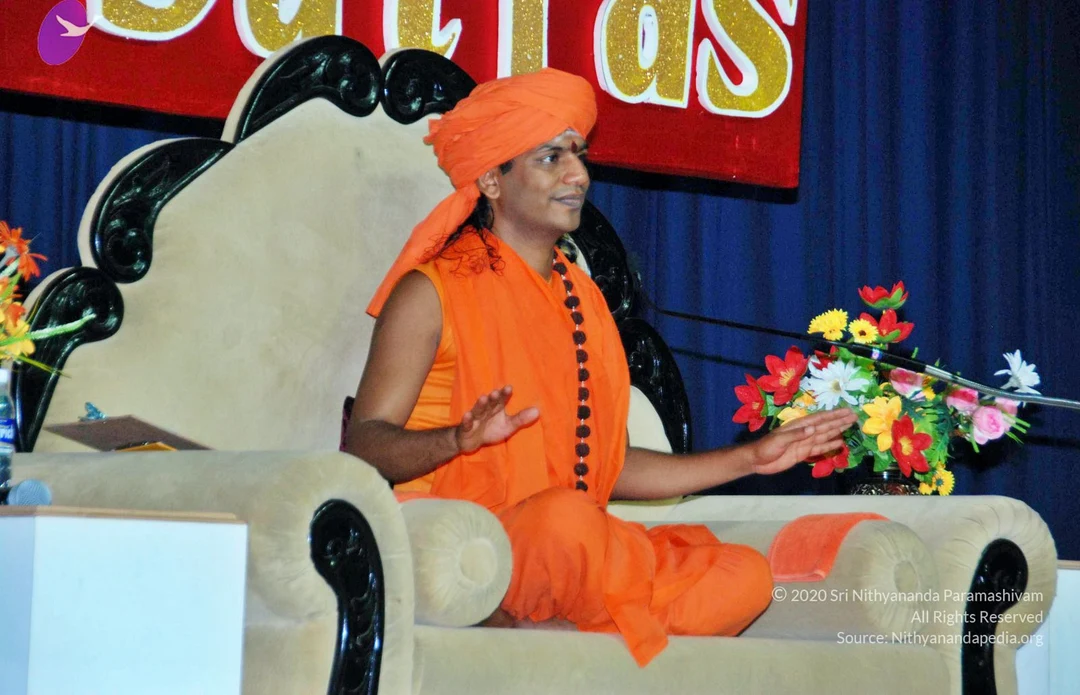
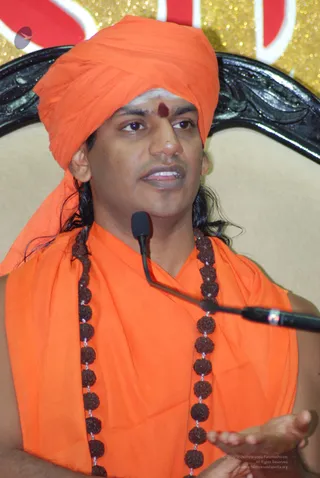
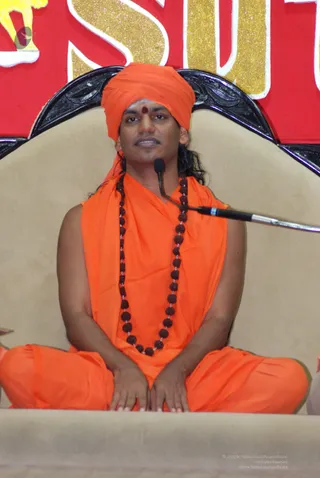
A close photograph of a man speaking into a black microphone on a stand, seated before a dark carved wooden chair with a cream upholstered back. He wears an orange saffron turban, an orange shawl draped over one shoulder and an orange robe, with a long multi-strand rudraksha mala of dark brown beads hanging to his chest. A red kumkum mark and white vibhuti line are on his forehead, and his long dark hair falls past his shoulders. His right hand is open and raised in a gesture as he talks. Behind him, a gold glittery backdrop with red and white lettering is partly visible.

Swamiji-In-Lep-Meeting
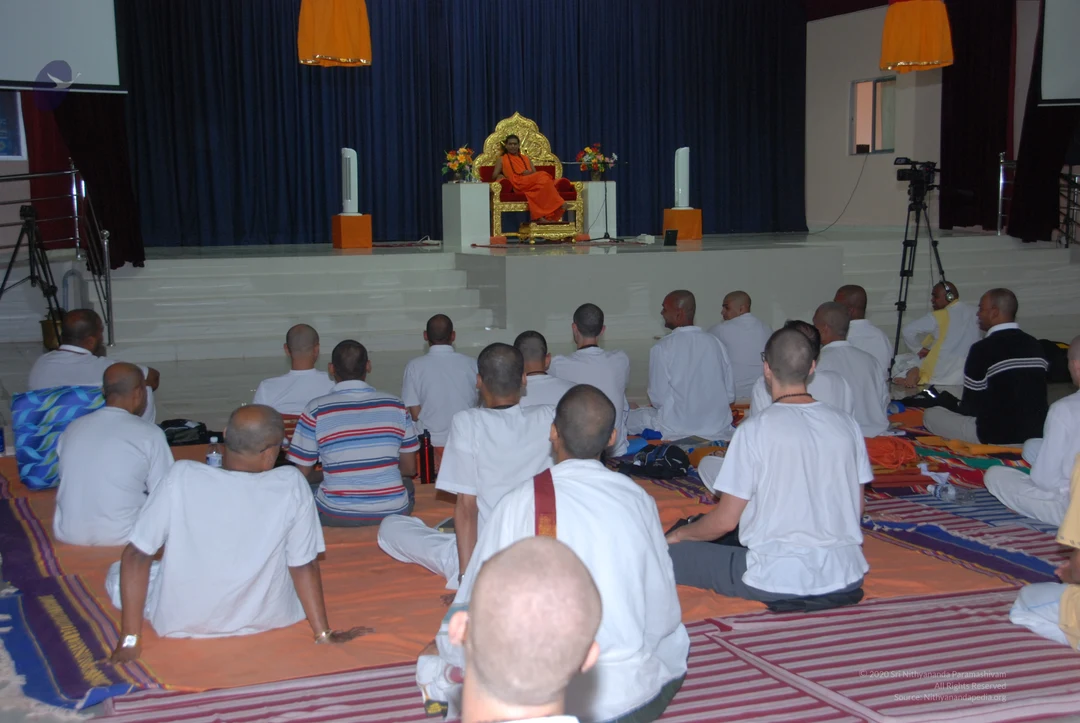
2 photosSource gallery
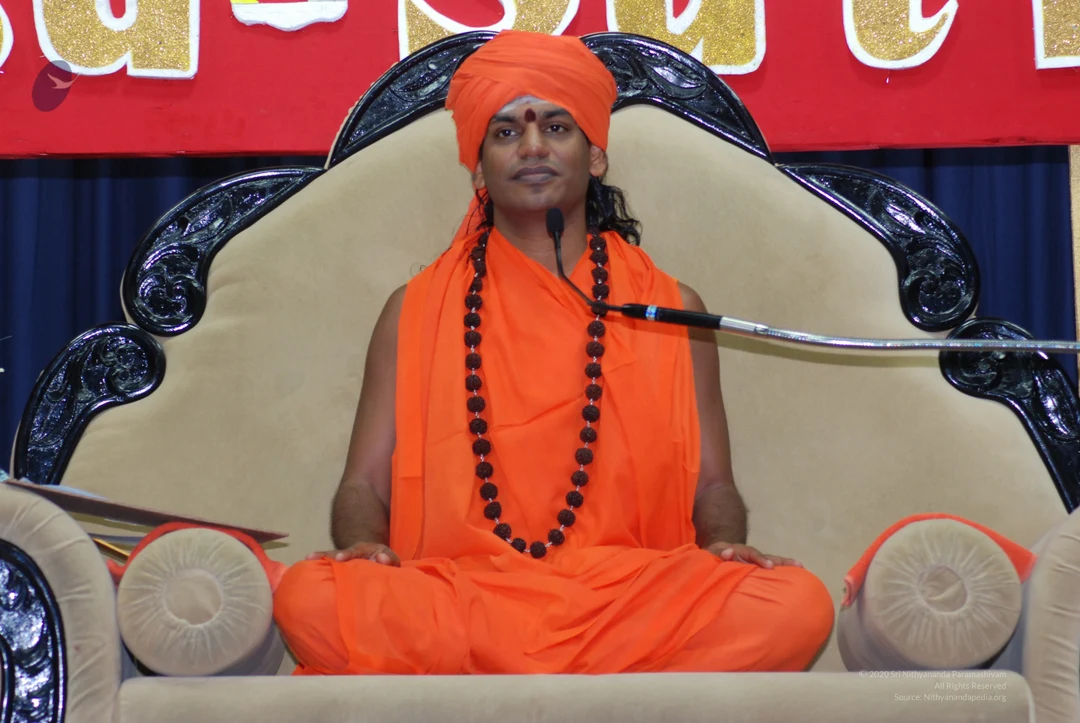
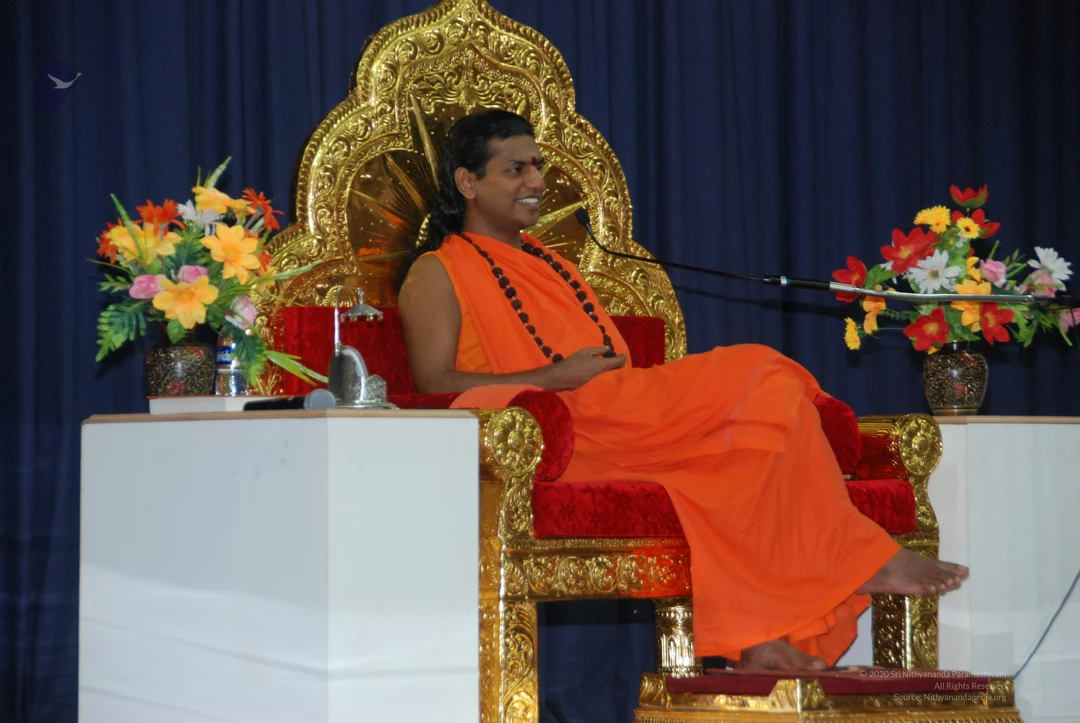
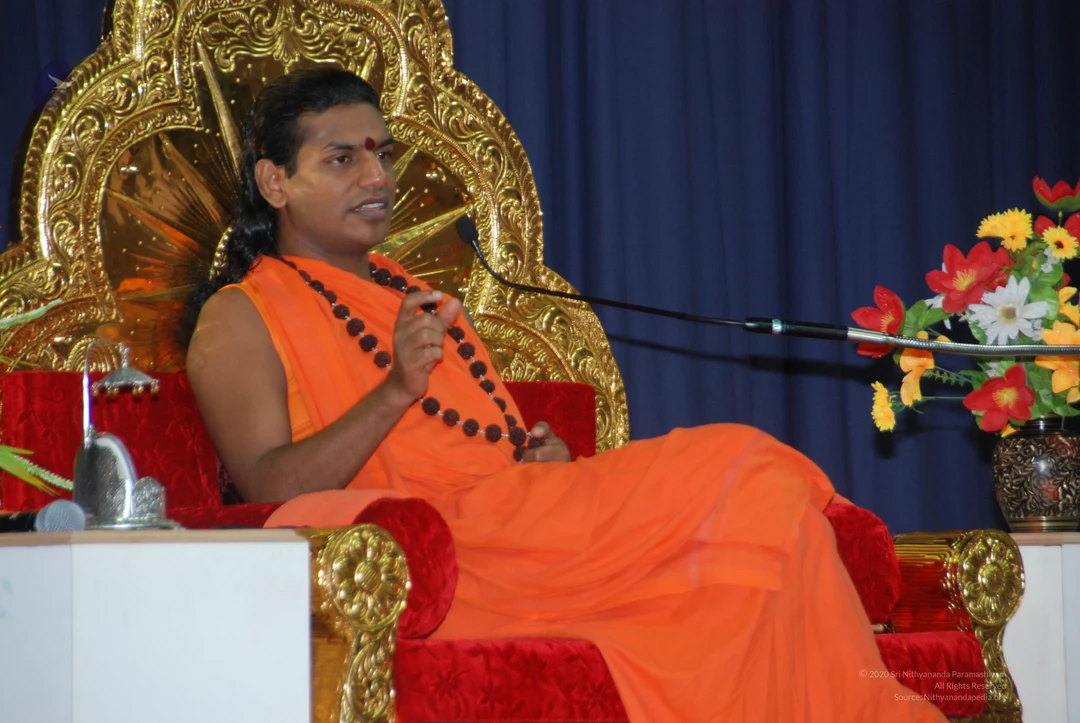
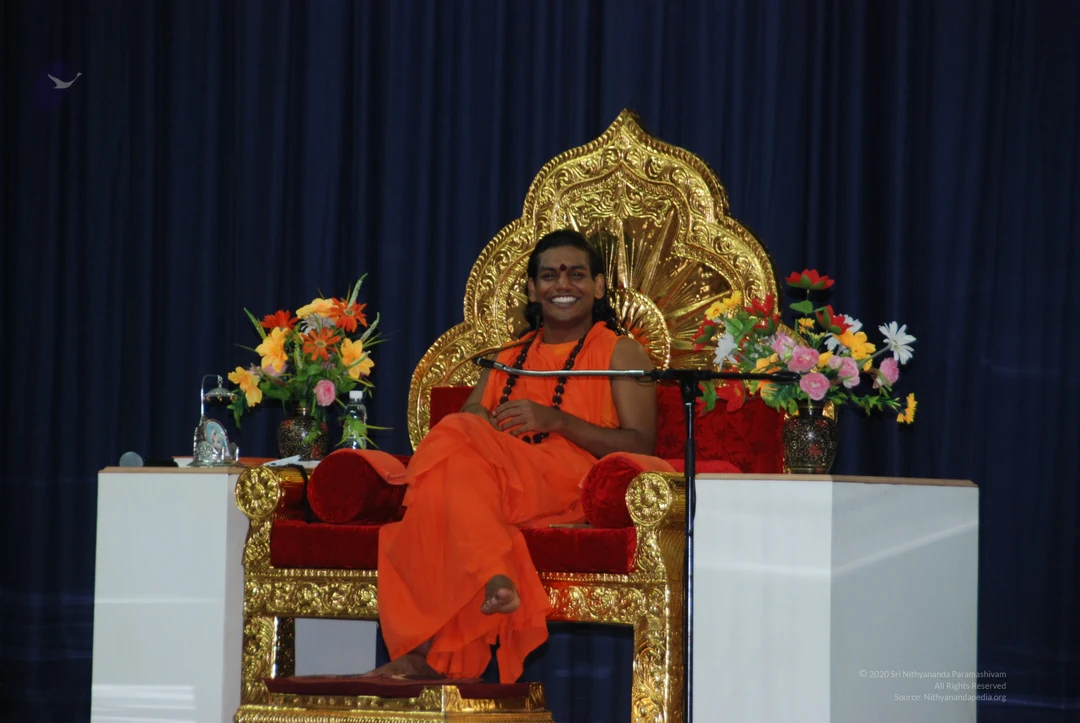
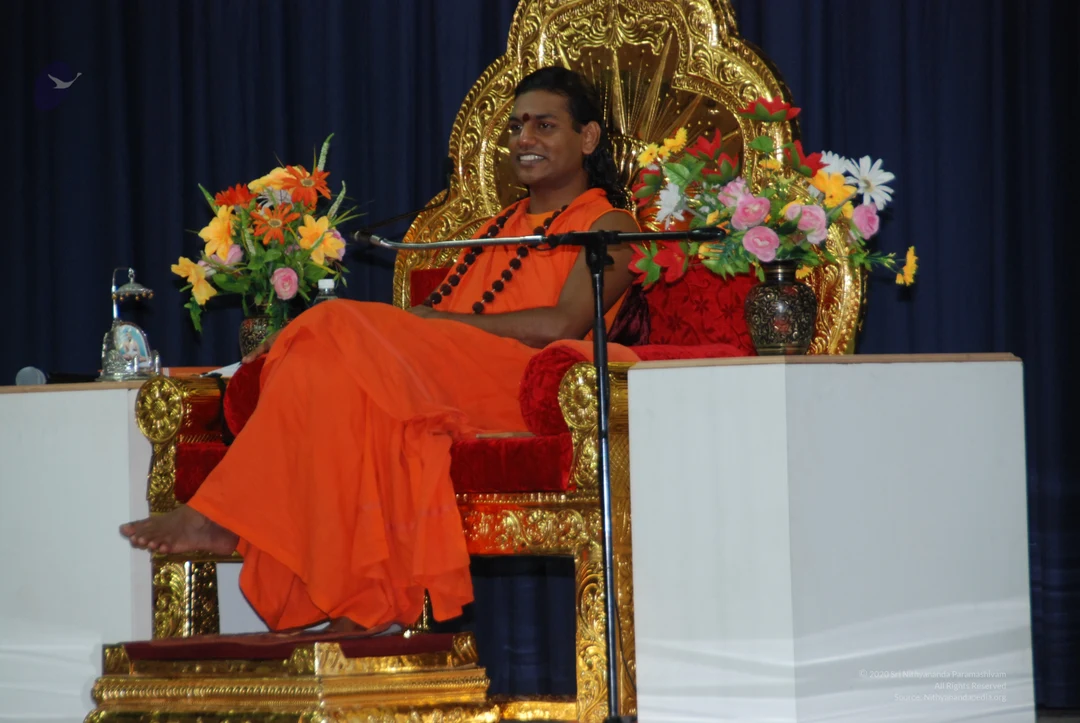
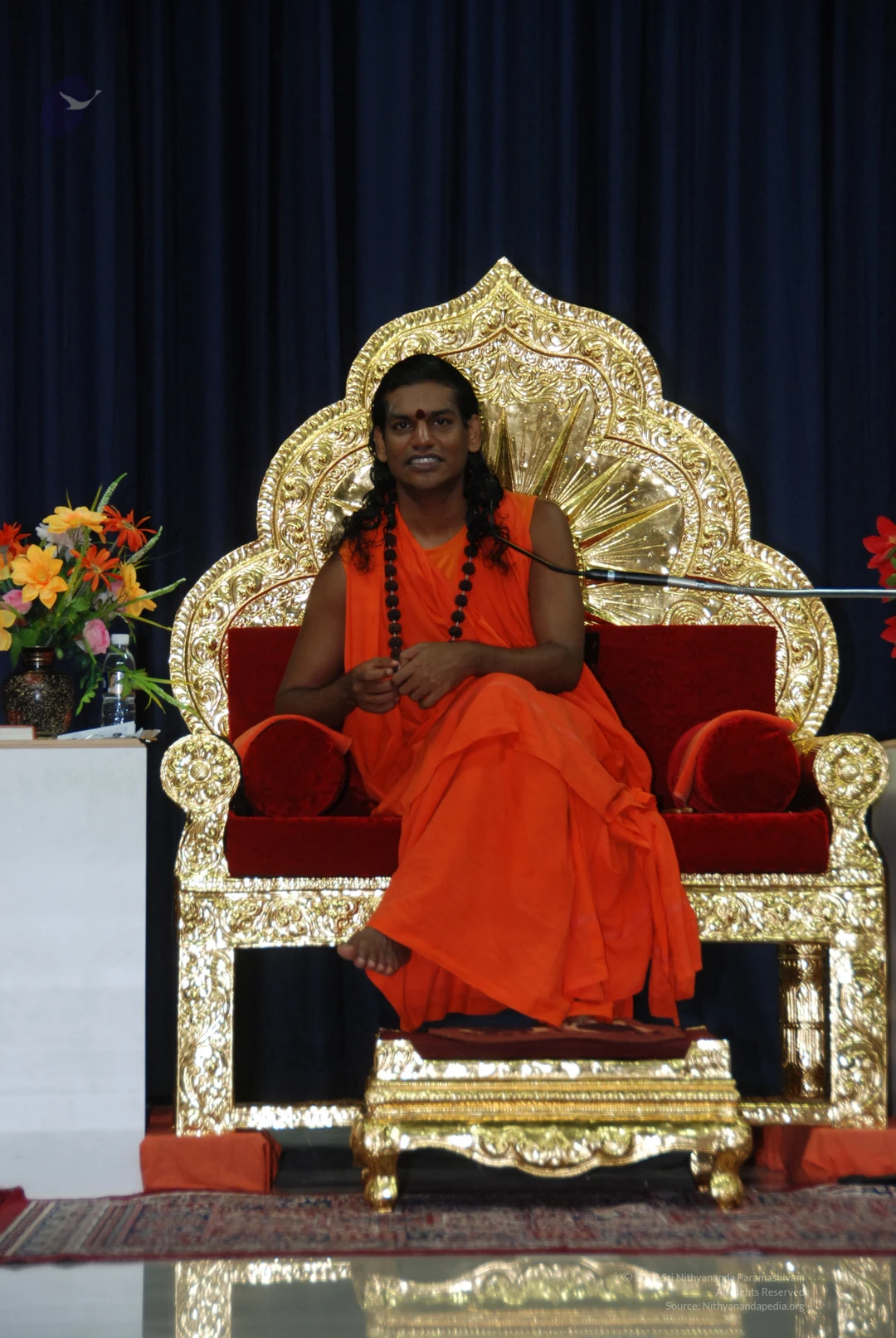
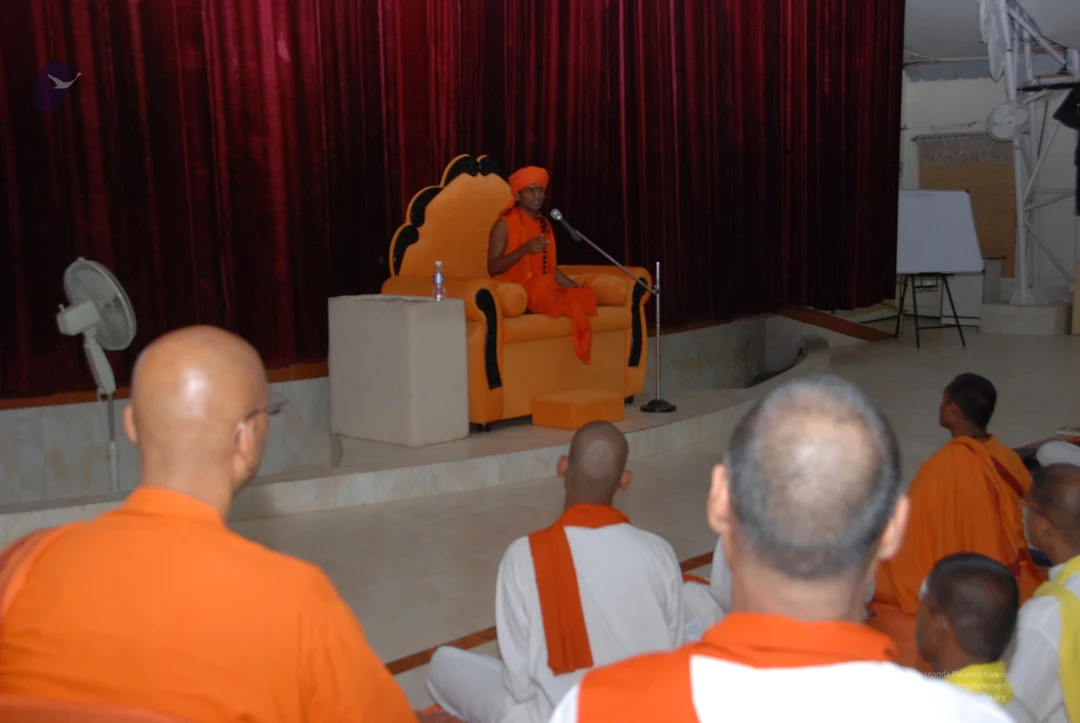
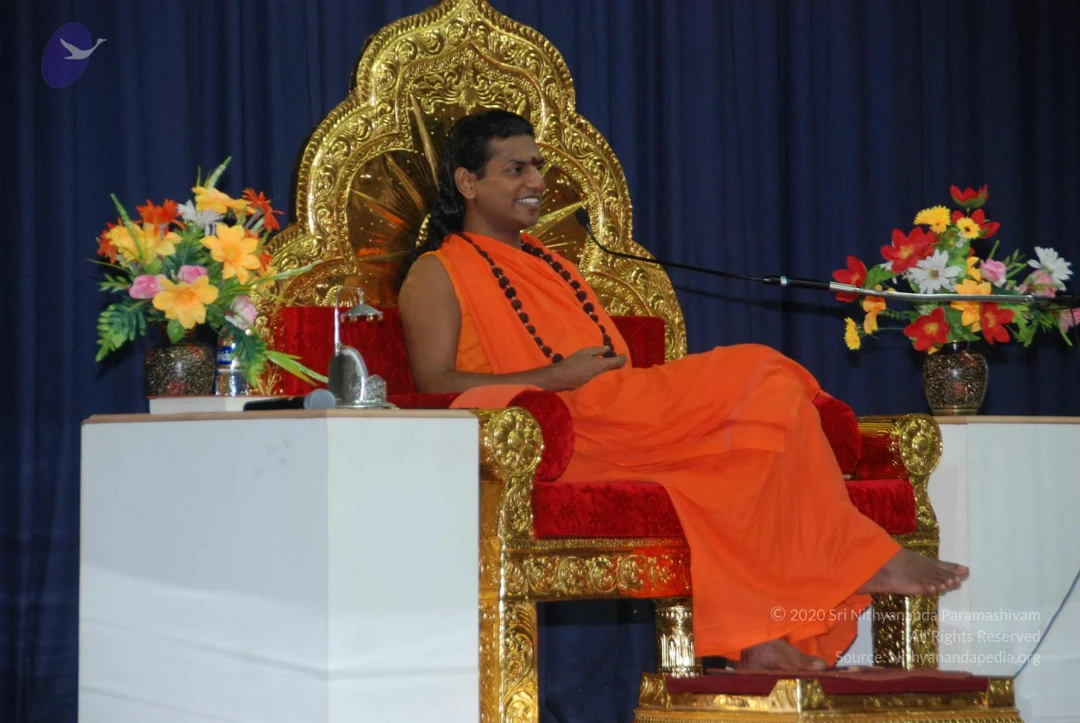
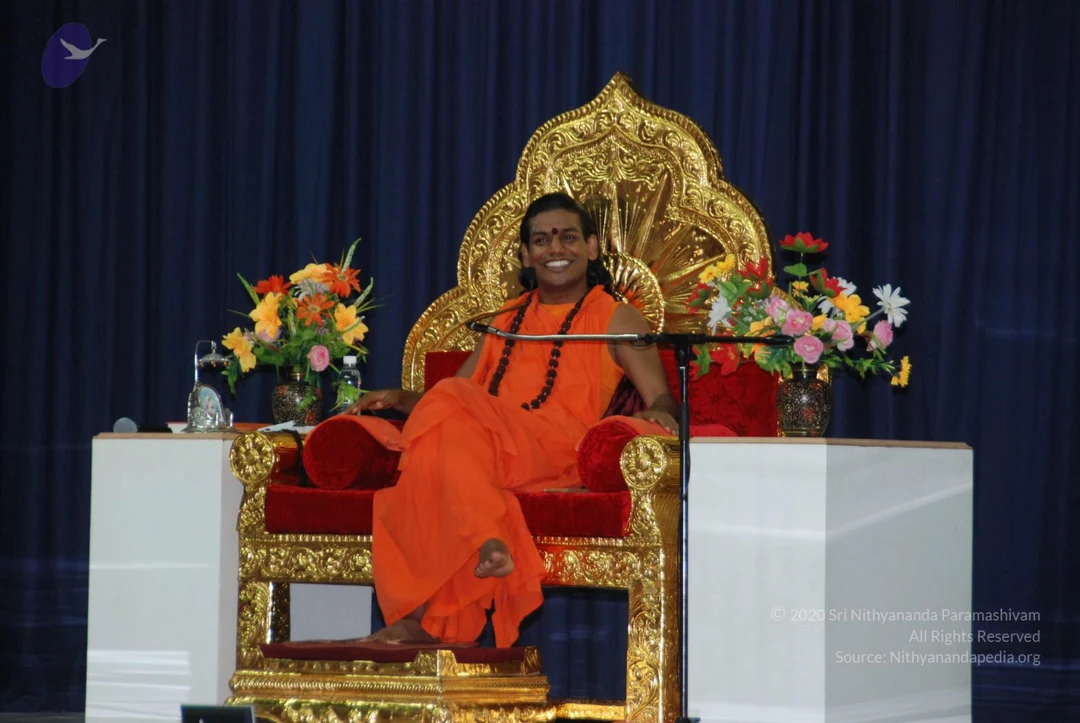
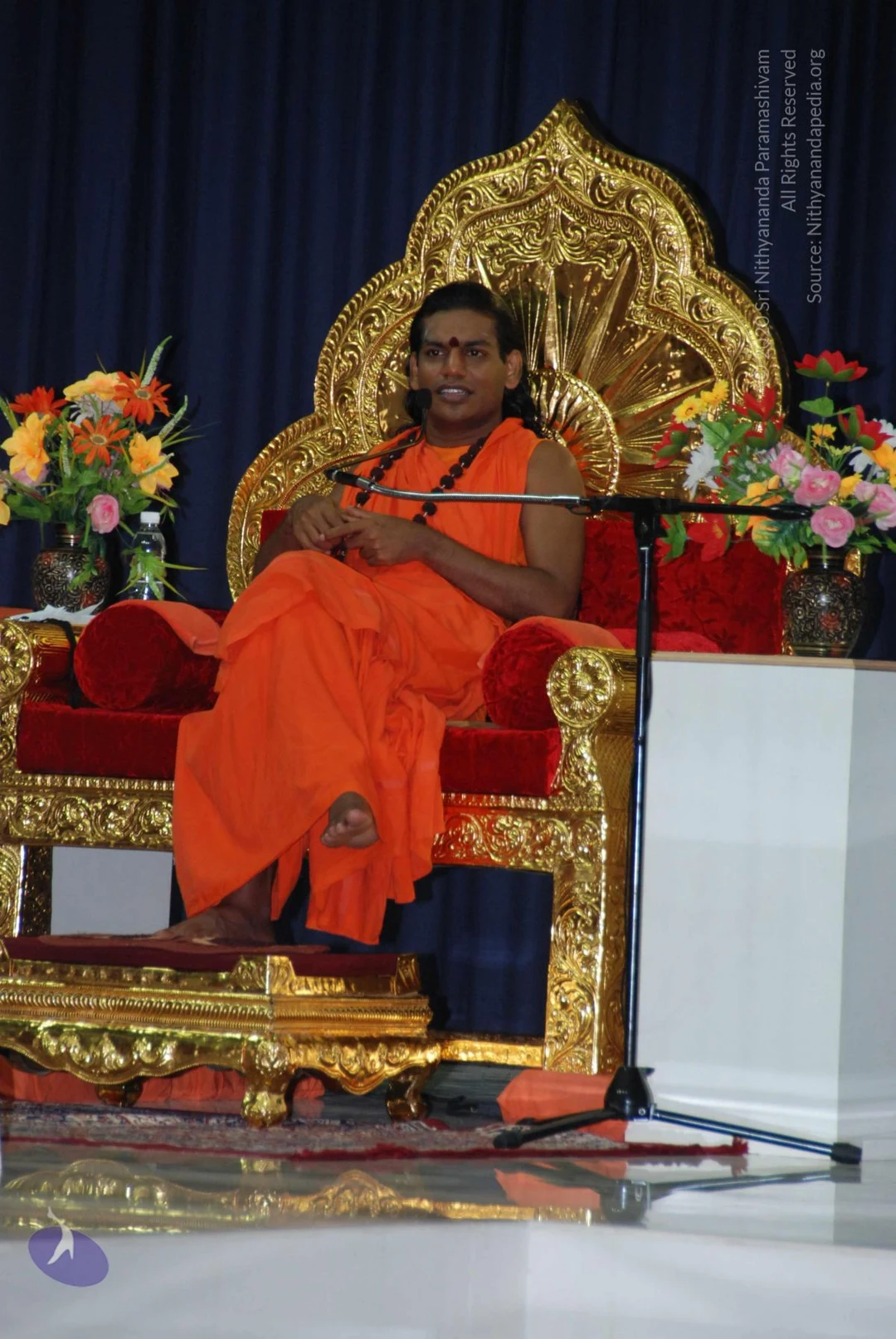
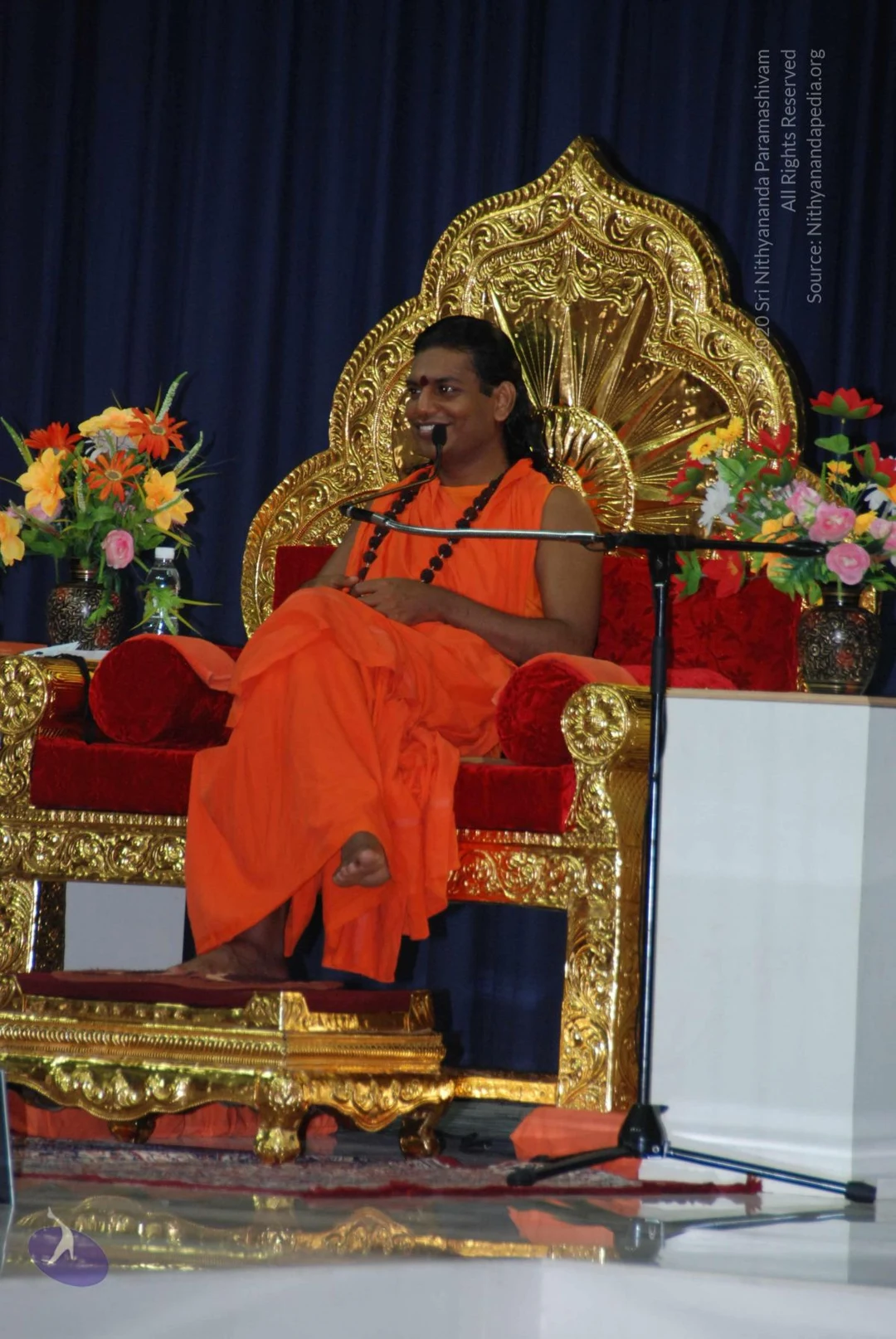
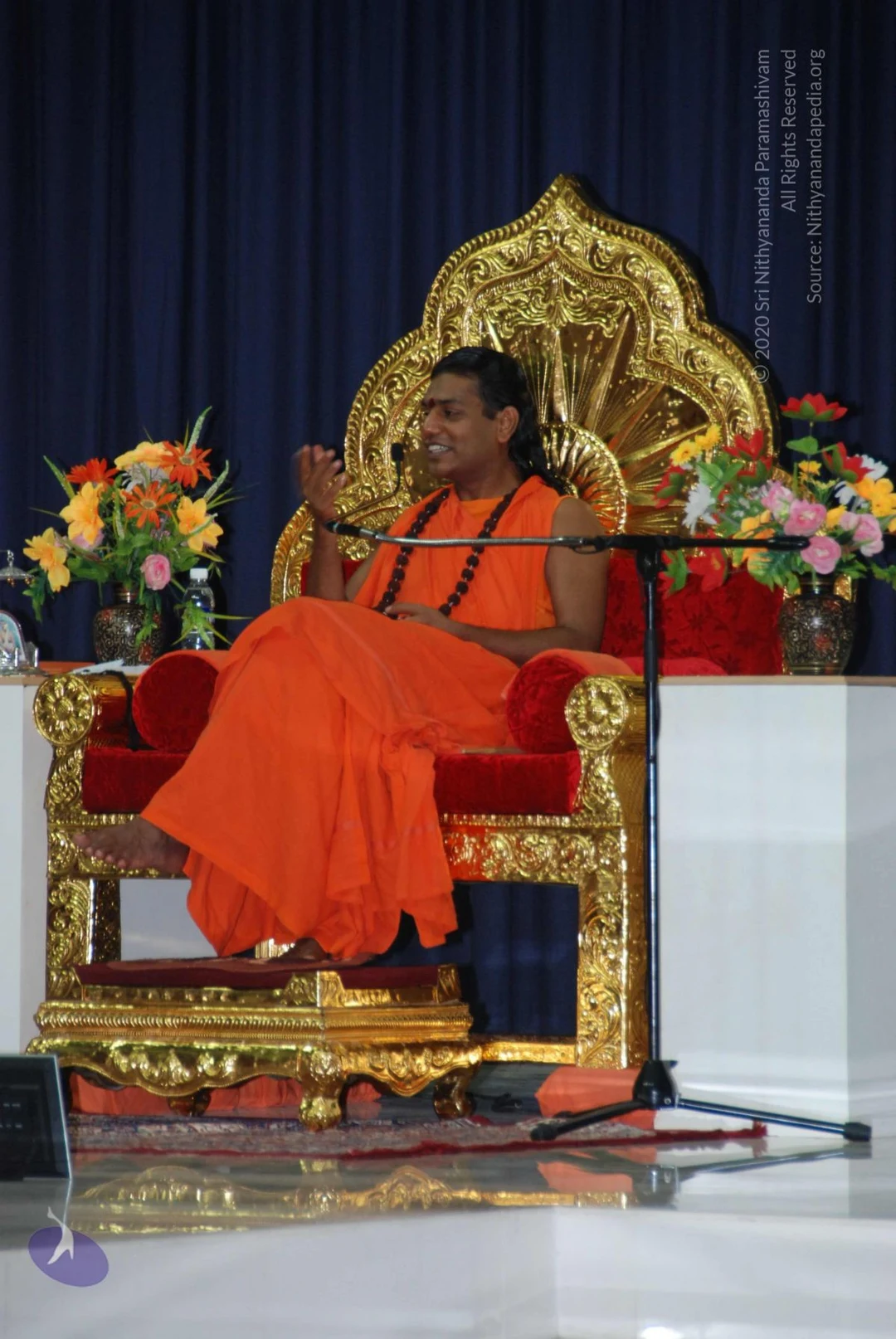
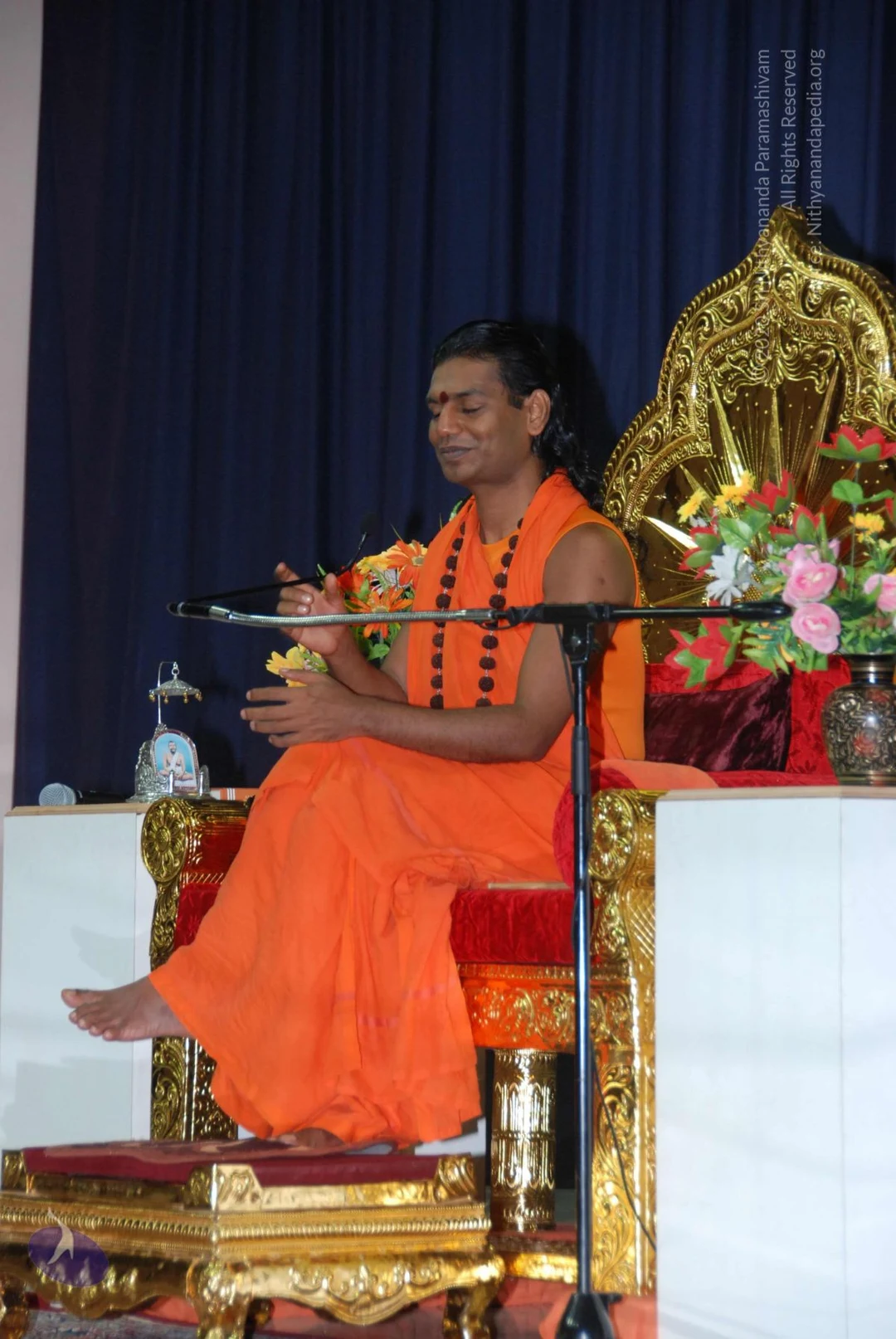
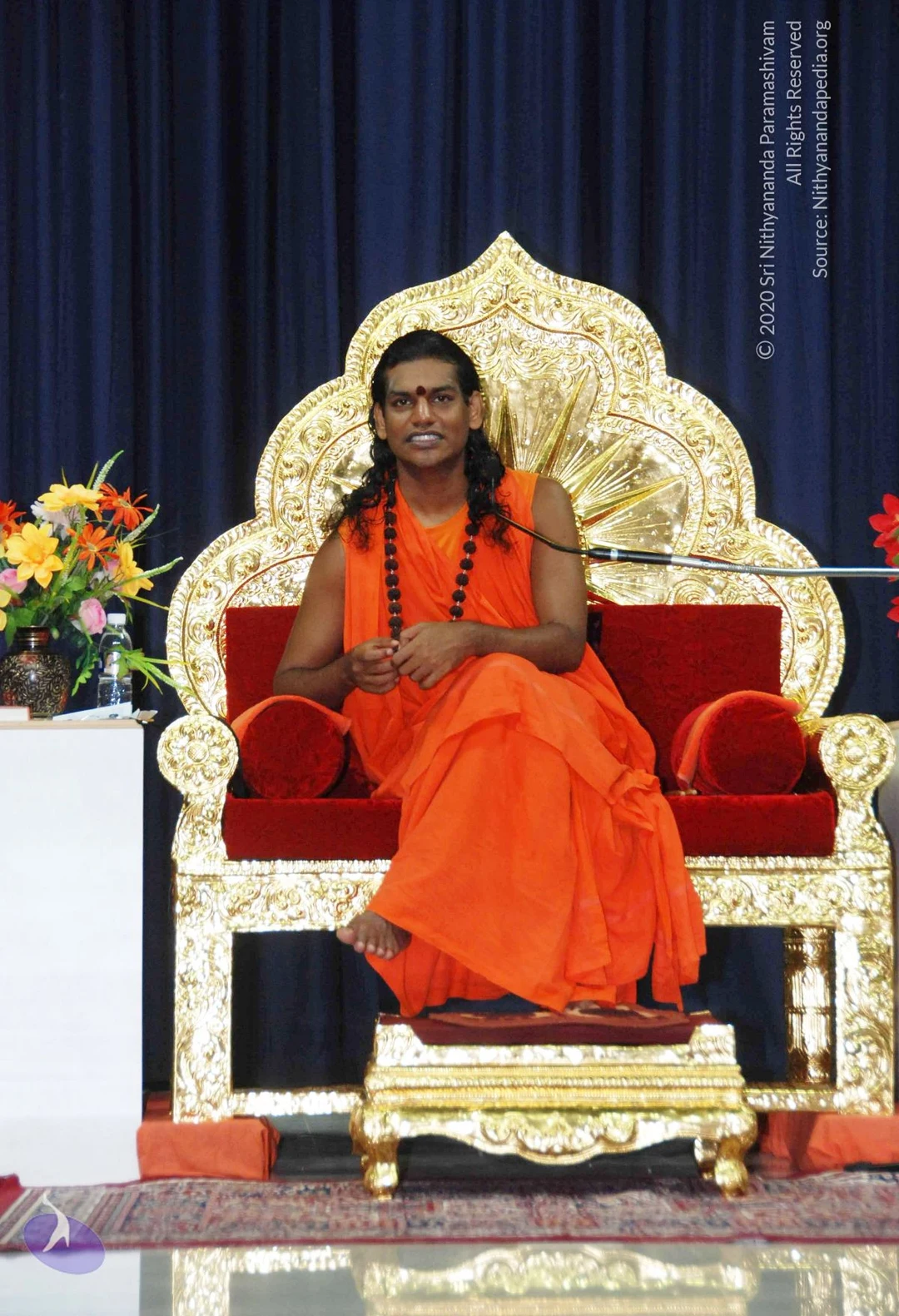
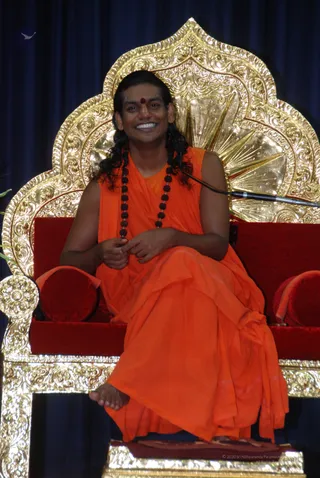
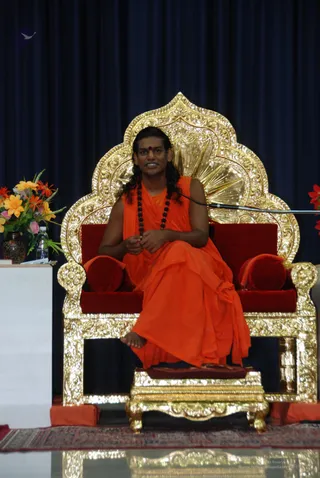
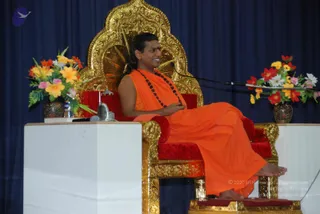
A man in orange saffron robes sits on an ornate gold throne with a tall, scrolled backrest and red velvet cushions, bare feet resting on a gold footstool. He wears a rudraksha mala around his neck, has long dark hair, and a red bindi on his forehead, and holds his hands together in his lap while speaking. A microphone stand is visible beside him, with a vase of orange and pink flowers and a water bottle on a white table to the left. Dark blue drapes hang behind the throne and a patterned red rug covers the stage floor.

PANCHA-TAPAS

2 photosSource gallery
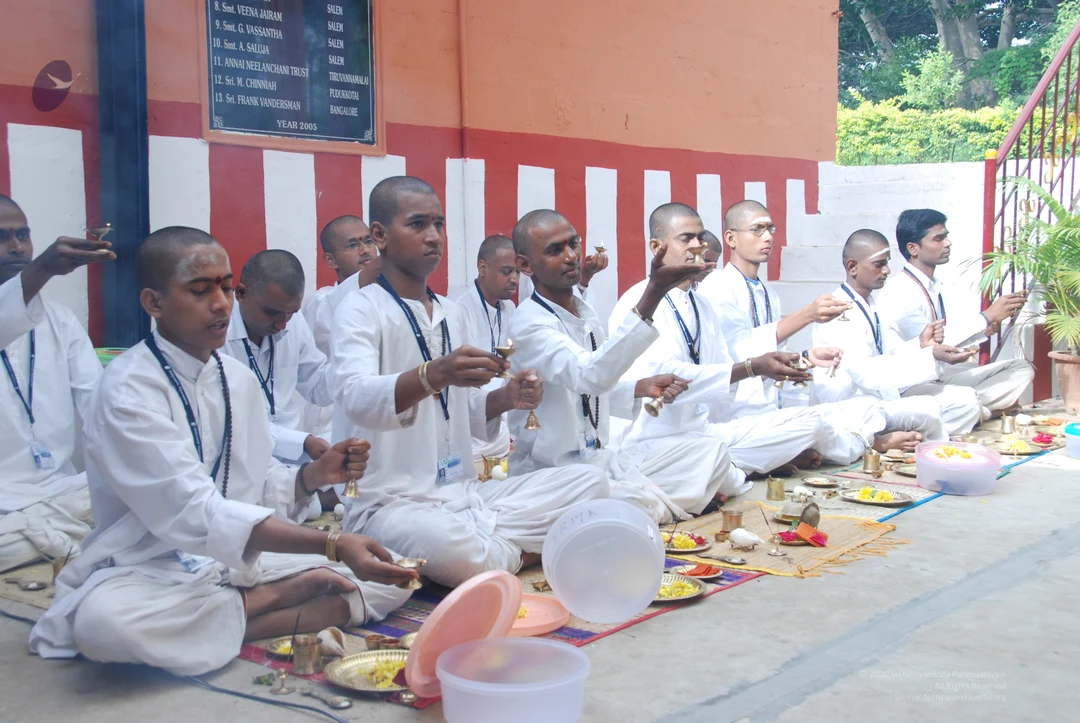
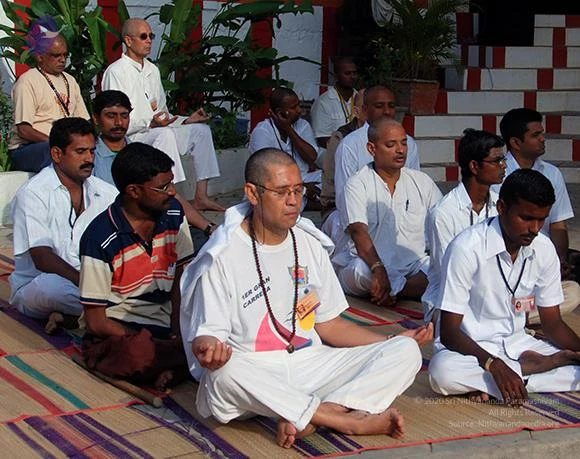
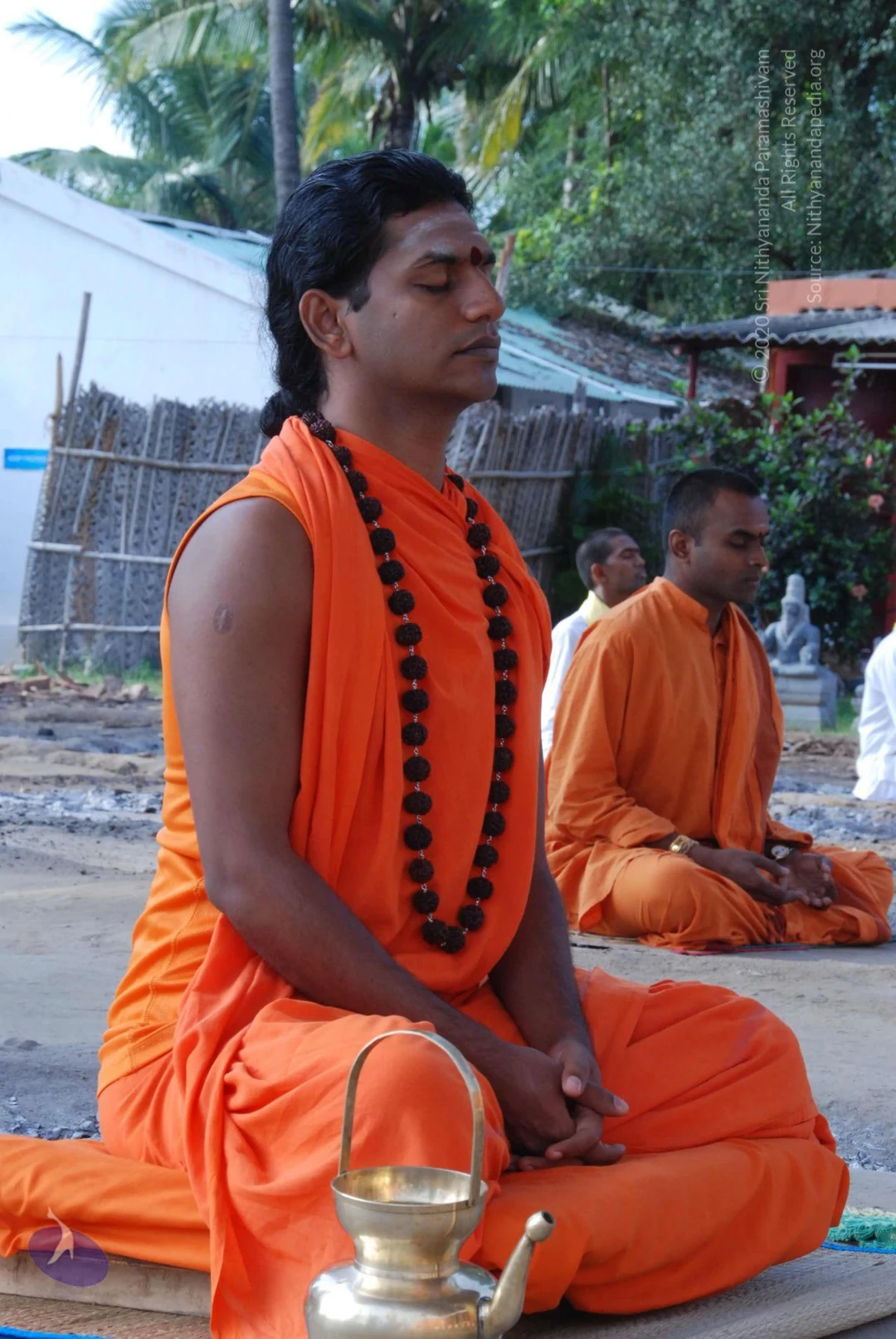
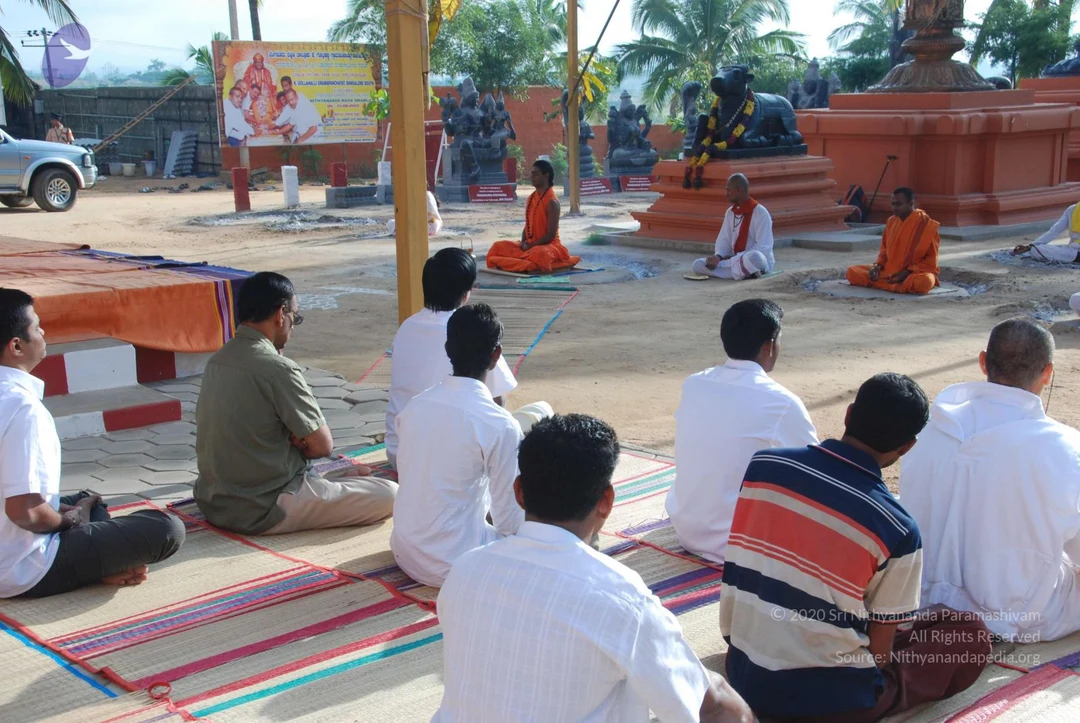
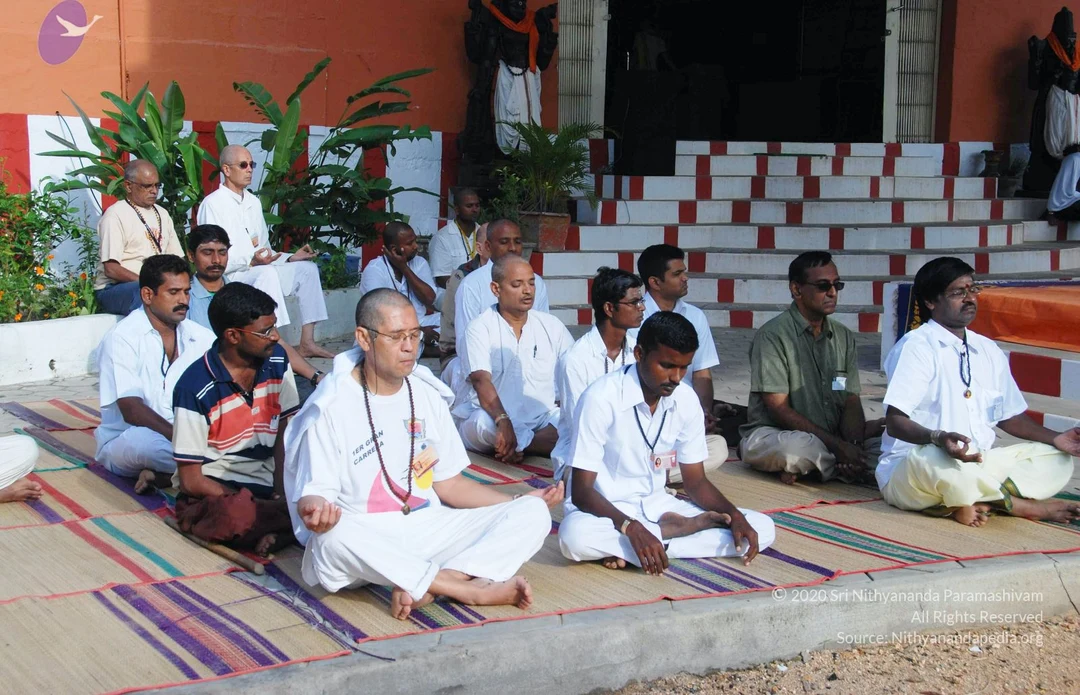
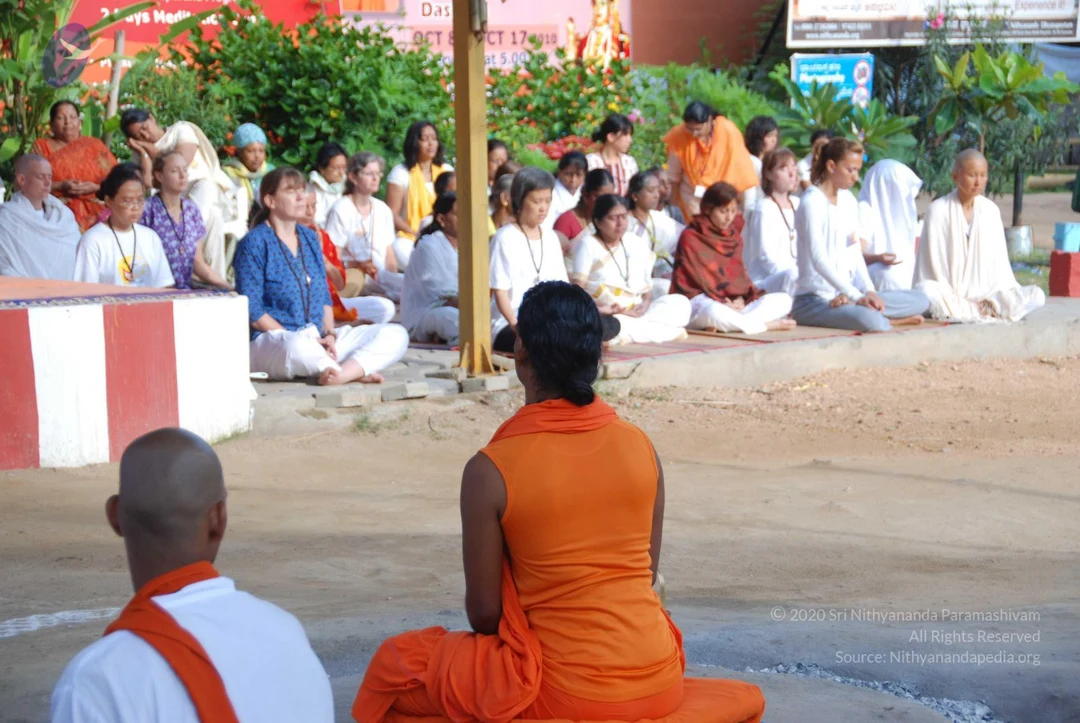
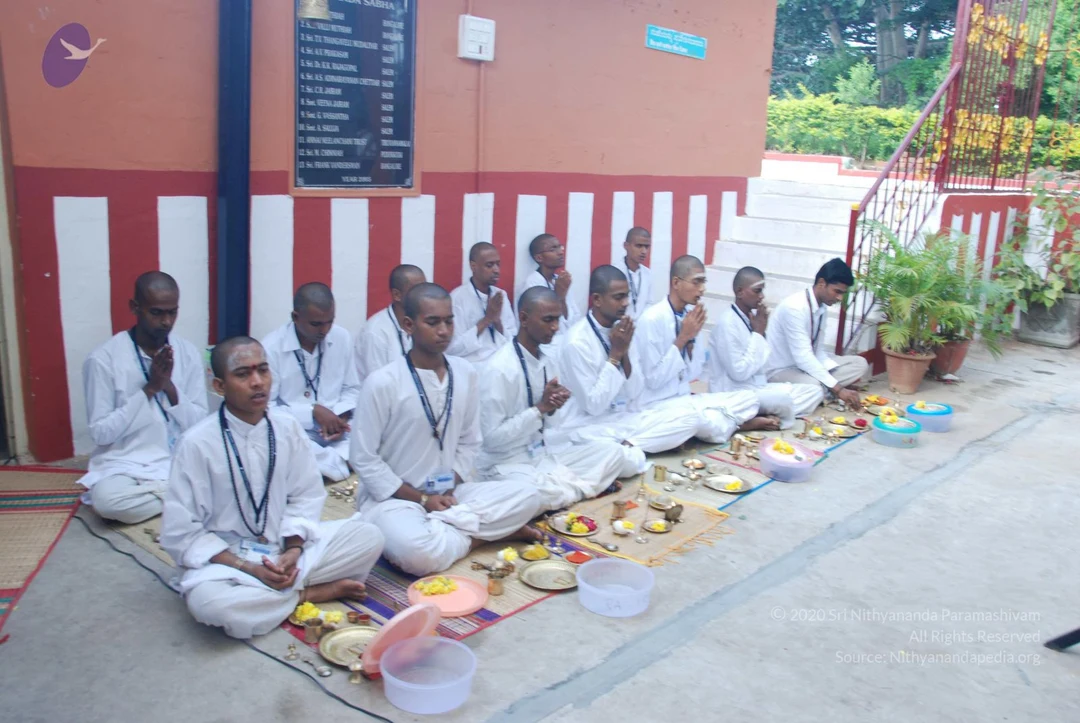
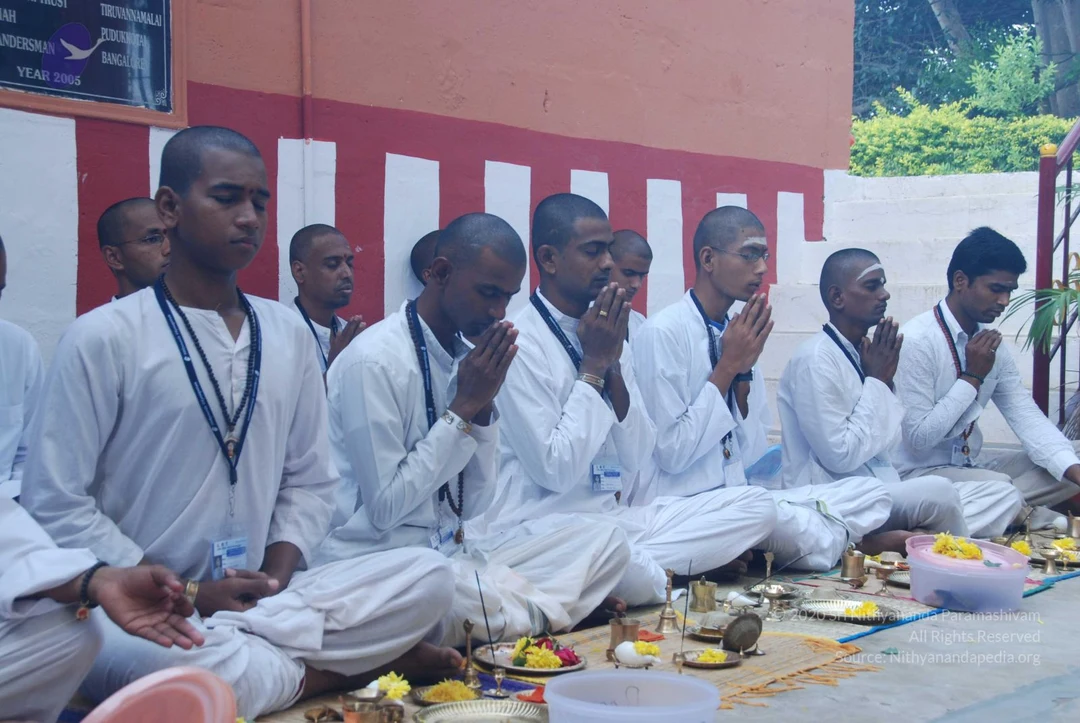
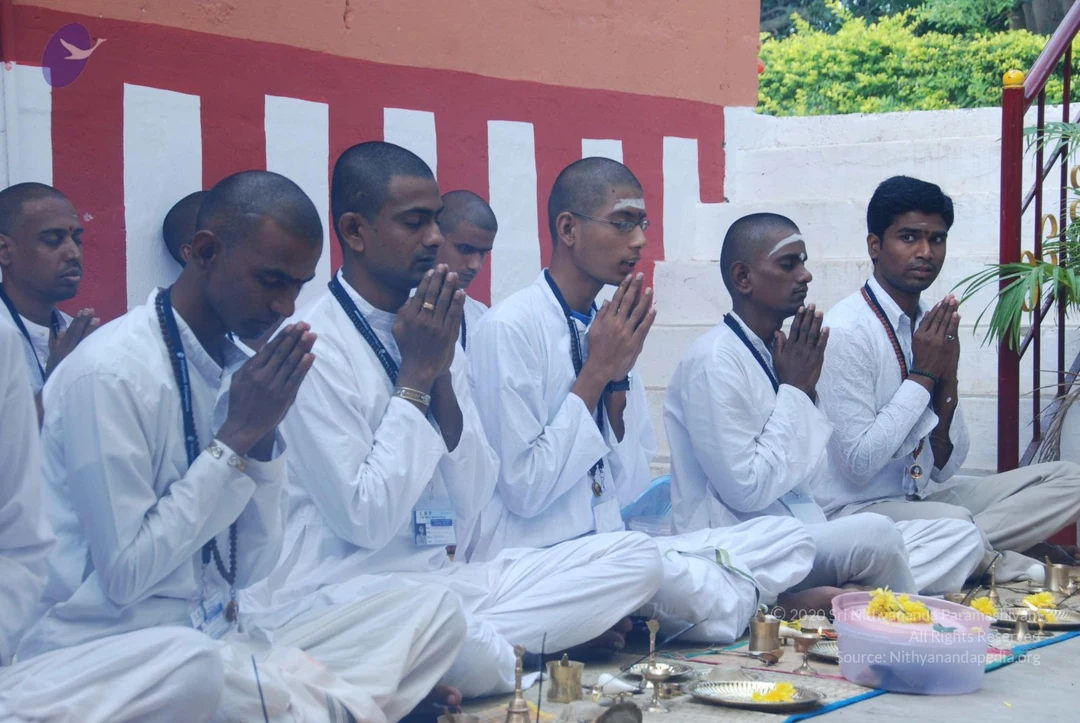
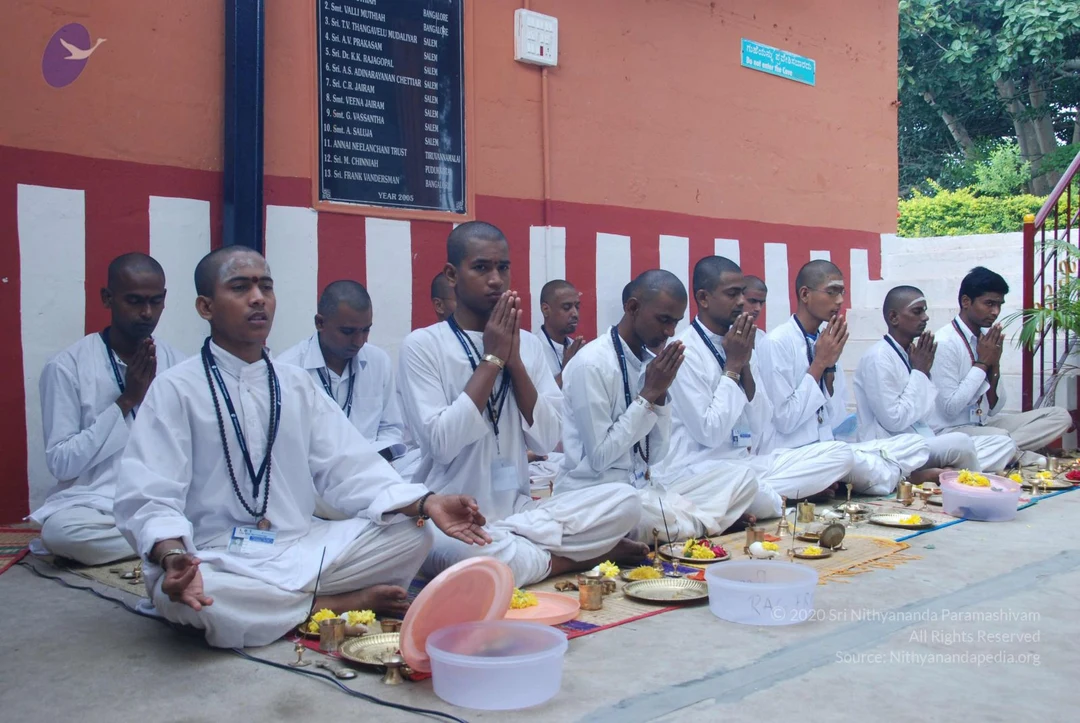
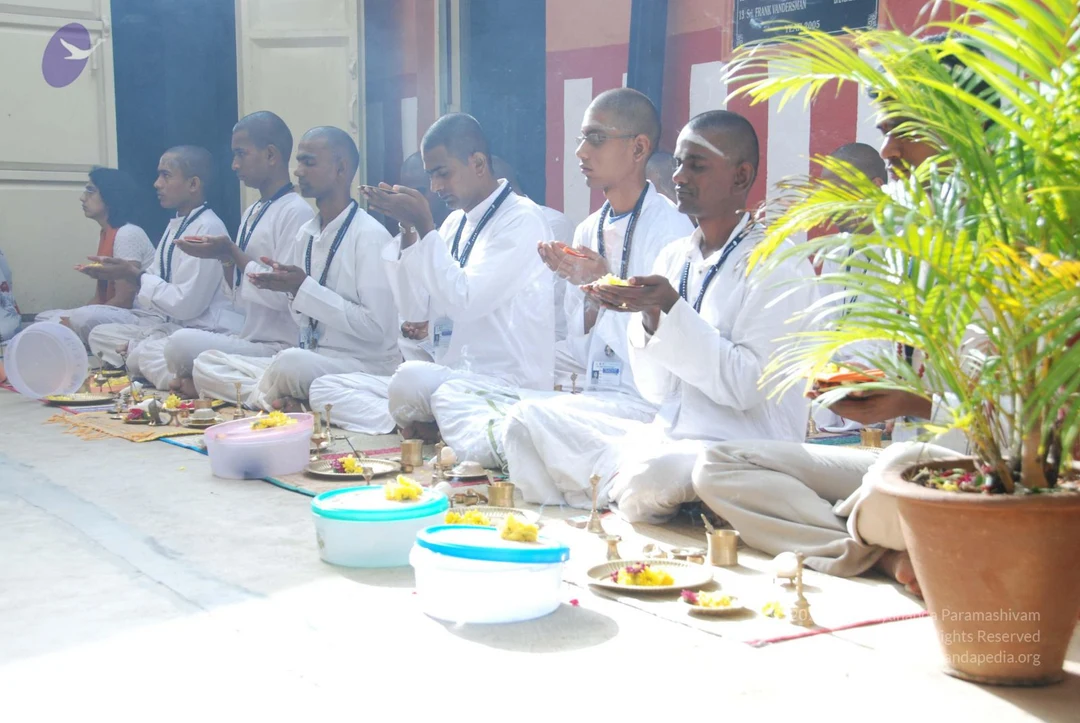
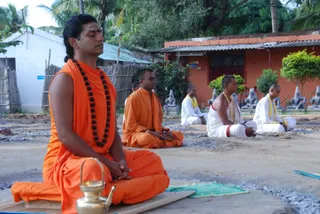
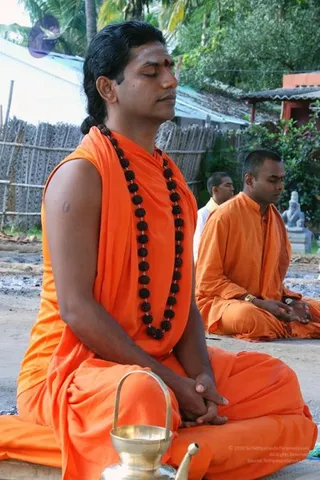
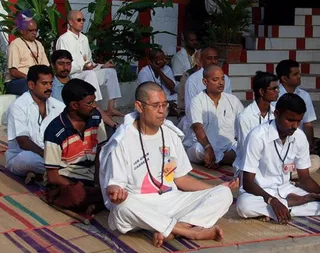
Outdoor photo of a seated man in saffron-orange sannyasi robes, eyes closed, hands folded in lap, meditating with a long black rudraksha mala around his neck and a red bindi on his forehead. Long dark hair is tied back. Behind him, a second man in orange robes sits with eyes closed and hands resting in his lap. A brass kalasha-style vessel with a spout sits in the foreground. Background shows a bamboo fence, green foliage and a small structure. a person appearance cues: long swept-back hair, saffron clothing, and rudraksha mala, seated in meditation as the central figure.Outdoor photo of a group of about fifteen men seated cross-legged on woven mats in meditation, eyes closed or lowered, hands resting on their laps in mudra. Most wear white kurta-style or white shirts and white trousers, with lanyards and ID badges visible on several. In the foreground a bald man in a white top with a pink and white graphic and a rudraksha-style mala around his neck sits with palms up. Behind them, a few men sit near steps painted red and white, with green potted plants at the left edge.

PRATYAKSHA-PADA-PUJA

3 photosSource gallery
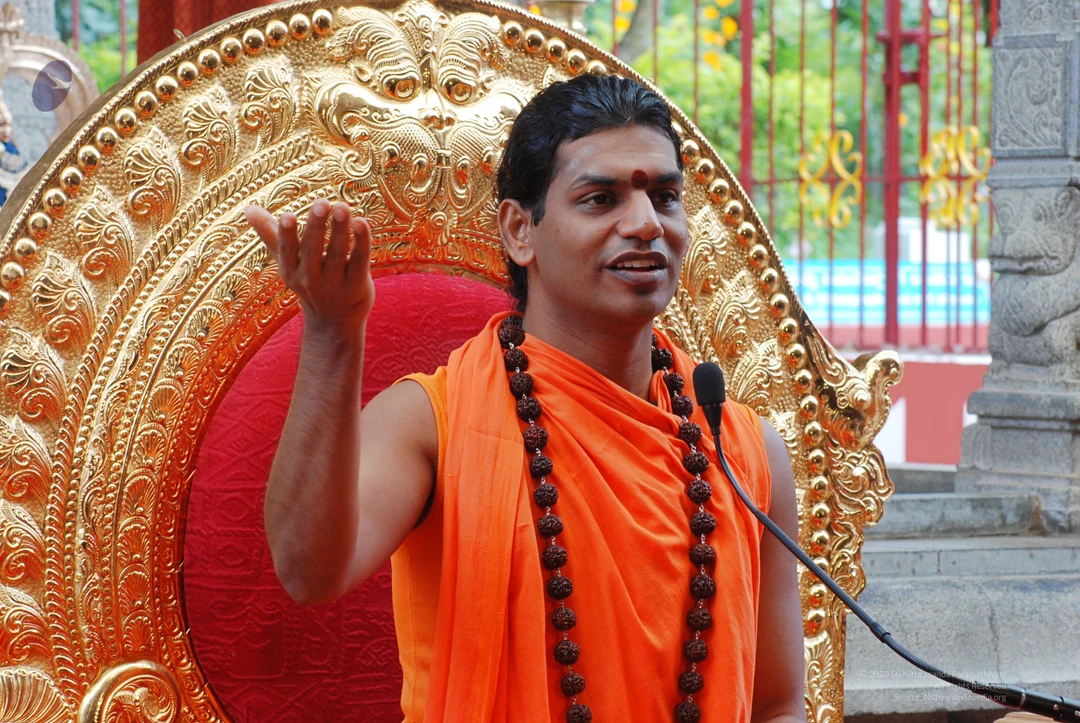
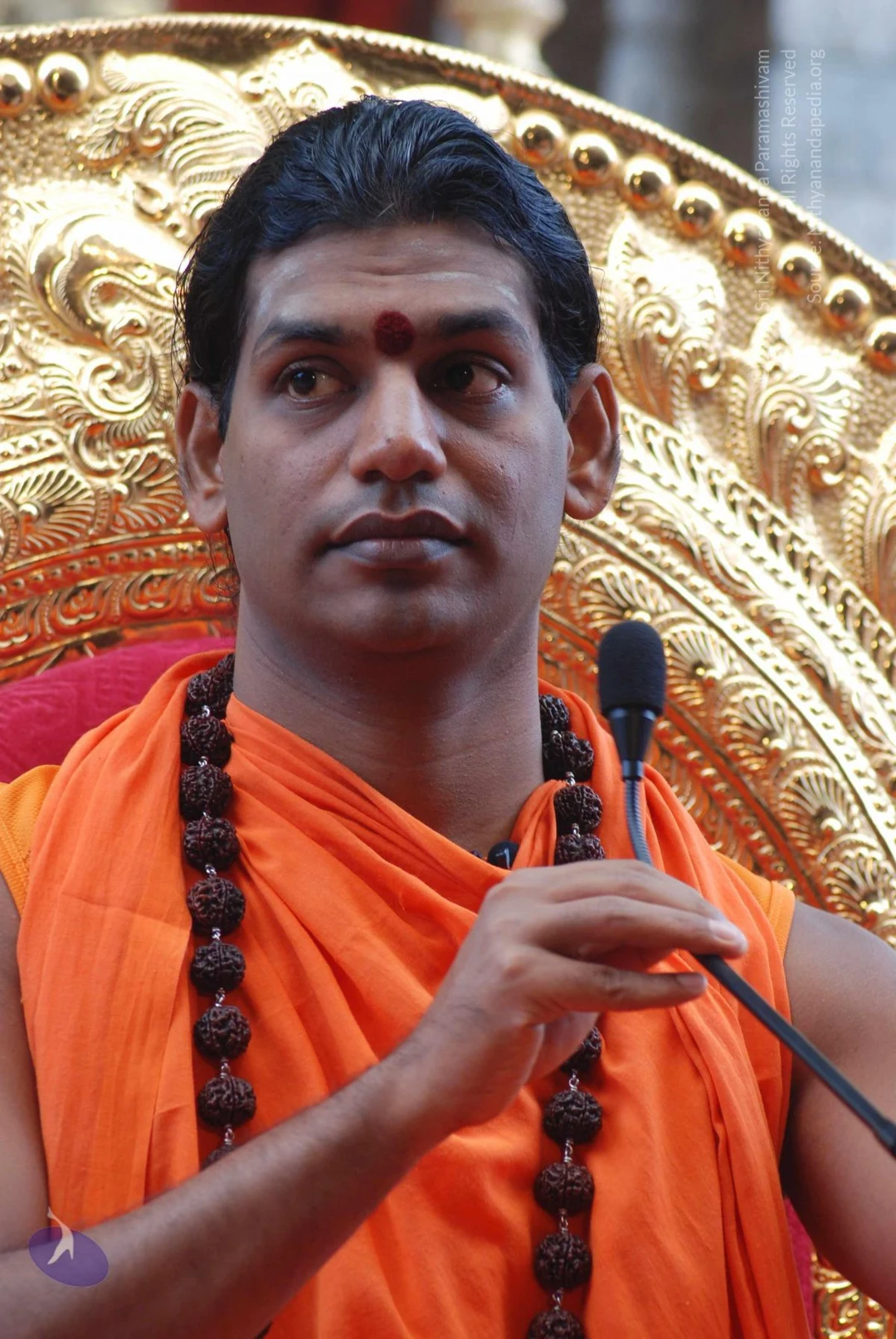
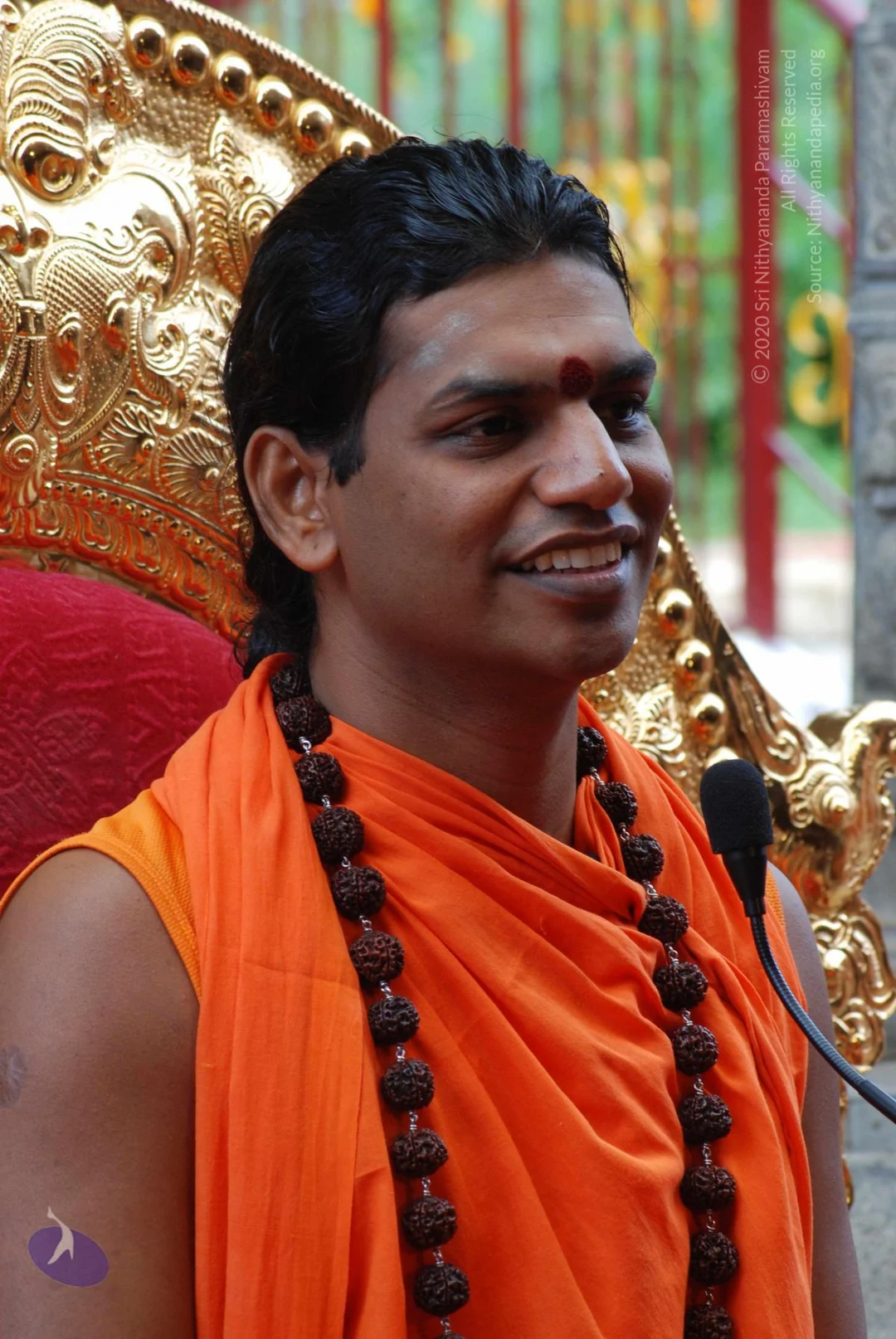
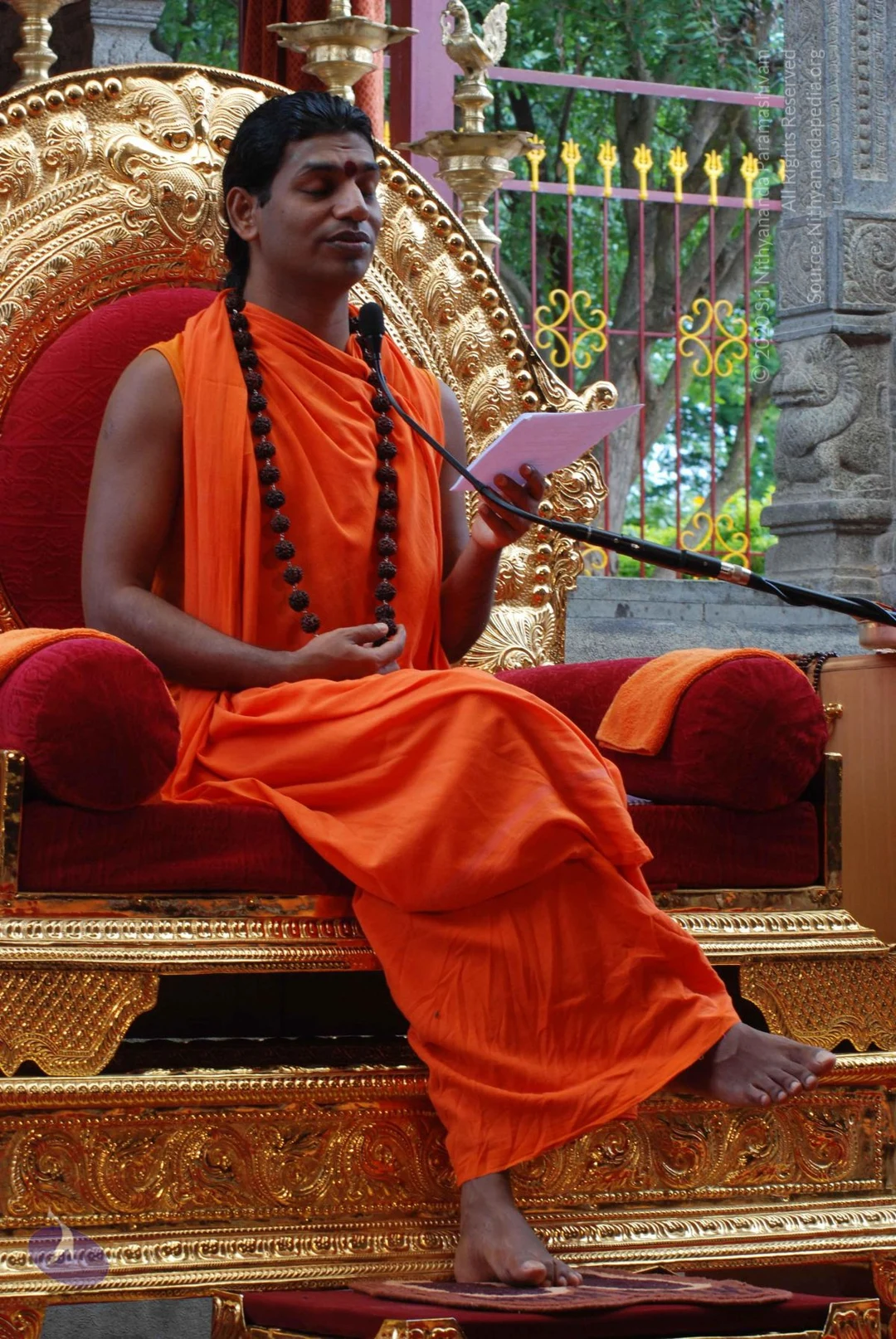
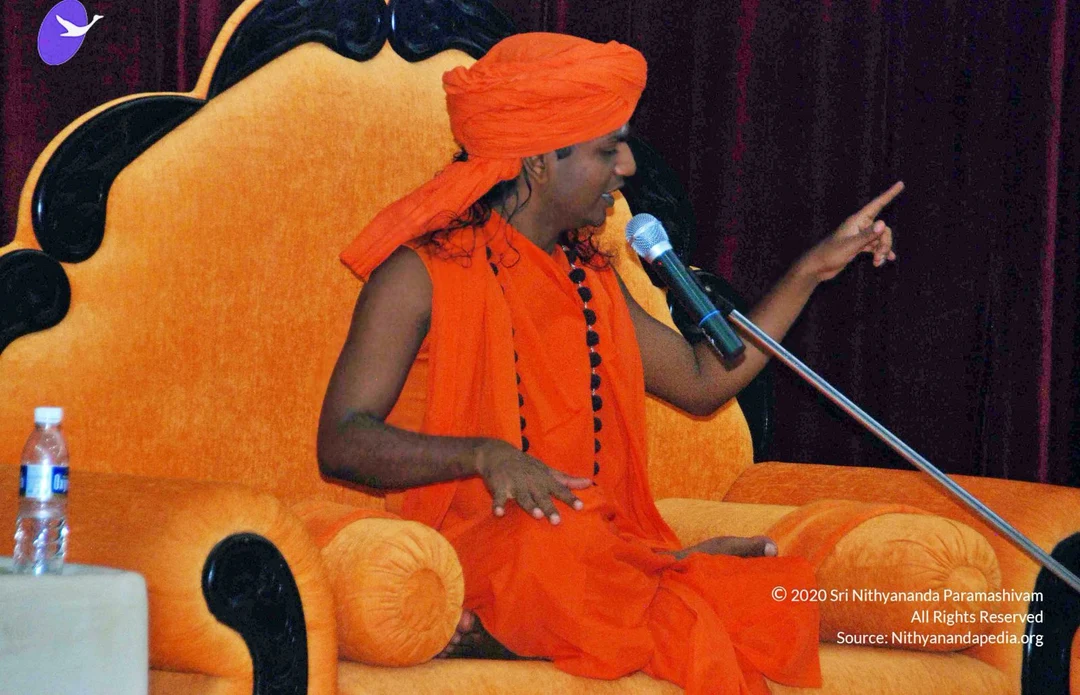
Small thumbnail photo of a room with people seated on a light floor. A figure in orange robes sits at the right near a plain wall, and a seated man in a dark top sits to the left. Other people are partly visible at the edges. The setting looks like an indoor hall with a simple backdrop and no clear ritual objects visible.A two-panel photograph collage. Left panel: a row of men in white ritual clothing sit cross-legged on a mat, with plates of food and offerings set in front of them, as if in a shared meal or puja. Right panel: a similar row of white-clad participants seated before food offerings, with an orange-robed figure in the centre-left and a man in white at the right edge, sitting on mats in a hall. Both panels show seated devotees around offerings in a ritual setting.A close-up photograph of a smiling man seated on an ornate gold throne with a red cushion, speaking into a microphone on a stand at right. He wears a sleeveless saffron-orange robe draped over his shoulders and a long necklace of brown rudraksha beads. A red bindi mark is on his forehead and his dark hair is swept back to shoulder length. Behind him are red and gold architectural railings and a green background. The image is a photo.

LEP-PROCESS

2 photosSource gallery
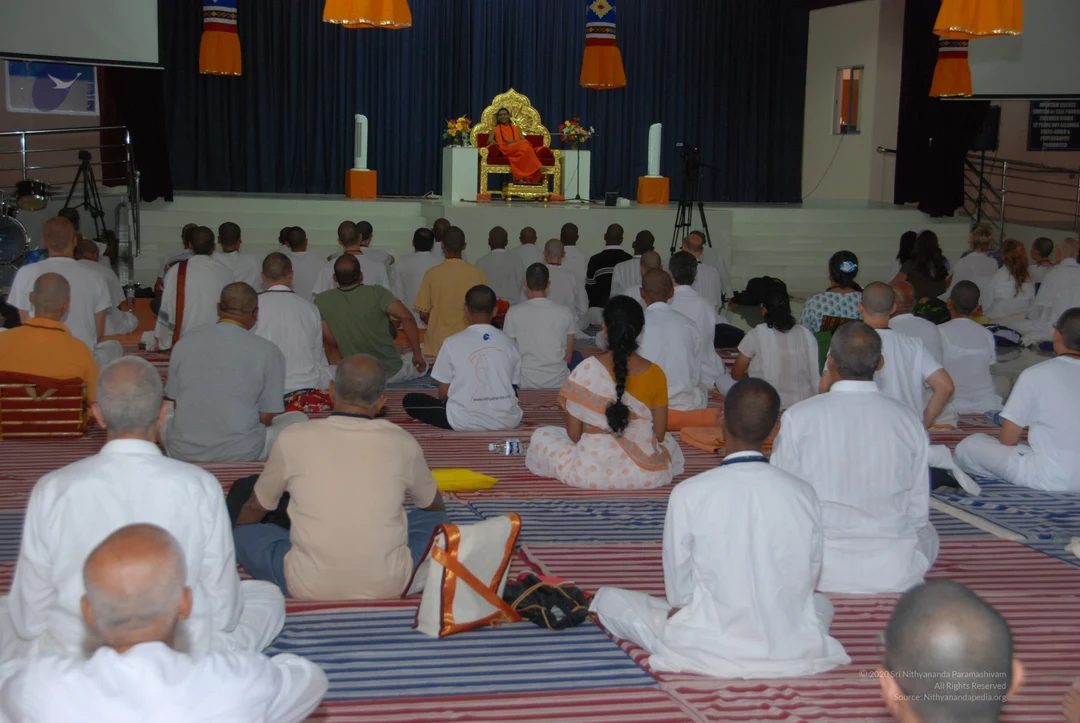
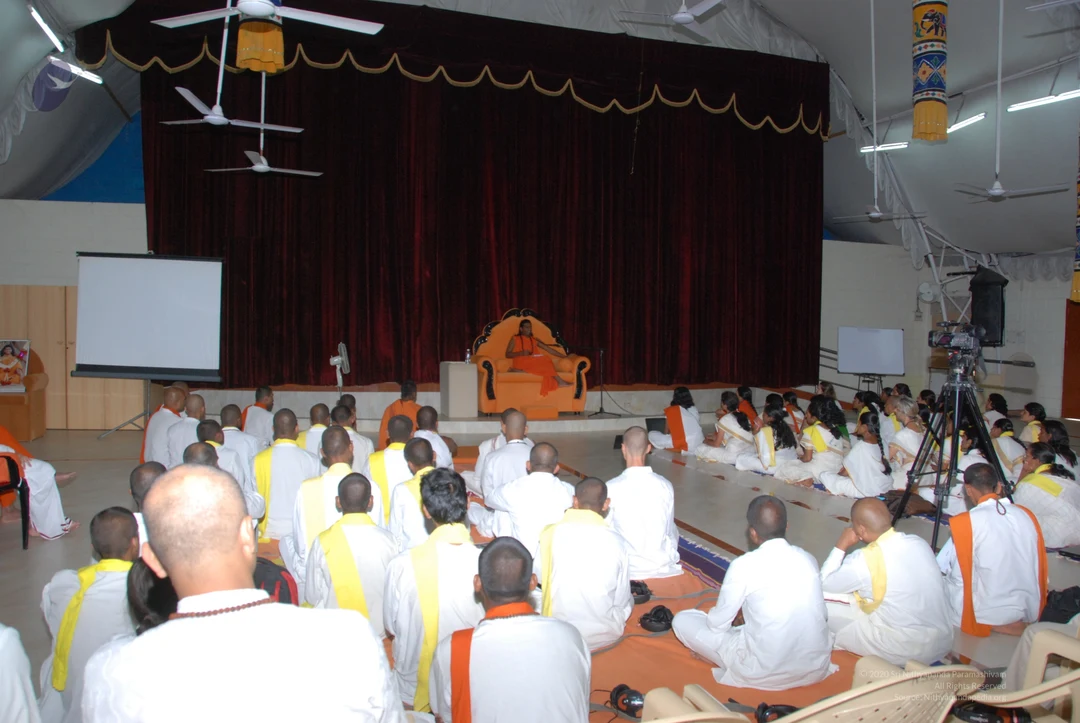
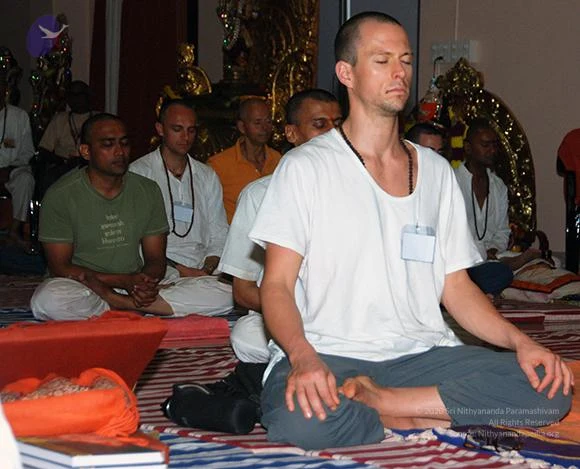
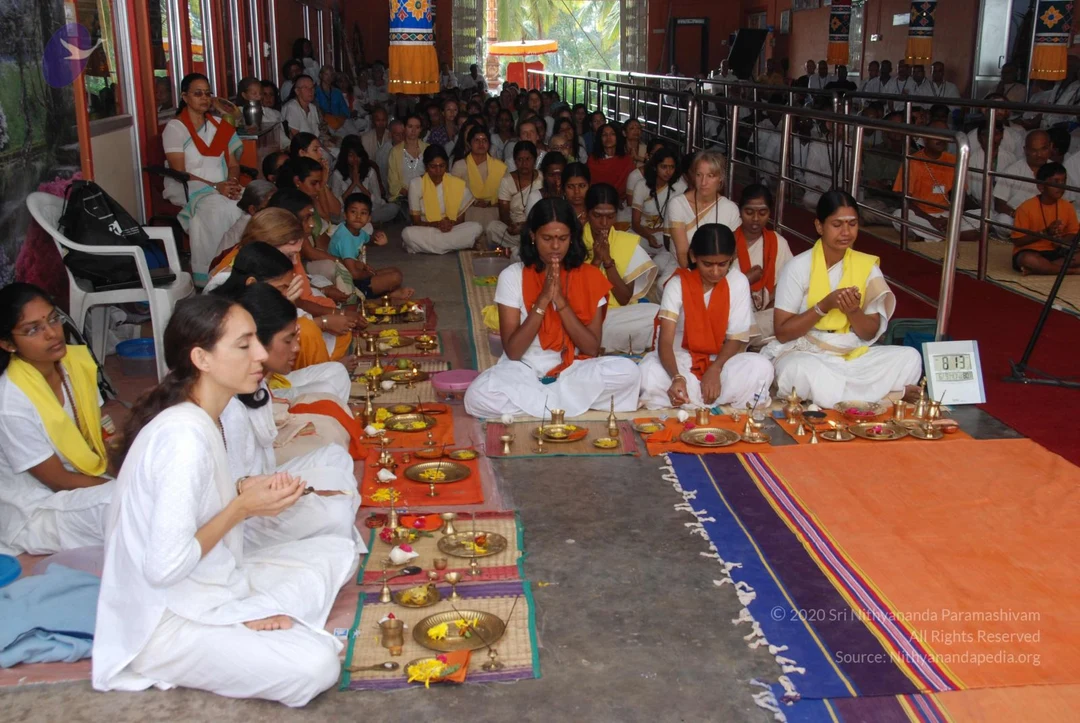
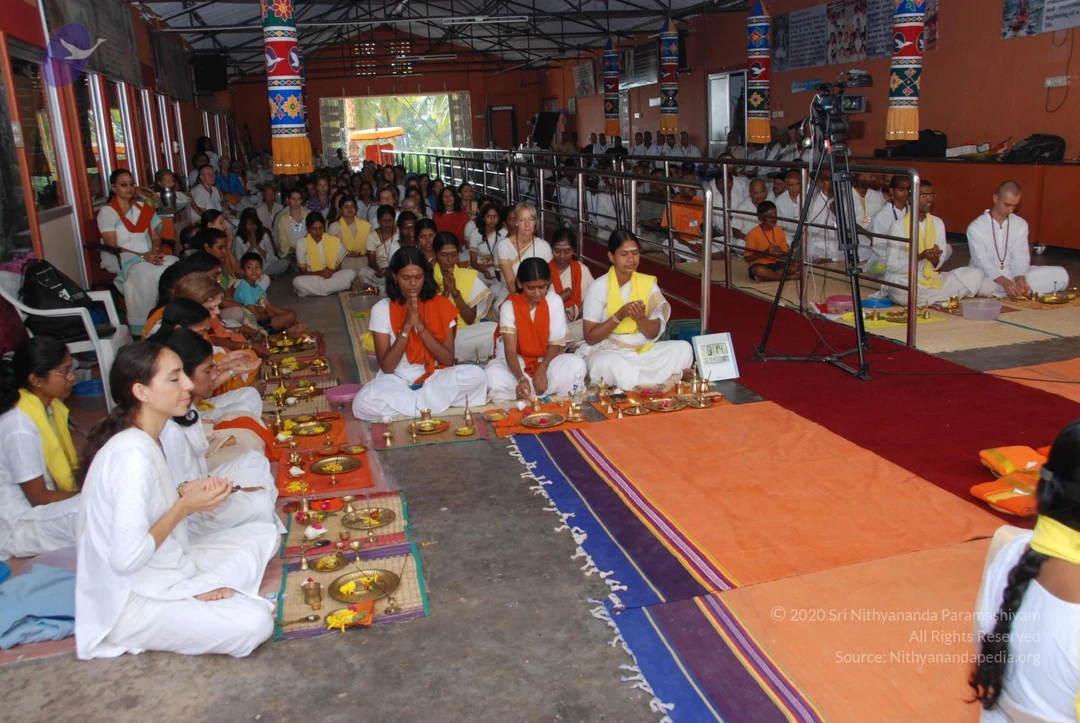
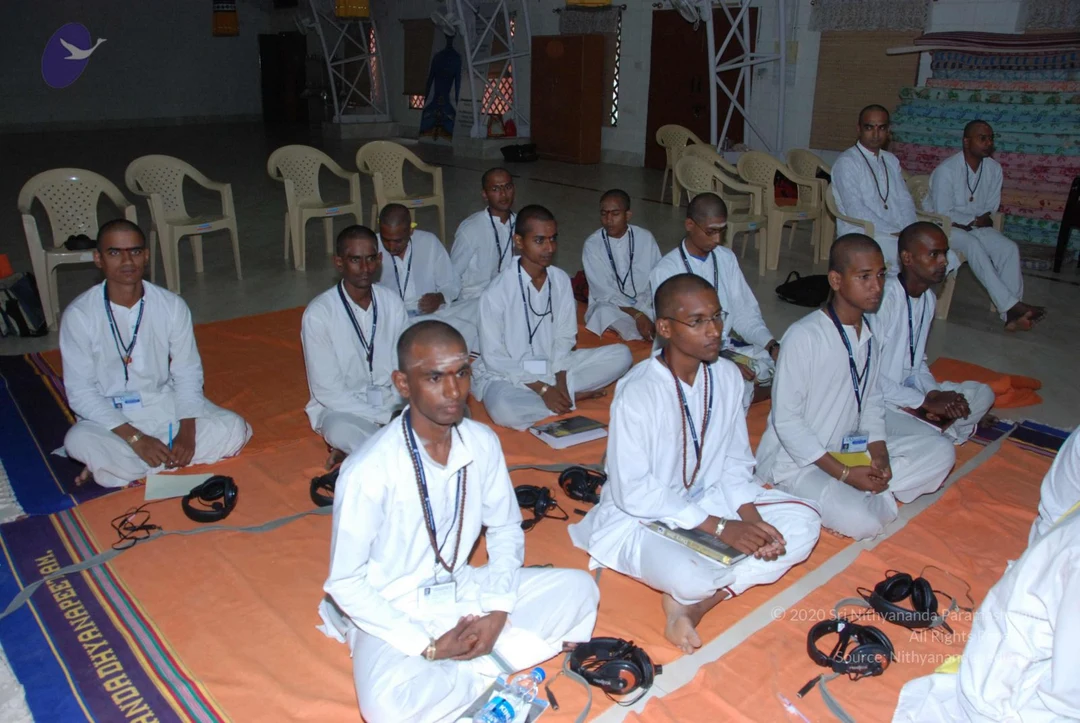
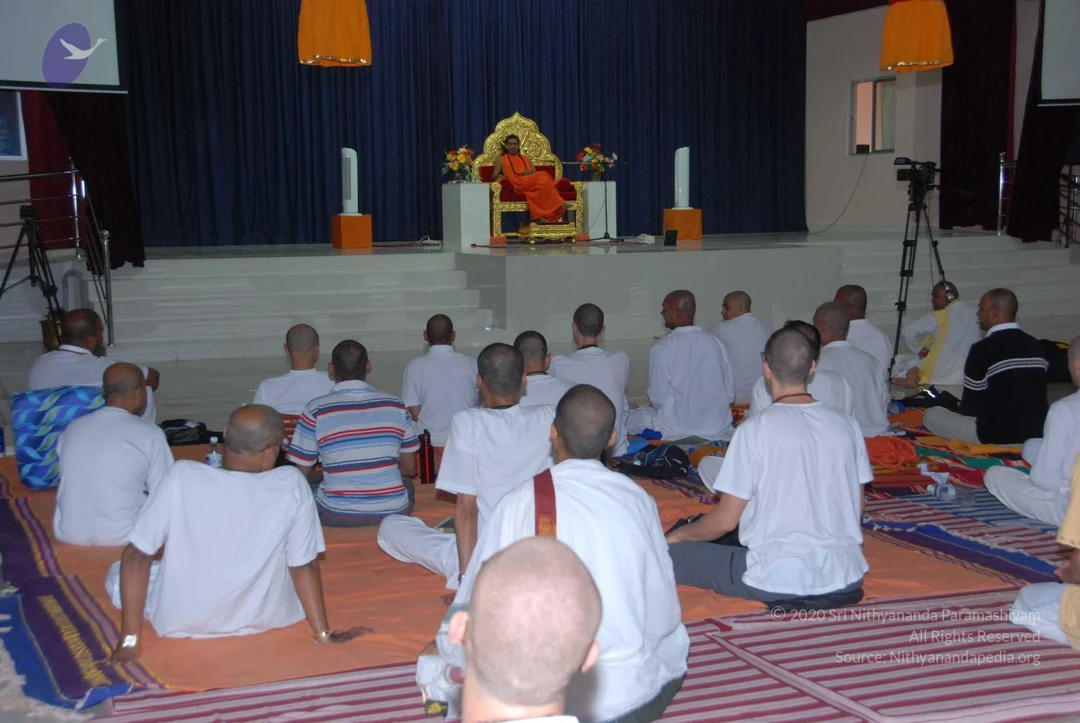
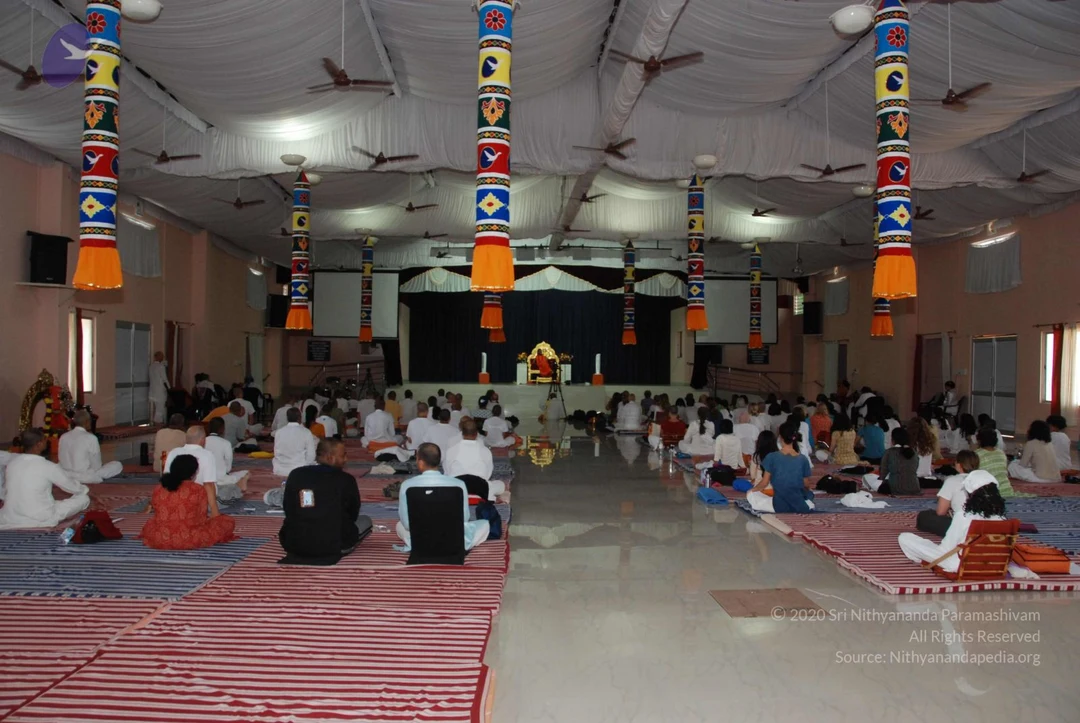
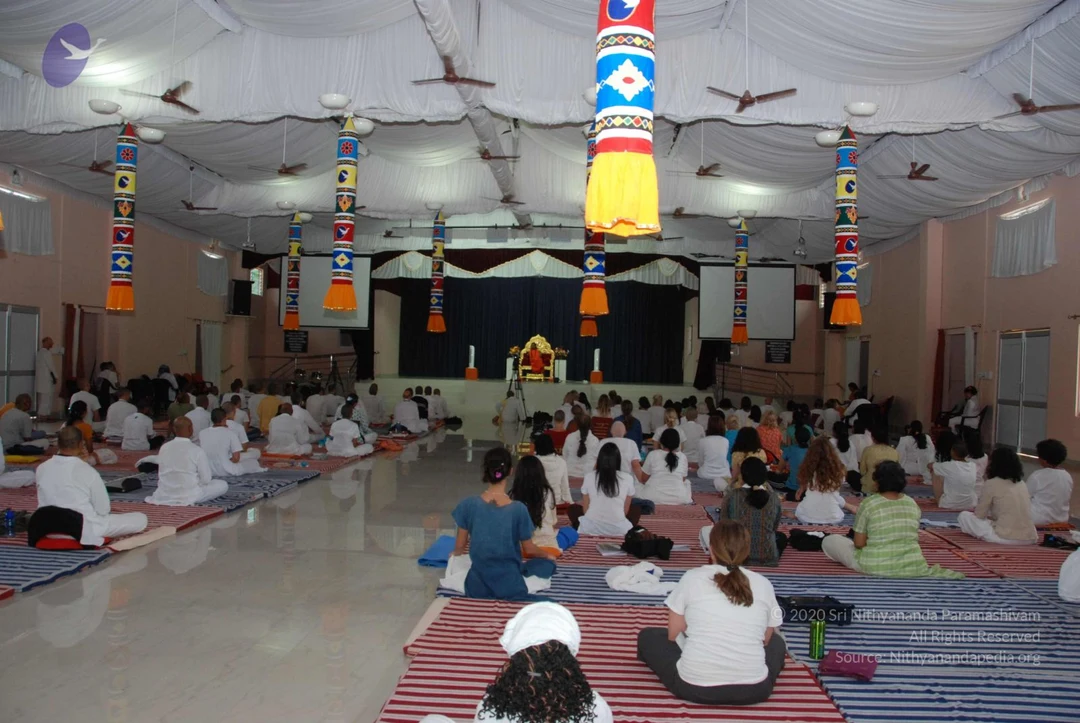
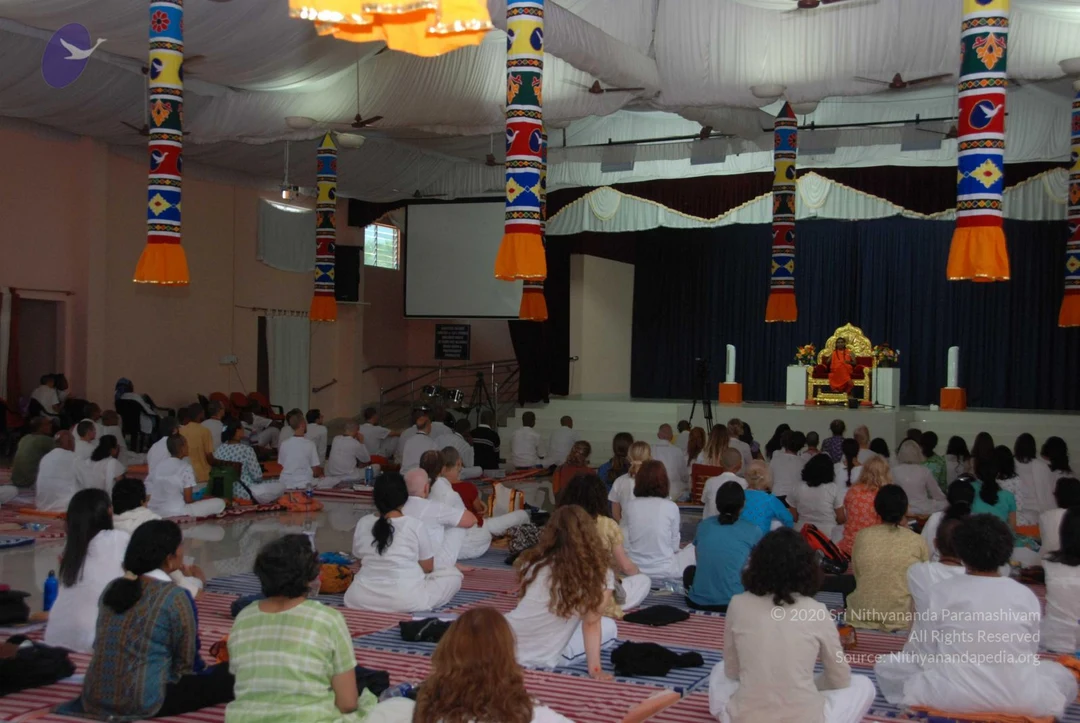
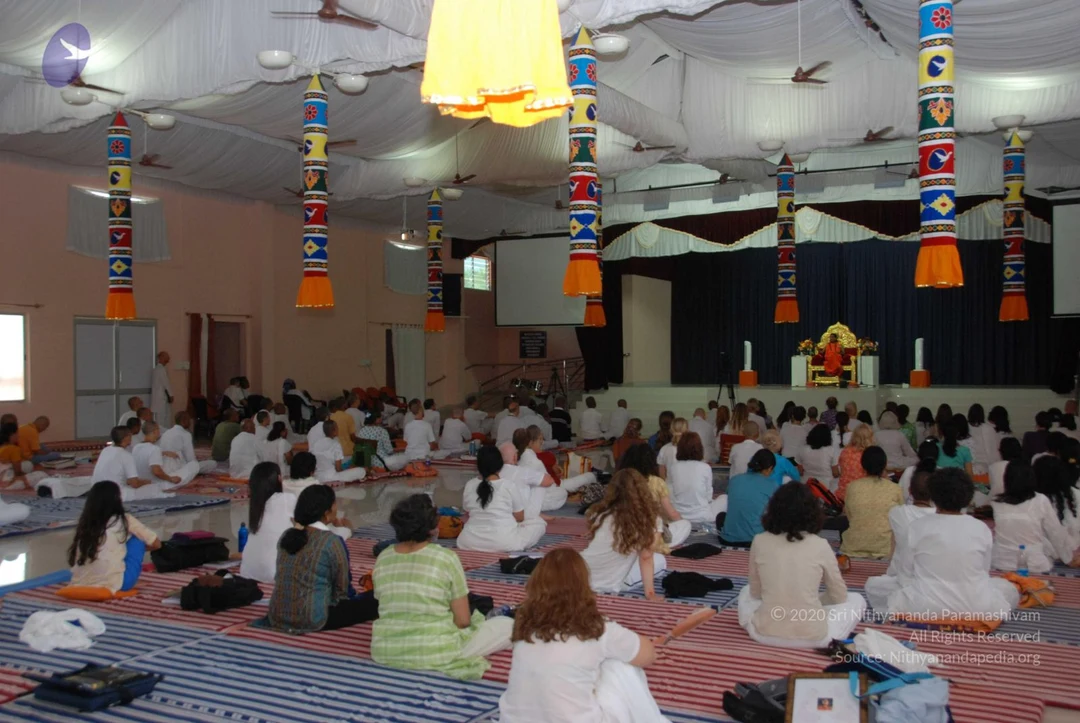
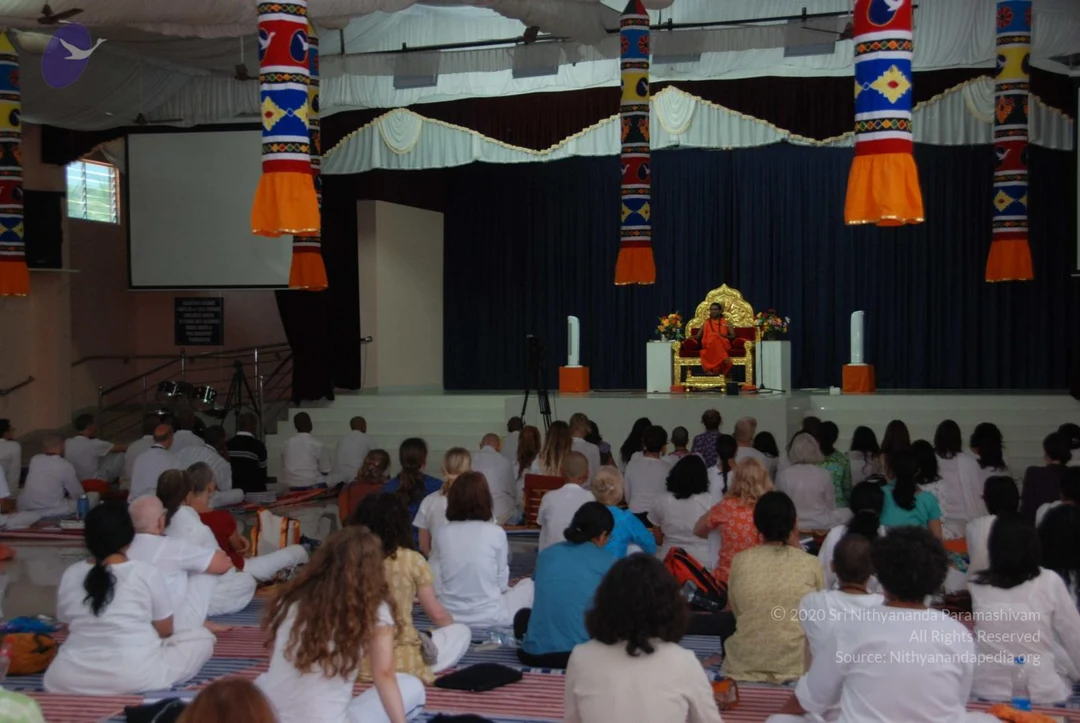
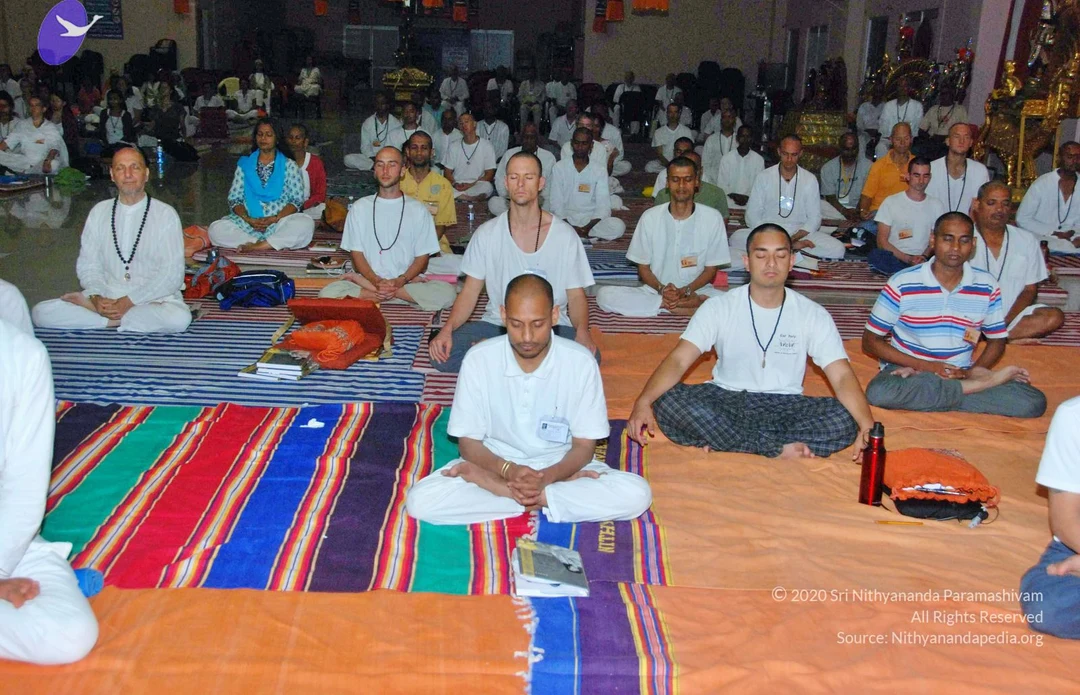
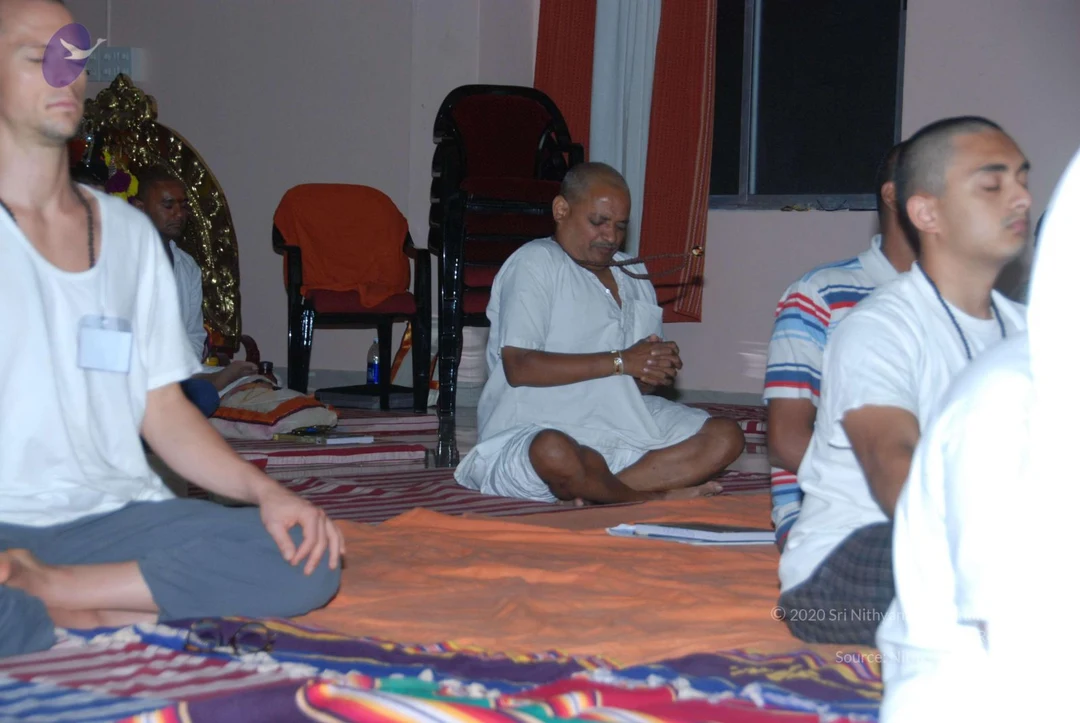
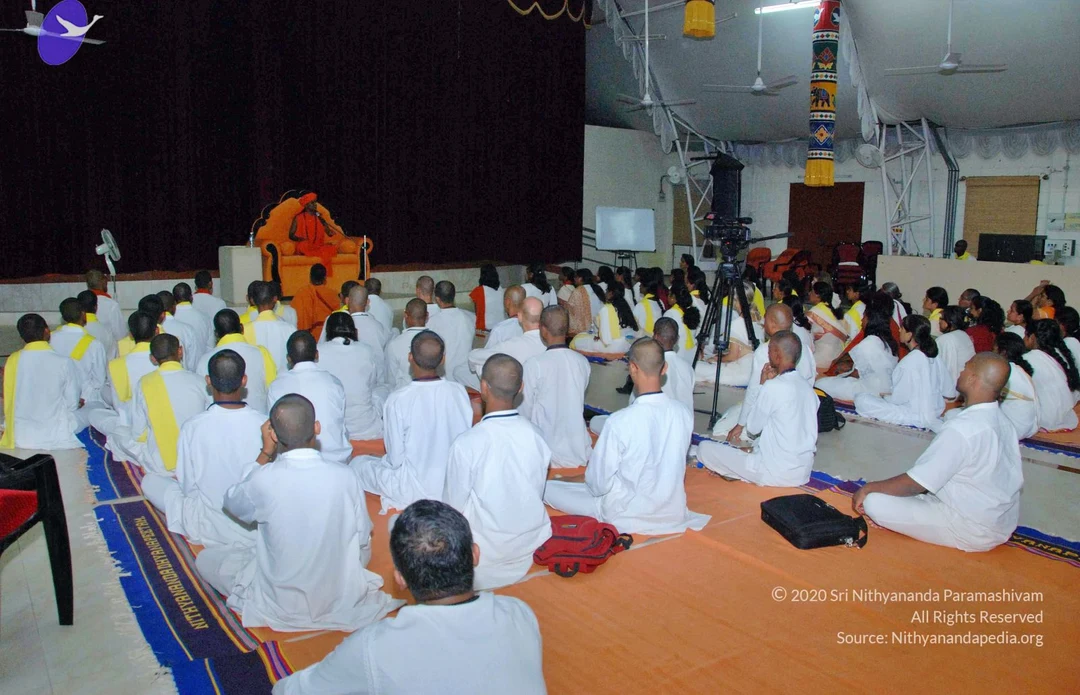
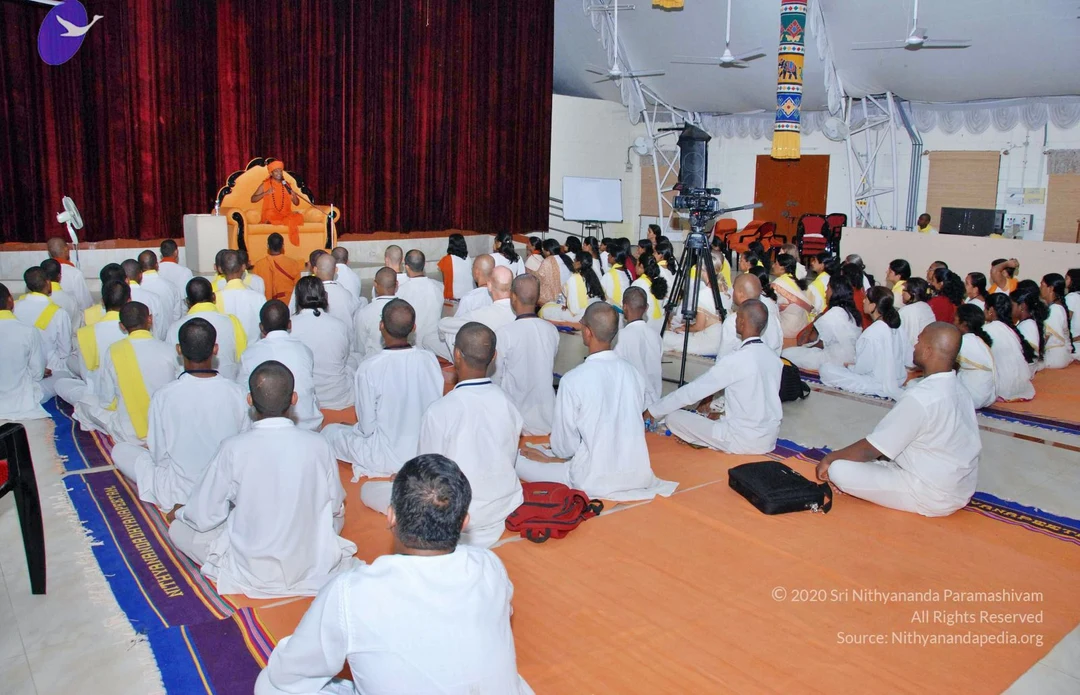
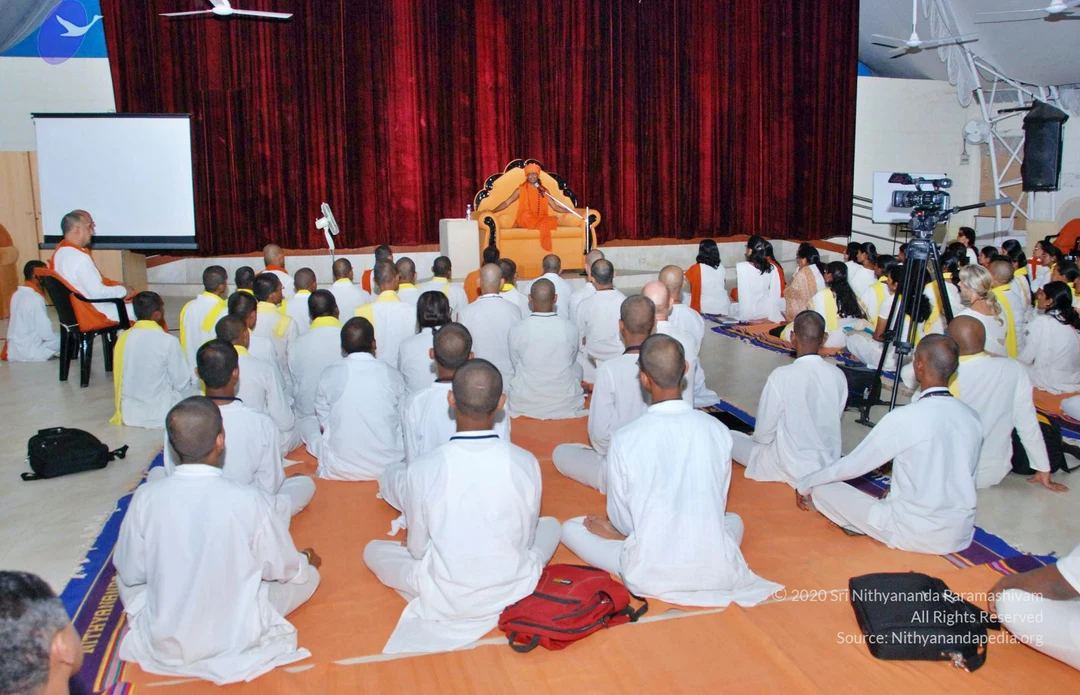
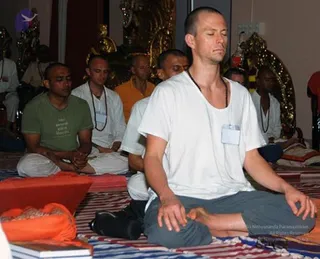
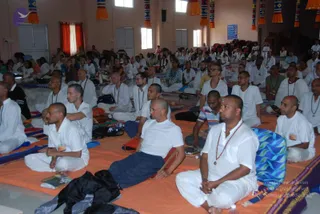
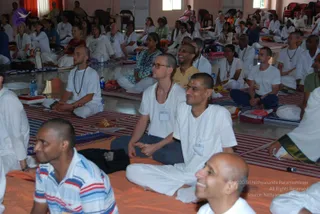
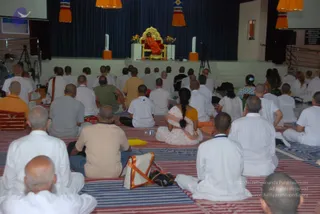
Photograph of a group meditating seated cross-legged on a striped red and blue rug in a hall with gilded decorations. In the foreground a bald man in a white t-shirt and grey trousers sits with eyes closed and hands resting on his knees, a rudraksha mala around his neck and a name badge on his shirt. Behind him a man in a green t-shirt sits with hands joined, and several men in white clothing sit in meditation. An orange cloth and books lie at the lower left.A seated audience in white clothes sits on floor mats in a hall facing a raised stage. A saffron-robed figure sits on a central elevated seat, flanked by a man in a white shirt at the left edge who appears to be speaking into a microphone. Rows of attendees in white garments fill the foreground, many with their backs to the camera. A video camera on a tripod is visible at the right, and a few audience members are seated in chairs along the right side. The setting suggests a discourse or satsang session.

Temple
86 photosSource gallery
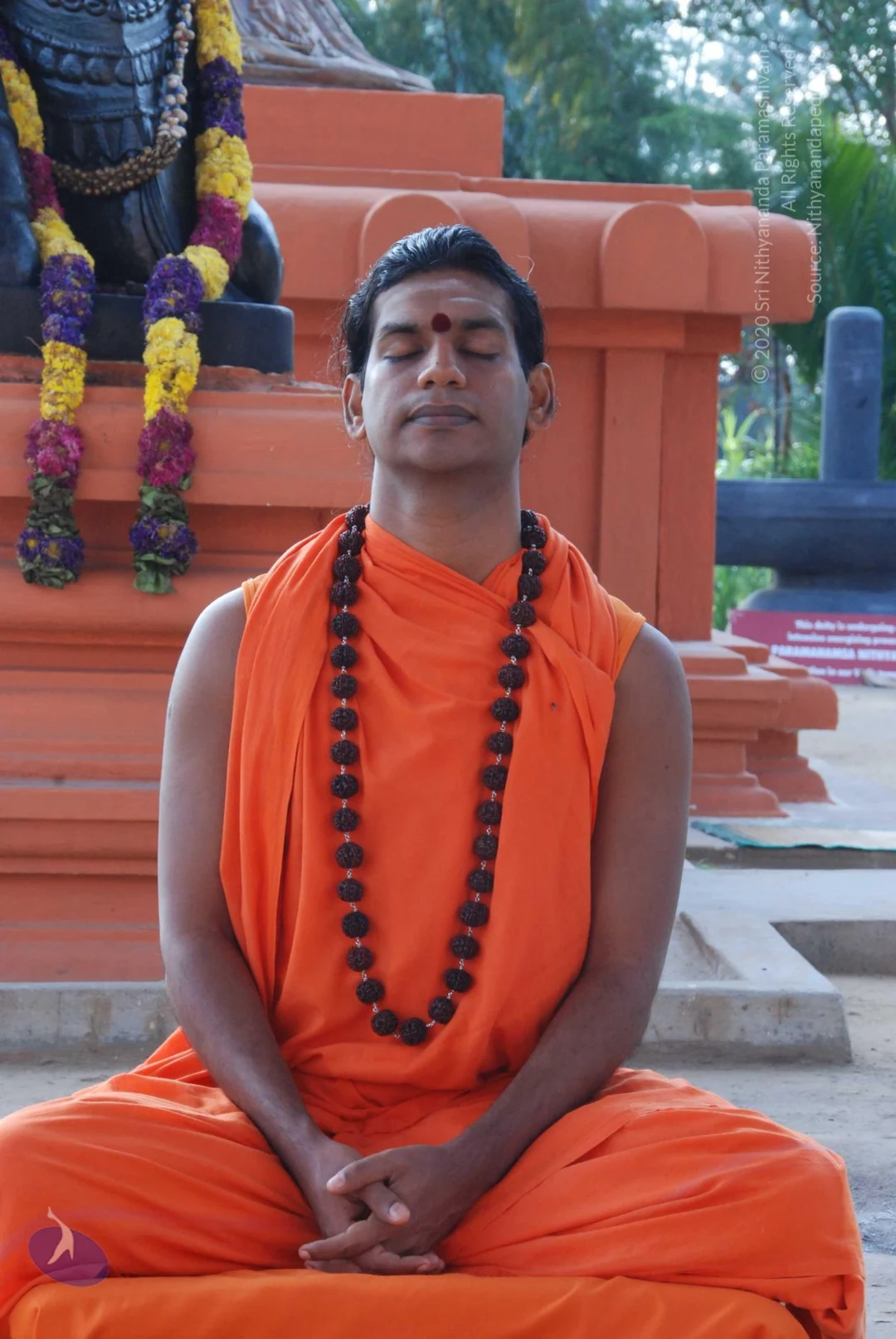
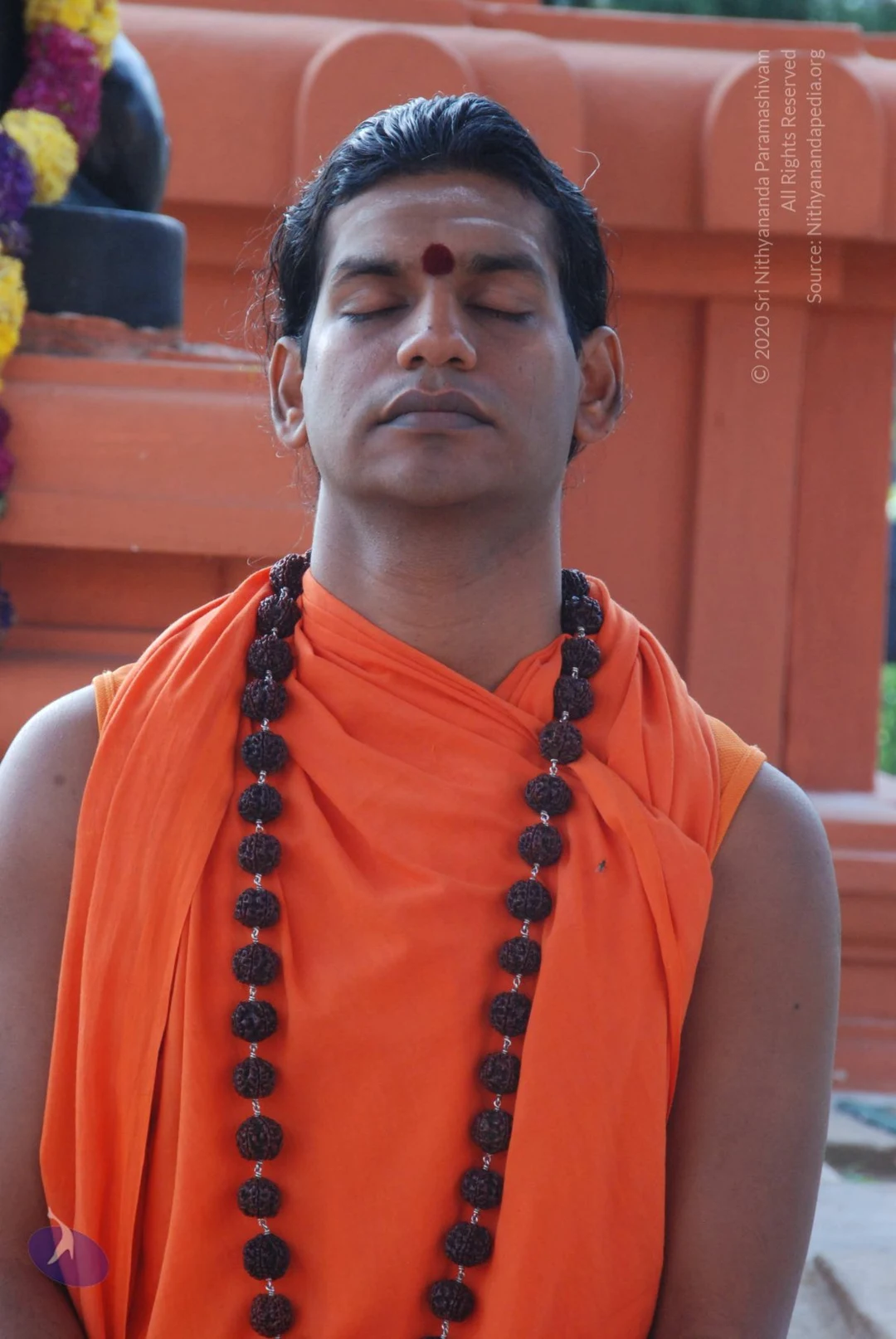
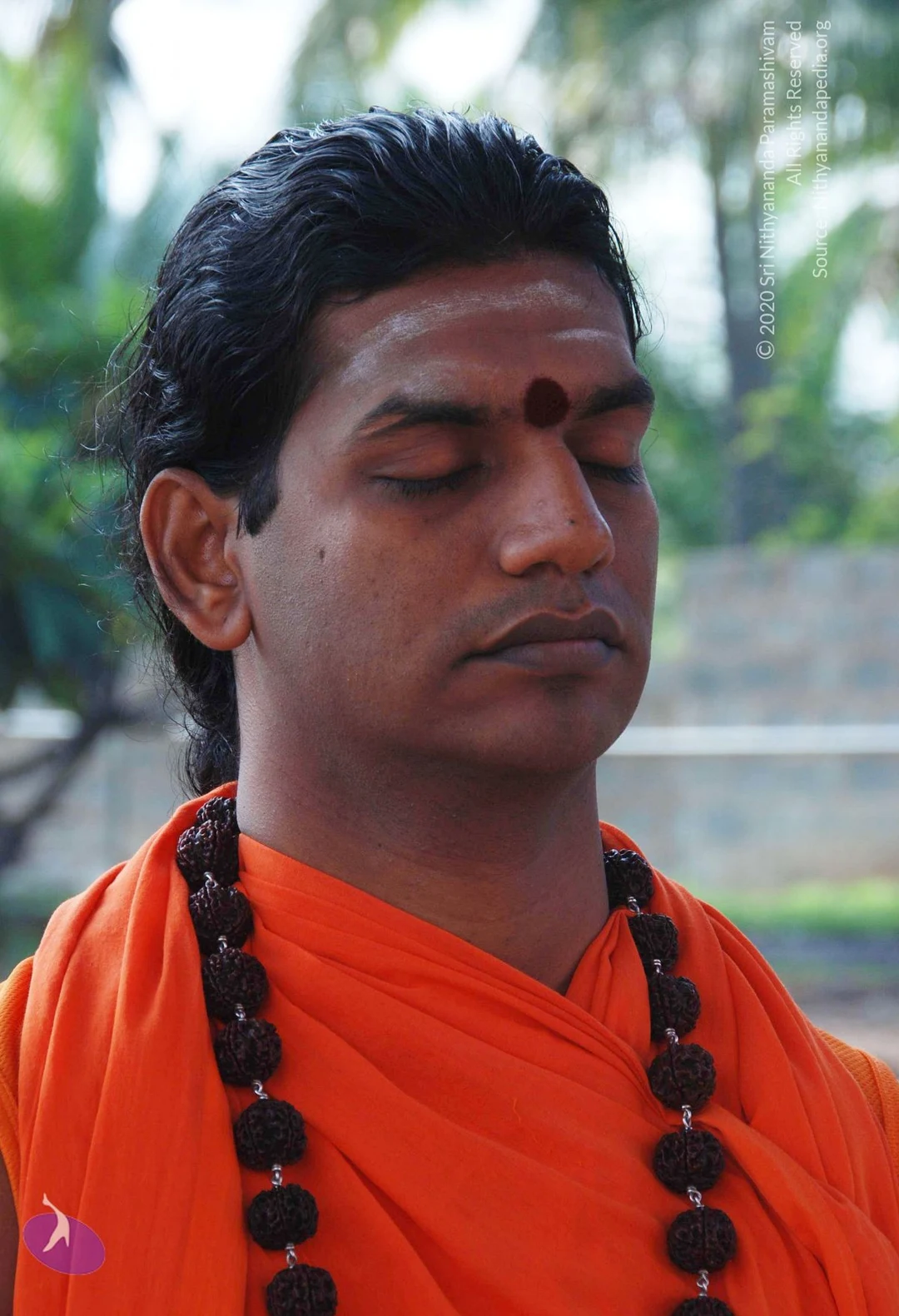
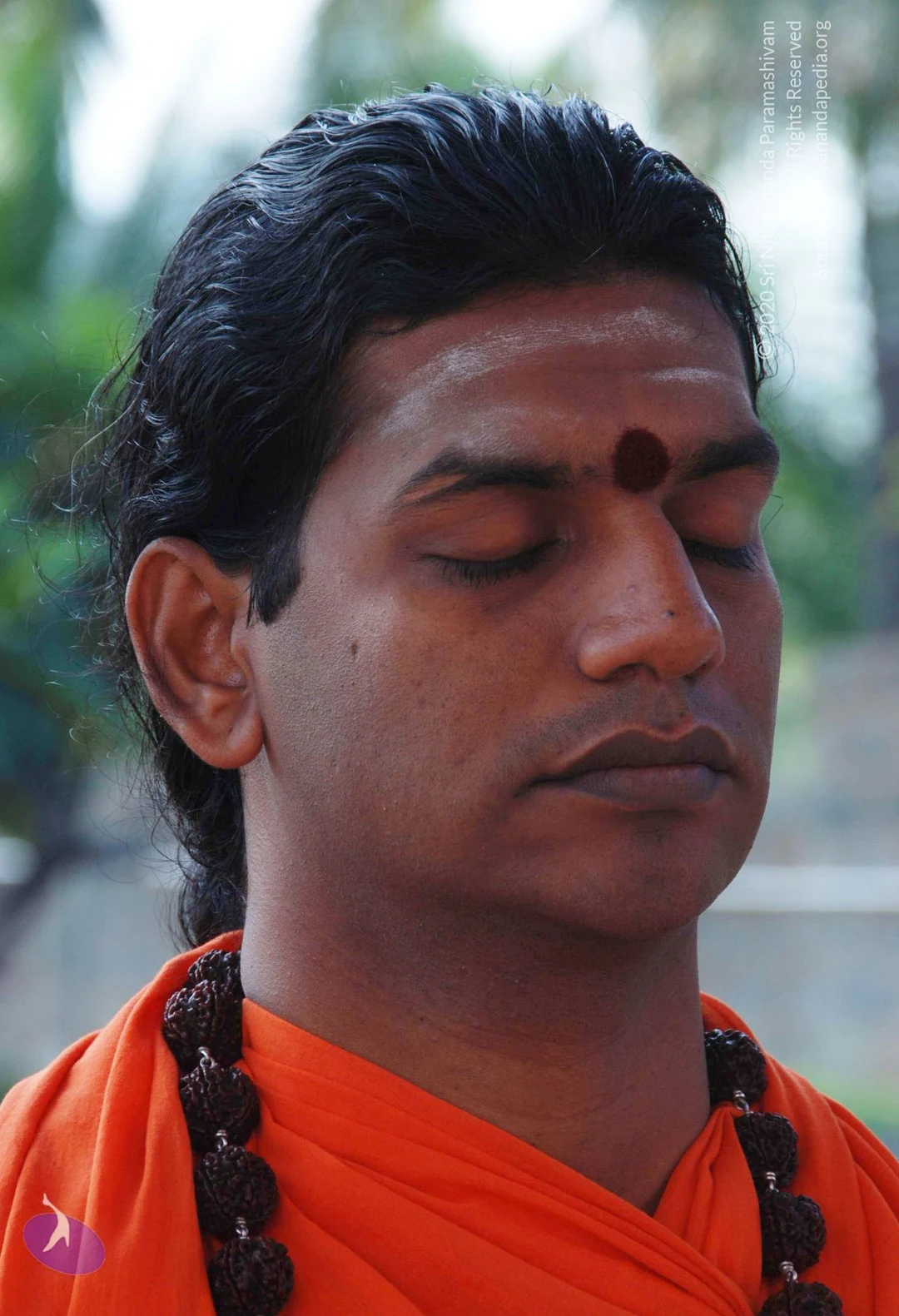
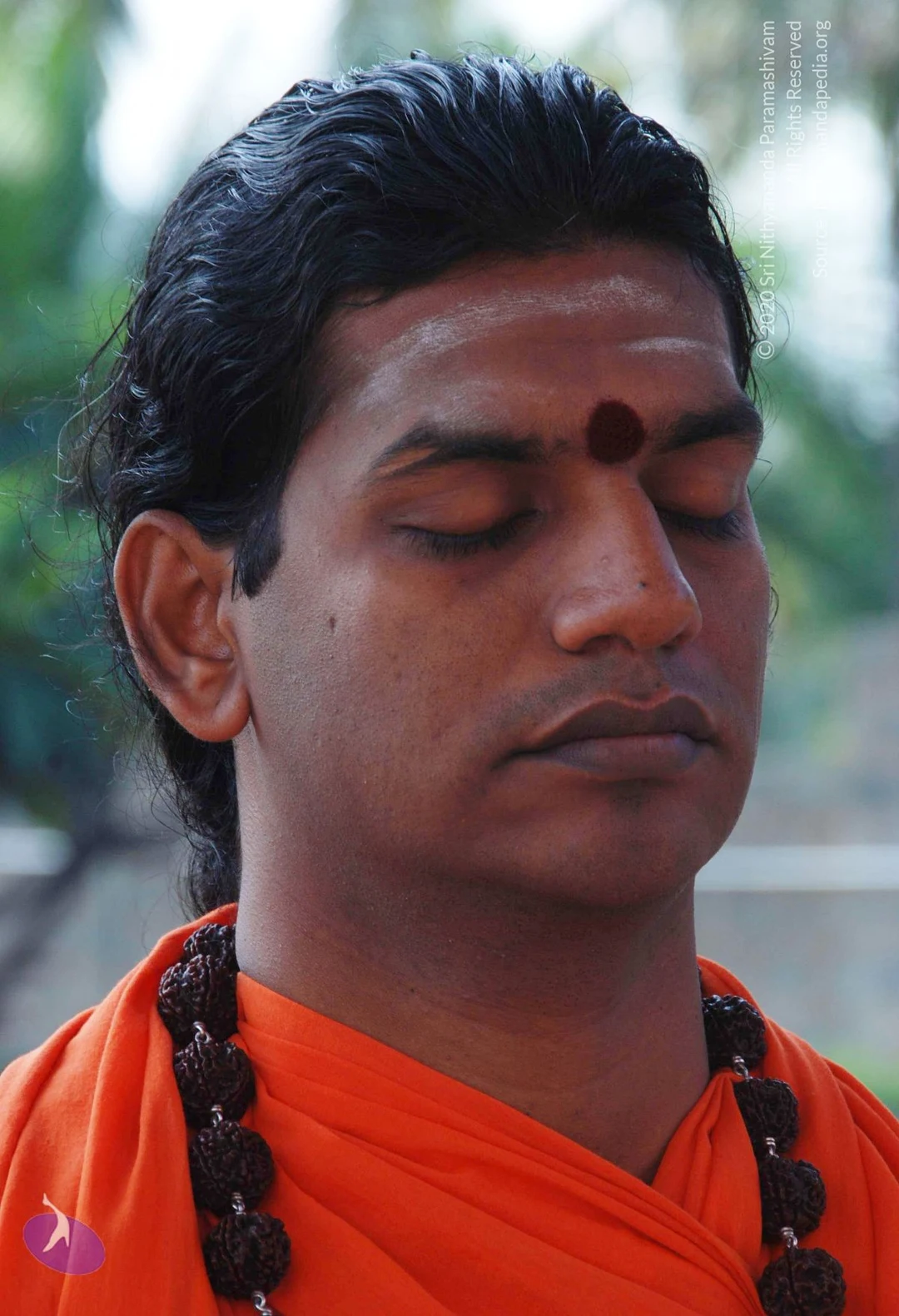
A man sits cross-legged in meditation on a woven mat outdoors, eyes closed and hands resting in his lap. He wears a sleeveless orange saffron robe and a long rudraksha mala, with a red bindi on his forehead and dark hair swept back. Behind him stands a dark stone deity statue draped with yellow and purple flower garlands, set on an orange-red temple plinth with palm trees beyond. A black stone shivalinga stands to the right near a red sign with white lettering. This is a meditation scene in an ashram setting.A man in orange sannyasi robes sits cross-legged in meditation on a woven mat outdoors, eyes closed, hands resting in his lap. He wears a dark rudraksha mala around his neck and a red bindi on his forehead. Behind him stands a dark stone statue of a seated deity draped with a garland of yellow, purple and pink flowers, set on an orange-red plinth. To the right, a black stone shivalinga sits on a pedestal beside a red sign, with palm trees in the background.A man sits cross-legged on a woven mat outdoors with eyes closed and hands folded in his lap, in meditation. He wears a sleeveless saffron-orange robe, a dark rudraksha mala hanging to his chest, and a red tilak dot on his forehead. Behind him stands a black stone Nandi bull statue draped with yellow and purple marigold garlands, on an orange-painted plinth. Palm trees and a dark stone lingam stand in the background, and a brass kalasha sits at the left edge. A red sign reads Paramahamsa Nithyananda.A man sits cross-legged in meditation with eyes closed and hands clasped in his lap, wearing an orange saffron robe draped over his shoulders and a long dark rudraksha mala around his neck. A red bindi marks his forehead. Behind him stand an orange stone plinth and a dark stone deity murti draped with yellow and purple marigold garlands. A sign with partly legible text is visible at the right edge. The setting appears to be an outdoor temple courtyard. Appearance cues include the rudraksha mala and saffron clothing, but the page does not indicate a person is present, so identity is uncertain.Close photo of a man in orange saffron robes wrapped over the shoulders, eyes closed in meditation, with a red bindi on his forehead and a long dark rudraksha mala hanging to his chest. Behind him is an orange-red stone structure, and at the upper left edge are yellow, purple and pink flower garlands. The man is seated or standing alone, serene and still. The appearance matches the page's a person reference only loosely, so identity is uncertain.Close-up photograph of a man with eyes closed in meditation, wearing an orange saffron shawl draped over the shoulders and a long rudraksha mala of dark seeds around the neck. He has a red bindi or tilak on the forehead and dark hair swept back. Behind him is an orange-coloured temple wall with a dark stone structure and yellow and magenta flower garlands at the upper left. Appearance-based label: a person, seated in meditation with rudraksha mala and saffron clothing.
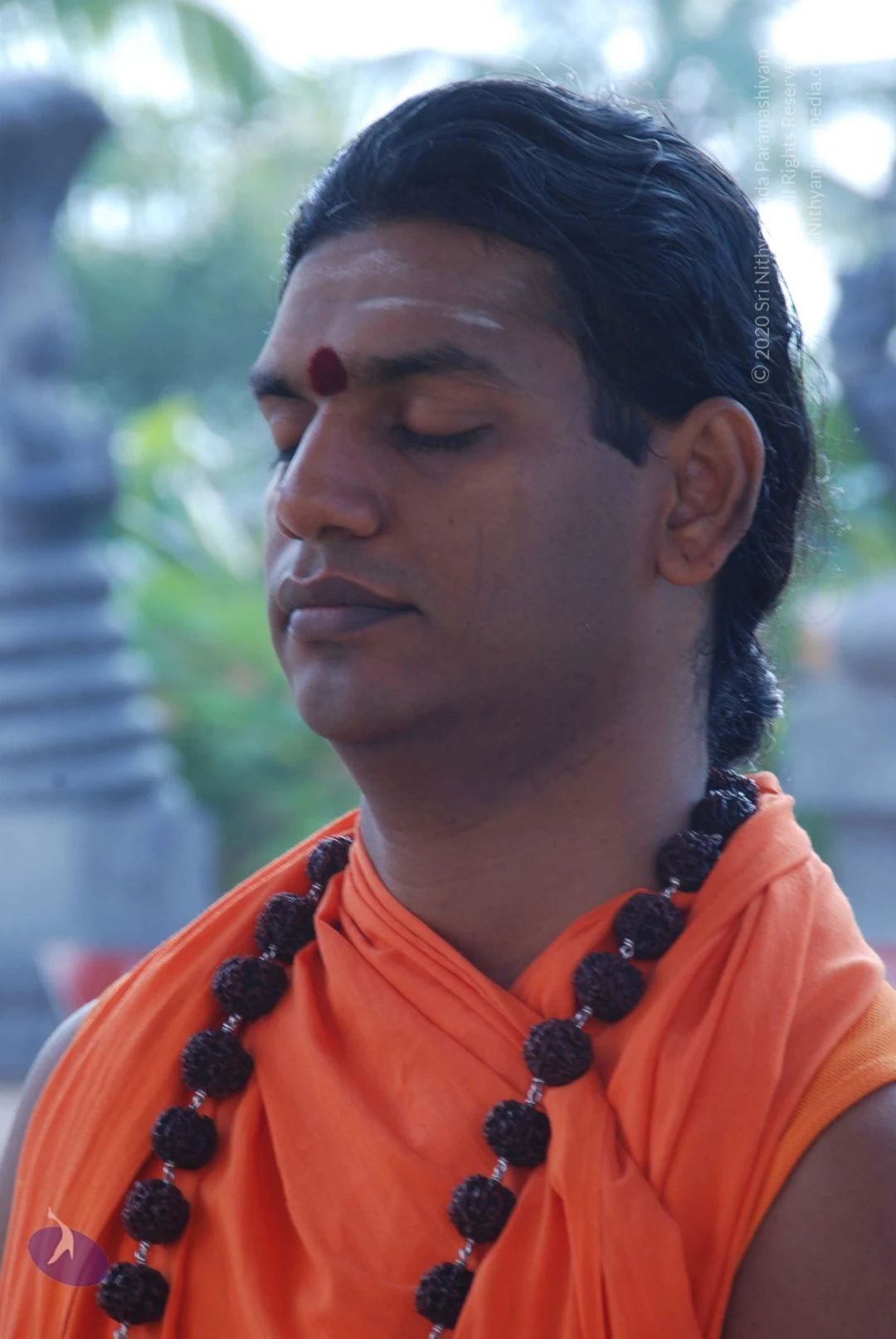
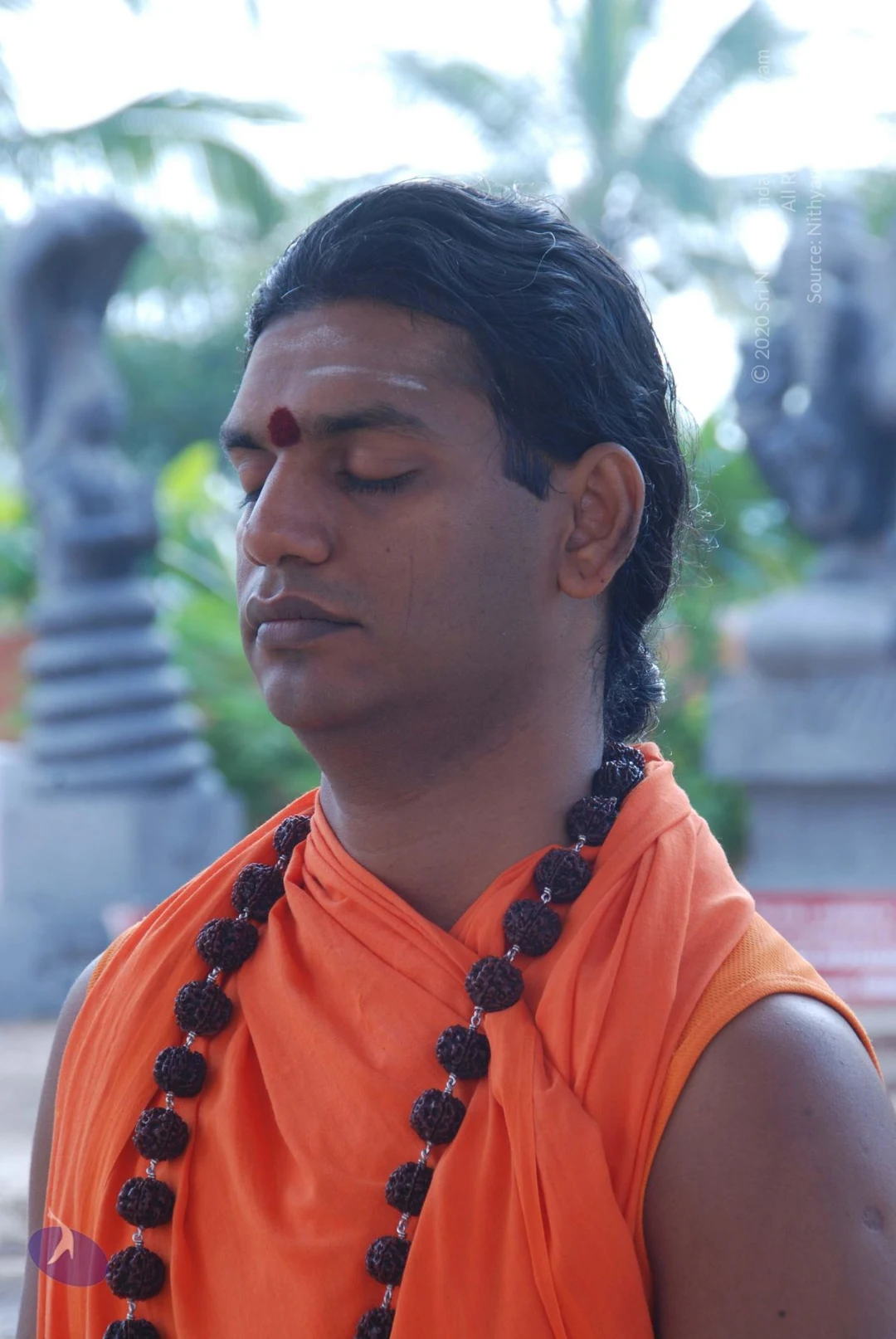
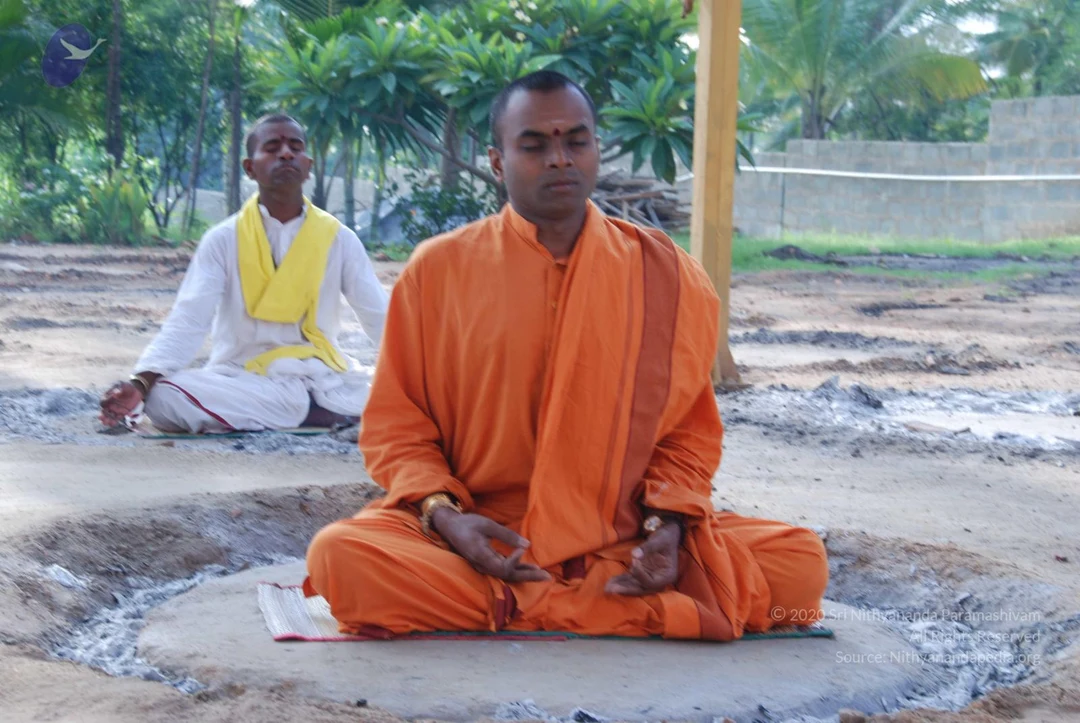
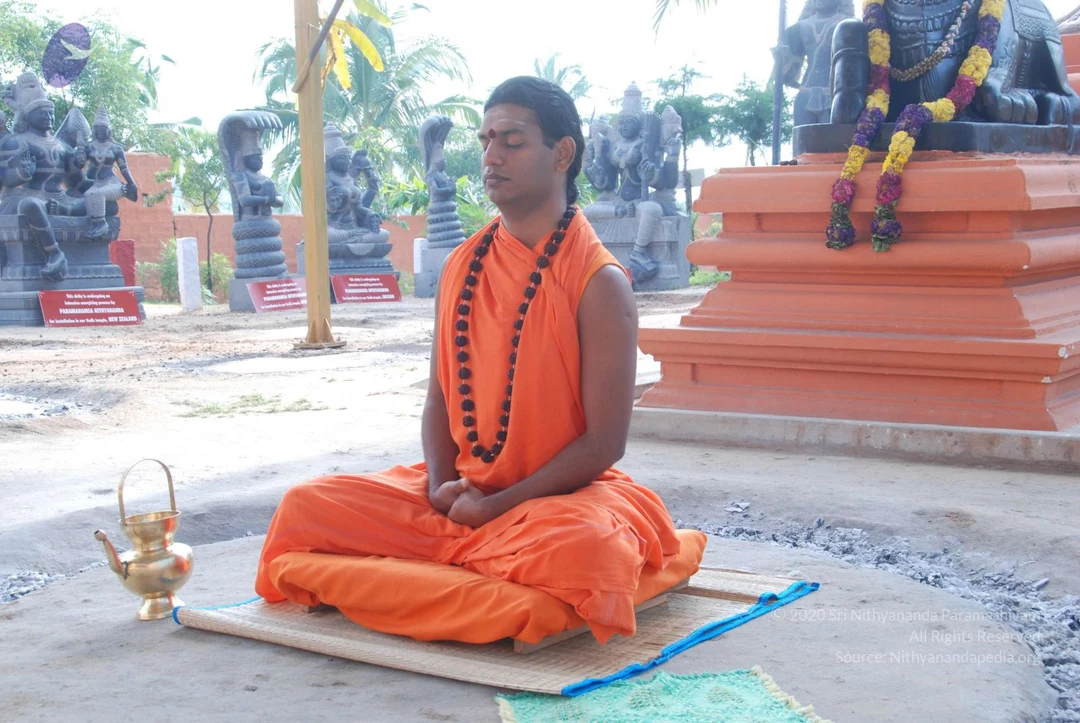
Pada-Puja
115 photosSource gallery
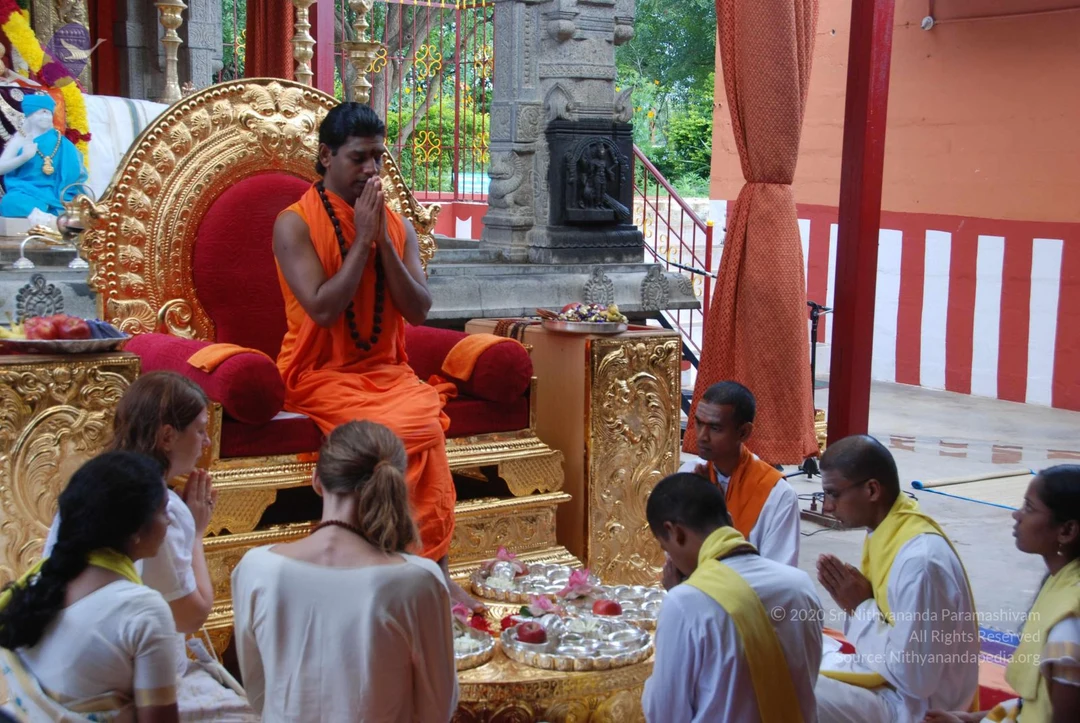
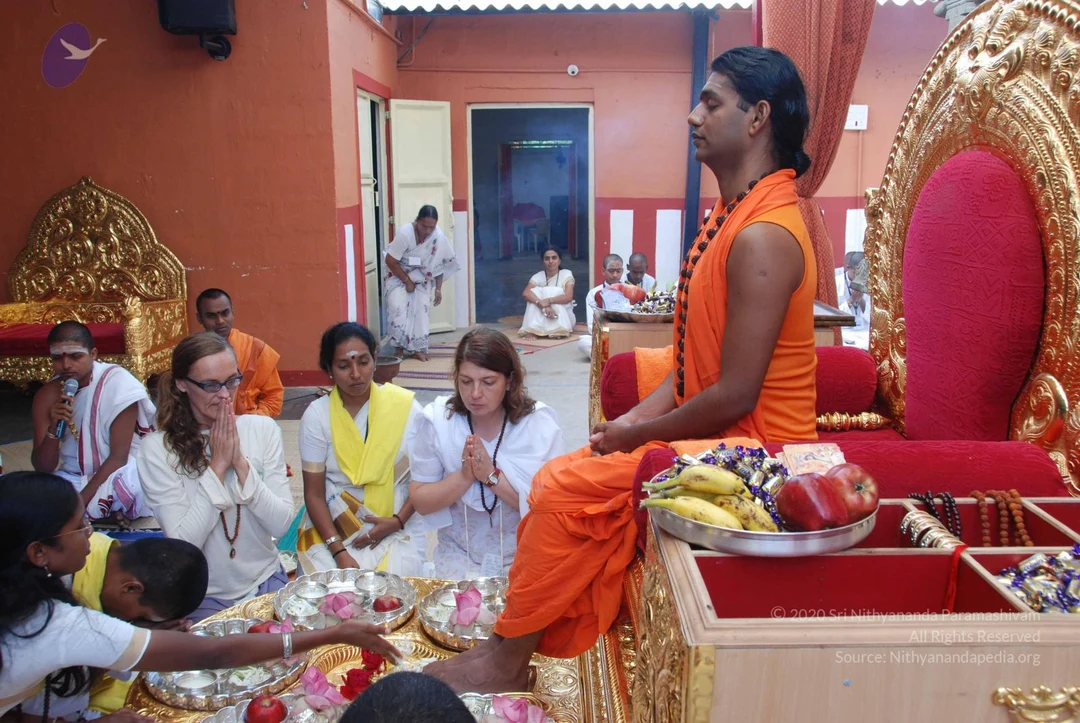
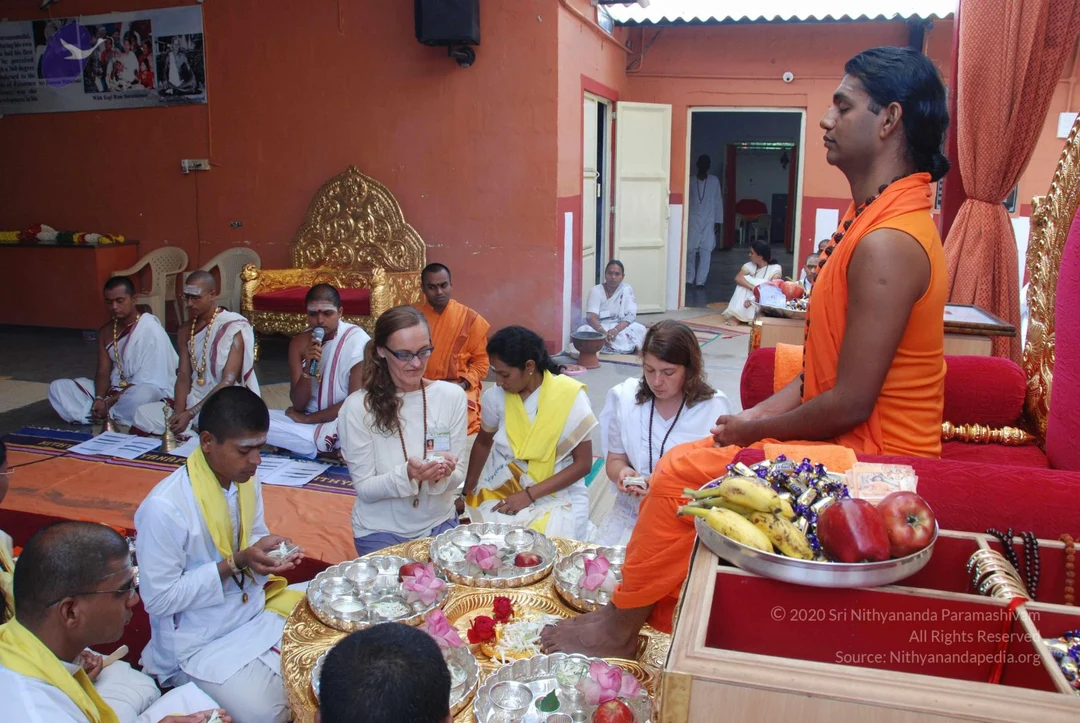
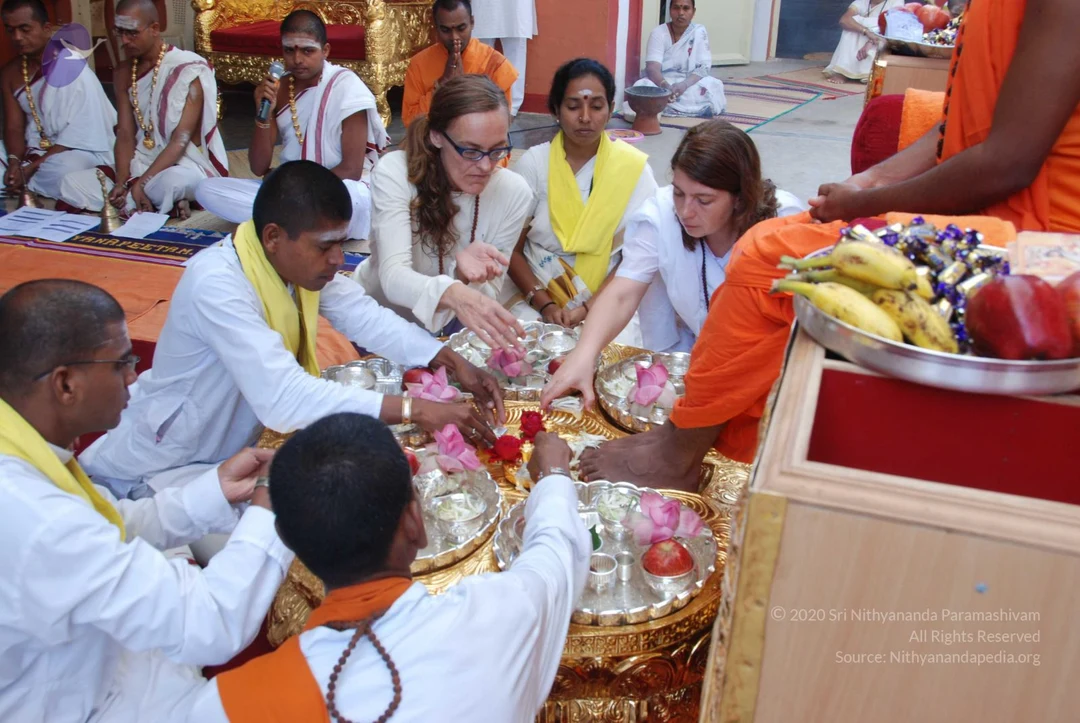
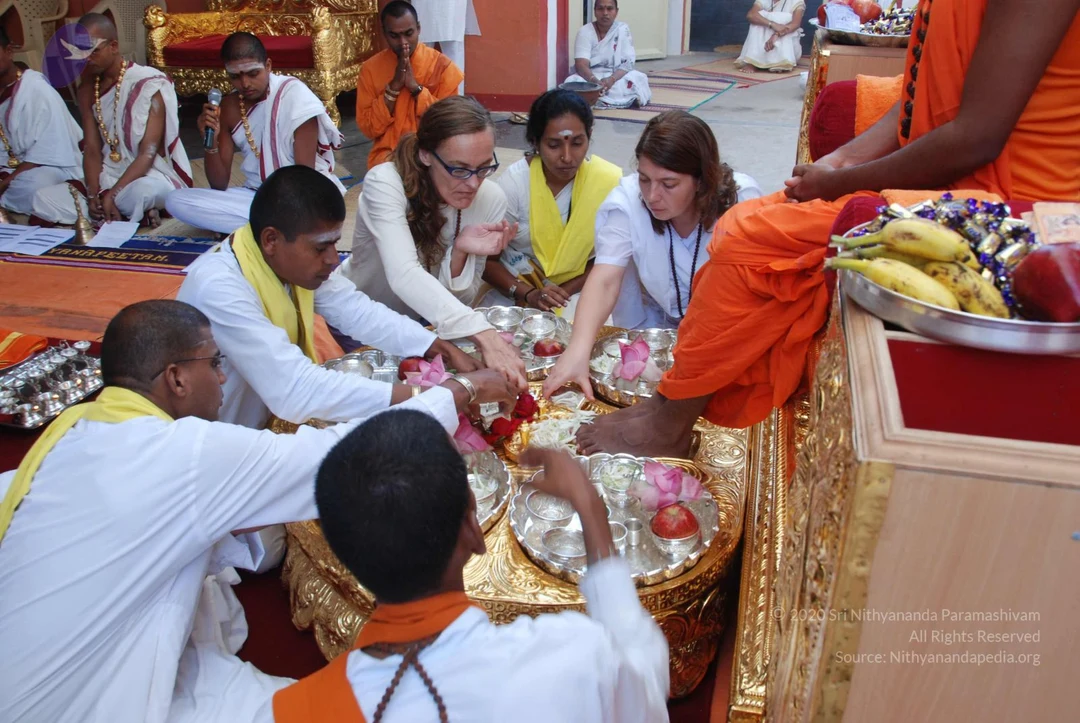
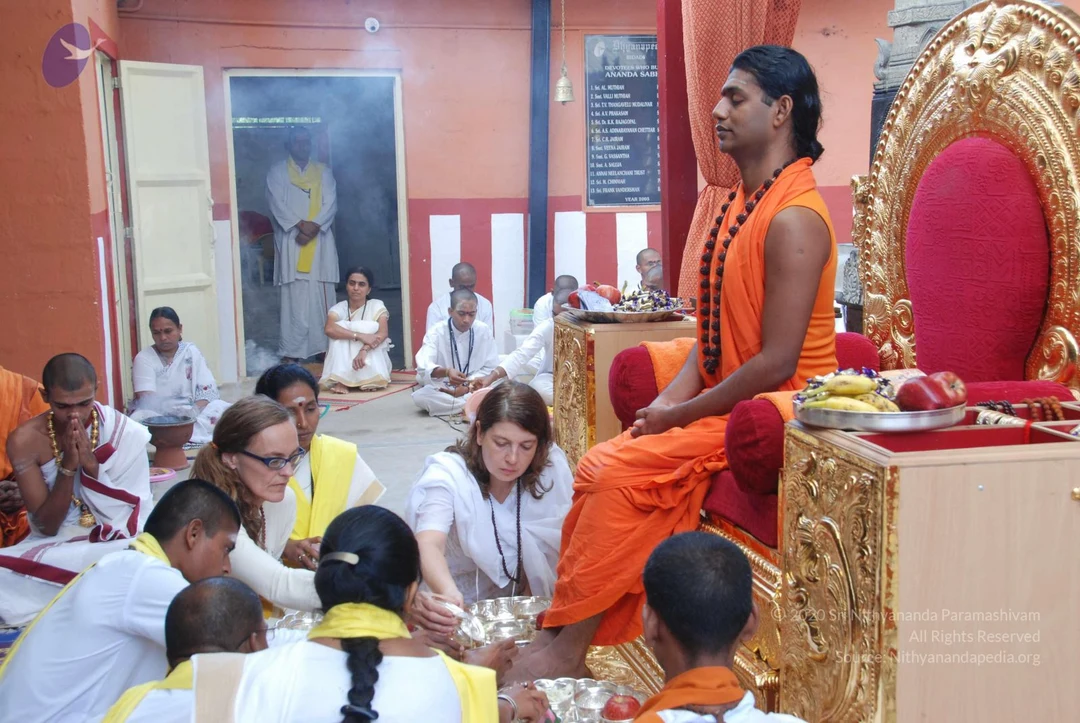
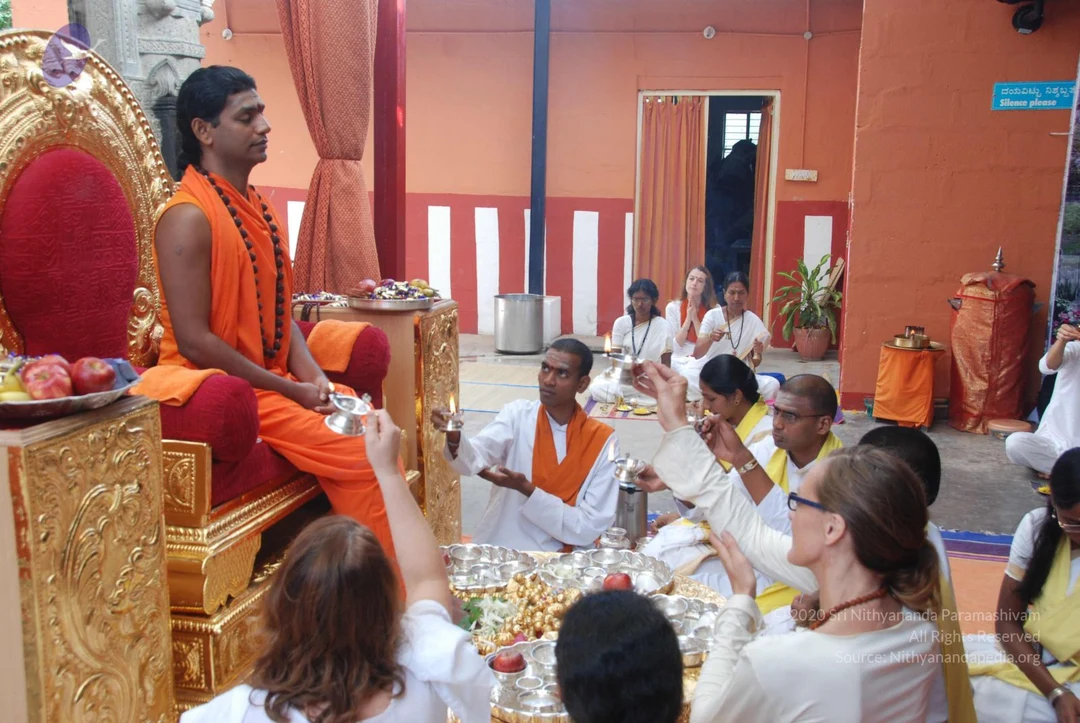
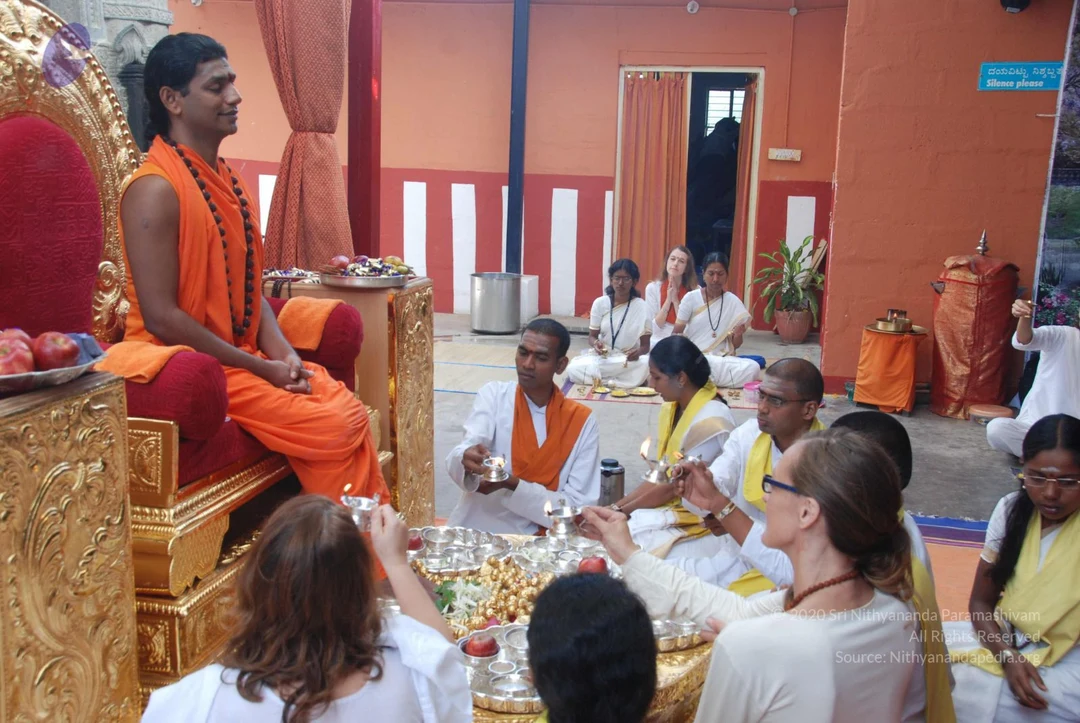
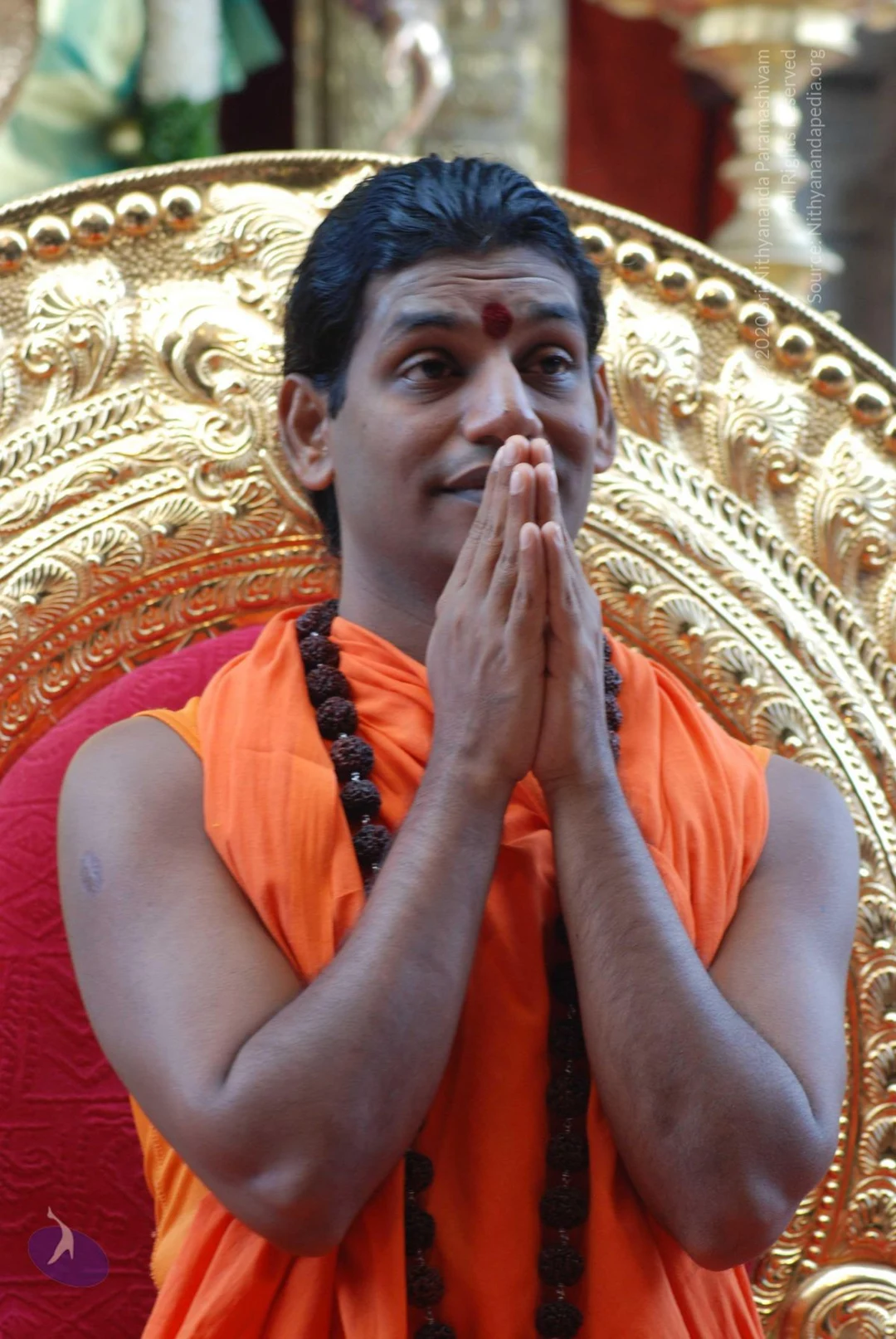
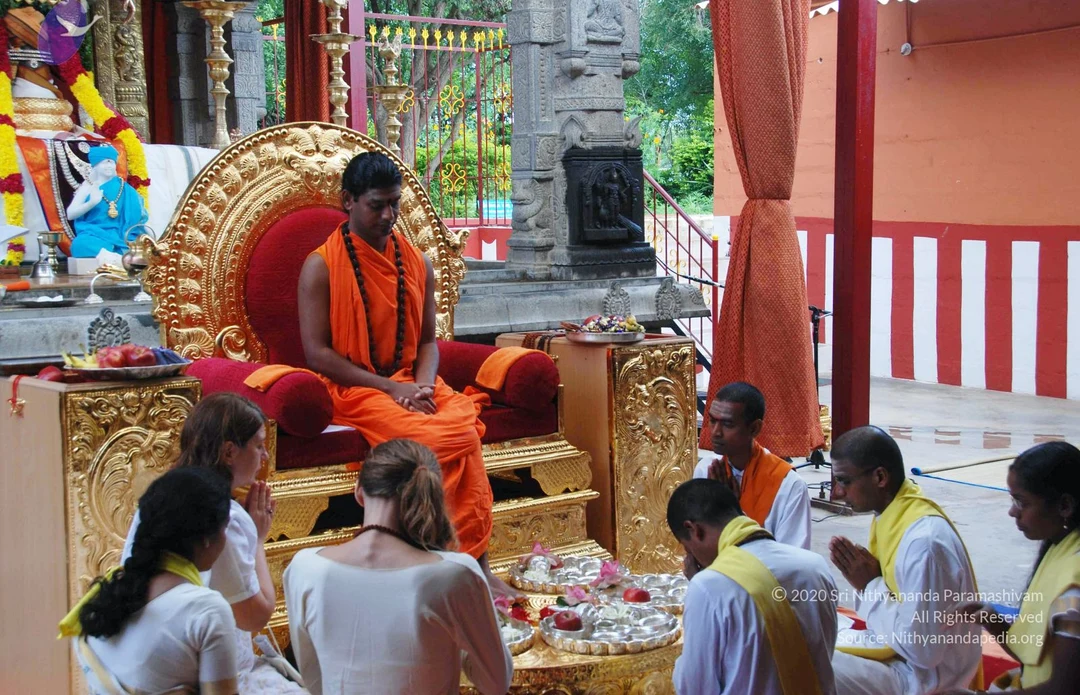
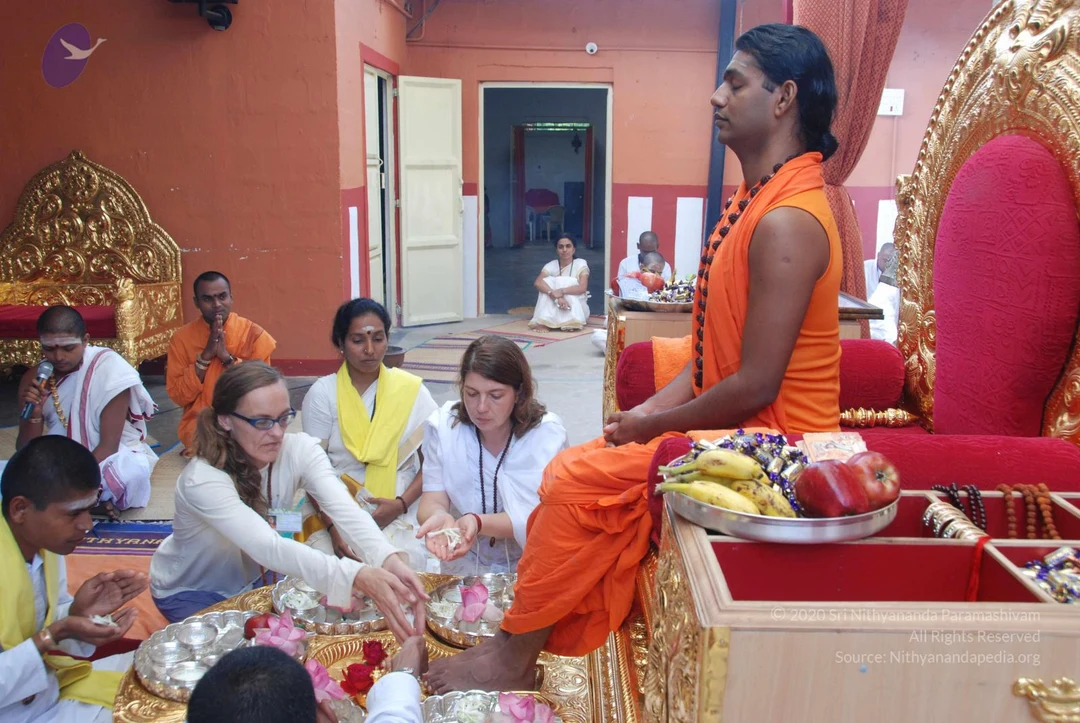
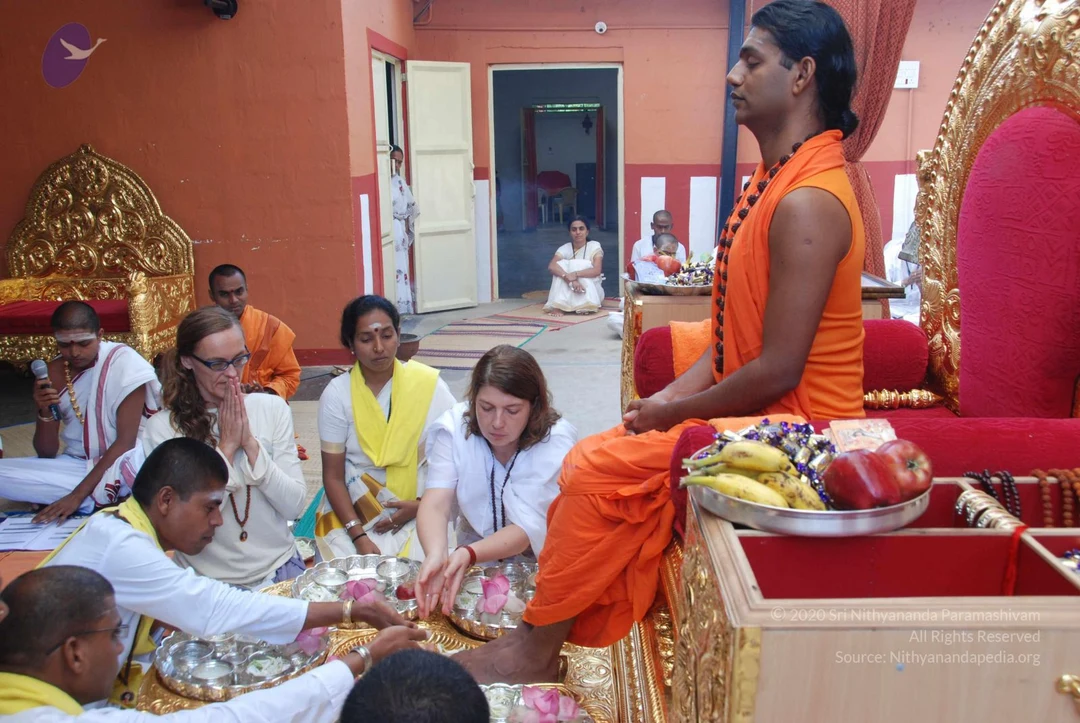
A seated man in an orange saffron robe and a rudraksha mala sits on an ornate gold-and-red throne with eyes lowered and hands joined in prayer, before a small blue deity figure garlanded with marigolds. Silver trays of fruit, flowers and offerings sit at the base of the throne. Around him, devotees in white clothing with yellow shawls kneel and sit with hands folded in namaskar, while a woman in a grey top and another in a white top also join in prayer. A red-and-white striped pillar and a stone carved shrine are behind them, with a stone temple structure beyond. The setting appears to be a temple courtyard with a stone shrine and garlanded altar.A man in saffron-orange robes with a dark rudraksha mala sits with palms pressed together in namaste on an ornate gold and red throne, in front of a temple with red-and-white striped walls and a carved stone shrine. Seated on the floor before him are several devotees: a woman in white with a long braid, another woman in white with hands folded, a woman in white with hair pulled back, and men and women in white clothes with yellow shawls. Silver trays of offerings with fruit, sweets and pink flowers sit on a gold stand in front, and a blue deity murti decorated with garlands stands at the upper left.A seated man in orange saffron robes and a rudraksha mala sits on an ornate gilded throne with red cushions, hands folded in his lap and eyes closed, in a temple sanctum. Behind him, gilded metal deity murti of a male and female pair wear garlands of yellow and red flowers, with a small blue-clad figurine in a niche and tall brass oil lamps on either side. A devotee in a yellow top sits in the foreground and another figure is at the lower edge.A seated man in an orange saffron robe and a rudraksha mala sits on an ornate gold throne with red cushions inside a stone temple shrine. Behind him stands a shrine with a large deity pair, one figure with a trident and orange headdress, bordered by garlands of red, yellow and green flowers and tall brass lamps. Around the throne, devotees in white and yellow sashes sit with folded hands, and silver trays of offerings with flowers sit at the base. The scene resembles a formal satsang or puja with the teacher seated on a raised throne.A seated man in saffron-orange robes and a rudraksha mala sits eyes-closed on an ornate gold throne with red cushions, hands joined in his lap, inside a gold-arched temple shrine. Behind him stands a large deity murti of Shiva and Parvati, adorned with garlands of red, yellow and green flowers, with a golden arch framing them. Brass oil lamps (deepa stands) flank the shrine and silver plates of offerings sit before the throne. Devotees in white and yellow sit on the floor, some with hands pressed in prayer, while a man in white with a yellow shawl sits in front. The scene resembles a darshan or satsang with the seated figure as the focus.A seated man in saffron-orange sannyasi robes and a rudraksha mala sits with eyes closed and hands folded on a richly carved gold throne with red cushions. Behind him, a figure in red and white garments wears a crown and gold ornaments and is garlanded with yellow and red flowers, with gilded lamp stands and a blue deity figure visible to the right. In the foreground, a person in white with a yellow shawl kneels with back to the camera before silver trays holding flowers and offerings. The setting suggests a temple-style ritual honoring the seated figure. Appearance-based candidate on the throne: sannyasi robes, rudraksha mala and a crown-like setting; identity uncertain.
Morning-Satsang
94 photosSource gallery
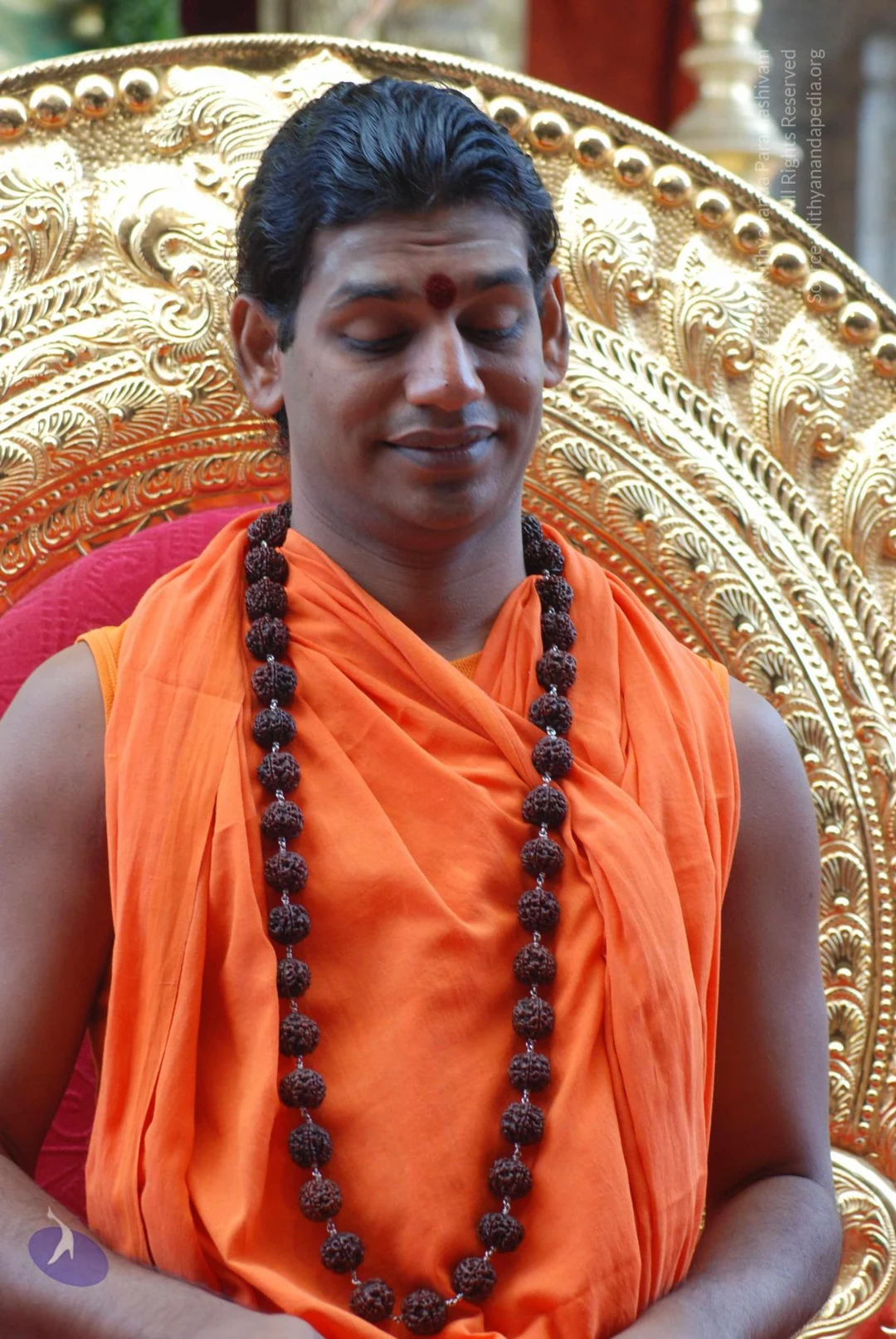
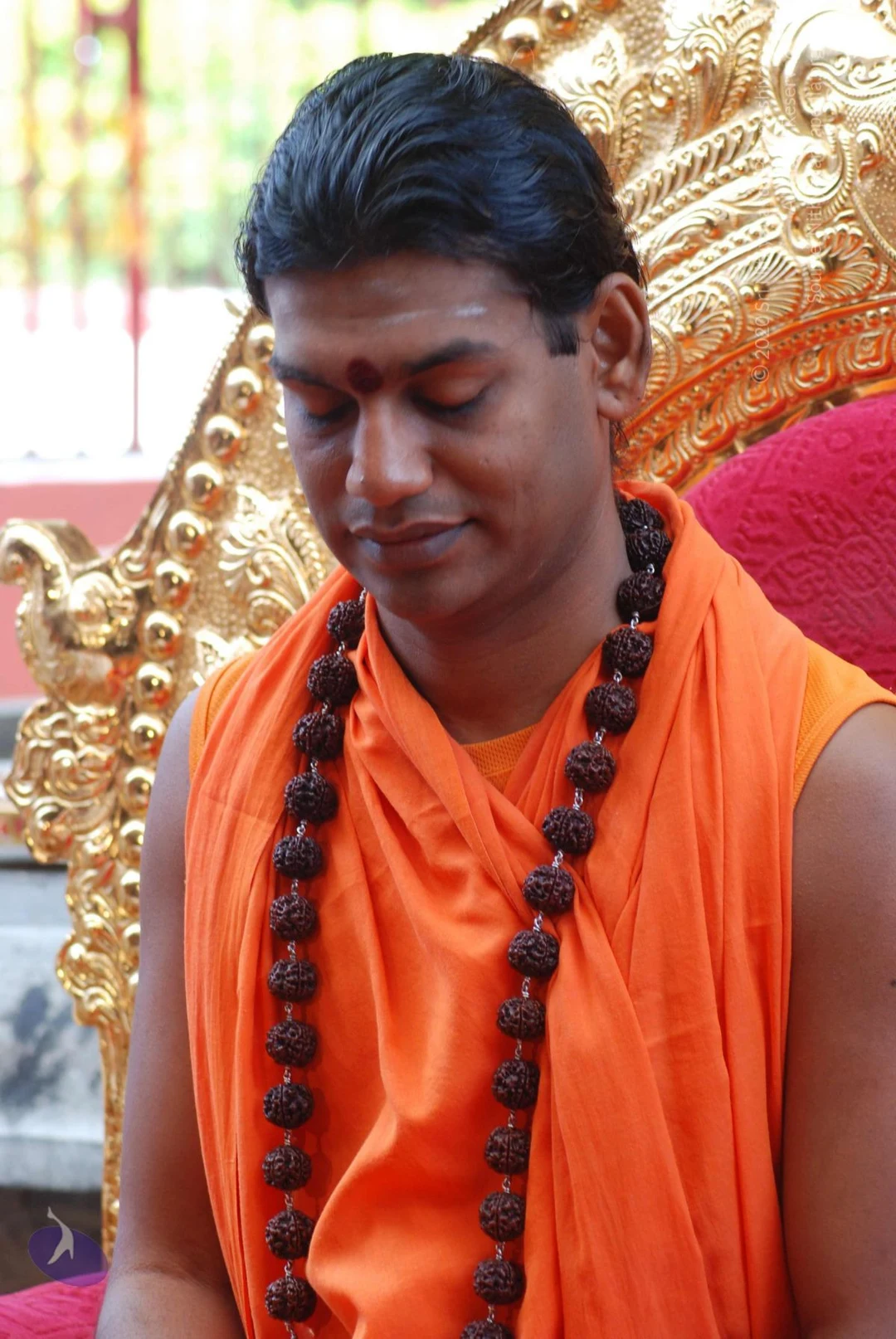
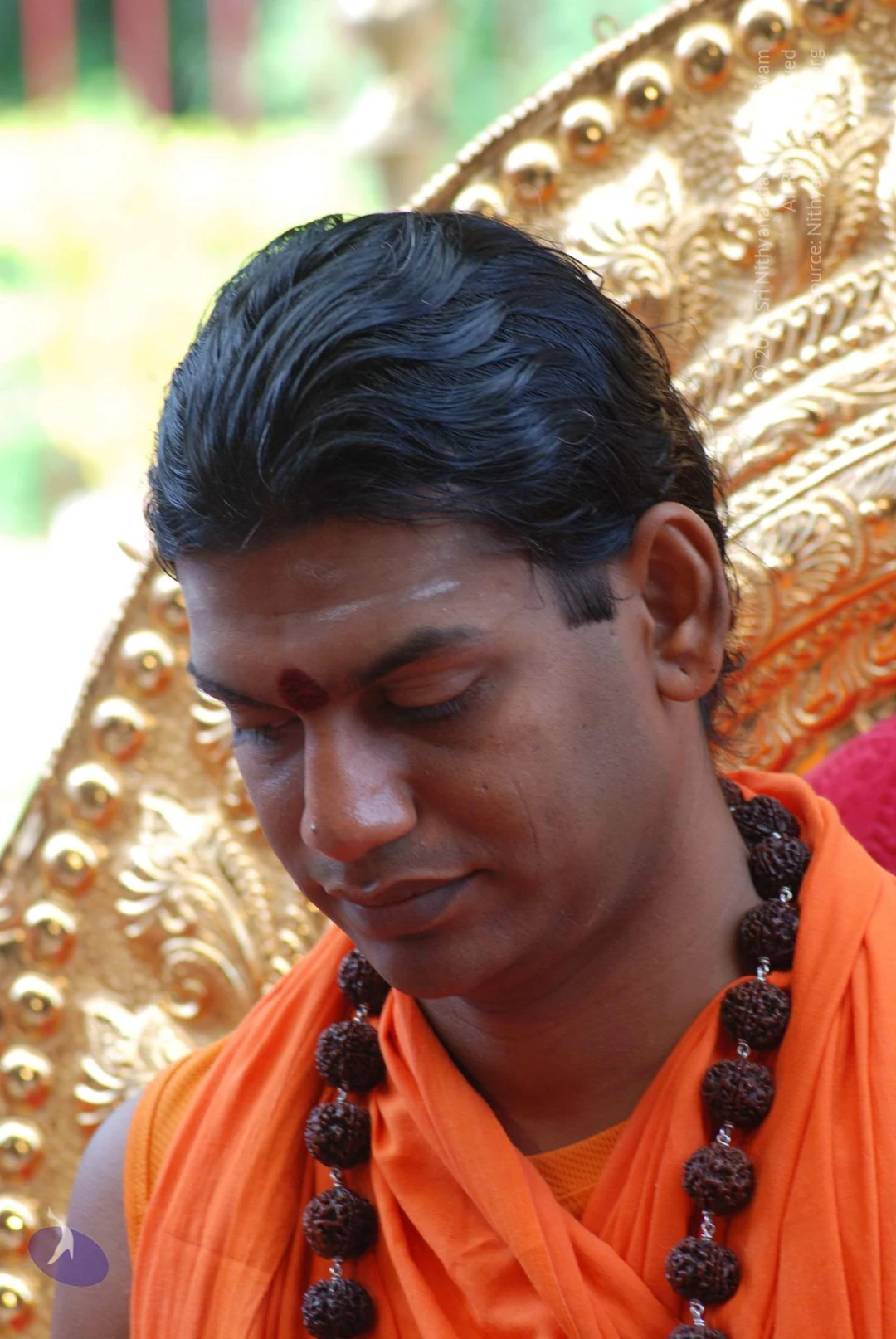
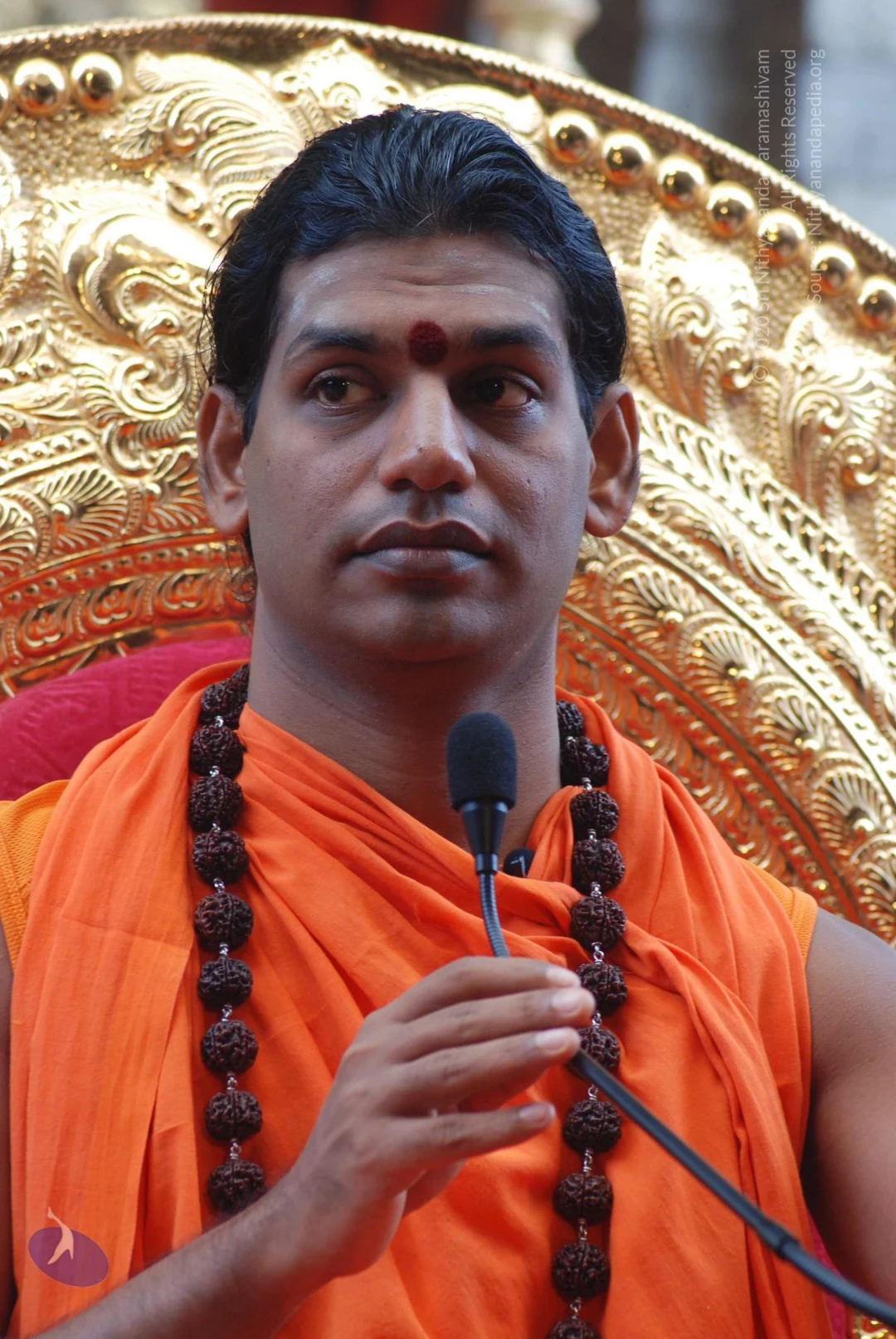
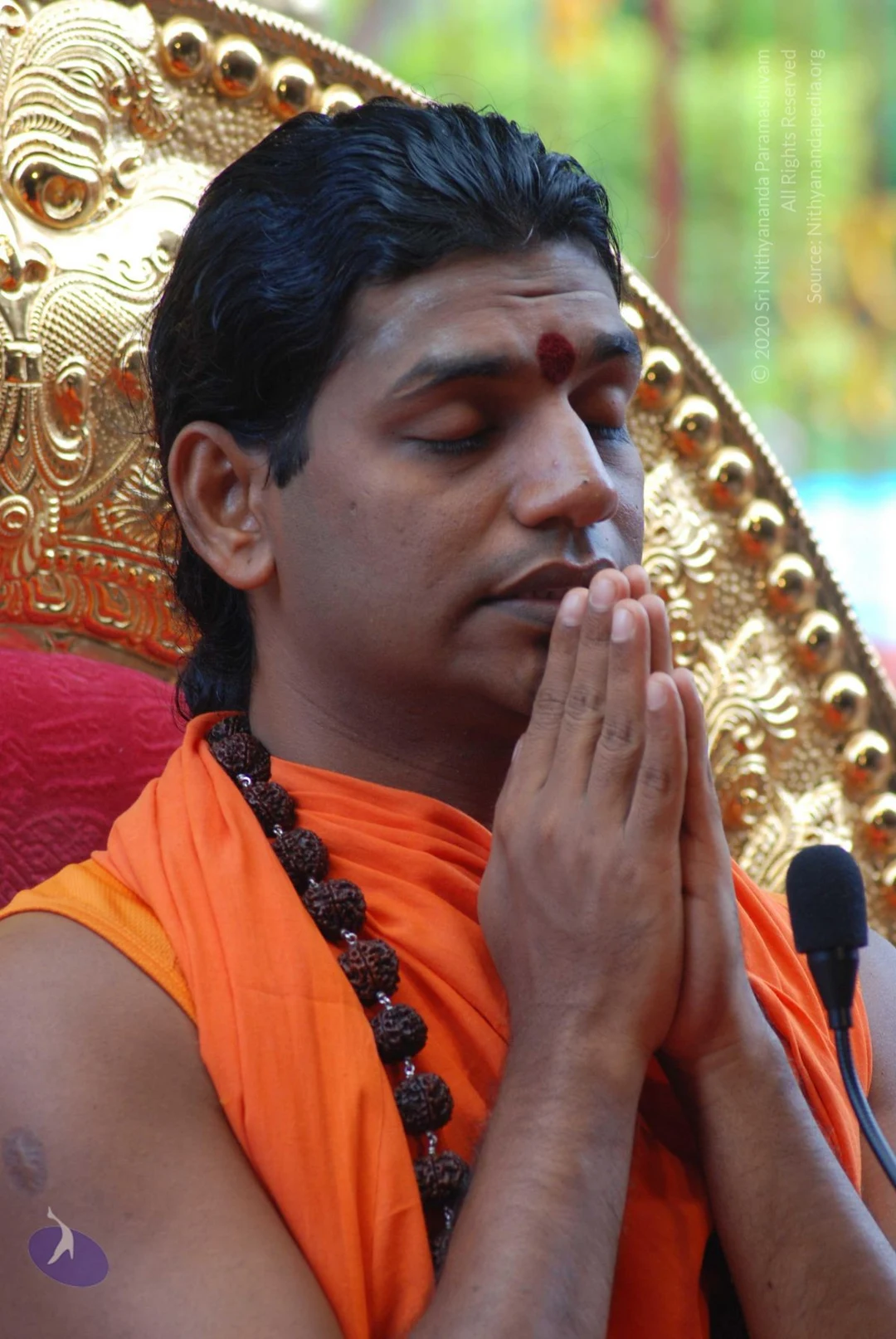
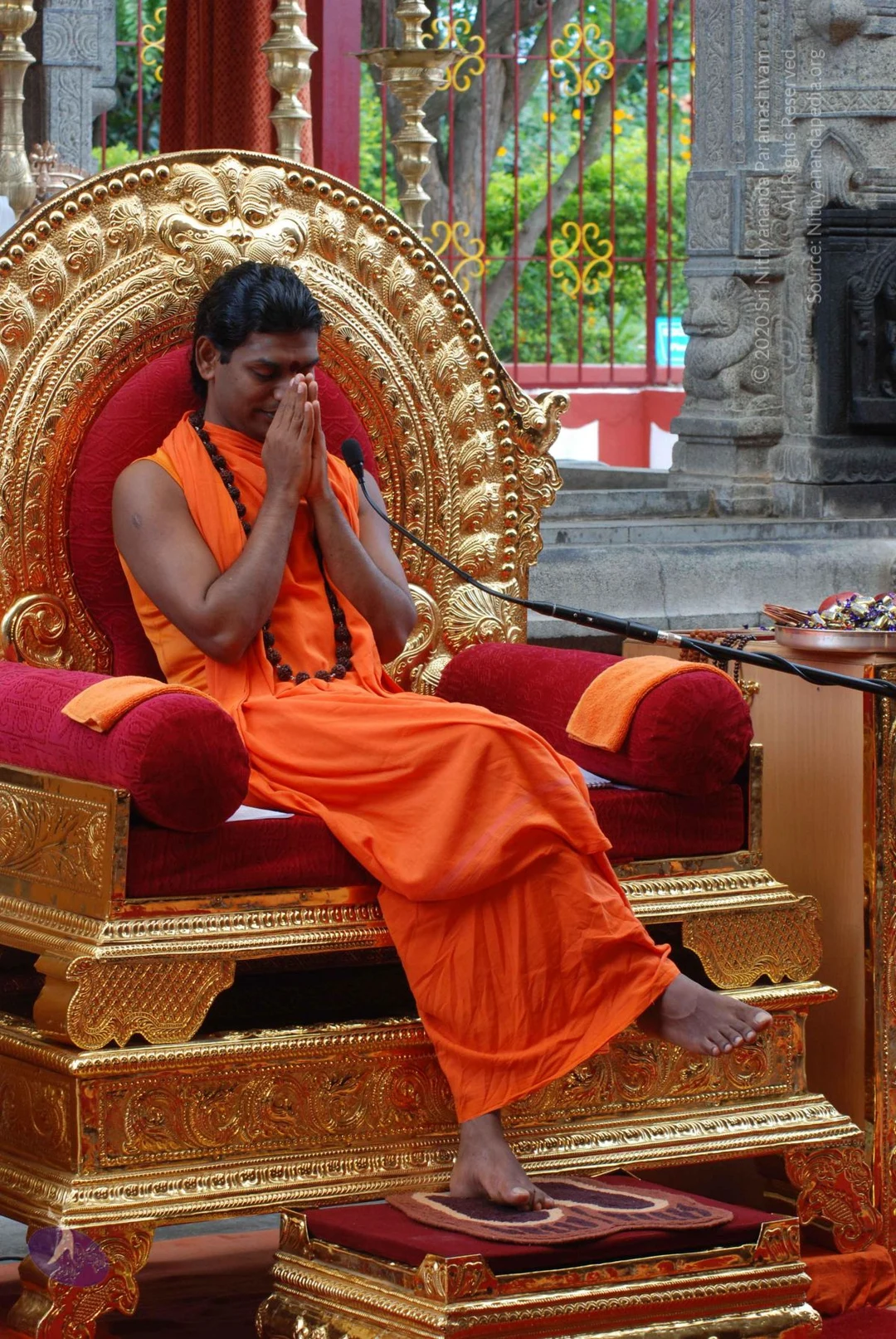
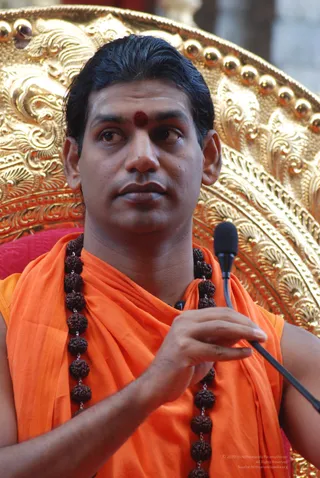
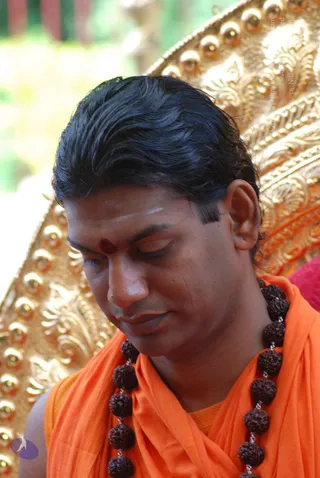
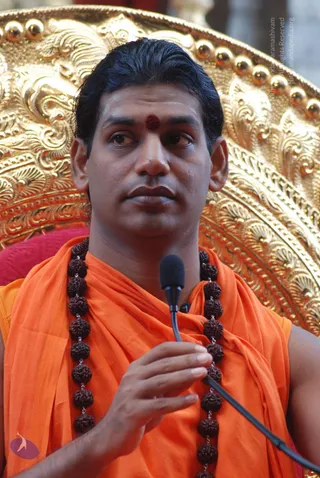
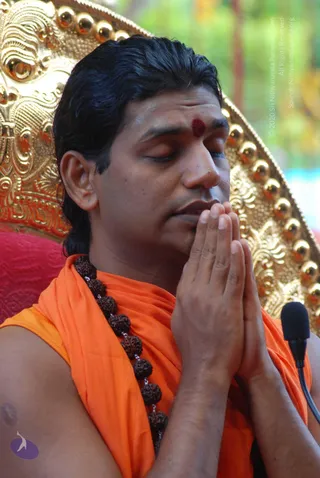
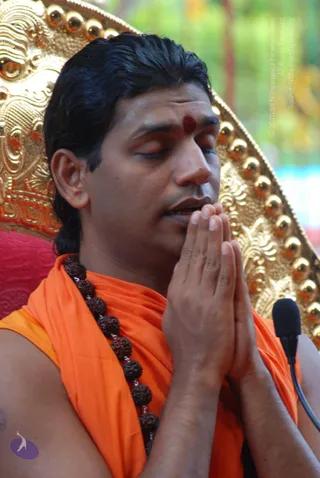
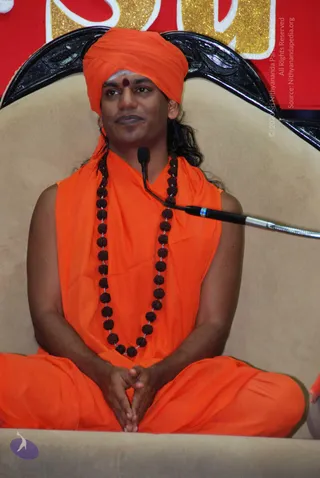
A smiling man with swept-back dark hair and a red kumkum dot on his forehead sits in front of an ornate gold throne with repoussé floral carving and round knobs. He wears a sleeveless saffron-orange garment wrapped over his shoulder and a long strand of dark brown rudraksha beads reaching his chest. A pink cushion appears at the right edge, and a blurred pink-and-red background is behind him.A man seated with eyes lowered, wearing an orange saffron shawl over orange clothing and a long dark rudraksha mala draped across the chest. He has swept-back dark hair, a red bindi and a white tilak on the forehead. Behind him is an ornate gold-carved throne with a red cushion.Close photo of a man with swept-back dark hair, a red bindi and white forehead marks, wearing an orange saffron shawl and a long rudraksha mala of dark brown beads. His eyes are lowered and he looks down with a calm expression. Behind him is an ornate gold throne-like chair with raised bead-and-leaf carving.Close photograph of a man seated before an ornate gold-carved throne-back with round gold finials. He wears an orange saffron shawl draped over the shoulders and a long strand of dark rudraksha beads. A red kumkum mark is on his forehead, and his hair is swept back. He holds a black microphone in one hand, speaking to an audience.A man with swept-back dark hair sits with eyes closed and palms pressed together in namaste before his chest. He wears an orange saffron wrap and a long rudraksha mala, and has a red kumkum mark on his forehead. Behind him is an ornate gold chair with rounded studs and a red cushion, and a black microphone stands at the right edge. The background is softly blurred green foliage.Close-up photograph of a man with swept-back dark hair and eyes closed, seated with palms pressed together in namaste before a microphone. He wears a saffron-orange sleeveless wrap over one shoulder, a red kumkum mark on his forehead and a dark rudraksha mala around his neck. Behind him is an ornate gold-embossed chair with rounded studs, and a green blurred background. Appearance-based cues including swept-back hair, saffron clothing and rudraksha beads suggest a person, though this is uncertain.

Sarva-Darshan

15 photosSource gallery
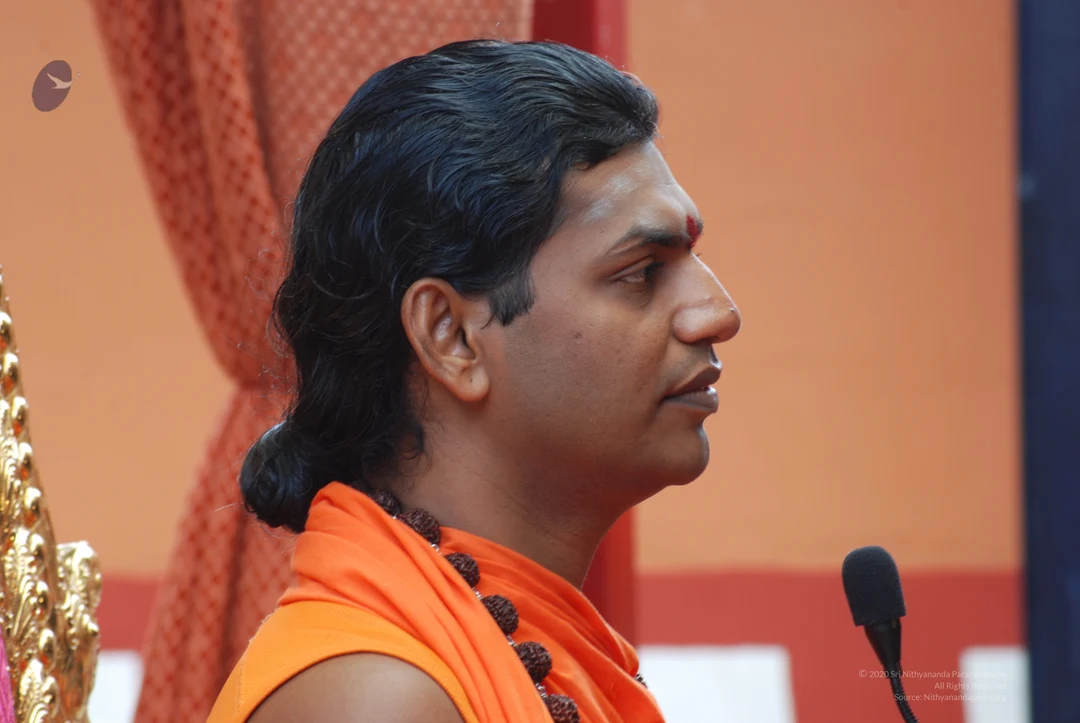
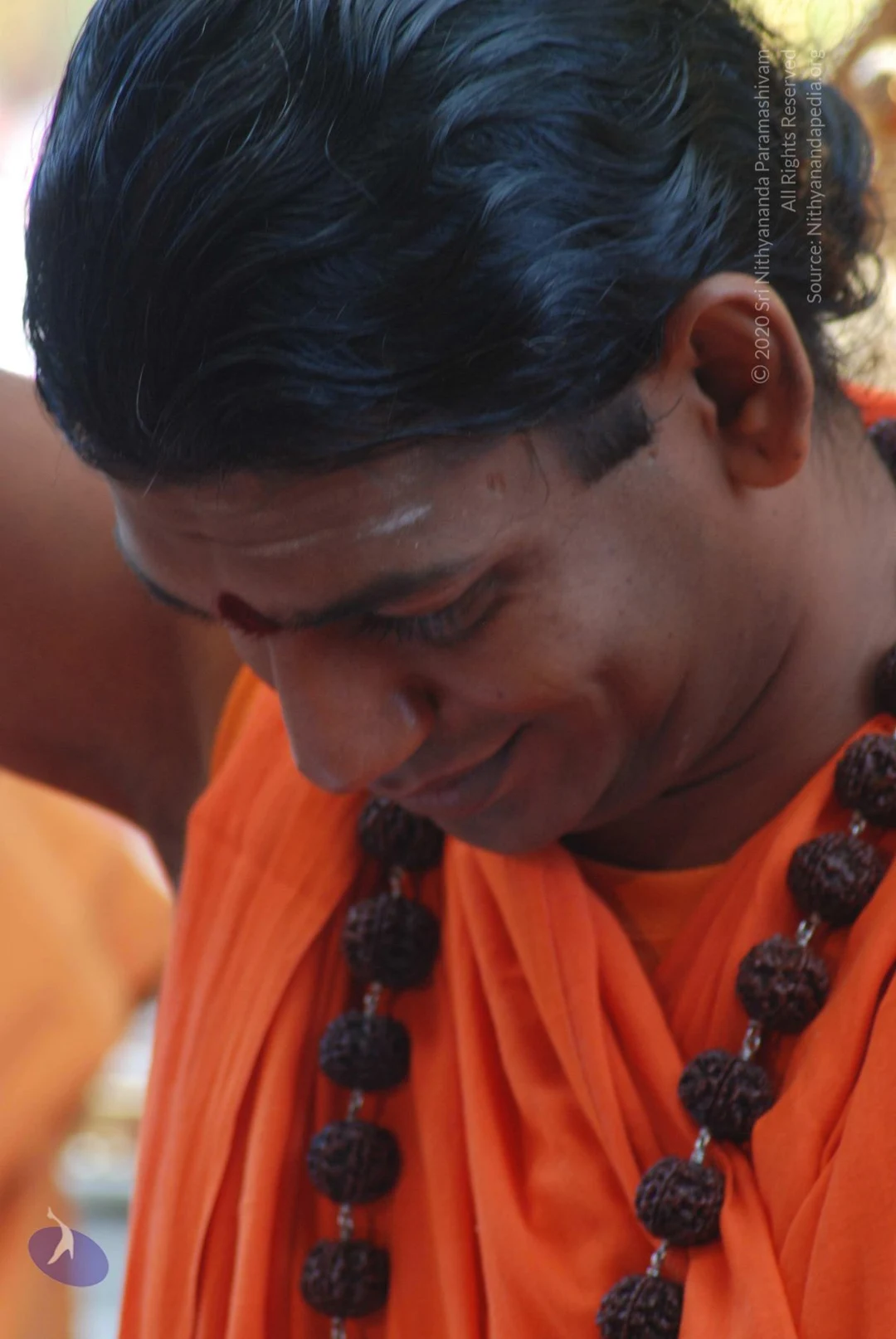
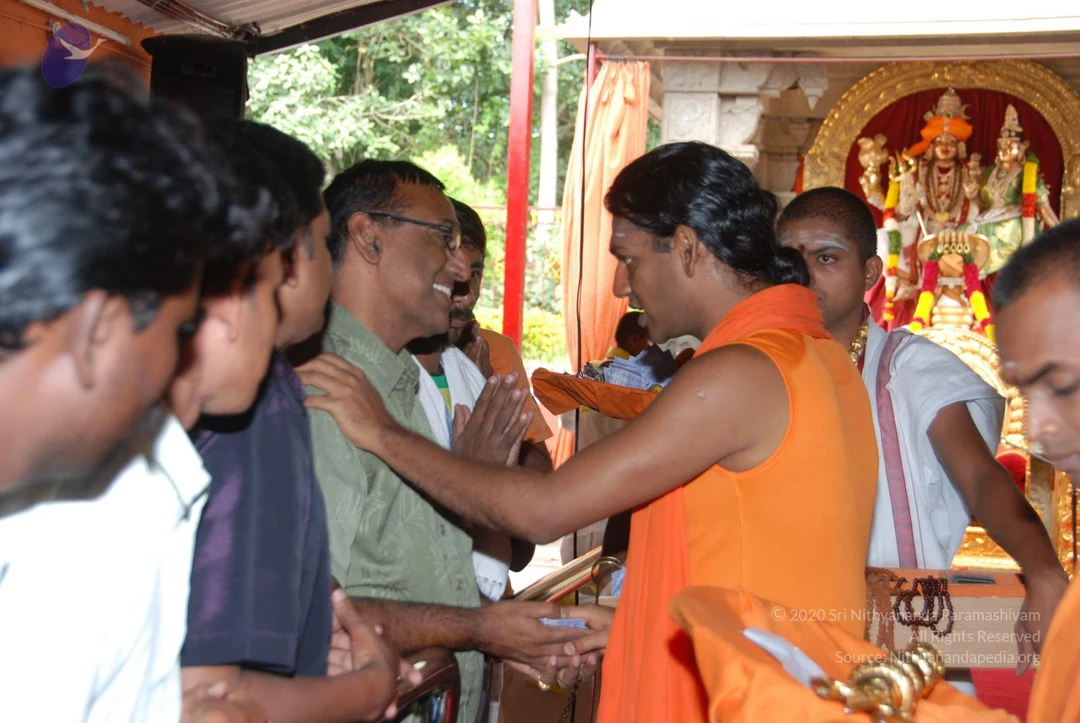
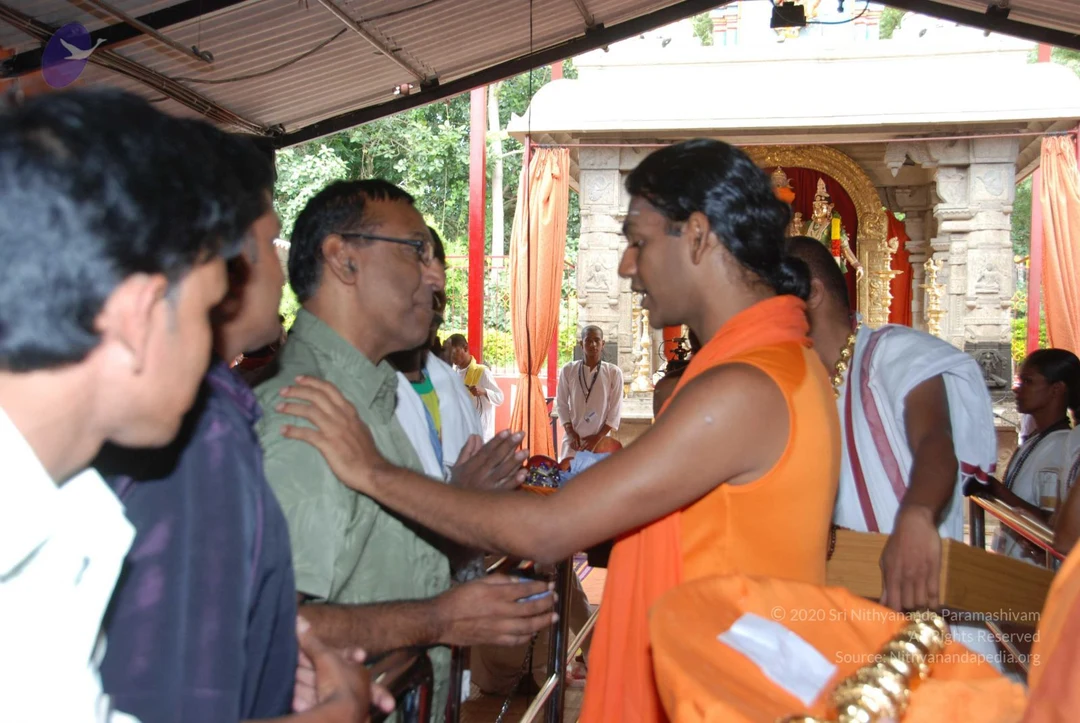
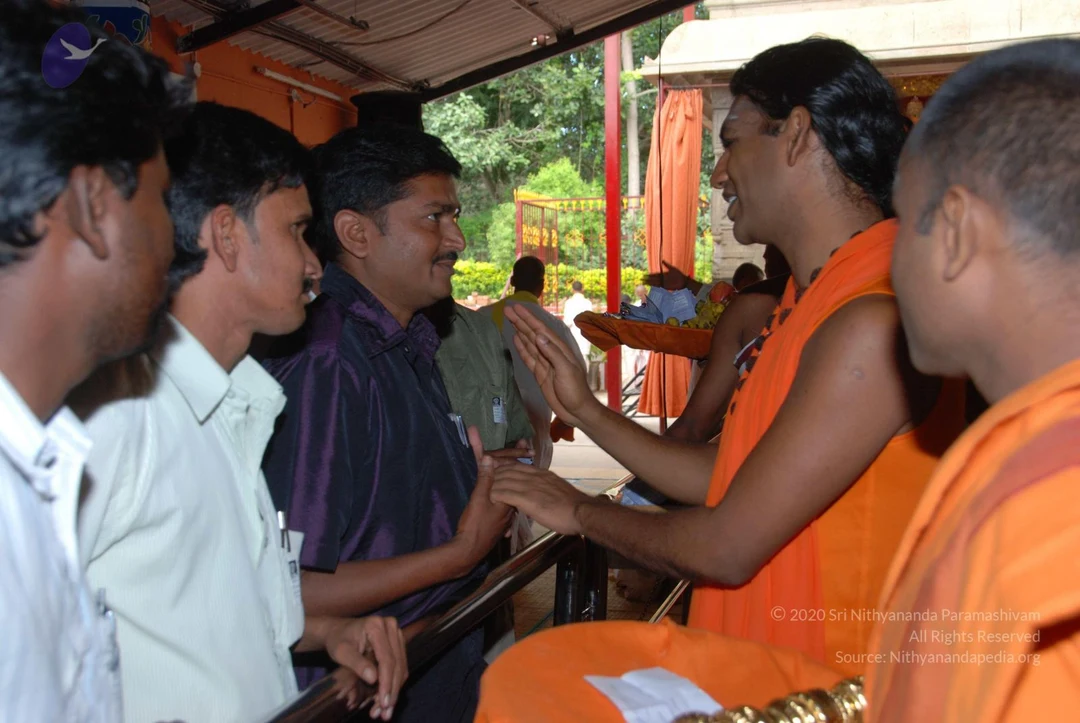
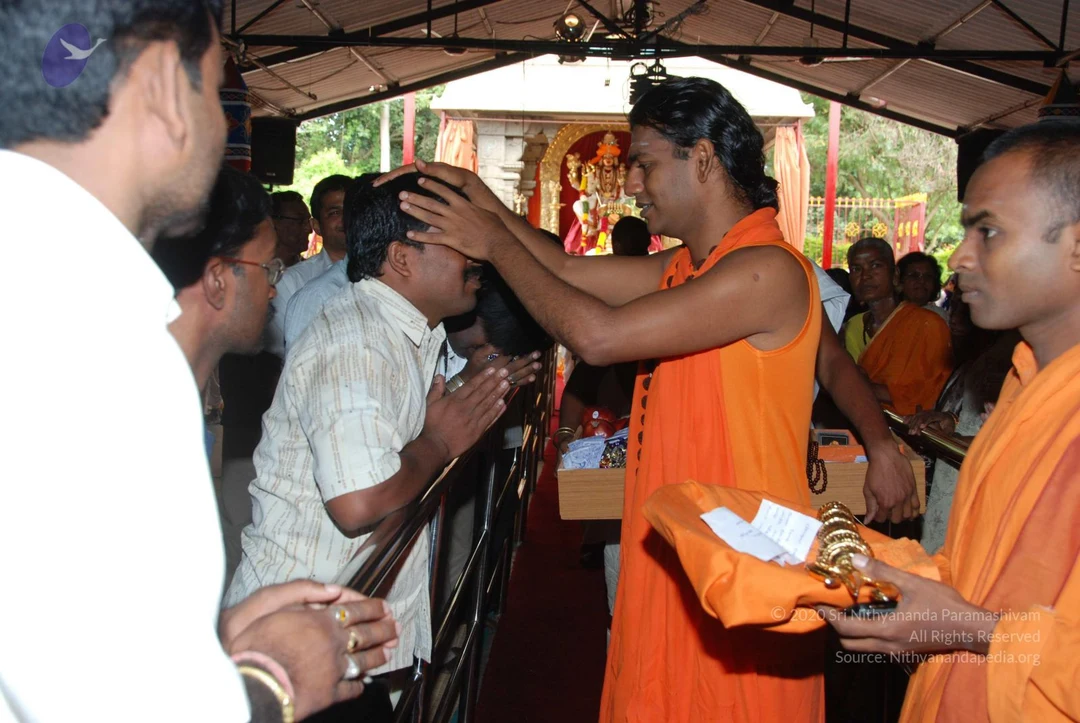
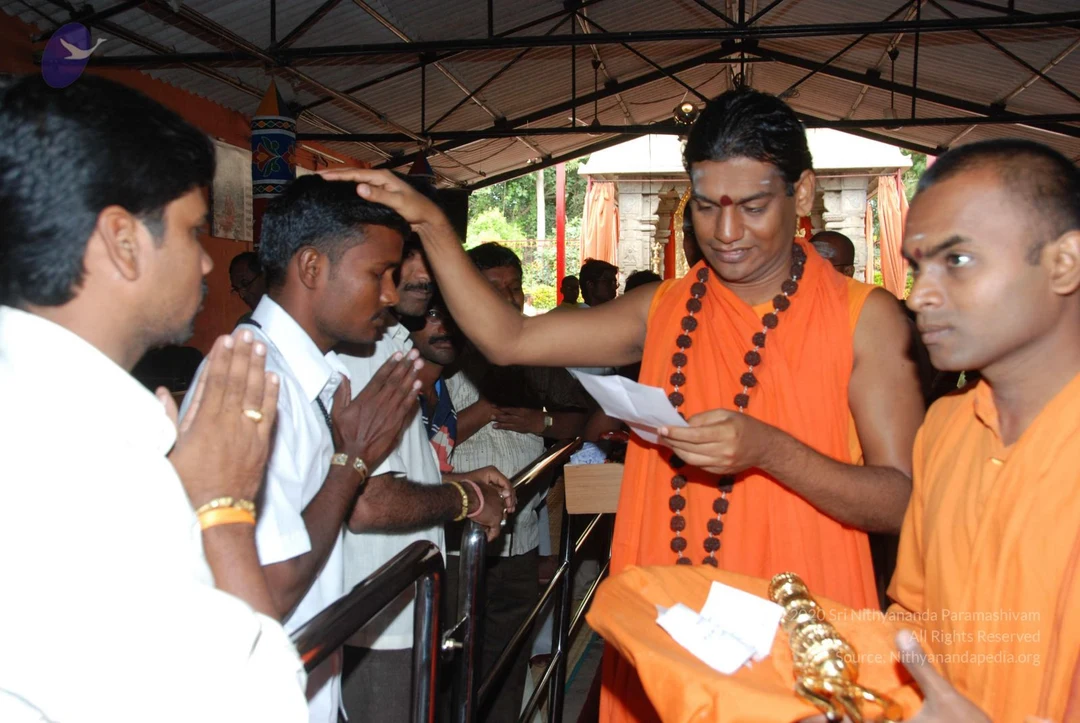
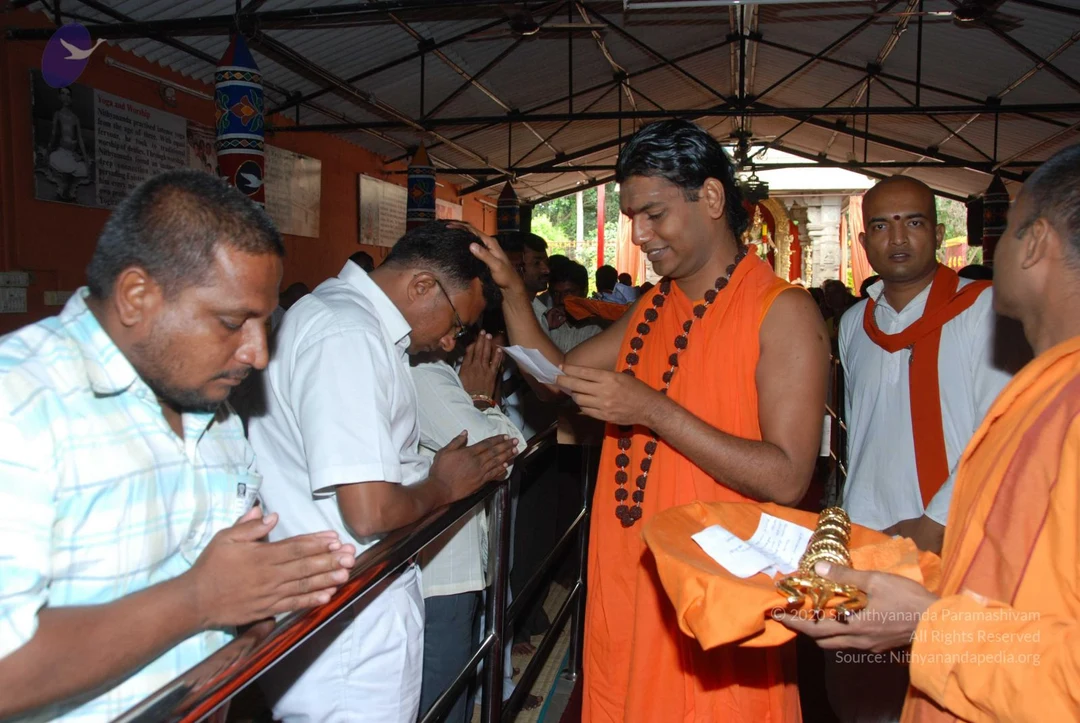
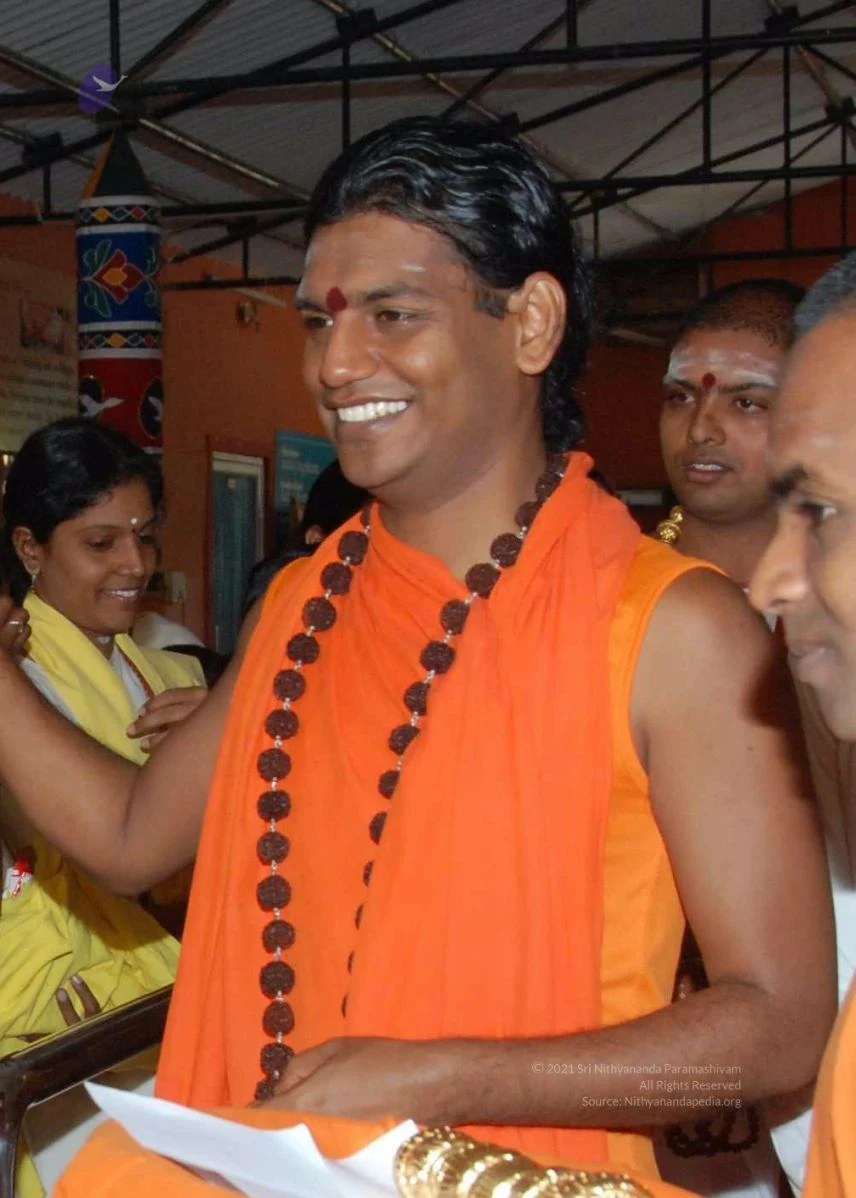
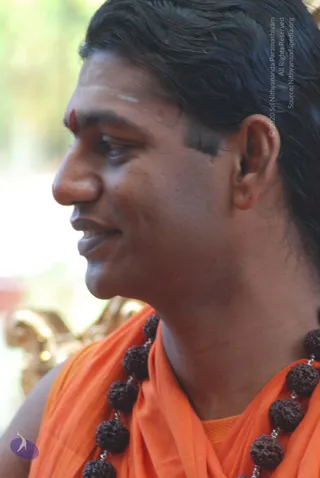
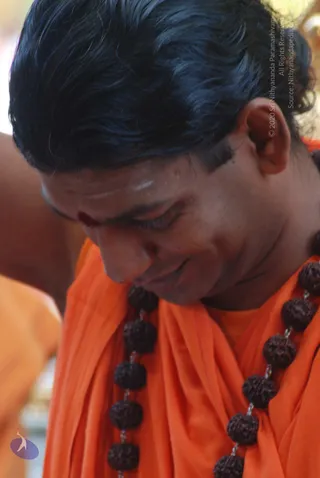
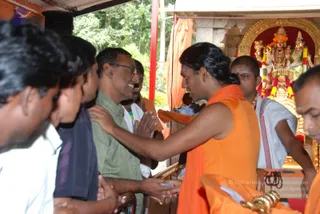
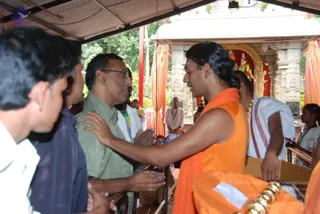
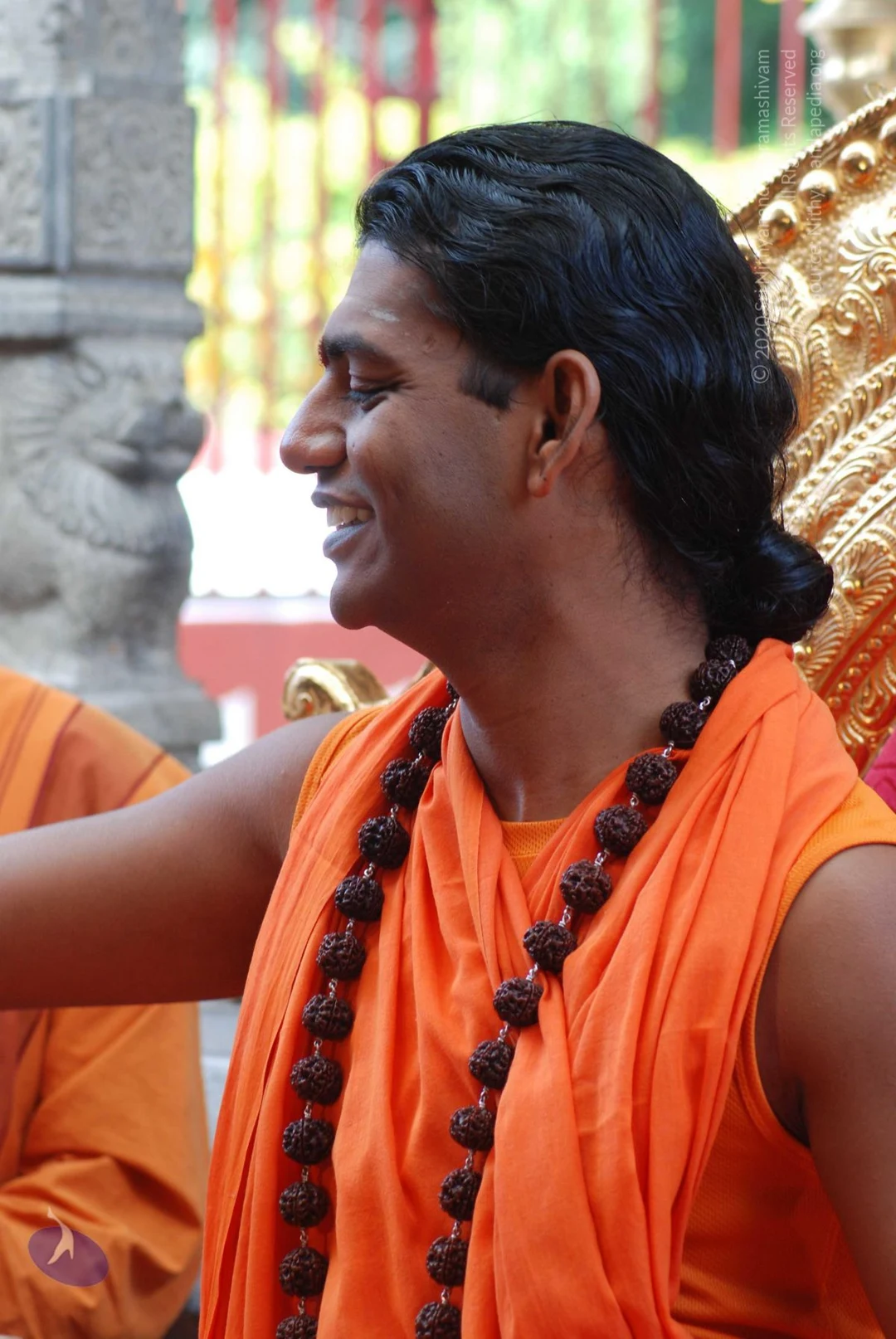
Close profile photograph of a man with long swept-back dark hair, a red tilak mark on his forehead, and a smiling expression, wearing an orange saffron shawl over his shoulders and a multi-strand dark rudraksha mala around his neck. Blurred green foliage and a gold ornate chair edge appear in the background.Close-up photo of a man with long dark hair swept back, looking down and smiling. He wears a saffron-orange garment draped over his shoulders and a thick necklace of brown rudraksha beads. A red bindu and white horizontal markings adorn his forehead. The image shows a single person, partly cropped at the top and right edges.A photo of a devotional exchange in front of a shrine. A long-haired man in a sleeveless saffron/orange robe reaches out and holds the shoulder of a smiling, bespectacled man in a light green shirt, who presses his palms together in greeting. Several men stand in line at left, one in a dark purple shirt and another in a white shirt. At right, a shaven-headed young priest in white with a red sash and a gold necklace stands near a gilded altar. Behind them, a deity murti decorated with orange and red garlands and a red backdrop is visible, with a red cloth and orange drapes framing the shrine.A photograph at an outdoor temple area under a corrugated roof. In the centre, a man with long dark hair tied back wears a sleeveless saffron-orange garment with an orange cloth draped over his shoulders, a person candidate with long swept-back hair and saffron clothing, his hands extended toward a bespectacled man in a green shirt who stands with palms pressed together in greeting. Nearby, several men in dark and white clothes stand along a railing. A man in a white dhoti with a red-striped shawl stands at right, beside a gold ornament on a tray. Behind them is an ornate golden gateway with carved stone pillars, orange drapes and a deity shrine inside, with a few other people in the background.A photograph of a line of men at an outdoor temple-side railing receiving blessings. On the right, a figure in an orange saffron robe with long swept-back dark hair and a rudraksha-style mala extends a hand toward the devotees, who are in white shirts and a purple-blue shirt. Another saffron-robed attendant stands at the right edge, and a tray of fruit and flowers sits on the railing. Red pillars, a saffron cloth hanging and greenery are visible behind. Five or so physical people are visible, including partial figures at the edges.A photograph of a devotional blessing line under an open canopy with a temple gopuram visible behind. A man in an orange robe with a dark rudraksha mala and a long swept-back hairstyle reaches out to place his hand on the head of a standing devotee in a white shirt, while holding a folded paper in his other hand. Another orange-robed monk stands at right holding a tray of gold and silver ceremonial items. Several men in white shirts with prayer-folded hands wait at the wooden railing on the left. The figure in orange with the mala and long hair has qualifying presentation cues, so this is an appearance-based a person performing darshan and blessing devotees.

Swamiji-with-VIPs

9 photosSource gallery
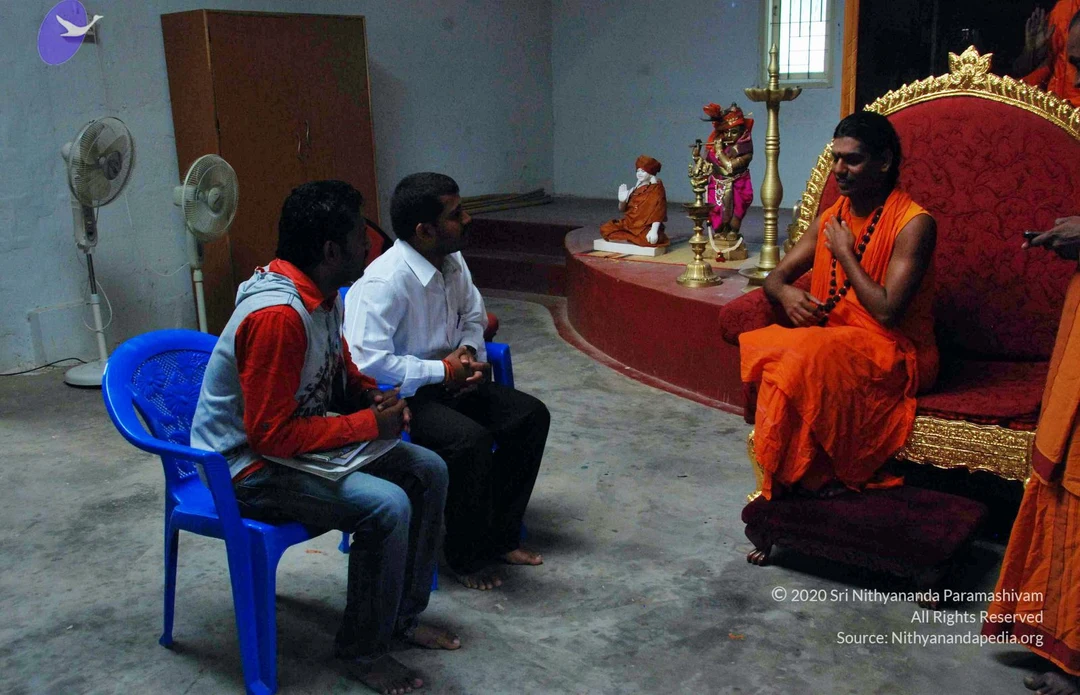
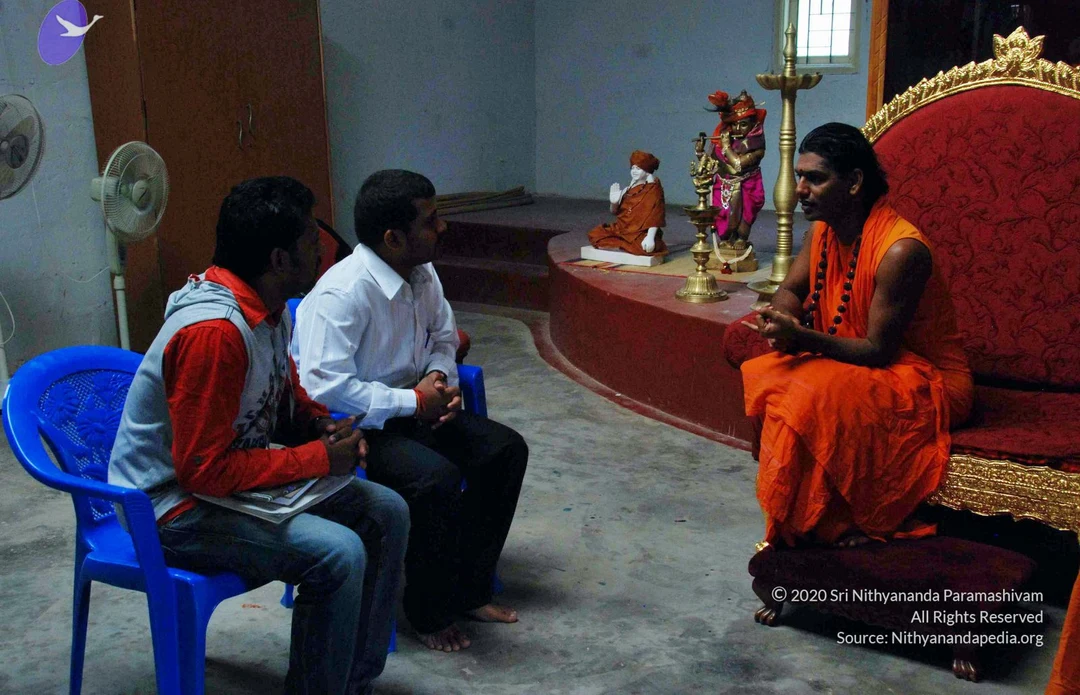
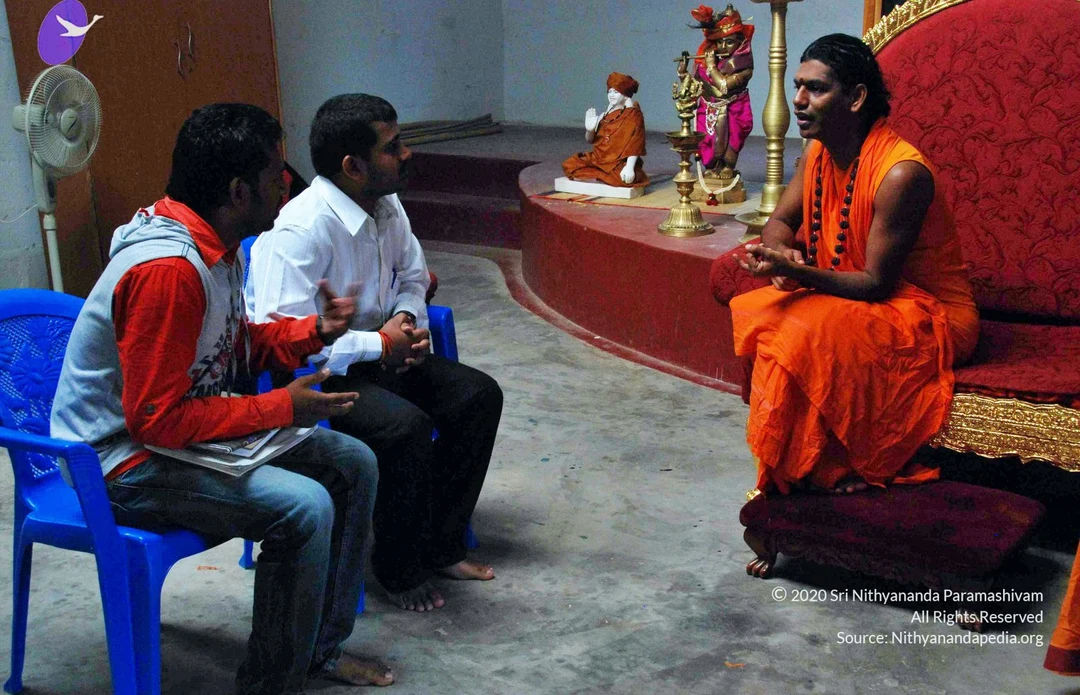
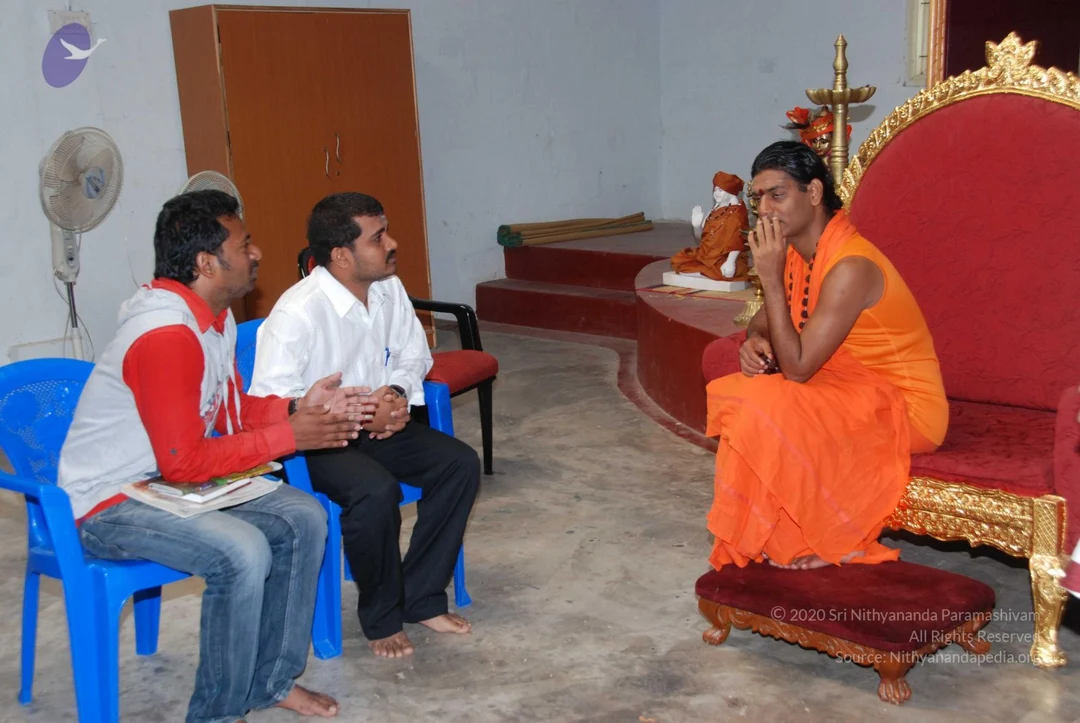
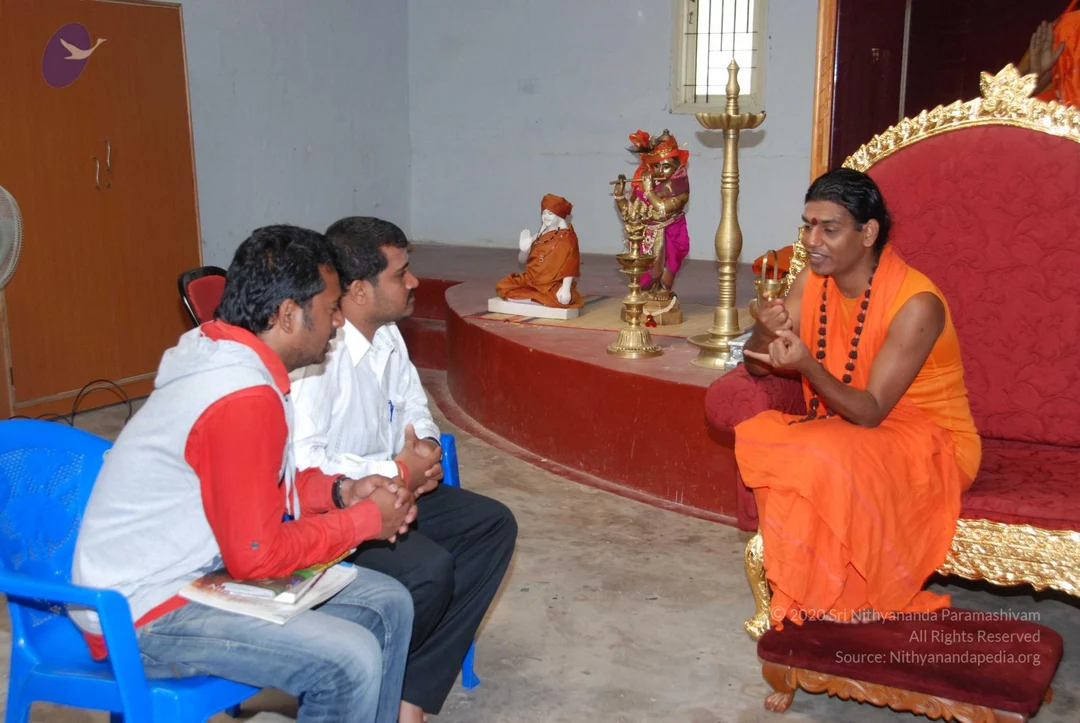
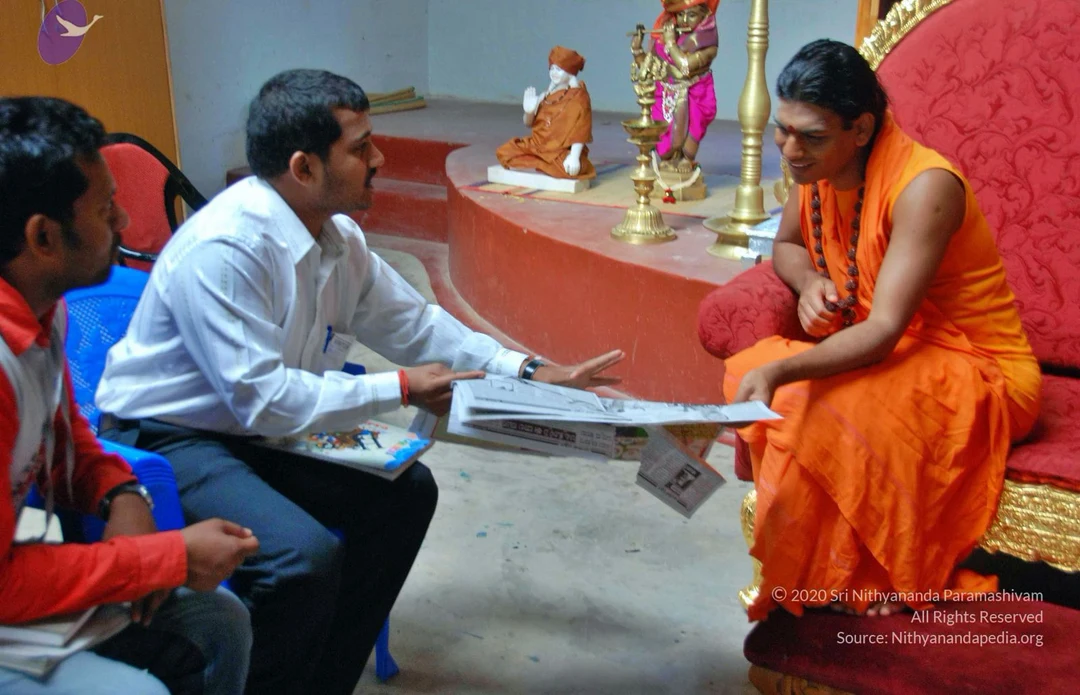
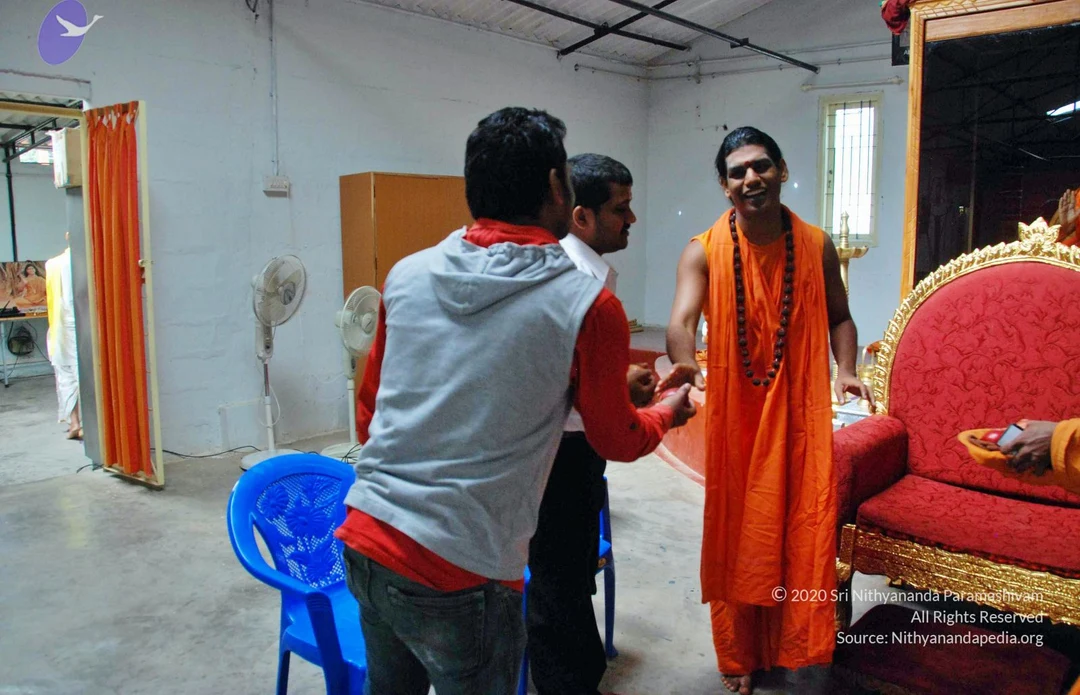
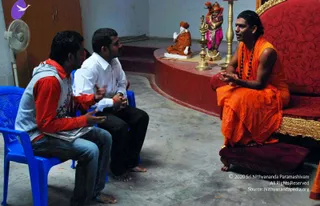
Two seated young men in blue plastic chairs face a figure seated on a red cushioned throne with gold trim in a plain room with a blue-grey wall, a wall cabinet, and standing fans. The figure wears an orange robe and a beaded rudraksha mala, hands folded in a gesture of teaching. A small shrine on a raised platform holds a deity murti in pink and red clothing, a brass oil lamp, and a seated orange-robed statue with folded hands. Another orange-robed person stands at the far right edge. The seated figure shows long swept-back hair and a crown-like throne setting, matching the page's a person reference only loosely, so identity is left unsure and roles are used instead.A photograph of three men seated in an interior room with a grey floor and a wall fan. On the right, a man with long swept-back hair wears an orange saffron robe and a rudraksha mala, seated on an ornate red velvet throne with gold trim. Facing him on blue plastic chairs are two men: the left one in a grey hooded vest over a red shirt and jeans, holding papers, and the middle one in a white shirt and dark trousers with hands clasped. Behind them on a raised red platform are brass oil lamps and a small seated figure in orange and a deity murti of a child-form god with a red crown and gold ornaments. Whether the man on the throne is the figure named in the page is uncertain from appearance alone.Photograph of an informal discussion in a plain concrete room with a red-carpeted raised platform. Two young men sit on blue plastic chairs at left, one in a grey and red hooded top and one in a white shirt and dark trousers, both gesturing as they talk. Facing them on a red cushioned throne at right sits a man in saffron-orange robes with a rudraksha mala, speaking and gesturing with his hands. Behind them on the platform are a small saffron-robed figure, a colourful Ganesha-like deity murti and brass oil lamps. A white ceiling fan stands at left.A photograph of a seated figure in an orange saffron robe with a rudraksha mala and a bare-shouldered wrap, sitting cross-legged on an ornate red cushioned throne with gold trim on a low red footstool, with two men in chairs before him. The two men sit on blue plastic chairs; one in a red and white jacket holds a booklet and gestures with his hands, the other in a white shirt and dark trousers sits with hands clasped. Behind them a raised red platform holds a small orange-robed statue and a deity figure in magenta clothing, with brass oil lamps nearby. Walls are pale and a white electric fan is at left. a person (orange robe, rudraksha mala and ornate red throne), seated in conversation.A seated saffron-robed sannyasi with long dark hair and a rudraksha mala sits on an ornate gold-trimmed red throne, hands clasped near his chin, facing two men seated on blue plastic chairs. The man on the left wears a red-and-white vest over a red shirt and jeans, holding a folded paper. The man in the center wears a white shirt and black trousers, hands pressed together. Behind them stand a wooden cupboard, a wall fan, a small deity murti and a brass lamp on a red-stepped platform. The throne and robes suggest a formal discourse or satsang setting. The seated figure is an appearance-based candidate for a person, but the cues are not distinctive enough to confirm identity.A photograph of two men seated side by side on blue plastic chairs in an indoor hall with a white wall, a ceiling fan and an orange panel behind them. The man on the left wears a red collared shirt under a grey hooded sleeveless top and holds a notebook and papers on his knee, hands clasped. The man on the right wears a white striped shirt, black trousers and a wristwatch, with a red-orange thread on his wrist and a blue visitor badge reading VISITOR. Both look toward the left, attentive, as if listening to a talk.

Meeting-with-Ashramites

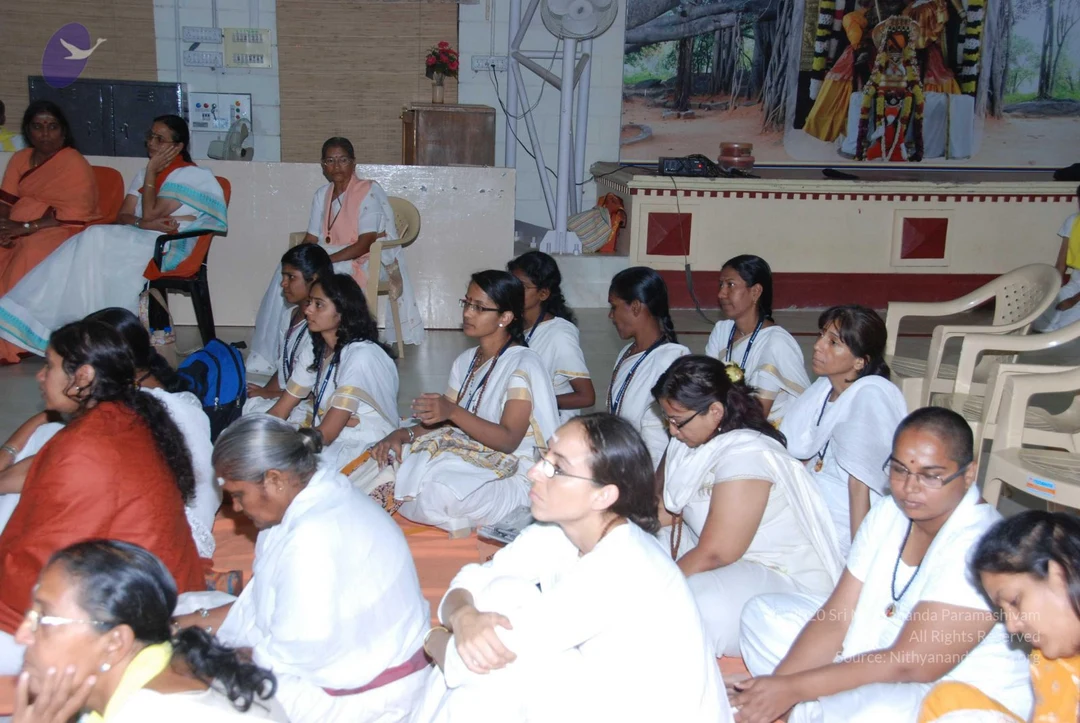
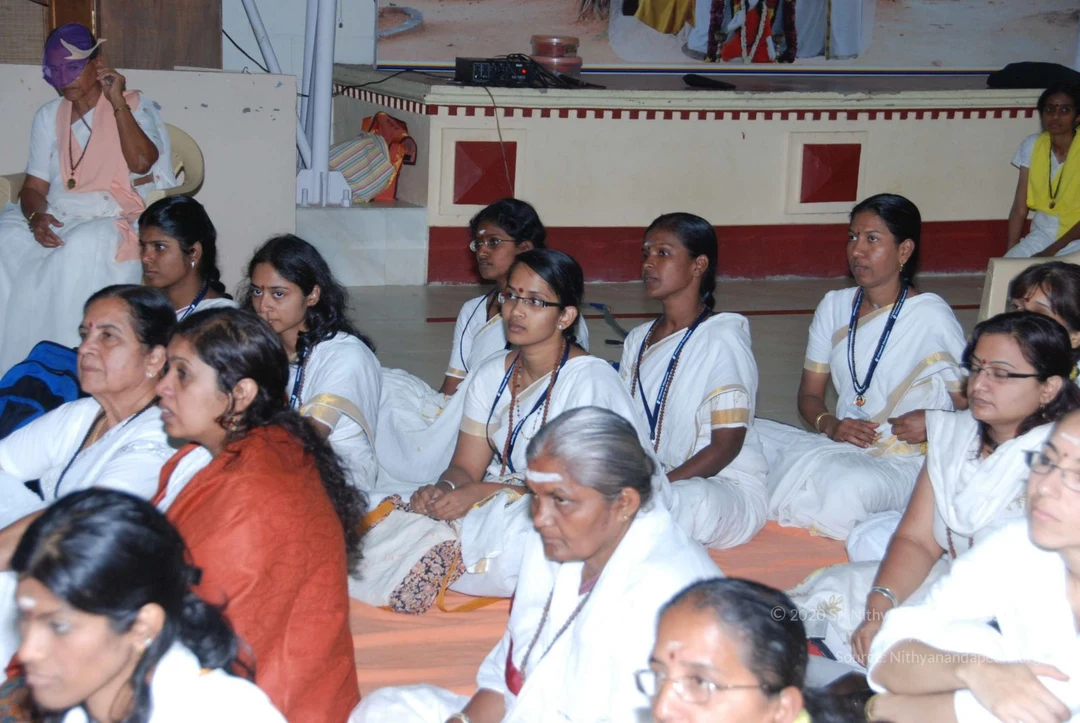
15 photosSource gallery
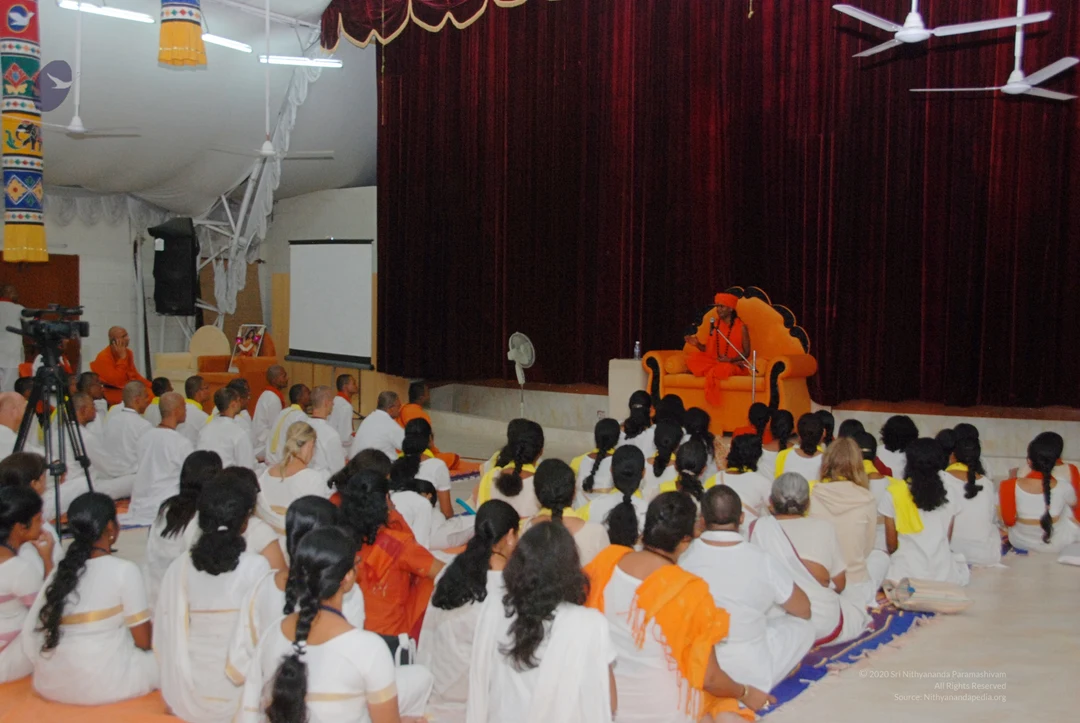
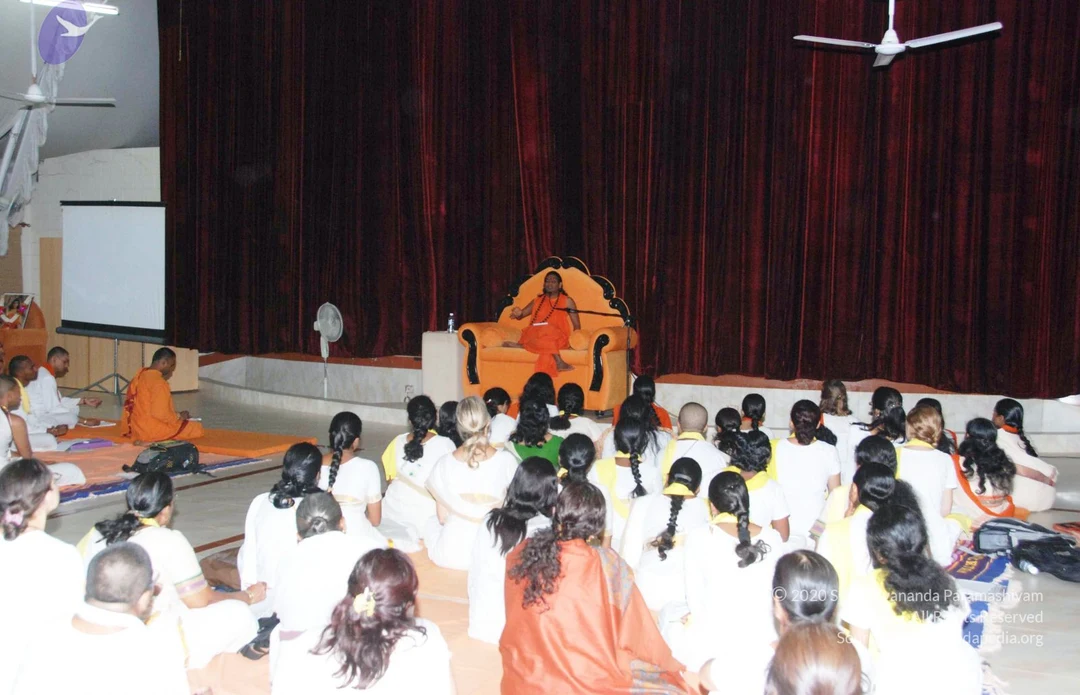
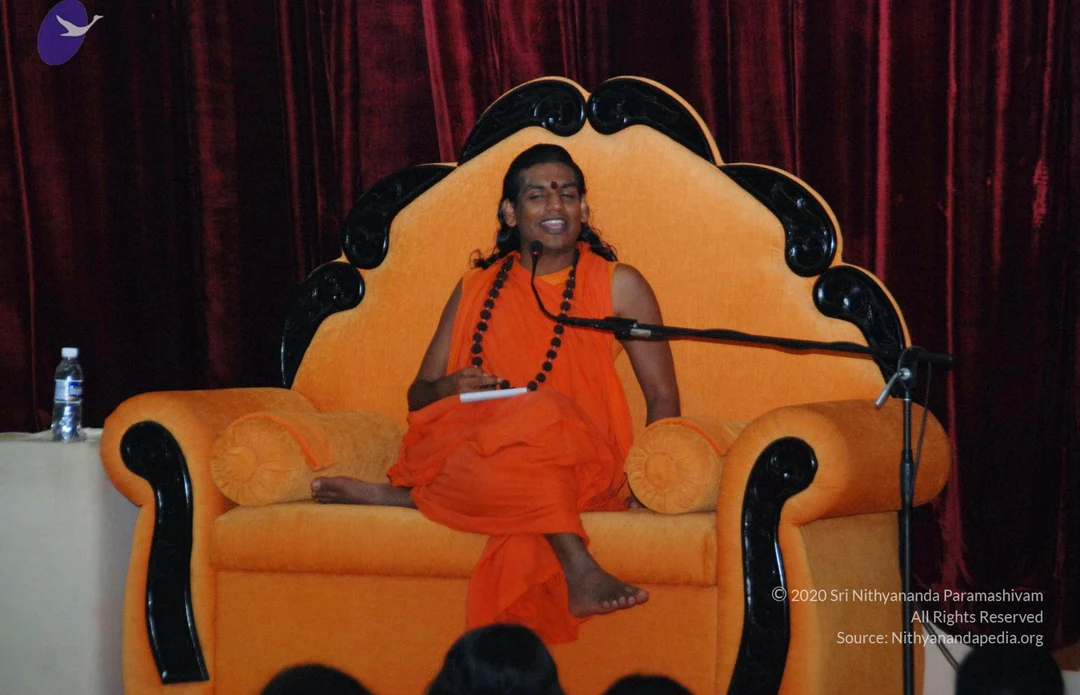
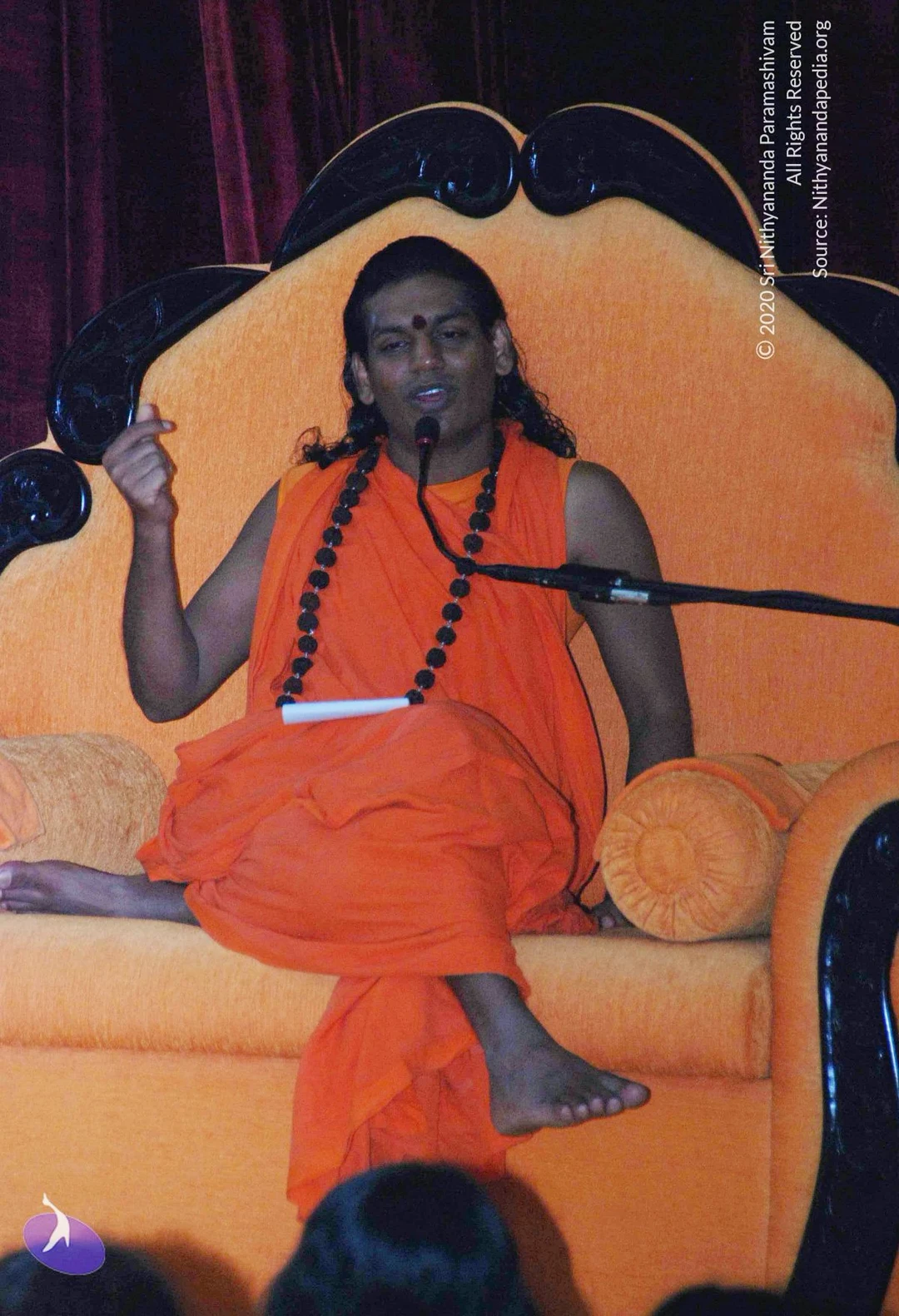
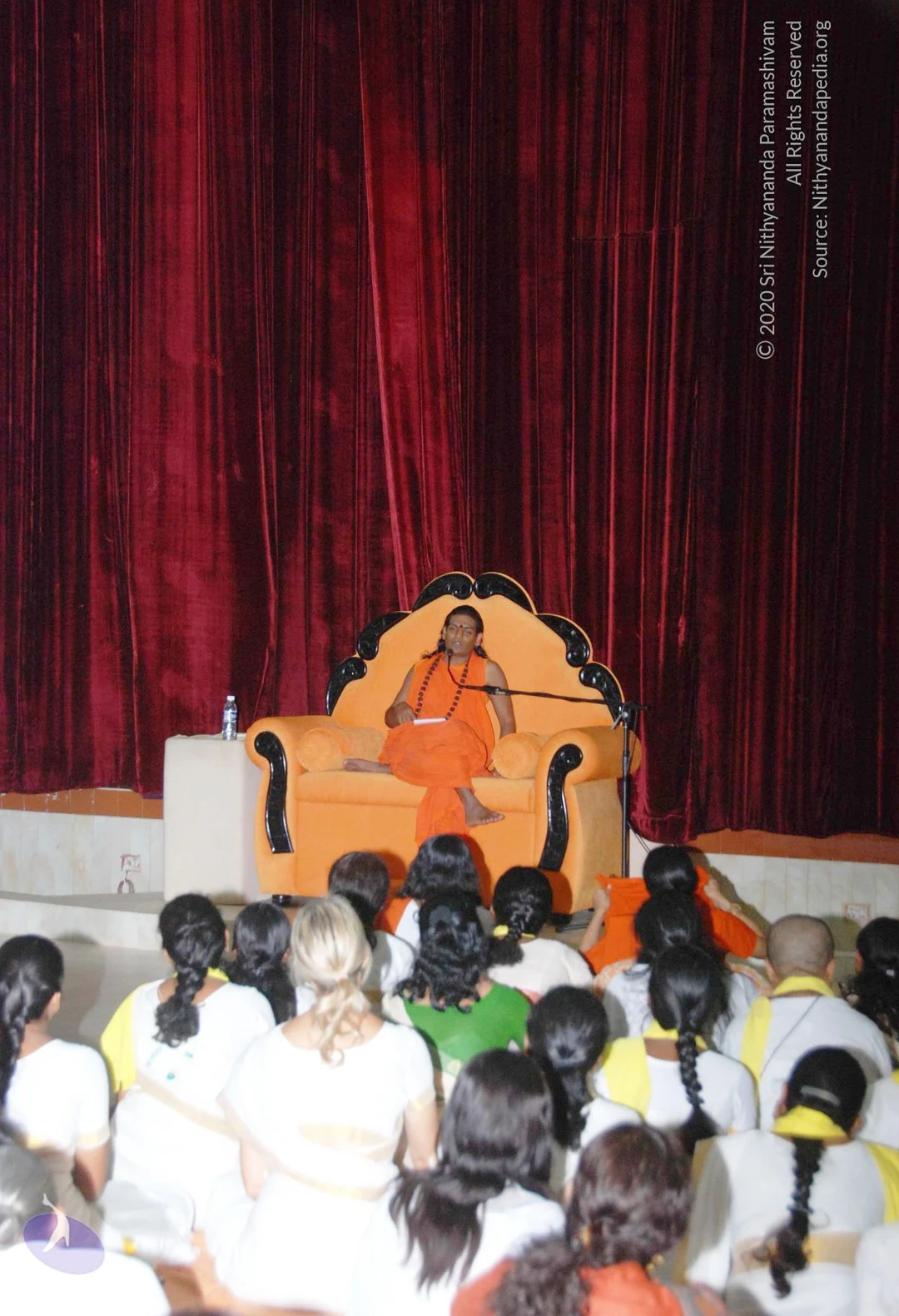
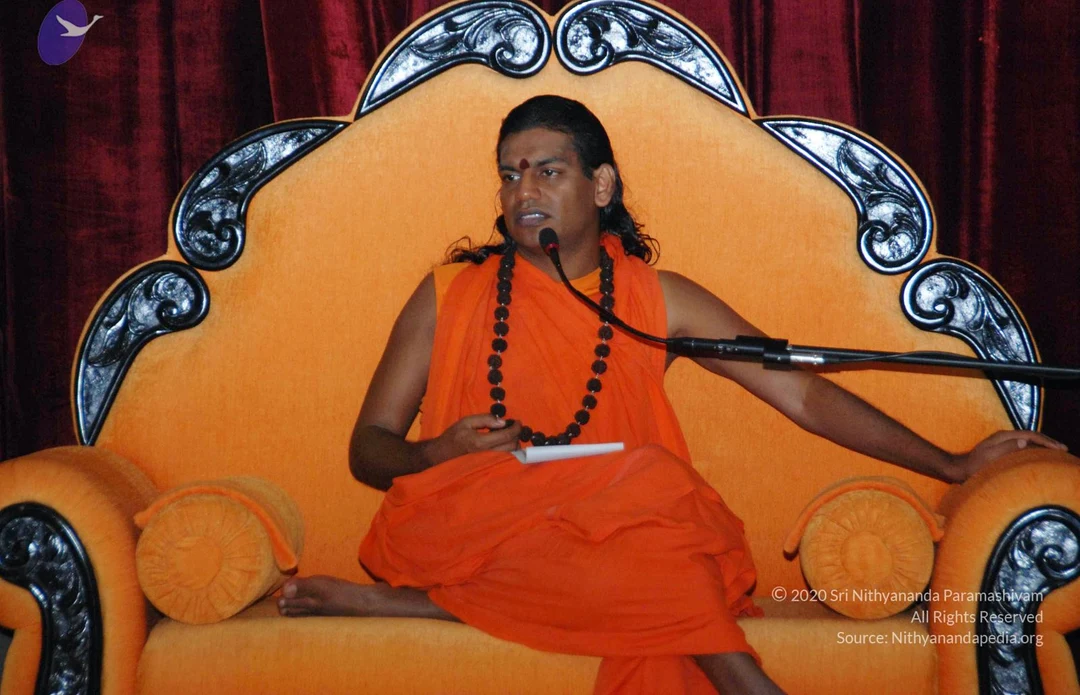
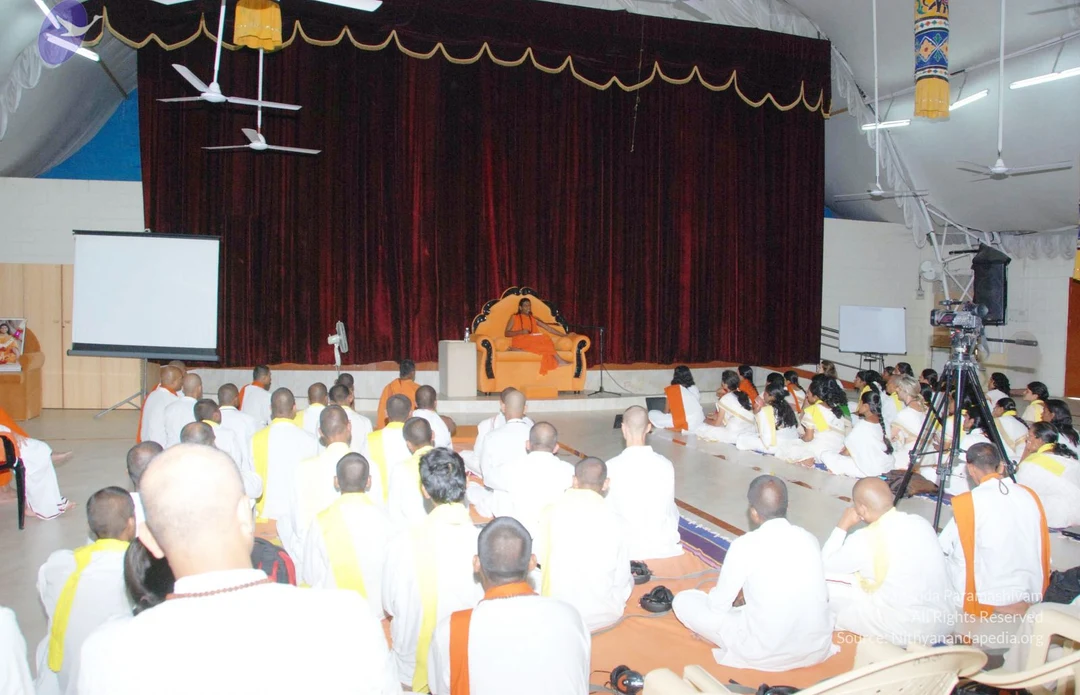
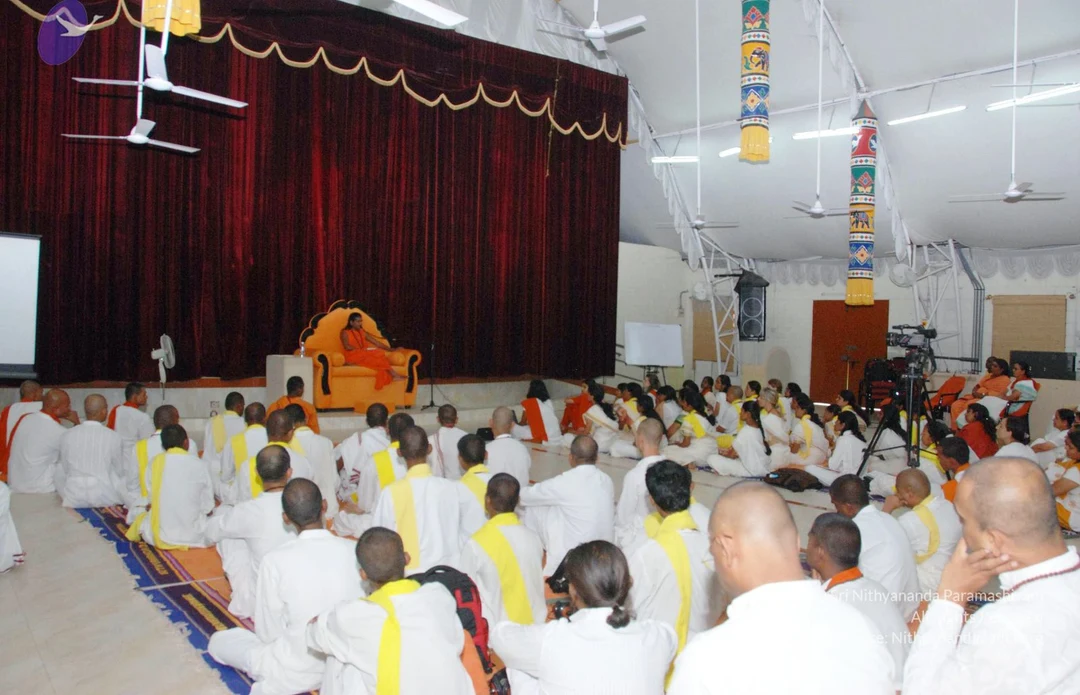
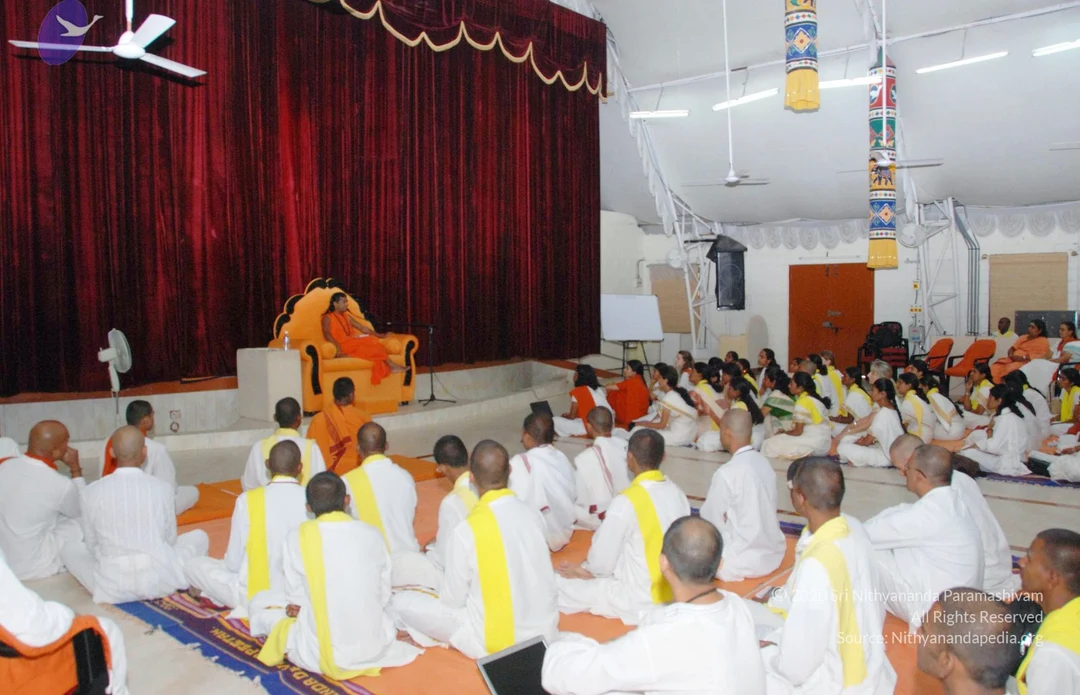
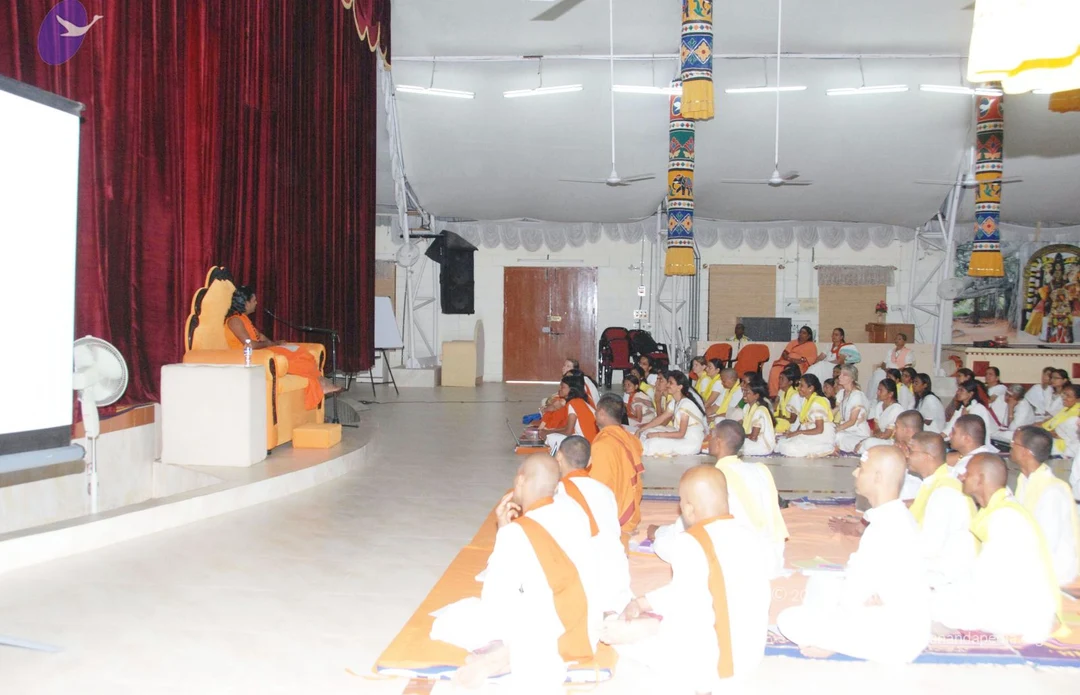
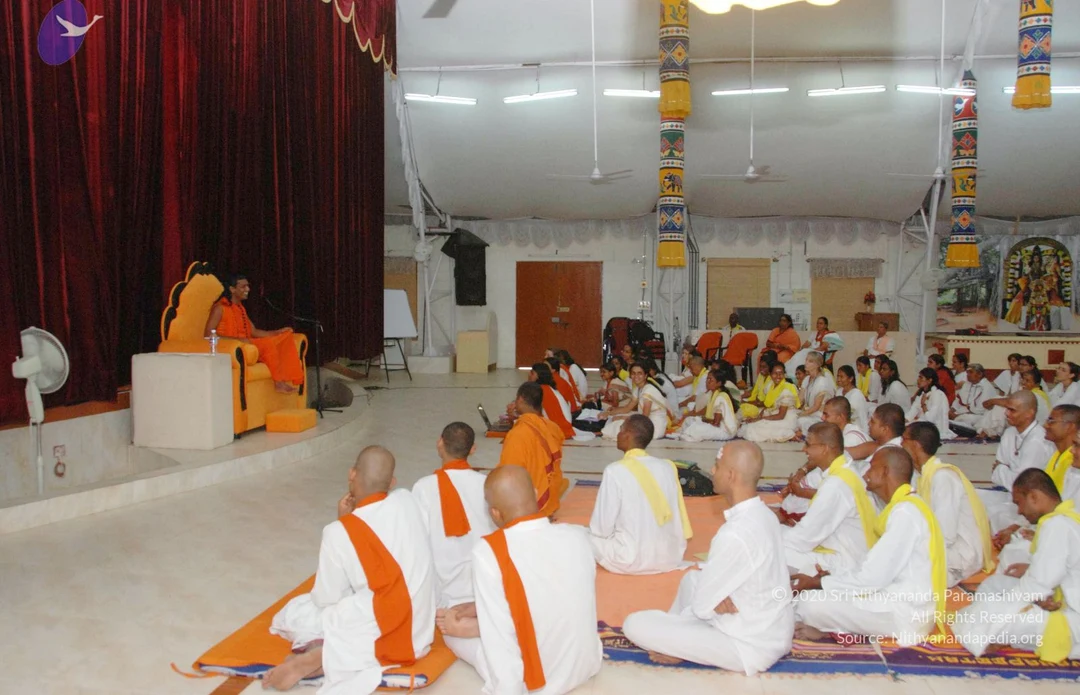
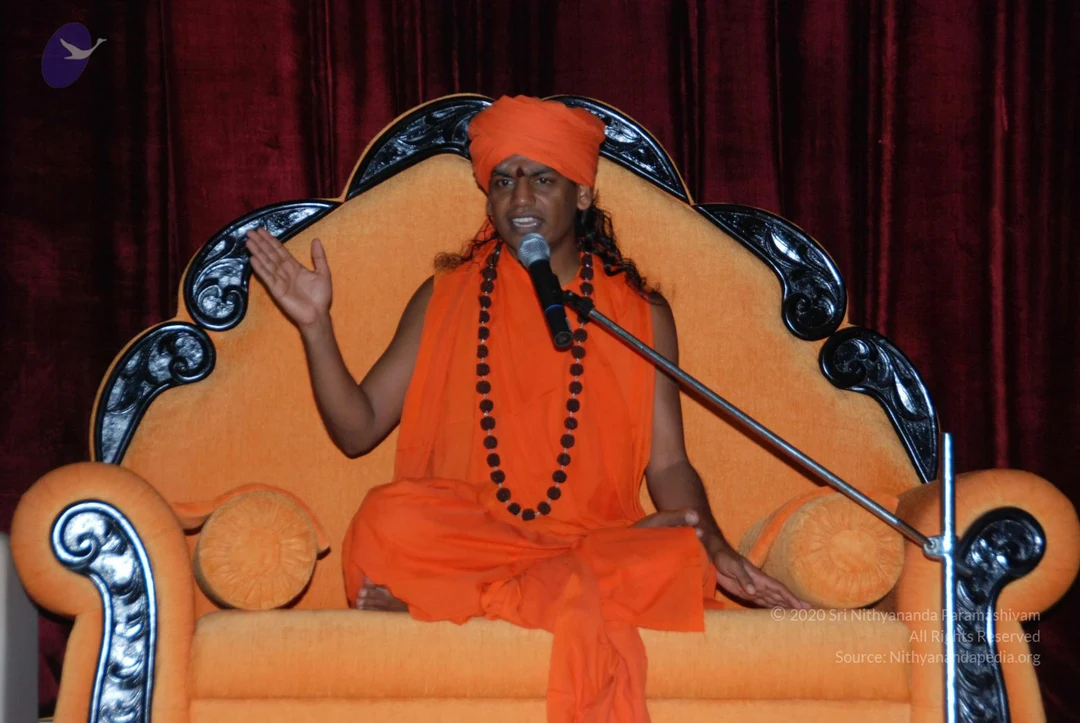
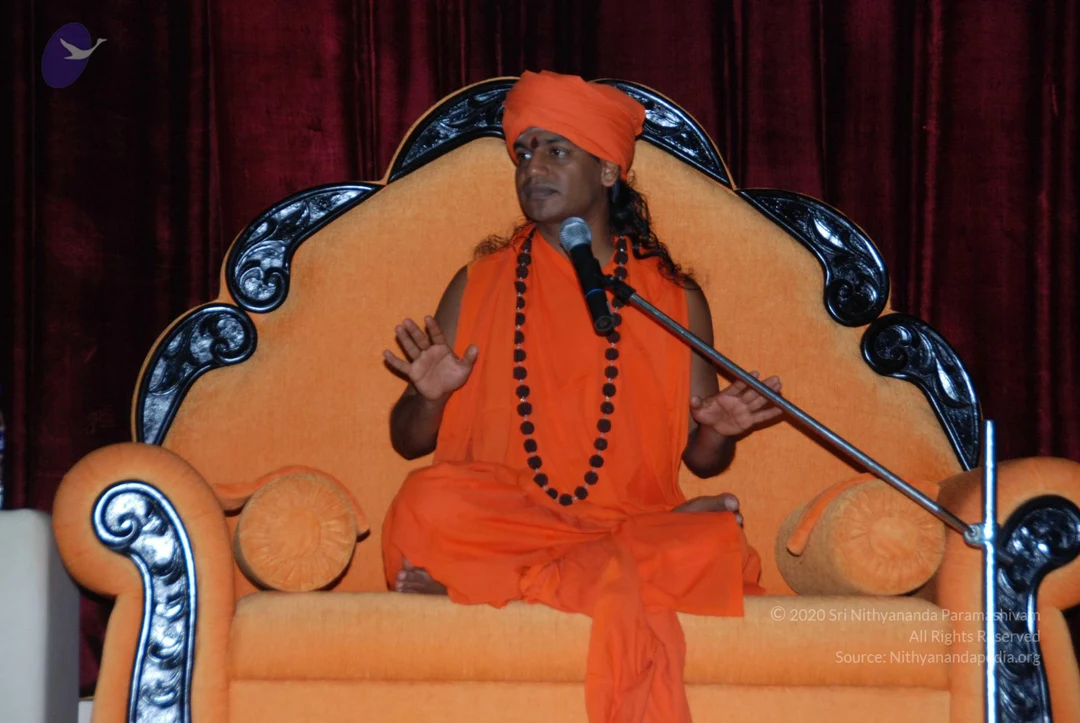
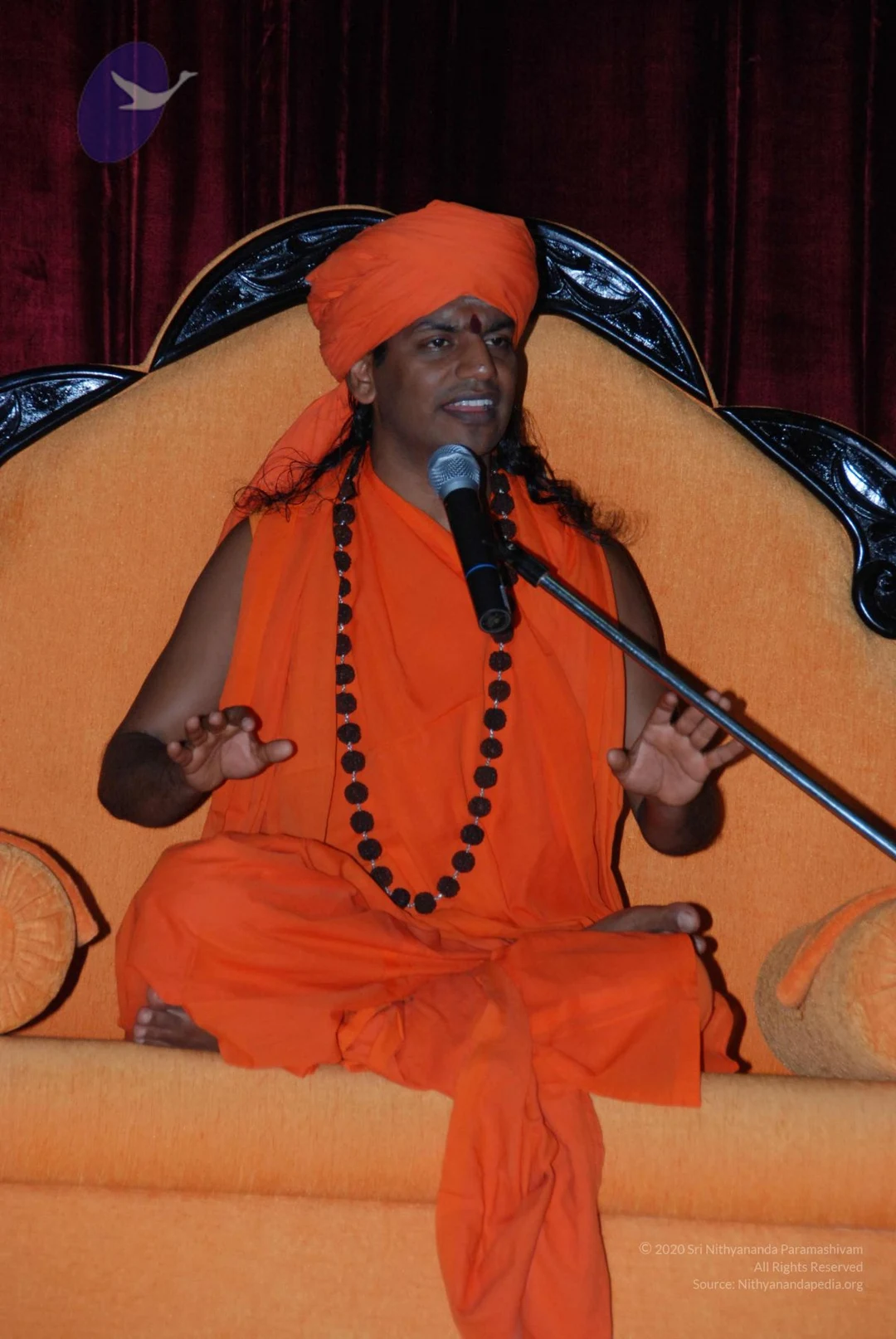
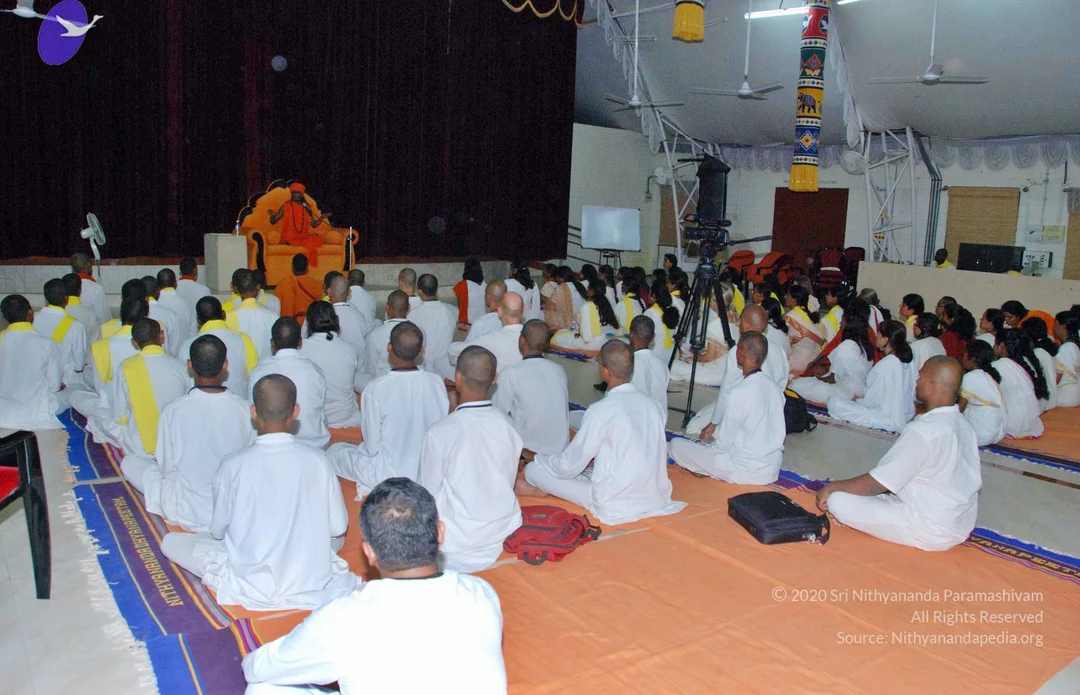
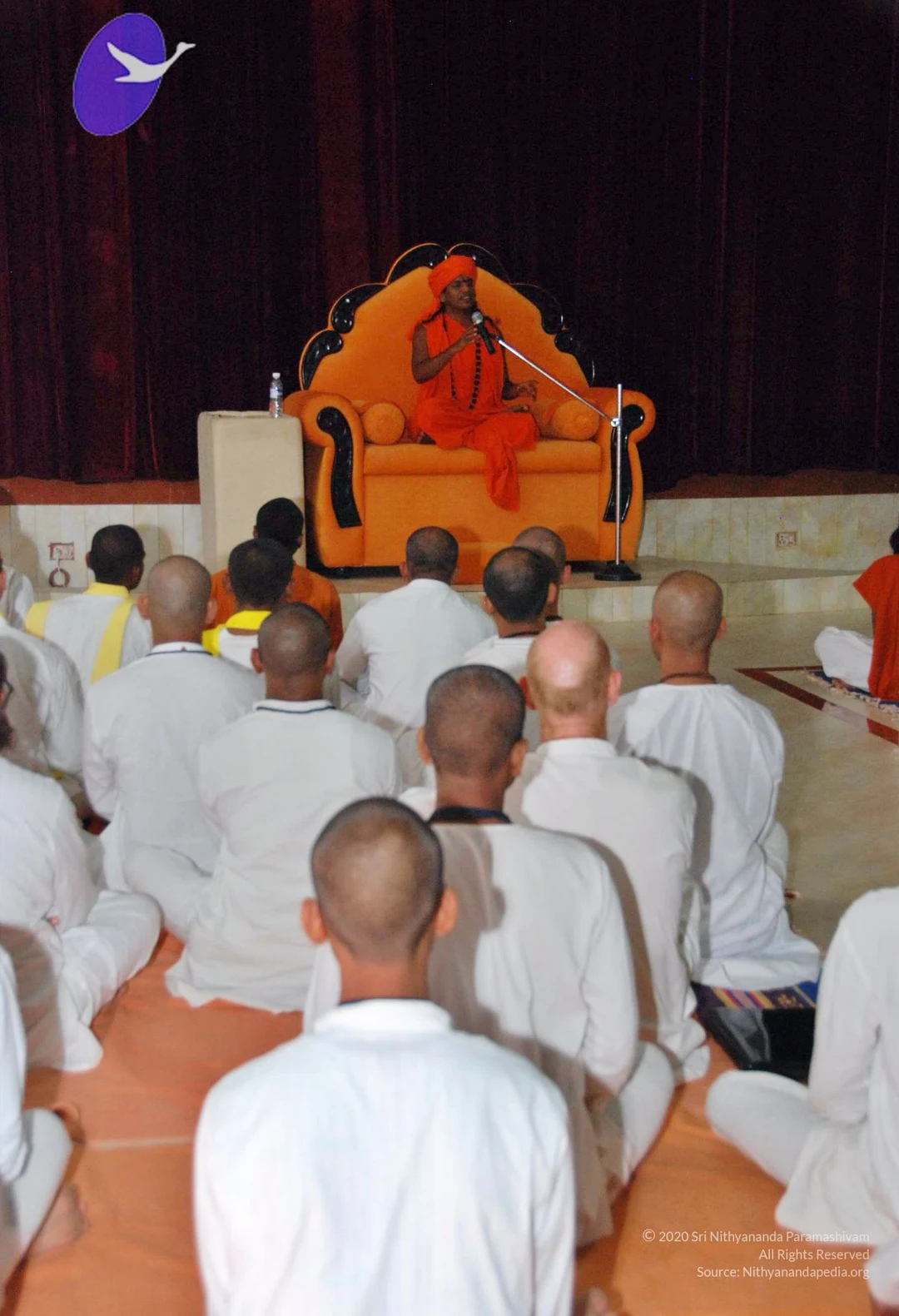
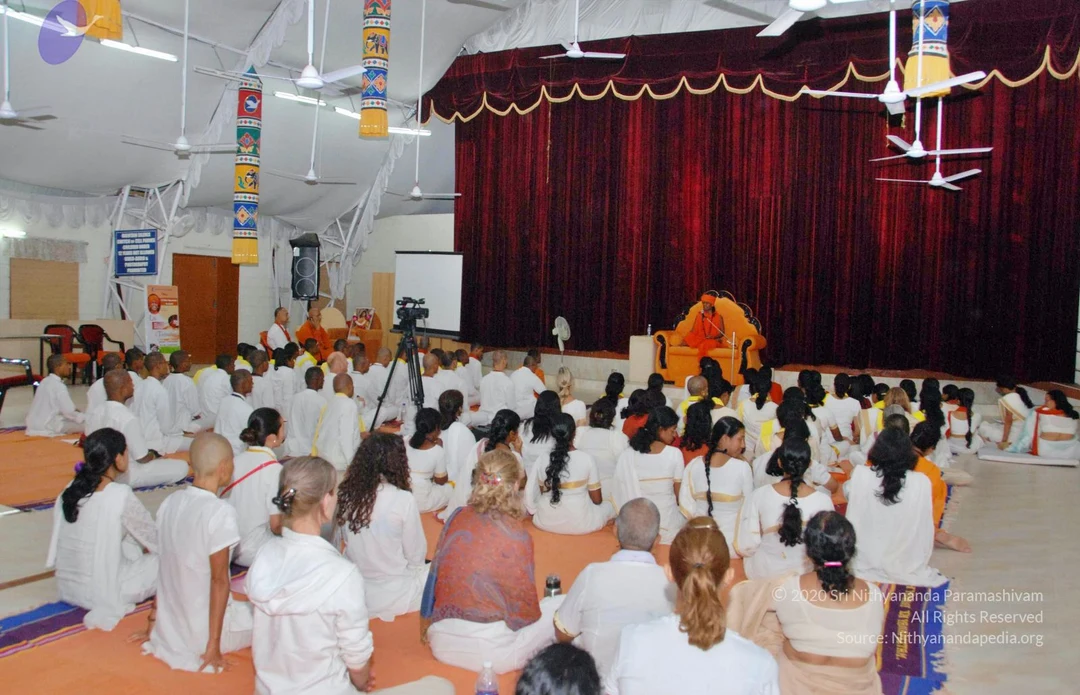
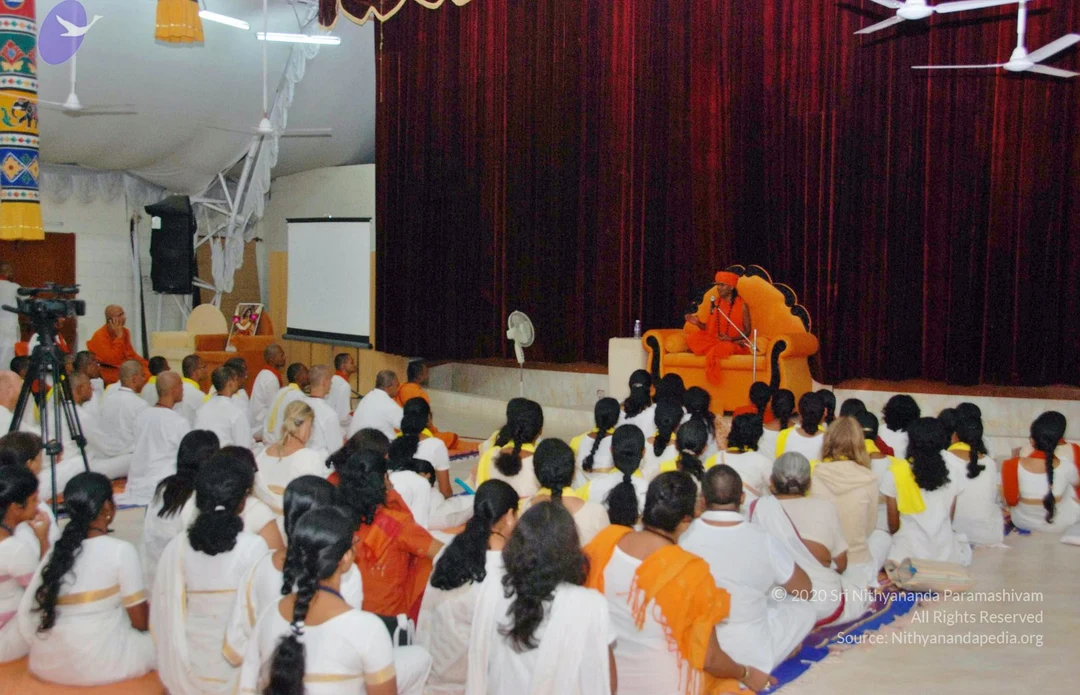
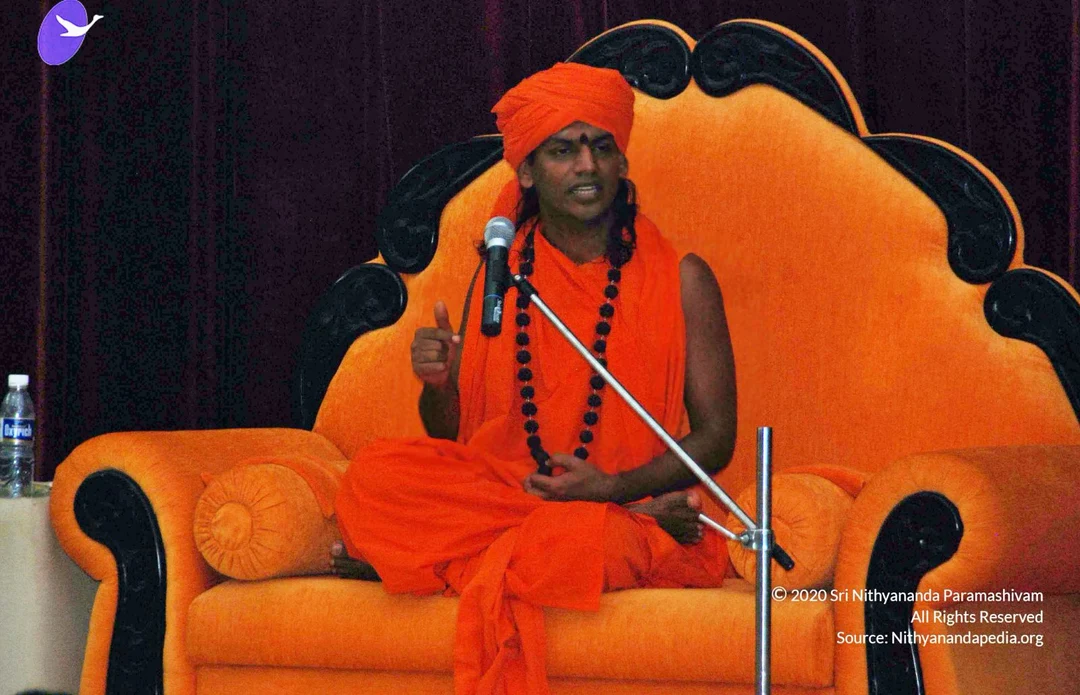
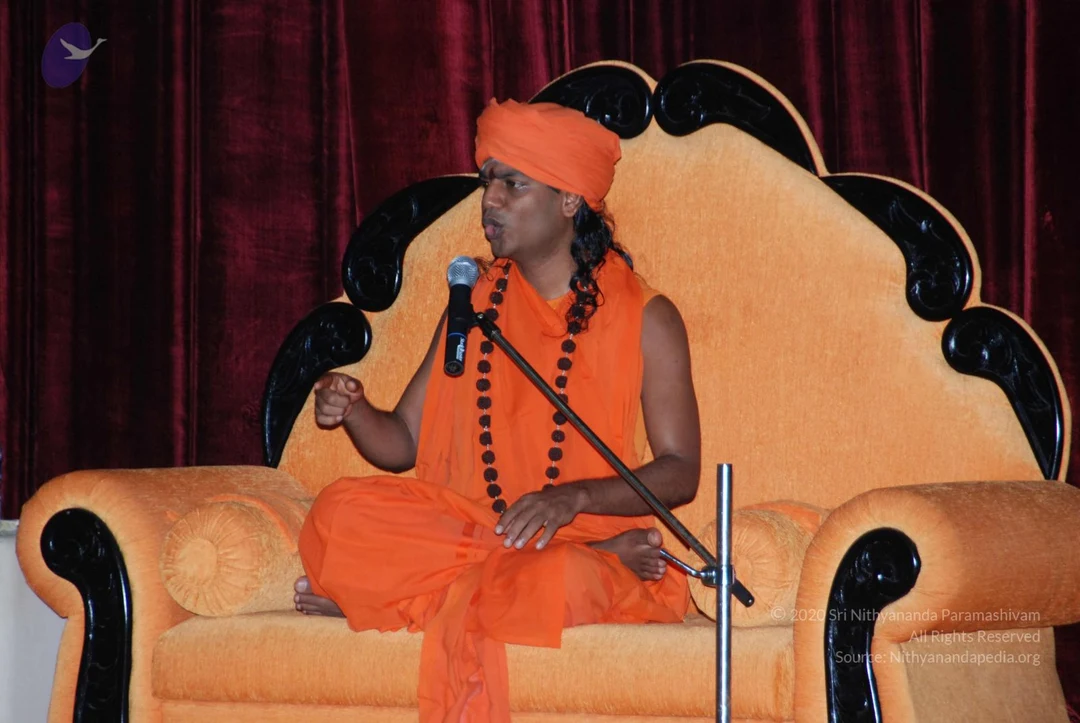
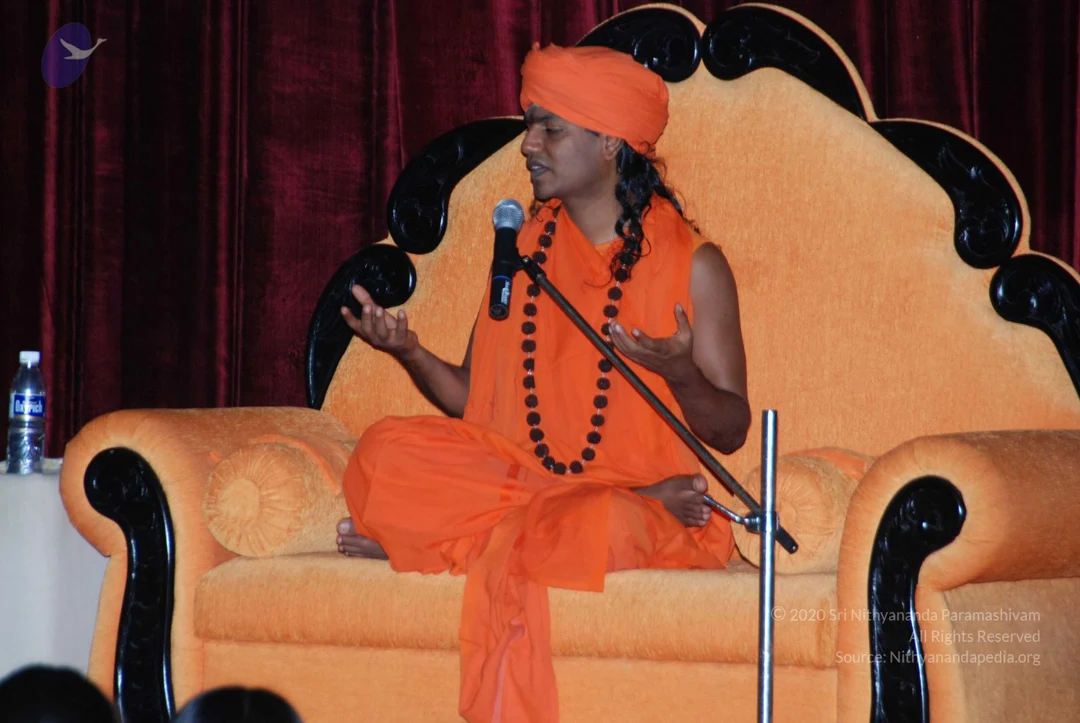
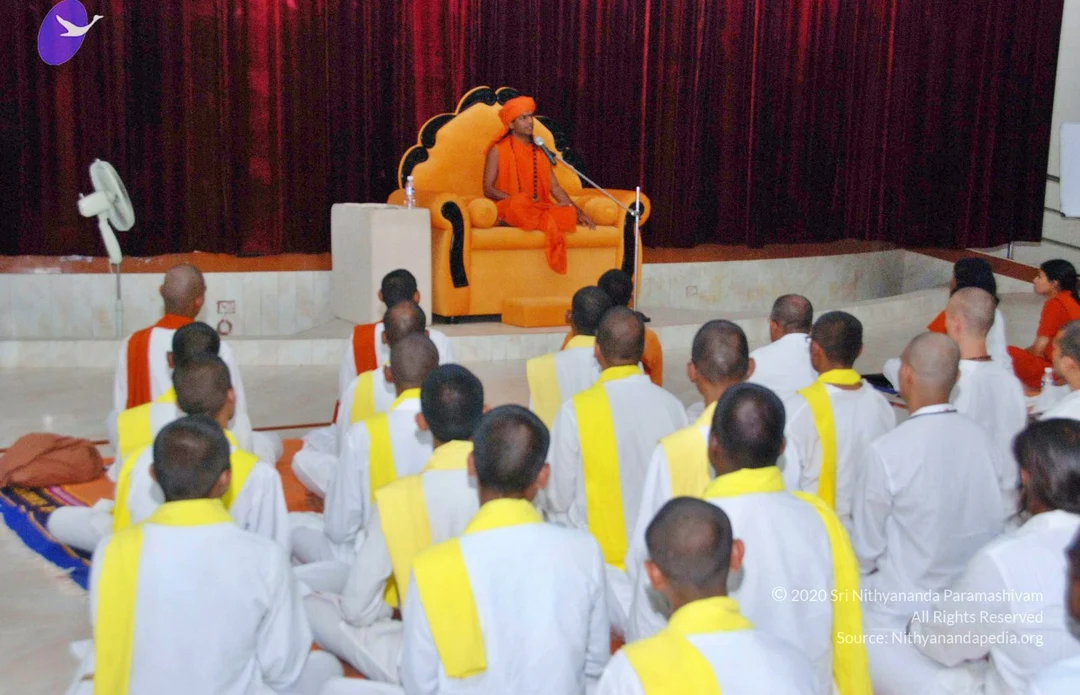
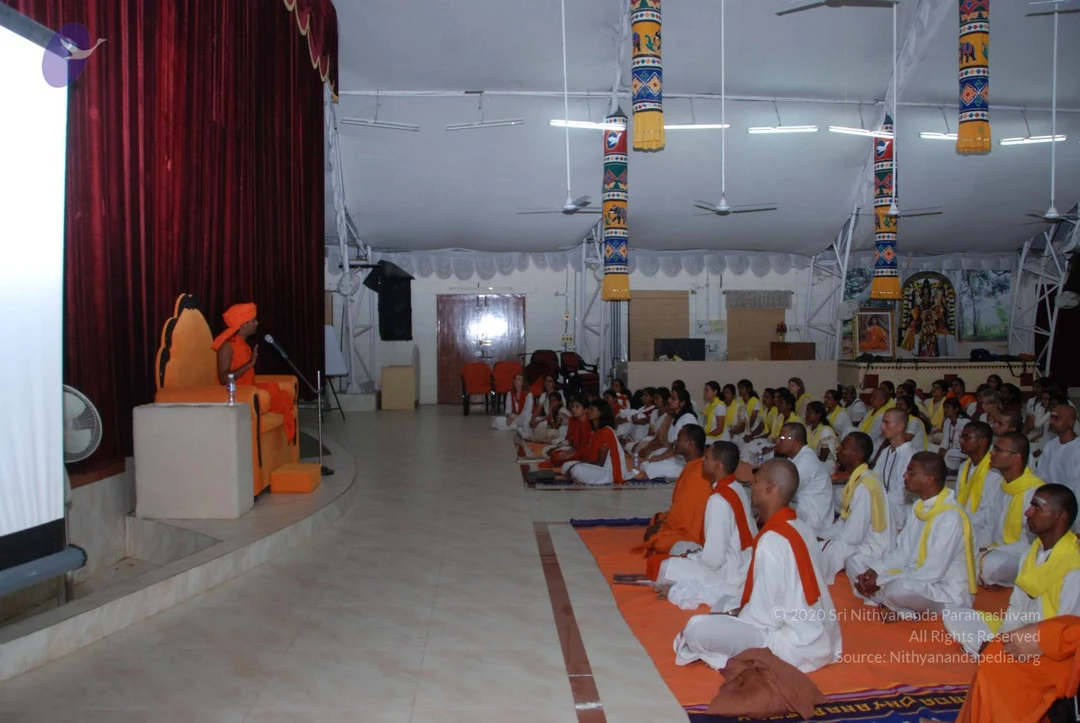
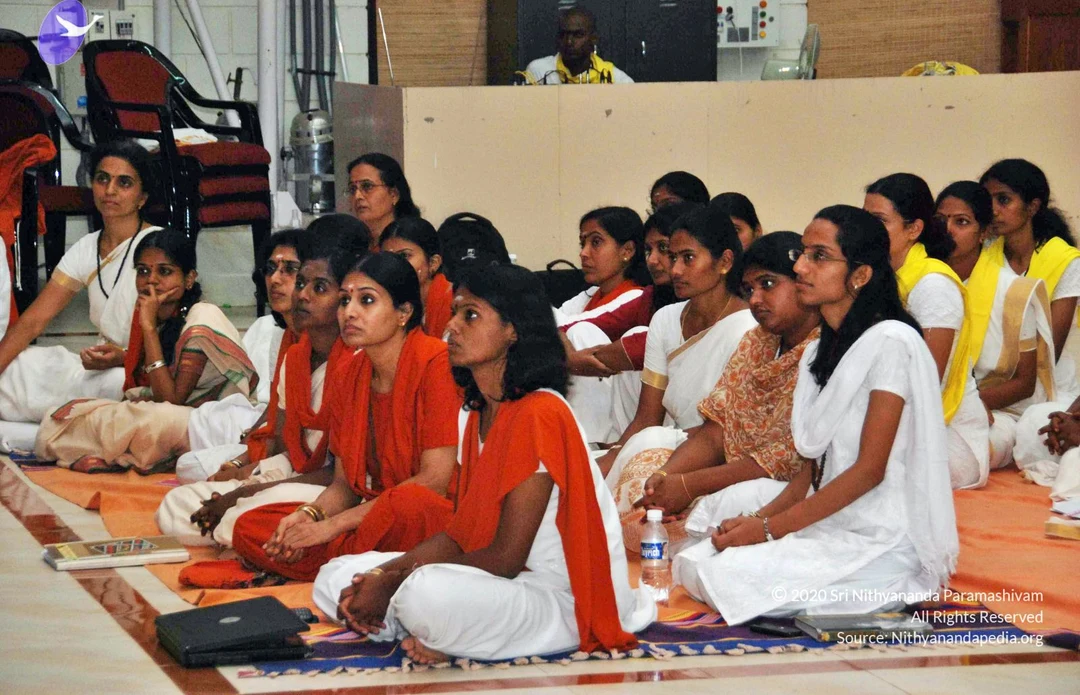
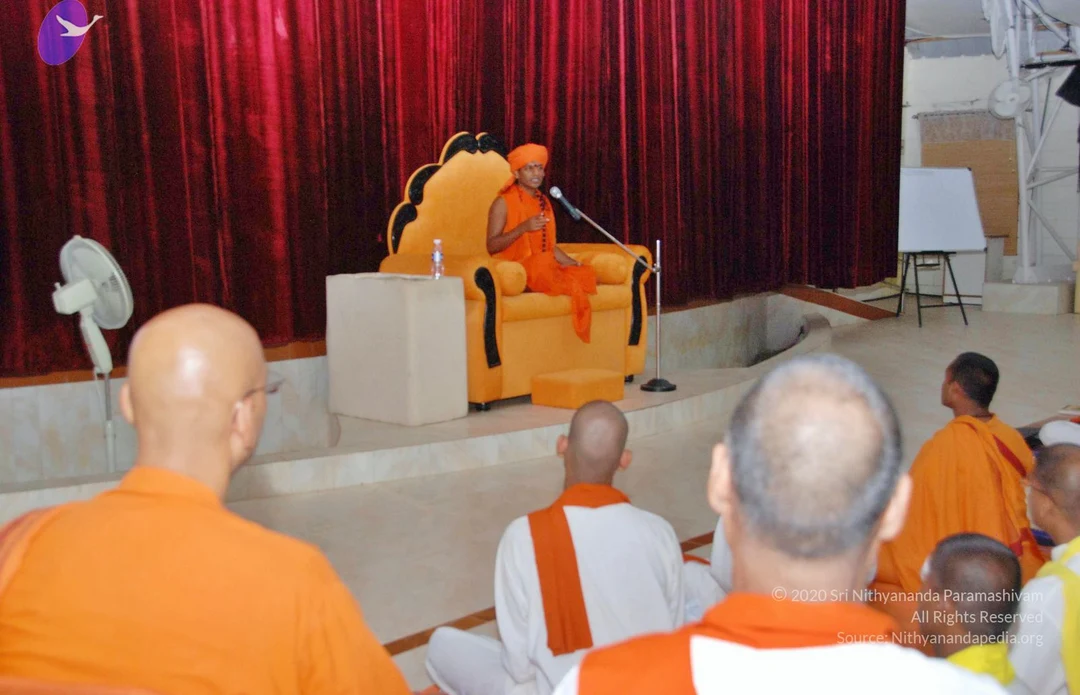
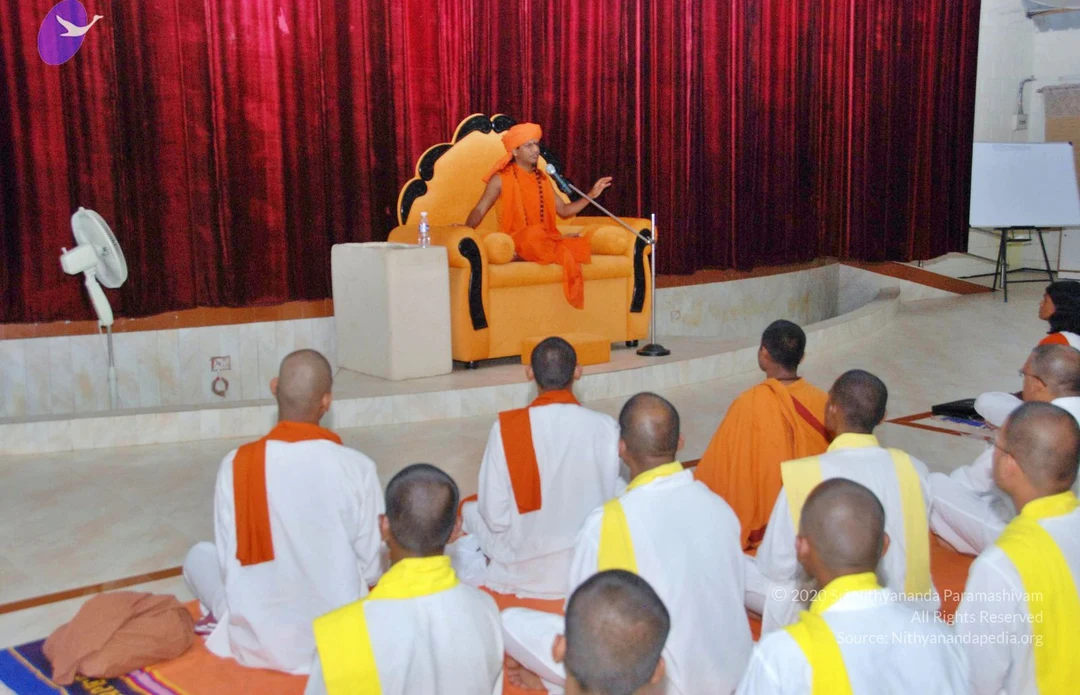
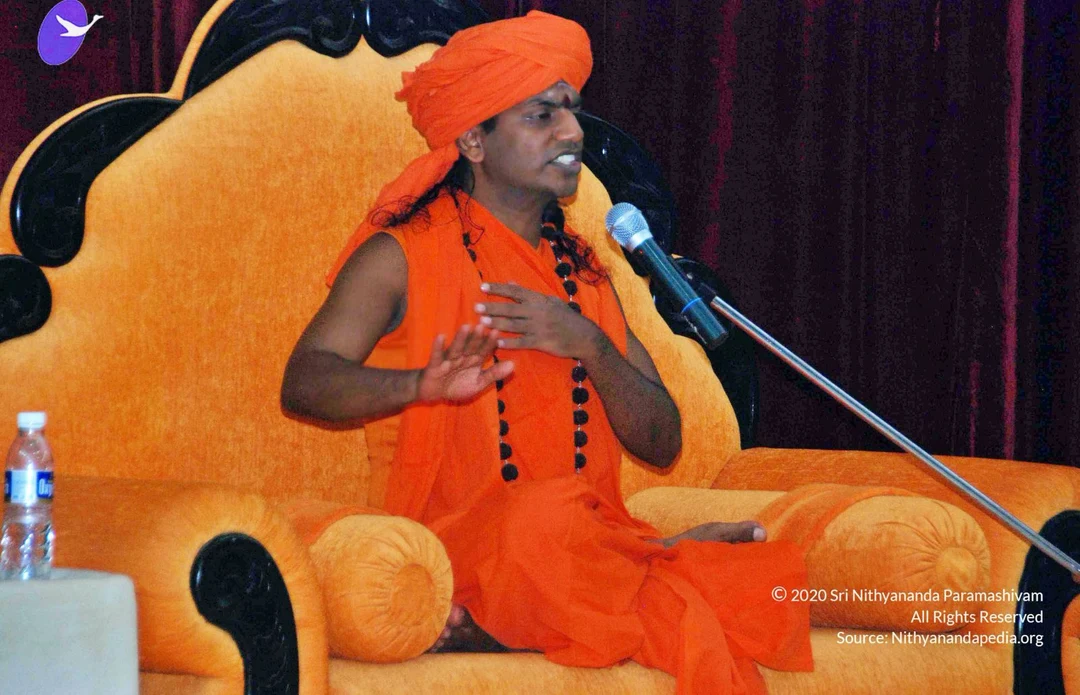
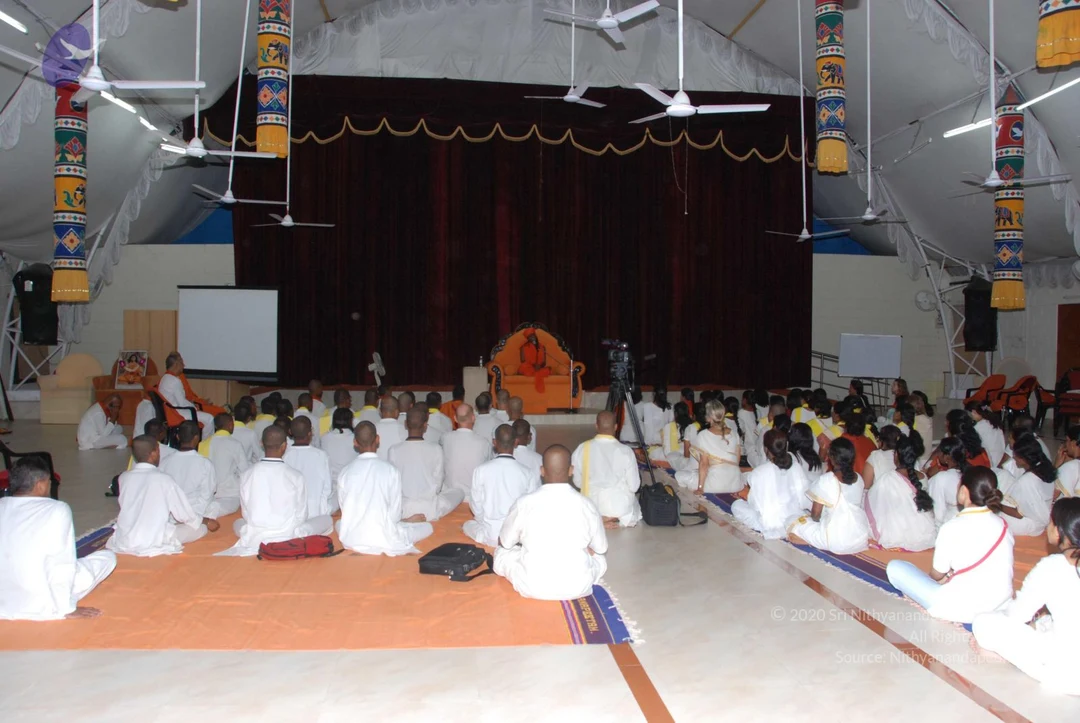
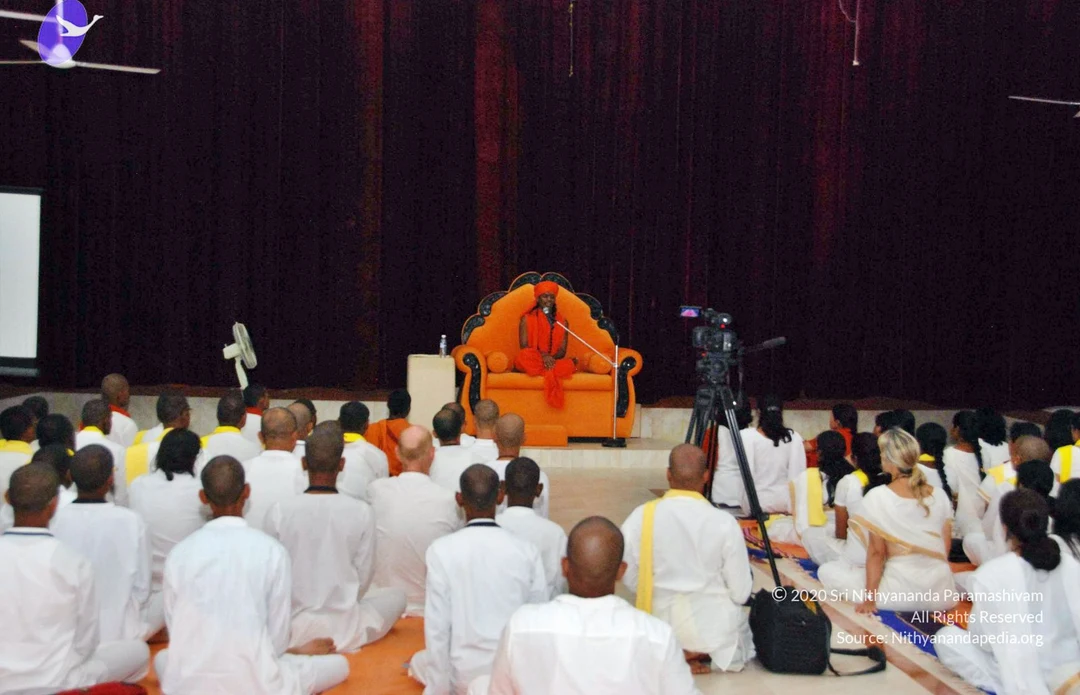
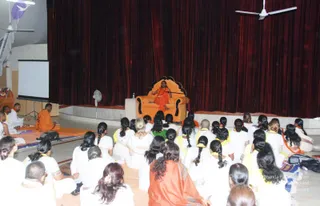
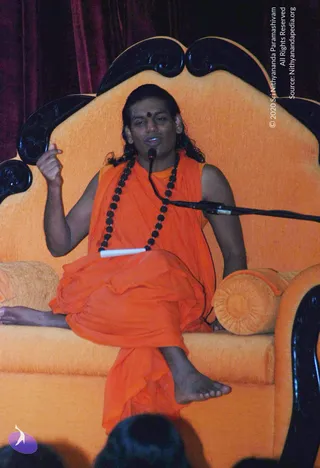
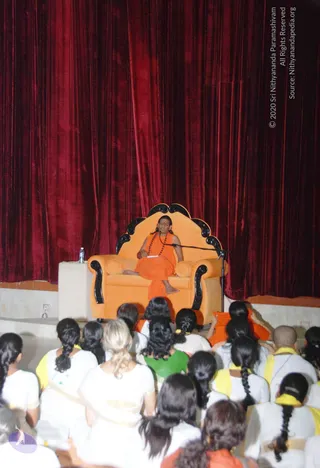
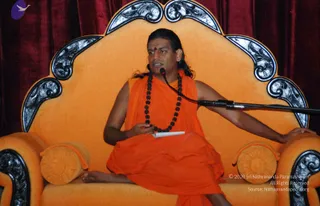
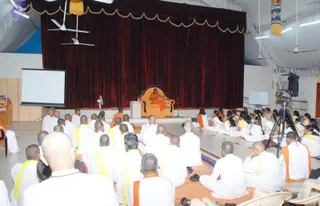
A photograph of a discourse hall with a seated audience facing a central throne. On an ornate orange throne with dark carved armrests sits a person in saffron/orange robes with a rudraksha mala, speaking to the gathering. The audience is mostly women with long braided hair wearing white garments with yellow borders, seated on the floor in rows, with a few men in white and saffron nearby. Behind the throne hang deep red velvet curtains, with a ceiling fan above and a projection screen at left showing a blank white image. A man in orange sits cross-legged on a mat to the left with others in white. Small bags sit on the floor at right.A man in orange saffron robes sits cross-legged on an ornate orange velvet throne with carved black wooden armrests and scroll-shaped back. He wears a long rudraksha mala with dark beads, a red bindi, and holds a white paper in his hand while speaking into a microphone on a stand. A red velvet curtain hangs behind him, a water bottle sits on a white table at left, and the backs of a few heads are visible in the foreground audience. a person is shown in appearance-based terms with saffron clothing and a rudraksha mala, seated on a throne during a discourse.A man with long dark hair and a red bindi sits cross-legged on an ornate orange upholstered throne with black carved wooden arms and a dark red curtain behind. He wears a sleeveless saffron-orange robe and a long black rudraksha mala with a white cylindrical object at his waist, and he raises one hand while speaking into a microphone on a stand. Dark silhouettes of audience heads are visible in the foreground at the bottom of the frame. A printed caption on the right edge reads copyright and source credit lines.A seated man in saffron-orange robes speaks into a microphone from a large orange upholstered throne with black carved armrests and backrest, set against deep red velvet drapes on a stage. He wears a red kumkum-style mark on his forehead, long dark hair, and a beaded rudraksha-style mala necklace, and holds a sheet of paper. In front of the stage, a seated audience of mostly women in white and yellow-trimmed white clothes, with long braided hair, faces away from the camera; one woman wears green and one person in the back wears an orange garment. A water bottle sits on a white pedestal at left. The scene shows a discourse or satsang. A small faded logo appears at lower left.A man seated on an ornate orange velvet throne-like sofa with silver scrollwork and bolster cushions, speaking into a microphone on a stand before a deep red curtain. He wears a sleeveless saffron-orange robe with a black rudraksha mala around his neck and a small red bindi on his forehead, holding a folded white paper in one hand while the other arm rests on the armrest. Appearance-based candidate is shown with long swept-back hair and saffron attire with rudraksha beads, so this is a person giving a discourse in person.A photograph of a discourse hall with a dark red velvet curtain backdrop. A figure in saffron-orange robes sits on an ornate orange throne-style chair on a raised stage, with a microphone stand before him. Rows of seated devotees in white clothing with orange and yellow shawls sit on the floor facing the stage; several shaved-headed men in white and orange wear rudraksha malas. A projector screen stands at left, ceiling fans overhead, and a video camera on a tripod is at right. Golden fringe trims the curtain, and a colourful hanging decoration is visible at upper right.

LEP-Meeting

38 photosSource gallery
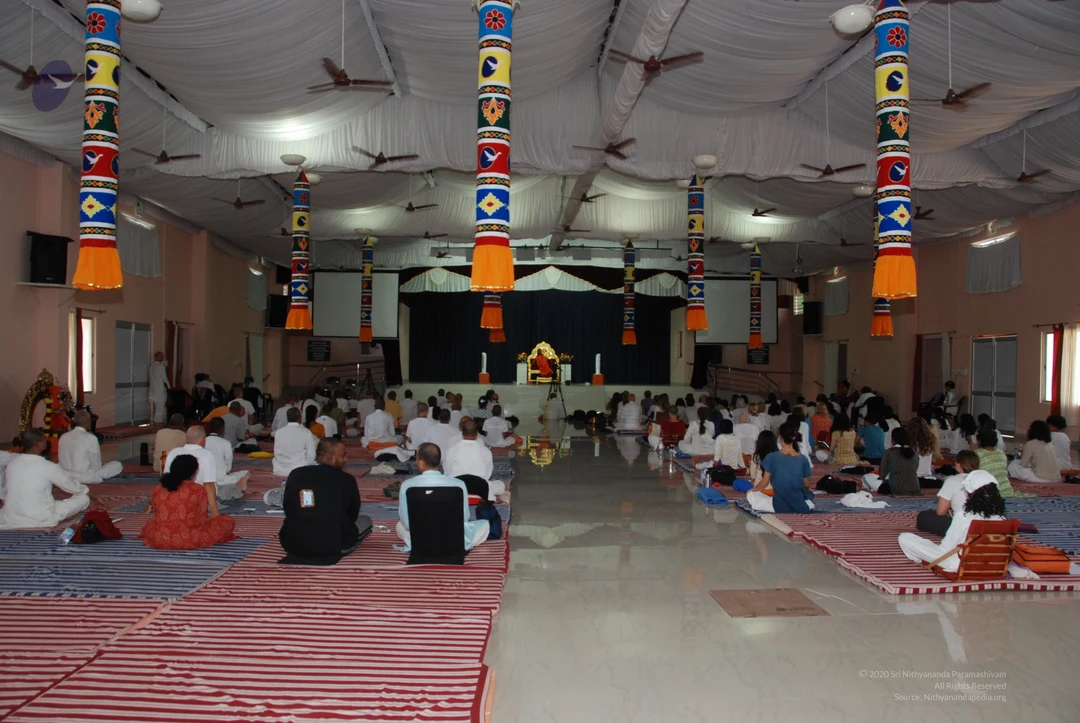
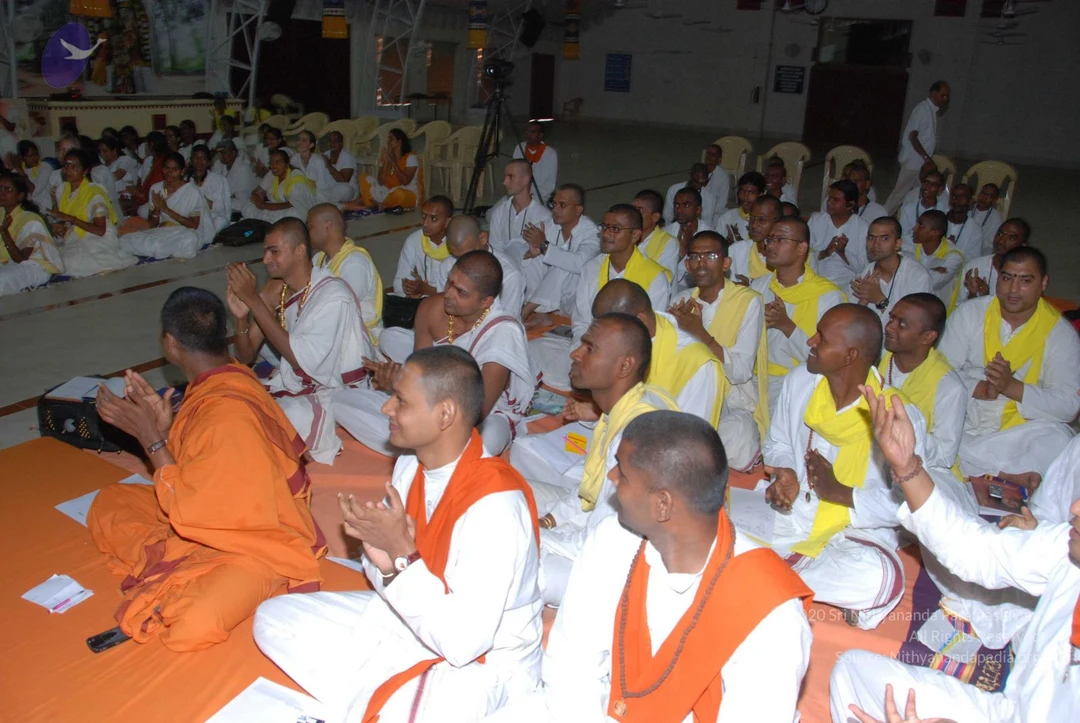
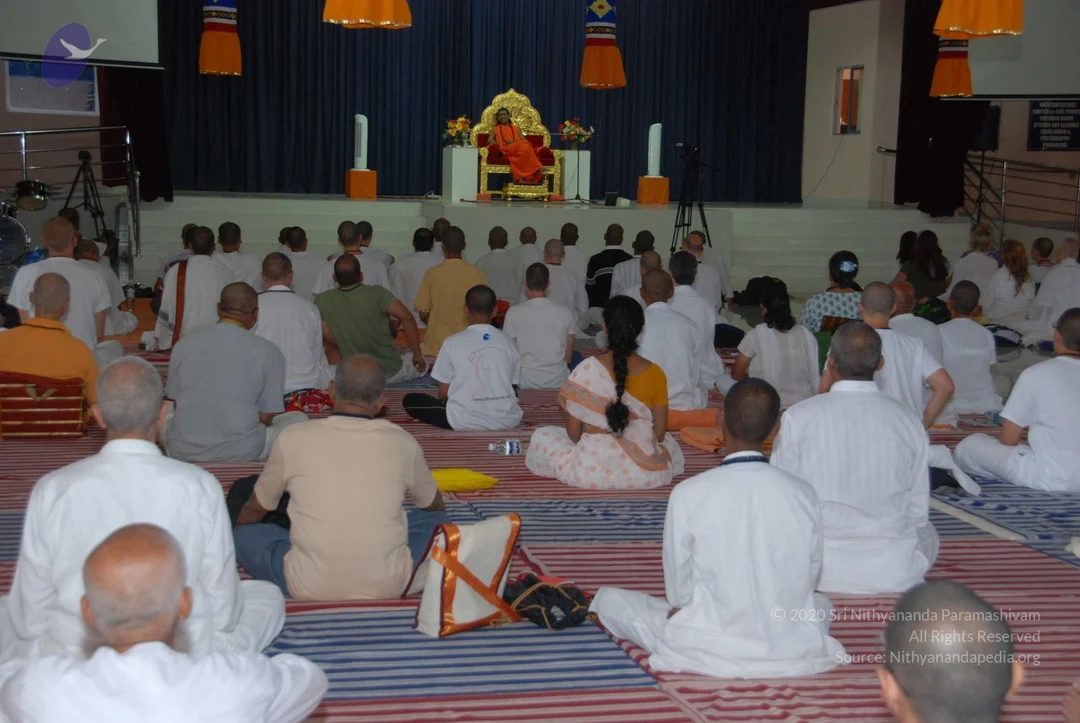
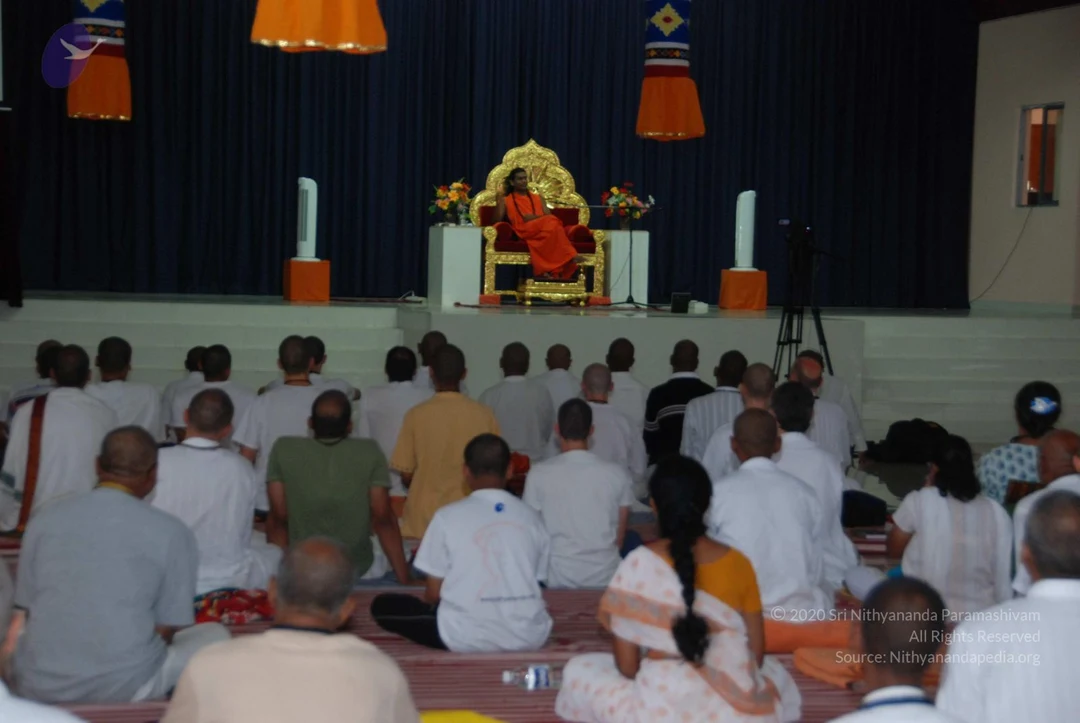
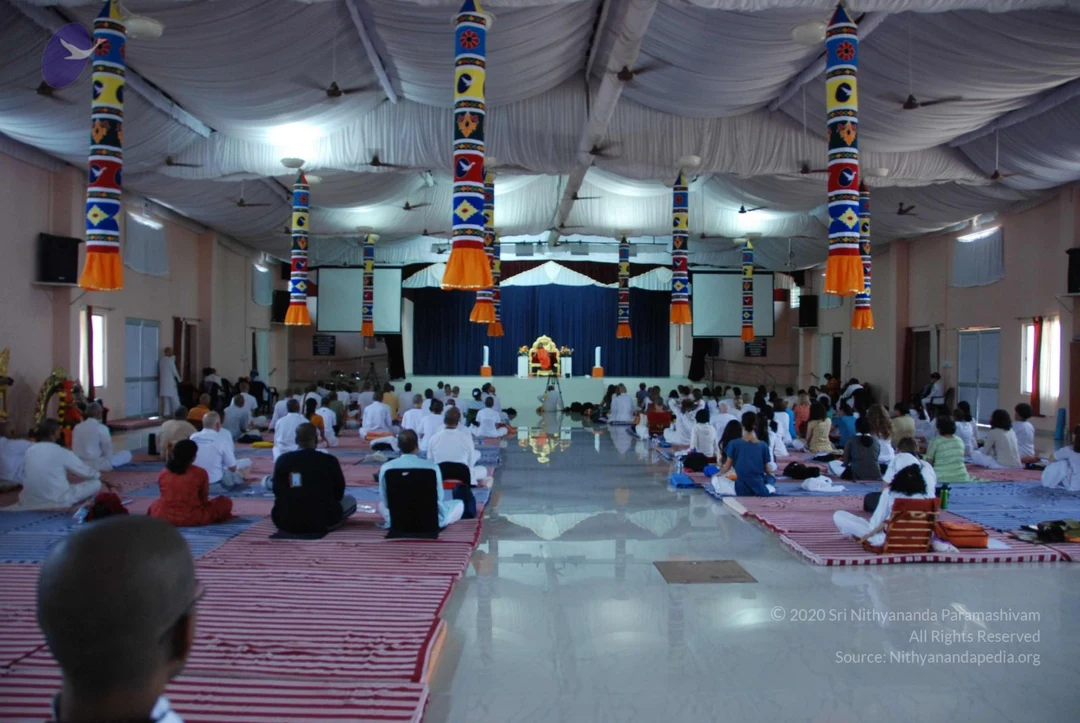
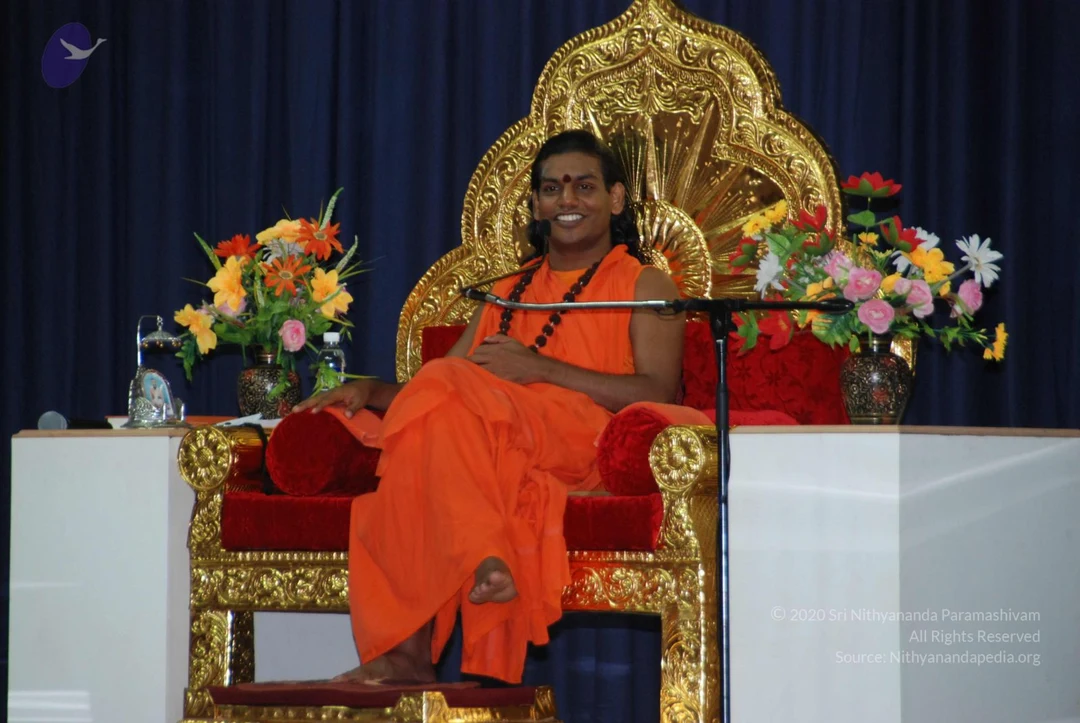
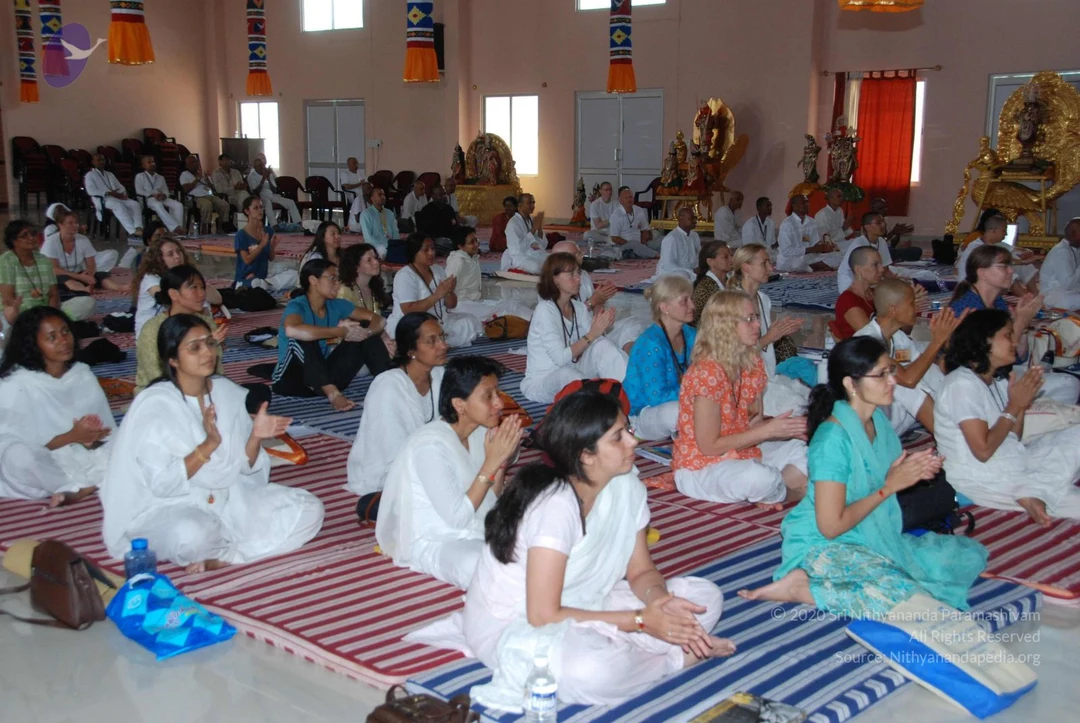
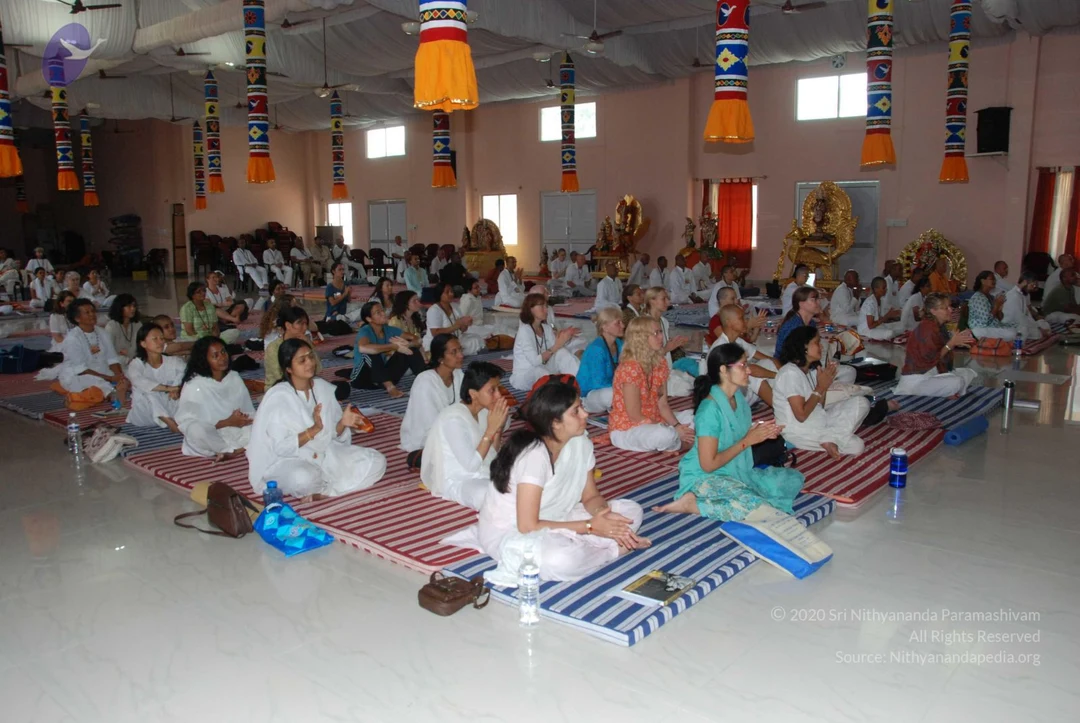
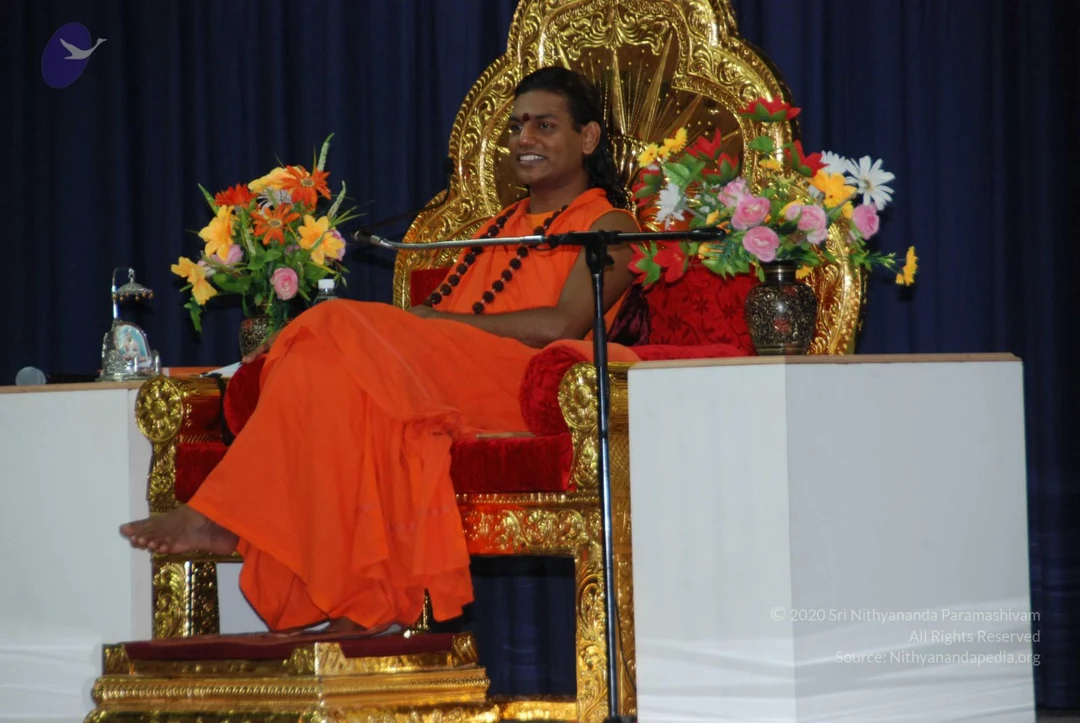
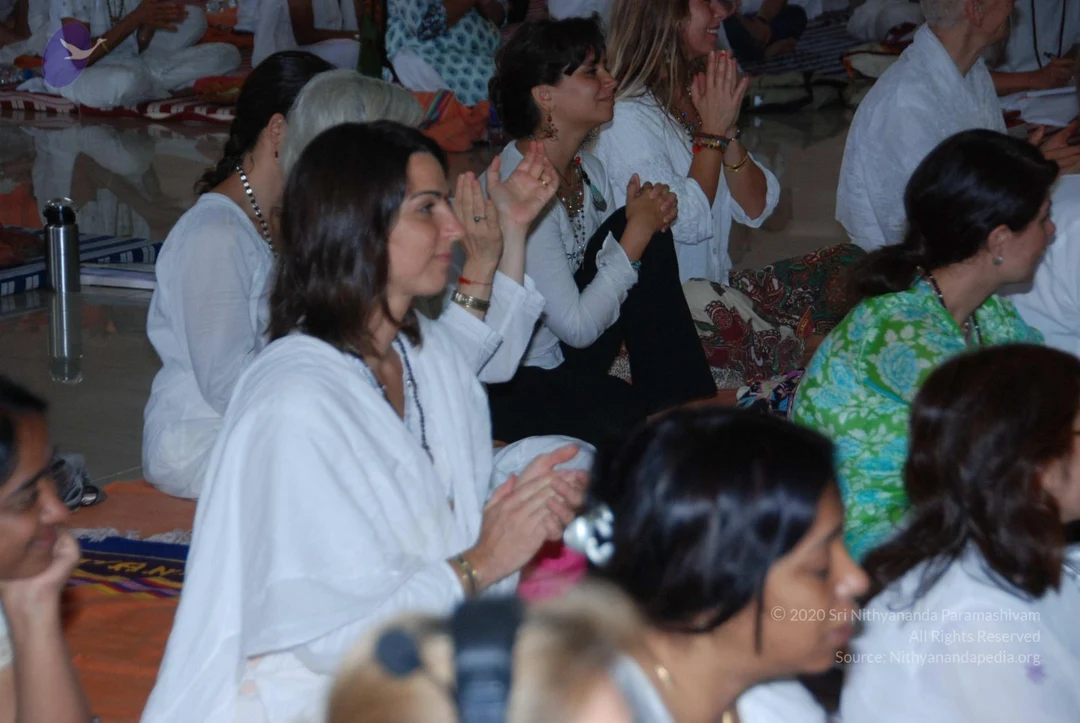
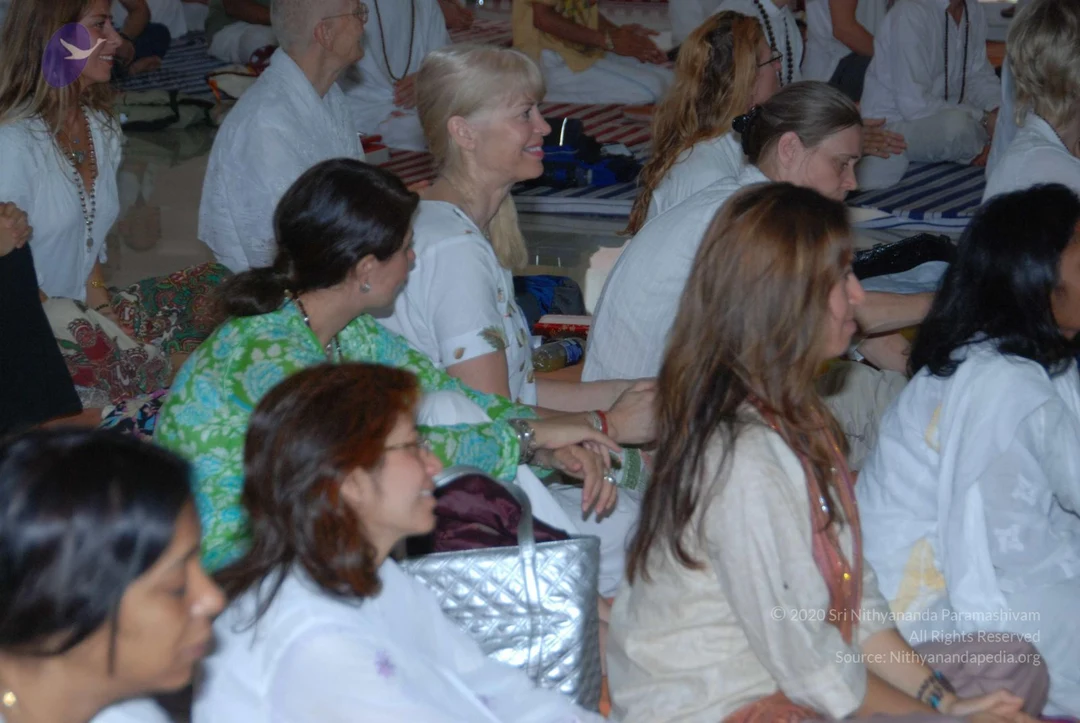
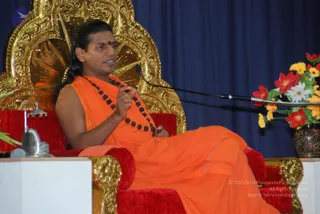
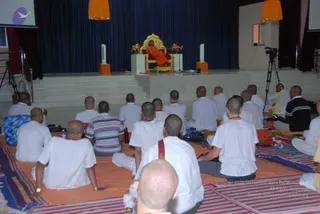
A seated man in an orange saffron robe with rudraksha mala beads sits on an ornate gold throne with red velvet cushions, speaking into a microphone. He is barefoot, with long dark hair swept back, and his hands rest loosely in his lap. Behind him hangs a deep blue draped curtain, flanked by vases of colourful artificial flowers in orange, red, yellow and pink on white pedestals. A small silver water pot sits on the side table. Setting suggests a satsang or discourse stage.Photograph of a man seated on an ornate gold-and-red throne chair, speaking into a microphone on a stand. He wears an orange saffron robe, a long rudraksha mala of dark beads, and a red bindi on his forehead; his long dark hair is swept back. One hand gestures mid-speech. To his right is a vase of red, yellow and white flowers, and a silver ritual vessel sits on a white table at left. Blue draped curtains form the backdrop. a person: a teaching figure seated in a satsang discourse, with saffron robe, rudraksha mala and long swept-back hair as the qualifying cues.A large hall with many seated devotees in white shirts and white trousers, sitting cross-legged on orange and multicoloured striped mats, facing forward toward a teaching seat. Many have shaved heads; several wear rudraksha malas and small name badges. Colourful woven tassel banners hang from the ceiling, and a blue cushion rests at right. Some people sit on chairs at the back, and the room has large windows and orange curtains.A large indoor satsang hall with many seated devotees on striped mats and orange cloths, most dressed in white with rudraksha malas and ID badges. Several men in front are seated cross-legged, with one bald man in white and glasses smiling and looking forward. Women in white and a few in patterned blue or green saris sit among them. Water bottles and small bags lie on the floor. The scene is attentive and calm, with people listening to a teaching.Photograph of a satsang hall where a seated figure in orange robes sits on an ornate gold-and-red throne on a raised white stage, flanked by flower arrangements and two tall white fans on orange pedestals. Dark blue curtains hang behind the stage and orange lampshades hang from the ceiling. Roughly a dozen shaved-headed people in white clothes sit cross-legged on orange and striped mats facing the stage, while a camera on a tripod records the event at the right edge.Photograph of a seated audience facing a stage in a hall with striped red, blue and white mats. A figure in orange robes sits on an ornate gold-and-red throne at the back, with flower arrangements and white pillar lamps on either side. Audience members, mostly shaved-headed men in white clothes, sit cross-legged with their backs to the camera, along with a few women in saris and salwar, one in a peach sari with a long braid. Orange and blue draped banners hang above the stage, and a camera on a tripod stands at the right edge. The orange-robed figure on the throne appears to be a person candidate with saffron robes and a seated throne position, though the appearance is distant and uncertain.

Yoga-Sutra-Evening-Satsang
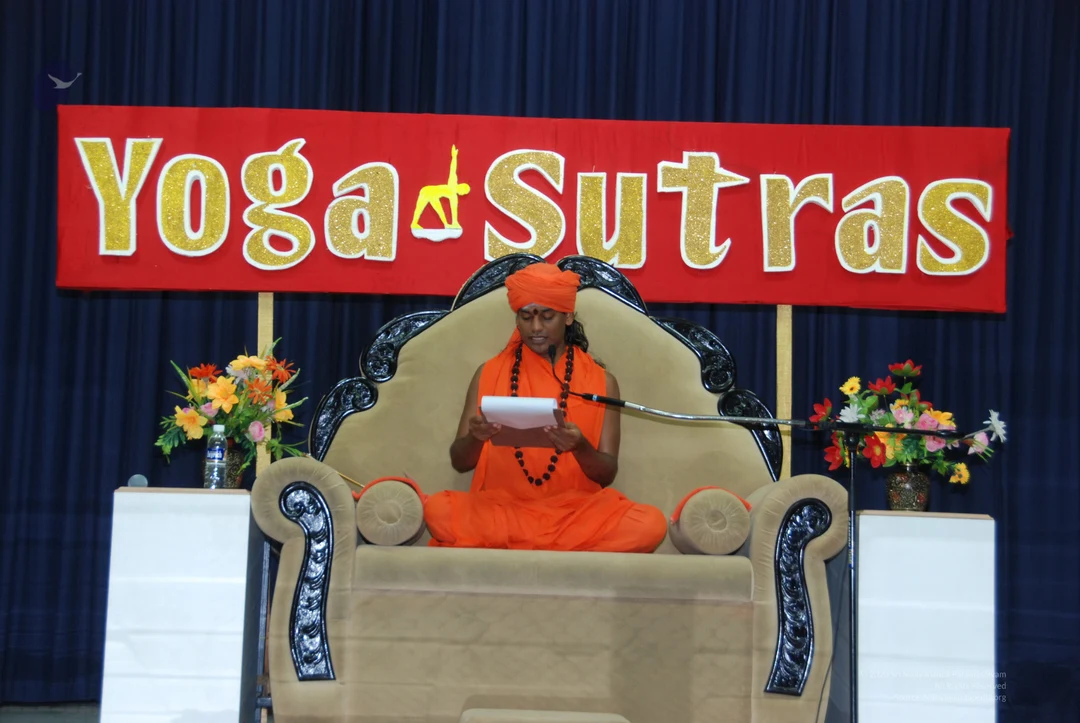
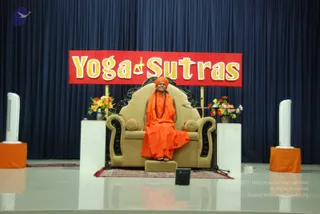
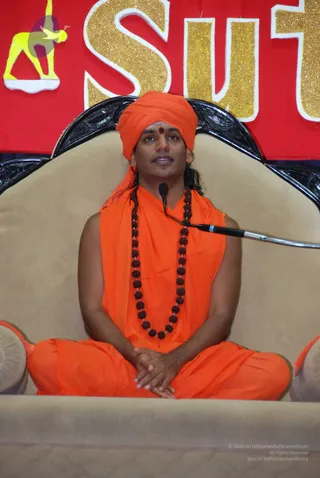
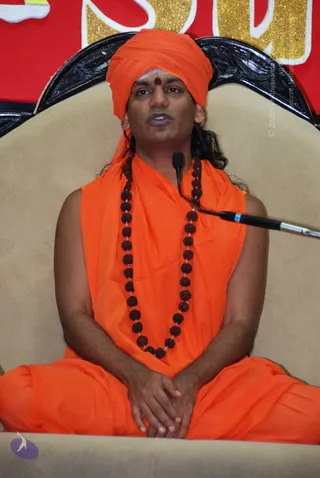
80 photosSource gallery
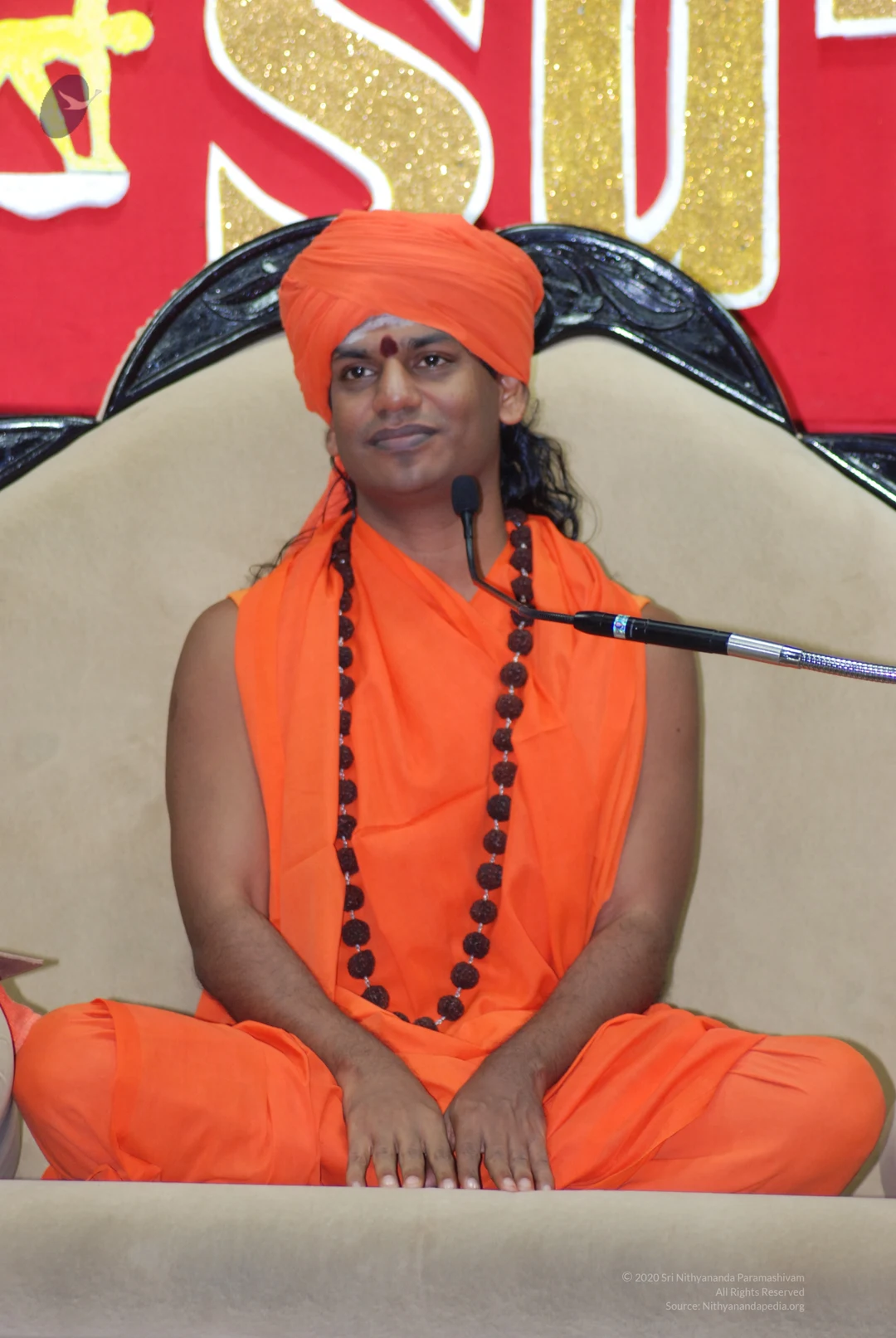
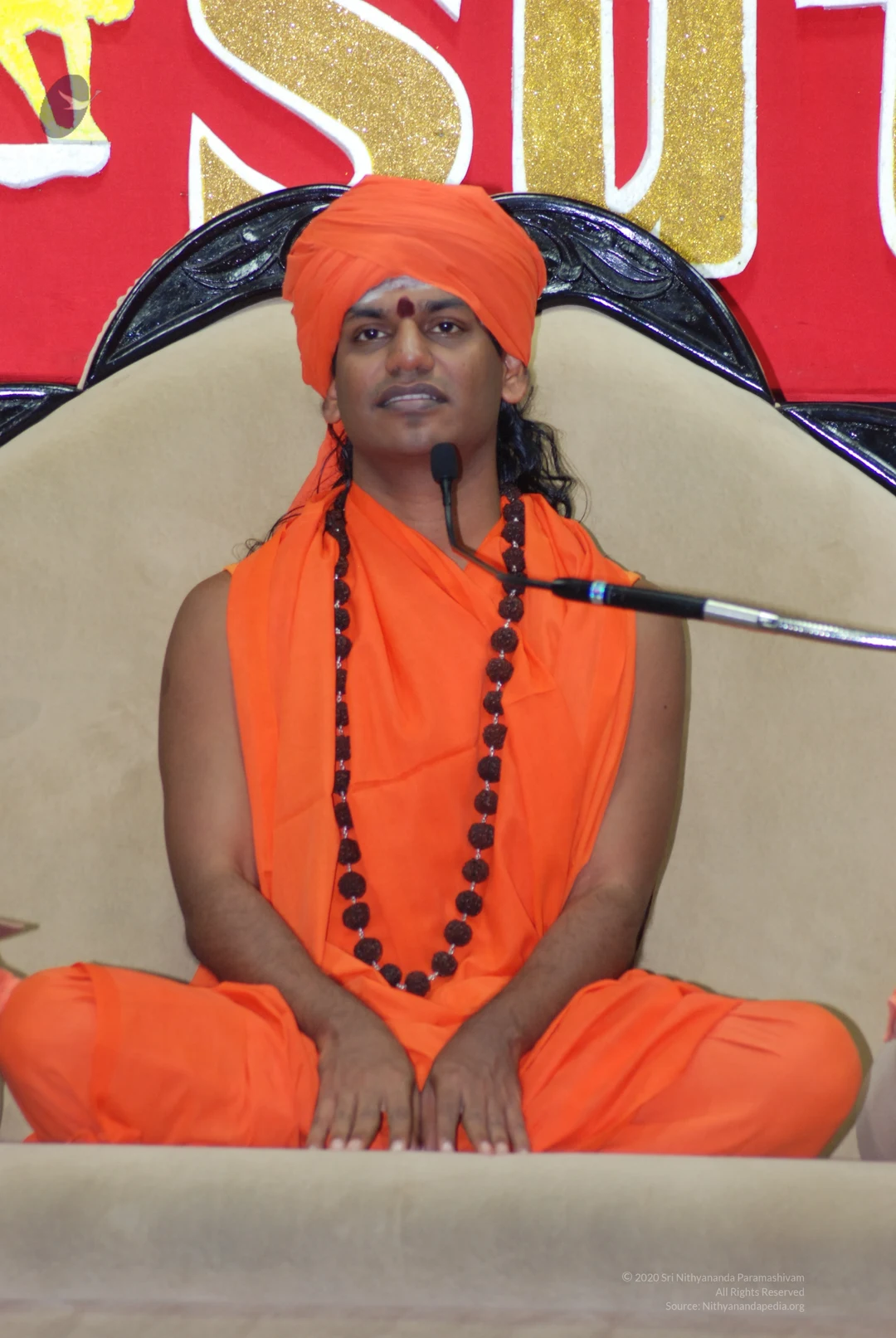
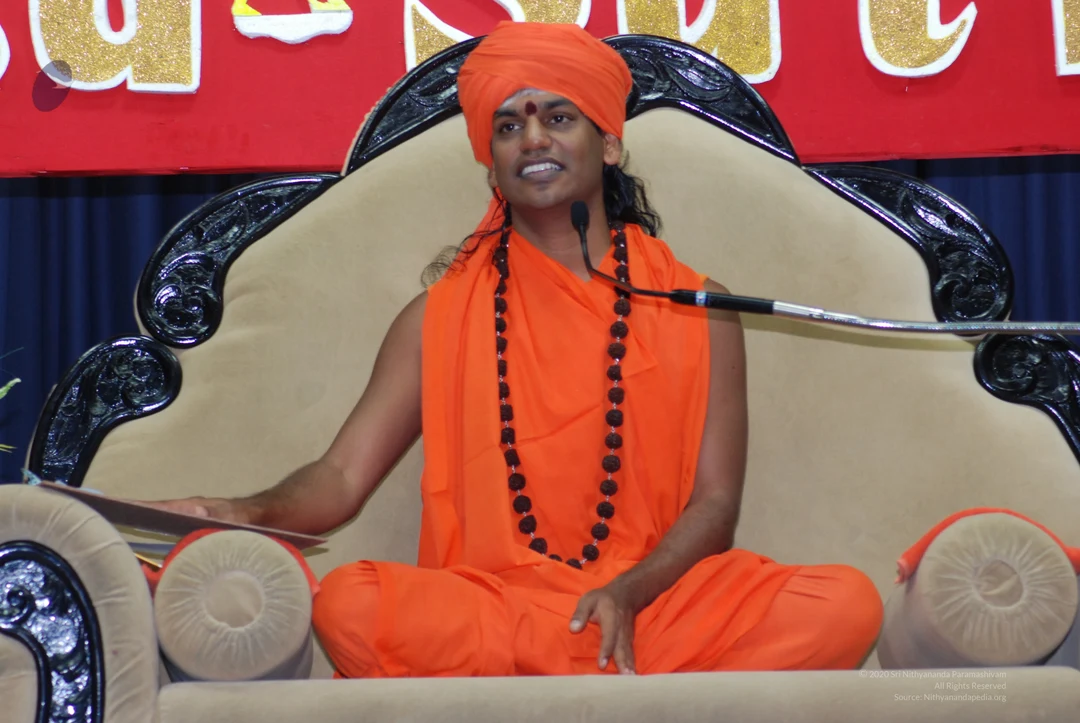
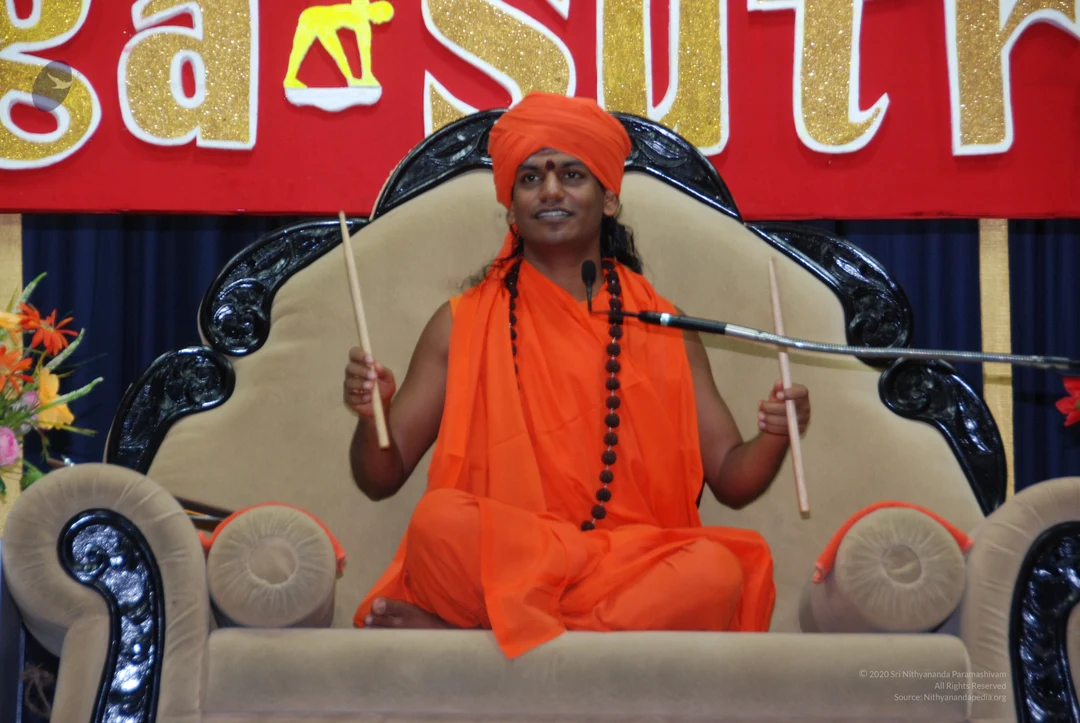
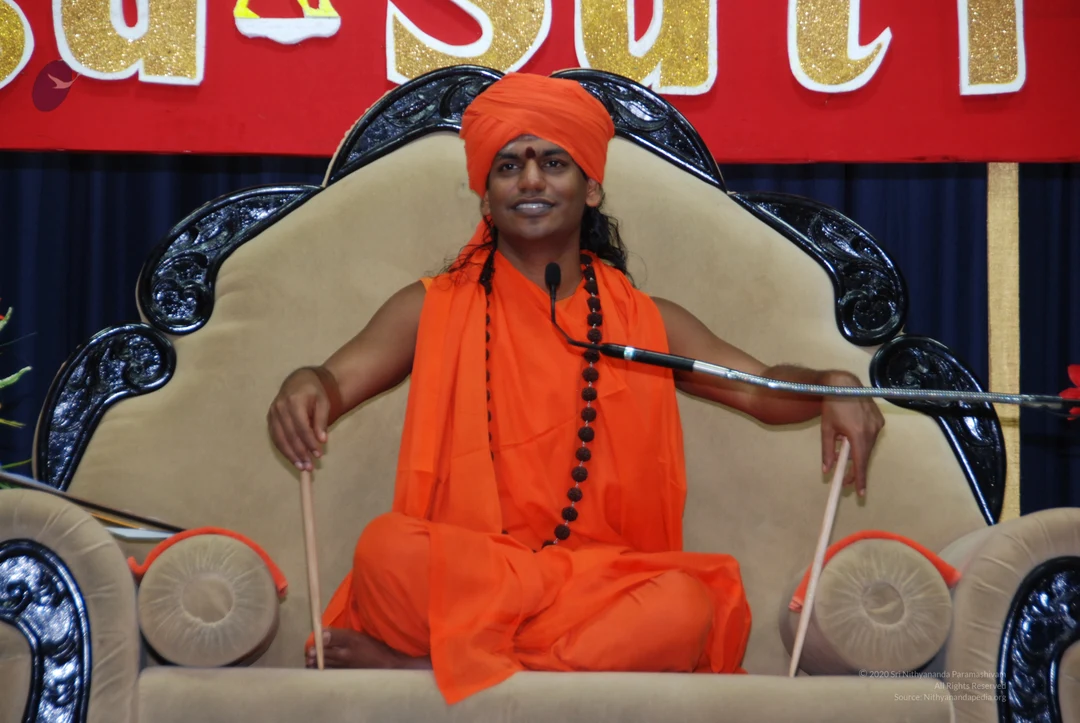
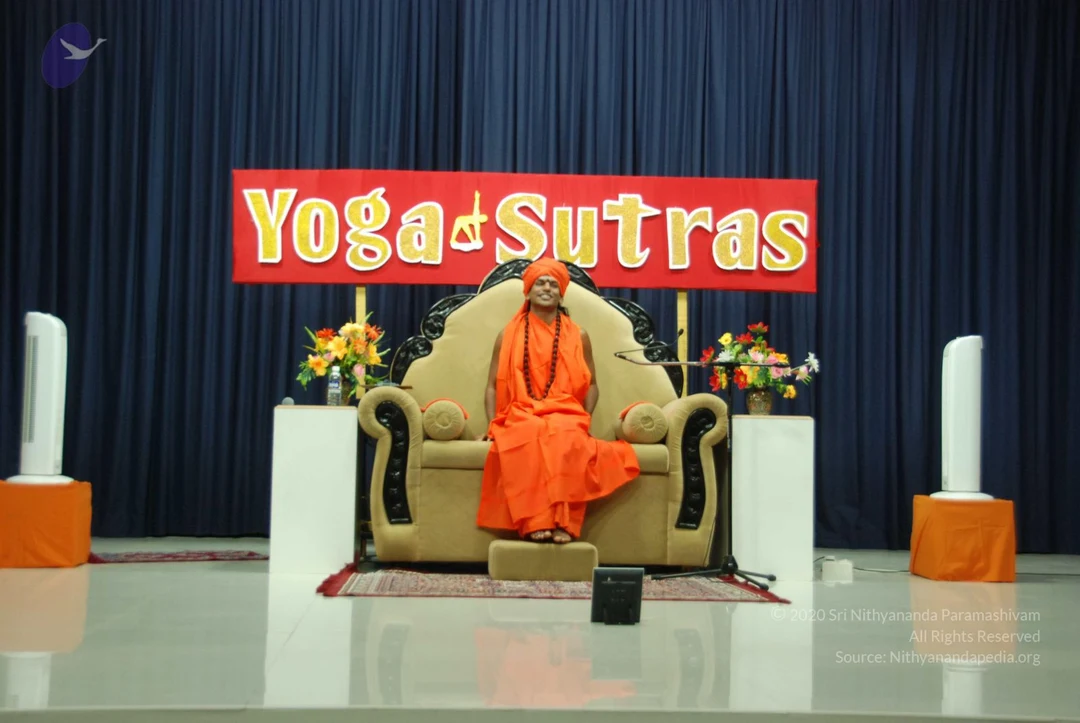
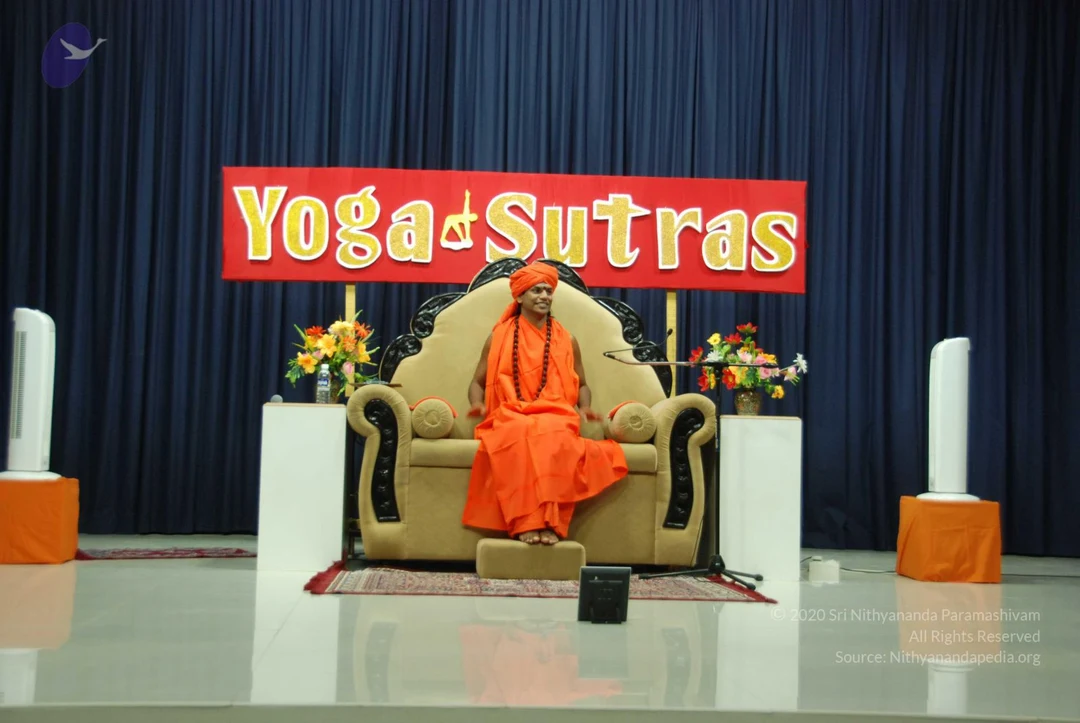
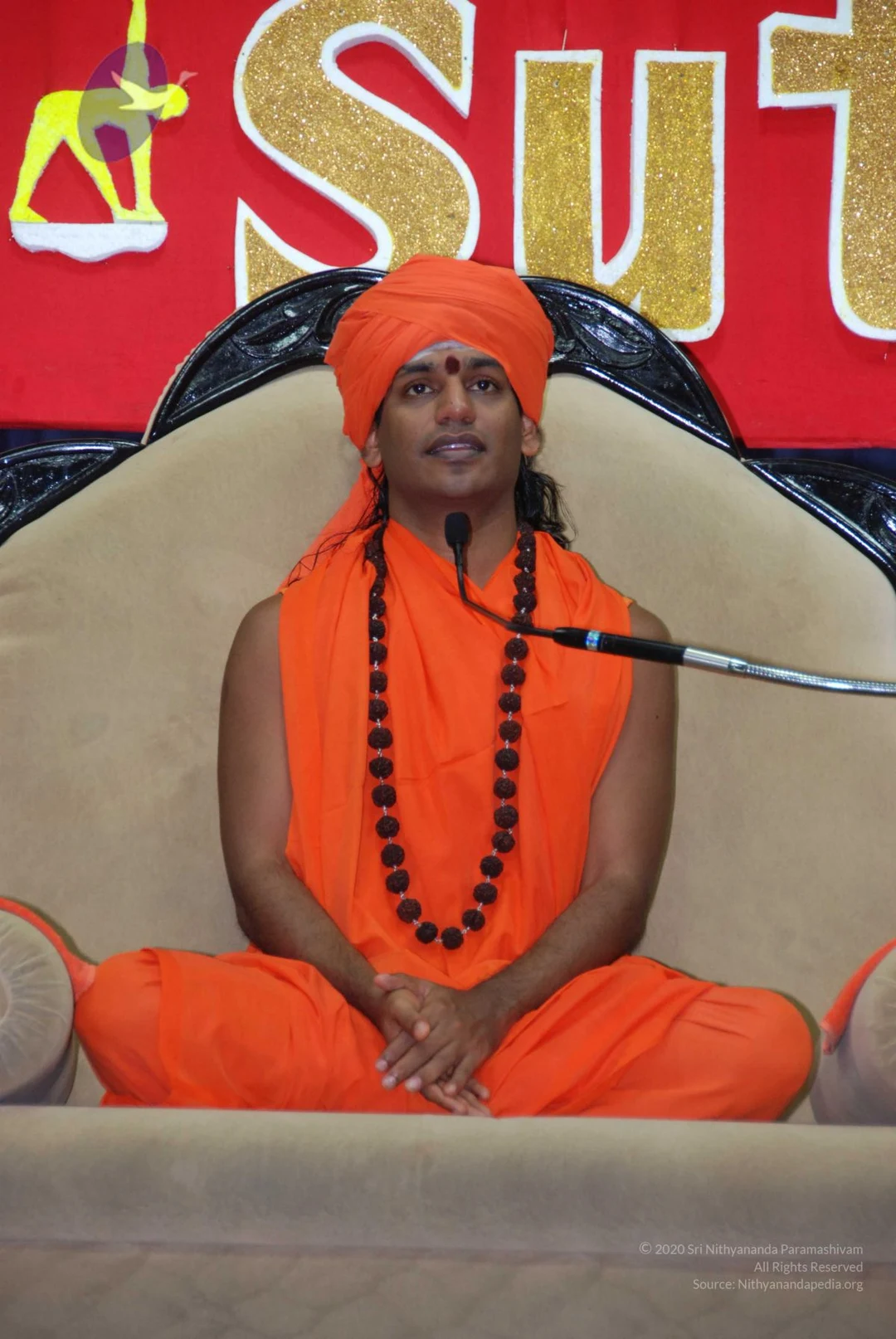
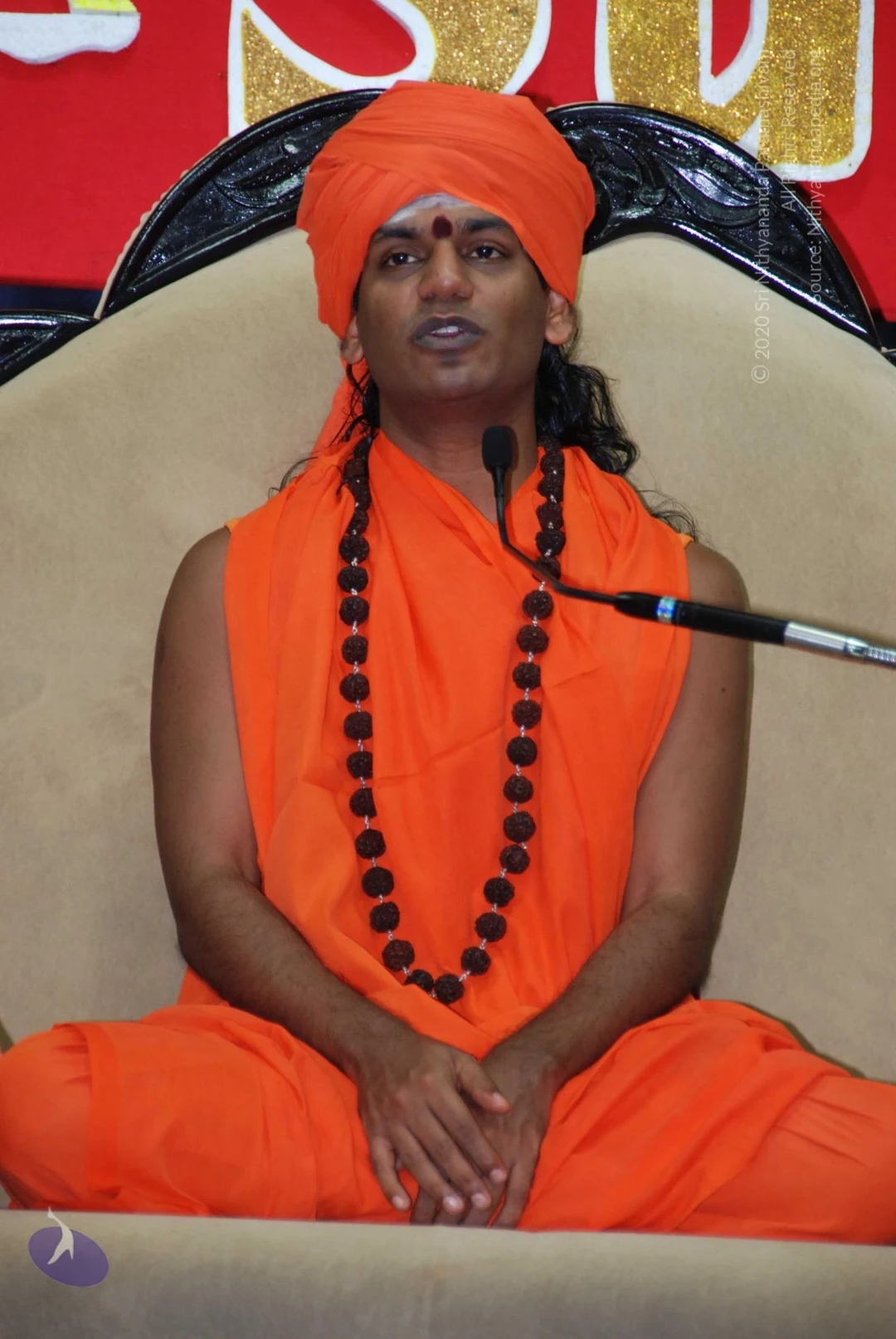
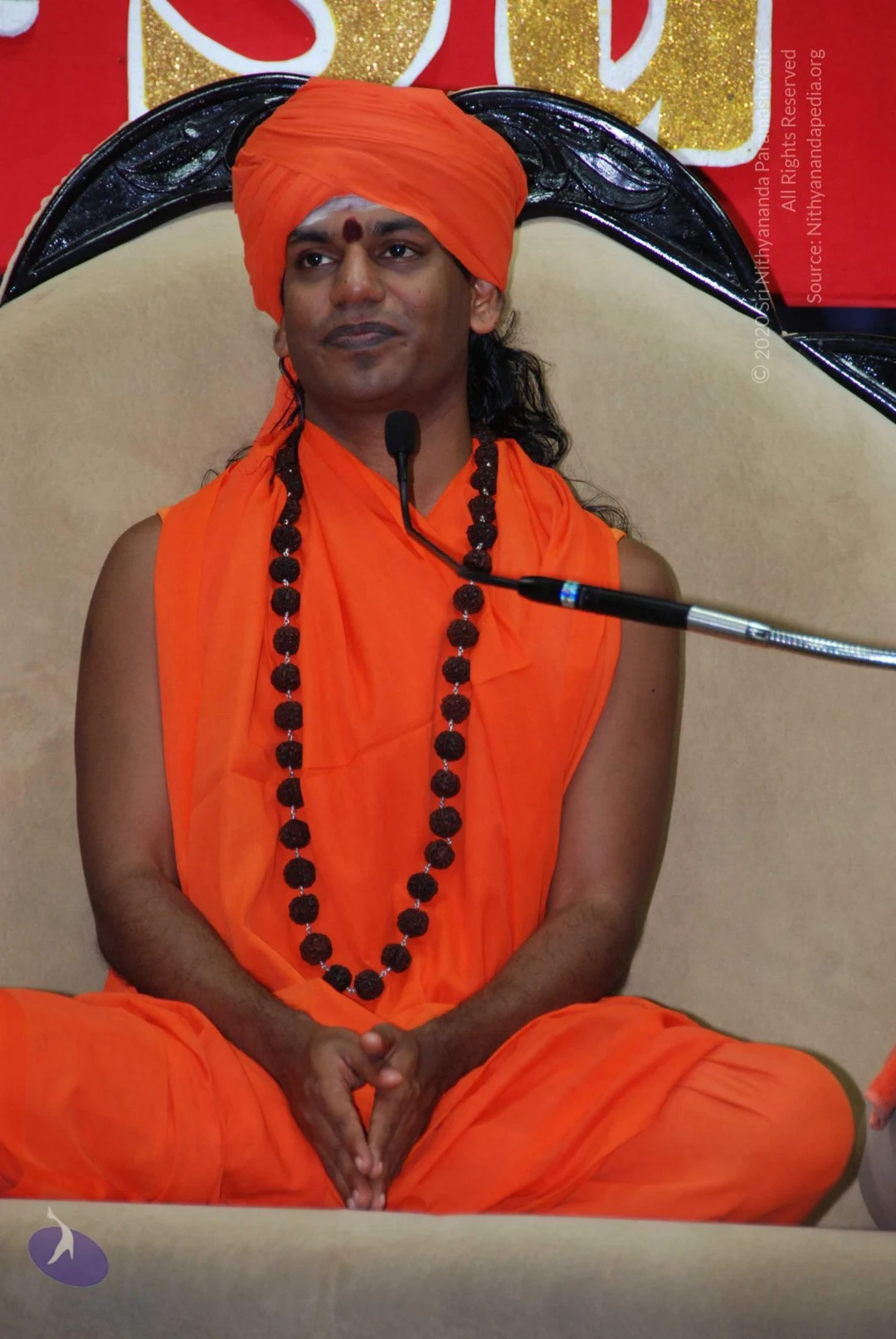
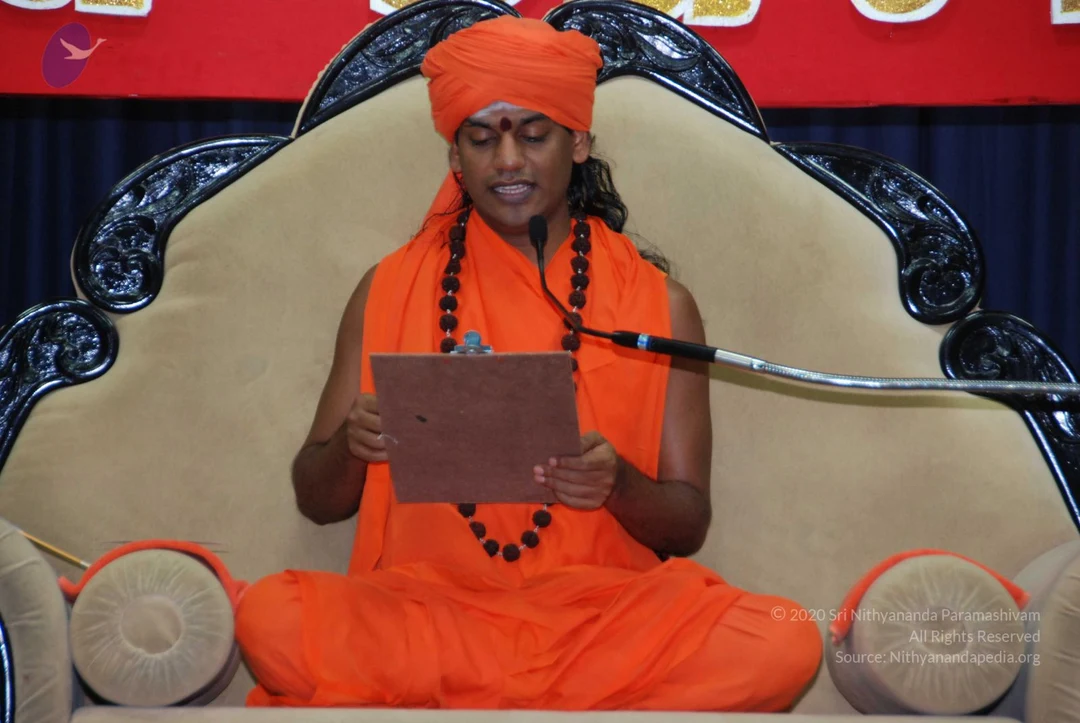
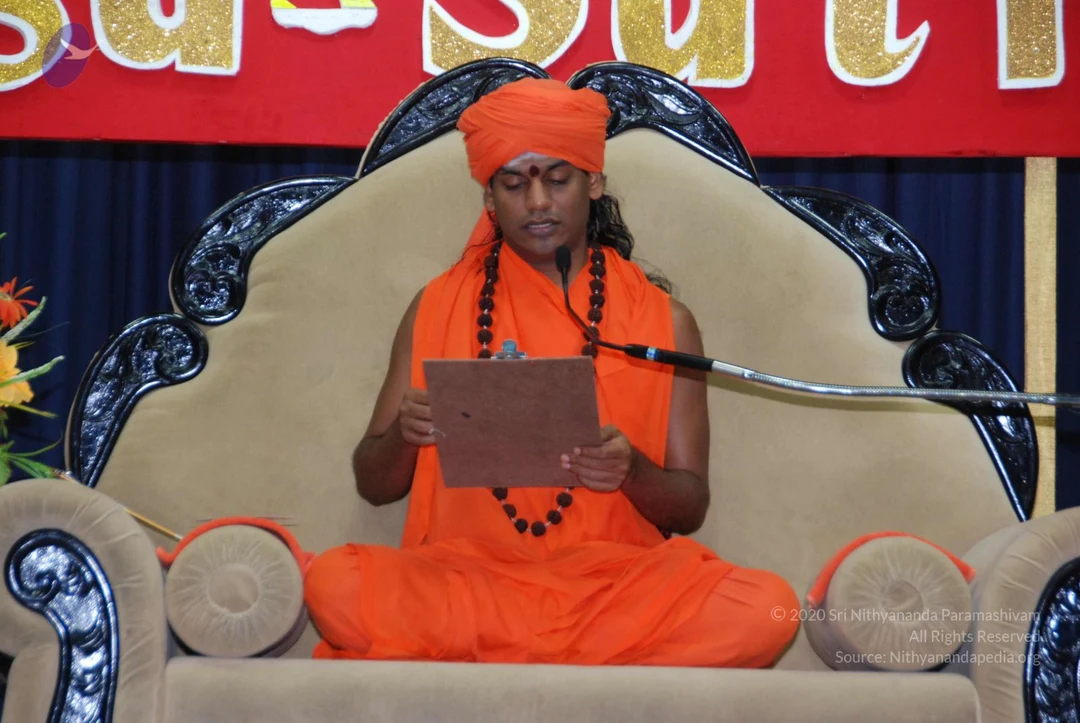
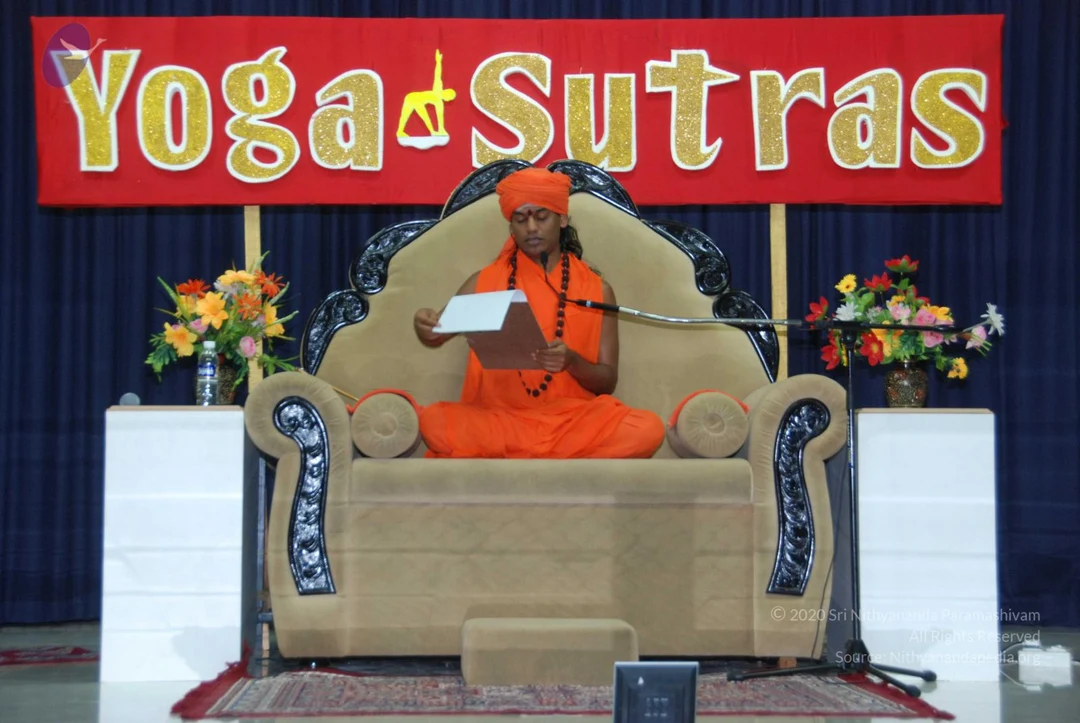
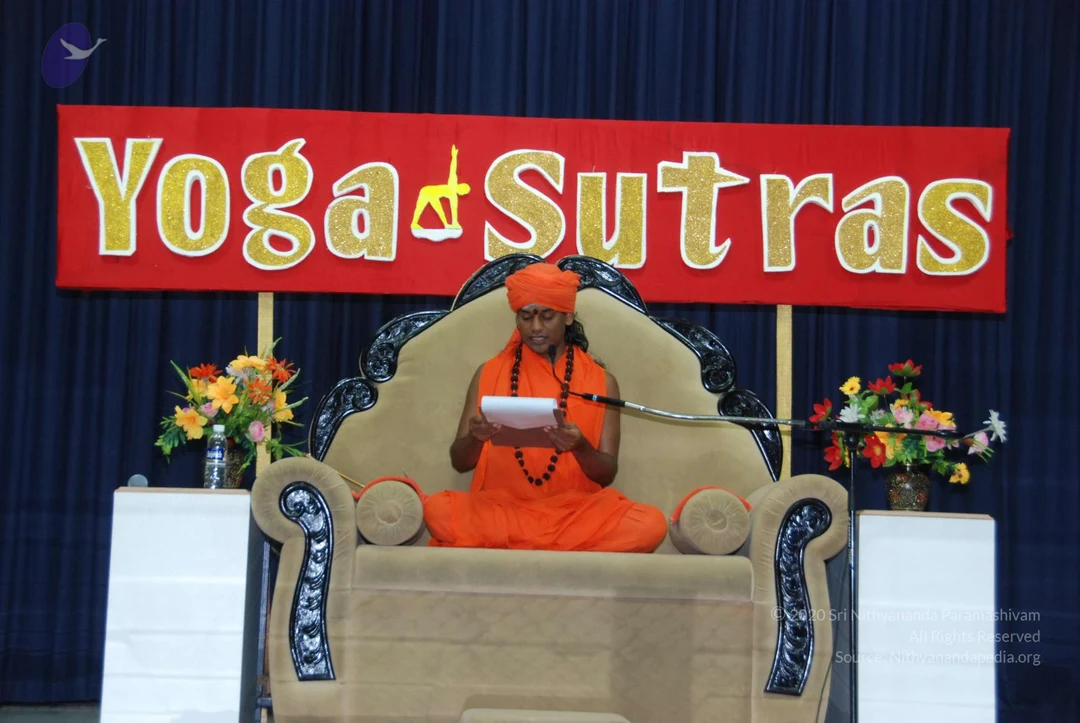
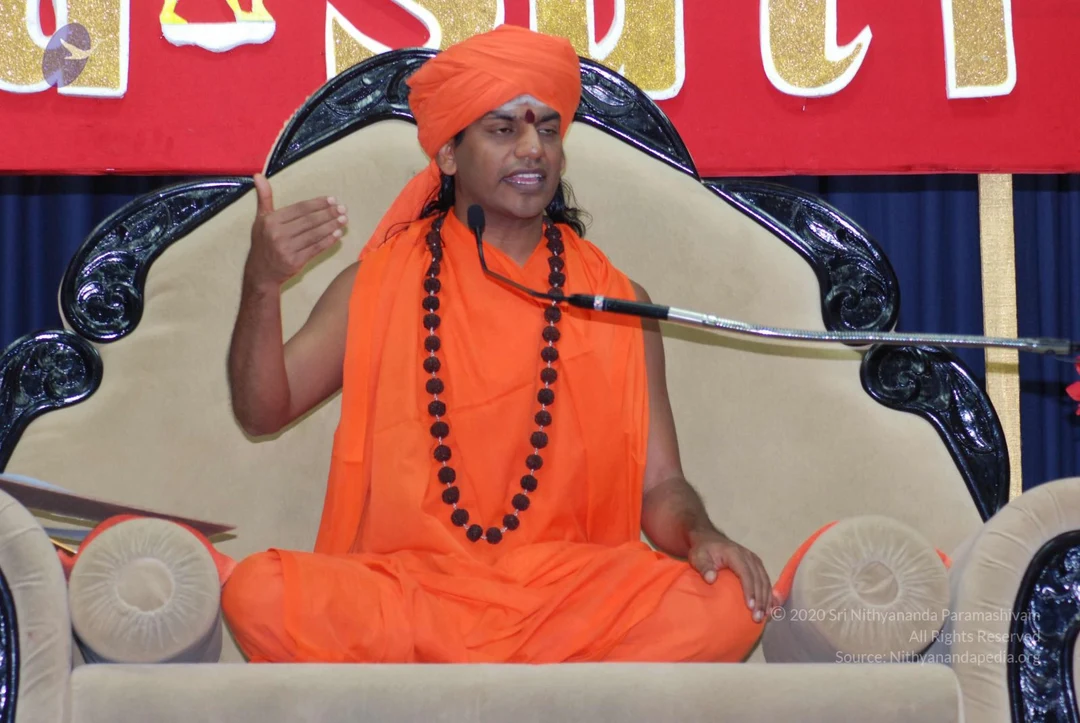
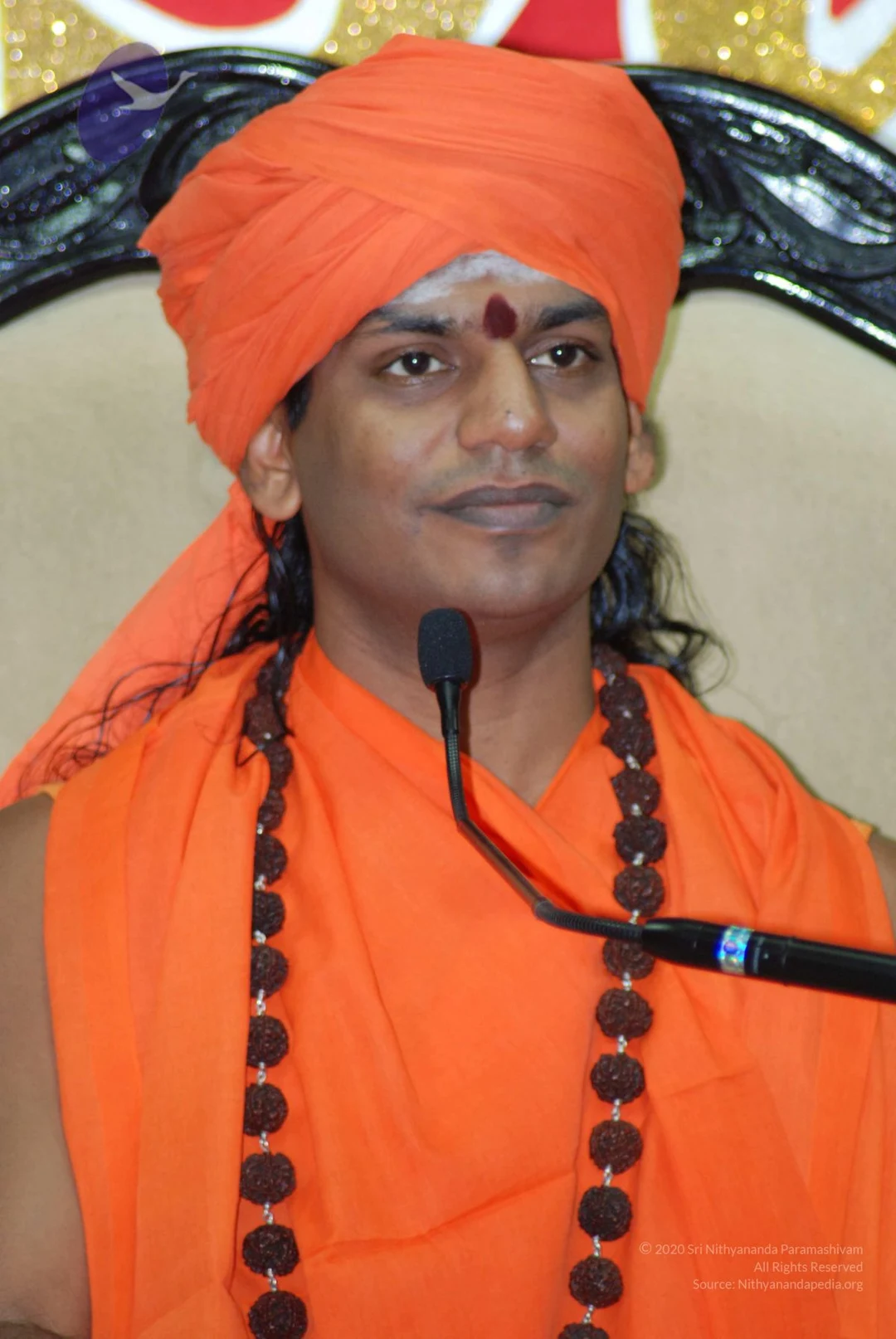
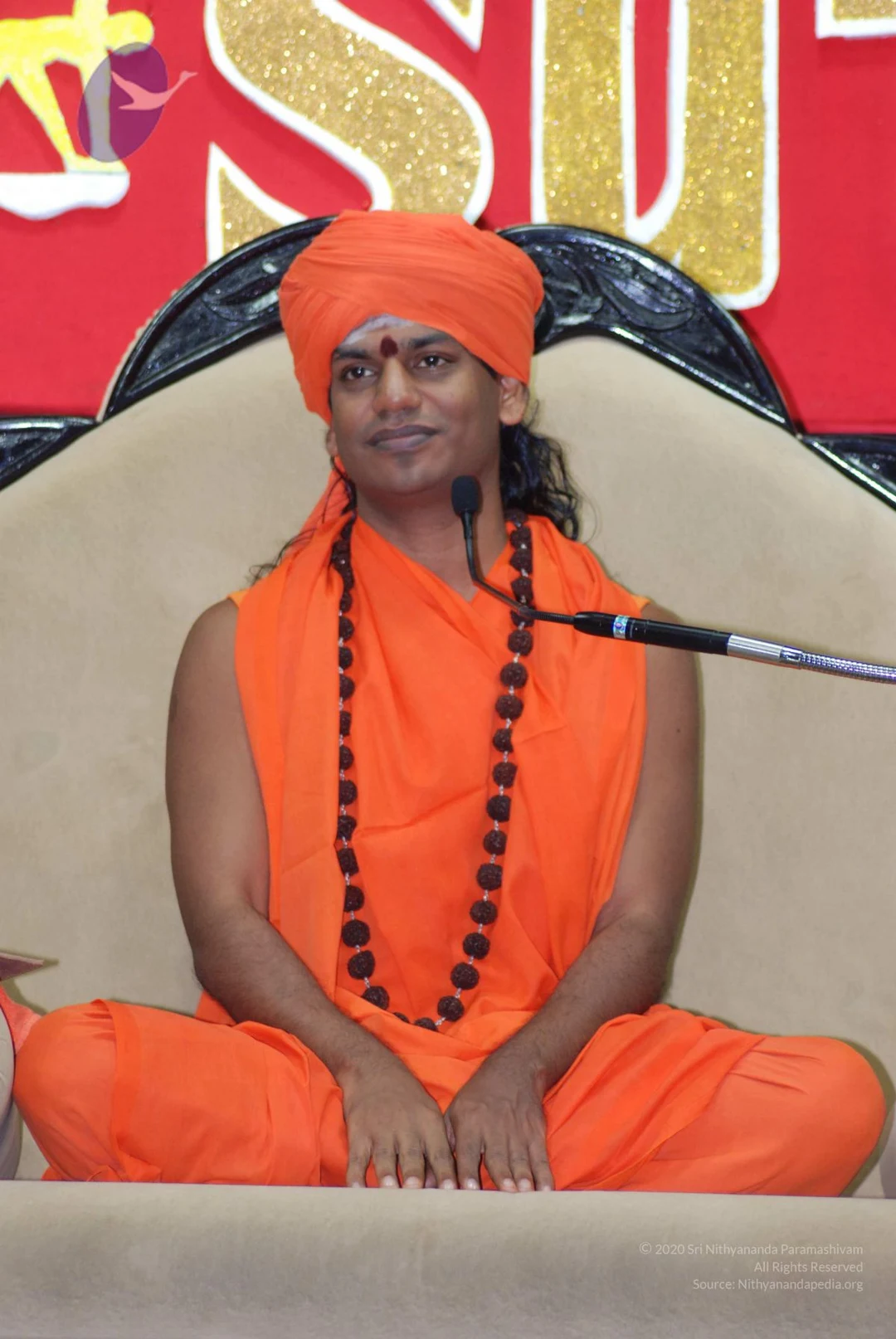
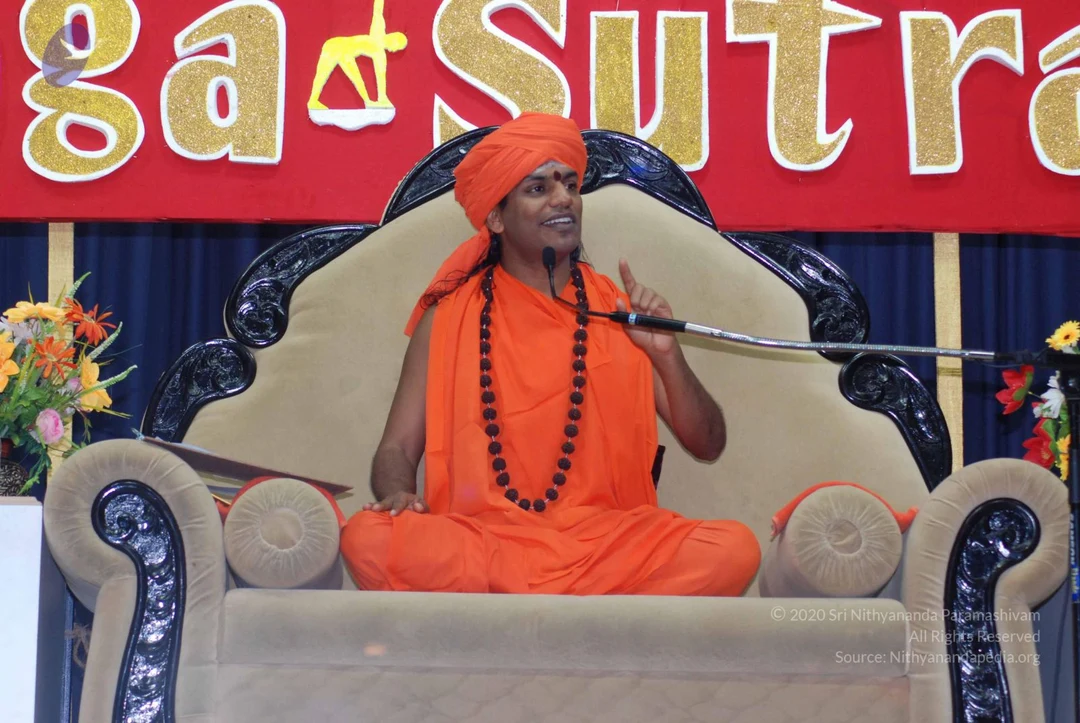
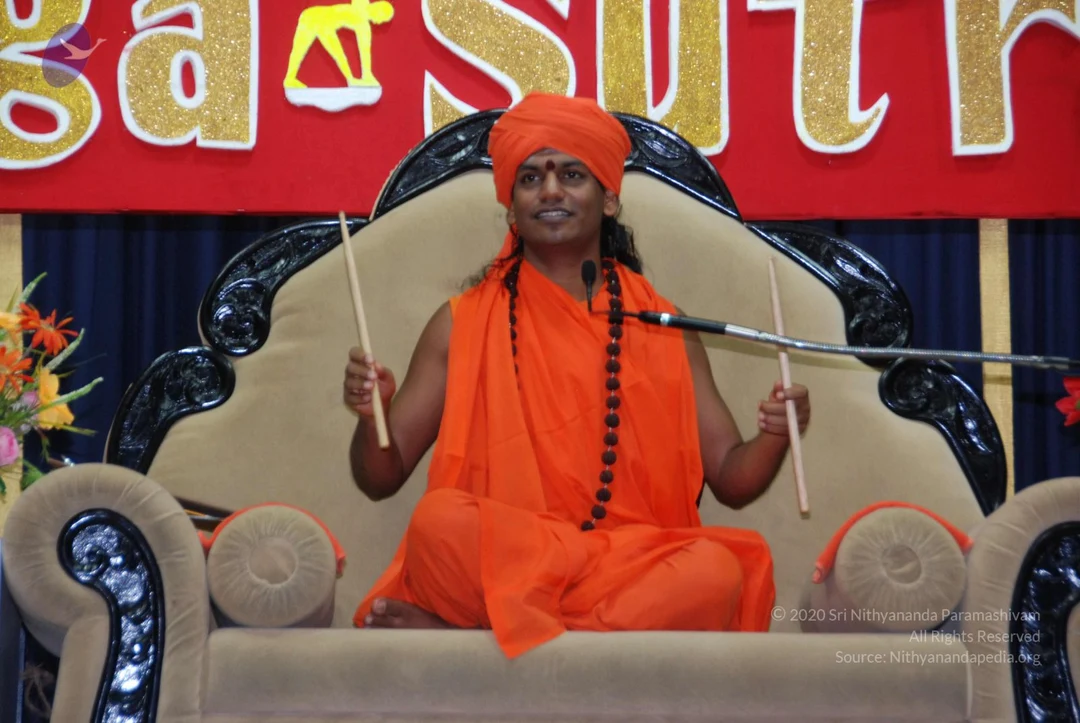
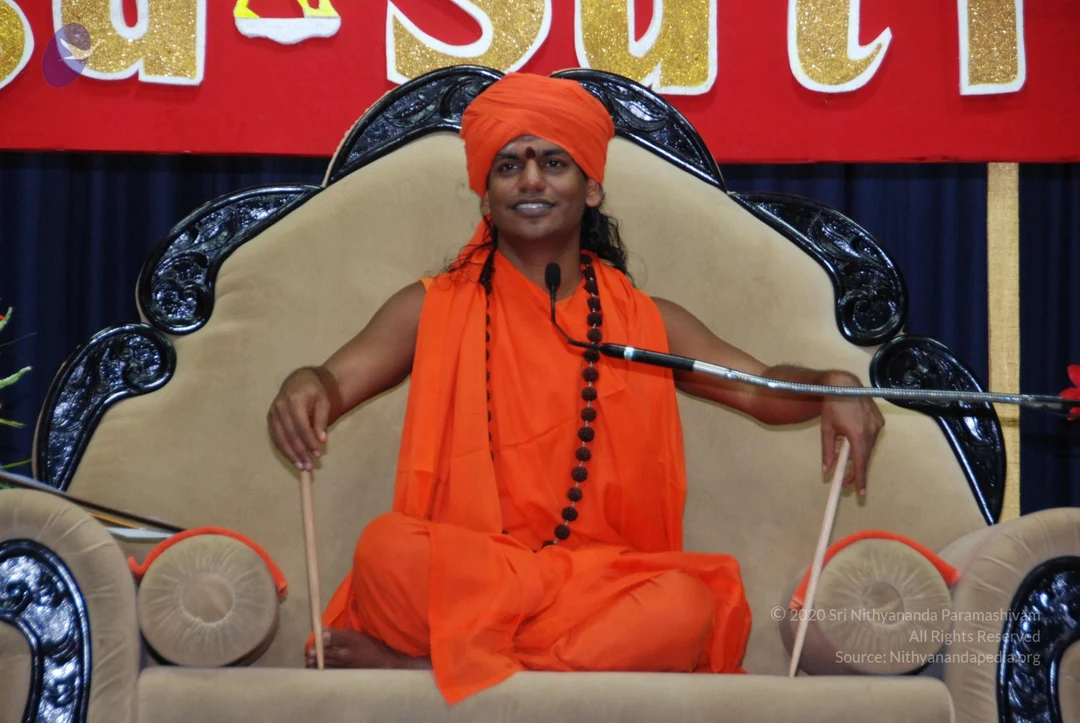
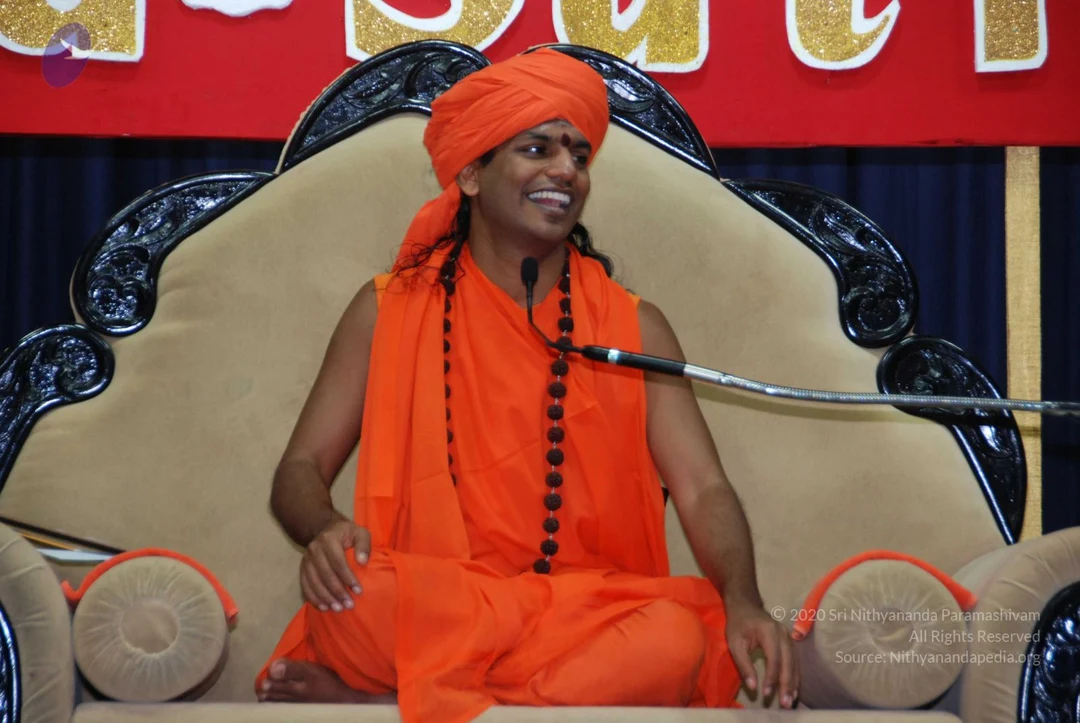
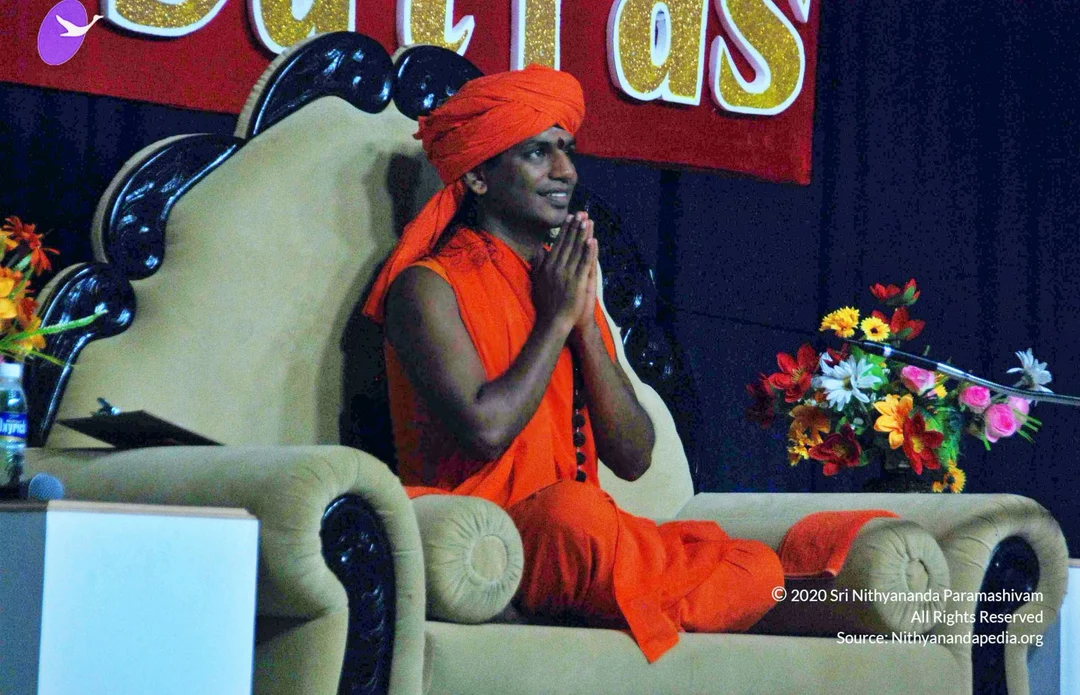
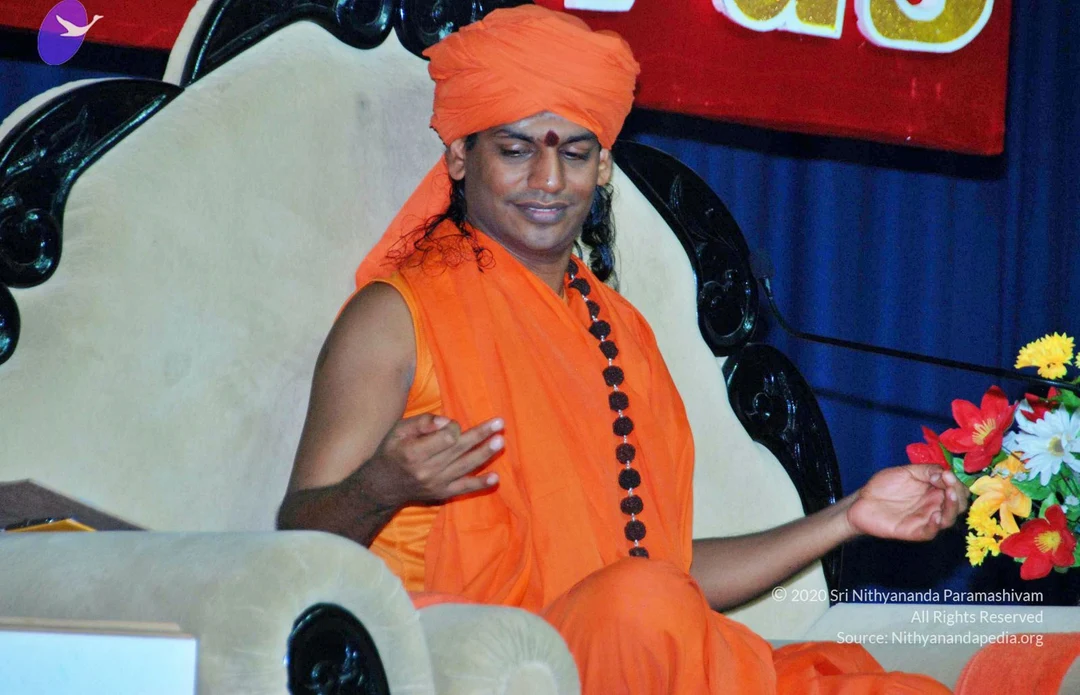
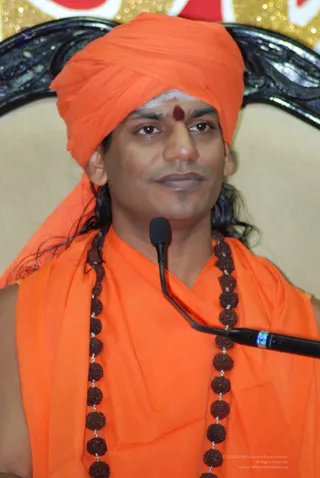
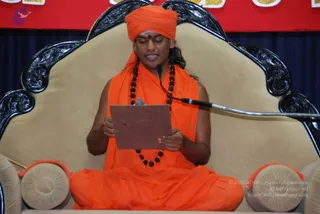
A stage event with a red banner reading "Yoga Sutras" in gold letters, mounted above a blue curtain backdrop. A central figure in saffron-orange robes, an orange head wrap and a rudraksha mala sits on an ornate tan throne with black carved armrests and orange cushions, feet resting on a small footstool over a patterned rug. Flower arrangements in vases flank the throne, and white tower fans stand at the sides. The figure's identity is uncertain from appearance alone.A figure in orange robes, with an orange turban, a rudraksha mala and bare feet, sits on an ornate golden throne-style armchair on a stage. Behind him a red banner reads Yoga Sutras in gold letters, with a dark blue curtain behind. Flower arrangements stand beside the chair, and two white tower fans flank the stage. A small black speaker or monitor sits on the floor in front, with a microphone stand nearby.A seated man in orange saffron robes and an orange turban sits in a cushioned beige armchair with a dark carved wooden frame, hands clasped in his lap, in front of a red banner with large gold glitter lettering partly visible. He wears a long rudraksha mala, a red tilak on his forehead, and a lapel microphone on a stand is positioned beside him. a person: long hair falling from under the orange turban, orange robes and rudraksha mala, seated as a speaker at a satsang-style talk. No other people are visible.A seated man in saffron-orange robes and a matching orange turban with a red bindi on the forehead sits on a beige upholstered chair with a dark carved wooden back, speaking into a microphone on a black stand. He wears a long rudraksha mala of dark beads and has his hands clasped in his lap. Behind him is a red backdrop with gold glittering lettering. A dark purple logo appears in the lower left corner.A seated man in orange saffron robes and an orange turban sits cross-legged on a cream upholstered throne with a dark carved wooden back, hands clasped in his lap. He wears a long rudraksha mala of dark beads and a red tilak on his forehead, and a microphone on a stand is positioned in front of him. Behind him is a red backdrop with large gold glitter lettering. a person: the visible cues are long dark hair under an orange turban, saffron clothing and a rudraksha mala.A seated man in saffron-orange robes and a matching orange turban reads from a brown folder held in both hands. He wears a long rudraksha mala around his neck and a red bindi on his forehead. He sits cross-legged on an ornate beige throne with black carved armrests and orange-trimmed bolsters, speaking into a gooseneck microphone. A red banner with gold lettering is behind him, and a dark blue curtain hangs to the right. Only one person is visible.