Skip to content
Sunday

9 September 2012

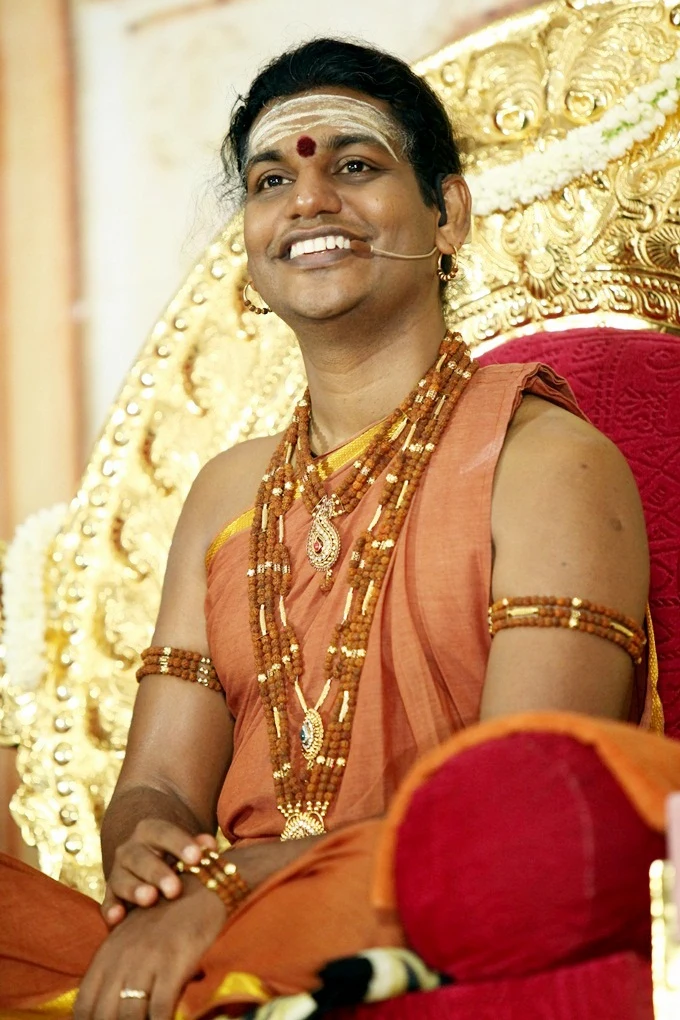
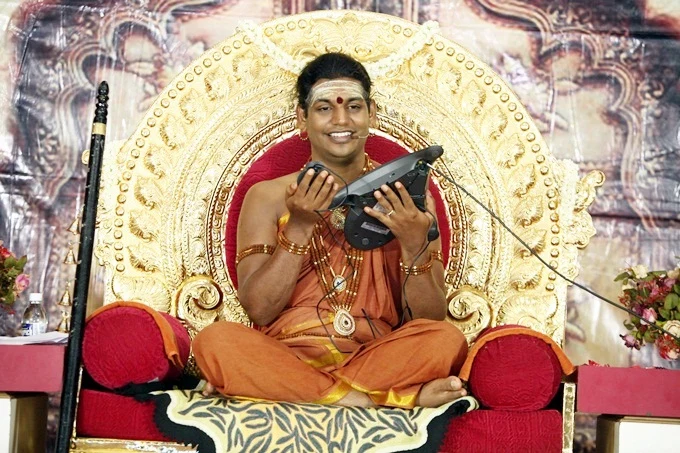
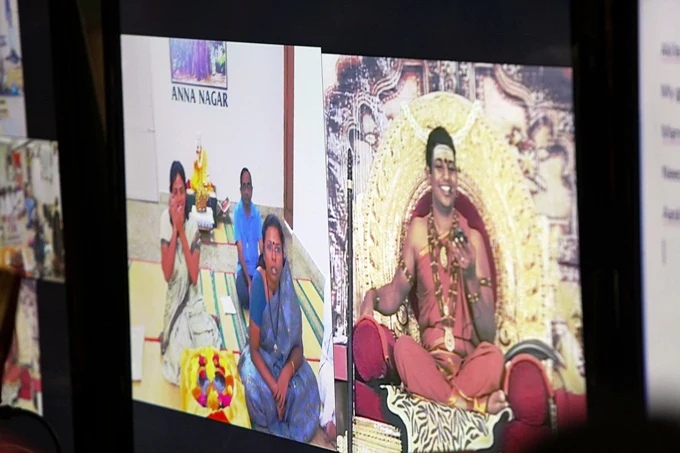
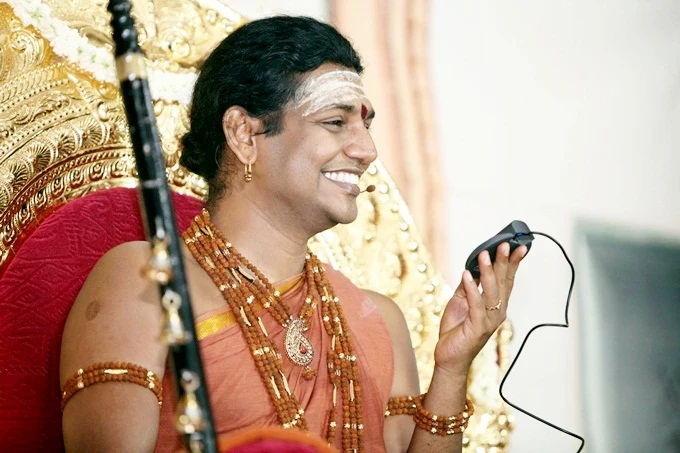
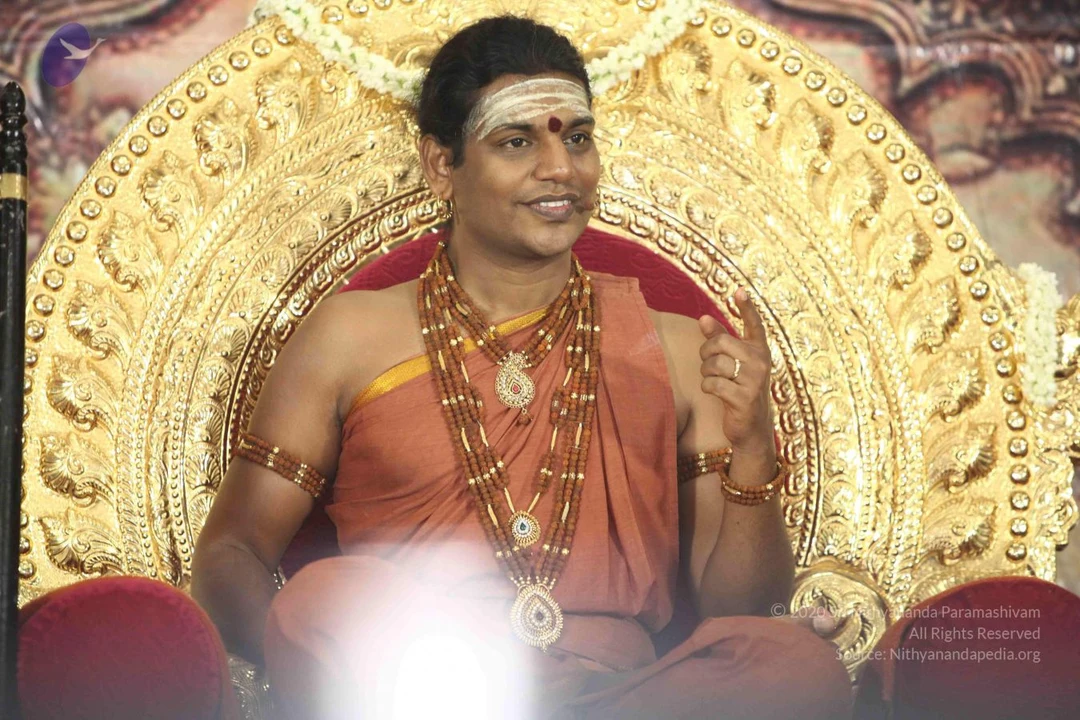
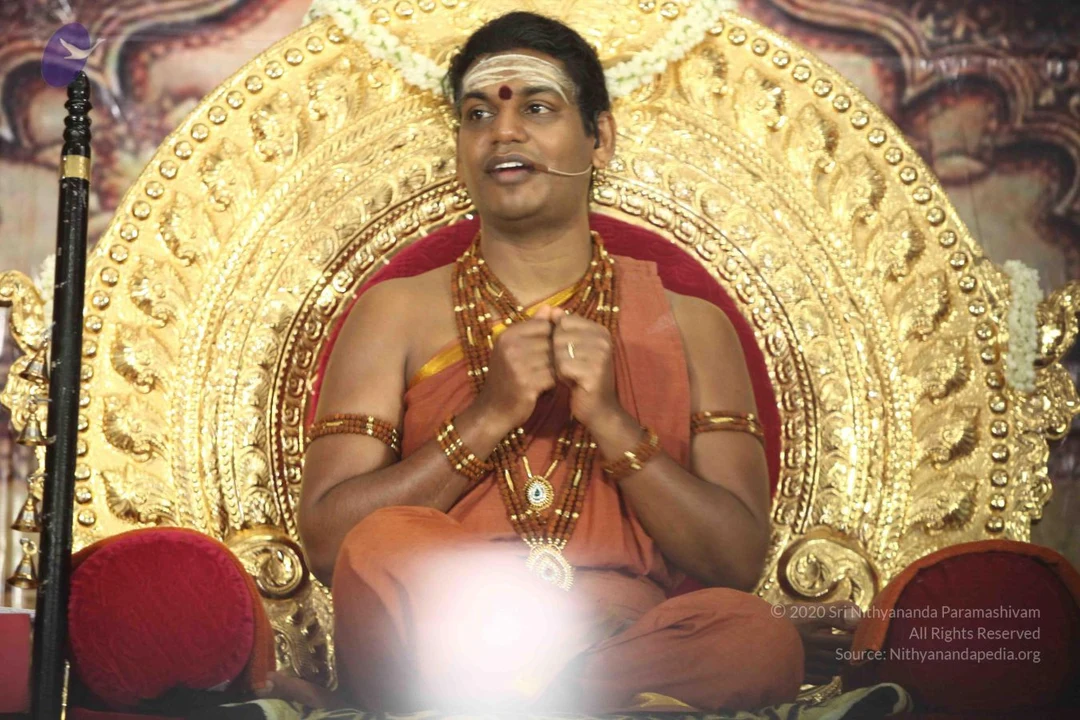
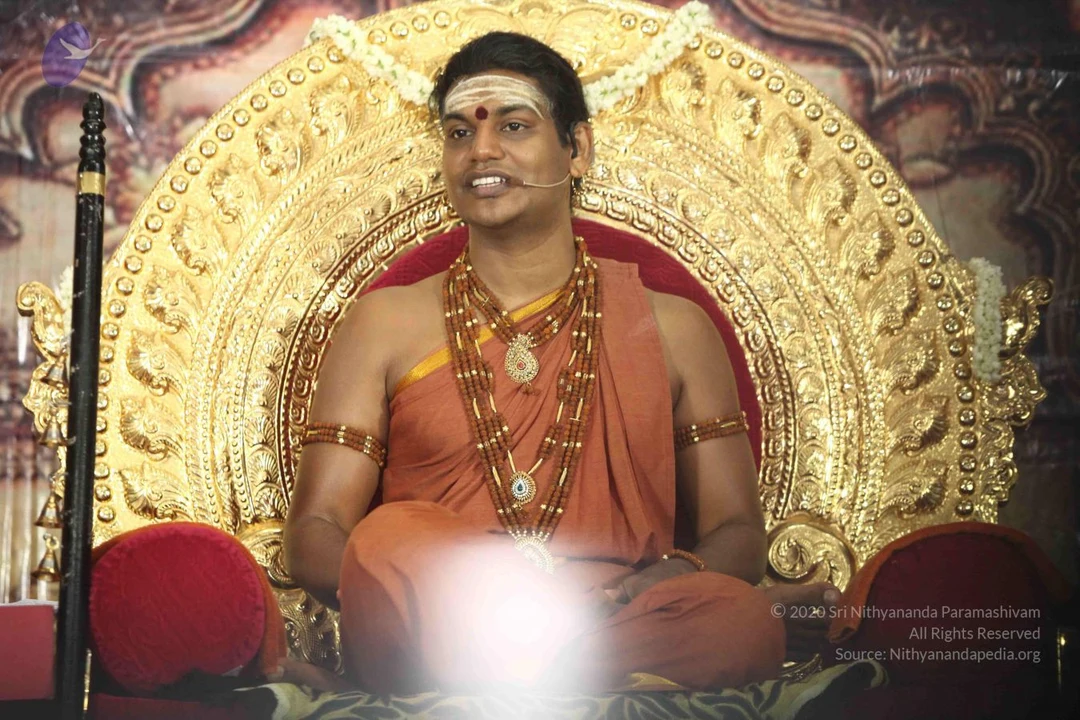
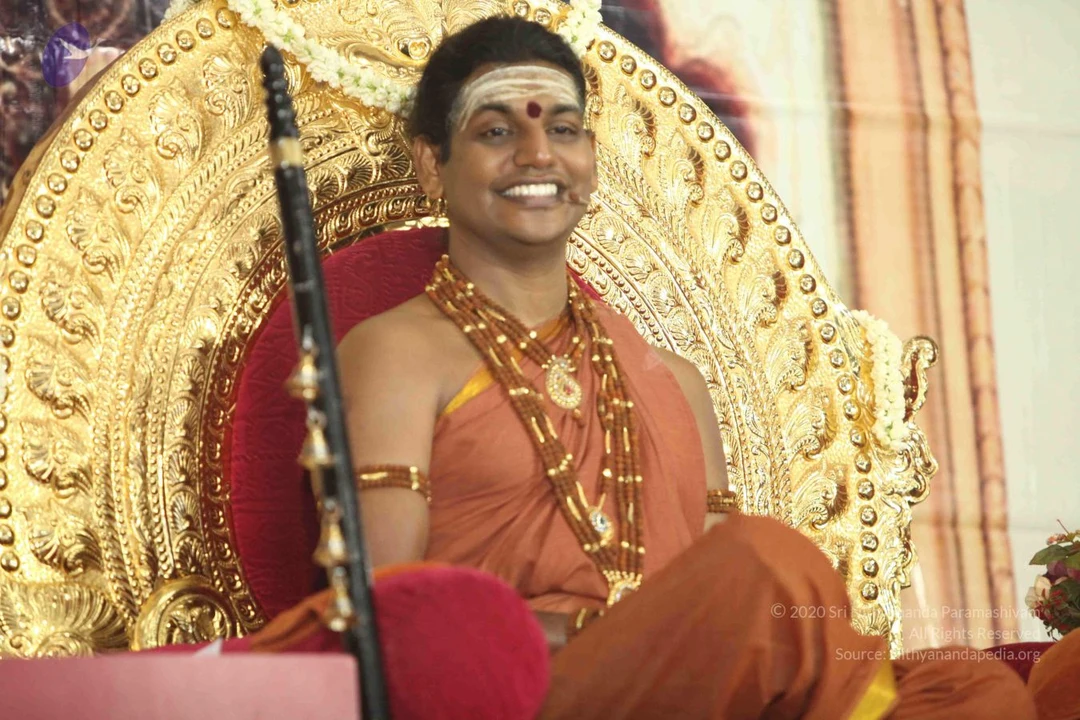
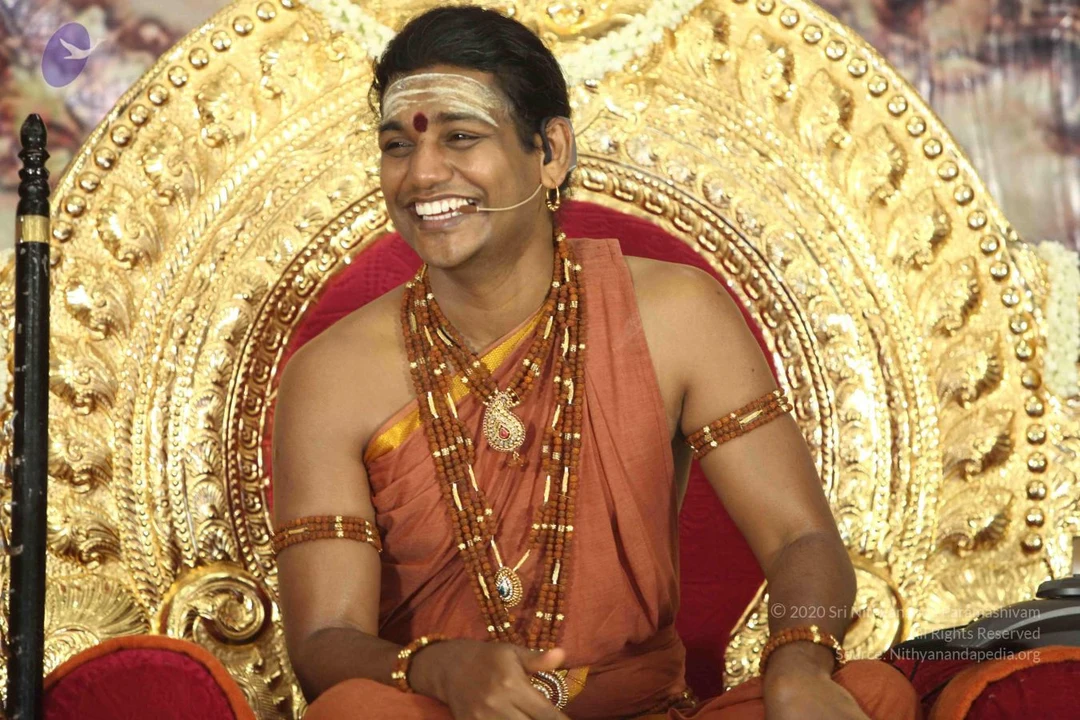
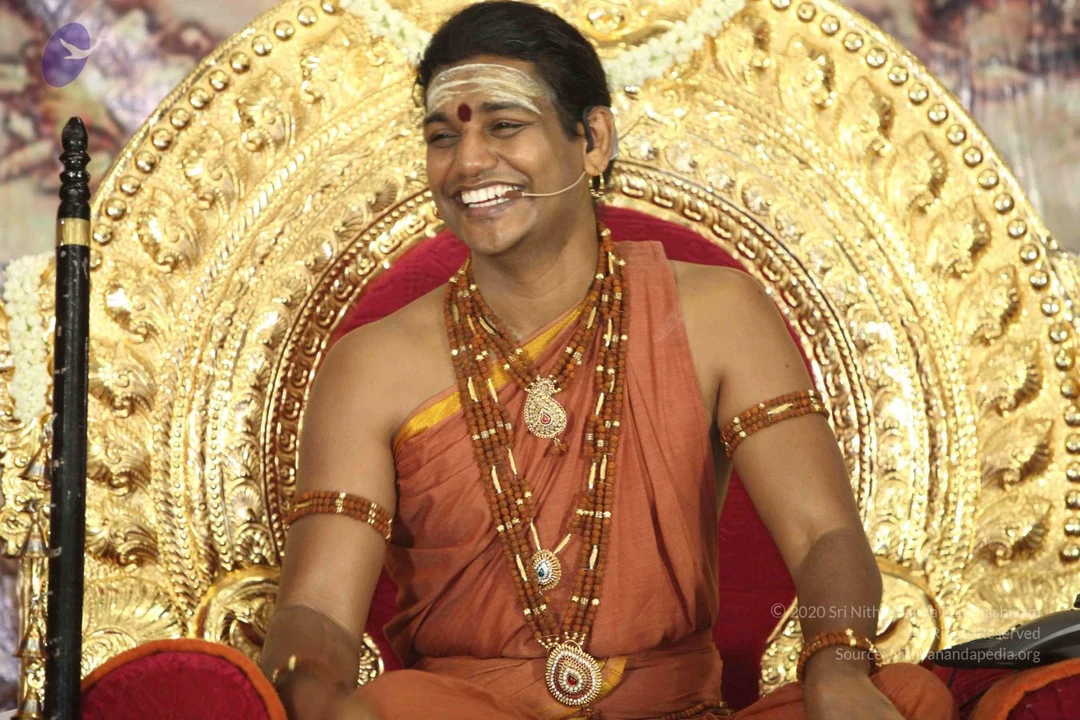
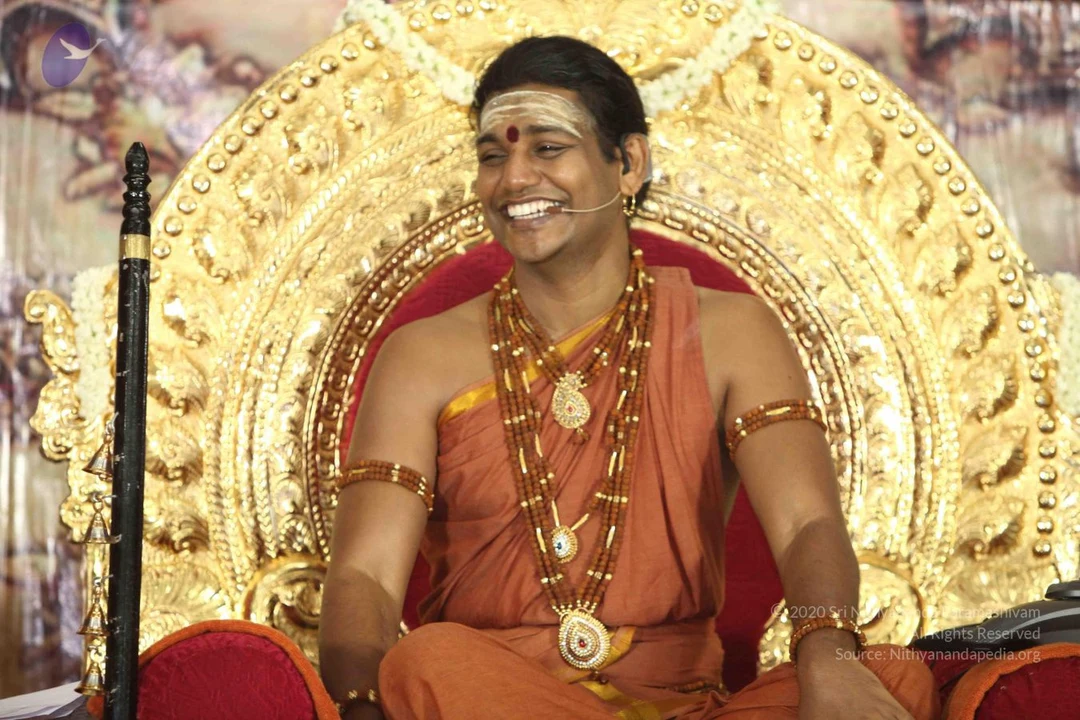
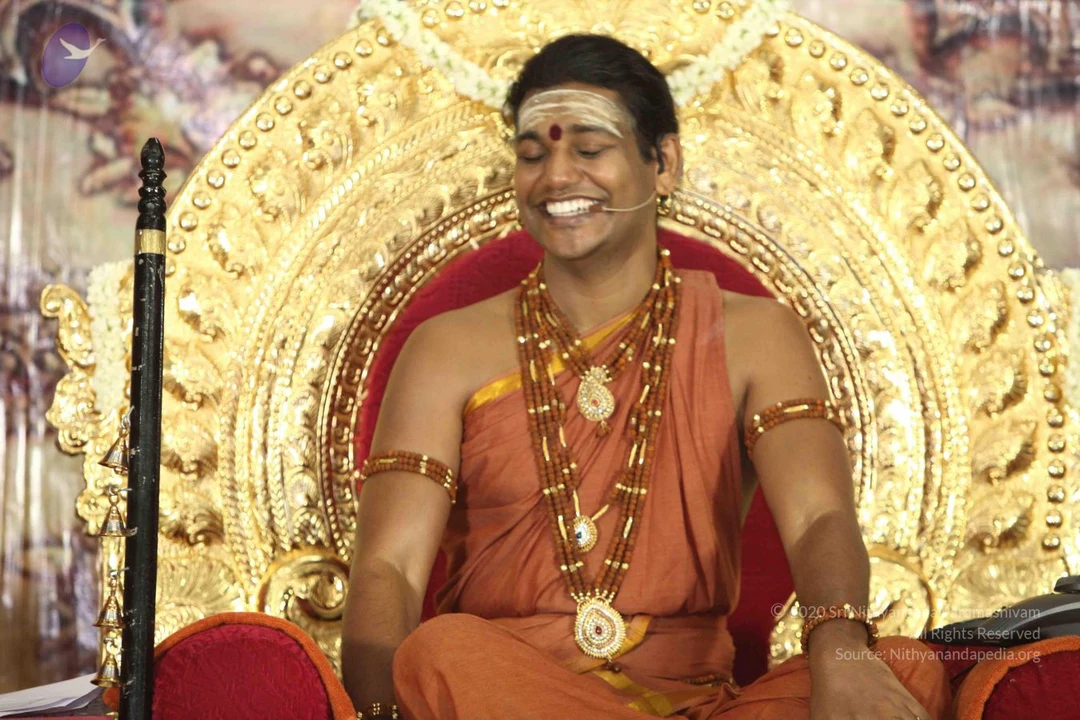
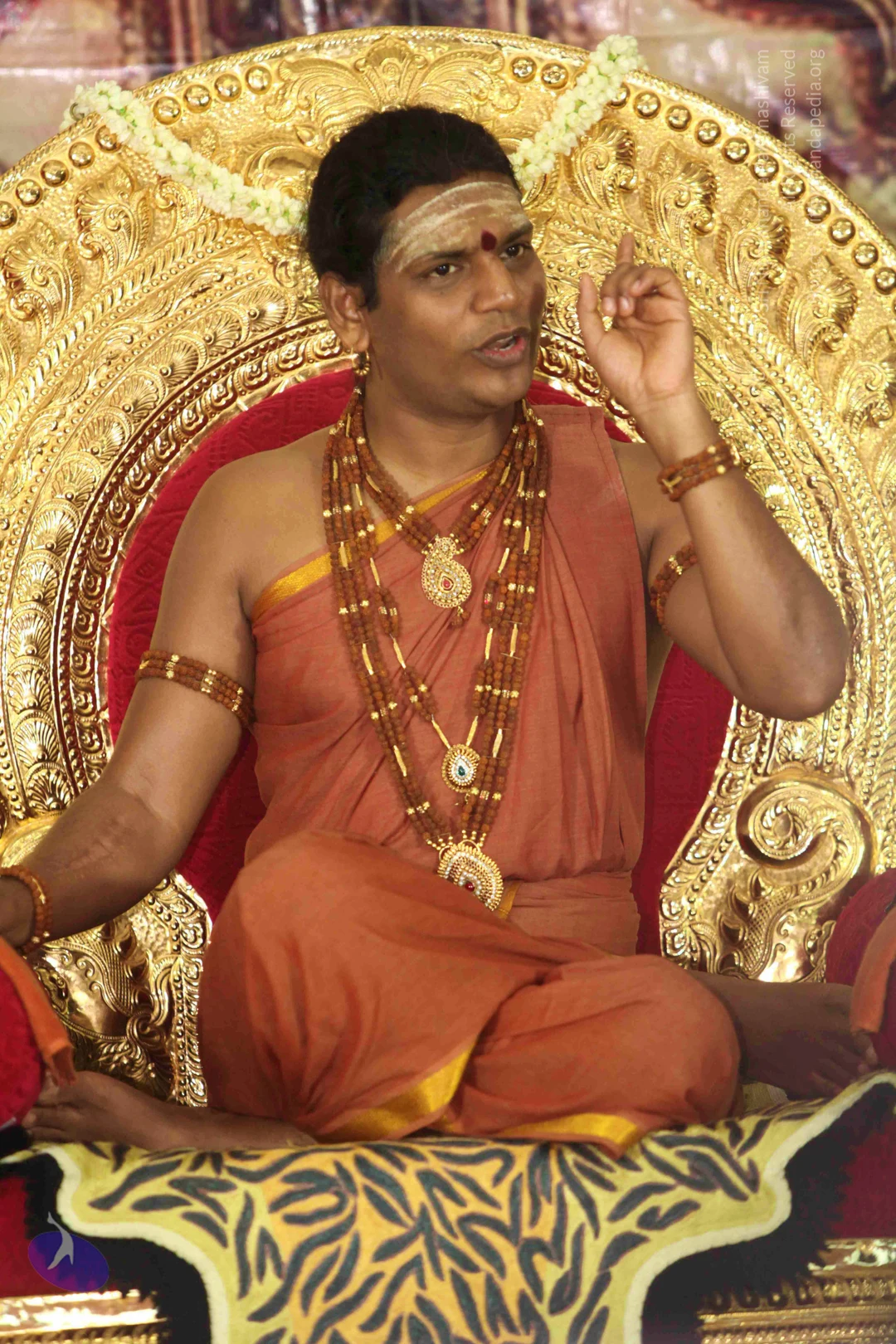
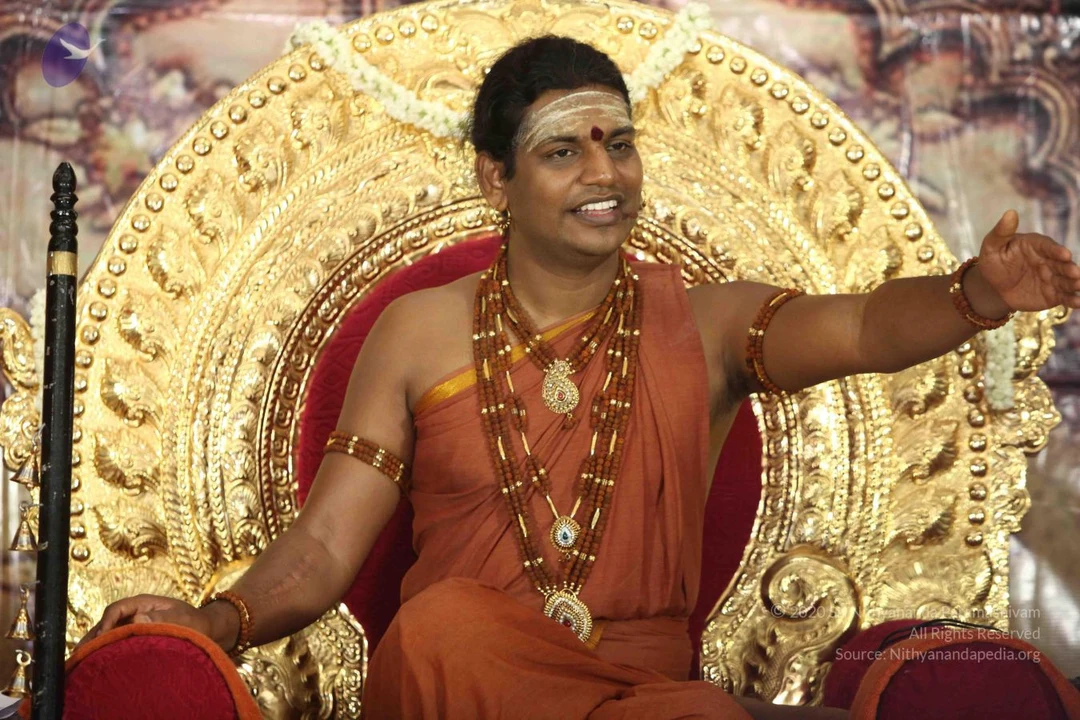
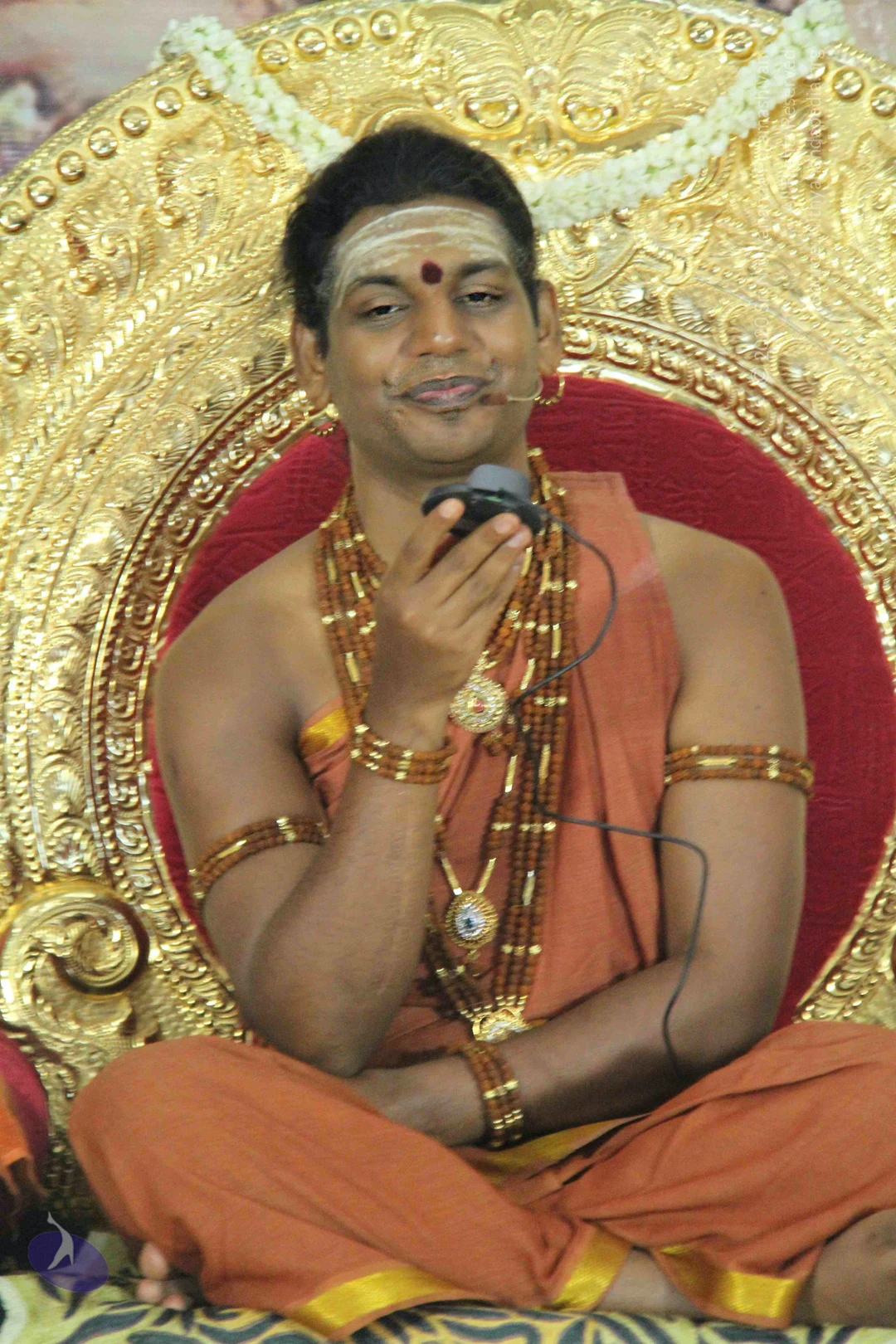
Supreme Pontiff of Hinduism HDH Bhagavan Sri Nithyananda Paramashivam

Dated photos
721
Source pages
1
Media
2
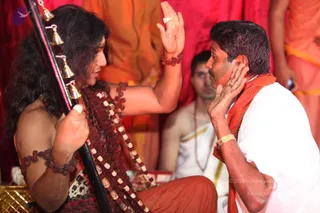
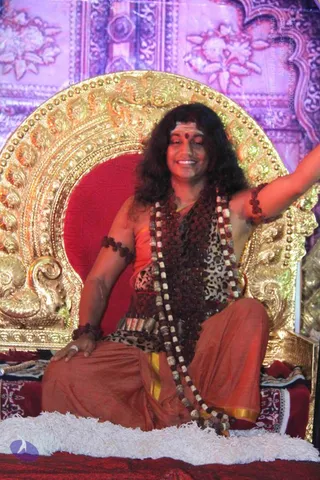
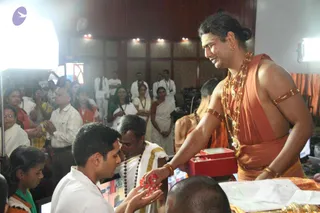
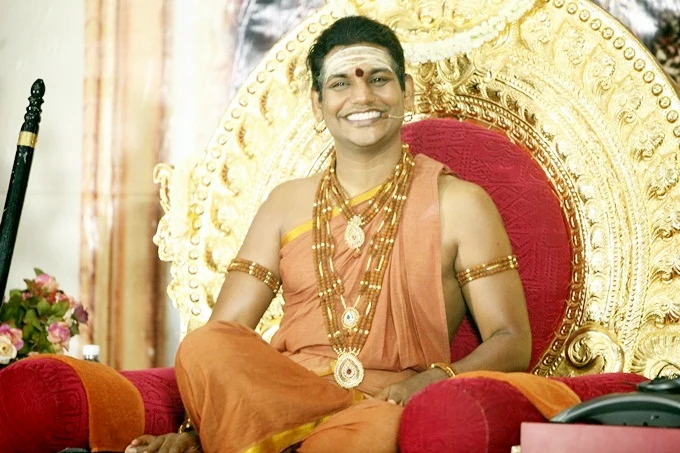
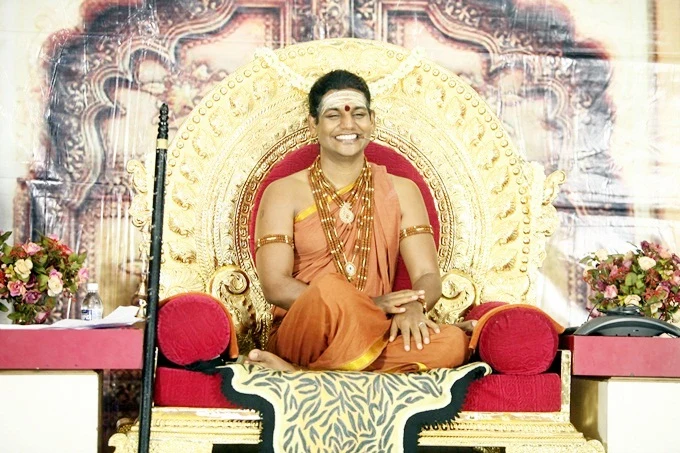
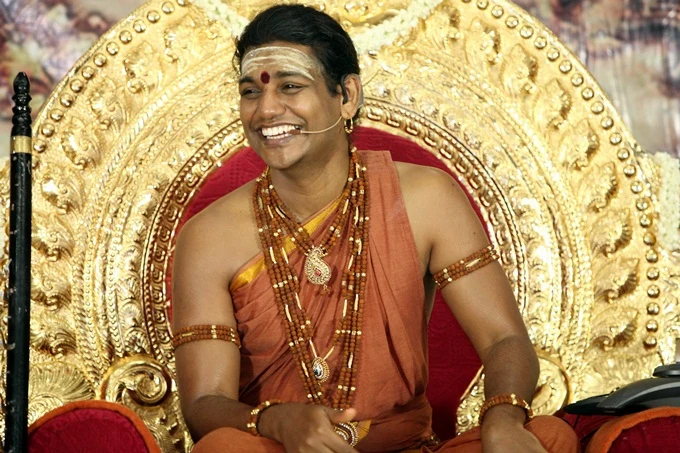
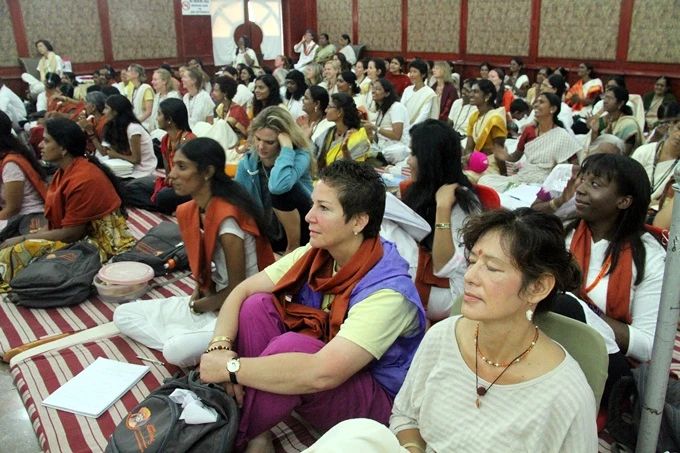
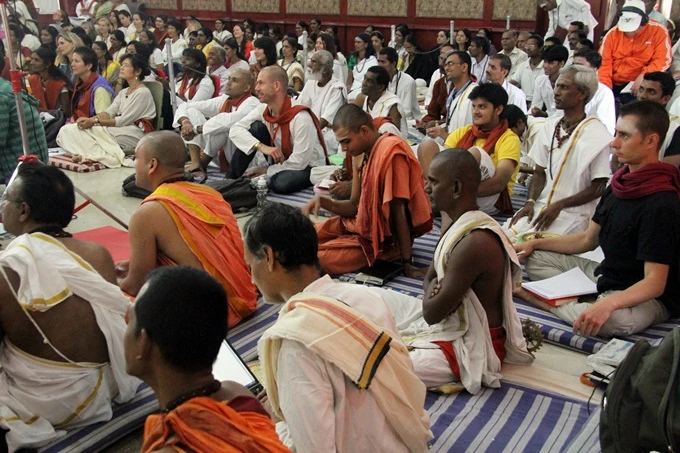
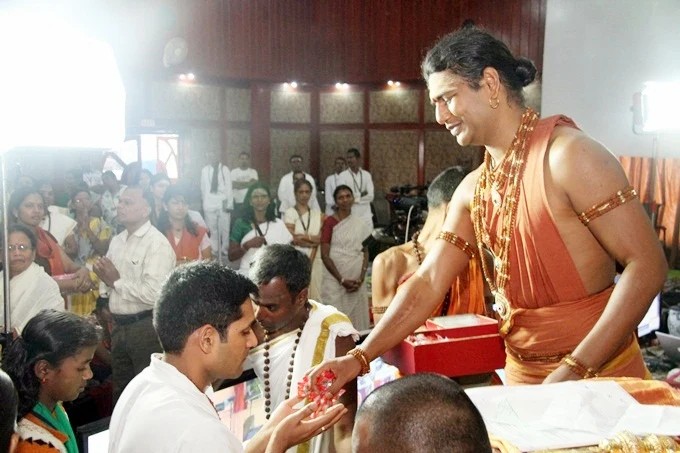
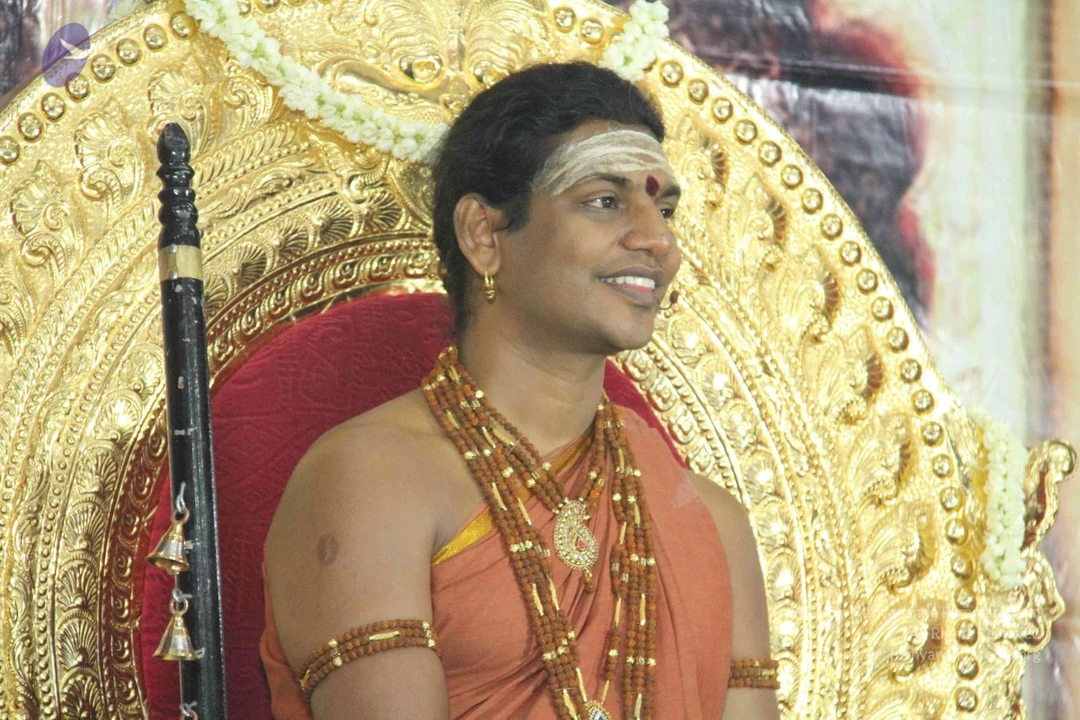
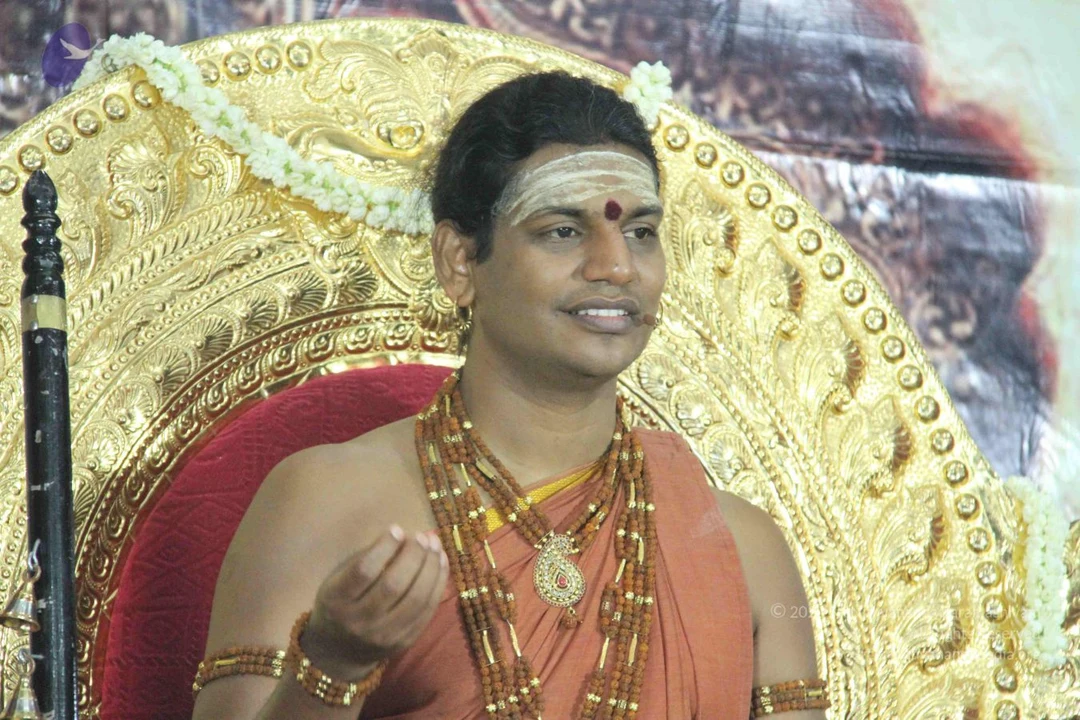
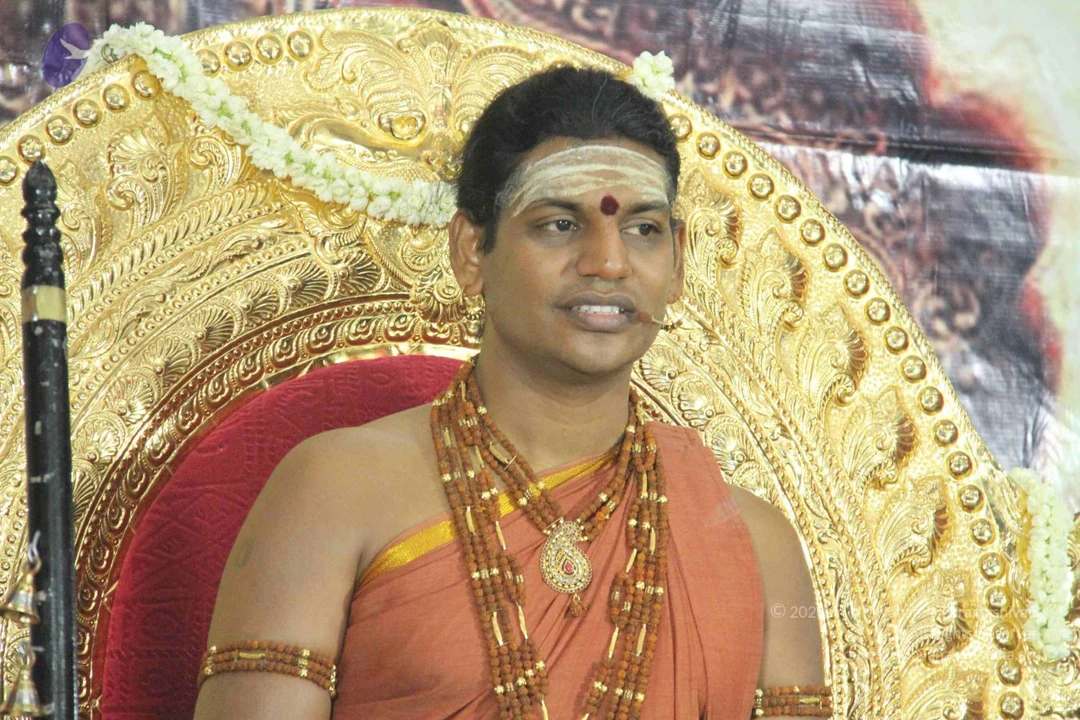
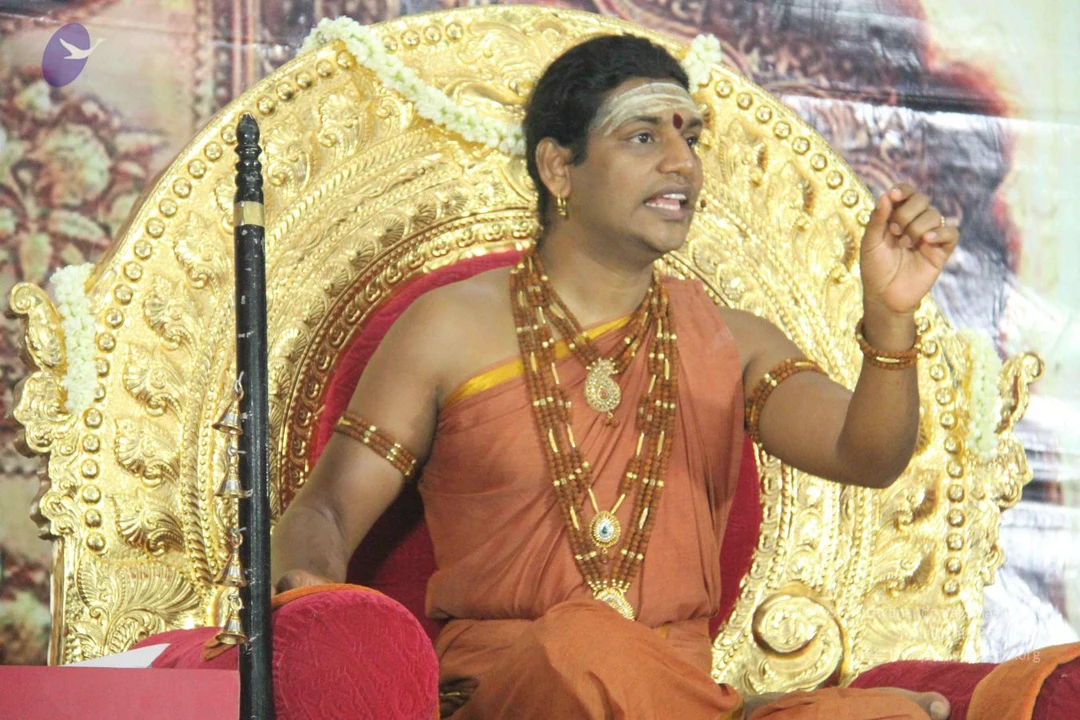
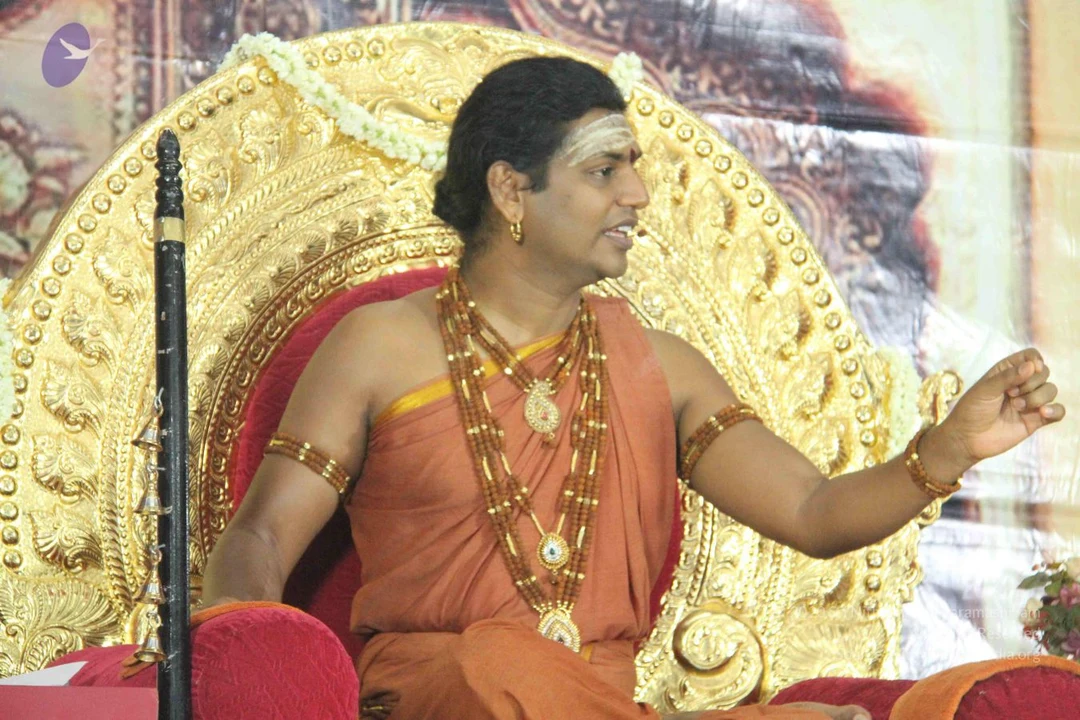
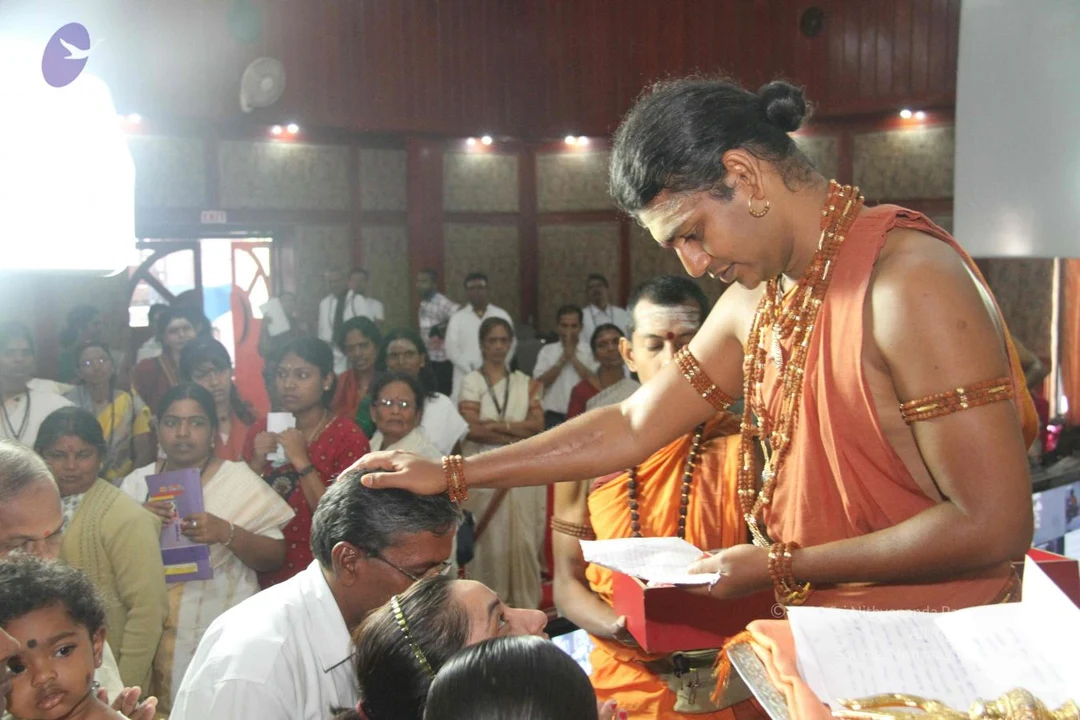
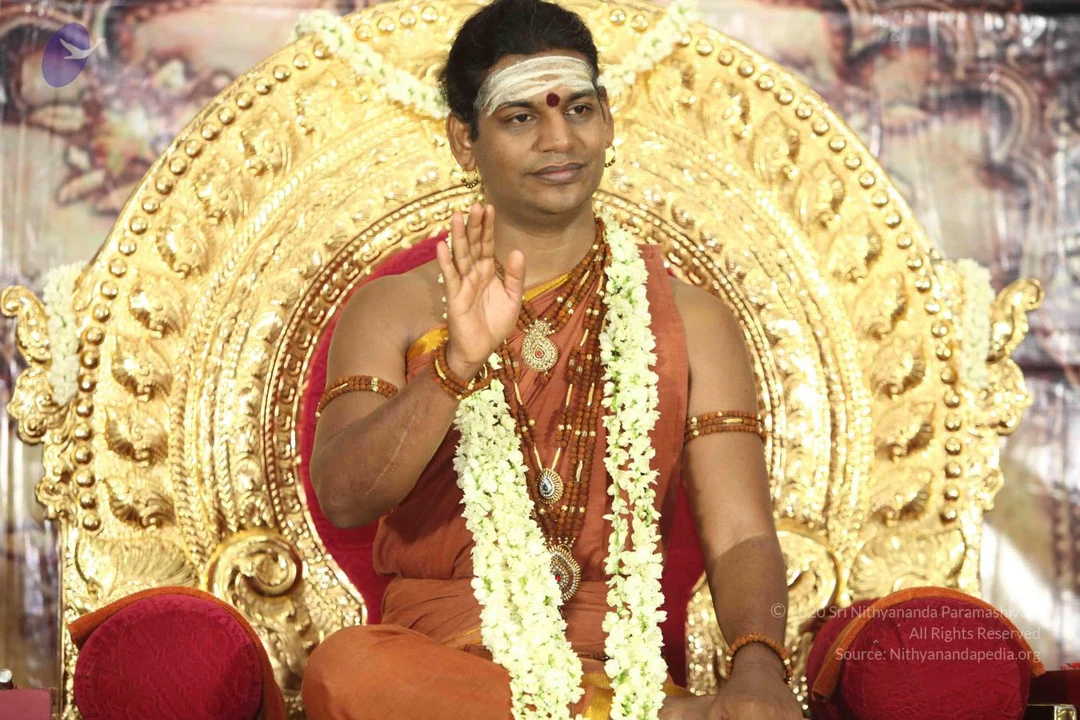
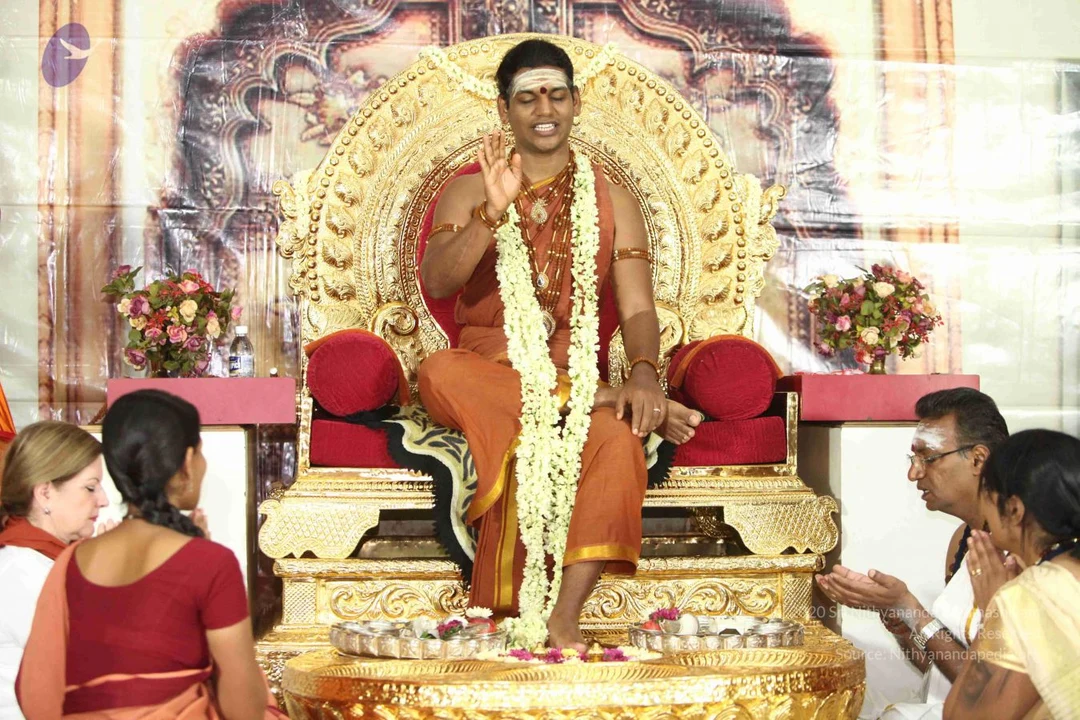
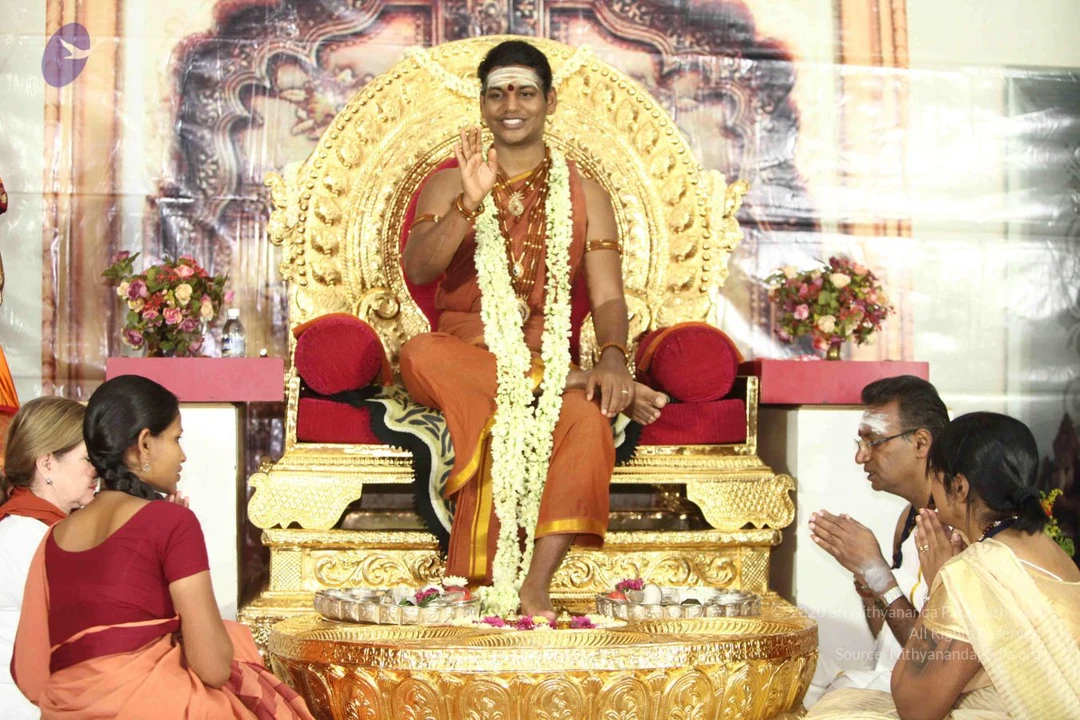
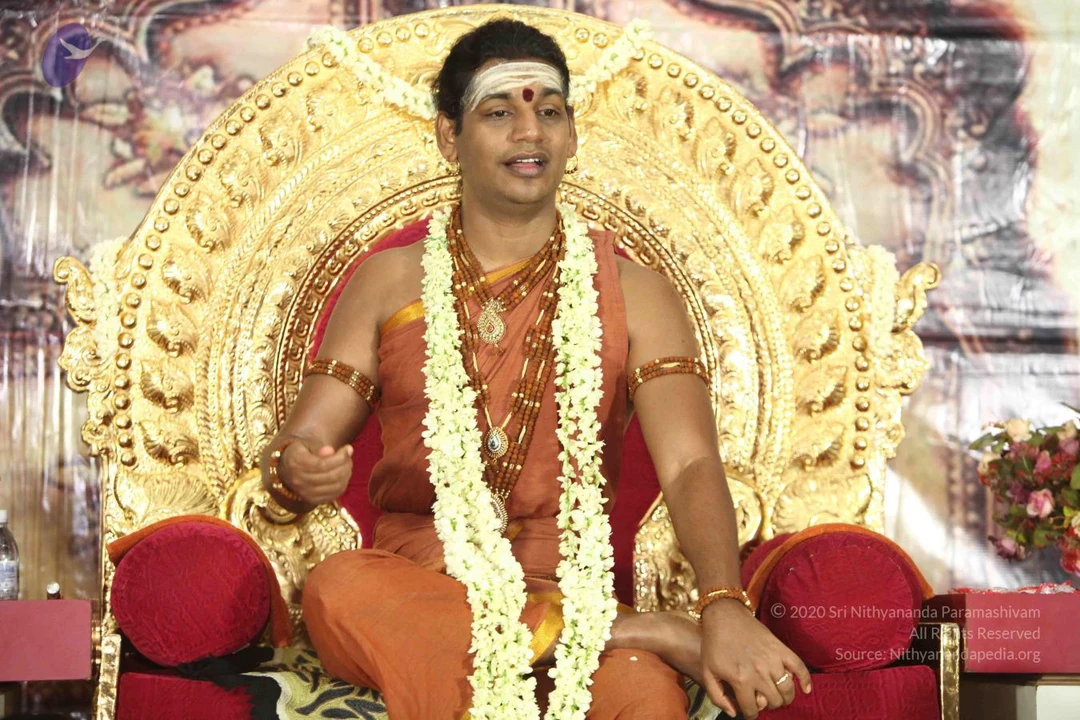
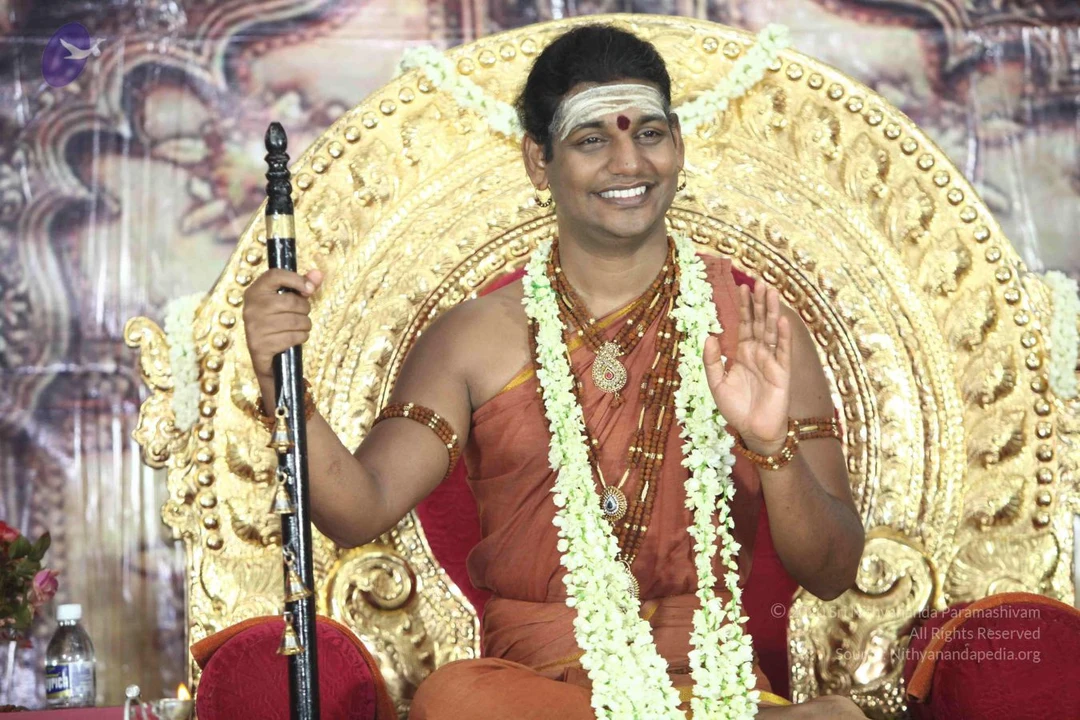
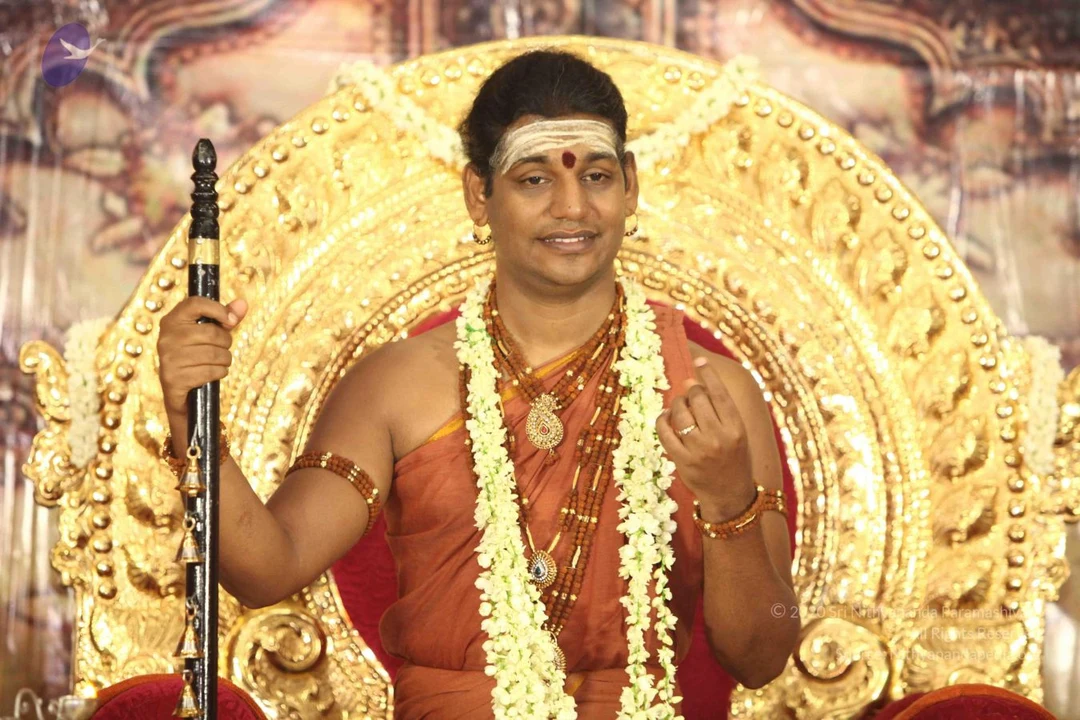
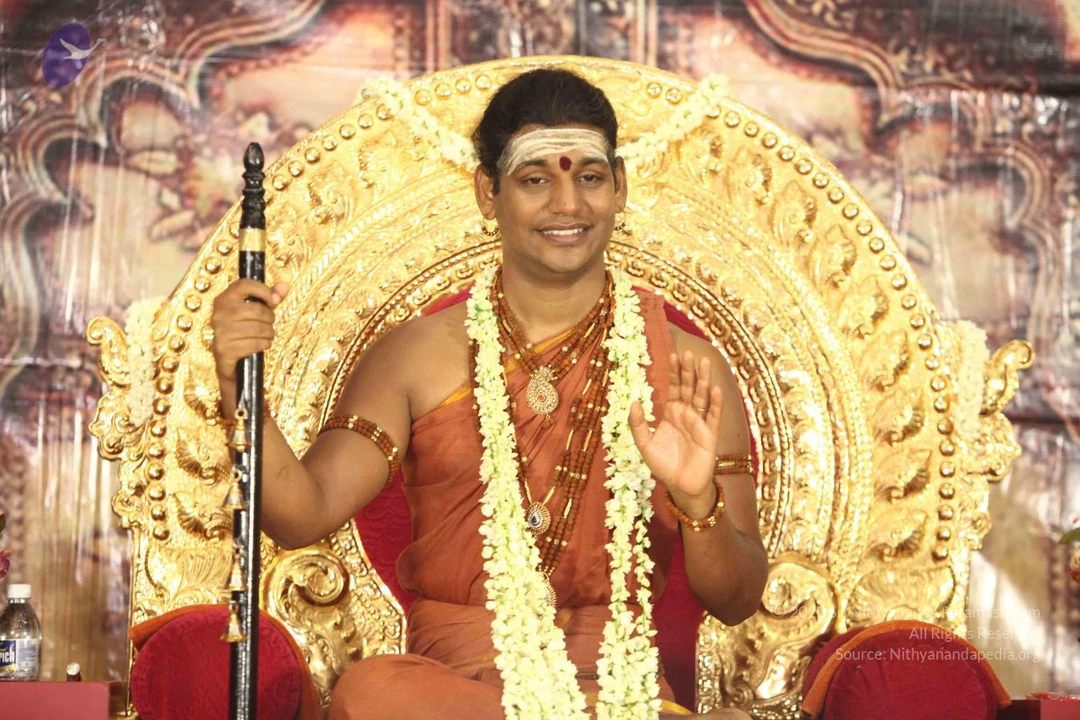
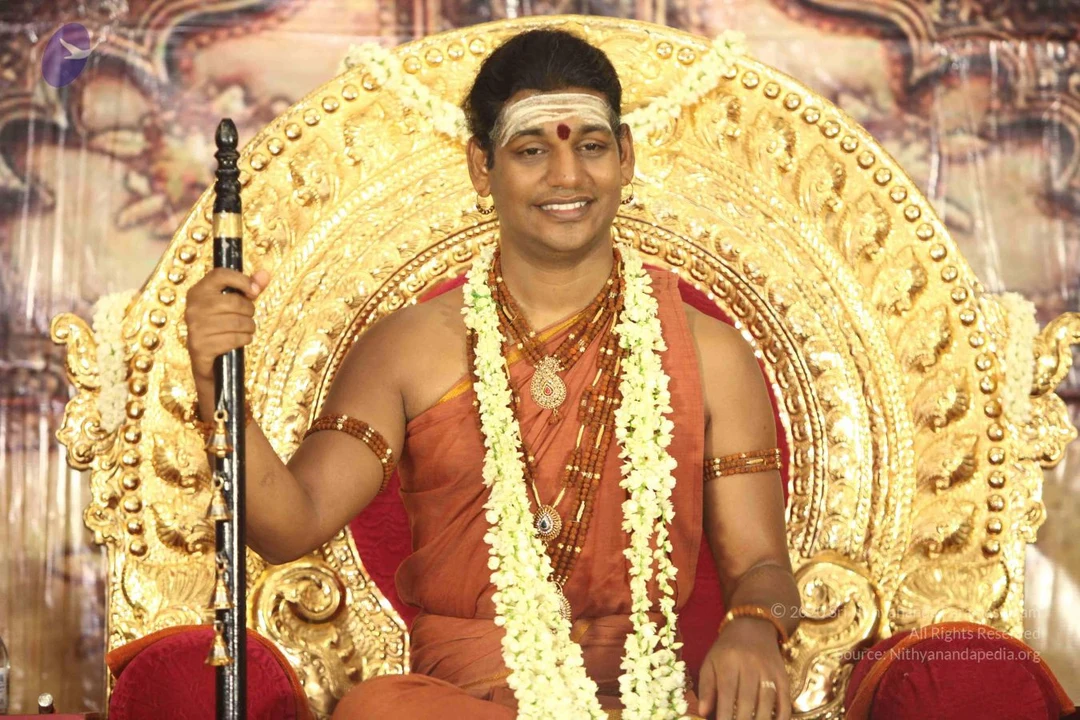
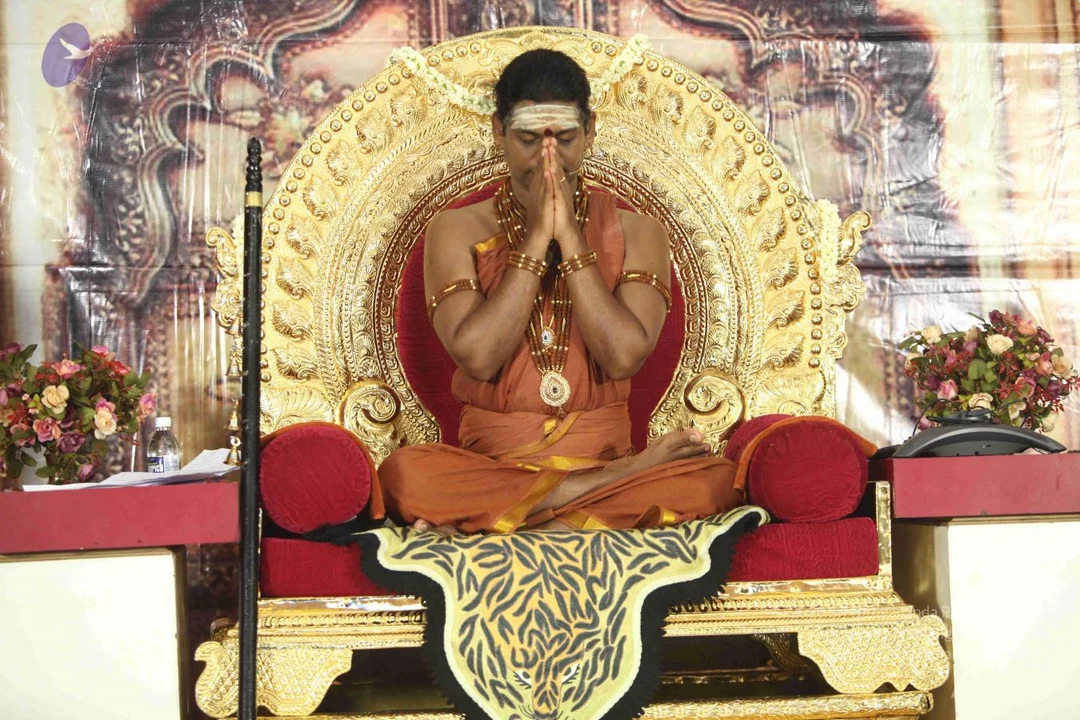
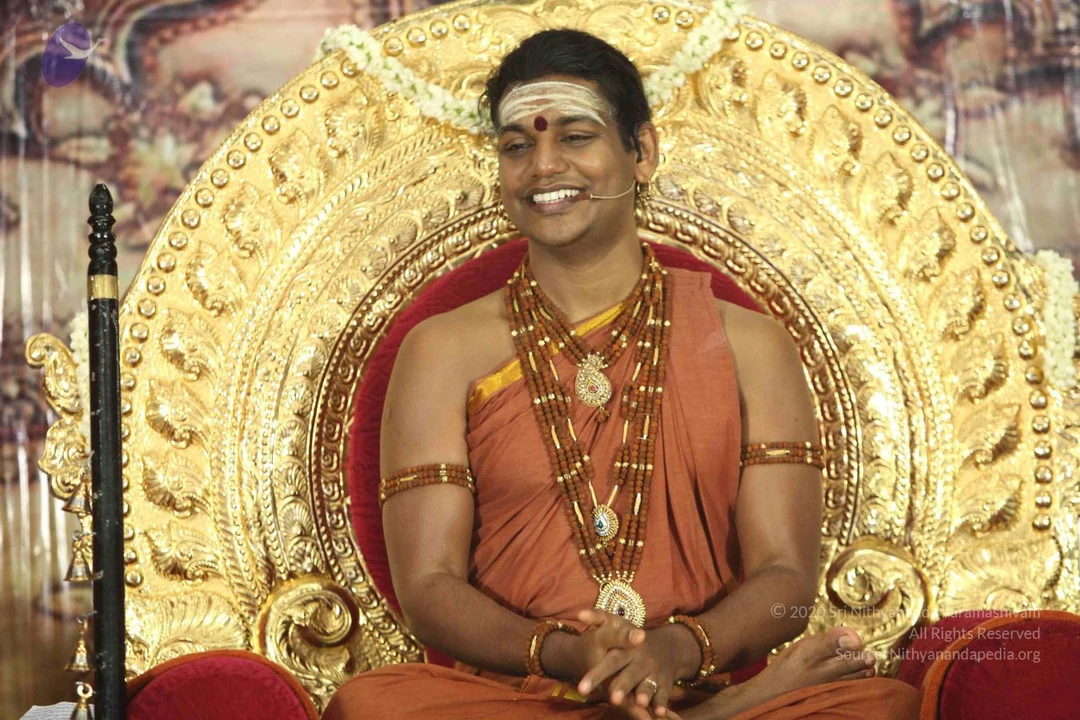
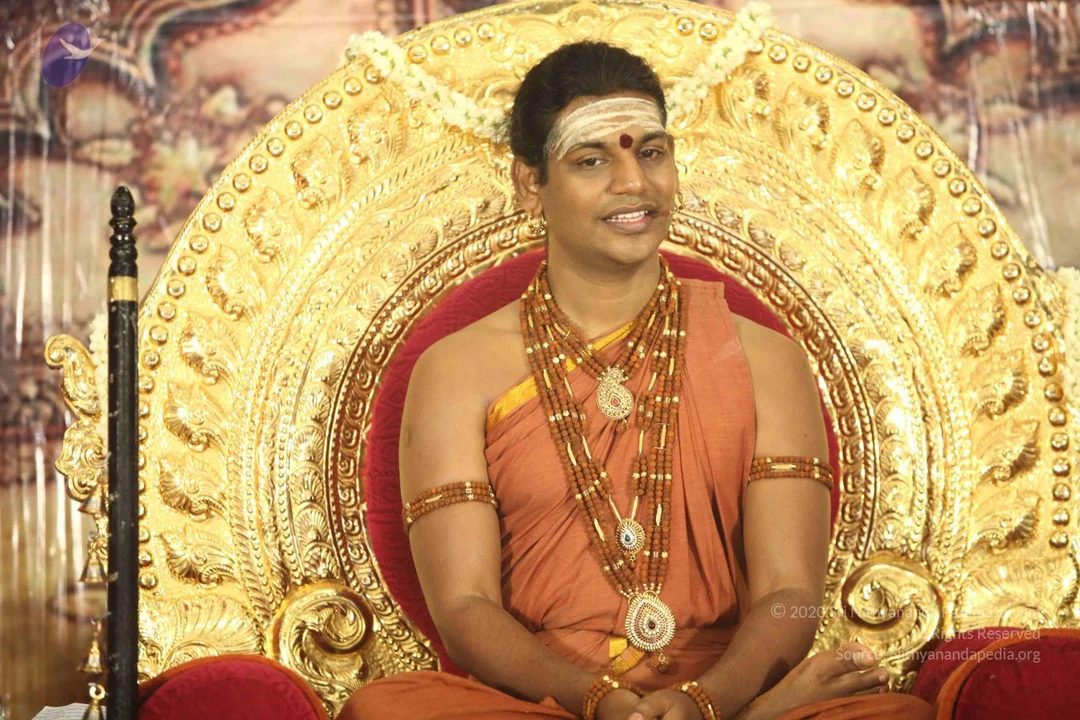
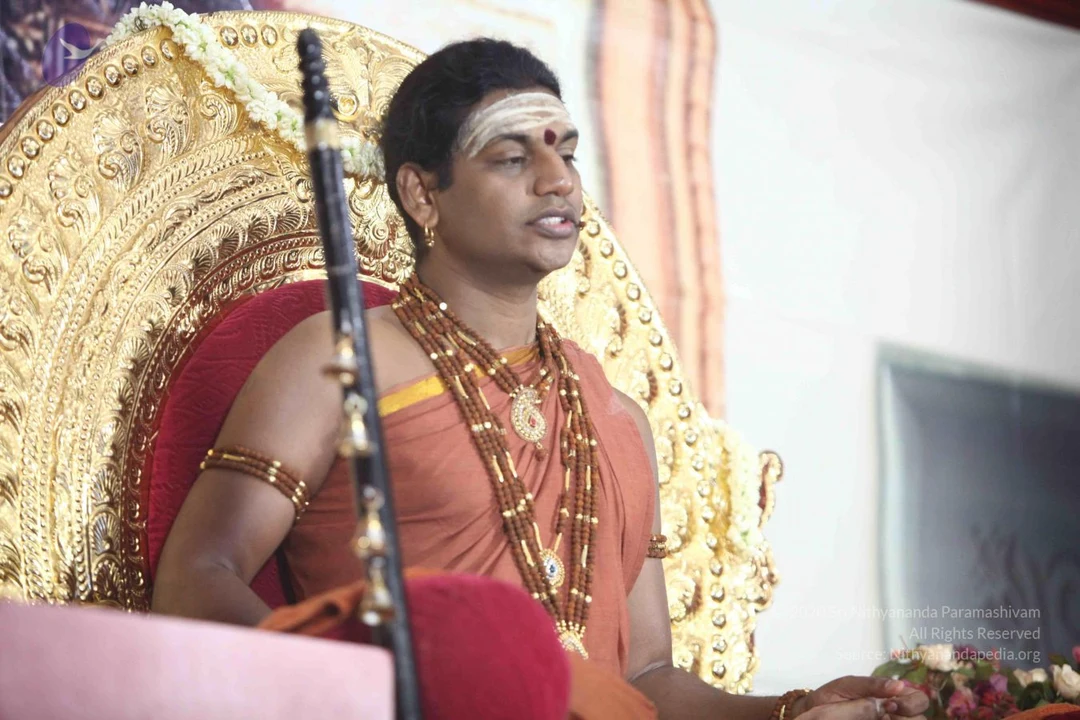
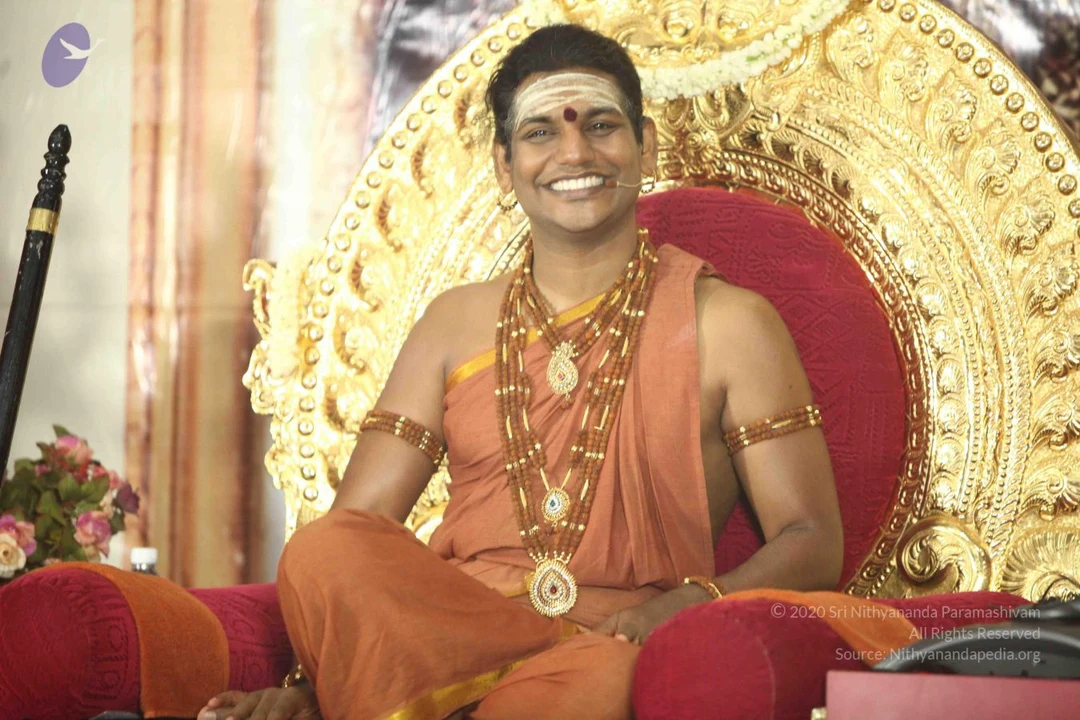
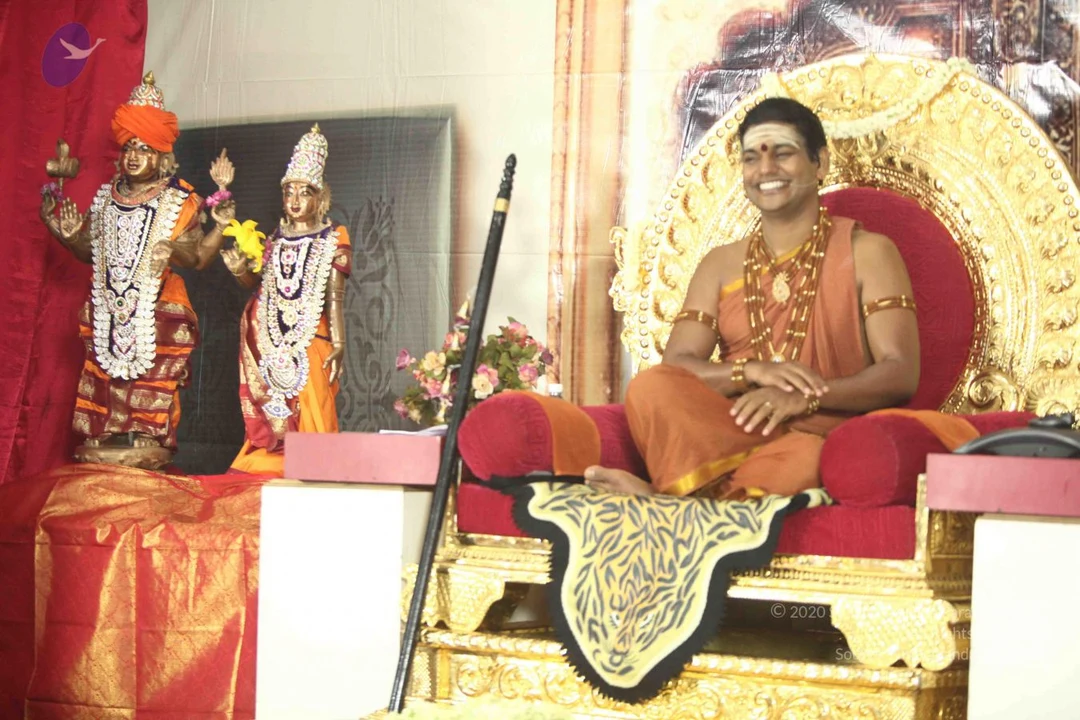
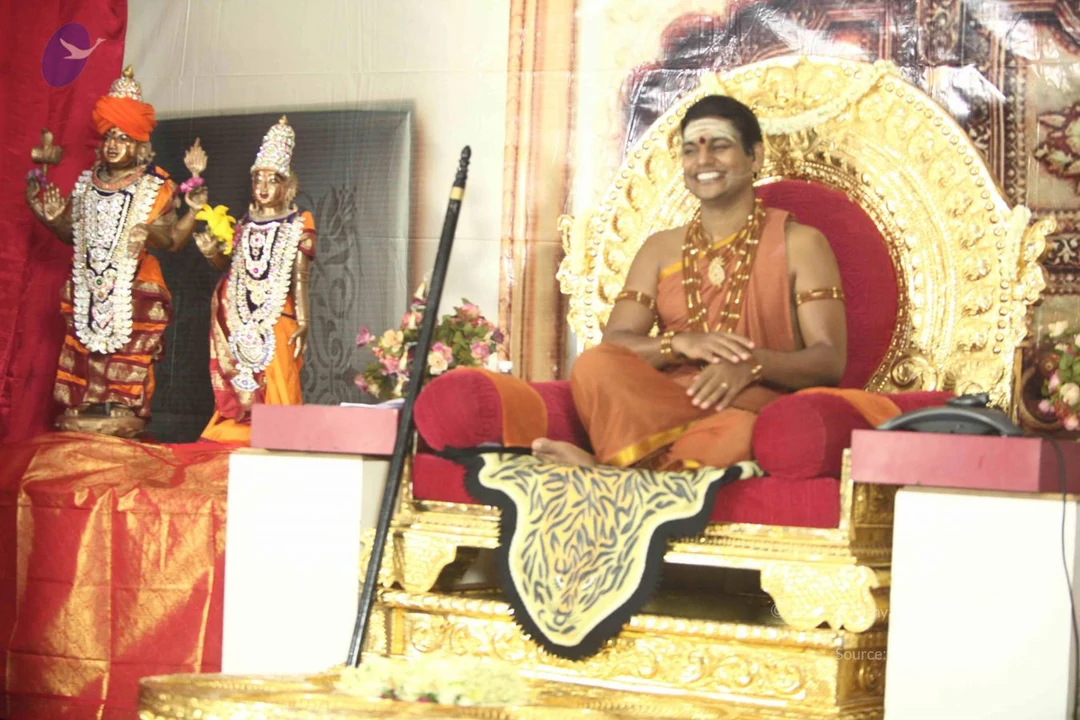
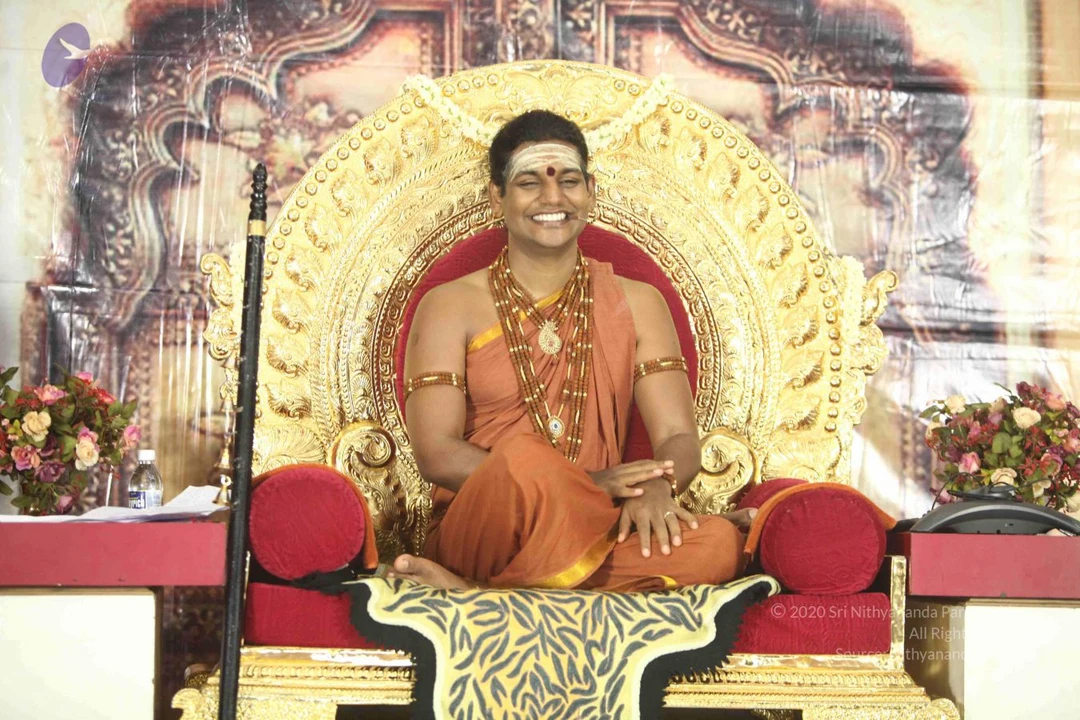
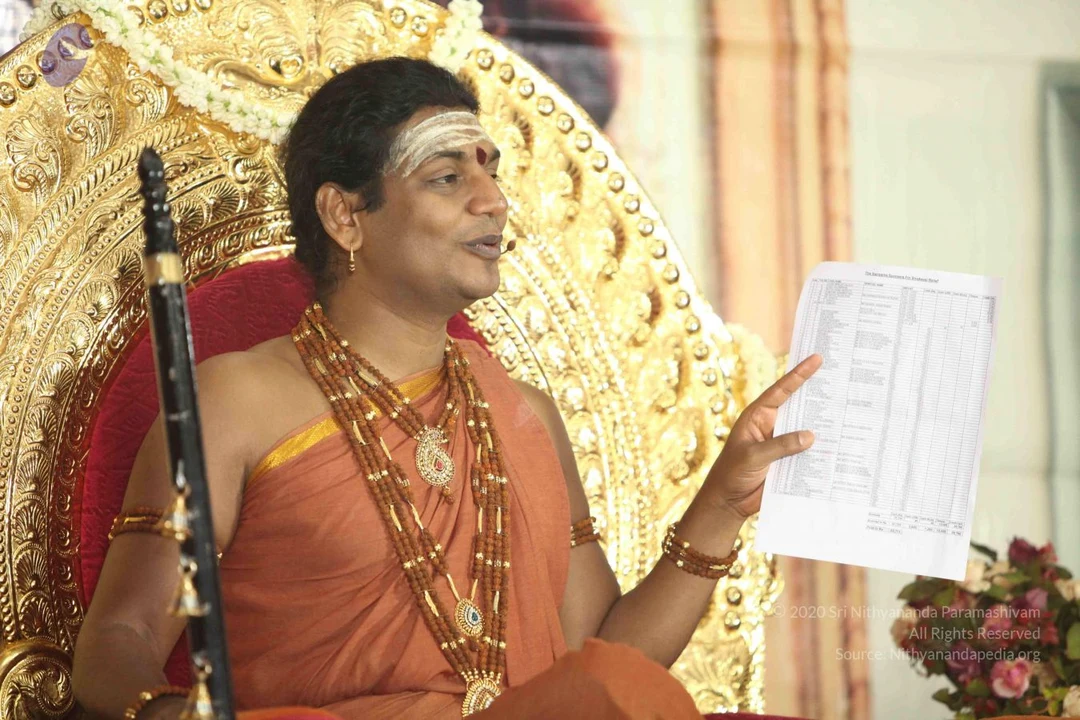
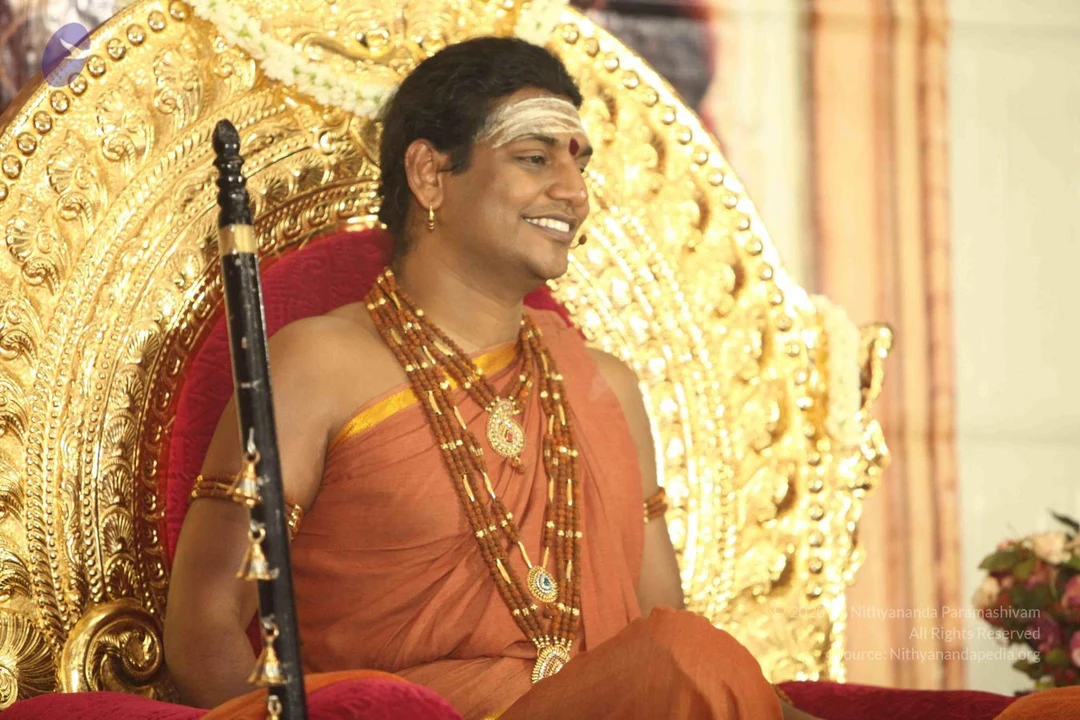
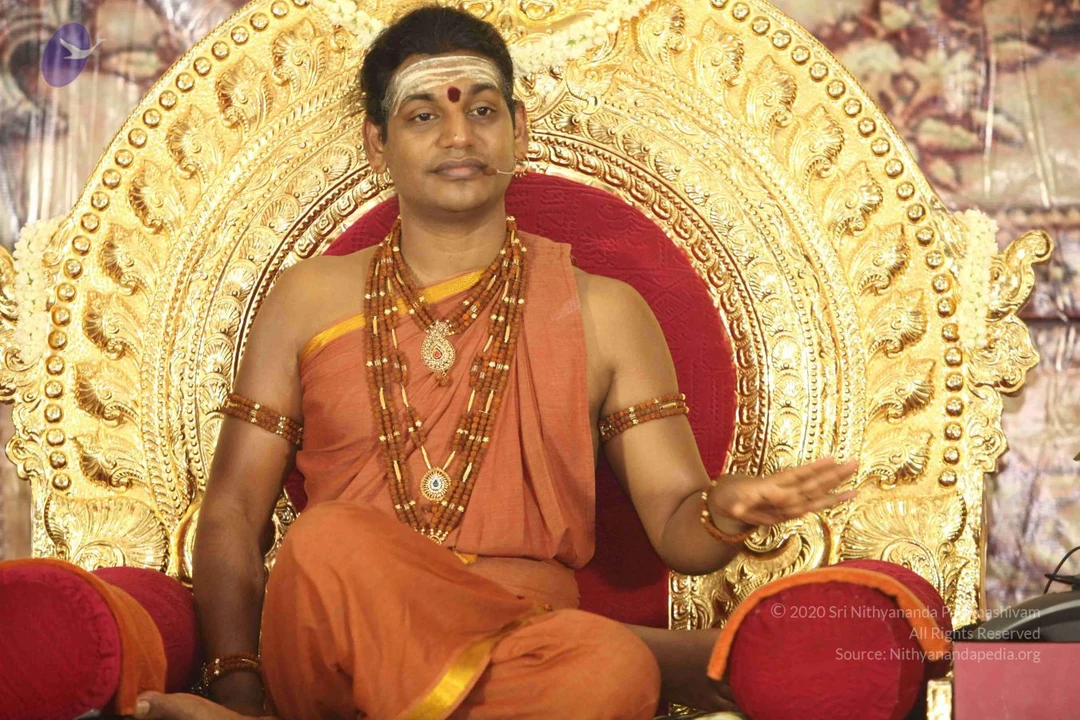
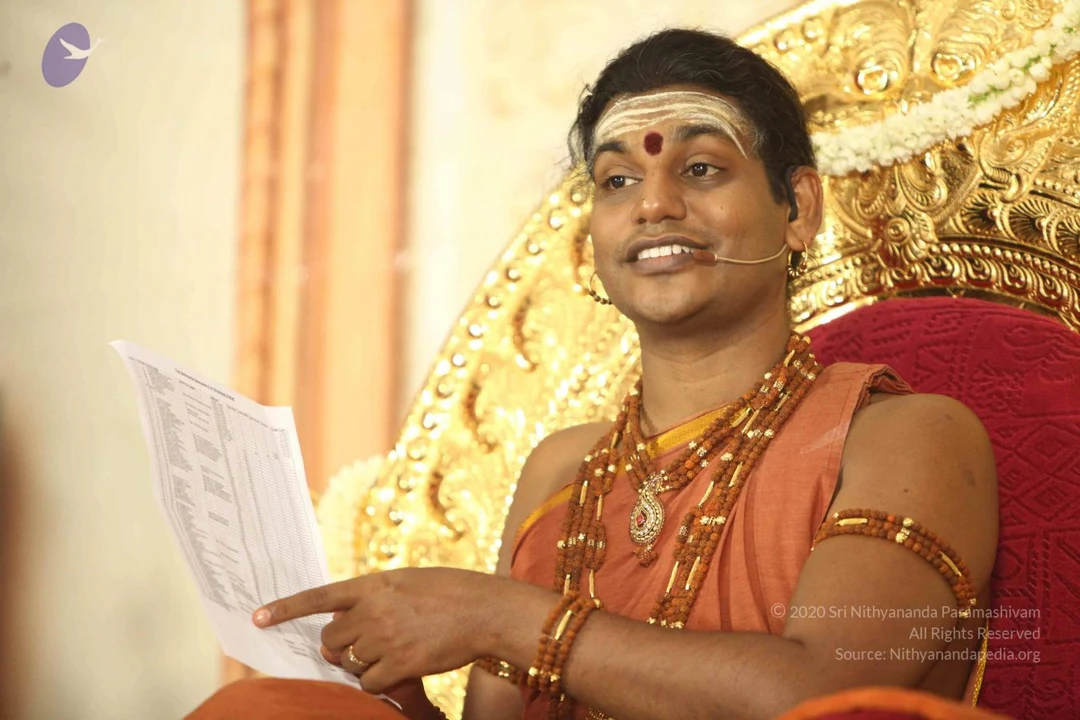
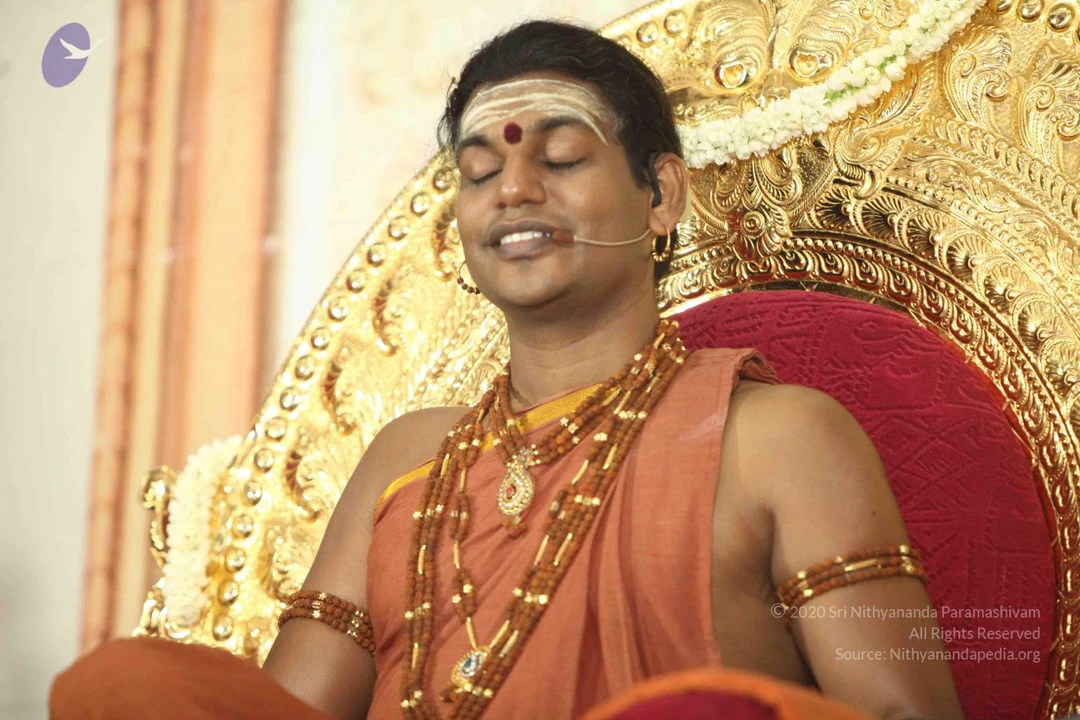
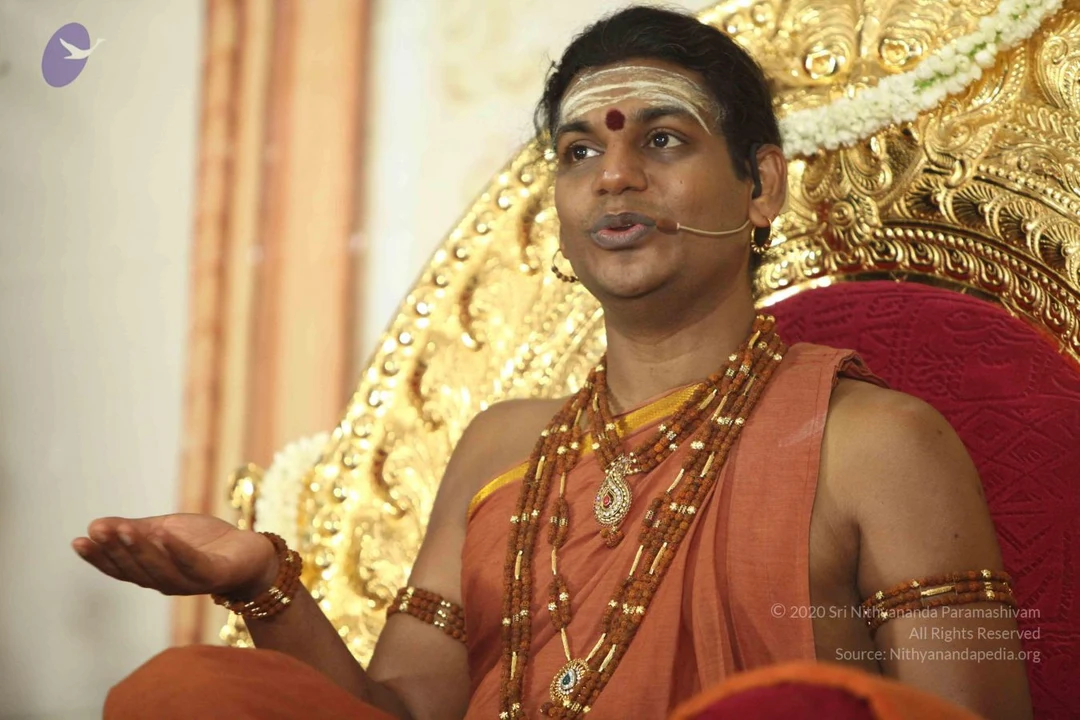
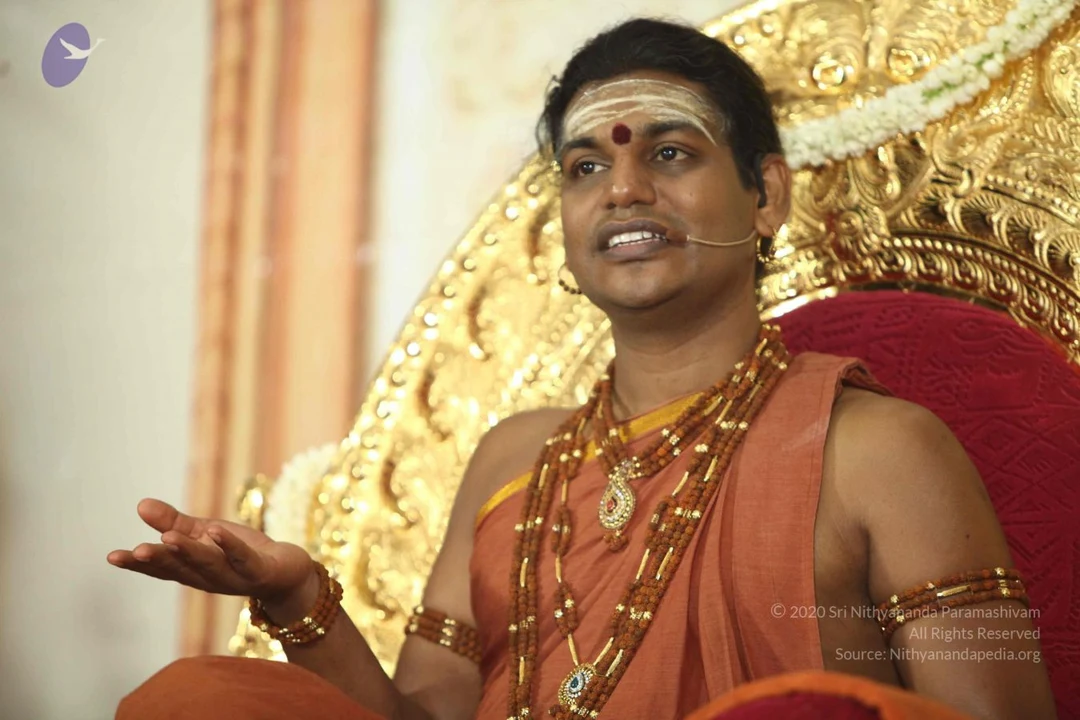
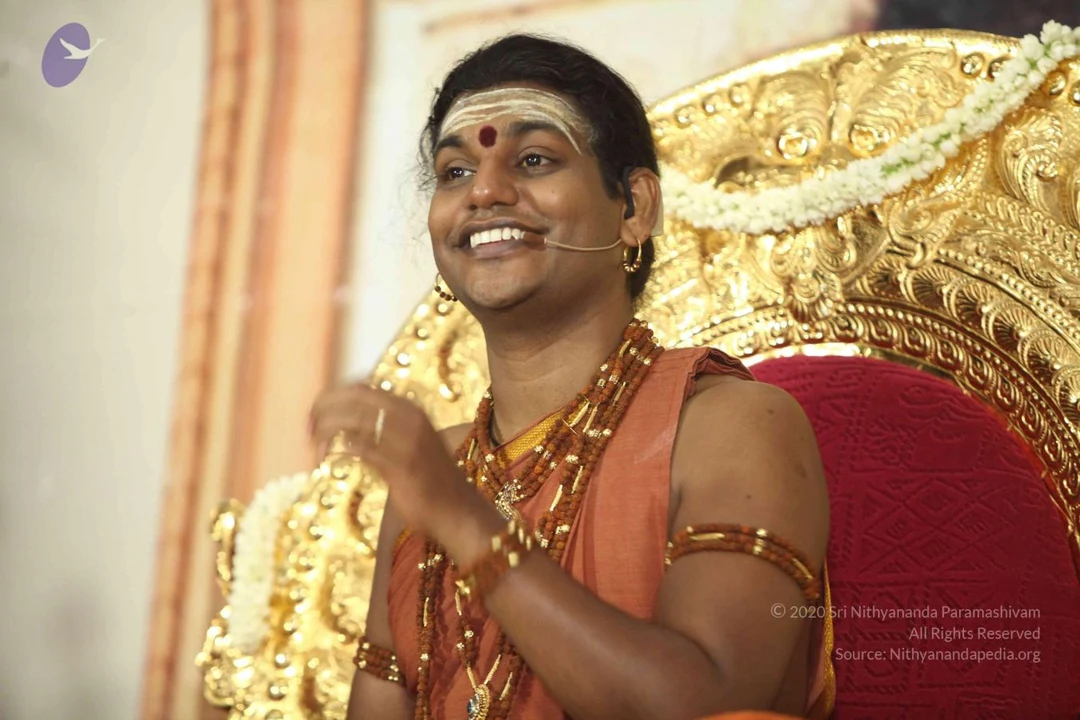
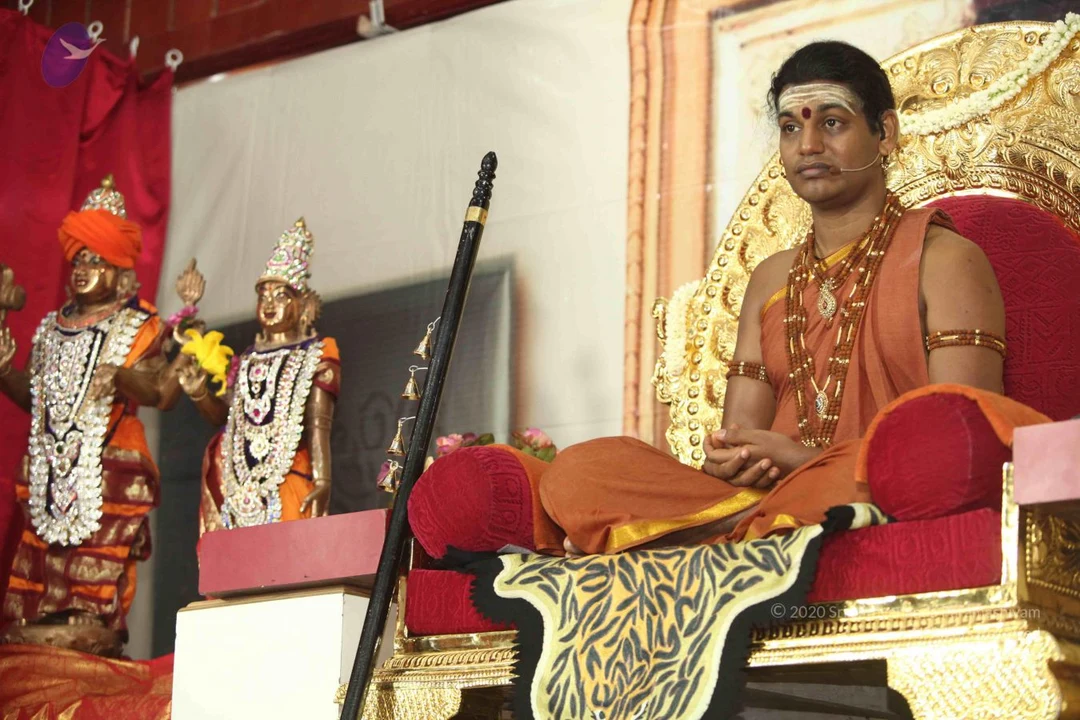
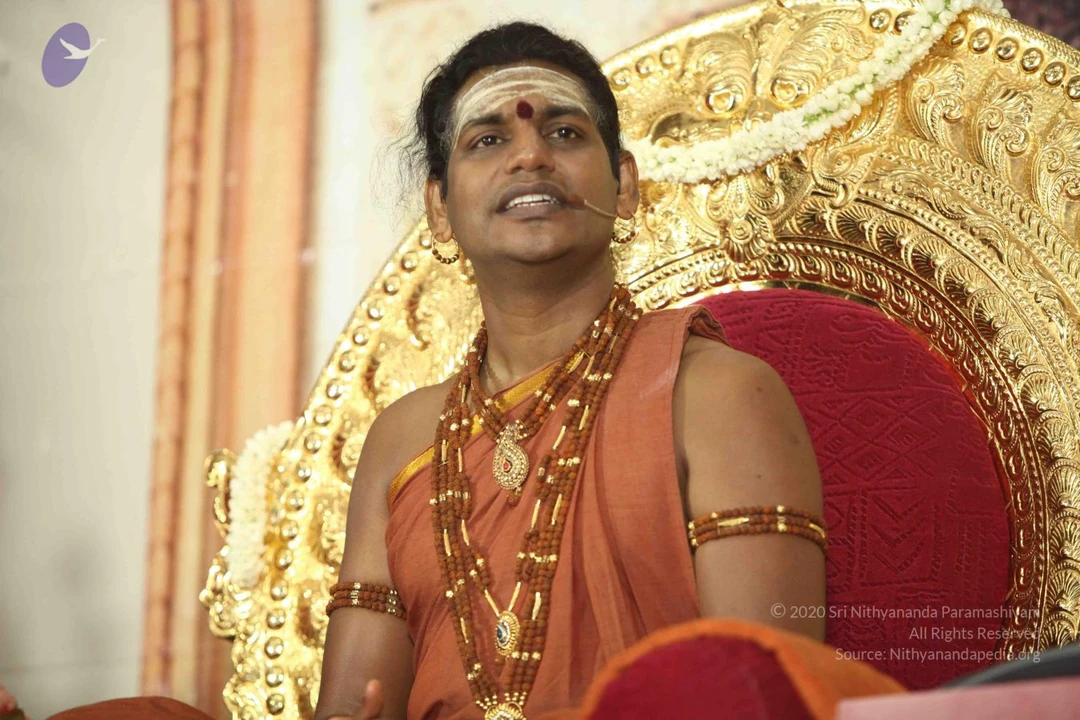
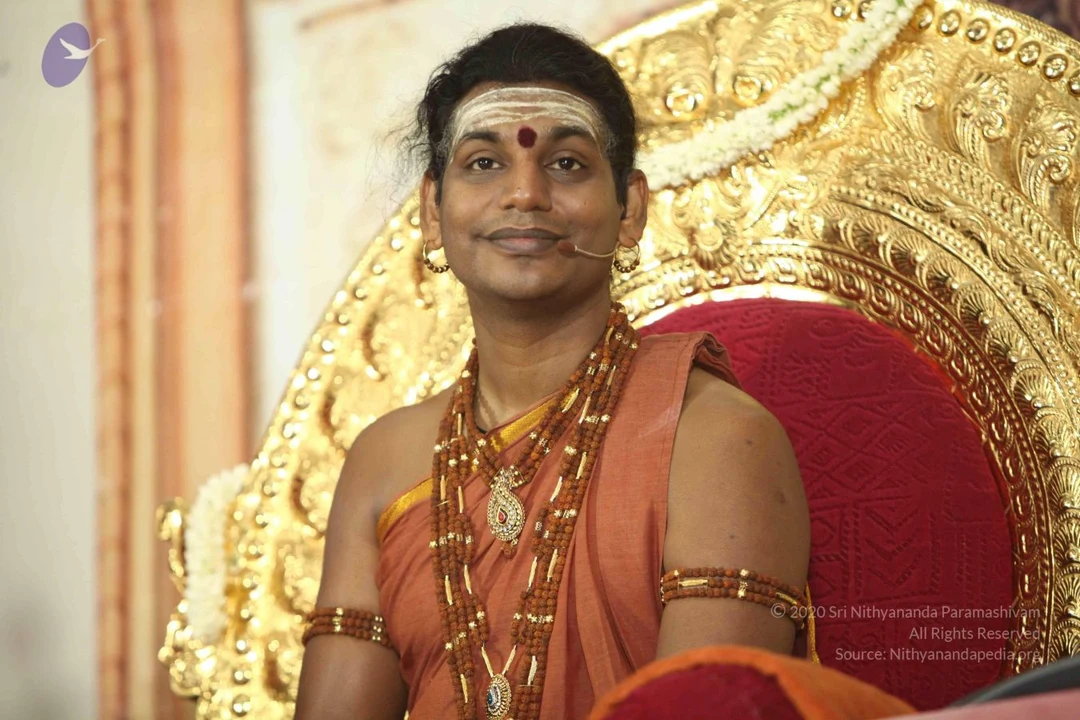
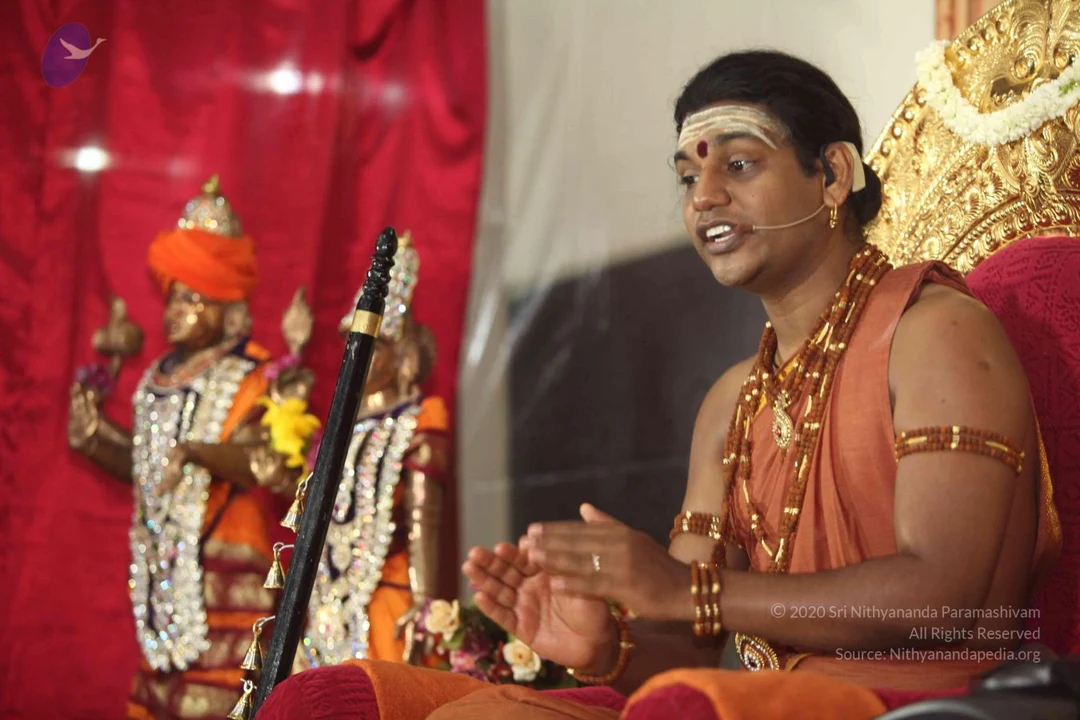
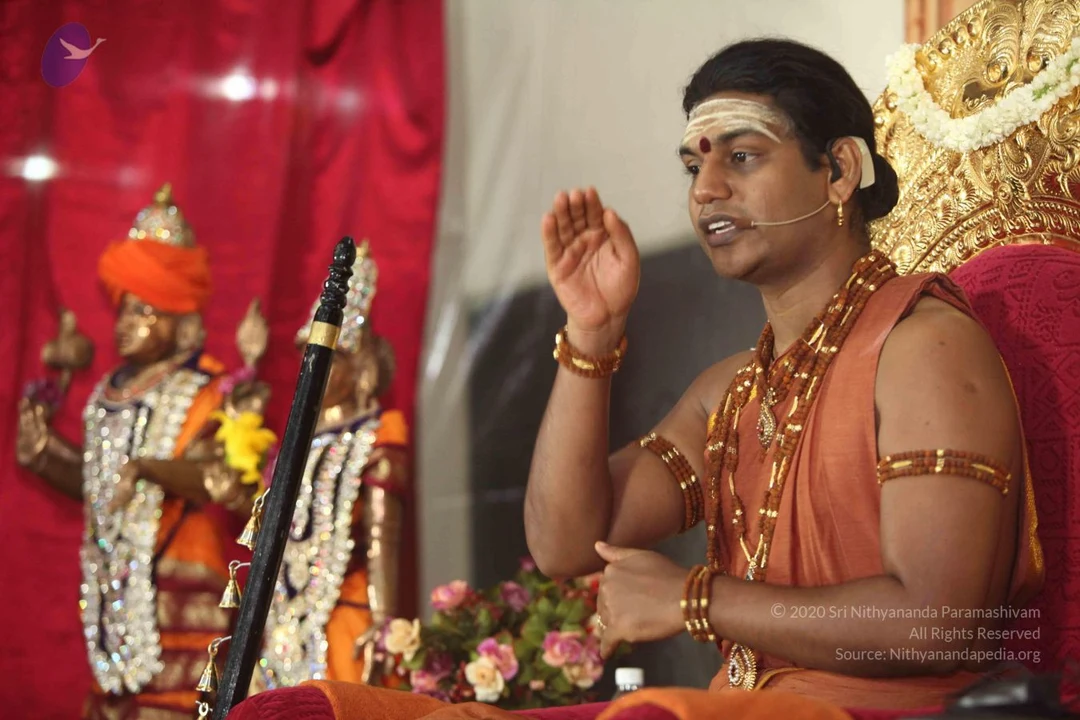
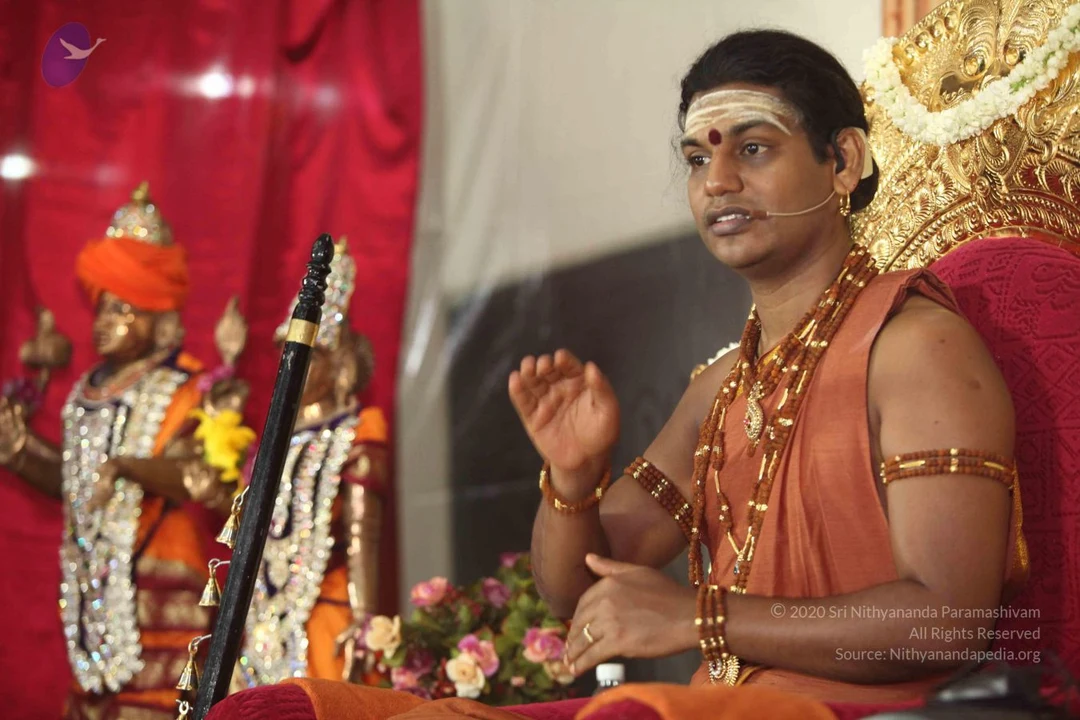
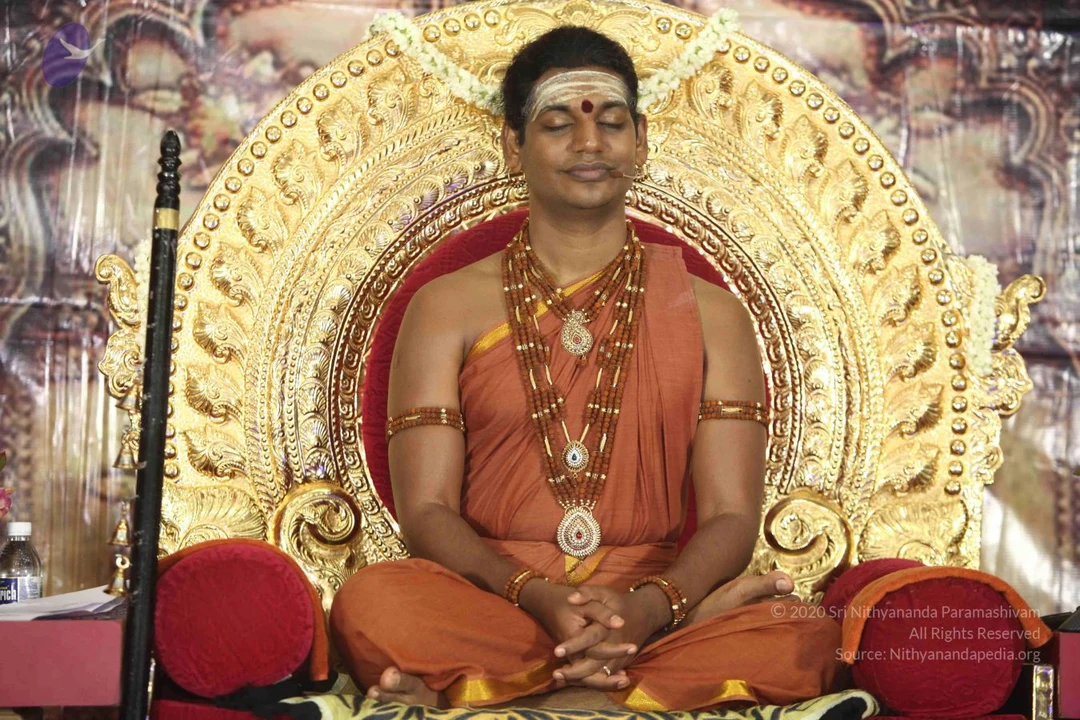
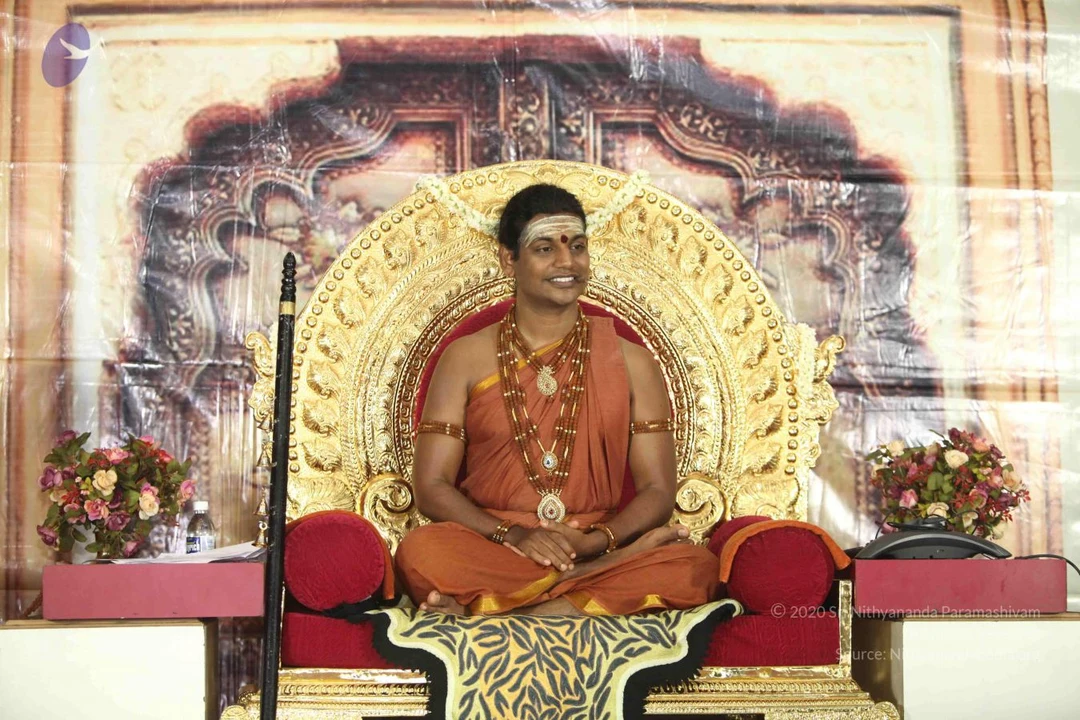
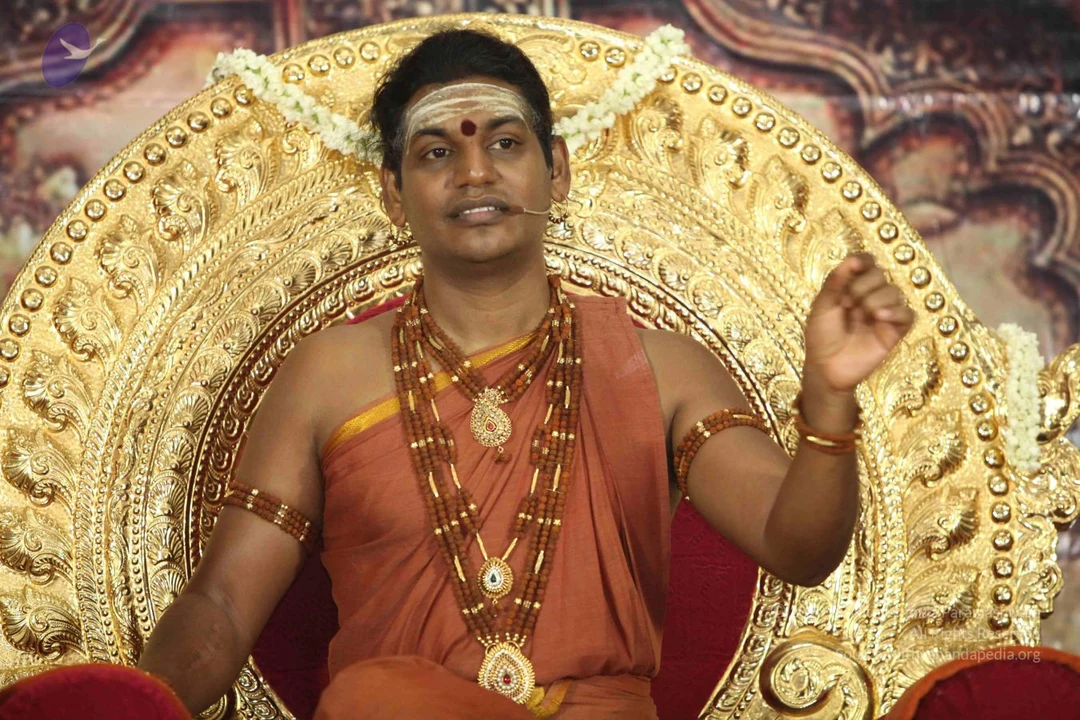
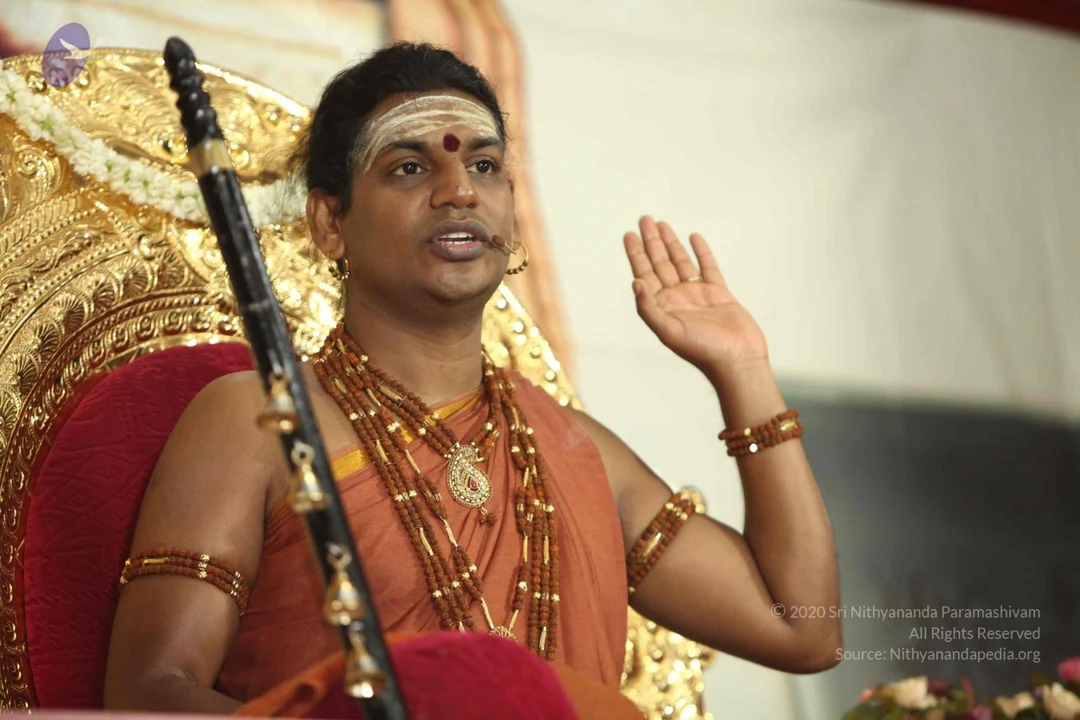
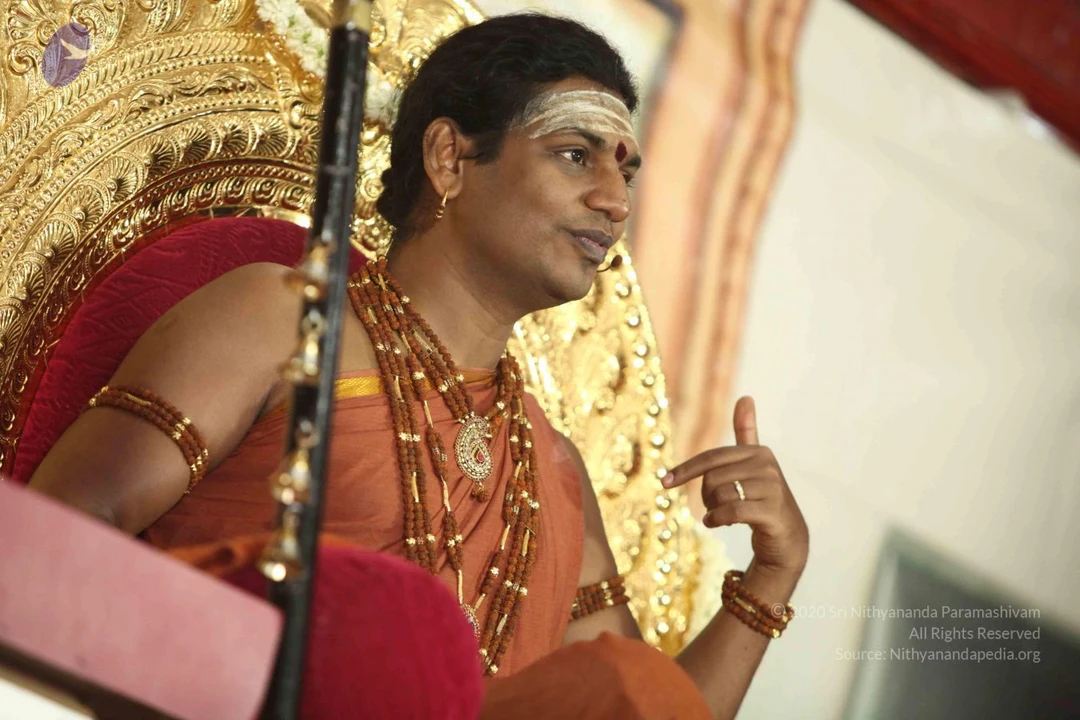
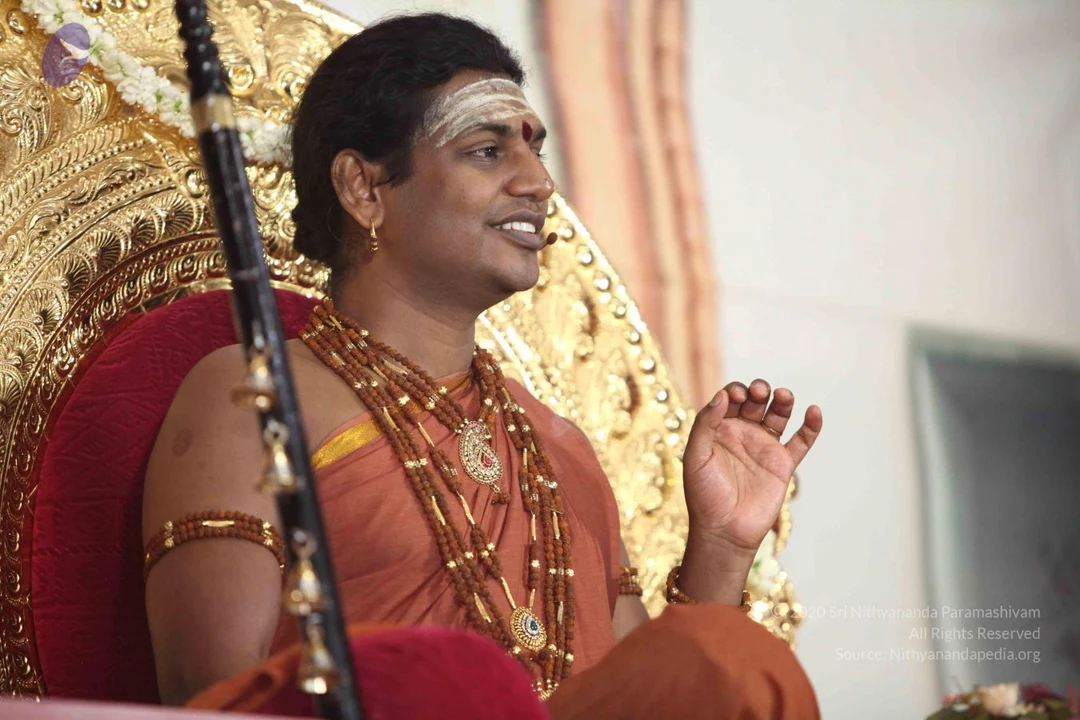
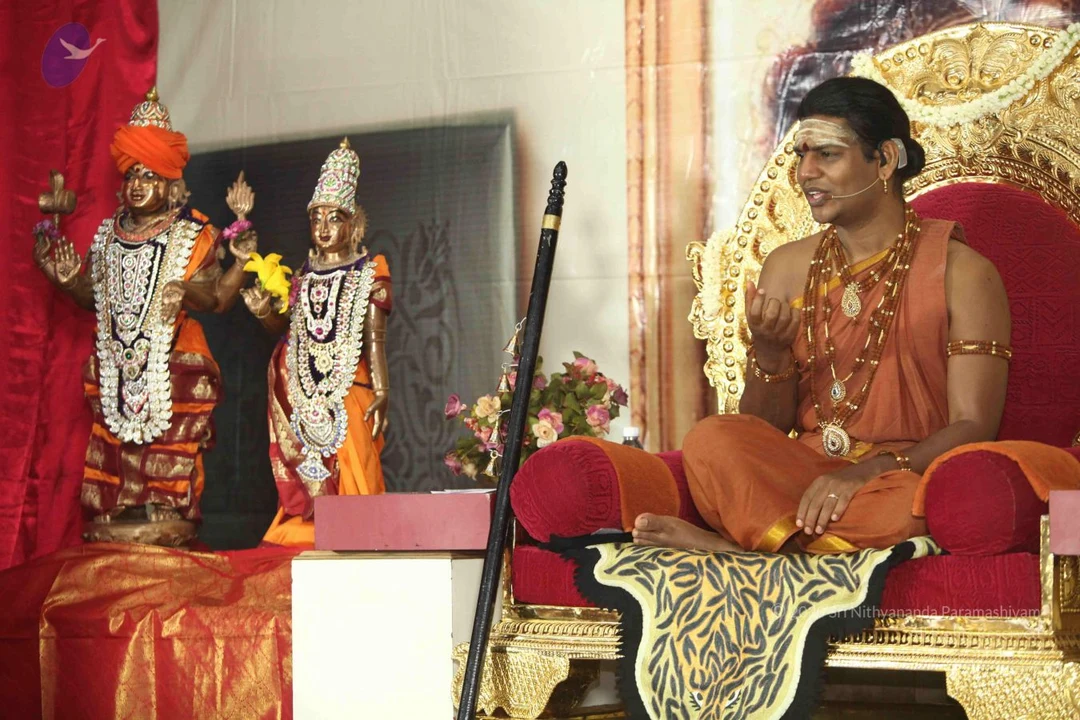
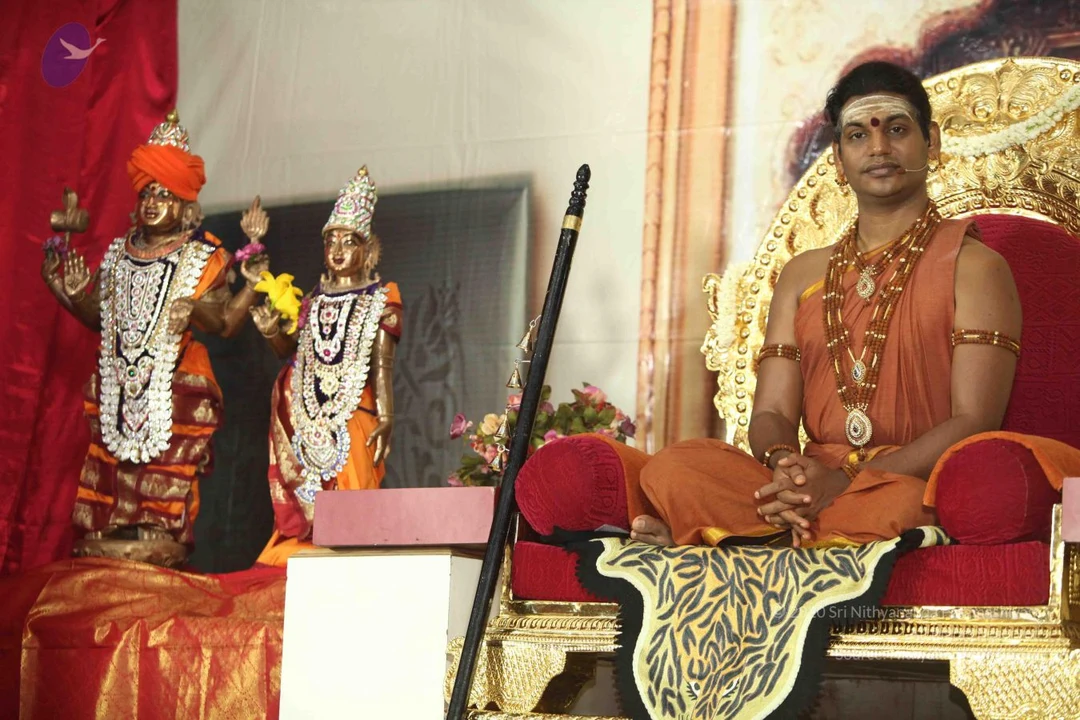
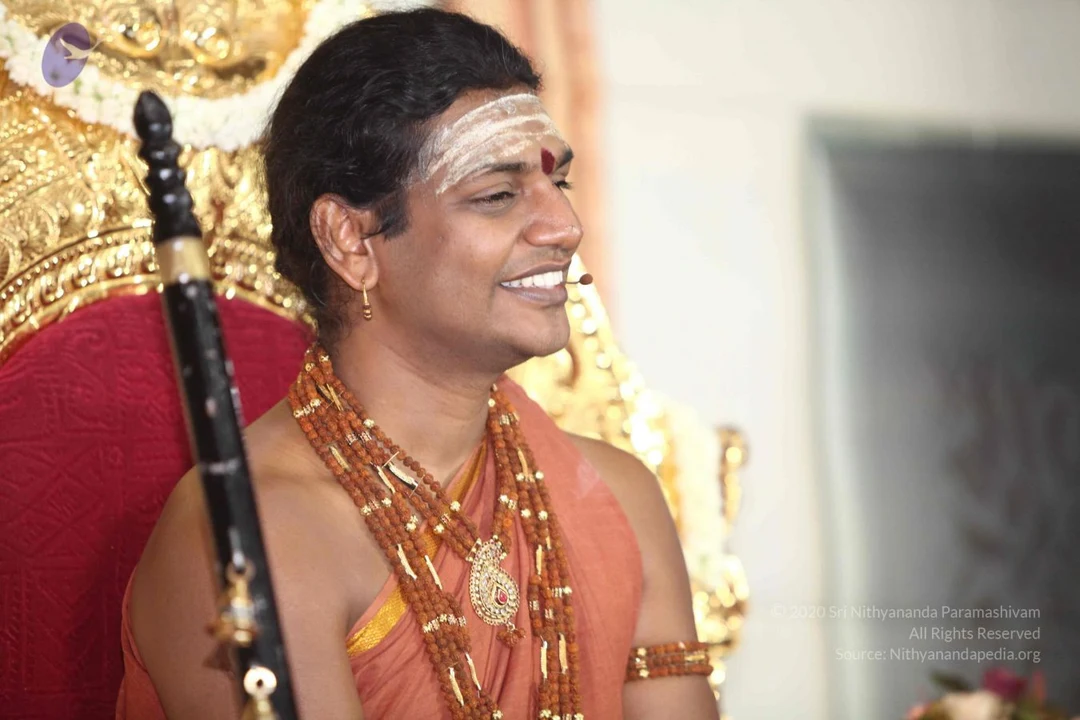
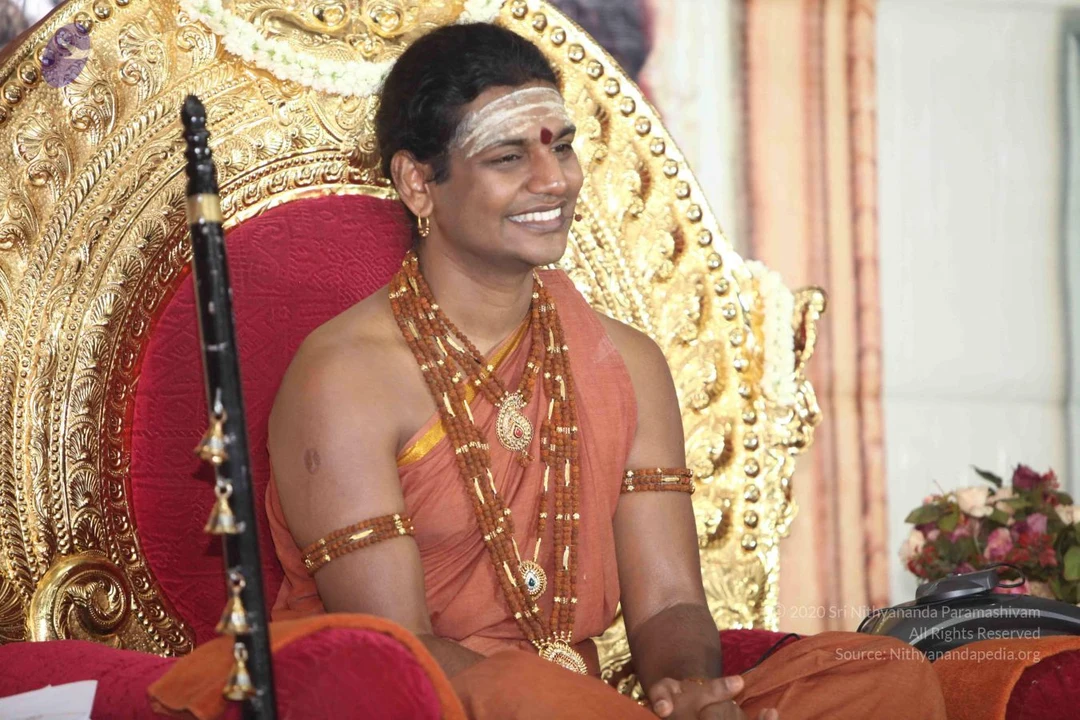
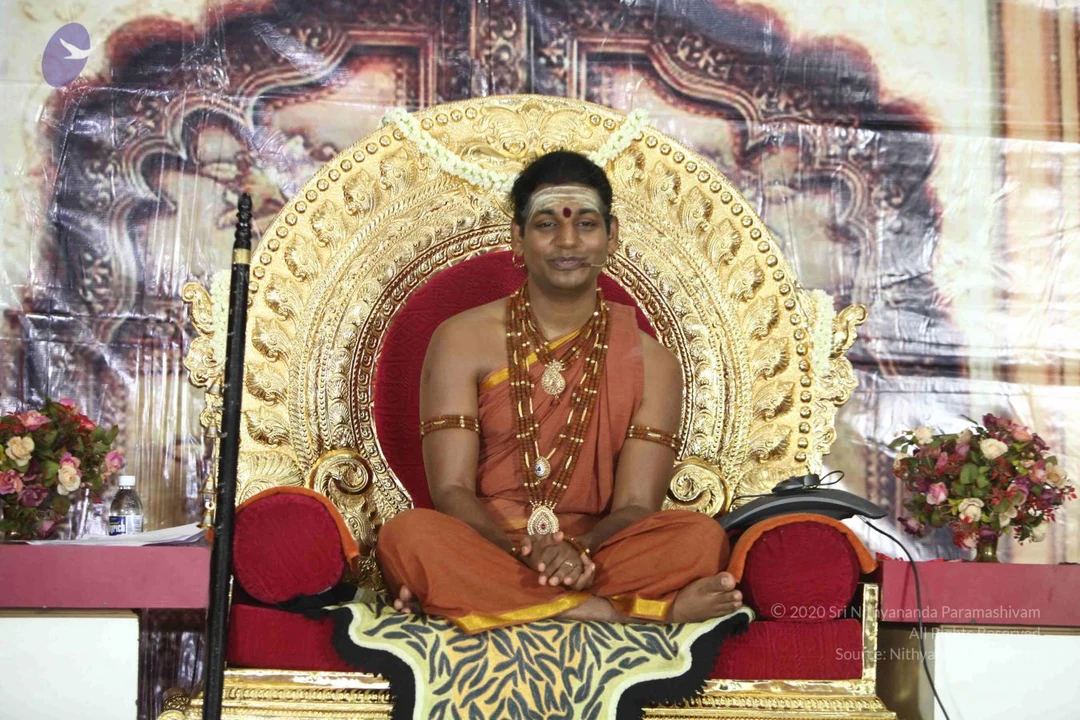
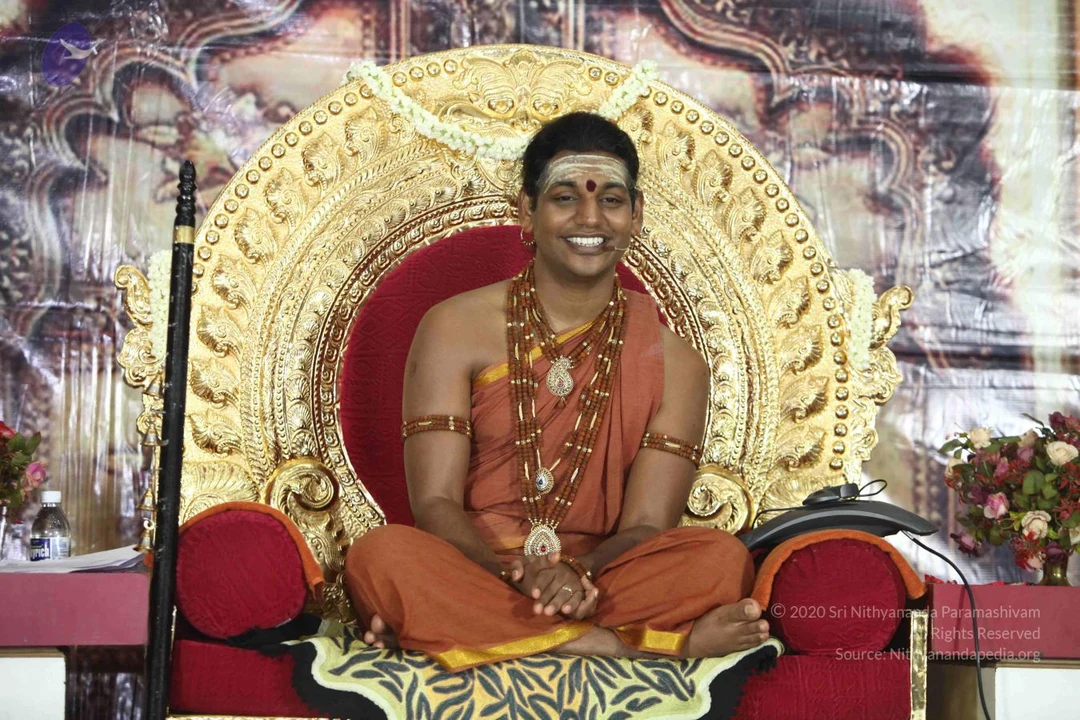
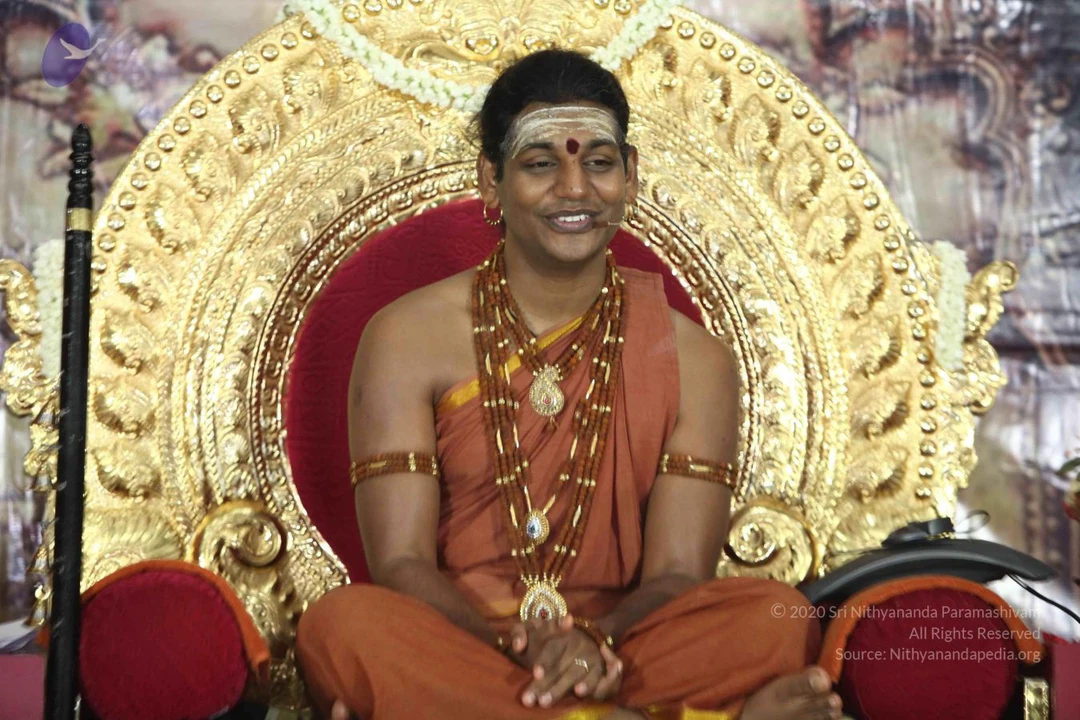
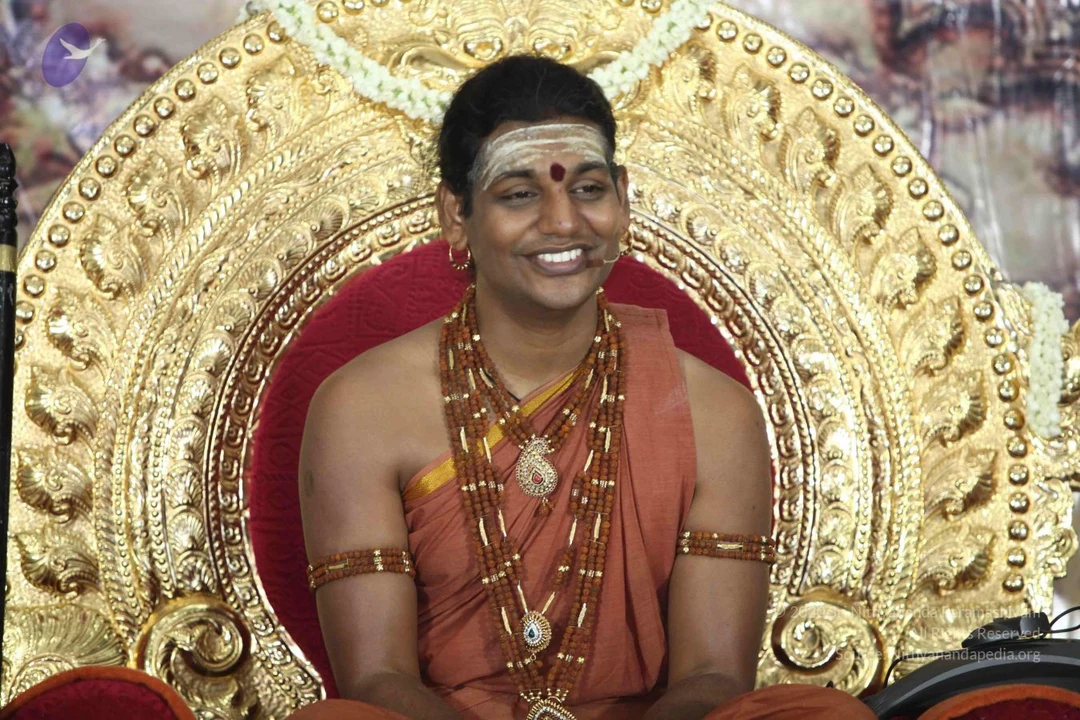
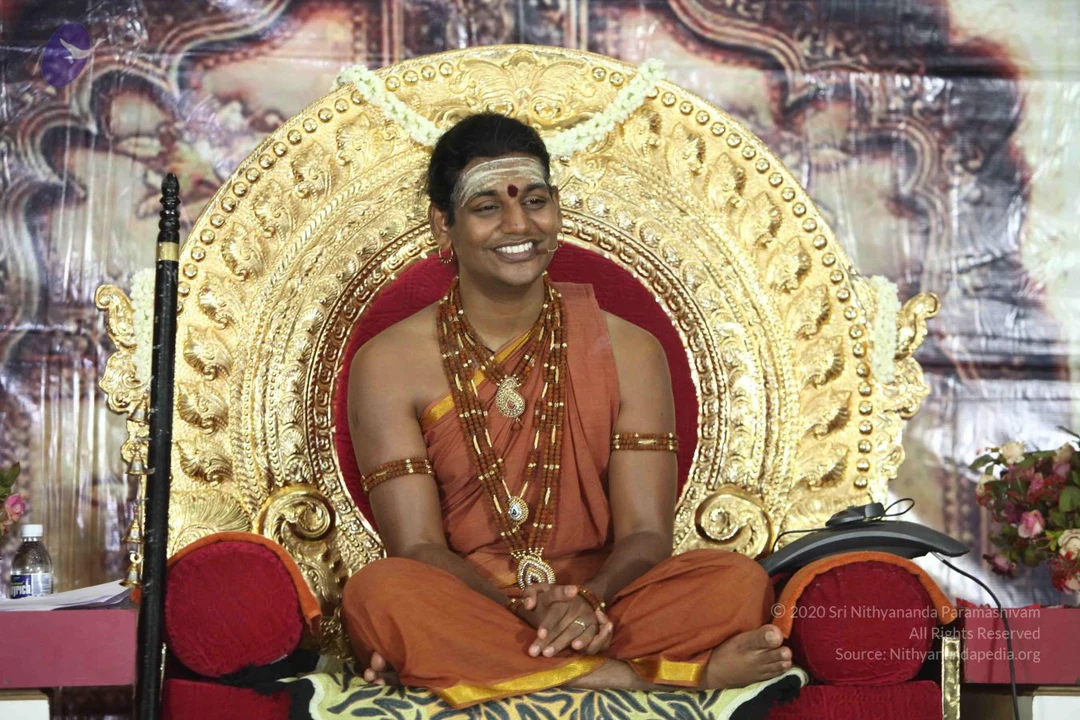
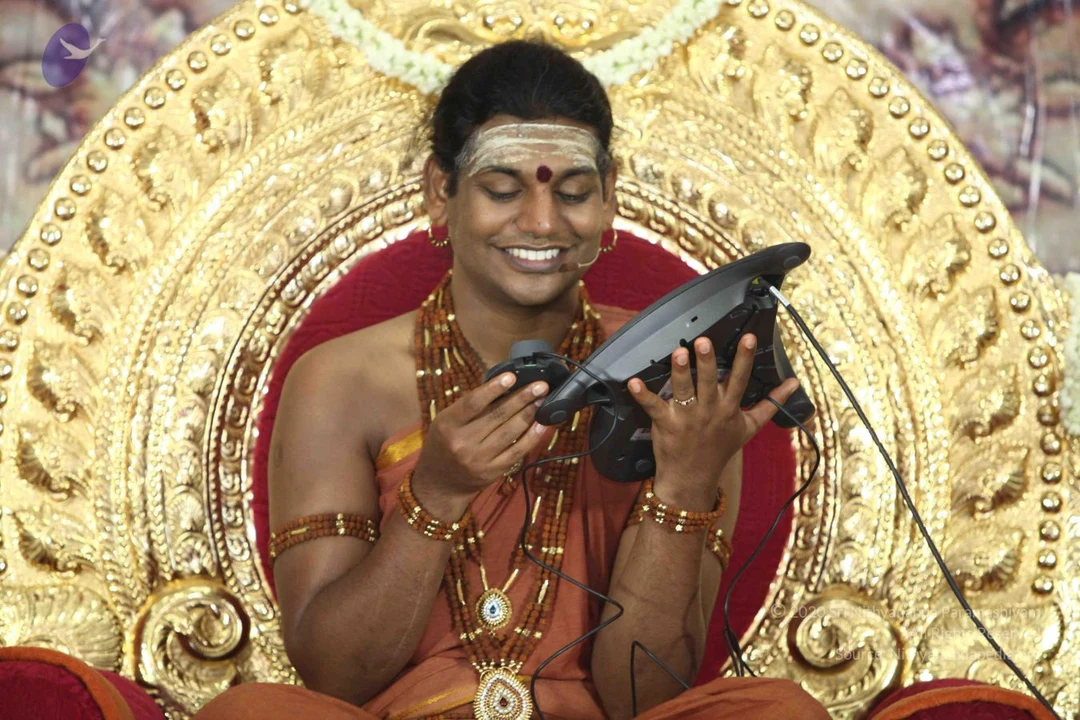
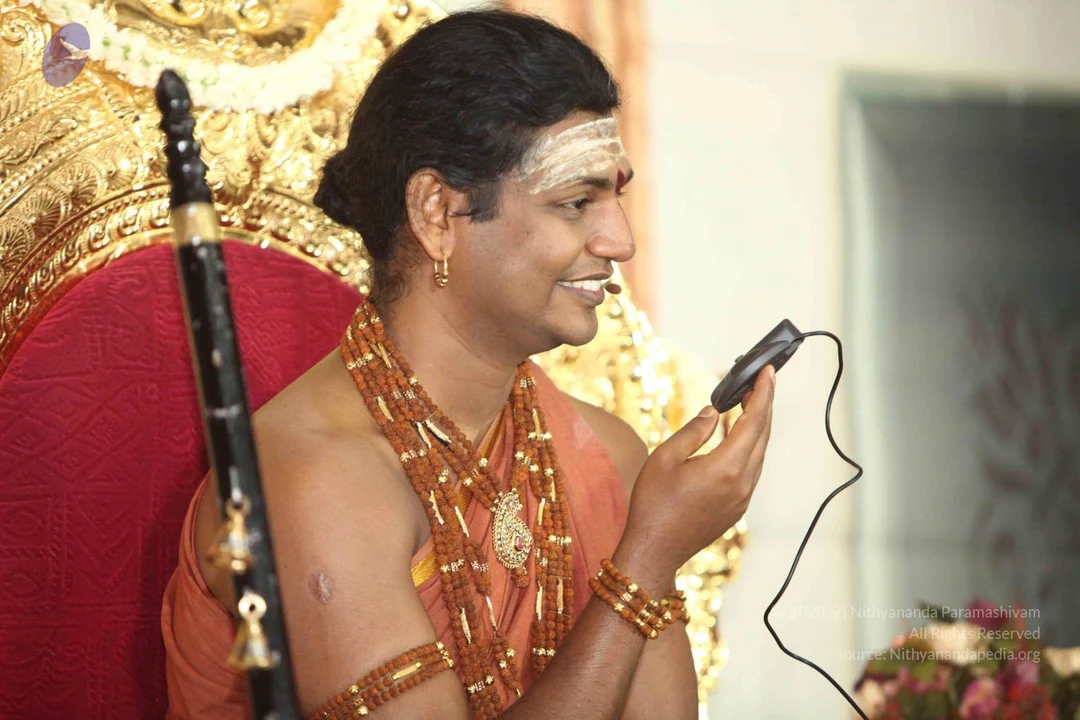
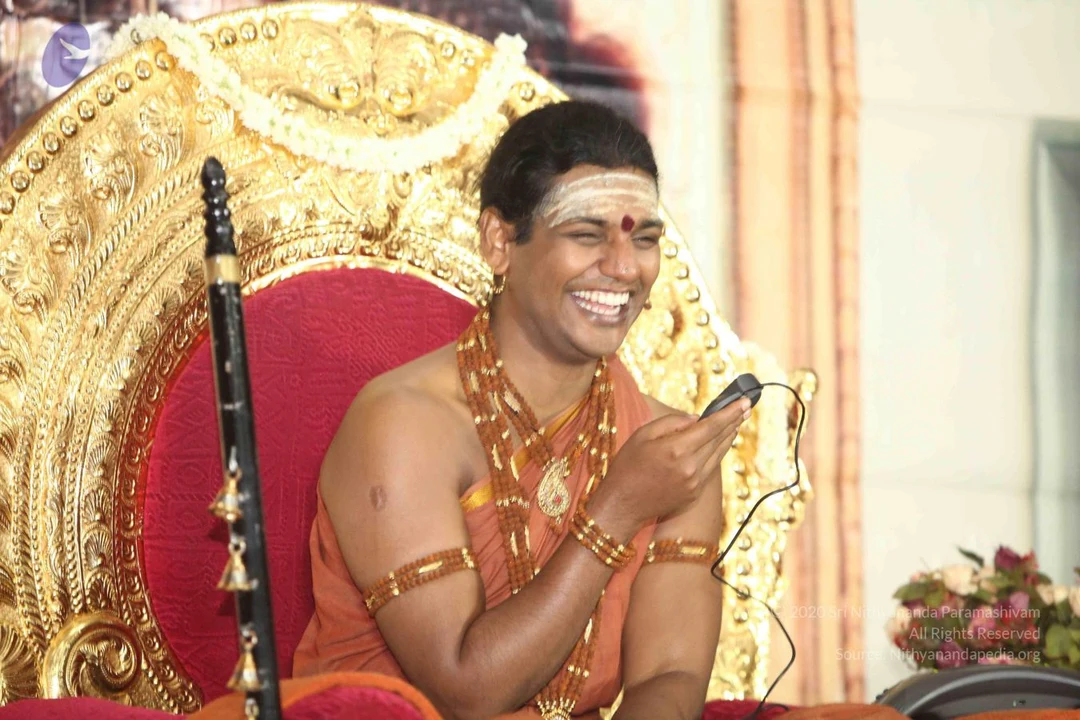
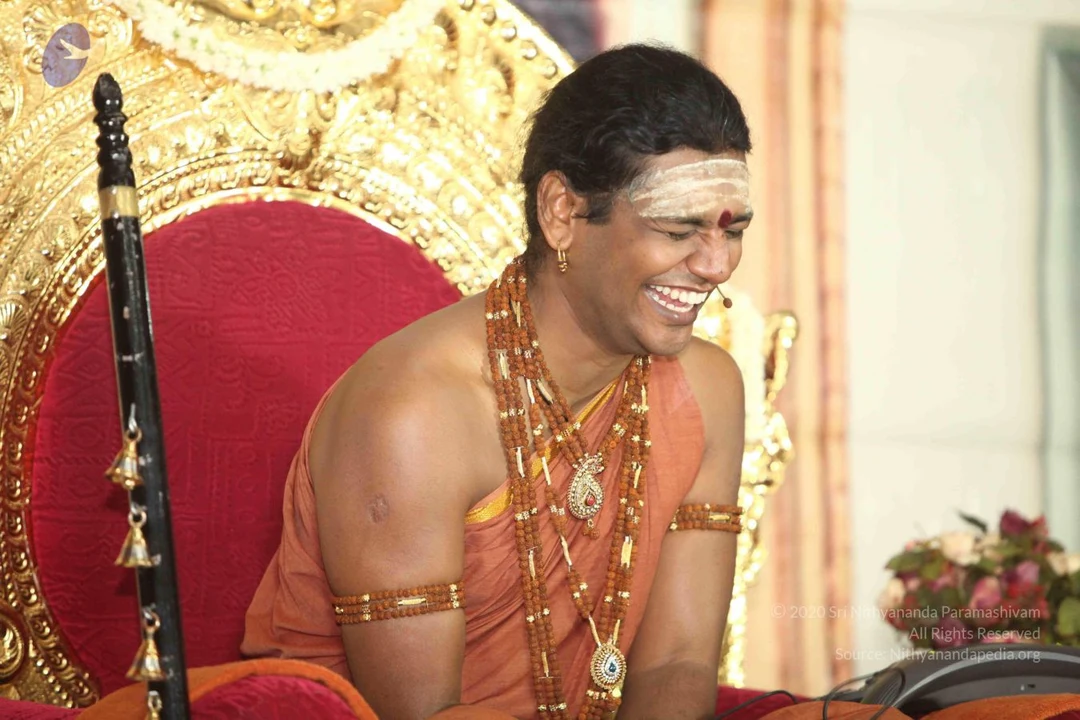
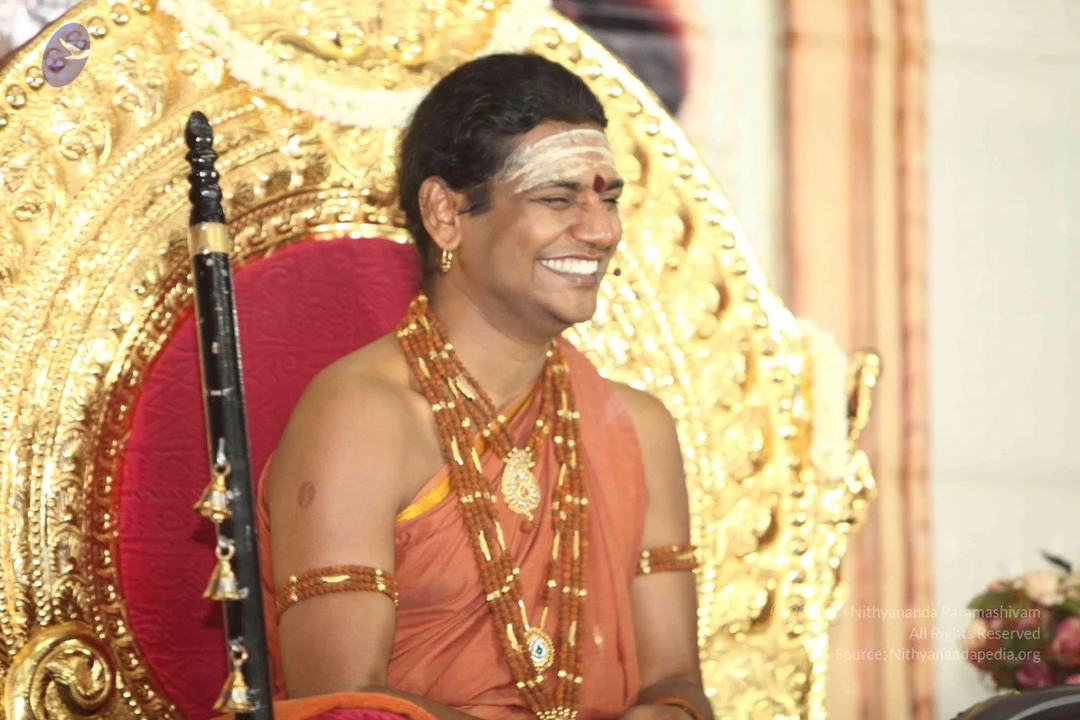
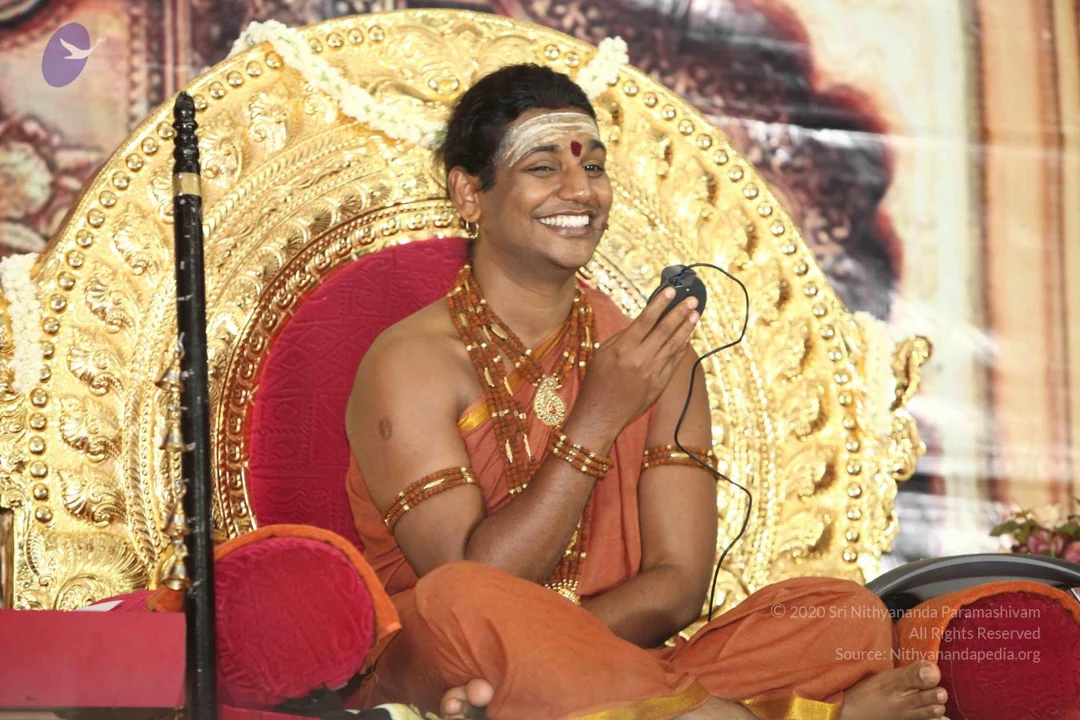
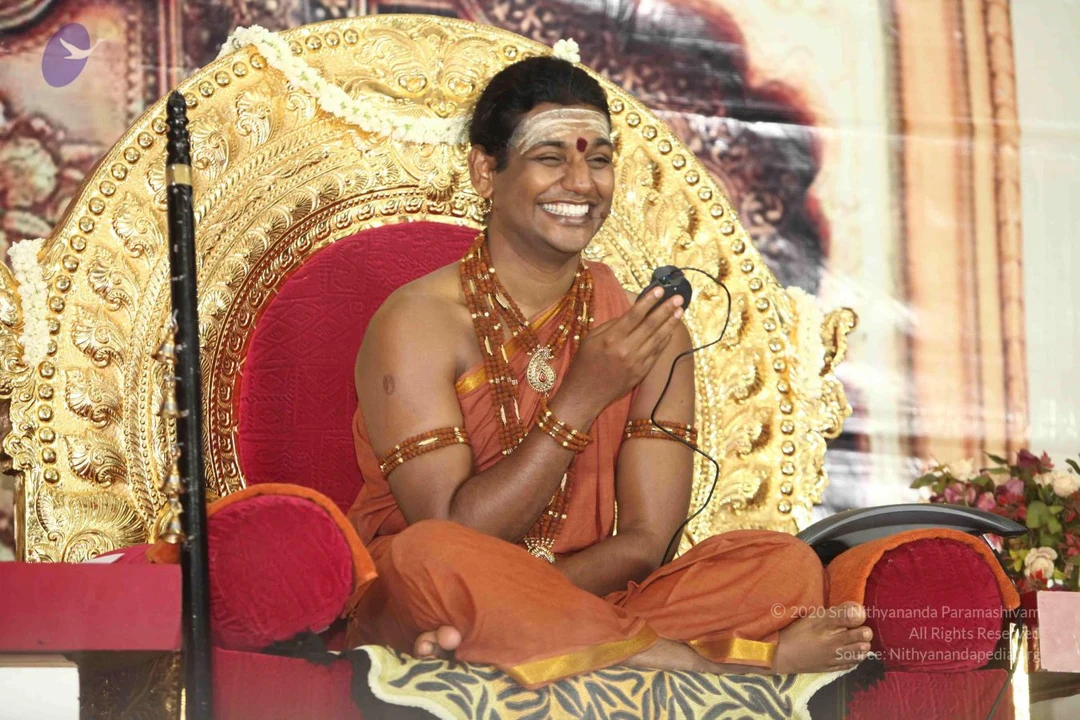
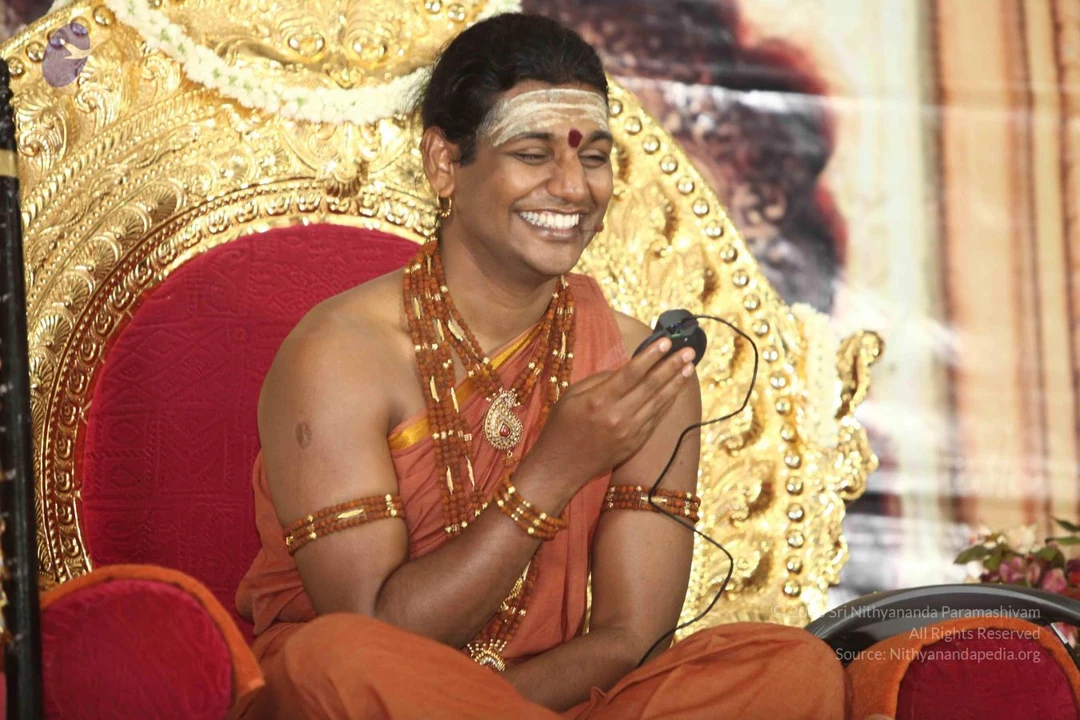
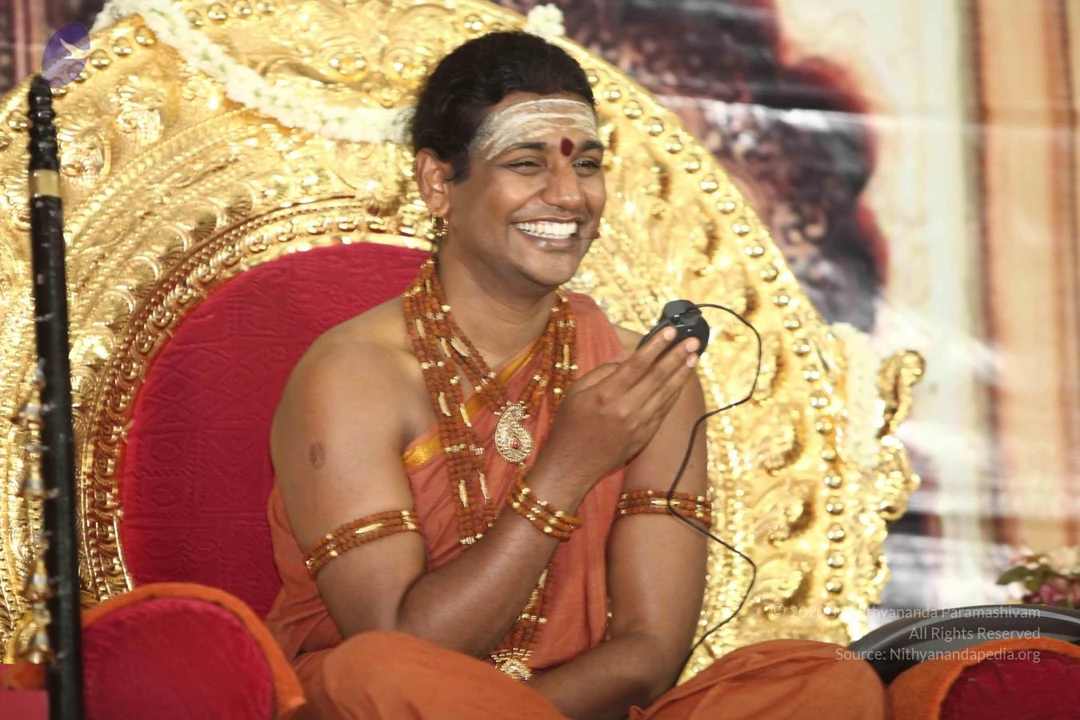
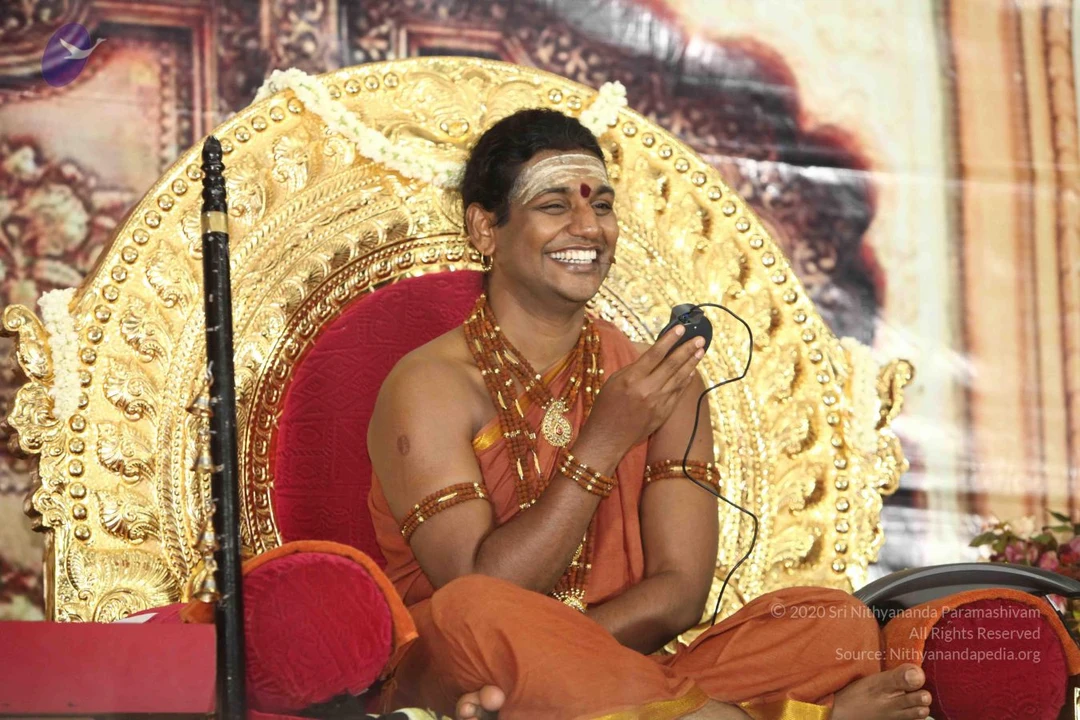
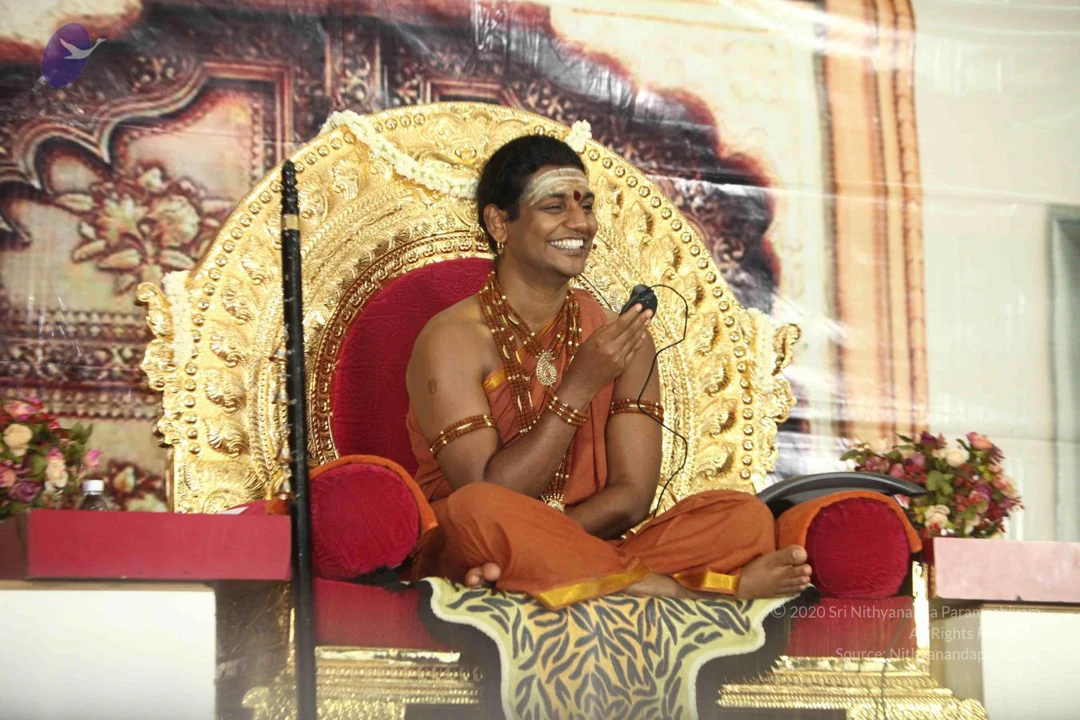
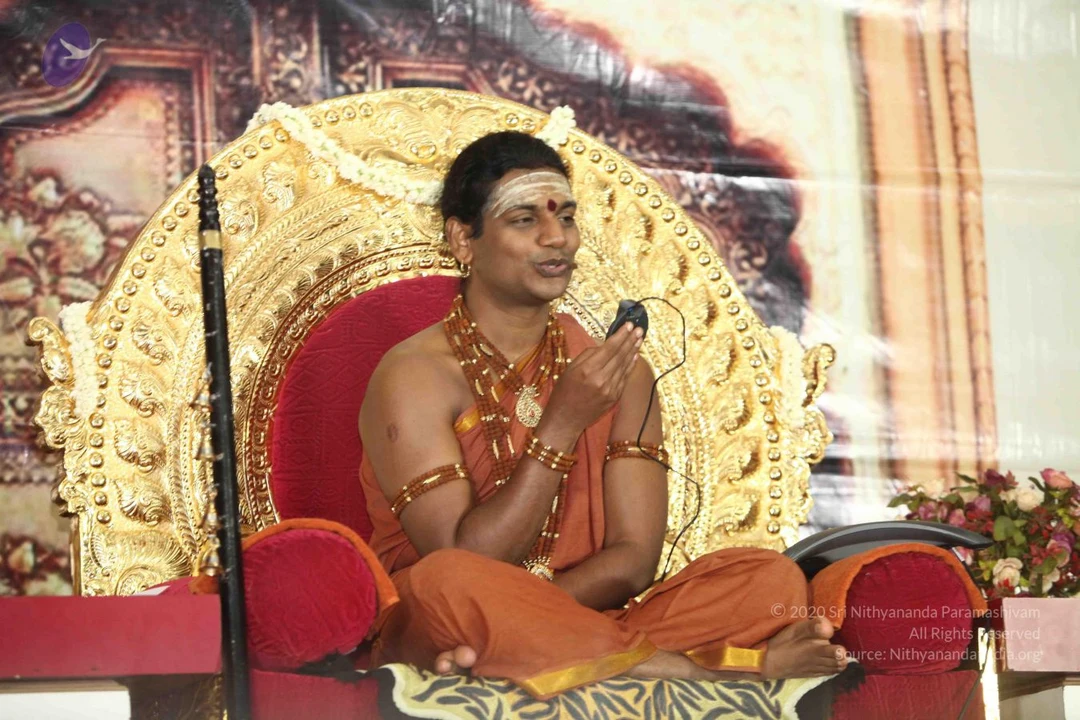
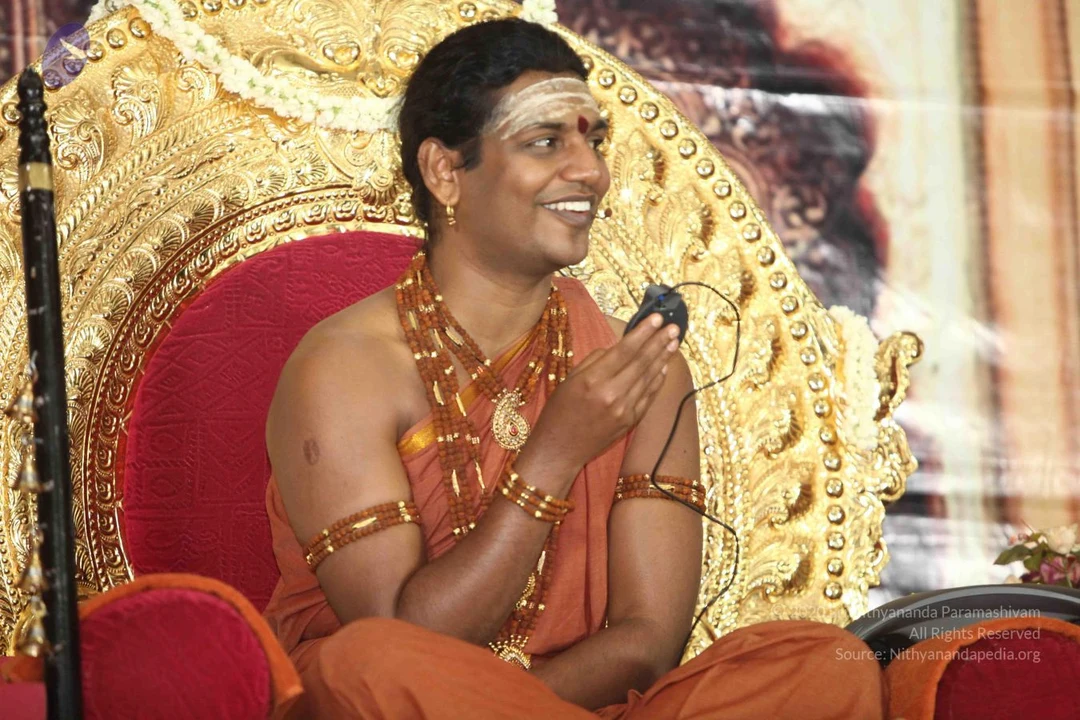
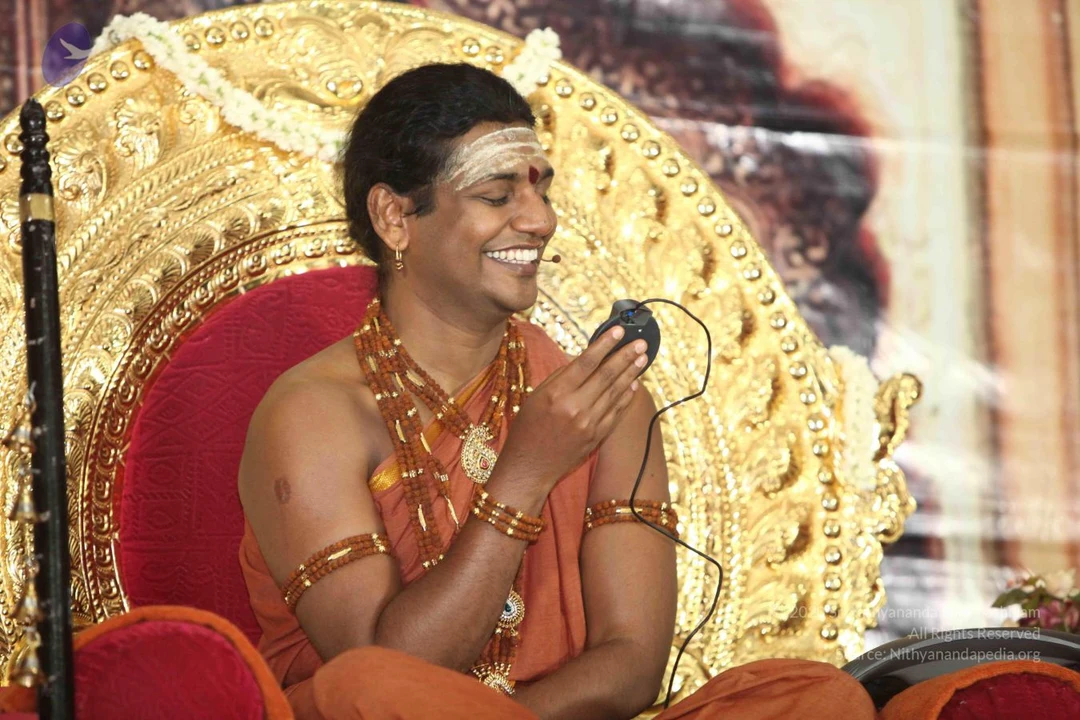
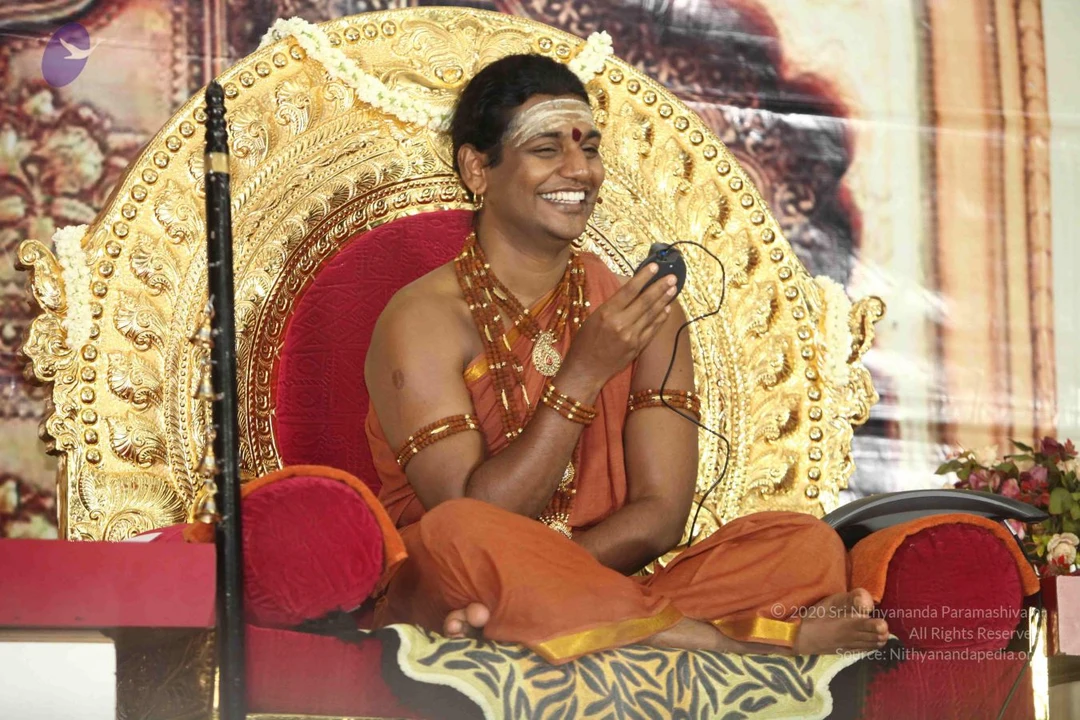
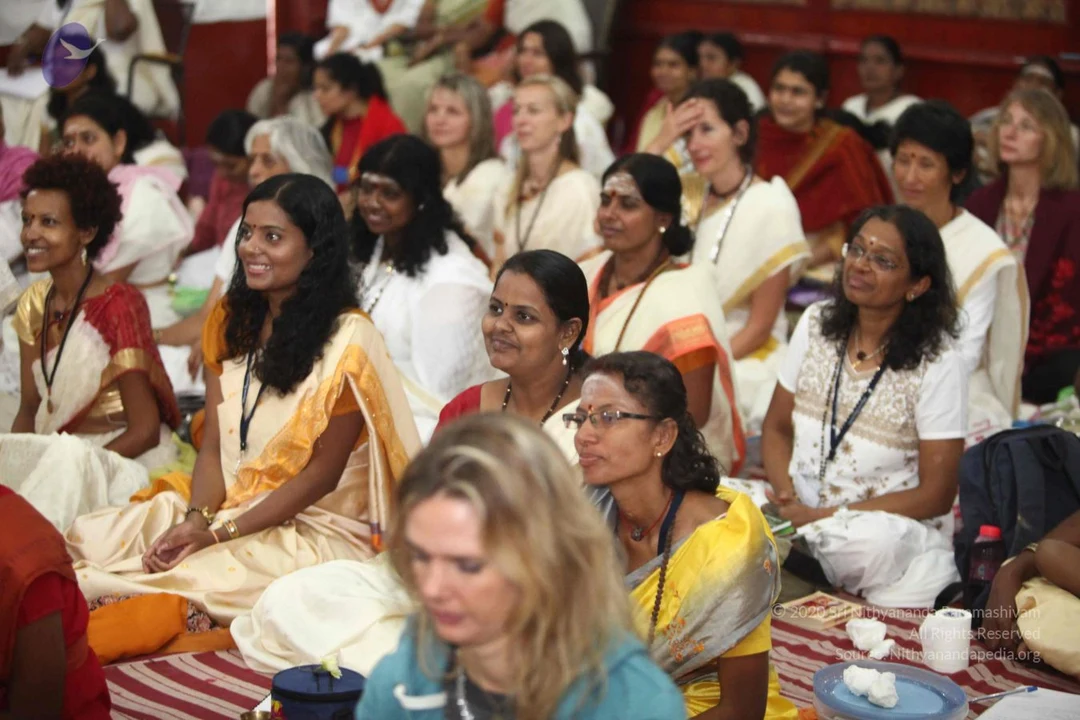
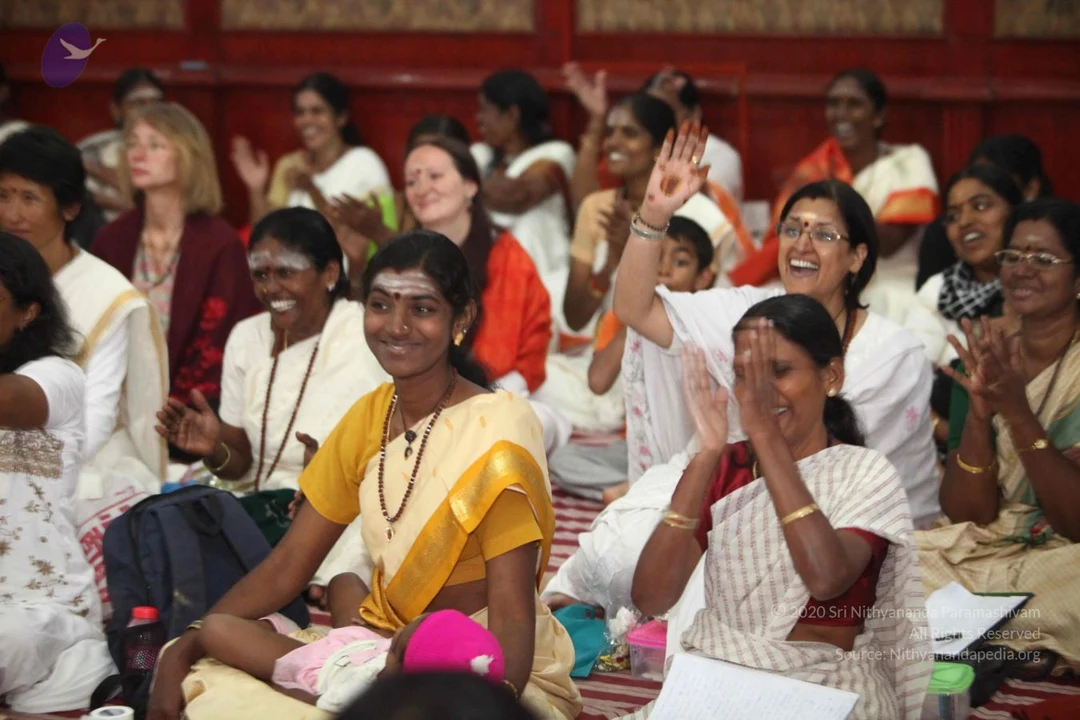
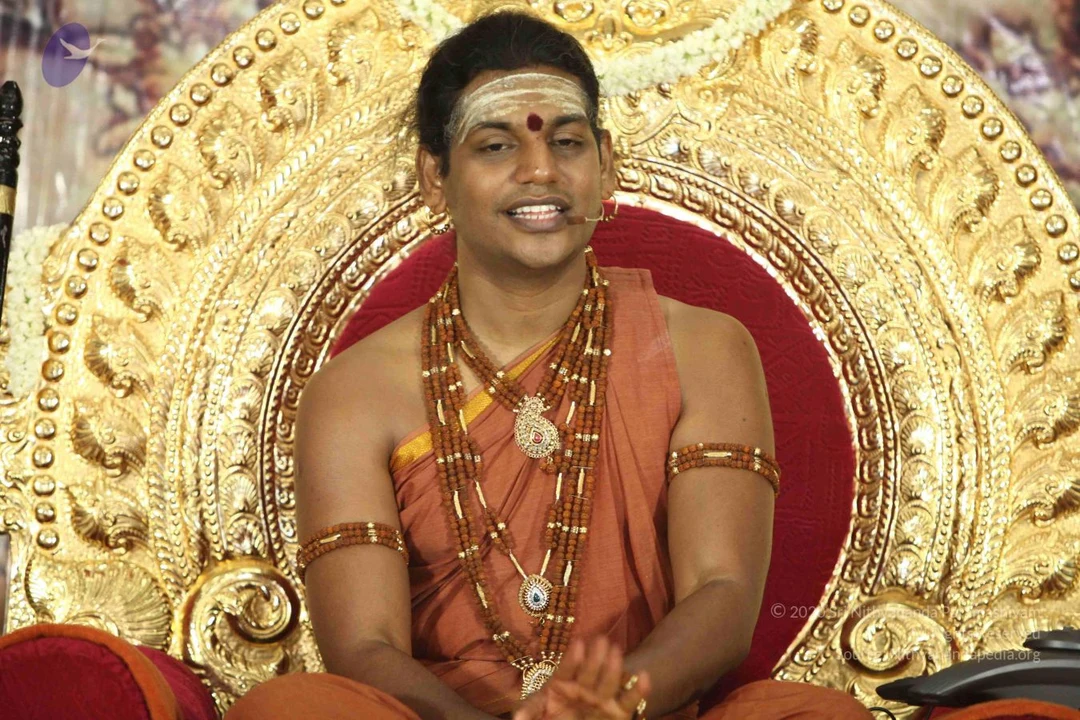
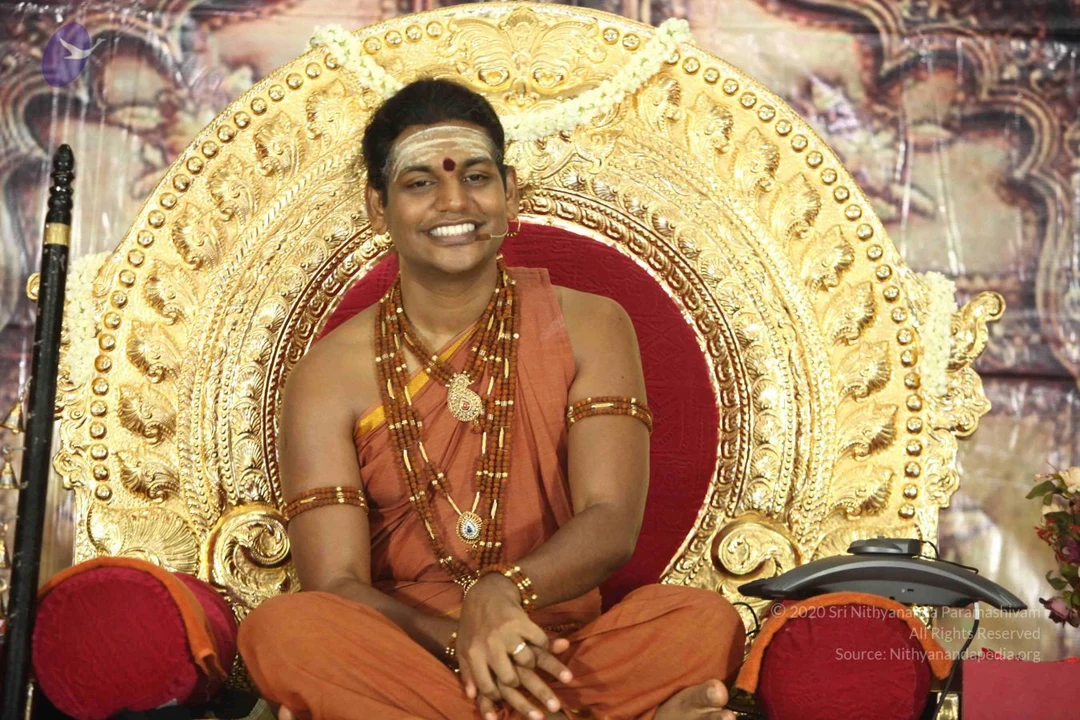
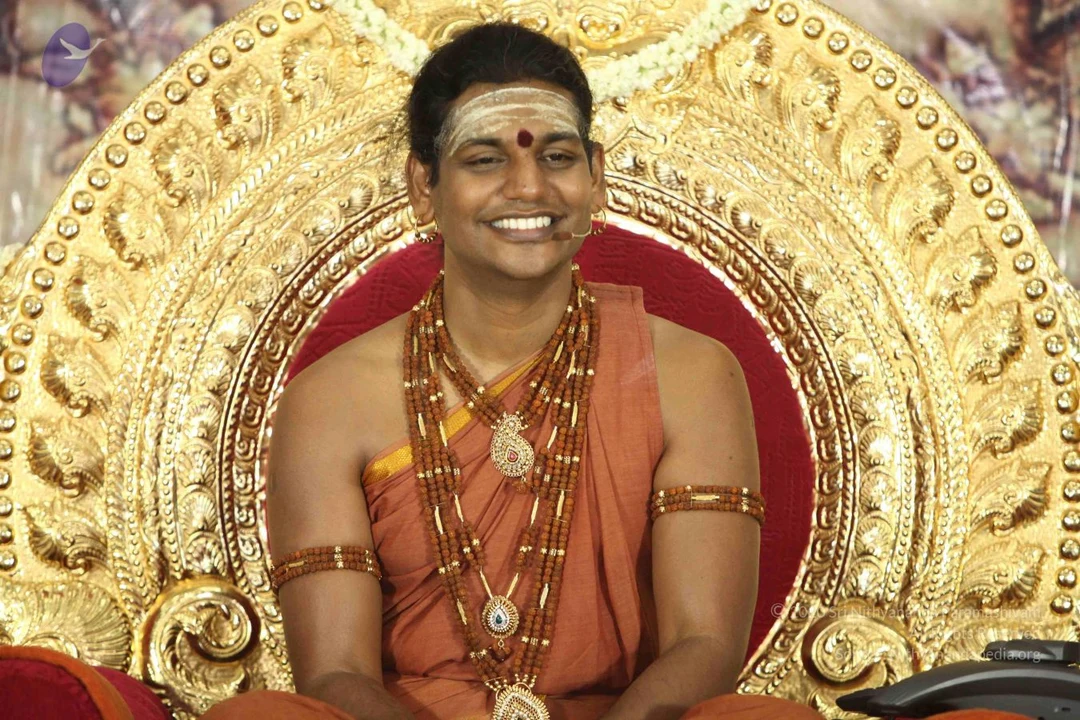
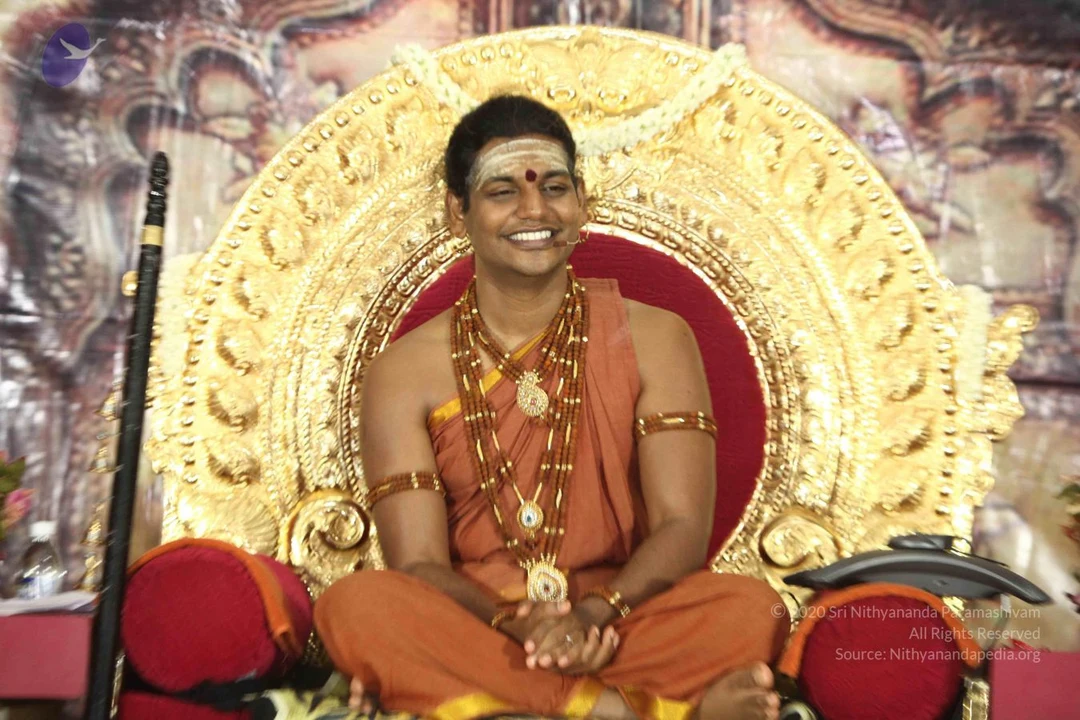
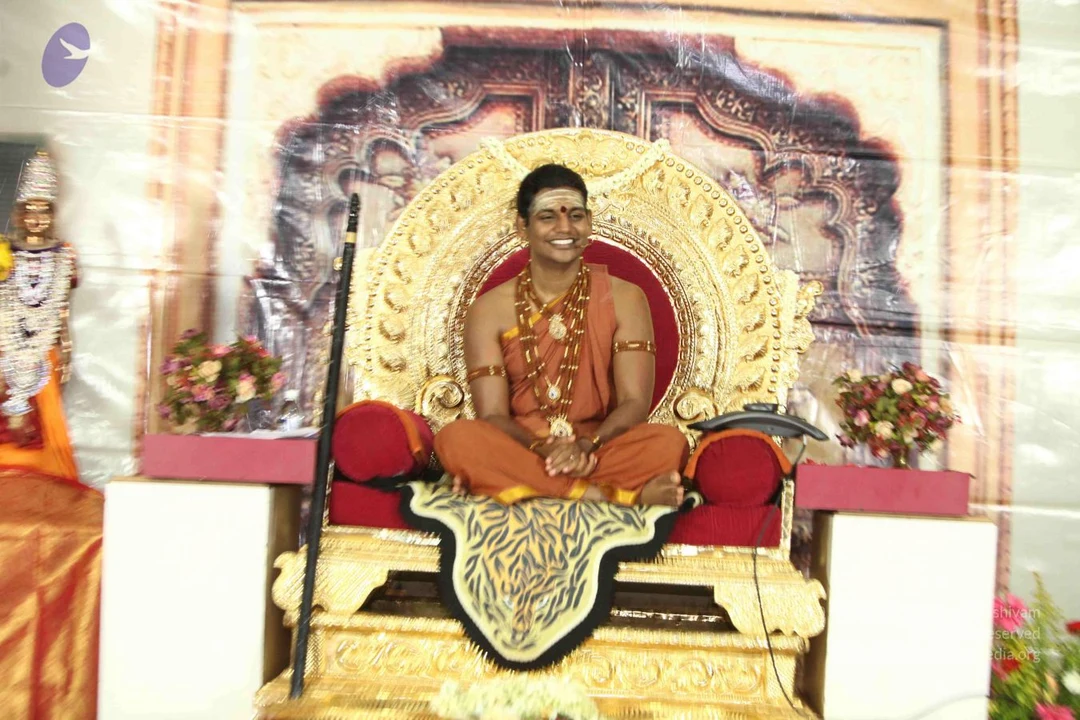
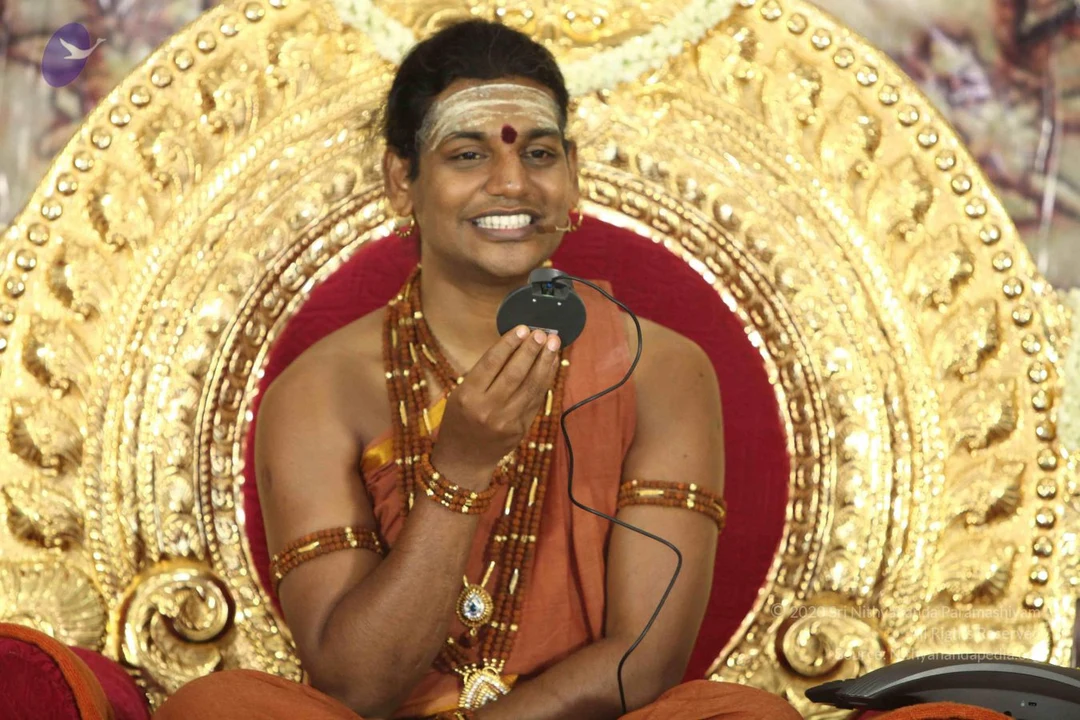
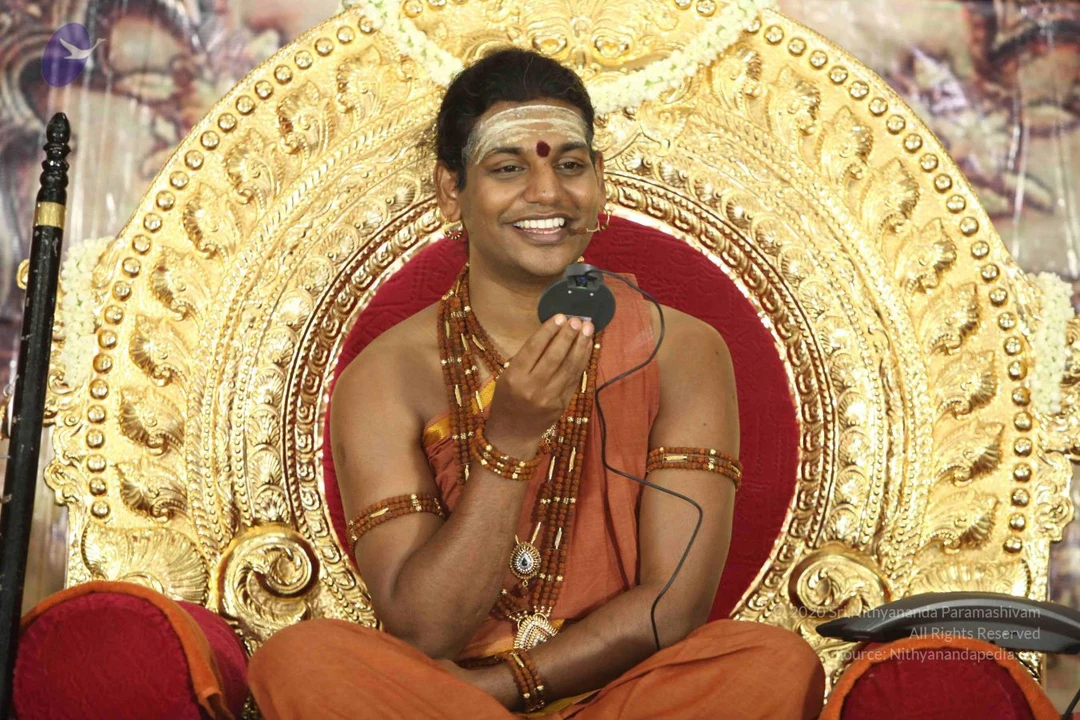
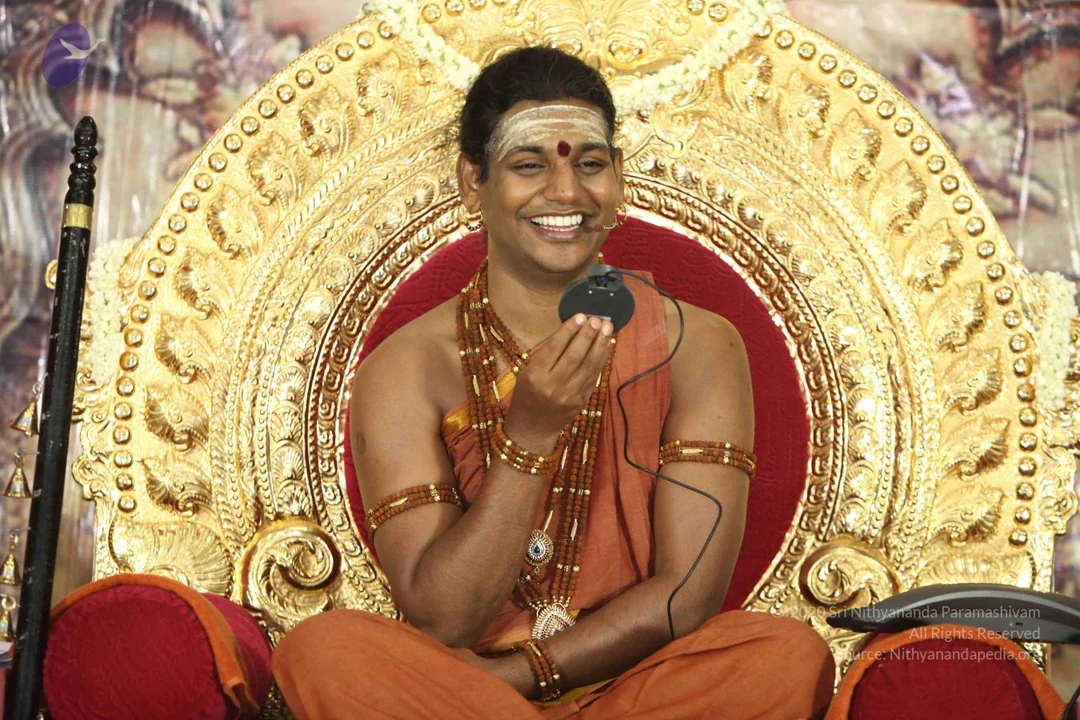
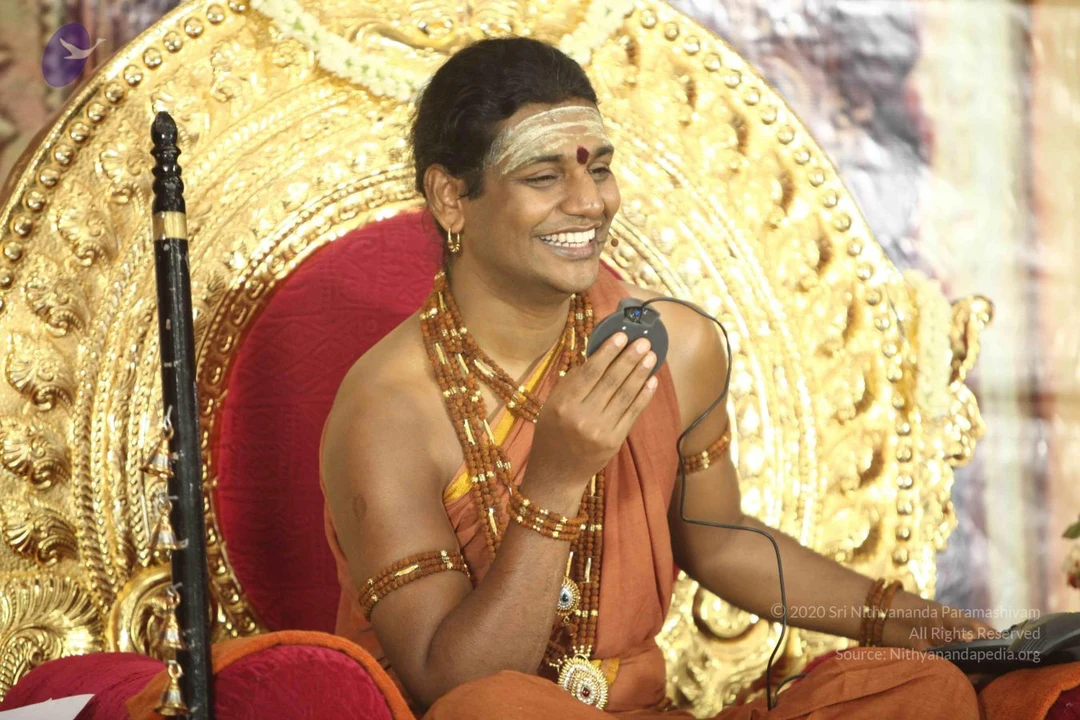
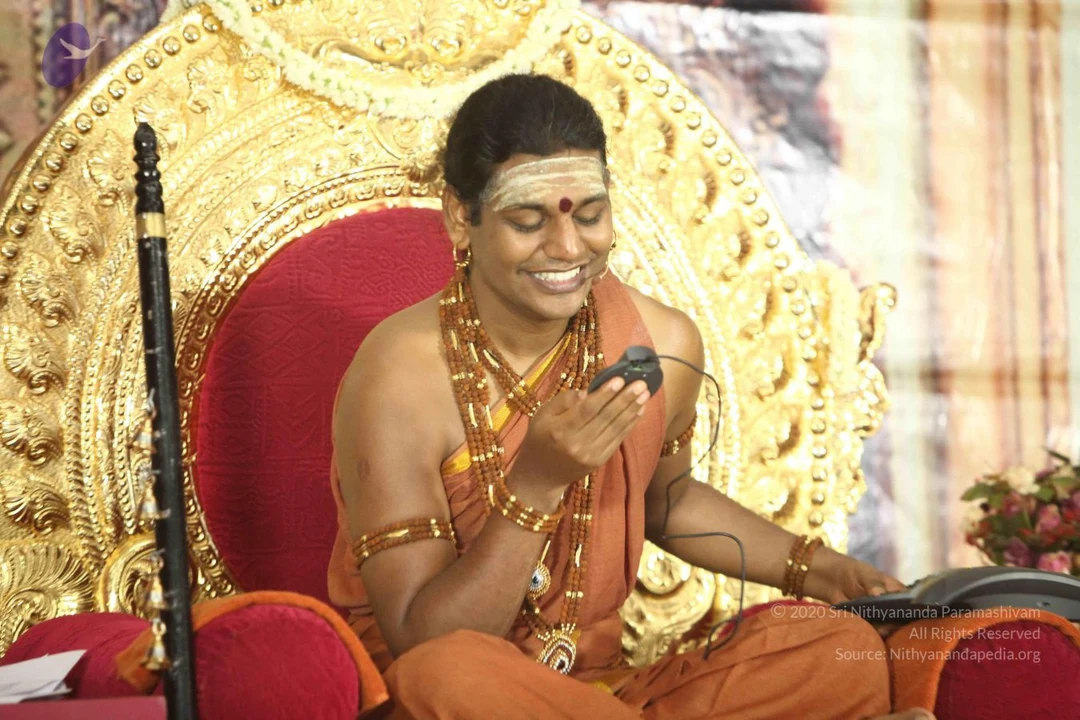
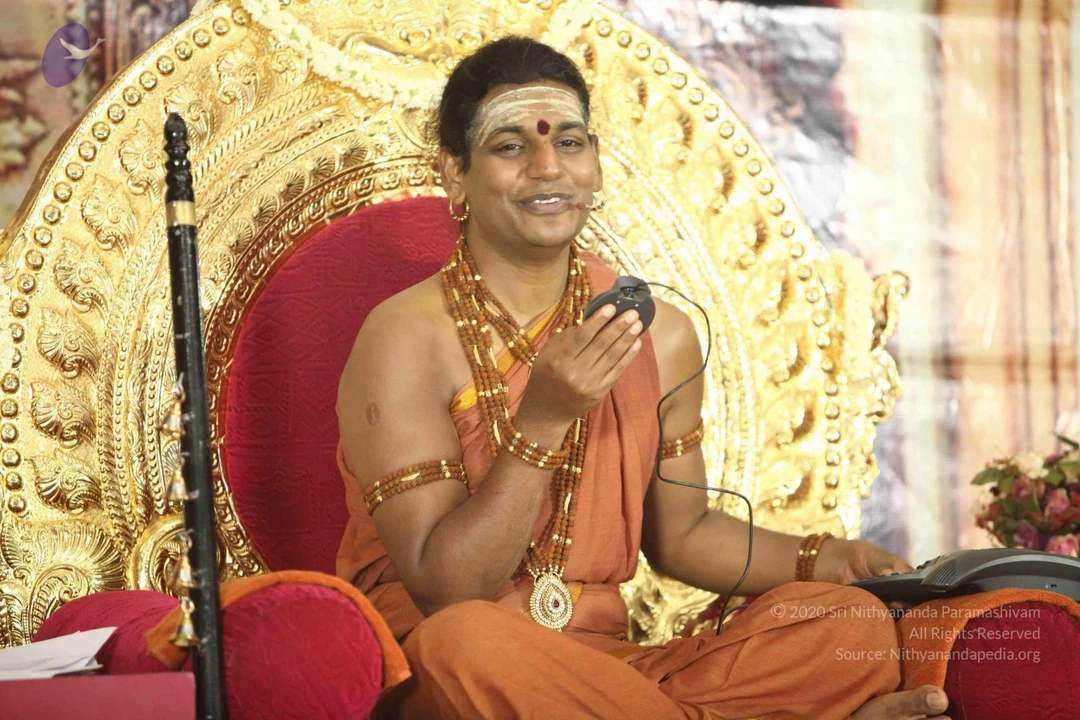
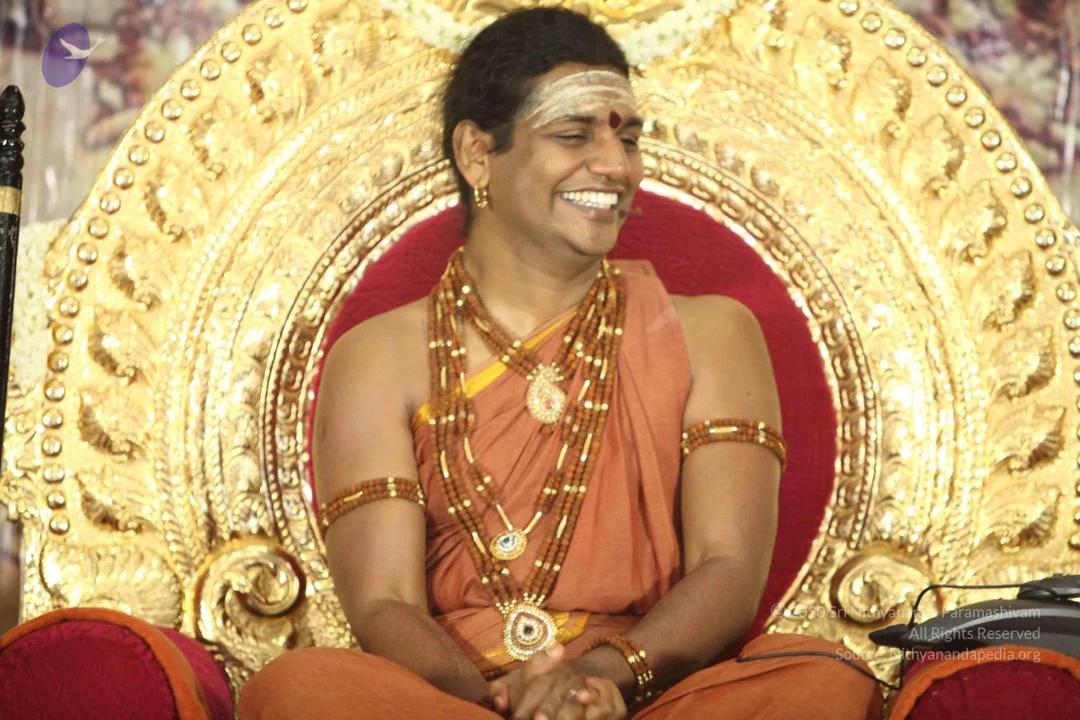
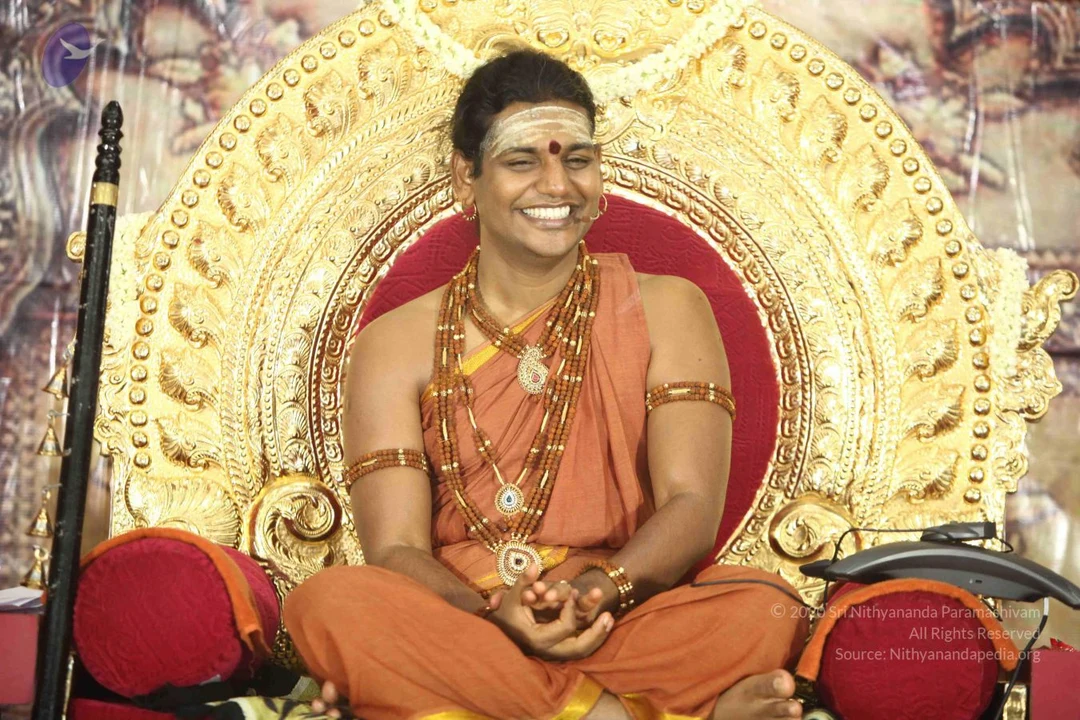
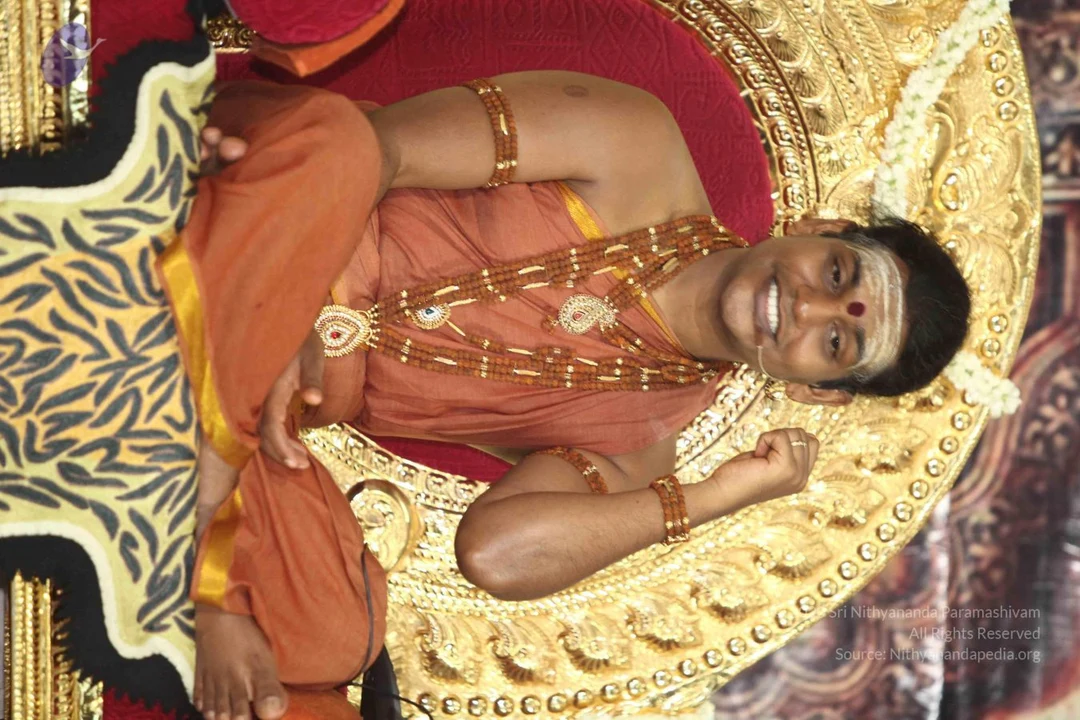
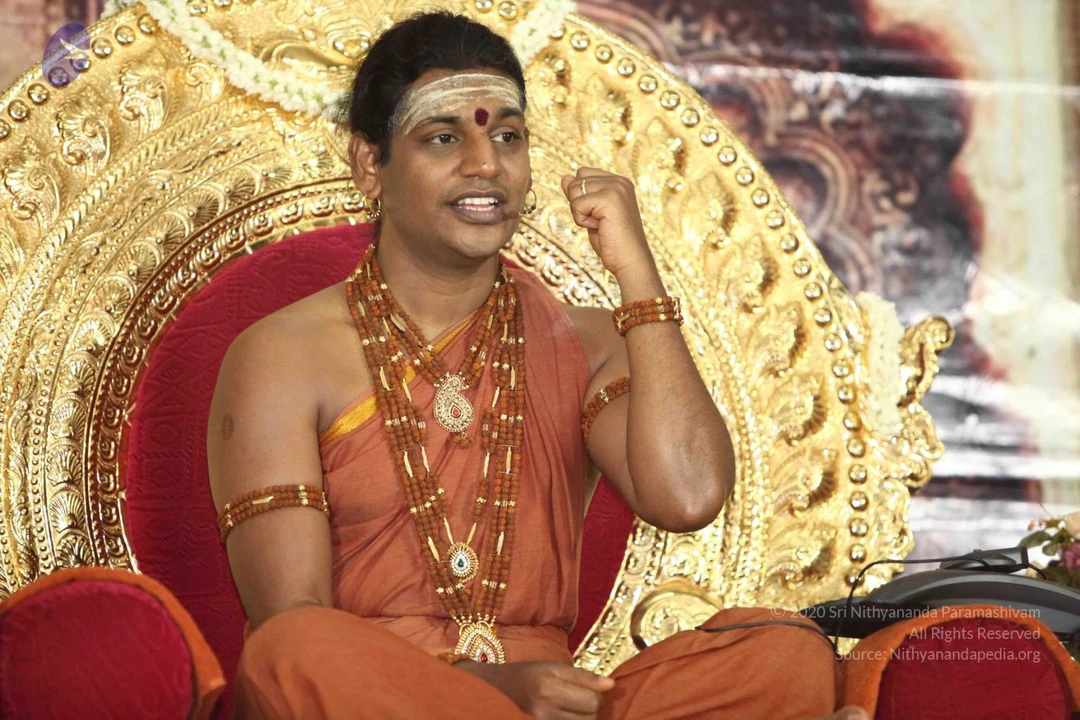
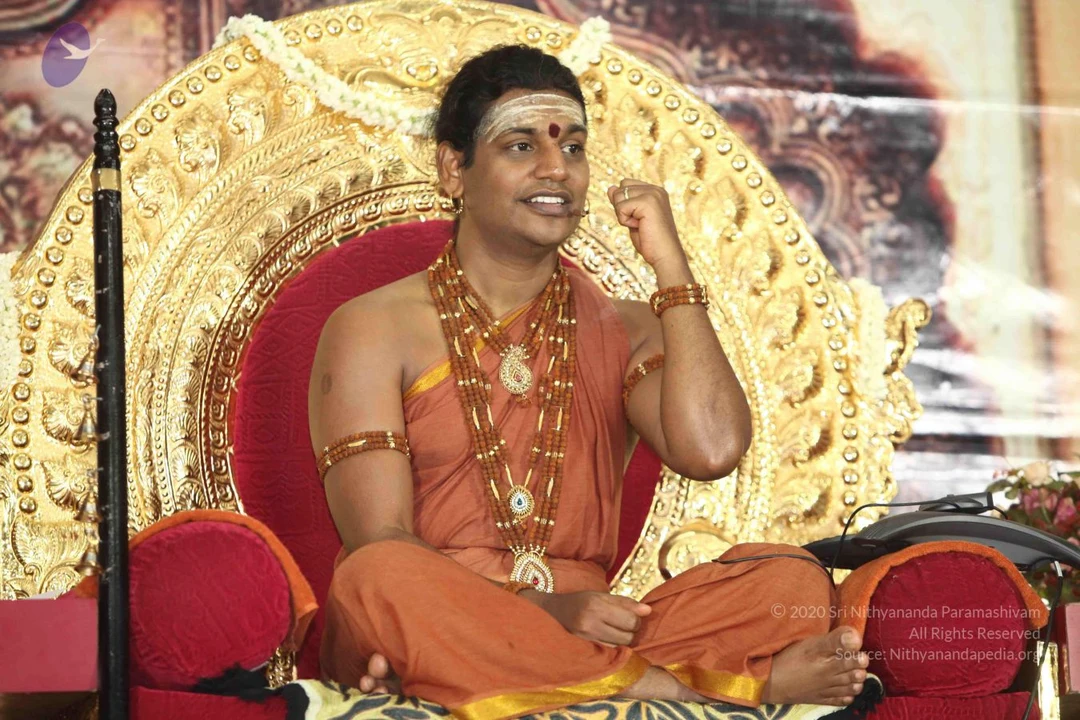
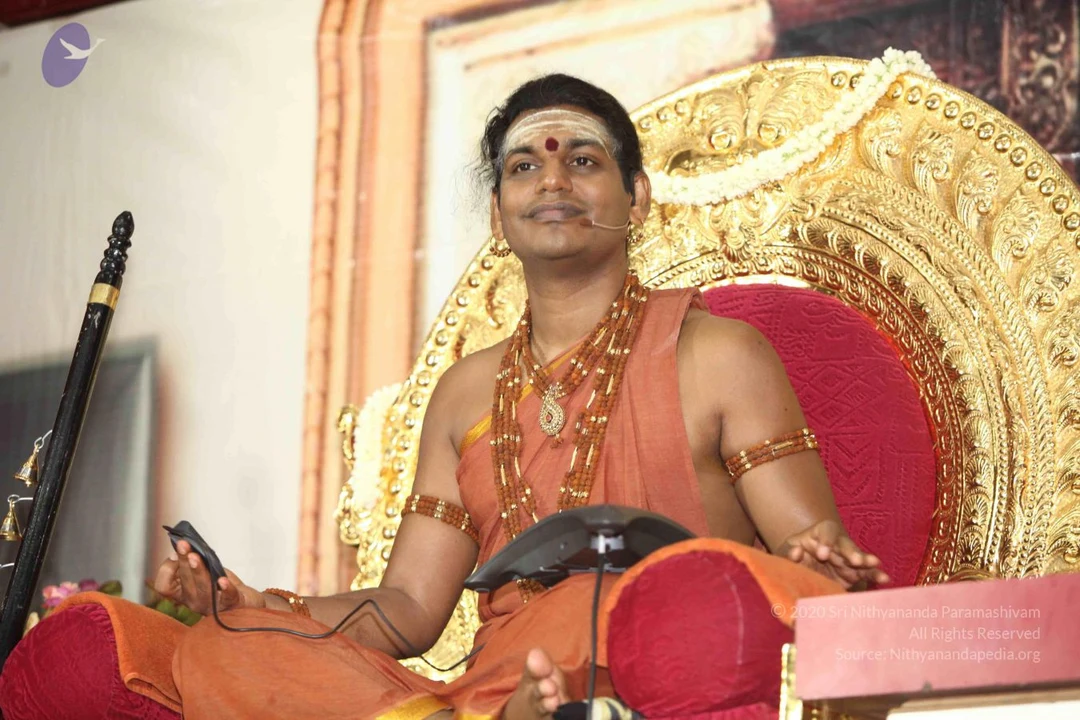
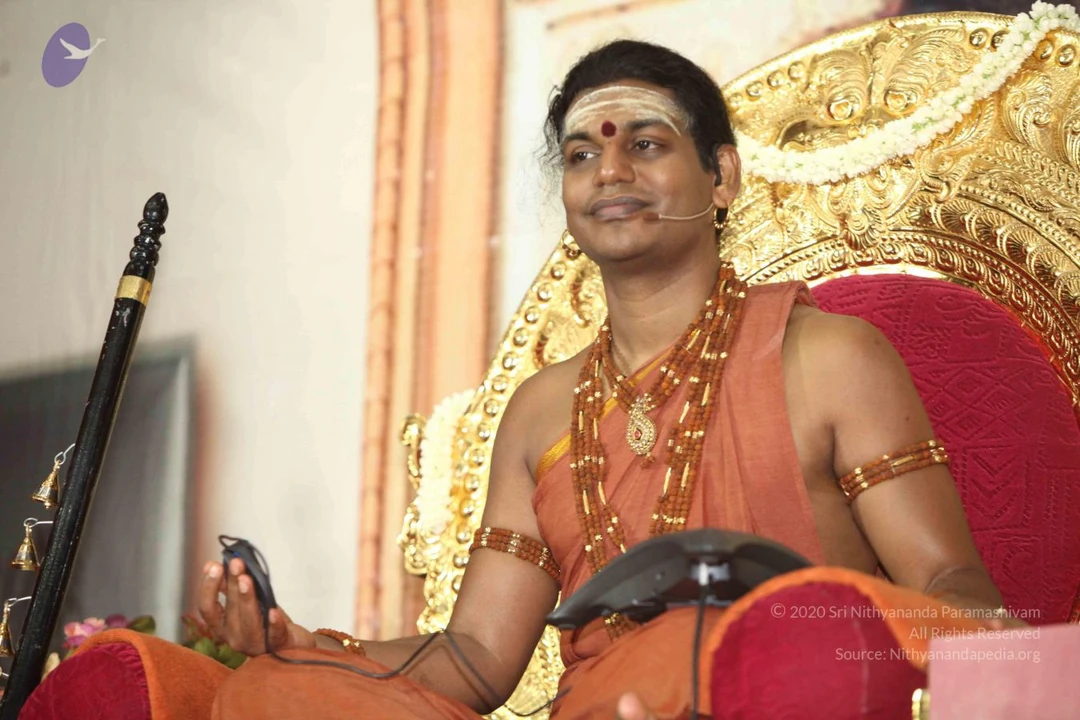
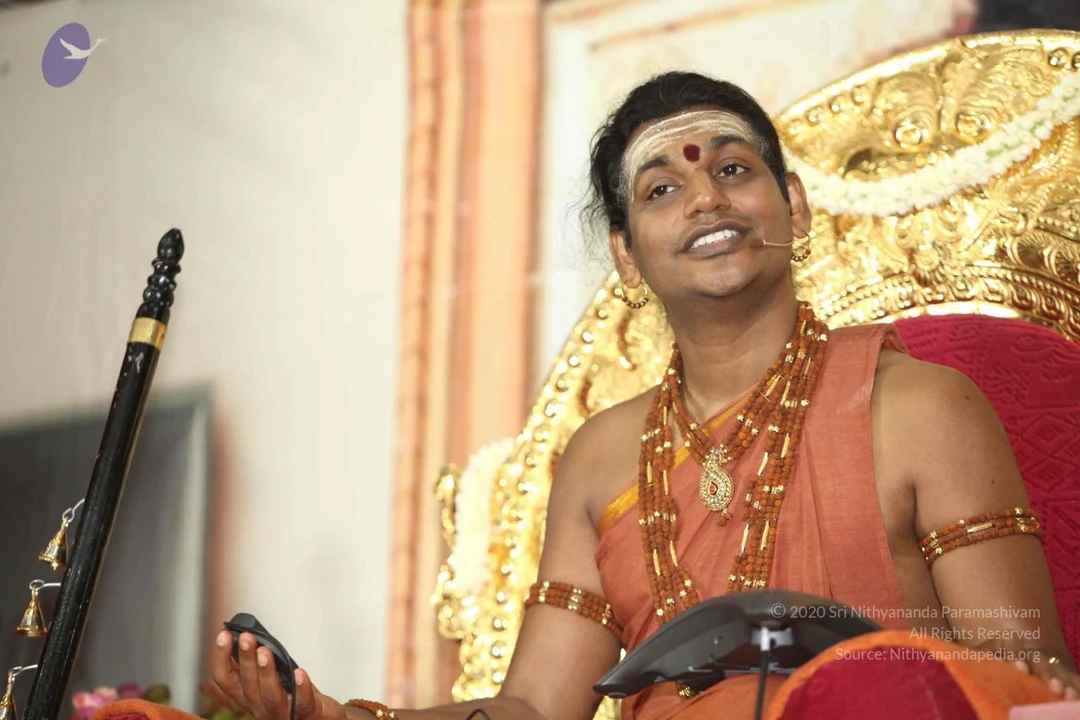
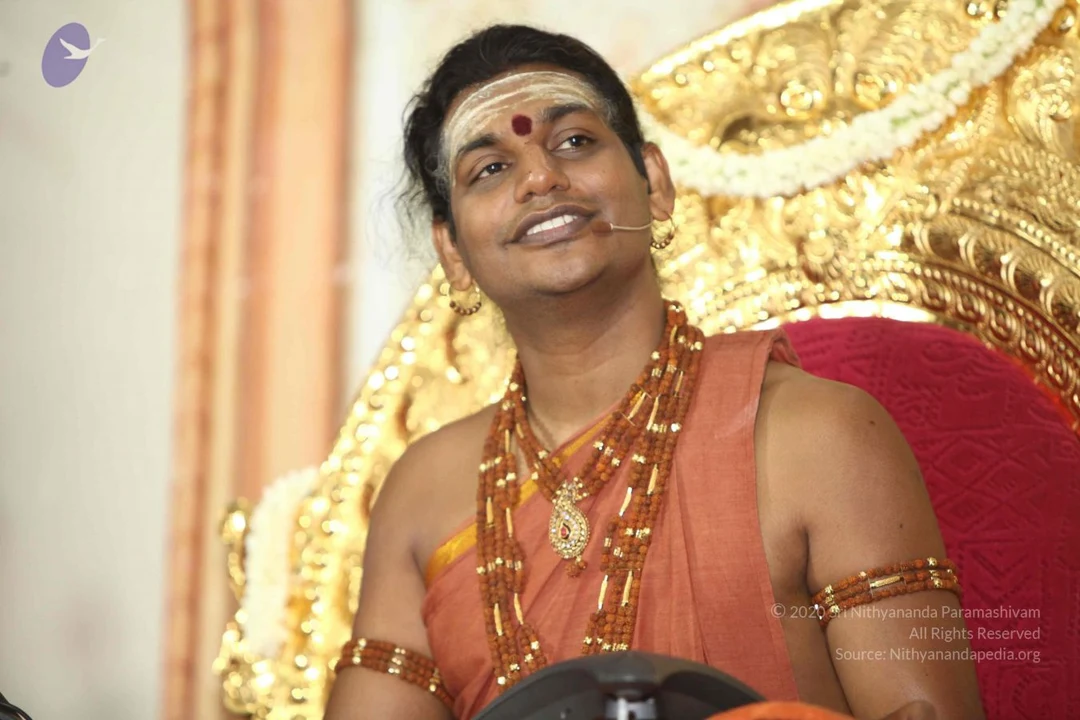
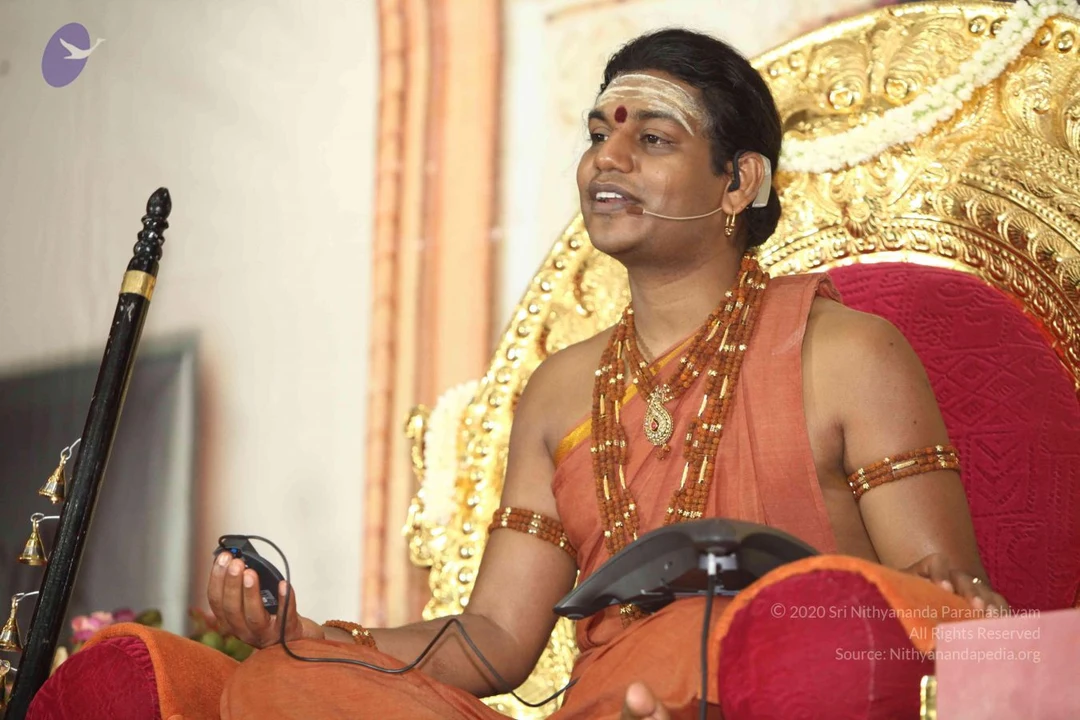
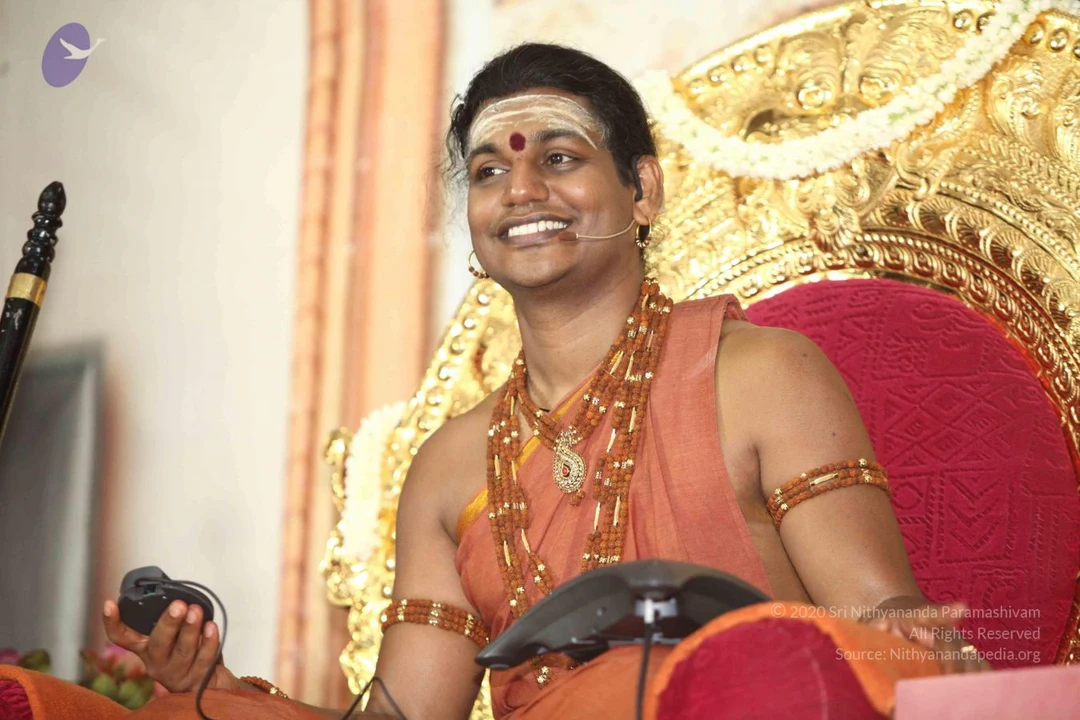
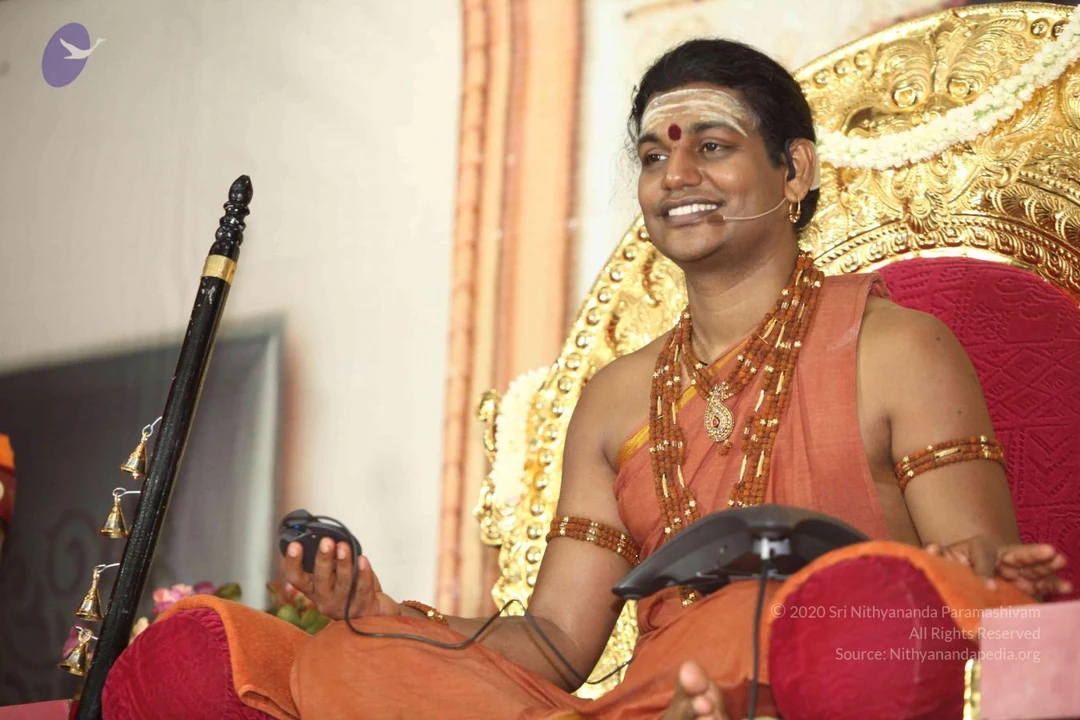
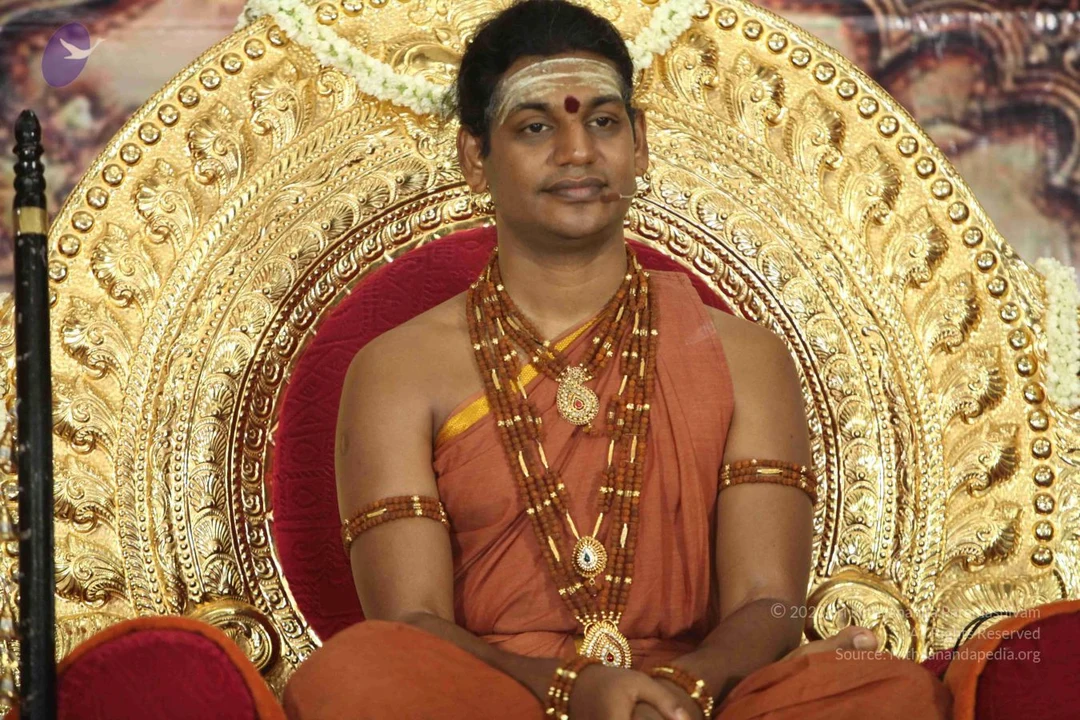
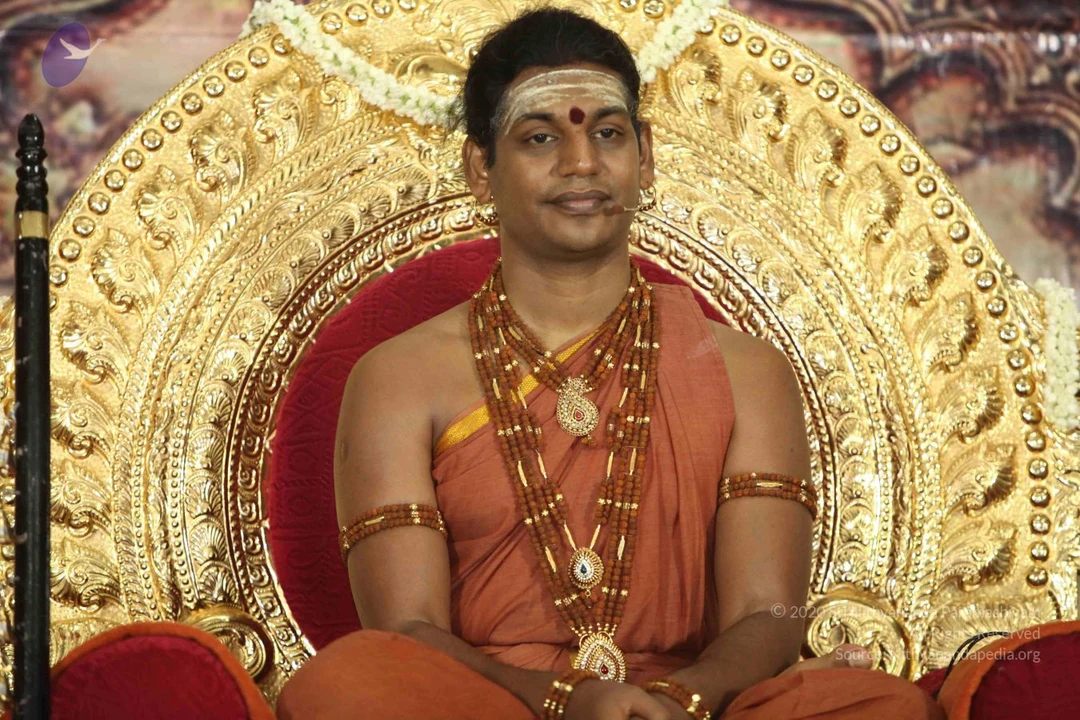
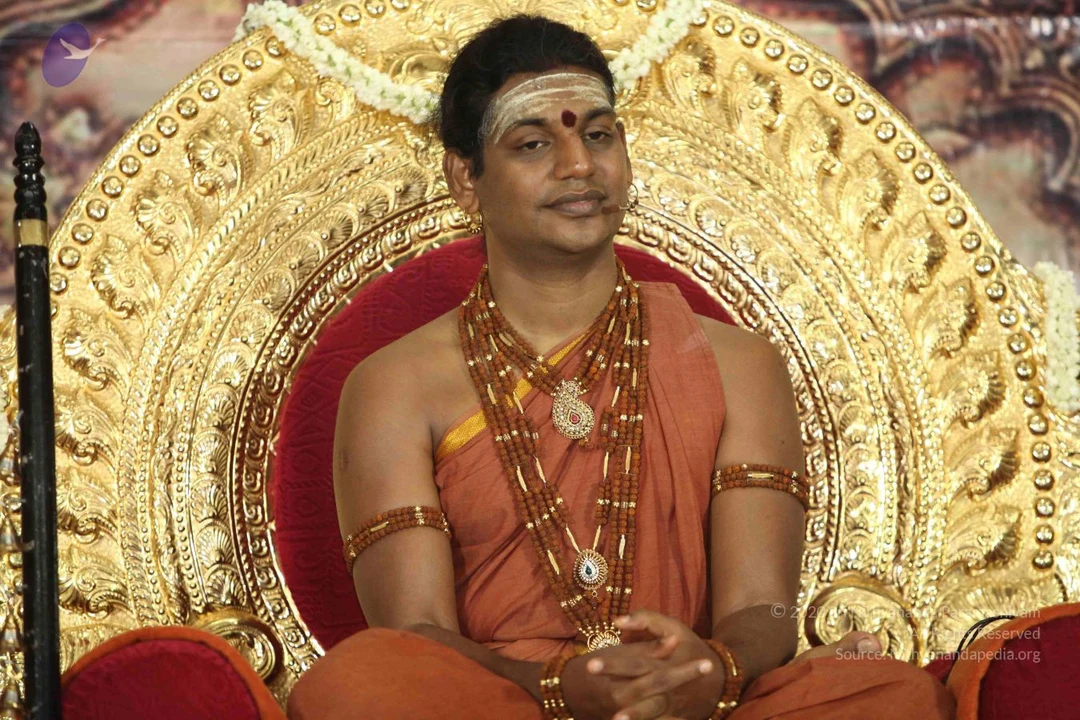
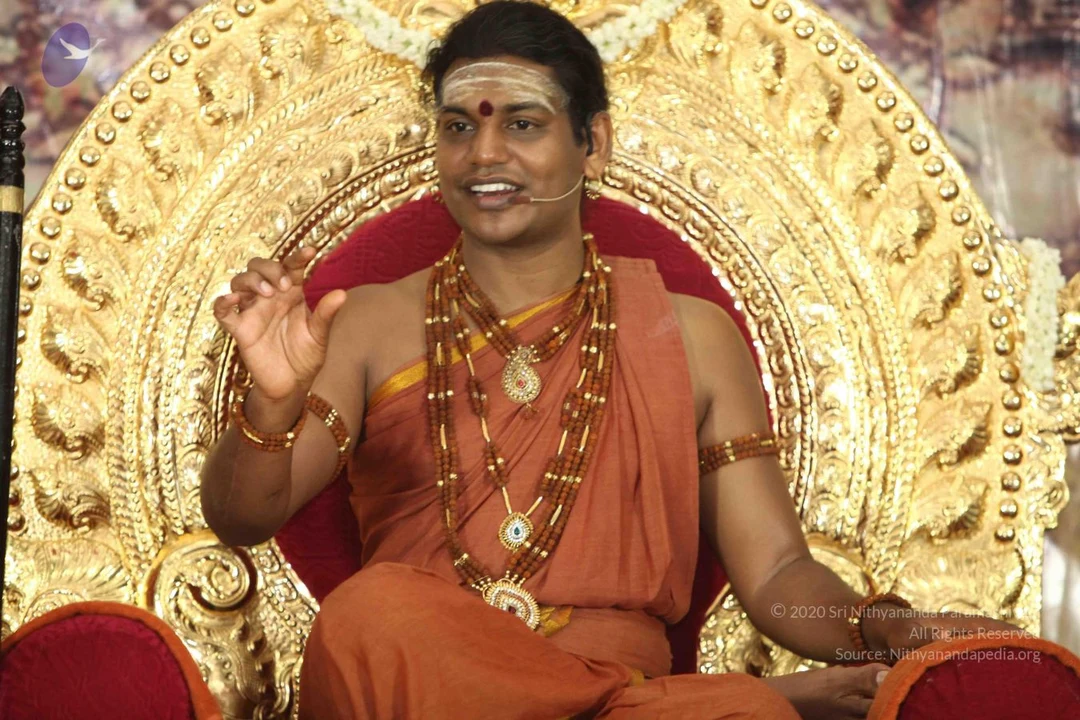
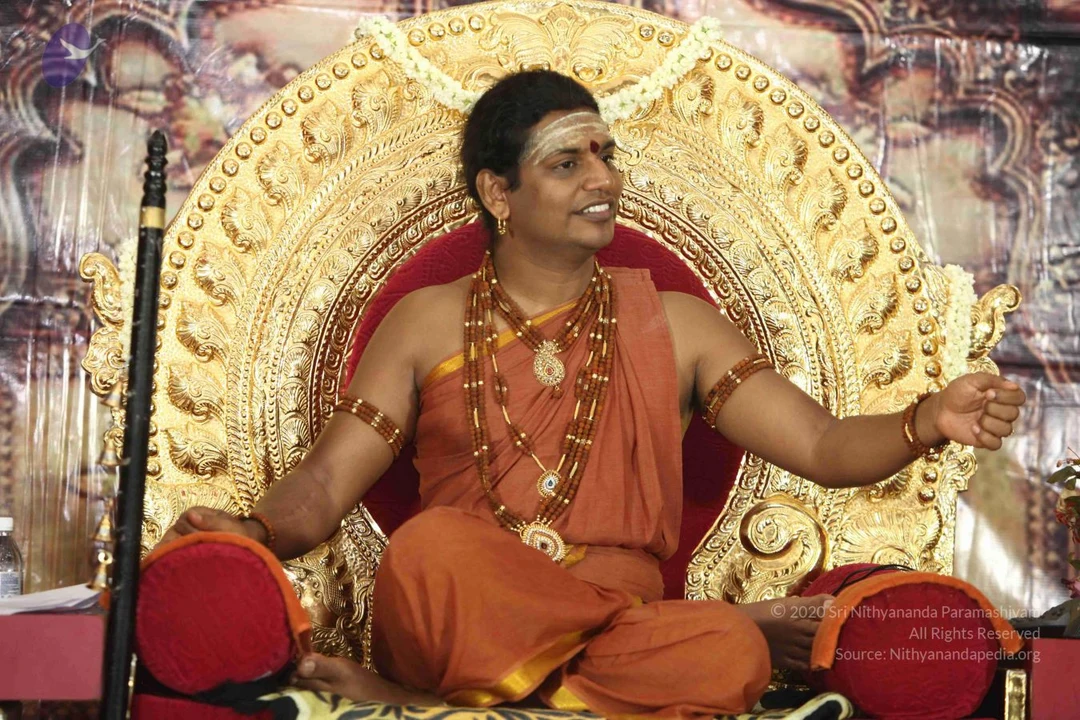
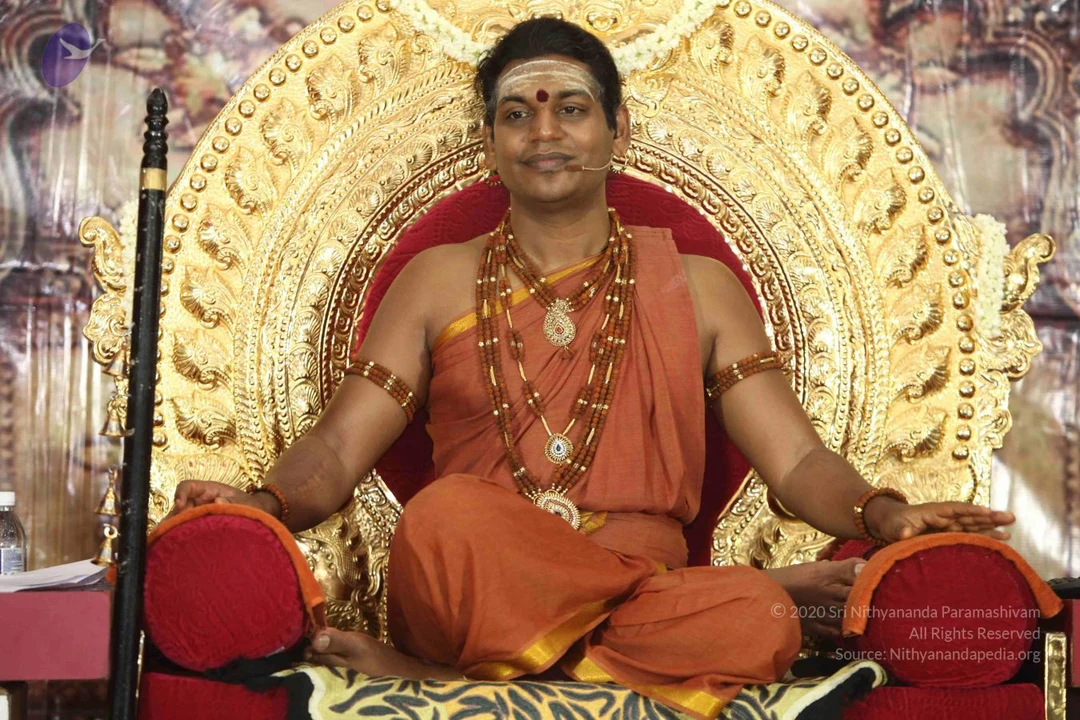
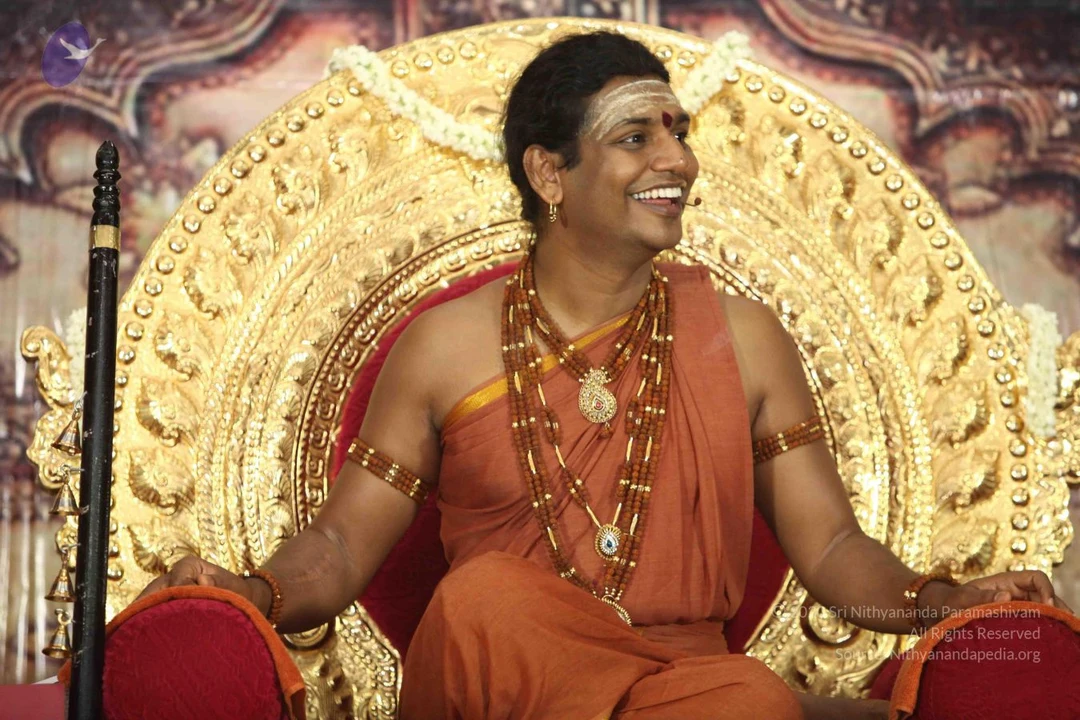
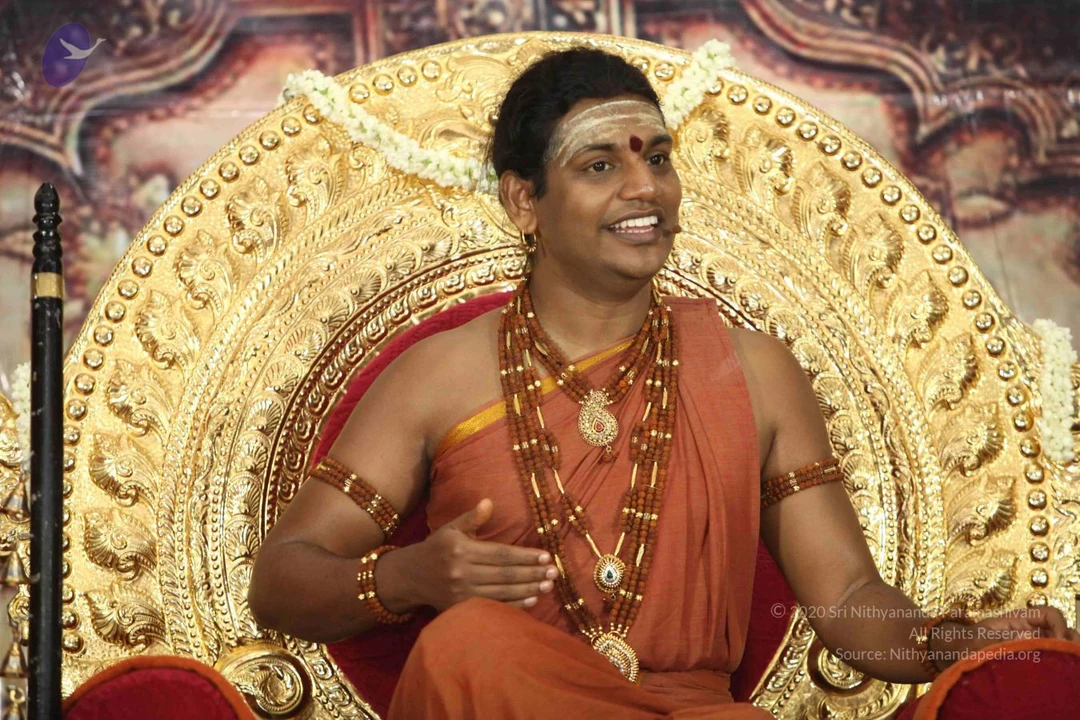
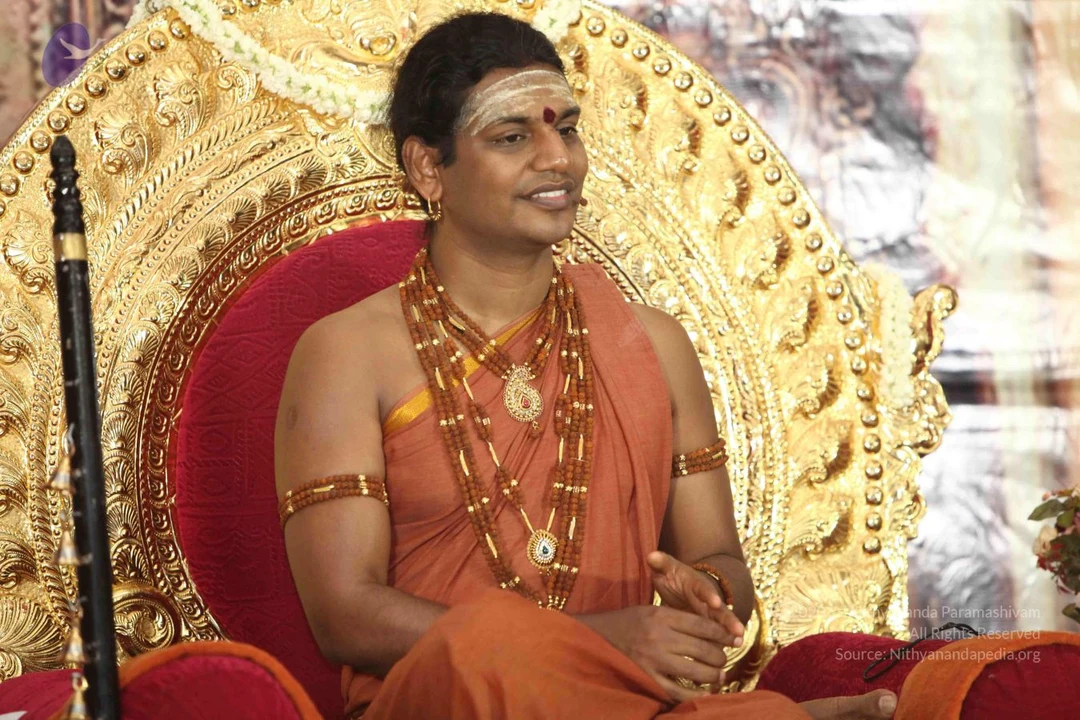
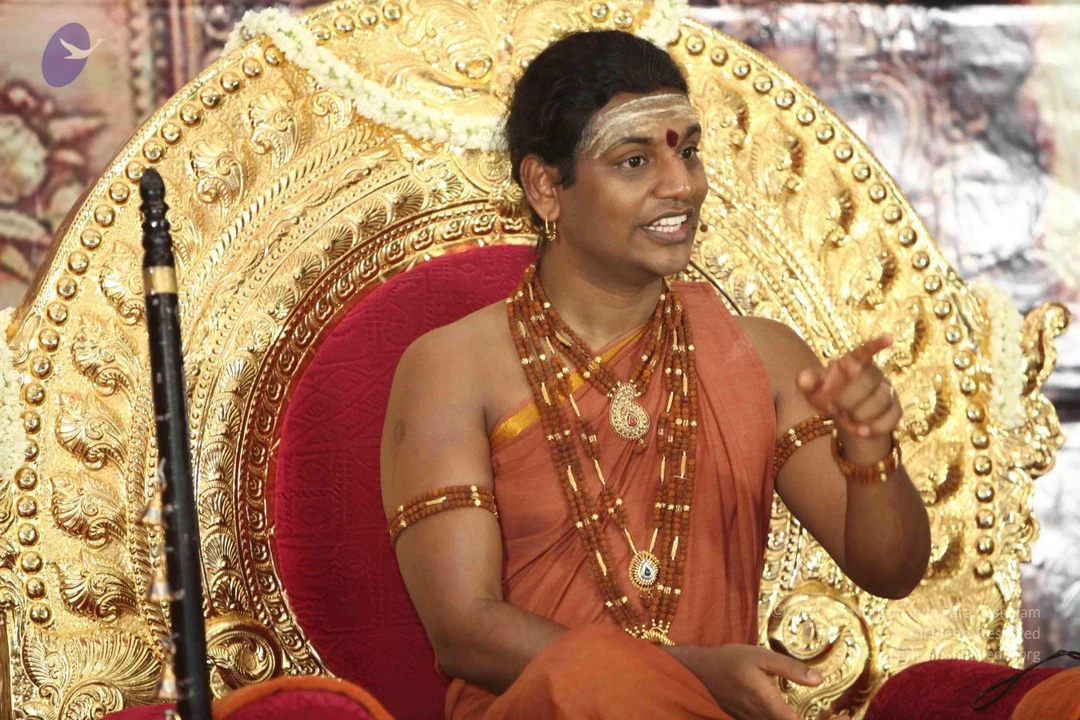
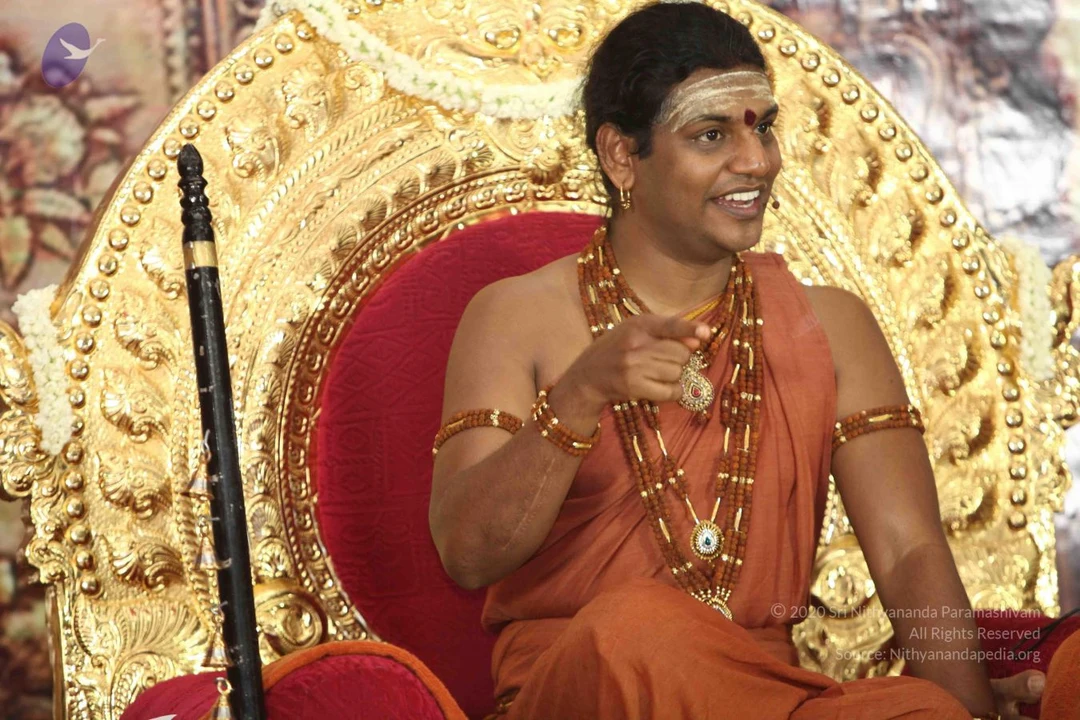
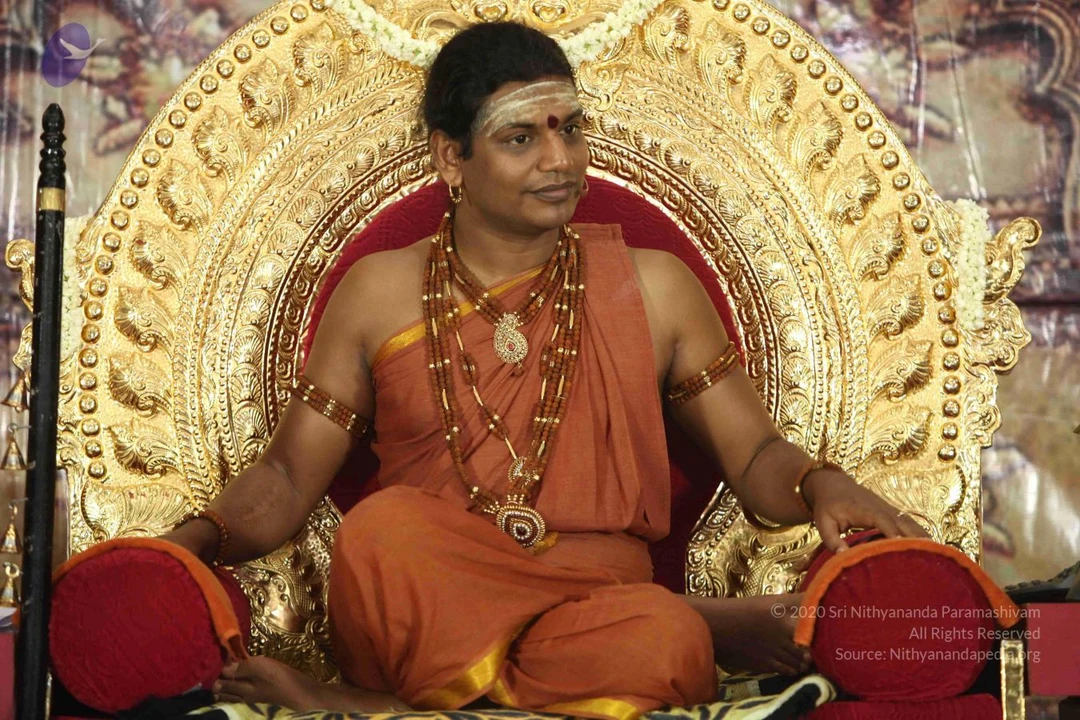
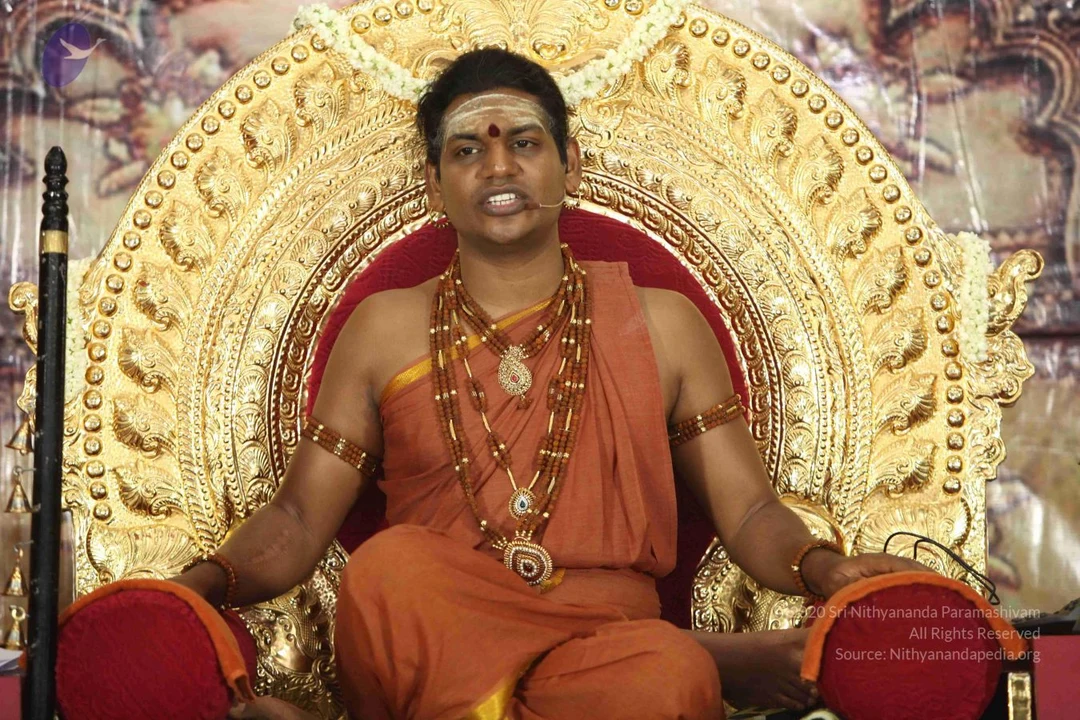
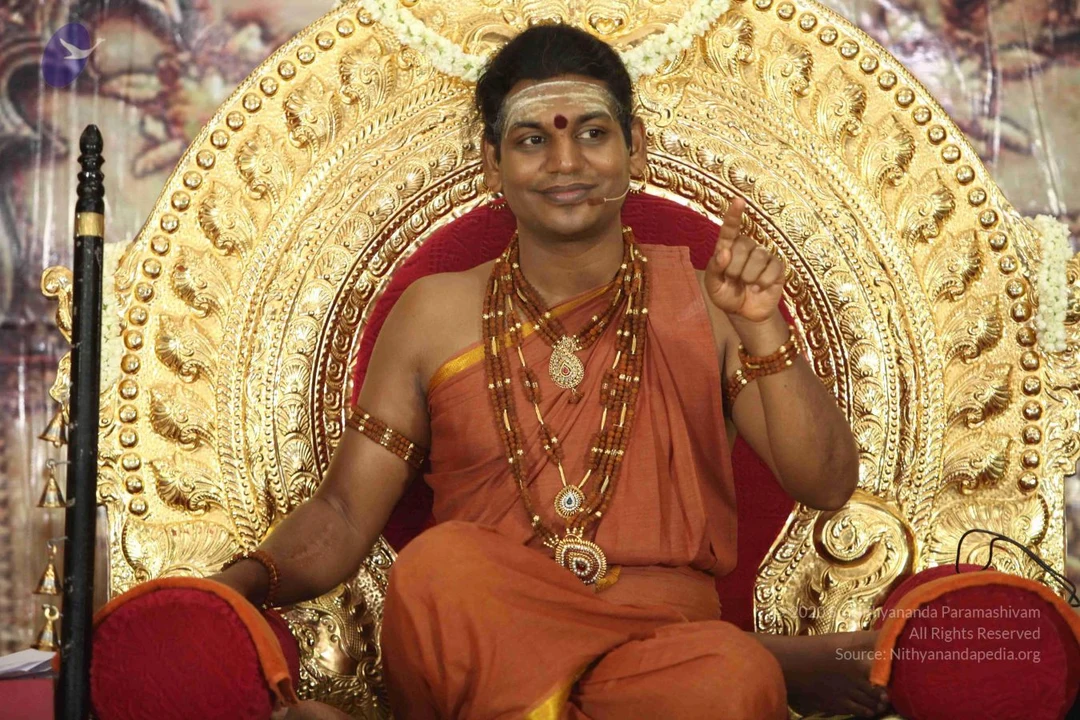
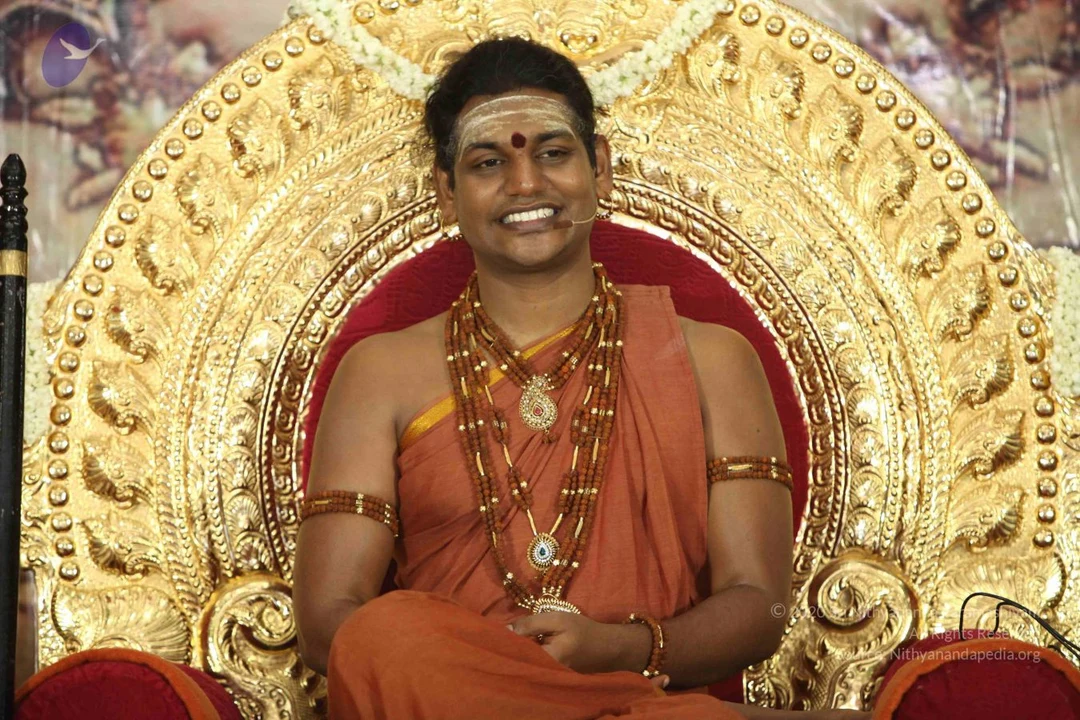
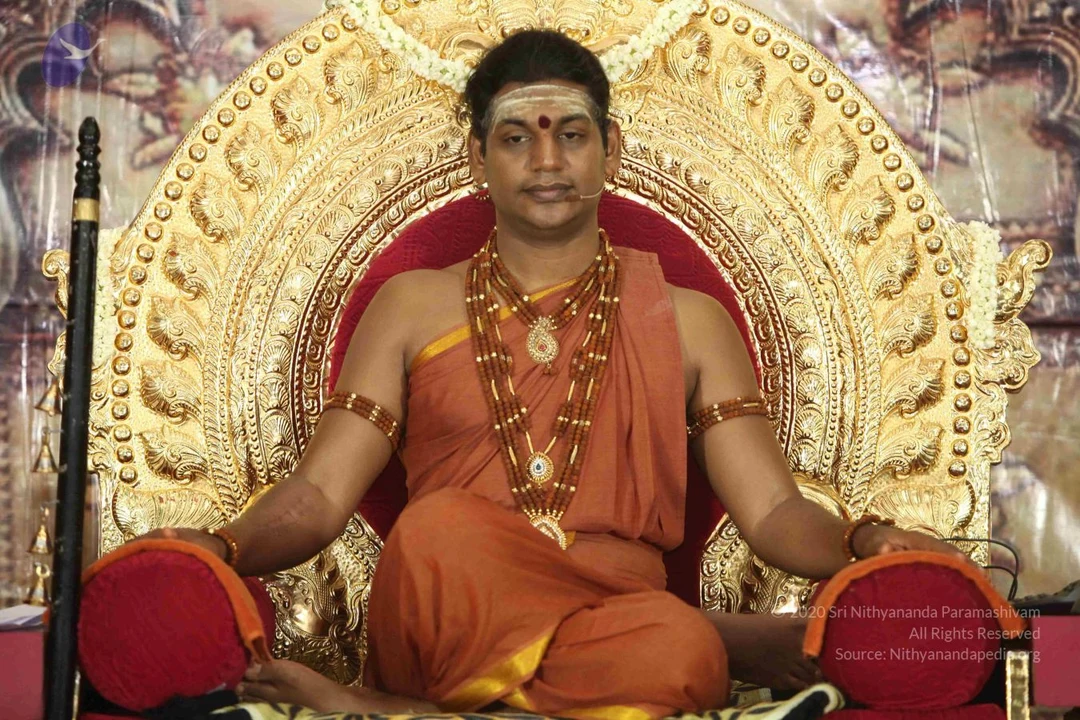
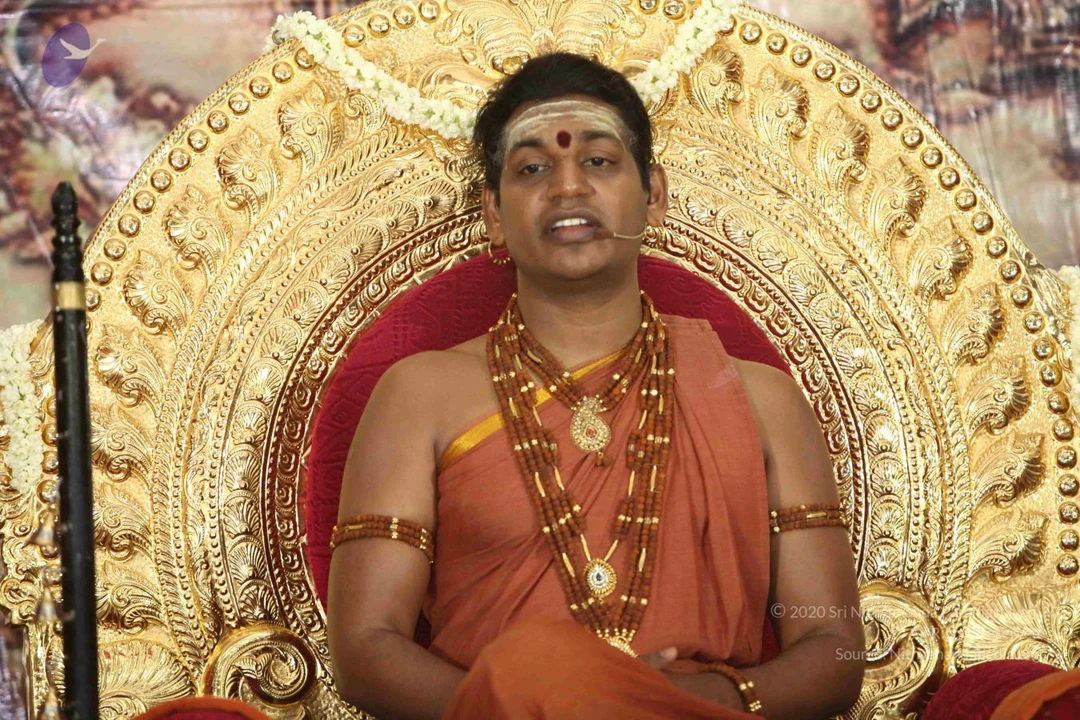
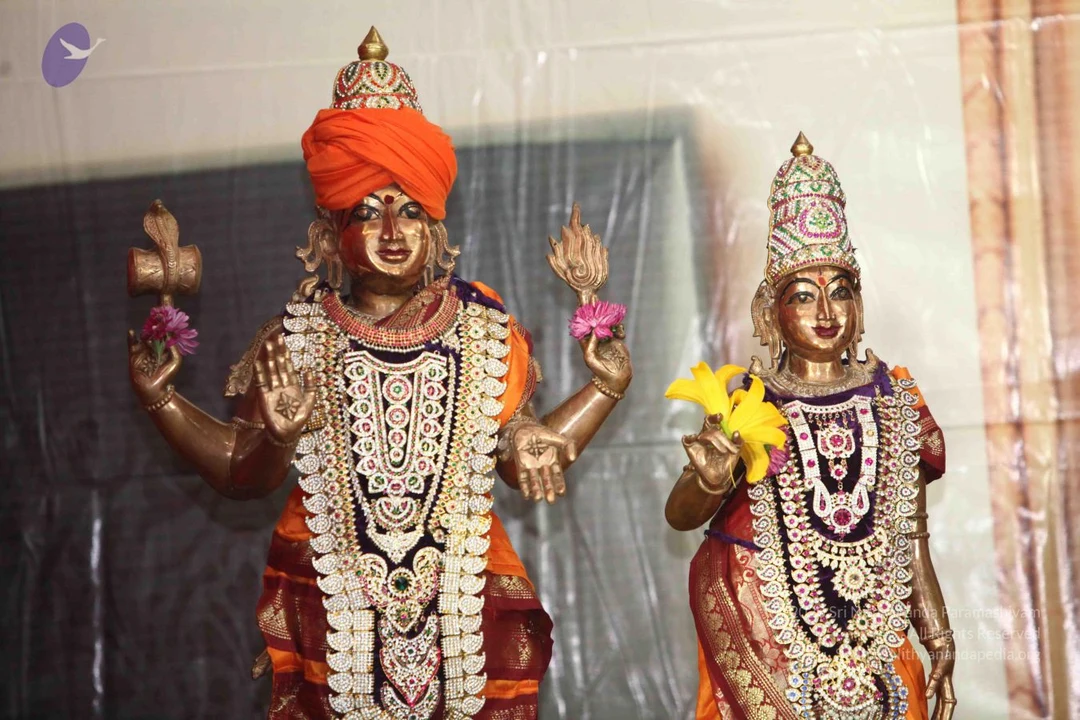
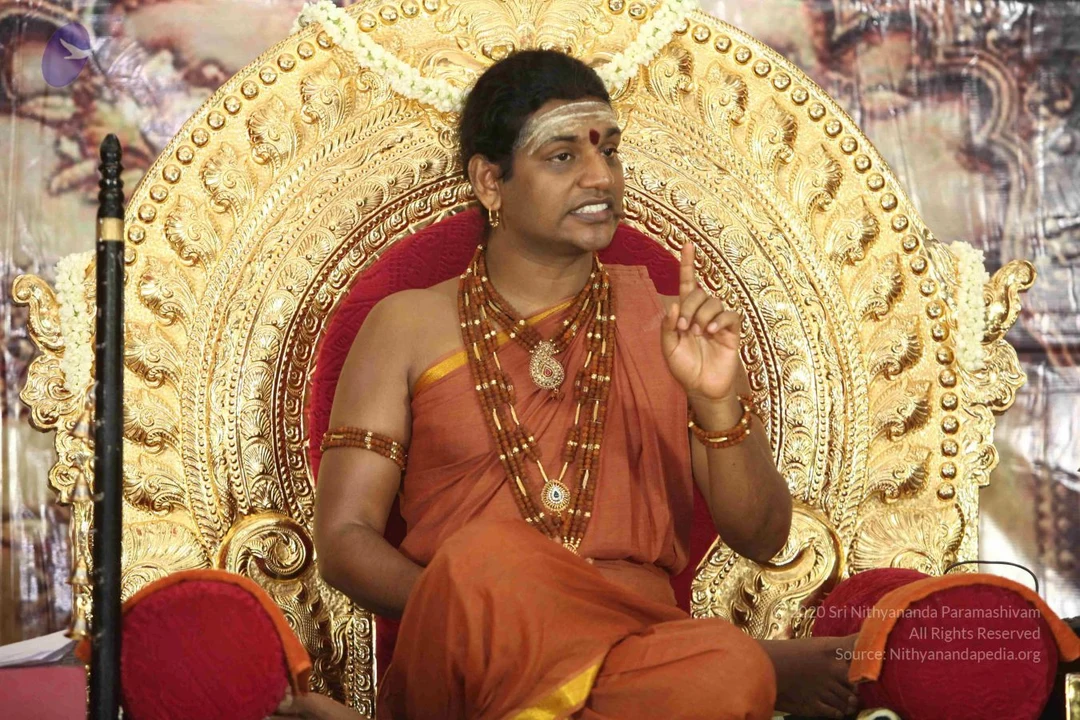
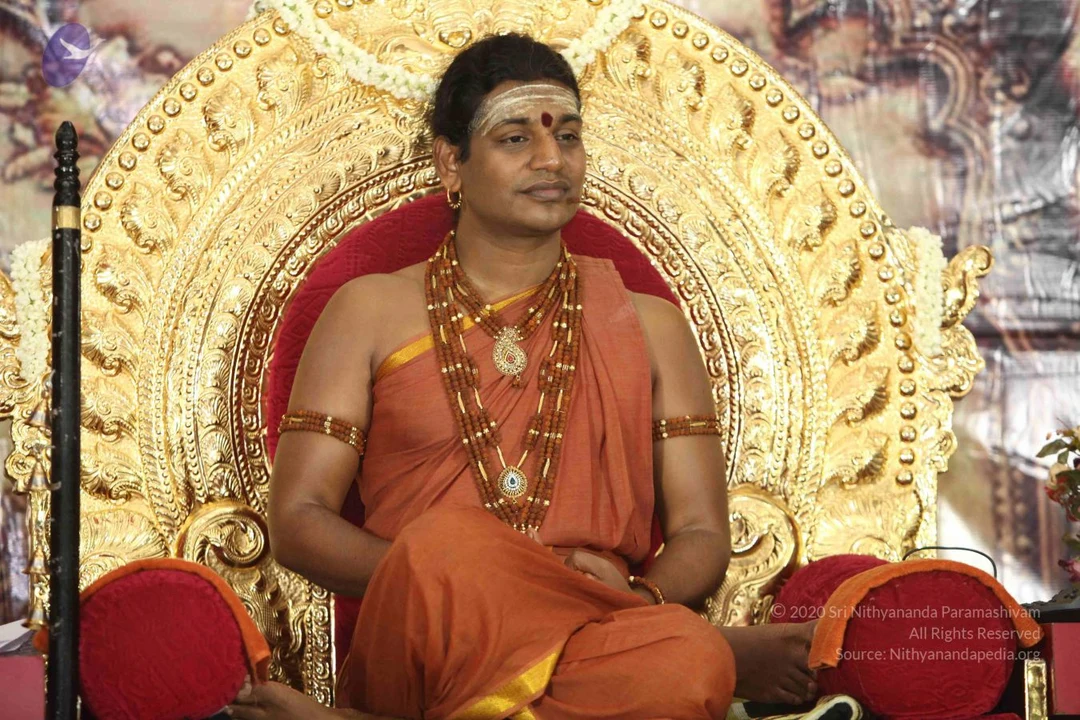
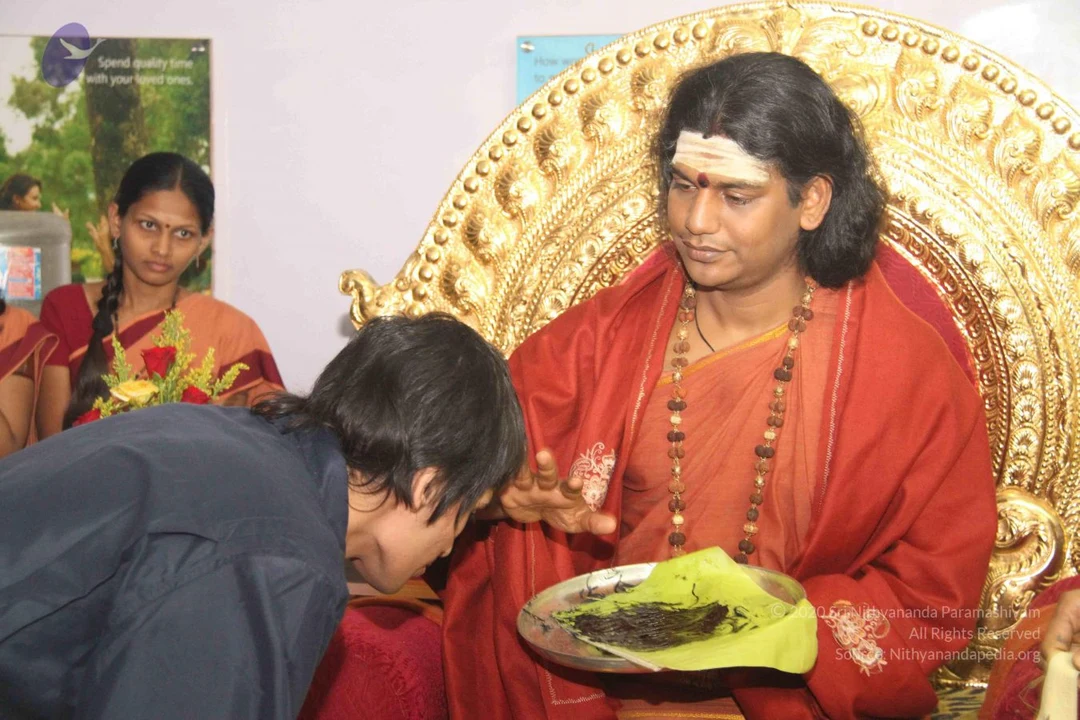
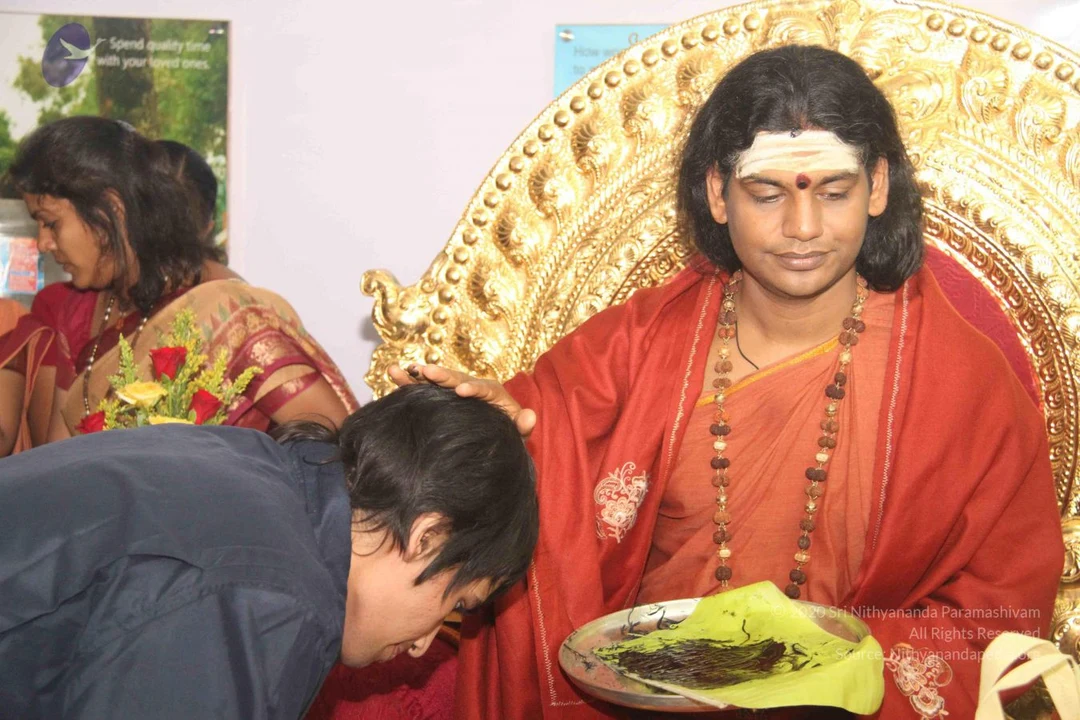
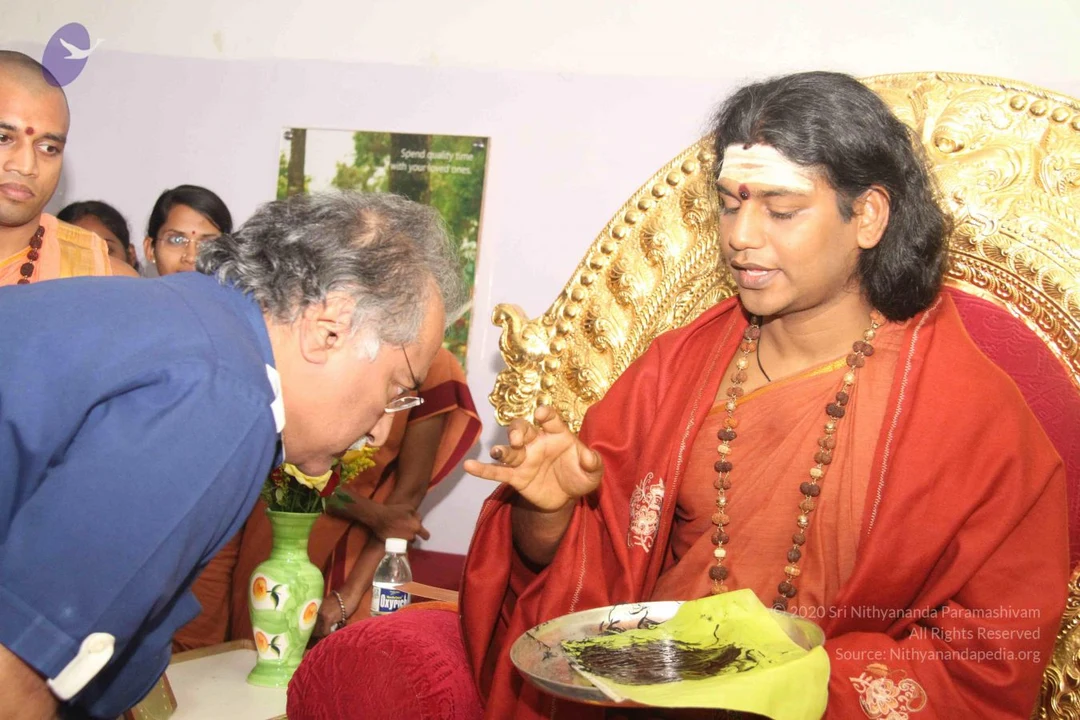
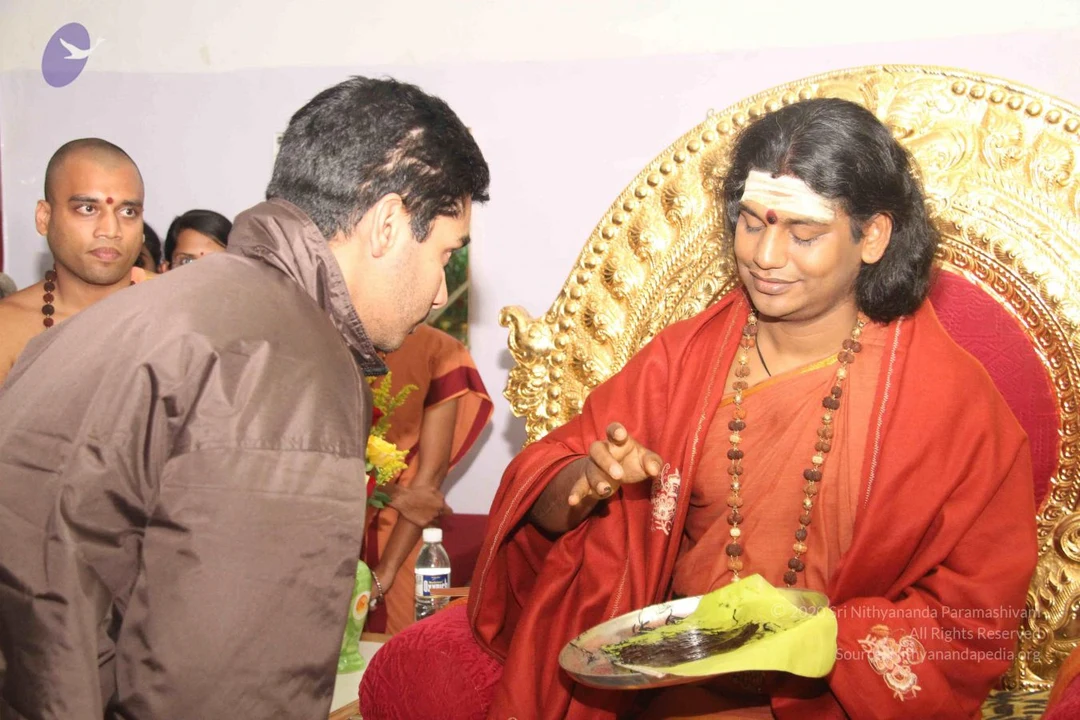
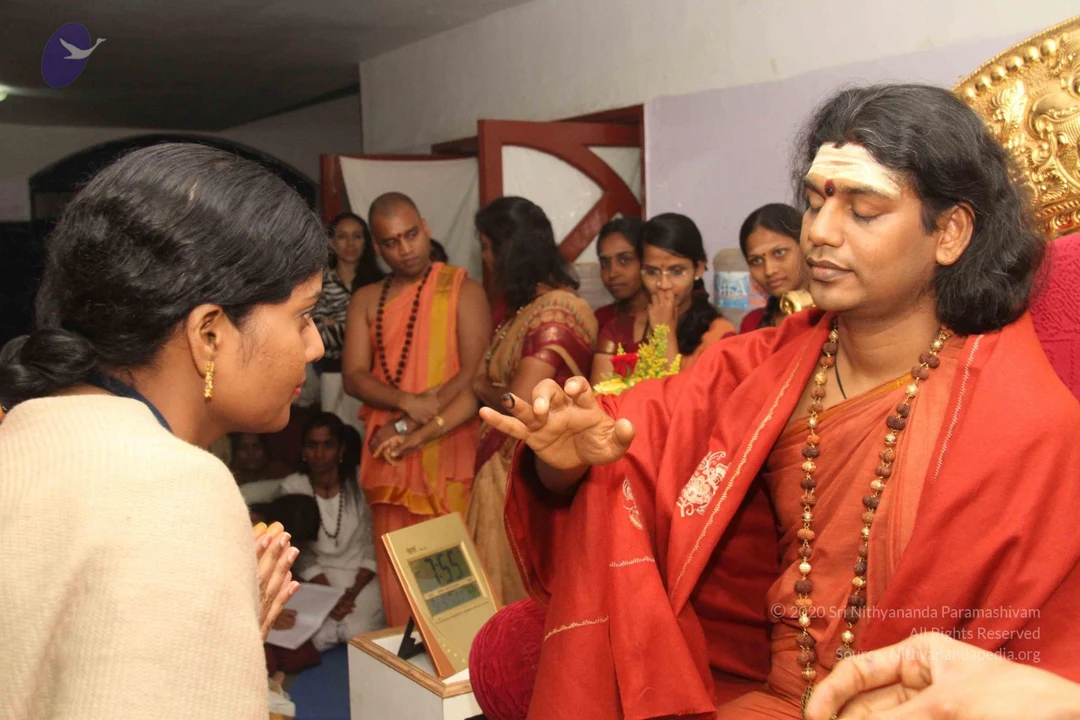
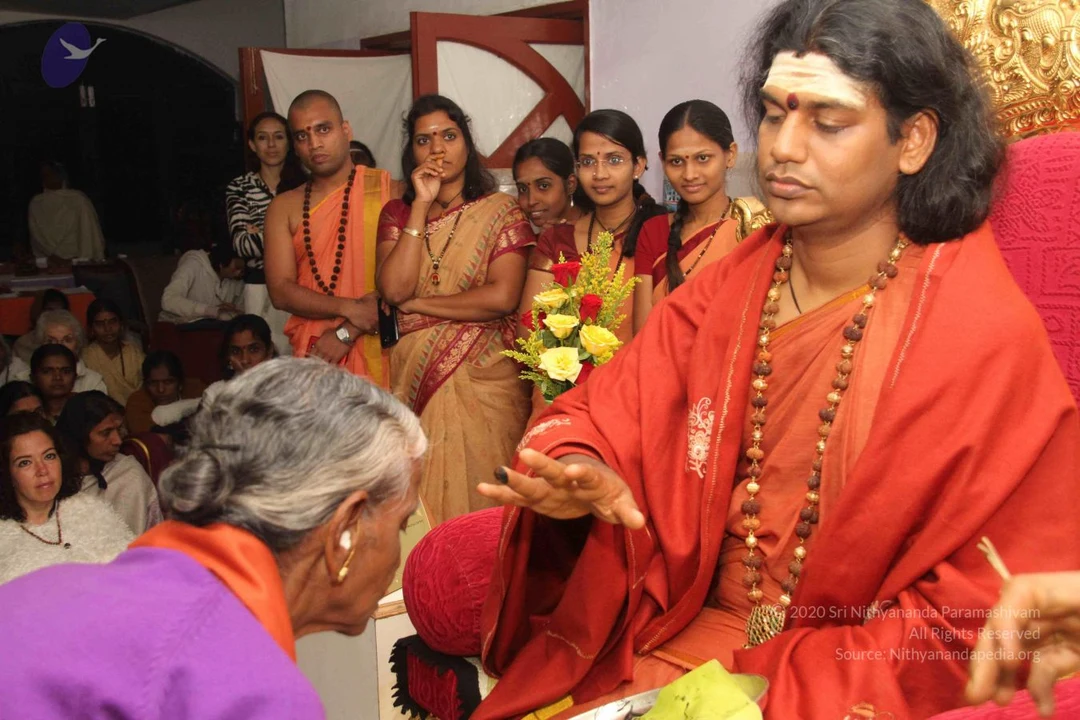
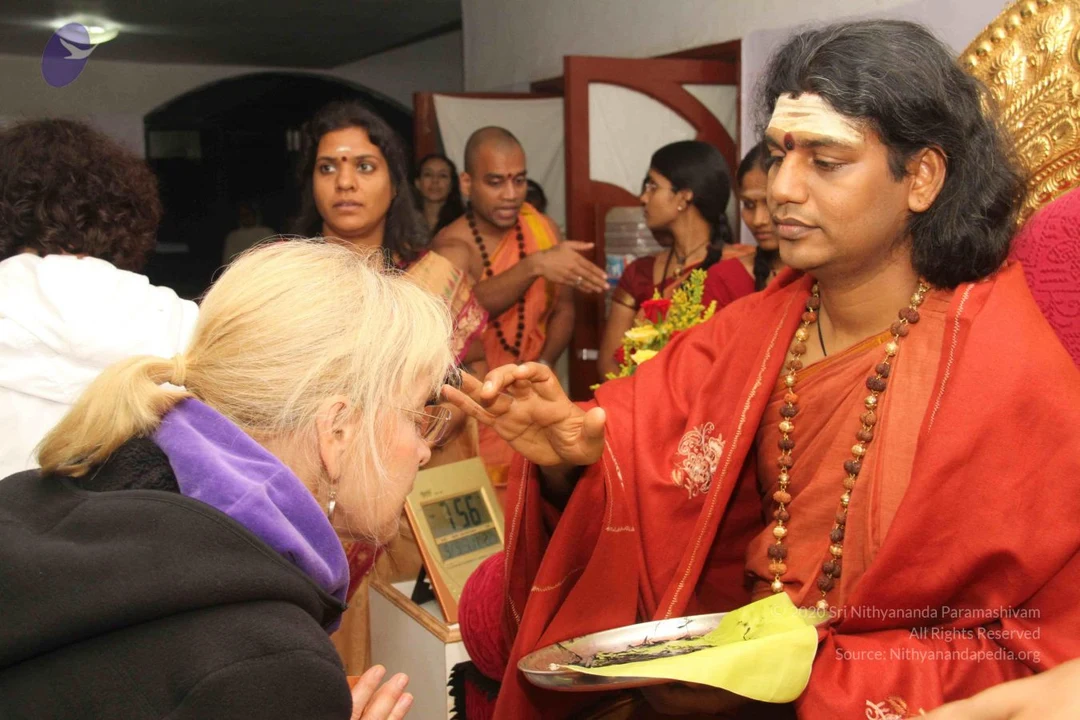
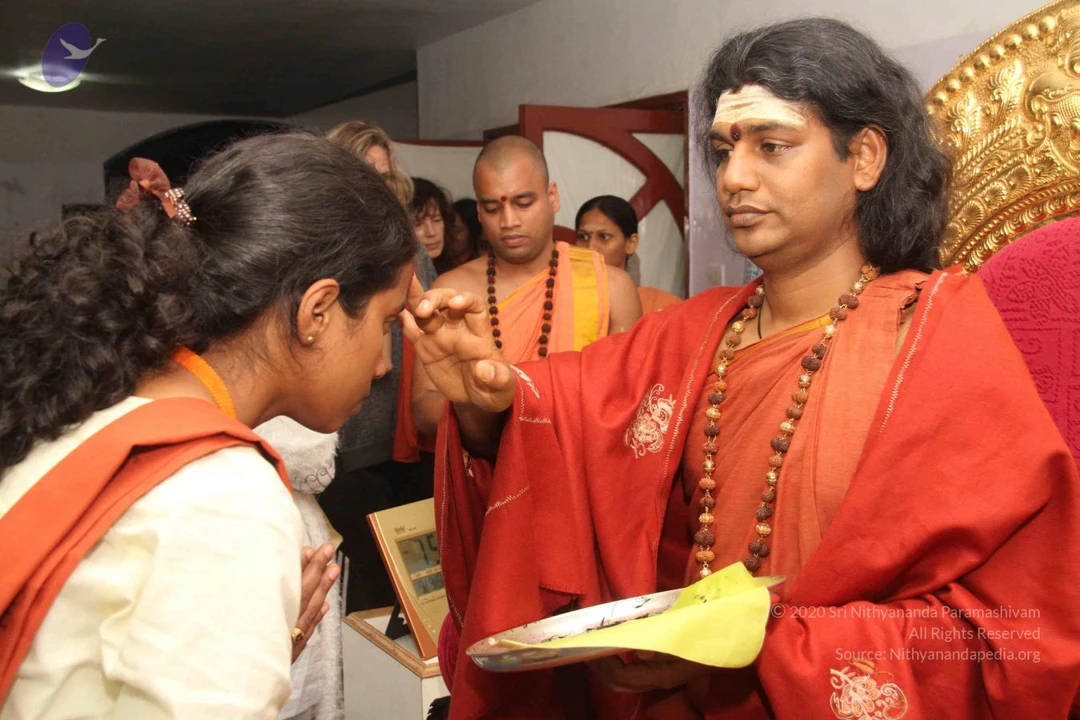
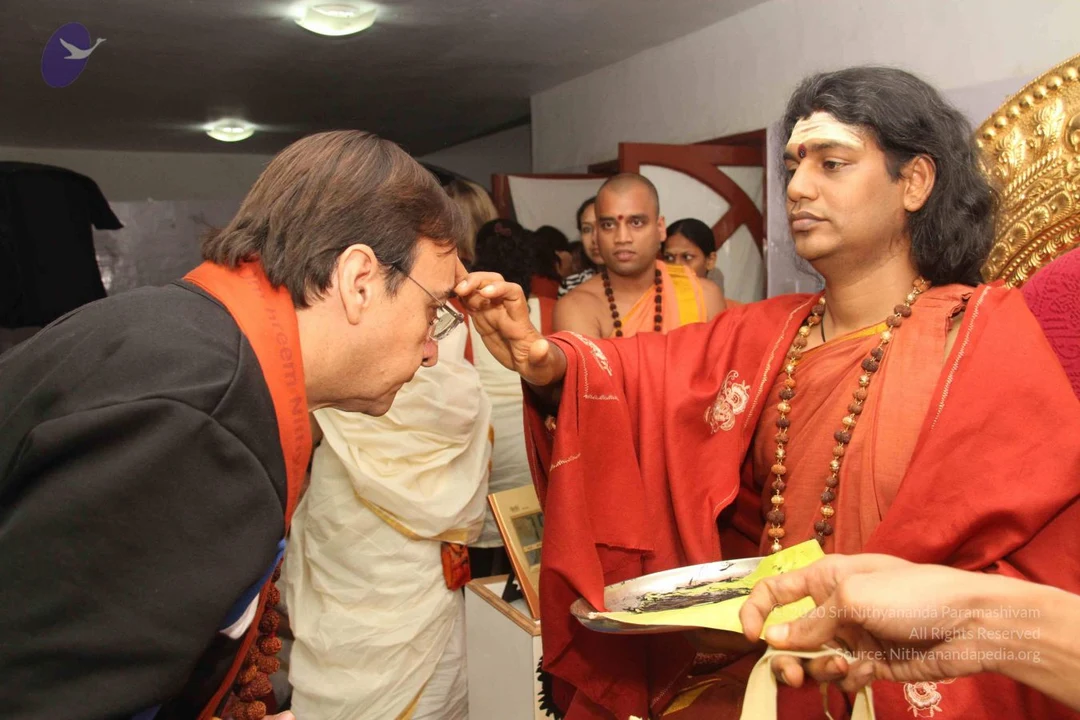
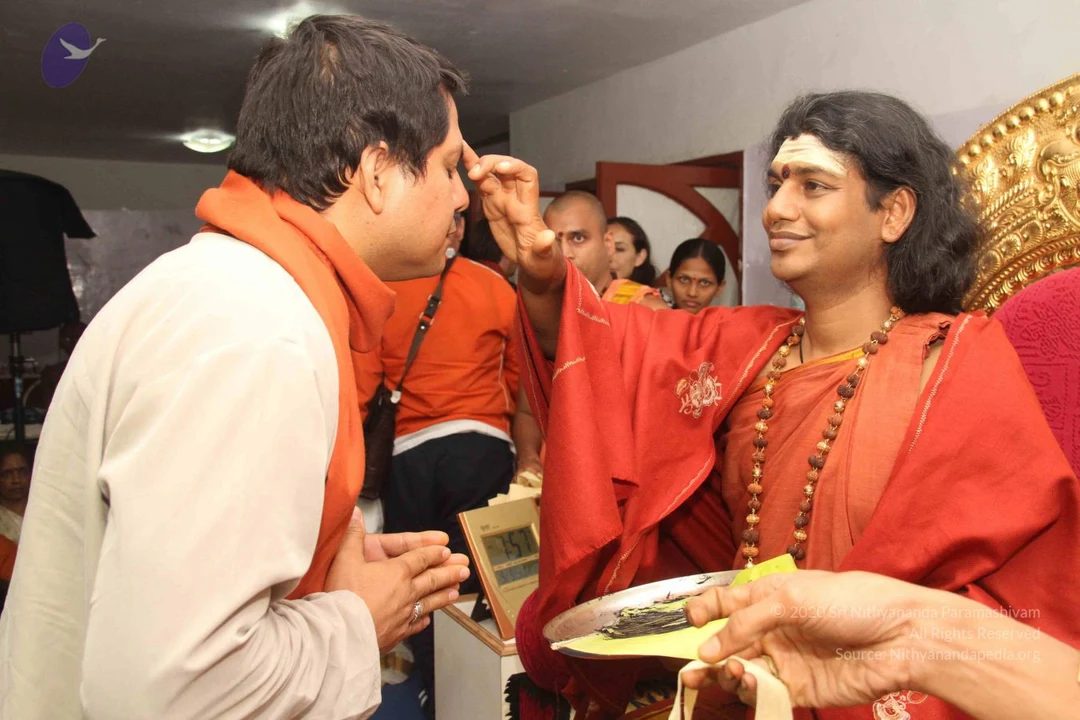
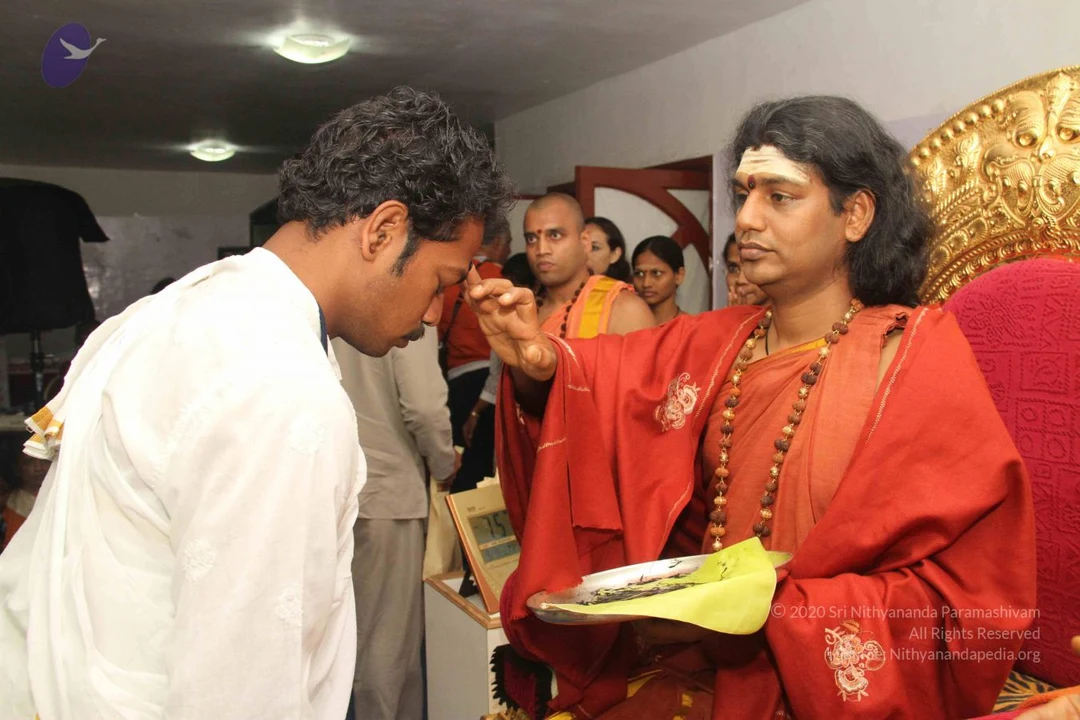
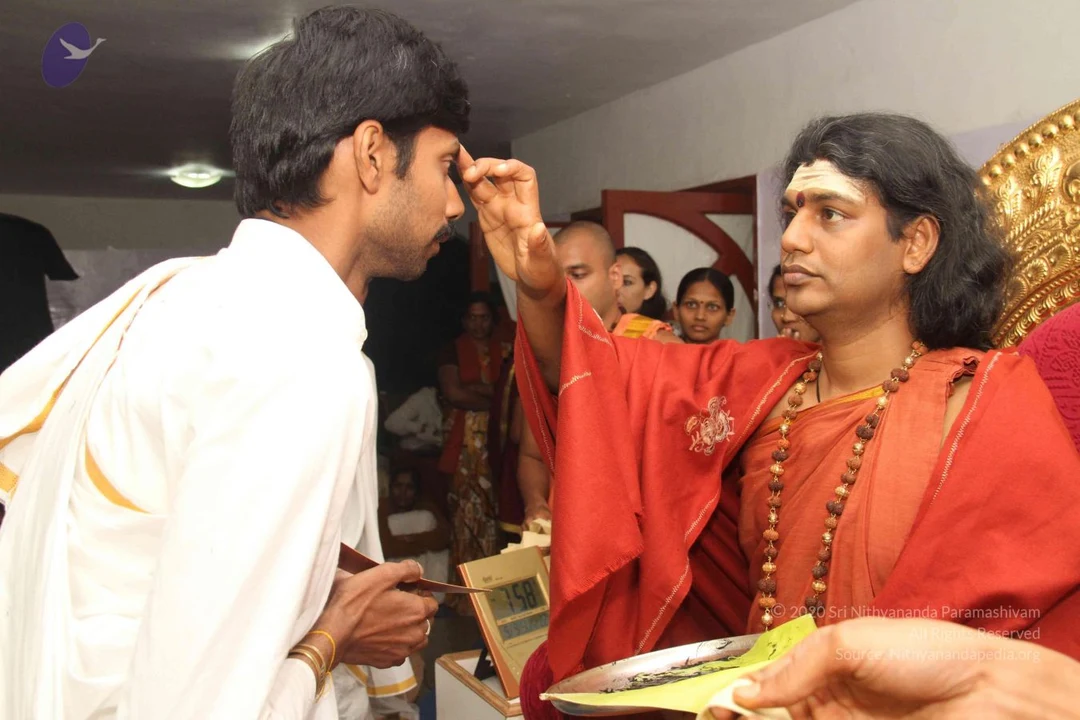
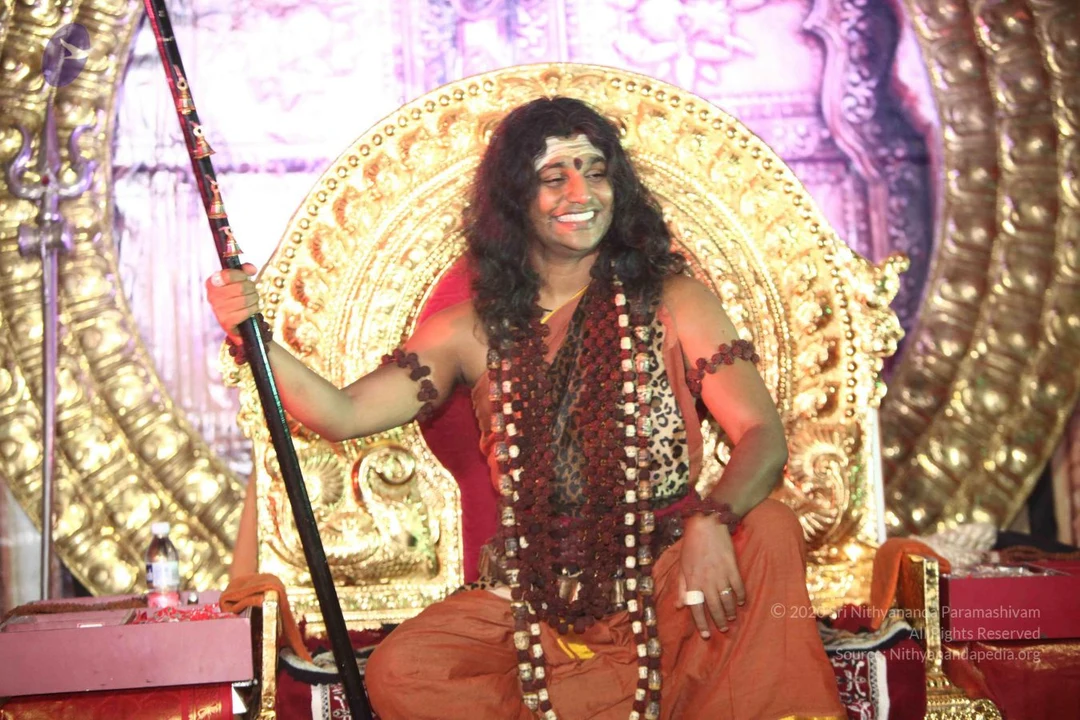
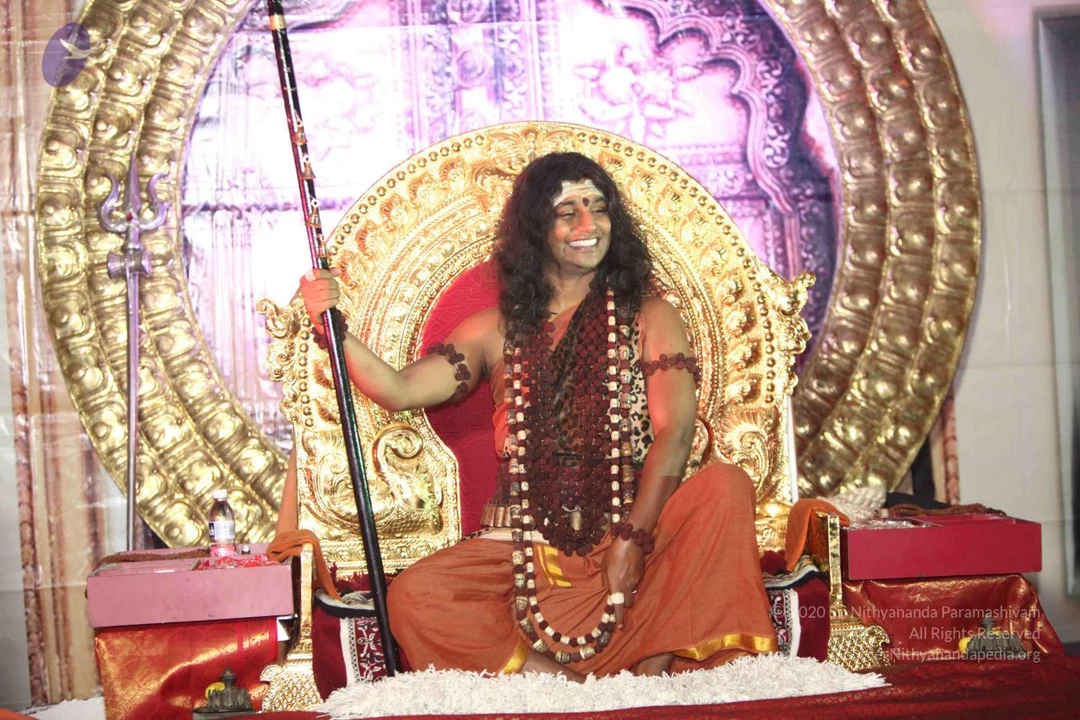
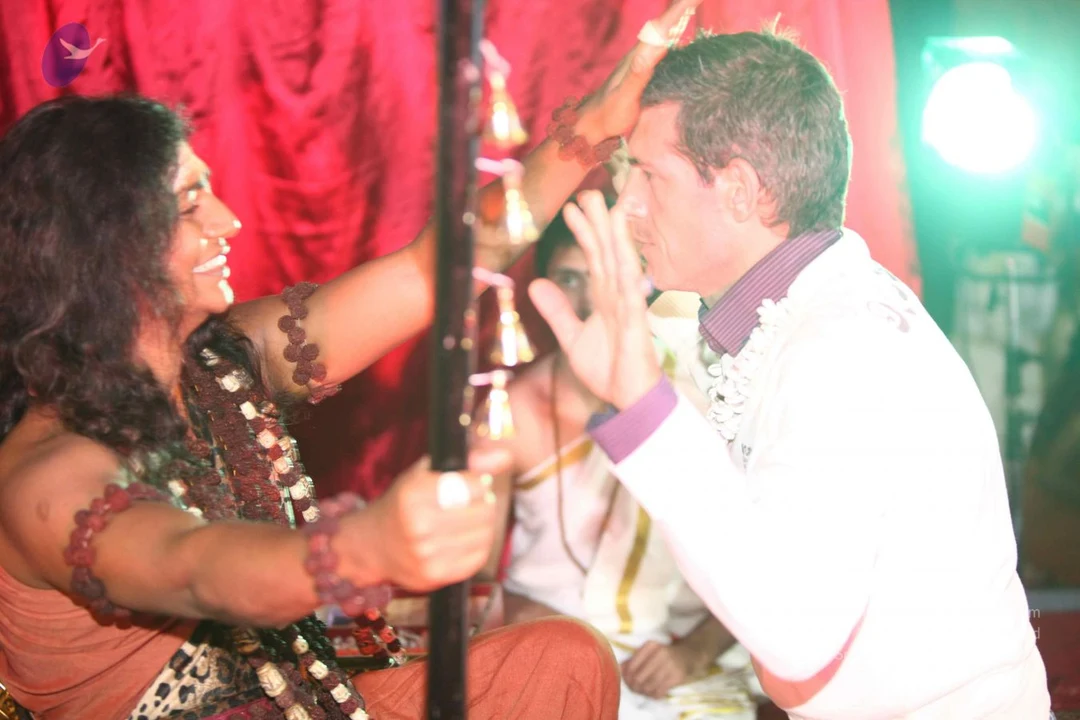
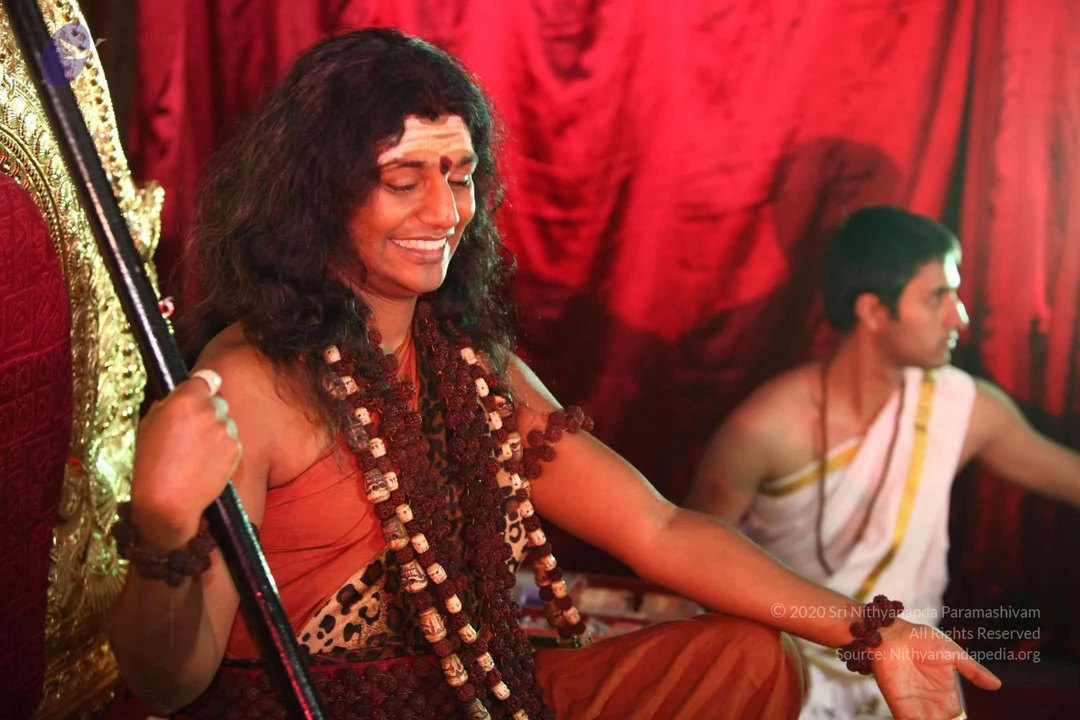
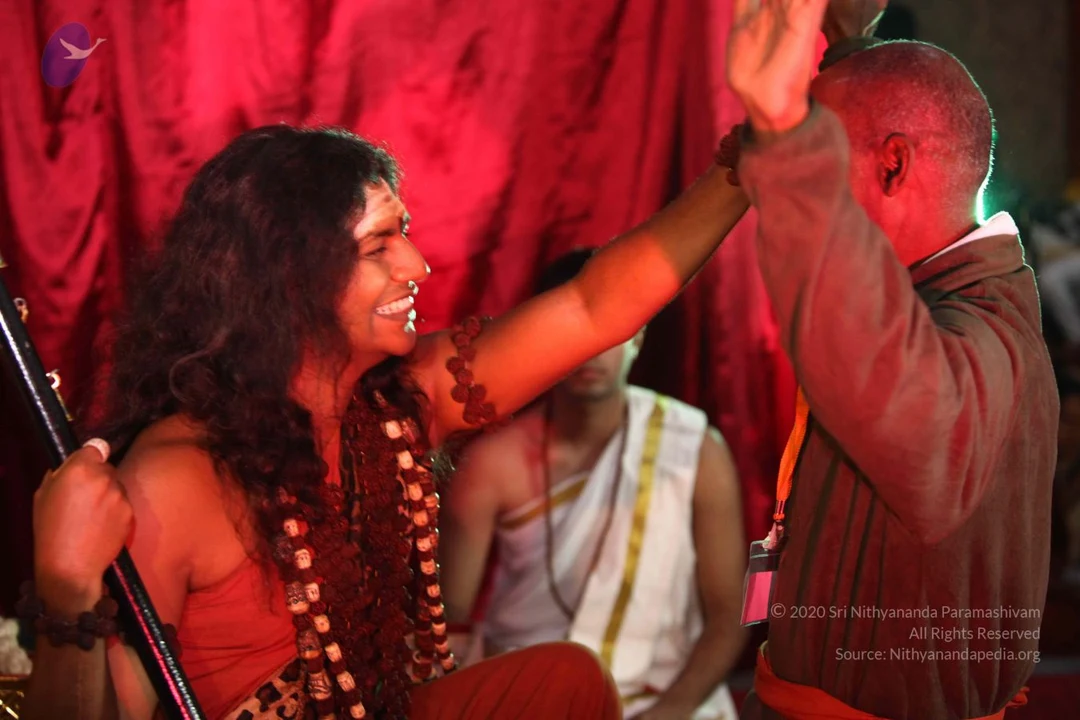
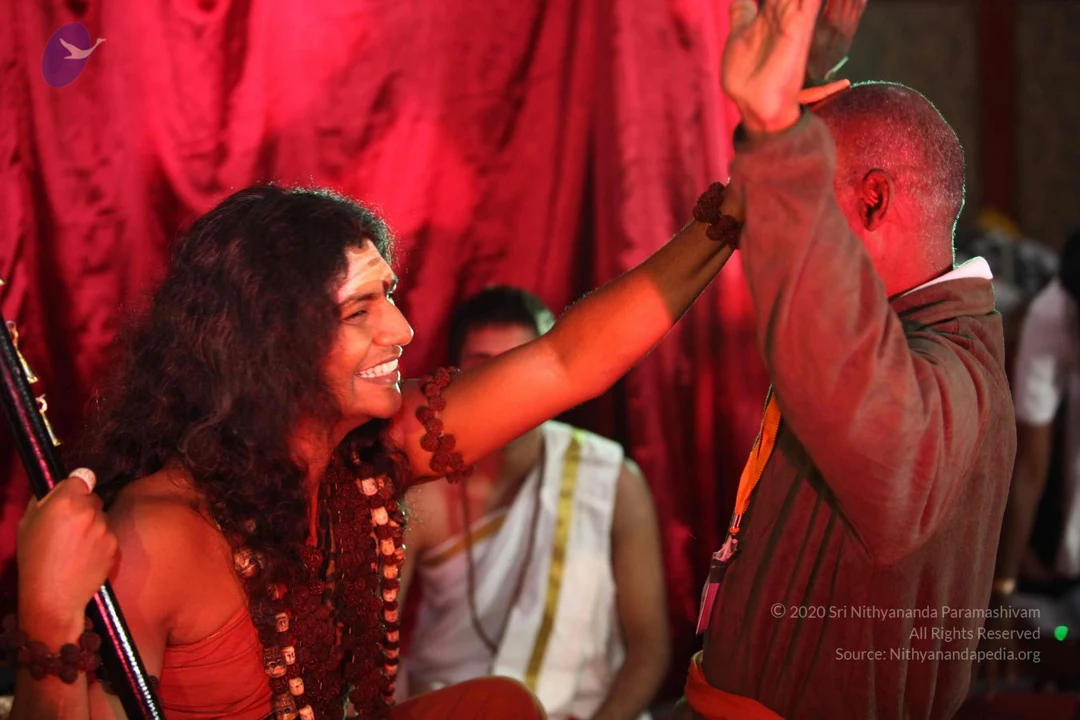
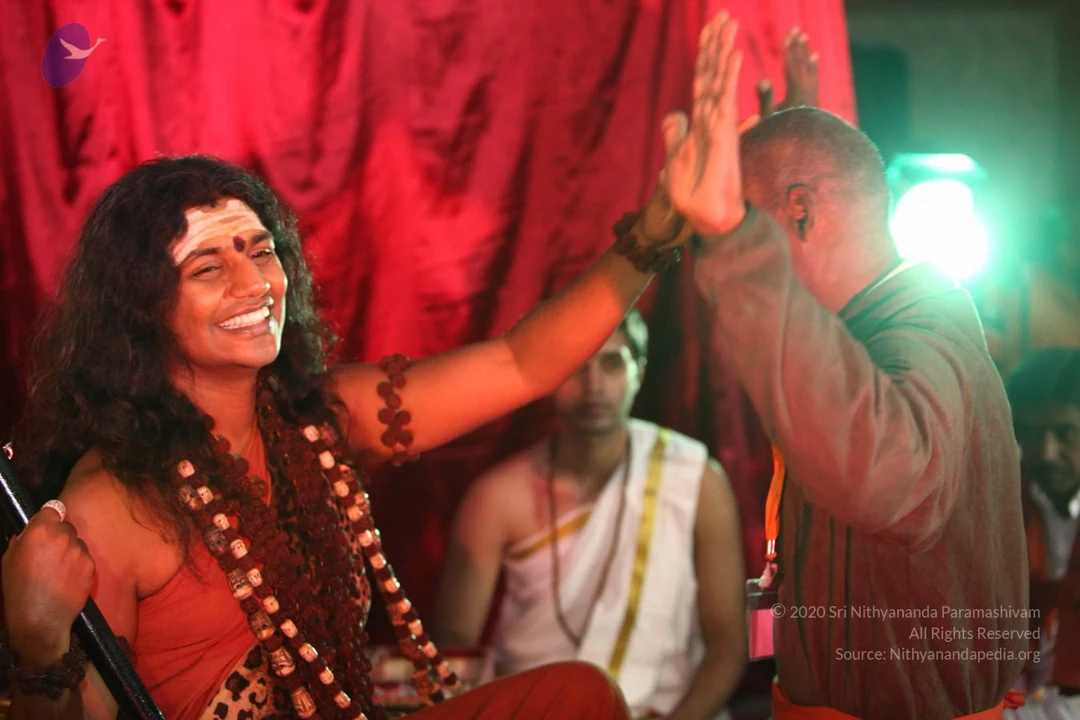
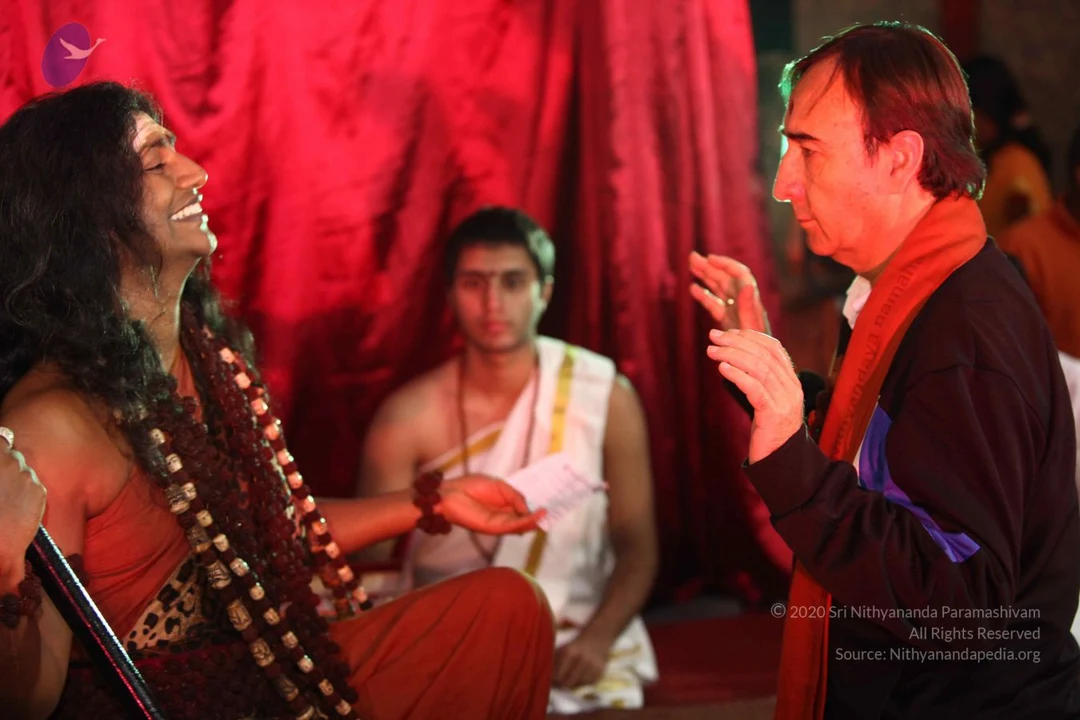
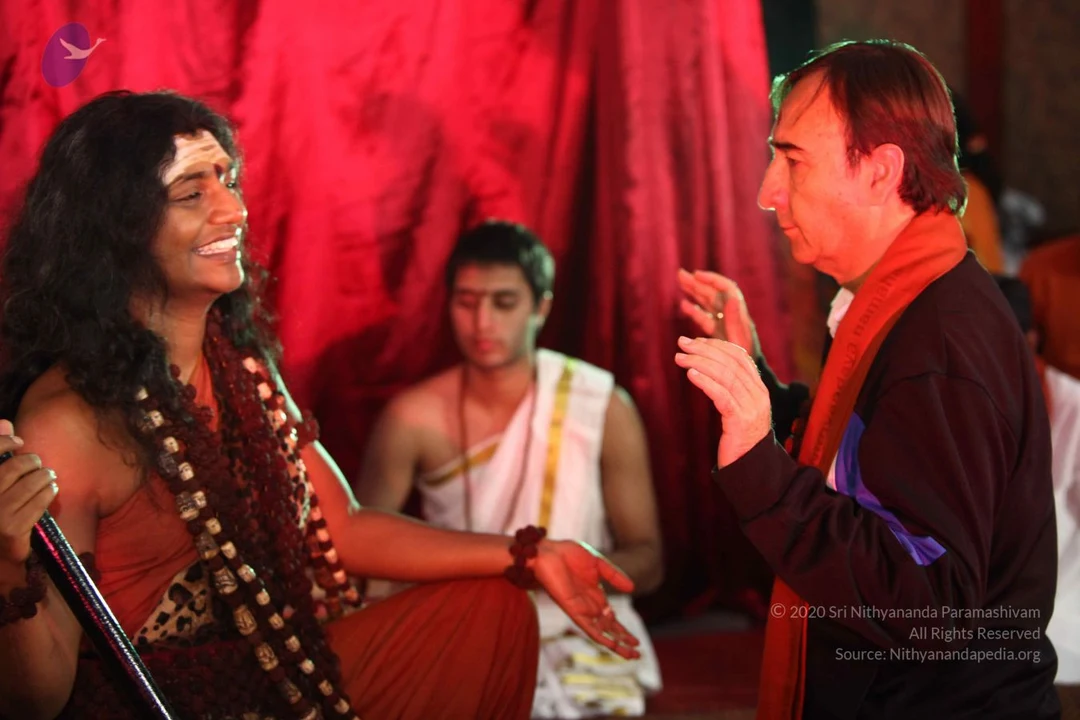
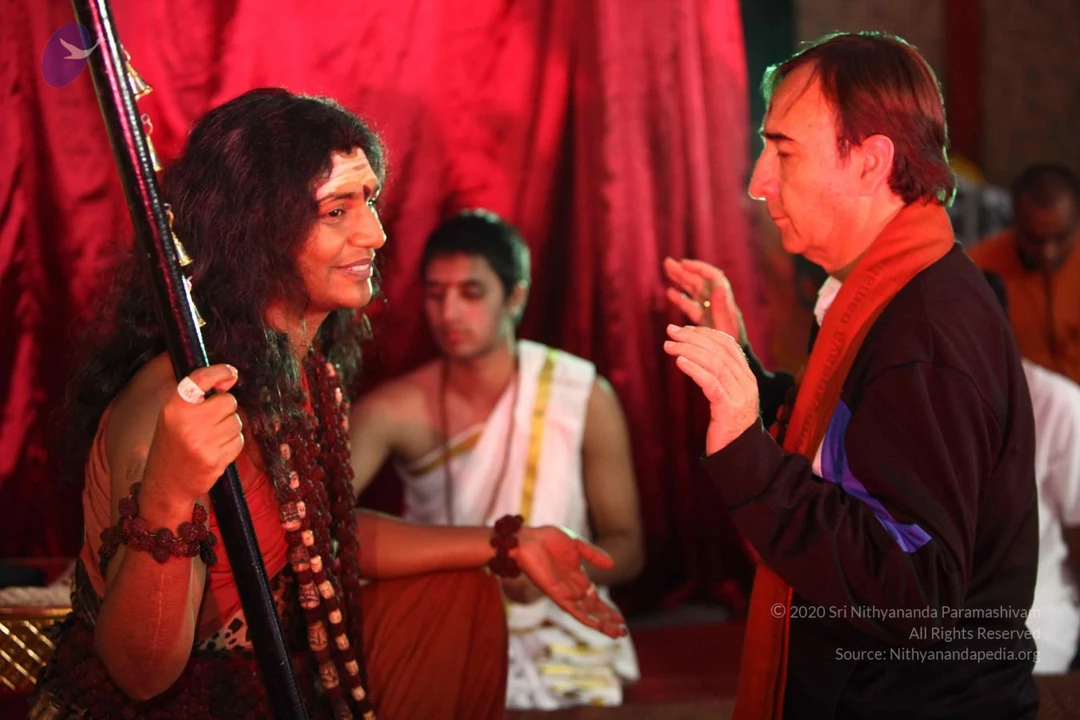
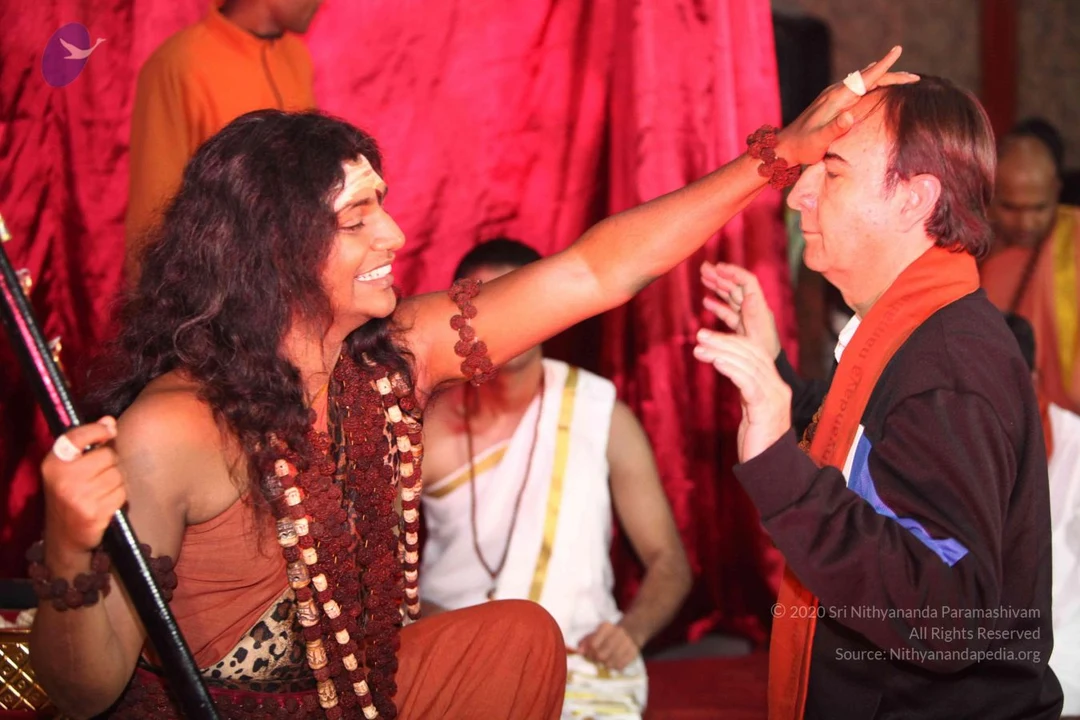
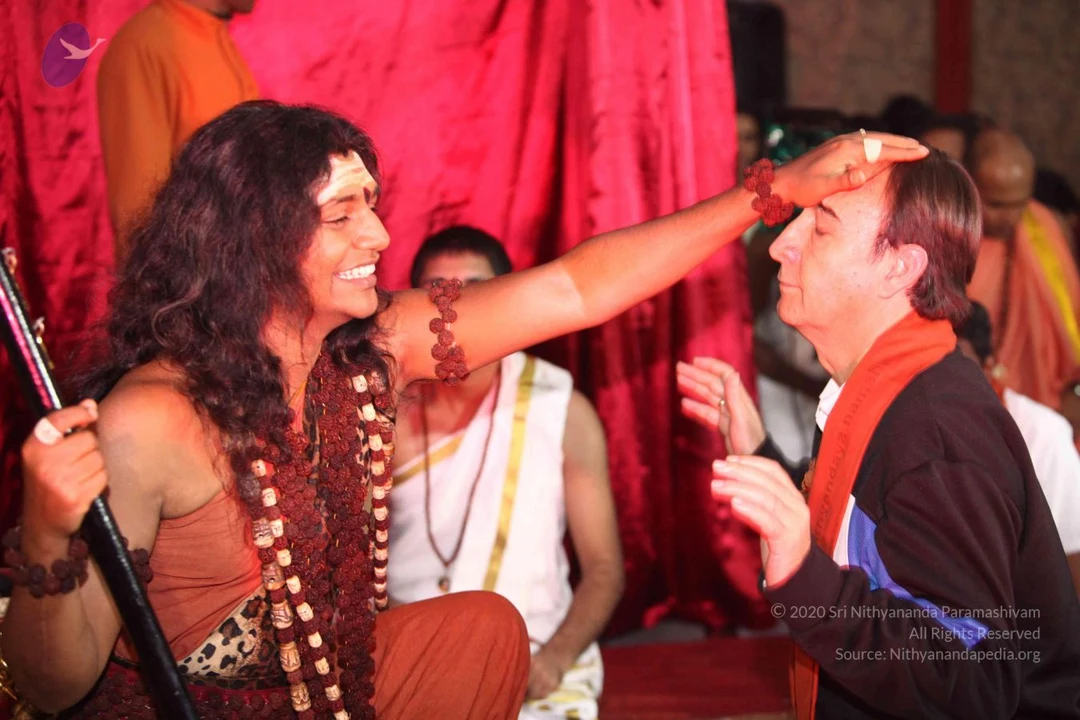
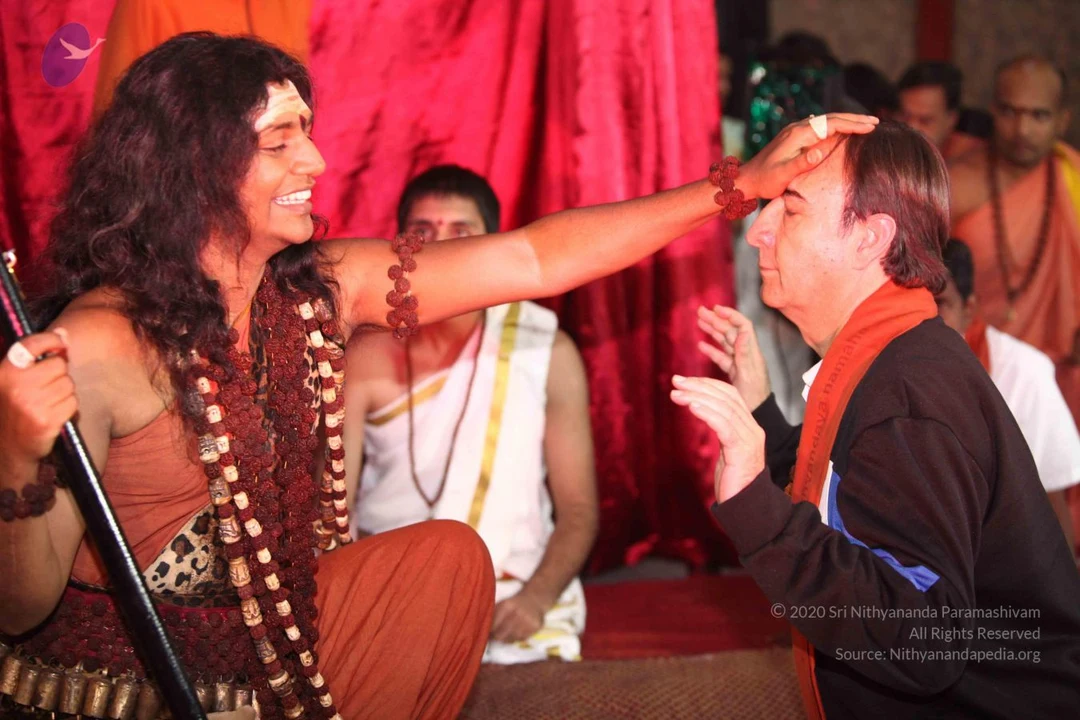
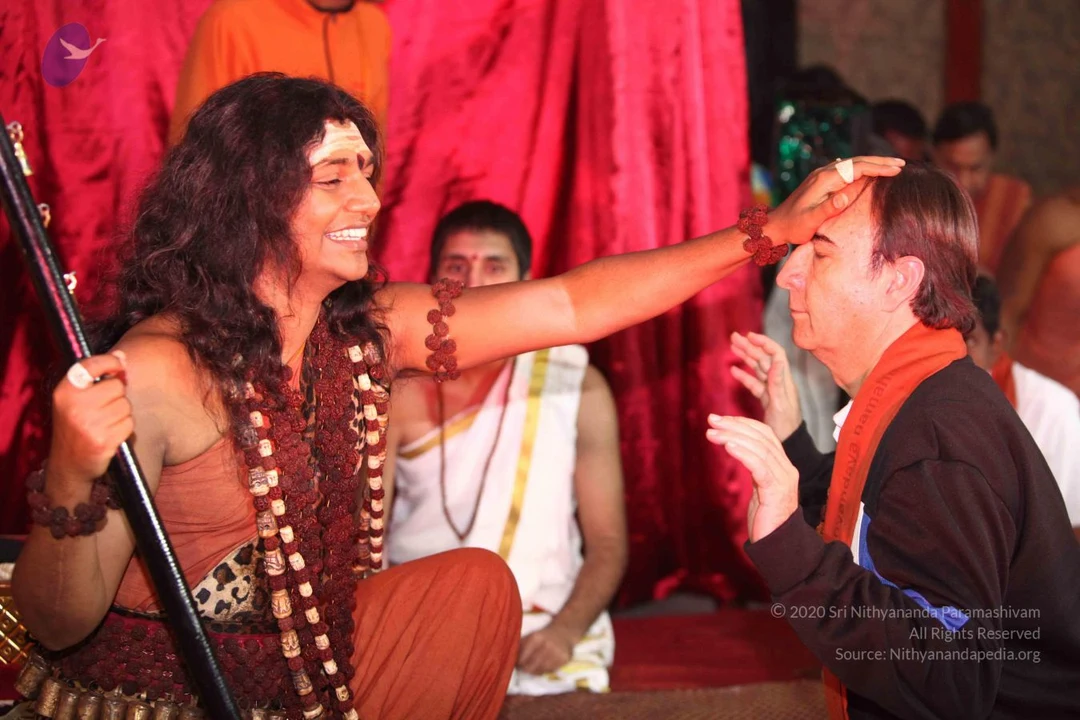
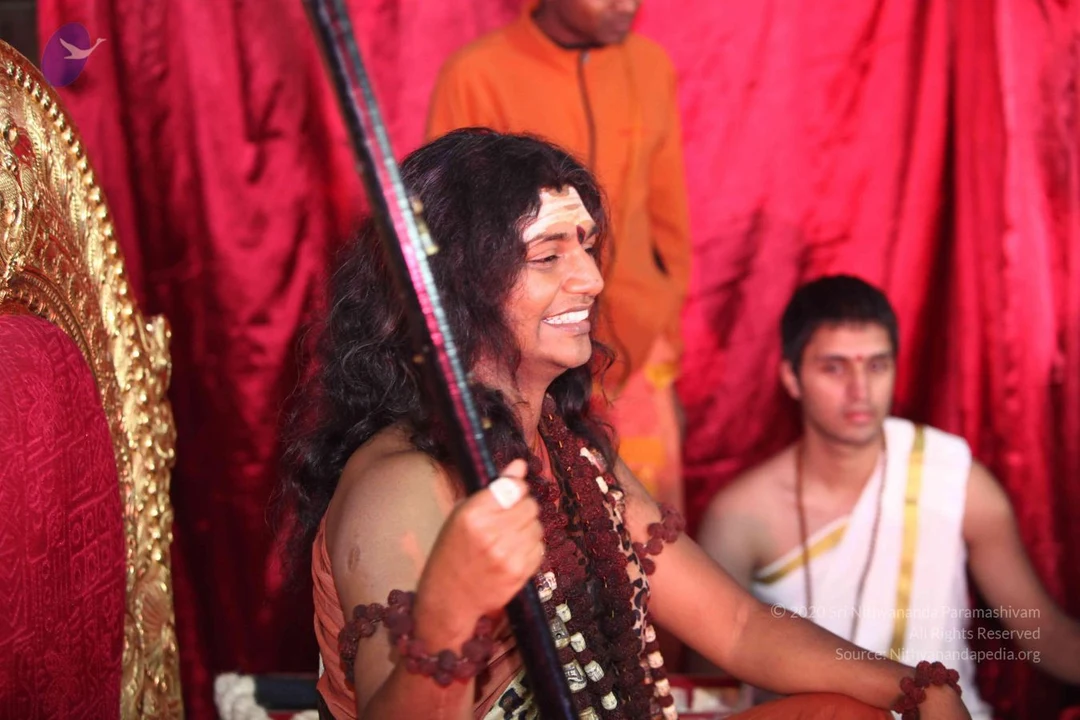
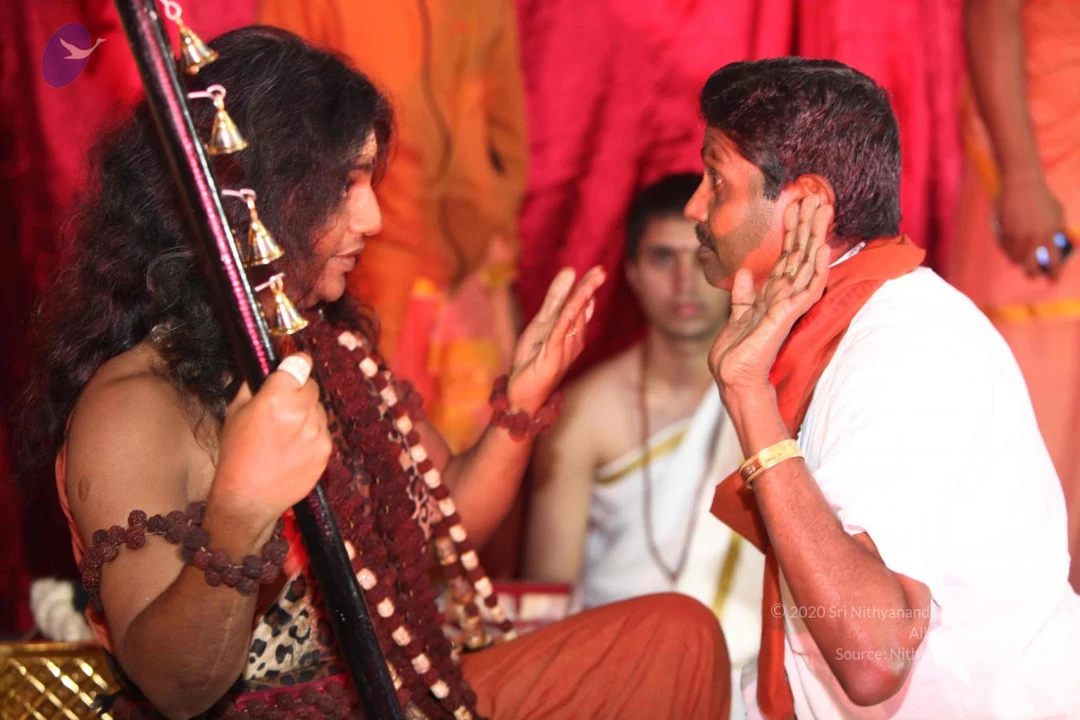
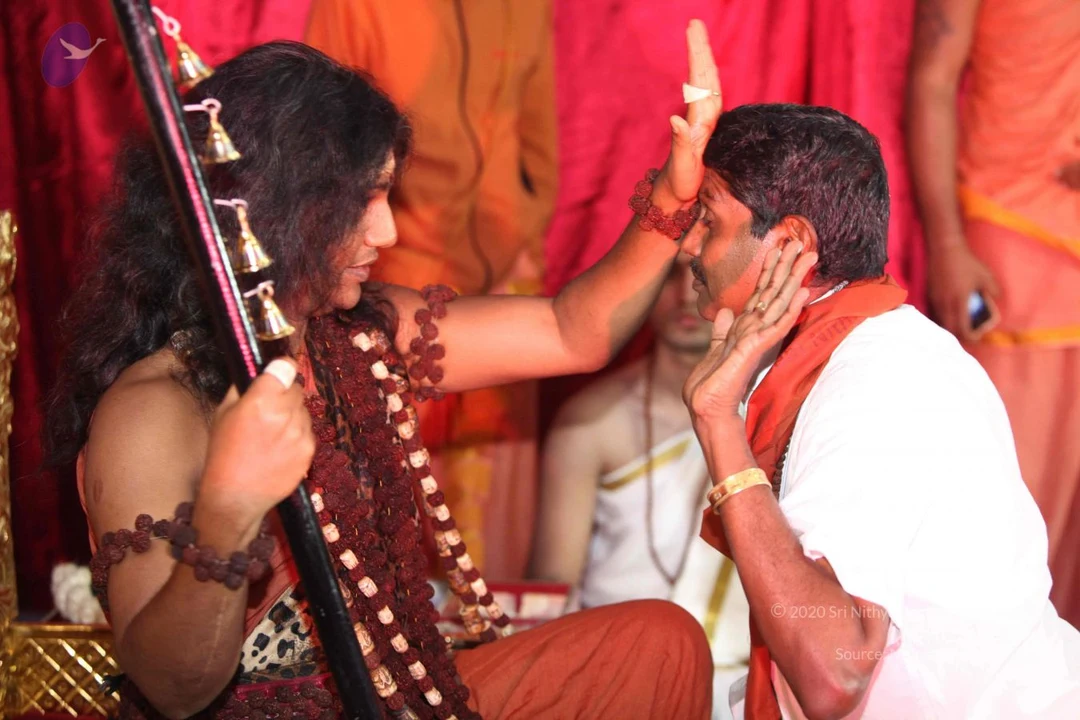
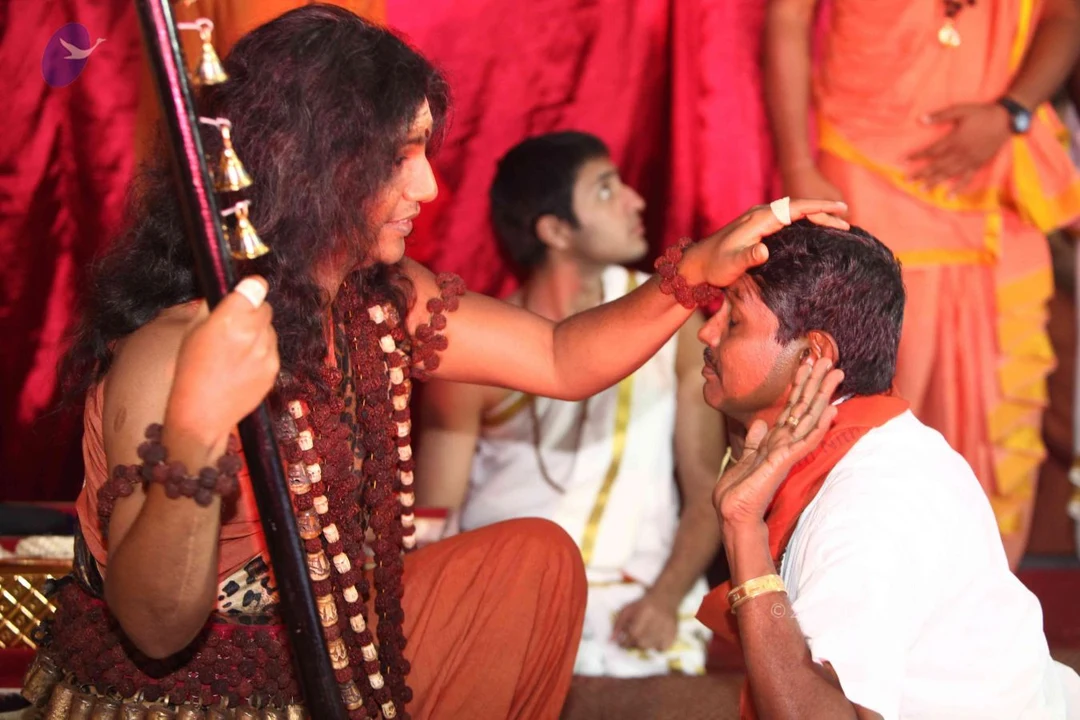
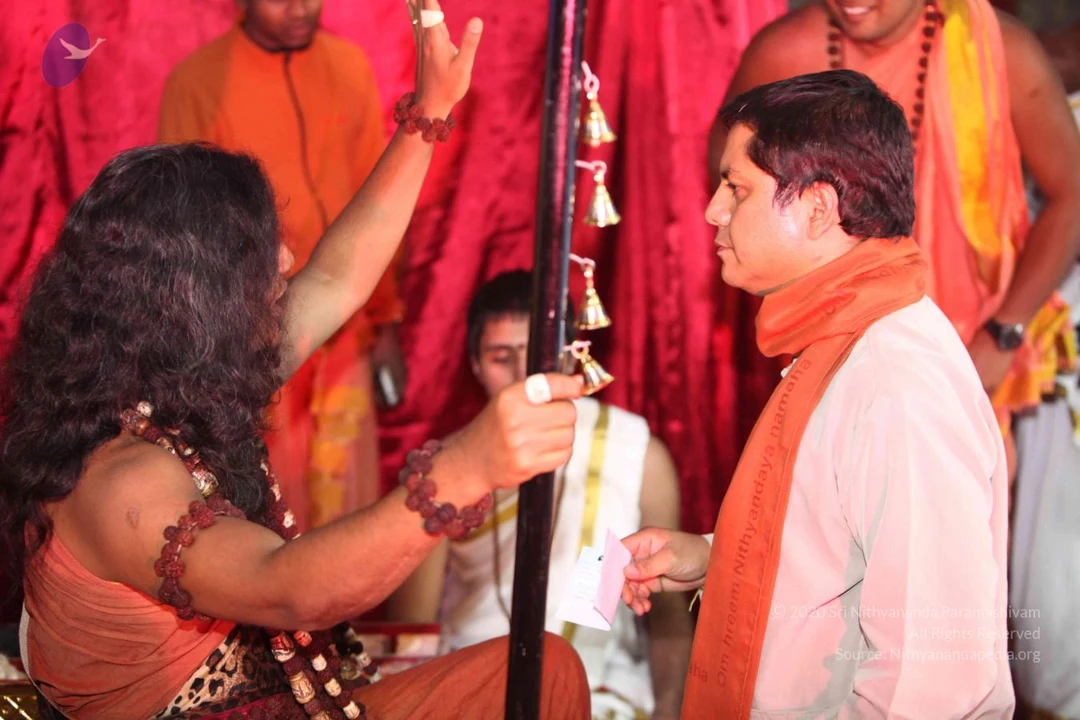
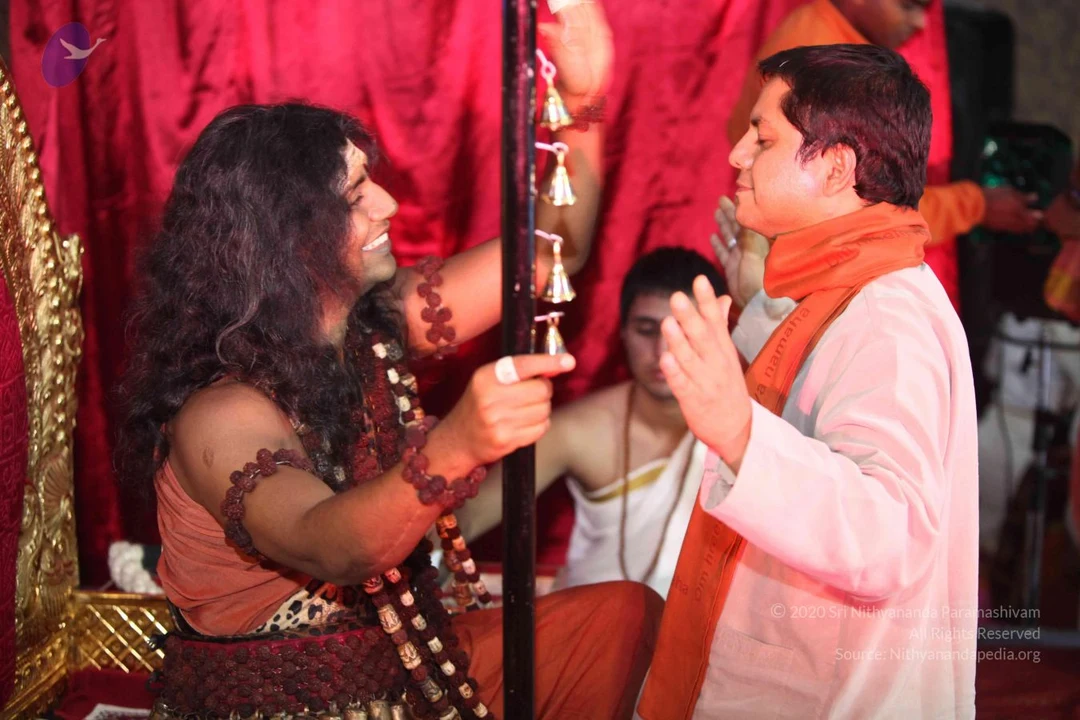
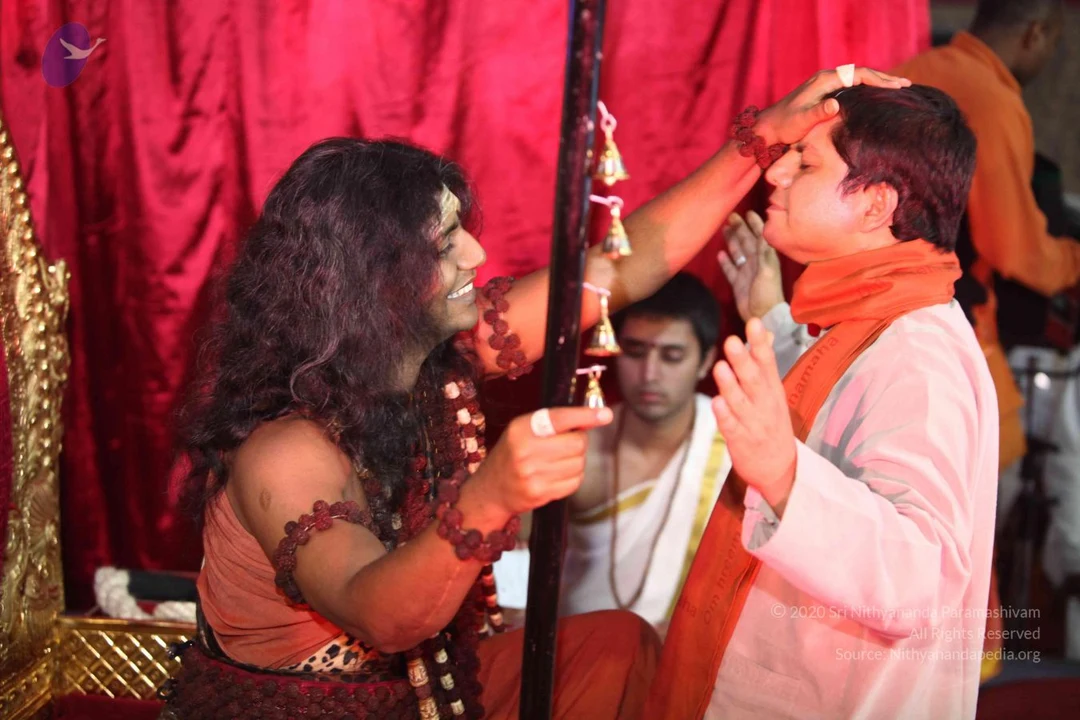
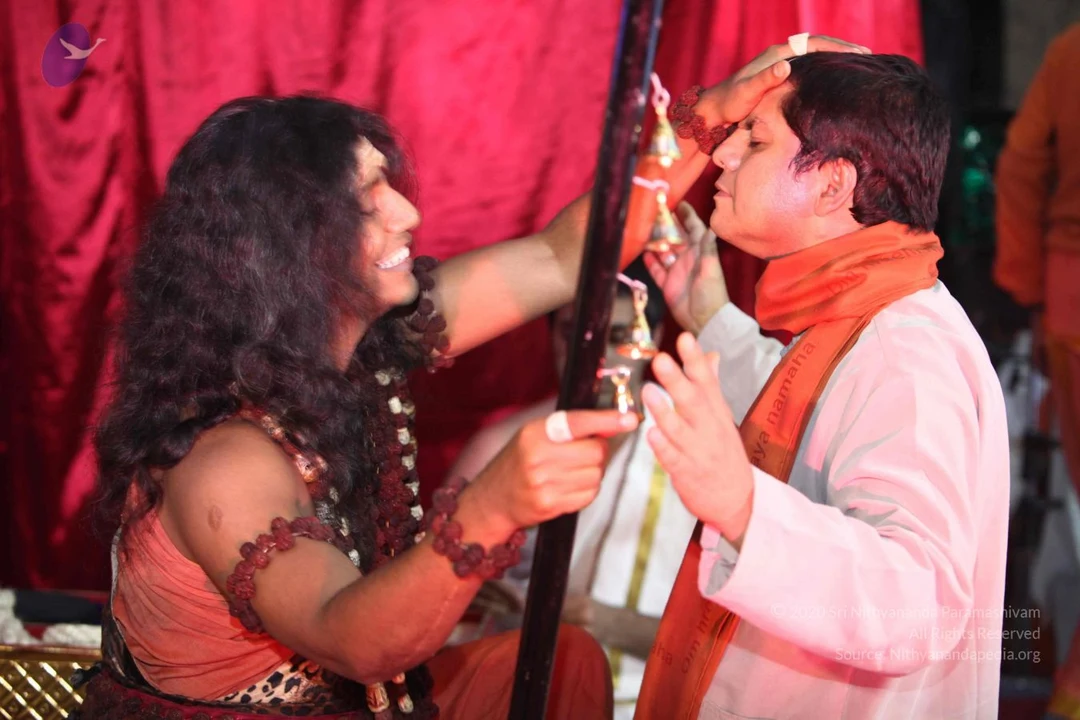
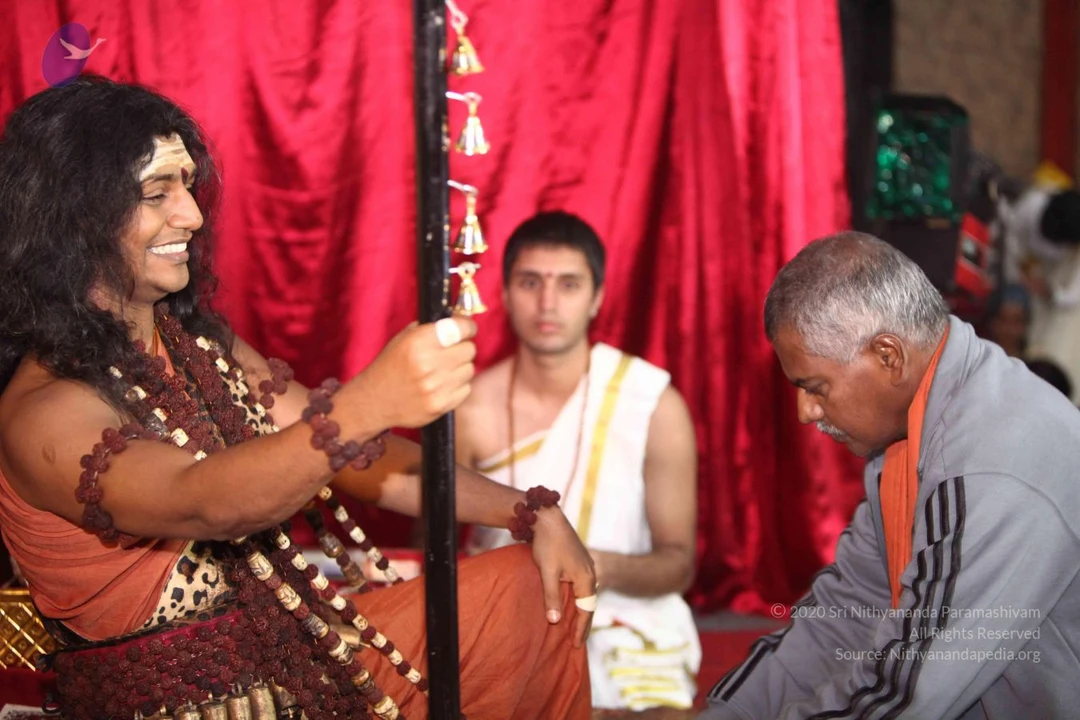
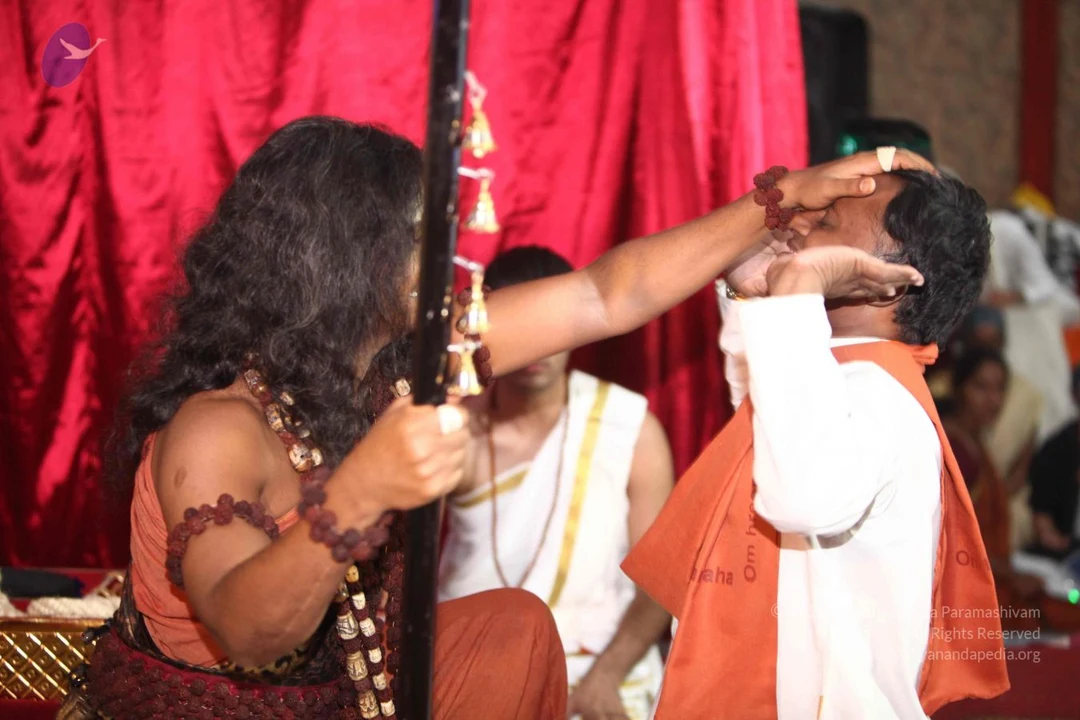
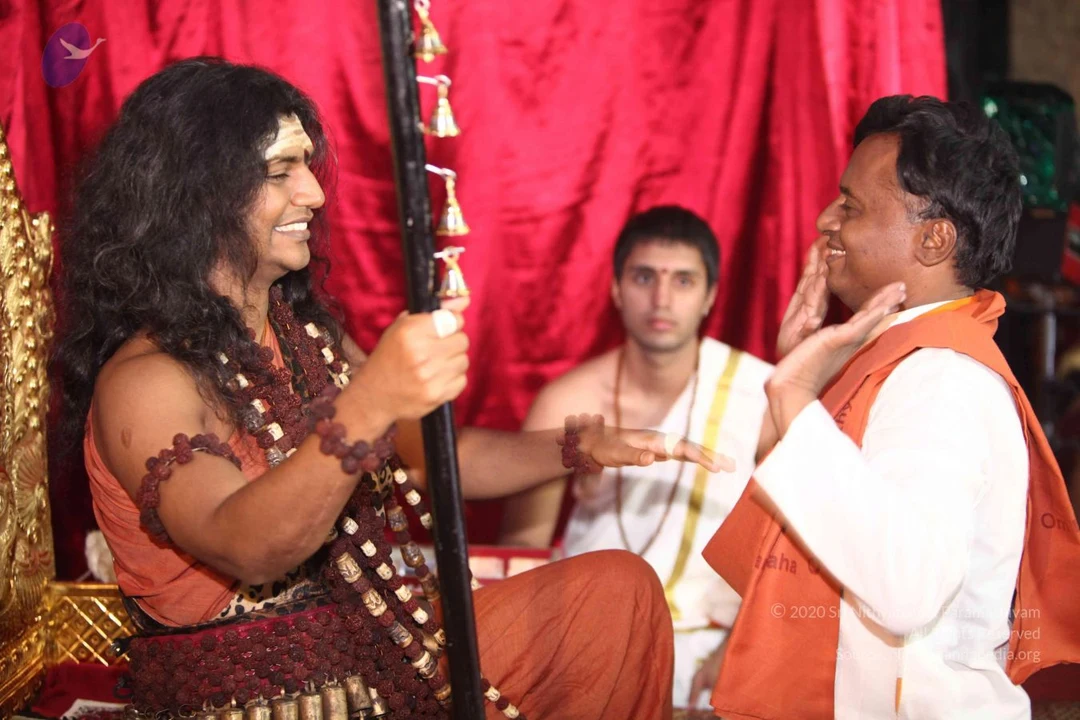
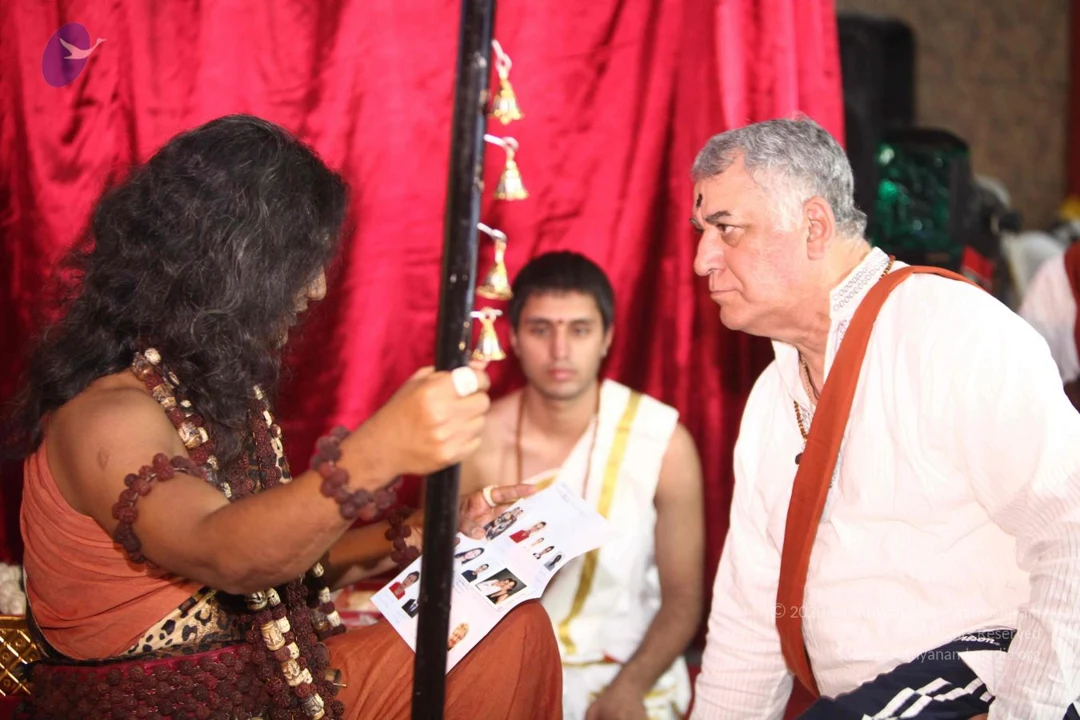
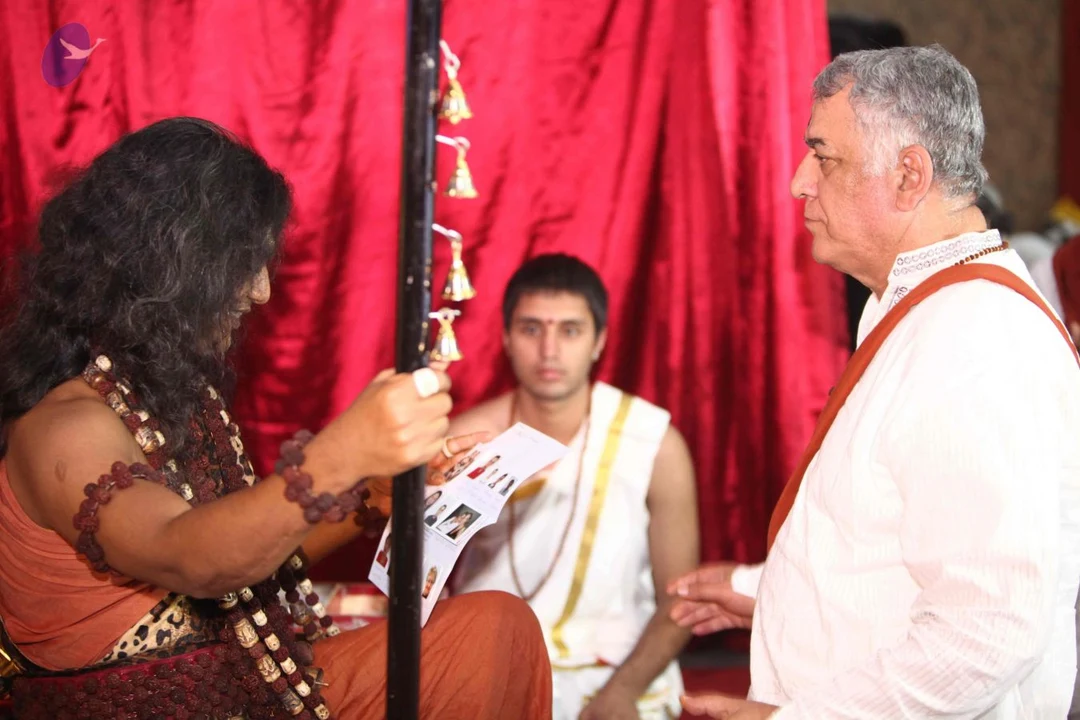
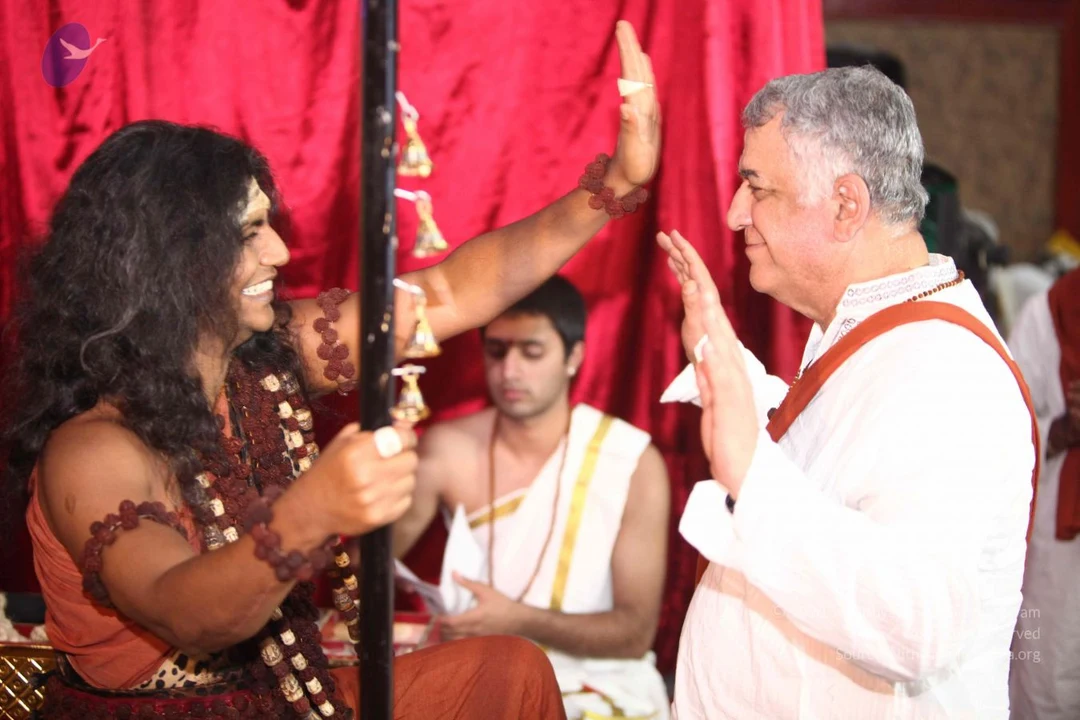
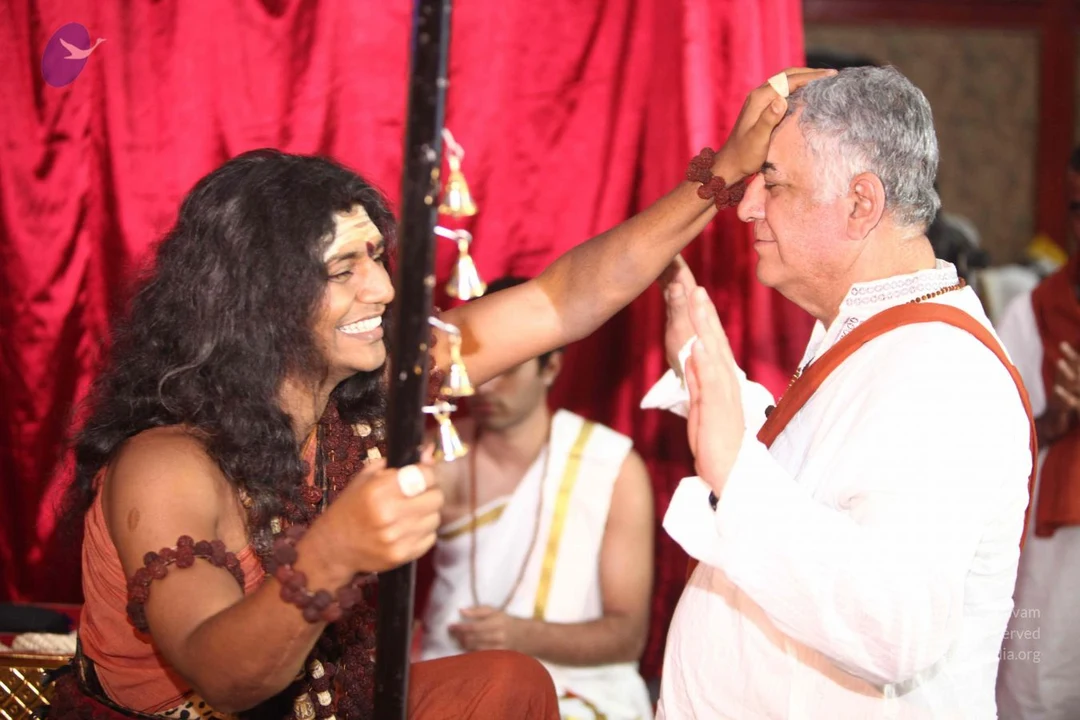
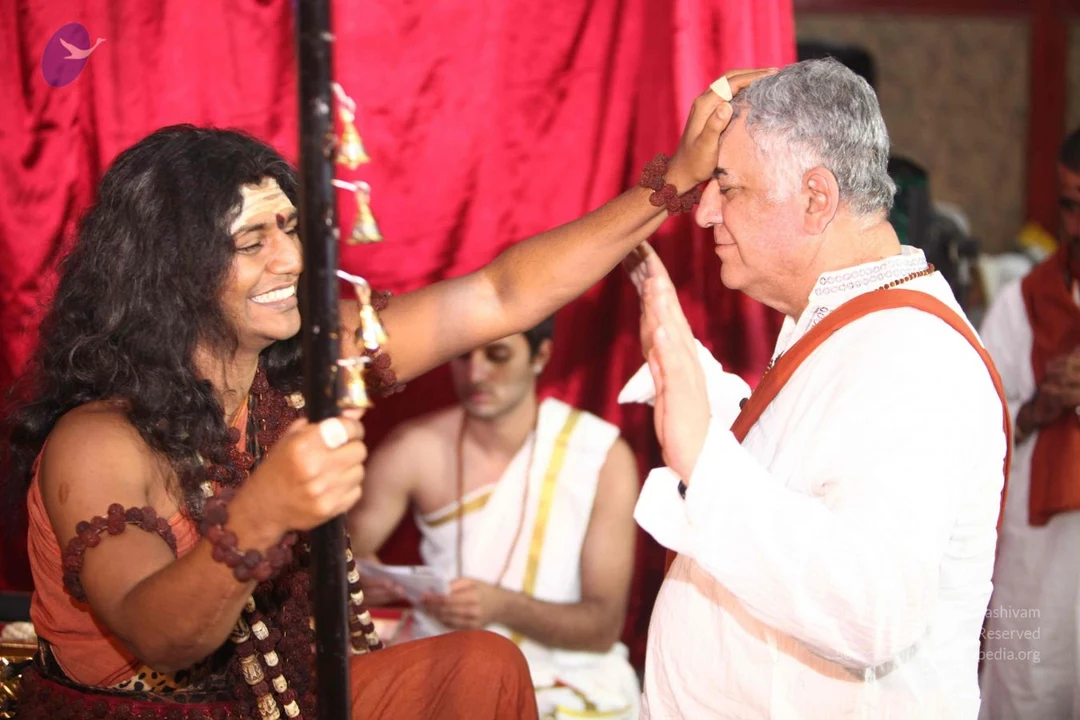
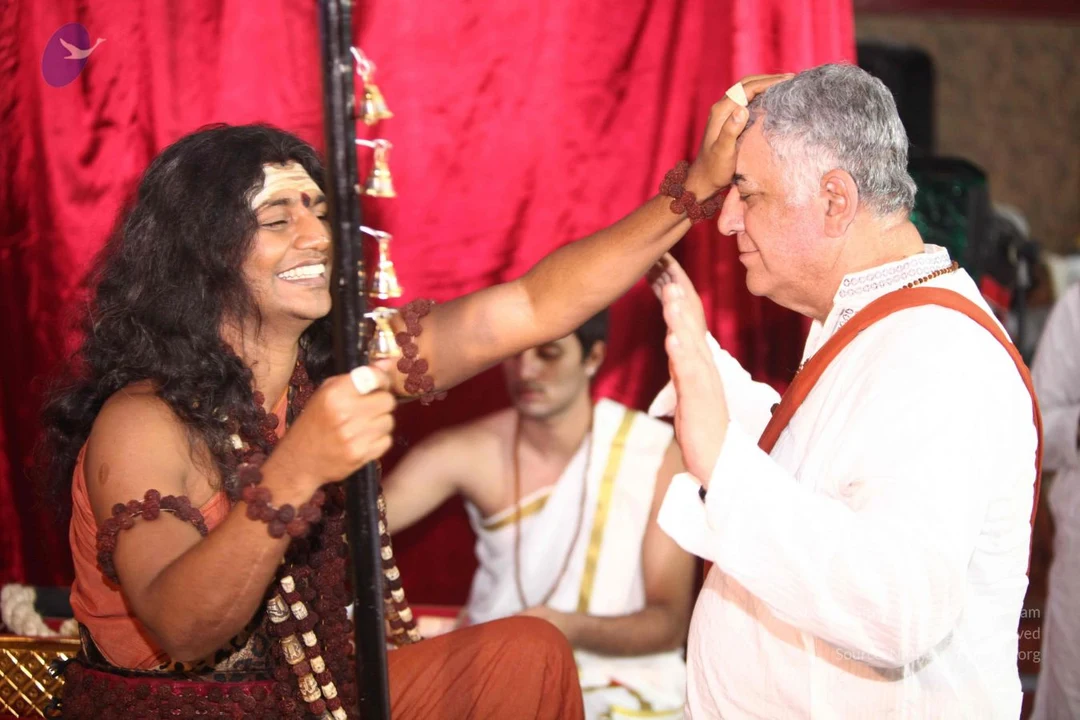
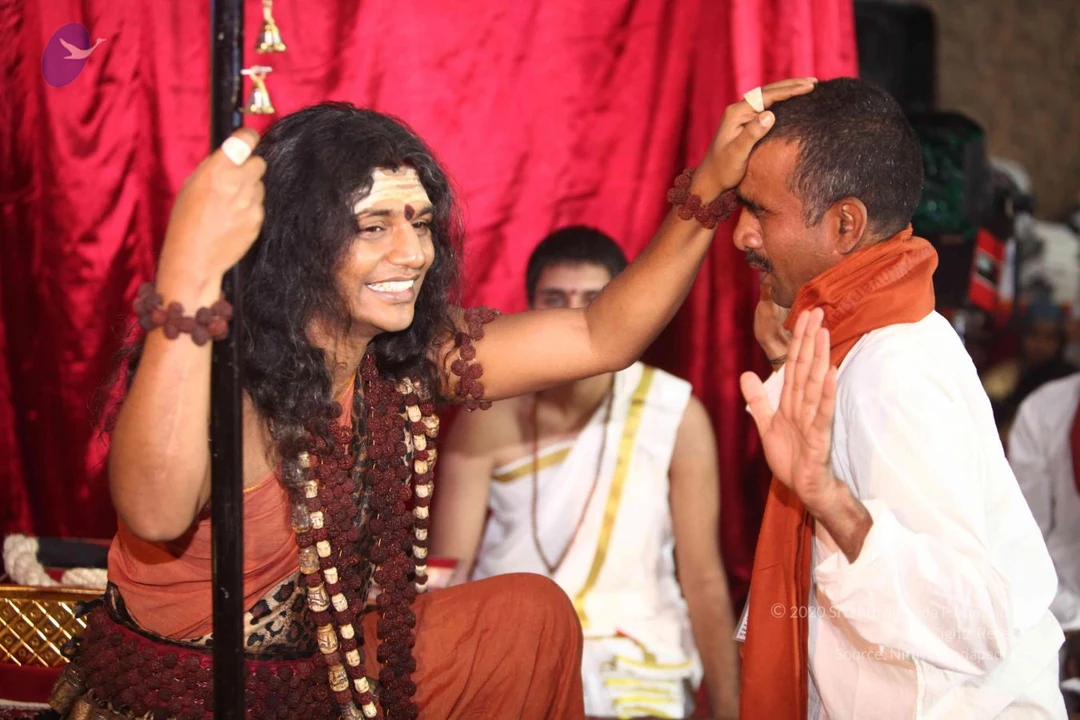
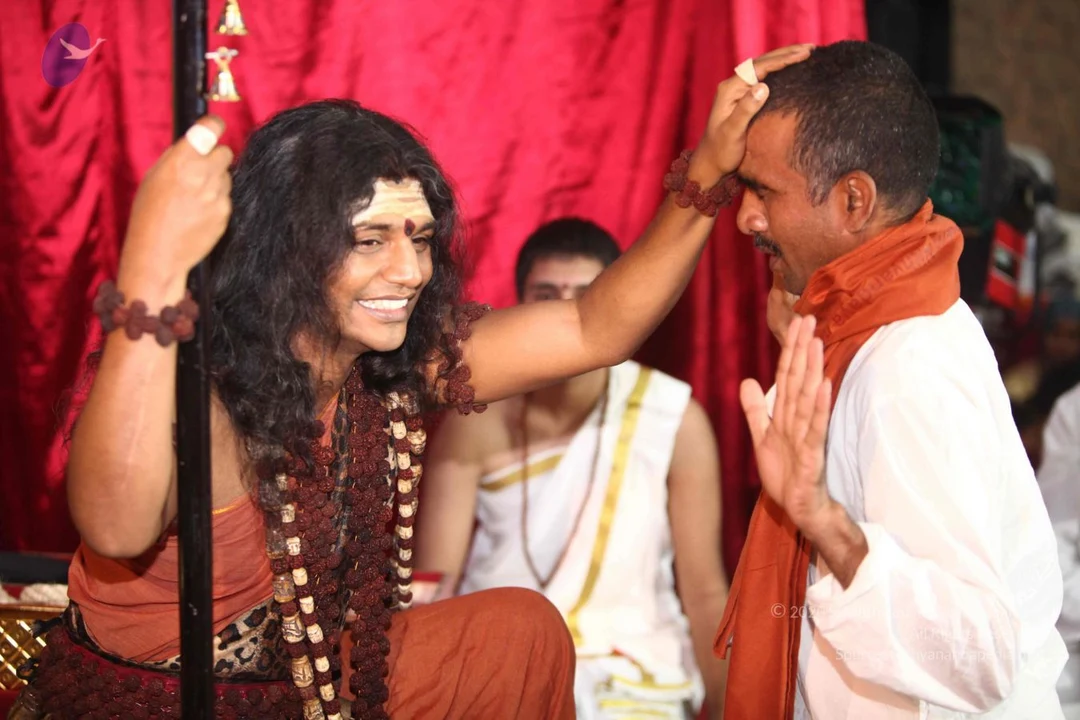
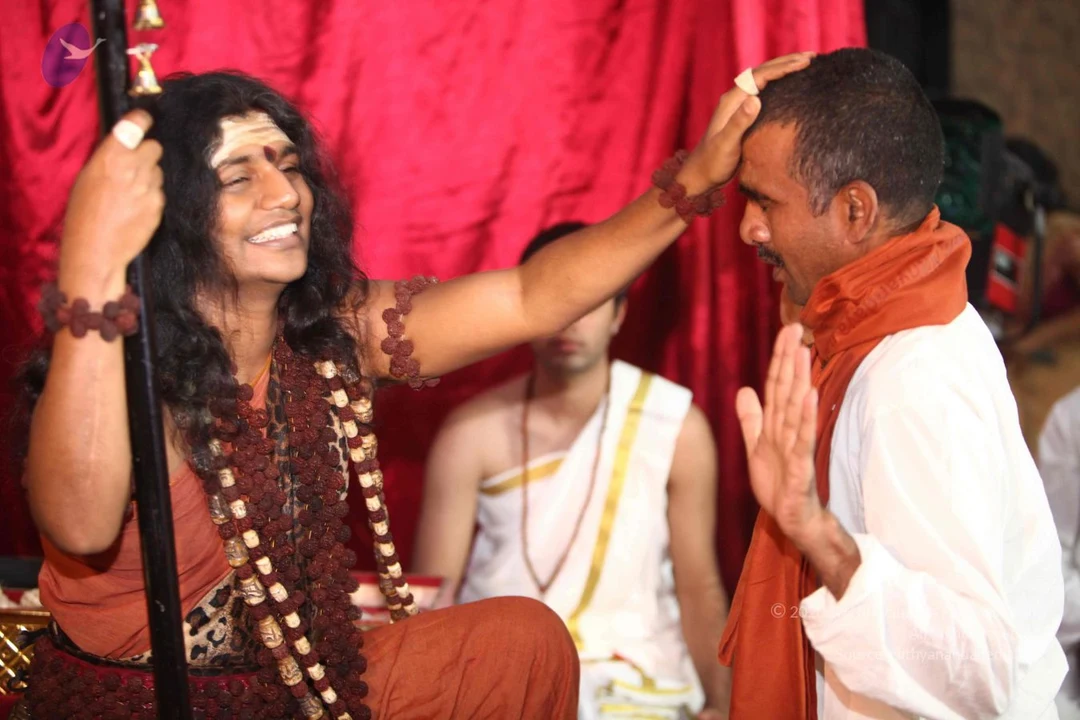
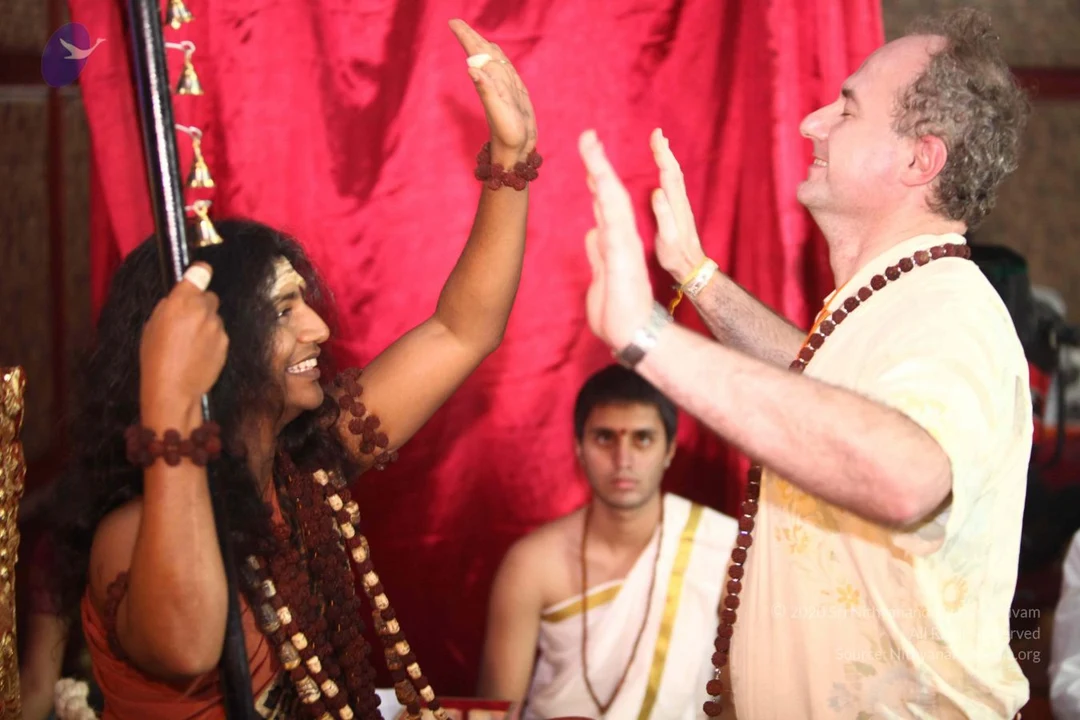
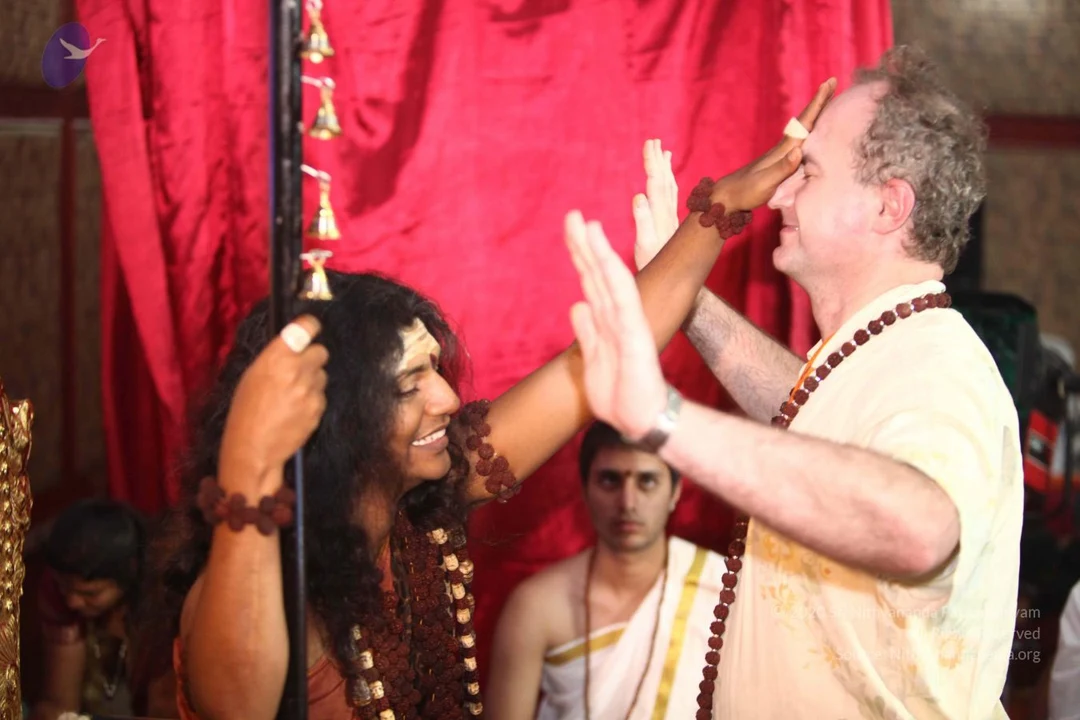
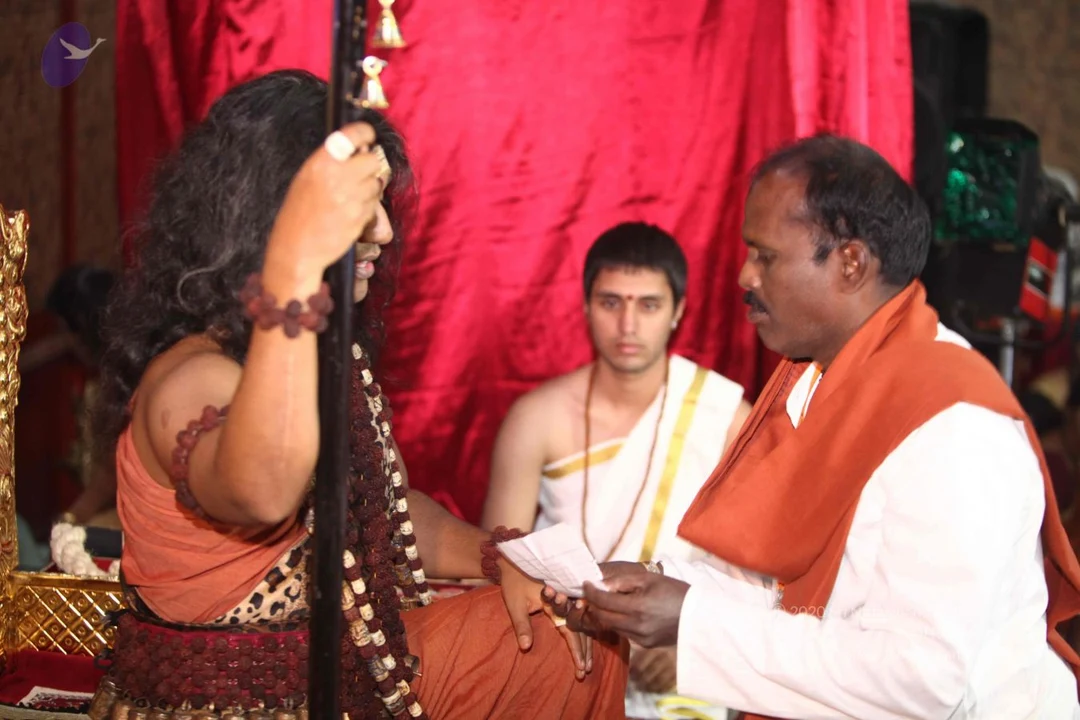
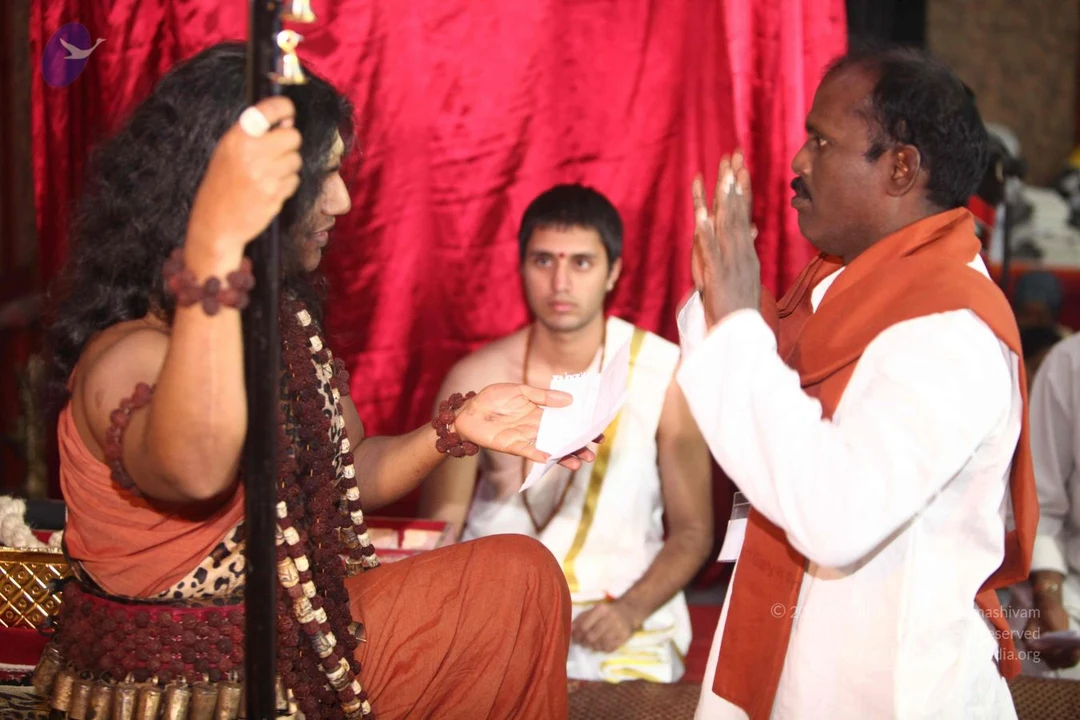
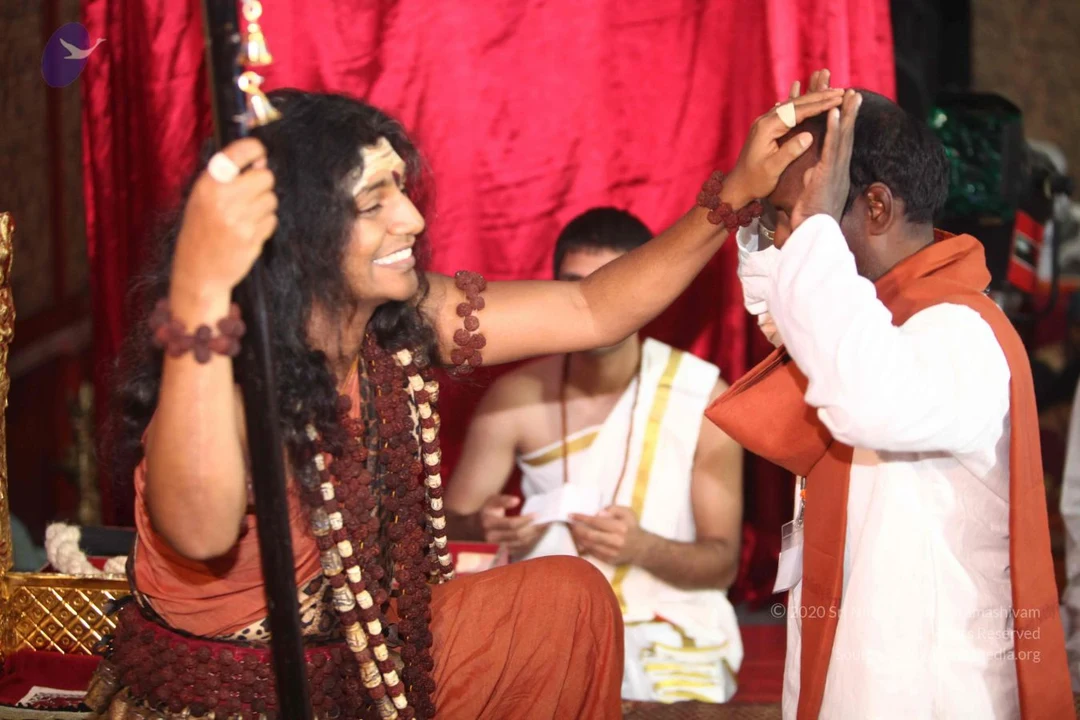
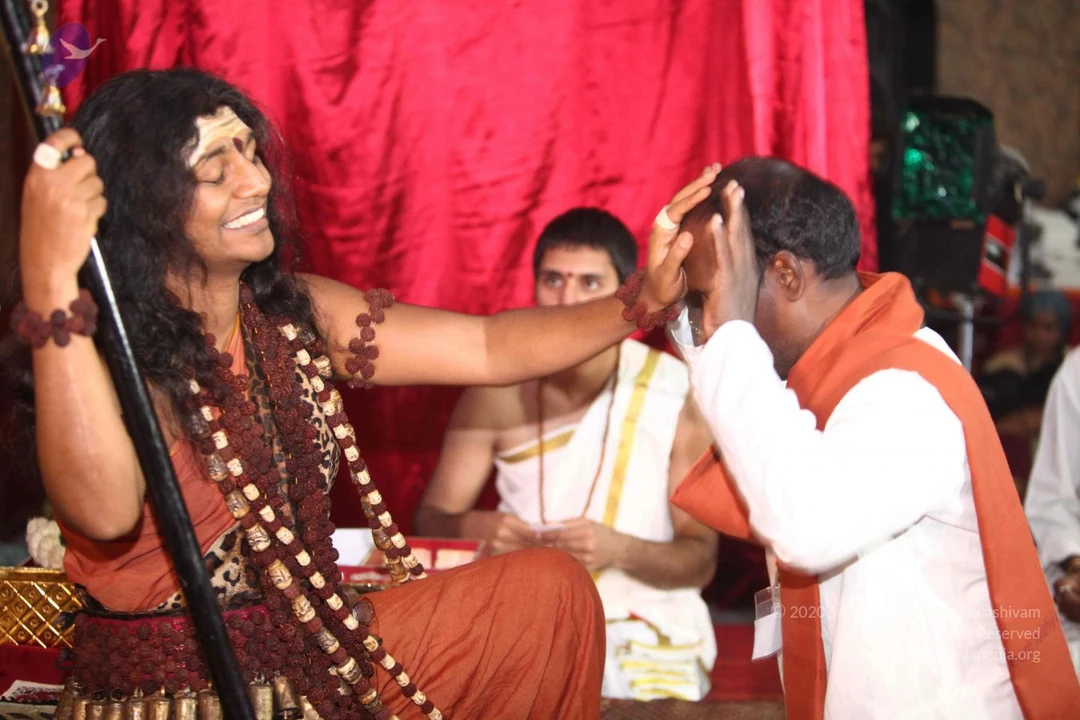
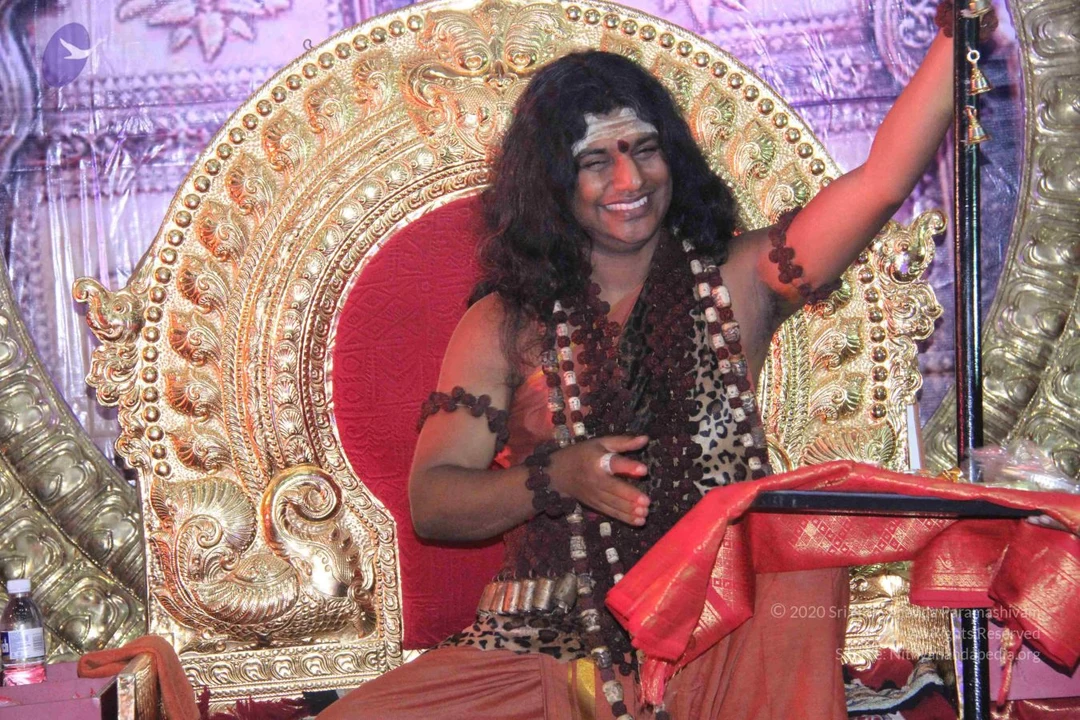
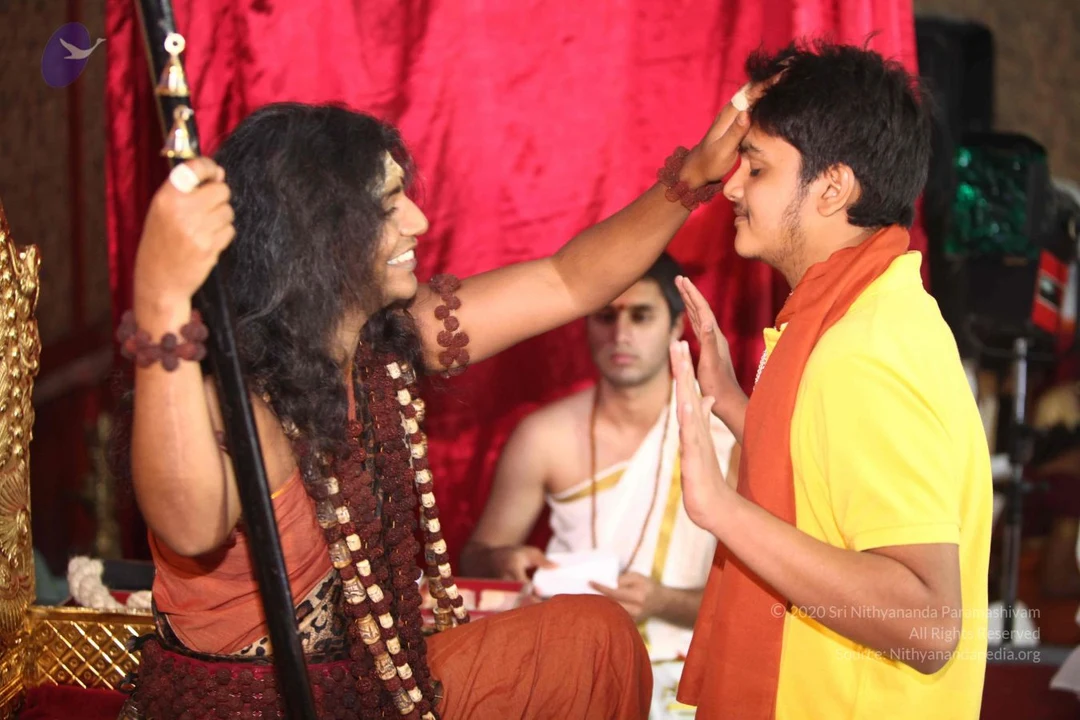
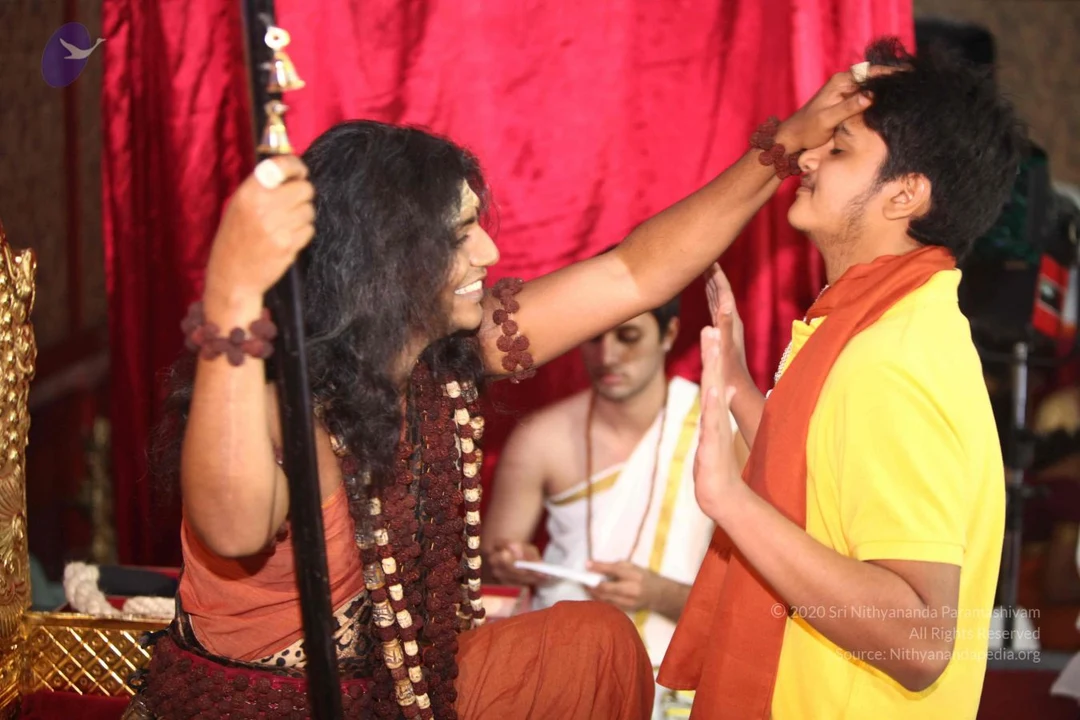
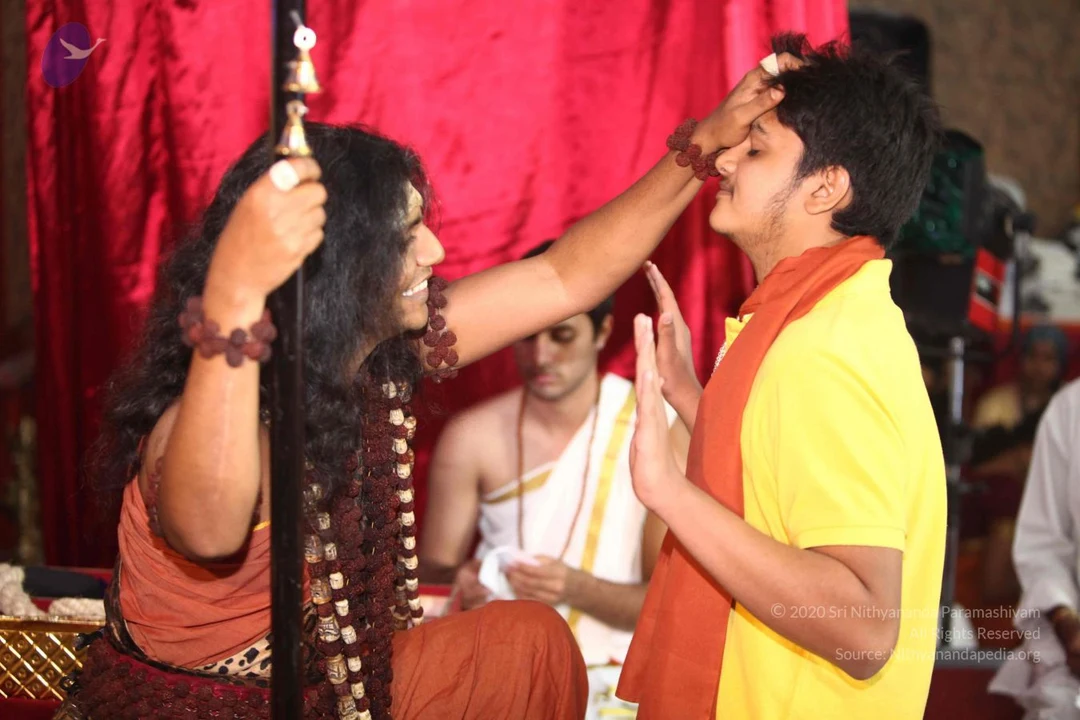
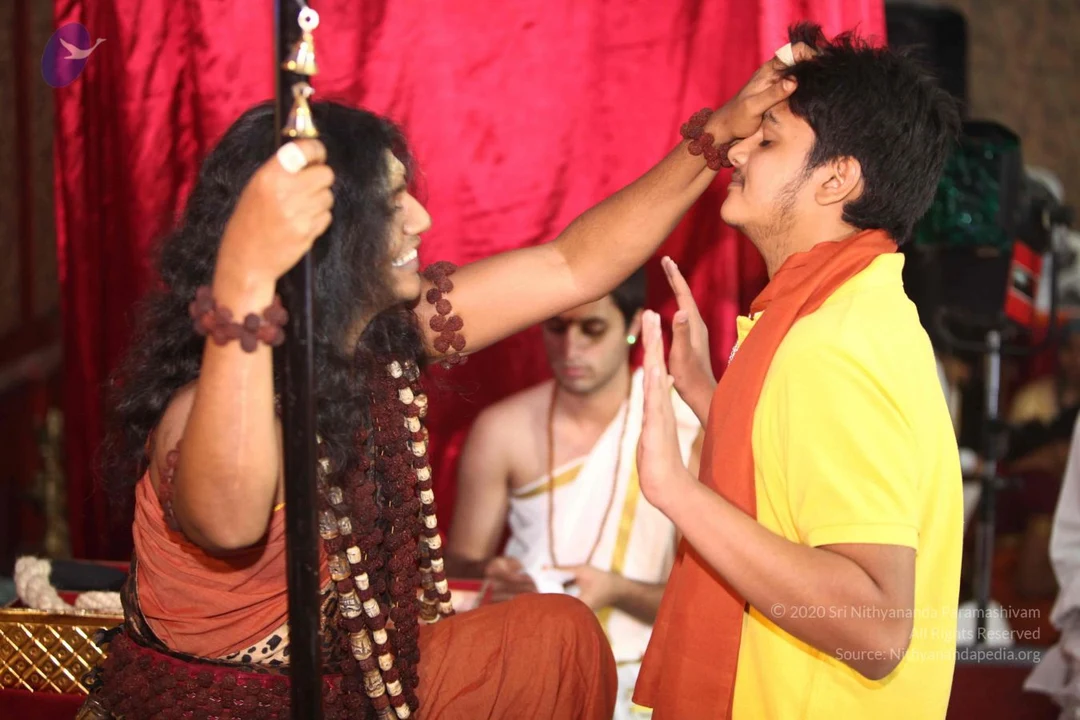
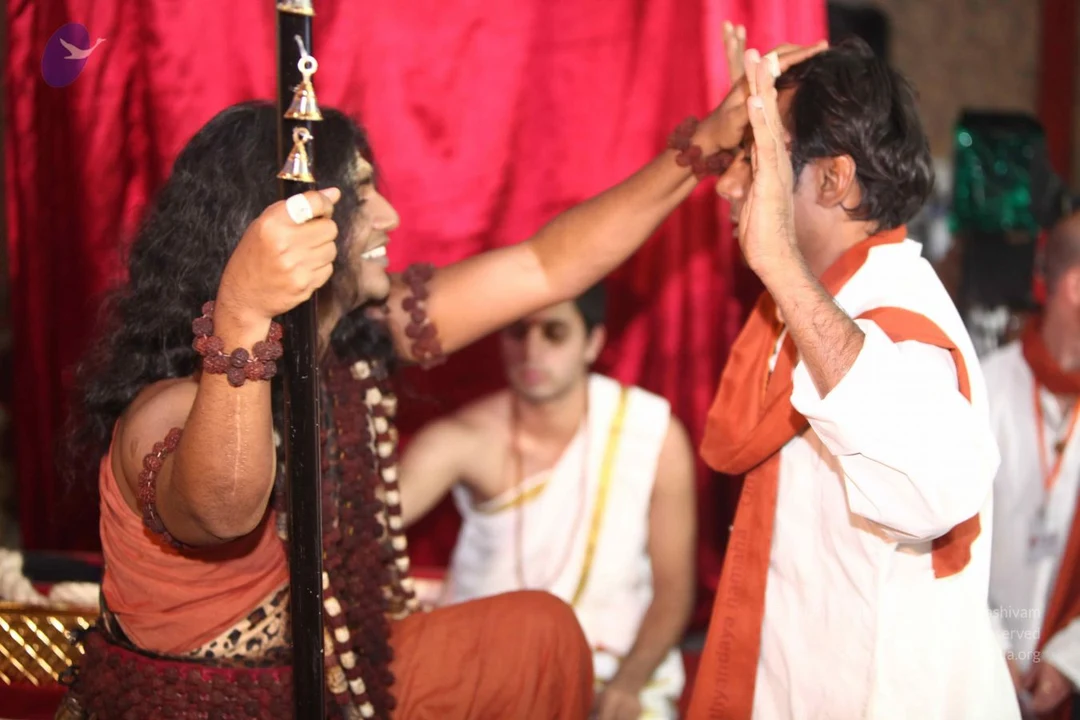
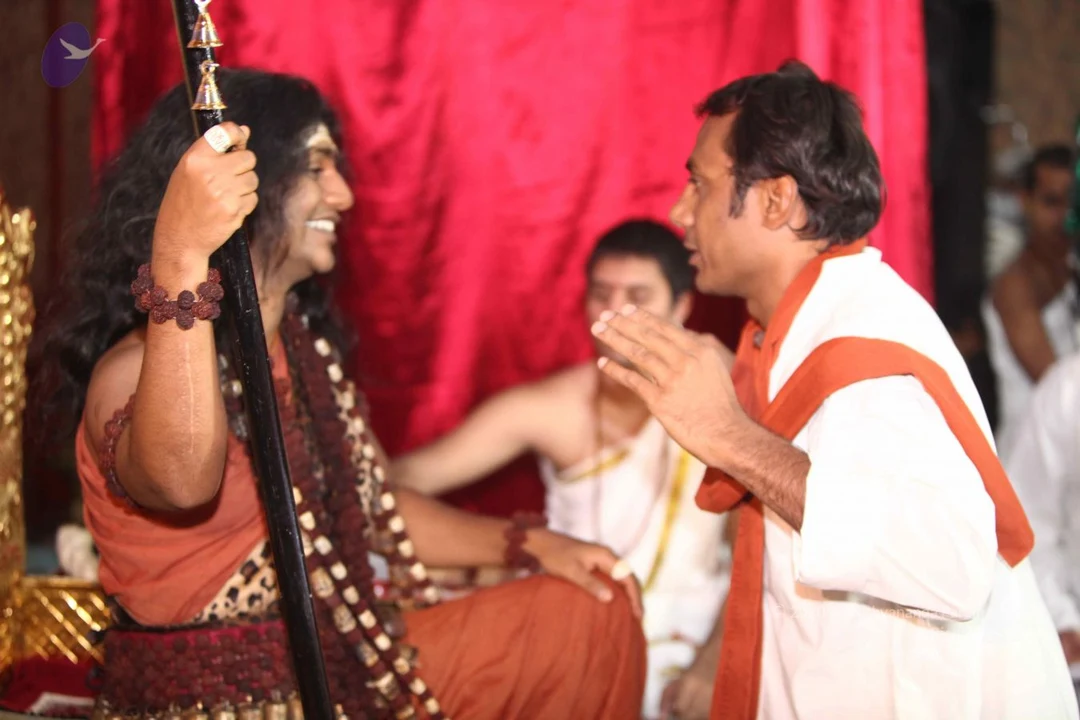
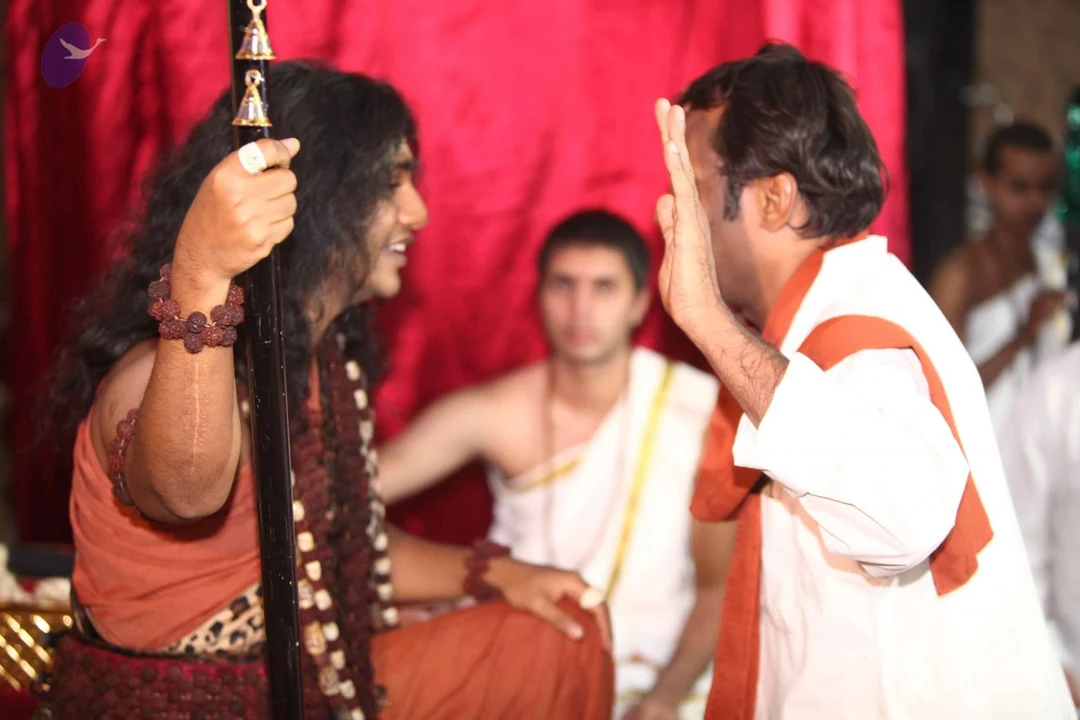
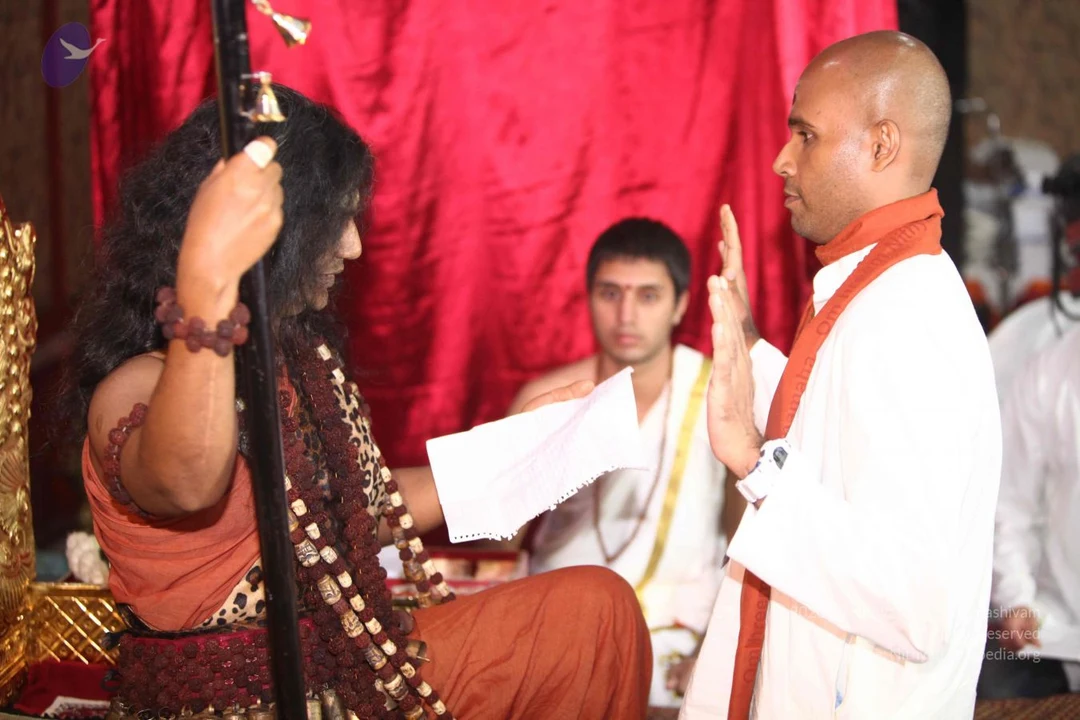
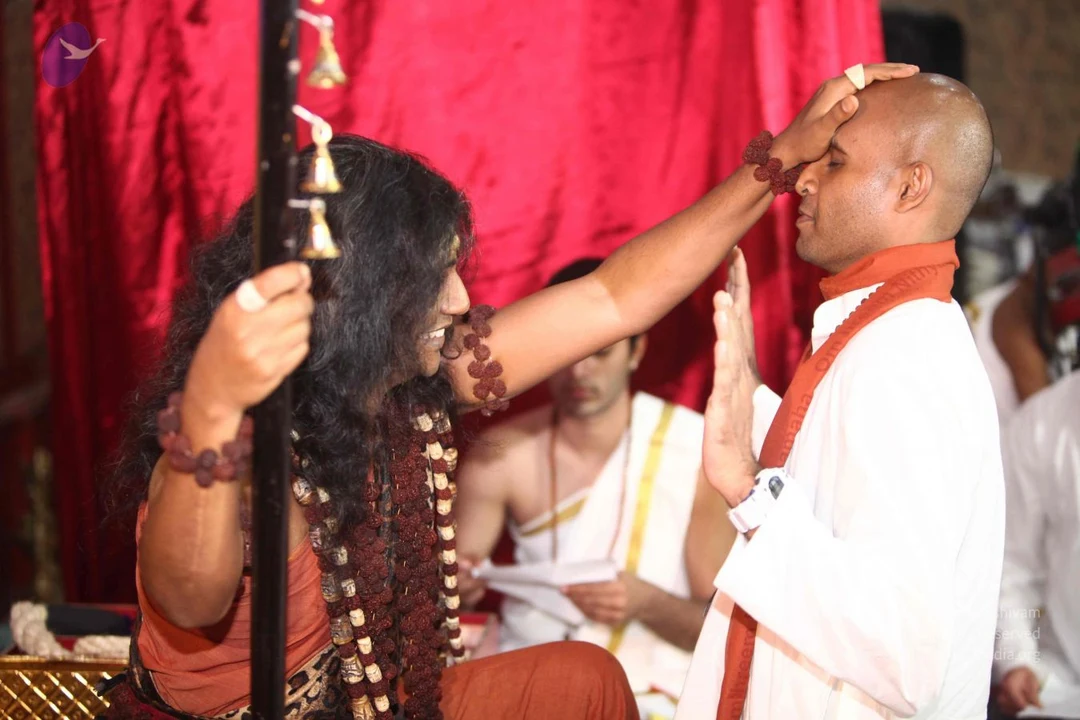
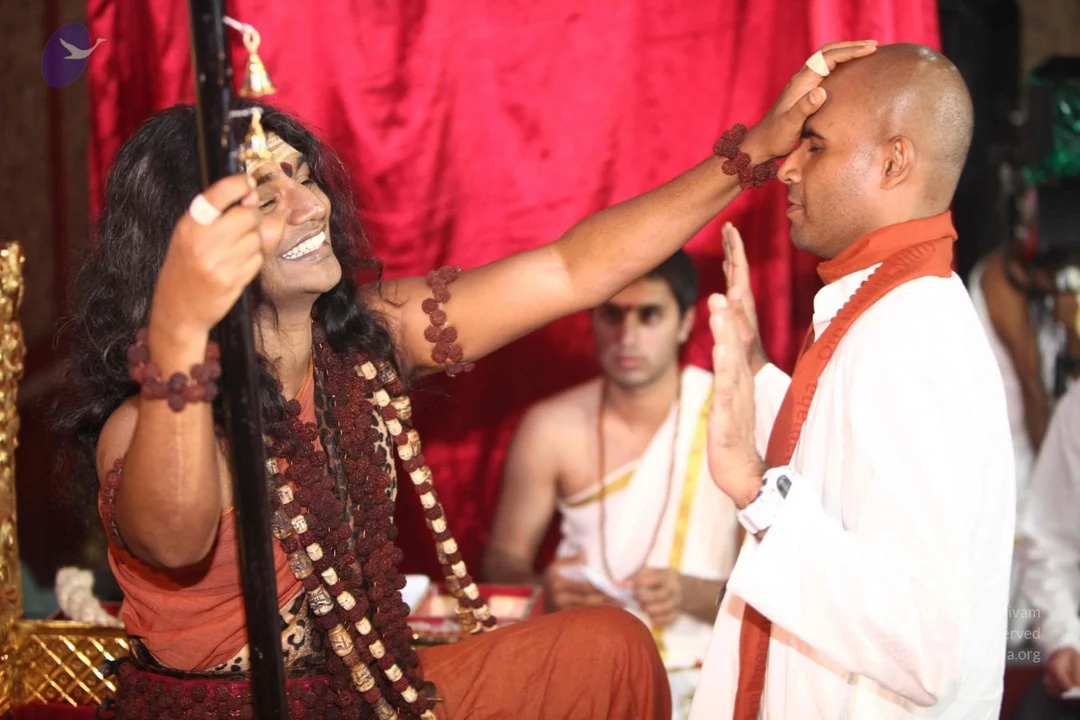
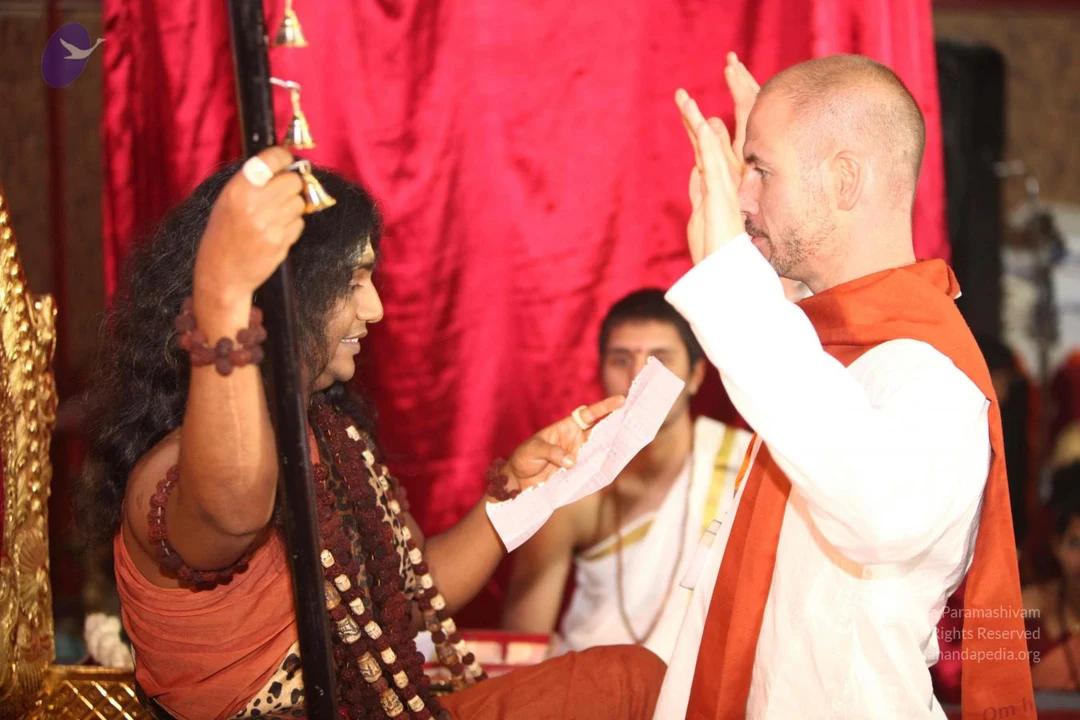
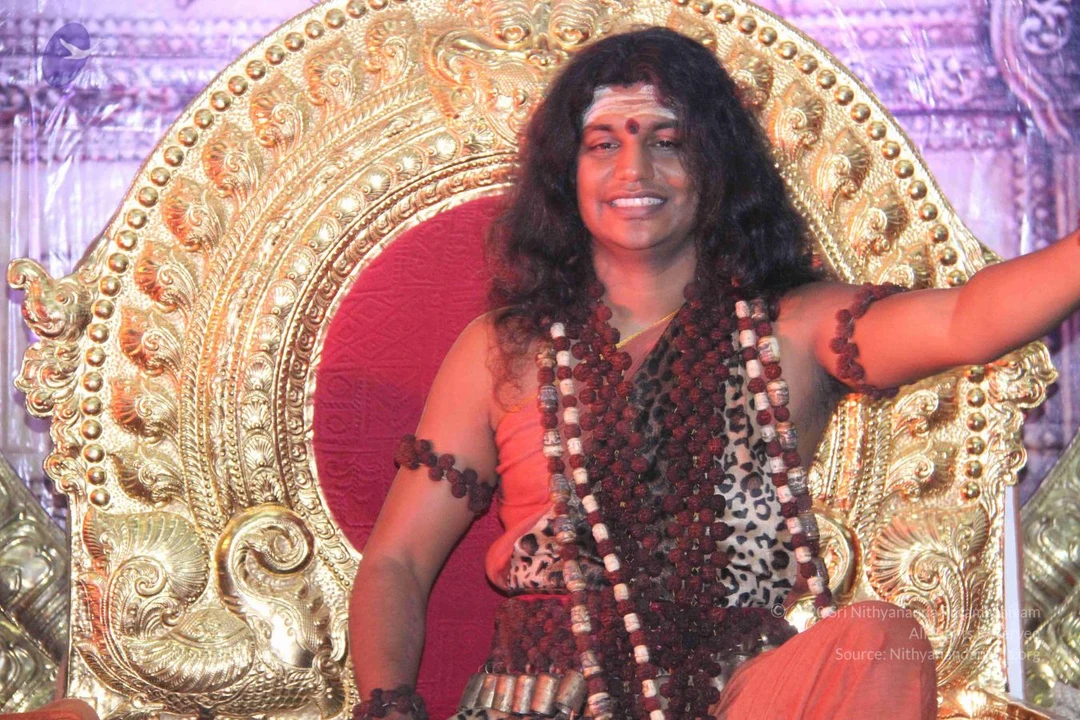
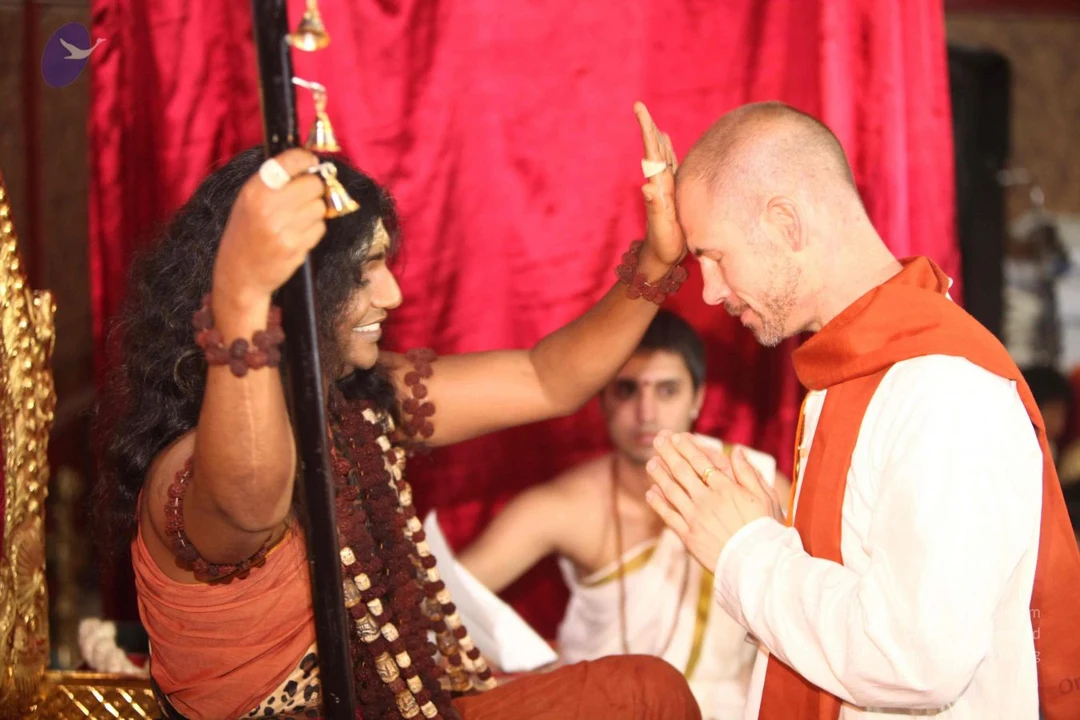
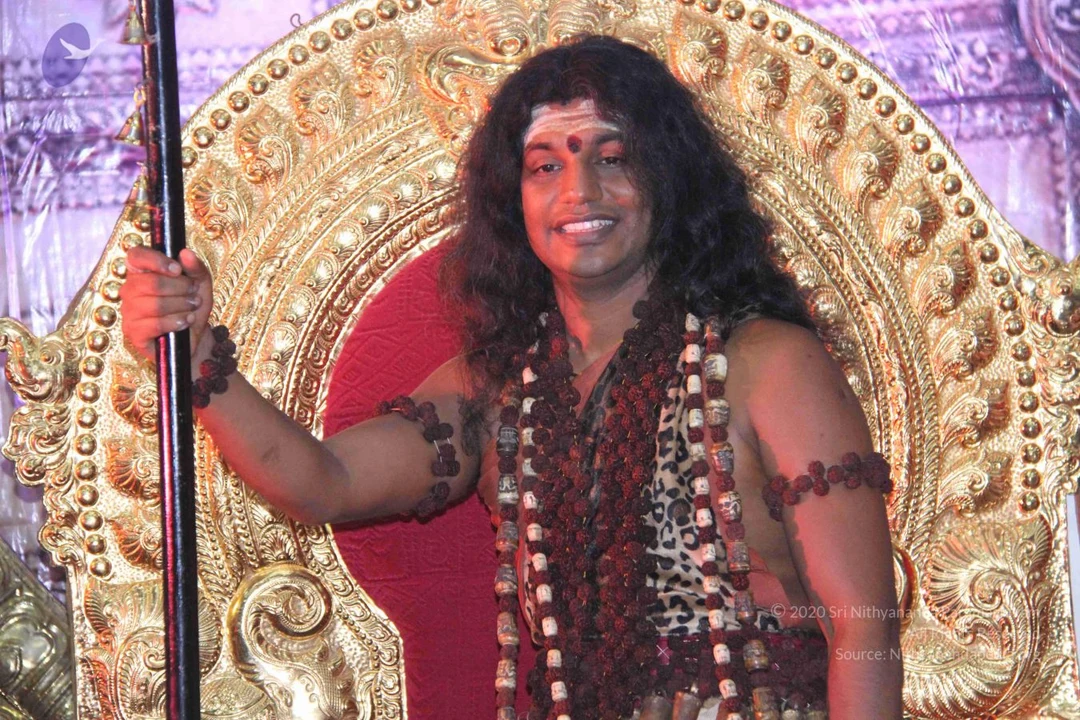
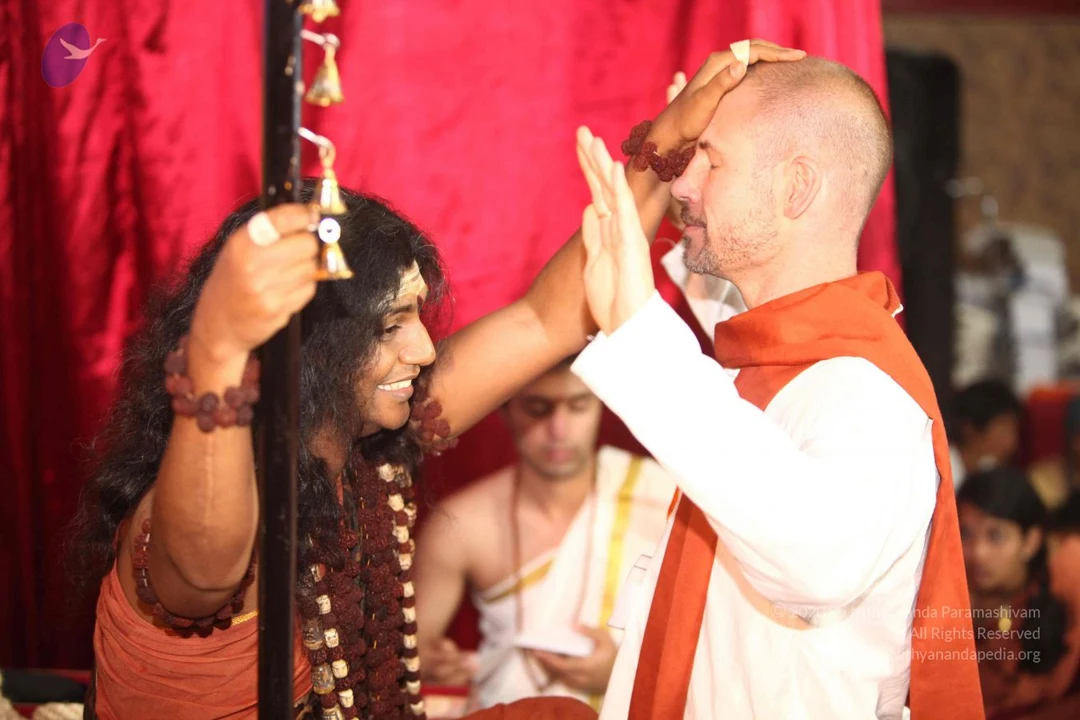
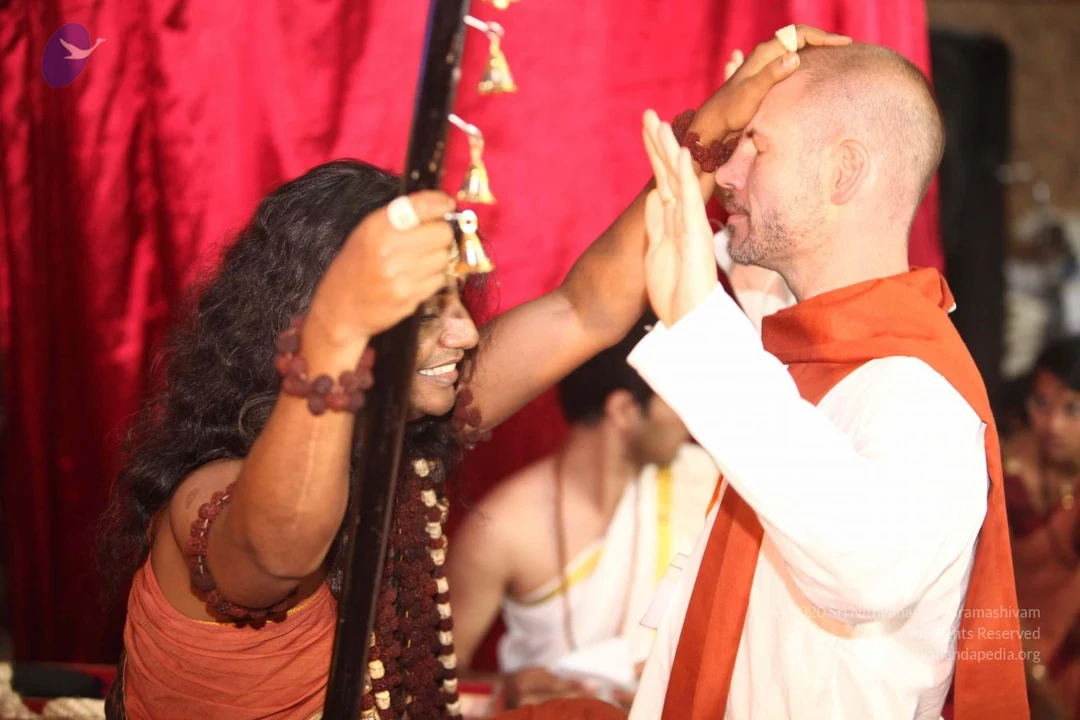
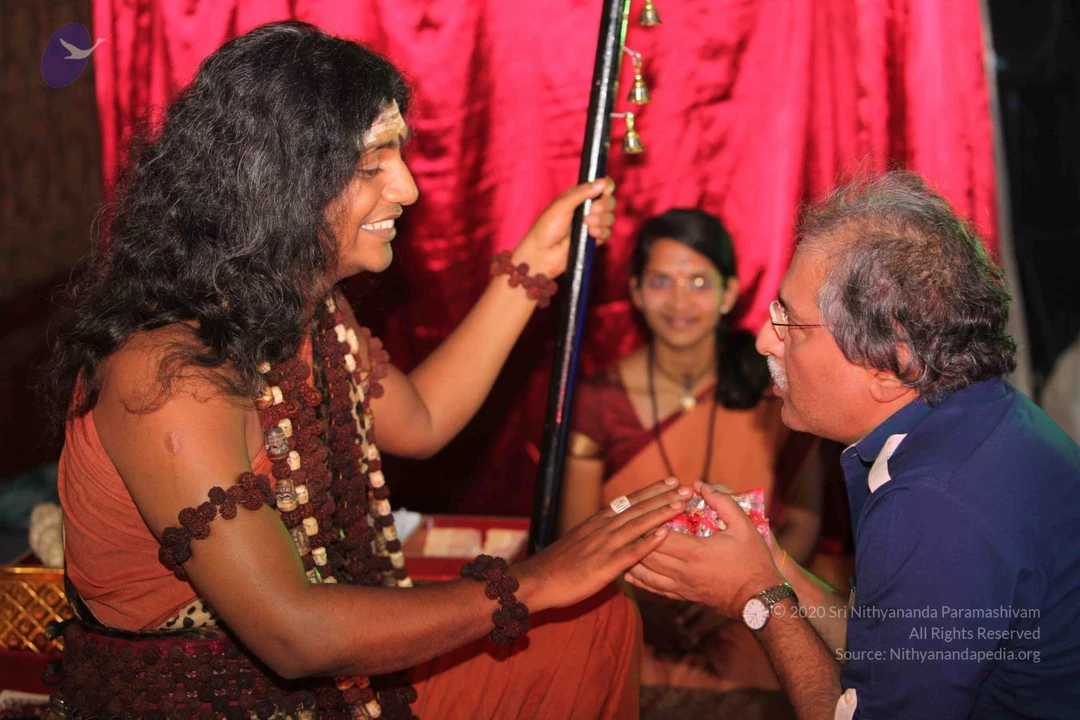
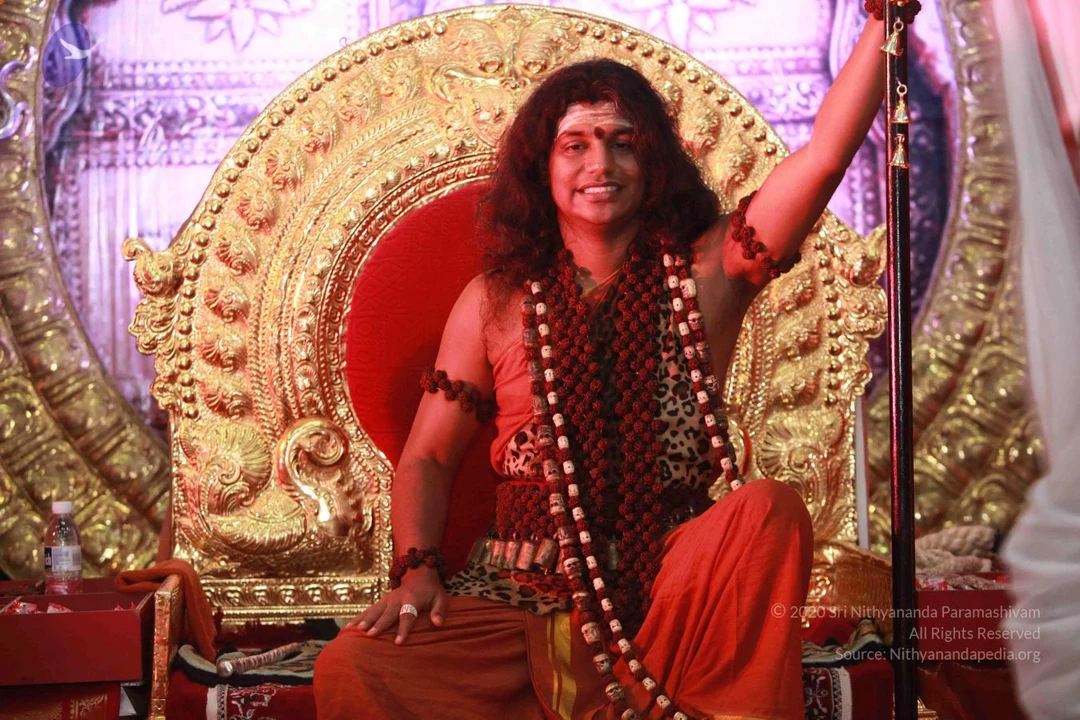
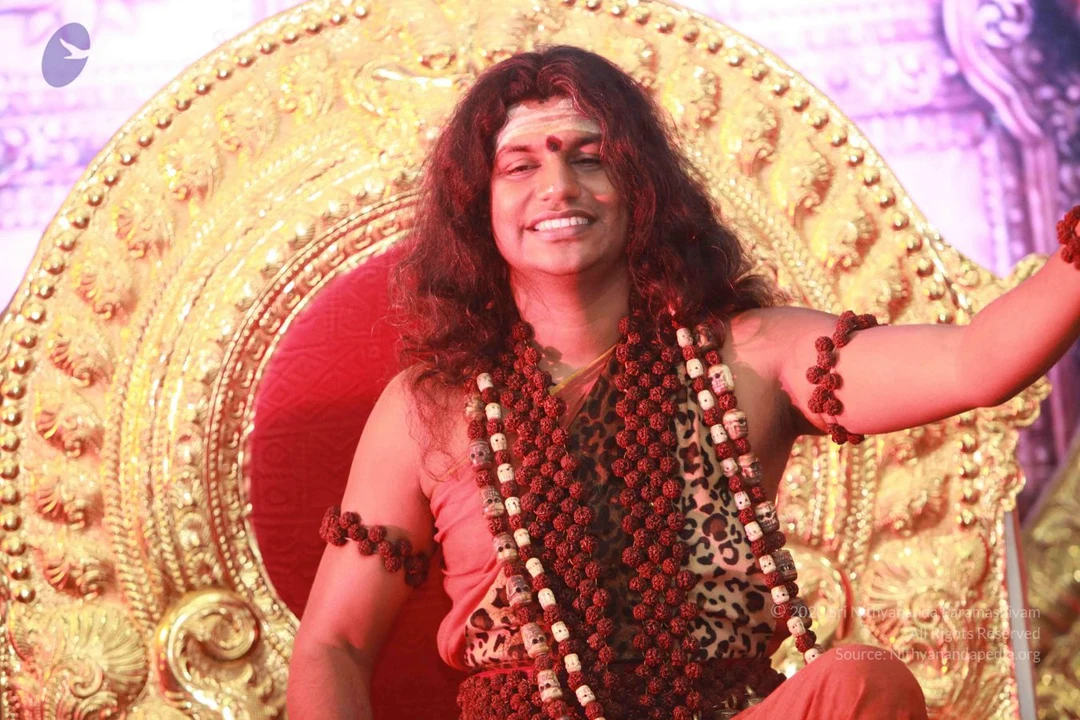
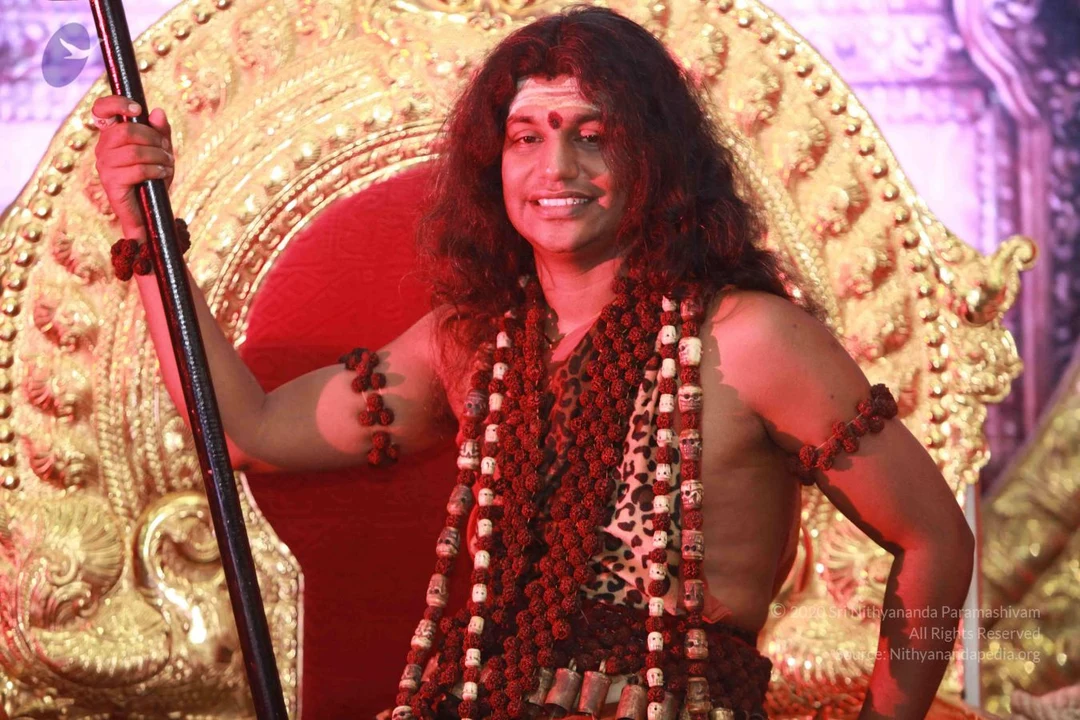
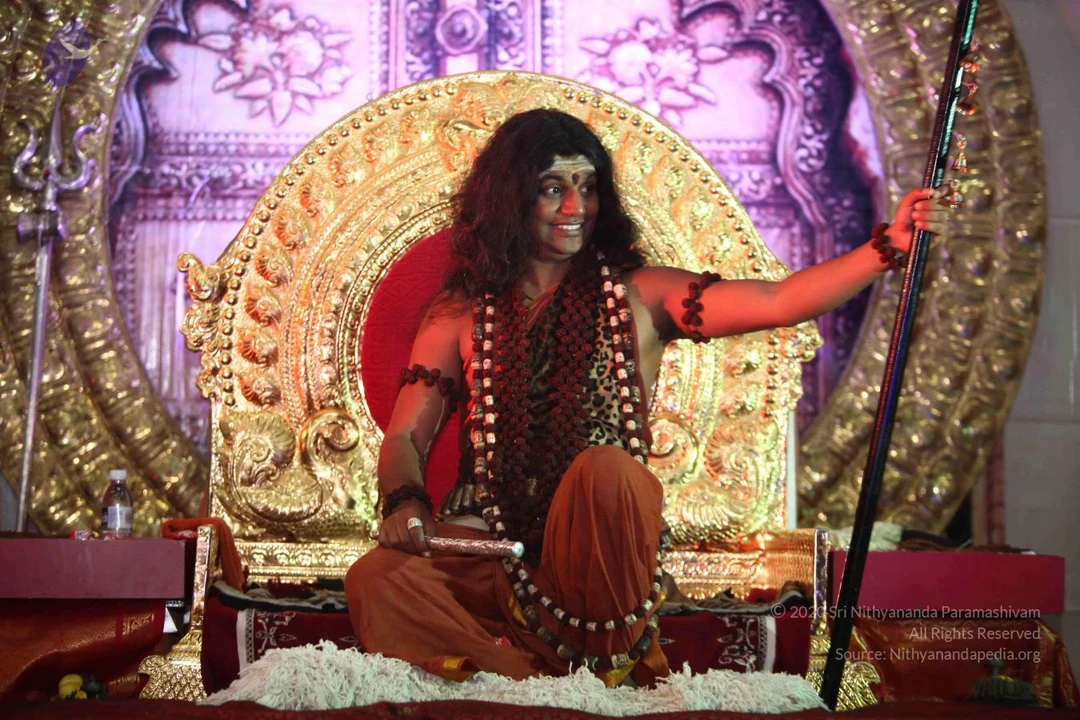
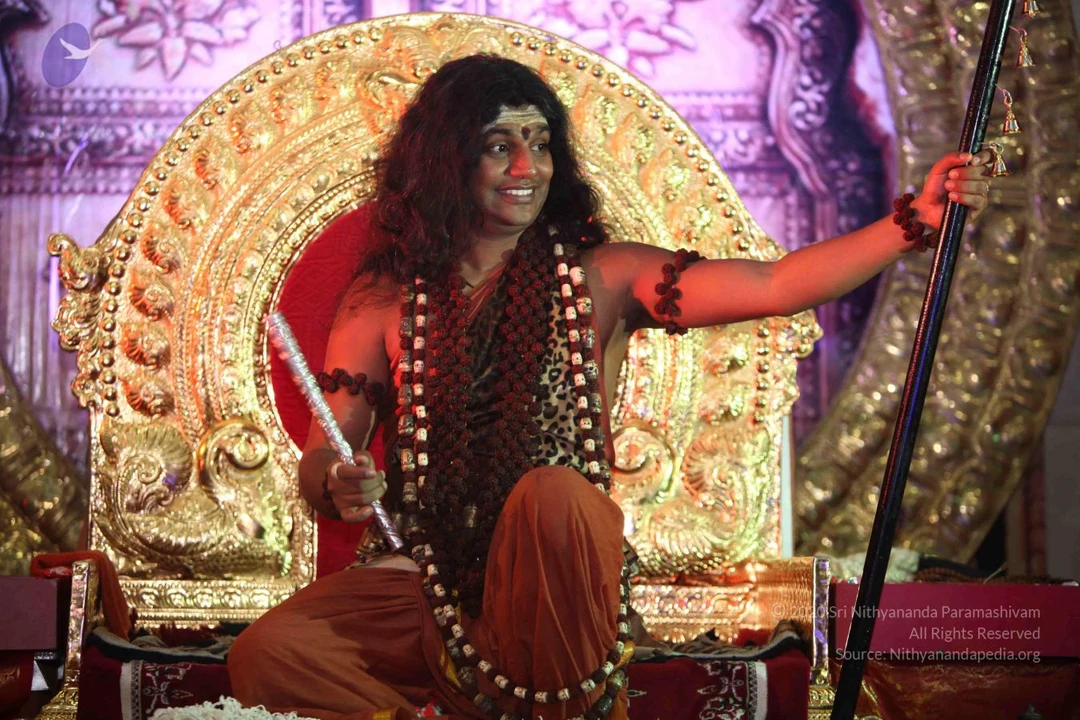
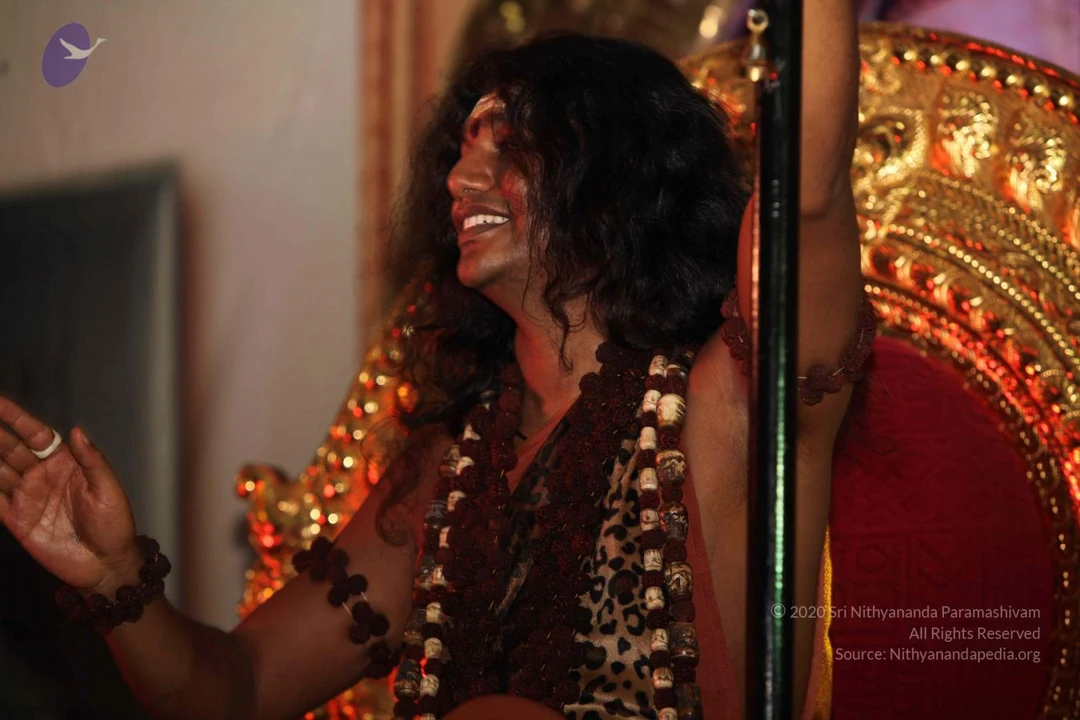
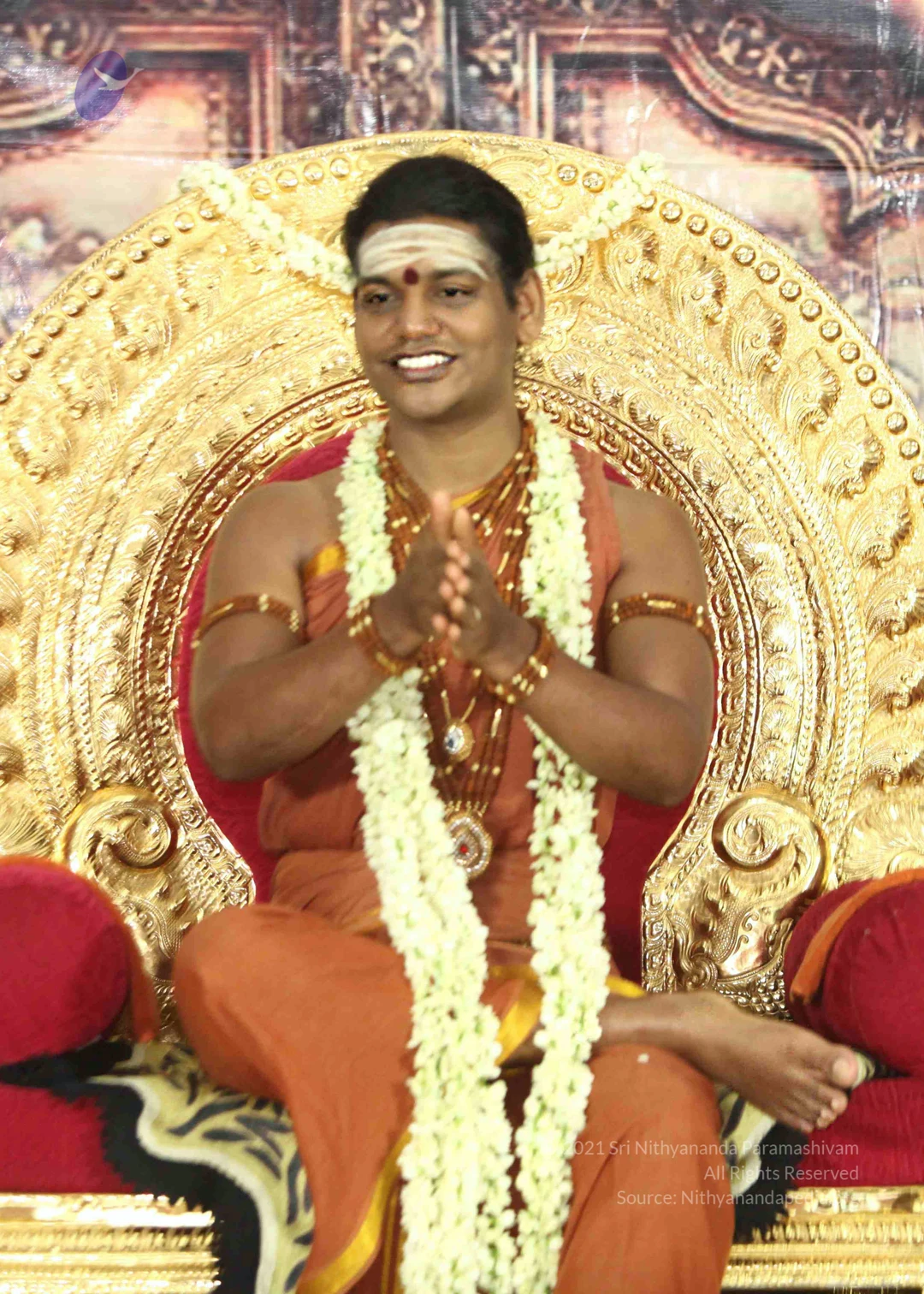
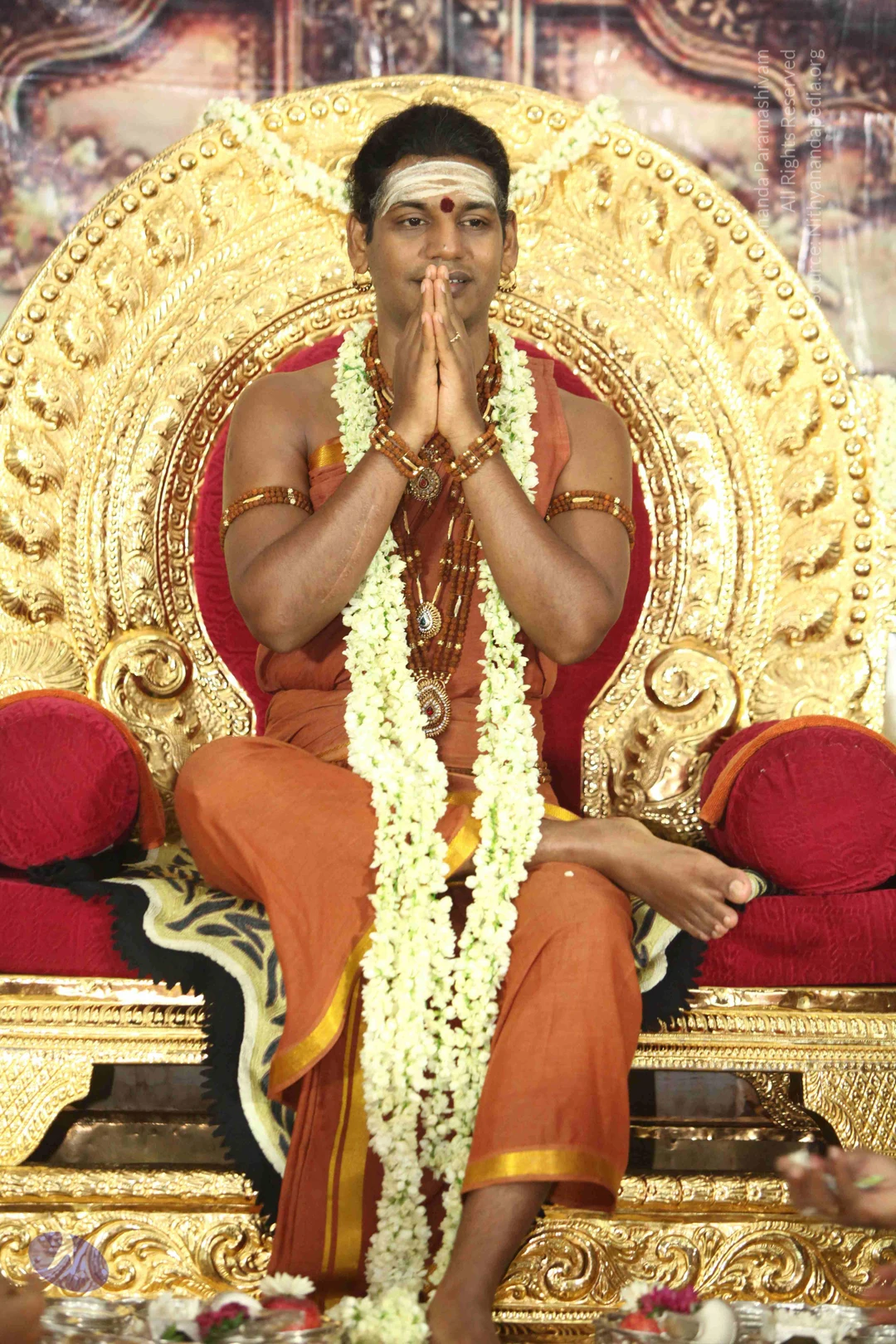
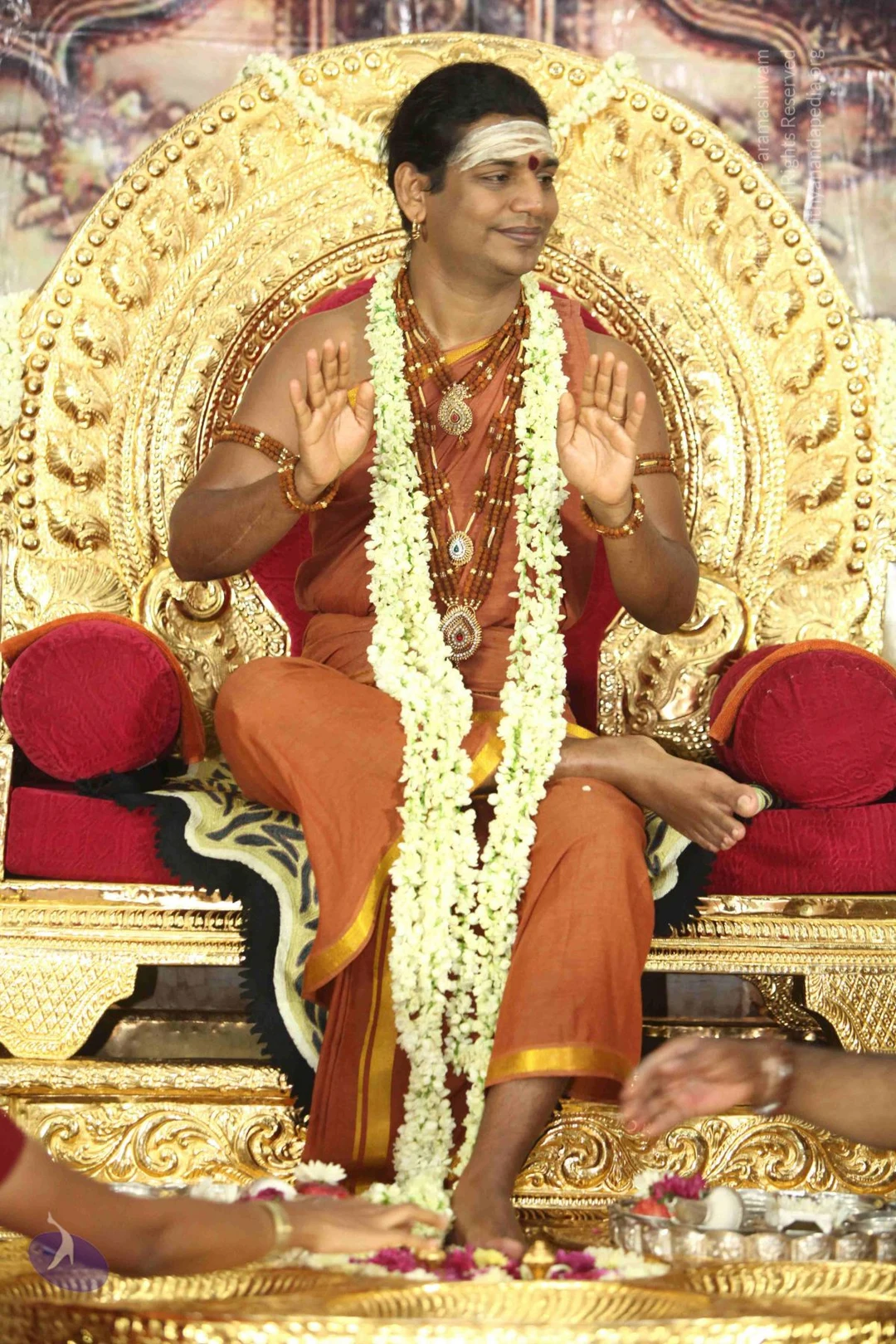
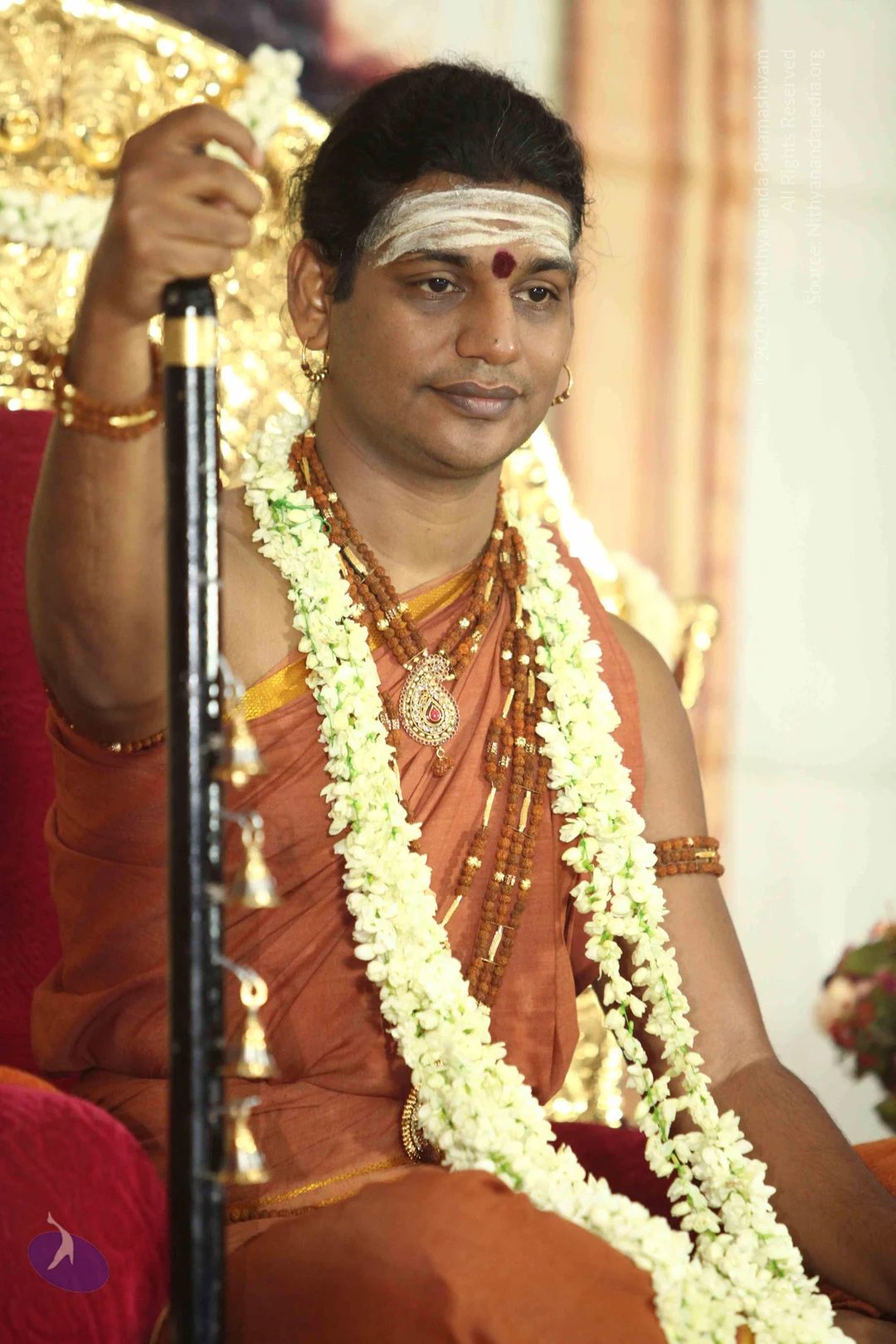
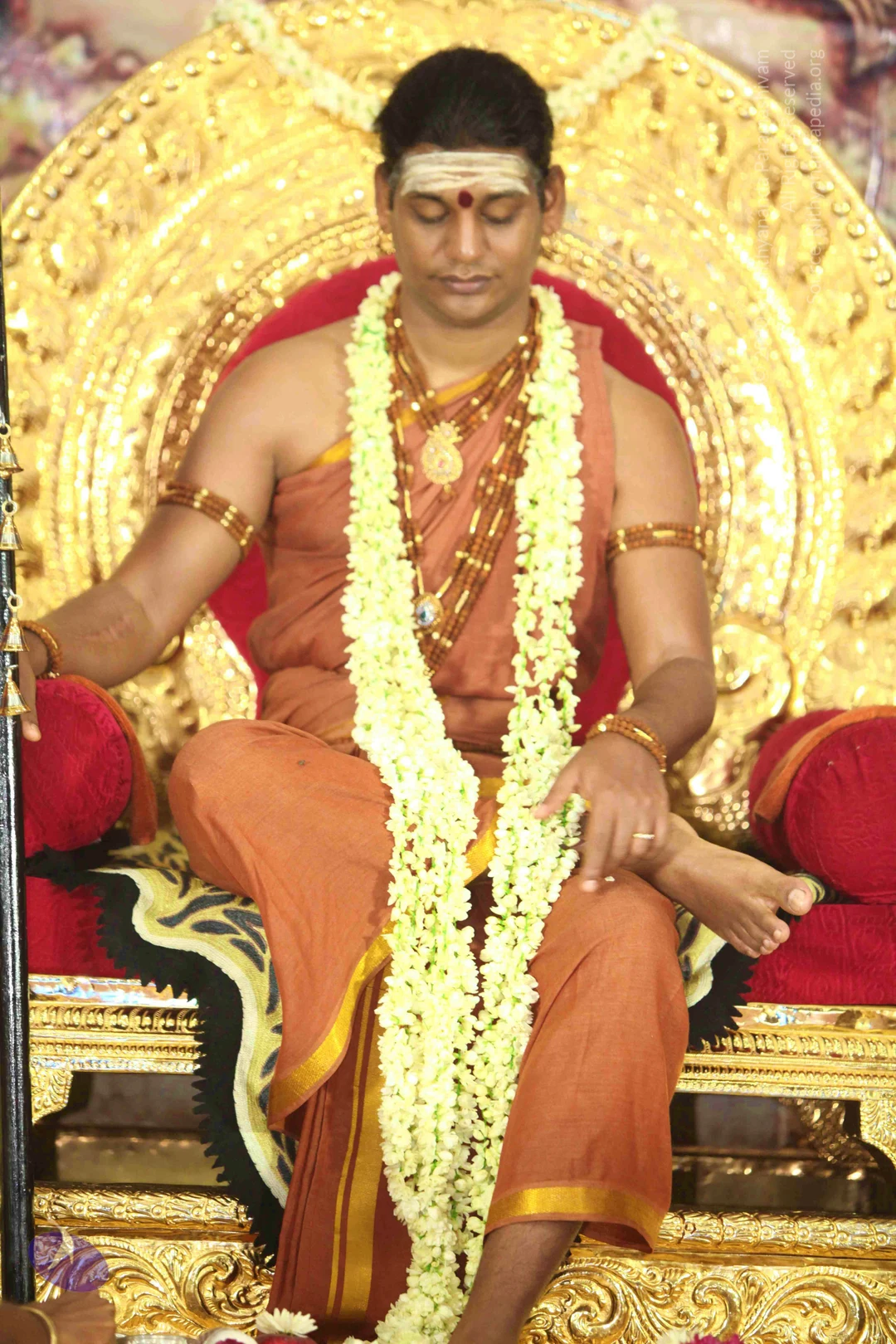
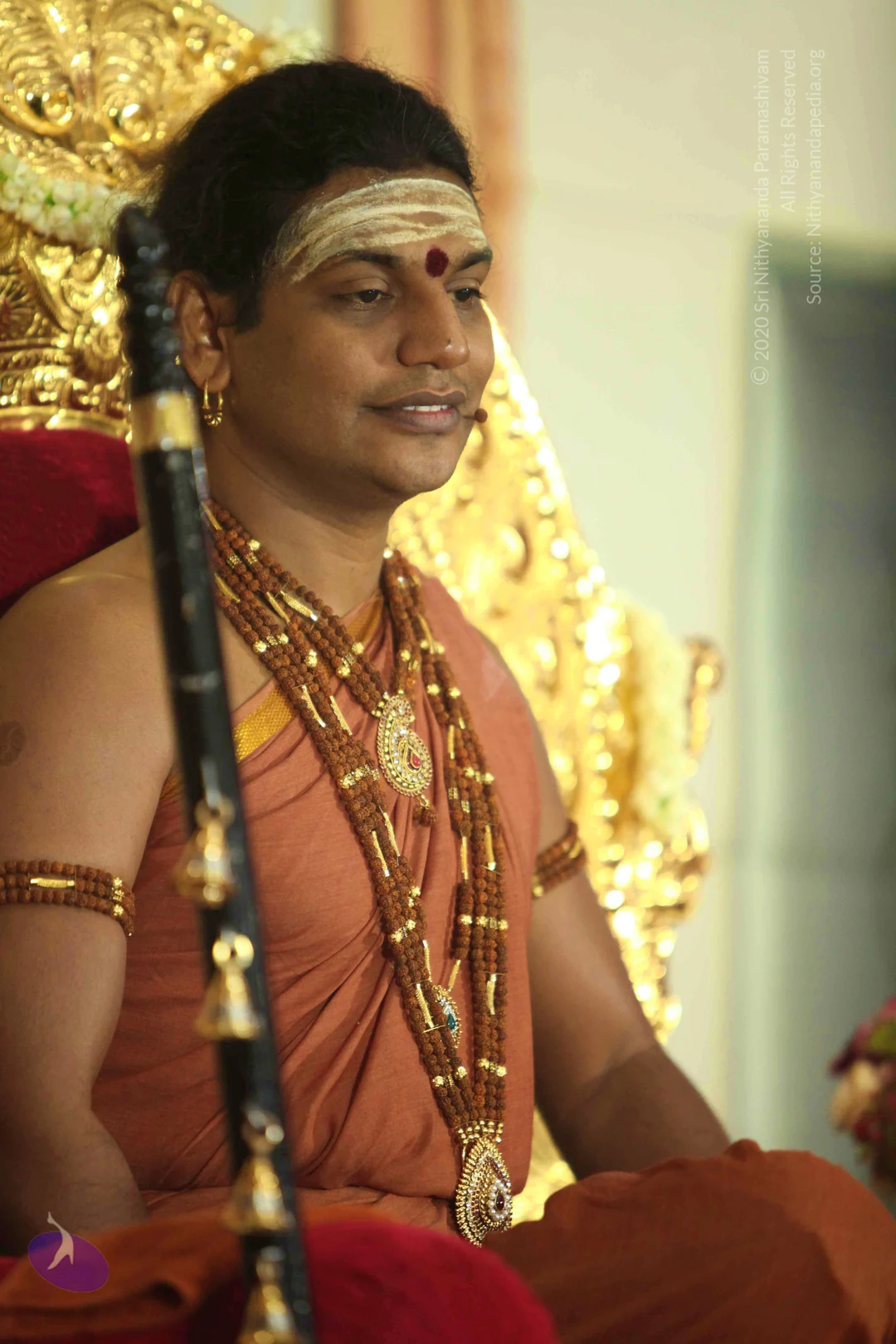
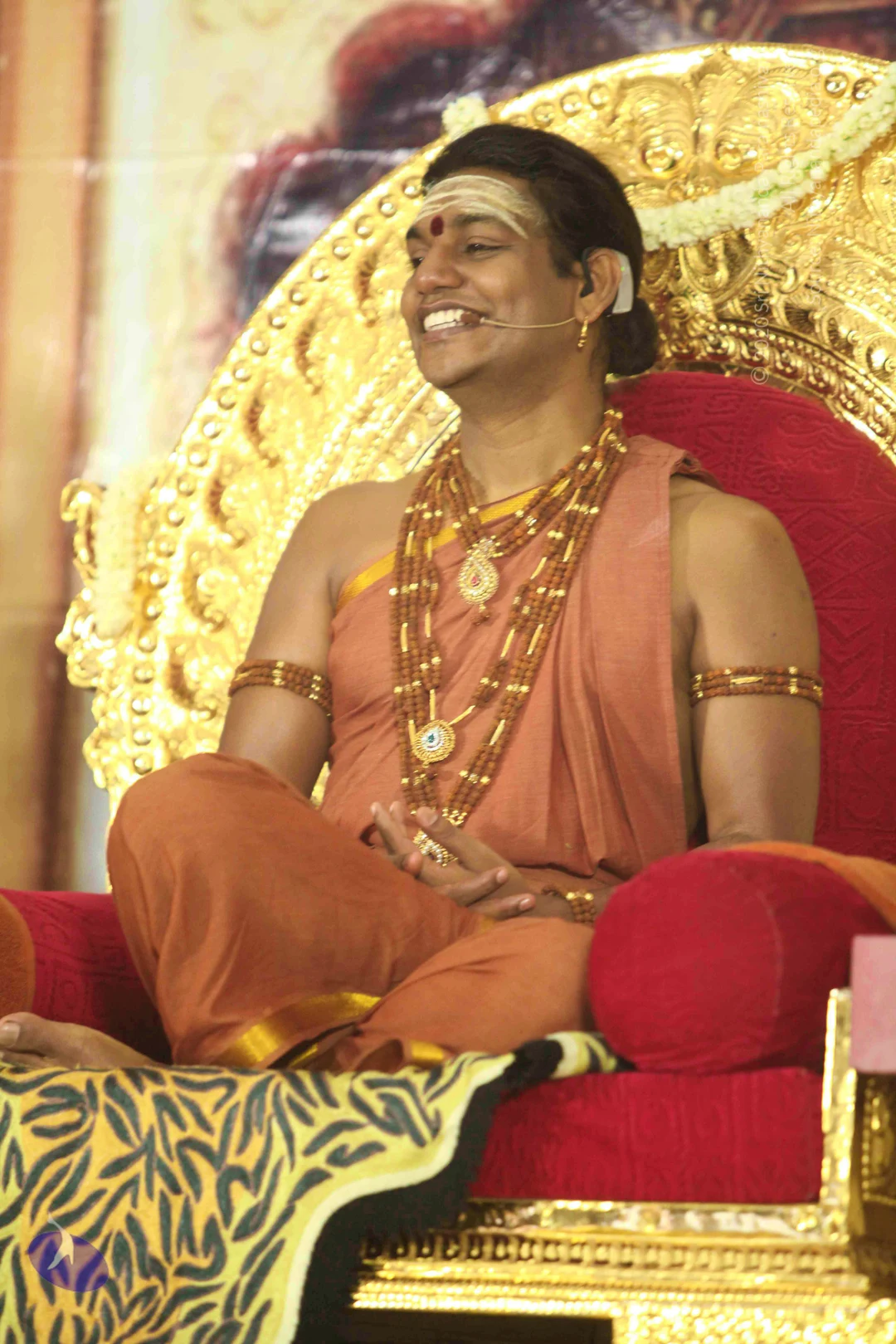
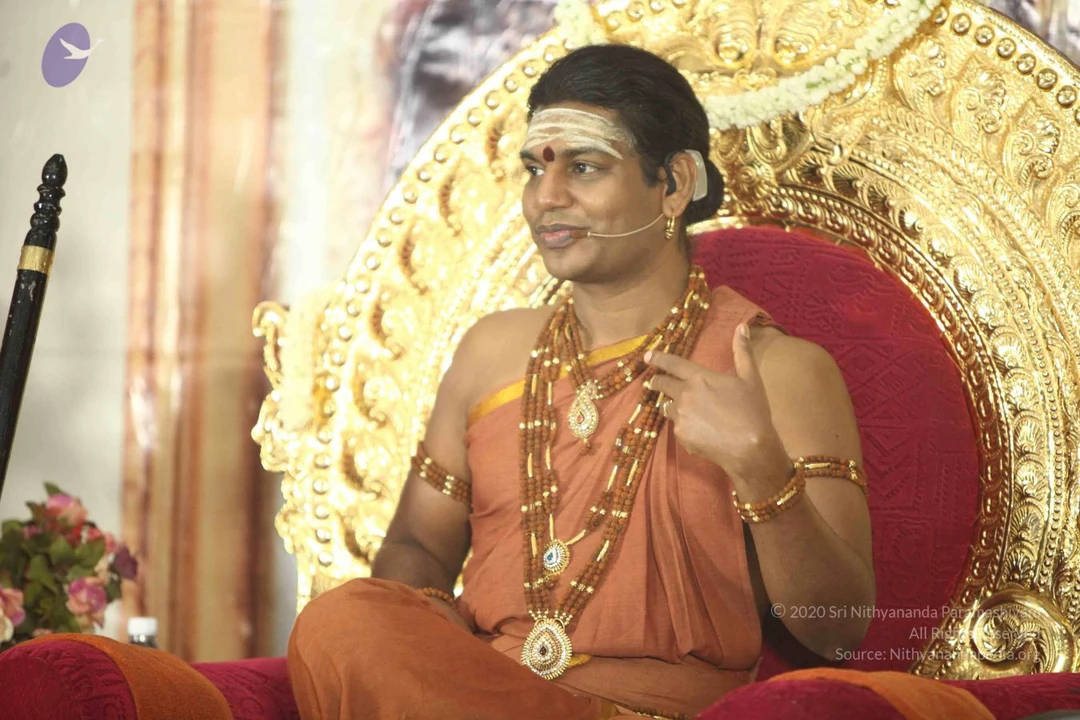
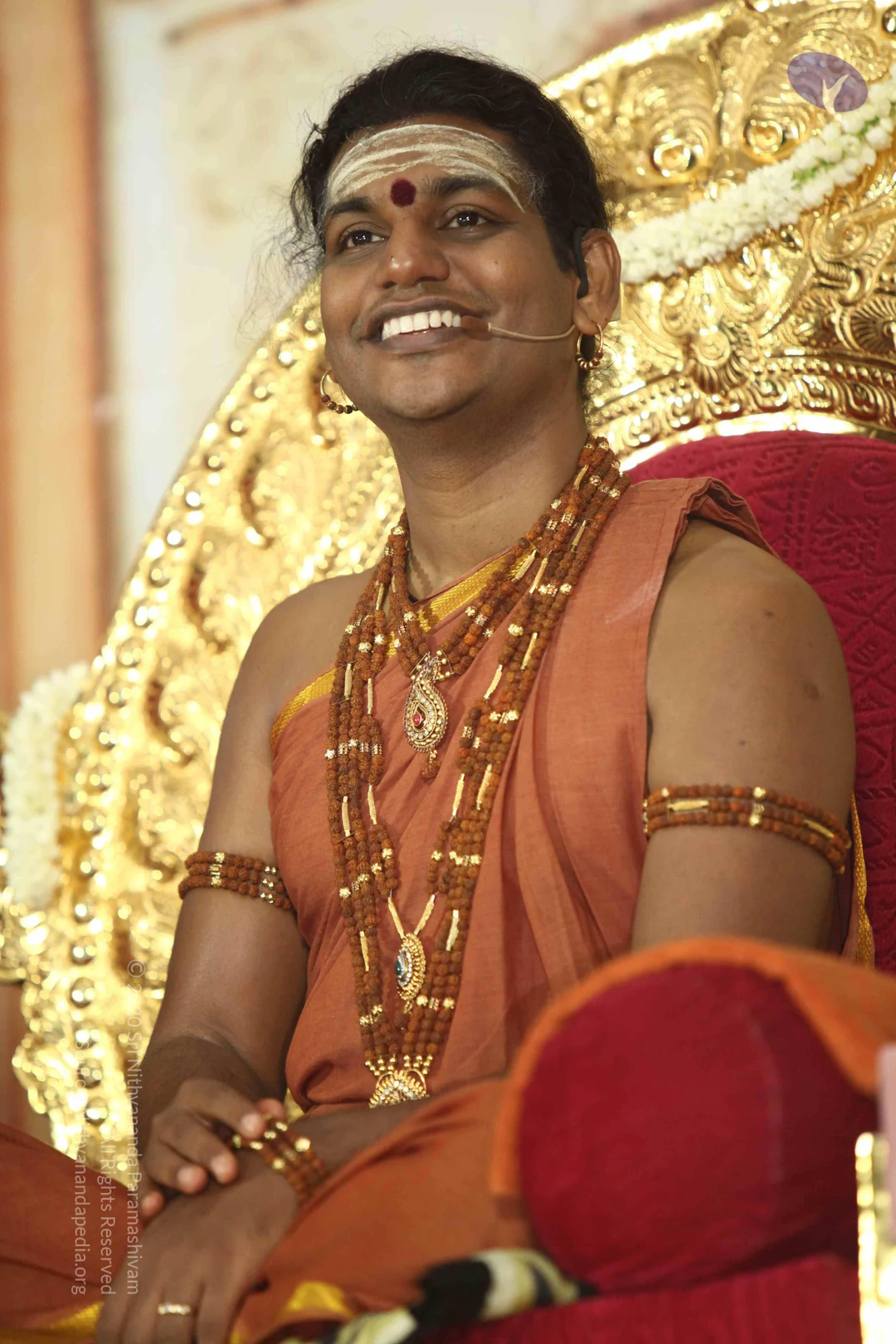
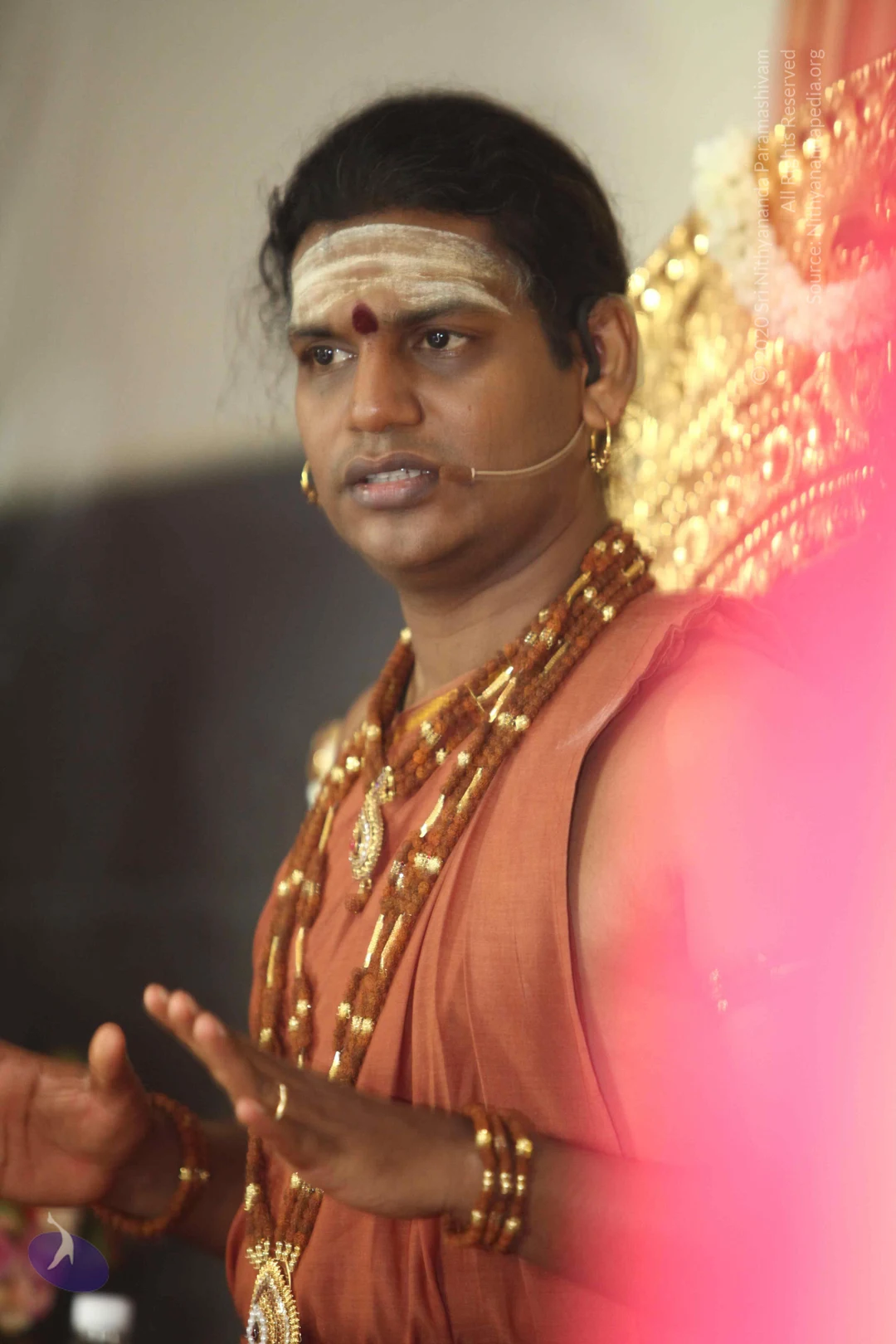
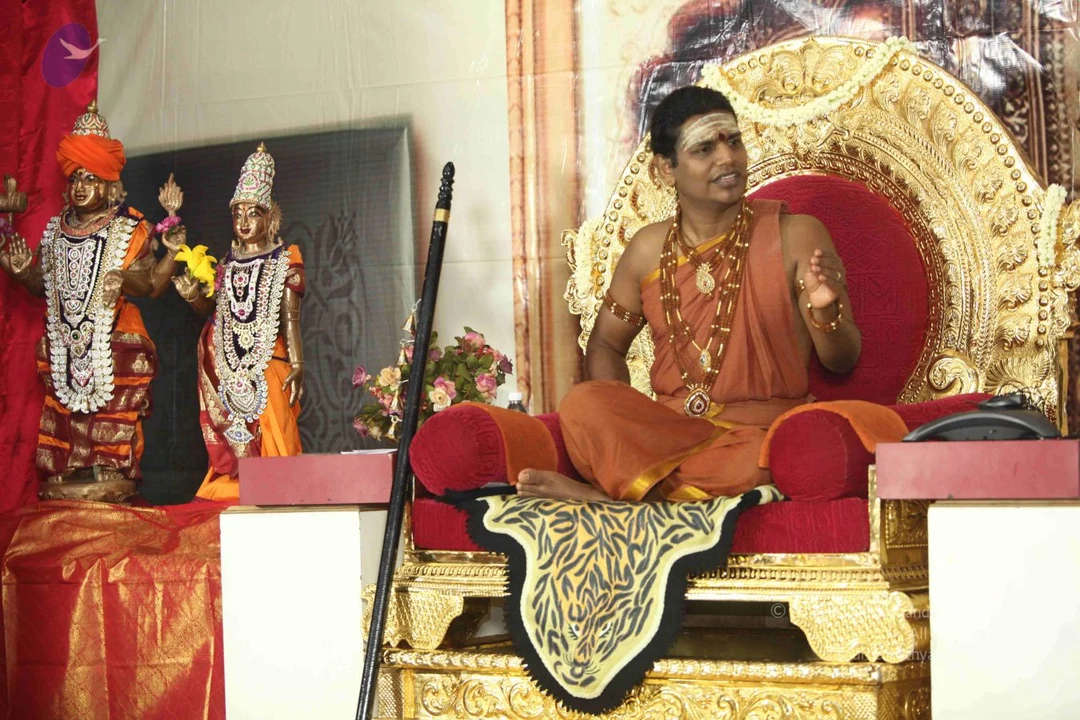
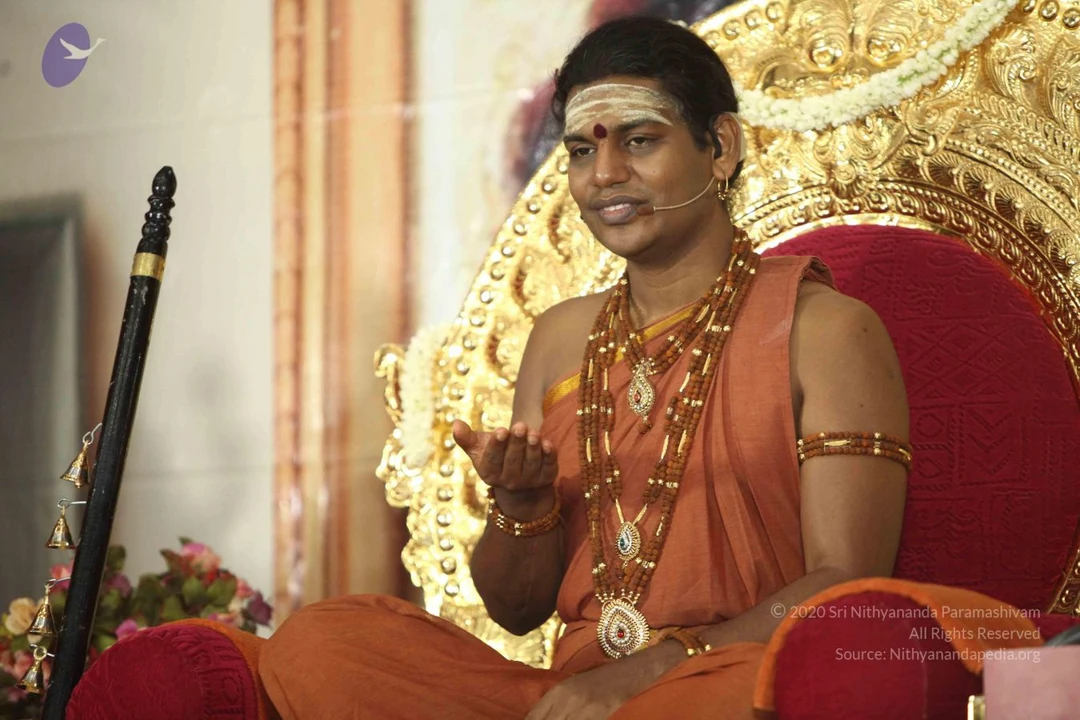
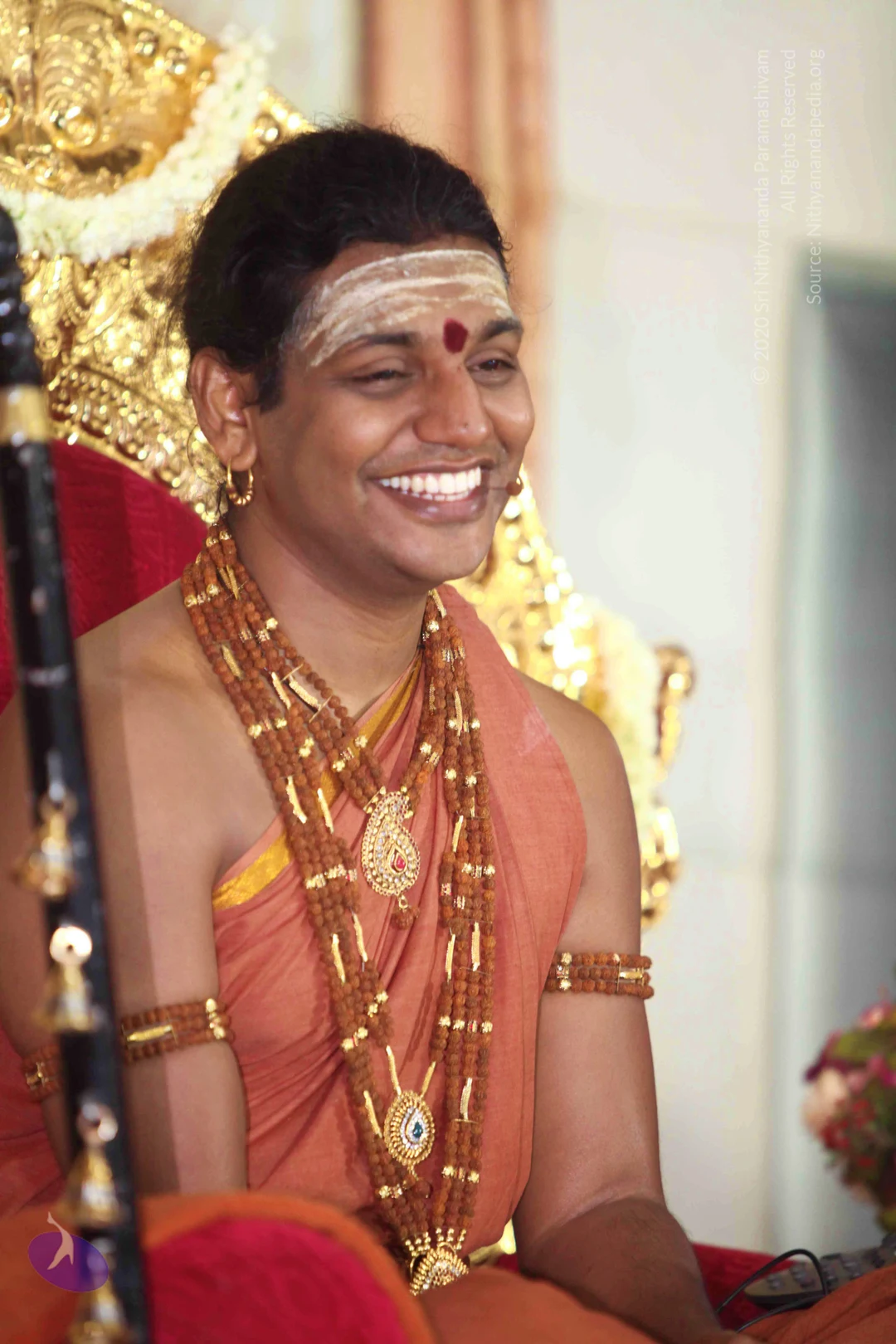
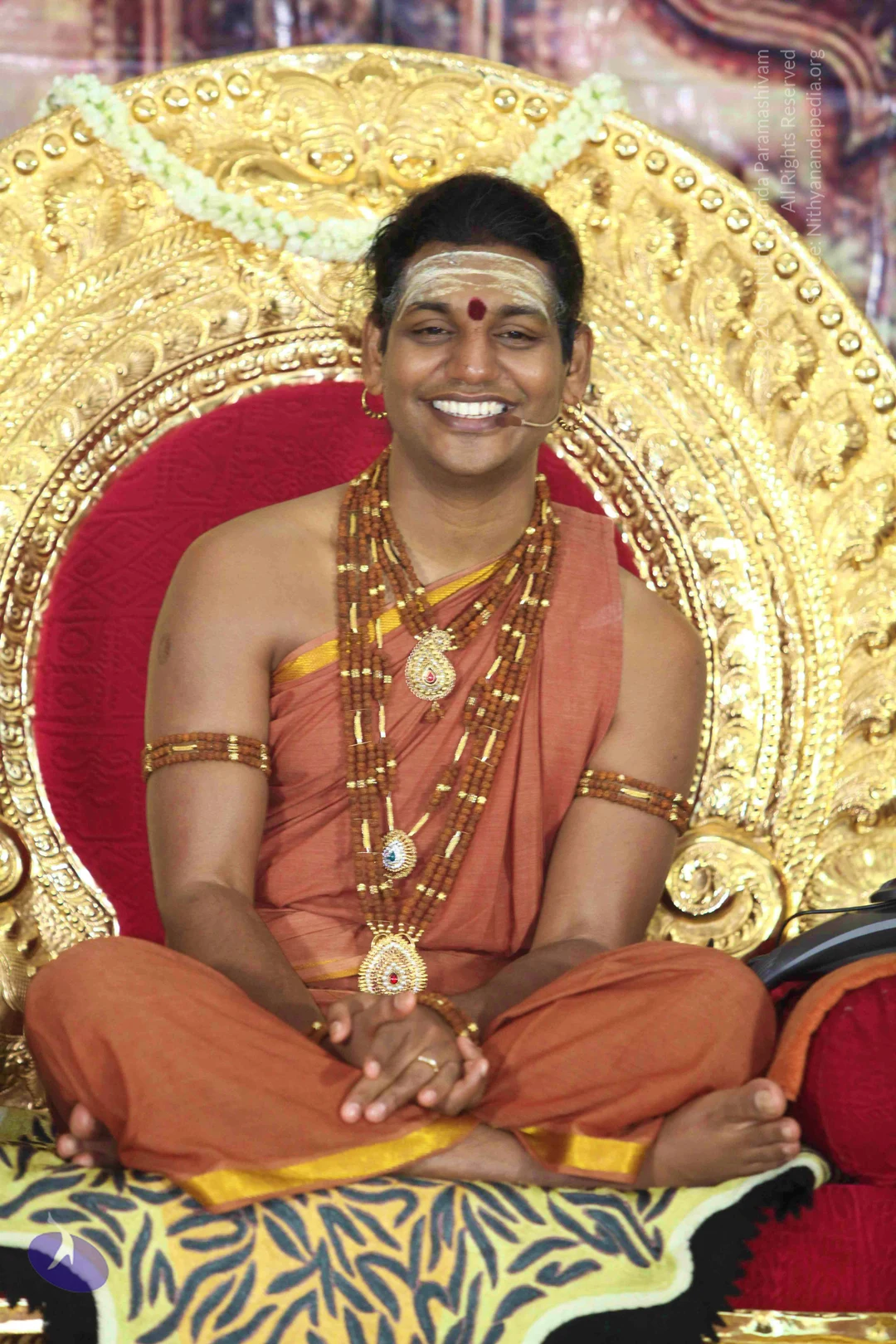
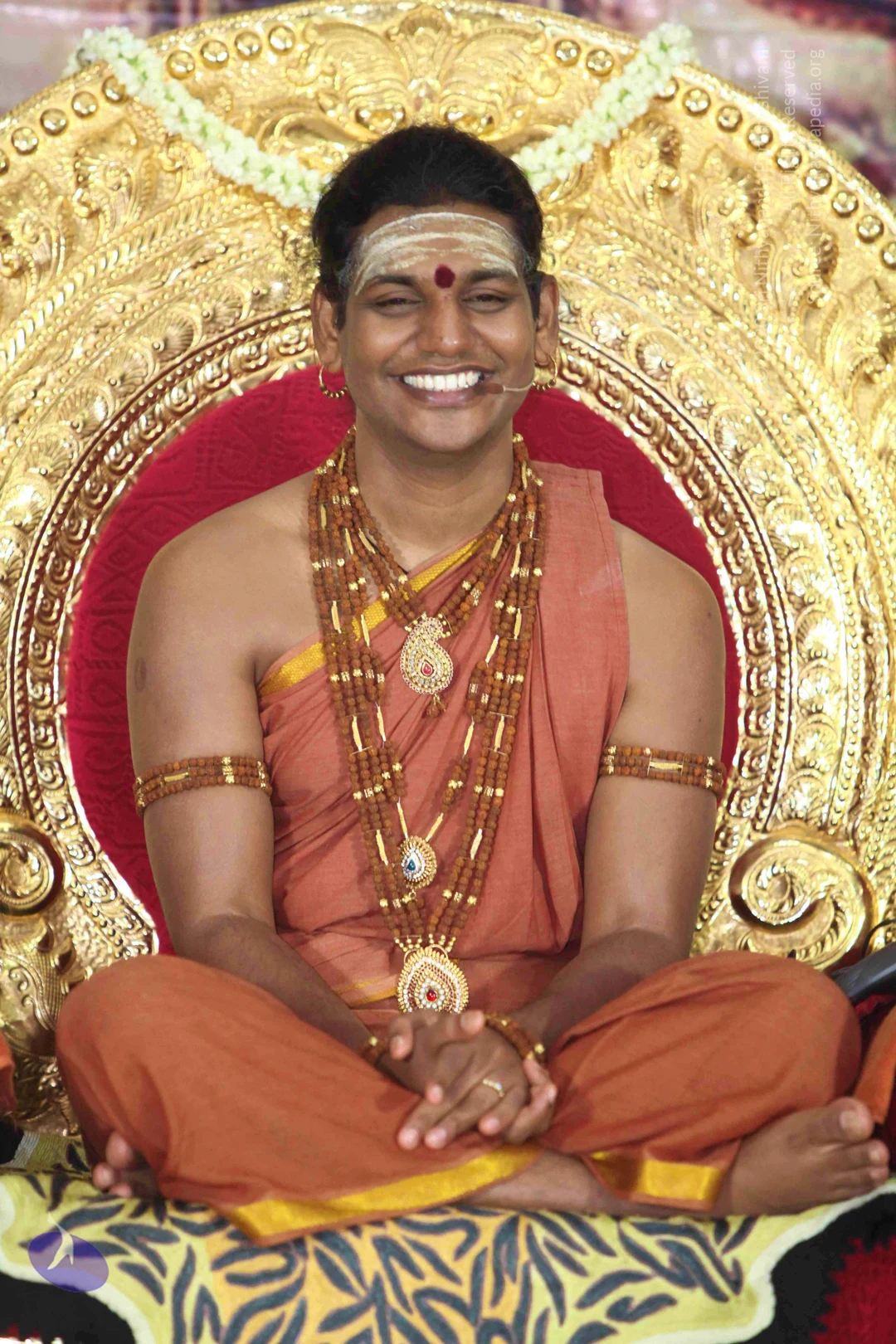
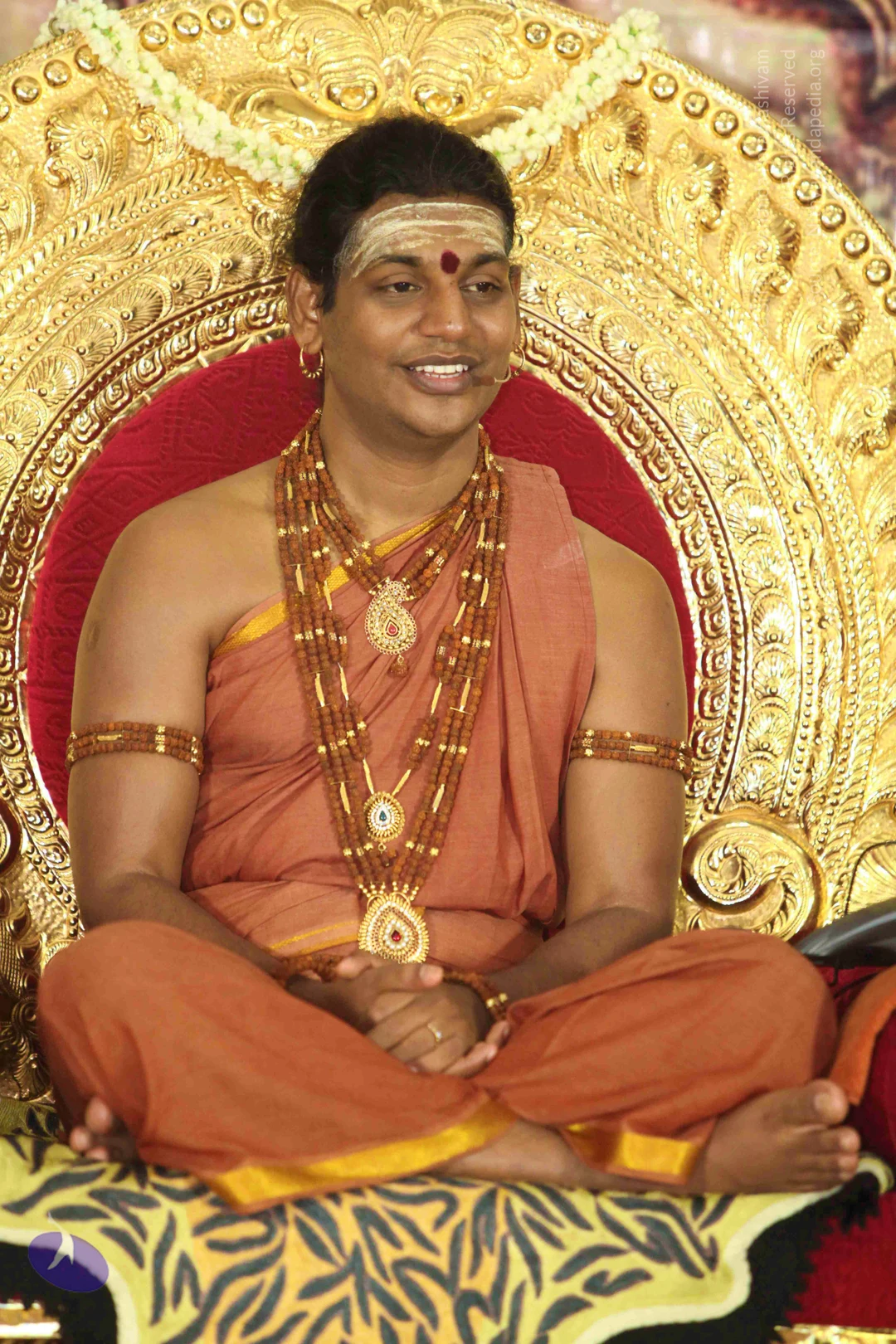
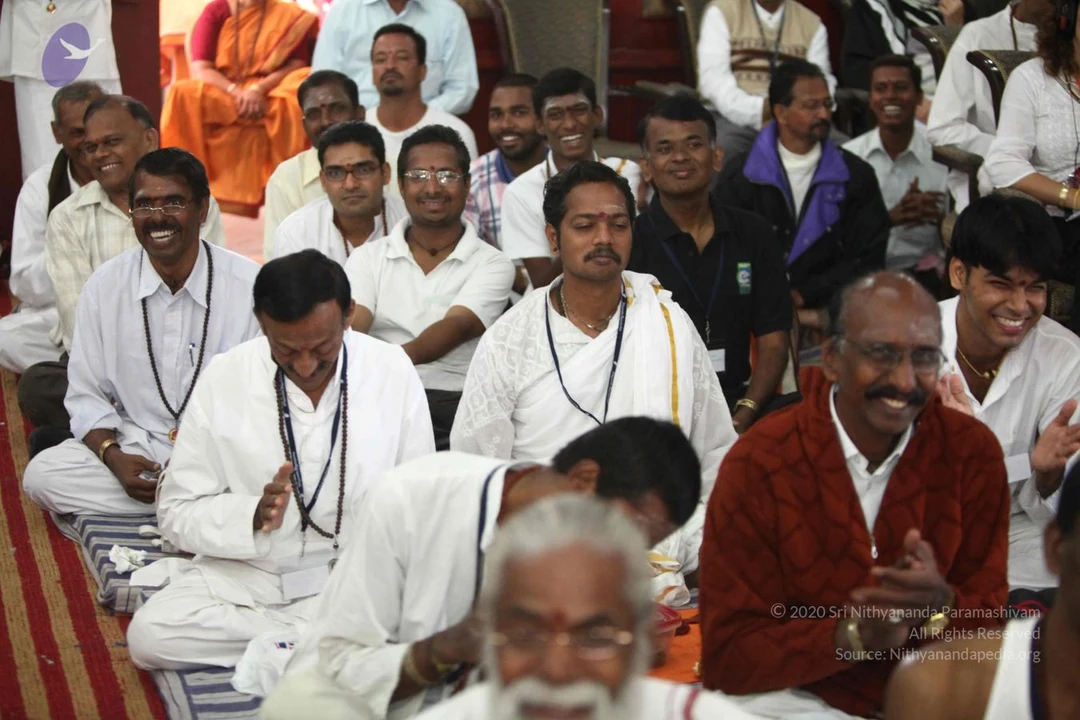
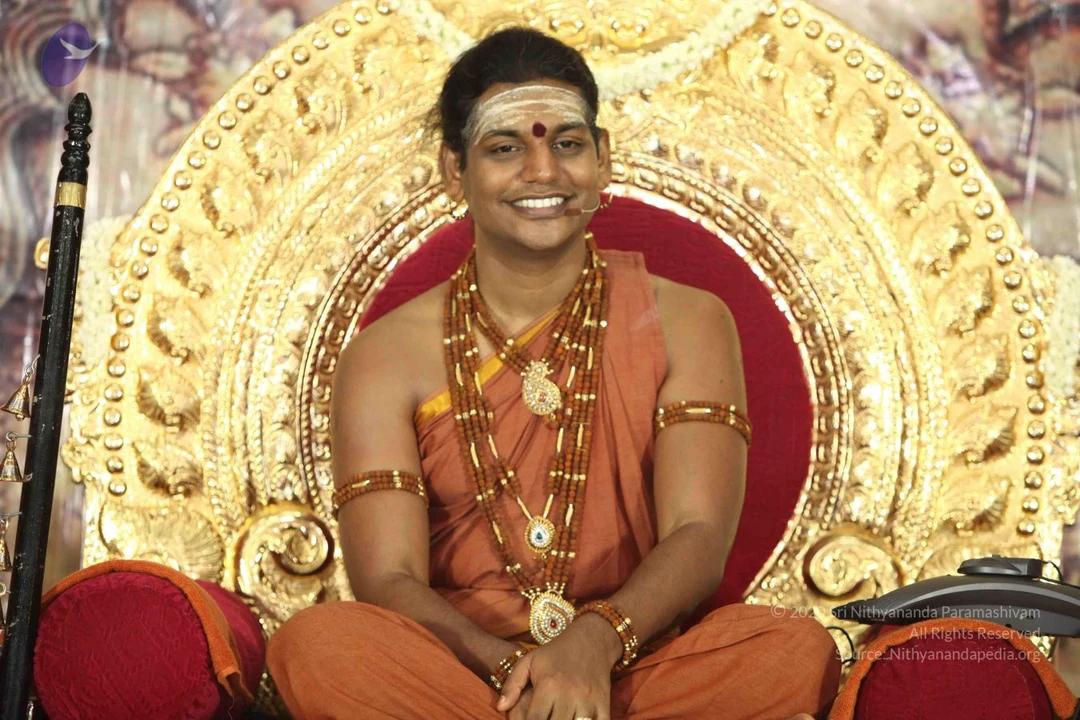
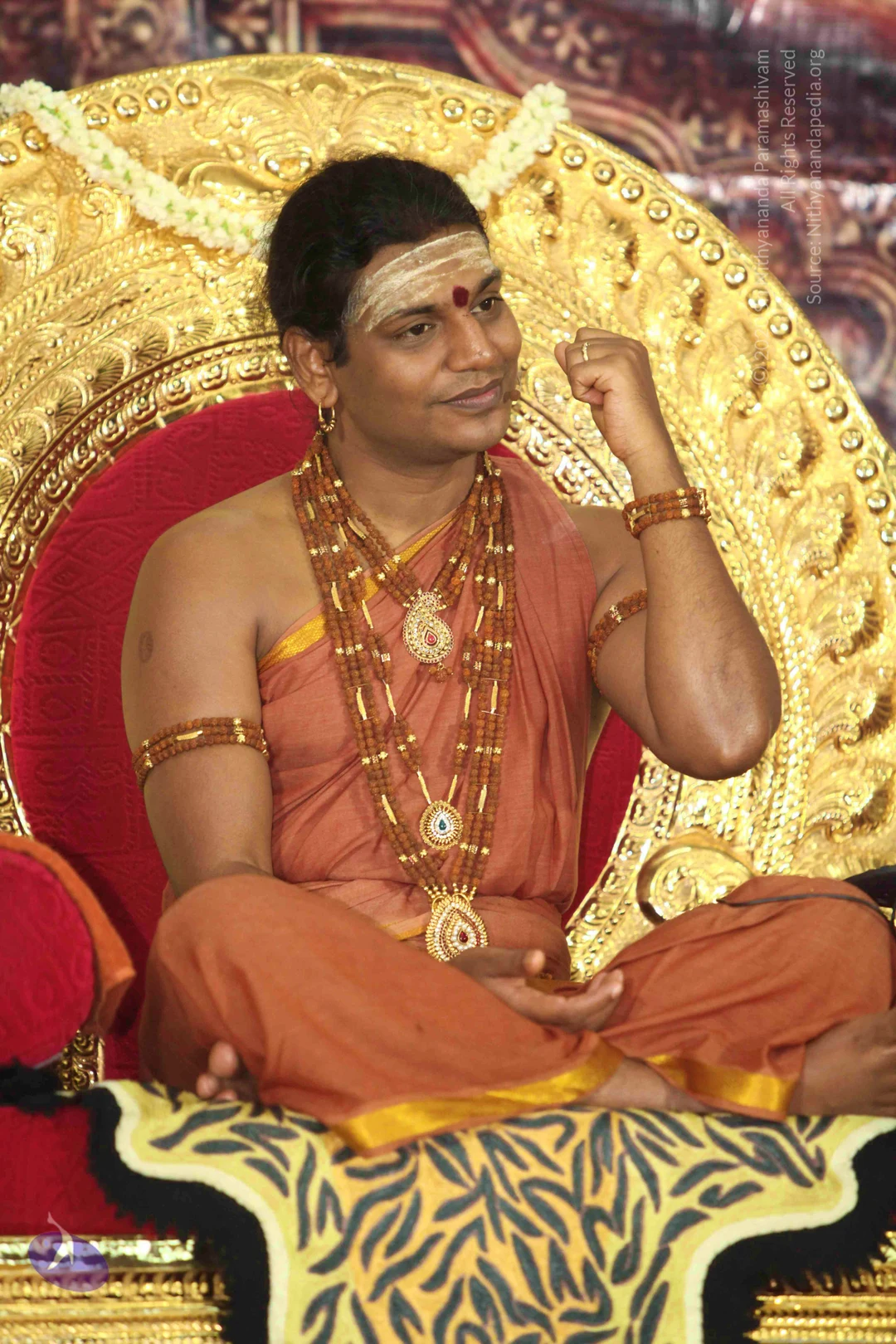
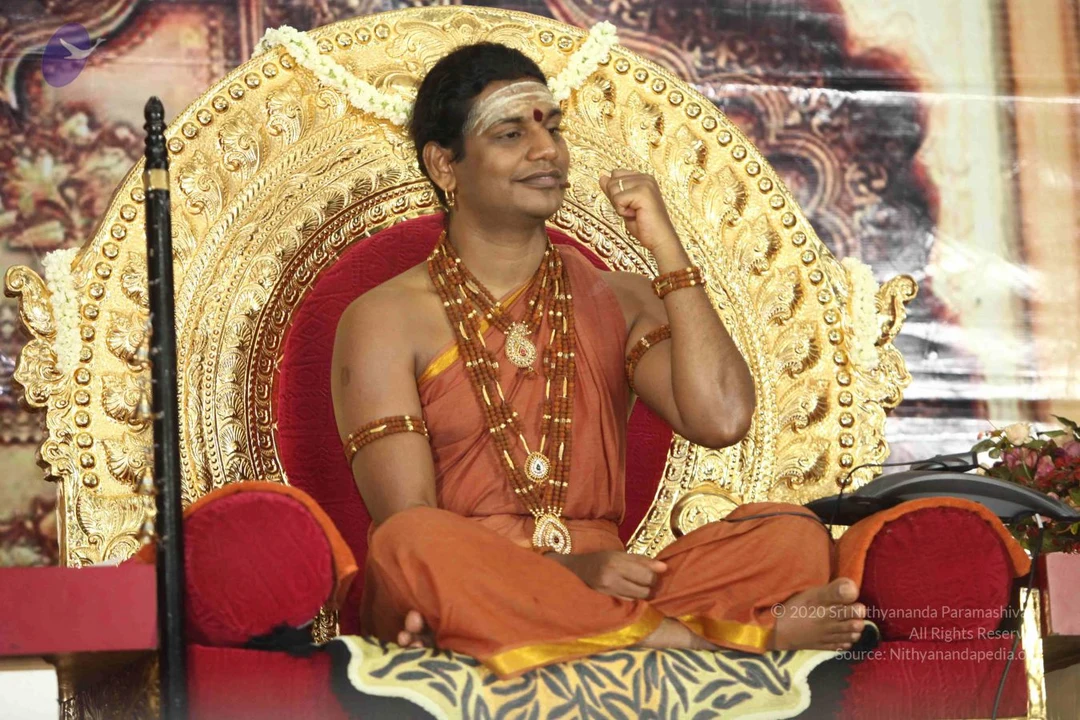
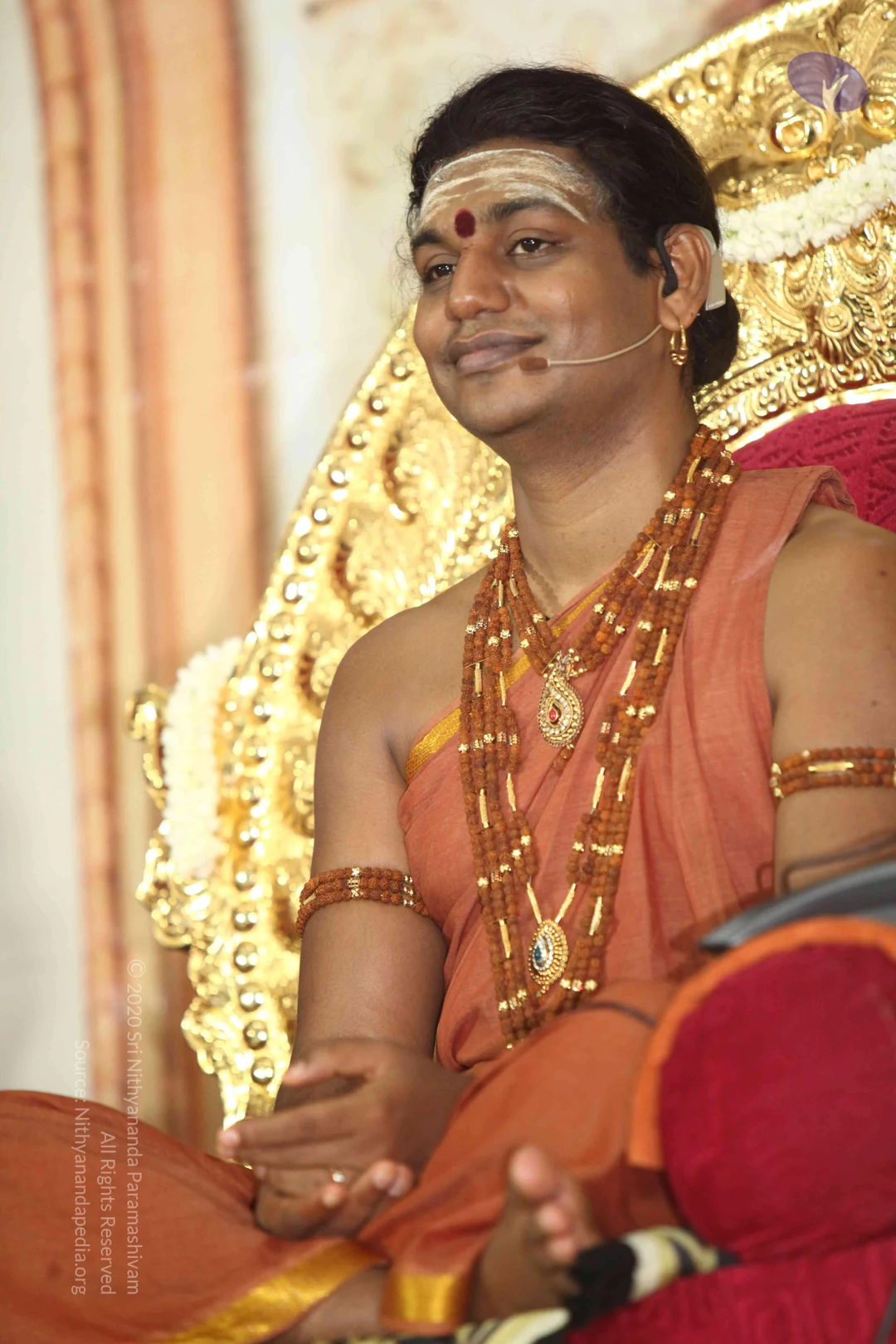
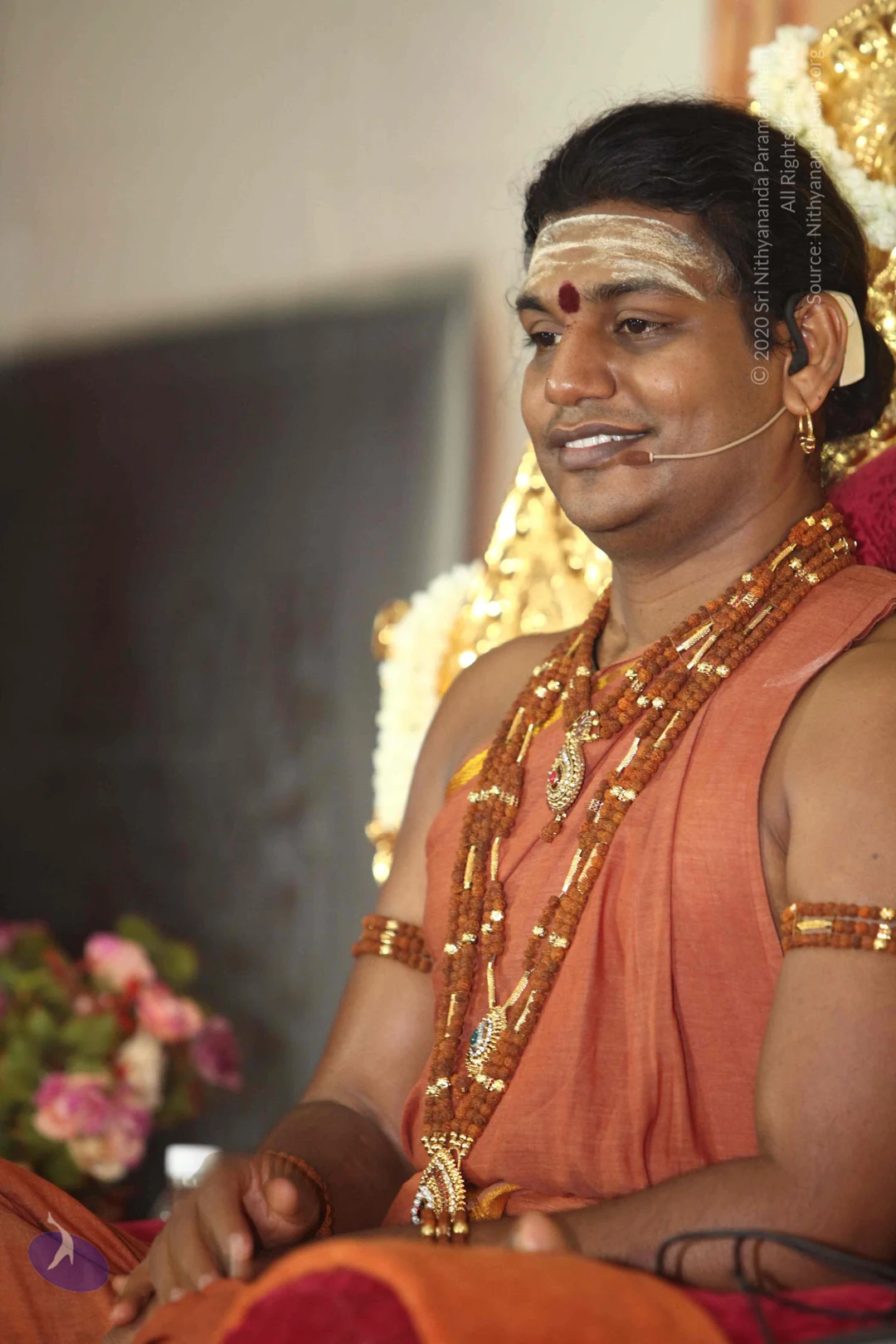
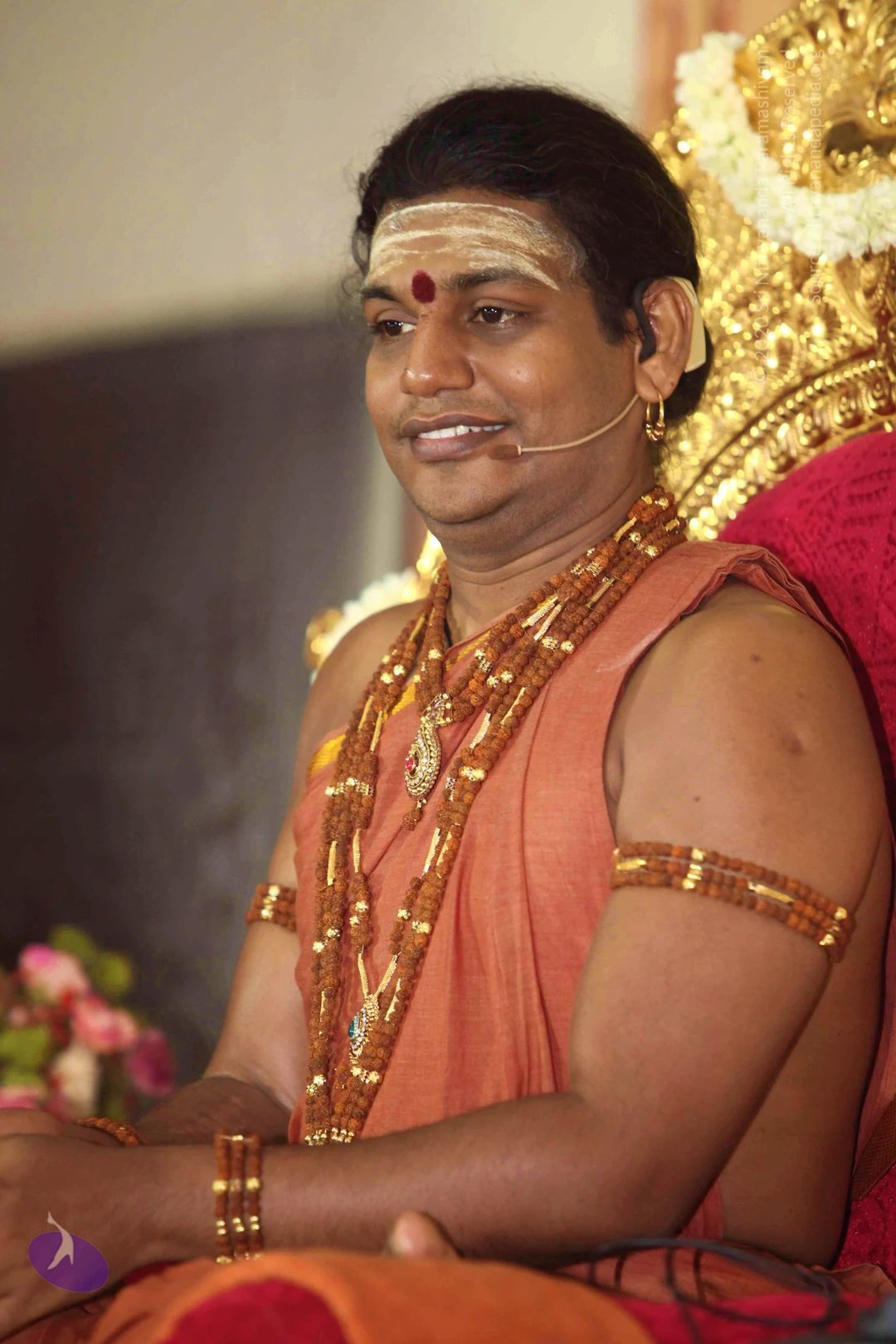
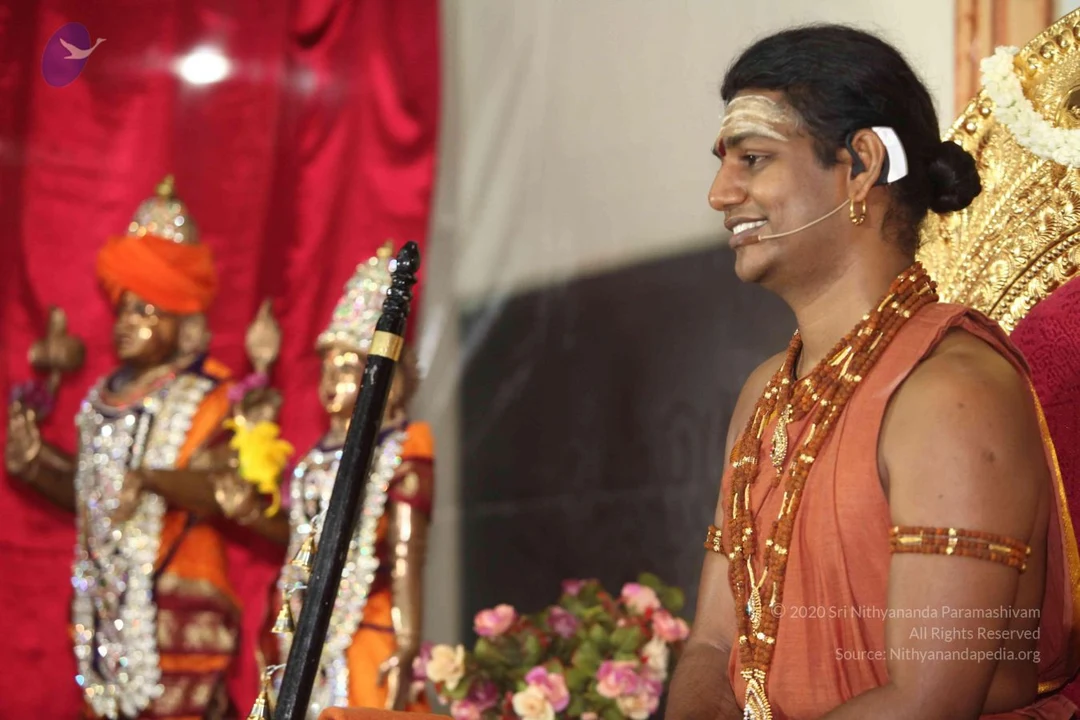
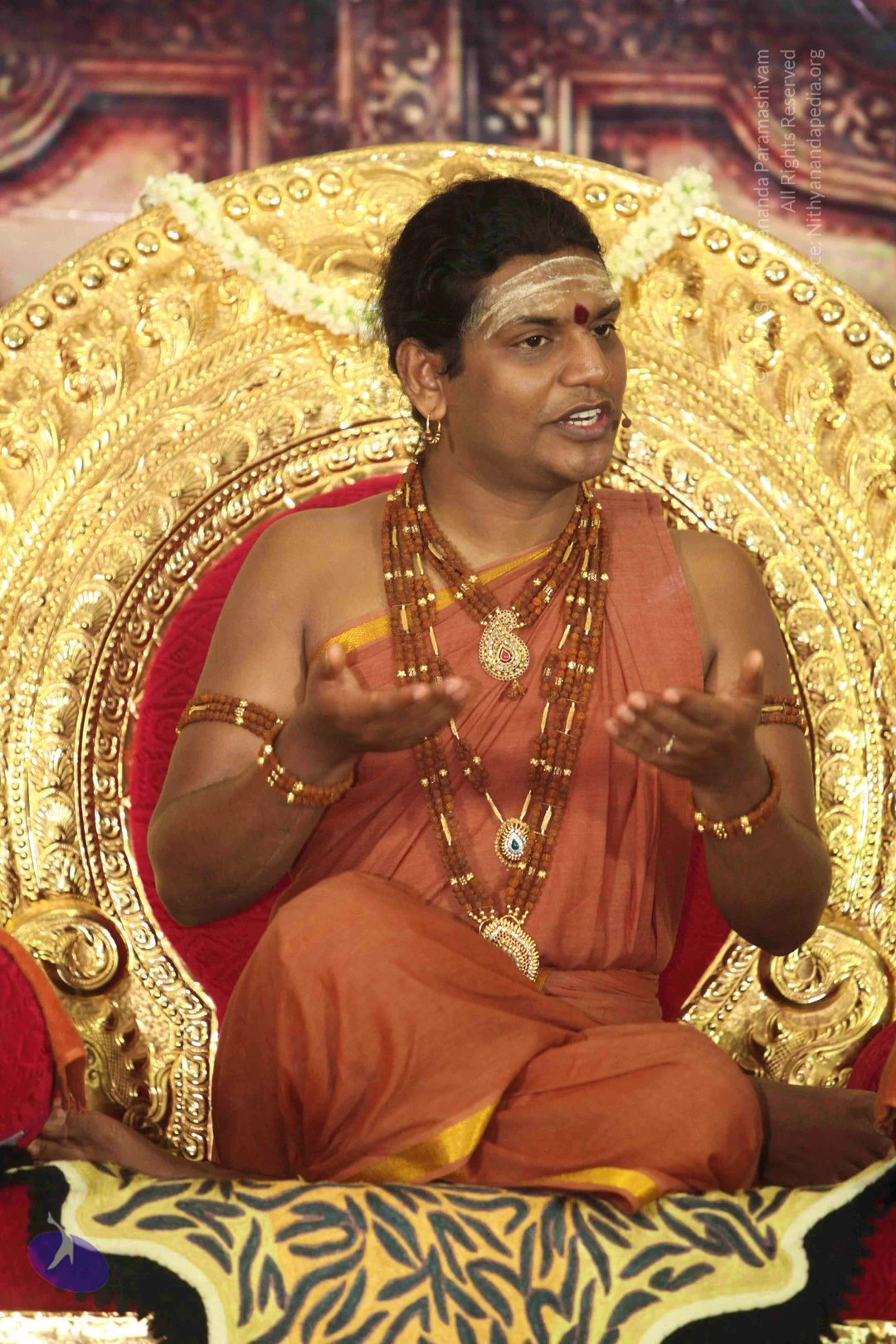
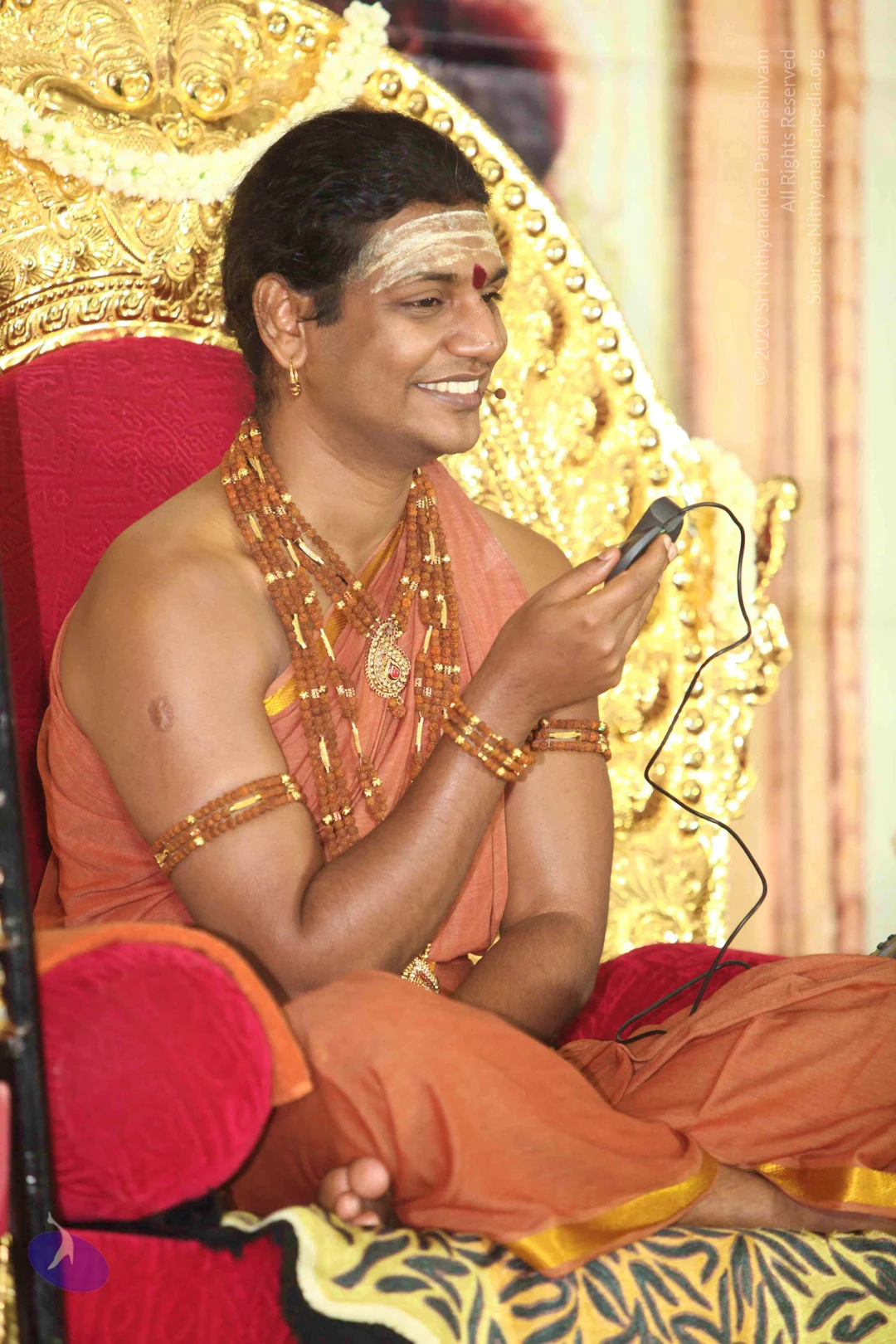
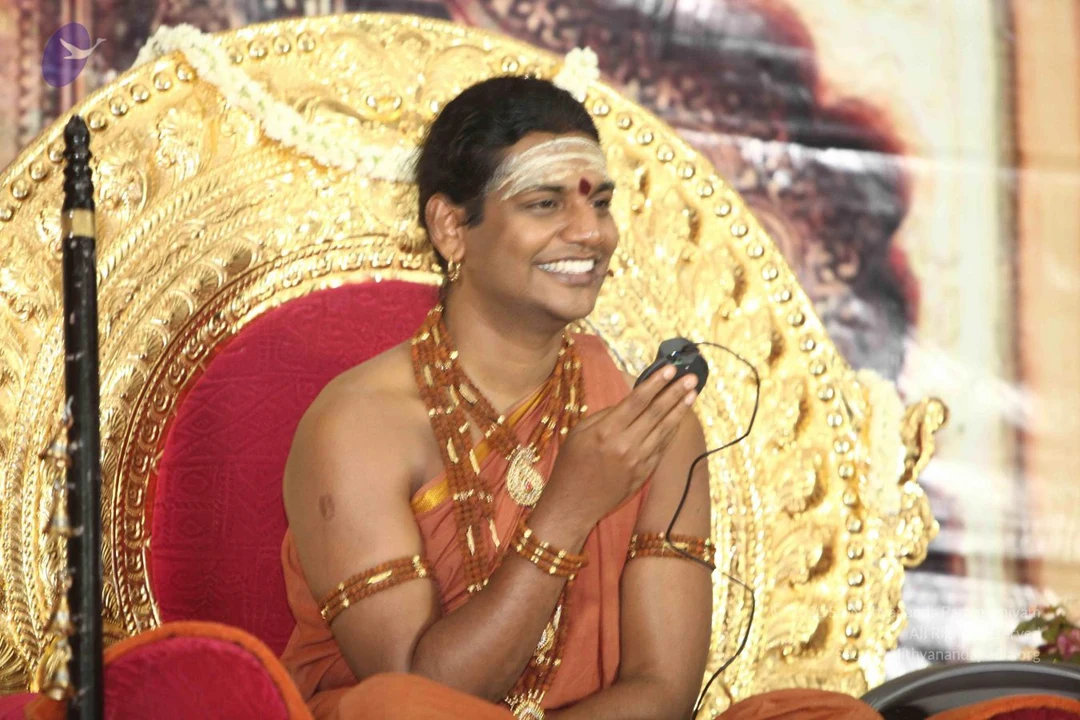
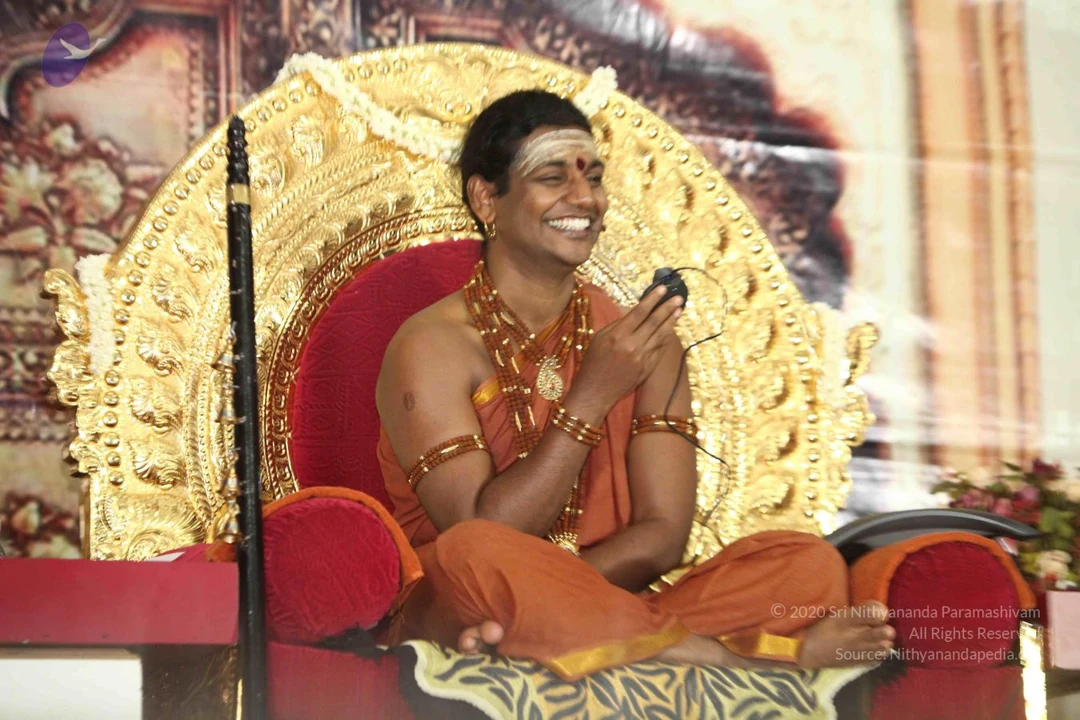
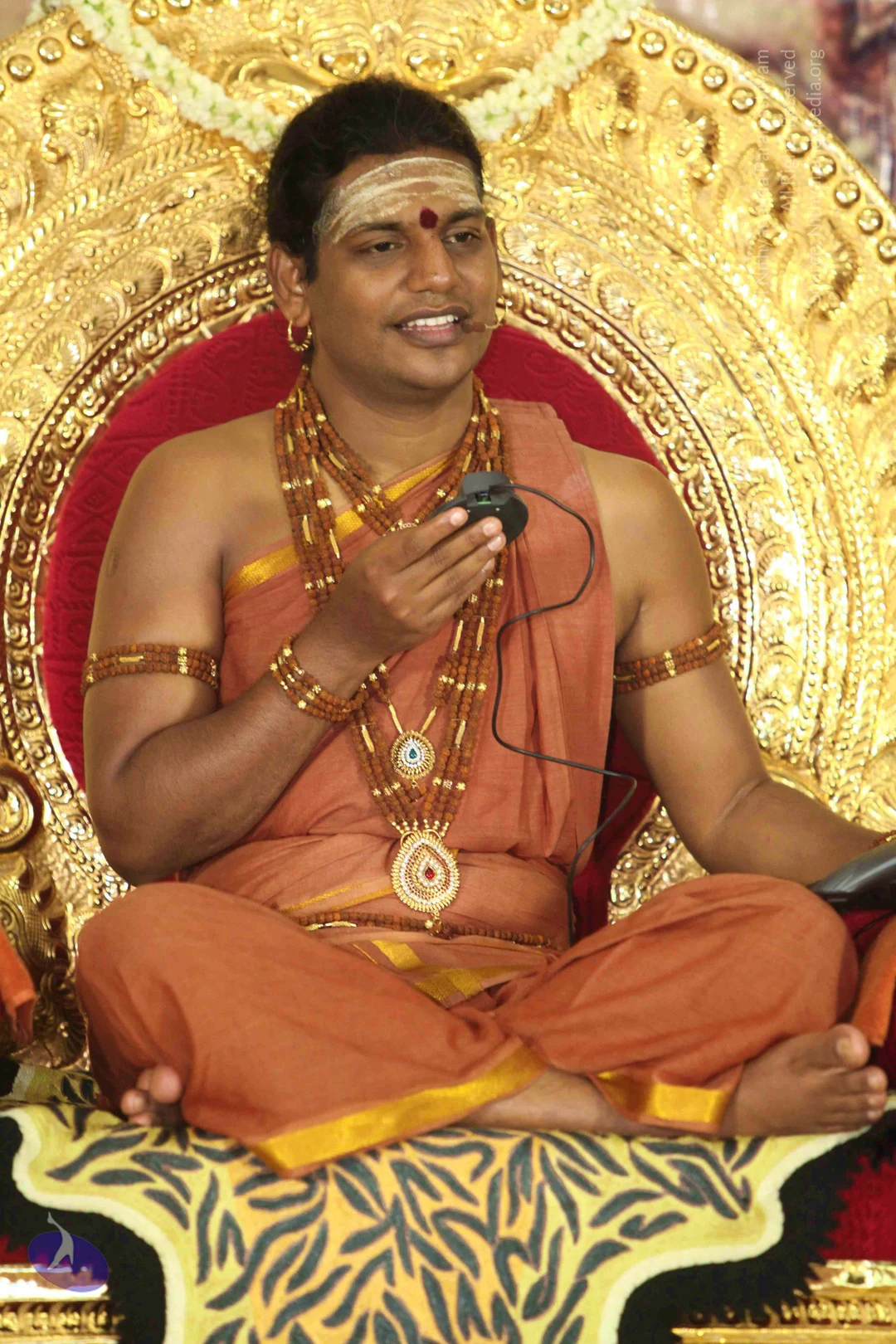
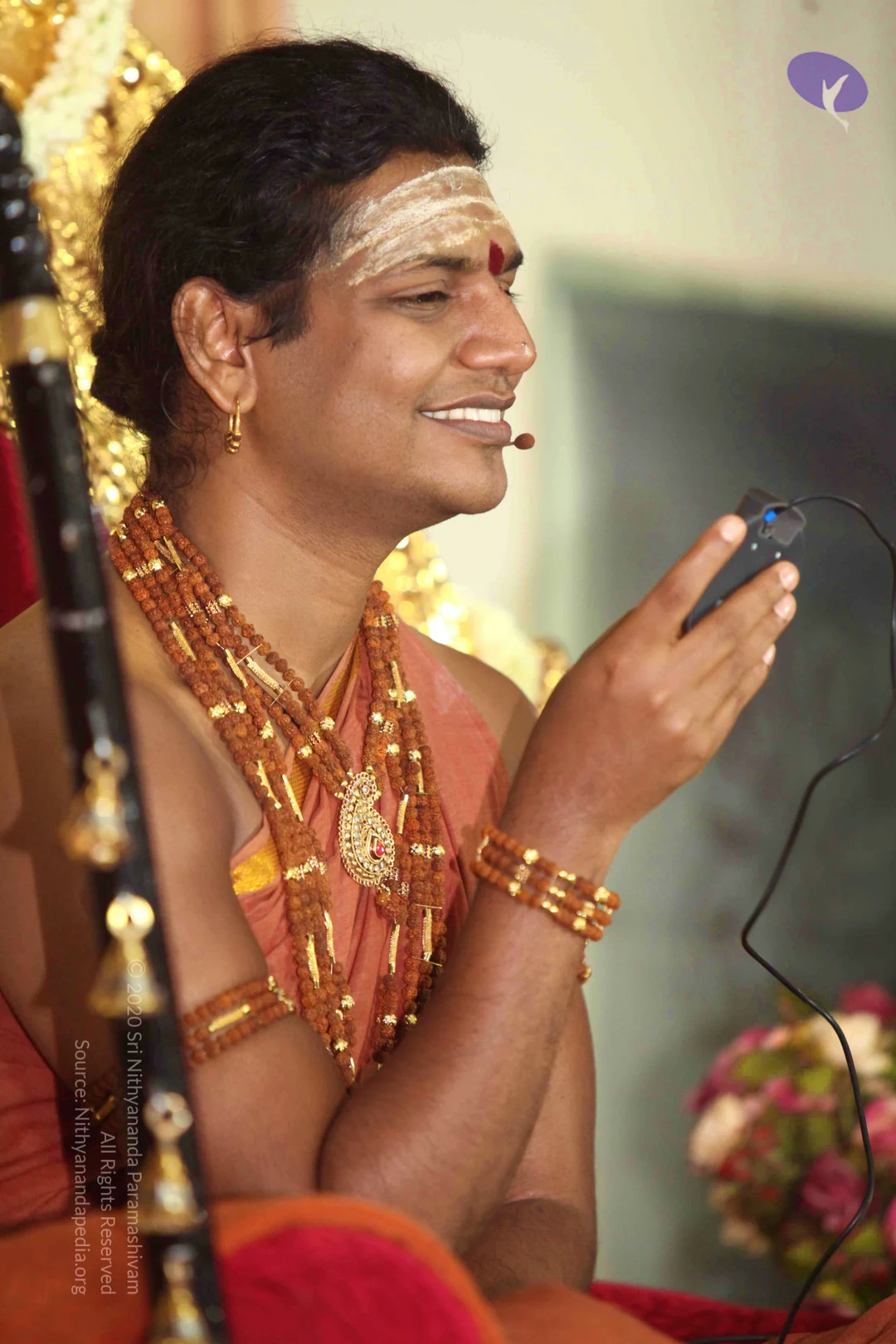
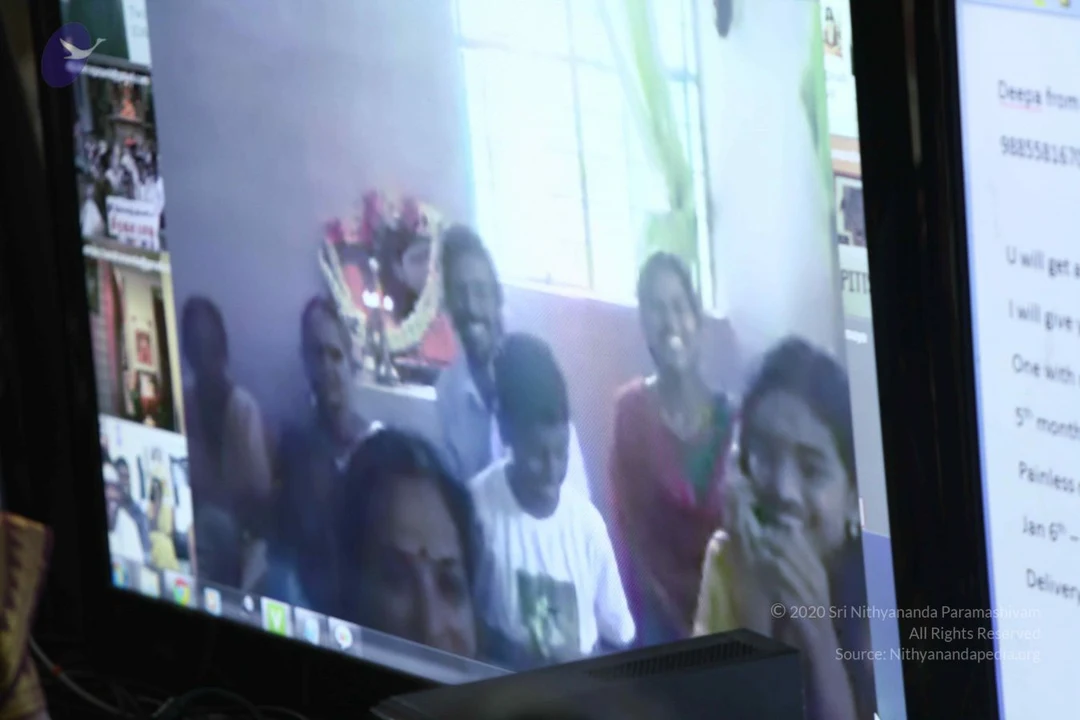
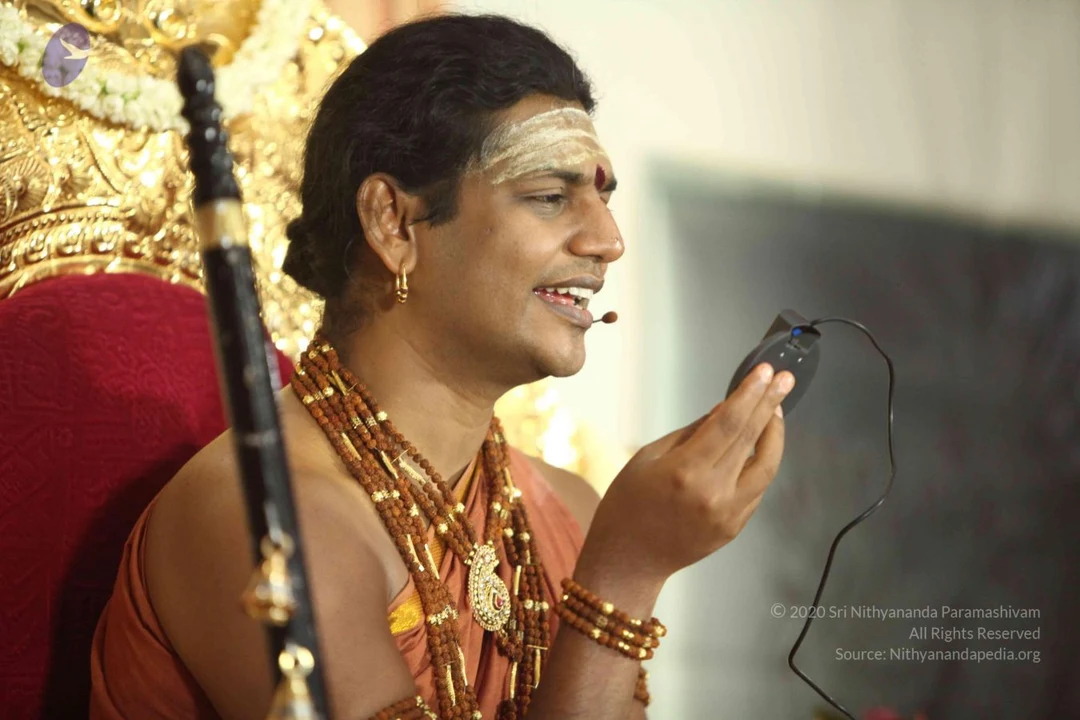
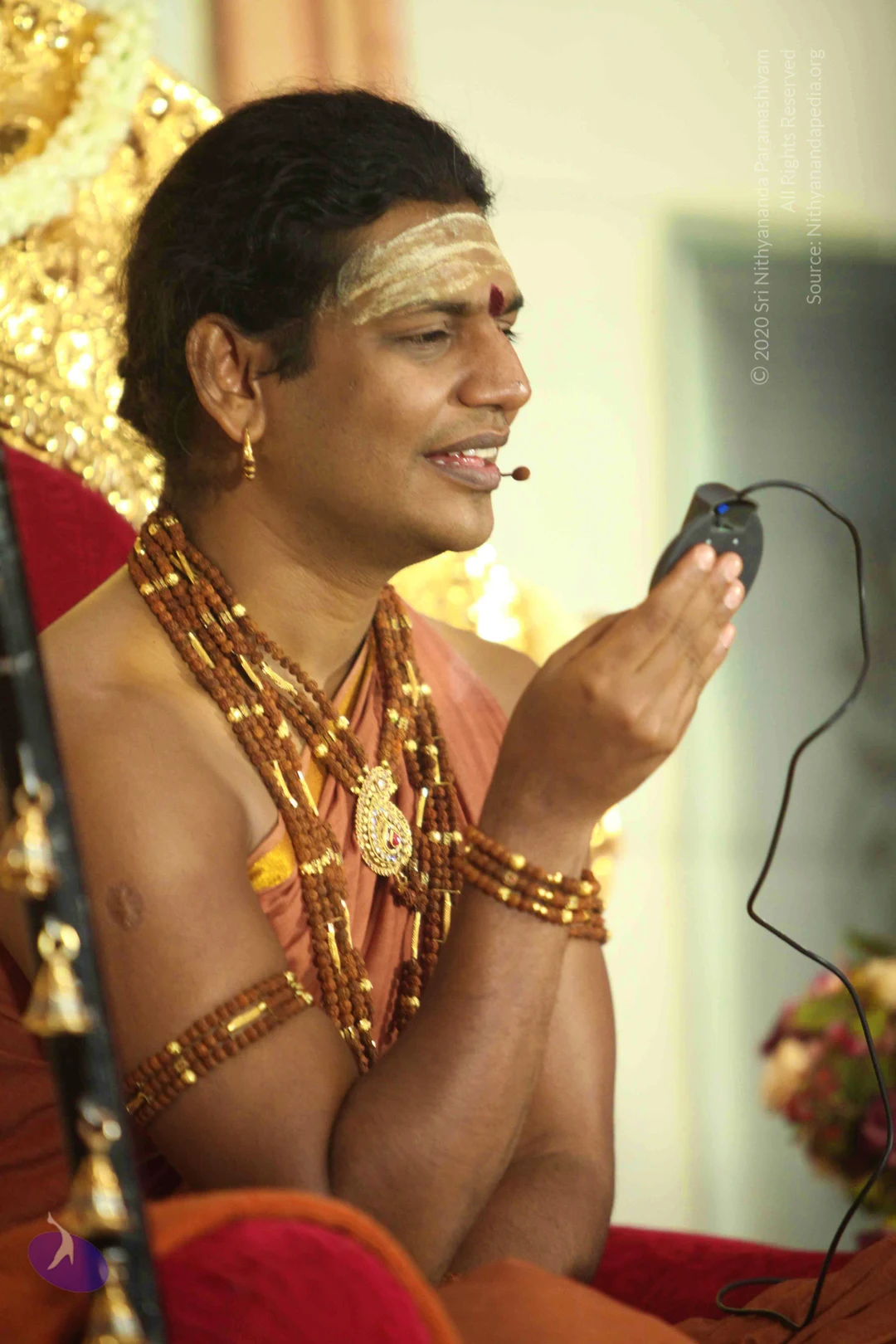
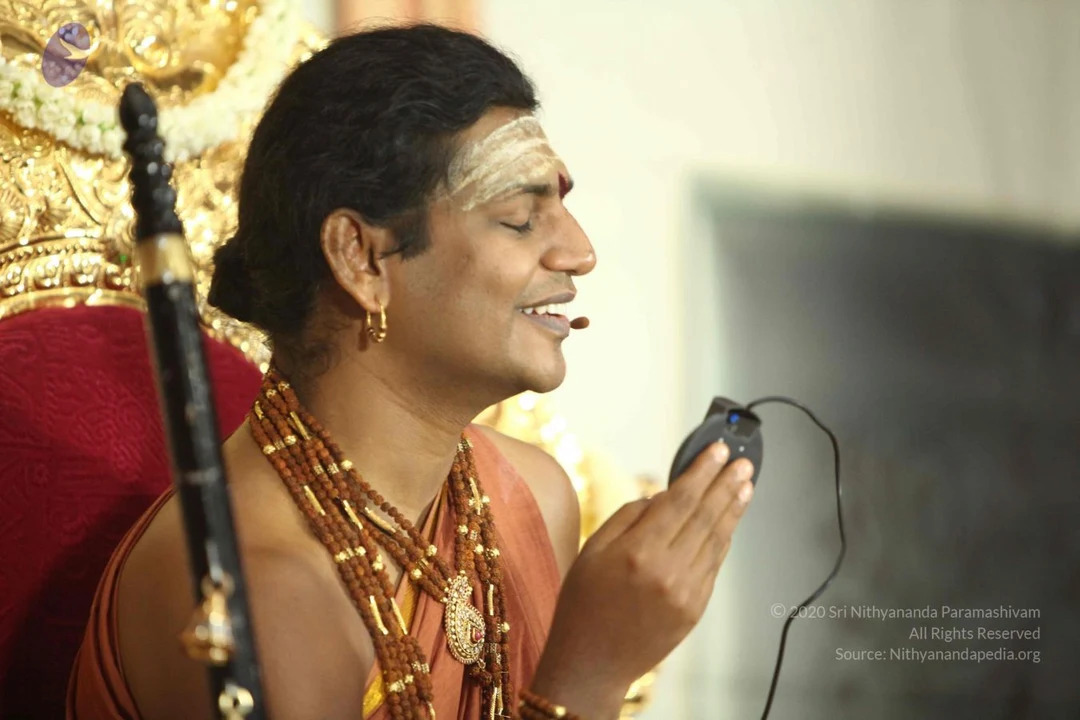
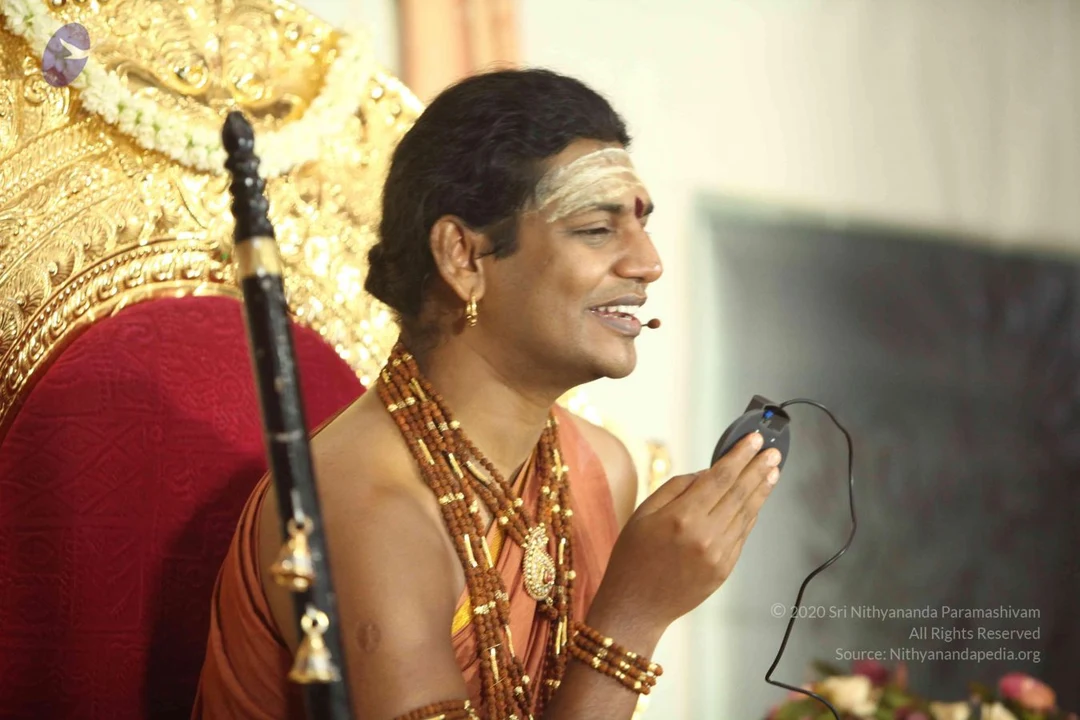
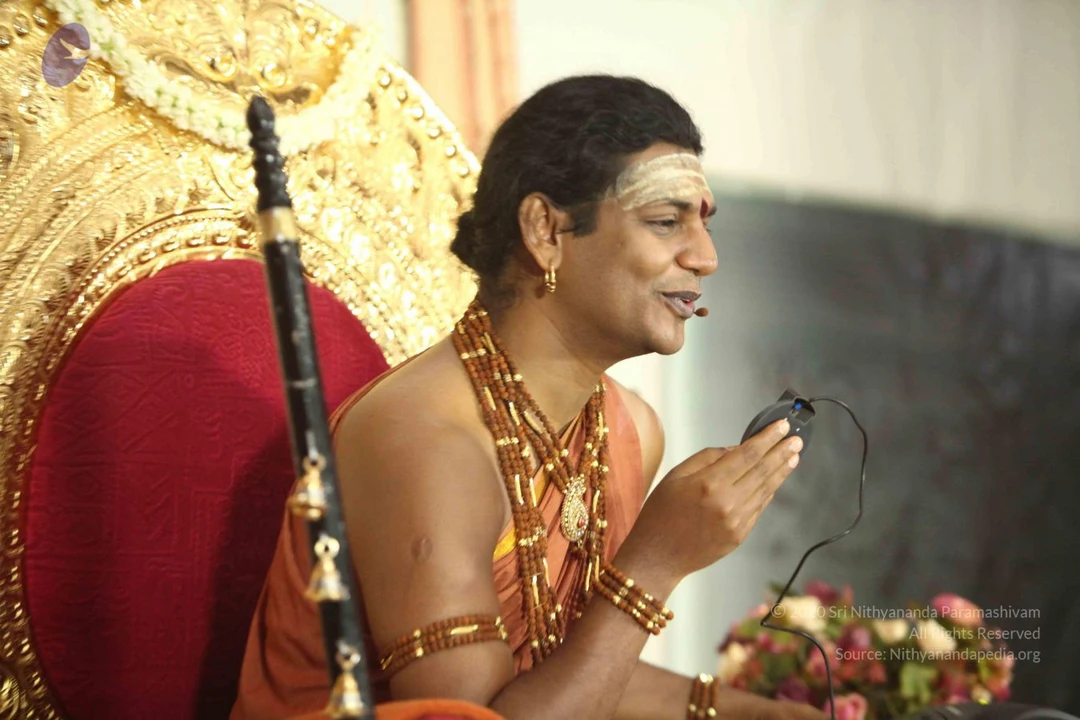
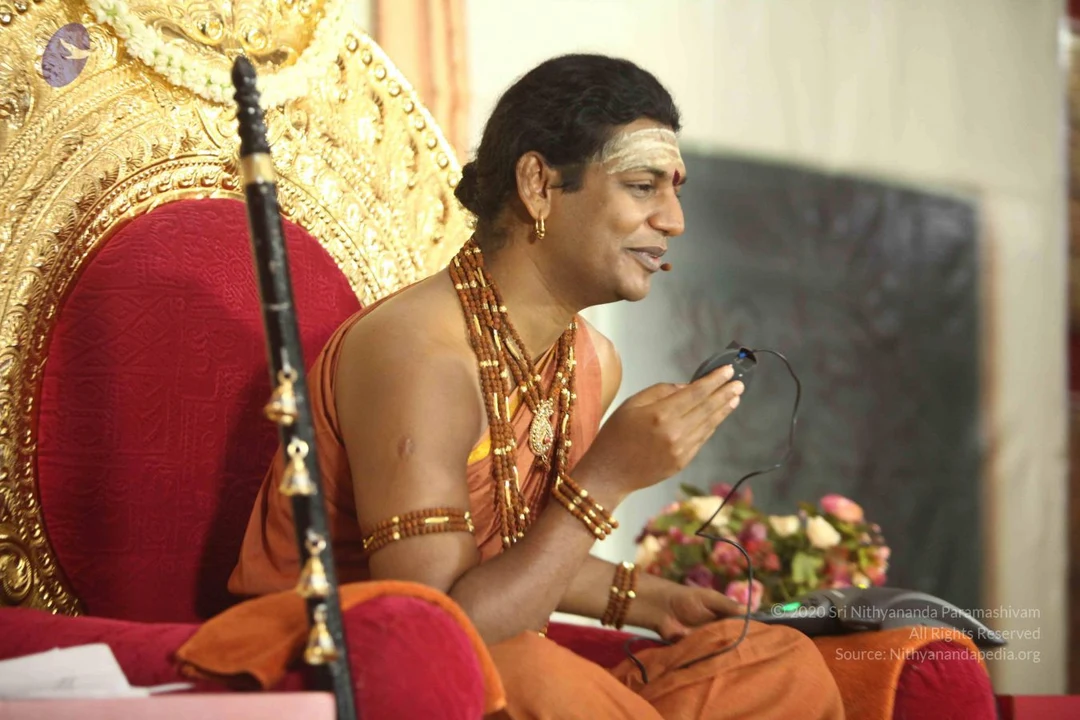
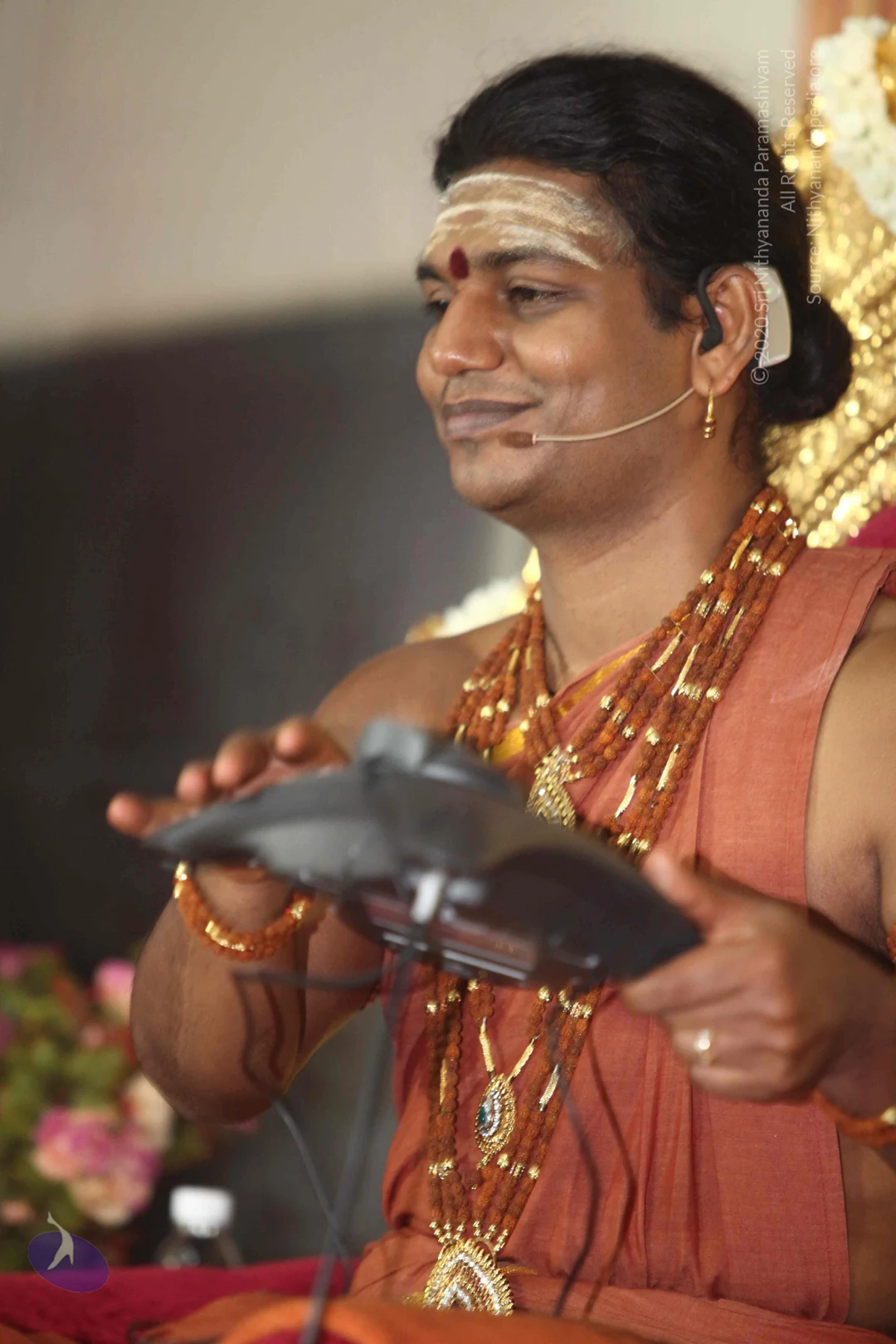
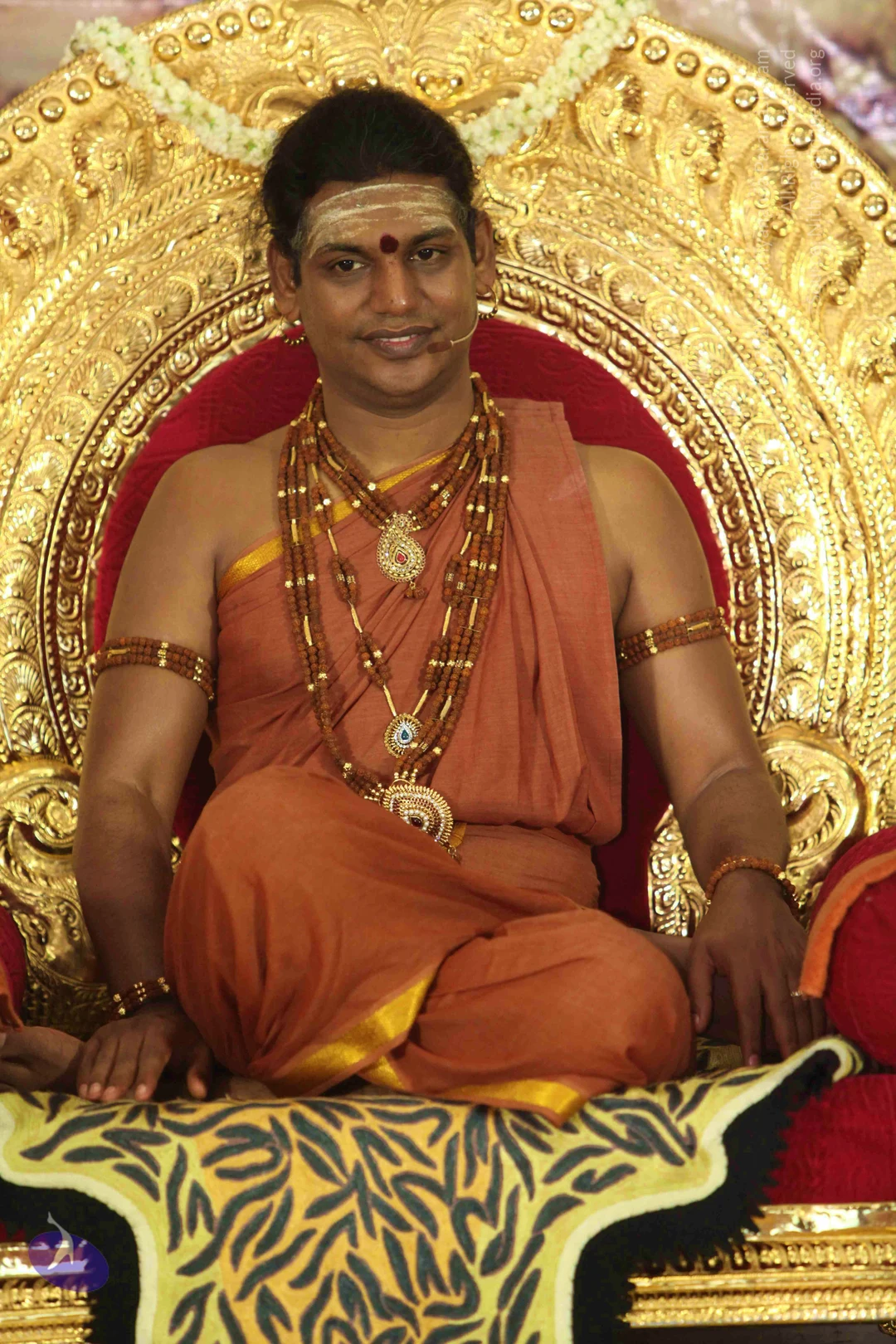
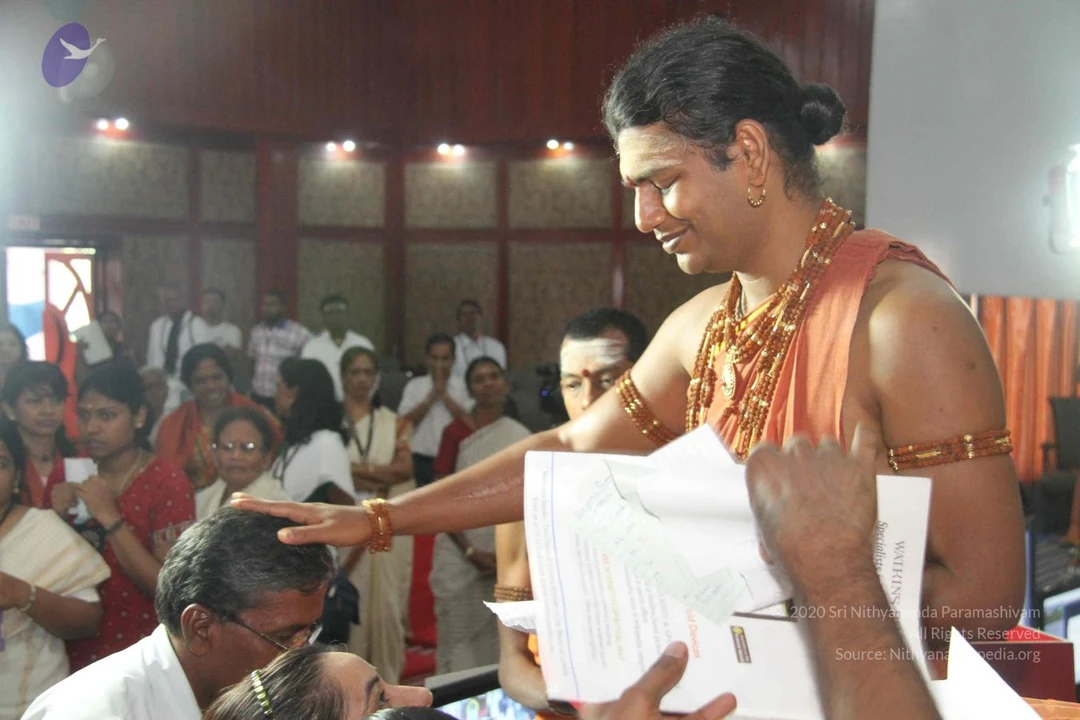
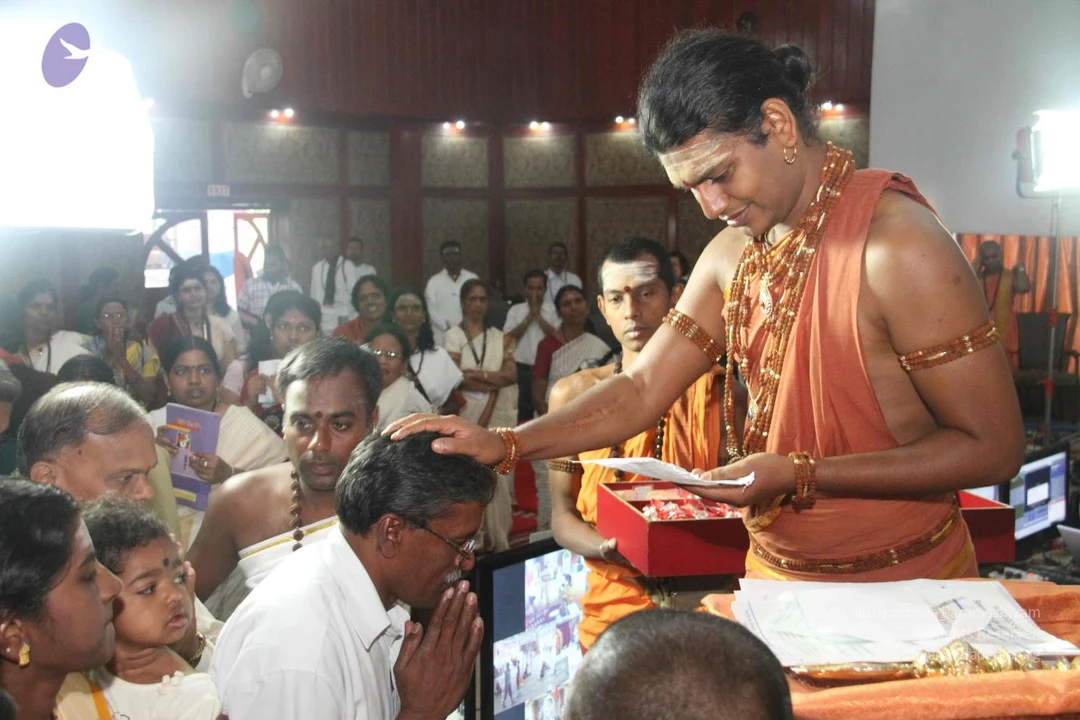
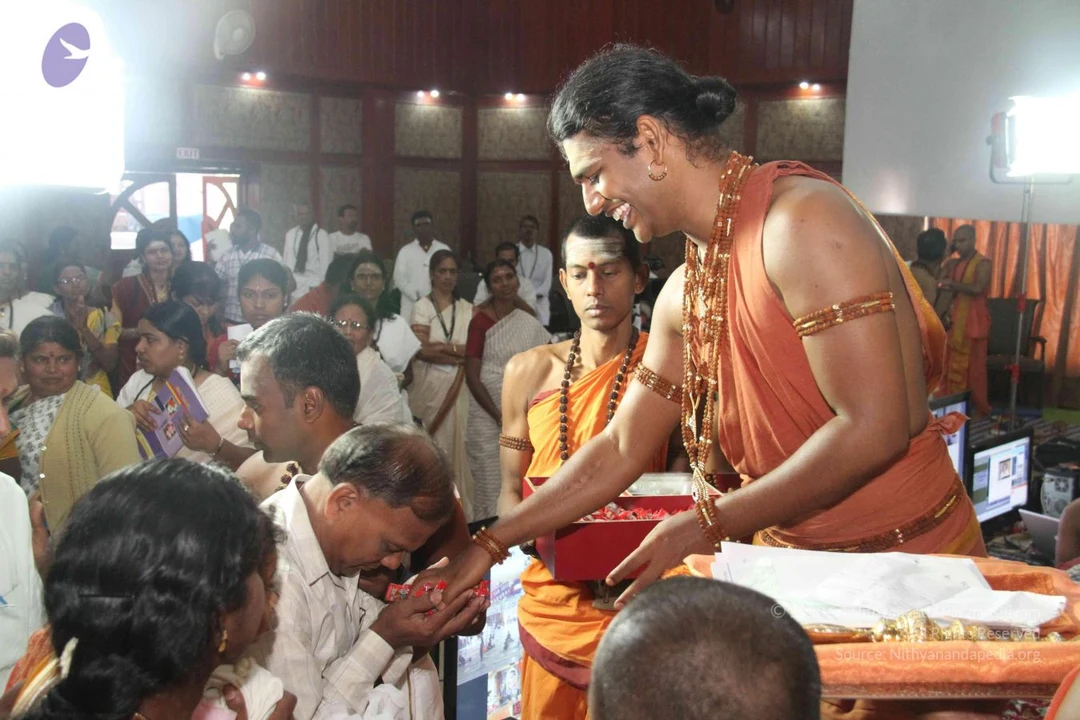
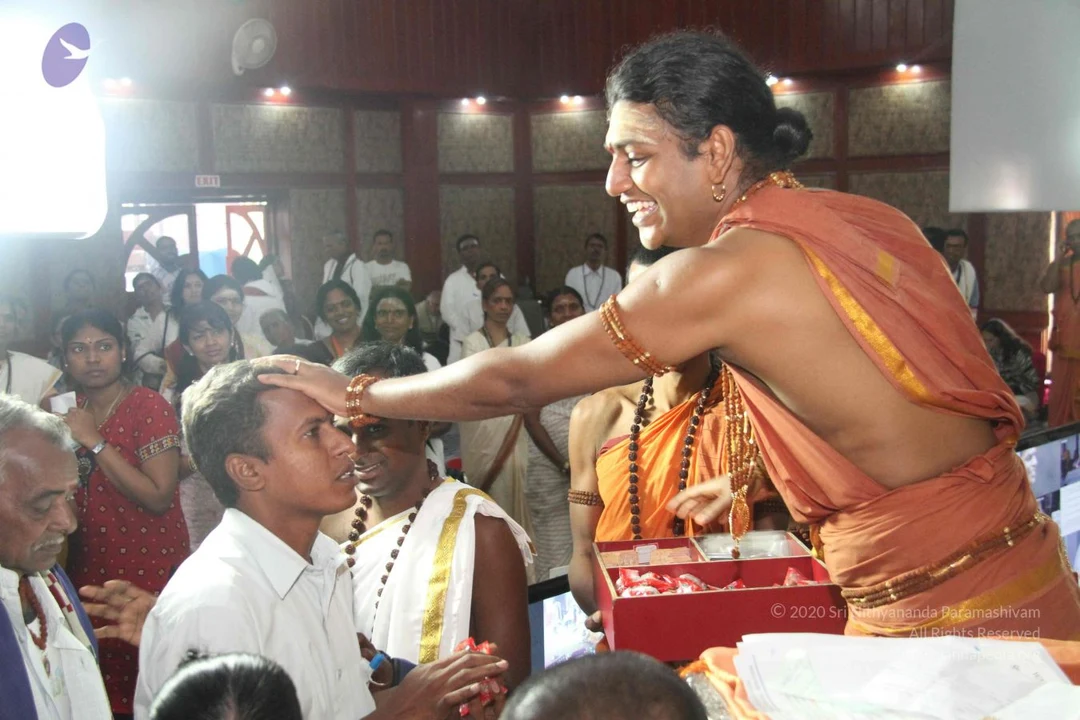
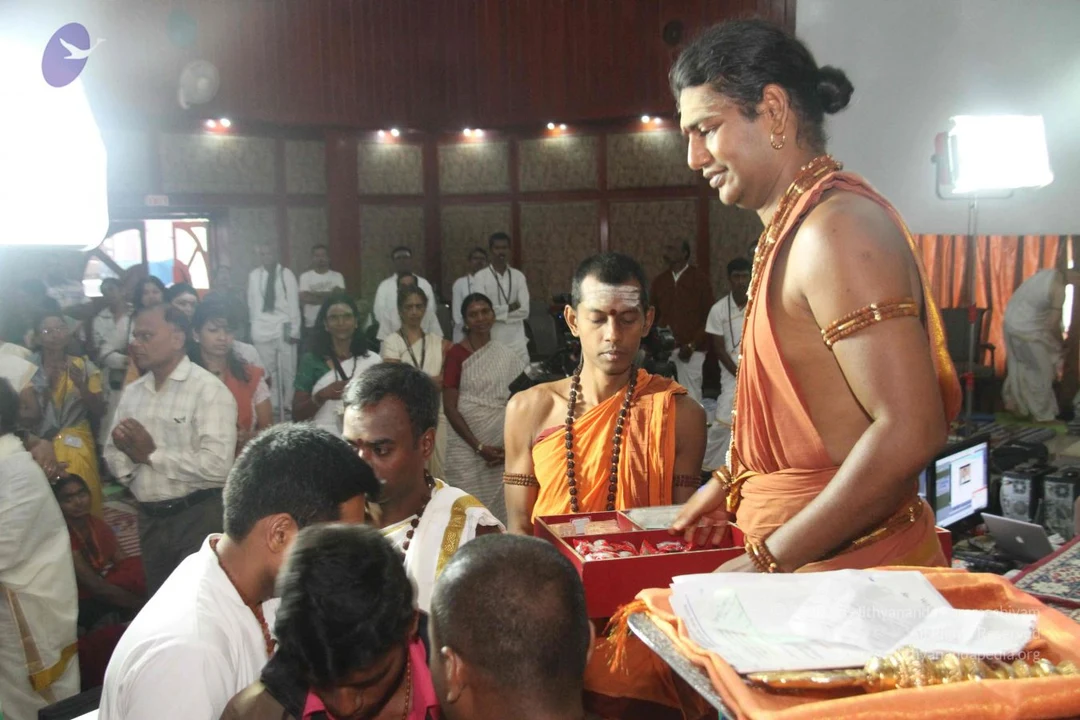
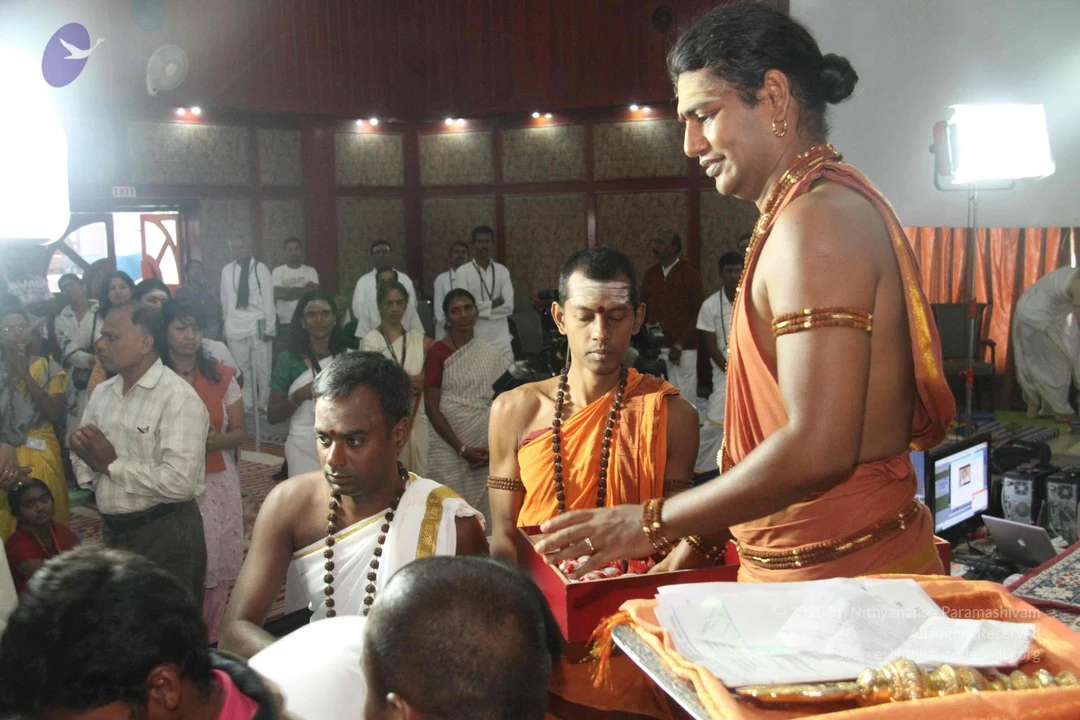
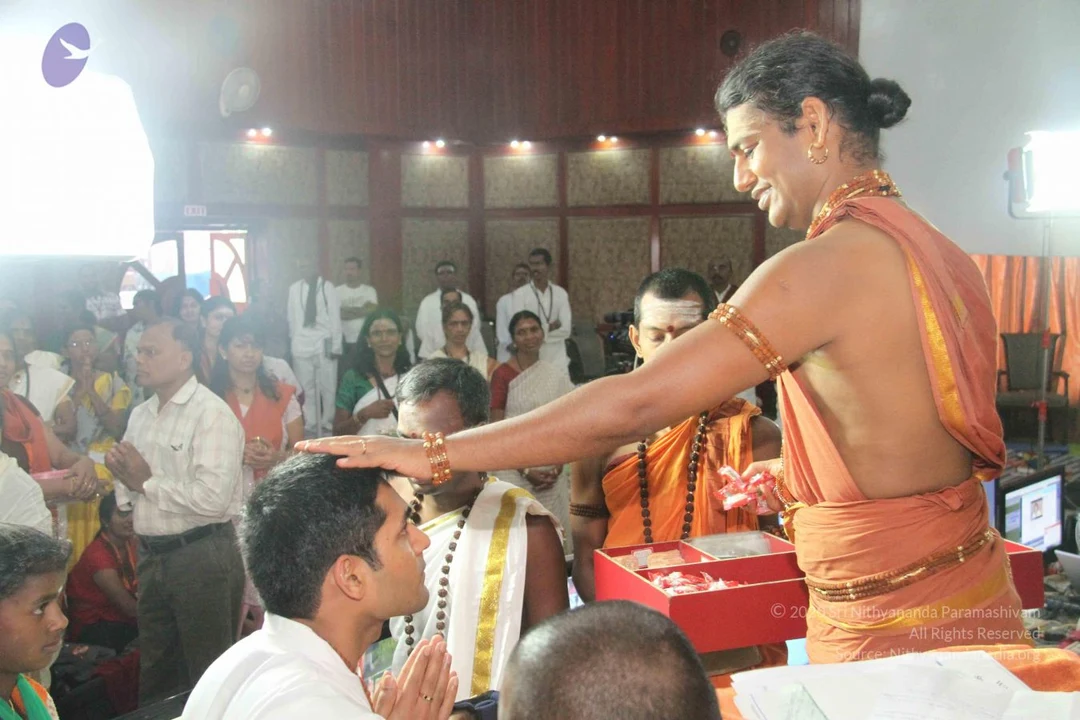
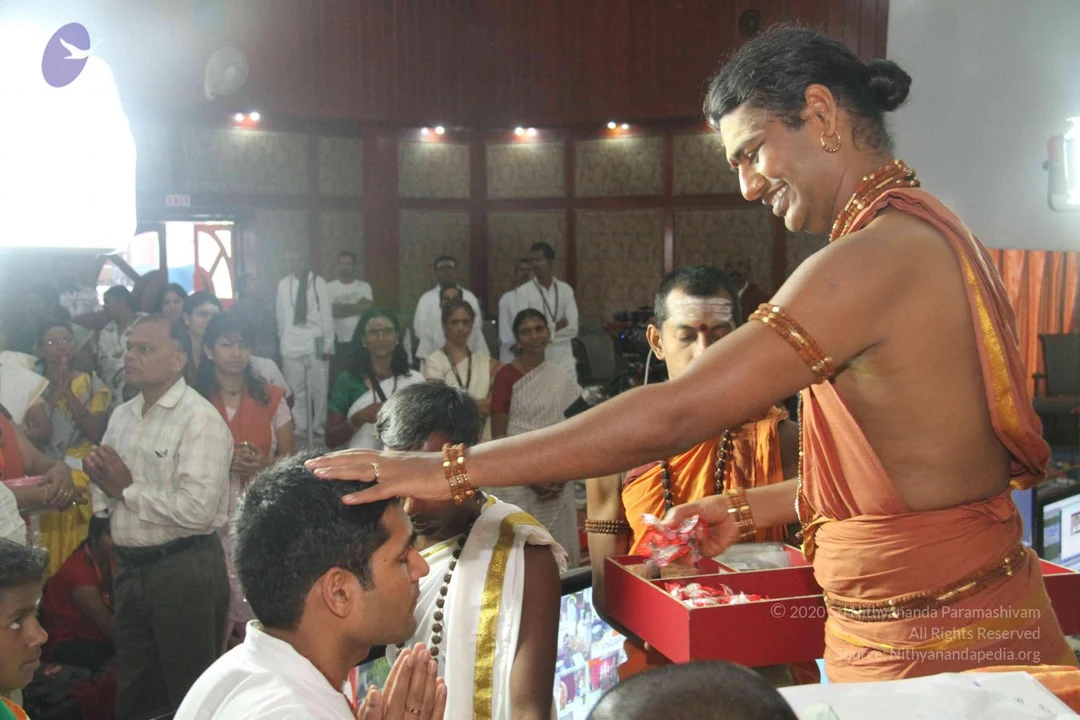
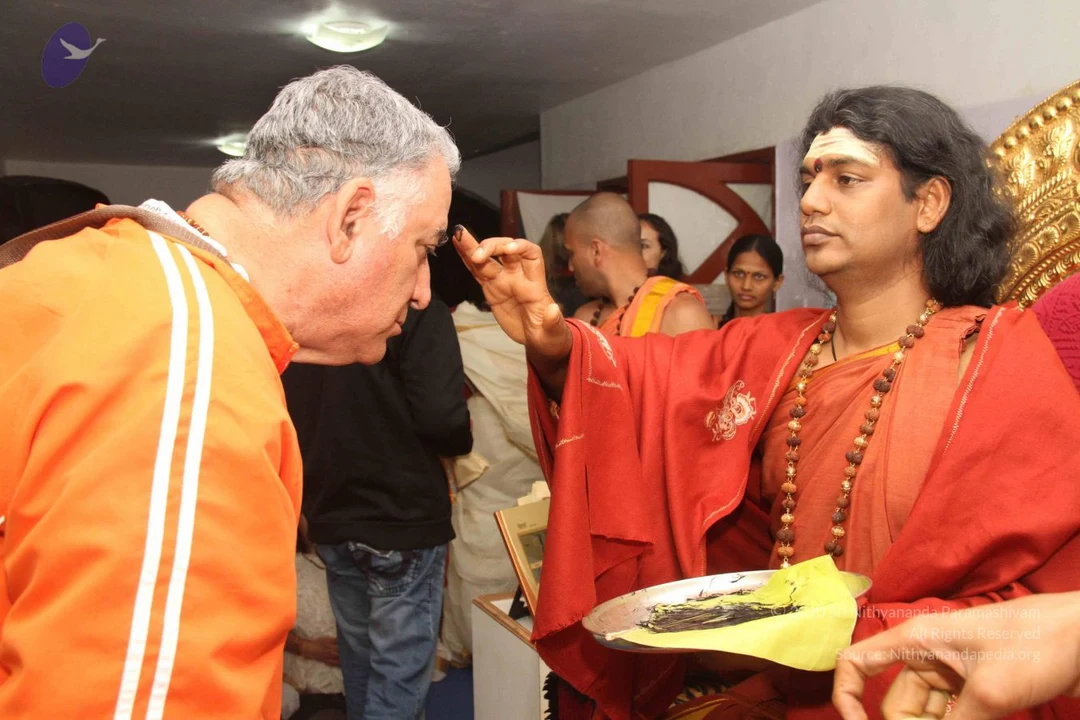
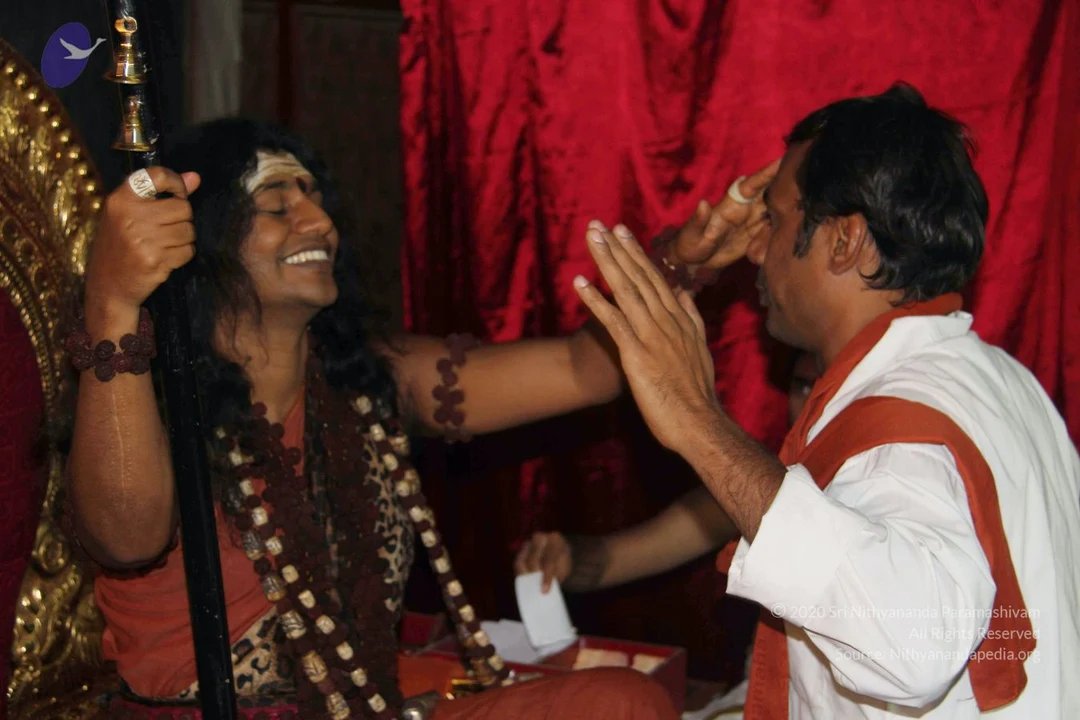
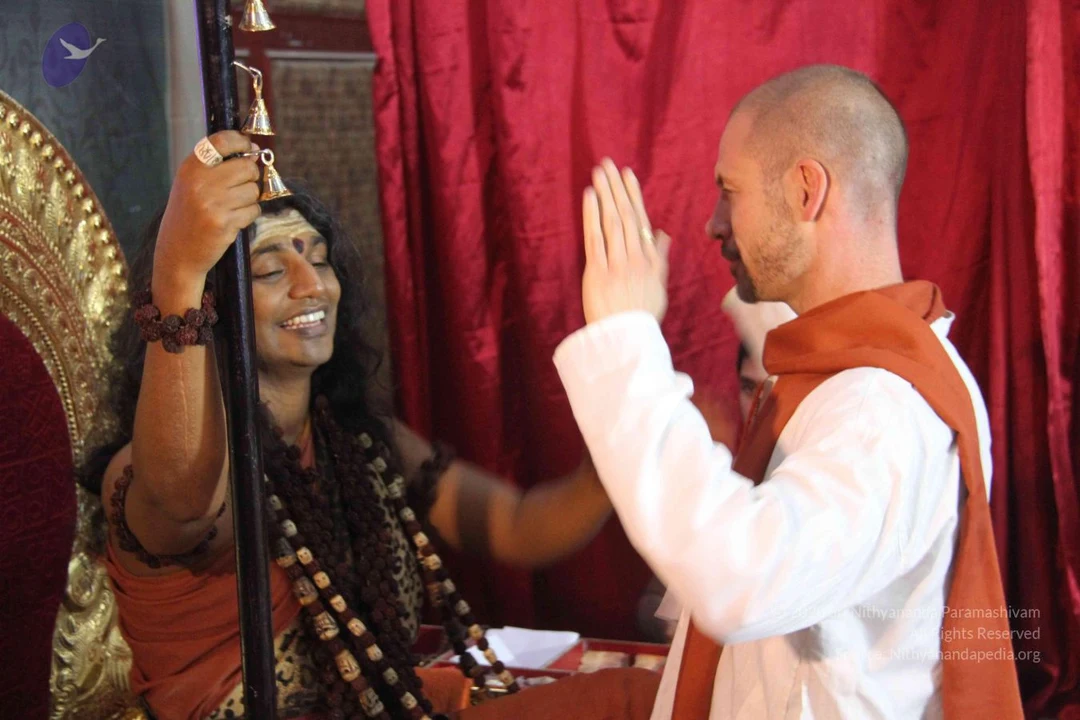
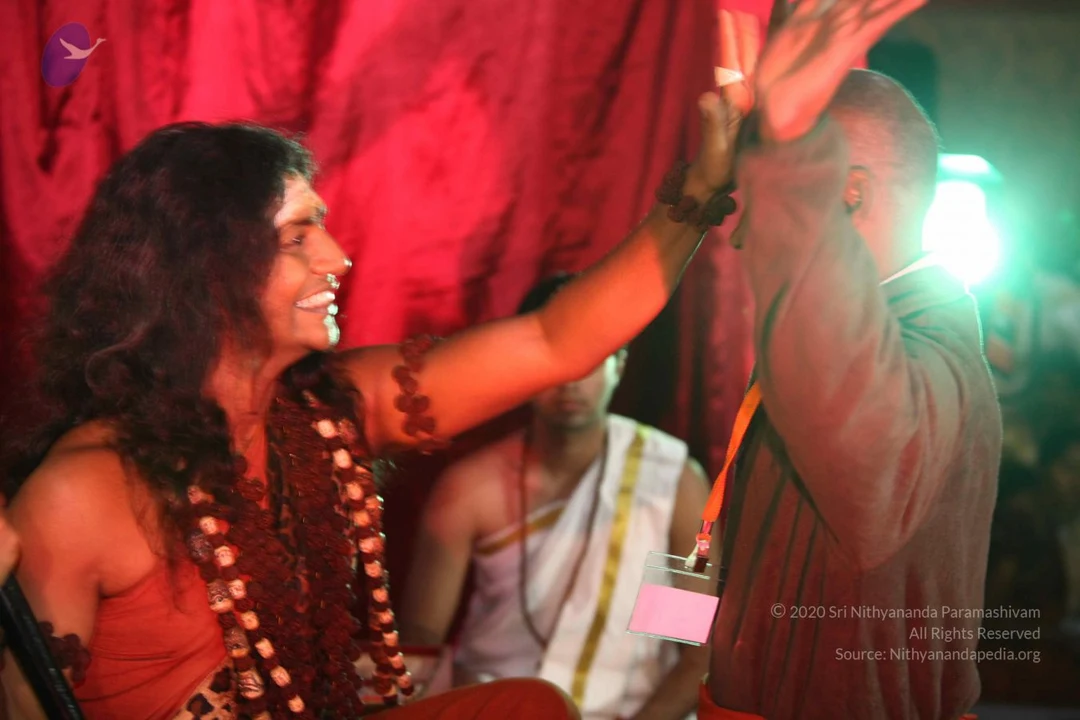
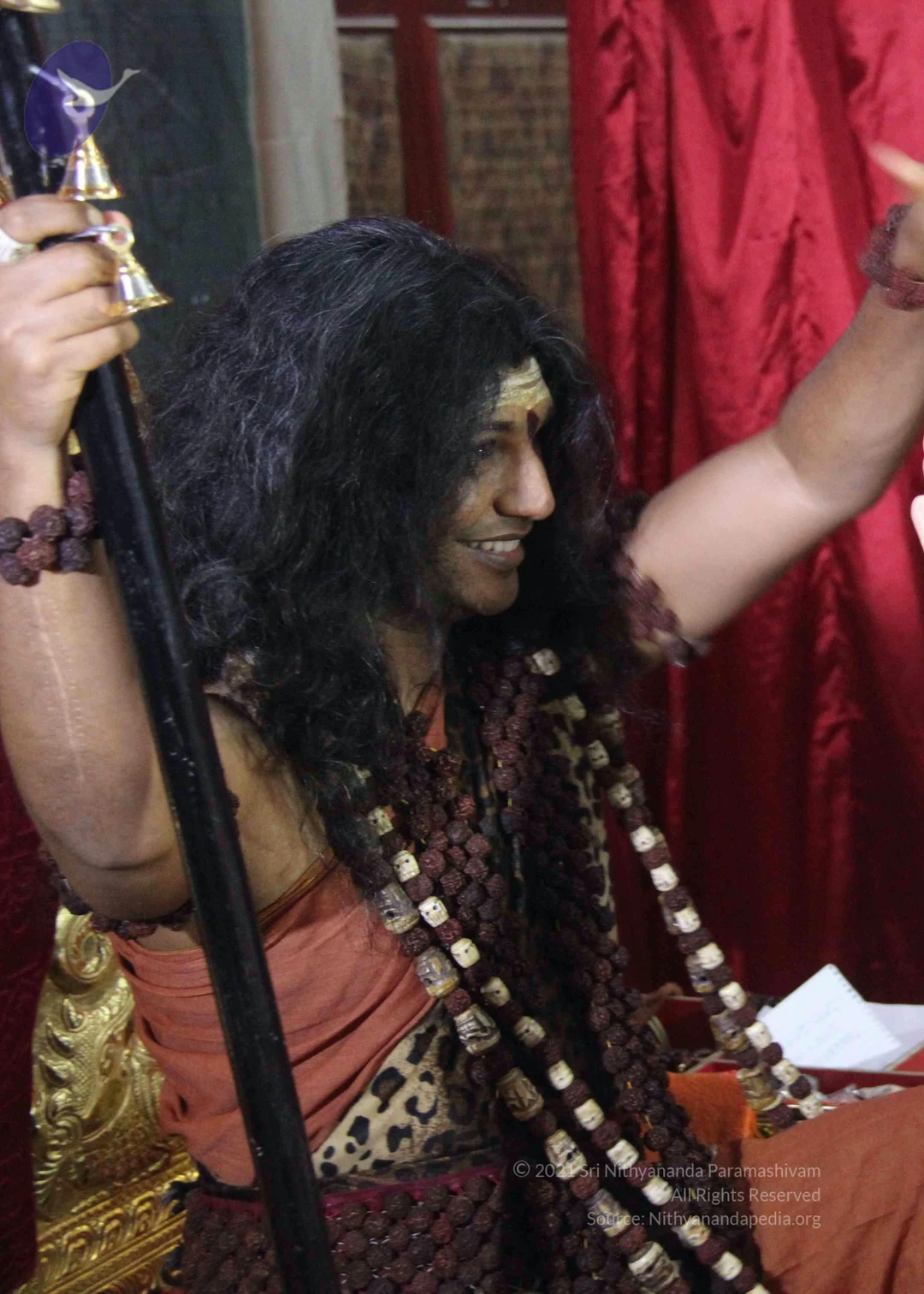
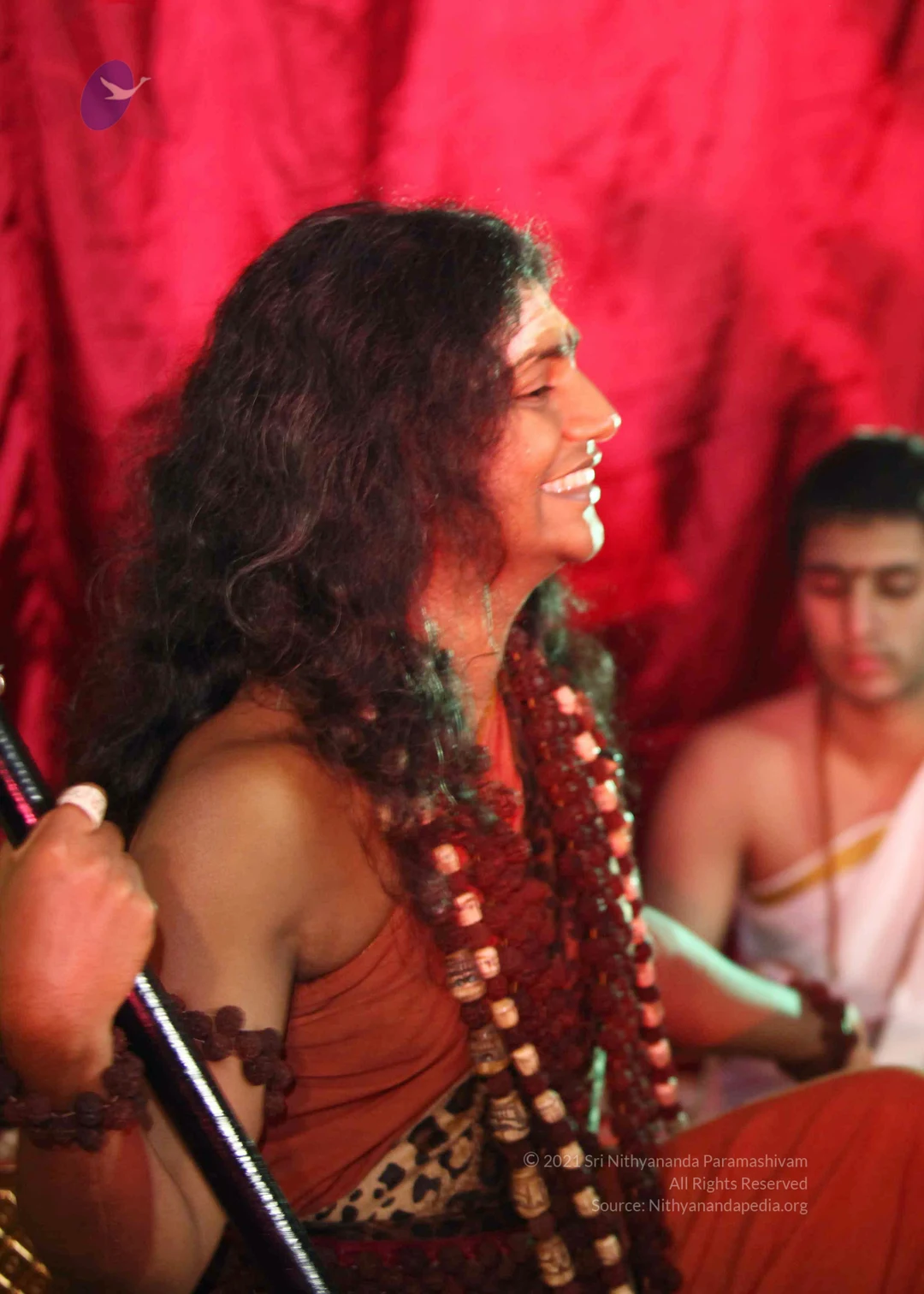
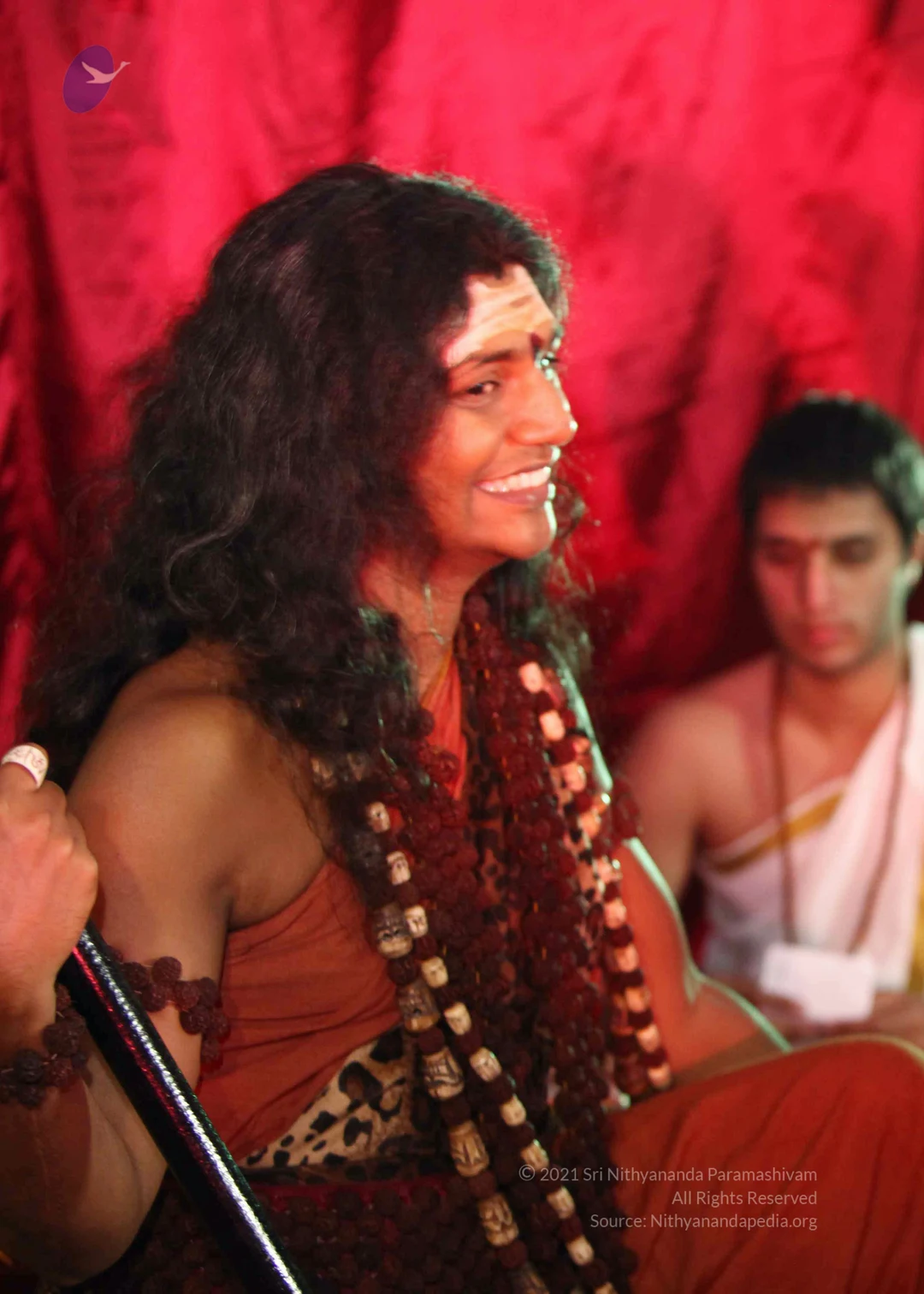
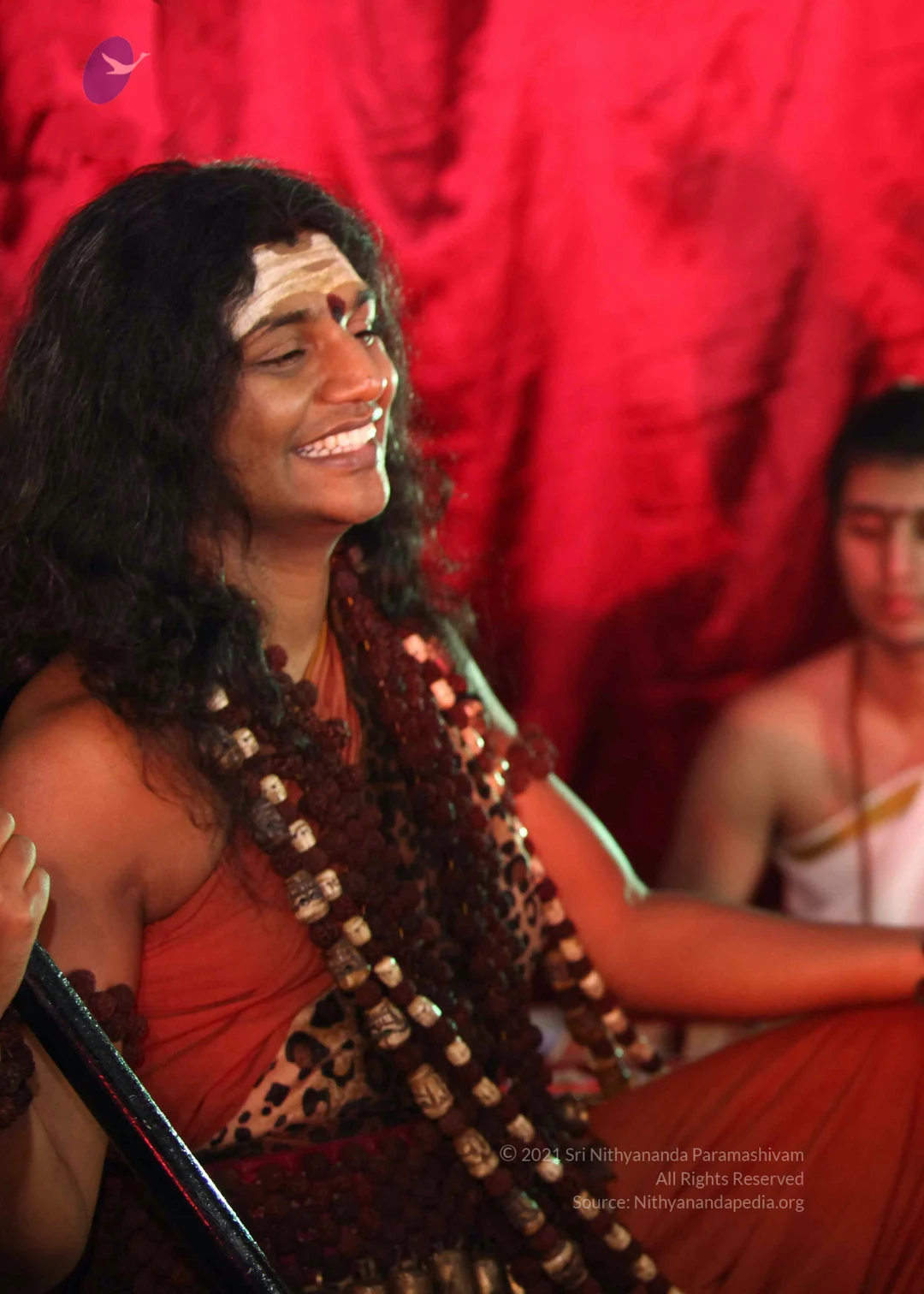
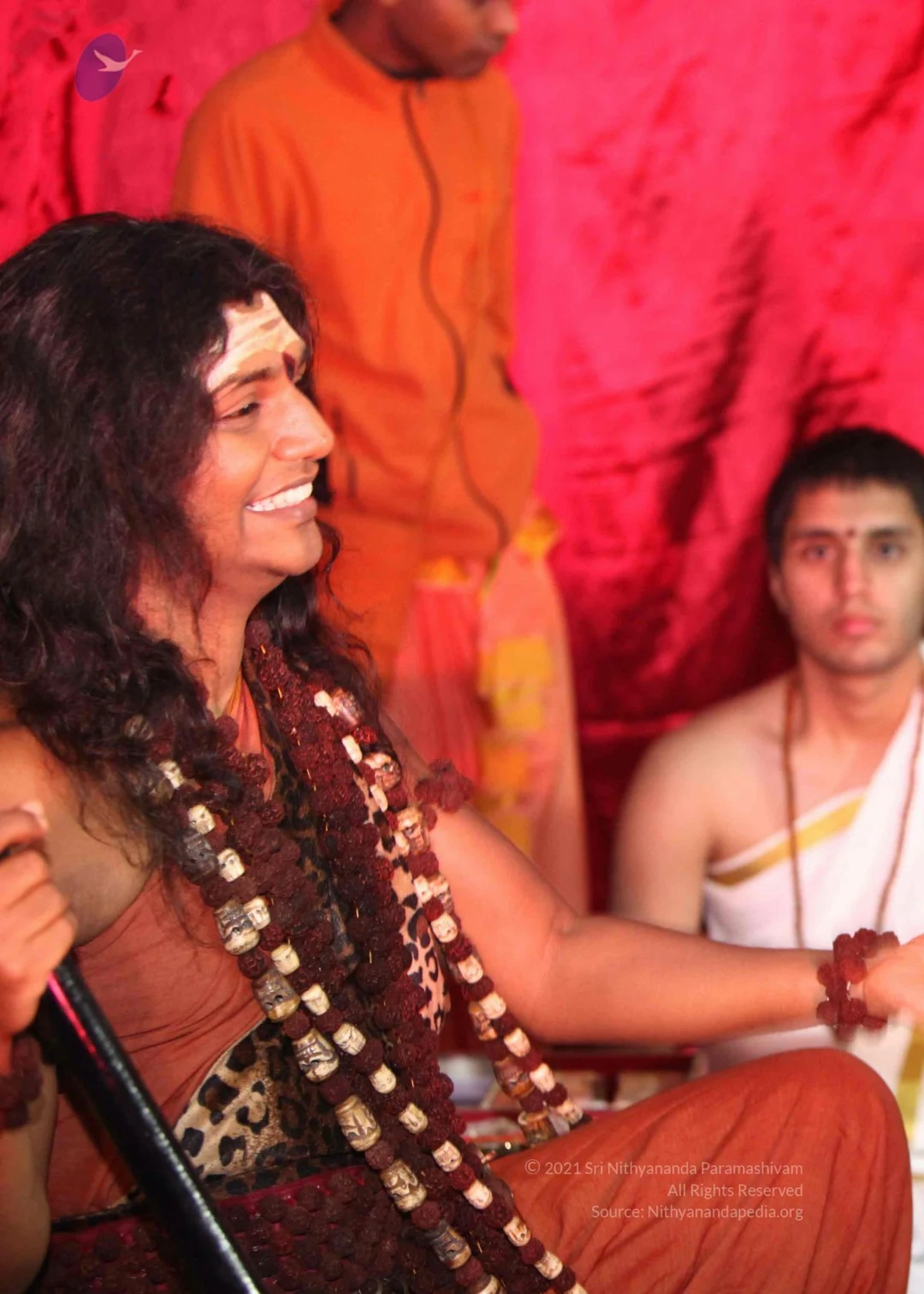
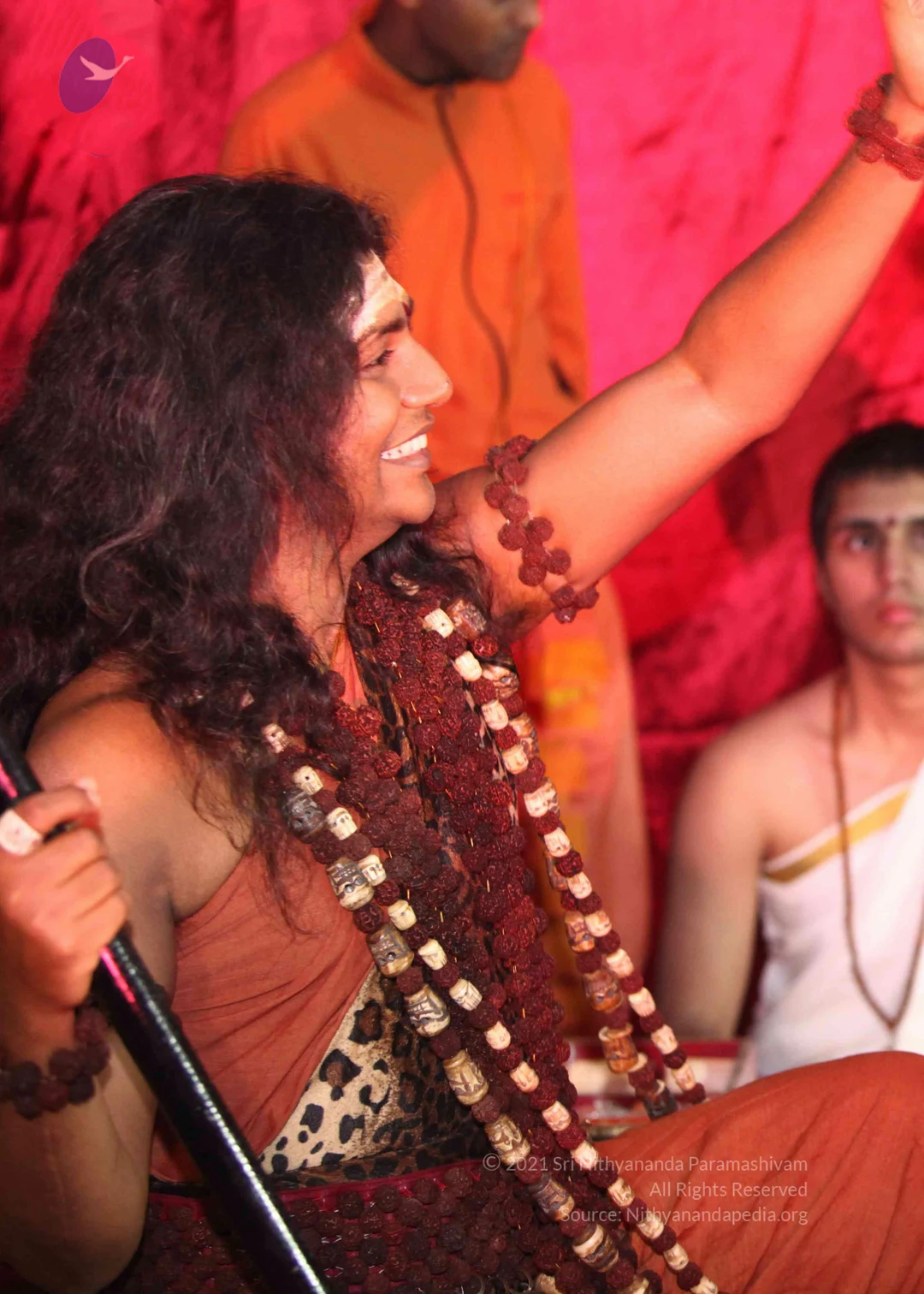
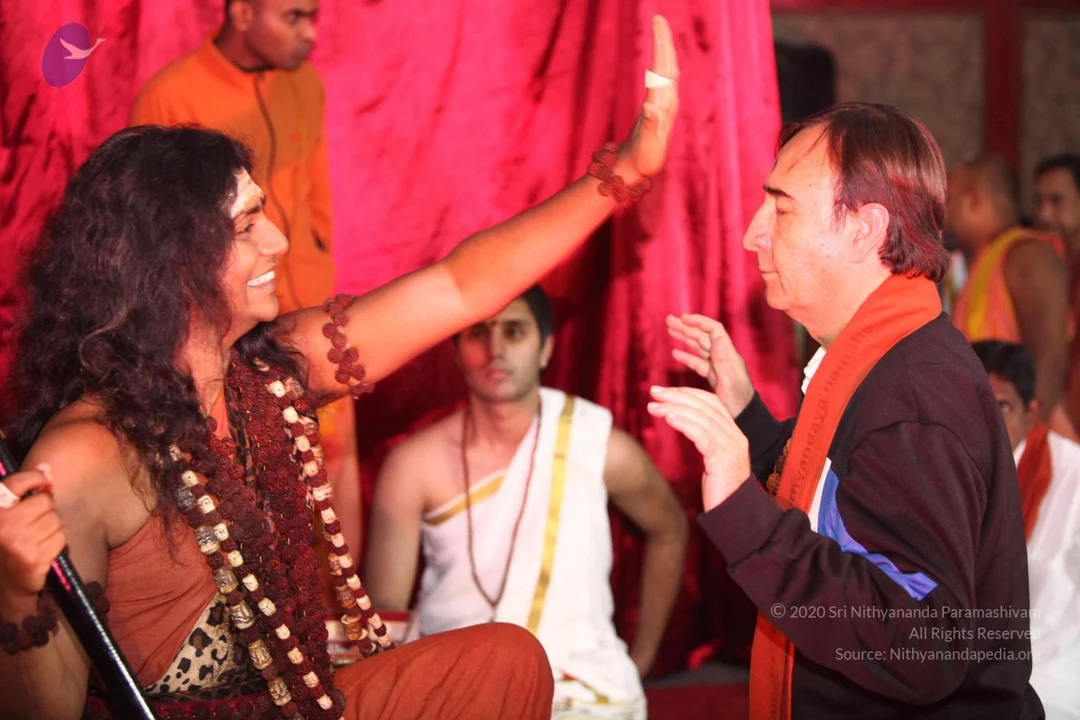
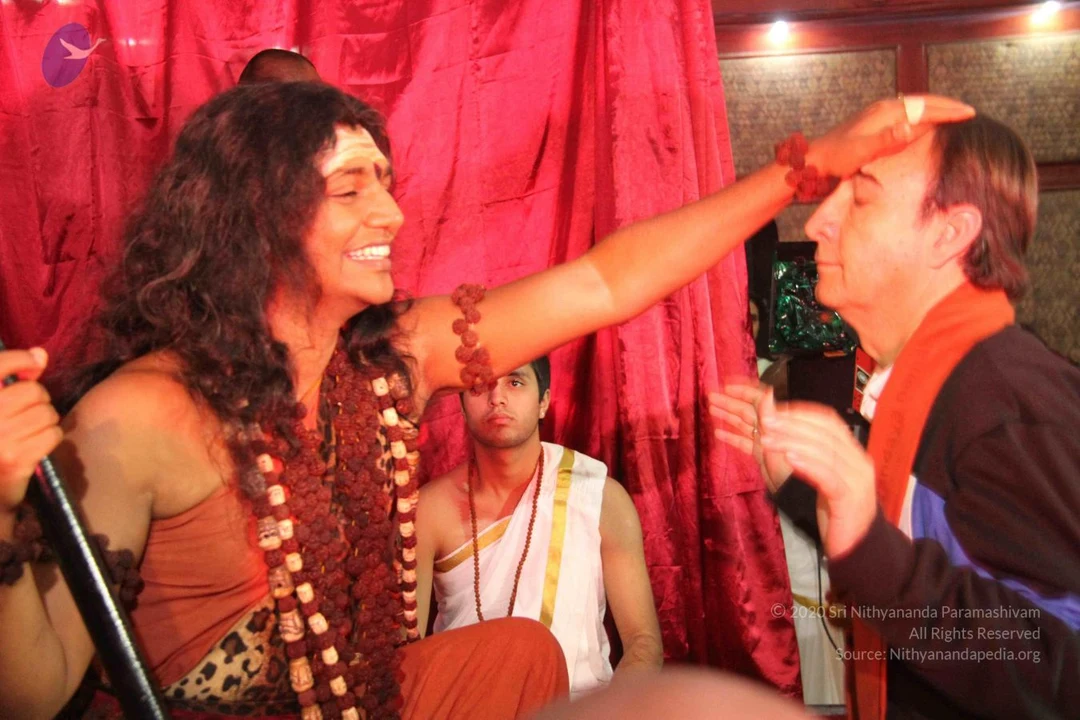
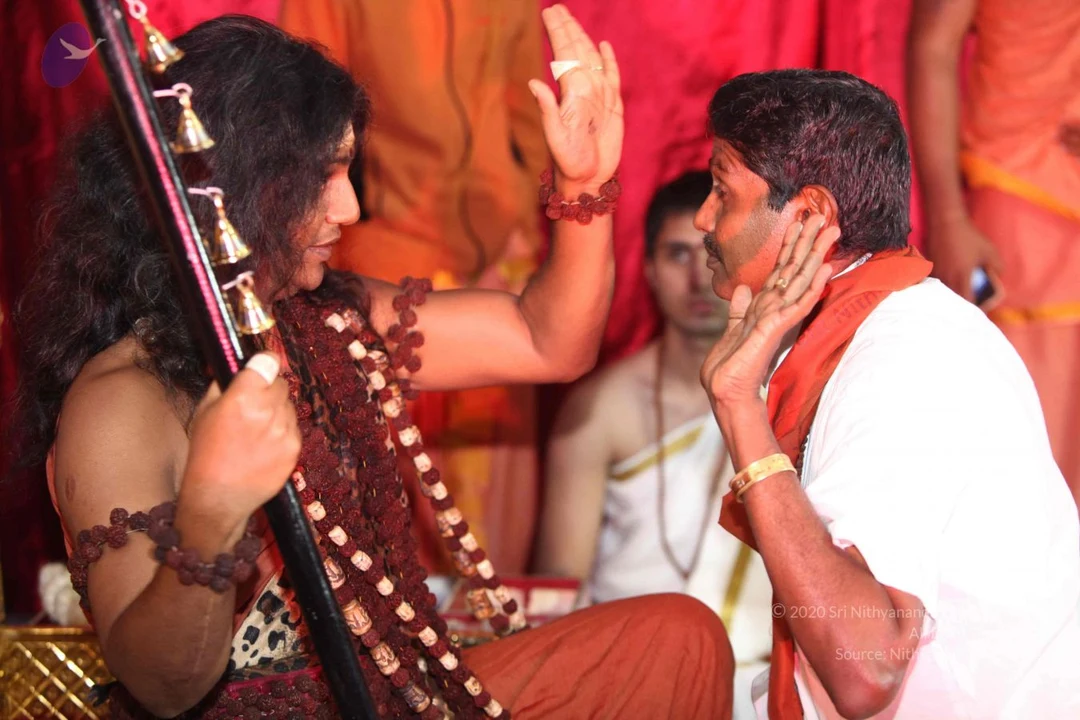
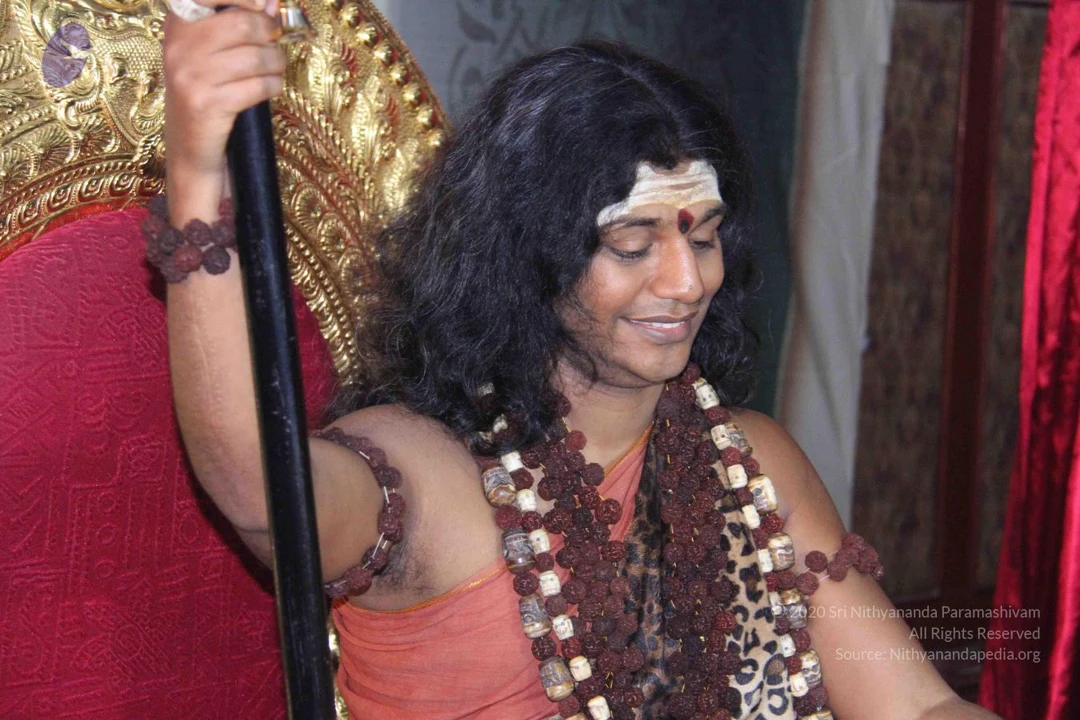
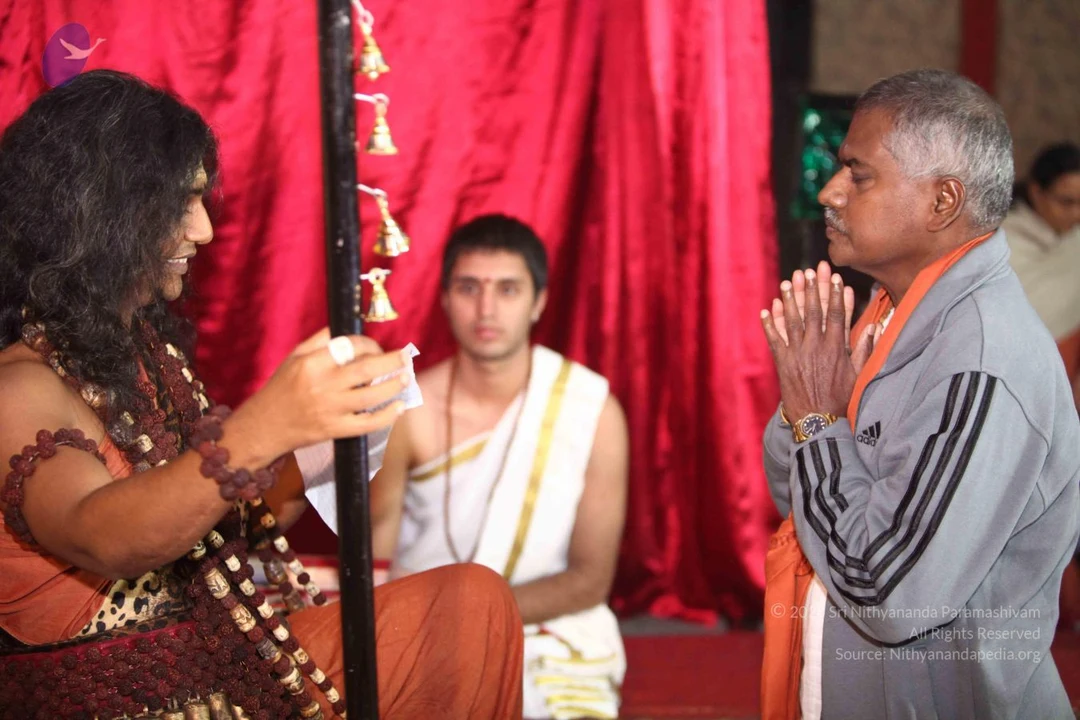
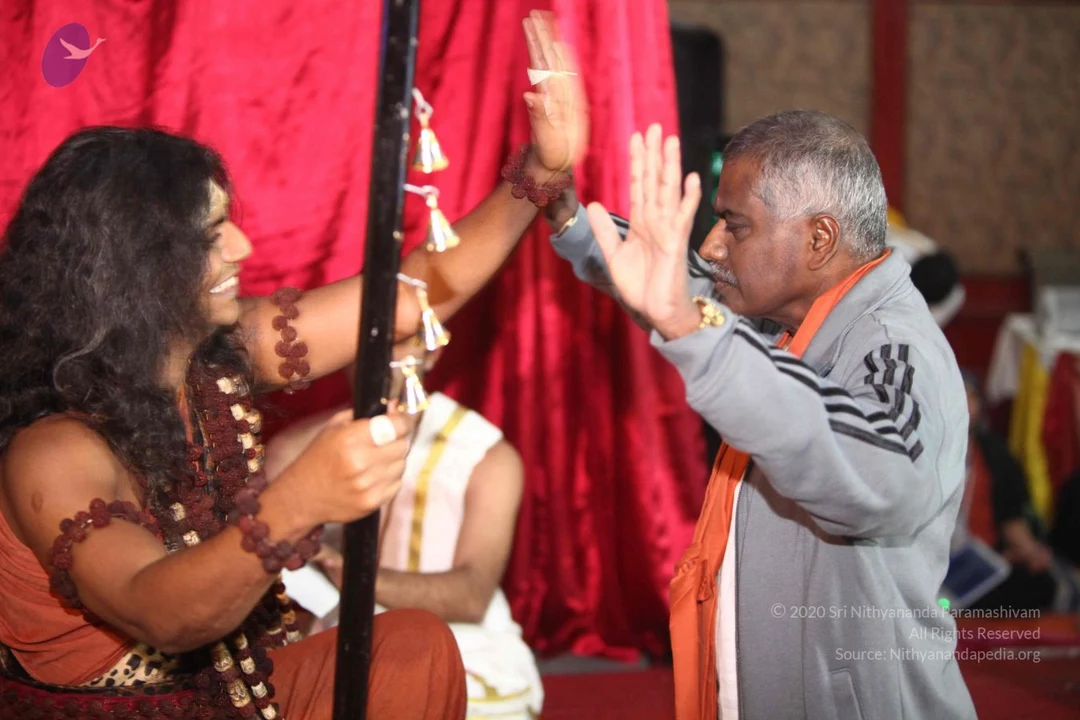
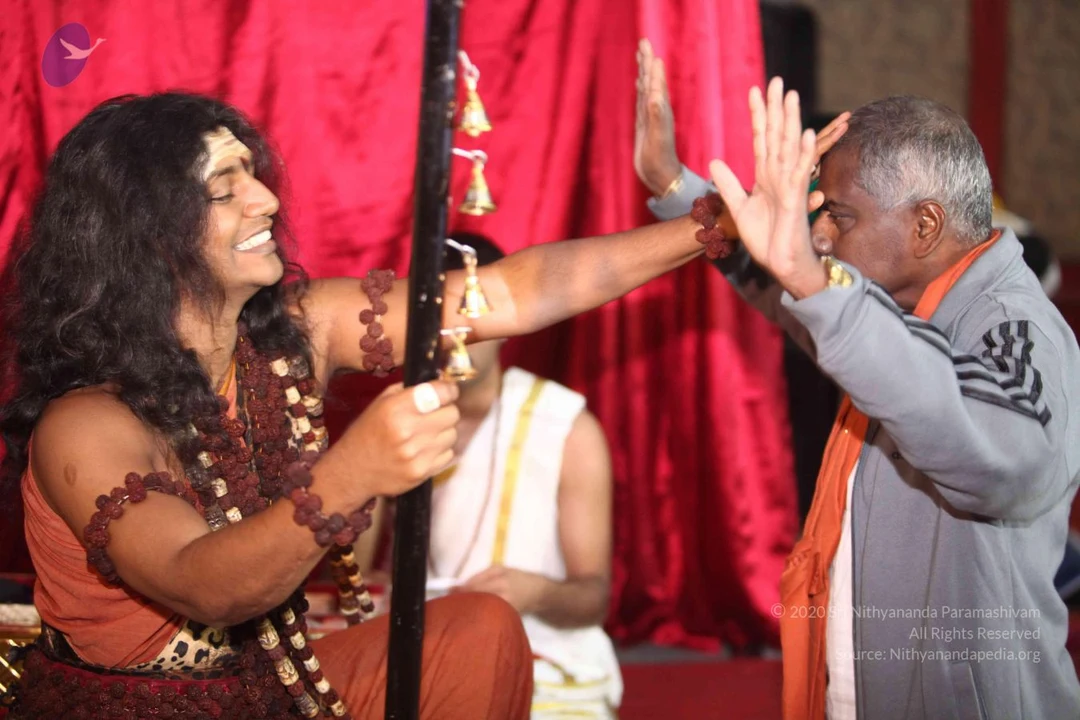
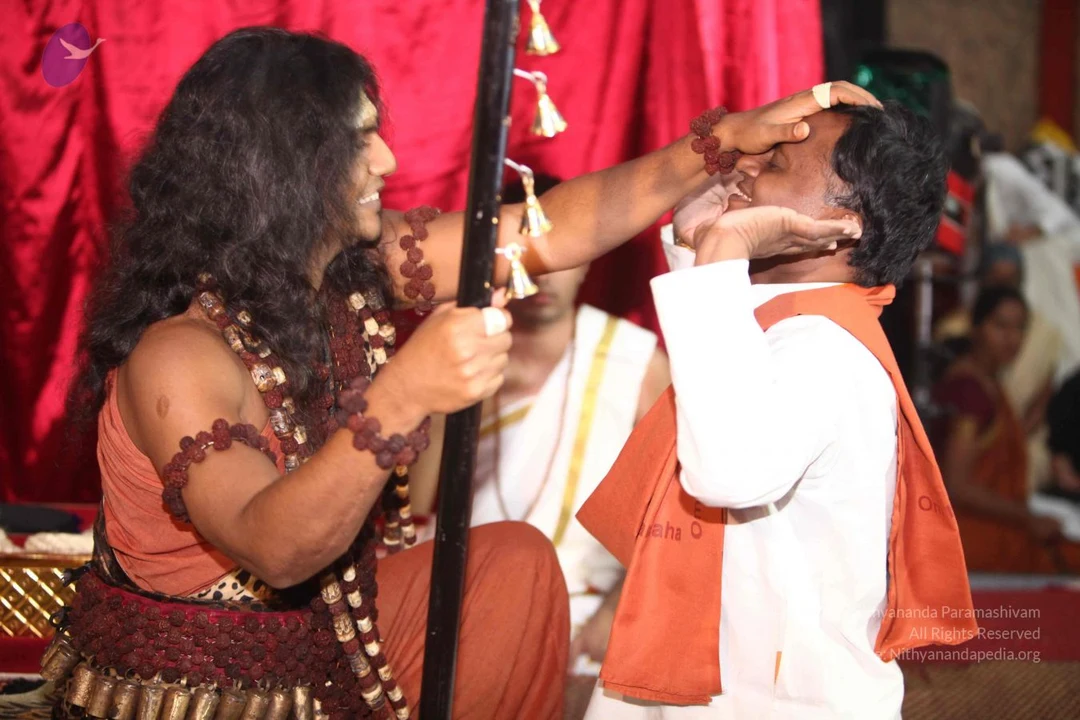
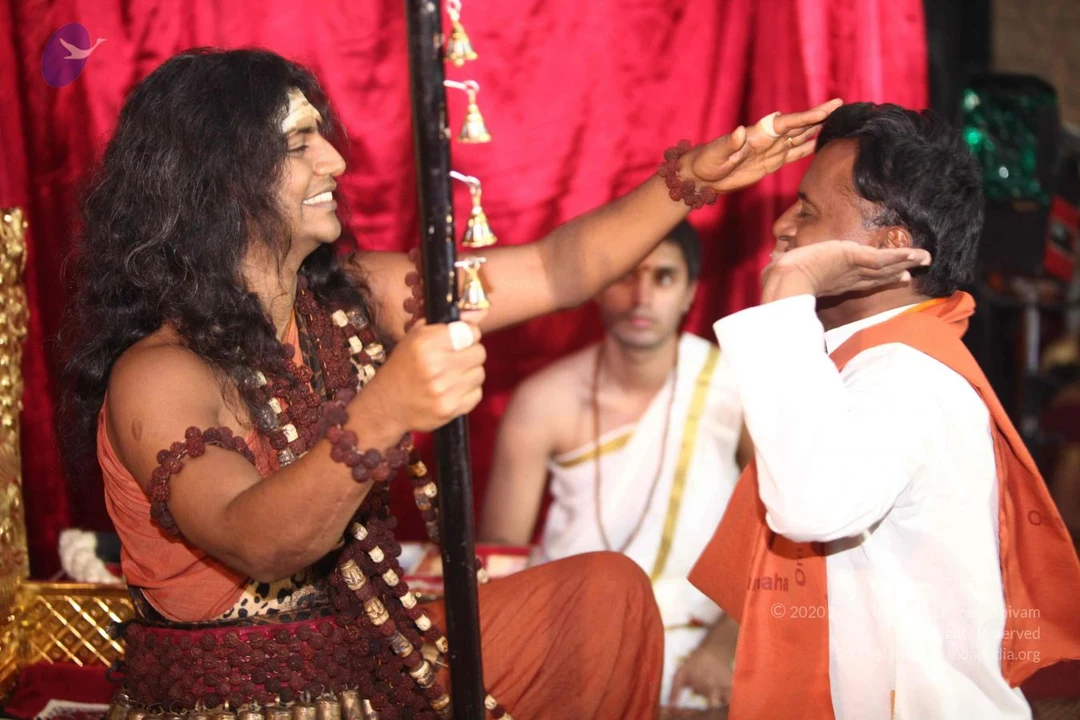
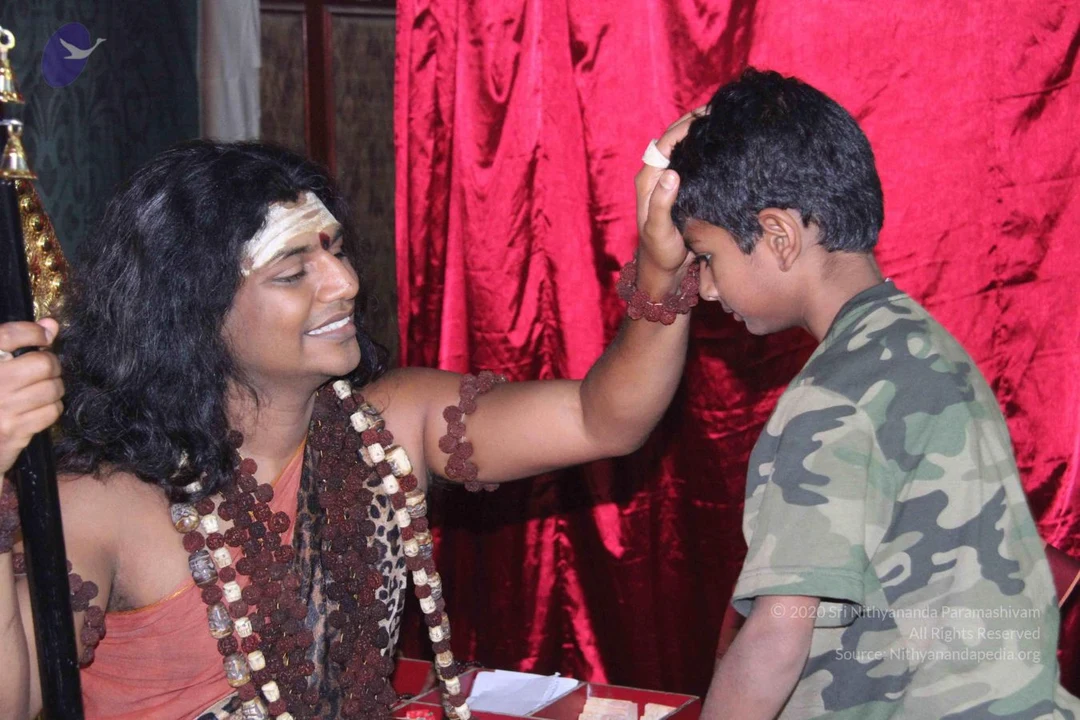
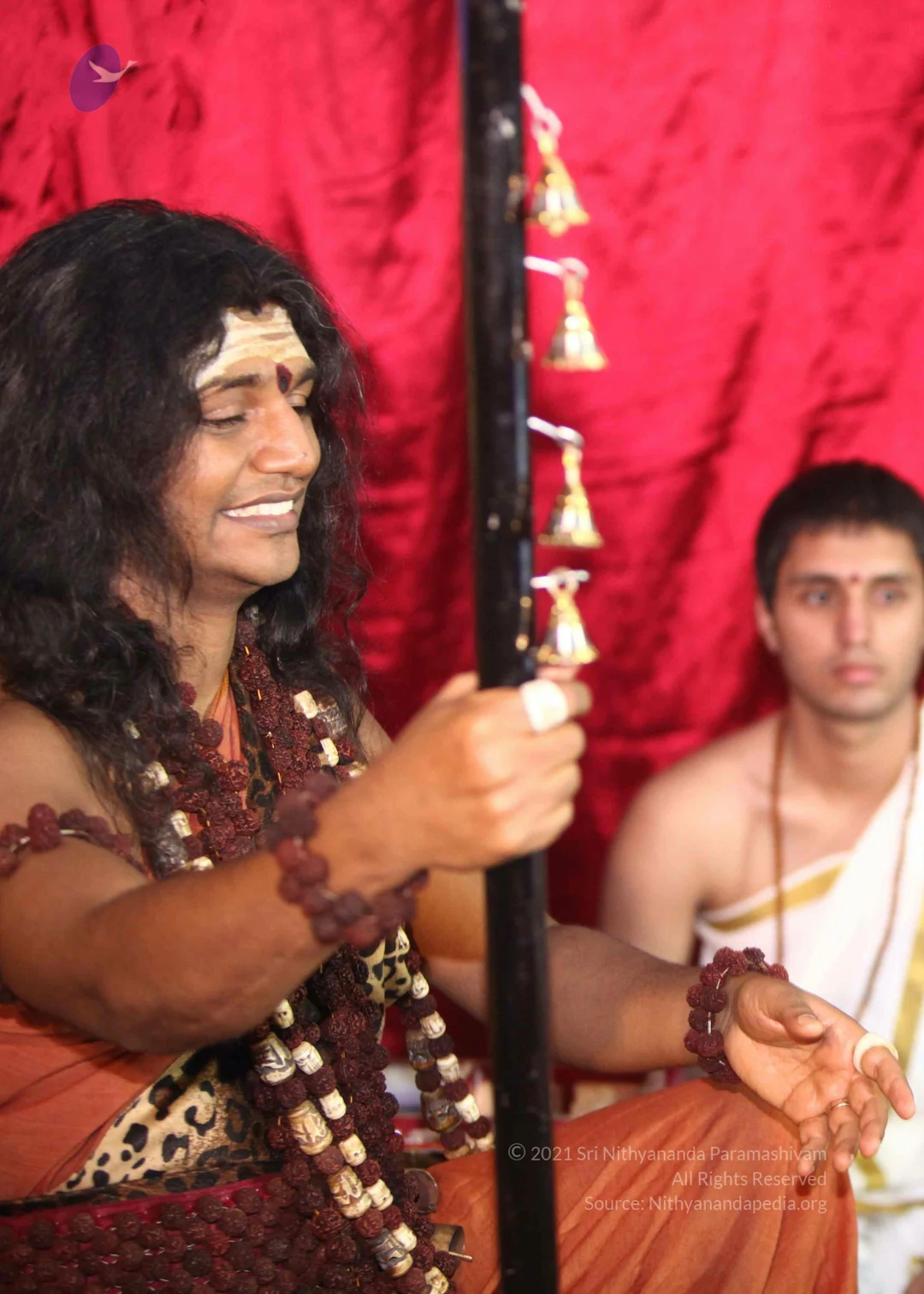
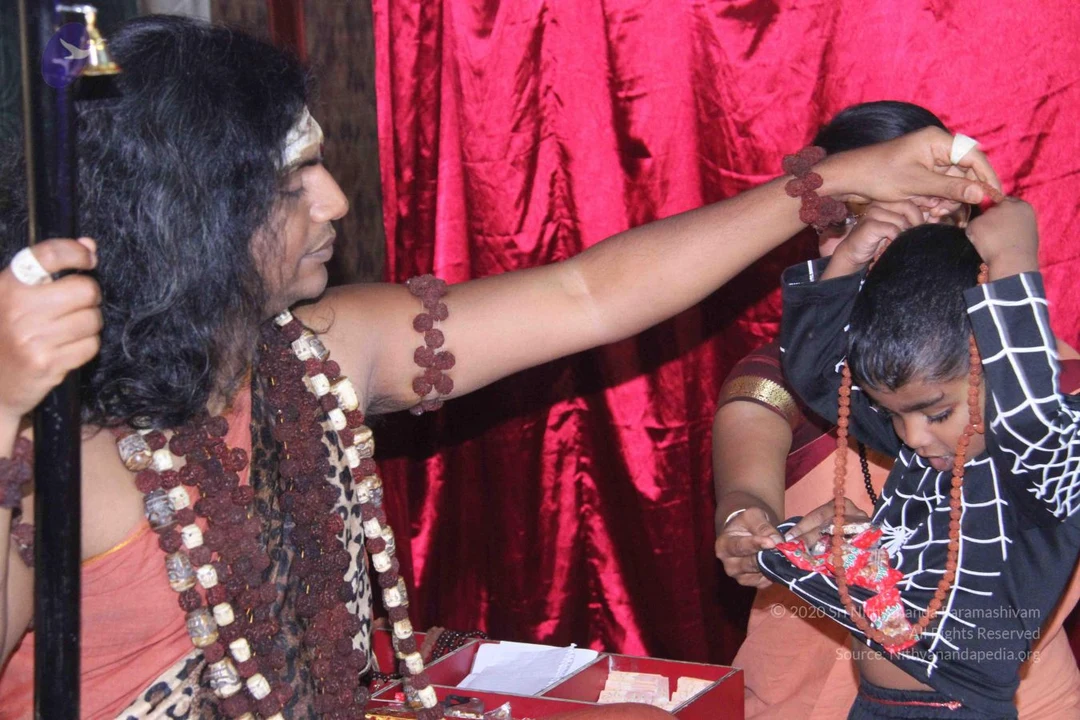
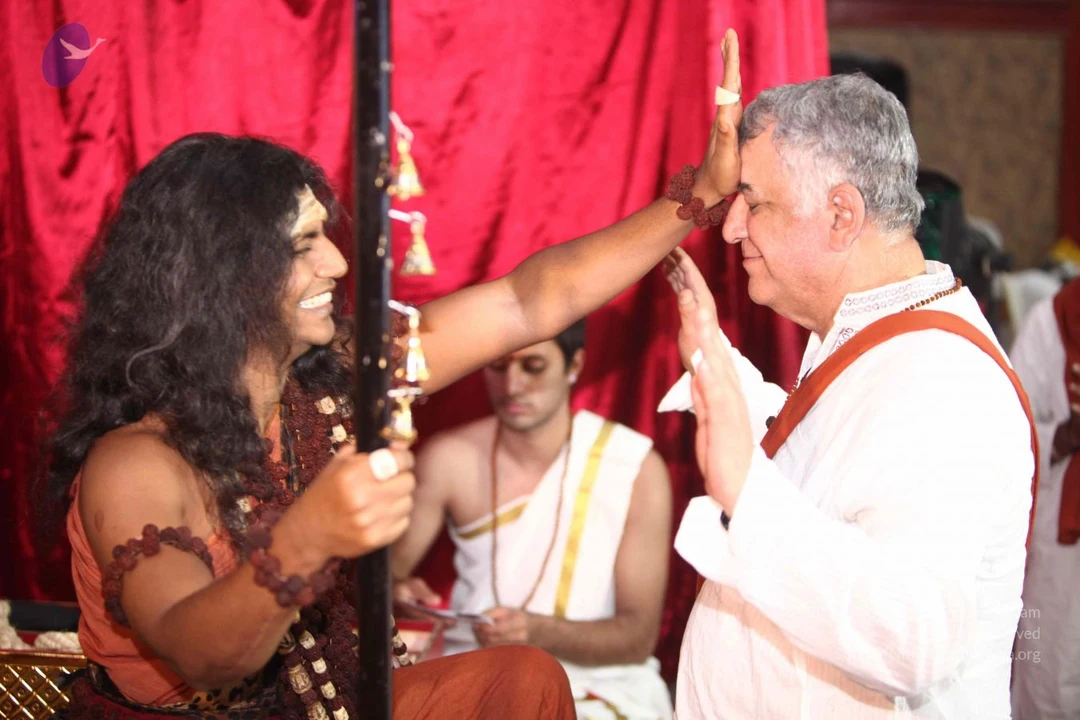
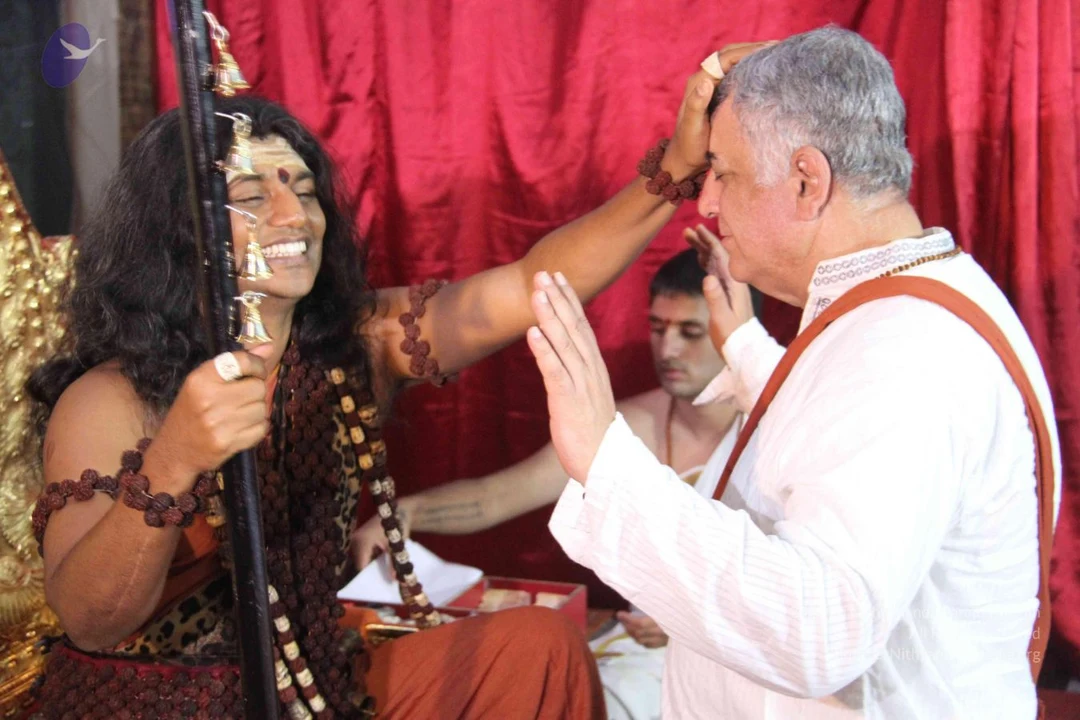
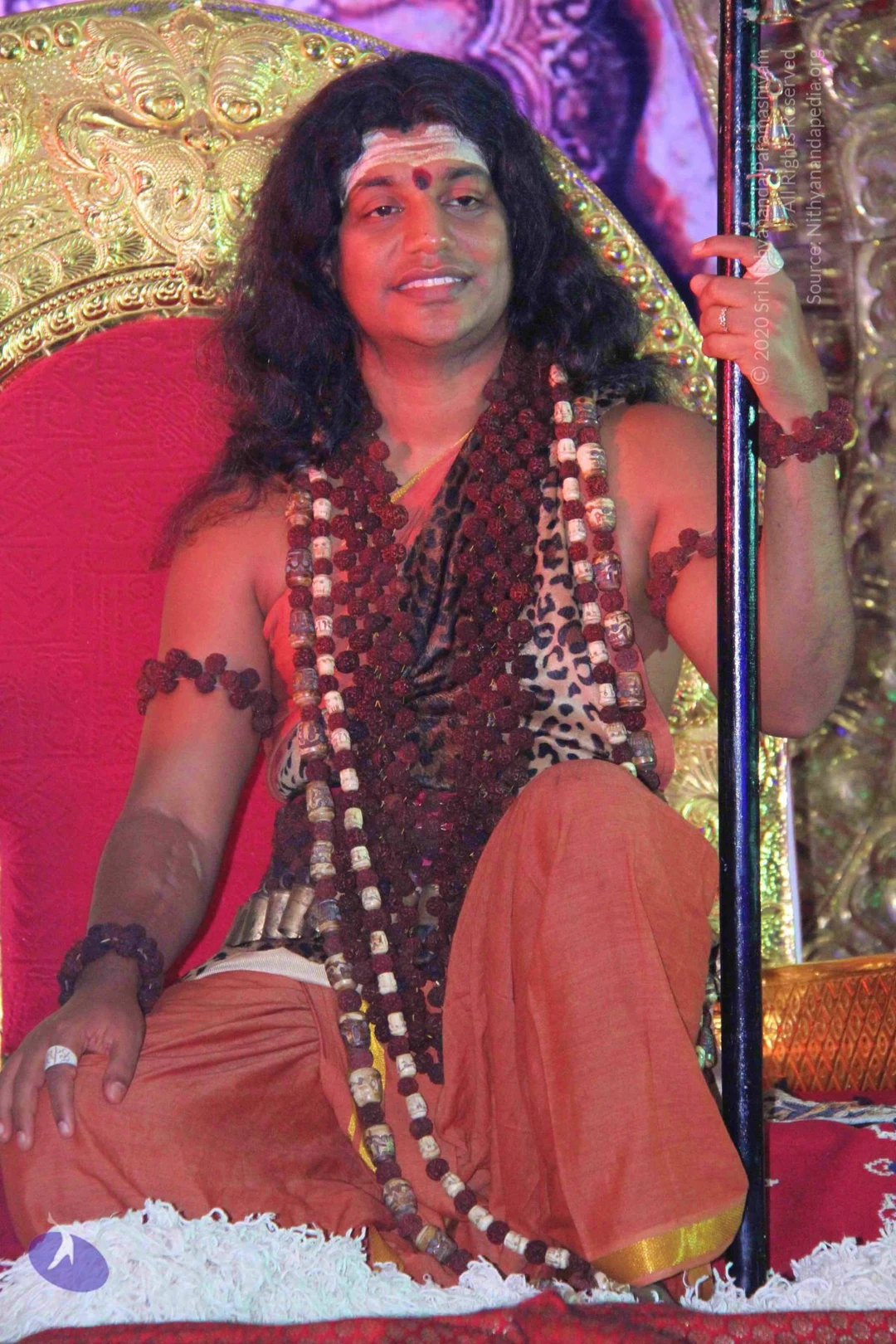
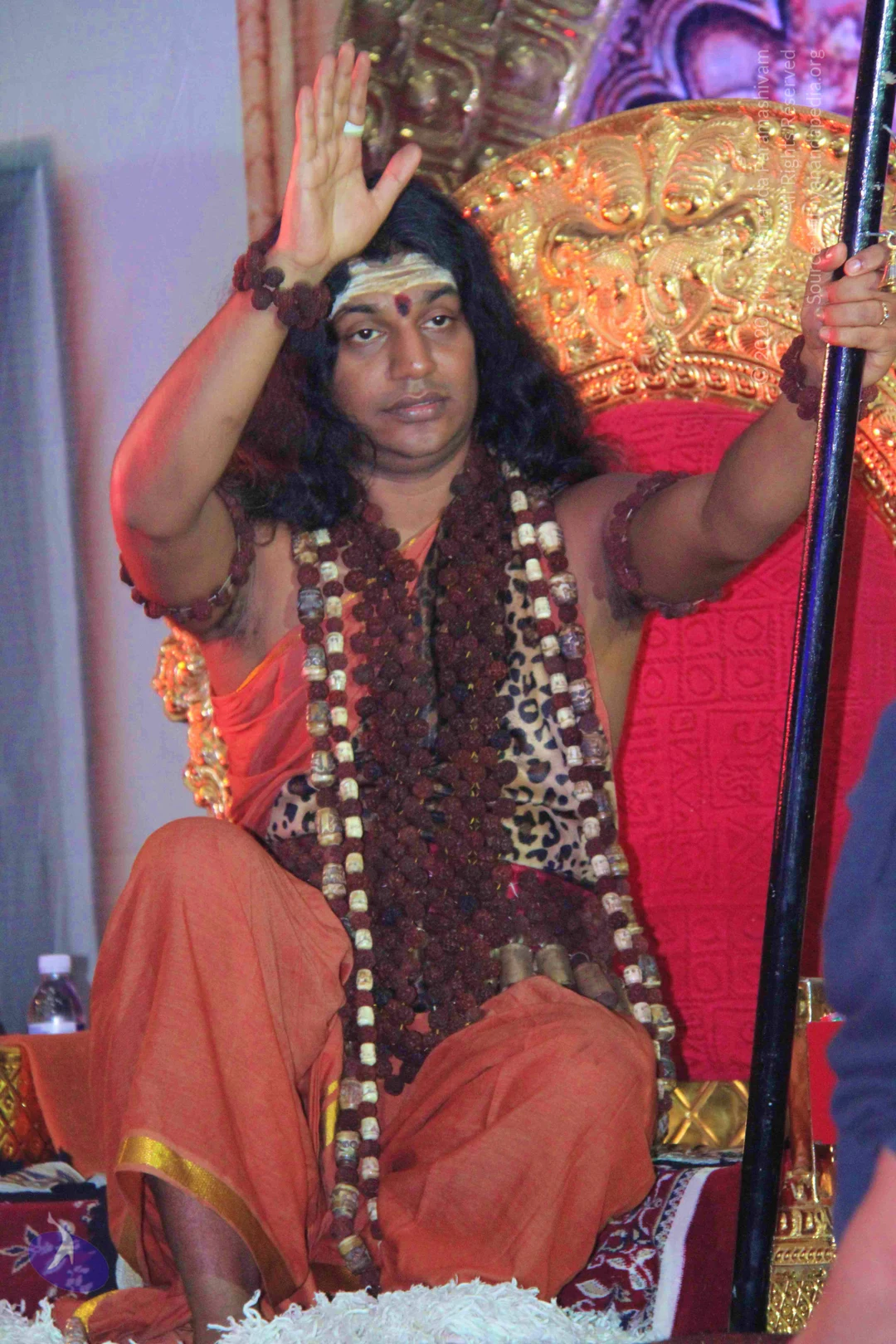
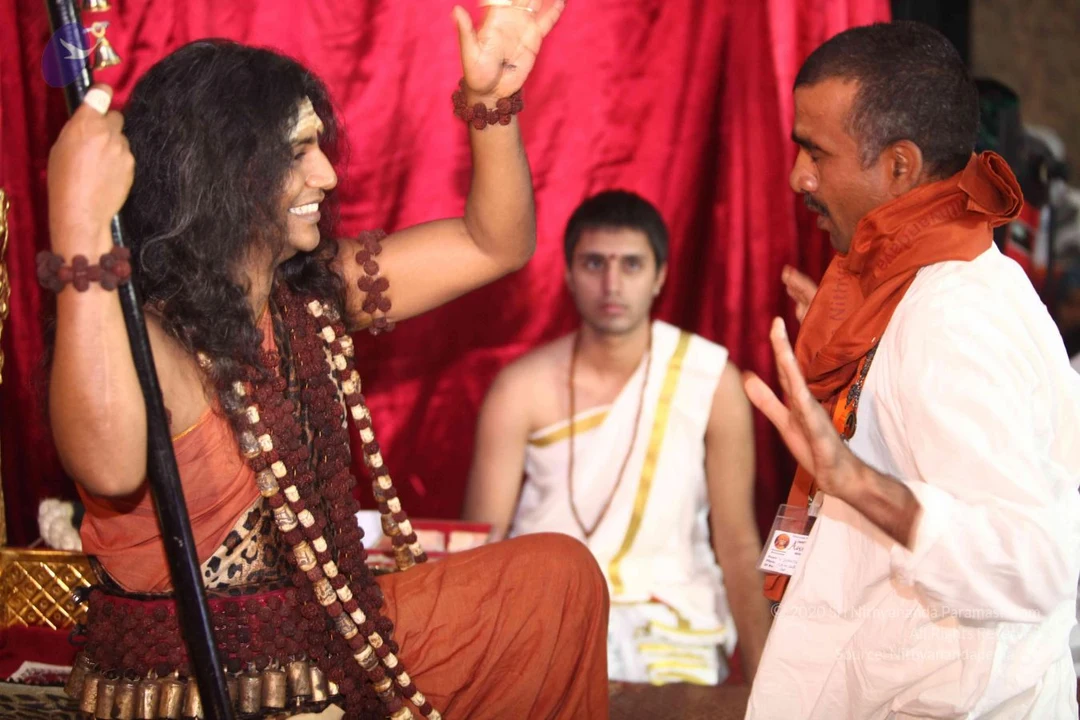
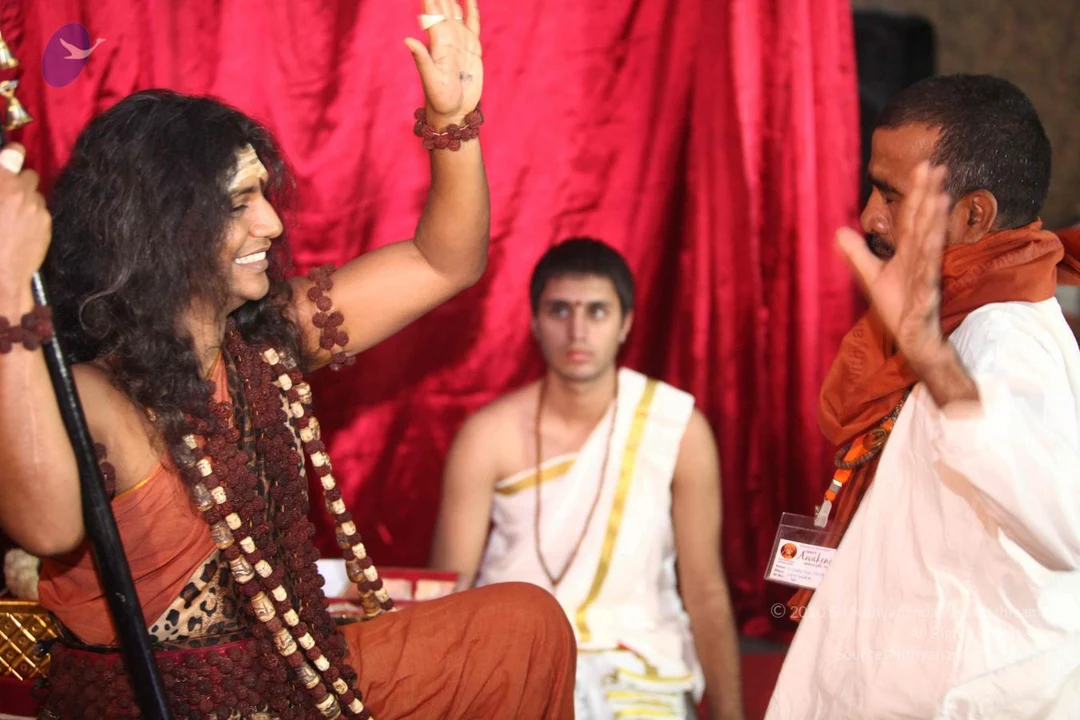
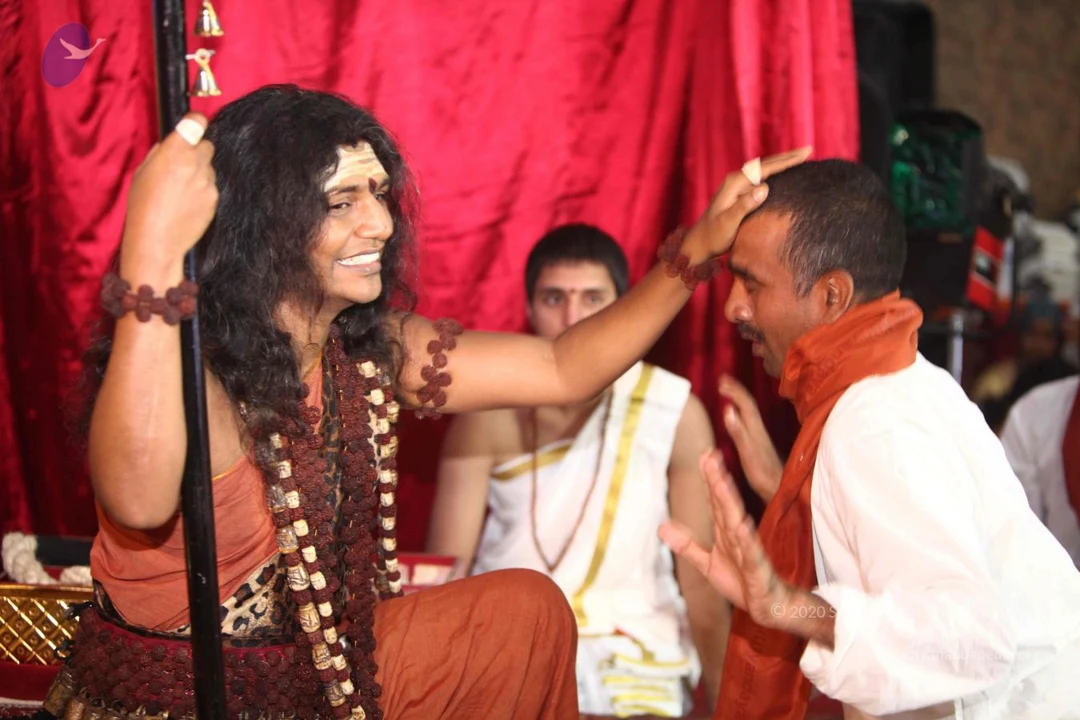
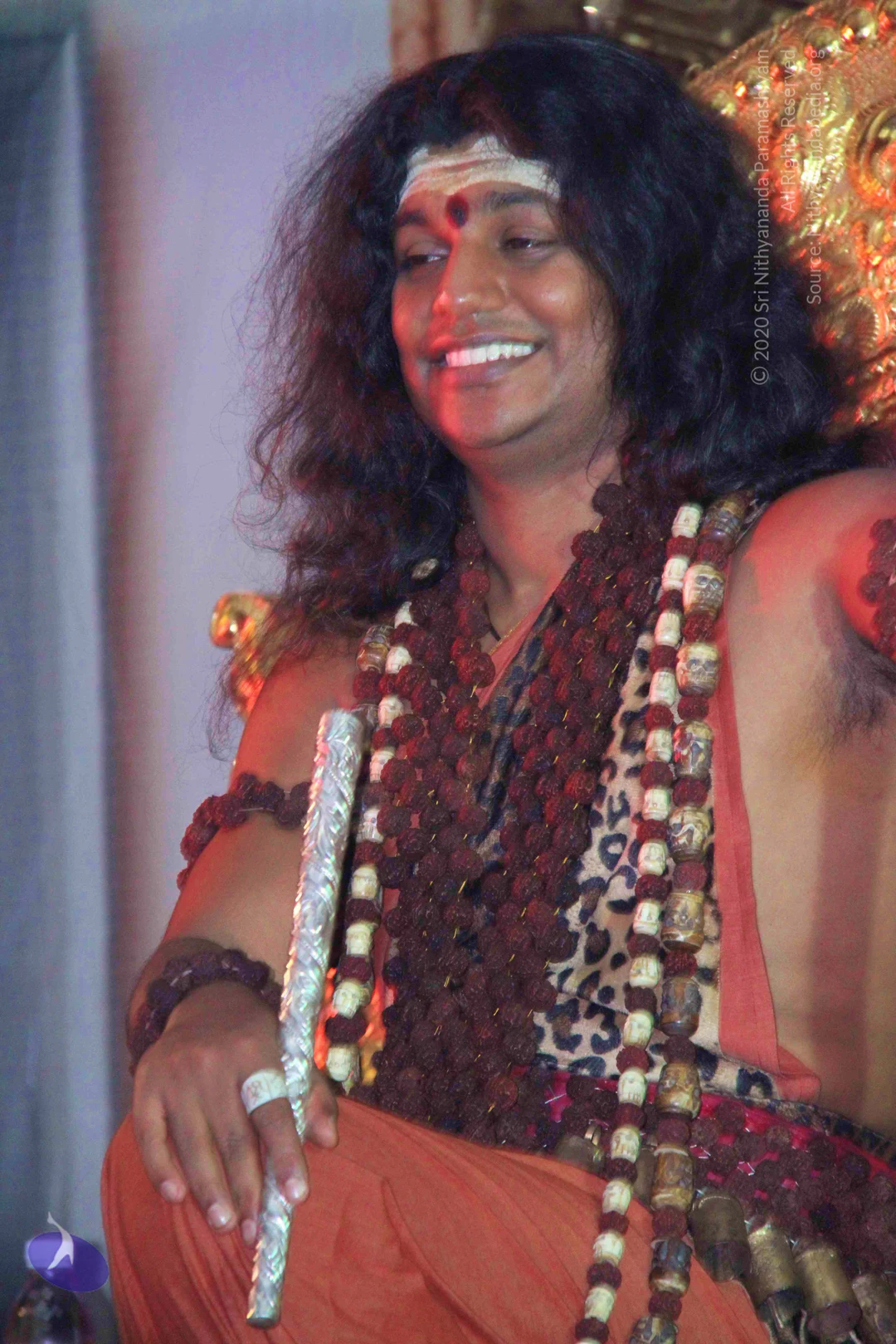
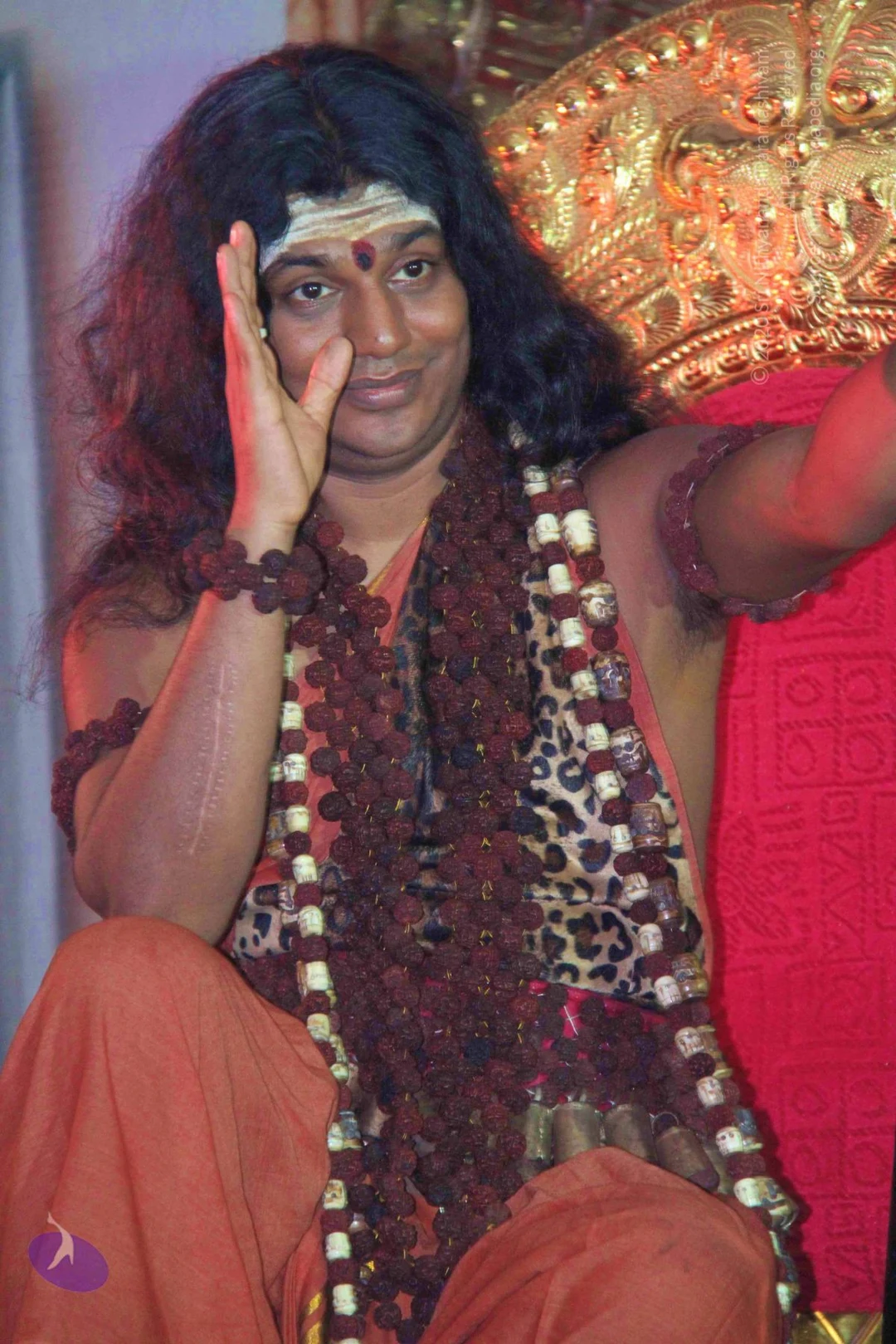
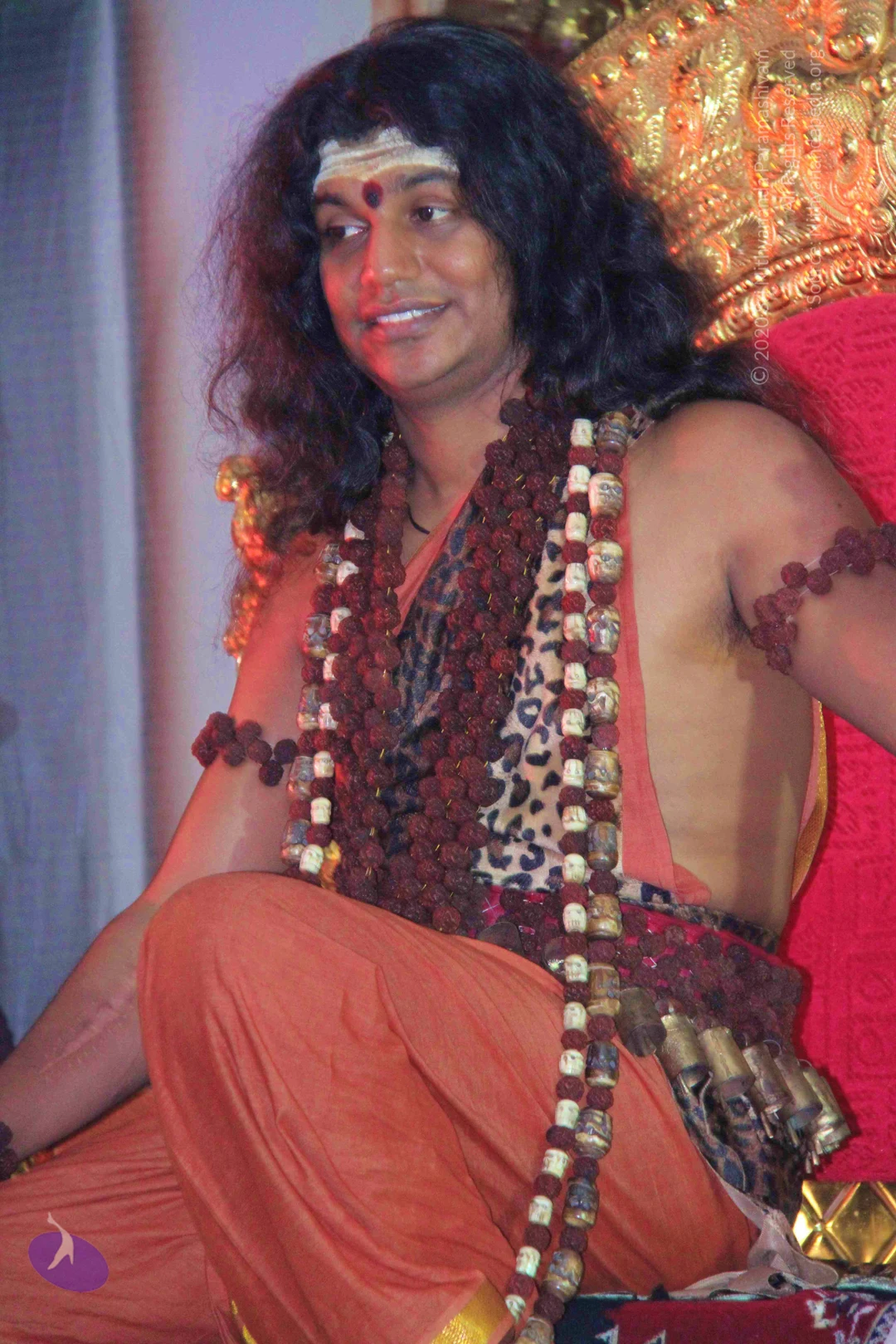
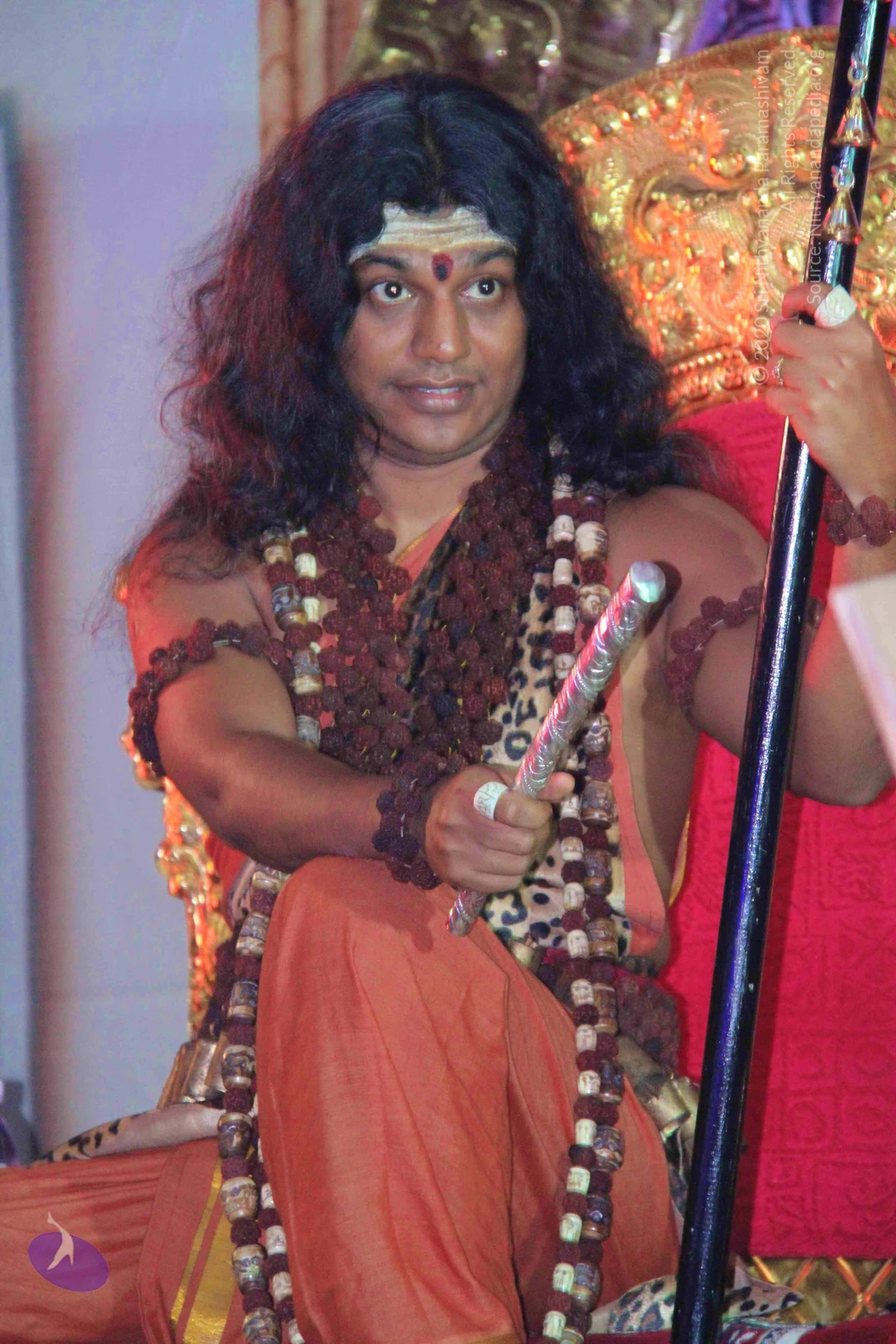
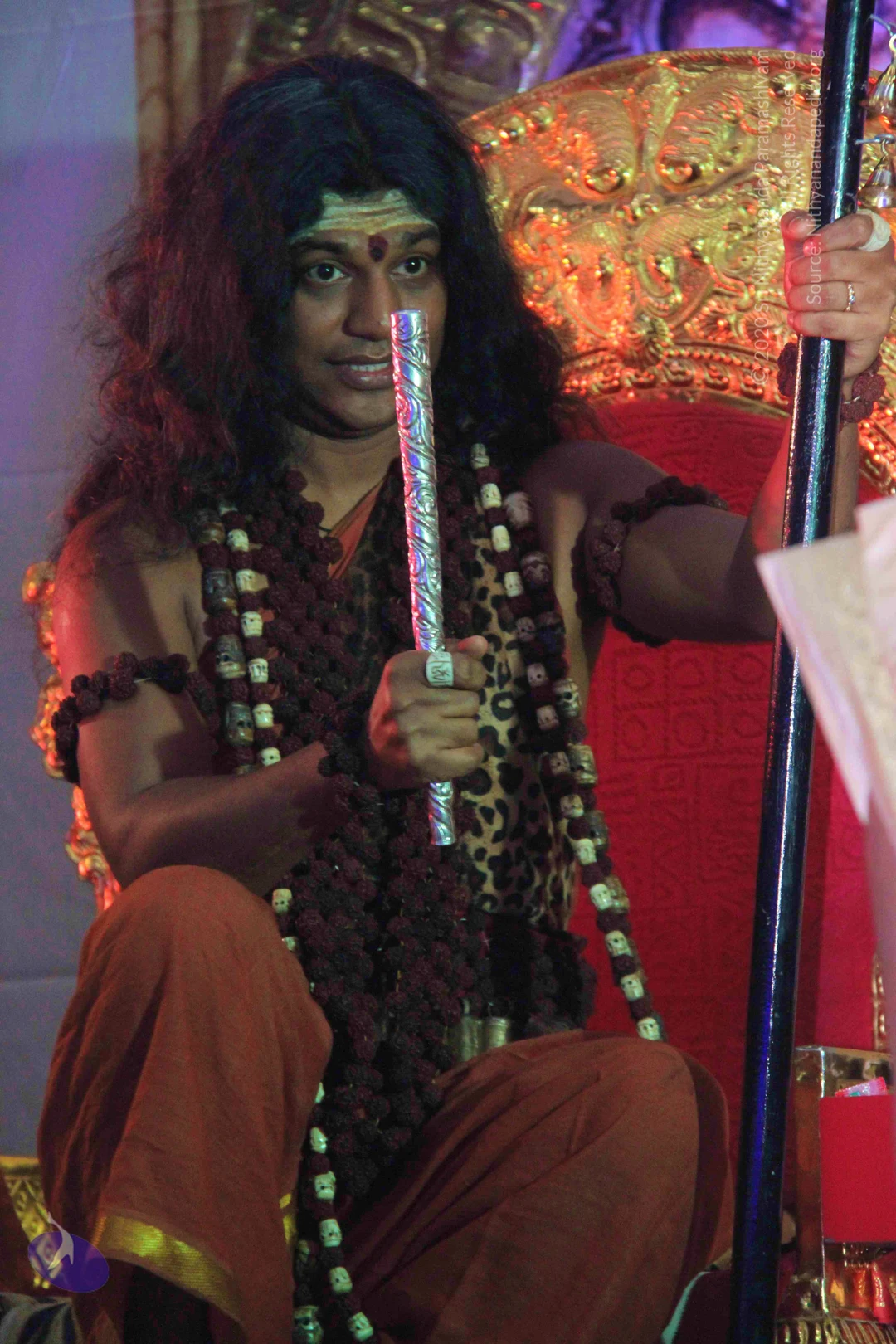
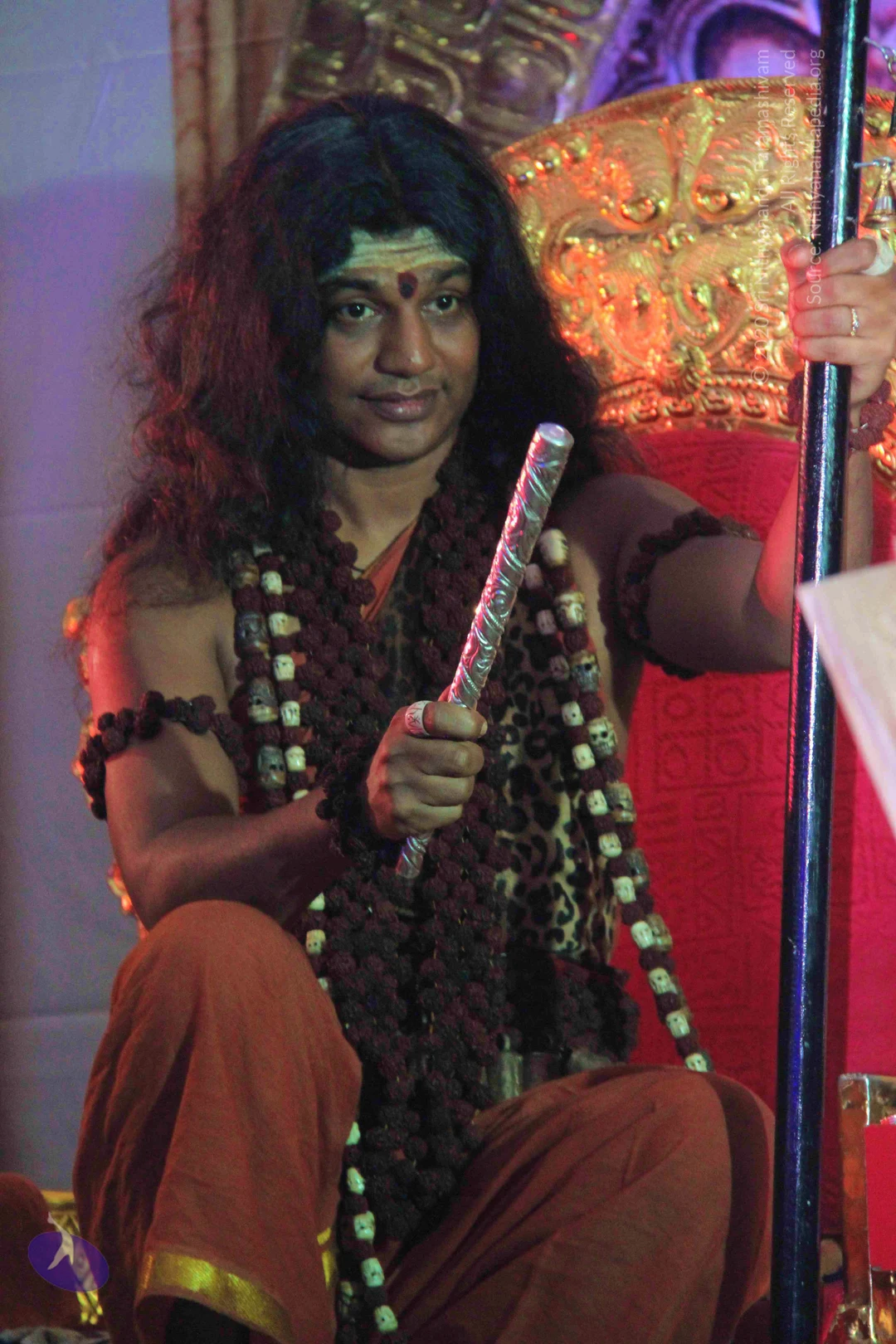
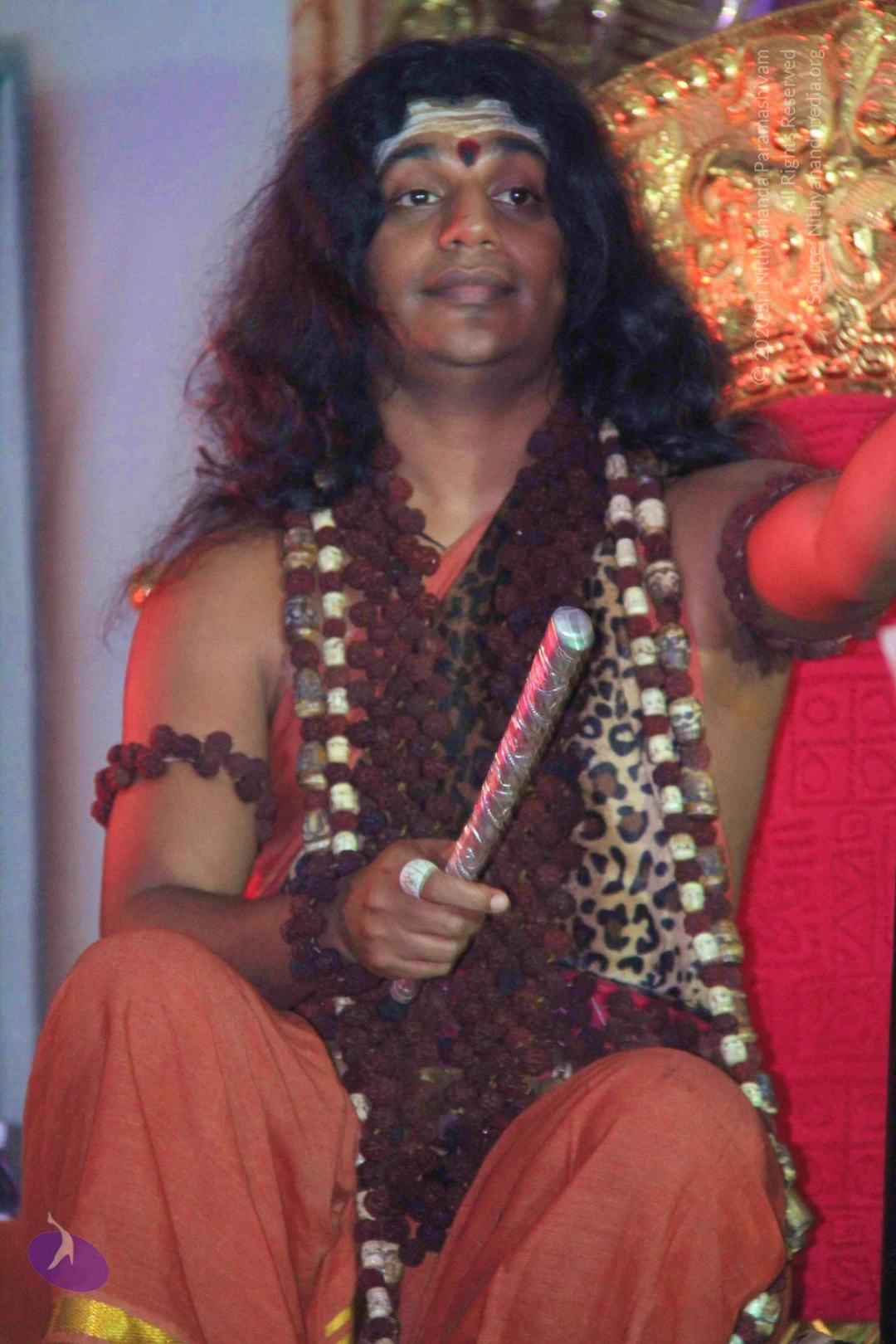
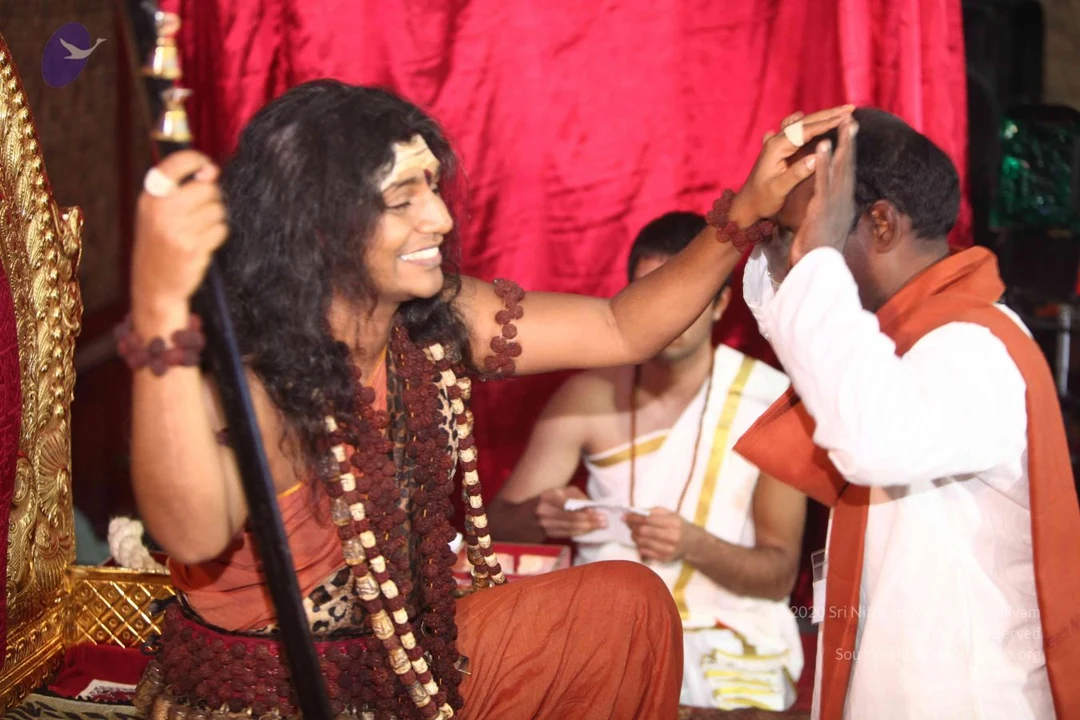
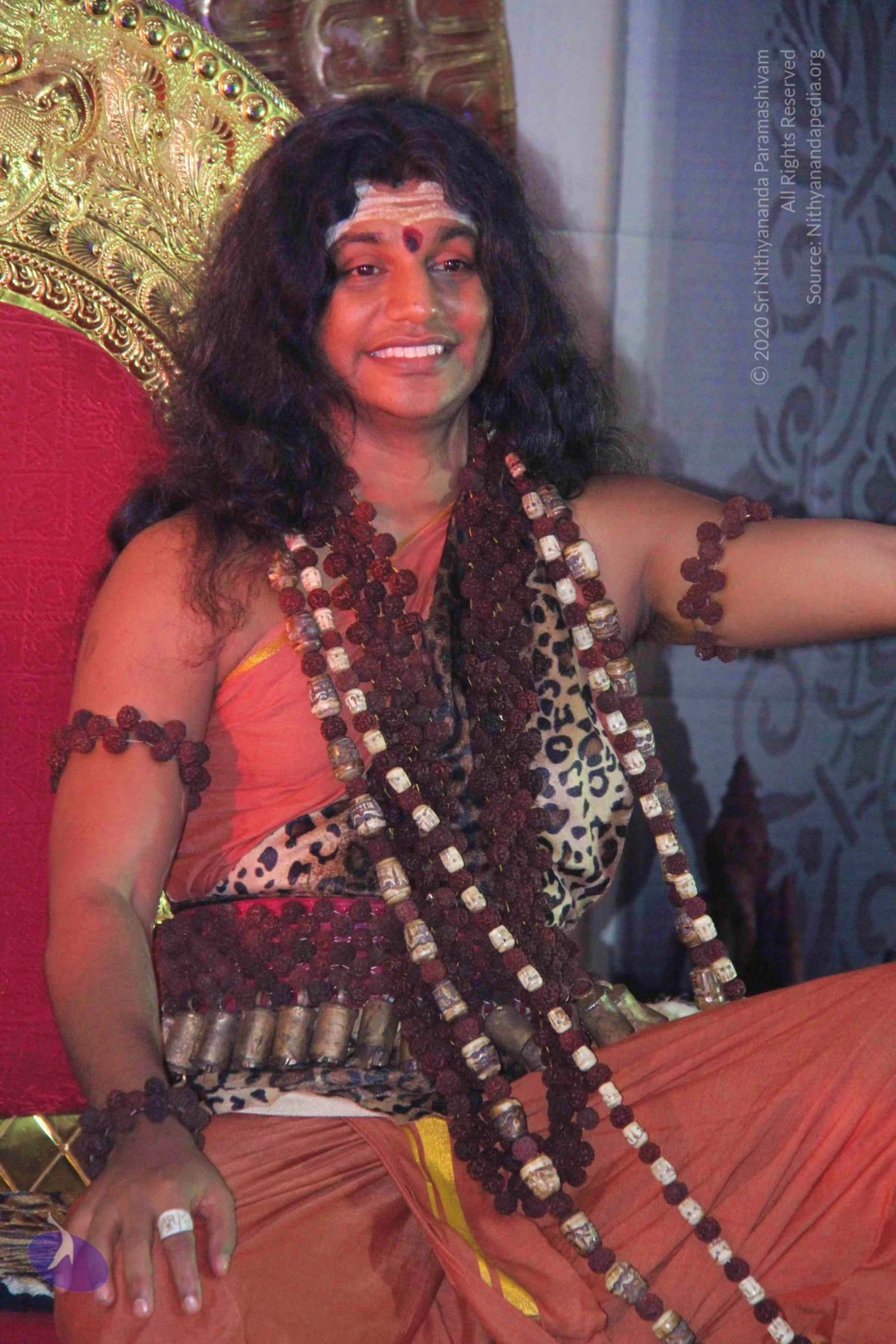
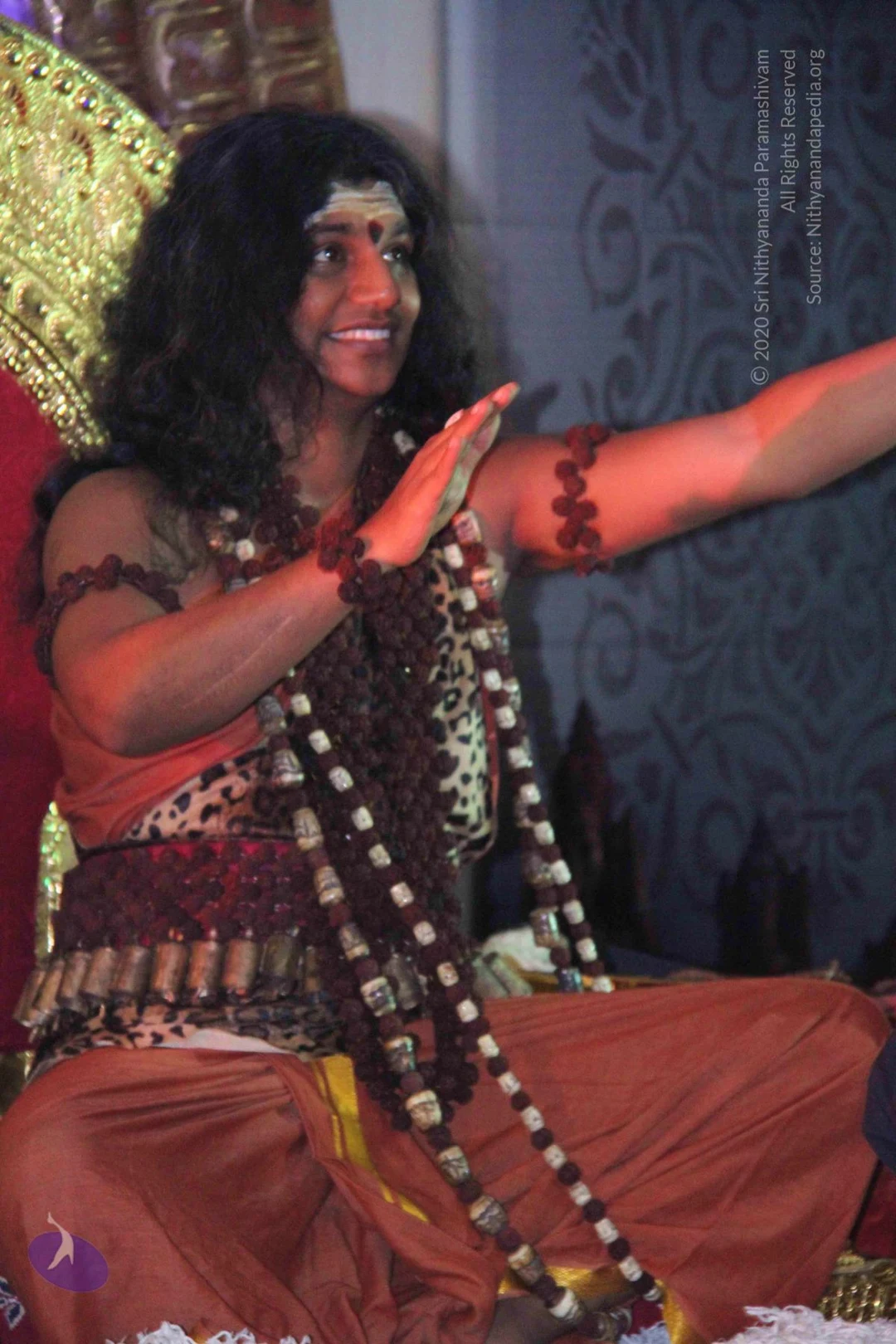
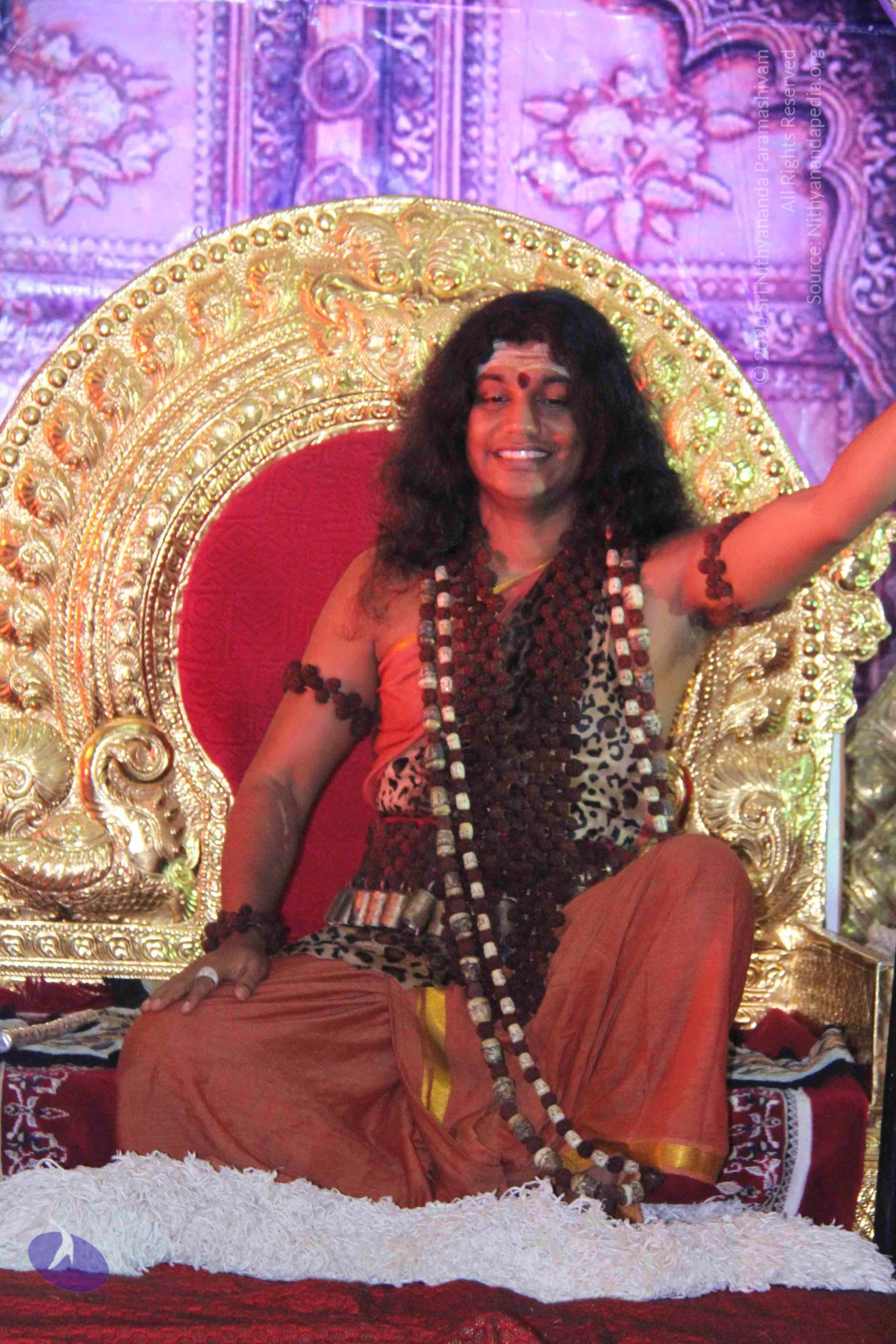
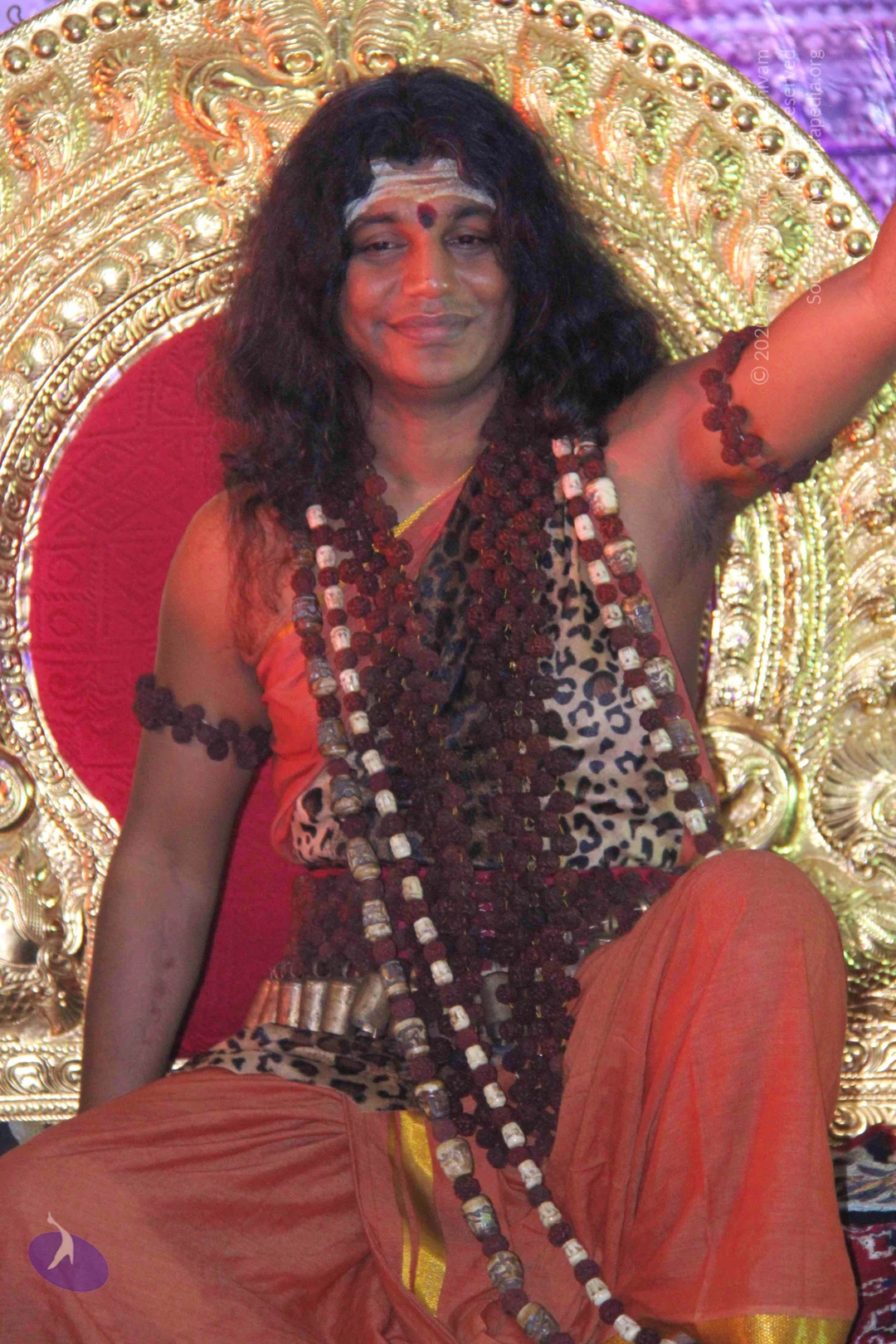
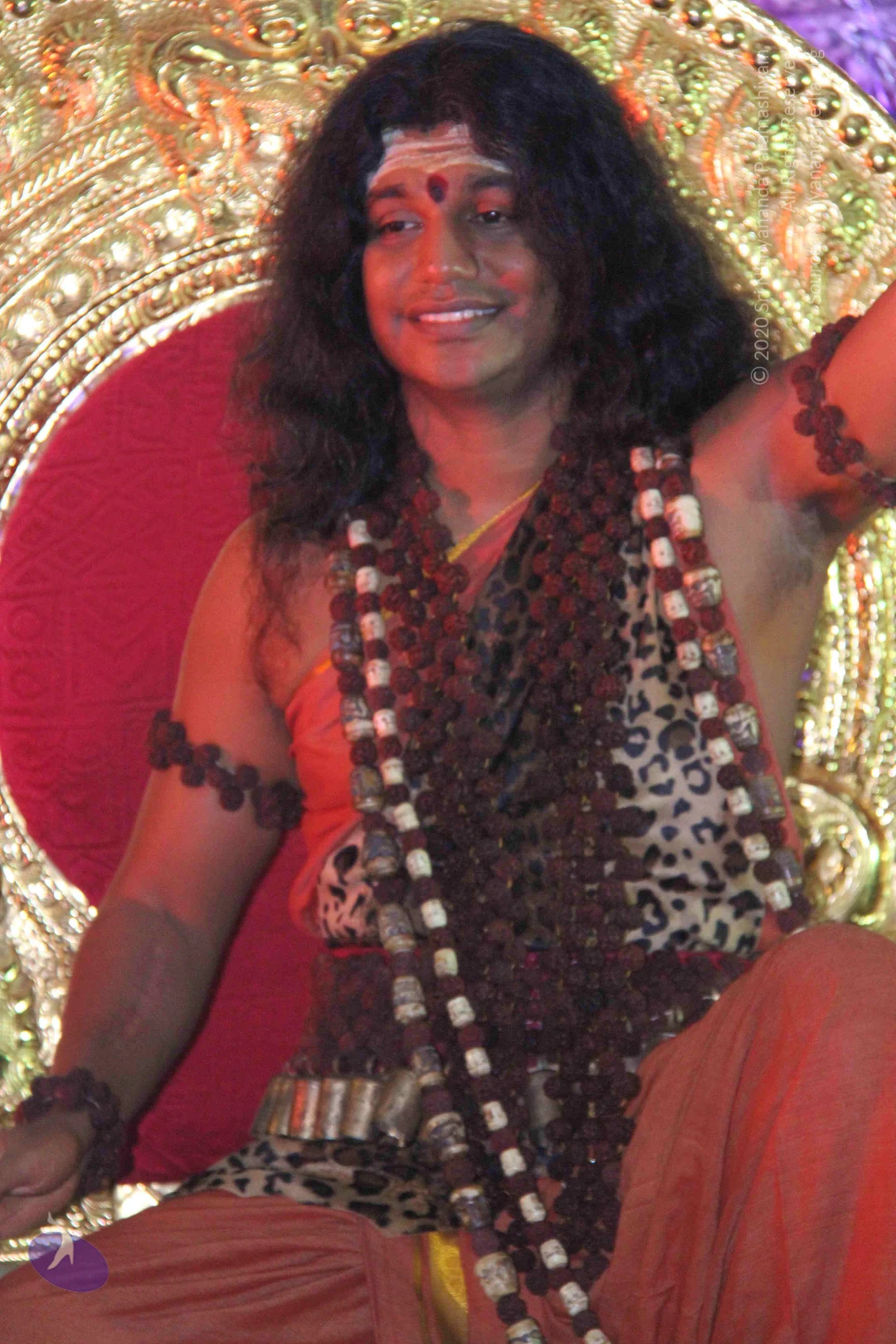
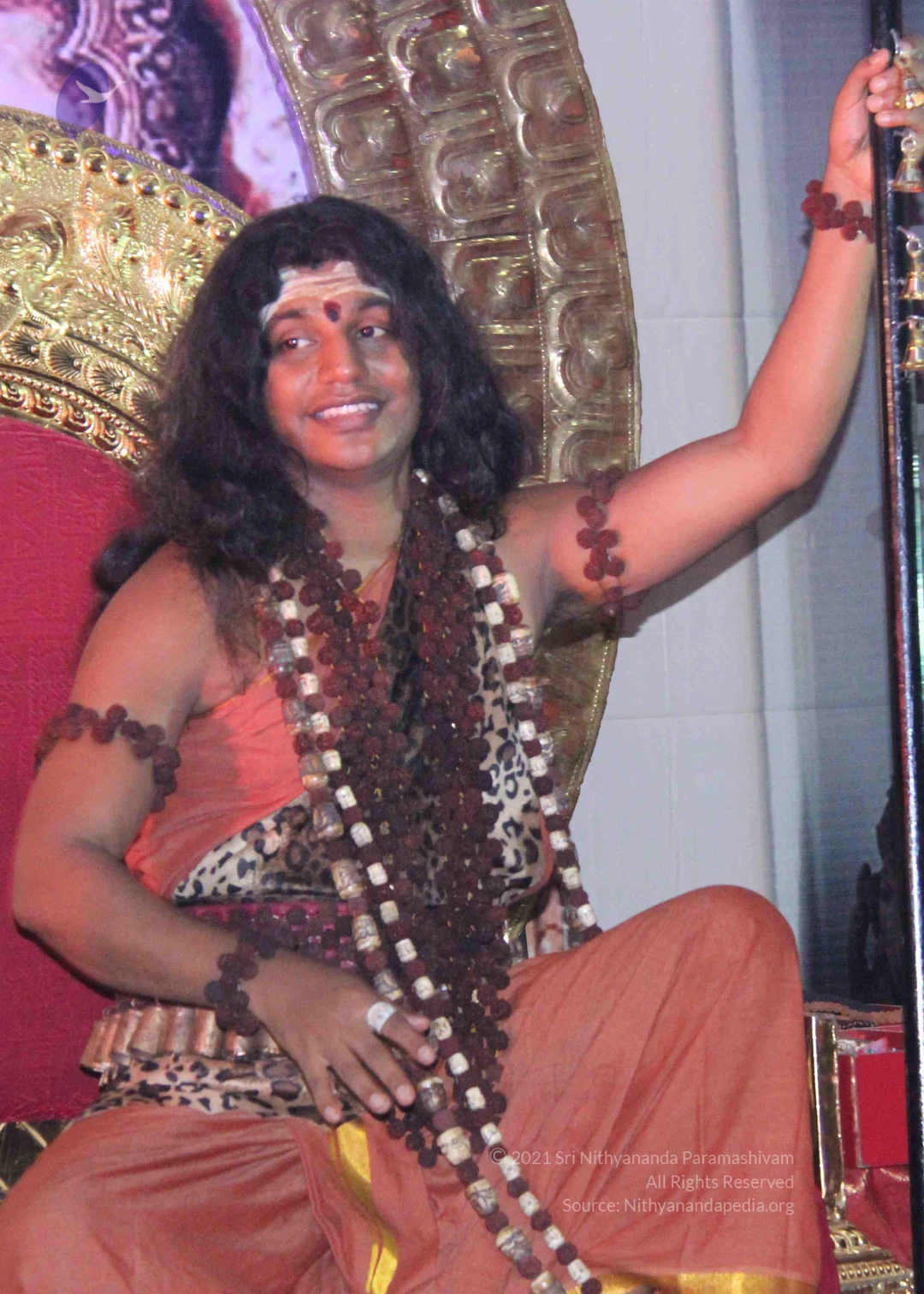
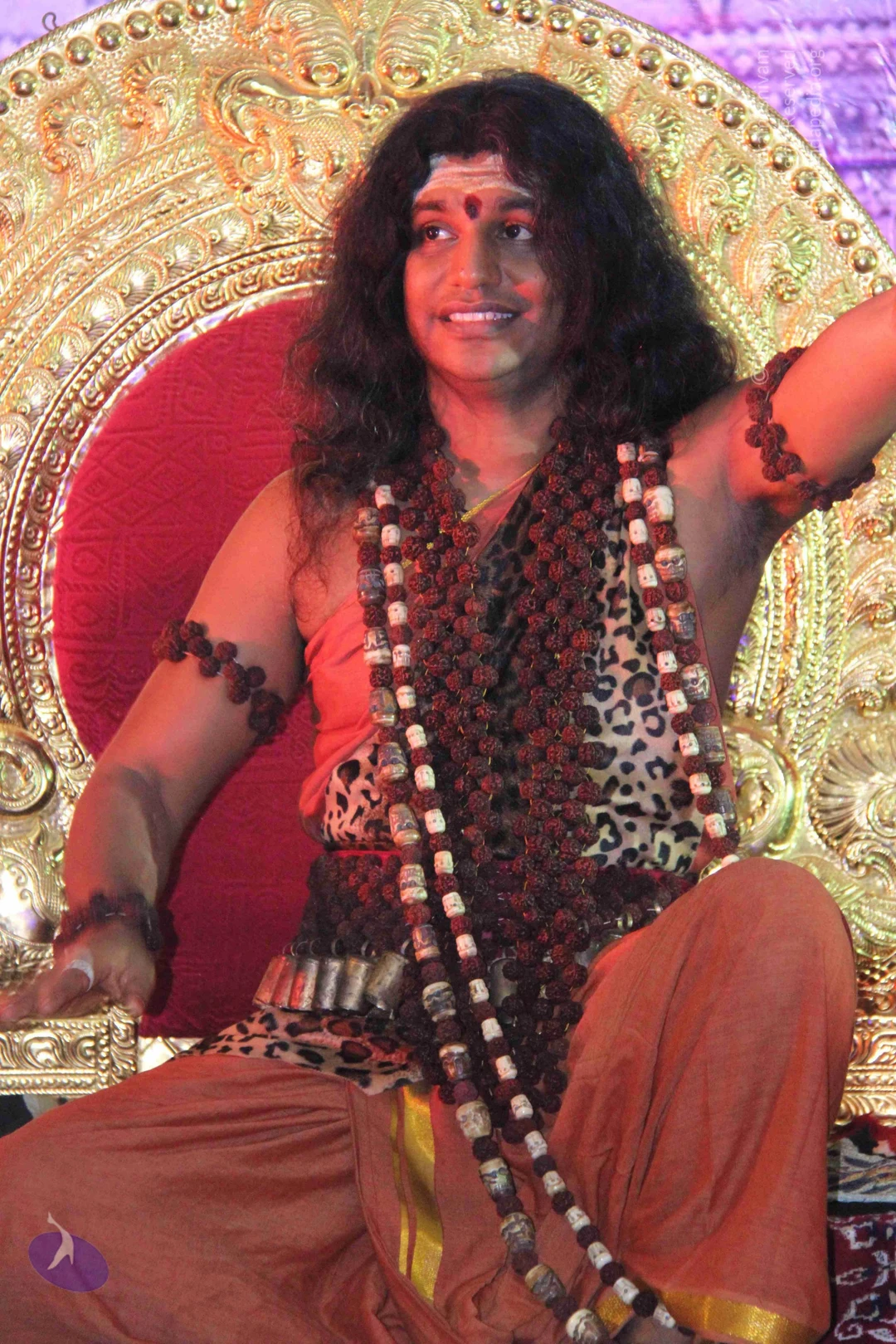
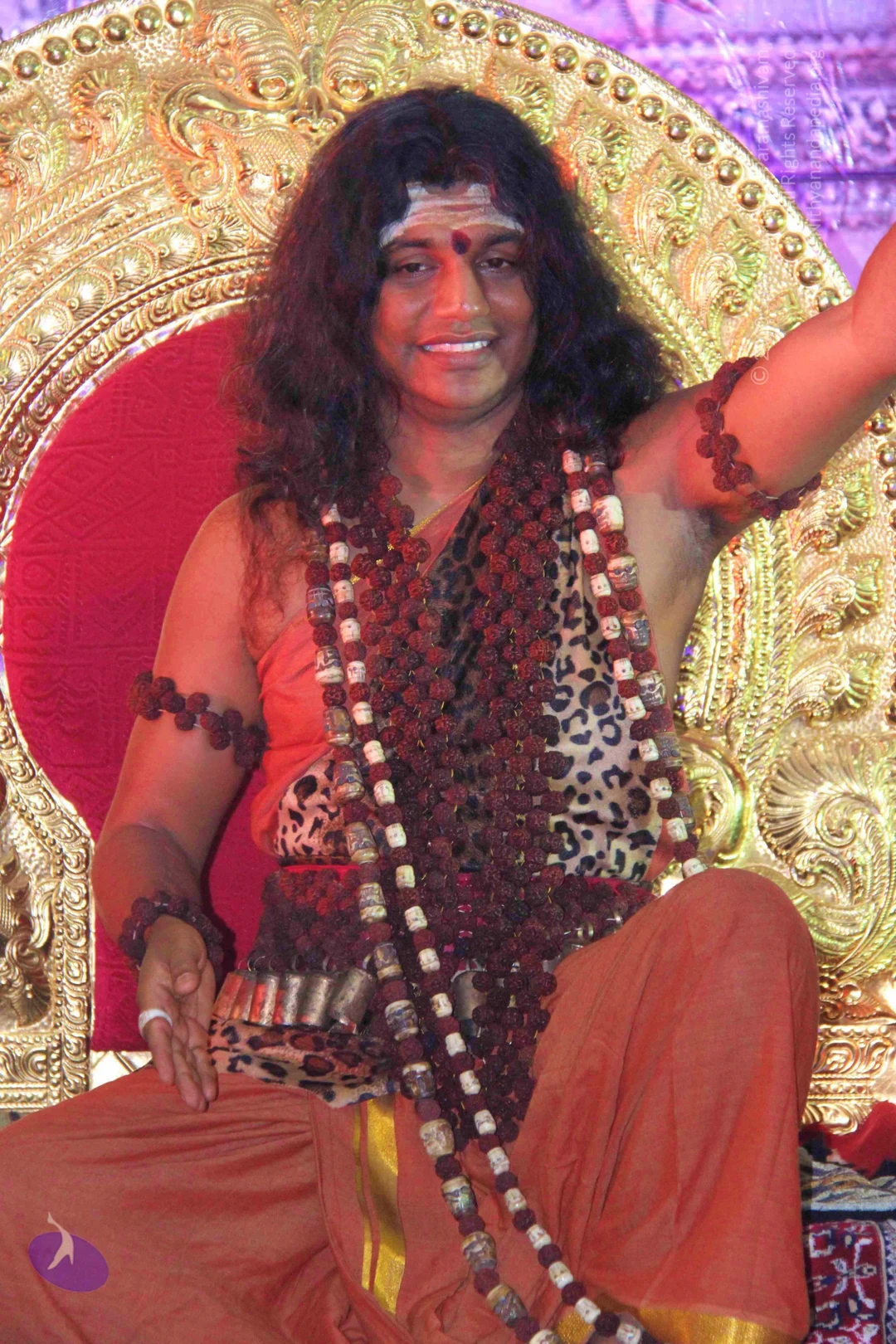
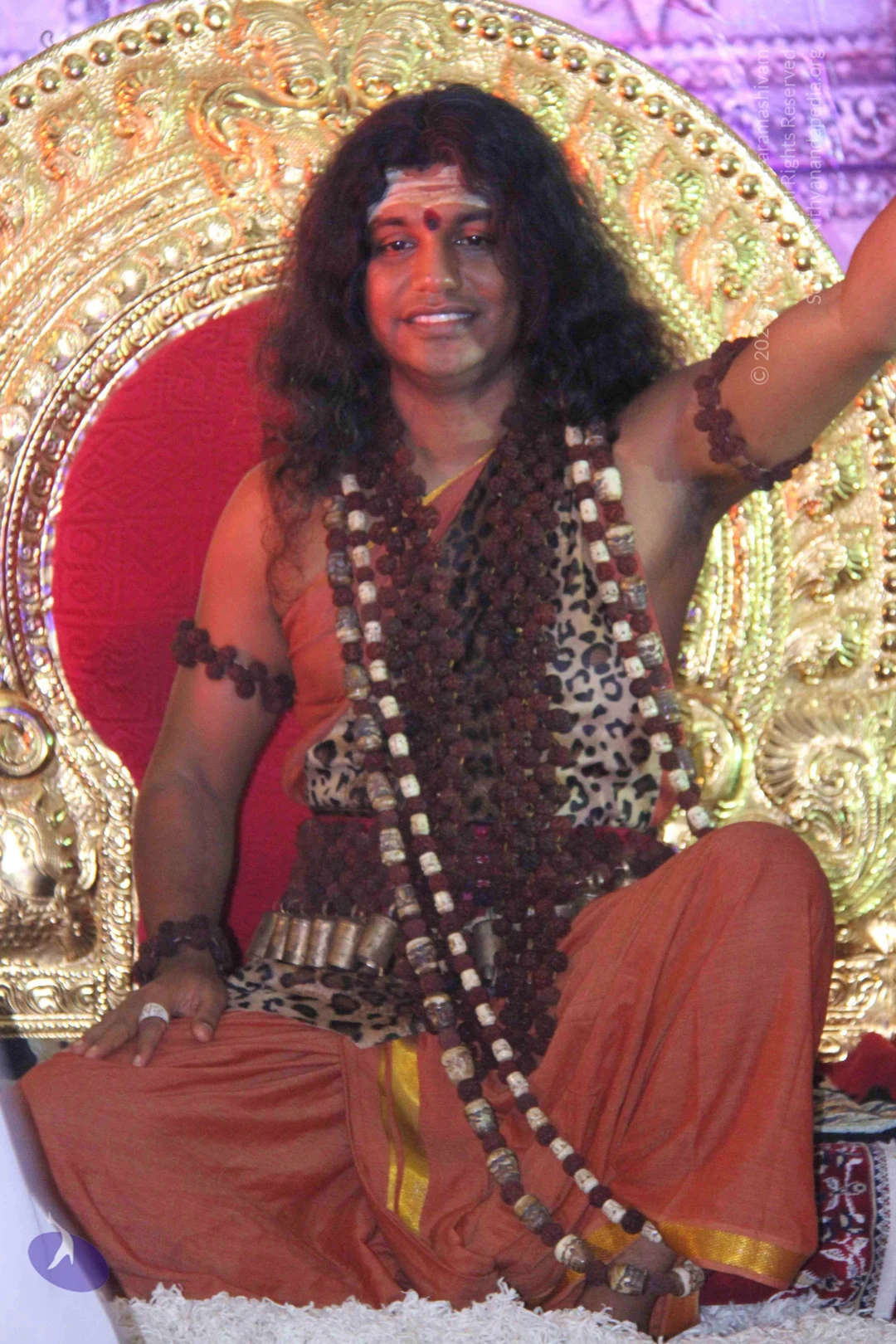
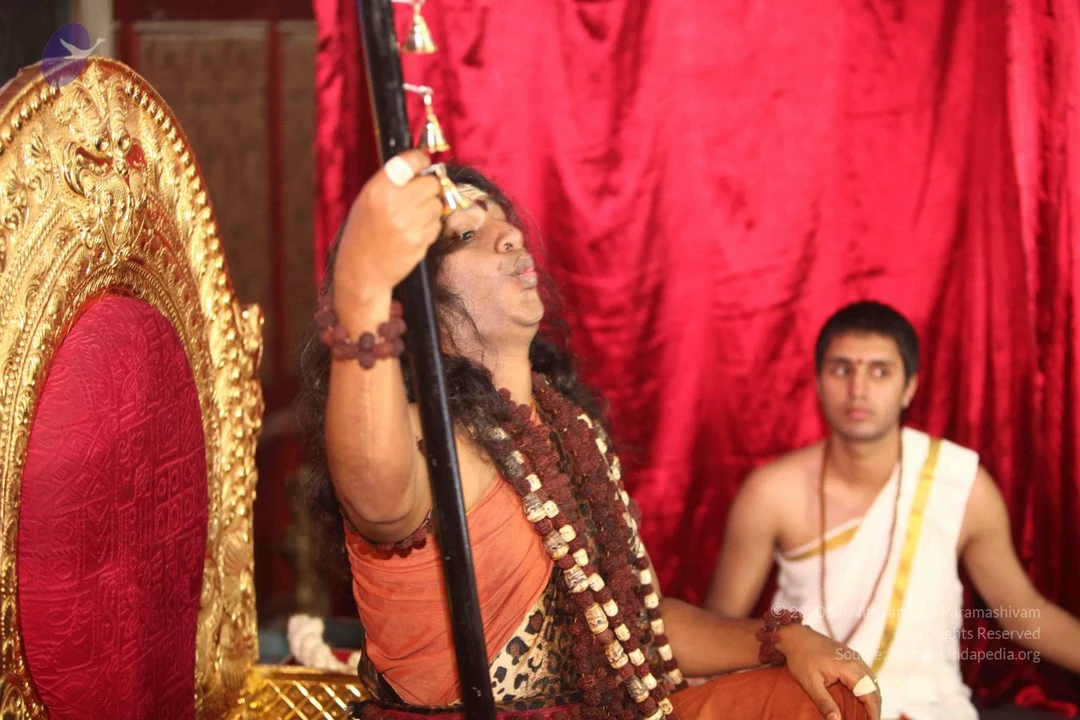
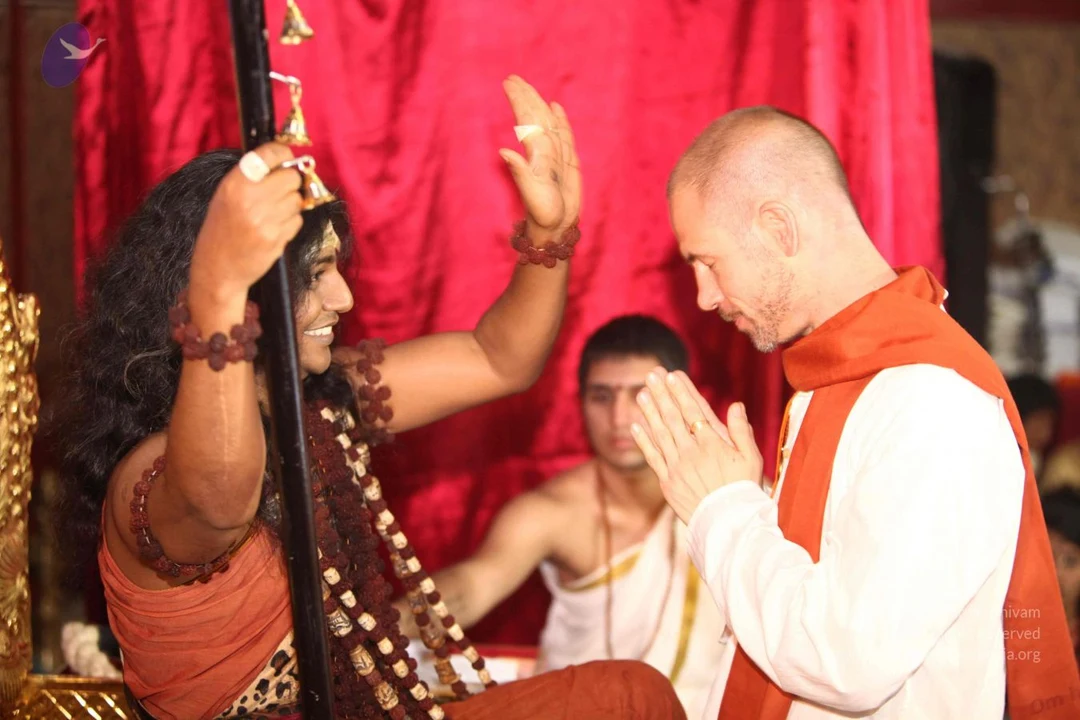
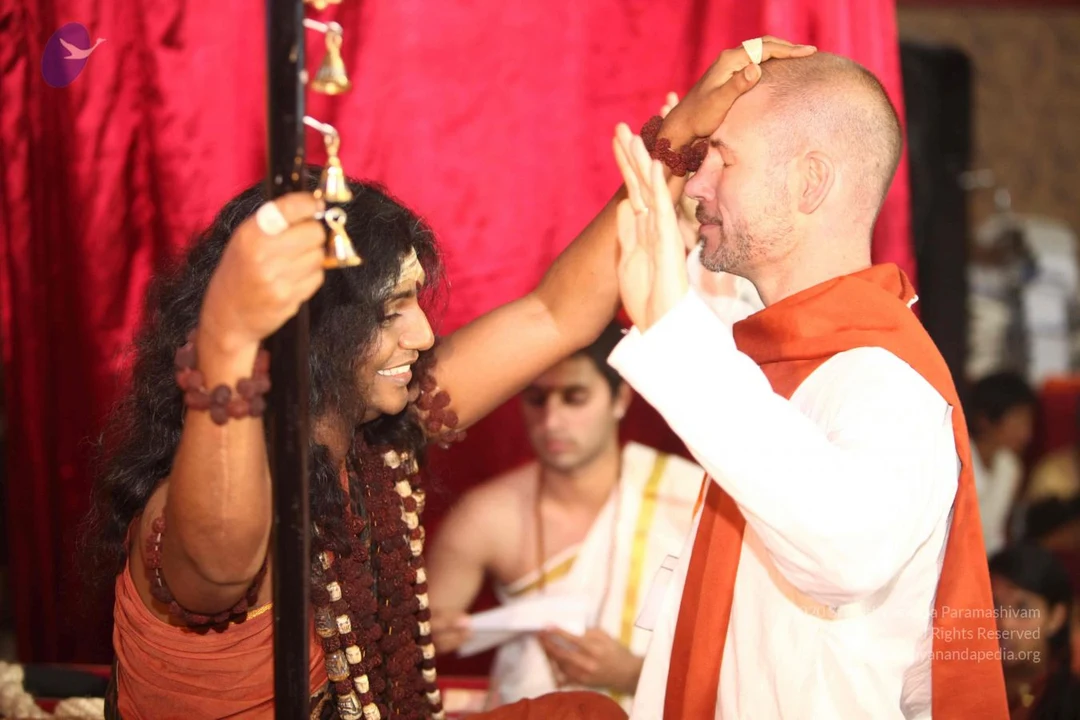
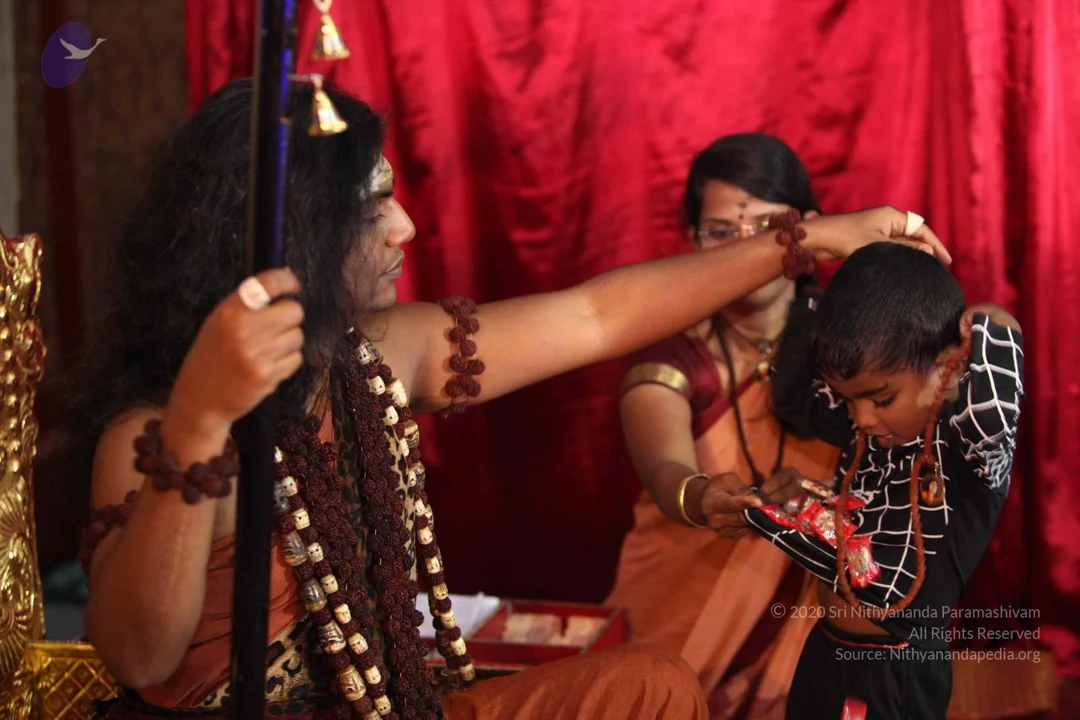
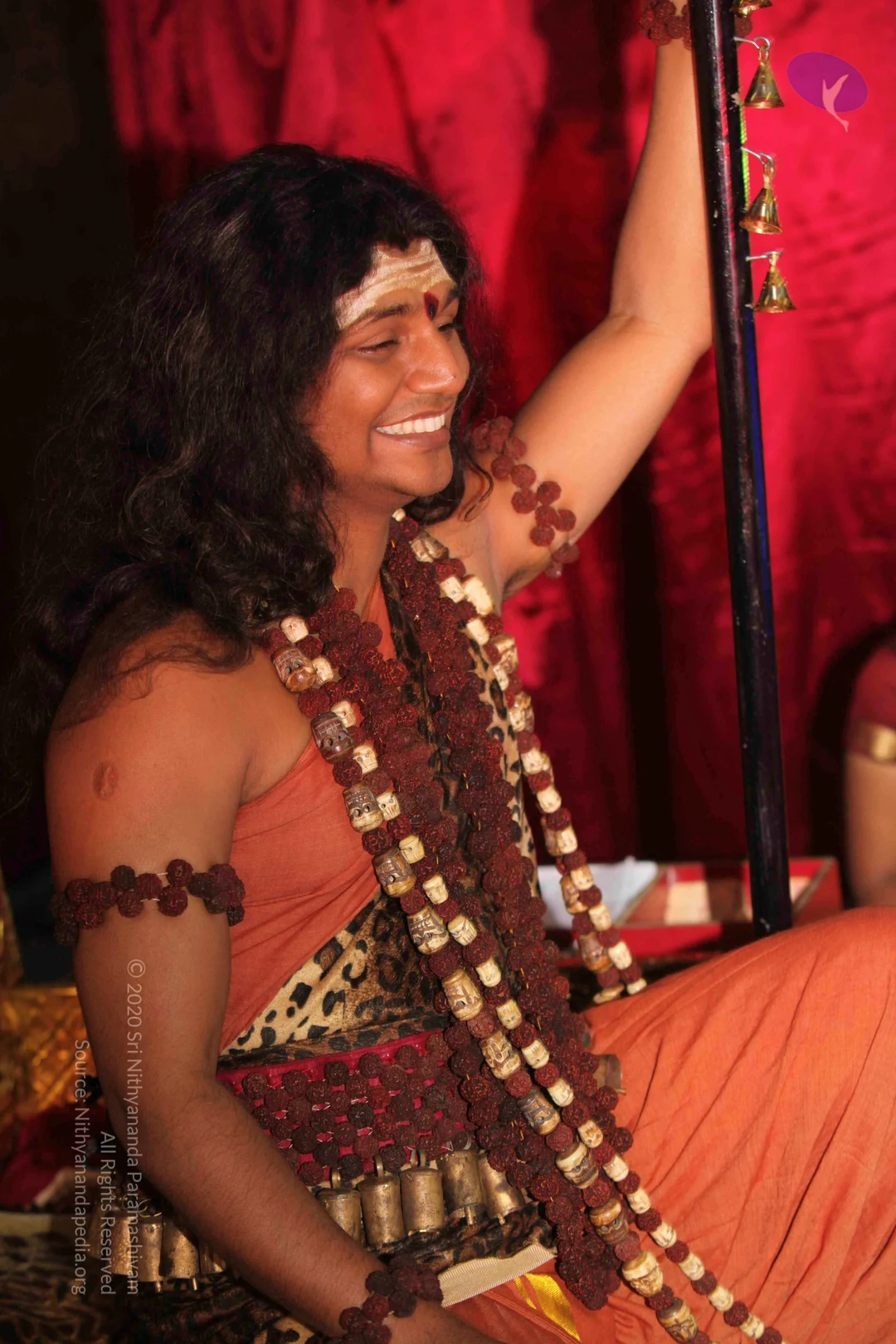
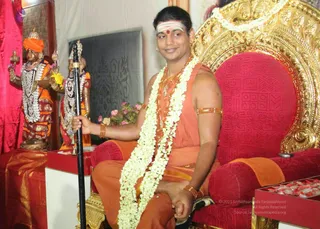
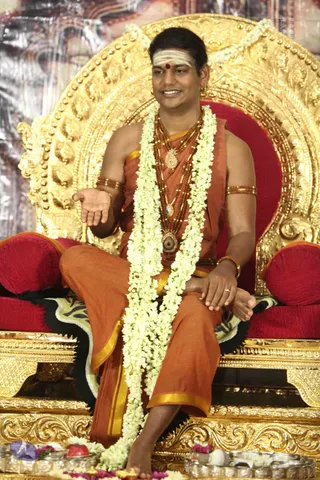
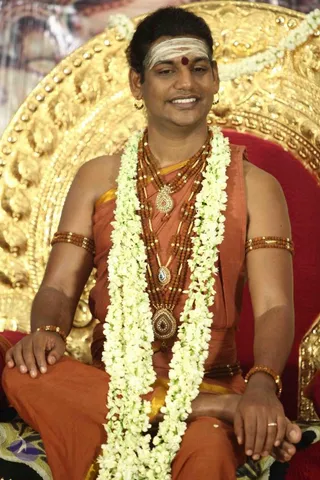
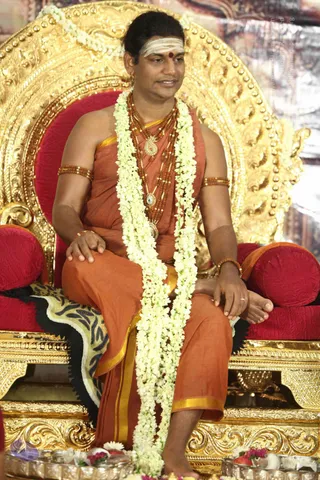
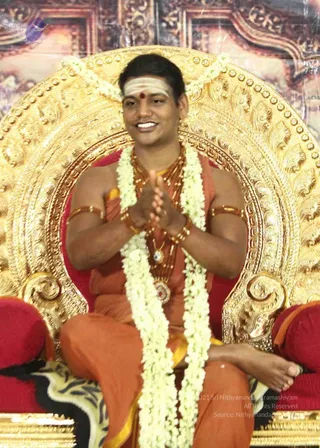
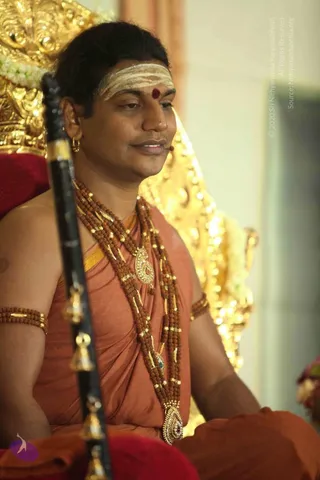
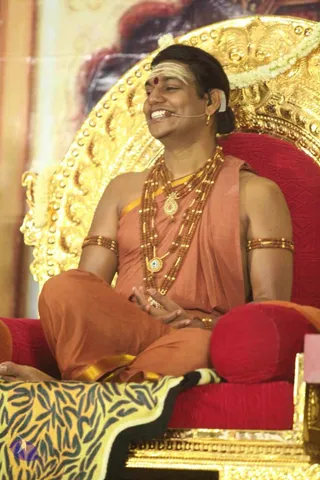
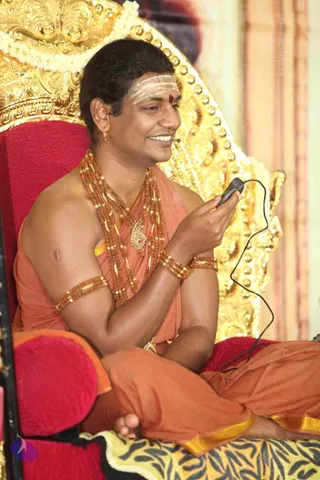
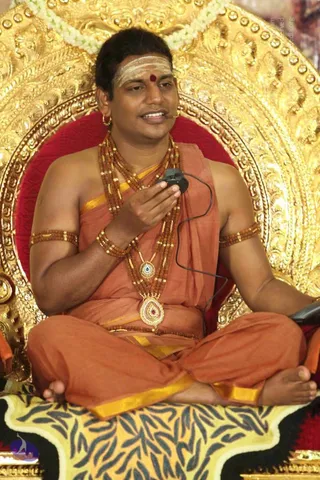
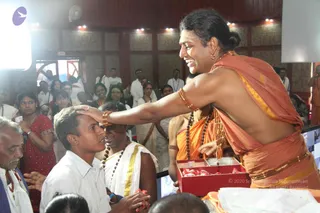
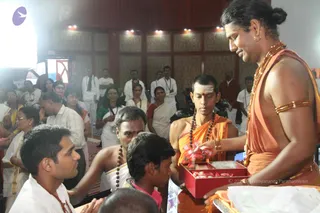
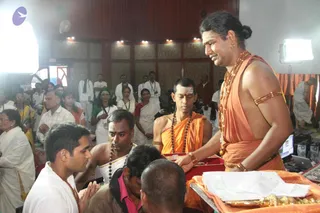
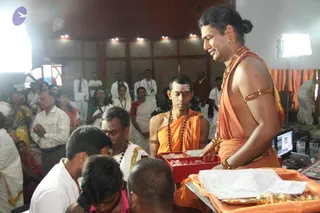
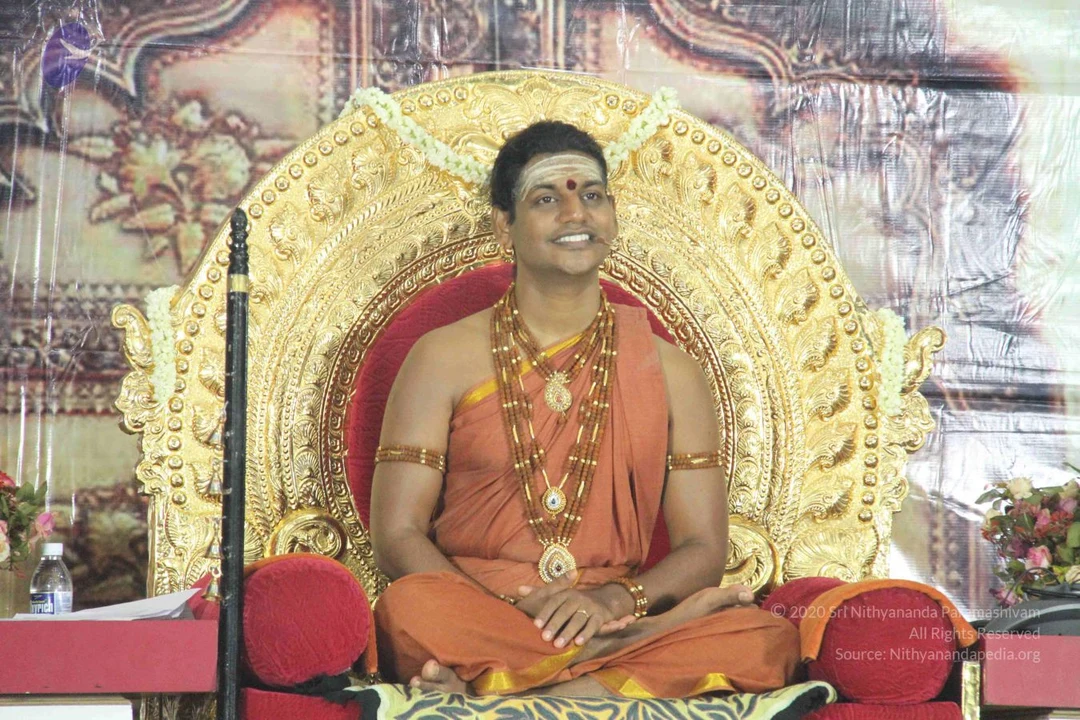
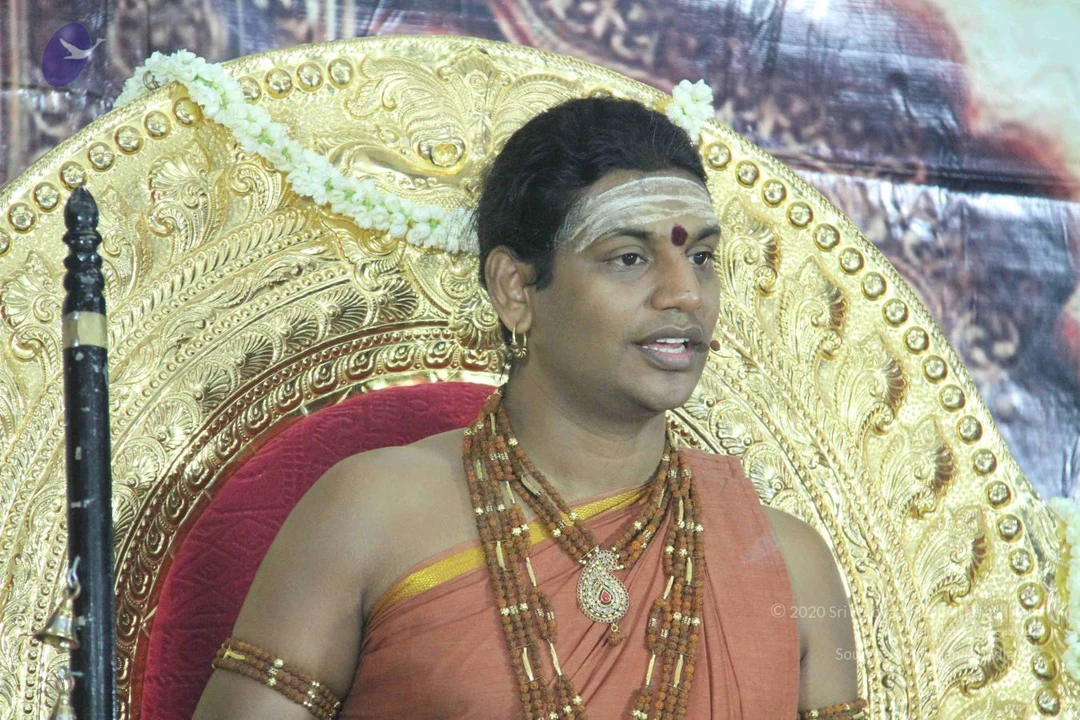
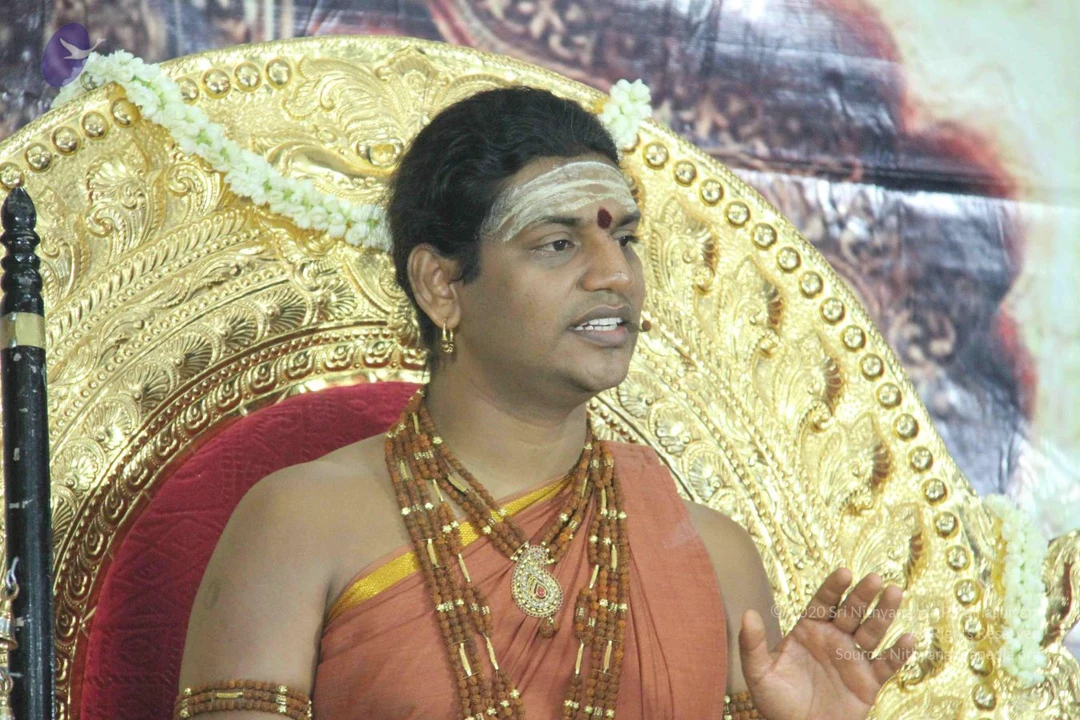
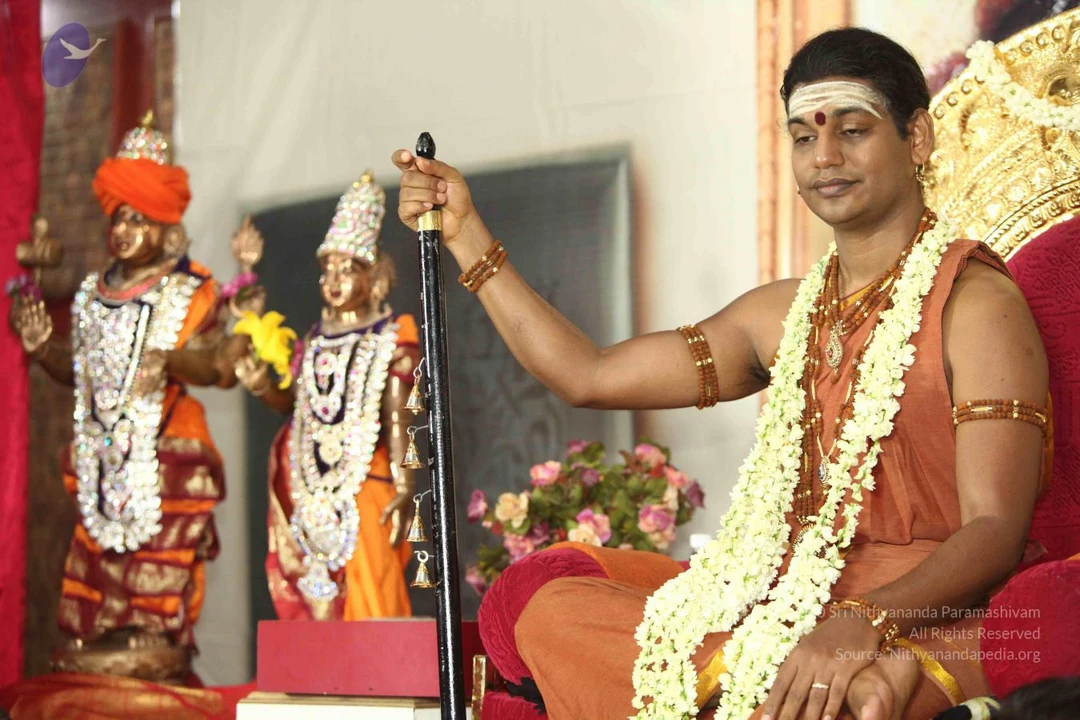
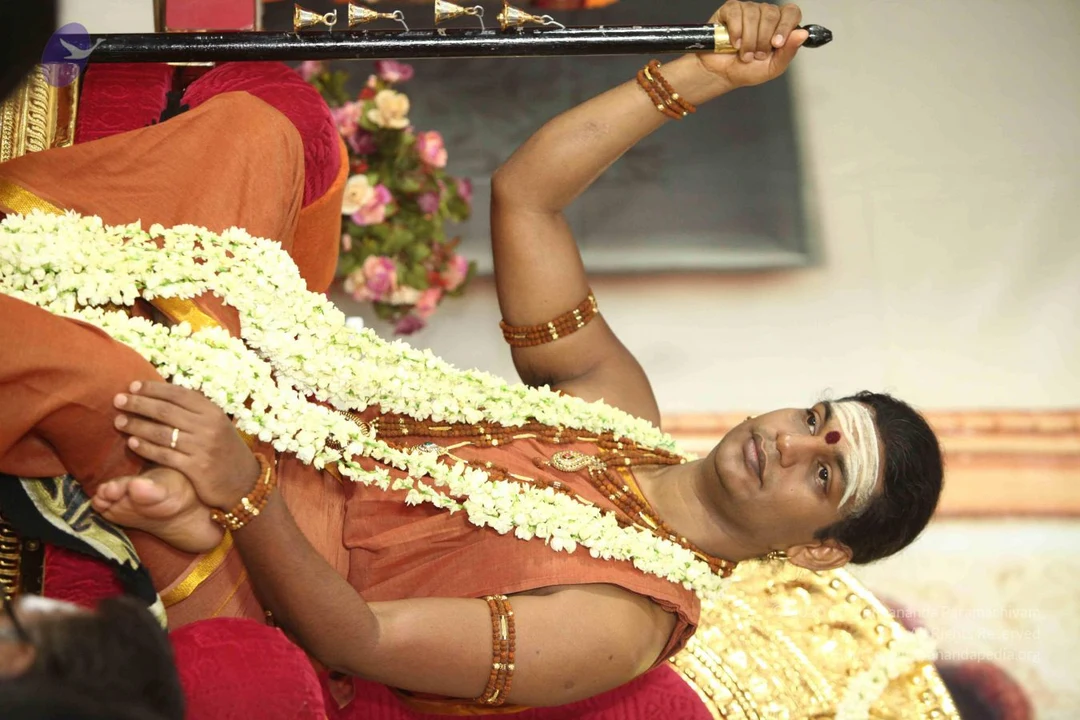
A photograph of a seated long-haired figure with dark swept-back hair, wearing rudraksha mala necklaces and bracelets, a bare shoulder and a leopard-print garment, holding up a hand with a ritual staff hung with small brass bells. Facing them, a man in a white shirt and an orange shawl sits with his palms raised near his own face in a gesture of reverence. Behind them a seated man in white dhoti and a robed attendant in orange stand against a red draped backdrop. Swamiji (probable) appears as the figure with the rudraksha malas and long hair, visible in person.A photograph of a long-haired man seated on an ornate gilded throne with a red cushioned back, smiling and raising one arm. He wears an orange-brown wrap over a leopard-print garment, layered rudraksha malas and white bead necklaces, rudraksha bracelets and armlet, and a red bindi with white forehead markings. A white fluffy mat lies at his feet, with a floral pink-and-gold backdrop behind the throne. The appearance and throne suggest the probable Swamiji (Nithyananda Paramashivam), seated in a satsang setting, based on long swept-back hair, rudraksha malas and ornate clothing cues. One person is physically present.A photograph of a satsang hall where a man in an orange-saffron dhoti-style wrap and gold necklaces, with his hair in a bun and gold armlets, stands at right and hands a red object to a kneeling devotee in white. A man in white shirt kneels at lower left with hands cupped, and a short-haired devotee in white dhoti with rudraksha mala and a white shawl leans forward to receive. A red box sits on the table beside the standing man. Behind them, a crowd of devotees in white and saffron clothing and women in sarees stand in a wood-panelled hall with lights. The standing man is an appearance-based a person candidate, matching the page's claim, wearing orange clothing, gold necklaces and armlets with his hair tied up.

September 09 2012

Original wiki page
Contents

Title:

Supreme Pontiff of Hinduism HDH Bhagavan Sri Nithyananda Paramashivam

Description:

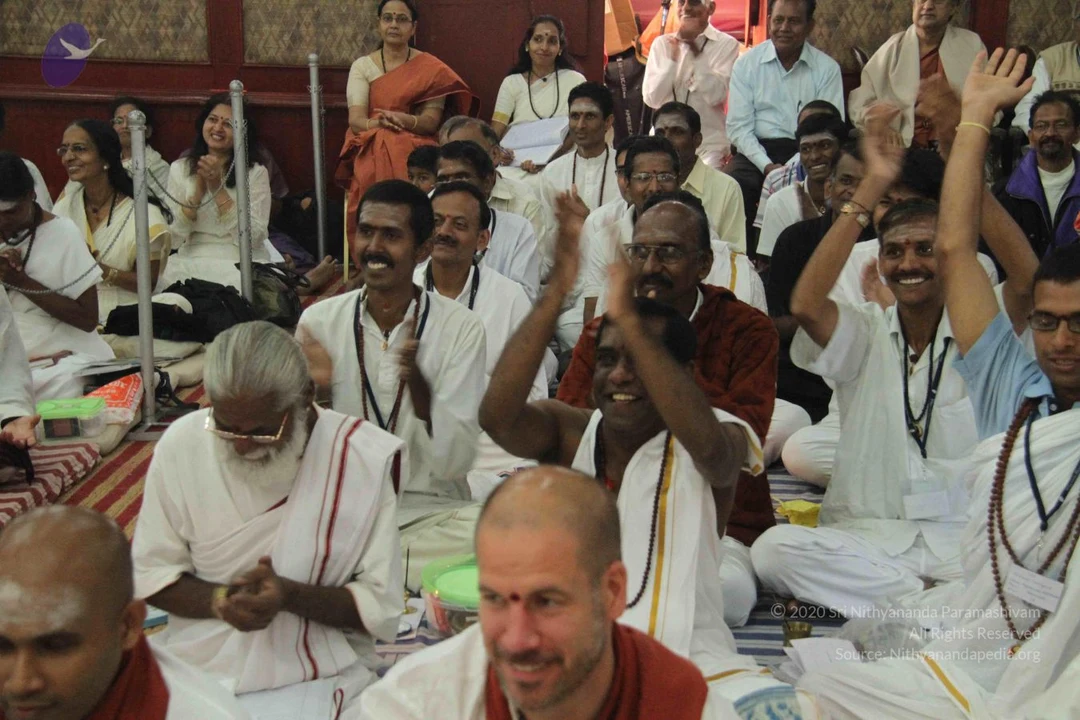
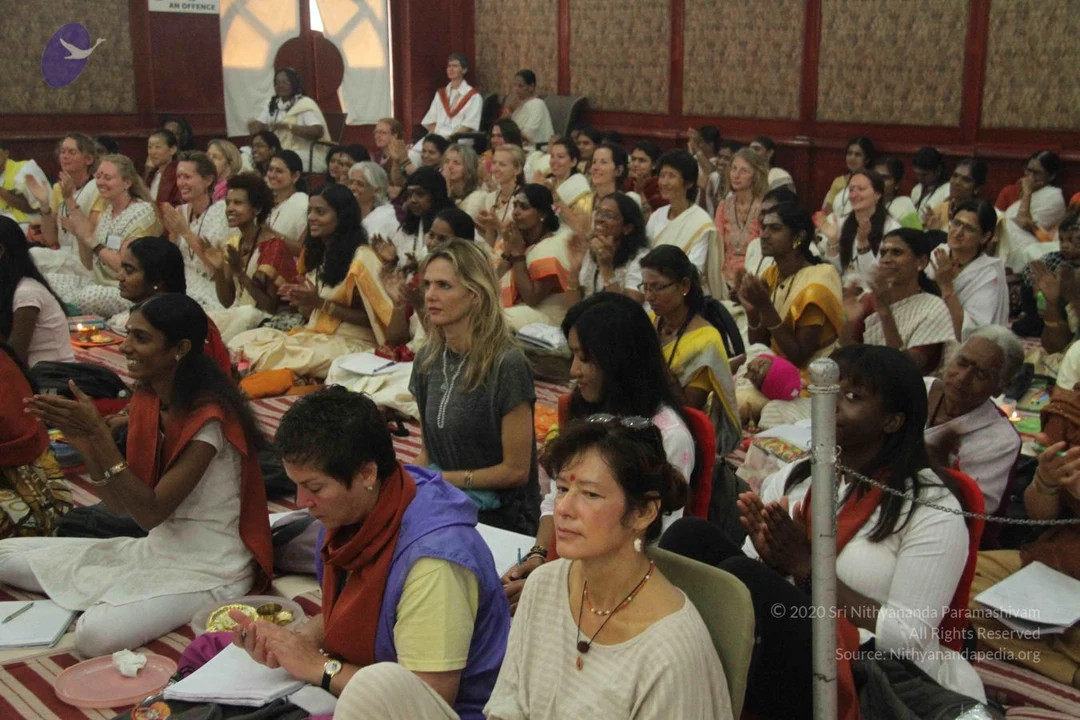
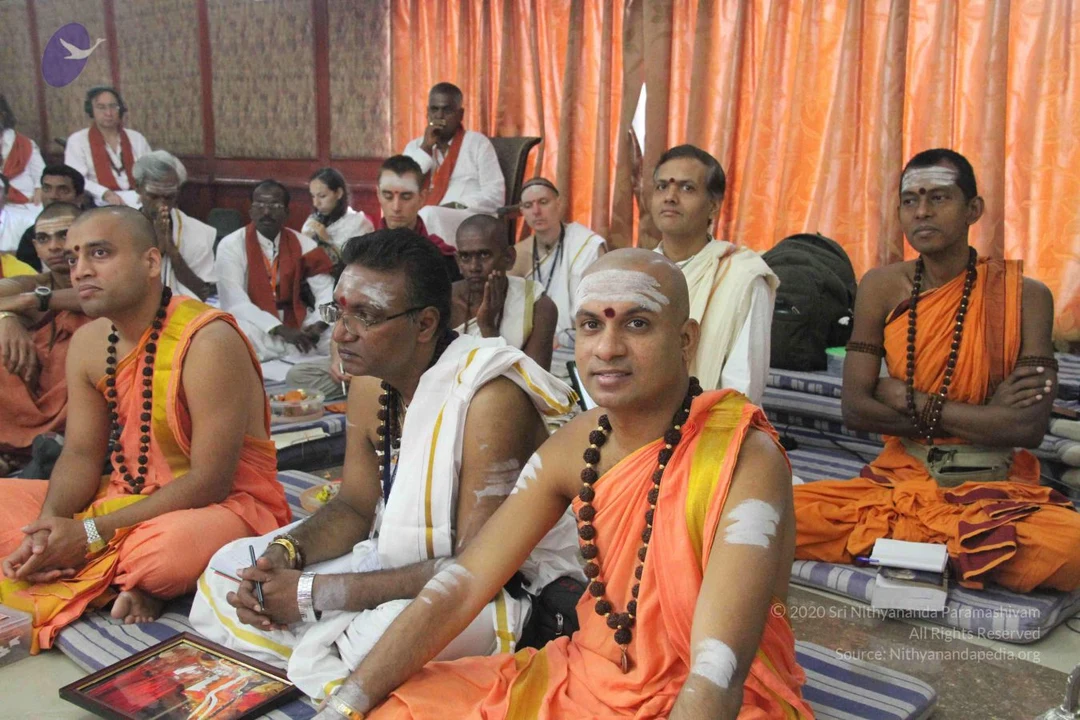
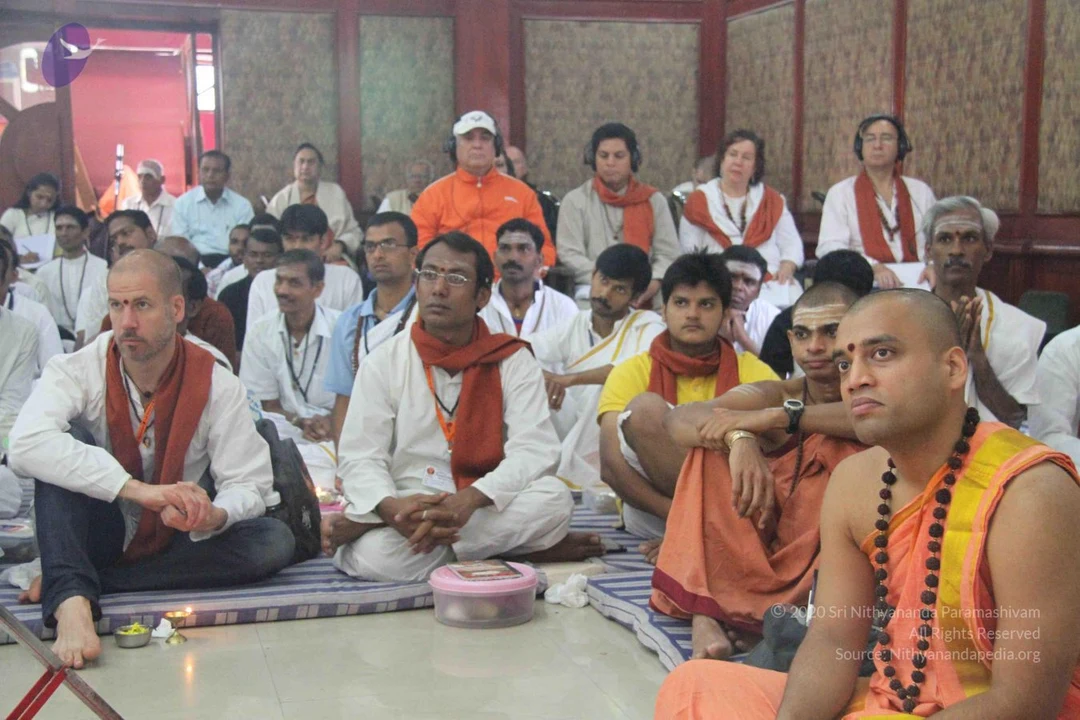
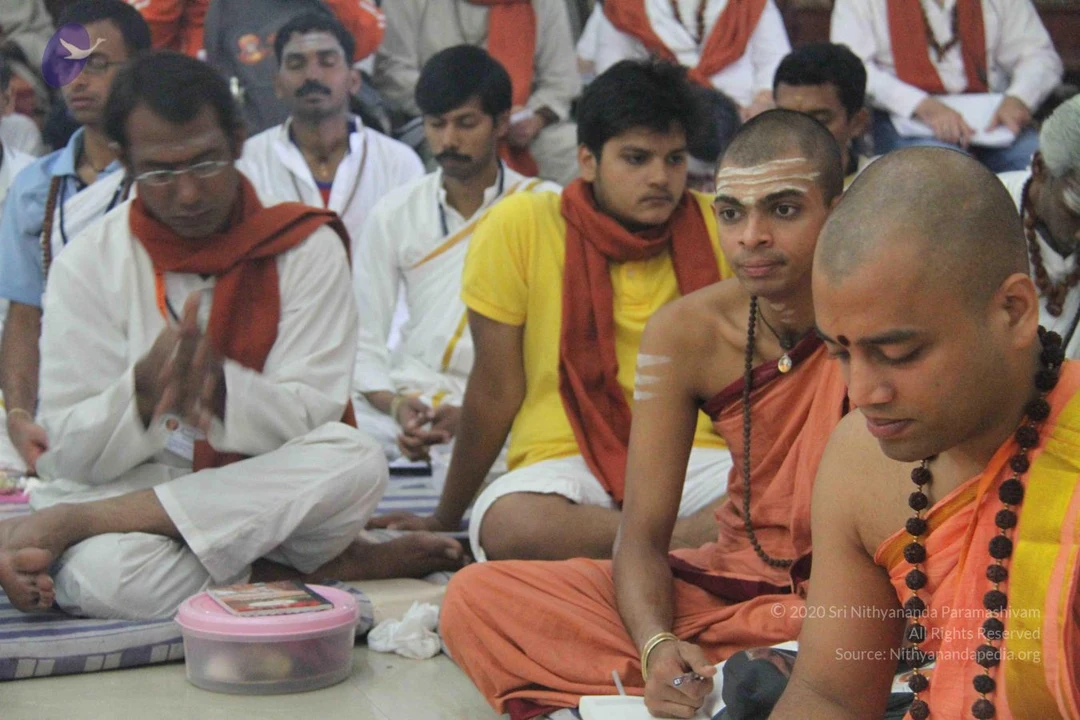
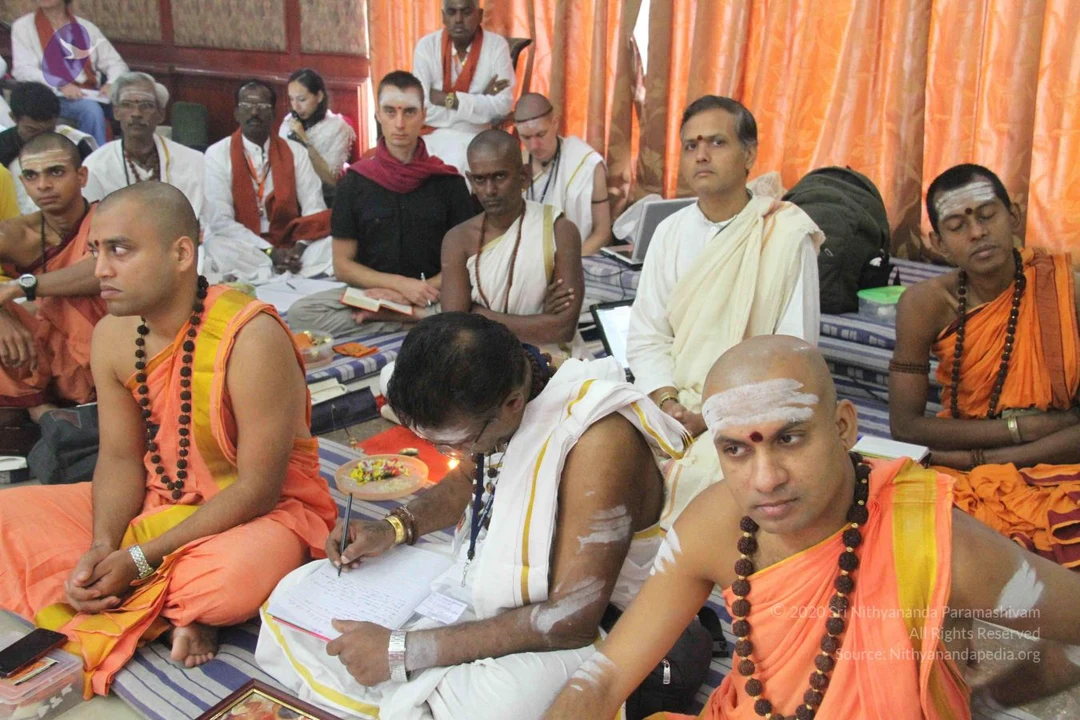
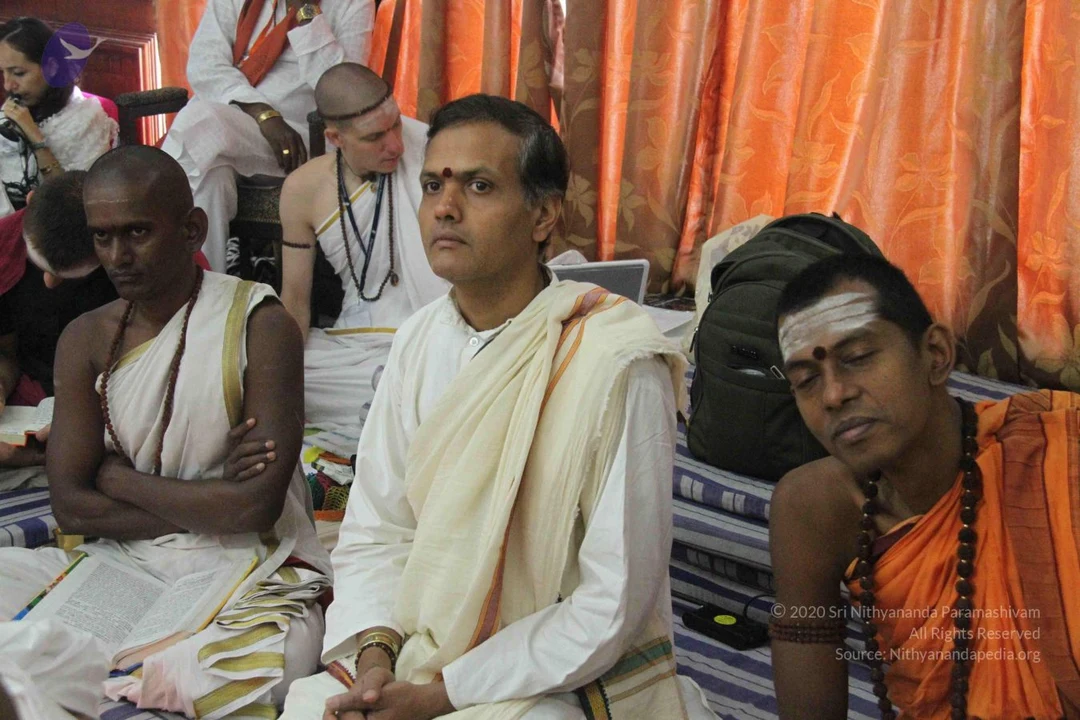
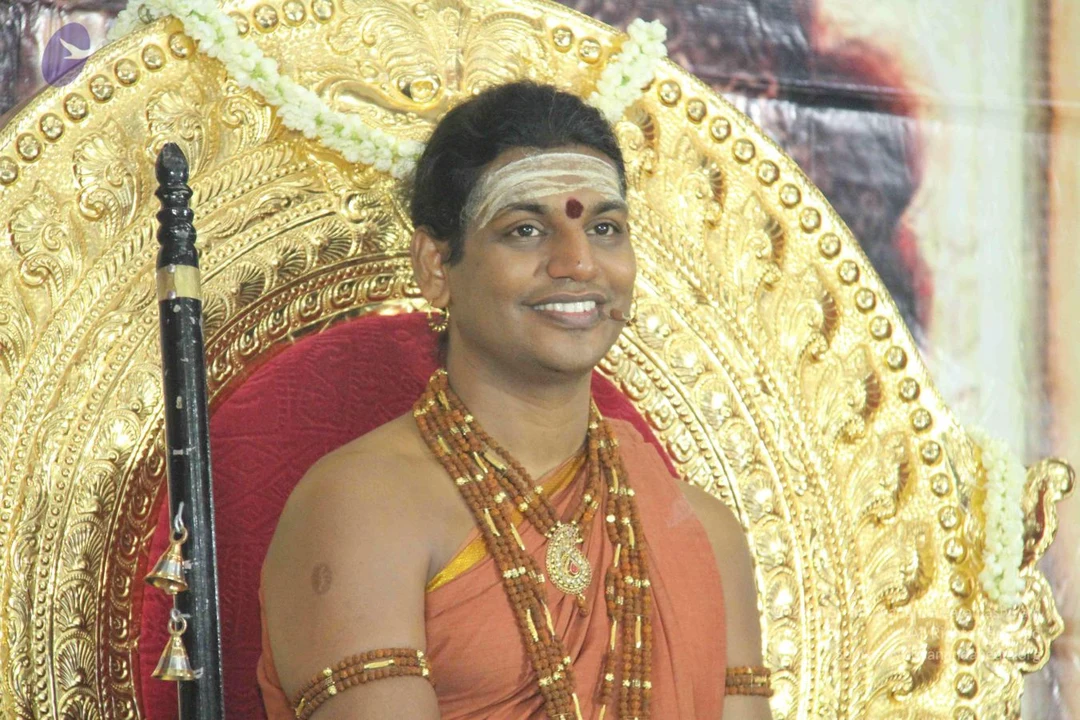
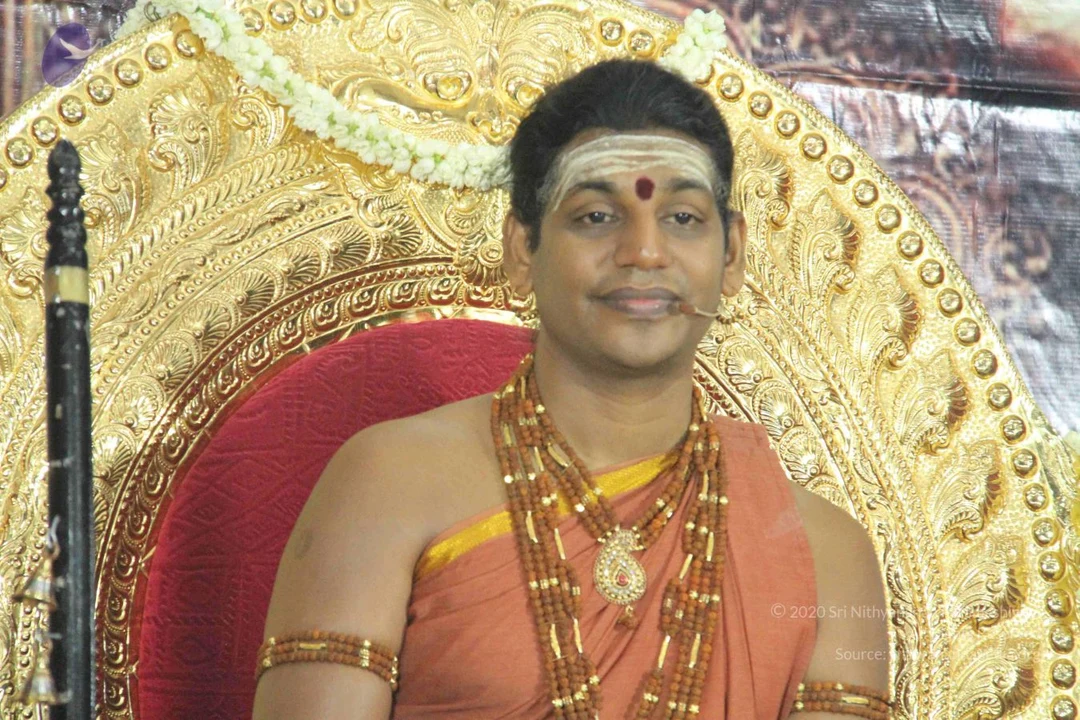
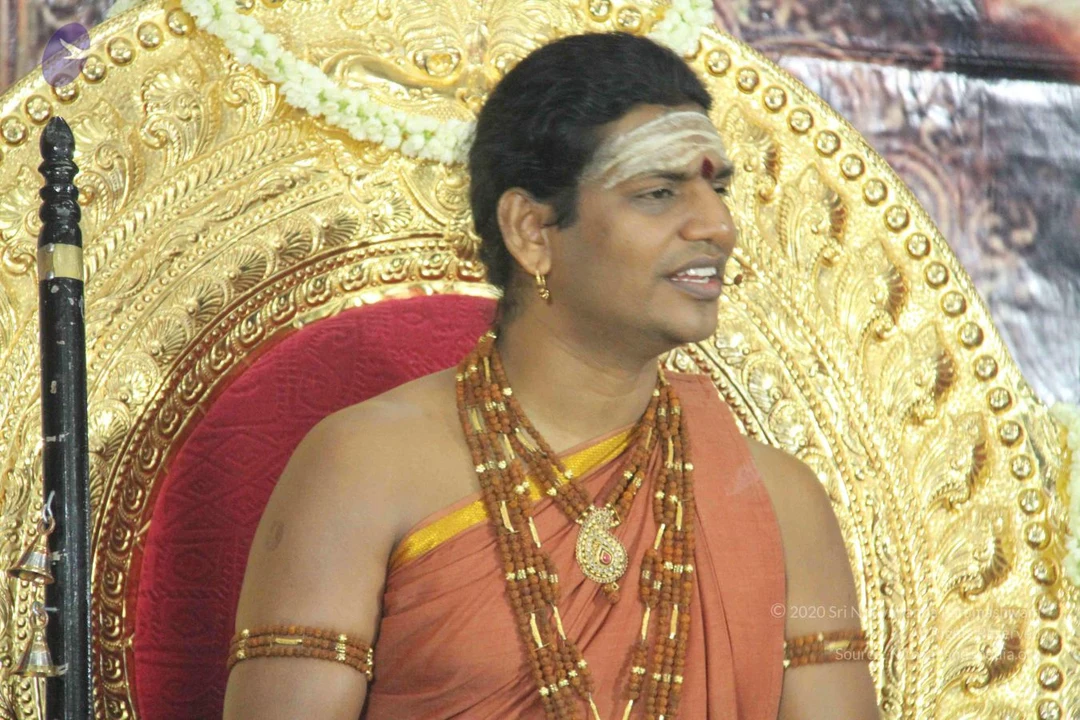
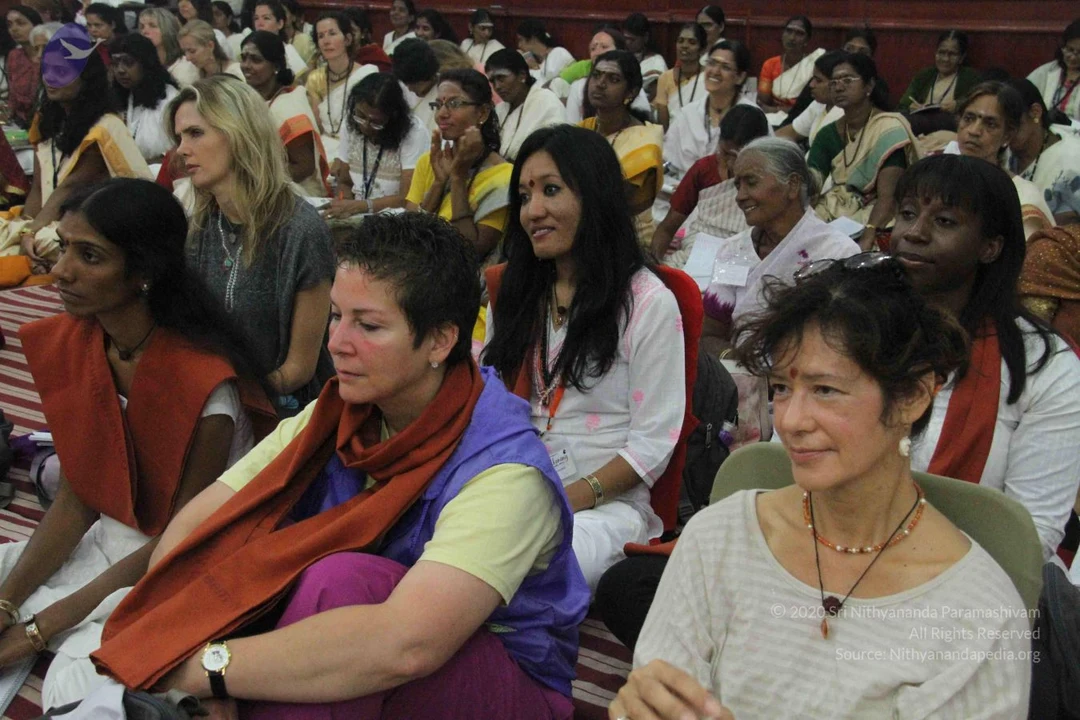
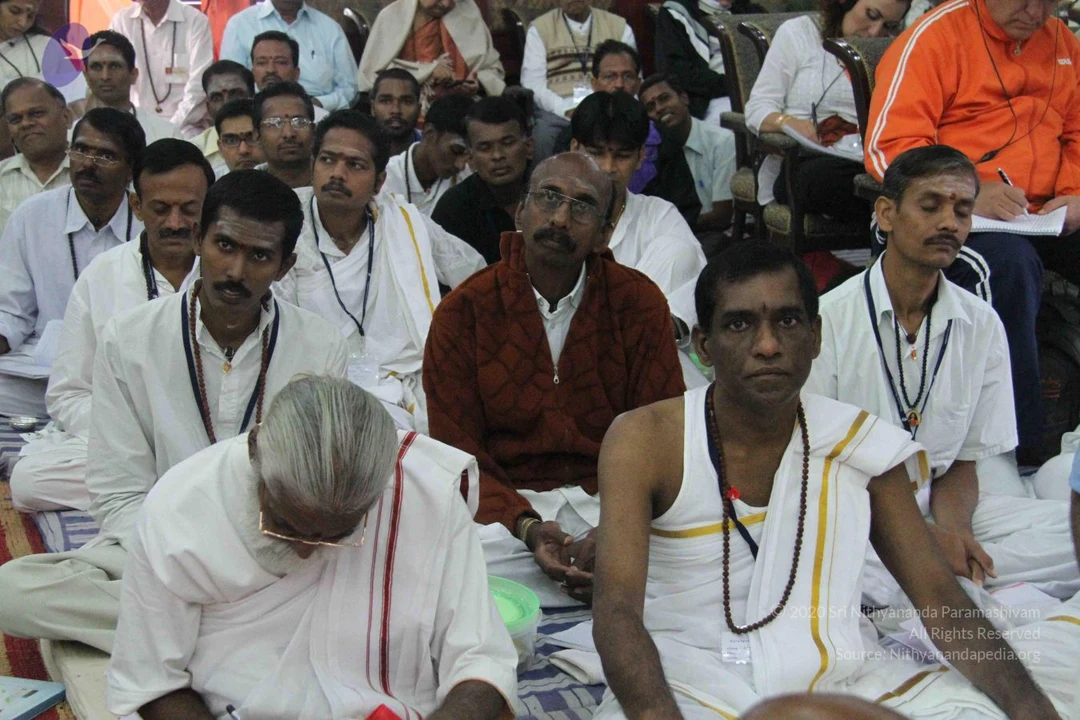
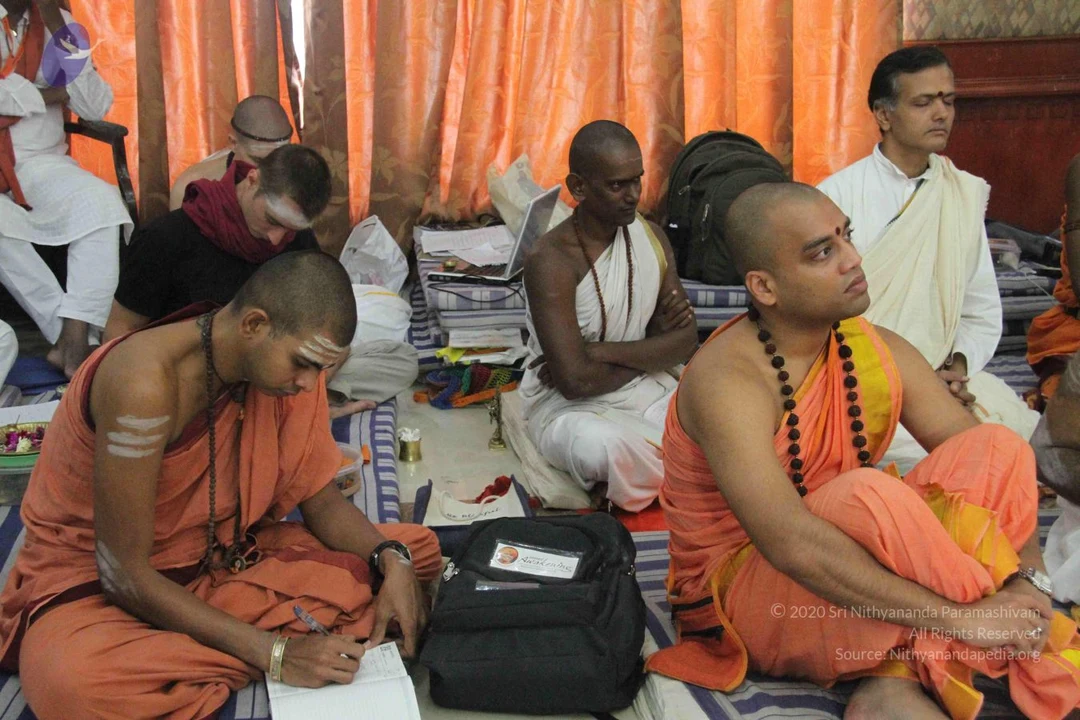
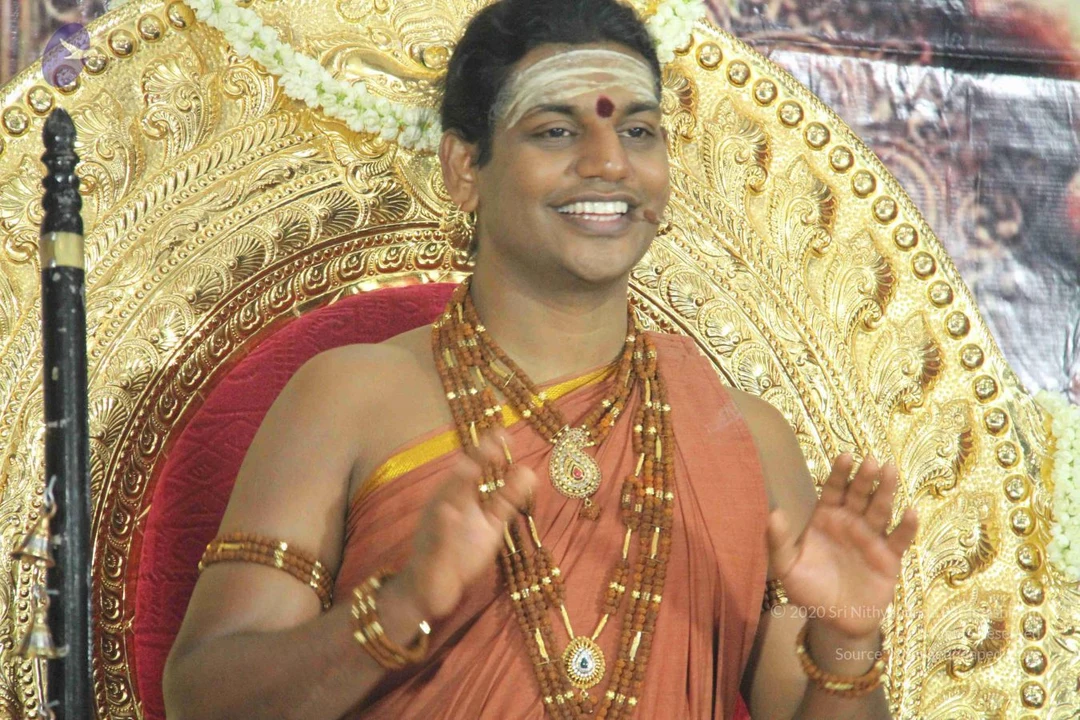
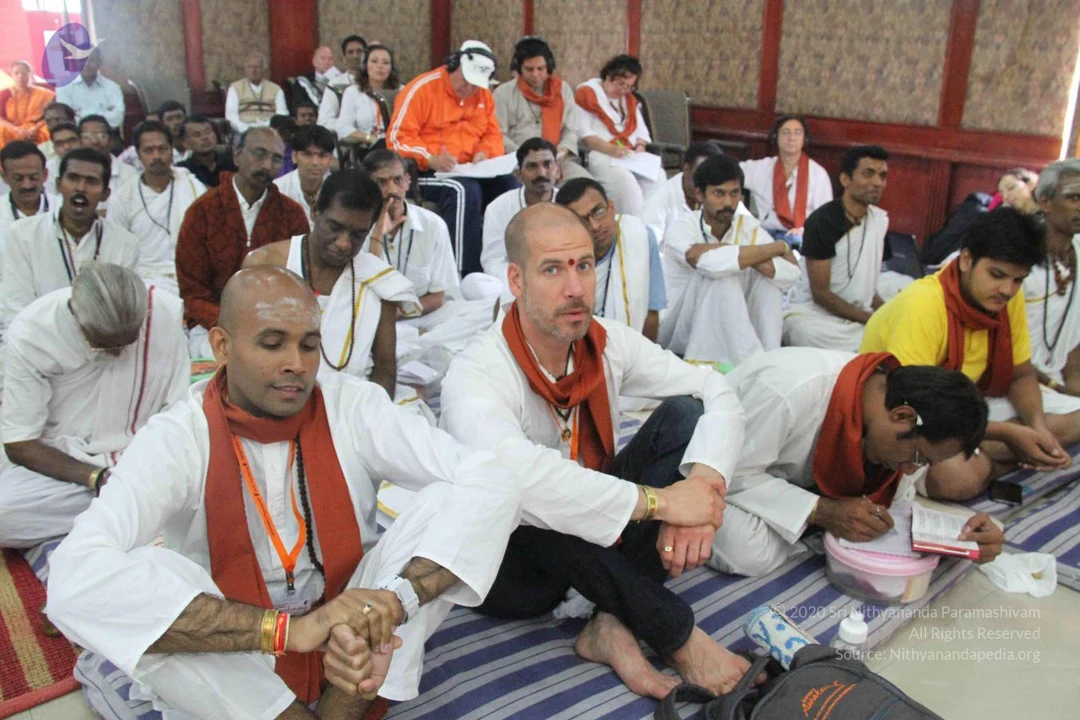
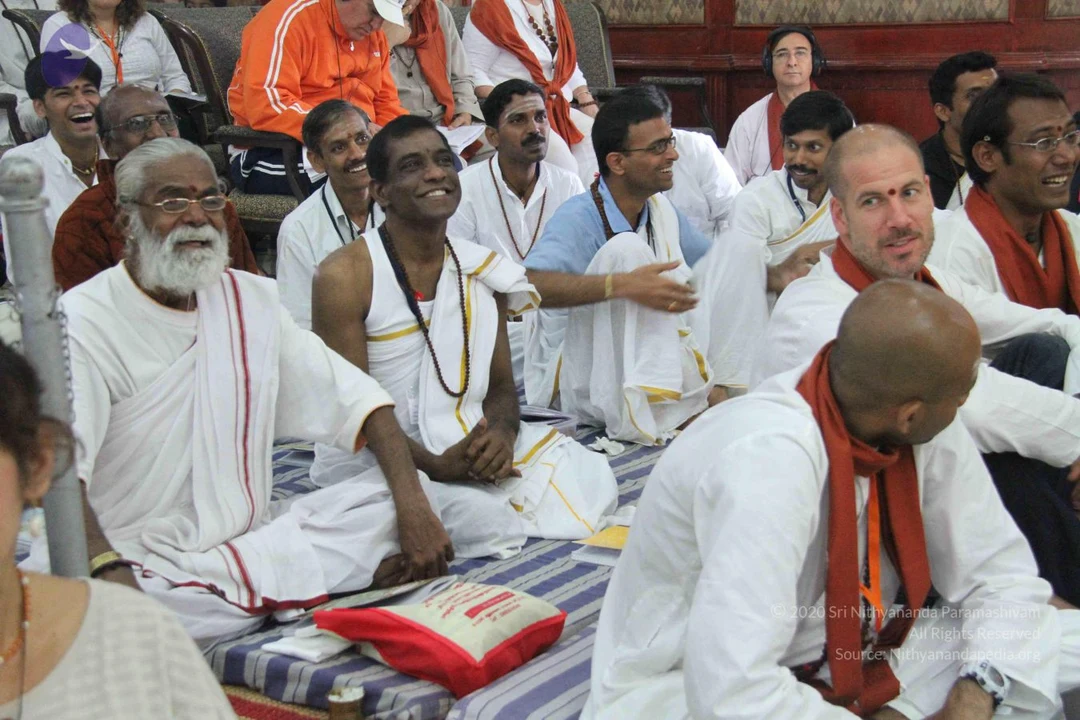
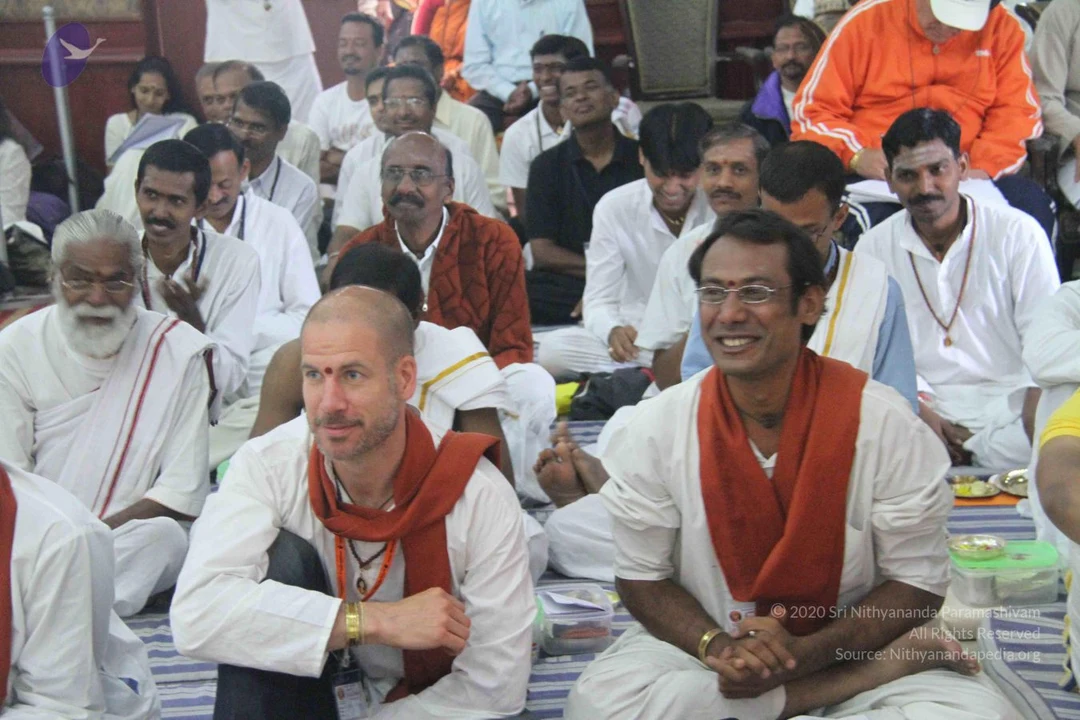
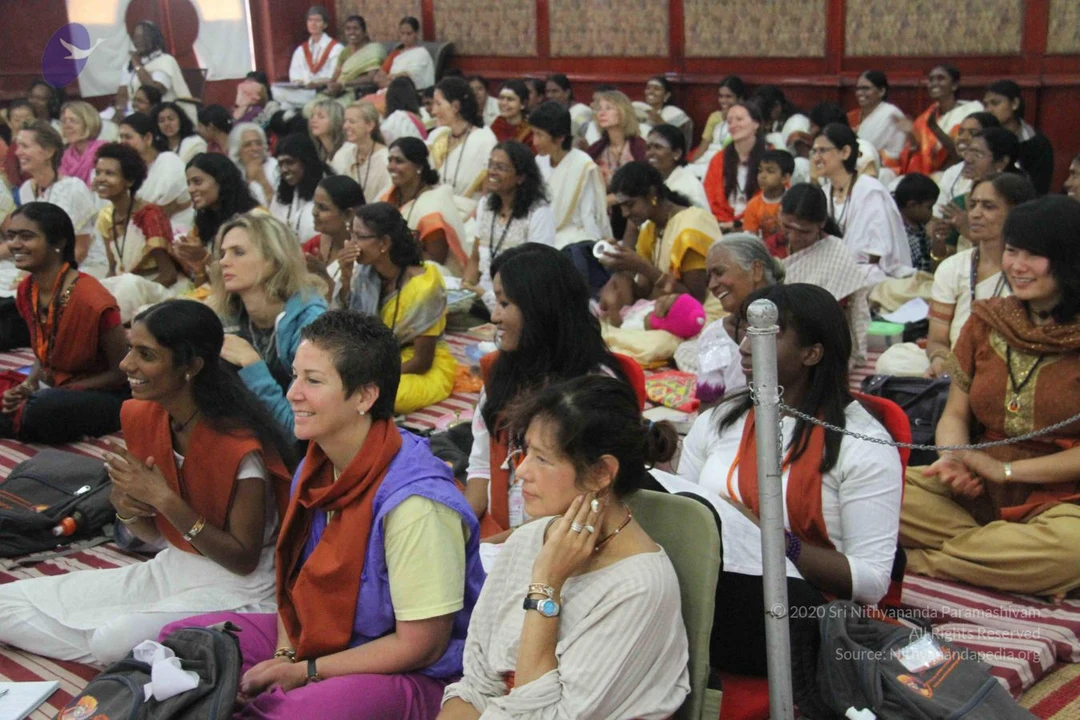
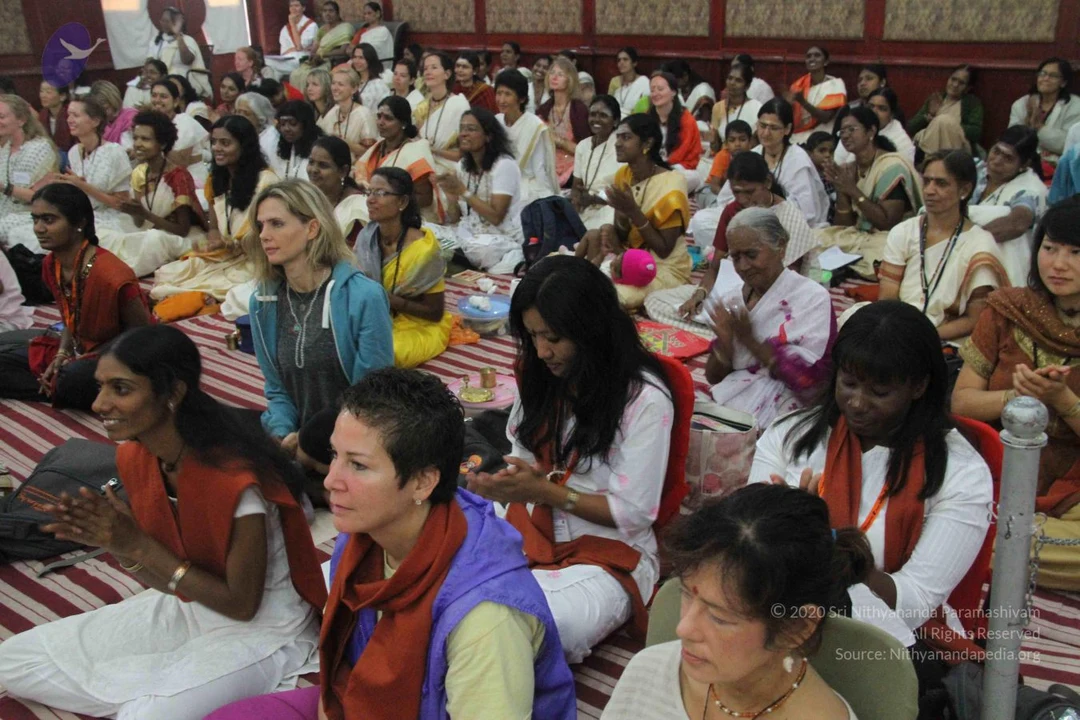
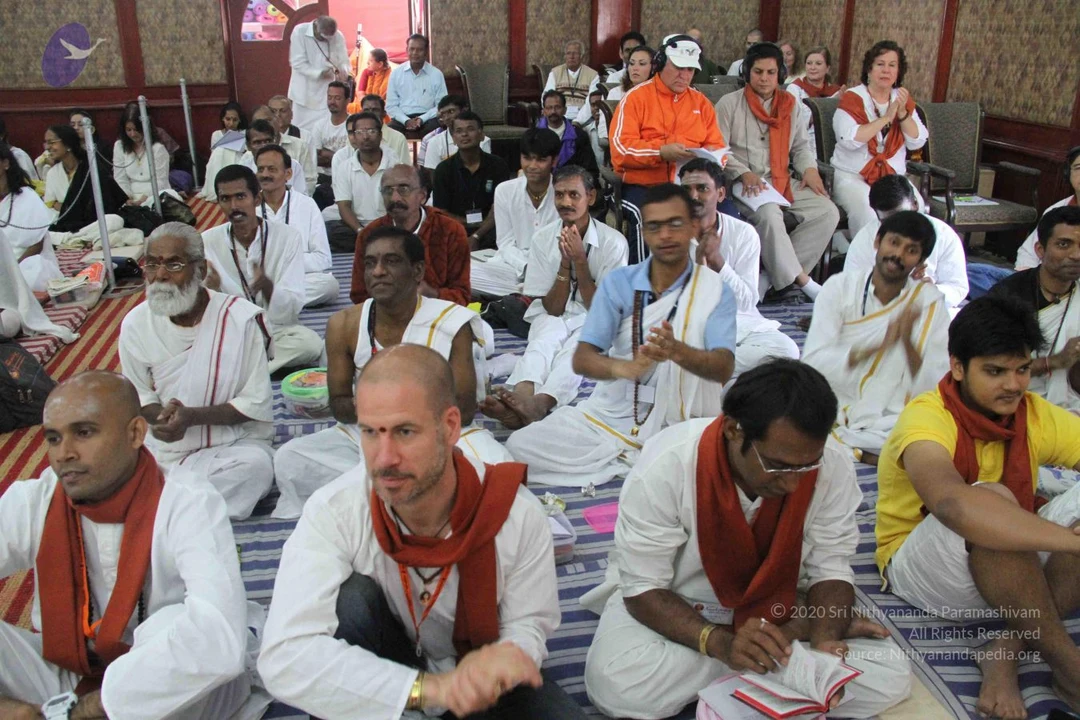
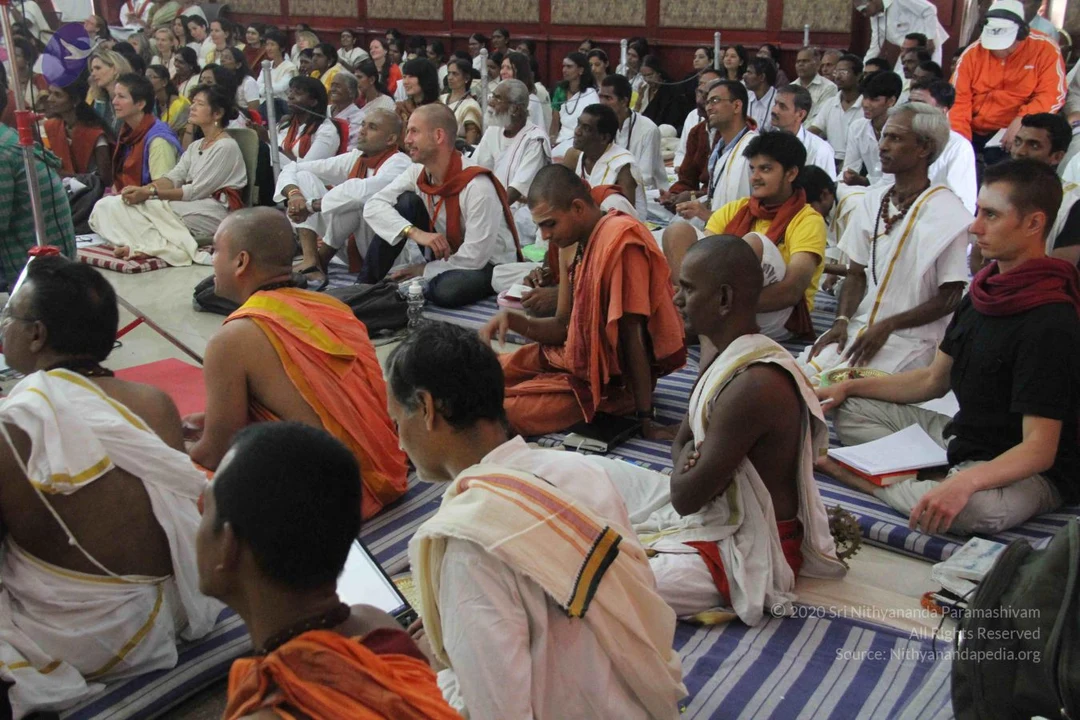
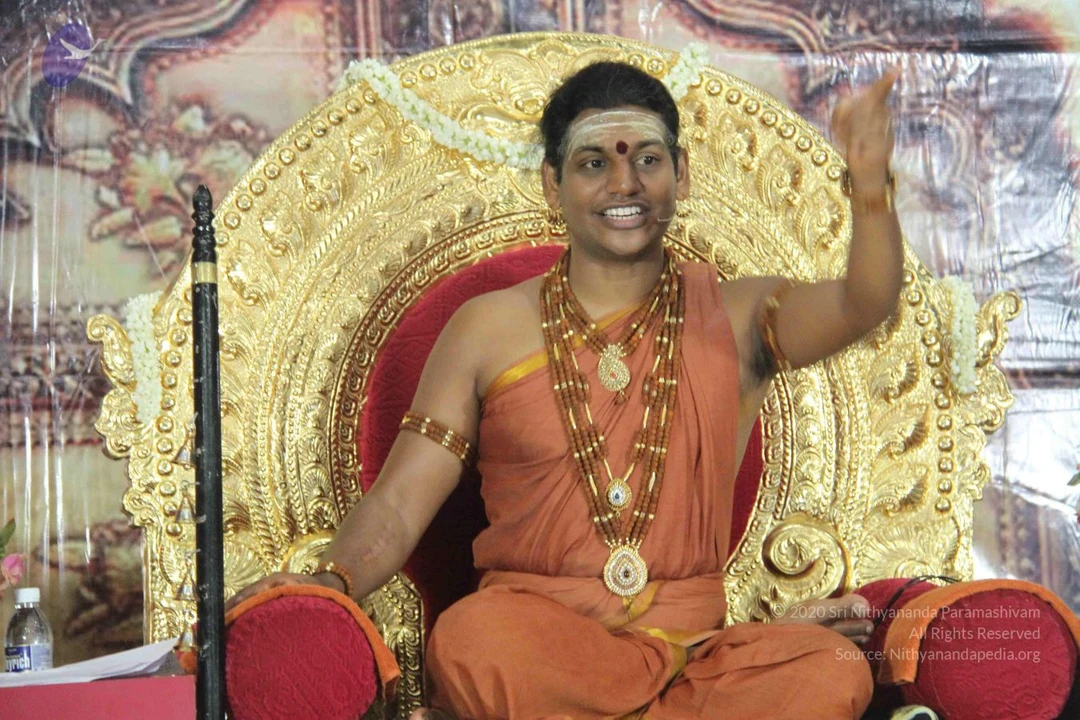
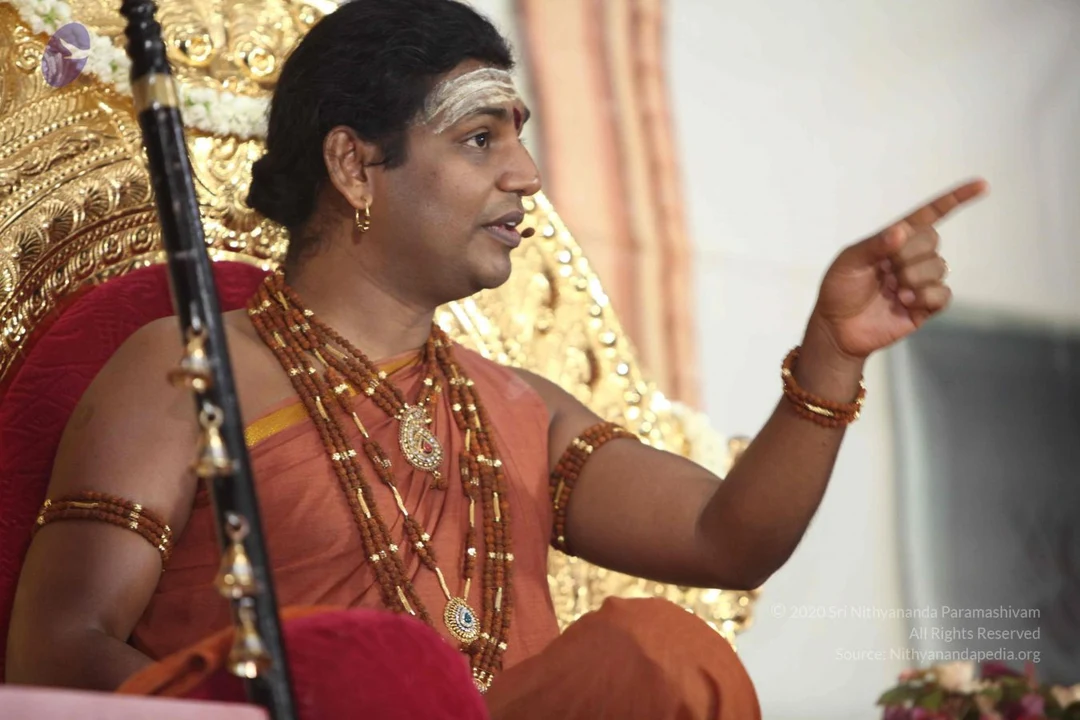
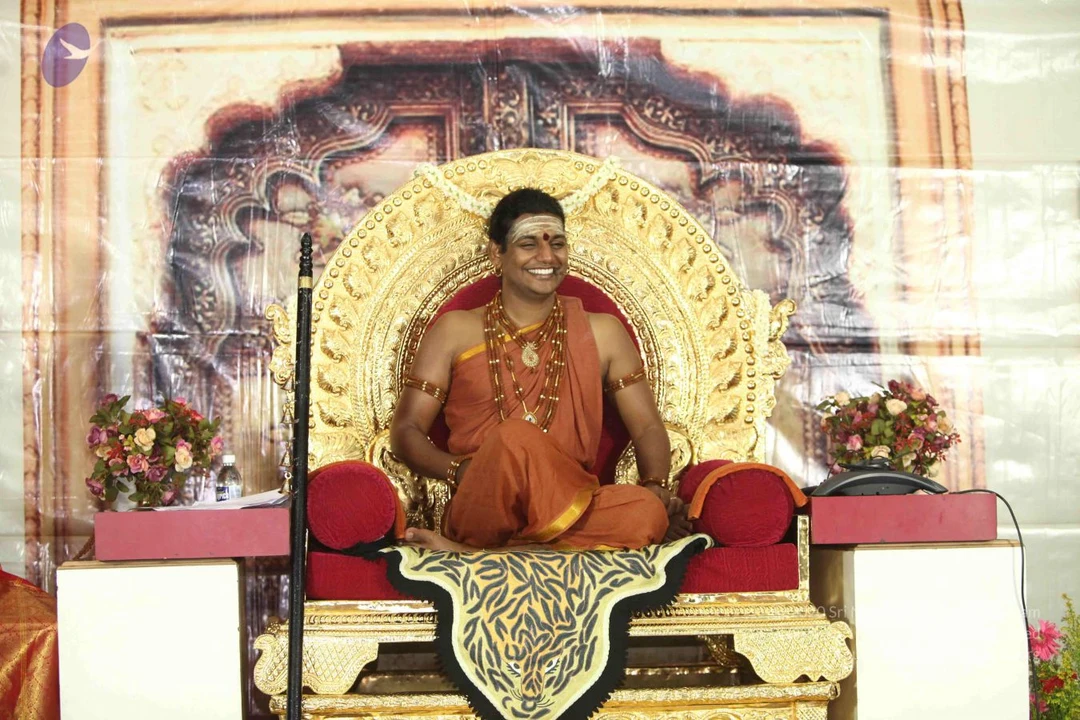
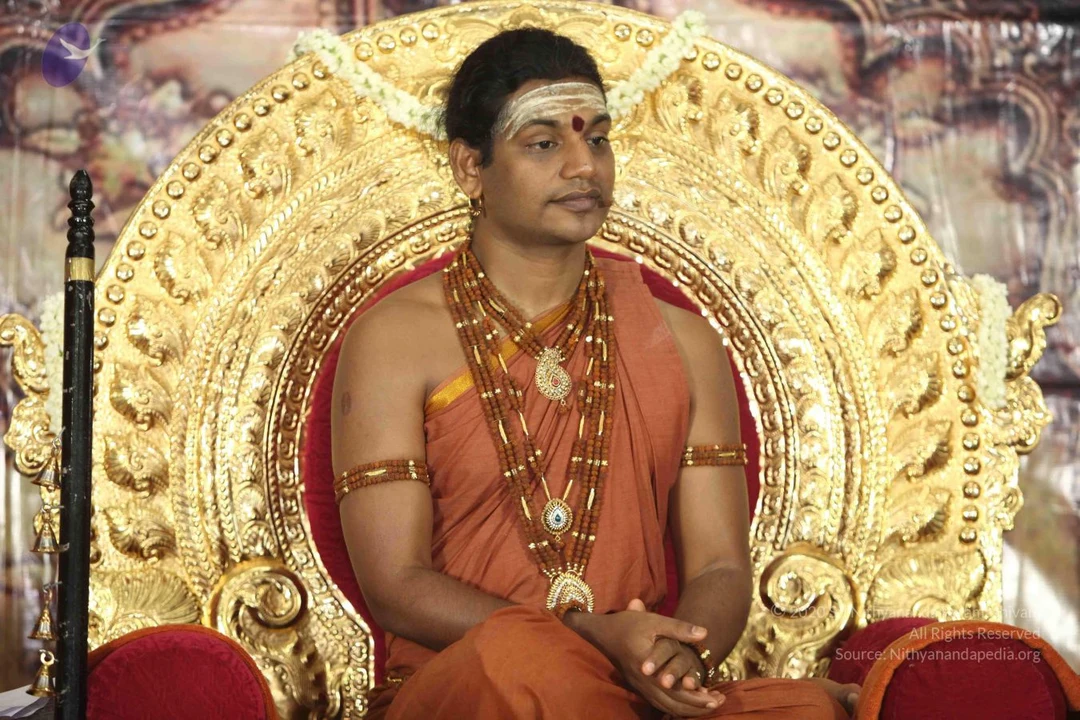
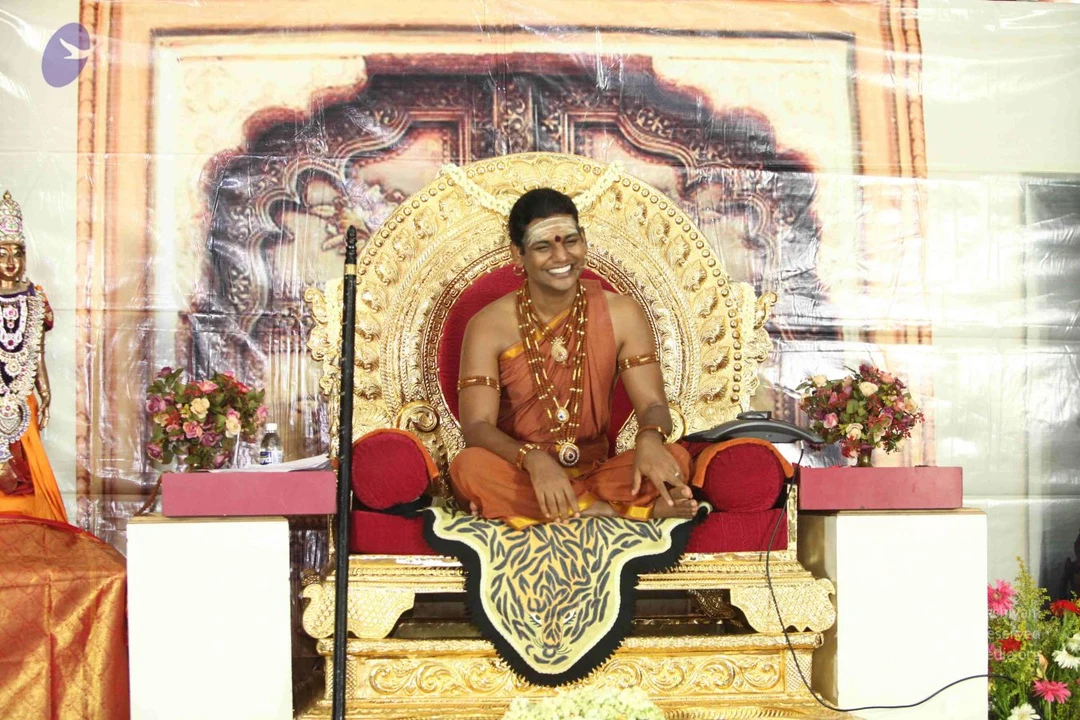
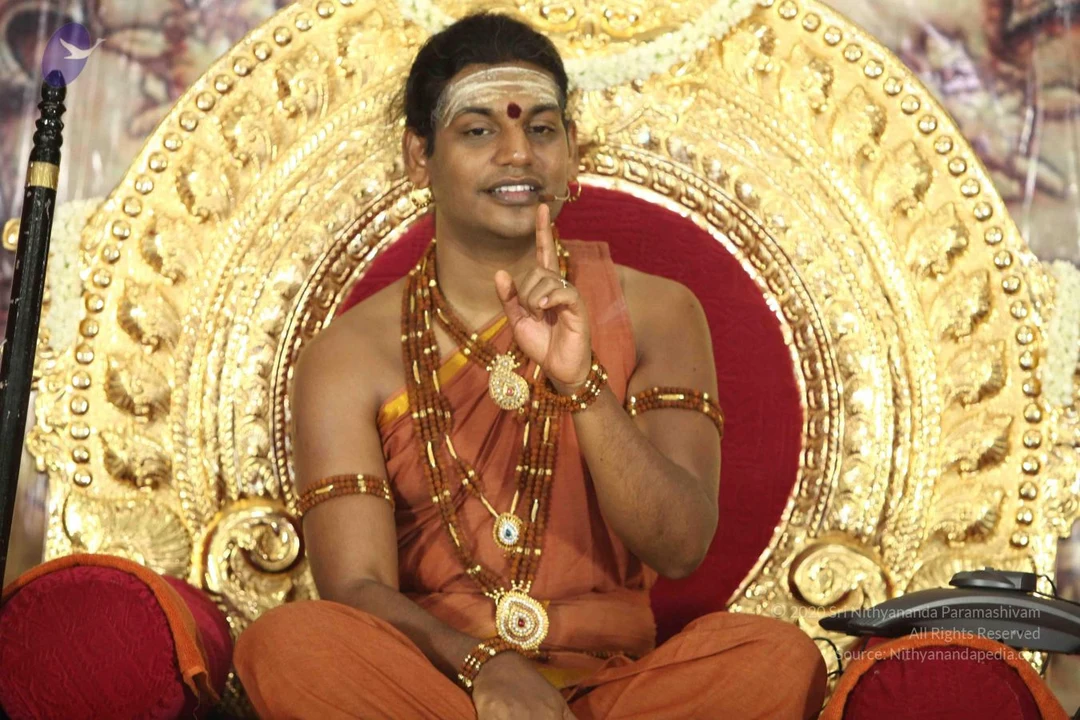
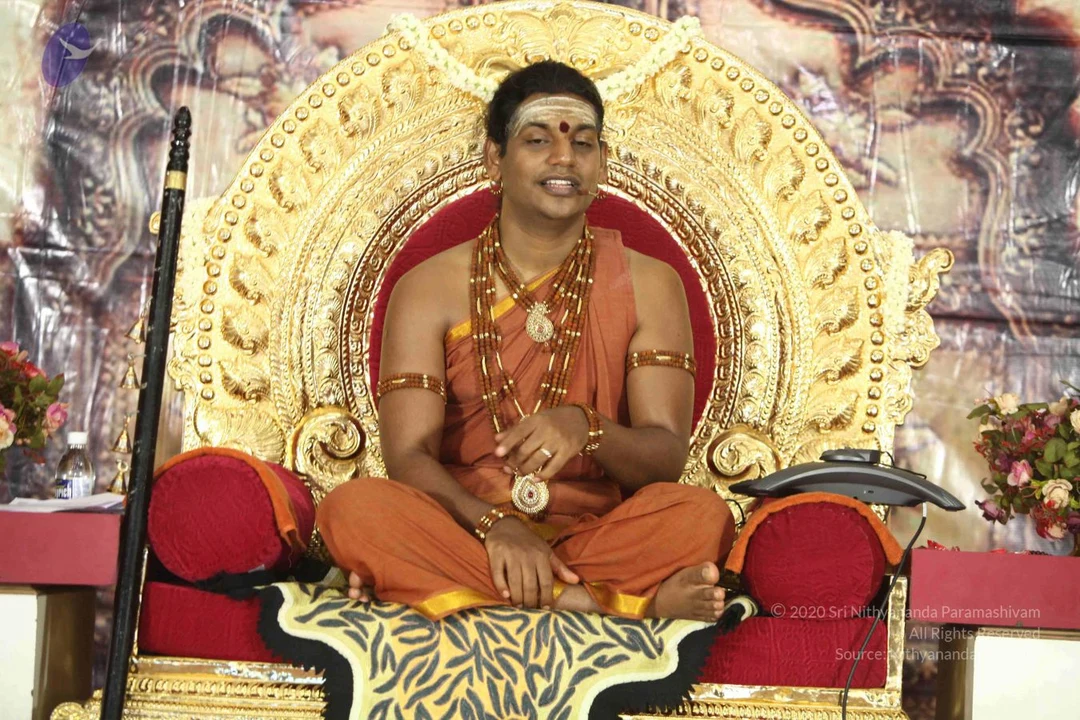
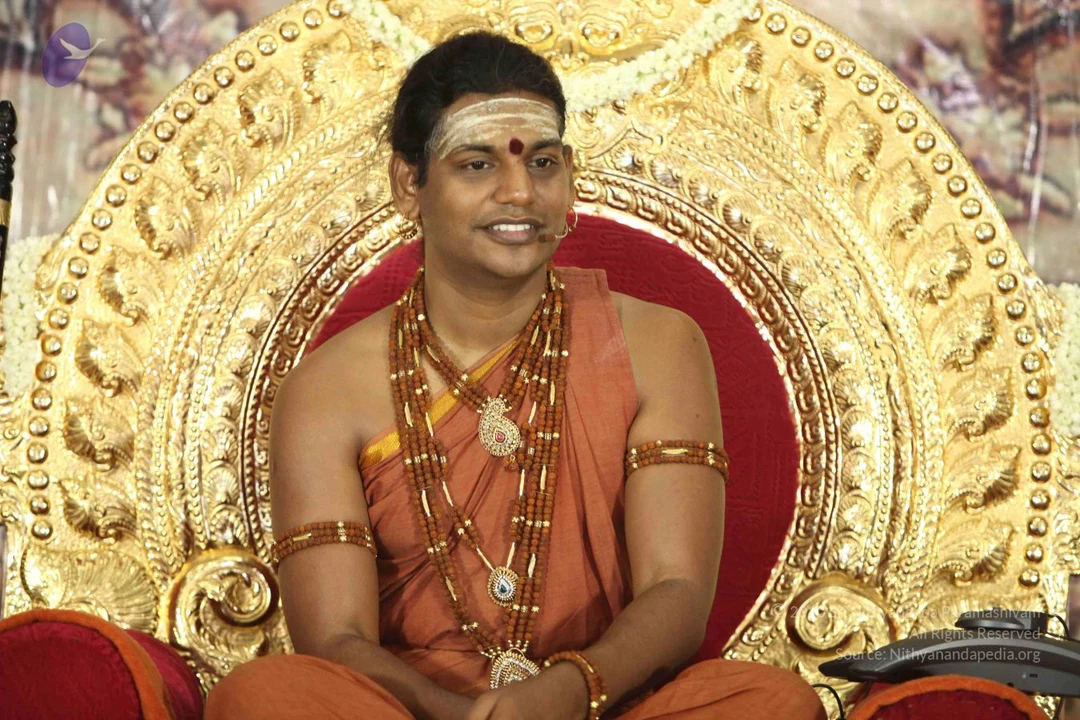
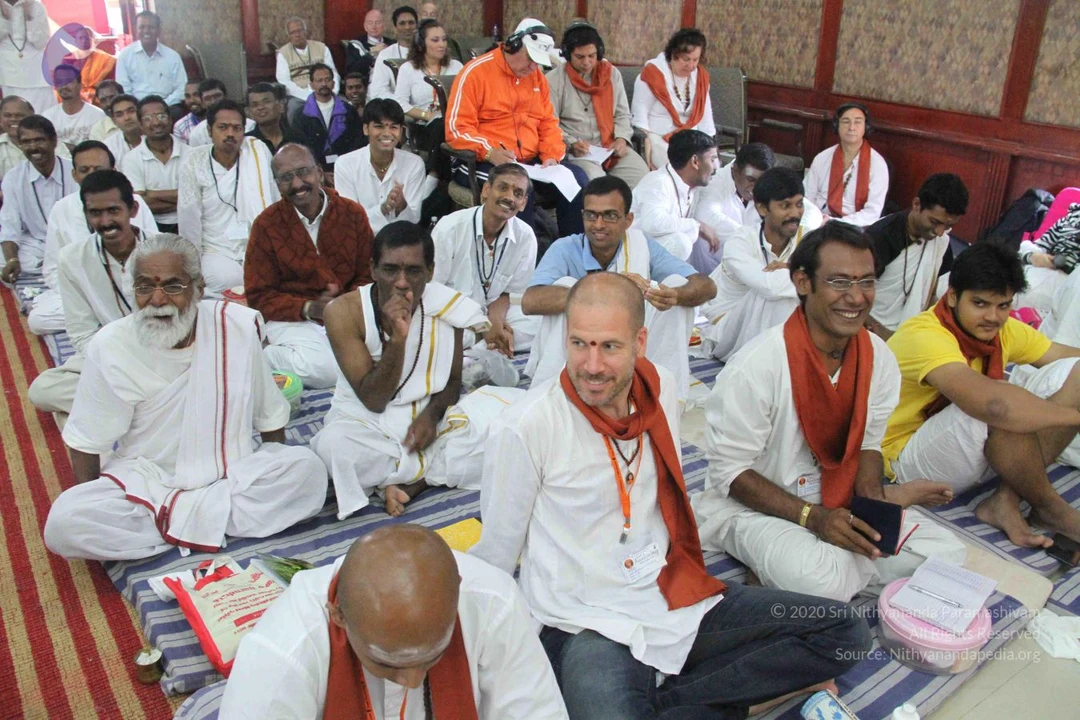
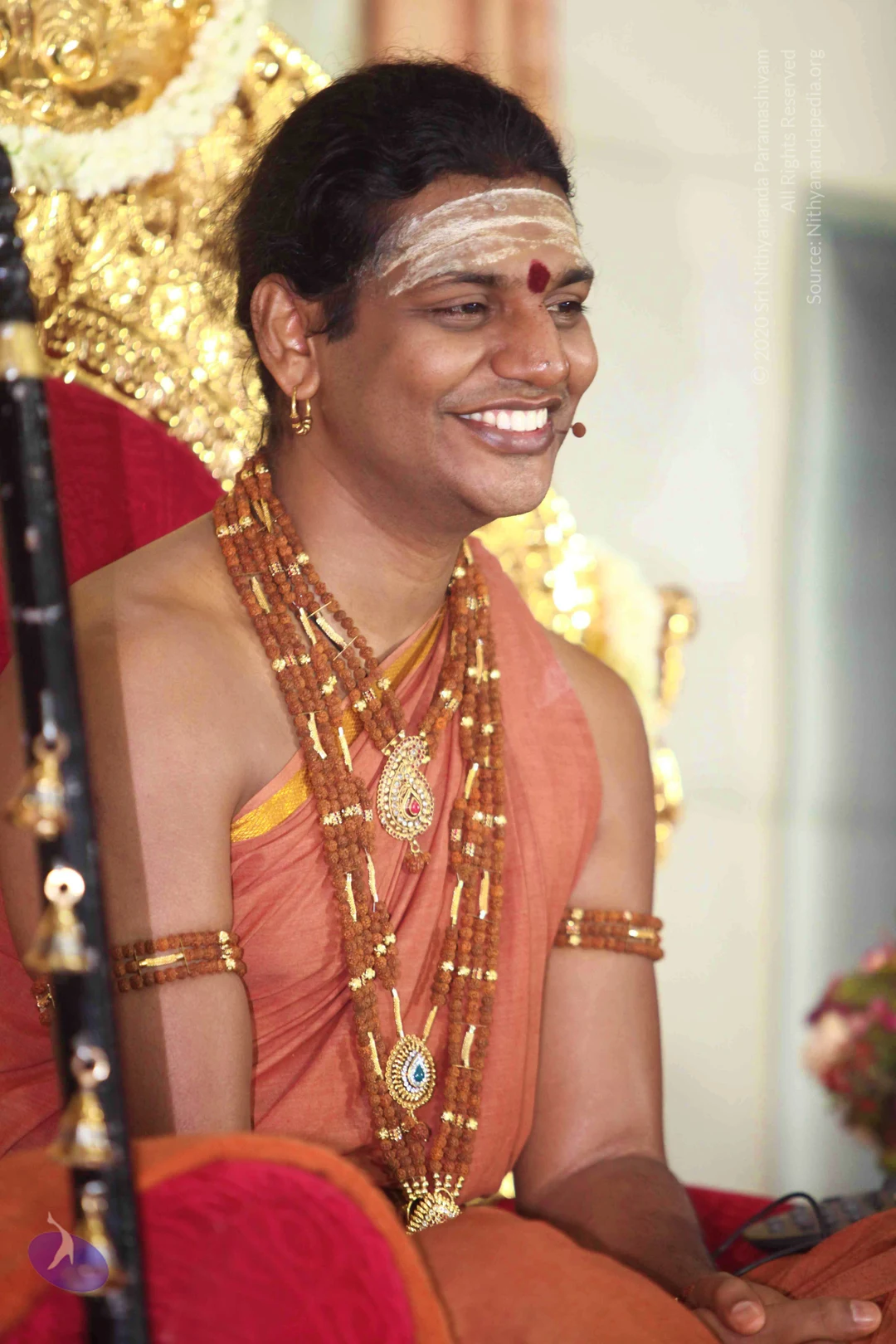
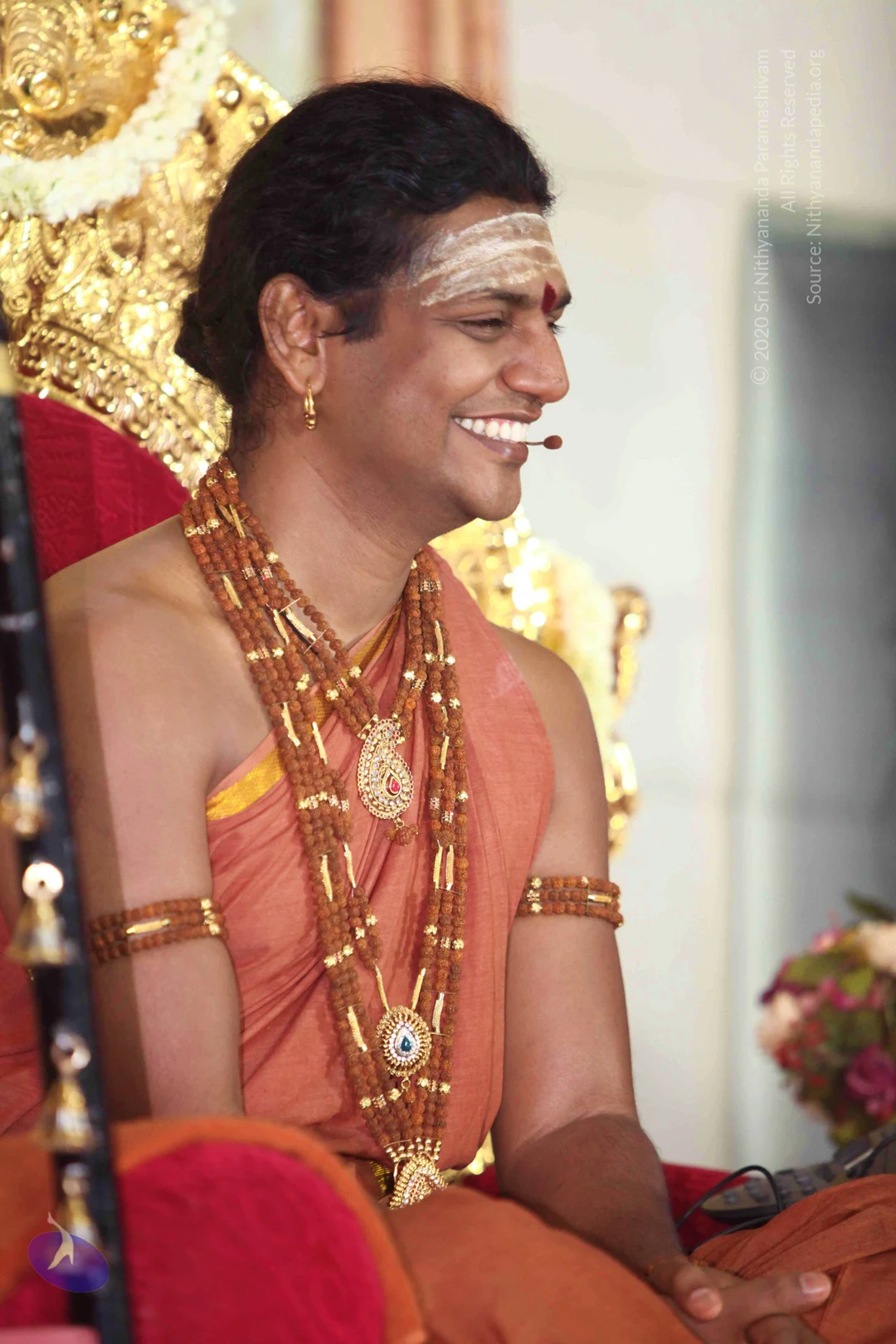
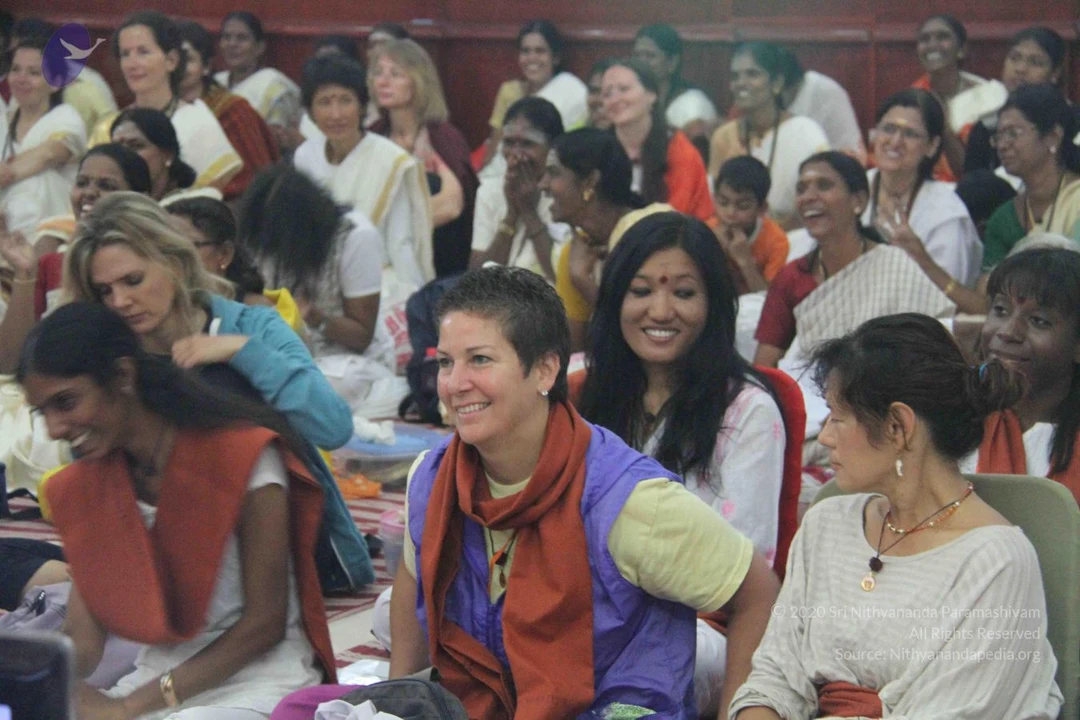
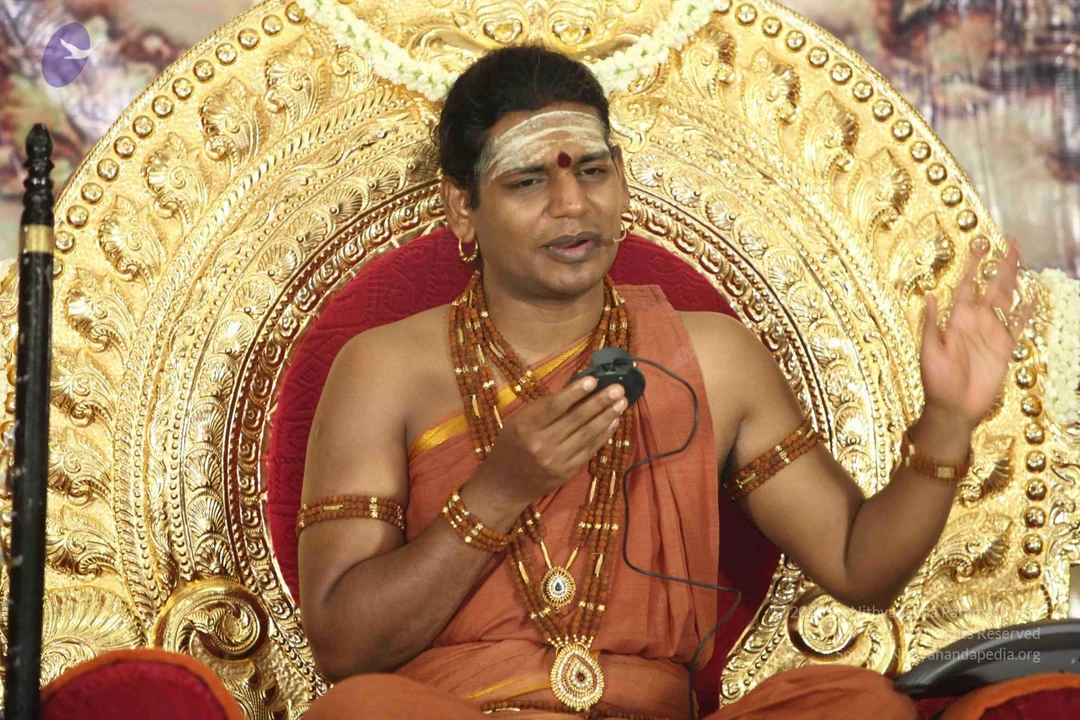
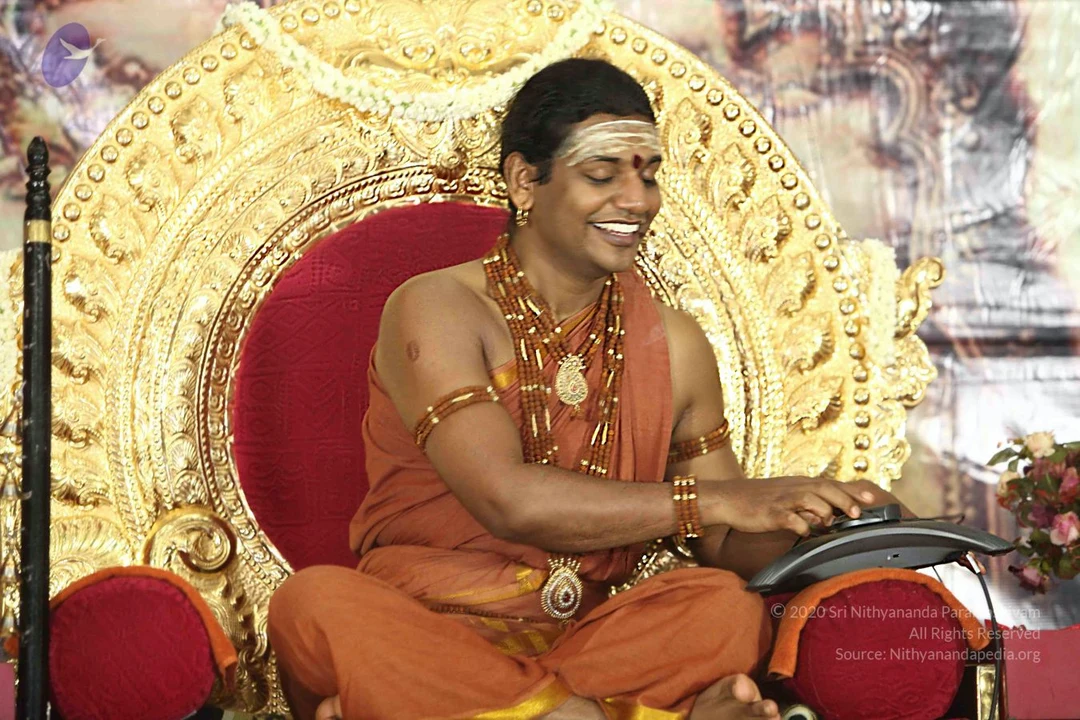
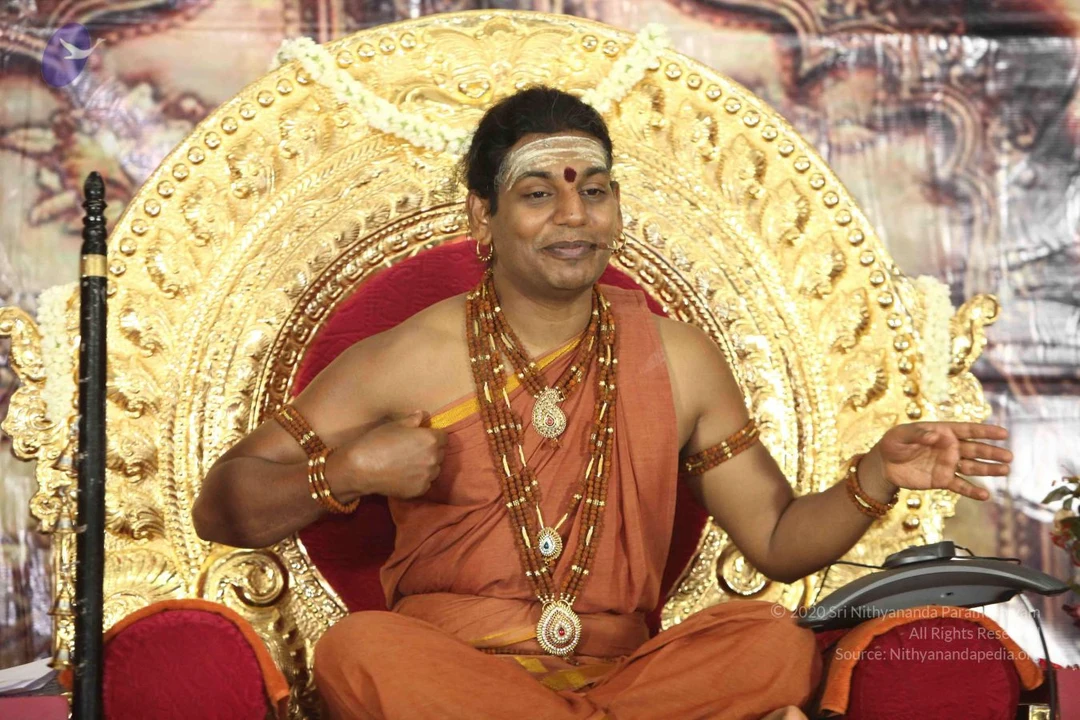
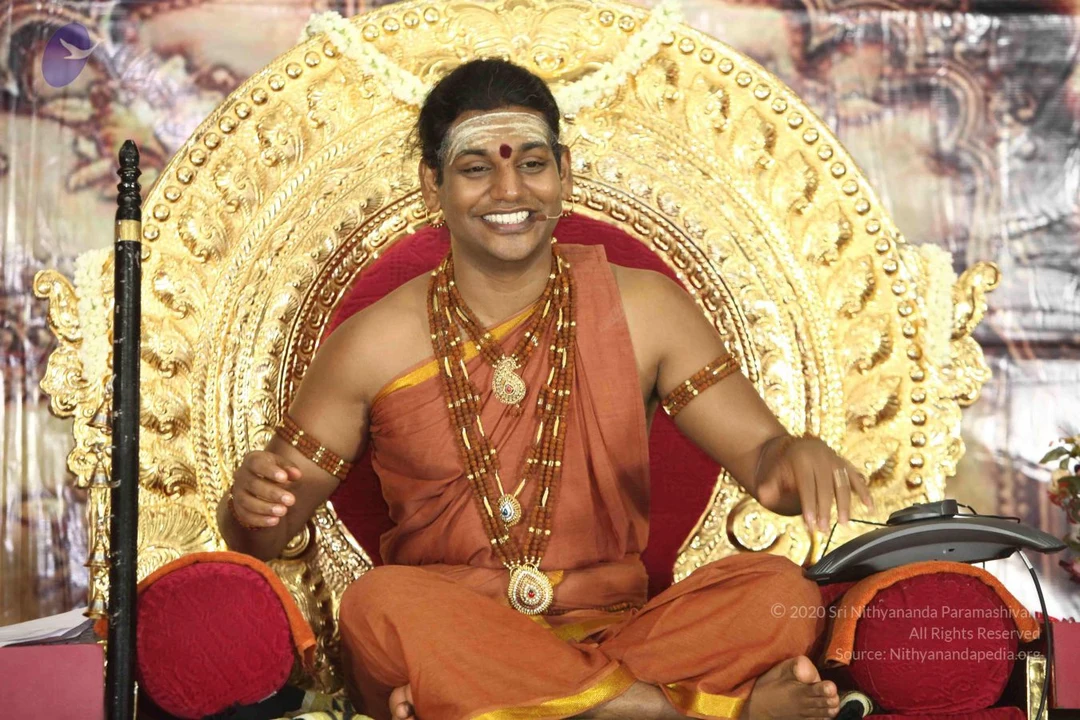
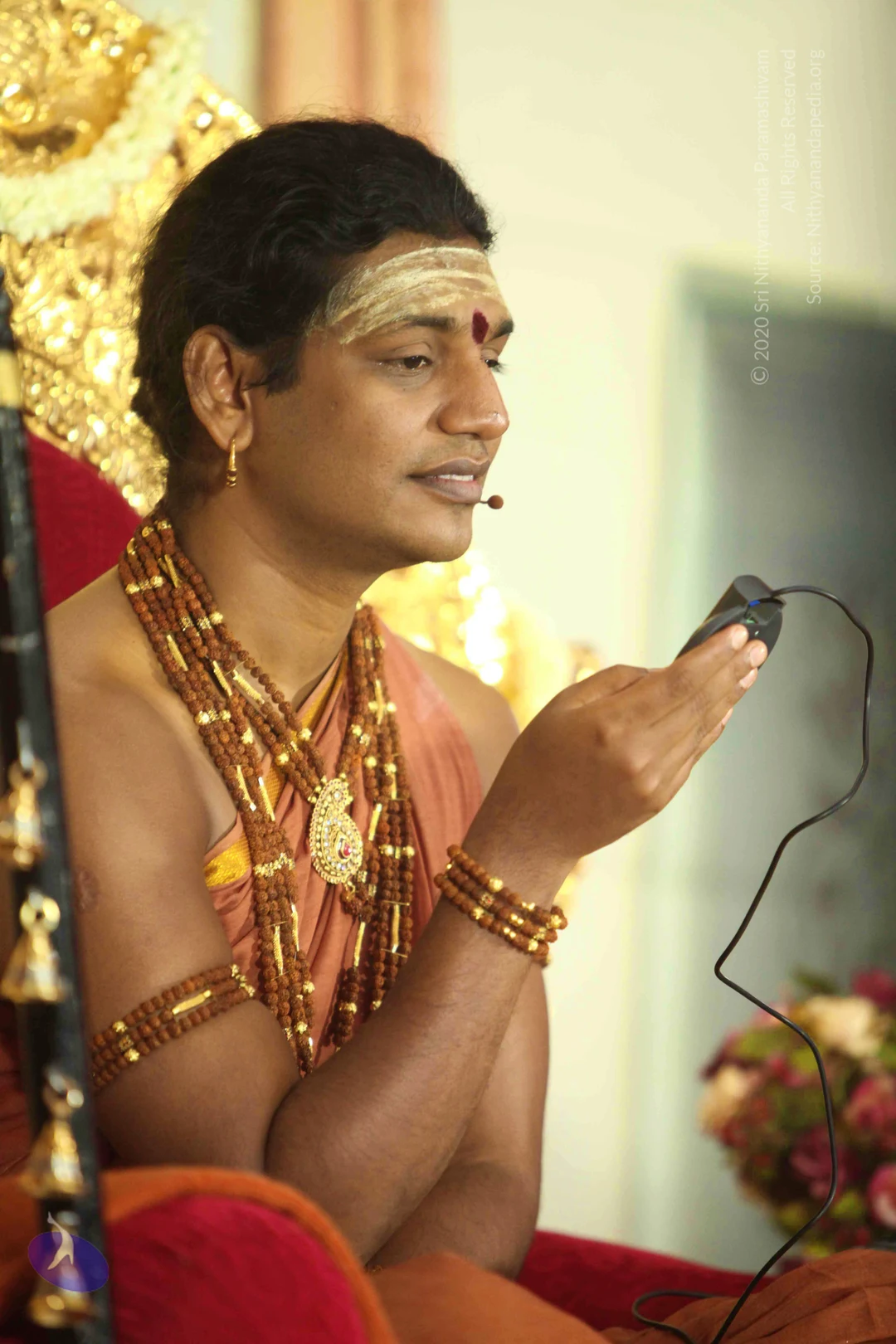
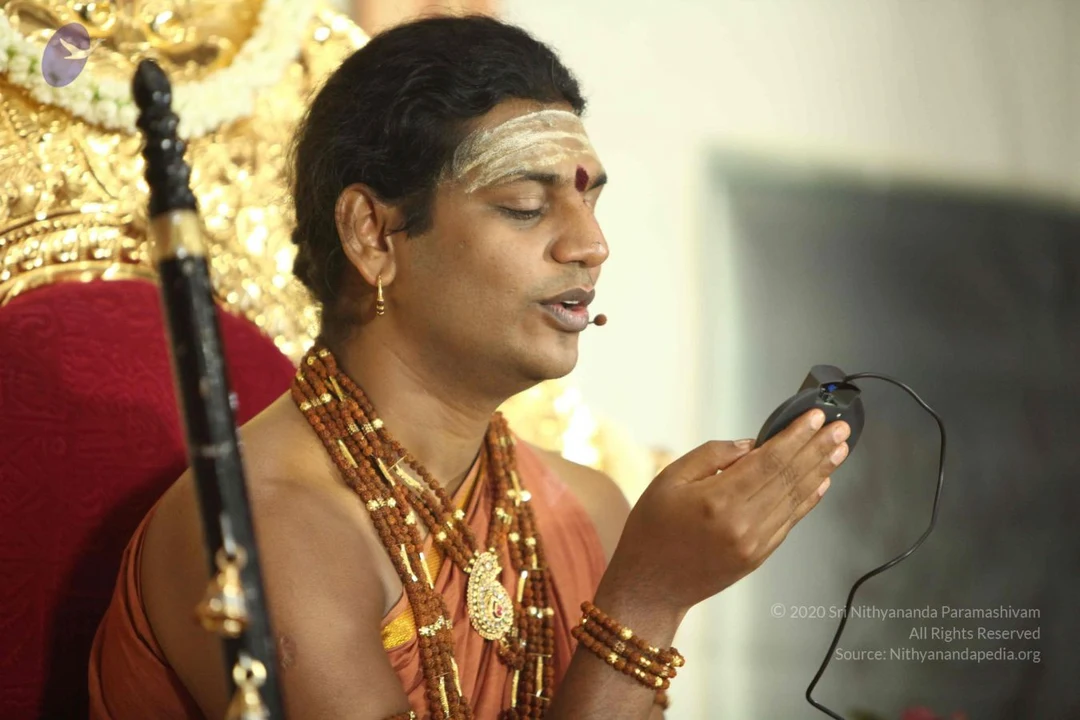
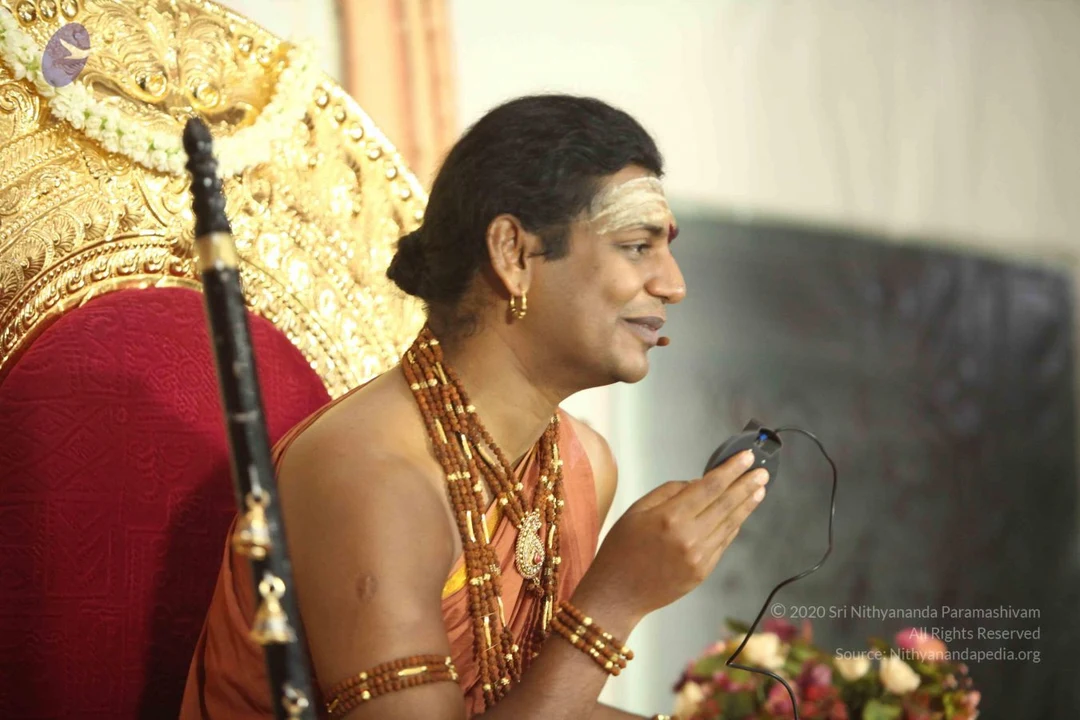
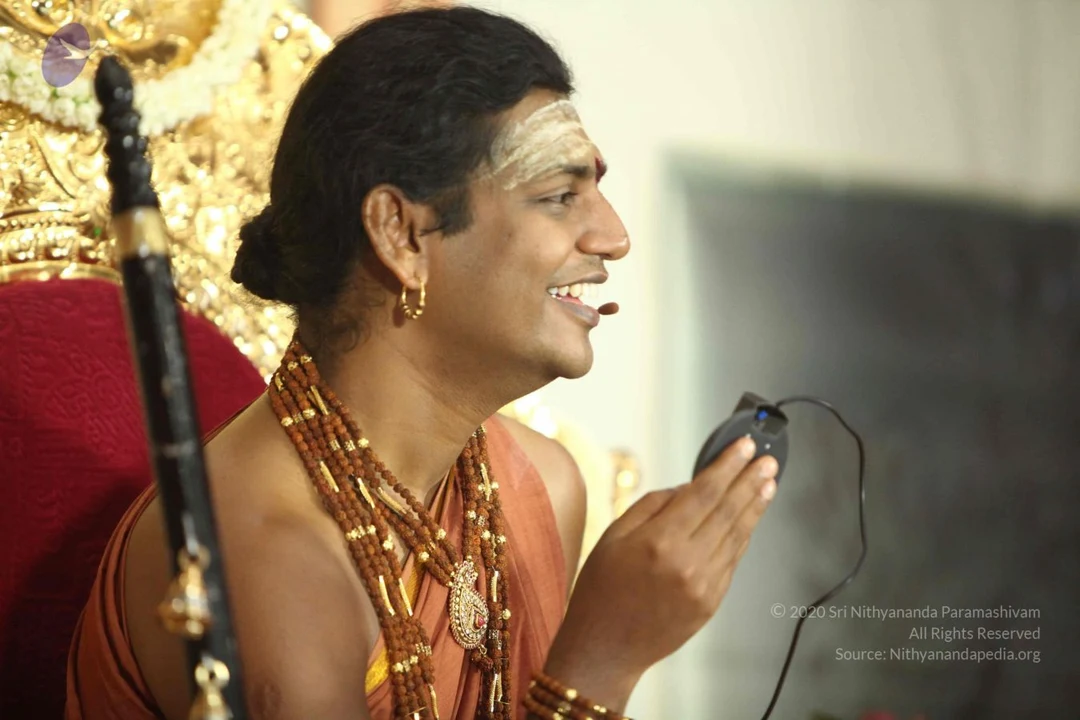
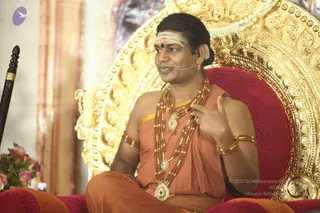
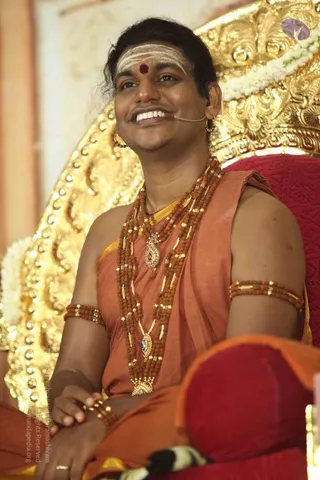
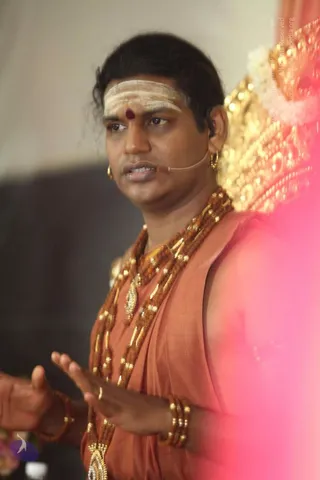
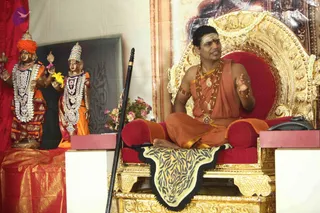
TALKS FROM MORNING SATSANG ON SEPTEMBER 9, 2012 IN KODAIKANAL, INDIA In today's morning satsang, Paramahamsa Nithyananda (Swamiji) addresses Hinduism's need to return to its original spirituality. The fundamental practice of Upanishad, in which devotees sit in the presence of a Master and integrate the principles of meditation, is no longer transmitted as a central religious element among Hindus. Ideally, children learn this practice from their parents at an early age and carry the reverence they acquire into adulthood. Nithyananda points out that while non-Hindus are often forbidden to worship in Hindu temples, Hindus themselves may not be worshipping with the right spiritual understanding. He recommends that Hindus return to the Vedic roots of their spirituality.

Link to Video:

VideoAudio

Transcript:

What is missing in Hinduism

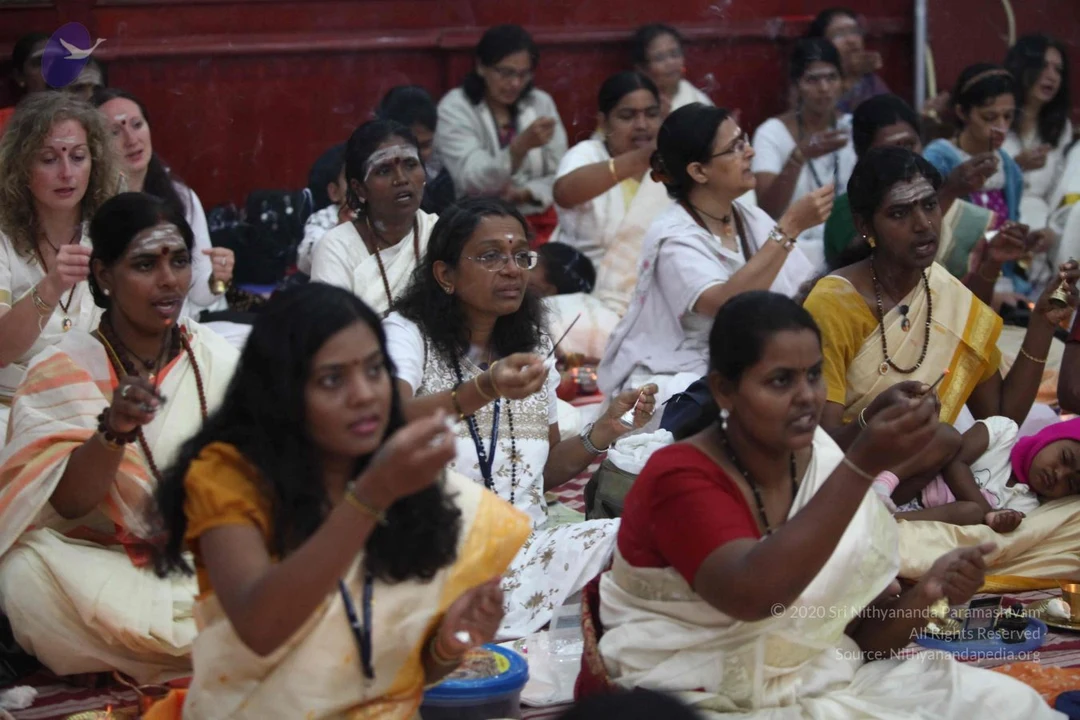
It is so unfortunate that whole Hinduism lost this Upanishad. Buddhism is still able to create more and more enlightened beings just because they held on to that one truth “Zazen”. Zazen means just sitting. It is so unfortunate even the priests in the South Indian Temples are standing and doing Pooja. So this idea of sitting is completely lost. Above the Mahakal, if you see all temples will be sitting and doing Pooja. Below Mahakal, all will be standing and doing Pooja. It is unfortunate. You may think “What is there in sitting”. You don’t know. I tell you. You don’t know -- power of sitting. By sitting, sitting, you will learn how to be sitting with aloneness “Rahasistitaha, Aatmanam rahasistitaha”. That is why, in Hindu tradition, the highest practice is called Upanishad. The highest preaching is called Upanishad. Even the place where the teaching is transmitted is called seat. Peeta. Understand. So much of importance was given to sitting. I tell you. If you learn sitting, sitting, sitting, you will easily pick-up this sitting with yourself. The Upanishad.

If I have my own way, I will really tell all our Ashrams and Spiritual Embassies, have furniture and chairs only for the people who cannot sit on the floor. Elders or who are sick or handicapped.

Even to all our devotees, I give this as a spiritual instruction. Only when you are not feeling well, when you can’t sit on the floor, use furniture. Otherwise even in the house have furniture for the visitors. But when you all guys sit, all you guys sit on the floor. You don’t know, this habit of sitting on the floor will slowly help you to sit with yourself. Upanishad.

So in 11 days you can catch that Upanishad samyama. In Buddhism they have a very beautiful way. They will just gaze at the wall, facing the wall they will sit and gaze. No thoughts allowed. Just sit.

Bodhi dharma sat in Upanishad for 12 years gazing the wall. Now after all, all you guys, Niraharis, you may need to move your head away from the wall may be 3 times a day for juice.

I really wanted Hinduism to get back to that truth of Upanishad.

It is so sad when I went to Nepal this time, in Katmandu I saw 82 percent Hindu population, only 5 percent budhist population but go in any street, you will find 10 buddhist monks going around. You will not find a single Hindu monk. It is so sad. You guys lost all the spiritual wealth, you inherited. Why do you think your next generation is not becoming monks. Because it was never based on the spiritual inspiration. You can see those Buddhist monks highly educated, cultured working on the spiritual truths. The few hindu monks you will see that’s also very few. One or two. Old beggars. In Katmandu, Pasupathinath temple asking for few penny. That’s it. I take a vow in the name of Maha Kala and Maha Kali. Just through the akashic readings, inspiring and initiating I will create atleast 100 thousand sadhus, sanyasis. I mean youngsters, celibates living enlightenment and spreading enlightenment. Giving life to the vedic tradition. It is really unfortunate that these great spiritual heritage. In Zen monasteries, Buddhist monasteries, you can see thousands of monks sitting in Zazen for a whole day.

Hats off to ISKON movement for making ajapa japa as a life style. They atleast brought that back.

But one of the greatest heritage of Hinduism, vedic tradition the Upanishad. Neither gurus talk about it nor disciples practice. The general public do not even have confidence that Upanishad is possible in their life. In Hindiusm if you are a monk, you can’t even survive unless you do some social service. I am not against social service. Just now I blessed the people who gave the money. I am going to send this and going to do social service. But that should not replace our mystical explorations. Unfortunately, in Hinduism the mystical exploring has been replaced by running schools, colleges and hospitals.

Each person inspired about enlightenment is a diamond. His time and energy should be directed towards achieving the enlightenment and radiating the extraordinary experiences and powers of enlightenment. As a part time, second or third priority he can be doing some social service. Nothing wrong. But it is unfortunate that social service has become a main stream religion. I tell you even social service should be teaching enlightenment.

This is the priority list I am giving for my sanyasis. Understand.

First: Achieving enlightenment

Second: Radiating the extraordinary powers and experiences of enlightenment

Third: Social service along with the lines of enlightenment like teaching the science of enlightenment

Only 4th : IS doing other social services. Because there are millions of people to do that work

Whatever you think as best and you found as best in your life, share that with the world. If you are a seeker, enlightenment is the best thing you found in your life, share that with the world. You will have enlightenment you will give only Anacin, metacin to the people, it is cheating. So the seekers even if you do social service in ordinary sense, you are cheating the world. You are hiding the important thing with you and giving only small things to the world. A seeker should give the science of enlightenment to the world. That is the biggest gift.

Let there be spiritual revolution. I give this as a spiritual instruction to all our devotees. If you want to have two children, go for 4 and handover two to the Dhyanapeetam. Bring them up with a spiritual culture from the beginning and reach them to Dhyanapeetam. We need thousands of sanyasis to revive the vedic tradition.

People sometime ask me “why don’t you adopt all the orphans and bring them up swamiji?”. I tell you no, only if the kids grow in the happy family they live as a true sanyasis. Not otherwise. Not otherwise. Otherwise they become cunning, cheats.

I know our devotees are the happiest families on the planet earth. The best possible happiest families. There may be some fights one or two days, here and there. Whatever it may be, but best possible. Especially if both of you are connected, husband and wife both are connected means that is the best possible in the kids growing.

Only when I remember all these great truths, I feel Oh god, how did we lose this concept of Upanishad when Buddhists are able to retain their zazen. Why Upanishad did not become part of our common man. Go to any poor, poorest villager in Tibet. He will be doing ajapa japa with a rosary. Drivers who drive our vehicles during the Kailash Yatra will be doing ajapa japa with the rosary. When Tibetian Buddhism is able to retain ajapa japa, when Japanese Zen tradition is able to retain Zazen, how did you idiots loose Upanishad. No, really. These are such a beautiful, simple, non-expensive life style based great truths. To experience Upanishad, you don’t need to be rich, you don’t need any pre conditions. You don’t even need a special place. These all life style based truths.

Sometimes I feel so much of pain Oh God, how did , why did these fellows lose all these basic truths. I tell you I have been to village to village of India. Only in North India that also in few, only very few parts of North Indian villages, the ajapa japa is retained. Other than that, throughout India nowhere I see this core spiritual concepts are alive. At the most what we know as Hinduism is going to temple once in a while and putting few coins to the priests, putting few flowers on the deity, and showing a camphor and coming off. That’s all.

The first word you will hear when you want to learn about Hinduism is Upanishad. May be second word. First word will be Vedas and second word will be Upanishad. Sometime Upanishad will be the first word, because Upanishad is the essence of Vedas.

Even if you want to jump start learning Hinduism, first thing you will learn is Upanishad. How, how did the main stream Hindus do not even know Upanishad. I tell you guys, main stream Hindus do not even know Upanishad.

Unless there is a spiritual revolution, where millions of, not even thousands, millions of youngsters take up the sanyas life and study the spiritual truths day in and day out, start living it, there is no hope for Hinduism. There is no hope for the spiritual tradition. If only millions of youngsters realize this truth, science of enlightenment and bring it to their life and radiate it to others. Only then this great spiritual truths can be revived. Again life can be breathed into these precepts.

I lived in so many vedantic monasteries. As an insider I tell you, even the great vedantic monasteries, Akadas which represent Hinduism do not know Upanishad. You will not find any of them sitting. Some of the biggest Missionaries, the Hindu Missionaries, their total spiritual practice is 108 times repeat the Mantra morning.

Upanishad Samyama. Sitting with aloneness. It is a beautiful word.

Ekaaki yata – citaatmaa niraasheera – parigrahaha: Just sit in aloneness with yourself and connect with yourself by unclutching.

Even such a simple thing like Upanishad has to be taught by an incarnation. See the damage done to the vedic tradition. This should have been told to you by your mother. At the age of 5 your mother should have taught you this and told you “Upanishad means, sit, my child, sit without worrying and thinking. Sit without being bothered. This is the way you will grow, not only physically, consciously”. How you have. See when a mother talks to a child she tells “ Hey, eat only then you will grow like your elder brother. You will become stronger like your father”. Same way in each house you should have one example of enlightenment. She should tell, “Sit in Upanishad. Only then you will become like your grandfather. See how graceful he is. Established in peace and knowledge. You will become like that”.

I will make enlightenment as a household subject. Even this middle class women, middle aged middle class women, they are the atom bomb of India. No. I tell you. They are the atomic energy of India. Middle aged middle class women of India. They are the atomic energy. Either they become electricity and useful to the society or they will become atom bomb.

My success was I hit that crowd. See the India’s hands were youngsters, legs were retired people, eyes are politicians, brain is bureaucrats, body is middle aged middle class women. That is the most unused resource of India. The only thing they practice, the religion of the middle aged middle class women of India is TV soaps; TV serials. Upanishad should have been their religion. Unfortunately, never they were given the understanding, nor the technique or the inspiration. So their life is wasted in front of the TV. I really wanted to start a TV channel just to make all these as a main stream life style. We will do it. We will do it. We will do it.

Upanishad can do so much good. I tell you Hinduism is yet to be discovered in India. We lost it 500 years before and we are still yet to discover it. I really feel sad to teach such simple things. I should be teaching how to materialize, how to express extraordinary yogic powers, how to initiate others into Kundalini awakening, but instead I am sitting and teaching you how to sit.

No, in Buddhist families, by the time you are 10 you know Zazen, you know ajapa japa. You better know about death. They will teach you. If I am allowed, I will make a law that from every house one person should become sanyasi. We need. We need large number of monasteries. Sanyasis. Spiritual education centers. Universities. Theology seminaries. Spirituality teaching organizations.

Aatmanam rahasistitaha: Sitting in aloneness with the self. One side I am feeling so joyful, I had the knowledge and opportunity and the possibility to experience, practise all these at young age. Other side I feel so much of pain that why did all these not become main stream life style. What is the risk in people just learning to sit in the young age. Why was neither parents nor social leaders or spiritual leaders are even aware of these basic simple truths and not reaching it out to the main stream people. Why did our thinking trend become sopolluted and corrupted by these paid news bribery media? Why should we bother, if some bollywood star is living in some relationship with somebody and that actress’s dog has a chickenpox and that dog’s girl friend dog is having a cancer and that pissed on their car.

No, really it is sickening. What informations are becoming our life style. Because you consumed they give, because they give you consume. Everybody bothers about the economical, political, social corruption. Nobody is bothered about the conscious corruption. They think this does not need to be a first priority. Conscious corruption happened and happening to the vedic civilization.

I vow to teach all these simple basic truths as a life style, by creating millions of sanyasis.

This is the “guru vak” for all my sanyasis and sadhus. You live and radiate such peace and joy and understanding and capacity. So anybody who comes in contact with you feel jealous of you and takes up the life style you are living. I gave up eating solid food not to prove anything to anybody. I don’t need to prove anything to anybody. Just to inspire. Inspire the next generation. I am making you all “Niraharis” not to save the food cost for the planet earth or this country. To inspire millions.

From now, I am not just going to tell people to do Inner Awakening, to live enlightenment. I am going to straight tell “become a Sanyasi”. India needs. India now really needs millions of sanyasis and rishis. People are so insensitive. They care only for their career, foolish career, which will lead to only more and more depression and suffering.

Its time that all you sanyasis and sadhus, rishis who are living in the ashram create the ambience for the next generation to come inside. You all grow to accommodate them, to live a happy life, and train them by the example. Not by bullying but by nandheeing. Nandhi teaches by example. I create a new word. Nandheeing is the opposite word of bullying. Nandhi is one of the greatest guru in saiva tradition. In saiva tradition, four are considered as guru. Devi, Nandhi, Subramanya and sanakadi rishis. These are the four major sampradayas in saiva tradition. We belong to Devi’s tradition because as we follow the shiva sutras.

Live this Upanishad samyama and reach out to the whole world all these great truths. Such a simple no- risk process all these. Will do only good. Will never do anything bad. Let’s reach out to the world with these beautiful simple to practice samyamas and revive the vedic tradition. Revive the Upanishadic tradition.

Q&A

Q: Respected Swamiji, Tourism in India has great potential. Recently Karnataka Govt has received 35 thousand crores of investment bids to develop tourist infrastructure in heritage site, Hampi. Swamiji, what are your comments on developing tourism in India, especially spiritual tourism and yet retaining the sanctity and sacredness of the places.

A: Beautiful question. Understand, what is retaining the sanctity and sacredness of a place, spiritual place? If a person sees that deity or a place with feeling of sacred, the place’s sanctity is maintained. If the person does not see that place or the deity with the sacredness, the place does not retain its sanctity and the sanctity is disturbed.

Please understand, I strongly condemn the pseudo Hindus stopping Westerners, other religious people into Hindu temples, not allowing them having darshan of the deities. Please understand, I wanted to make this very clear. Even in all Indian temples, I tell you, millions of Indian atheists and the fellows who don’t have any respect, does not carry any sacredness for the deity enter and have darshan. They are the fellows who are disturbing the sanctity. Millions of westerners come, carrying so much of sacredness are not allowed to have the darshan of the deity. It is strongly condemnable.

Yesterday, the representative of the Pope went to Tanjore temple and these cheap fellows, cheap few fanatic Hindus did not allow him to have the darshan of the main deity. I strongly condemn that. I welcome Pope’s representative and I sincerely invite him to our temples. Please come and experience and have darshan of true vedic Hindu tradition. I am going to send him a formal invitation. The representative of Pope came to India to attend the Velankanni Festival. After attending the festival he made a statement “nothing like this ever I have seen in any country”. Because the whole festival was based on the Hindu tradition. The chariot, being pulled and the deity being brought everything, and he was so impressed. He wanted to see some of the big temples of Hindu tradition. Unfortunate. It is really unfortunate. We should have welcomed him and took him to the temple and made him have the darshan of the main deity. See, when he wants to see, naturally, he carrys the sacredness. He is not coming there to disrespect or to reduce the sanctity.

We Hindus need to be more open and with understanding; how to retain the sanctity and sacredness. First thing, in all temples have enough priests who can talk, make people understand the story of the deity and create the sacredness in people and make them go and have darshan with that sacred feeling. That is the only way to retain the sanctity.

I know millions of so called Hindus, they go to the temple not to see the deity, but to see the women who are coming to the temple or to do other mischievous things. You guys are allowing all these fellows into the temple. When somebody comes to experience the sacredness you don’t allow them. We have to retain the sanctity. No doubt. So when they come, educate them.

“No camera, no photography. This is the worship place. Please wear this dress and have this mala. And this is deity, representing God’s energy. So this is sacred. When you go in front, offer your prayers, and meditate, bow down”.

Educate them. They will carry more sacred sentiment in their eyes, than so many so called pseudo Hindus who are going there just for time pass. I know. I can tell you. In India thousands of people go to temple. I have seen. They will be sitting there and chatting all their house stories. Or seeing who comes and who goes.

Understand, the spiritual tourism is going to be the main stream business of India. Main income source of India very soon. Because, one of the biggest good thing happening is now fortunately we have many Indian historians standing in the international forums and asserting the antique value of our temples, and asserting the authentic ancient the age of our temples. Earlier British were telling the age of our temples and tradition. Now fortunately Indians are telling the age, history and authenticity of our temples to the international community. So the people are realizing, discovering the age of our temples, authenticity, architectural wonders and the heritage value of our temples.

As a guru, who has worked with the human beings from 191 countries, I can tell you Oh! India and Hindus of India, decision makers of Hindu Religious Endowment Boards, open the temples and spiritual sites to the whole world.

Not only the Westerners, other religious people who come to visit, even the Indians who come to visit every time should go through the sacredness session. Even they should be reminded they are entering into the sanctum sanctorum, they are going to have a personal time with God, they are going to meet God’s energy face to face. They should be reminded when they are standing in the queue. Batch by batch, they should be reminded. There should be enough of teachers, they should be reminded that you are going to have personal time with God.

When you carry that sacred sentiments in your eyes and go there, only then the sanctity of the place is not disturbed. Even if you are a born Hindu, if you go there for a moment you think “Oh, it is a stone decorated with jewels”, the sanctity of the place is destroyed. You may be from any religion, any country. When you go with the mood to see the divine there, not only you are not disturbing the sanctity, you are adding to the sanctity. So learn to educate people.

See..there is a beautiful festival that happens in Velankanni every year. There is a temple for Mother of Jesus. The celebration happens as per the Hindu culture. It is a, what to say that, union of both Hindu tradition and Christian tradition and millions of Hindus visit that temple to have darshan. So all the rituals and celebrations are observed like Hindu tradition. So he was just impressed seeing that ritual and the devotion Hindus show to Jesus’s mother – Virgin Mary. So he wanted to visit a Hindu Temple to have a idea. What’s wrong. These fellows took him around the temple, did not allow him inside the Sanctum Sanctorum. It is sad that they did not allow him inside the sanctum sanctorum and I am sure he would have respected all traditions. When he wants to come and visit, he would have respected all traditions. You can see the worship, the Hindus offer for the Mary. You can see millions of Hindus gather, to offer worship to the Devi. So the celebration is observed in a more Hindu cultural way. You can see the umbrellas and everything. Just like Meenakshi temple procession.

Few more views about this spiritual tourism.

I tell you guys, spiritual tourism is not only going to be a huge economical income resource income source for India, it is going to bring tremendous prestige and following of Indian vedic culture internationally. So the Indian Govt. should take up this as a main stream business and promote. Not only that, create enough of guides who can speak in international languages like English, French, Spanish and educate the visitors in half-an-hour through the power point presentation, or through a documentary or through talking. Create that sacred sentiment in them and take them to the temple, take them to the main shrine. Show the religious sites, show the spiritual sites, show the religious monuments, show the spiritual temples. And fortunately in Tiruvannamalai, Ramana Maharishi interfered and banned this law in 1947 itself. So in Thiruvannamalai temple, no Westerner is stopped. All of you can see. Only in Madurai, you may be stopped. In Thiruvannamalai, no body will stop you.

In Thiruvannamalai temple, you won’t even find that Board: “Non Hindus are not allowed”. Because at that time, when they tried to bring that law, Ramana Maharishi interfered and said “No. In Thiruvannamalai, all will be allowed. All should be allowed to have darshan”. Some fanatic hindu said “Why, we will not allow”. Ramana Maharishi said as per the tradition and the spiritual instruction, in Thiruvannamalai, the Hill is the main deity. You will stop people seeing the Hill? Hill is the main deity. You can stop the people seeing the hill or what? Hill is the first deity. Even now every day the first pooja is done to the hill. When there is a consecration of the temple – “Kumbahishekam” of the temple, the first abishekam, first kalasa is poured on the hill. Only second is poured on the main deity. Third is the living master.

In Thiruvannamalai, Shiva is available in three forms. So Ramana Maharishi said, “He is available first as; the first deity is hill, second is shivalinga, third is me,” He said directly. Third is the living master. You cannot stop people seeing that and this. So you will hide only the small Shivalinga. So, then the government passed exemption for Thiruvannamalai temple. Thiruvannamalai temple is the only temple in whole tamilnadu, where you will not find that board “Non-Hindus are not allowed” and anybody can go upto the sanctum sanctorum – the level public is allowed. The level I am allowed, any one is allowed. Any one can go and have darshan. Still they retain that tradition.

So I wanted that same tradition to be practiced in all hindu temples of India. See in those days we had a problem that they may bomb, they may do some terrorist activity and all that. Now have enough security for that. That’s all and educate them. Over. I think it is time we open everything to the whole world.

If any of you are interested in some flourishing business, I tell you guys, the spiritual tourism in India is going to flourish in a huge way. It is going to just take off. If you make anyinvestments in that field, it is going to become atleast 100 times more. By 2012 – 2015, the spiritual tourism in India is going to become a biggest solution for the depression, the world is going to suffer. So there is going to be a huge world population going to come to India for spiritual tourism. This is going to be one of the biggest flourishing business. If you want invest in that field. You will make lot of money. May be I can inspire some of our devotees to launch a company for spiritual tourism and encourage it.

Photos From The Day:
Tags:

Paramahamsa Nithyananda, Hinduism, spirituality, Upanishad, devotee, meditation, religion, children, parents, adulthood, worship, temple, understanding, Vedic roots.

Photos Of The Day:

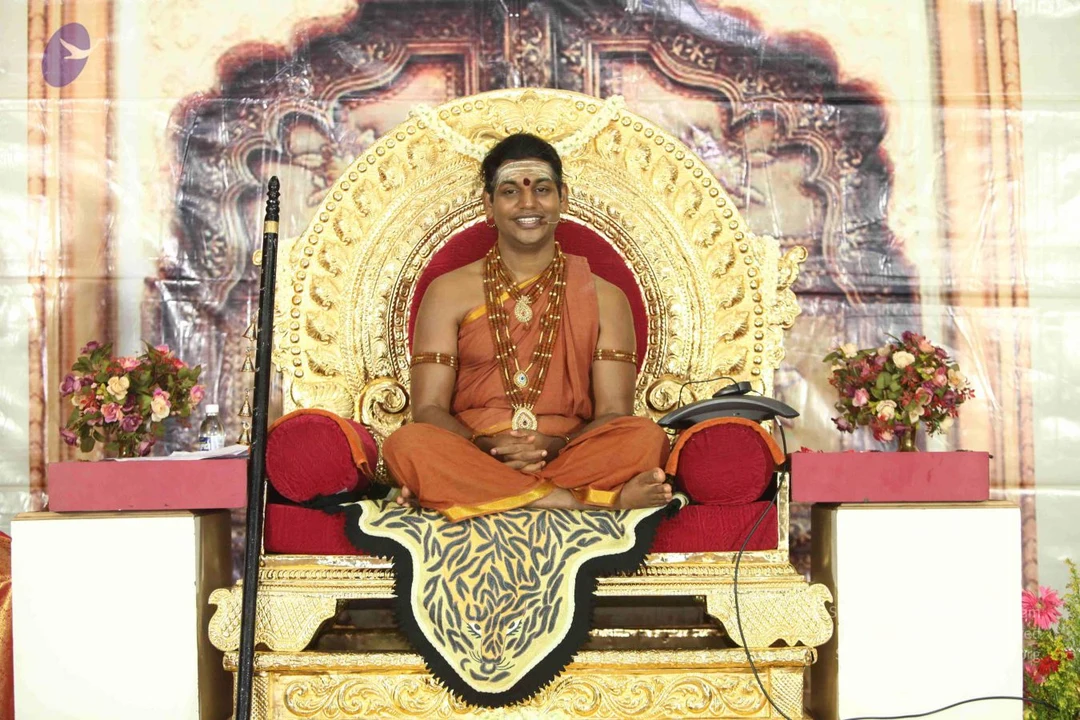
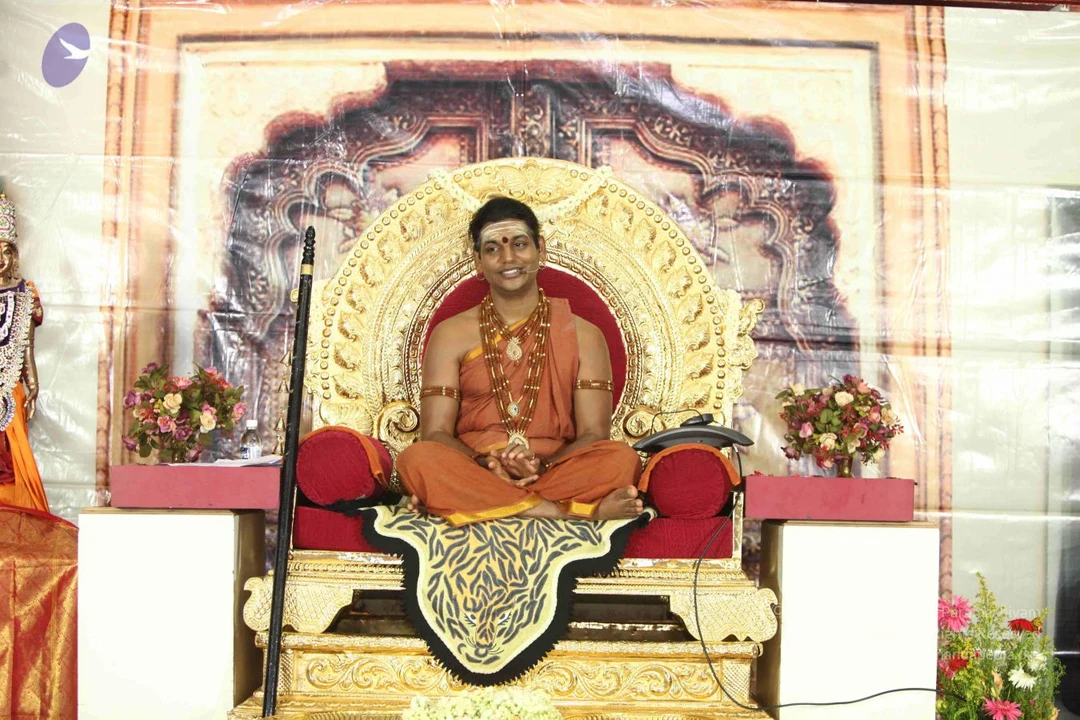
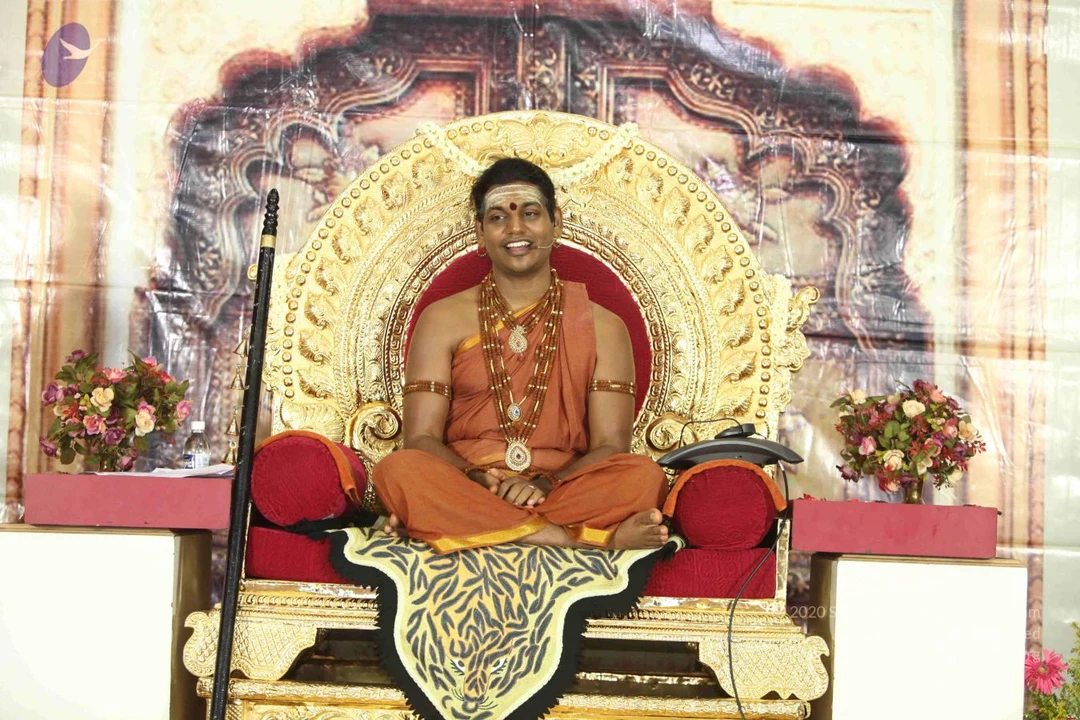
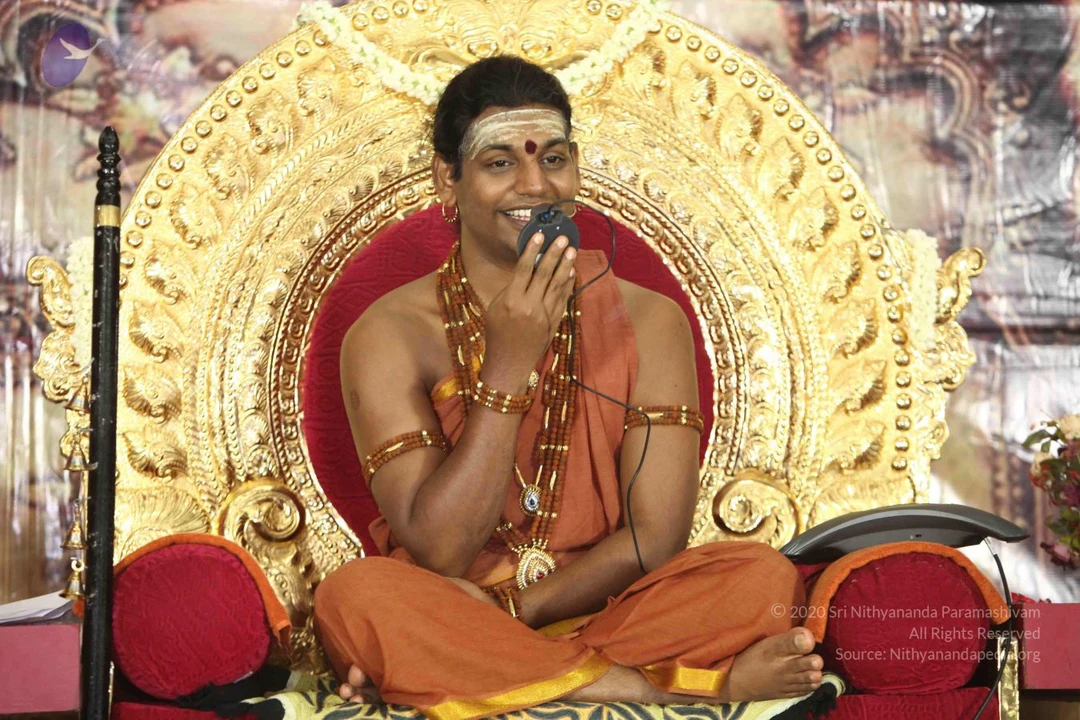
Morning-Satsang
Unclutching

Lunch

Rudra-Homa

Akashic-Reading-and-Darshan

Darshan-Scientific-Study

Photos Of The Day:

Pada-Puja

Satsang

Dial-the-Avatar

Sarva-Darshan

Unclutching-Session

Rudra-Homa

Kalabhairava-Akashic-Reading-and-Darshan

Photos from this day

View all 721 photos

Morning-Satsang
201 photosSource gallery
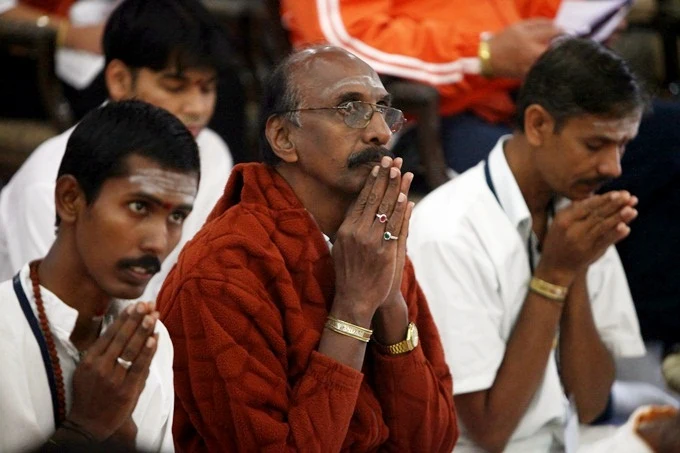
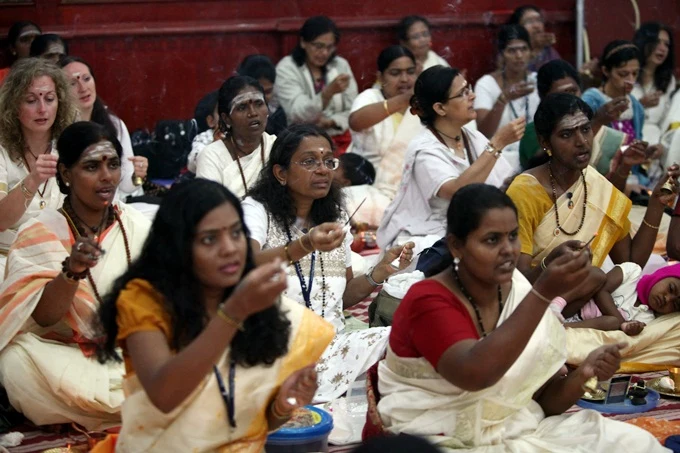
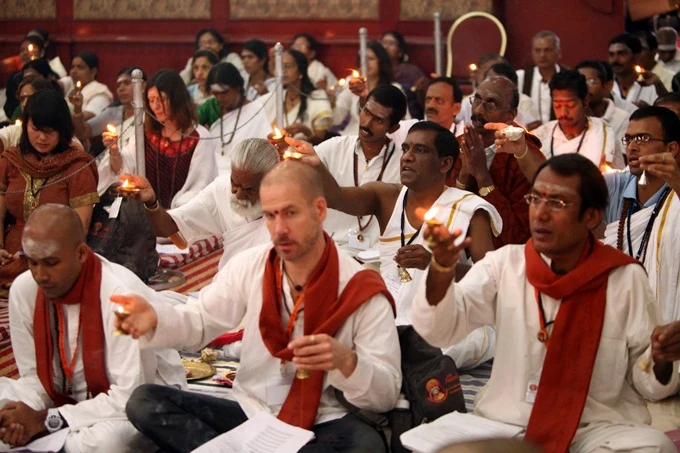
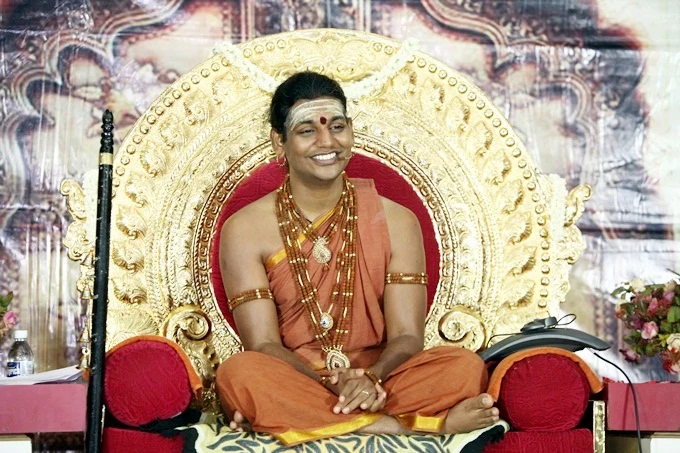
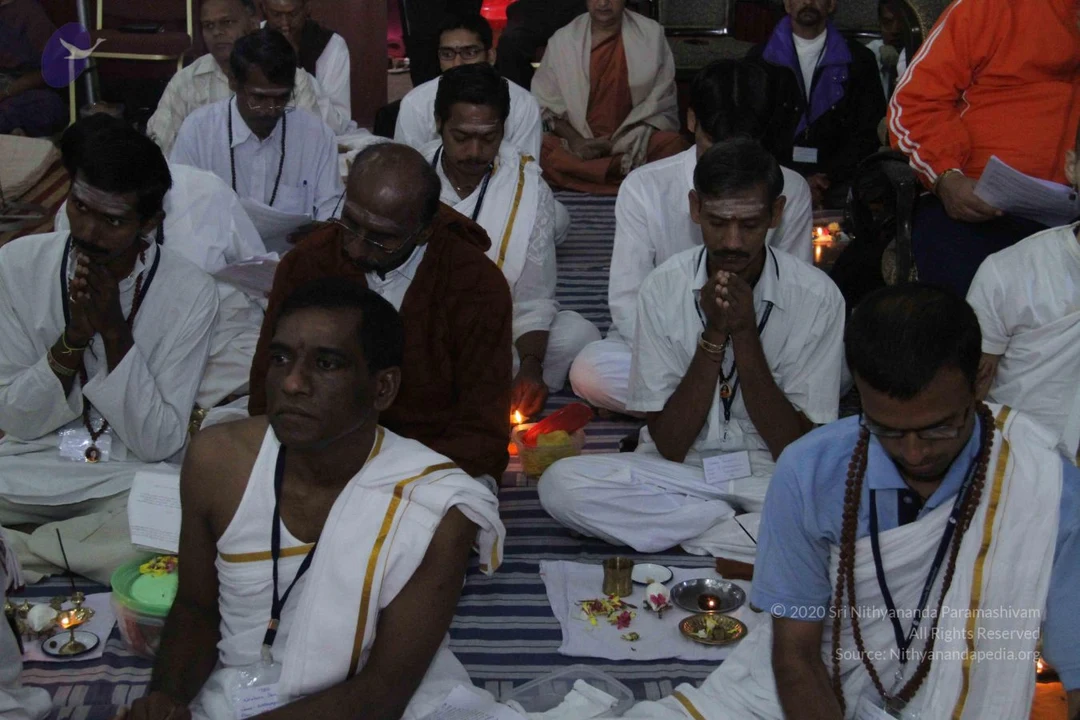
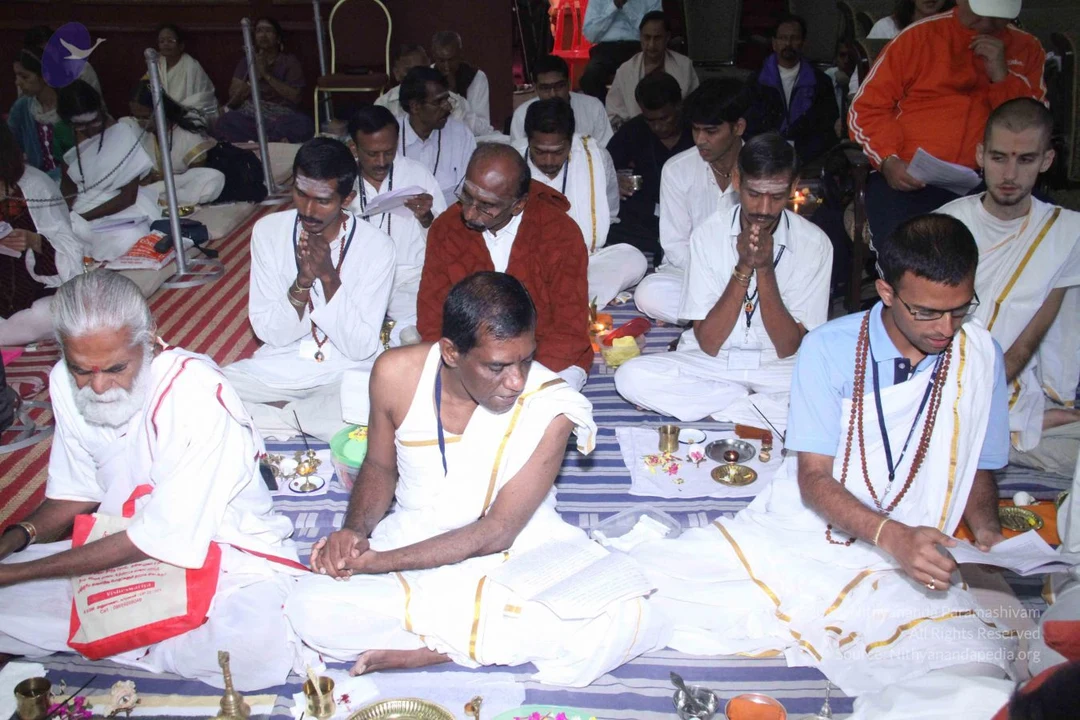
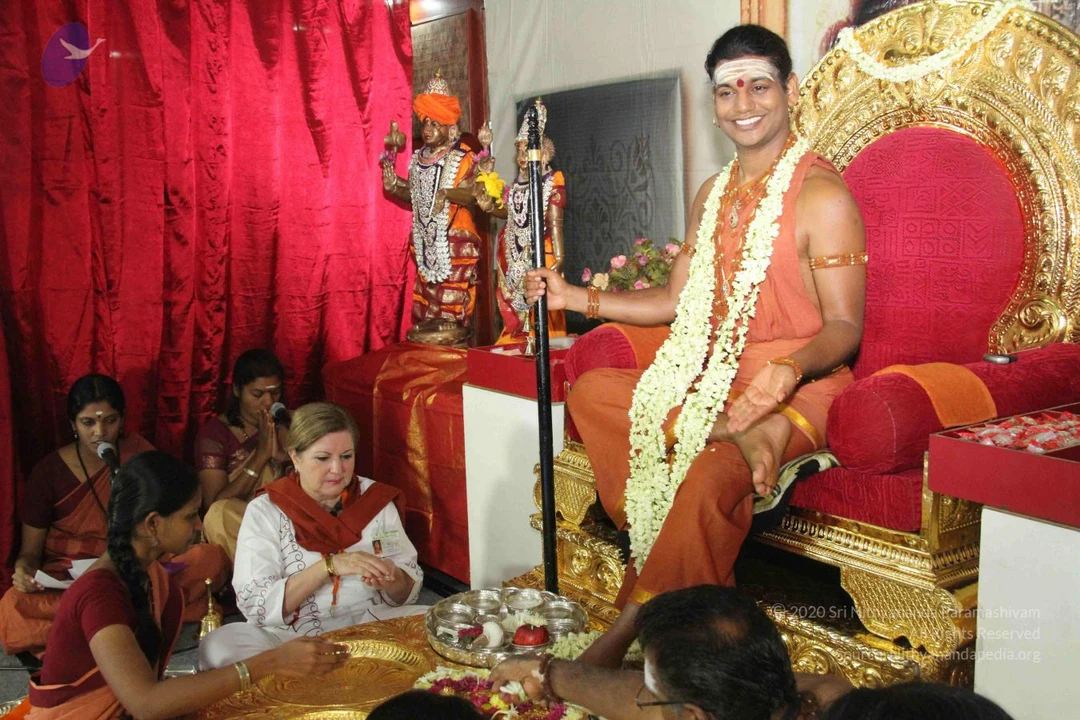
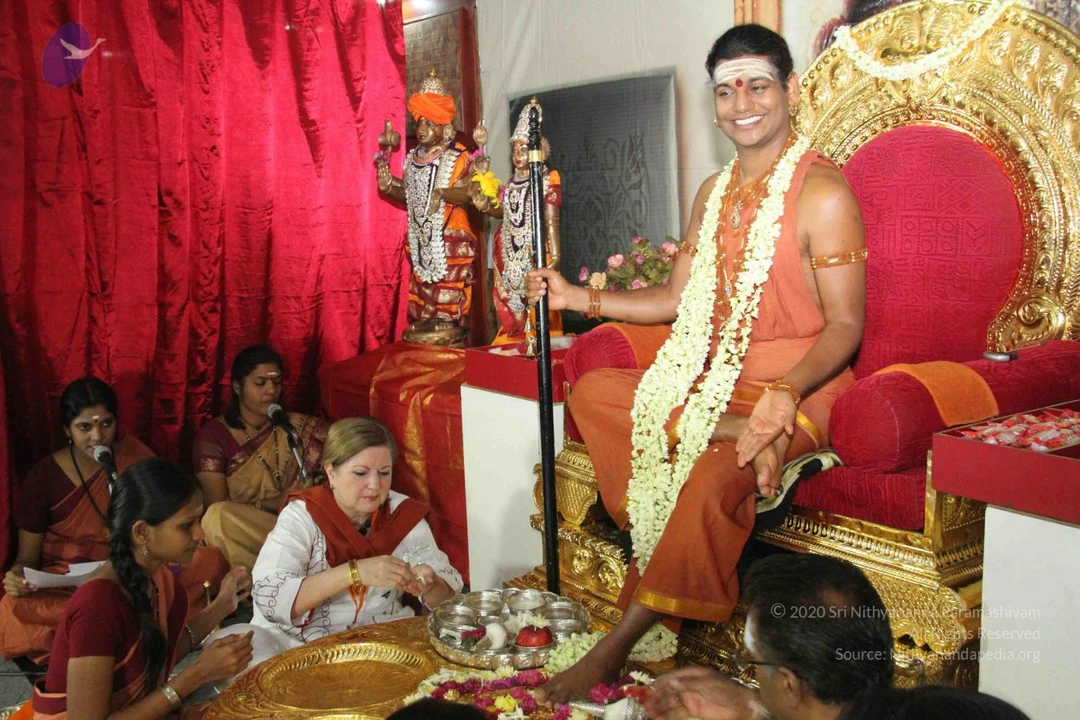
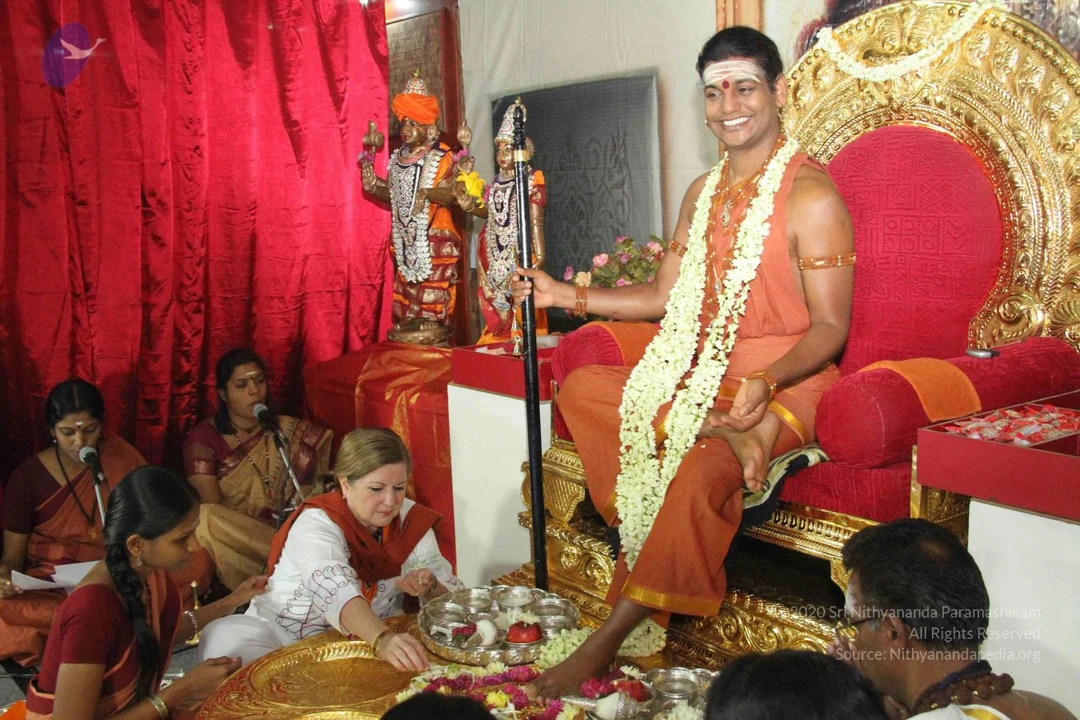
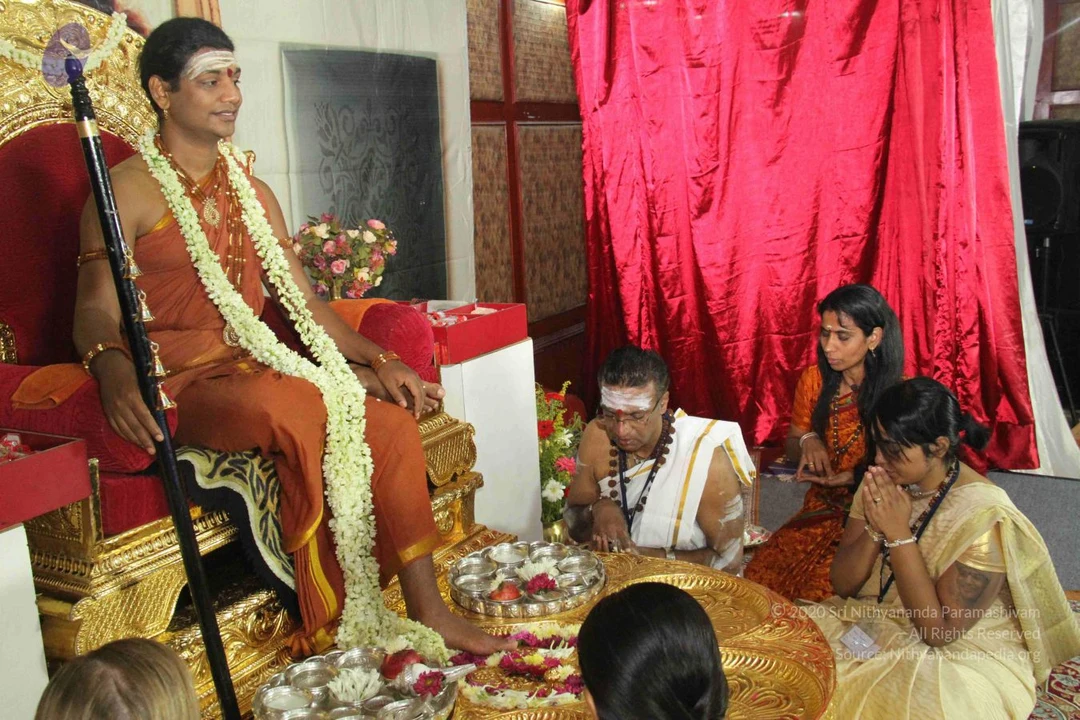
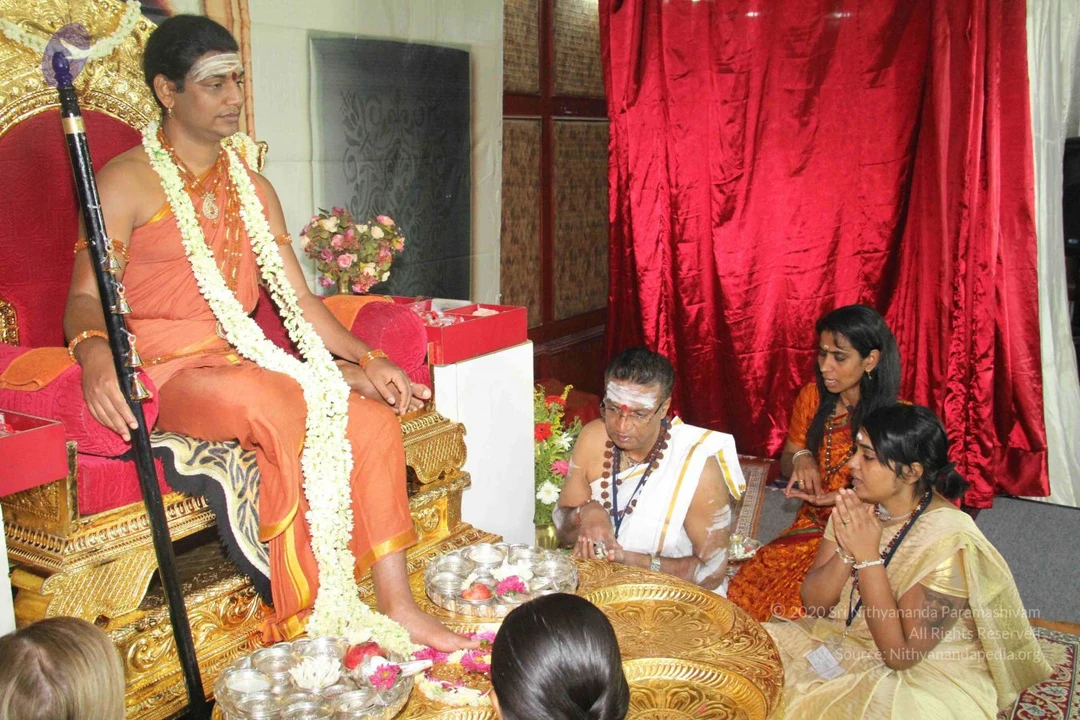
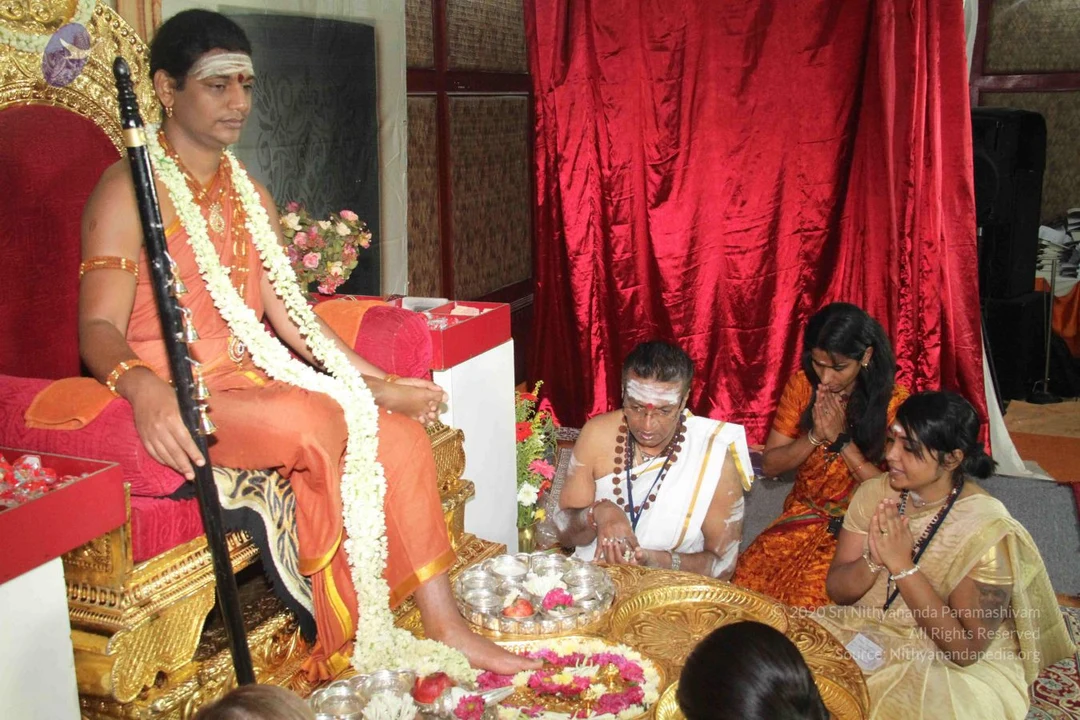
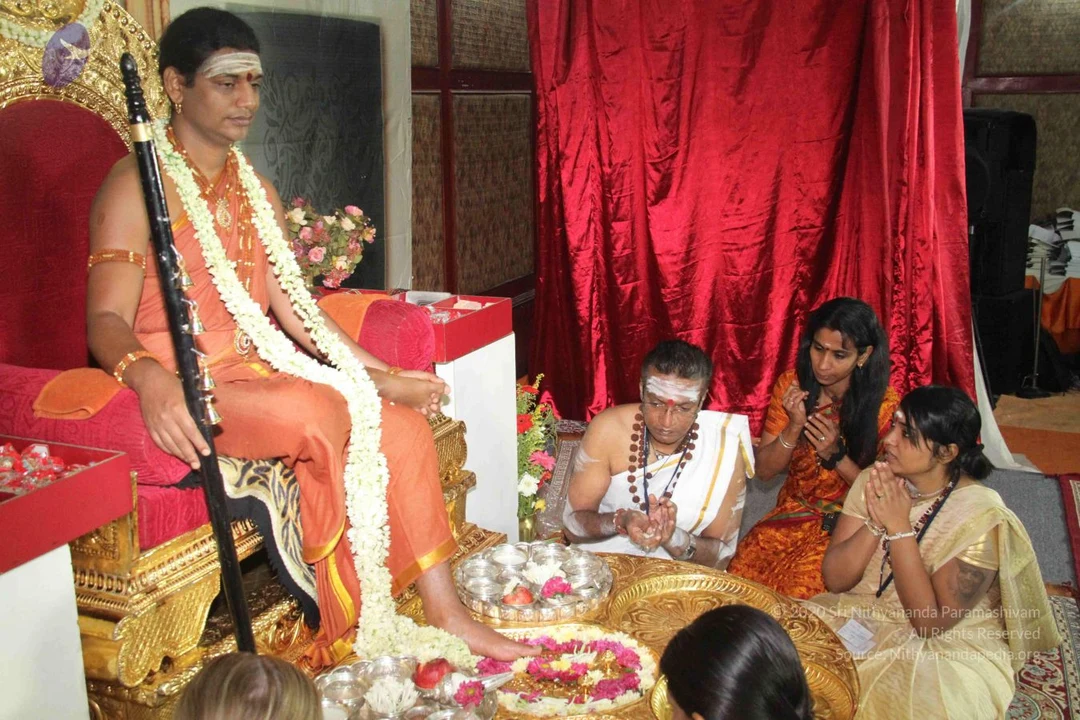
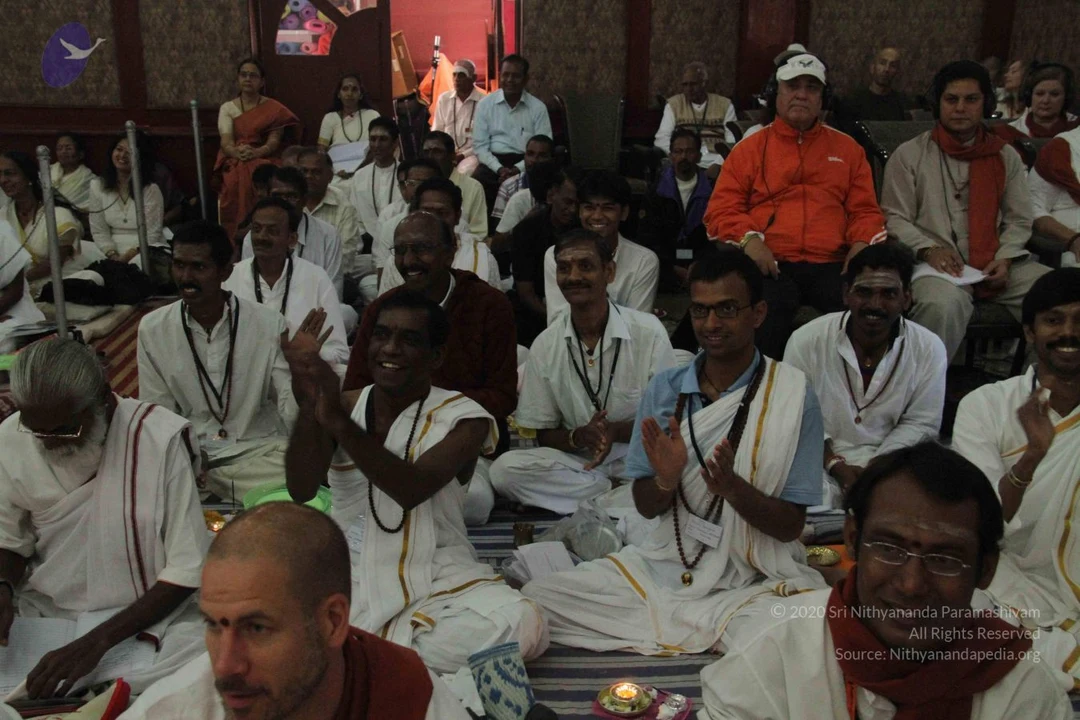
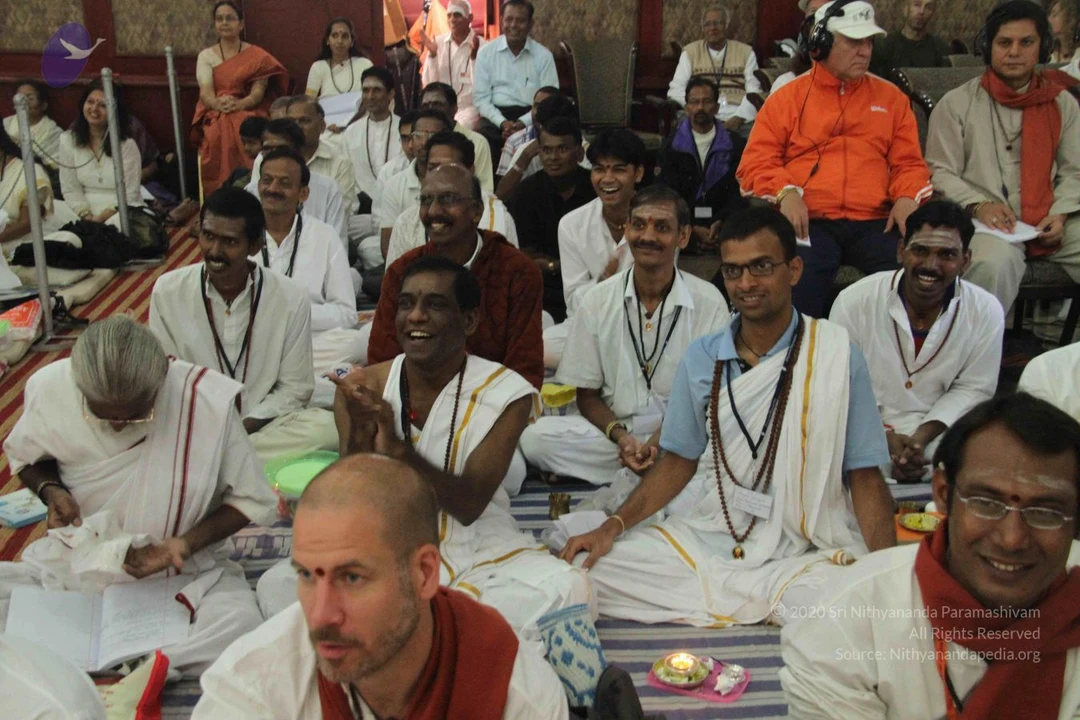
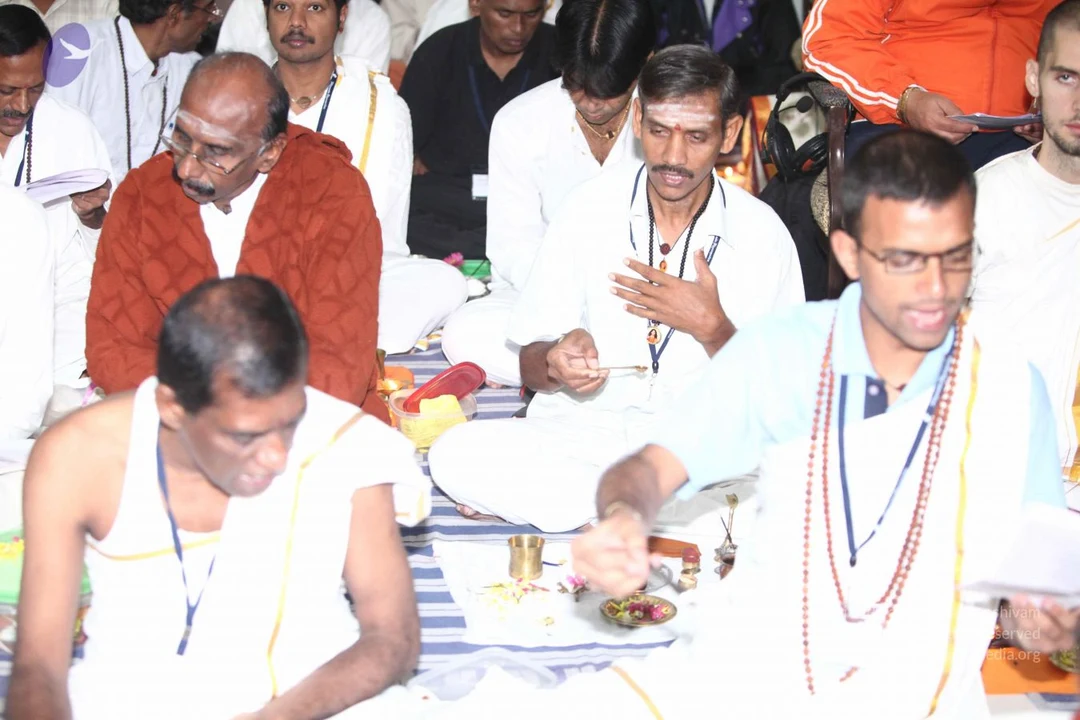
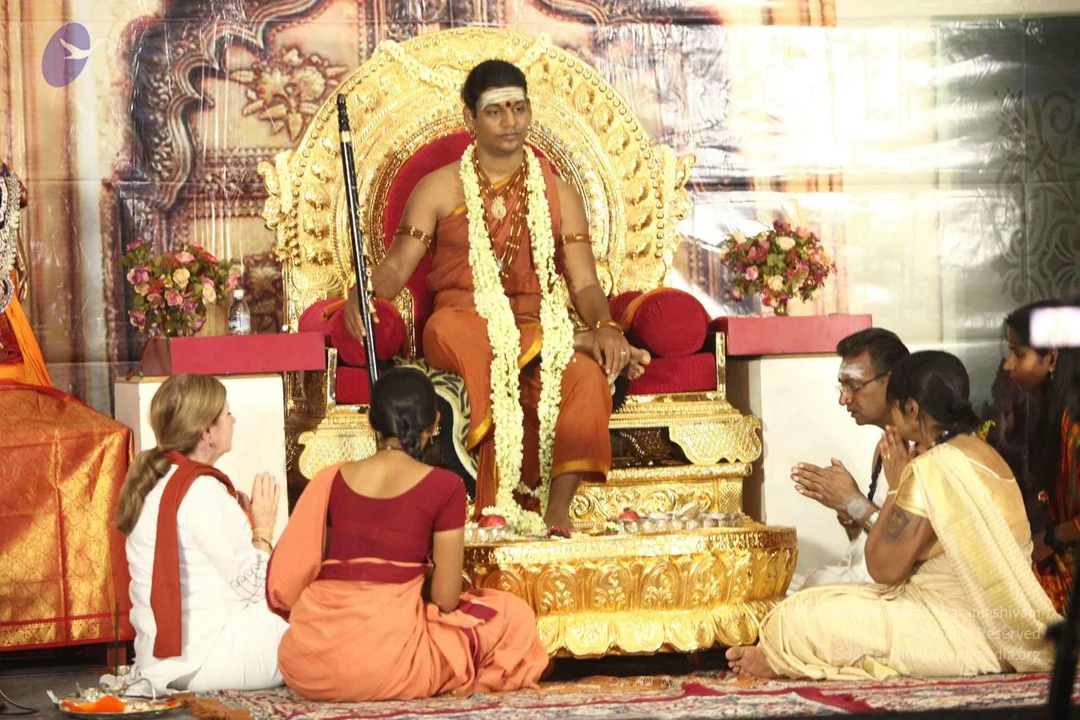
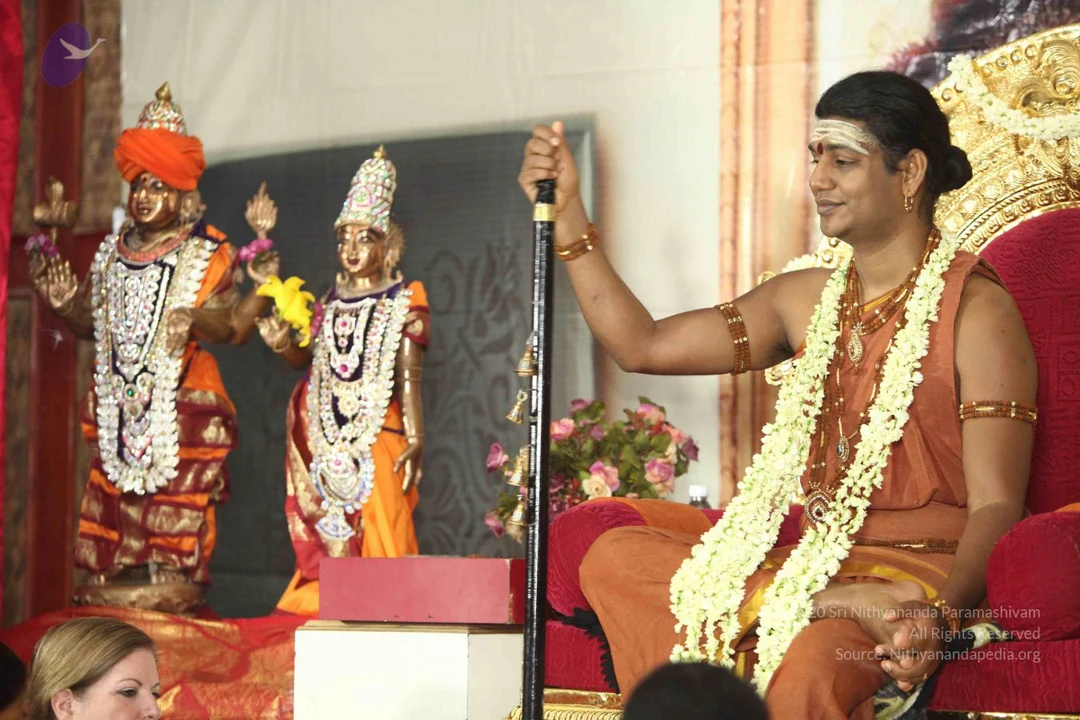
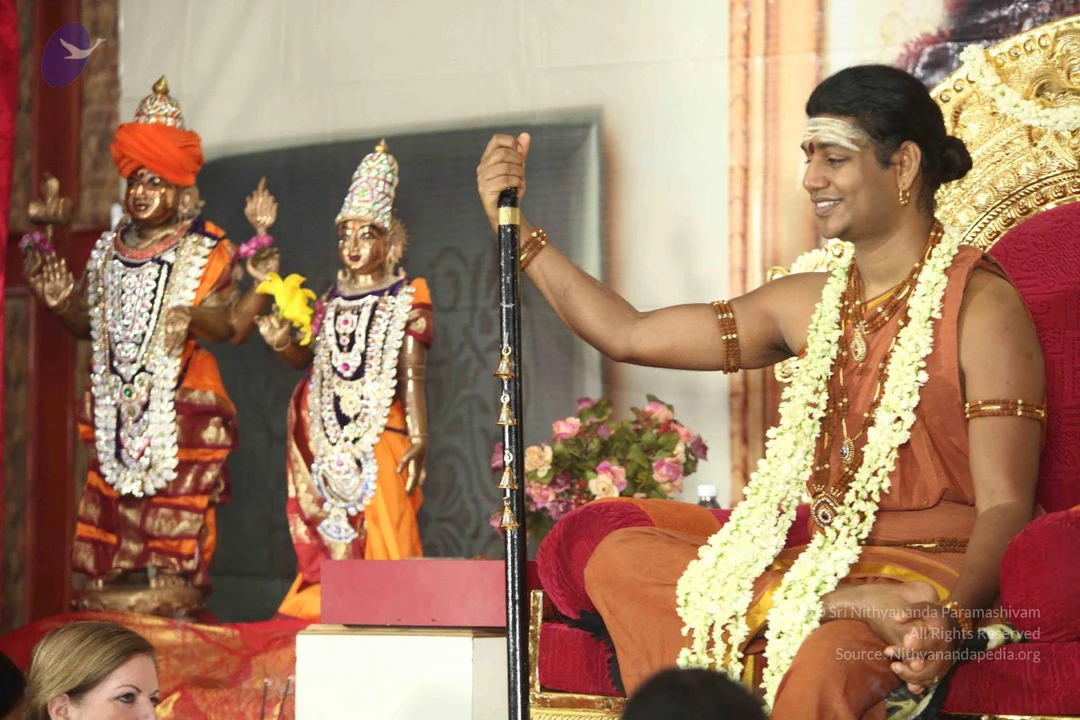
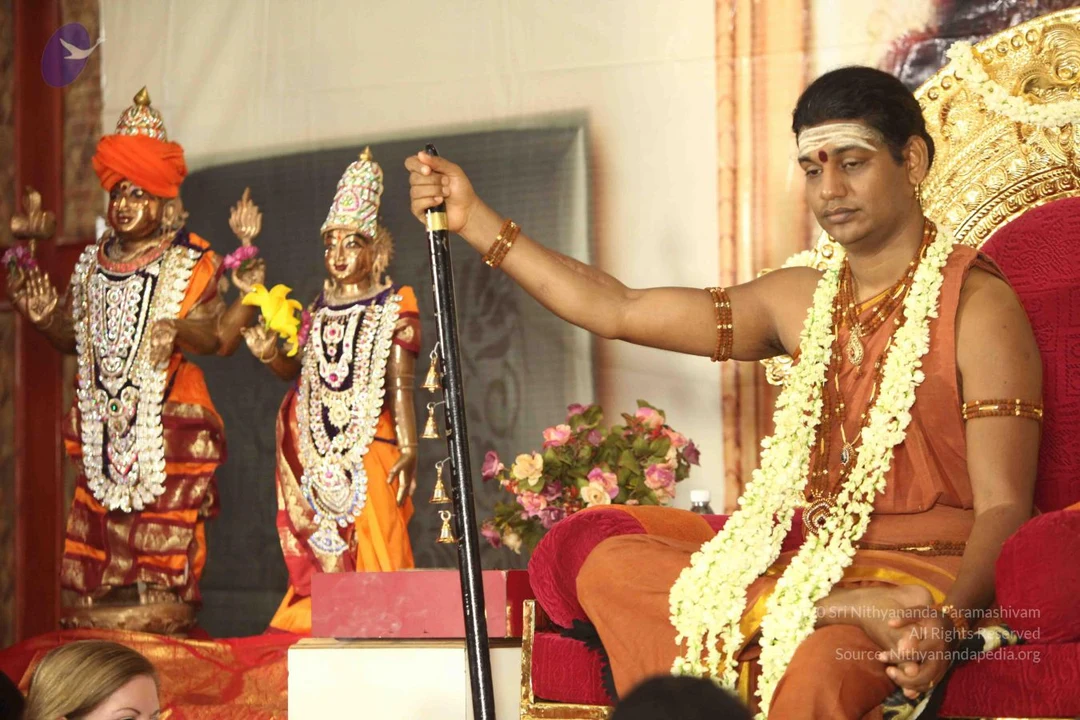
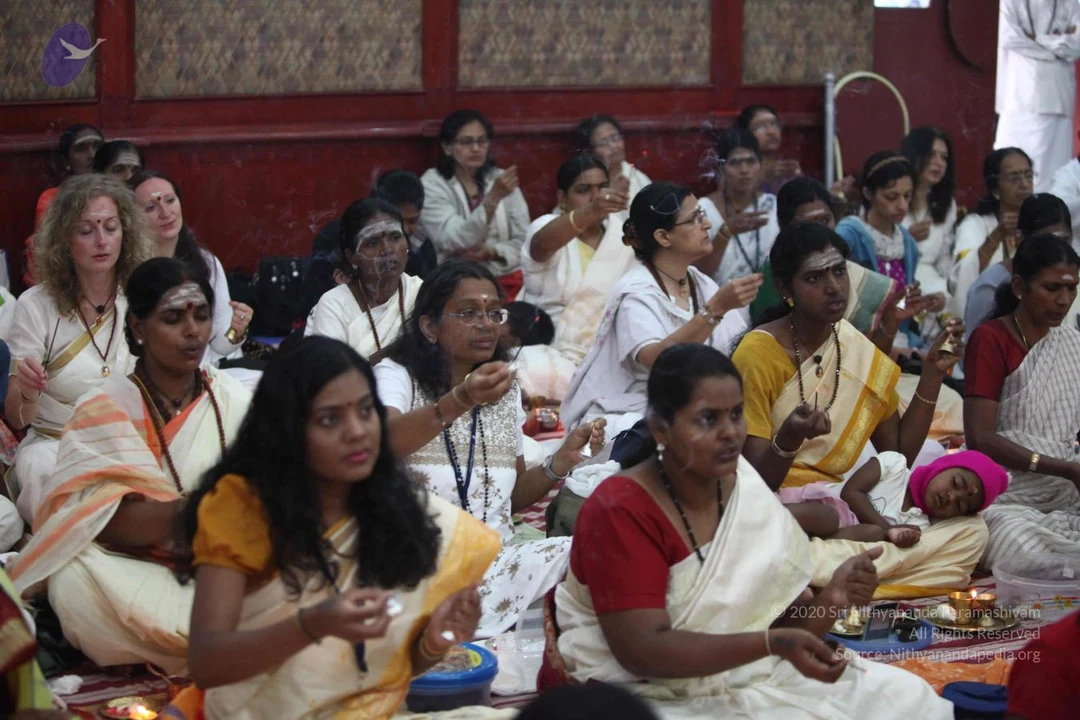
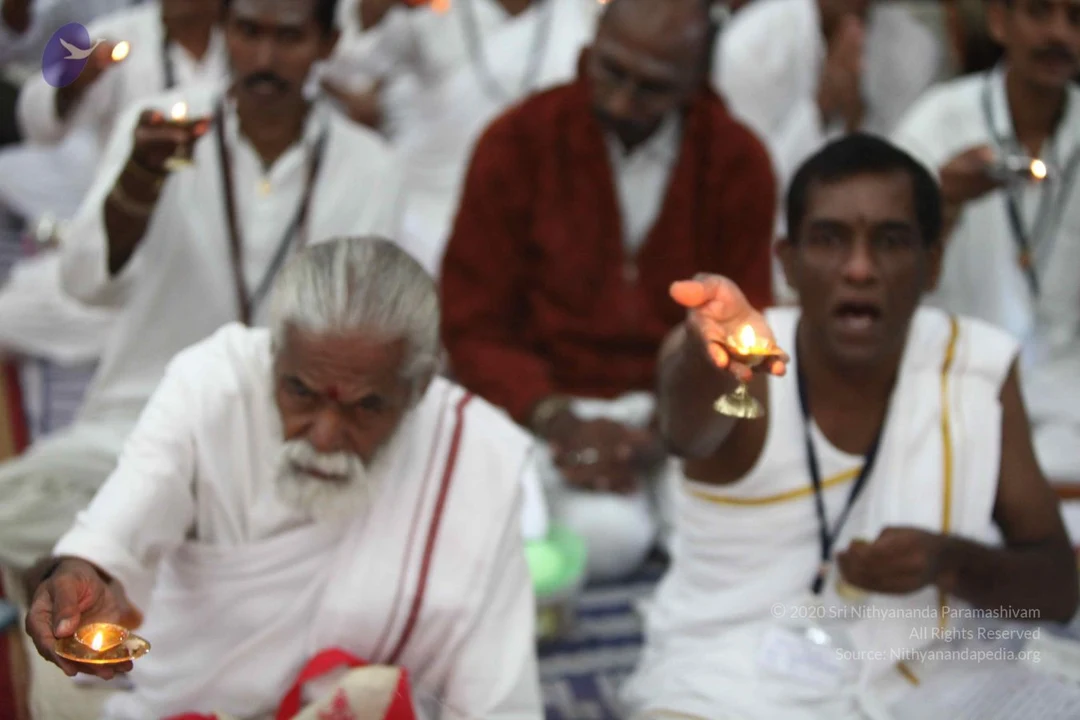
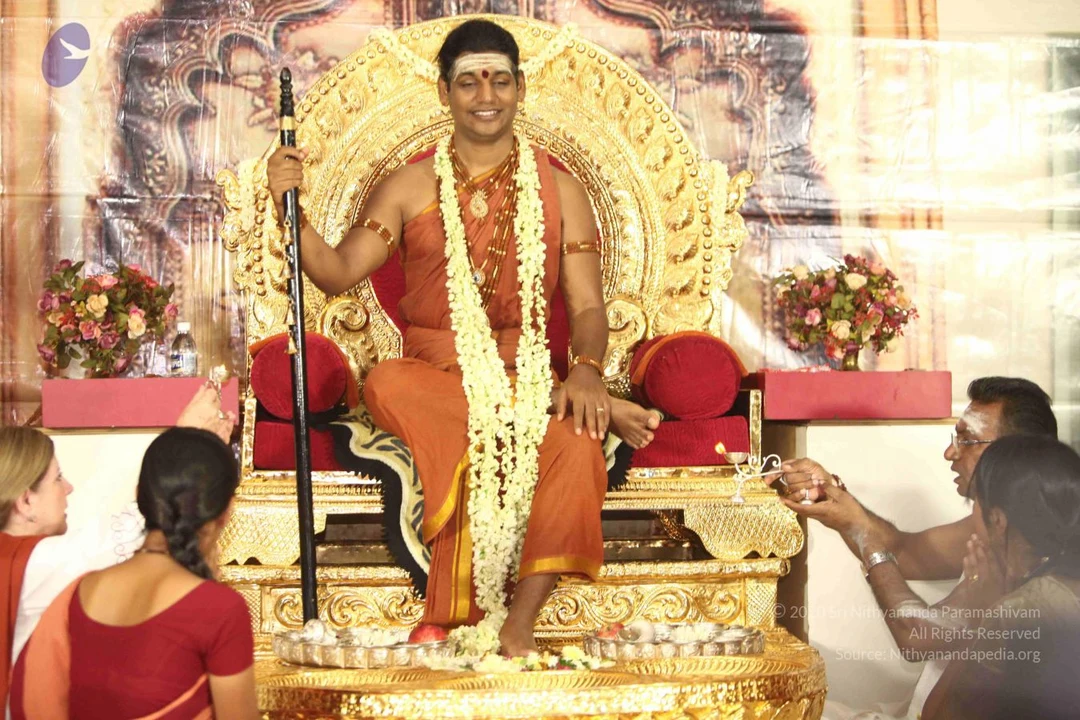
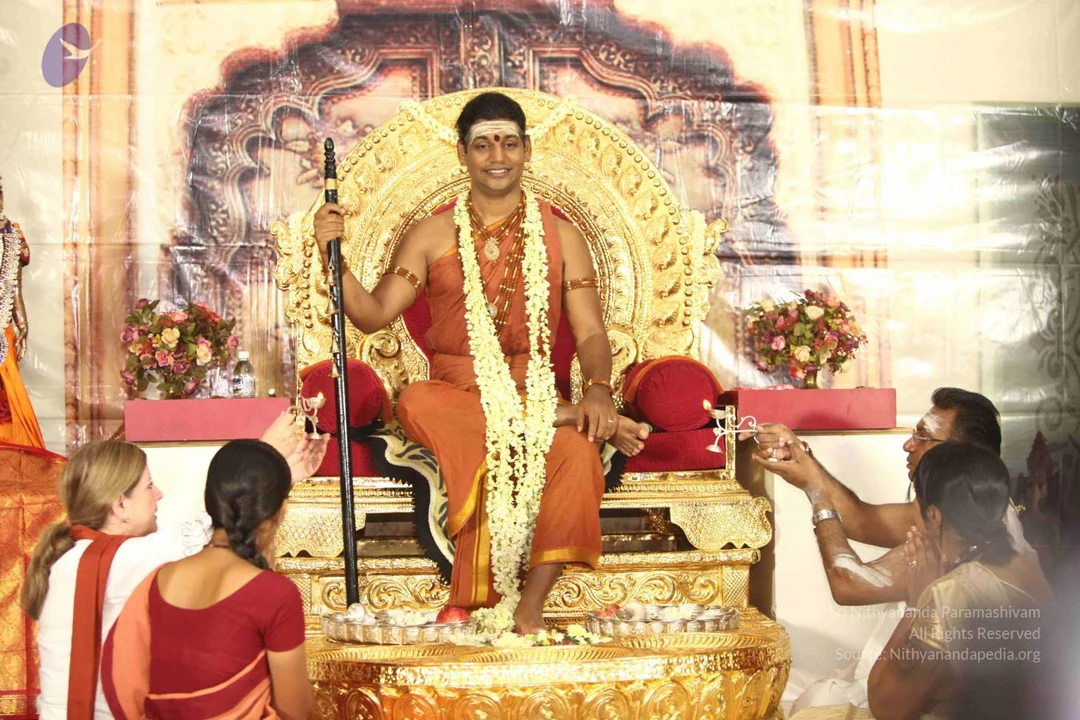
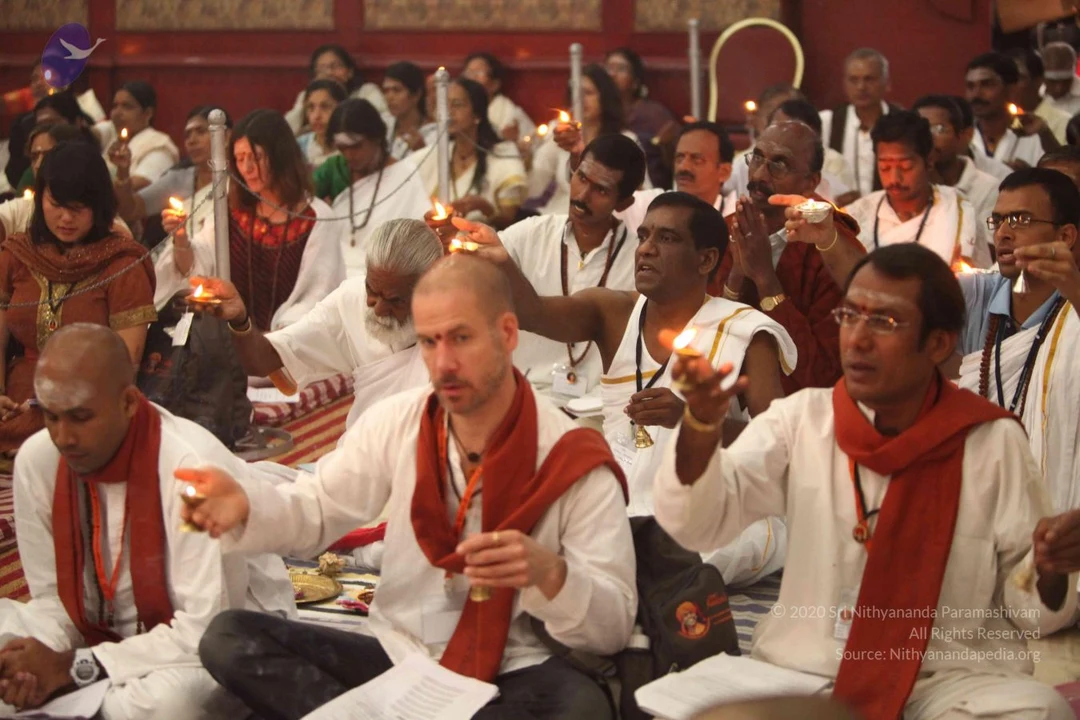
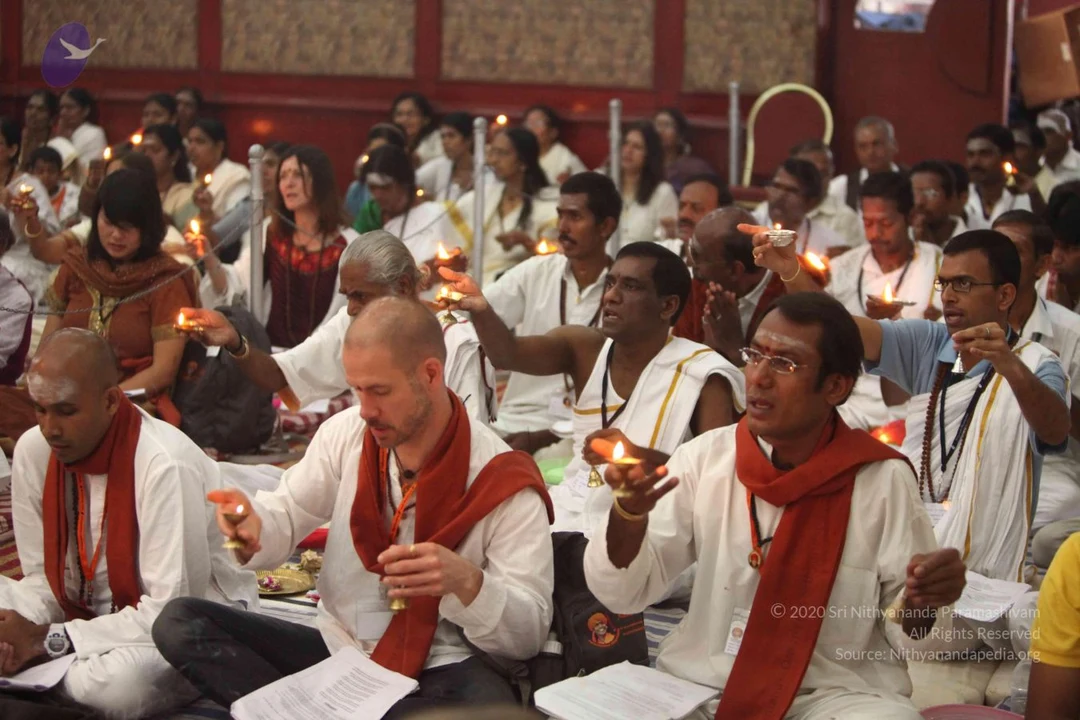
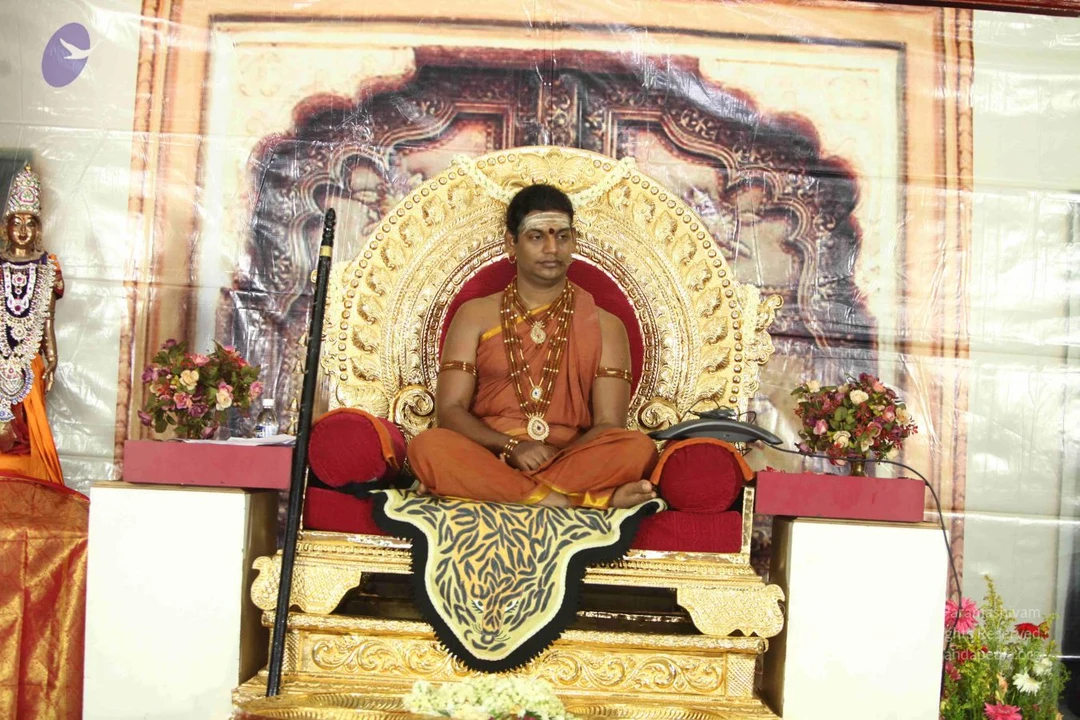
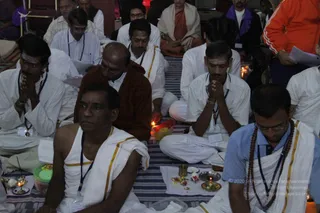
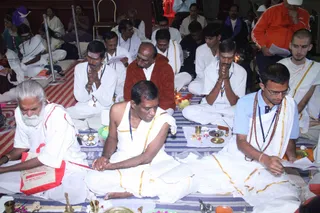
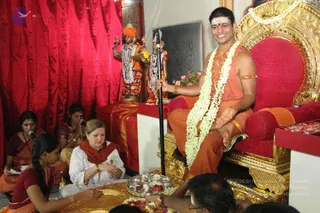
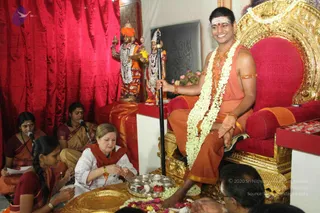
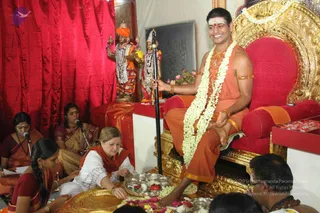
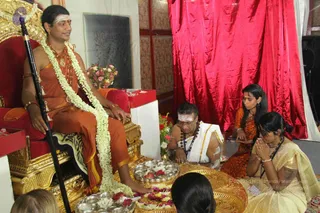
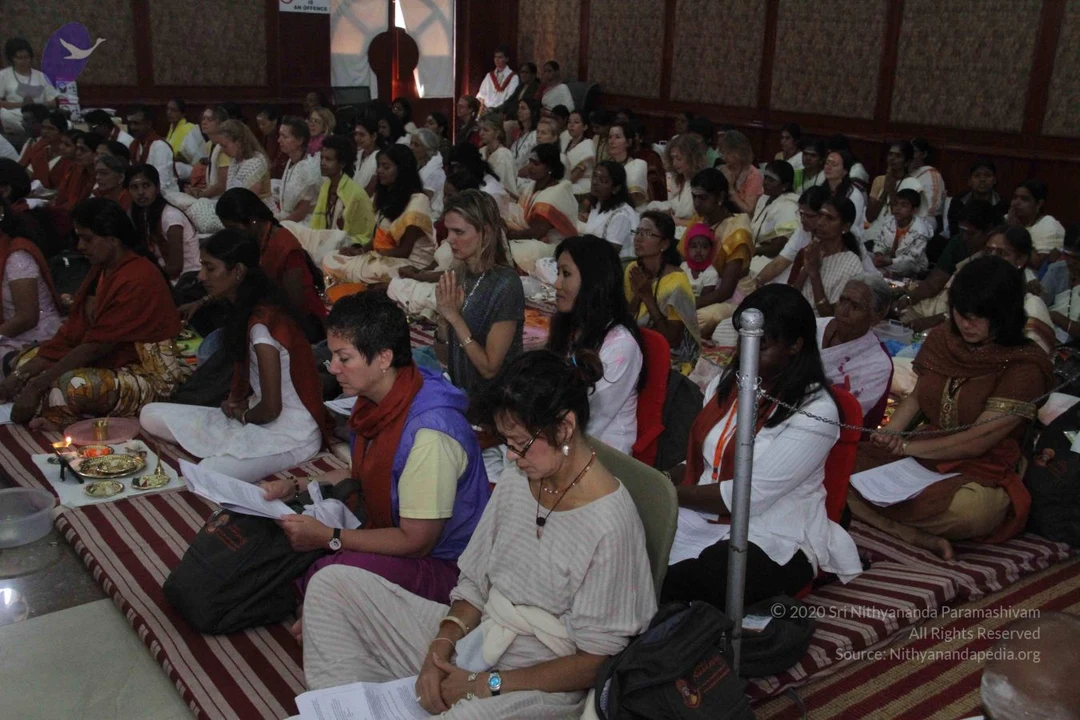
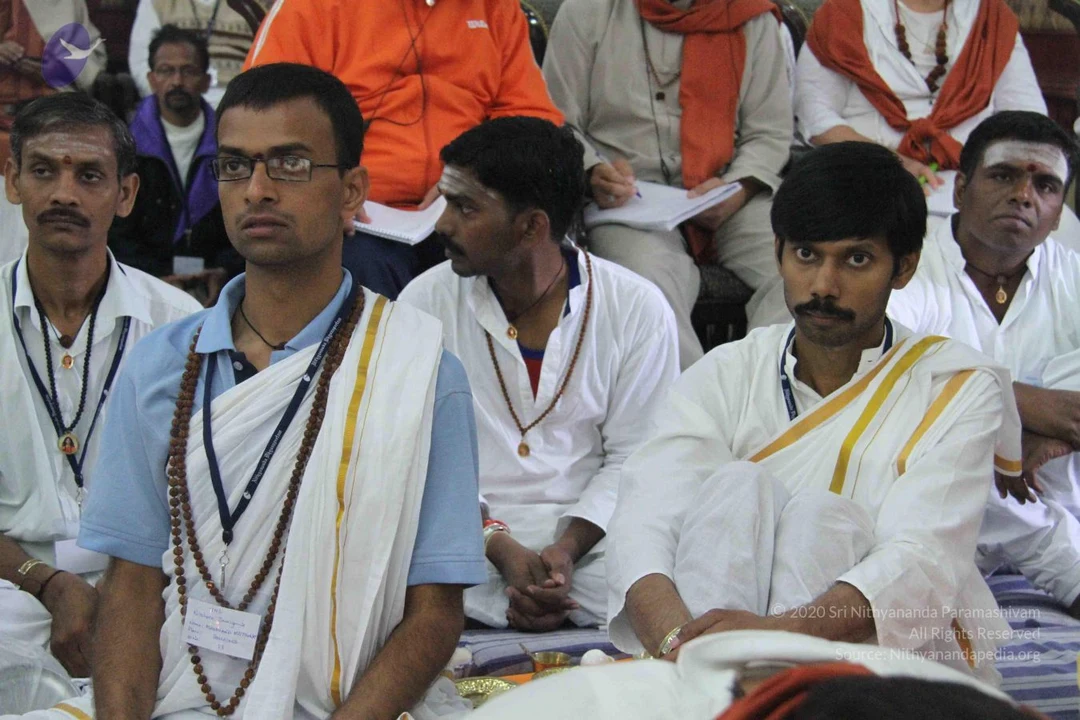
A seated group of devotees in a hall during a Hindu ritual, with small oil lamps (diyas) burning on a striped floor mat. In the foreground a bare-shouldered man in a white dhoti with gold-bordered shawl sits upright, and beside him a man in white with a rudraksha mala and folded hands prays. Another man in white with gold-bordered shawl and rudraksha mala holds his hands together in prayer. A bald man in glasses wears a brown-orange wrap. Plates hold flower petals, lamps and offerings. Behind them, seated people in white and saffron wear lanyards, and a man in a purple shawl and glasses sits at the back. Printed papers are held by several participants.A photograph of a seated ritual gathering on striped mats with a large audience behind. In the foreground, a bearded elderly man in white with a red and white cloth bag sits at left, a man in white dhoti with gold border holds a book and rests his hands together, and a young man in a blue shirt with rudraksha mala and gold-bordered white dhoti reads from papers. Behind them, rows of men in white with rudraksha malas hold their hands in anjali, and a man in an orange-red shawl sits in the middle. Brass puja vessels, kalasha-style pots, a small oil lamp and flower offerings lie on the mats. A standing man in orange sportswear and a shaved-headed man in white appear at the right edge. No clear candidate for a person is visible.A photograph of a ceremony in a red-draped shrine. A smiling man seated on an ornate gold-and-red throne holds a long black staff; he wears an orange-saffron dhoti and shawl, a white-and-red tilak on his forehead, a long white jasmine garland, and beaded necklaces. Swamiji (probable): his long dark hair, saffron ornate clothing and garland are consistent with the page's identification, though not conclusive. To the left, a woman in a white top with an orange shawl sits on the floor with a silver tray of offerings, while women in red and maroon saris sit behind a microphone. Two brass-toned deity murtis stand adorned with garlands on a red-draped platform. A kneeling man in the foreground holds a floral offering, and rose petals and fruit lie on a gold cloth.A photograph of a padapuja ceremony in a red-draped room. A smiling man with a white tripundra on his forehead sits on an ornate gold and red throne, wearing an orange-saffron dhoti and shawl, white jasmine garlands, rudraksha beads and a gold necklace, and holds a long black staff. He appears to be the a person candidate; the appearance cues are a saffron garment with ornate gold jewellery and a crown-like throne, but the face and build are not conclusive, so this is marked unsure. A woman in white with an orange shawl kneels and washes his foot over a gold tray with flower petals and a brass plate. Two women in red-orange saris sing or chant at a microphone on the left, and a girl in orange sits near the tray. A golden deity murti stands behind the throne, beside a flower-decorated bowl. A man in glasses sits at the lower right edge.A photograph of a ceremonial puja at a red-draped shrine with two gold-and-red decorated statues of deities garlanded with necklaces behind. A seated man in saffron-orange dhoti and shawl, with white jasmine garland, sandalwood-paste forearm bands and a white-and-red forehead mark, sits on an ornate gold and red throne and smiles while holding a black staff. Before him a woman in white and orange clothing pours offerings from a plate, and a woman in a red saree sits at a microphone. Silver trays hold fruit, flowers and offerings, and a man's head is visible at lower right. Garlands of flowers lie on the floor. The seated figure's appearance fits the page's cues of saffron clothing, a garland and a ceremonial throne, so he is an appearance-based a person in a seated, honoured role.A seated man on a gilded red throne wears an orange-saffron dhoti and shawl with a white flower garland draped to his feet, rudraksha and gold necklaces, bangles, and a tall ceremonial staff with bells beside him. He holds a red-cushioned armrest and looks to the side. Before him on a golden tray are steel plates of flowers, fruit and offerings. A white-robed priest with a bare chest and white vibhuti marks kneels beside them. Two women in saffron and cream saris sit with folded hands, one in prayer. Red satin drapes and a flower arrangement form the backdrop.

Unclutching

6 photosSource gallery
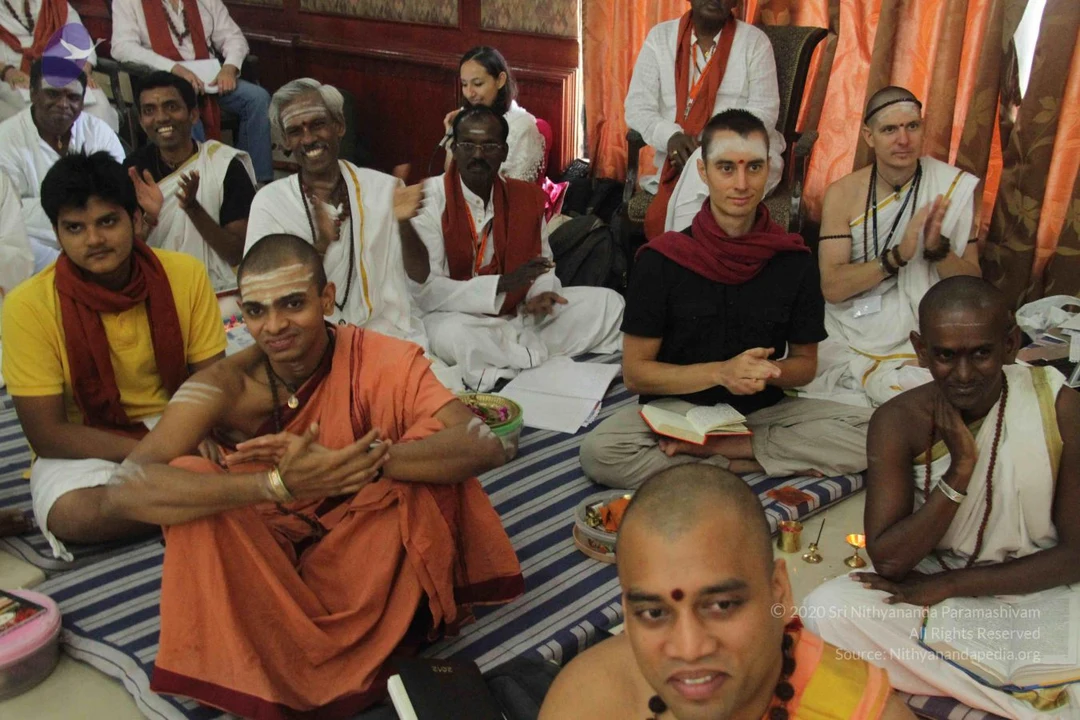
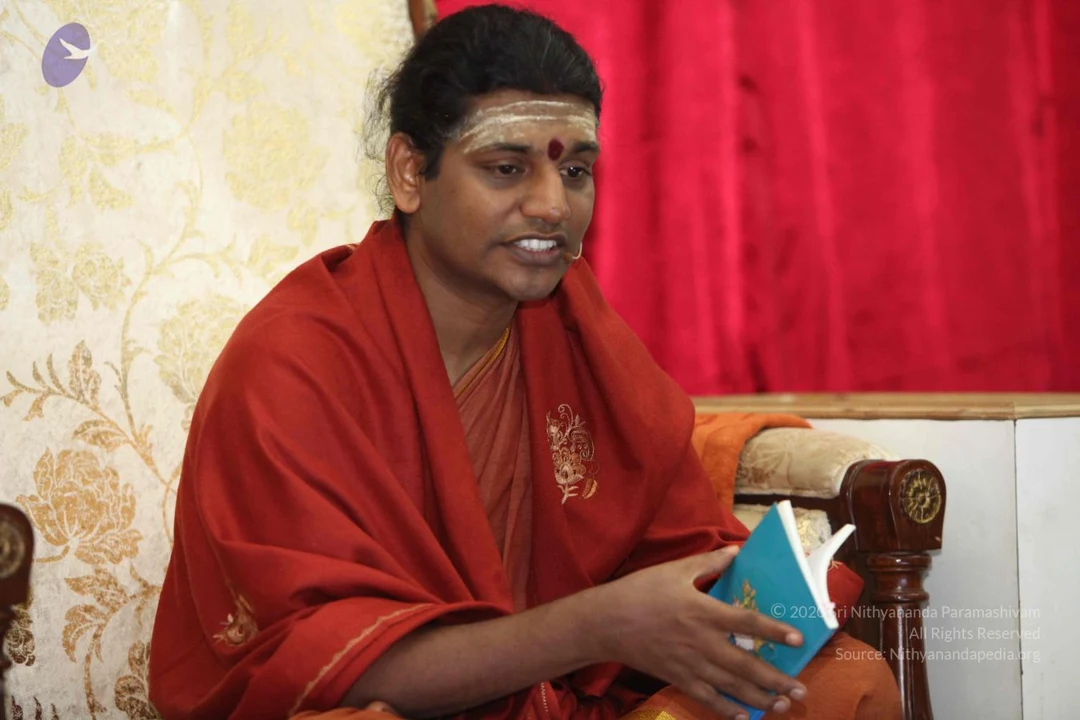
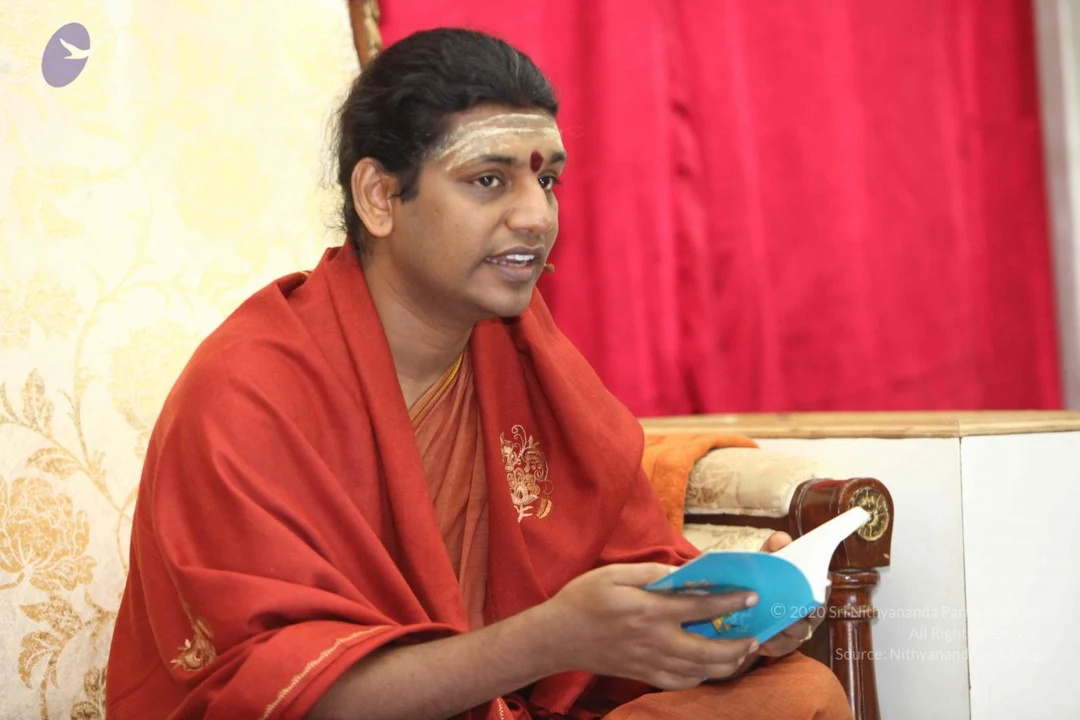
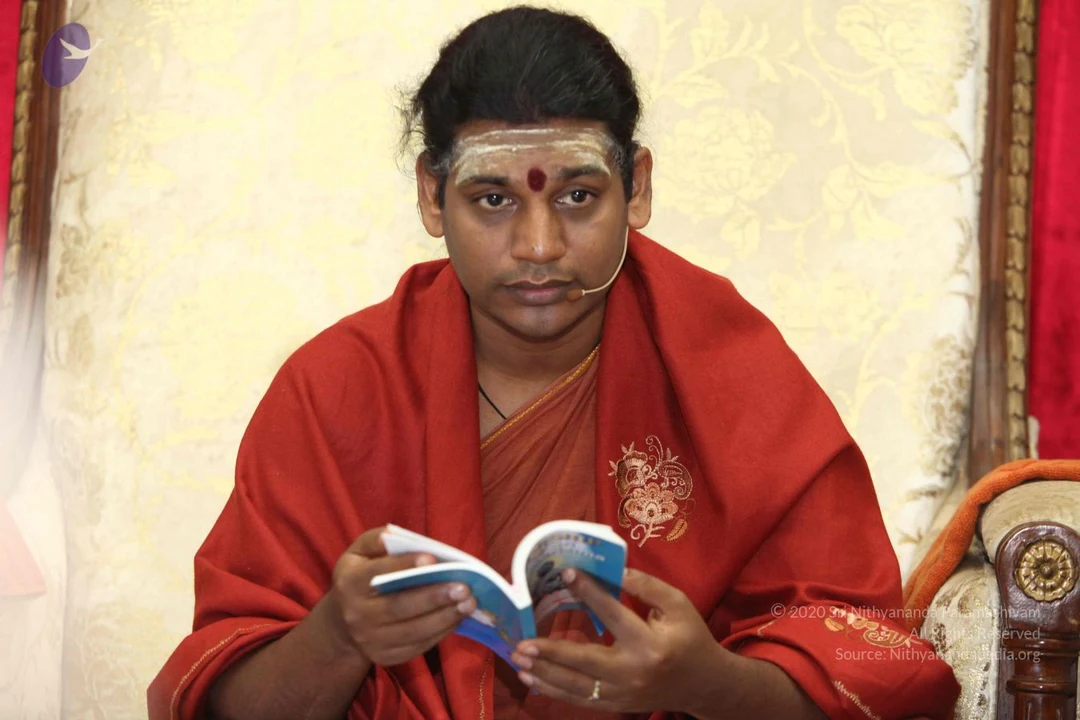
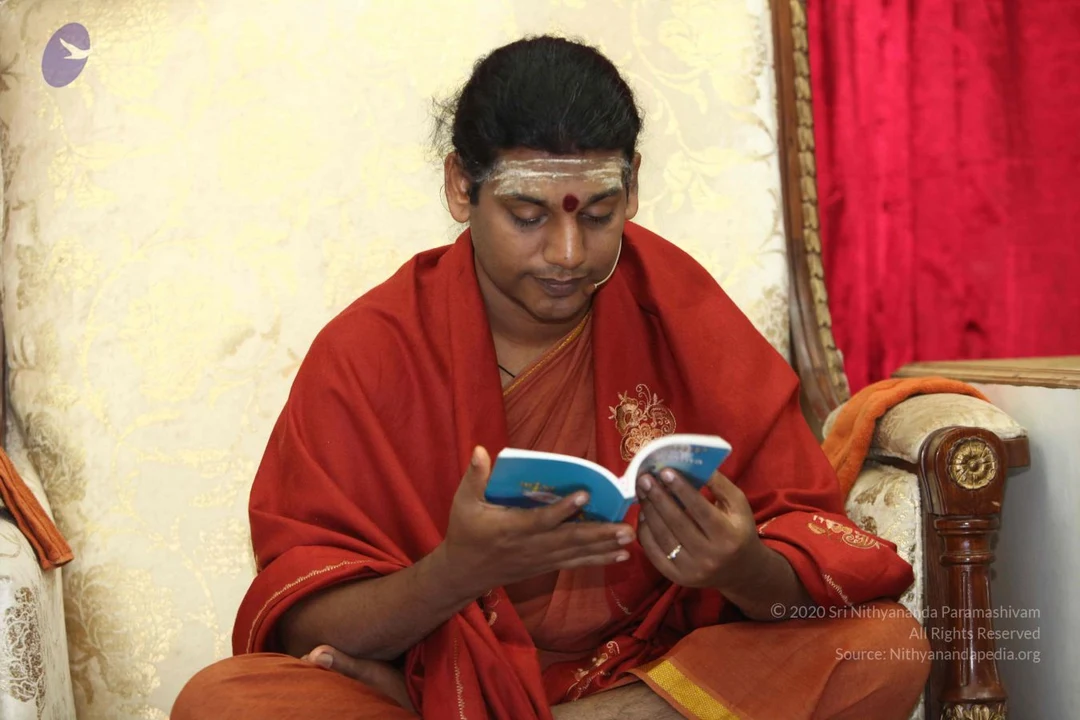
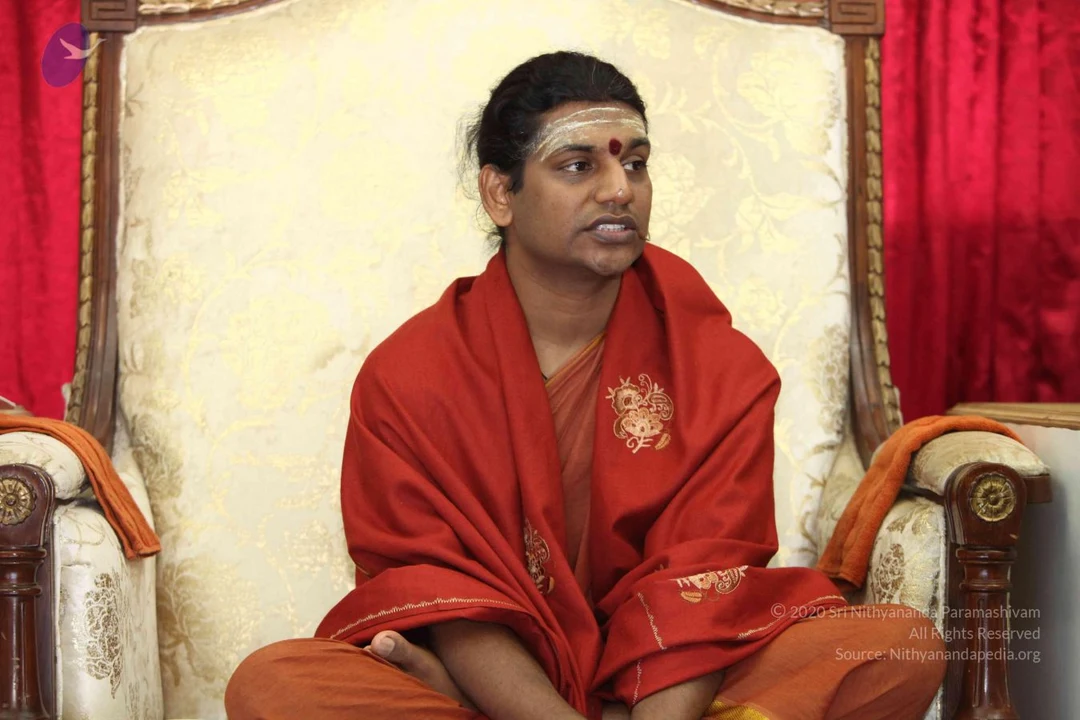
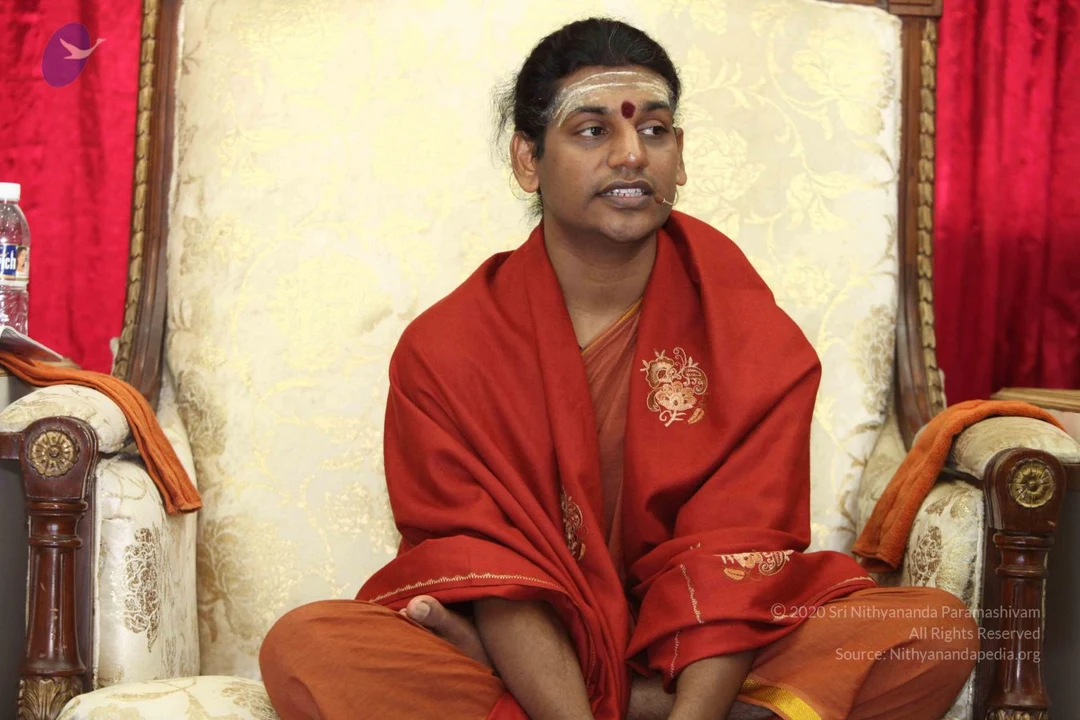
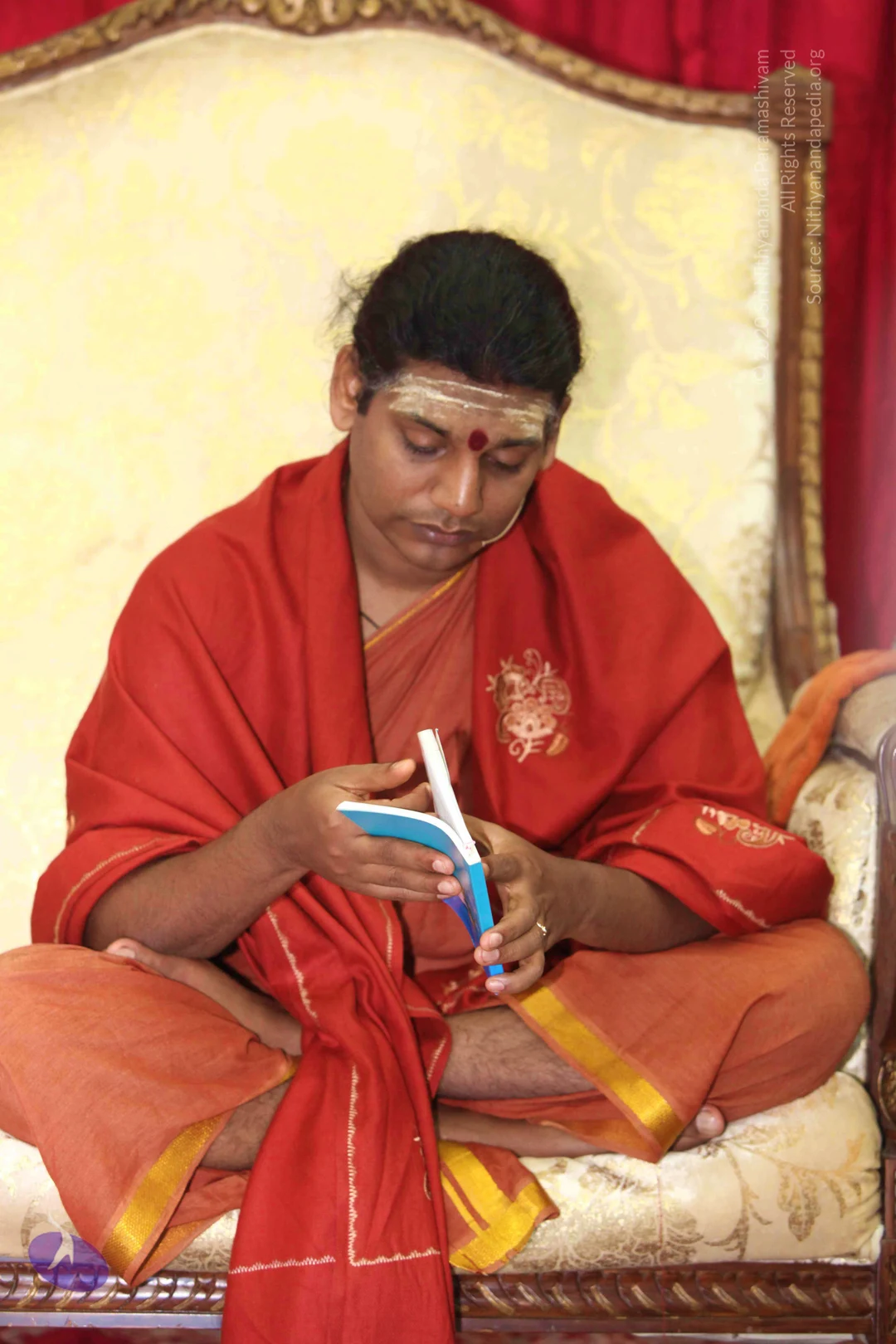
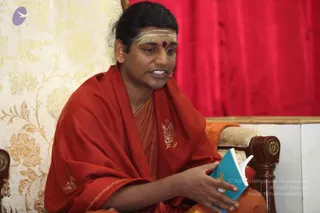
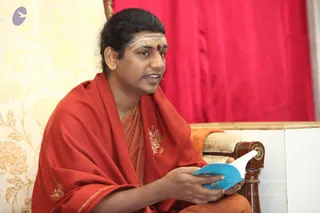
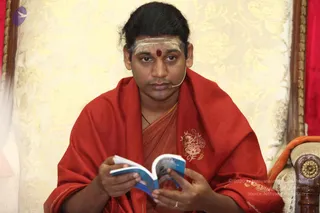
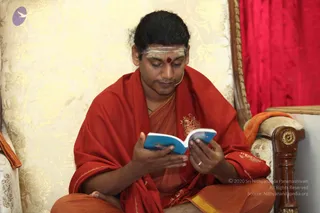
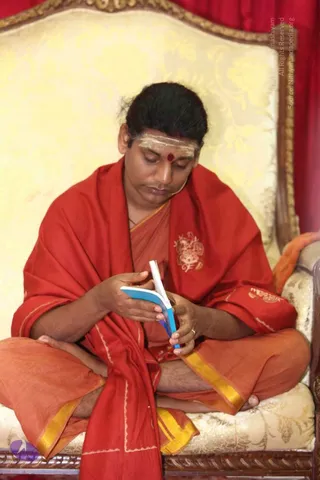
A photograph of a man seated in an upholstered wooden chair against a red curtain and a gold floral damask wall. He wears a rust-red shawl over a deep orange-red garment with a small gold embroidered floral motif, has white sacred ash marks on his forehead and a red kumkum dot between his brows, and holds a open blue book in one hand while speaking, gesturing with the other. Wearing a shawl and holding a book while speaking, a presentation consistent with the a person candidate noted on the page, though the face is not clearly enough visible to confirm identity; treated as an unsure candidate in a satsang-style talk. One person is visible.A man seated in a wooden armchair with a cream upholstered arm, speaking while holding an open blue book in his hands. He wears a red-orange shawl with embroidered floral motifs over orange-gold robes, and has white sacred ash markings with a red bindi on his forehead. Behind him hangs a deep red curtain and a gold-patterned wall panel. Appearance-based label: a person, seated and speaking as a teacher during a talk.A man sits in a carved wooden chair against a pale gold floral damask backdrop with red drapes at the sides. He wears a red shawl over a rust-orange garment with an embroidered floral motif on the chest, a white vertical tilak and red bindi on his forehead, and a small lapel microphone clipped near his chin. He holds open a small blue book in both hands and looks toward the camera. A visible ring is on one finger. Appearance-based label: a person seated in a teaching posture, wearing red shawl and orange robes with a clearly visible forehead tilak; the appearance cues are moderate, so the identity is uncertain.A single man sits cross-legged on an ornate cream upholstered armchair with gold floral patterns, reading a small blue paperback held open in both hands. He wears a red-orange shawl over a matching orange garment with embroidered gold motifs, and a white vertical tilak on his forehead with a red dot at the centre. A red velvet curtain and a carved wooden armrest appear behind him.A seated man sits cross-legged on an ornate cream upholstered armchair with gold-trimmed wooden arms and red velvet drapes behind him. He wears a red shawl with embroidered gold motifs over an orange-brown garment and has white vertical tilak marks with a red dot on his forehead. He sits in a meditative posture with his hands resting on his lap and speaks while looking to the side. a person by appearance cues: a distinctive red and orange ceremonial shawl with embroidery and a sacred forehead marking, seated in a satsang-style setting.A man sits cross-legged in an ornate cream and gold brocade armchair with carved wooden armrests, speaking during a satsang. He wears a red-orange shawl with embroidered gold motifs over orange garments, has white vertical tilak on his forehead, a red bindi, and a small ear microphone. Red velvet drapes frame the background, a water bottle sits on the left, and an orange cloth drapes the armrest. a person cues: saffron-orange and ornate clothing with distinctive embroidered shawl; appearance is consistent but not fully certain, so a person is unsure.

Lunch

8 photosSource gallery
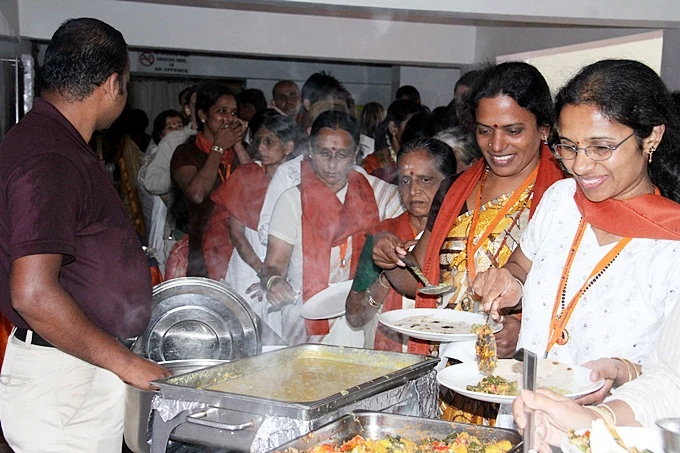
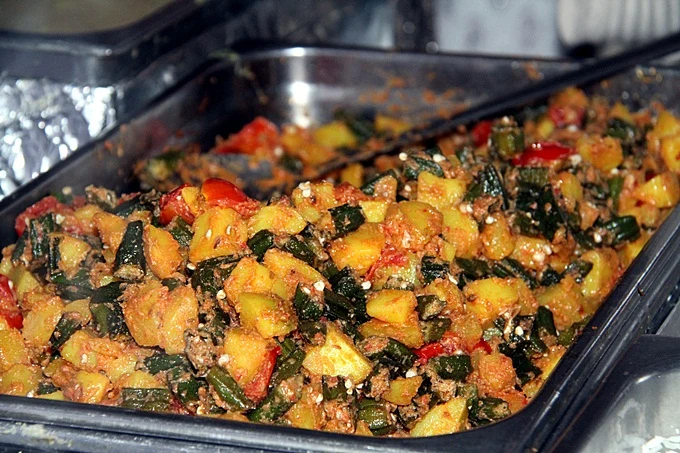
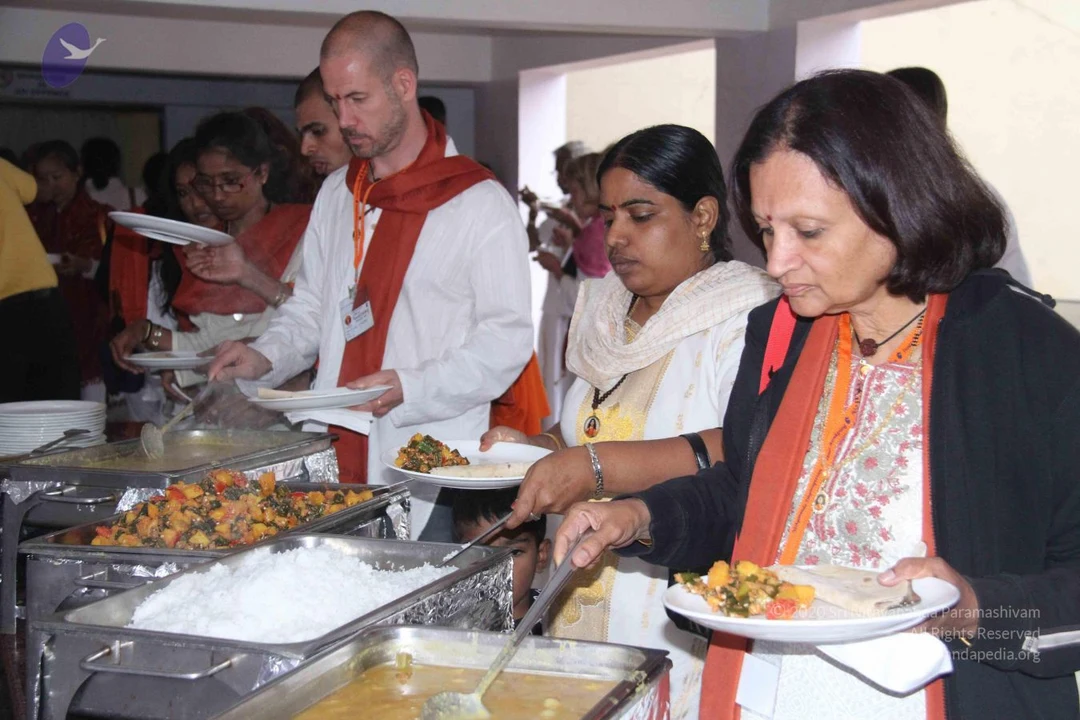
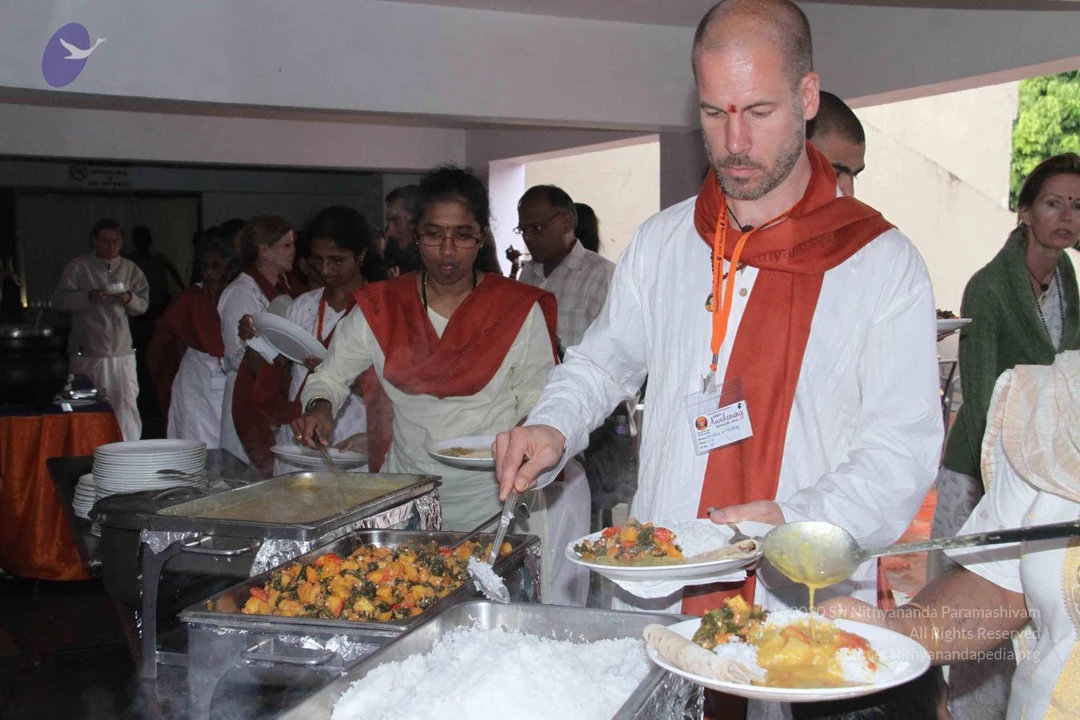
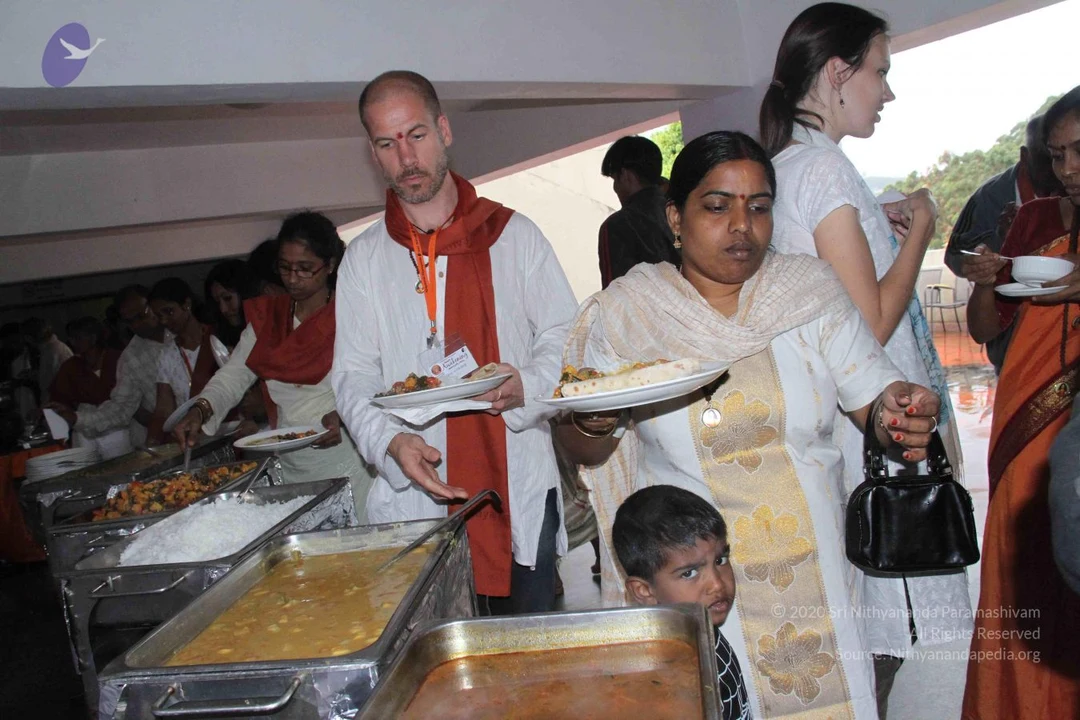
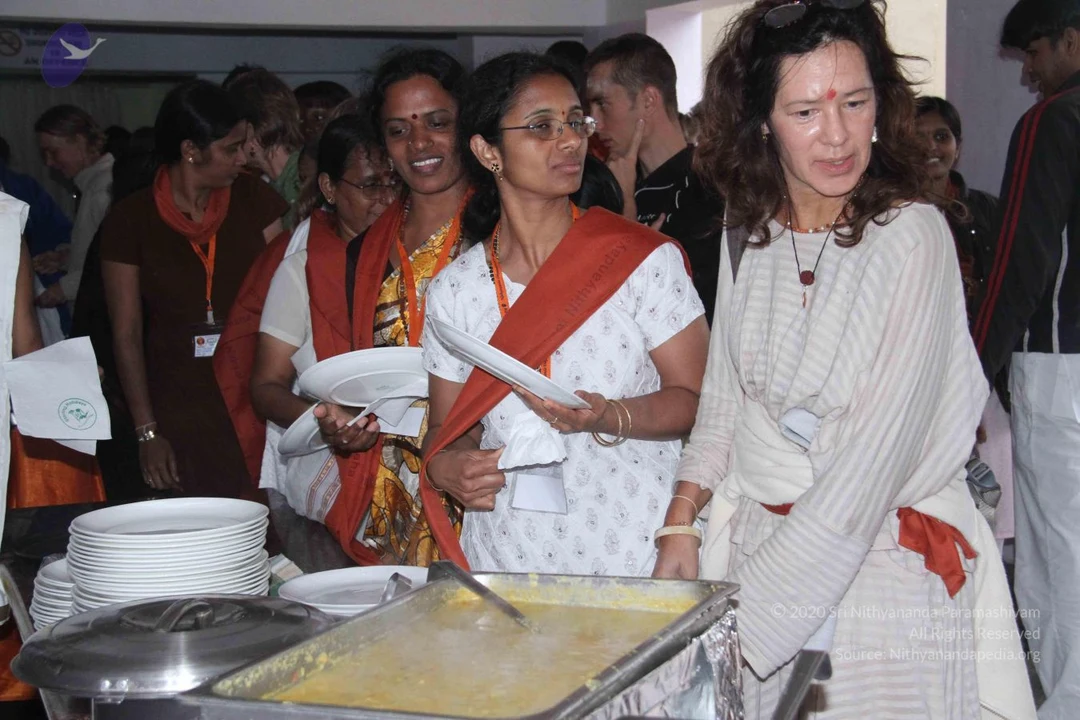
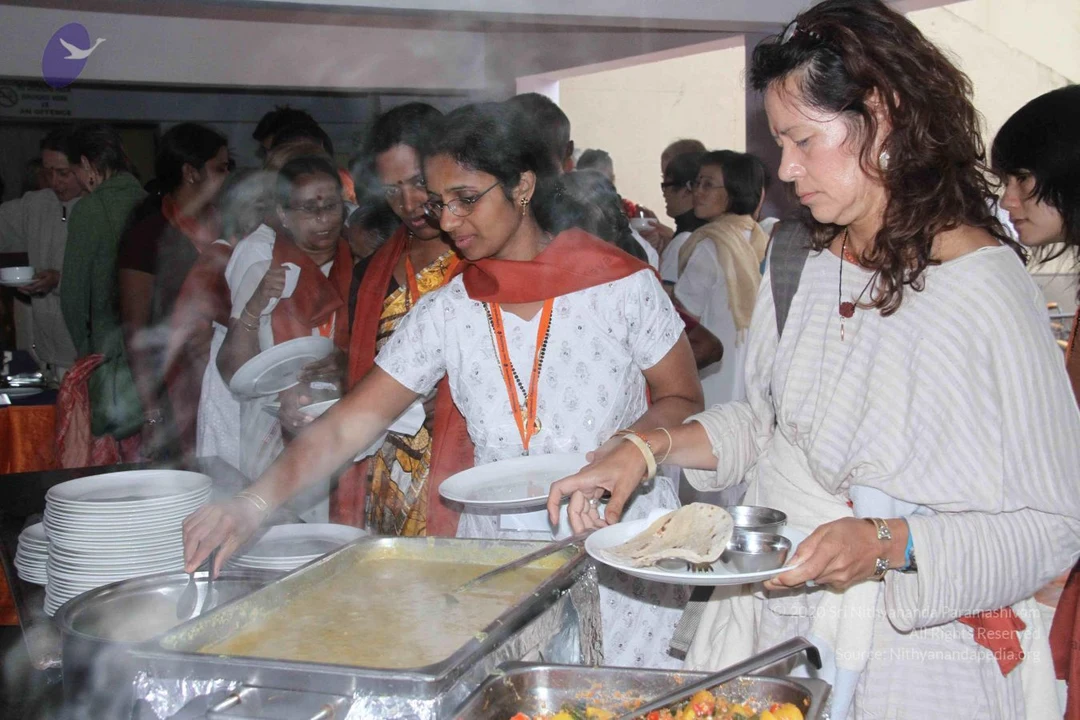
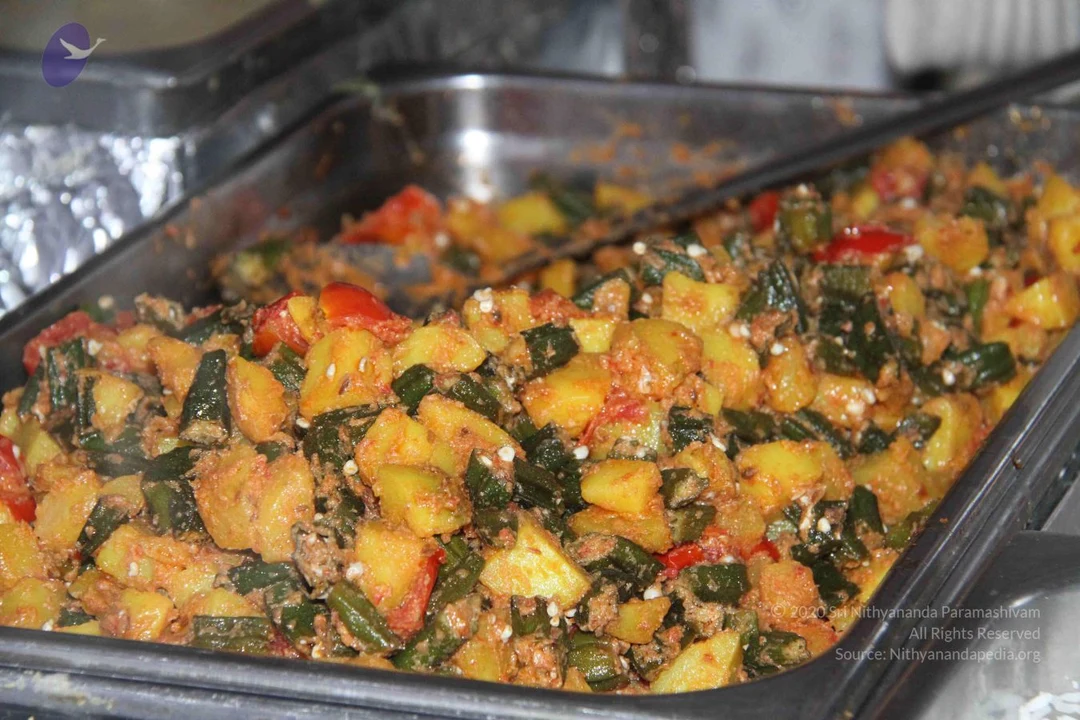
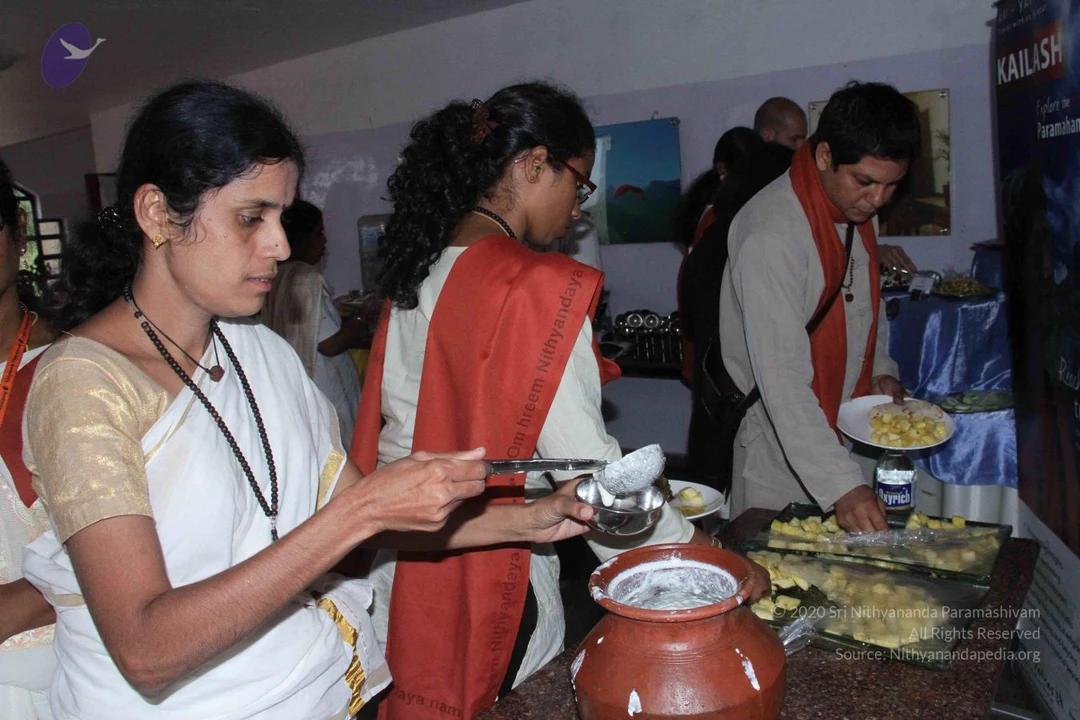
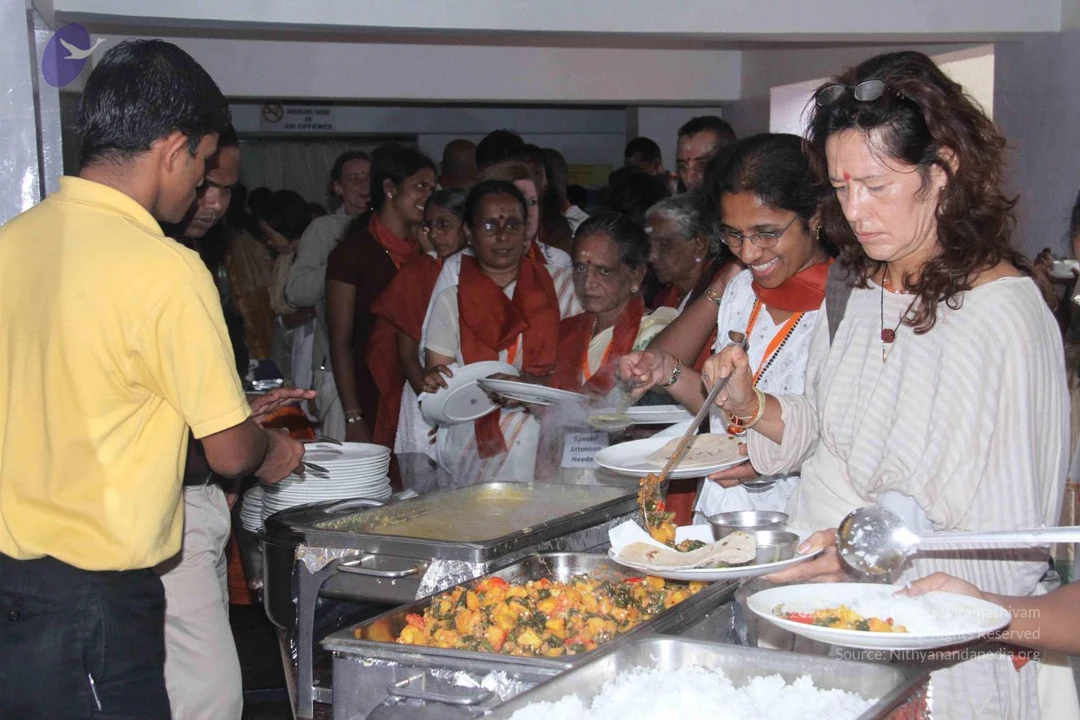
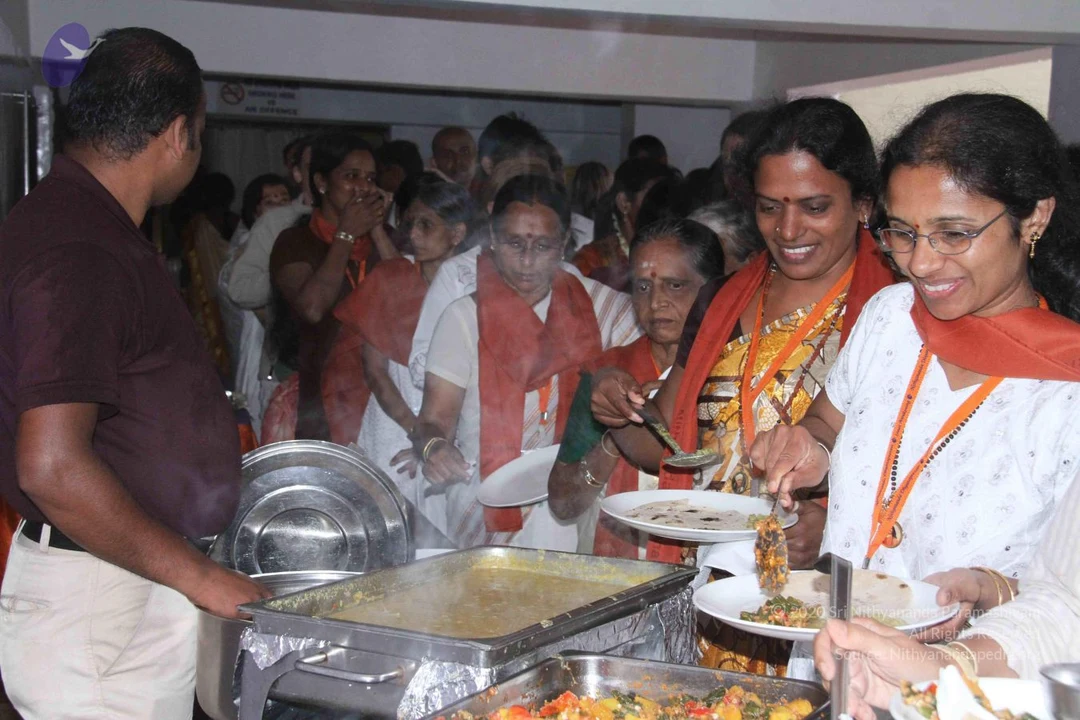
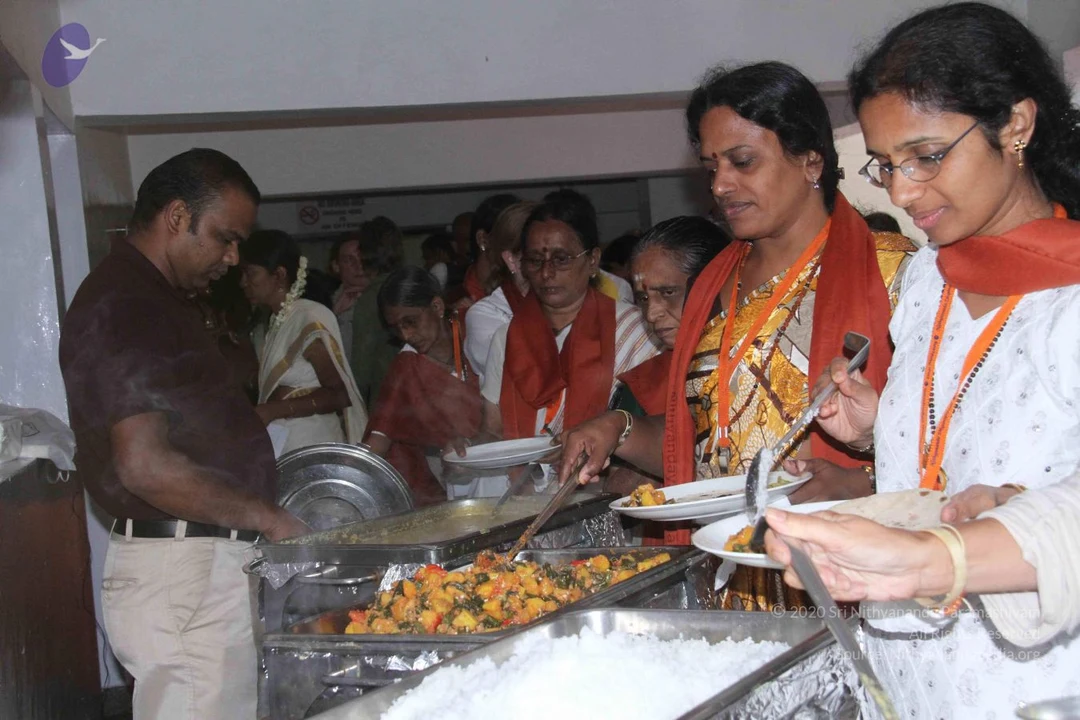
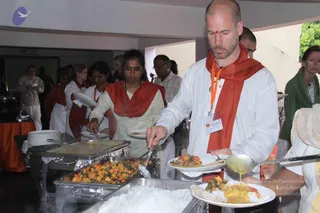
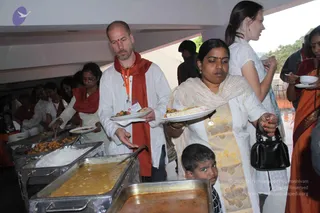
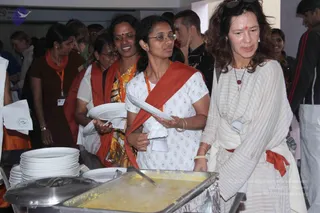
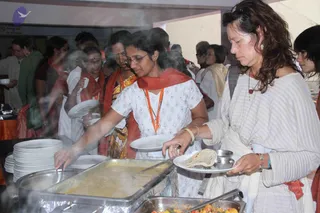
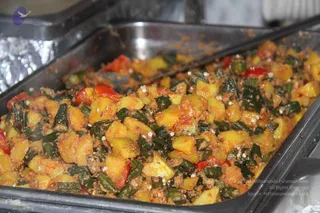
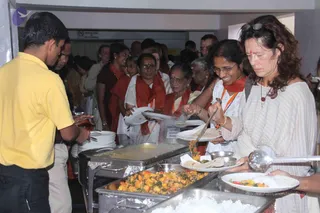
A buffet serving line in an indoor hall with a bald, bearded man in the foreground wearing white kurta and an orange-red shawl, with an orange cord around his neck and a name badge on his chest. He holds a plate of rice, vegetable curry and flatbread, while a woman in a white sari with a red shawl and glasses serves from a steel chafing dish of rice. Other people in white and red-orange shawls queue behind, and stainless steel trays of curries and white plates stack on the table. Language on the visible sign is not legible.Photograph of a buffet meal line at an ashram-style hall with a covered concrete walkway and trees visible outside. Steel chafing dishes hold rice, yellow dal, vegetable curry and bread. A bald man in a white kurta wears a red shawl, an orange lanyard and a red tilak, holding a plate of food. Beside him a woman in a white and gold-bordered sari with a black handbag holds a plate. A young boy in a dark shirt peers from the bottom edge. Behind them, others in red and orange shawls and saris wait in line, and a woman in white stands on the right with a bowl. Several more people stand in the background.A buffet serving line at an ashram-style meal in an indoor hall. A woman in the foreground on the right wears a white-and-grey striped sari with a red sash and a red bindi, holding a plate. Beside her, a woman in a white printed top, rimless glasses, a red-orange stole and beaded bangles holds a plate. Another woman in a yellow patterned blouse and orange stole smiles at the front, and a woman in a brown top and orange stole stands further left. Steel chafing dishes with a yellow curry and stacked white plates sit on the table. No a person candidate is visible.A photograph of a buffet meal service at an indoor event. In the foreground, a woman in a white short-sleeved kurta with an orange-red shawl and an orange lanyard serves from a steaming stainless steel tray of yellow curry. Beside her, a woman in a striped cream top holds a white plate with a flatbread and small steel bowls. Behind them, several people in white, red and orange clothing stand near a row of stacked white plates and food trays. Partially visible people fill the background.Close-up photograph of a stainless steel chafing dish filled with a cooked vegetable dish of diced potato, sliced okra and red bell pepper pieces in a golden-orange spiced sauce, with a few white seeds scattered over it. No people are visible; the food is in a serving tray on a buffet counter, and a second tray with foil sits at the top left.A photograph of a buffet serving line in an indoor hall. A man in a yellow polo shirt stands at left handing over a stack of white plates. Women in saffron-orange and red shawls stand in line; a woman in a white garment with orange shawl smiles and serves from a steel chafing dish. At right, a woman with wavy brown hair and sunglasses on her head, wearing a striped cream top and a red pendant, holds a ladle over a plate. Steel trays hold vegetable curry, yellow dal and white rice, with flatbread on plates. Above, a sign reads 'No smoking'. Several other people stand behind the line. Visible people number around ten to twenty.

Rudra-Homa

41 photosSource gallery
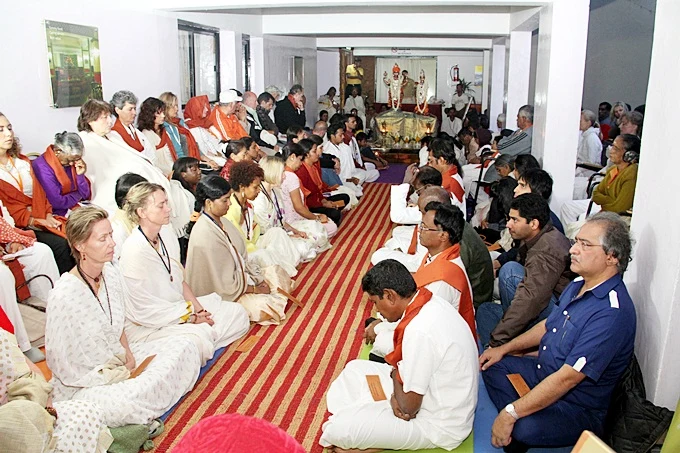
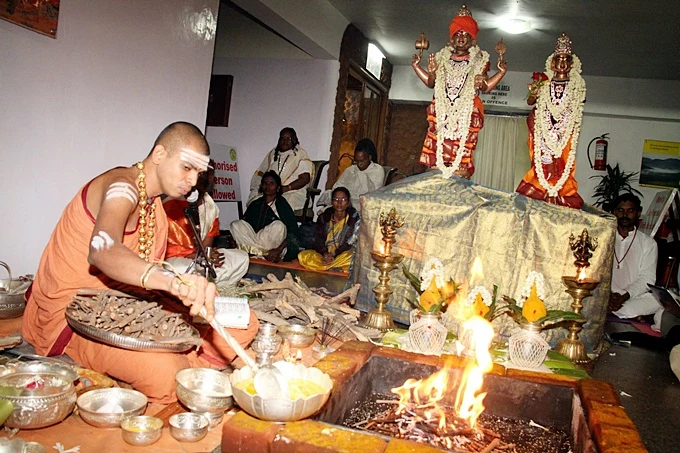
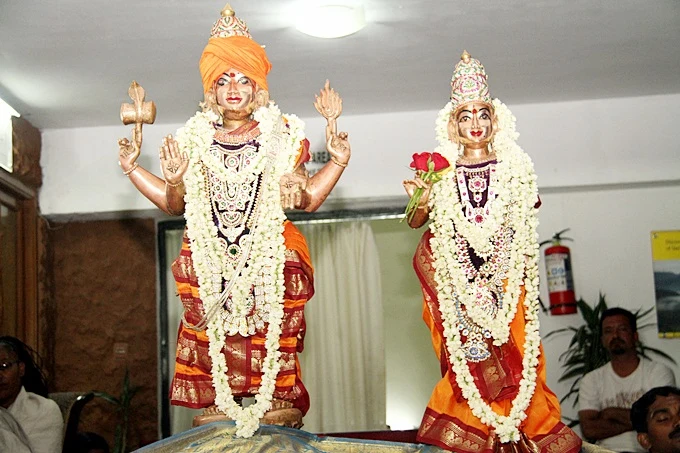
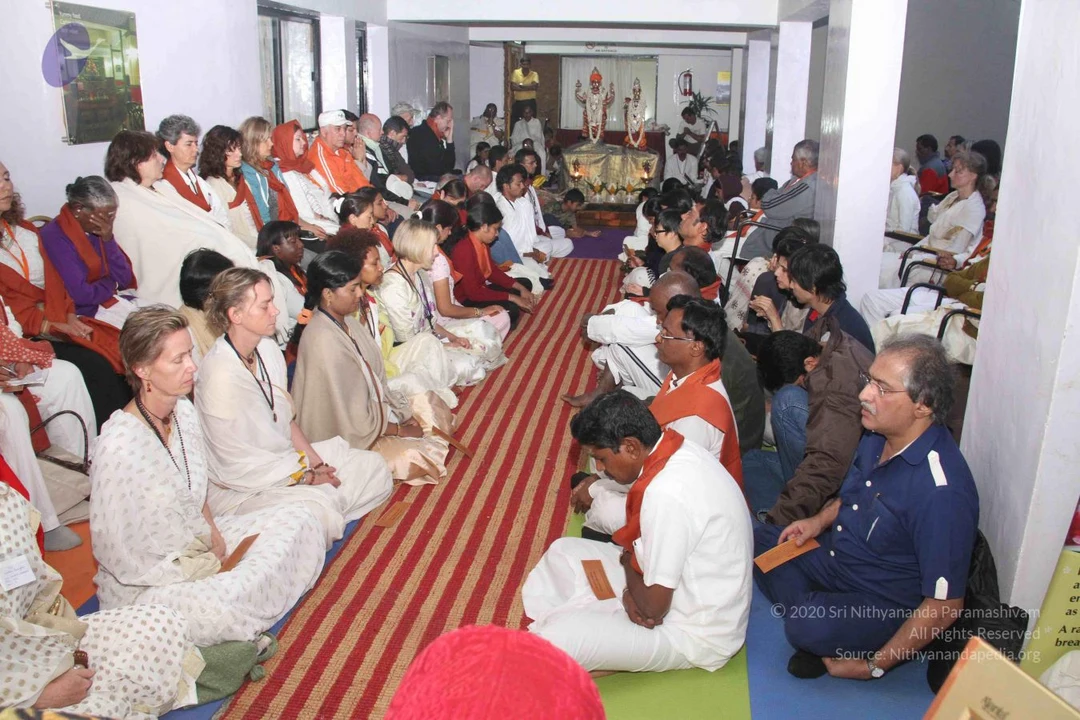
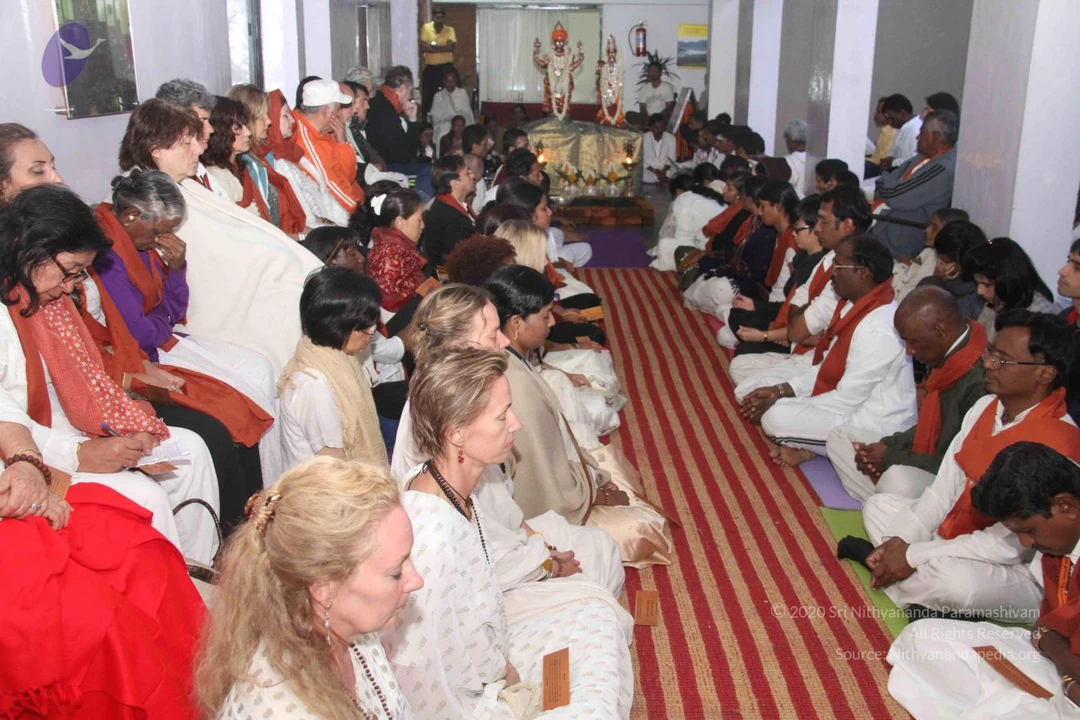
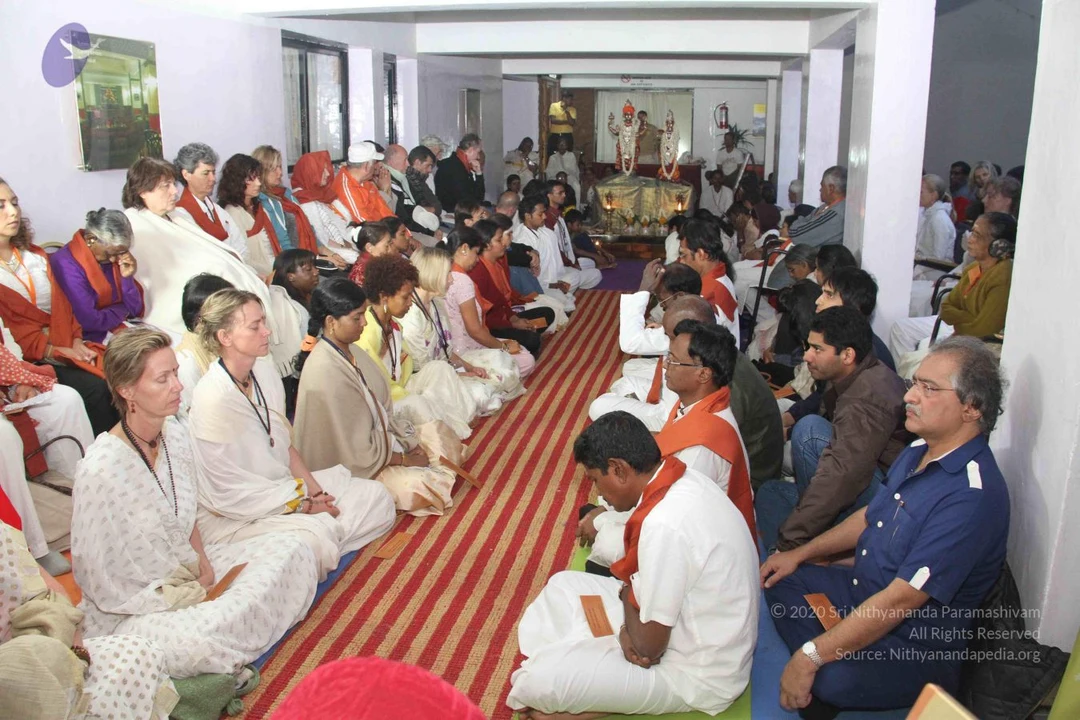
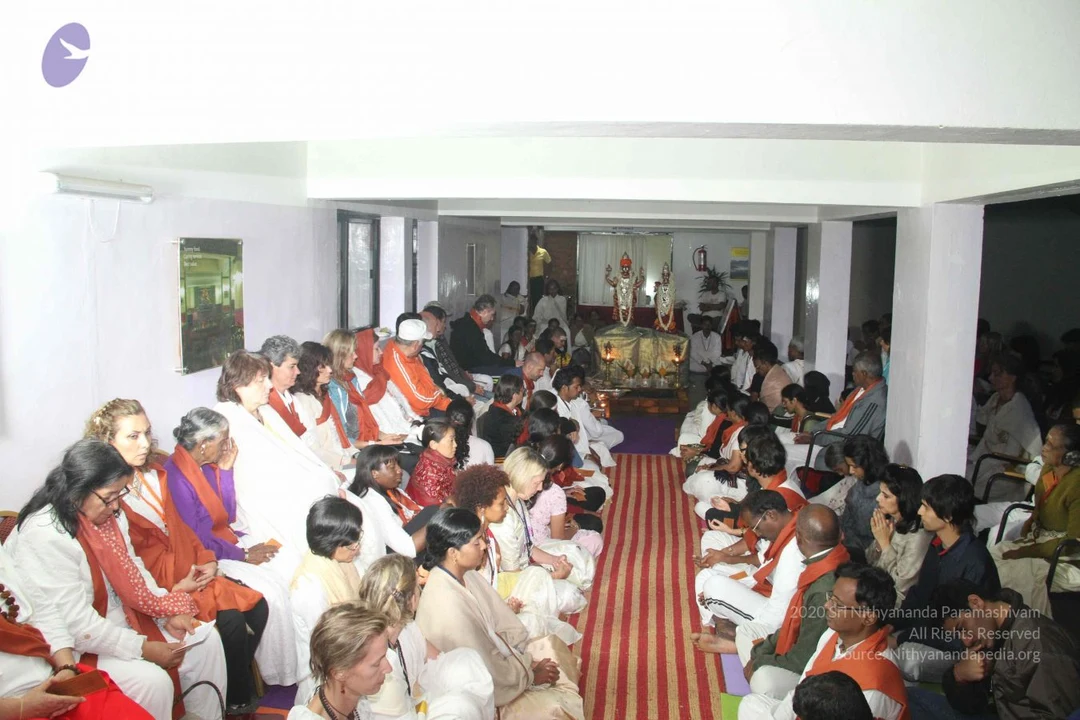
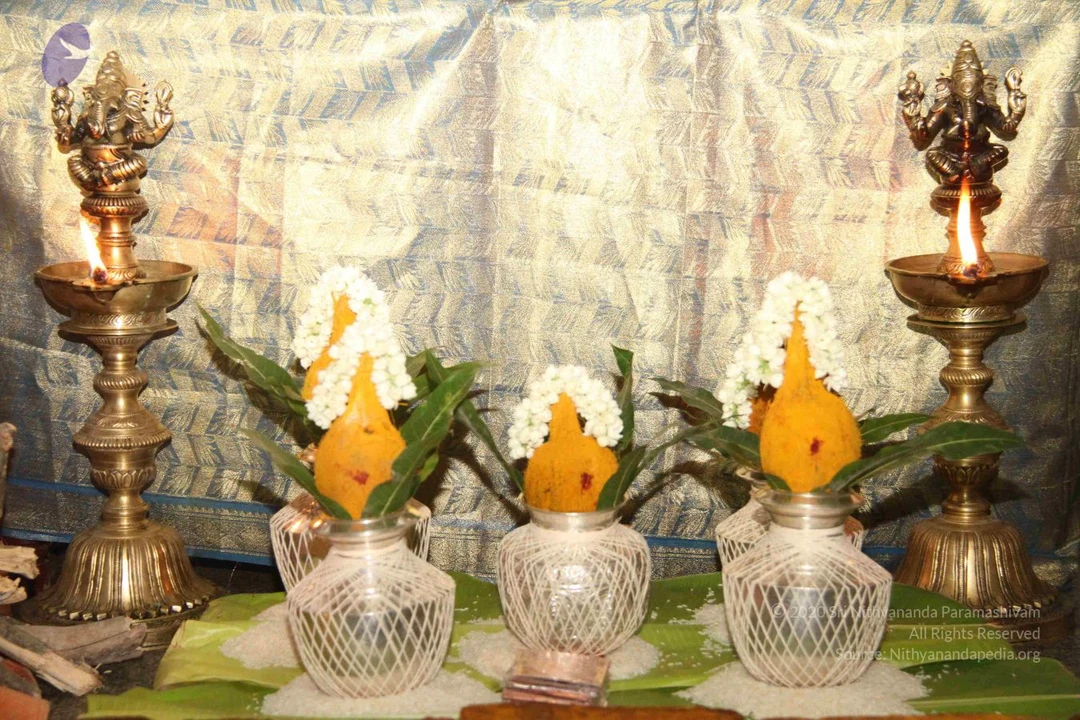
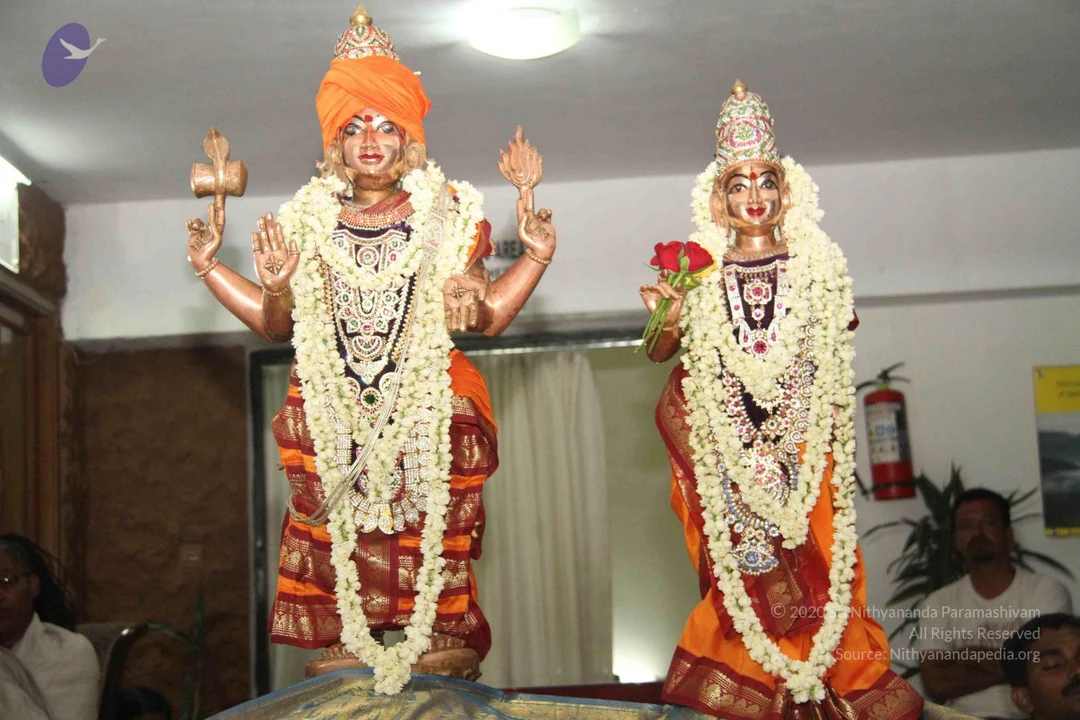
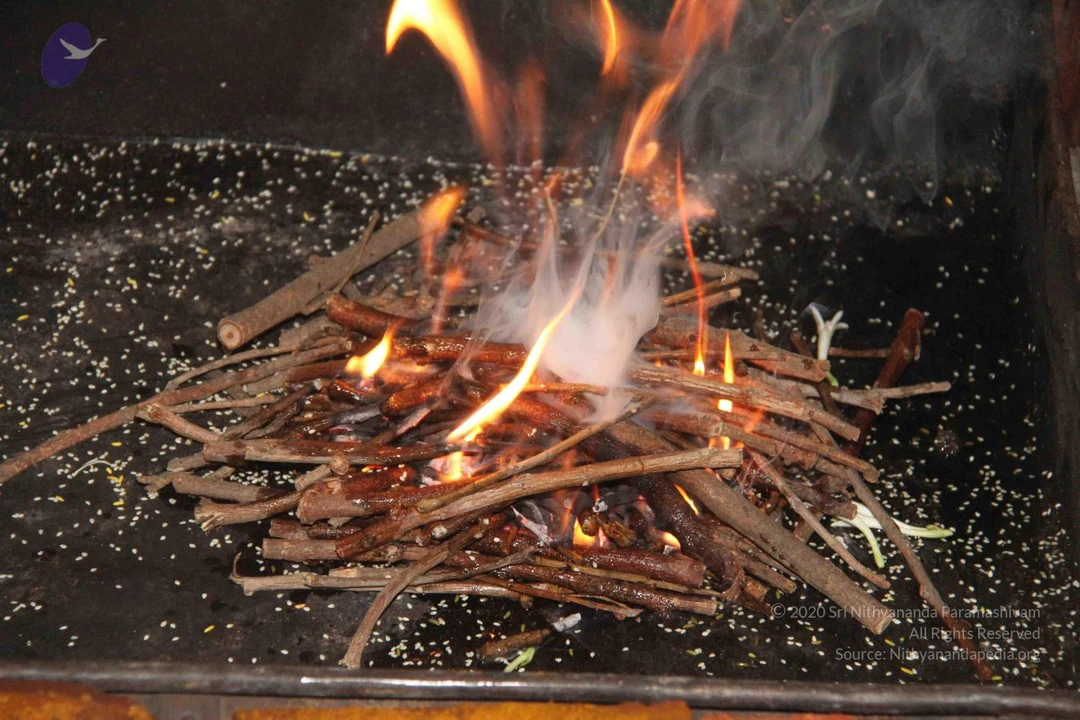
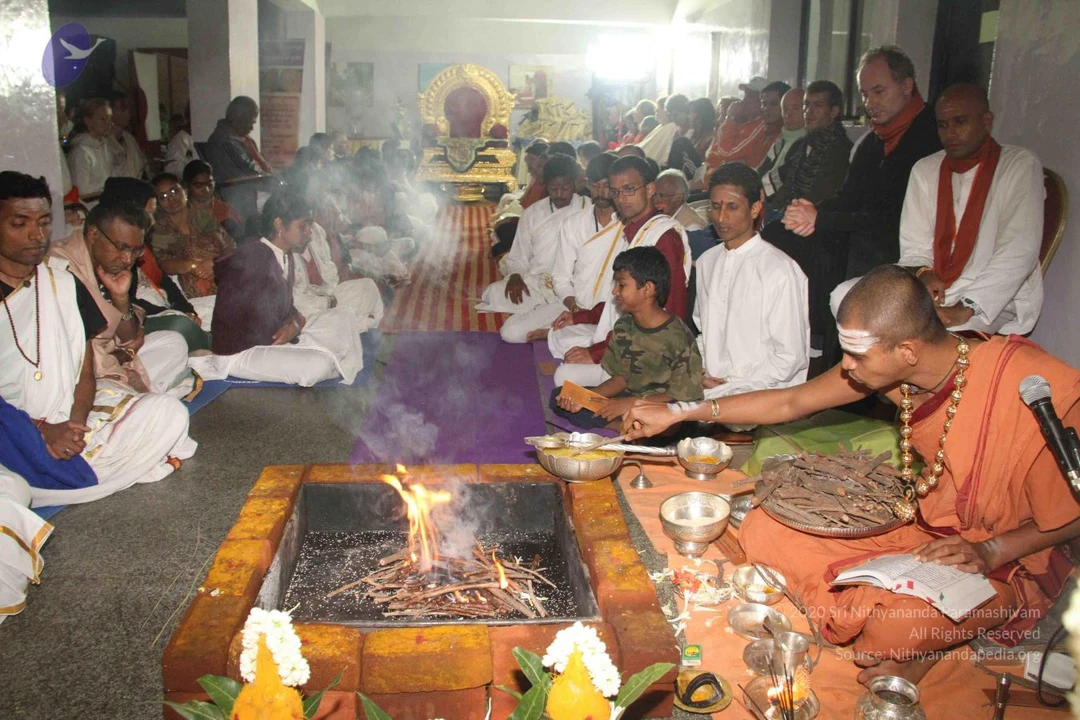
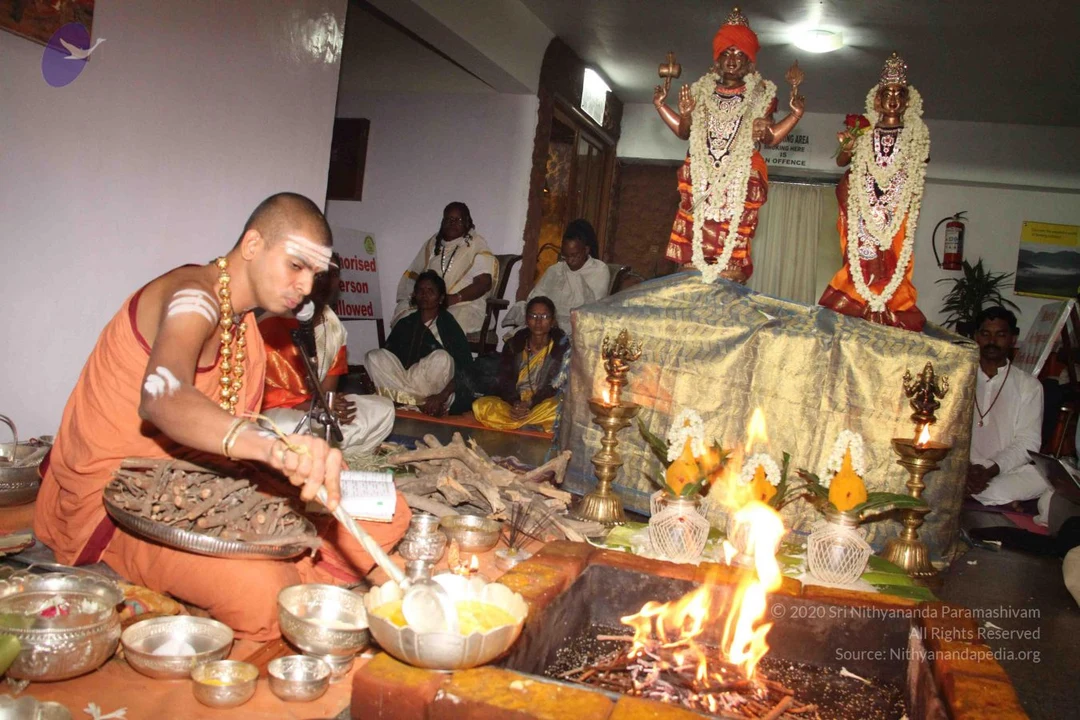
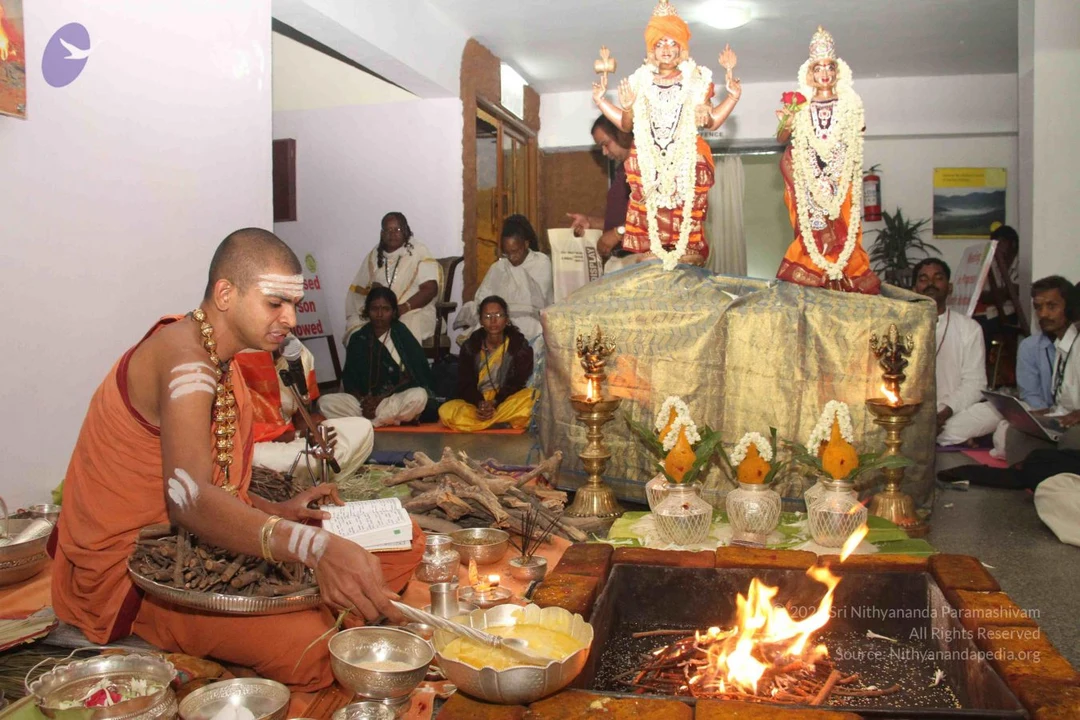
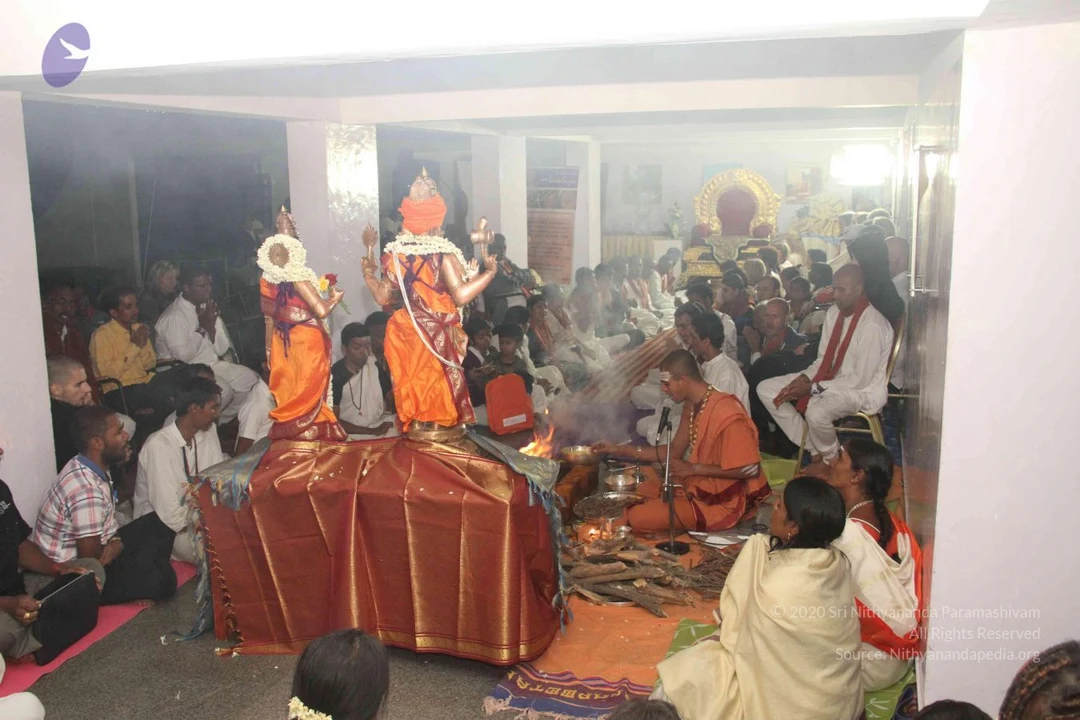
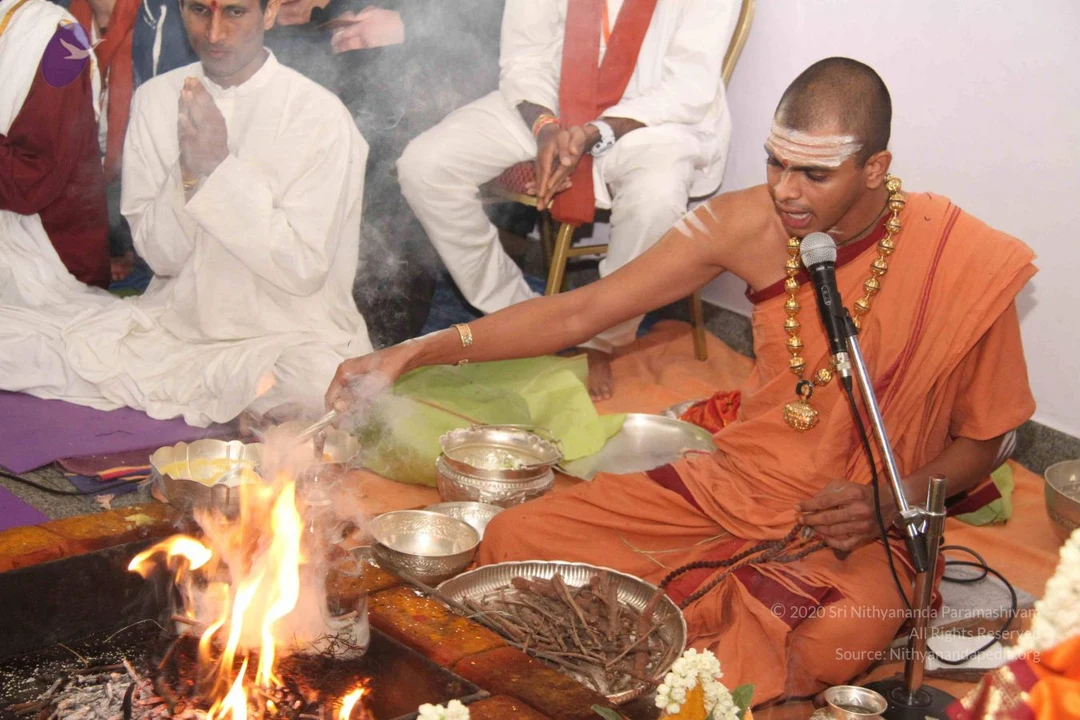
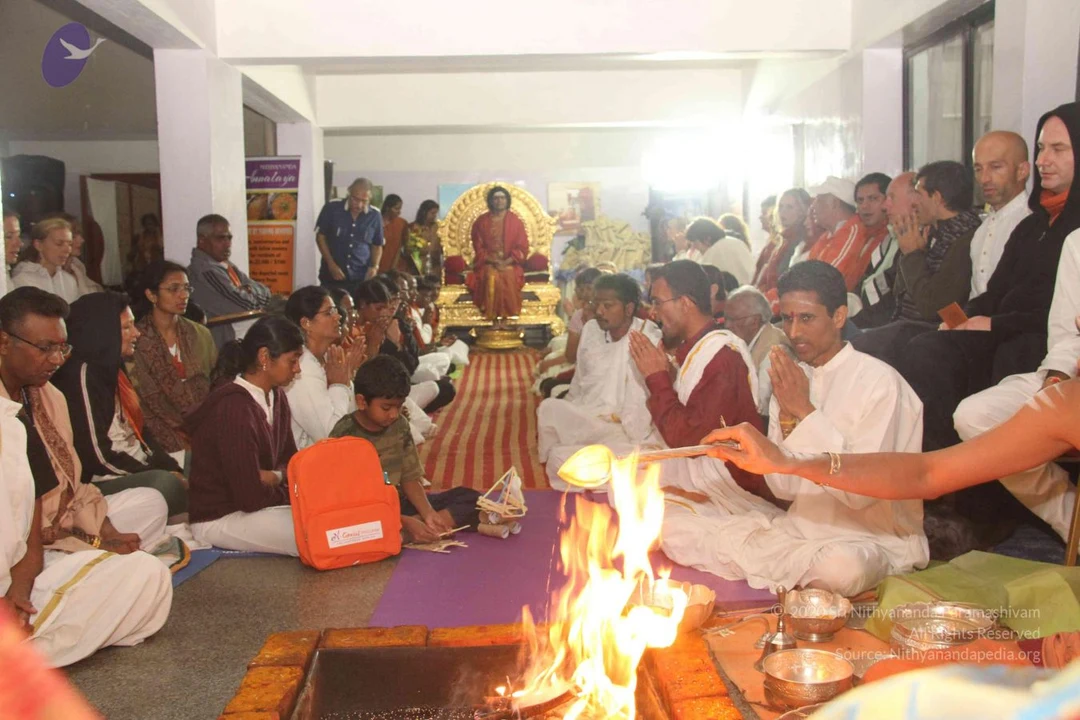
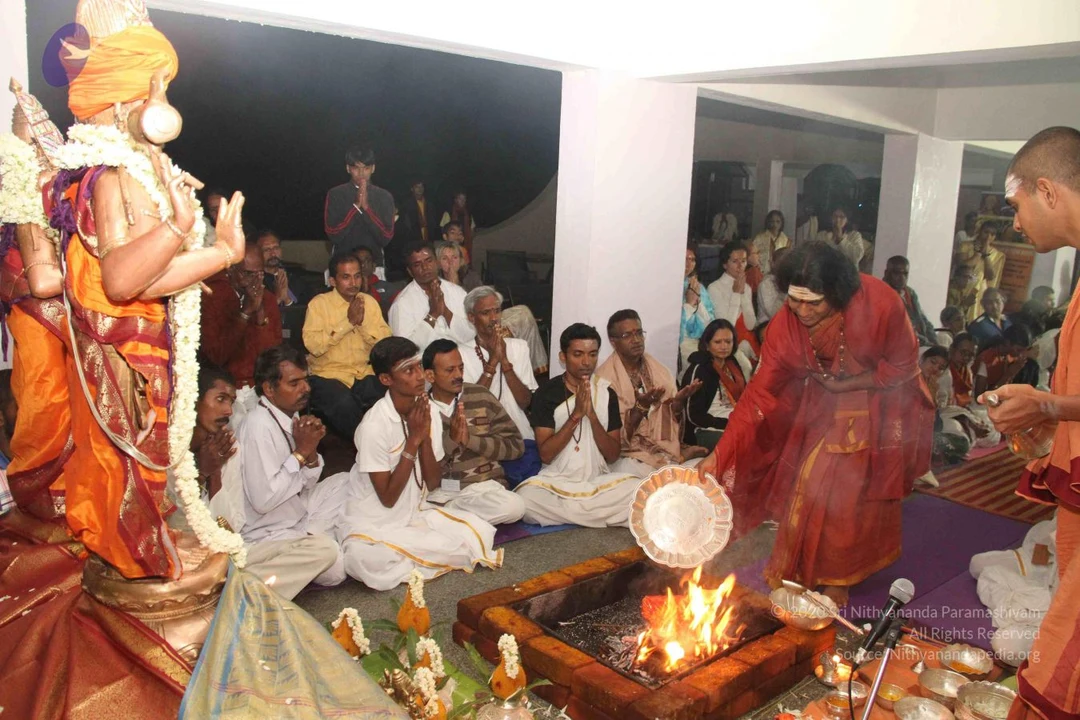
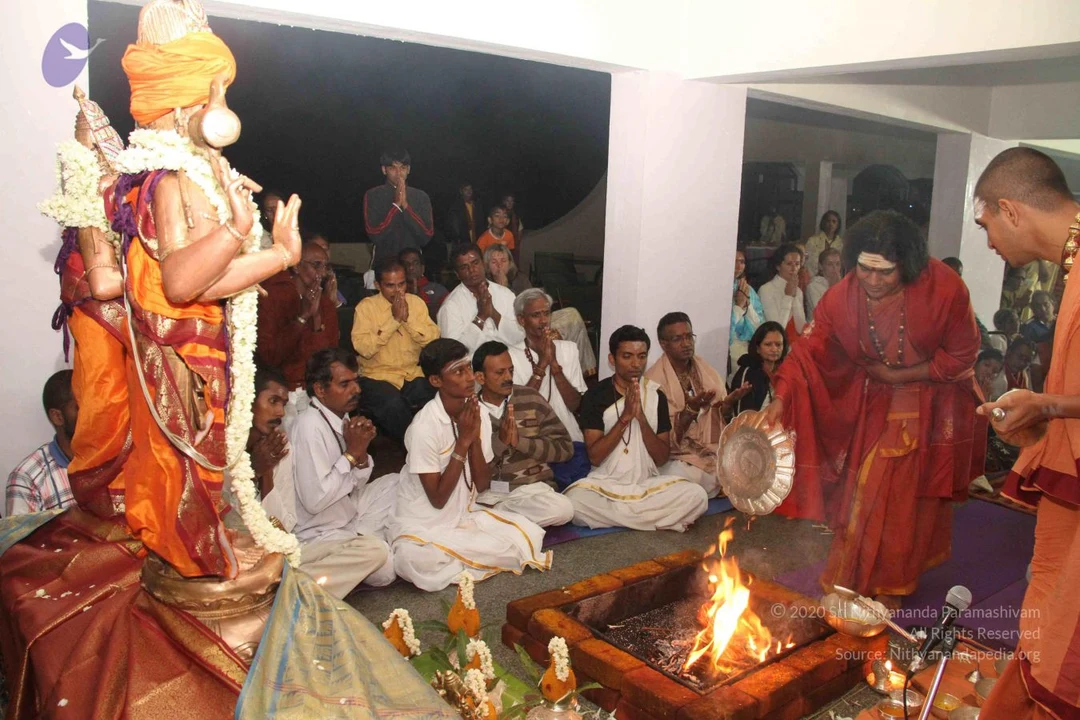
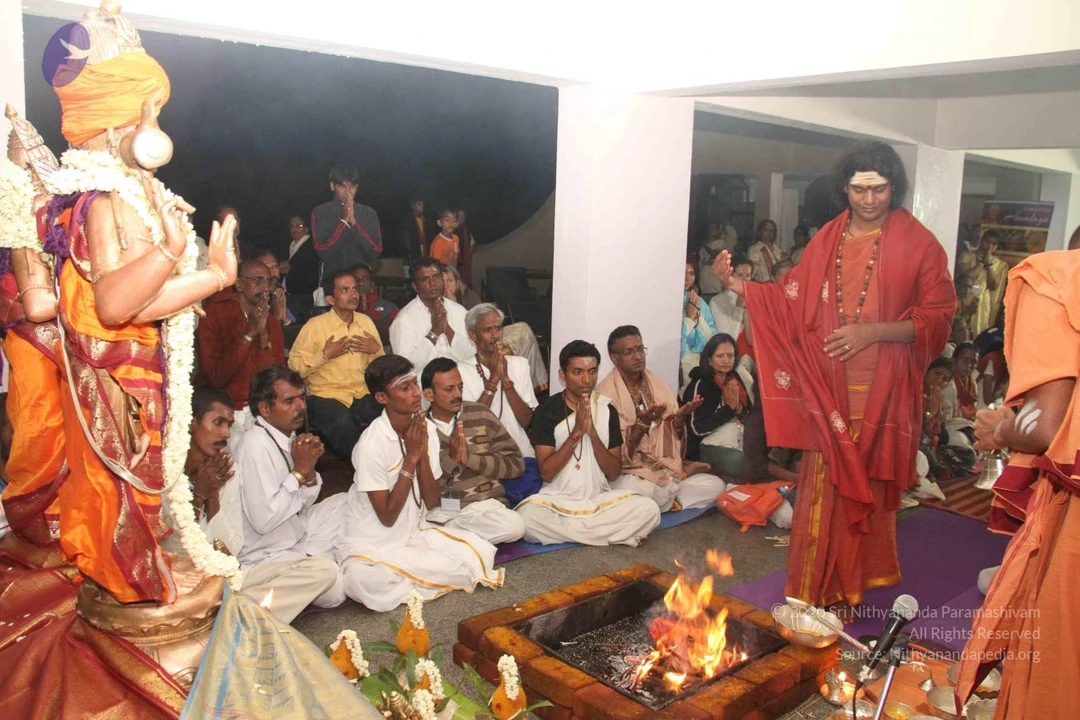
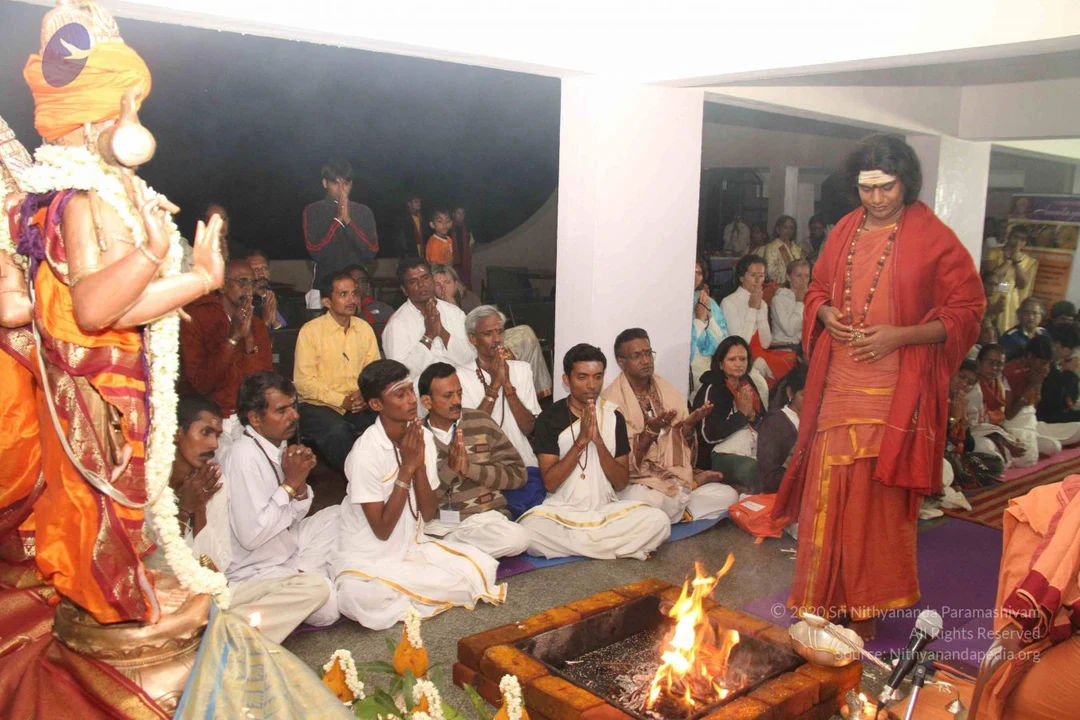
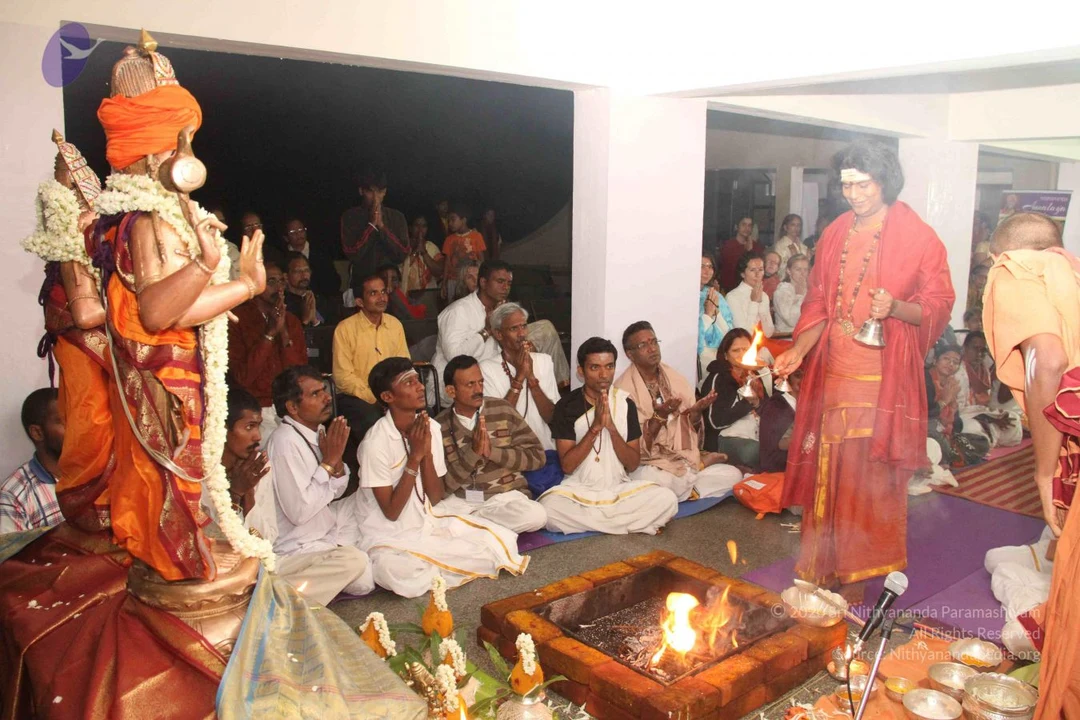
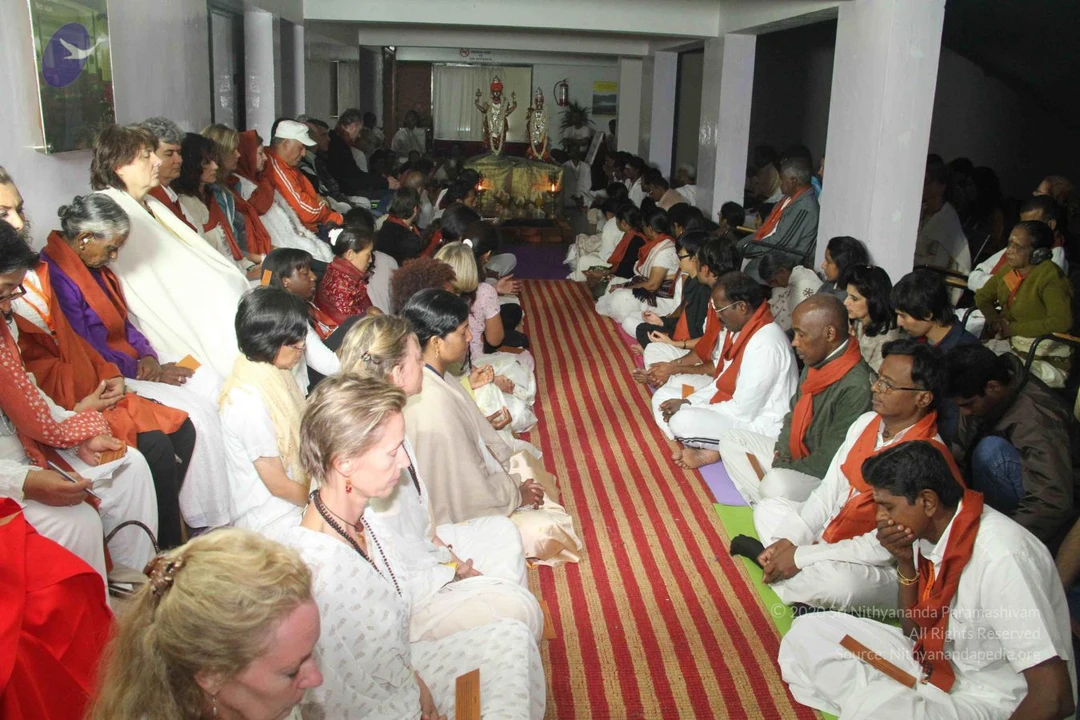
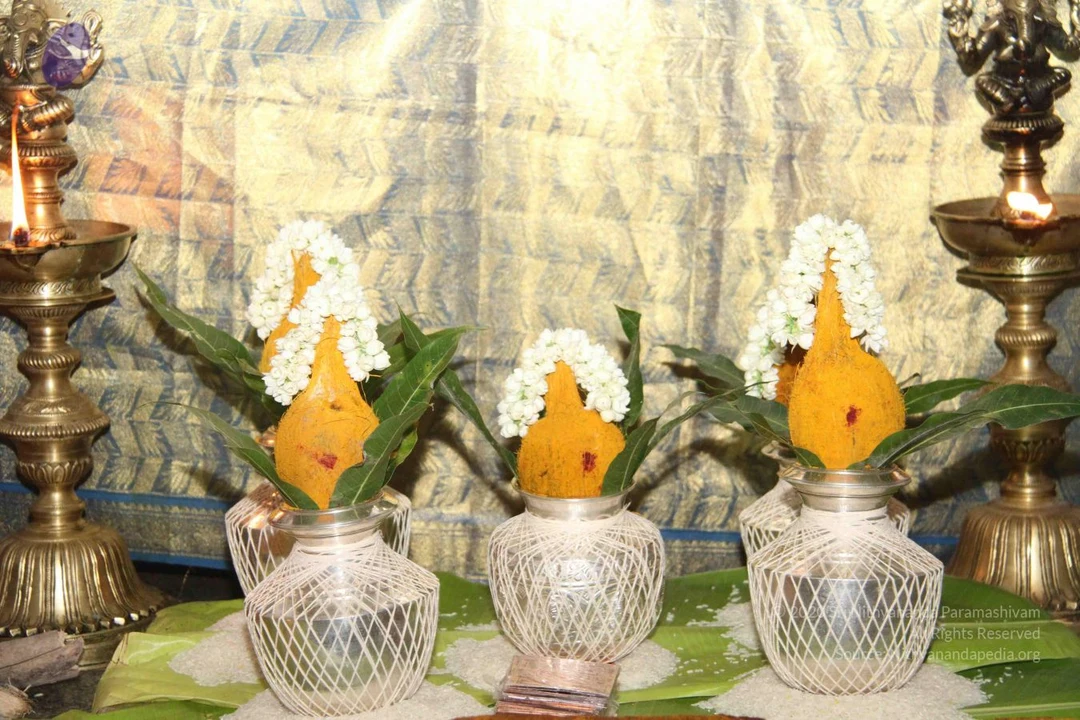
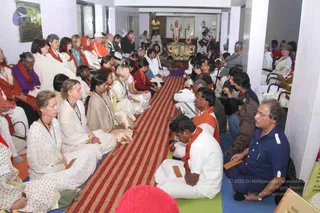
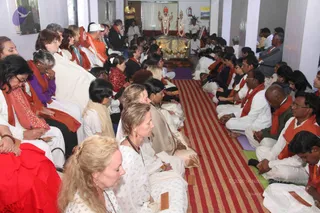
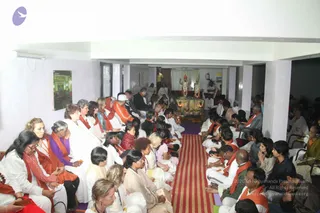
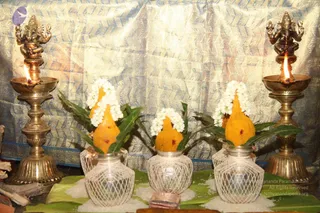
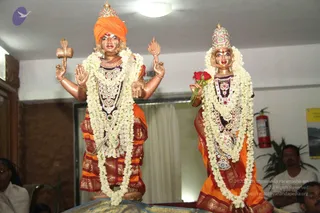
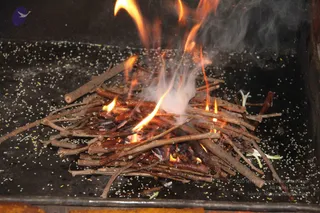
Photograph of a seated satsang in a whitewashed hall with a red-and-brown striped mat and blue mats underneath. Rows of devotees sit cross-legged facing a small altar at the far end, where two decorated deity murtis stand adorned with garlands and oil lamps are lit before them. Many seated women wear white, cream and saffron-orange shawls, and several men wear white dhotis with saffron-orange stoles. In the foreground, a man in a white shirt and saffron stole sits with eyes closed, and a man in a navy shirt and glasses sits beside him holding a small book. Others sit along the wall on chairs and cushions, and a child sits among the rows.Seated devotees fill a hall in rows on a striped red and brown mat, many in white clothing with orange-red shawls and some in purple, red and white garments. A central altar holds decorated deity murti with garlands and lit oil lamps, while a figure in white sits near the altar. Attendees sit with eyes closed or heads bowed in satsang or meditation, with a rudraksha-wearing woman in white in the foreground.A photograph of a seated satsang gathering in a plain white hall with a red-and-gold striped runner down the centre. Rows of devotees sit on the floor and chairs, many wearing white clothing and saffron-orange shawls. Near the back, deity murti figures stand on a decorated altar with lit oil lamps and flowers, and a standing man in white attends the altar. Several women in the front row have dark or grey hair; one wears a purple shawl. A single seated man in the centre front wears a white cap and orange shawl. Wall posters and a wall-mounted notice are visible at left.A ritual arrangement photographed on a shimmering gold and blue silk backdrop. Two brass Ganesha murtis with trunks raised stand on tall brass oil lamps, each with a lit flame. In the centre are three silver mesh-woven pots set on a green banana leaf scattered with rice, each holding a yellow-orange gourd or fruit topped with a white jasmine garland and surrounded by green leaves. A red kumkum mark decorates each gourd.Photo of two standing deity murti statues dressed for worship, set on a raised platform in an indoor hall. The figure on the left wears an orange turban, a red-and-gold sari-style dhoti, and many white jasmine garlands, and holds a trident-like staff and a hand gesture; the figure on the right wears an orange sari with gold border, a tall jeweled crown, white garlands, and holds a bunch of red roses. Both have gold jewellery and ornate necklaces. Seated devotees in white clothing are visible at the edges, and a red fire extinguisher hangs on the wall behind them.A photograph of a small fire burning on a flat dark metal tray, built from a pile of dry wooden sticks and twigs with flames and smoke rising upward. Scattered small seeds. No people are visible in the frame.

Akashic-Reading-and-Darshan

85 photosSource gallery
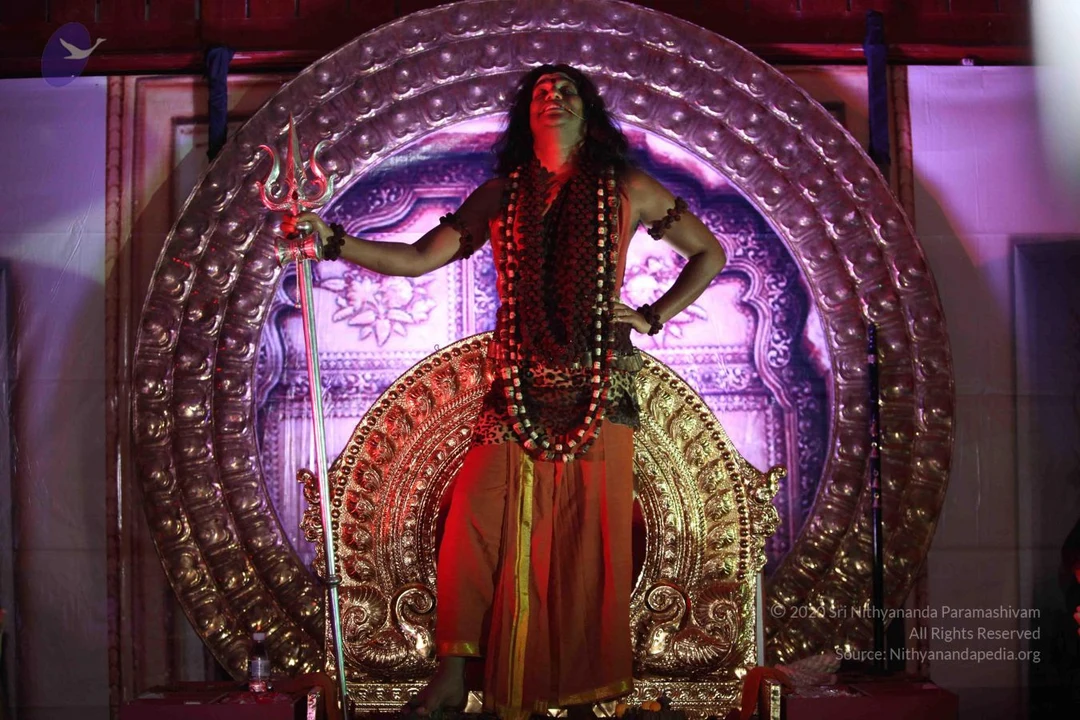
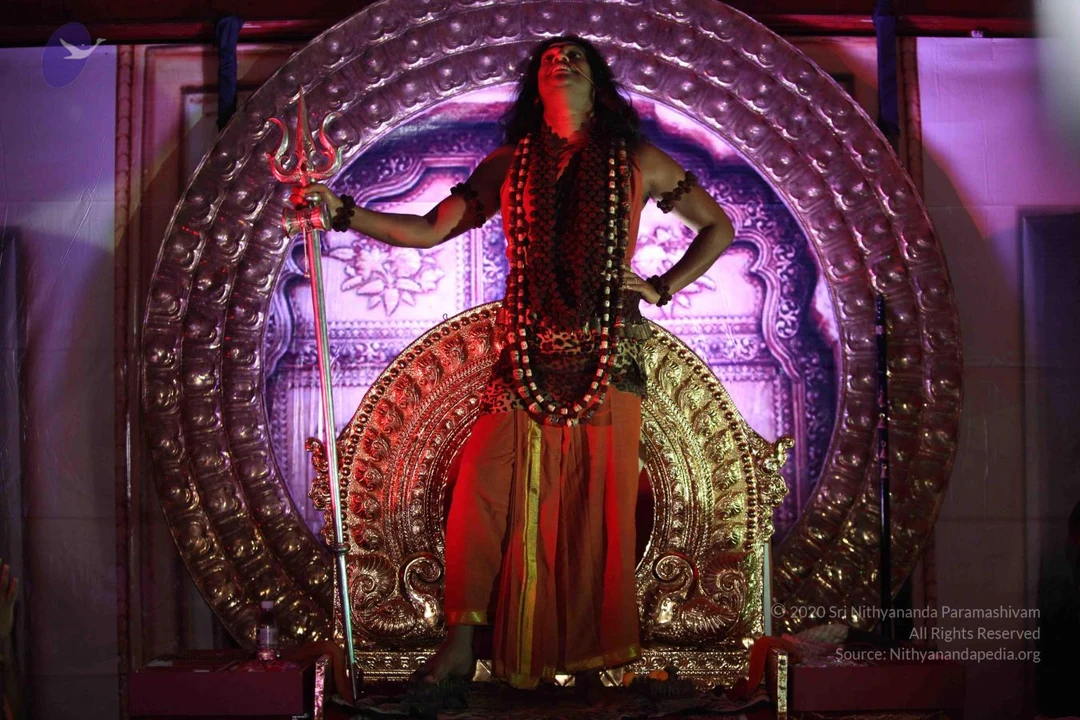
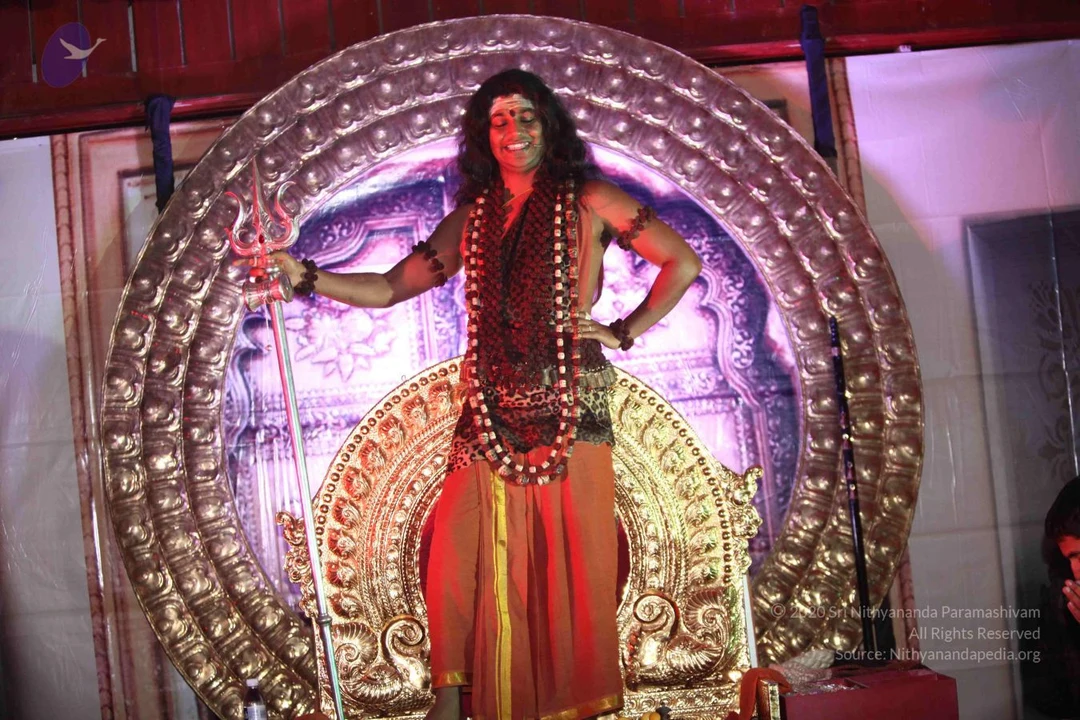
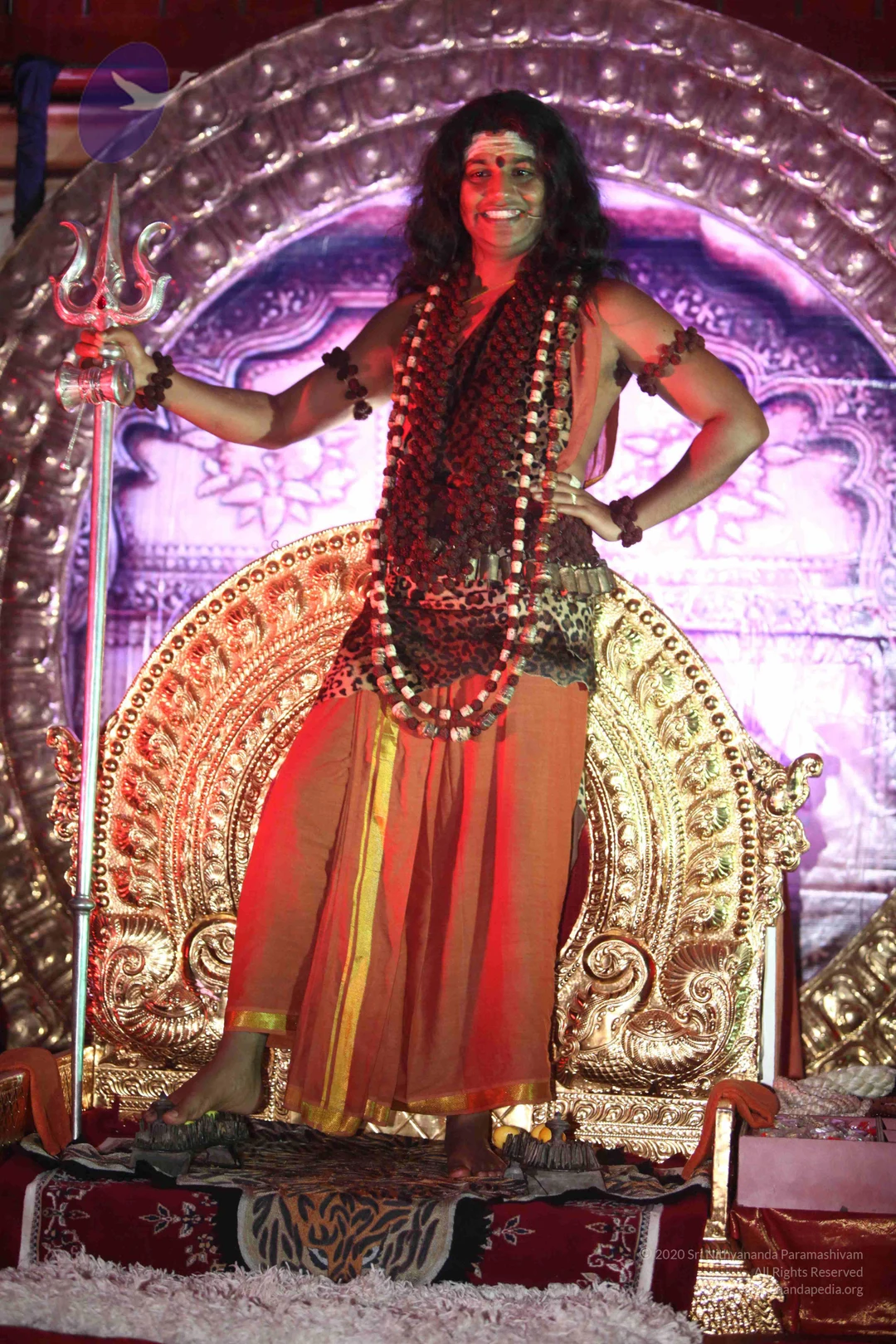
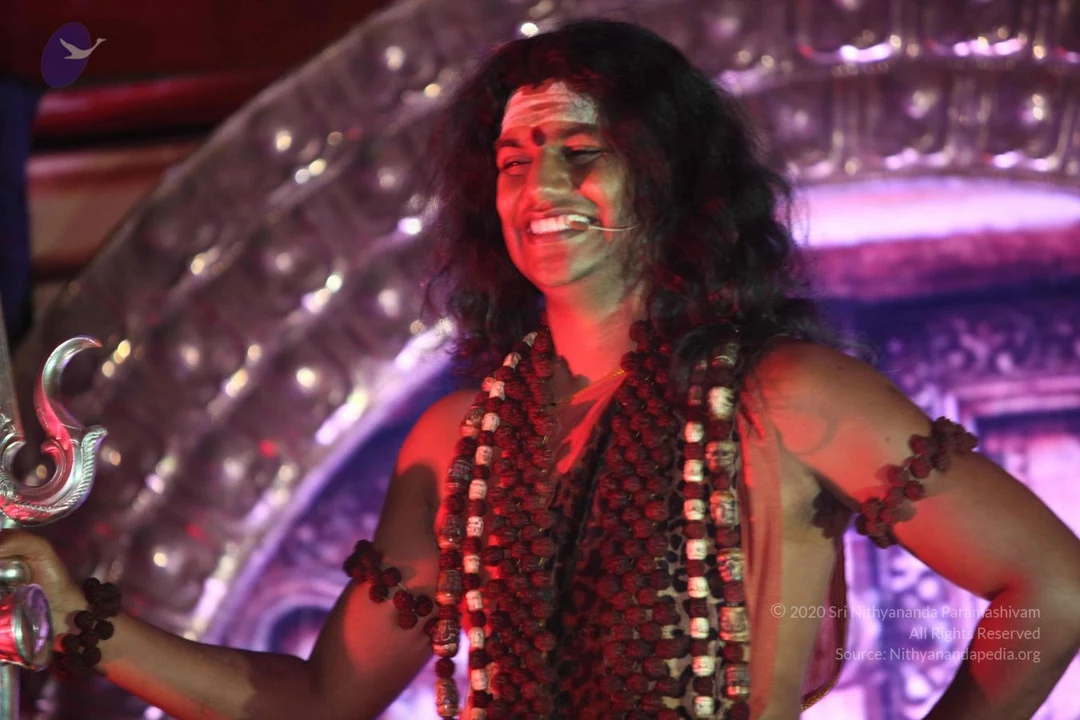
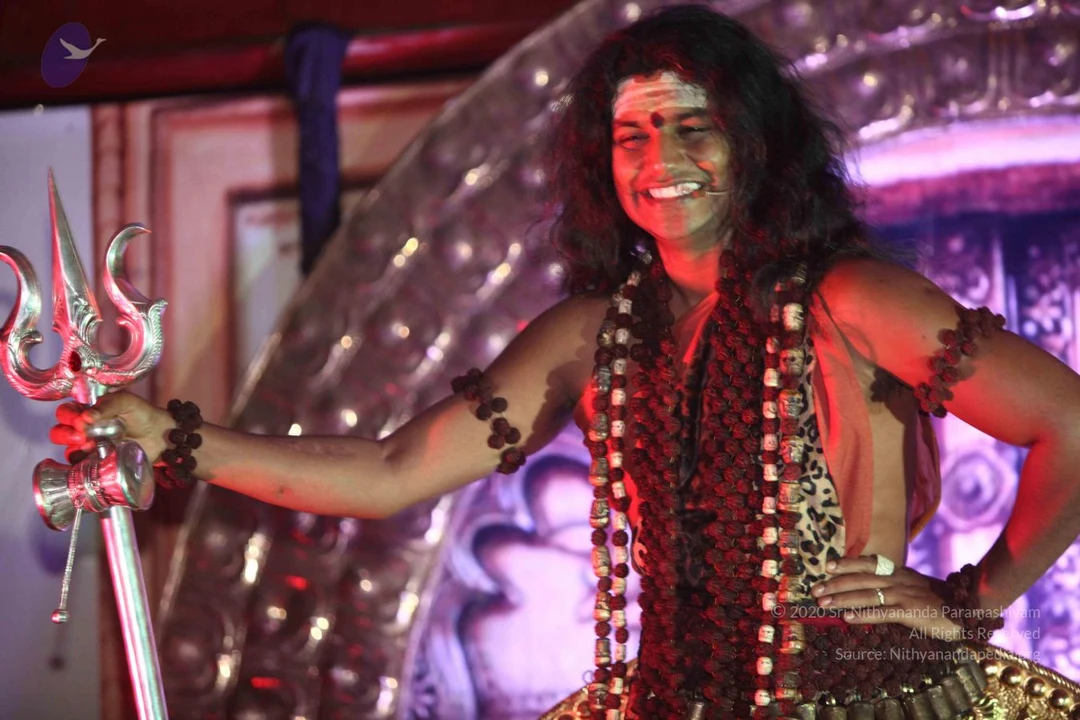
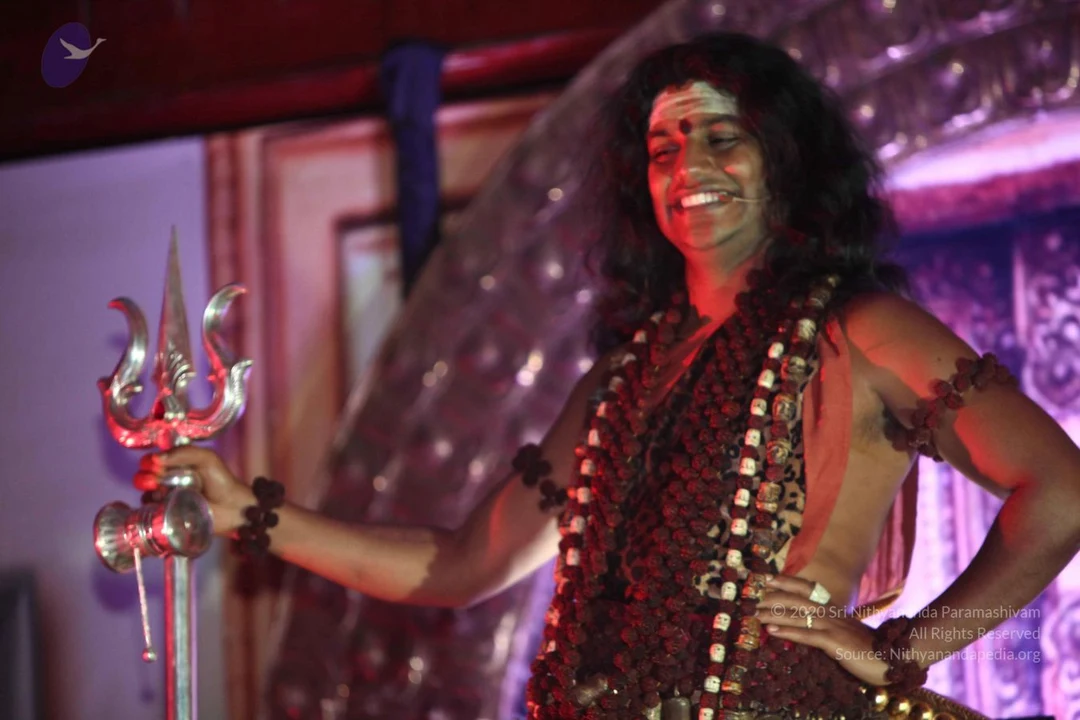
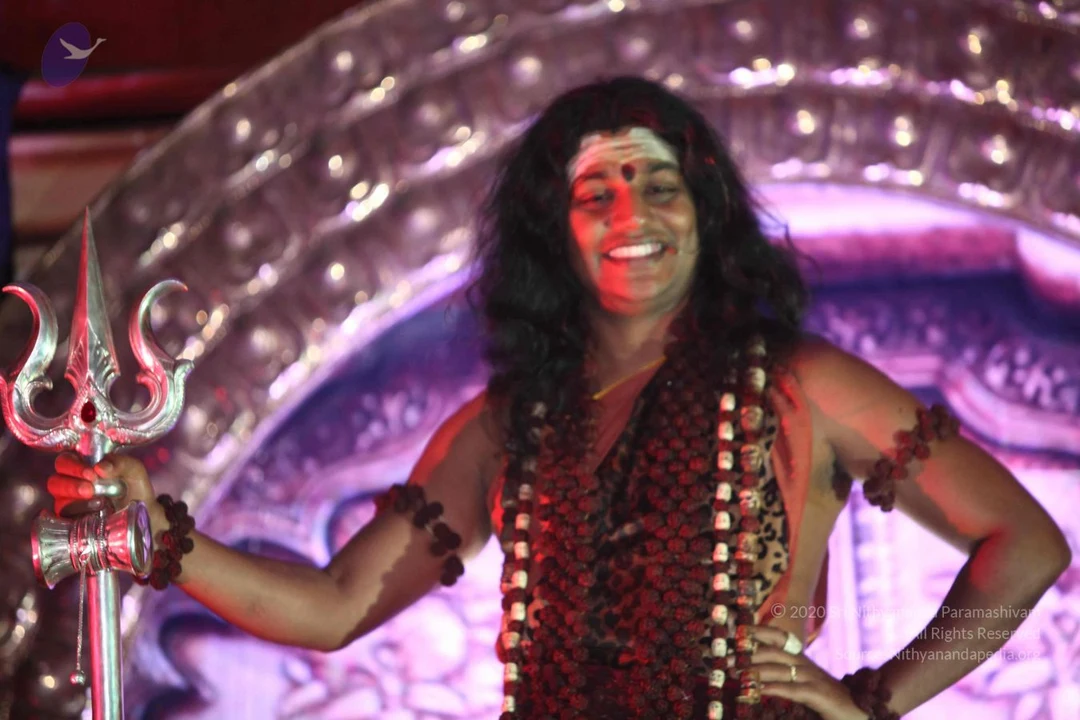
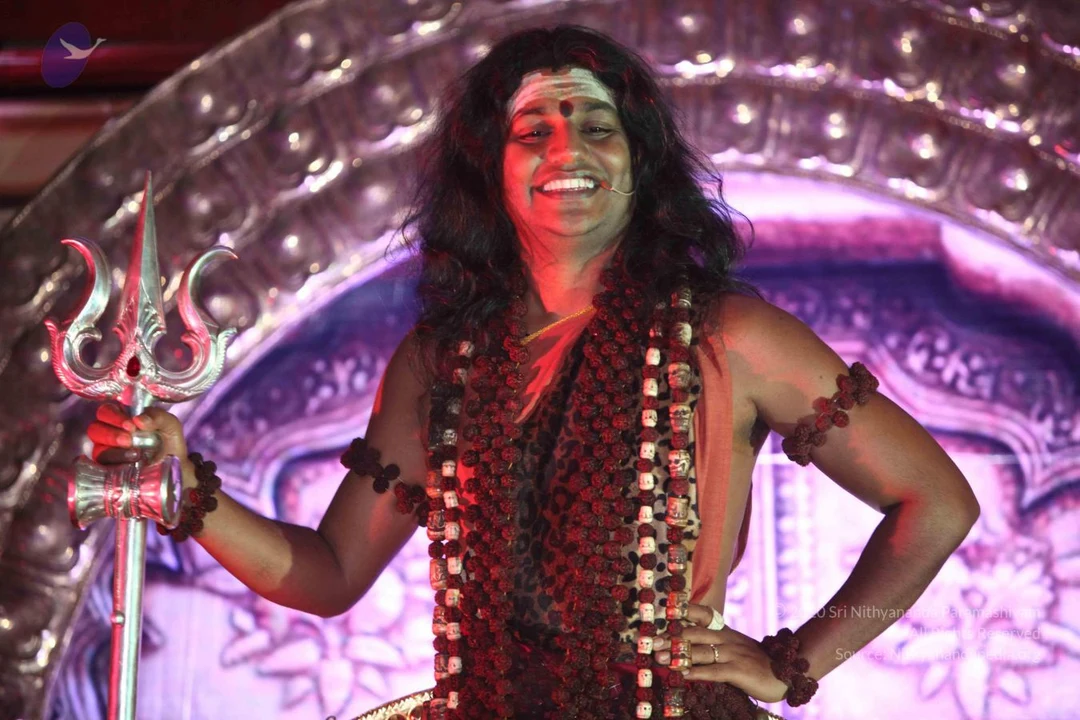
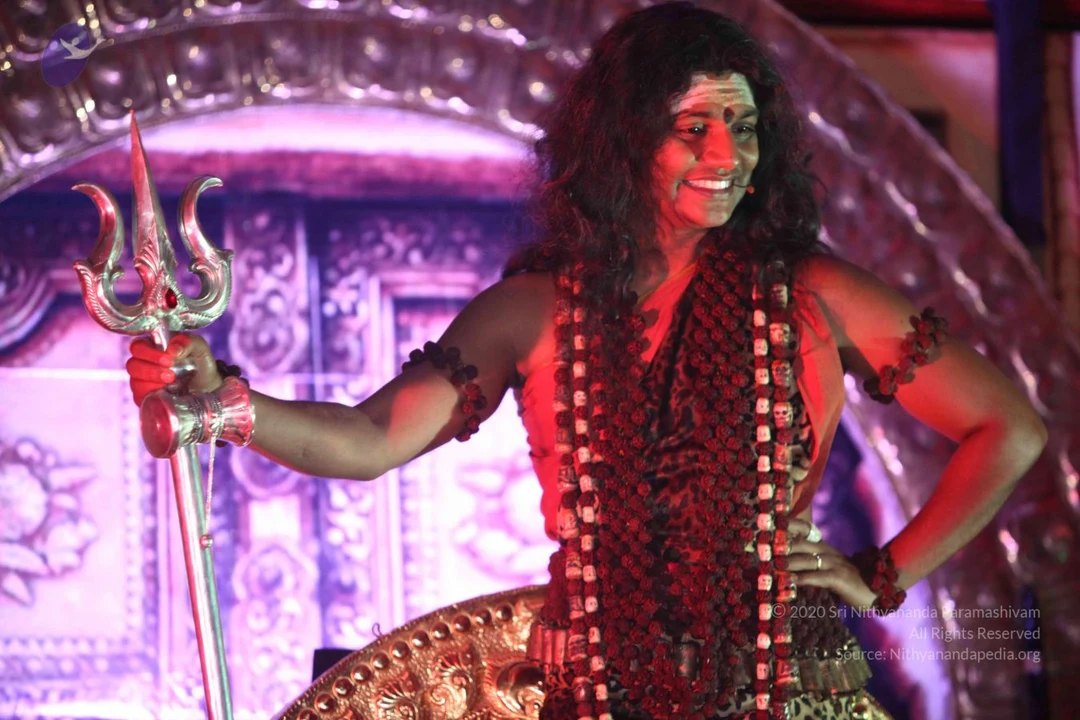
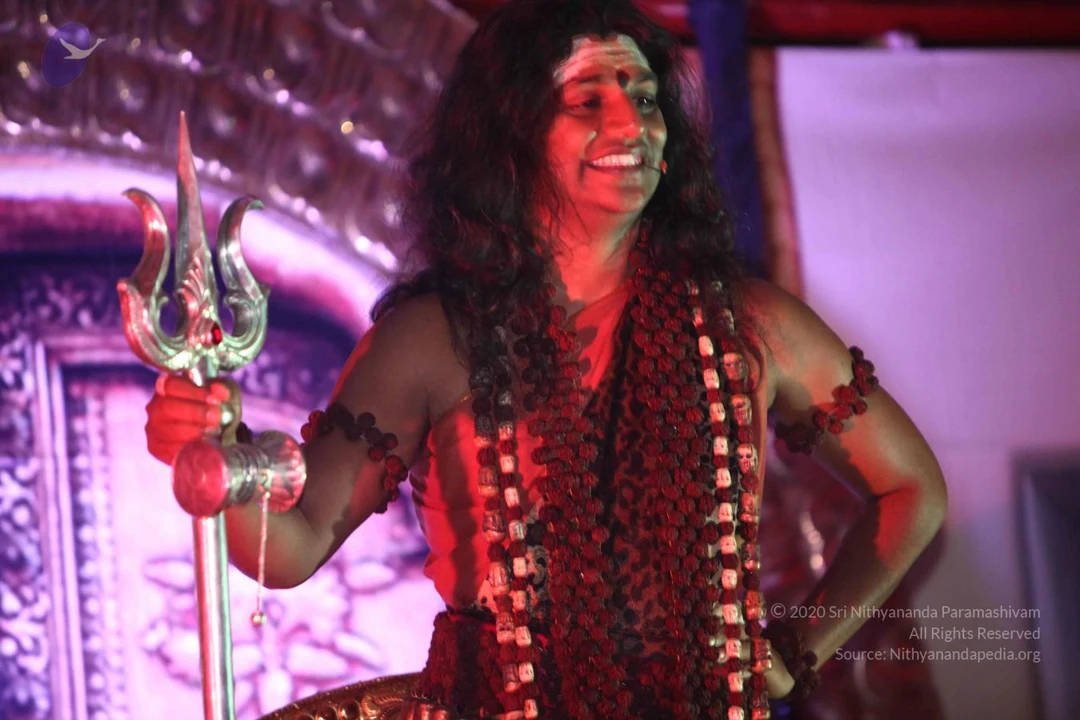
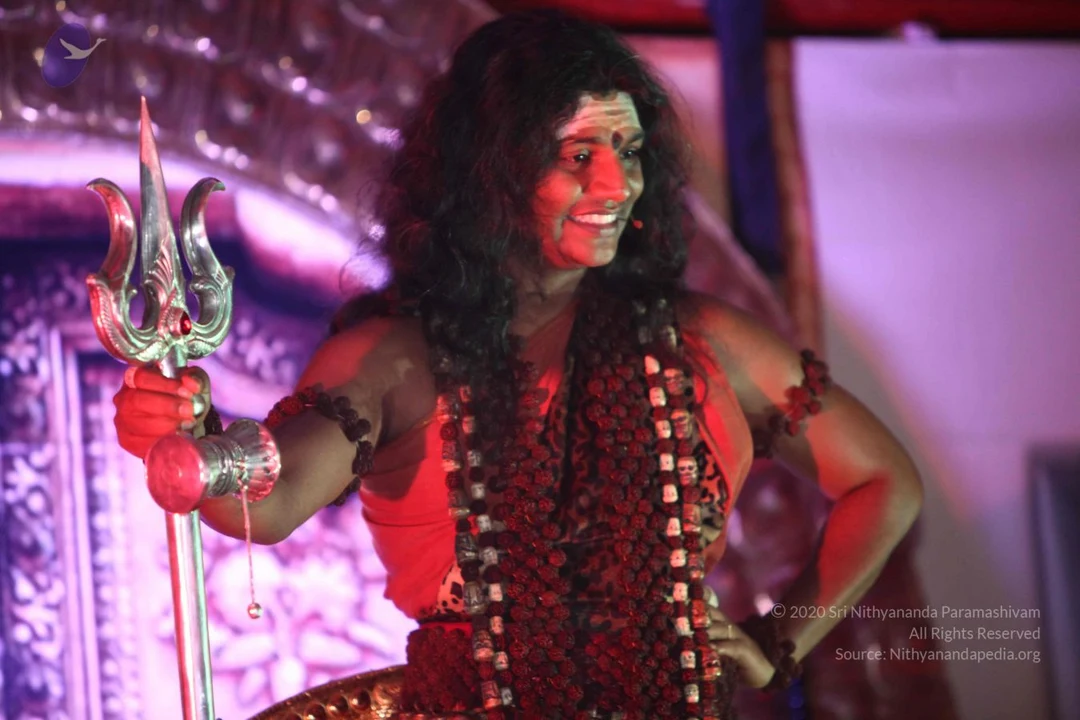
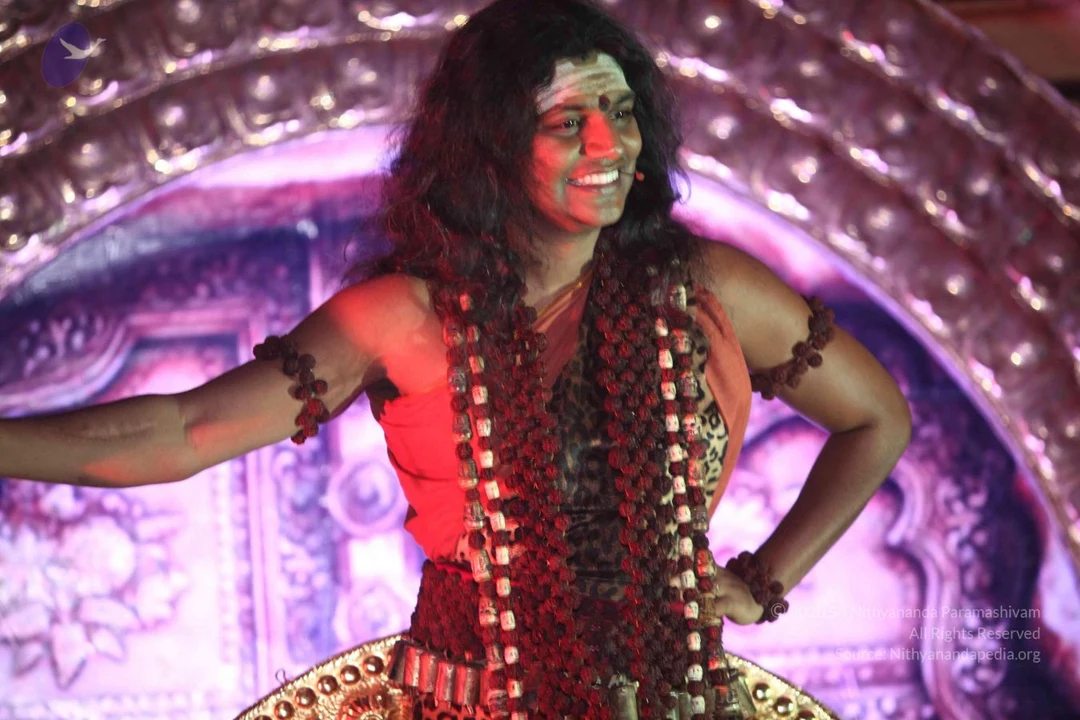
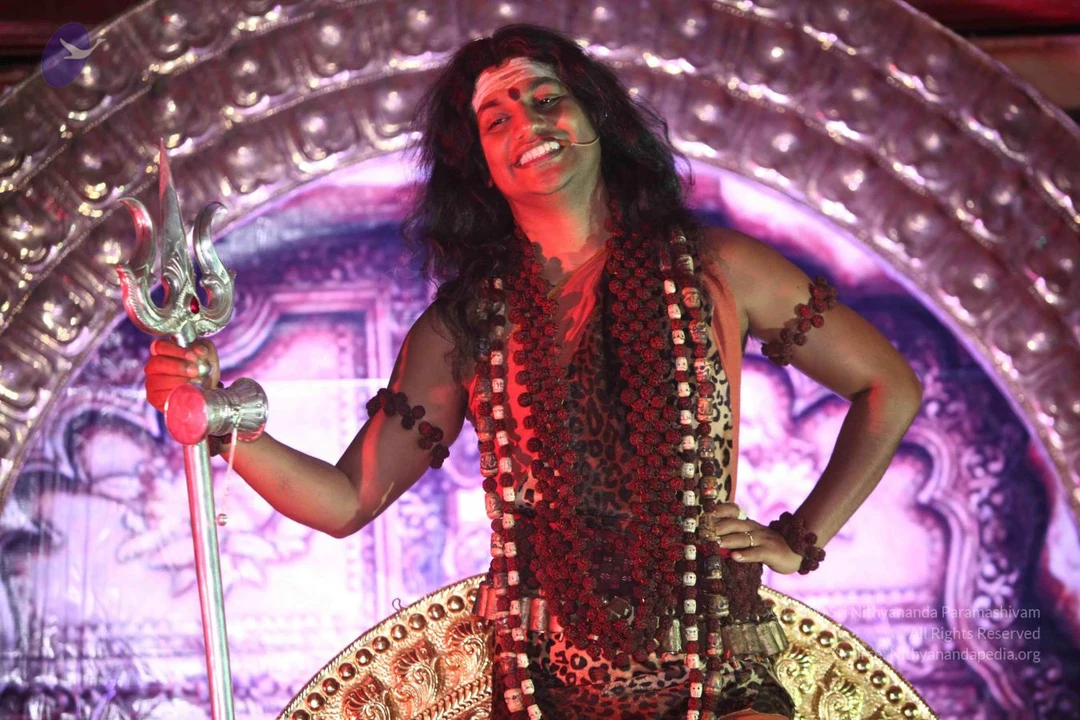
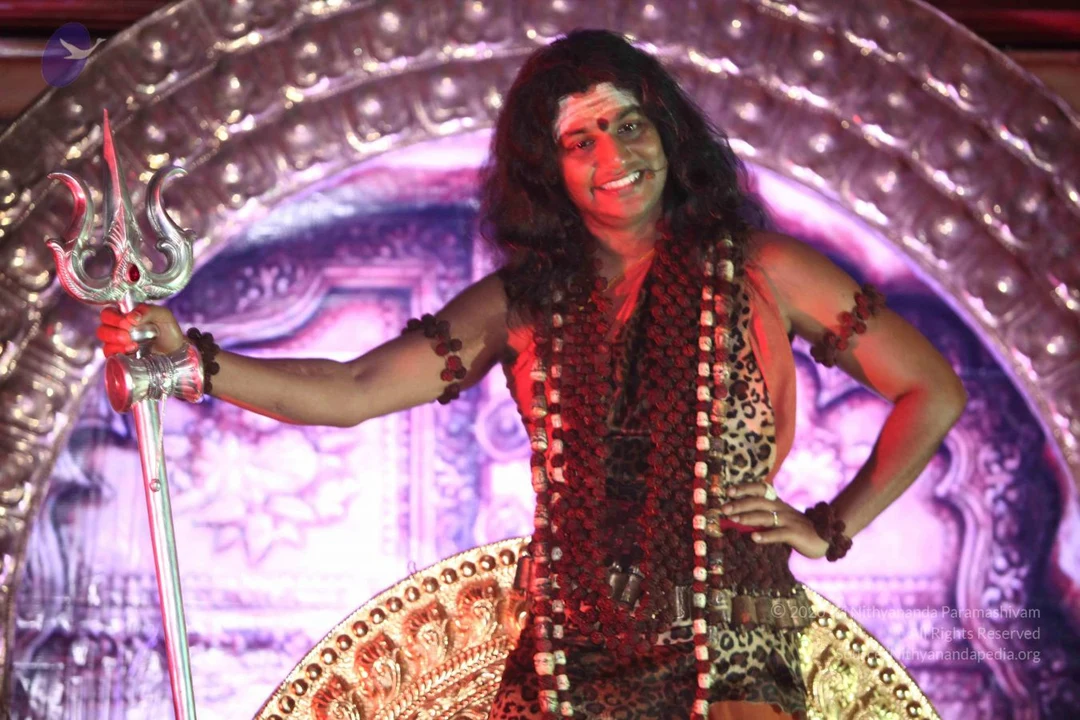
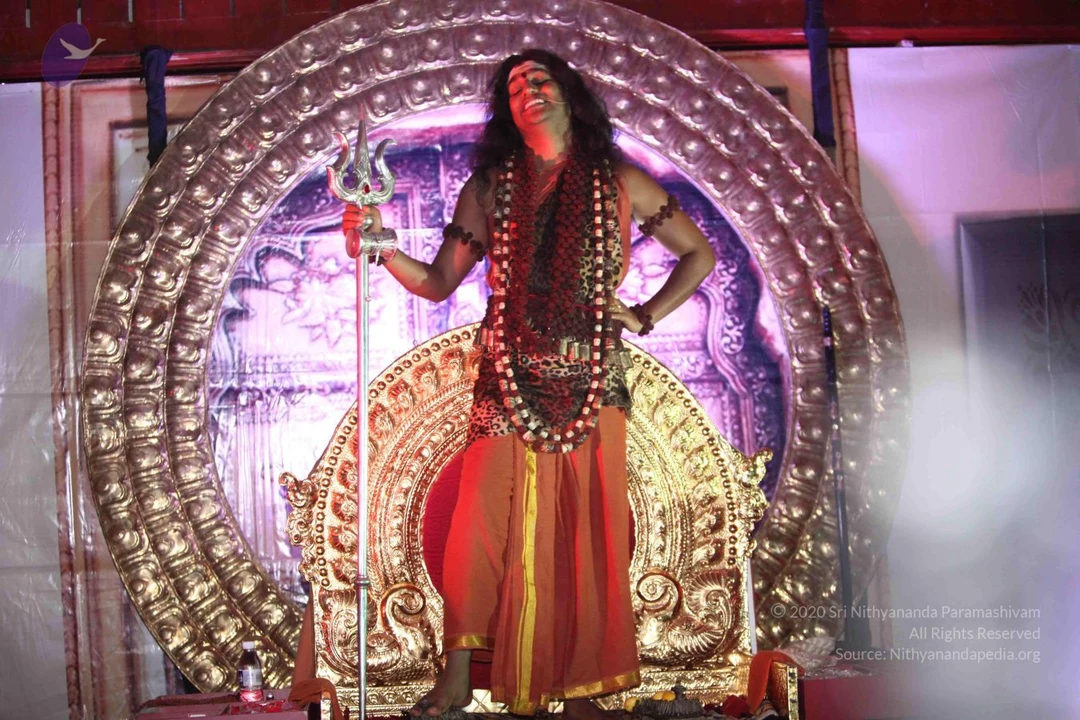
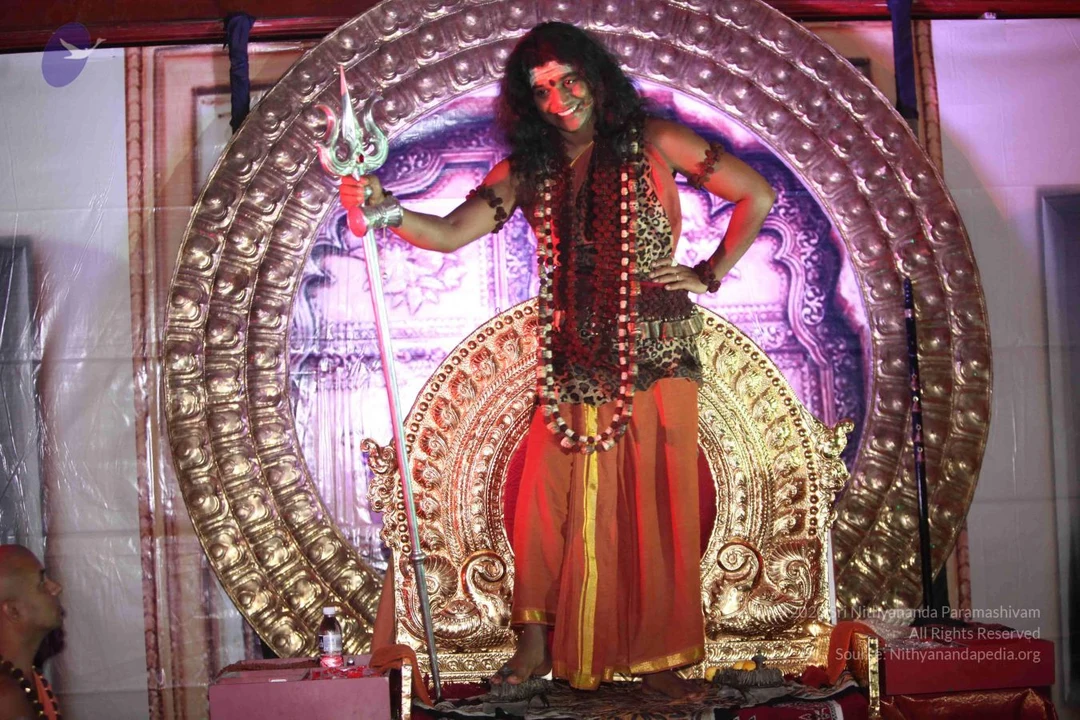
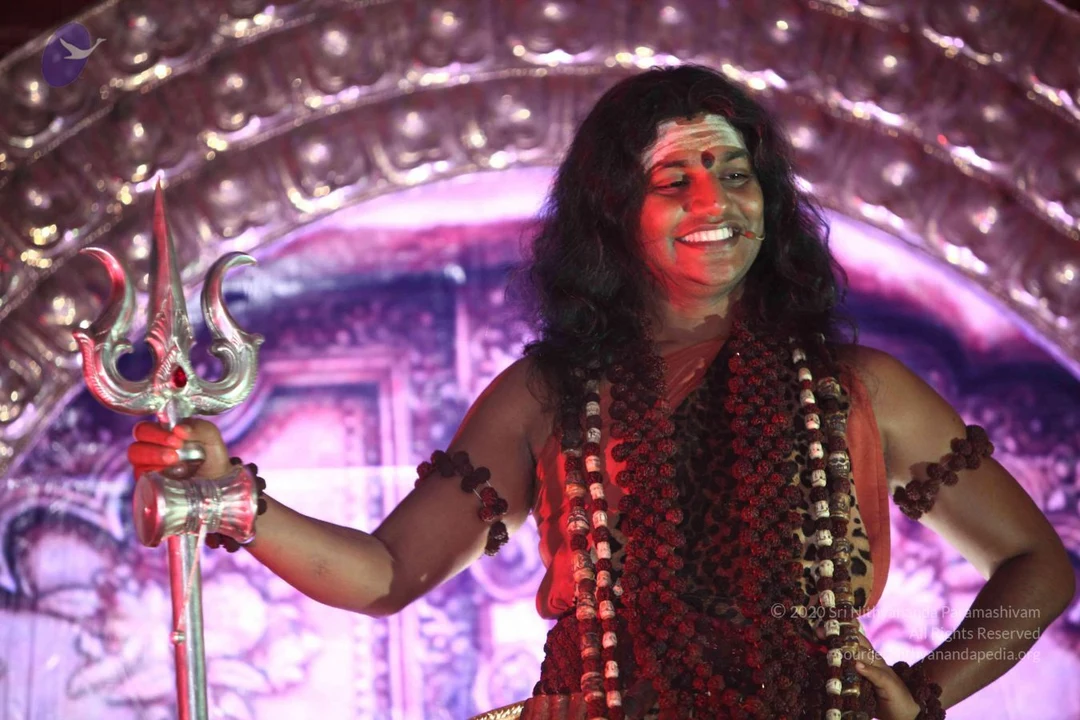
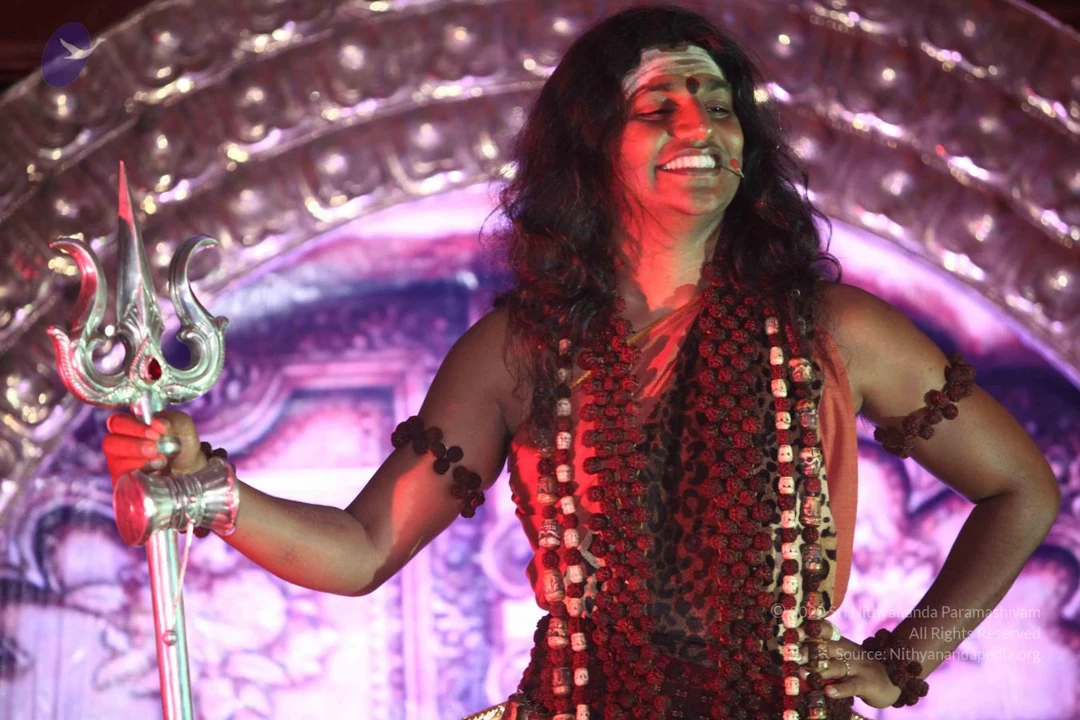
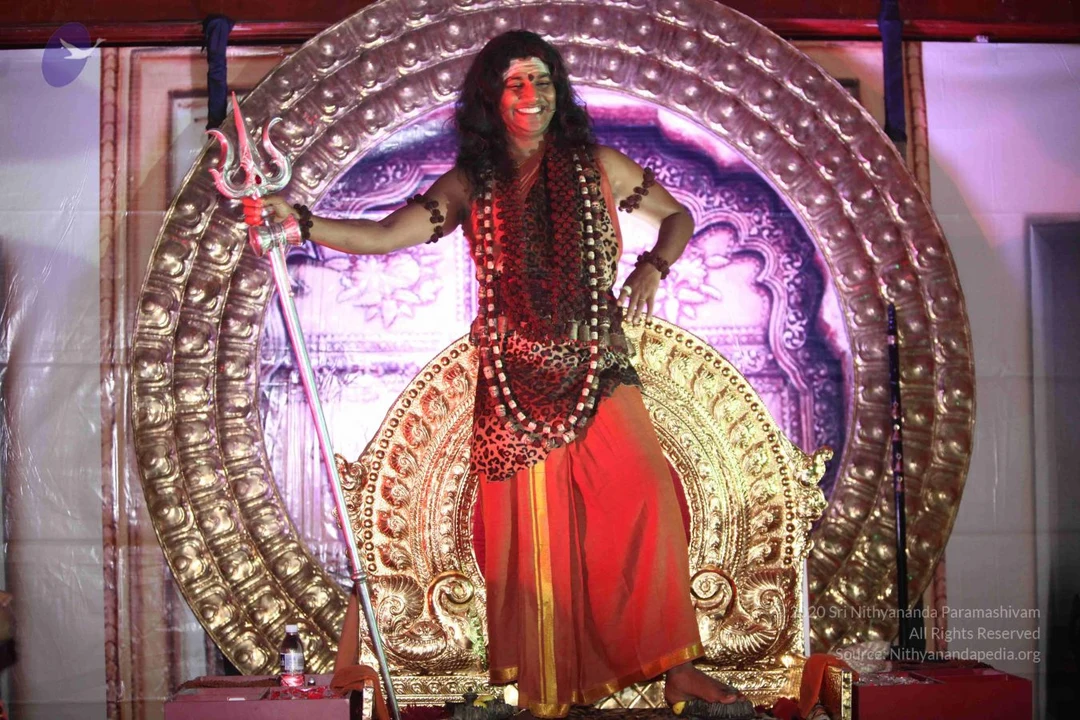
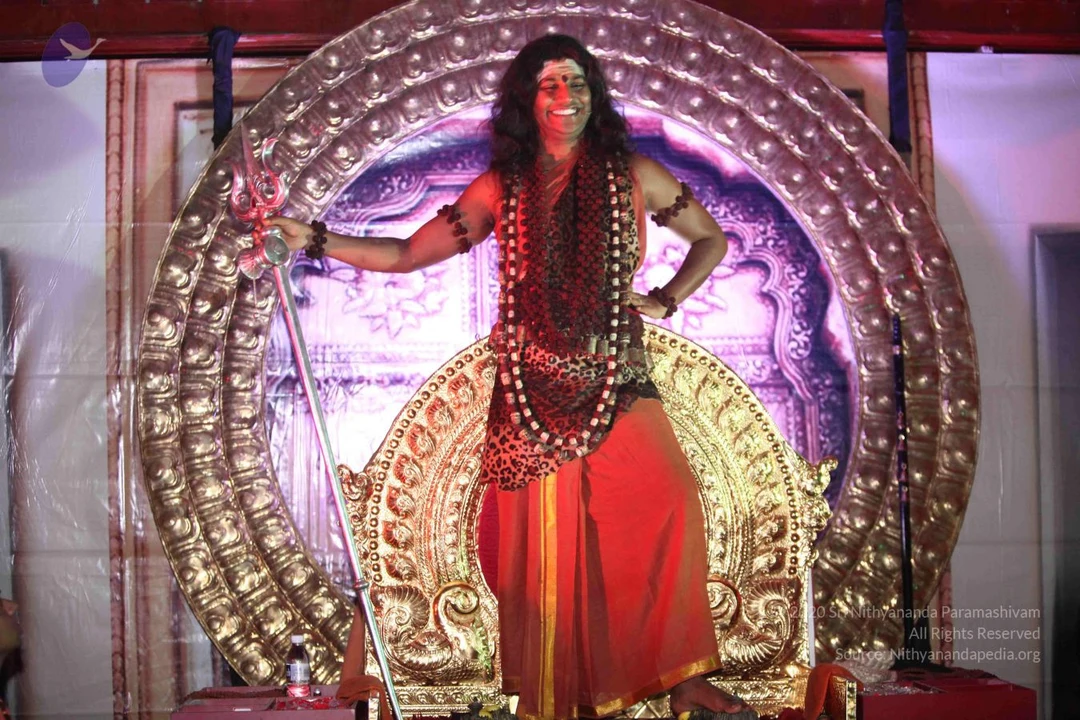
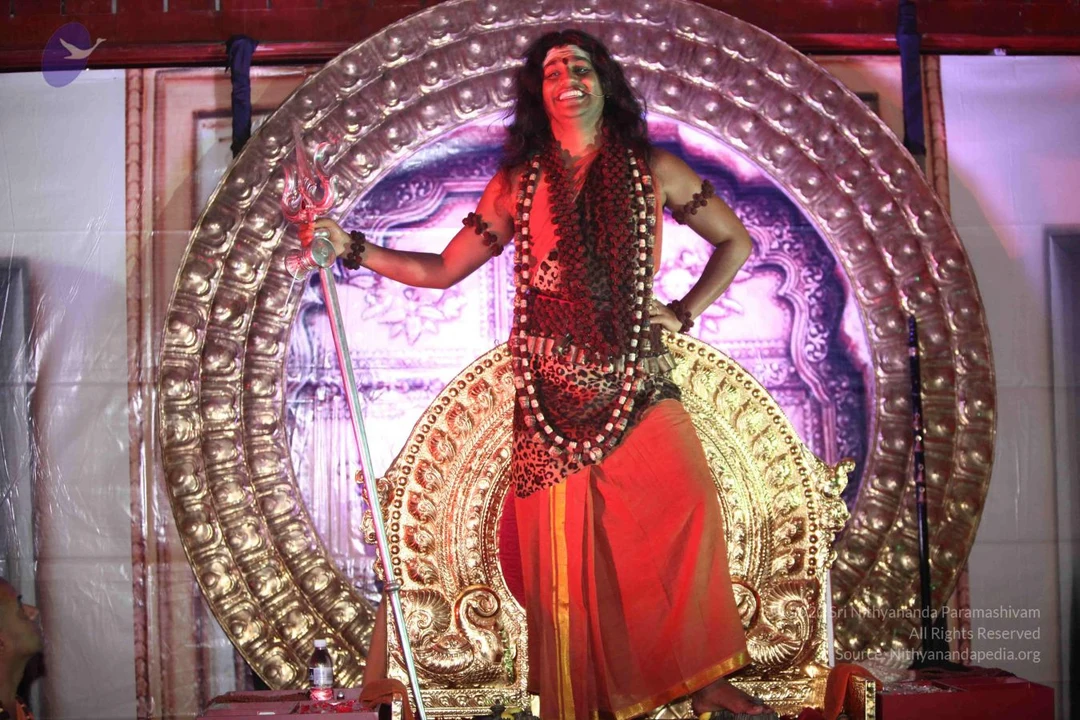
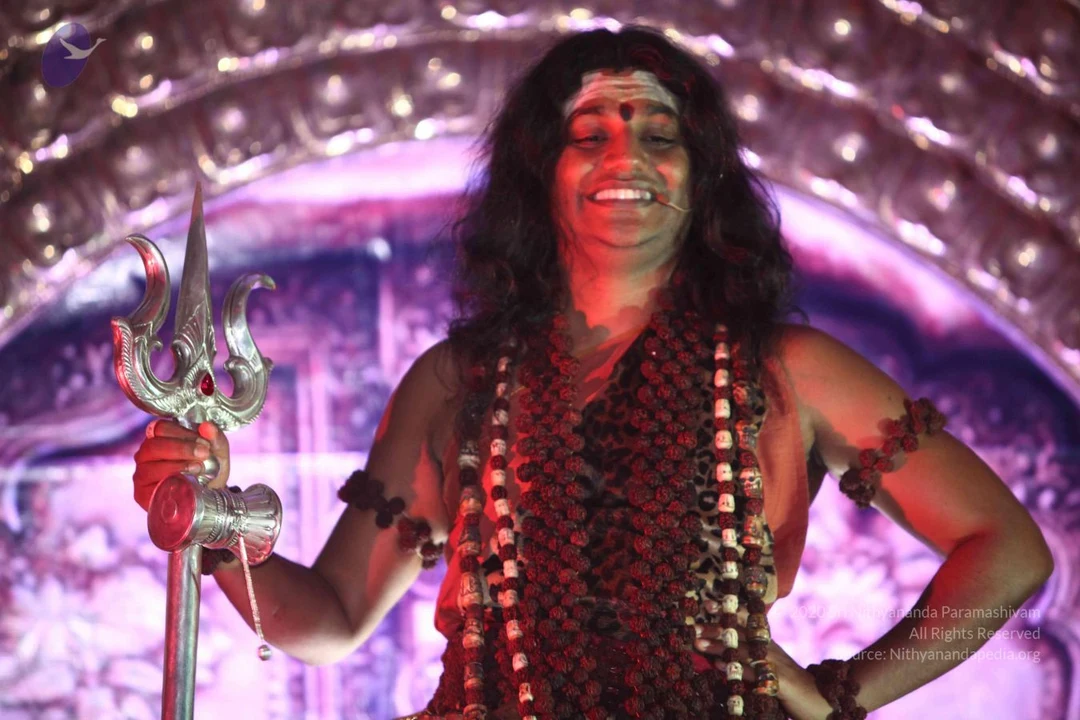
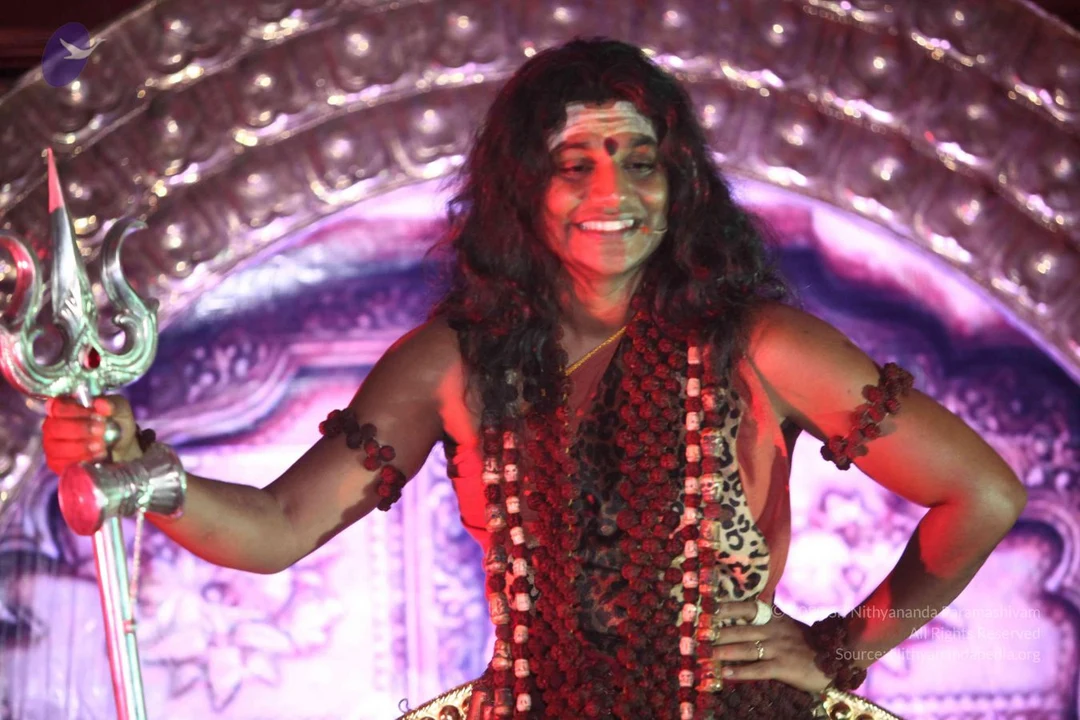
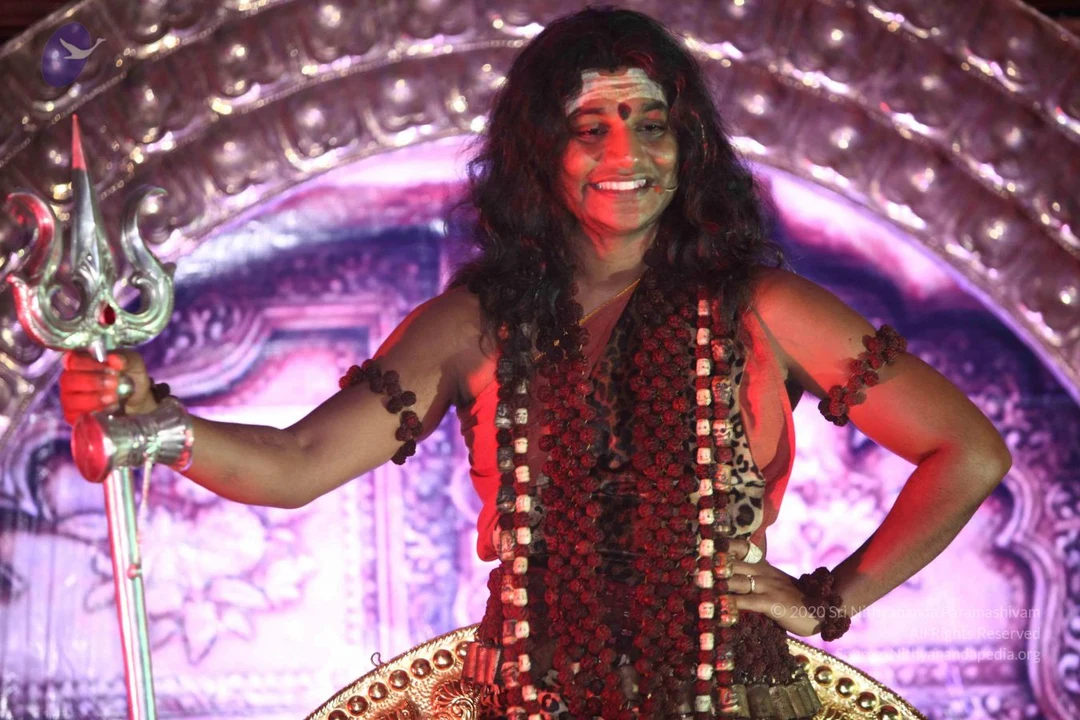
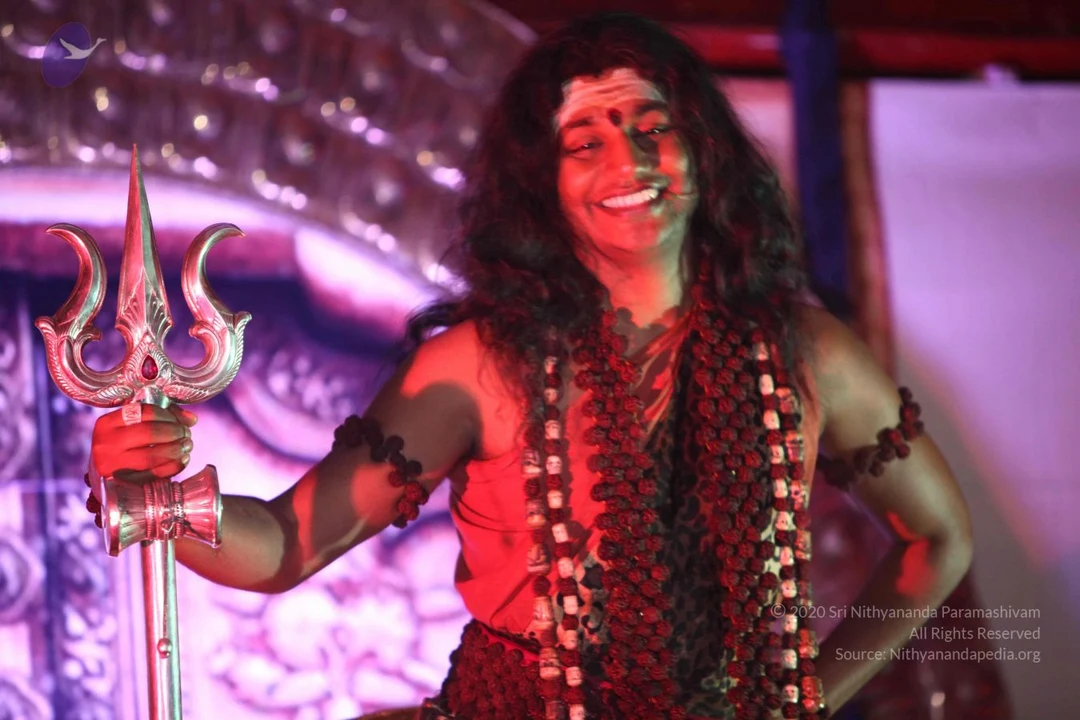
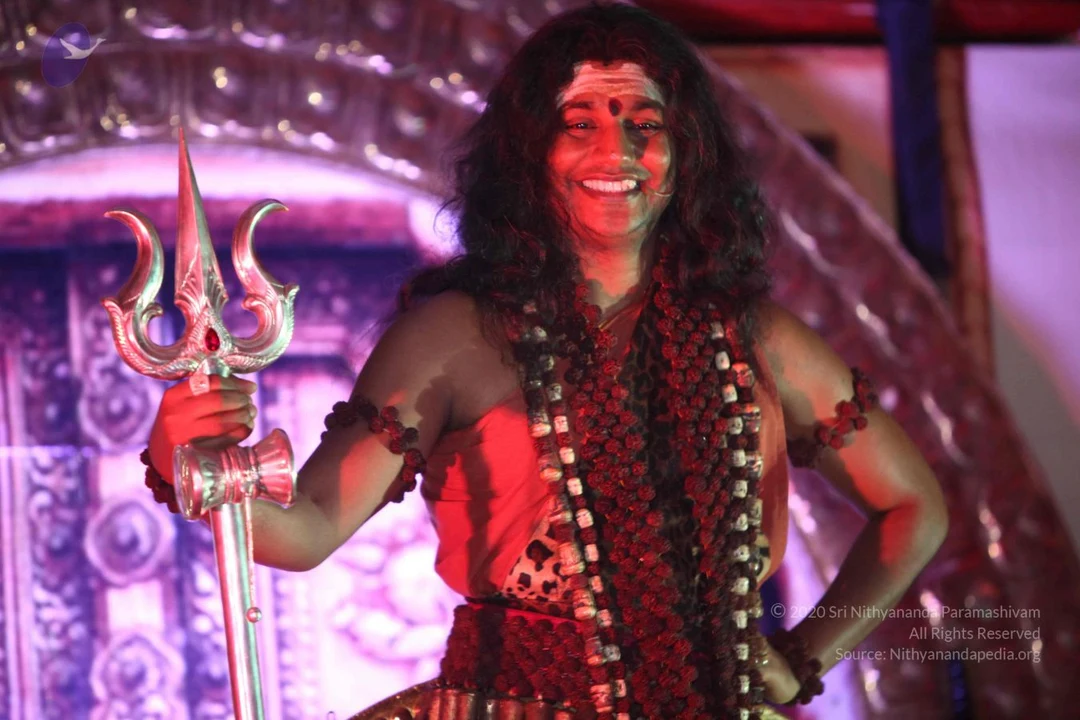
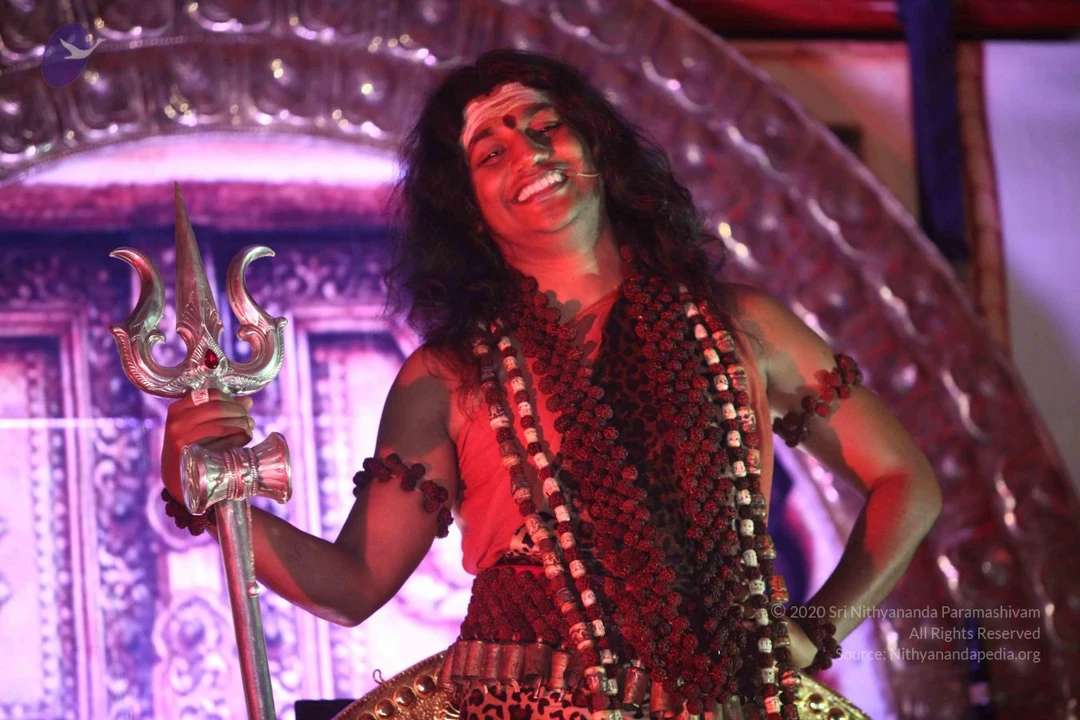
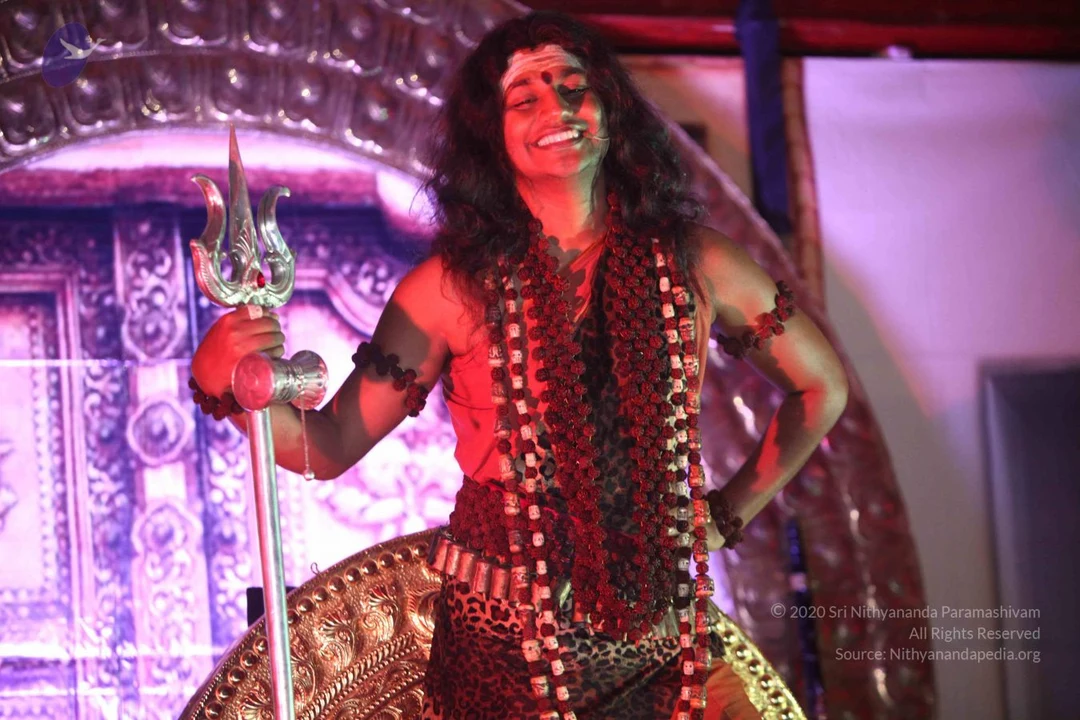
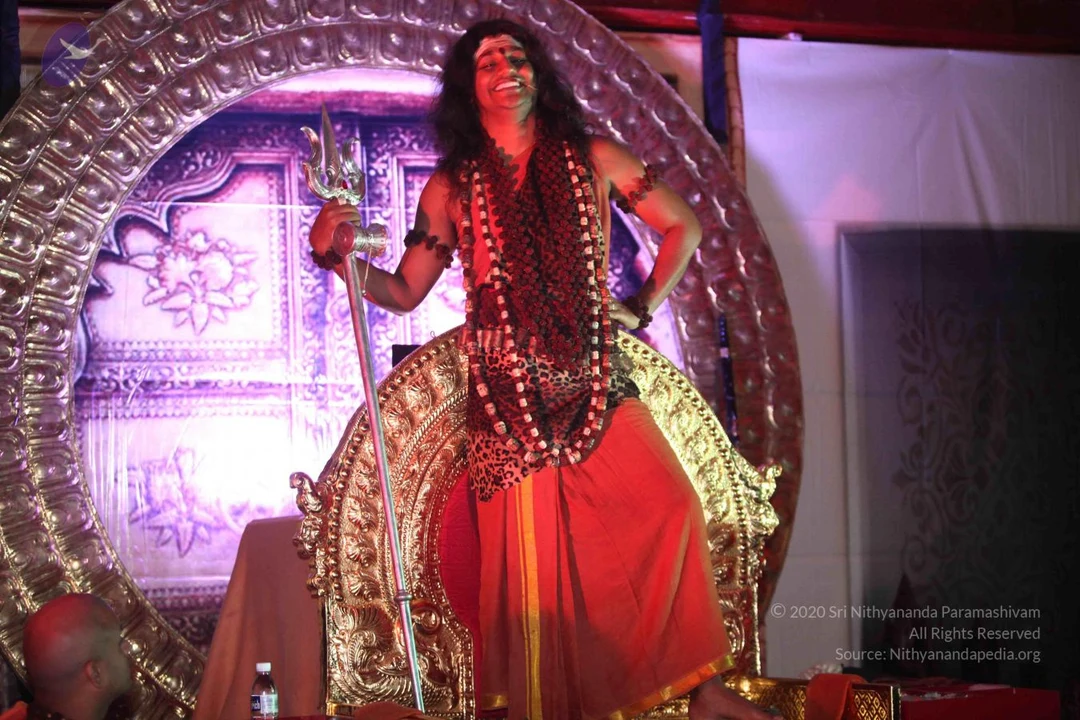
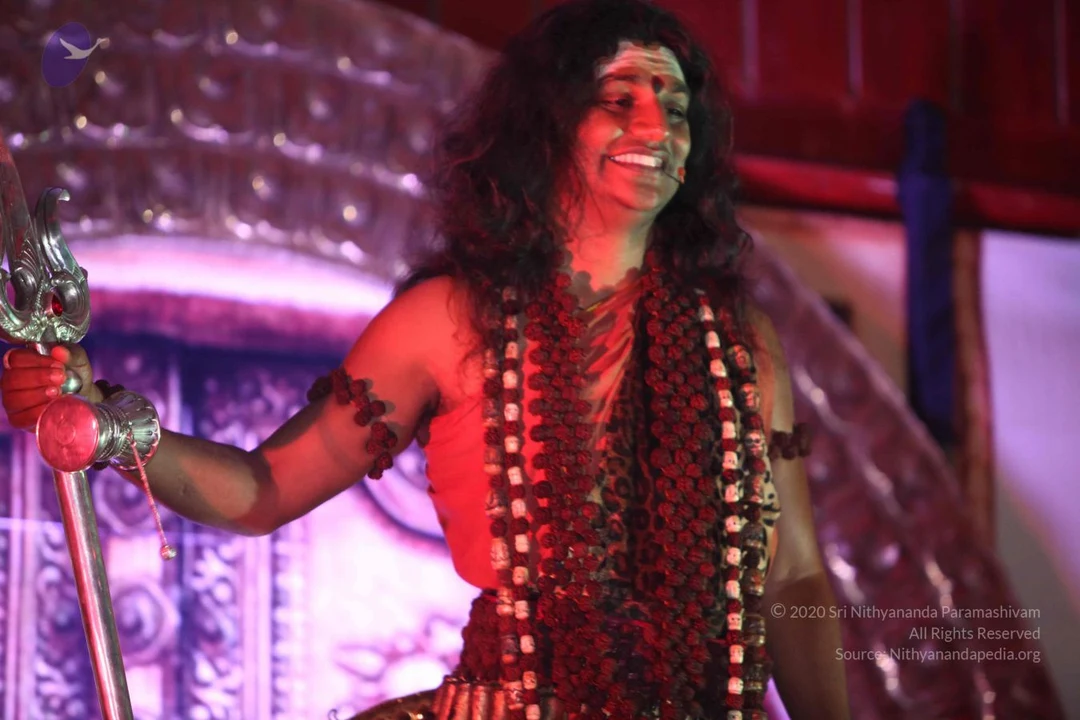
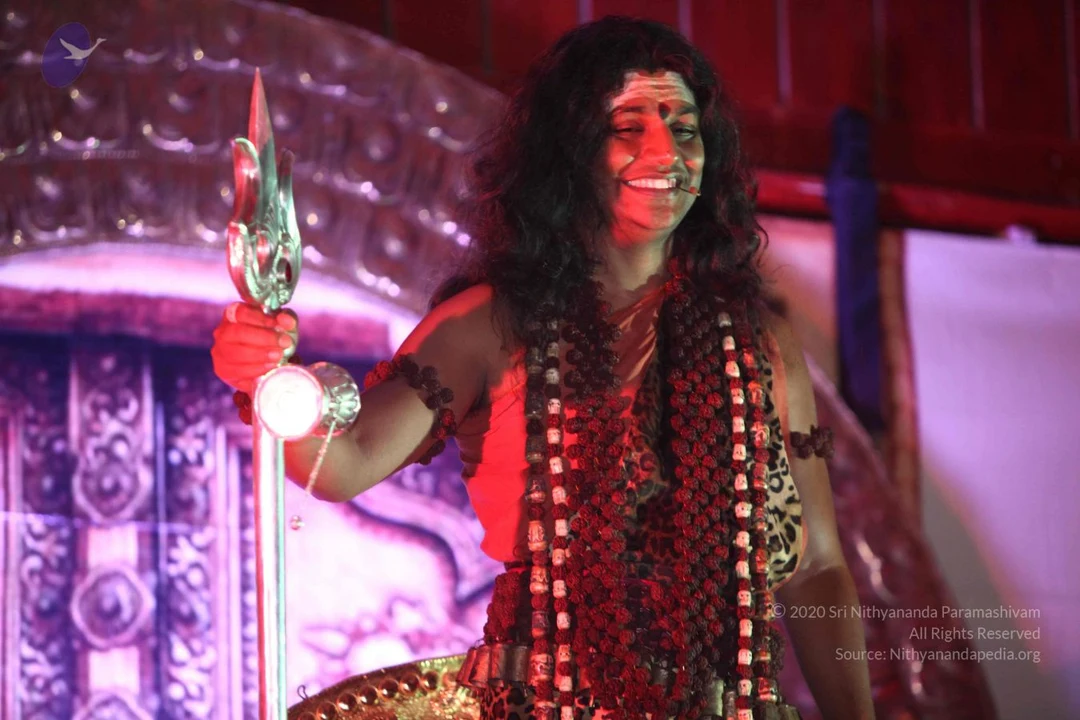
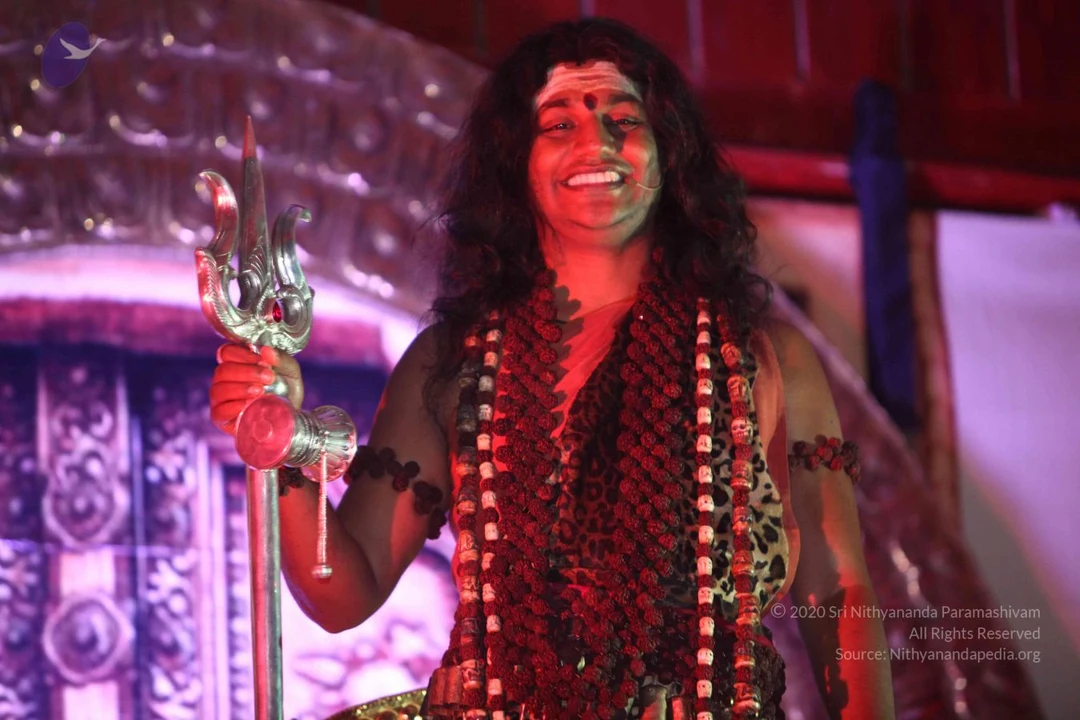
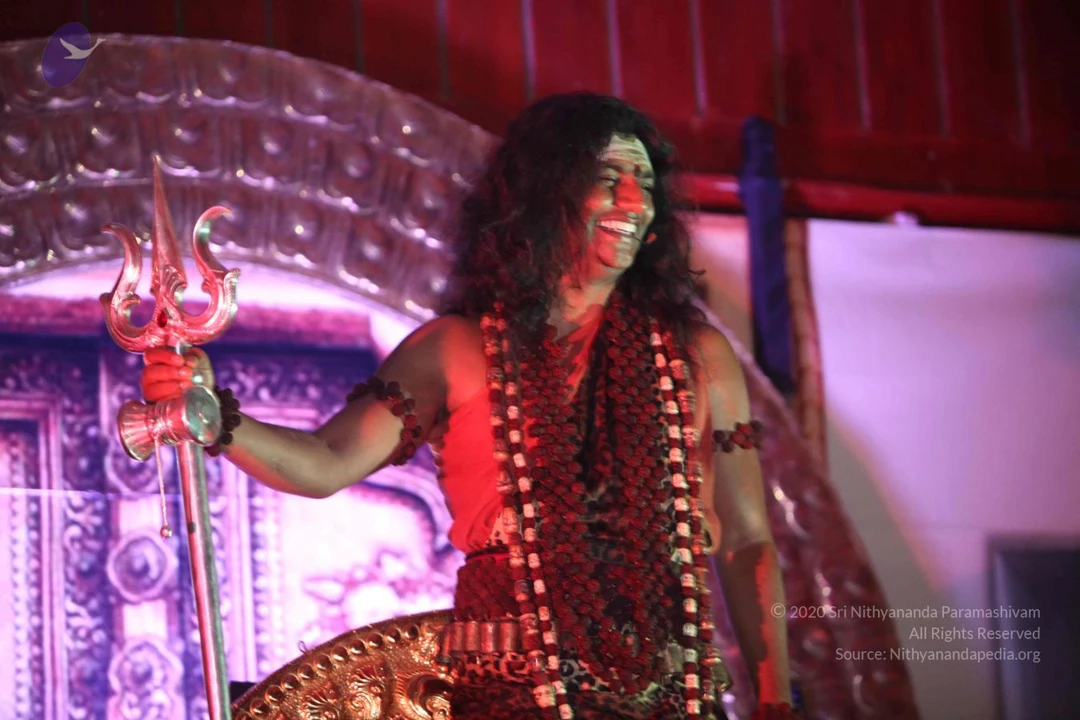
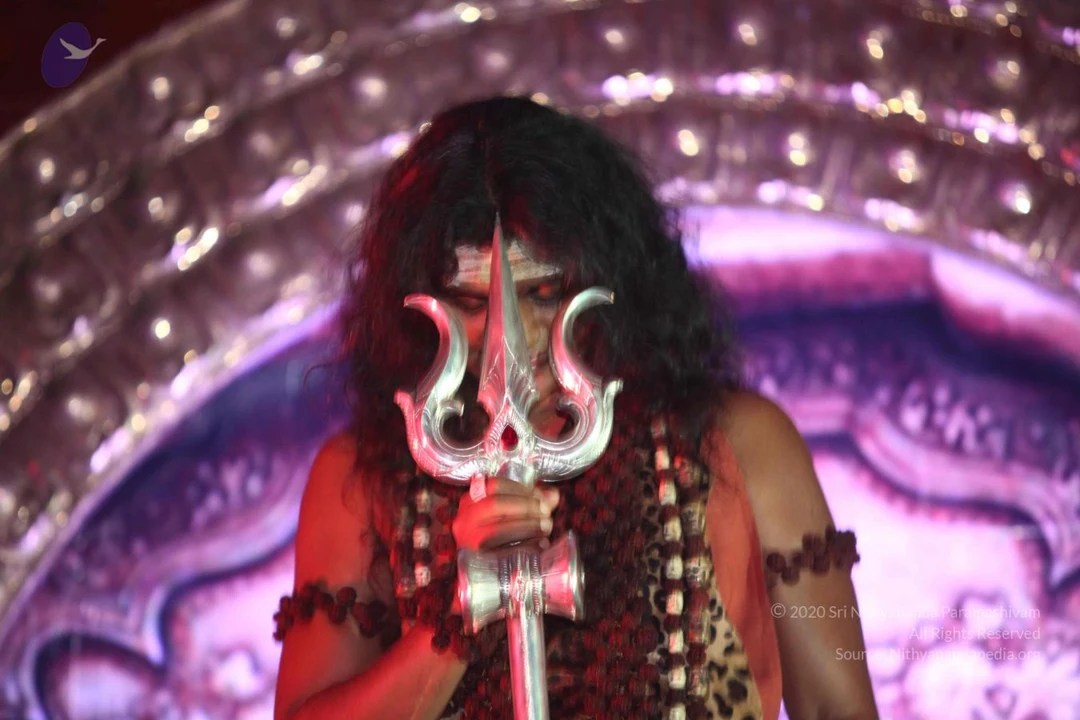
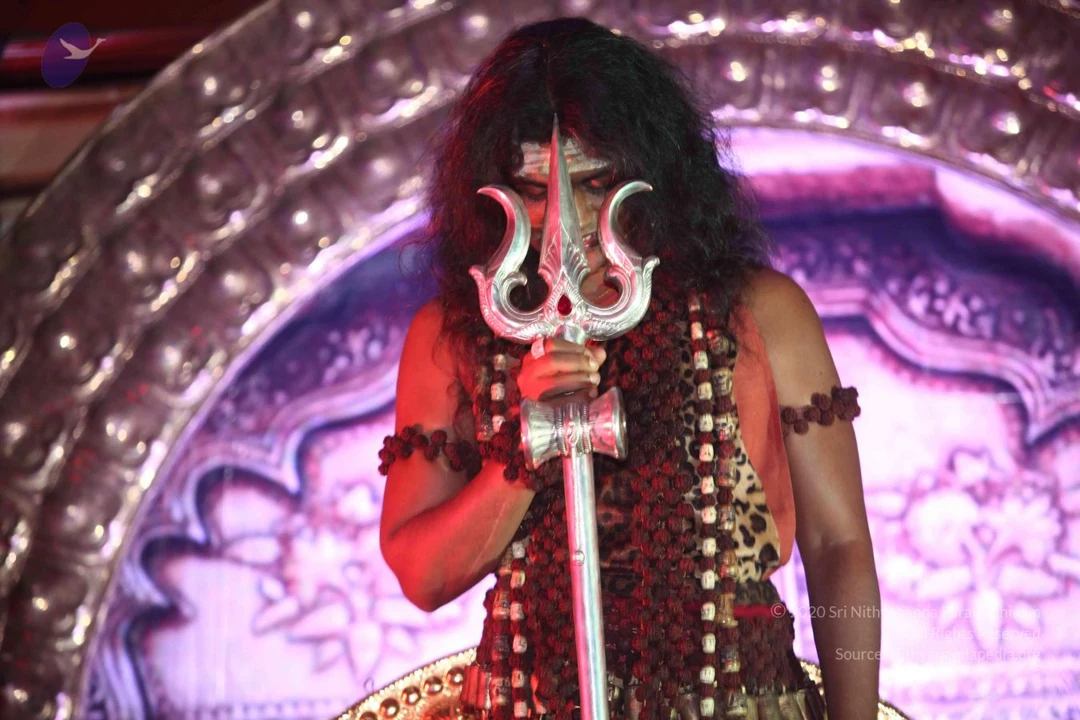
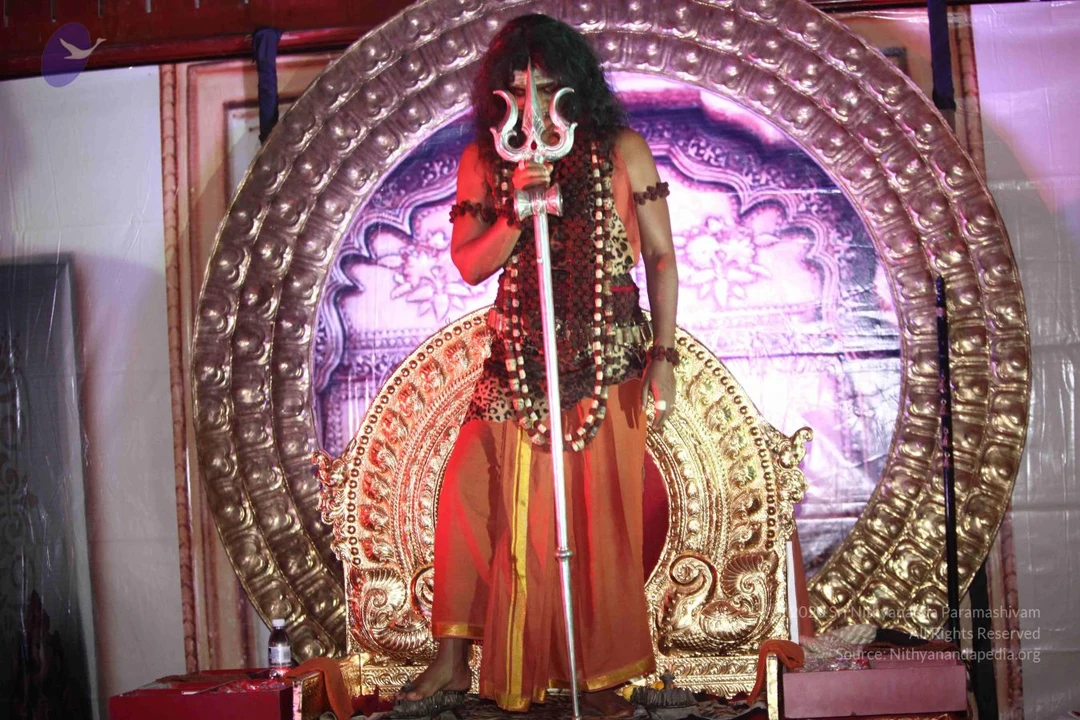
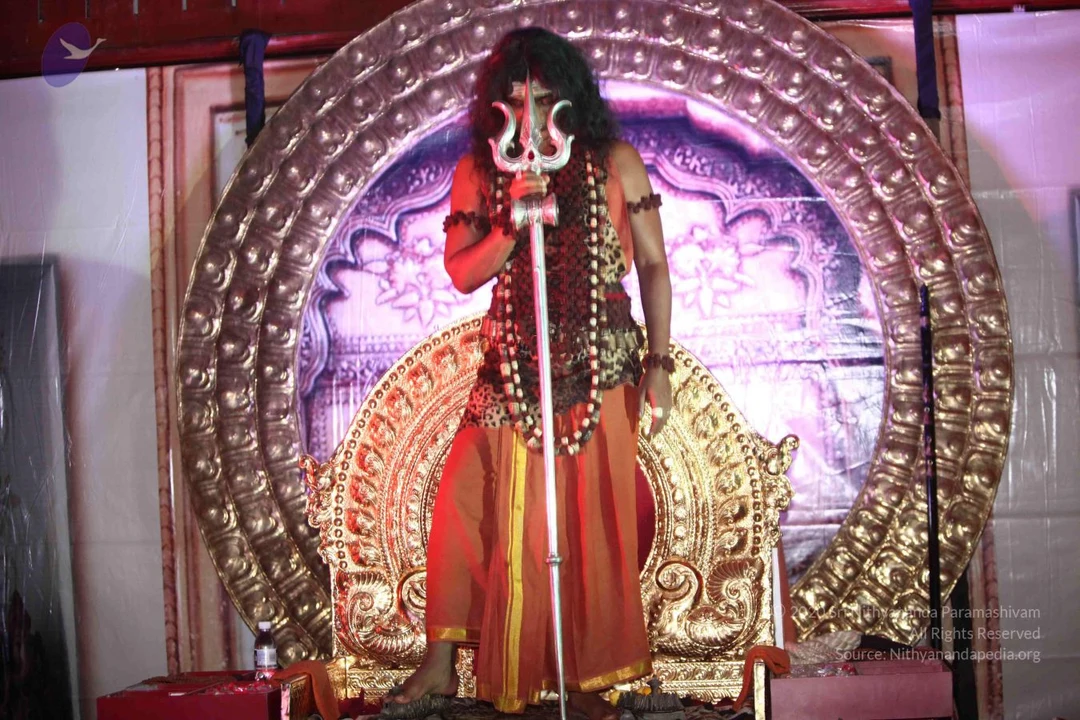
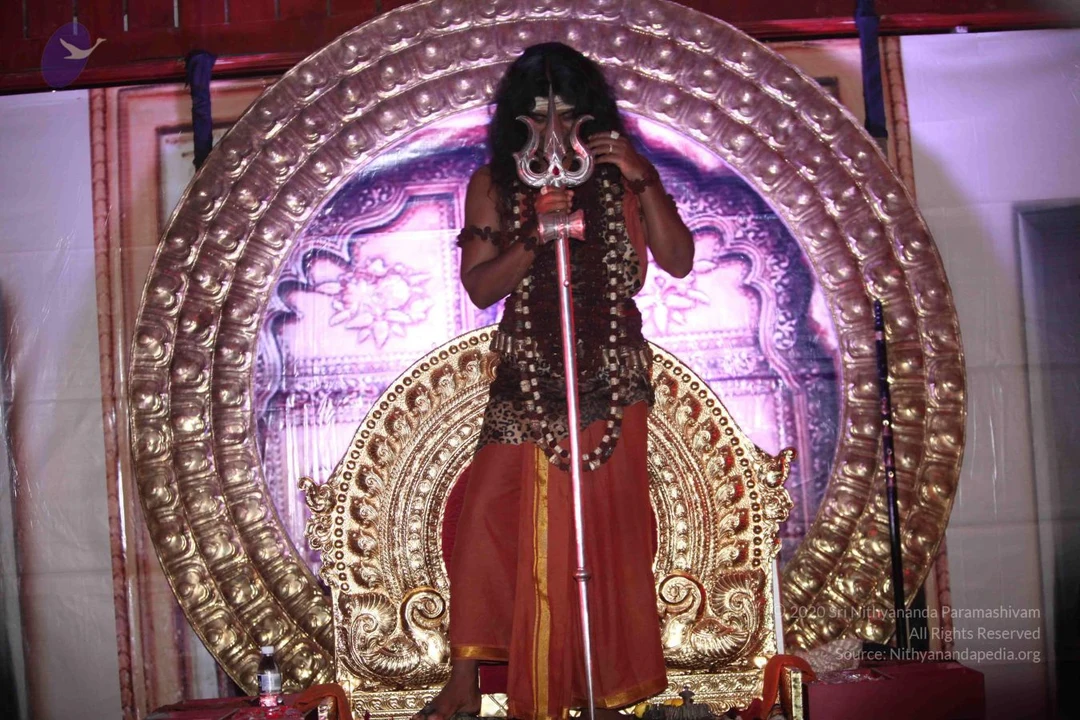
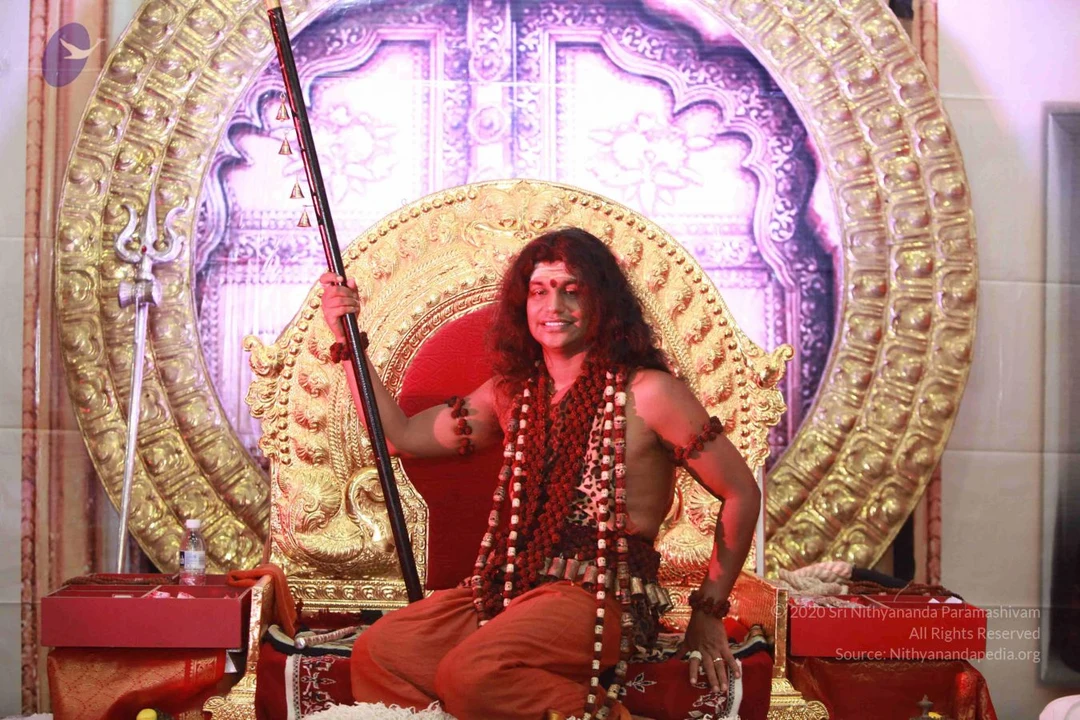
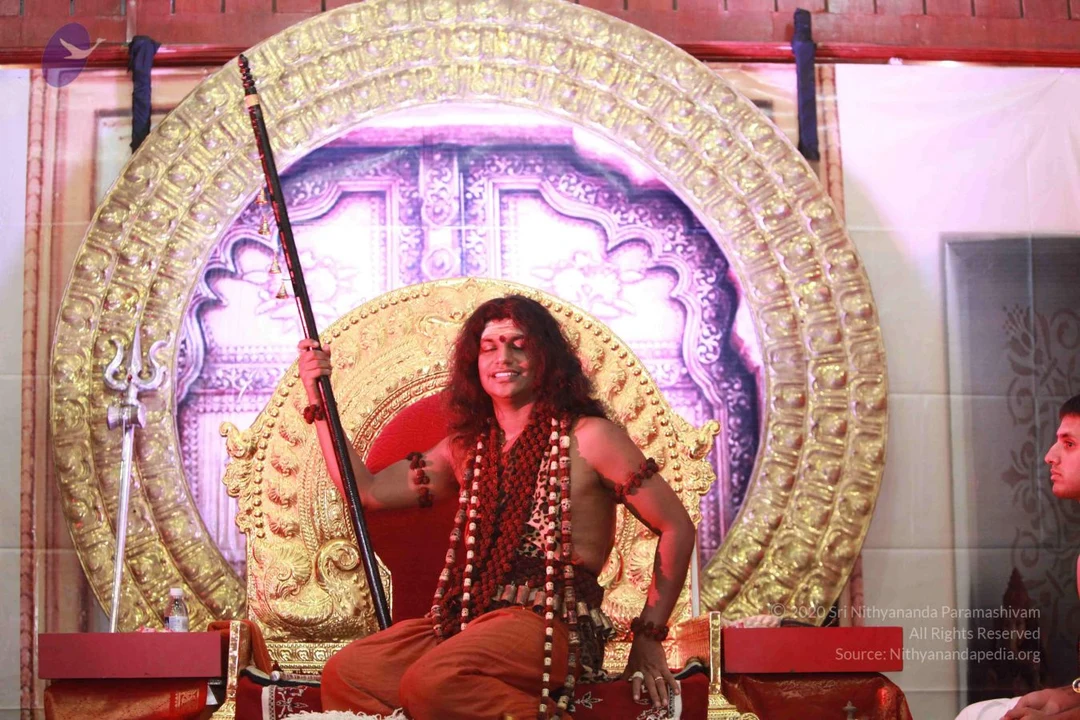
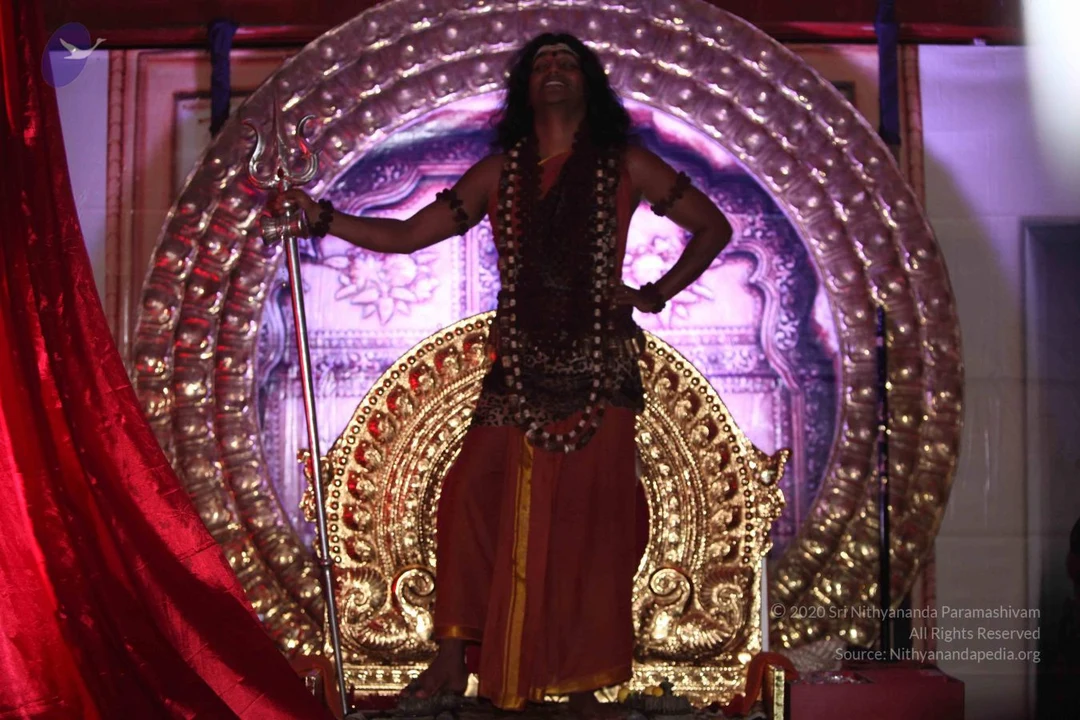
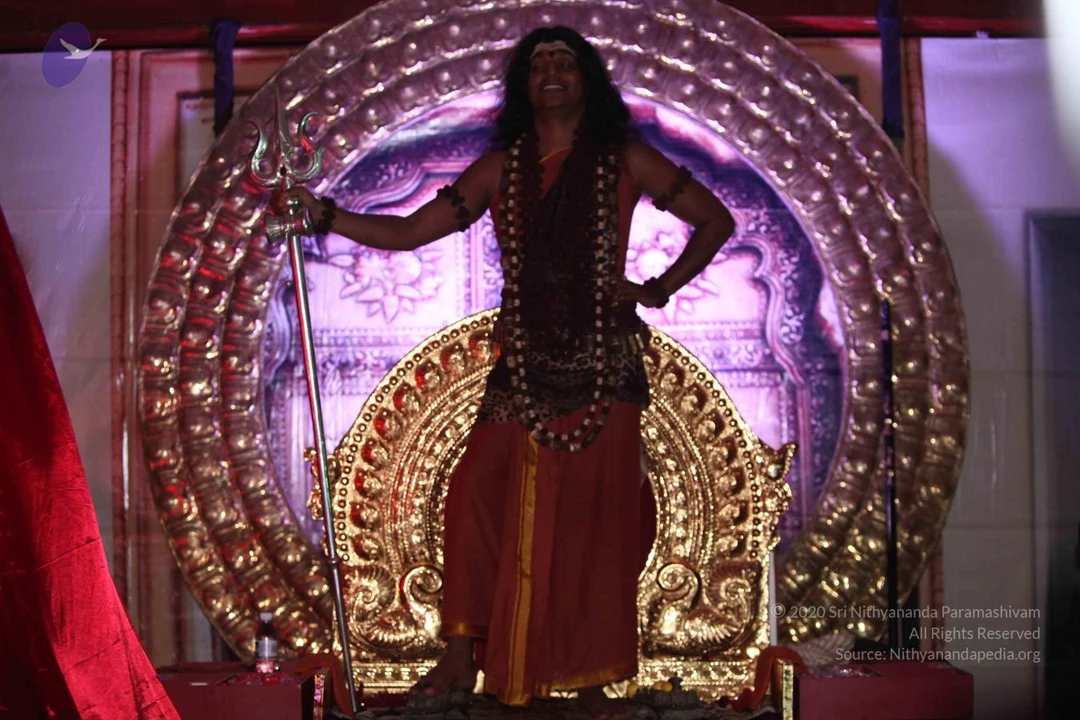
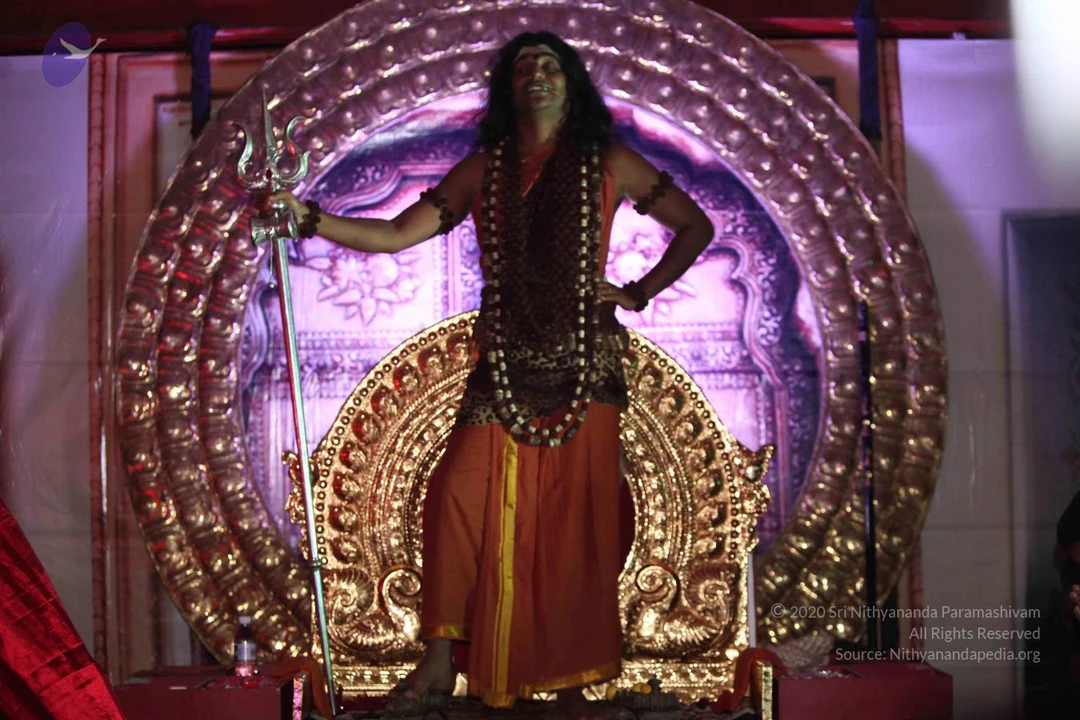
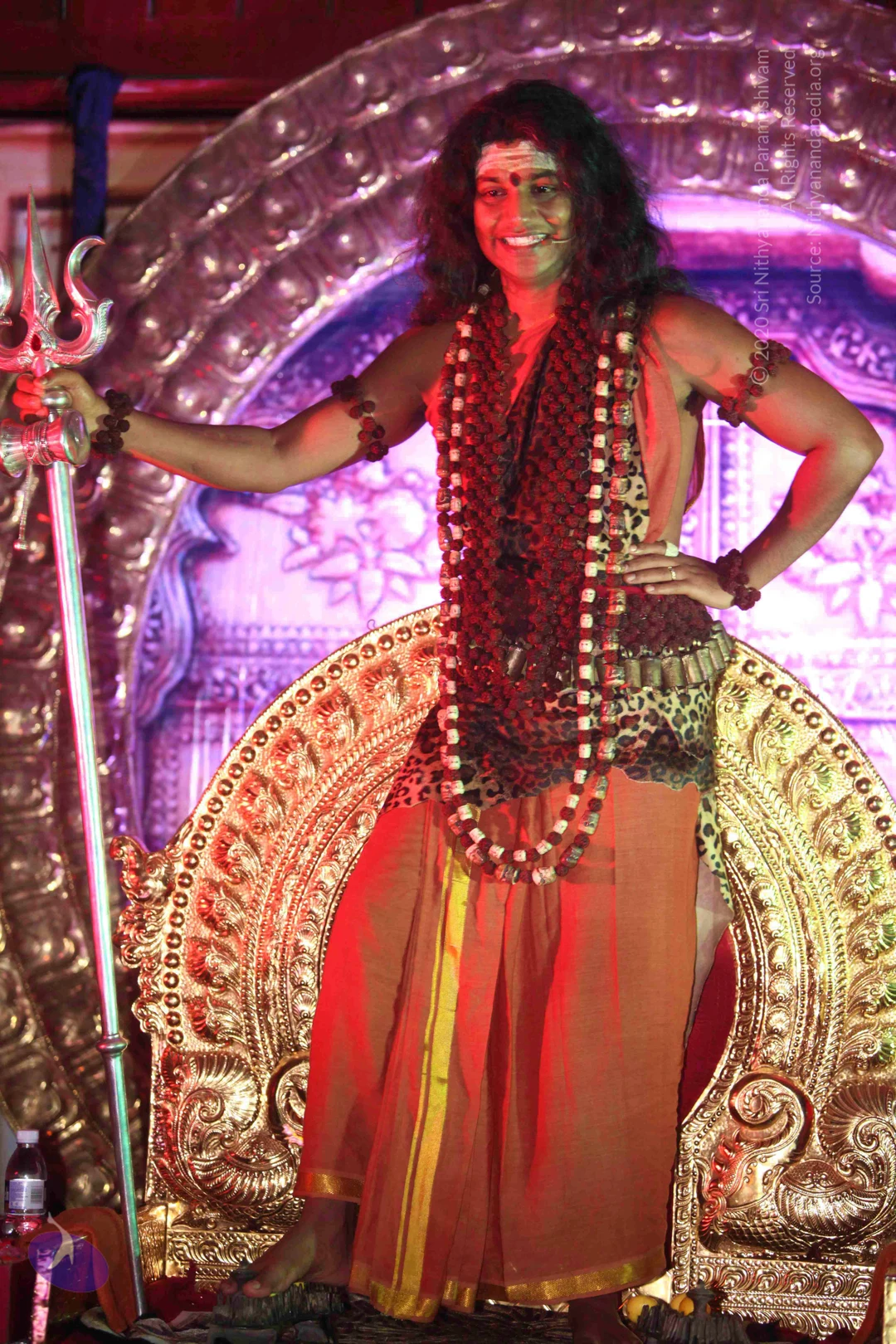
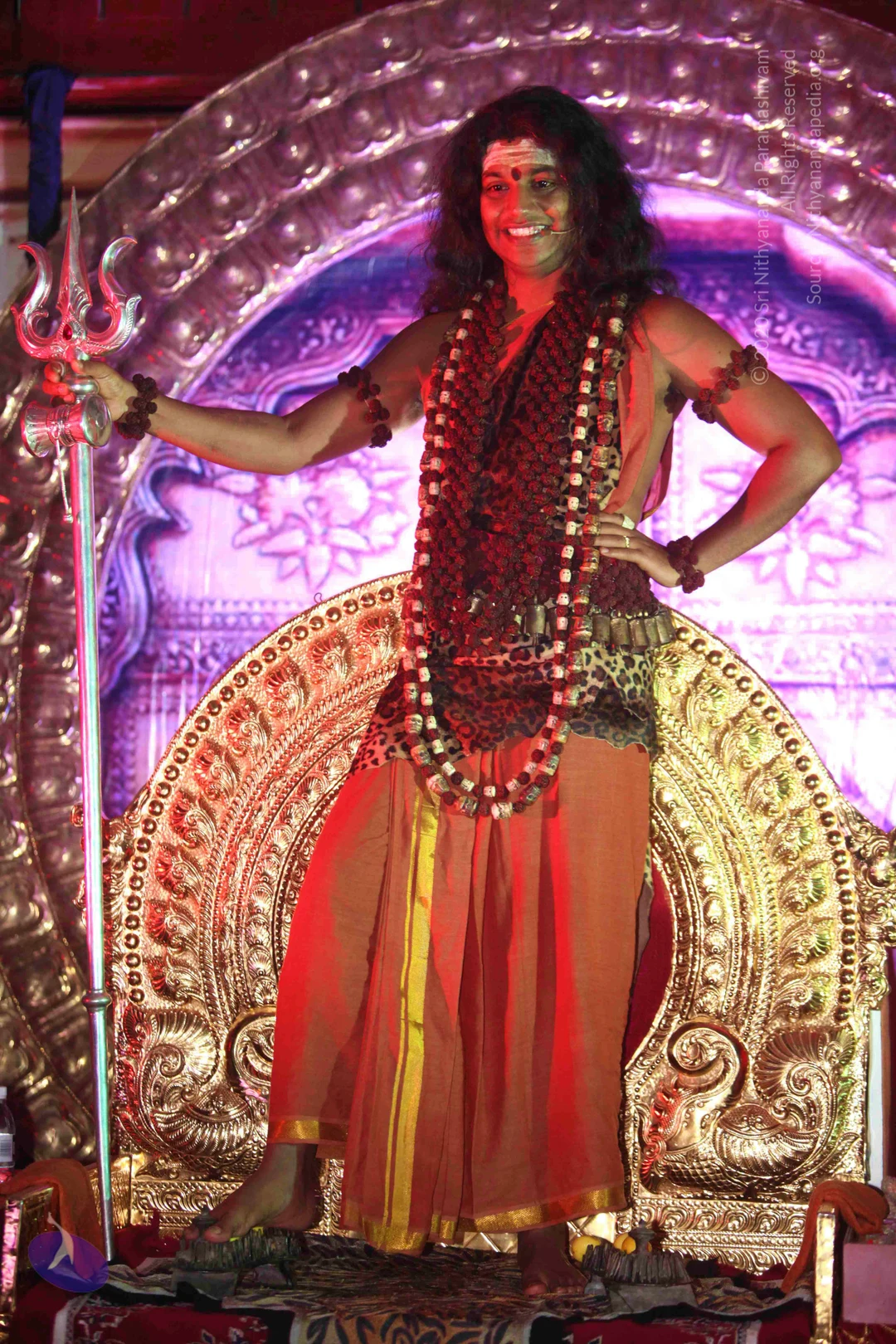
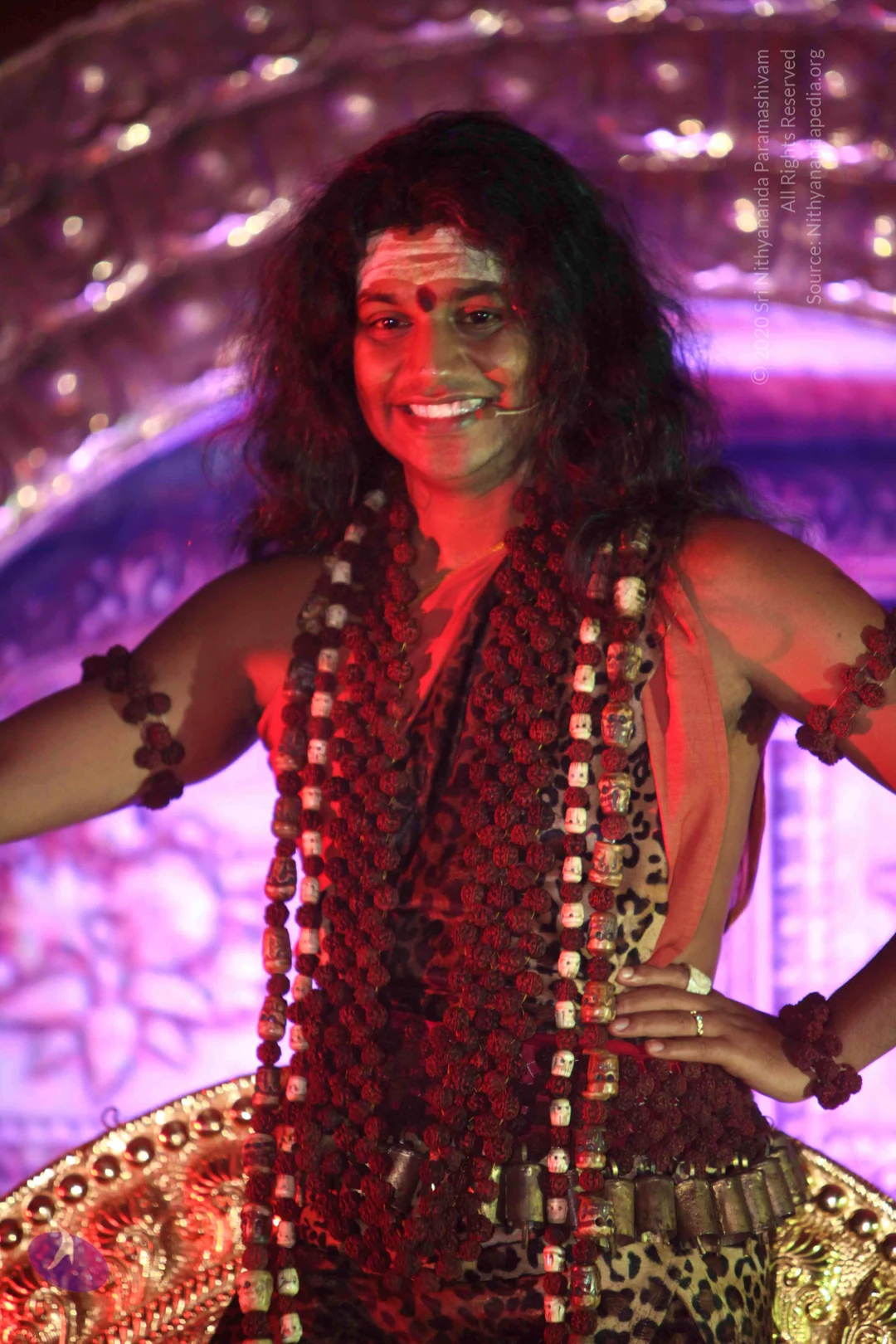
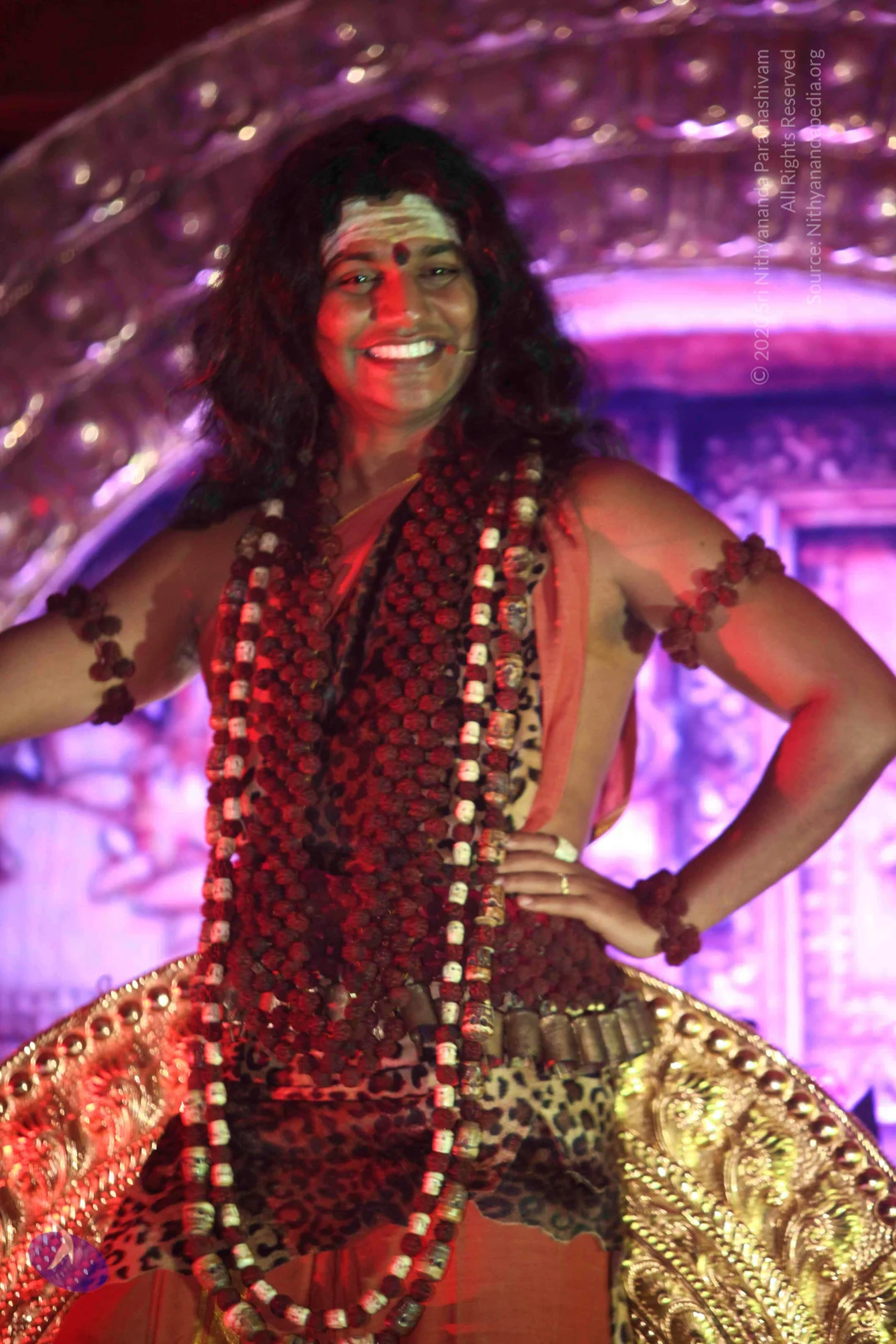
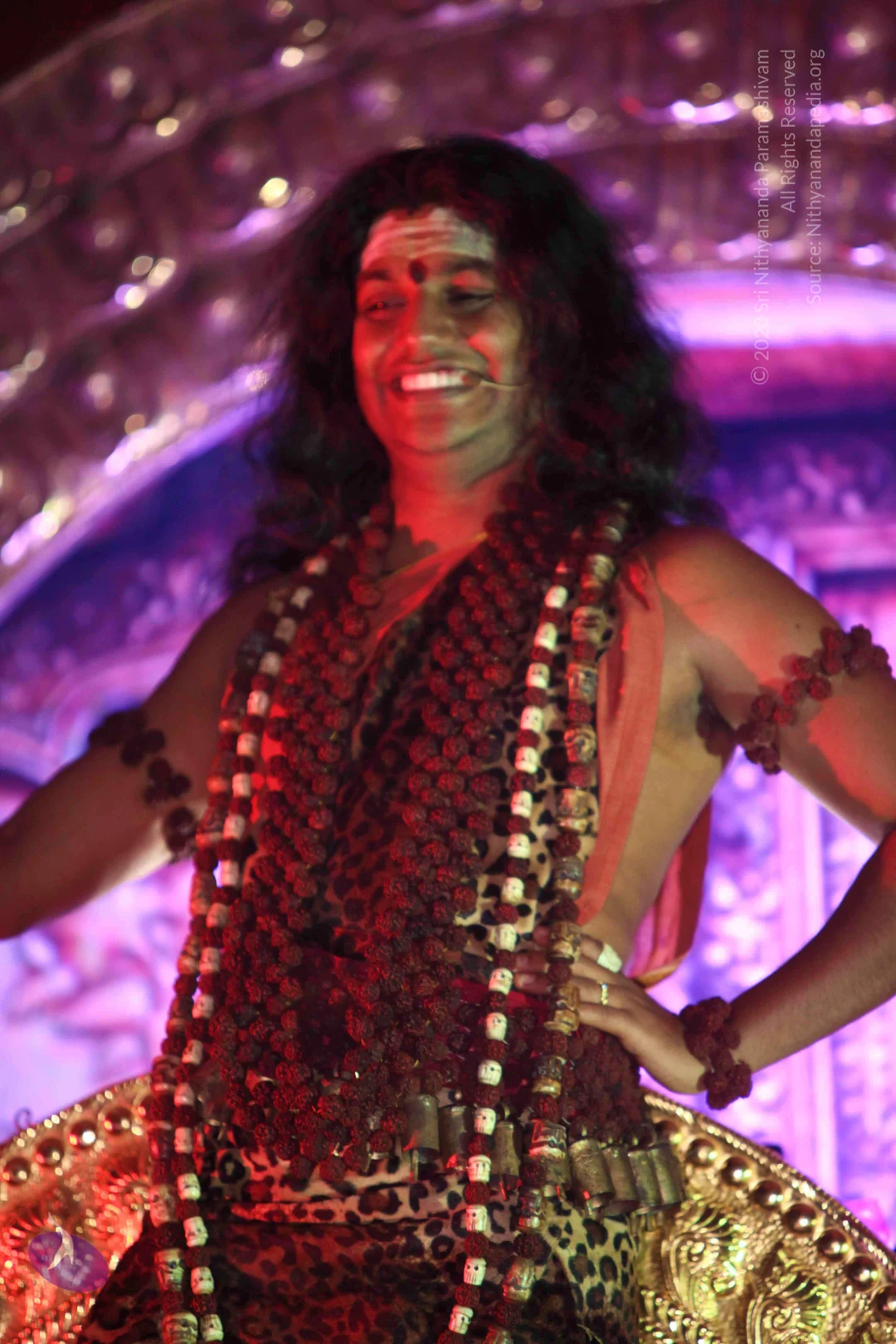
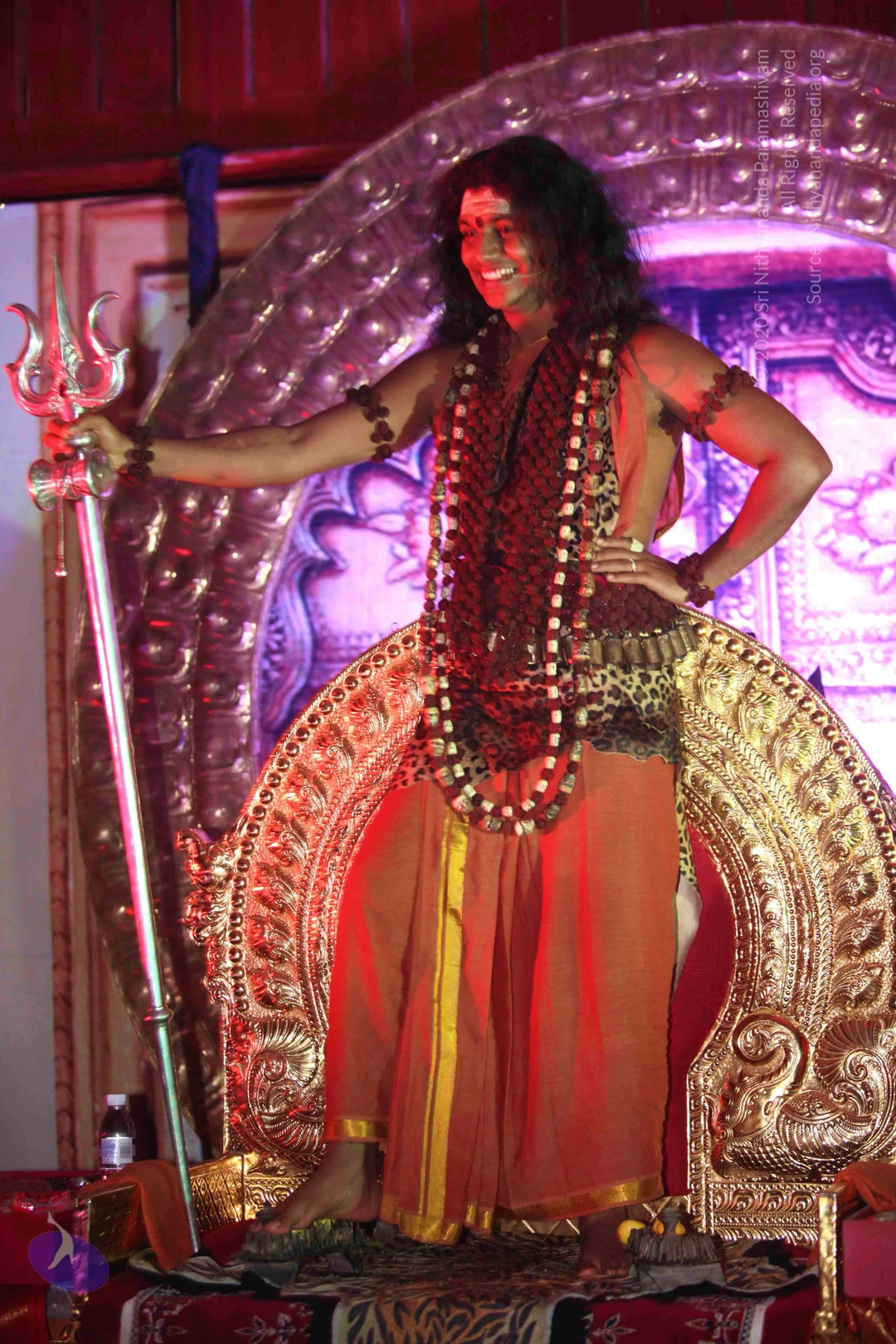
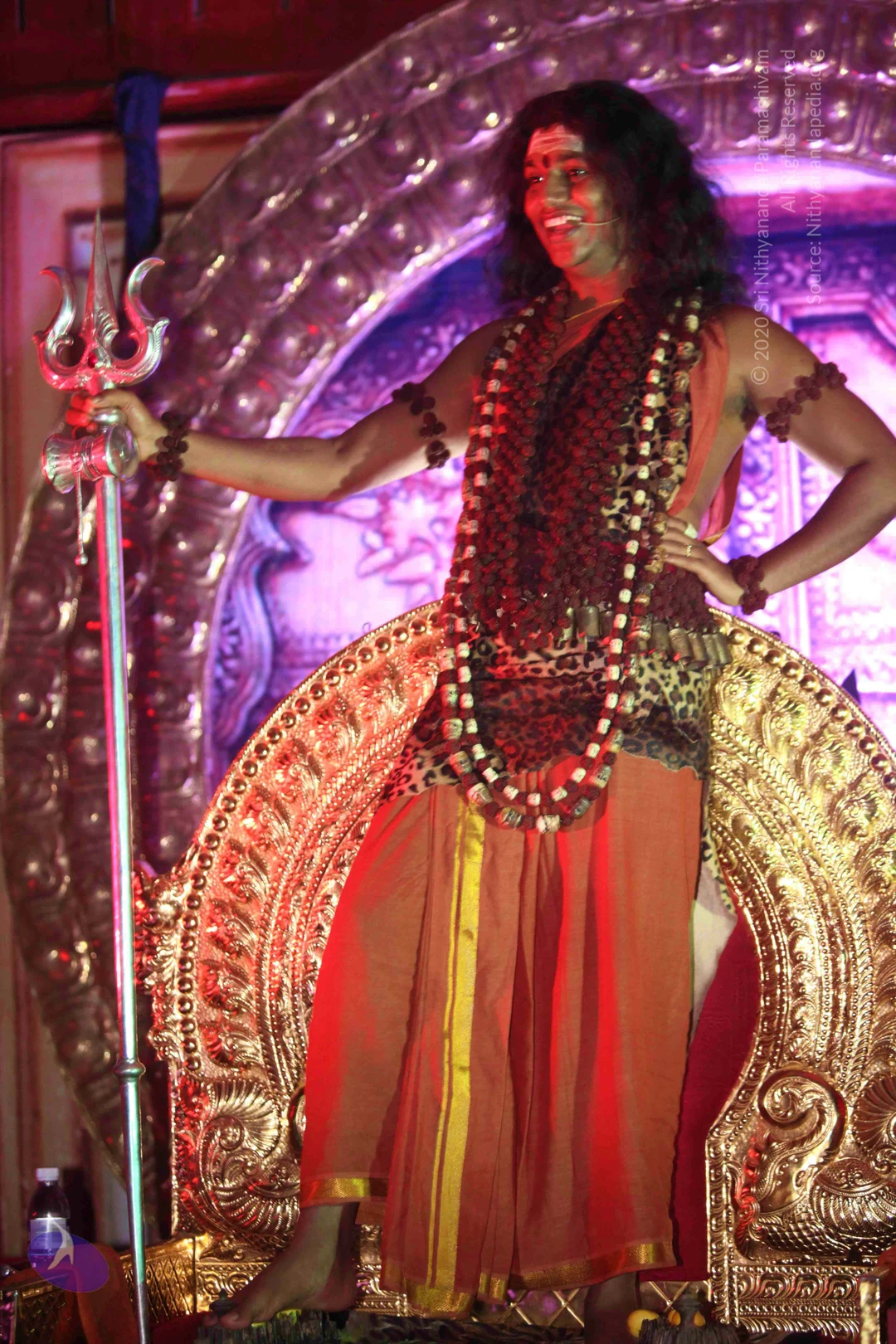
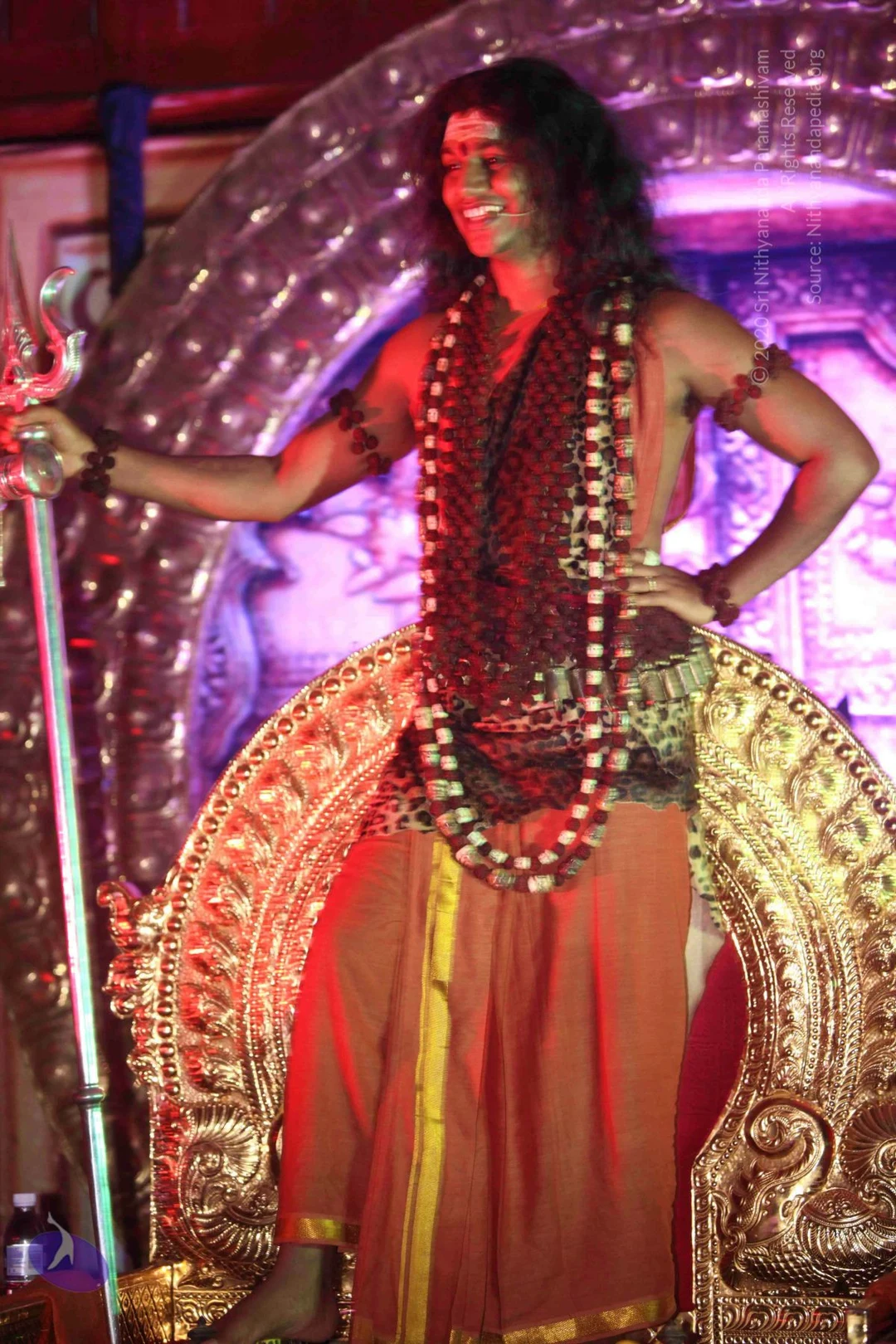
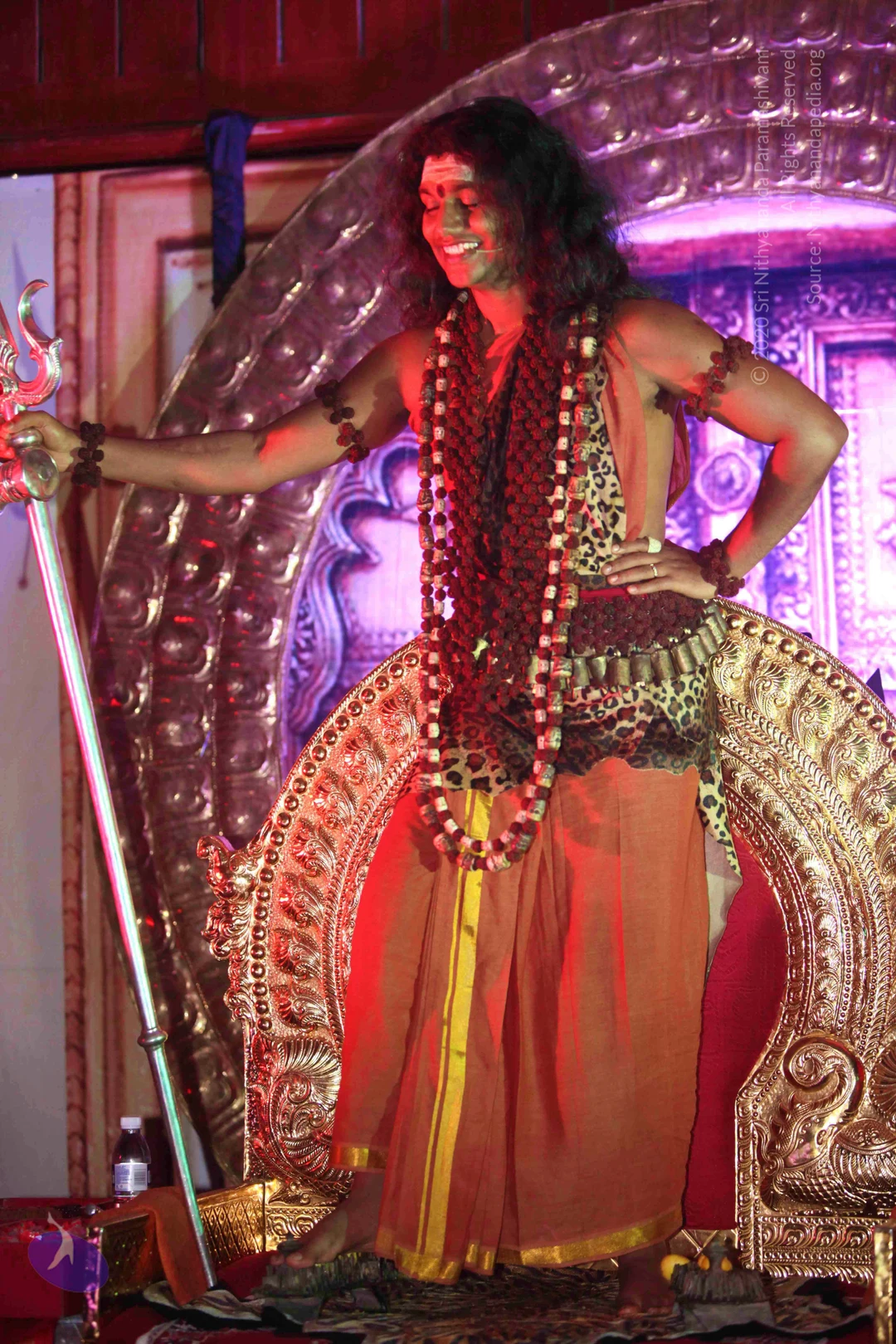
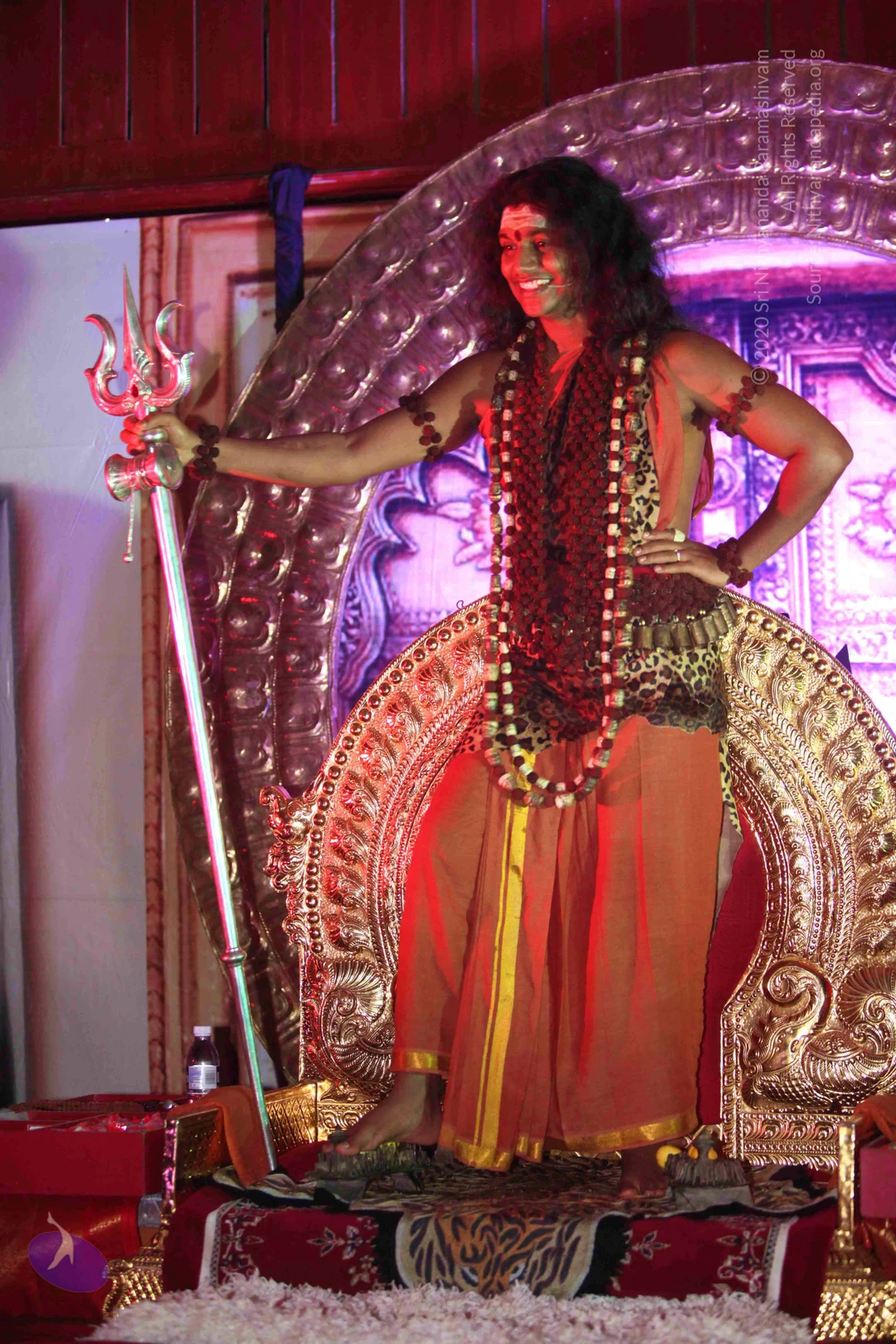
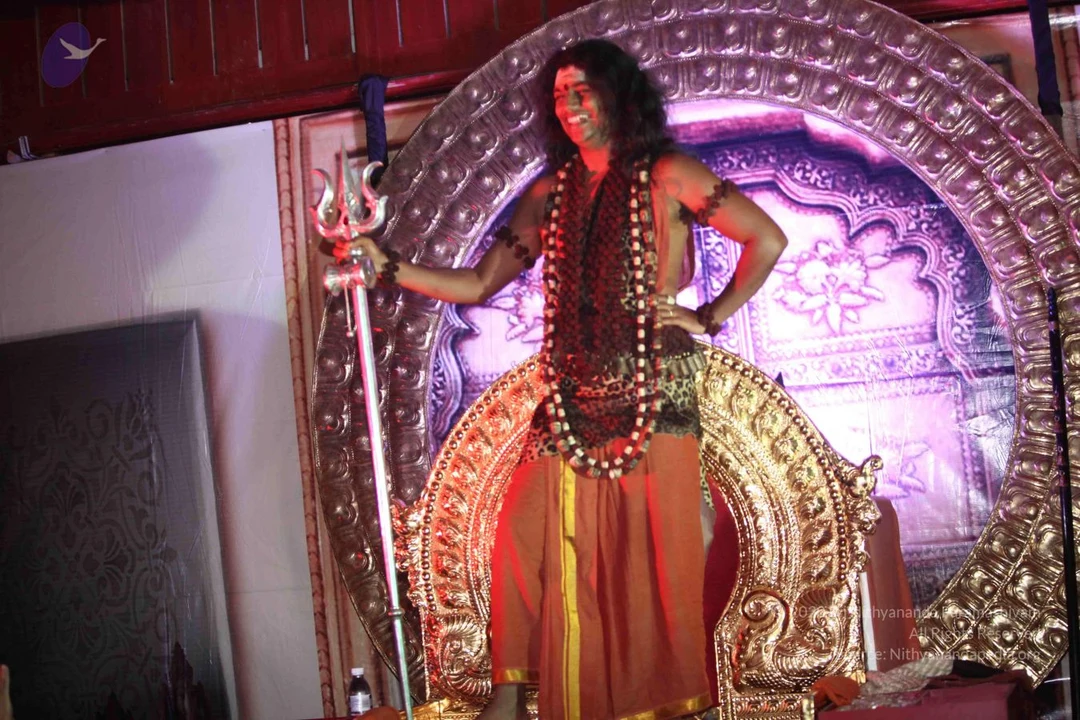
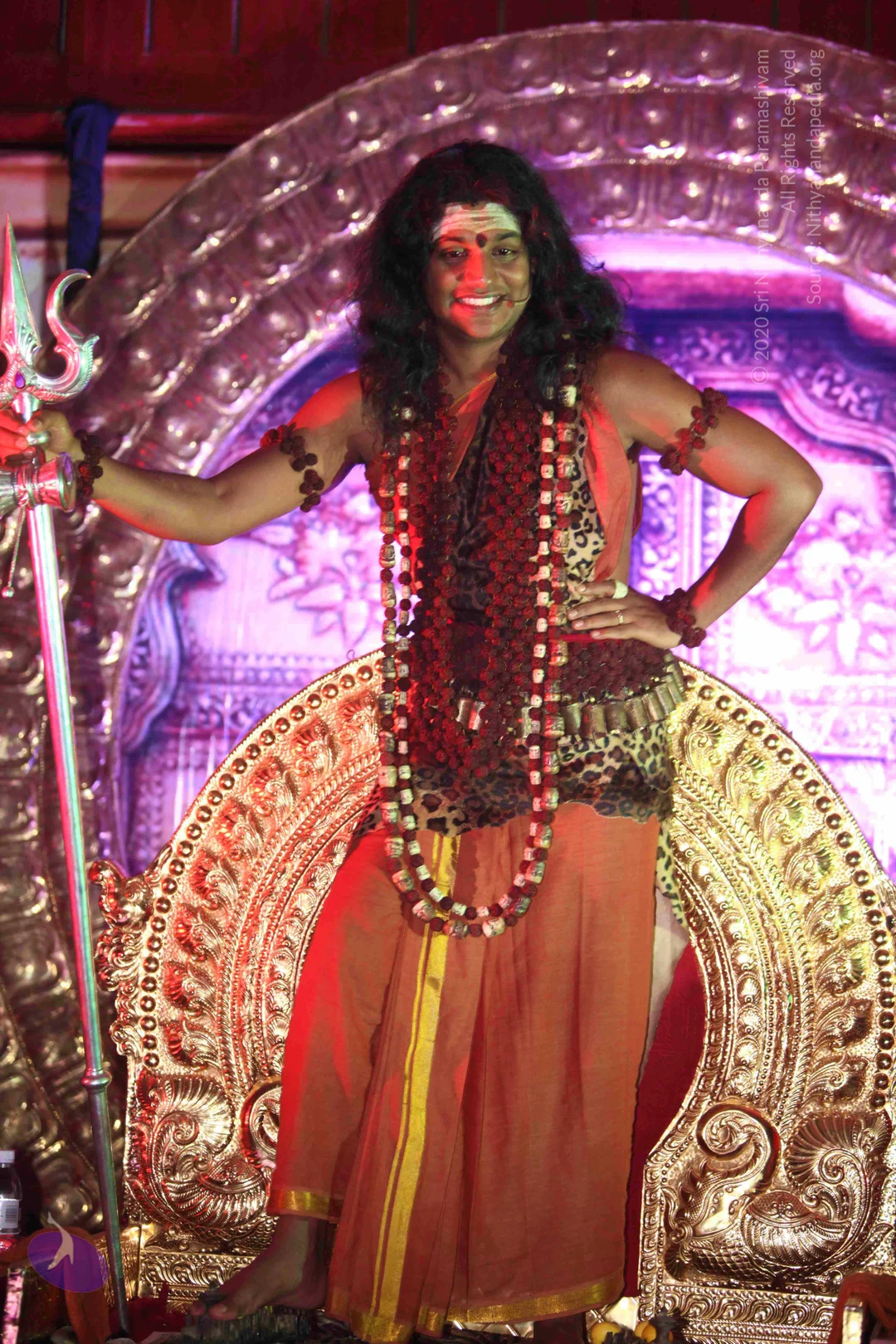
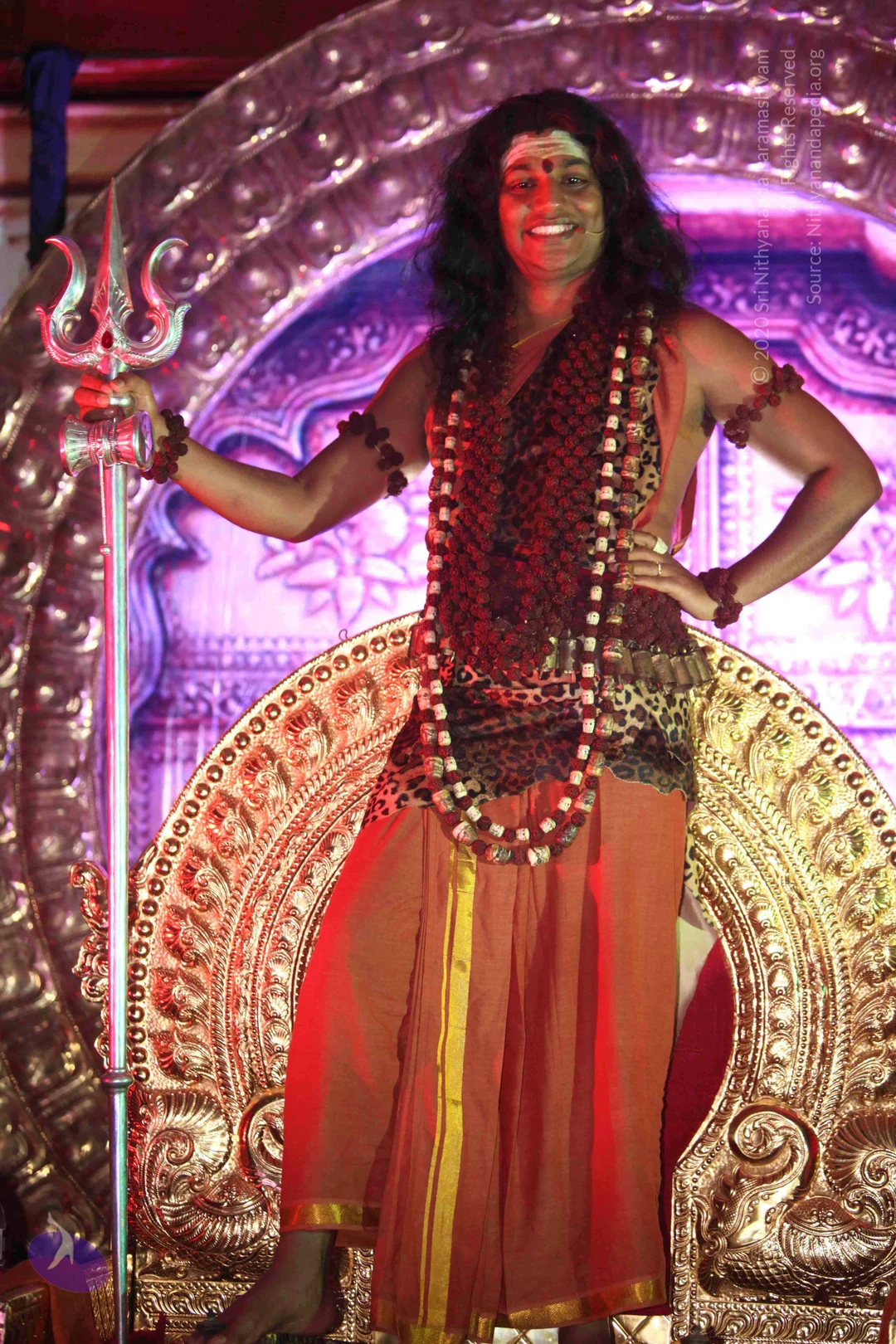
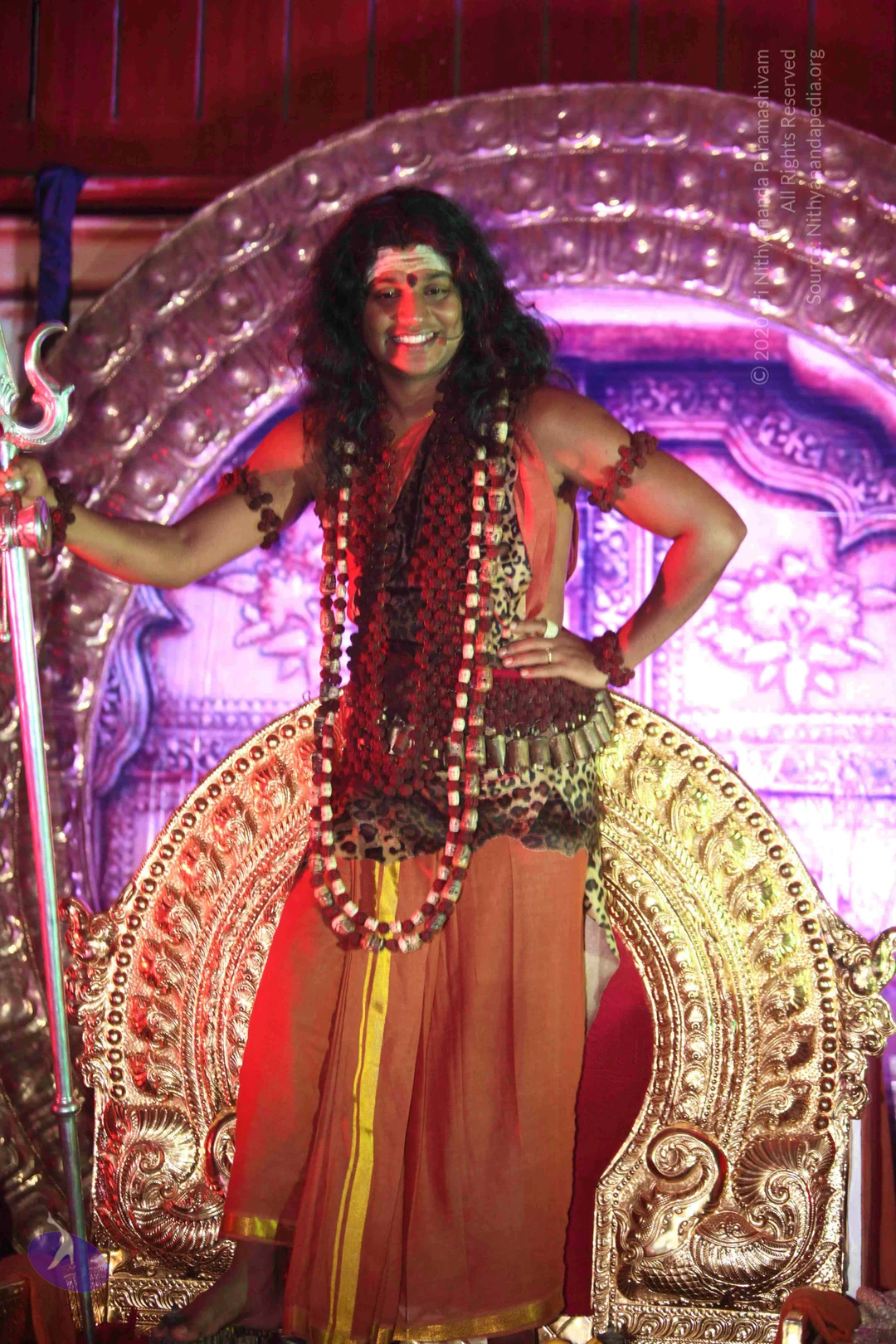
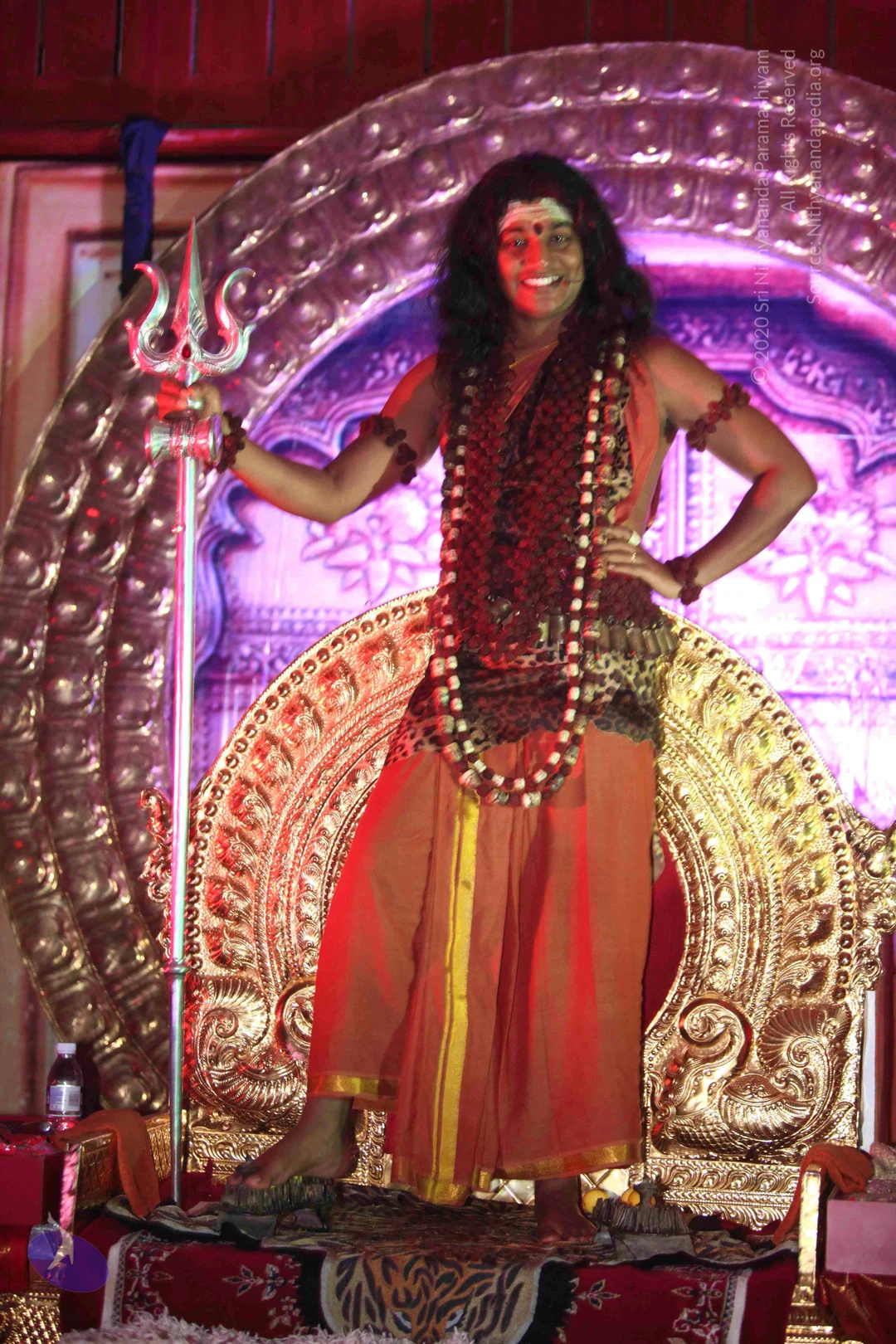
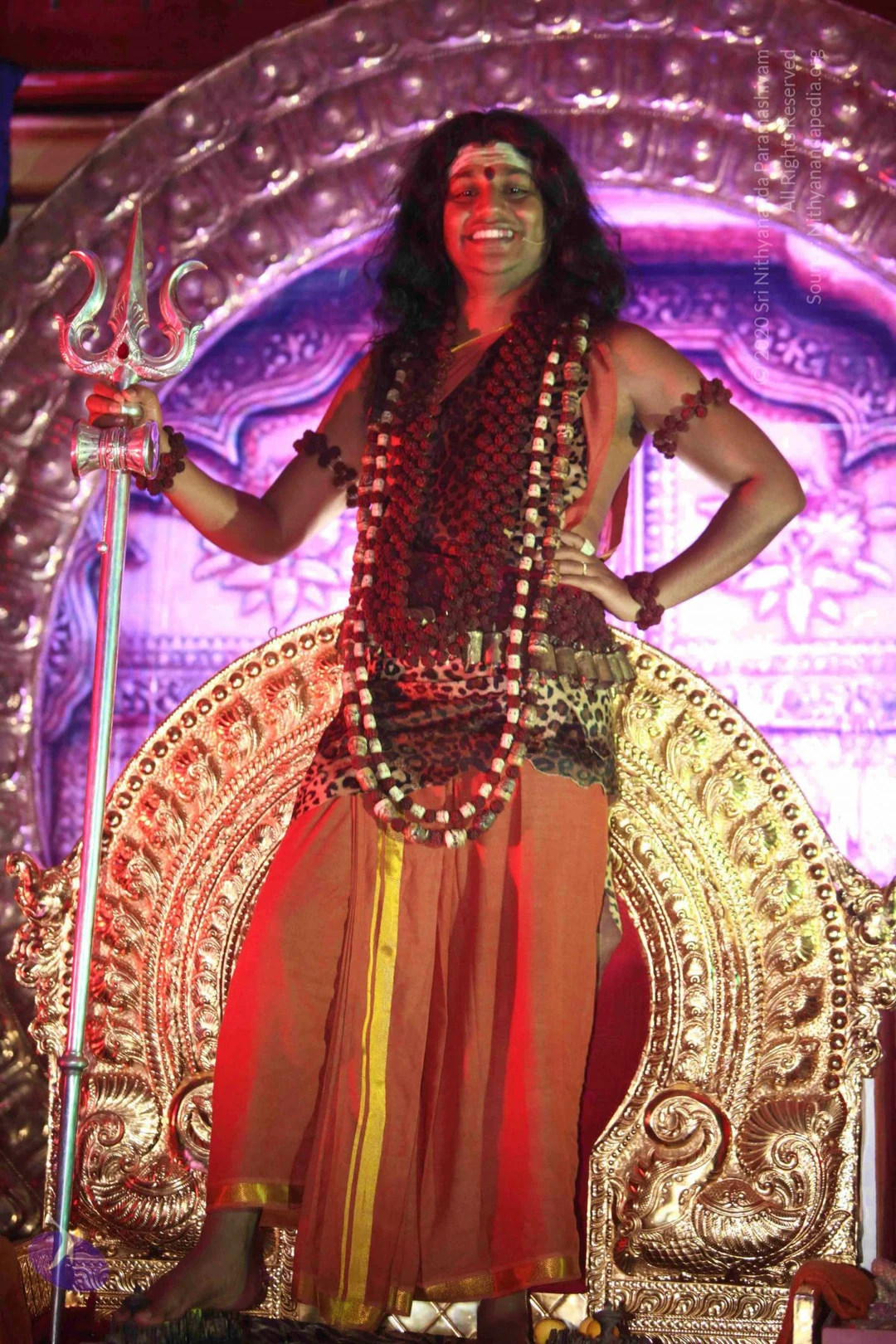
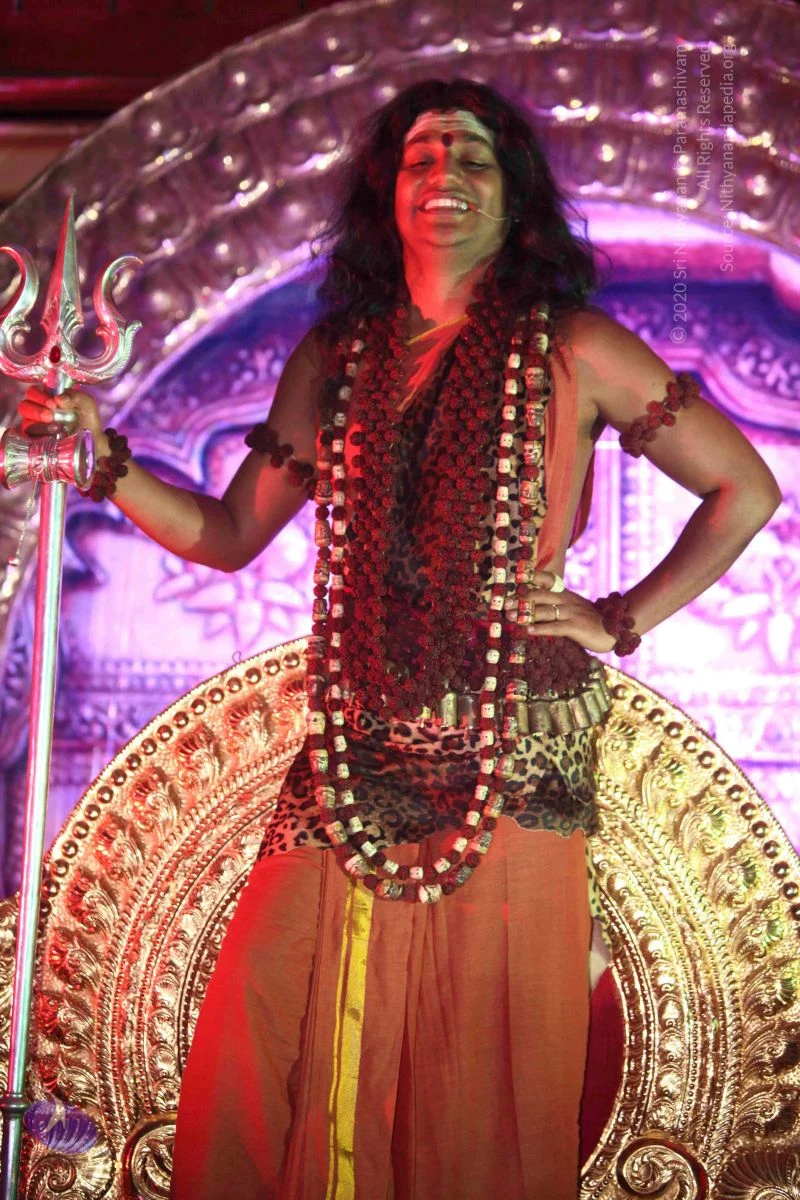
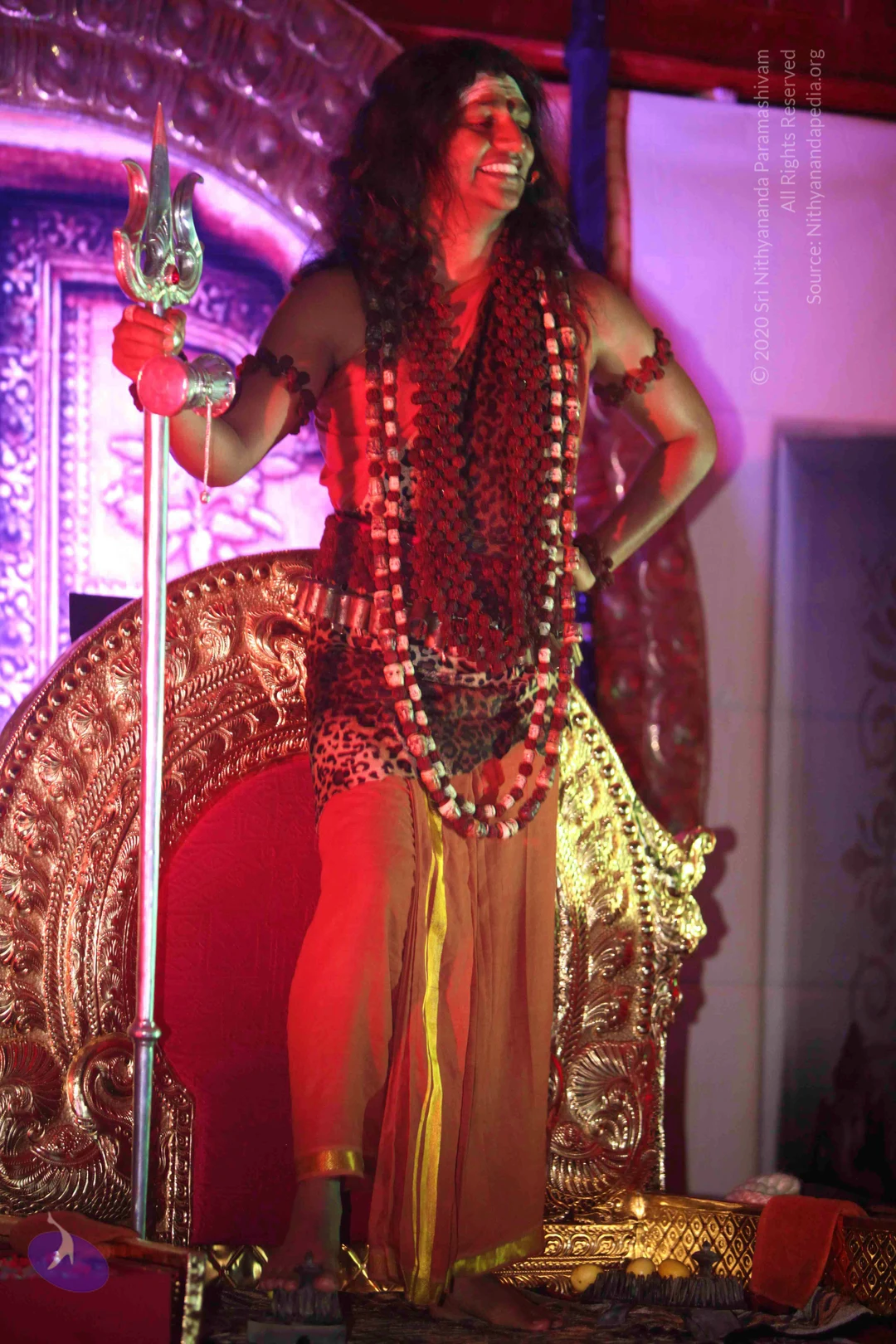
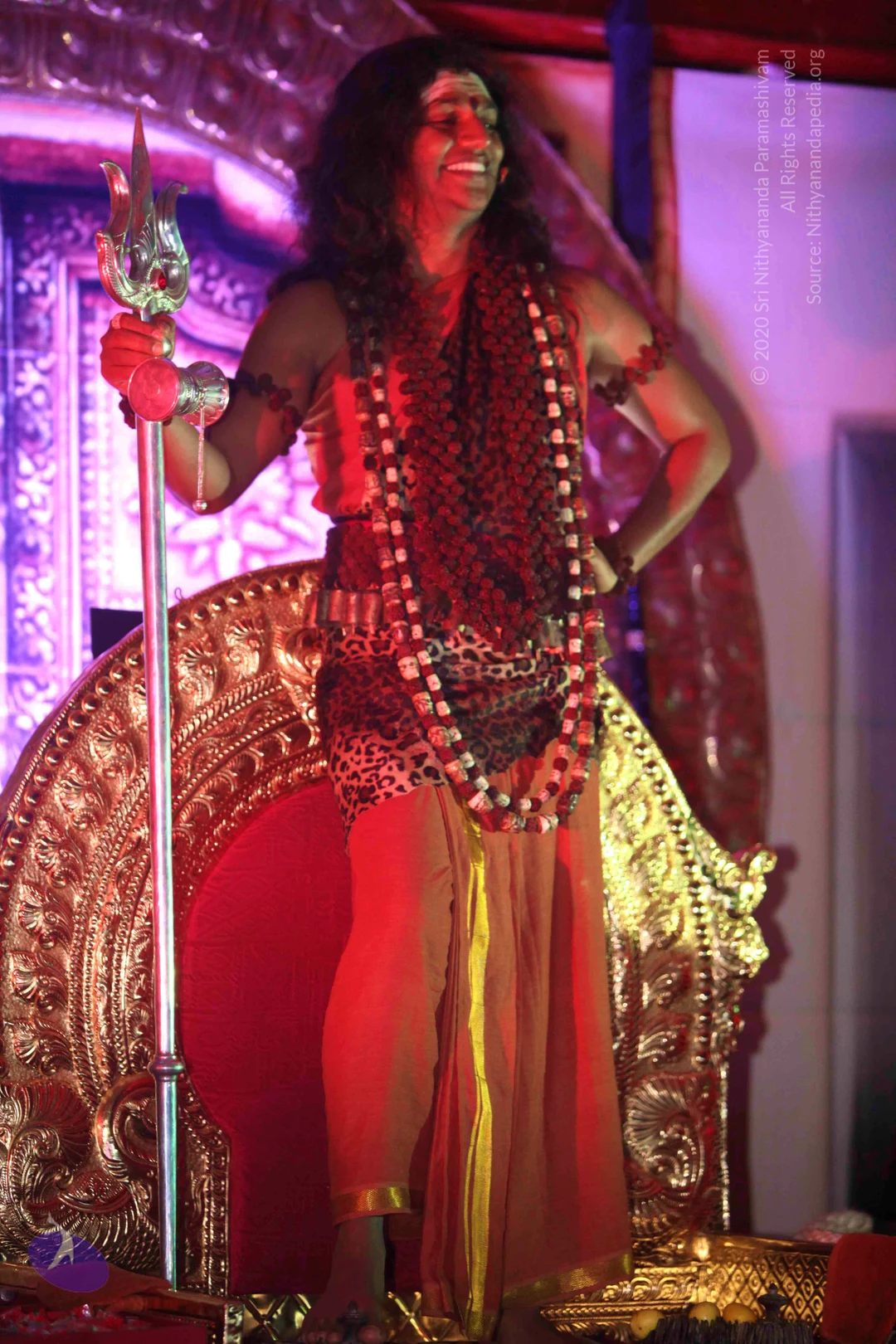
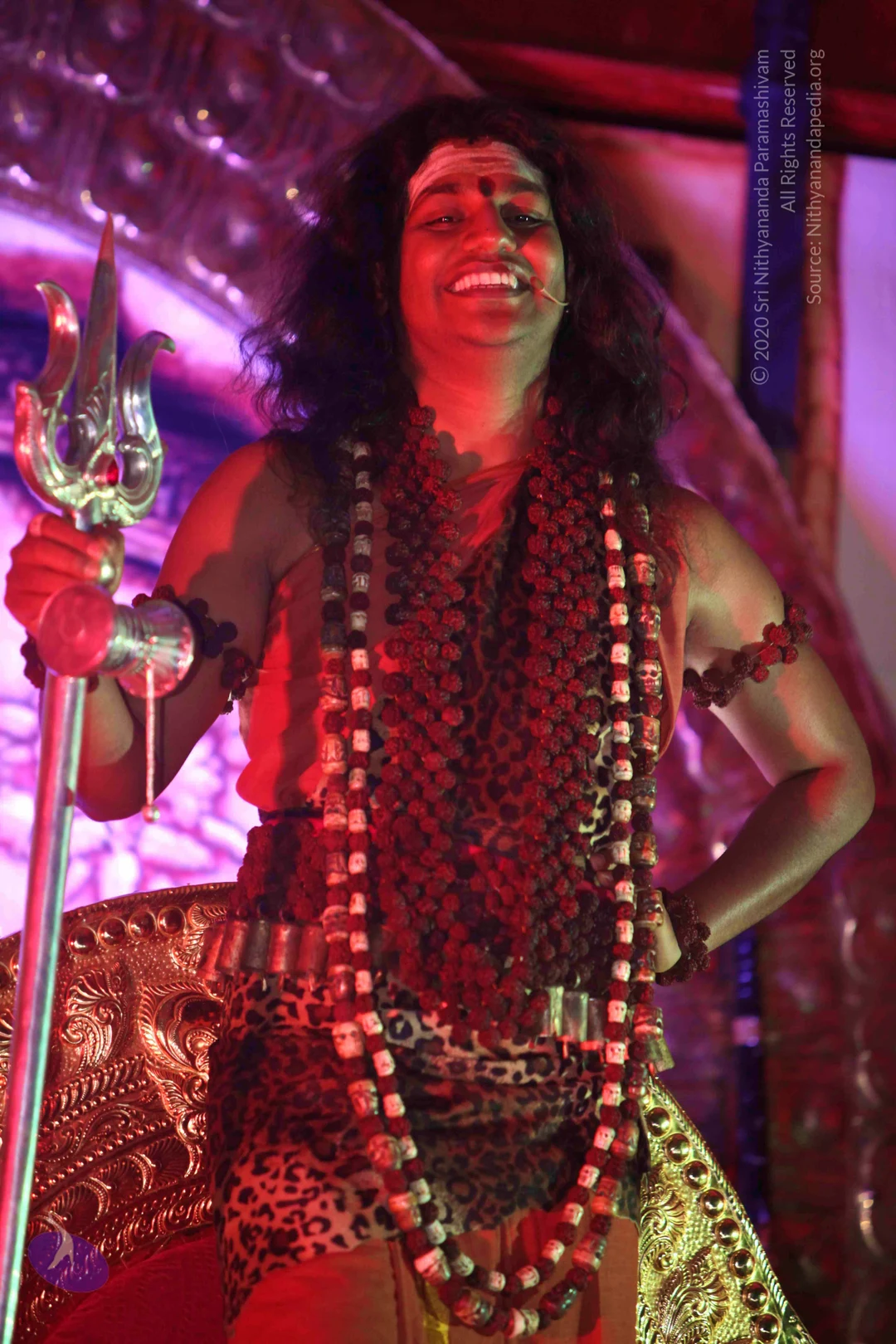
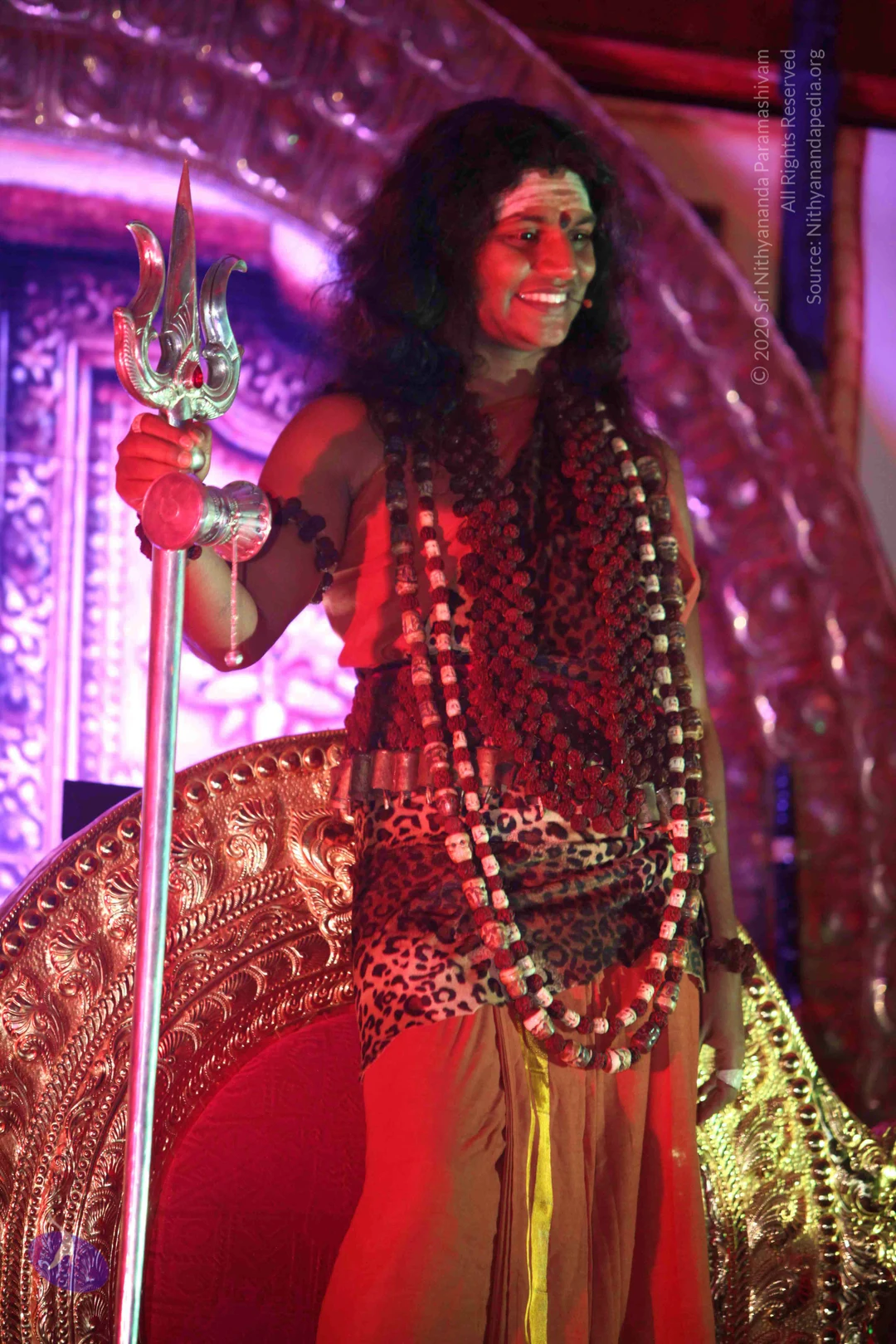
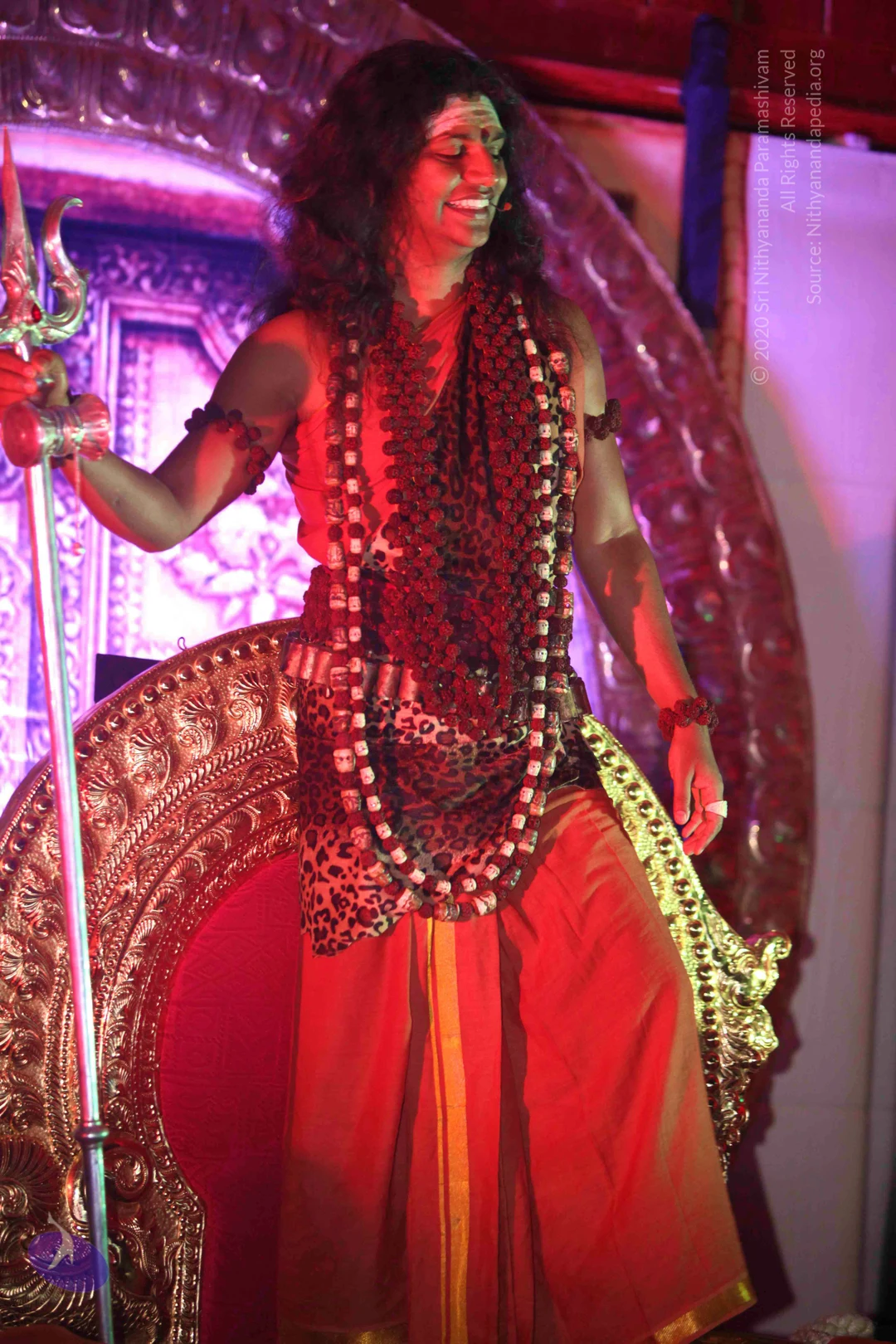
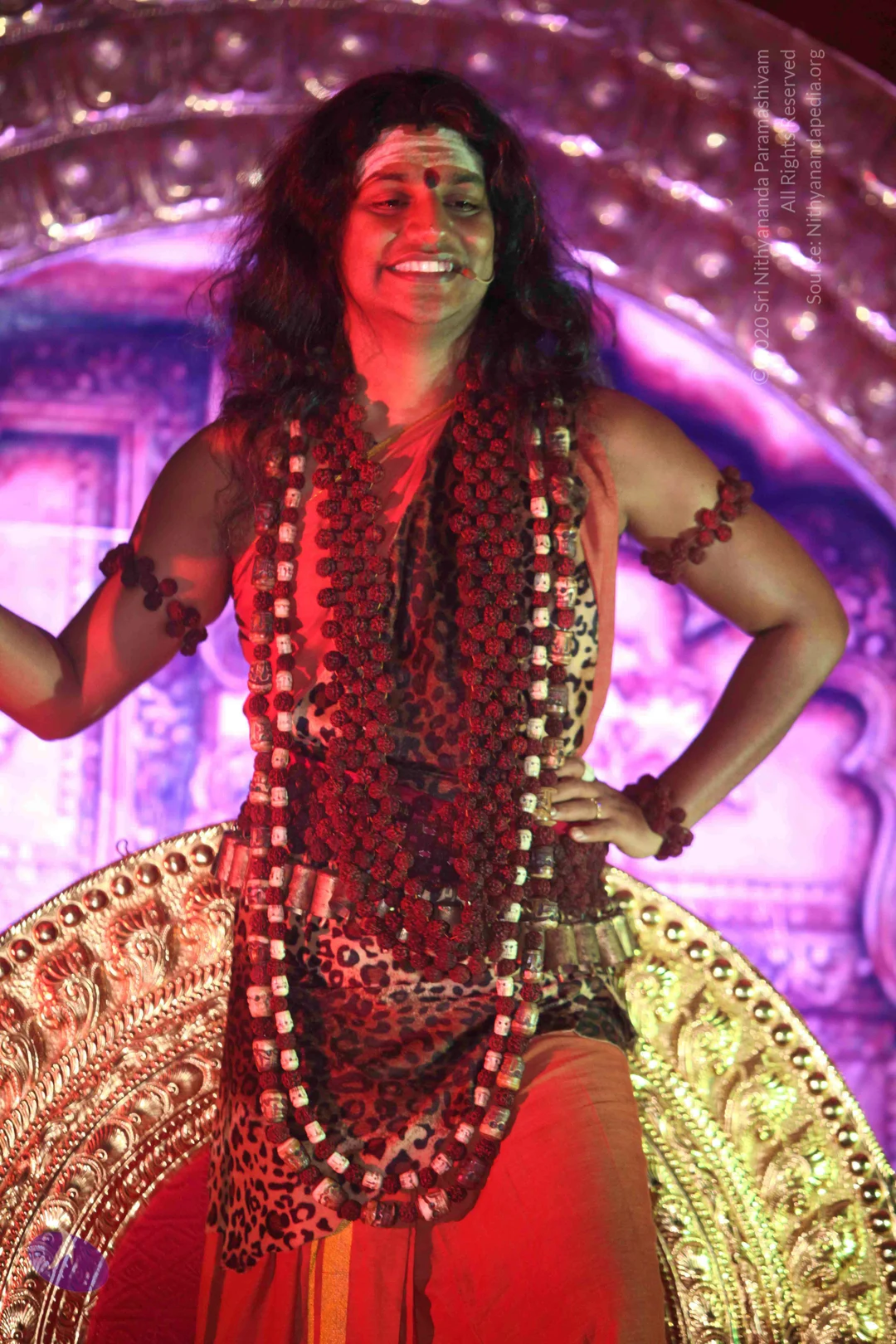
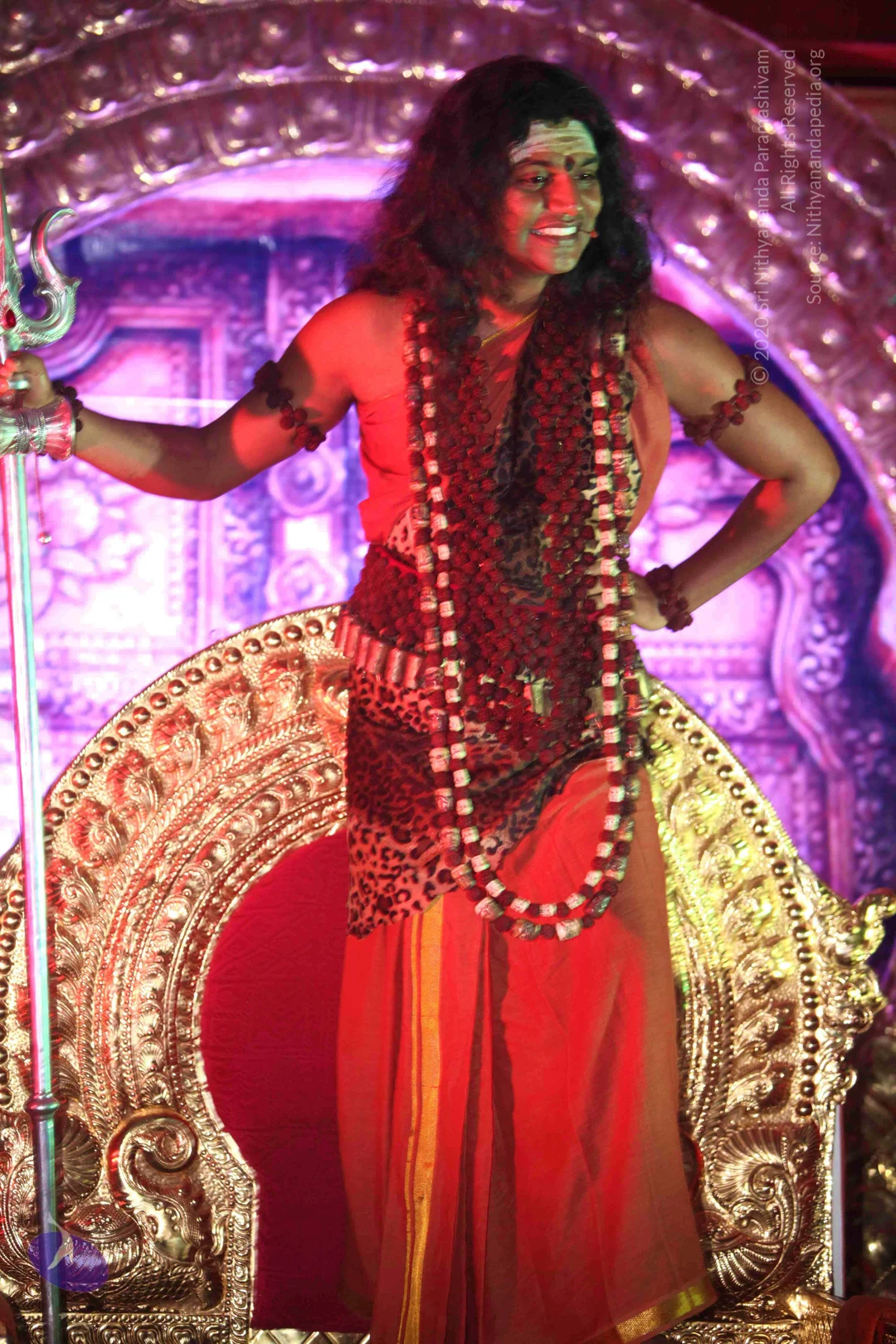
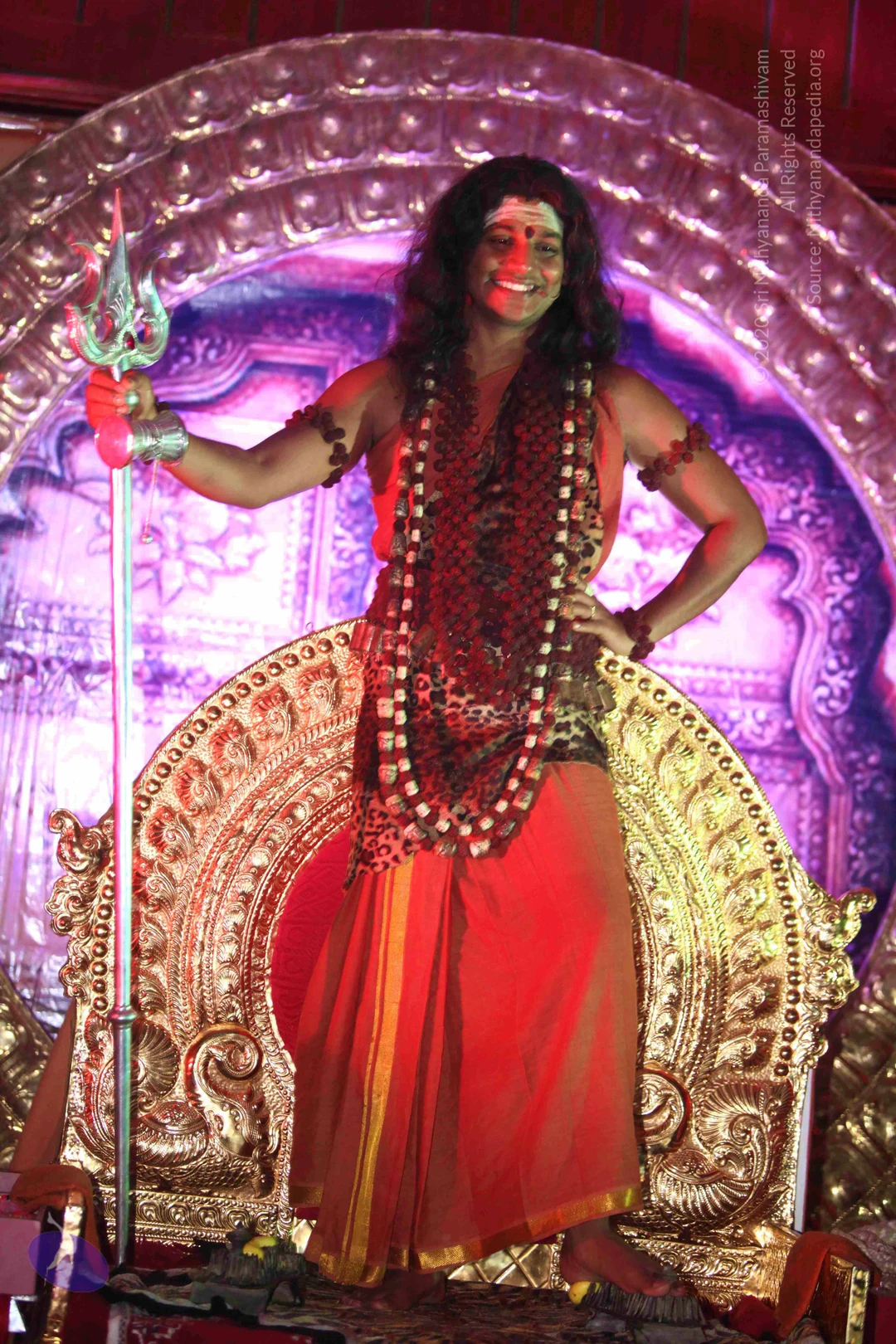
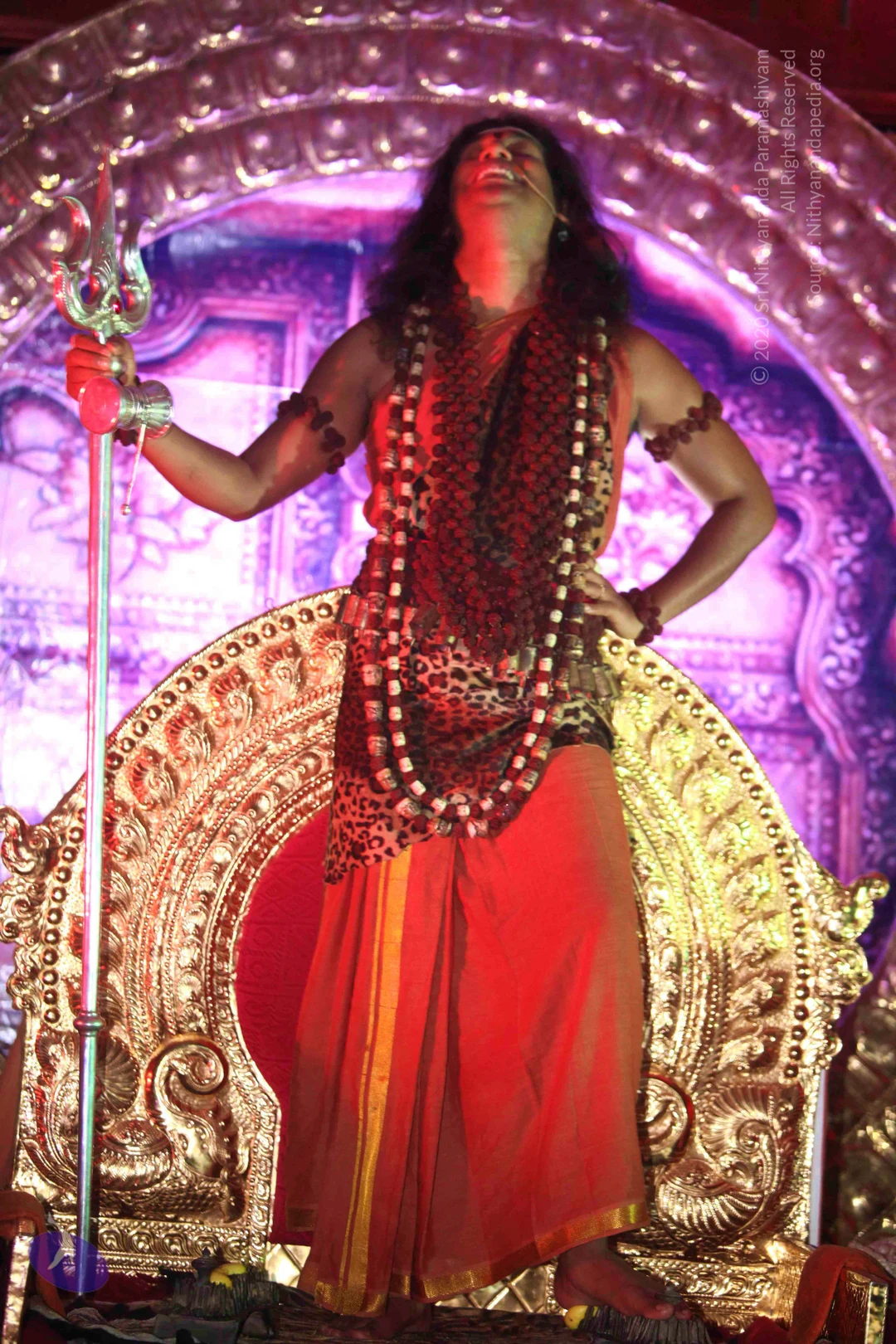
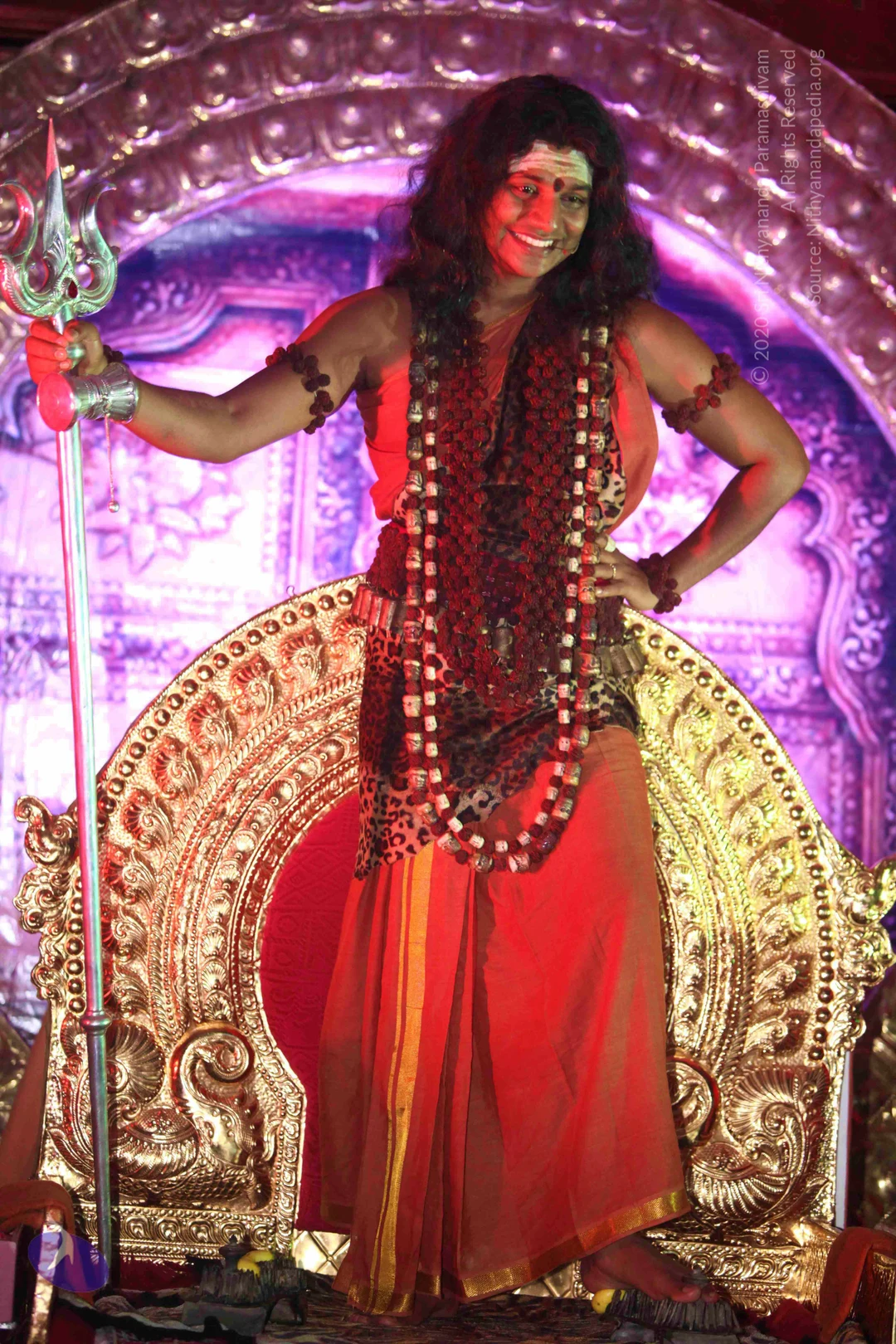
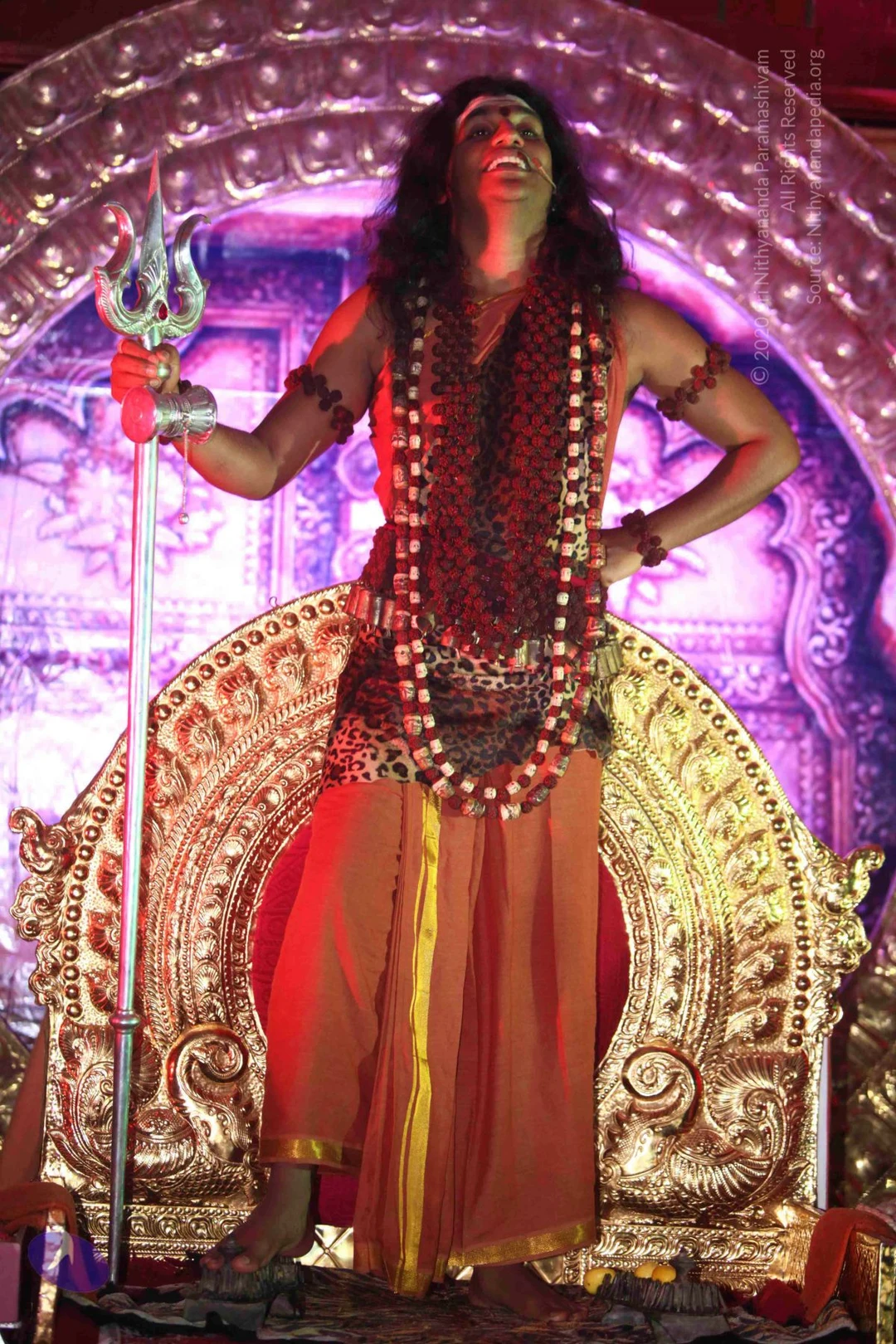
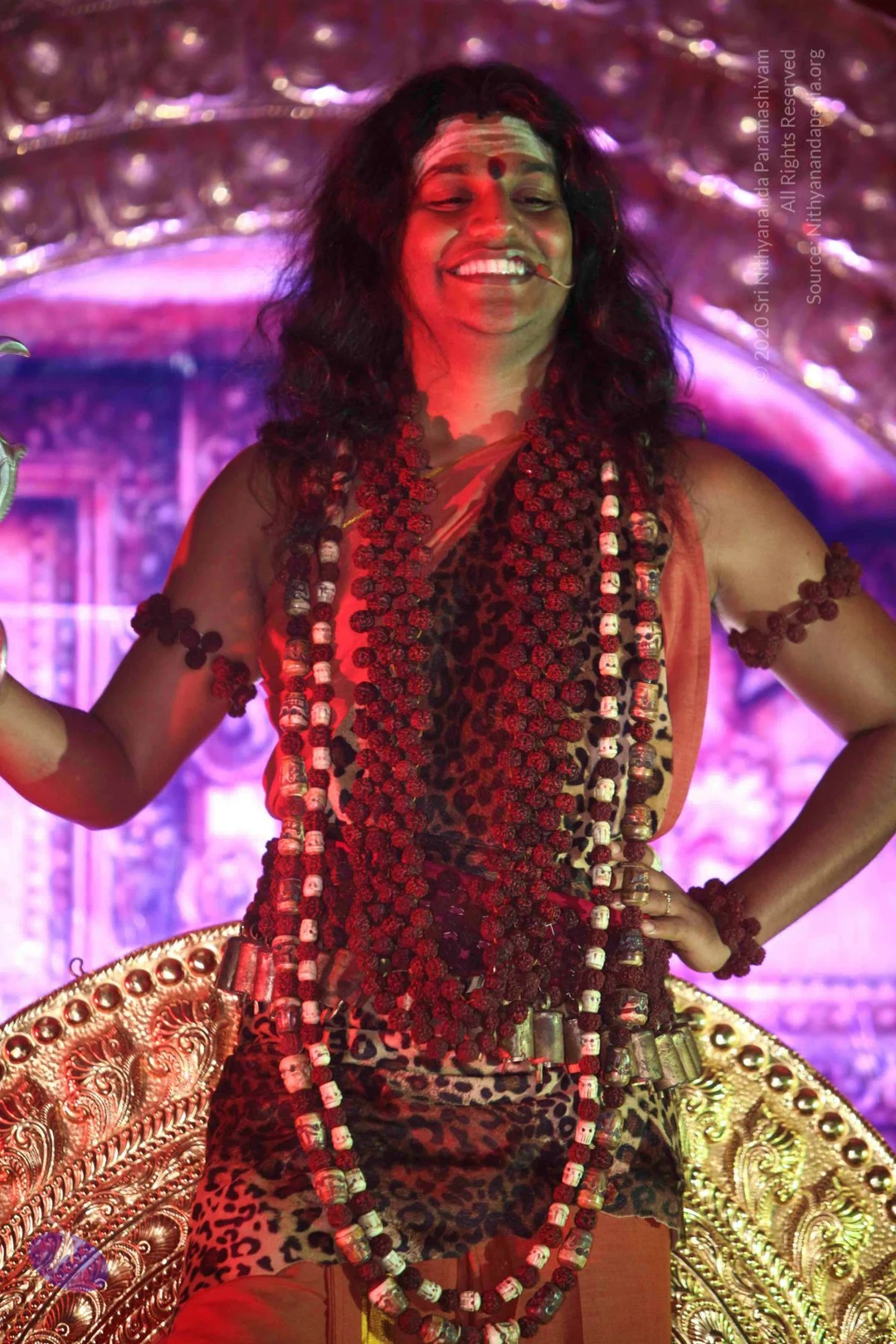
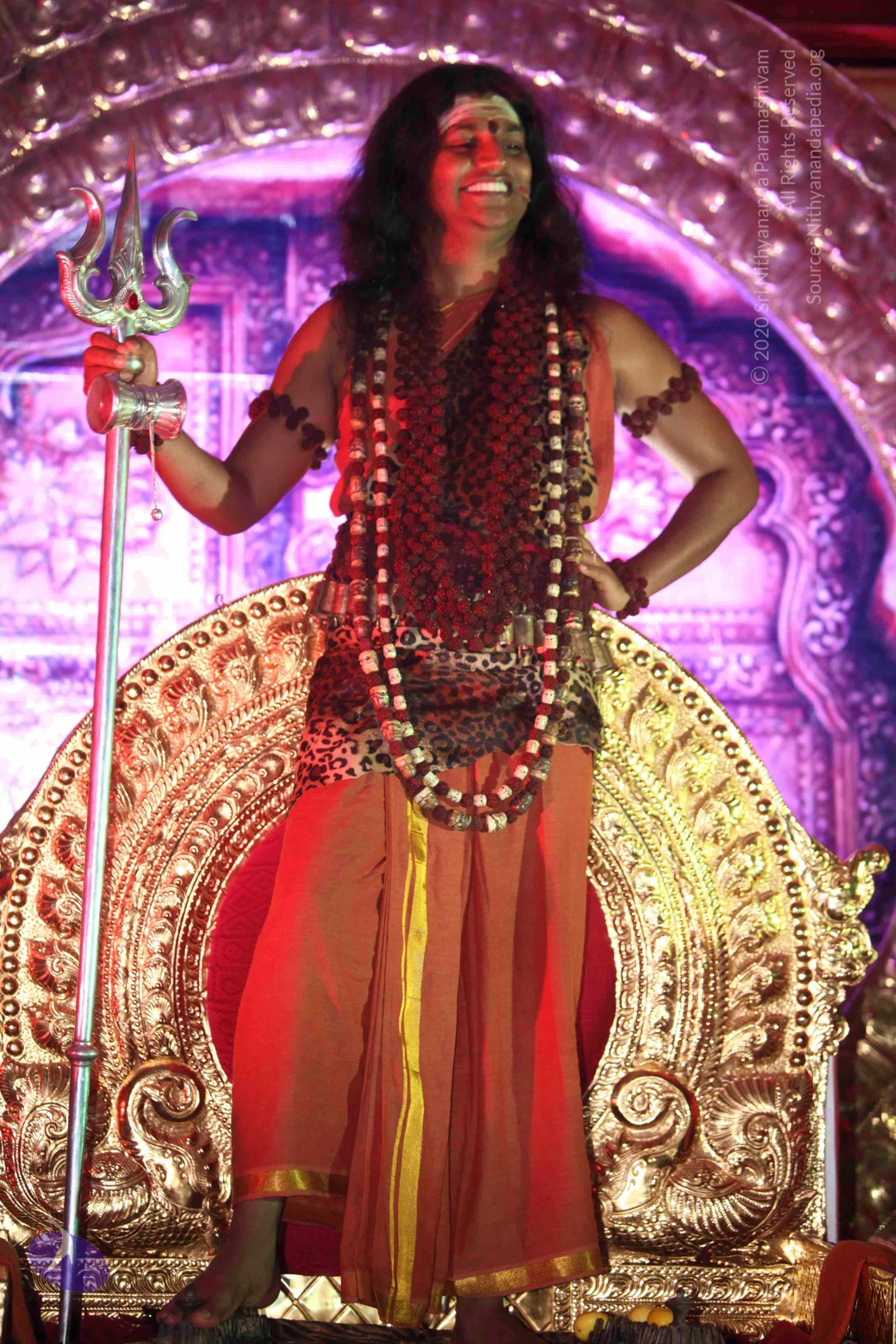
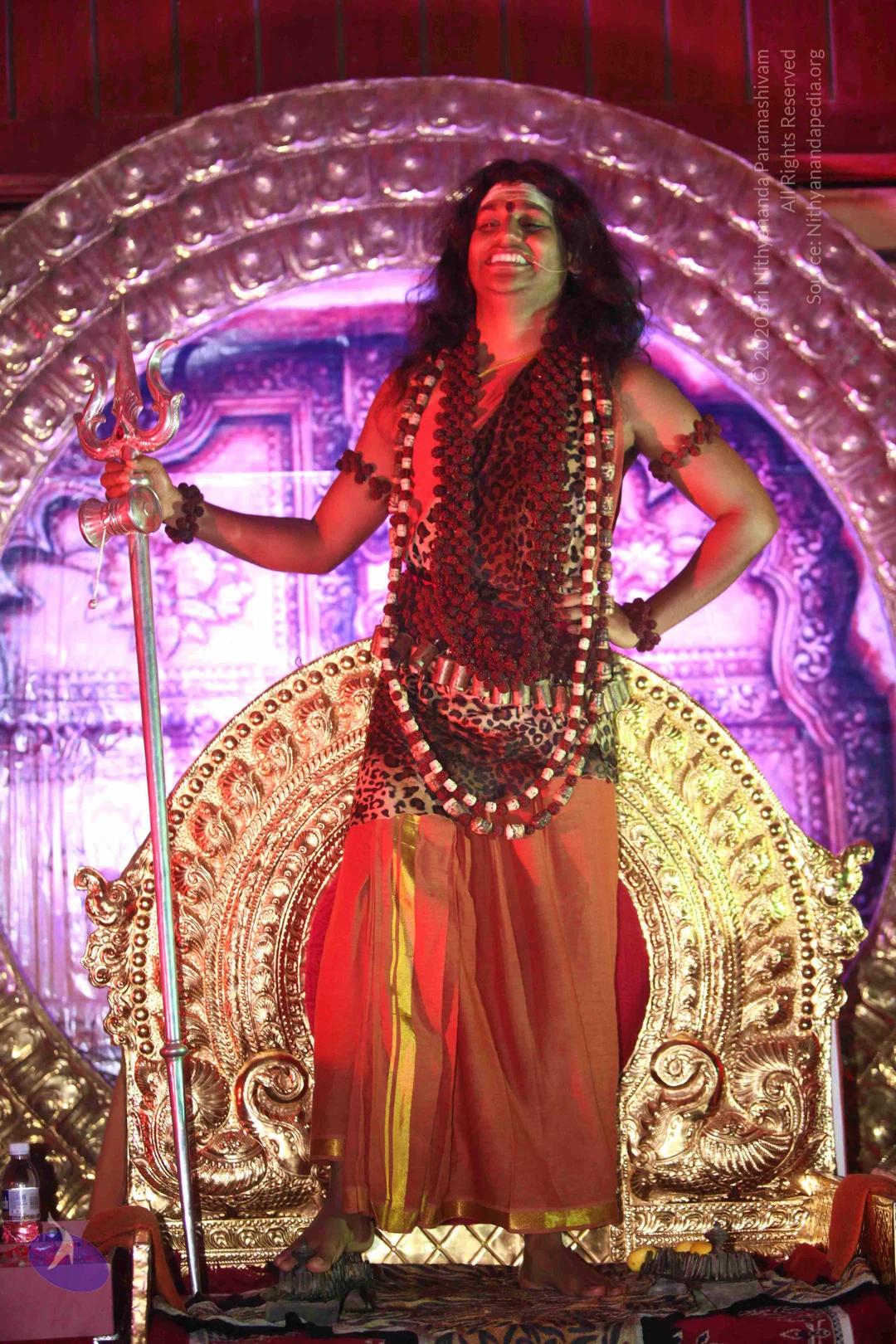
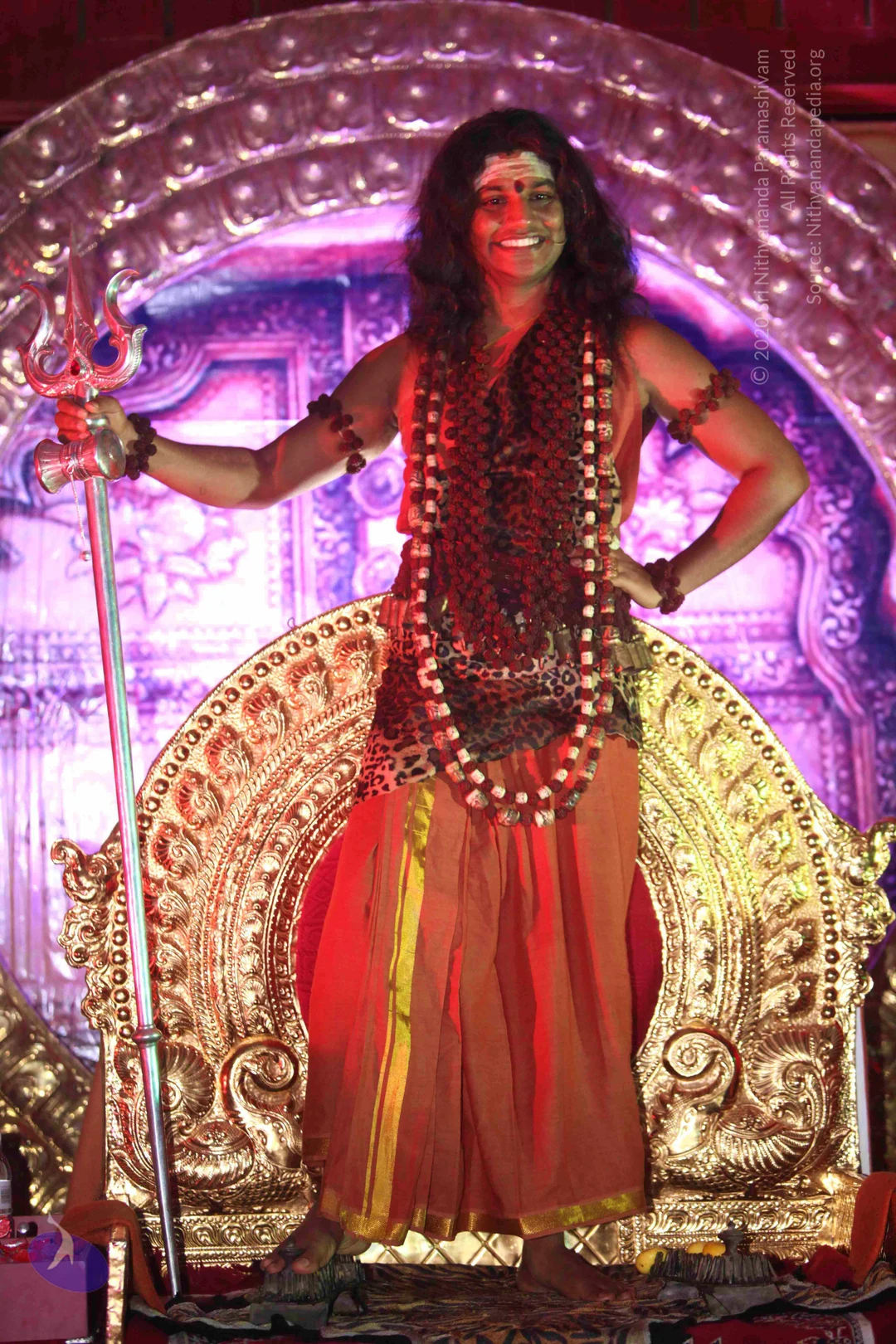
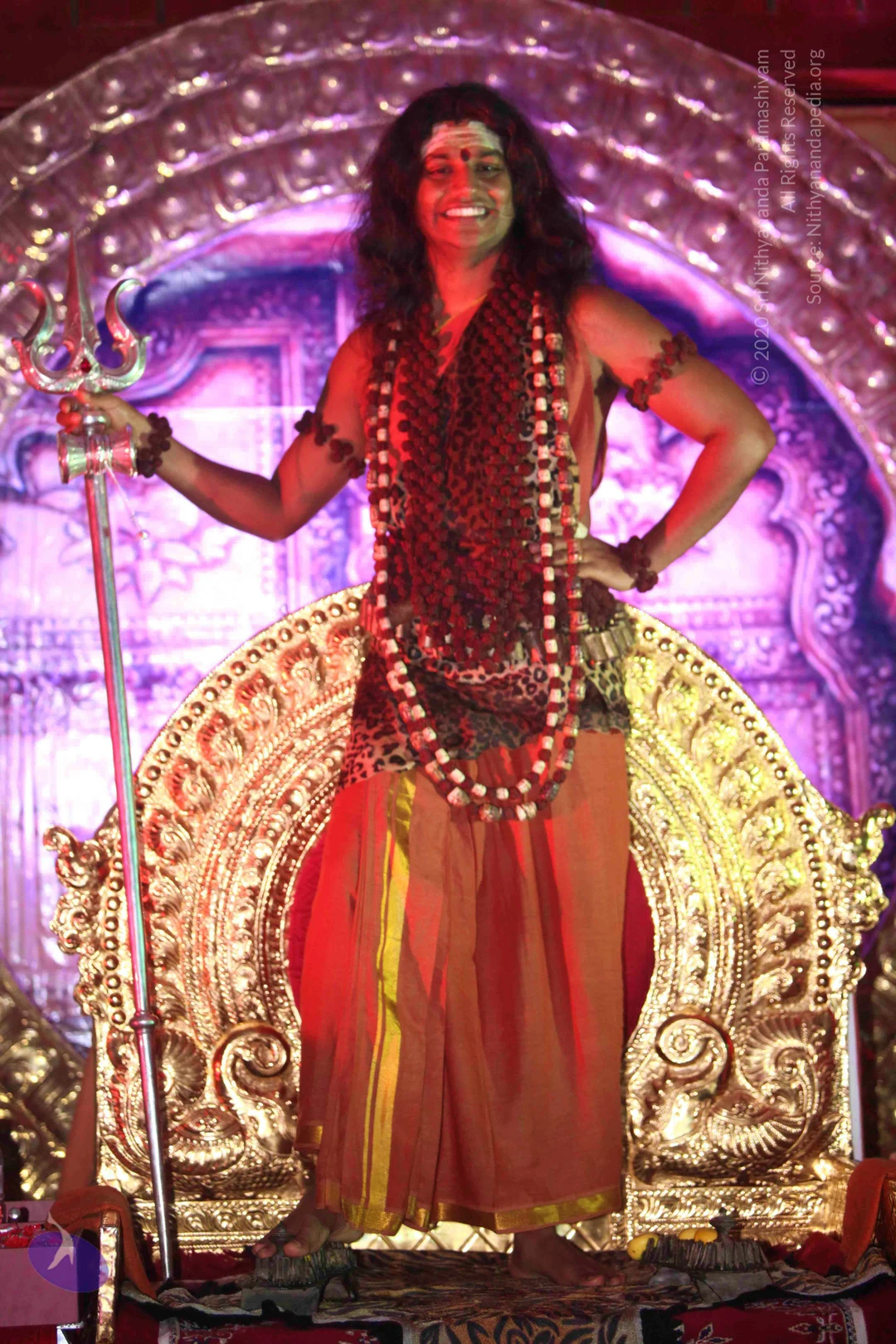
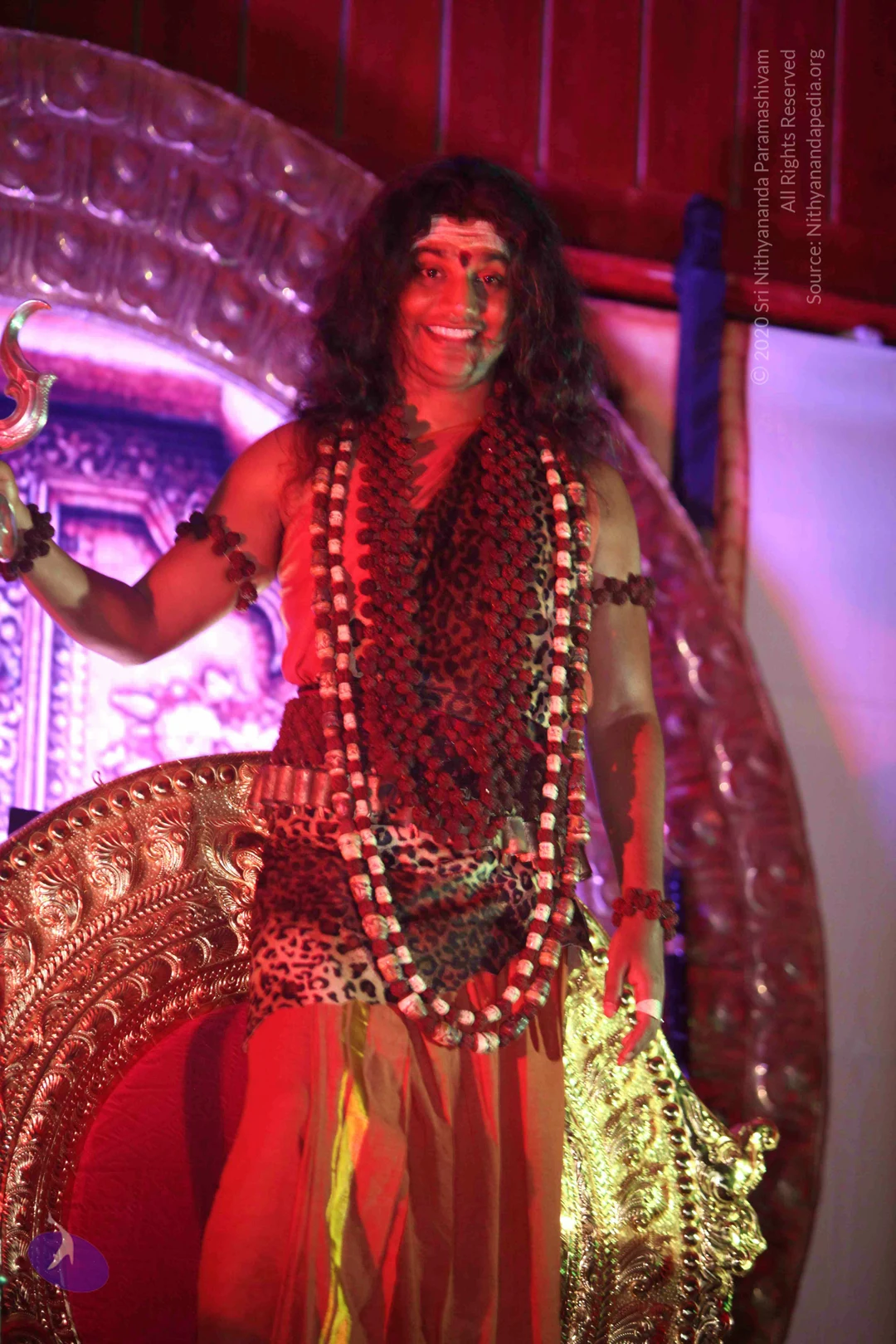
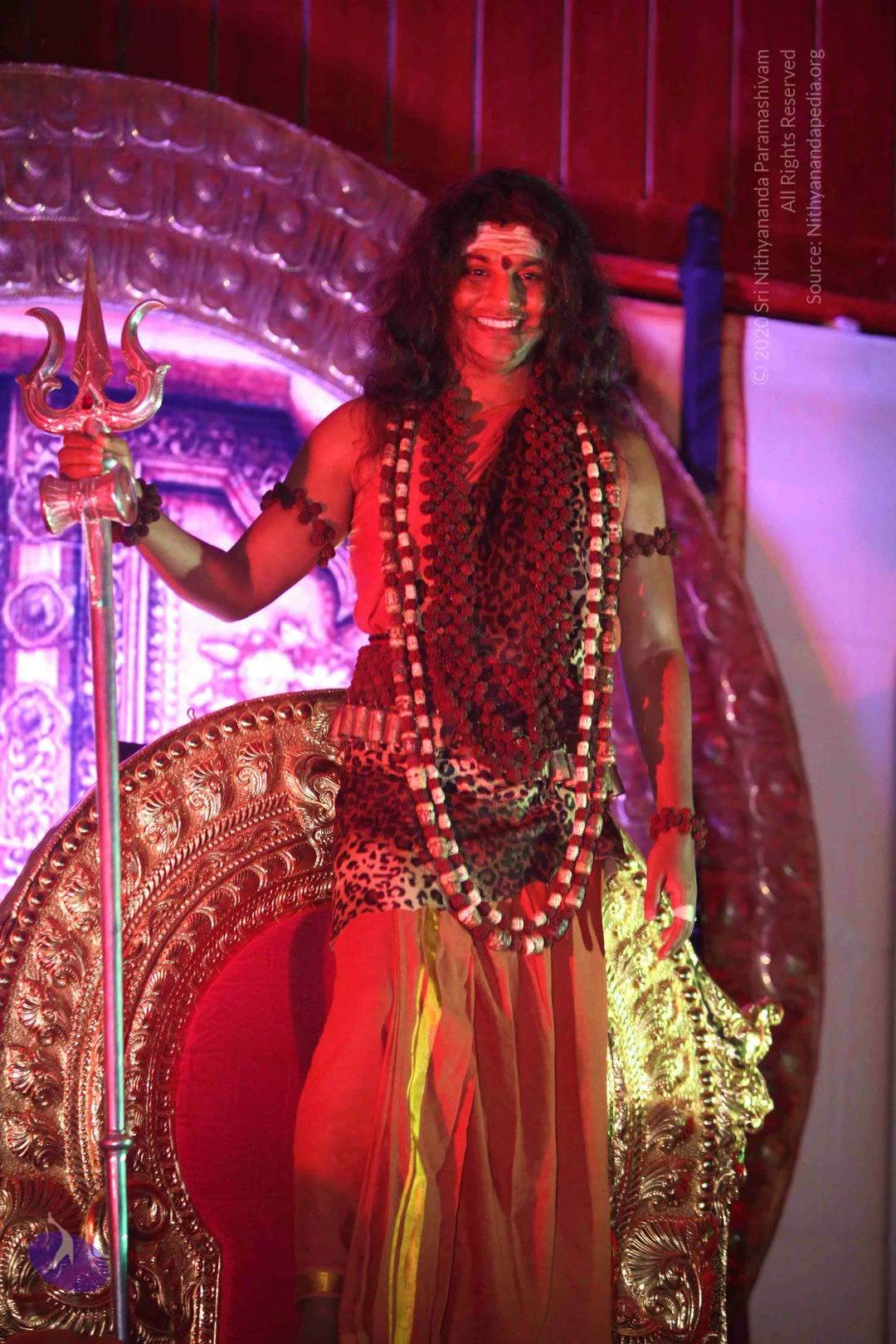
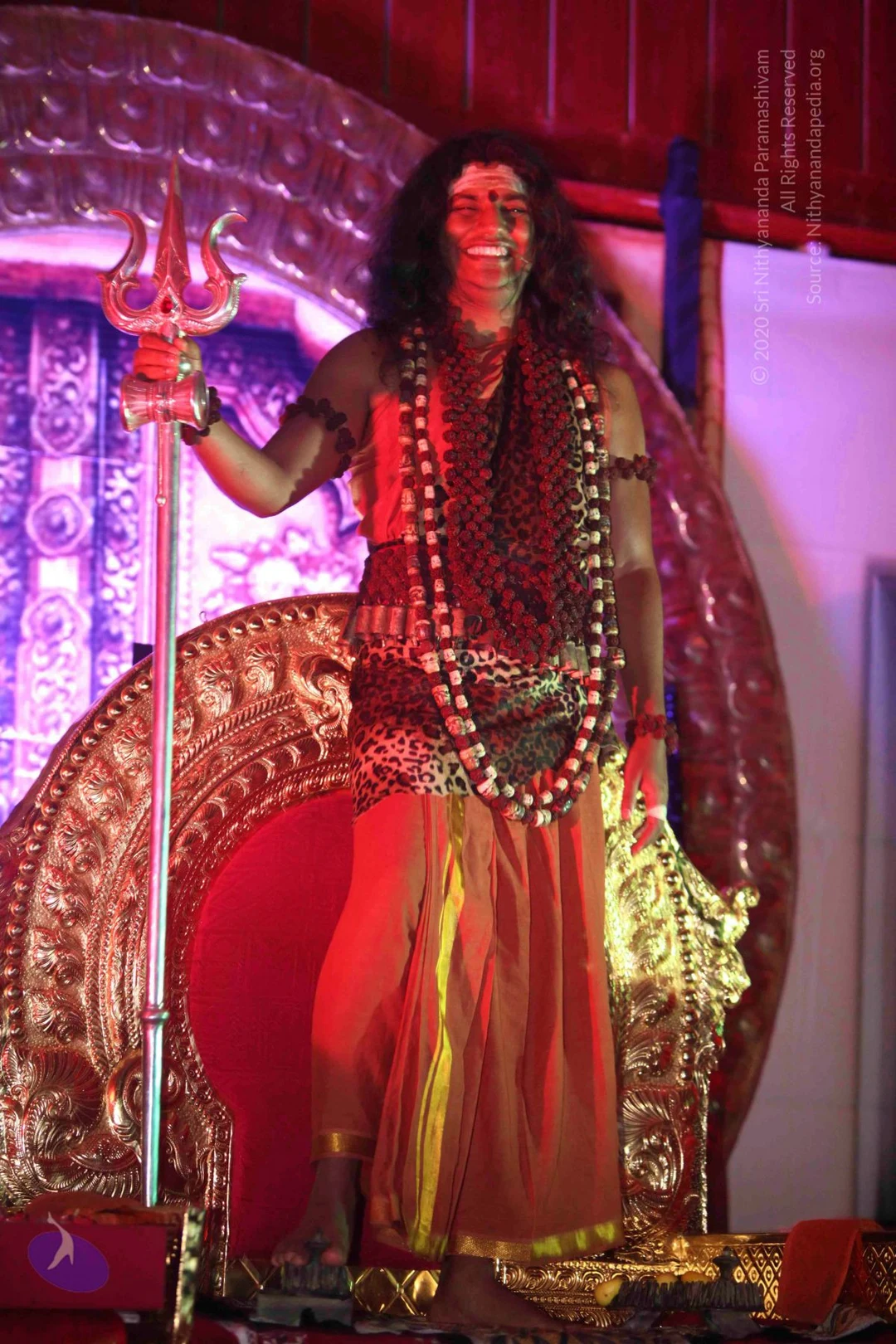
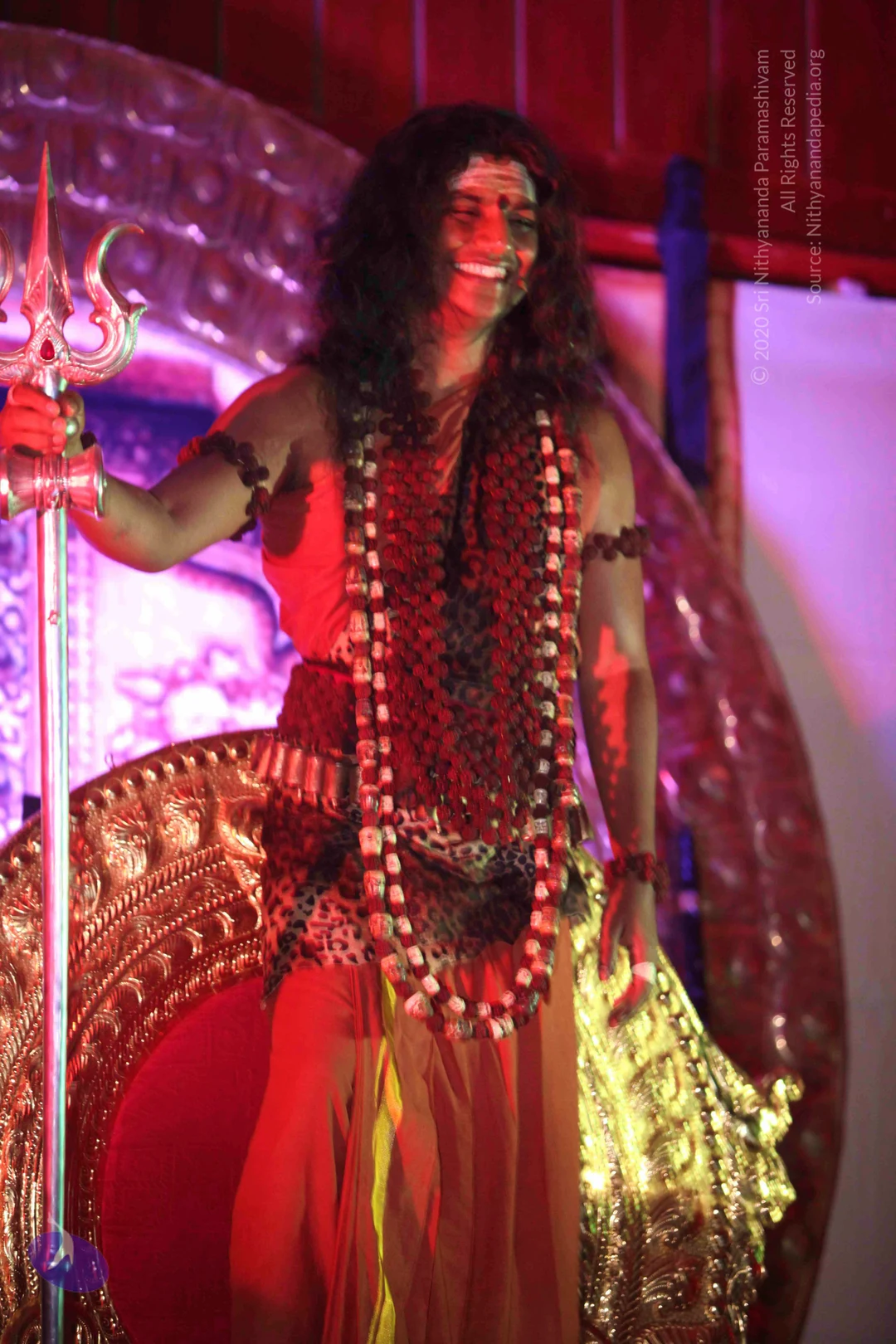
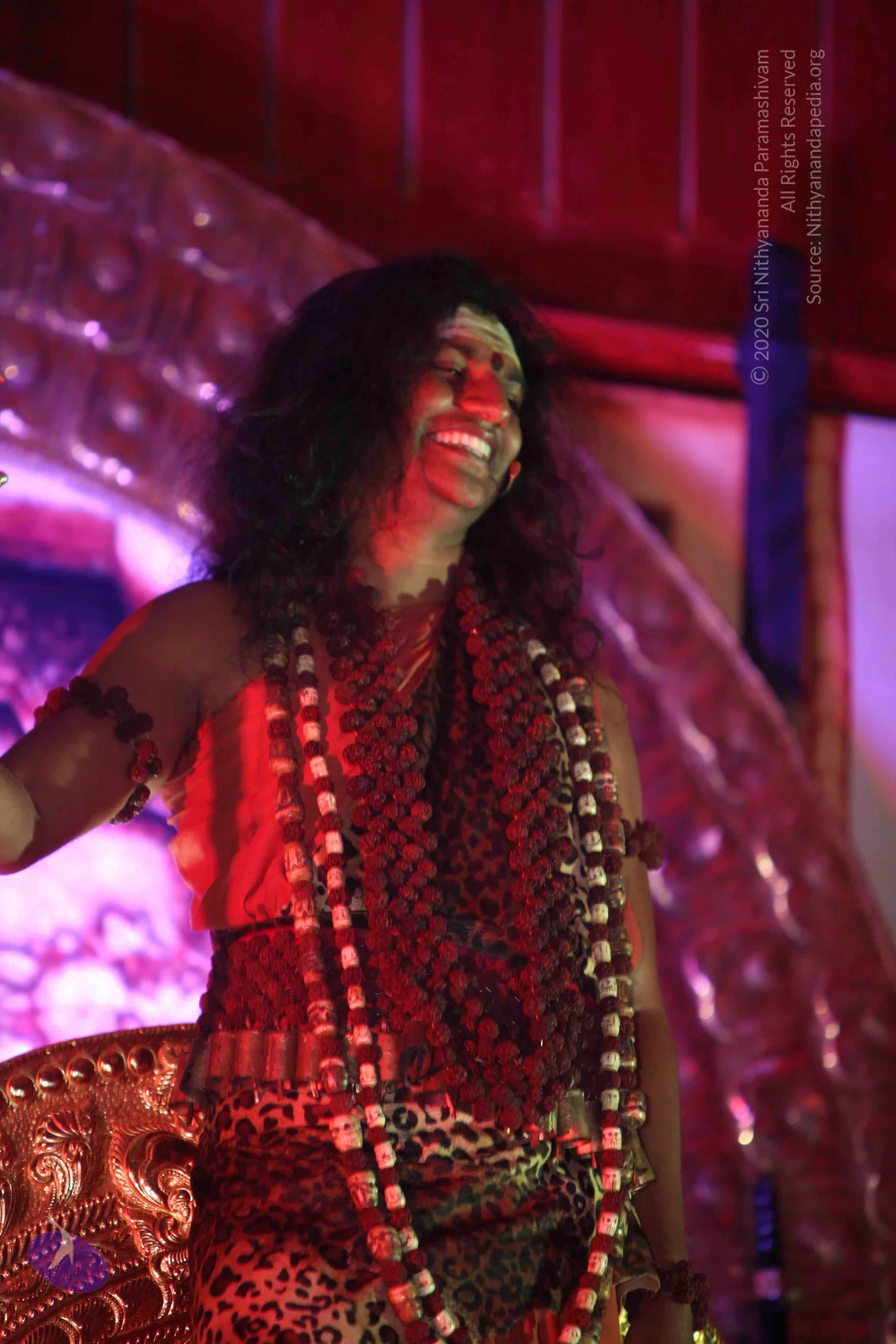
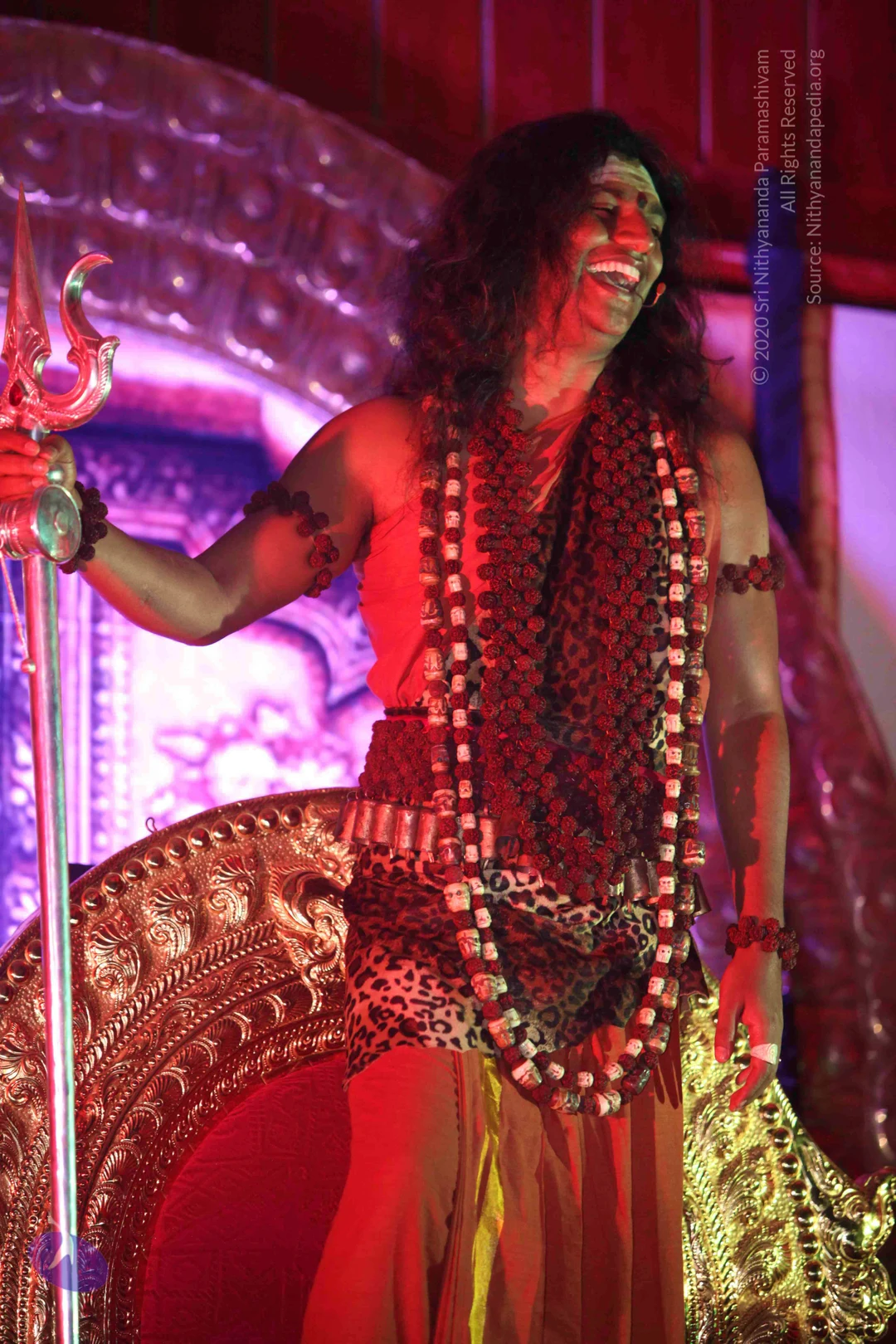
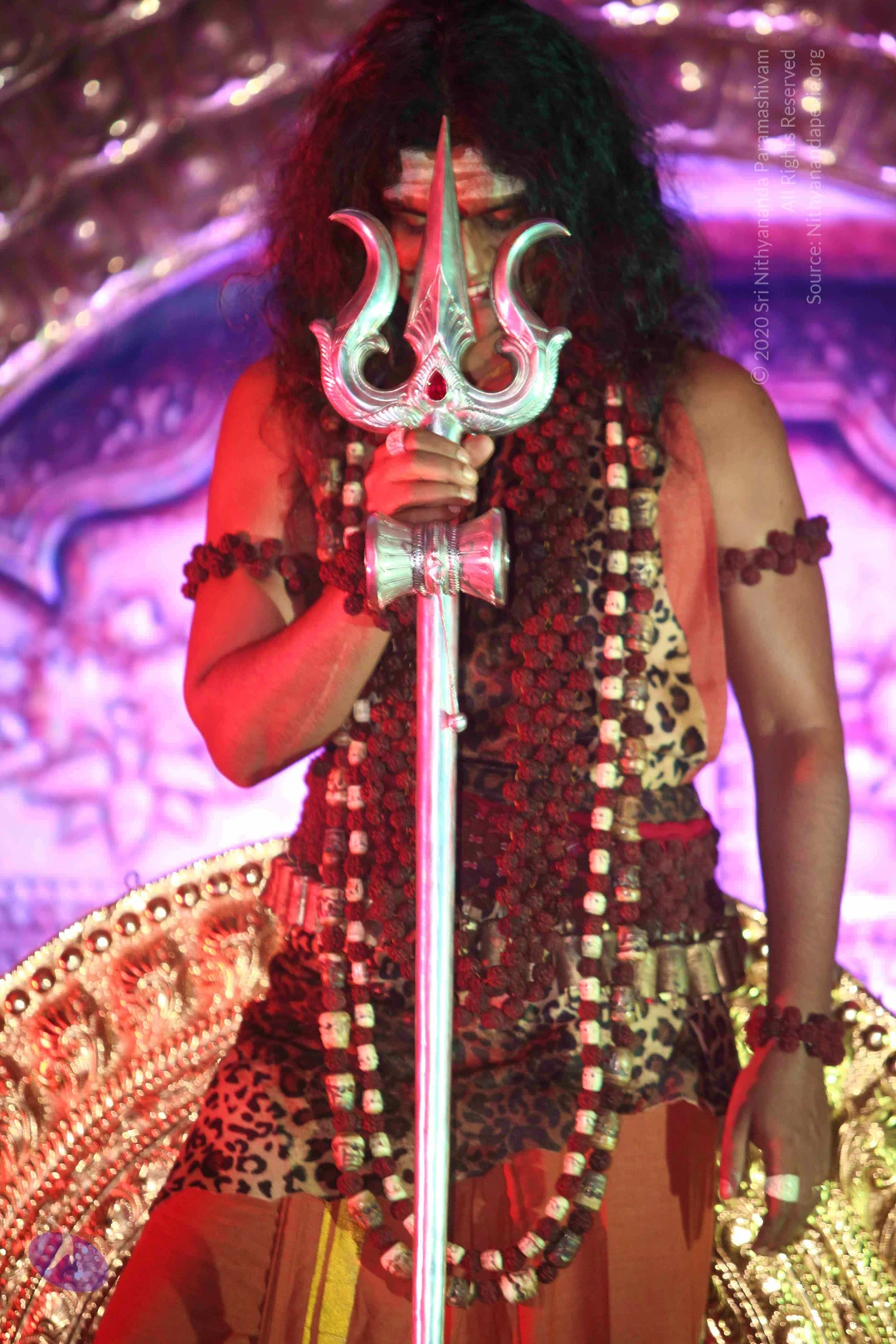
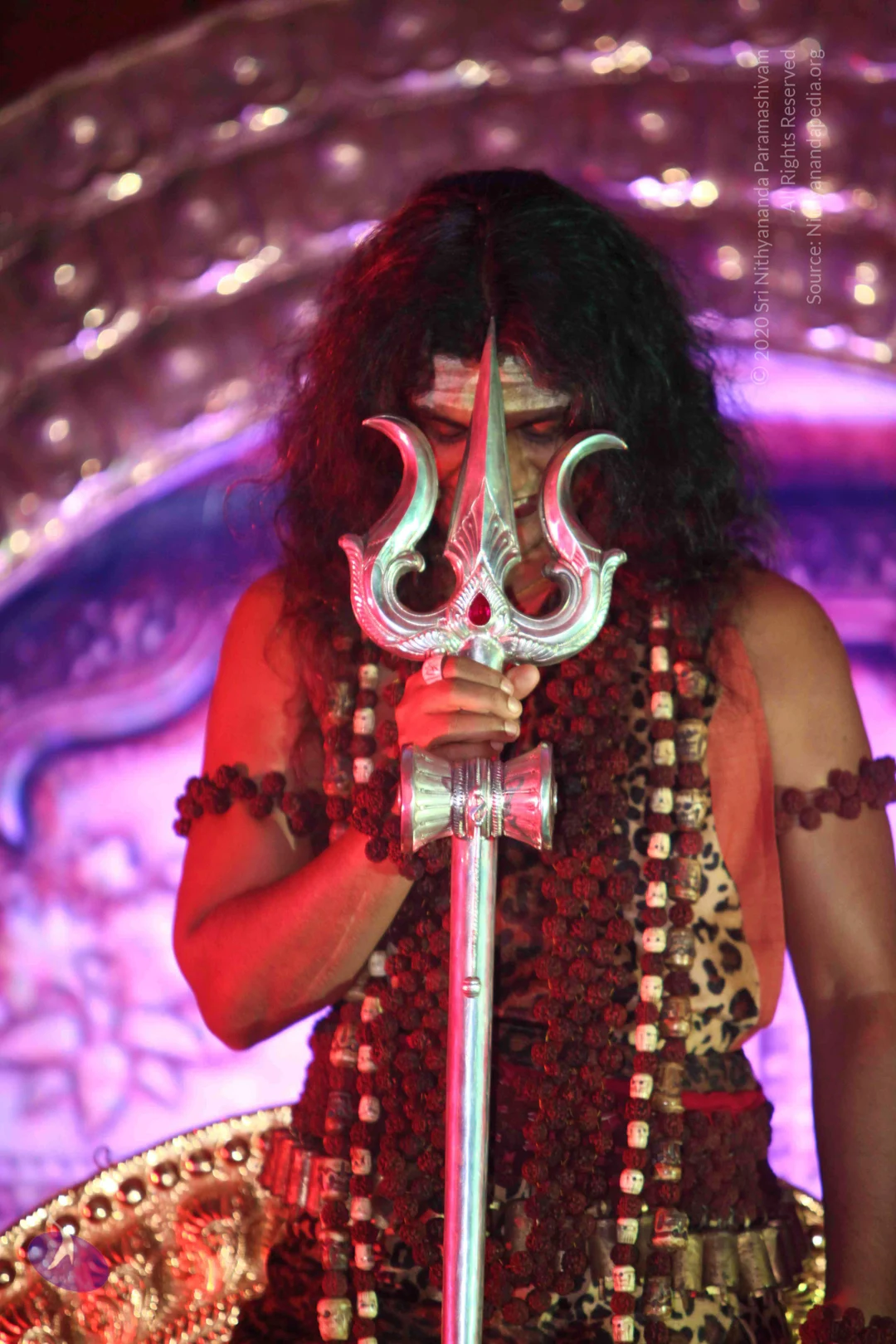
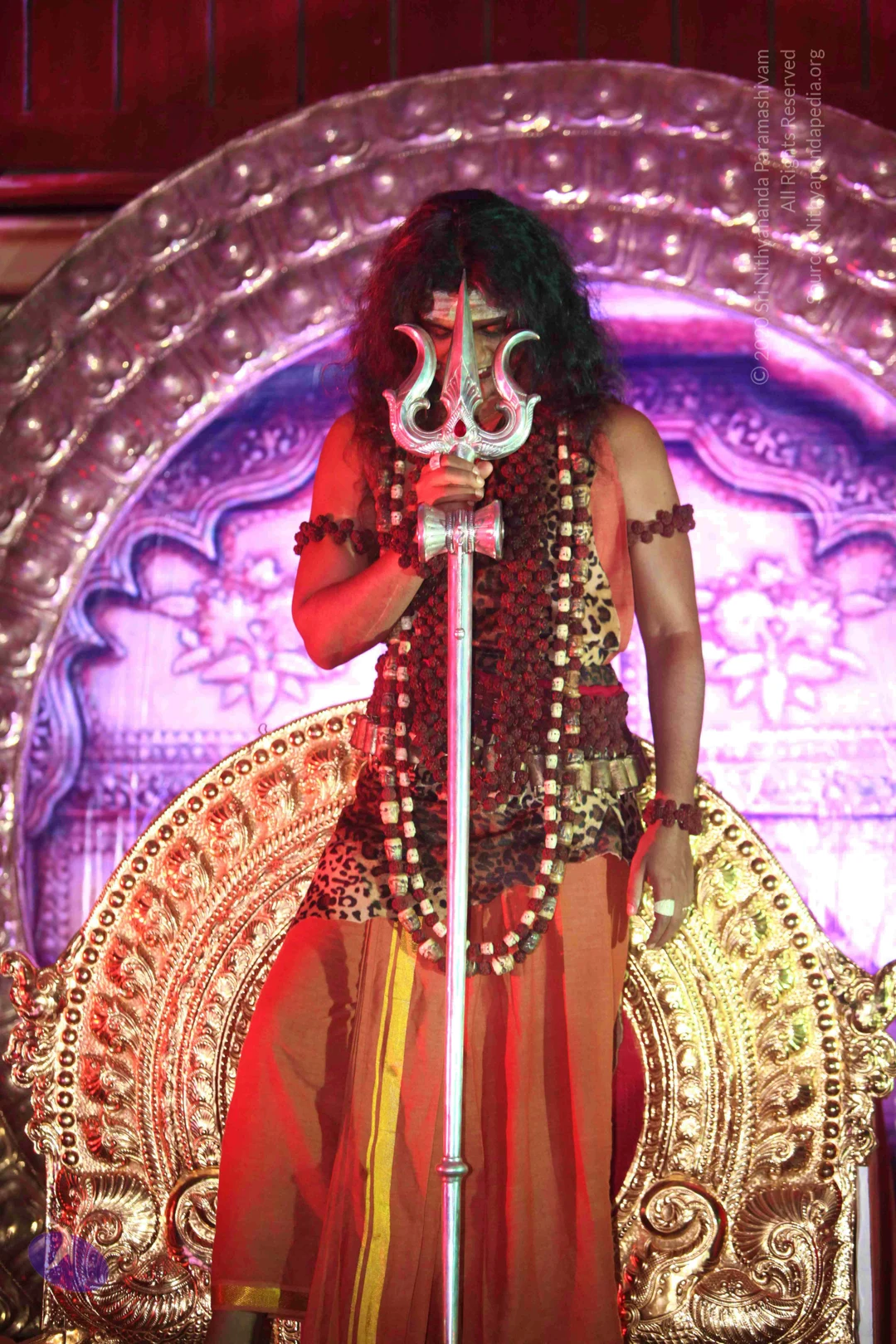
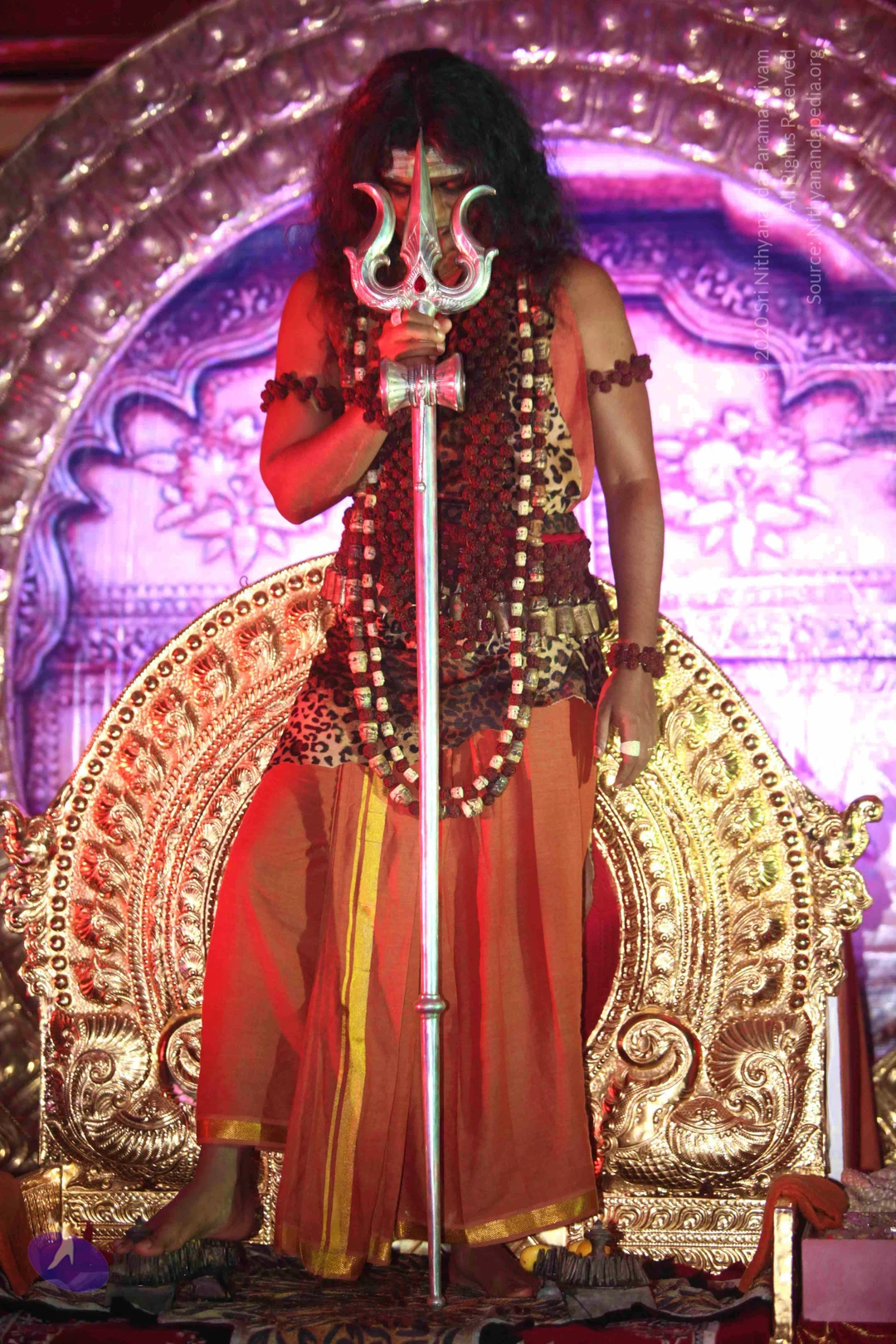
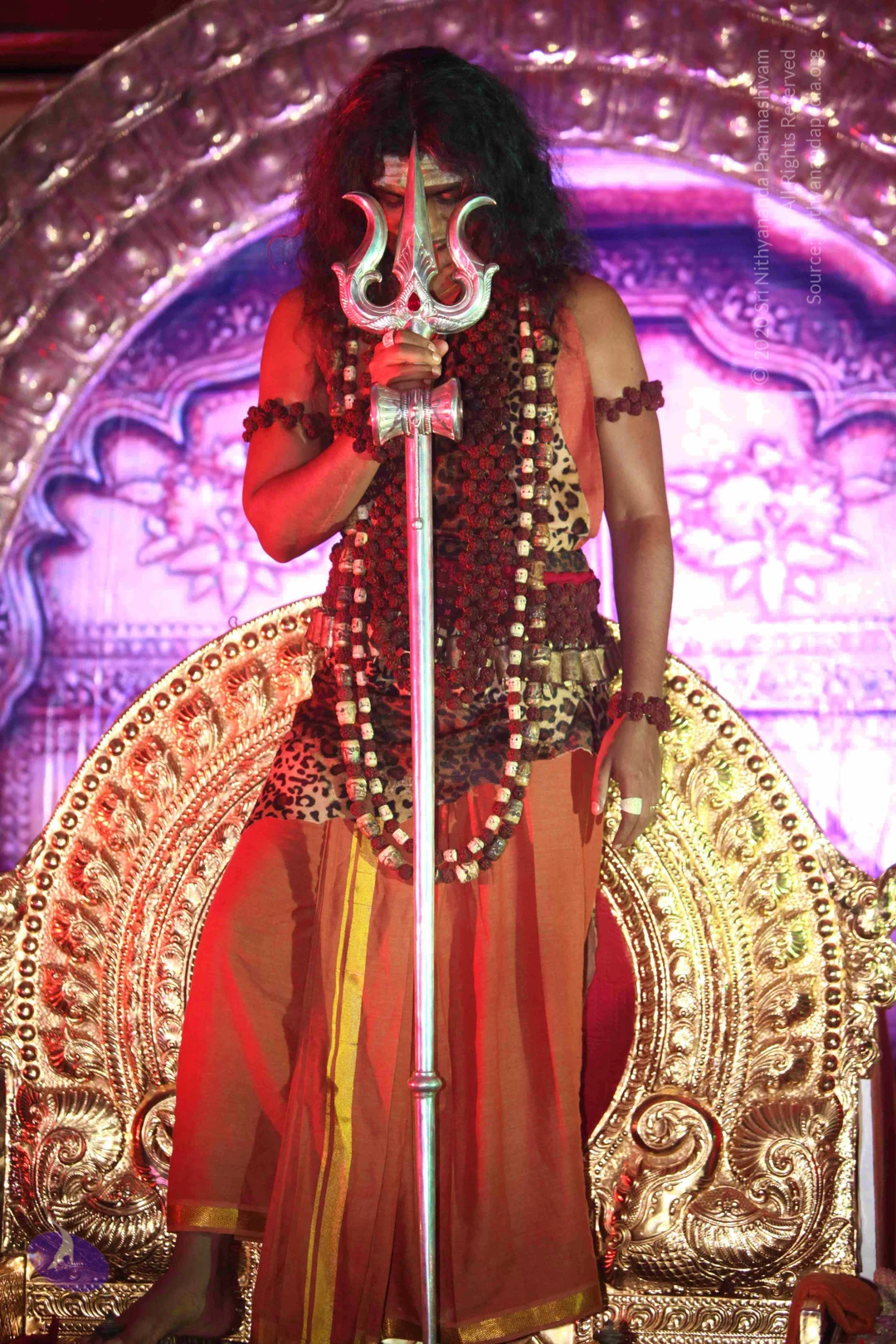
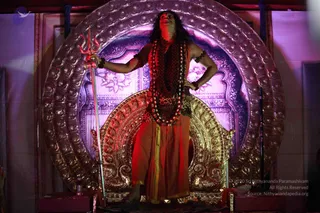
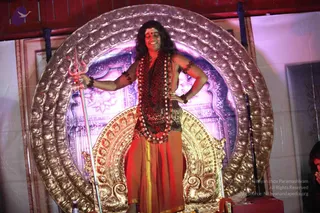
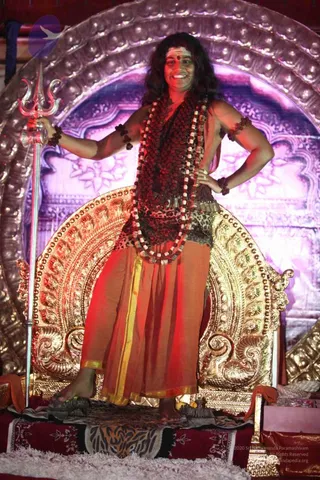
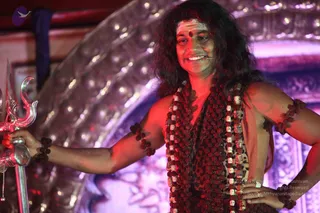
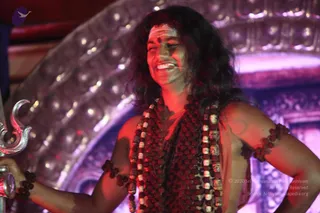
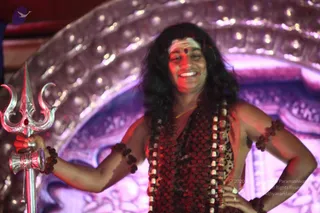
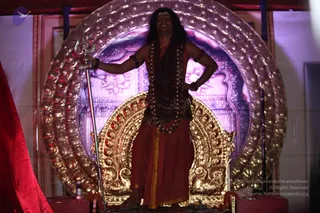
A figure with long dark hair stands on a raised platform in front of an ornate golden throne-like seat and a large circular purple backdrop with embossed floral patterns. He holds a silver trident in his right hand and rests his left hand on his hip. He wears a long red-and-orange garment, a dense red rudraksha-style mala reaching his chest, and beaded bracelets on both wrists and upper arms. Red and purple stage lighting bathes the scene. a person: the long swept hair, saffron-orange ornate clothing, rudraksha mala and trident match the appearance cues used for the a person candidate, so the figure is identified as a person presence. Ritual-stage presentation; the figure appears to be posed as a deity form, but the iconography is not certain enough to name.A photograph of a man standing before an ornate golden throne with a large circular gilded prabhavali-style backdrop, lit with pinkish stage light. He wears a deep red and orange sannyasi-style cloth draped over a red beaded rudraksha-style mala necklace and a patterned leopard-print garment across his chest, with red bangles on his wrists and forearms, and a red tilak on his forehead. He holds a red-and-silver trident in his left hand and rests his right hand on his hip, smiling. Swamiji (probable) appears as the figure standing before the throne, identified by the trident, rudraksha mala, long swept-back hair and saffron-orange clothing. A small water bottle sits on a red table at lower right, and a person's shoulder is partly visible at the right edge.A smiling man with long dark swept-back hair, white and red forehead markings, and a red dot stands barefoot on a tiger-skin-draped platform before an ornate gold and silver throne-like arch. He holds a silver trident in his left hand and rests his right hand on his hip. He wears layered rudraksha malas and red-and-white beaded necklaces, rudraksha bracelets, a leopard-print wrap over an orange dhoti with gold borders. The pink-lit backdrop is ornately embossed. Several cues such as long swept-back hair, saffron-orange clothing, rudraksha malas and ceremonial adornments are consistent with Swamiji (probable) as the central figure, presented in a regal pose.A smiling man with long dark swept-back hair stands in front of an ornate silver-and-purple backdrop, holding a silver trident in his left hand and resting his right hand on his hip. He wears layered red and black rudraksha mala necklaces, rudraksha armbands, a leopard-print garment and a saffron wrap, with a white tripundra and red bindi on his forehead. A small headset microphone is visible near his face. Probable Swamiji, a candidate with long hair, saffron wrap, rudraksha malas and trident, shown in a stage or satsang setting. One person is visible.Photo of a smiling man with long dark swept-back hair, a white tripundra forehead marking and red bindi, wearing layered red and white rudraksha malas across his chest and red rudraksha bracelets on his arms. He is bare-chested with a light wrap at his waist and holds a silver trident at the left edge. Behind him is an ornate silver-and-purple backdrop with a lit reflective panel, under warm red stage lighting. A small headset microphone is visible near his face. Swamiji (probable): the rudraksha malas, long hair, bare-chested sannyasi attire and trident fit the page's cues, though his face is not used for identification. The page is a satsang talk, but no event or ritual is visibly confirmed in the frame.A photograph of a smiling man with long, dark, swept-back hair and a white vertical tilak with a red dot on his forehead, standing before a glittering, pink-and-purple illuminated backdrop. He holds a silver trident (trishul) in his left hand and rests his right hand on his hip. He wears a red-and-black garland of beads and rudraksha malas across his chest and red bead armbands. A red and orange cloth covers his lower body. The appearance is consistent with a person figure, identified by the swept-back long hair, the trishul and rudraksha adornments, though the face is not used for identification.

Darshan-Scientific-Study

11 photosSource gallery
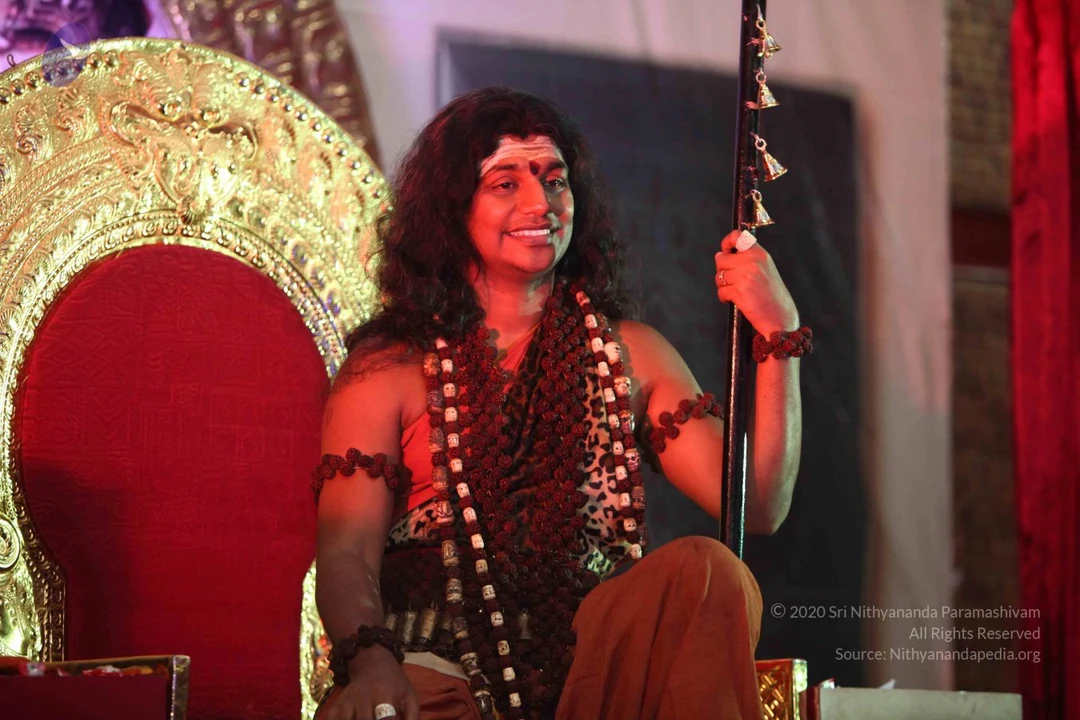
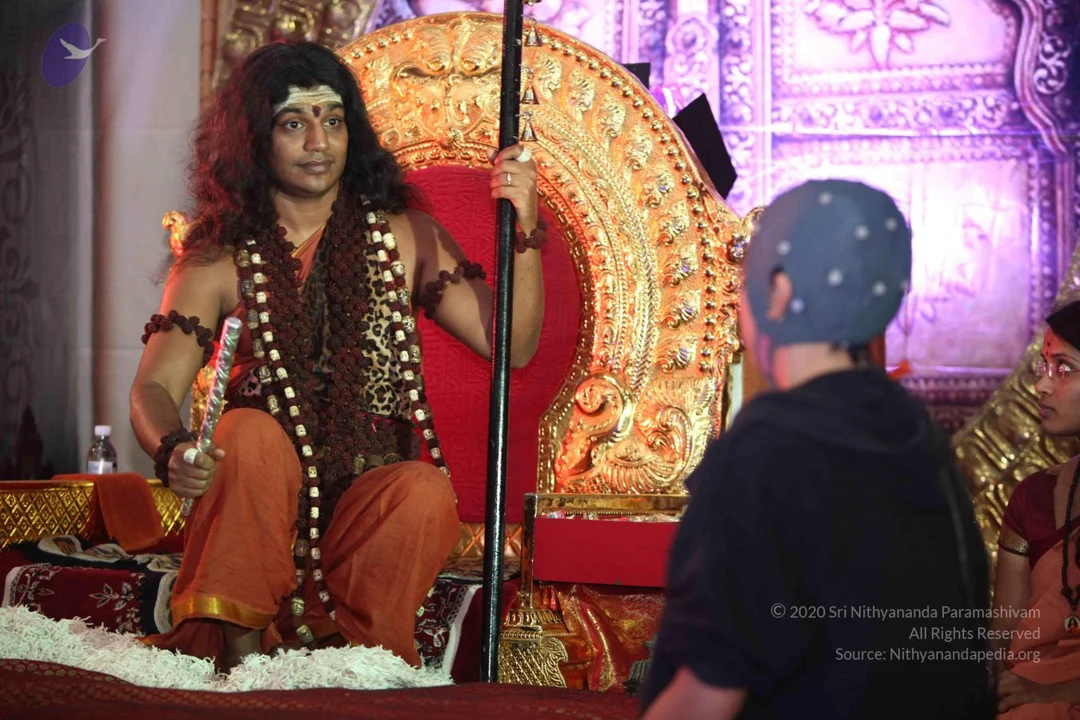
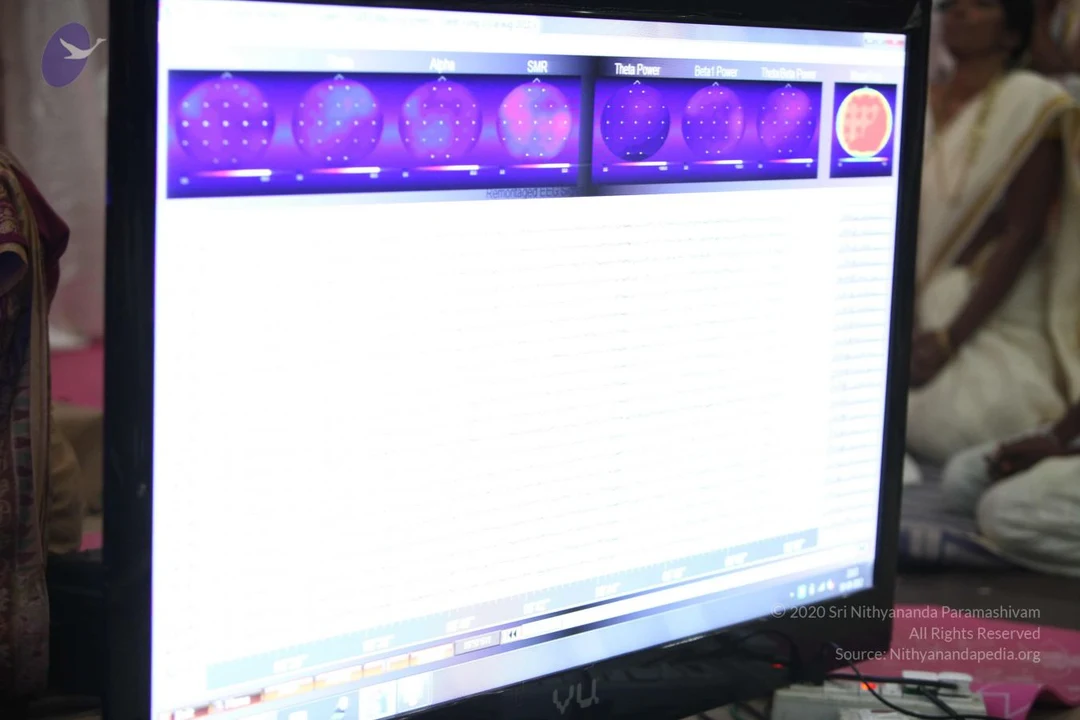
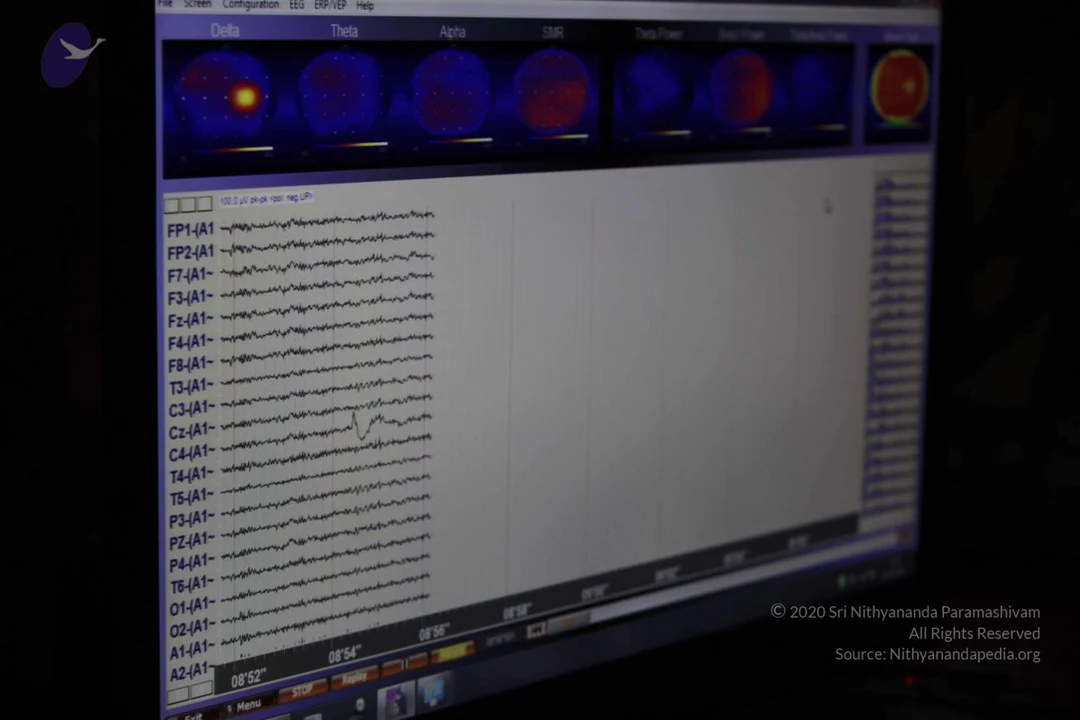
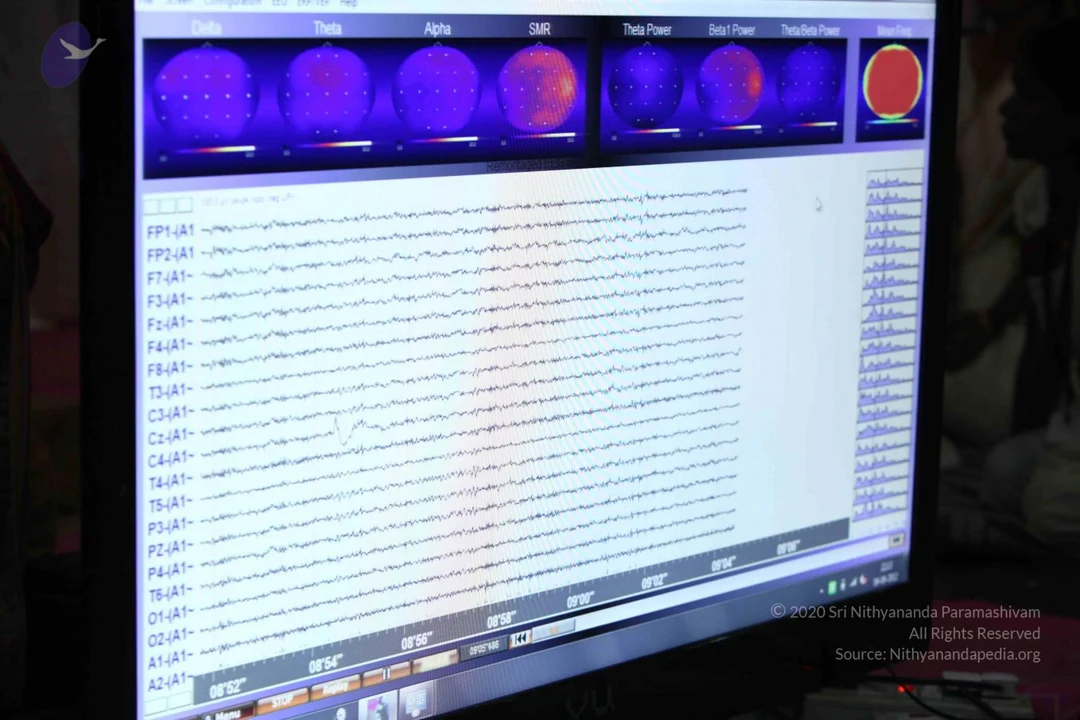
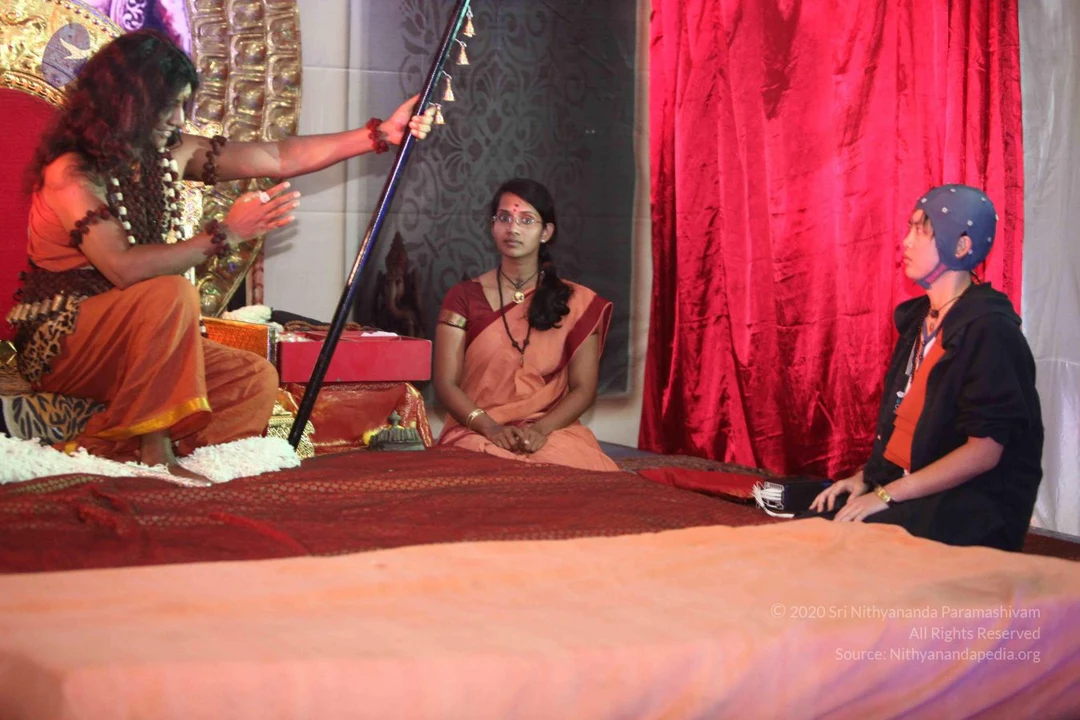
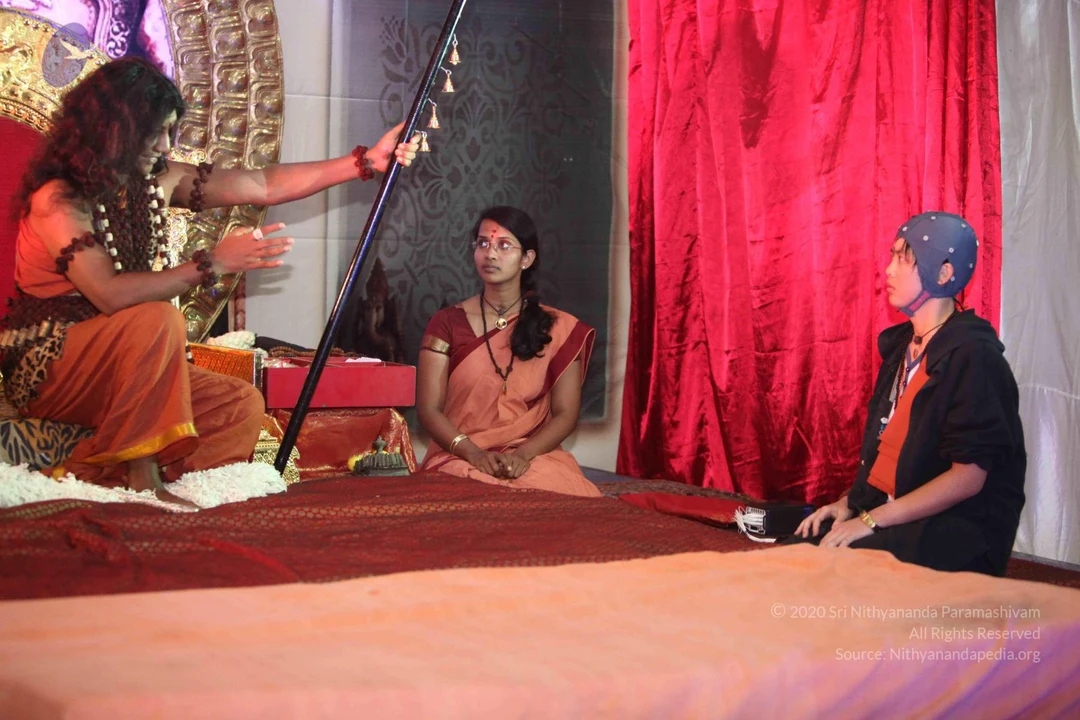
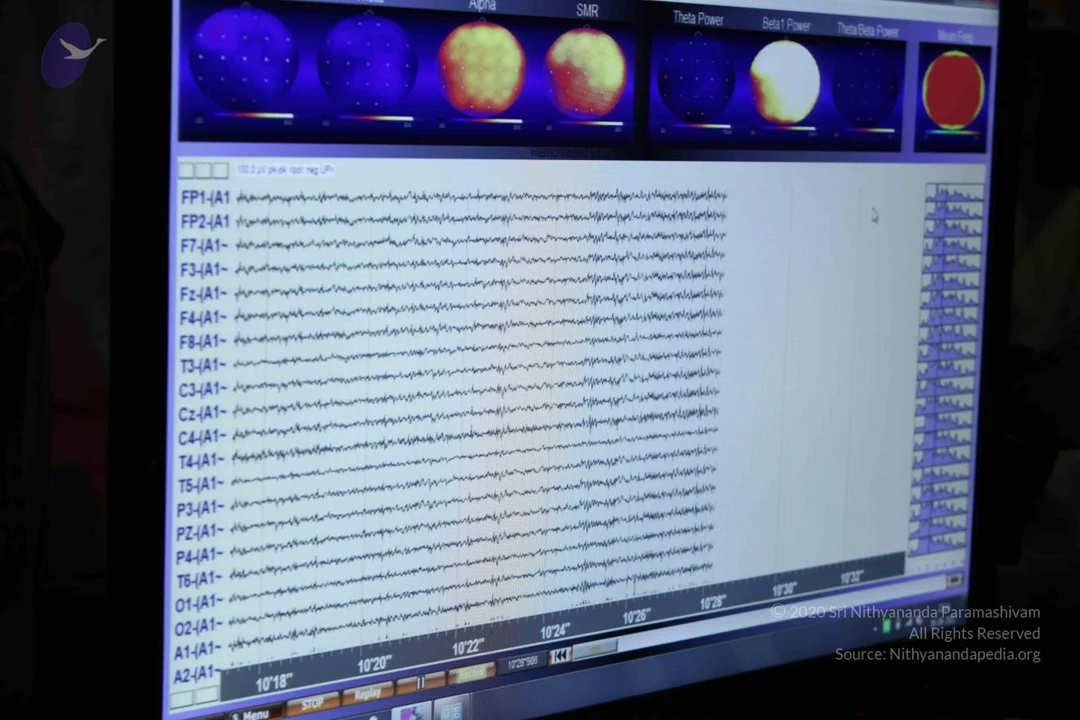
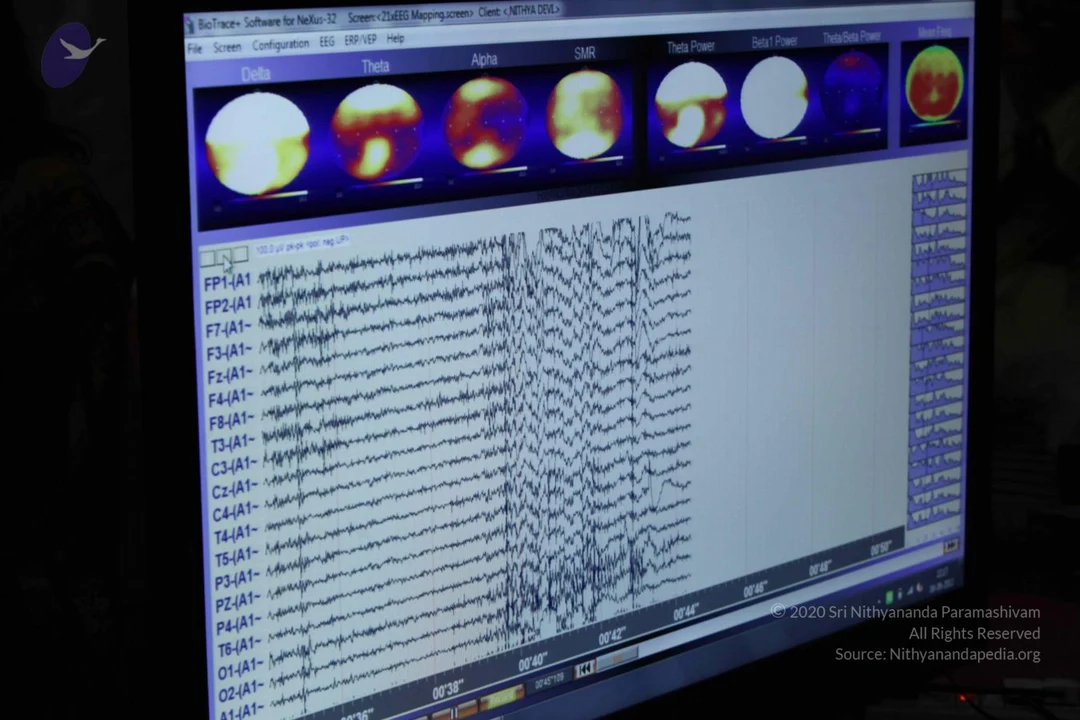
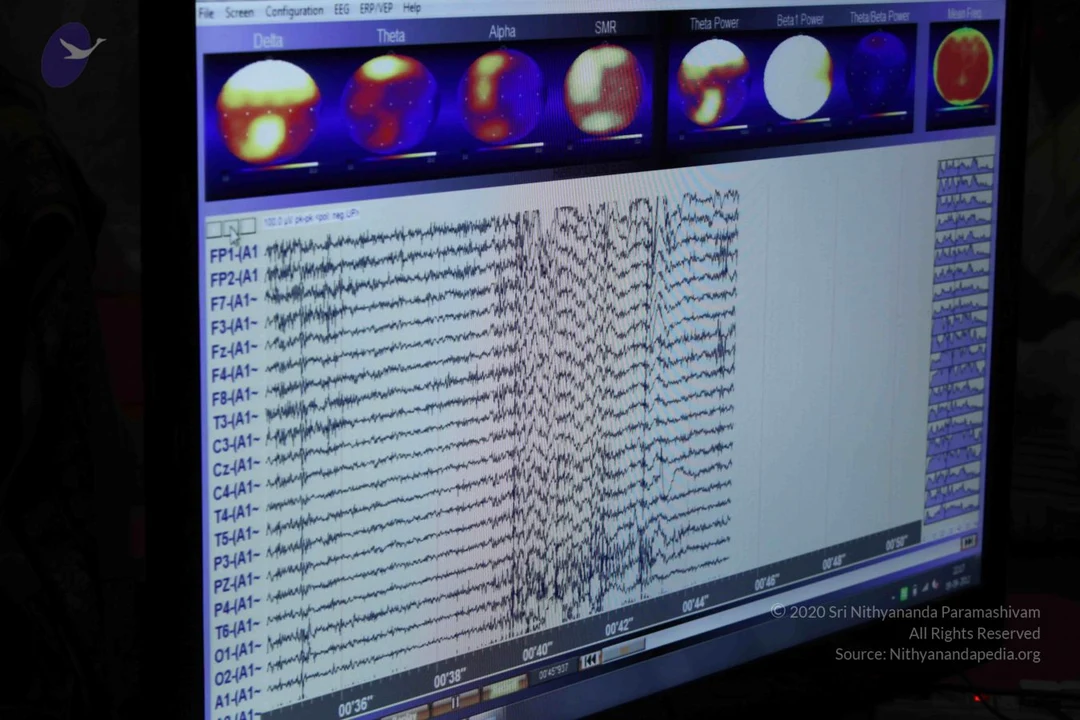
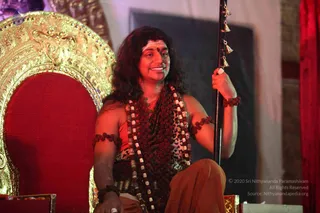
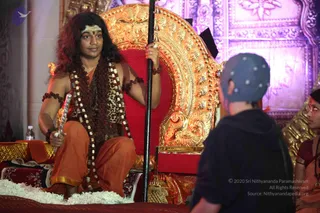
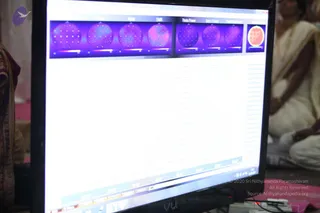
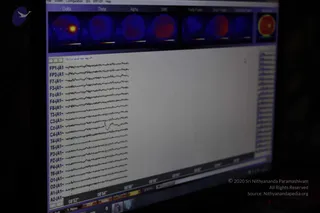
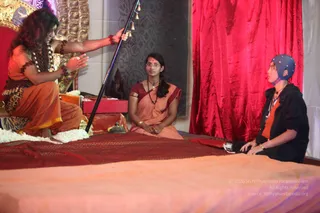
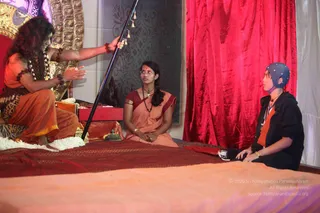
A man with long dark swept-back hair, a red tilak and a red bindi sits beside an ornate gold-and-red throne, holding a tall black staff hung with small bells. He wears layered rudraksha mala necklaces, a leopard-print bodice, rudraksha armbands and an orange-brown dhoti, and smiles toward the camera under warm red stage lighting. Swamiji (probable): the long swept-back hair, rudraksha malas, bells on the staff and saffron-orange clothing are the qualifying cues, and he is seated on the throne as the presenter of the satsang. A red curtain and dark backdrop frame the stage.A photo of a seated man with long dark hair and a white tilak on his forehead sits on a red and gold ornate throne, wearing orange-saffron trousers, a leopard-print garment, and layered rudraksha and white bead malas across his chest and arms; he holds a black staff with a small white rod in one hand. Facing him, a person in a dark hooded top with a grey cap dotted with white studs stands with their back to the camera, while a woman in a maroon-red sari sits at right. Gold-and-purple ornate panels form the backdrop, and a white cushion lies in the foreground. a person: the seated man has long swept hair, a tilak, rudraksha malas and saffron clothing on a throne, which matches the page's claim that the event involved a person.Photograph of a computer monitor in the foreground displaying a brain-wave monitoring interface with purple and blue circular head-map panels labelled Theta Power, Beta1 Power, Alpha, SMR and Theta/Beta Ratio, plus a line-graph area. Beside the screen, a woman in a white and cream sari sits cross-legged on a pink cloth, hands folded in her lap. Blurred figures in colourful clothing stand at the left edge. The setting appears to be a satsang hall with a pink floor covering. Only partial figures are visible, and the monitor occupies most of the frame.A photograph of a computer monitor displaying an EEG brain-wave recording software interface. The top row shows colour-mapped brain topography maps labelled Delta, Theta, Alpha, SMR, Theta Power, Beta Power and Gamma-type bands, with red and blue heat patterns. Below, multichannel traces for channels such as FP1-(A1), F7, Cz, O1 and A2 scroll across a white grid with a timestamp of 08:52 visible at the bottom. The room is dark, with no people visible in the scene.A photograph of a satsang setting on a raised platform draped in red and orange fabrics with a gold-patterned backdrop. A figure on the left, with long swept-back reddish hair, rudraksha malas, bead necklaces and an orange-saffron dress with a leopard-print wrap, sits on a throne-like seat and extends a long wooden staff with bells toward a seated woman in a peach sari with a maroon blouse, glasses, a pendant and a red bindi. A third person in a dark hooded top with orange trim and a blue head covering sits on the right before a red curtain. Flower petals lie on the platform and a small brass item sits nearby. a person appearance: the figure on the left shows long hair, rudraksha malas and saffron clothing, shown in the role of teacher giving instruction. Physical people: three.A photograph of a seated teacher in long swept-back dark hair, orange clothing and a rudraksha mala with a ceremonial gold chain, gesturing with one raised arm toward a tall wooden staff hung with small bells. Two seated students face him on a red-and-gold draped bed. A woman in a peach sari with a red bindi sits center, hands folded, and a person in a dark jacket and orange top wearing a blue headpiece sits at right. Behind them hang red velvet curtains, a gilded throne-like seat and white flower petals on the floor. a person is the teacher, indicated by his distinctive long hair, rudraksha and gold ornaments, seated on the throne in a satsang-style teaching setting.

Pada-Puja

12 photosSource gallery
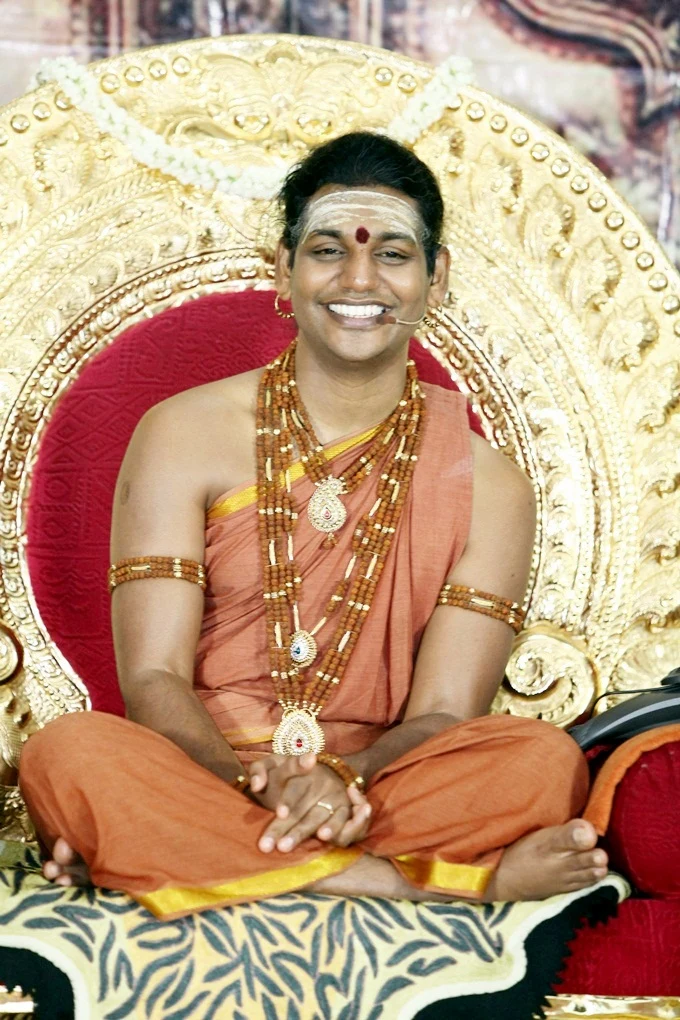
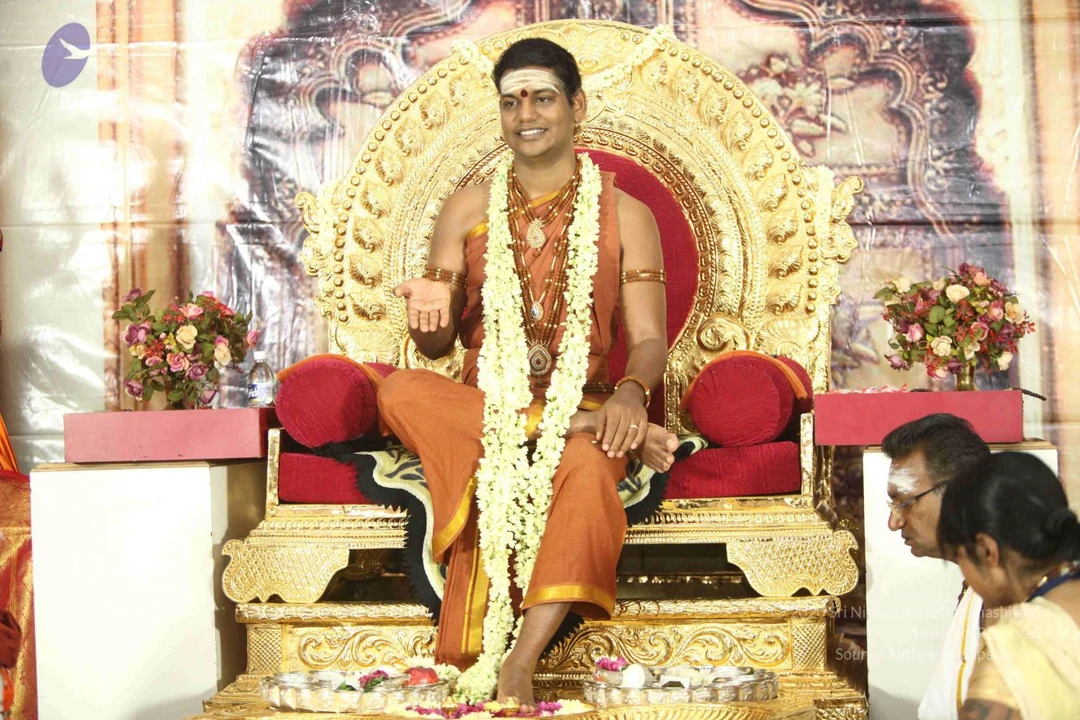
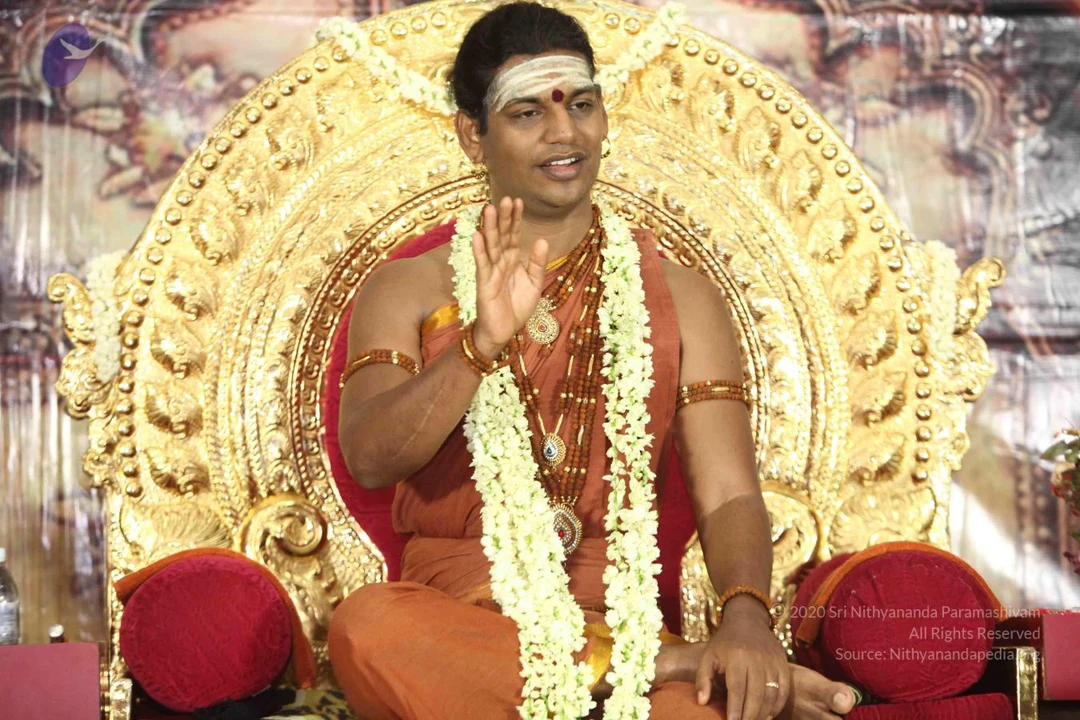
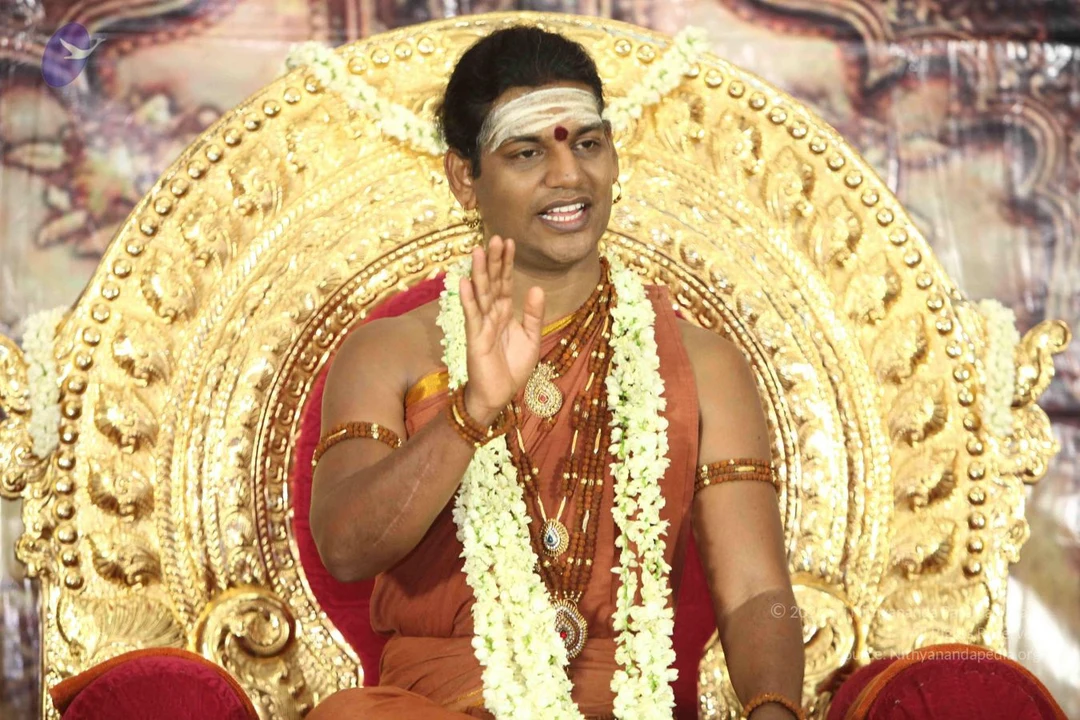
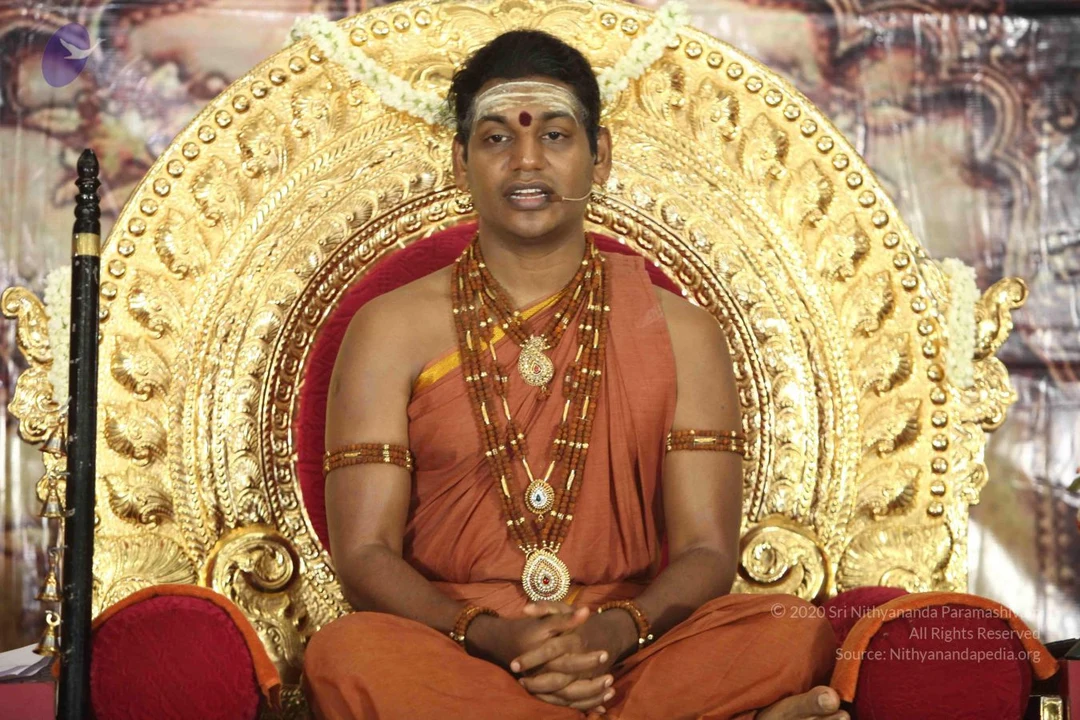
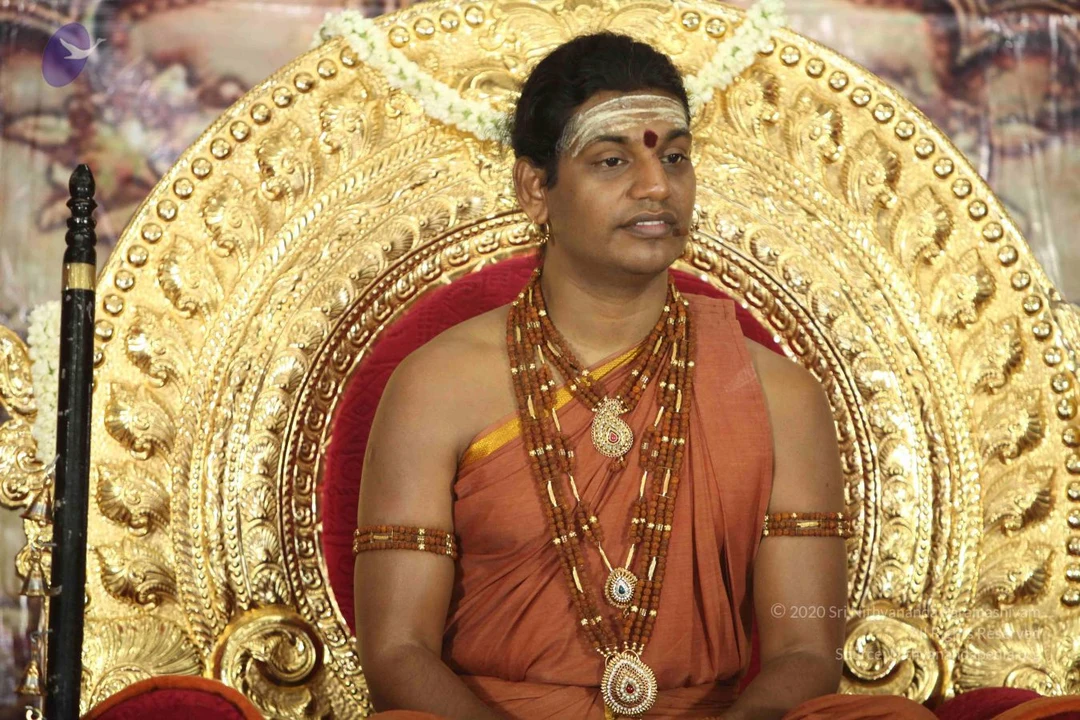
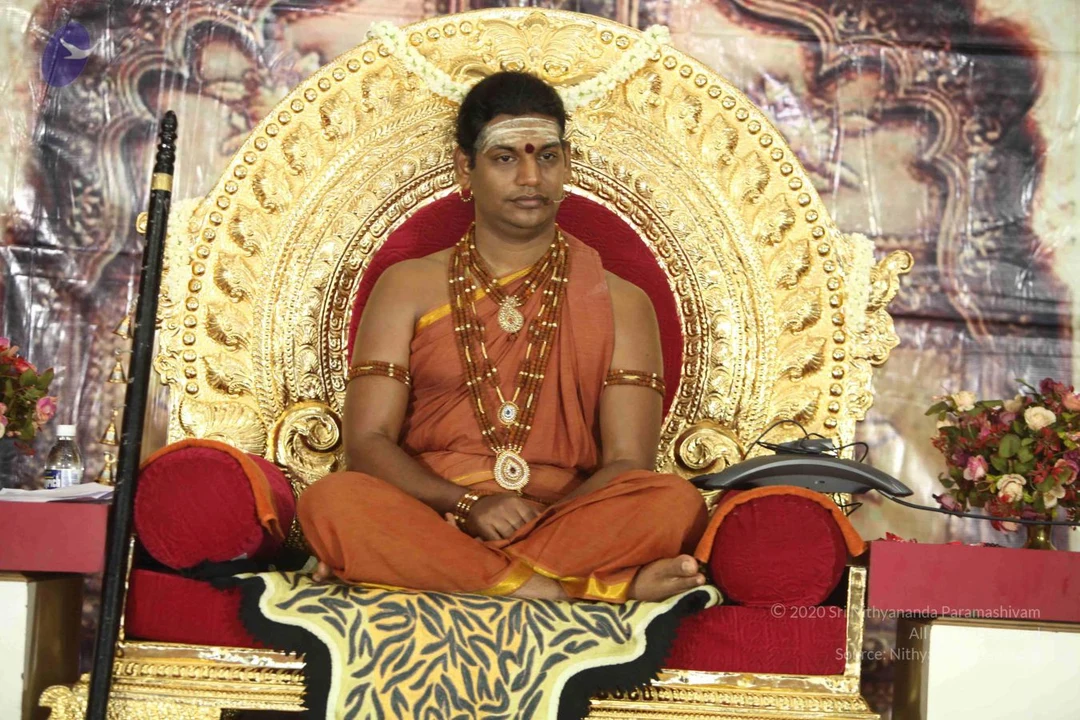
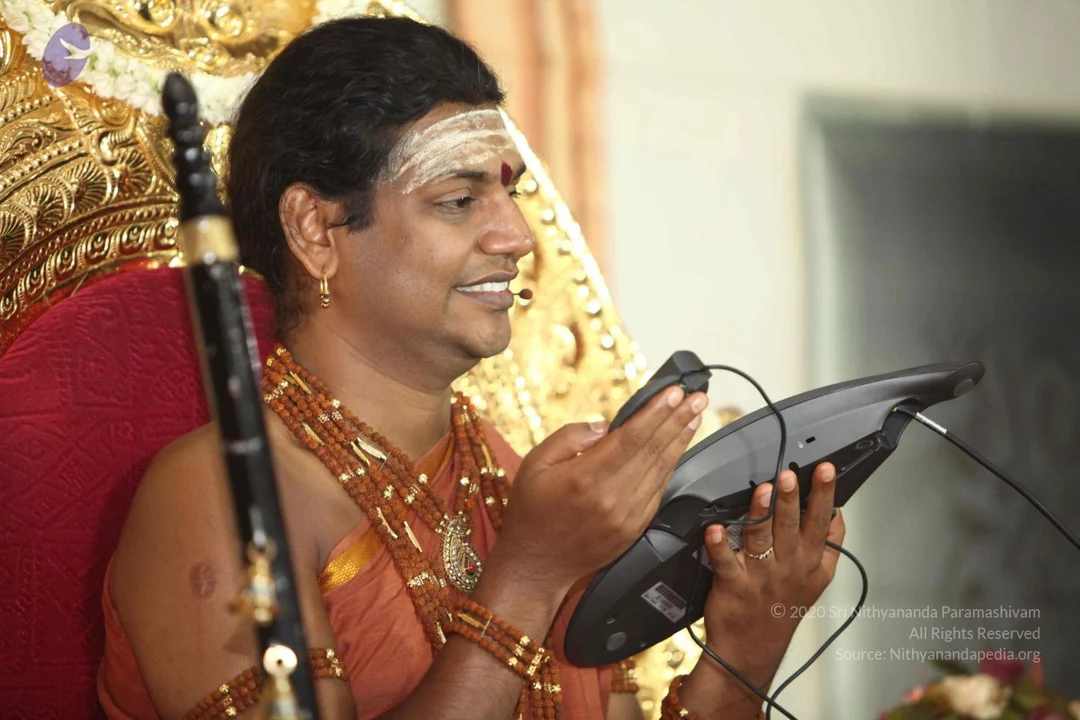
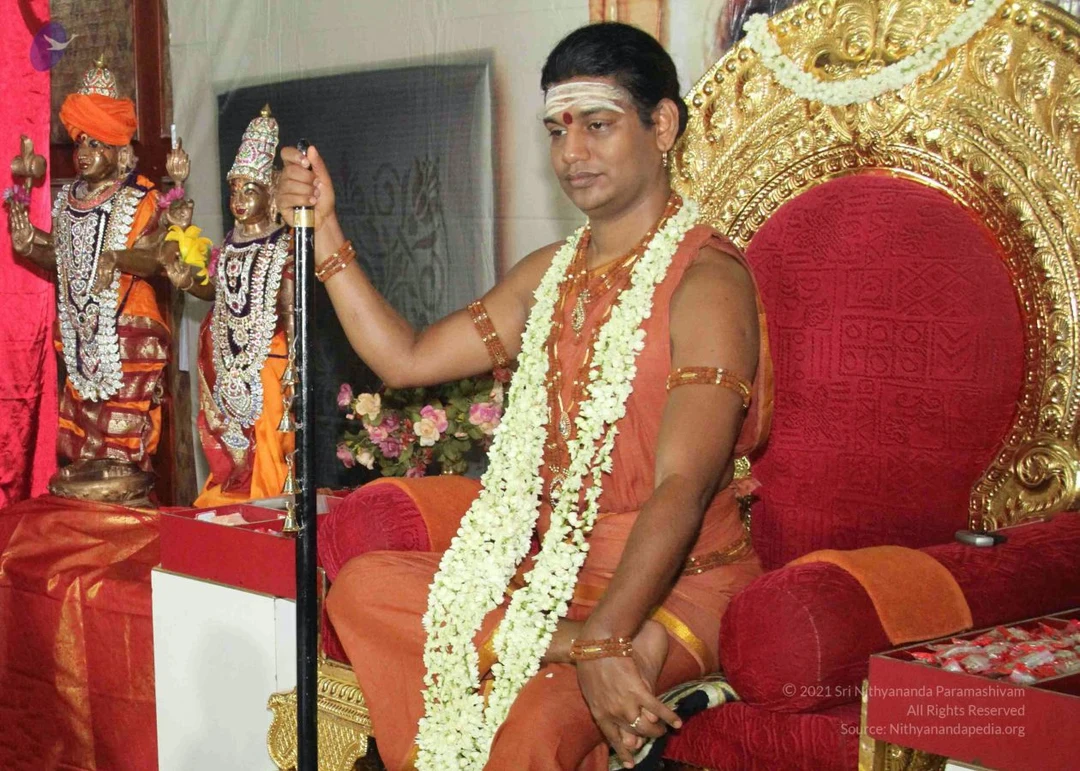
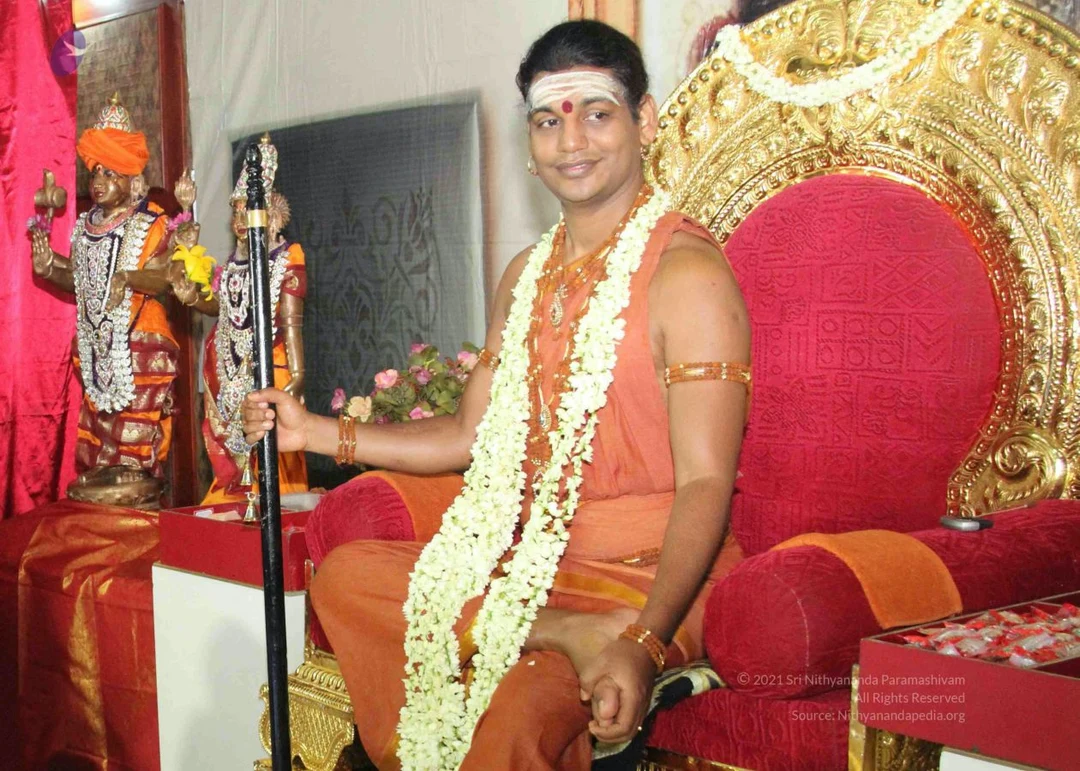
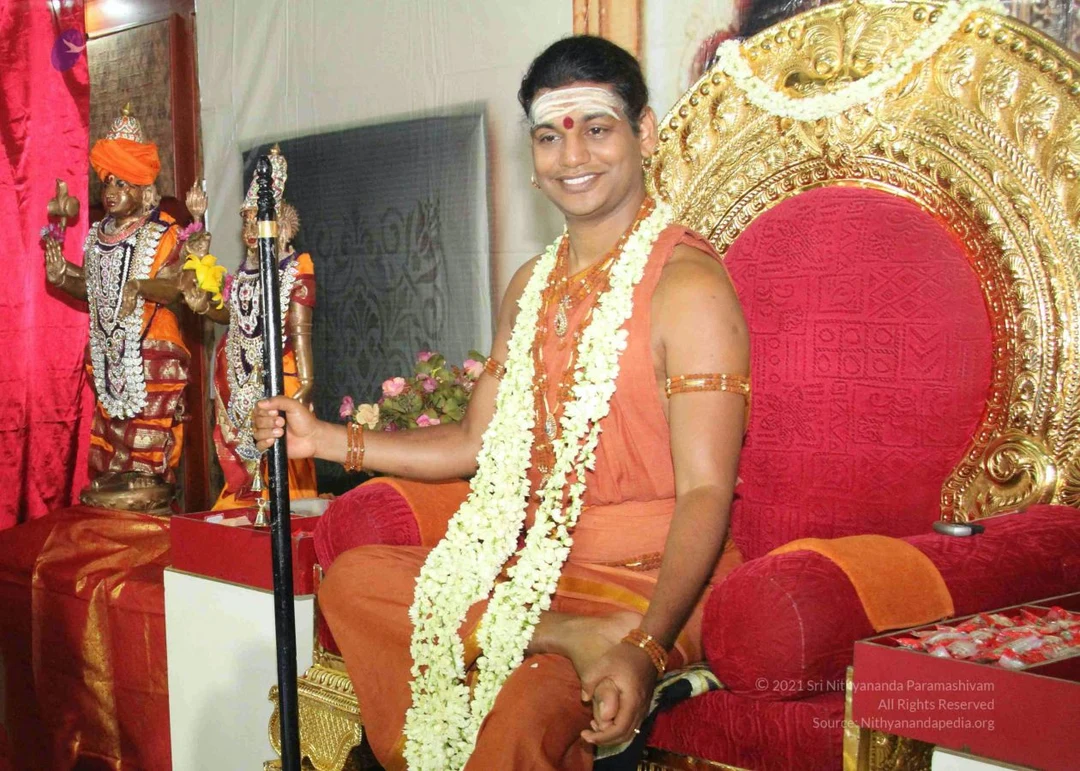
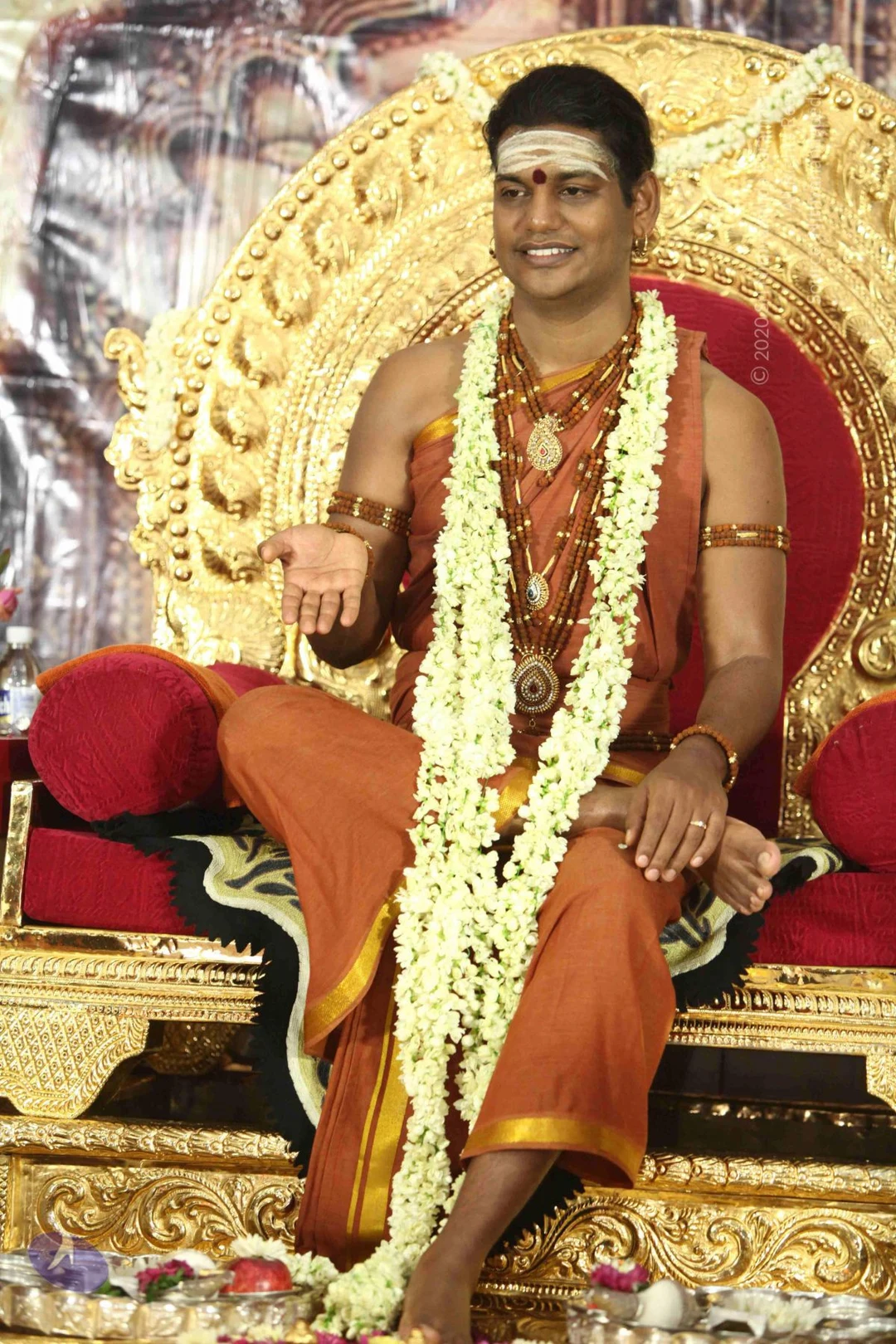
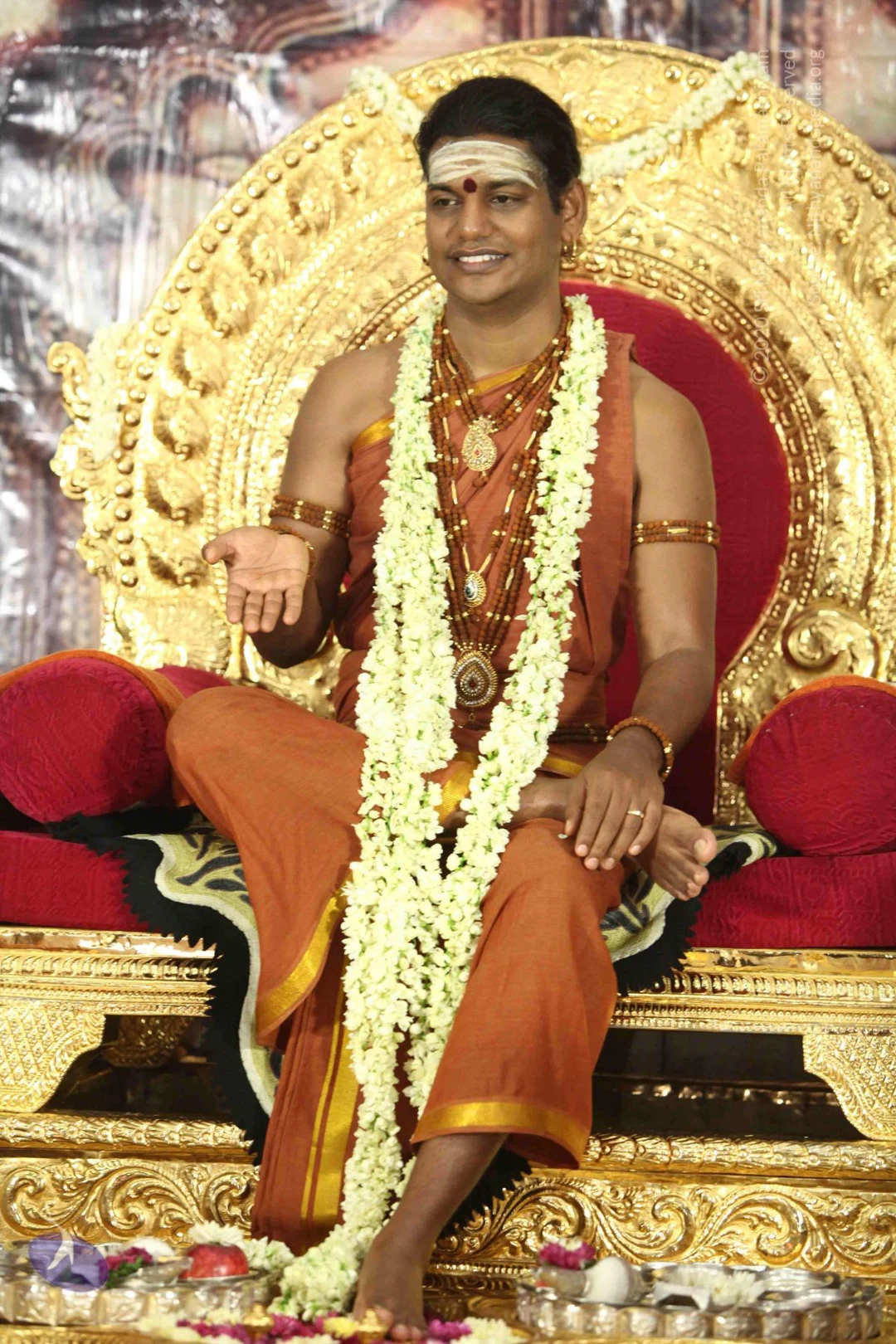
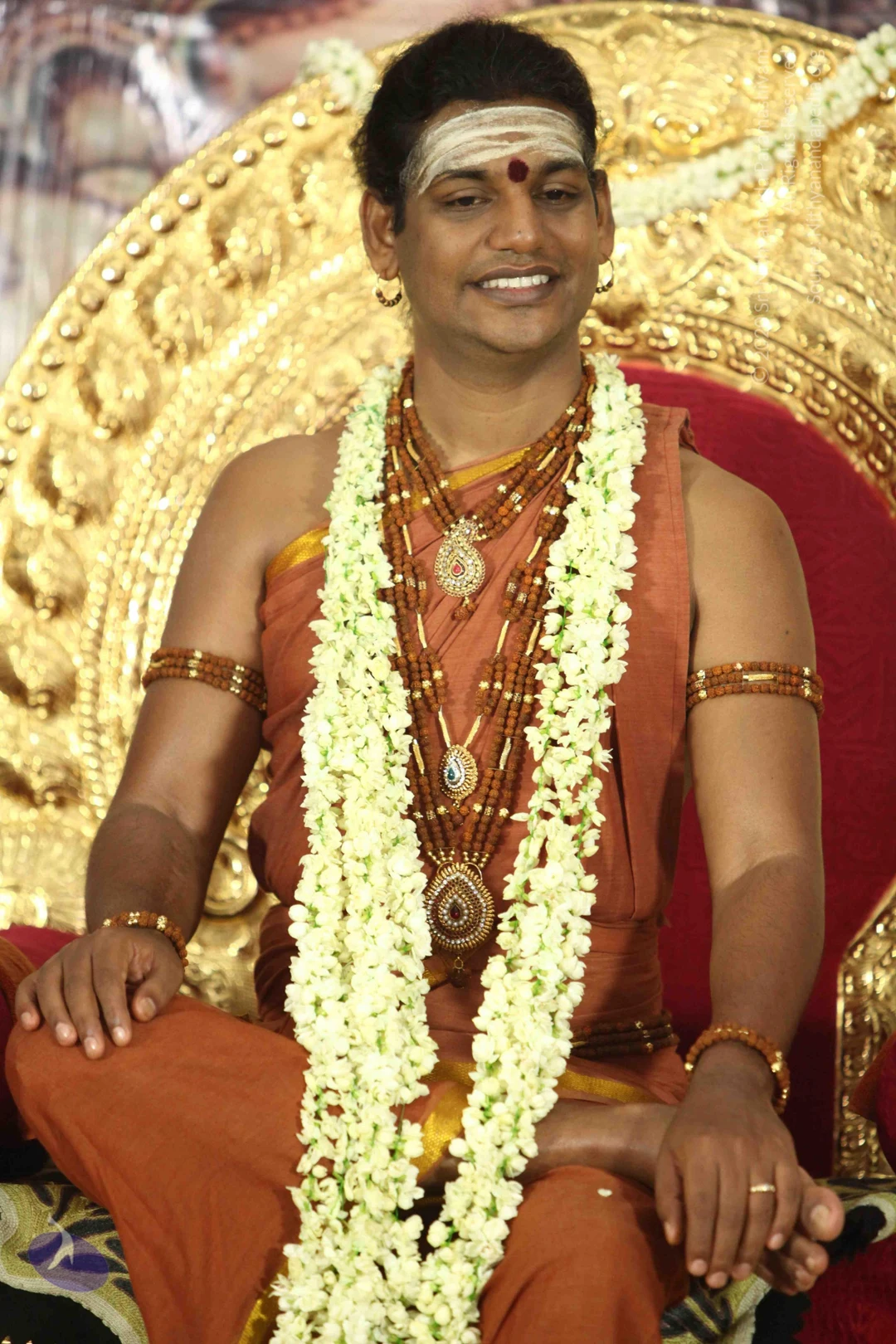
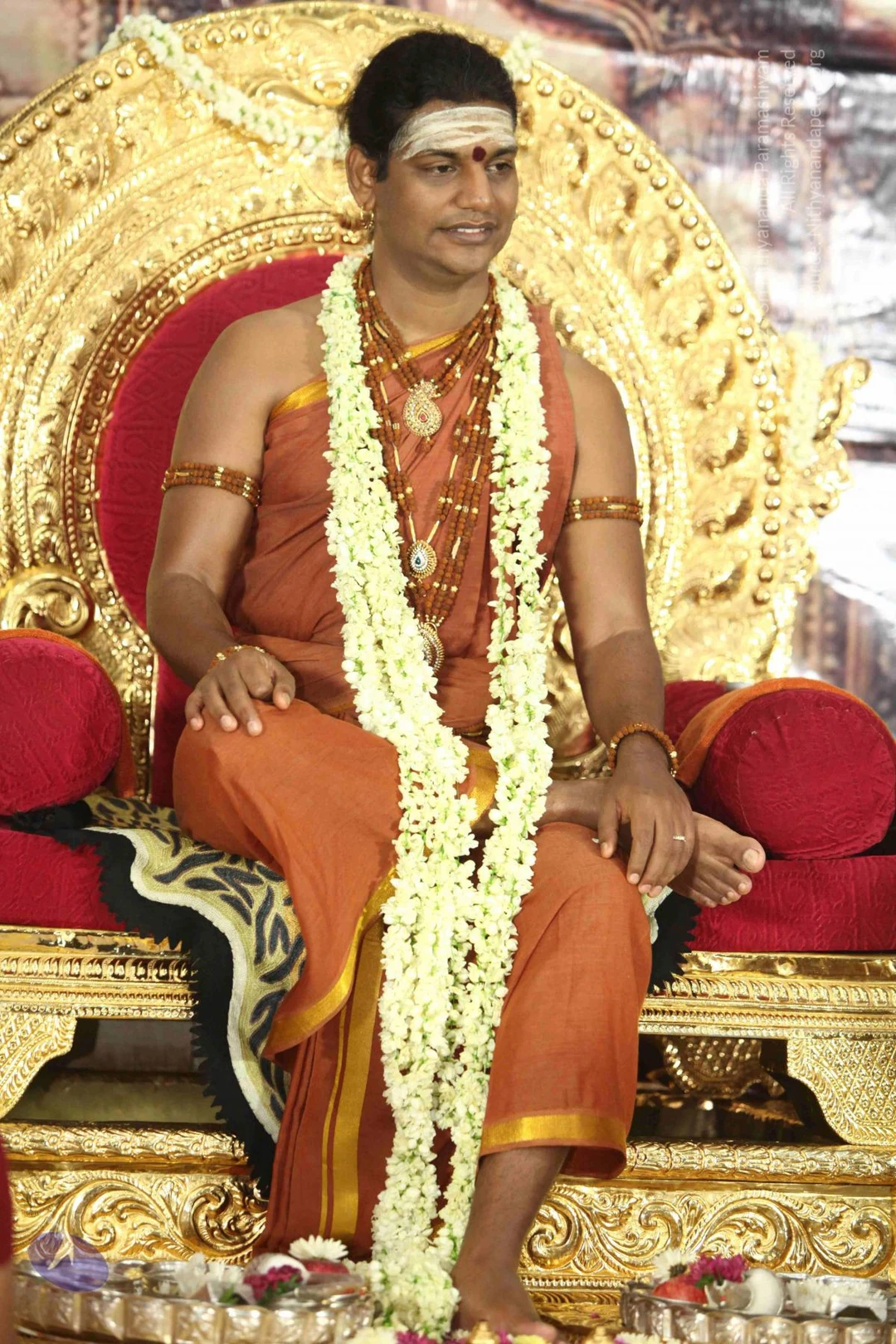
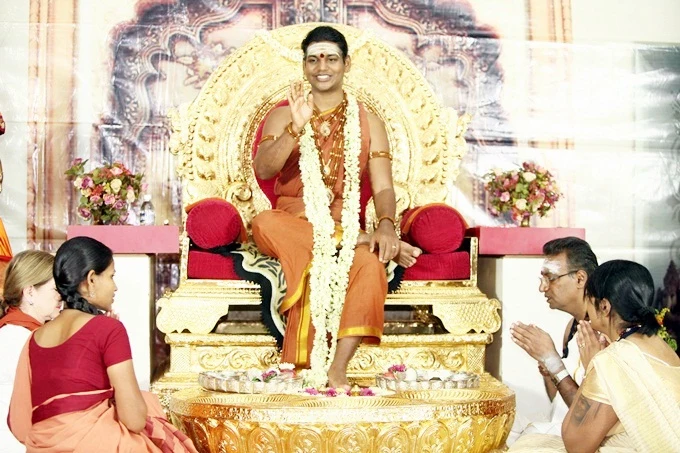
A man seated on an ornate gold-framed throne with a red cushioned seat and orange bolster, holding a black staff upright in his right hand. He wears an orange-saffron robe, long white jasmine garlands, a rudraksha-style necklace, gold bangles and armlets, and a white tilak with red bindi on his forehead. Two painted-metal deity statues in orange and gold attire with silver-white ornaments stand to the left, one holding a flower. A tray of sweets sits on a red box at right, with a red drape behind.A smiling man in orange-saffron robes sits on an ornate gold-and-red throne with a red velvet cushion. He wears a white garland of flowers, rudraksha-style beads, gold armlets, and a white tilak with a red dot on the forehead, and he holds a long black staff. Behind him, two painted statues in orange and red garments with jewelled white garlands stand on a red draped table. Pink and white flowers sit near the throne, and a tray of sweets is visible at the right edge. The setting is a red-curtained ceremonial stage. a person: the seated man in saffron robes with a garland, rudraksha beads and gold armlets on a throne fits the page's identification, though the appearance cues are only moderately distinctive.A seated man in a gilded, ornately carved throne with red velvet cushions speaks with his right palm open toward the viewer. He wears a white sandalwood tilak with a red dot on his forehead, gold earrings, an orange-brown unstitched robe with a gold border, multiple strands of rudraksha malas, and a pendant necklace. White jasmine garlands drape over his shoulders and down to his lap, and a bare foot rests on the throne. Flower offerings and a plate with fruit sit at the lower edge. a person: the appearance cues are the orange-brown robe, rudraksha malas, ceremonial pendant and garlands on a throne, so the presenter is a probable in-person candidate.Photograph of a seated man on an ornate gold throne with red cushioning, wearing an orange-brown sleeveless garment with gold border, multiple strands of rudraksha beads, gold pendant necklaces, rudraksha armlets and a thick white jasmine garland draped over his shoulders. He has a white vertical tilak with a red bindi on his forehead, gold hoop earrings, and smiles while resting his hands on his knees. a person based on the rudraksha malas, ceremonial gold ornaments, orange clothing and throne cues, shown in person on the throne.A man sits cross-legged on an ornate gold throne with red cushioned upholstery and a patterned black-and-gold cloth draped over the seat. He wears a saffron-orange garment with a gold border, multiple rudraksha malas and a gold pendant necklace, plus rudraksha armlets and bangles. A long white jasmine garland hangs over his shoulders and chest. A white horizontal tilak with a red dot marks his forehead. Floral offerings and plates sit at the bottom of the frame. The figure has distinctive ceremonial adornments and a swept-back hairstyle, consistent with the page's a person reference at a satsang setting.A man with short dark hair and a white vertical tilak with red dot on the forehead sits on an ornate gold throne with red cushions, smiling with palms pressed together in namaste. He wears an orange-saffron garment, multiple rudraksha-style beaded necklaces and gold bangles, with a white jasmine garland draped across his chest and a red-jewelled pendant. a person seated in a satsang setting, presenting with a ceremonial throne and garland, with cues of saffron clothing and beaded necklaces.

Satsang
17 photosSource gallery
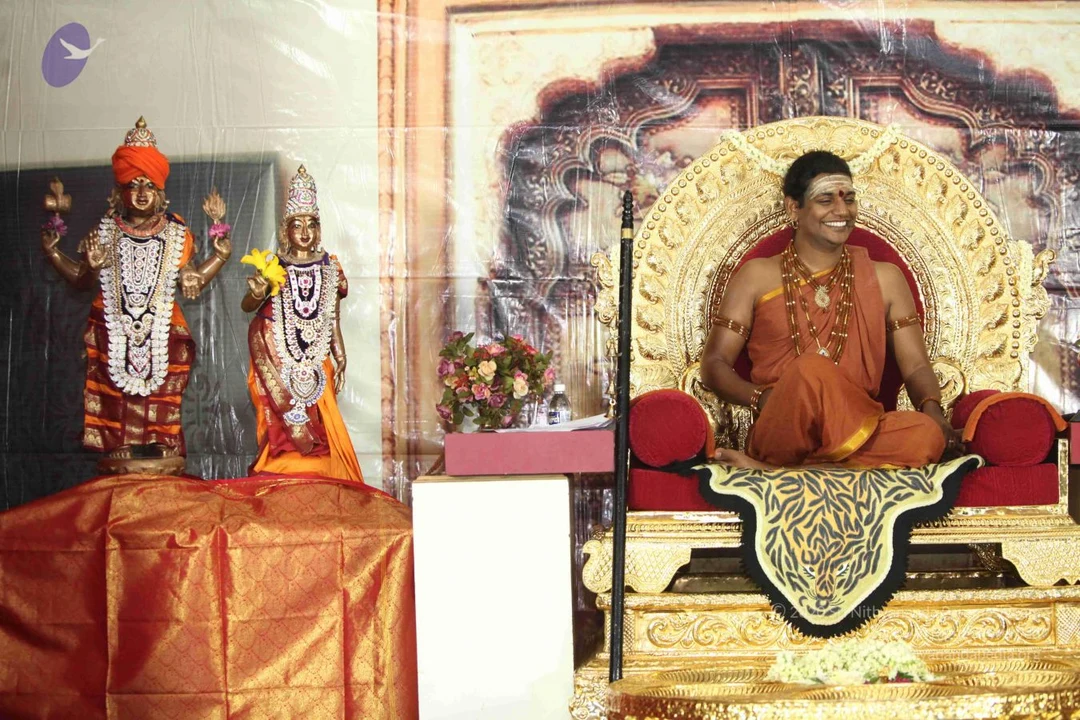
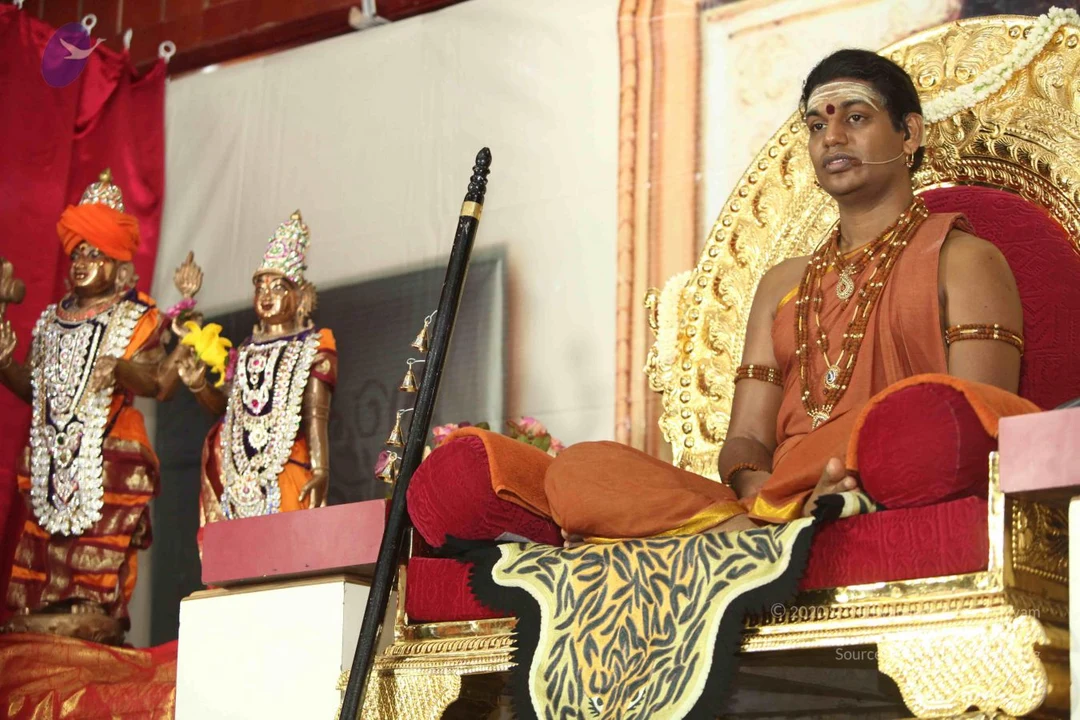
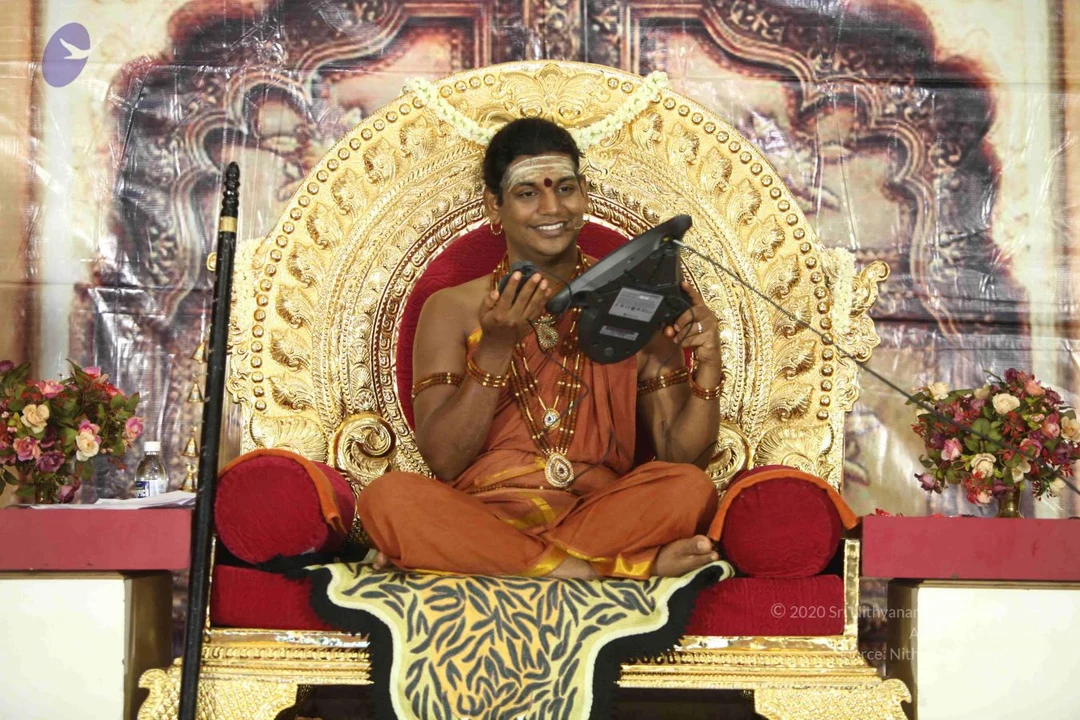
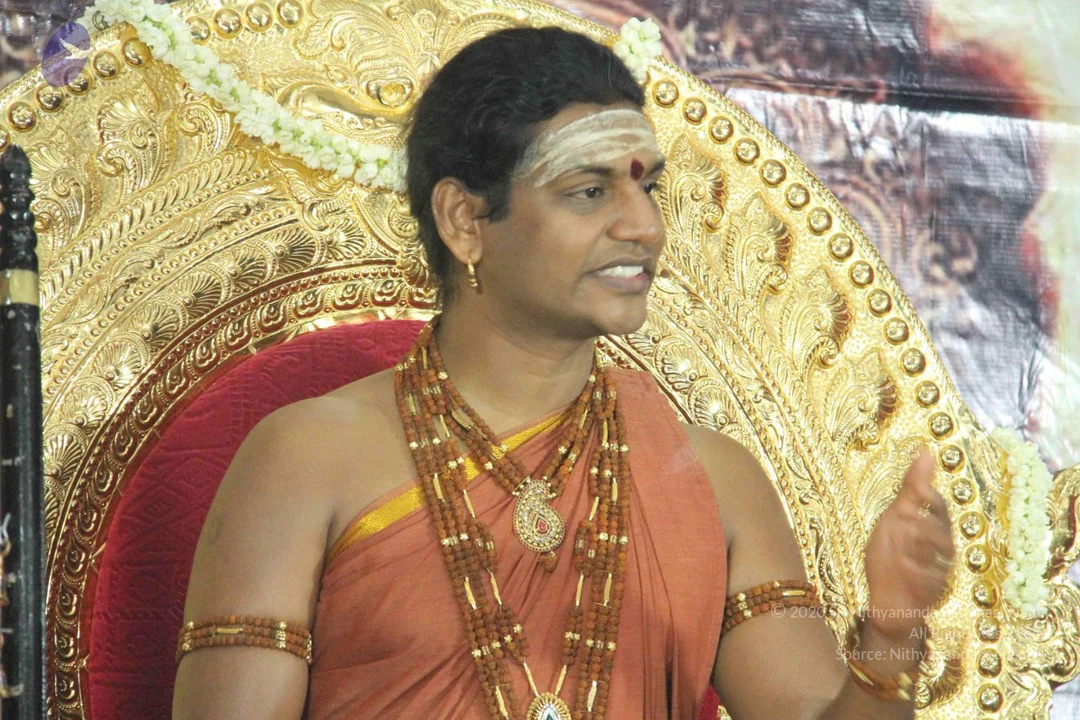
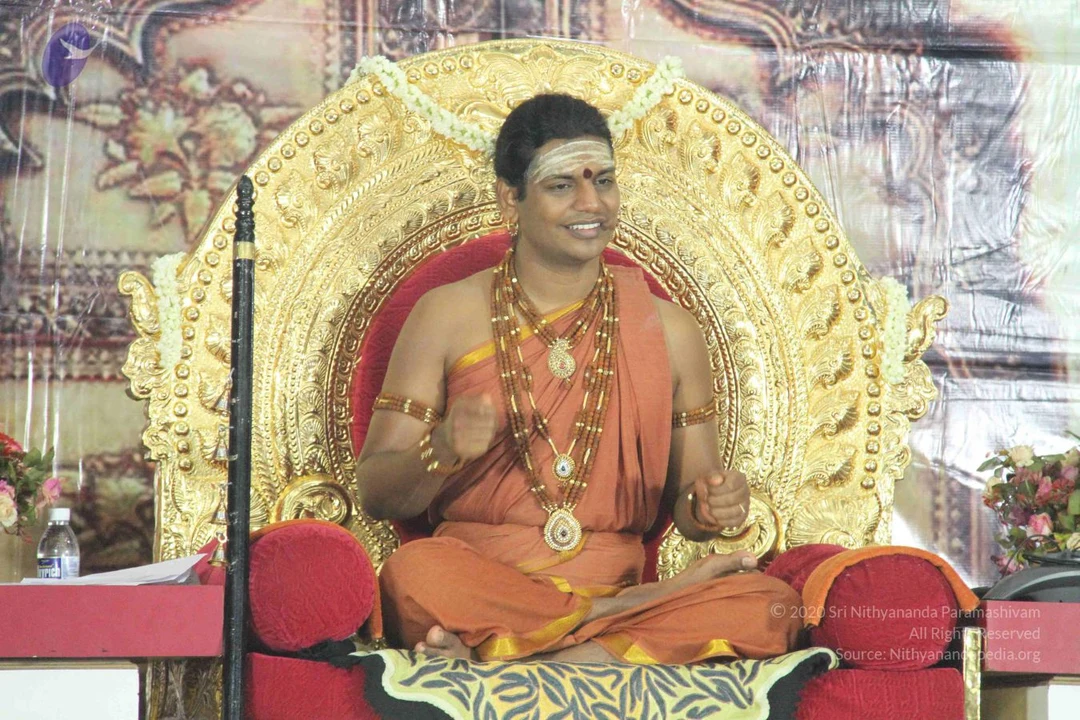
A man sits on an ornate gilded throne with red cushioning, speaking softly with a small headset microphone near his face. He wears an orange-saffron draped garment with a golden border, multiple strands of rudraksha beads with gold spacers, a large gold pendant, and rudraksha armlets. He has a white sandalwood-paste horizontal band across the forehead with a red kumkum dot, and a gold earring. A black staff with small golden bells is in the foreground. a person is seated as the speaker, with ritual adornments and a throne setting consistent with a satsang discourse.A man seated cross-legged on an ornate golden throne with red cushions, smiling while speaking into a headset microphone. He wears an orange-saffron unstitched garment with gold borders, multiple strands of rudraksha malas, a gold pendant necklace, rudraksha armbands, and a white tilak with a red bindi on his forehead. His hands are held together in front of him. Behind the throne is a gold-decorated backdrop with white jasmine garlands. a person: the orange robes, layered rudraksha malas, gold ornaments and tilak match the page's a person claim, and the page states he is speaking at this event.Photograph of a seated man on an ornate golden throne with a red cushioned seat, speaking to an audience out of frame. He wears an orange-saffron garment draped over one shoulder, multiple strands of rudraksha-style beads, a gold pendant and ornate gold armbands, with a white sandalwood-style marking across his forehead and a red dot between the brows. A small microphone is attached near his face. He gestures with one raised hand. Flowers in a vase and a dark ceremonial staff appear at the left edge, with a white-and-pink garland draped over the throne back.A smiling man sits on an ornate gold throne with a red cushioned seat and white jasmine garlands, wearing an orange-saffron shawl over his shoulder and bare arms, multiple strands of rudraksha malas with gold beads, a gold pendant with red and blue stones, rudraksha armlets, and a white tilak with a red bindi on his forehead. He wears a small headset microphone near his ear. Appearance-based label: a person, seated as the speaker at a satsang. Another person's hands are not visible; only this one seated figure appears in the frame.Photograph of a man speaking on a stage, wearing a rust-orange sleeveless garment with several strands of rudraksha beads and gold-tipped bead necklaces, a gold pendant, gold bangles, and small gold earrings. He has white horizontal tilak lines across his forehead with a red dot at the centre and a wired headset microphone. His right hand is raised, palm open, in an explanatory gesture. Behind him is an ornate gold and pink decorative backdrop with white flowers.A seated man in orange-saffron robes and a red-and-gold ornate throne delivers a talk, one hand raised in gesture. He wears layered rudraksha-style beaded necklaces, a pendant, bangles and a white tilak on his forehead. A tiger-skin style rug lies before the throne, and a long black staff rests beside it. To the left stand two painted deity murtis: one with an orange turban and beaded garland, the other in a crown with a white flower garland, both holding flowers. Red drapery and a flower arrangement complete the stage setting. The man on the throne is a person candidate by his saffron robes, rudraksha beads and tilak, seated in a satsang-style discourse.
Dial-the-Avatar

19 photosSource gallery
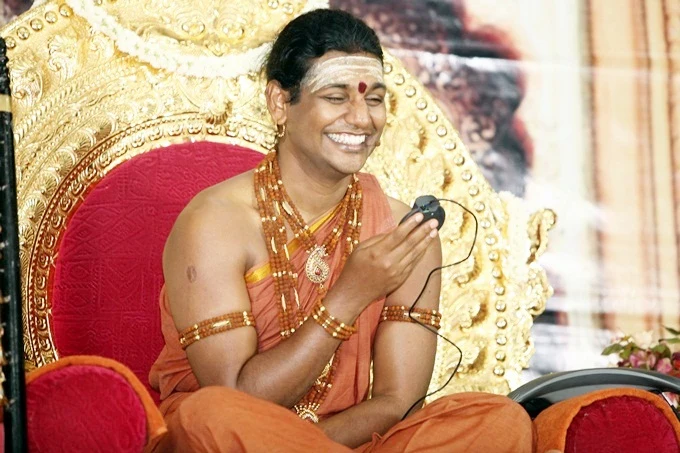
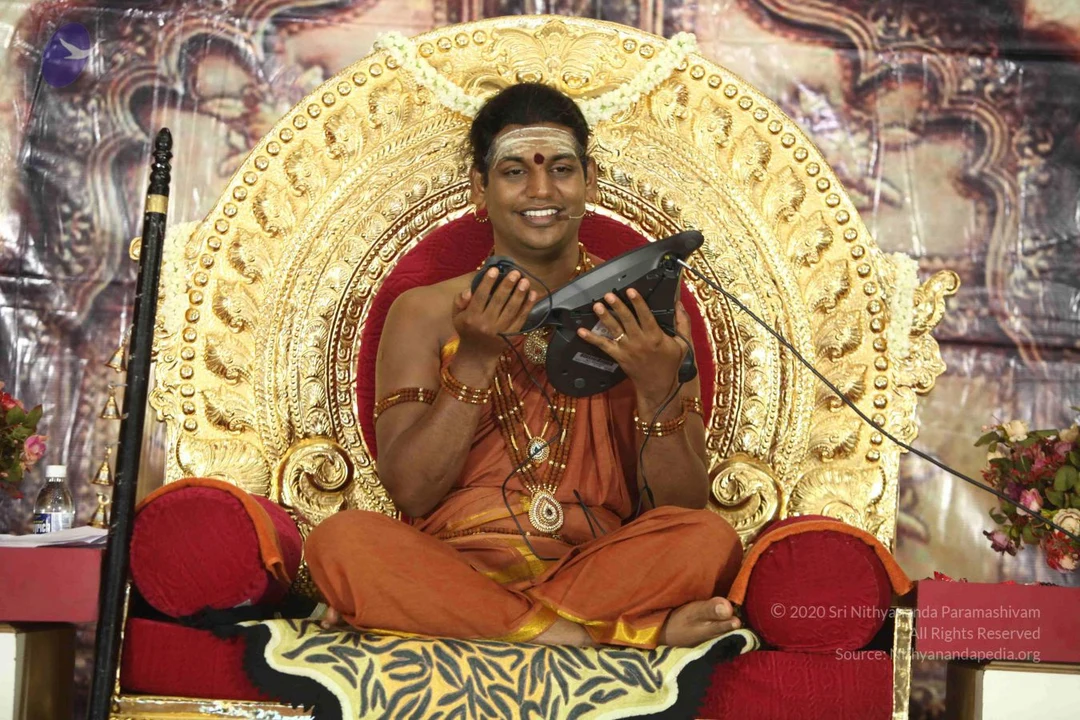
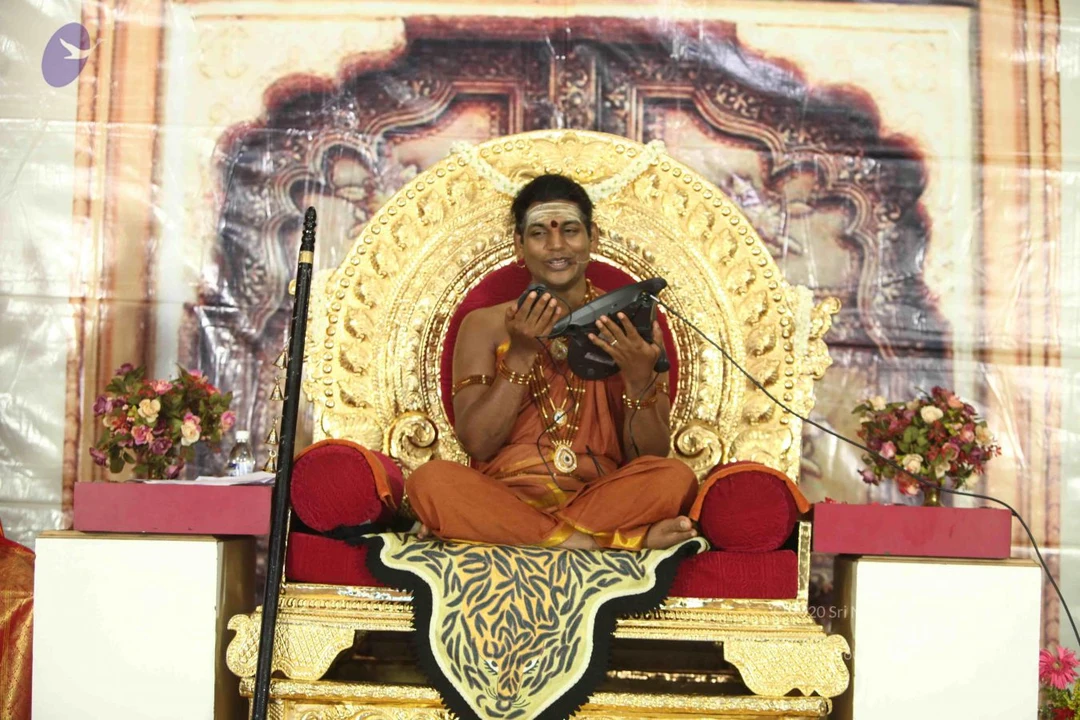
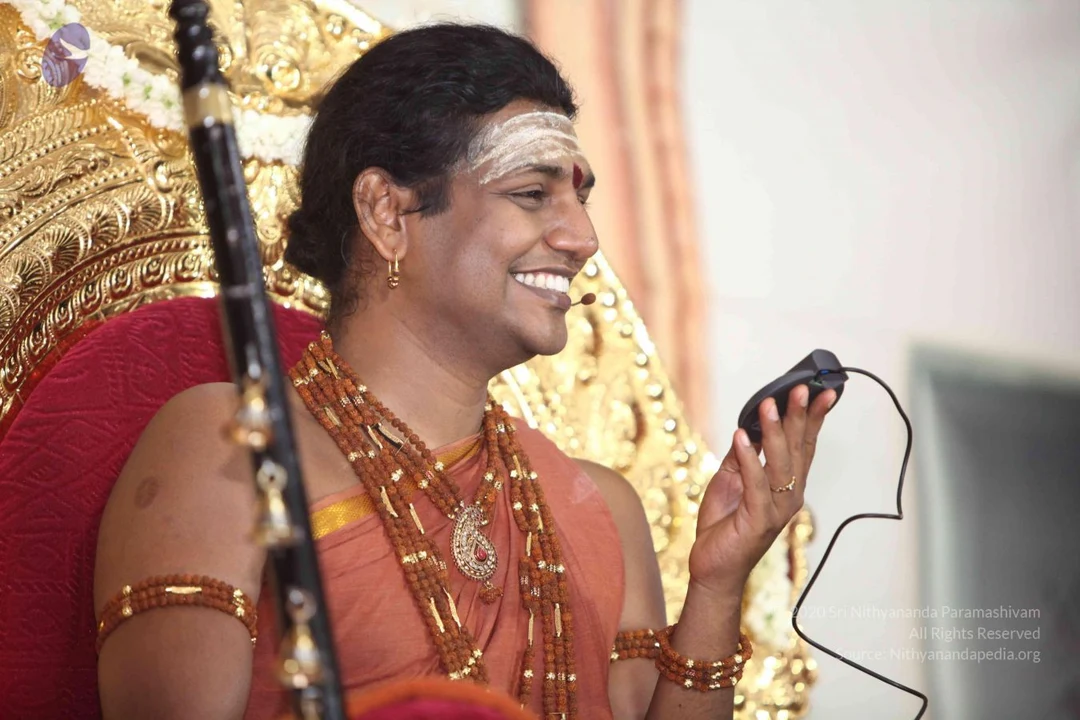
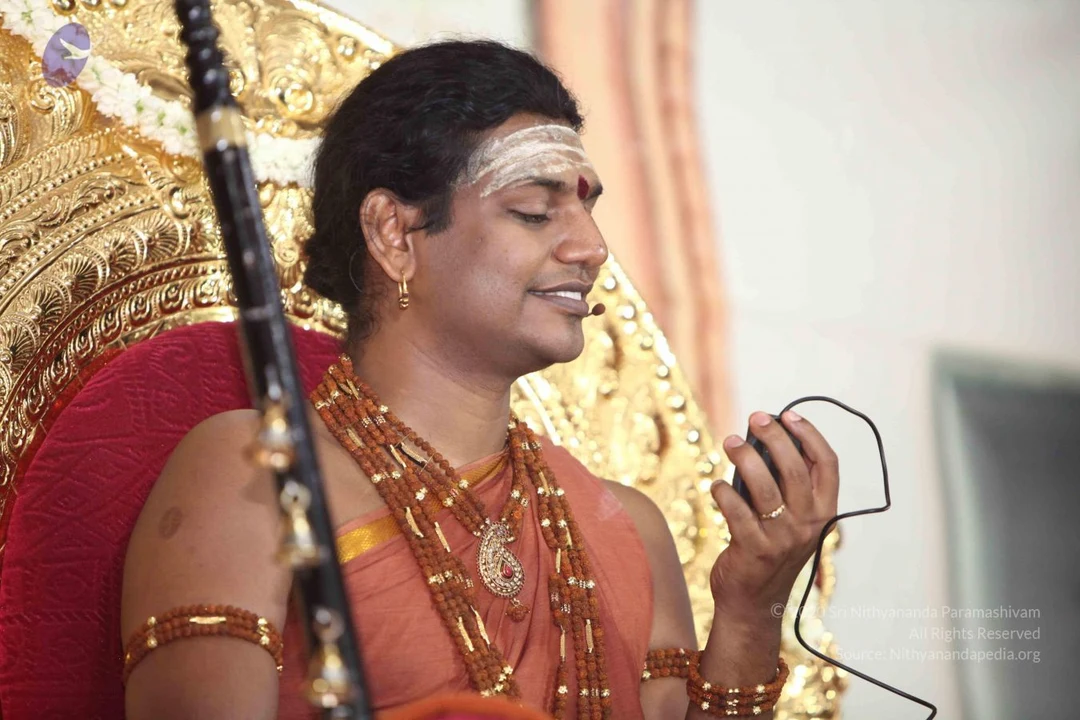
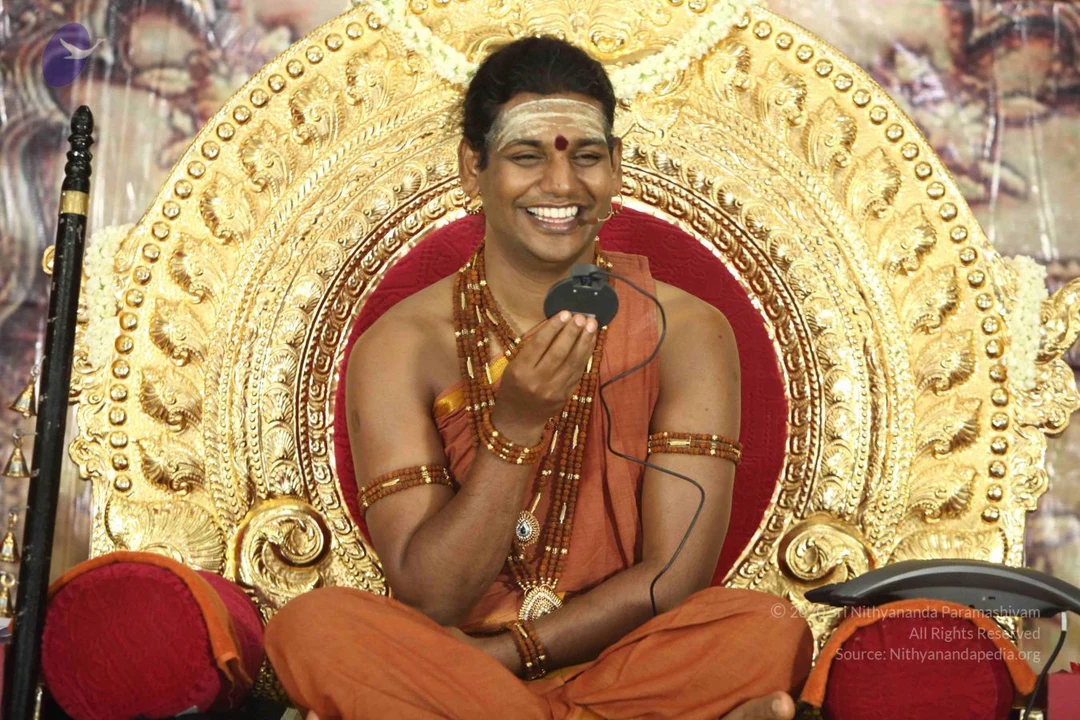
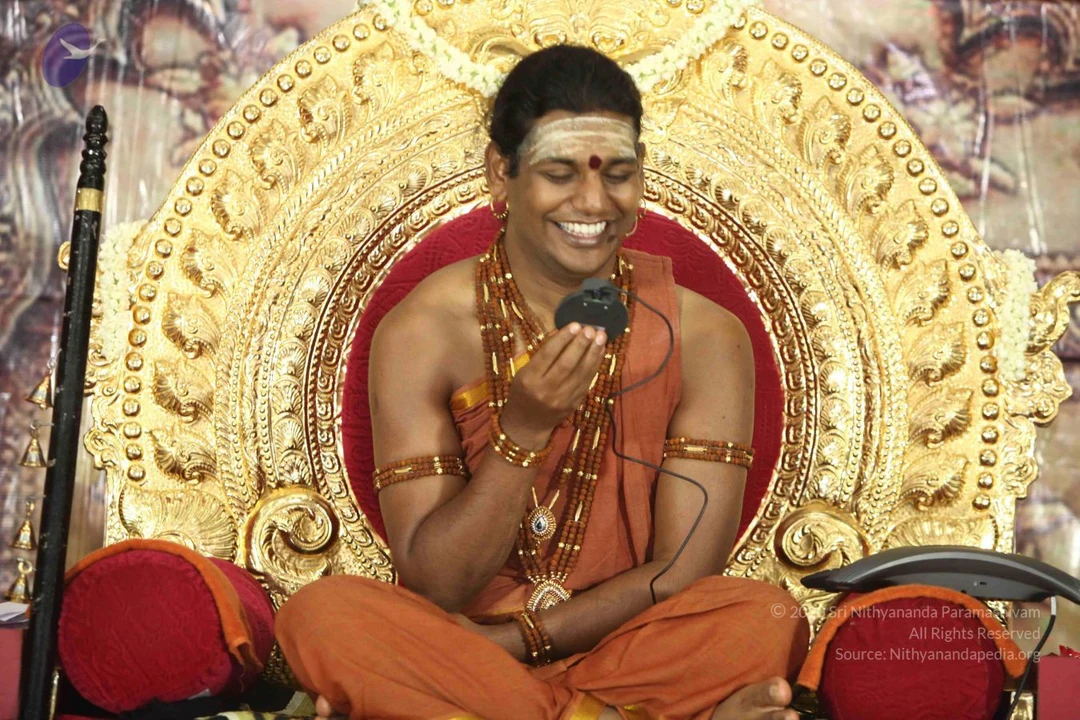
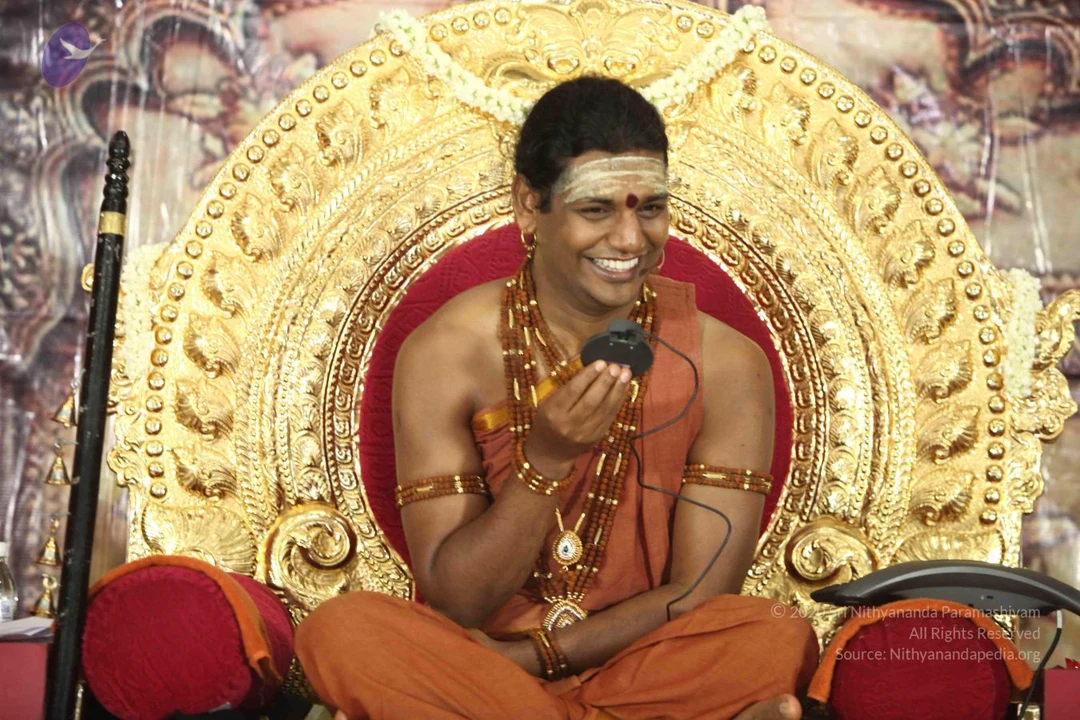
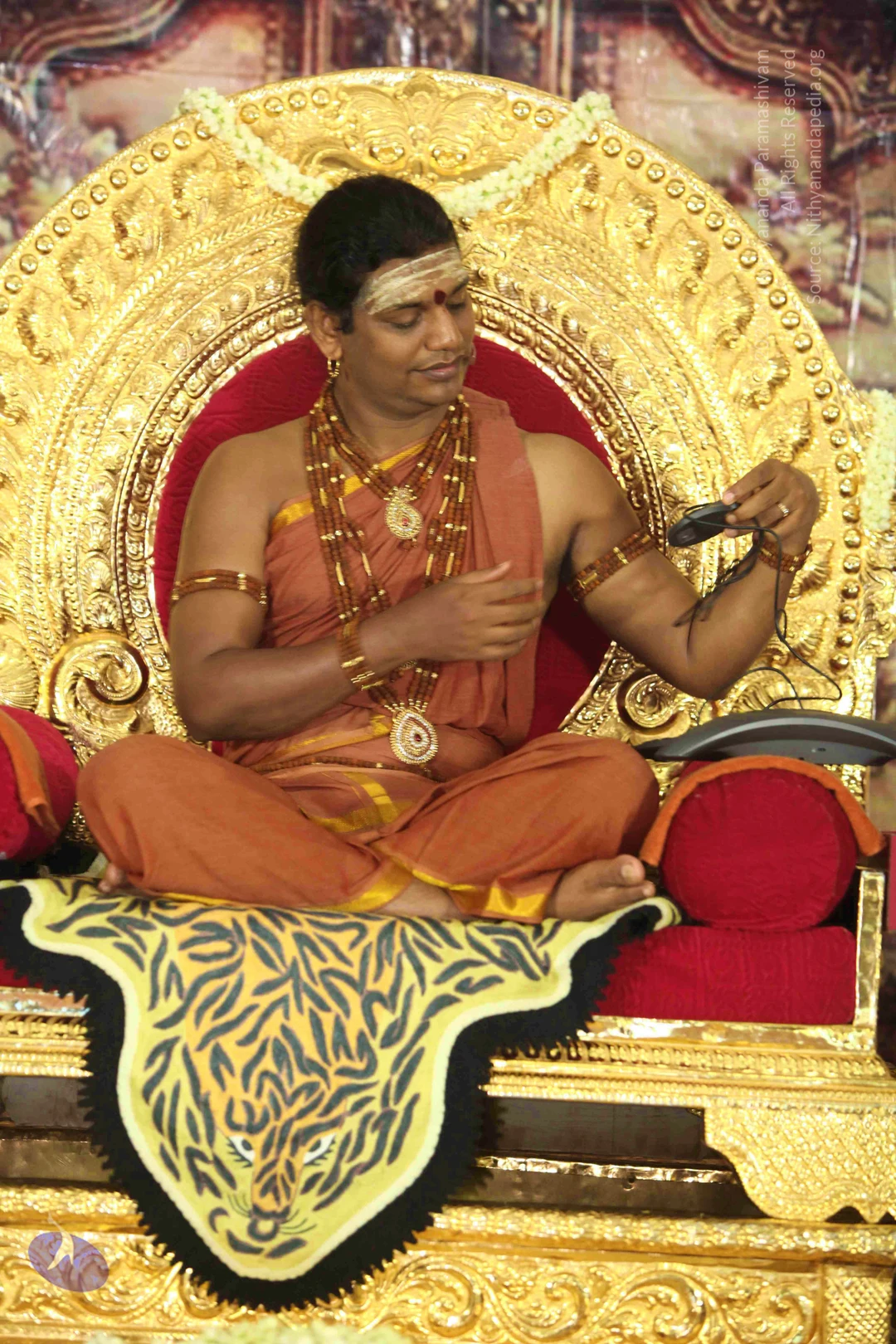
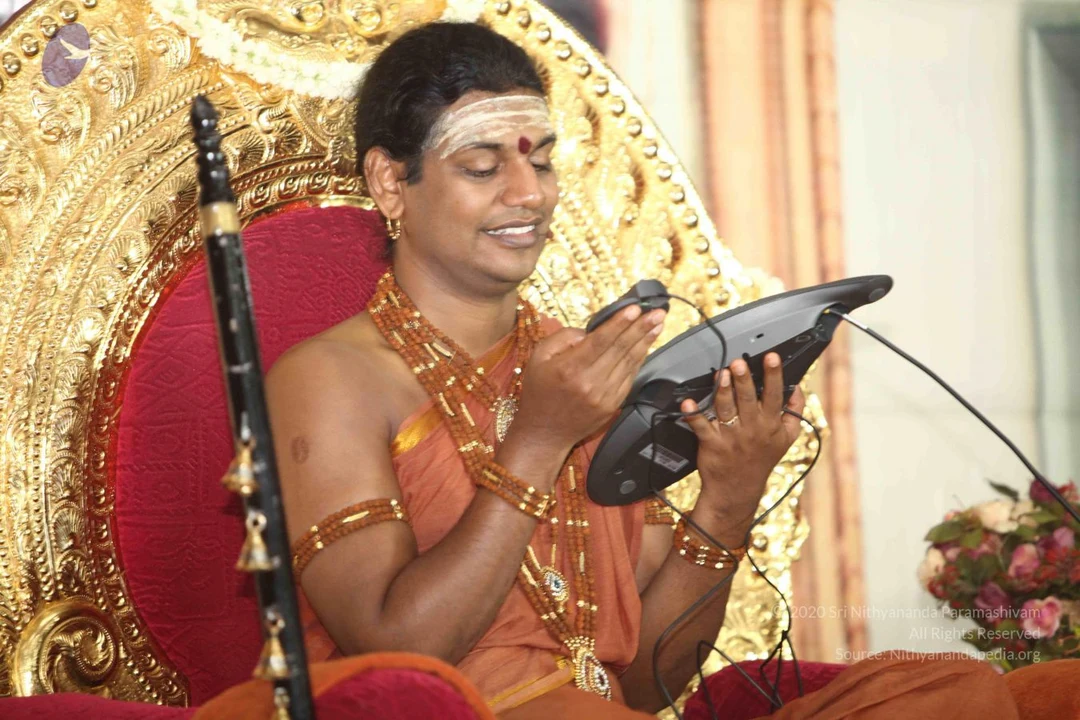
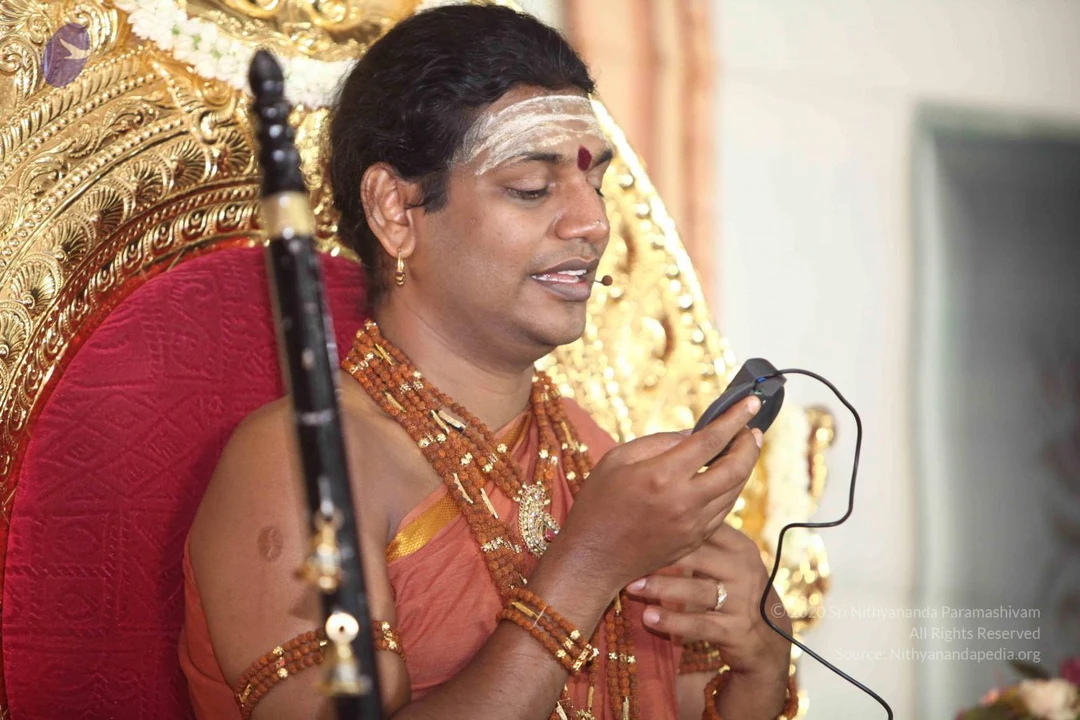
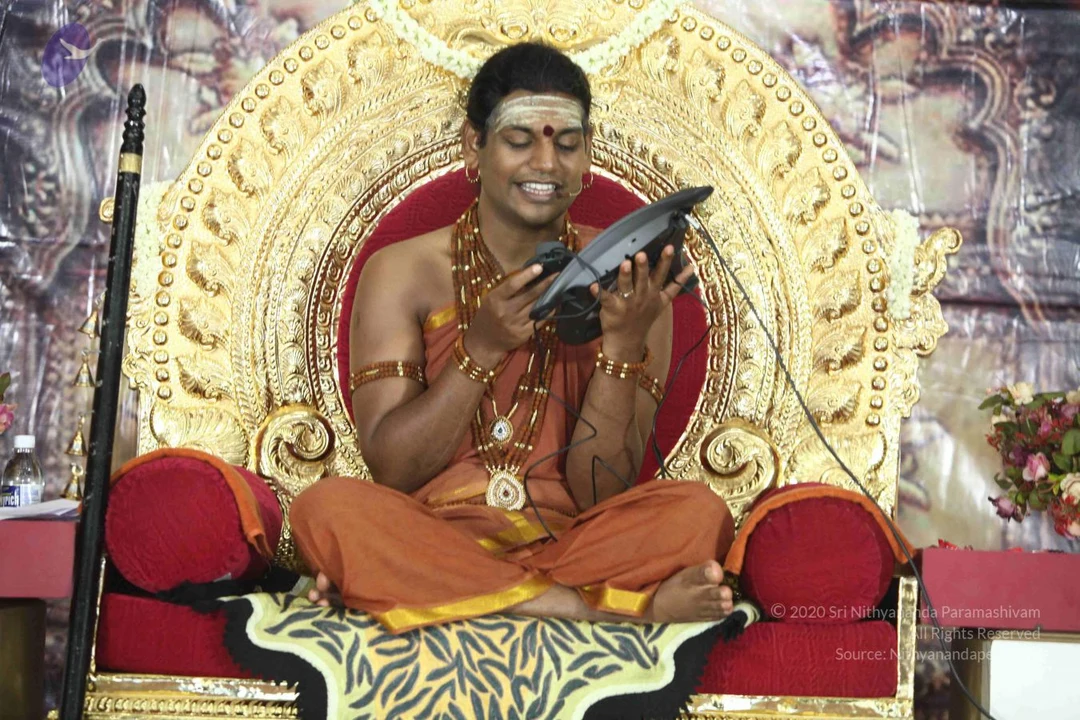
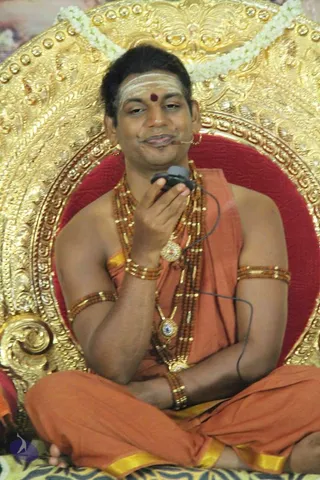
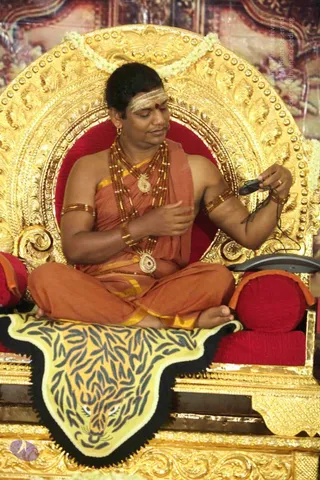
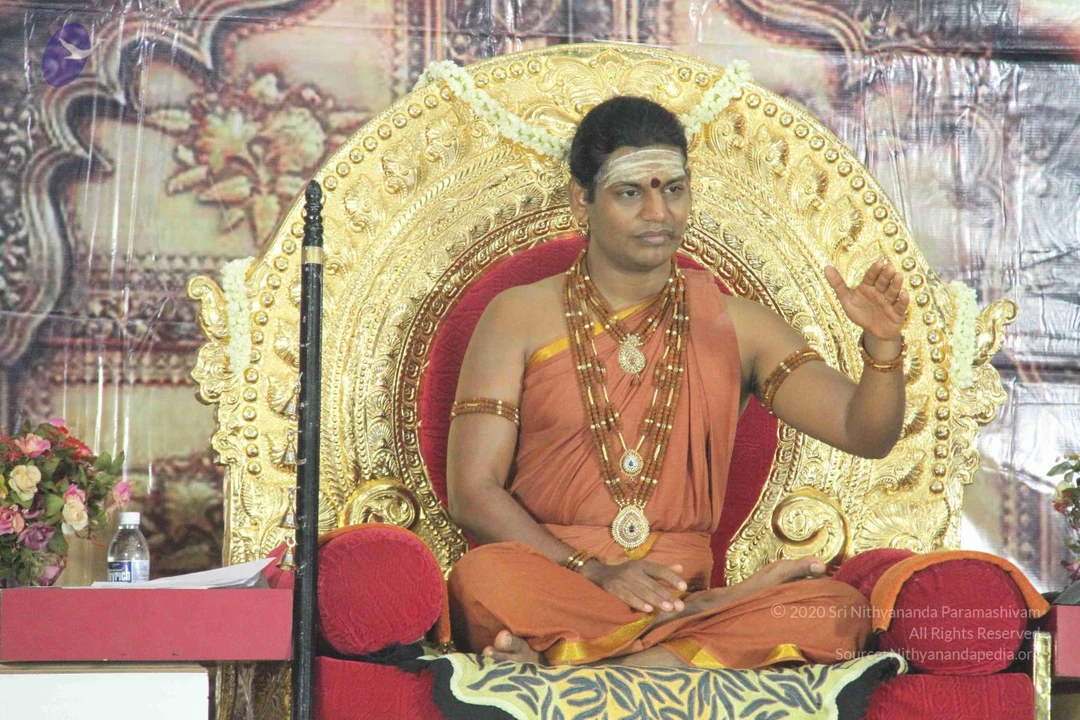
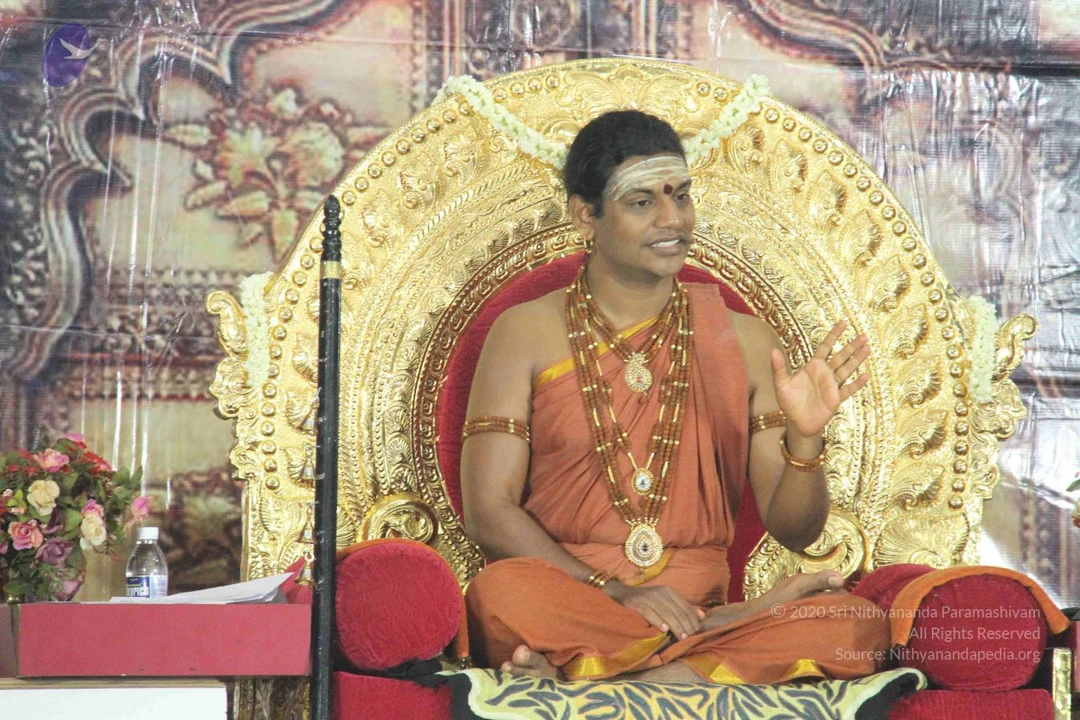
A seated man in orange-saffron robes sits cross-legged on an ornate gold throne with red cushioning, backed by a white jasmine garland. He wears a white tilak with a red bindi, multiple strands of rudraksha beads, gold bangles and armbands, and a gold pendant. He holds a small black handheld microphone to his mouth while speaking, with a headset mic visible at his cheek. The setting appears to be a satsang or discourse hall.A seated man in an ornate gilded throne with red cushions, wearing an orange-red shawl and matching dhoti with gold border, multiple rows of rudraksha-style beaded malas, gold pendants, gold armbands and bangles, and a horizontal white forehead mark with a red dot. He sits cross-legged on a yellow tiger-print mat, holding a small black microphone or device with a cable in his right hand while gesturing with his left. Jasmine garland hangs along the top of the throne. Above the throne backdrop is a decorated golden wall. One person is visible.A man with shoulder-length dark hair and a white vibhuti tripundra with a red kumkum dot sits on an ornate gold and red throne, wearing an orange-saffron cloth draped over one shoulder and layered orange-red rudraksha malas with gold pendants. He smiles while holding a black handheld device with a cord. A black ceremonial staff with bells hangs at left. a person: the saffron clothing, rudraksha malas, gold pendants and long swept hair on a throne match the candidate cues, though the face is not used for identification.A photograph of a man seated cross-legged on an ornate gold throne with a red cushioned seat and a zebra-striped mat beneath him. He wears an orange-saffron dhoti and shawl with a gold border, a long multi-strand rudraksha mala with a large pendant, gold bangles and an armlet, and a white vibhuti tripundra with a red kumkum dot on his forehead. He holds a black handheld device, possibly a microphone or recorder, and speaks while smiling. Pink roses and a water bottle sit to the side, and a drape with ornate patterns forms the backdrop. a person: the long swept-back hair is absent and the figure is shown in the throne-and-saffron-ornament setting; appearance cues are limited, so identity is uncertain.A smiling man seated on a red cushioned throne with ornate gold carved backrest and white jasmine garland draped at the top. He wears saffron-orange unstitched cloth over his torso and orange-saffron lower garment with gold border, multiple strands of rudraksha beads with gold spacers around his neck and arms, a gold pendant with red stone, and gold bangles. He has a white sandalwood tilak with red kumkum dot on his forehead and a small wired microphone clipped near his mouth, holding a black handheld device with cable. A patterned mat lies at his feet. a person seated on a throne, giving a talk.A man seated cross-legged on an ornate gold throne with a red cushion, speaking into a small headset microphone while holding a black handheld device. He wears an orange-saffron dhoti and shawl with gold borders, multiple strands of rudraksha malas, a large gold pendant with red and green stones, rudraksha armlets and a gold bangle. He has a white vibhuti tripundra and a red kumkum dot on his forehead. A garland of white flowers hangs above the throne and a patterned yellow-and-green cloth covers the seat. The appearance matches the a person cues of orange ornate clothing, rudraksha malas and a gold pendant, seated in the role of a speaking teacher giving a satsang discourse.
Sarva-Darshan

10 photosSource gallery
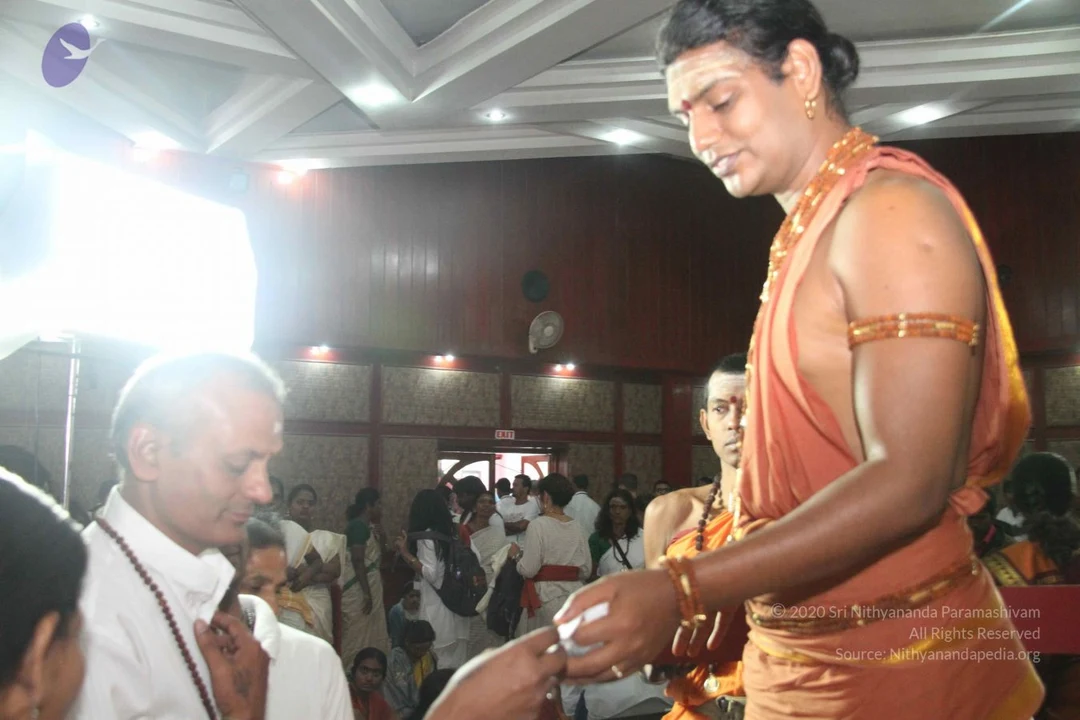
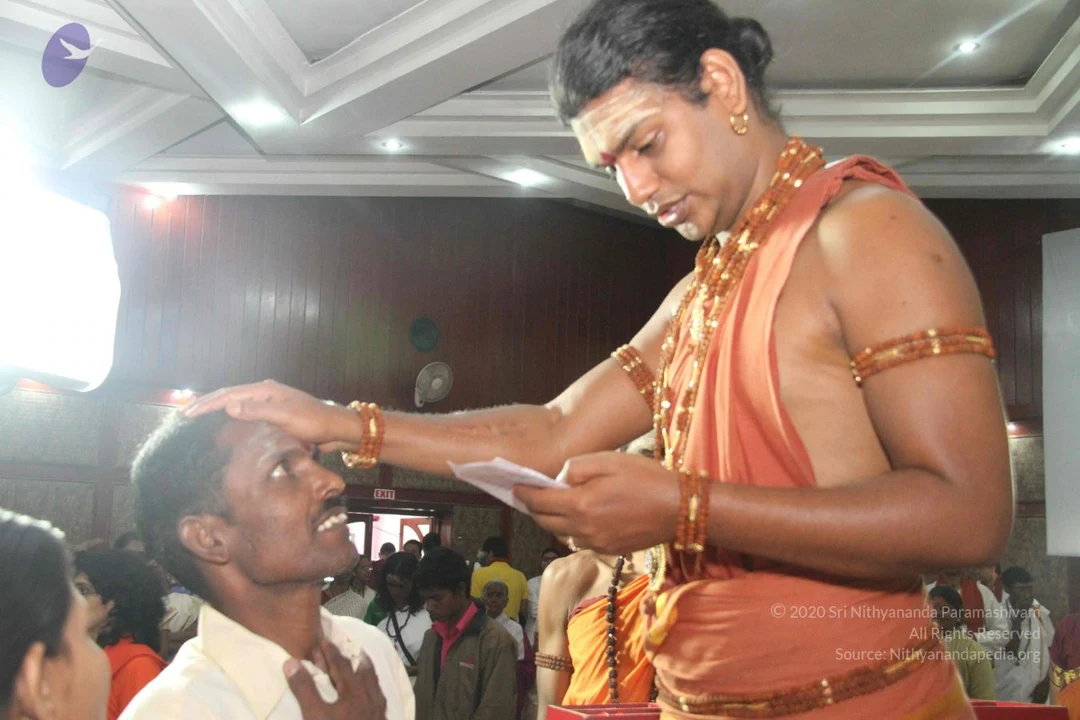
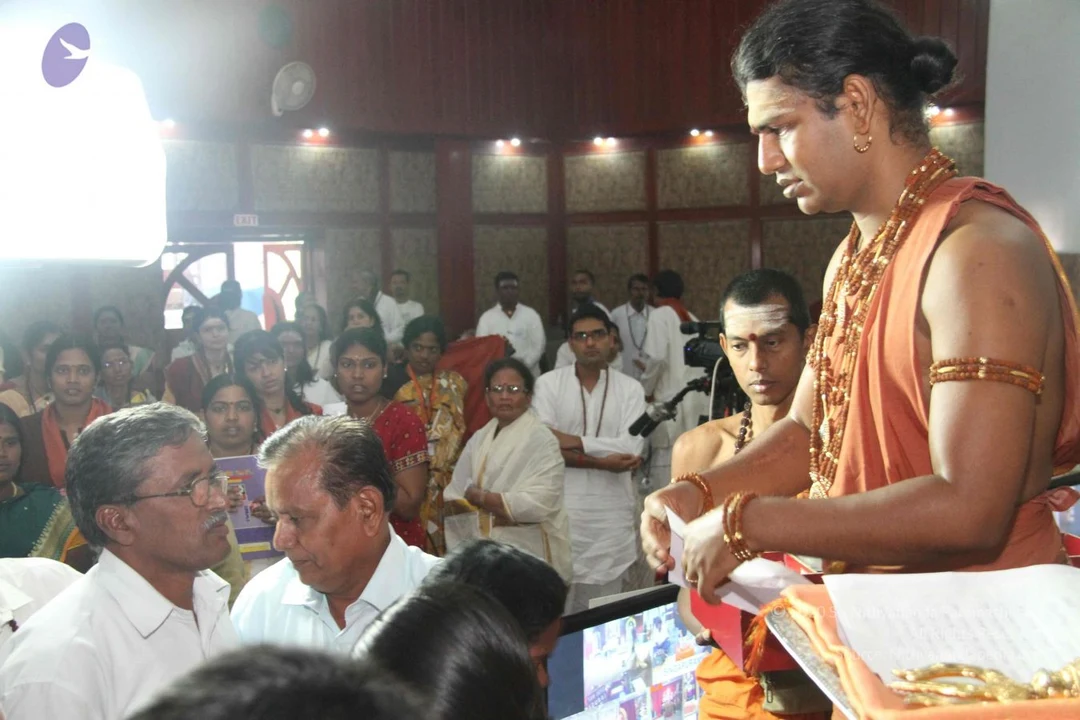
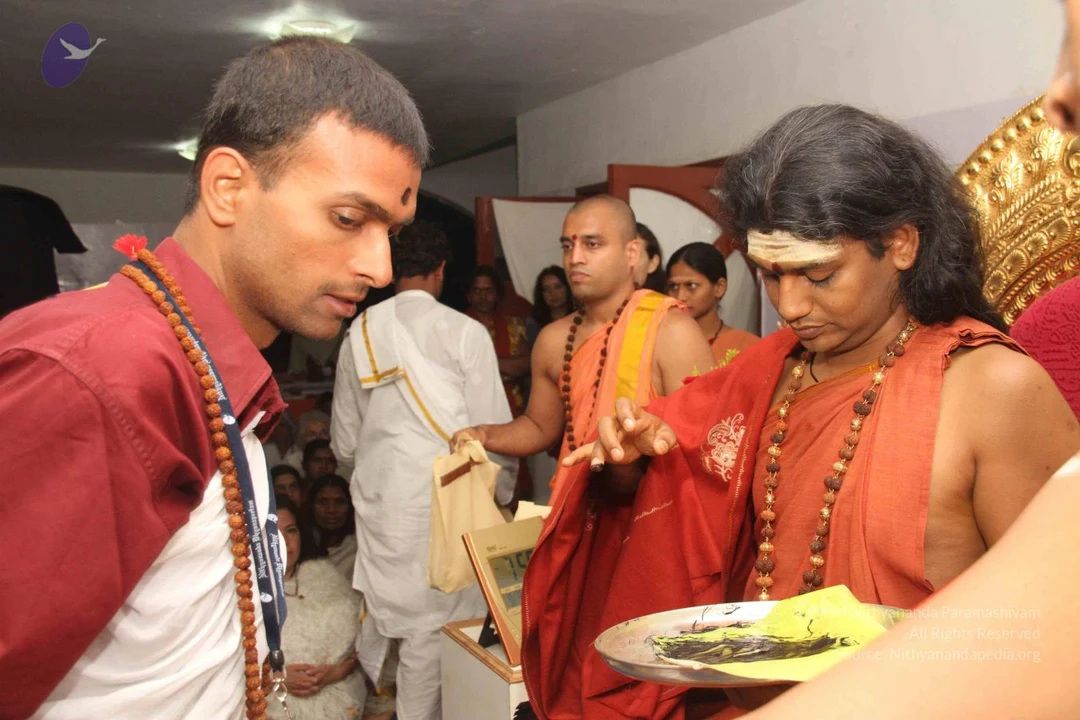
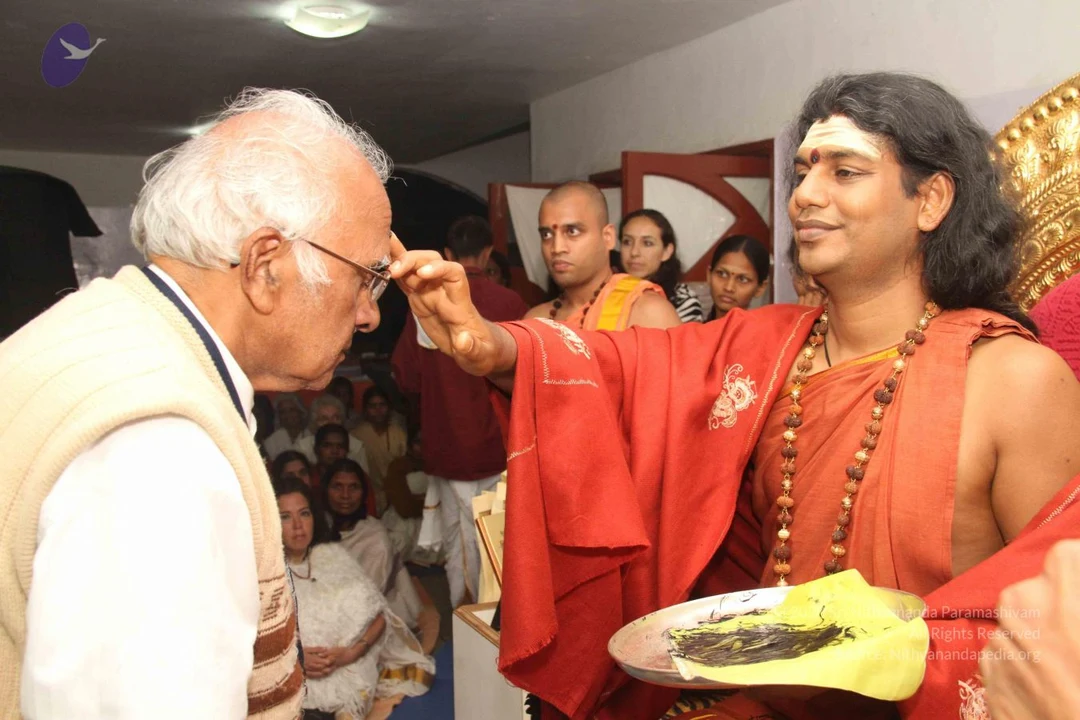
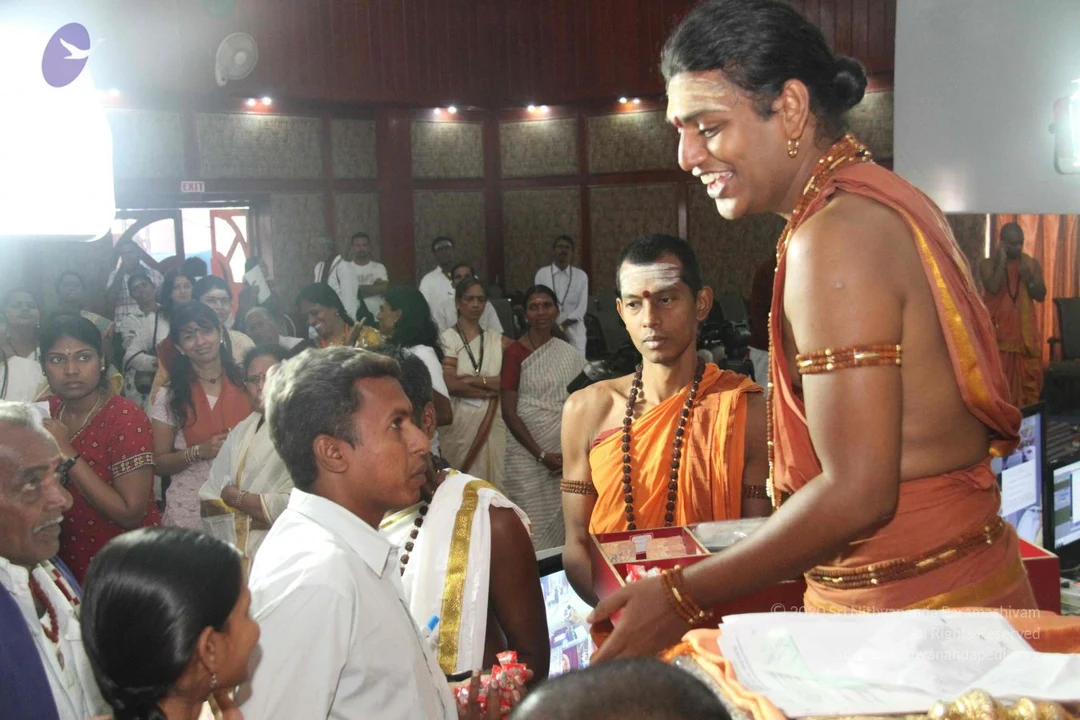
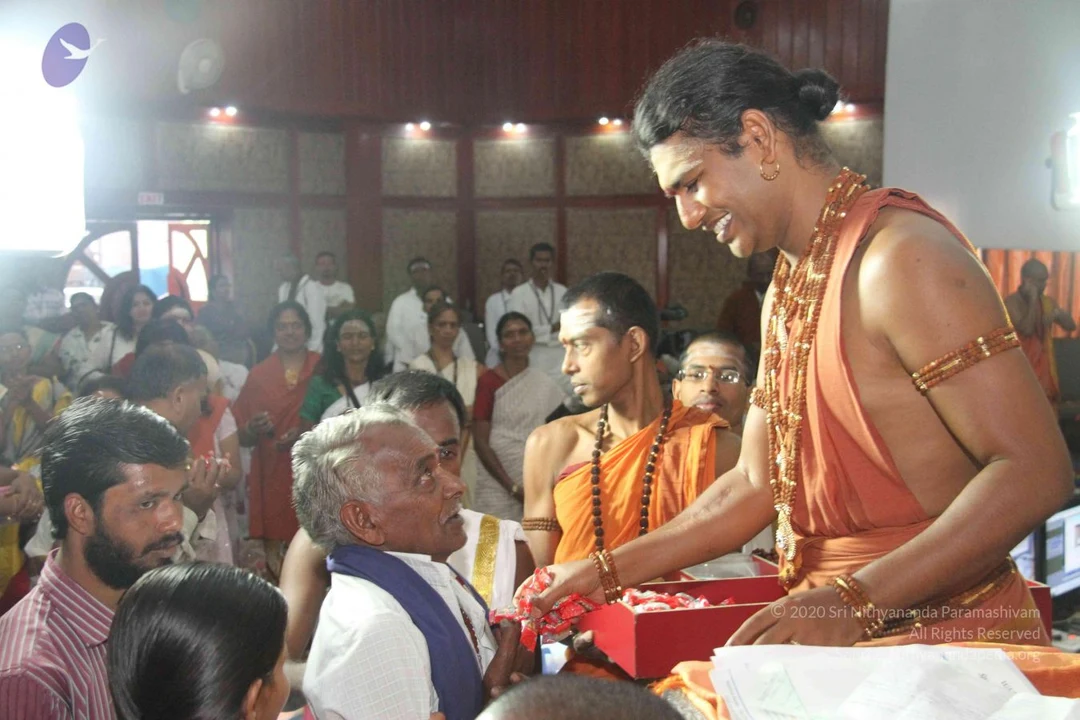
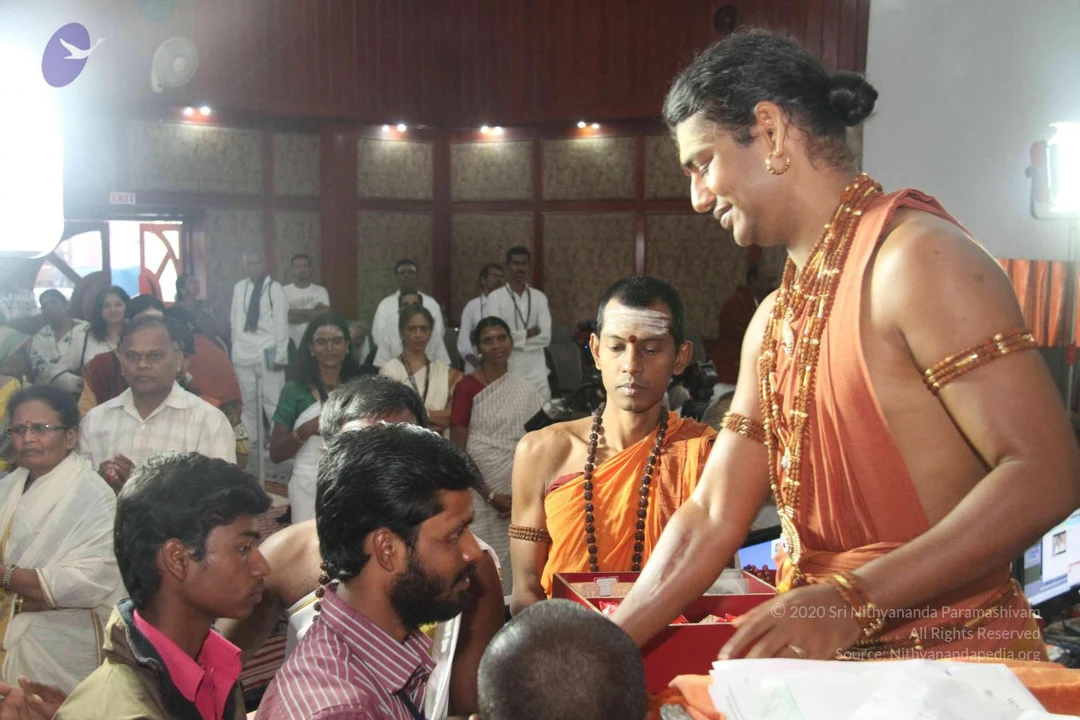
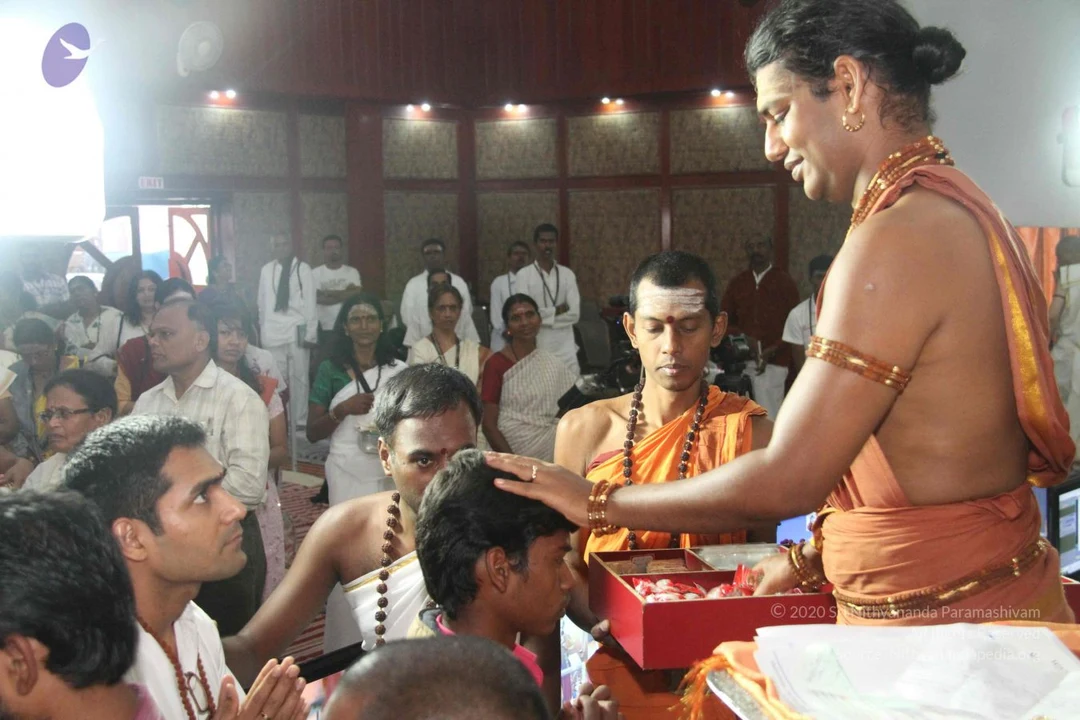
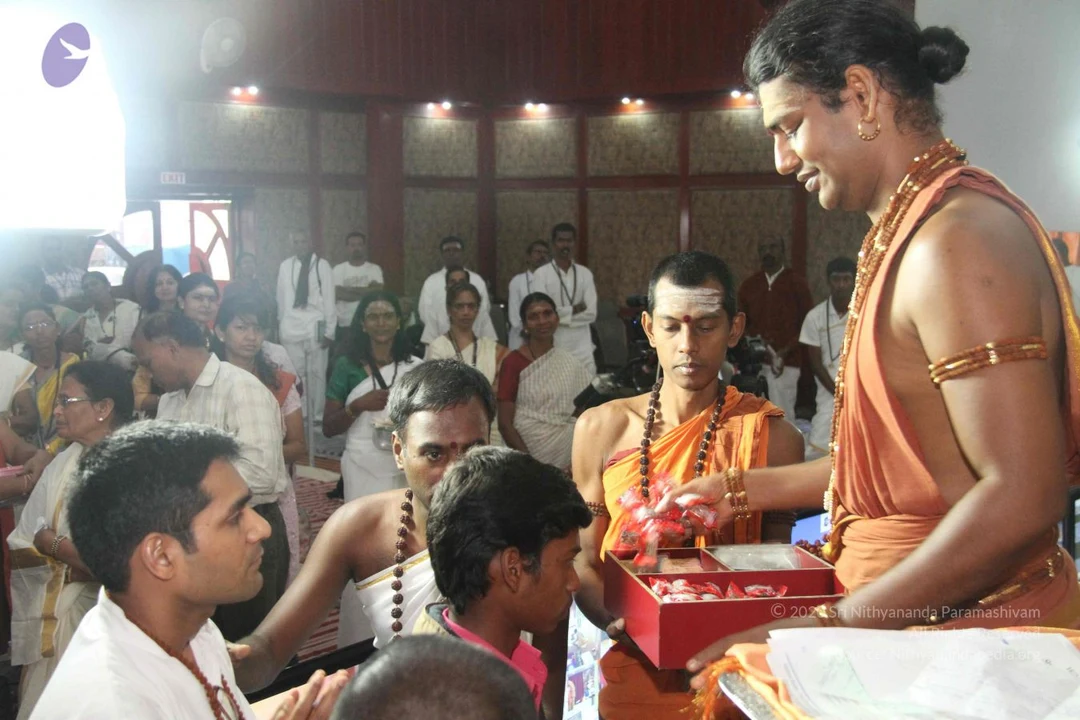
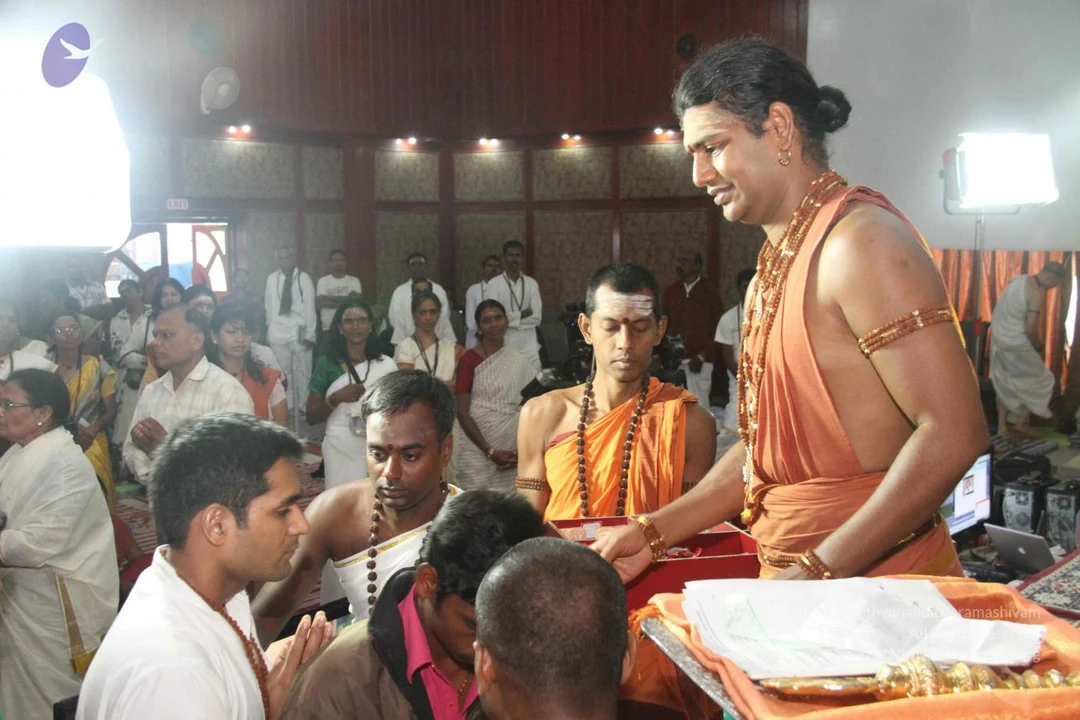
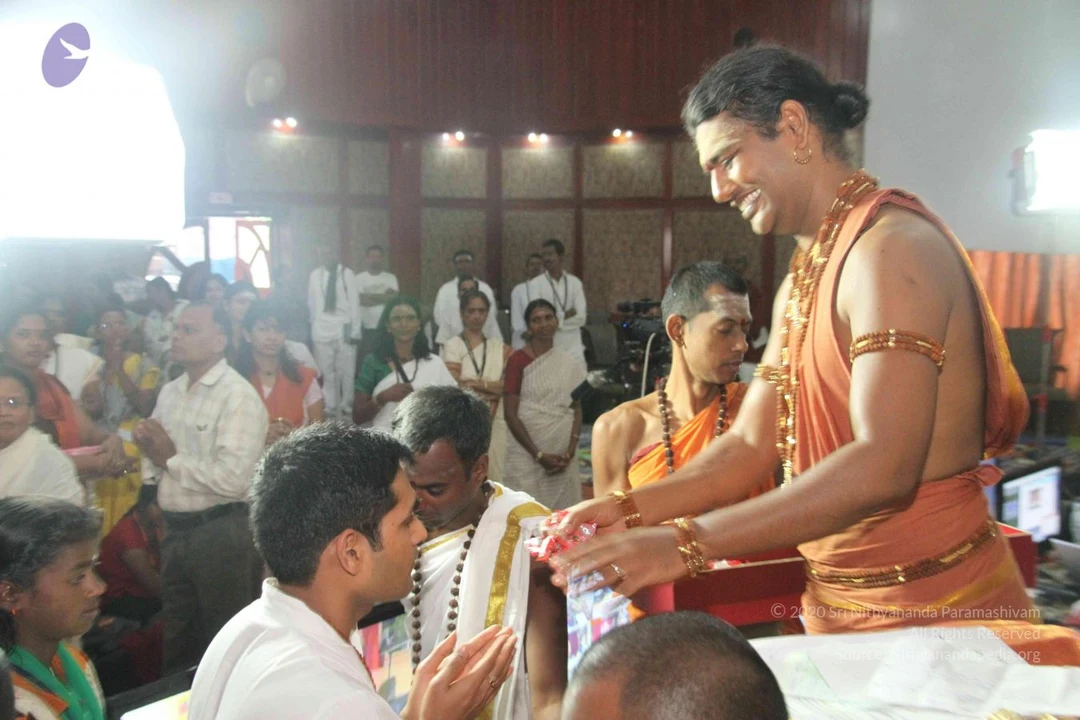
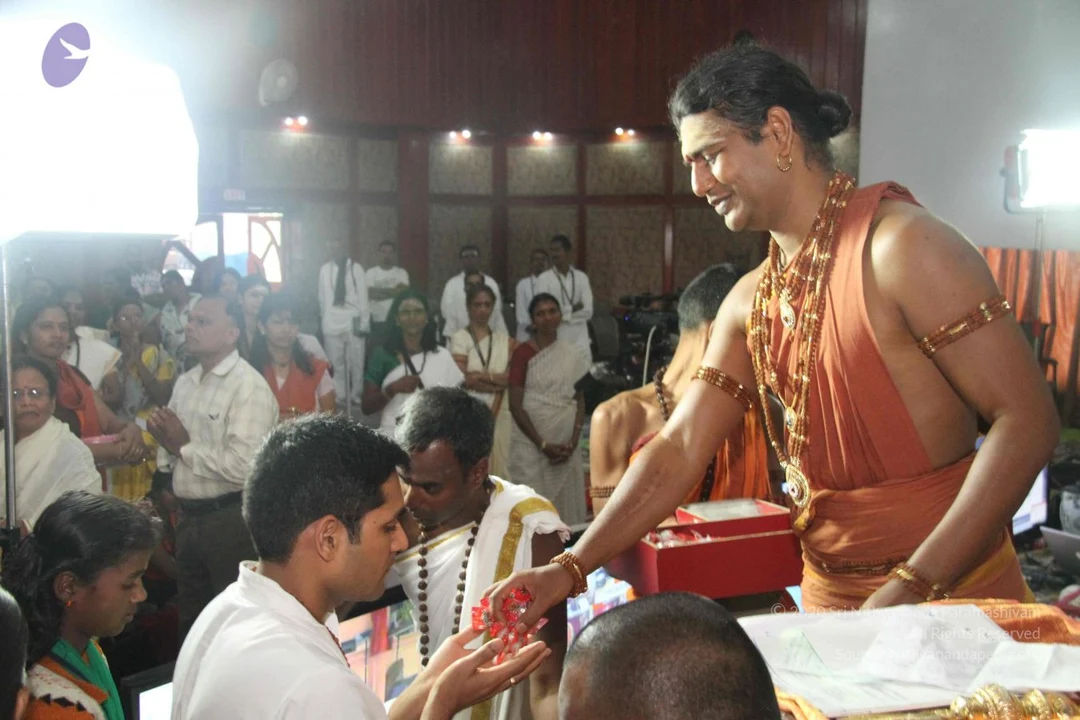
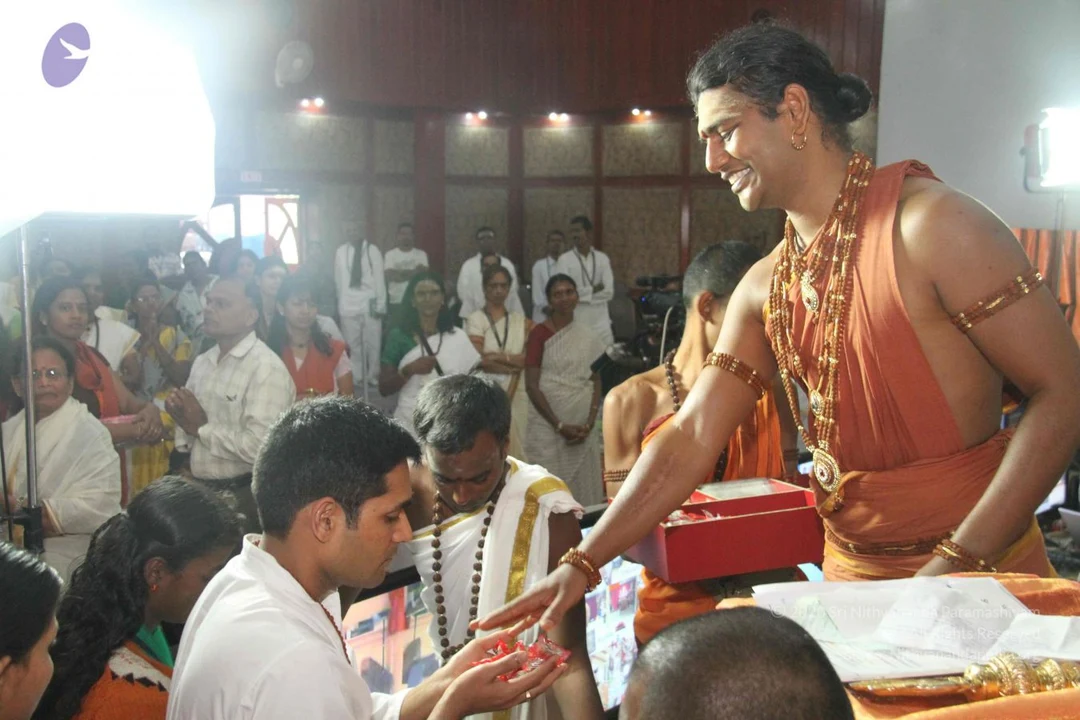
A photo inside a hall with wood-panelled walls and recessed ceiling lights. A man with hair tied in a topknot, wearing an orange-saffron shawl over bare shoulders, layered orange-red and gold beaded necklaces, gold earrings and gold bangles, leans forward smiling and extends his hand toward a devotee's head. The devotee, a man in white with glasses, bends forward. Behind them, several people in white, cream and red saris and shirts stand with folded hands or watch. Papers are held in the foreground by another person's hand. The man in orange has distinctive long hair, ornate beads and saffron clothing, consistent with the Swamiji (probable) candidate described on the page.A standing man in saffron-orange robes with a bare shoulder, long hair in a bun, white vertical tilak on his forehead, layered rudraksha and gold beaded necklaces, and gold armlets, blesses a kneeling man in a white shirt with palms pressed together. The blessing hand rests on the kneeling man's head while the robed figure holds a white paper. On a table nearby is an open red box with sweets and a stack of papers. Behind them, another saffron-robed attendant and several seated and standing devotees in white and cream attire watch in a wood-panelled hall with monitors and a child in a white dress.A photograph of a ceremonial moment in a hall with wood-panelled walls and a crowd standing behind. A man with long dark hair in a bun, wearing an orange-saffron dhoti and shawl, rudraksha mala and gold ornaments, leans forward smiling and presses his palm to the forehead of a kneeling young man in a white shirt. A second man in white dhoti with gold border, a rudraksha mala and sandalwood-marked forehead stands beside them. A red box containing sweets sits in the foreground, and an older man with white hair stands at left. Several people are visible in the background.Indoor photo of a ceremonial gathering in a hall with wood-panelled walls and warm lights. A man with long hair tied in a topknot, wearing an orange saffron shawl over his shoulder, gold necklaces, rudraksha malas and gold armlets, stands at right and holds an open red box of red-wrapped offerings toward a bare-chested priest in orange cloth with a rudraksha mala and a tilak on his forehead. Another man in white and a boy in a pink shirt sit in the foreground. Standing devotees in white and orange clothes watch from behind, and a few women in saris are visible. a person candidate appears with distinctive ornate saffron attire and rudraksha adornments.A standing man in saffron-orange robes with a bare right shoulder and arm, wearing long rudraksha malas, gold arm bands and ornate gold necklaces, smiles while reaching toward a red tray held by a seated priest. The tall figure with hair tied in a knot and swept back, and the cues of saffron clothing with layered ceremonial jewellery, match the a person description; he is the central figure in this temple setting. Nearby, a priest in orange with rudraksha beads and a tilak sits attending the tray, while a kneeling devotee in white with folded hands and seated devotees bow. Behind them, a crowd of people in white and traditional saris stand in a wood-panelled hall, with a laptop and a sheet of papers on an orange cloth in the foreground.Indoor satsang hall where a man with long dark hair tied in a bun, wearing an orange-saffron dhoti and shawl, rudraksha mala and gold-toned bangles, stands at right holding a tray of offerings. Beside him a shaven-headed young man in orange robes and rudraksha mala, with a white tilak on his forehead, stands before a red box holding small red-wrapped items. Seated devotees in white dhotis and shirts, some with garlands, and women in saris fill the background and foreground. Tented gold-toned cloth and a laptop are visible on the right. a person appears in_person as the man in saffron with the bun and ornaments, standing at the tray.
Unclutching-Session

1 photoSource gallery
A man seated cross-legged on an ornate cream-and-gold upholstered throne-like chair in front of a red curtain, reading a small blue-covered book held in both hands. He wears a red-orange shawl over his shoulders and an orange-red dhoti with a gold border, with white horizontal tilak lines and a red dot on his forehead. A red embroidered motif appears on his shawl.

Rudra-Homa

12 photosSource gallery
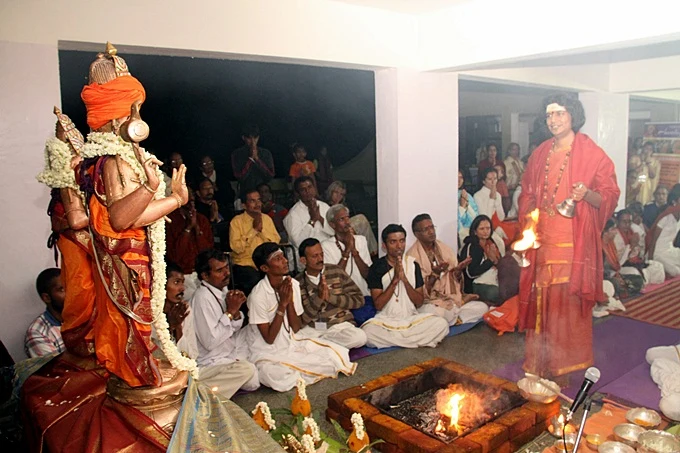
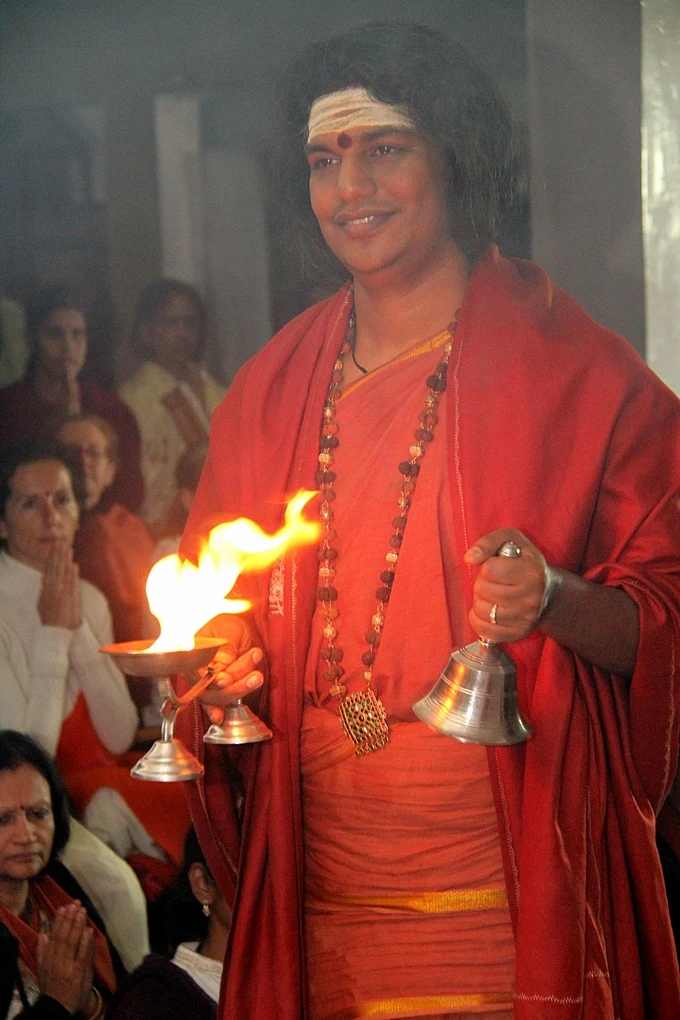
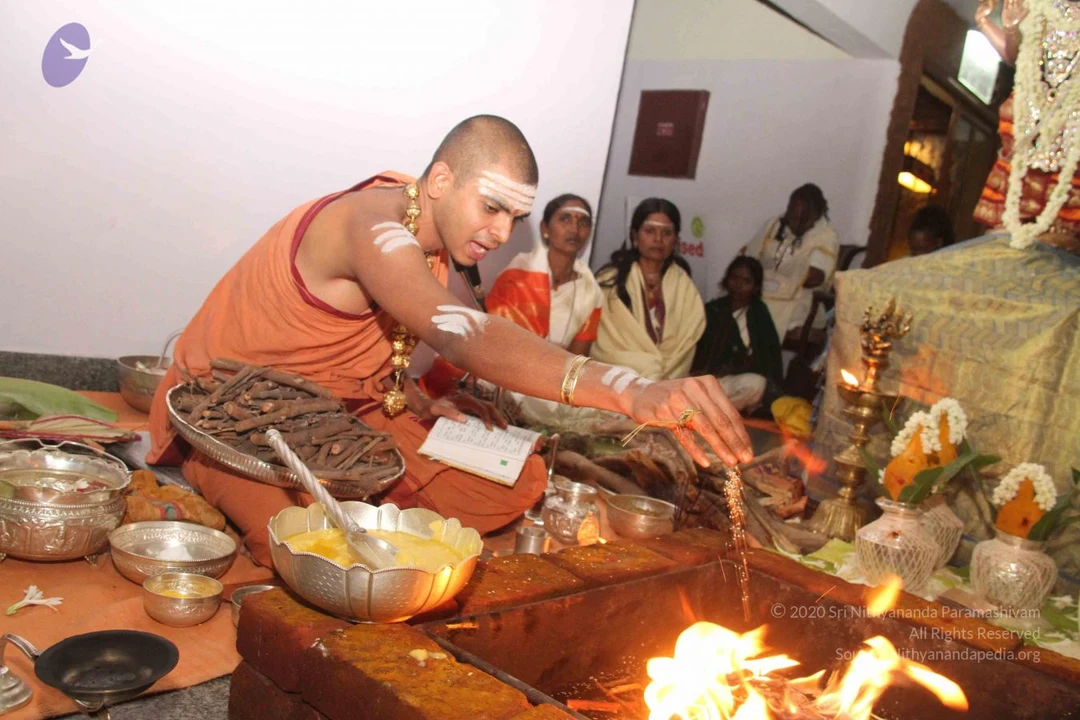
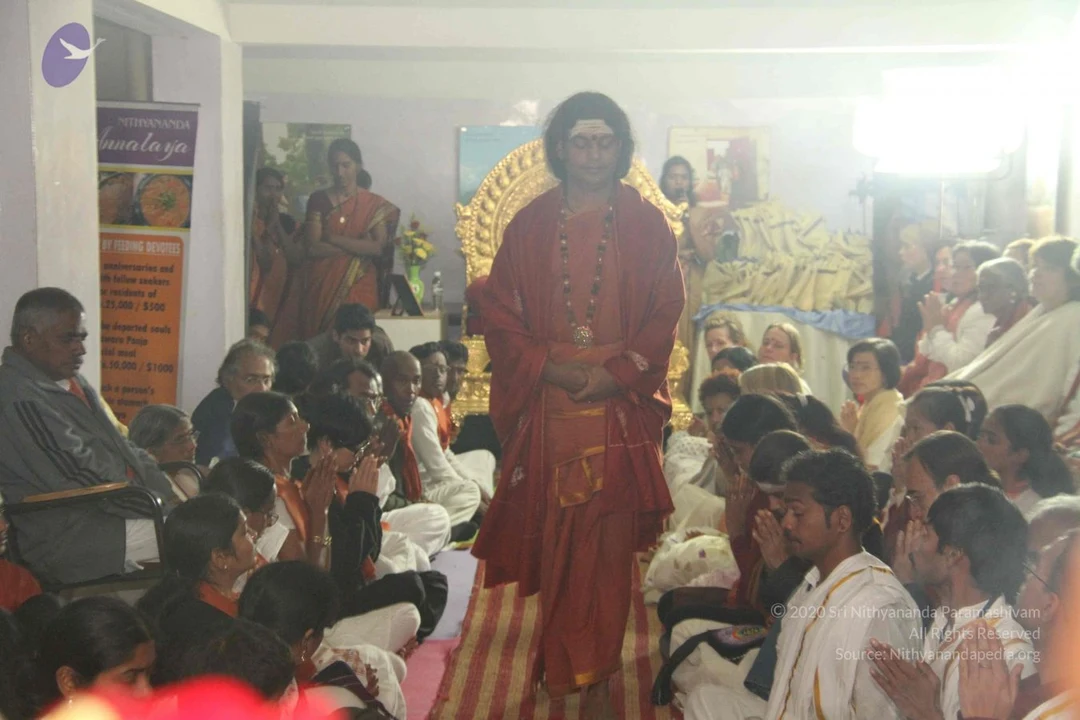
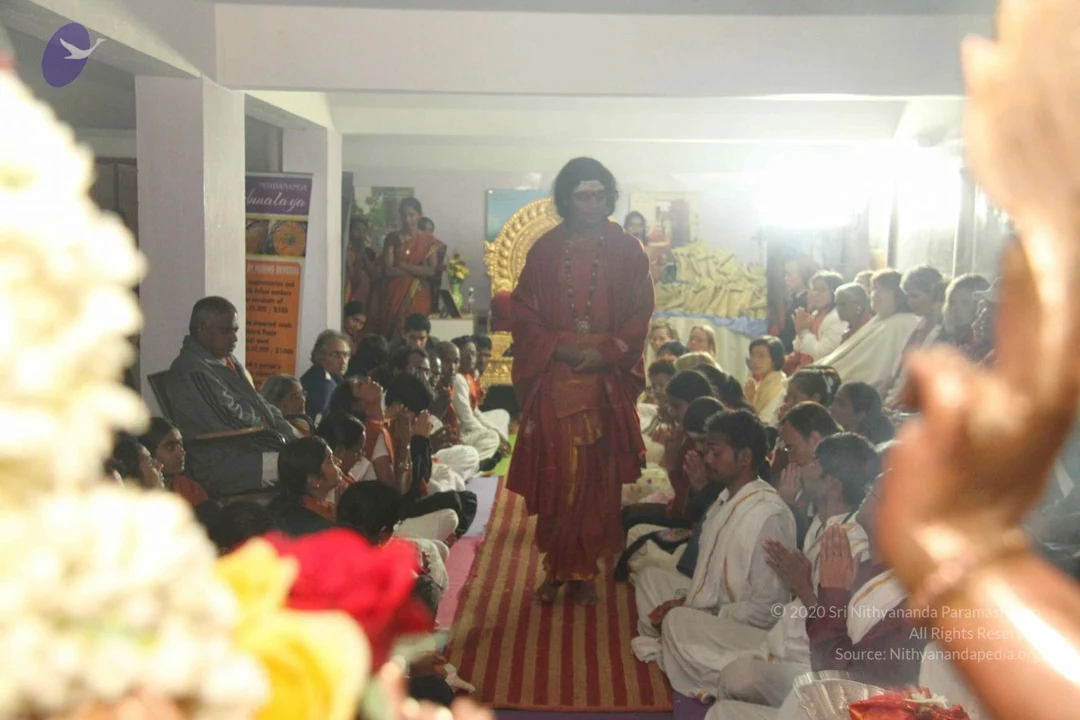
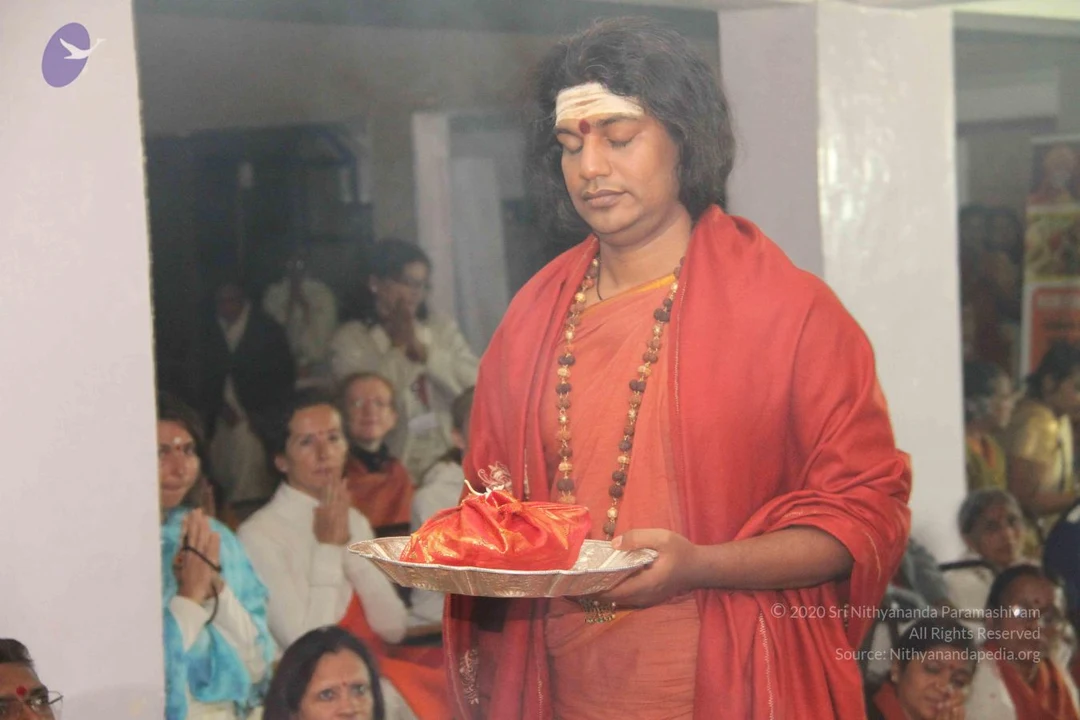
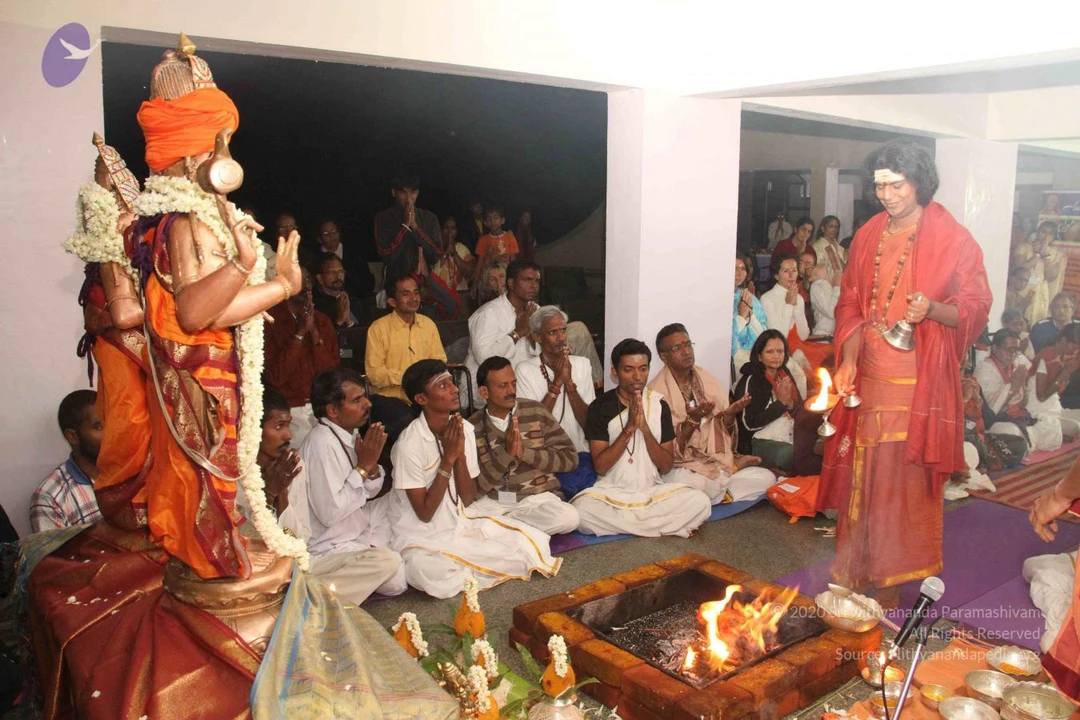
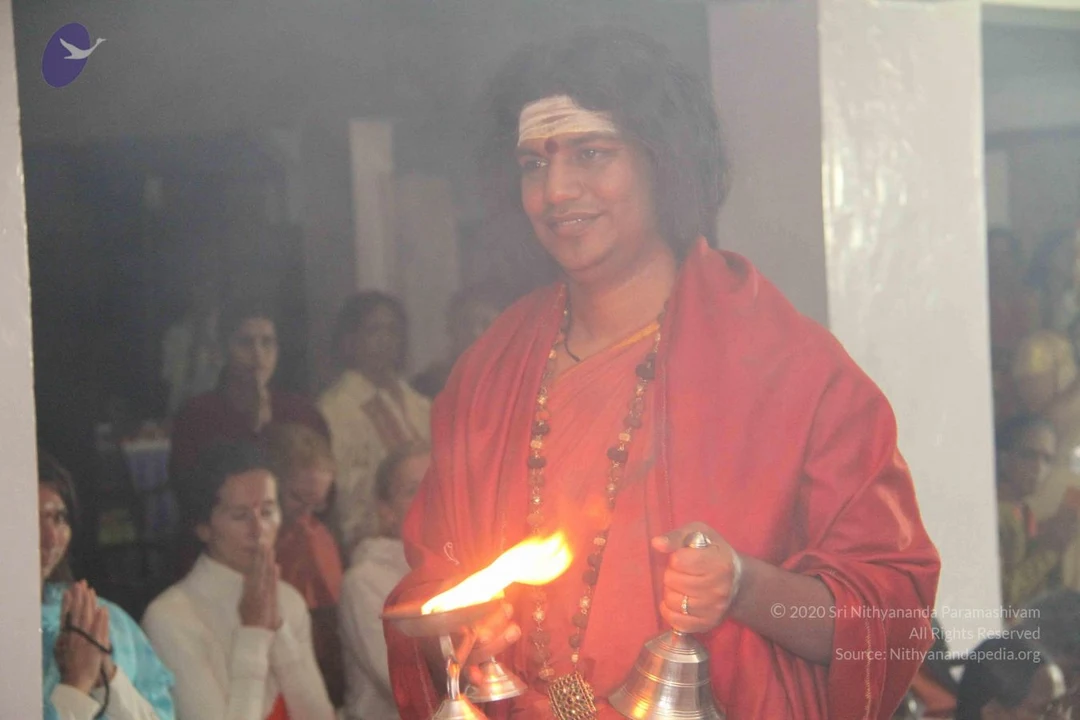
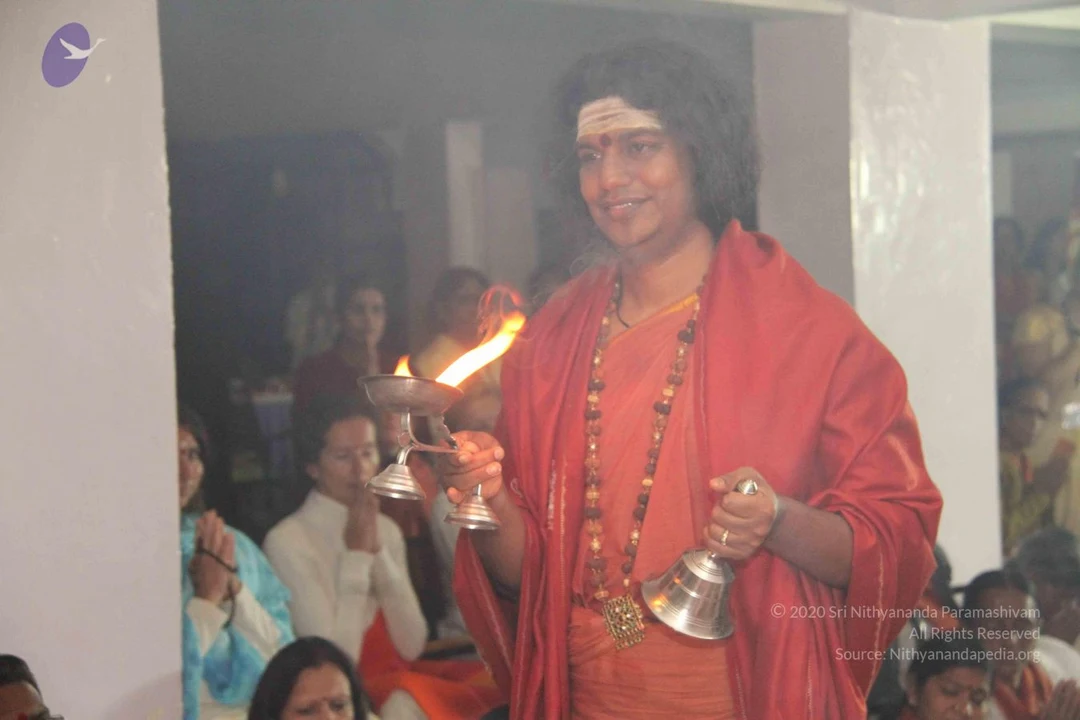
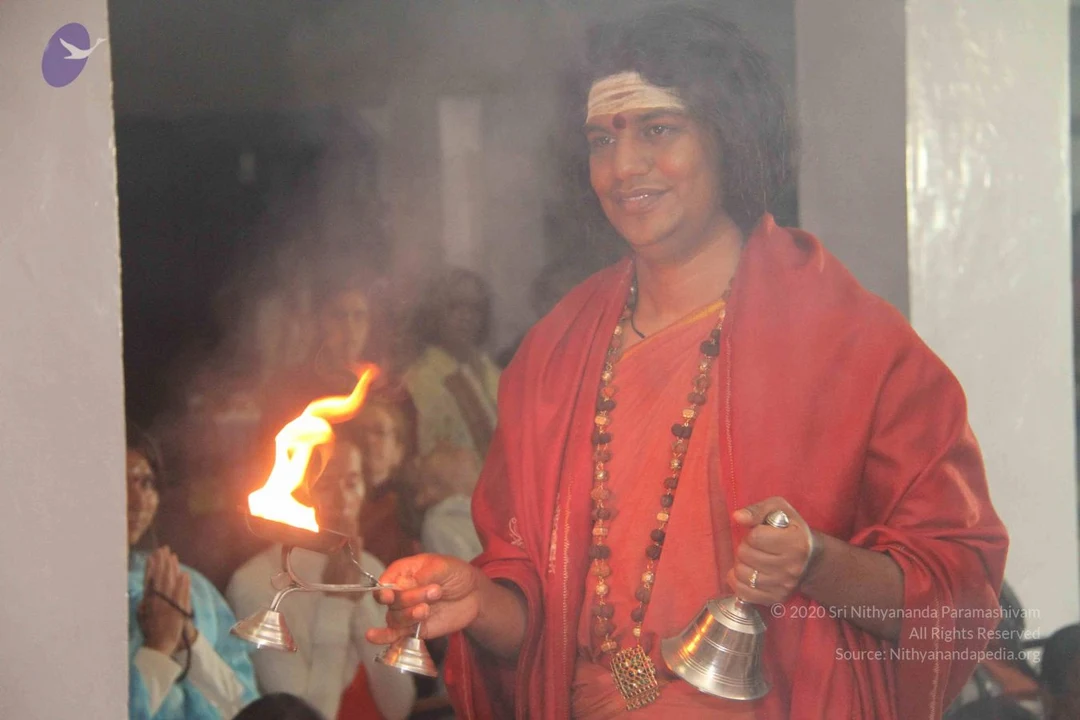
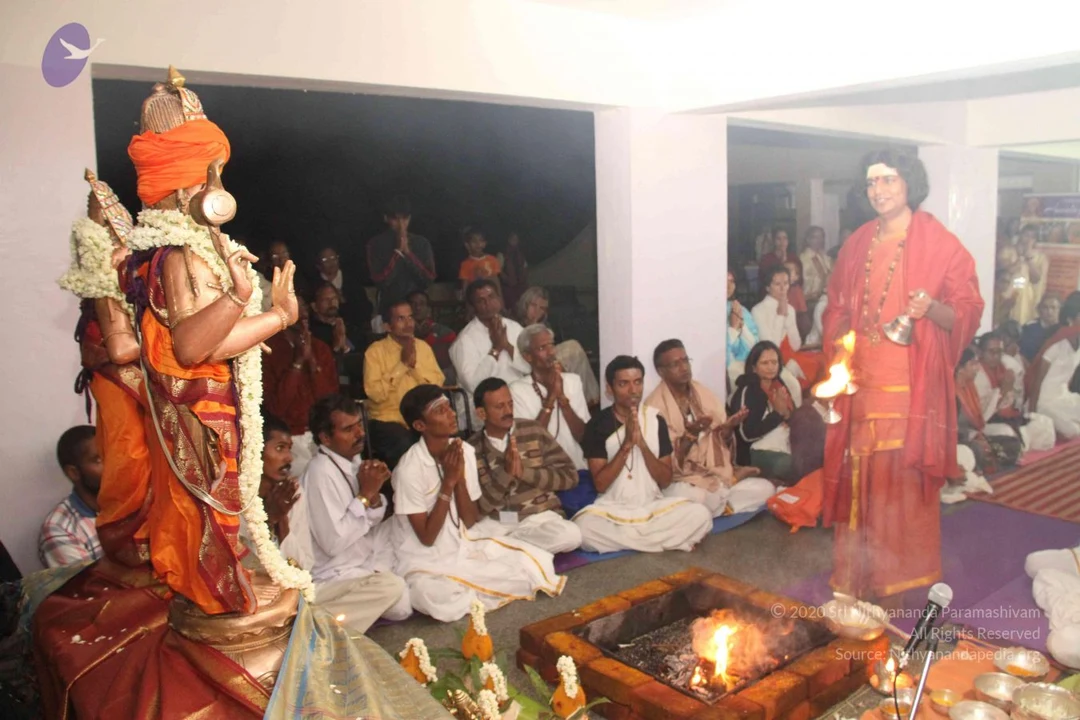
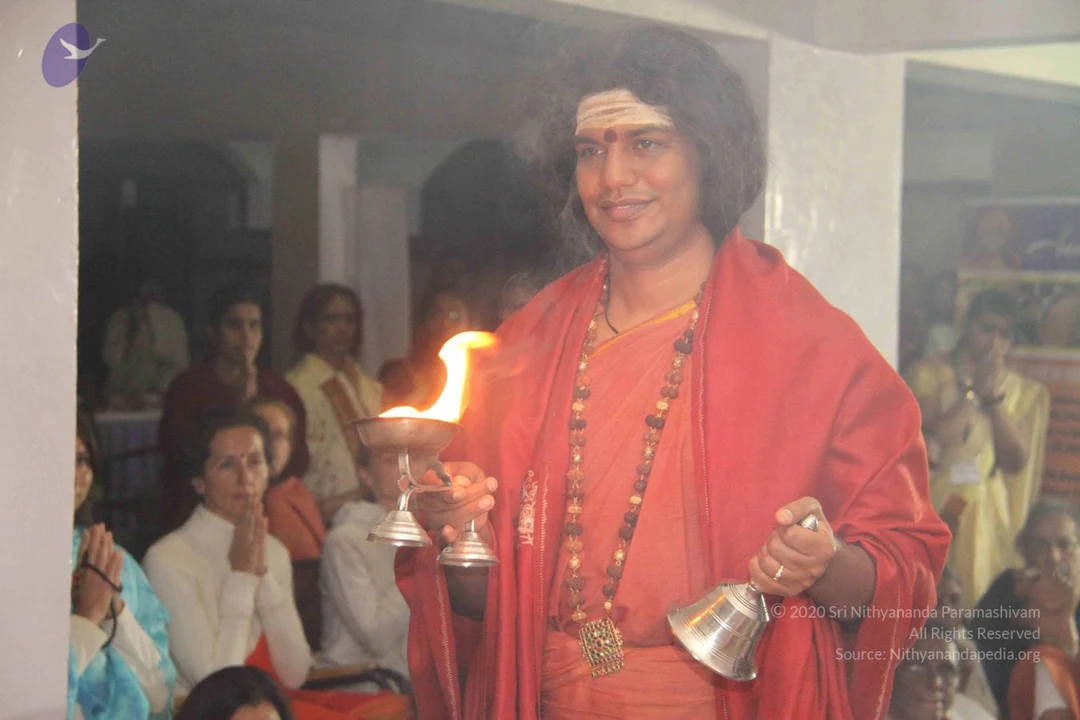
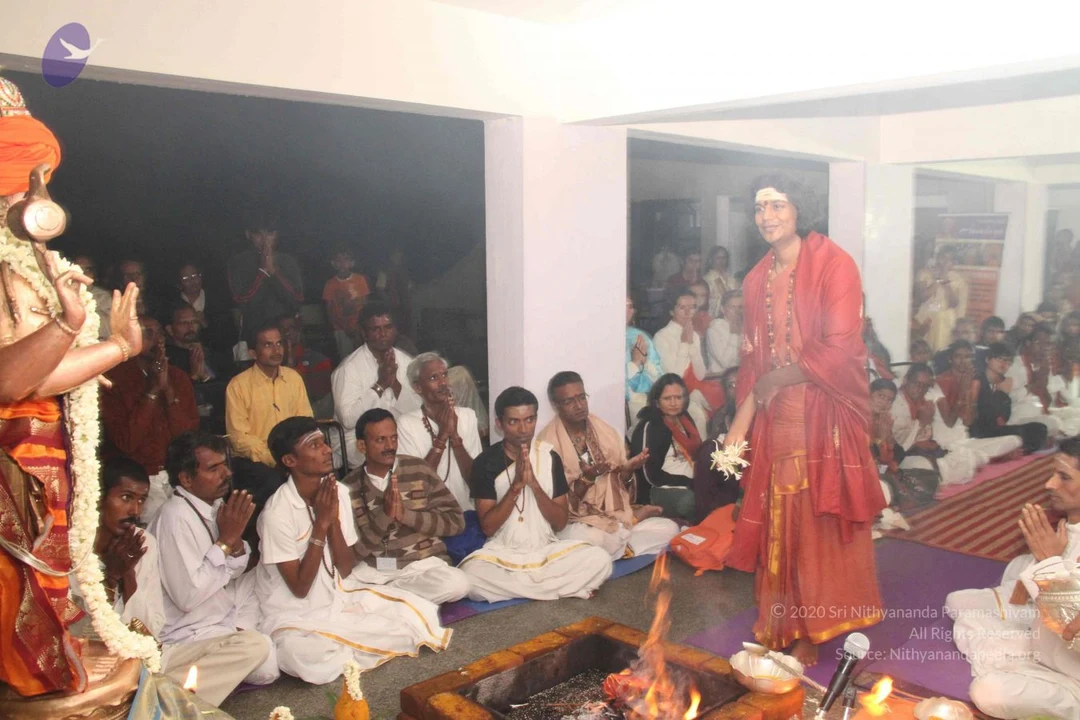
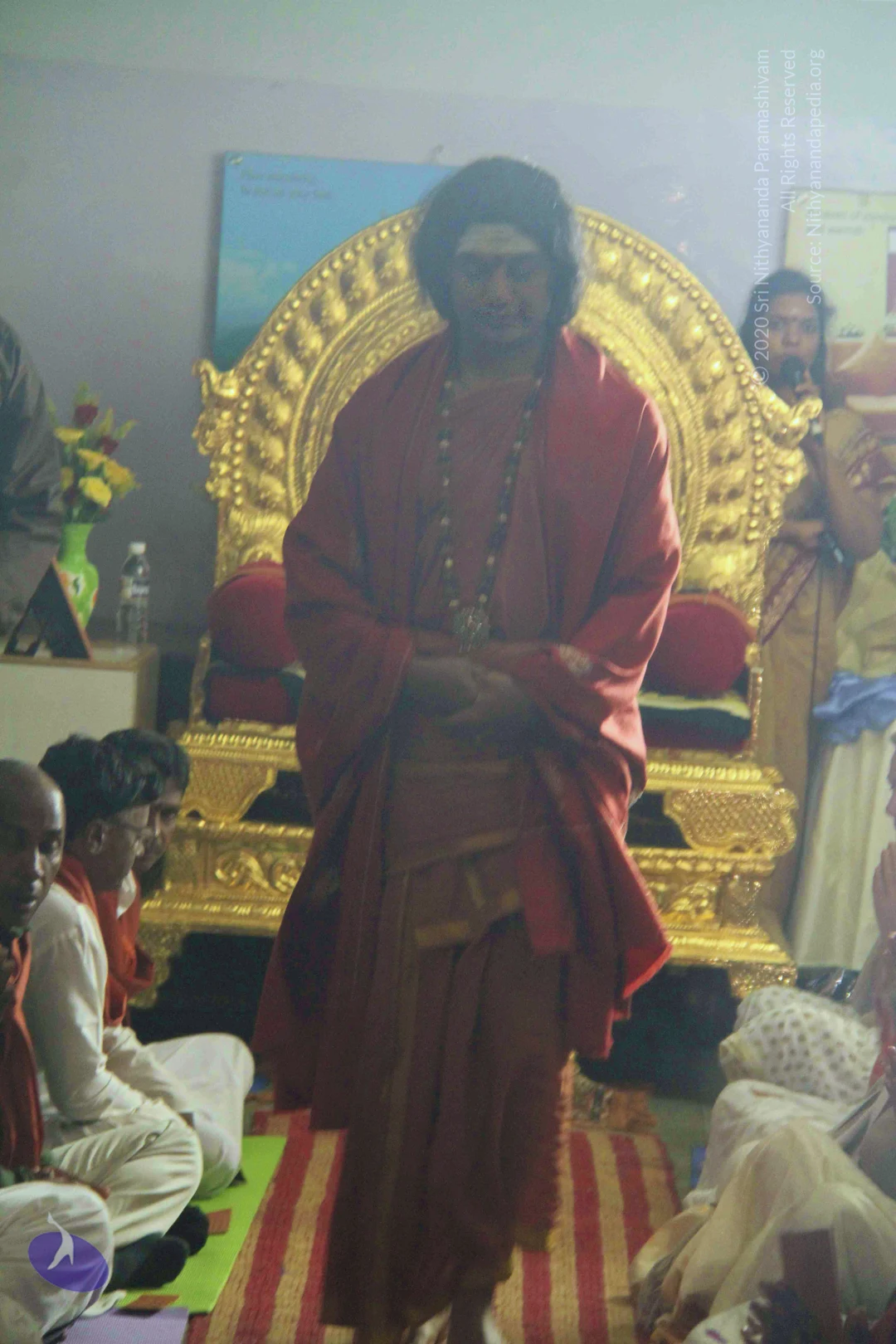
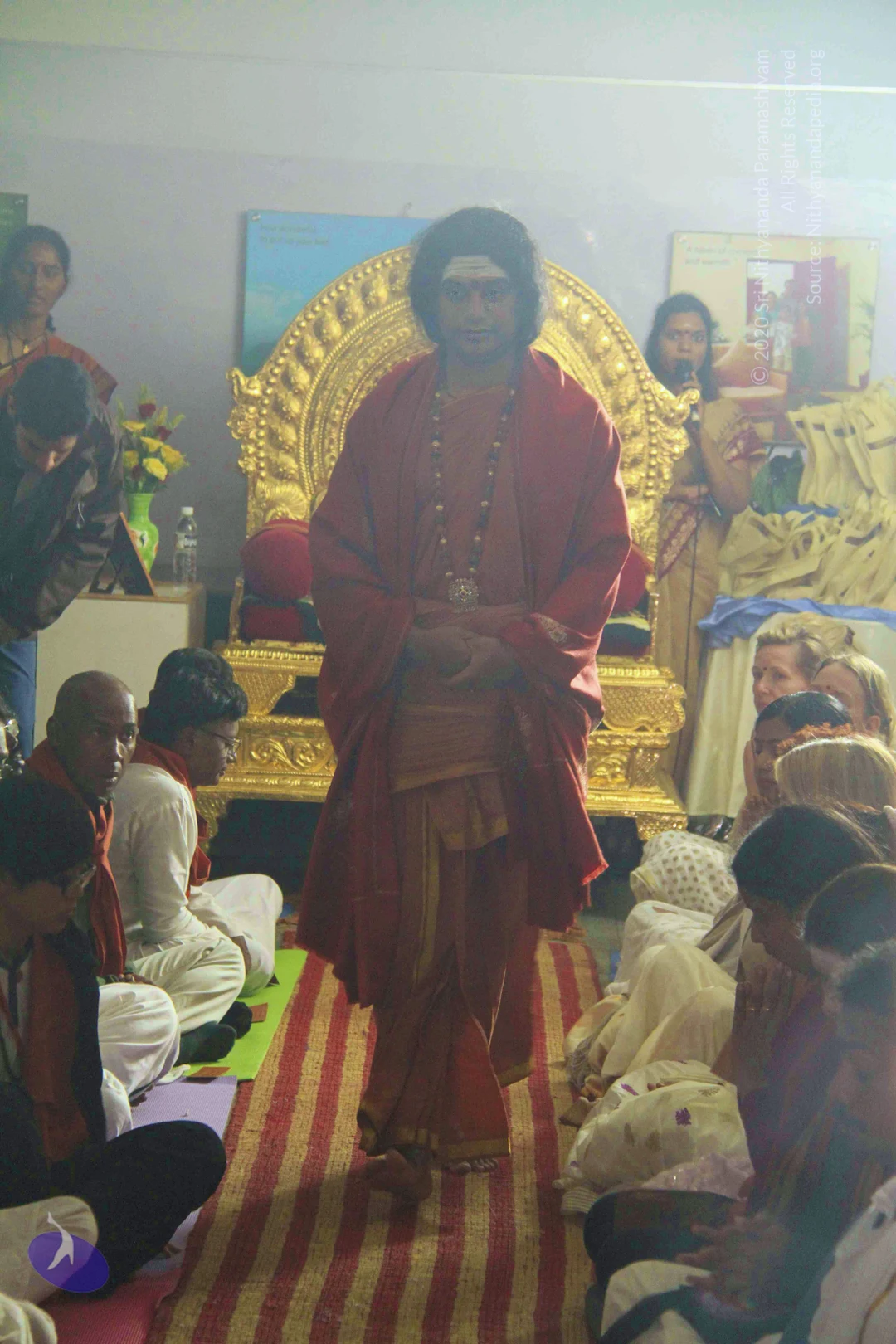
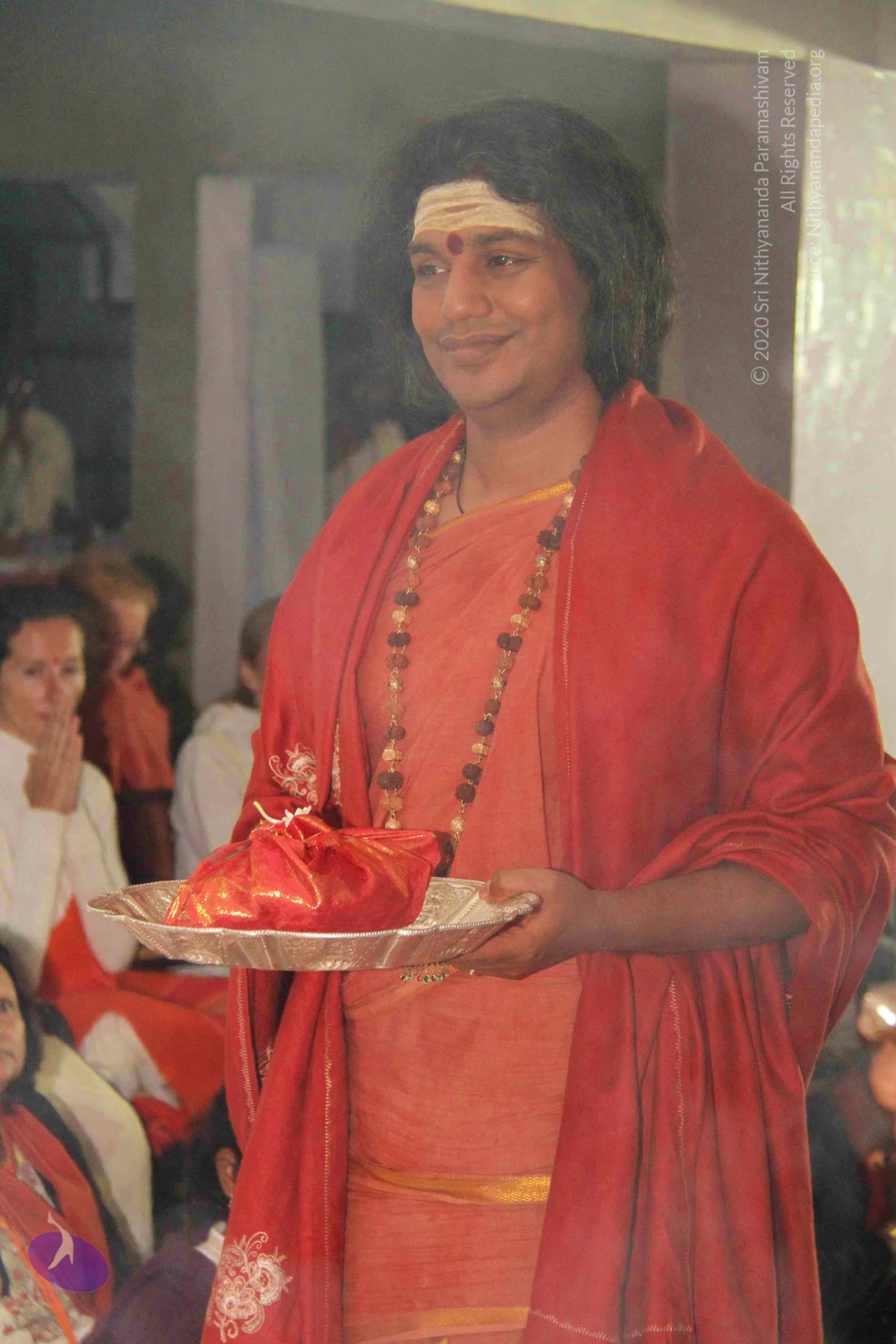
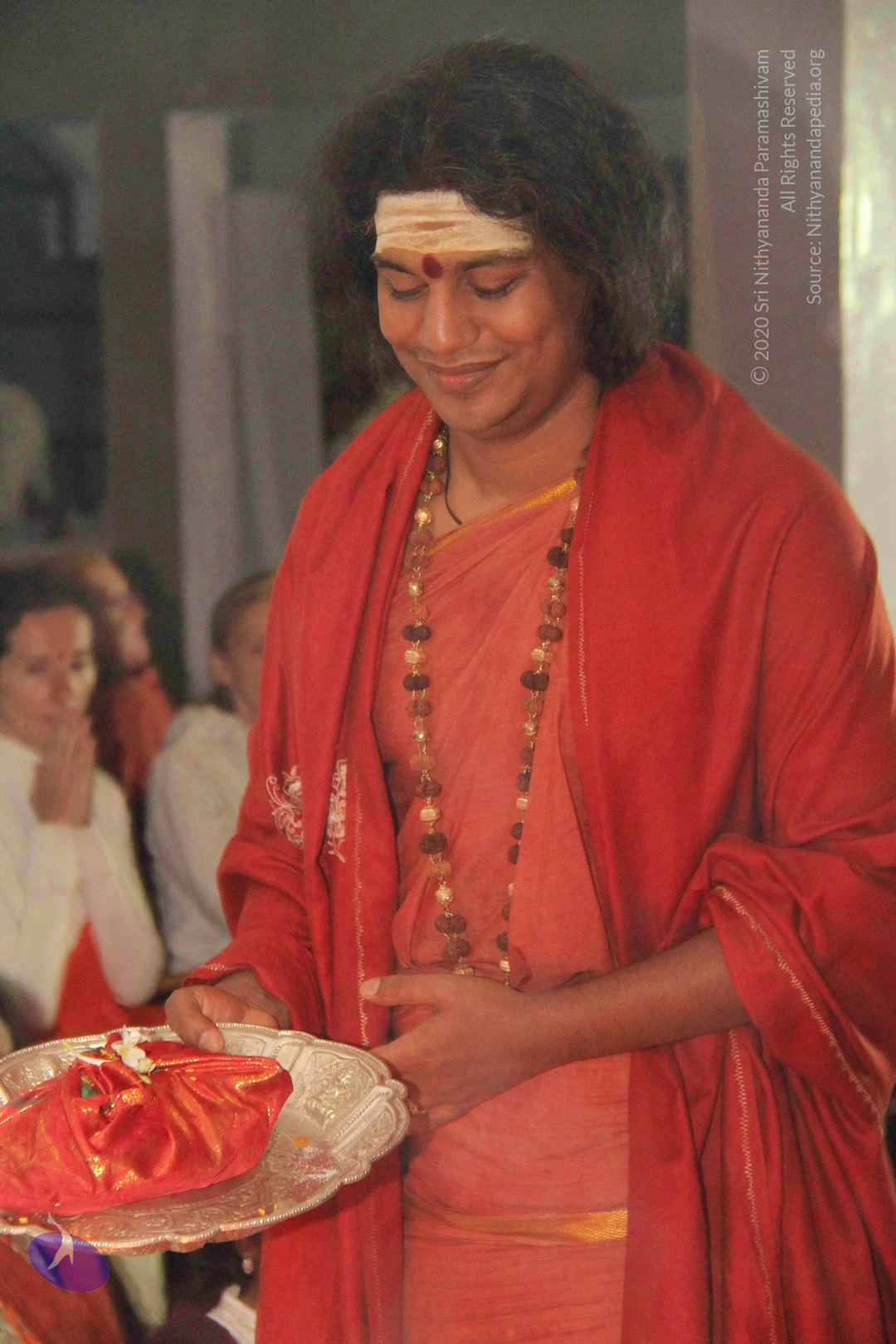
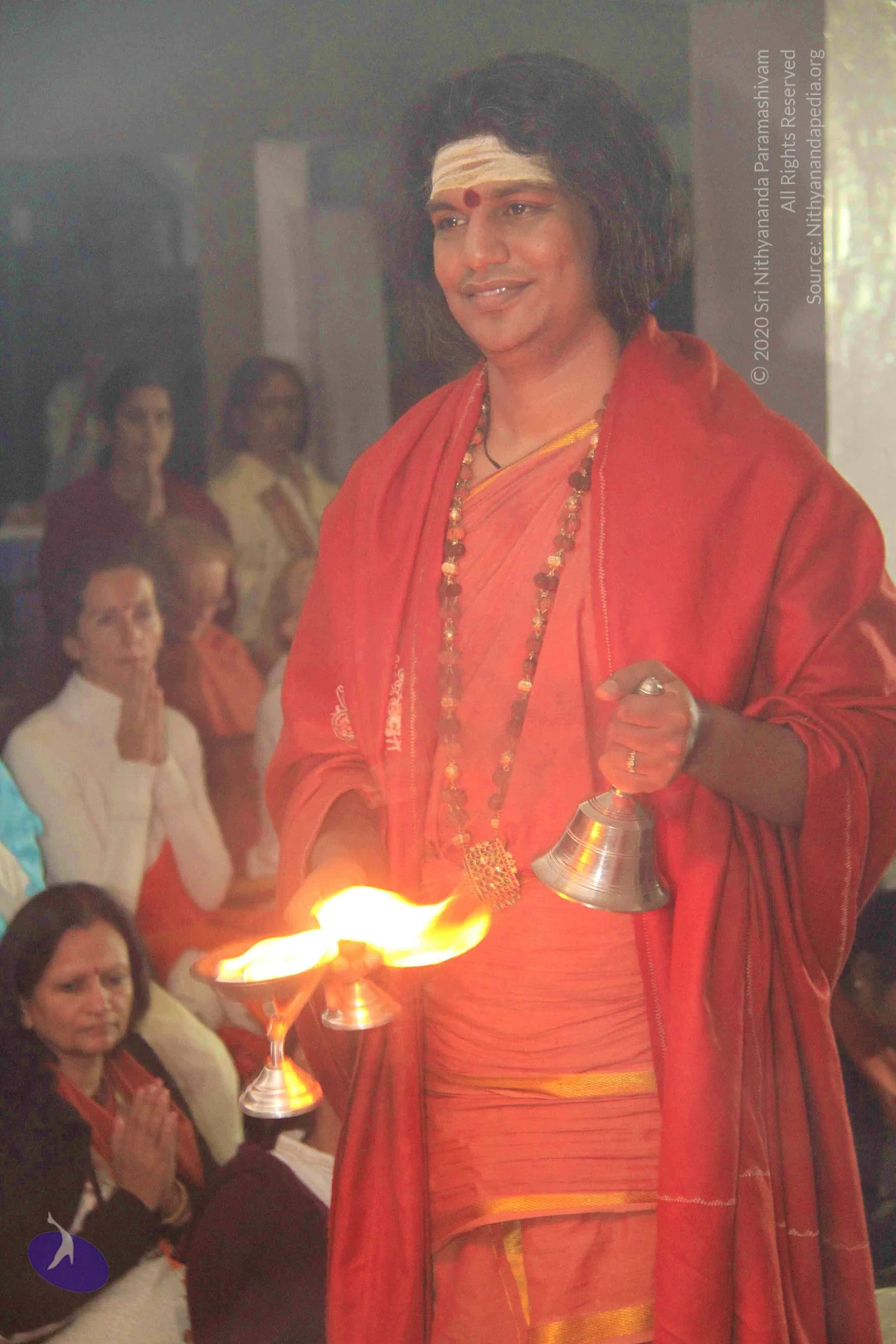
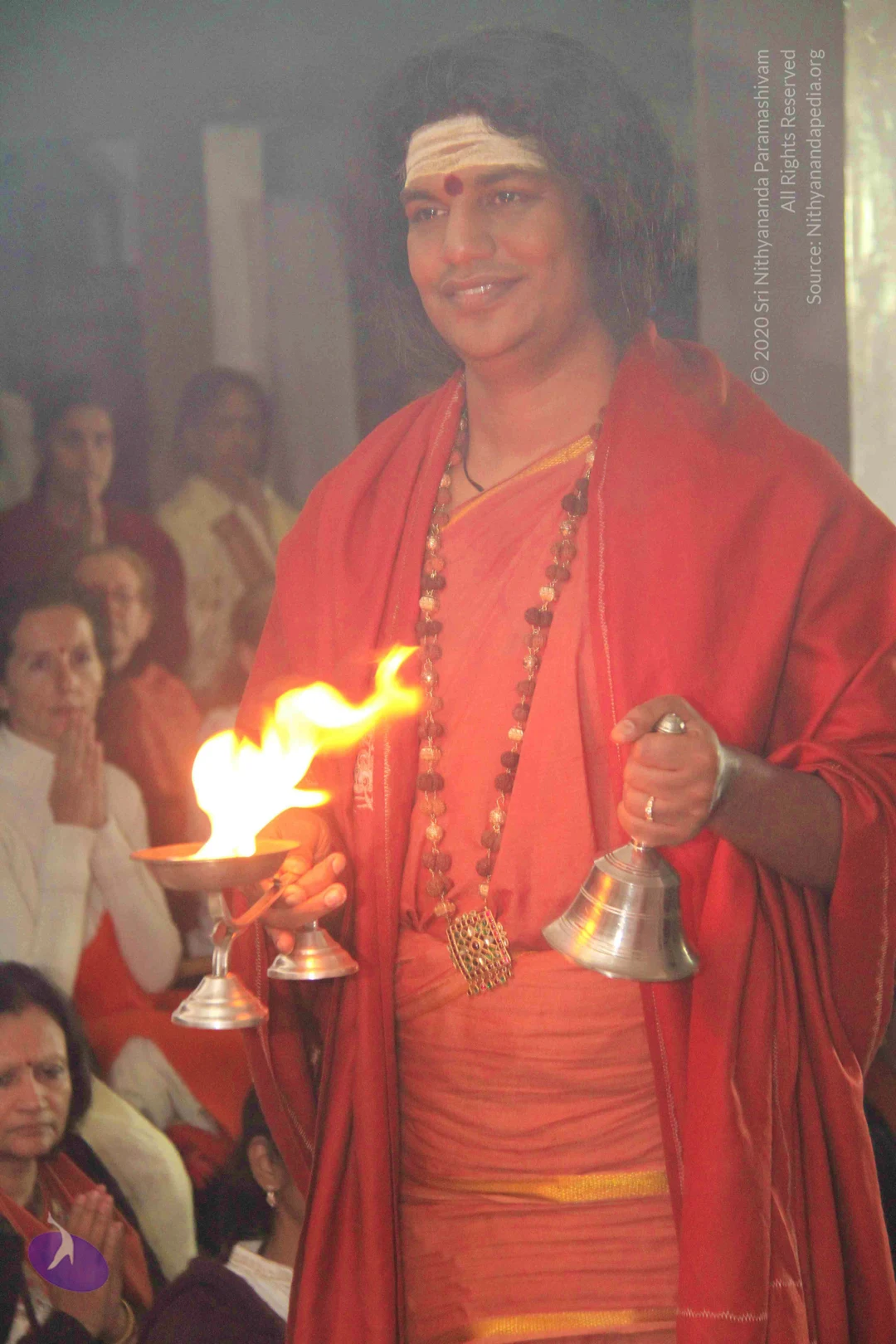
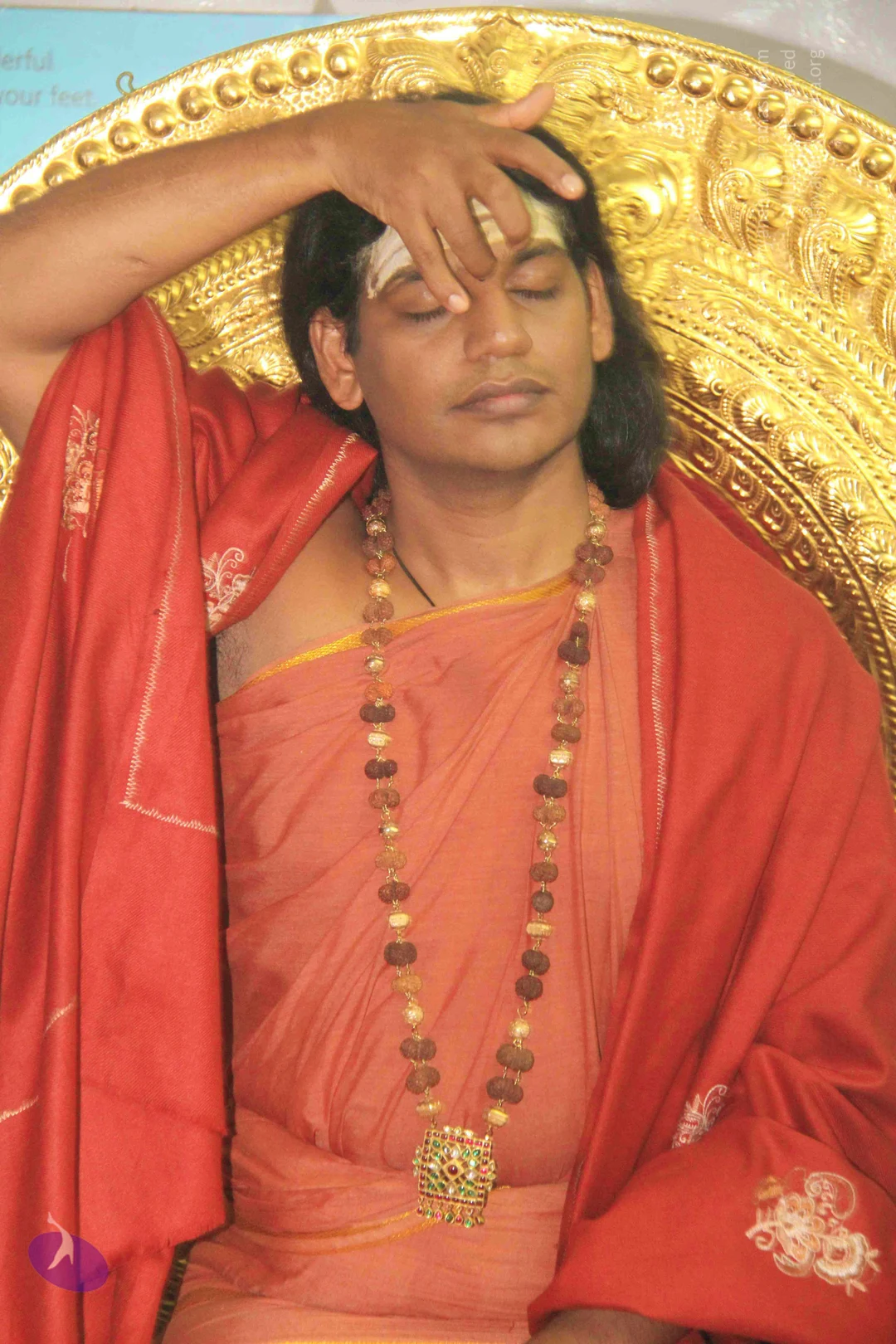
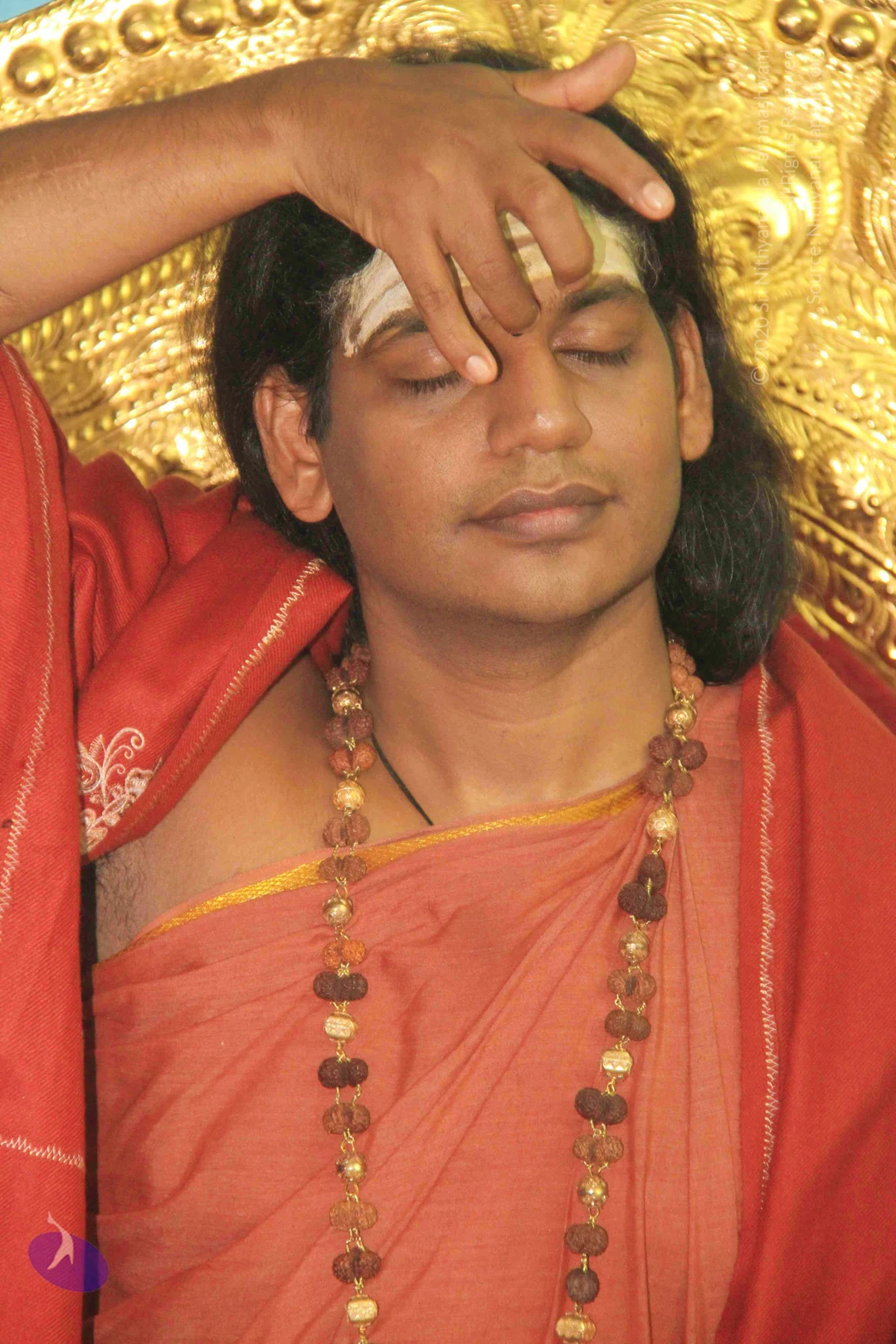
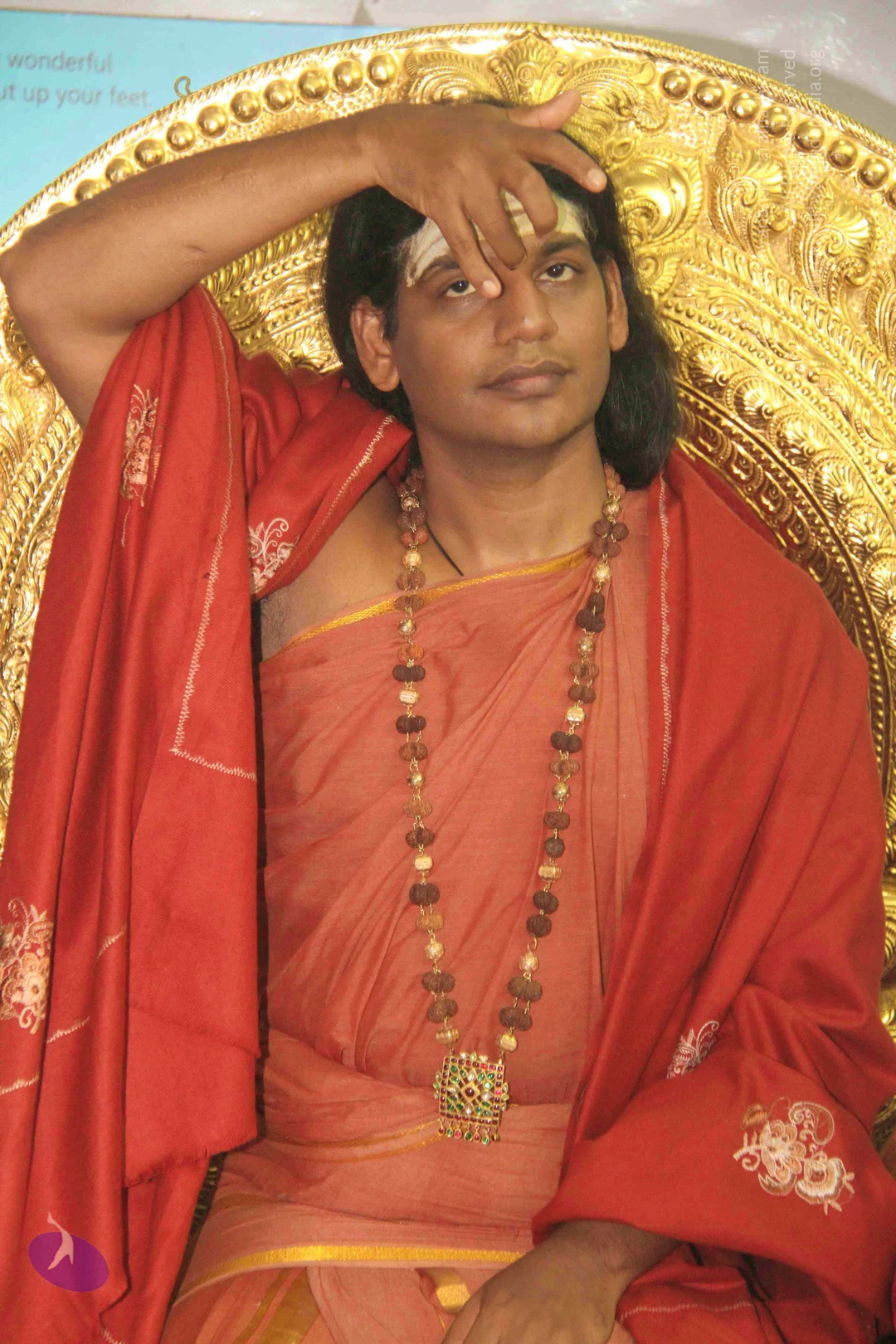
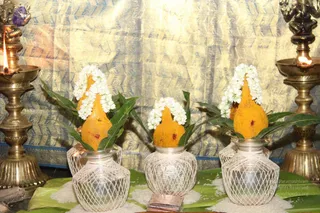
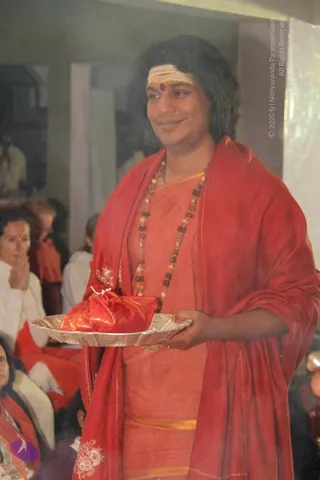
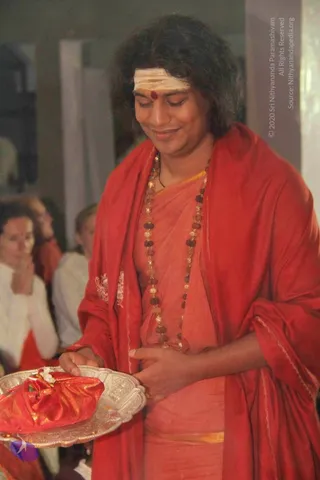
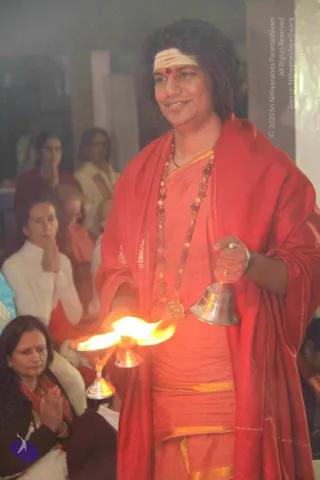
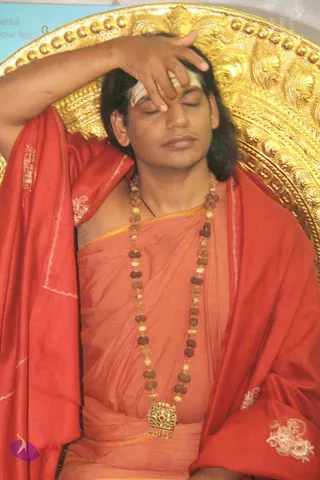
A photograph of a ritual arrangement on a banana-leaf tray dusted with rice. Three pots wrapped in fine white mesh hold yellow-orange coconuts topped with white jasmine garlands and green mango leaves, each marked with red kumkum. Brass oil lamps with lit flames stand at the left and right edges, and a small dark metal Ganesha figure sits at the top right. A gold-and-blue patterned silk cloth forms the backdrop. No people are visible.Photograph of a satsang hall in which a man with long dark swept-back hair, a tilak on his forehead, a rudraksha mala and a red-orange shawl over a matching robe stands in front of an ornate gold throne with red cushions. a person is the central figure, with hands folded at his waist. Seated devotees in white clothes and orange shawls sit on the floor at left and right, and a woman in a cream sari holds a microphone at the upper right. A vase of yellow and red flowers and a water bottle stand on a side table at left, with a striped red and yellow mat on the floor.Photograph of a man with long, swept-back dark hair and a white tilak with a red dot on his forehead, wearing a red-orange shawl over an orange robe and a long rudraksha mala. He stands smiling and holds a silver tray with a red-and-gold embroidered potli bag. Behind him, a woman on the left presses her palms together in anjali, and seated devotees in white and orange are visible in a hall.A man with long, swept-back dark hair and a white horizontal forehead mark with a red dot stands in red-orange robes and a red shawl, smiling and looking down at a silver tray. He wears a long rudraksha mala with gold beads and holds a red silk-wrapped bundle decorated with flowers. Behind him, a woman in white with a hand raised to her face and another person in orange sit in a room.Photo of a man with long swept-back dark hair and a white tilak with a red dot on his forehead, wearing an orange-red shawl over orange robes with a gold-bordered dhoti and a long rudraksha-style bead mala with a gold pendant. He holds a lit multi-wick oil lamp in one hand and a silver handbell in the other during an aarti. Behind him, several seated women with hands in anjali mudra watch the ritual in a dim hall. Probable Swamiji (long hair, distinctive saffron-and-gold attire, rudraksha mala) performing aarti as a satsang leader.A seated man with long dark hair, eyes closed and right hand pressed to his forehead, sits against an ornate gold repoussé throne back. He wears an orange-saffron dhoti-style garment, a red shawl with white embroidered floral motifs draped over his left arm and shoulder, and a long mala of rudraksha beads with gold spacers ending in a jewelled gold pendant at the waist. White vibhuti lines mark his forehead. Behind him a blue and white banner with partial text is visible. Appearance-based cues including long hair, ornate saffron clothing and rudraksha mala suggest Swamiji (probable), seated in meditation on the throne.
Kalabhairava-Akashic-Reading-and-Darshan

77 photosSource gallery
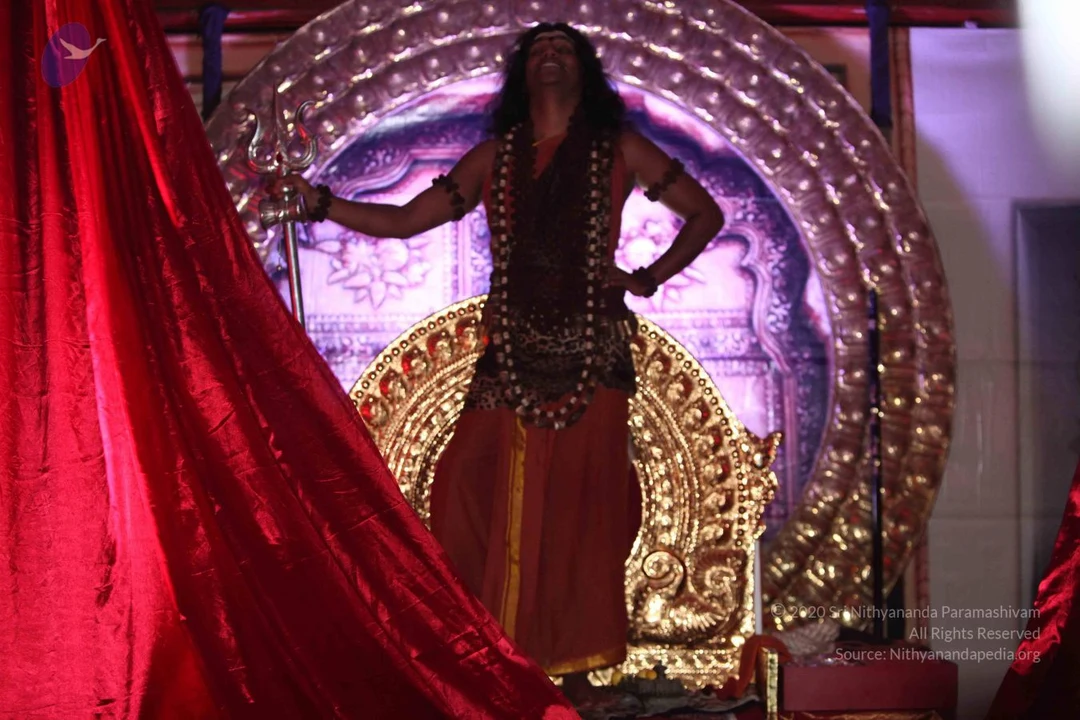
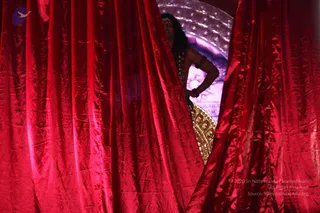
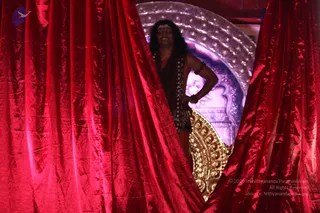
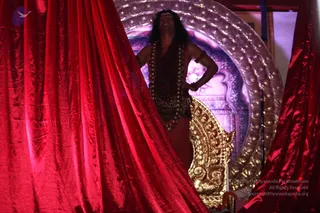
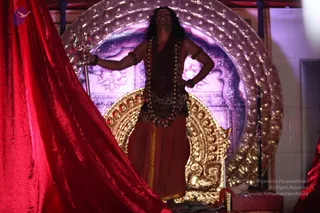
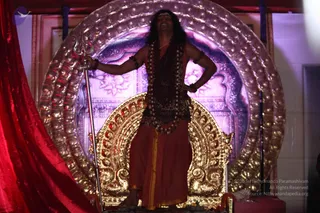
A photograph of a performer partly framed between two large red satin curtains on a stage. A figure with long dark hair and a dark headband stands with one hand on the hip, wearing a gold-embroidered garment with sequined trim. Behind is a round, lilac-and-silver decorative backdrop. The red drapes dominate the frame, and a small purple bird logo appears at the upper left.A photograph of a man with long dark hair and a red tilak on his forehead standing behind parted red satin curtains on a stage. He wears a dark embroidered garment with sequined trim, a gold necklace and dark bead bracelets, and rests one hand on his hip while smiling. Behind him a large ornate silver-and-gold arched backdrop frames the stage. The area is lit in pink and red tones. a person: the long swept hair, ornate dark garment with ceremonial gold necklace and beaded adornments match the page's description of a person at this event, though identity is inferred from appearance only.A photograph taken between red satin drapes framing a central figure standing before an ornate silver-and-purple circular backdrop. The figure has long dark hair swept back, a dark bindi-like marking on the forehead, rudraksha beads and a long mala draped over a dark sleeveless garment, and a bead bracelet on the arm. A gilded, carved throne with a curved back and ornate scrollwork stands beside the figure. Appearance-based label: a person, standing as a figure of the presiding teacher in a formal stage-like setting.A photograph of a single figure standing on a raised stage before an ornate silver-and-gold arched backdrop with lotus motifs under purple lighting. The figure, with long dark hair, wears a rudraksha mala and layered bead necklaces over a bare torso, with a red-orange dhoti and gold border, and holds a silver trident in one raised arm, hand on hip. Heavy red velvet drapes frame the left foreground. a person is the central figure in this stage performance-style setting; the page associates the event with a morning satsang in Kodaikanal. The visible cues are long hair, rudraksha malas and ornate clothing.A man stands on a raised golden throne-like platform in front of a large ornate gold-and-silver circular backdrop with a lilac panel. He wears a dark brown and black garment over a rust-orange dhoti with a gold border, long dark hair swept back, a headband, and multiple rudraksha malas around his neck and arms. He holds a silver trident in his right hand and rests his left hand on his hip. A red silk drape hangs at the left edge of the frame. The setting resembles a stage or satsang dais. Swamiji (probable) appears in person, identified by long swept-back hair, rudraksha malas and saffron-orange clothing with a trident.A photograph of a man standing on a raised platform in front of an ornate gold-toned arched backdrop with a large ring-shaped decorative frame in pink and silver. He wears long dark hair swept back, a white forehead mark, rudraksha malas and a ceremonial beaded necklace, and a red-orange dhoti with a yellow border and red upper cloth. He holds a silver trident in his right hand and rests his left hand on his hip. A red cloth hangs at the left edge of the frame.