Skip to content
Saturday

11 September 2010

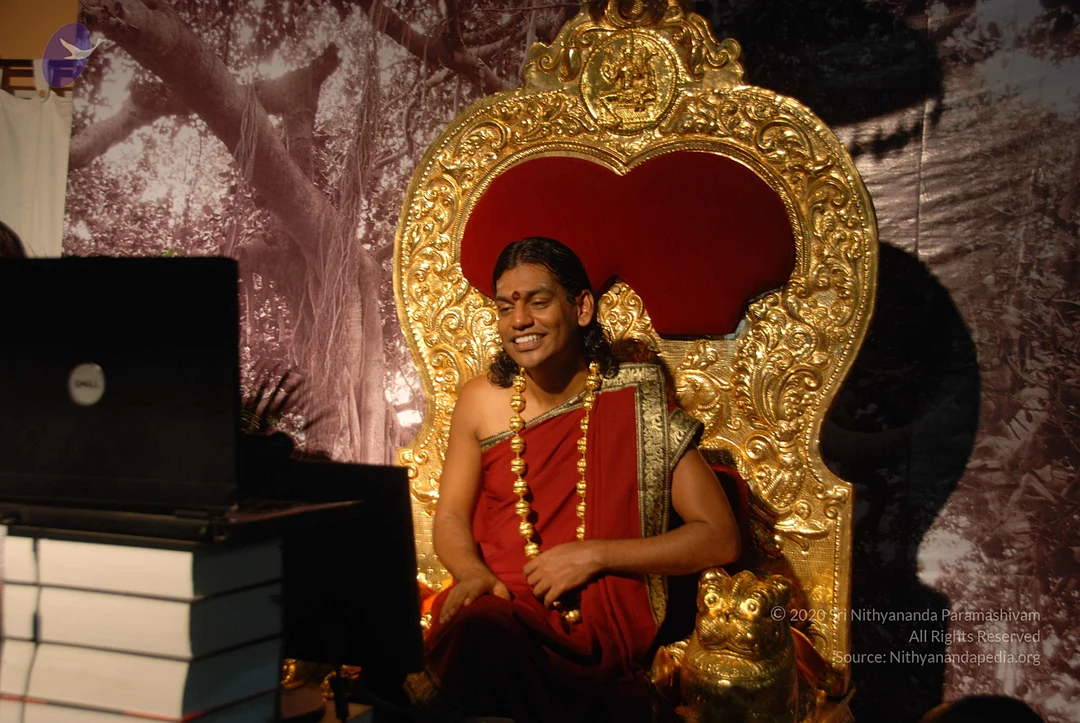
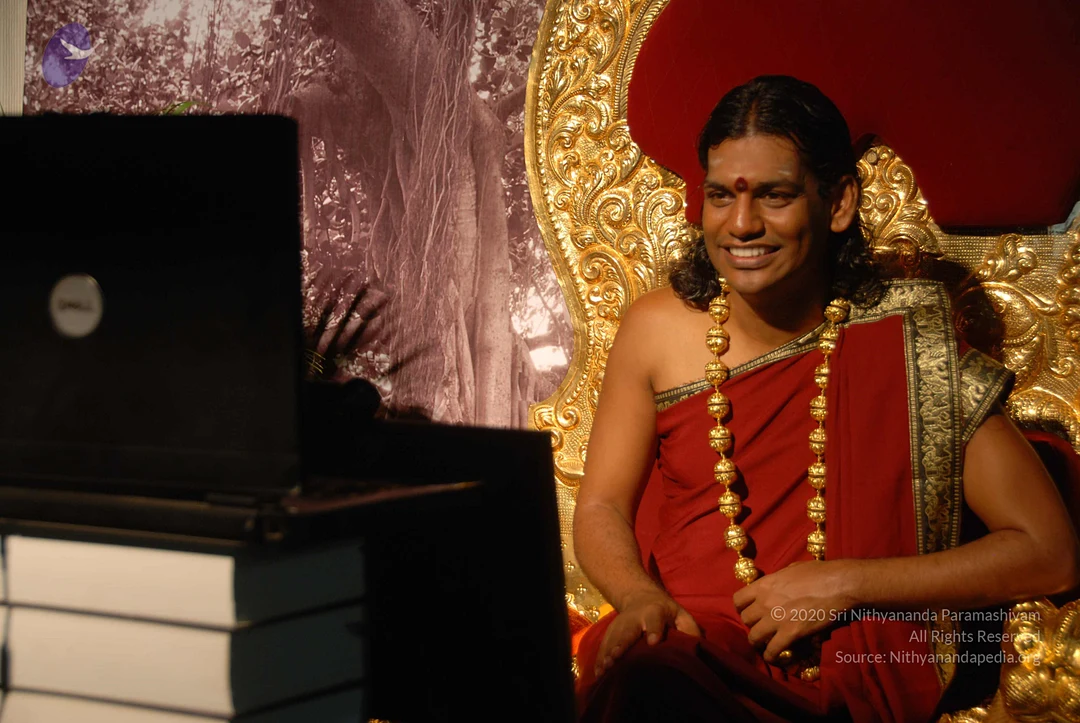
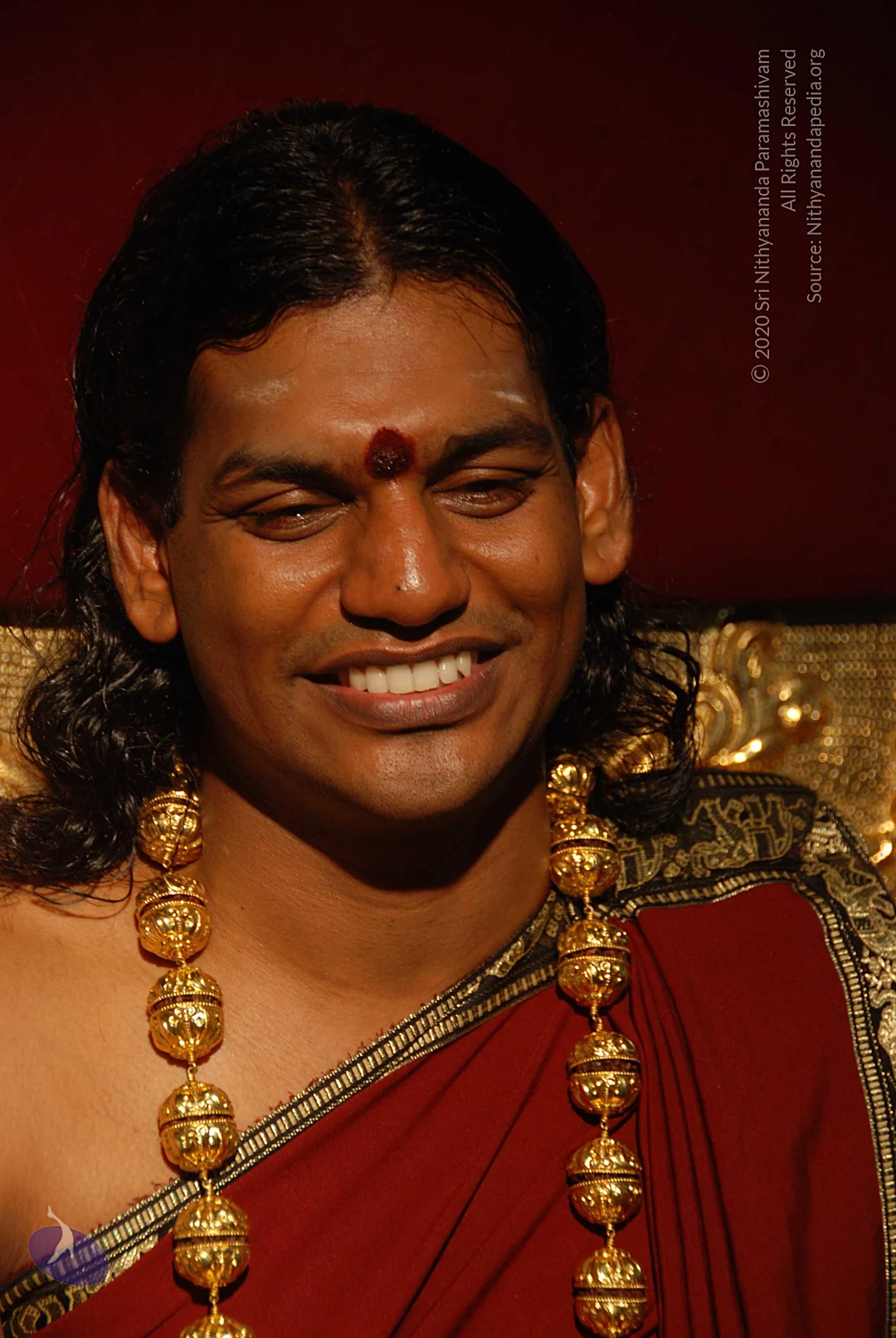
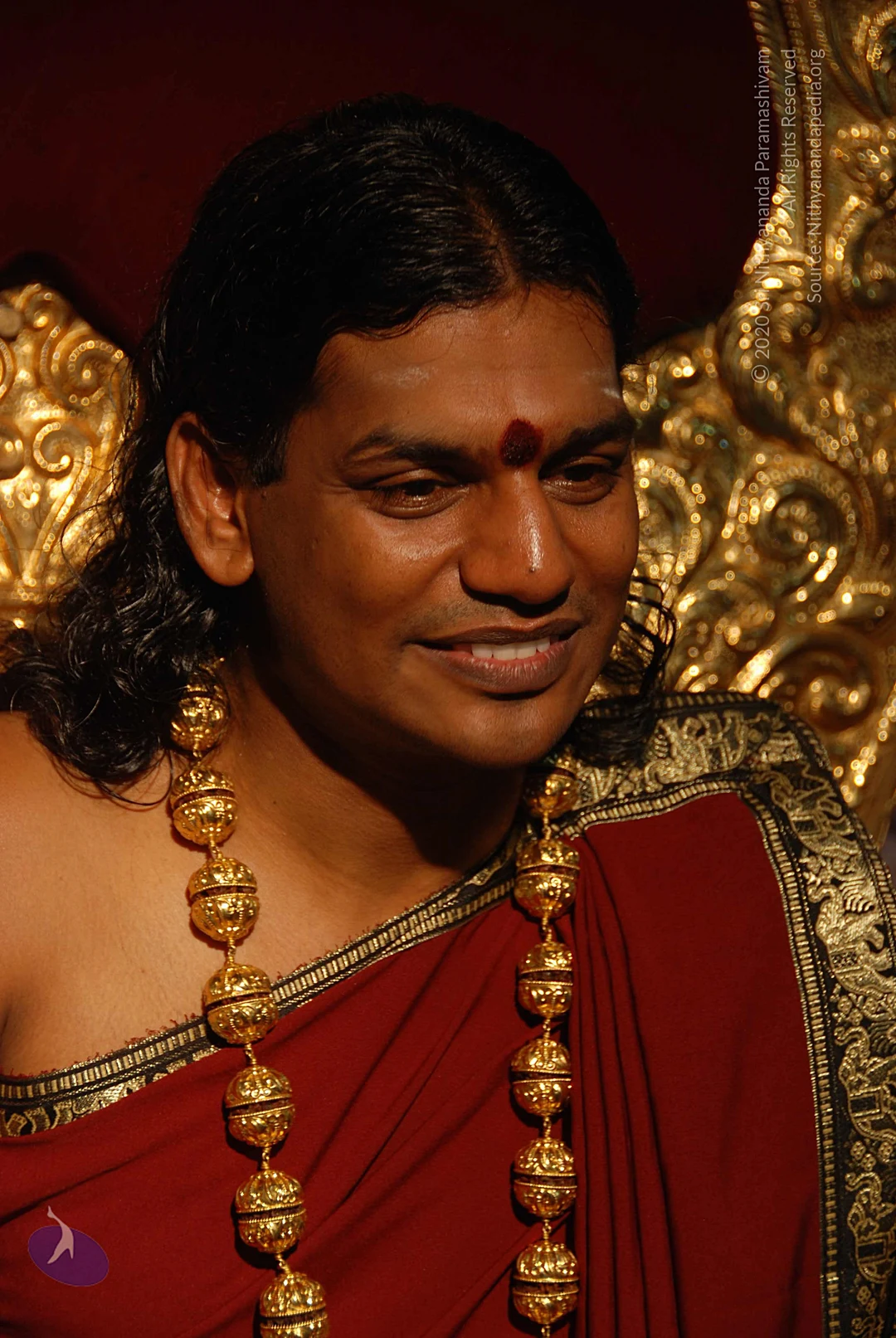
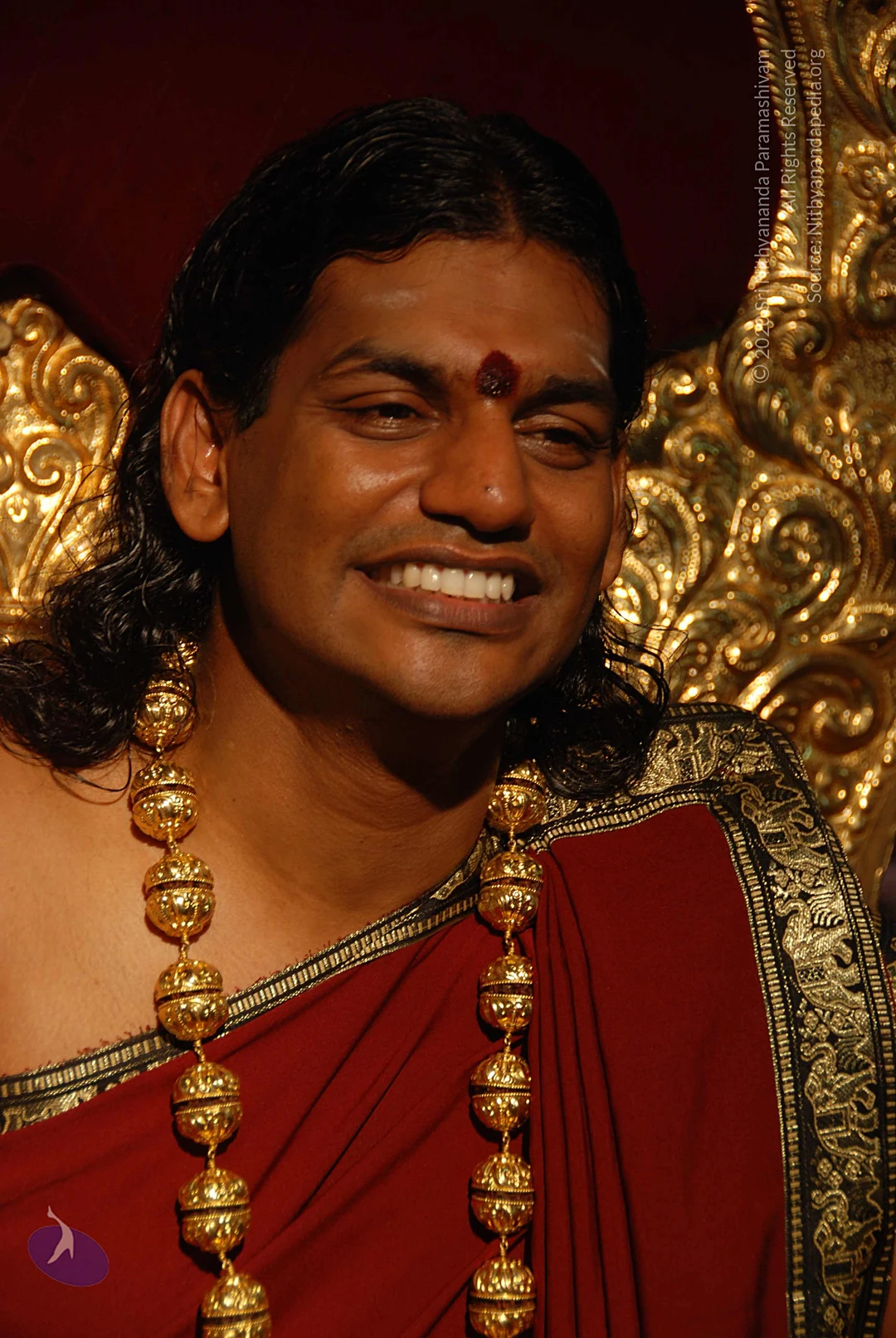
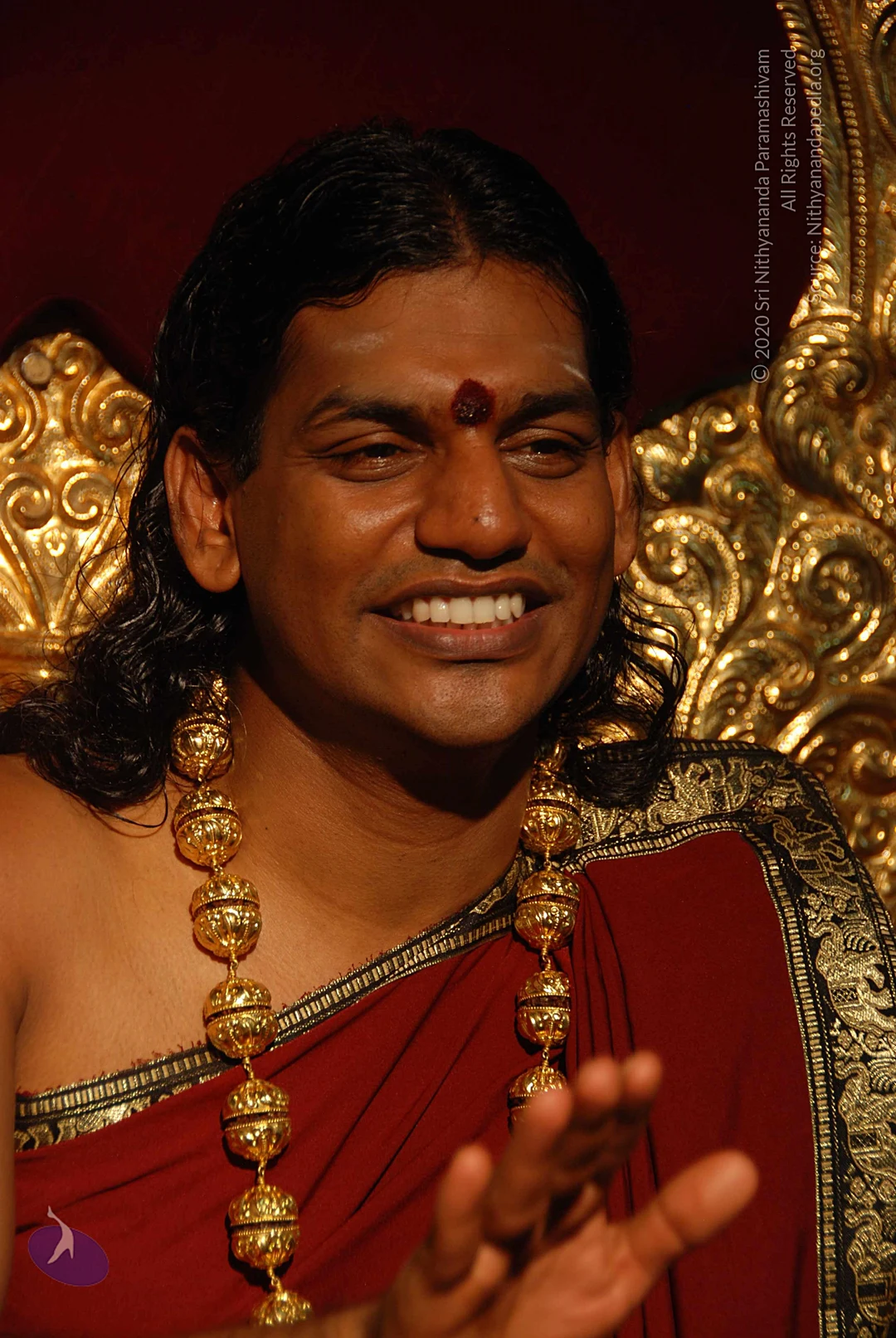
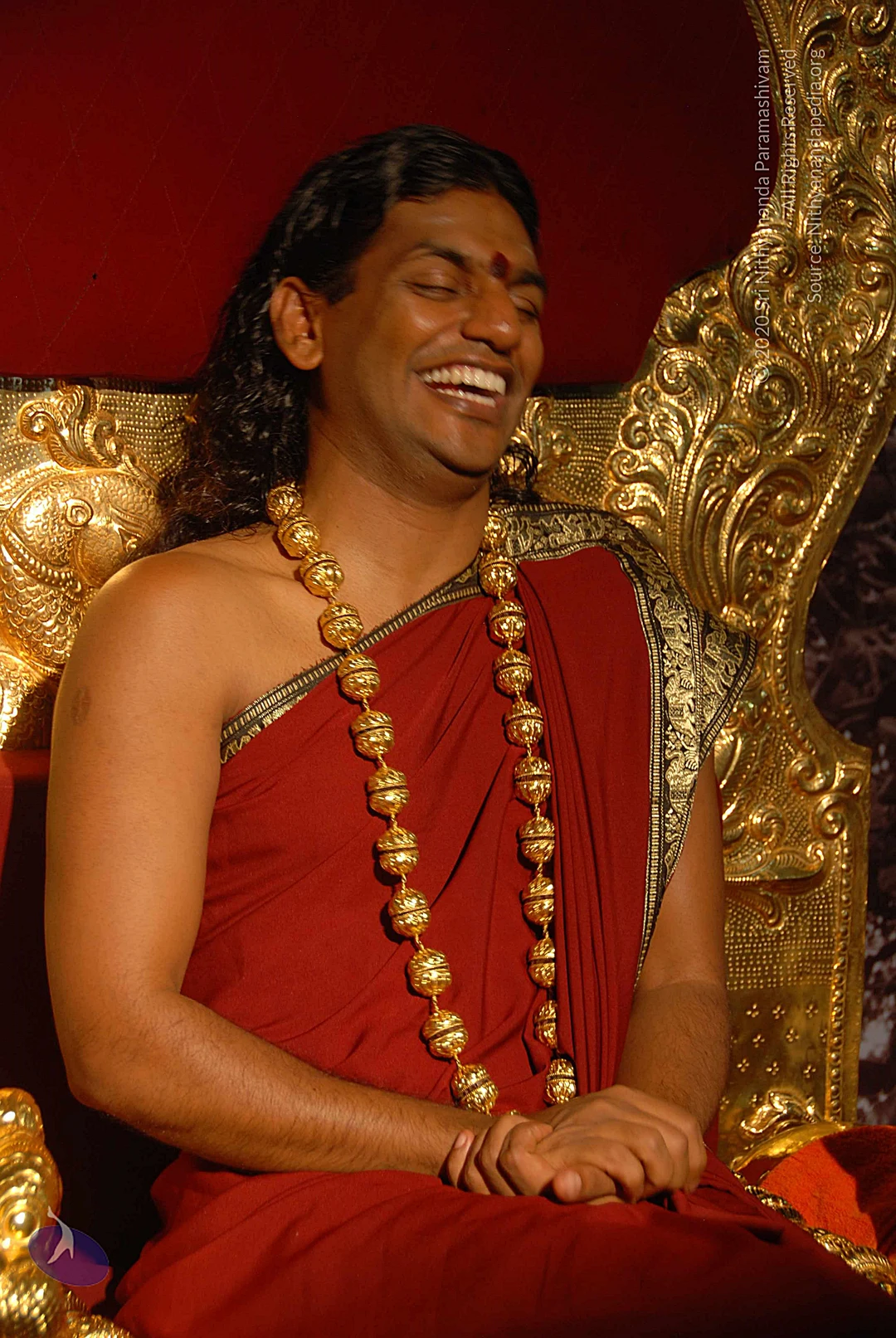
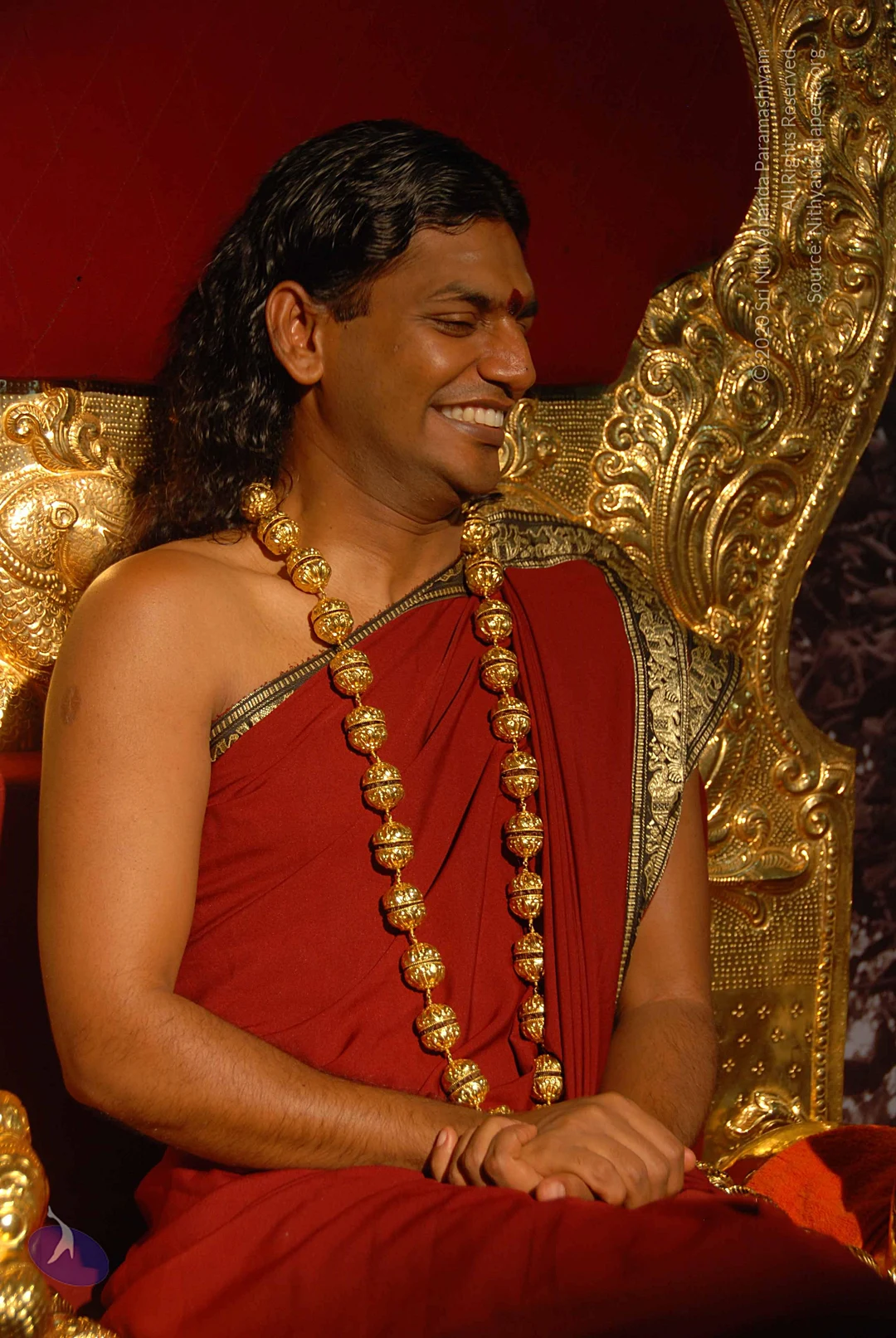
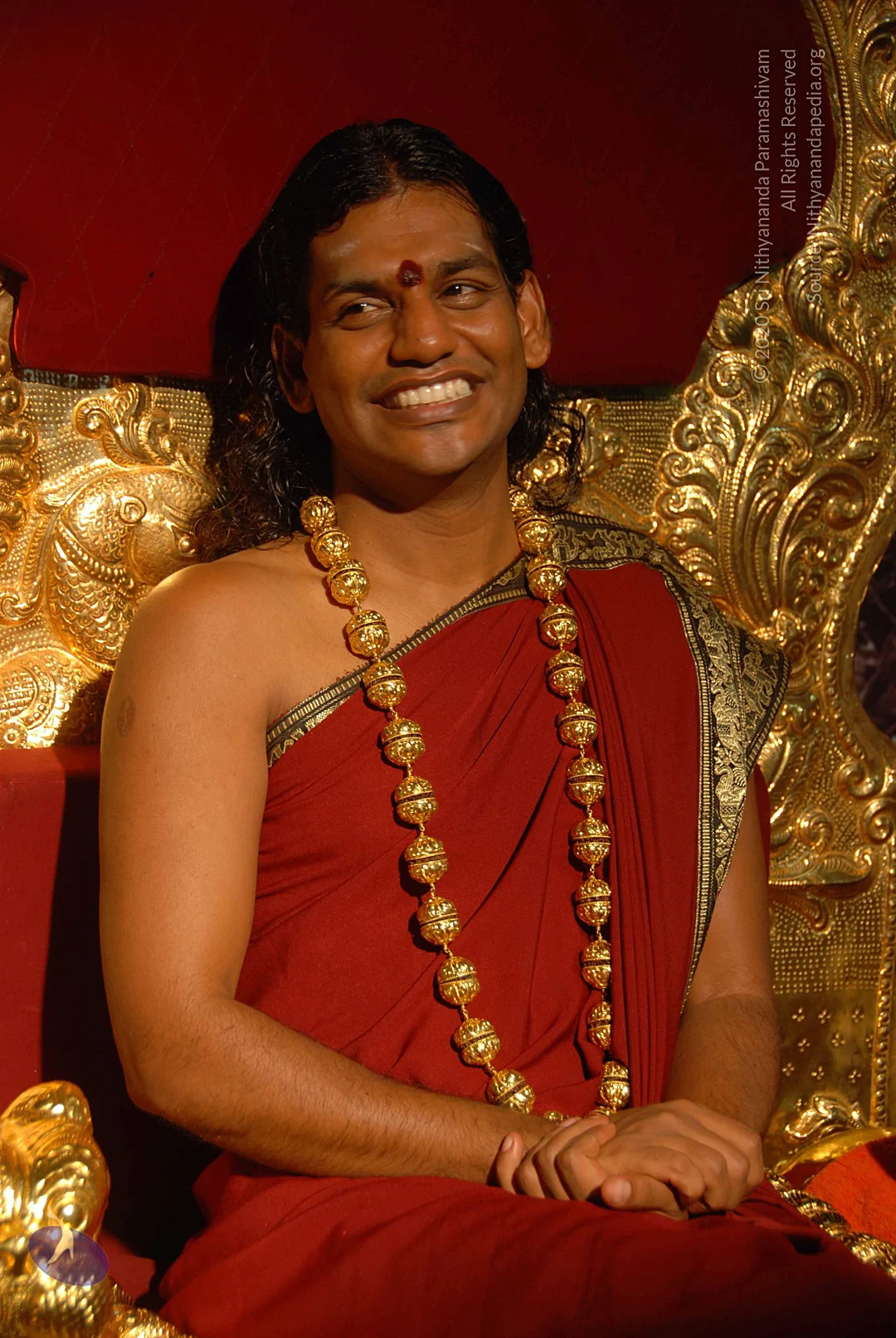
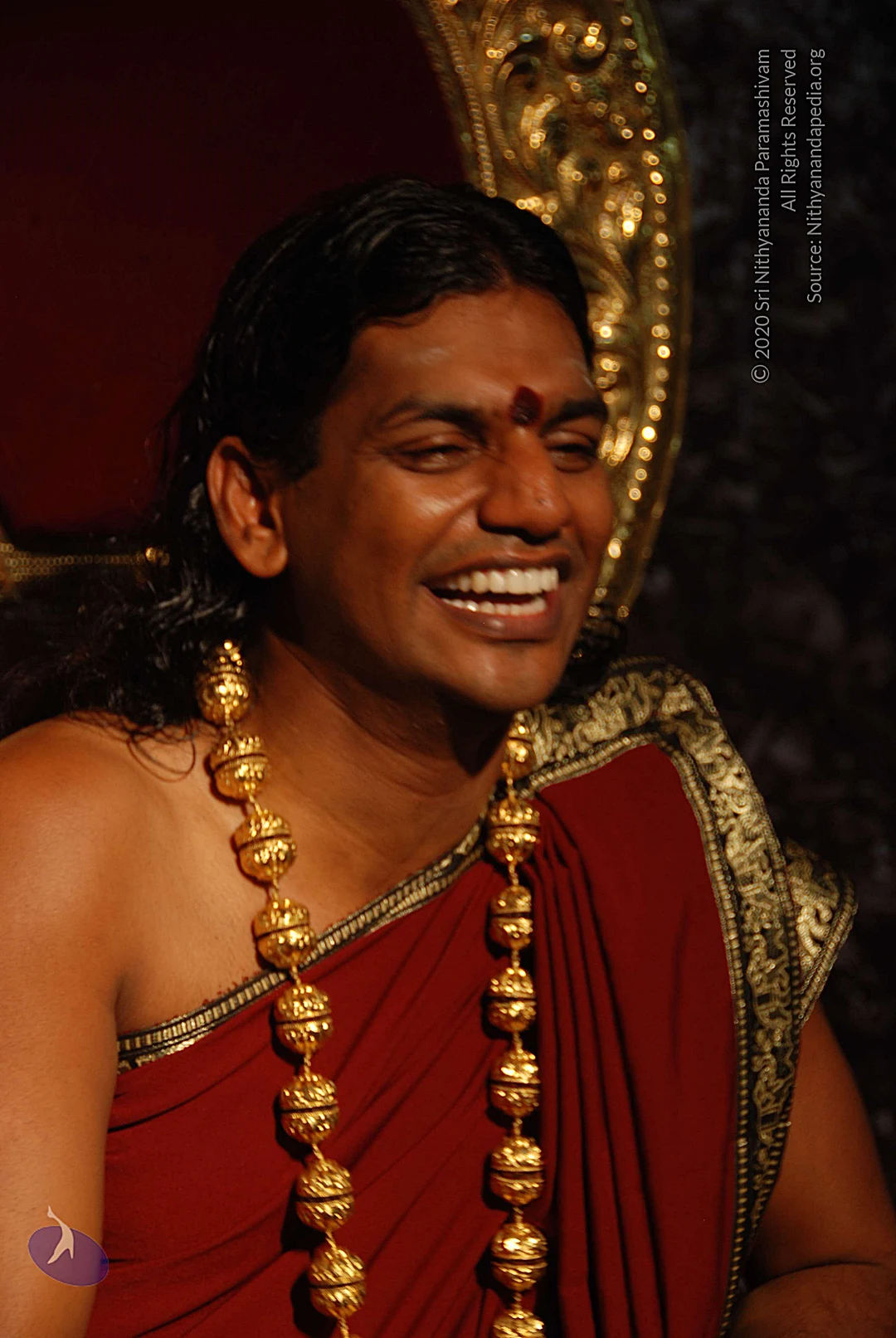
"Ganesha Cosmic Consciousness by Nithyananda"
536Dated photos
1Source pages
2Media embeds
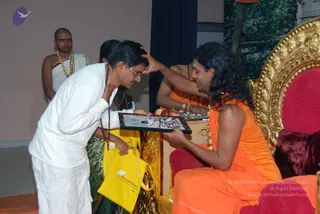
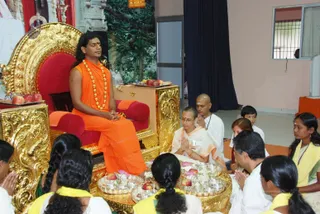
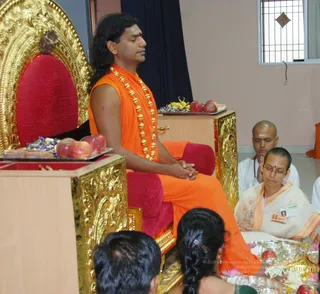
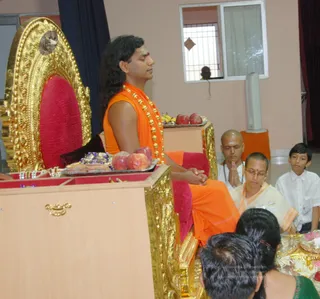
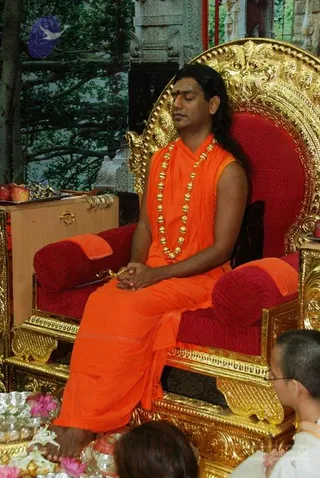
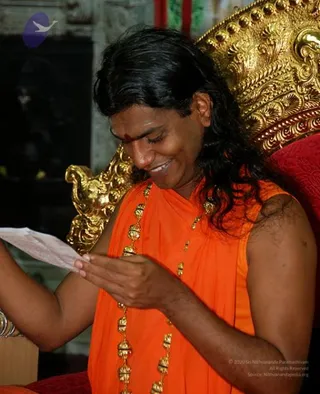
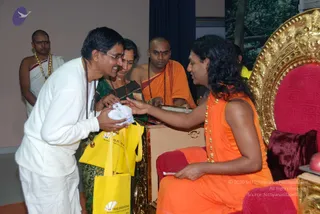
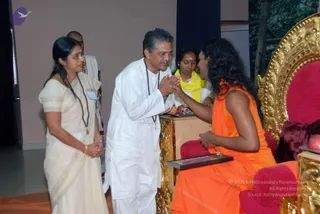
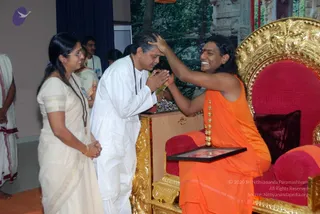
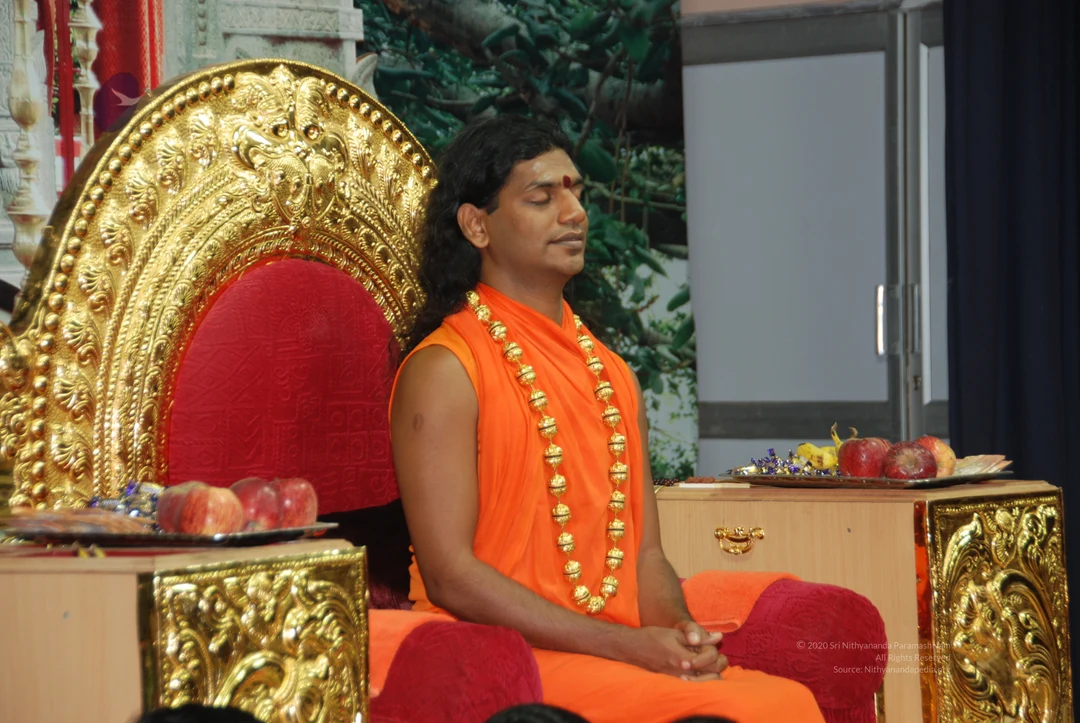
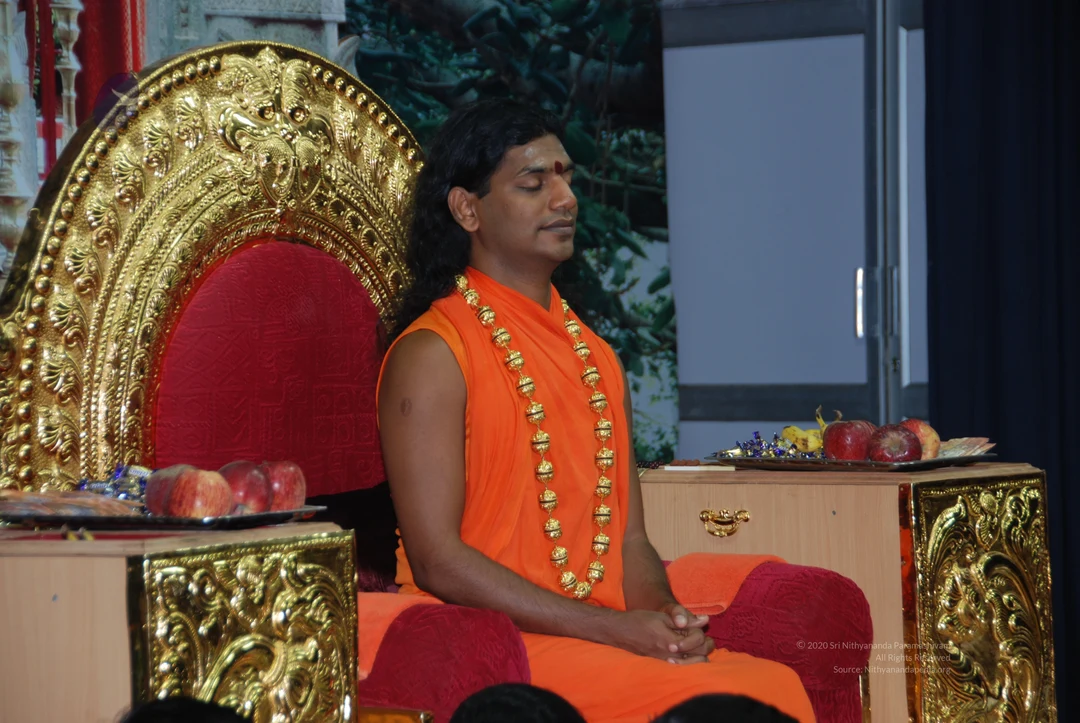
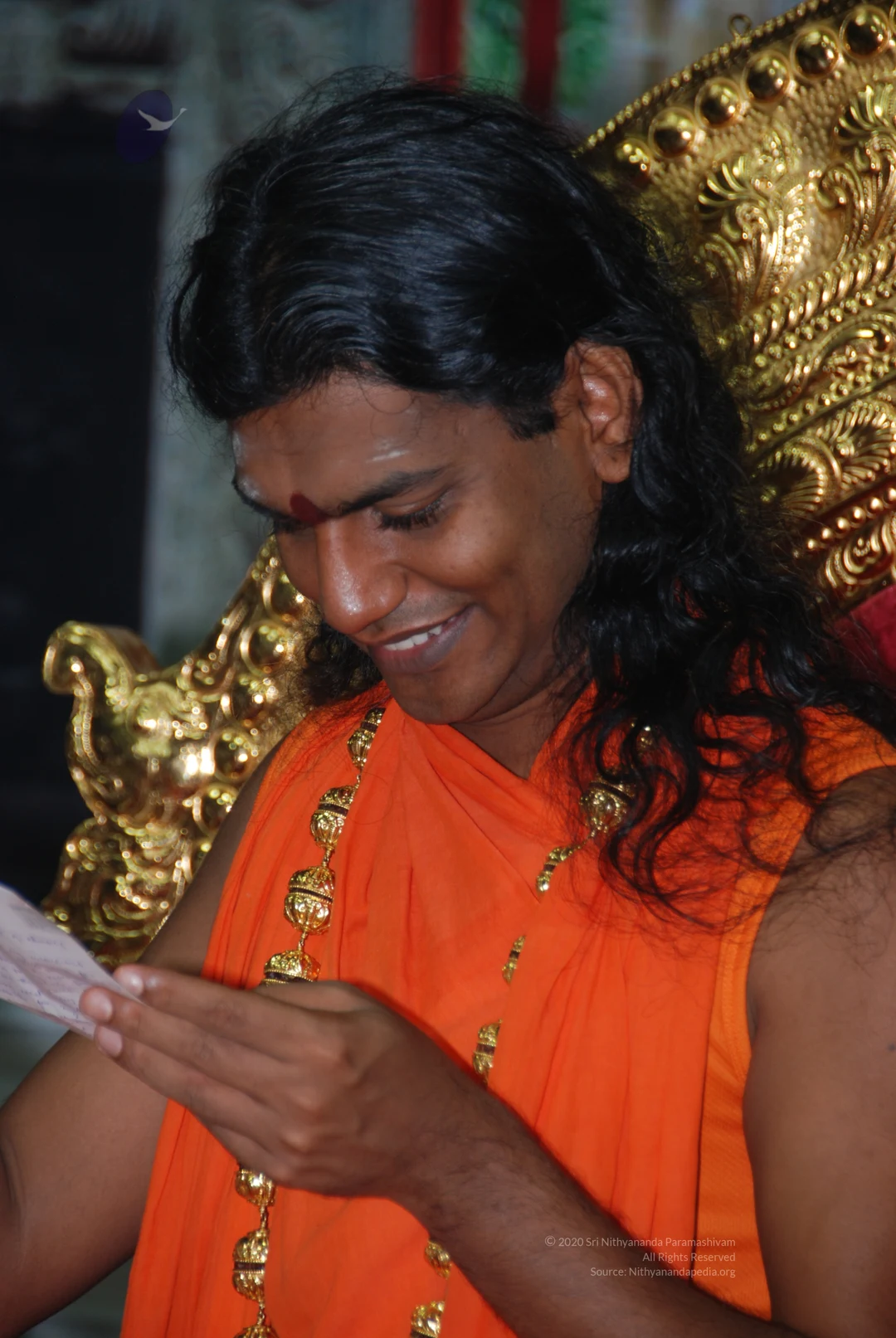
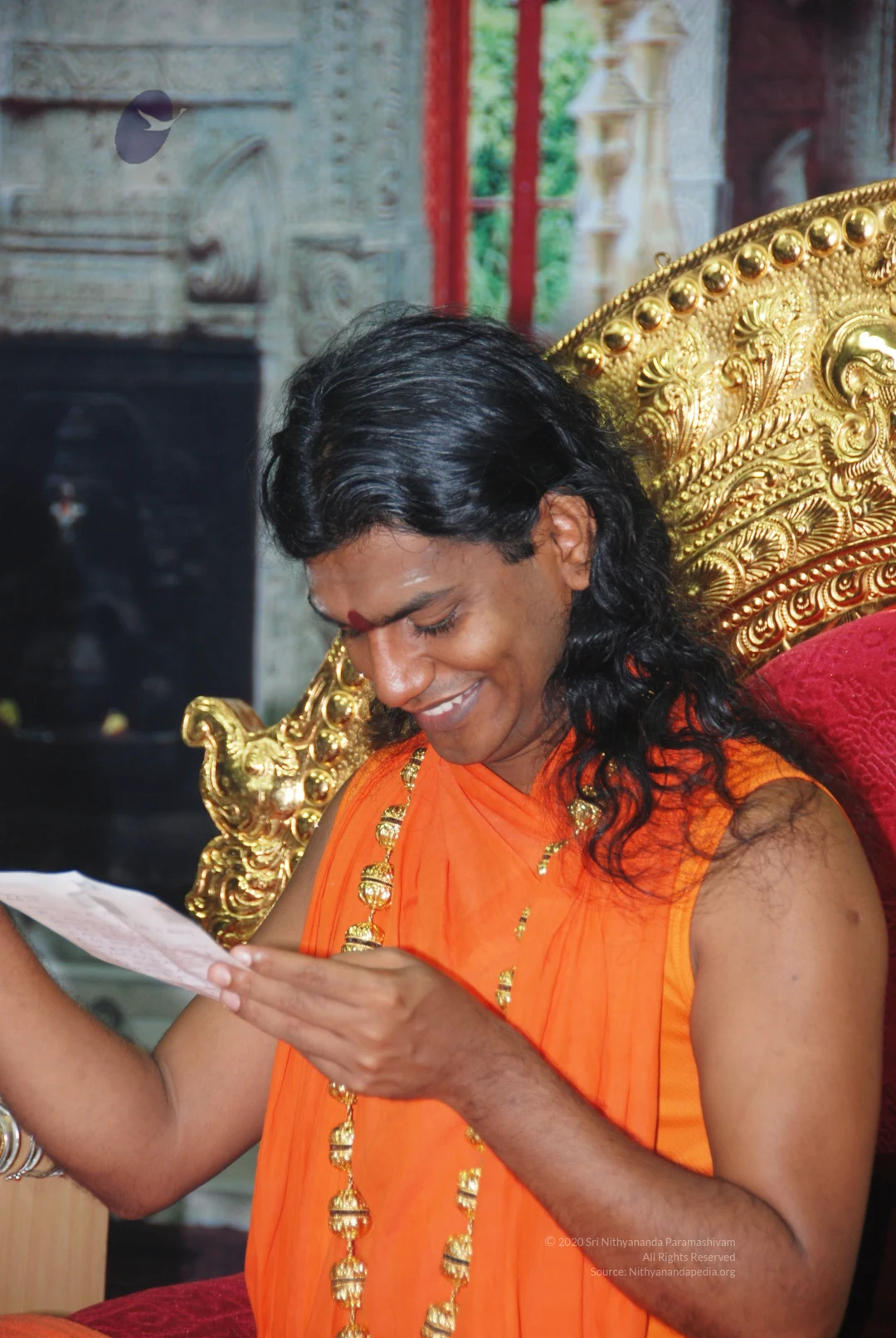
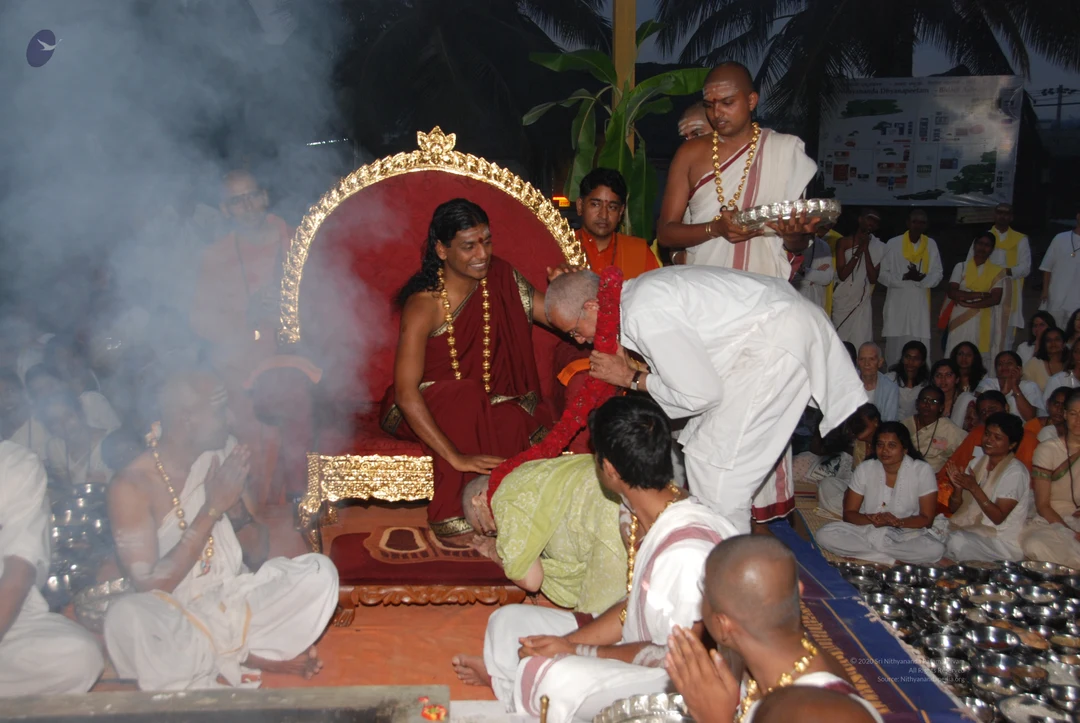
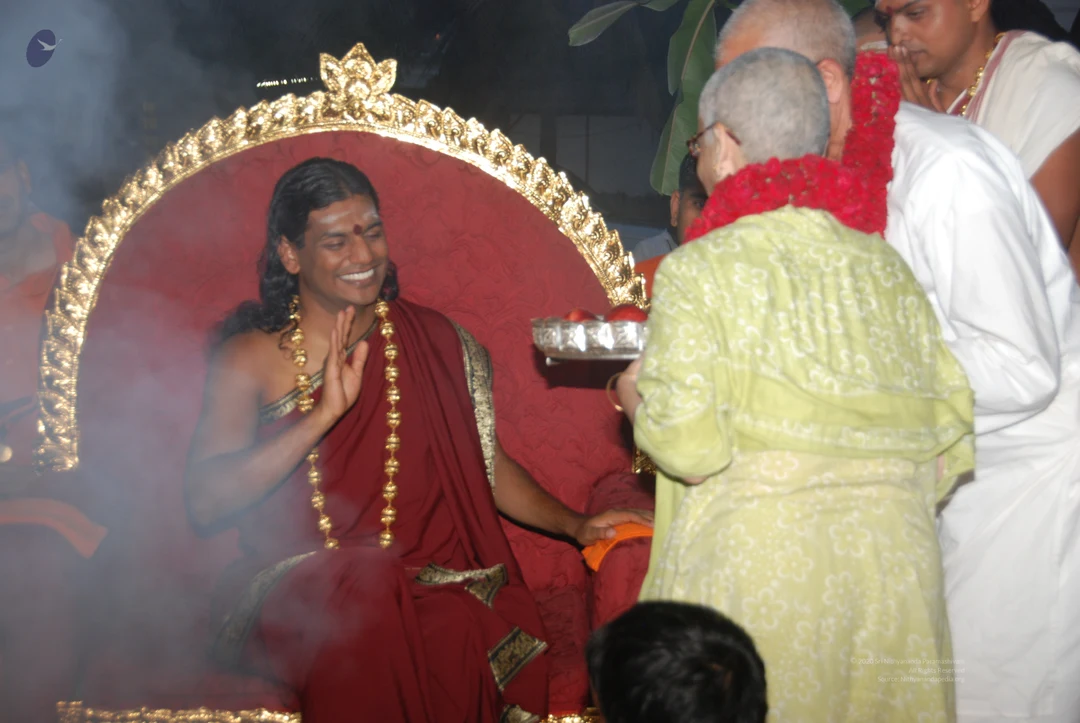
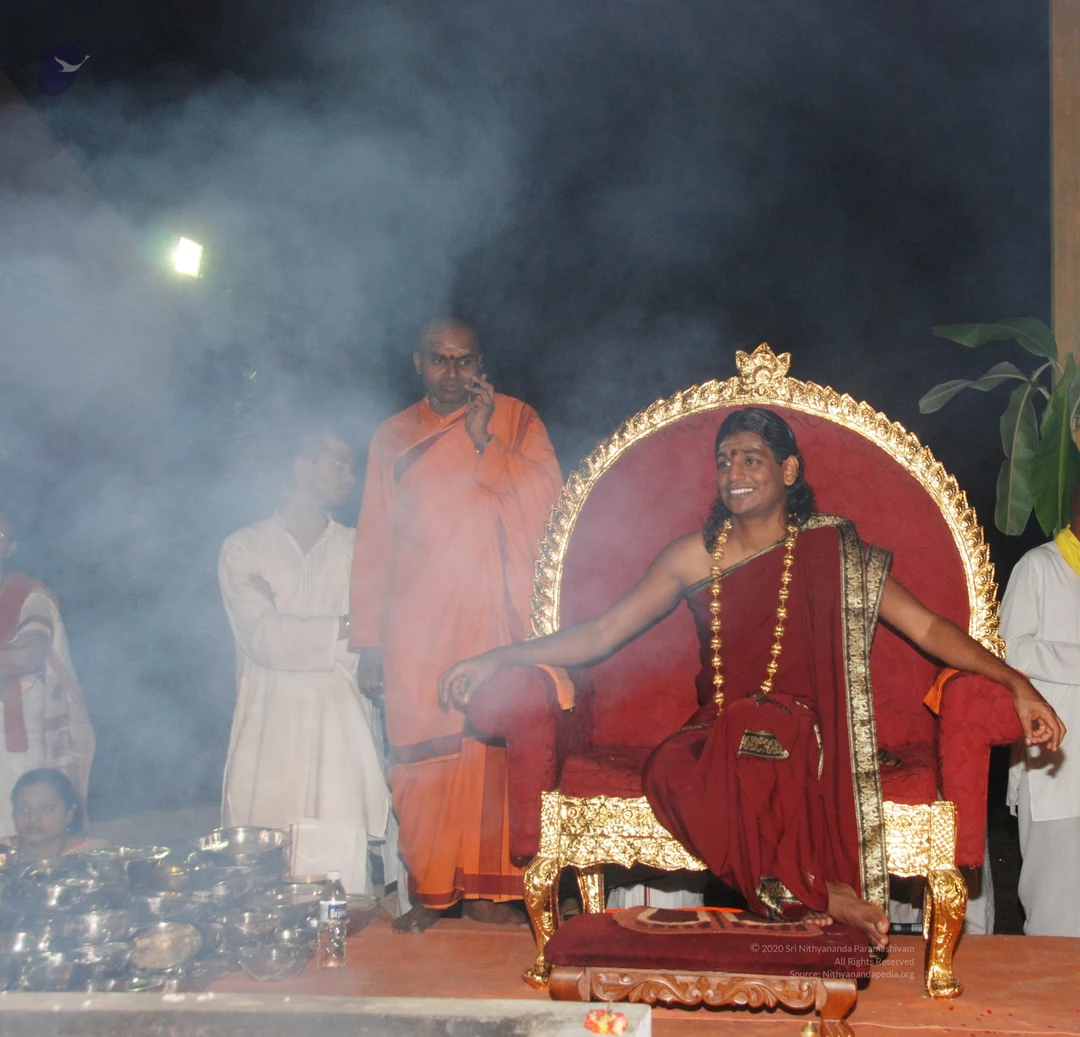
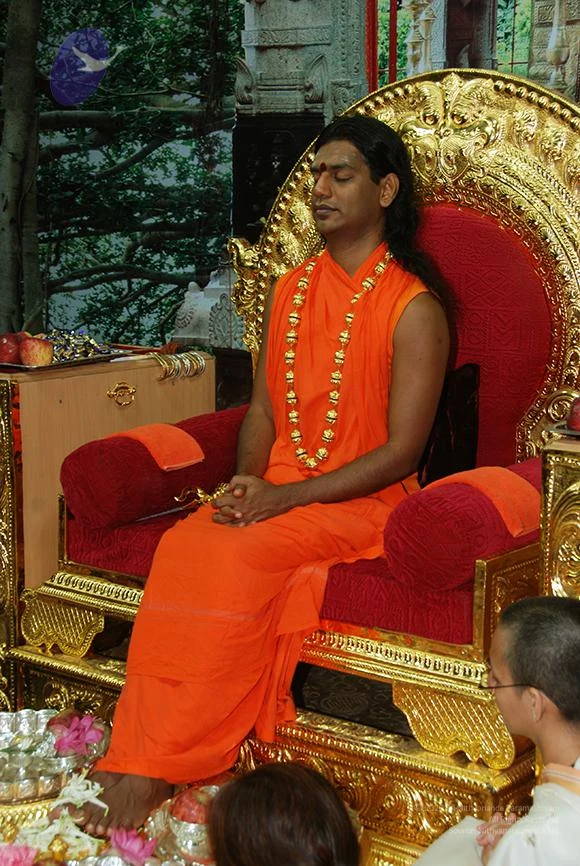
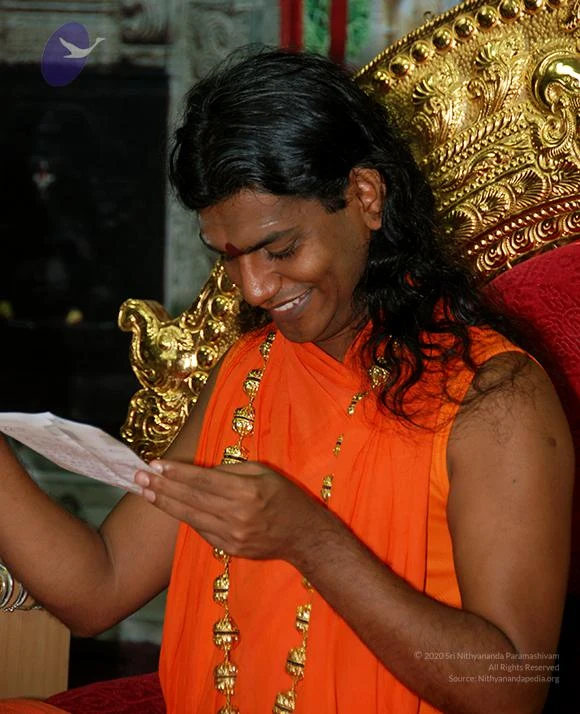
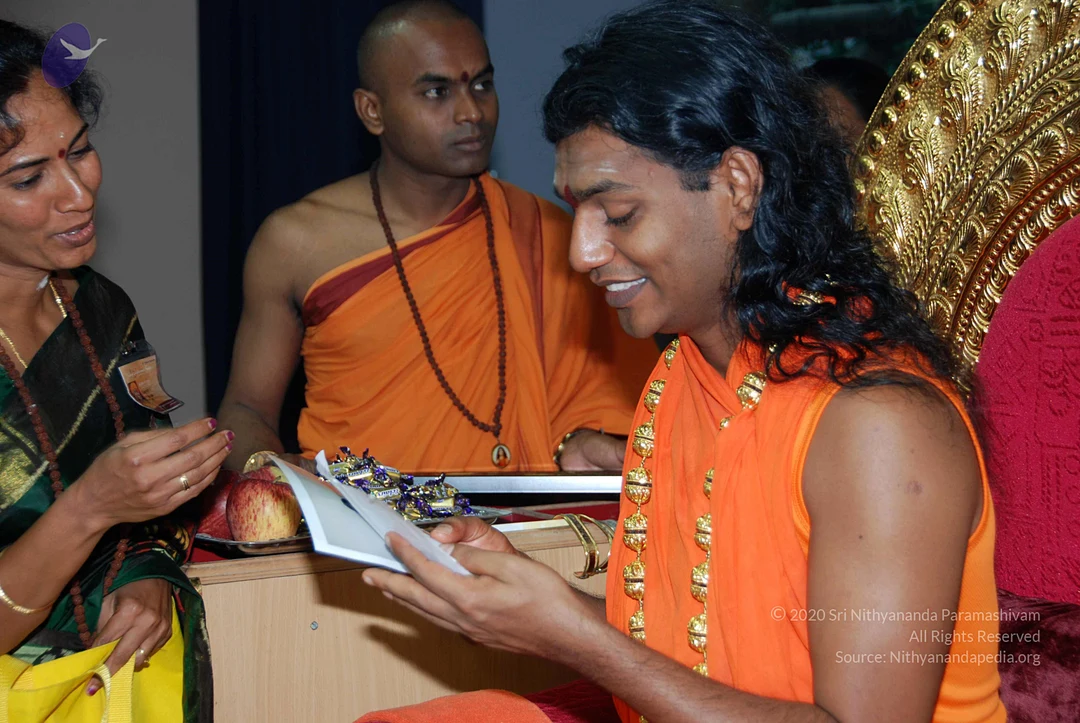
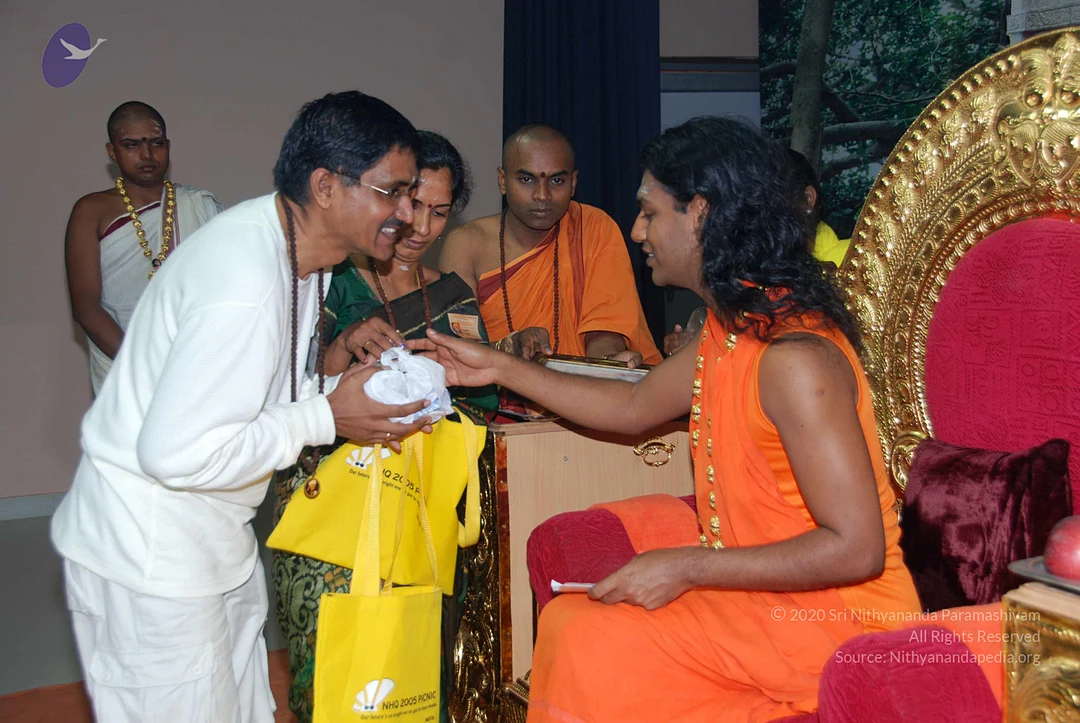
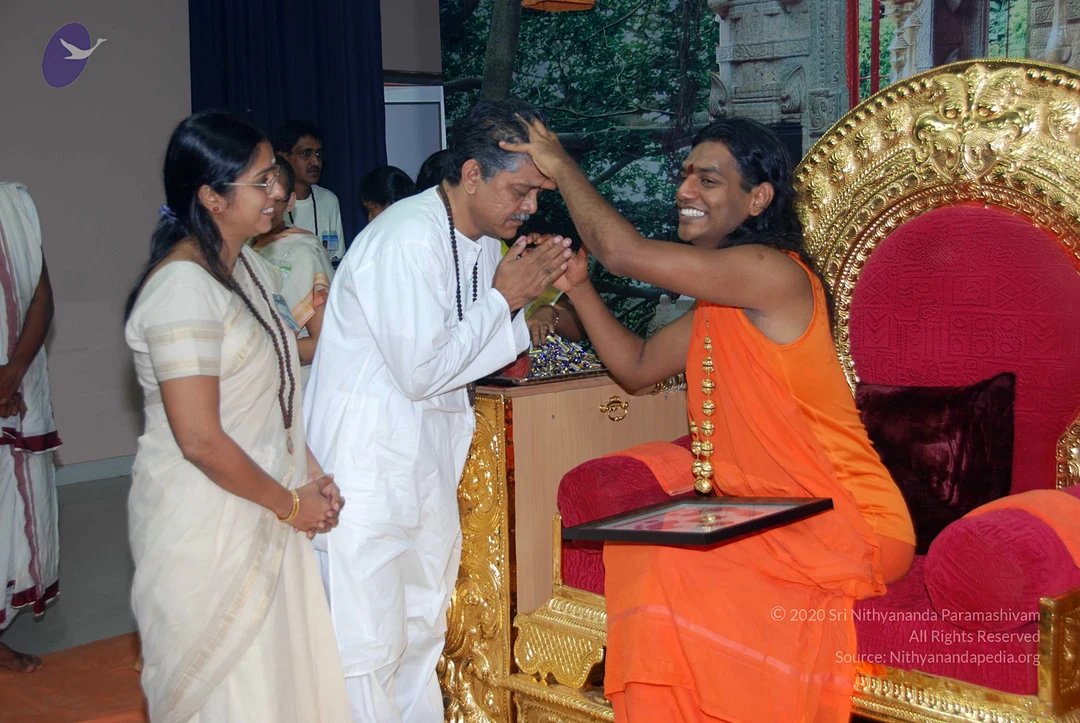
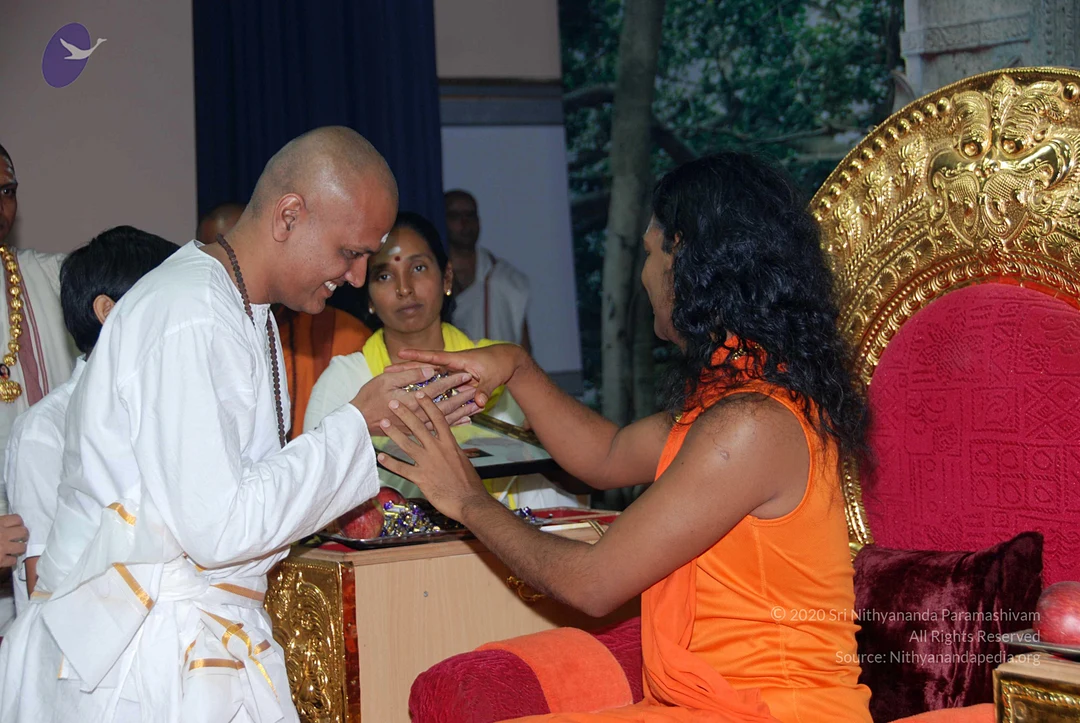
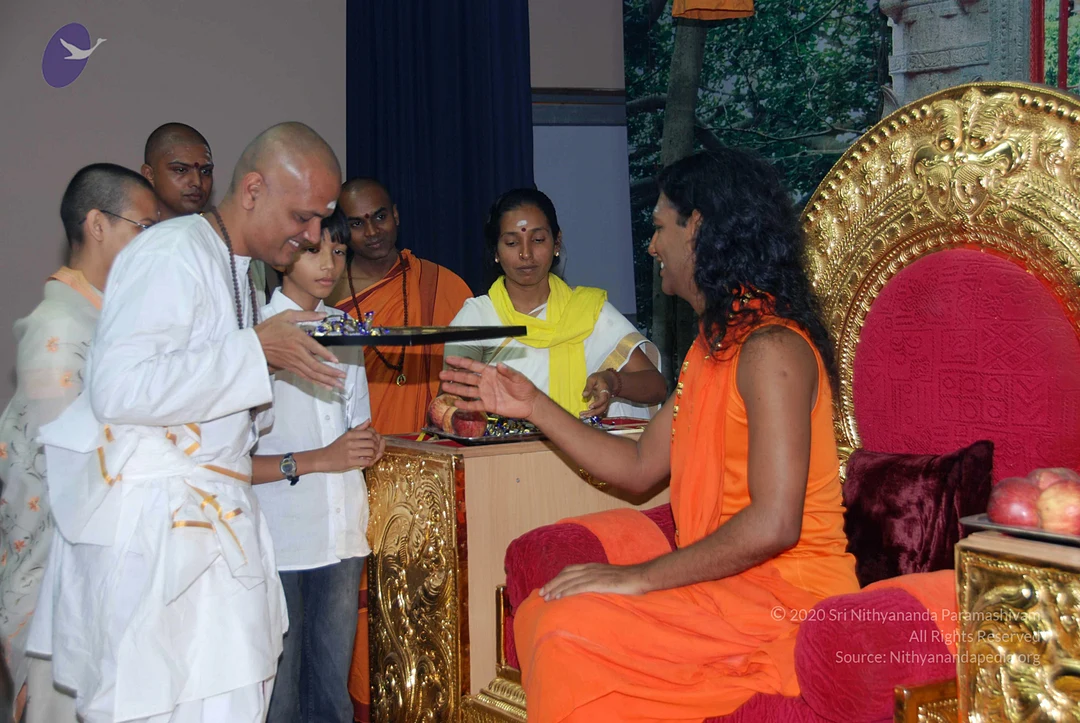
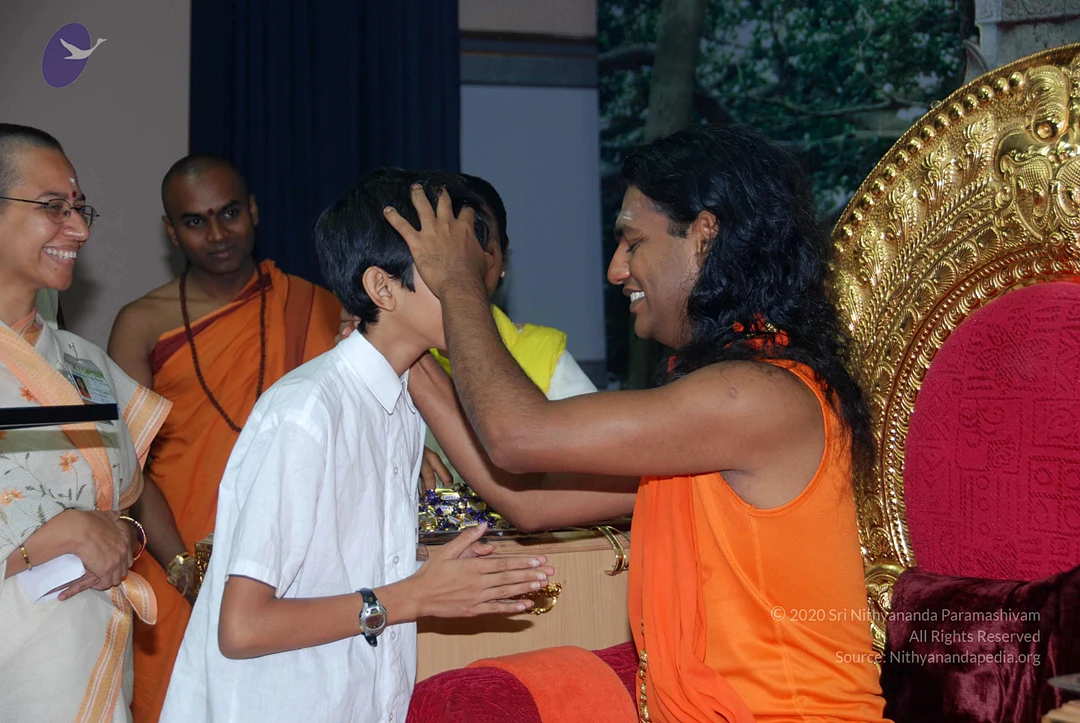
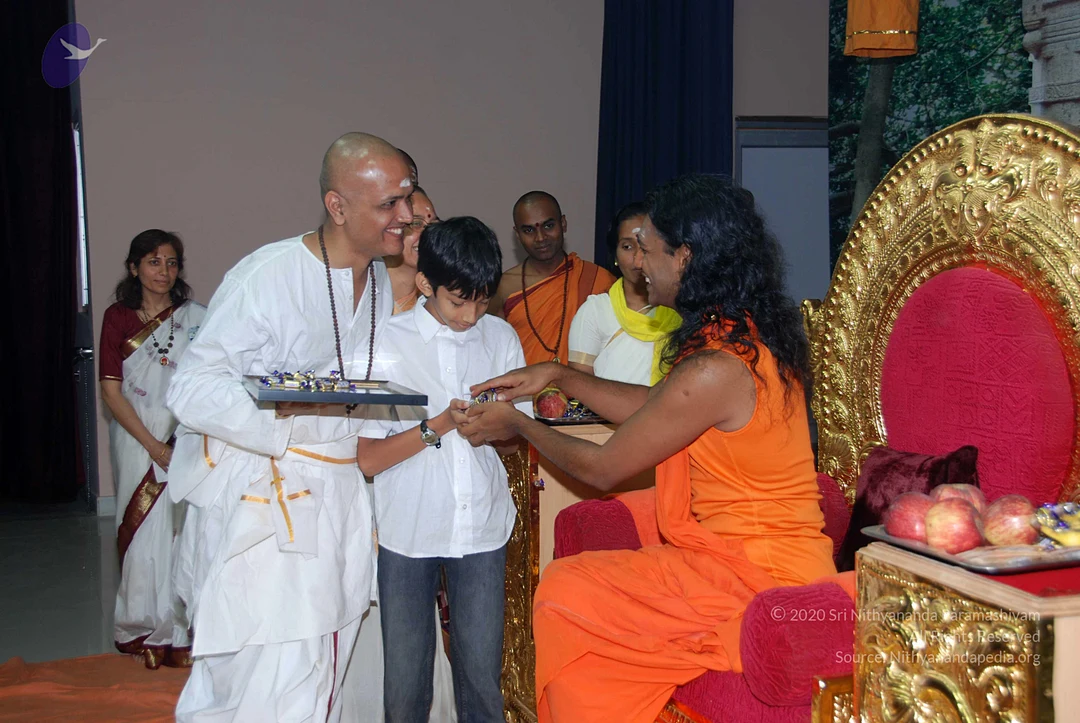
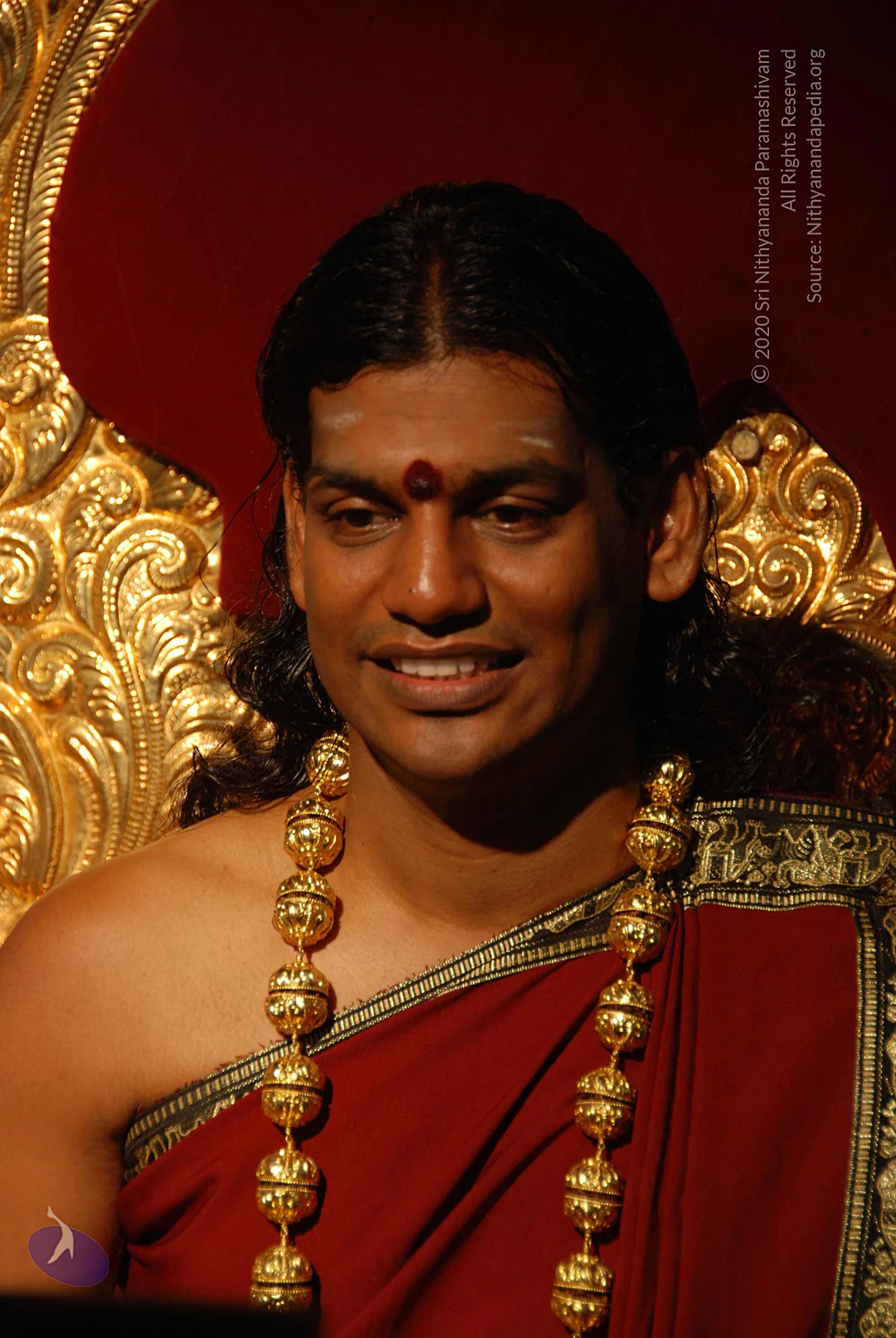
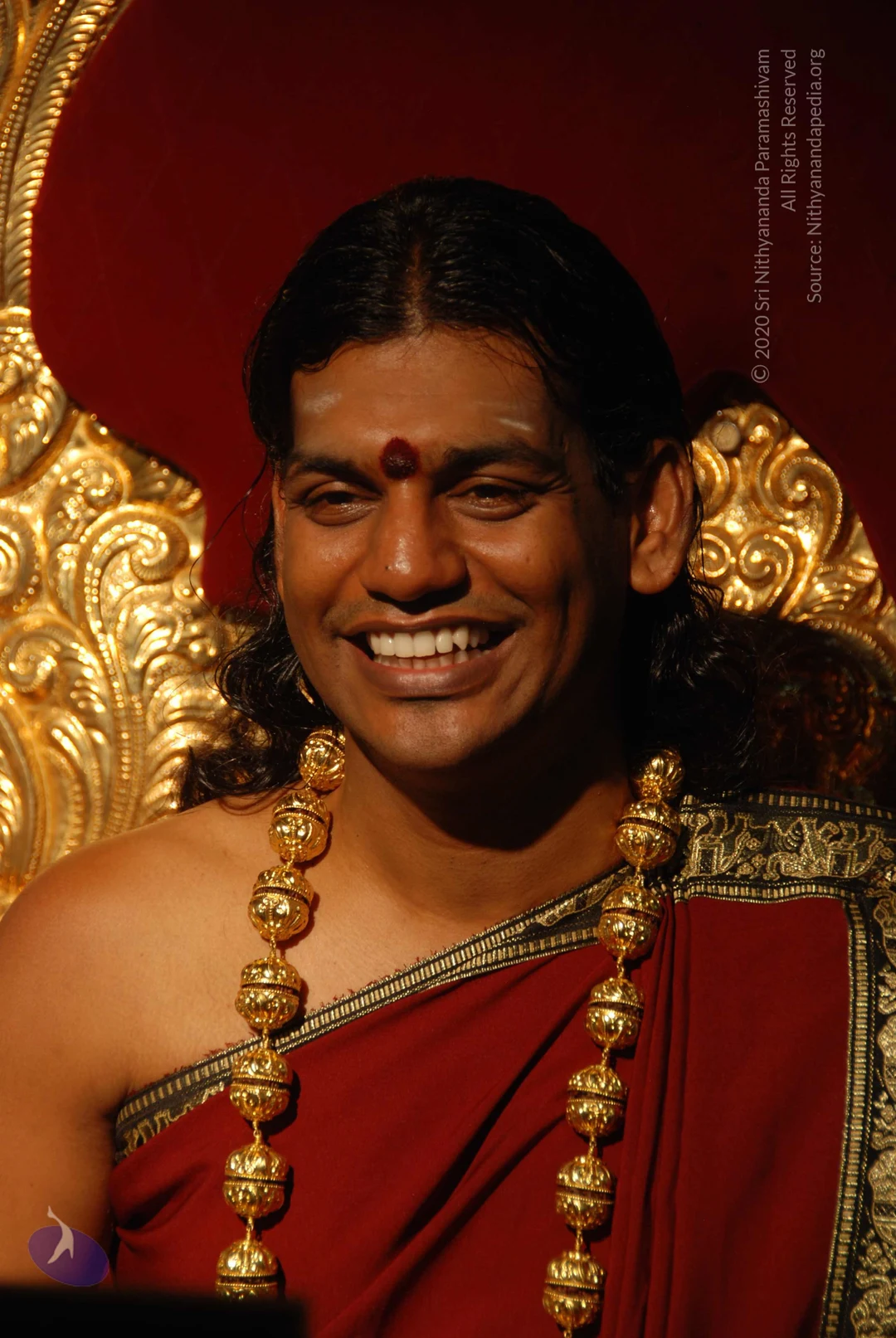
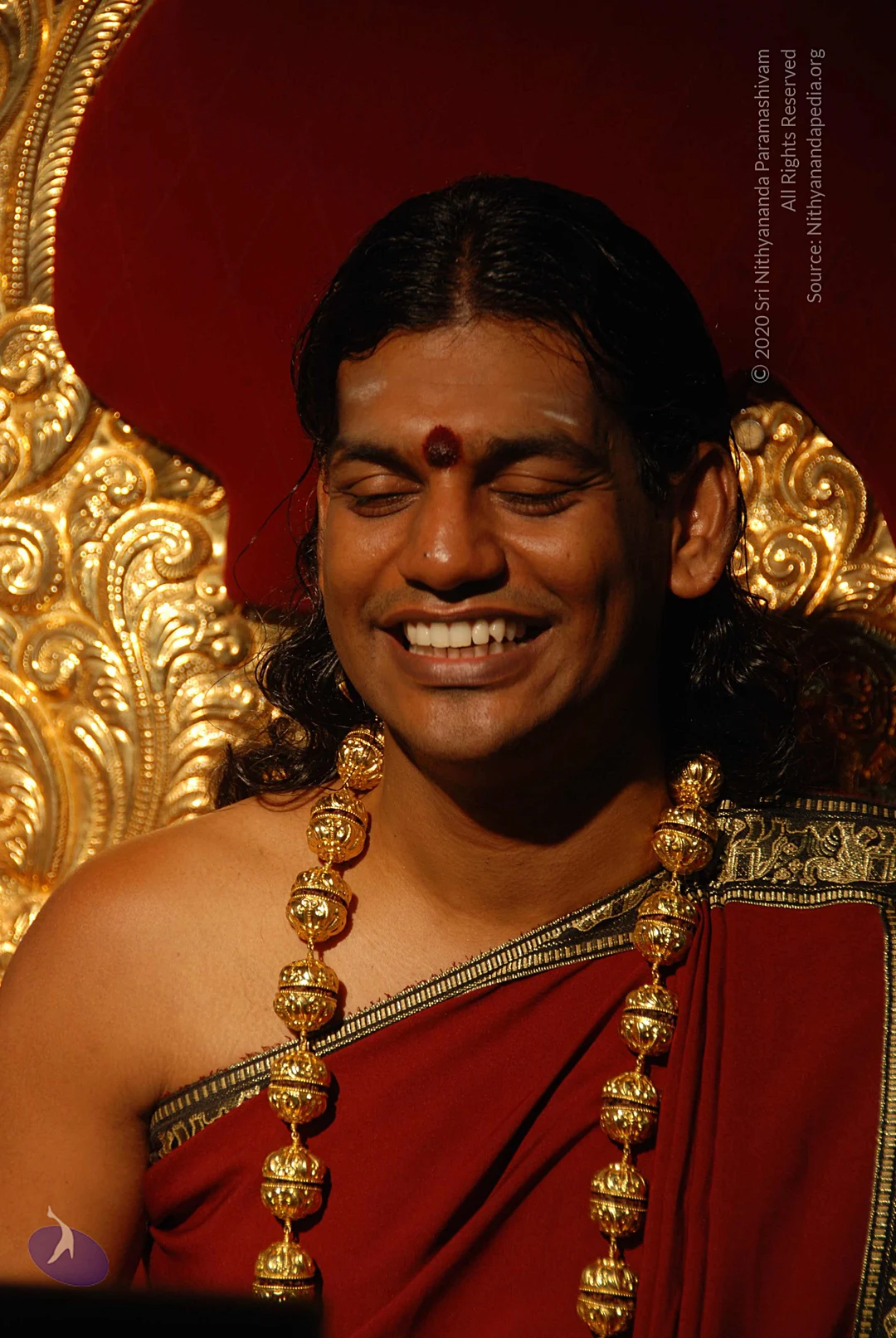
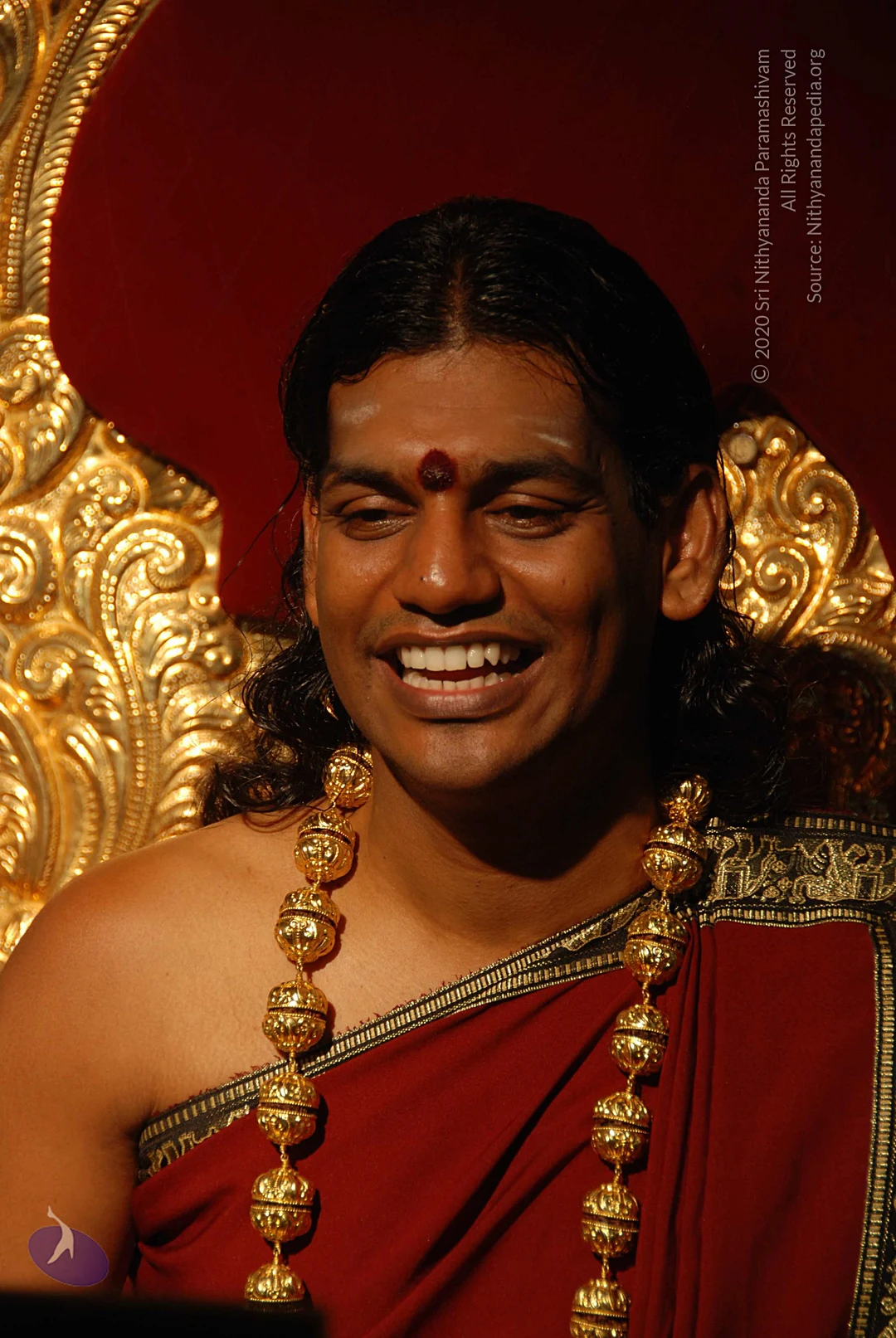
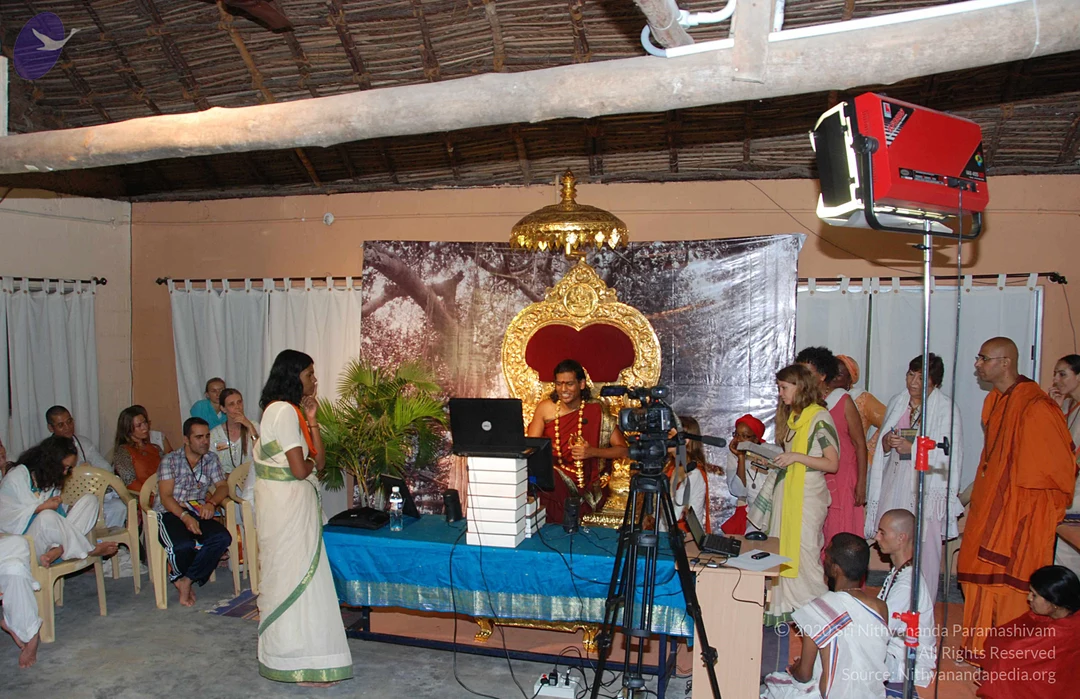
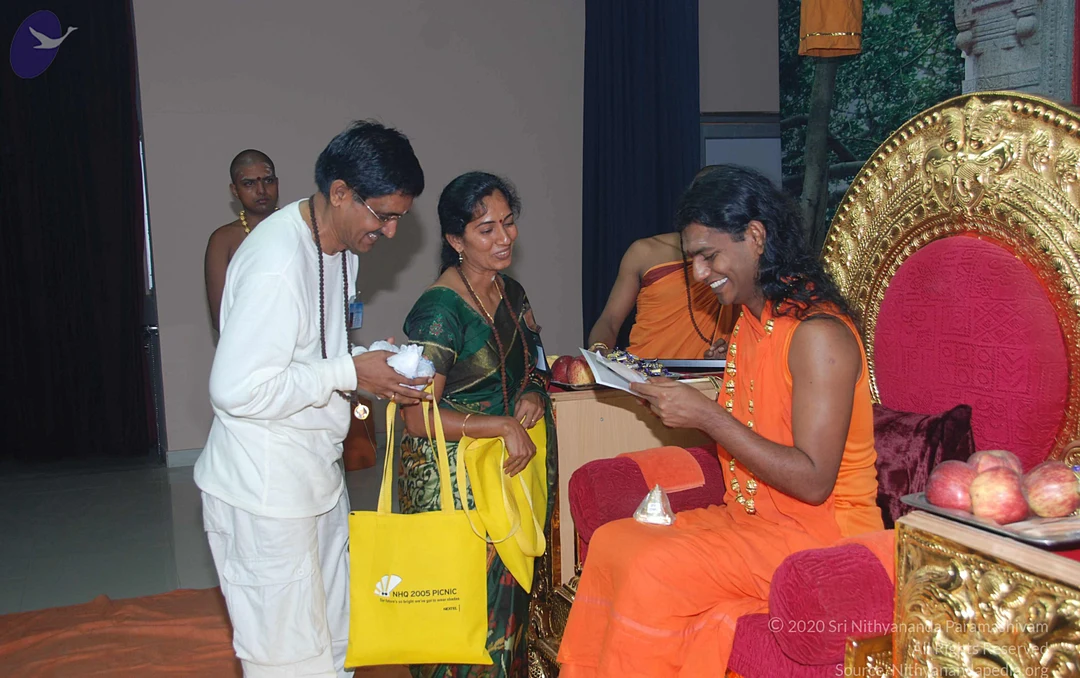
A photograph of an indoor hall where a man in white kurta-style clothing with a rudraksha mala stands at left, holding a white cloth, beside a woman in a green sari with a beaded necklace who holds a yellow tote bag. Seated on a large ornate golden throne with red cushions is a figure in saffron-orange robes with gold ornamental necklaces and long dark hair, smiling as he looks at a paper. A shaved-headed man in white with a gold chain stands in the background, and another saffron-robed attendant sits behind the throne. A tray of red apples rests on the gold table at right, and a backdrop shows a painted forest scene. The yellow bag reads NHQ 2005 PICNIC.A seated man with long swept-back dark hair and a red forehead mark wears a sleeveless saffron-orange garment with gold ornamental buttons and bangles. He sits in front of an ornate gold throne with a red cushion, smiling as he reads a small open booklet held in both hands. To his left, a woman in a dark green and gold sari with a red bindi and a long red-brown beaded necklace sits and gestures toward a plate of apples and wrapped sweets on a wooden table. Behind them, a shaved-headed man in orange robes and a rudraksha mala stands in the background.A photo of a seated figure in an orange saffron robe and rudraksha mala, with long dark curly hair, on an ornate gold throne with red cushions, touching the head of a man in white clothes and glasses who bows forward, holding a framed picture on a tray with flower garlands and fruit. Another man in an orange robe stands behind the throne, and a shaved-head man in white with a gold garland stands at left. A woman in a green sari stands beside the bowing man, who carries a yellow bag printed NHQ 2005 PICNIC. A gold throne backdrop shows a green tree print. Swamiji (probable): the seated figure in saffron with long swept-back hair, rudraksha mala and gold throne fits the page's claim; treat as an appearance-based candidate.

Photos of the day

View all 536 photos

536 distinct dated photos. Source gallery sets may overlap. Preview includes 500 photos.

01

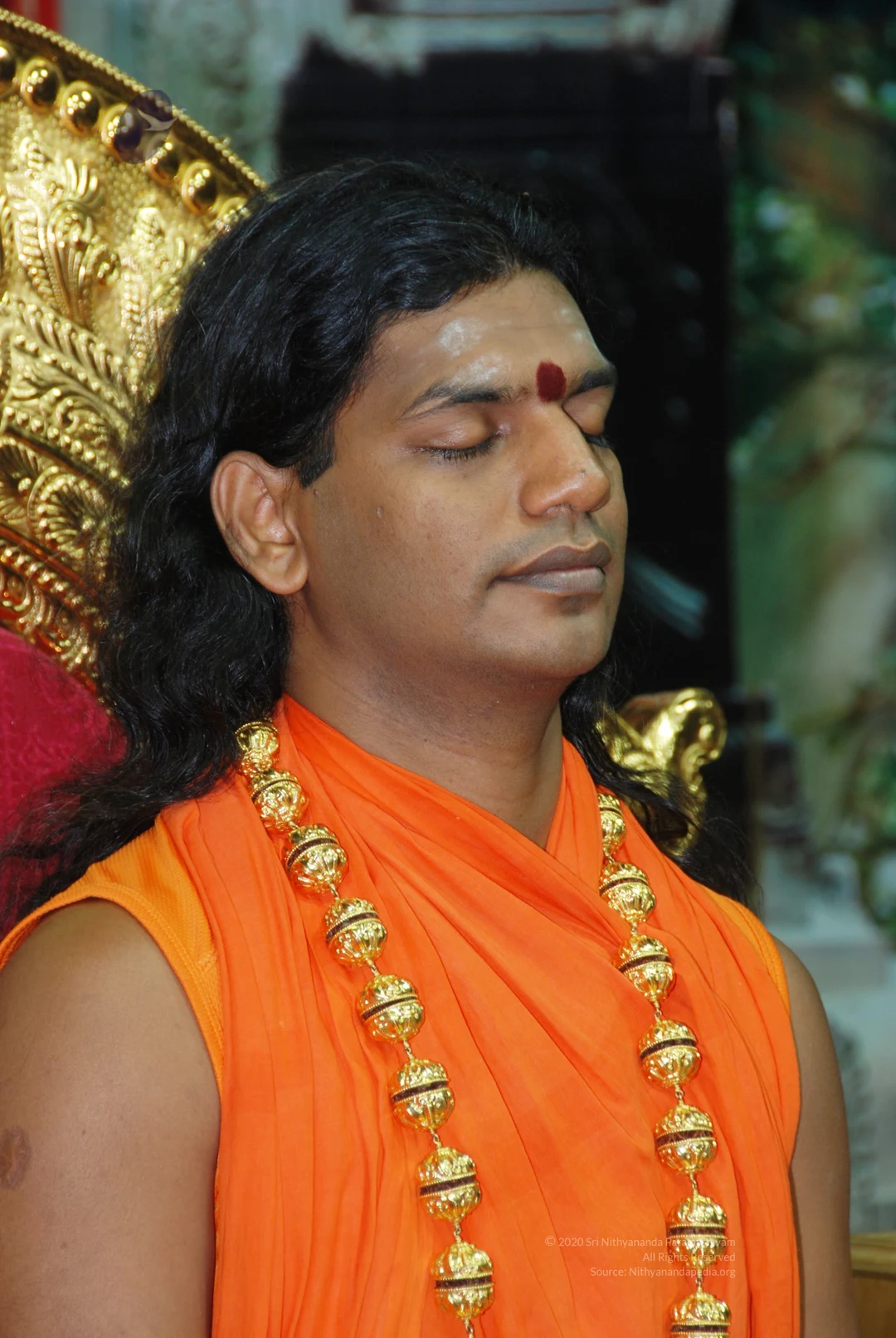
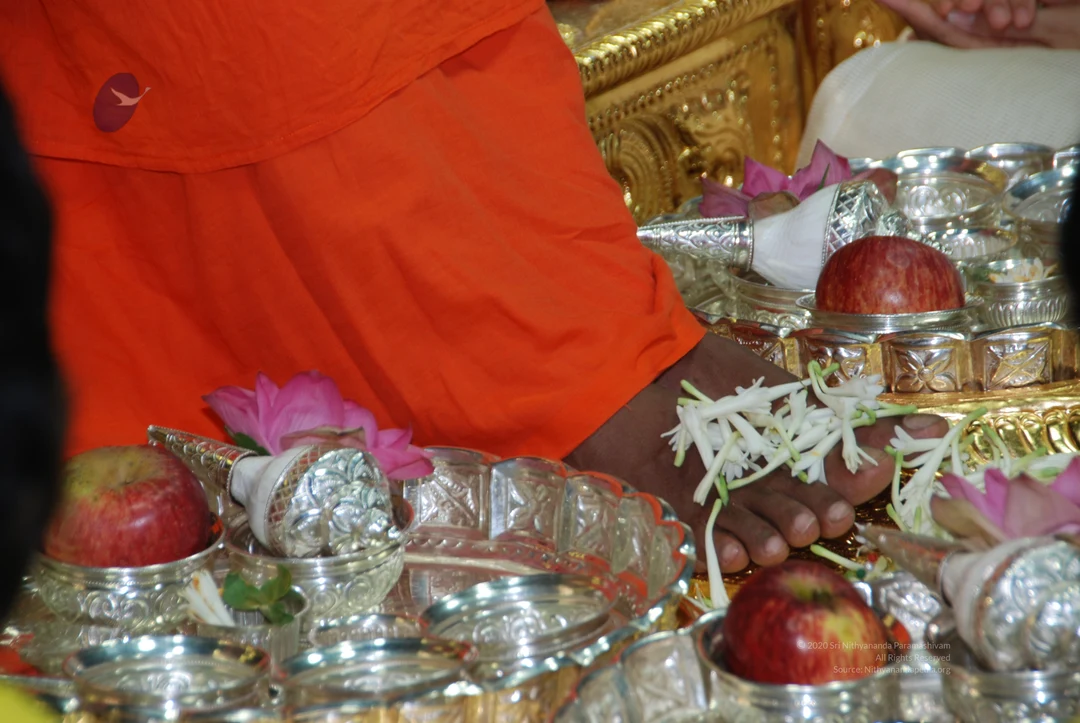
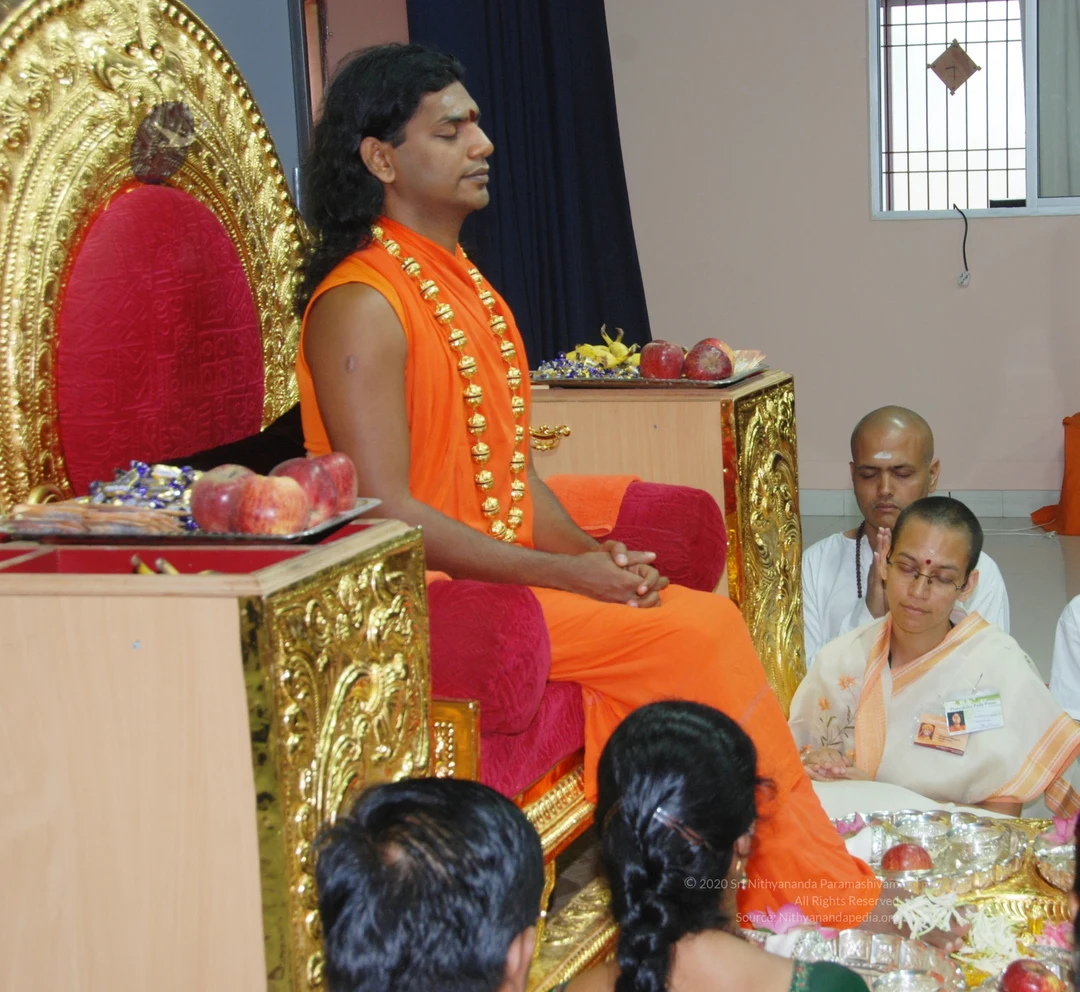
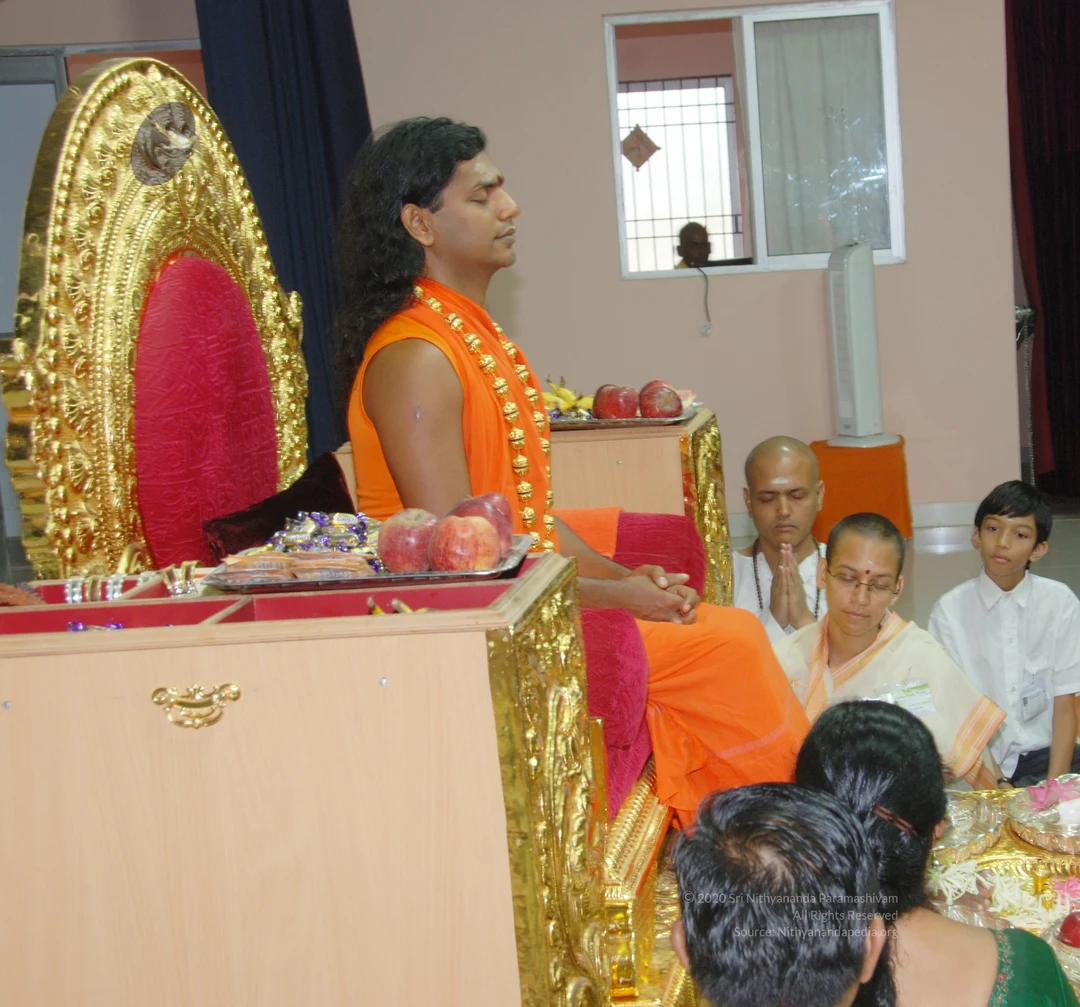
Paadapooja

19 dated photos in previewSource gallery
02

Morning-Satsang

24 dated photos in previewSource gallery
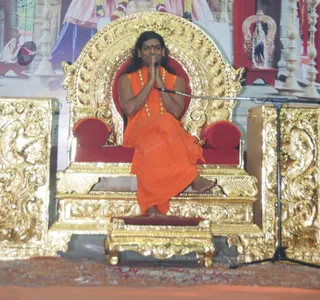
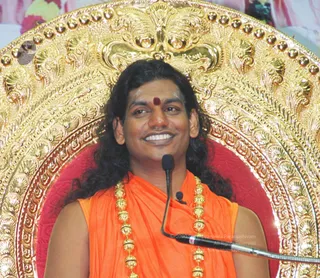
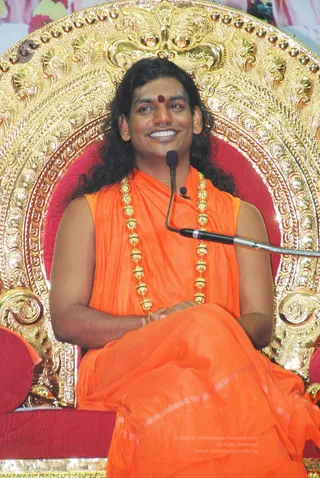
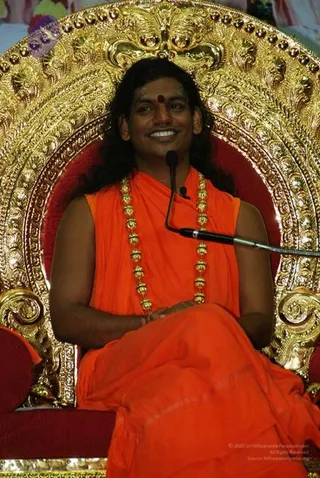
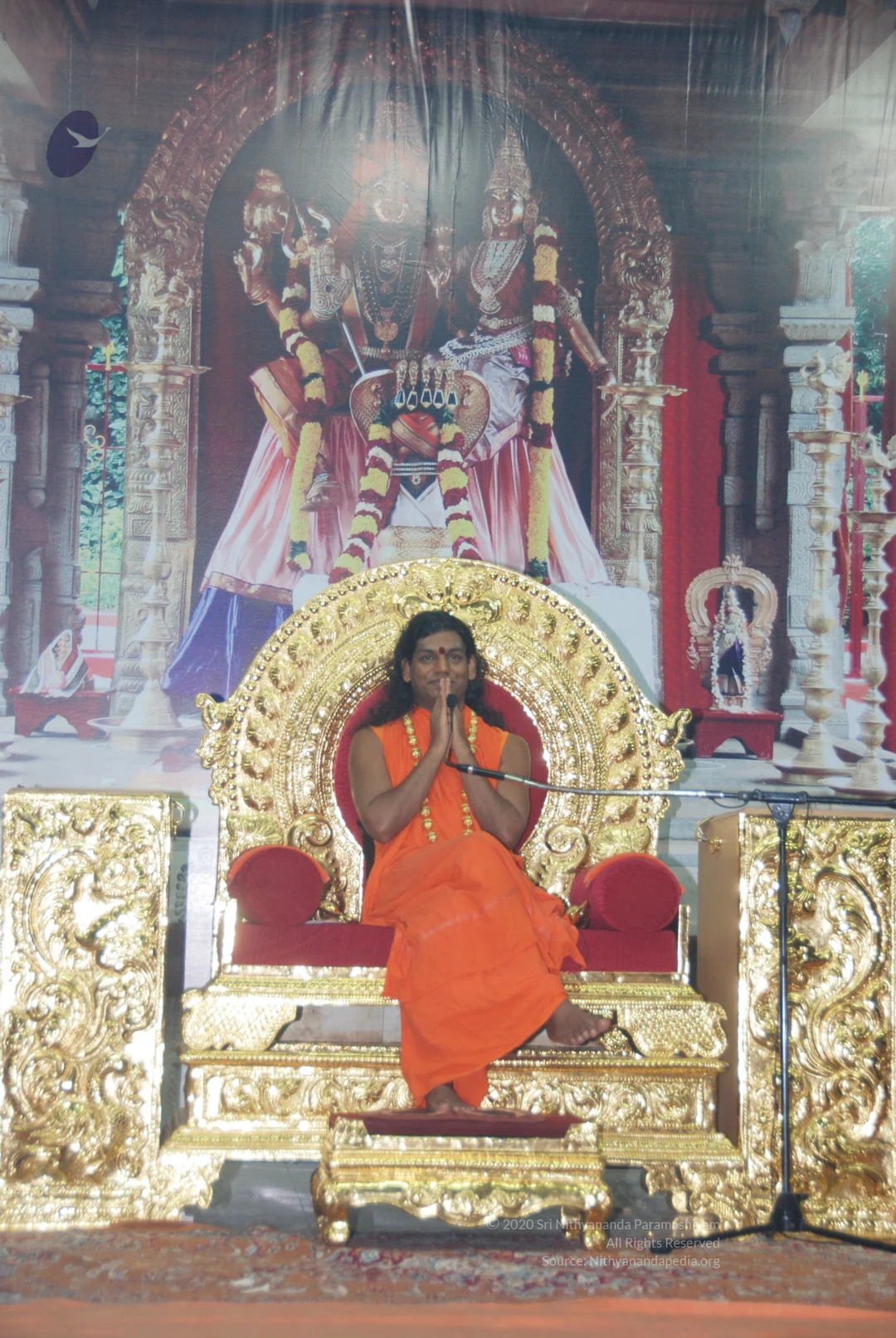
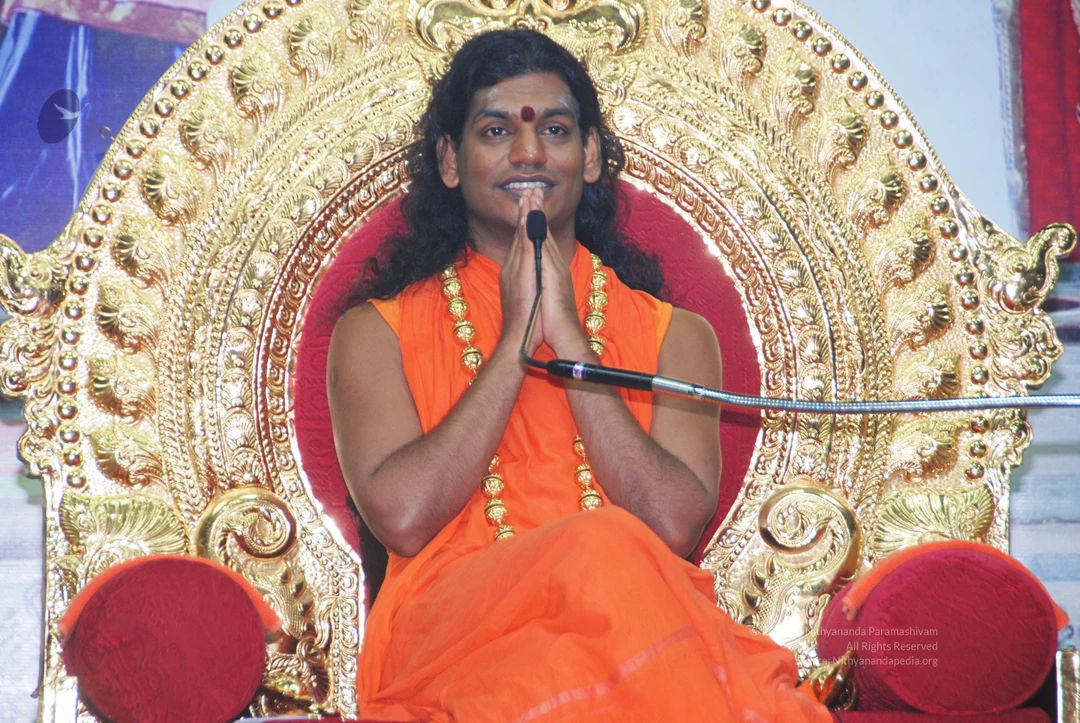
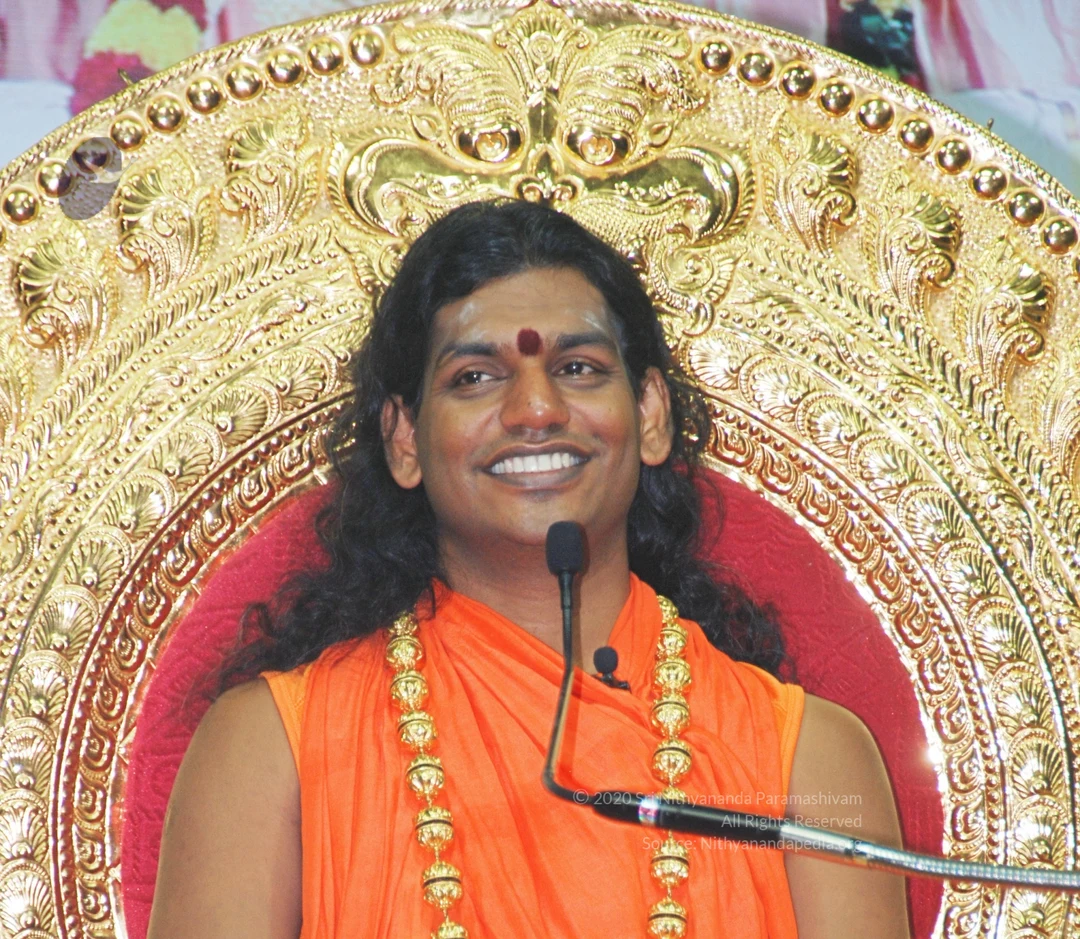
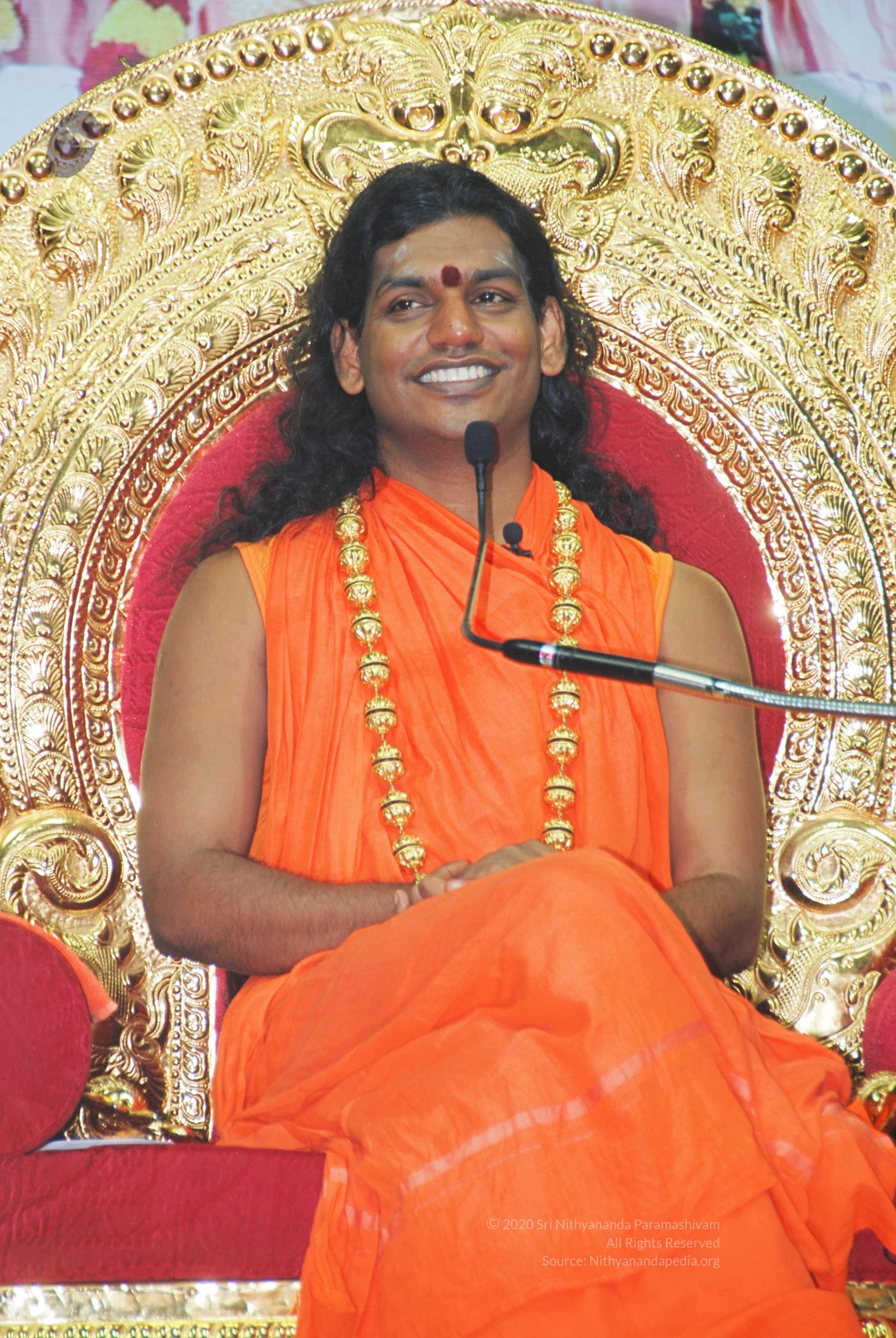
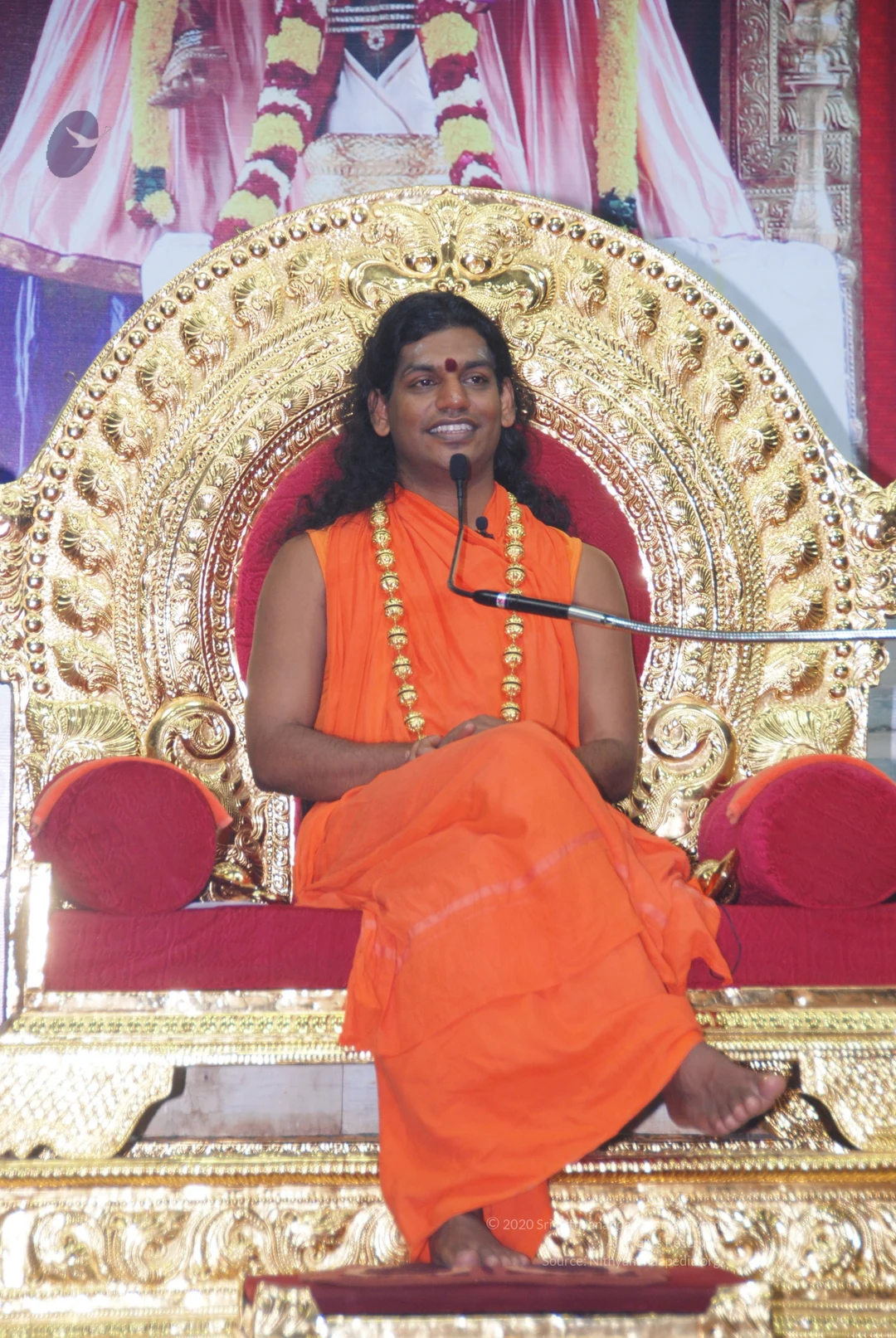
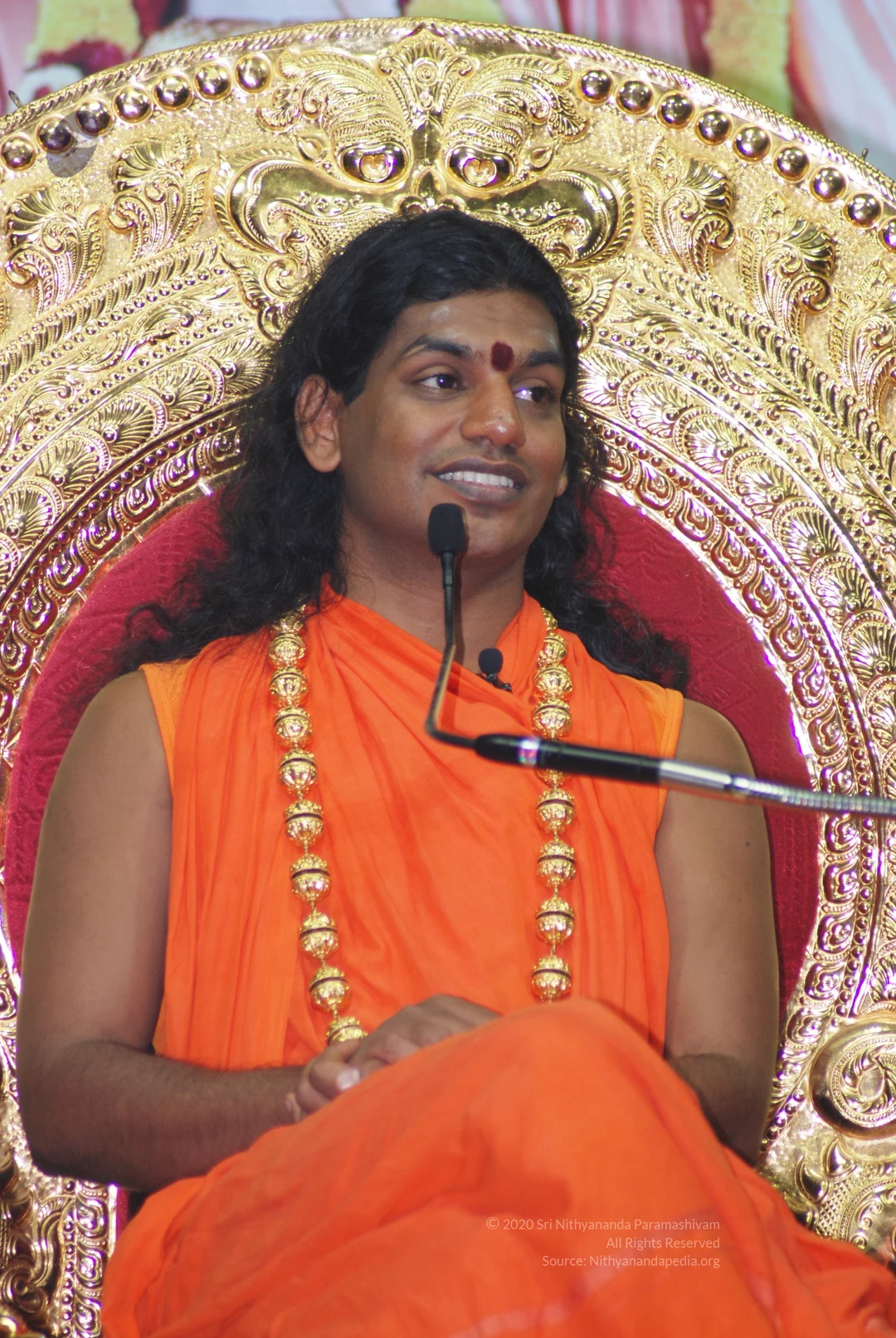
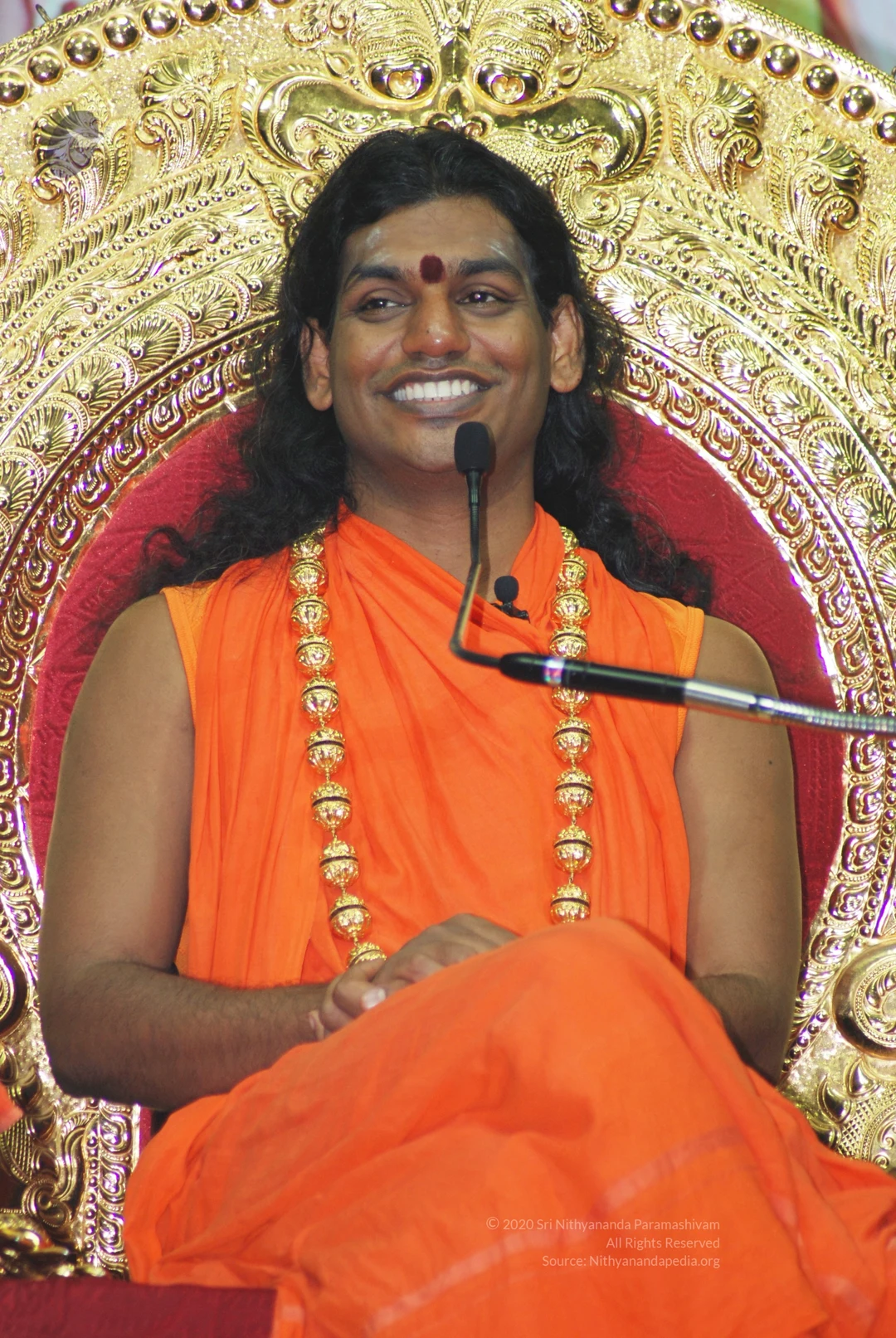
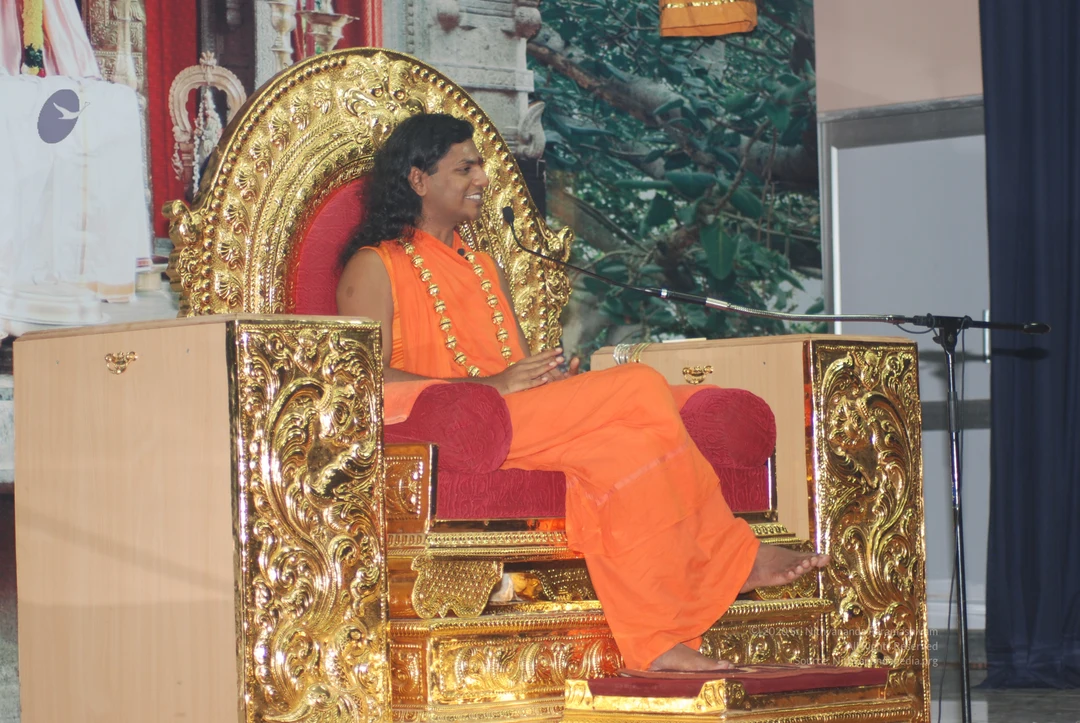
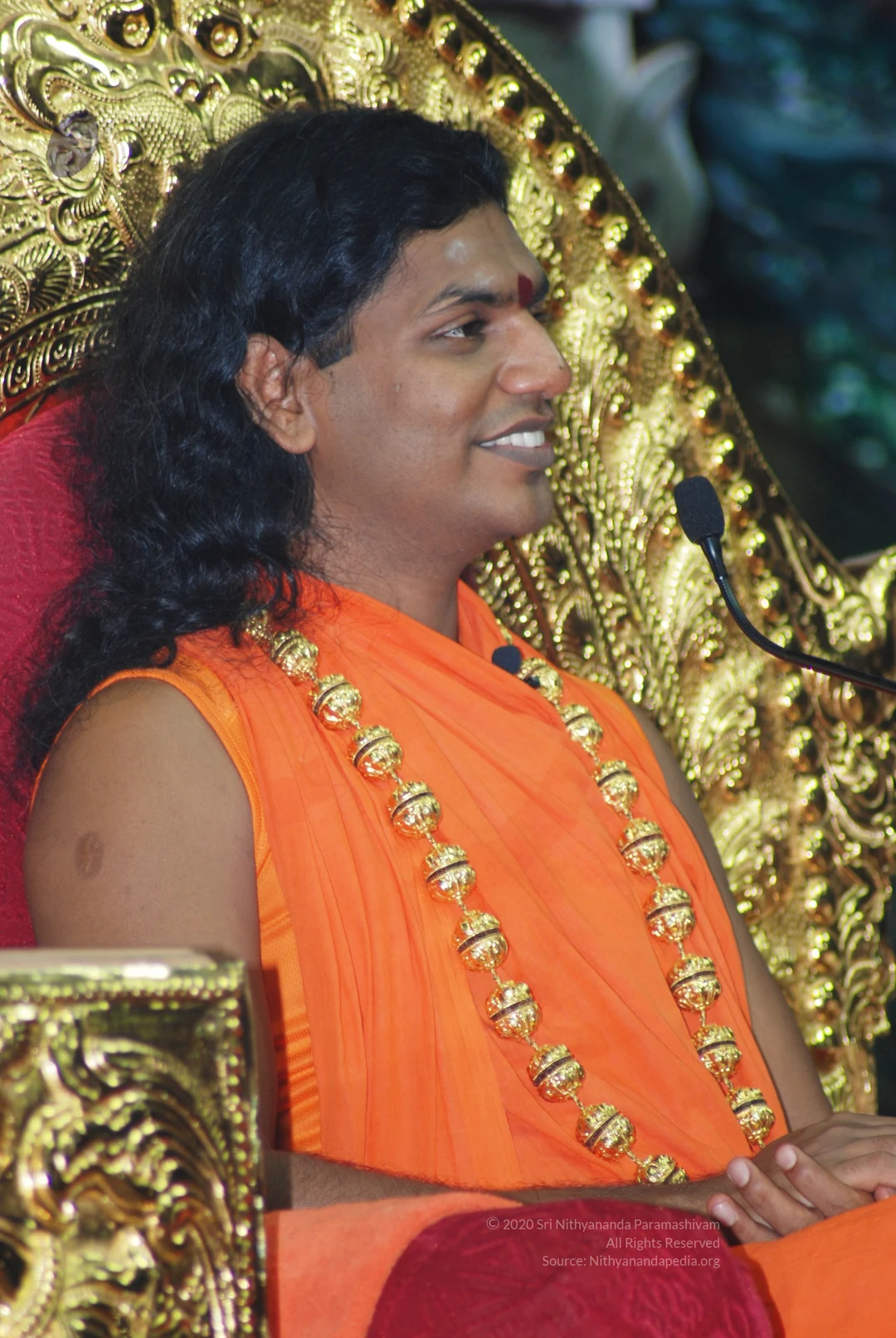
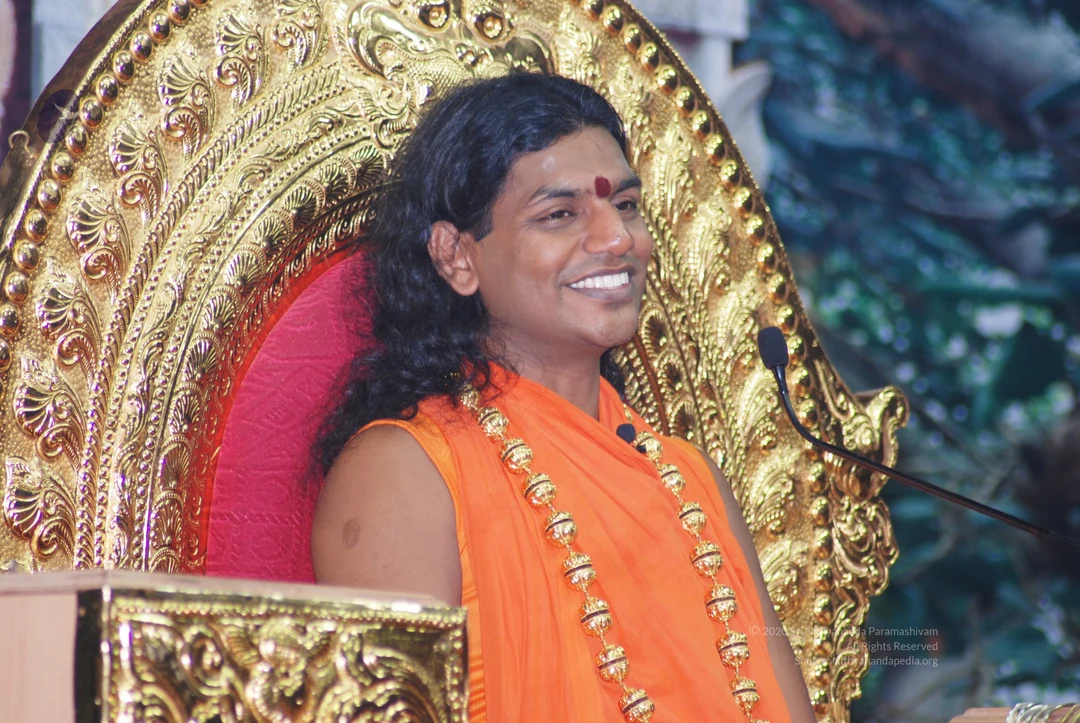
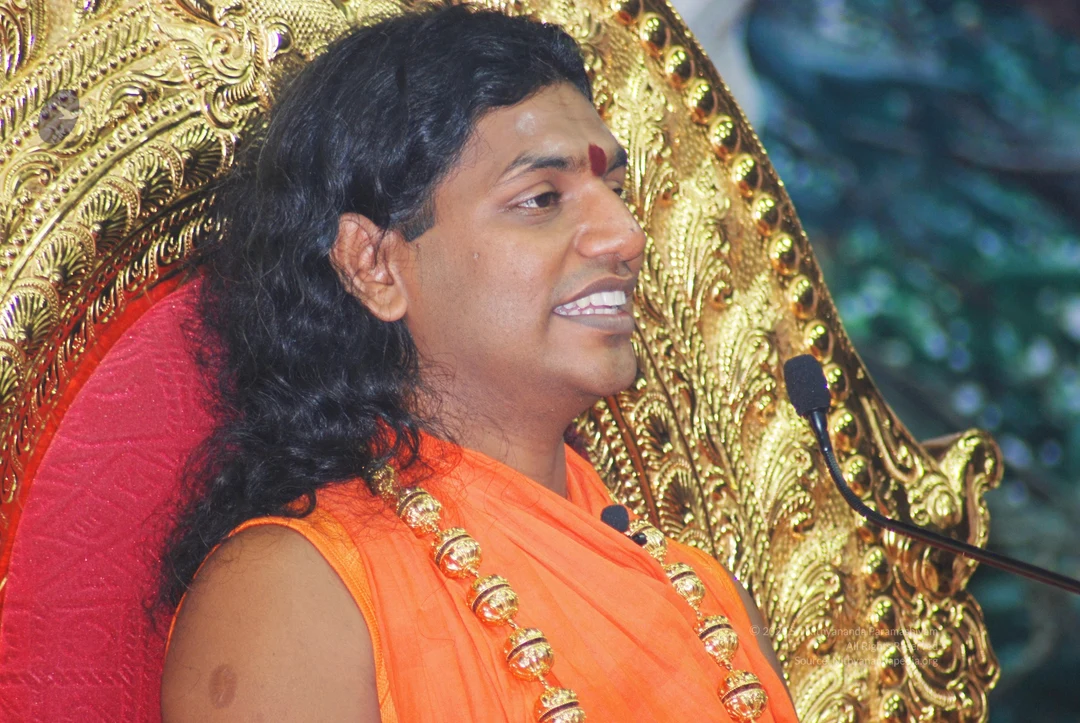
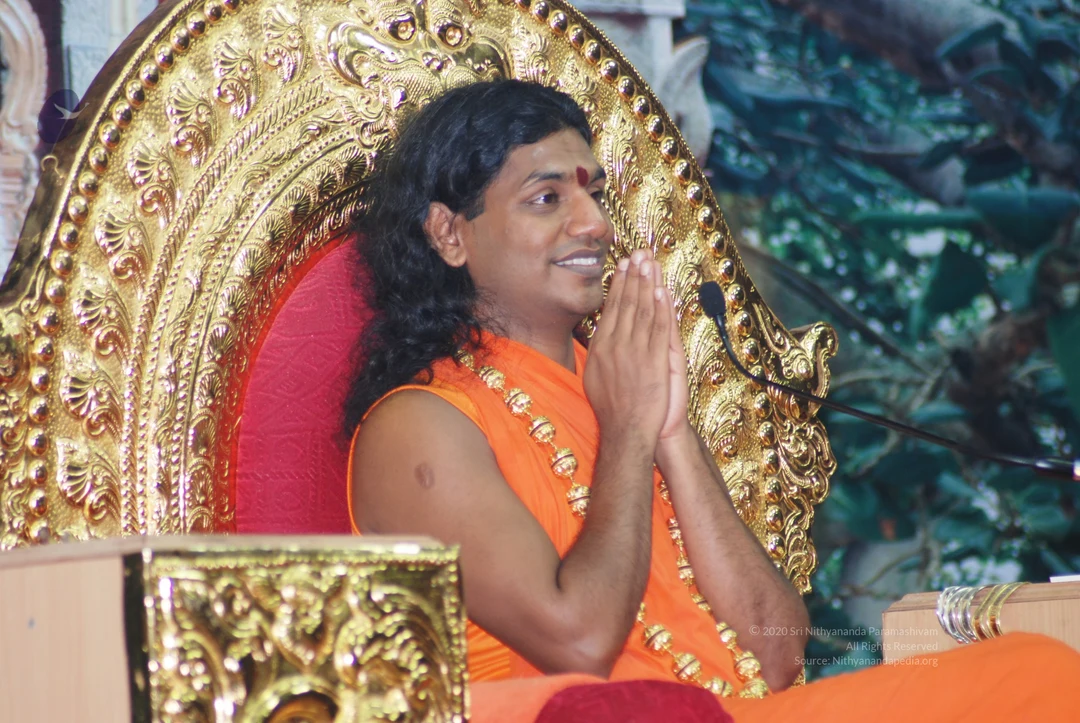
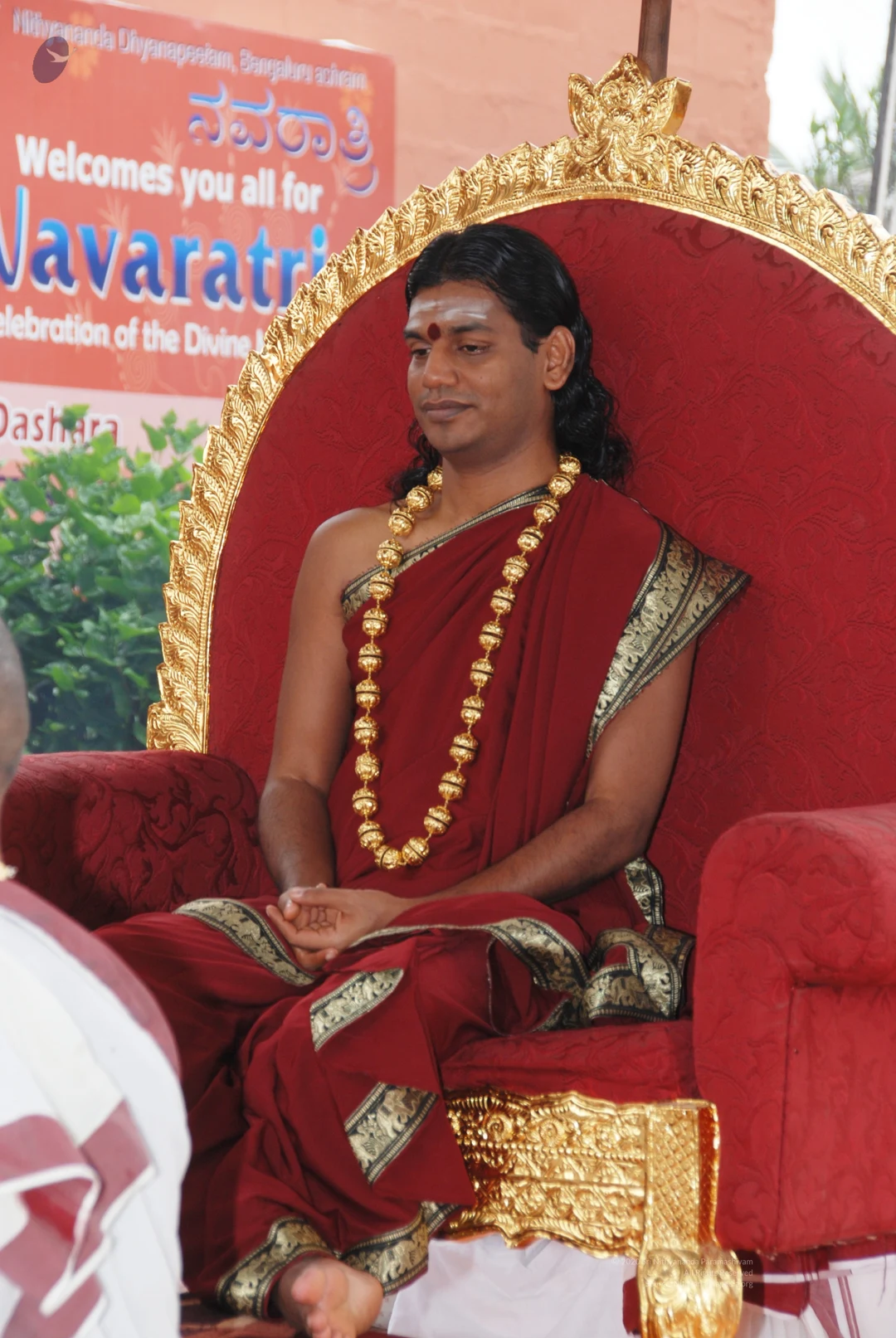
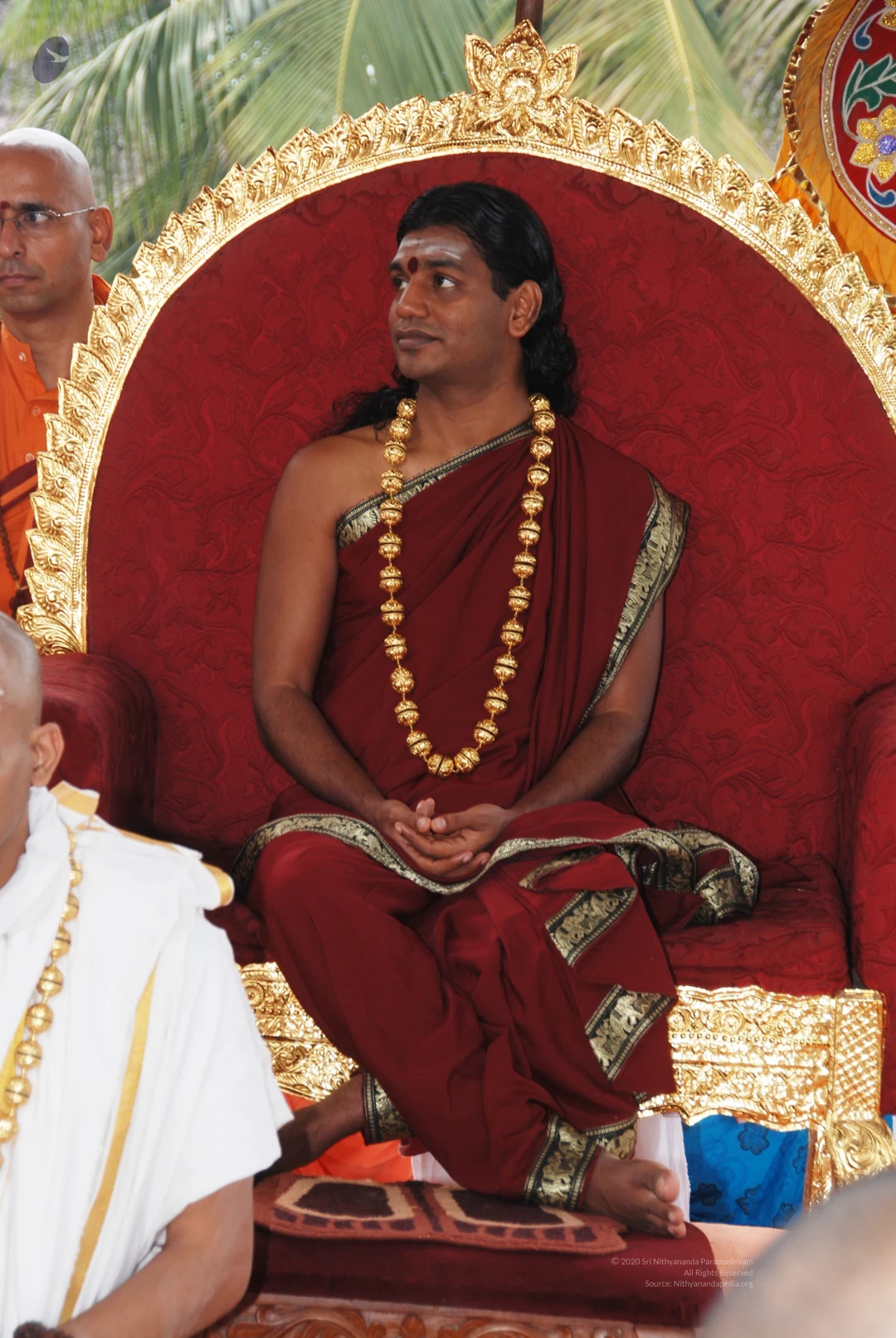
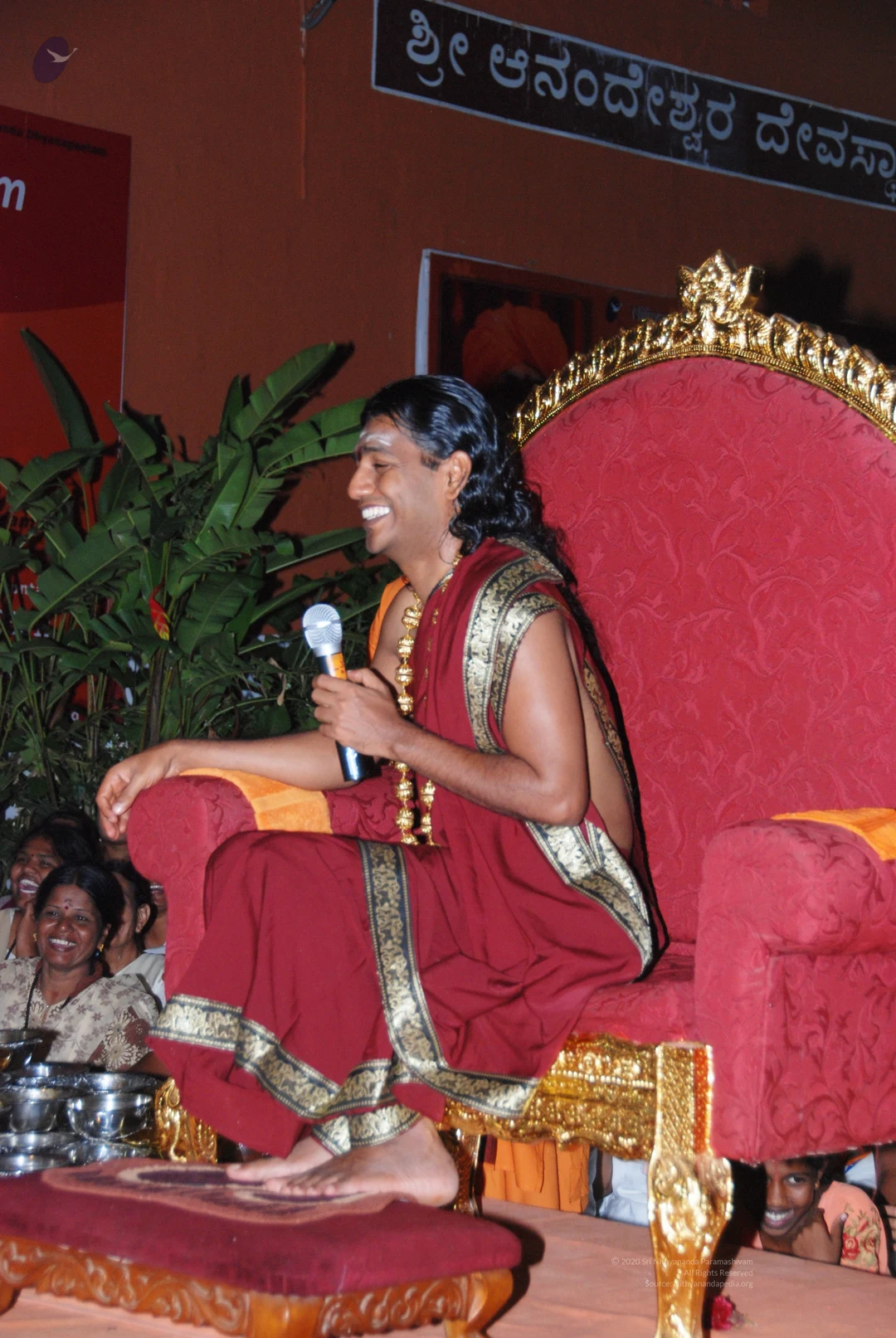
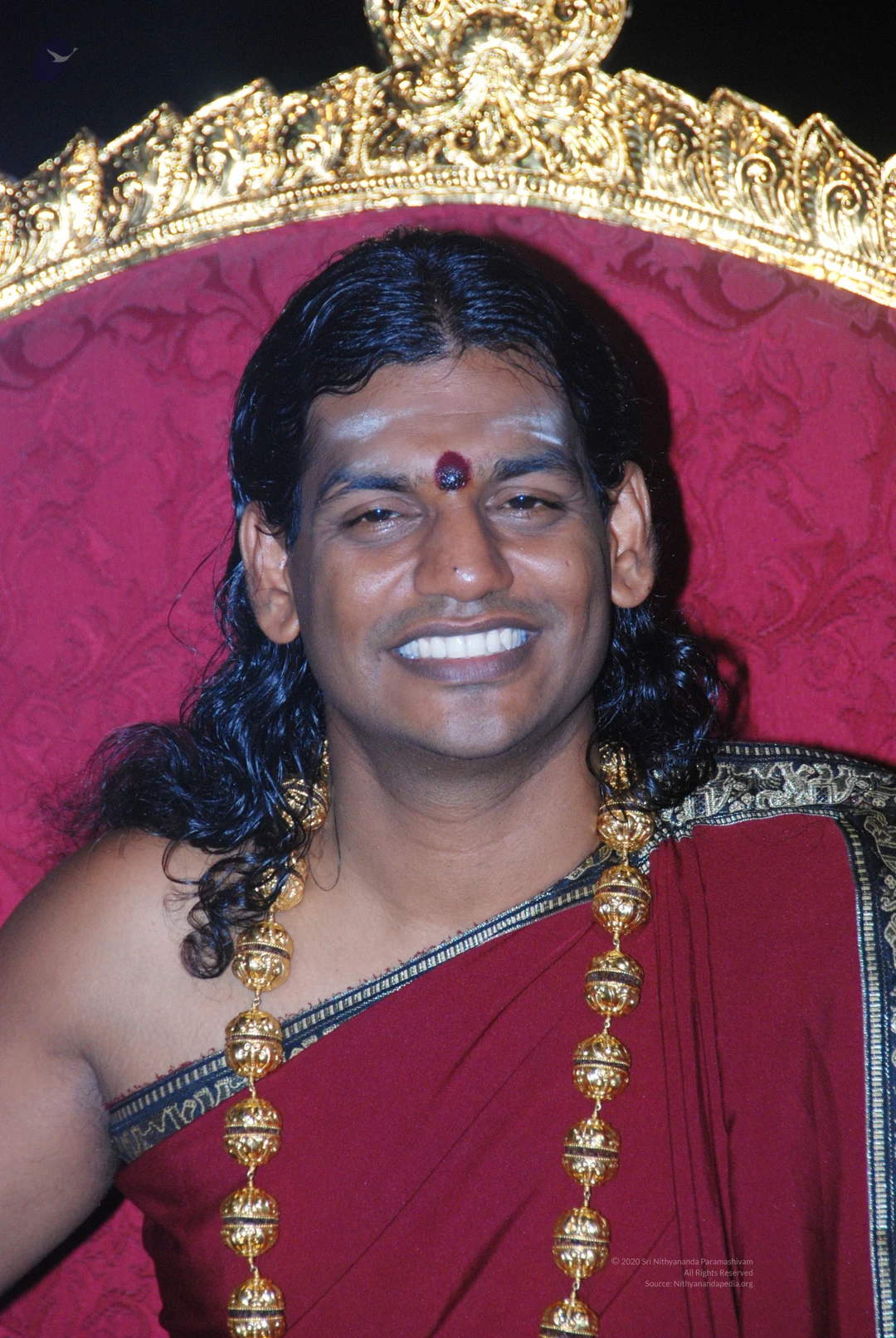
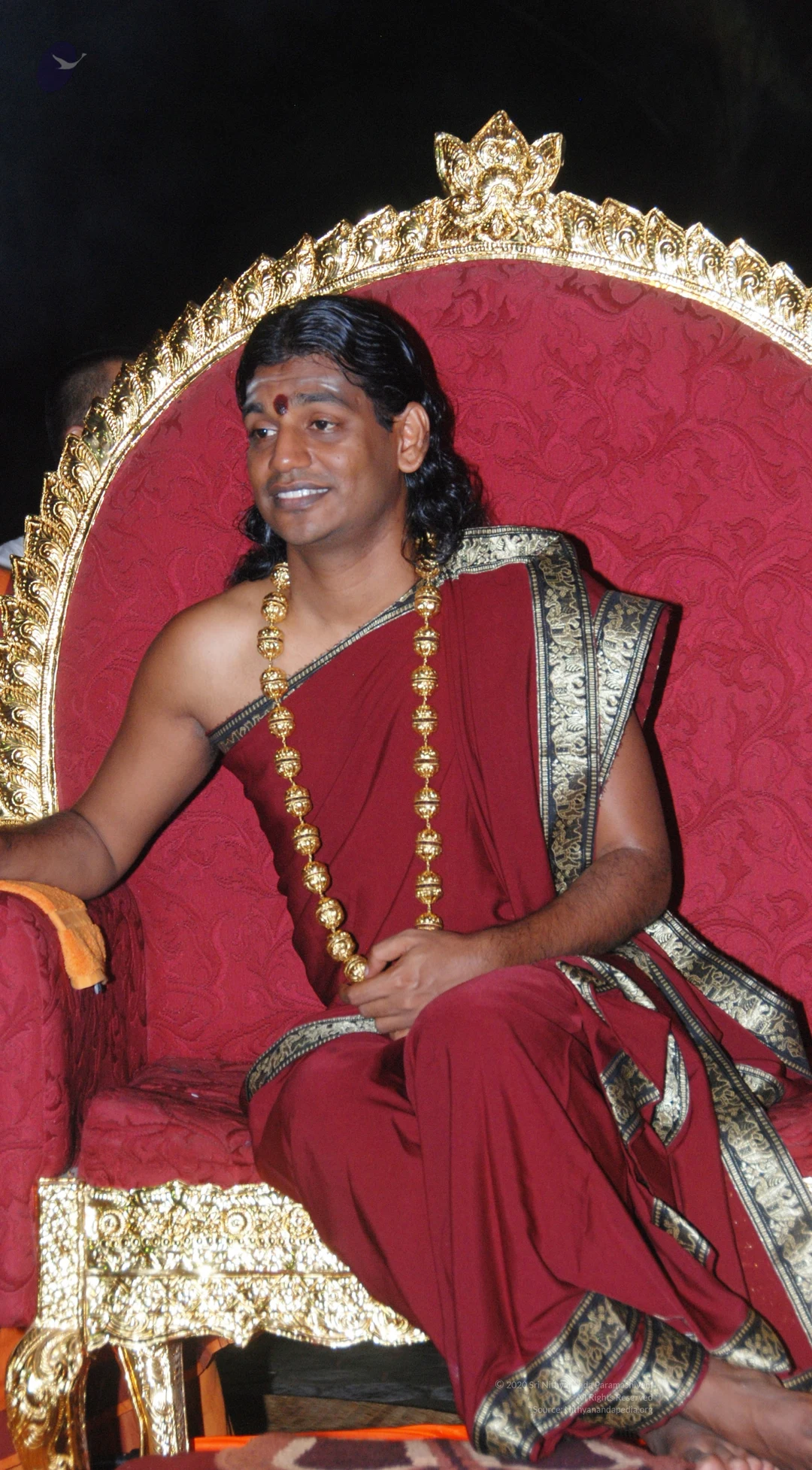
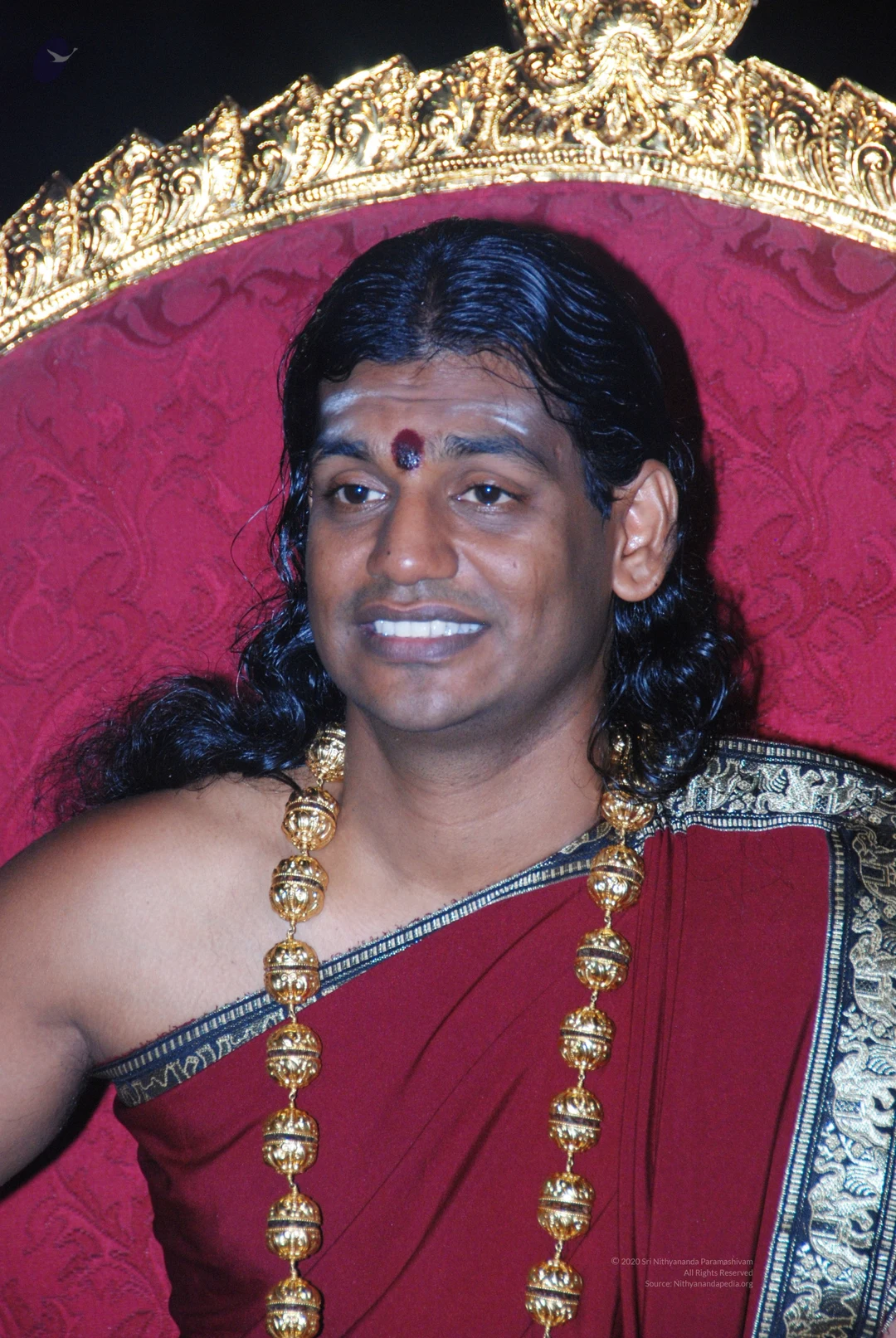
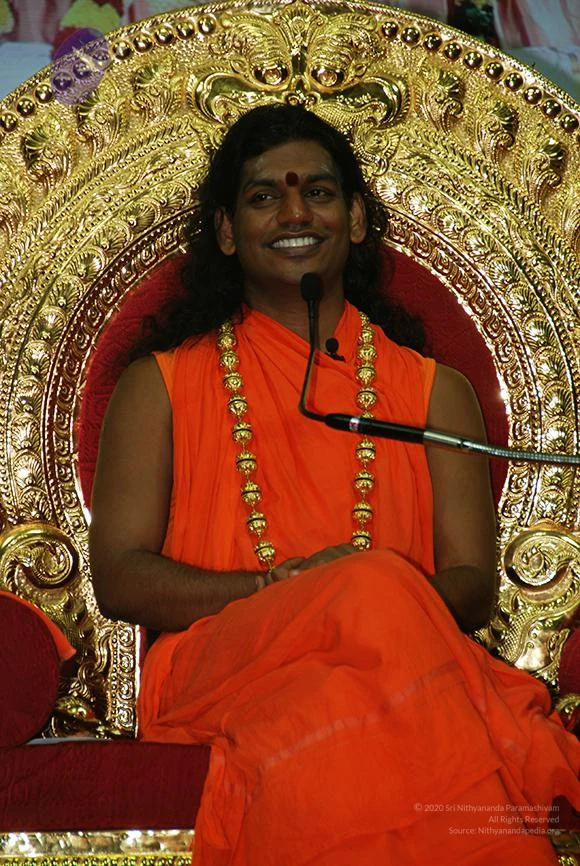
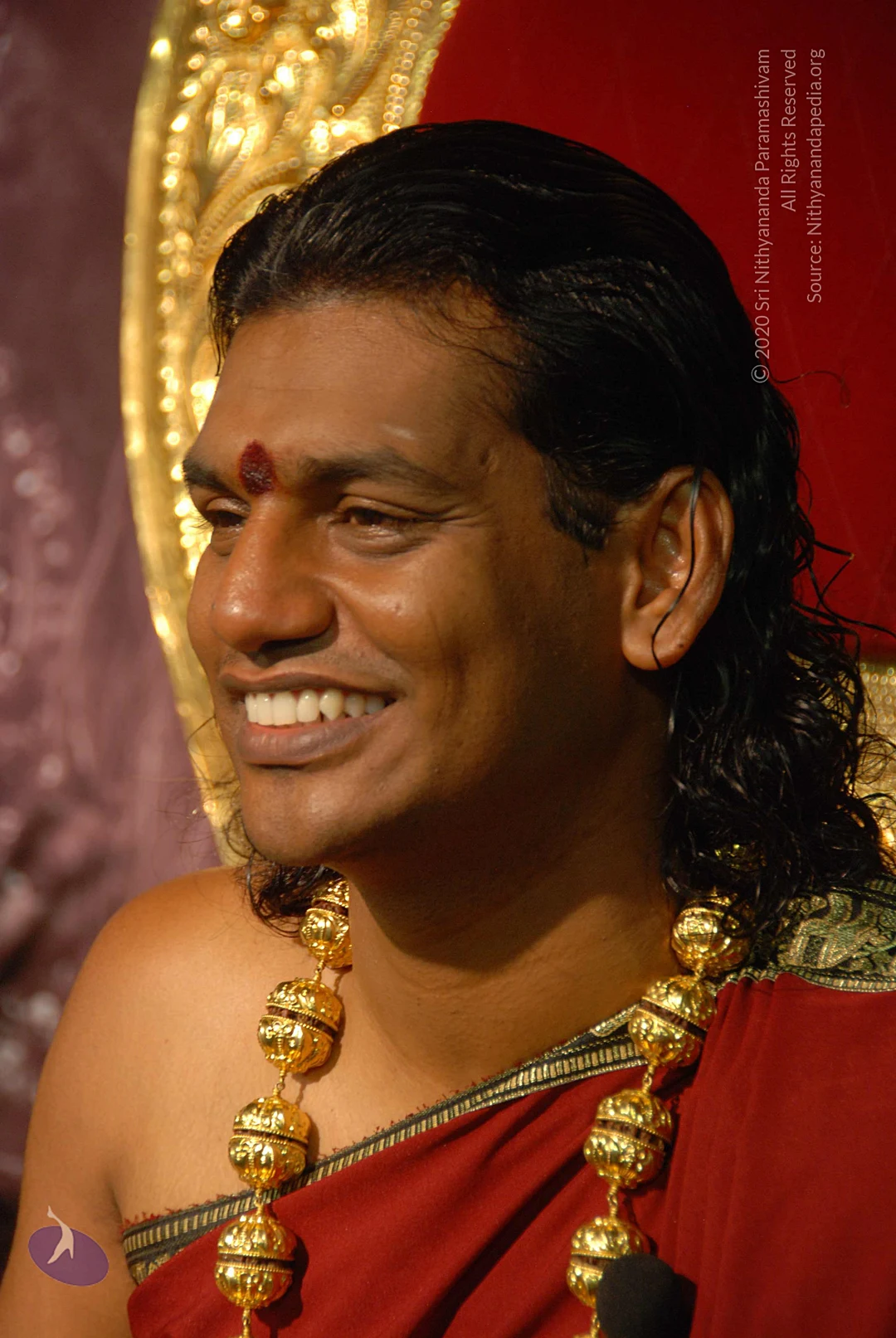
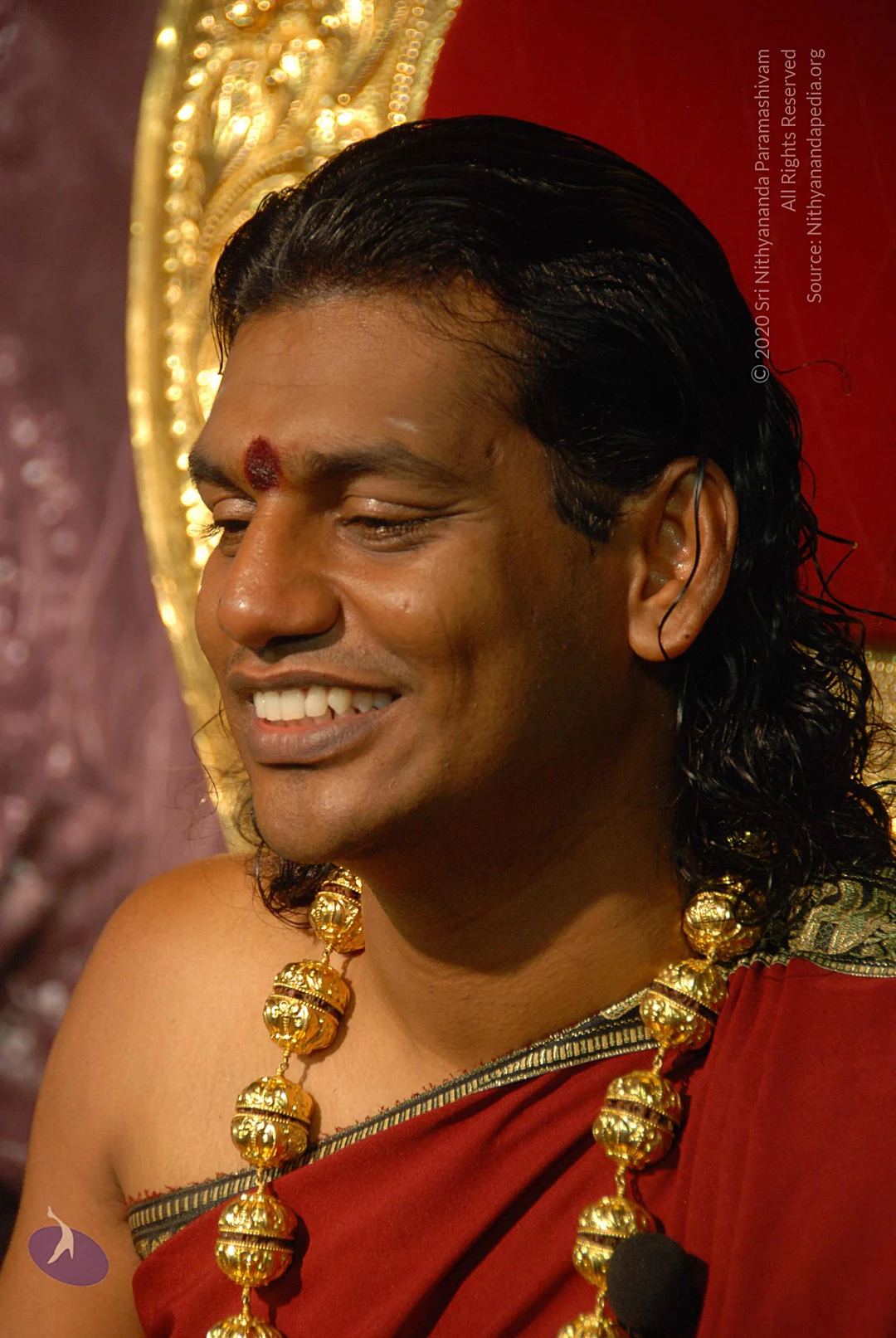
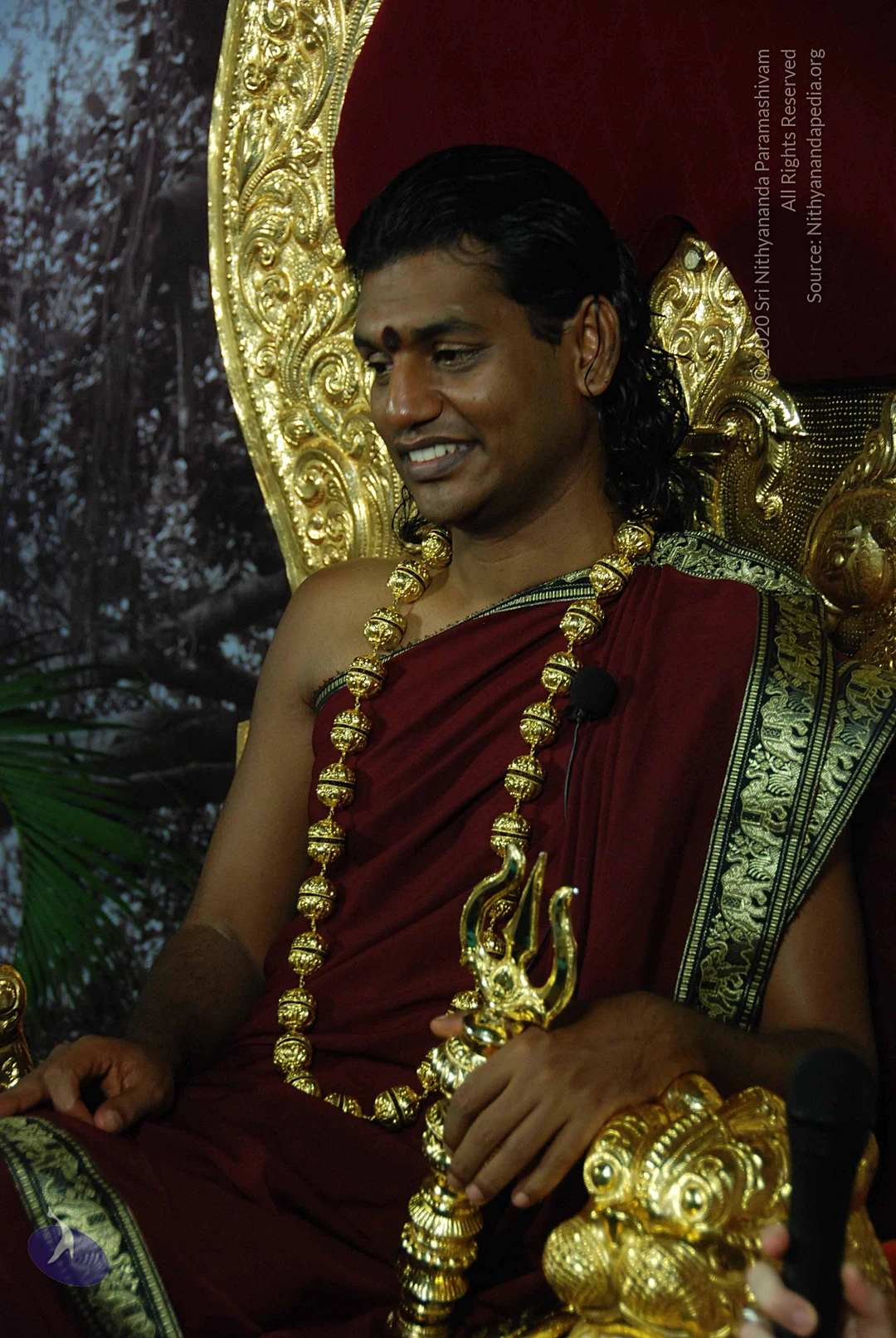
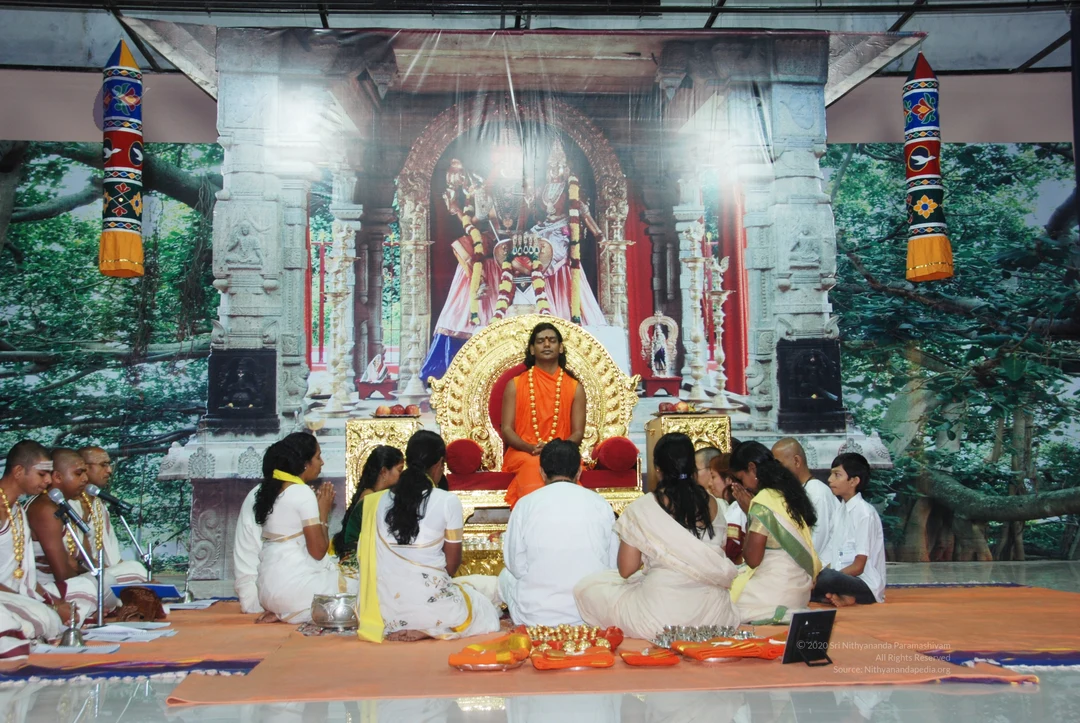
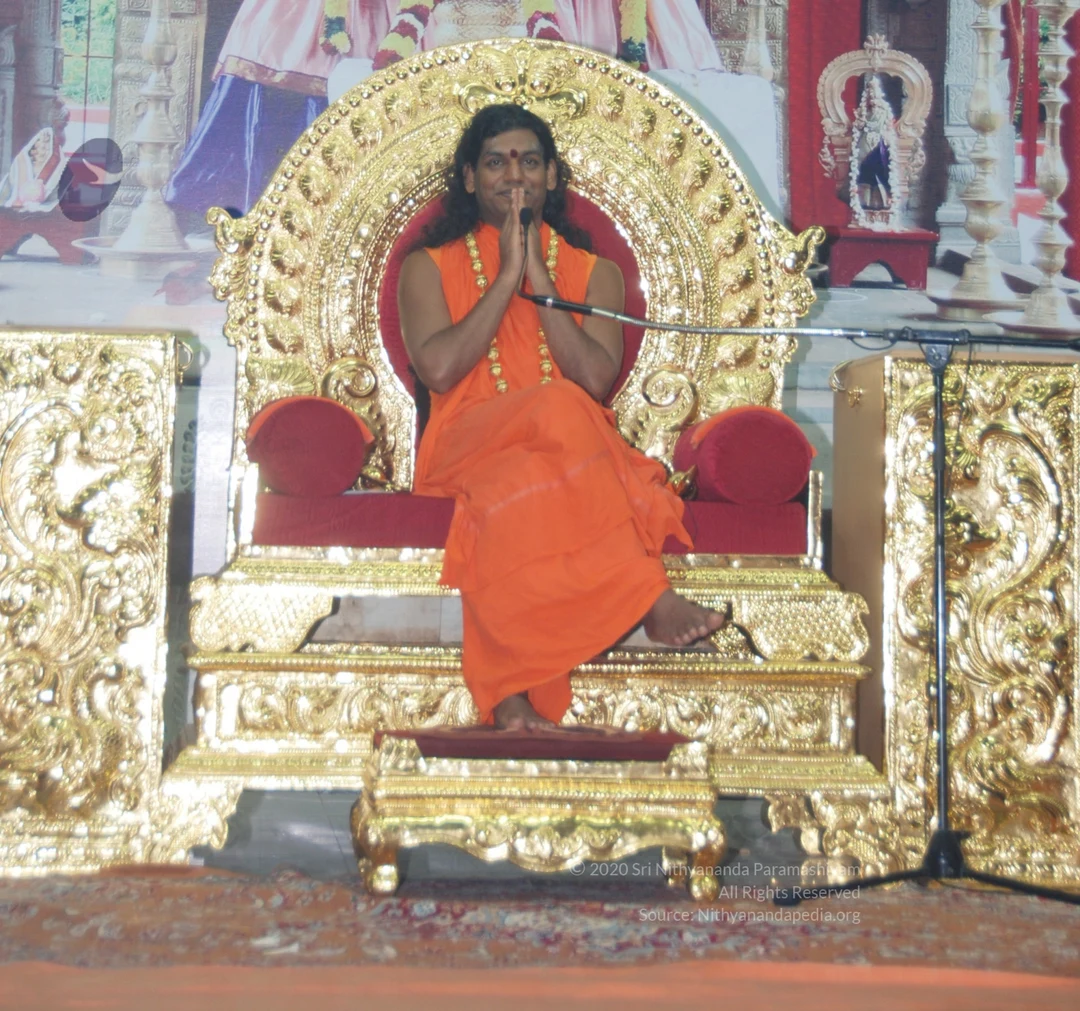
A smiling man with long dark wavy hair sits on an ornate gold-and-red throne, wearing a sleeveless orange saffron robe and a long gold bead necklace, with a red tilak on his forehead. He sits with hands clasped in his lap, facing a clip-on and boom microphone. Behind him a decorated golden arch and pink floral backdrop frame the stage at a discourse.
03

Ganesh-Chaturthi

177 dated photos in previewSource gallery
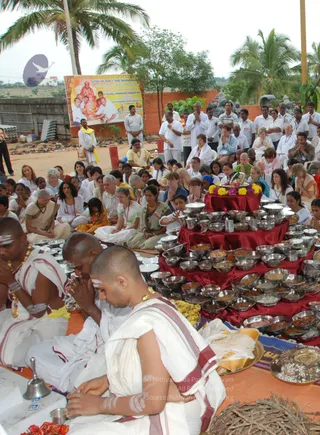
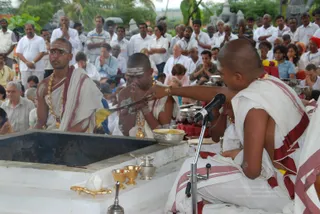
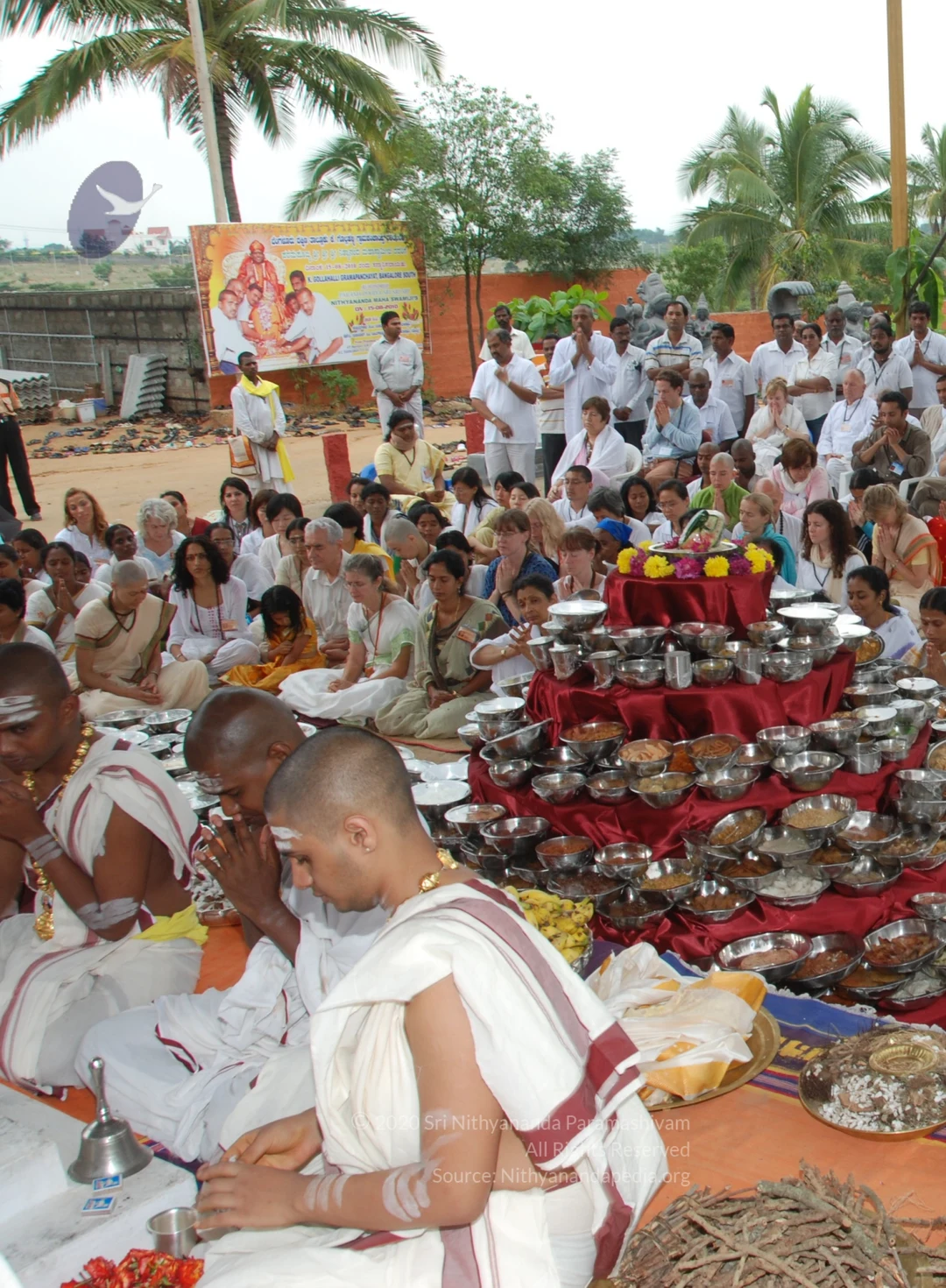
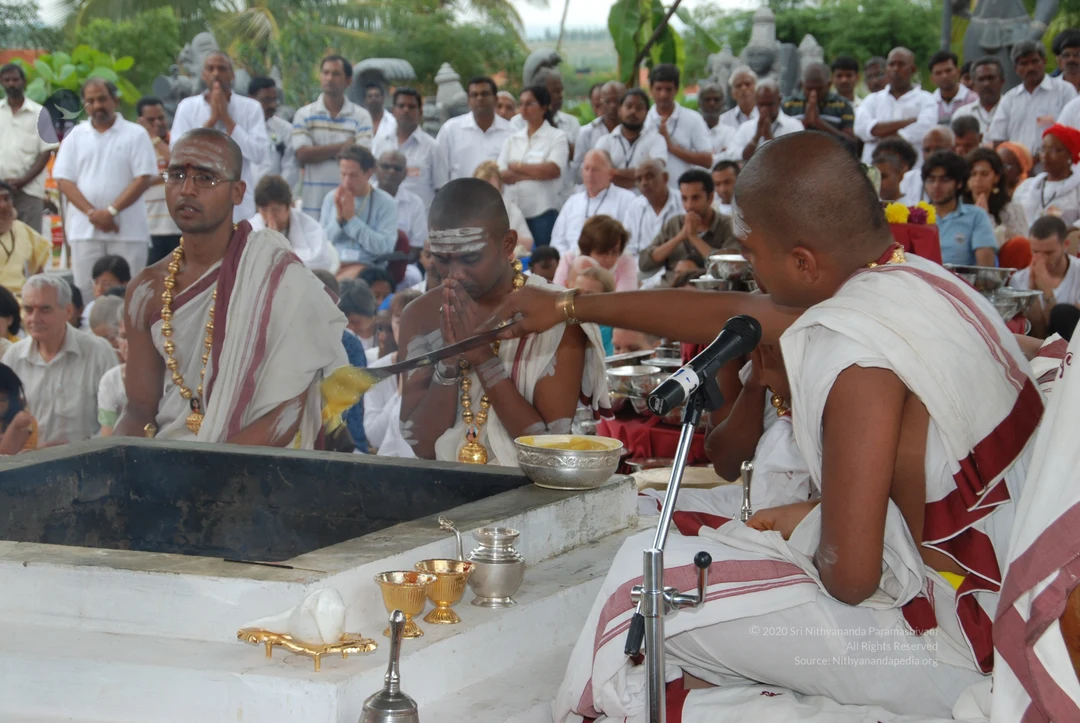
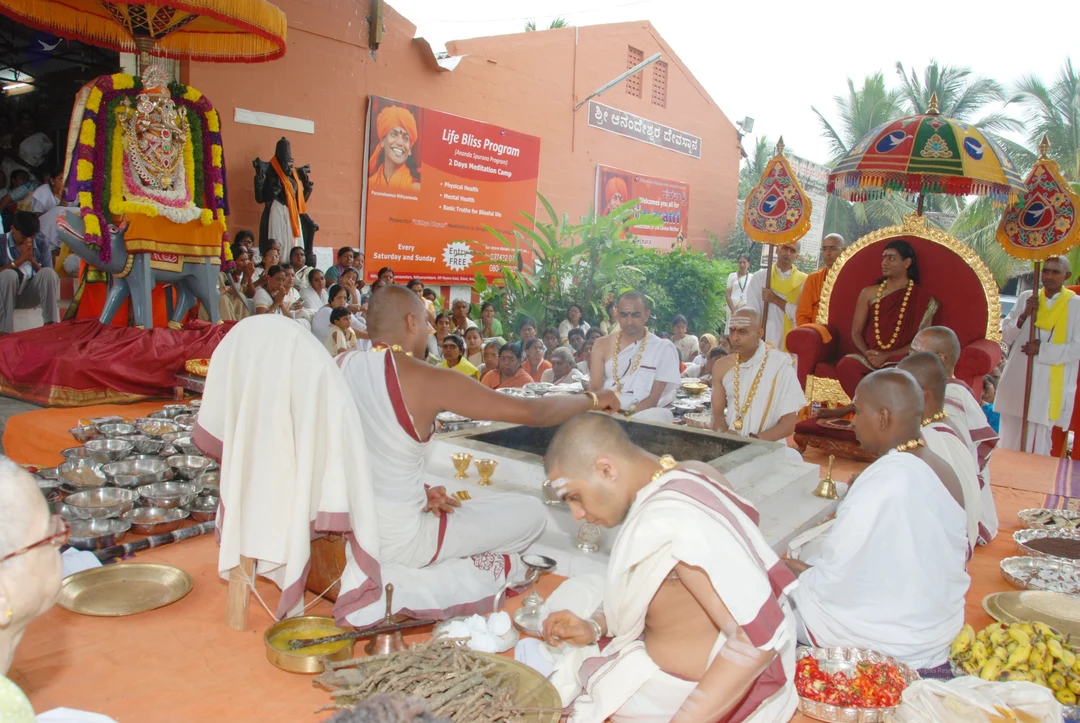
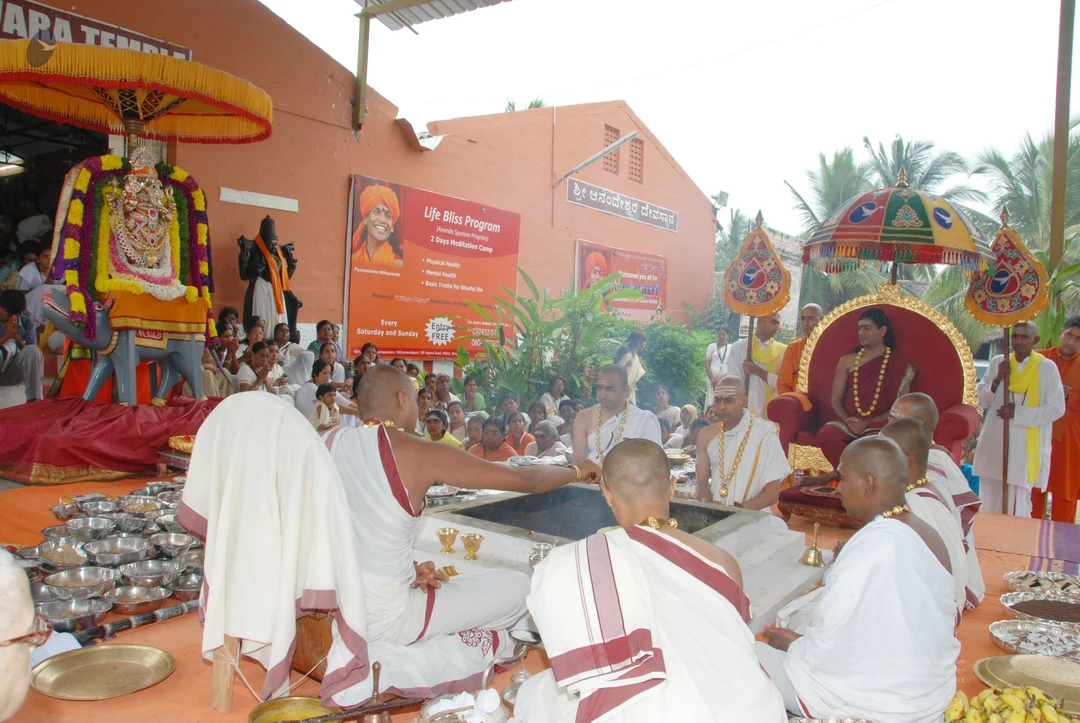
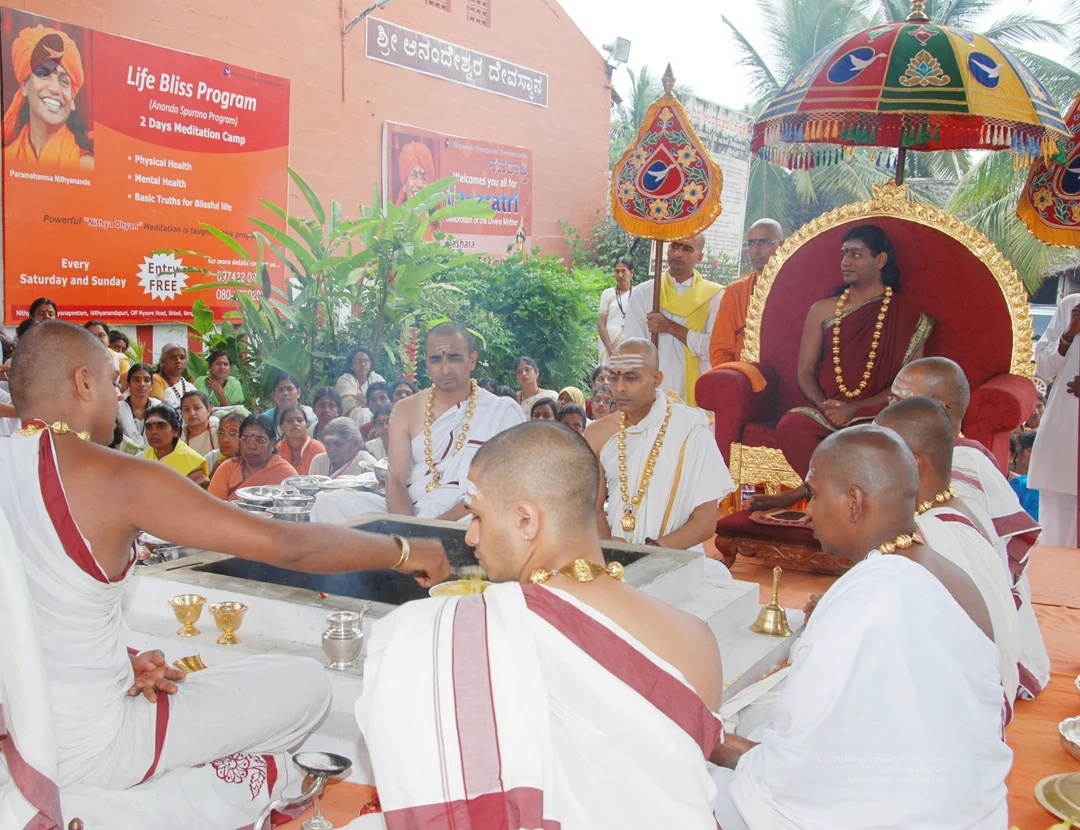
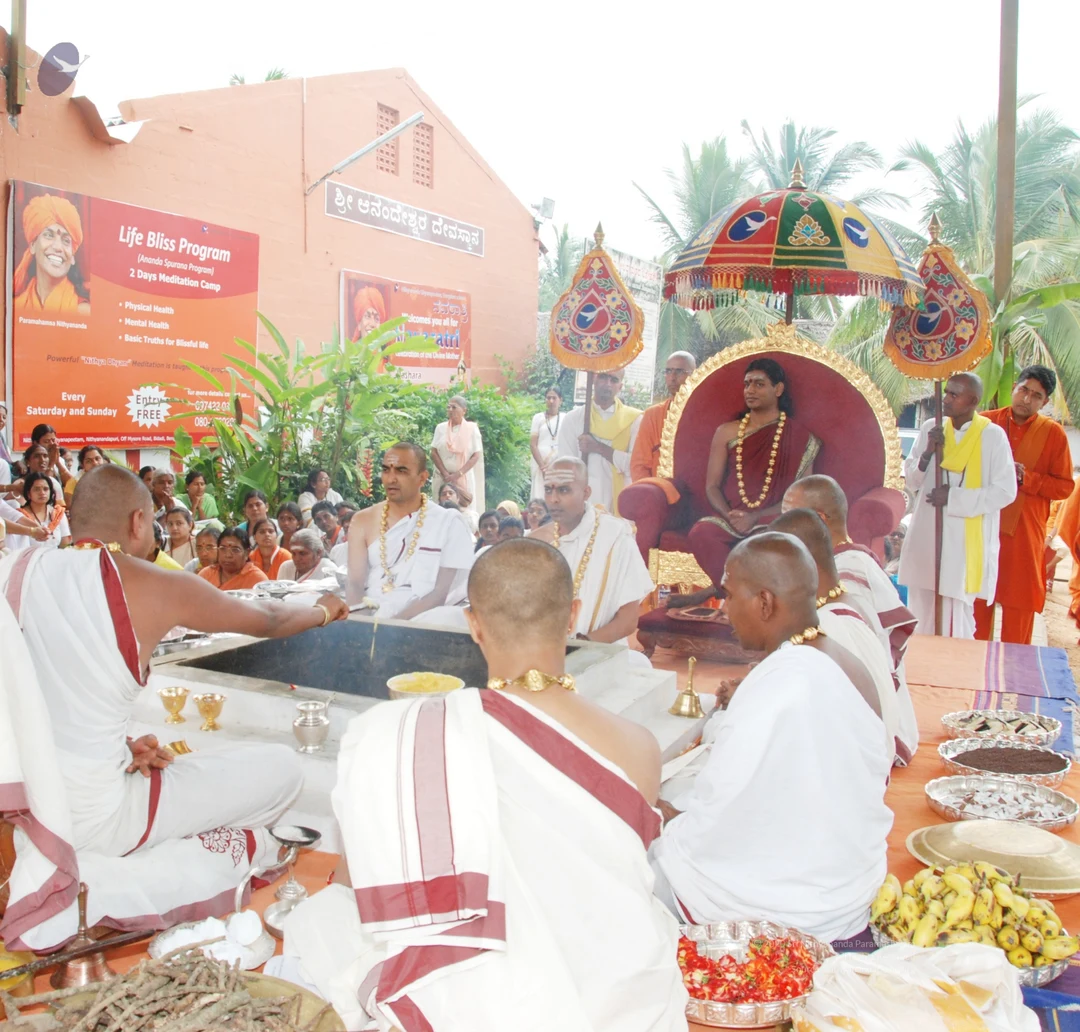
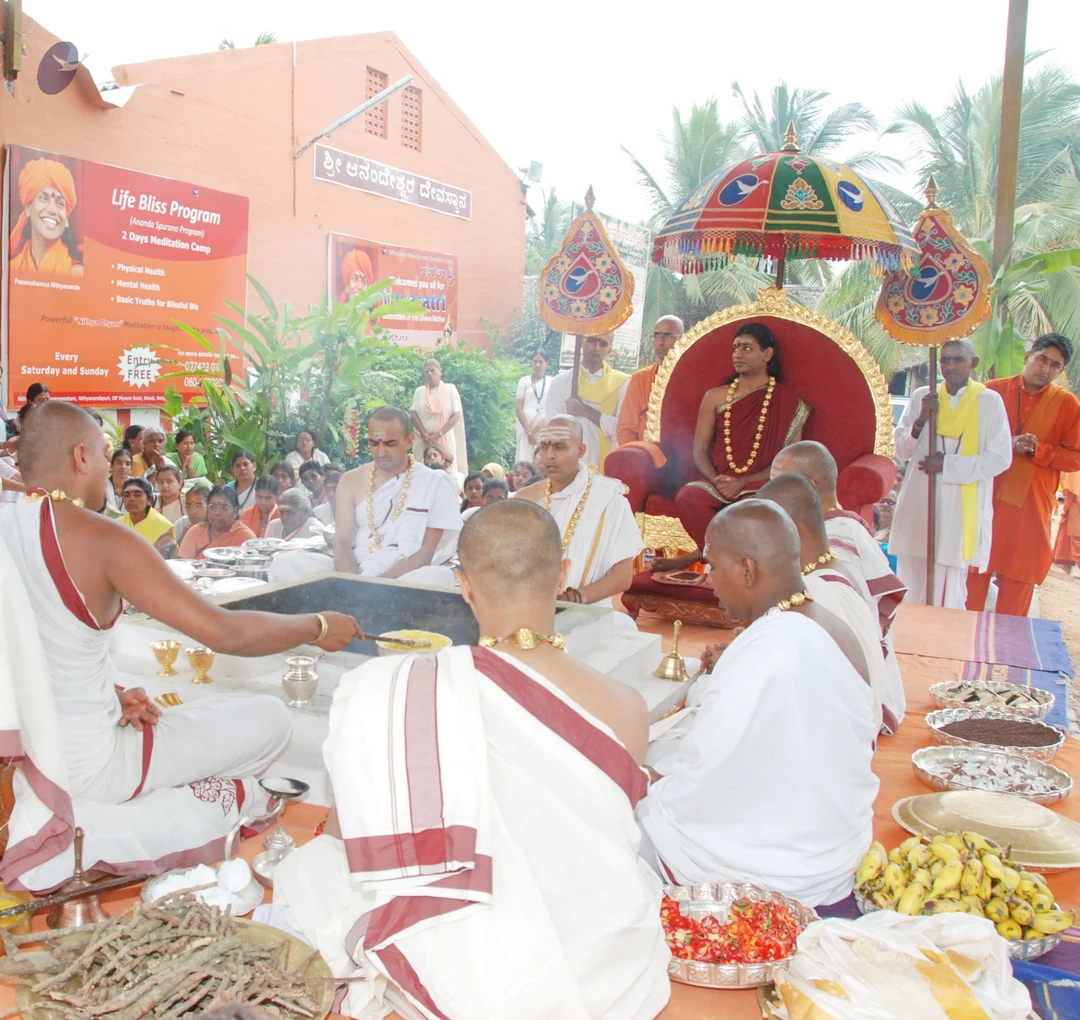
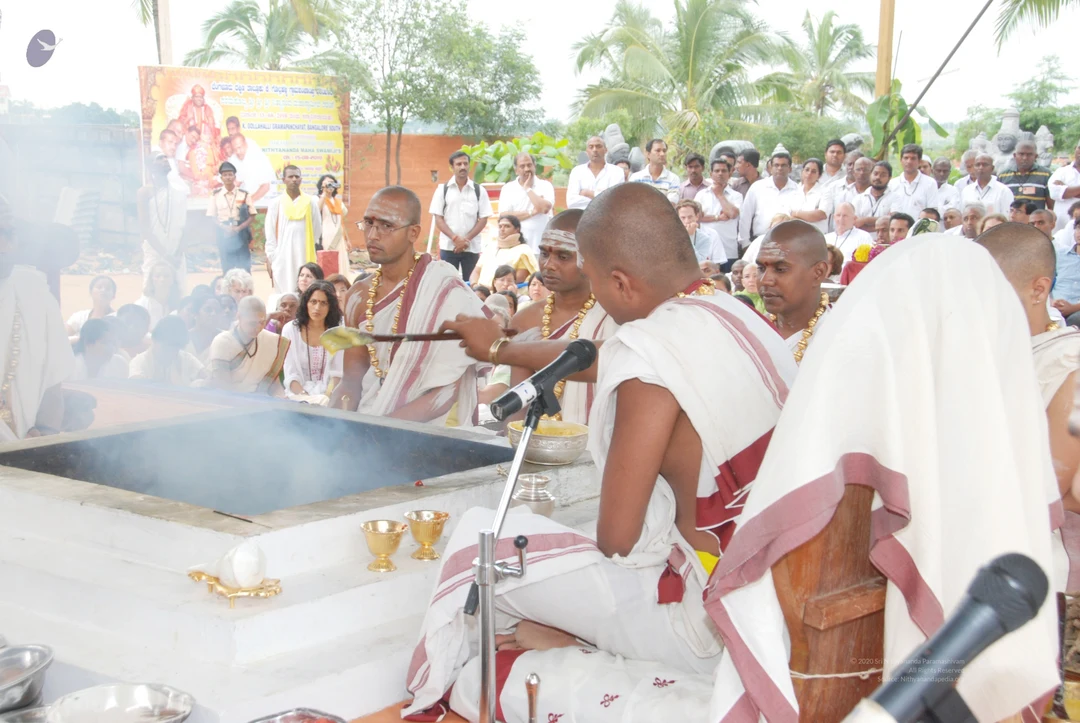
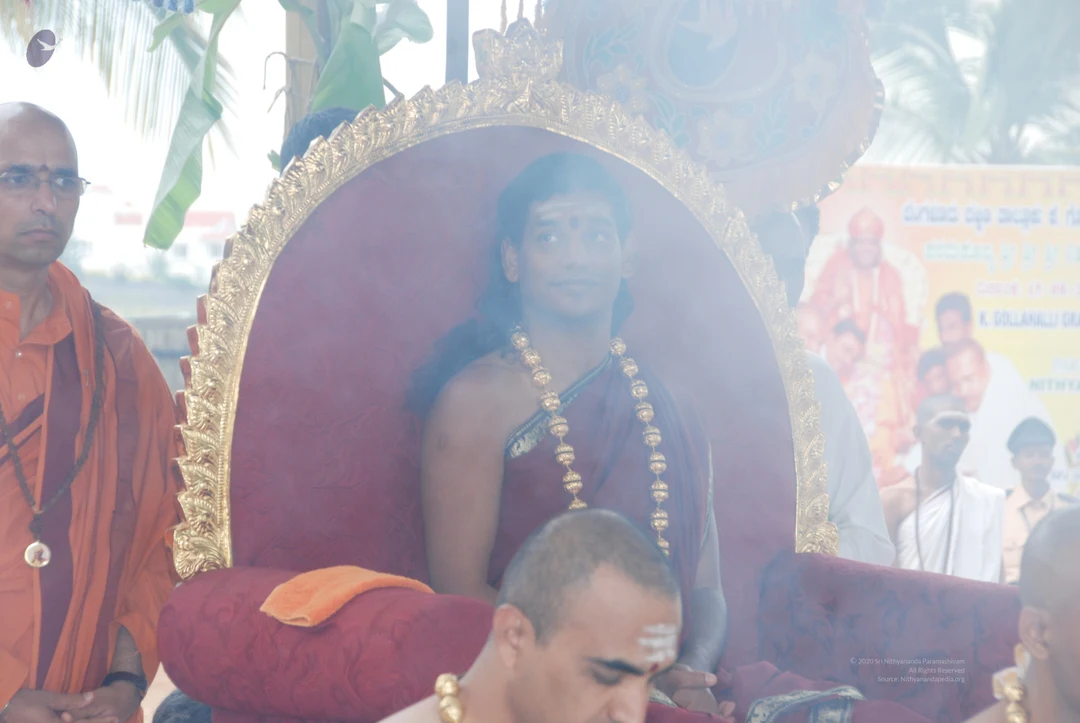
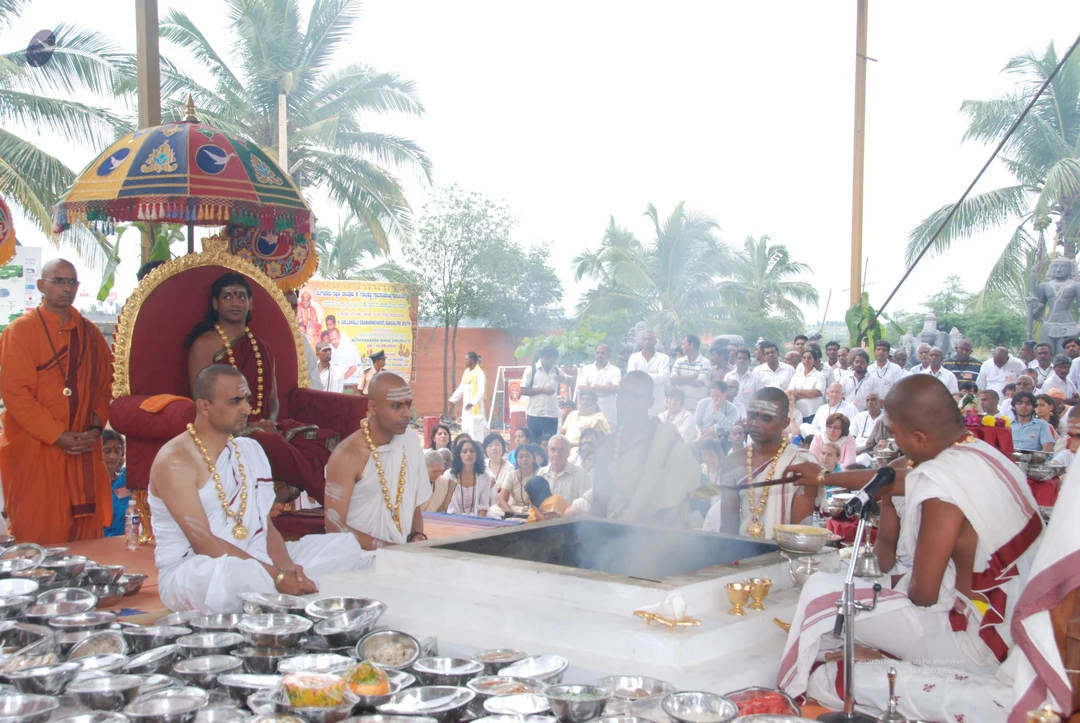
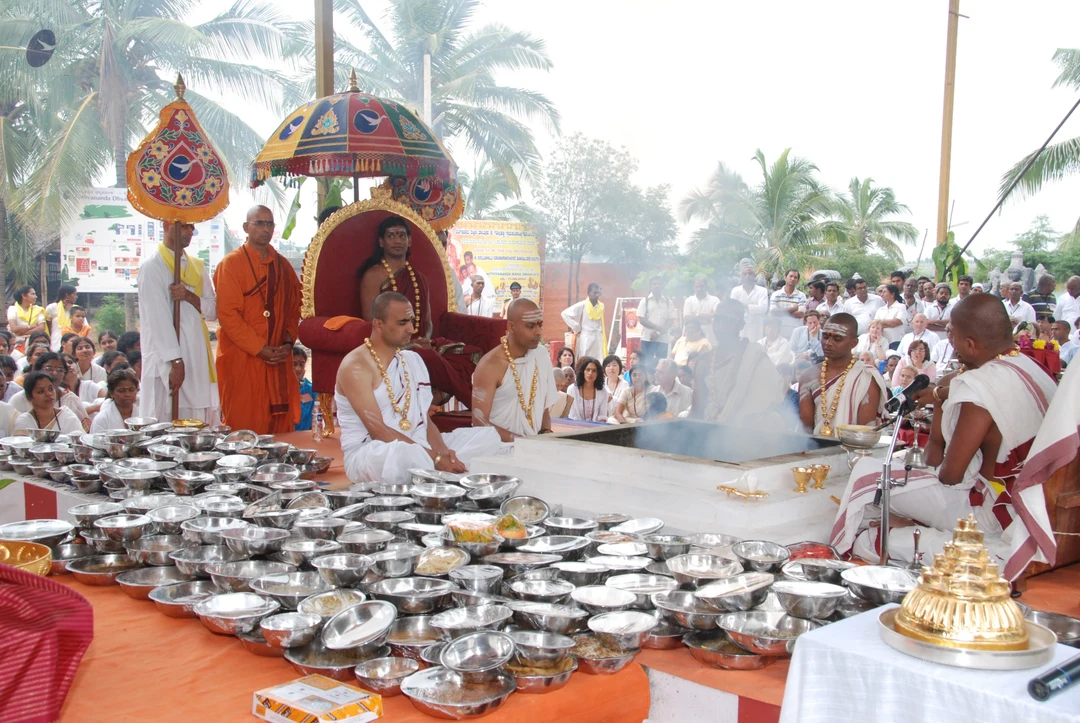
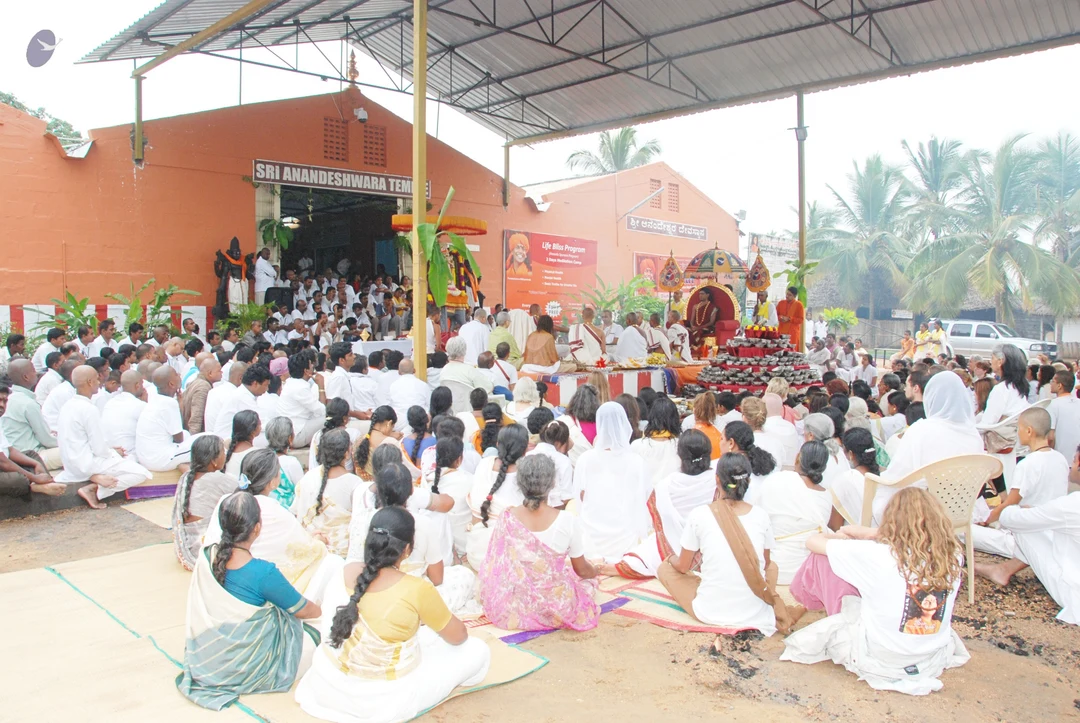
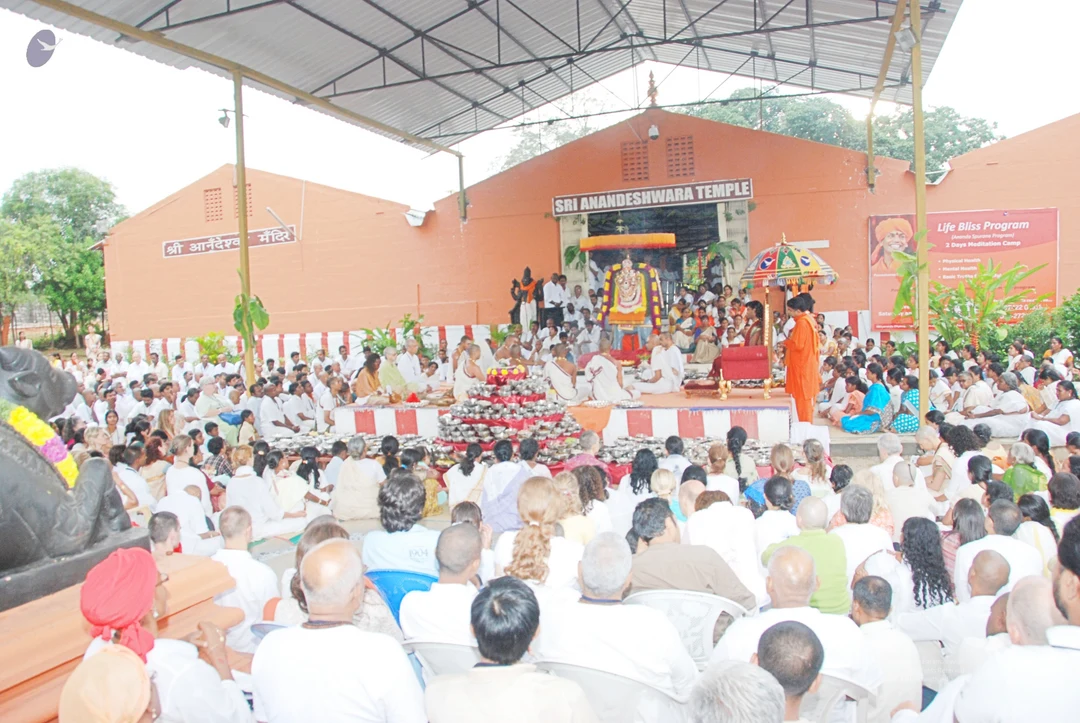
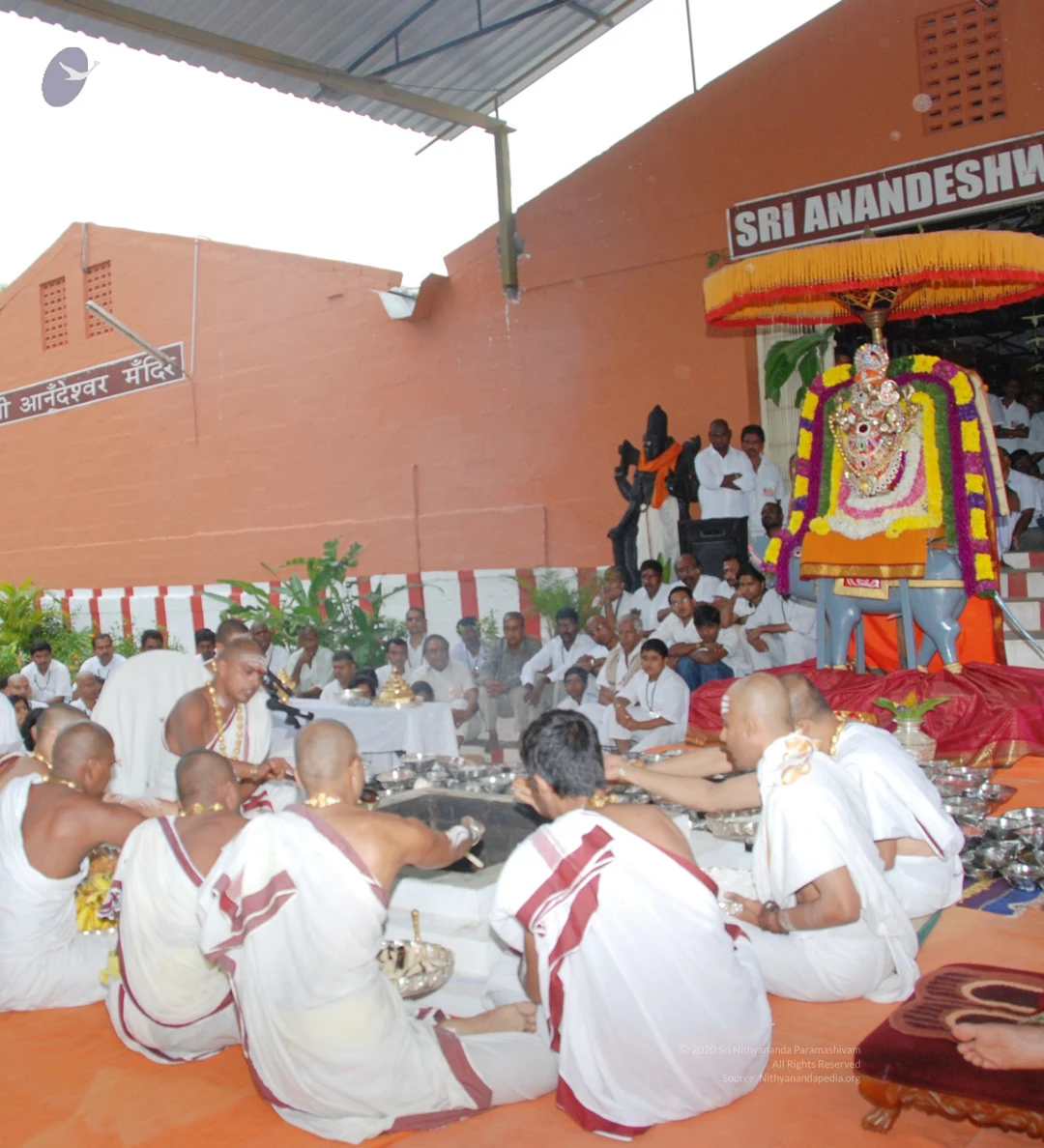
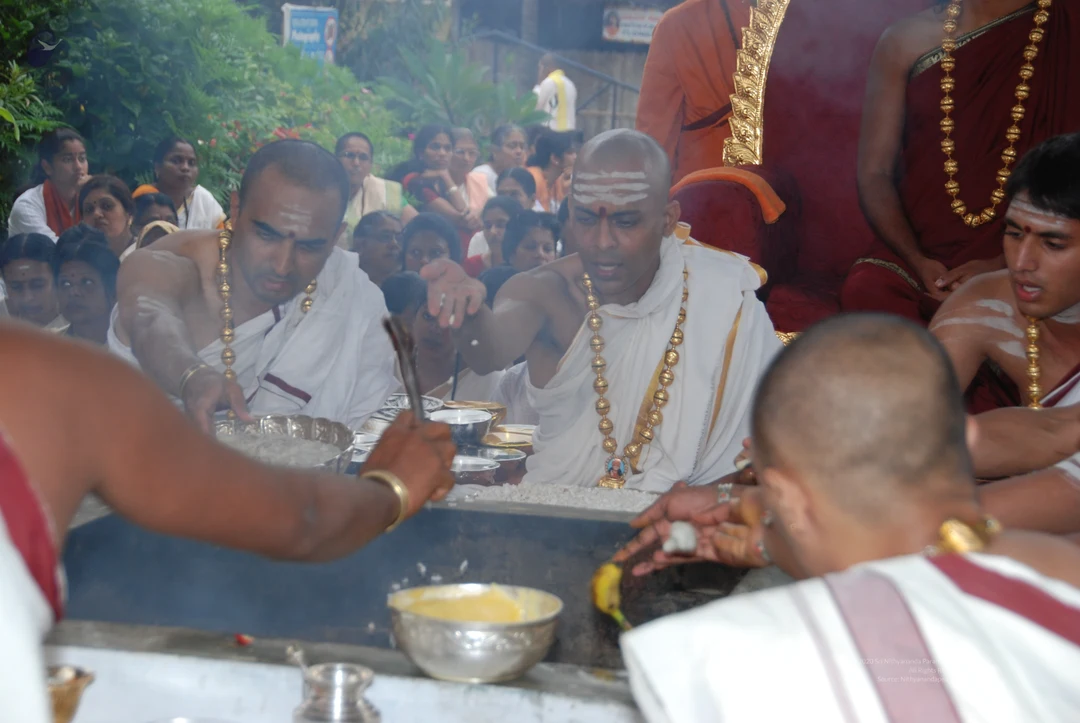
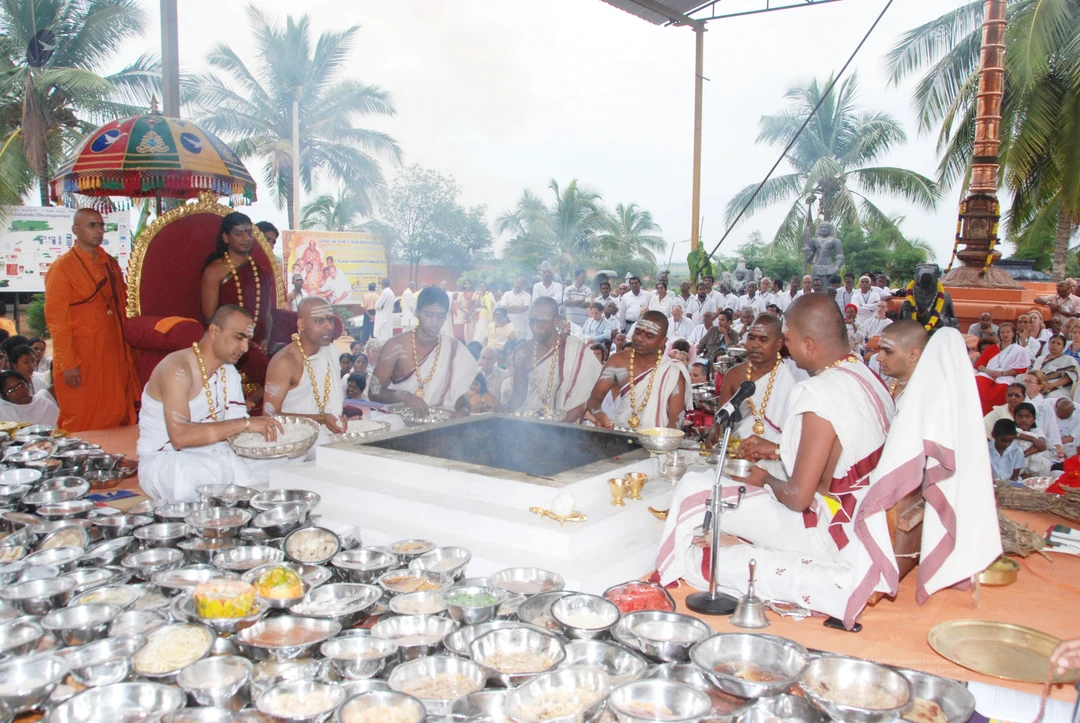
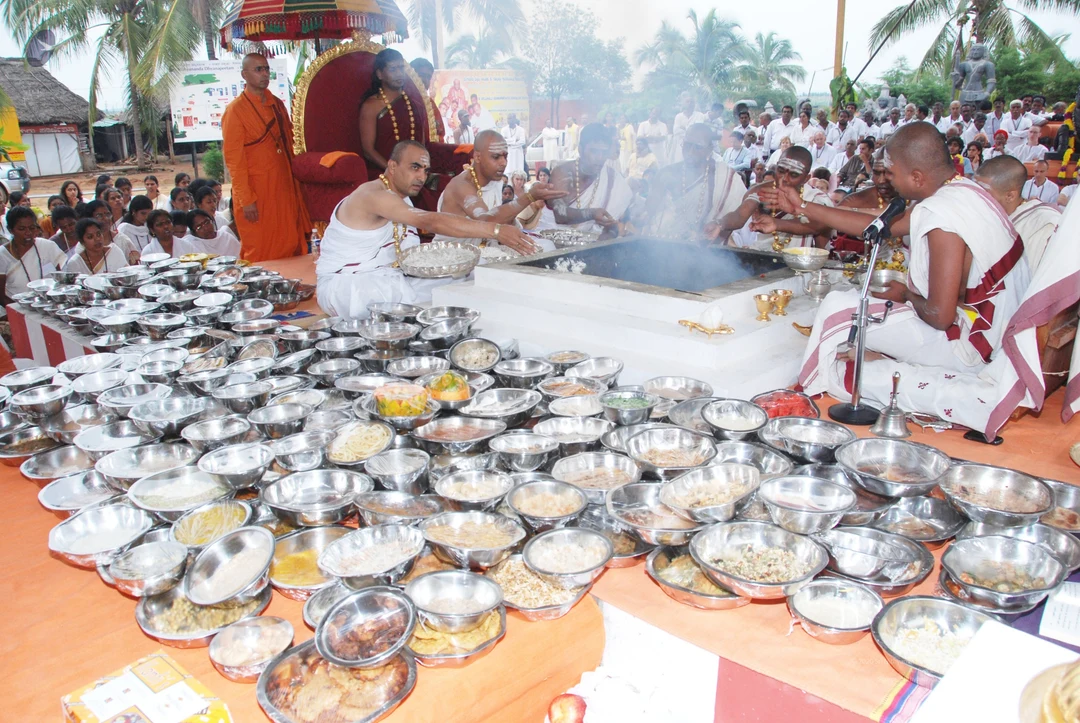
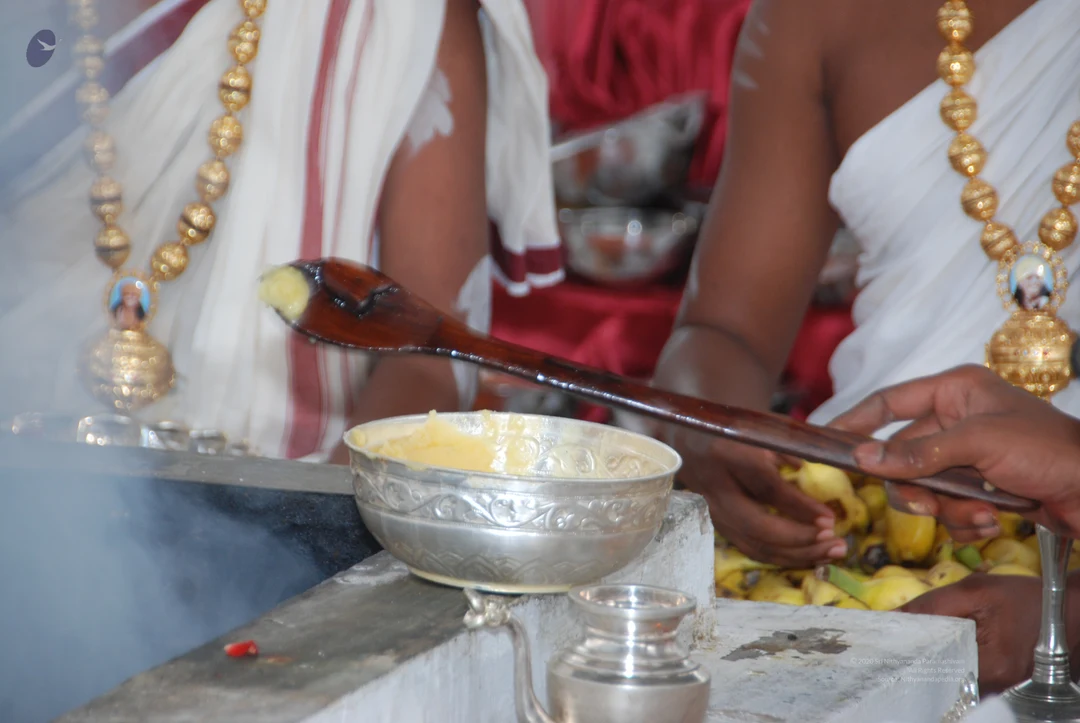
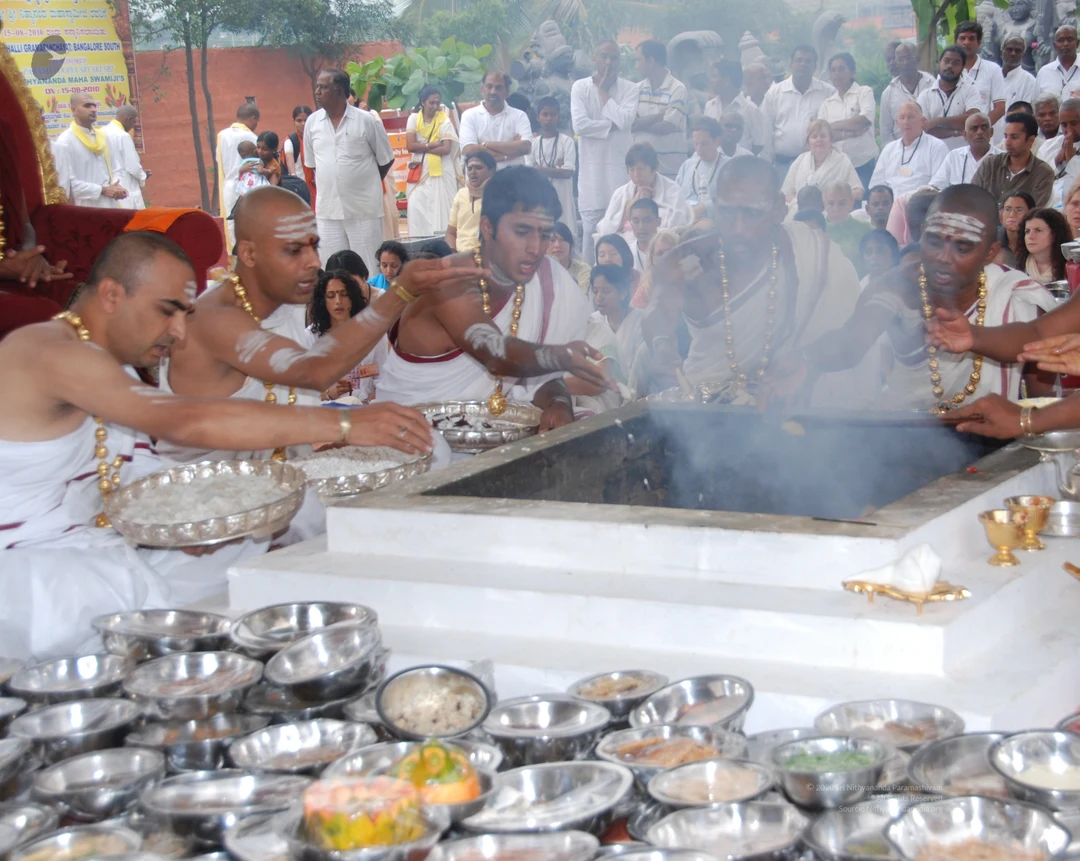
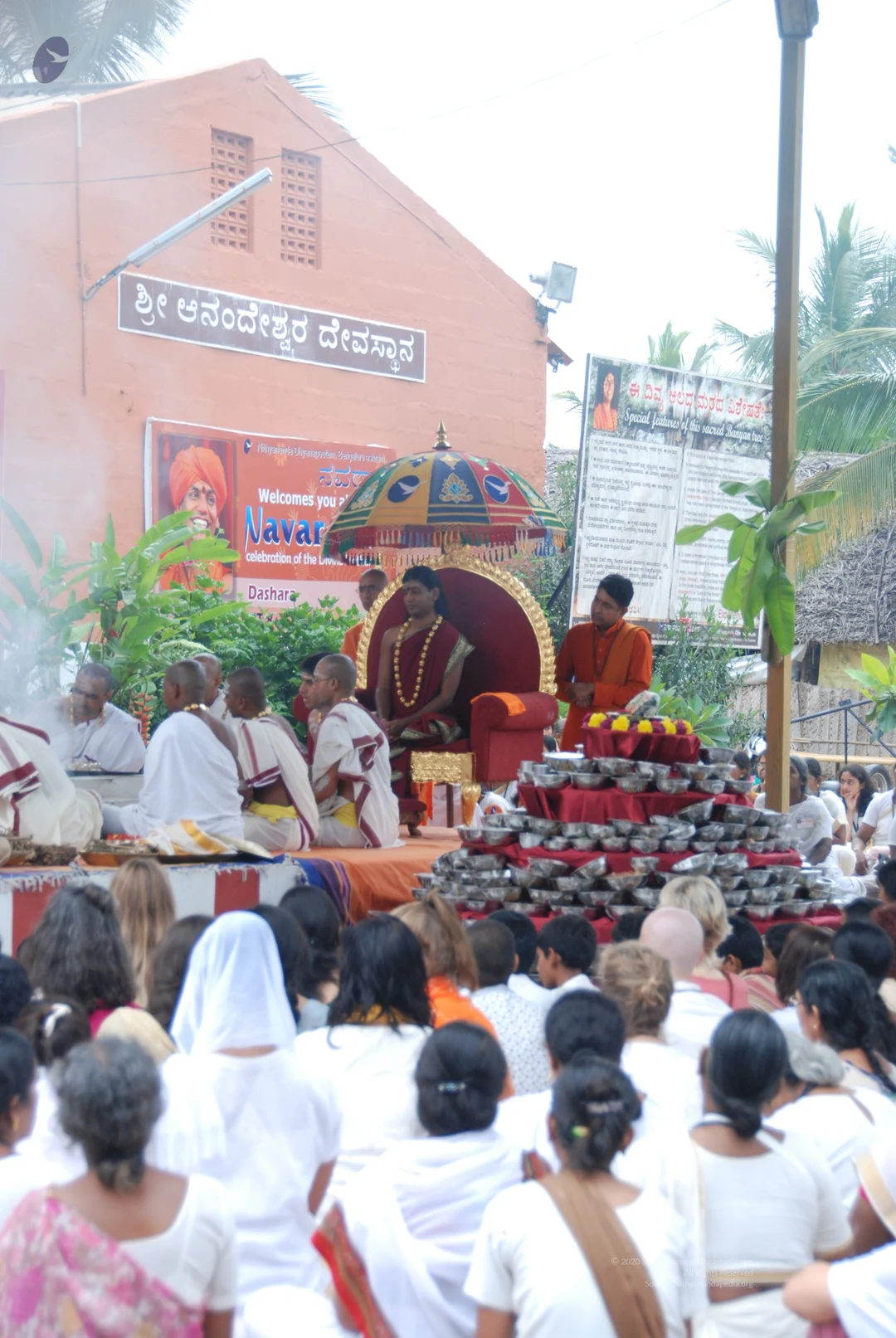
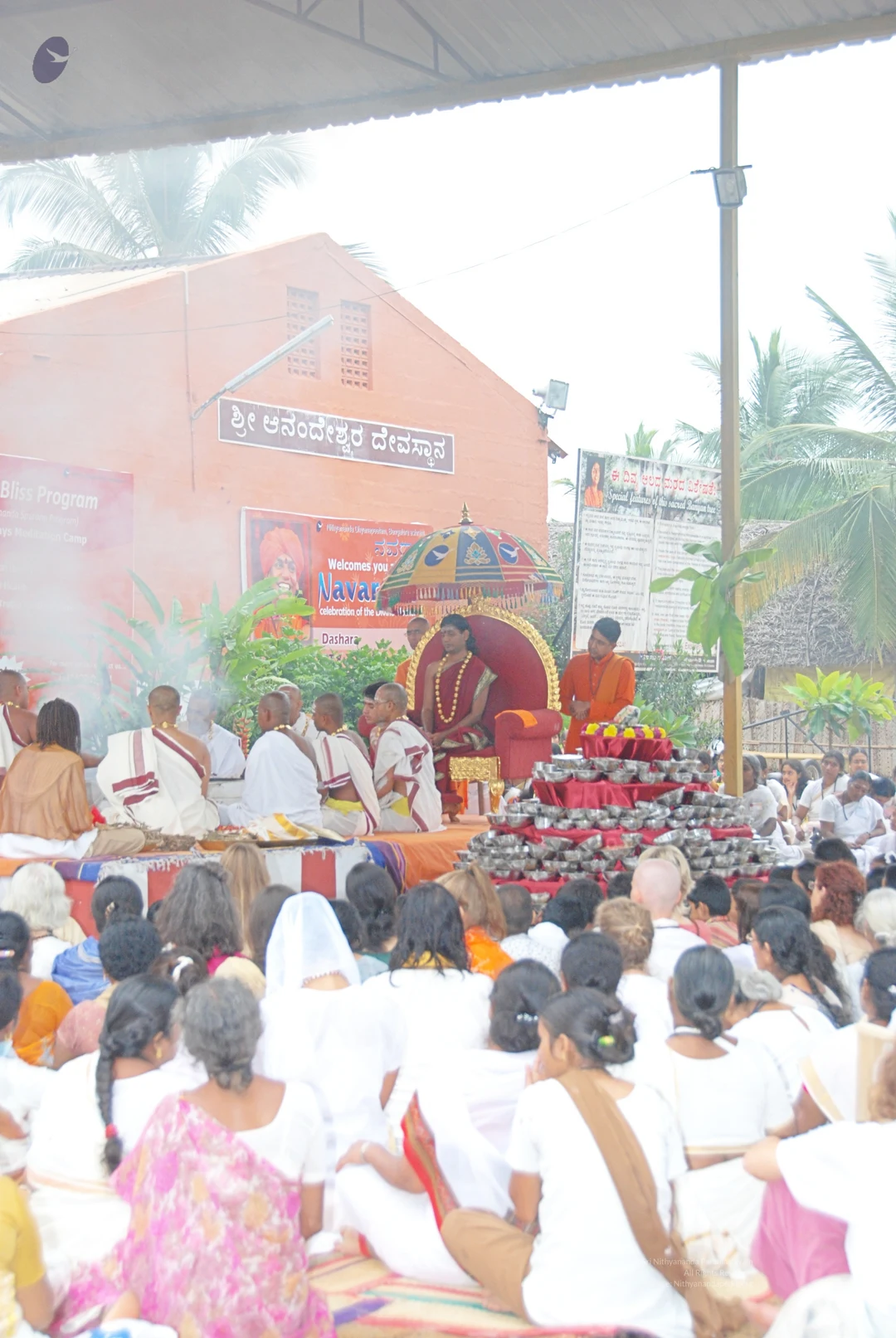
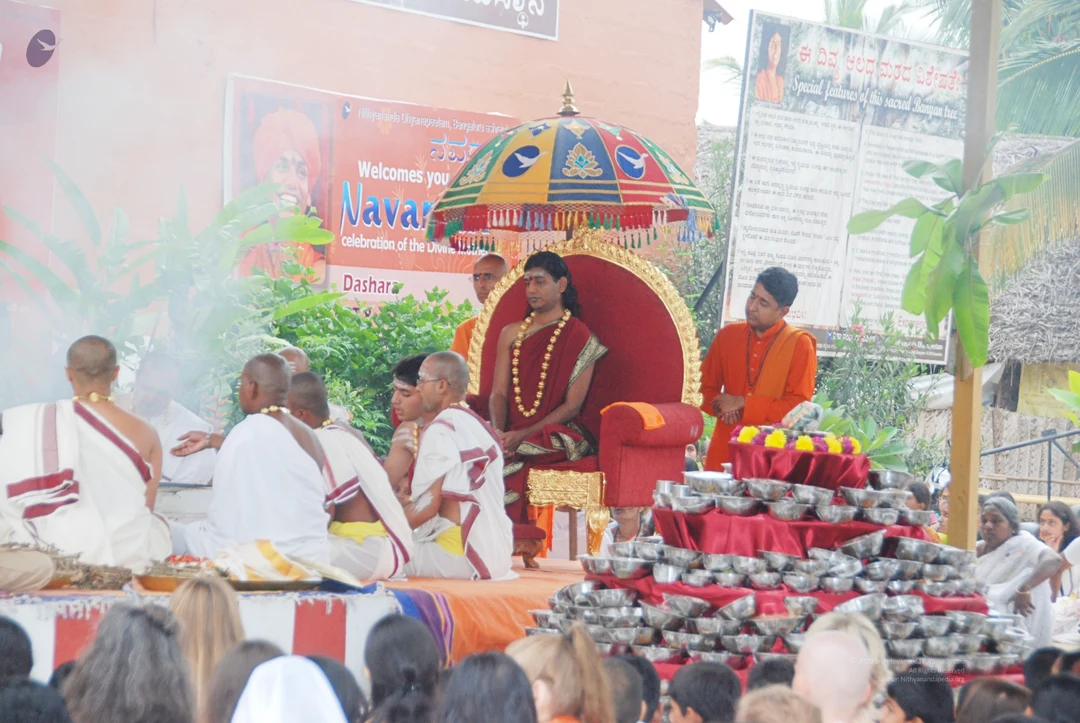
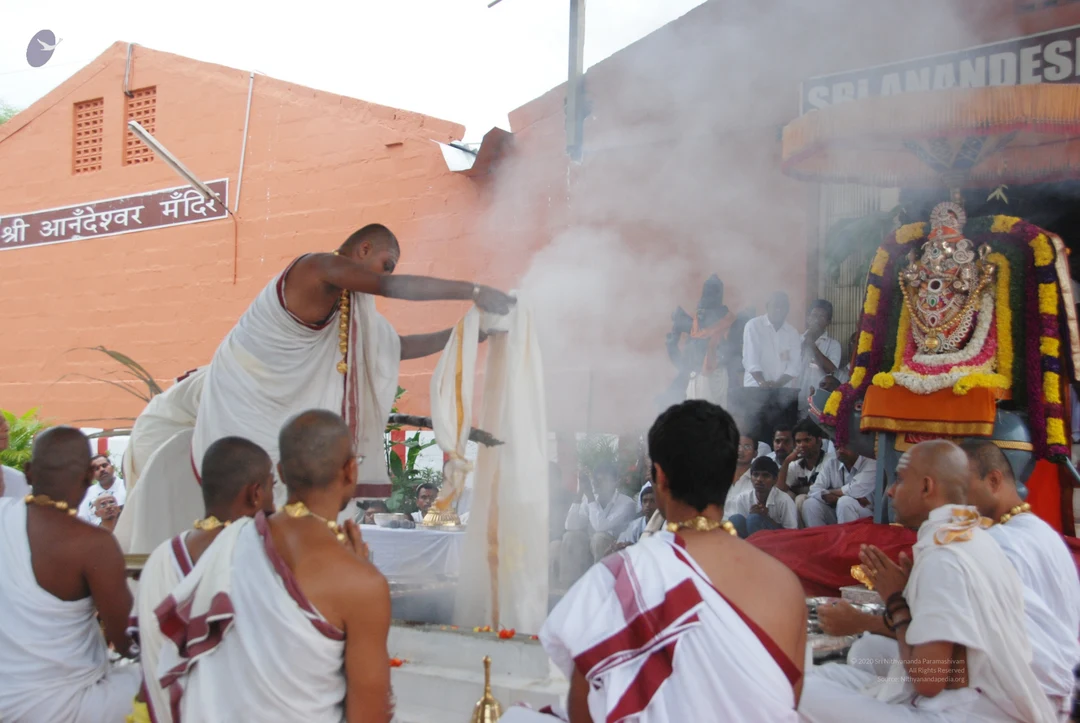
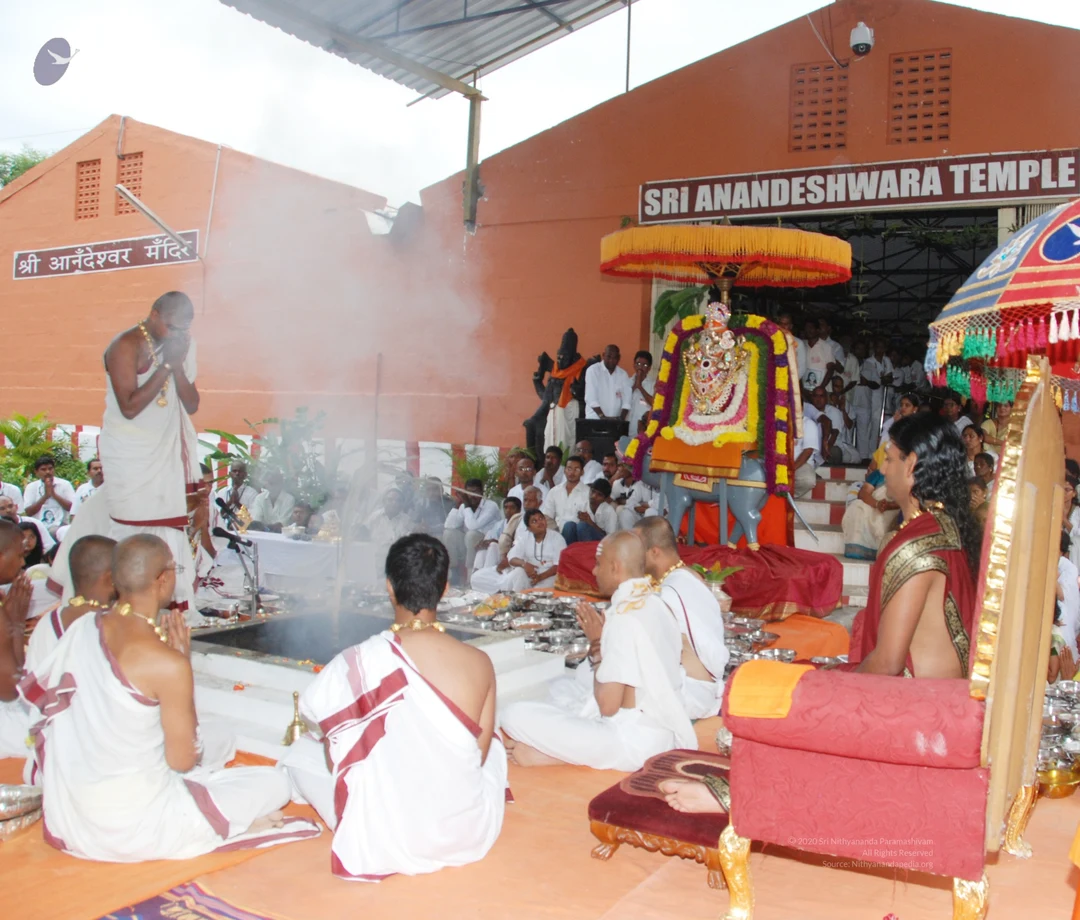
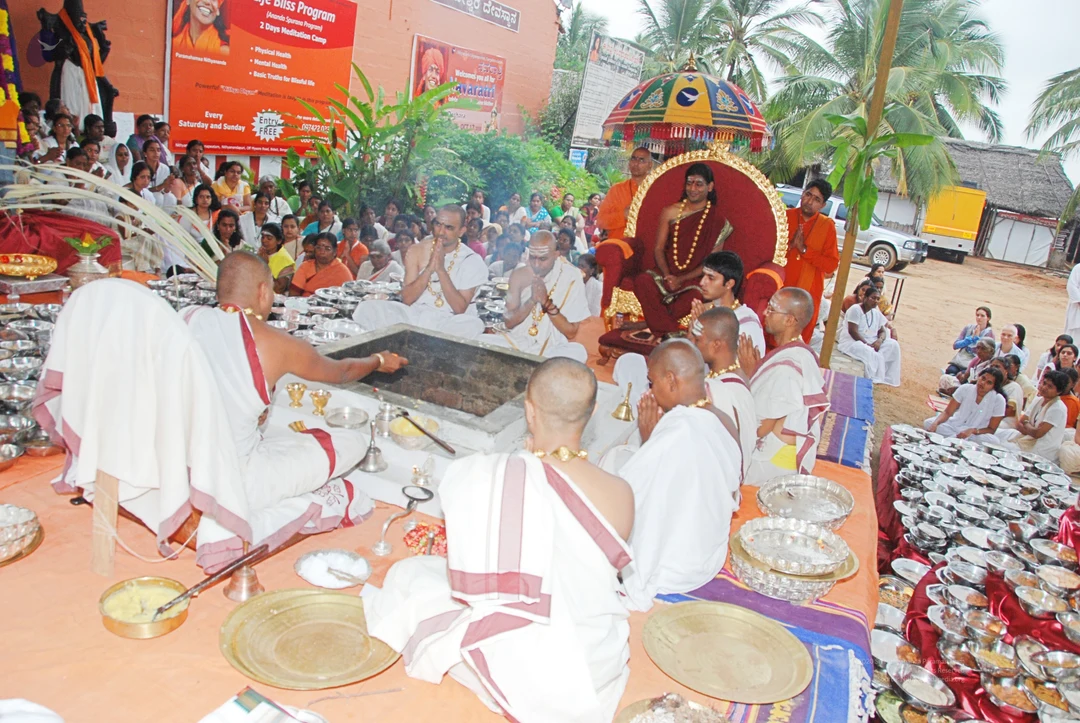
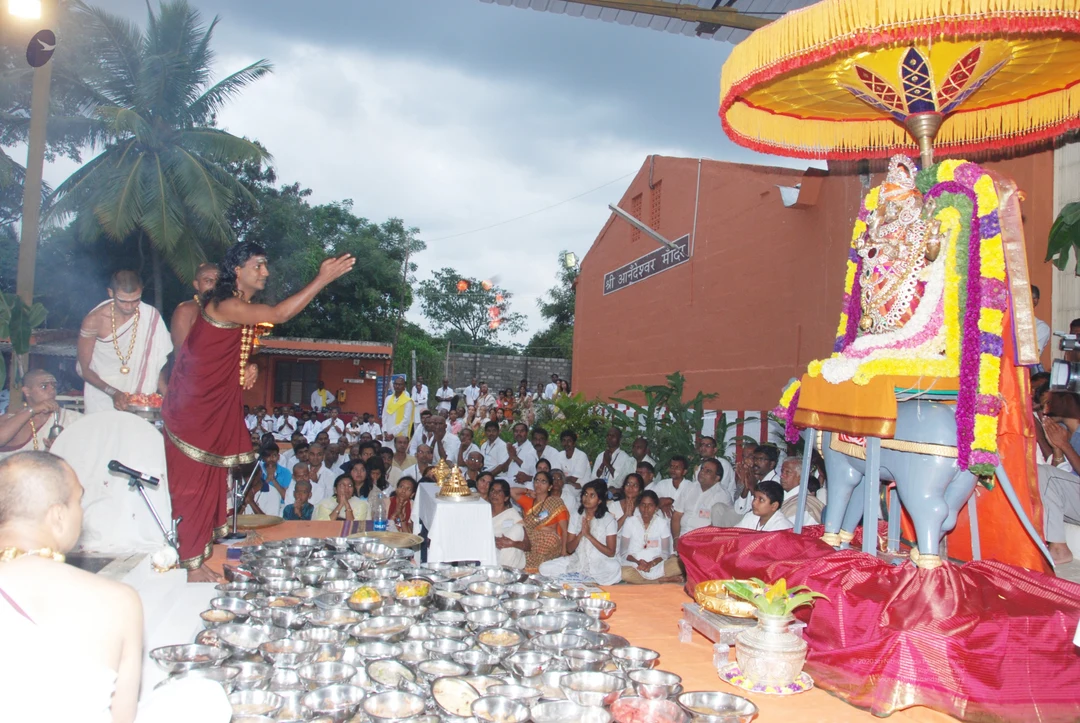
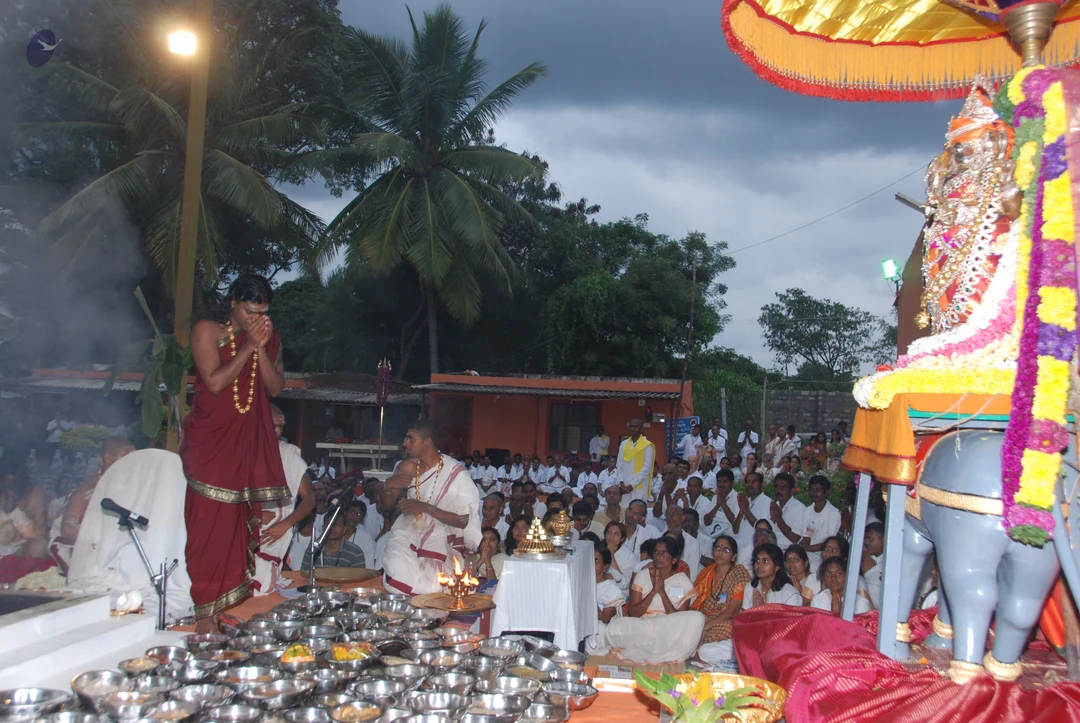
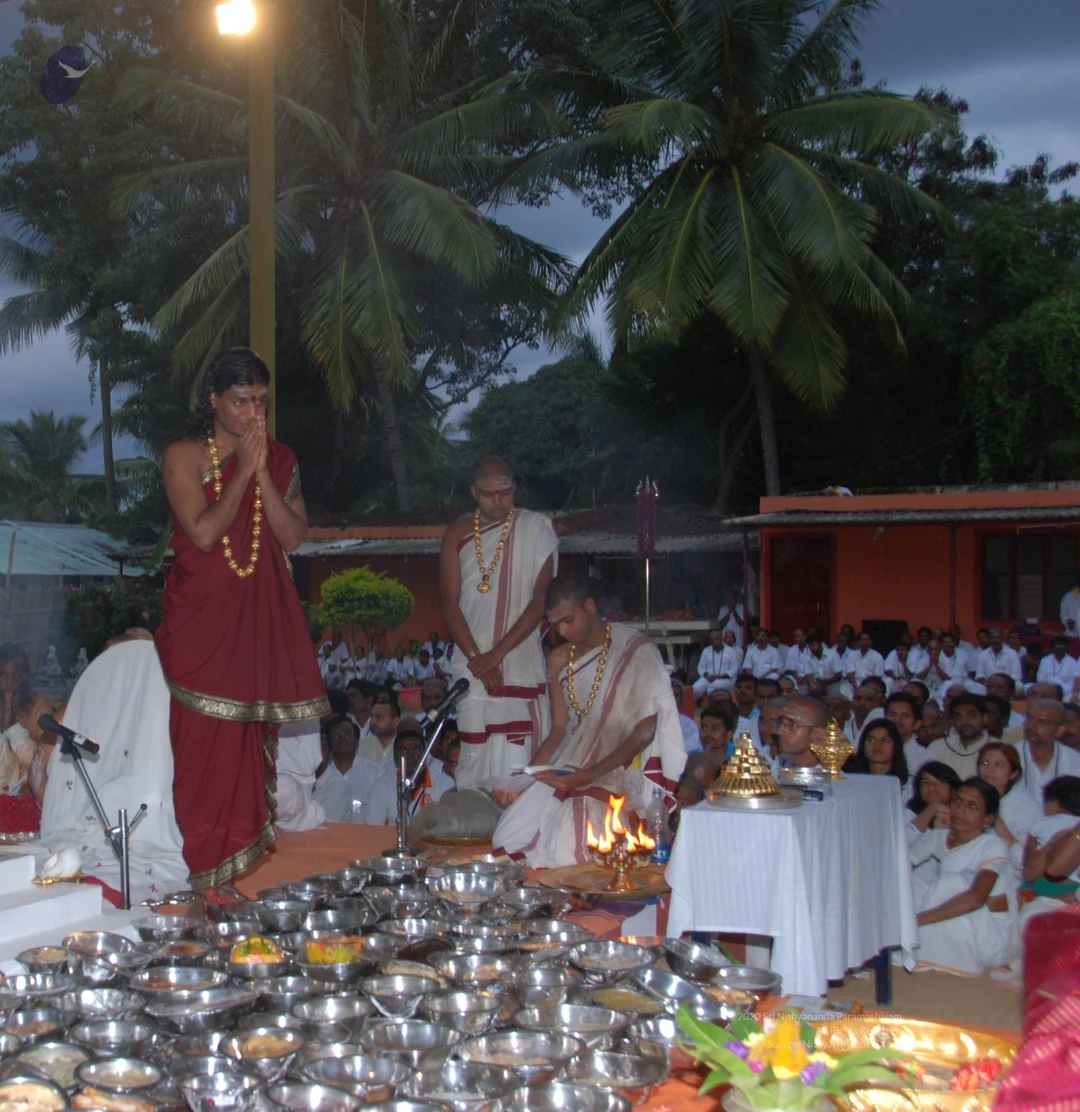
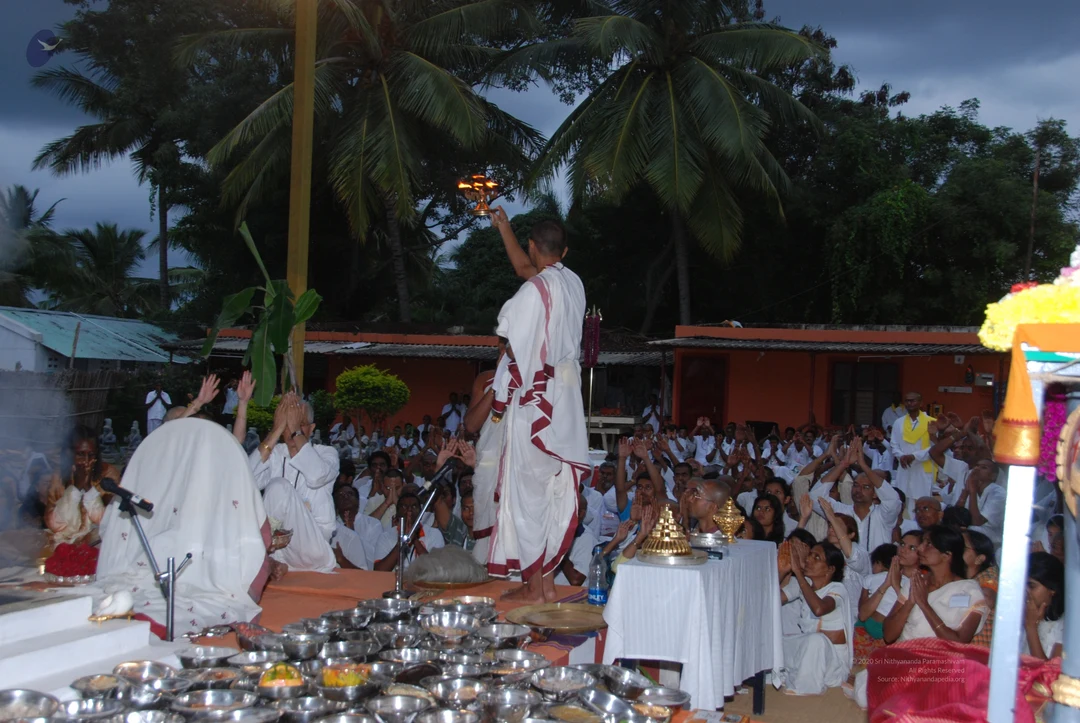
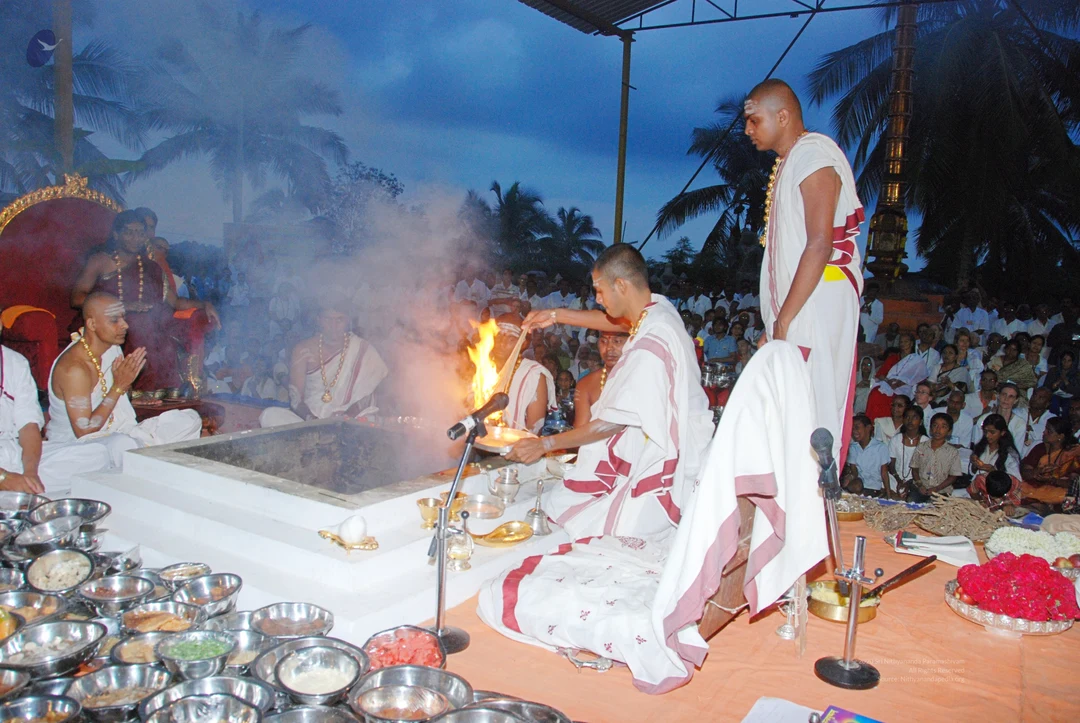
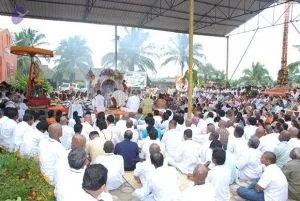
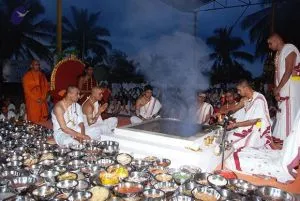
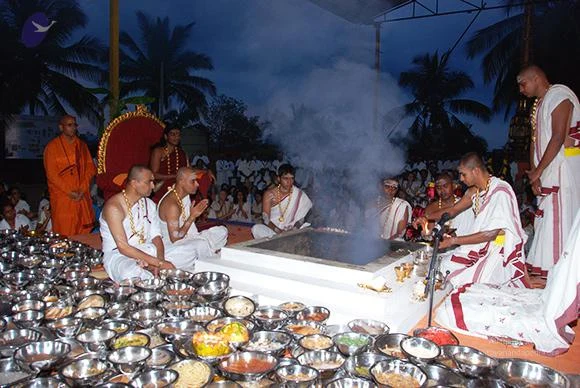
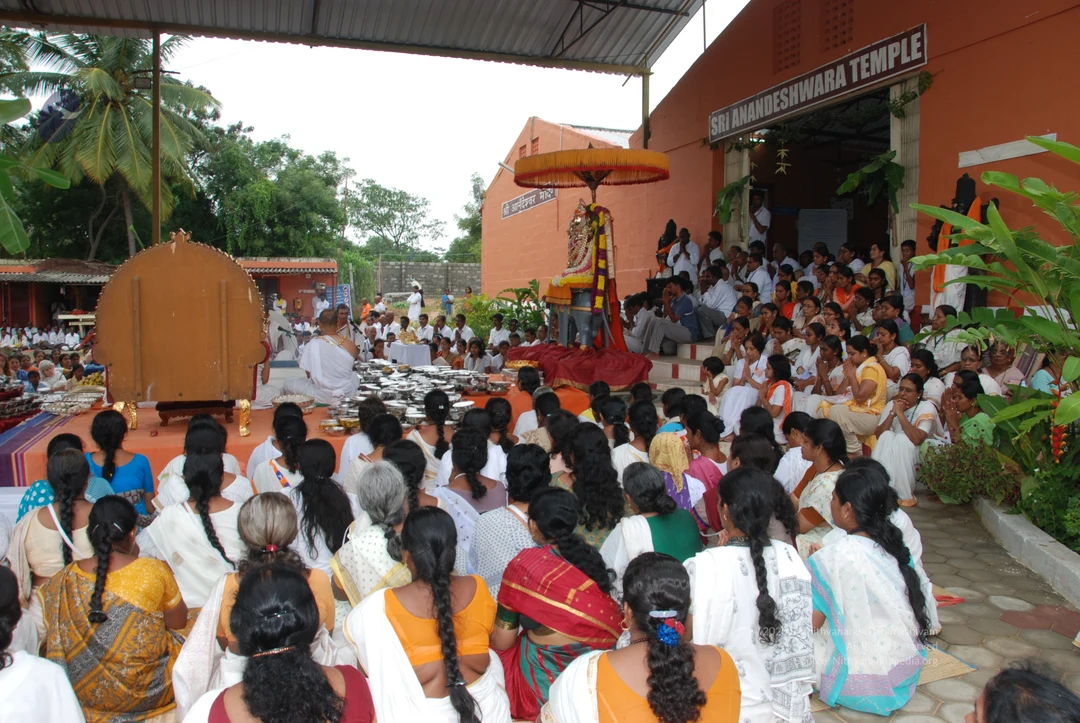
A photograph of an outdoor ritual at an ashram with a large crowd behind a low white fire pit lined with dark stone. Three priests in white dhotis with red-bordered cloth sit in front of it. The priest on the right, bald and bare-chested with a white shawl, extends his arm and holds a long ladle-like implement over the pit, with a microphone stand before him. The central priest, also shaved-headed with white vibhuti on his forehead and gold chains, presses his palms together. The left priest wears glasses, a white upper cloth and gold necklaces. Brass and silver bowls, a small brass vessel, a gold tray and a bell rest on the ledge, with flower garlands nearby. Behind them, dozens of standing and seated devotees in white and pastel shirts watch with folded hands, and statues stand among the trees.
04

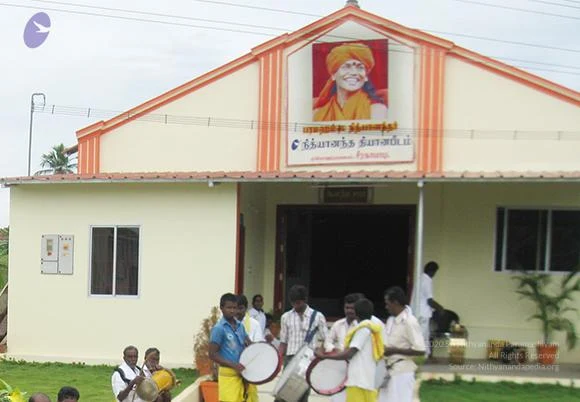
TN-VINAYAGAR-CHATURTHI-SEERAGAPADI-CENTER-OPENING

22 dated photos in previewSource gallery
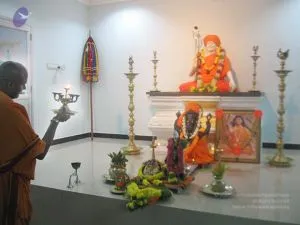
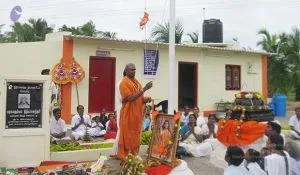
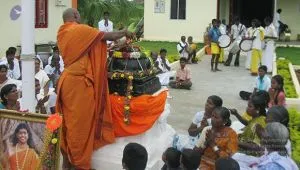
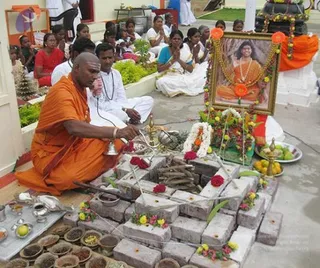
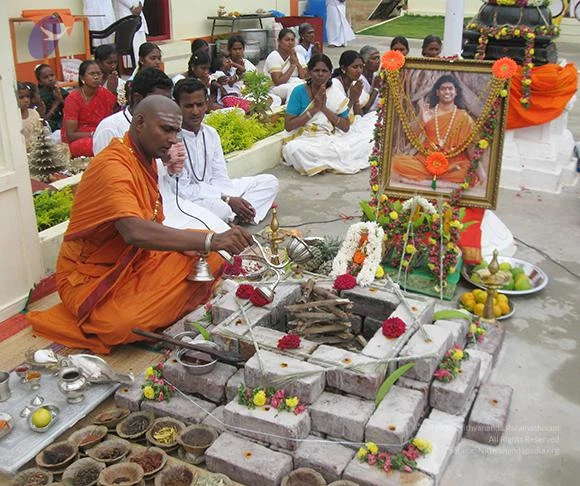
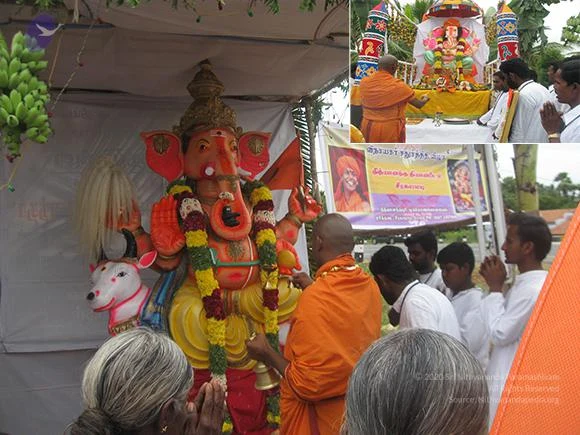
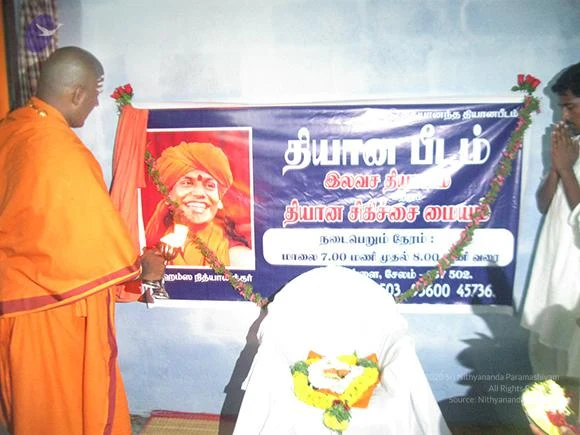
A photograph of a small shrine room with white walls and a tiled floor. On the right, a figure in saffron and orange robes sits cross-legged on a low seat before a decorated deity murti, which appears to be an elephant-headed Ganesha with red and orange adornments and garlands. Brass oil lamps stand on the left side of the shrine, and the room has a simple, traditional ritual setting.A bald man in a saffron-orange robe stands at the centre of an outdoor courtyard, pouring liquid from a metal pot onto a large dark ritual object decorated with orange cloth and green garlands, seemingly an abhishekam. Around him, a crowd sits on the ground in front of him, including women in colourful saris and children, while men in white dhotis and shirts stand behind and beside him near drums or barrels. A doorway, tiled floor and palm trees form the background. A small inset portrait of a woman with a red-orange garland appears at the lower left edge of the frame.A homa or yagna at an outdoor ritual platform. In the foreground, a shaved-headed man in saffron-orange robes kneels at a brick fire pit stacked with wood, holding a brass bell and a small brass lamp while tending the fire. Around the pit are brass pots, coconuts, bananas, and small bowls of grains, flowers and offerings arranged on a silver tray. Behind him, seated devotees in white clothes and a woman in a teal sari sit with hands folded in prayer. Behind them, a framed photograph of a woman in orange garments, garlanded with orange marigolds and a rudraksha-style mala, stands on a decorated stand, and a yellow-and-orange kalasha sits at the top right. Several children watch from the back.
05

malaysia-kalpataru

7 dated photos in previewSource gallery
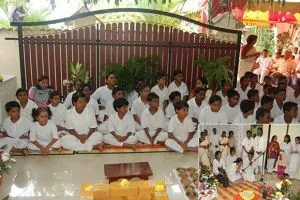
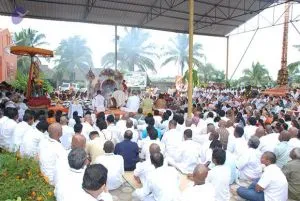
A photograph of a large group of people in white clothing seated cross-legged on a white-floored hall during a ritual gathering. Several rows of men and boys in white kurtas and dhotis sit facing forward, with a seated figure in white near the front. At the right edge a person in white stands beside a red-and-gold decorated altar area with a brass lamp and yellow offerings, and a row of lamps and flower arrangements lies in front of the seated group. A dark metal gate and red-walled backdrop frame the scene behind them. The image is small and low resolution, and the person in white near the front cannot be clearly recognized from appearance, so no identification is made.
06

GANESH-CHATURTHI-IN-KULIM-MALAYSIA

5 dated photos in previewSource gallery
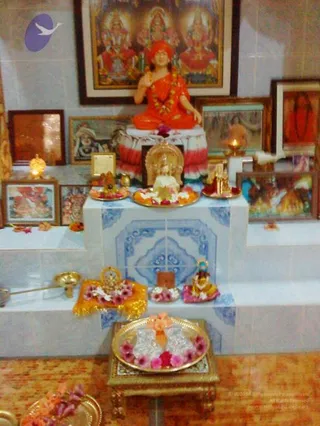
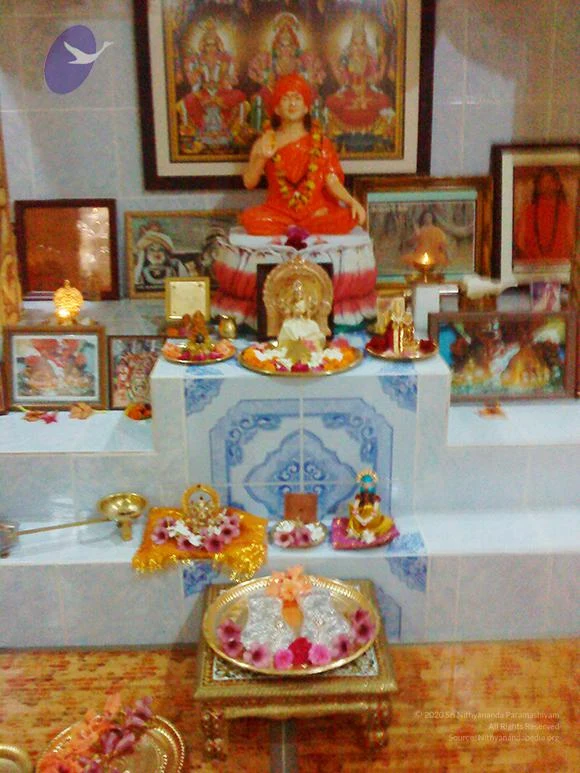
Photograph of an indoor shrine alcove tiled in pale blue and white. Central seated figure in orange-saffron robes with a red-orange head covering and a flower garland sits on a white-and-red cushioned seat; it appears to be a statue or murti rather than a living person. Above, a framed print shows three goddess figures in red and gold. Surrounding walls hold framed devotional pictures and a small lit oil lamp. Brass plates of flower petals and offerings sit on the shrine ledges, a brass tray of flowers and rose petals rests in the foreground, and a brass pouring vessel stands at left. No people are visible.A group of devotees sits cross-legged on a wooden floor in a bright white hall, many wearing white clothes, with palms pressed together in namaskar. A woman in front wears a blue top and white garment and sits with hands joined. Children in colourful clothes sit among the adults. At the far left, a standing man in white clothing faces the group. A small wall display and framed picture hang on the back wall, with an air conditioner above. The setting suggests a satsang or Ganesha Chaturthi gathering.Interior shrine room with a raised white and blue altar platform holding a seated deity murti dressed in orange cloth, with offerings, small brass lamps and framed pictures of deities on the walls. A glass-fronted cabinet and an orange-draped table with a framed photo and books stand at right. No people are visible in the room. Teal and orange tones dominate the decor.
07

PADA-POOJA

4 dated photos in previewSource gallery
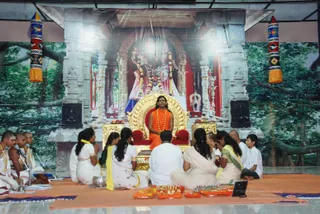
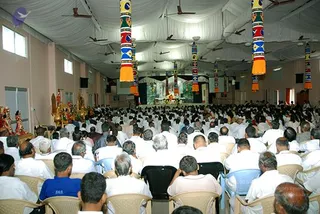
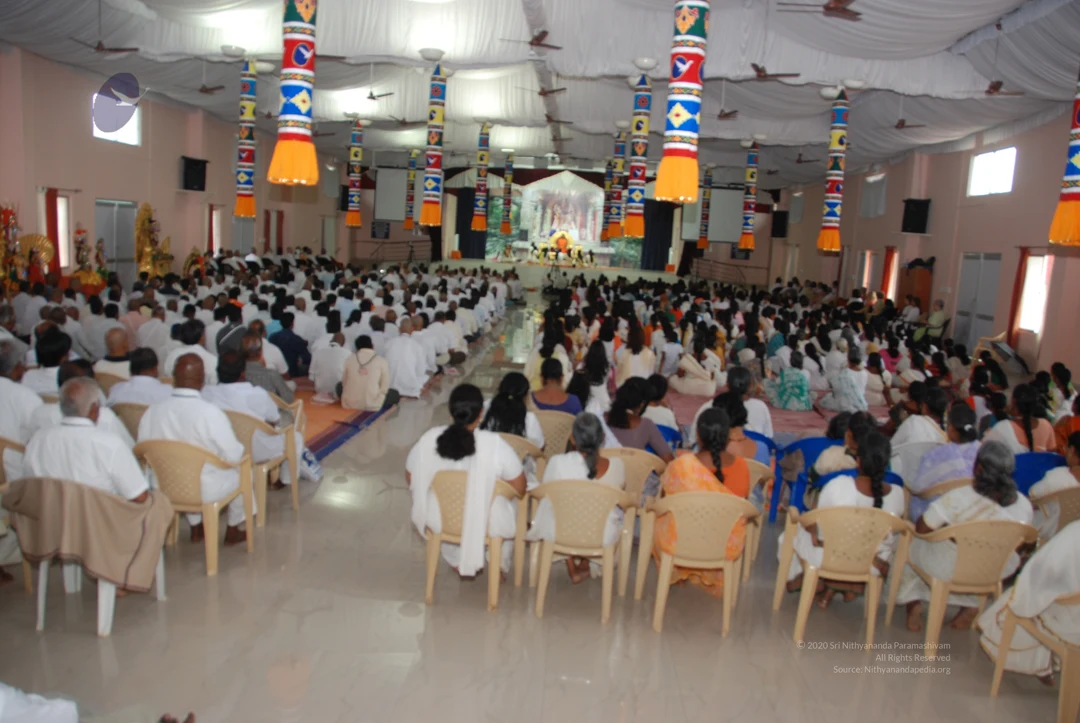
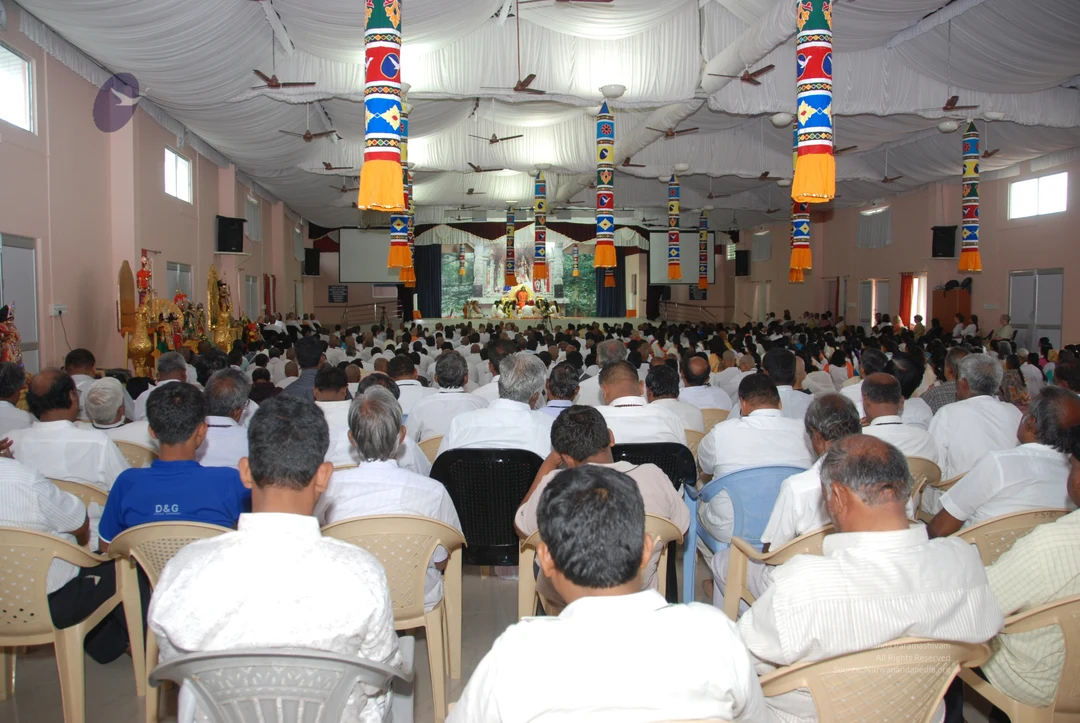
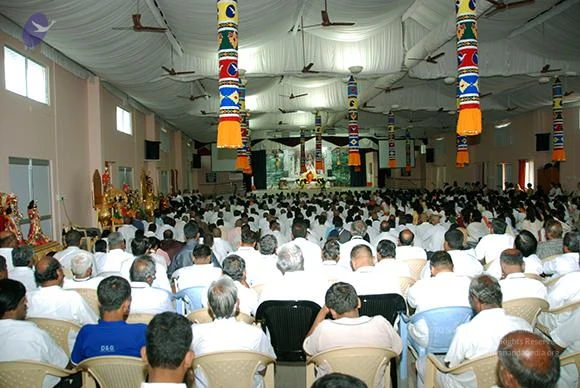
A large hall packed with seated devotees in white shirts and dhotis, facing a distant stage. Many attendees sit on white plastic chairs in rows, some in blue or grey shirts. Tall decorative pillars wrapped in red, yellow, blue and white fabric with hanging tassels line the room, and white fabric canopies hang overhead beneath ceiling fans. At the far end a stage is lit, with a decorated backdrop and a seated figure, while a golden shrine with deity murti stands at the left edge of the frame. The scene is a satsang or discourse gathering with a dense crowd.
08

NITHYA-SATSANG

2 dated photos in previewSource gallery
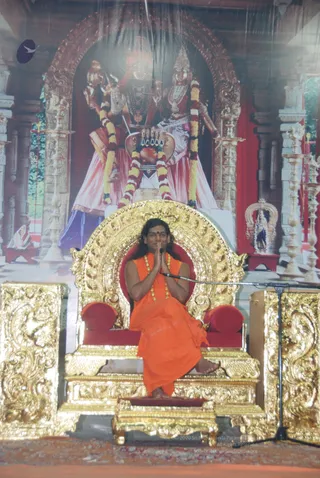
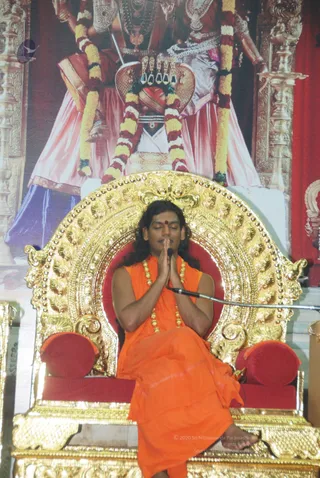
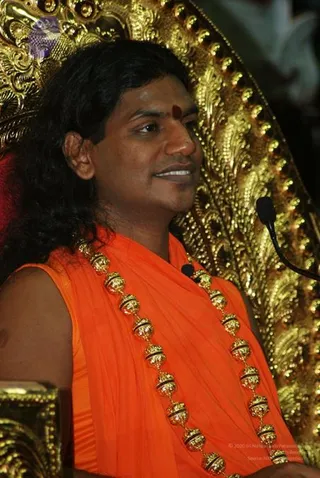
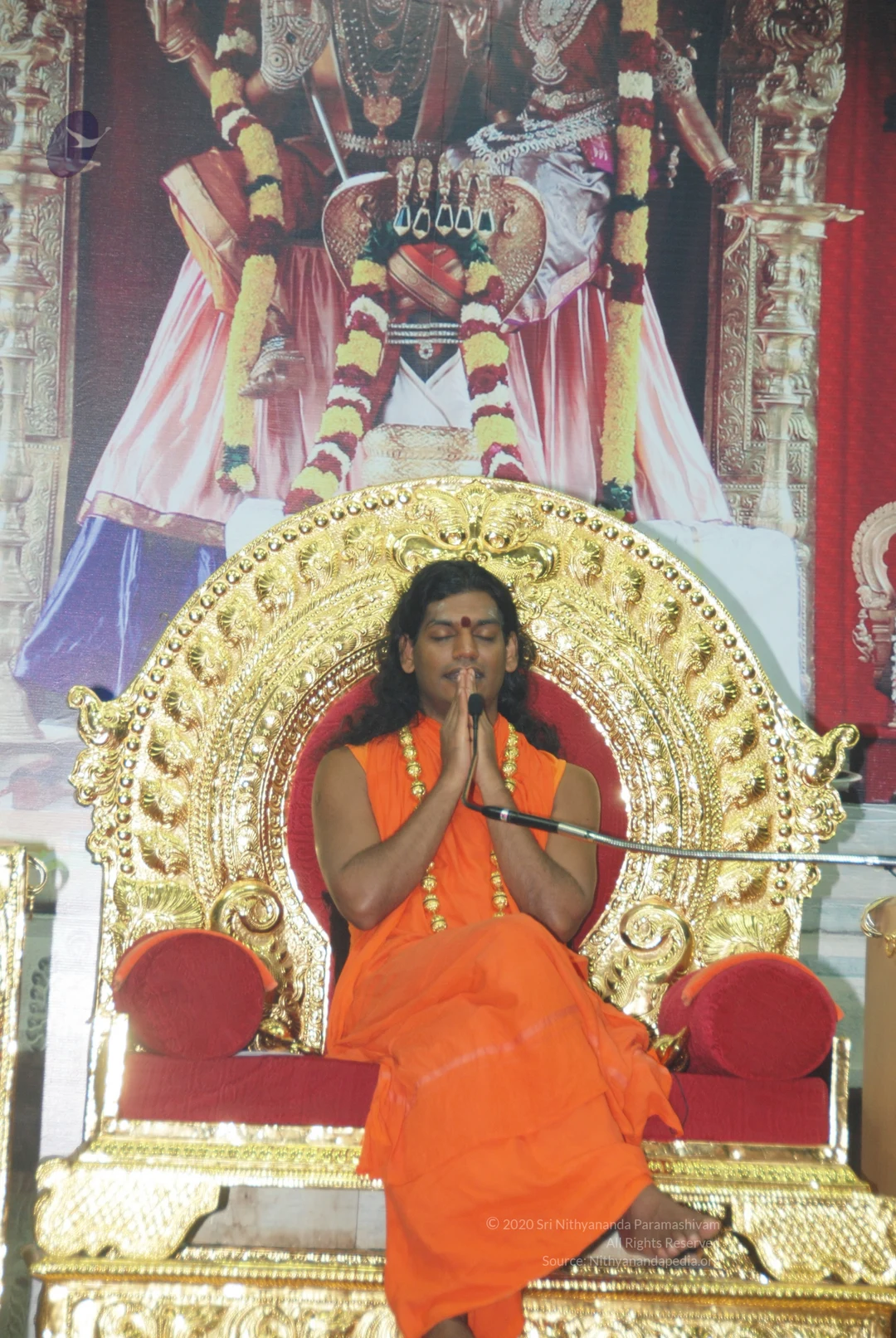
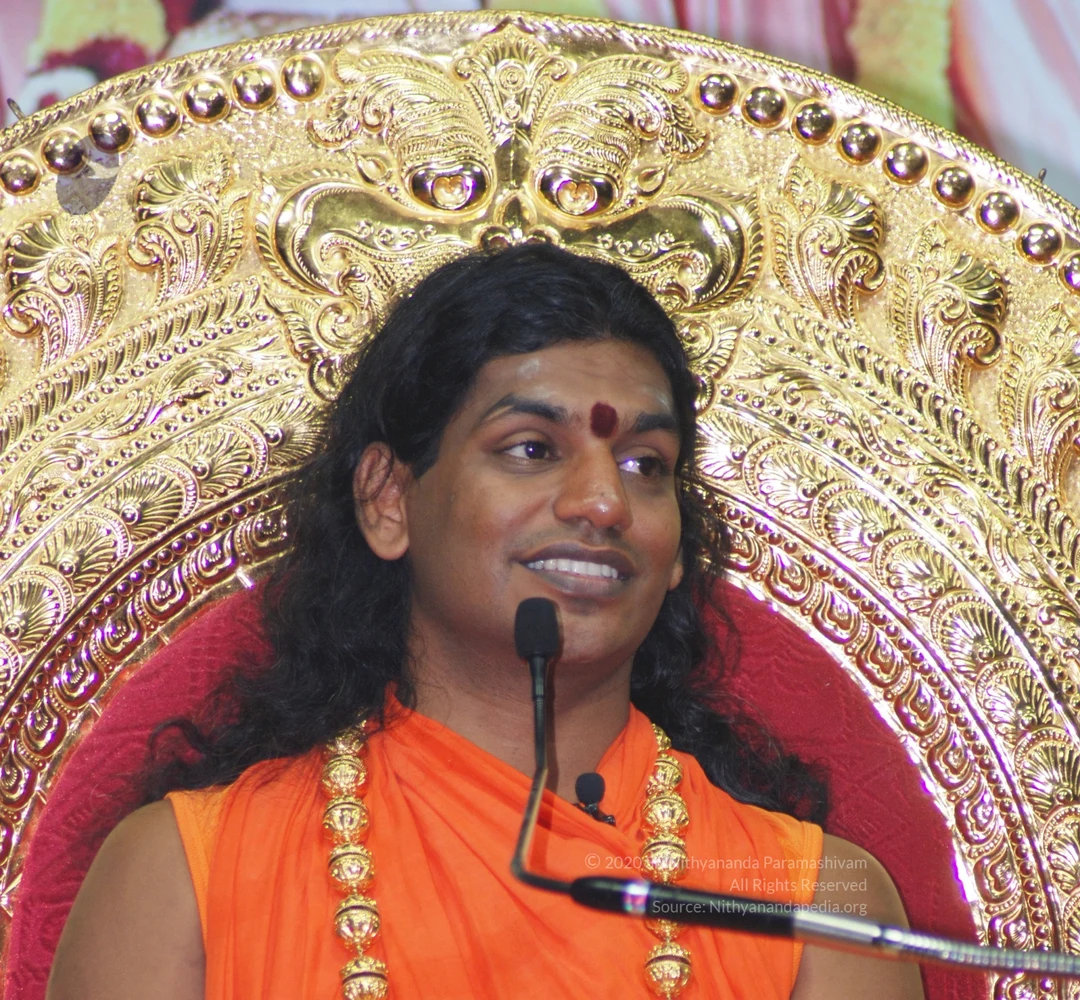
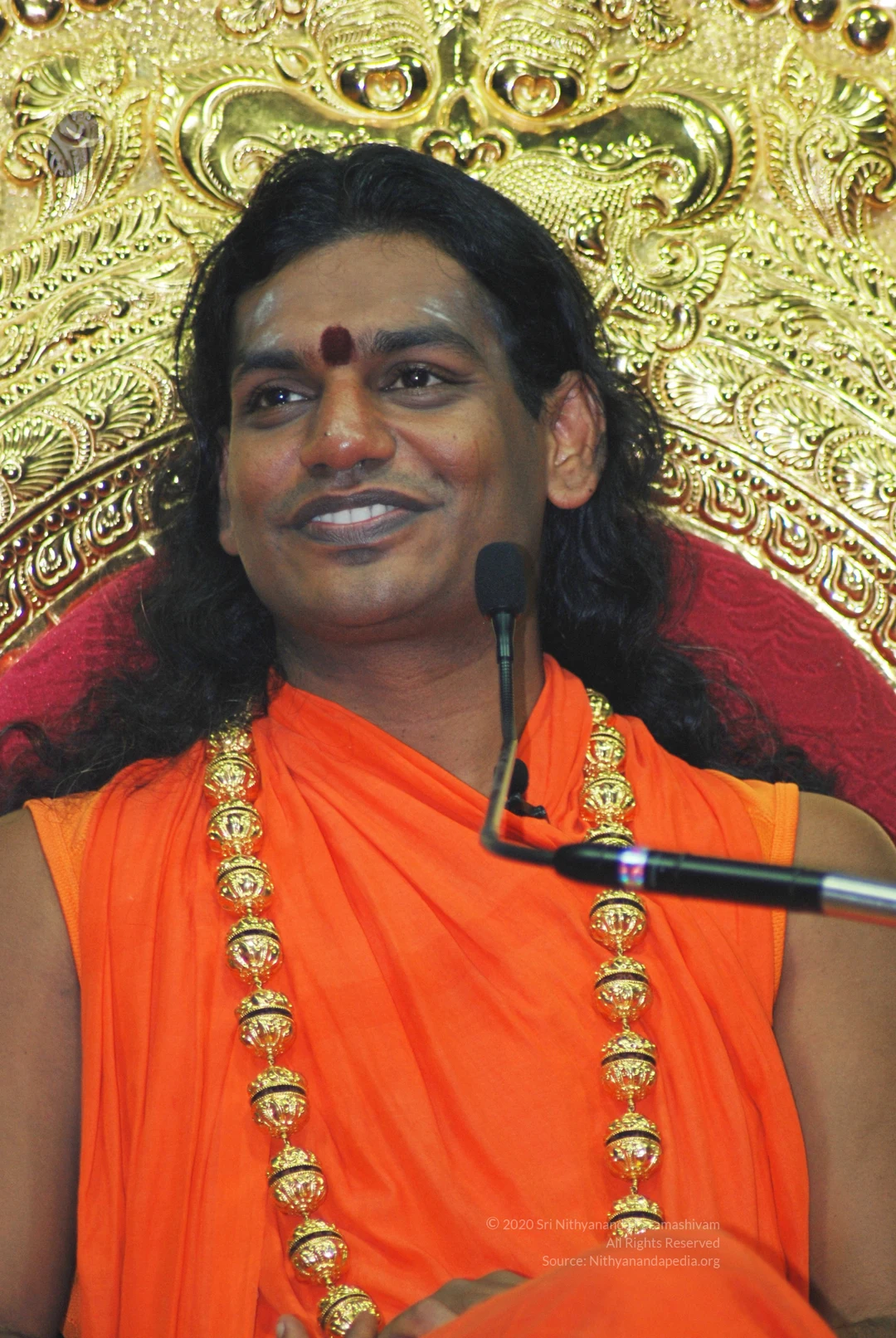
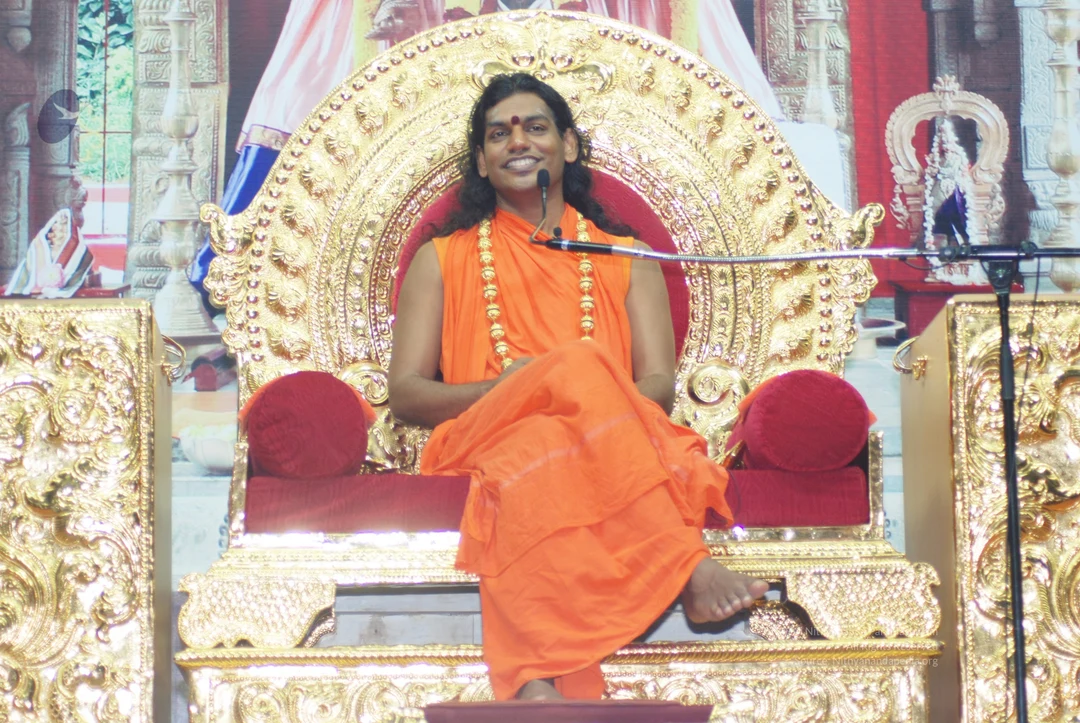
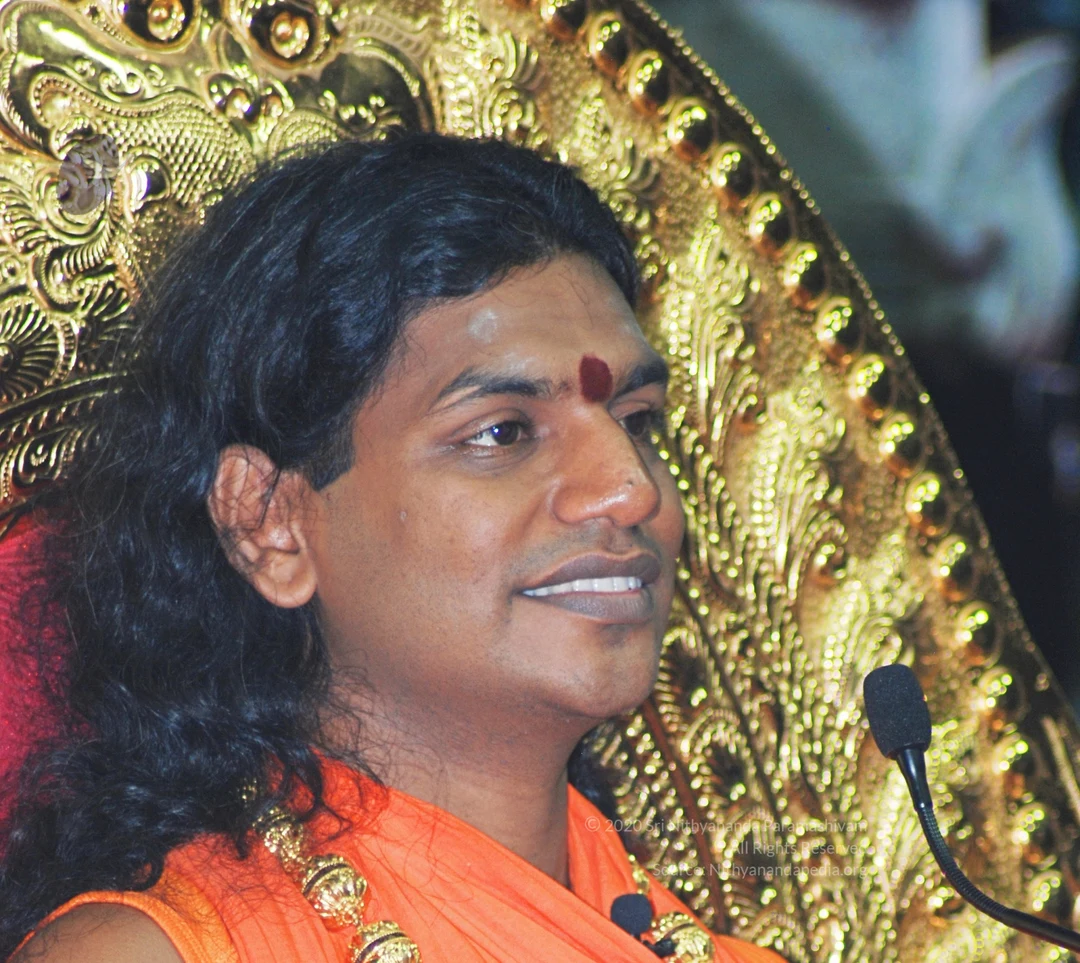
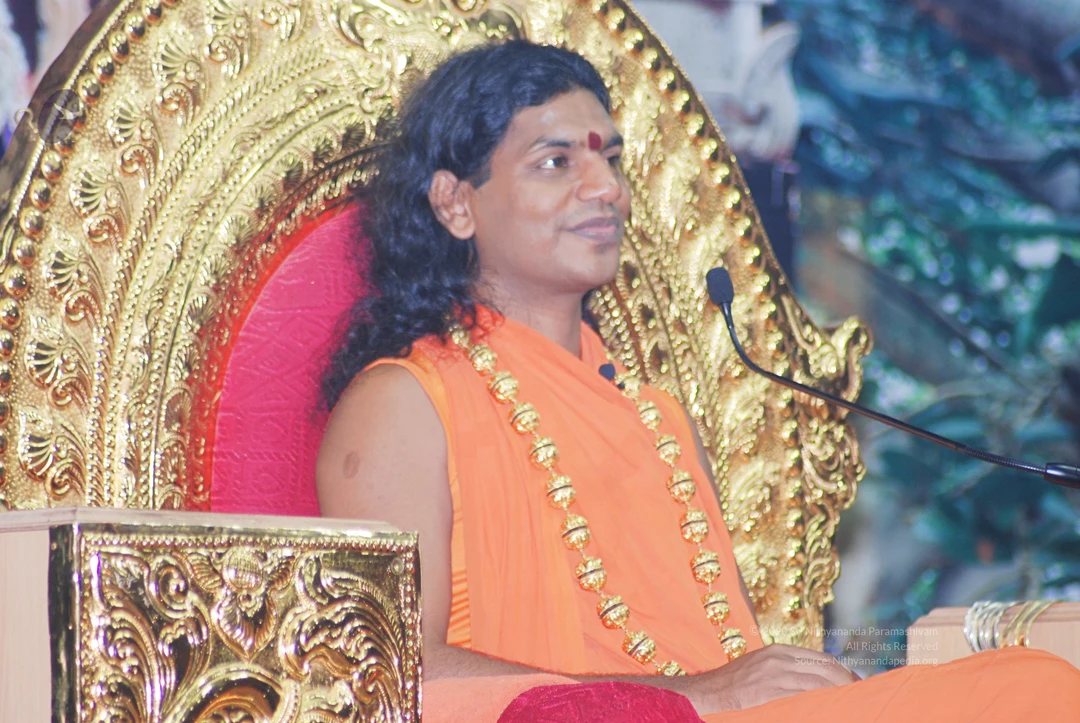
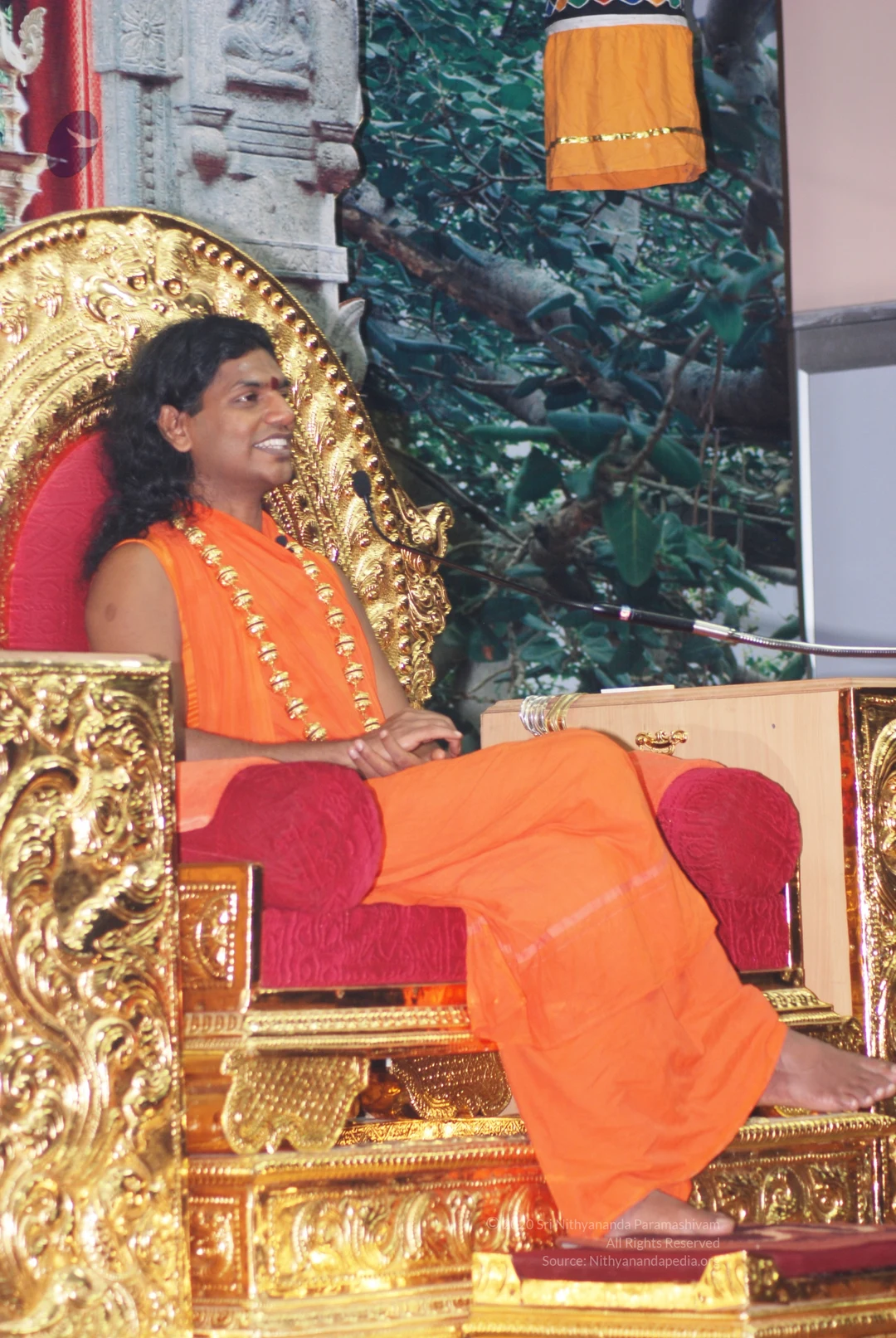
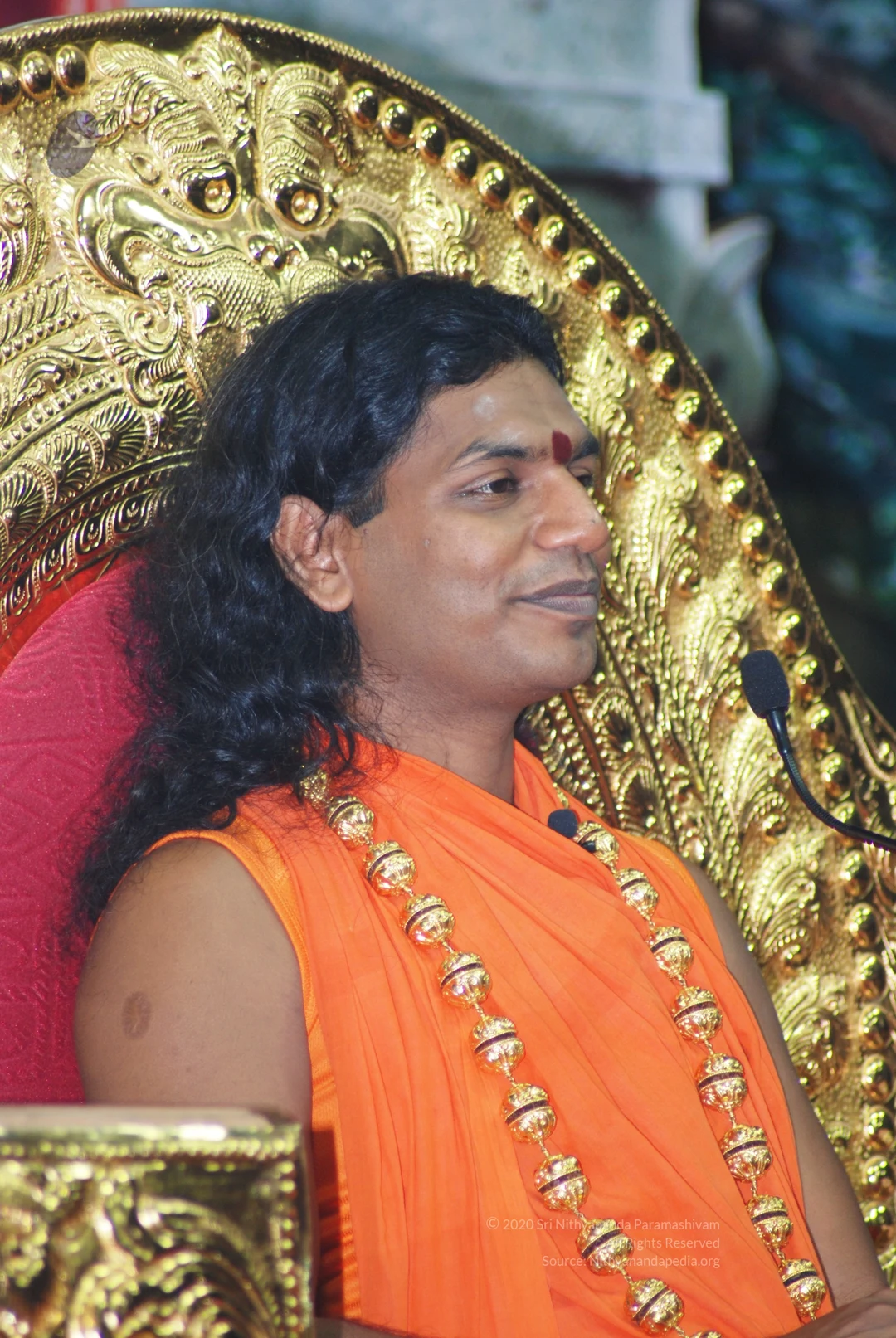
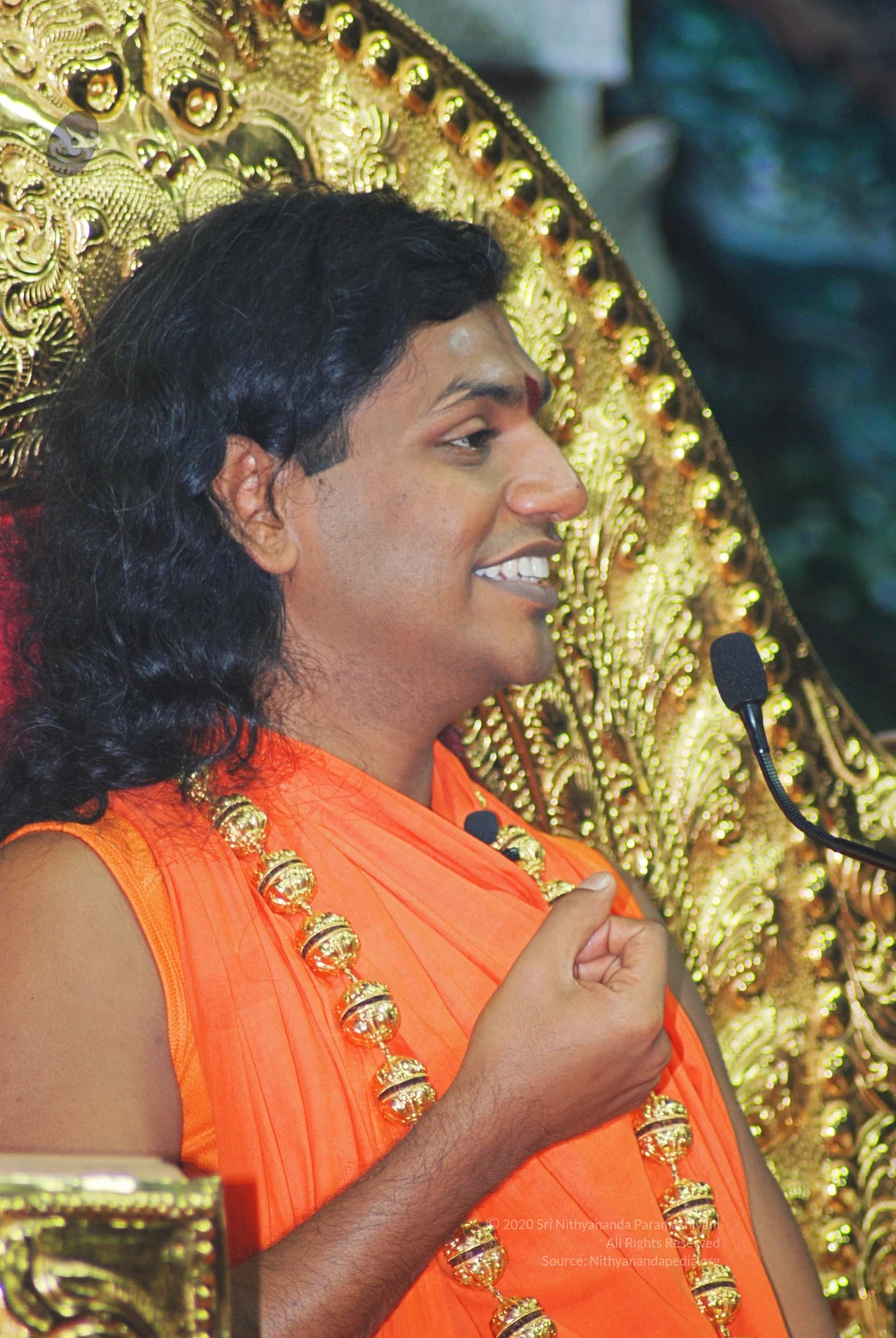
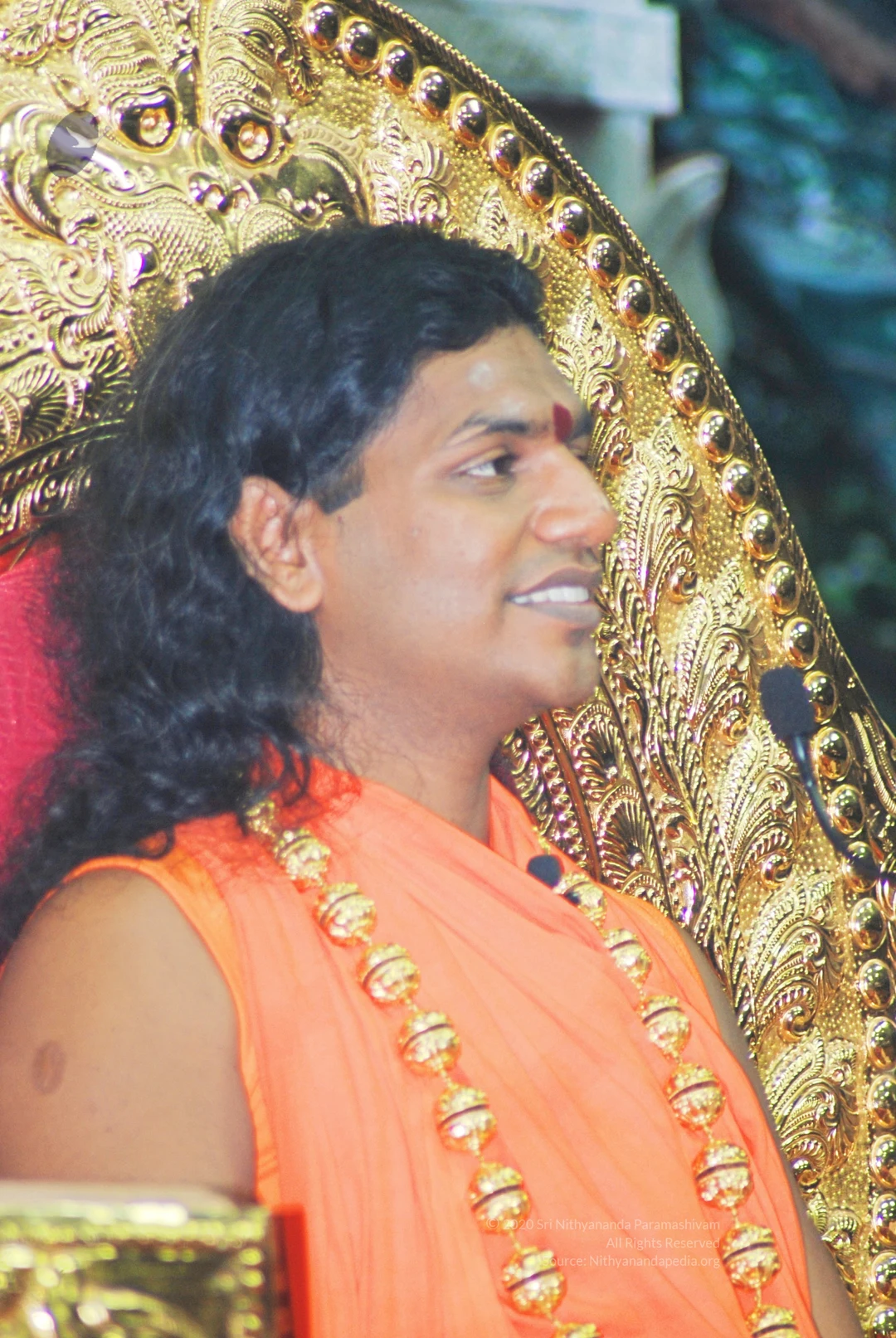
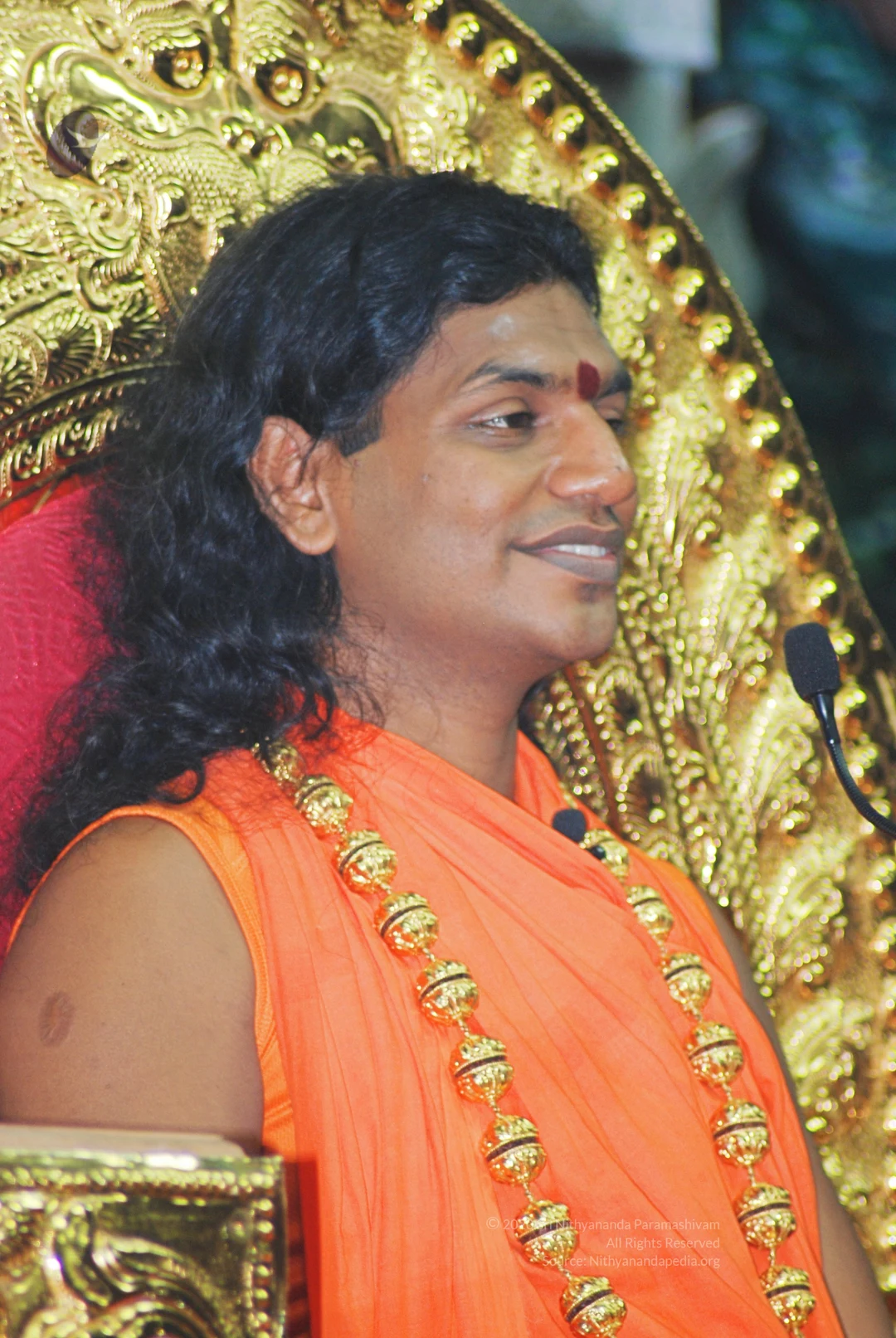
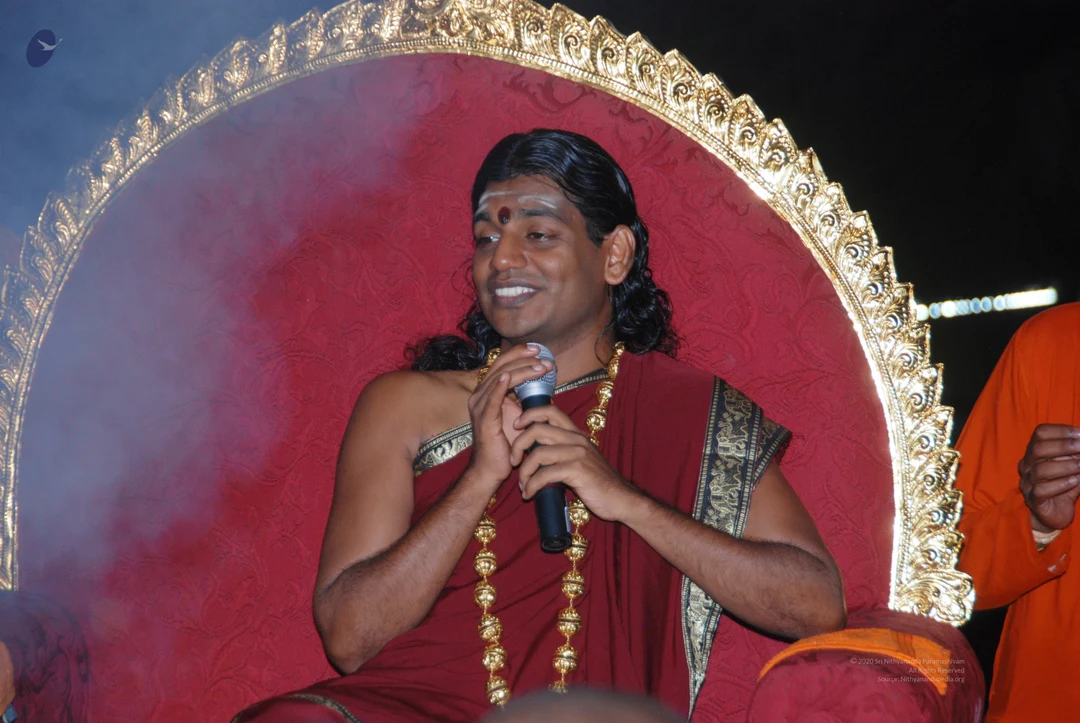
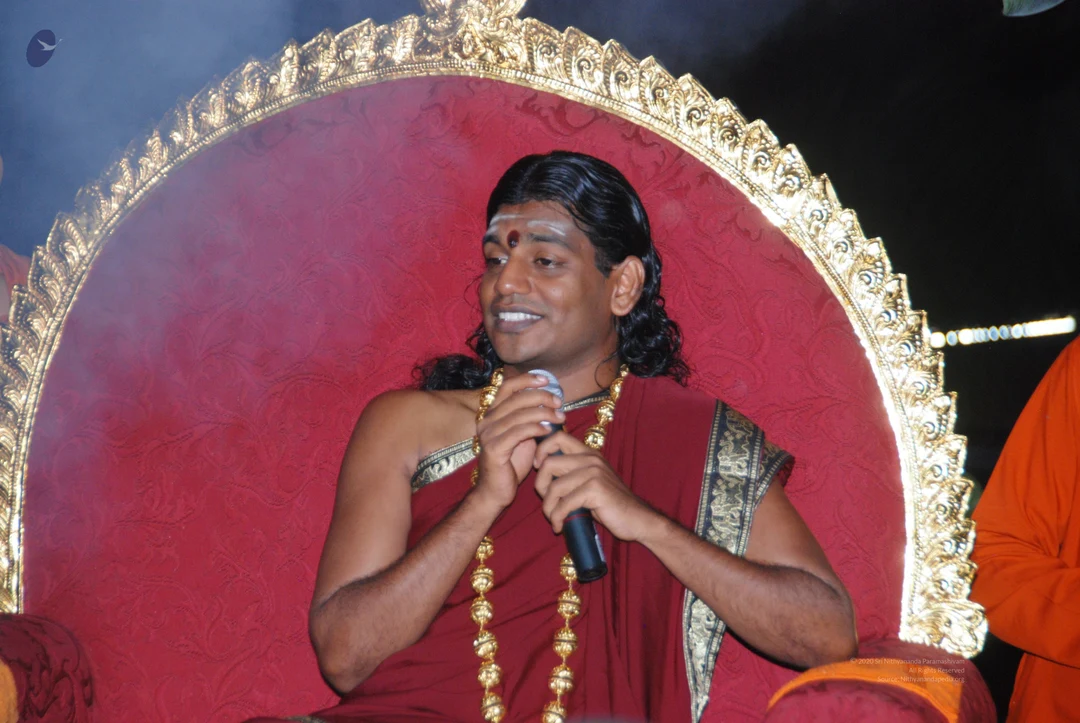
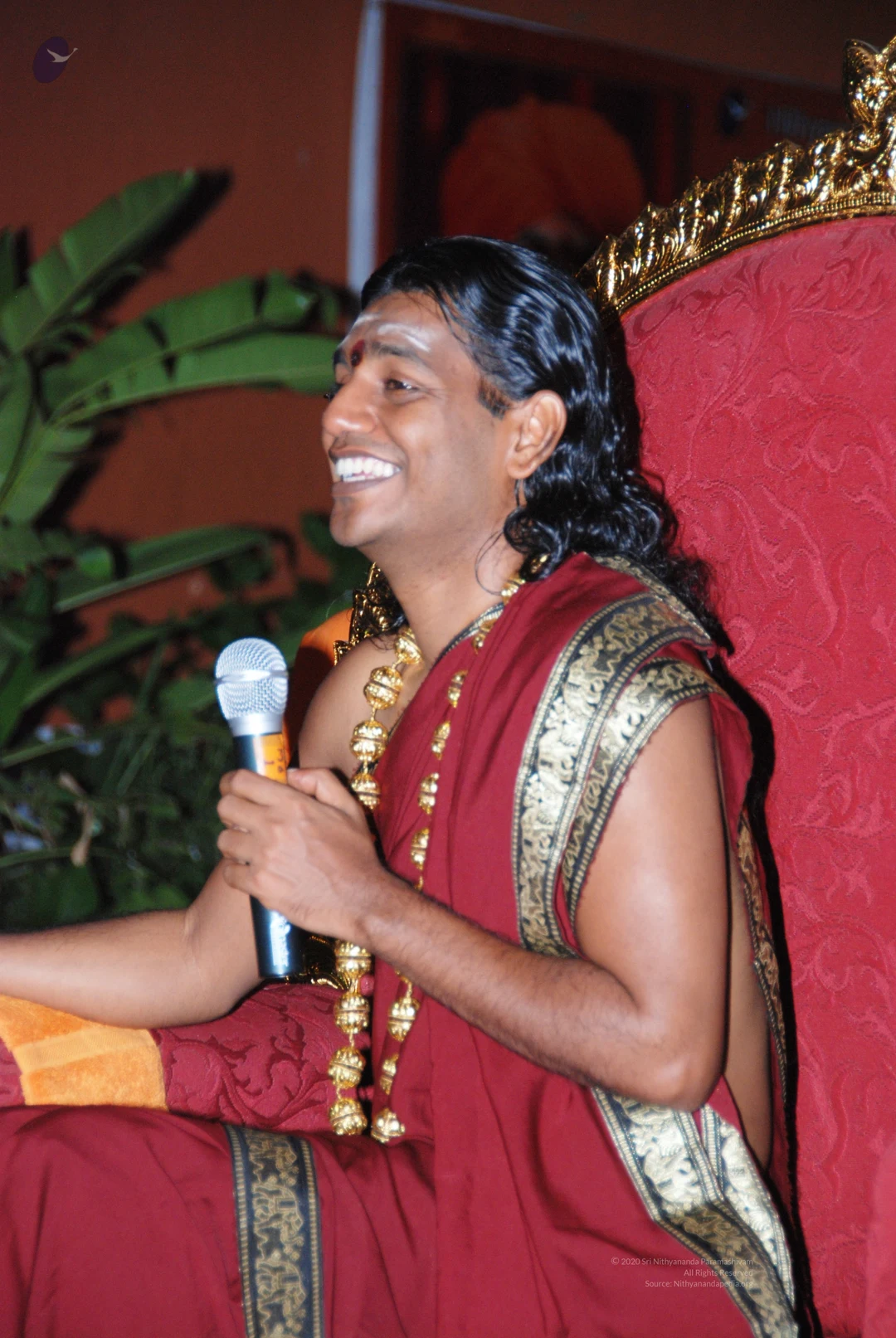
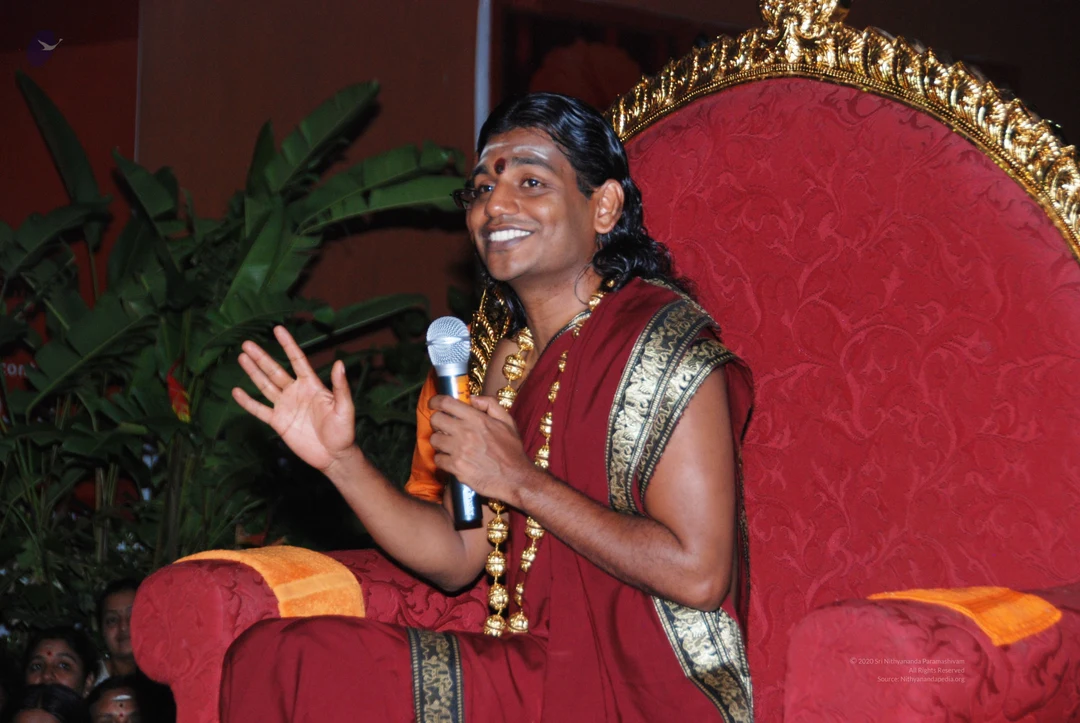
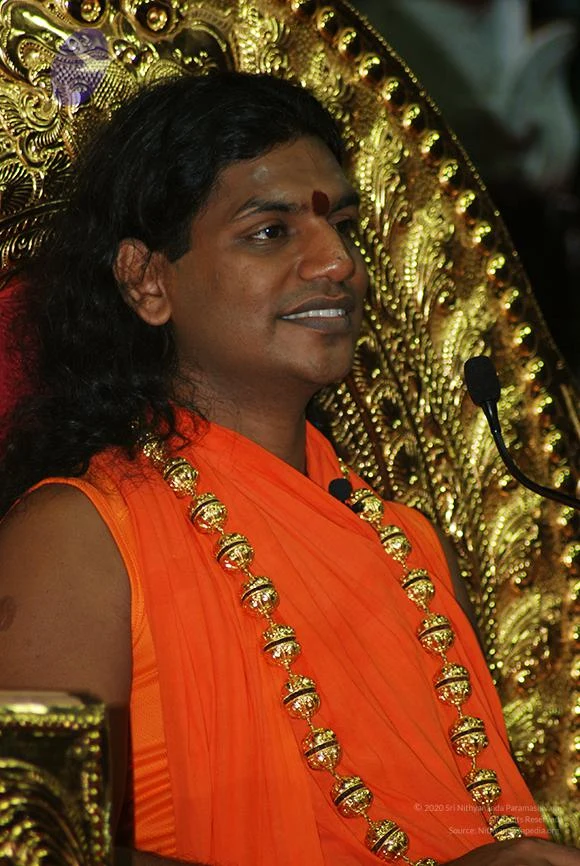
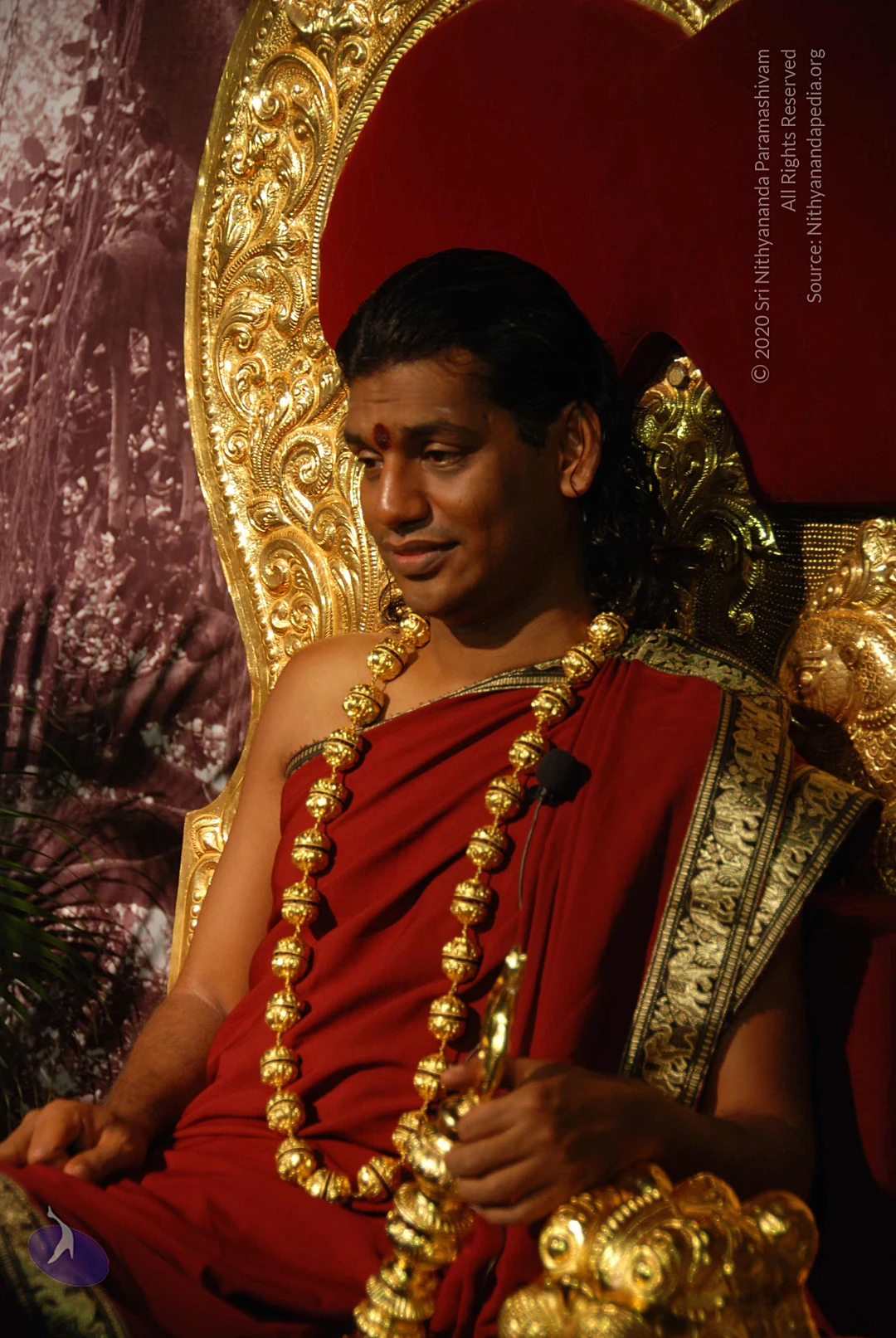
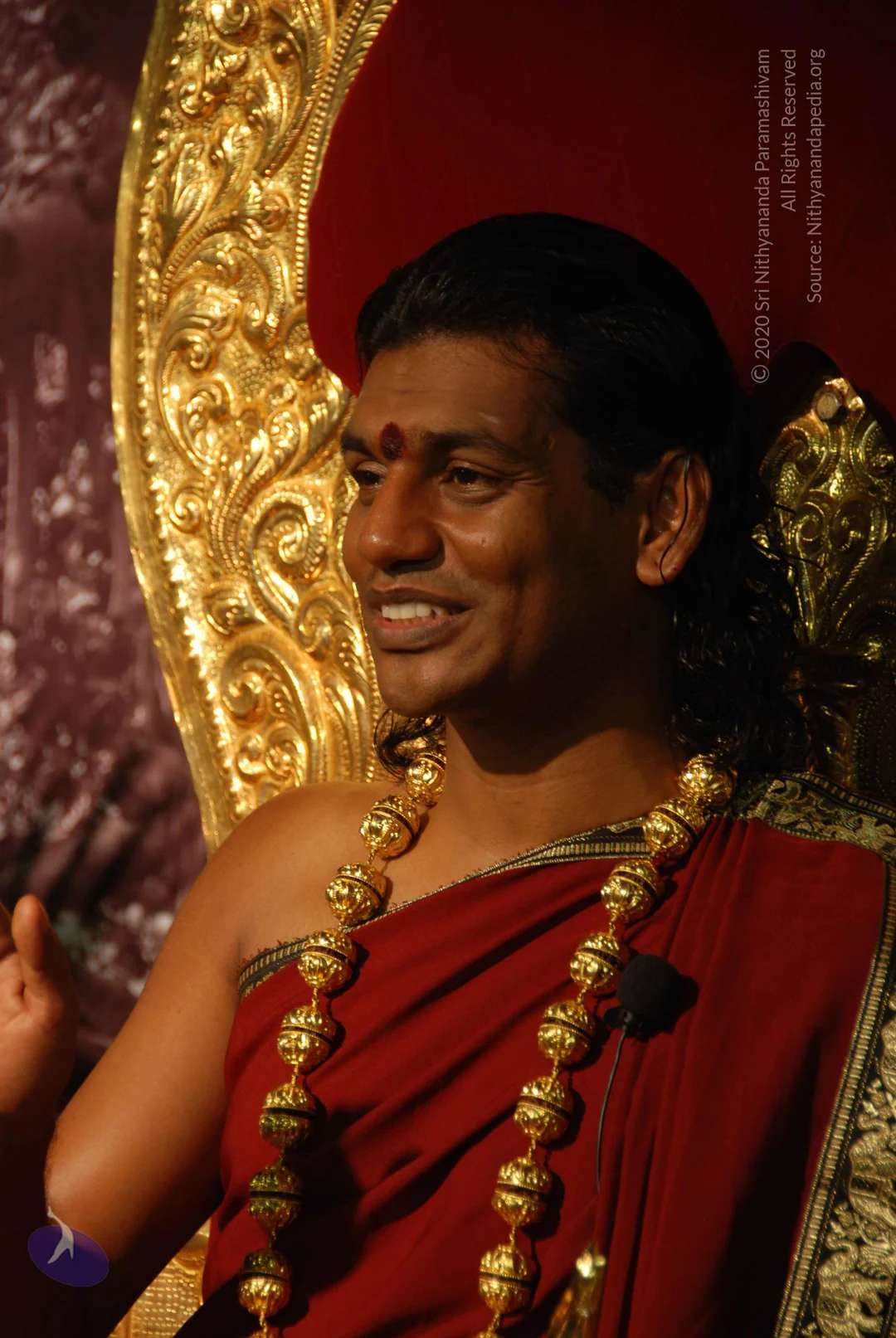
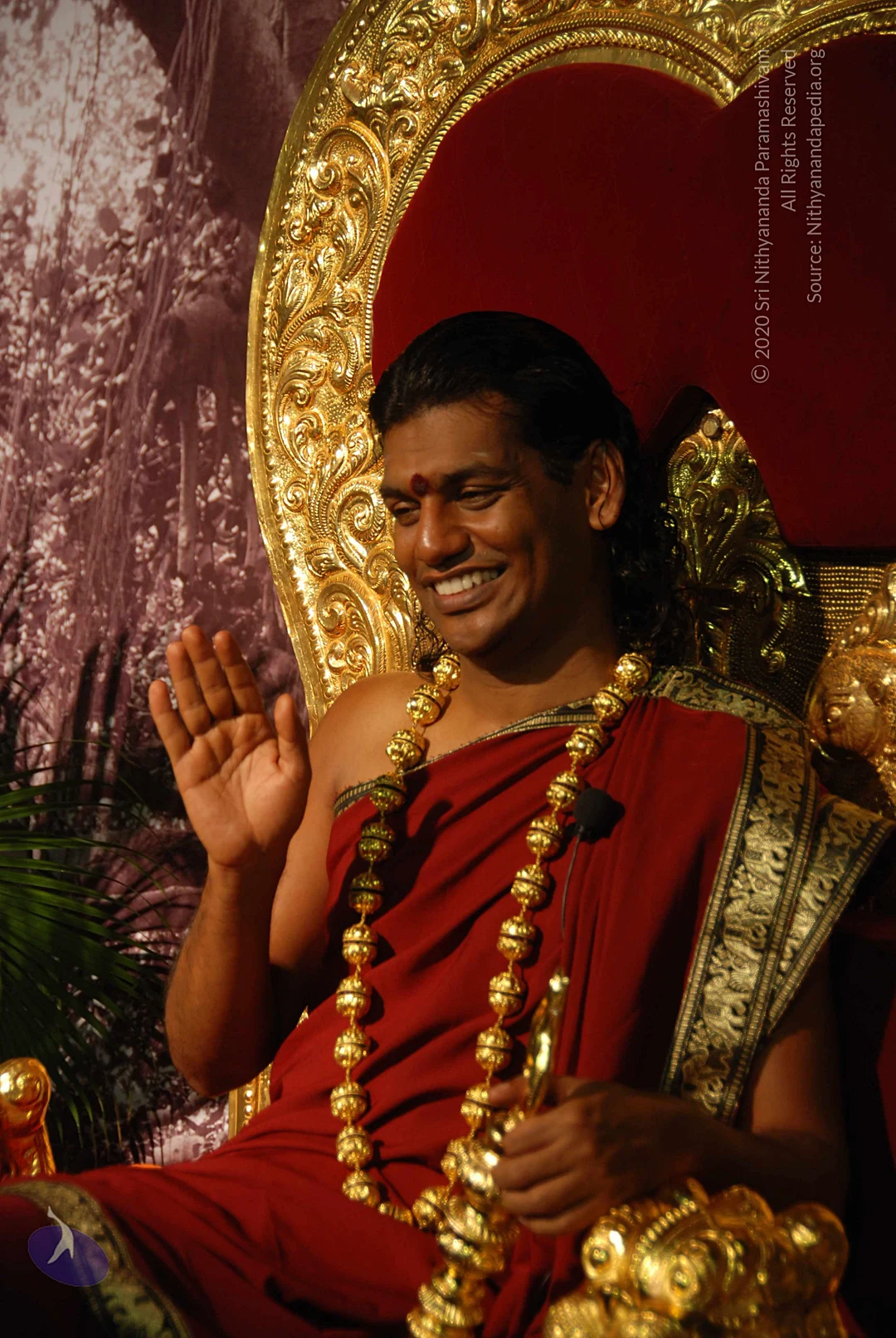
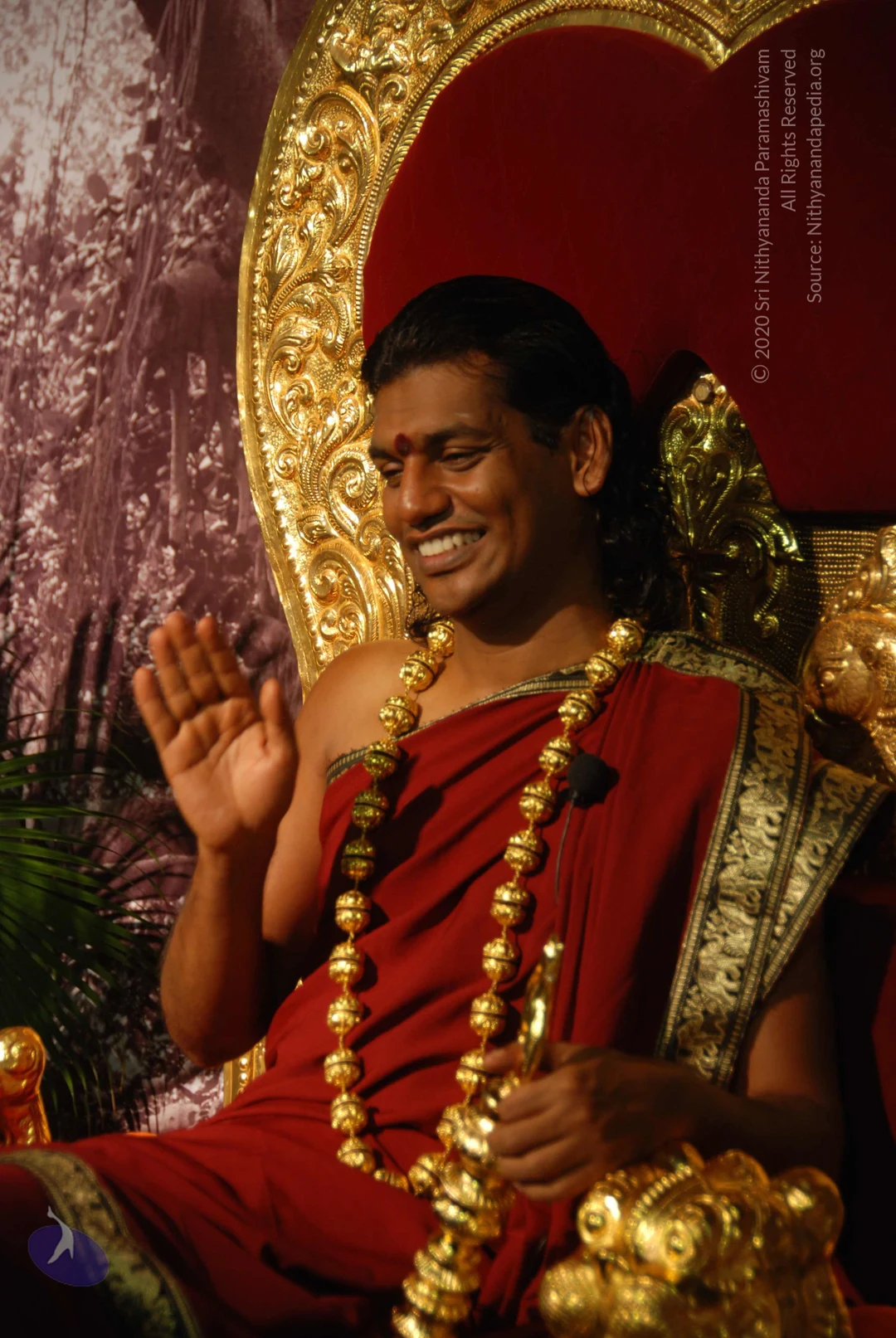
A smiling man with long dark hair and a red bindi sits on an ornate gold throne with a red cushioned seat, speaking into a microphone on a bent stand. He wears an orange sleeveless robe and a long ceremonial gold bead necklace, with his hands resting folded in his lap. Appearance-based label: a person, seated in a discourse setting.A man with long, swept-back black hair sits on an ornate gold throne with carved floral patterns, speaking into a microphone on a stand at right. He wears a sleeveless saffron-orange robe draped over one shoulder and a long necklace of gold-toned bead ornaments, with a small red tilak mark on his forehead. The setting suggests a discourse or satsang.
09

GANESHA-CHATURTI-CELEBRATIONS

5 dated photos in previewSource gallery
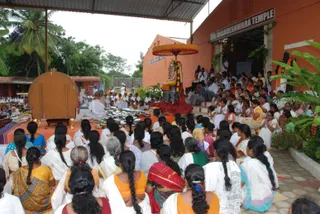
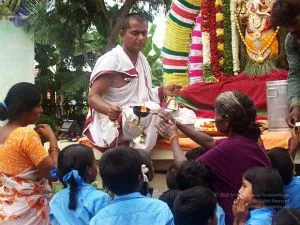
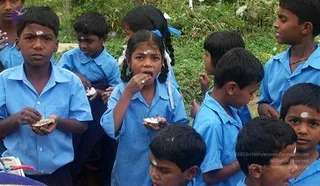
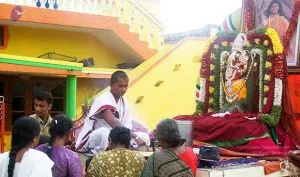
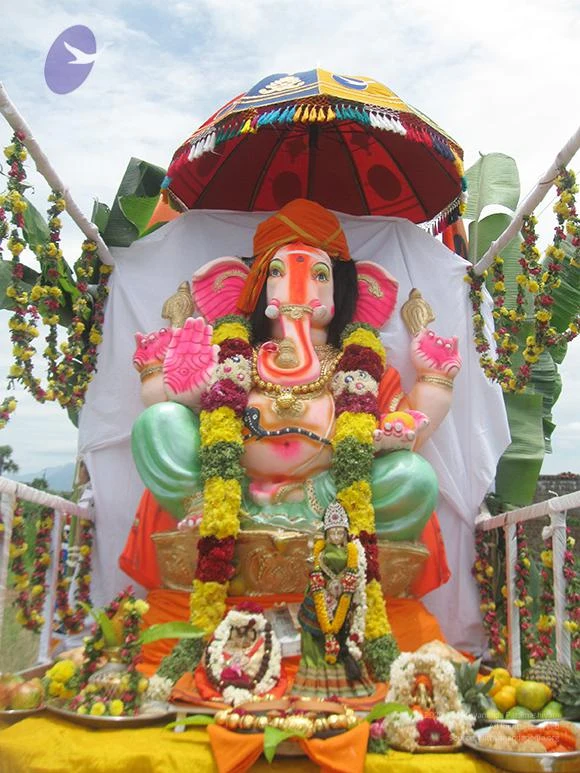
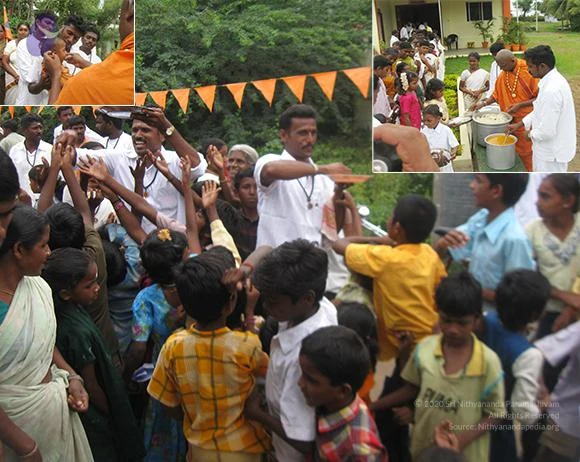
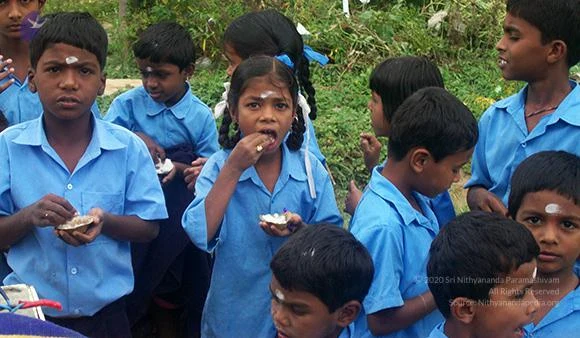
A photograph of a group of young schoolchildren in matching light blue uniform shirts eating food from small paper or leaf plates outdoors among greenery. A girl in the centre with braided hair and a blue ribbon, wearing a small white forehead mark, is chewing and looking toward the camera. Several boys around her, some with white tilak marks on their foreheads, hold food in their hands.Outdoor photograph of a festival scene in front of a yellow building with a balcony. On the right, a decorated Ganesha murti sits on a red-draped platform, garlanded with marigolds and a red-and-white floral arrangement. In front, a man in white dhoti and shawl with a red border sits cross-legged on a mat, facing the murti, with an attendant nearby in a dark shirt. Several seated devotees in saris and a child occupy the foreground, viewed from behind. The scene suggests a Ganesha Chaturthi puja or satsang.
10

thumbs

16 dated photos in previewSource gallery
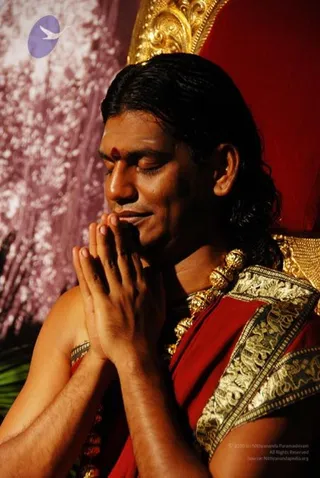
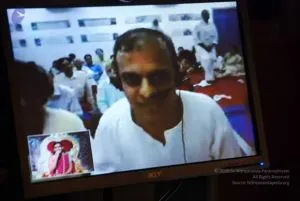
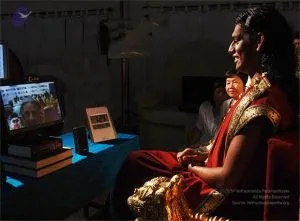
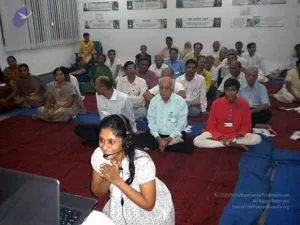
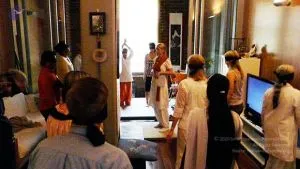
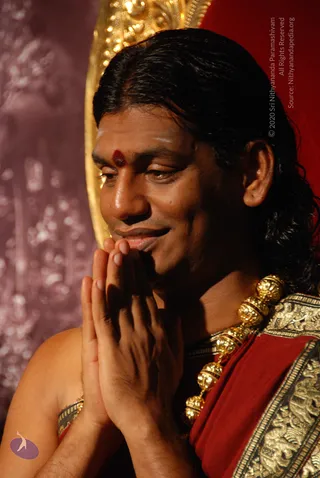
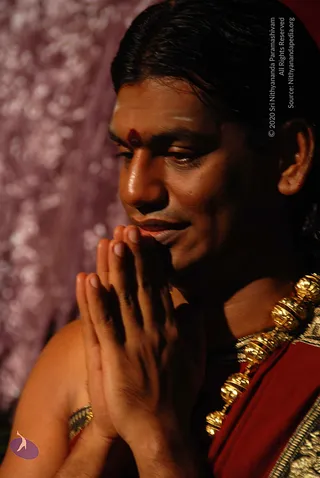
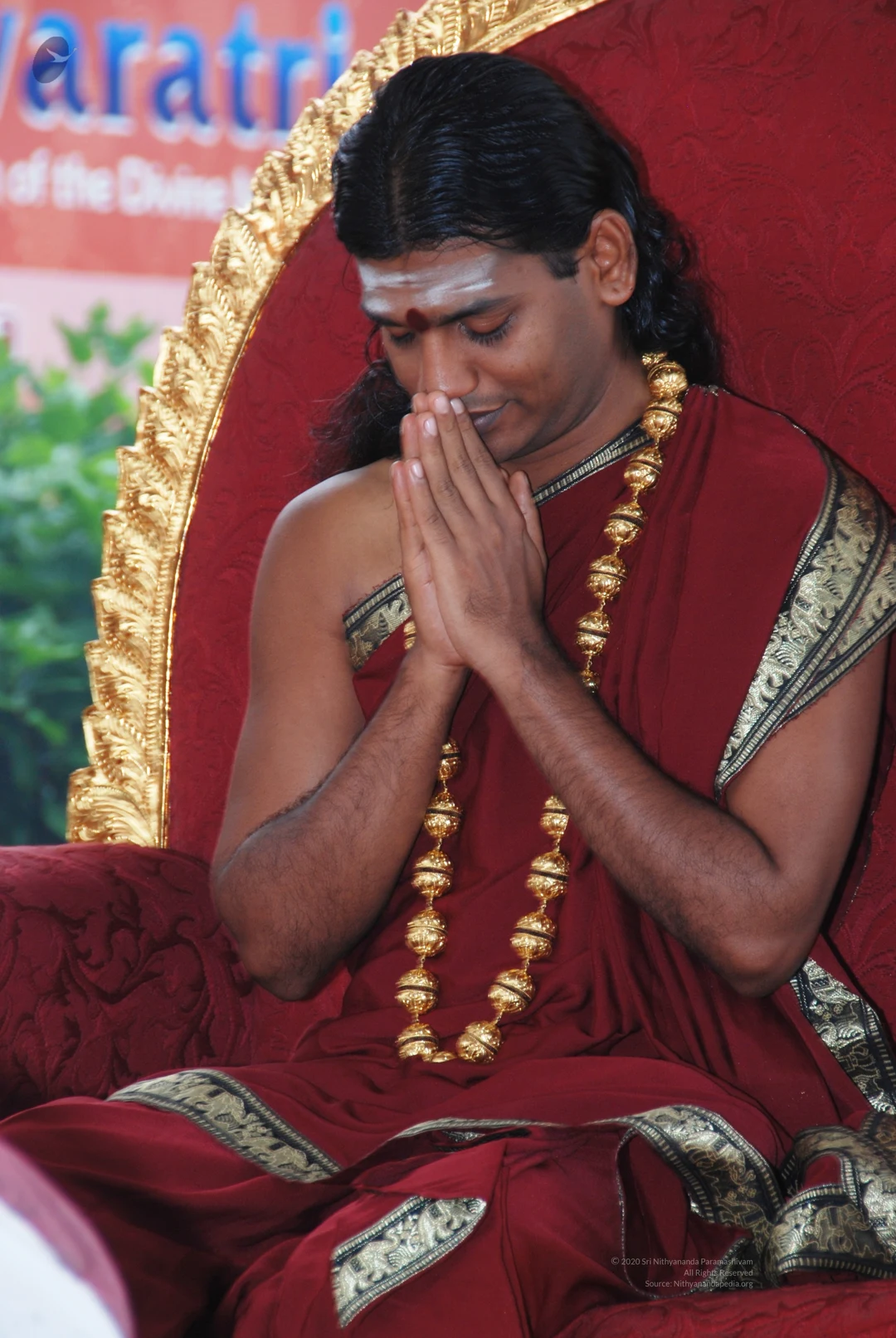
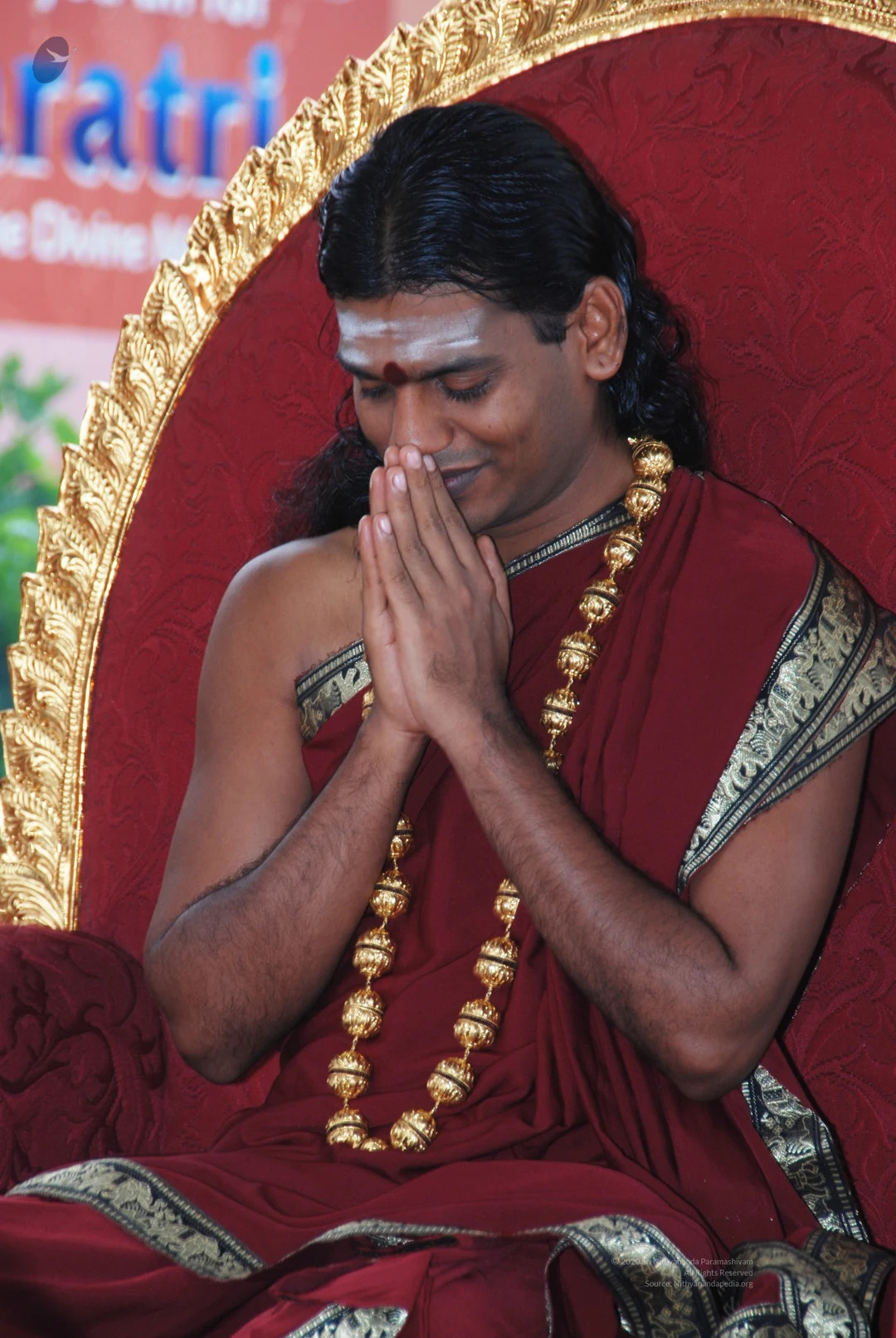
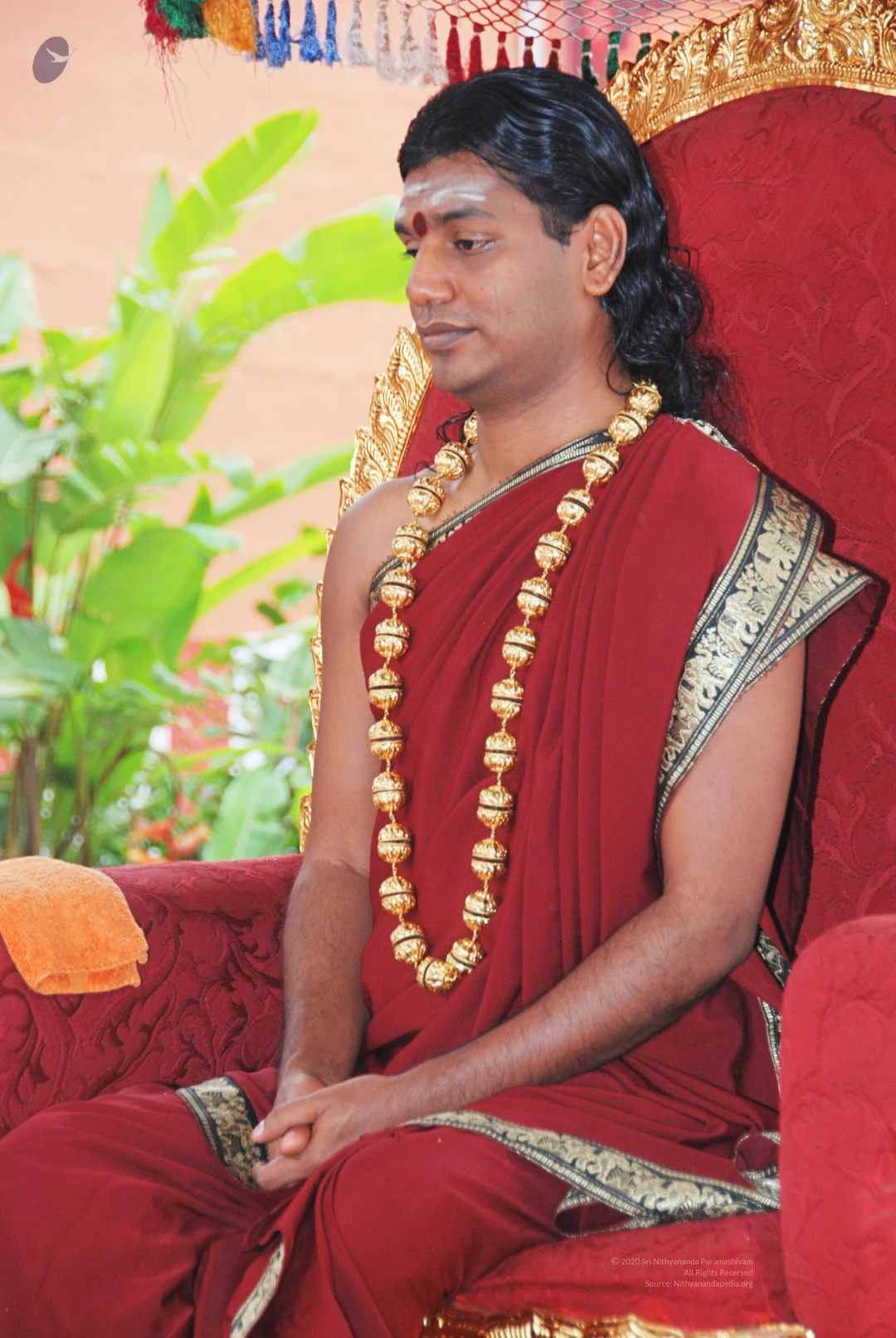
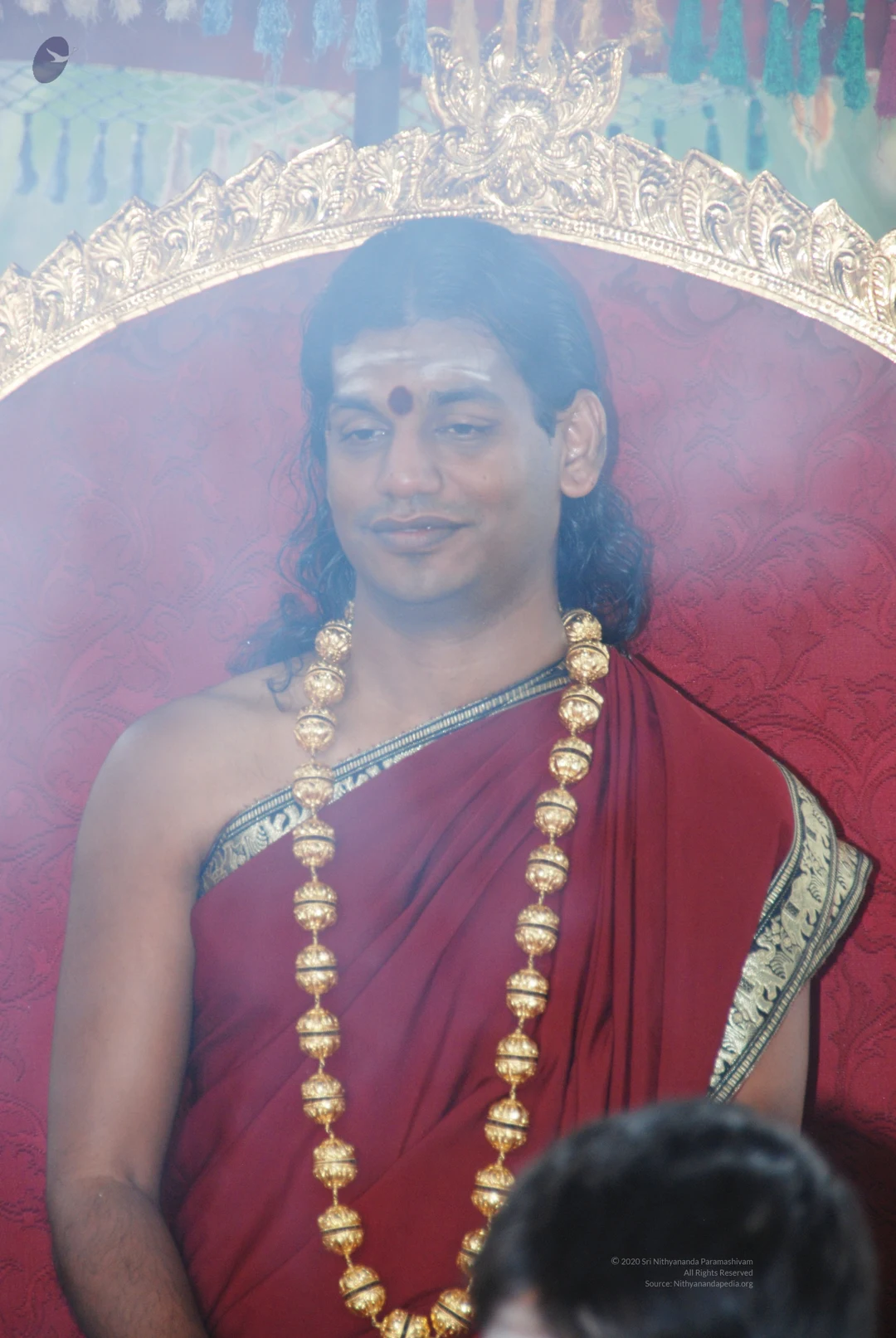
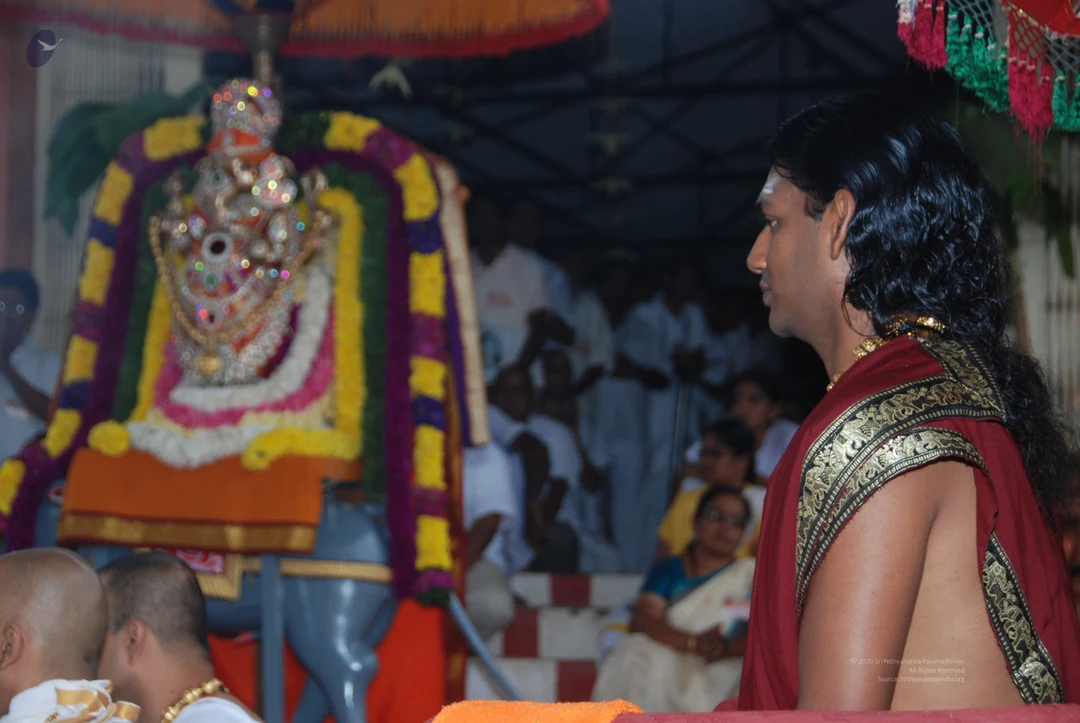
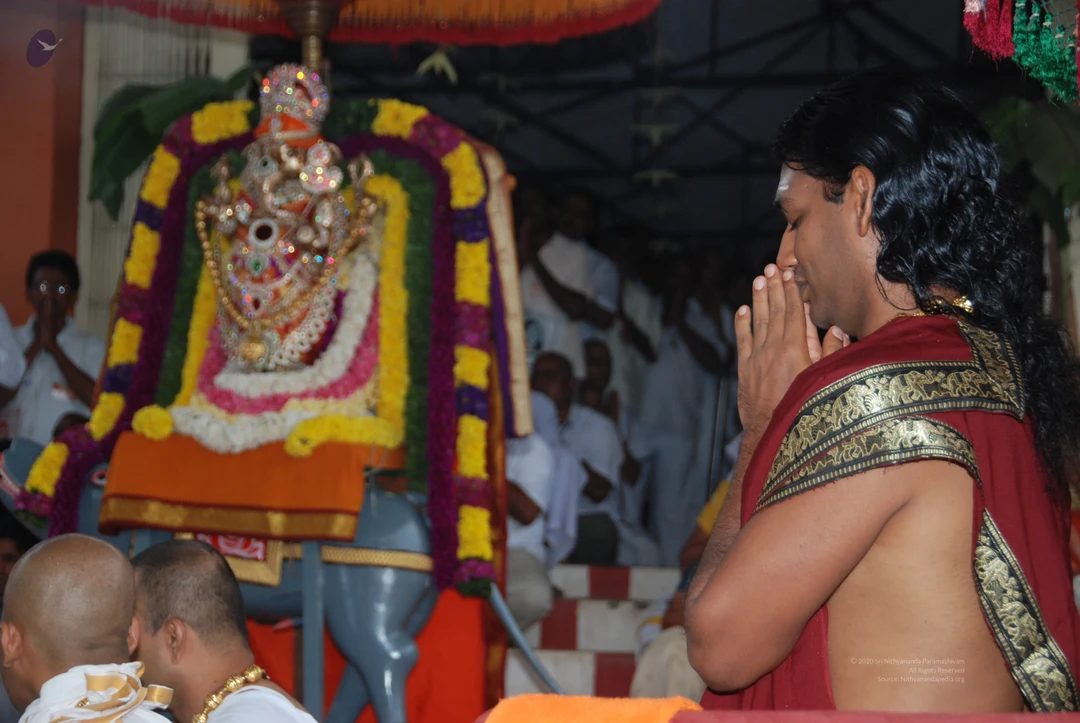
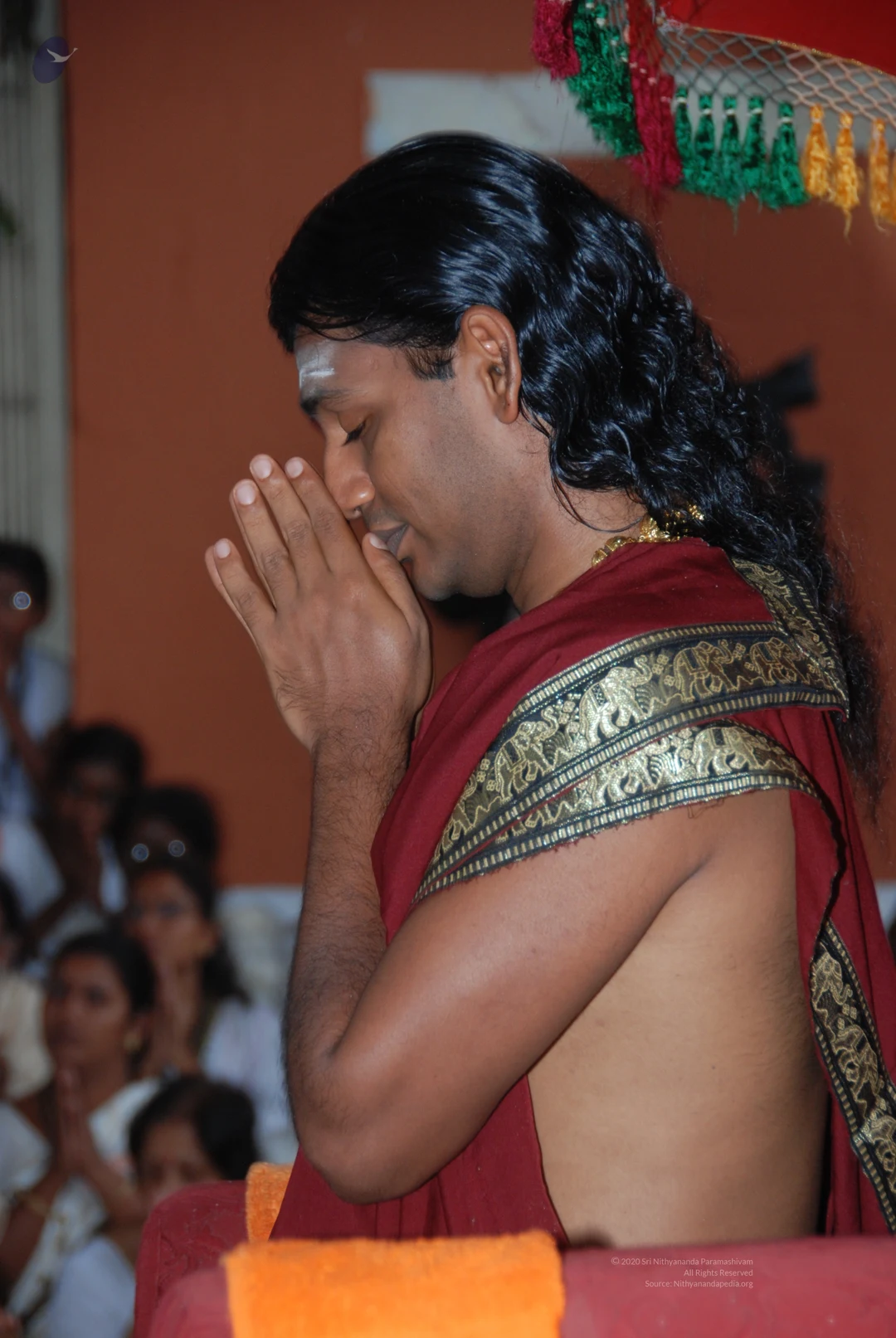
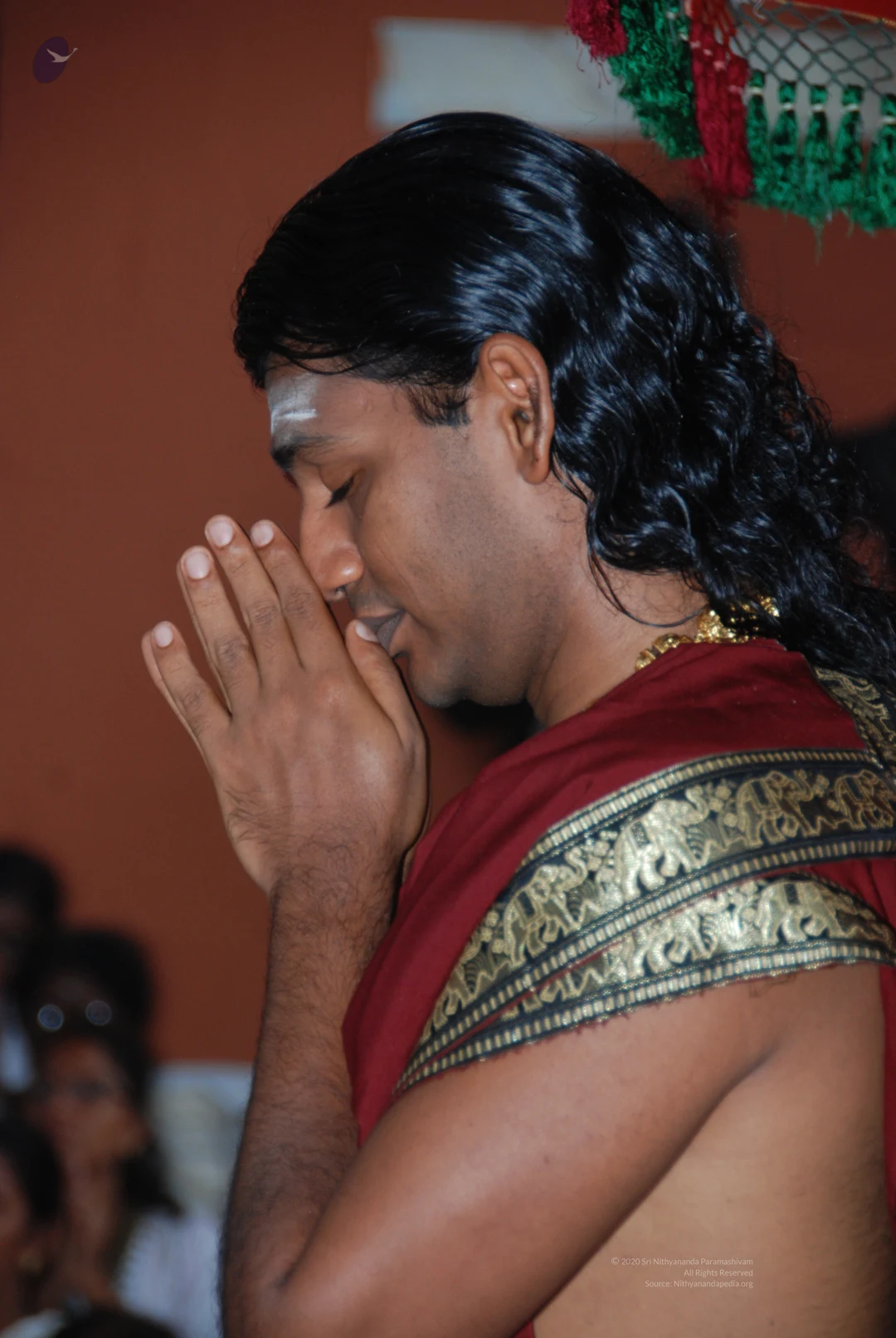
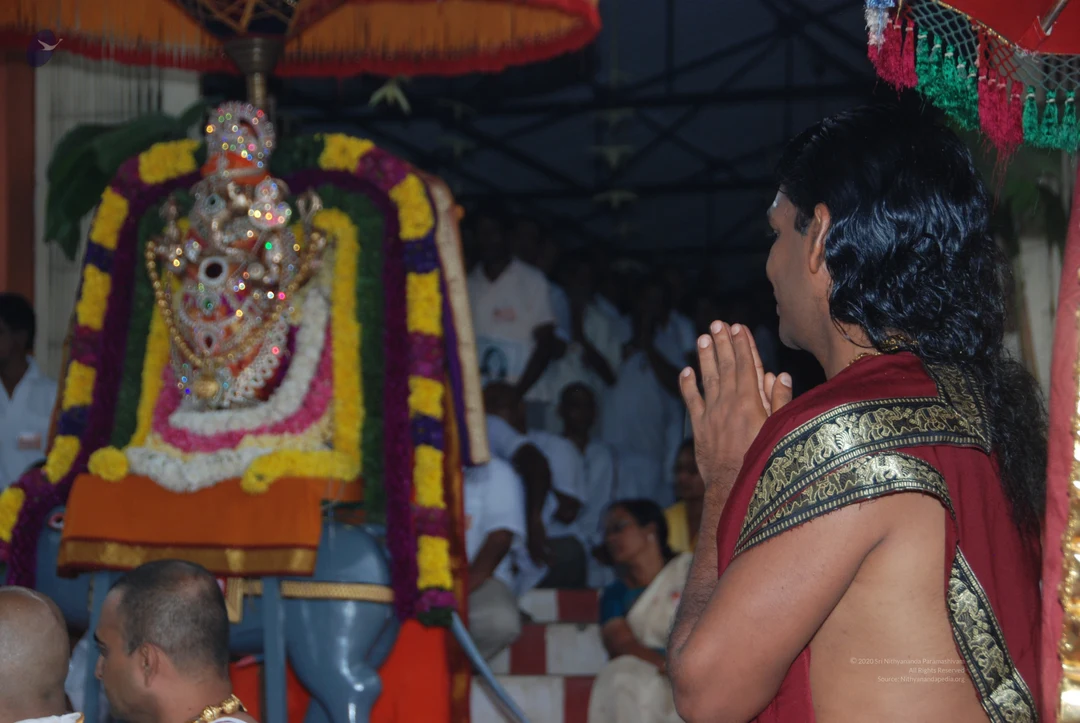
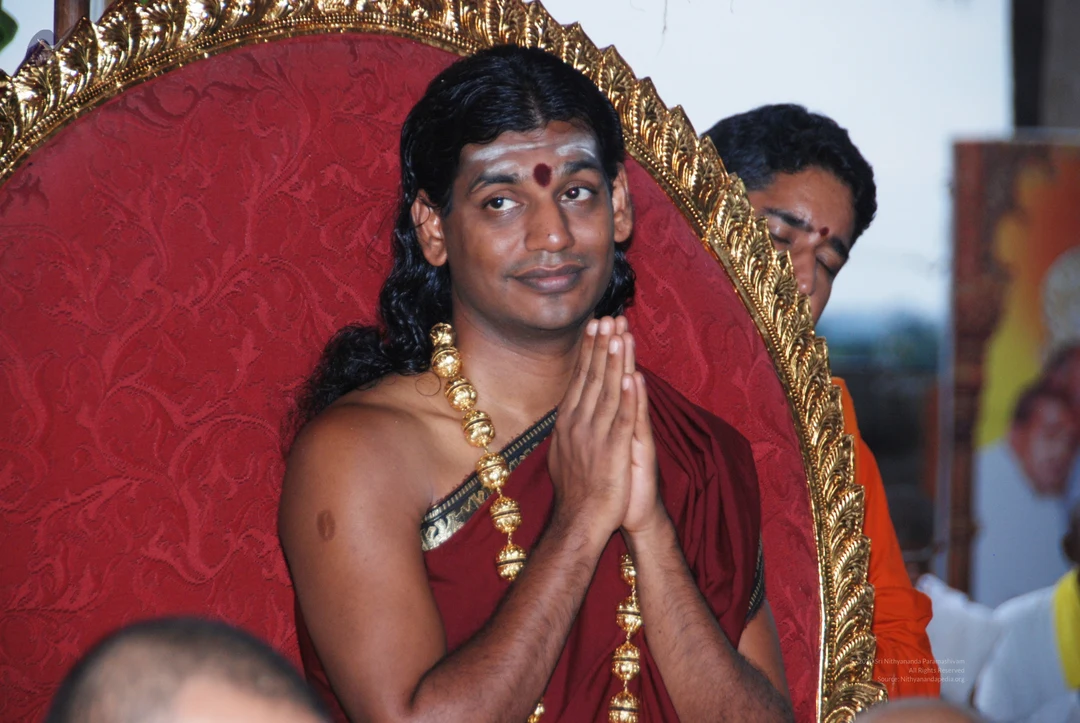
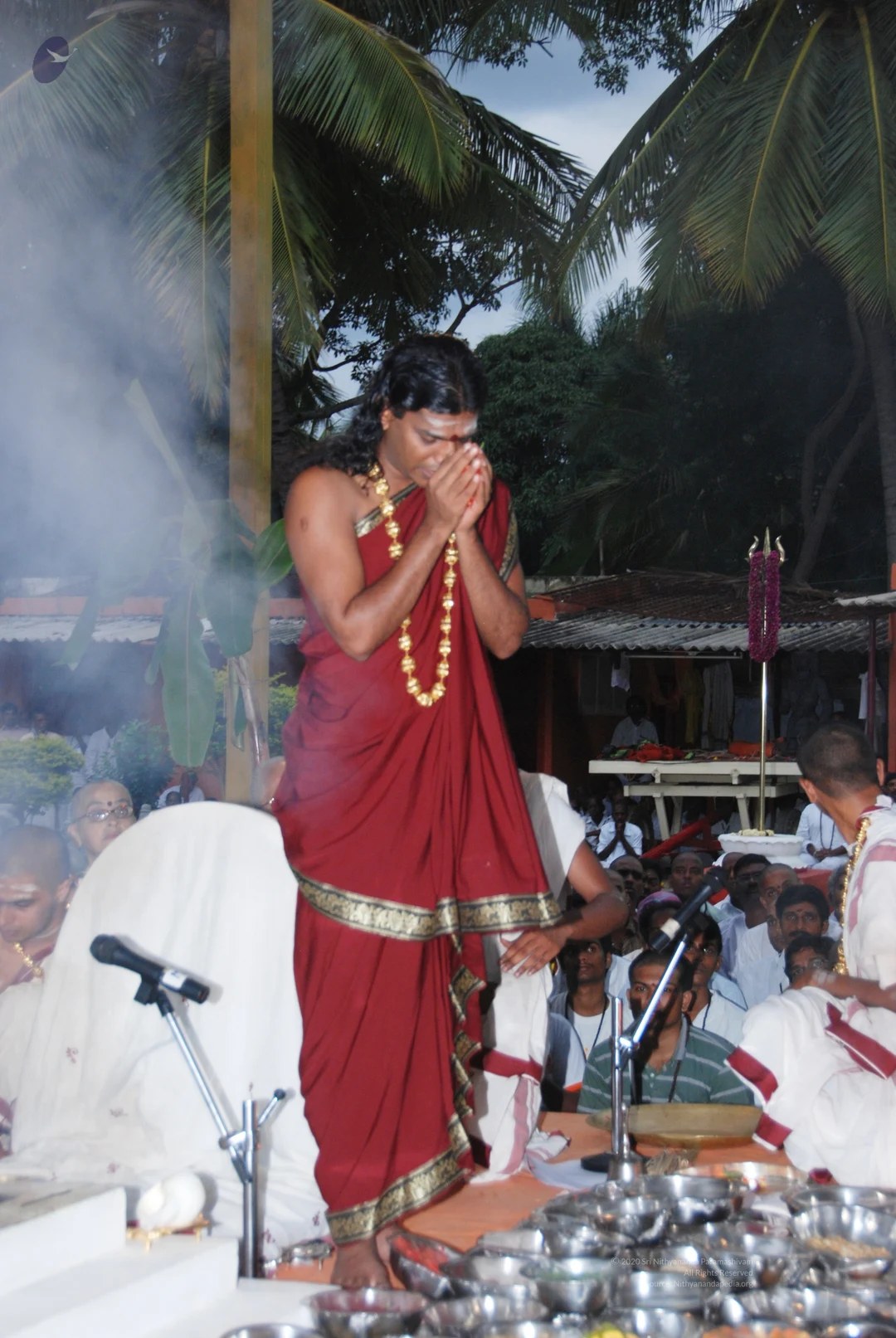
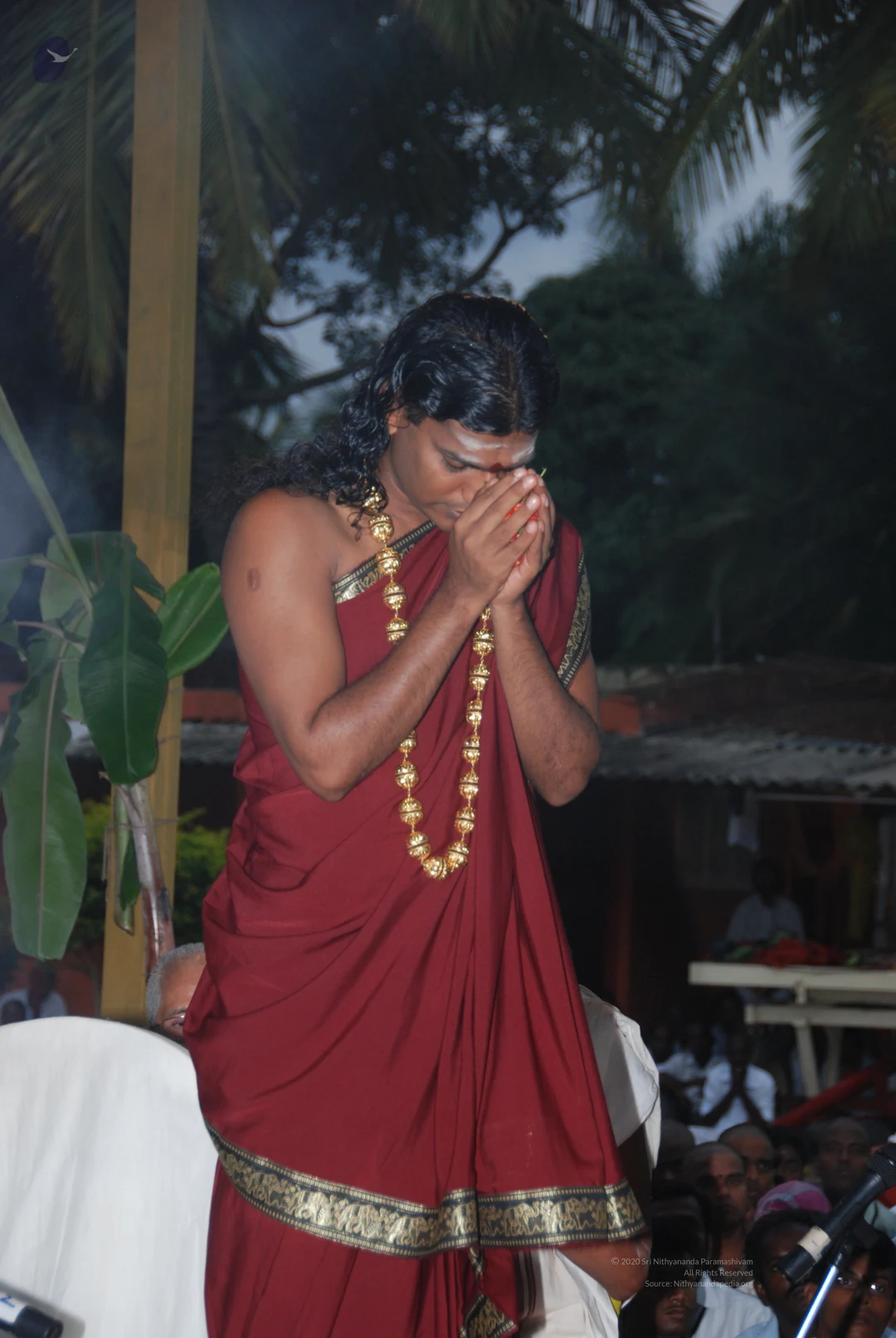
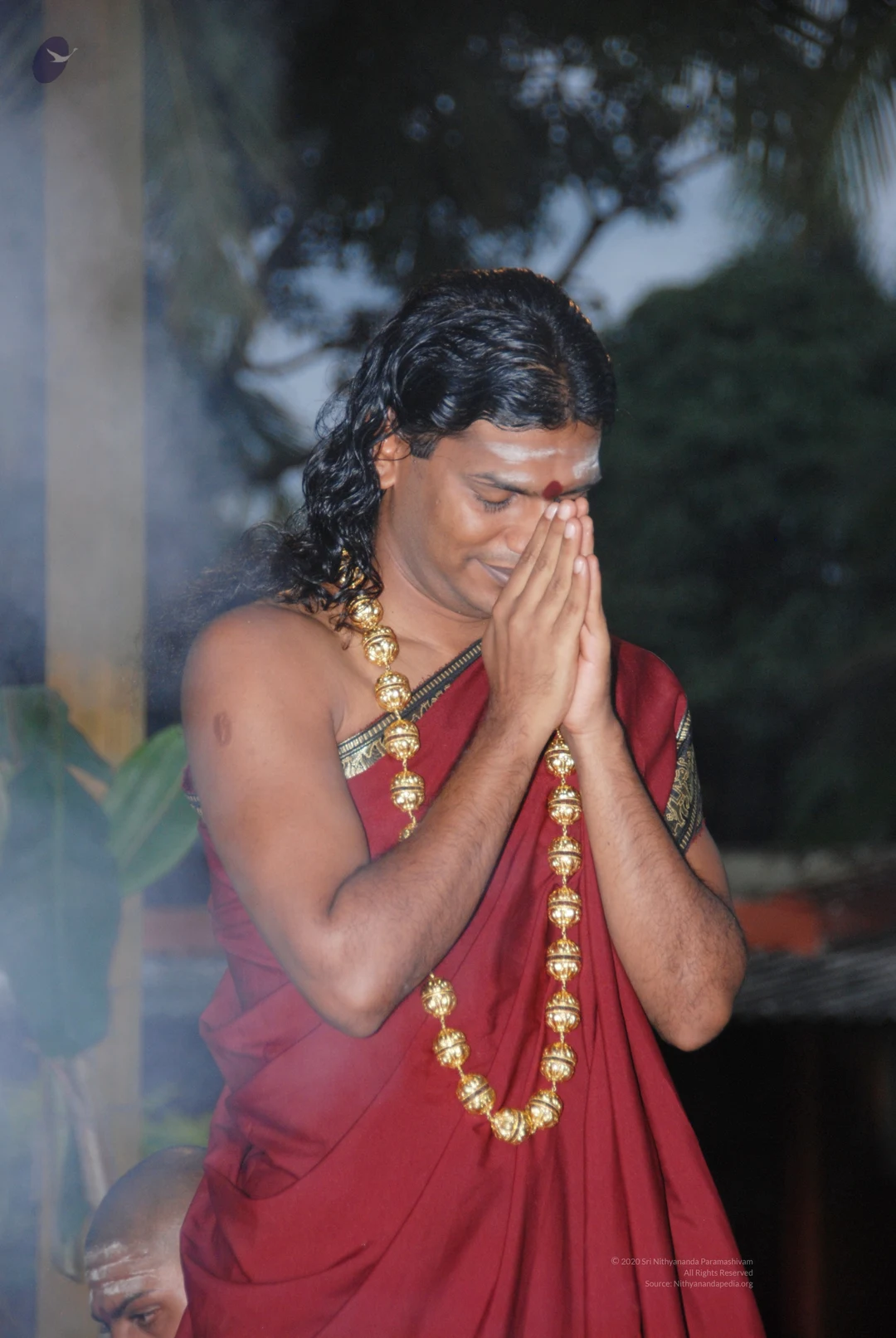
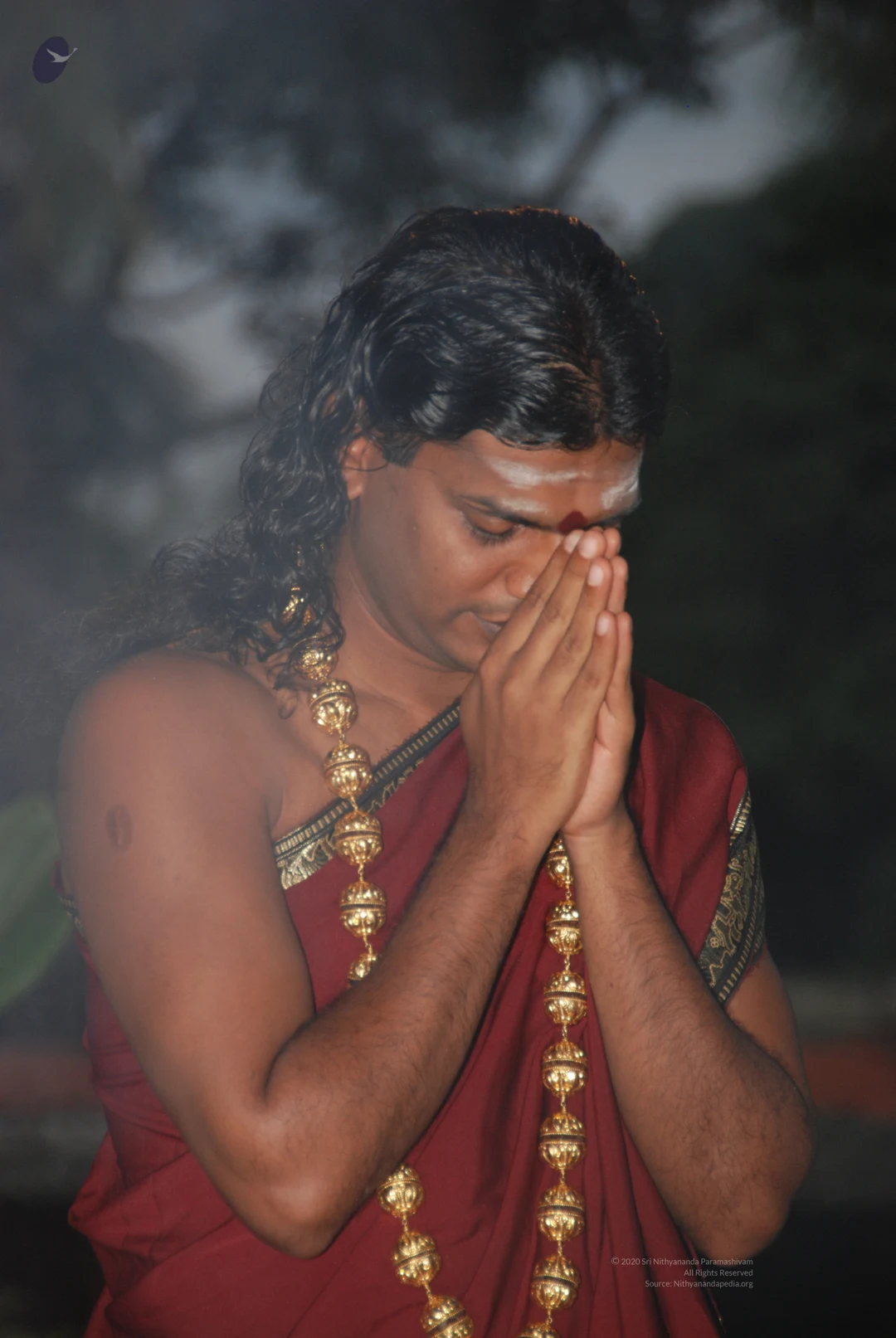
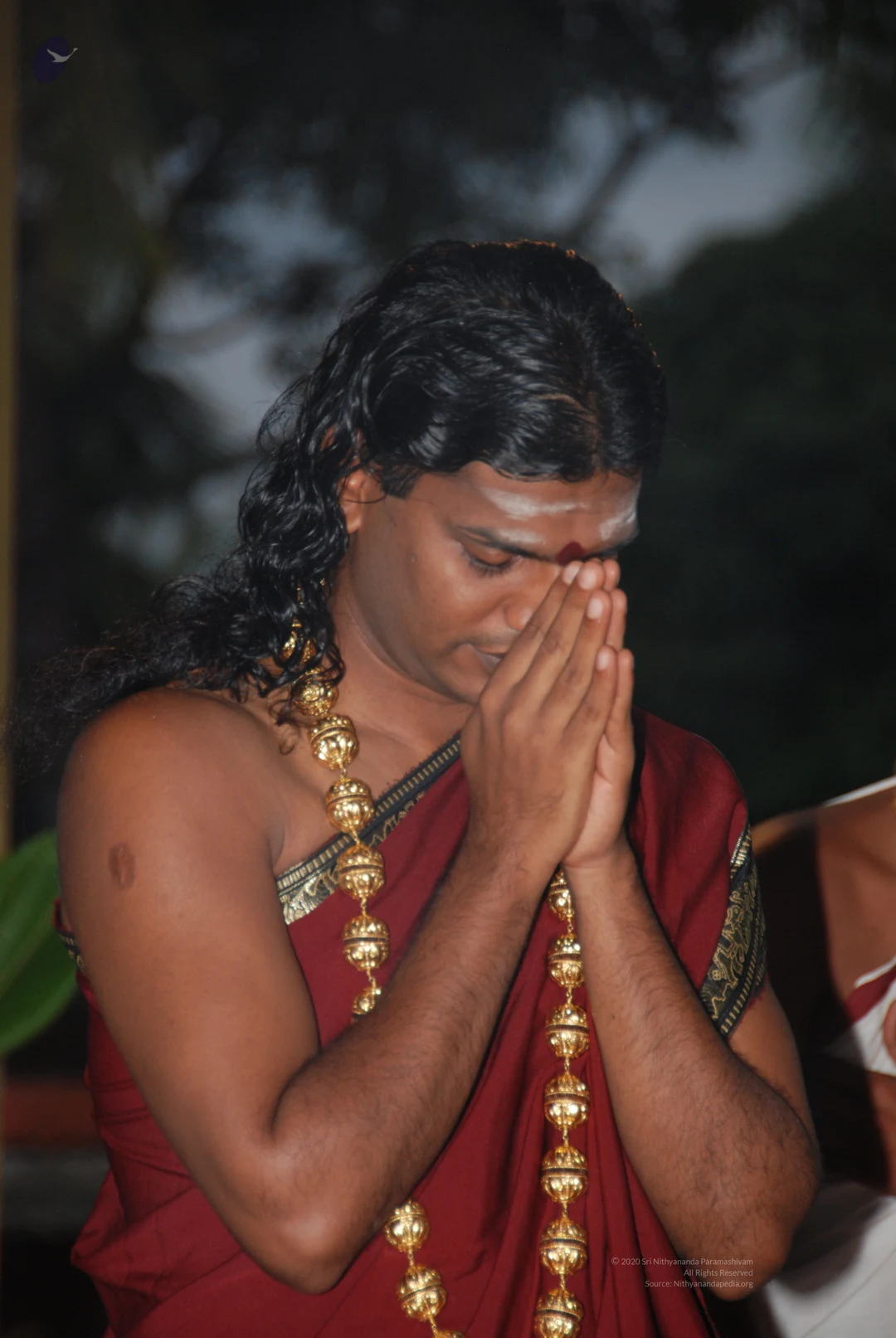
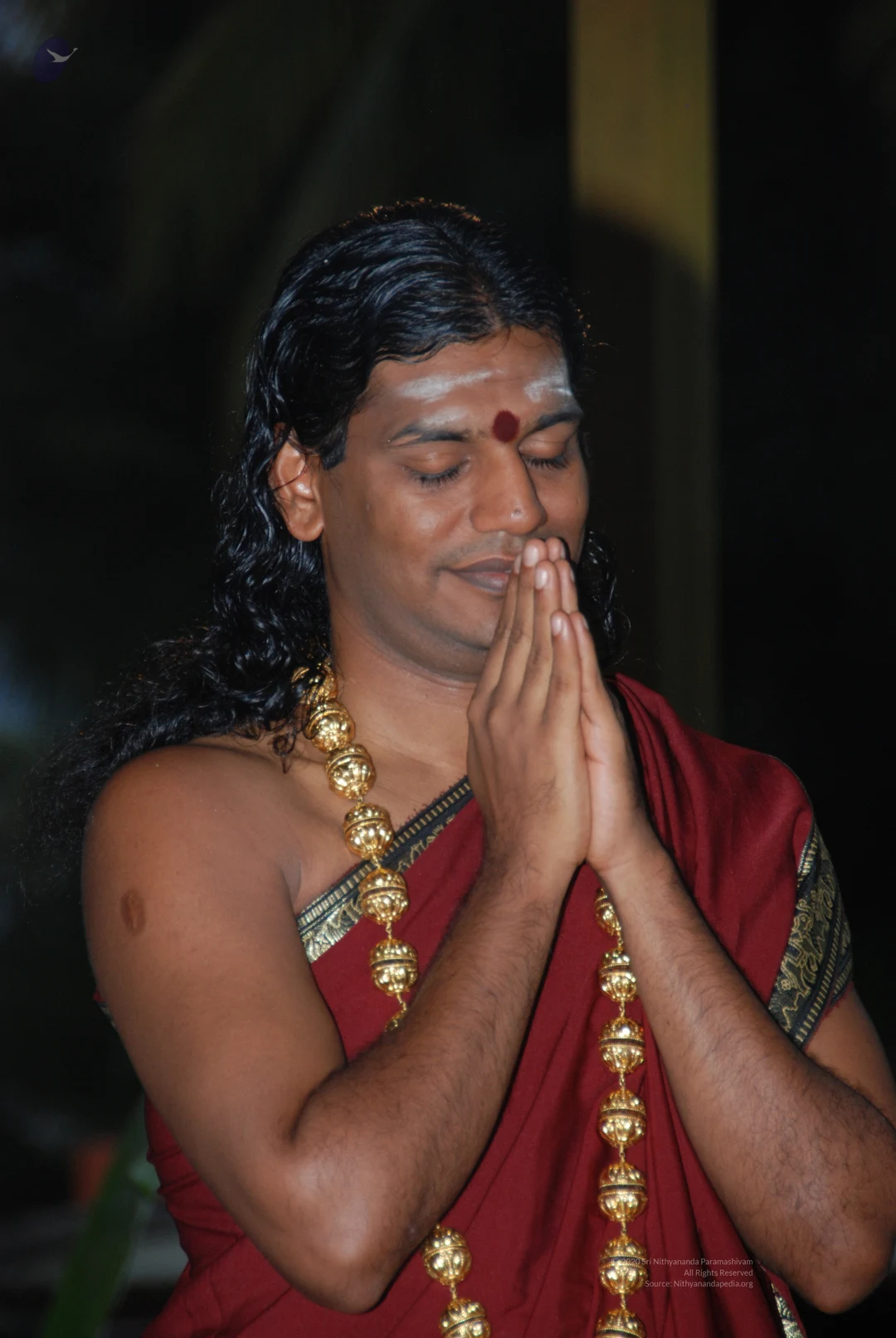
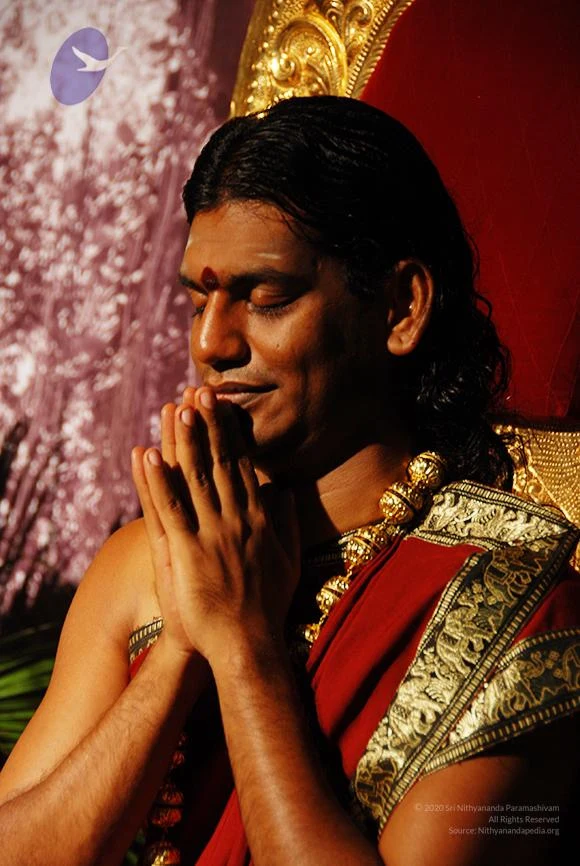
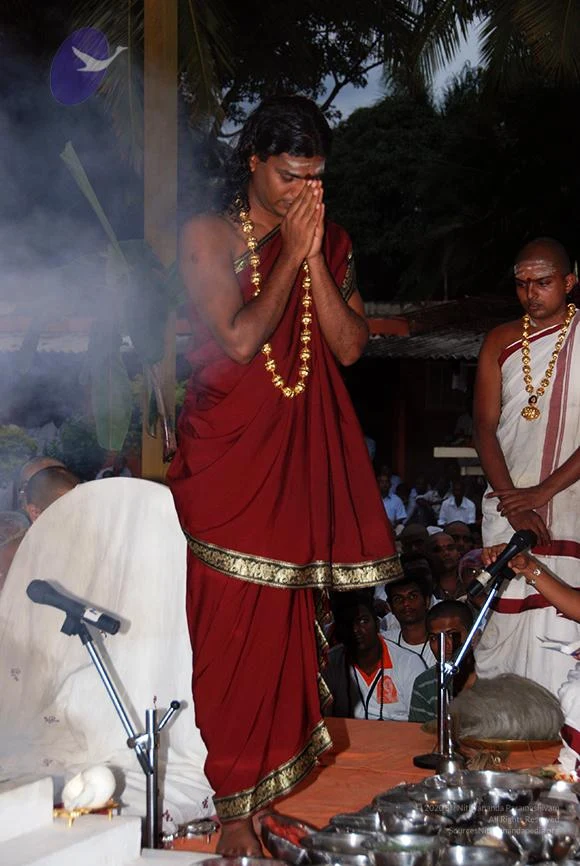
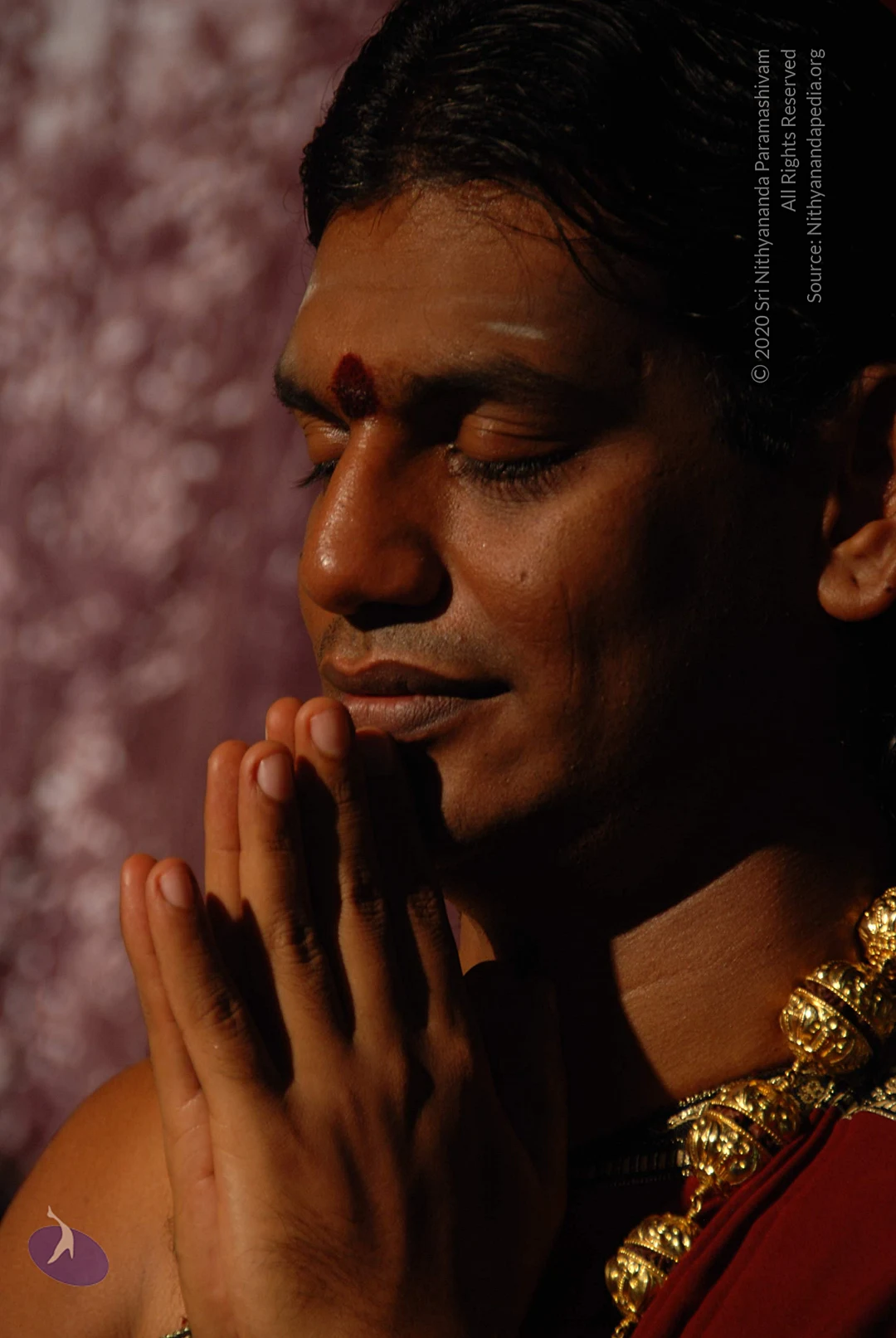
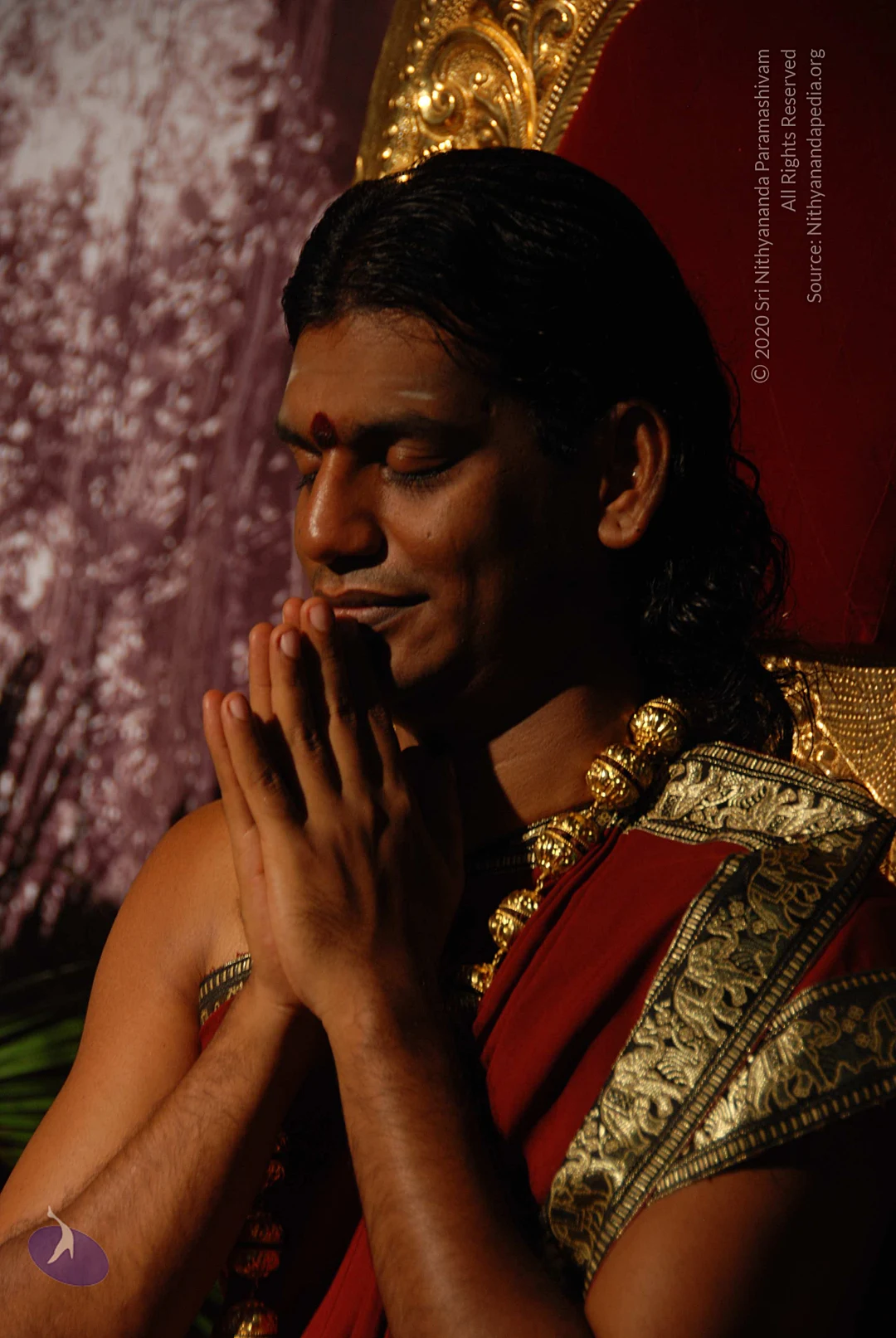
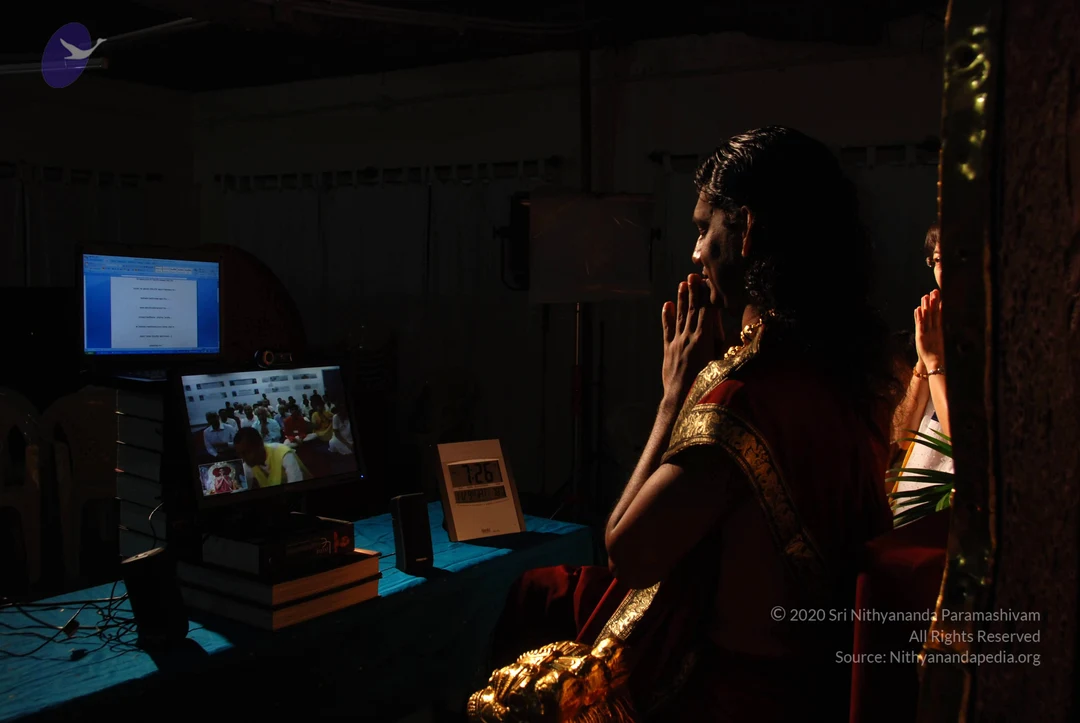
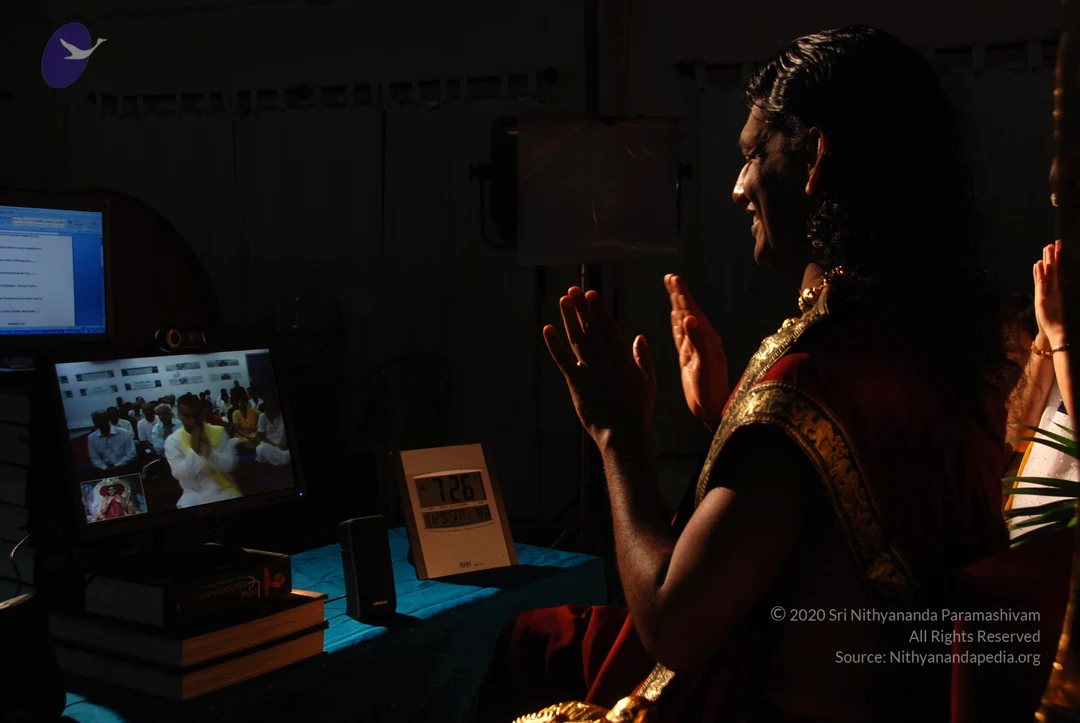
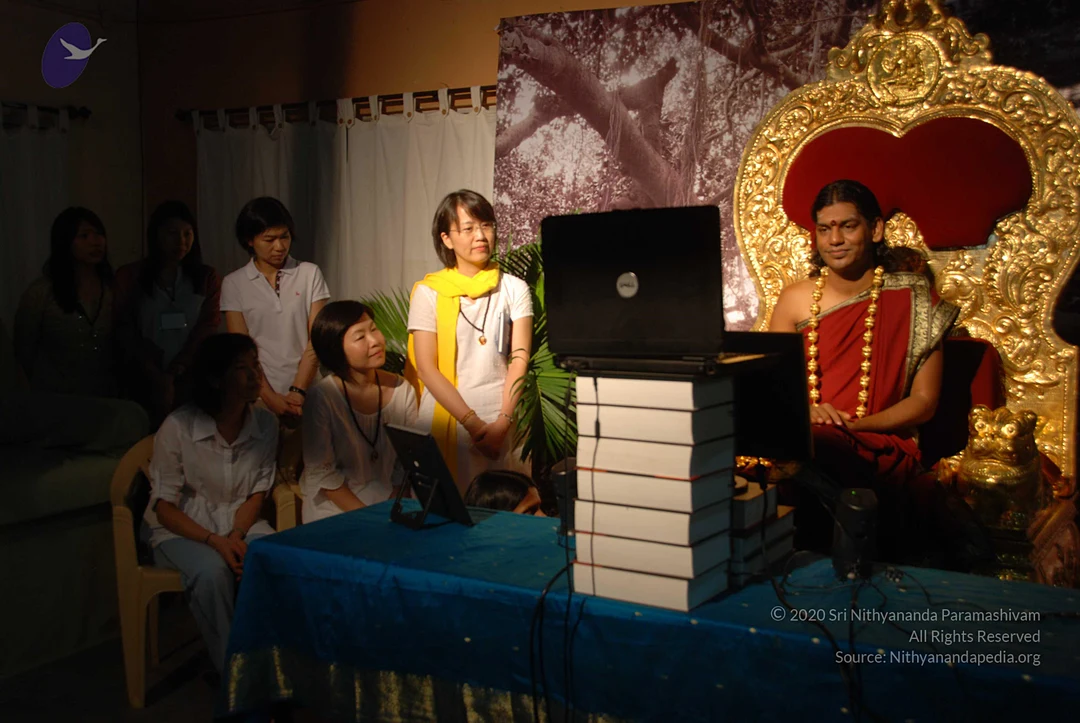
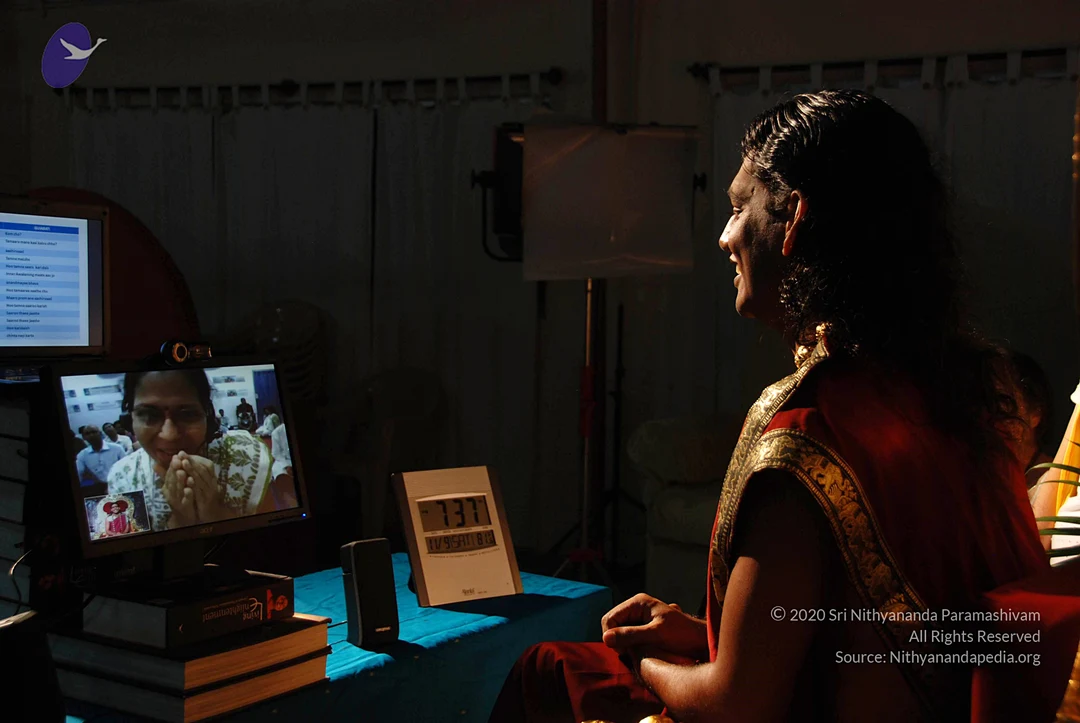
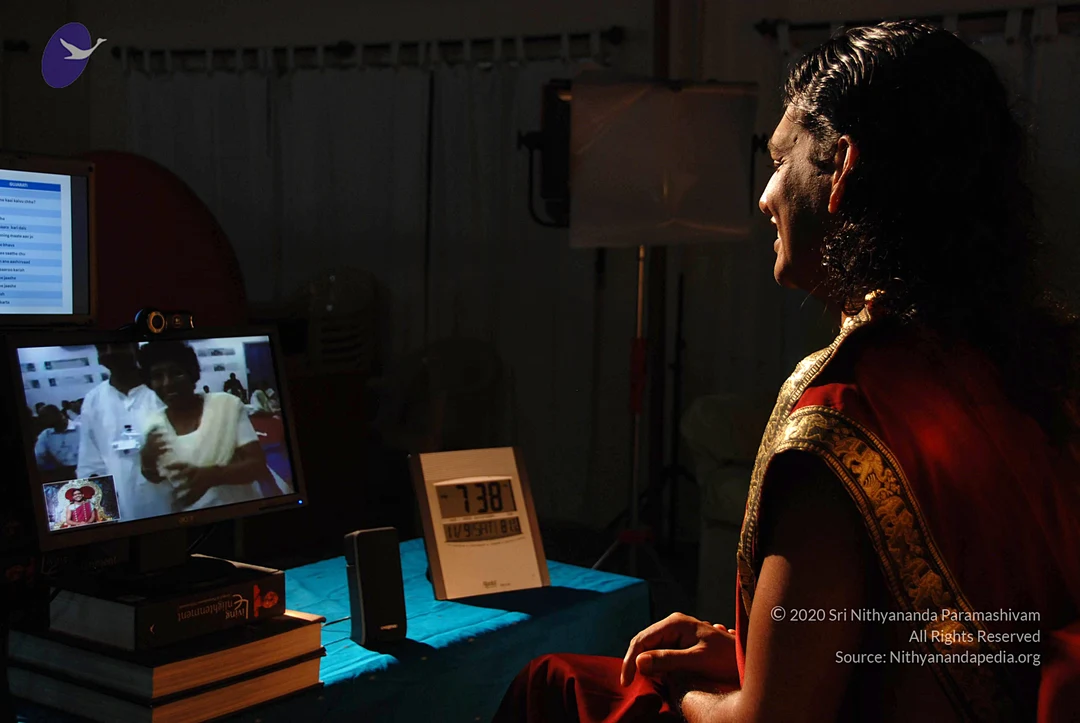
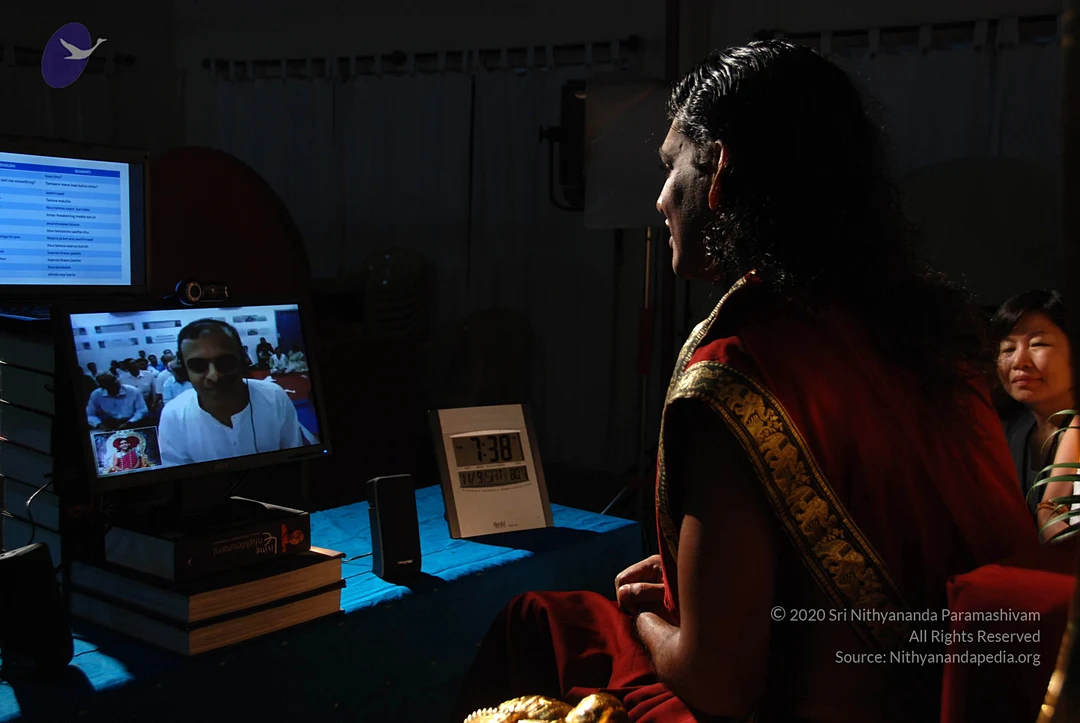
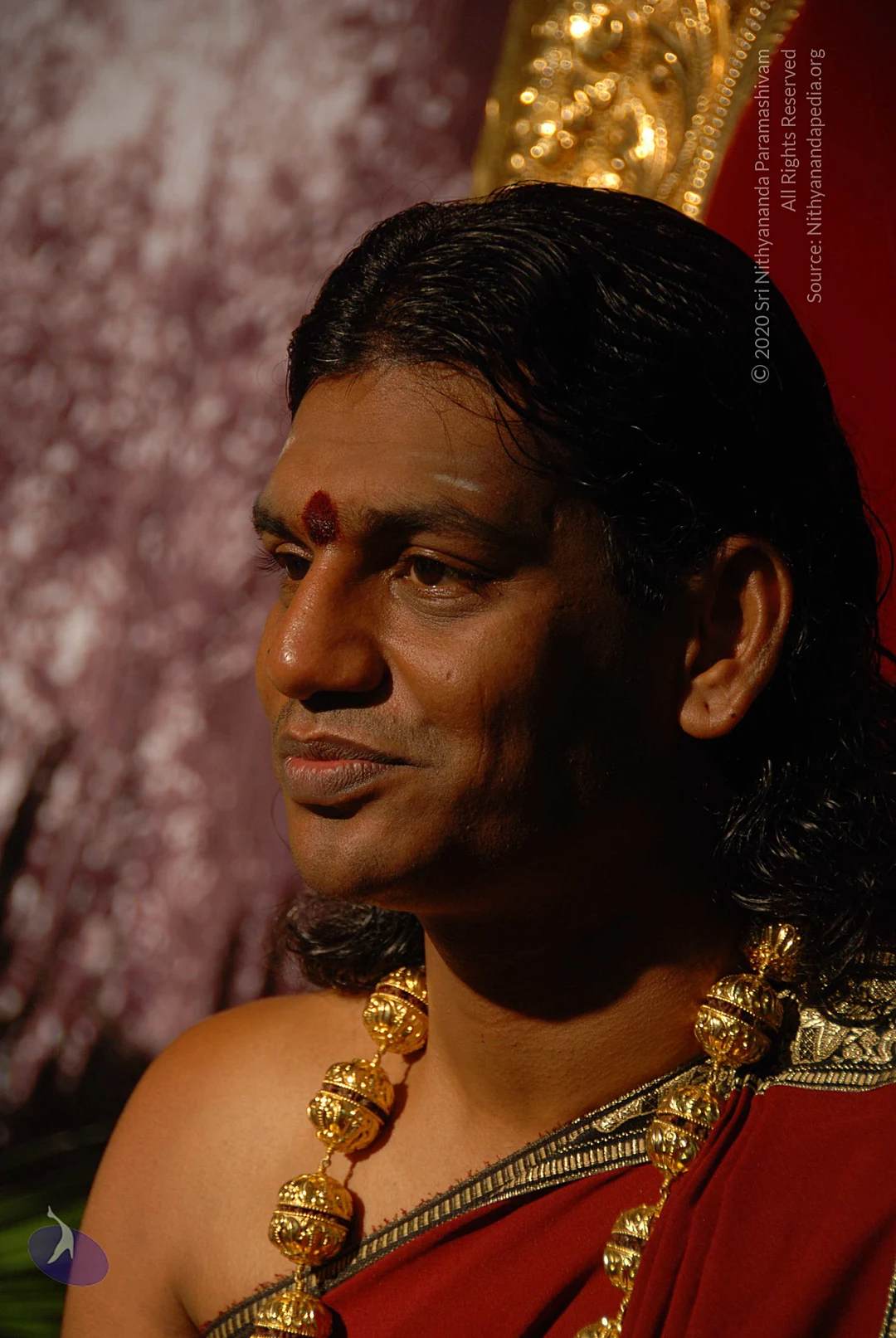
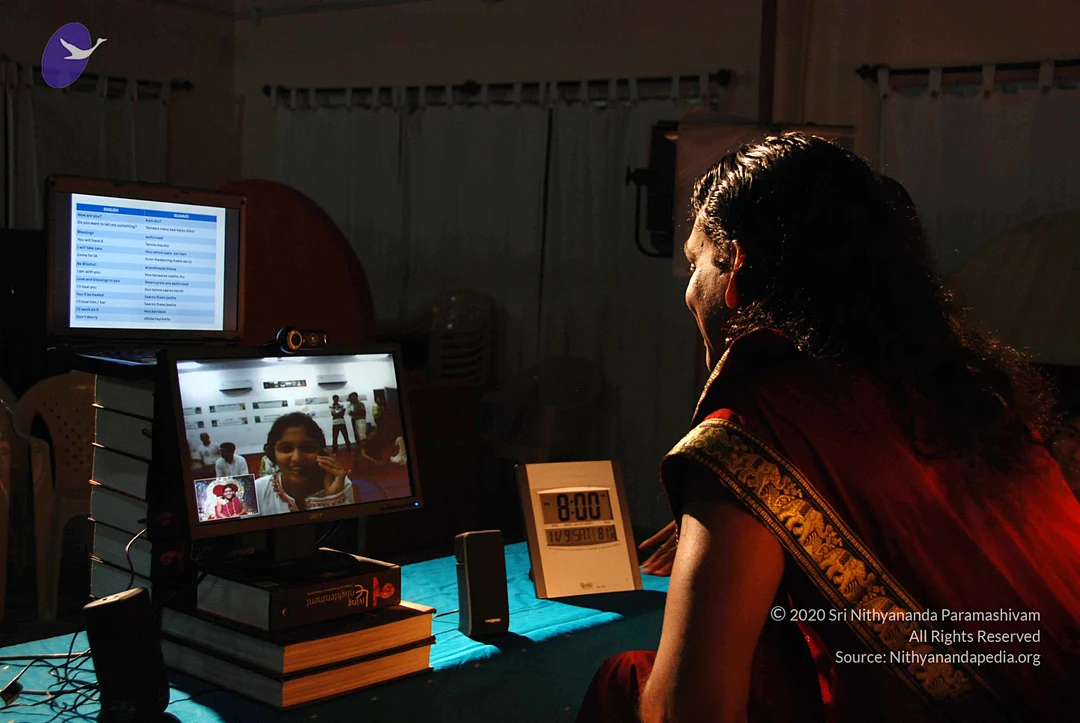
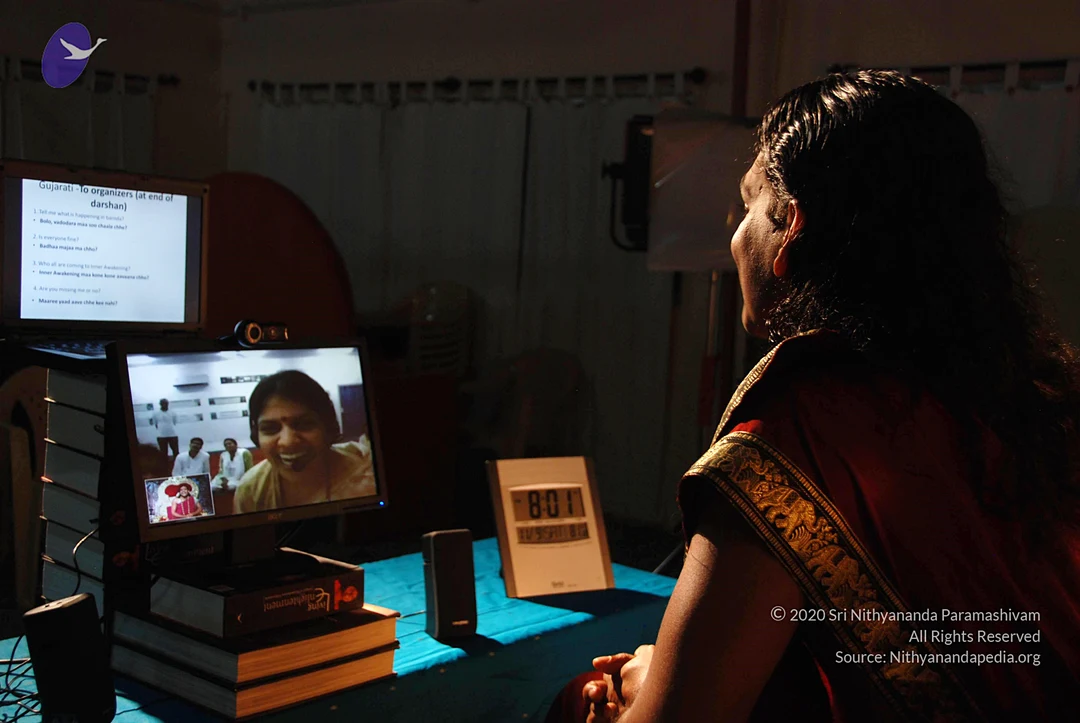
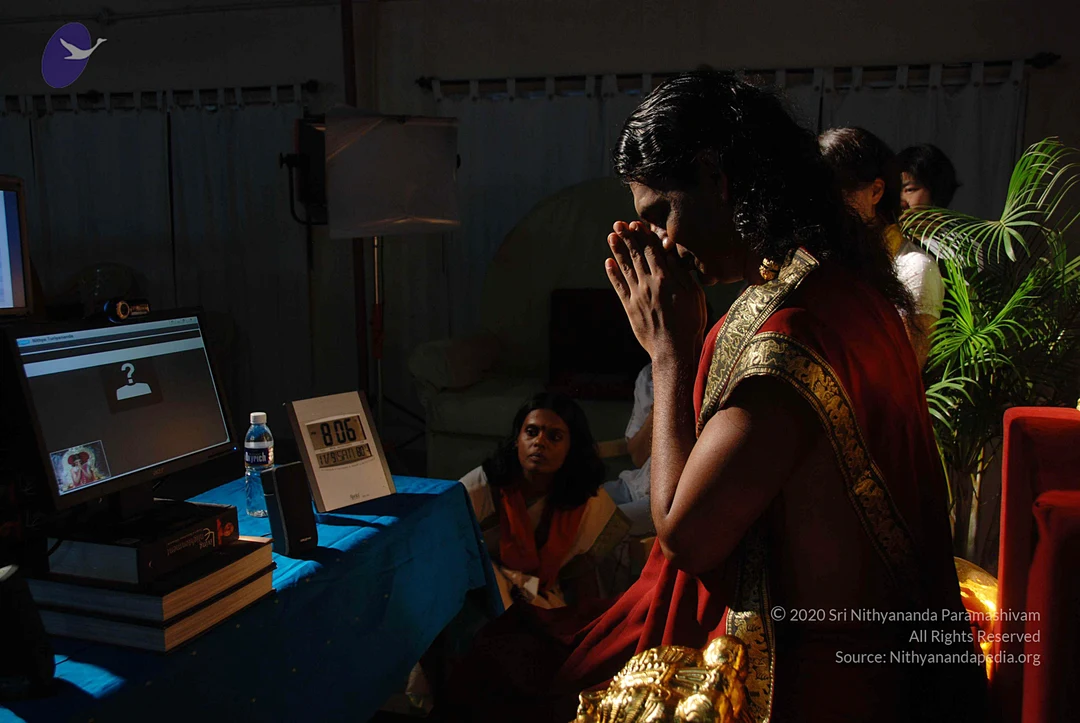
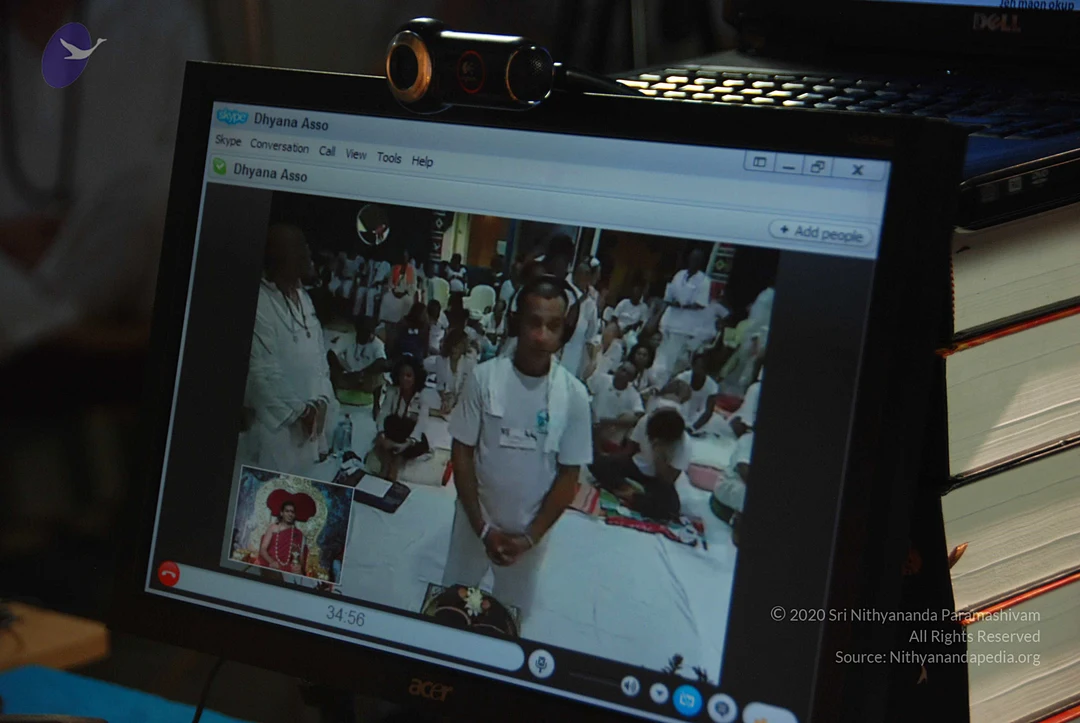
A close photograph of a man with long, swept-back dark hair seated before a red cushioned throne with gold carved trim. He presses his palms together in anjali mudra at his chest, eyes closed, with a faint smile. He wears a red garment with a gold brocade border and a heavy gold necklace of beads, with a red kumkum dot on his forehead and a white vibhuti line. A blurred pink floral backdrop sits behind him. Probable Swamiji, seated and honoured as a devotee greeting a discourse, based on his long swept-back hair, gold ceremonial necklace and ornate saffron-red clothing.A photograph of a flat-screen monitor displaying a live video feed. On the screen, a smiling man with short dark hair and dark-rimmed glasses wears a white kurta and a headset microphone, seated before a group of people in white clothing in a bright hall. In the lower-left corner of the screen, a small inset image shows a figure in a red and gold garment. The viewer is seeing a screen, so the man on it is a depiction, and the physical people in the room are partly visible at the edges of the frame.A photograph of a person seated on a gold-and-red ornate chair, wearing a red and gold garment and gold necklaces, with long dark hair, facing right toward a small screen on a blue-lit table showing a video of people. Beside the table are stacked books and a small framed item. A second person sits partly visible in the background.A photograph of a seated group meditating or listening in a white-walled hall with a red carpet and blue cushions. In the foreground a woman in a white dress with a dark patterned border sits at a laptop, with her hand raised to her face. Behind her rows of men and women sit cross-legged, several in white kurtas and dhotis, one in a light blue shirt, one in a red shirt, and women in saris. Framed pictures hang high on the back wall.A photograph of an indoor satsang or puja setting with a small group of devotees seated and standing in a room with a doorway. A figure in white robes stands near the center holding objects, while people in white and red clothing attend nearby. A flat-screen TV is mounted on a stand at right, and a framed picture hangs on the wall beside the doorway. Several people in the foreground are seen from behind, including one wearing a dark head covering. a person candidate present is not clearly identifiable from appearance in this image.
11

nithyananda-ashram

7 dated photos in previewSource gallery
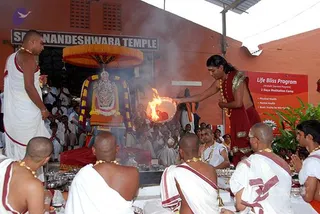
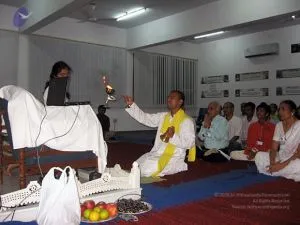
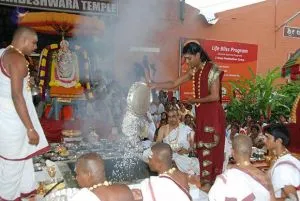
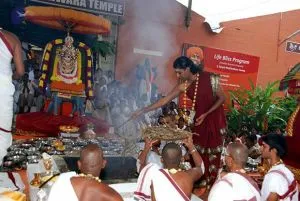
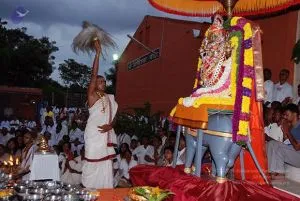
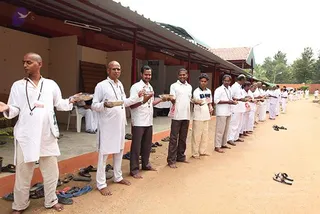
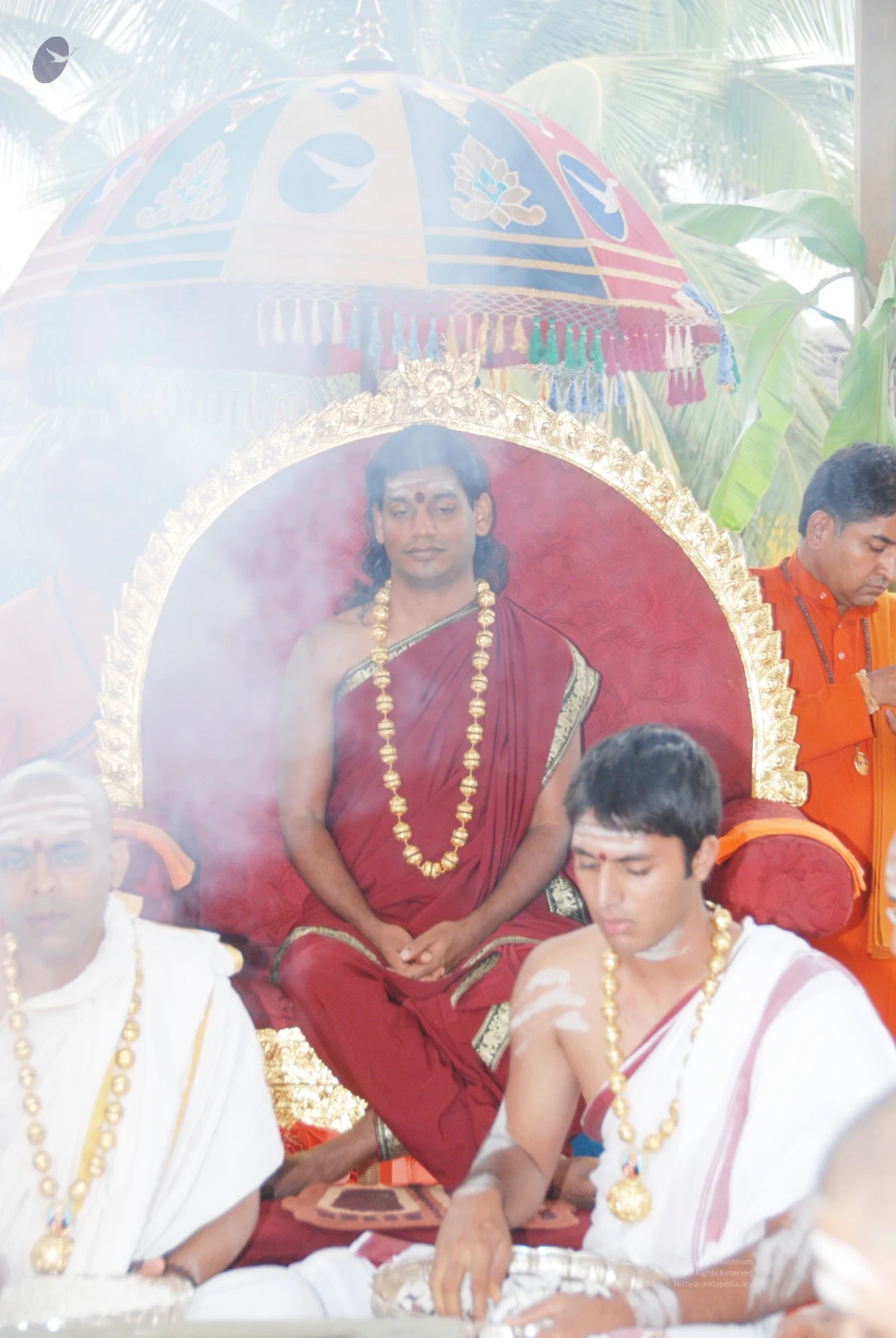
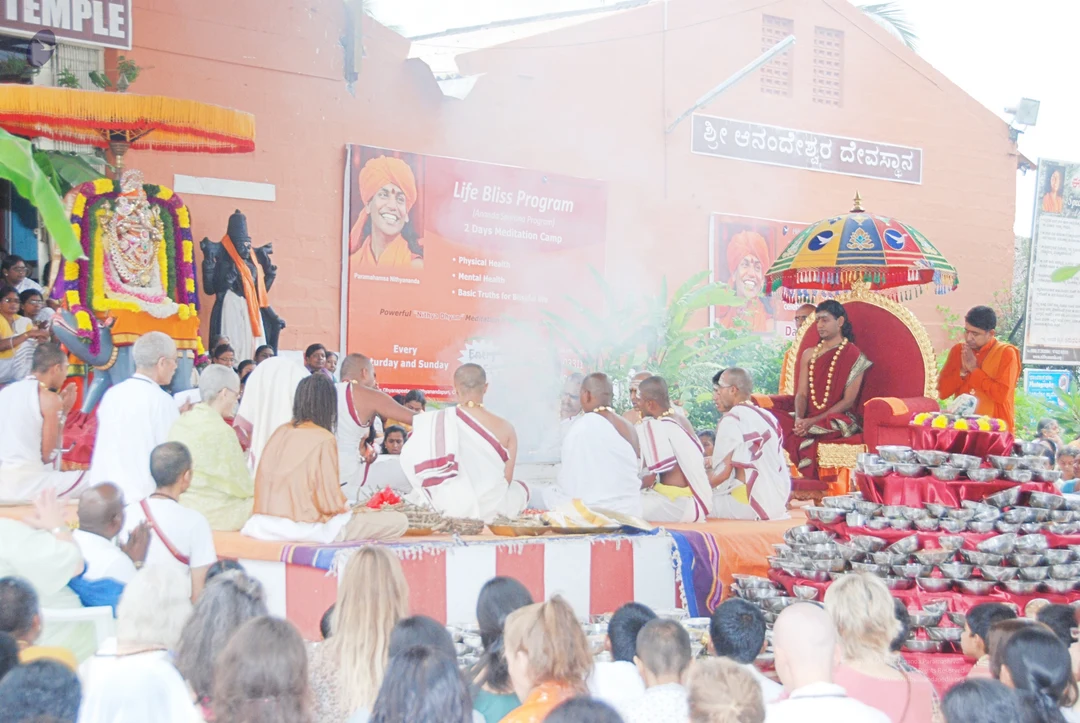
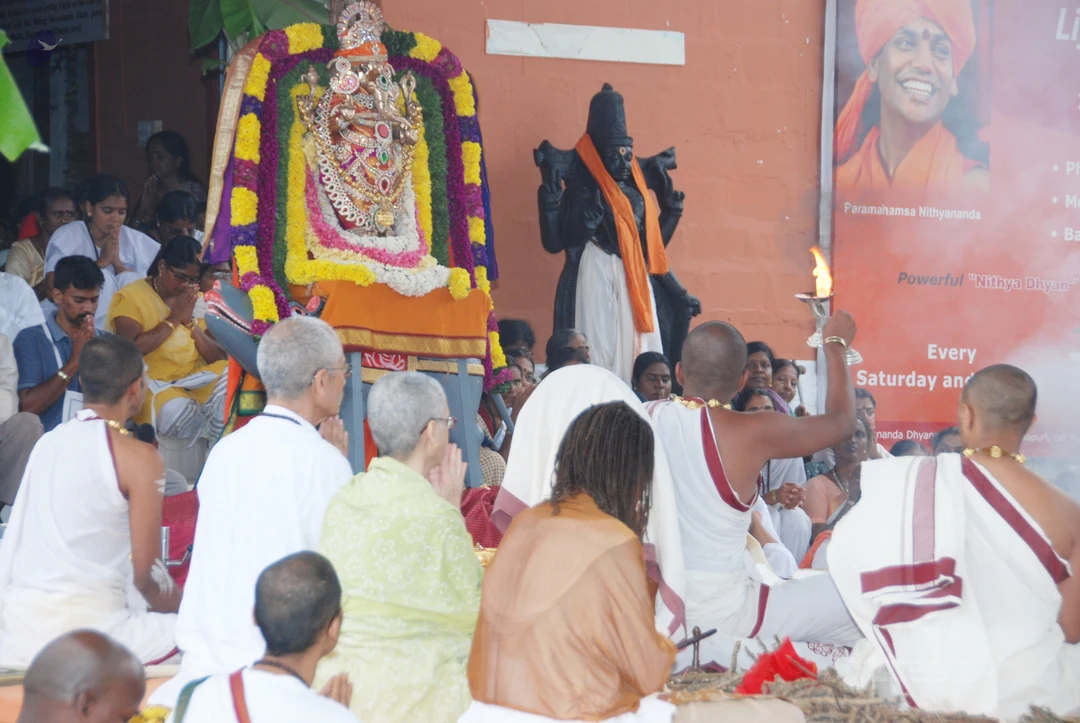
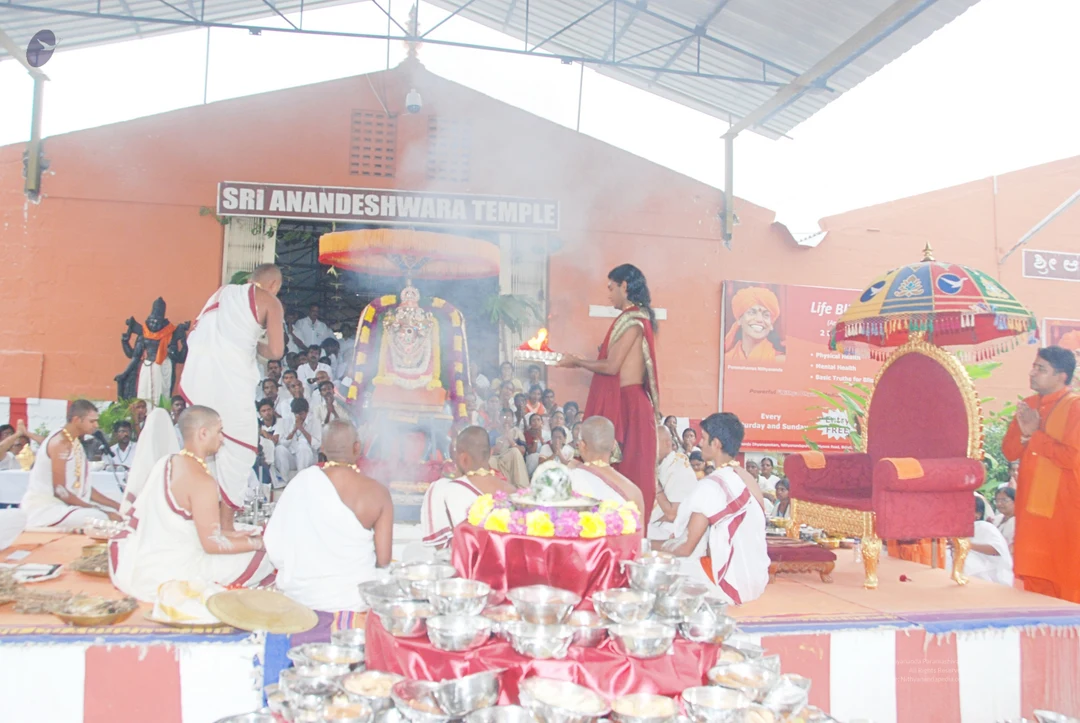
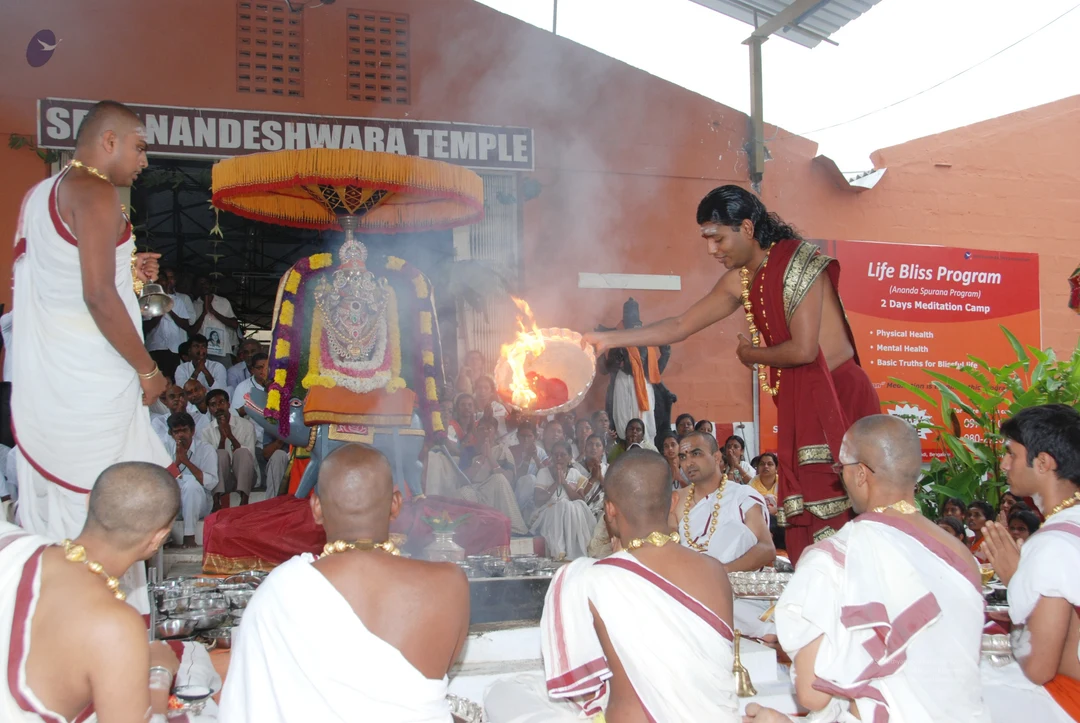
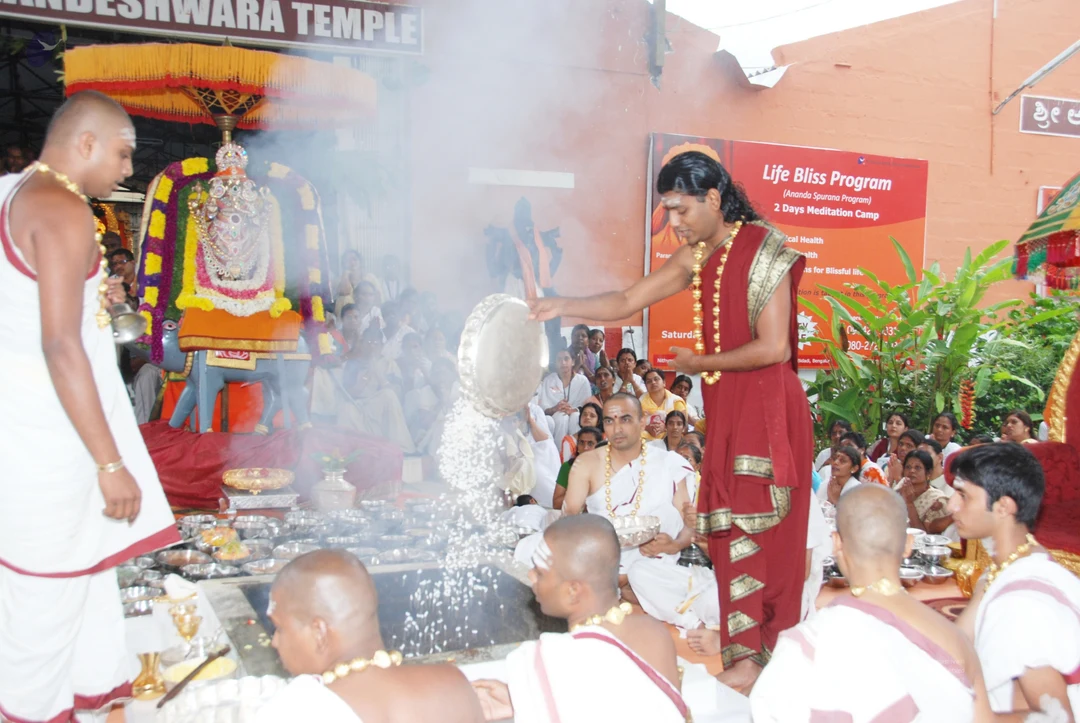
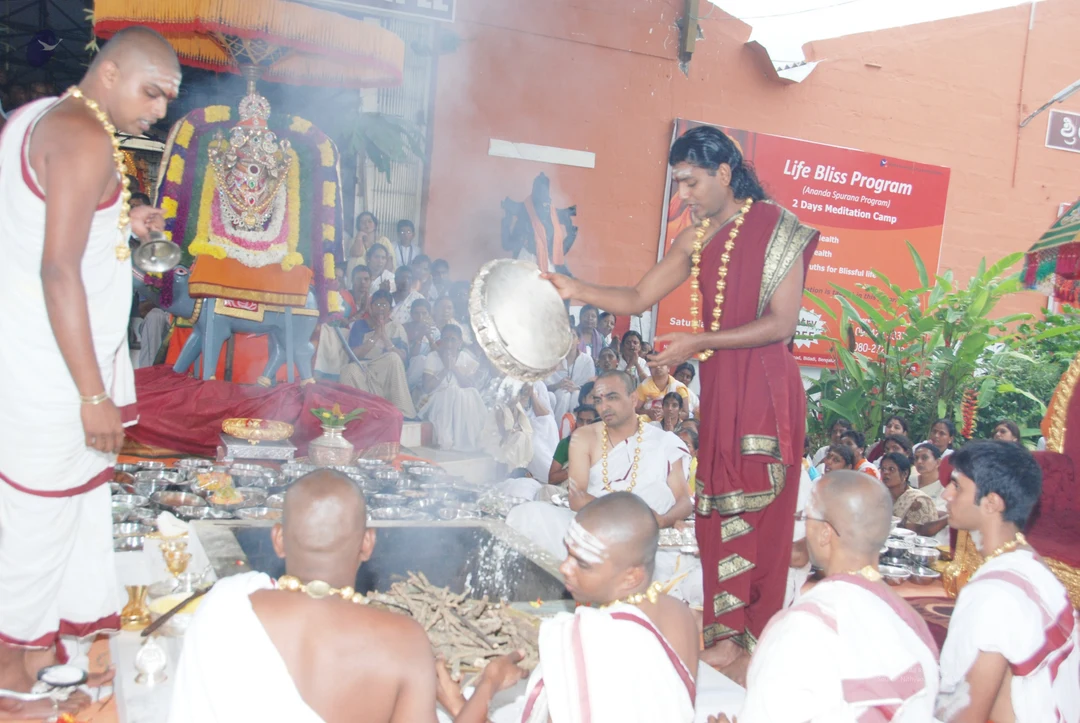
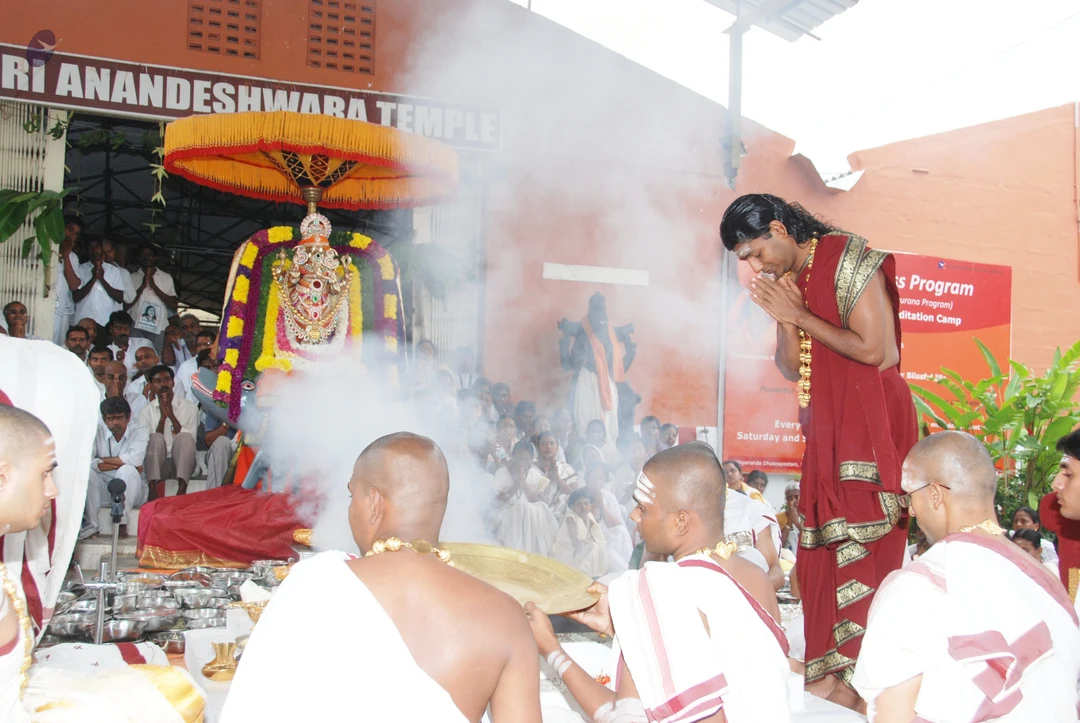
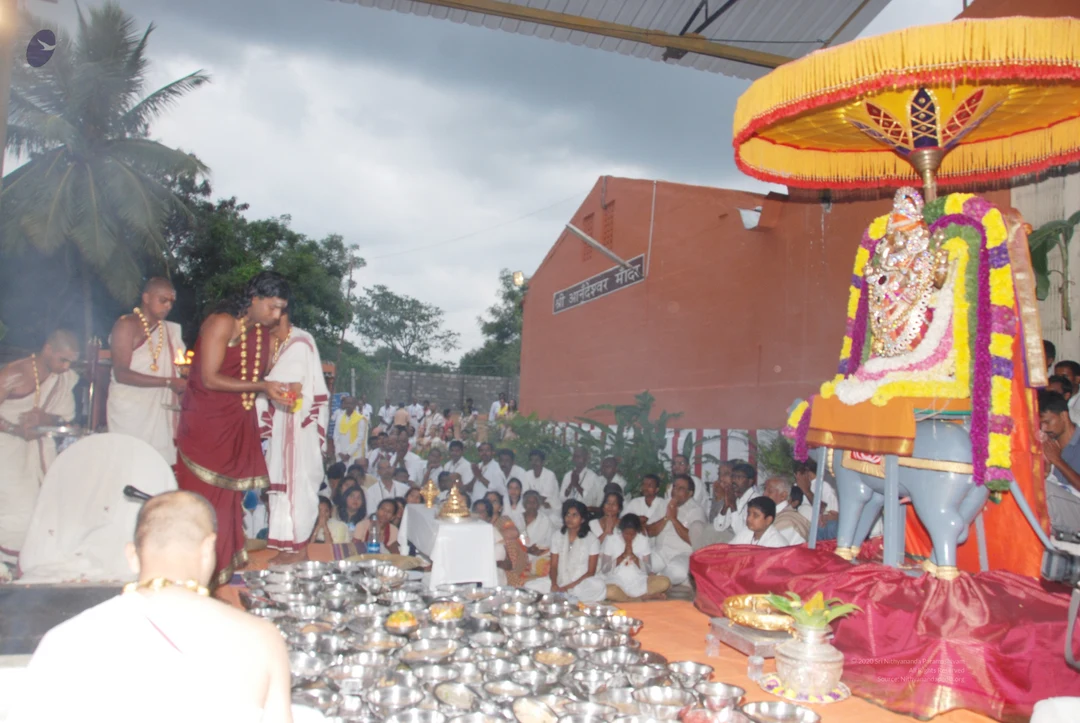
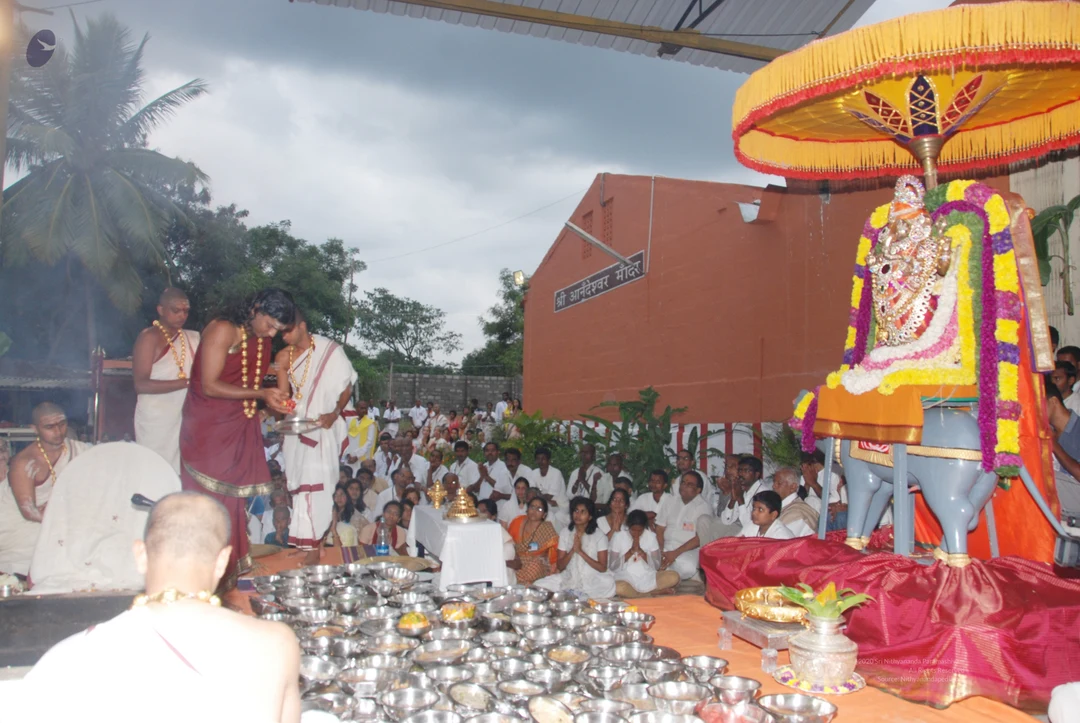
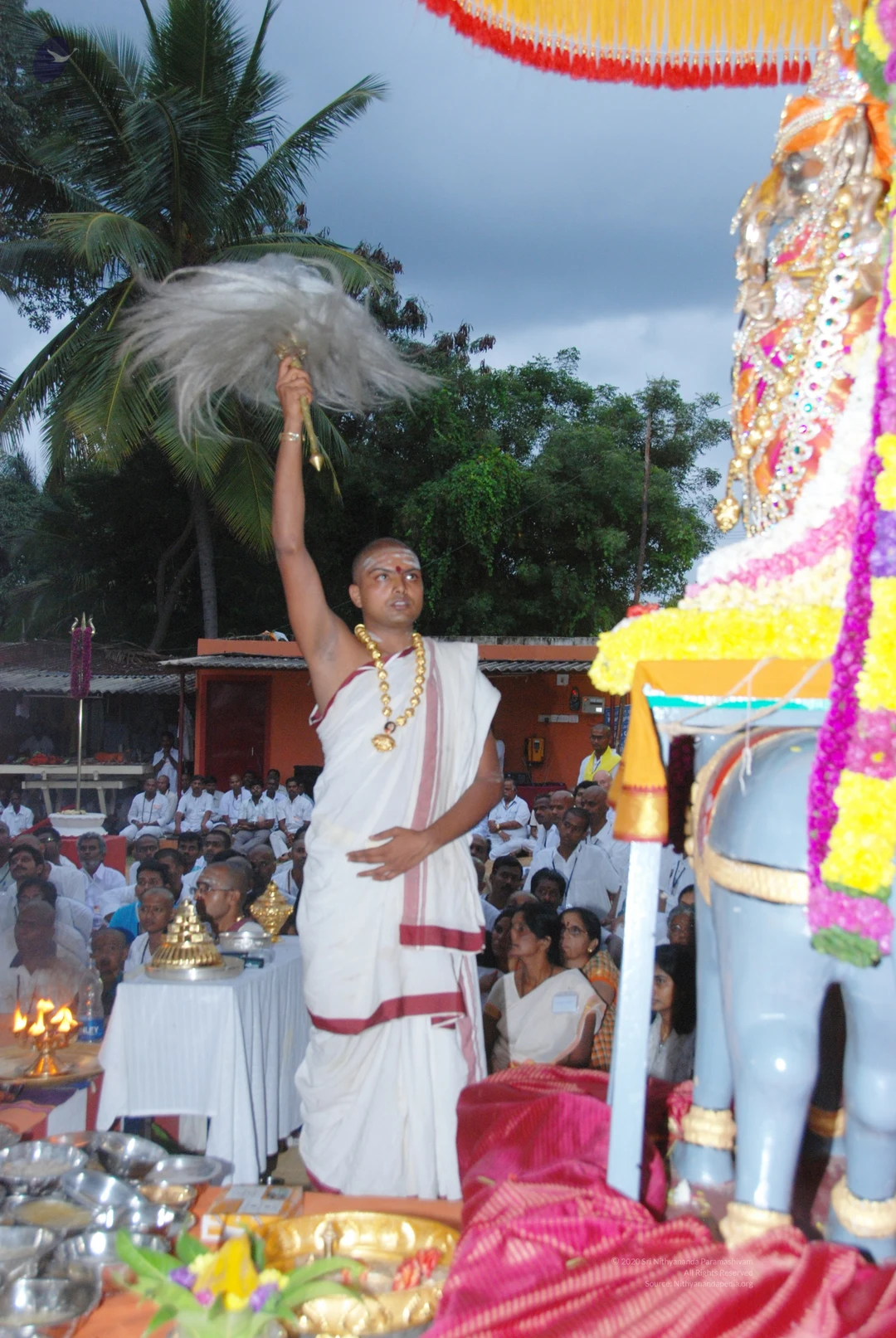
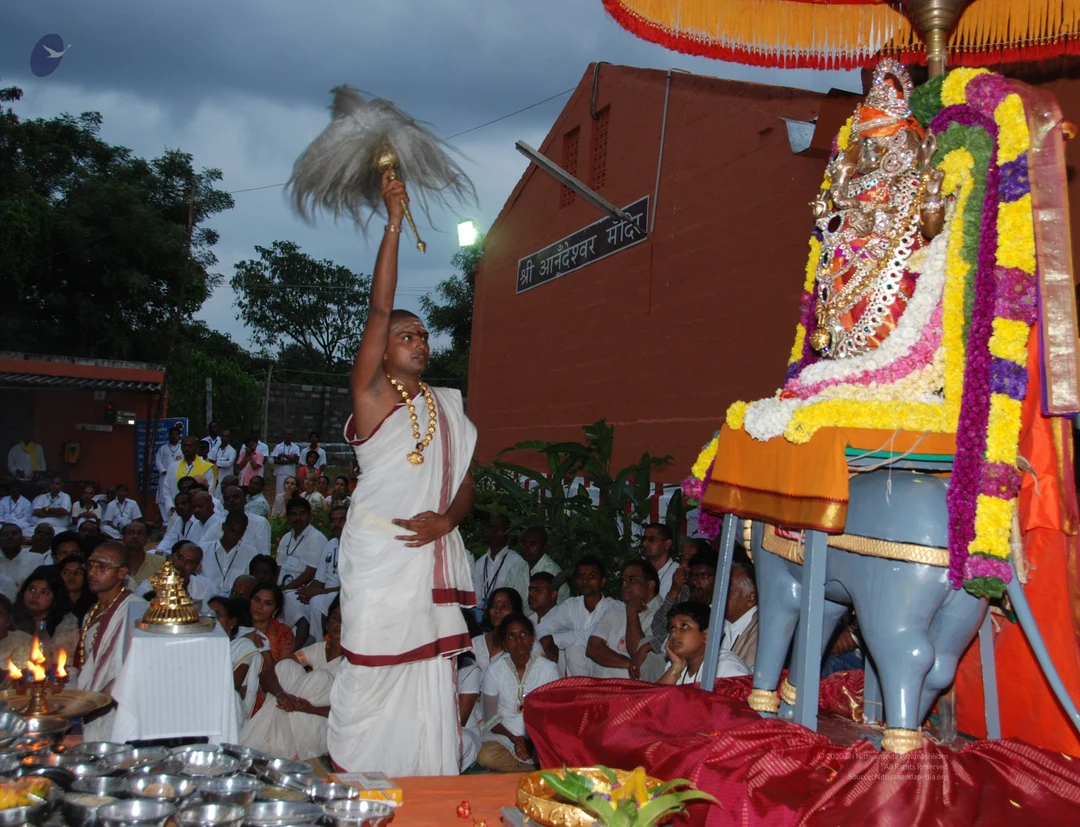
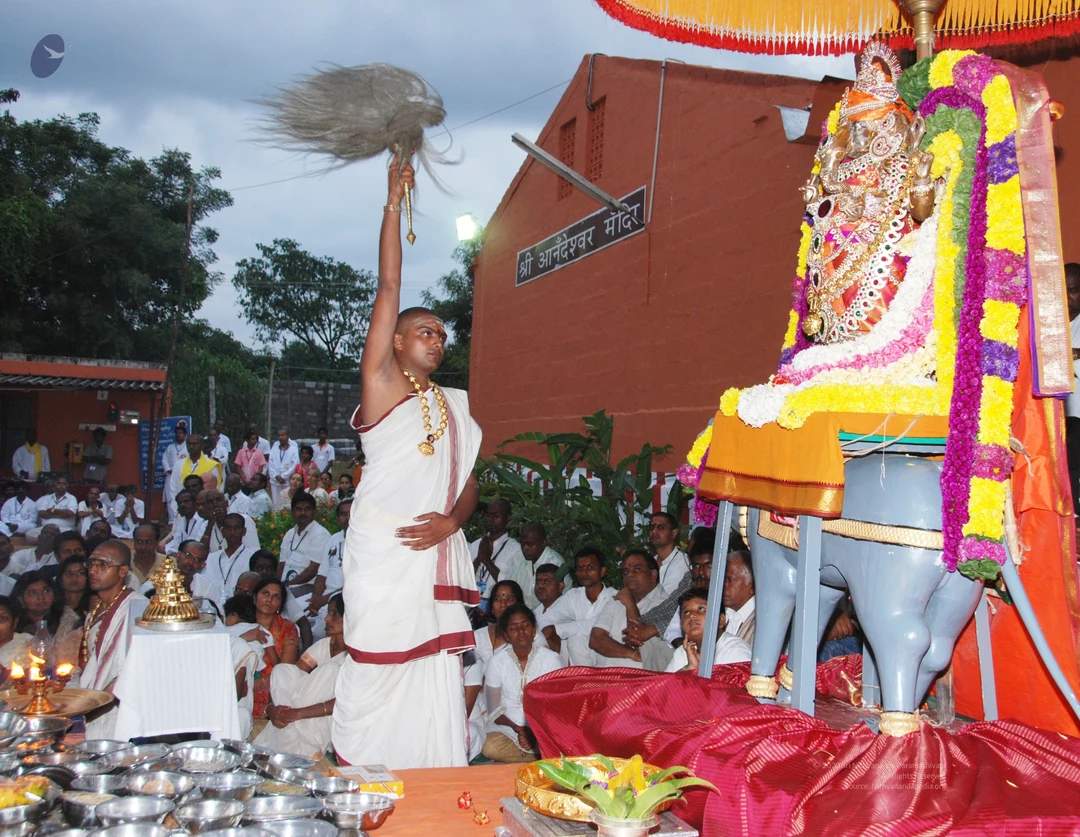
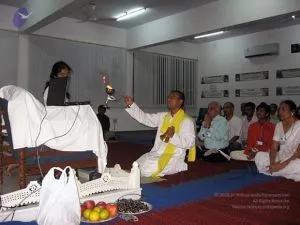
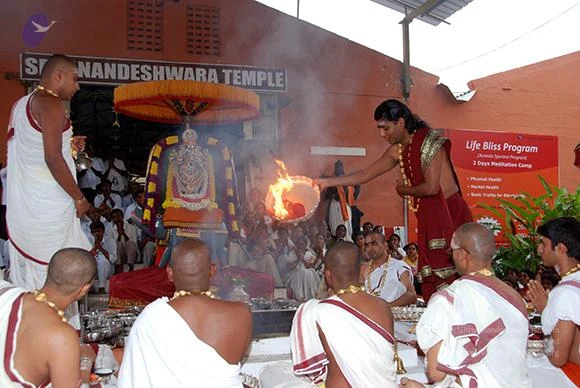
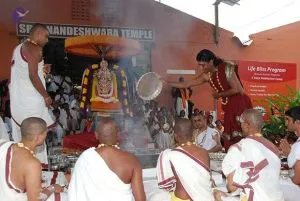
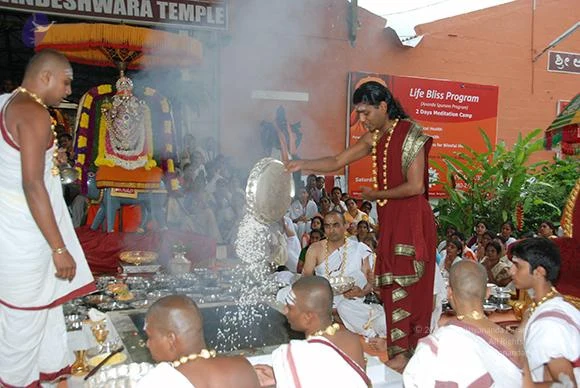
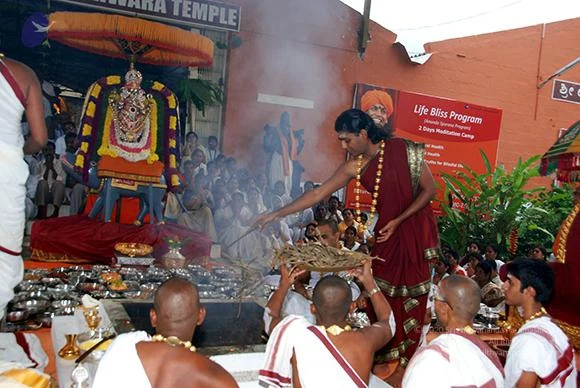
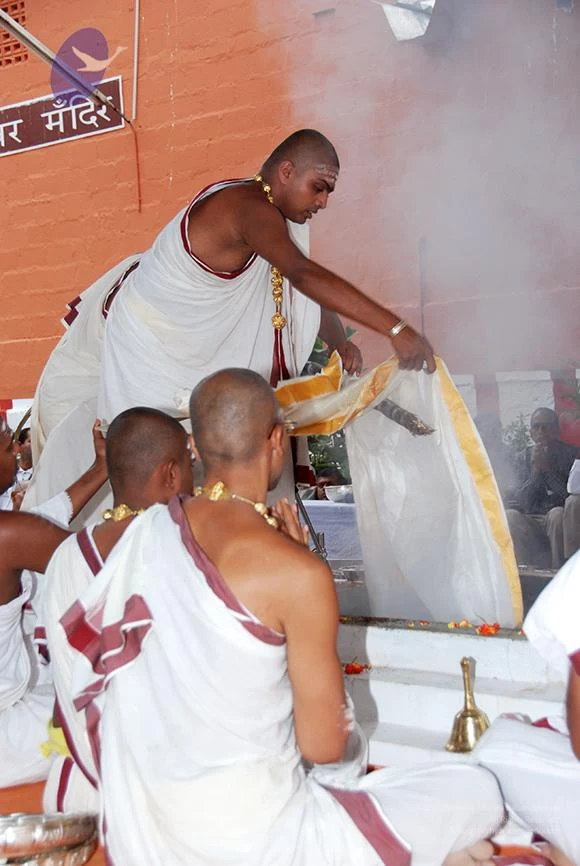
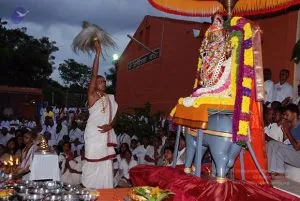
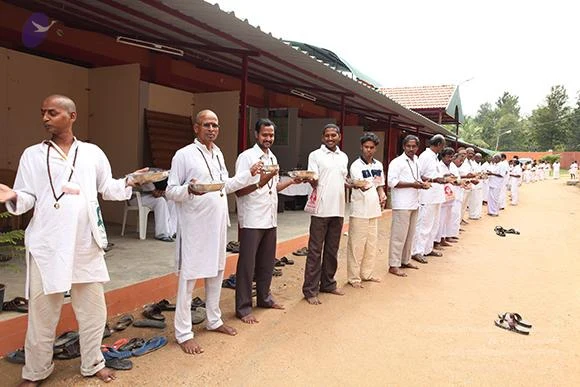
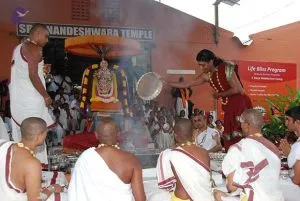
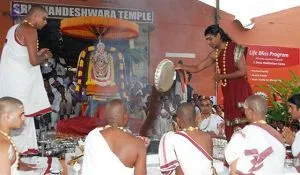
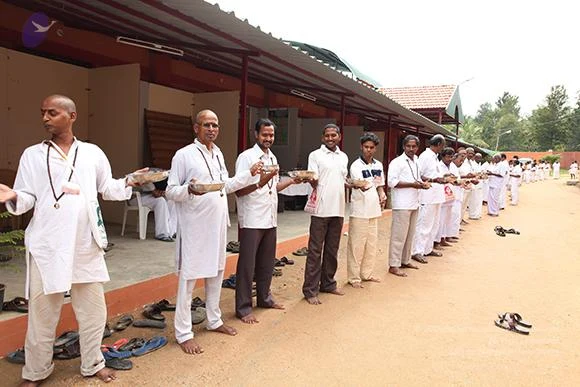
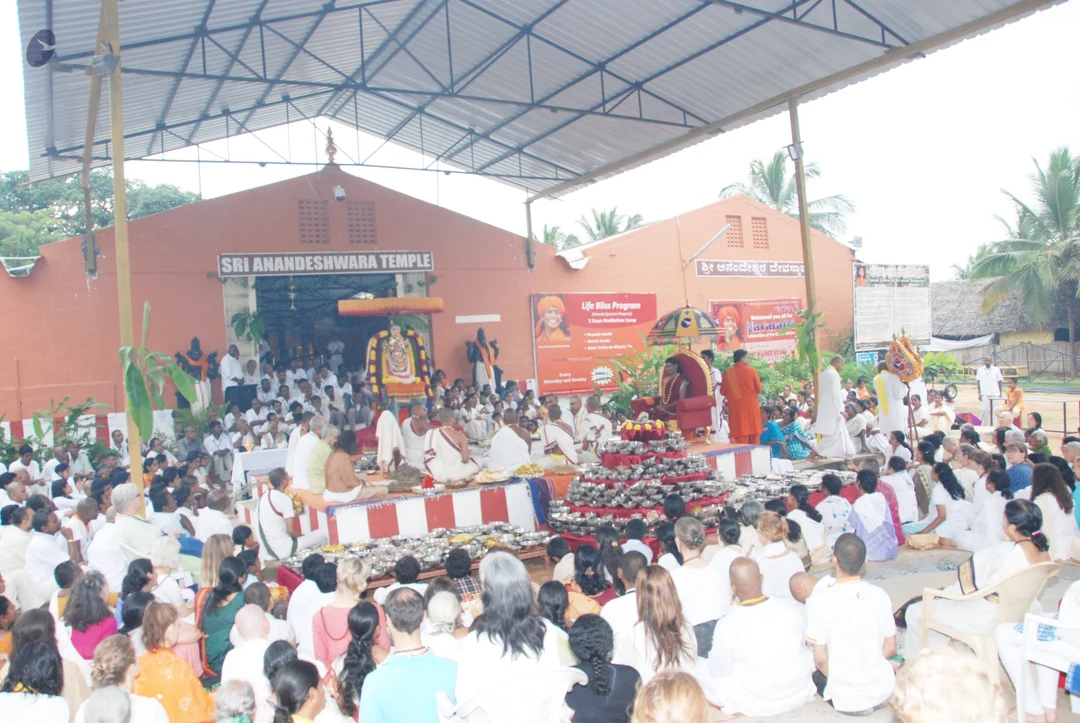
A photograph of an indoor satsang or discourse room with white walls and framed pictures on a shelf. A man in white robes with yellow lower garment sits cross-legged on a blue mat, raising a lit oil lamp in one hand and gesturing with the other. Beside him a white cloth covers a low table with fruit, a plate of offerings and a bag. A woman in a dark top sits at a laptop on the left. Several seated devotees in white, red and pink clothing listen on the mat to the right, and a wall air conditioner is mounted above.A photograph of a temple abhishekam at a shrine. A woman in a maroon sari with gold jewelry stands at right, pouring liquid over a white murti at center. White-robed priests with sacred threads and necks adorned with beaded malas sit in a row at lower left and right, watching and assisting. Behind them, seated devotees in white clothes watch, and a red-and-gold ornate shrine structure with a decorated arch stands at left. Steam or spray rises from the offering. Overhead, a red banner reads Life Bliss Program and the shrine has signage for Shiva temple.A photograph of a temple ritual in a shrine room. In the centre, a man in a maroon garment with a red-and-gold shawl and rudraksha malas performs a fire offering, extending his arm over a brass tray of offerings while smoke rises. Around him, several shaven-headed priests in white dhotis and saffron-red shawls sit on the floor with their hands raised in worship. On the left, a large deity murti stands in a decorated alcove with a red-and-gold frame, and a red sign on the right wall reads Life Bliss Progress. The setting is a temple with bright red walls.A festival procession at dusk in front of a red-roofed building. Centre right, a large Ganesha murti decorated with white and orange flowers and garlands sits on a decorated red and gold ratha-style platform. A man in white dhoti with red-bordered cloth stands at left, raising a large white fan or chamara over the deity. Behind him, a crowd of people dressed mostly in white sits or stands on the ground, with several oil lamps lit on the lower left and brass plates of offerings in front. A red and orange canopy hangs above the deity. No figure in the scene clearly matches the a person appearance cues, so no candidate is identified.A long line of men in white ritual clothes stands barefoot along a covered veranda with a corrugated roof and red-painted pillars, holding small metal bowls or leaf plates in both hands. Several men wear rudraksha or cord necklaces, and many have shaved heads. Sandals lie scattered on the dirt ground in front of the line, and a few white plastic chairs stand under the shelter. The scene is outdoors in a simple ashram setting with trees and a building in the background.A small photograph of a single performer standing alone on a bare stage with a red curtain at left and a blue backdrop behind. The performer wears a red and gold garment and holds a hand near the face in a gesture, with the stage floor reflecting light. The setting appears to be a discourse or performance hall, consistent with a Ganesha Chaturthi programme, though the image itself shows only the lone figure and stage.
12

02-Sarvadarshan

11 dated photos in previewSource gallery
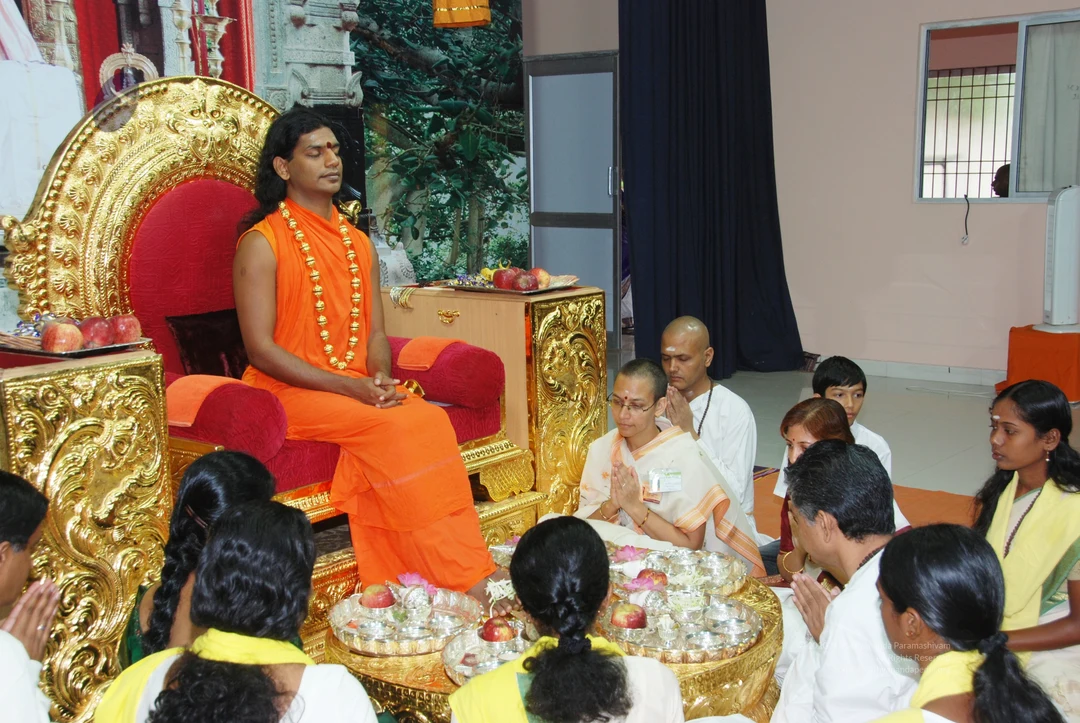
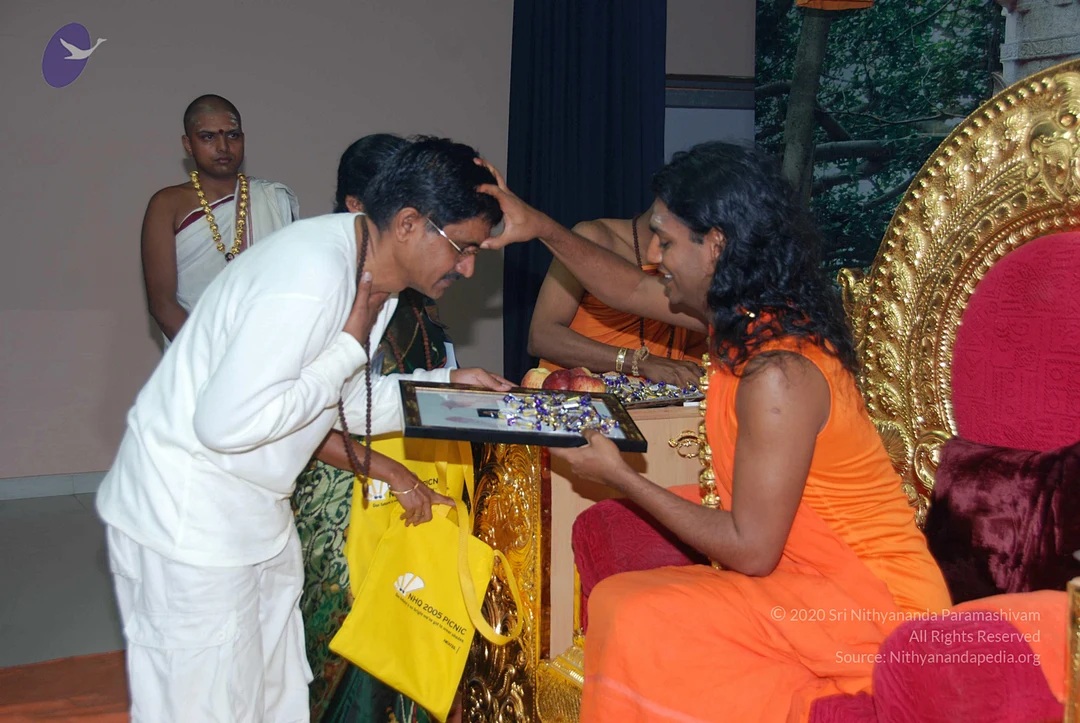
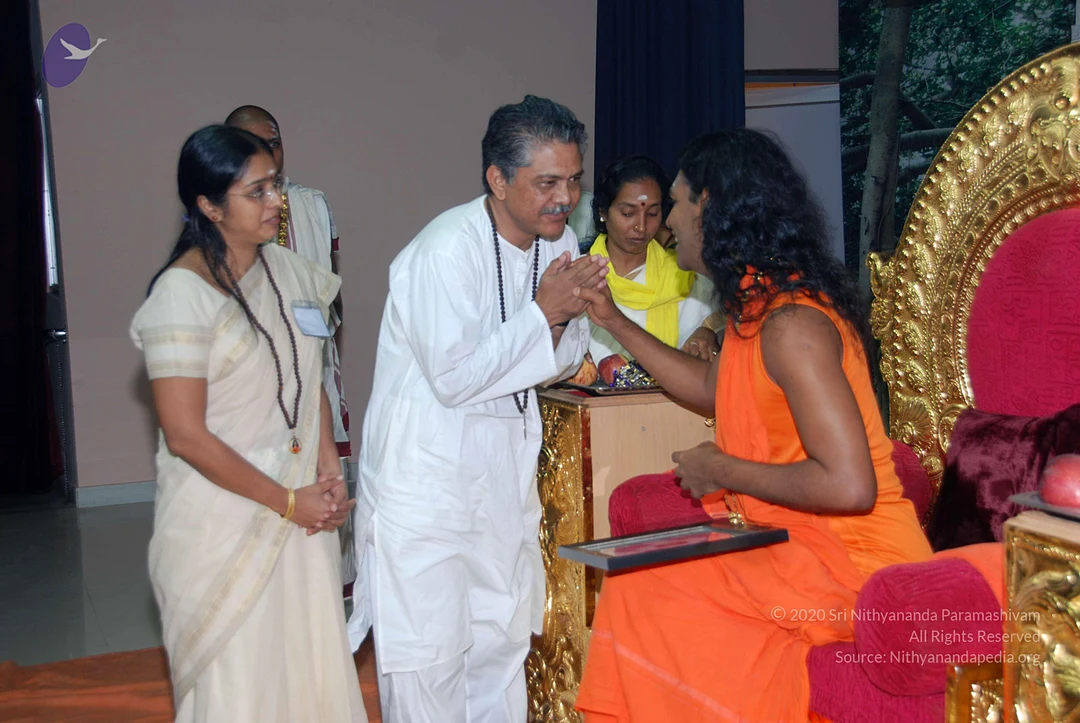
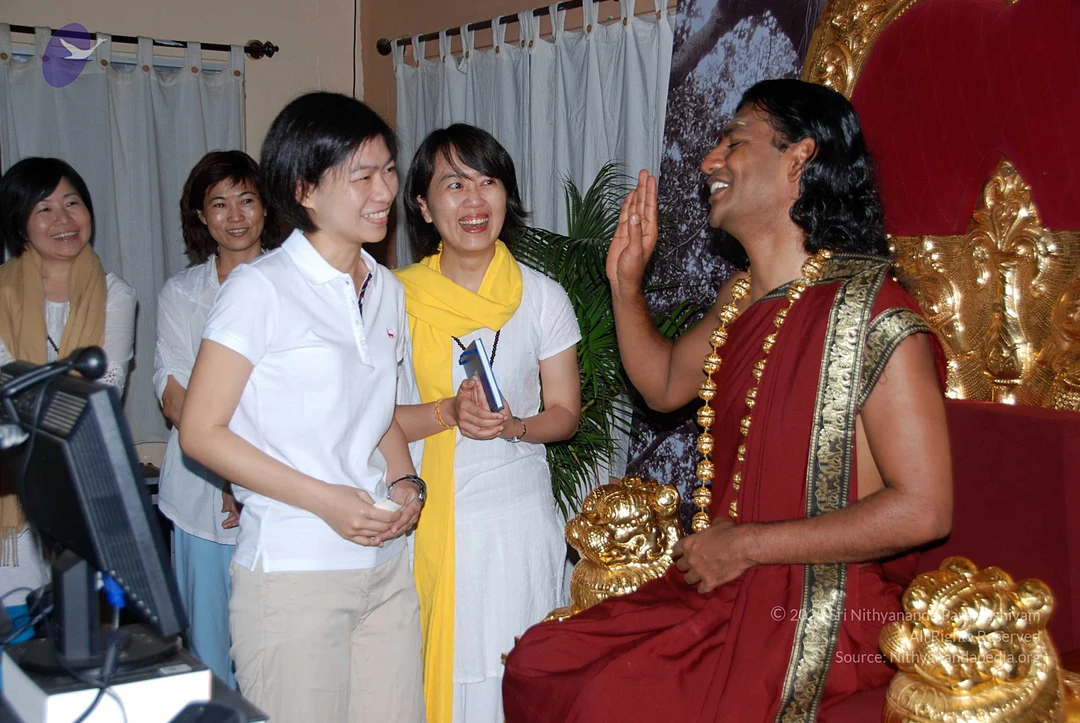
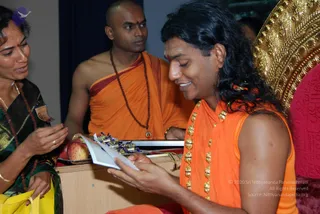
A photograph of an indoor hall where a man in white kurta-style clothing with a rudraksha mala stands at left, holding a white cloth, beside a woman in a green sari with a beaded necklace who holds a yellow tote bag. Seated on a large ornate golden throne with red cushions is a figure in saffron-orange robes with gold ornamental necklaces and long dark hair, smiling as he looks at a paper. A shaved-headed man in white with a gold chain stands in the background, and another saffron-robed attendant sits behind the throne. A tray of red apples rests on the gold table at right, and a backdrop shows a painted forest scene. The yellow bag reads NHQ 2005 PICNIC.A seated man with long swept-back dark hair and a red forehead mark wears a sleeveless saffron-orange garment with gold ornamental buttons and bangles. He sits in front of an ornate gold throne with a red cushion, smiling as he reads a small open booklet held in both hands. To his left, a woman in a dark green and gold sari with a red bindi and a long red-brown beaded necklace sits and gestures toward a plate of apples and wrapped sweets on a wooden table. Behind them, a shaved-headed man in orange robes and a rudraksha mala stands in the background.A seated man in orange robes with long swept-back dark hair, gold necklaces and rudraksha malas sits on a red cushioned throne with ornate gold carved frame, handing a small white cloth-wrapped item to a man in a white shirt and white dhoti who wears rudraksha beads and carries yellow tote bags printed with NHG 2005 RONIC. Beside them a woman in a green saree with a red blouse stands near a shaved-headed priest in orange robes holding a silver tray. Another shaved-headed man in white dhoti with gold beads stands at left. Four people are visible.A photo of a seated figure in an orange saffron robe and rudraksha mala, with long dark curly hair, on an ornate gold throne with red cushions, touching the head of a man in white clothes and glasses who bows forward, holding a framed picture on a tray with flower garlands and fruit. Another man in an orange robe stands behind the throne, and a shaved-head man in white with a gold garland stands at left. A woman in a green sari stands beside the bowing man, who carries a yellow bag printed NHQ 2005 PICNIC. A gold throne backdrop shows a green tree print. Swamiji (probable): the seated figure in saffron with long swept-back hair, rudraksha mala and gold throne fits the page's claim; treat as an appearance-based candidate.A photograph of a seated figure on an ornate gold-carved throne with red cushions, wearing a saffron-orange sleeveless garment and long dark wavy hair, receiving a gesture from a man in a white kurta and white dhoti with a dark rudraksha mala, who stands with palms pressed together in namaste near a small wooden table holding a tray with fruit and a framed picture. A woman in a cream sari with a yellow shawl stands beside him, a second woman in a cream sari and a red bindi stands behind, and a woman in a cream and gold sari with a brown bead necklace stands at left with hands folded. A green backdrop and a gold-framed chair complete the scene.A seated figure in an orange saffron robe with long swept-back dark hair, a red bindi and a gold ceremonial necklace sits on an ornate gold-and-red throne, smiling and placing his right hand on the forehead of a man in a white kurta with a rudraksha mala. The man stands with palms joined in respect and bowed slightly. To the left, a woman in a cream sari with a brown mala and gold bangles stands with hands clasped, smiling. A small framed picture rests on a wooden table beside the throne. Behind them a backdrop shows a forest scene with temple carvings, and several people in white clothes stand in the background. Probable Swamiji (seated figure on the throne) blessing a devotee, identified by long swept-back hair, orange saffron robe, gold necklace and throne.
13

03-eKalpataru-Evening Session

127 dated photos in previewSource gallery
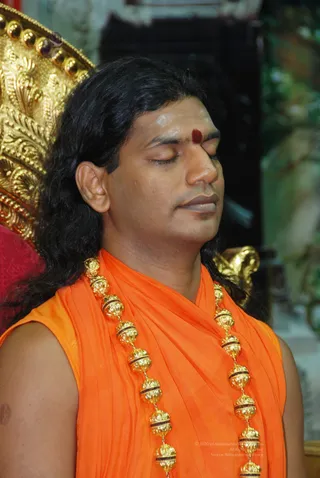
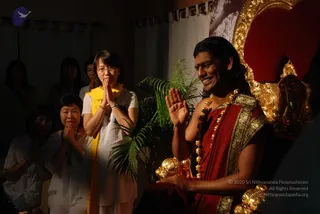
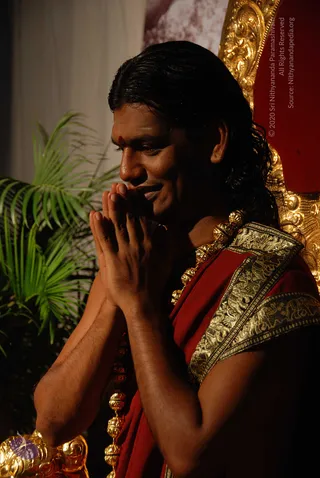
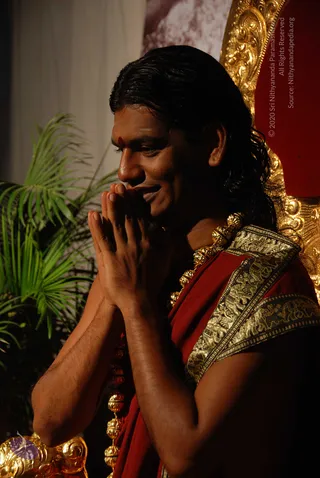
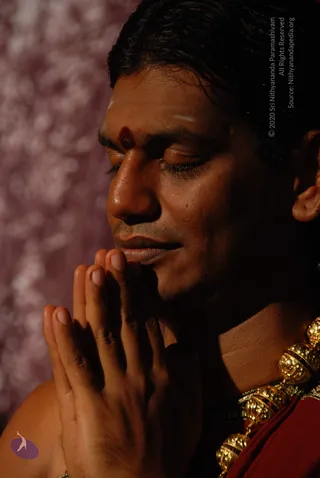
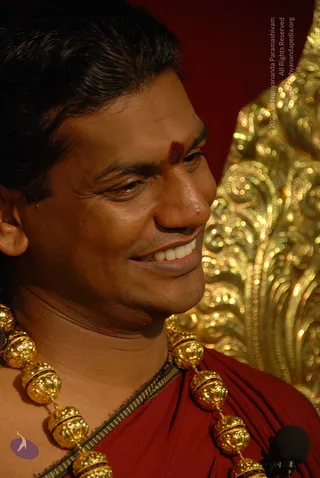
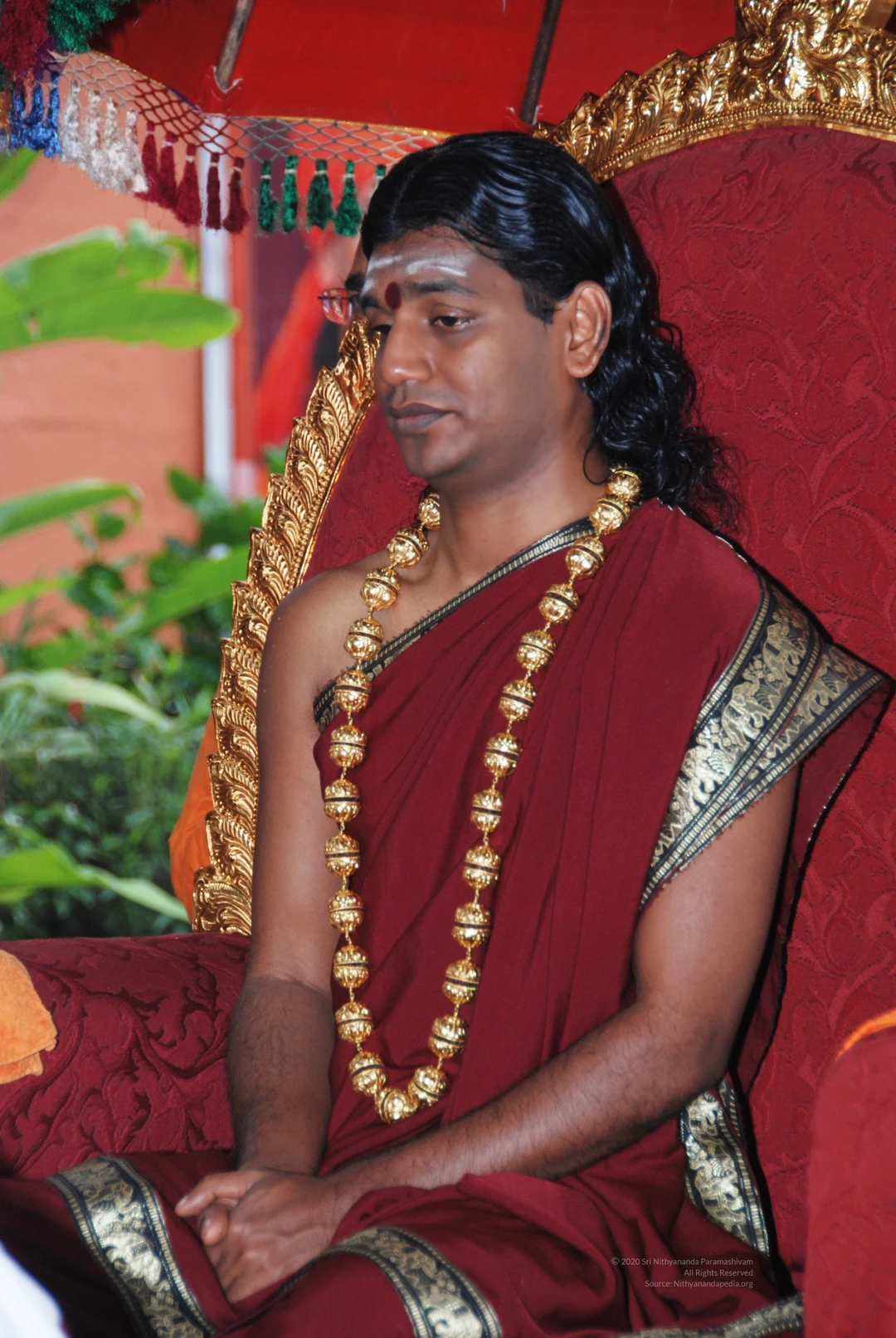
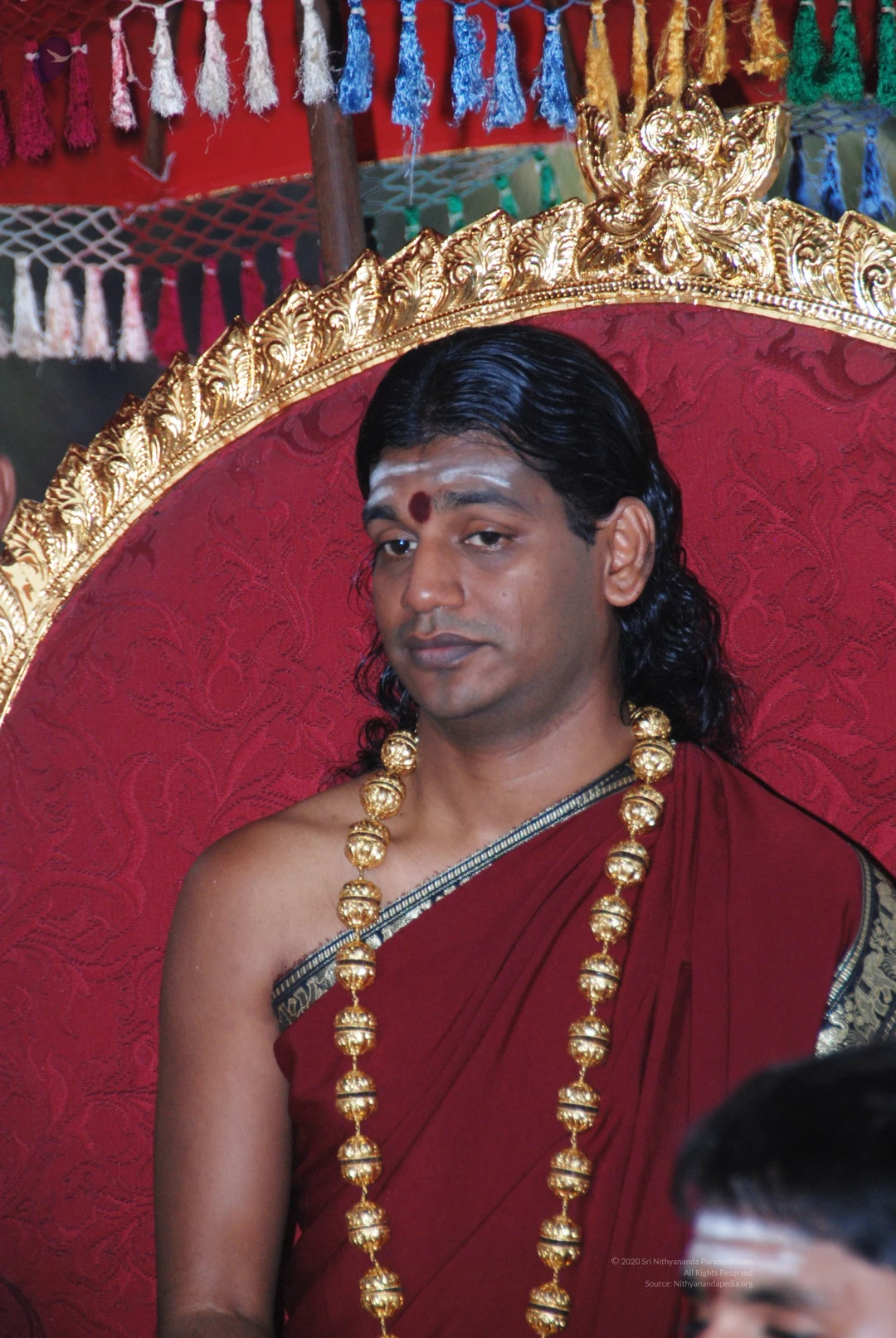
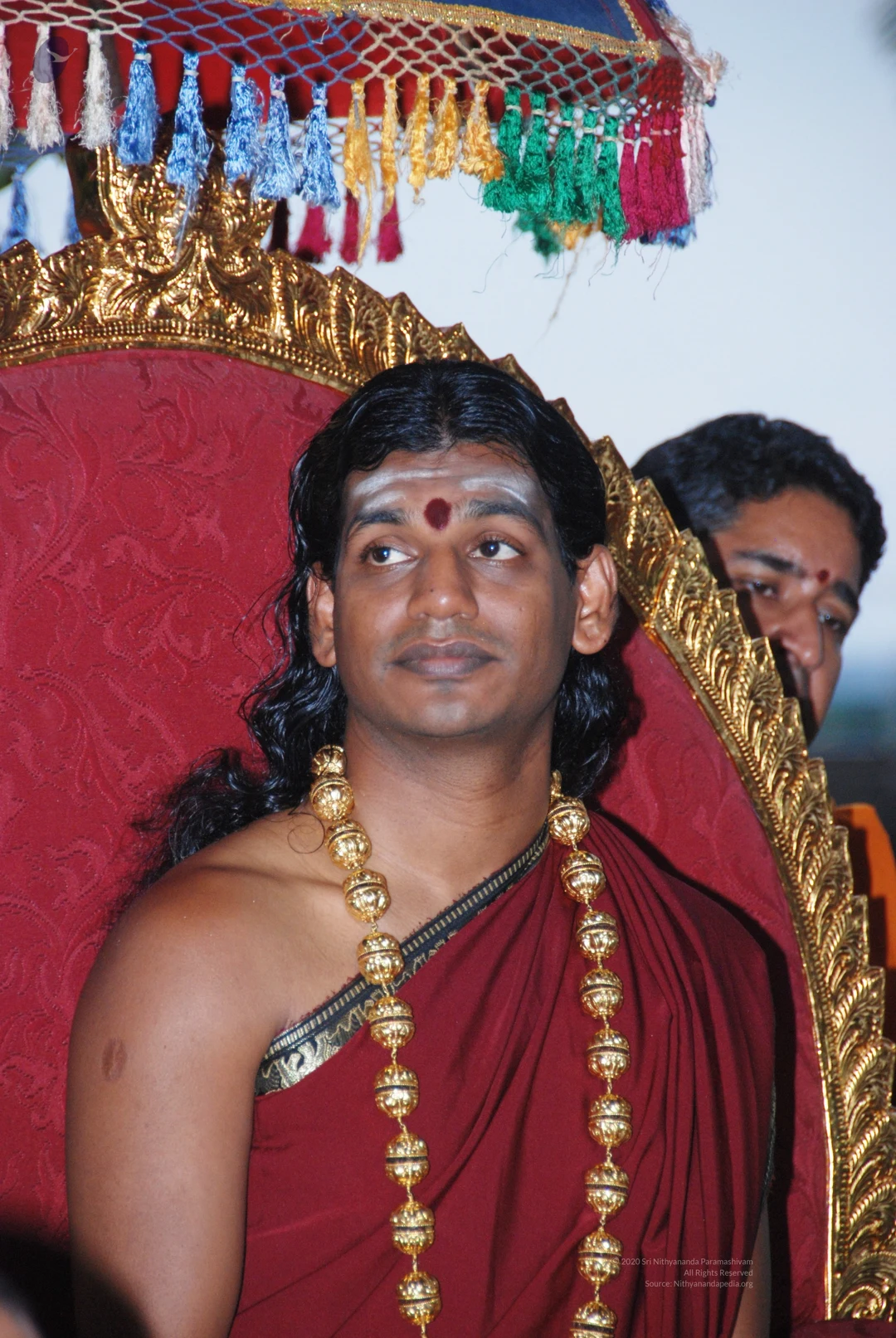
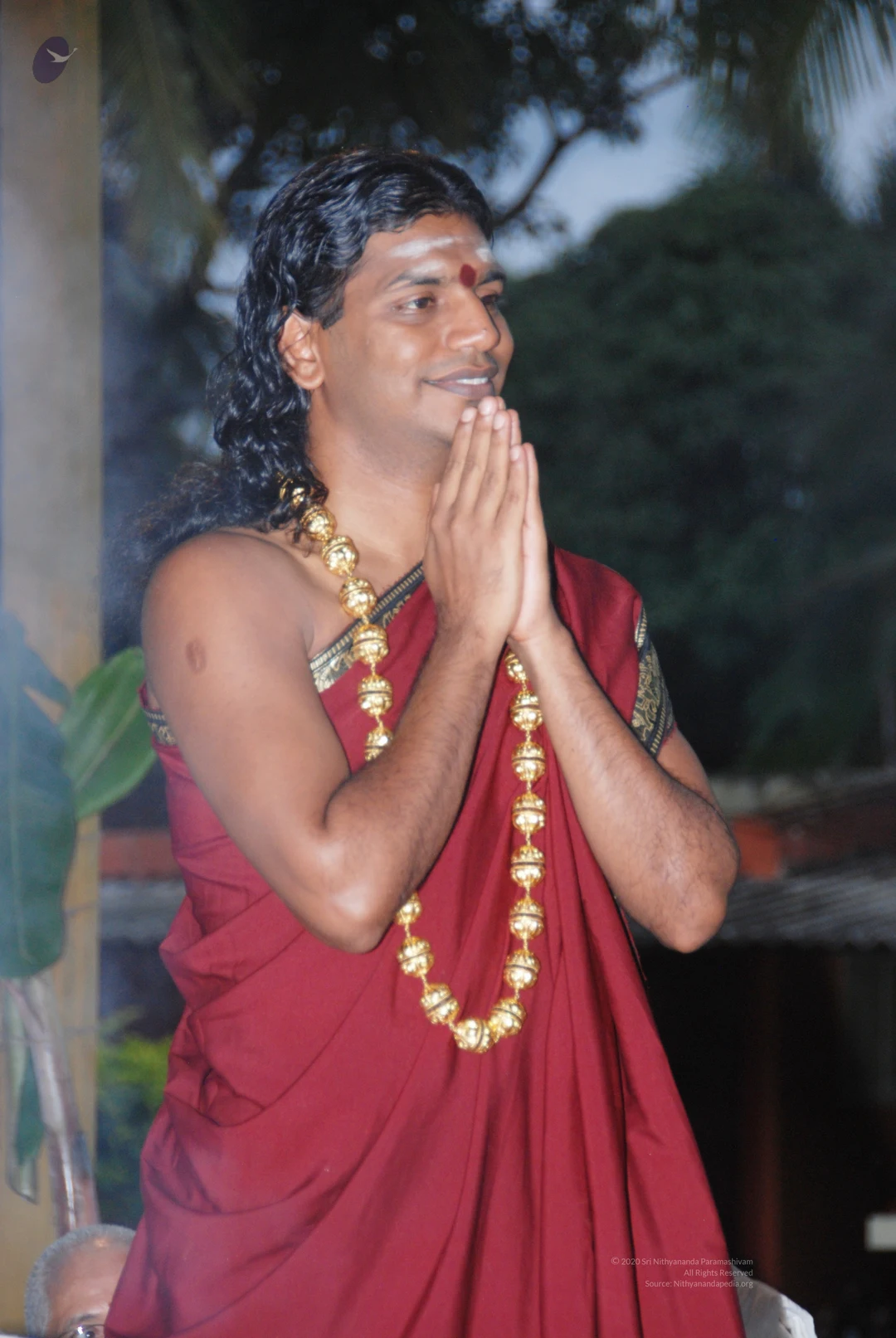
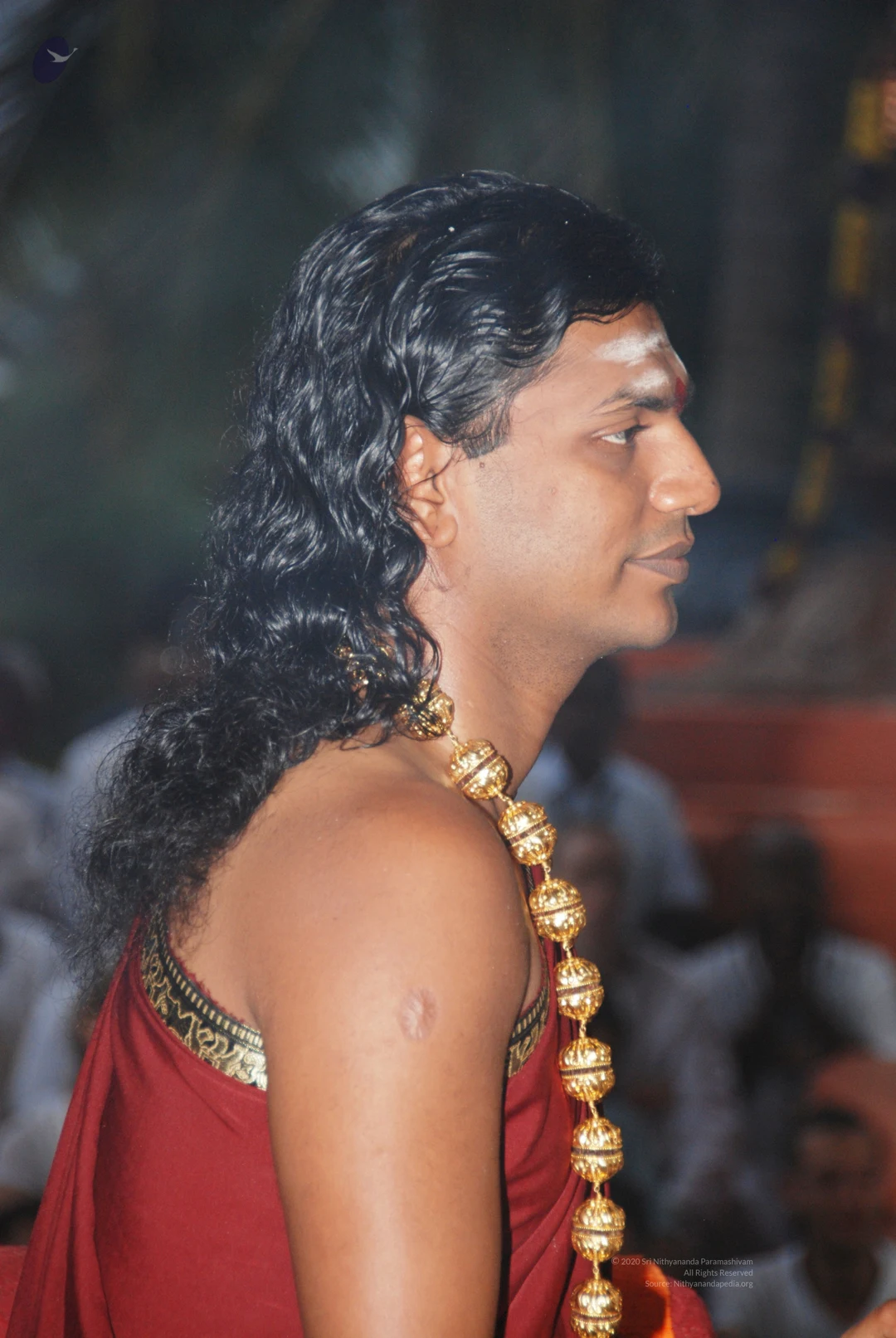
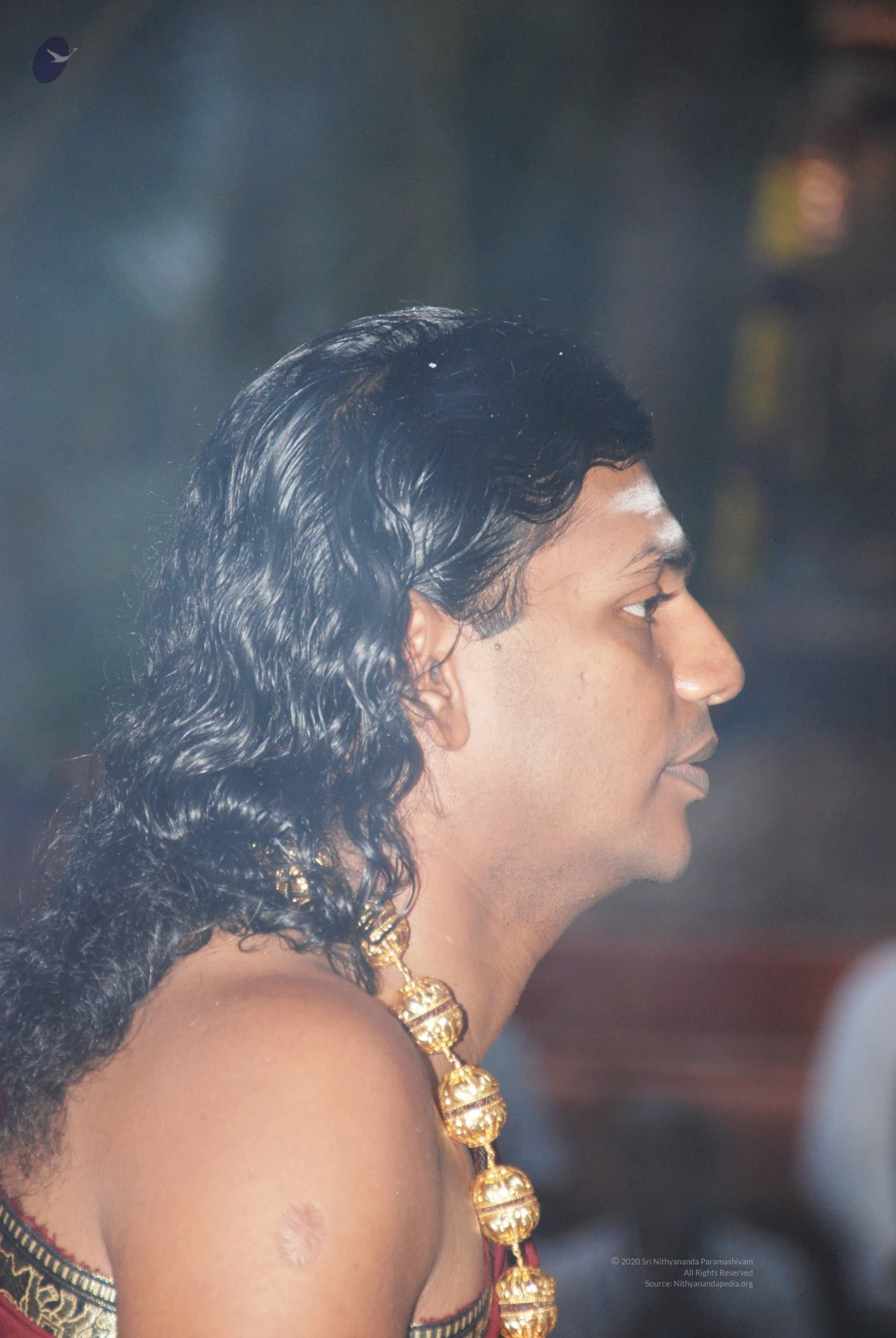
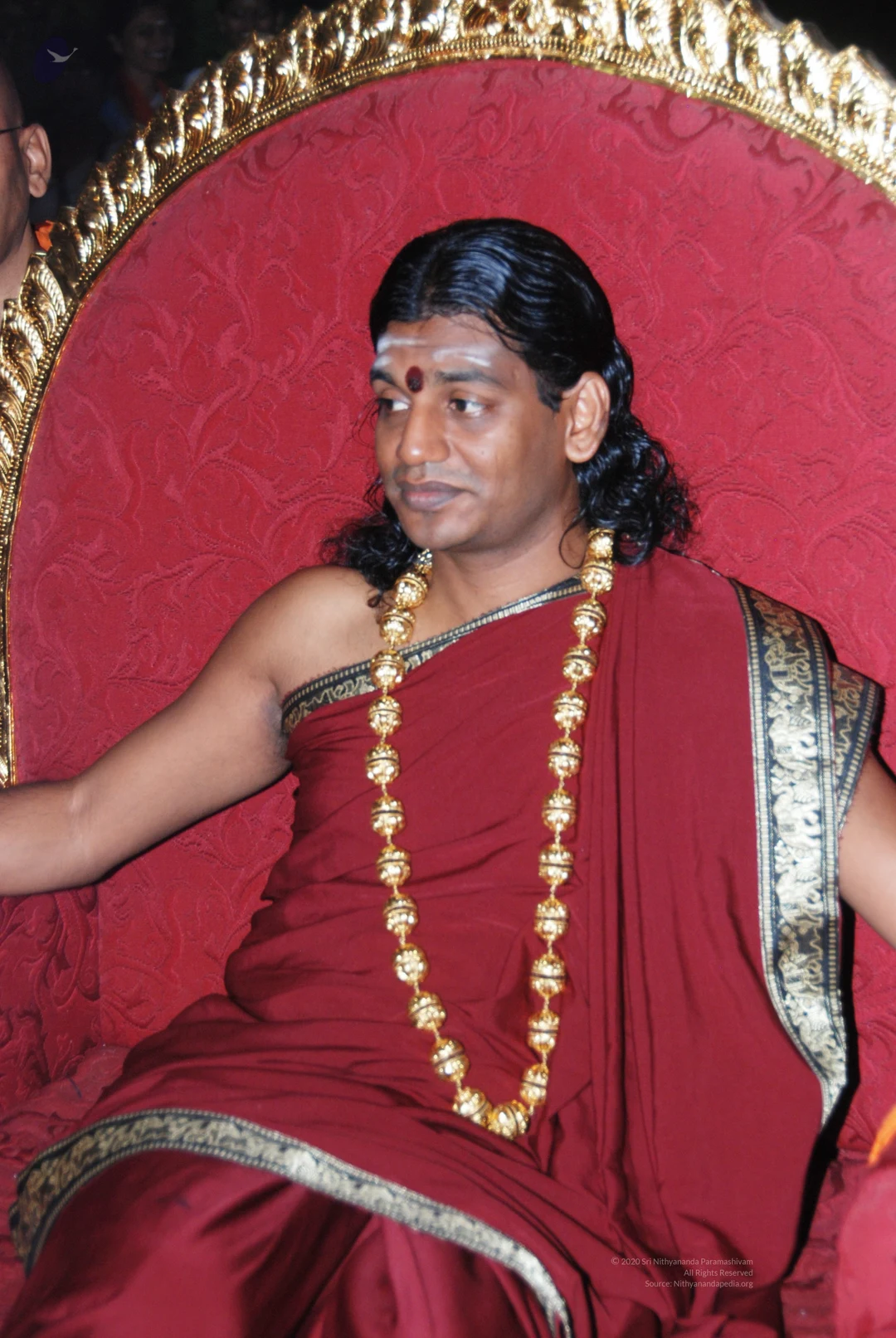
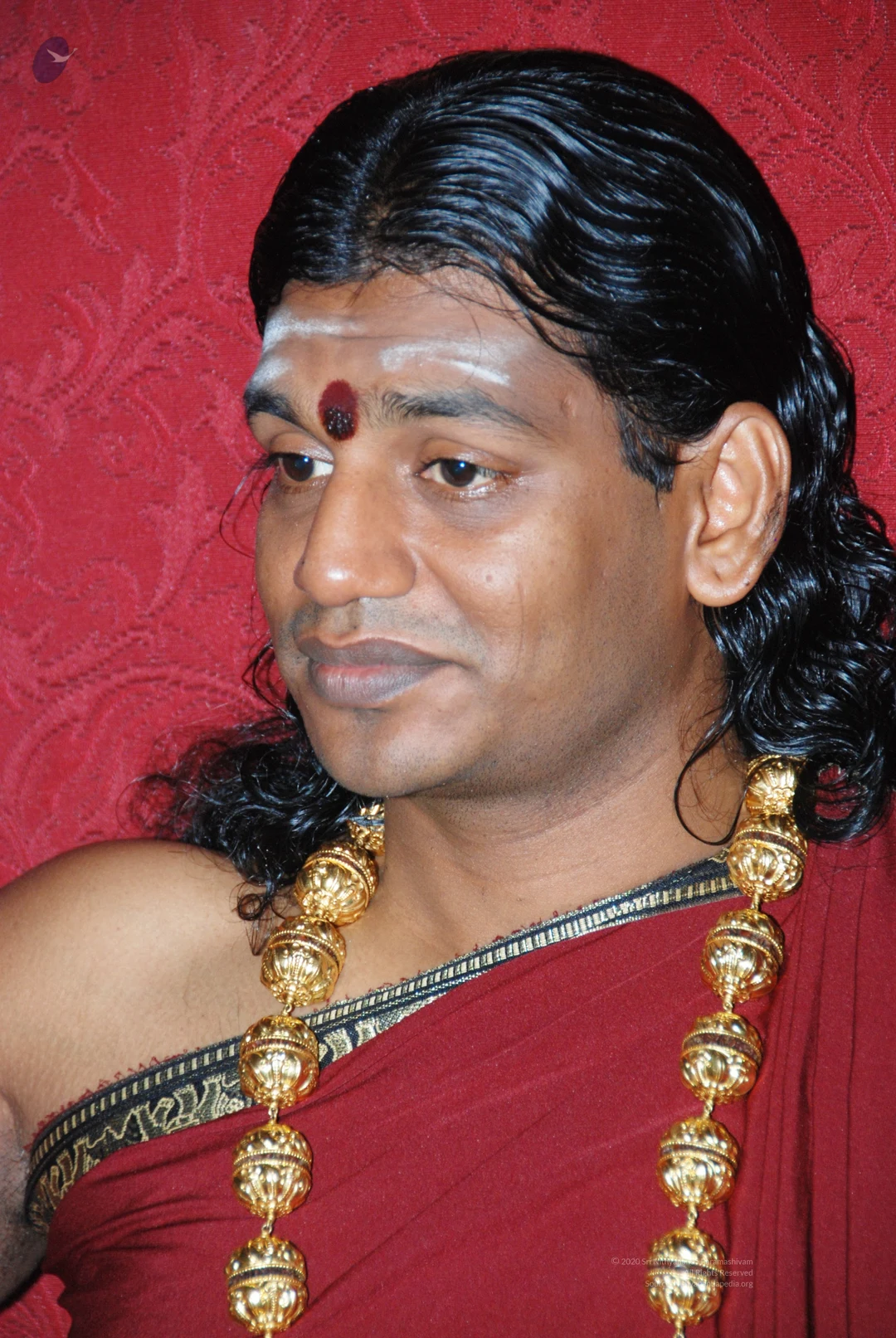
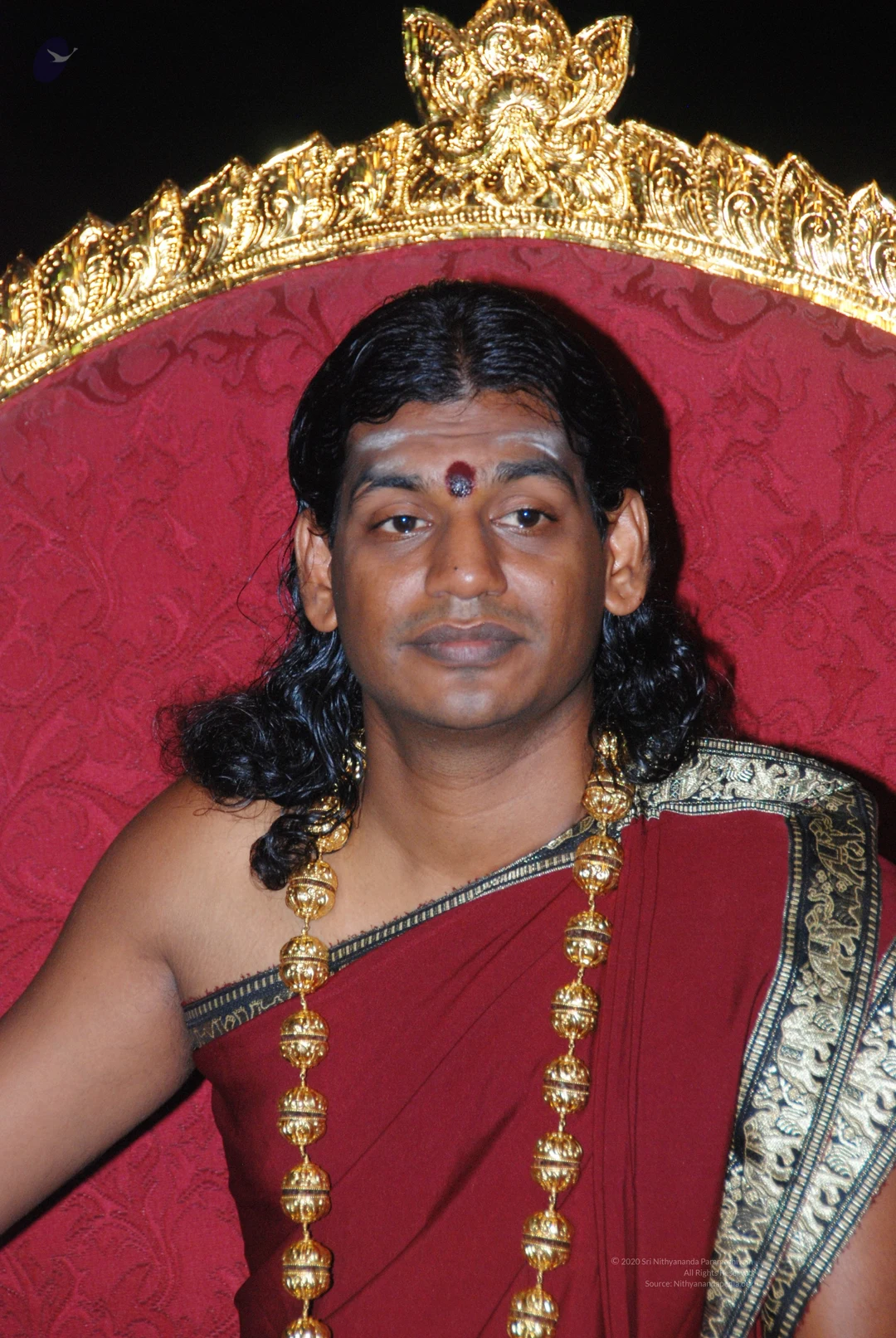
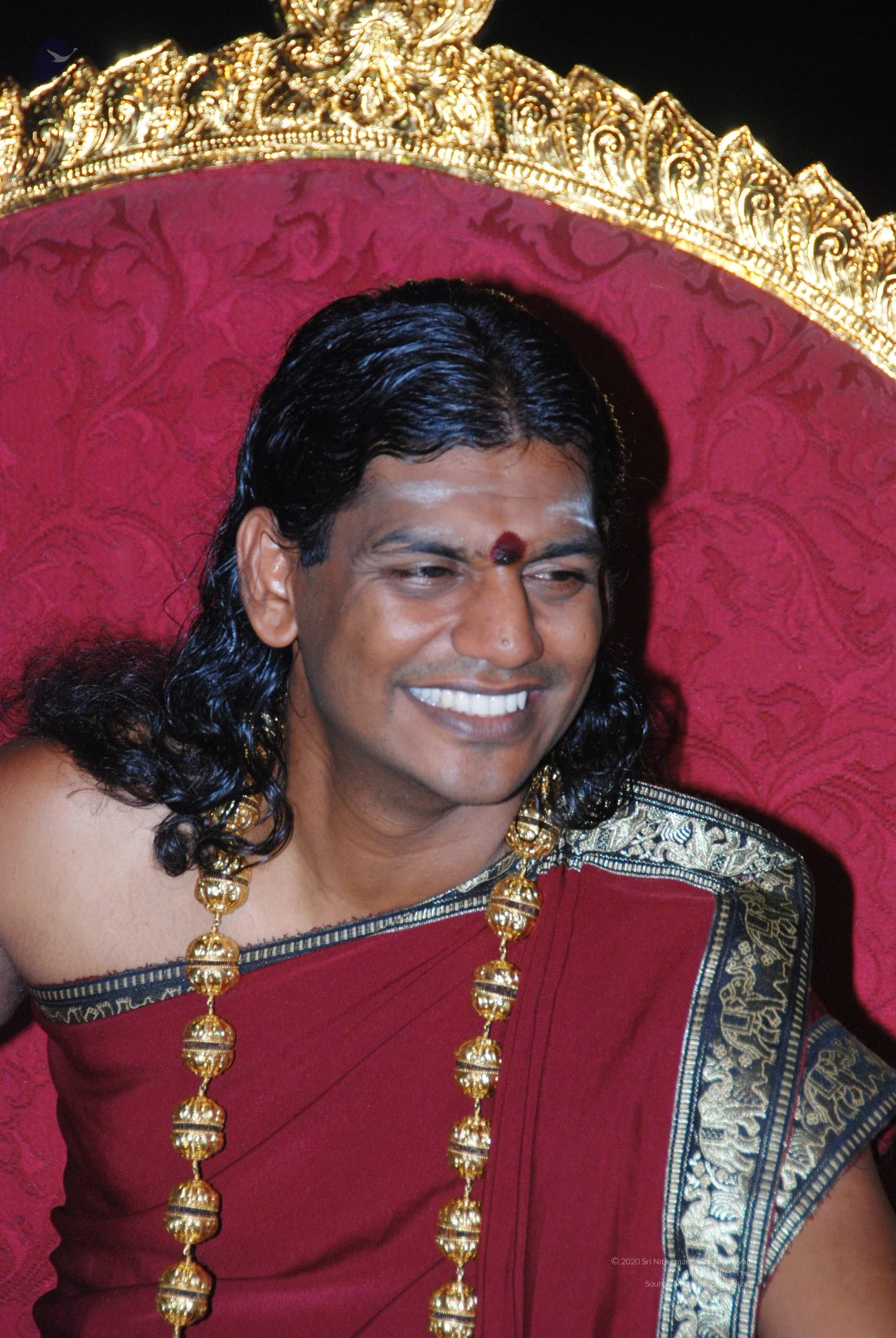
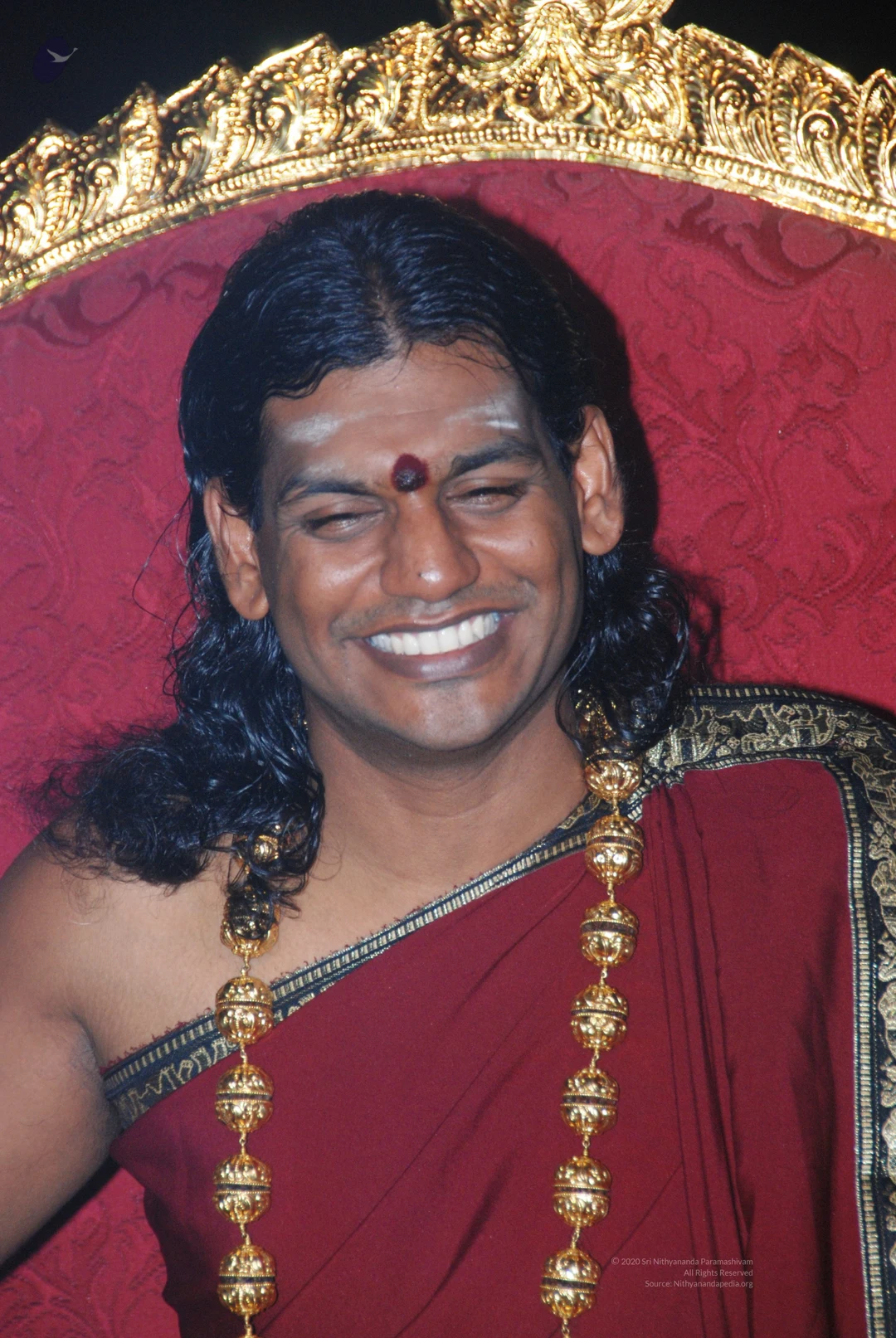
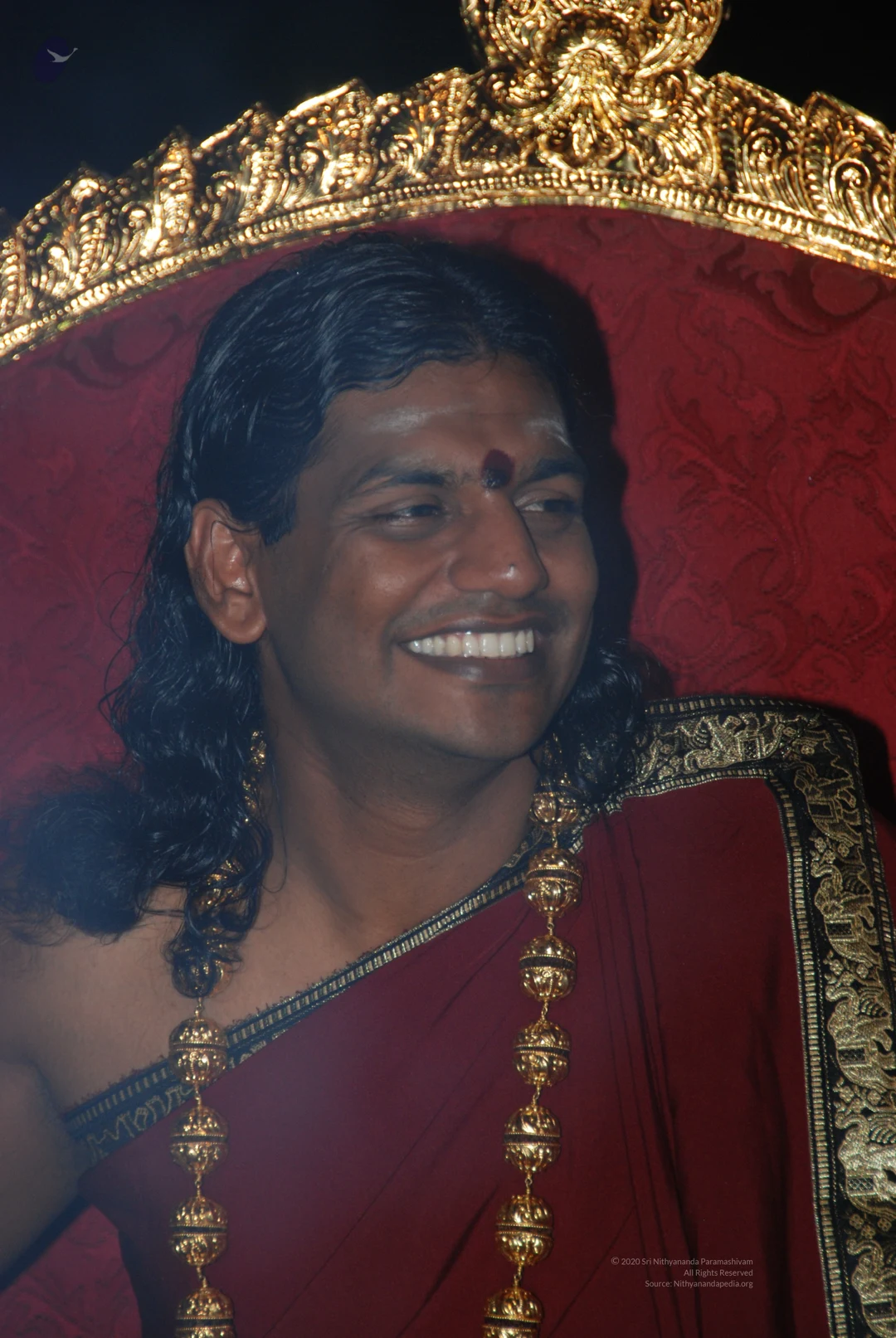
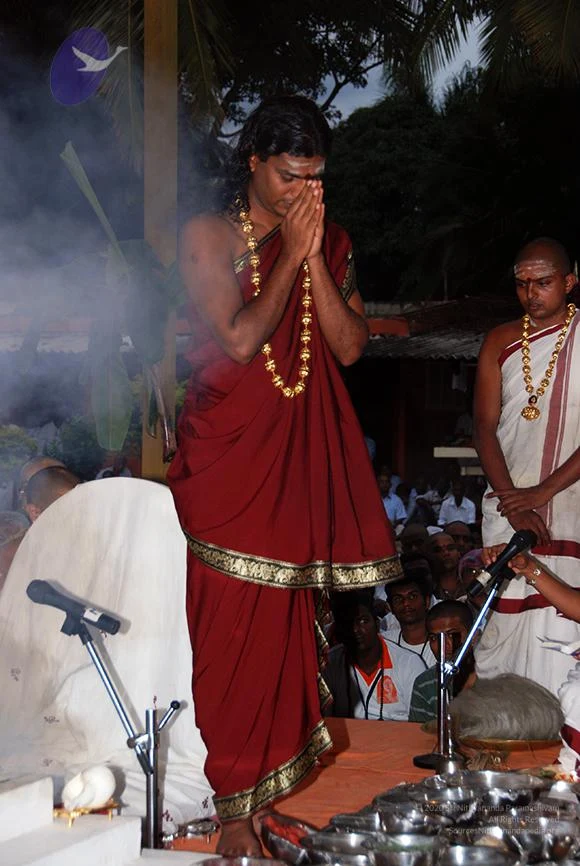
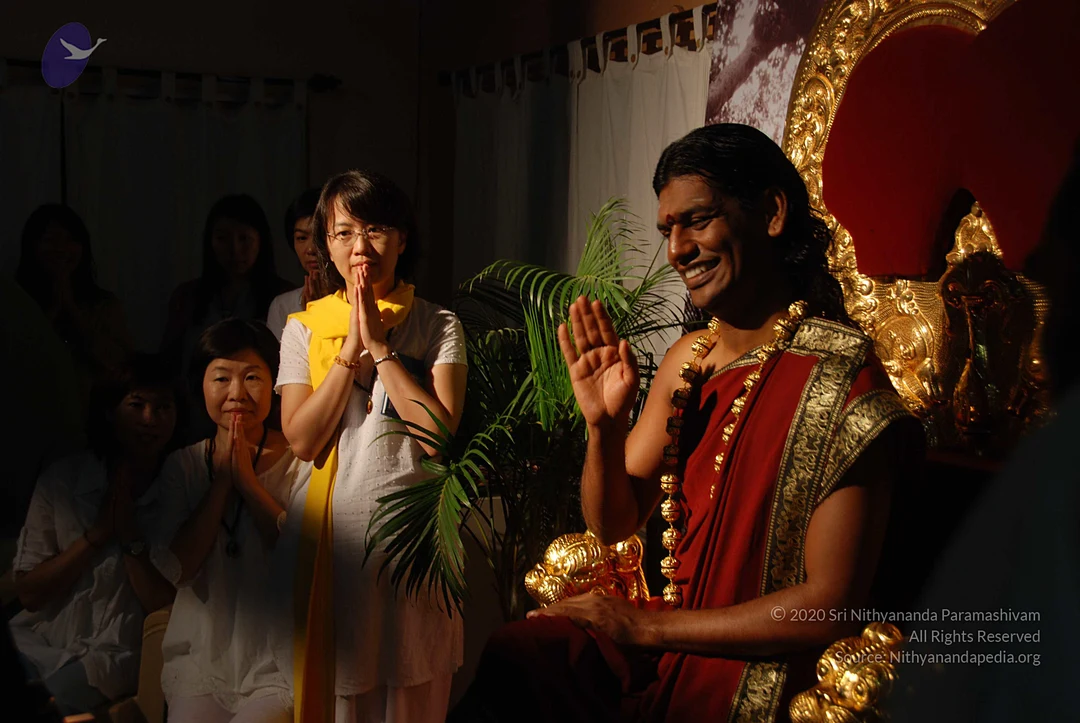
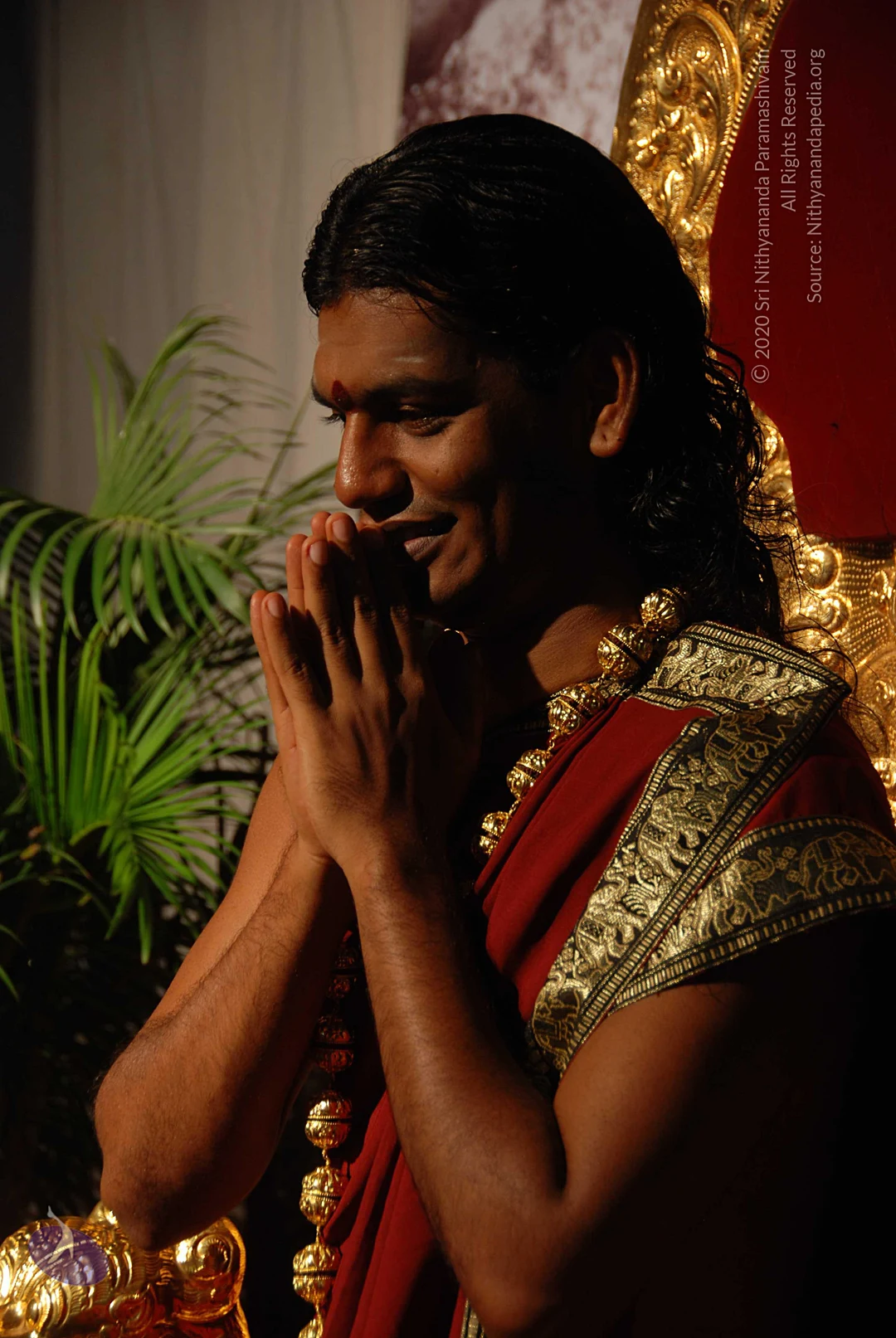
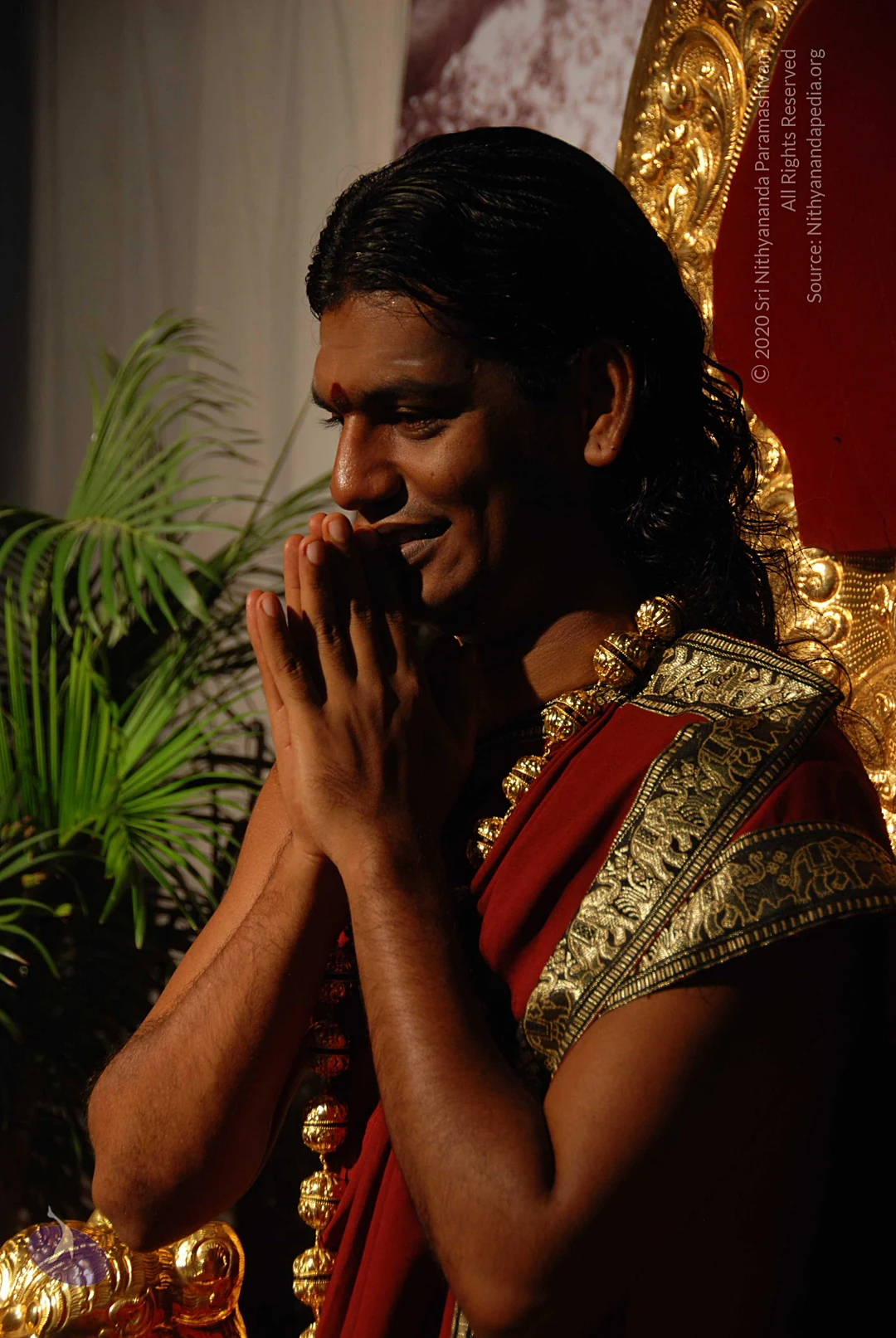
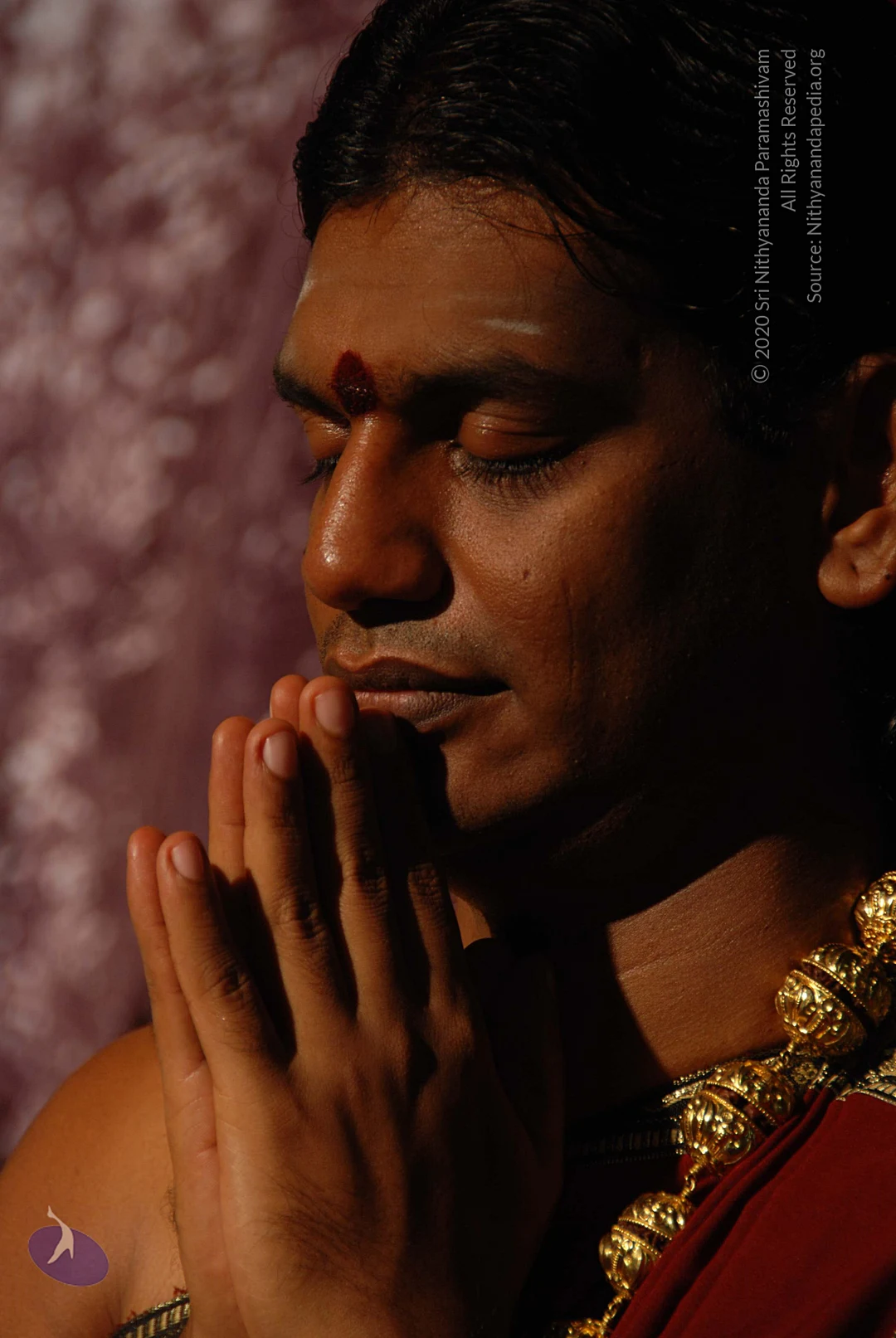
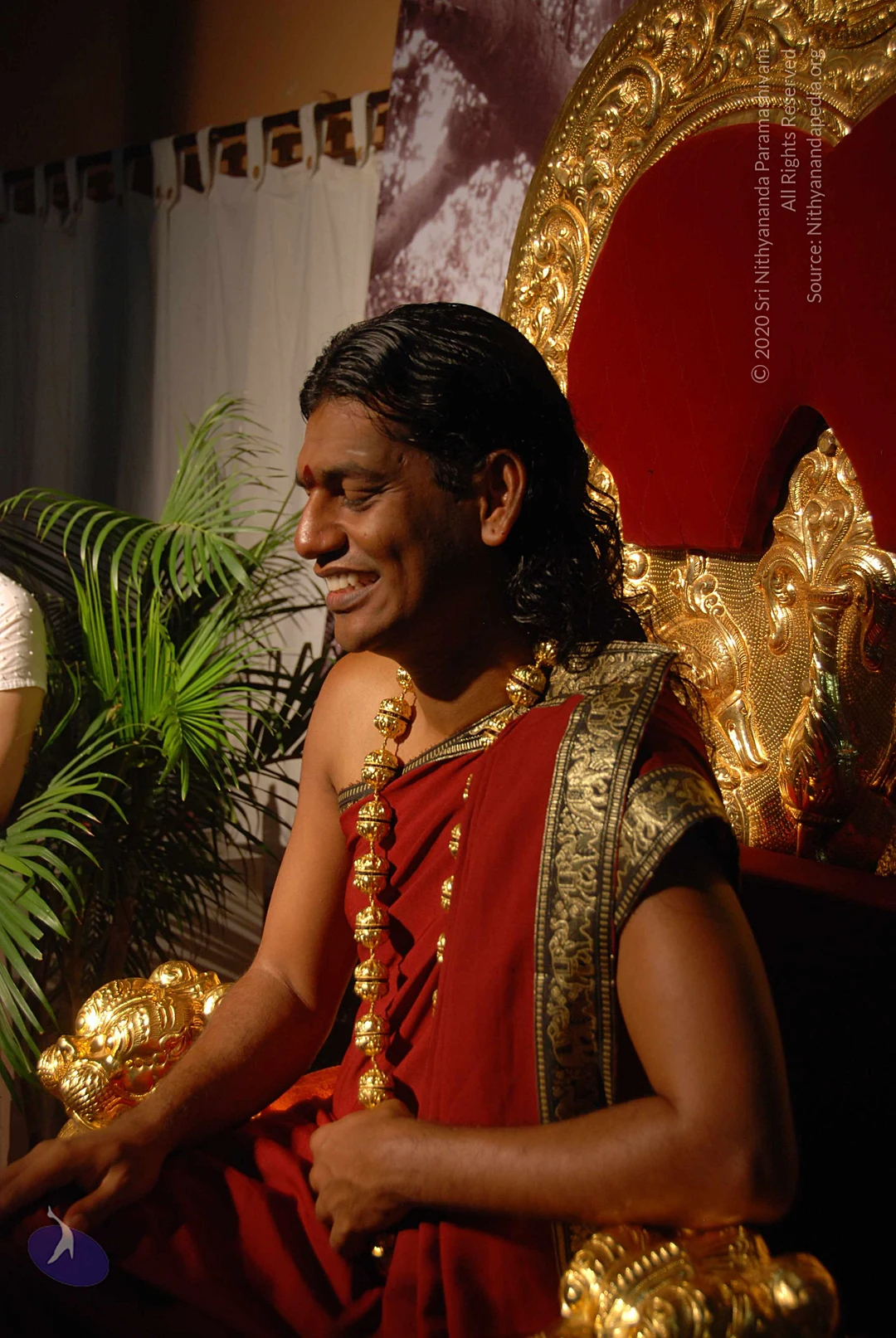
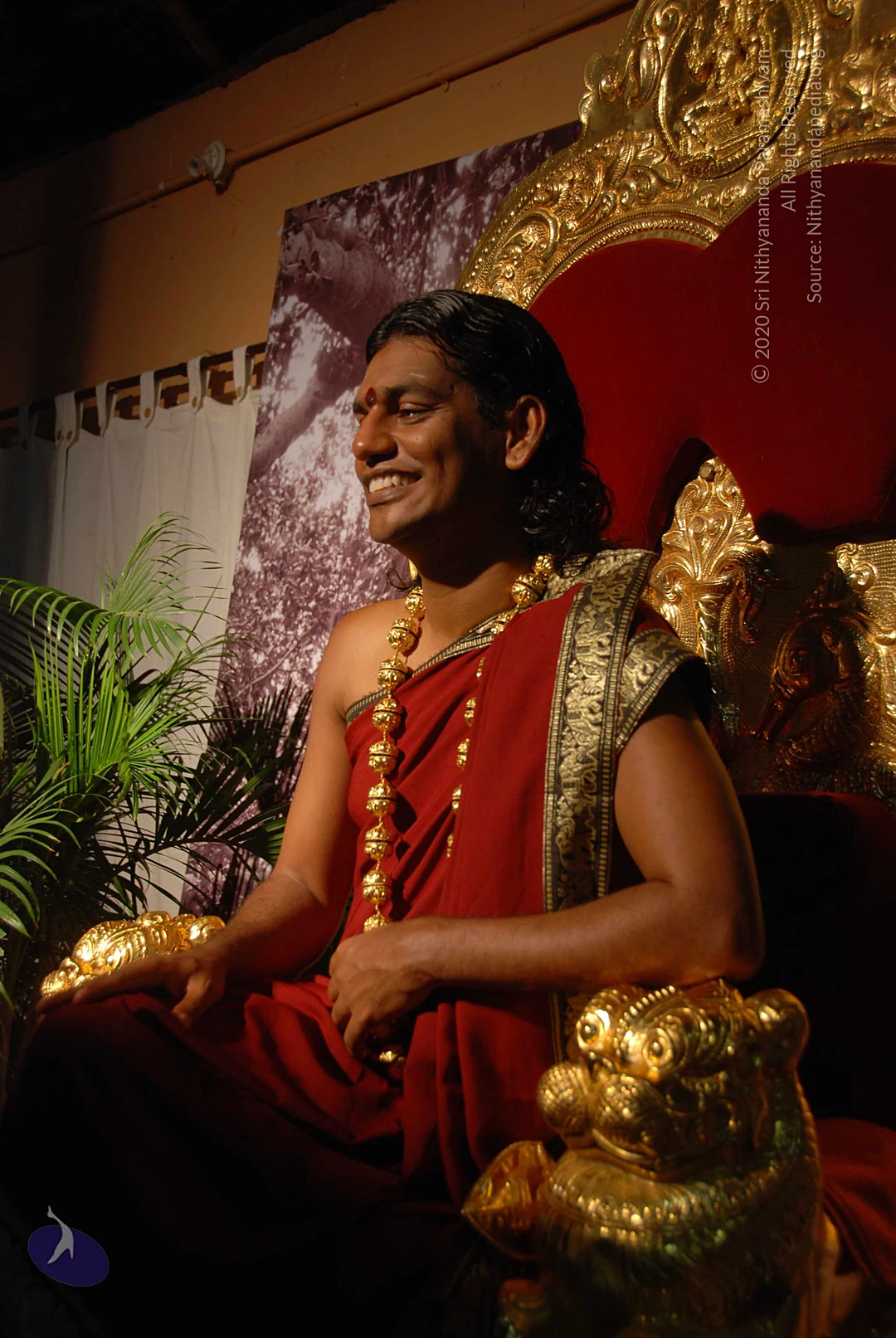
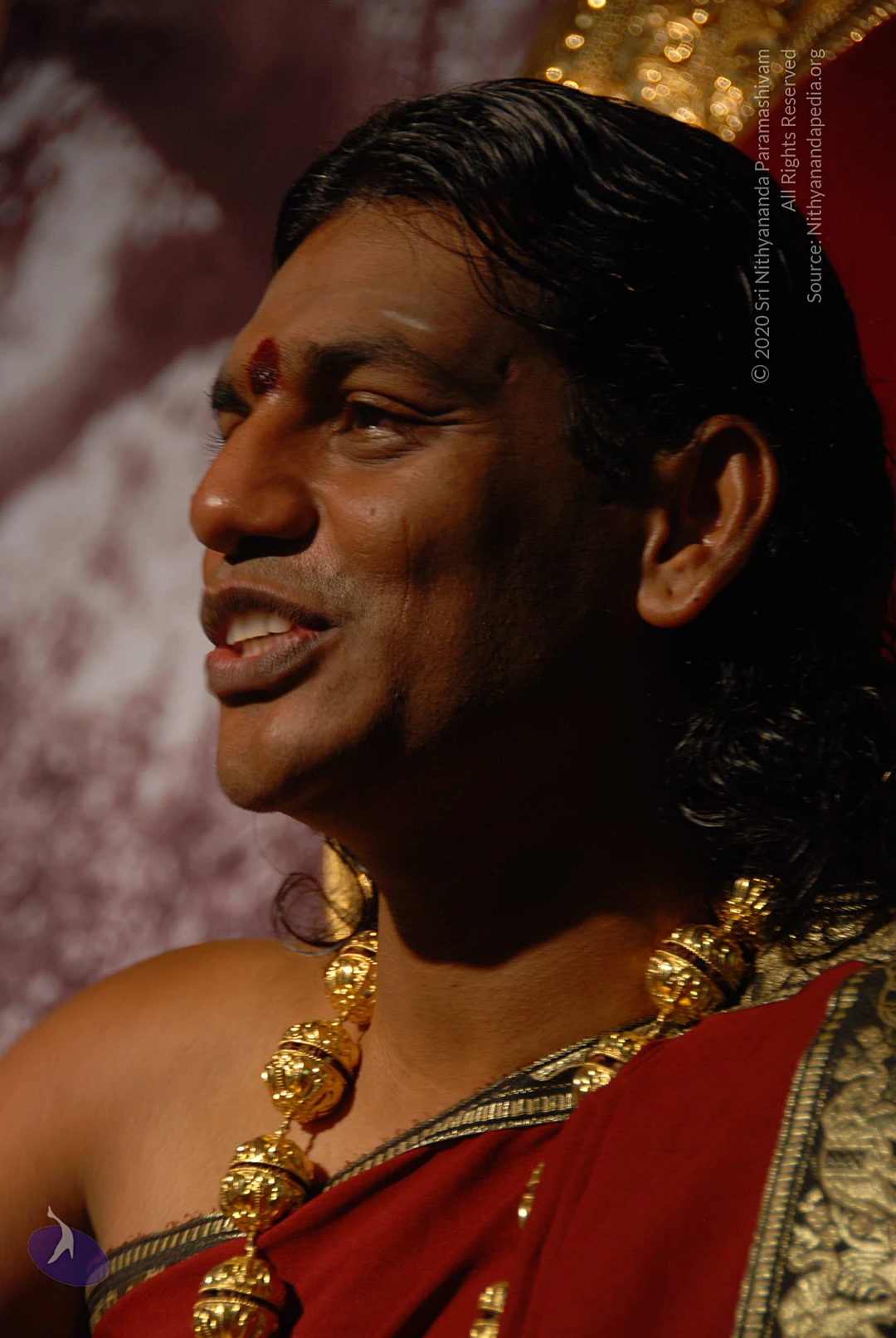
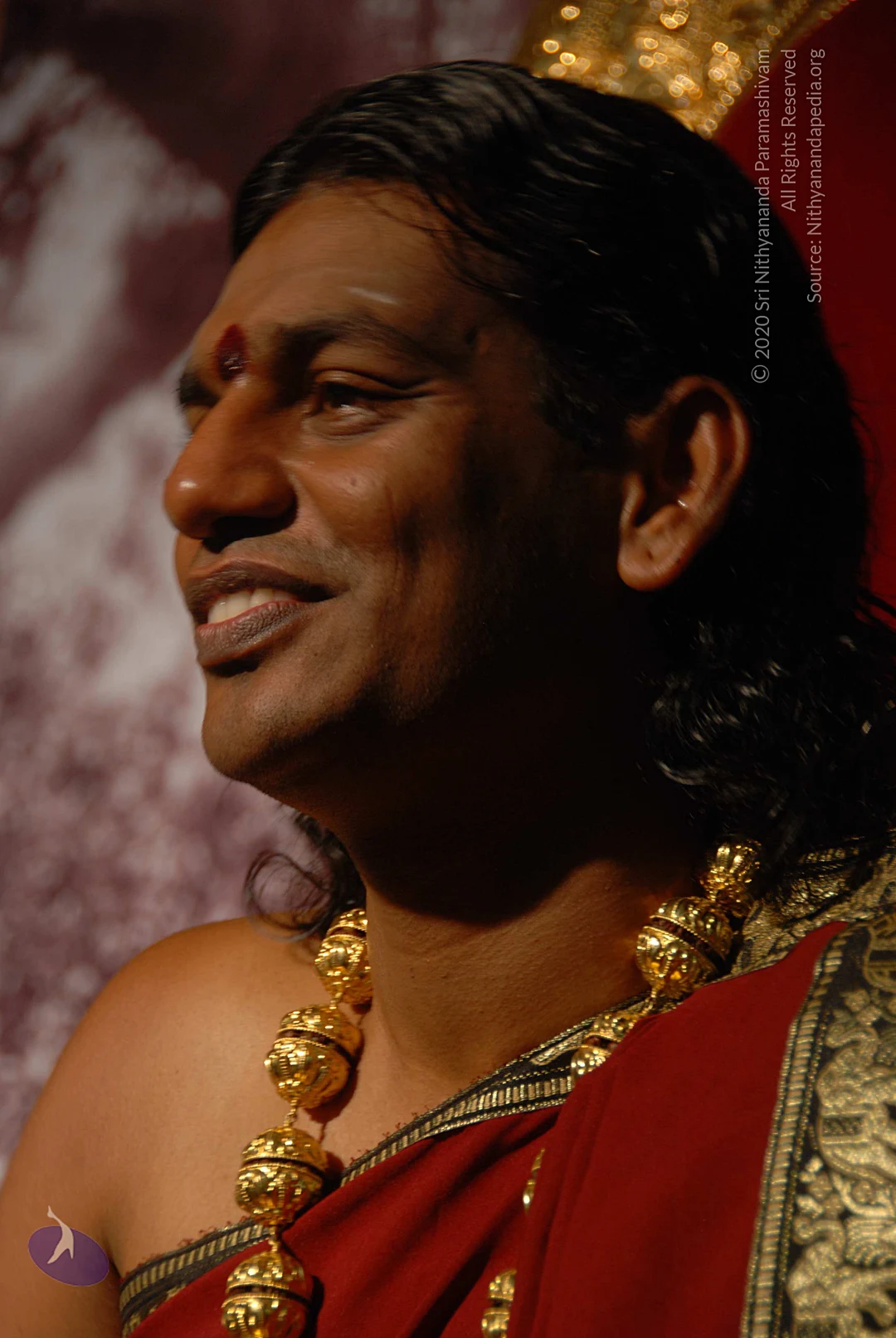
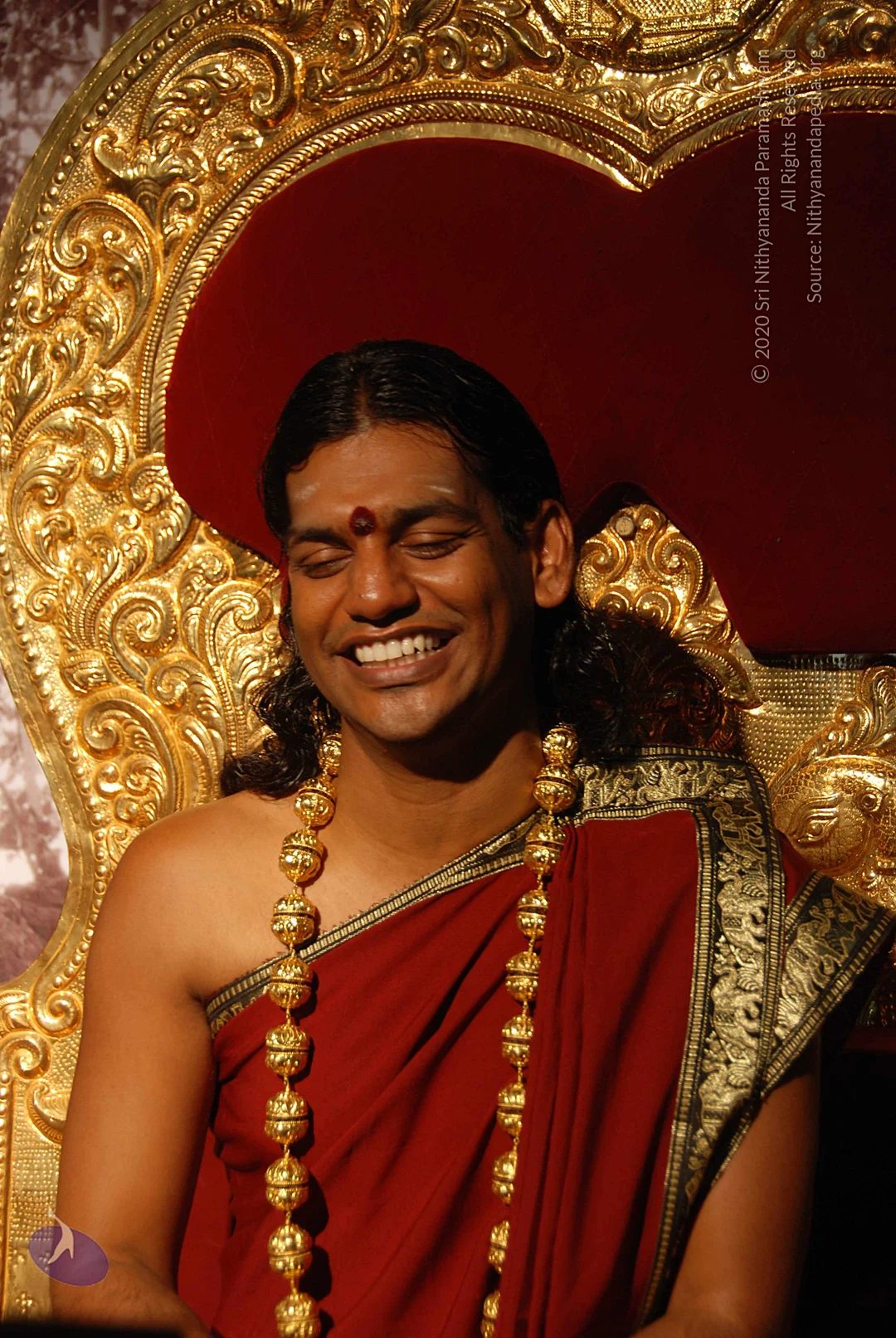
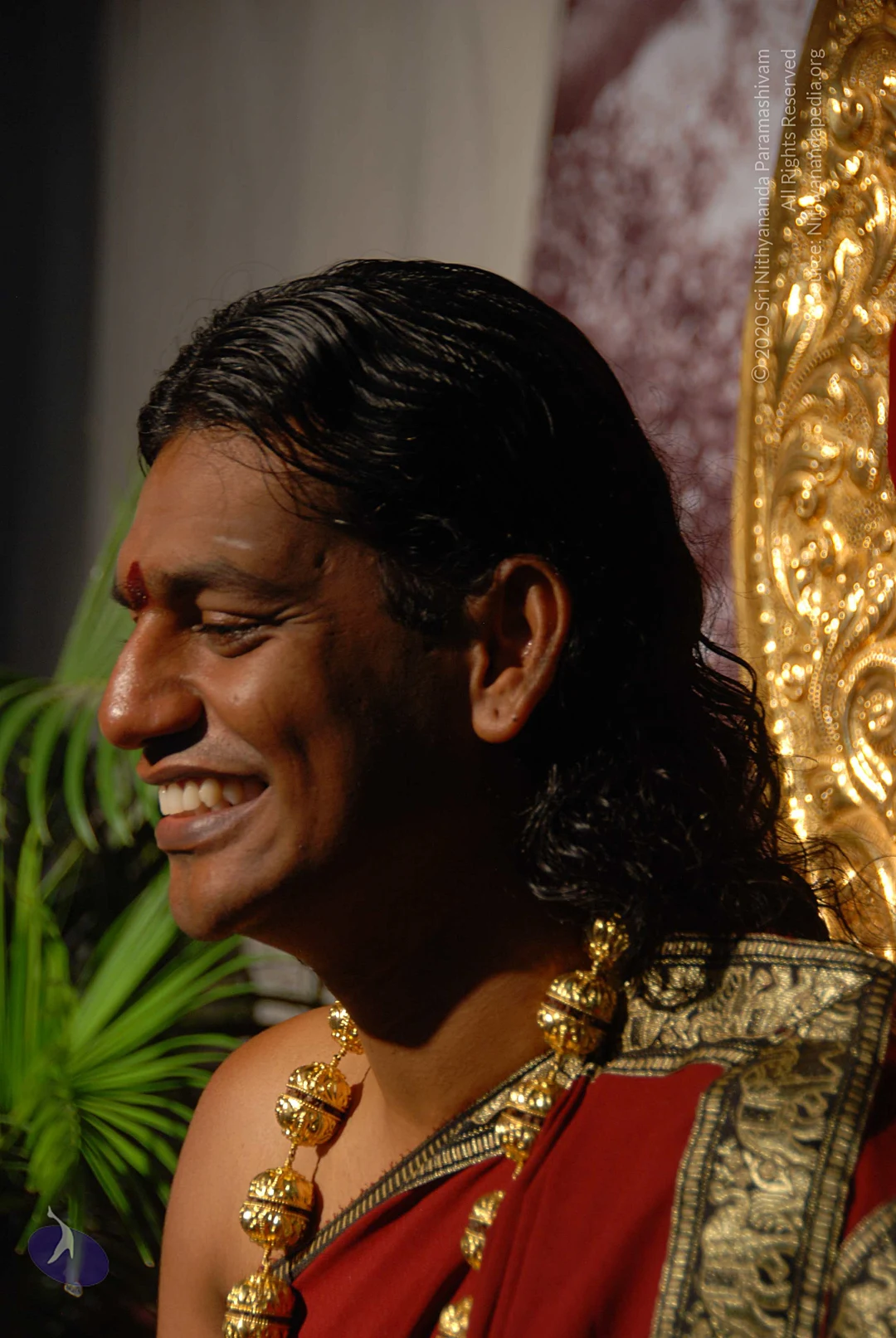
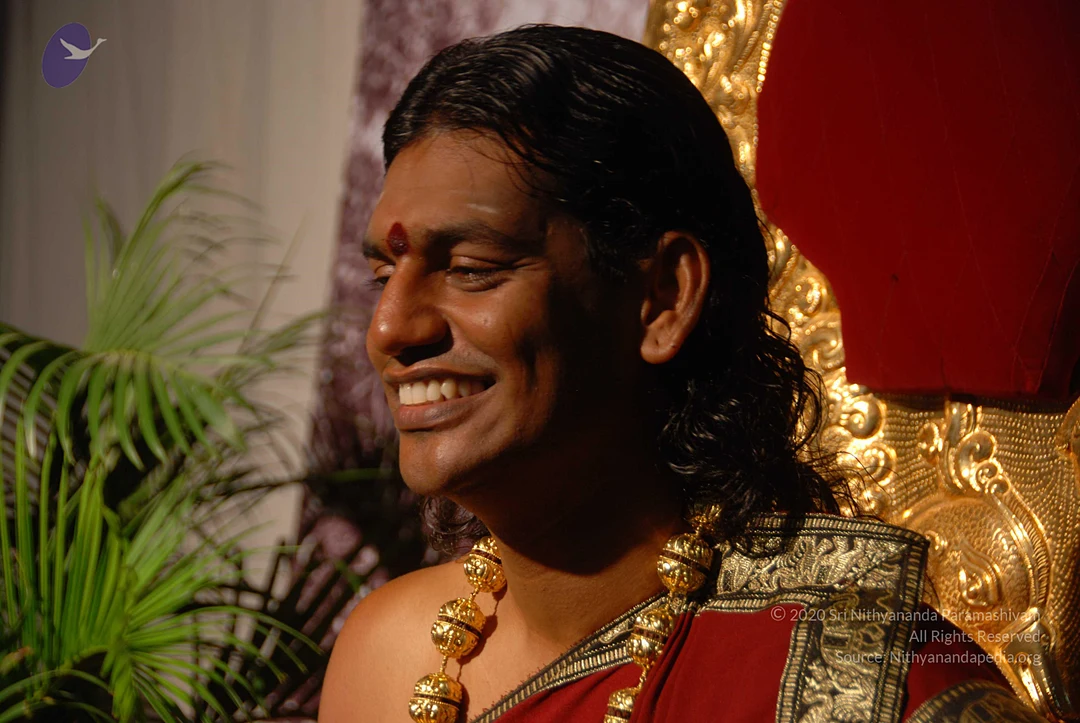
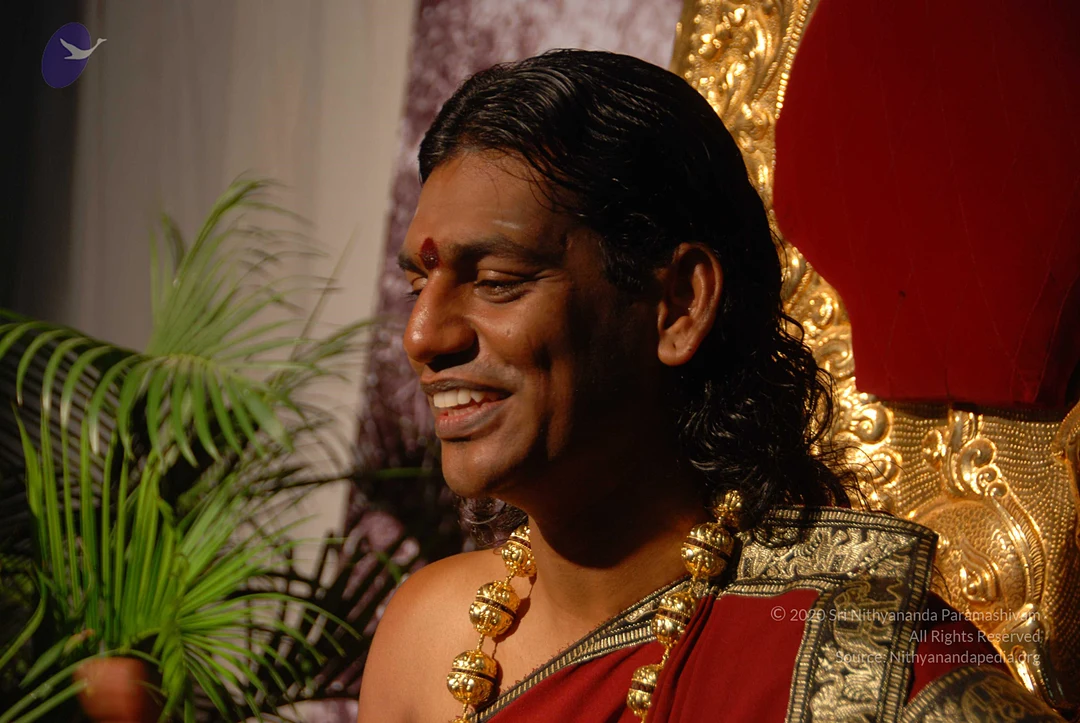
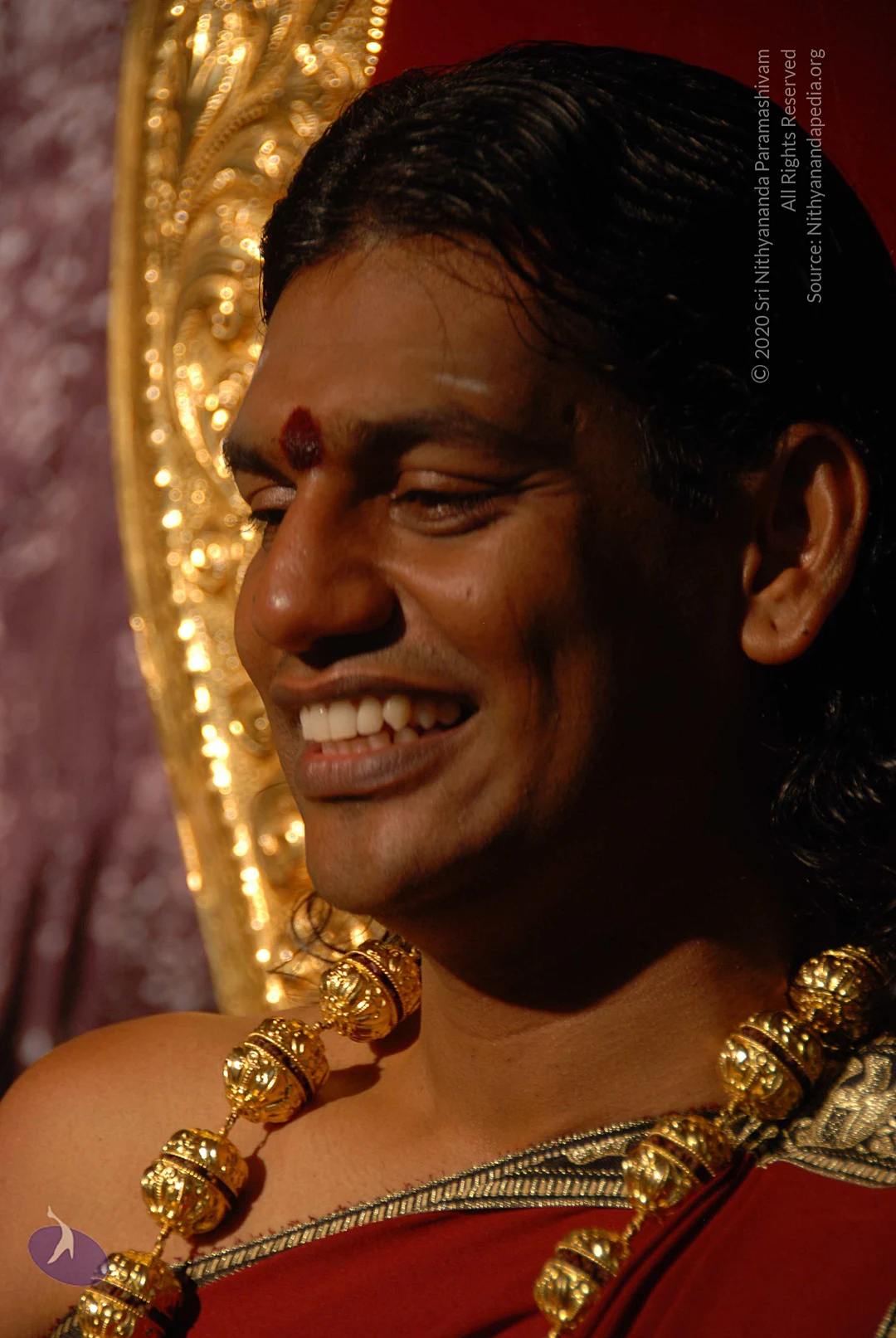
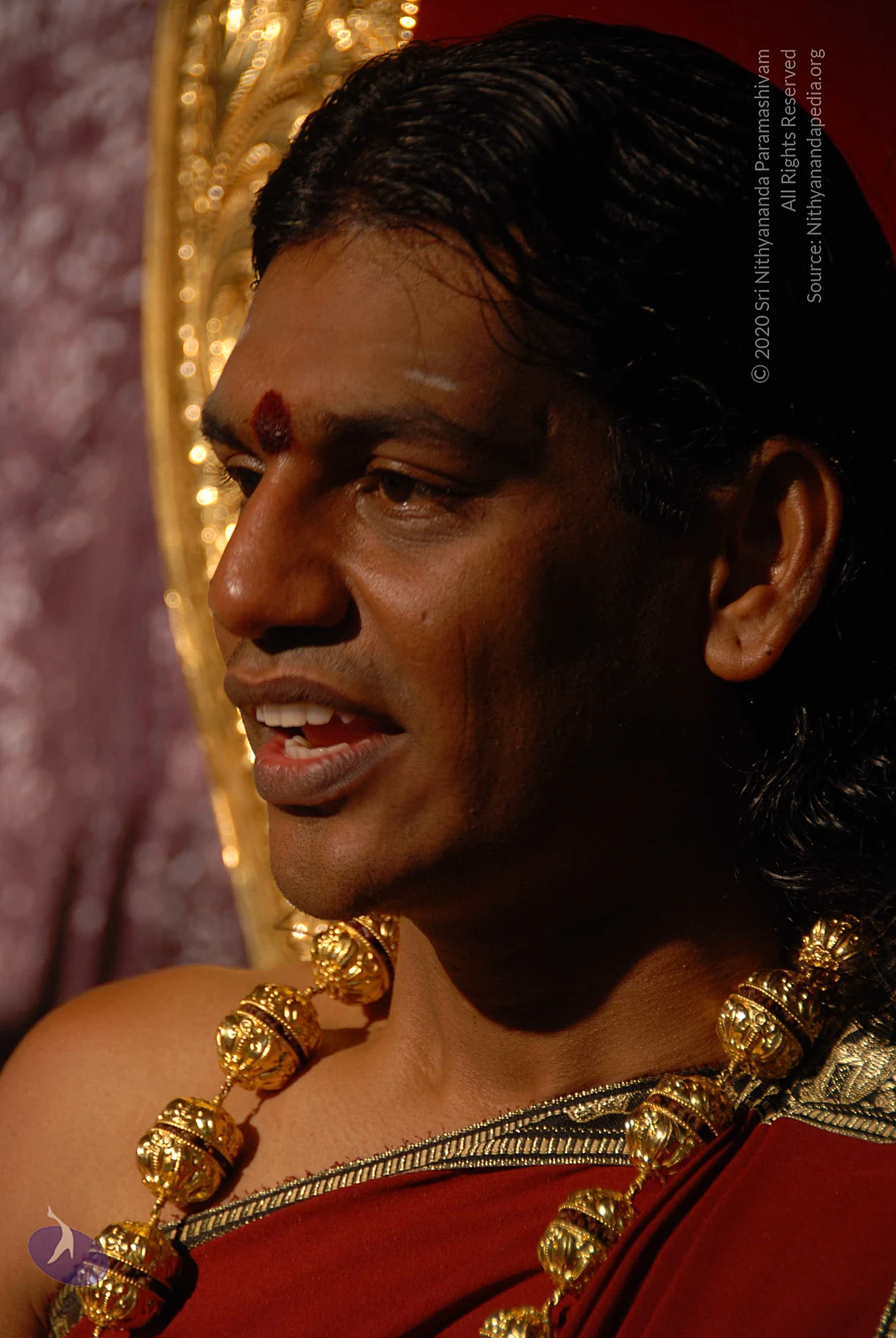
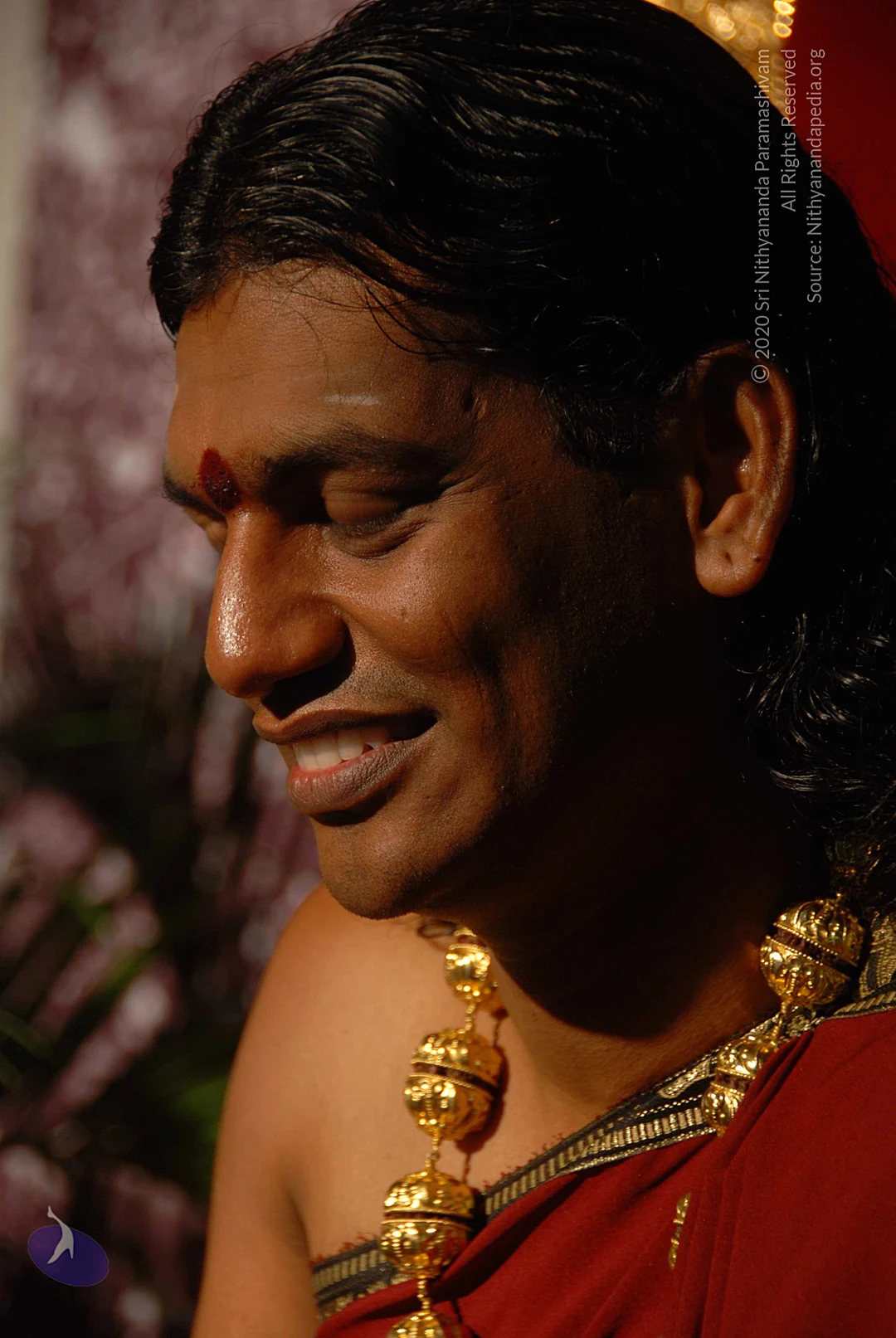
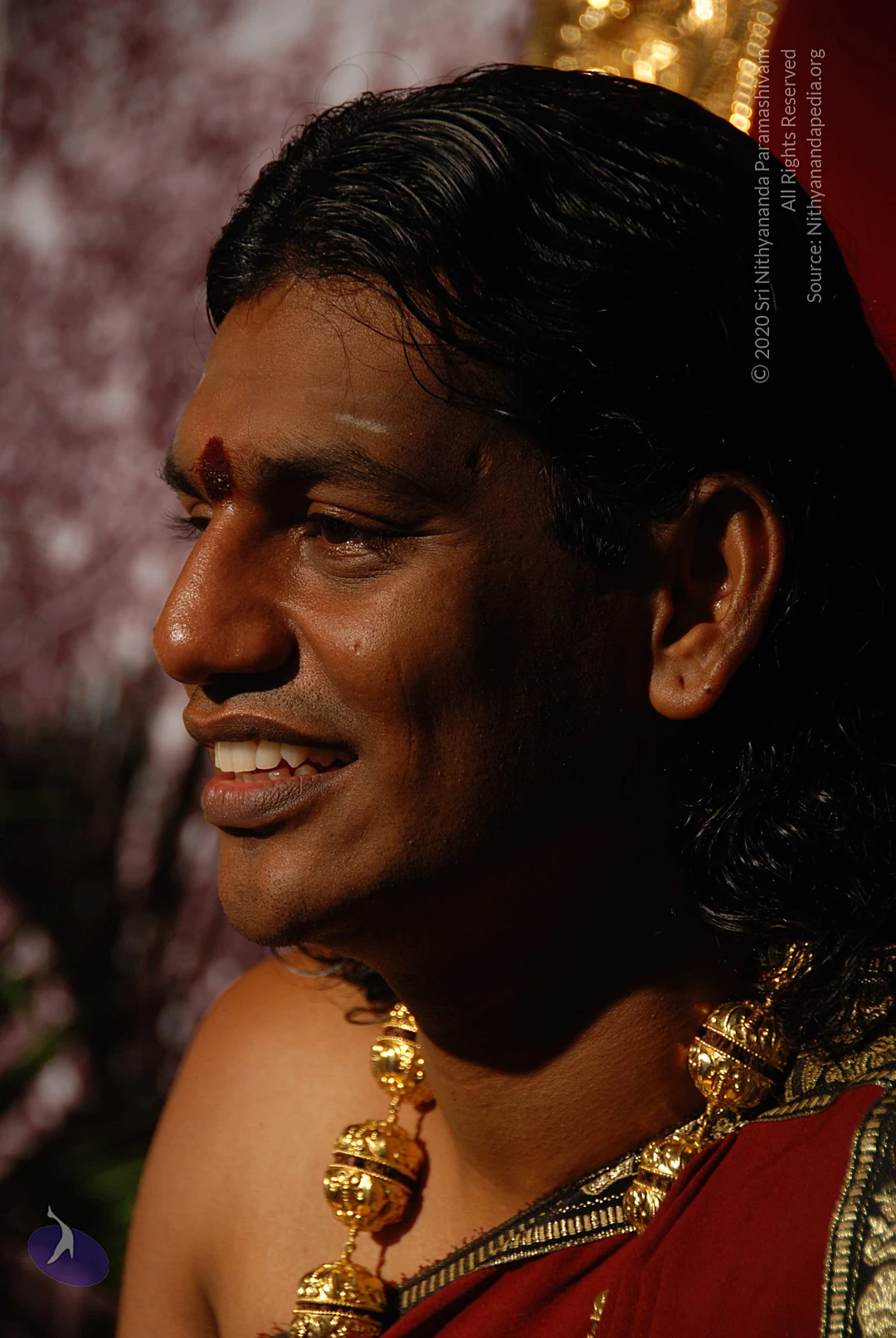
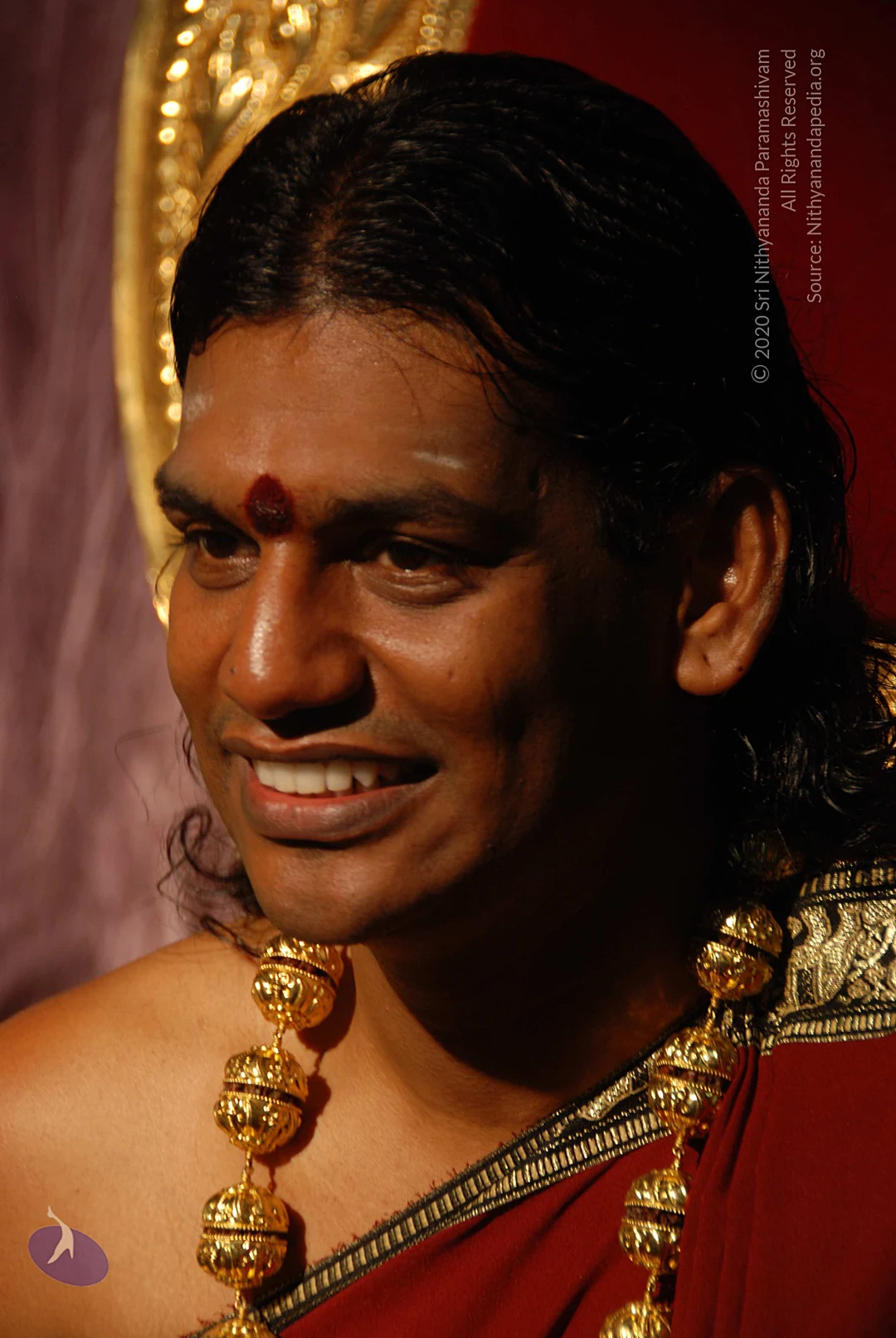
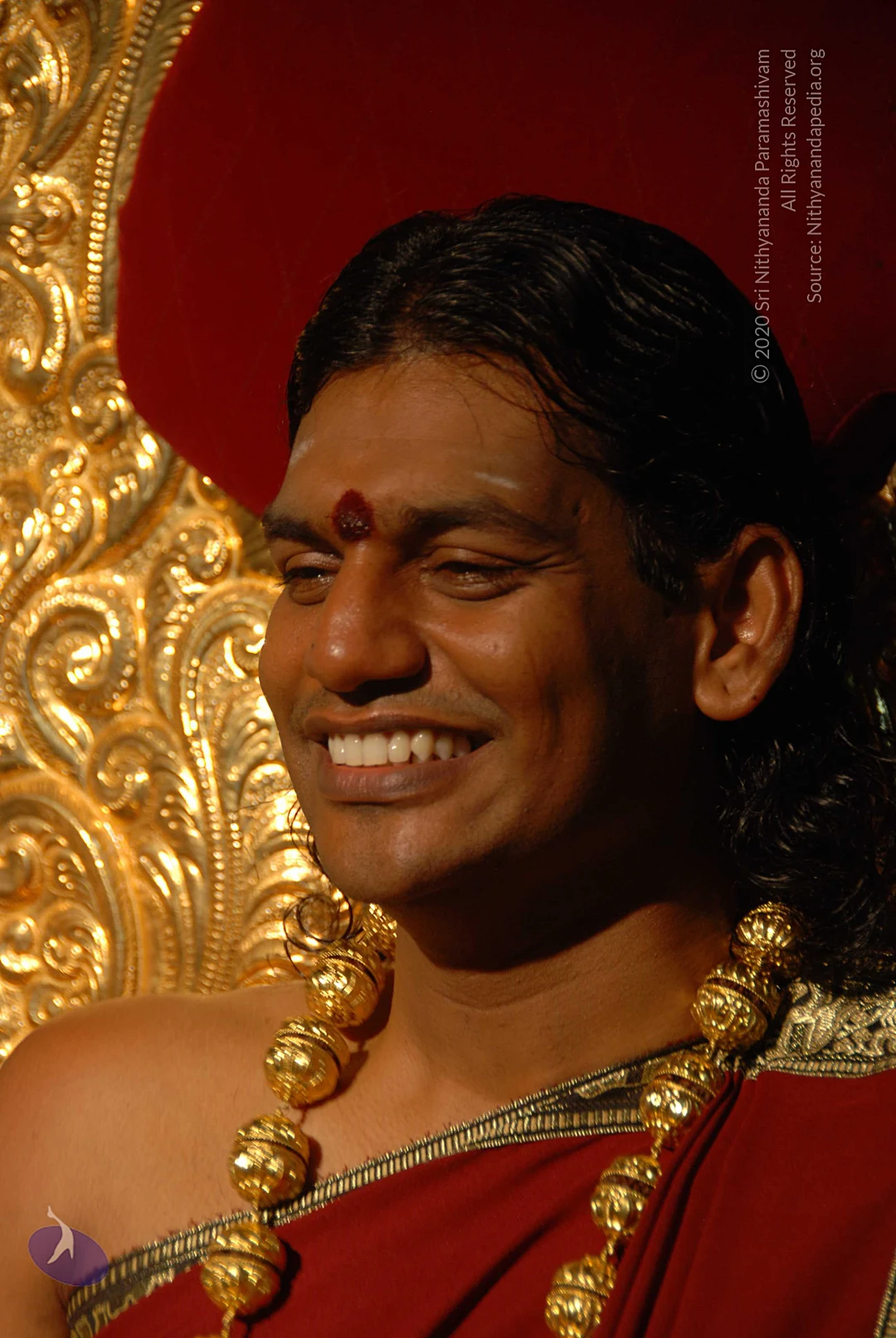
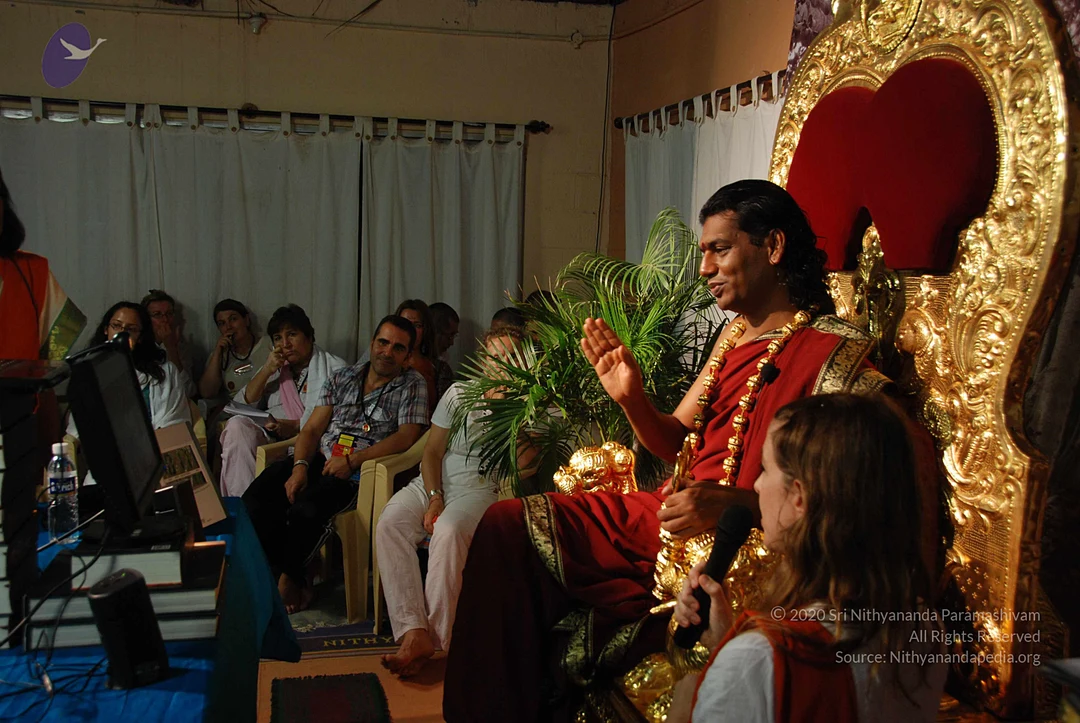
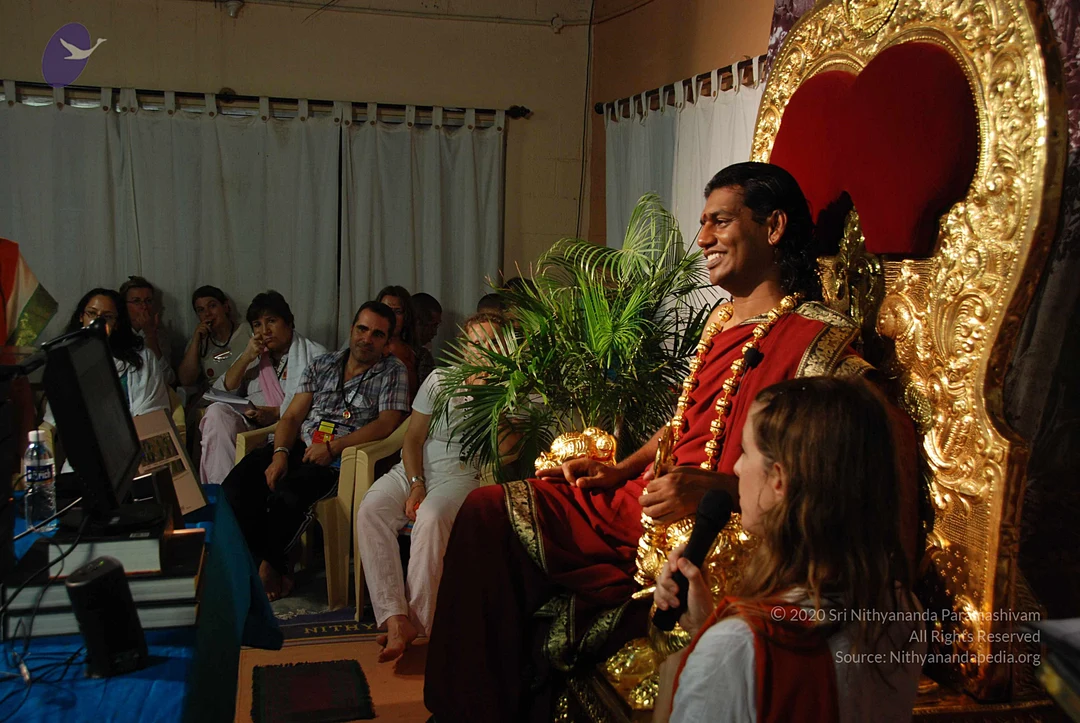
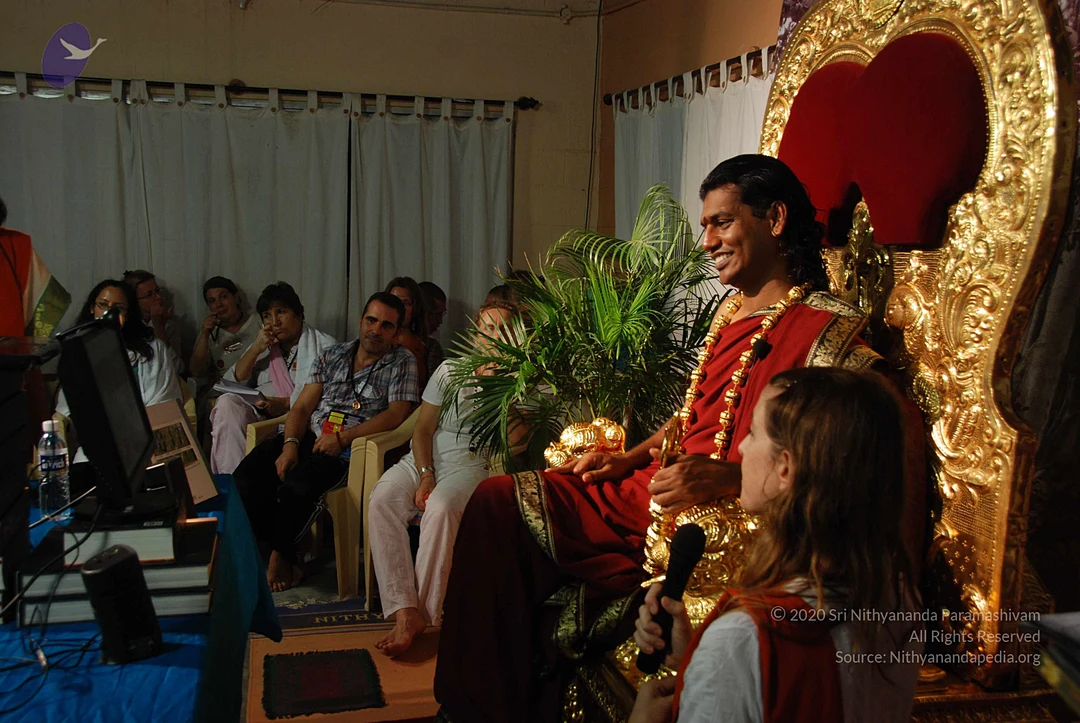
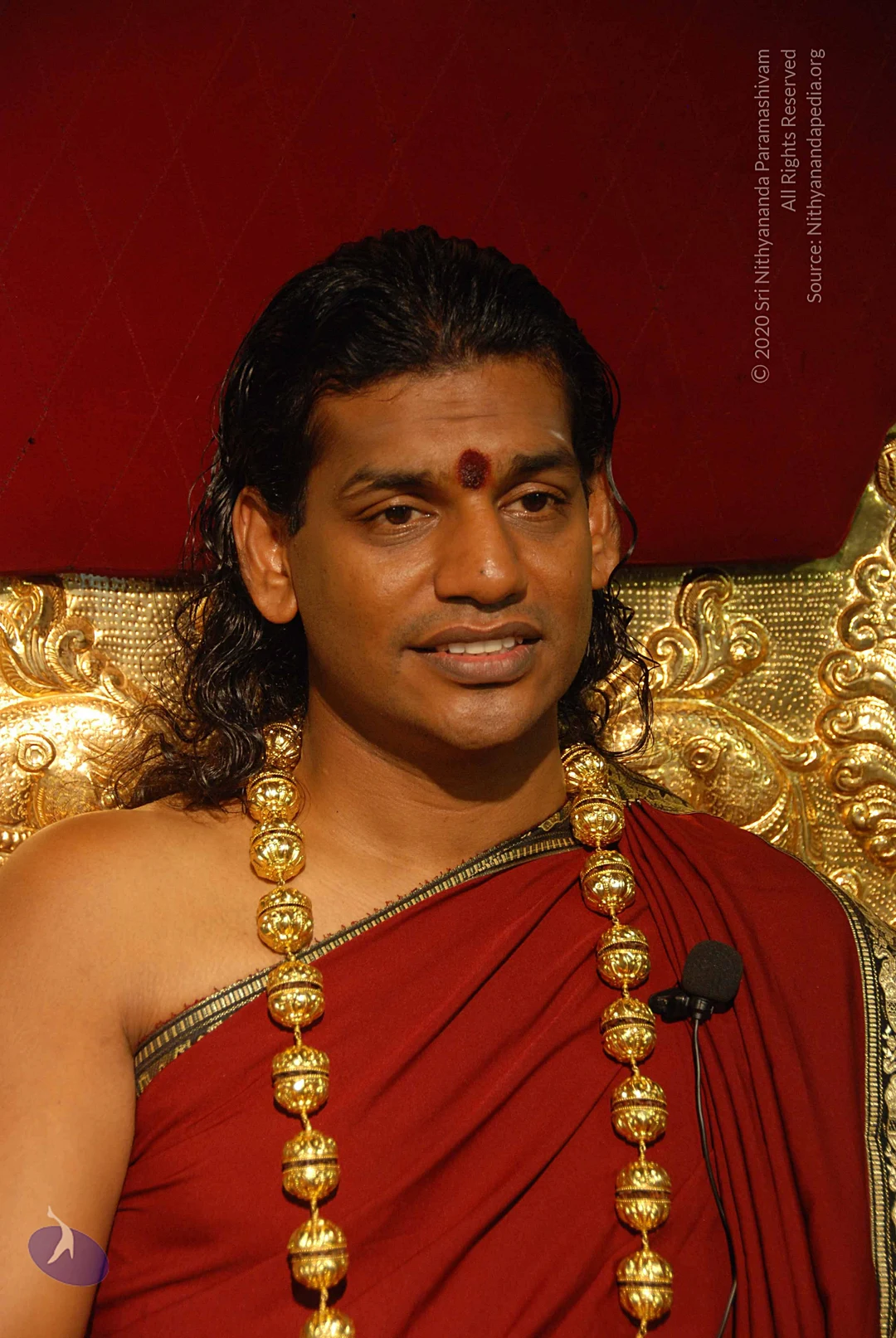
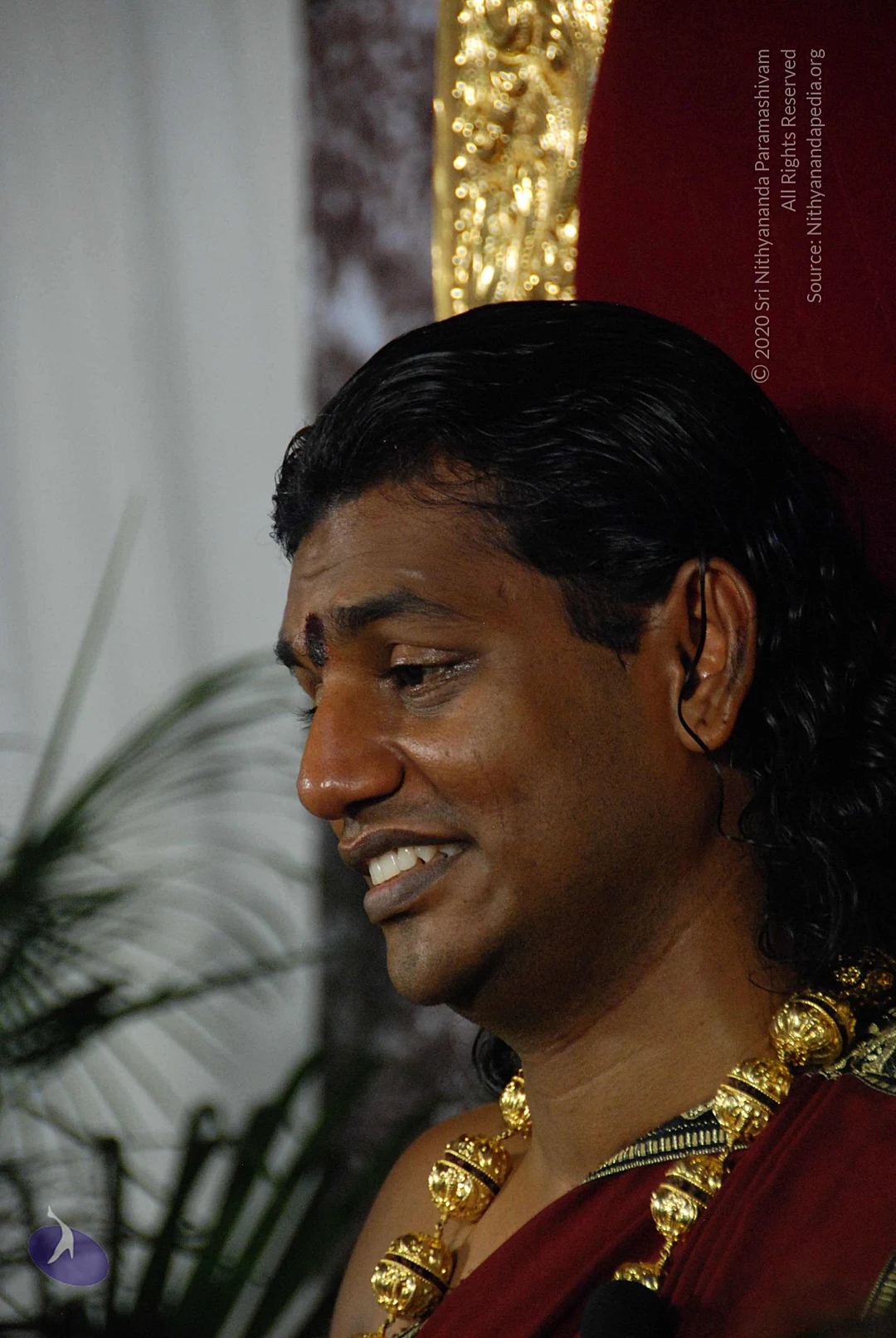
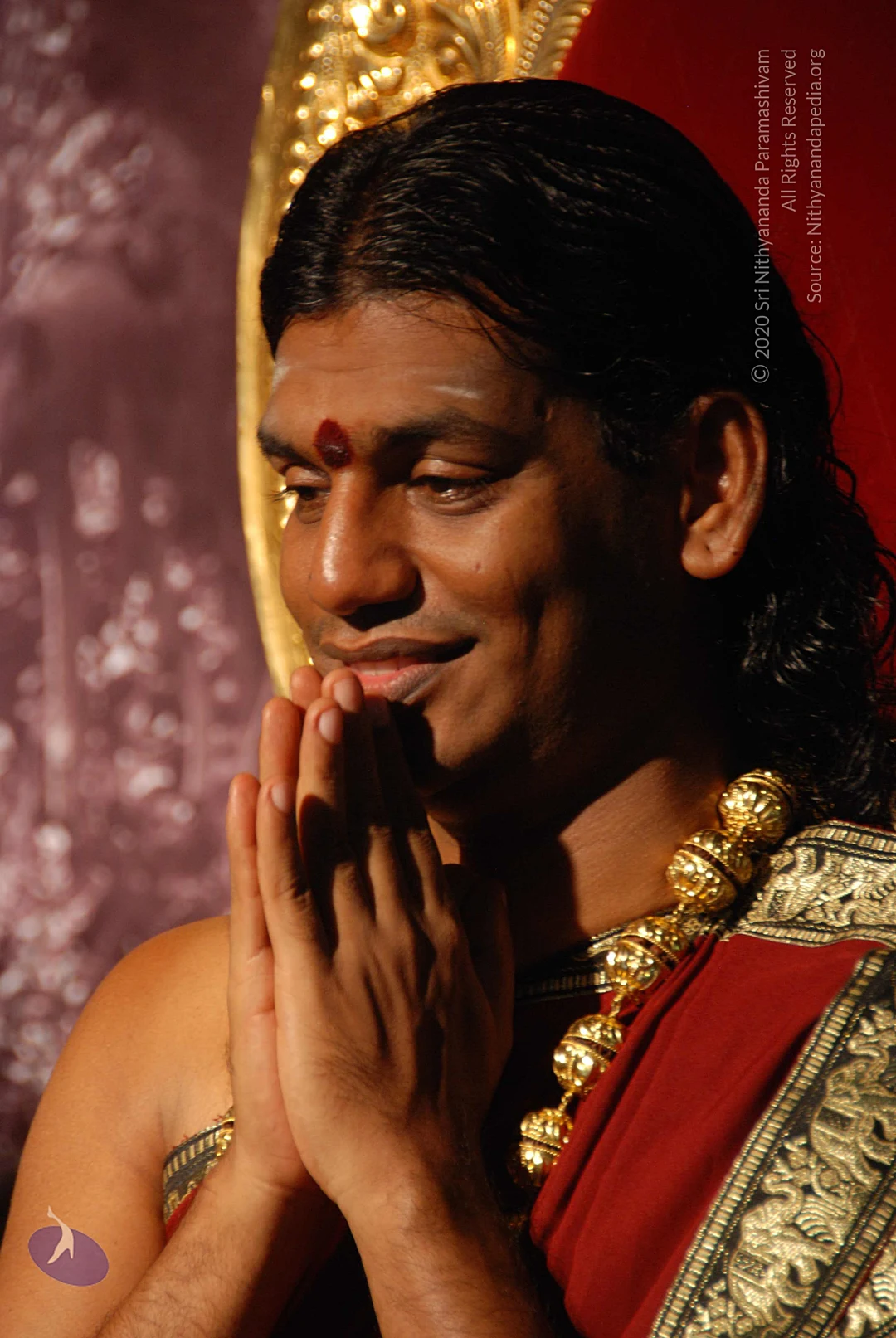
Close-up photo of a man with long dark hair sweeping back, a red bindi and white tilak on his forehead, eyes lowered and a faint smile, palms pressed together in namaste. He wears a red shawl with gold embroidered border and a heavy gold bead necklace, with a gold arched backdrop behind him. a person: long swept-back hair, ornate gold necklace and red-and-gold clothing, shown here as a single seated devotee-like figure.Close photograph of a man in profile with palms pressed together in anjali mudra at his chest, eyes lowered and a faint smile. He has dark swept-back hair, a small red kumkum dot and white vibhuti marks on his forehead. He wears a deep red garment edged with gold embroidery and a heavy gold ceremonial necklace. The soft pink, blurred background suggests a stage or drape. a person: the visible cues are swept-back hair, a gold necklace and a red-and-gold garment, but his appearance is not strong enough to confirm identity.A photograph of a seated man in a red-and-gold garment with gold border, wearing a rudraksha-style necklace and gold ornaments, with long swept-back hair and a red bindi, smiling and holding his palms together in namaste beside a golden throne with gilded carved backrest. In front of and around him, several women sit or stand with palms pressed together in anjali; one standing woman wears a white top with a yellow shawl, others wear white. A green potted palm stands near the throne and a gilded lion or carved figure rests at the base. The room is dimly lit with white curtains behind.A man with long dark hair swept back sits in front of an ornate gold and red throne, pressing his palms together in anjali namaskar with a smile and eyes lowered. He wears a red garment with gold-embroidered border and a heavy gold bead necklace, and a red bindi on his forehead. A green potted palm stands to the left and a gold-leaf carved edge of the throne is visible at the lower left.A man seated beside a gold-carved throne, smiling with palms pressed together in namaste. He has long, swept-back dark hair, a red tilak on his forehead, and wears a red garment with gold-and-black woven border, plus a gold ceremonial necklace of round beads. A green palm plant stands at left and a red throne back with gold filigree at right. a person cues: long swept-back hair, ornate gold necklace and saffron/red ornate clothing, with throne setting. Page-flagged as a person; appearance cues are present but not conclusive enough for certainty.Close profile photo of a man with eyes closed and palms pressed together in anjali mudra, a gentle smile on his face. He wears a red-brown garment and a heavy gold ceremonial necklace with ornate beads. A red tilak mark sits on his forehead with white lines beside it. The background is a soft pink blur, and a small purple logo appears at the lower left.
14

04-eKalpataru Night Session

73 dated photos in previewSource gallery
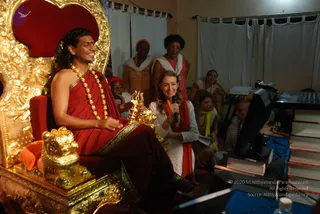
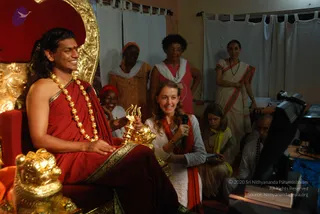
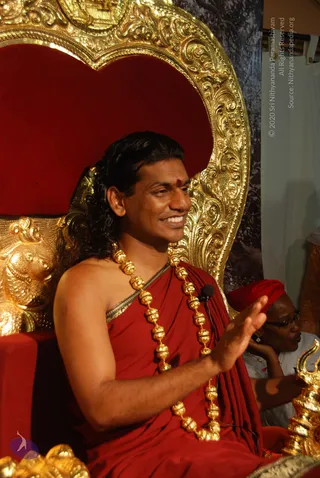
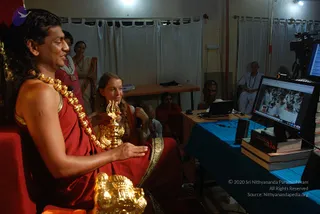
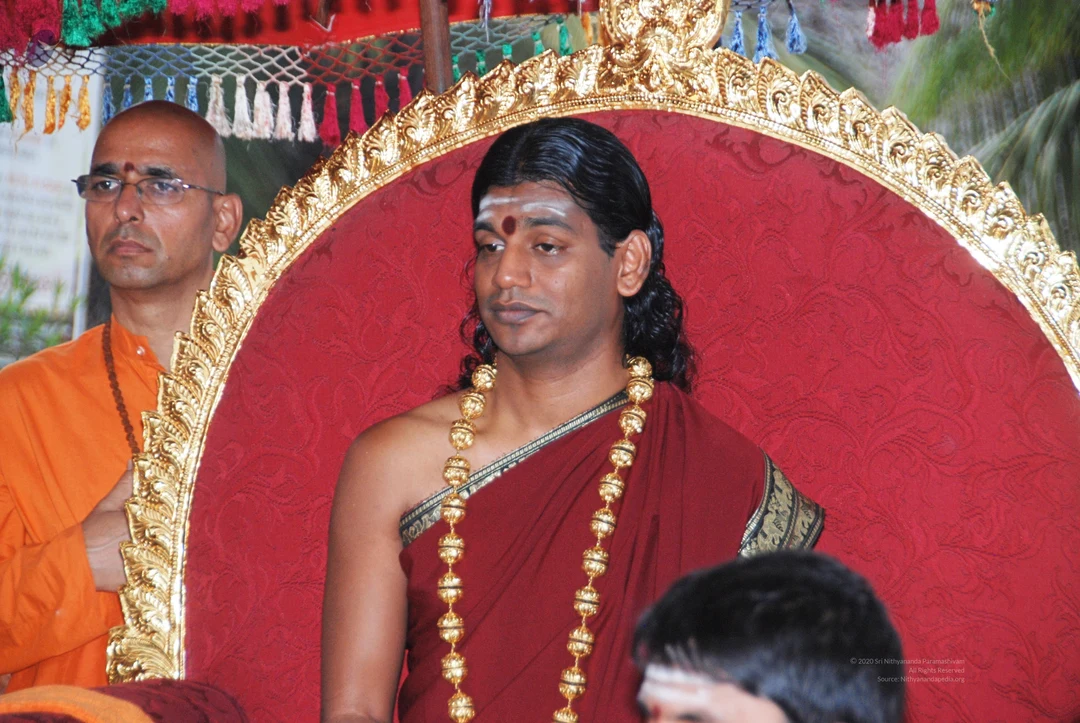
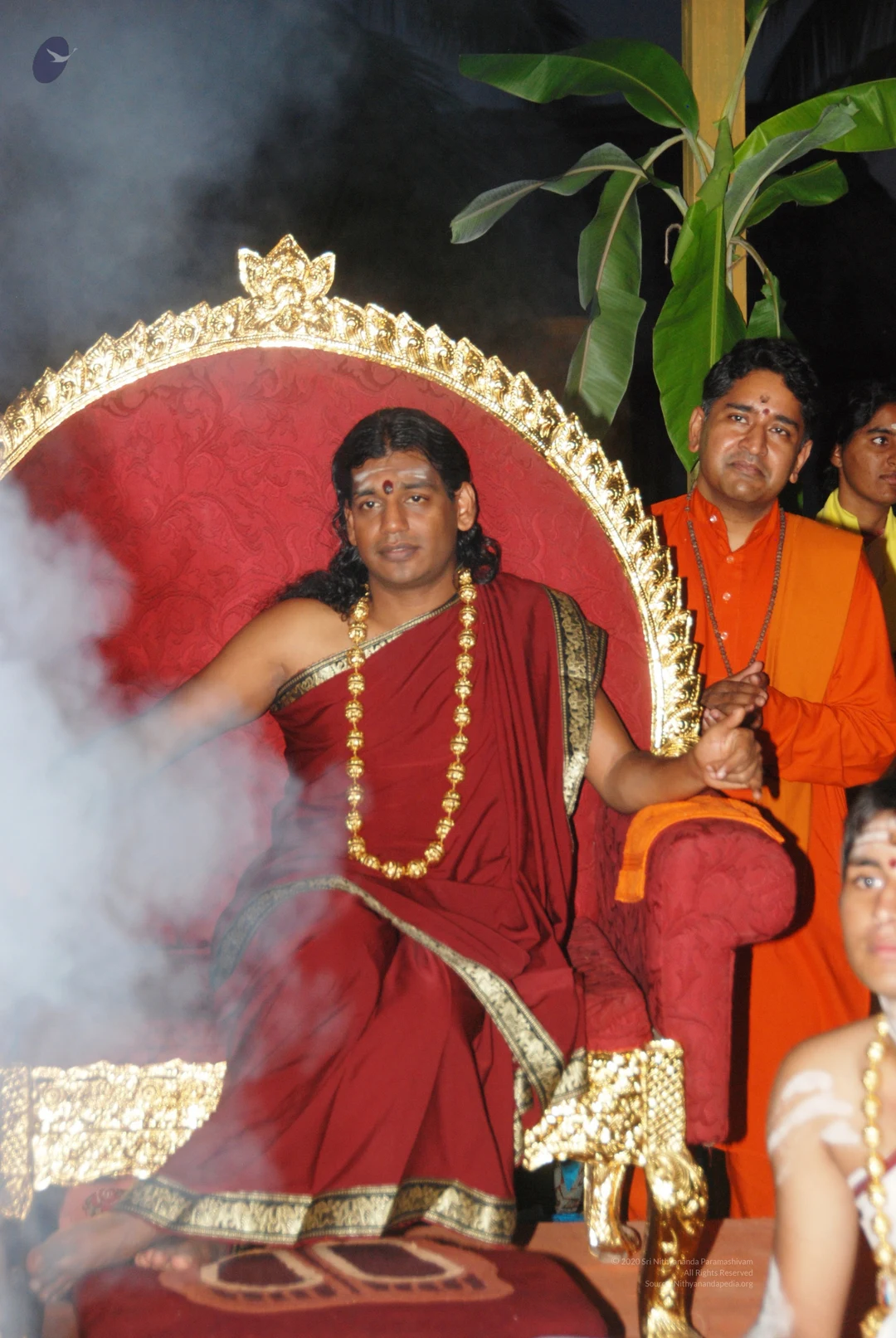
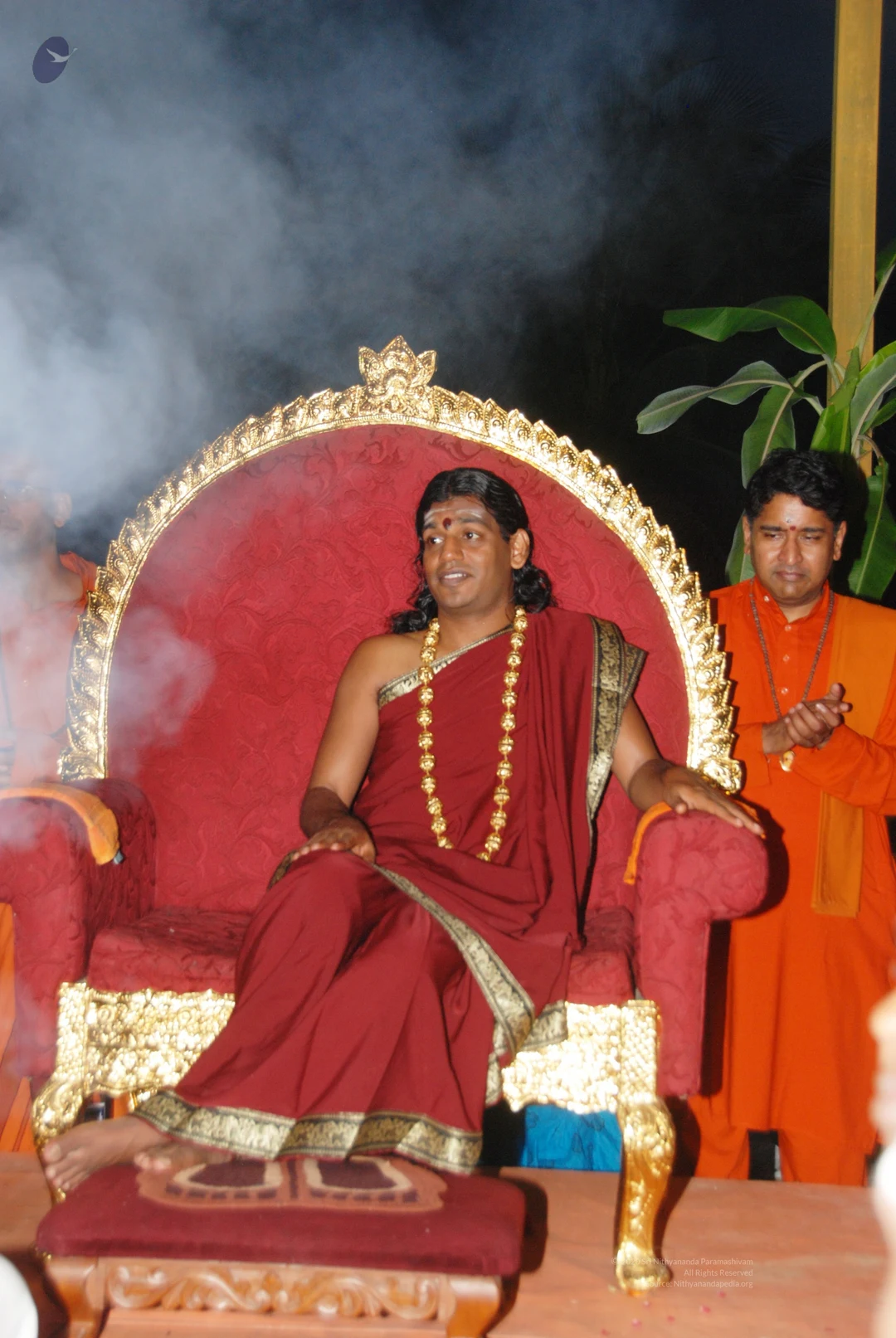
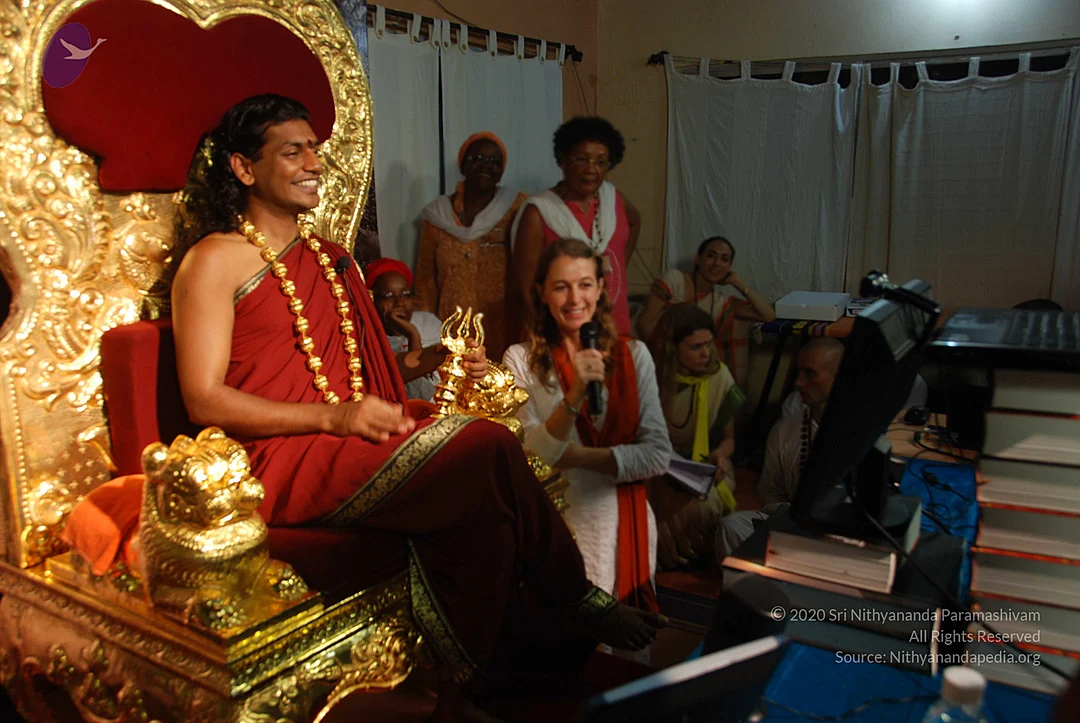
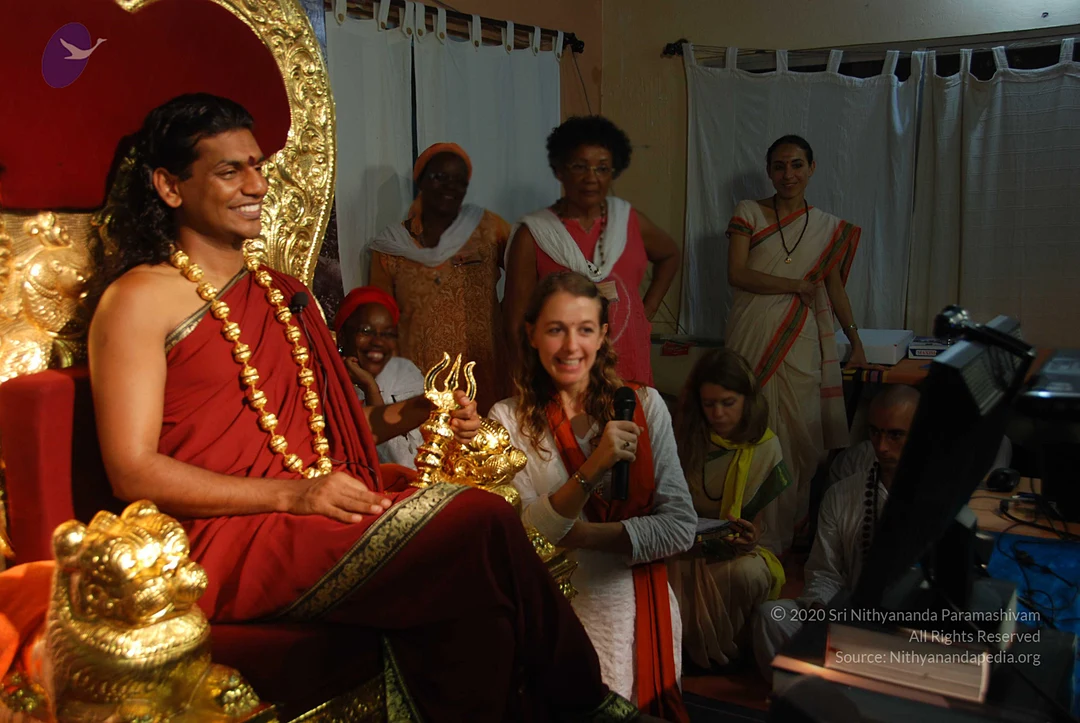
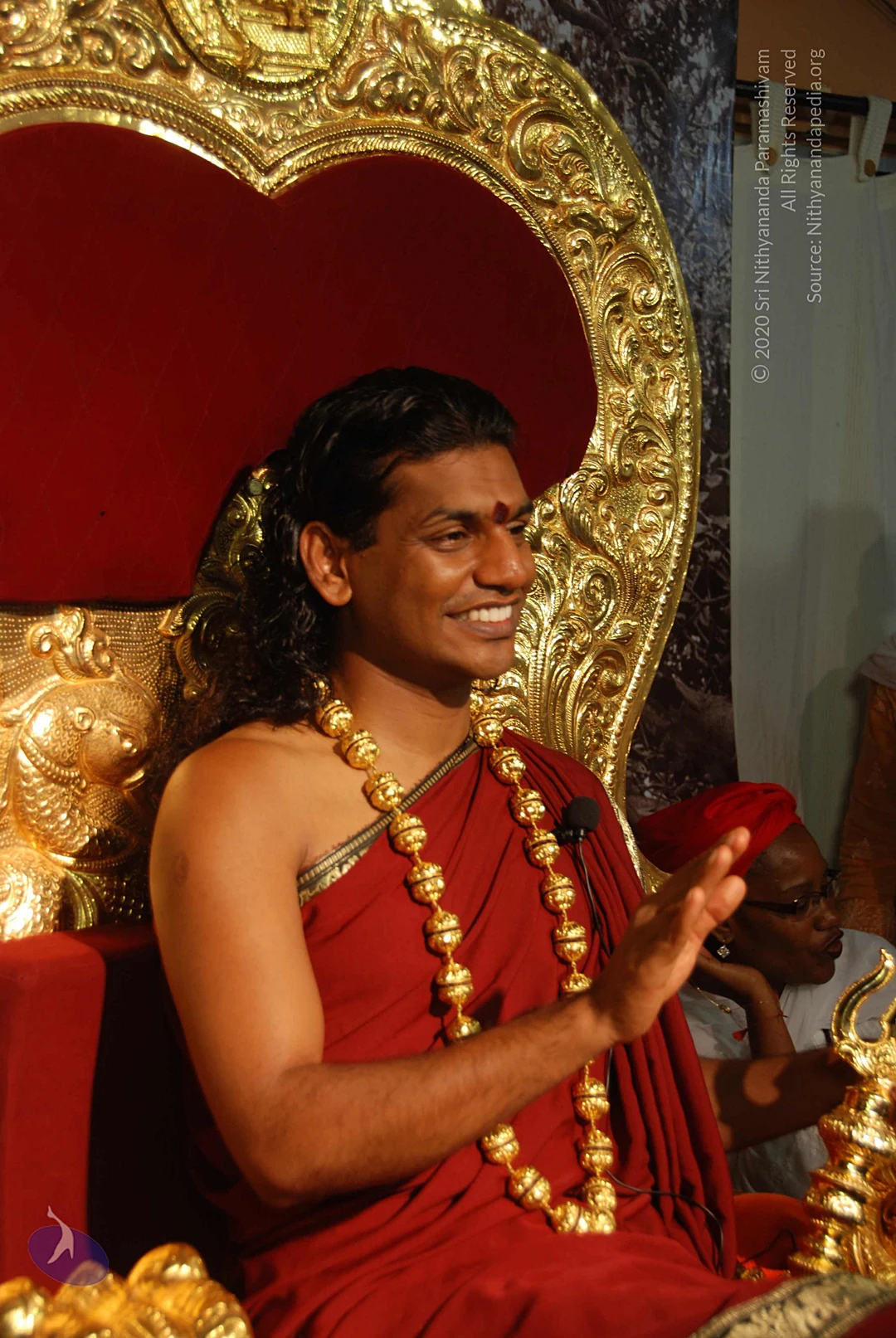
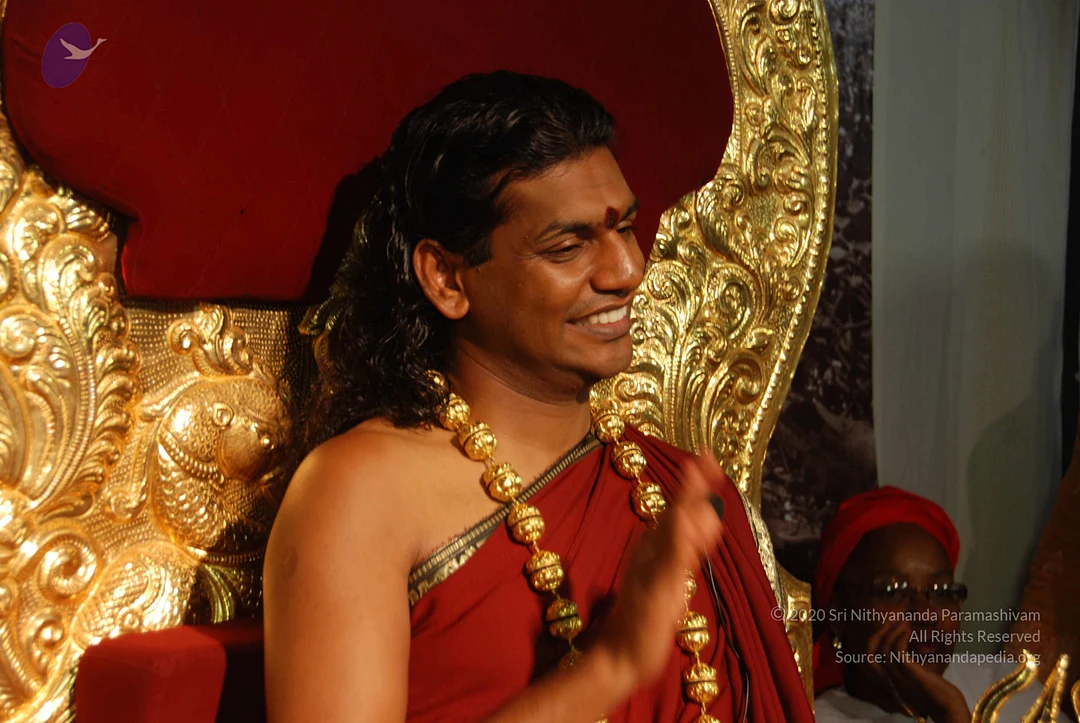
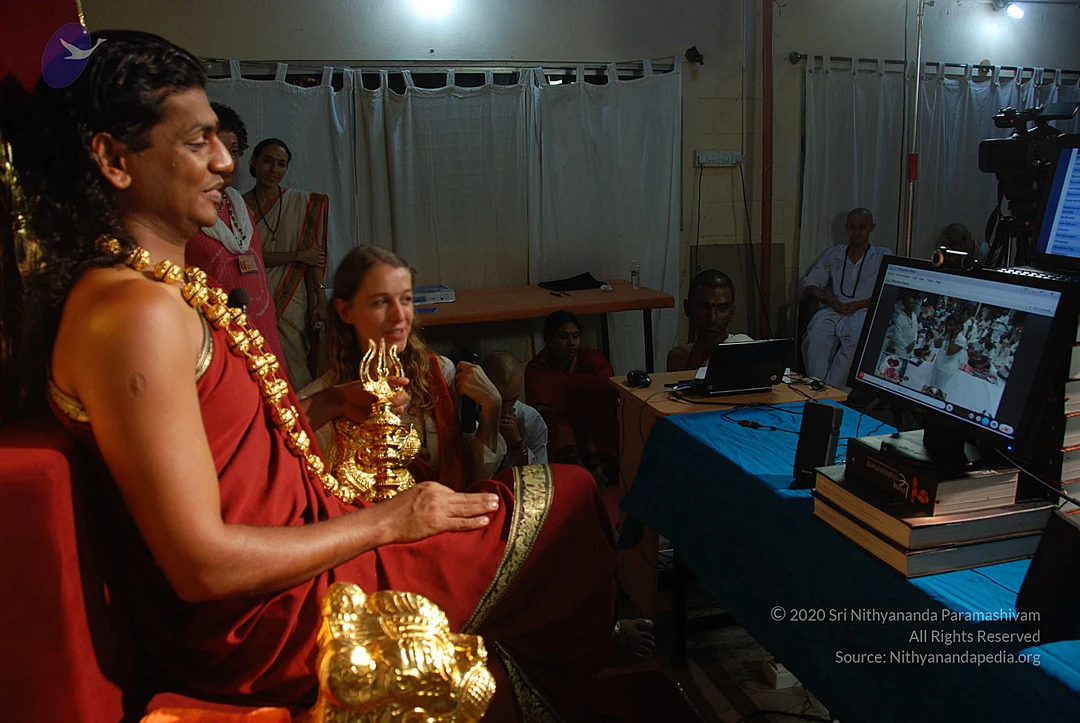
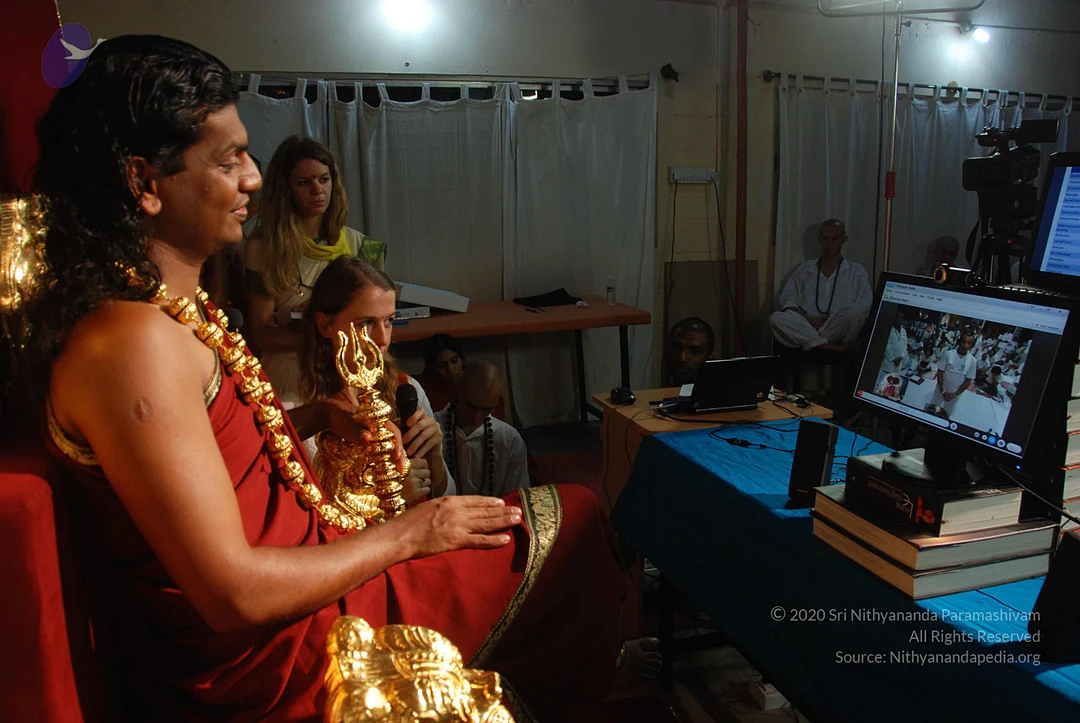
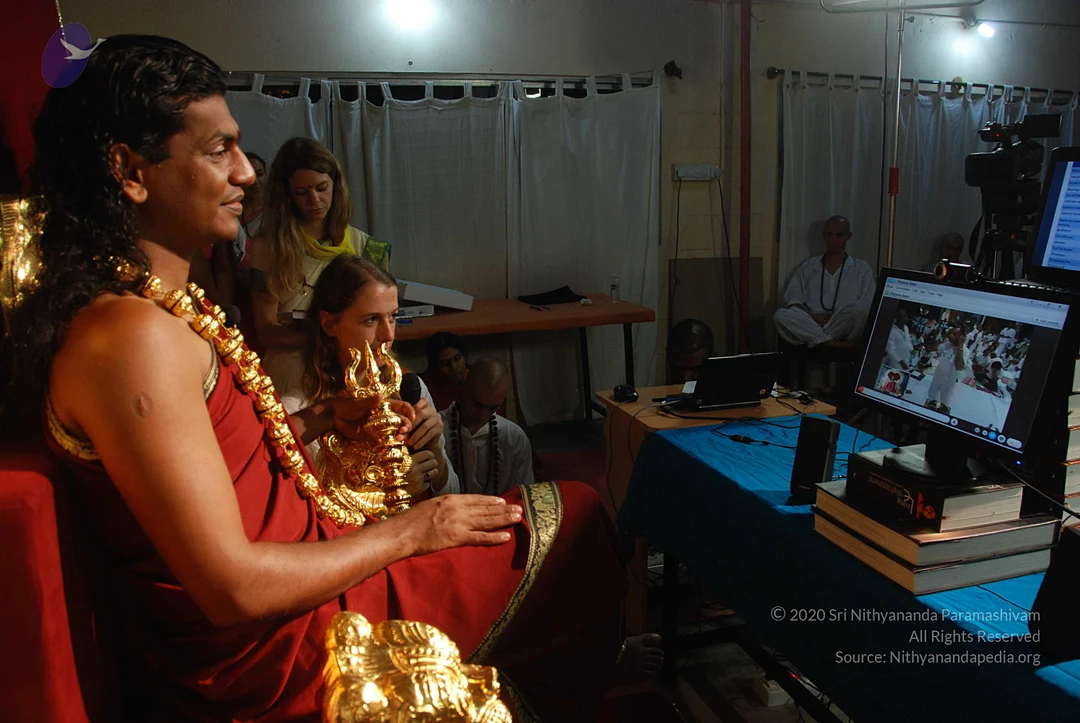
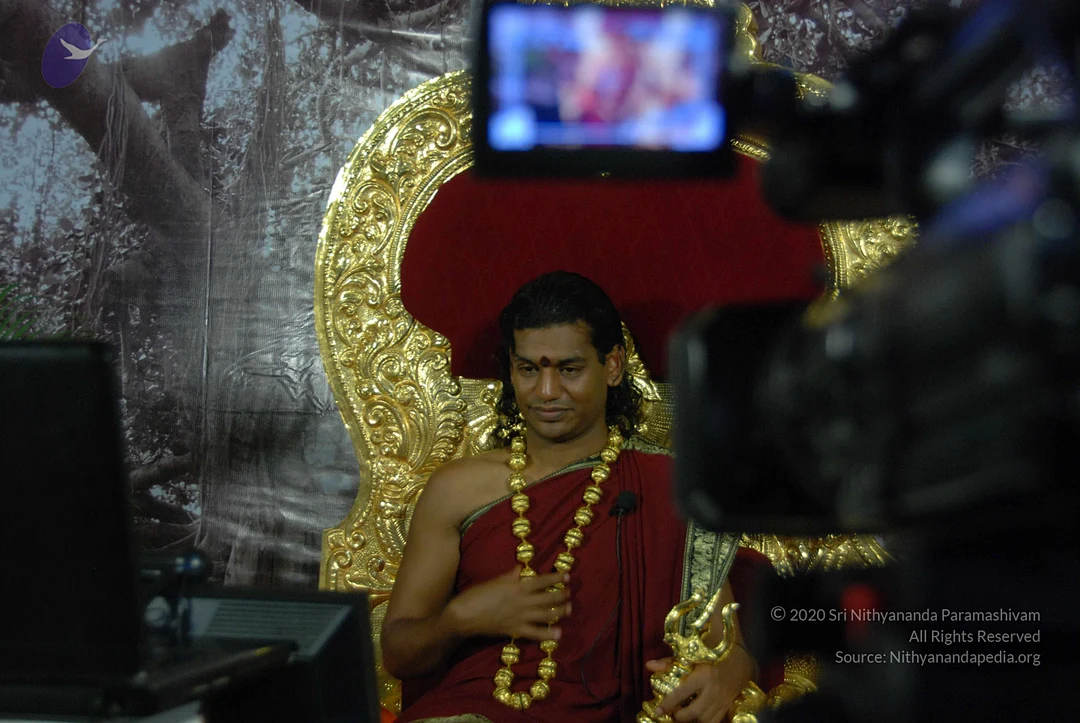
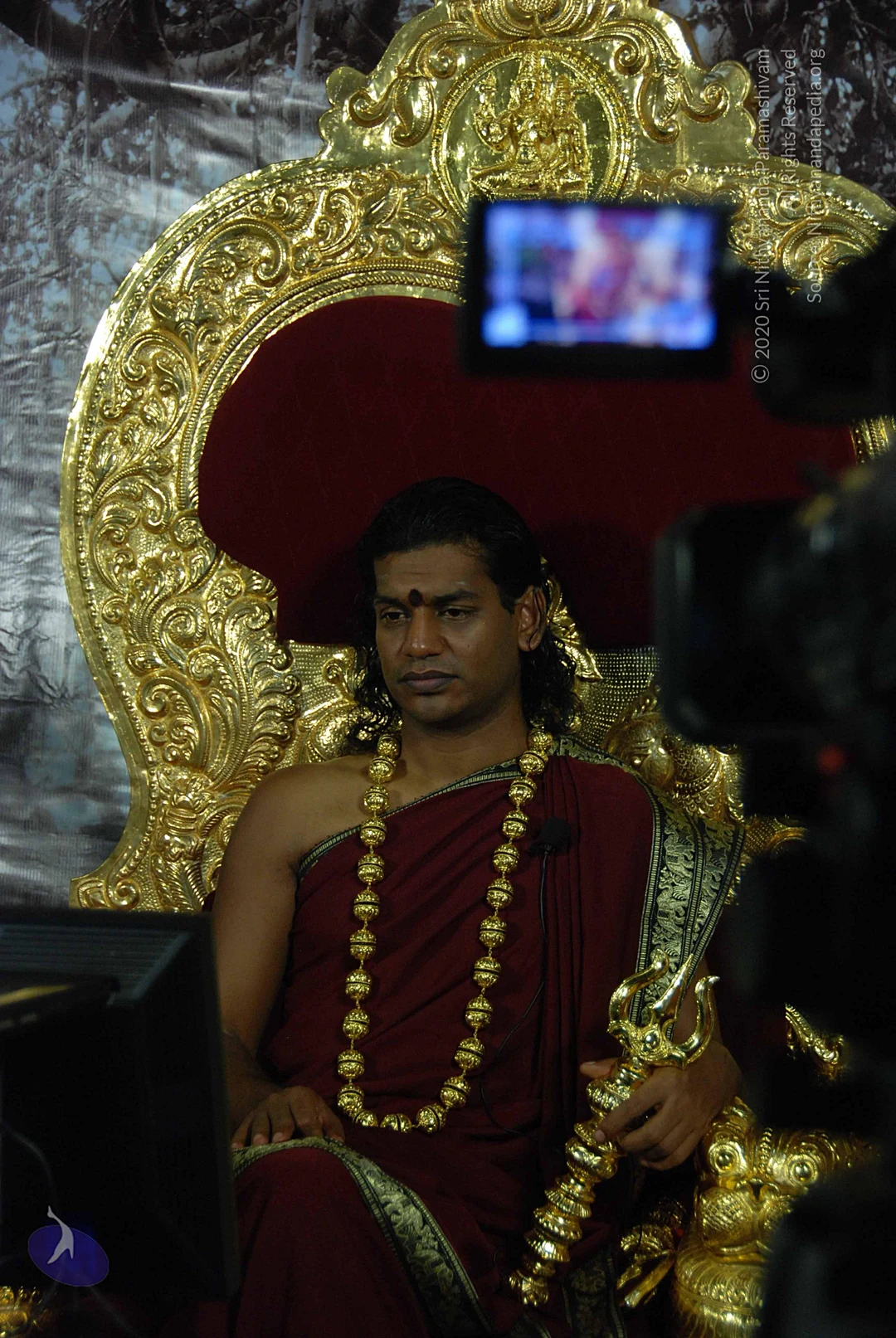
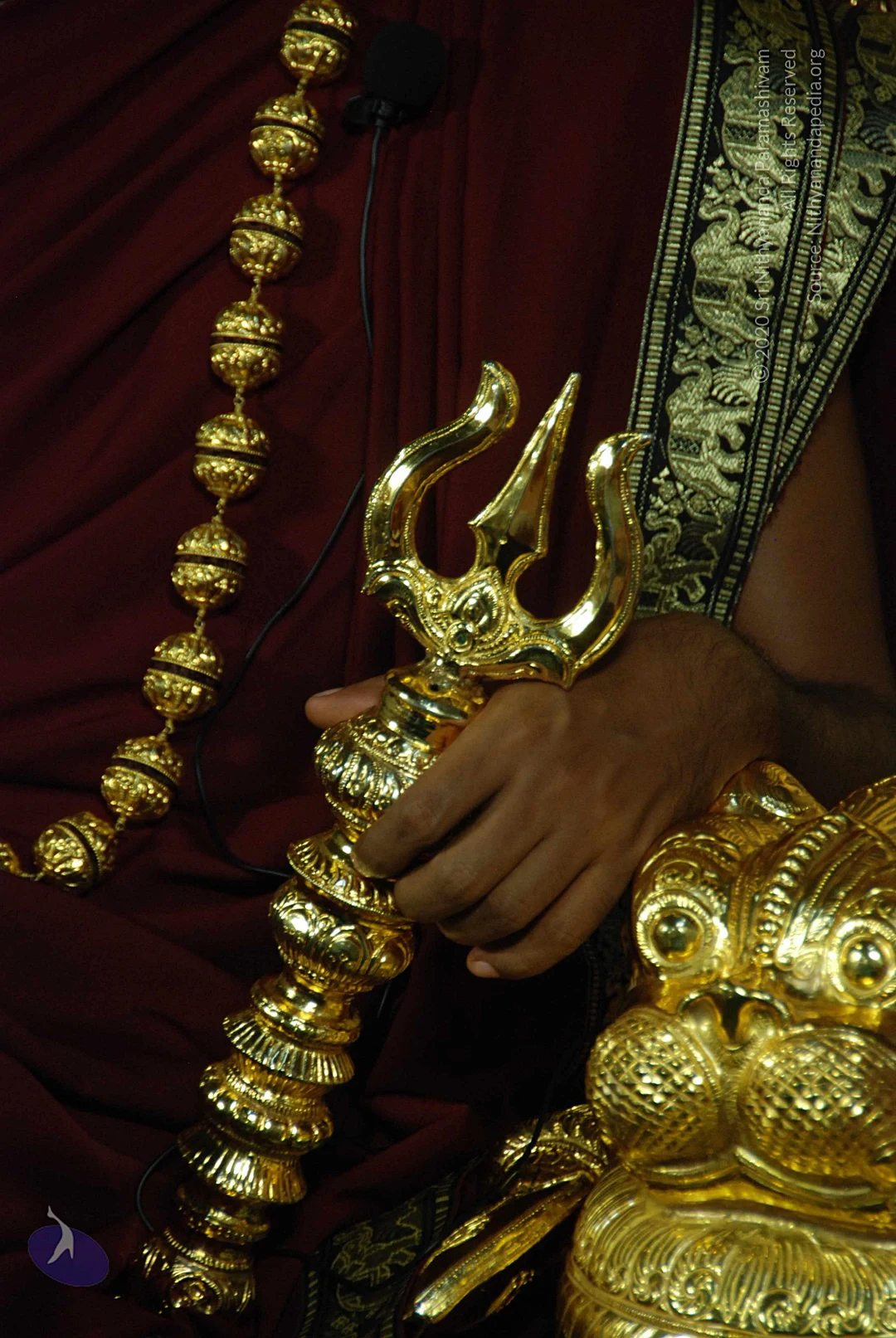
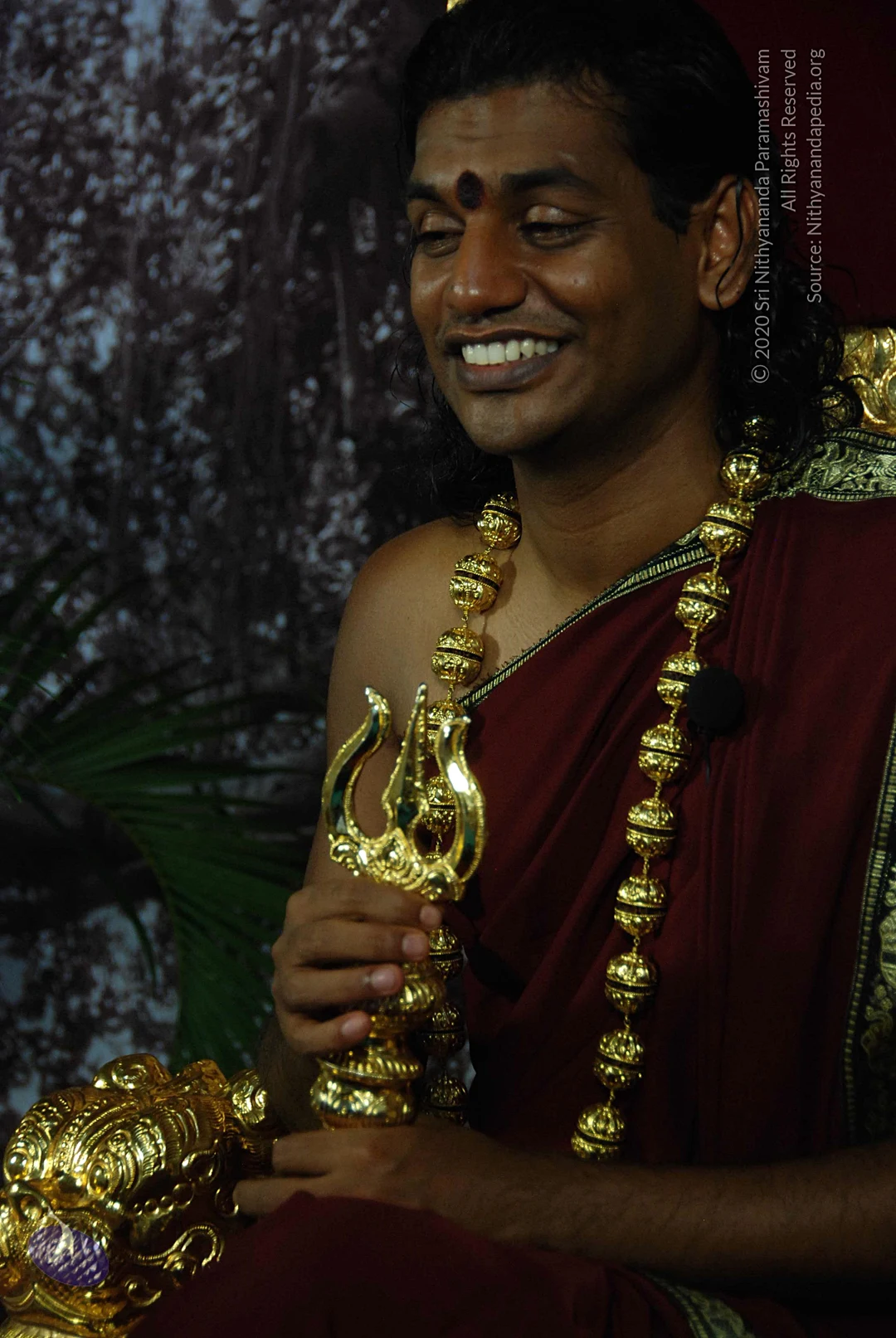
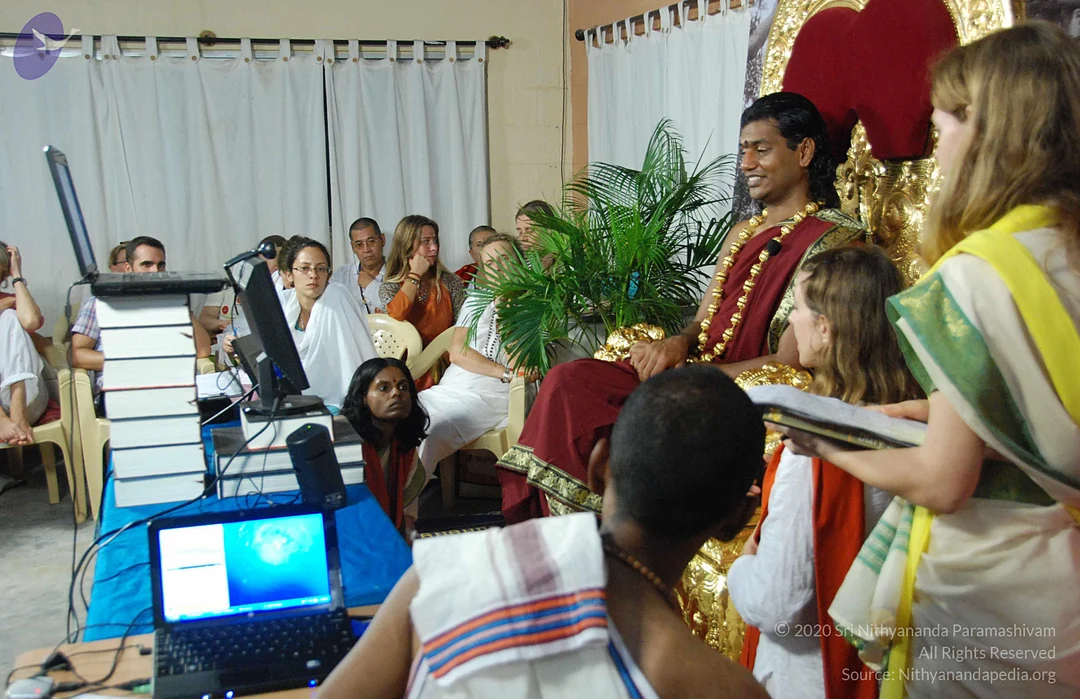
A man seated on an ornate gold-and-red throne, wearing red and maroon robes and a long gold bead necklace, smiles while a woman in a white top and orange shawl holds a microphone near him. Long dark hair swept back, distinctive ornate gold necklace and red-robed attire give a probable Swamiji appearance; he sits on the throne beside a gold trident and a gold lion figure. Behind them, several women in saffron and white saris stand and sit, a child in a red headwrap peeks in, and a person in white sits at right near a laptop, camera and stacked books. White curtains hang on the wall.A photograph of a seated man on a gilded red throne wearing a red-orange robe with gold trim and a long gold bead necklace, smiling broadly. Beside him a woman in a white outfit with an orange shawl holds a microphone and a gold trident-shaped ceremonial staff. Behind them, several women stand in front of white curtains, one in orange and white, another in pink, another in a white sari with orange border. A woman in a yellow shawl sits at lower right, and a man in white sits at a laptop on the right. A gilded lion-like figure sits at the lower left of the throne. Swamiji (probable): the seated man on the throne wears saffron-red robes, a long gold bead necklace and has long swept-back hair.A seated man in red-and-maroon robes and a bare-shouldered draped cloth sits on an ornate gold-and-red throne with carved gold scrollwork and a carved bird figure. He wears a heavy gold bead necklace and a red tilak on his forehead, smiling and gesturing with his raised right hand while speaking; a small lapel microphone is clipped to his robe. Behind him, partly visible at right, a person in a red head covering and glasses sits attentively.A smiling man with long dark hair sits on an ornate gold throne with red velvet back panels, clapping his hands. He wears a red-maroon dhoti-style cloth with a gold-bordered edge and a heavy gold bead necklace, with a red tilak on his forehead. Behind him, to the right, an older person in a red head covering and dark glasses sits partly visible. The setting is a ceremonial stage with a dark patterned backdrop.A photograph of a man seated on a red-draped throne-like seat at left, bare-shouldered with a red garment wrapped around his body and a gold-bordered cloth, wearing a gold ceremonial necklace and gold-coloured adornment. He holds a gold trishul-topped ritual object in one hand, and a microphone is clipped near him. Beside him a woman with long light hair in a red-and-gold shawl holds a gold ritual item. Behind them, standing women and a few seated people sit in a room with white curtains, a wooden table with a blue cloth, stacked books, and a monitor at right showing a crowd gathering. A camera on a tripod is at right. Total visible people: about four to five.Close-up photograph of a smiling man with short dark hair, a red-brown tilak mark on his forehead, and a dark red garment. He wears a heavy gold necklace of large ornate beads and sits beside an elaborate gold-carved throne-like backrest. A small black microphone is visible at the lower right. a person: the man has short hair rather than long swept-back hair, and the visible cues are a forehead mark, a red garment and gold beads, which are not distinctive enough to confirm identity.
15

Photos of the day

37 photosView all
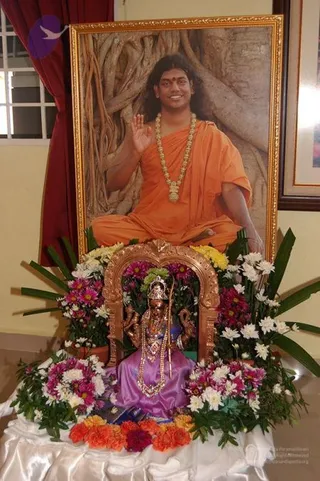
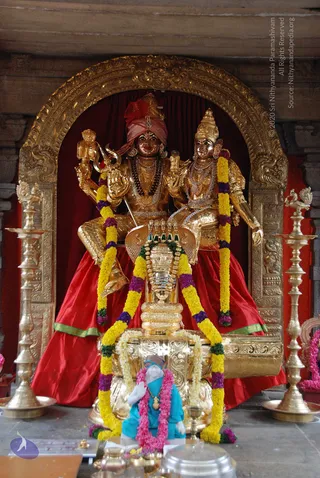
A photograph of a golden deity murti pair seated on a throne within a gilded arched shrine with red drapery. The male figure wears a red turban and black beaded necklaces, holds a trident and a small drum, and the female figure wears a gold crown and jewelled necklaces, with a red skirt-like drape below. Between them stands a golden shivalinga adorned with garlands of yellow and purple flowers. In front, a small figure in a turquoise garment wears a pink flower garland and hands are folded. Brass oil lamps flank the shrine and fresh flower garlands hang around the murtis.

September 11 2010

Original wiki page
Contents

Title:

"Ganesha Cosmic Consciousness by Nithyananda"
Narration:

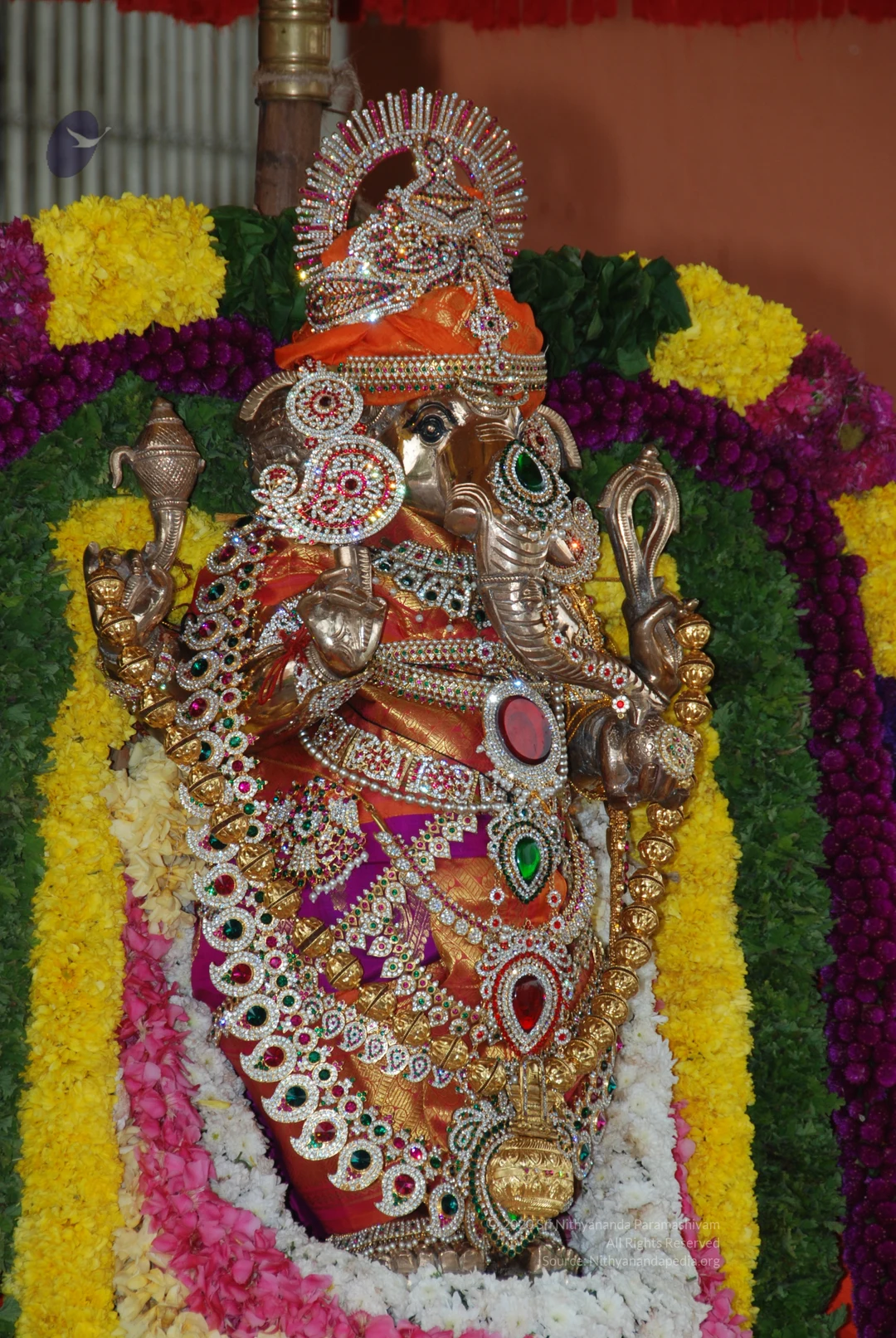
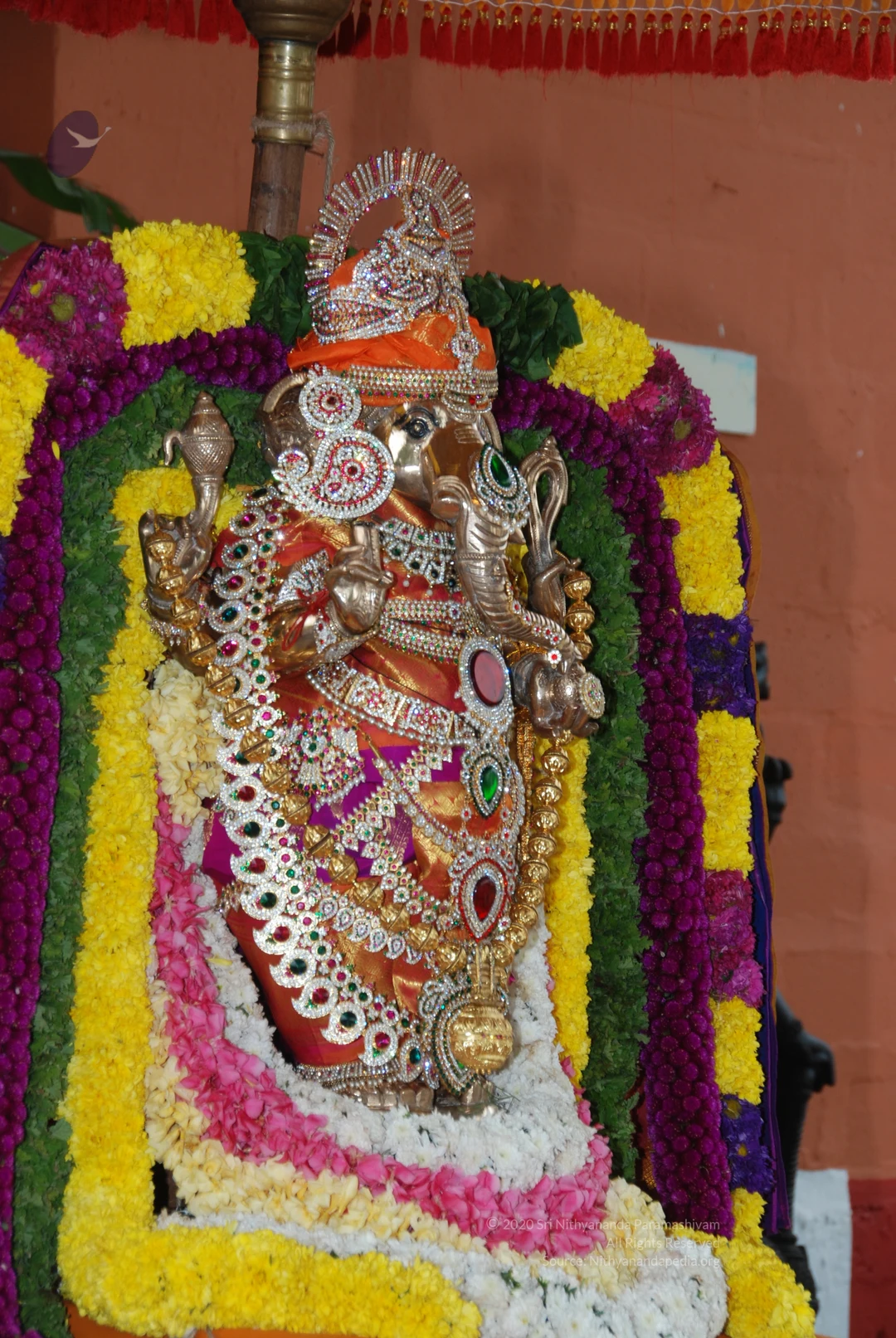
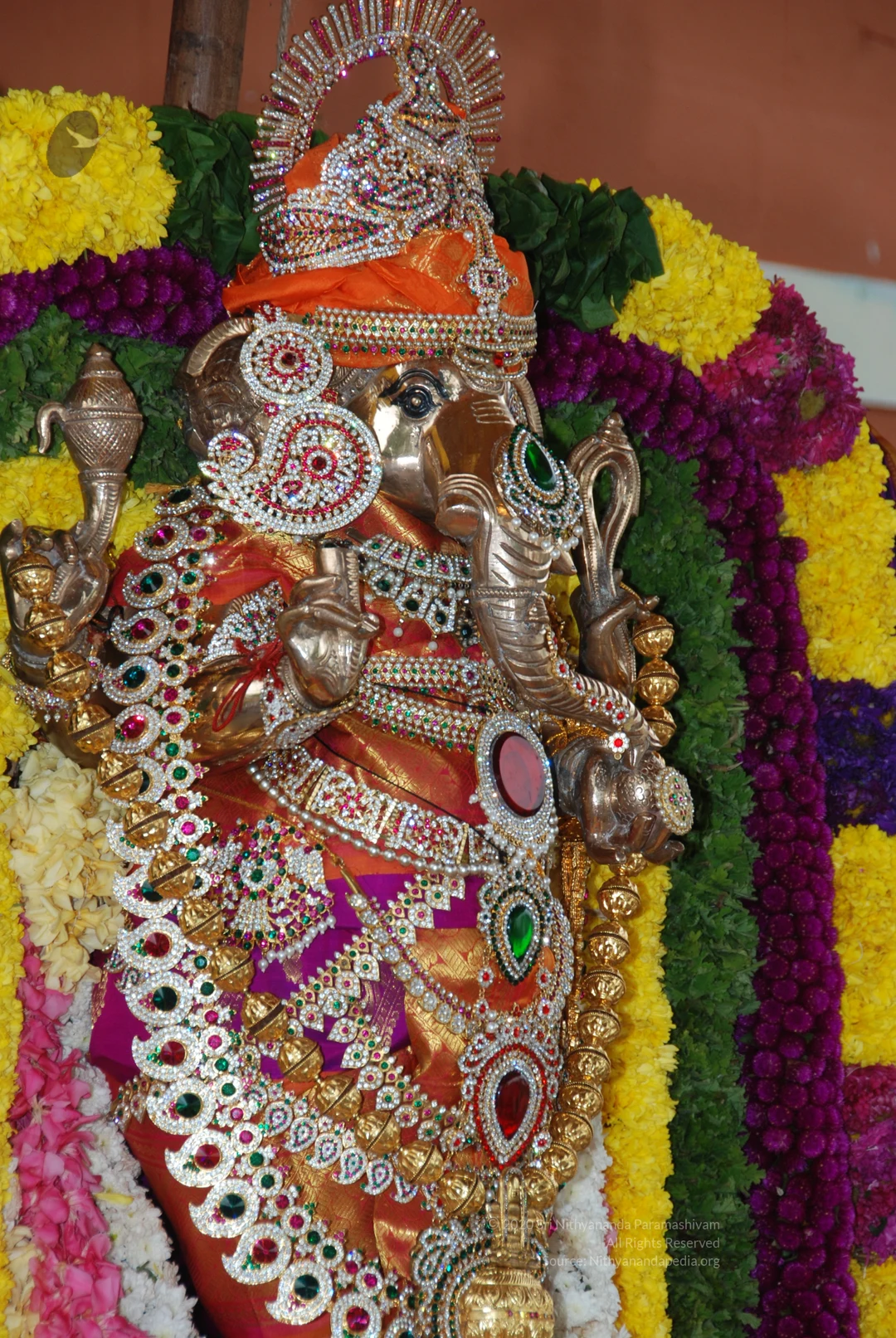
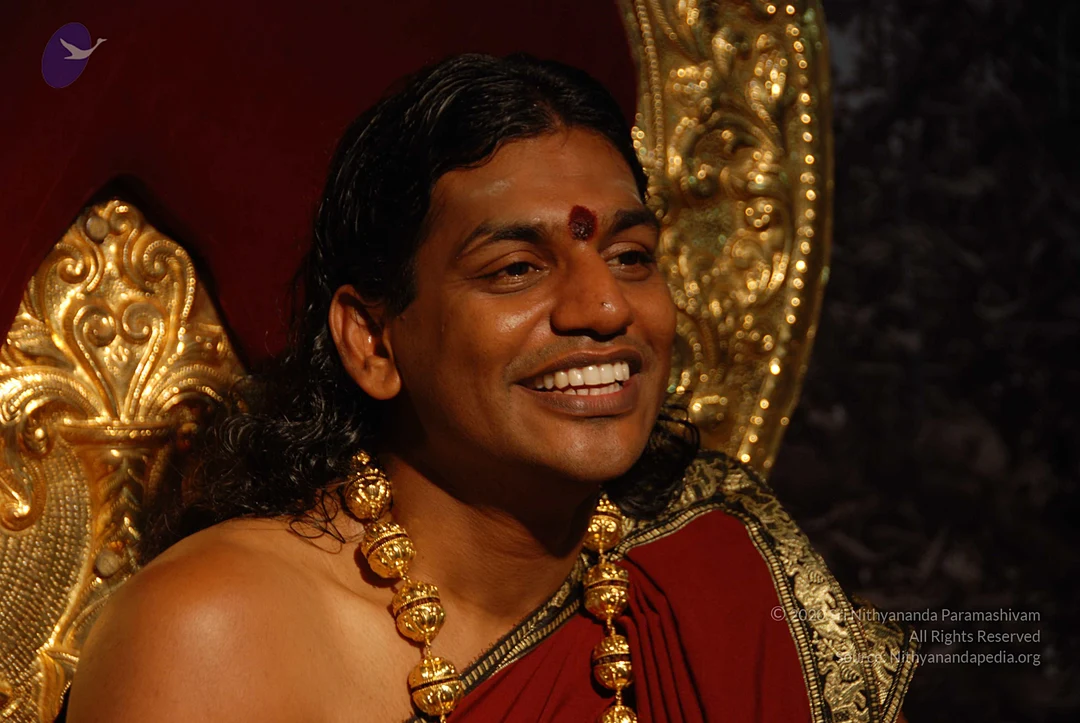
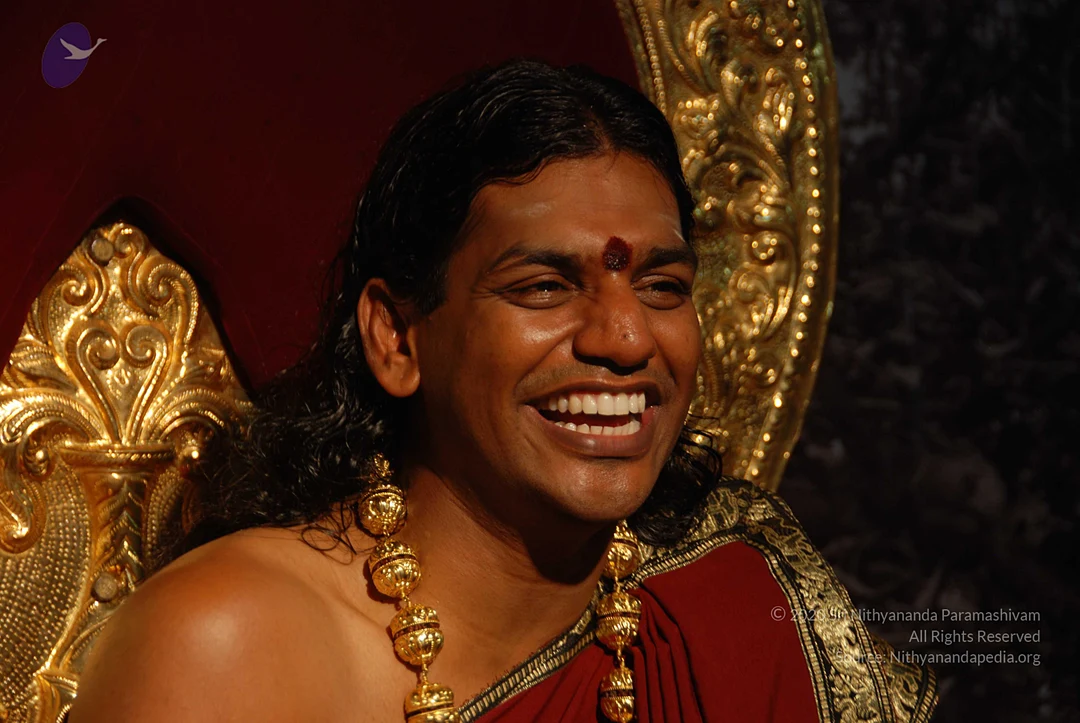
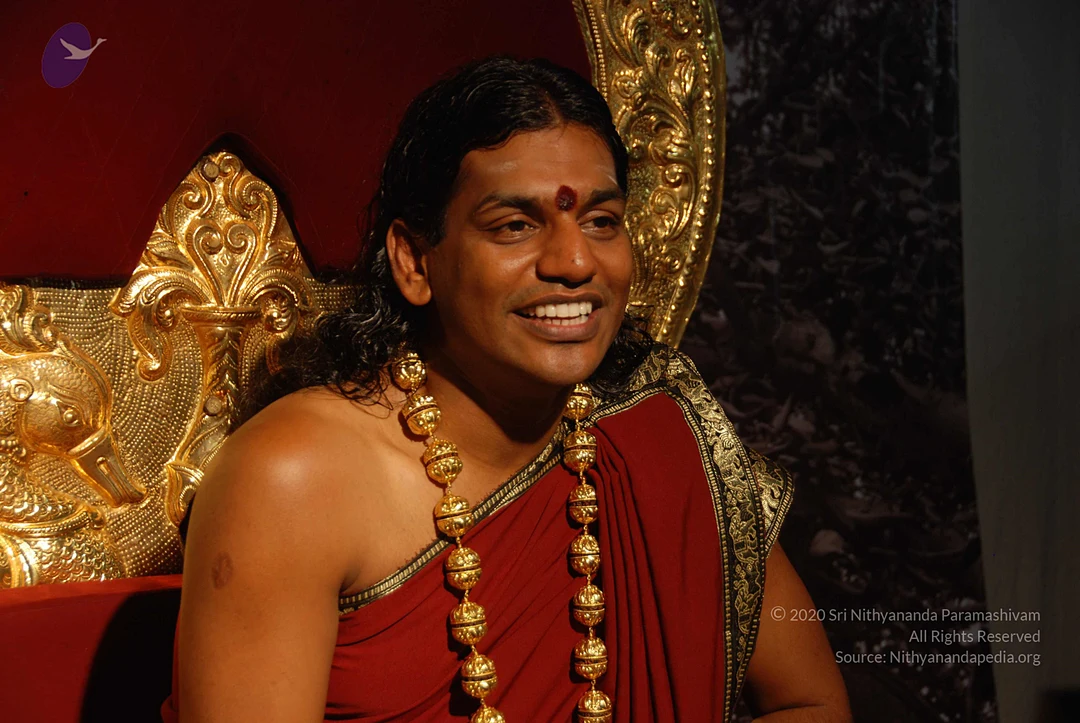
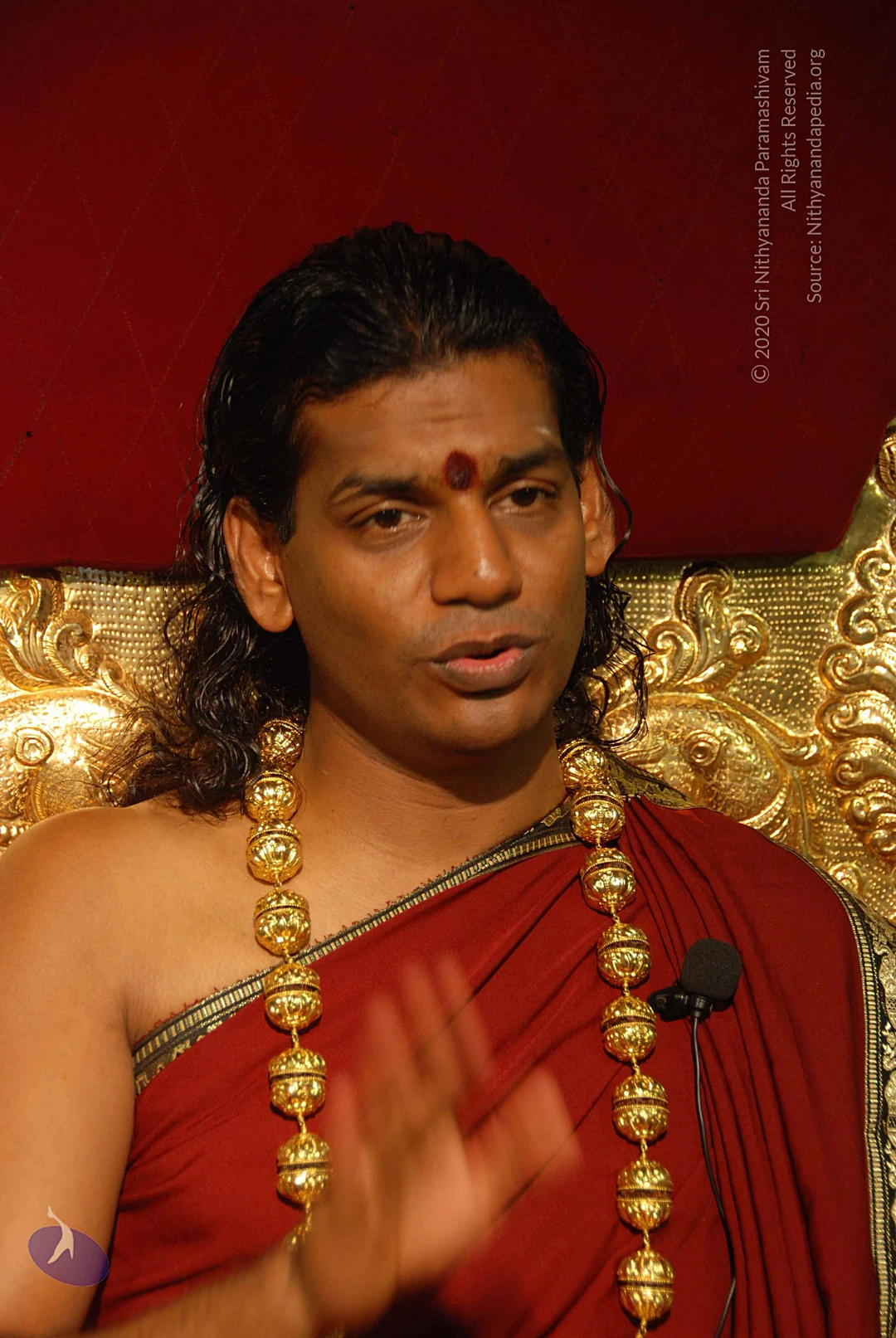
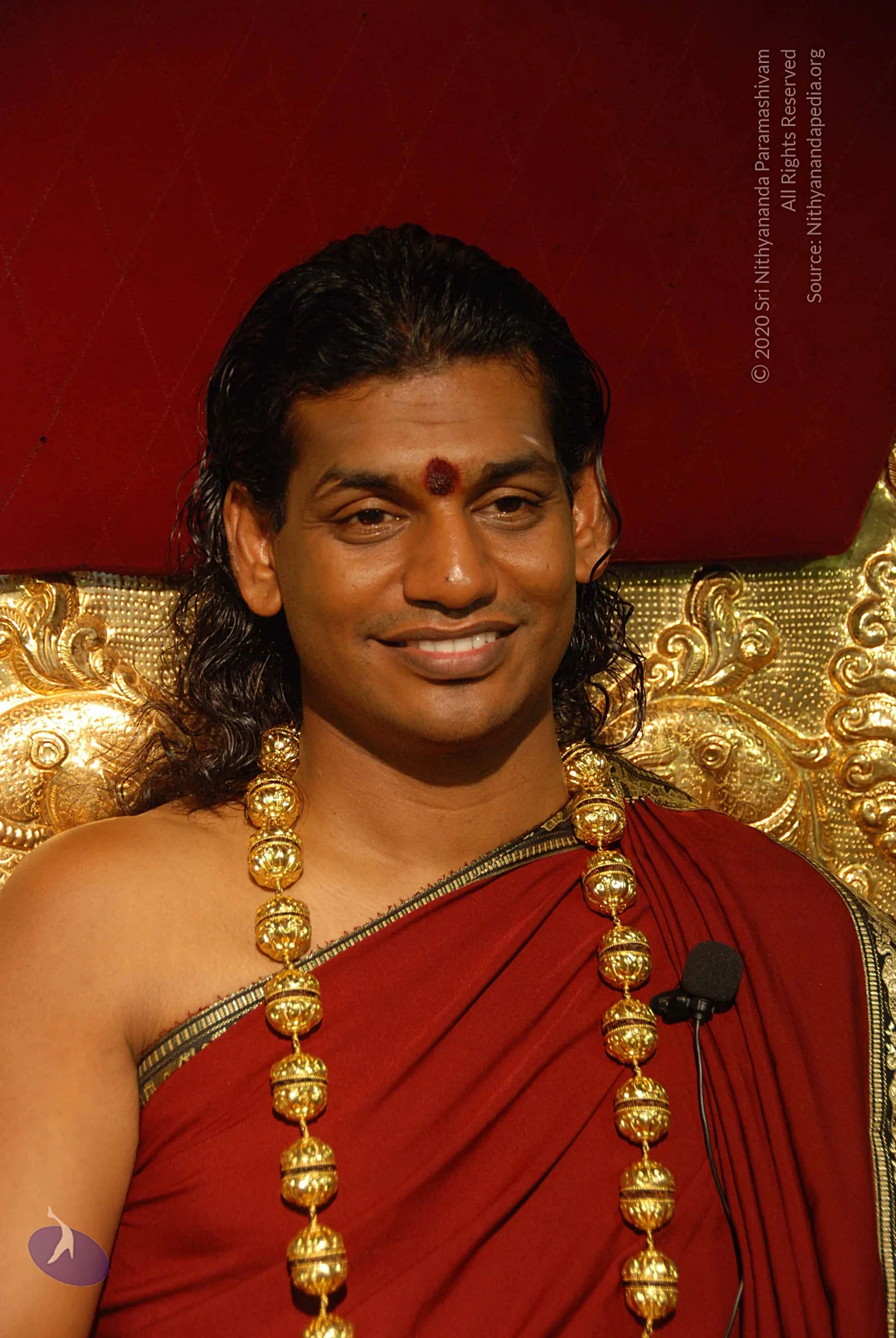
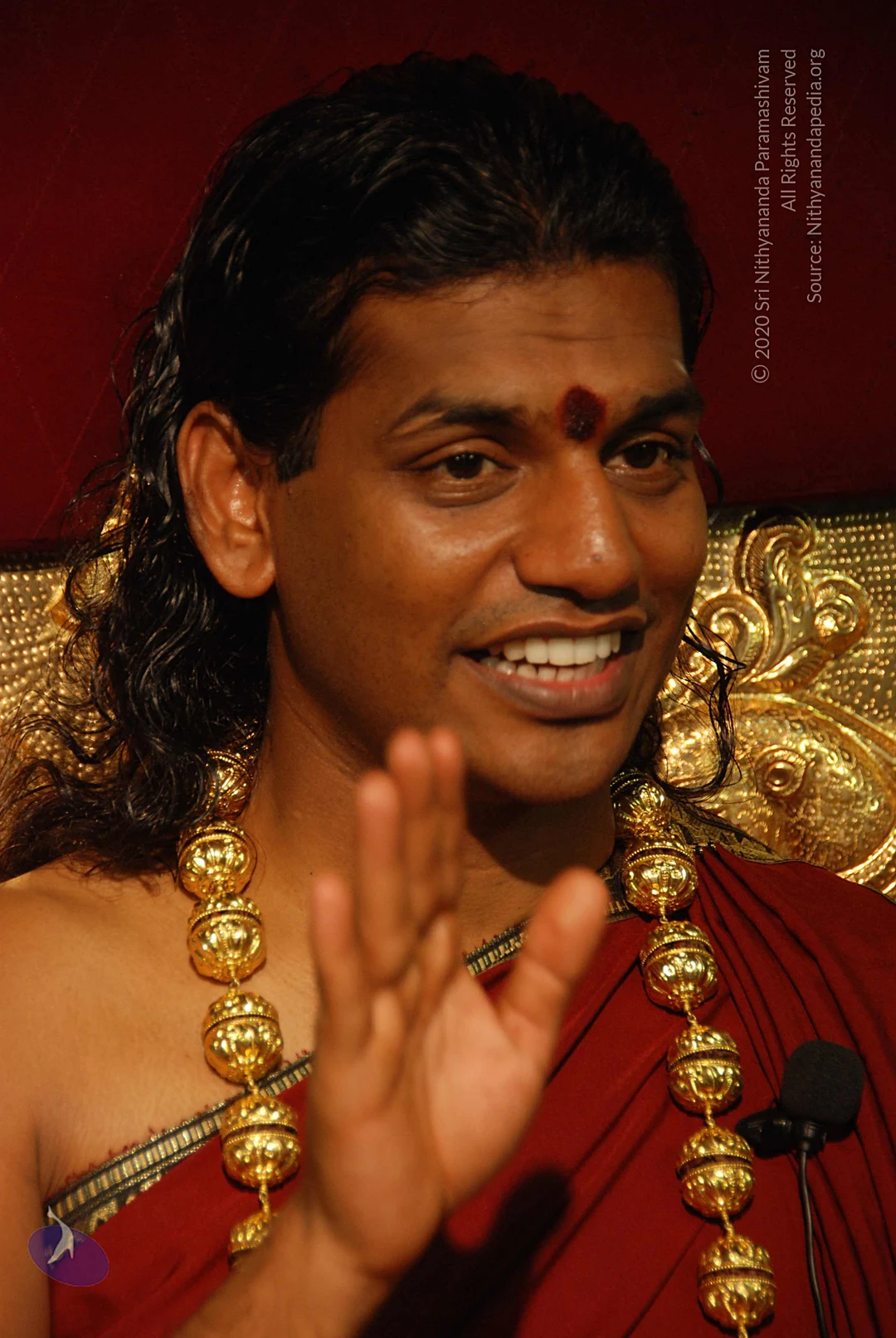
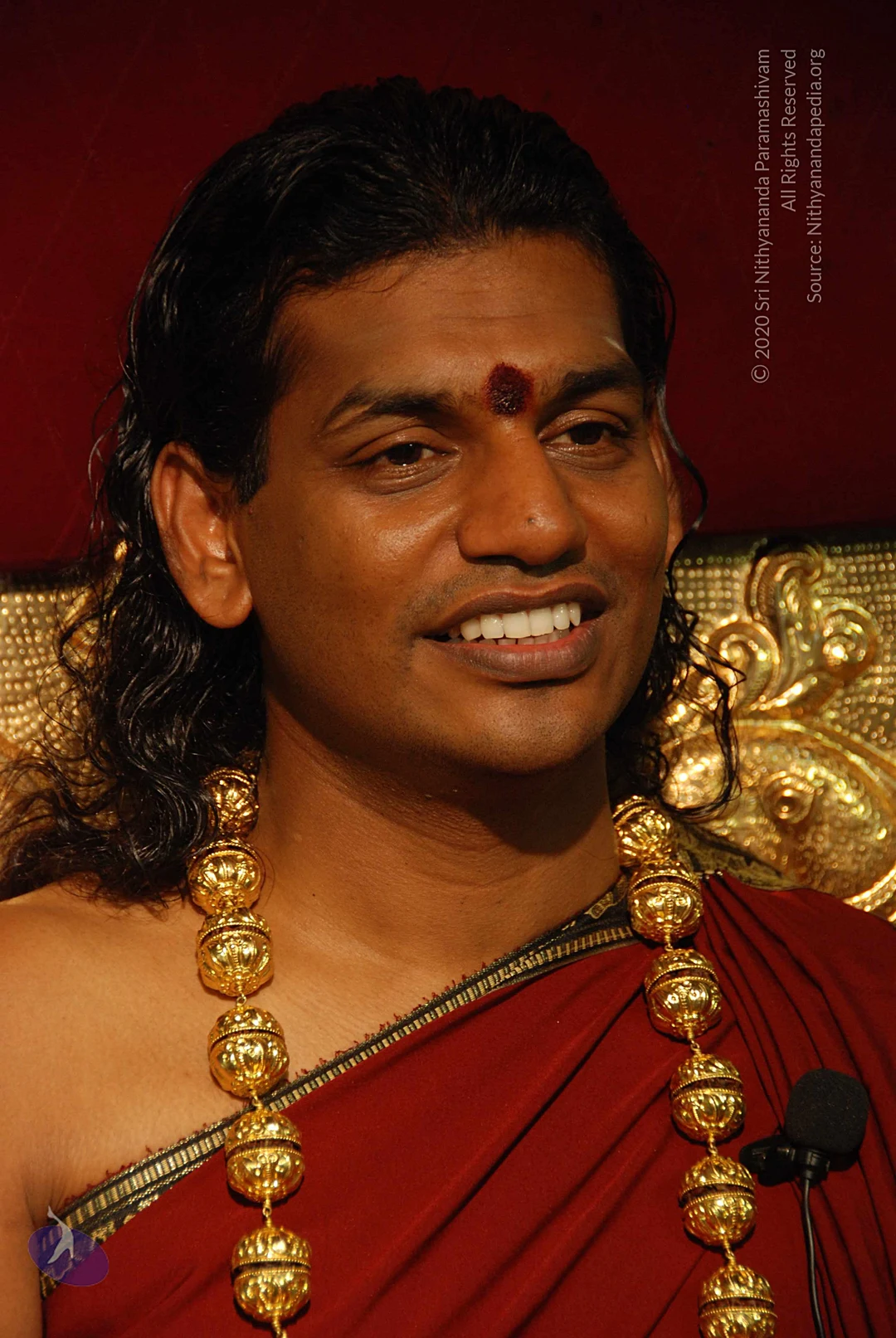
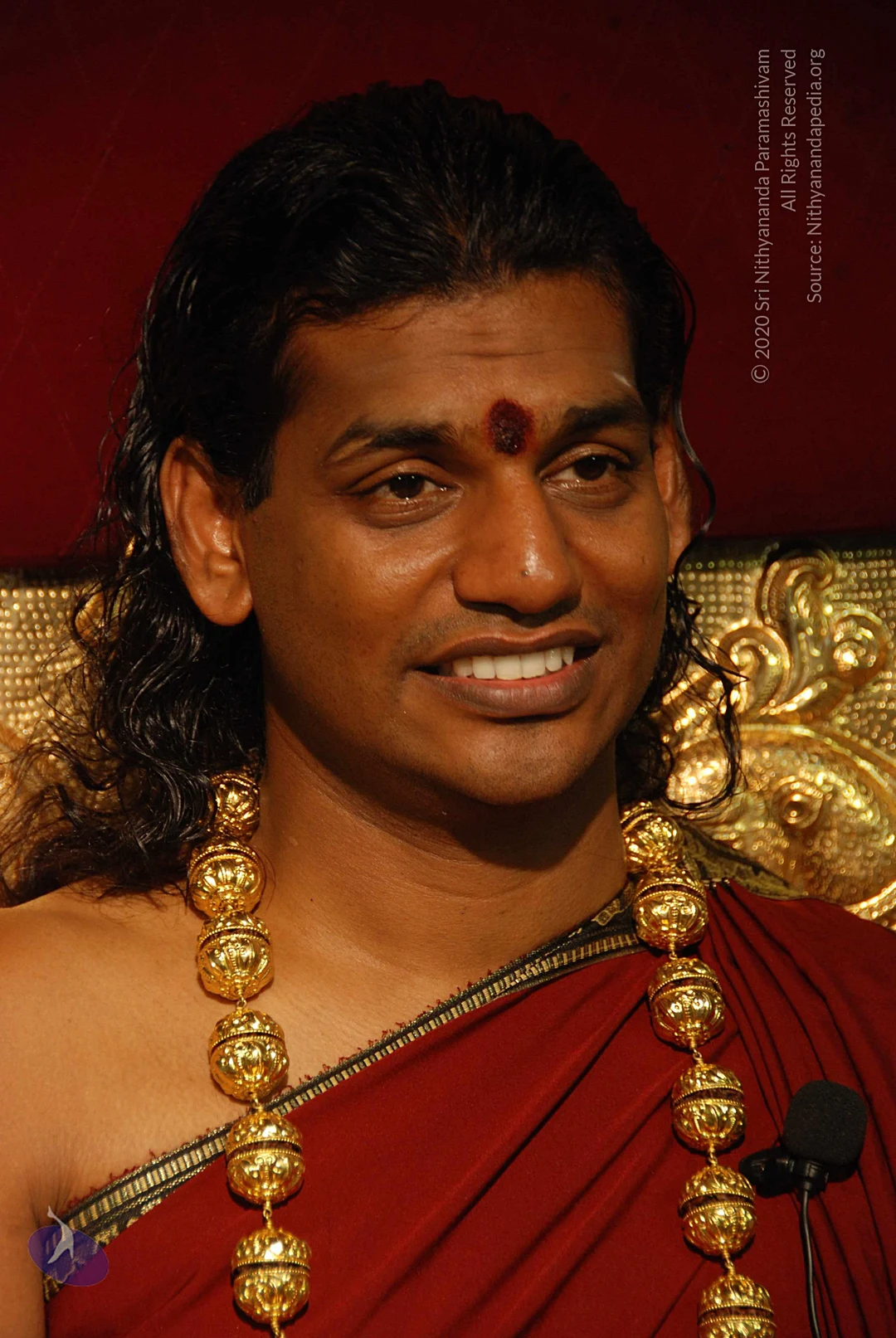
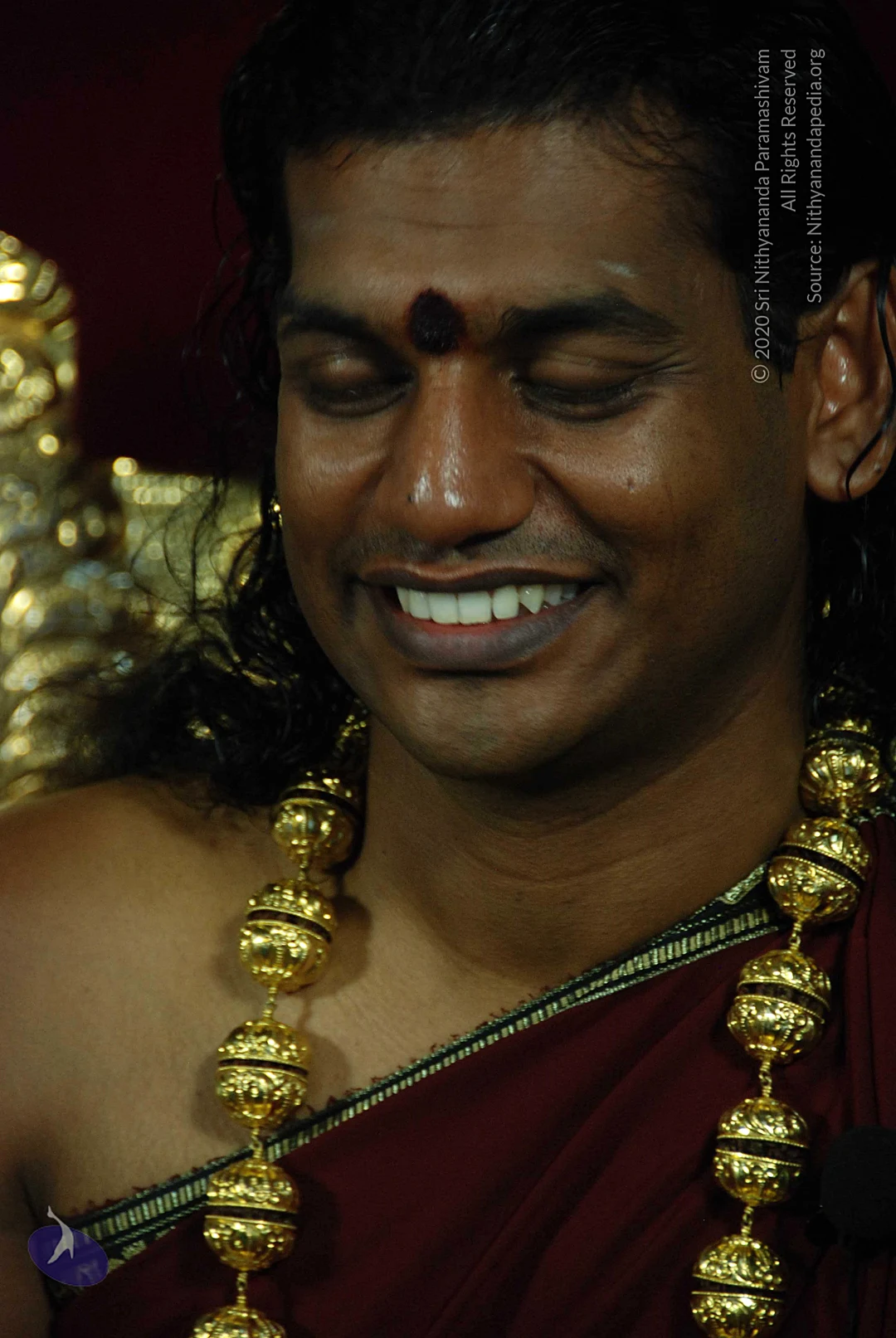
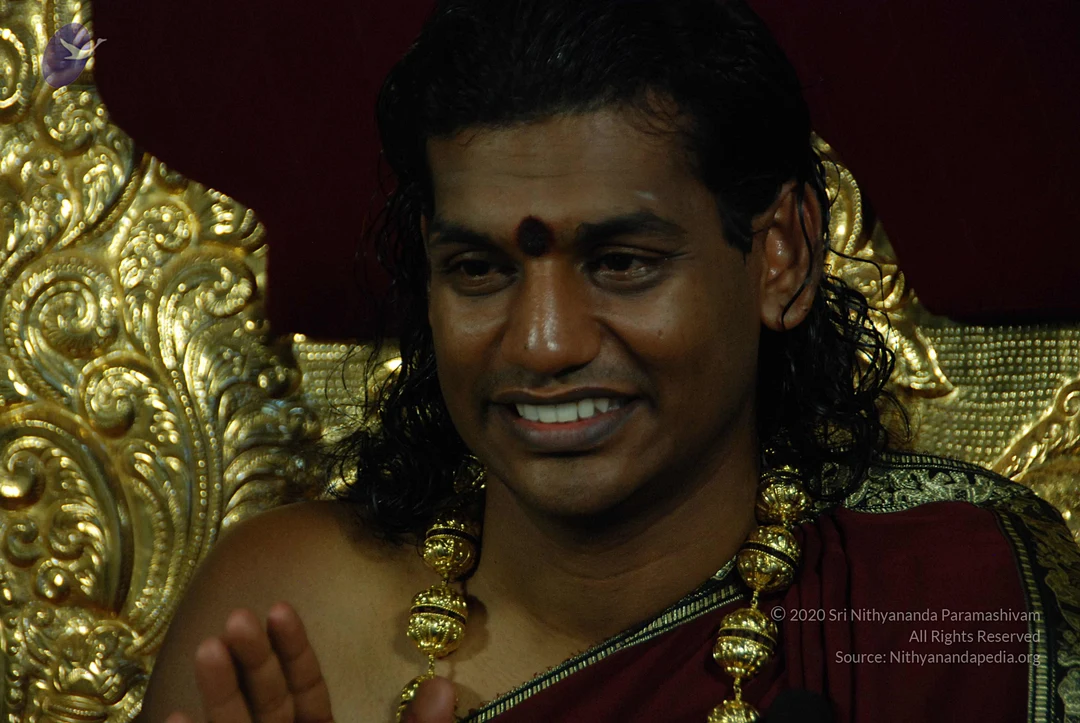
In this discourse delivered on the auspicious day of Ganesha Chaturti, Paramahamsa Nithyananda describes Ganesha and the metaphorical meaning of Ganesha's form. Ganesha, the most beloved deity of all, is described in its full glory. He represents unclutching, un-attachment, full spontaneity and ultimate sacrifice and finally enlightenment and cosmic consciousness itself. Watch the discourse to experience more.

Video and Audio:

Ganesha Cosmic Consciousness by Nithyananda

VideoAudio

Transcript:

“Tuning to Ganesha the Cosmic Intelligence”

sadāshiva samārambhām shankarācāryā madhyamām | asmat ācārya paryantām vande guru paramparām || (0:51) I welcome you all with My love and respects. My blessings to all of you on this auspicious Ganesh Chaturthi occasion. My today’s message is ‘Tuning to Ganesha the Cosmic Intelligence’. Ganesha is the most beloved and friendly God from Hindu tradition. His very form is so nice, you can relate with him in any way you want... unassuming, undemanding. You can just make a small, you can make him out of a small piece of turmeric or little bit of clay, out of anything you can make and he is available... undemanding.

(2:26)

I can say largest worshipped deity in India is Ganesha. Every street will have Ganesha temple. You don’t need too much ritualistic, big arranged puja for him. Anybody can worship. A village lady who is taking bath in the river, once she finishes the bath, she just picks up a pot of water, comes and pours the water on small Ganesha deity which is on the banks of the river, worships and goes. You can’t worship any other deity so easily without much of rituals and everything. Here is Ganesha, most worshipped beloved God.

(3:23)

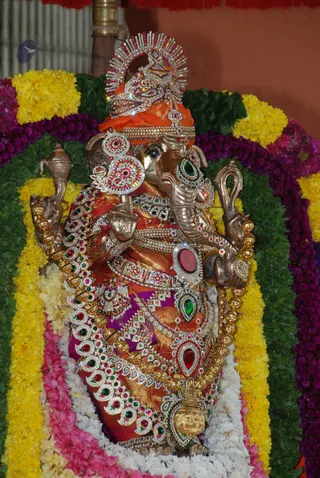
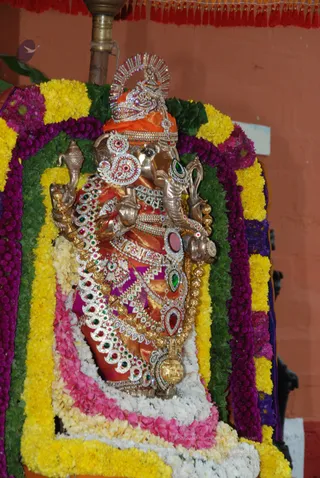
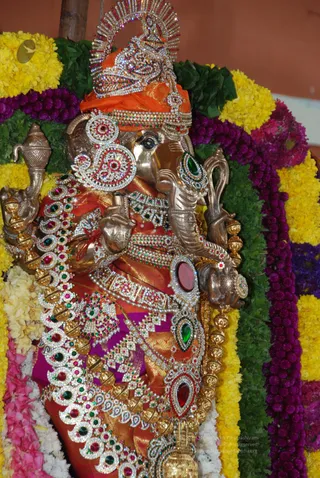
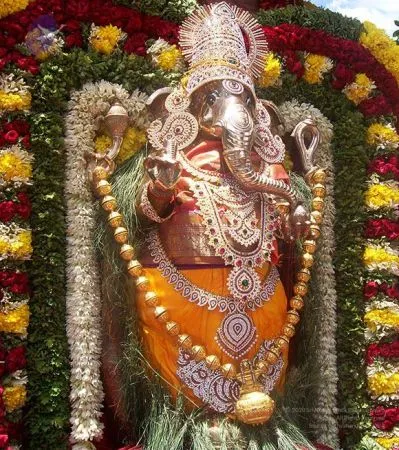
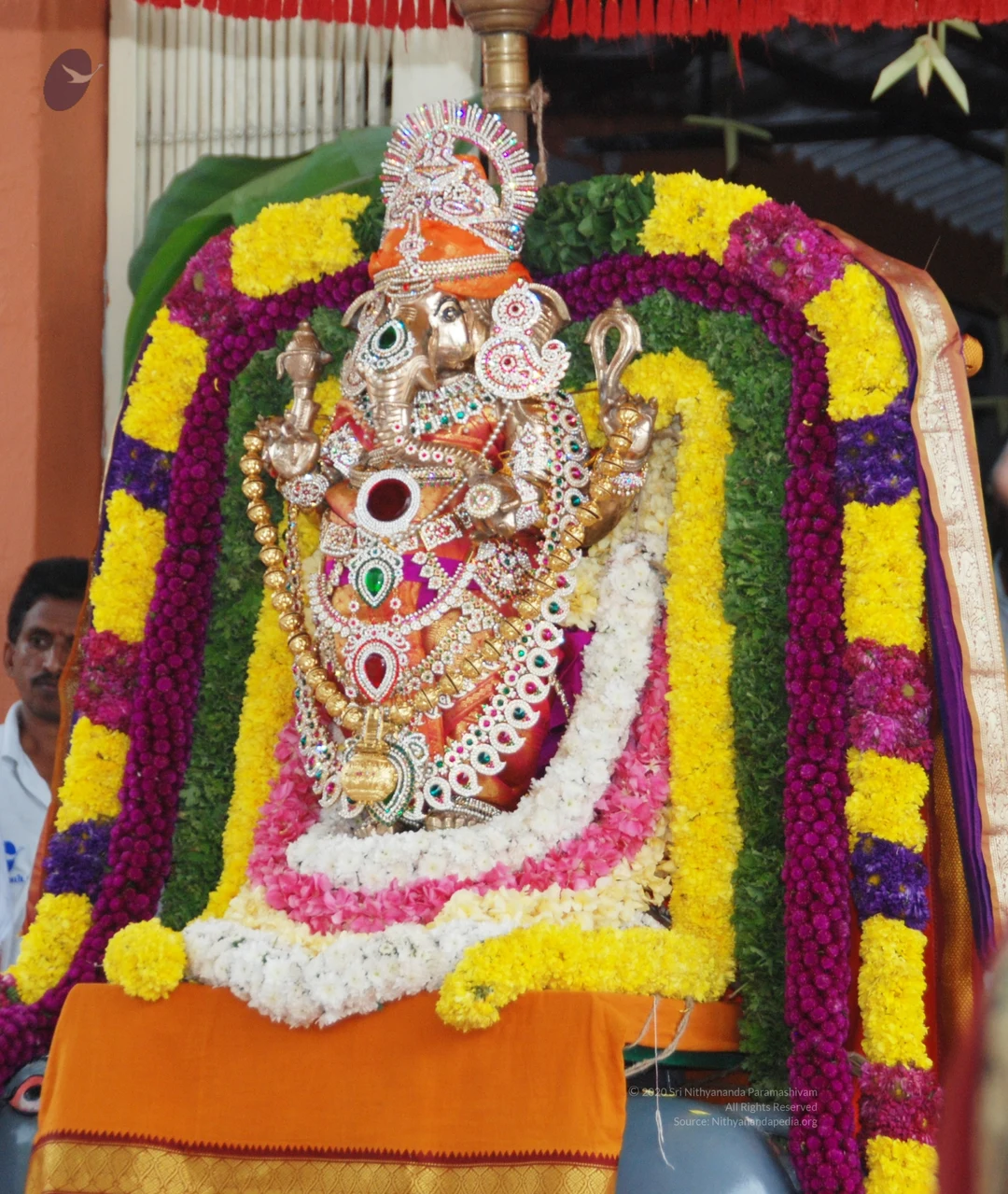
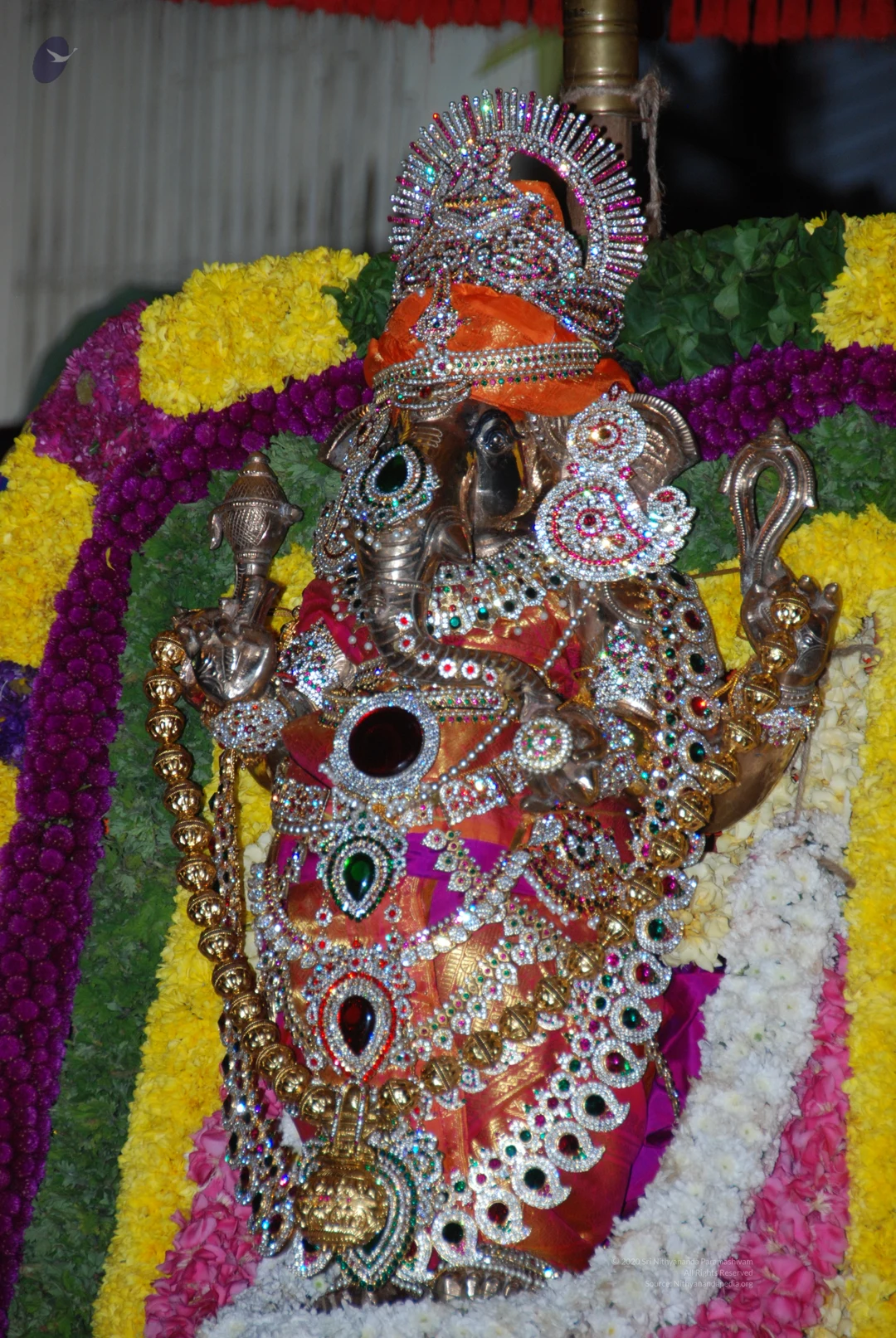
His very form is a powerful representation of the cosmos - the yantra. Yantra means the form, visual expression. He is a very powerful expression of the cosmic intelligence. If you see, he has four hands, in one the right upper hand he is holding the noose - the ankusha, the left upper hand he is holding the pasha, the right lower hand he is holding the tusk, his own broken tusk and the left lower hand he has sweet.

(4:12)

It’s a very beautiful philosophical representation. See the noose, ankusha he has, is a very small instrument which can control elephant. The huge elephant can be controlled just with that small noose. It is actually, it represents unclutching. Any size mind, elephant size mind, can be controlled by a small key; unclutching. The noose represents unclutching. Unclutching is such a powerful key, it looks very small, but the mind, which is wild elephant can be just controlled with the small noose; with small unclutching. Left hand, the pasha which he holds, pasha means attachment. He does not allow the thoughts to become attachment engrams. Thoughts, if you add attachment to it, it becomes engrams. Because his attachments are under his control, he does not allow thoughts to become engram. One side, thoughts are never becoming engram, they remain as thoughts, because pasha is under his control, the other side, because of ankusha, even from the thought, unclutching happens. So his inner space is completely under his control because of the ankusha and pasha. The upper two hands represents the completely peaceful, blissful, inner space and the lower right hand which holds his own tusk; you need to know the history of the tusk.

(6:36)

Once Vyasa requested Ganesha to write Mahabharata. Largest poem ever written in the planet earth, even now, still now, is Mahabharata; longest and largest poem. Vyasa, still unimaginable genius. If somebody can maintain certain record for 10000 years, what other word we can use for him, except the word genius. Still nobody is able to cross Vyasa’s achievements. Now we have so much of technology, computer, this, that, everything, but still Vyasastands and his record is unbroken. Vyasa wants somebody to pen down, because when the flow happens it’s such an extemporaneous, spontaneous flow, he can’t pen down. He has to just open it and somebody else has to pen down. He is not able to find anybody for his speed, so he asks Ganesha, can you pen down? Ganesha says, “Great, sure, I will pen down. But the speed I write will be too much. If you are not able to cope up with my speed, I will stop and go away.” Then Vyasa puts the condition. “Alright, I understand, I am also putting a condition. You should write everything only after you understand.” So agreement was prepared. So Vyasa’s, Vyasa’s condition is Ganesha will write only after completely understands, so that Vyasa will have few seconds at least.

(9:09)

Vyasa can play with words. He is a master. Still, I don’t know how many times I heard Mahabharata and read, still when I read, it is so new, so alive, so fresh. Still, Mahabharata is My time pass. That was the one book I had throughout My prison days. That is the only book, every day I will spend little time with that book. Still it has so much to offer. We may think, “No, in modern society, what Mahabharata has relevance?” No...You don’t know. Still it has so much to offer. These are eternal truths, eternal values.

(10:34)

So the agreement was ready. Vyasa is supposed to match with the speed of Ganesha and Ganesha is supposed to understand and pen down everything Vyasa expresses. Started, went on and on and on and on and on and on, neither Vyasa stopped for food or water or one, two three nor Ganesha got up for anything. Whenever Ganesha was finishing quickly, Vyasa puts some very complicated words, so Ganesha has to take few seconds and catch up and pen down. So it’s like a big game going on. Suddenly, the Ganesha’s pen broke, and now because this clause was not there in the agreement, ‘what to do when the pen breaks? It is whose responsibility?’ Naturally not Vyasa’s; because Ganesha is only penning down, it’s supposed to be his responsibility. But Ganesha can’t miss, because as per the agreement Ganesha has to pen down everything. Even if he miss few seconds, some of the great important truths which Vyasa is expressing will be lost, because the expression is happening in full speed.

(12:29)

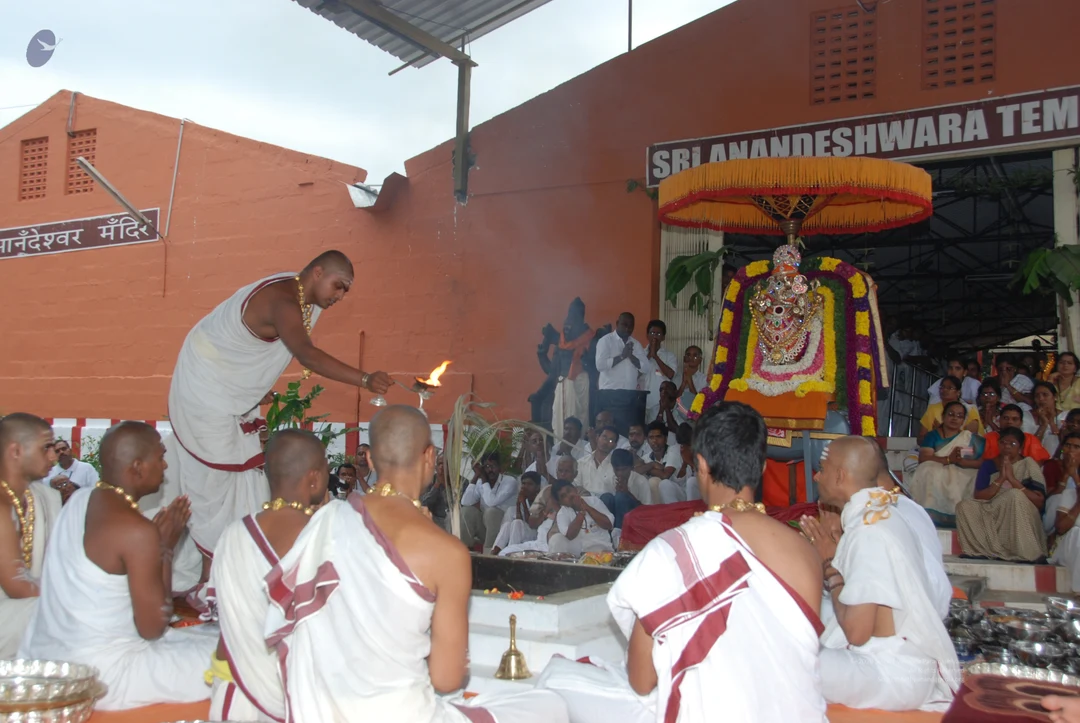
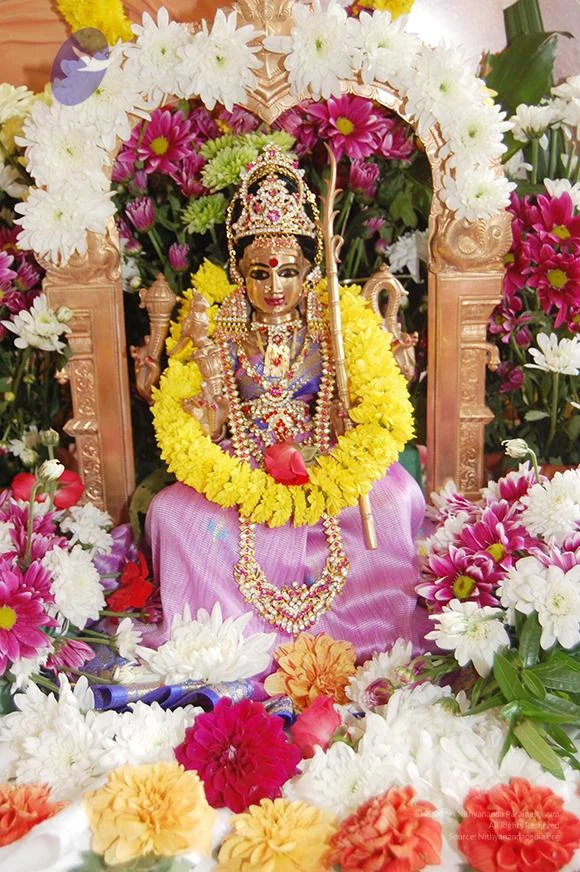
It happened in Badri, the source of Saraswati, that’s a place the Saraswati comes out. Saraswati is the source of Ganga, Yamuna, all the Himalayan Rivers. Don’t think Saraswati means the Brahma’s wife. No, not that Saraswati; Saraswati is the feminine energy, feminine consciousness. I had darshan of Saraswati in Badri. It was such a beauty and grace, the enchanting grace. I made our Anandeshwari exactly in the same mould and with the same jewels. Our Anandeshwari is made out of the, My darshan of Saraswati - the face, structure and the jewels, especially the shoulder jewels and all, you will not see that kind of shoulder jewels in any temple, anywhere in the world. The sthapati was shocked. “What is this Swami, this kind of jewels are never made. I have never seen this kind of design. You are asking me to do this design.” Then I have to explain that, as I saw her, I am creating that. Exactly our Anandeshwari, how she is looking, the same way, the same dress, may be the size was little taller. Saraswati, when I saw her in darshan, she was little taller; otherwise same, exact. The hands, the jewels, everything is done as I saw her.

(15:14)

Banks of Saraswati, writing is going on, suddenly the pen broke, now what to do? Ganesha, he has to complete, he can’t miss and he can’t run for pen. If he runs for one more pen, he may miss few words, and he can’t tell Vyasa. “Stop! Stop! Stop! I will get another one pen.” No. He immediately breaks his own tusk and starts writing. This shows two thing. One: his spontaneous decision making. Two: his courage to sacrifice for the cause. Understand, first thing, he is not telling, Ganesha, he is not telling Vyasa, “Stop, stop, stop, I will run and get a pen and this was not there in our agreement.” No. Spontaneous decision making and courage to sacrifice his own tusk.

(16:40)

See this writing is one small part of his life. If he tells wait I will go and get, Vyasa is not going to say no. After all he will be happy, “Oh I have few minutes, I can think little more”. But courage to sacrifice. That tusk means courage to sacrifice and spontaneous decision making power. So the upper two hands represents his inner space; pure, blissful, inner space. The lower right hand represents his ability to take spontaneous decisions and courage and sacrifice for the cause he has taken up. When these three are there life is a sweet. That is what he means by having the sweet in the lower left hand.

(17:52)

The elephant face represents the extraordinary awareness and sensitivity. The elephant’s eye sight or the elephant’s ability to smell is extraordinary. And his big pot belly represents the whole cosmos; the whole cosmos is inside him. He is the cosmic intelligence and his mouse represents the playfulness. See mouse, even though you have little fear, it always creates a kind of a playfulness in you, the playful feeling. Whenever you see it, you start laughing. That is why that Tom and Jerry is so popular. The mouse can create a playful feeling inside your mind all over the world. All over the world in human consciousness the mouse is always associated with playfulness. He is doing this whole thing so playfully.

(19:38)

Tune in to Ganesha means imbibe these three qualities; ankusha – unclutching, pasha - keeping the attachment under your control, not allowing thoughts to become engram, and the tusk – the spontaneous decision making, courage to sacrifice for that cause you took up, and naturally your life will be sweet like Ganesha’s modaka.

(20:35)

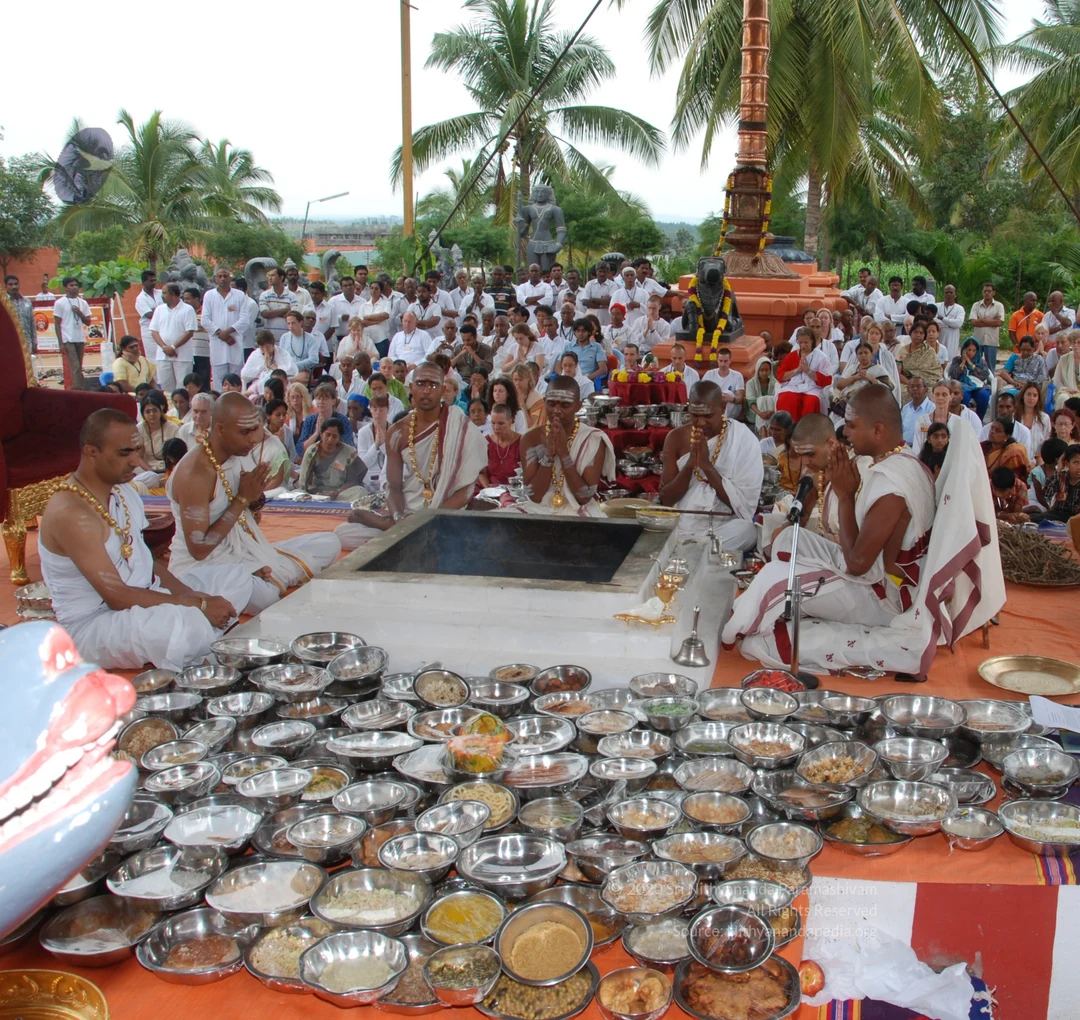
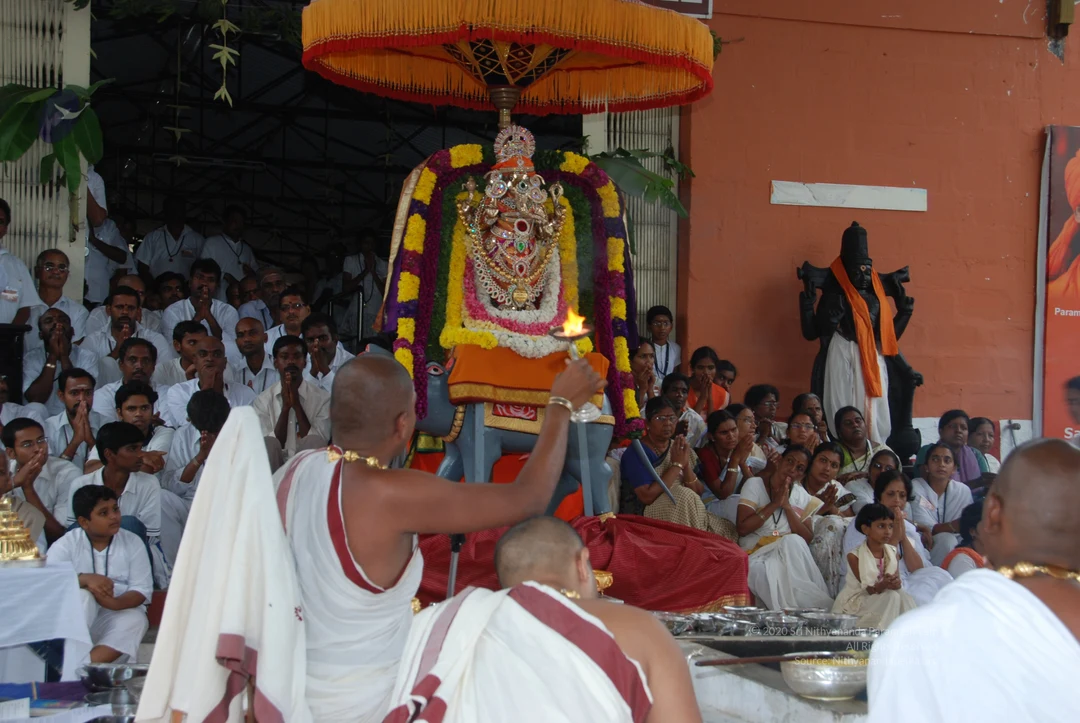
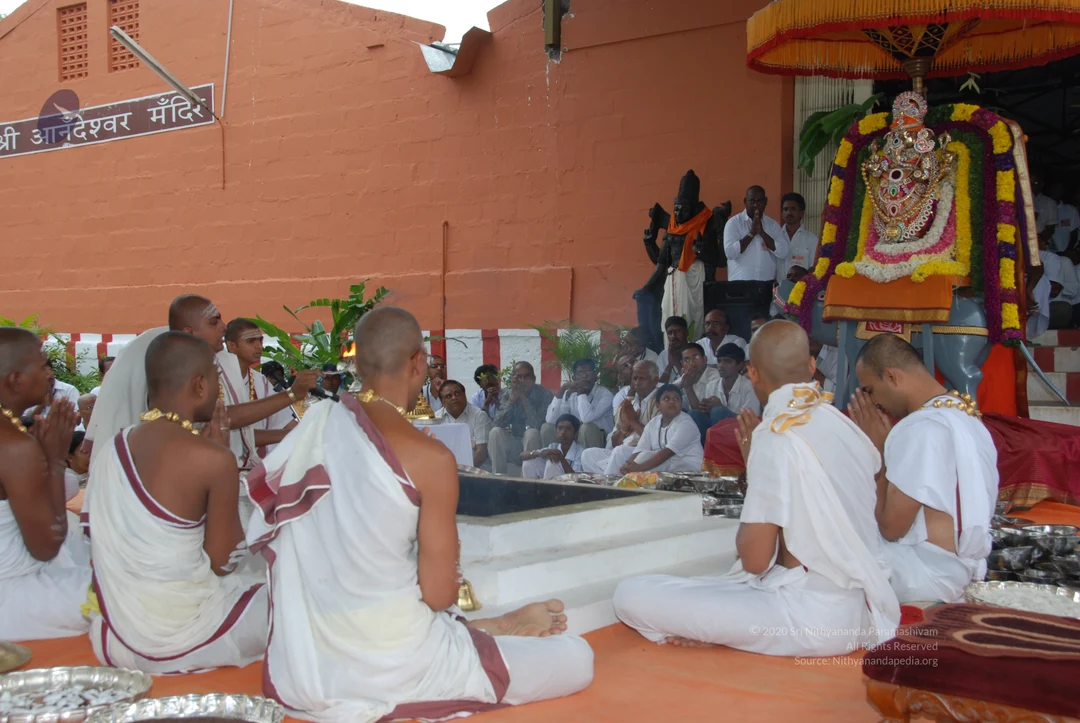
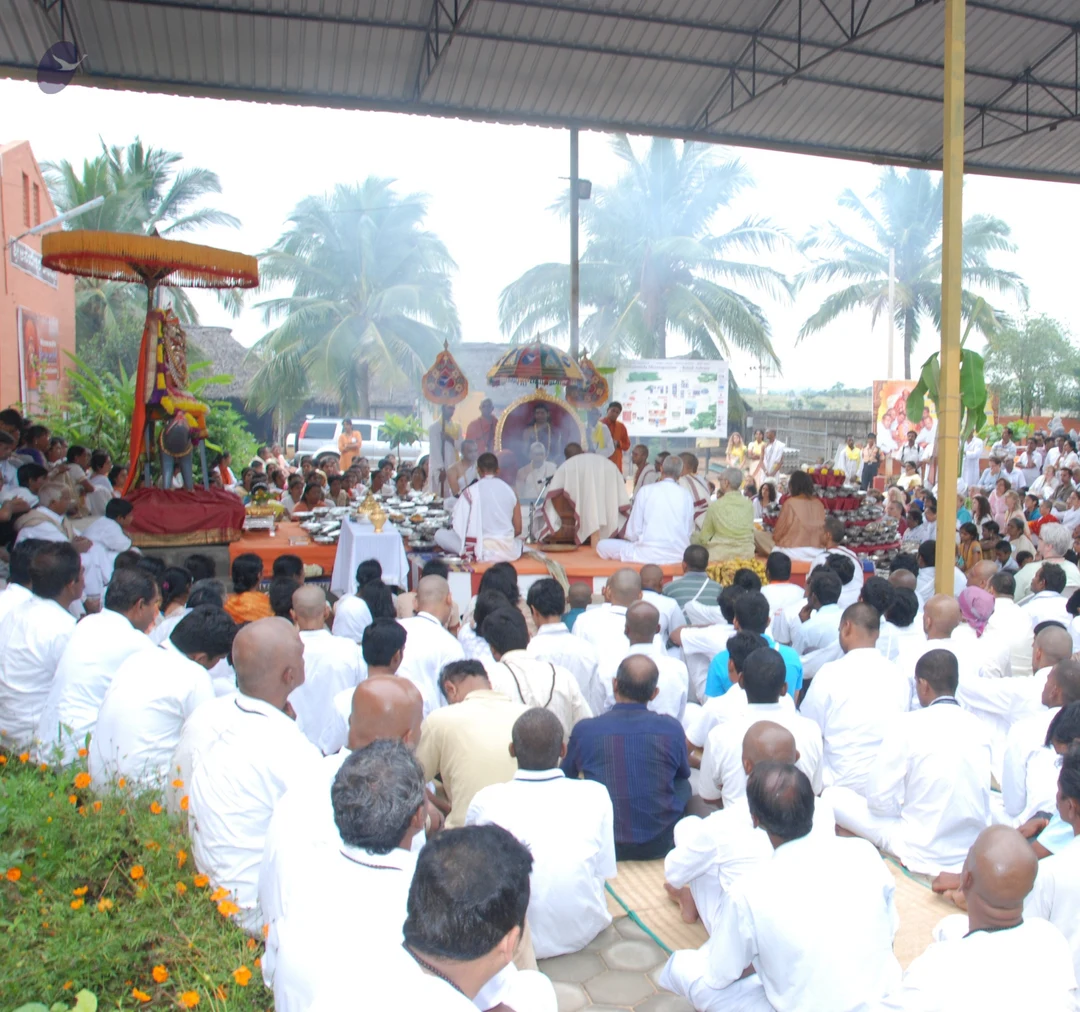
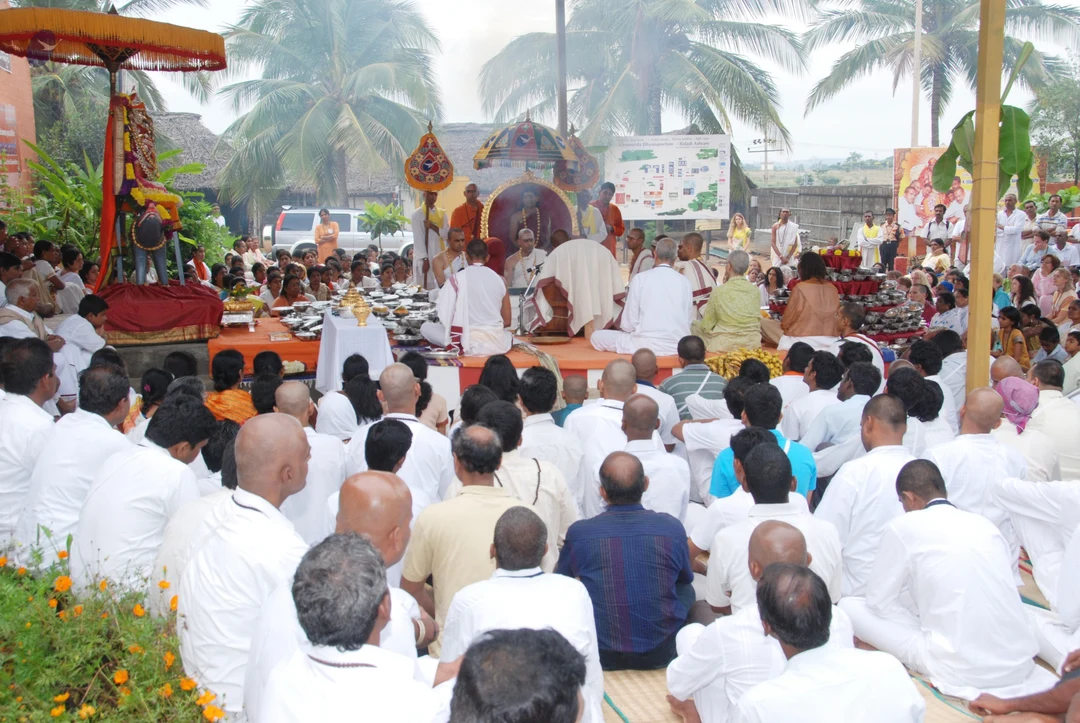
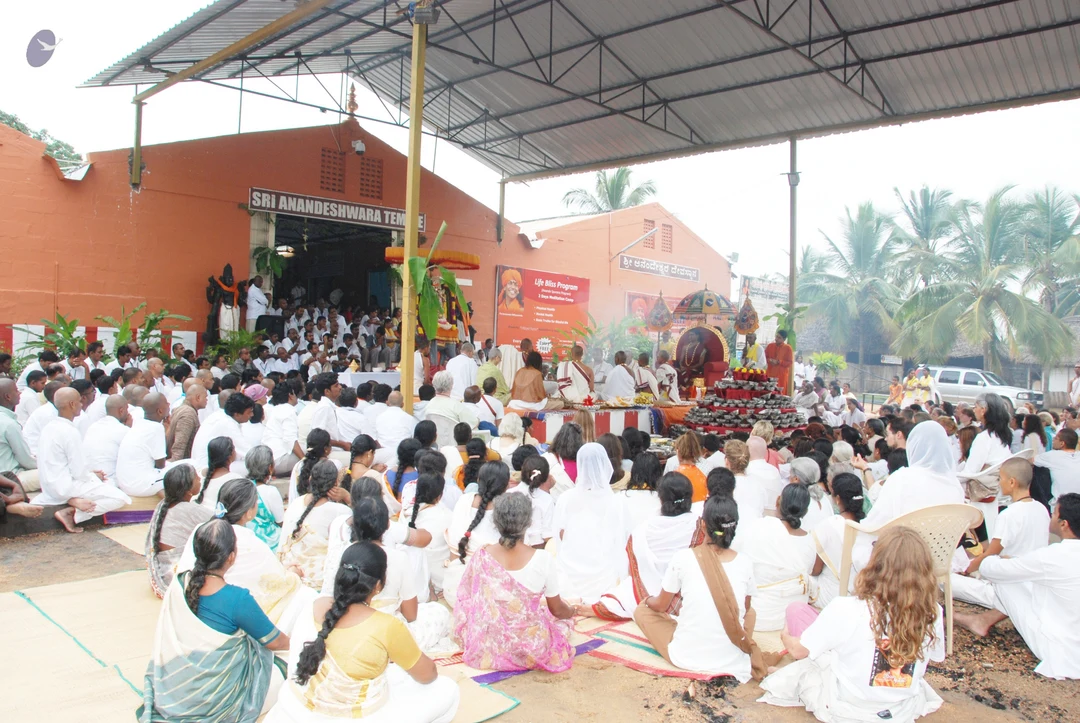
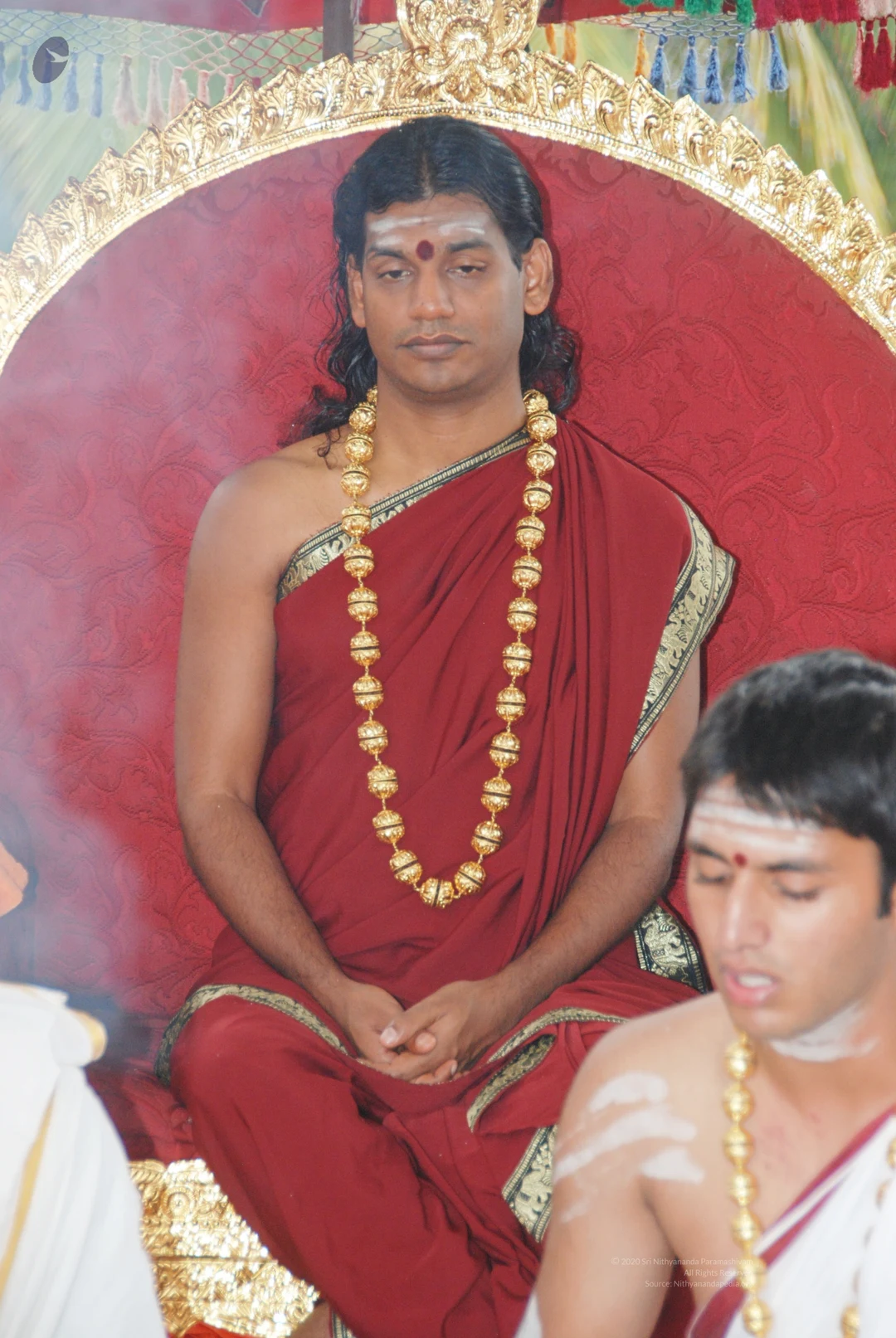
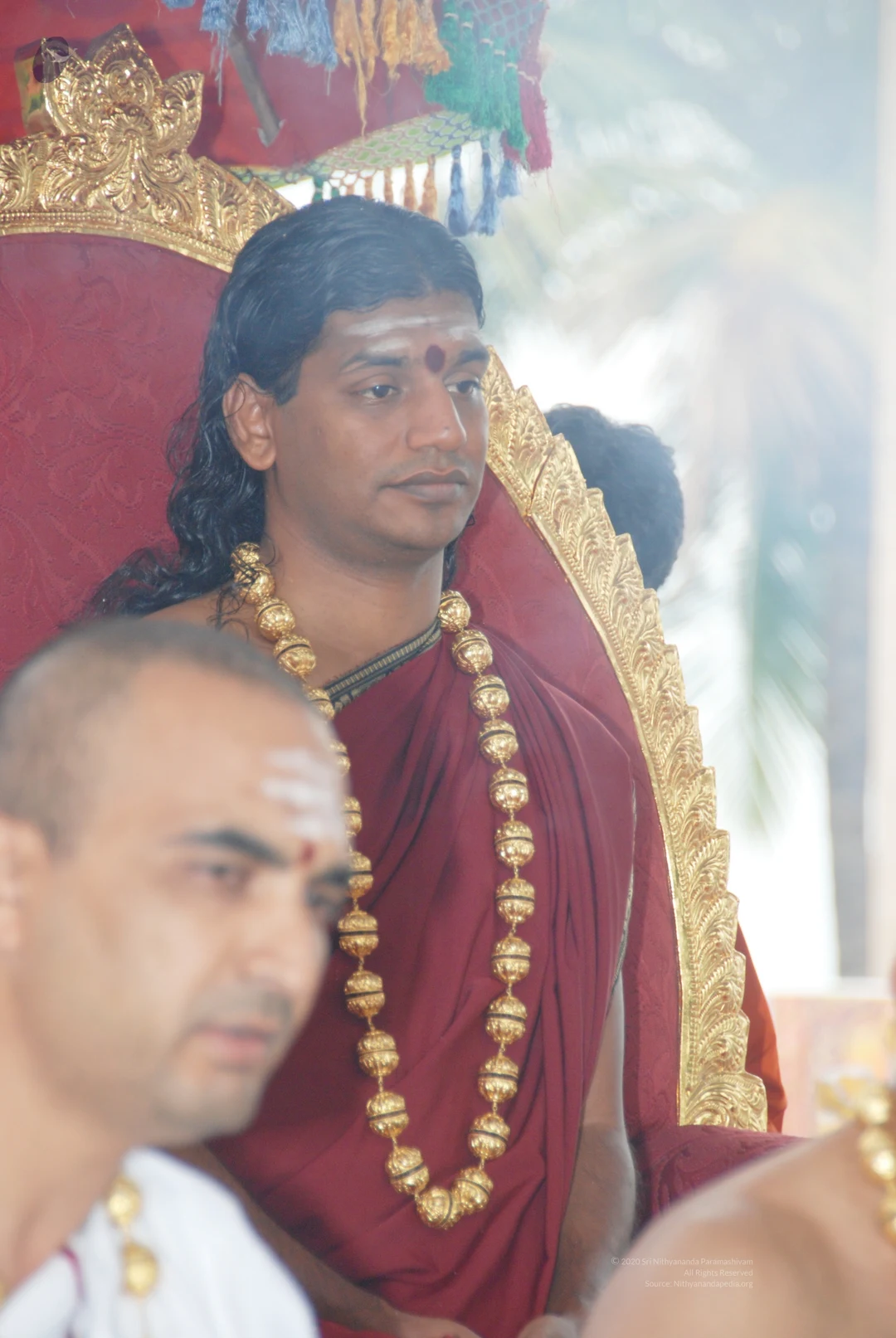
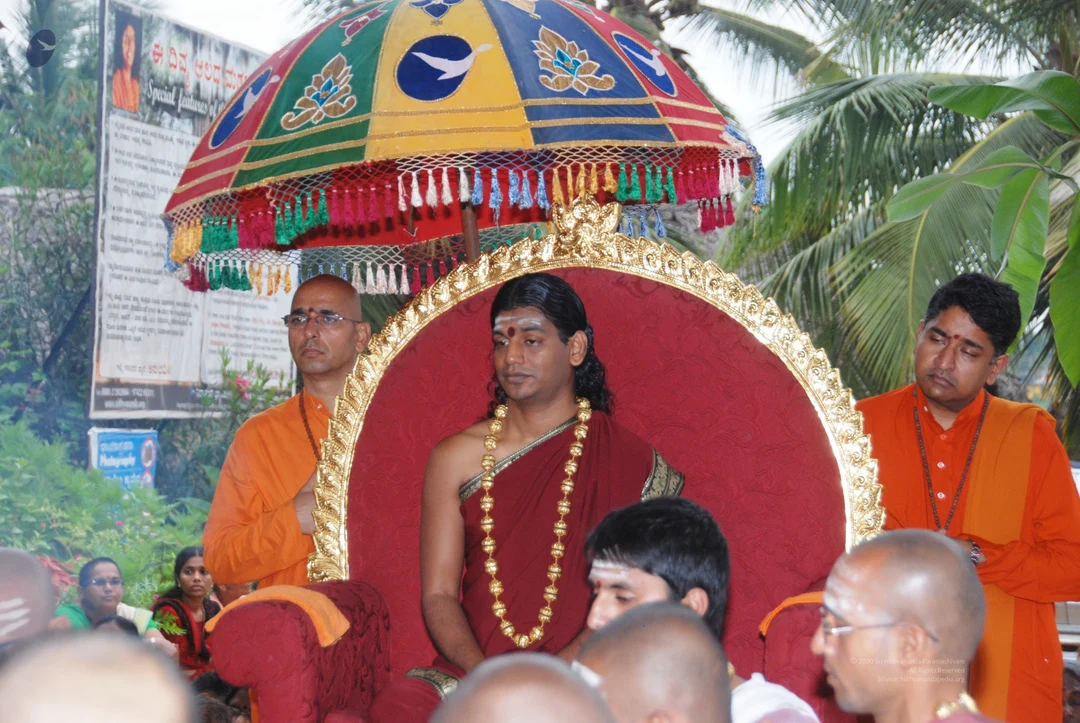
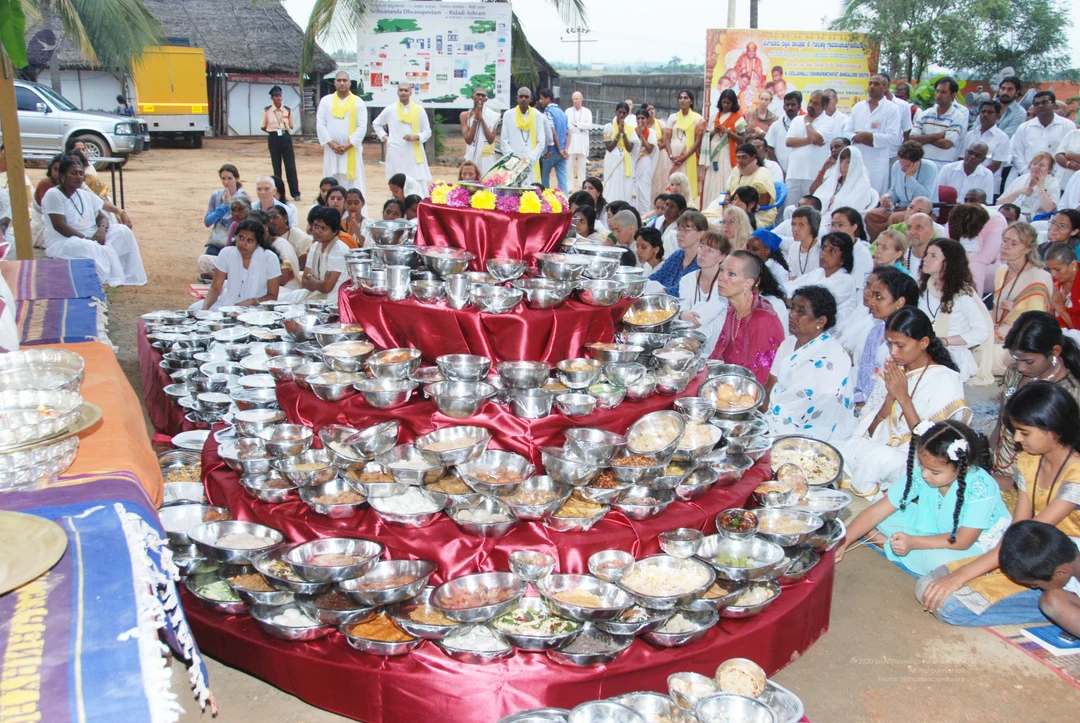
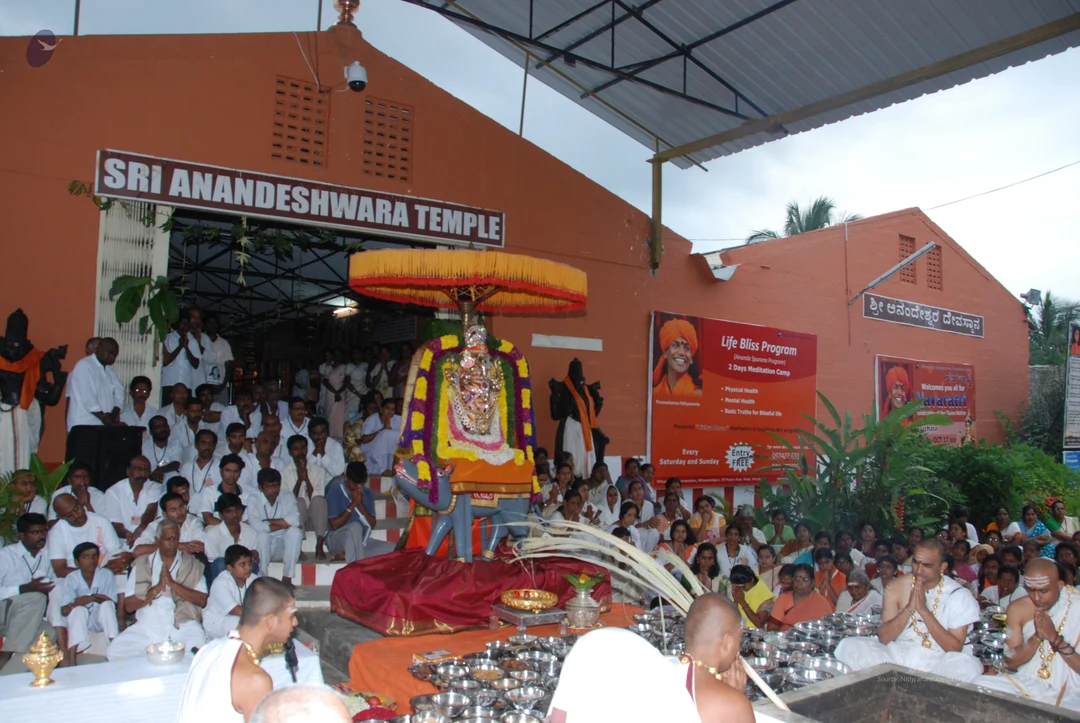
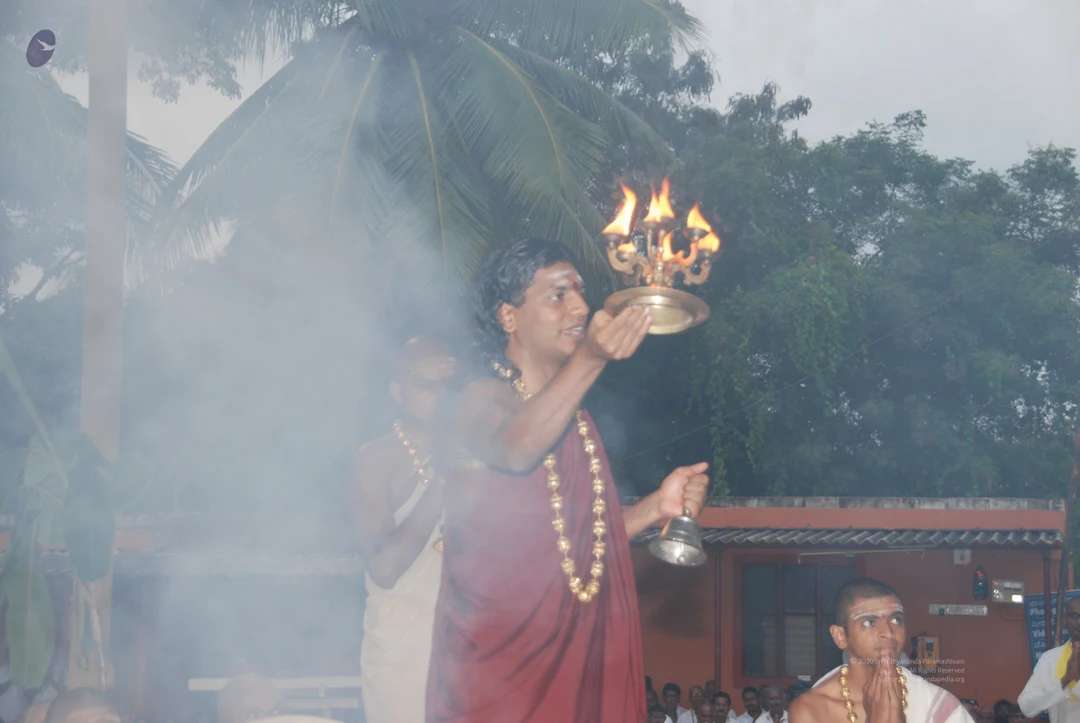
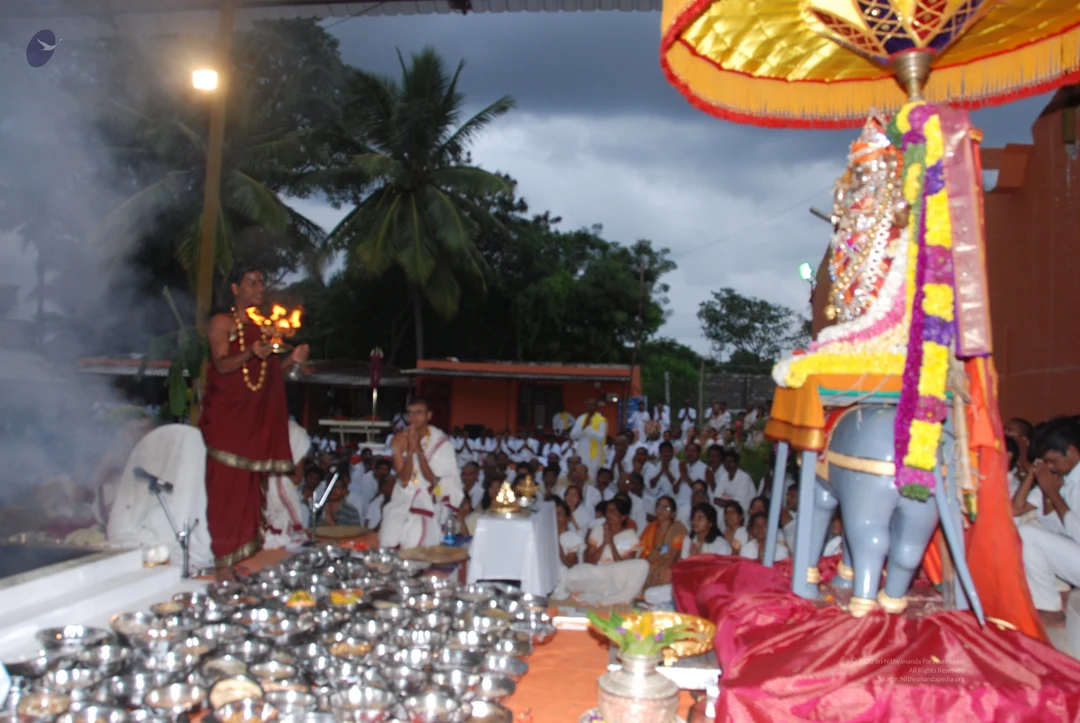
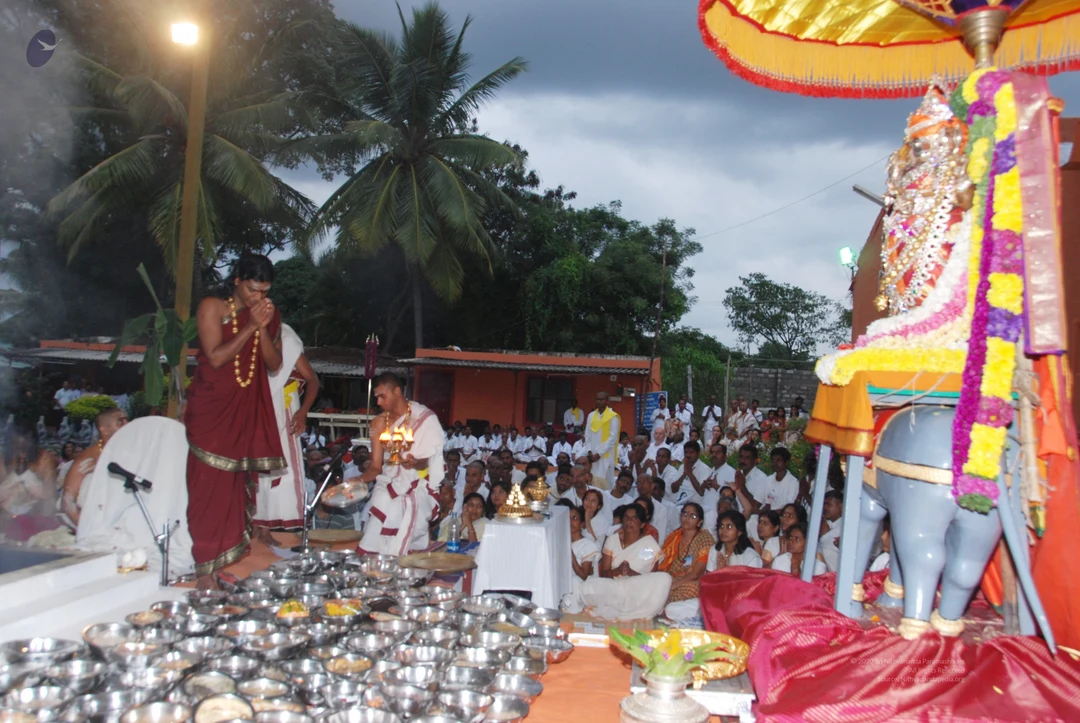
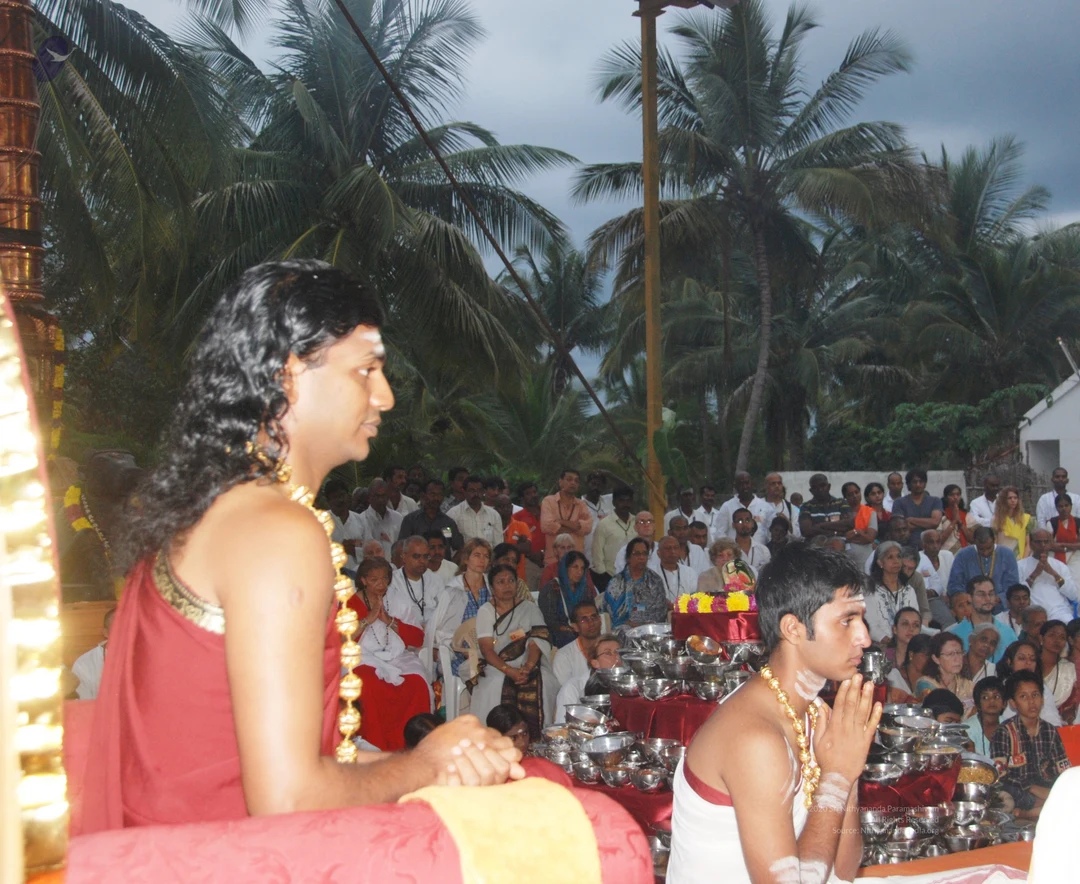
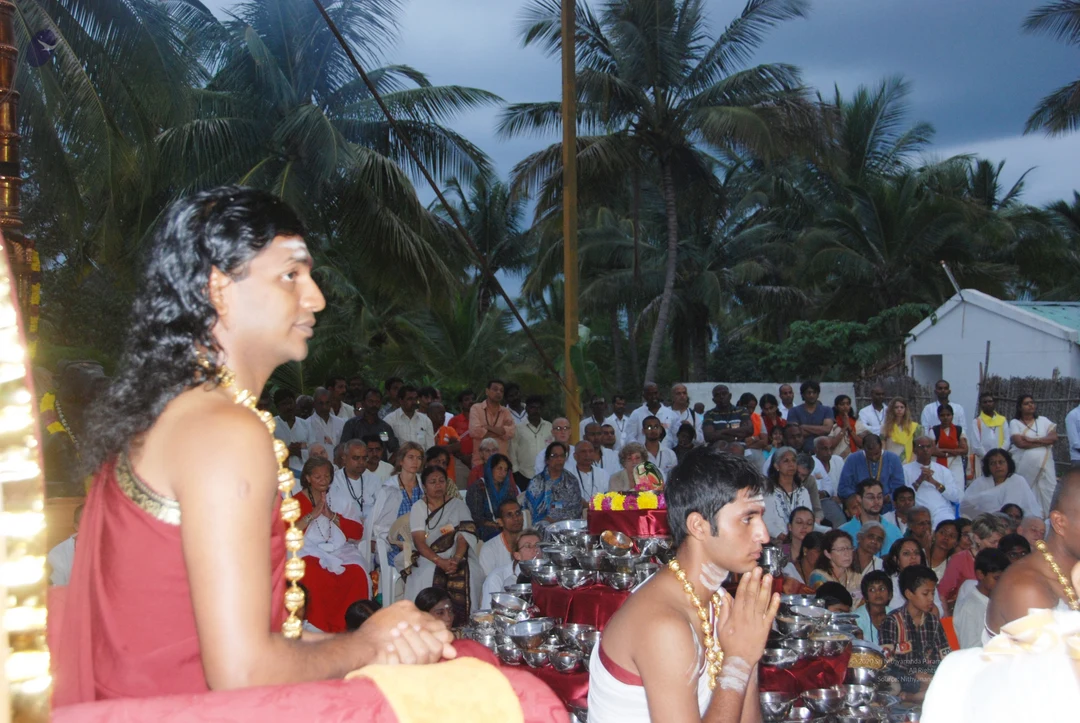
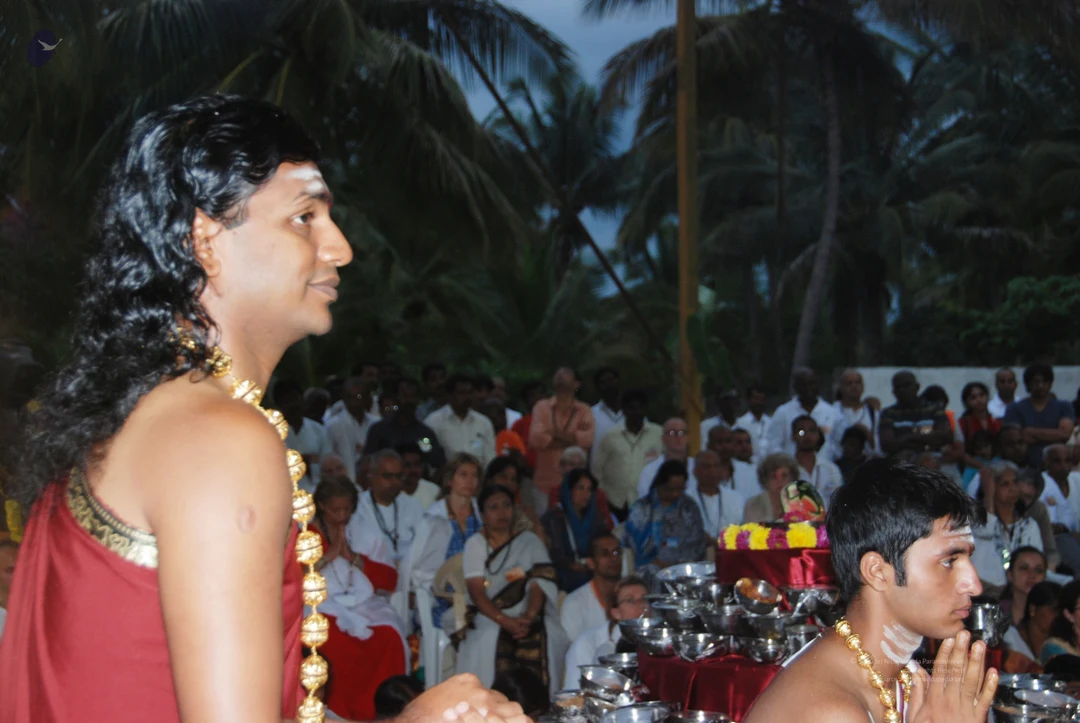
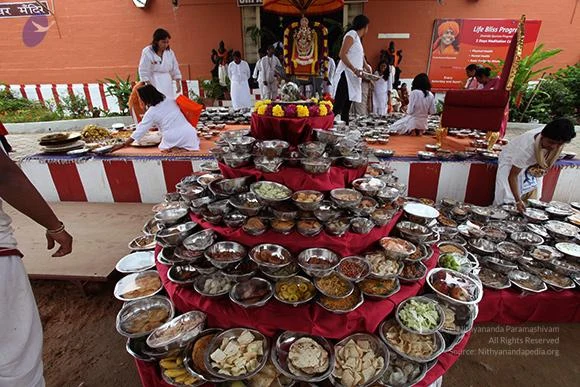
Today we celebrate Ganesh chaturthi, all over the world, in all Nithyananda Dhyanapeetam centers and temples and ashrams and disciples, devotees houses, to remember the great happening happened in My life; Ganesha eating the food offered by Me at the young age. So, today we will be offering 1008 items of food for Ganesha as our humble offering, as our gratitude. That gave Me so much of vitarka. The fools can go on criticize, but I tell you, vitarka is worthy of anything. The fools may criticize, I was hallucinating or some rat ate and went away when I was unconscious. I know thousands of fools will come, who will interpret and reinterpret and reinterpret psychological angle and psychosomatic angle and all angles. How they were interpreting and reinterpreting and commenting on Sri Ramakrishna’s life, they will interpret My life also, I know. I am not bothered about those fools. I know the power of vitarka, the vitarka, the strong trust he created in My inner space. And such a auspicious beginning; My first extraordinary experience in this body is Ganesha eating the food.

(22:54)

Such a auspicious beginning, that is why My life is continuously, extraordinary, auspicious, incidents. When I look back My life that is the way I feel. Some people when they look back their life they feel it’s a long torture. Some people they feel it’s a long waiting. Some people feel it’s a long running behind wealth. Some people feel it’s a long yearning for love. So many people feel so many different way about their life. But My feeling about My life is extraordinary auspiciousness exploding. That’s a way I perceive Myself. That’s a way I feel. All the happenings in My inner space and My outer space I could see very clearly, whole thing is auspicious; so auspicious. It’s extraordinary.

(24:15)

So bring this three in your life, the unclutched, unattached, spontaneous, courage to sacrifice inner space. You will see, life in the inner world and outer world will be sweet like Ganesha’s modaka and the whole cosmos will be inside you. You will have the extraordinary sensitivity to live and enjoy the inner and outer worlds. I pray to Ganesha let us all tune into Him, let Him express, explore all the auspiciousness in our lives in the inner world and the outer world.

(25:41)

I know Ganesha is happening in our sangha... in a very big way; he has removed all the obstacles very strongly. He is doing it. From today everything is success and auspicious for us. Let Ganesha bless us all, remove all the obstacles, shower auspiciousness and success on all of us and let us all achieve and radiate enlightenment.

Let Him bless all of us to achieve and radiate enlightenment and achieve and radiate the eternal bliss, Nithyananda. Thank you.

(27:18)

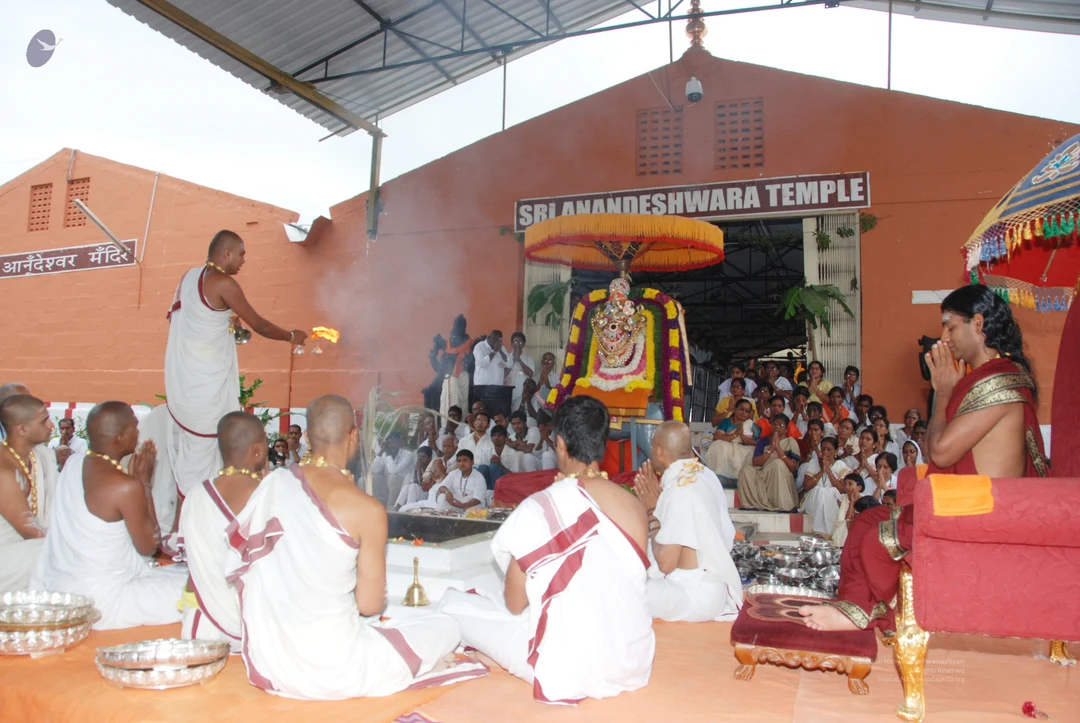
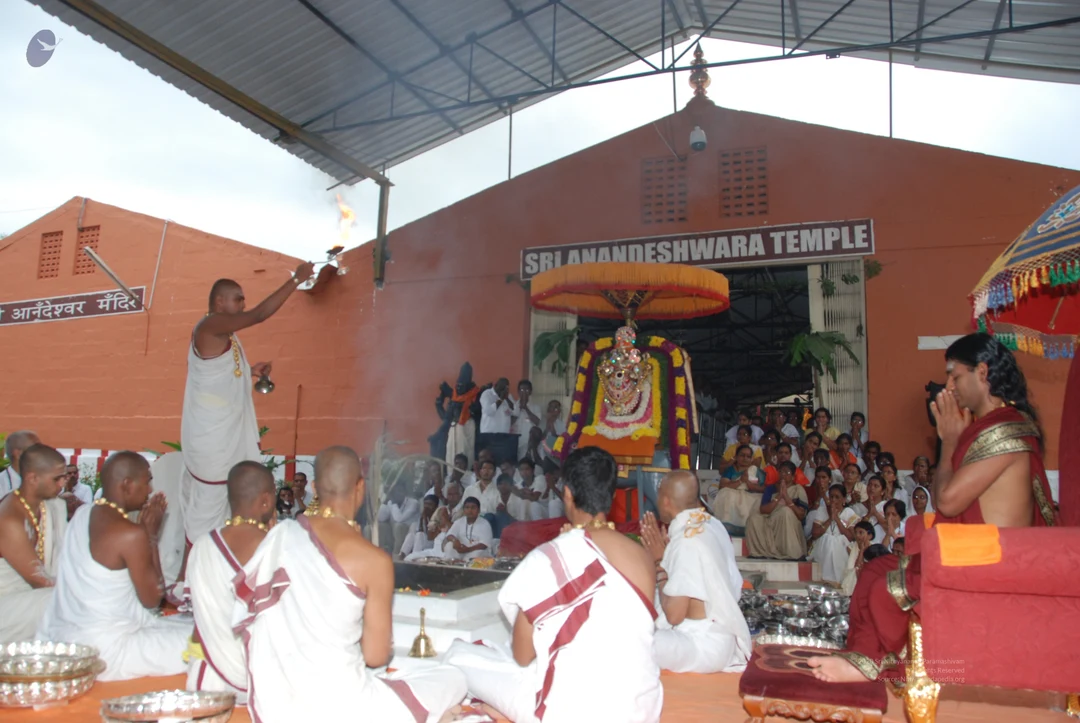
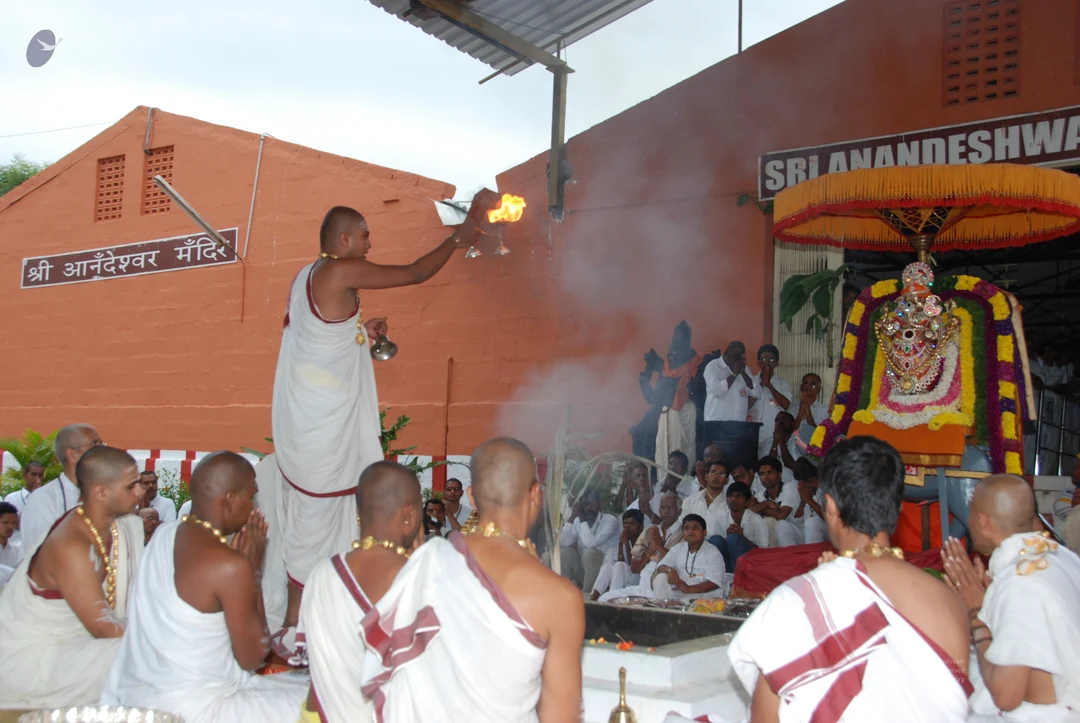
Photos

Paadapooja
Morning-Satsang
Ganesh-Chaturthi
Photos Of The Day:

TN-VINAYAGAR-CHATURTHI-SEERAGAPADI-CENTER-OPENING

Photos Of The Day:

malaysia-kalpataru

Photos Of The Day:

GANESH-CHATURTHI-IN-KULIM-MALAYSIA

Photos Of The Day:

PADA-POOJA

NITHYA-SATSANG

GANESHA-CHATURTI-CELEBRATIONS

Photos Of The Day:

thumbs

nithyananda-ashram

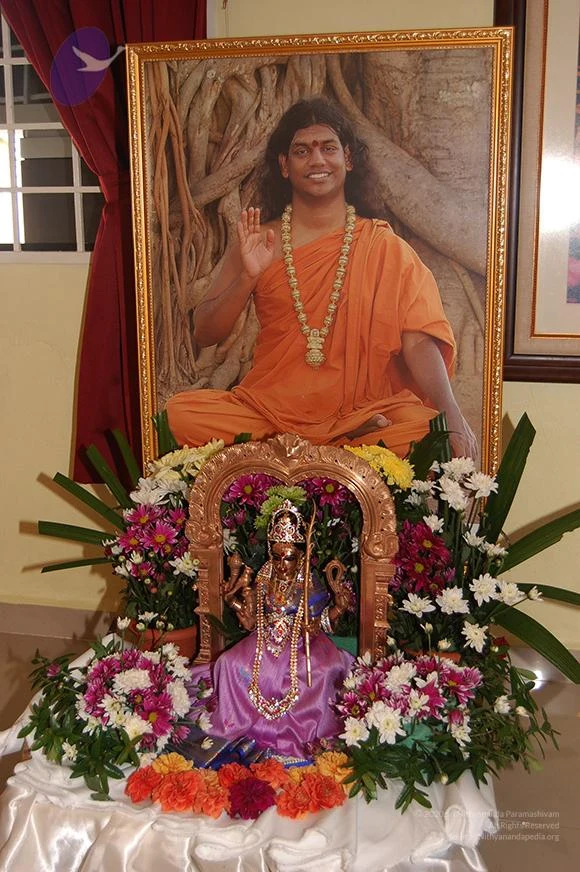
01-Anandeeshwara & Anandeeshwari
02-Sarvadarshan
03-eKalpataru-Evening Session
04-eKalpataru Night Session