Skip to content
Friday

10 September 2010

Practising Right Listening

Dated photos
209
Source pages
1
Media
6
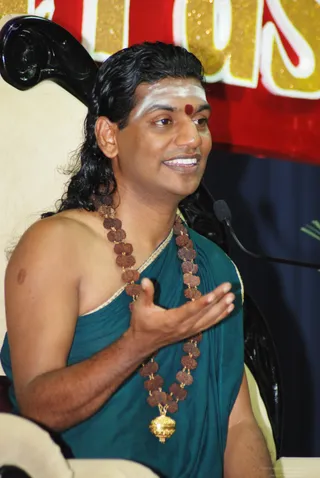
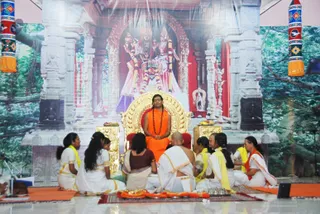
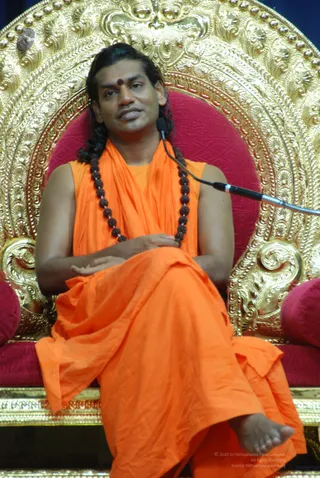
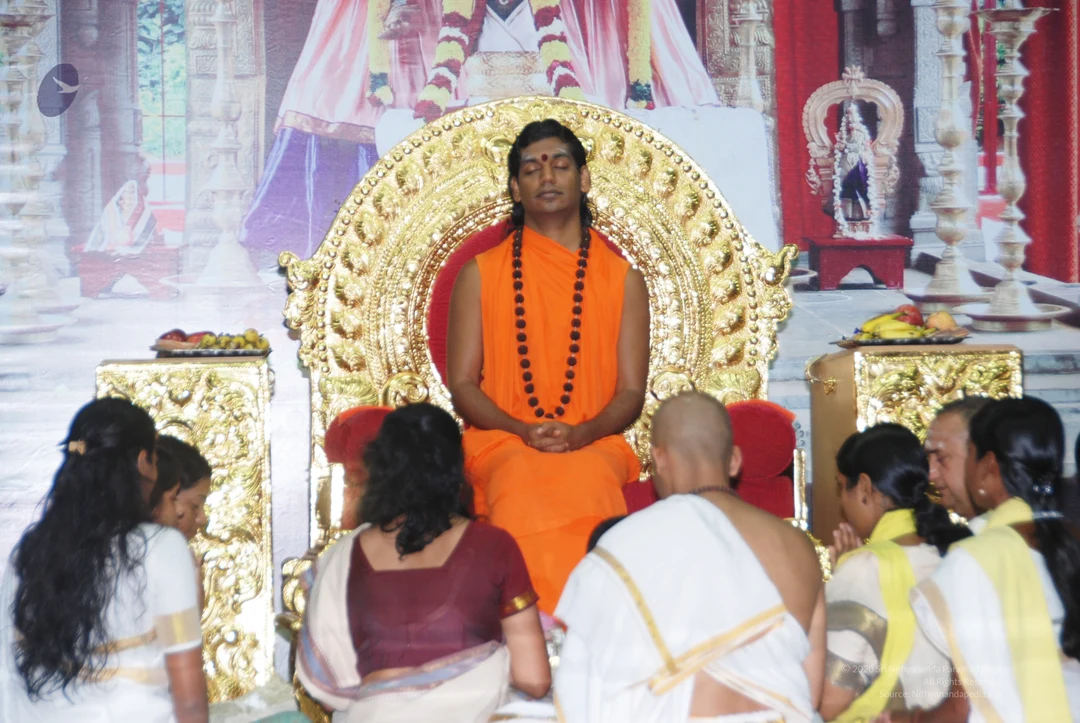
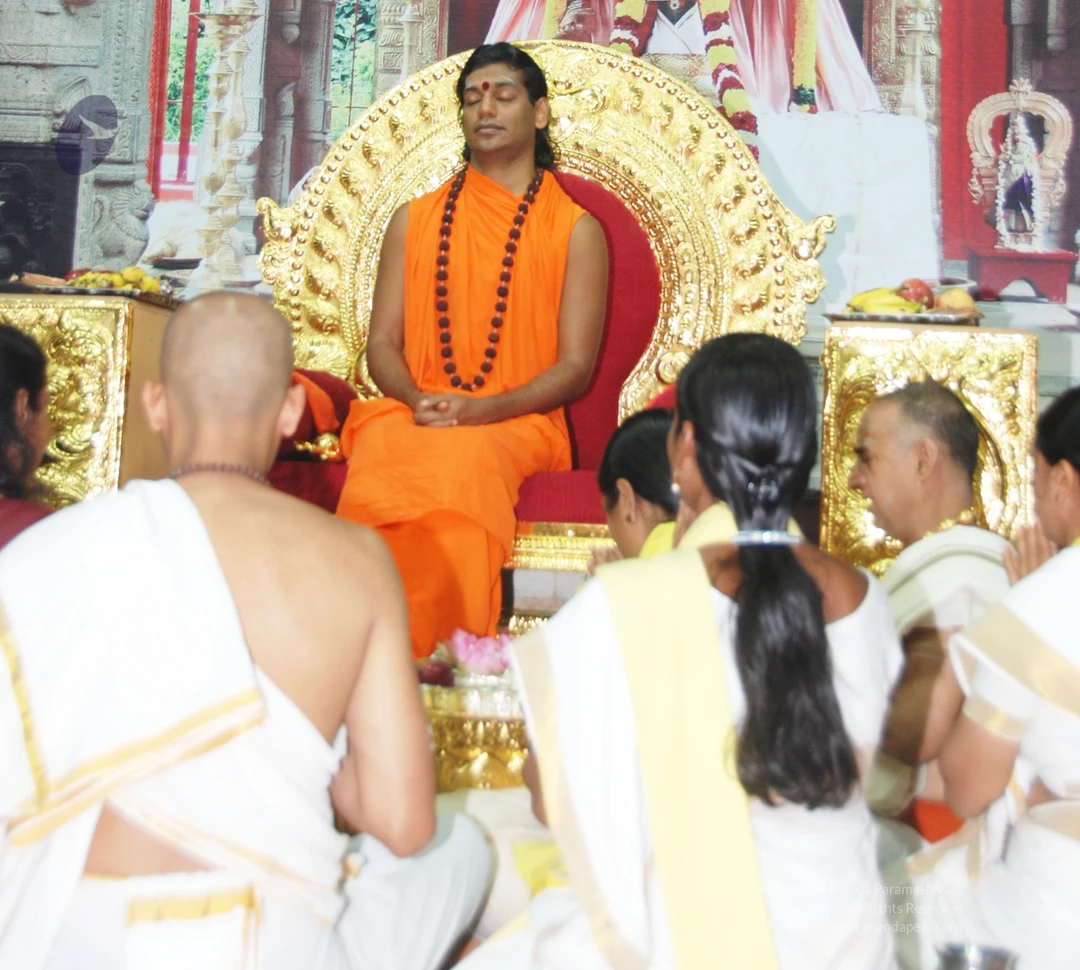
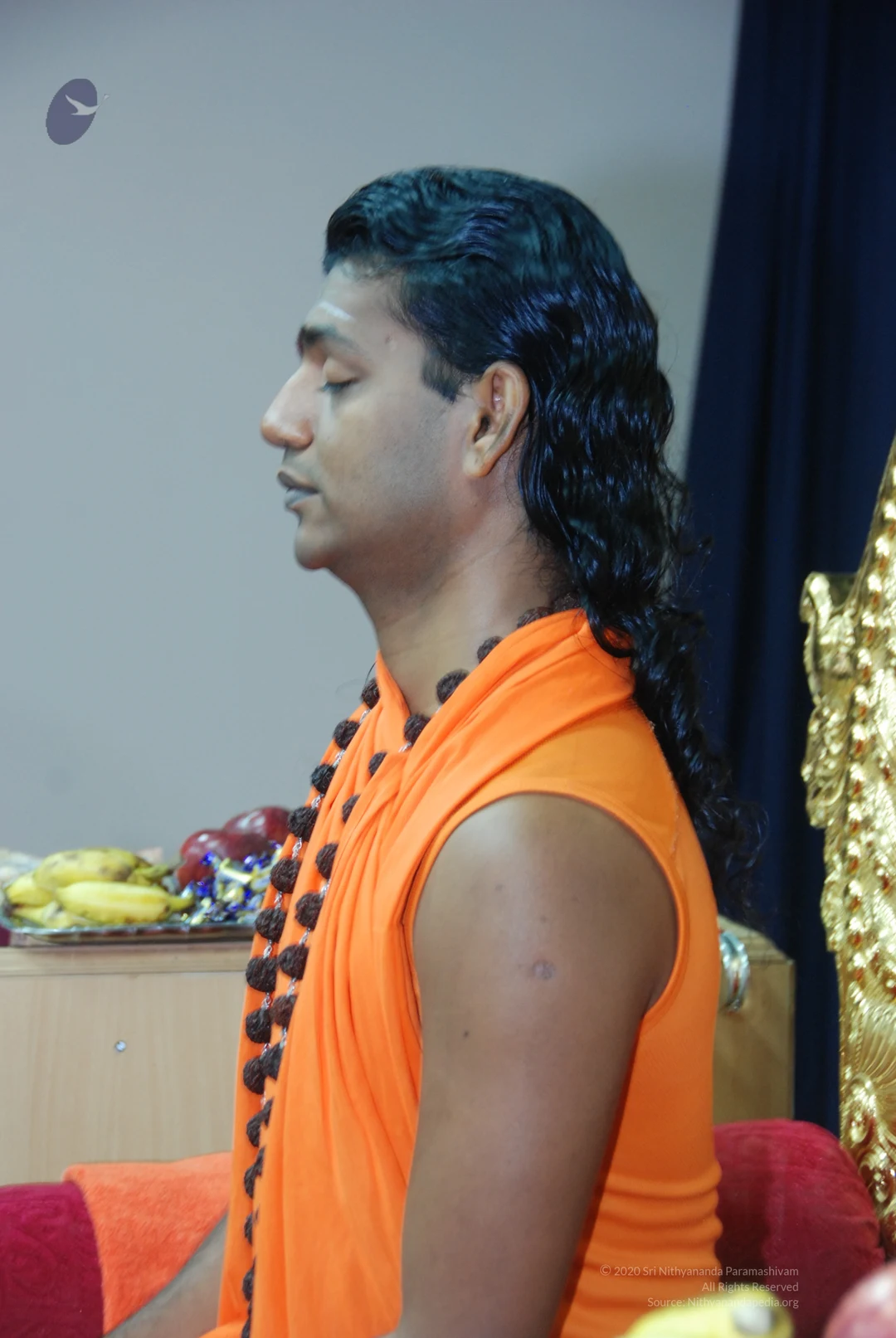
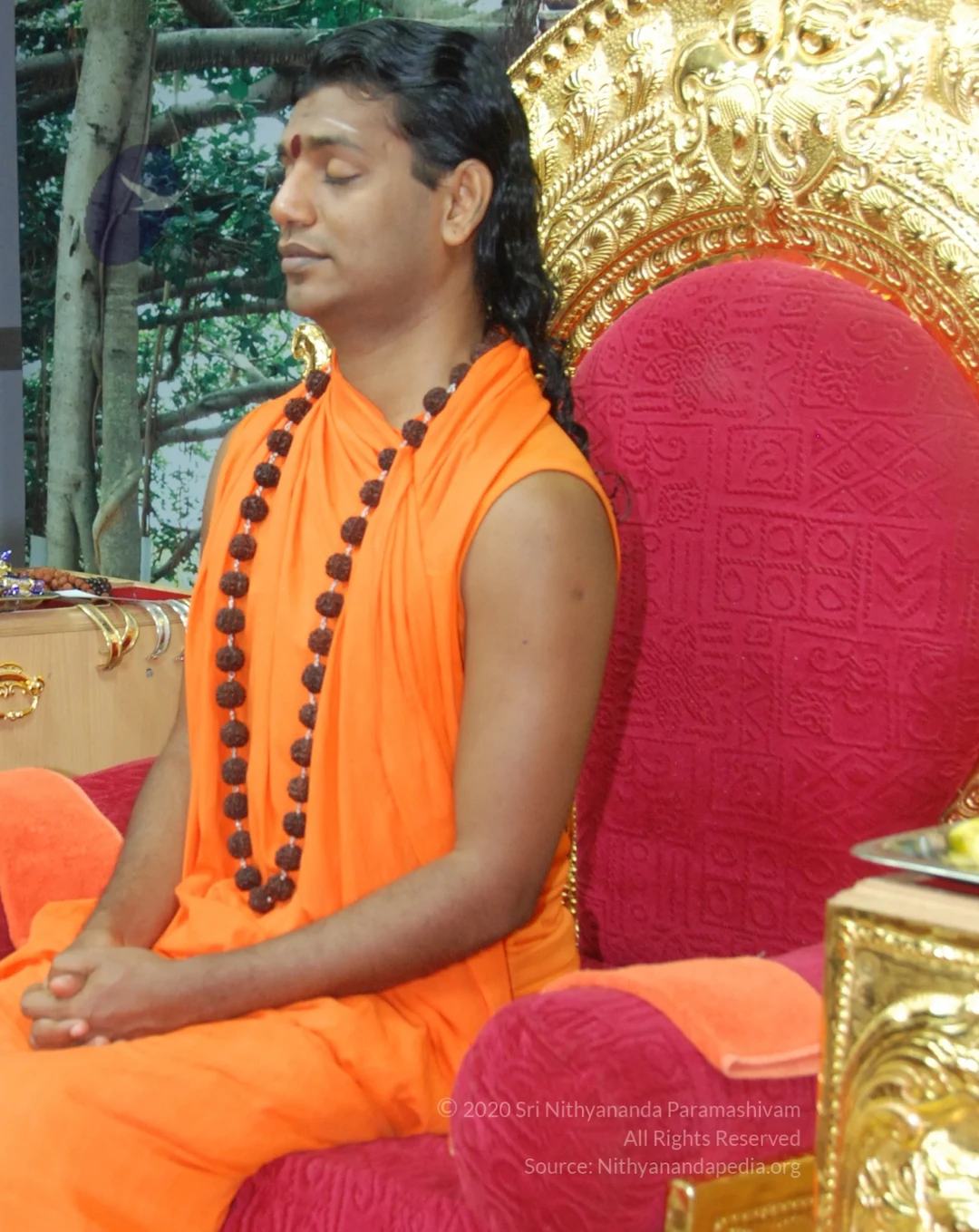
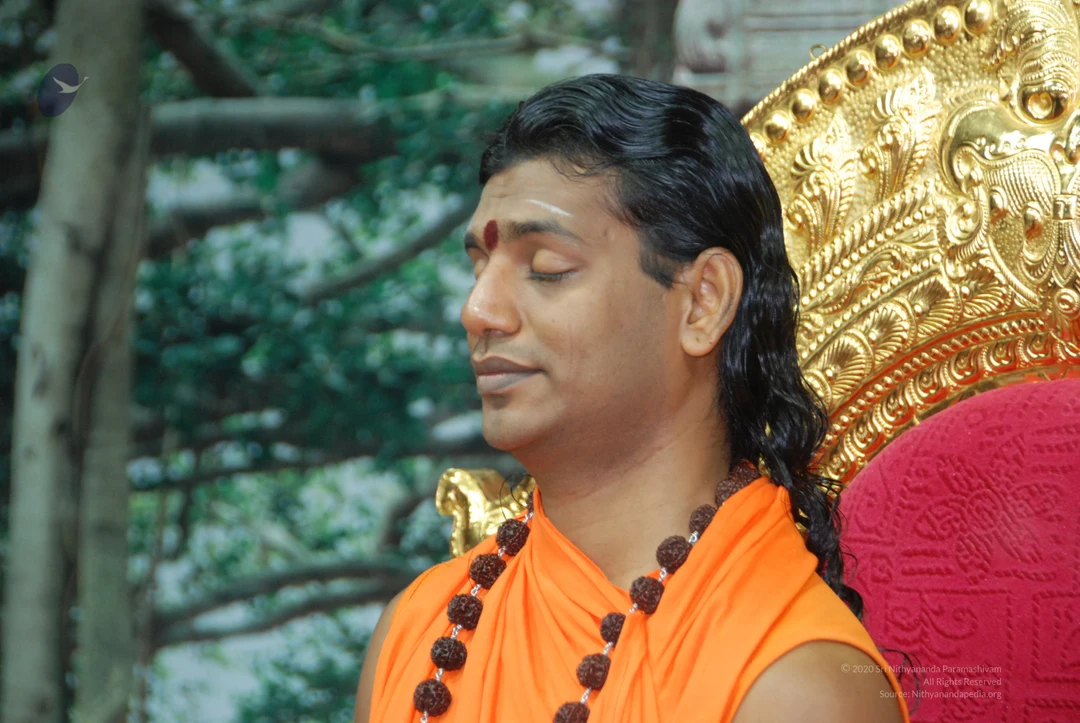
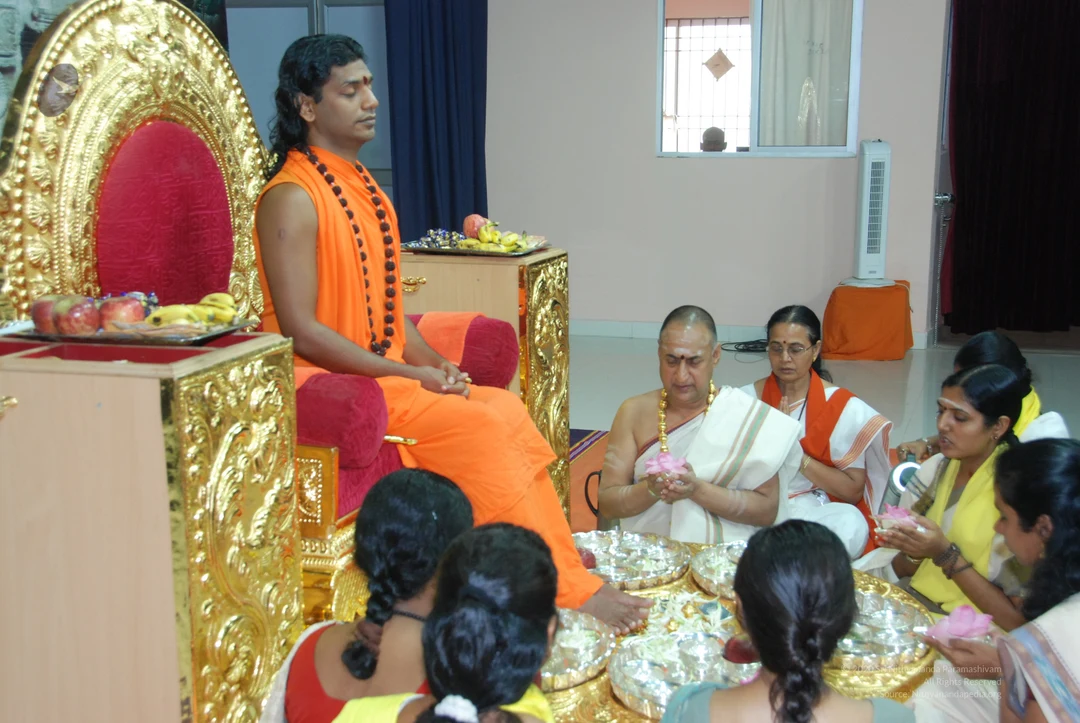
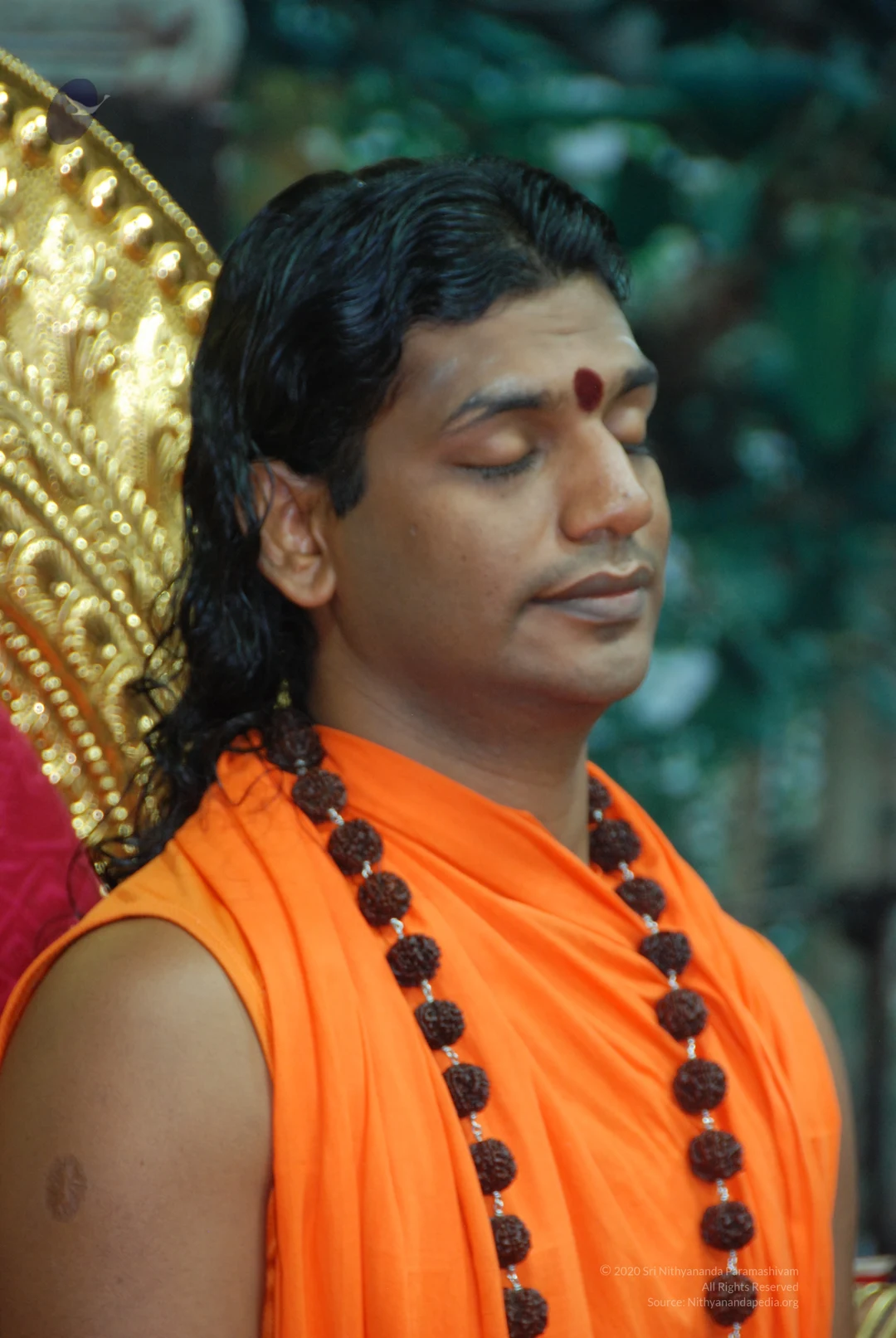
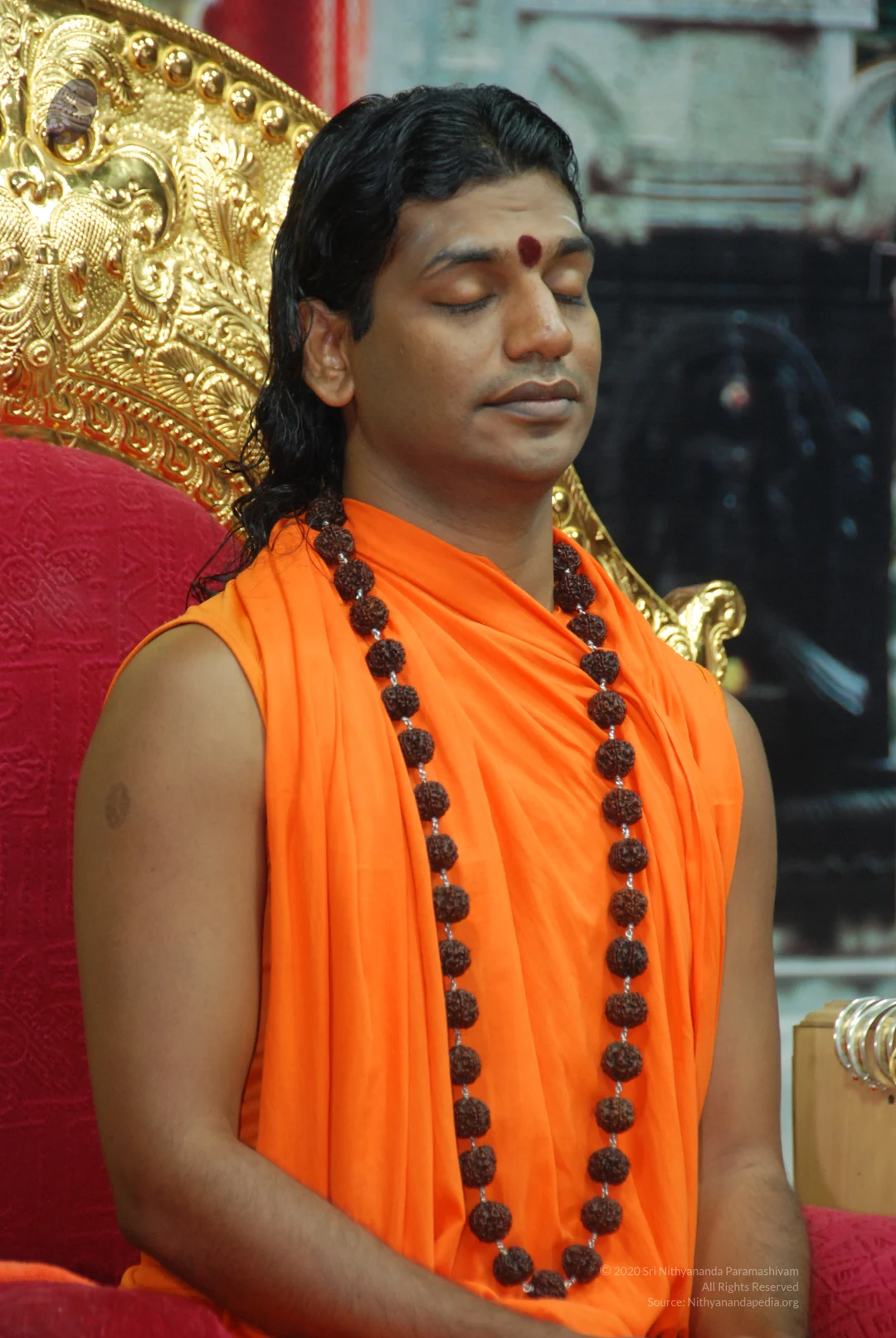
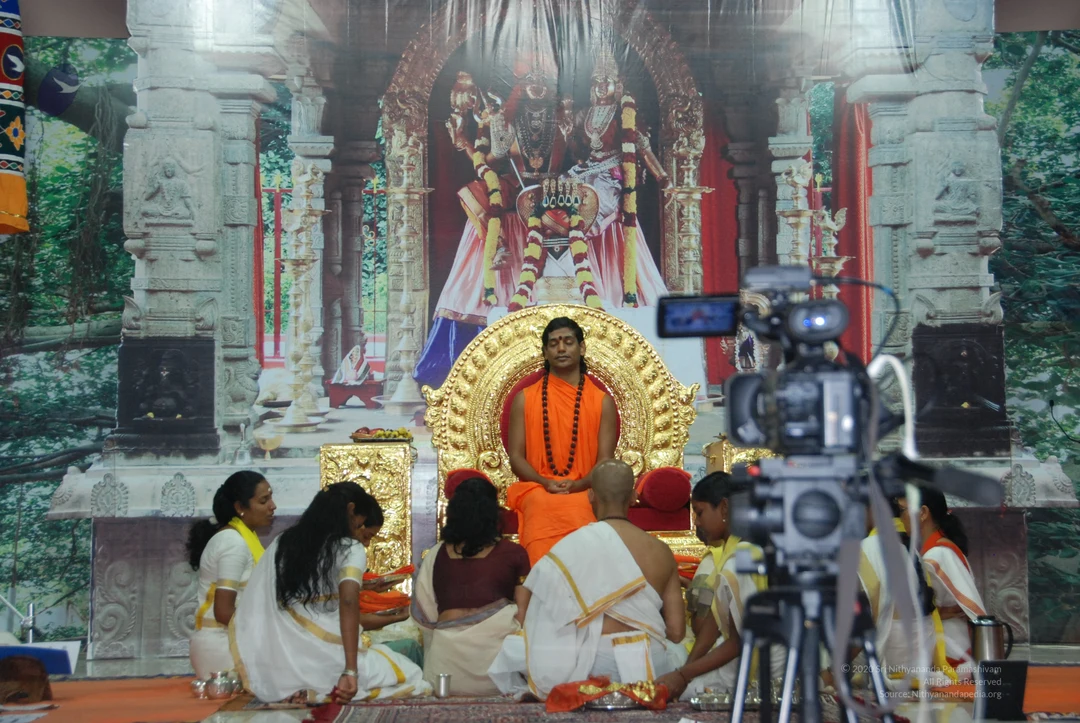
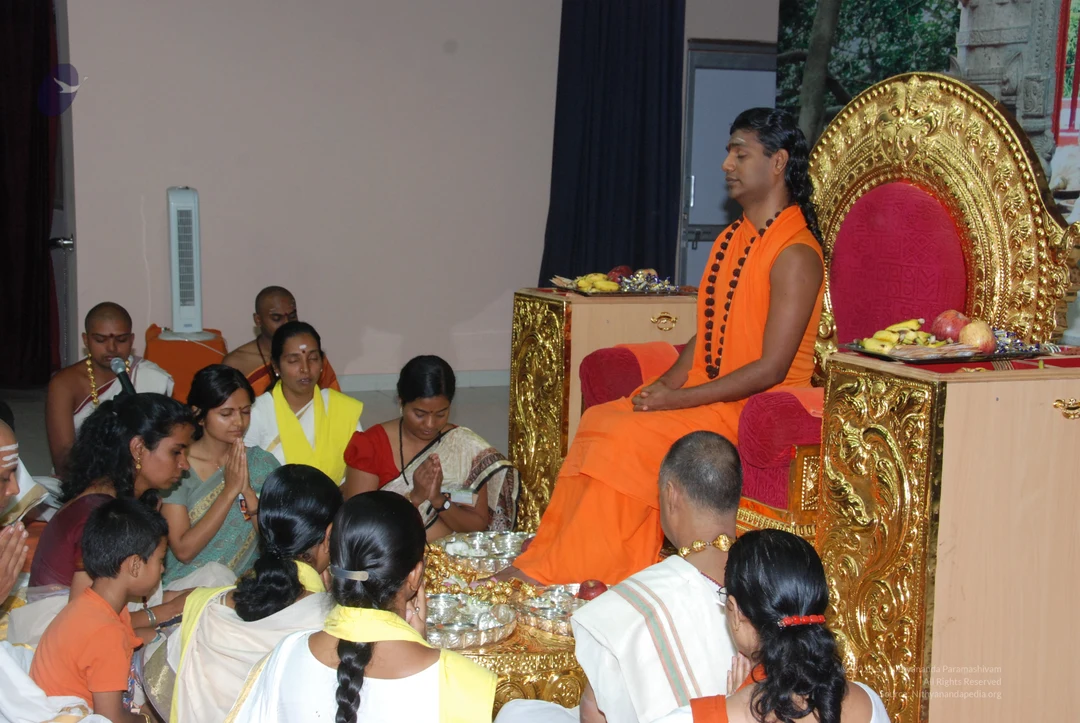
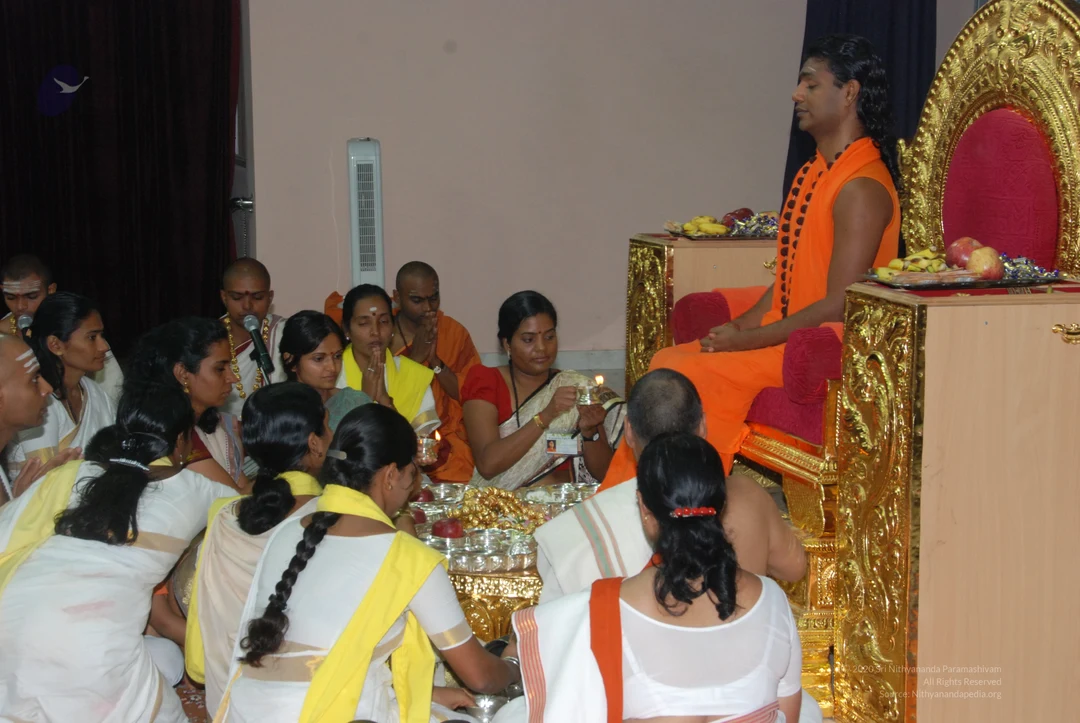
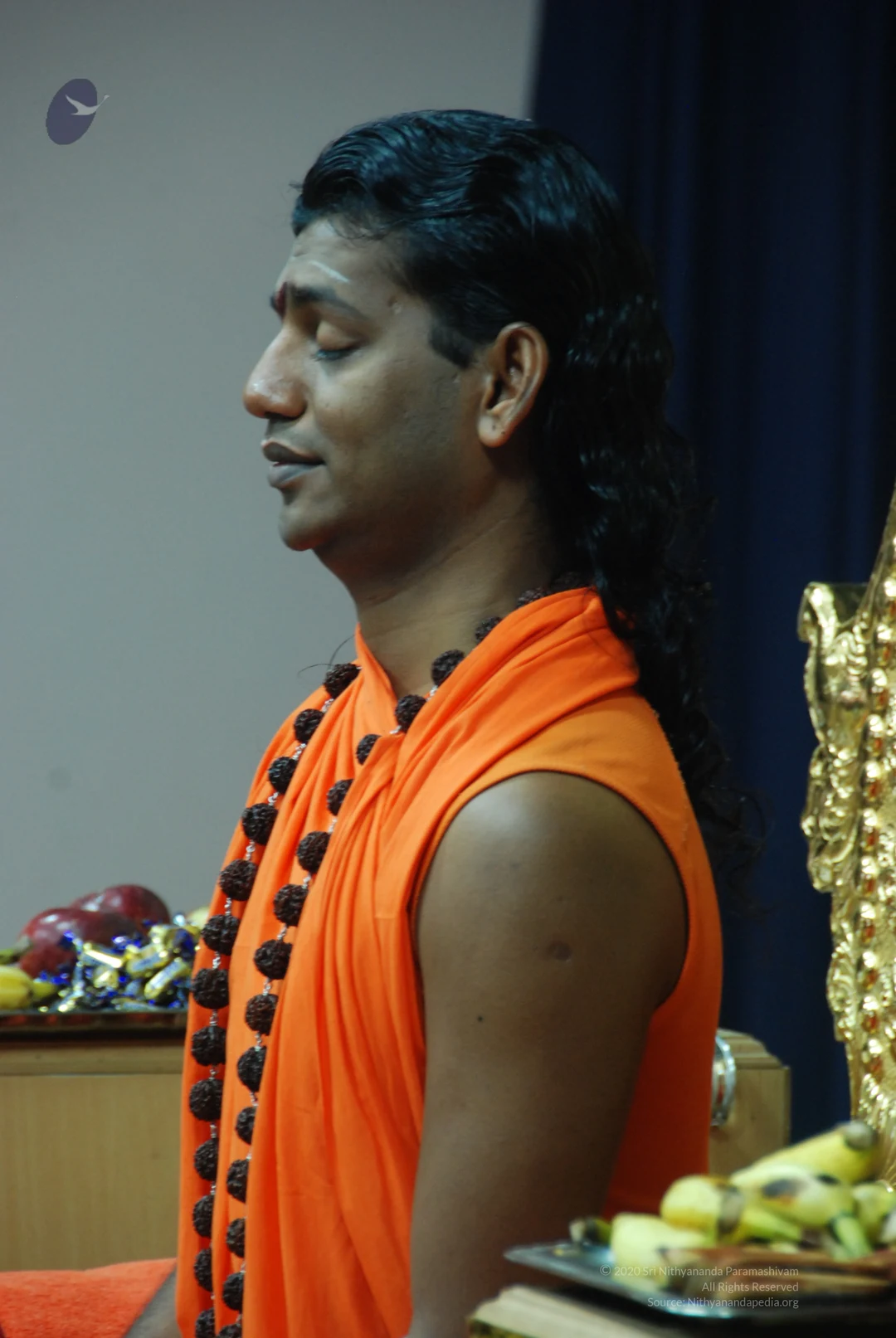
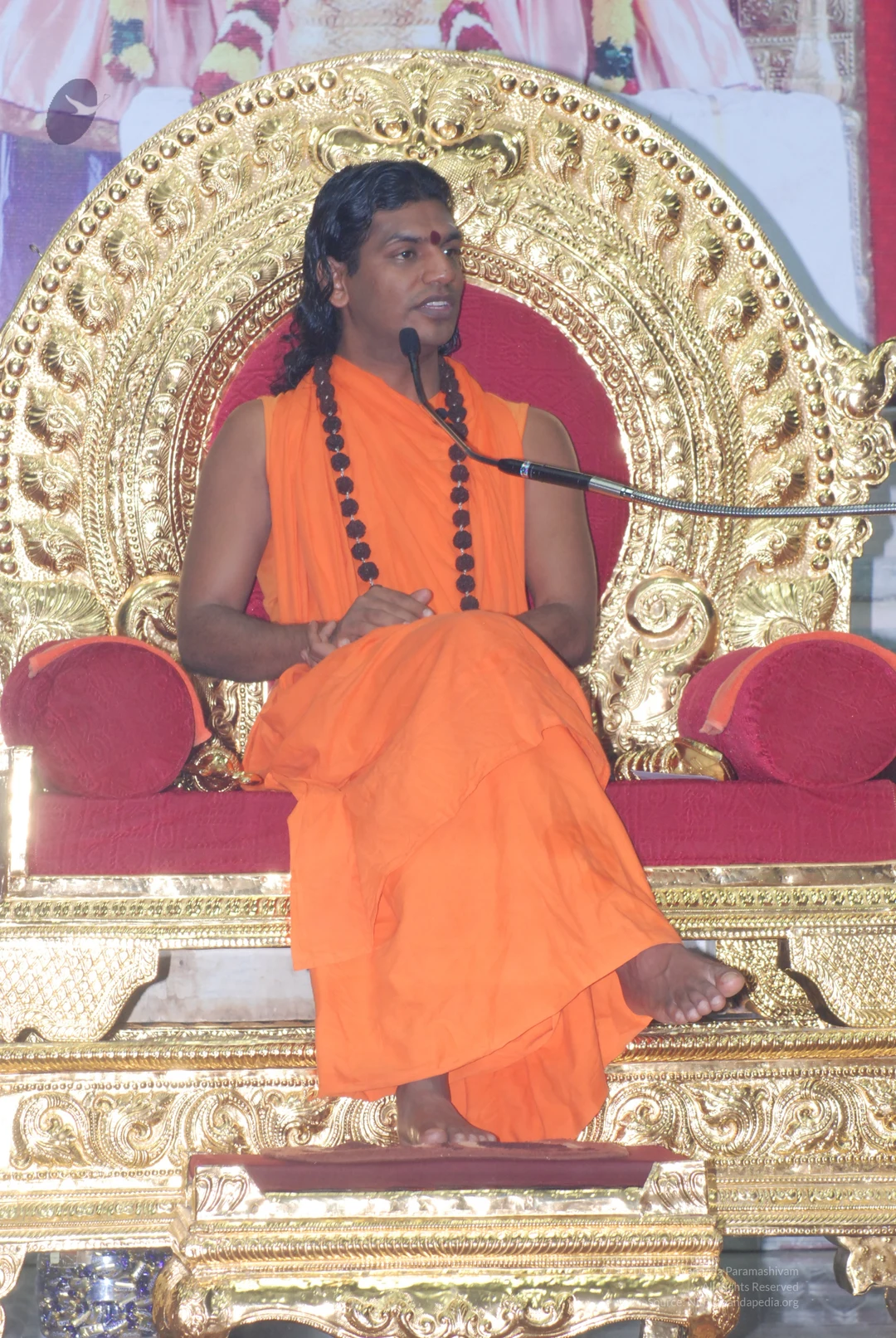
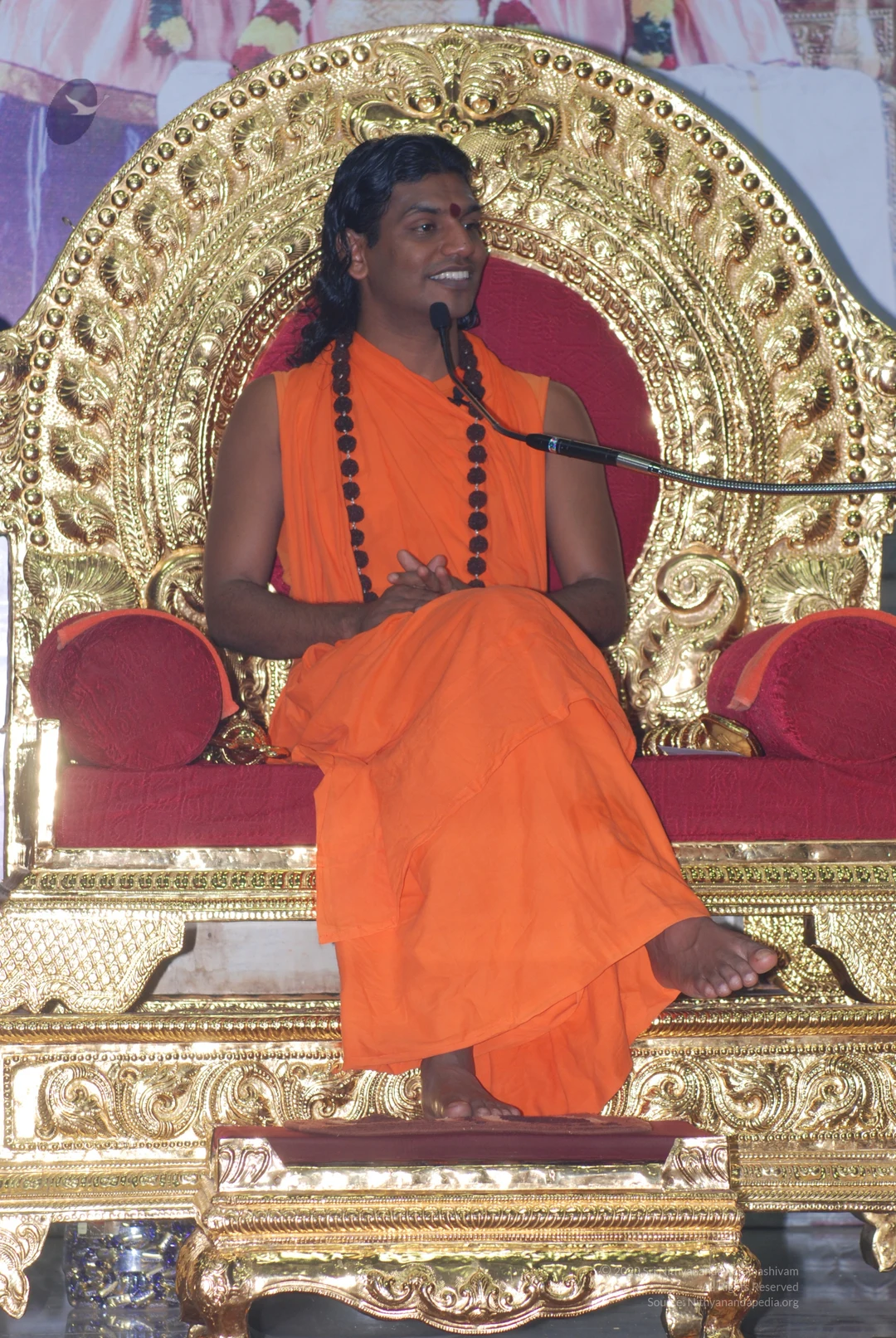
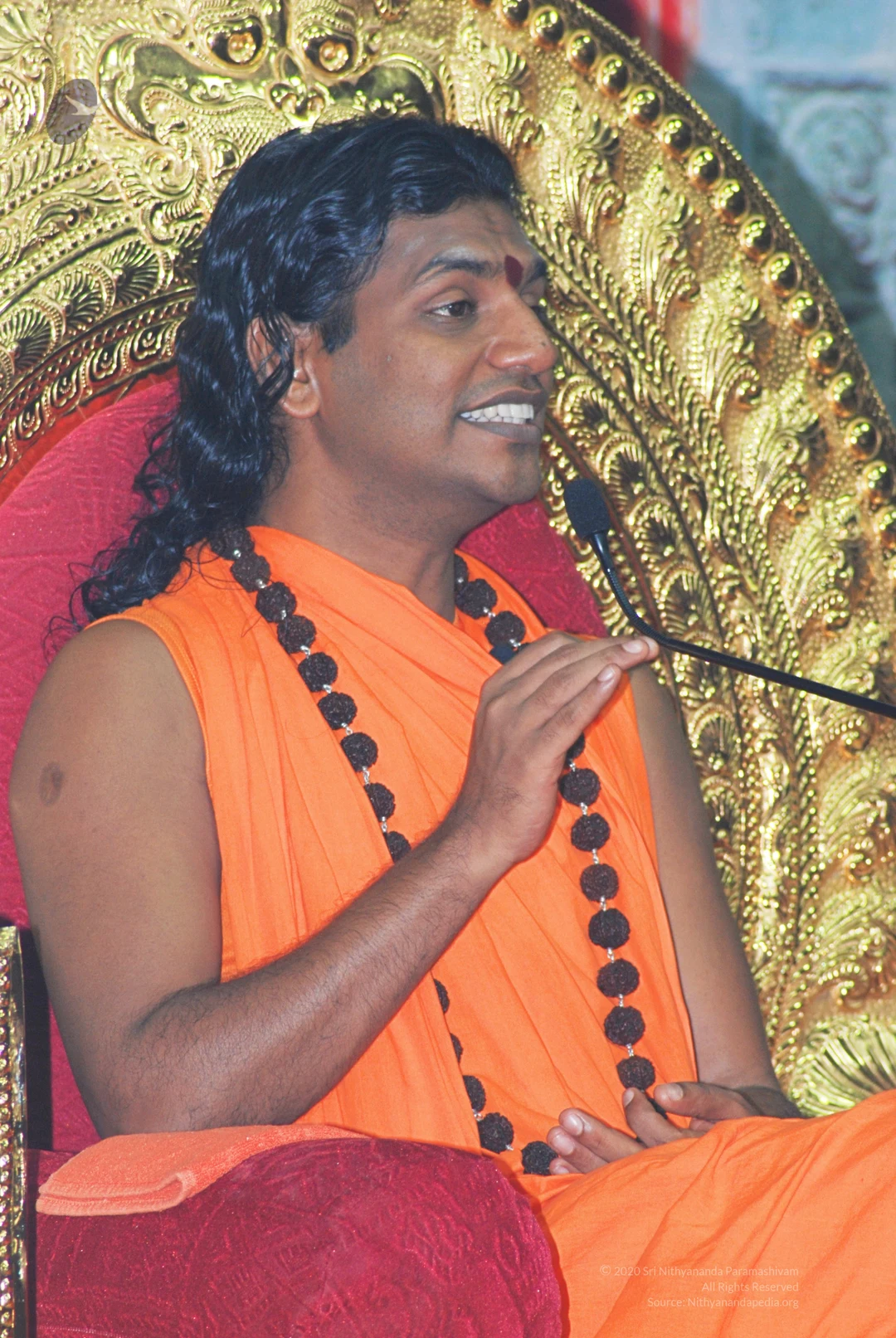
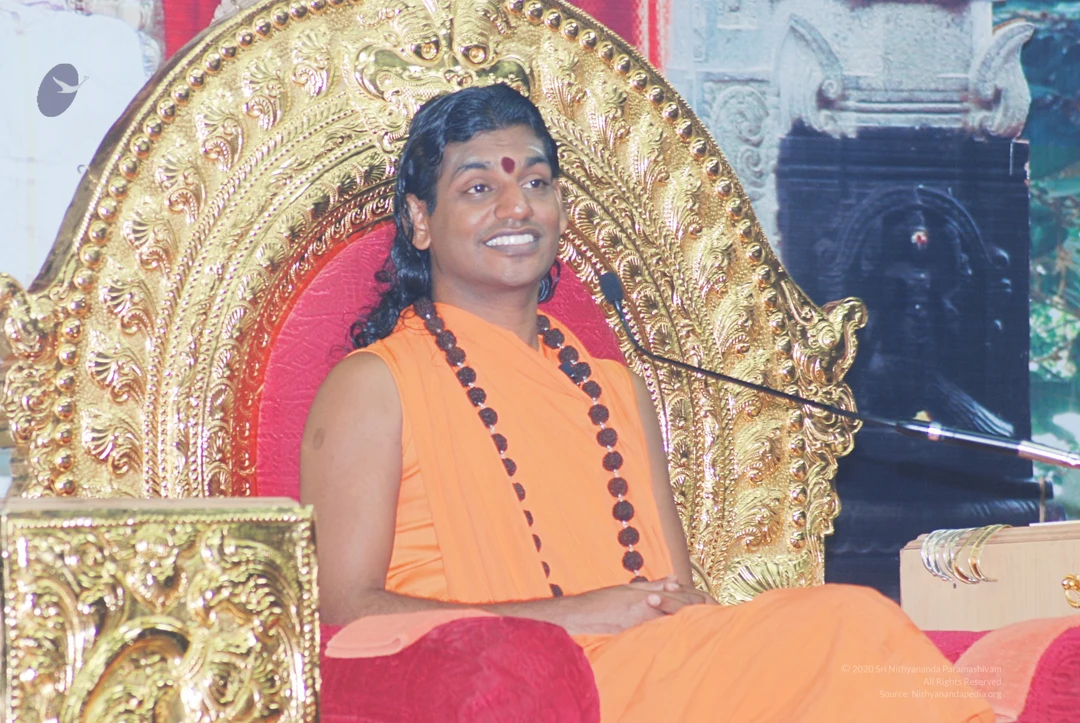
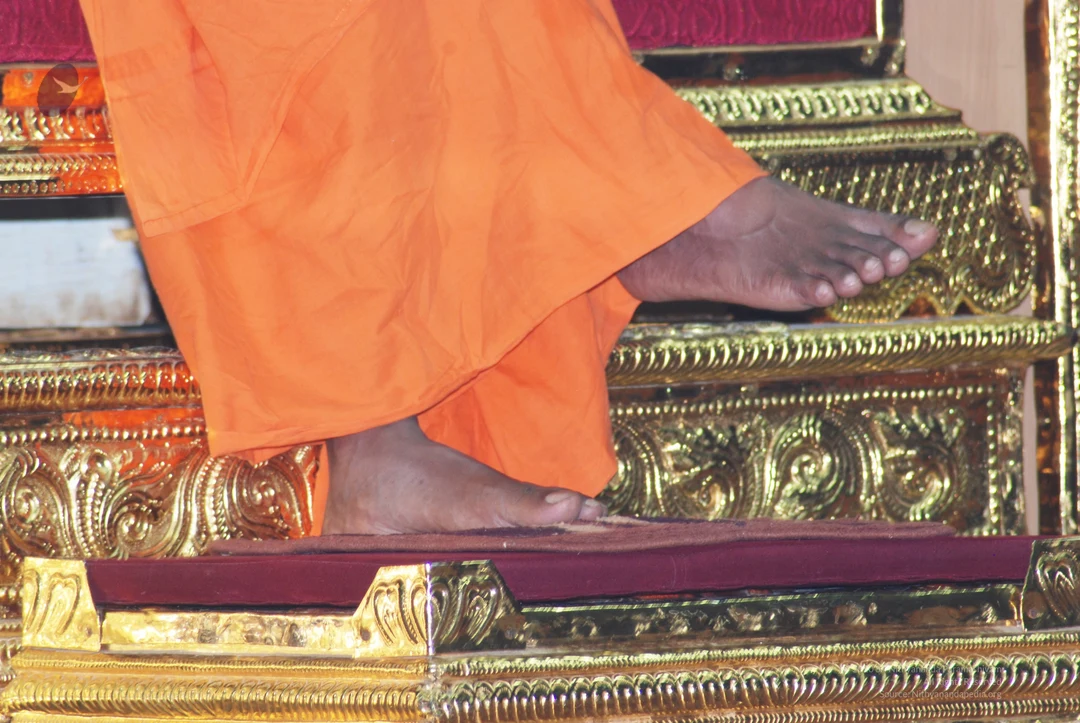
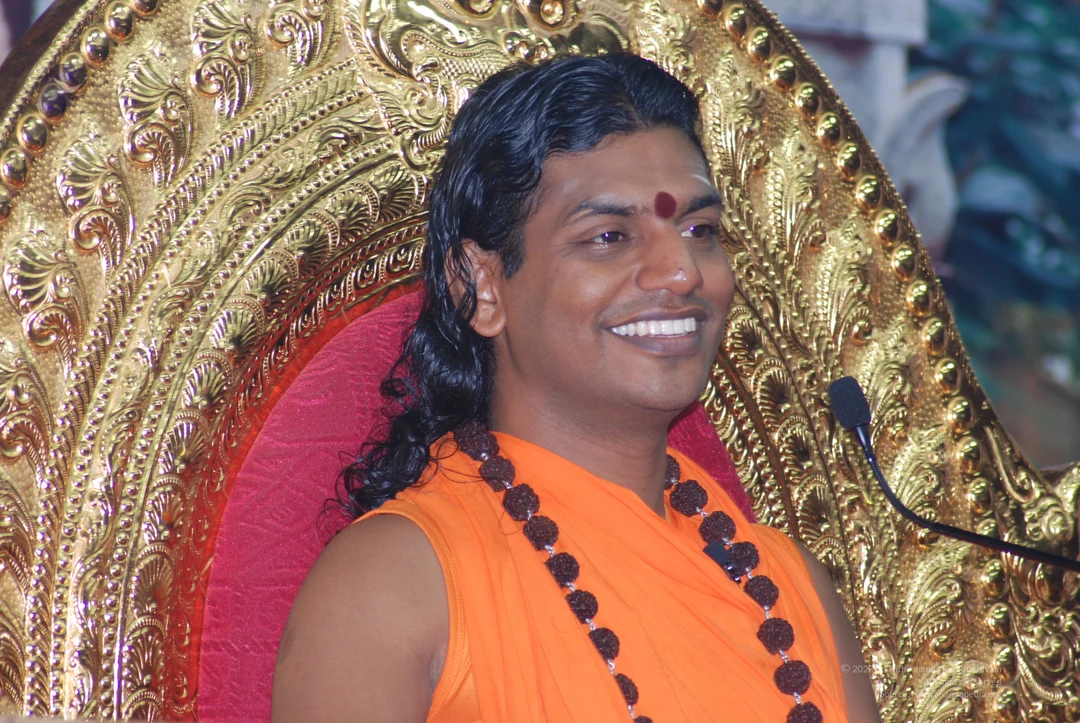
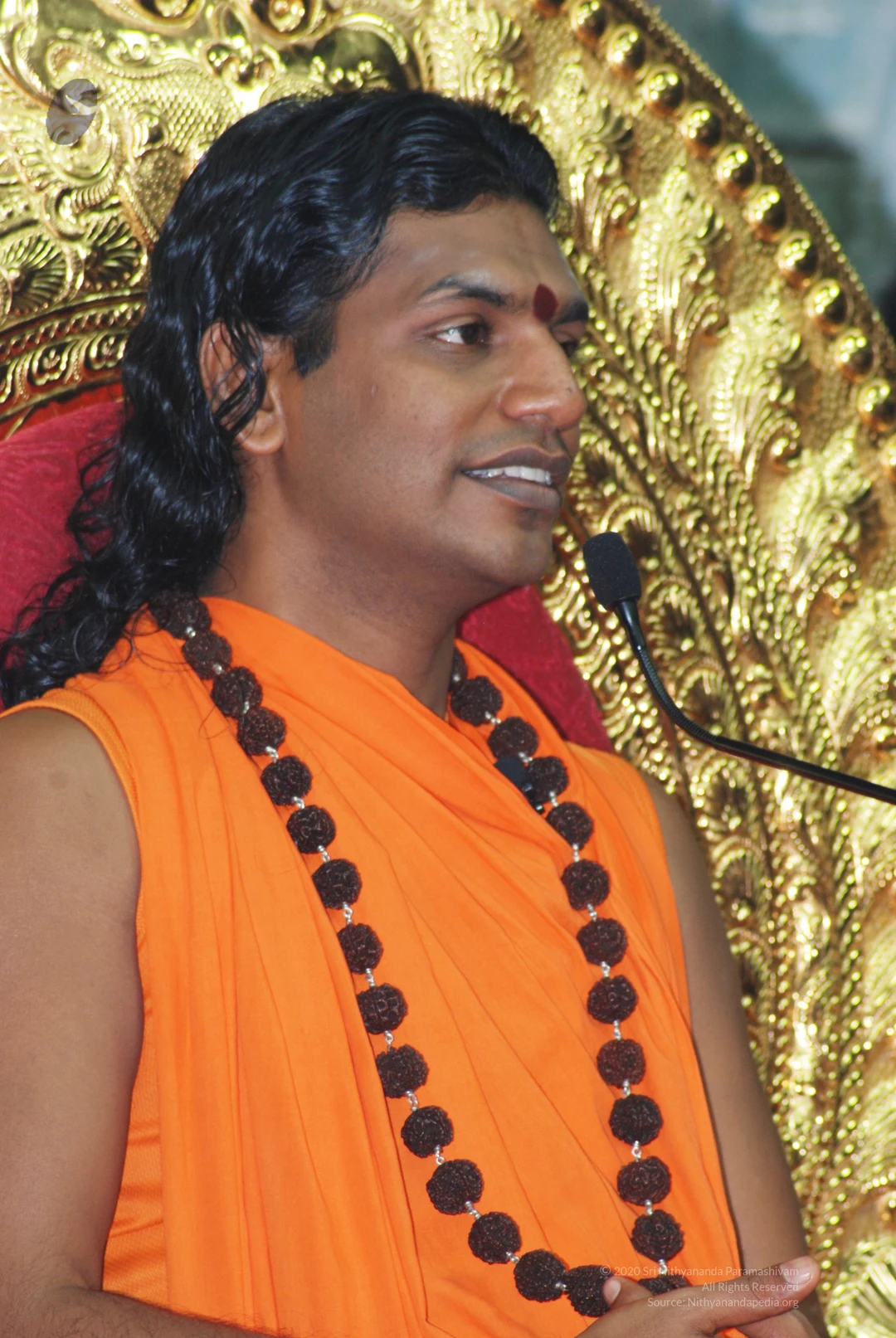
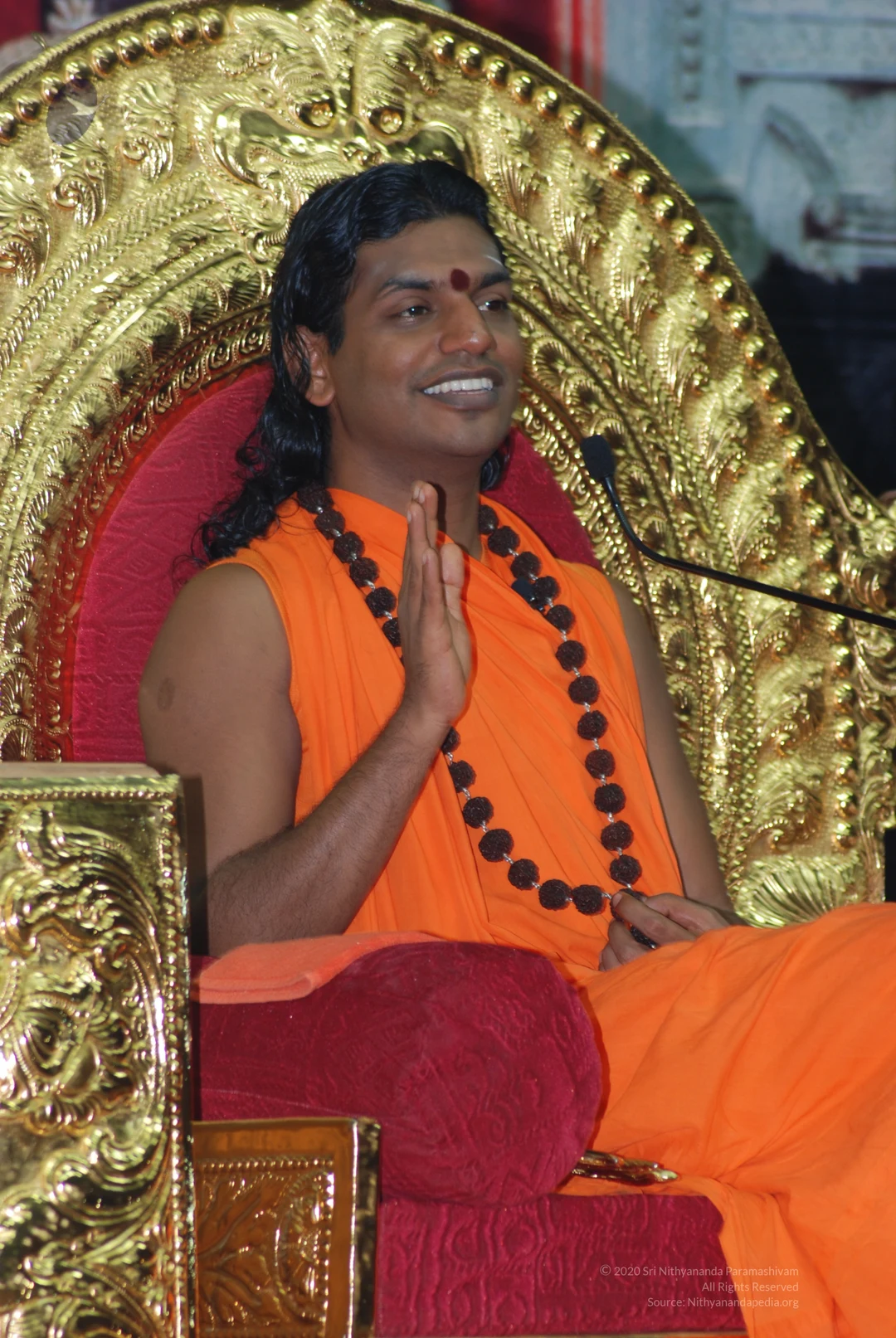
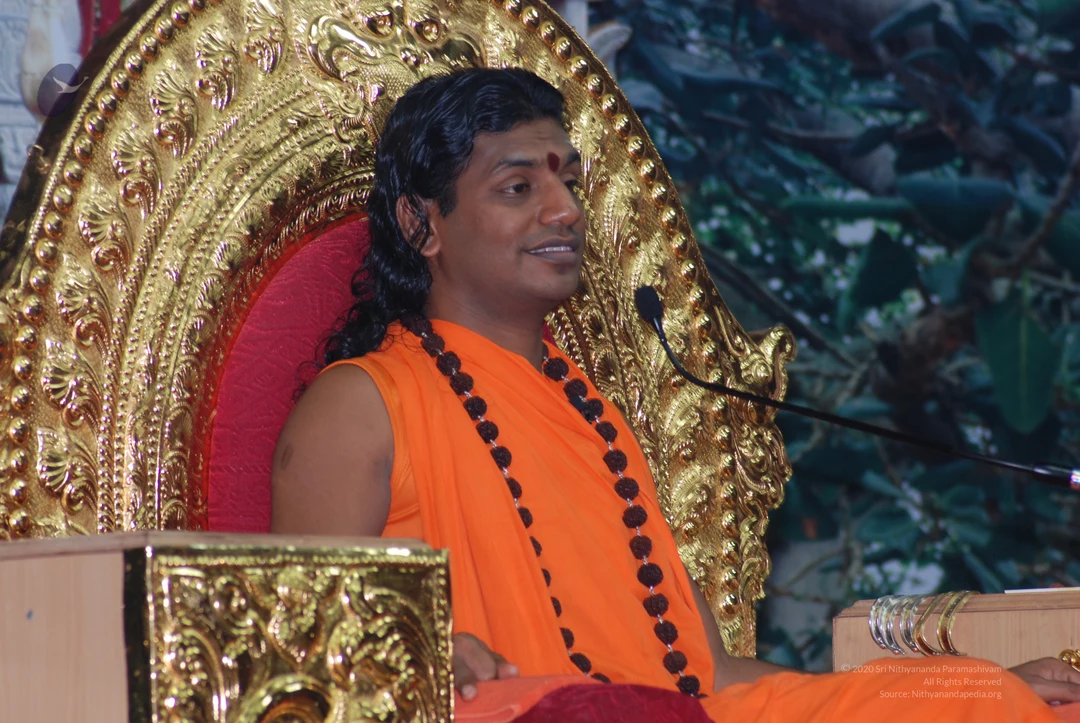
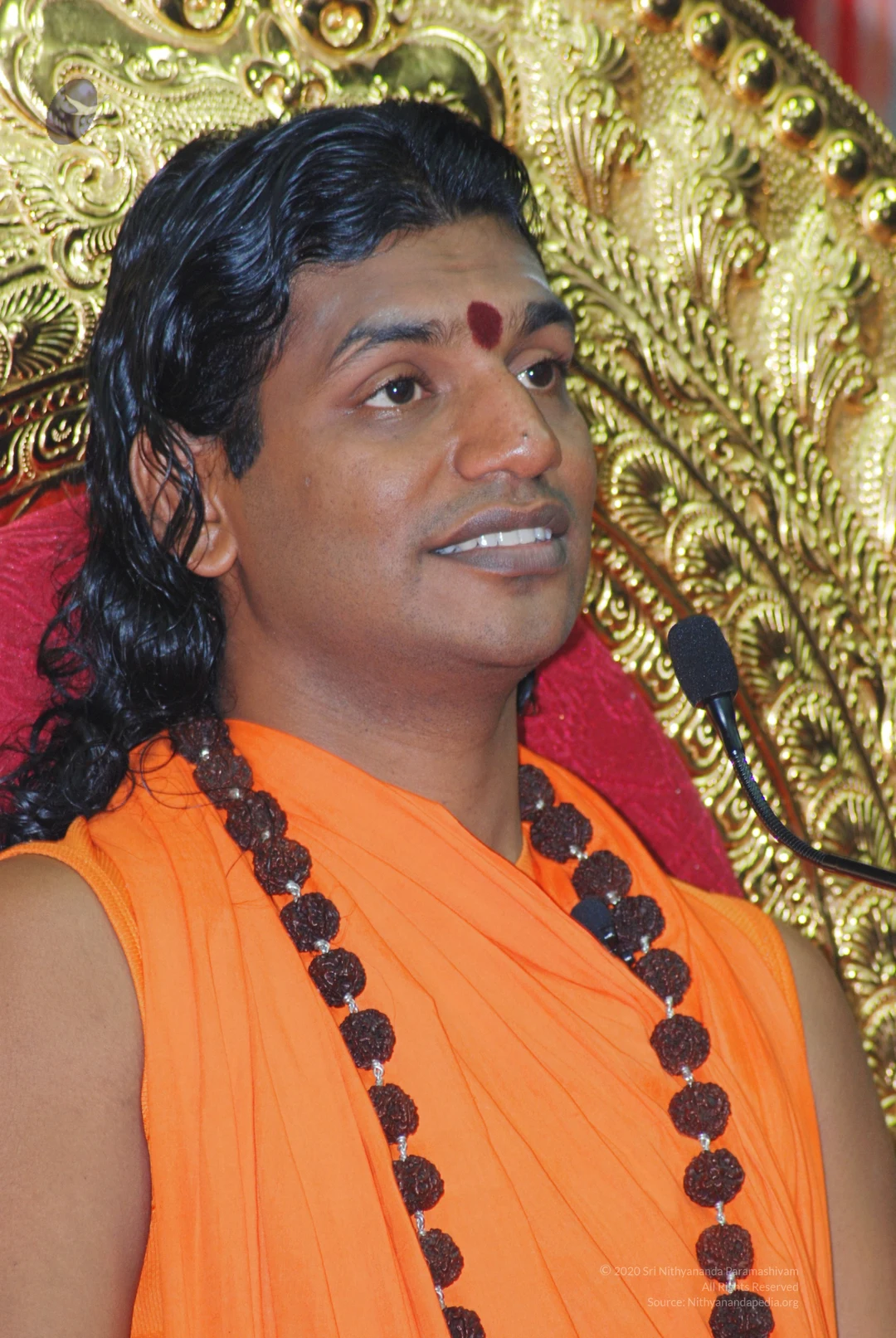
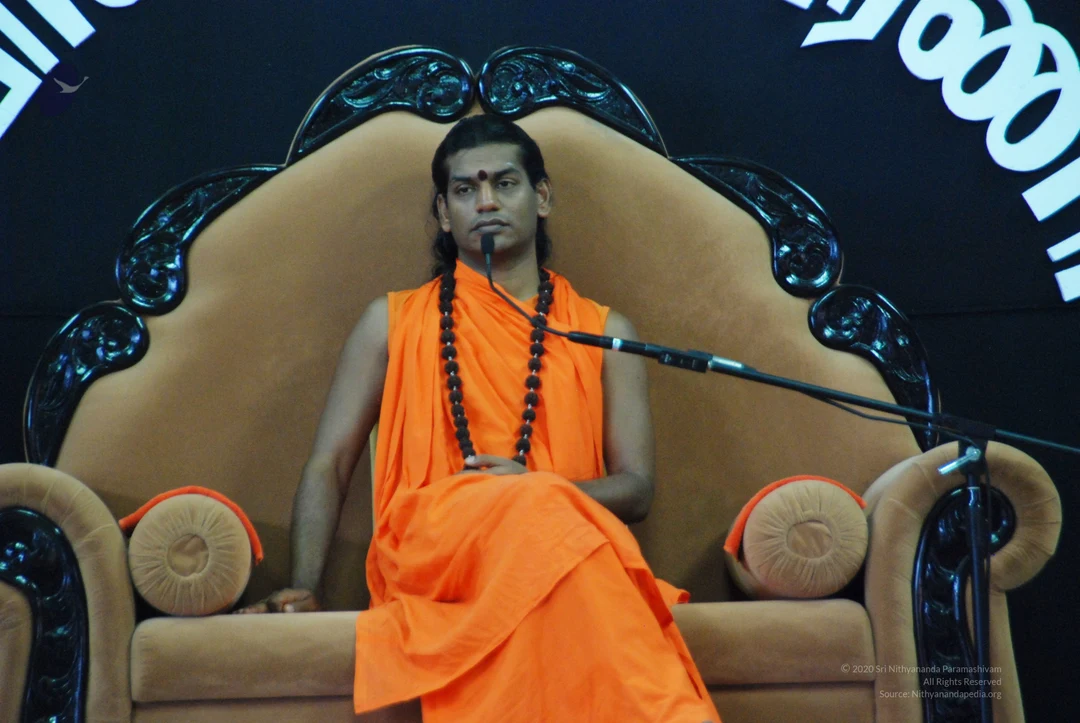
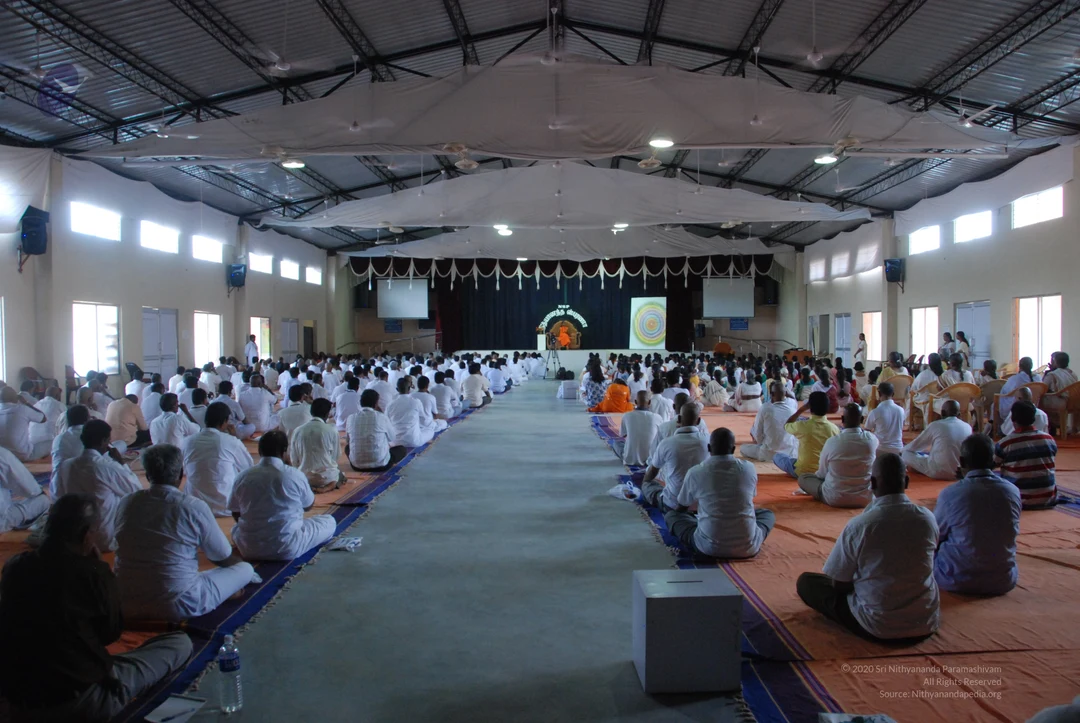
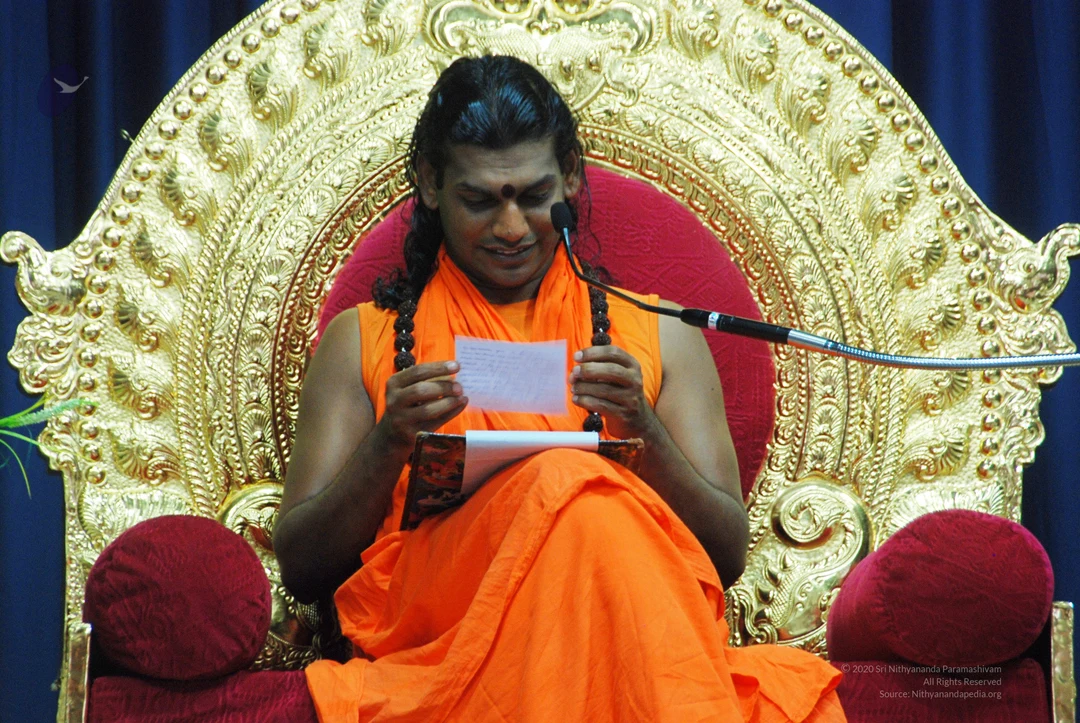
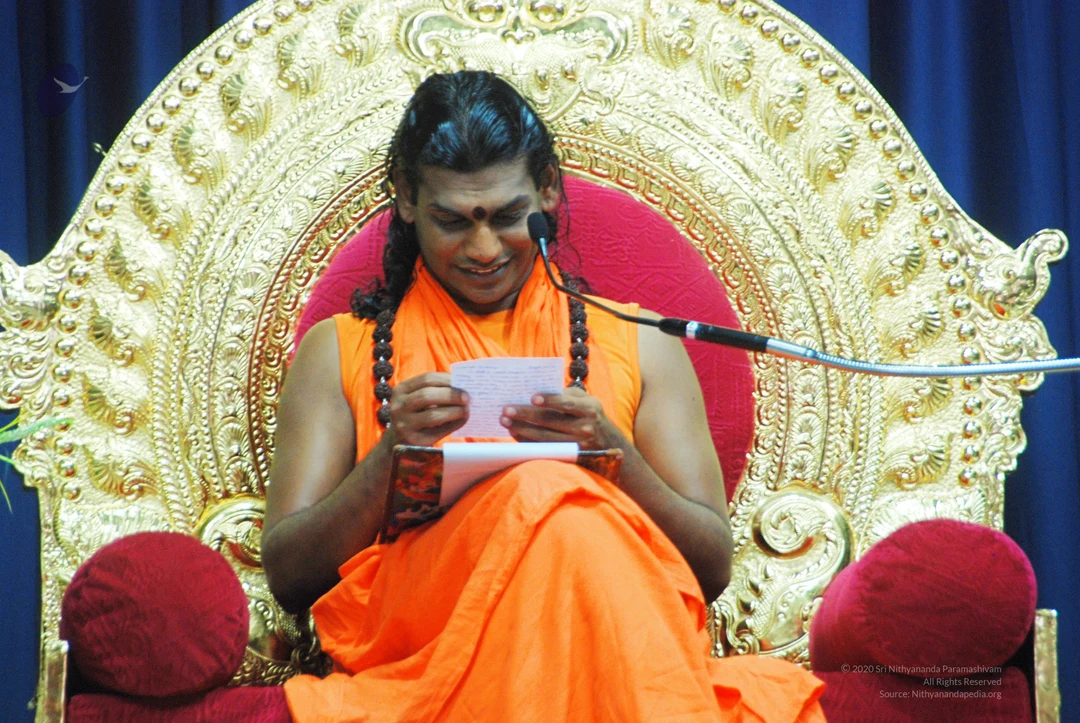
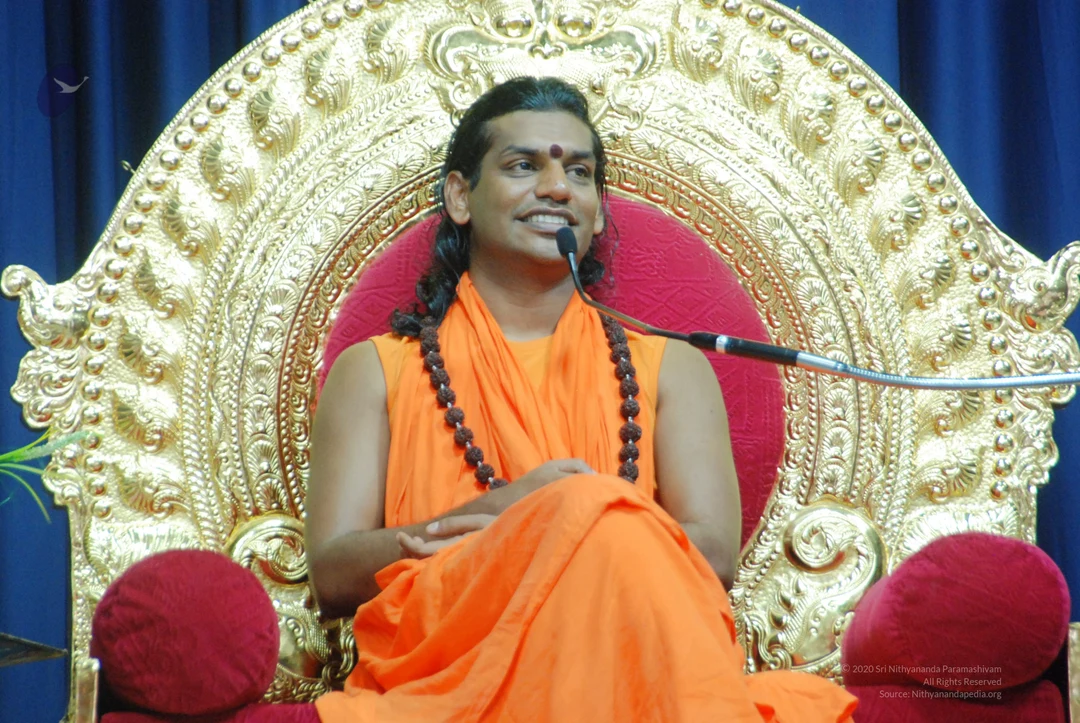
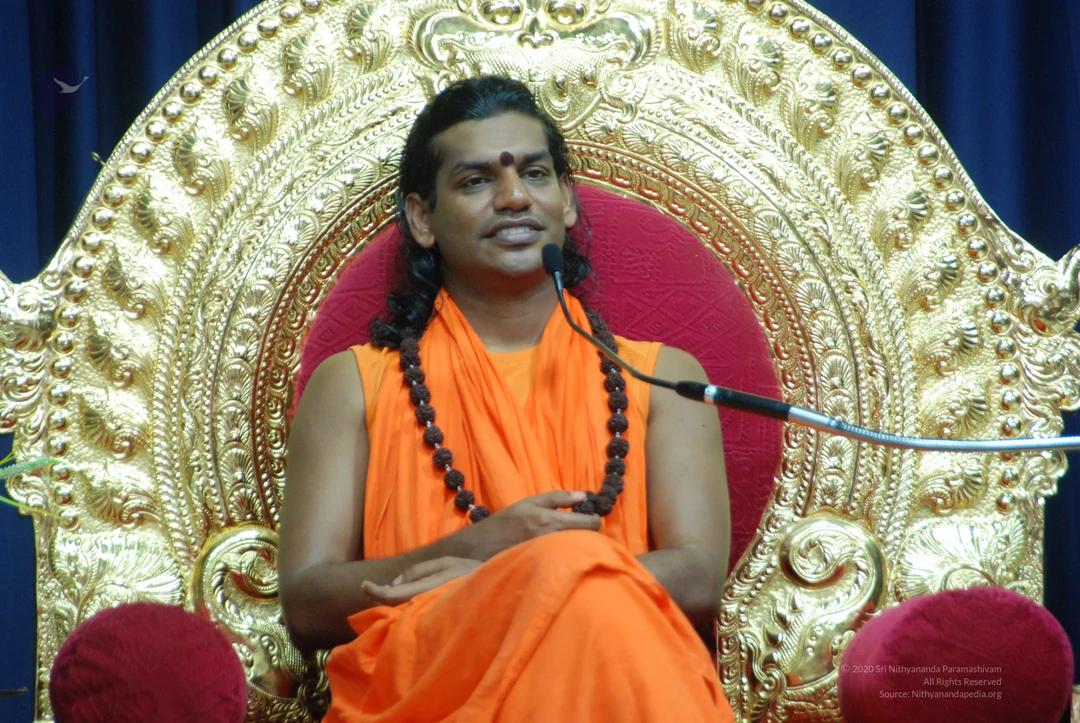
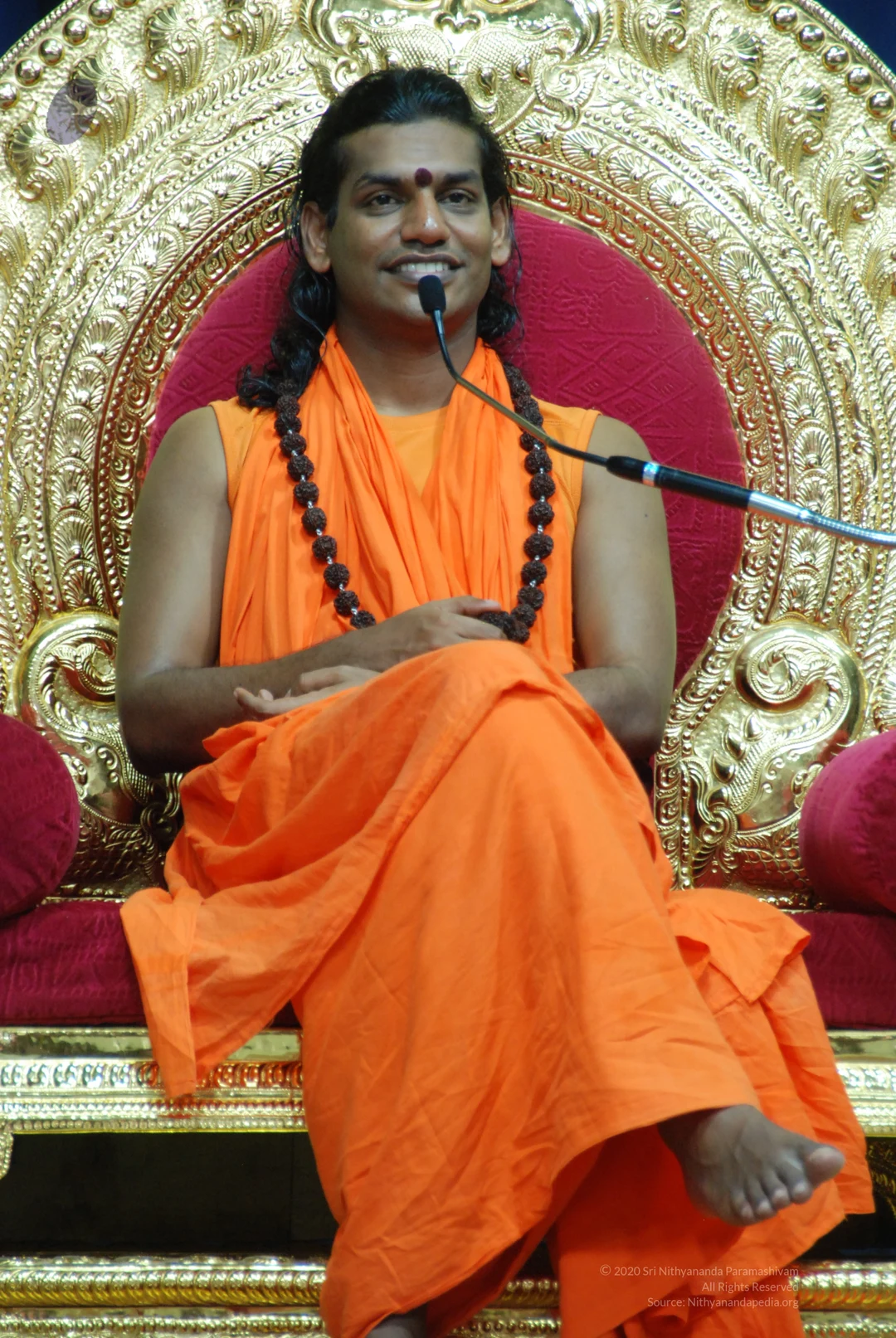
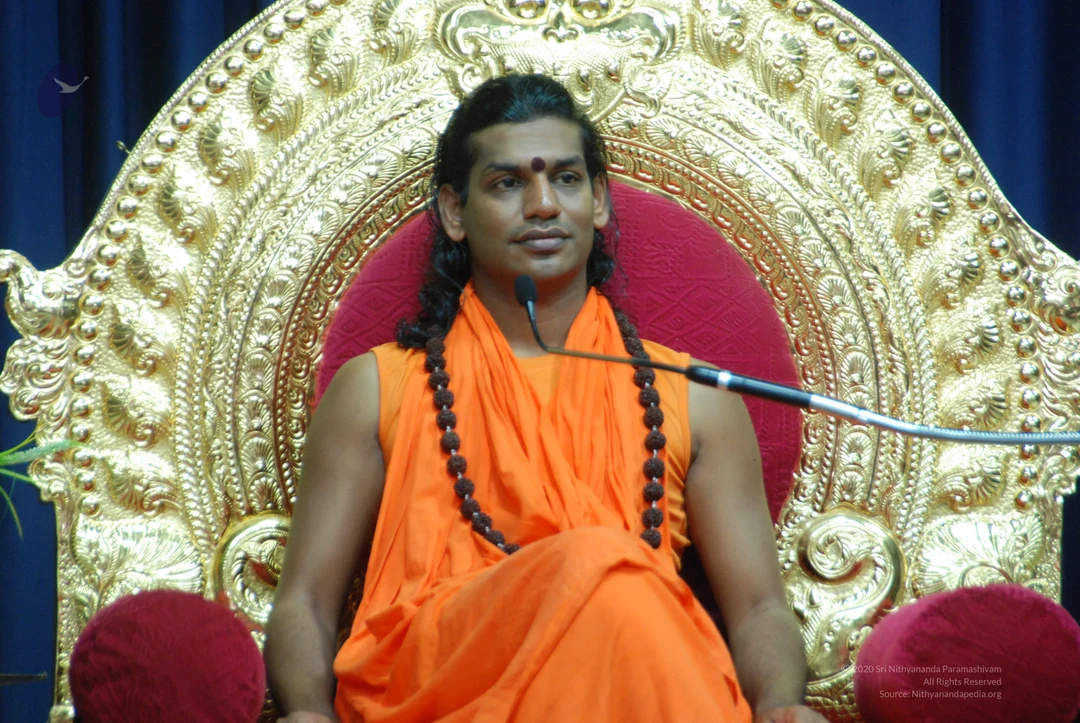
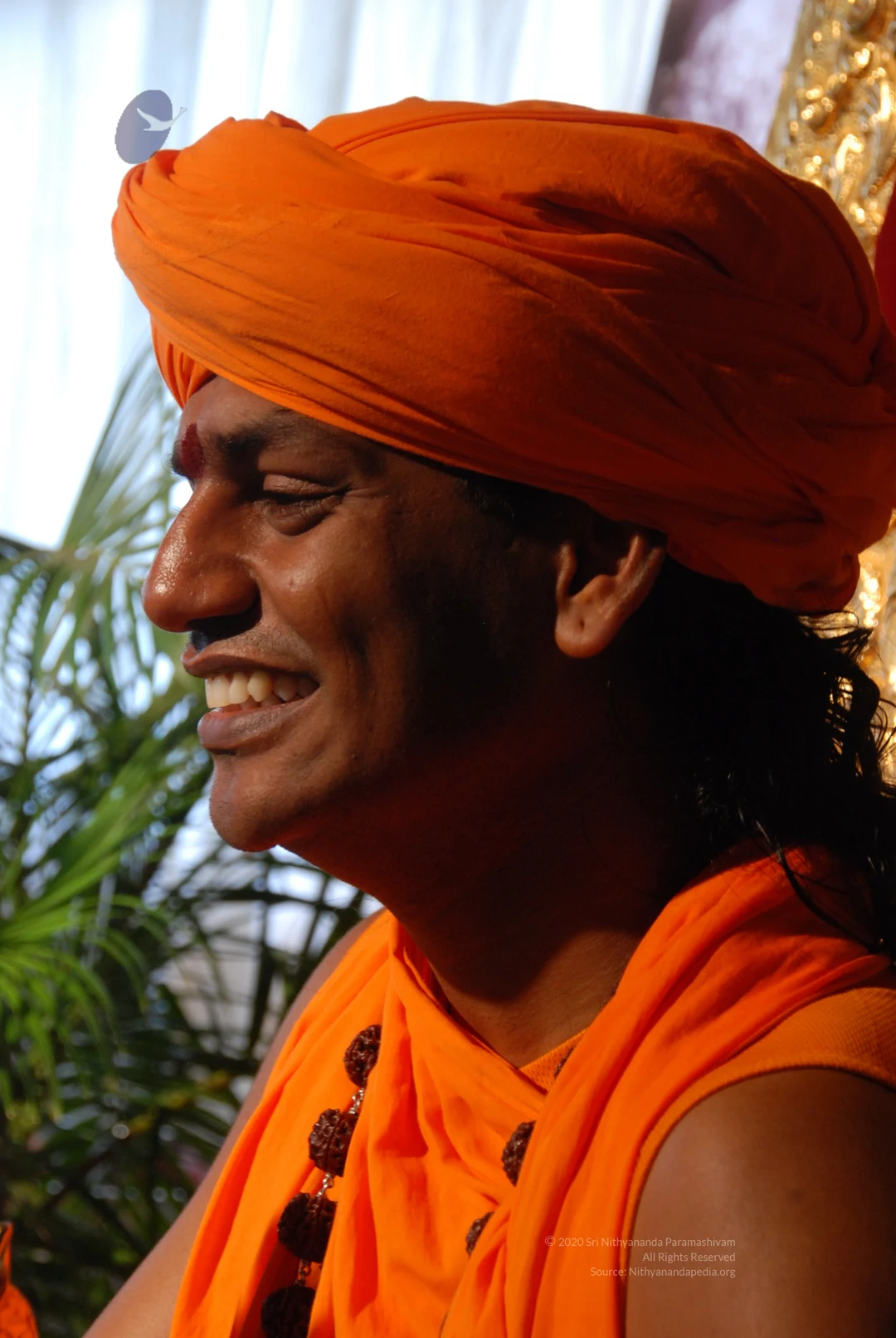
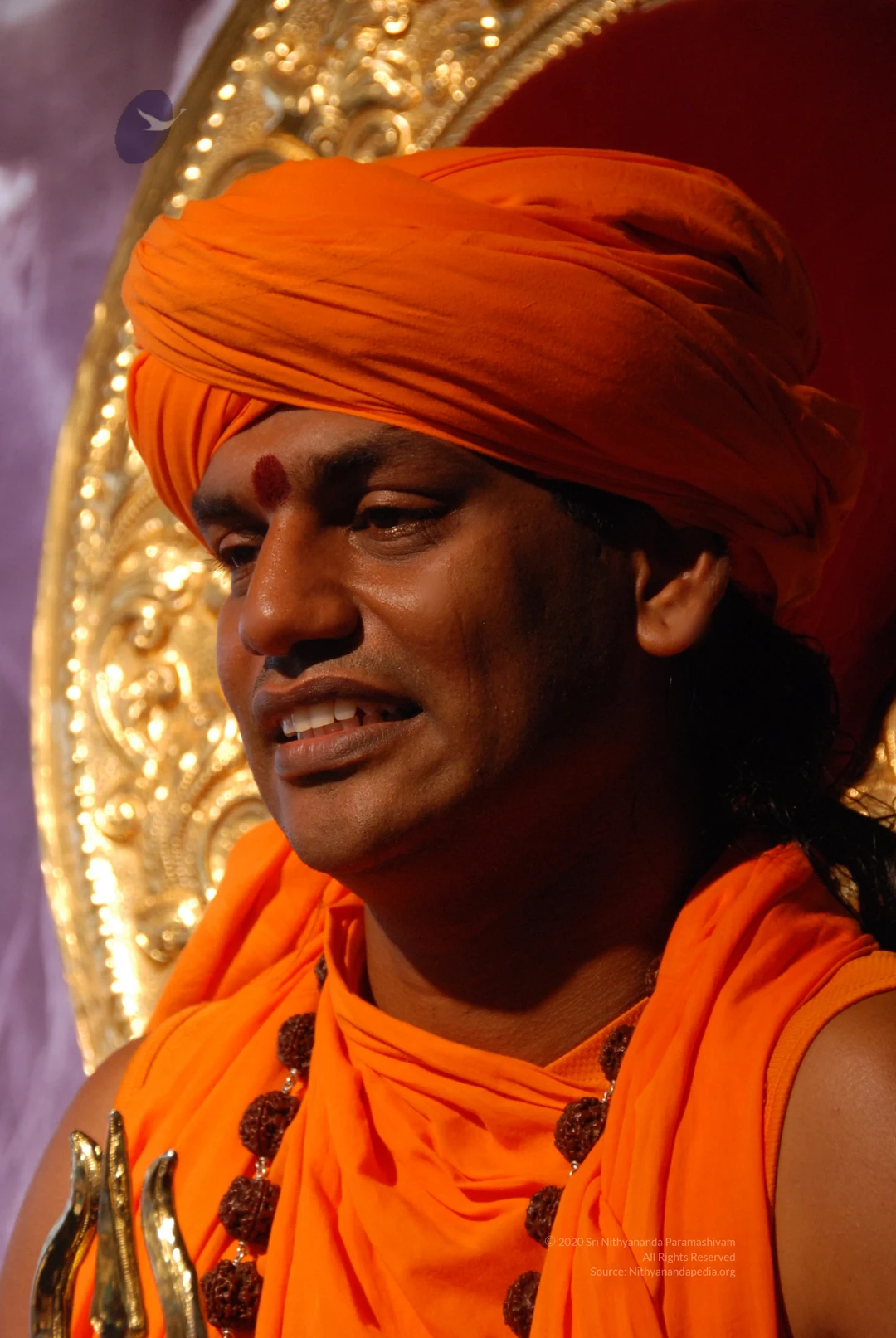
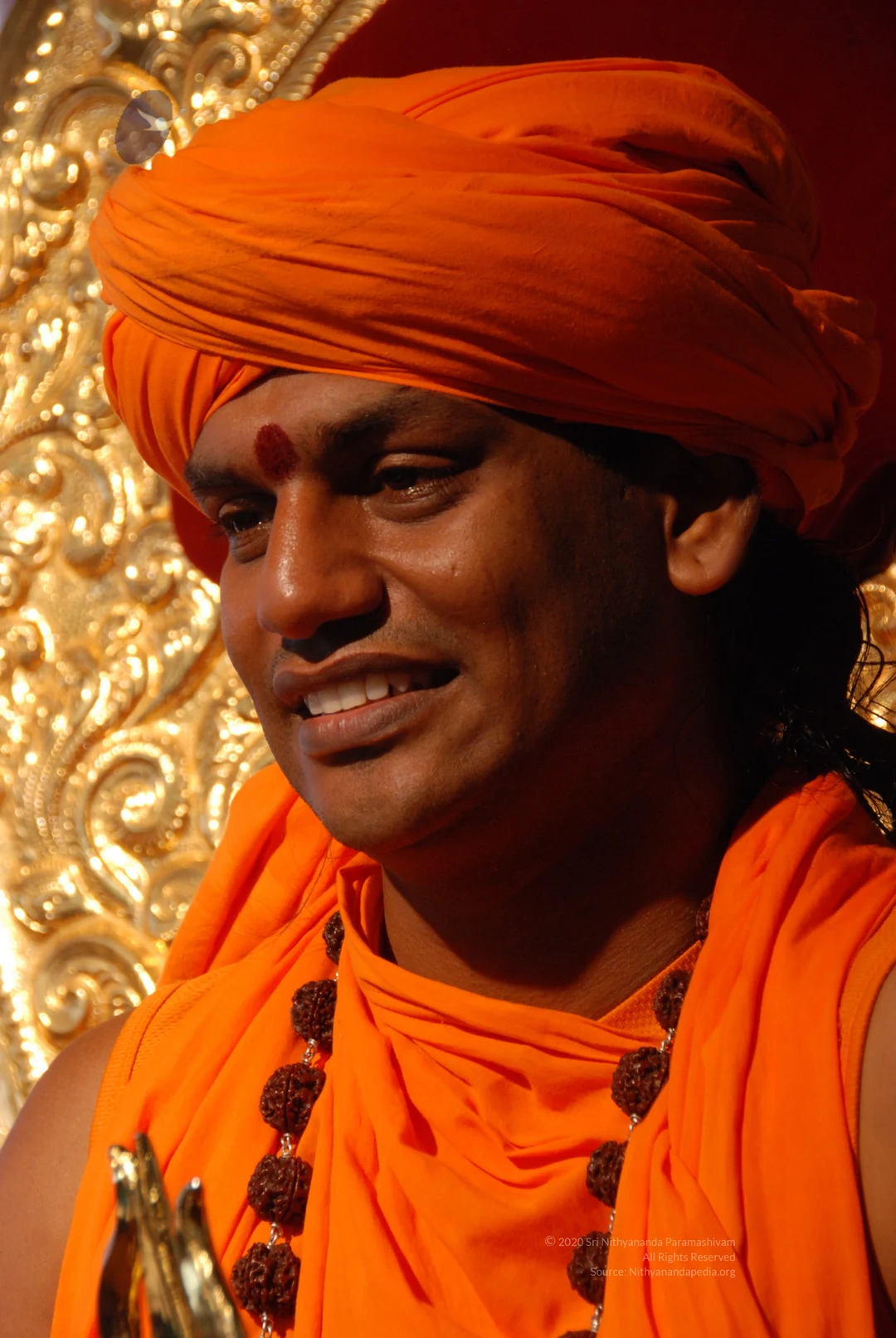
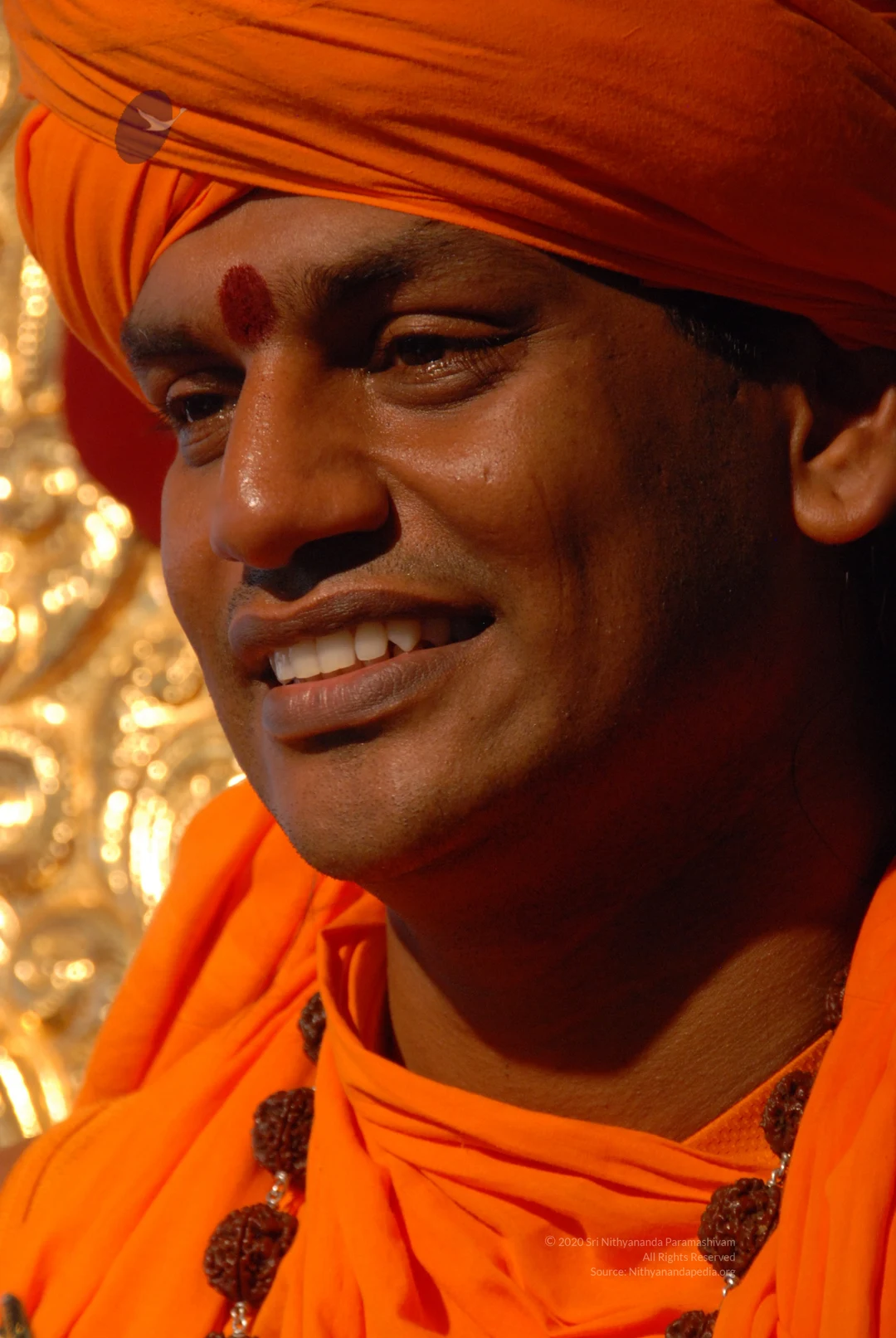
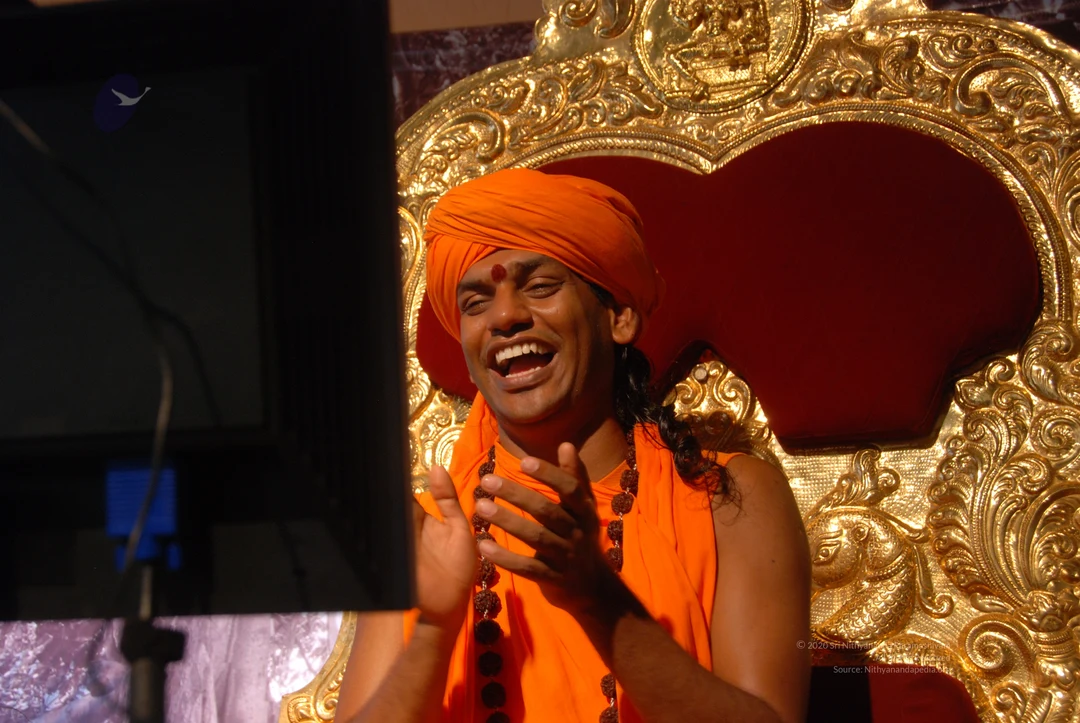
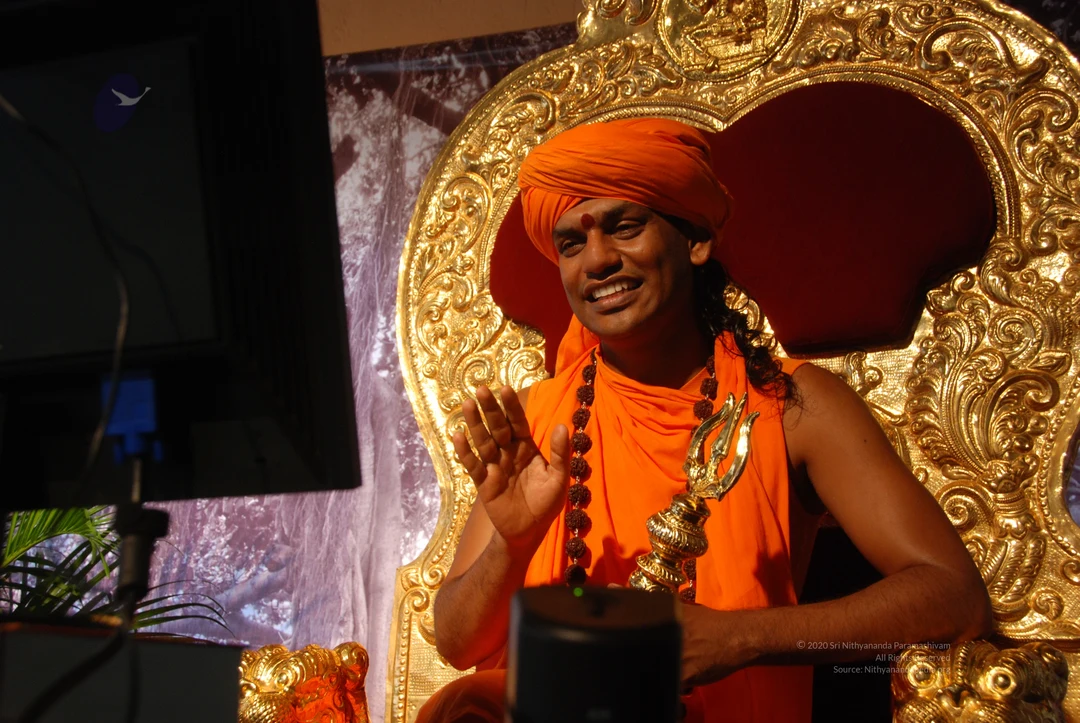
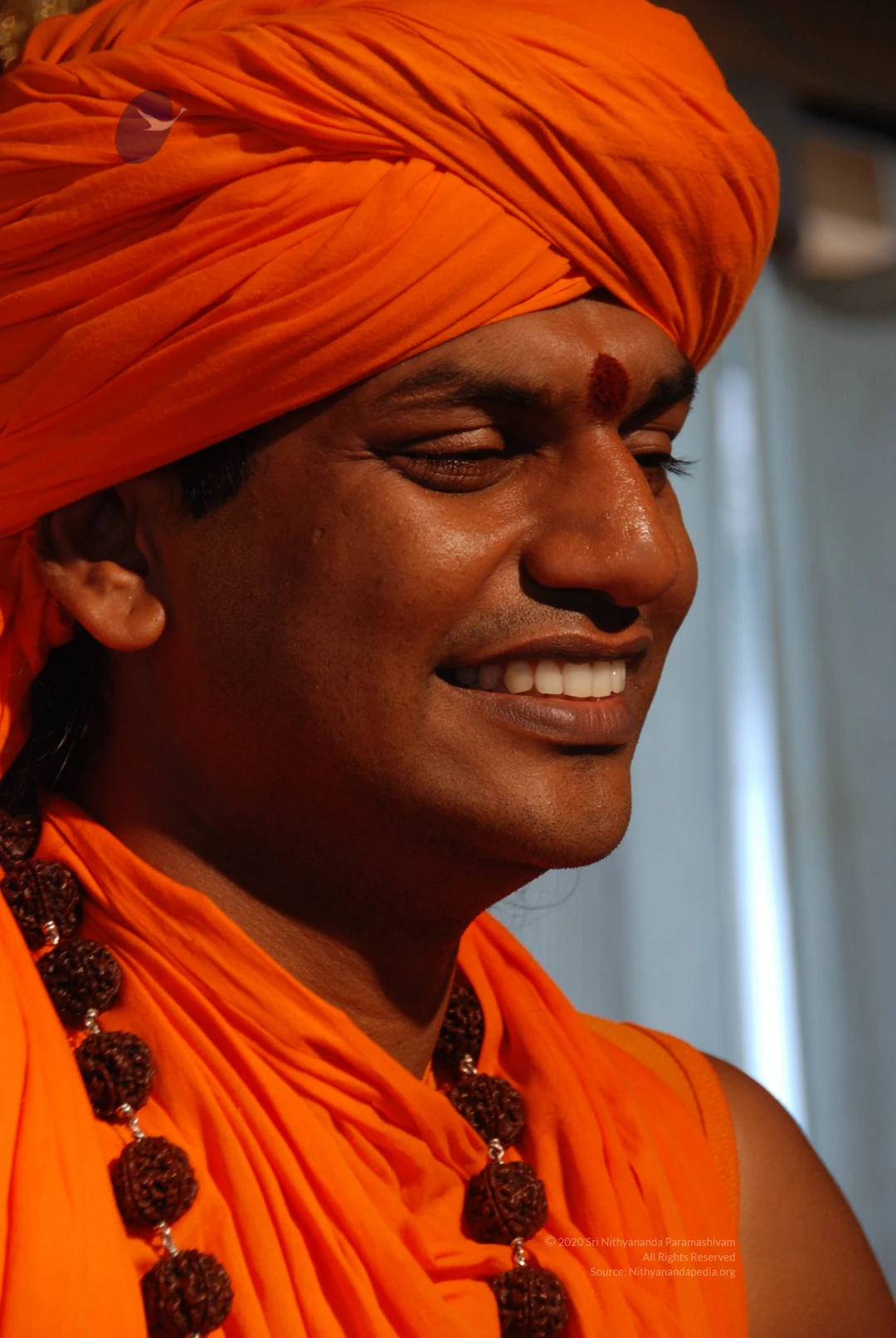
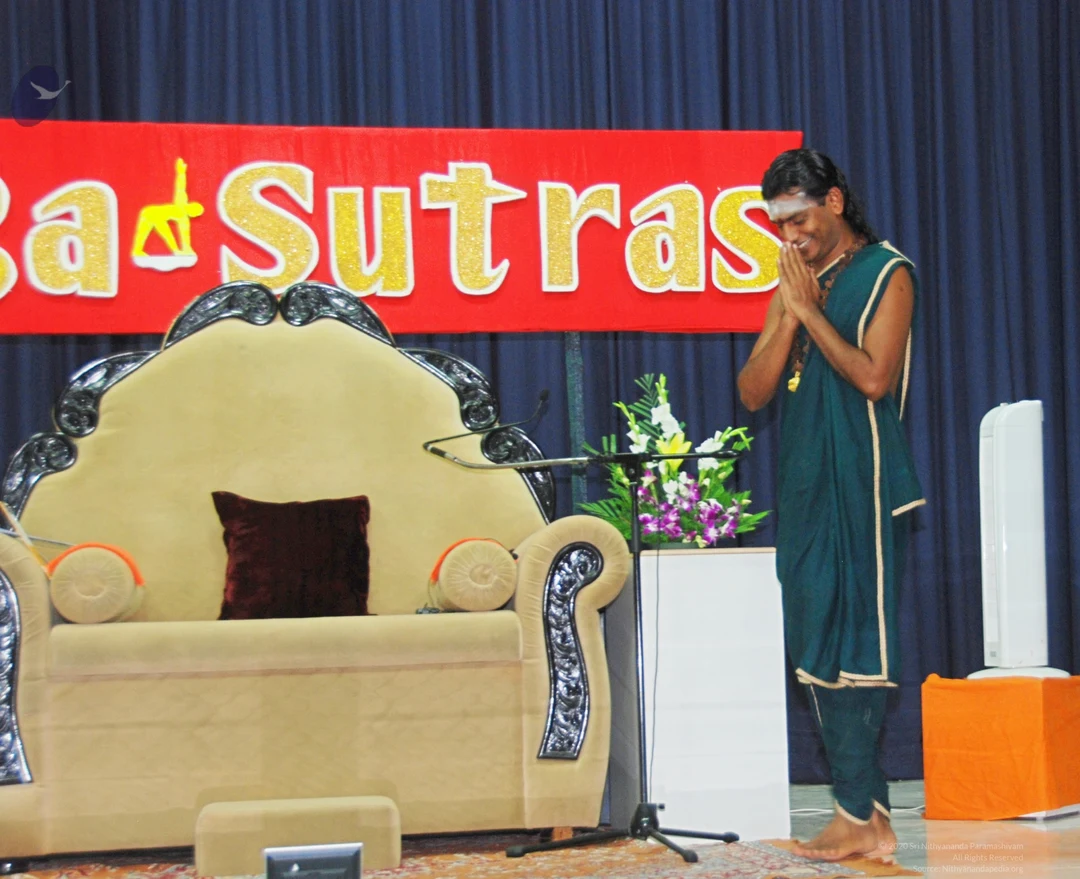
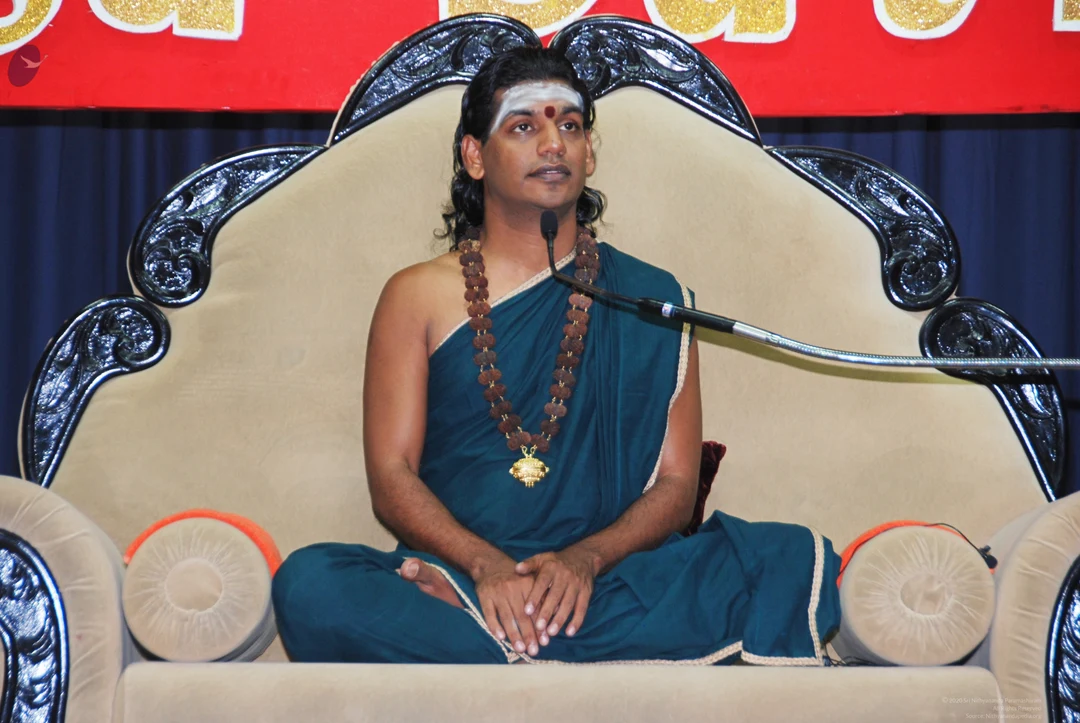
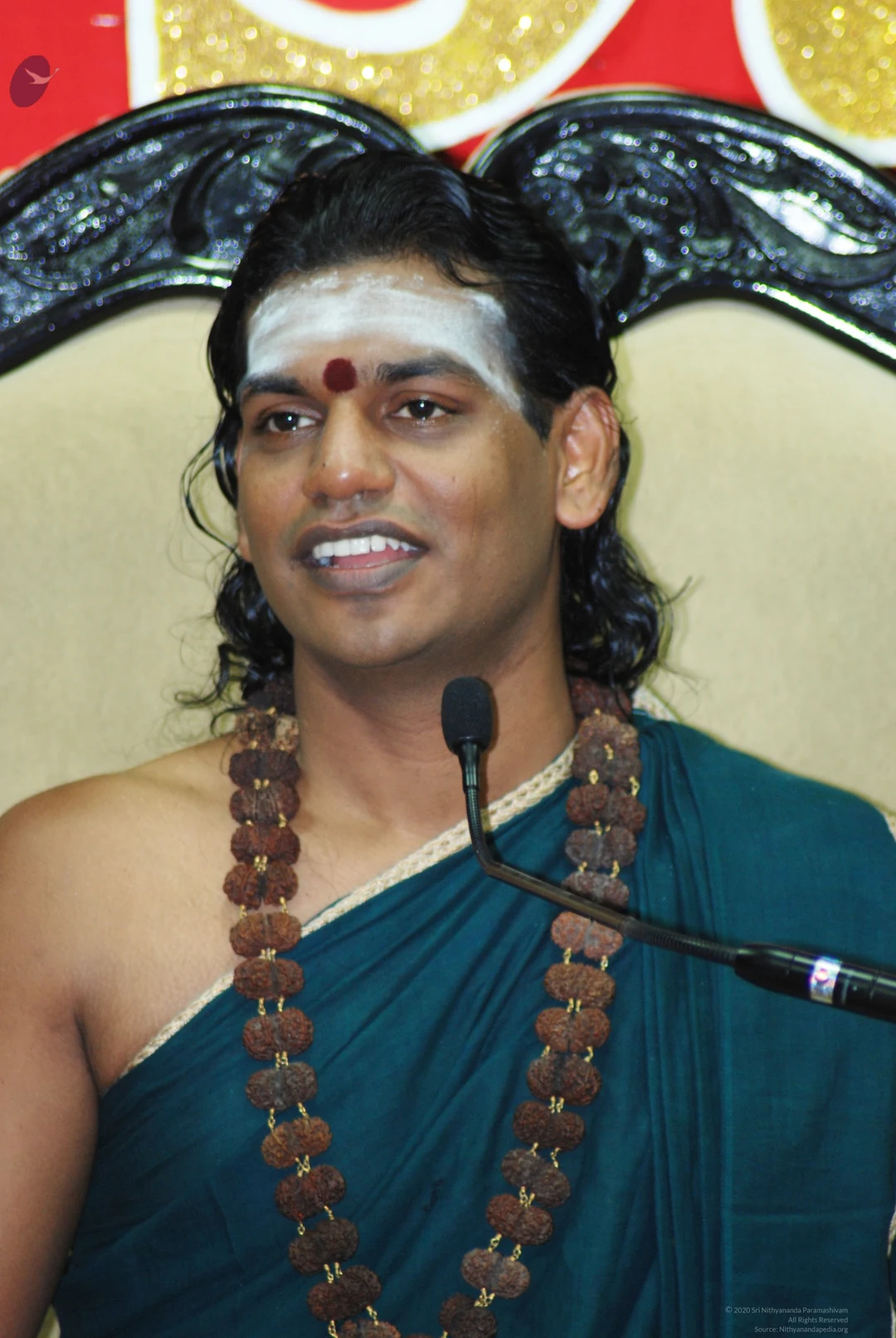
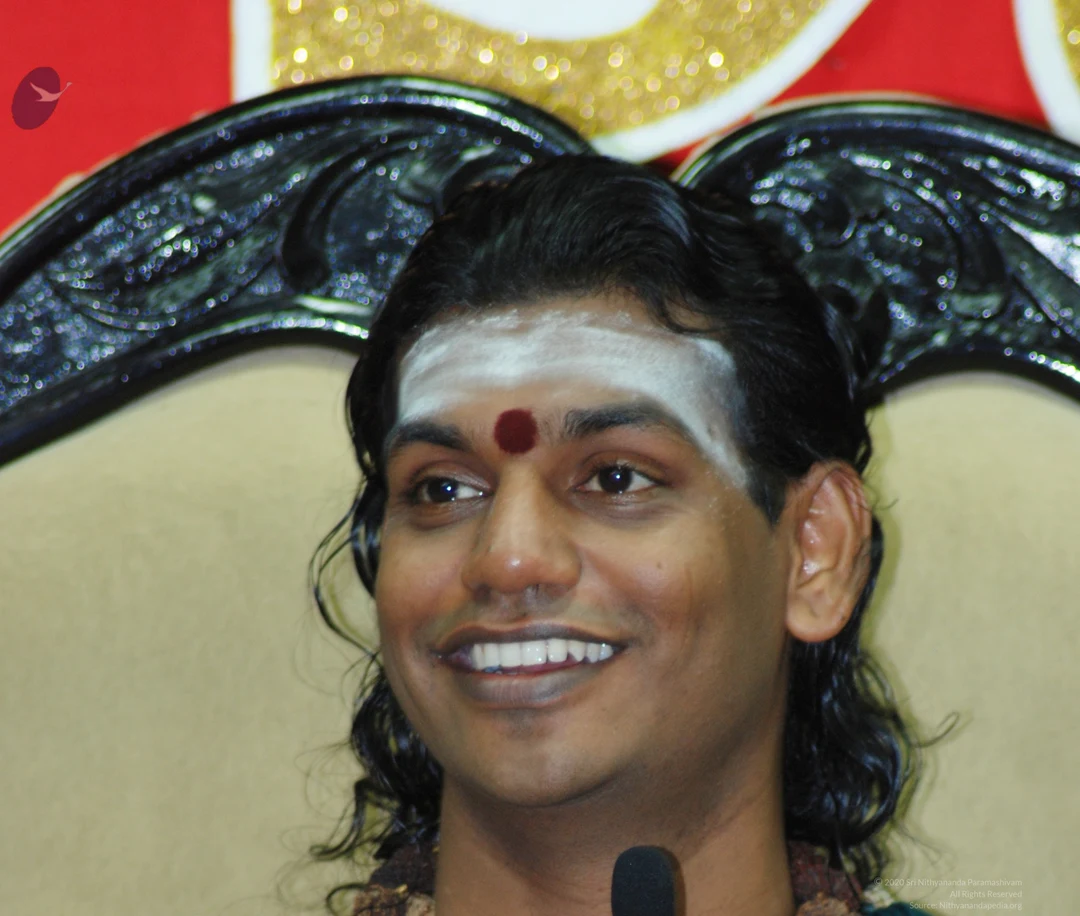
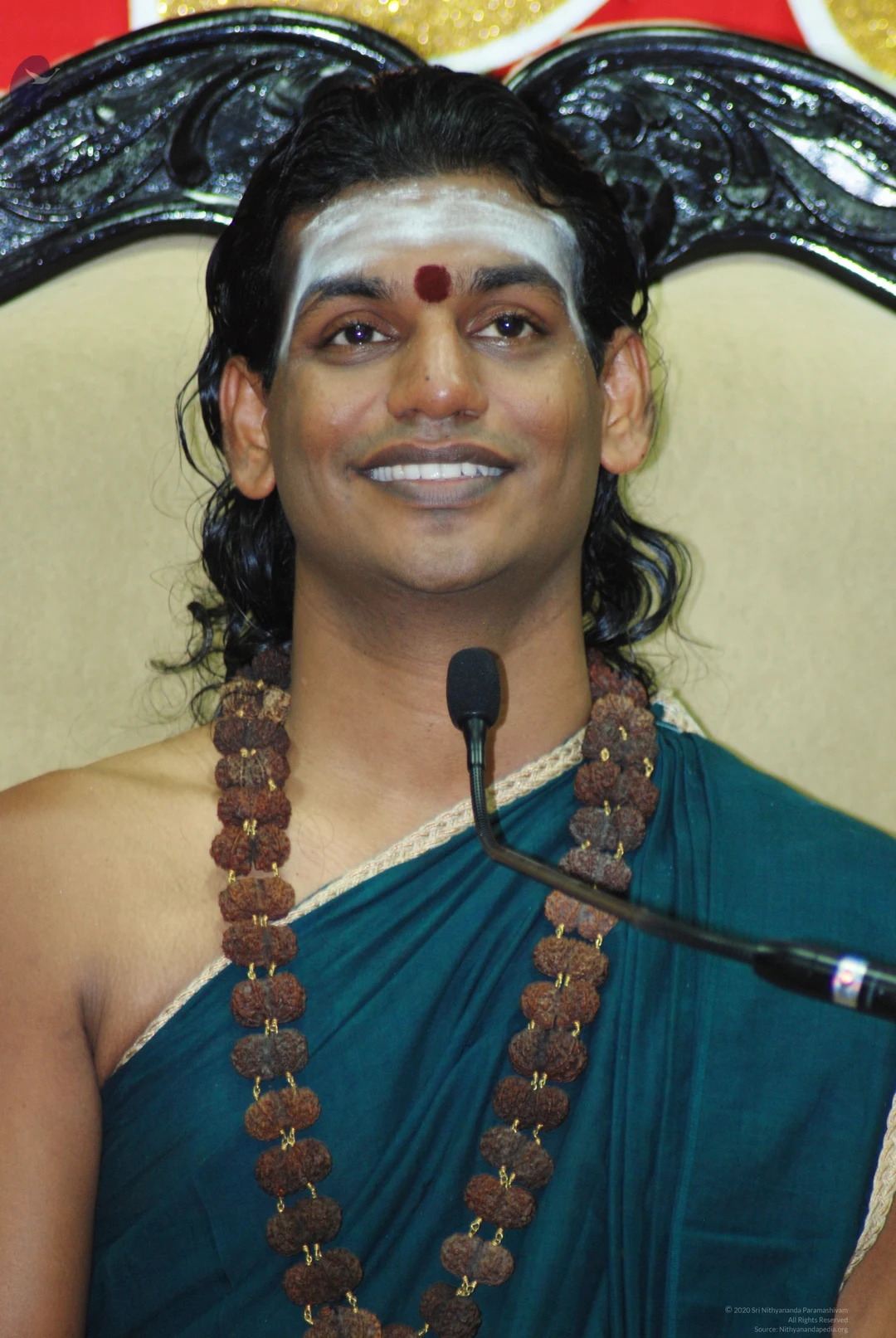
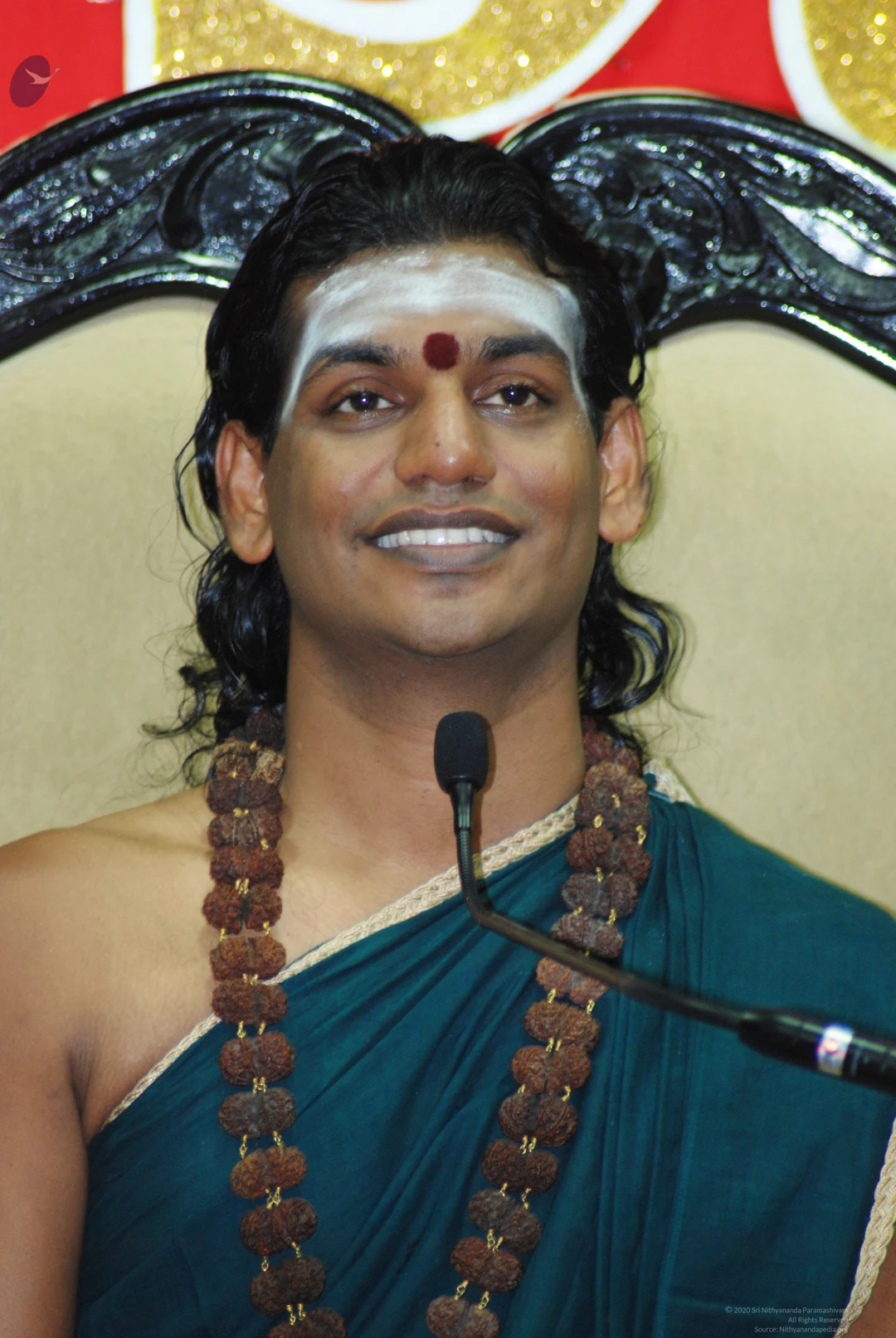
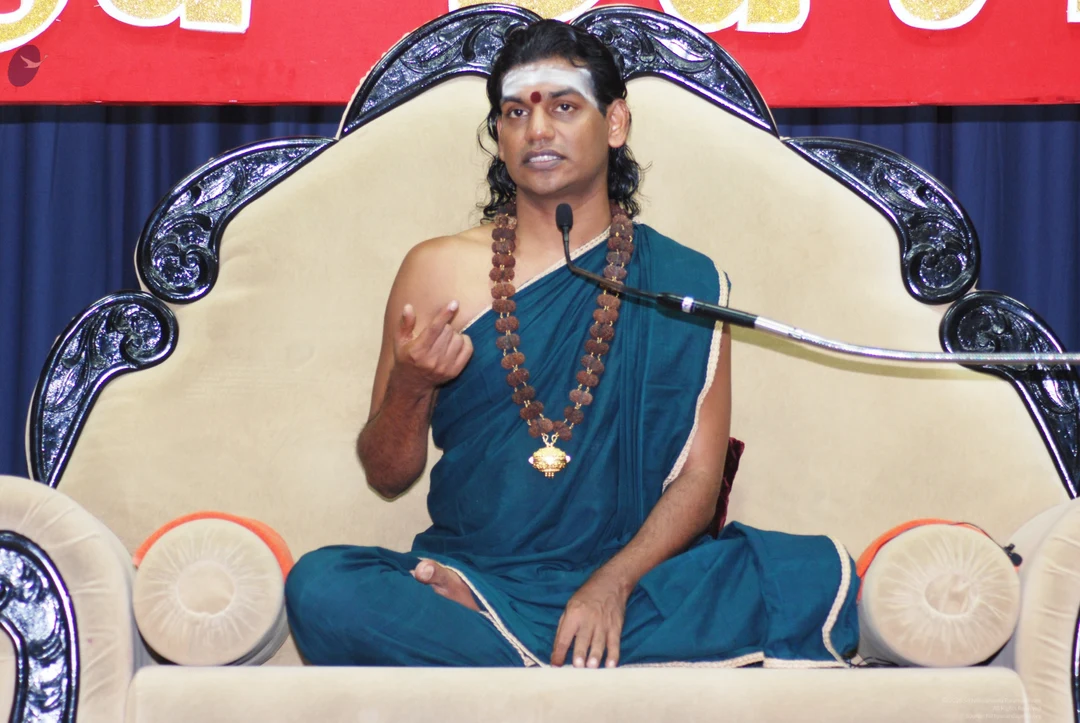
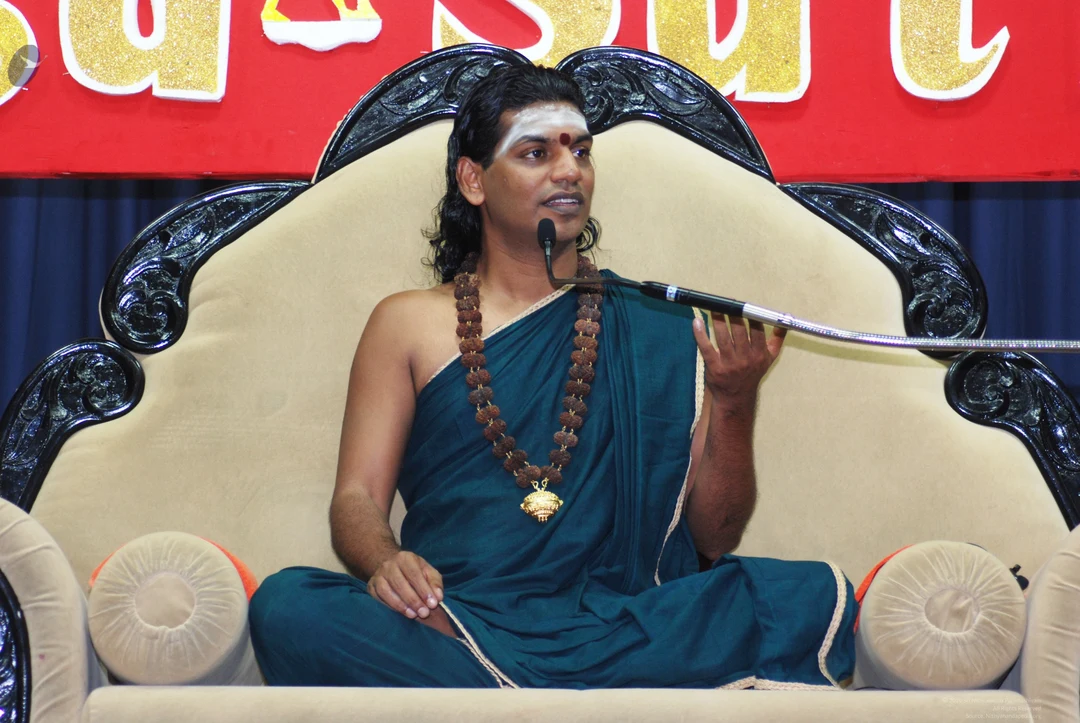
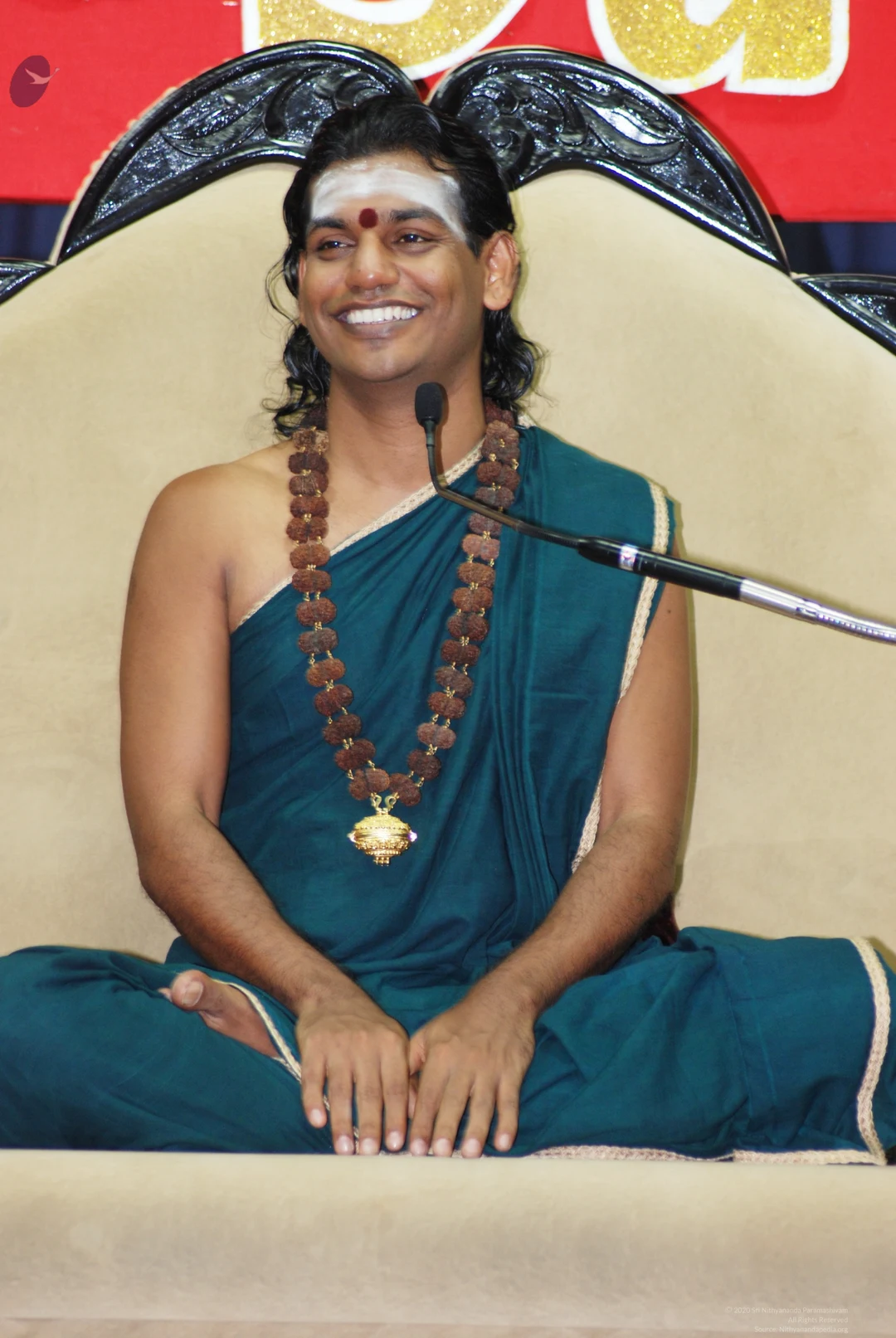
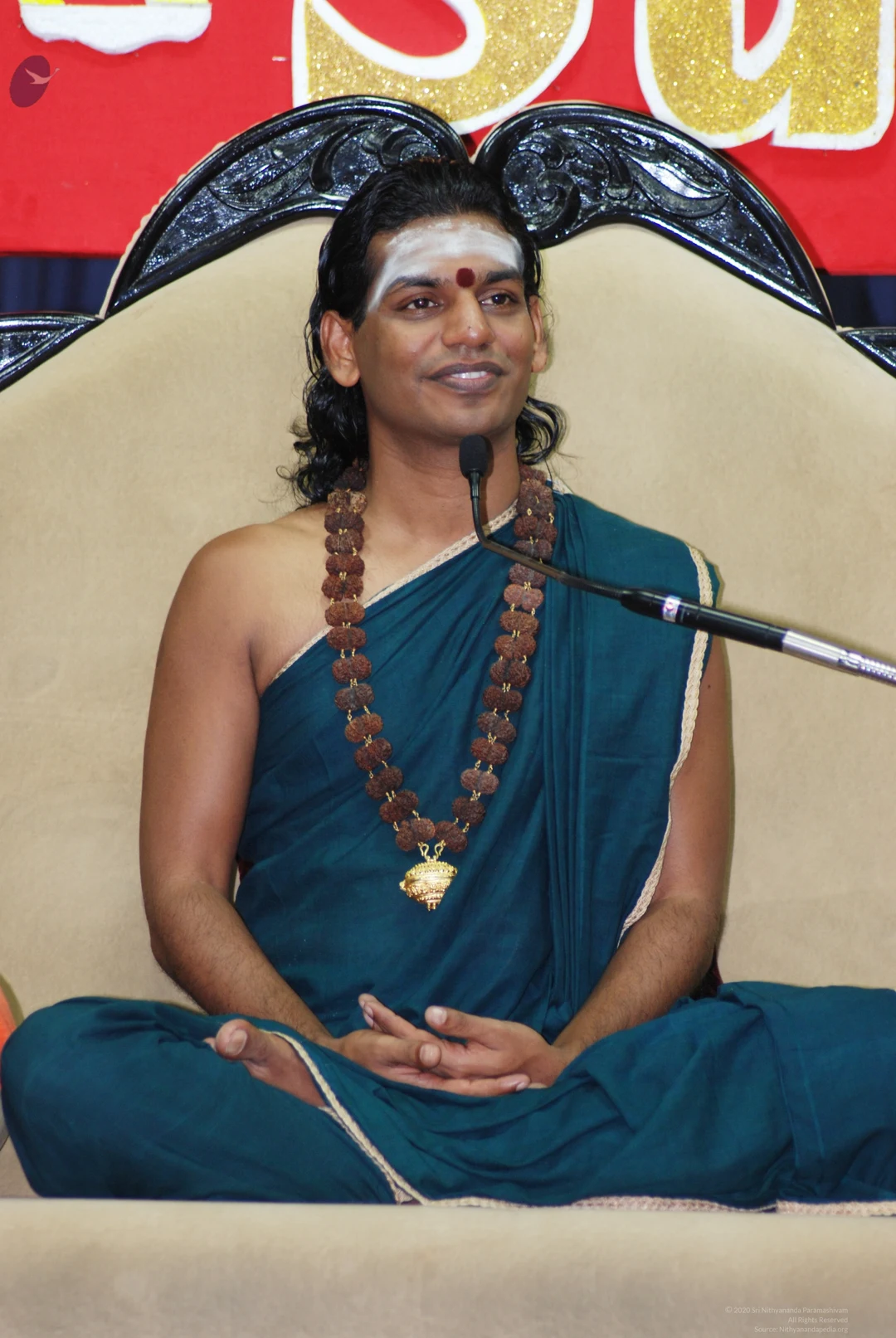
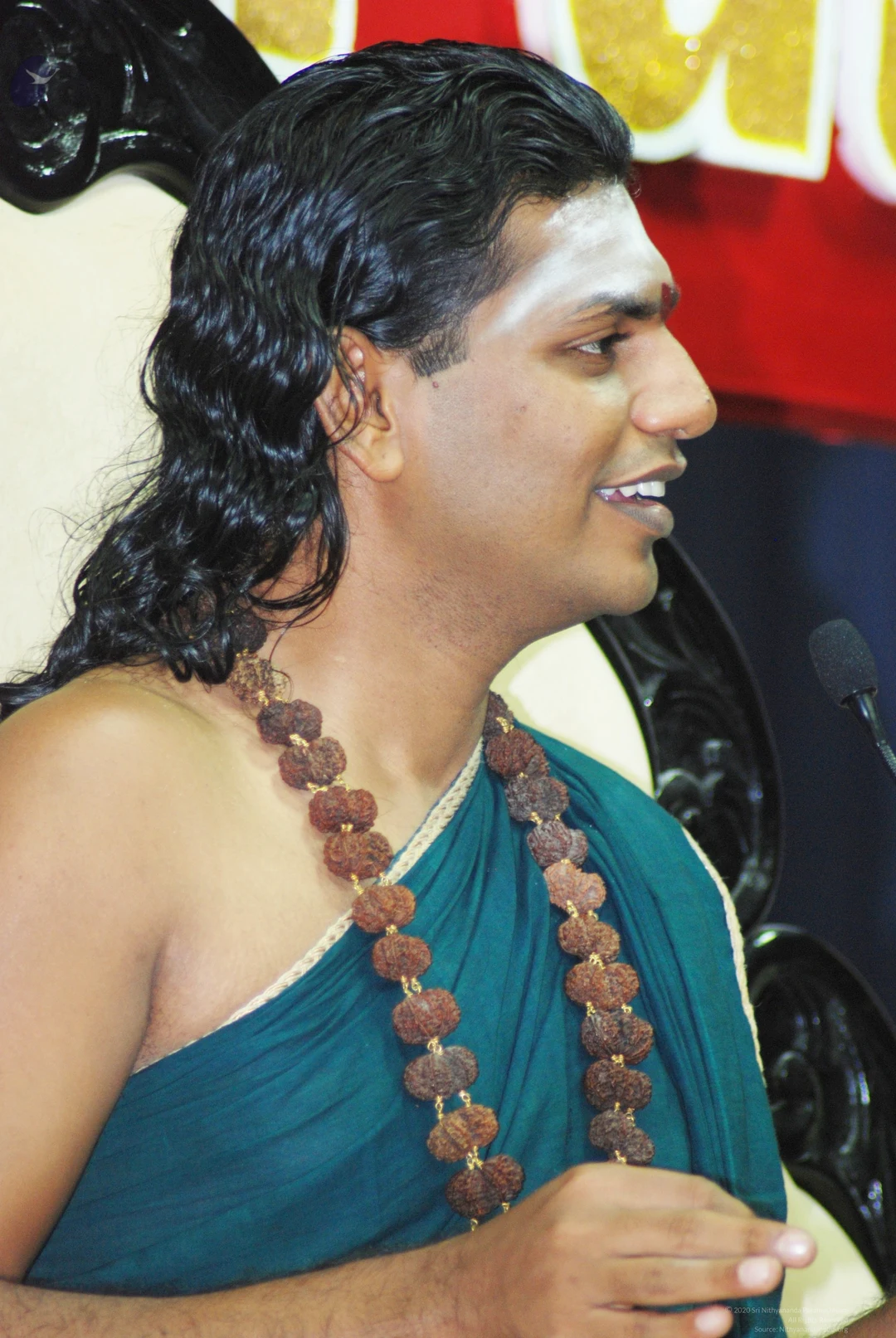
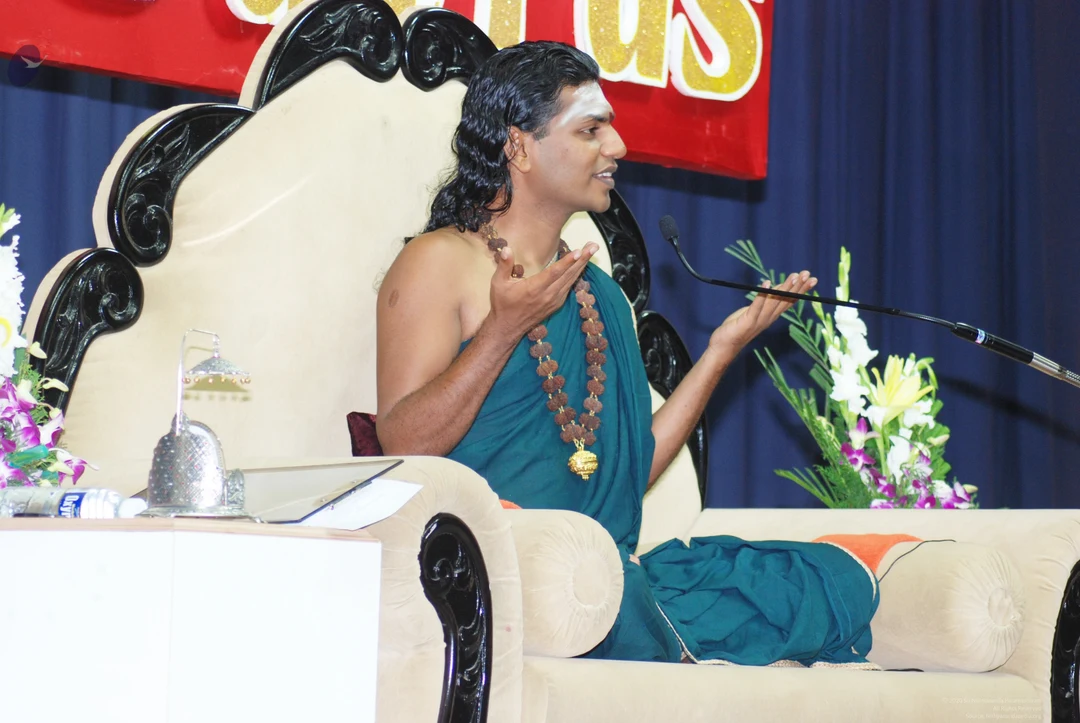
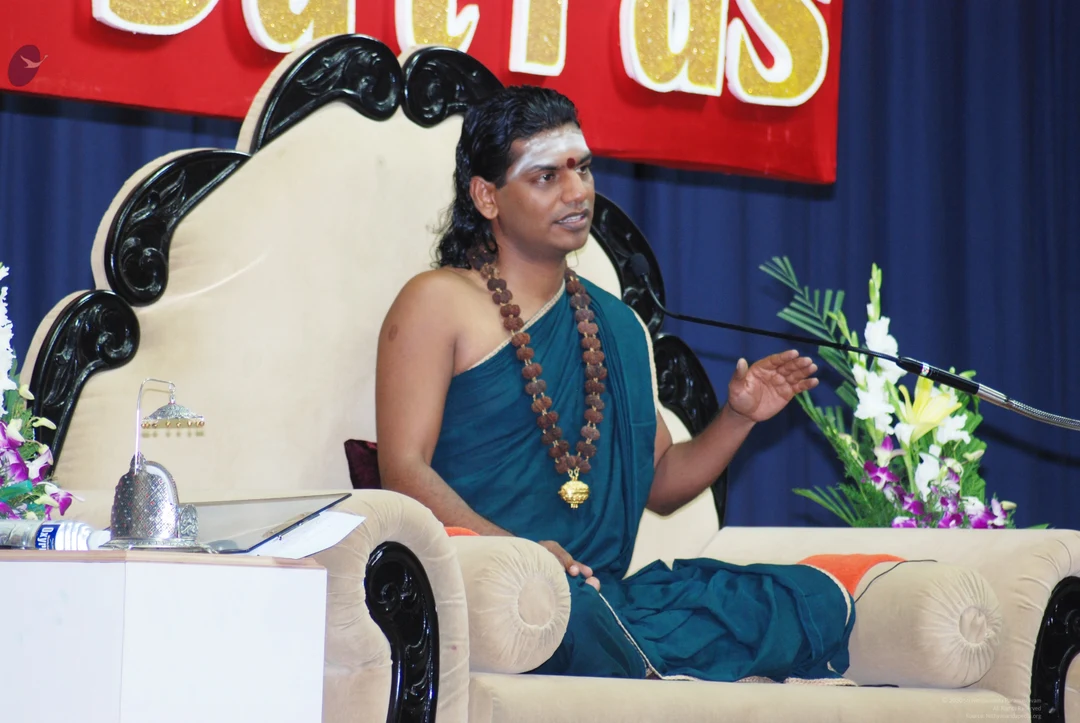
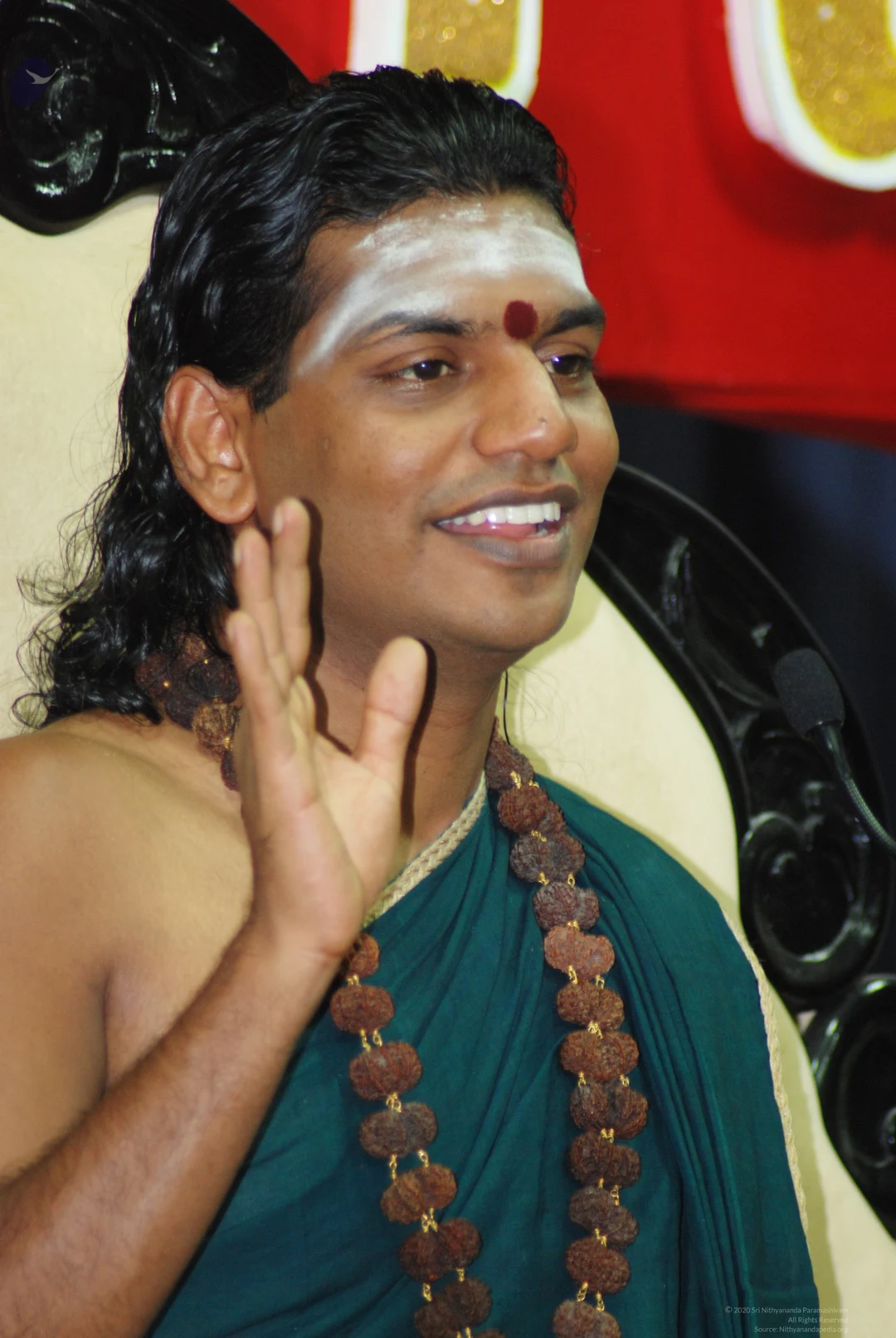
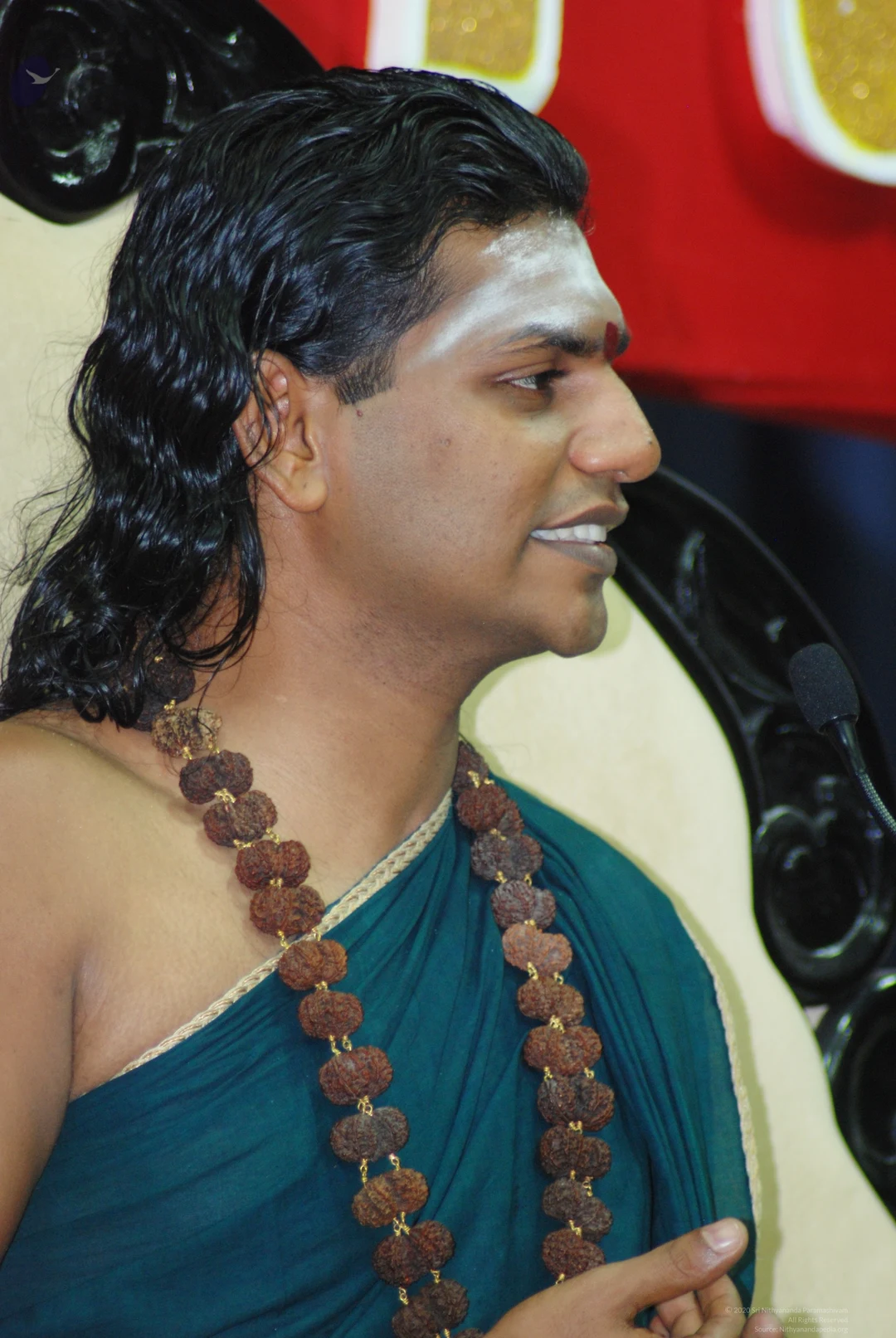
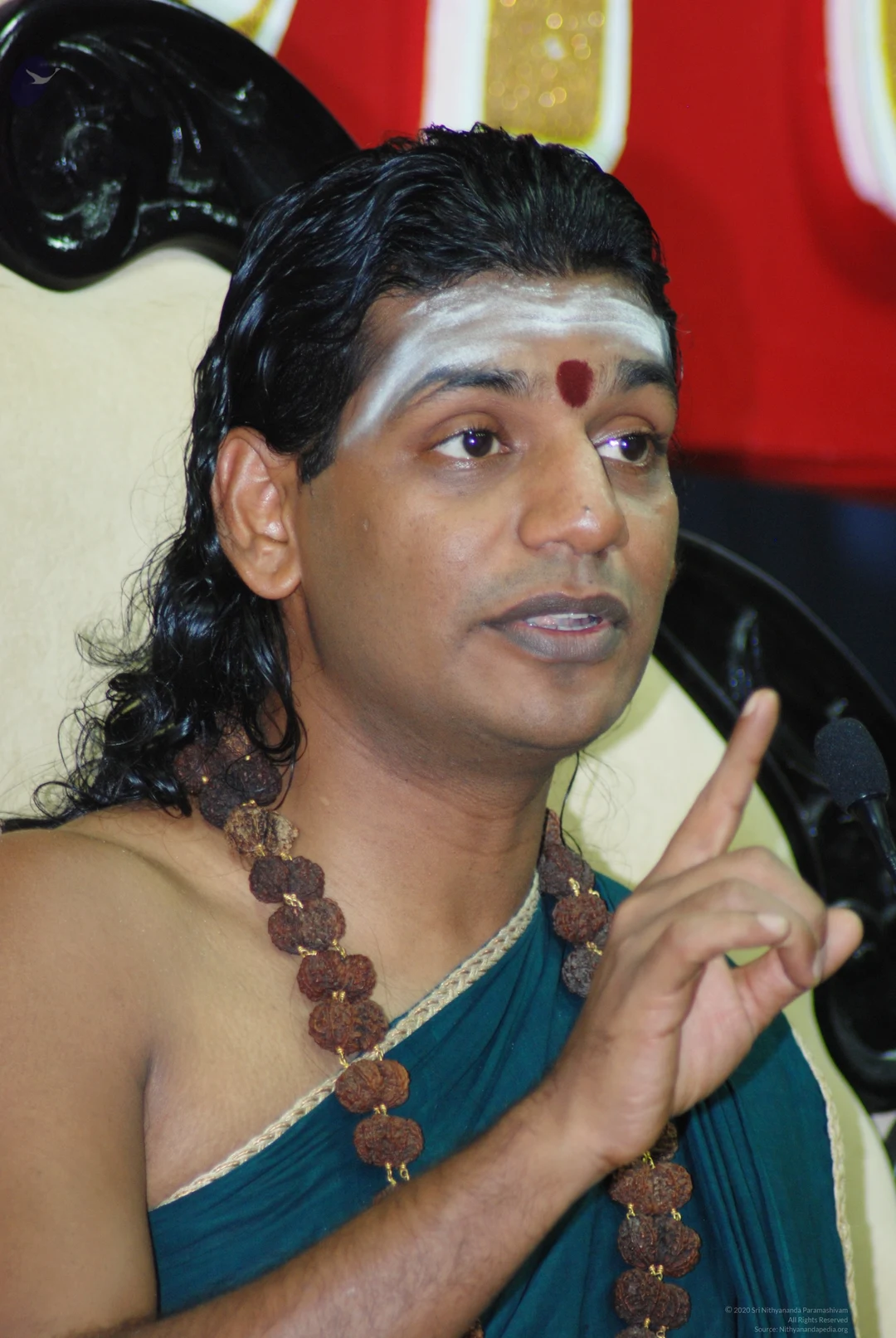
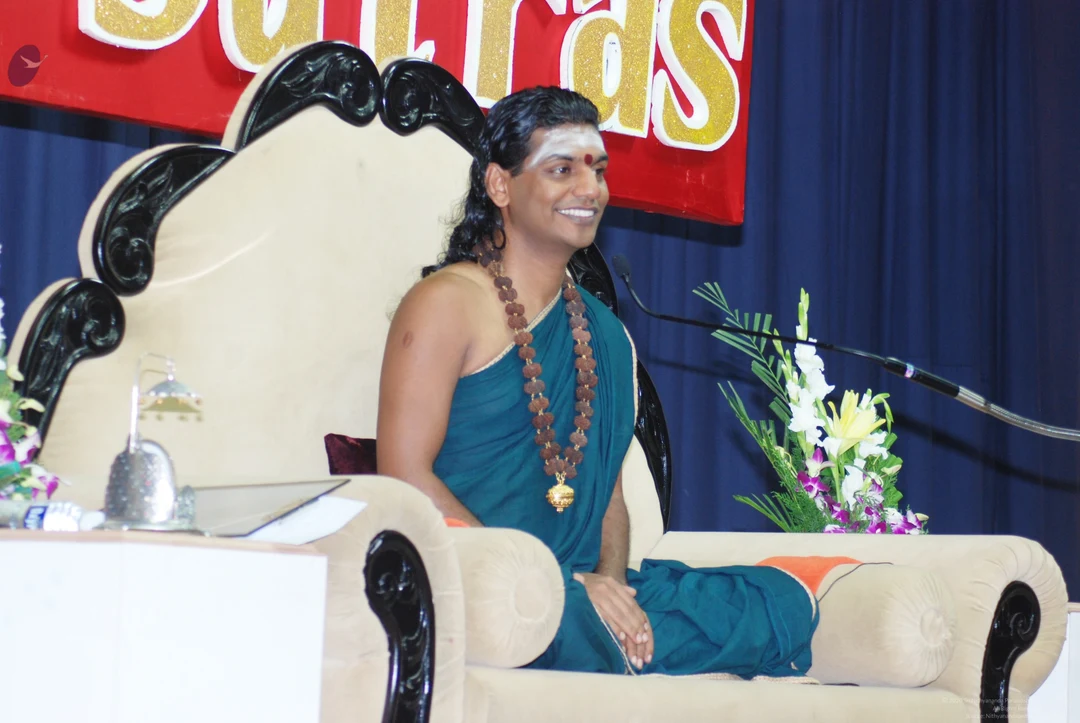
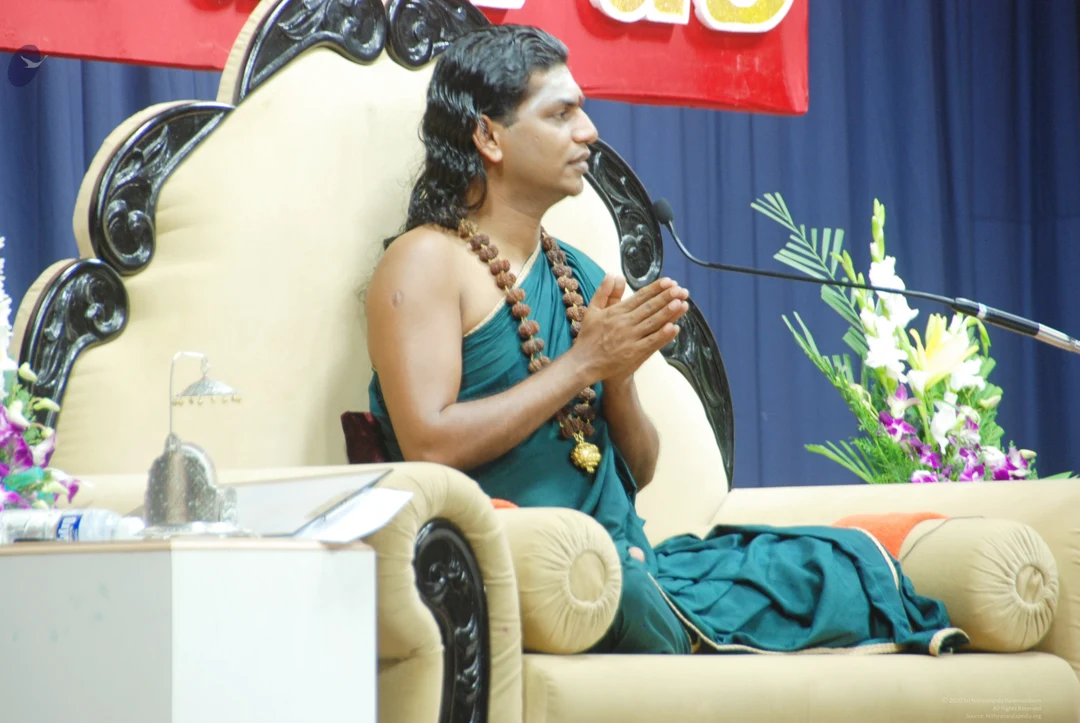
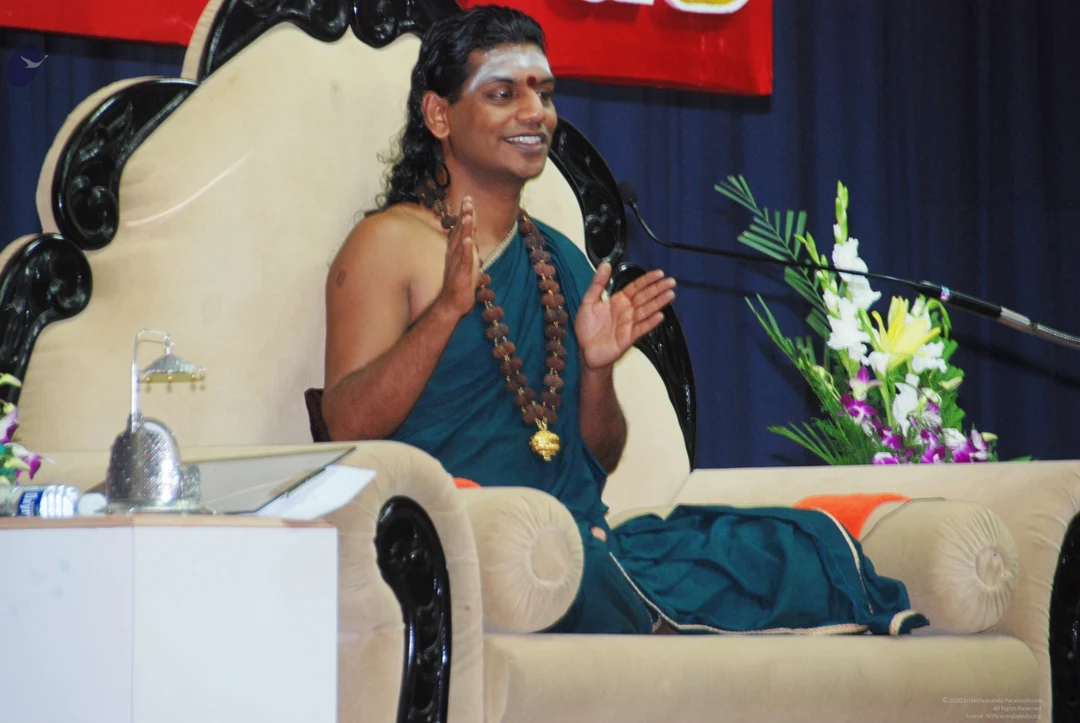
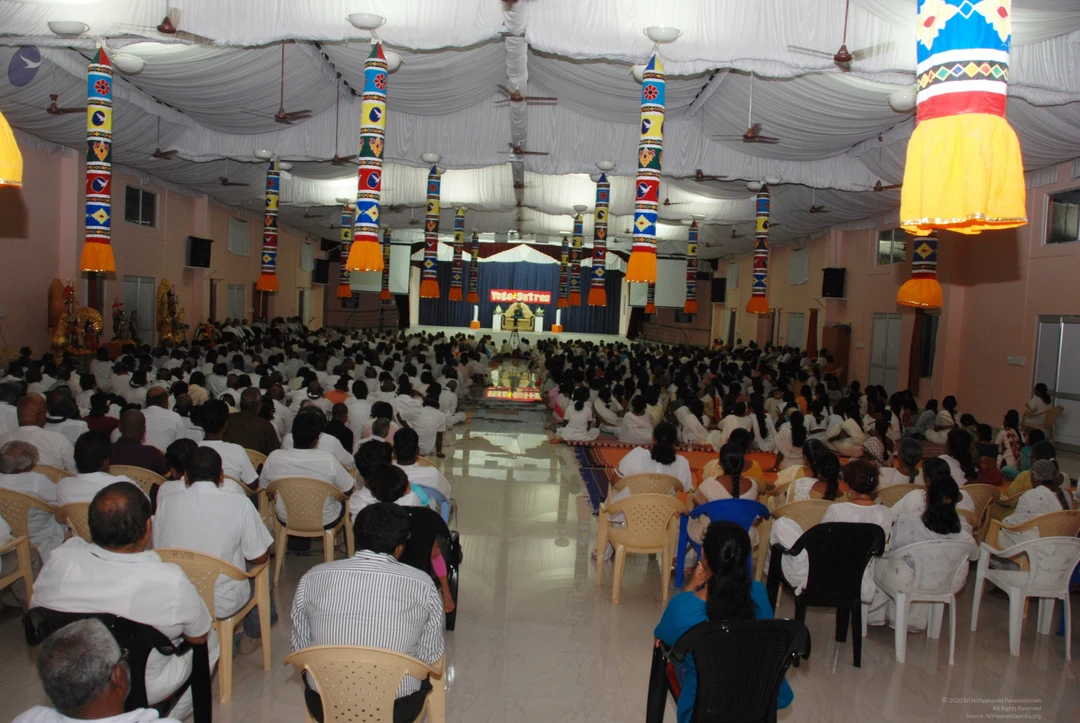
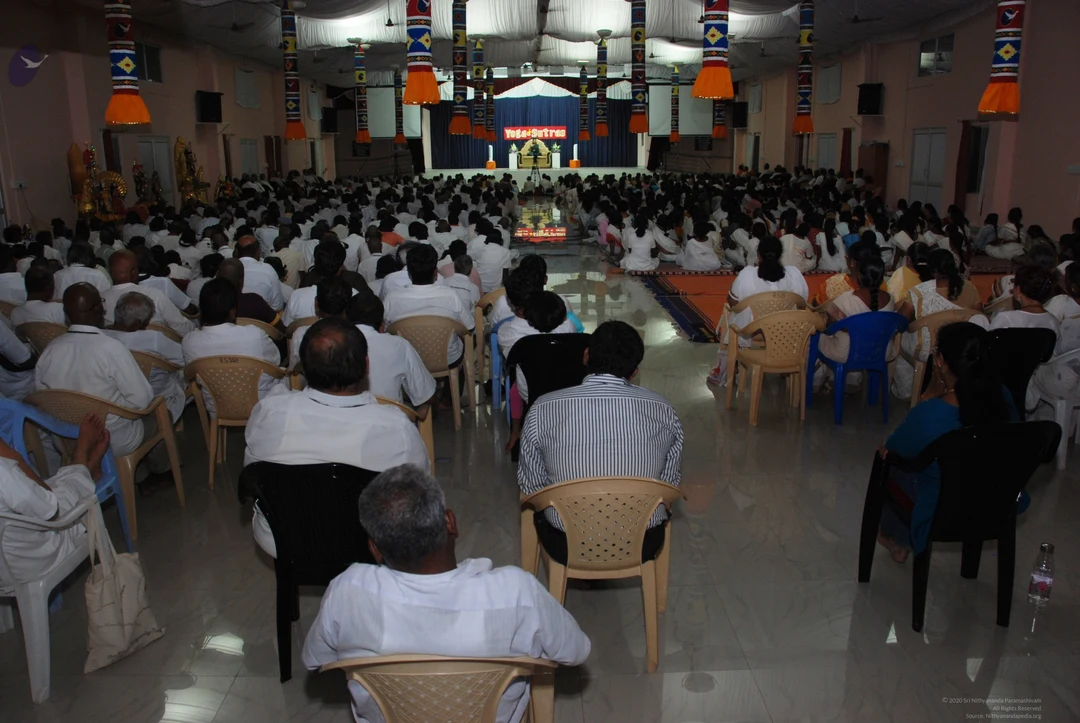
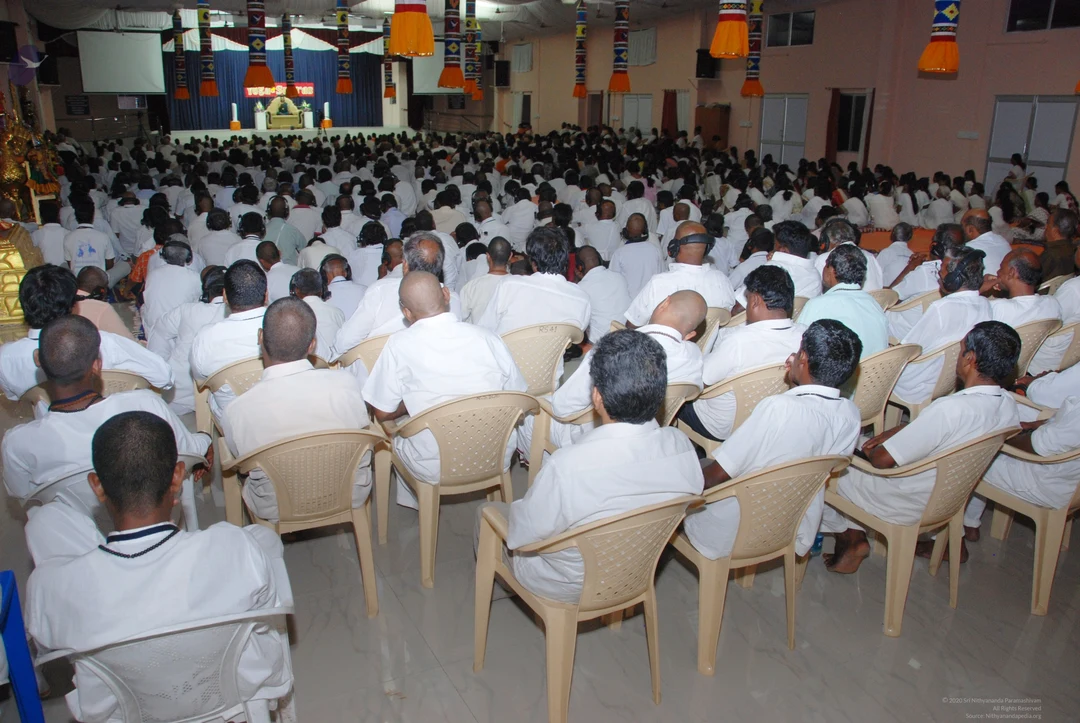
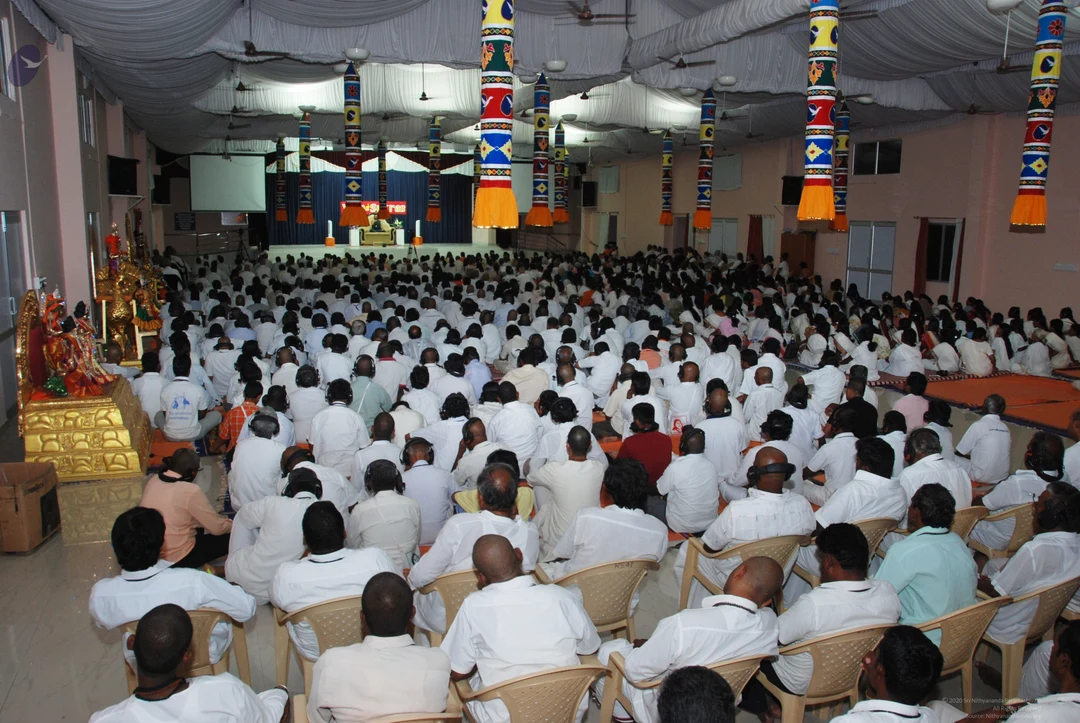
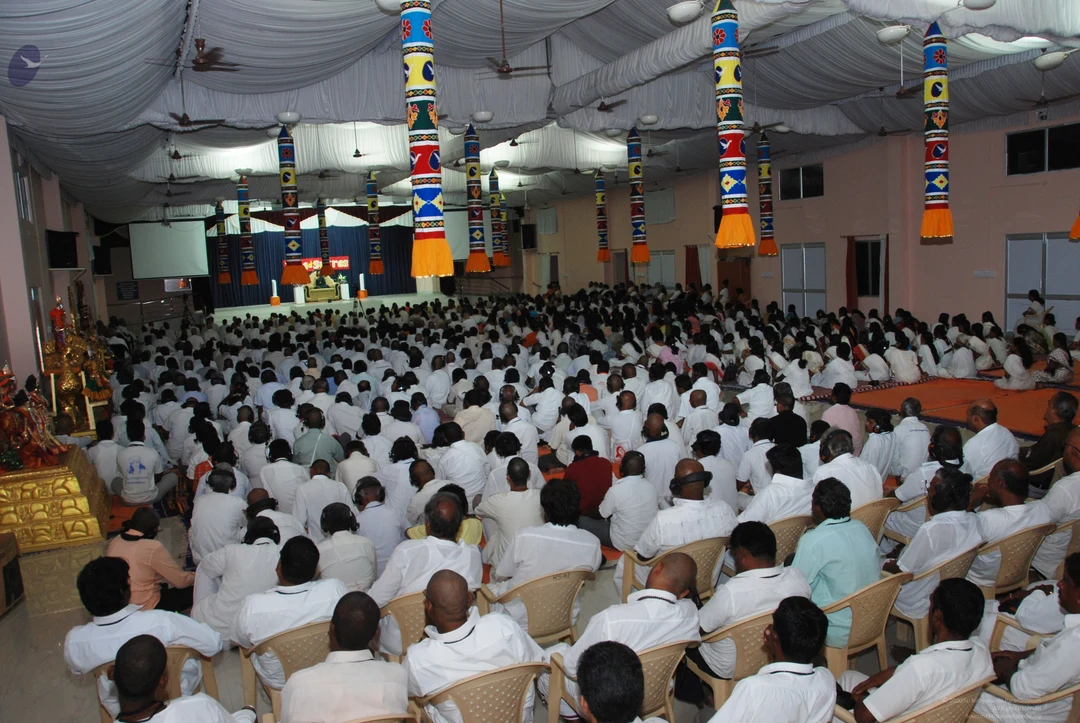
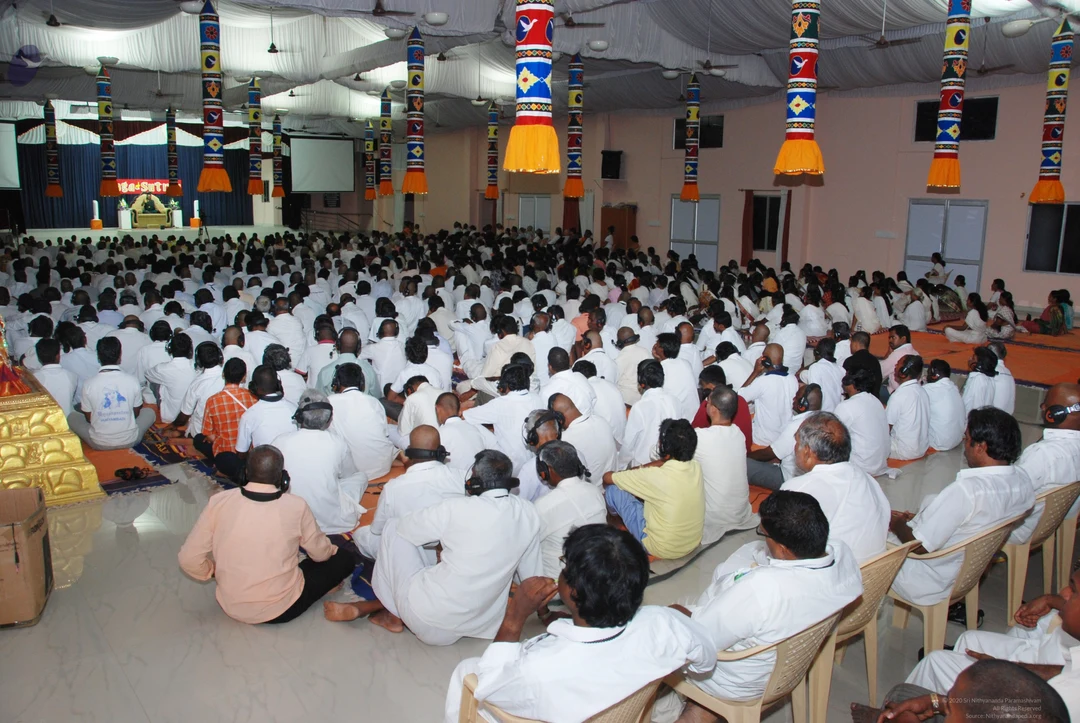
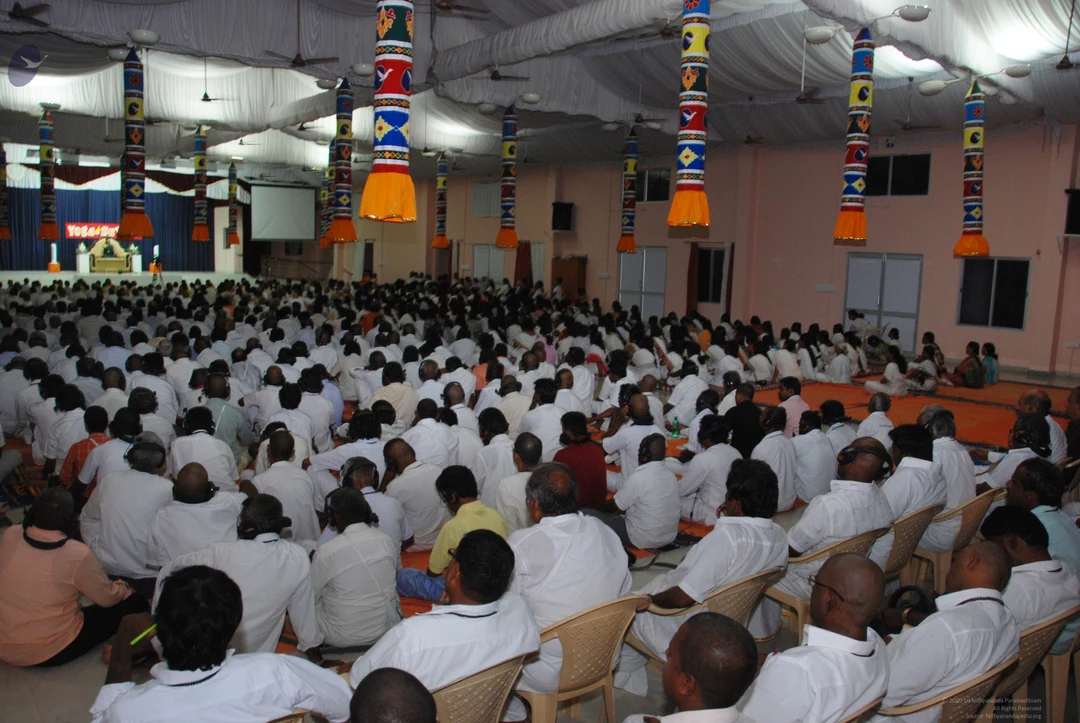
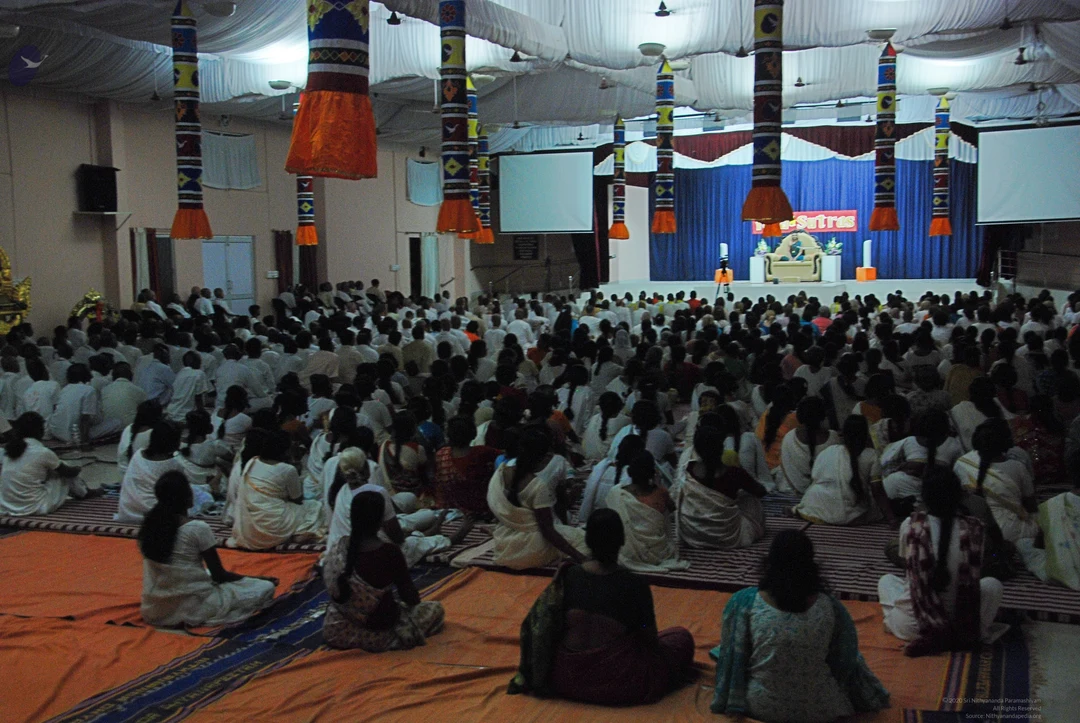
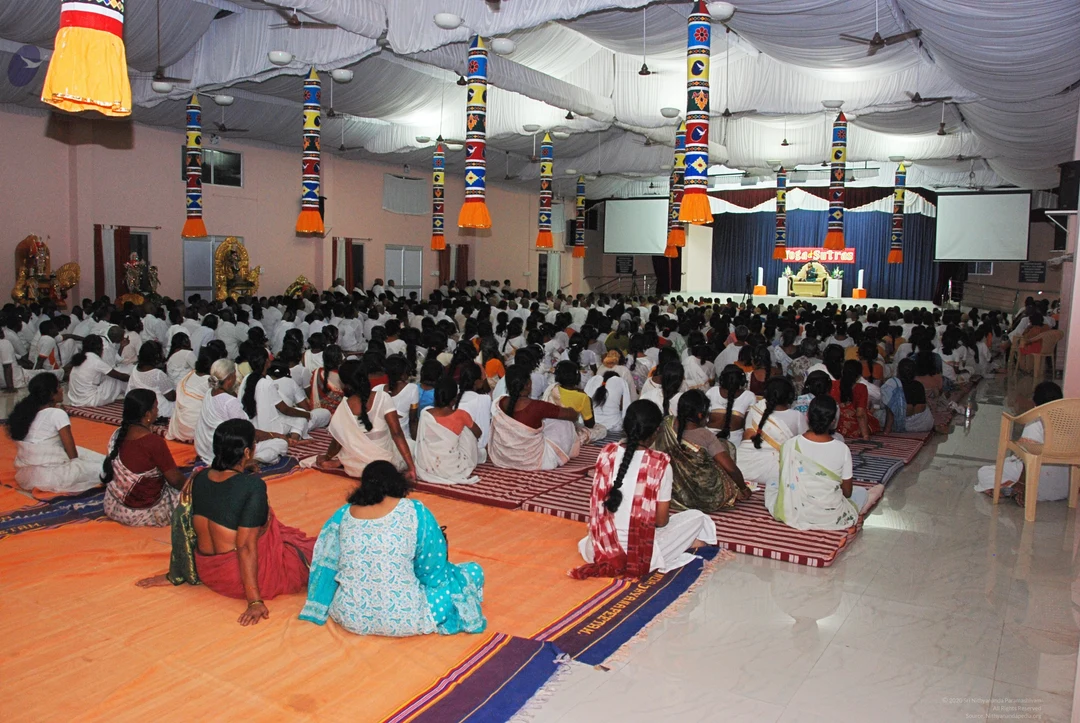
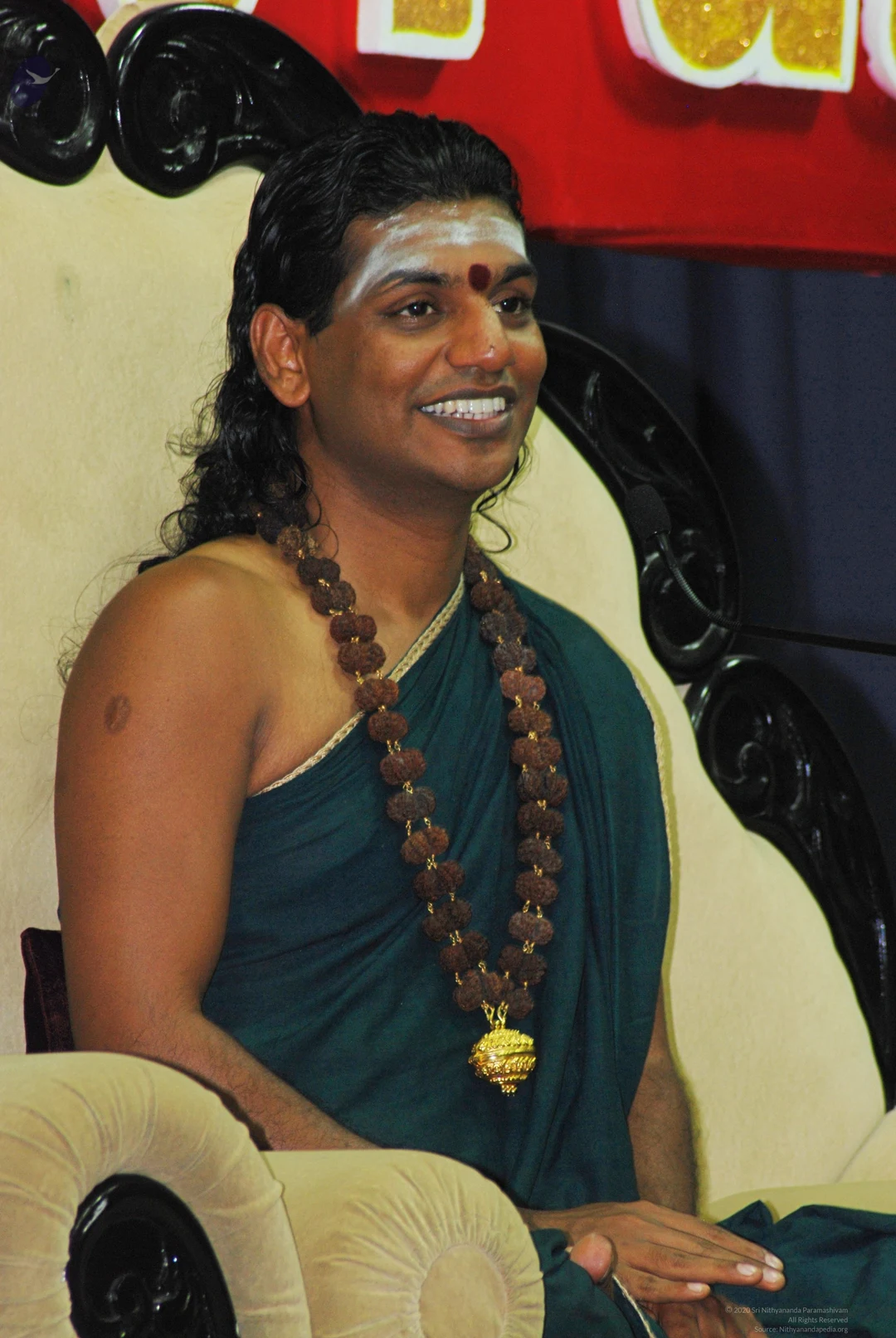
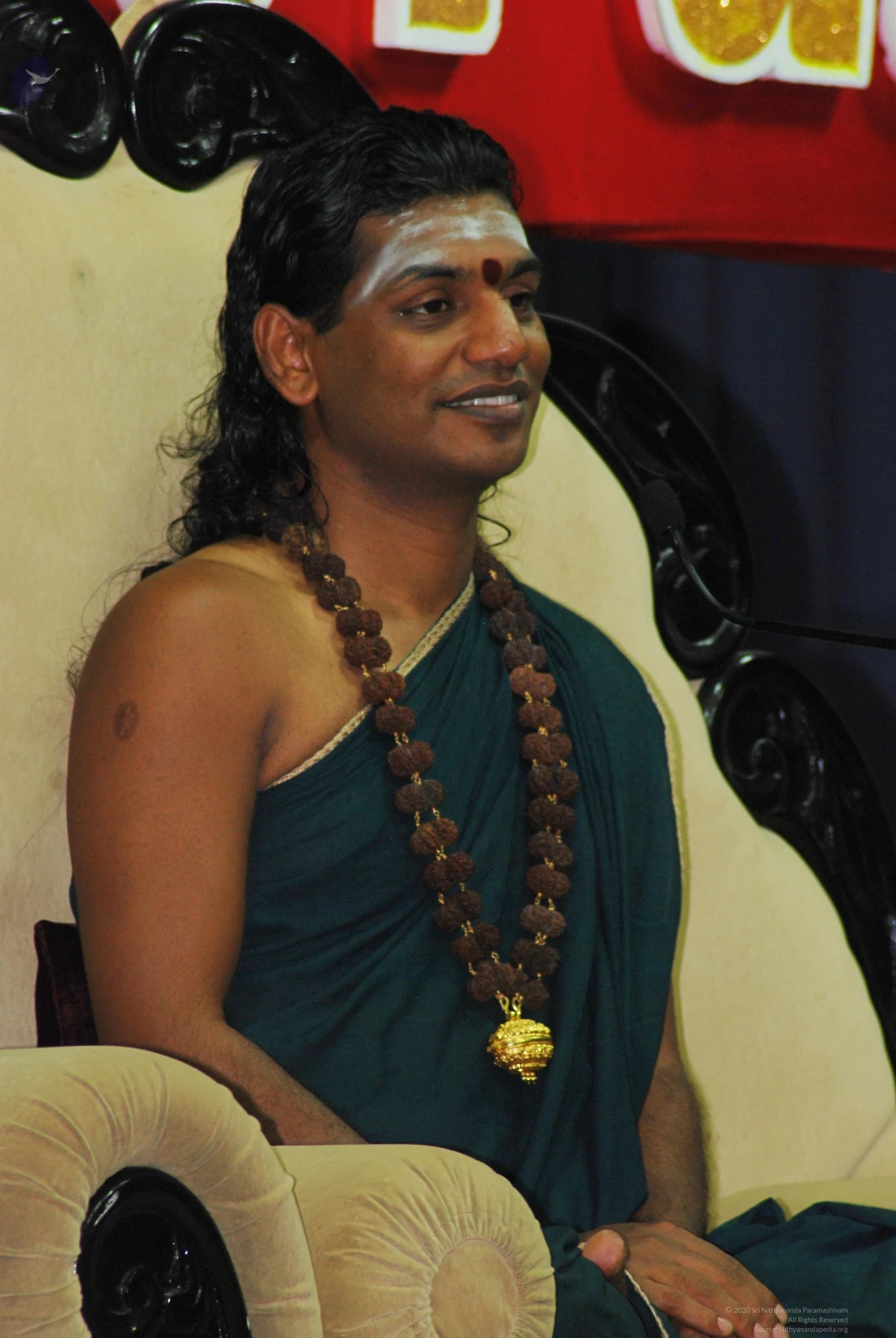
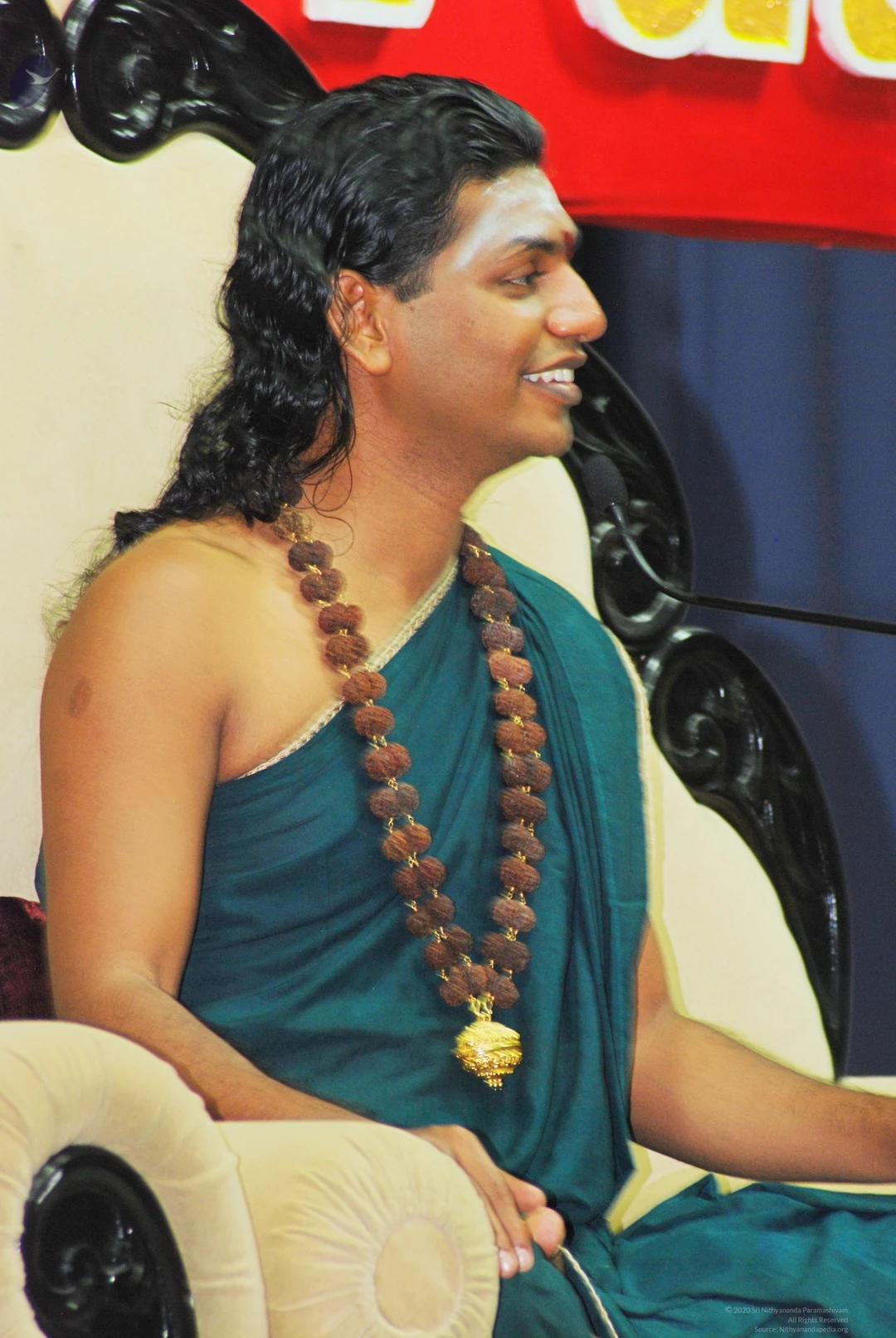
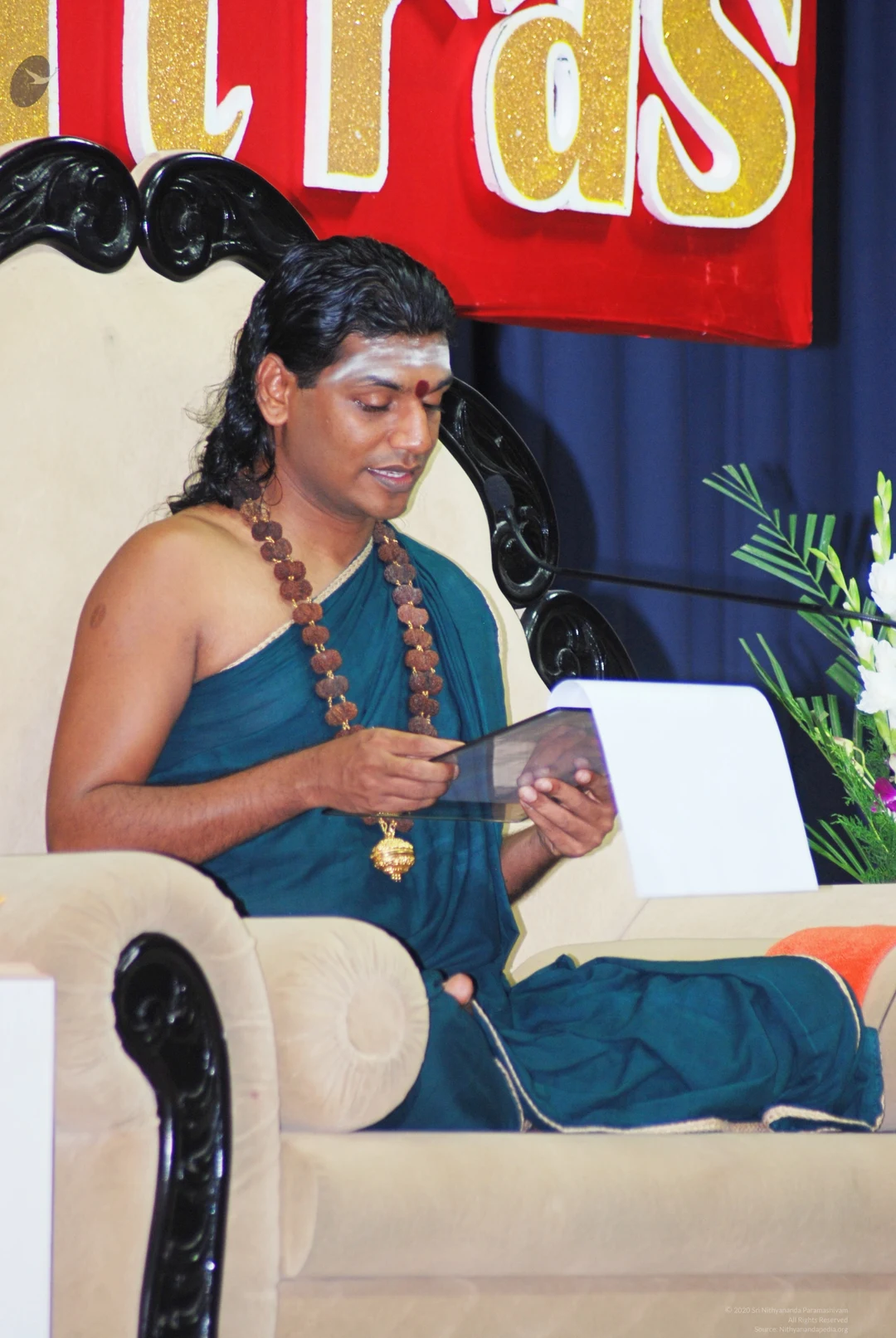
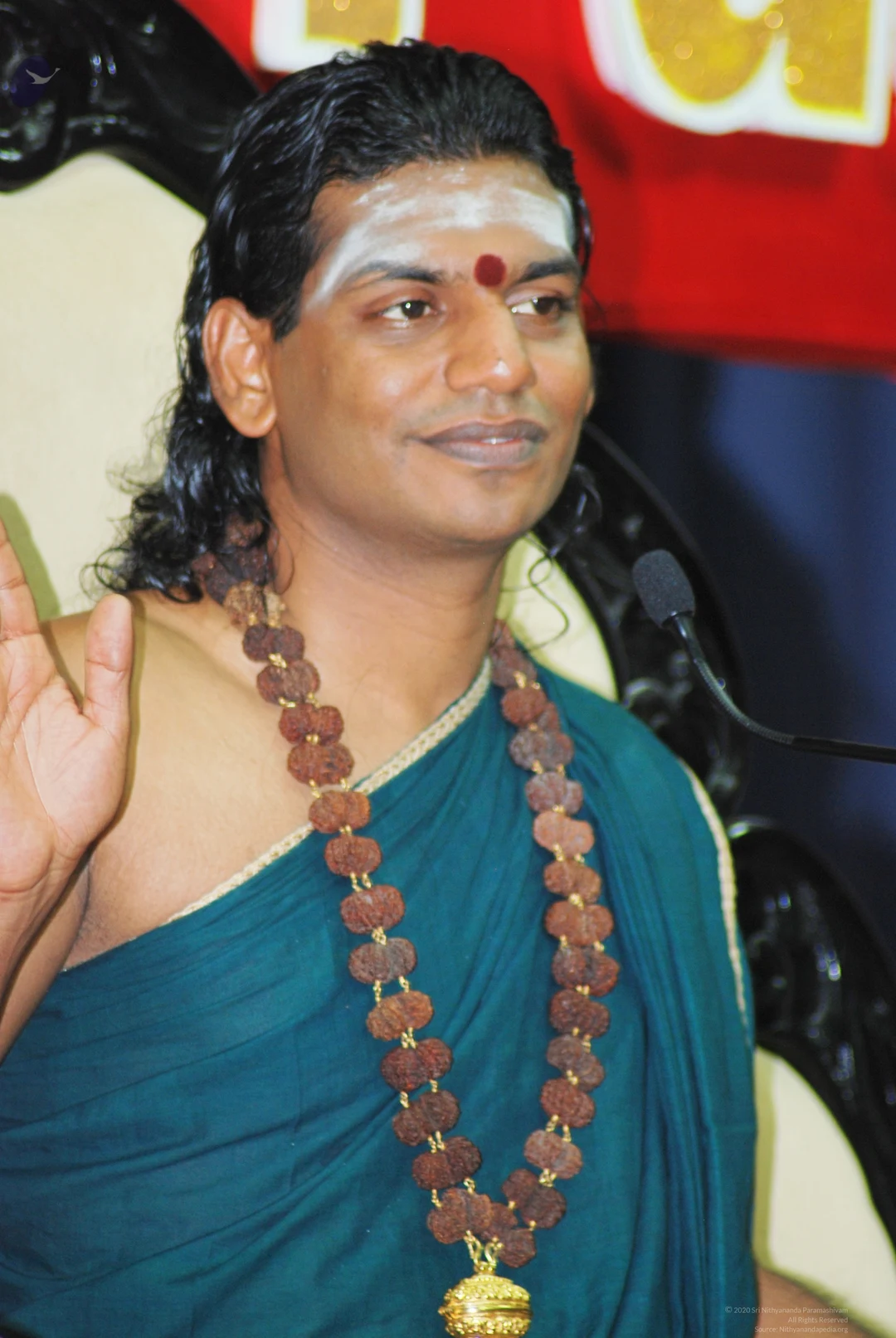
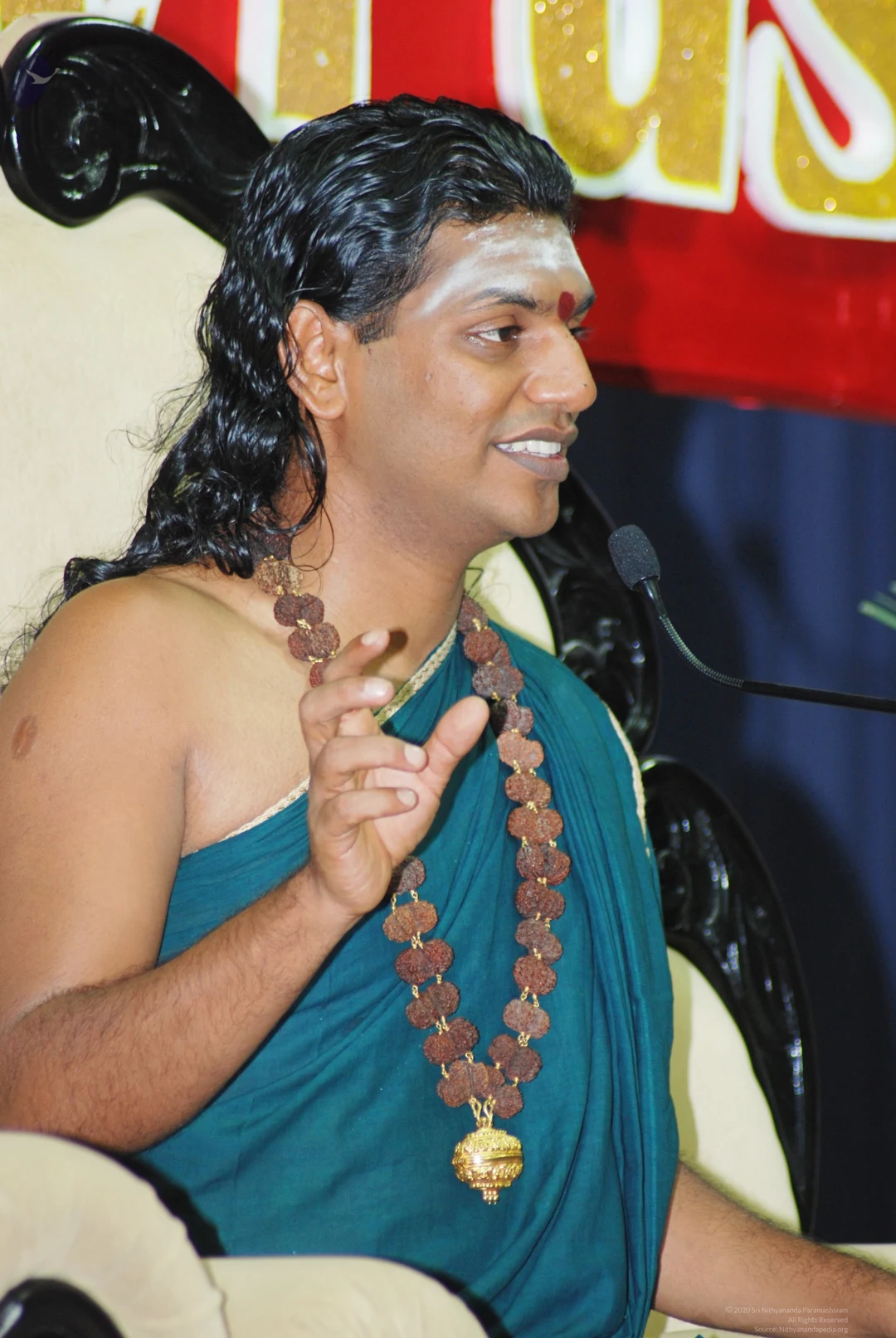
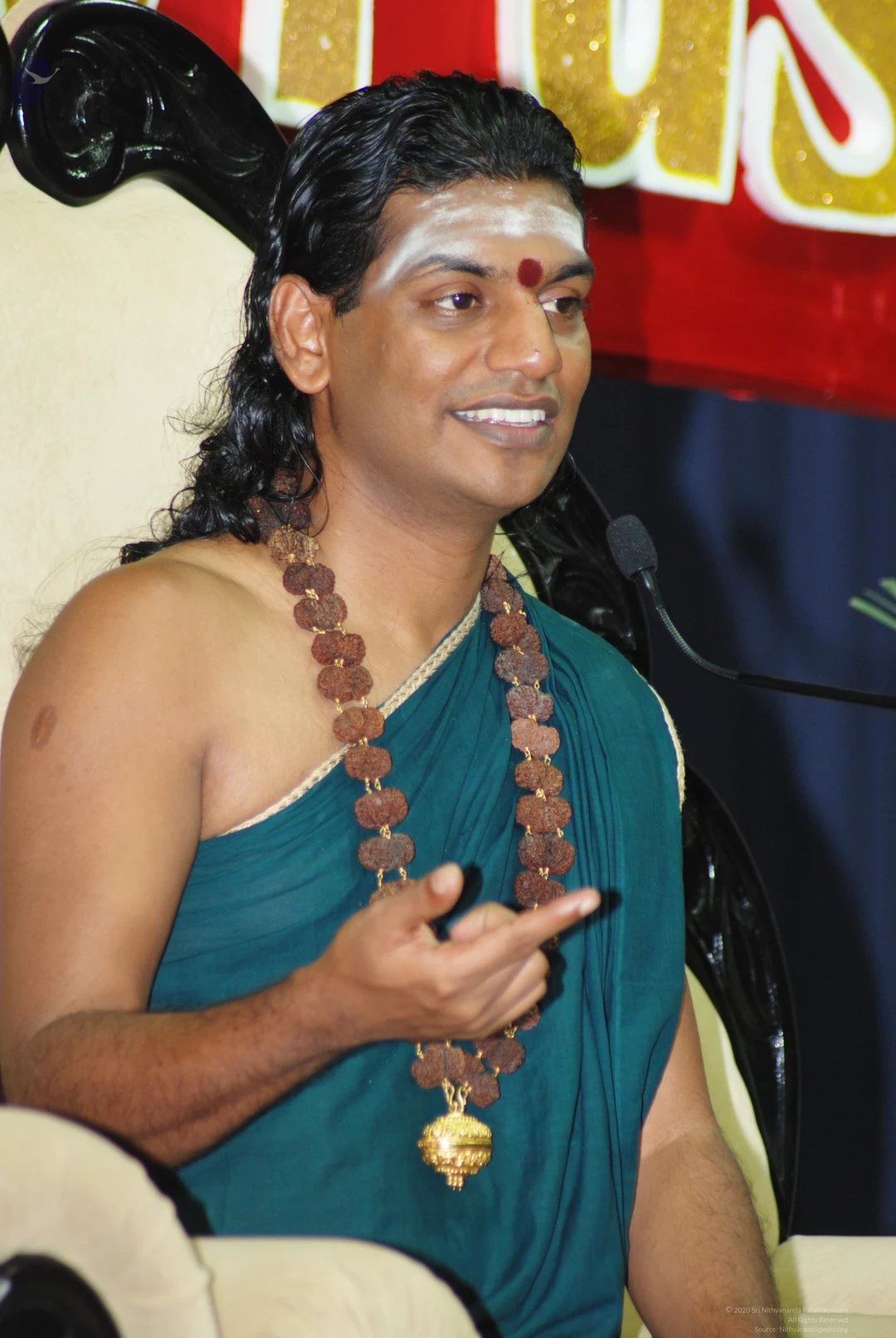
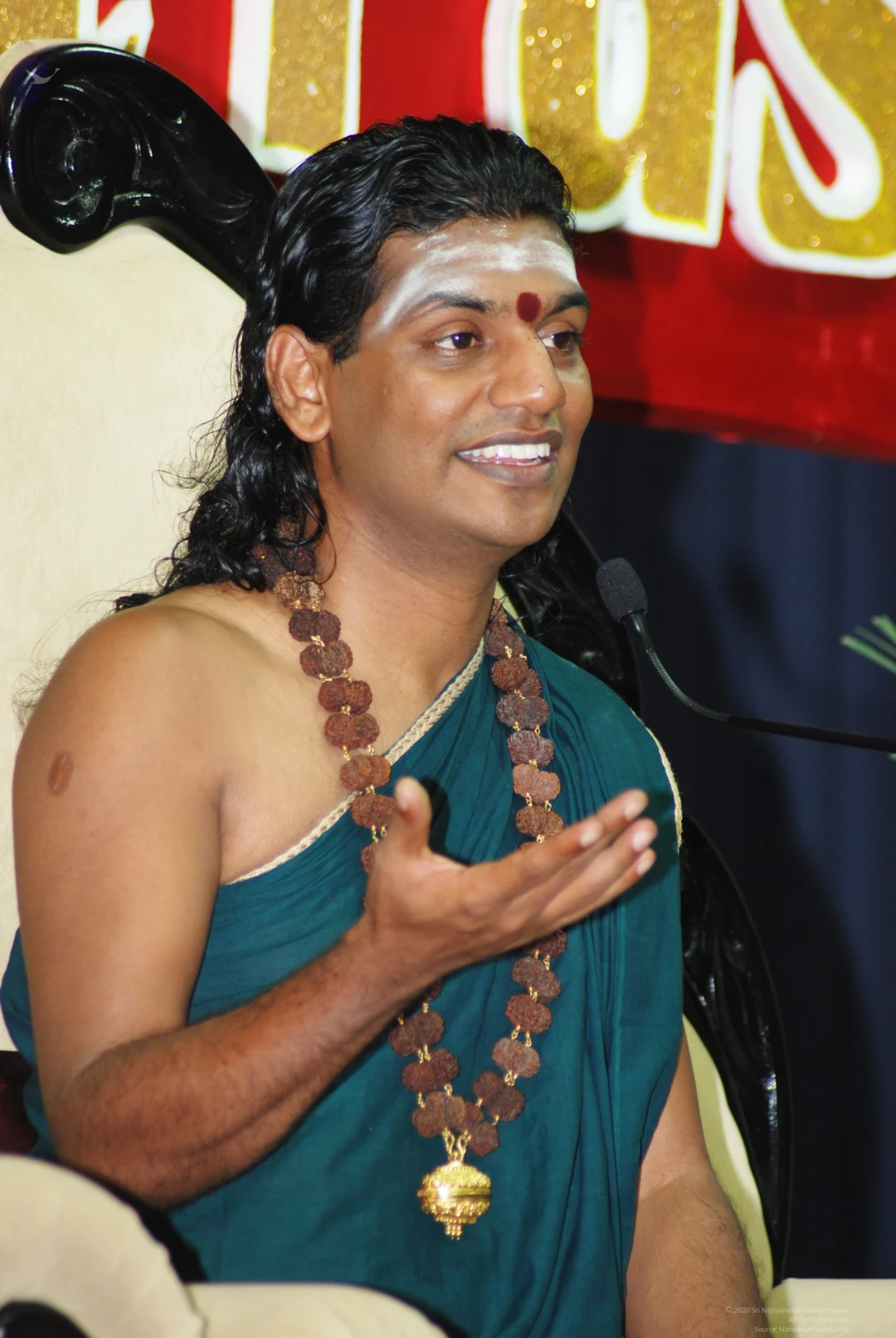
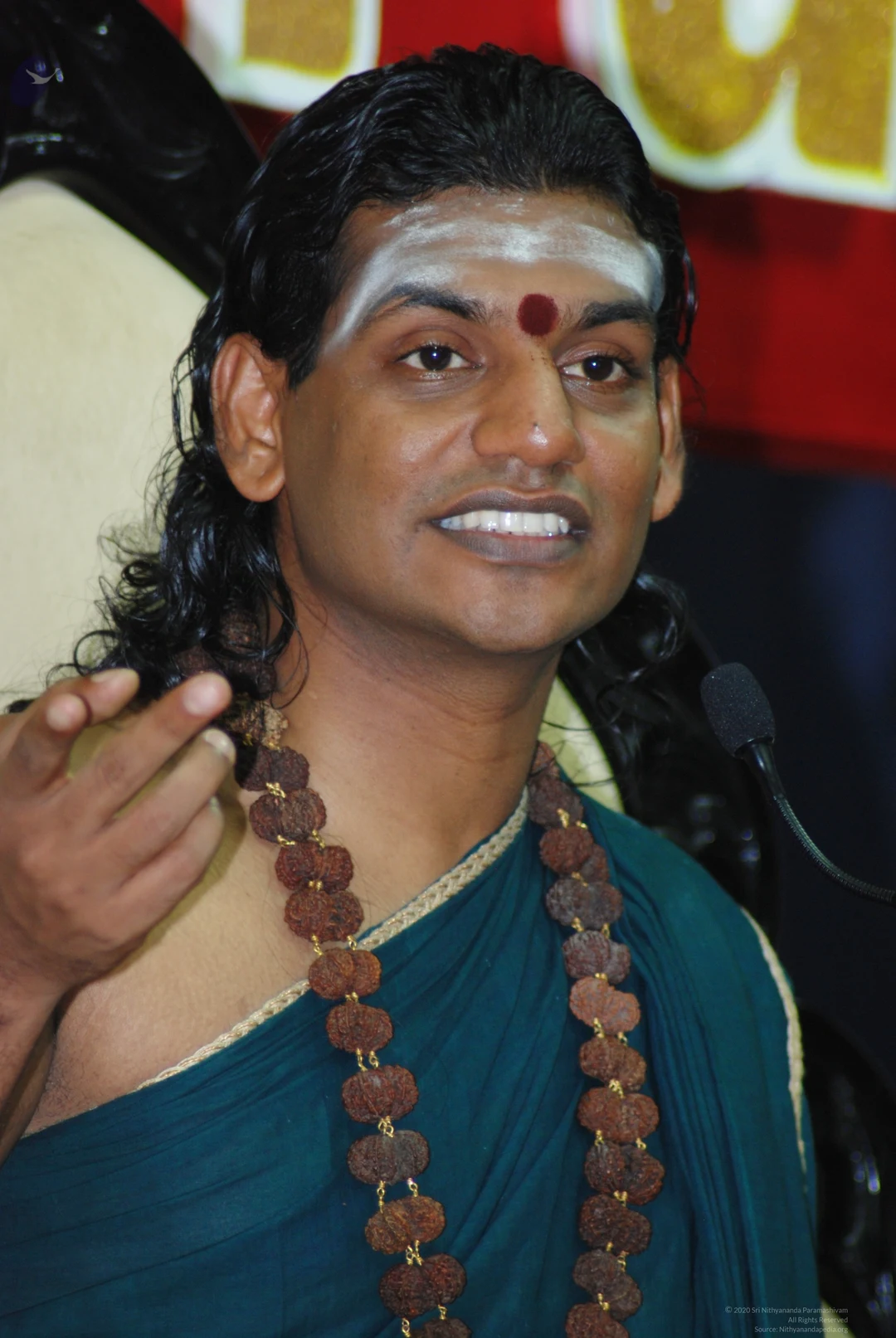
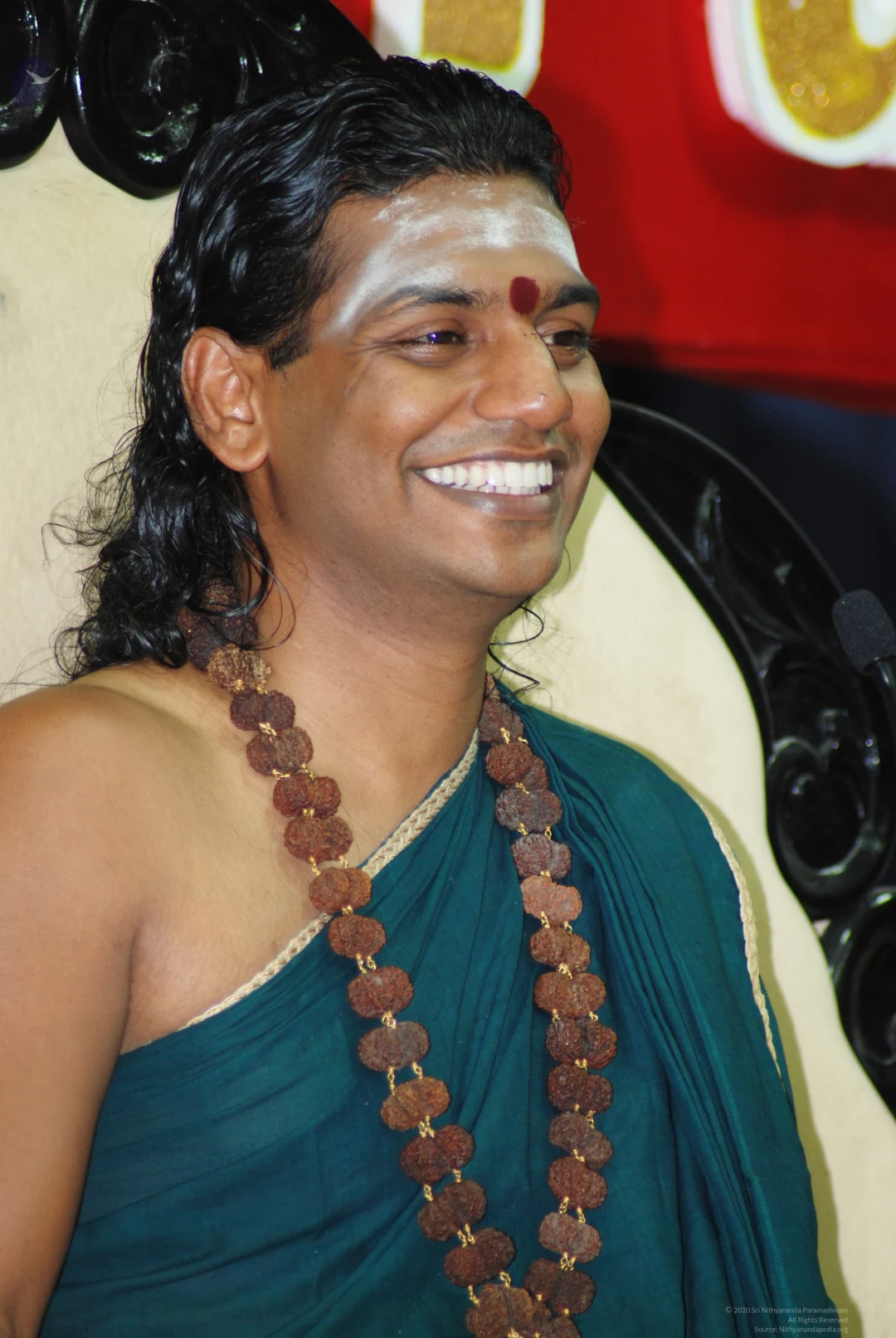
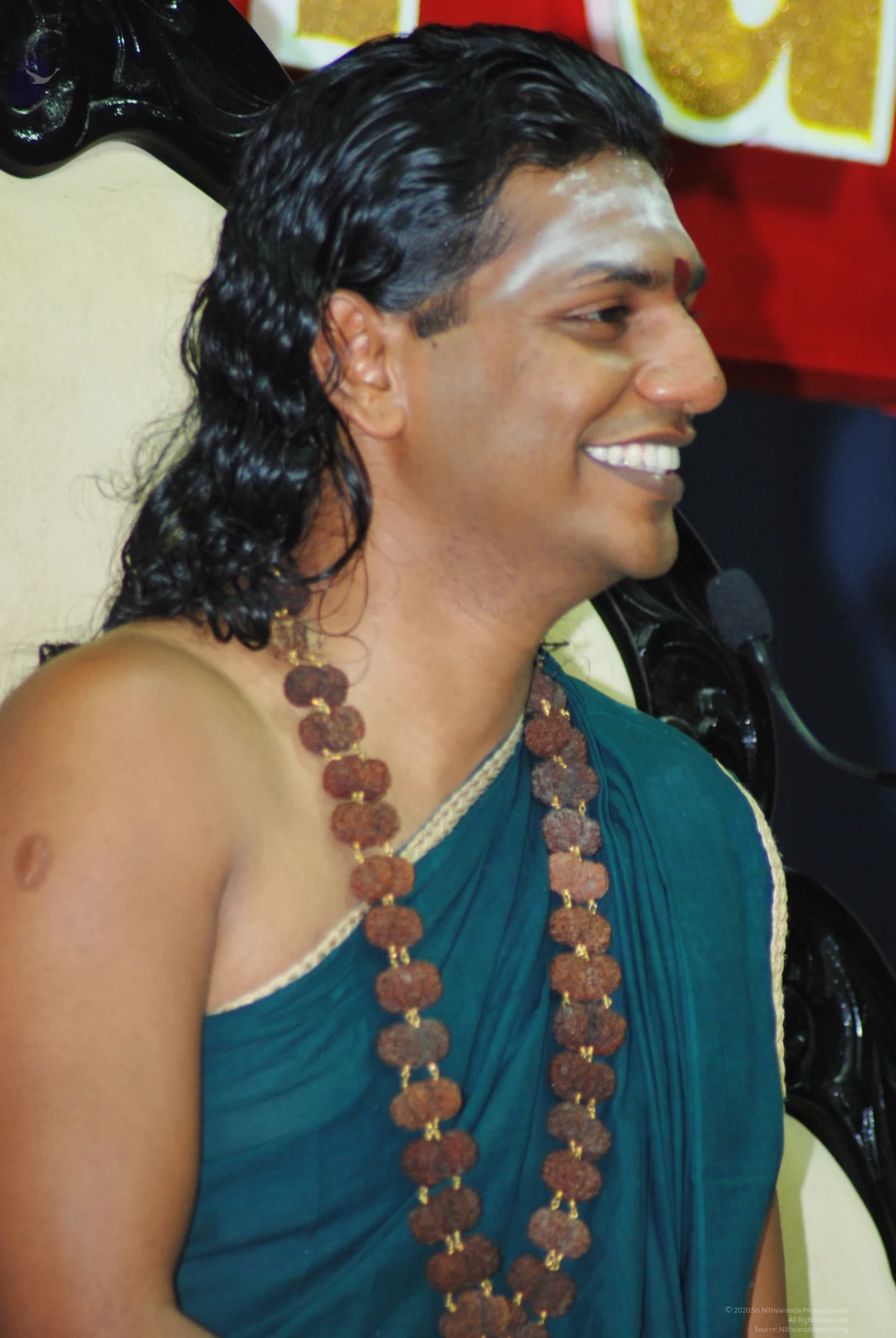
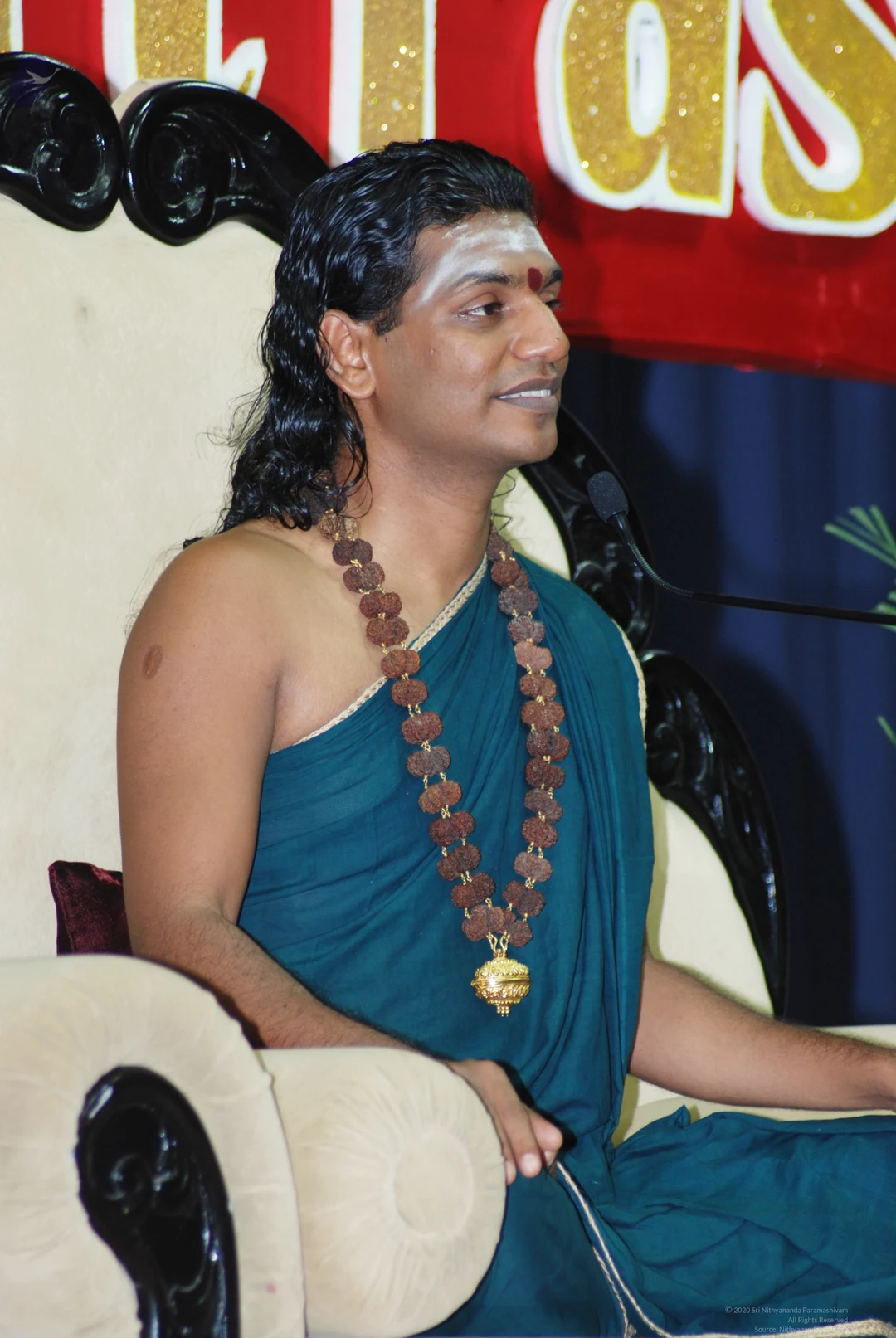
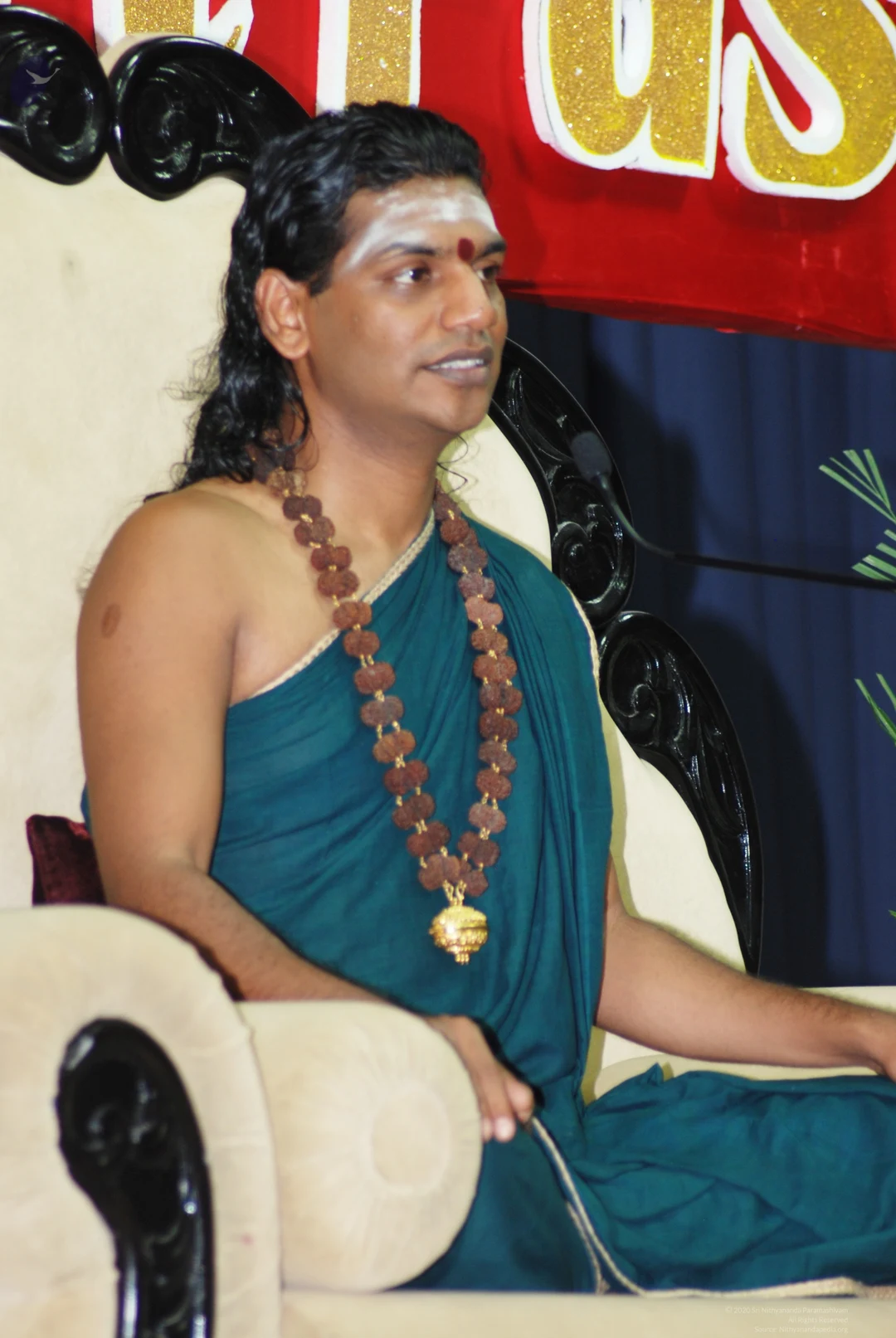
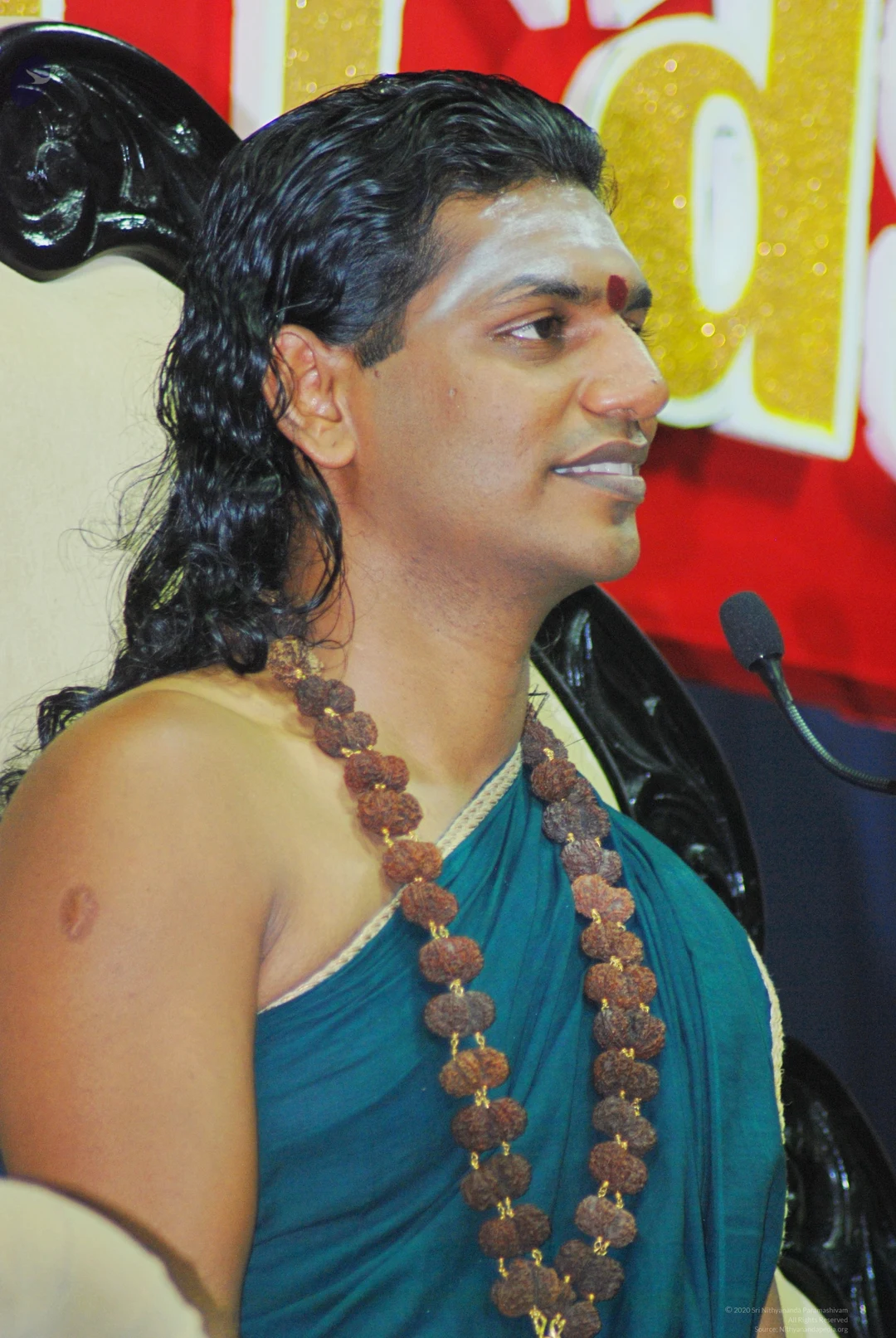
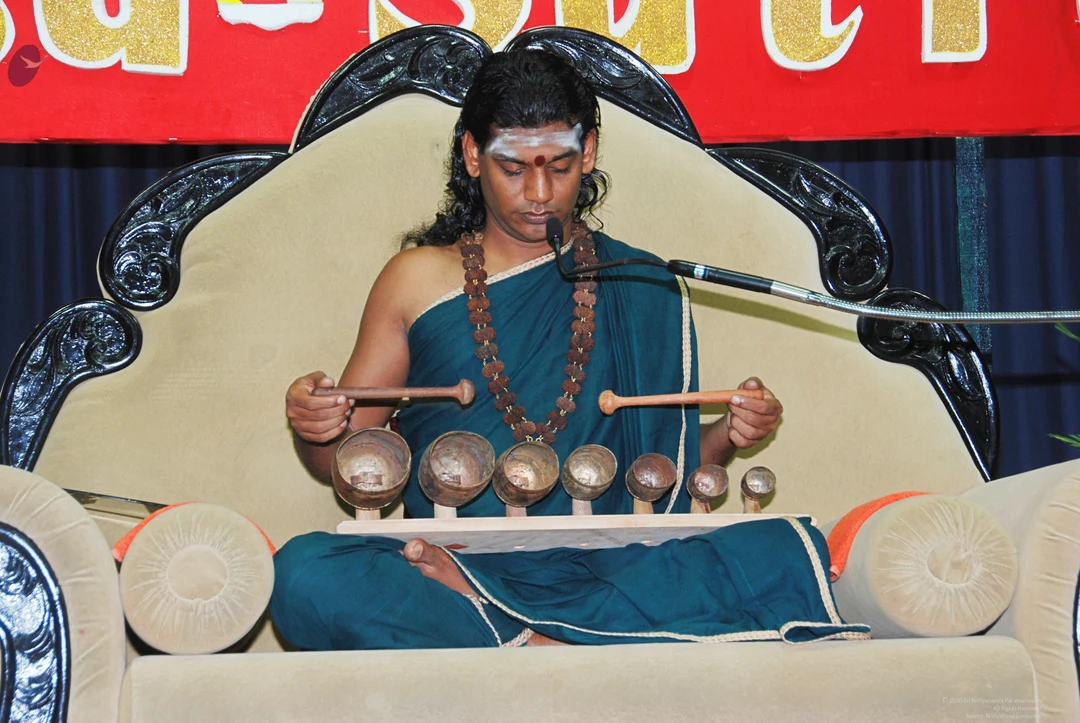
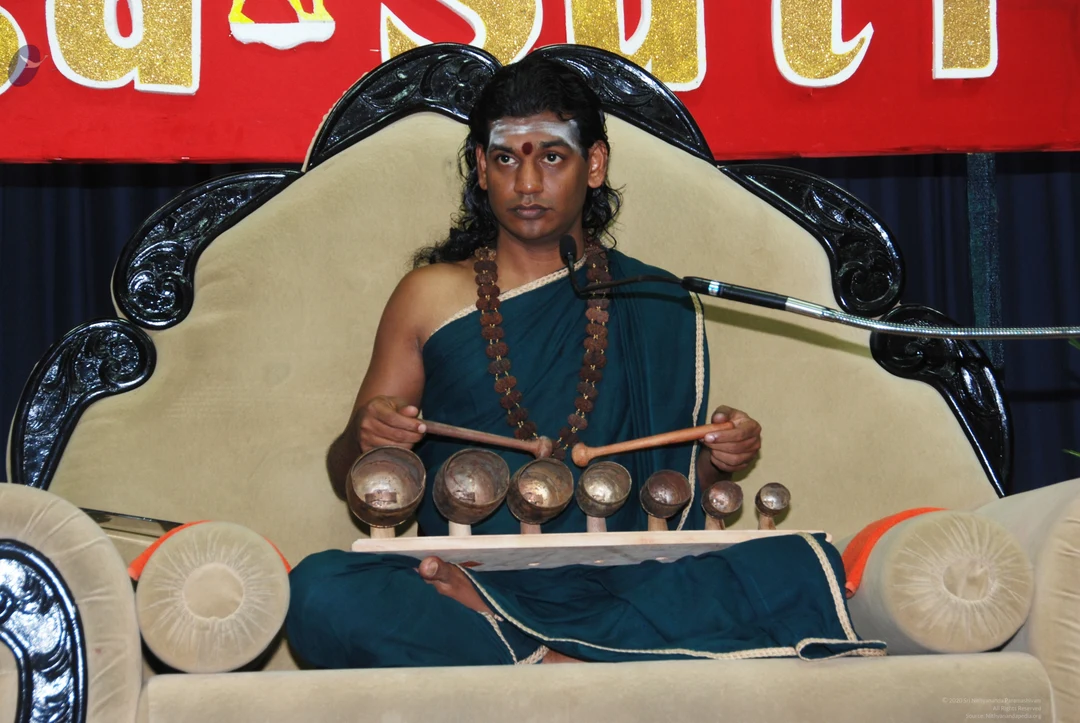
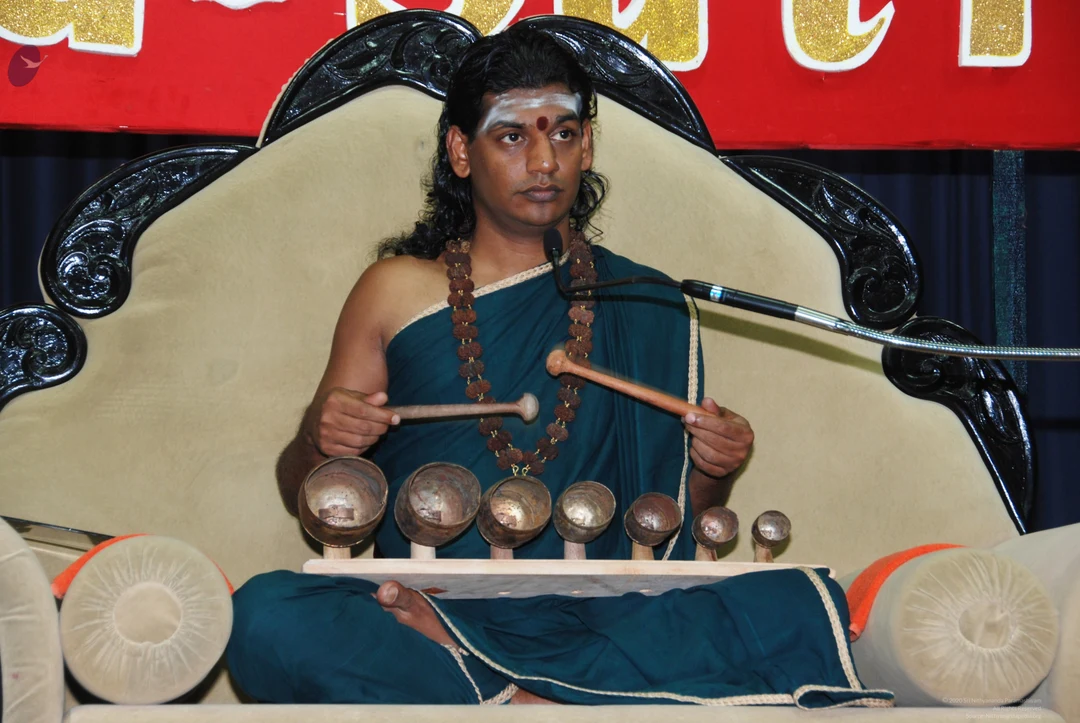
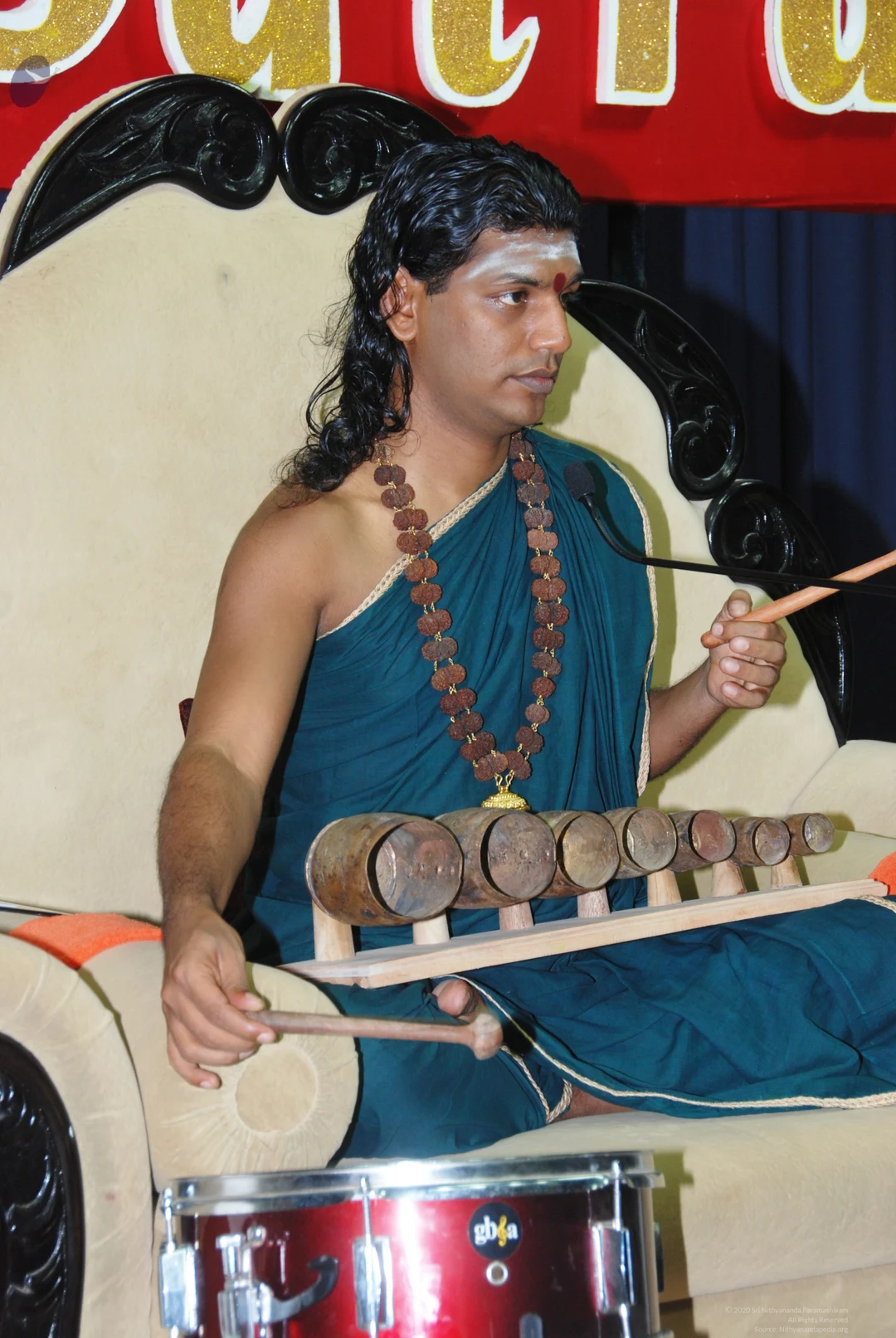
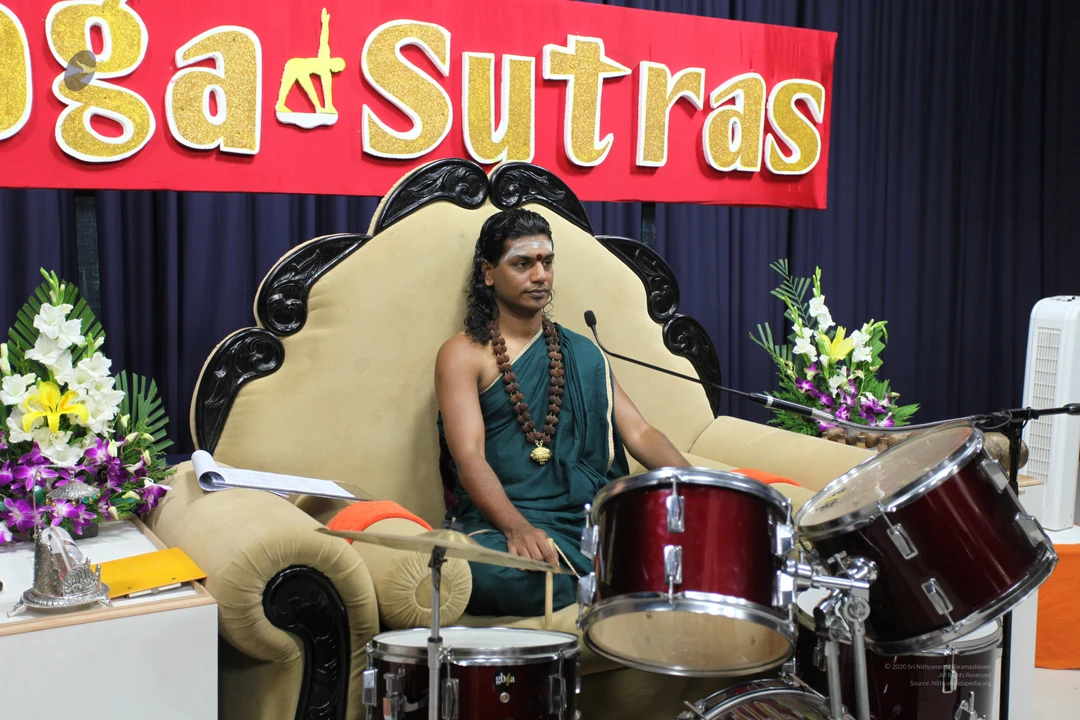
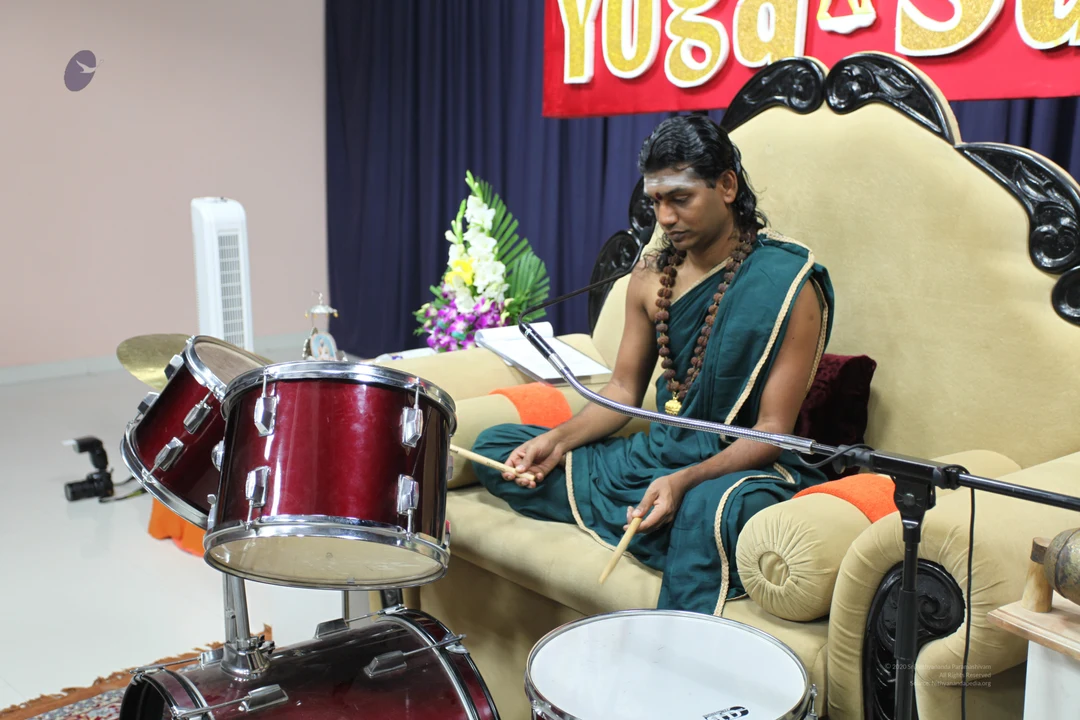
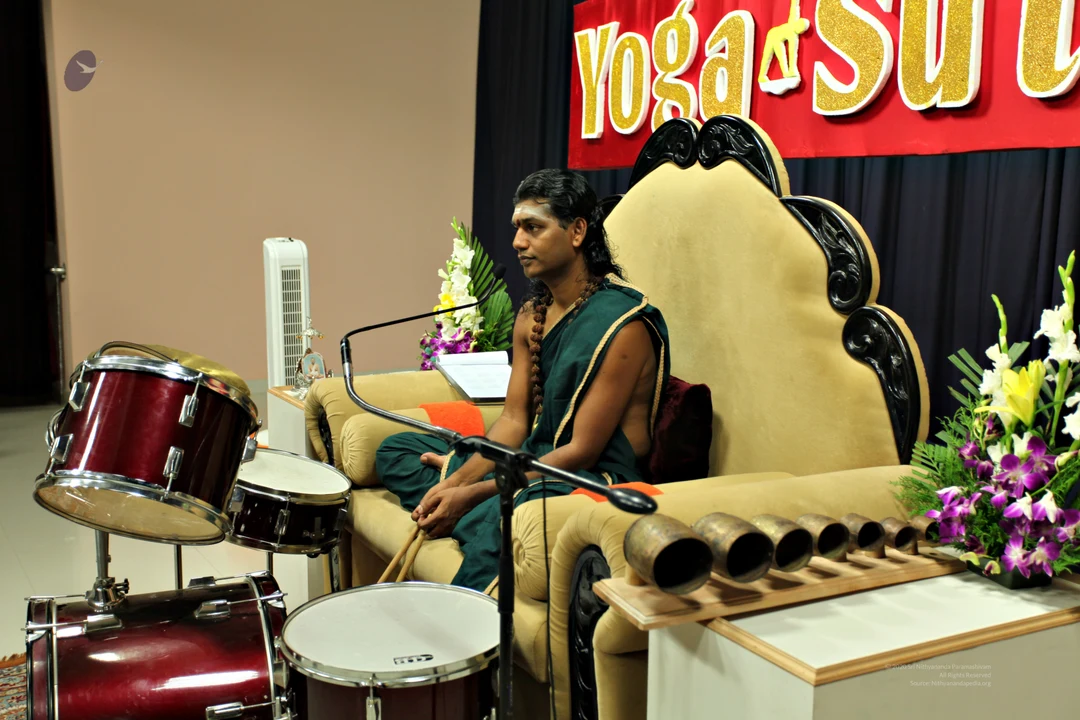
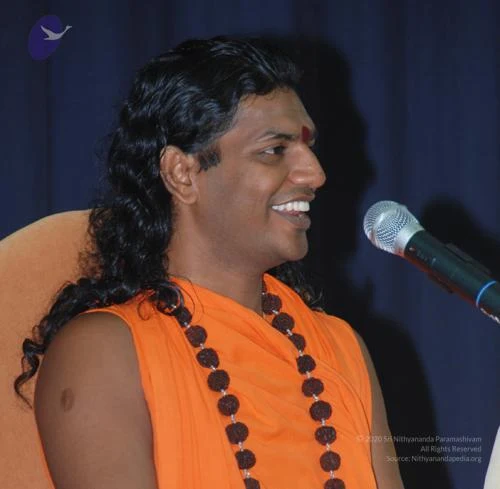
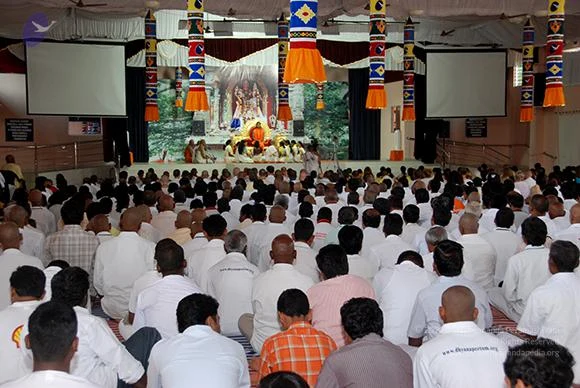
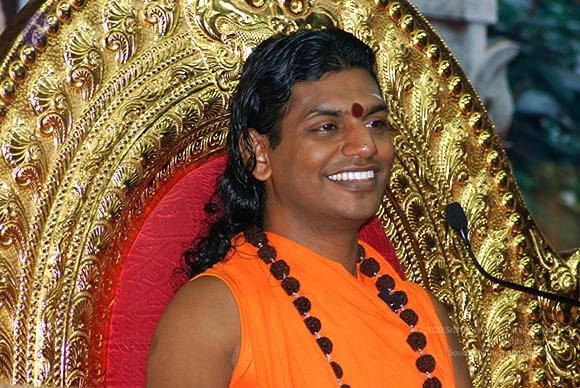
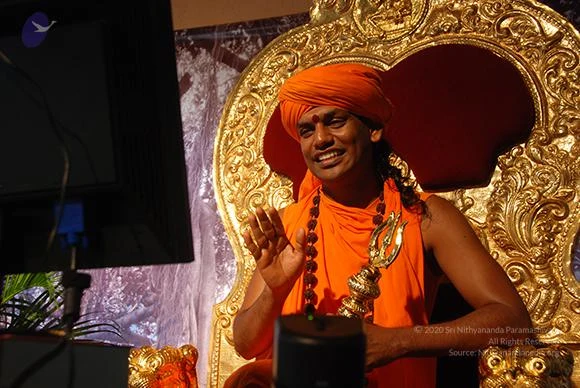
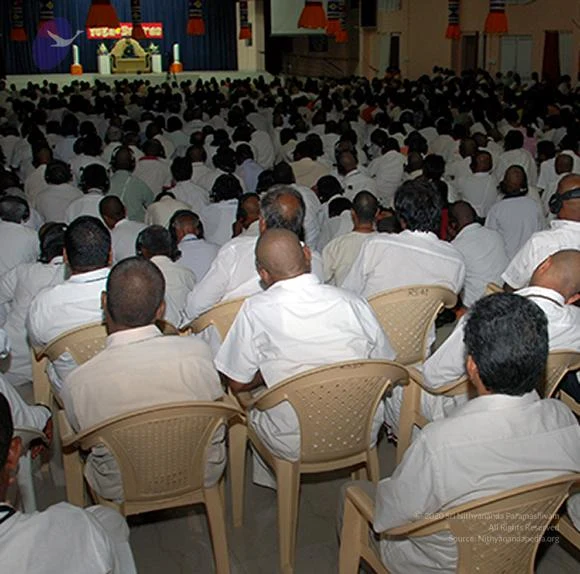
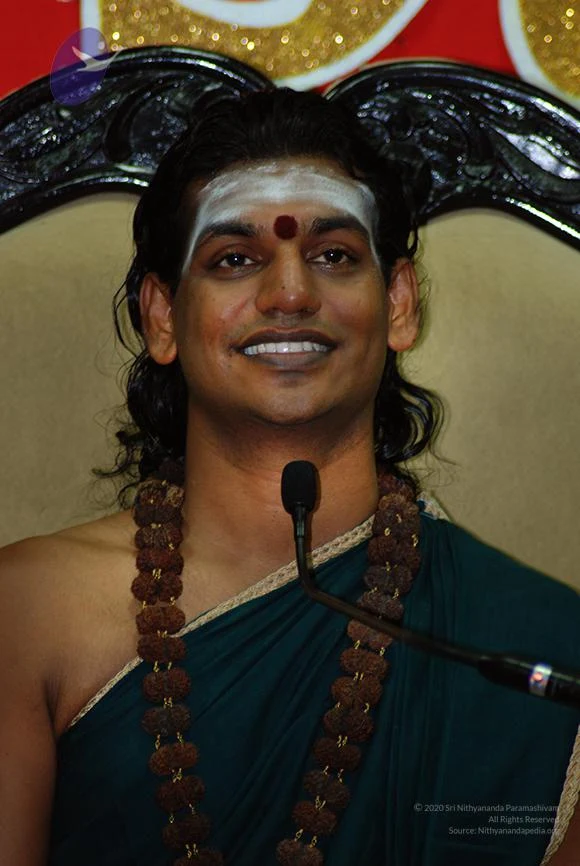
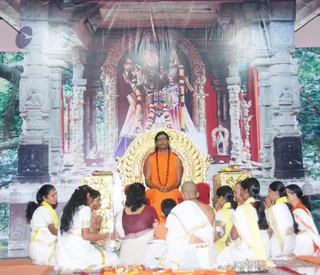
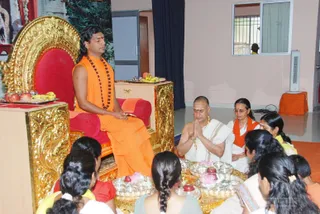
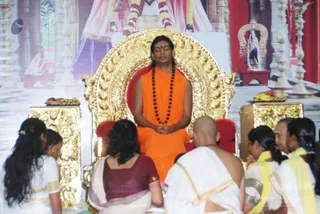
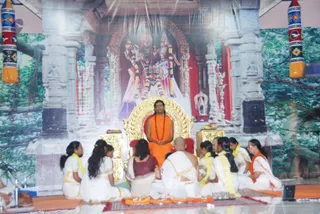
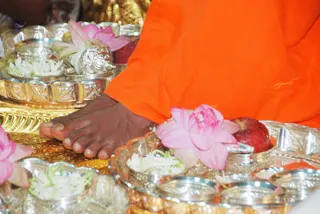
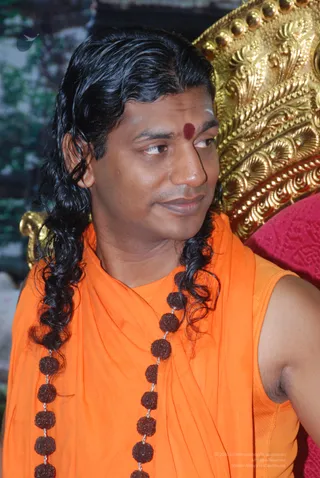
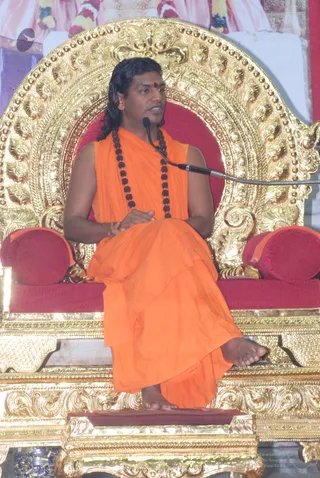
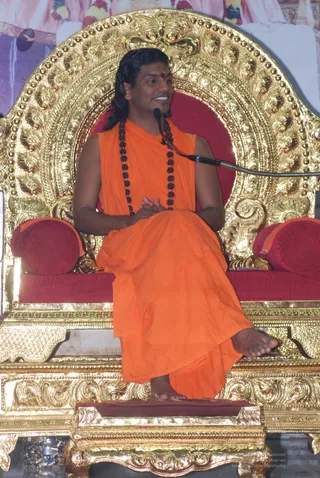
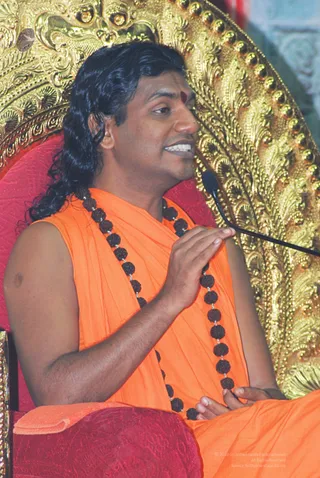
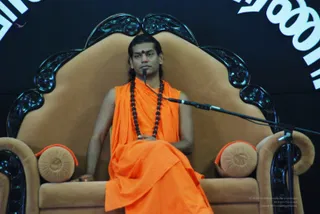
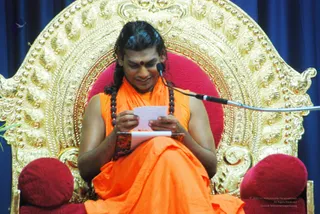
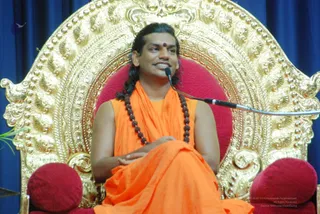
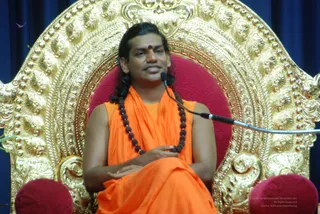
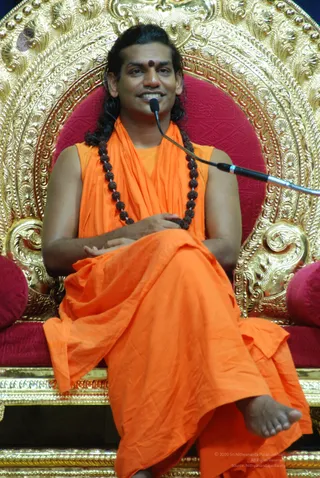
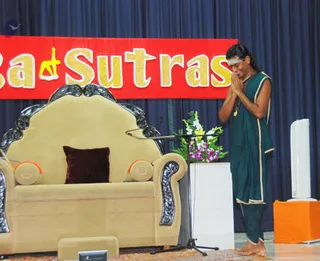
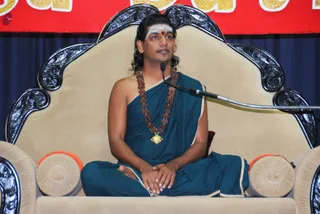
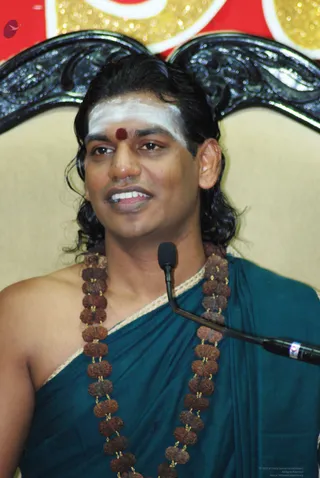
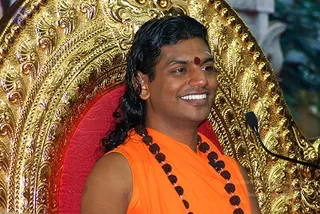
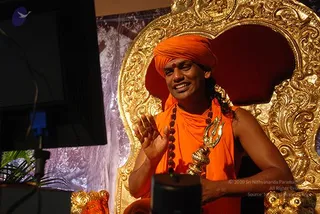
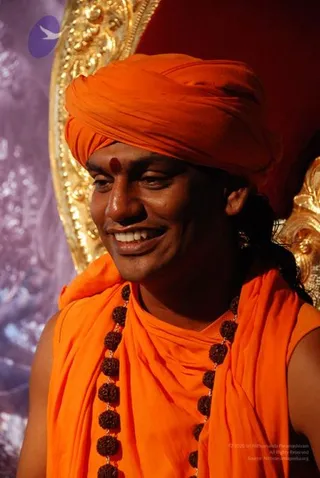
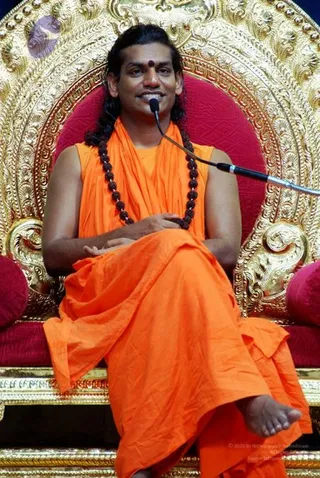
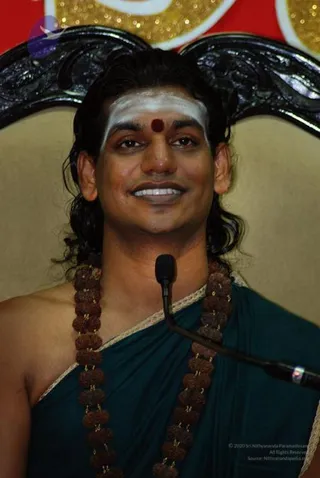
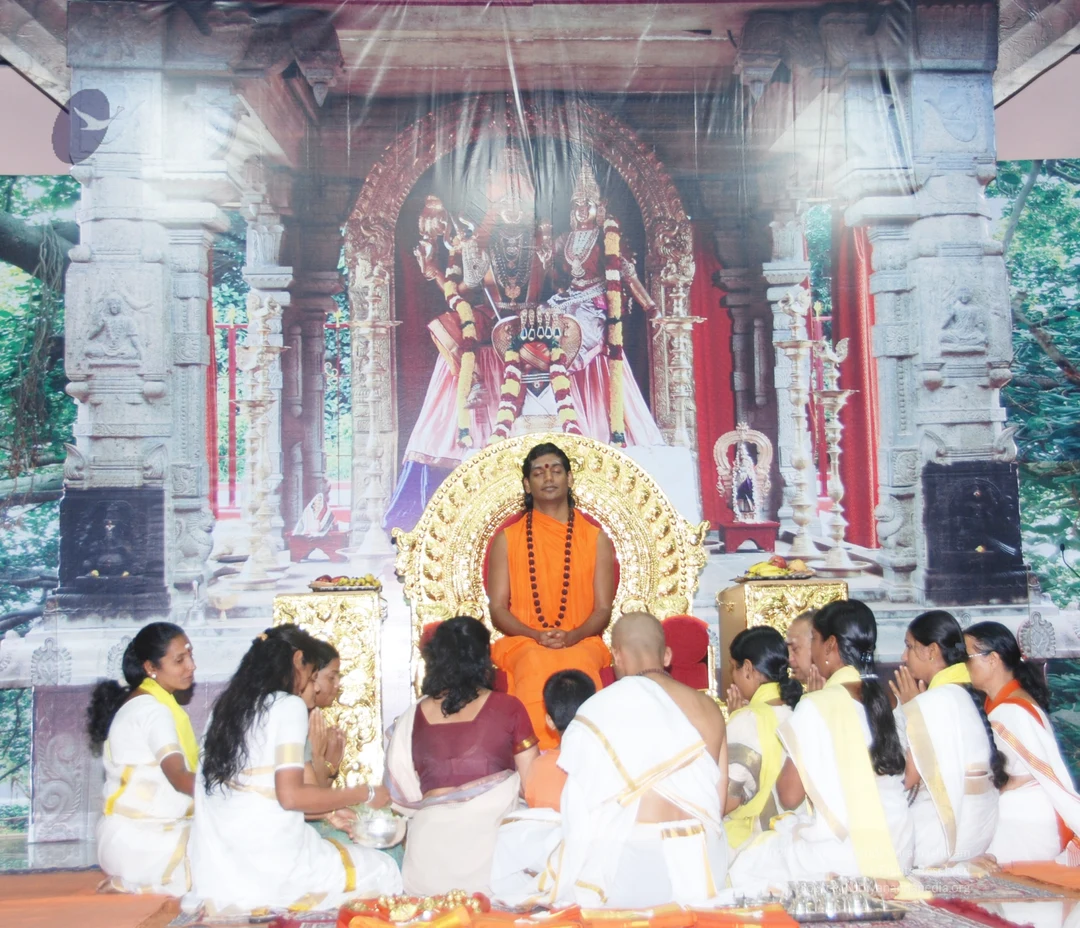
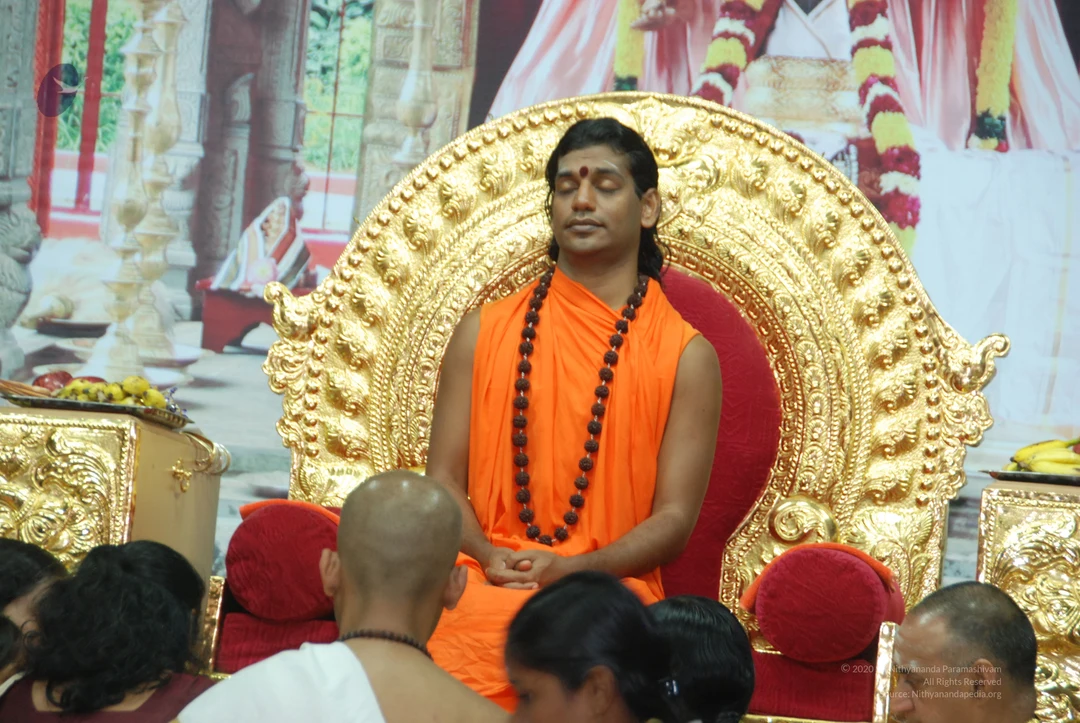
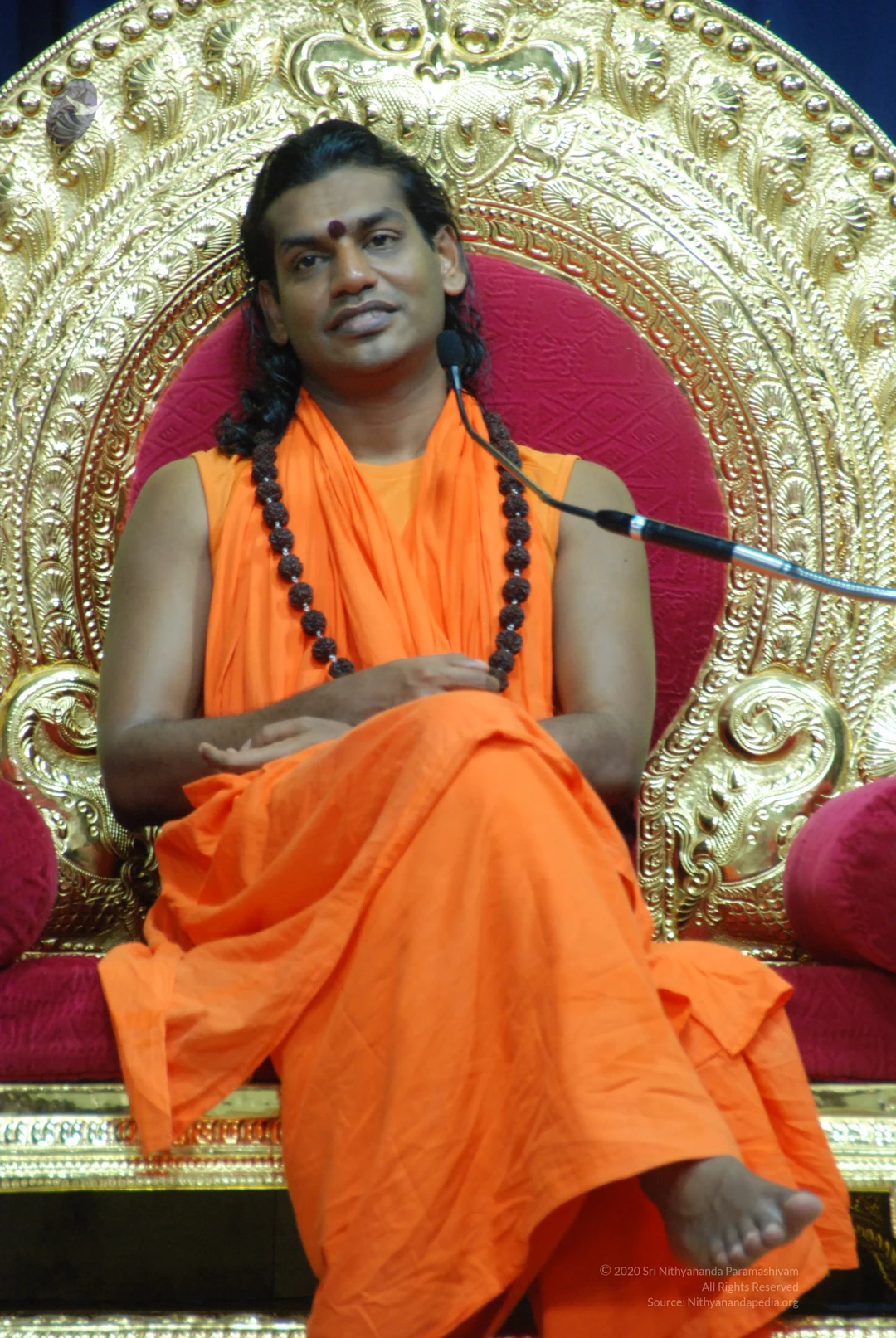
A man with long swept-back dark hair sits in a cream and black carved chair, speaking with his right hand open in front of his chest. He wears a teal draped garment over one shoulder and a long rudraksha mala with a gold bead pendant. A white tripunda marking and a red bindi are on his forehead. A microphone stands at right against a dark blue backdrop, and a red banner with gold lettering is behind him. The figure matches the Swamiji (probable) cues of long swept-back hair, rudraksha mala and ceremonial gold pendant, shown in a discourse setting.A photograph of a satsang on a stage before a large backdrop showing a temple facade with a deity murti pair in pink and white garments garlanded with flowers. A figure in saffron-orange robes with a rudraksha mala sits in meditation on a gold-carved throne, hands folded, eyes closed. Seated on the floor before him are devotees: women in white saris with yellow borders and yellow shawls, a woman in a maroon sari, and a bald man in white dhoti with gold border. Brass plates and flower offerings lie on the carpet, and decorative banners in red, green and yellow hang at the top corners.A man with long dark hair and a red bindi sits on an ornate golden throne with red cushions, speaking into a microphone on a flexible stand. He wears a sleeveless orange robe draped over his shoulders and a dark rudraksha mala necklace, with hands resting in his lap. The gilded arched backrest is richly carved. Probable Swamiji seated in discourse; the orange robe, rudraksha mala and long hair are the qualifying cues.

September 10 2010

Original wiki page
Contents

Title:

Practising Right Listening

Description:

As a sequel to the art of right listening, Paramahamsa Nithyananda describes practicing right listening.

Video and Audio:

Practising Right Listening by Nithyananda

VideoAudio

Transcript:

sadāshiva samārambhām shankarācāryā madhyamām | asmat ācārya paryantām vande guru paramparām || (0:43)

I welcome you all with My love and respects. Today’s subject is practicing right listening. Understand, we really never, never, never, listen at all in our life. See when your spouse speaks or when your boss talks to you or when your friend is talking to you, see exactly what are you doing. You are not listening; you are preparing your answer for them. Even before they start talking, you start preparing your answer. That is why your answer never matches with their question. Because you have not heard the question and prepared the answer; you are ready with your answer. At the most if you are little intelligent, you do little stitching and tailoring for that question.

(2:29)

Understand, courage to respond spontaneously to all the situations and patience to listen, is what I call practicing right listening. For practicing right listening, you had courage, you need courage. You need to have patience; first thing you need to have courage that you can respond spontaneously and you need to have patience, deep patience, passive attitude for right listening. We are habituated constantly to be aggressive, be prepared with all answers.

(3:51)

Almost all human mind is made out of stuff called preparing answers and solution for the problems and questions which does not exist. See, mind, human mind is made of a stuff, material, which is called preparing solution and answers for the problems and questions which does not exist. If you just remove that part from the human mind, you will become enlightened now. Nothing else is required. Remove the part of your mind which goes on creating answers and solutions for the problem which does not exist, you will not have mind. You will have pure intelligence.

(4:56)

When I say practicing right listening, I mean find out solution only for the problems you have; find out answers only for the questions presented in front of you. Don’t go on be brooding over, don’t go on be answer-solution breeding company. We think we should be a all solution alpha omega company. It is not possible. The fools, who try to create all solution alpha omega company, just miss the direct simple problem presented to them. Because they are too busy becoming alpha omega, they miss alphabets.

(6:04)

Art of right listening, science of right listening is, don’t be prepared, just listen, just listen. If your spouse, especially your wife, is asking you about some problem, if she is talking to you about some problem, don’t think she is expecting solution, she just wants your support, your attention. If you think she needs solution and you start giving solution, she will create the problem much bigger. She will stop only when you accept your failure you can’t give solution. All she needs is just little support. Tell her Oh! Nothing, nobody can solve this problem like you. You are the only one who can solve the problem. Nobody can do anything. You are the only one, nobody else. Just share few words giving attention, problem will disappear.

(7:21)

You need to know when people talk what they mean. Because people don’t talk what they mean, they don’t mean what they talk. As long as you think they mean what they talk or they talk what they mean, you are in mess. You have not learnt the art of listening. Understand, usually when two minds talk, when there is two end, neither the other person means what they talk nor you listen what they talk - two confusions; so chaos. In the ordinary meetings, like two minds, two confusion, complete chaos. So at least let your side the confusion be absent. Let the confusion disappear. Then you will see from your side all the response will be solution. Whatever chaos getting created from the other side, just see it and solve it.

(8:47)

Understand, communication can happen only if one, at least one side is ready to listen. If both sides are just preparing, preparing, preparing, arguments and answers, sometime it is really hell. The other will not understand at all from where you are coming and the same way you will not understand at all from where the other is coming; then communication gap. That’s a worst thing, that’s a worst thing can happen. I tell you all problems can be solved if the communication gap is bridged; whether in your office or in your life or in your home, anywhere, if the communication is retained, problem can be solved; if the communication is broken, problem can only become much worser and worser, deeper and deeper. It can never be solved at all.

(10:14)

So please be very clear, if you are talking to a person with mind, you just drop your mind, listen with a deep passiveness, without preparing answer before the person ends. Even in the modern day, marketing is no more aggressive; it’s more listening. All successful marketing philosophies and ideas are based on listening, not on shouting or aggressive. So understand, whether you want to market yourself or your different qualities or your different products; see marketing yourself is family relationship; marketing your qualities is business relationship, like CEO, you market yourself to your boss; marketing product is the factory, the consumer and supplier relationship.

(11:33)

In any relationship, if you are handling a mind, be passive, listen. The problem may not be exactly what they talk. Especially when your boss tells you about some problem, he does not need your attention or solution, he just need ego satisfaction. Tell him, you are the greatest, you can solve, nothing like it. He needs ego boost, boosting. Just boost his ego, add to his ego, problem will be immediately solved; even if it is not solved your salary will be hiked, you will have bonus.

(12:22)

Understand, when your wife brings problem, she doesn’t need ego boosting, she needs attention; just sympathize her, cry with her, “Nothing can be done, maybe if something can be done, only by you. Only a person like you can put up with this kind of problems” Problem will be solved. Because the problem is not coming from fear or greed, it is coming from Anahata - attention need. When your boss brings a problem to you, it is not coming from fear or greed or anahata - attention need; it is coming from Ajna - ego satisfaction, head. First have patience to listen. You will know from which centre the problem is coming. Then you can address it; you can solve it. Even if you don’t solve, keep quiet; knowing from where the problem is coming, it will be dissolved. So know first, from where the problem is raising from where the solution can go.

(13:39)

Yesterday I gave you the method, technique, to listen to the no mind intelligence, listen to the master. Today I am giving you the process, to listen to the ordinary minds. When you learn to listen to ordinary minds, communication will happen. When you learn to listen to the no mind intelligence, communion will happen. Communication will fulfill all your outer world needs; Communion will fulfill all your inner world needs.

(14:15)

So art of listening, art of right listening and practicing right listening, this two is equalent to Kamadhenu and Kalpavruksha. Kamadhenu is the thing which gives all the outer world needs. Kalpavruksha is thing which gives all the inner world things. So understand, art of right listening and practicing right listening, this two can lead you to the outer world and inner world fulfillments.

Let you all experience and radiate enlightenment. Let you all experience and radiate the Nithyananda. Let you all achieve and radiate the eternal bliss, Nithyananda. Thank you.

(15:19)

Title

Secrets of Pain and Pleasure (PYS63): Nithyananda on Patanjali Yoga Sutra

Description

Secrets of Pain and Pleasure (PYS63): From the discourses on Patanjali Yoga Sutras, Paramahamsa Nithyananda describes what is pain and what is pleasure.

Video and Audio

VideoAudio

Title

2012 Nithyananda habla sobre el 2012 en español

Description

2012 Nithyananda habla sobre el 2012 en español

Video and Audio

VideoAudio

Photos

Panchatapas

Paadapooja
Morning-Message

Nsp-Session-With-Swamiji

Lep-Noon-Session-With-Swamiji

Online-Kalpataru-Darshan

Yogasutras-And-Lep-Session

Photos Of The Day:

PANCHA-TAPAS

SARVA-DARSHAN

GURU-POOJA-BY-BRAHMACHARIS

e-KALPATARU

HDH-MEETS-WITH-RAM-SENA-CHIEF

FREE-MEDICAL-CAMP-HEALTH-SERVIES-BY-NITHYANANDA-DHYANAPEETAM

LIFE-BLISS-TECHNOLOGY

NITHYANANDA-GALLERIA

KANNADA-ANANDA-SPURANA-PROGRAM-BY-ACHARYA

TAMIL-ANANDA-SPURANA-PROGRAM

GANAPATI-HOMA

Photos Of The Day:

PADA-POOJA

NITHYA-SATSANG

KALPATARU-DARSHAN

NITHYANANDA-SPURANA-PROGRAM

LIVING-ENLIGHTENMENT-PROCESS

YOGA-SUTRAS-BY-HDH

Photos Of The Day:

Photos from this day

View all 209 photos

Panchatapas

9 photosSource gallery
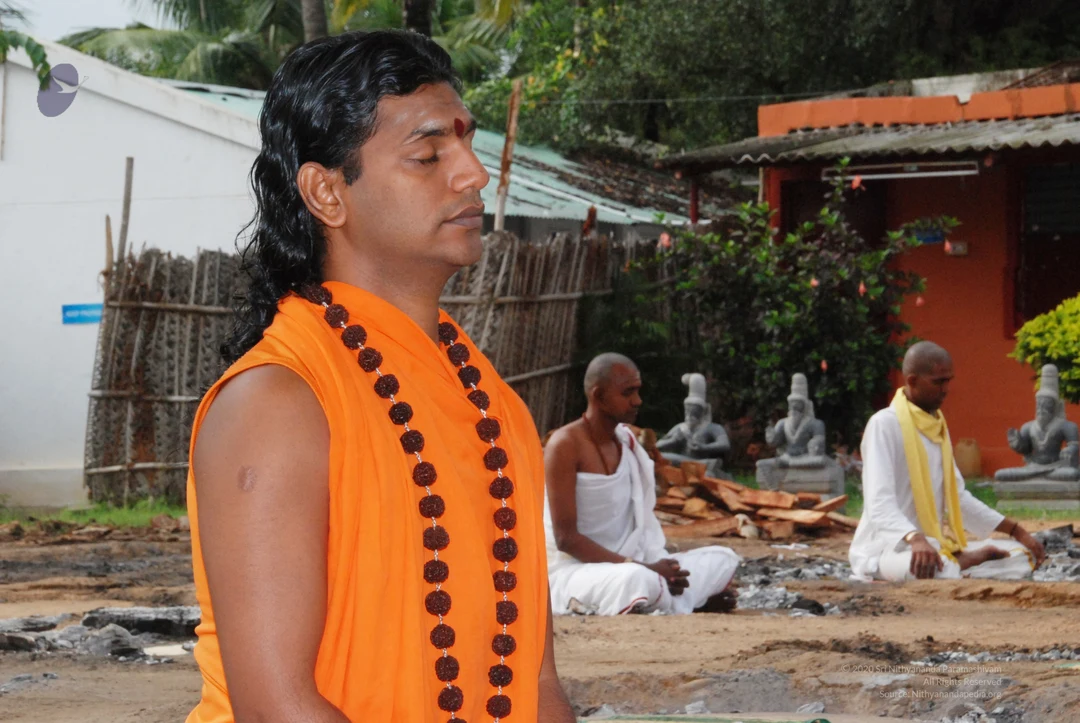
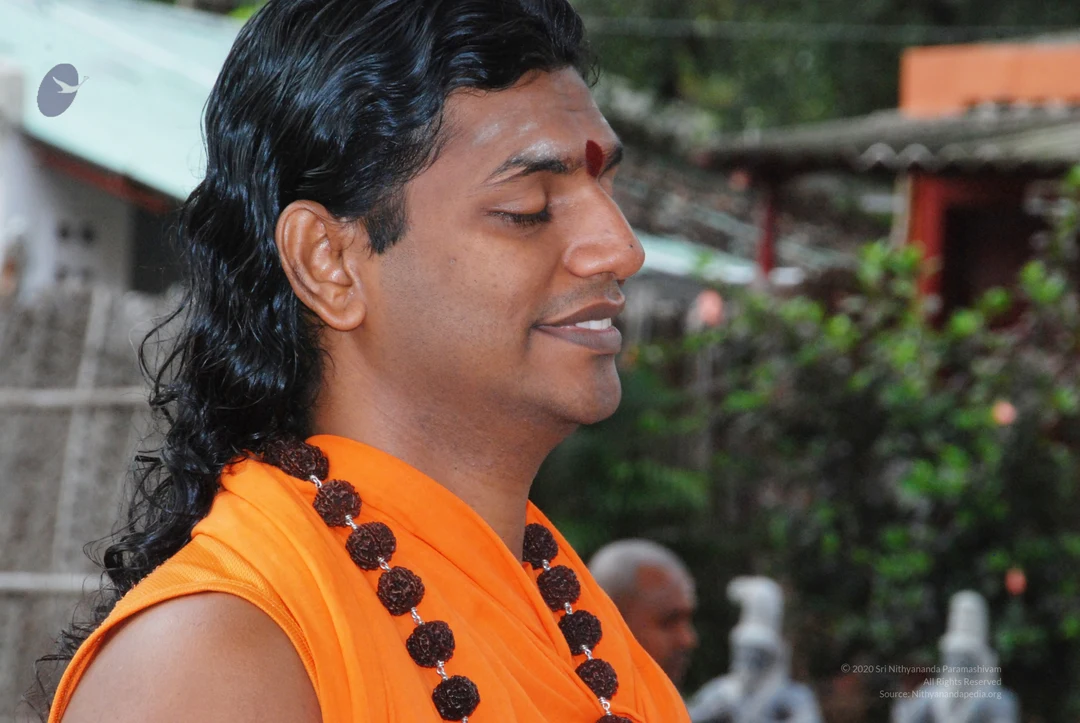
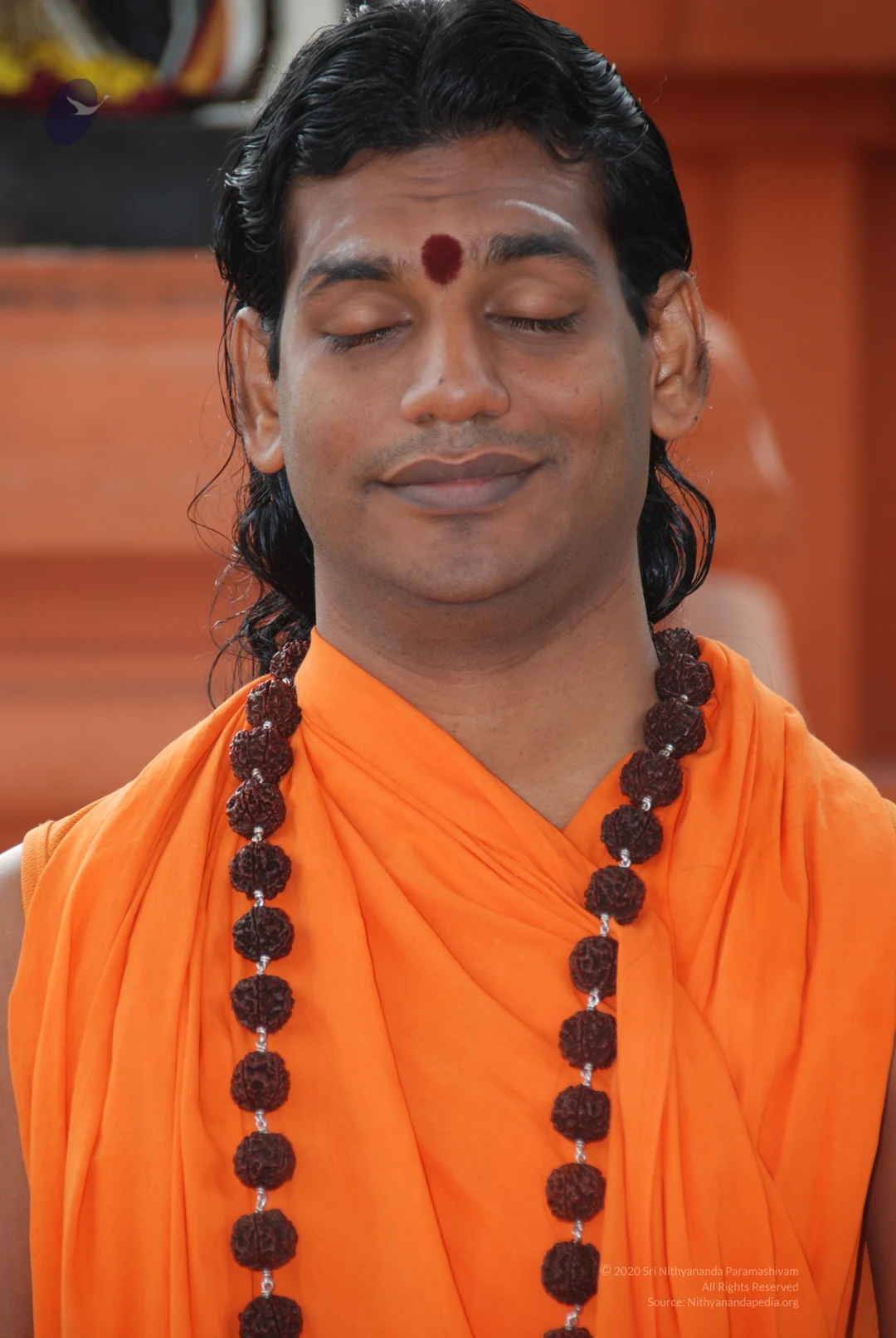
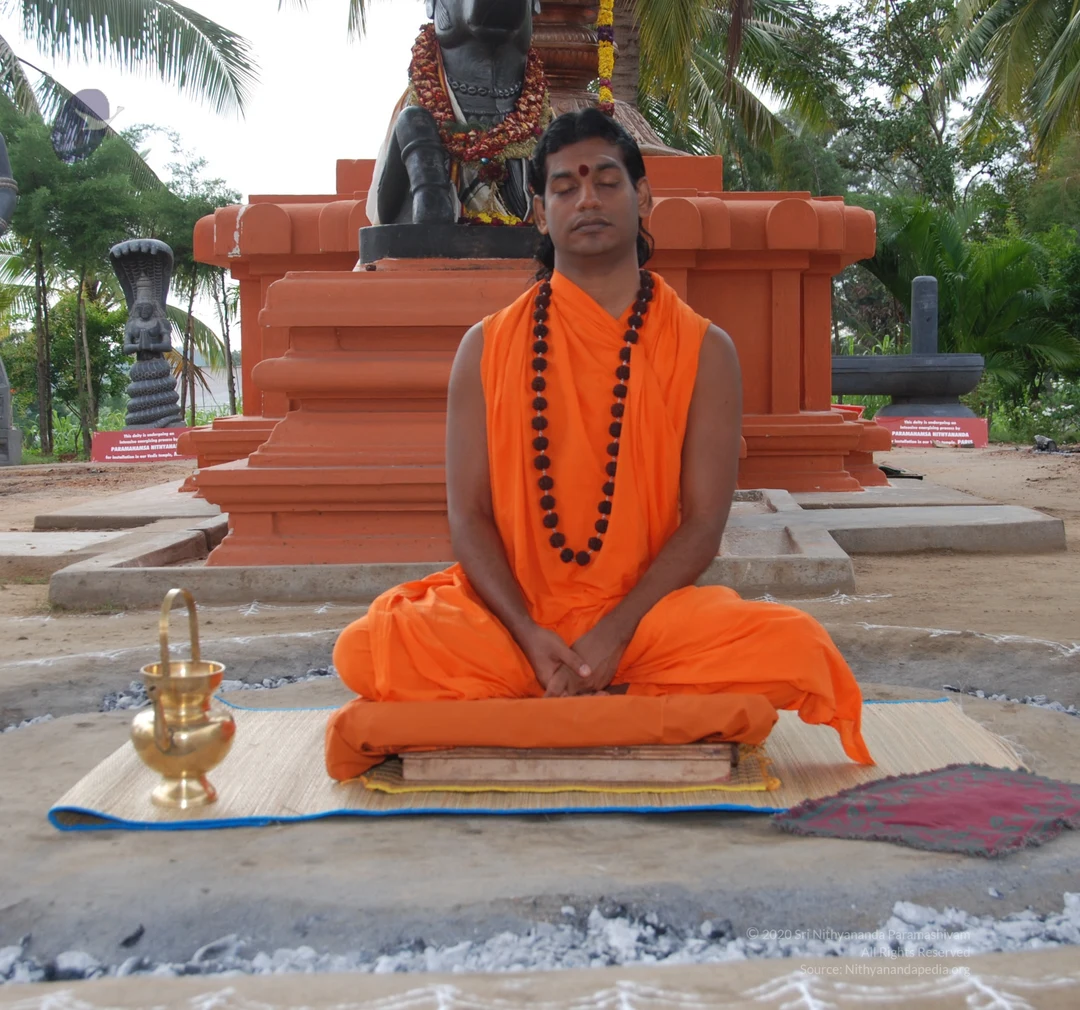
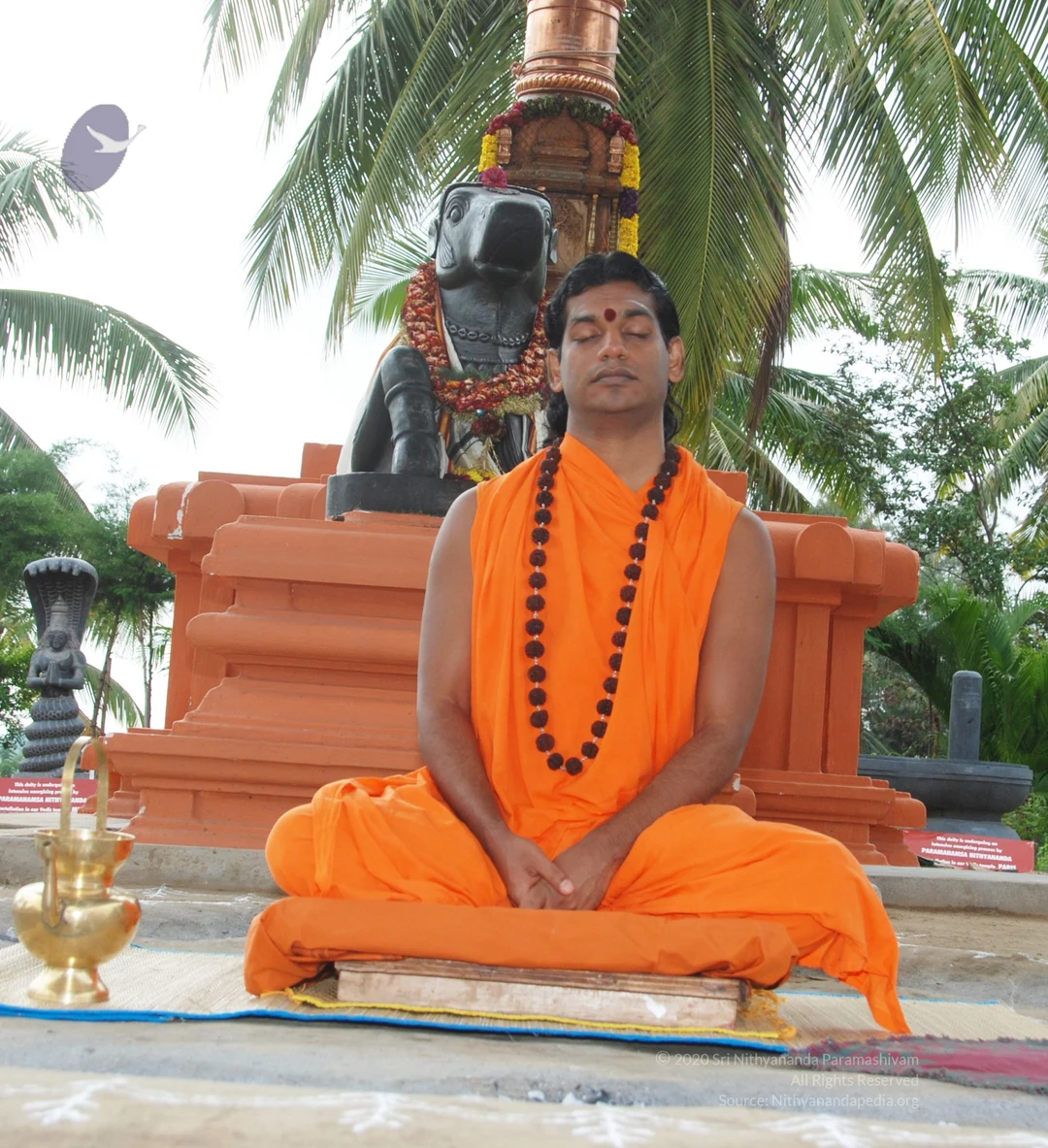
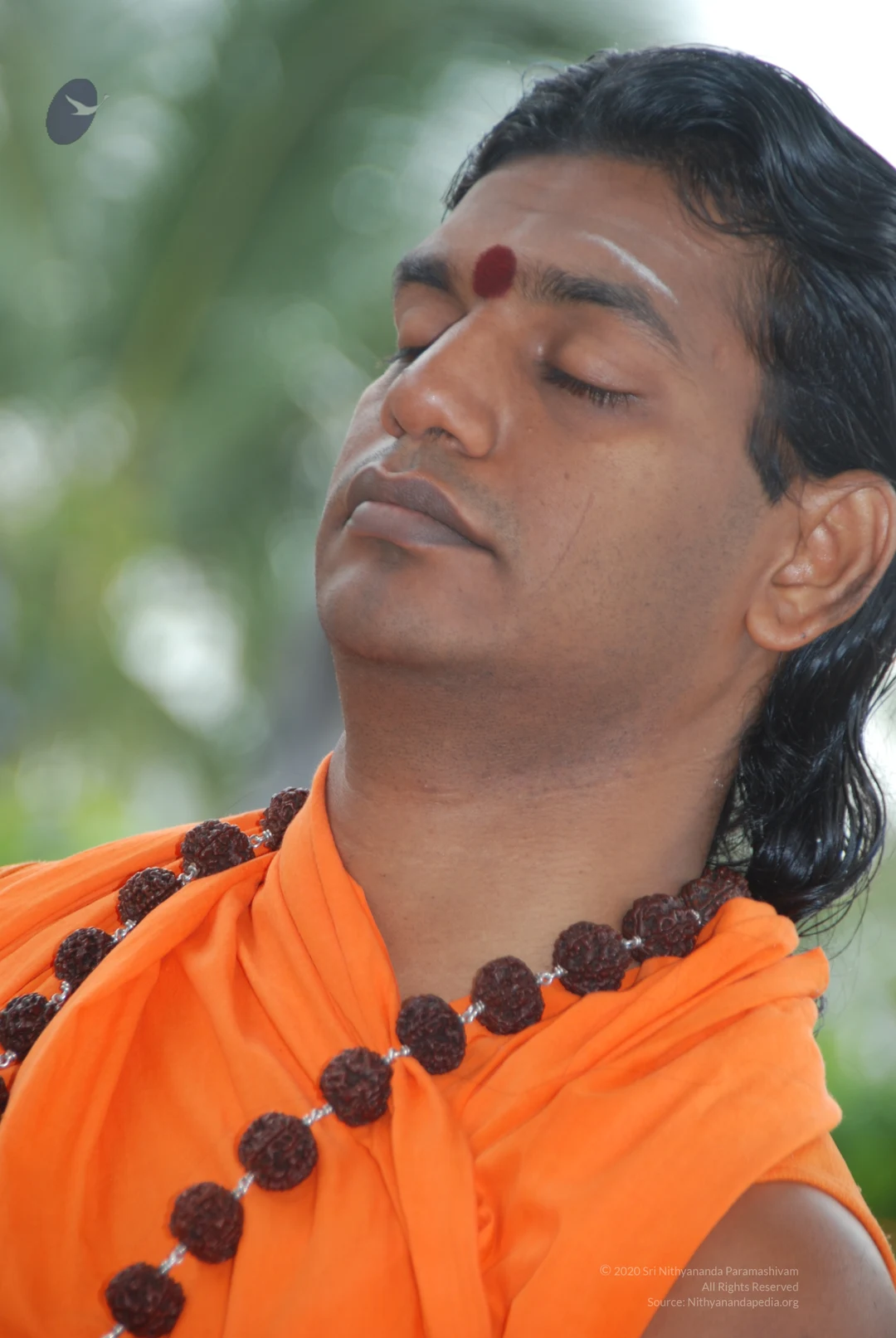
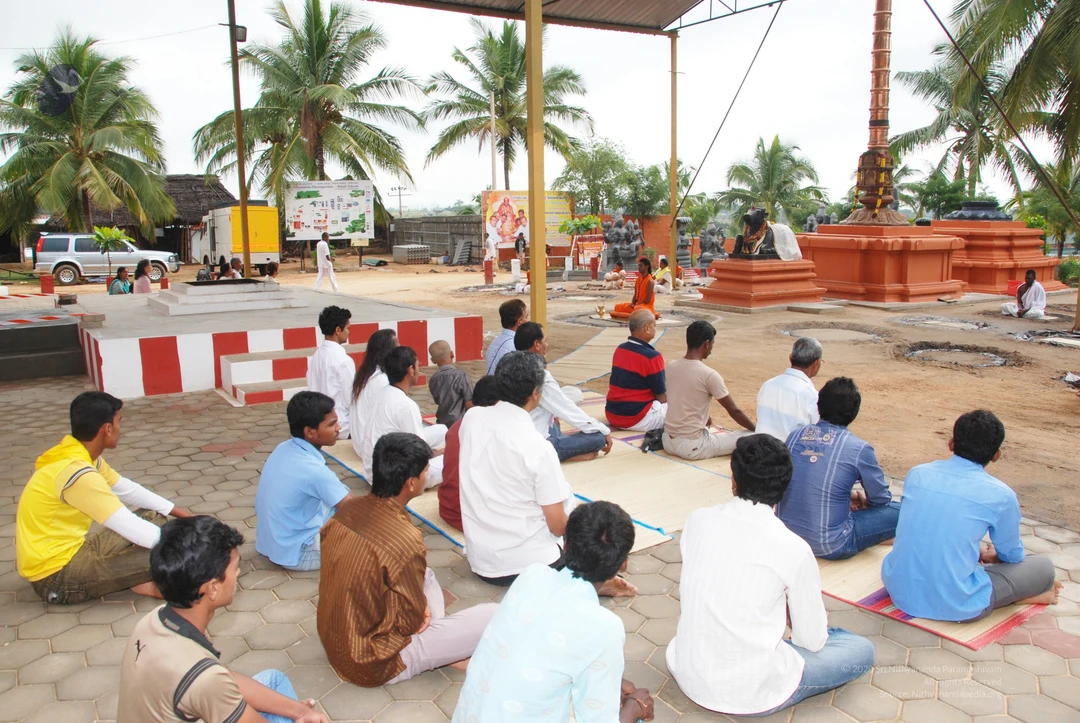
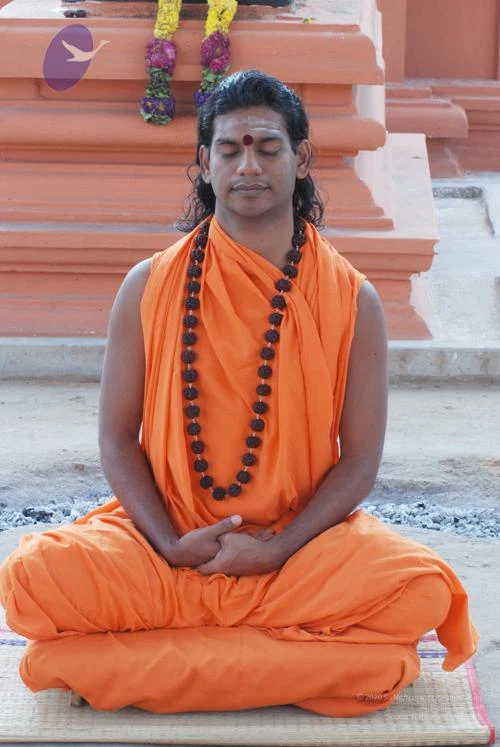
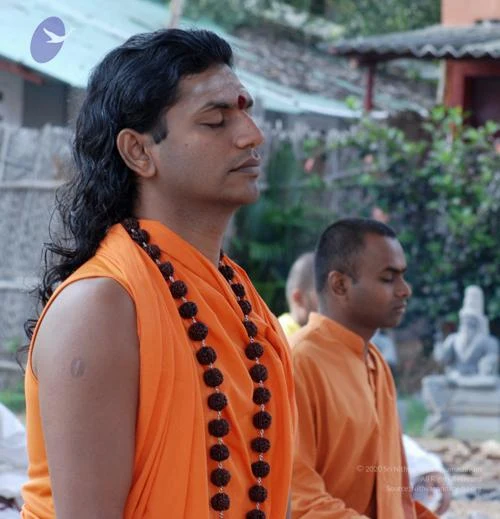
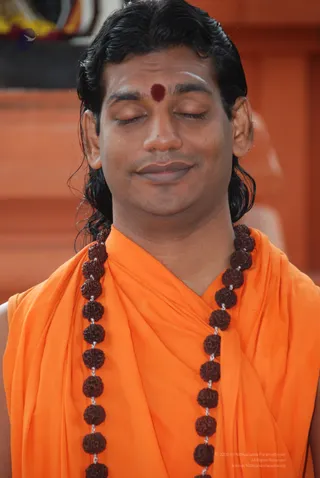
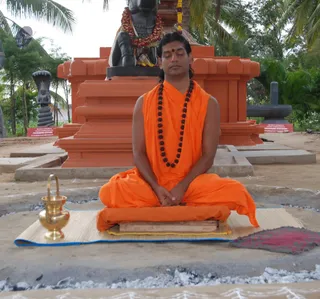
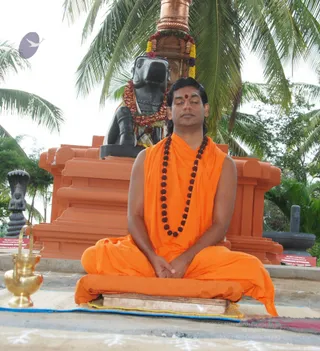
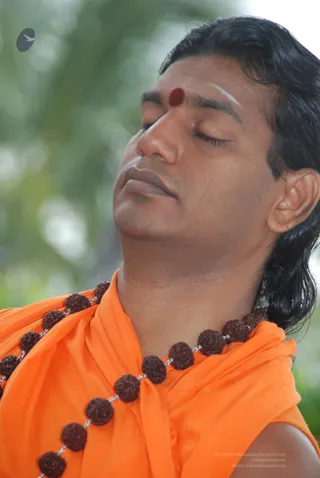
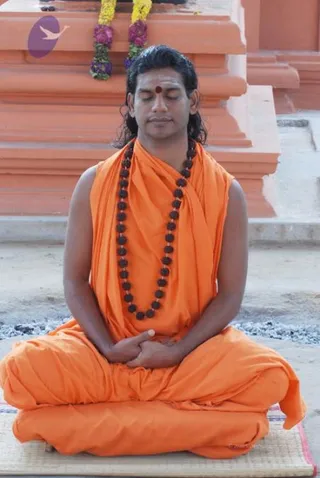
A man with long swept-back black hair and a red tilak on his forehead stands in the foreground with eyes closed, wearing a sleeveless saffron-orange garment and a long rudraksha mala. Behind him, two men sit cross-legged on dirt ground in white dhotis; the one on the right wears a yellow shawl and the one in the middle is bare-chested with a white cloth draped over his shoulder. Several grey stone deity statues stand in the background beside a pile of firewood and an orange-walled building with palm trees and a bamboo fence. The scene suggests outdoor meditation or satsang. Swamiji (probable) is shown in the foreground with long hair, saffron clothing and rudraksha mala.A close profile photograph of a man with long, swept-back black wavy hair, eyes closed and a faint smile, wearing a sleeveless orange saffron garment draped over the shoulders and a long rudraksha mala of dark beads. A red bindi and white vibhuti mark are on his forehead. Behind him, blurred greenery, a red-trimmed building and a partly visible older man in white stand near white statues. Probable Swamiji (long swept-back hair, saffron garment and rudraksha mala).Close-up photo of a man with long, swept-back black hair, eyes closed in meditative calm, wearing a red bindi on his forehead and an orange saffron wrap draped over his shoulders. Several large dark rudraksha mala beads hang across his chest. The orange background suggests an ashram or temple hall.A man in an orange sleeveless robe and saffron wrap sits cross-legged in meditation with eyes closed on a woven mat before an orange-painted stepped platform. He wears a long rudraksha mala and a red tilak on his forehead, with hands folded in his lap. A brass kalasha-style vessel with a handle sits at the left edge of the mat, and a small maroon cloth lies on the right. Behind him a large black stone deity statue is adorned with red and white garlands, flanked by a black shivalinga and a carved cobra-hooded figure. Palm trees and foliage fill the background, and red signboards with white lettering stand near the platform.A man with long swept-back dark hair sits cross-legged in meditation with eyes closed and hands folded in his lap, wearing a sleeveless saffron-orange robe, a long rudraksha mala around his neck and a red bindi on his forehead. He sits on a wooden block over a mat. Behind him stands a large black stone Nandi bull draped with red and orange flower garlands, in front of an orange tiered stone pedestal and a copper kalasha topped with a flower garland. Palm trees surround the open-air setting, and a brass kalasha-style vessel sits at the left edge. Signboards beside the pedestal bear red text.Close-up photograph of a man with eyes closed and face tilted upward, wearing an orange saffron shawl draped over his shoulders and a long rudraksha mala of dark brown beads around his neck. He has a red bindi on his forehead and a white tilak line above it, with long swept-back dark hair. Blurred green foliage fills the background. This appearance matches the Swamiji (probable) cues of swept-back hair, saffron clothing and rudraksha malas, shown in a meditative pose.

Paadapooja
29 photosSource gallery
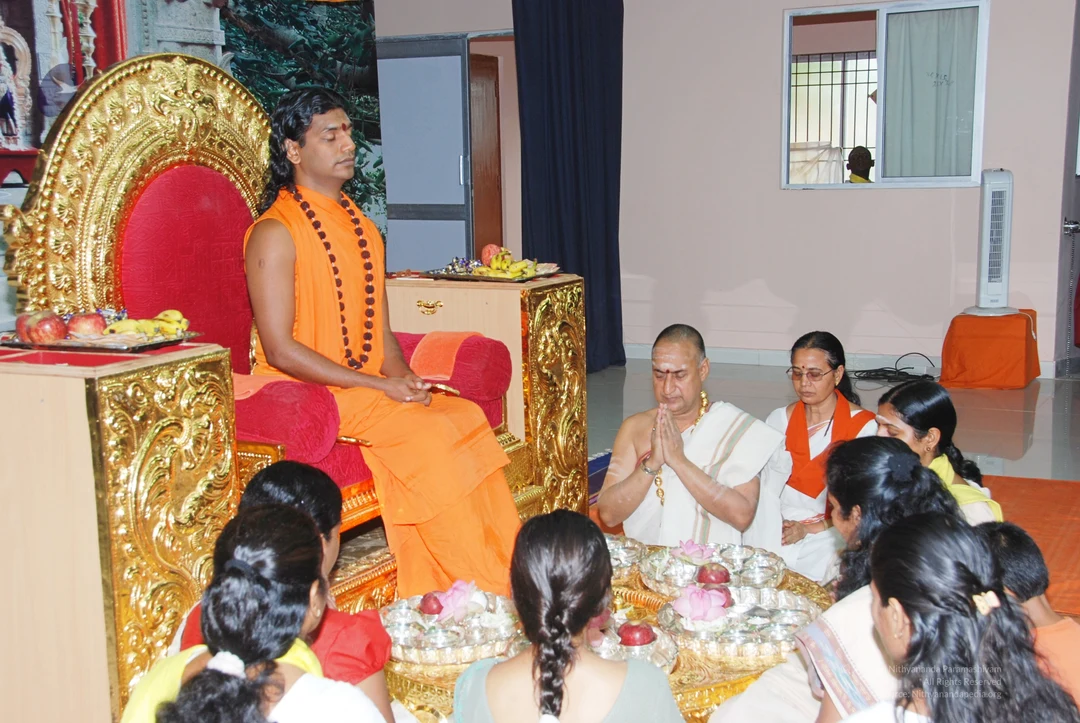
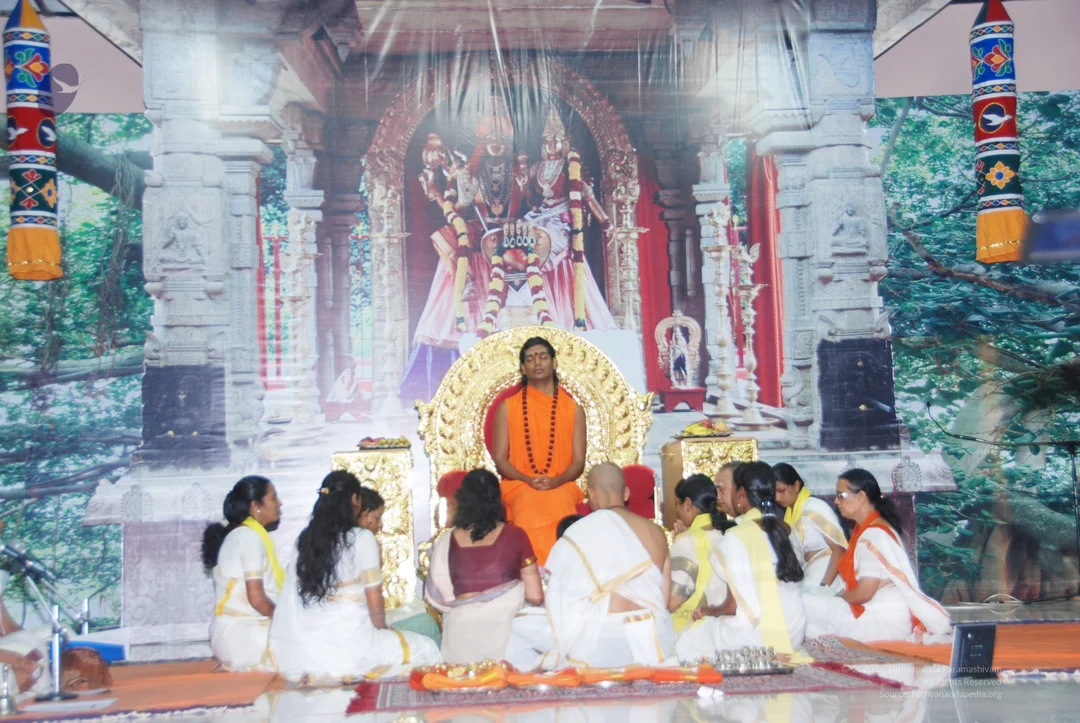
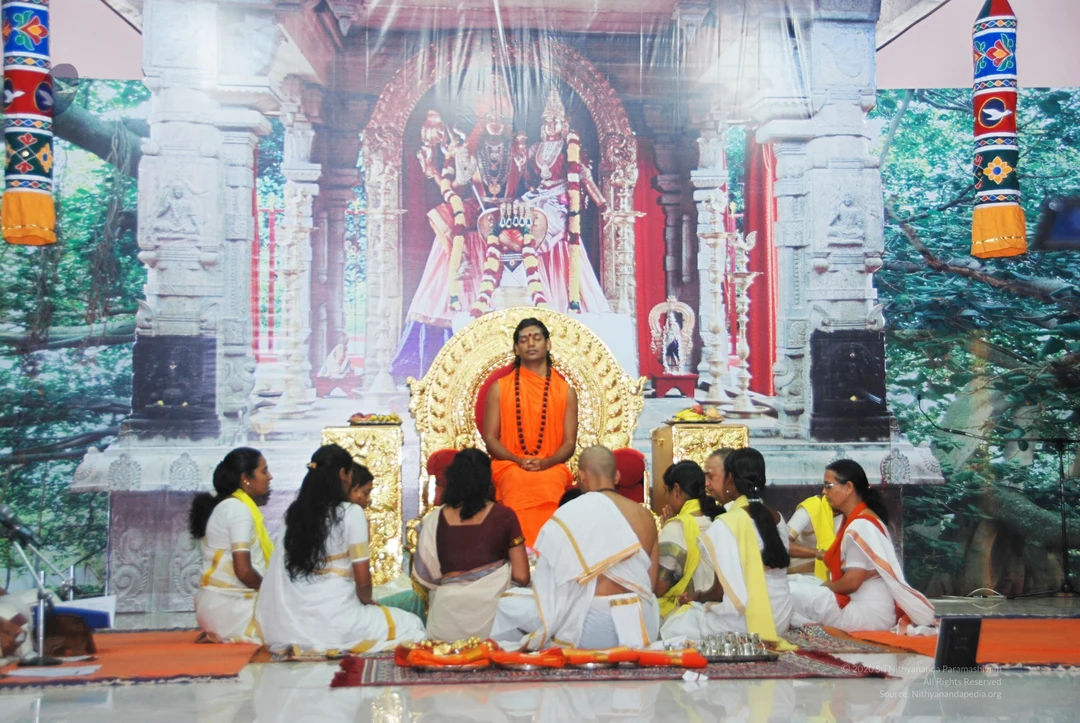
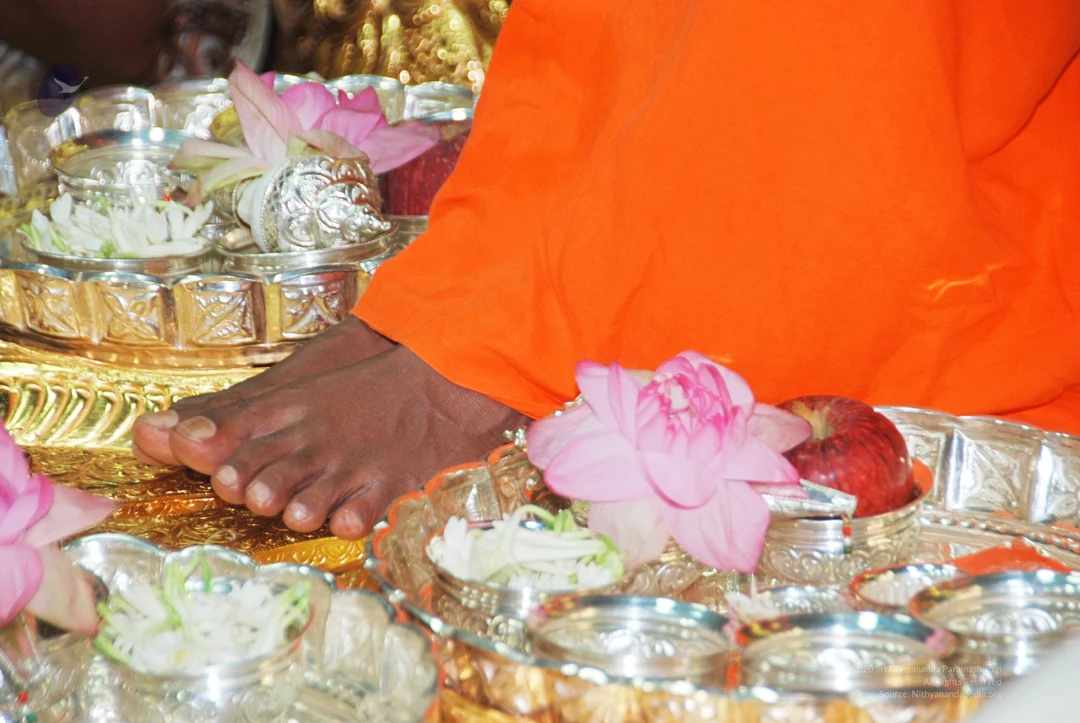
Photograph of a ritual scene before a large printed temple backdrop showing a carved stone gateway, a deity murti garlanded with flower strands, and a leafy green border. A man in a saffron-orange robe with a rudraksha mala and a red-and-white forehead mark sits cross-legged with hands folded on a gold-trimmed throne. Around him, about nine devotees in white dhotis and cream sarees with yellow borders sit in folded-hand prayer, some holding brass plates. Brass oil lamps stand at the sides and fruit offerings rest on golden tables. The man's appearance is consistent with the page's a person reference, but the cues are limited, so the identification is uncertain.A seated man in saffron-orange robes and a long rudraksha mala sits on an ornate golden throne with red cushions, eyes closed, hands resting in his lap. Fruits and flowers are on a tray beside him. Before him, a group of devotees sit on the floor, women in saris and salwar, one holding a brass tray. Two people in the foreground right are in white and orange; a bald man in white dhoti and shawl sits with palms pressed together in namaste beside a woman in an orange shawl. Brass plates with red apples and pink flowers sit on the floor in front. A tall white tower fan stands in the room.A photograph of a seated man in an orange saffron robe and a long rudraksha mala, eyes closed with hands folded in his lap, on an ornate gold throne with red cushions. Behind him is a large backdrop printed with a standing figure in pink and blue robes garlanded with flowers, plus red pillars and a small shrine. Fruit trays sit on gold pedestals on either side. Several devotees are seated on the floor in front, including a shaved-headed man in white dhoti with a gold border, women in white and yellow saris, and a woman in a maroon blouse, all facing the throne with hands joined. The figure is an appearance-based a person by his saffron robe, long rudraksha mala and red tilak, seated in a satsang-style setting.A photograph of a seated man in saffron-orange robes with a rudraksha mala around his neck, sitting on a gilded throne with red cushions in front of a large backdrop of a temple shrine with deity murtis and garlands. Around him, a group of devotees sit on the floor on a red and orange mat: women in white sarees with yellow borders, a woman in a maroon sari, and a shaved-headed man in white dhoti. Brass offering trays and flowers lie in front. The backdrop shows forest foliage at the sides and decorative hanging banners with birds. The man on the throne has long hair and distinctive saffron and rudraksha cues, consistent with the page's reference to Swamiji, though this is an appearance-based probable identification only.A photograph of a satsang on a stage before a large backdrop showing a temple facade with a deity murti pair in pink and white garments garlanded with flowers. A figure in saffron-orange robes with a rudraksha mala sits in meditation on a gold-carved throne, hands folded, eyes closed. Seated on the floor before him are devotees: women in white saris with yellow borders and yellow shawls, a woman in a maroon sari, and a bald man in white dhoti with gold border. Brass plates and flower offerings lie on the carpet, and decorative banners in red, green and yellow hang at the top corners.Close photo of a bare foot resting on a gold tray during padapuja-style worship. The foot wears no footwear and is draped in saffron-orange cloth. Around it are silver and gold bowls holding white flower petals, pink lotus blossoms, and a red apple. The setting is ceremonial, with ornate metalwork and a golden base beneath the offerings.

Morning-Message
10 photosSource gallery
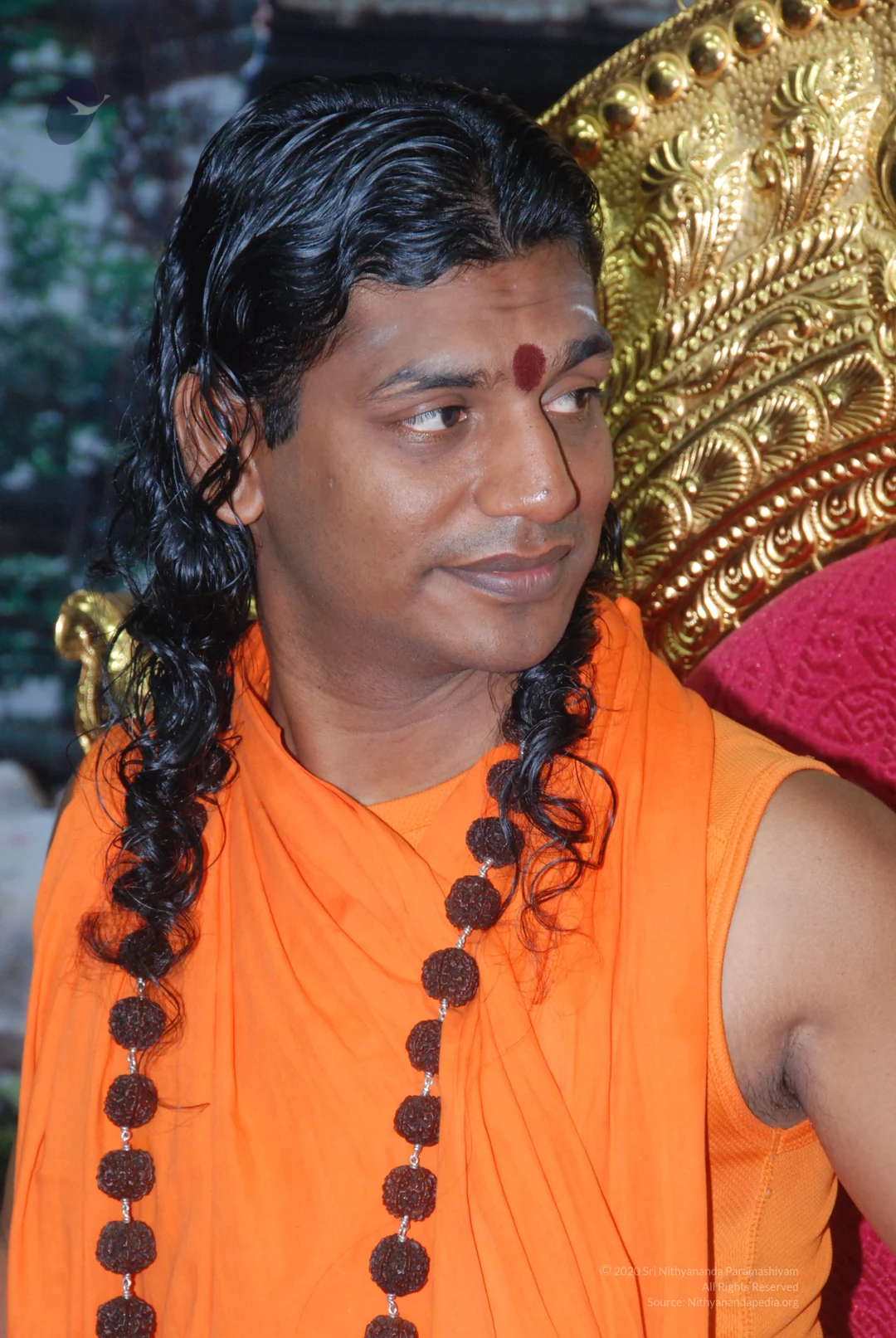
Close photograph of a man with long, wavy black hair falling past his shoulders, wearing a sleeveless saffron-orange robe draped over one shoulder and a long rudraksha mala of brown beads. He has a red bindi/tilak on his forehead and looks off to the side. Behind him is an ornate gold throne with repoussé floral and beaded carving, next to a red cushion, and a green foliage backdrop. Swamiji (probable): long swept-back hair, saffron clothing and rudraksha mala, seated on an ornate throne.A man with long dark hair sits on an ornate gold-and-red throne, speaking into a microphone on a flexible stand. He wears a sleeveless saffron-orange robe with a shawl draped over the shoulders, a dark rudraksha mala around his neck, and a red bindi on his forehead. His hands are clasped in his lap and his bare feet rest on a gold footstool. Behind him are pink and white draped fabrics with garlands. Swamiji (probable): the long swept-back hair, saffron robe and rudraksha mala are the appearance-based cues for the throne-seated speaker, who is presented as the teacher at this discourse.A man with long, swept-back dark hair and a red bindi sits barefoot on an ornate gold throne with red cushions, speaking into a gooseneck microphone. He wears a sleeveless saffron-orange robe draped over one shoulder and a long dark rudraksha mala, with his hands clasped in his lap and a footstool before him. Behind him is a pink and white draped backdrop with floral garlands. Swamiji (probable): long swept-back hair, saffron clothing and rudraksha mala, seated on a throne as a discourse speaker.A man seated on an ornate gold-embossed throne with red cushions, speaking into a black microphone on a stand. He wears an orange sleeveless garment draped over one shoulder, a long dark rudraksha mala, and a red tilak on his forehead. His long dark hair is swept back, and his hands are held together in front of his chest in a gesture of explanation. a person is seated and teaching in a satsang setting. Visible cues include long swept-back hair, saffron clothing, and rudraksha beads.A man in orange saffron robes with a rudraksha mala and a red bindi sits smiling on an ornate gold throne with a red cushioned seat. A microphone on a stand is near him, and a wooden lectern with gold bangles sits to the right. Behind him is a dark carved shrine niche with a red kumkum mark. Appearance-based label: a person, seated in an ornate gold throne in saffron with a long rudraksha mala.Close-up photograph of a person's bare feet standing on an ornate gold throne with a maroon cushioned footrest. The person wears flowing orange-saffron robes. The gilded throne has carved floral and scrollwork detailing and a deep red upholstered seat back. The feet rest on the red cushion while the rest of the body is out of frame.

Nsp-Session-With-Swamiji
4 photosSource gallery
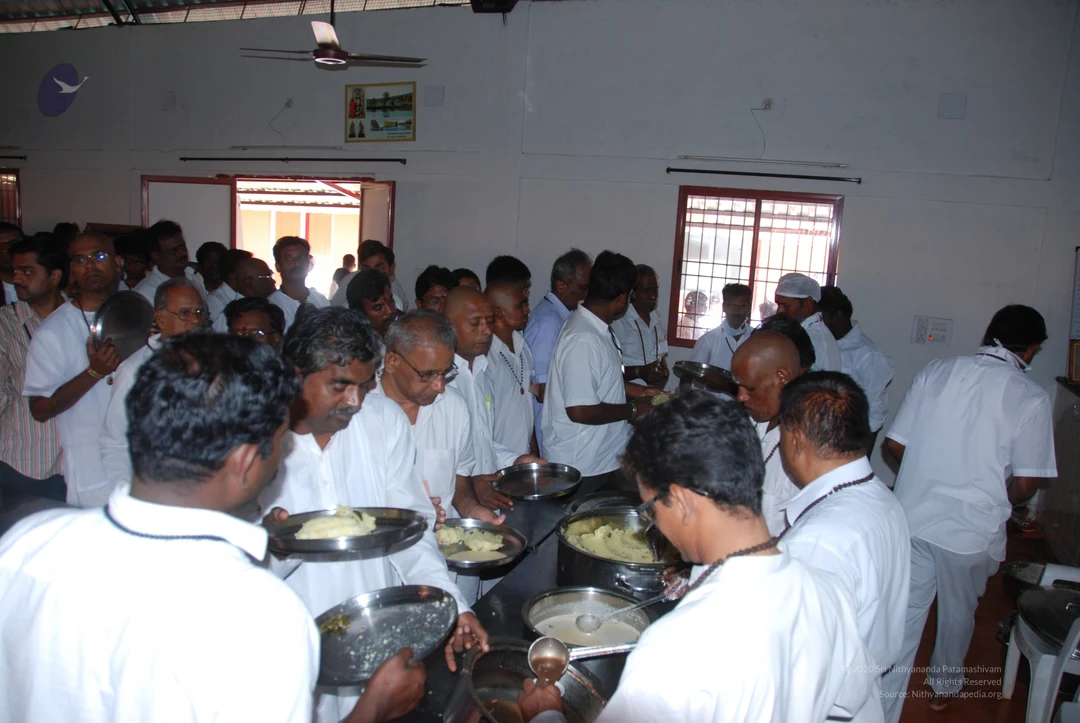
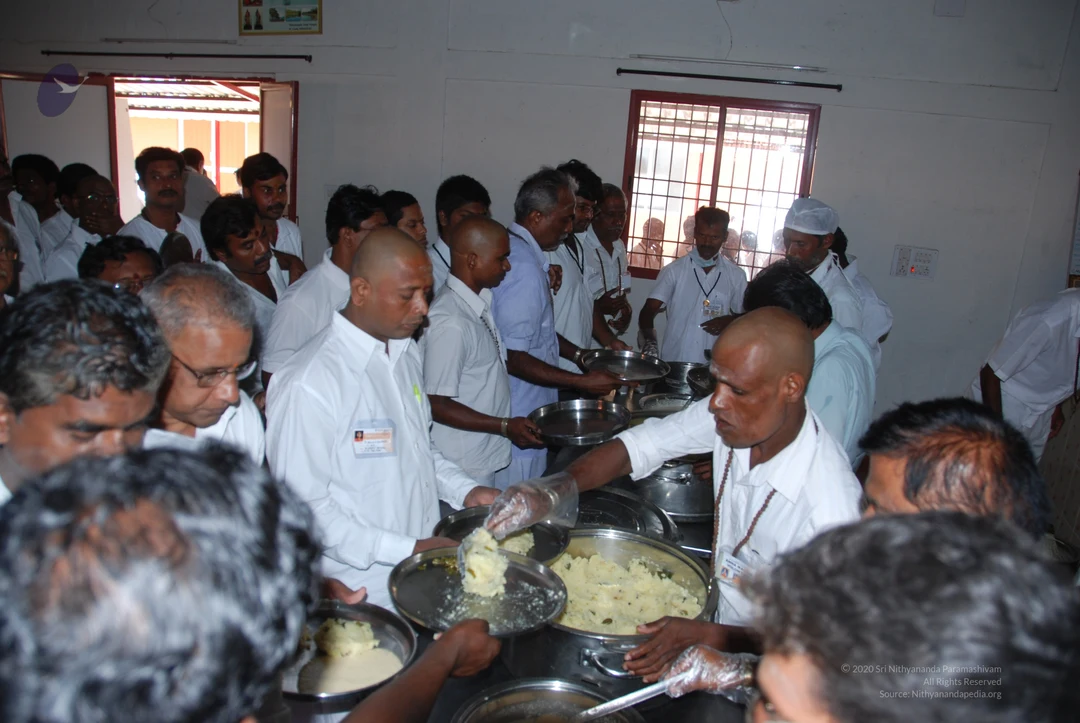
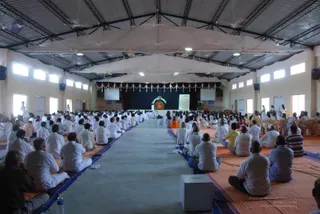
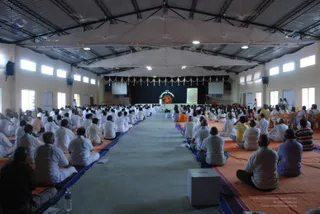
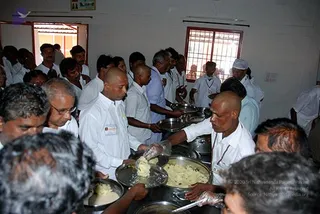
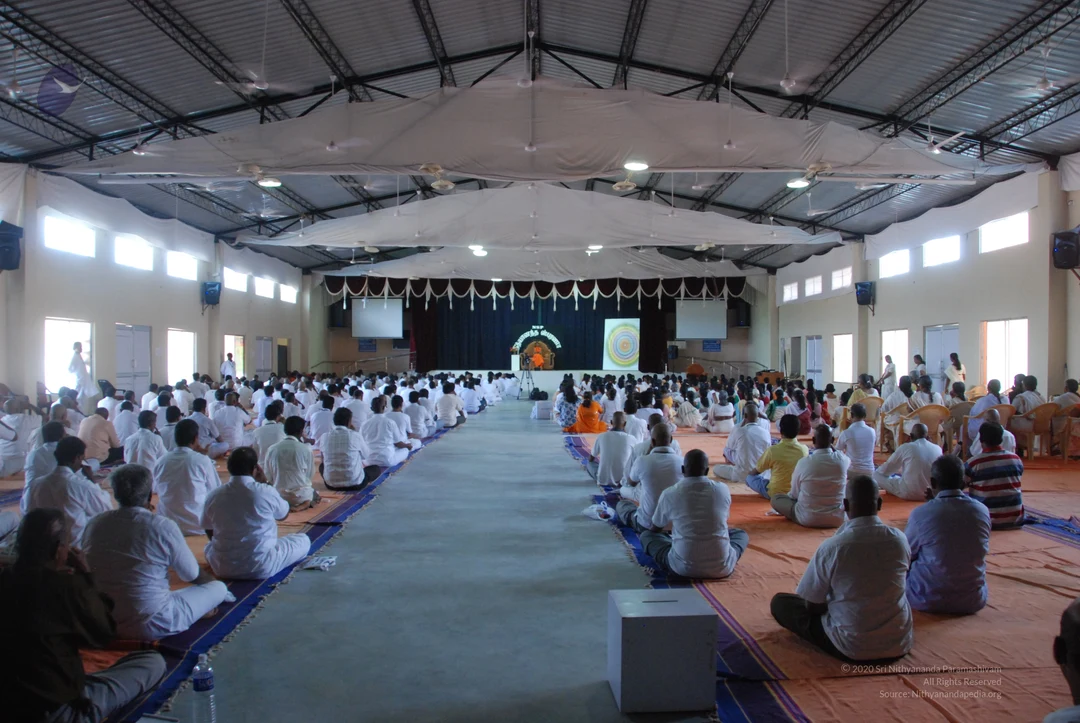
Photograph of a crowded communal dining hall where men in white shirts and white dhotis queue at a serving counter holding stainless steel plates. Large steel pots hold food, and a man on the right serves from a ladle. Several men wear rudraksha malas around their necks. A framed picture hangs on the white wall, a ceiling fan turns above, and a window with red frames is visible. No person is clearly identifiable as a person from appearance, so no candidate is described.A man seated on an ornate brown upholstered throne with carved black wooden armrests and backrest, against a black backdrop with large white lettering at the top right. He wears a flowing saffron-orange robe draped over one shoulder and a long dark rudraksha mala around his neck, with a small red bindi on his forehead. His hair is long and swept back, and he sits with hands resting in his lap in front of a microphone on a stand, appearing to address an audience. Swamiji (probable): a seated figure in saffron robes and rudraksha mala on a throne, with long swept-back hair and a red forehead mark.A wide view of a large hall filled with seated devotees on orange and blue mats, facing a stage at the far end. Most attendees wear white and light shirts and sit cross-legged on the floor, with a section of chairs along the right side. On the stage a seated figure in orange robes sits before a dark blue curtain with a decorative valance, flanked by two projection screens, one showing a colourful circular mandala. A white tented canopy hangs from the steel roof, and a white box sits in the central aisle. Standing staff in white are visible near the side walls.Wide view from the back of a large hall with a corrugated metal roof and white fabric canopy, where a seated audience in white clothes sits on orange and purple mats across a grey carpeted central aisle. On the far stage, a figure in saffron-orange robes sits on a raised seat before a dark curtain, with a green and orange backdrop, a projected circular graphic on a screen, and side screens. Many devotees in white and some in yellow and striped shirts face the stage, with a white box and water bottle in the foreground.

Lep-Noon-Session-With-Swamiji
7 photosSource gallery
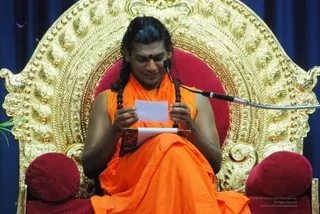
A photograph of a man seated on an ornate gold throne with red cushions, wearing an orange saffron robe and a sleeveless orange top. He has long dark hair in a braid with a rudraksha mala draped over his shoulder, and a red bindi on his forehead. He holds a small white paper in both hands and reads it while a microphone on a stand is positioned beside him. A blue draped backdrop sits behind the throne. Probable Swamiji (long swept-back hair, saffron clothing, rudraksha mala, seated on a gold throne) reading from a paper at a discourse setting.A man in orange robes sits on an ornate gold throne with red cushions, reading from a sheet of paper held in both hands. He has long dark hair in a braid, a red tilak on his forehead and a rudraksha mala draped over his shoulder. A microphone stands beside him against a deep blue backdrop. The scene appears to be a discourse or satsang. Swamiji (probable) is seated in the throne, with cues of long hair, a rudraksha mala and saffron clothing.A man in saffron-orange robes sits on an ornate gold throne with a red cushioned back and red armrest cushions, speaking into a microphone on a curved stand. He wears a red tilak on his forehead, long dark hair swept back, and a dark rudraksha mala around his neck. He smiles and gazes to one side with his hands resting in his lap. A blue draped curtain forms the backdrop. Appearance-based label: a person, seated in a discourse setting.A man seated on an ornate gold throne with a red cushioned back, speaking into a microphone on a stand. He wears an orange saffron wrap over a sleeveless orange garment, a long rudraksha mala around his neck, and a small red mark on his forehead; his long dark hair is swept back. His hands rest folded in his lap. A blue curtain forms the background. Appearance-based label: a person, seated on the throne as a discourse speaker.A man with long dark hair and a red bindi sits on an ornate golden throne with red cushions, speaking into a microphone on a flexible stand. He wears a sleeveless orange robe draped over his shoulders and a dark rudraksha mala necklace, with hands resting in his lap. The gilded arched backrest is richly carved. Probable Swamiji seated in discourse; the orange robe, rudraksha mala and long hair are the qualifying cues.A man with long dark hair and a red bindi sits on an ornate gold-carved throne with red cushions, speaking into a microphone on a boom stand. He wears a sleeveless saffron-orange robe draped over his shoulders and a long dark rudraksha mala, with hands resting in his lap and one bare foot visible. Candidate appearance is consistent with Swamiji (probable) given the saffron robe, rudraksha mala and long hair, seated on a throne while addressing an audience.

Online-Kalpataru-Darshan
21 photosSource gallery
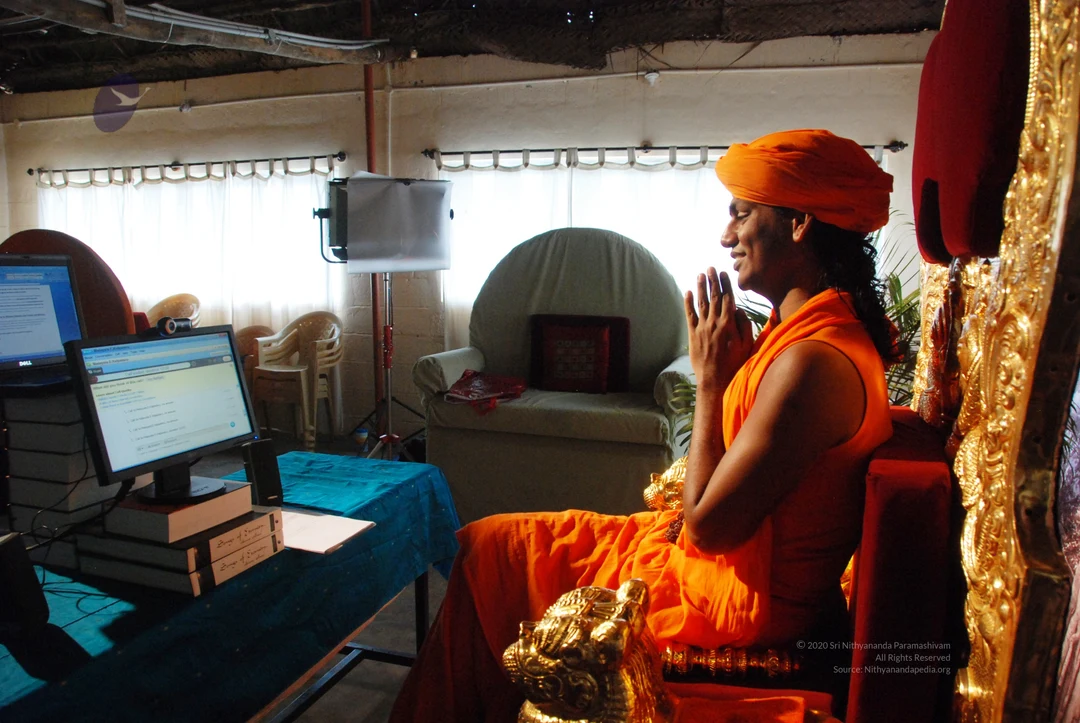
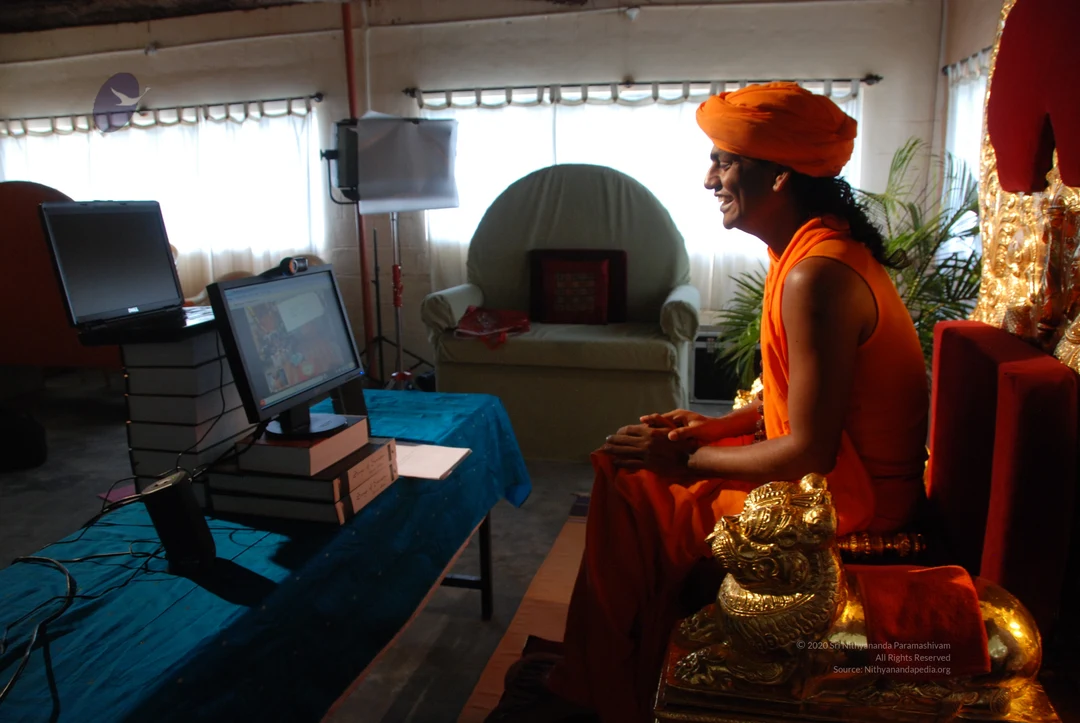
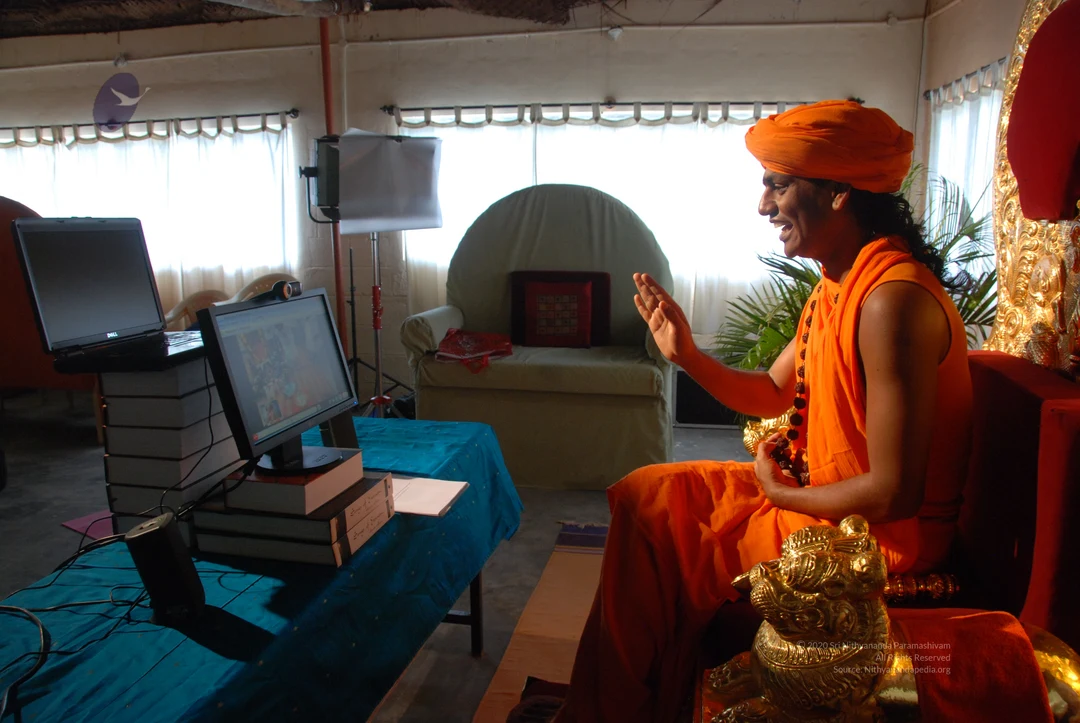
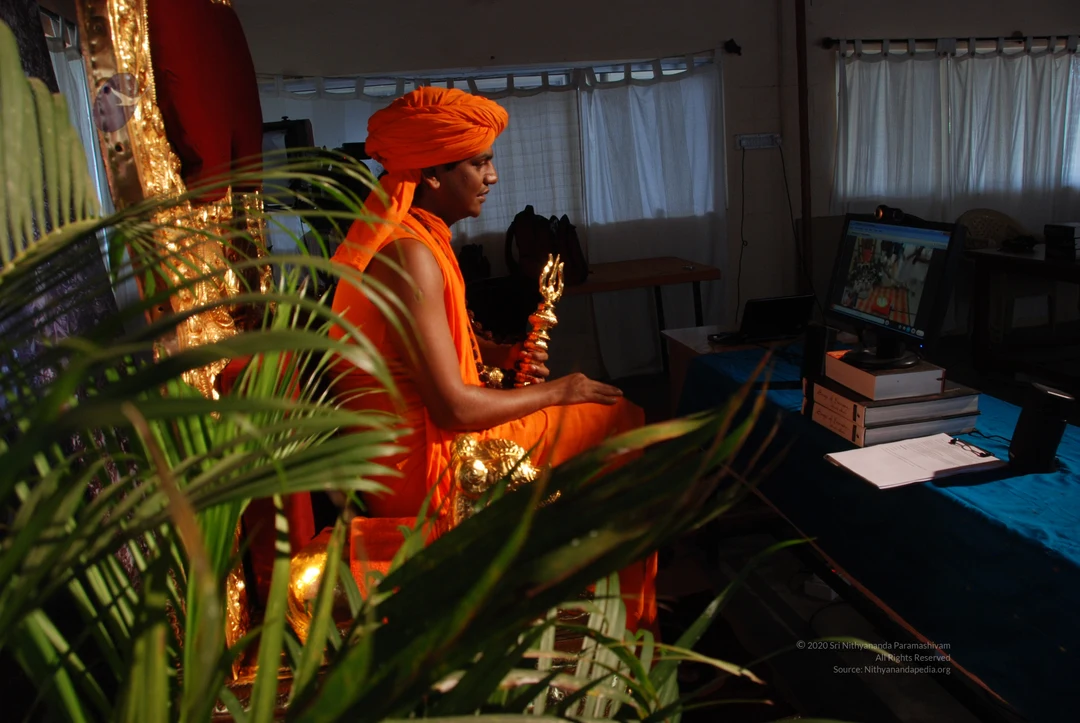
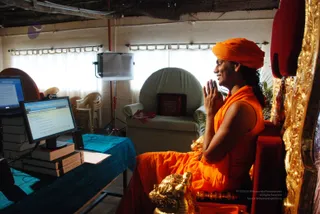
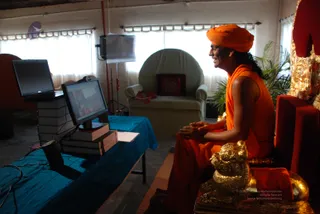
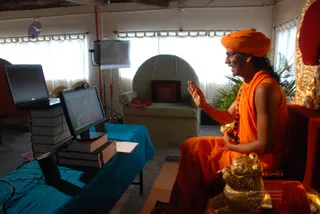
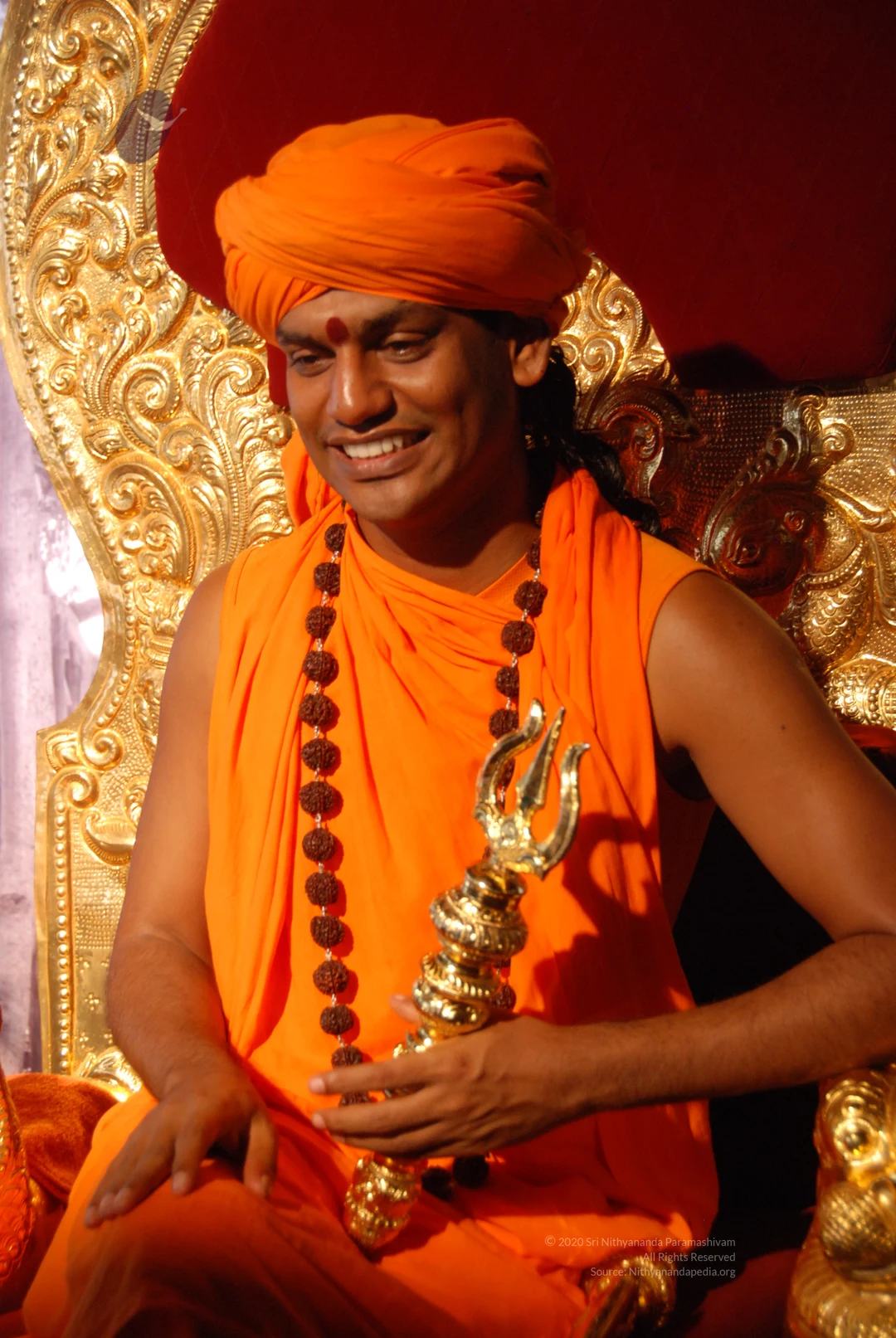
A photograph of a man seated on a red and gold throne-style chair in a plain whitewashed room with window curtains. He wears an orange turban, an orange shawl draped over orange clothing, and a dark rudraksha-style necklace visible at his chest, with long dark hair swept back. His palms are pressed together in front of his chest in an anjali gesture as he looks toward the left. In front of him a blue-draped table holds two computer monitors, a stack of books and a notepad, and a white plastic chair sits nearby beside a cushioned armchair with a red cushion. A studio light stand is in the background. Persons in view: one seated man. Swamiji (probable): the seated man wears an orange turban, orange shawl and ornate throne setting consistent with the page's description of a seated teaching session.Close-up photograph of a smiling man in a bright orange turban and orange shawl, with a red bindi on his forehead. He wears a long strand of brown rudraksha beads across his chest and a gold earring visible at his ear. The background is a soft, blurred pale lavender with a green leaf at the lower left.Close photo of a smiling man in an orange turban and orange robe, with a red bindi on his forehead and a multi-strand rudraksha mala of brown seeds across his chest. He looks to the side with a warm expression, and blurred pale pink foliage fills the background. Appearance-based label: Swamiji (probable), as a single in-person figure with the turban, saffron clothing and rudraksha cues.A photograph of a man in orange robes and an orange turban seated on a red and gold throne, smiling and looking toward a monitor on a blue draped table. He has his hands folded in his lap and a gold lion-headed armrest beside him. On the table are a laptop, a desktop monitor showing a video or presentation, and stacked books. Behind him is an empty cream armchair with a red cushion, potted palms, white curtains and a studio light stand. The man is an appearance-based probable Swamiji candidate, with a long swept-back hair, an orange turban, saffron robes and a gold ornamented throne; the page identifies the event as a recorded or online talk.A man in saffron-orange robes and an orange turban sits on an ornate red and gold throne, raising one hand in a gesture while speaking. He wears a rudraksha mala and a long orange shawl. Beside him is a golden lion-shaped figure at the base of the throne. In front of him on a teal draped table are a monitor and a laptop stacked on books, showing a video call with an image on screen. A pale green armchair with a red cushion, potted palms and white curtains fill the room, with a lighting stand behind.A smiling man with eyes half-closed sits before an ornate gold carved chair with a red backdrop. He wears an orange turban, a red bindi on his forehead, an orange shawl draped over an orange sleeveless garment, and a necklace of rudraksha beads. The photograph is a close-up of his face and upper body, with warm sunlight on the scene.

Yogasutras-And-Lep-Session
72 photosSource gallery
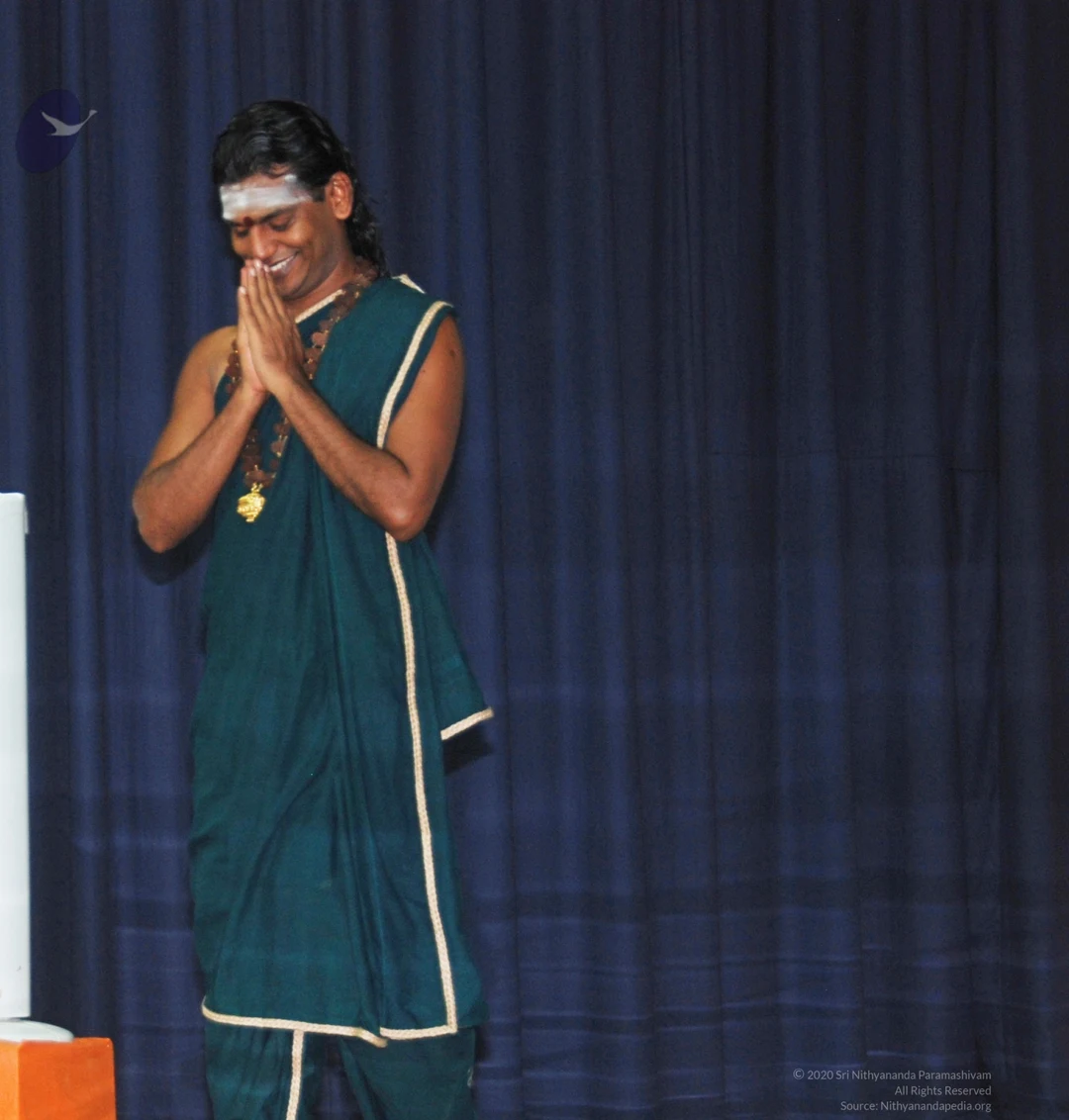
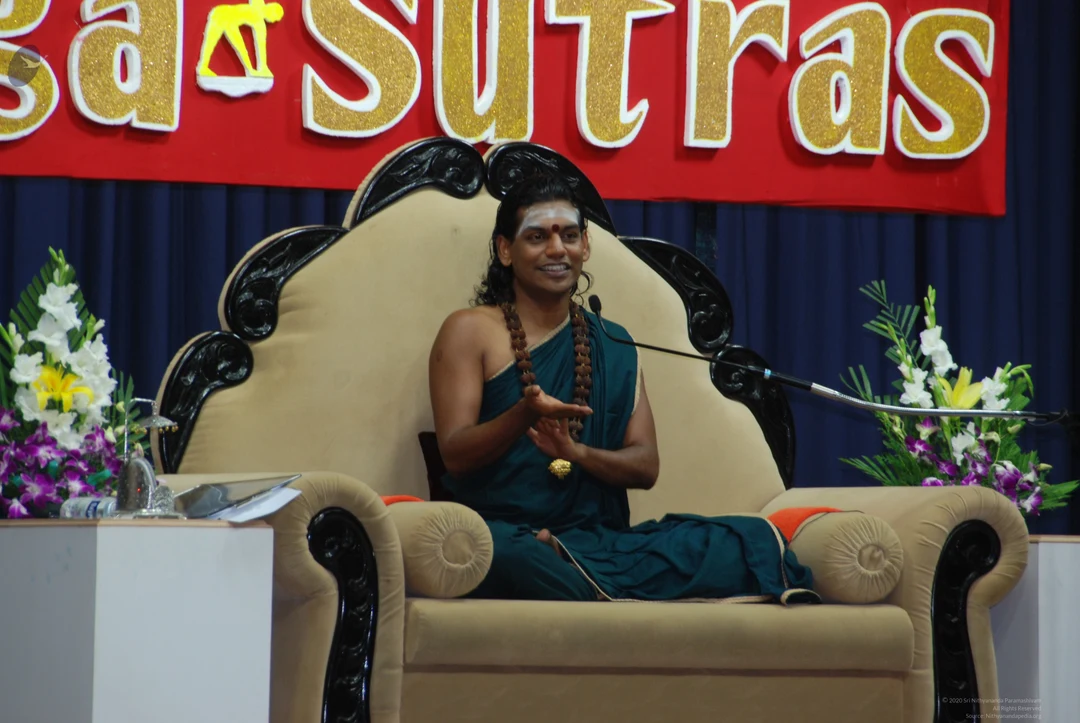
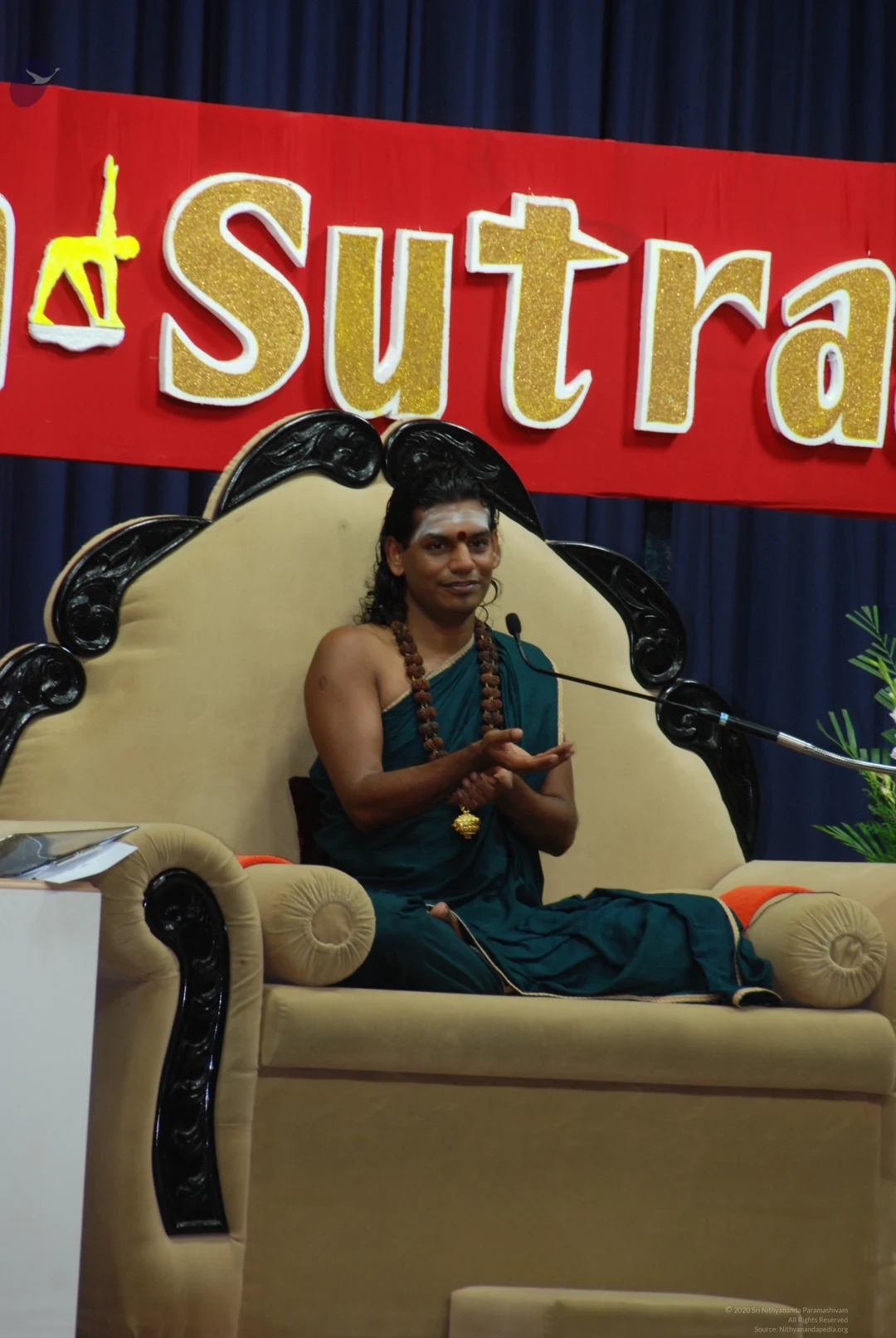
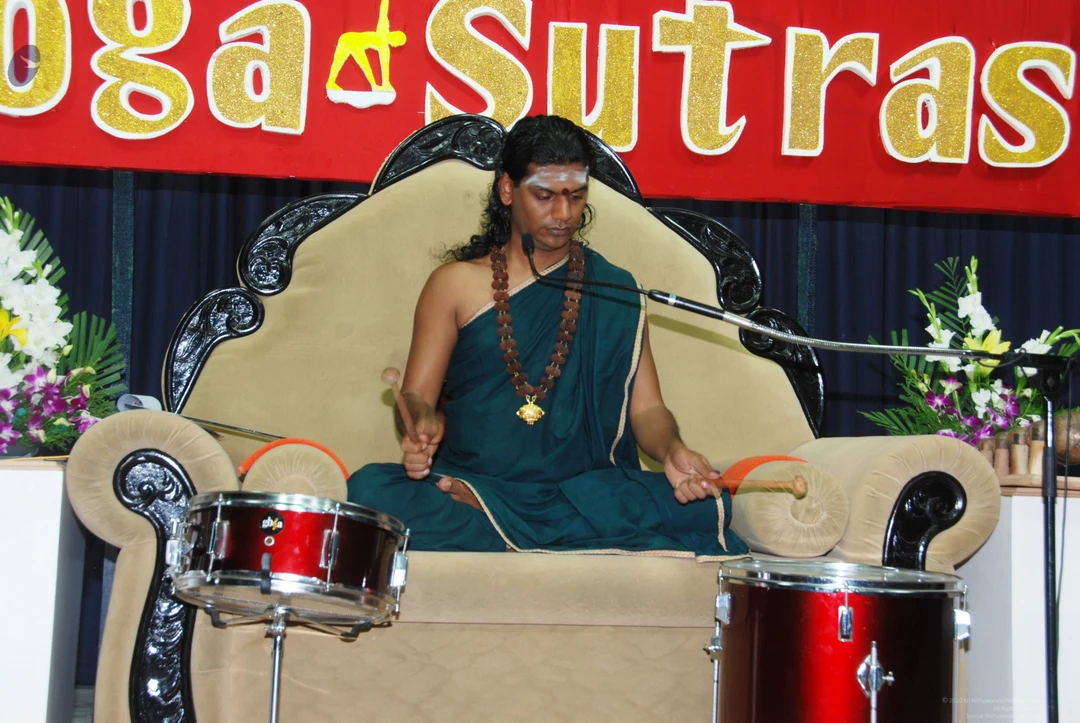
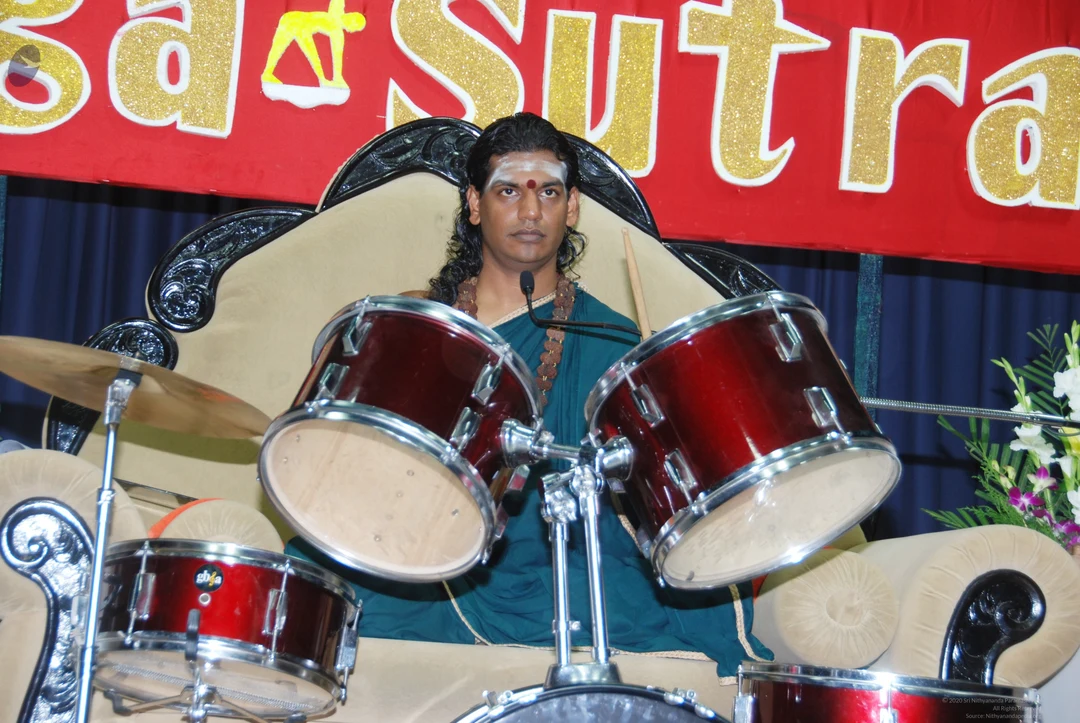
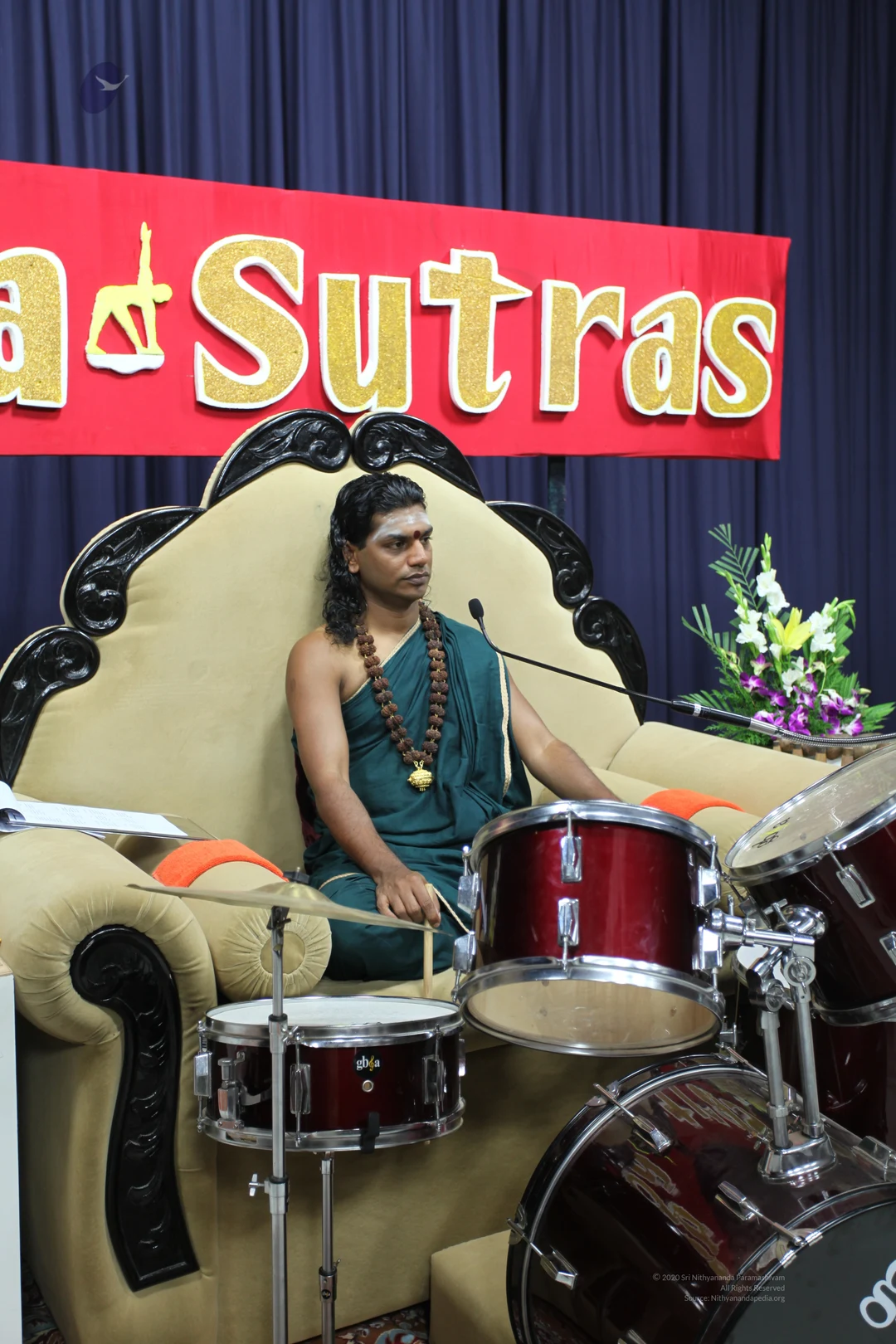
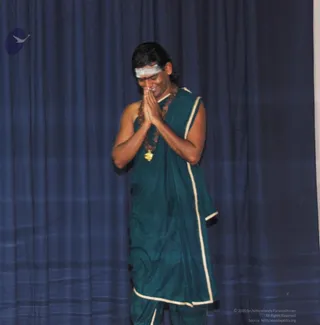
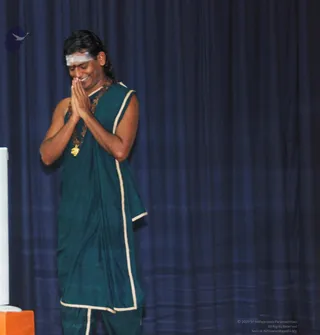
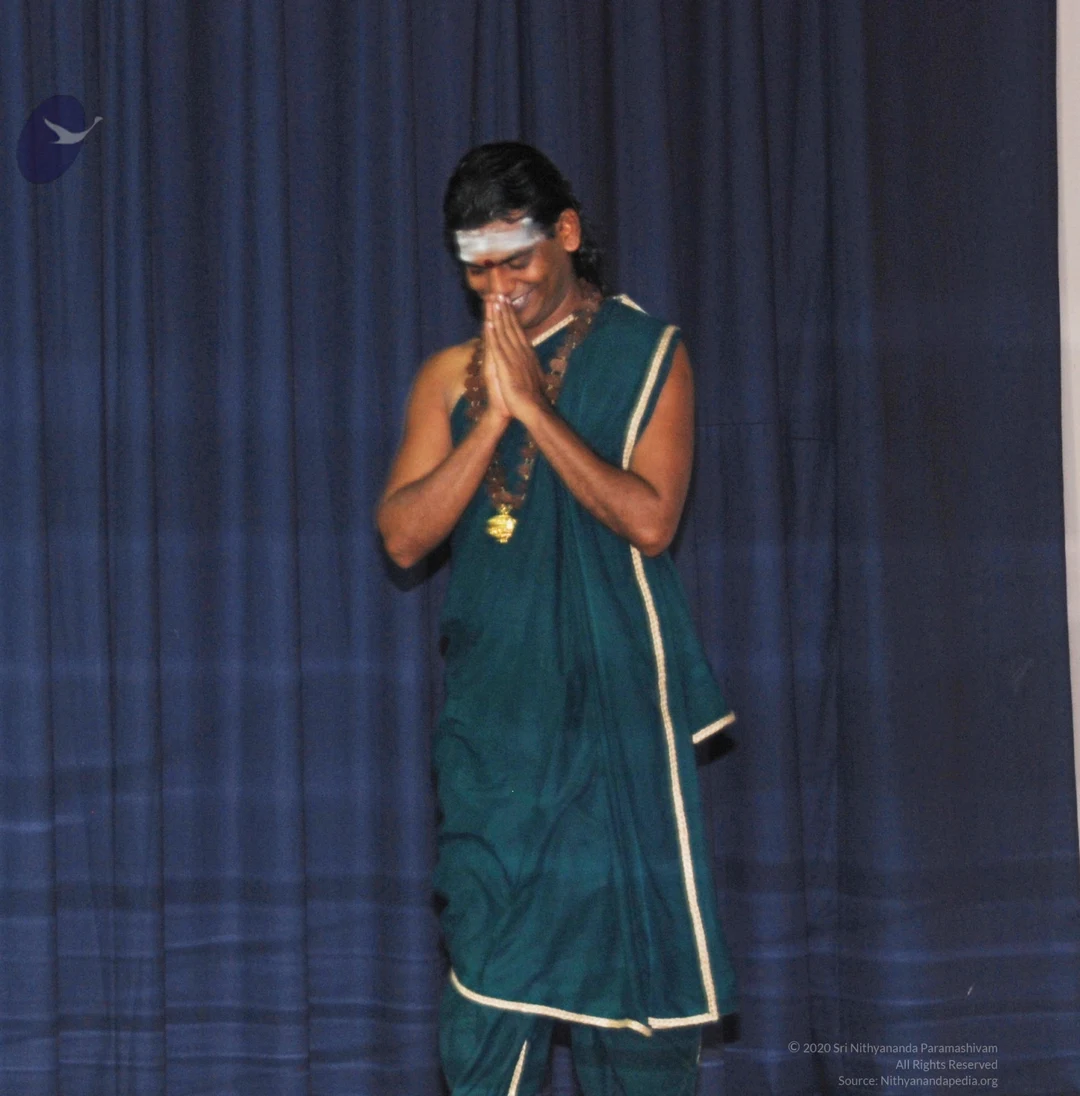
A man stands alone on a stage before a dark blue draped curtain, pressing his palms together in front of his chest in a namaste greeting and smiling with eyes lowered. He wears a teal-green wrap with a gold-coloured border over his shoulder and a loose teal garment below, with a rudraksha mala and a gold pendant at his neck. A white horizontal line and red mark are on his forehead.A man stands on a stage in front of a dark blue draped curtain, smiling with eyes lowered and palms pressed together in anjali namaskar. He wears a teal-green shawl with a cream border over his shoulder and draped garment, a brown rudraksha mala with a gold pendant at his neck, and a white vibhuti tripundra on his forehead. His dark hair is swept back to his shoulders. A white pillar and an orange-topped base appear at the left edge.A man stands barefoot on a stage in front of a tall cream-upholstered throne-style chair with dark carved wooden trim and a maroon cushion, with orange-trimmed round bolsters. He wears a dark teal sleeveless robe with gold-coloured edging over matching teal trousers, a rudraksha-style necklace, and a white vertical mark on his forehead. His long dark hair is swept back, and he presses his palms together in front of his chest in a greeting, smiling with eyes closed. Behind him hangs a red banner with gold lettering reading Sutras, above blue draped curtains. A microphone stand, a vase of white and purple flowers on a white stand, and a white cooling unit sit on the right, with an orange-draped box beside it.A photograph of a man seated cross-legged on an ornate cream upholstered throne with carved black wooden arms and orange-trimmed round bolsters. He wears a teal-blue draped garment with cream edging, a brown rudraksha mala with a gold pendant, and a white forehead marking with a red dot. His hands rest folded in his lap as he looks upward and speaks into a microphone on a stand. Behind him hangs a red banner with gold lettering and a dark blue curtain. a person: the appearance cues are the long swept-back hair, rudraksha mala and ornate gold pendant, with a seated teaching posture, so the in-person candidate is listed with appearance-based uncertainty.A man seated in a carved dark-wood chair with cream upholstery, speaking into a black gooseneck microphone. He wears a teal draped garment with a cream border over one shoulder, and multiple long rudraksha mala necklaces with brown beads. He has a white horizontal tilak across his forehead with a red dot at the centre, and long swept-back dark hair. A red and gold backdrop is behind him. Swamiji (probable): the long swept-back hair, rudraksha malas and ceremonial seated discourse setting are the qualifying cues, shown as a speaker giving a discourse.Close-up photograph of a smiling man with long, swept-back dark hair, a white horizontal forehead mark and a red dot at the centre of the forehead. He sits in front of a dark carved wooden chair with ornate scrollwork, against a red and gold backdrop. A microphone is visible at the bottom of the frame. Visible text in the lower right corner reads a copyright notice and source credit.

PANCHA-TAPAS

3 photosSource gallery
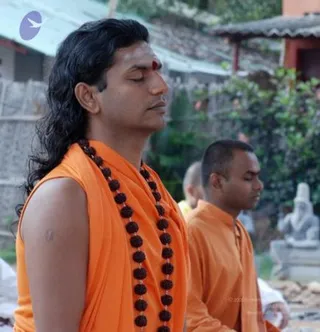
A small photograph of a group of men seated in a row on a plain floor, several wearing white dhotis and kurtas, some with white cloths over their shoulders or heads. The man on the far left wears a yellow top, and the others are seated with hands folded or resting in their laps, appearing to listen attentively to someone out of frame. The setting looks like a simple indoor satsang or discourse gathering.A photograph of a long-haired man with eyes closed in meditation, wearing an orange sleeveless garment and a long dark rudraksha mala with a red tilak on his forehead. Behind him, a second man in an orange kurta also sits with eyes closed. Garden foliage, a small red shrine structure and a stone deity murti are visible in the background. The man in front, appearing to be a person, is seated in meditation with a rudraksha mala draped over orange clothing. The scene is an outdoor meditation setting.

SARVA-DARSHAN

3 photosSource gallery
A photograph of a group of men walking along a dirt path lined with low brick buildings and green shrubs. At the front, a man in a light blue shirt and dark trousers walks beside others in white kurta-style clothing and a man in a dark jacket. Several men wear white, and one wears a dark maroon shirt. Behind them stands a bare-leaved tree and a few more people in the distance. The scene looks like an ashram walking procession.A photograph taken under a tented roof at an outdoor gathering. A man with long dark hair, wearing a saffron-orange sannyasi robe and a rudraksha mala, smiles while placing his hand on the head of a man in white shirt and trousers with hands pressed together in greeting. Behind them, a bald man in white with an orange shawl and another saffron-robed sadhu stand among a crowd of devotees in white and orange. The saffron-robed sadhu on the right holds a sheaf of papers and a brass vessel. Several people are visible in the background.A photograph of a crowd of men standing indoors in a dim hall, many in white shirts and white dhotis. In the centre foreground a man in a white shirt holds up a large white-and-gold framed object above the crowd. Some people wear caps or have shaved heads. Background shows a lit doorway and wall fittings. Printed text is not clearly legible.

GURU-POOJA-BY-BRAHMACHARIS

1 photoSource gallery
A photograph of a group of seated men in white ritual clothing, several with shaved heads, sitting on a mat and pressing their palms together in namaskar or prayer. Some wear white shawls and necklaces, and in front of them are brass plates and offerings on a low platform. A white canopy and light background frame the scene. No figure is clearly identifiable as a person from appearance alone.

e-KALPATARU

6 photosSource gallery
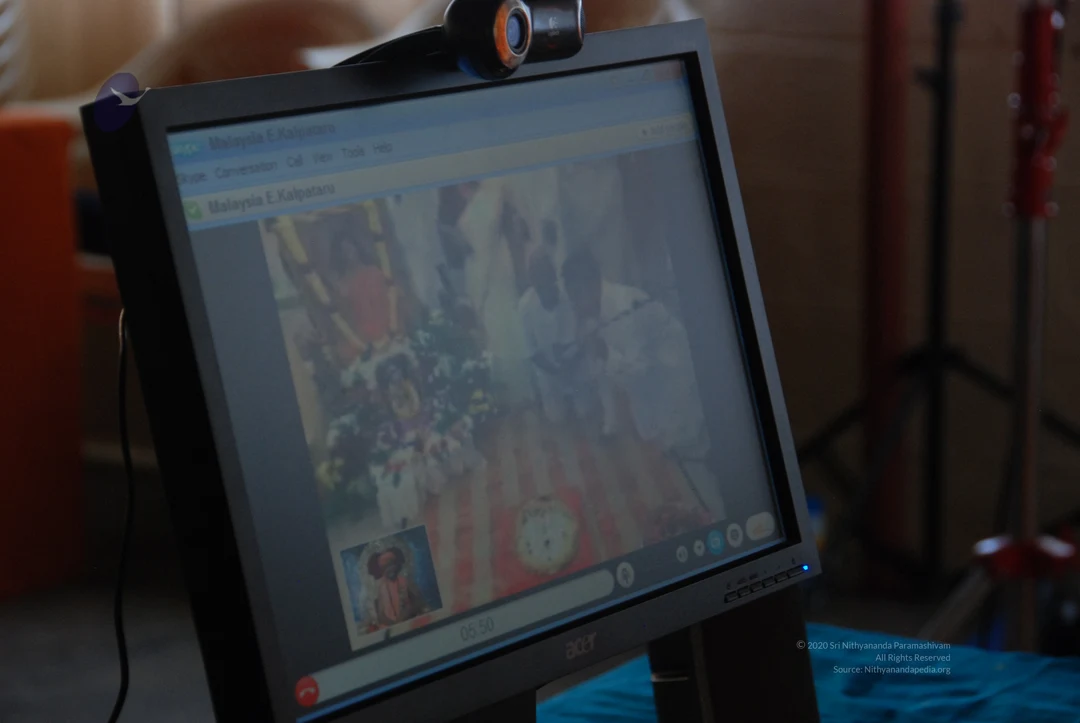
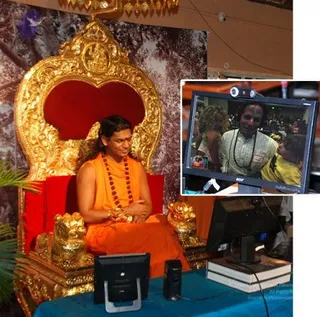
A seated man in saffron-orange robes with long swept-back dark hair sits on an ornate gold throne with a red cushioned back and gold lion-shaped armrests. He wears a rudraksha mala necklace and a gold bracelet, with his hands resting in his lap. A background of carved gold patterns and a wall-mounted fabric backdrop surround the throne. In the lower right, a monitor displays a video call showing a man in a white shirt with a lanyard among other people, with a webcam on top. Desk items including a small speaker, a laptop and a blue tablecloth sit in front of the throne.A photograph of a man seated on a red-cushioned throne in an ornate setting with a red and gold backdrop. He wears orange saffron robes and has long swept-back hair, with a visible cloth draped across his shoulders. A laptop sits open on a table in front of him, next to a brass vessel and green potted plants. The scene suggests a live broadcast or recorded talk.A photograph of a computer monitor with a webcam on top, showing a live video feed of a room filled with seated and standing devotees. In the foreground a woman with glasses and dark hair gestures with raised hands, and behind her an older man with white hair and a white beard wears a white shirt. Several people in saffron and orange clothing stand in the background. A small inset thumbnail in the lower left shows a portrait of a figure in saffron robes with a crown-like headdress. The monitor sits on a blue cloth at the bottom of the frame, with an Acer logo visible.A two-panel collage of photographs from an indoor room. In the left panel, a man in a white dhoti and yellow-trimmed shawl bends forward, touching the feet of a seated elder in white clothing before a tabletop with flowers and a small shrine-like setup. In the right panel, a woman in a yellow sari and a man in white clothes sit near a low table covered with pink flower petals, with a framed image on the wall behind them. Both panels show people in devotional greeting or honouring poses. a person's presence is not clearly established from appearance.A photograph of an indoor meeting room with cream walls and wooden panelling. Several rows of seated attendees face a large flat-screen television on the left, which shows a video. A framed portrait hangs on the wall behind the screen. Attendees sit on chairs and floor cushions, some wearing light-coloured clothing, and the room has a warm, subdued lighting.

HDH-MEETS-WITH-RAM-SENA-CHIEF

5 photosSource gallery
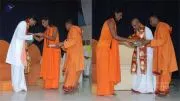
Photograph of a ceremonial lamp lighting on a stage. A young man in saffron-orange robes stands at left, a man in white kurta in the centre holds or tends a brass oil lamp, and a man in orange-saffron robes with a shawl stands at right with hands joined in greeting. A purple-toned backdrop and a white floral arrangement are visible behind them.A smiling man with long, swept-back black hair wears a sleeveless saffron-orange robe and a long necklace of dark rudraksha beads, with a small red bindi on his forehead. He stands in profile before a microphone on a stand against a dark blue backdrop, appearing to speak at a satsang or discourse.A photograph of a seated audience facing a stage at an indoor event hall. On stage, several people sit or stand in front of a dark backdrop, with a few figures in saffron or orange clothing among them. In the foreground, a large audience of men and women in mostly light and white clothing sit on the floor and in rows, listening attentively. The setting appears to be a discourse or satsang session. No readable text is visible in the image.A small stage event with two people seated in white cushioned chairs against a plain backdrop. On the left, a woman with long dark hair wears an orange-saffron garment with a rudraksha mala and holds a microphone to her mouth. On the right, an older man with short grey hair and a white shirt with a golden-brown shawl sits with his palms pressed together in a greeting gesture. Two people visible.A three-panel collage of photographs from a ceremony on a stage. In each panel, saffron-robed monastics stand with hands joined or offering items, while a figure in white stands at centre. Tall brass lamps and a decorated backdrop are visible. The collage shows people receiving or presenting objects, with the central white-clad figure at the focus of each panel.

FREE-MEDICAL-CAMP-HEALTH-SERVIES-BY-NITHYANANDA-DHYANAPEETAM

3 photosSource gallery
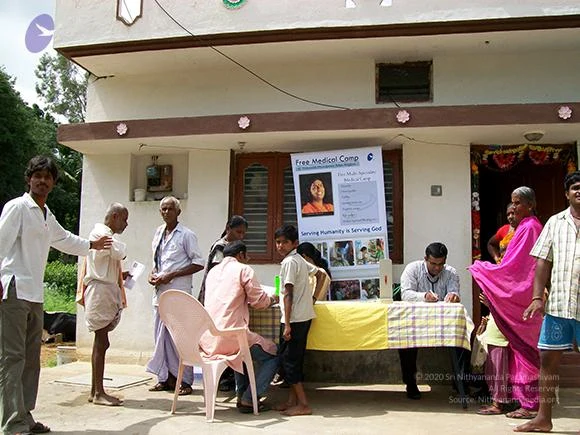
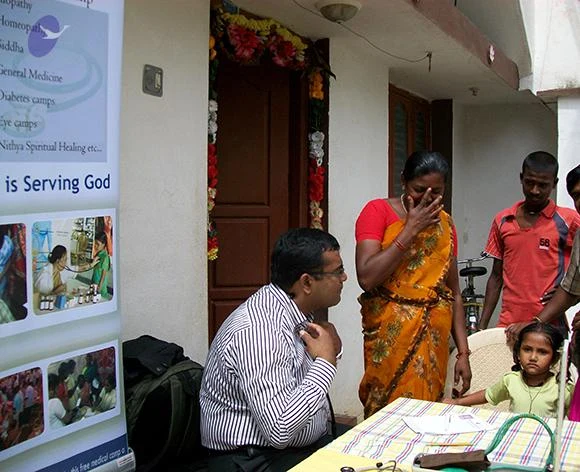
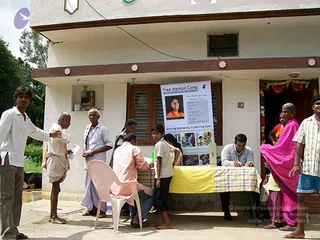
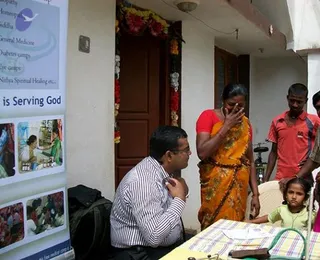
A photograph of a free medical camp outside a whitewashed building with a tiled roof, decorated with a pink floral garland above the doorway and a string of marigolds. A printed poster on a table shows a woman in orange clothing labelled with a Free Medical Camp heading and the slogan Serving Humanity is Serving God. Seated at the table, a man in a light shirt writes in a ledger while a young patient in a pink shirt stands beside a pink plastic chair. Several villagers wait nearby: a man in a white shirt and dhoti on the left, an elderly man in a white dhoti, a woman in a pink sari on the right, and a boy in a striped shirt. The scene is an outdoor village clinic under a tree-lined yard.A free medical camp outdoors in front of a house with a wooden door decorated with a garland of red and yellow flowers. A man in a striped white shirt and glasses crouches beside a table covered with a checked cloth and holds a stethoscope to a woman's chest; she wears an orange-yellow sari with a red blouse and covers her mouth with her hand. Behind them a man in a red shirt, a boy in a dark shirt and a small girl in a yellow top stand near the table. A tall vertical banner on the left shows photos of medical care and lists services such as homeopathy, siddha, general medicine, diabetes camps and eye camps. Printed banner text reads 'is Serving God'.A small indoor scene in what looks like a simple room. A woman in an orange sari and a black headscarf stands at the left, facing a table on which a green plastic cup or container is placed. Behind her, several people in plain clothes, including a woman in a white sari, are gathered near a doorway and a white wall. The atmosphere is of a casual service or distribution moment rather than a formal ceremony. No a person candidate is clearly visible.

LIFE-BLISS-TECHNOLOGY

4 photosSource gallery
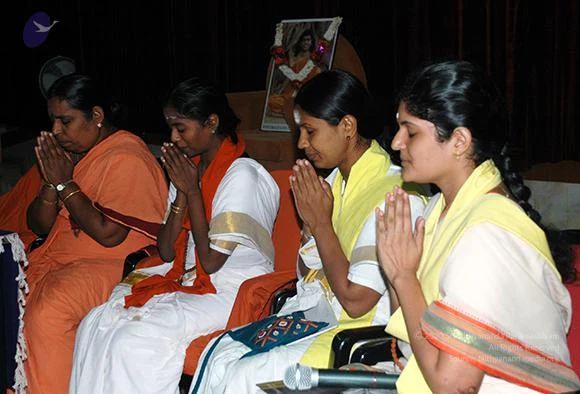
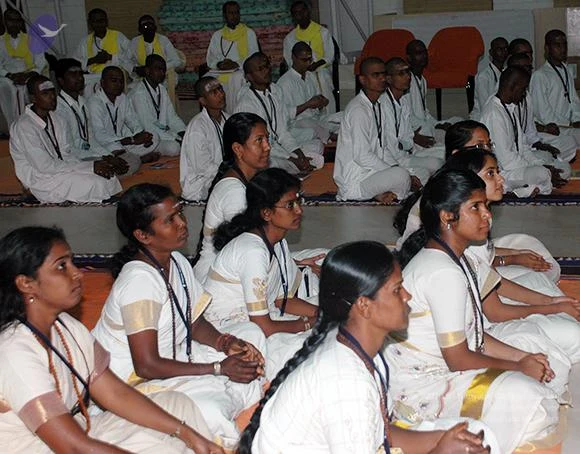
Four women sit in a row with their palms pressed together in anjali mudra, eyes closed, in a meditative or prayerful posture during a satsang-style gathering. The woman on the far left wears an orange saffron sari and bangles; the second wears a white sari with a gold border and an orange shawl; the third wears a white sari with a yellow shawl; the fourth on the right wears a white sari with a yellow shawl and red-and-gold border. Behind them a framed portrait of a dark-haired figure garlanded with red flowers hangs on a dark backdrop, and a microphone stands in front.A photograph of a seated audience at a satsang or discourse, with many devotees in white clothes listening attentively. In the foreground, several women wear white saris with gold borders and rudraksha malas around their necks, sitting cross-legged on a mat with hands folded in their laps. Behind them, rows of men wear white kurtas and white dhotis with lanyards and rudraksha malas, some in yellow shawls, seated on the floor. Red chairs appear at the back of the hall and a flower garland hangs on the wall. Gazes are directed forward toward the speaker, who is not visible in the frame.

NITHYANANDA-GALLERIA

1 photoSource gallery

KANNADA-ANANDA-SPURANA-PROGRAM-BY-ACHARYA

1 photoSource gallery
Two side-by-side photographs from a discourse event. On the left, a seated audience member in white clothing faces a large projected screen showing slides. On the right, a speaker in a white robe and white head covering stands at a wooden podium with a microphone, gesturing while speaking to the room. A small framed image appears near the stage area. The scene appears to be an indoor lecture or satsang hall with wooden paneling and warm lighting.

TAMIL-ANANDA-SPURANA-PROGRAM

1 photoSource gallery

GANAPATI-HOMA

5 photosSource gallery
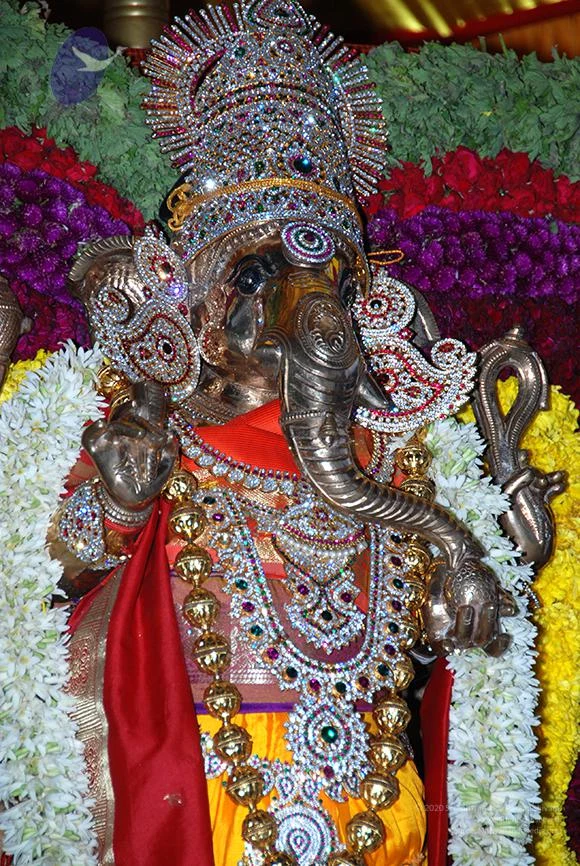
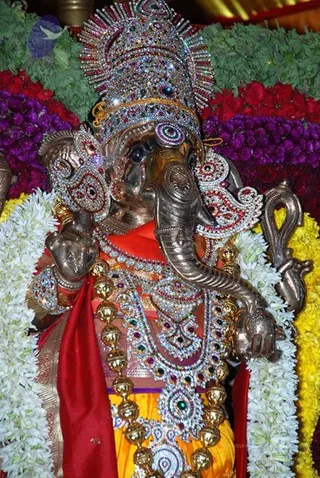
A photograph of a seated audience at an evening event, with many people in white clothing sitting on the floor in rows. Several women wear colourful saris, including pink and orange tones, and a few people sit at the front near a lit area. The setting appears to be an indoor hall with warm lighting, consistent with a satsang or discourse gathering.A large silver-toned Ganesha murti is the central subject, adorned with an ornate crown and ear ornaments set with white and multicoloured gemstones. The deity wears a jewelled necklace, a red and orange sash over the shoulder, and a golden-yellow dhoti with golden bells hanging at the waist. Its trunk curls toward the viewer and a raised hand holds a small object, with another hand holding a staff-like item. It is framed by white jasmine garlands and dense strands of purple and red flowers and green leaves. No people are visible.A photograph of a temple interior during a ritual. In the centre a standing figure in white ritual clothing, head shaved, performs a puja before a deity murti, with a brass lamp and kalasha nearby. A green-lit alcove and ornately decorated pillars frame the scene. A seated devotee in white sits at the lower left, and other figures stand in the background near the shrine. Visible props include a plate of offerings and a small oil lamp. a person is not clearly identifiable by appearance here, so no probable label is applied.

PADA-POOJA

4 photosSource gallery
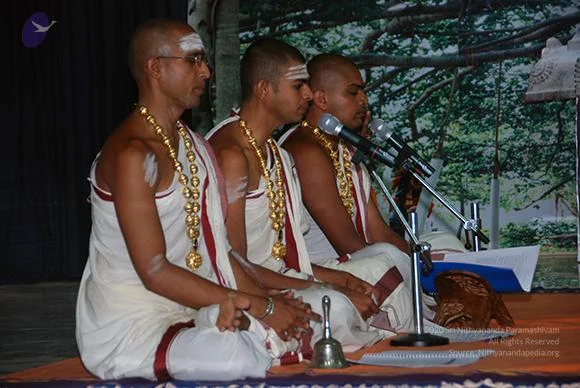
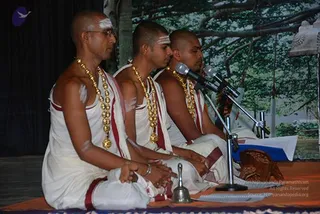
A three-panel collage of photographs. The top-left panel shows a man with long hair and a saffron-orange robe seated against a red background. The right panel shows a bearded man in saffron ceremonial clothing holding a gold ritual object near his chest. The bottom-left panel shows a golden deity murti, with floral decorations, seated on a decorated altar.Three shaved-headed men in white ceremonial dhotis with maroon borders sit cross-legged on an orange mat, facing left before microphones on stands. Each wears a tilak on the forehead and a heavy gold-bead necklace. The man on the far left wears glasses and rests his hands near a small brass bell. A blue book sits open on a stand, and a painted forest backdrop with a sunlit path hangs behind them.A large indoor hall filled with seated audience members in rows, many wearing white or light clothing, with some figures in orange or saffron garments in the foreground. The space is bright with warm lighting. Individual faces are too small to read, and no clear presenter is distinguishable from this distance.

NITHYA-SATSANG

2 photosSource gallery
A photograph of a large group of people seated closely together in rows inside a hall, most dressed in white clothing with some in lighter tunics. Many have their hands folded or are seated in a meditative posture, and the setting looks like a congregation or satsang gathering. Several figures in the front rows are visible, with the audience filling the frame.

KALPATARU-DARSHAN

6 photosSource gallery
A photograph of a seated figure in an orange-saffron robe with a bare upper body, sitting cross-legged in front of a yellow-and-green flower-decorated backdrop at what looks like an indoor hall. Green leafy plants and floral arrangements frame the scene. A person in a red-brown robe sits to the right near a small table. The figure in saffron appears to be seated on a raised platform.

NITHYANANDA-SPURANA-PROGRAM

3 photosSource gallery
A wide hall with rows of seated people in white clothing facing a raised stage at the far end. The stage holds a lectern and a central figure in white, with a small group seated nearby. Large blue-green patterned panels hang on the walls and ceiling lights are visible overhead. The audience is dense, with many people in white garments seated on the floor and chairs across the room.A large seated gathering of men in white clothes sits on orange mats in a hall, most of them practising a breathing technique with one hand raised to one nostril. Many wear white shirts and white dhotis or trousers, and some have lanyards with badges around their necks. In the foreground a man in a white shirt with a red-and-white badge and a man in a pale pink shirt with a wristwatch and gold bracelet are prominent, while a bald man in white with a rudraksha-style beaded necklace sits centre-right. The scene is a meditation or breathing session with a sea of participants filling the frame.
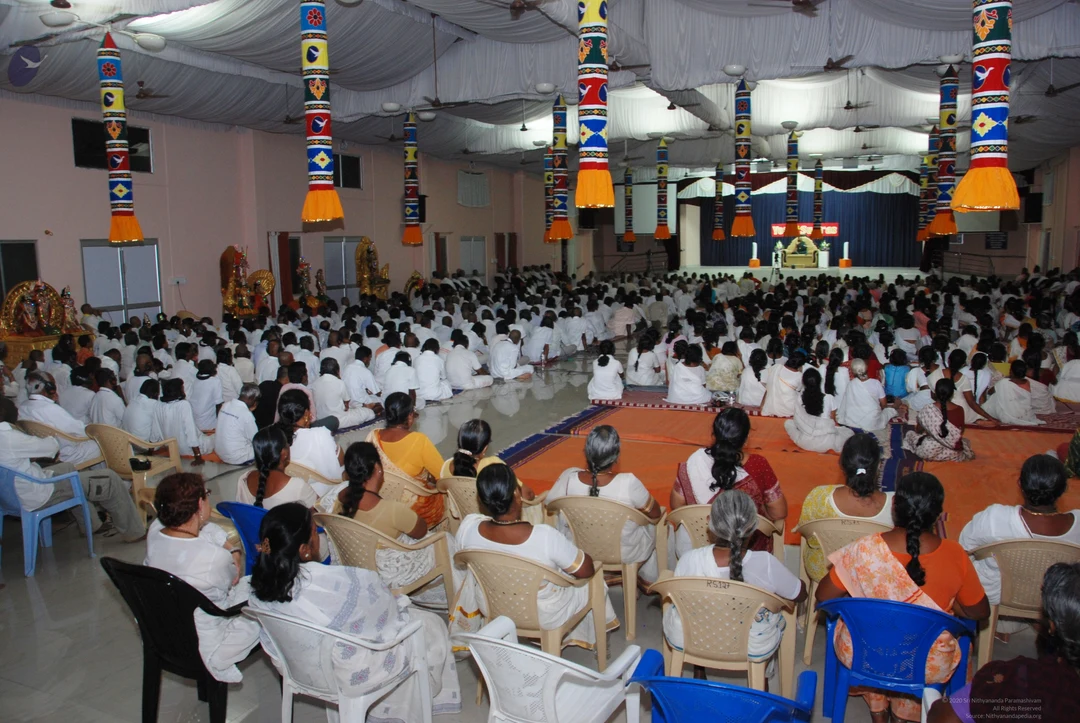
LIVING-ENLIGHTENMENT-PROCESS

6 photosSource gallery
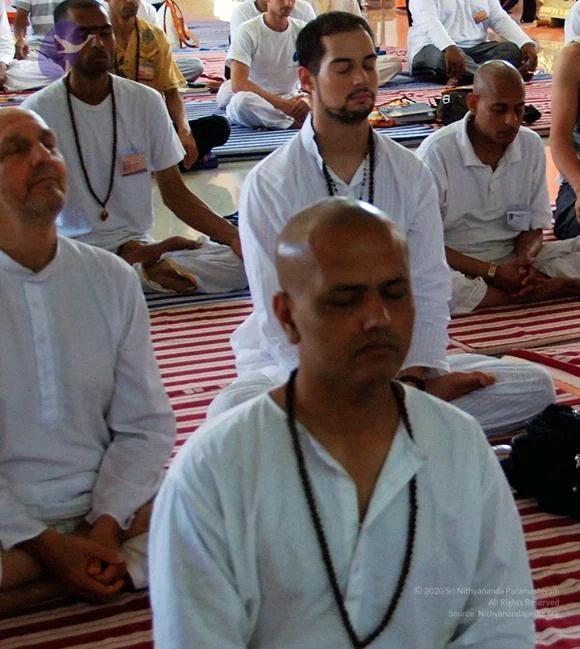
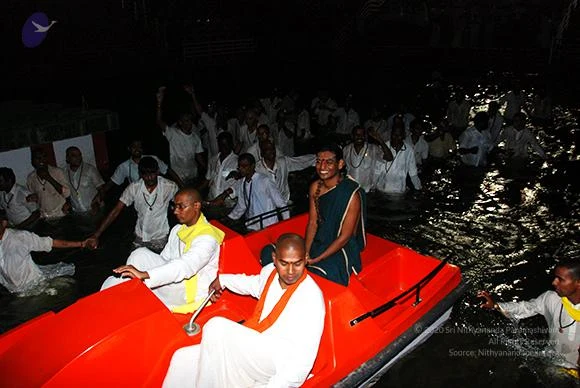
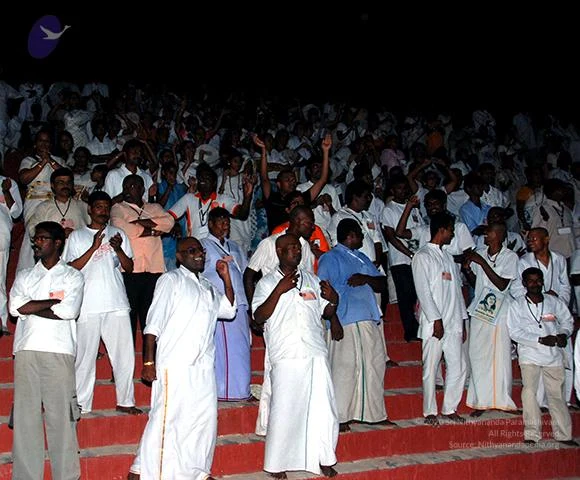
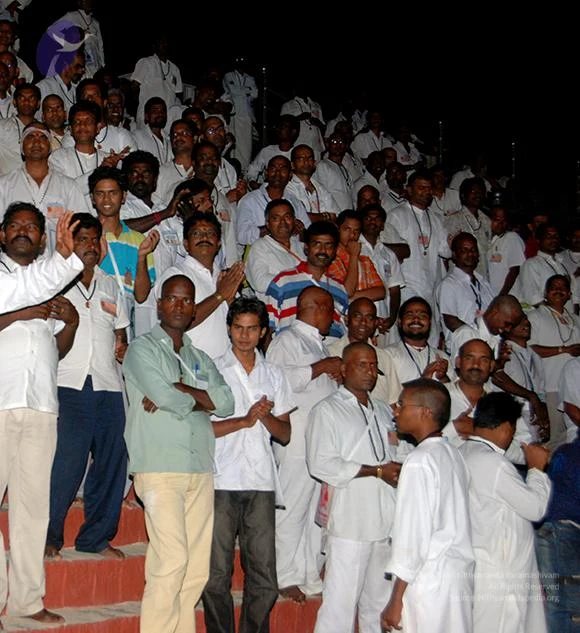
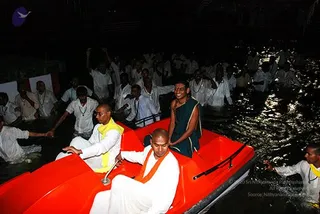
A photograph of a seated group of devotees meditating on red and white striped mats in a hall. In the foreground a bald man in white kurta with a dark rudraksha mala has eyes closed and hands resting in his lap. Behind him a bearded man in white with a rudraksha mala sits eyes closed, and to the left a man in white with a mala sits cross-legged. Others in white clothing sit in the background, some with hands folded. Practitioners sit in a meditation posture with a sense of stillness.A photograph of an indoor audience seated in rows of red upholstered chairs in a hall. Many attendees are visible, mostly in white and light-coloured clothing, with a few children in front. Several people in the foreground look toward a stage area, and the scene appears to be a seated gathering or satsang-style program. Faces are small and partly obscured.Night photo of a crowd wading through dark water, many in white clothes, some with arms raised. In the foreground a red motorboat carries three men: one in a green-blue sleeveless garment with dark hair smiling and sitting upright, another in white robes with an orange sash steering at the bow, and a third in a yellow and white outfit seated at the left. Others in white stand waist-deep around the boat, and a man in white at the right edge reaches toward it. Lights reflect on the water.A large crowd of men stands on red-painted tiered steps at an outdoor evening event. Most wear white dhotis and white shirts, and several are wearing white shawls or badges, while a few wear blue shirts and a pale lavender lungi. In the foreground, a man in a white dhoti and white shirt stands with his hands clasped at his chest and another man with arms raised looks upward. Many in the crowd raise their hands in the air. Several men on the right wear white shirts with pale badges, one with a small portrait printed on his shirt front. The crowd fills the frame, with a dark night sky behind them.A large crowd of devotees, mostly men, stands tiered on red-brown steps at night. Most wear white shirts and white dhotis or trousers, with lanyard badges around their necks. A few wear coloured shirts, including a striped red and blue shirt and a light green shirt. Several raise hands in greeting or clap, and a man at the left extends an arm upward. The scene is a dense satsang or event gathering, with no visible deity, throne or a person candidate.
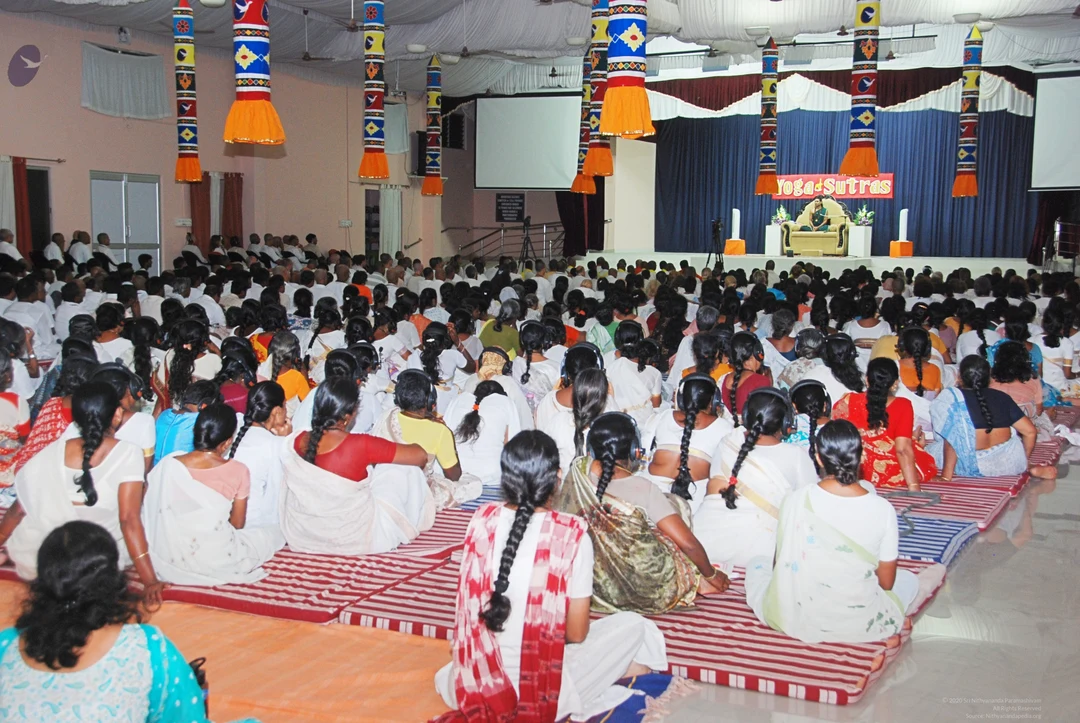
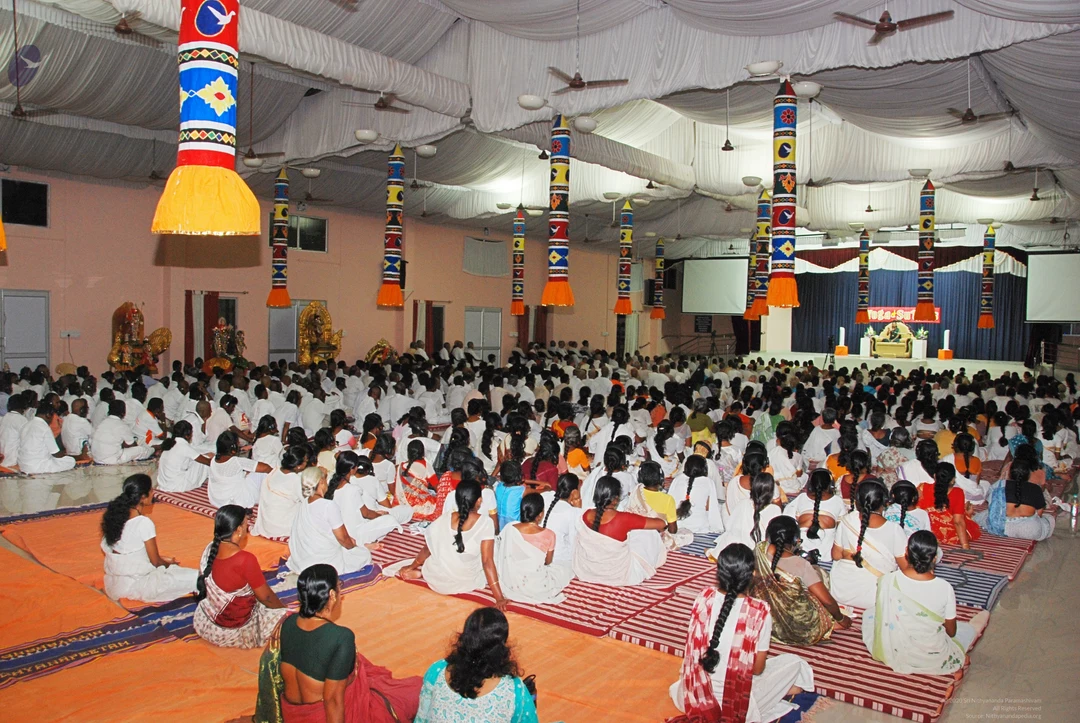
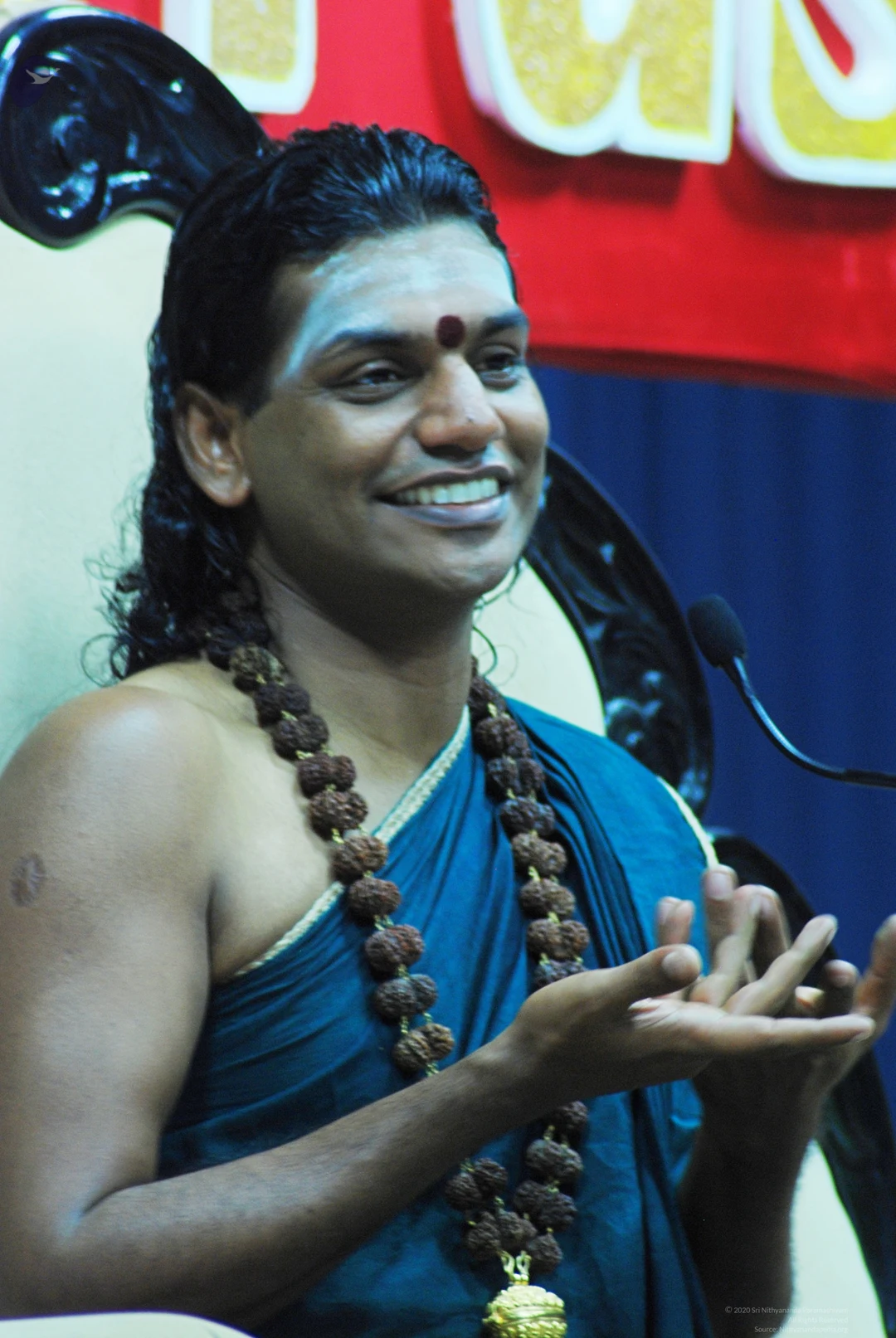
YOGA-SUTRAS-BY-HDH

3 photosSource gallery
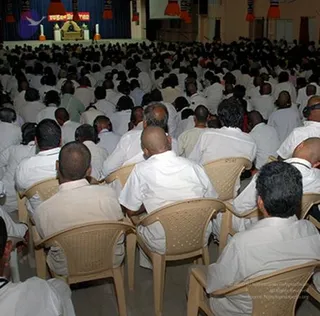
A photograph of a seated audience in a large hall, most attendees wearing white clothing and some in dark or light shirts. Rows of people face forward, watching an event at the front of the room. Several heads and shoulders are visible, with some attendees appearing older and others younger.A large seated audience, mostly men in white shirts and white trousers, fills a hall and faces a stage at the far end. Most attendees sit on beige plastic chairs seen from behind, many with shaved or short-cropped heads, and several wear headphones. On the stage a figure sits on a raised golden seat beneath a row of small red and yellow banners and a lit backdrop, with orange lamps hanging above. A projection screen is visible at the top right. The scene reads as a discourse or satsang session.A smiling man with long dark swept-back hair, a white horizontal tilak with a red dot on his forehead, wearing a teal shawl with a cream border and multiple rudraksha mala necklaces, speaking at a microphone in front of an ornate dark carved chair and a red backdrop with gold lettering. Appearance-based label: a person, giving a talk in person.