Skip to content
Wednesday

22 September 2010

How Not to Miss the Master
432Dated photos
1Source pages
4Media embeds
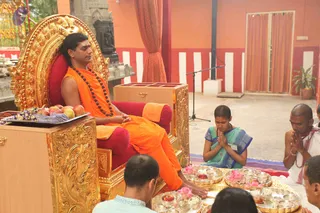
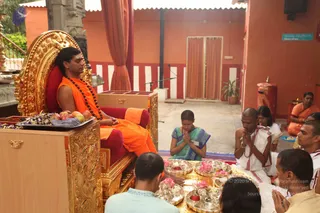
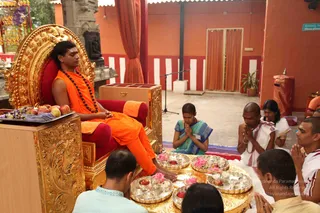
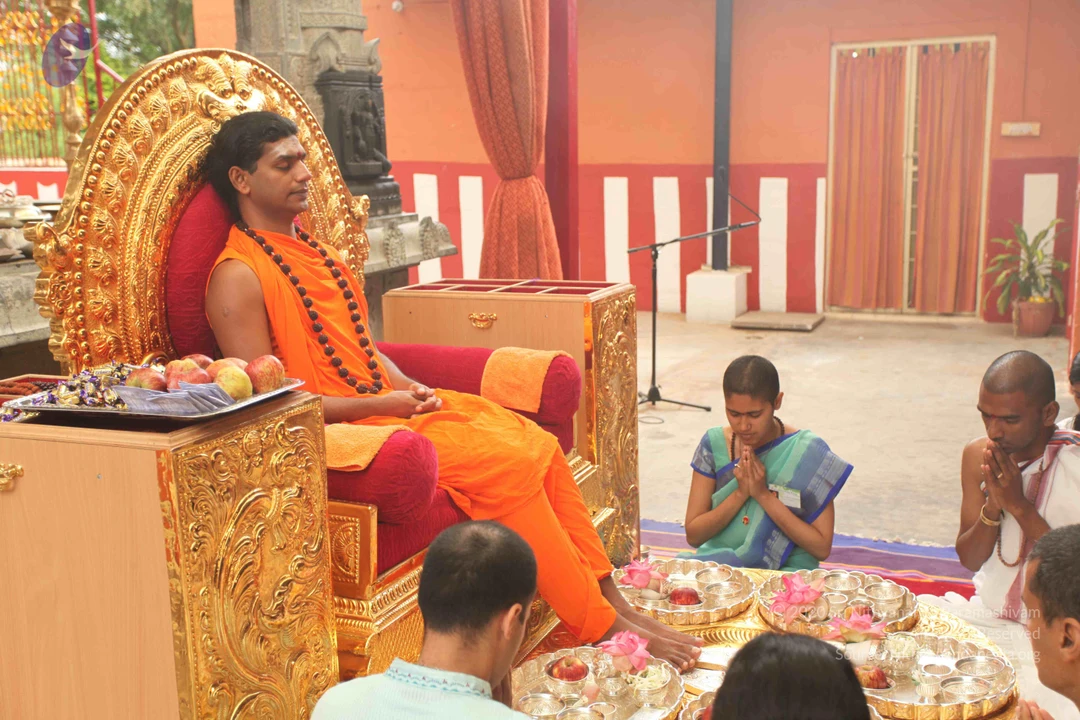
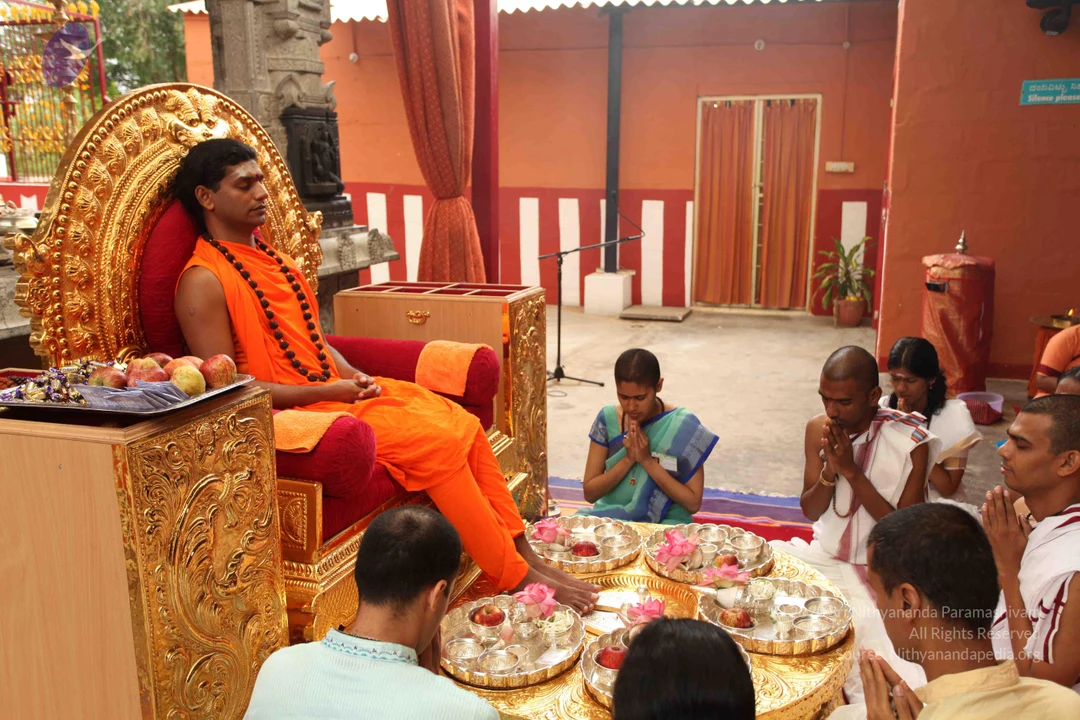
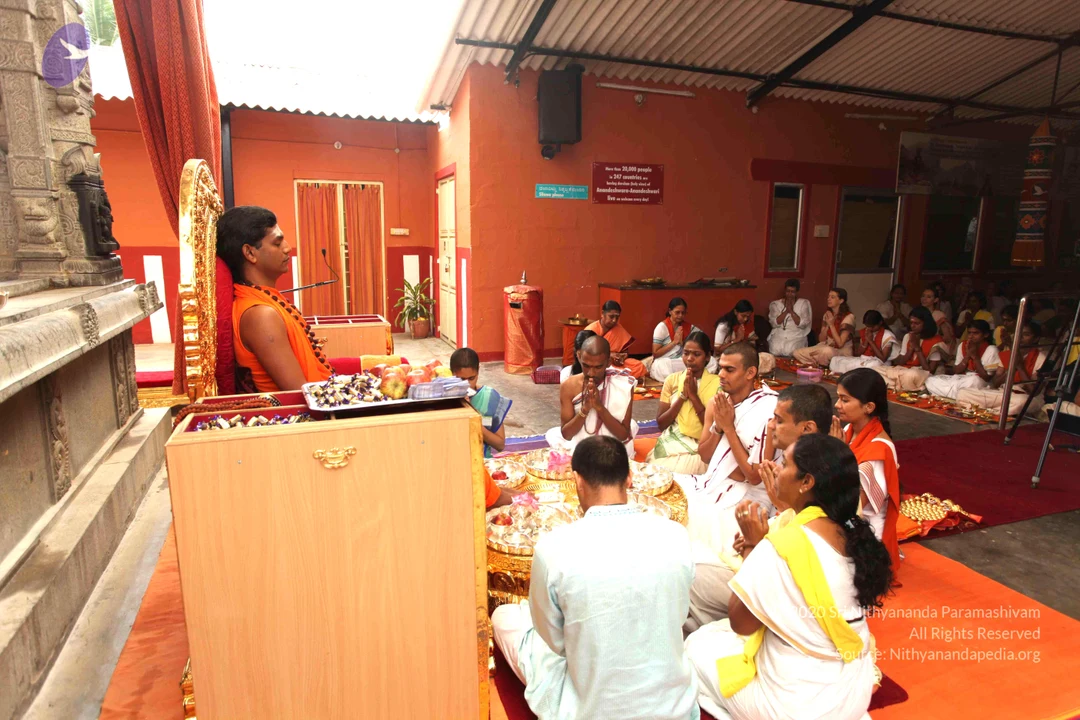
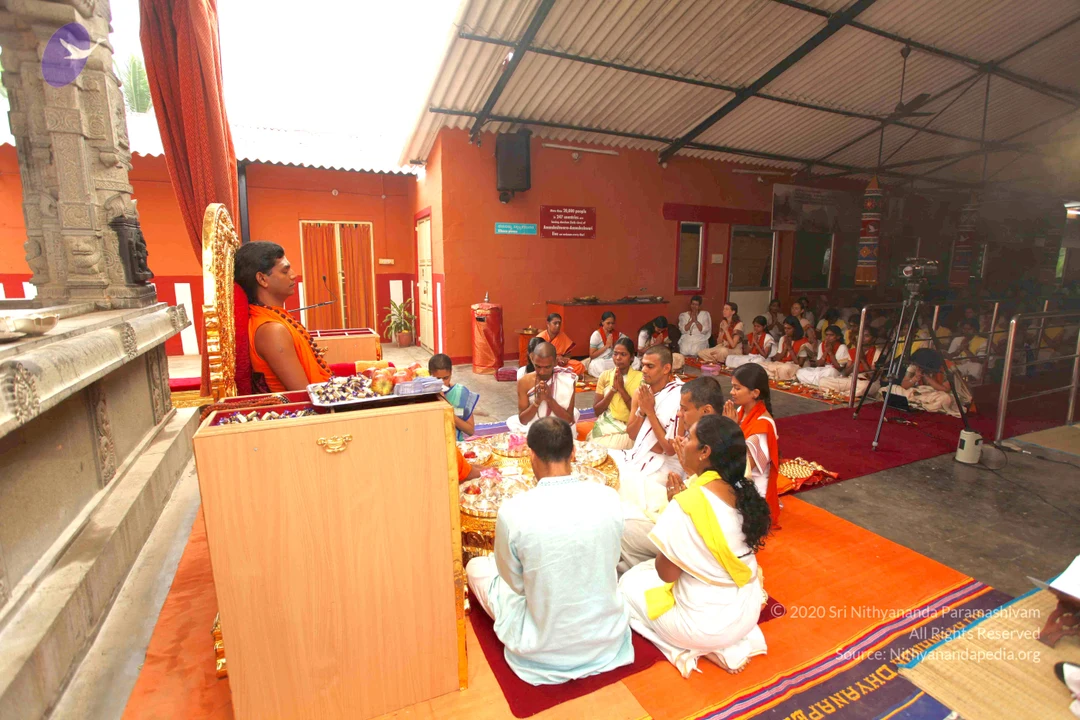
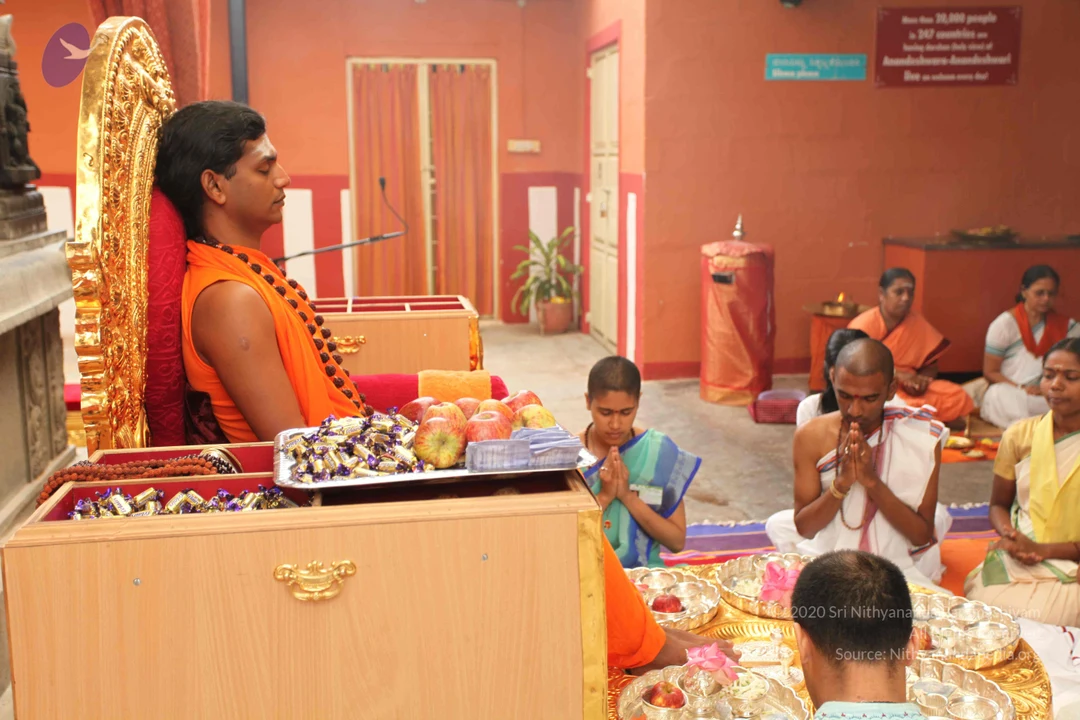
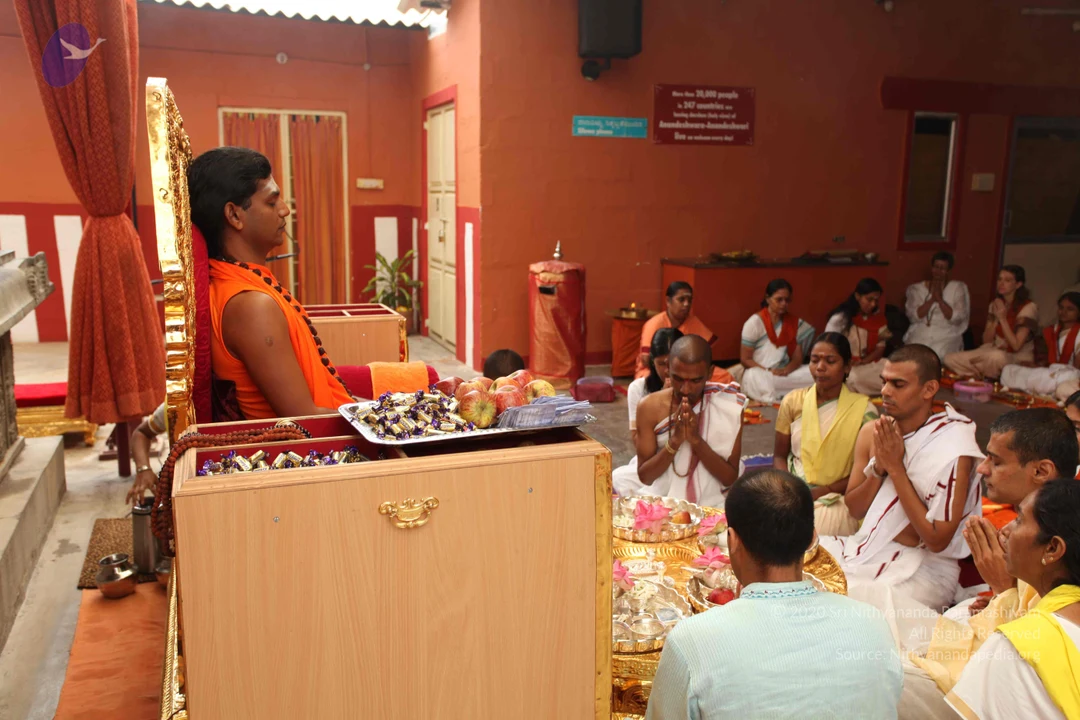
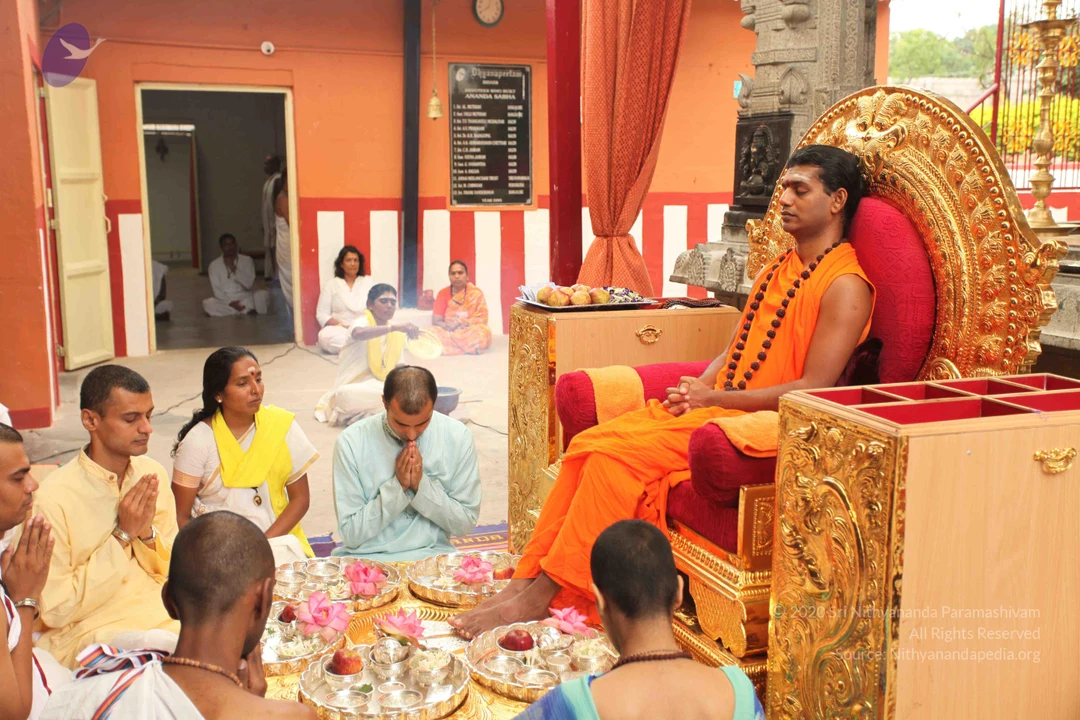
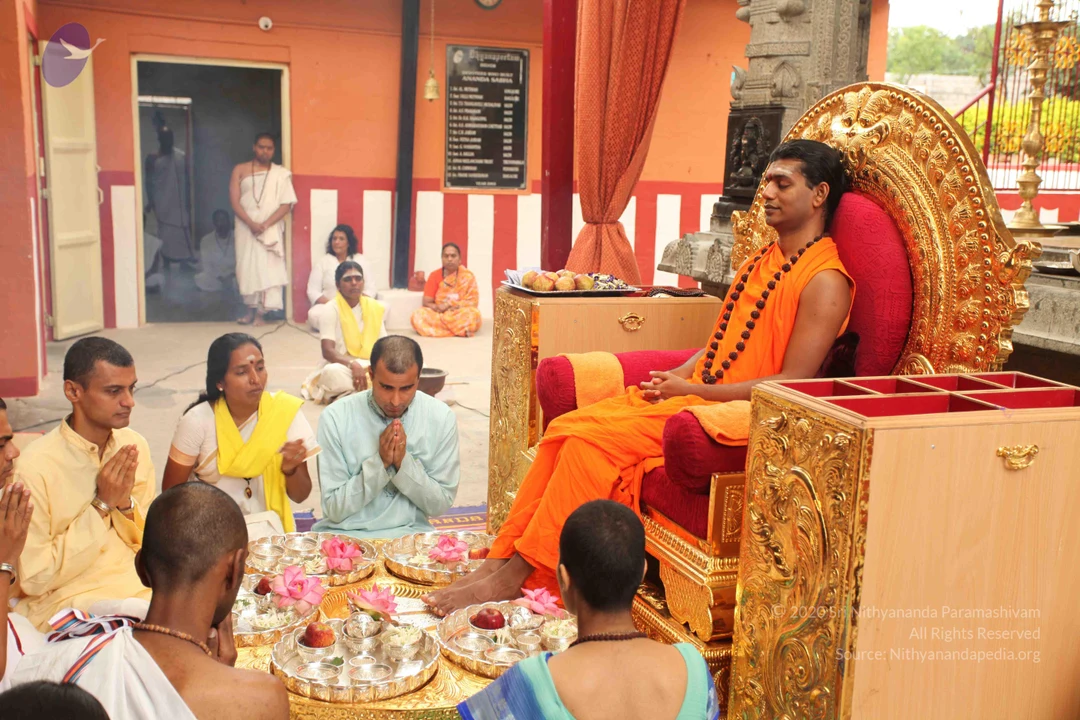
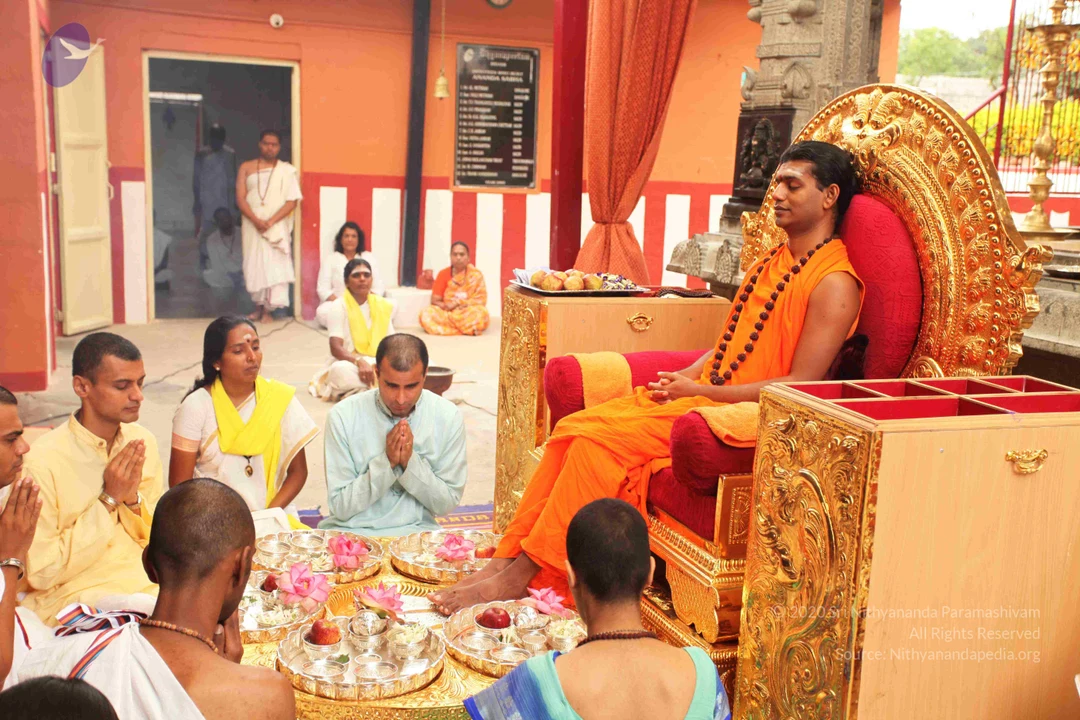
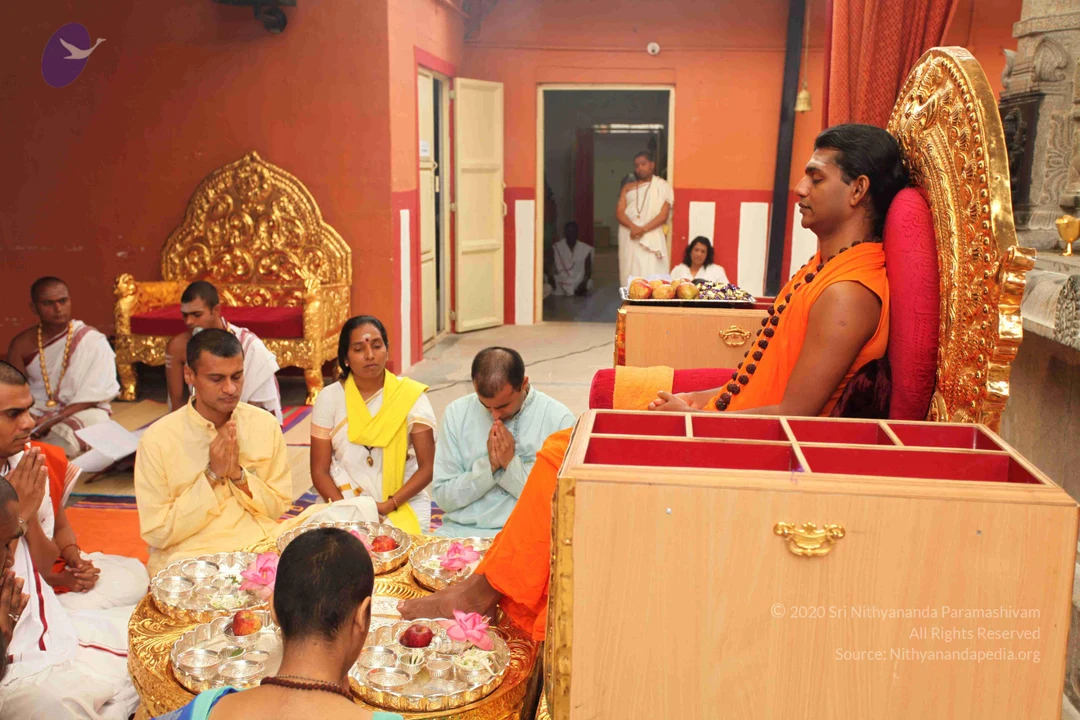
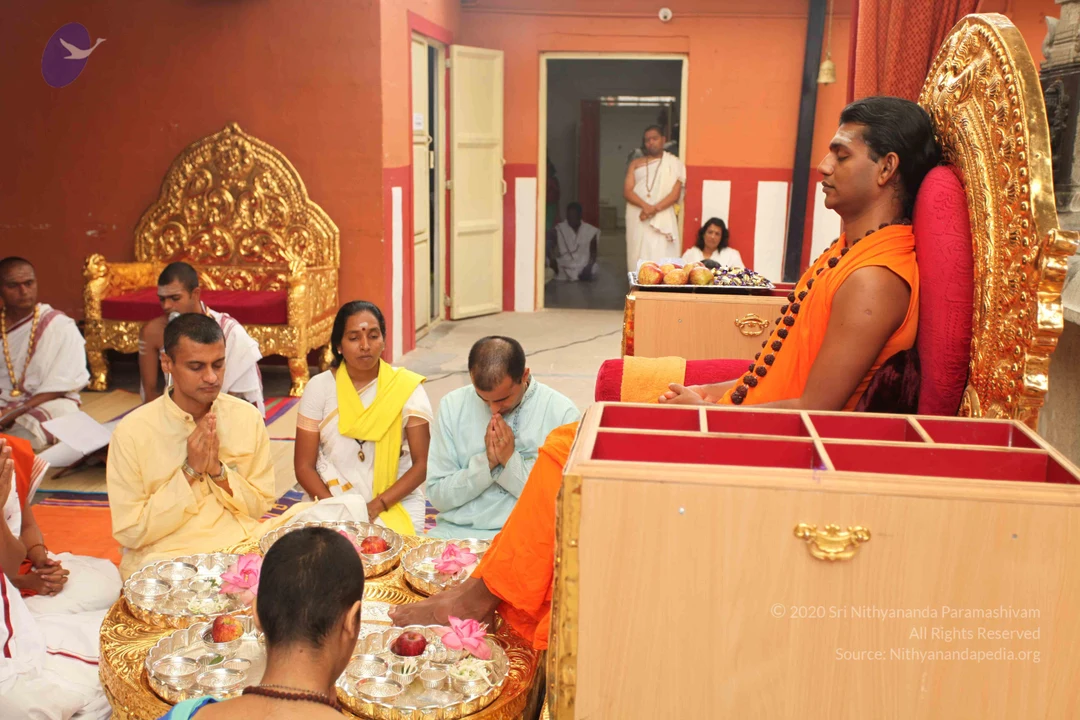
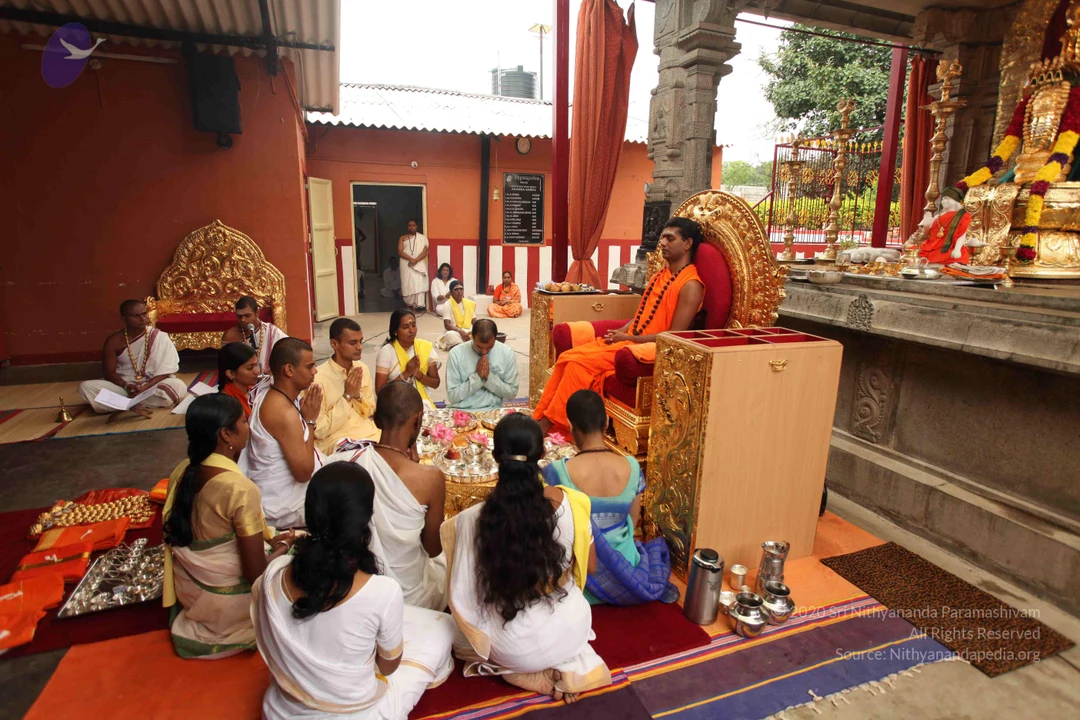
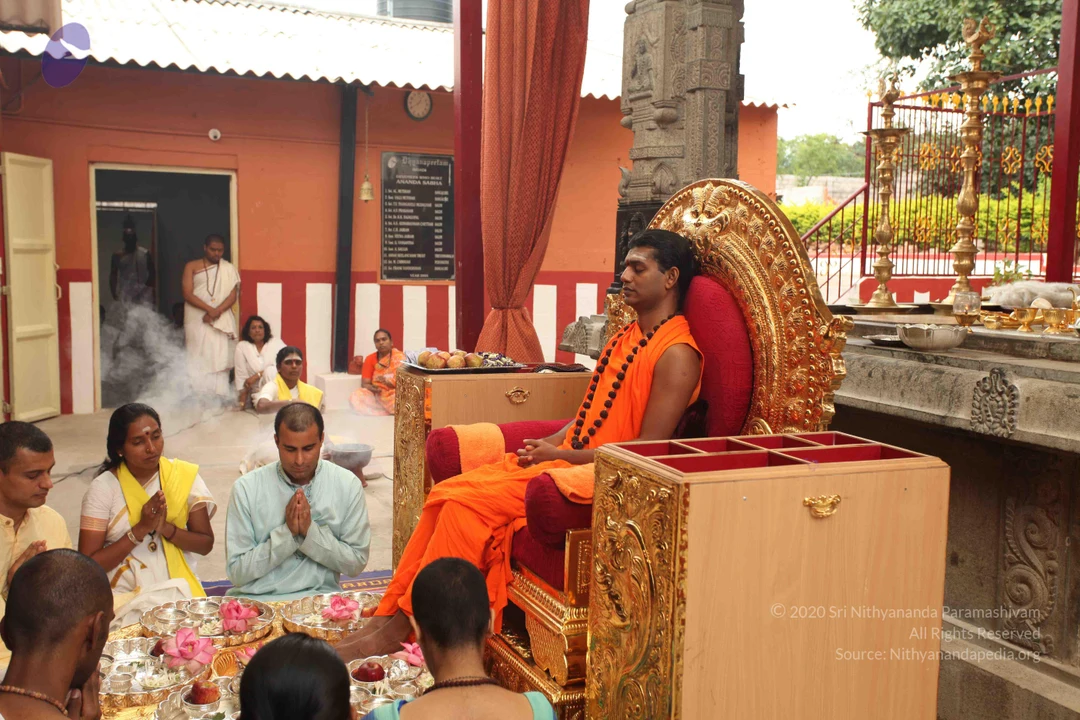
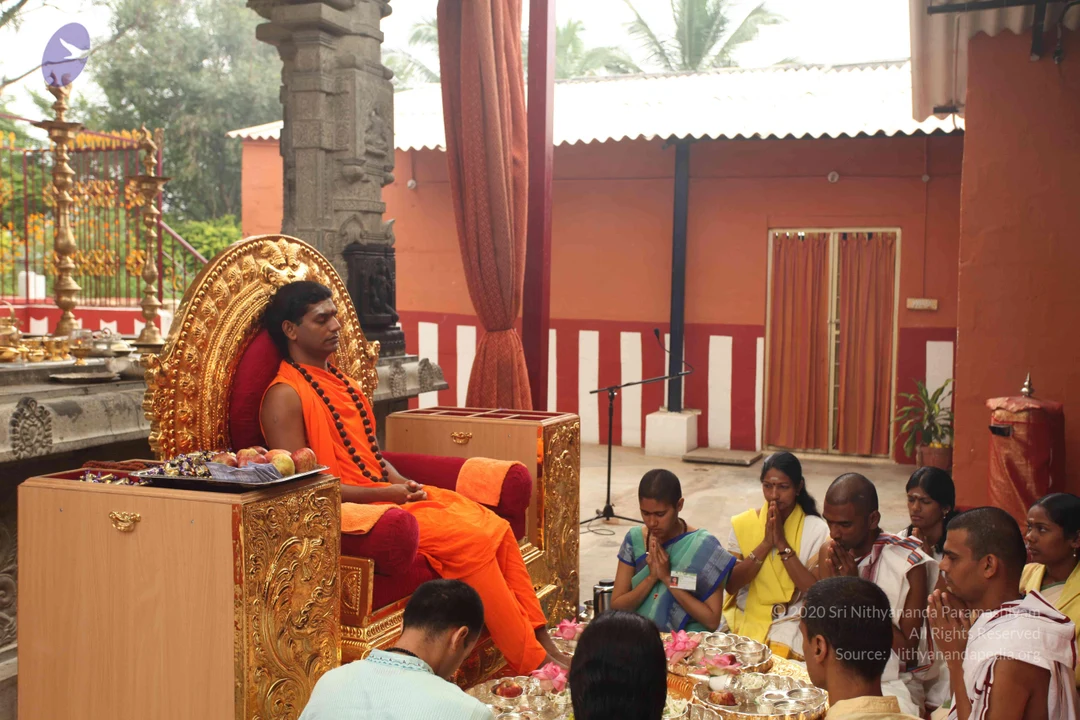
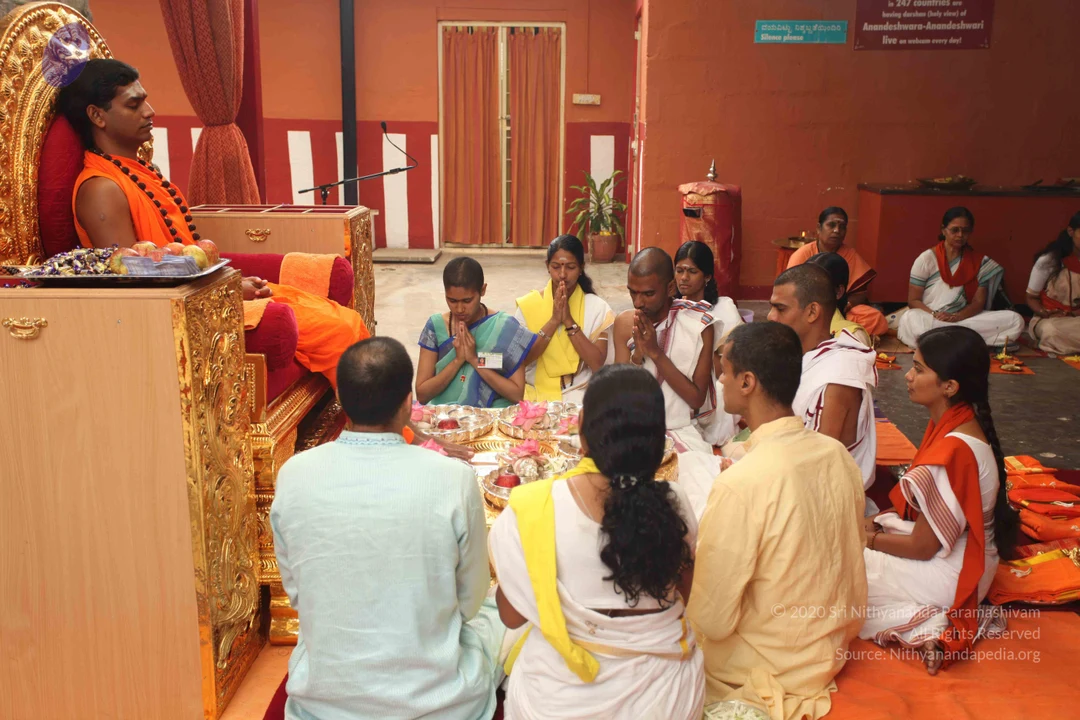
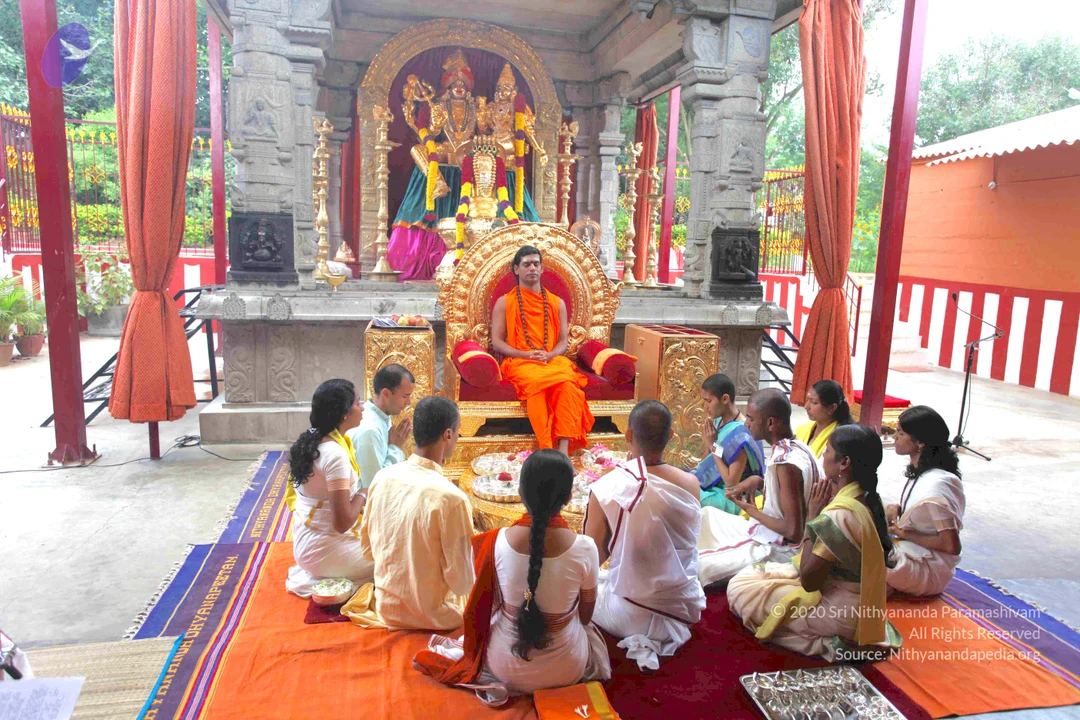
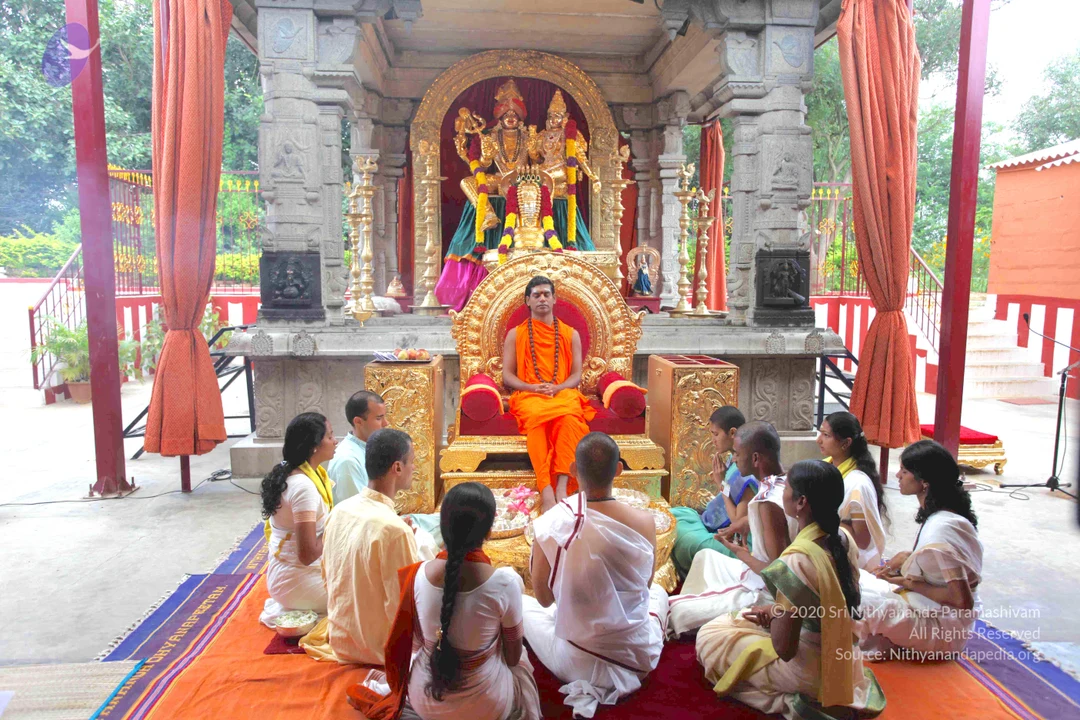
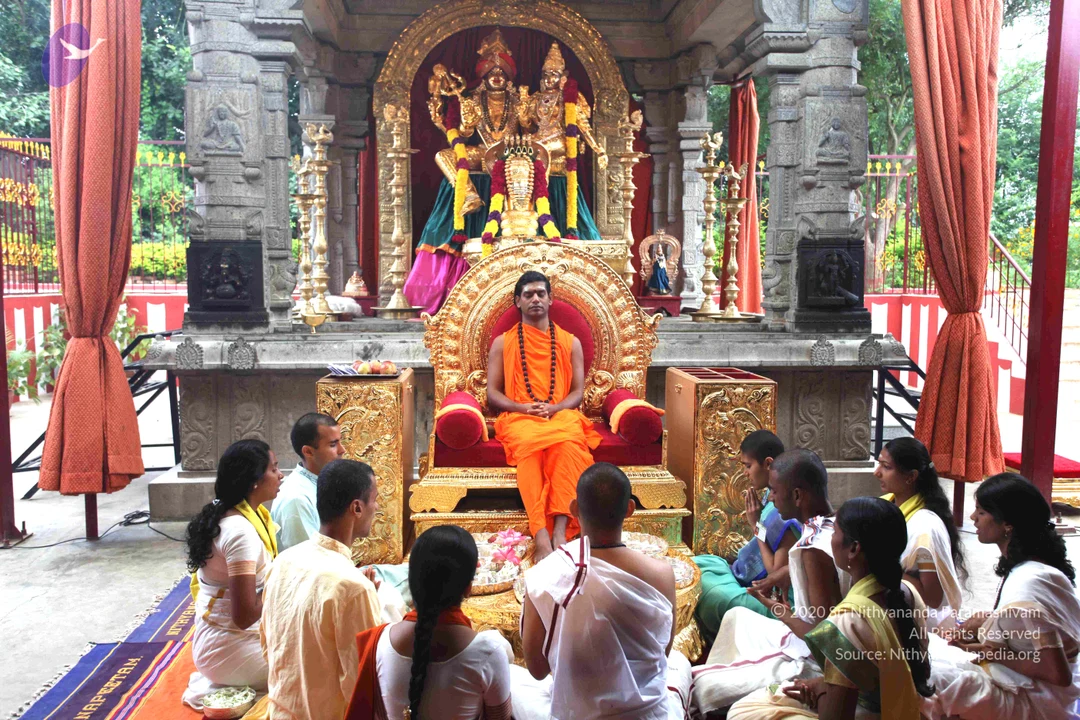
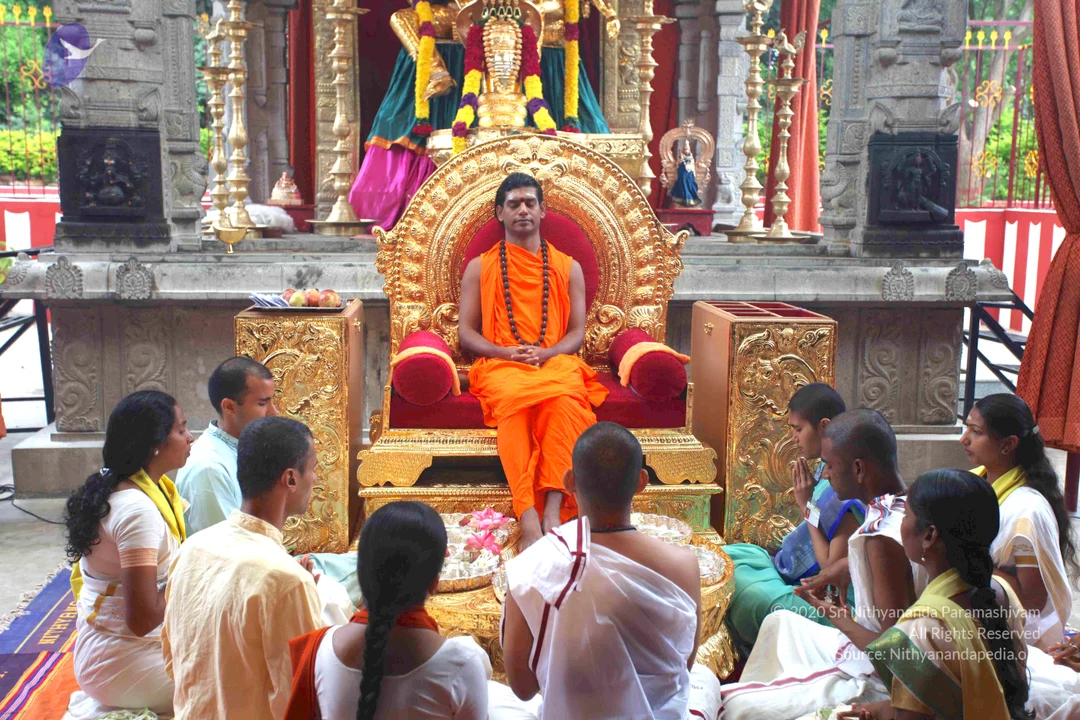
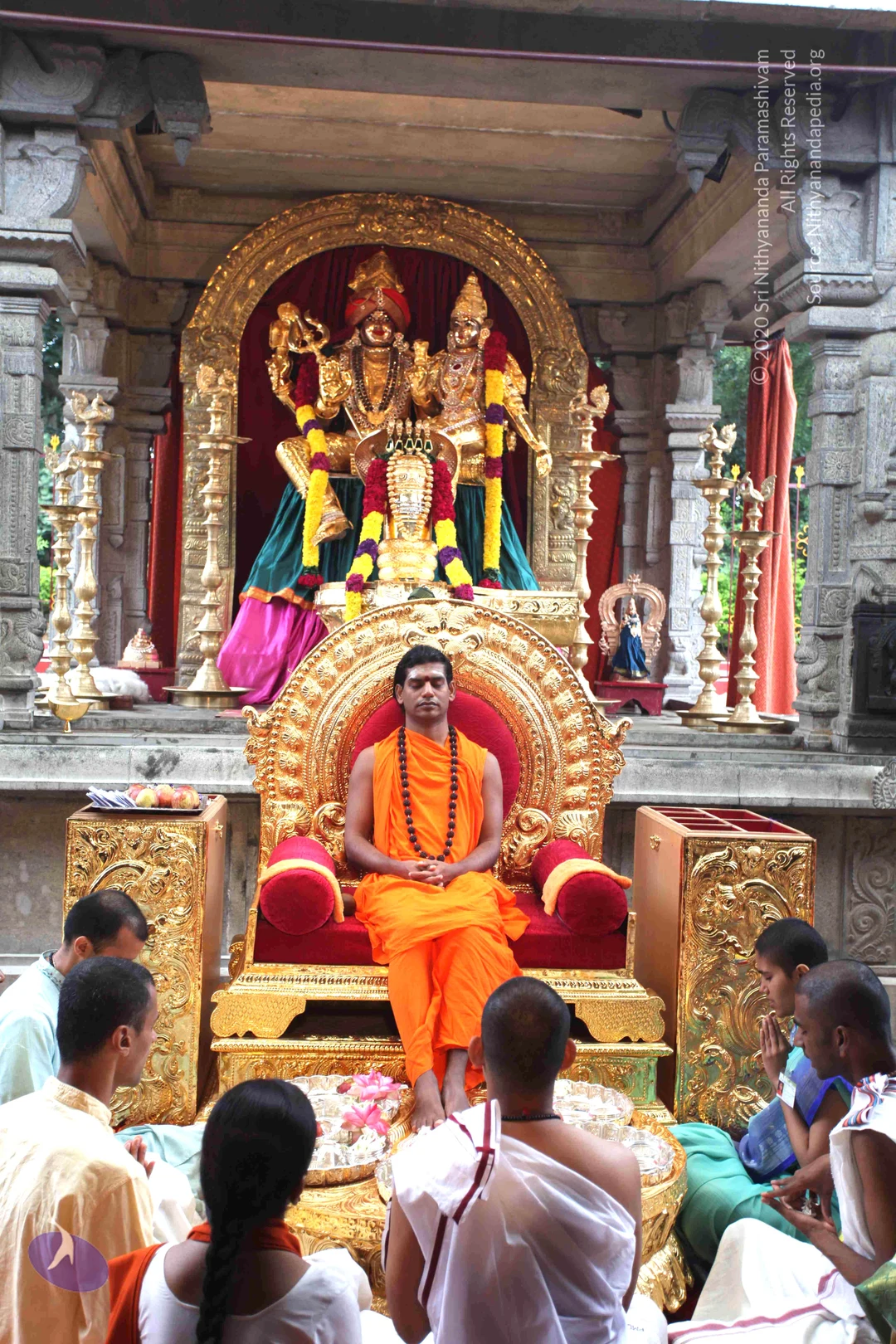
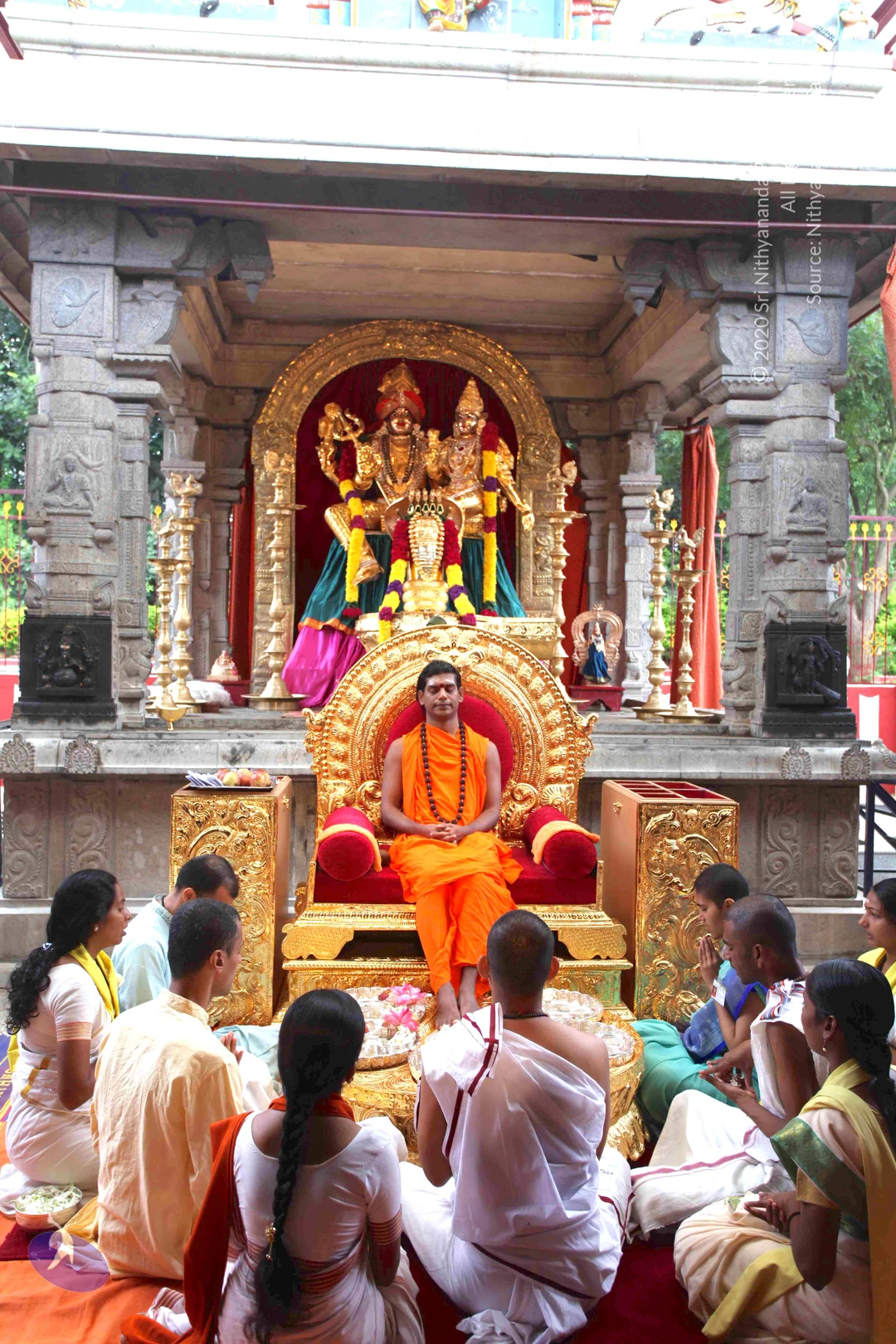
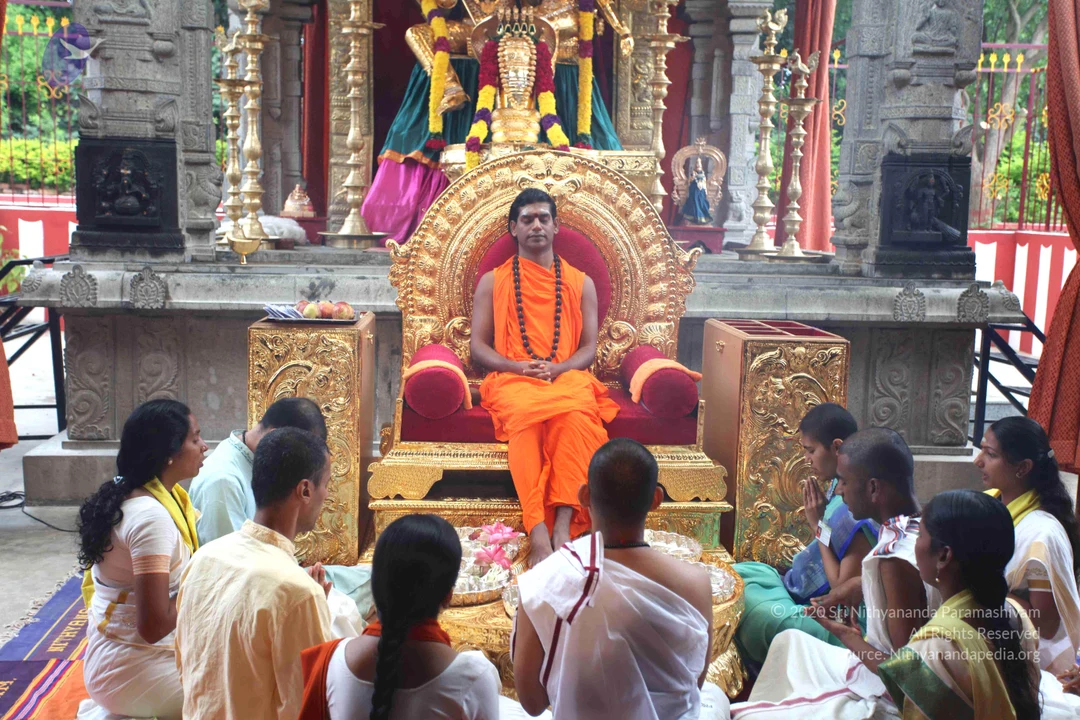
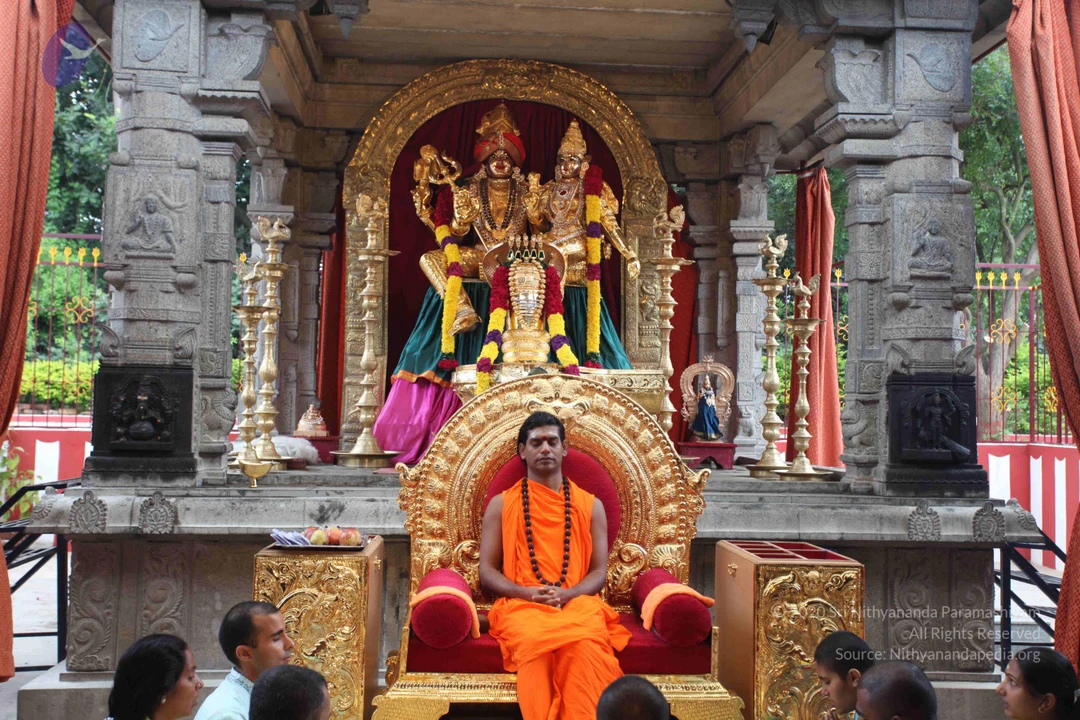
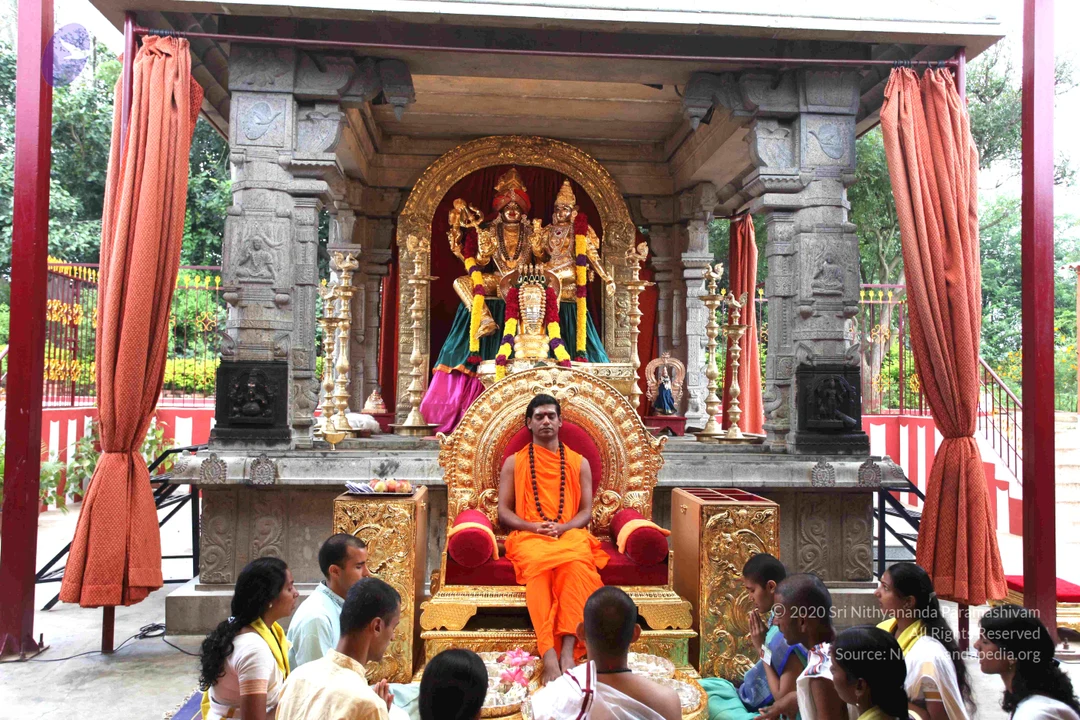
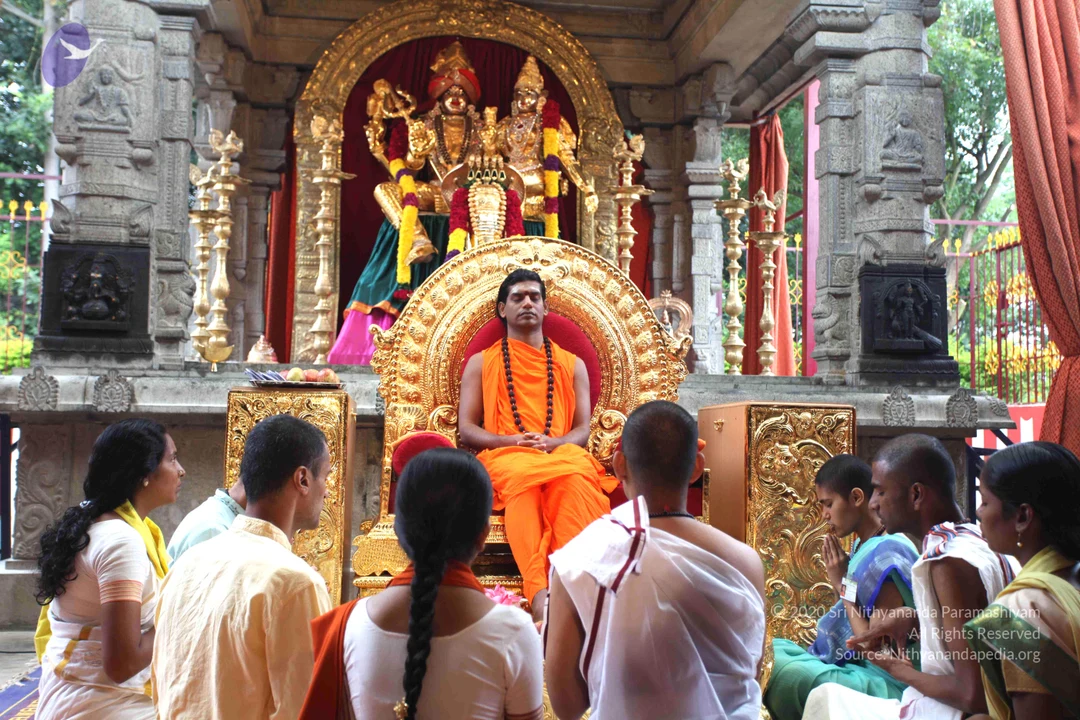
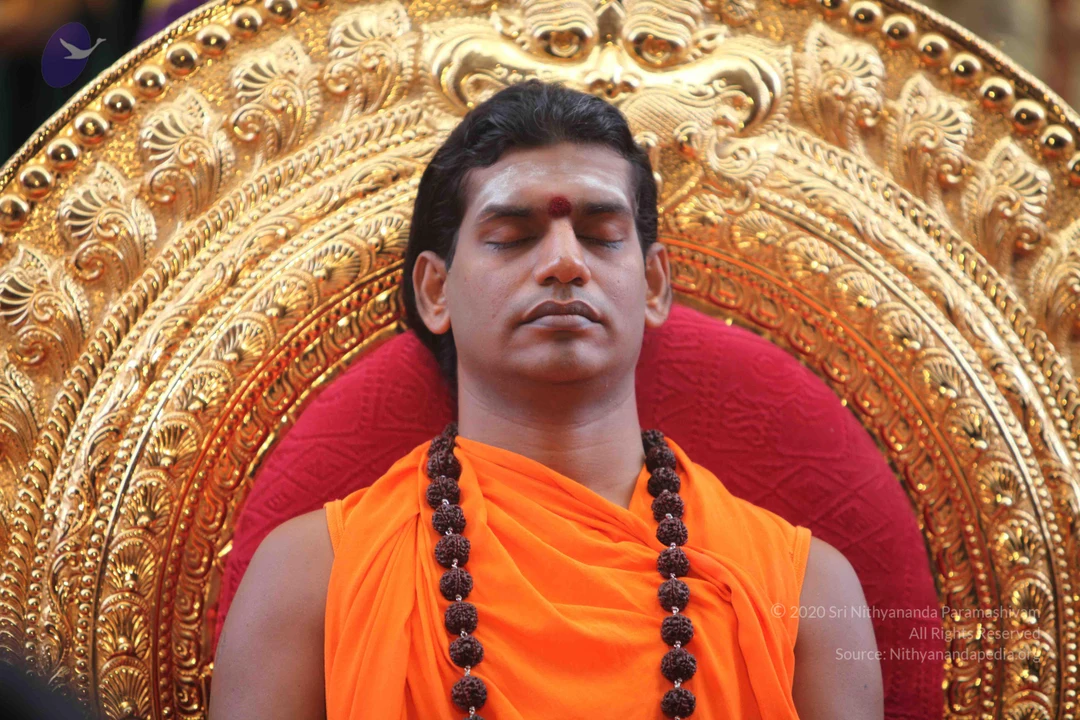
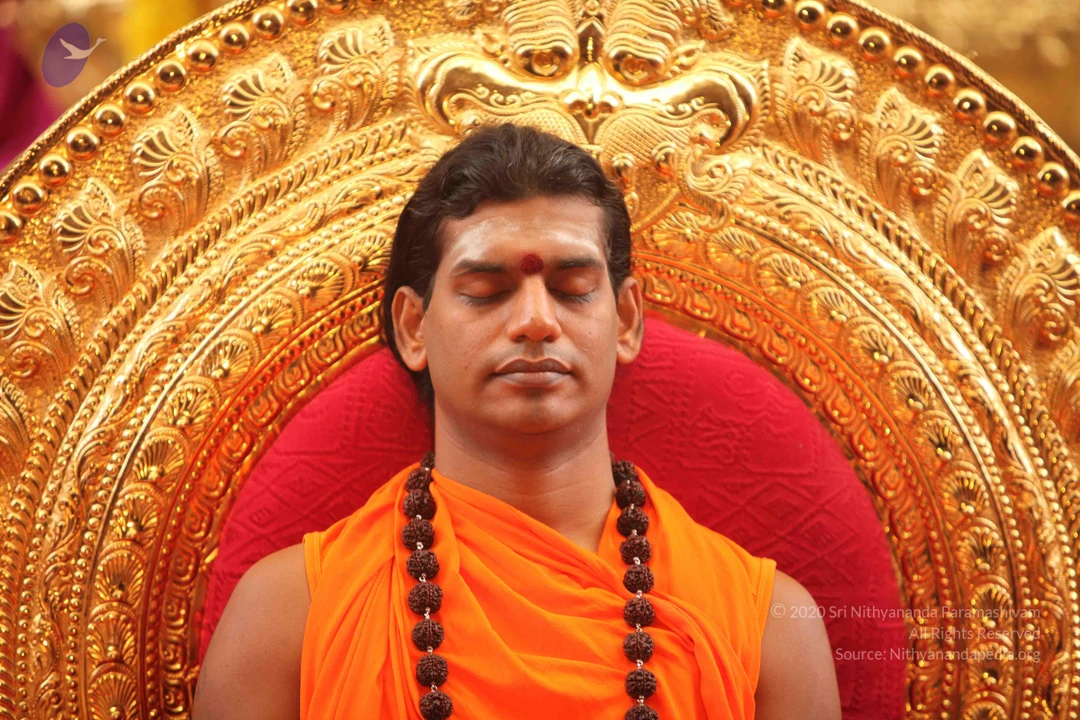
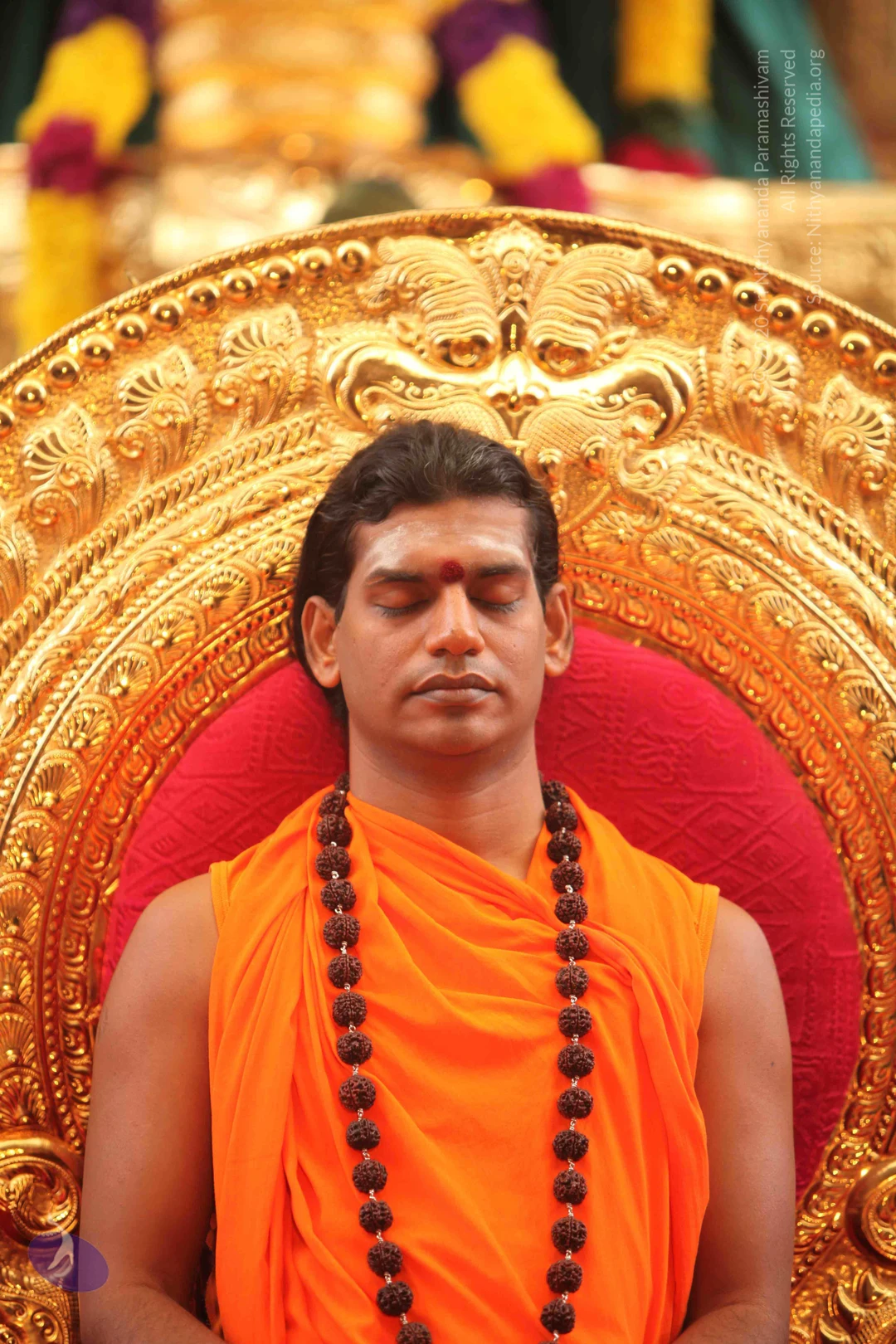
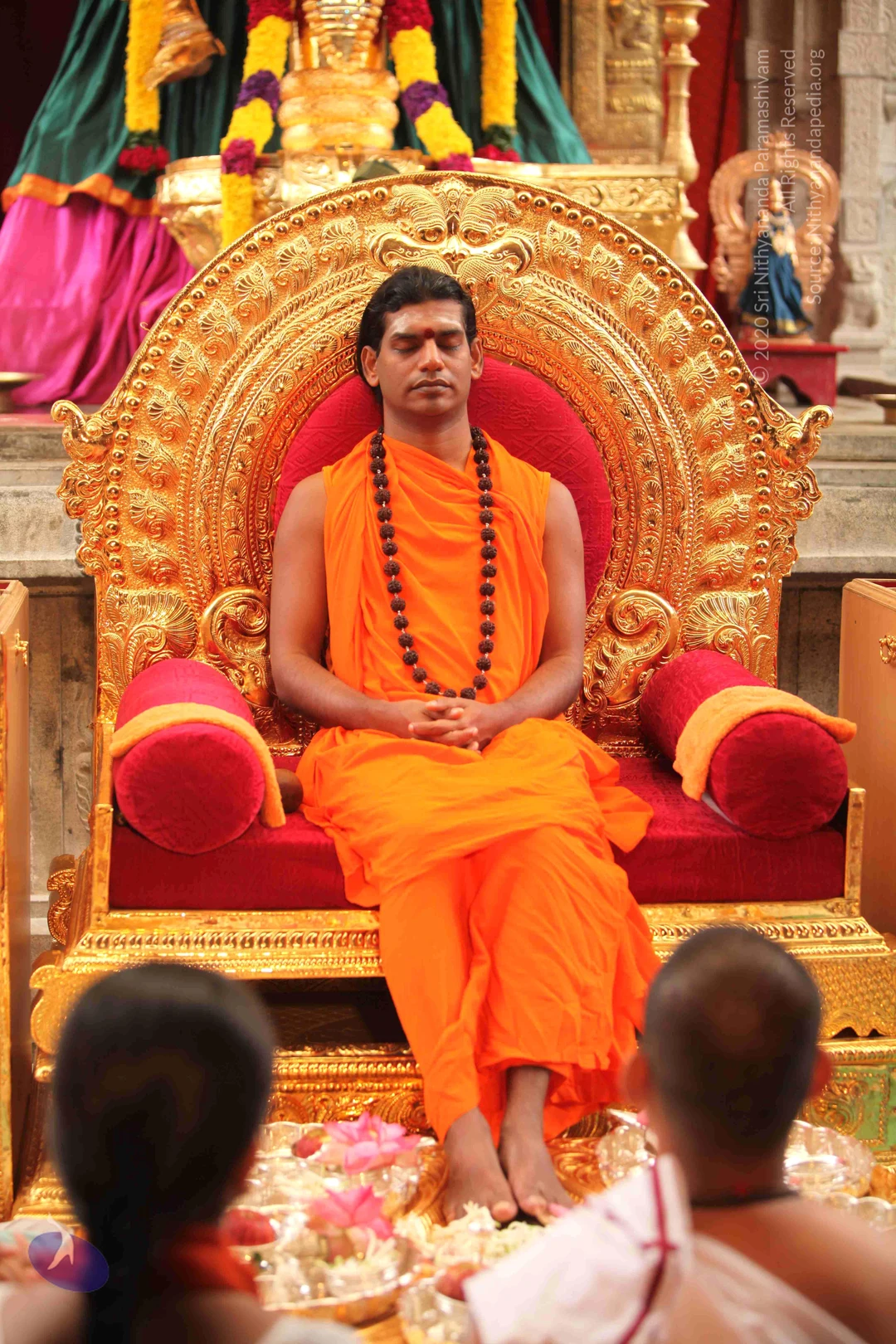
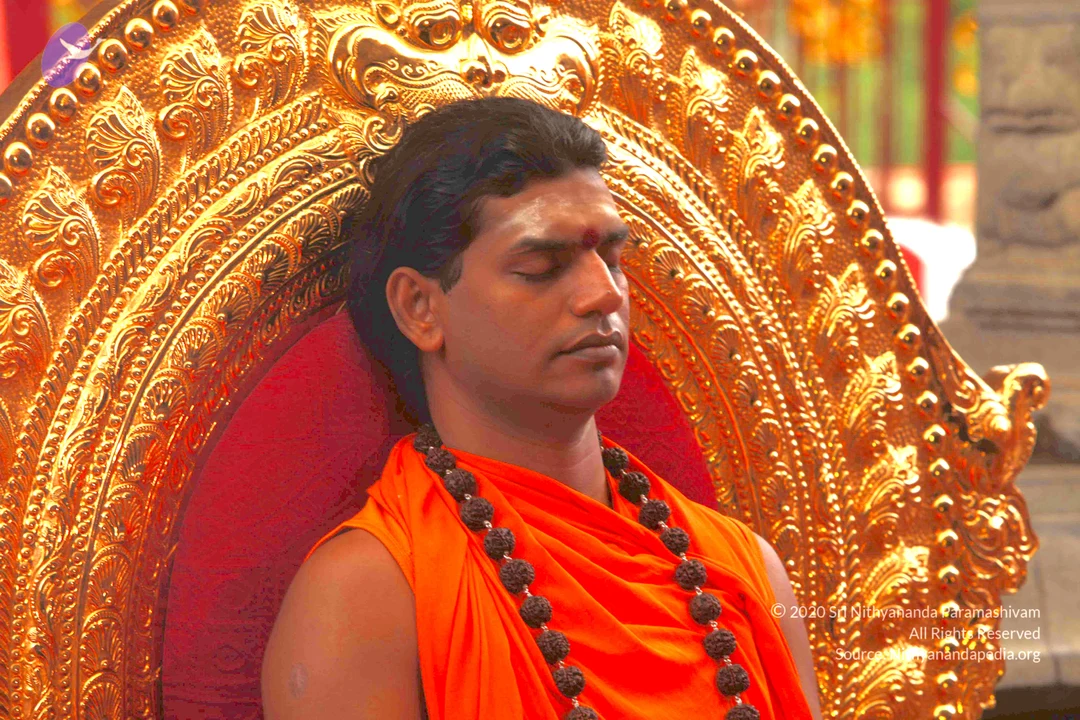
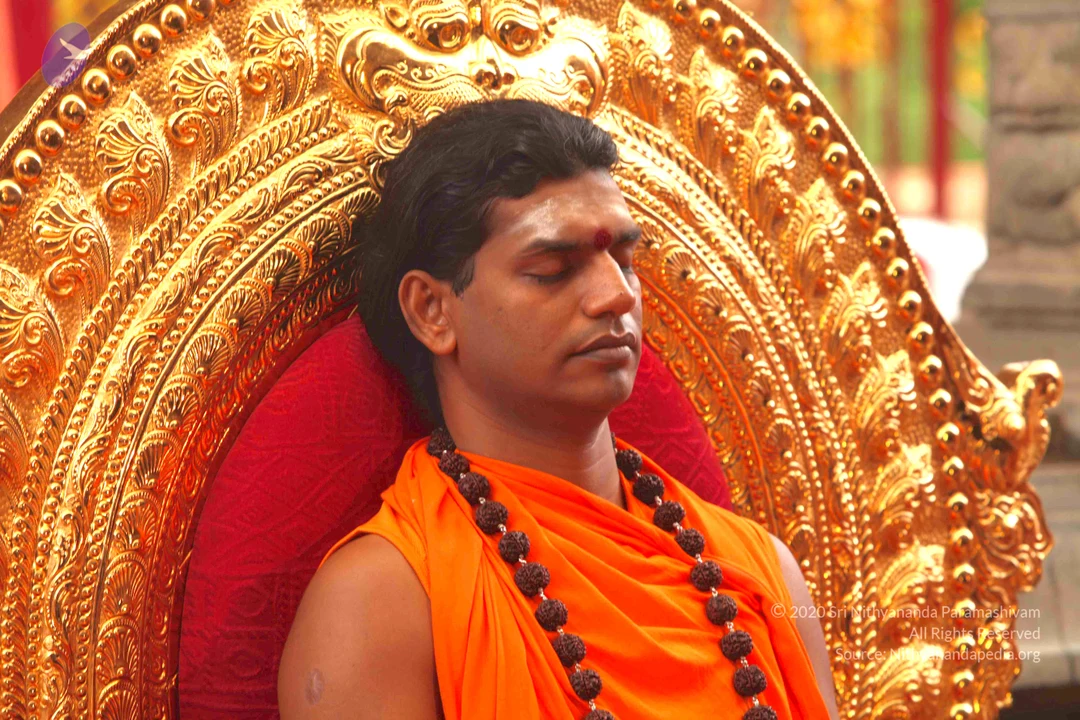
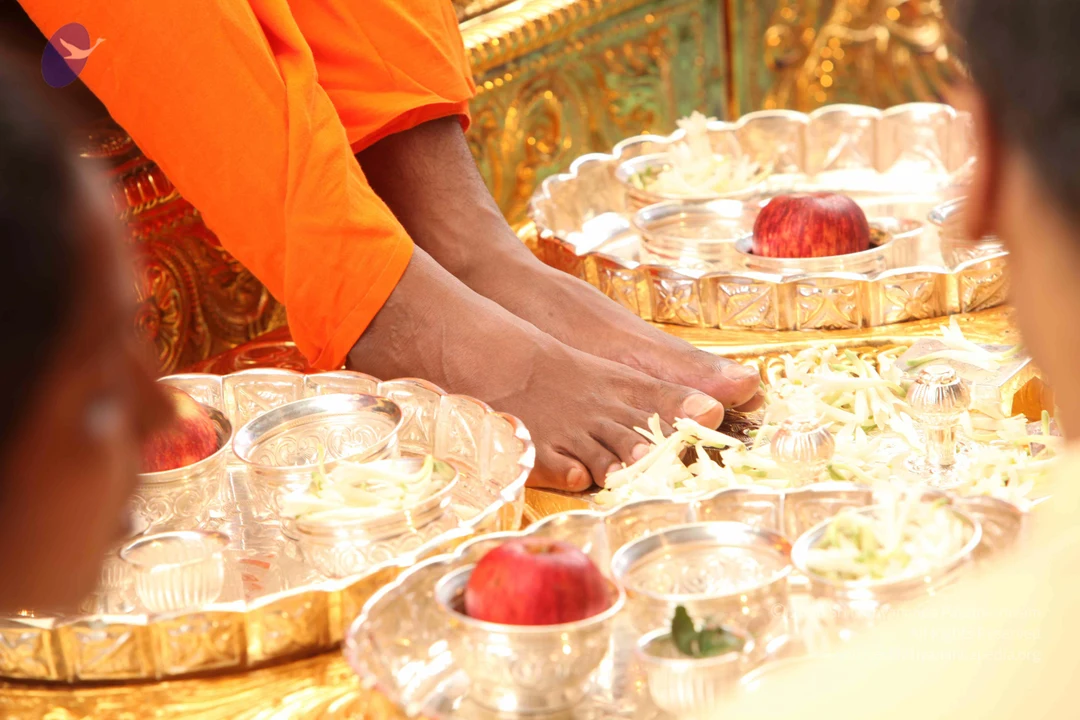
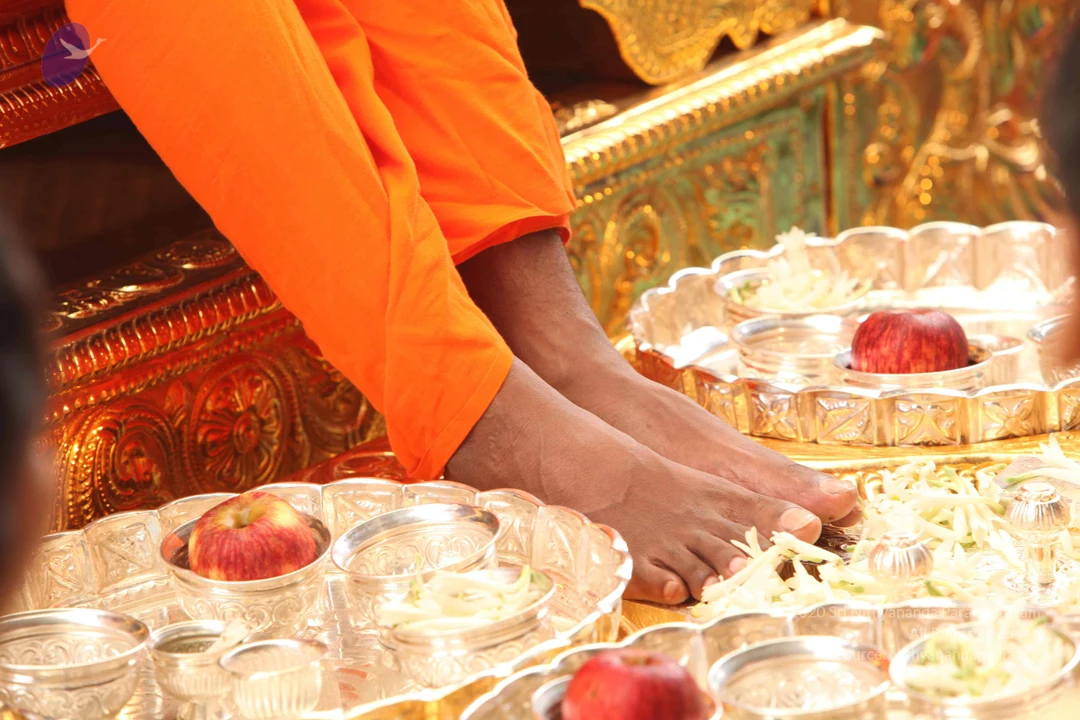
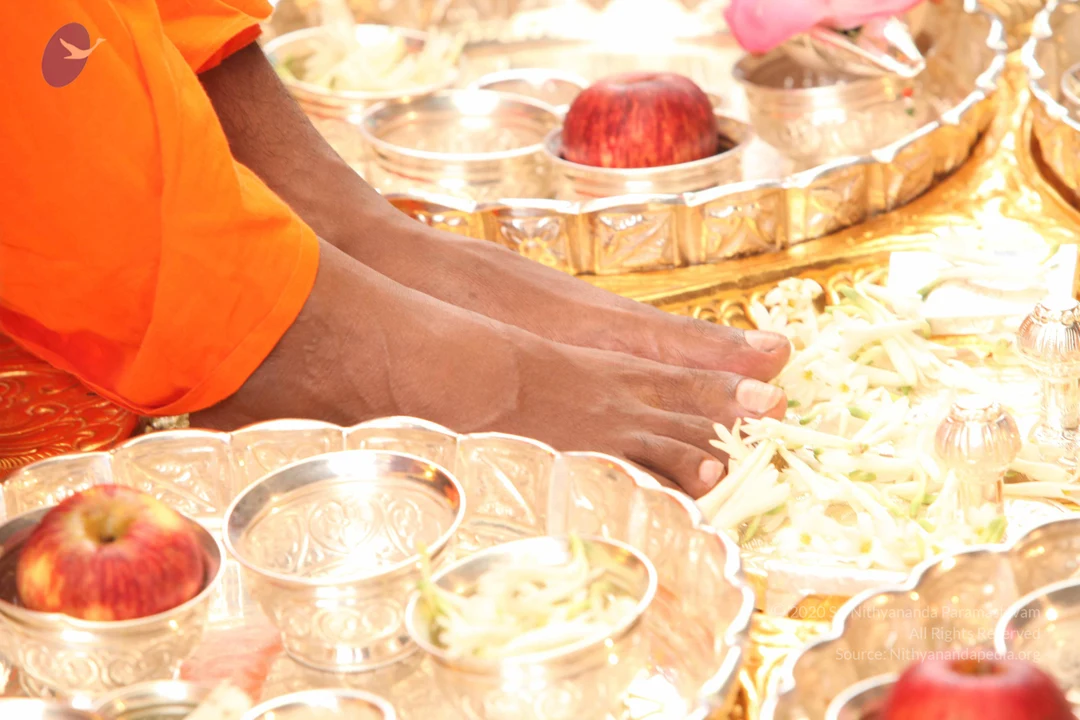
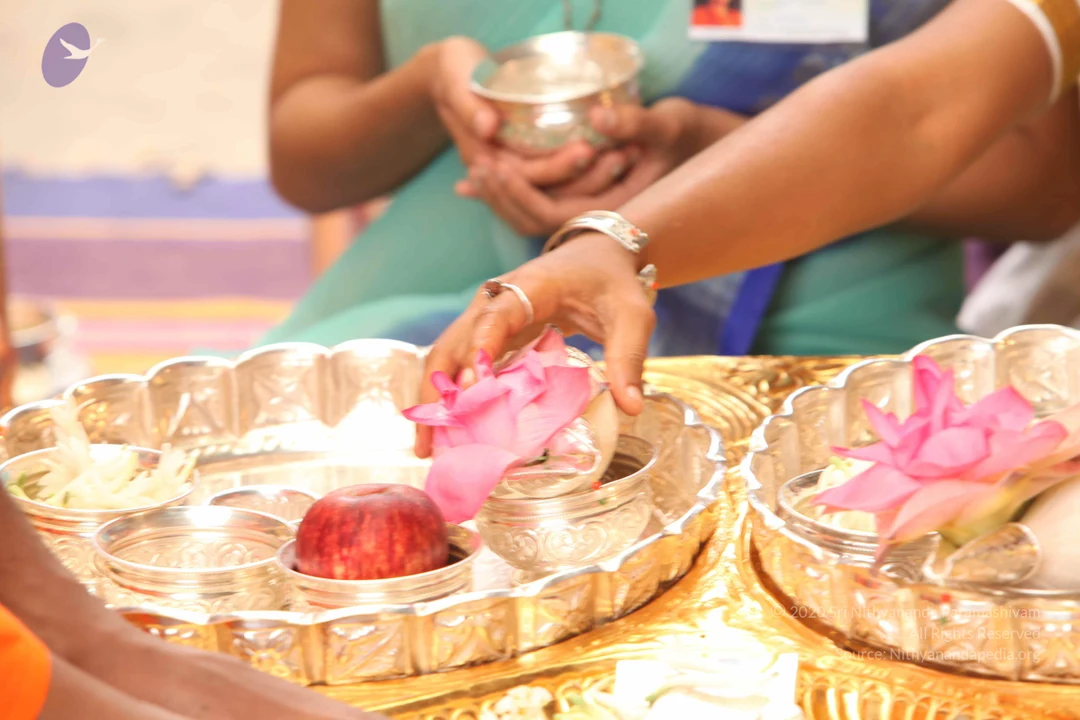
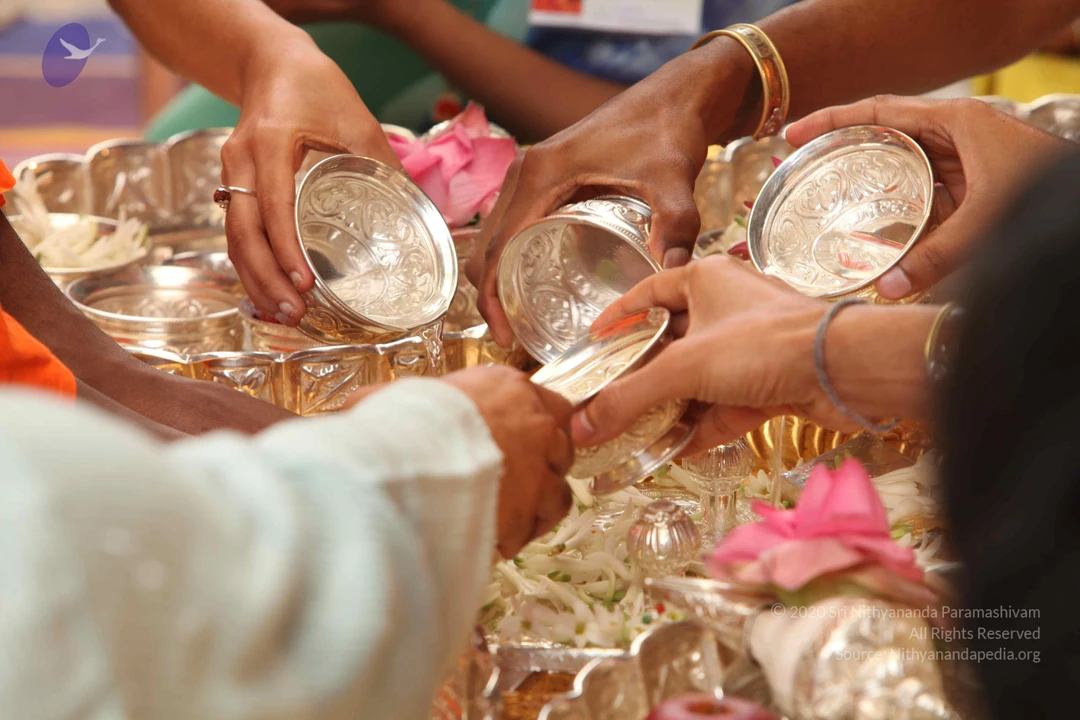
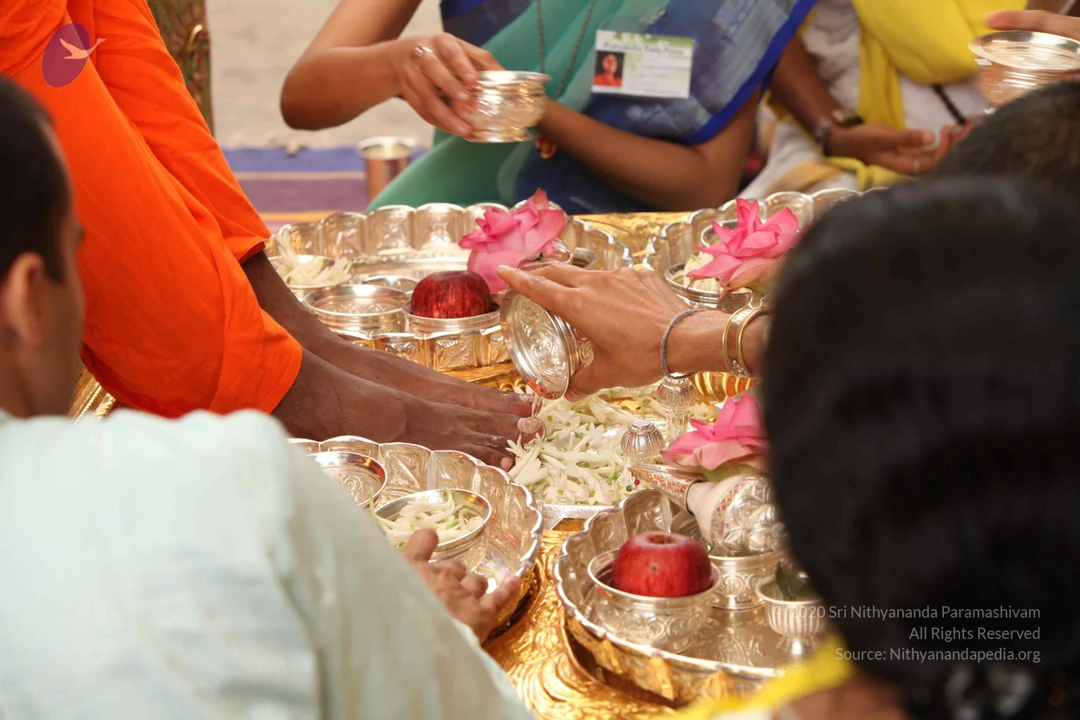
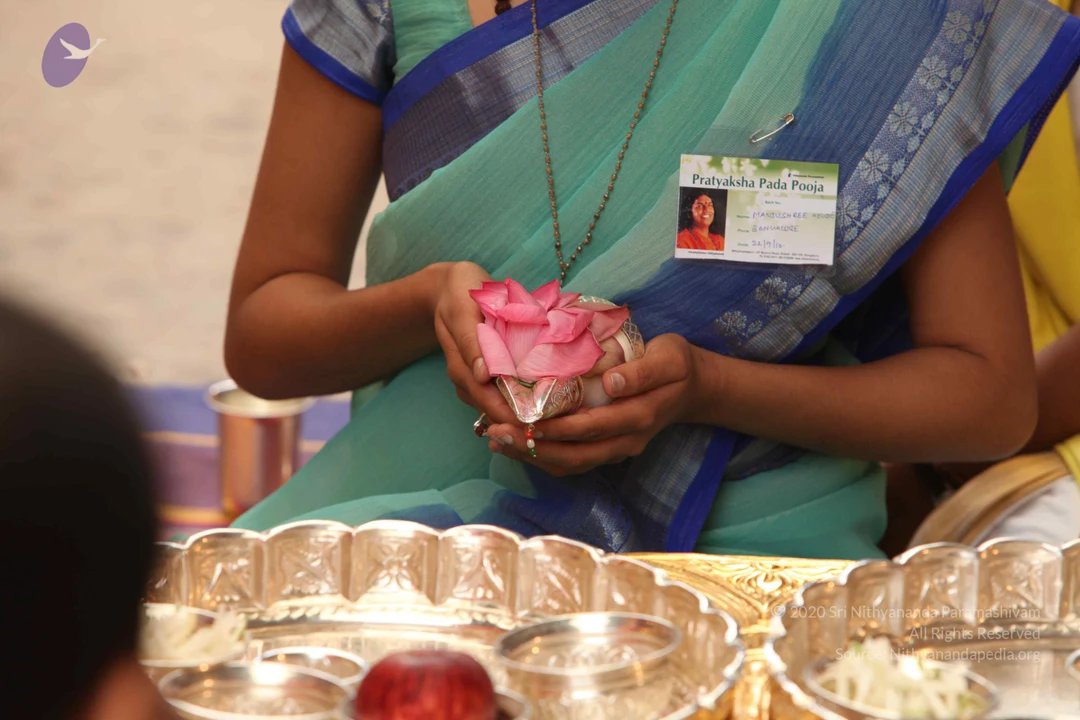
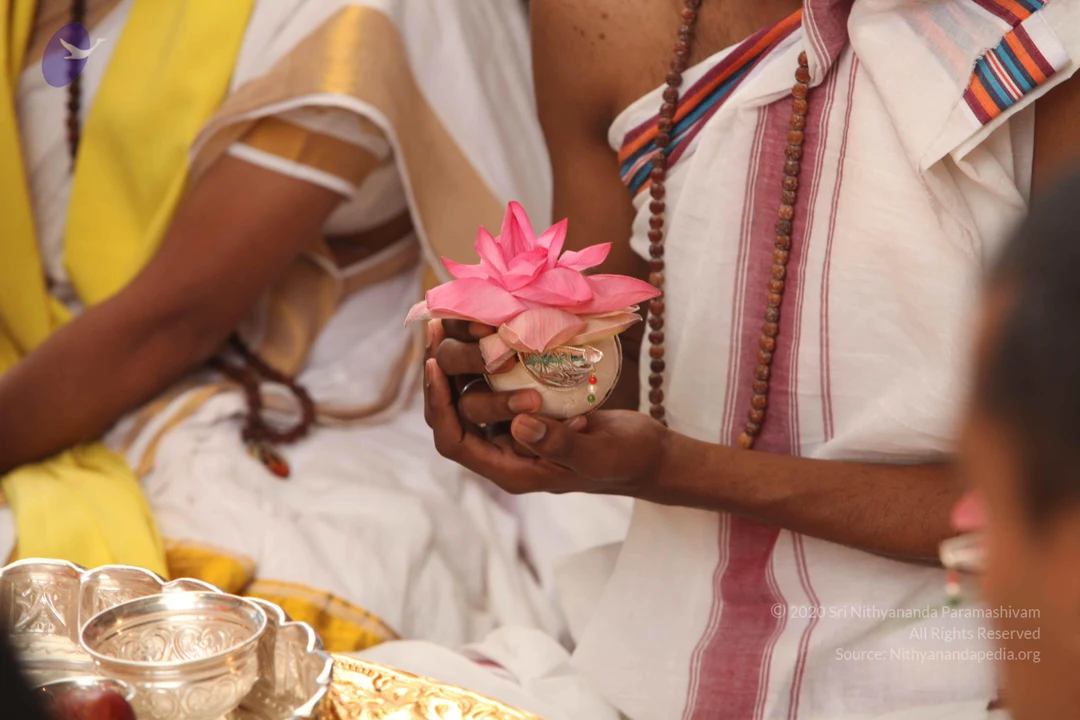
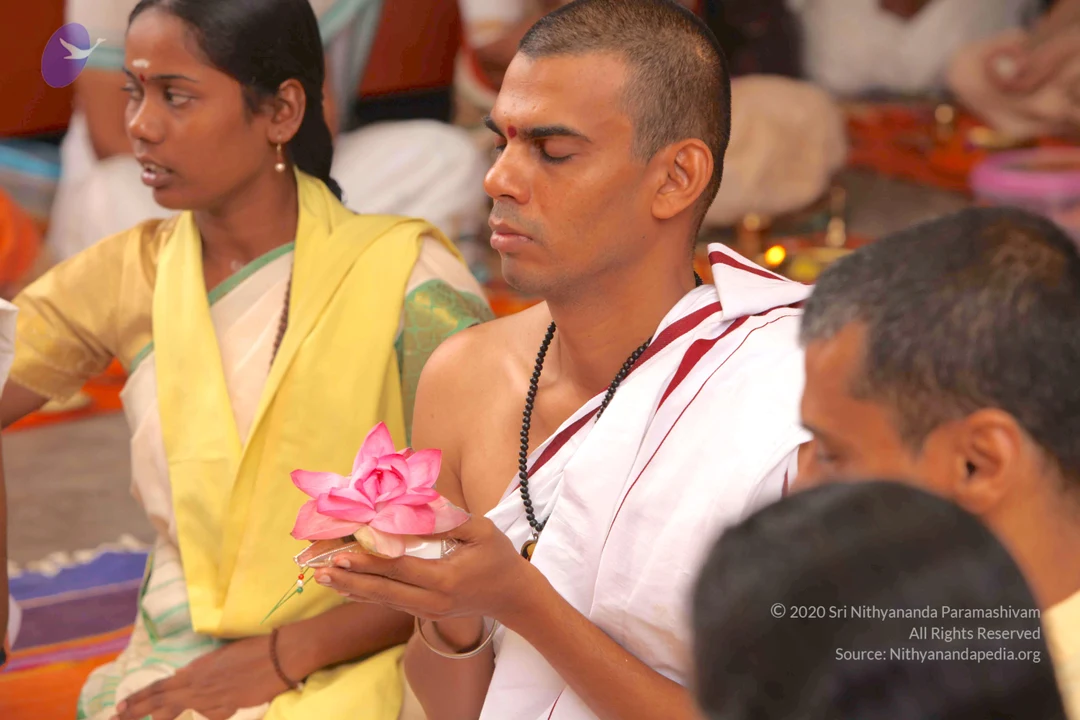
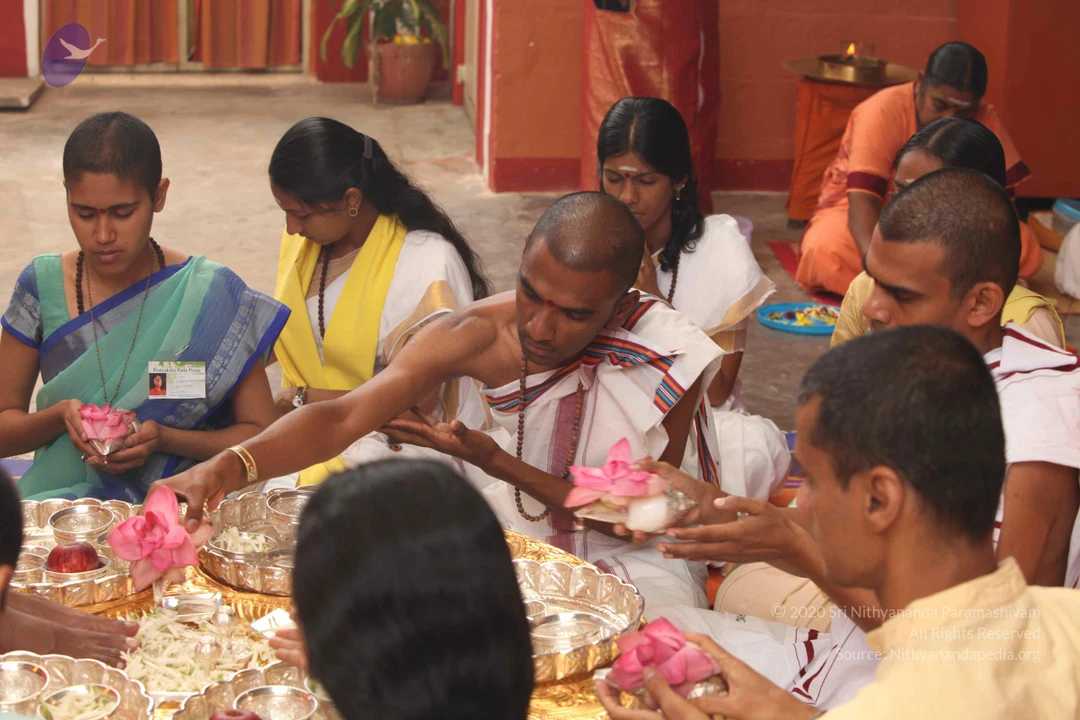
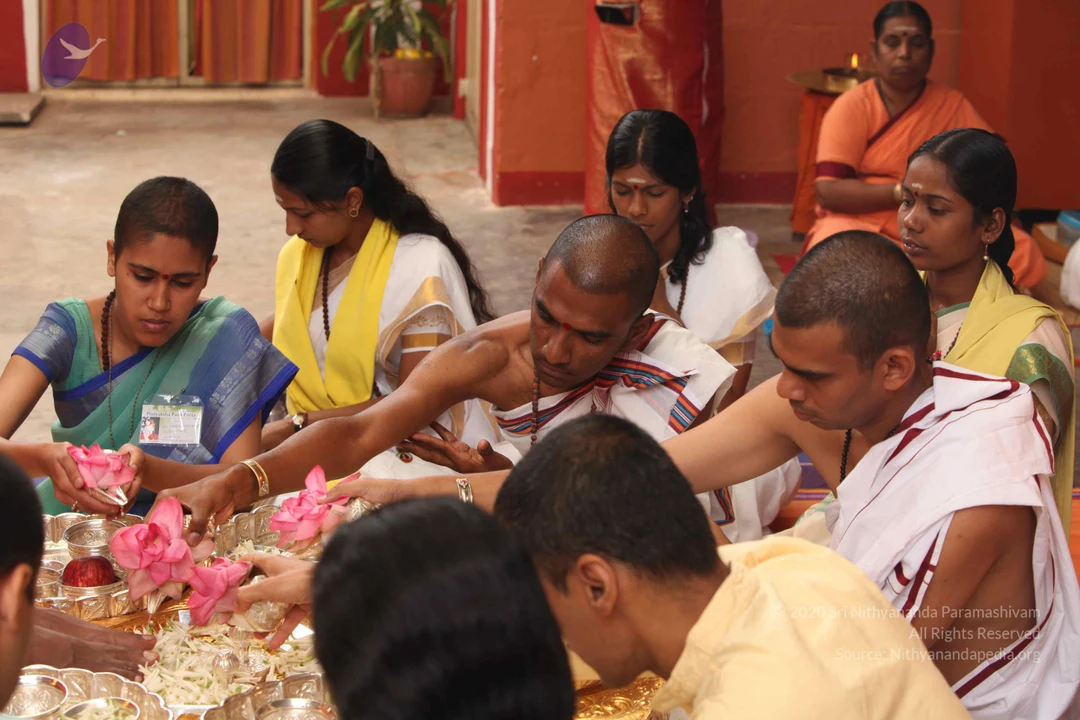
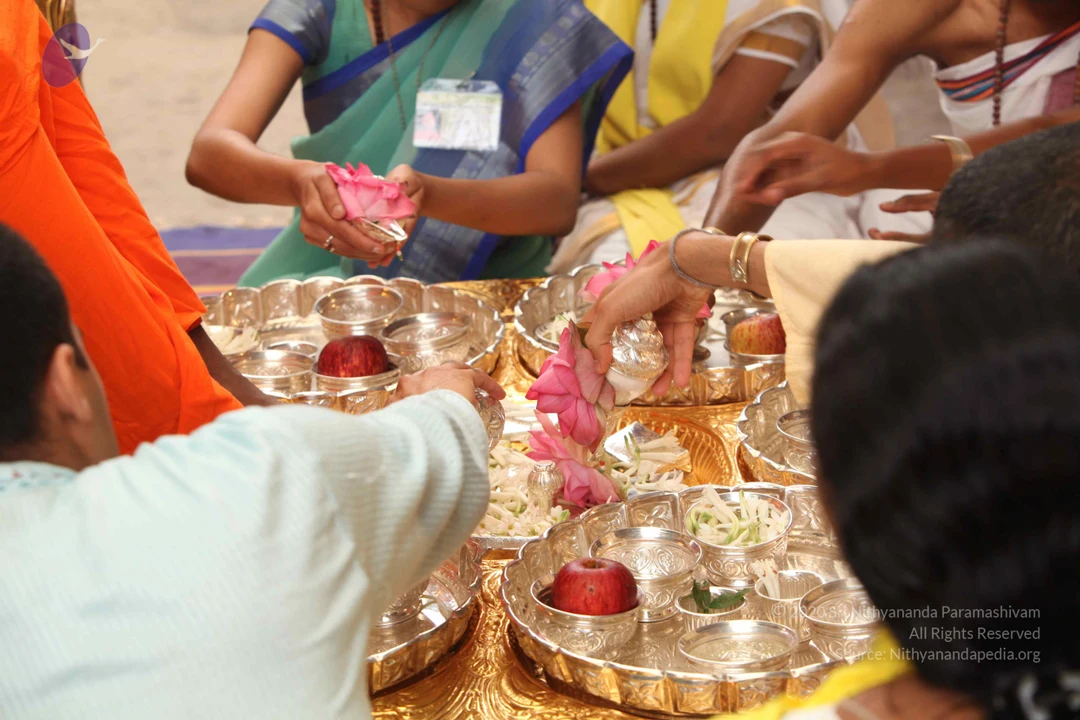
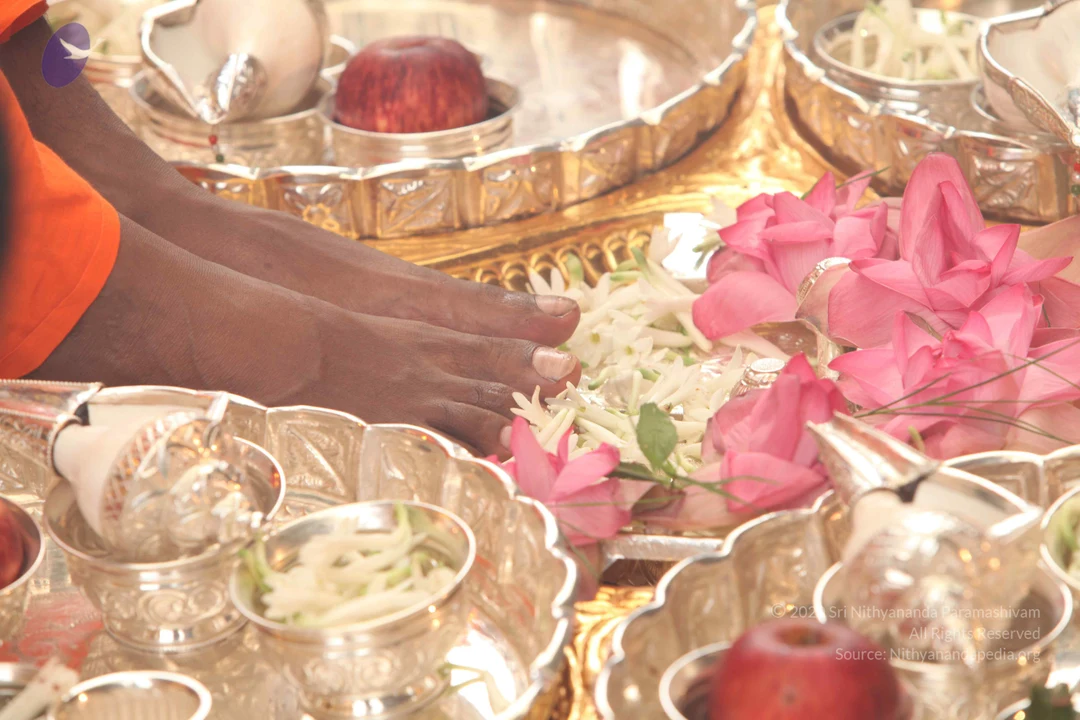
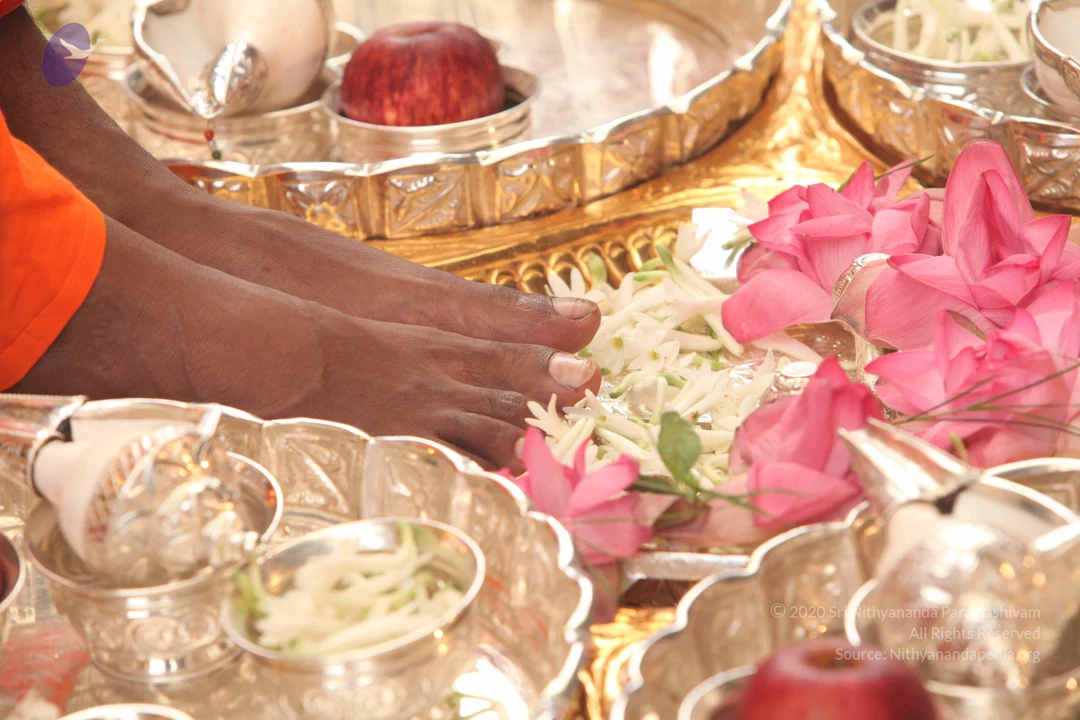
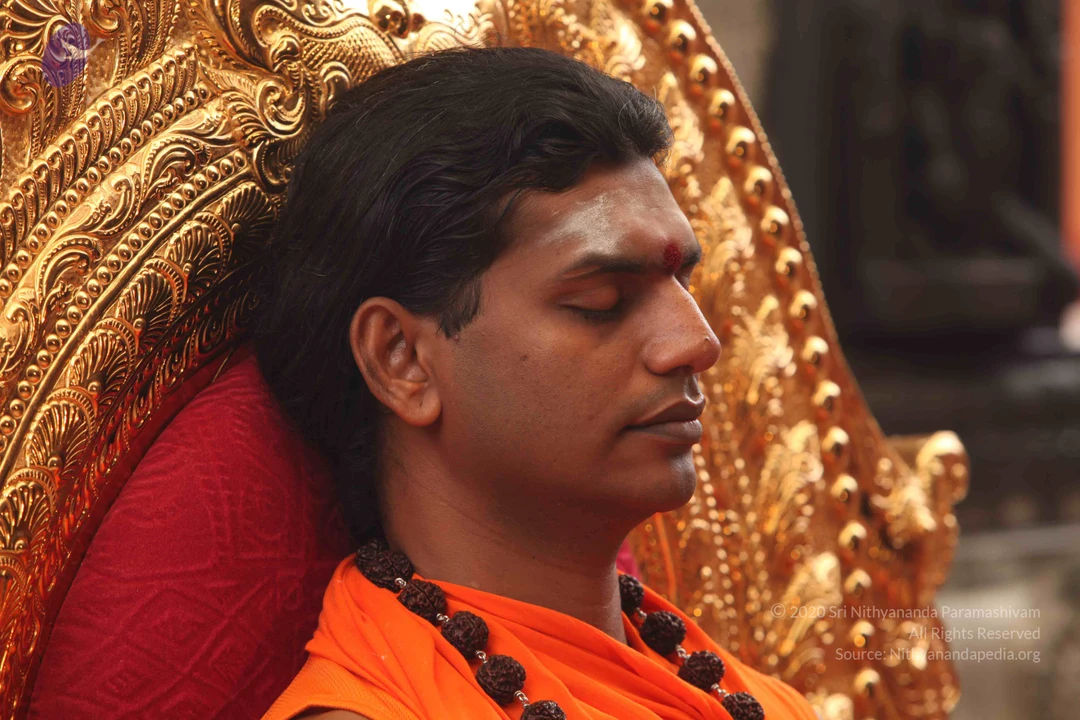
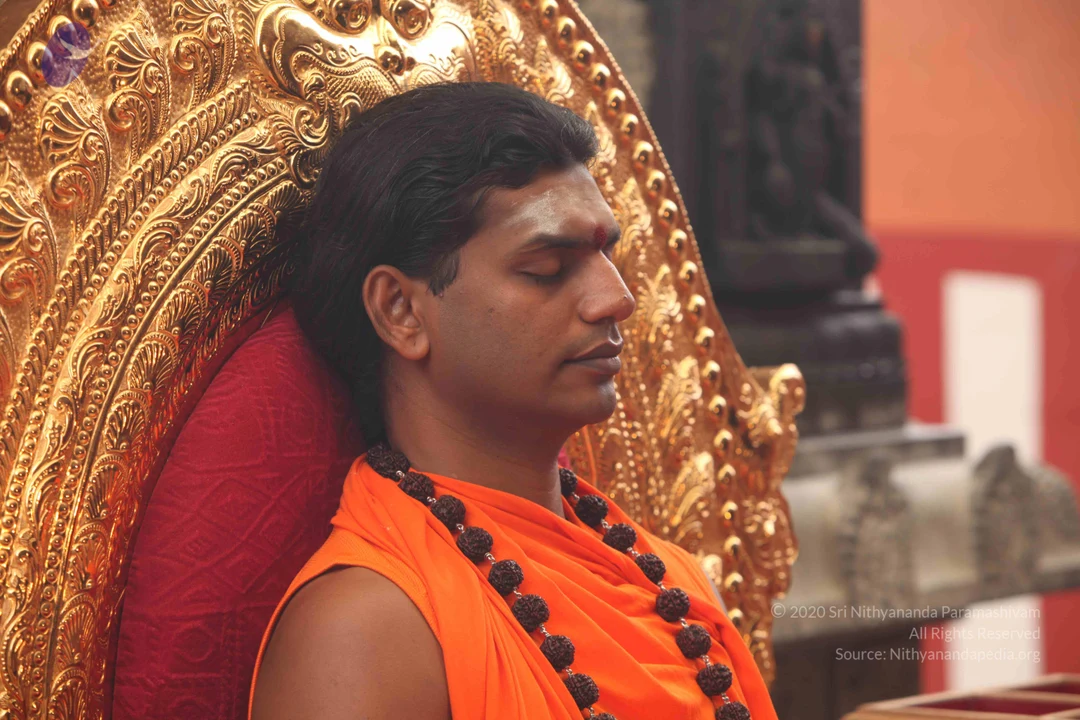
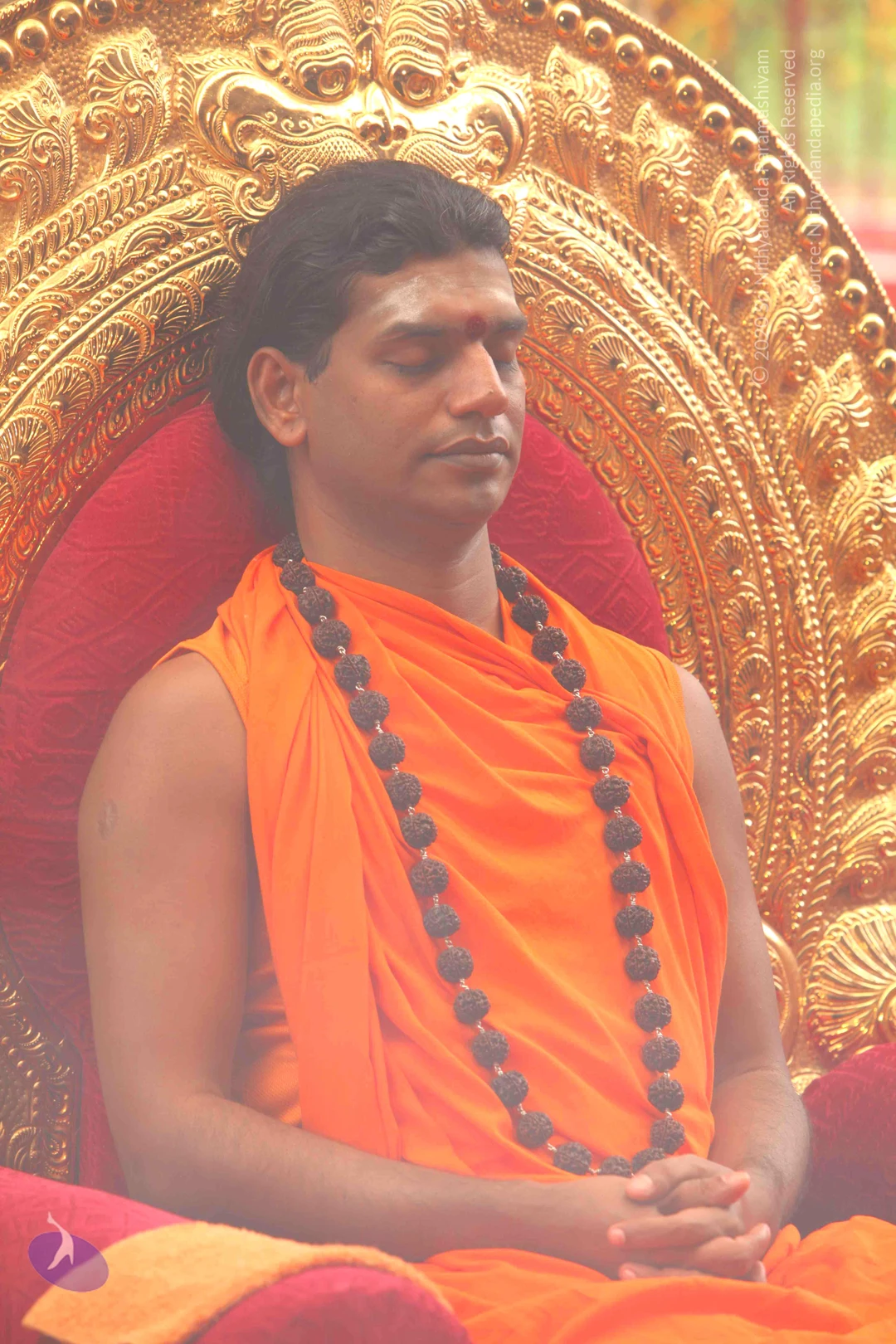
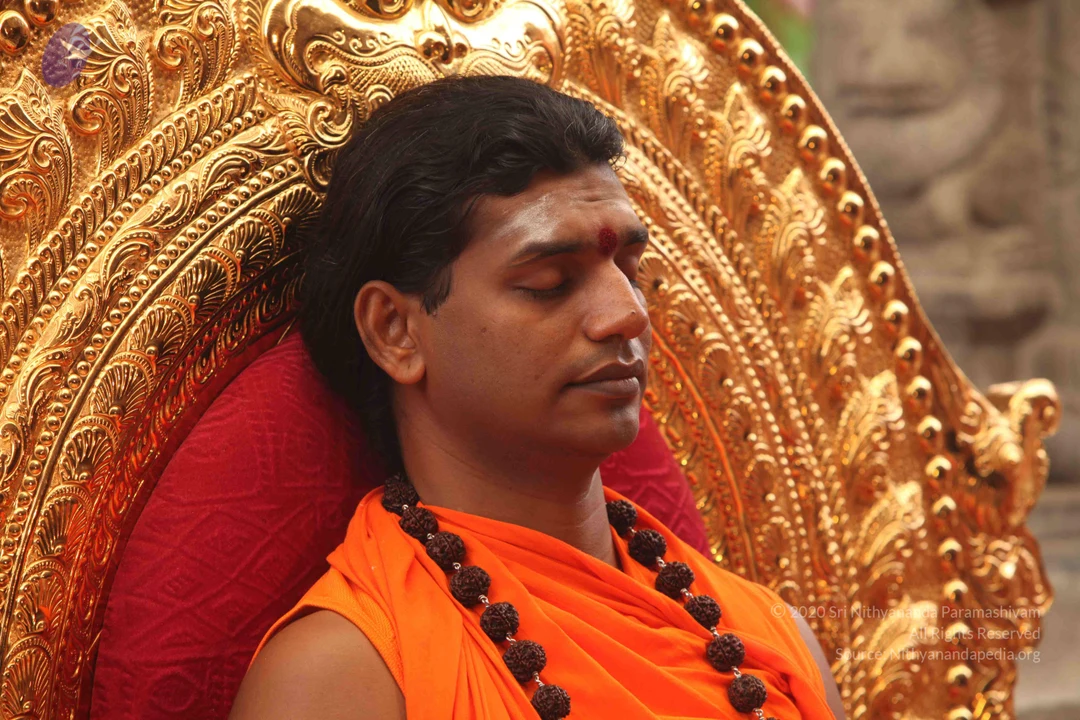
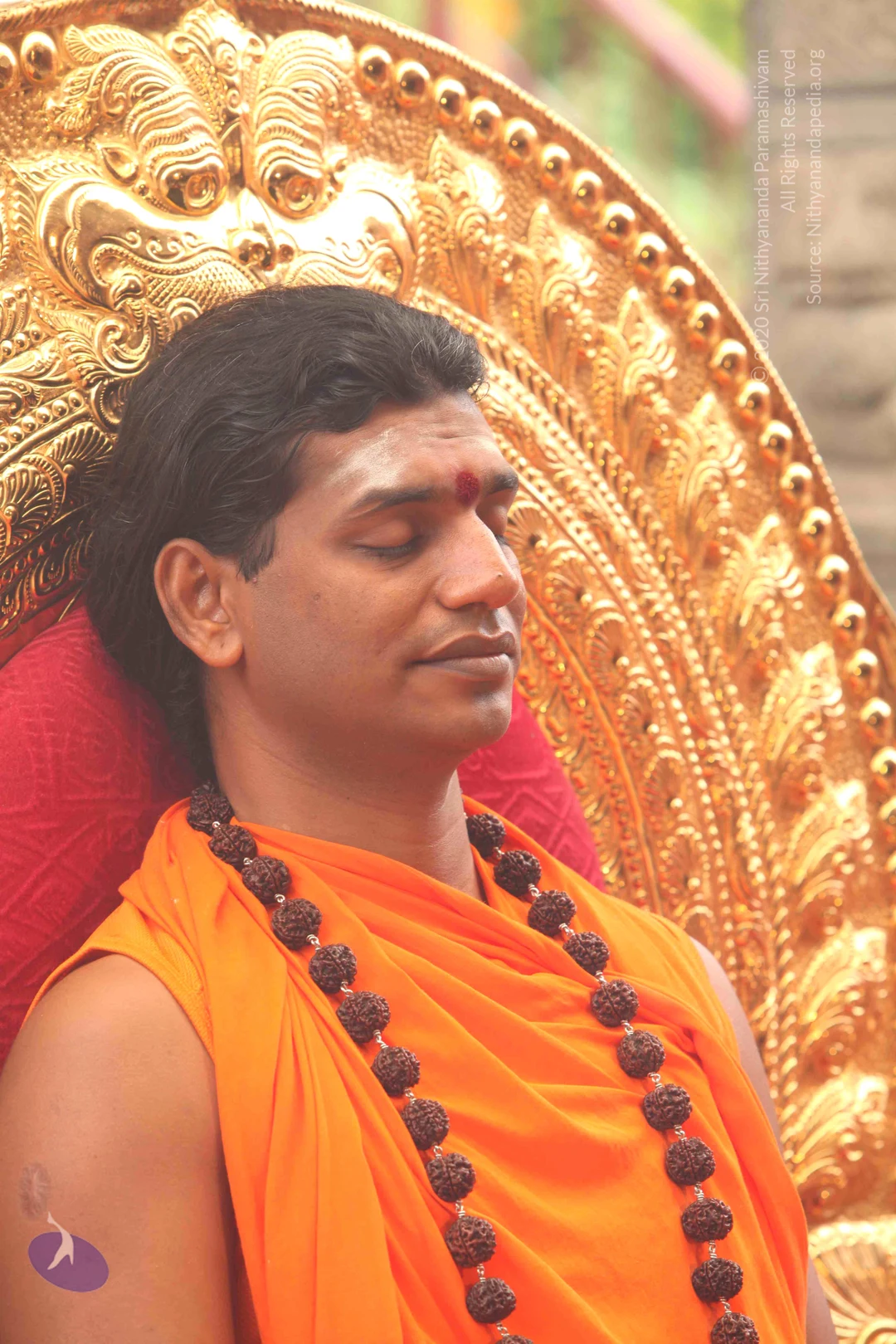
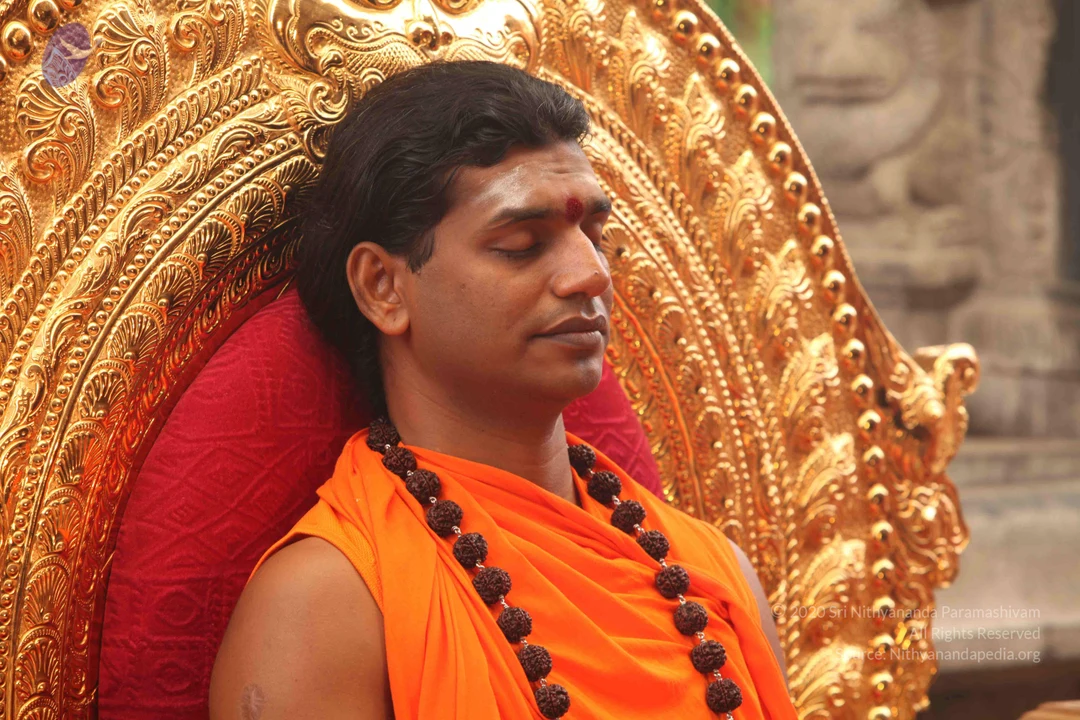
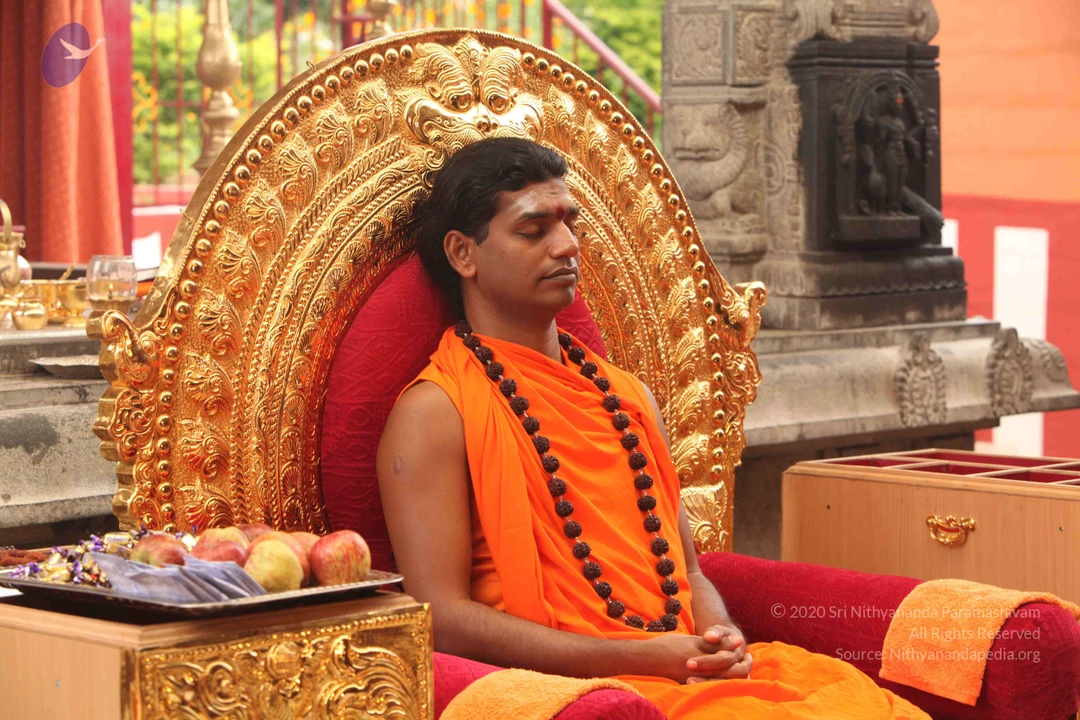
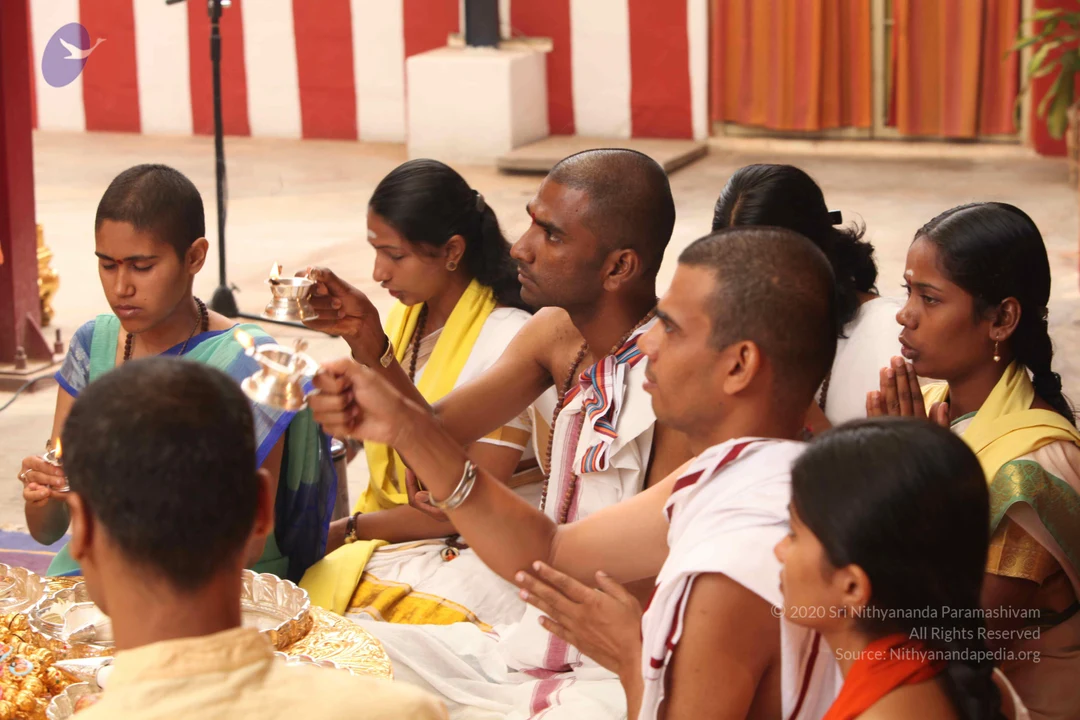
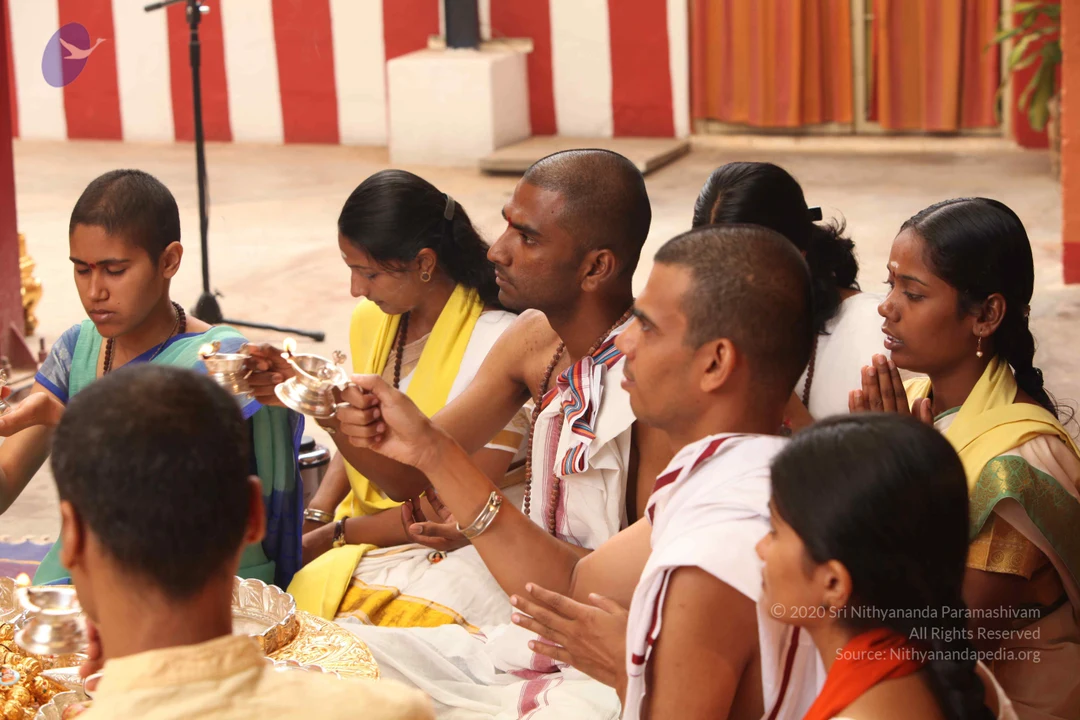
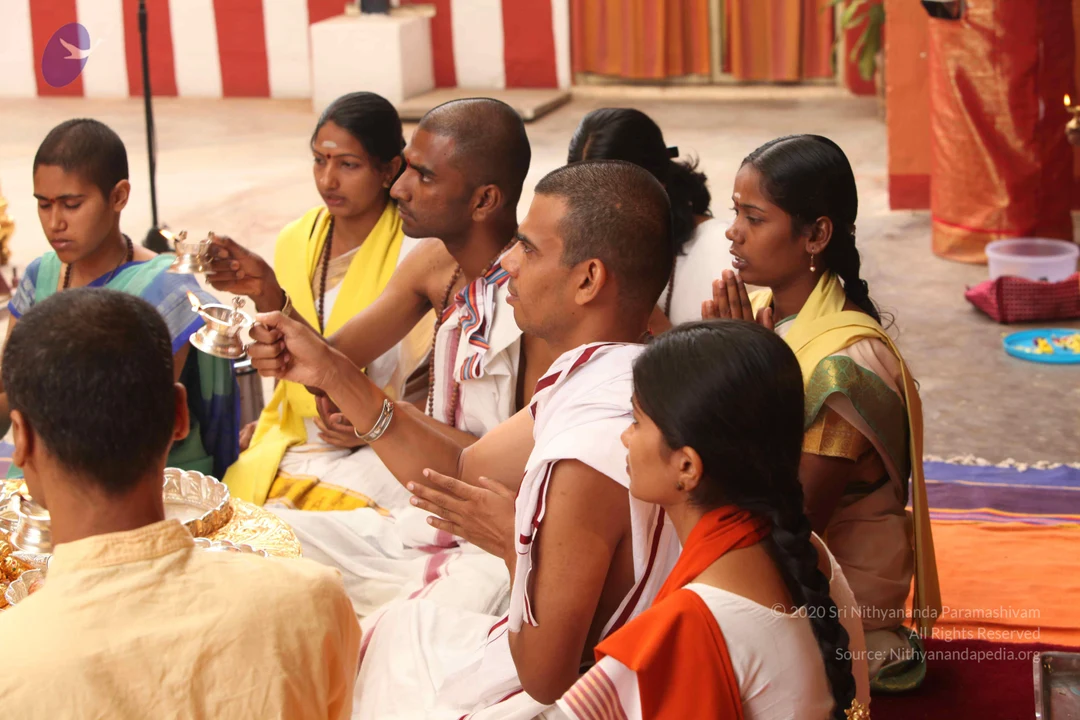
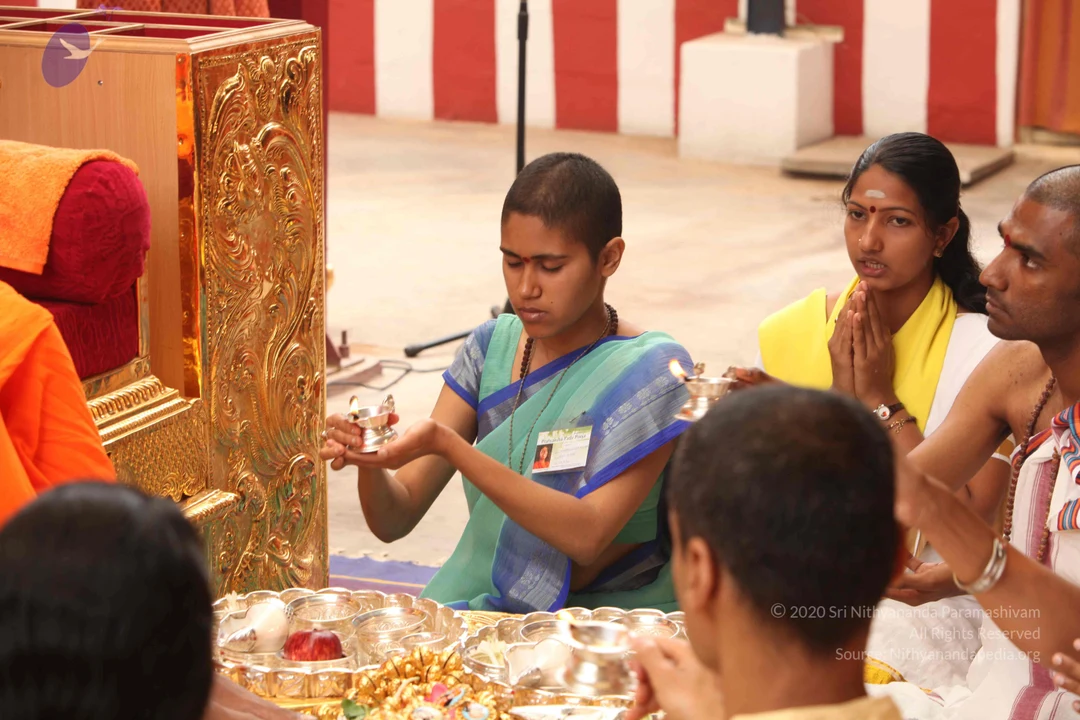
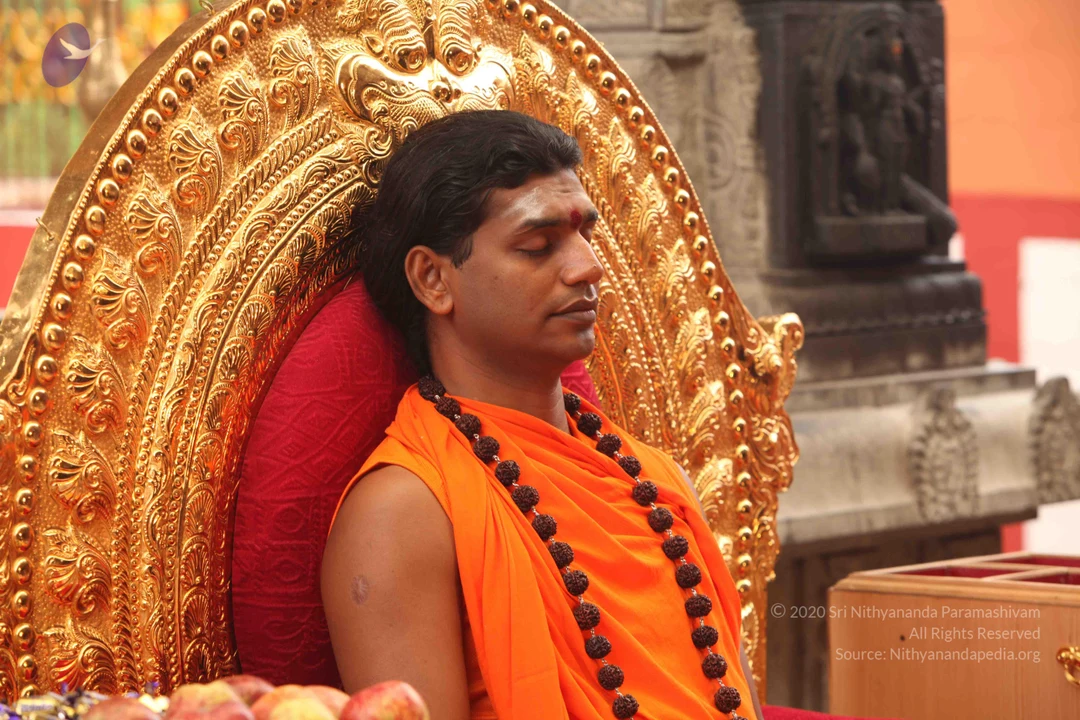
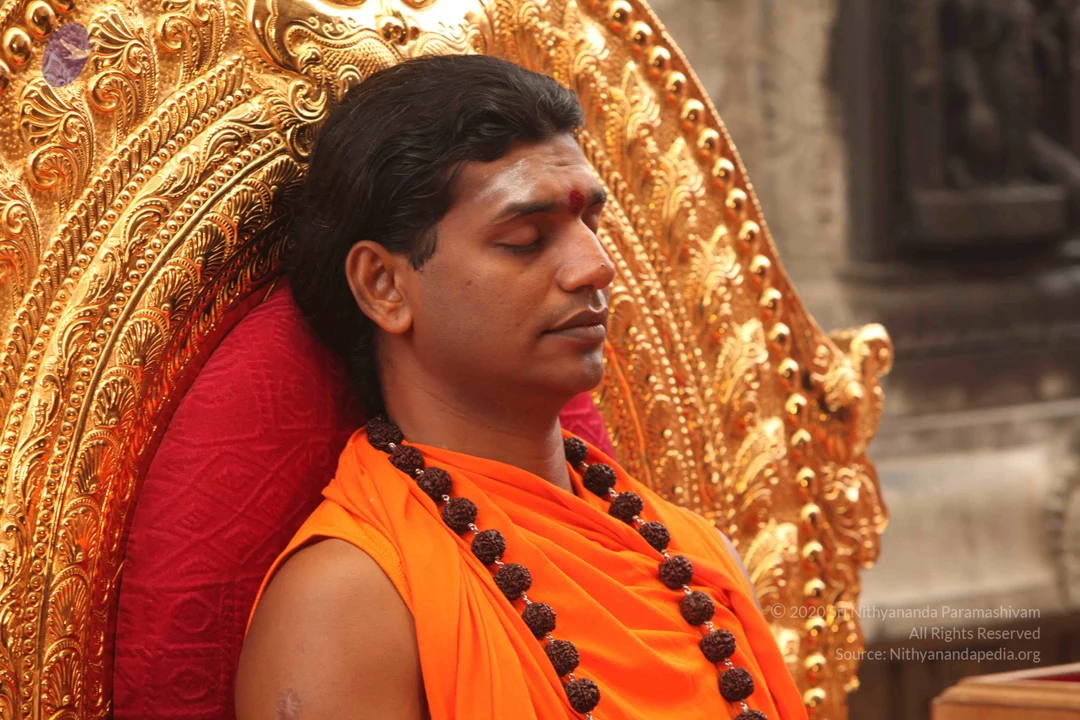
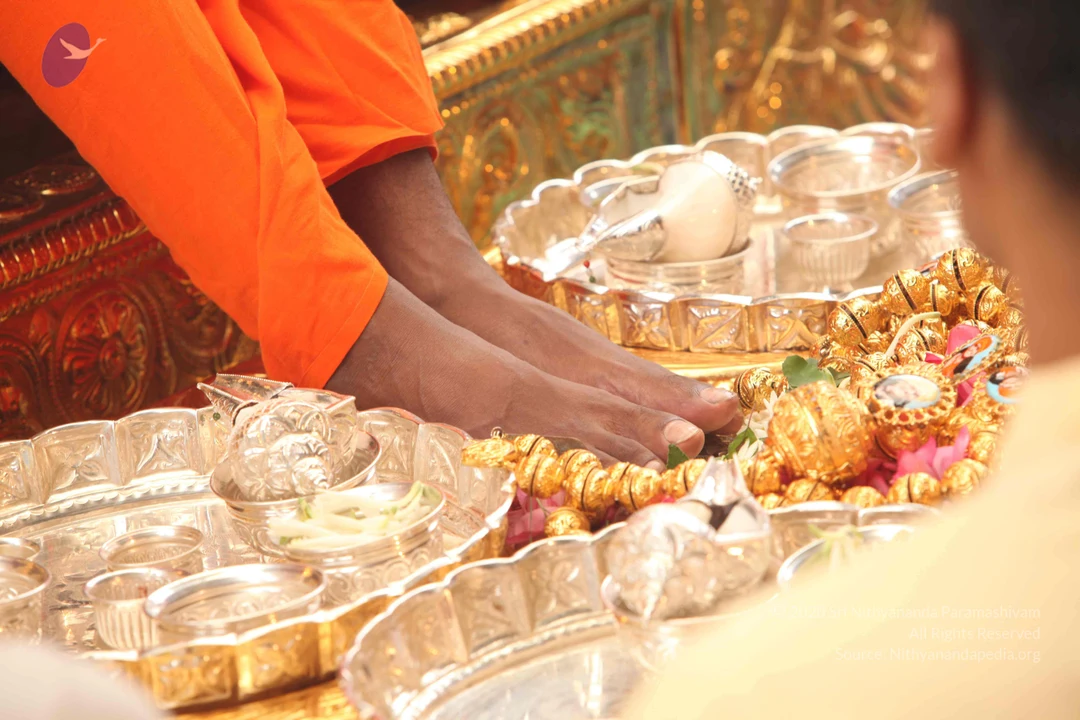
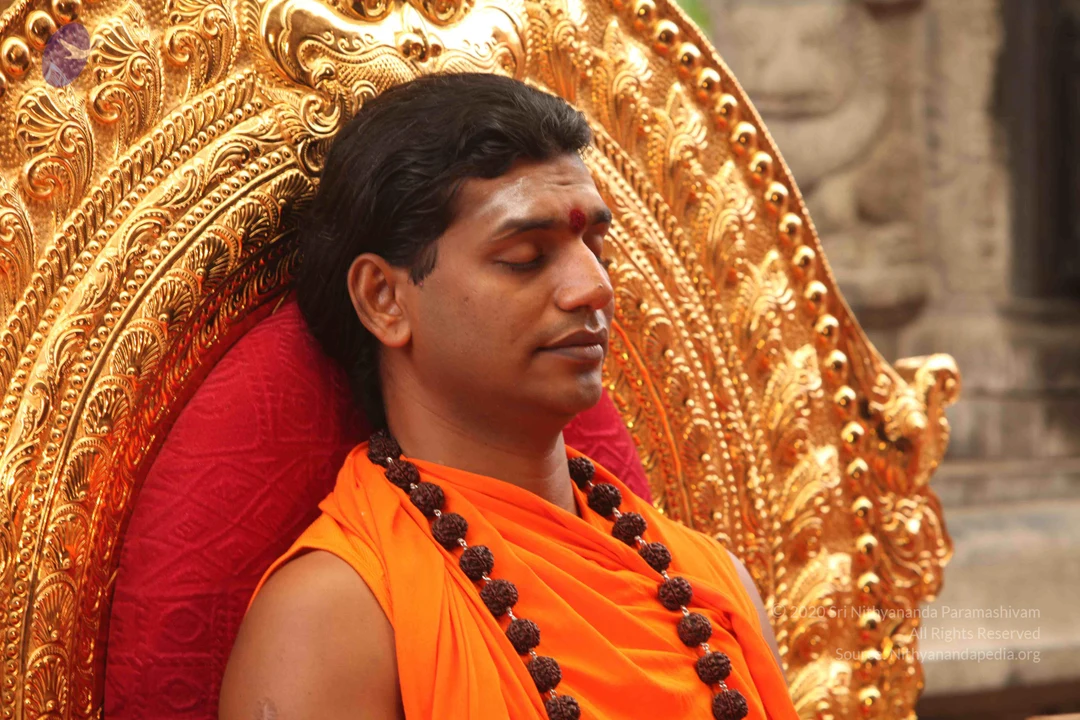
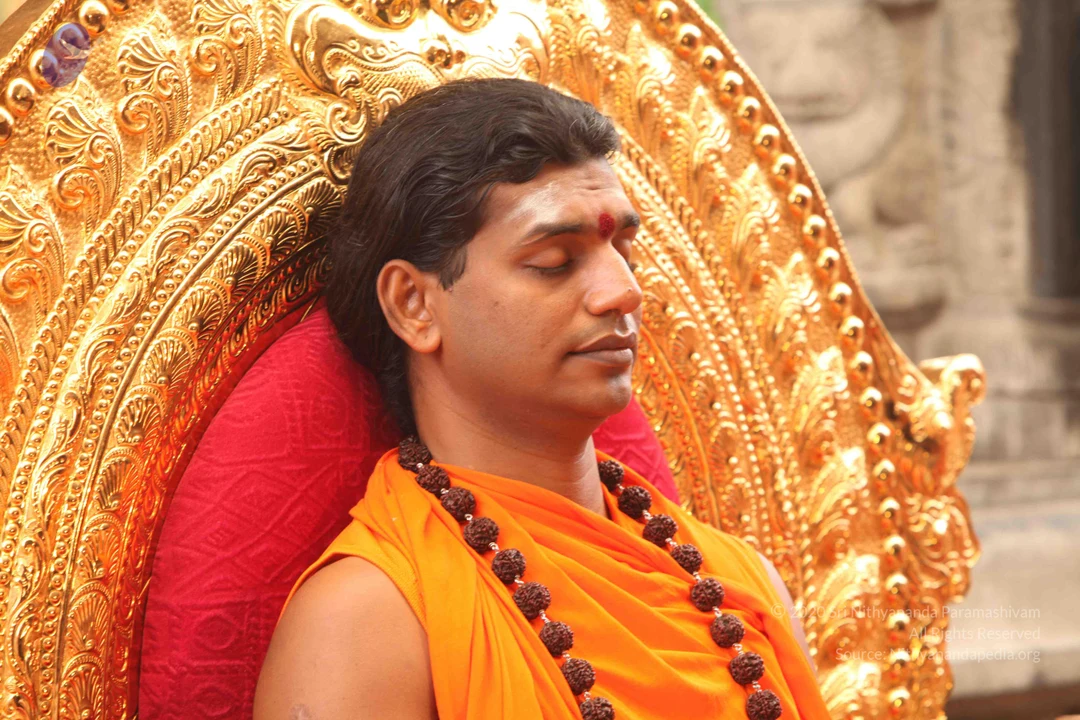
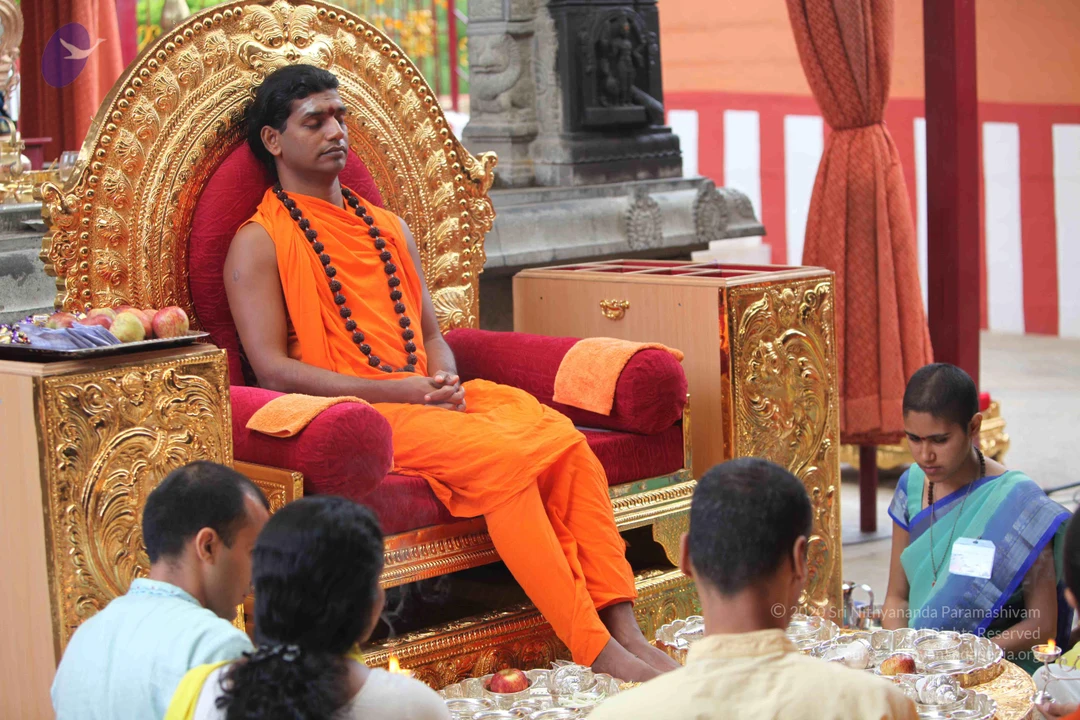
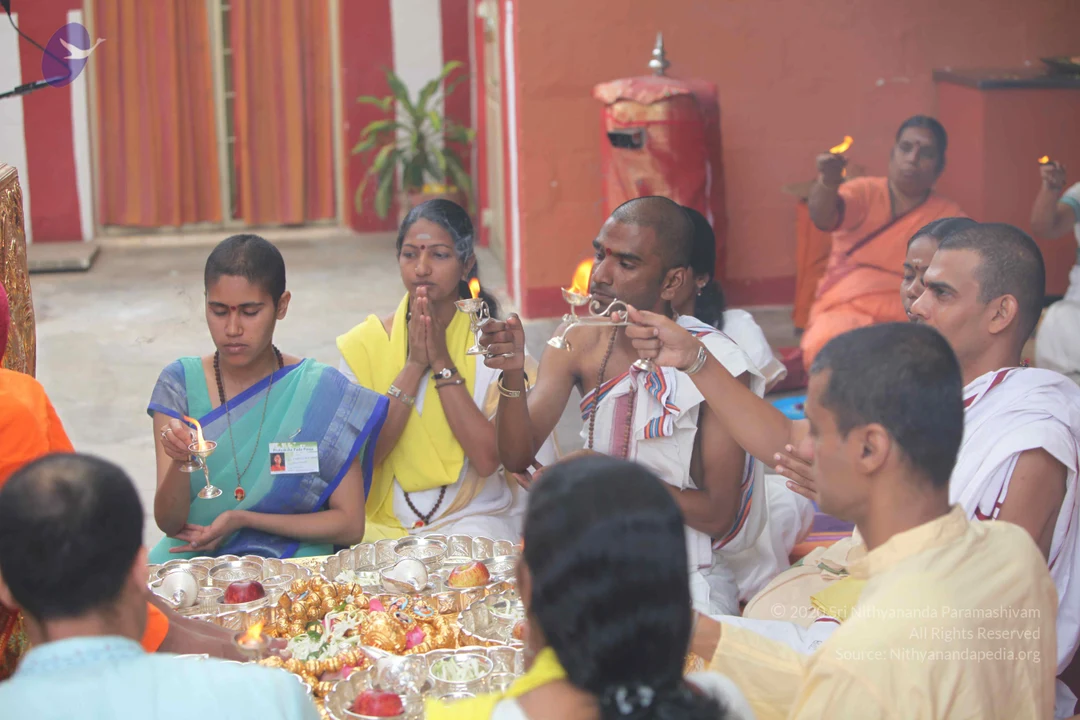
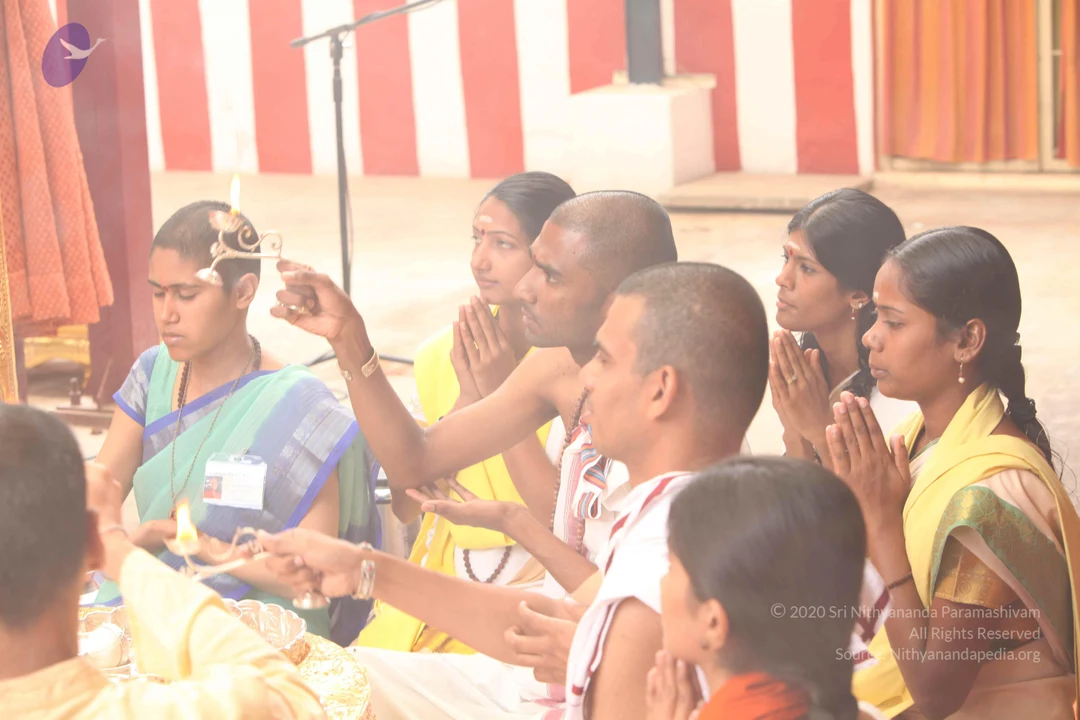
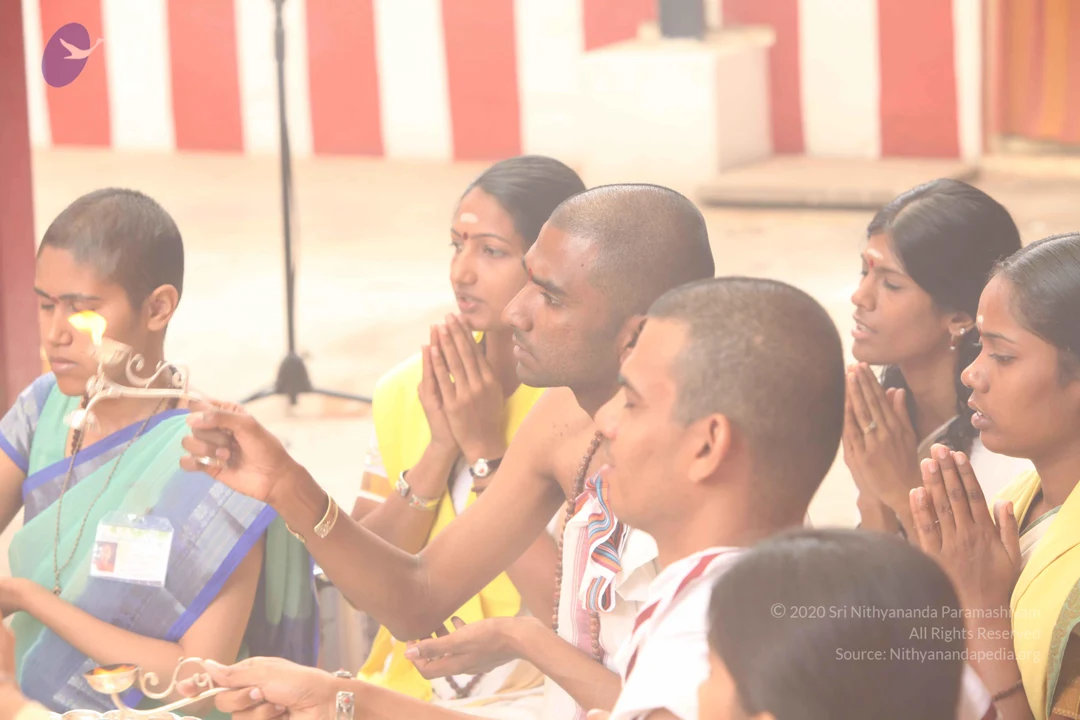
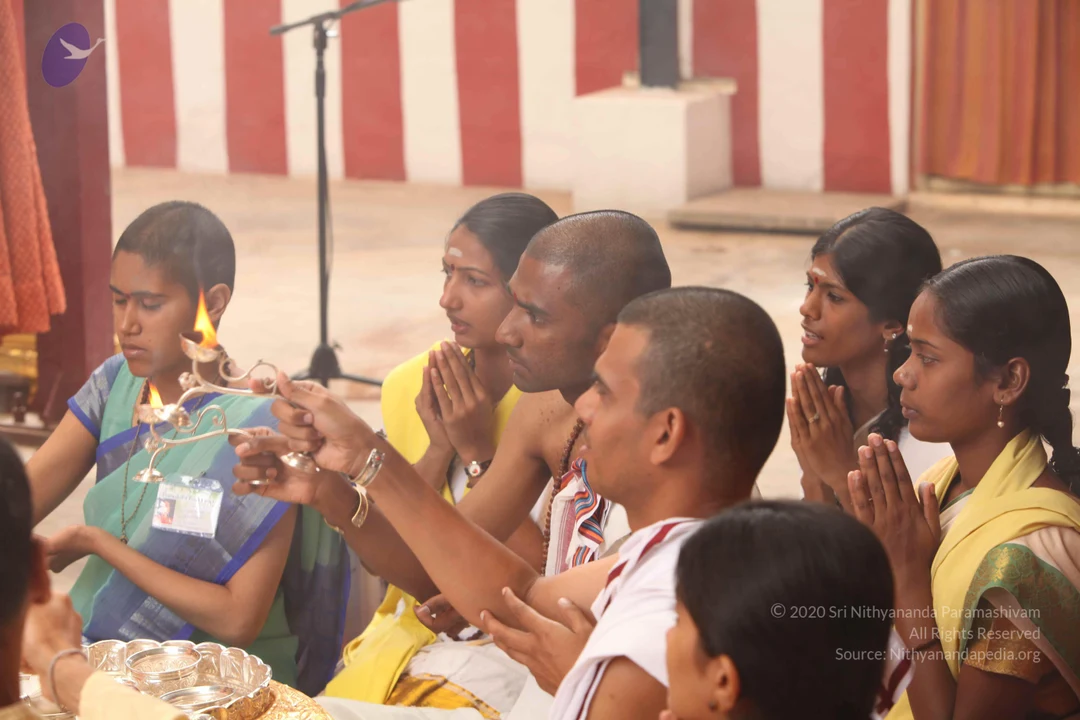
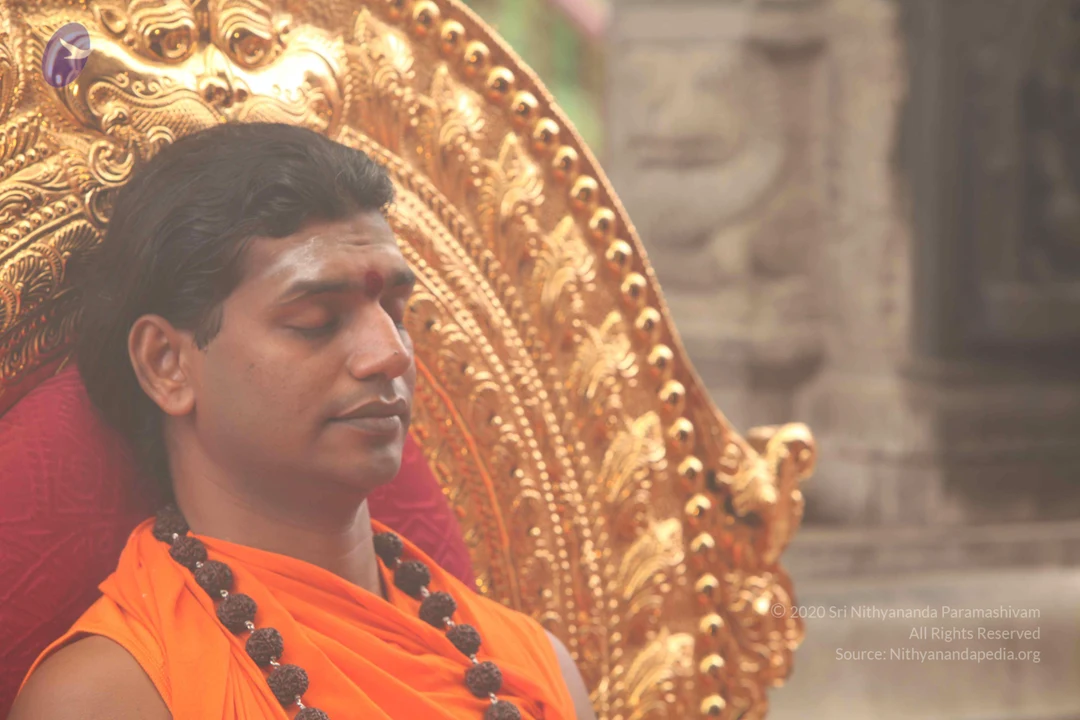
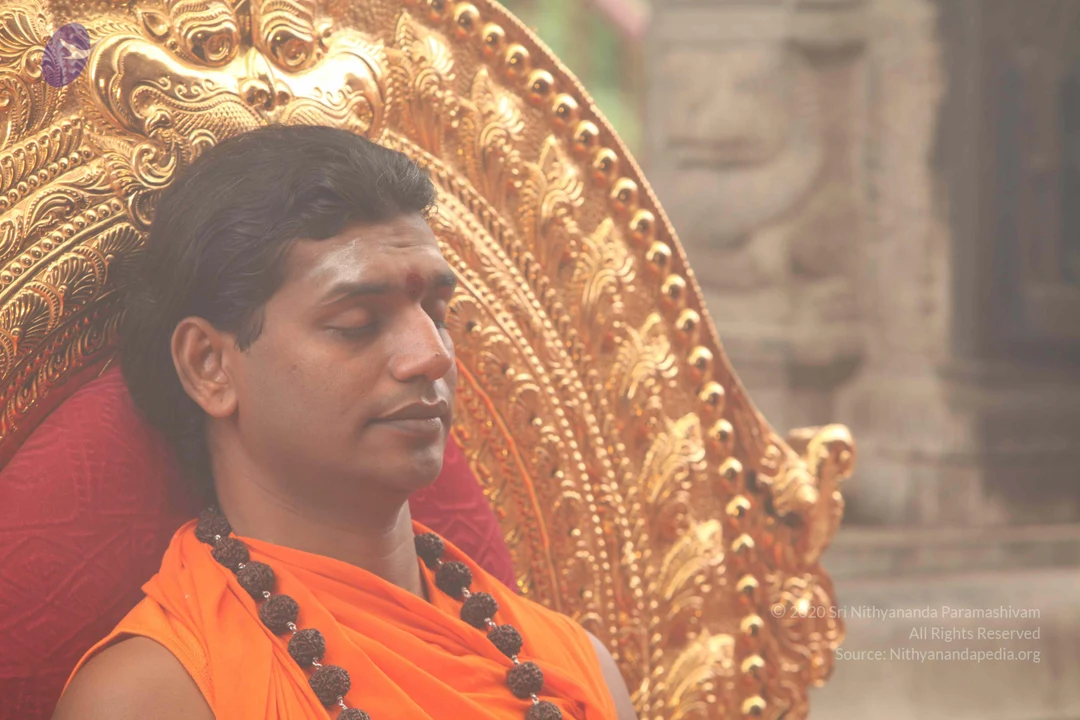
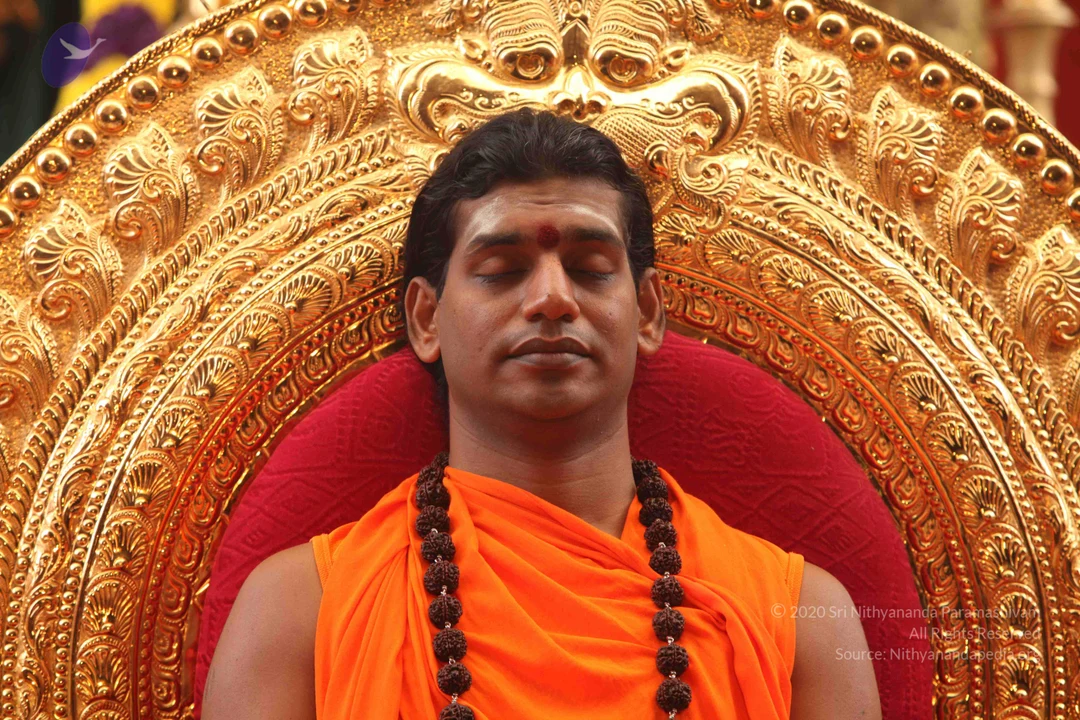
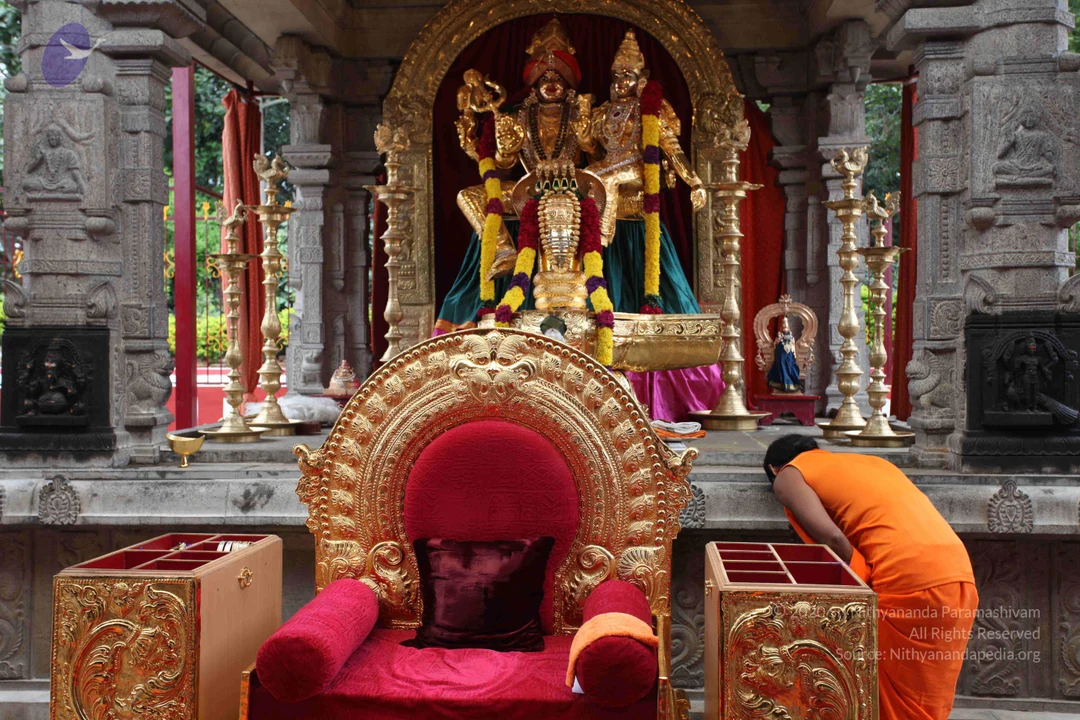
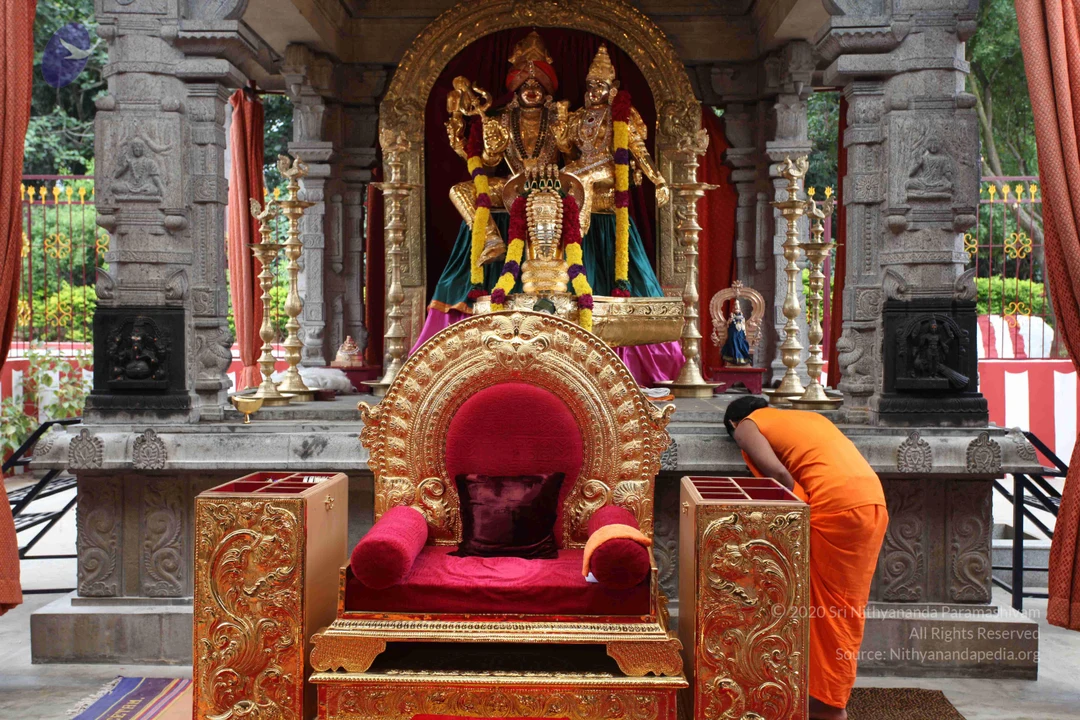
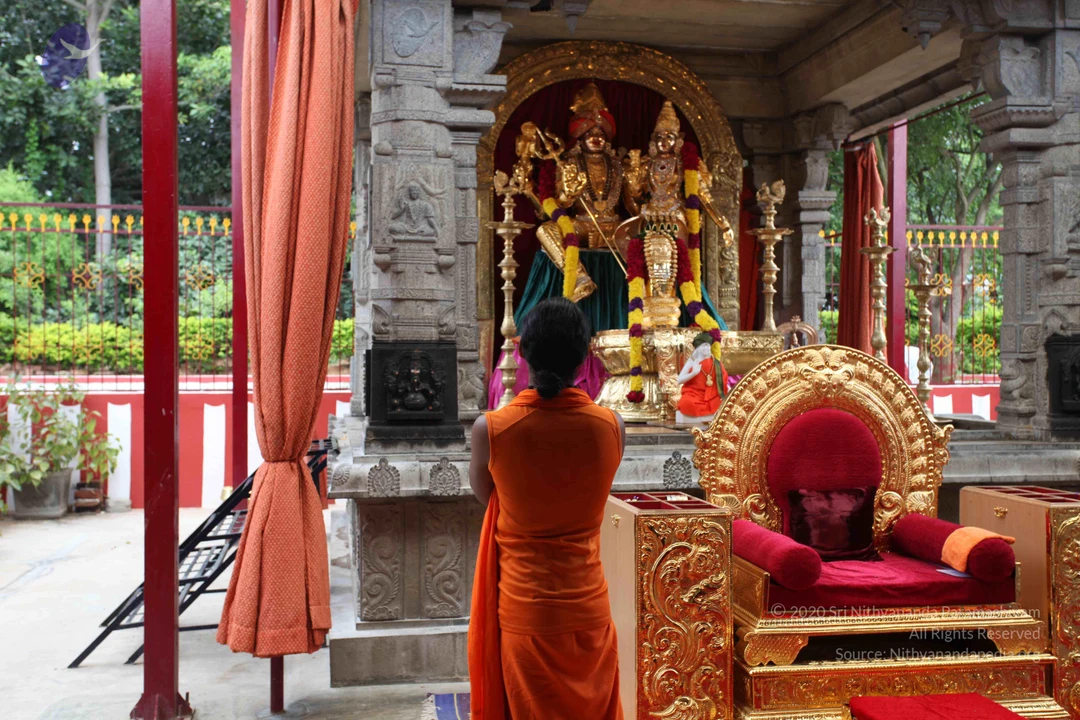
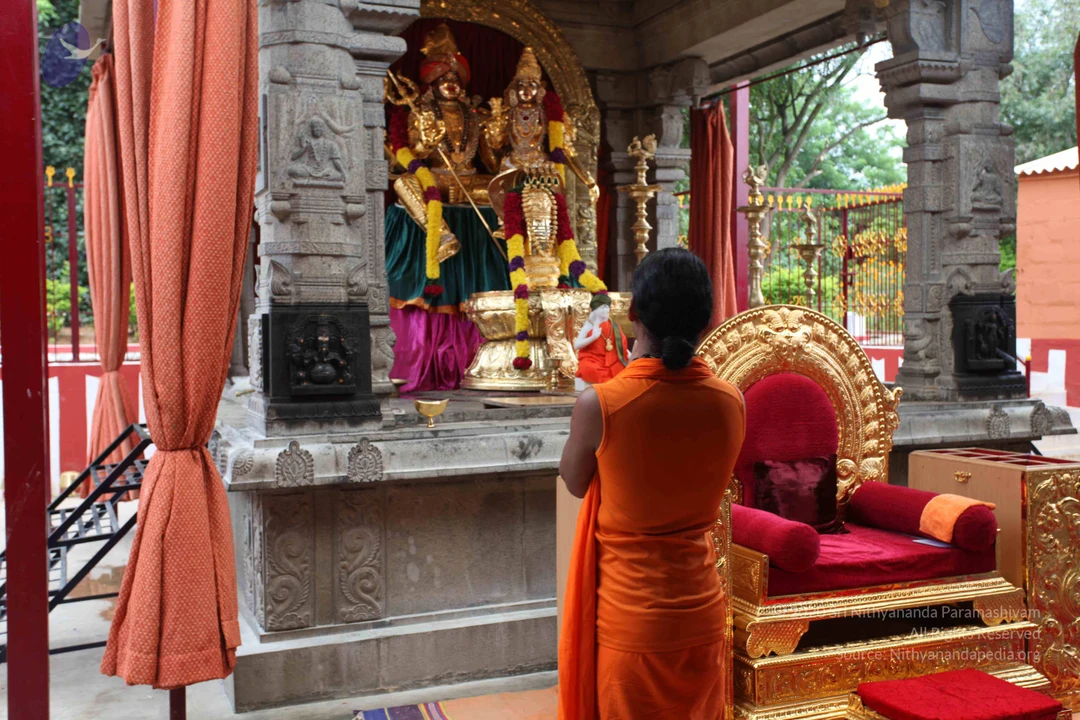
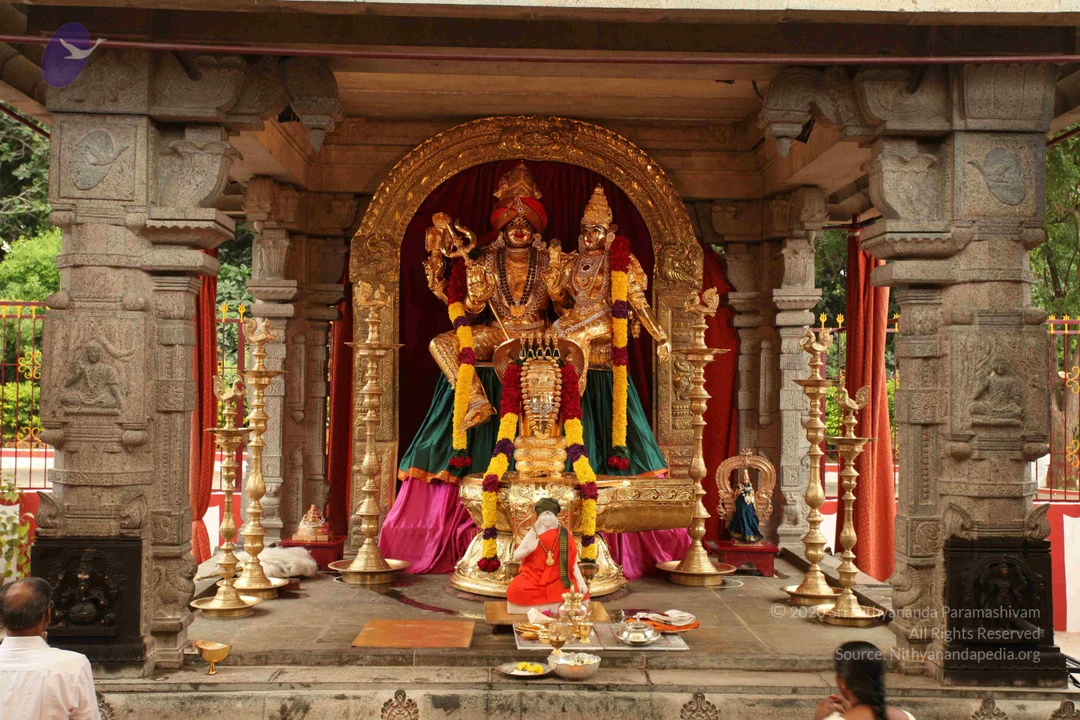
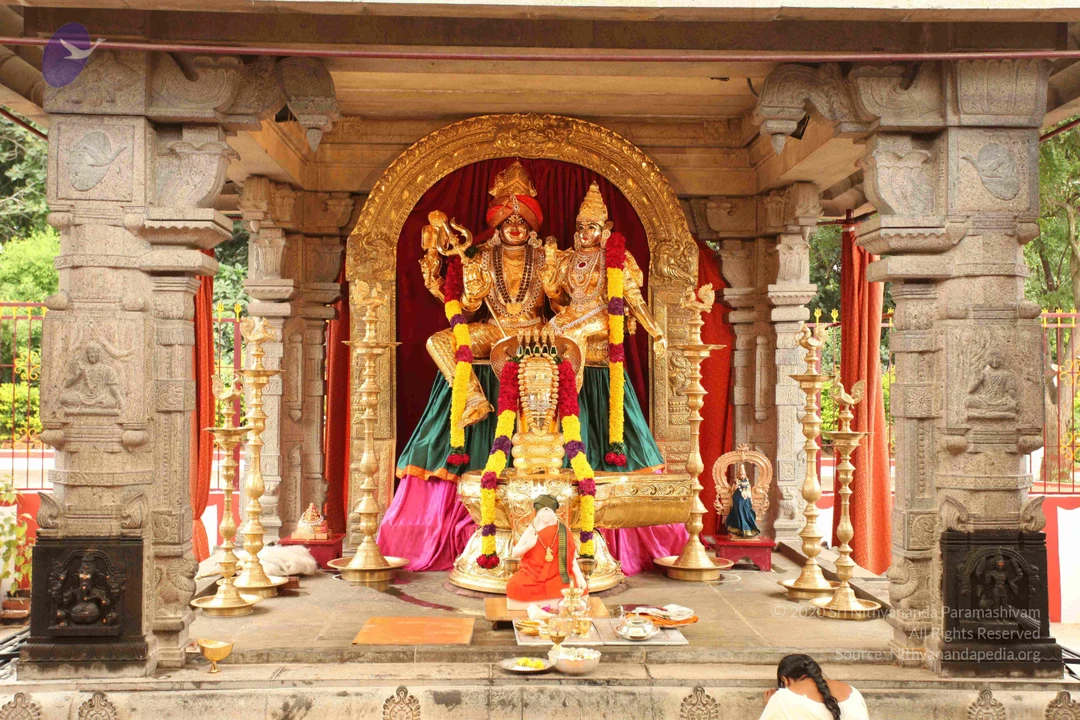
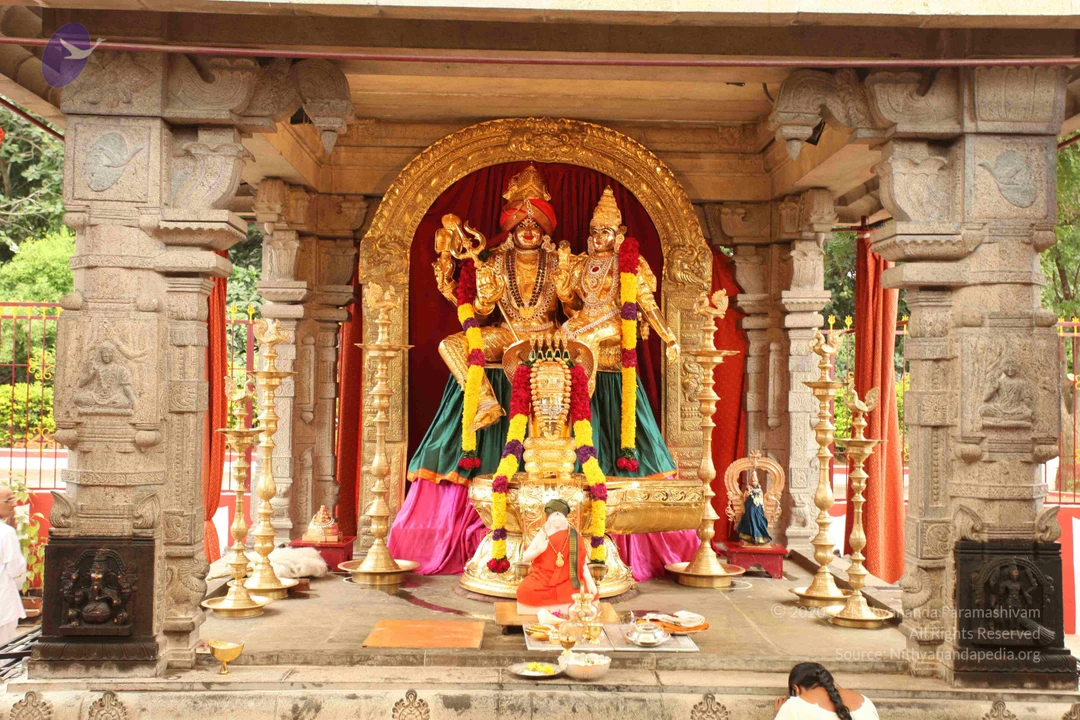
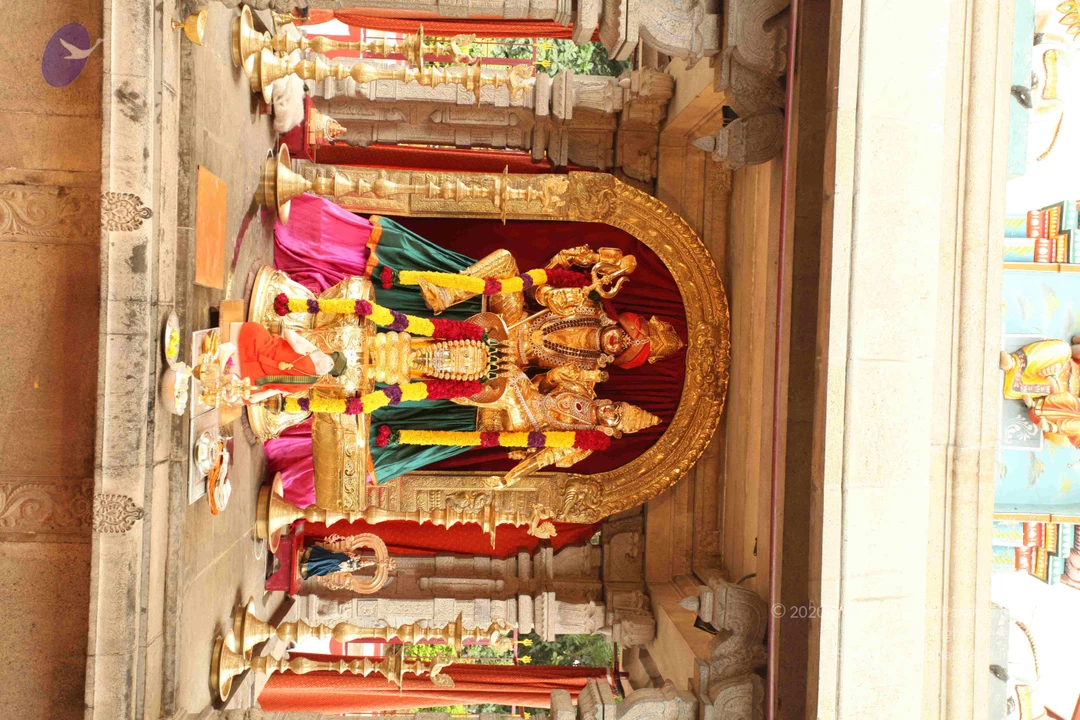
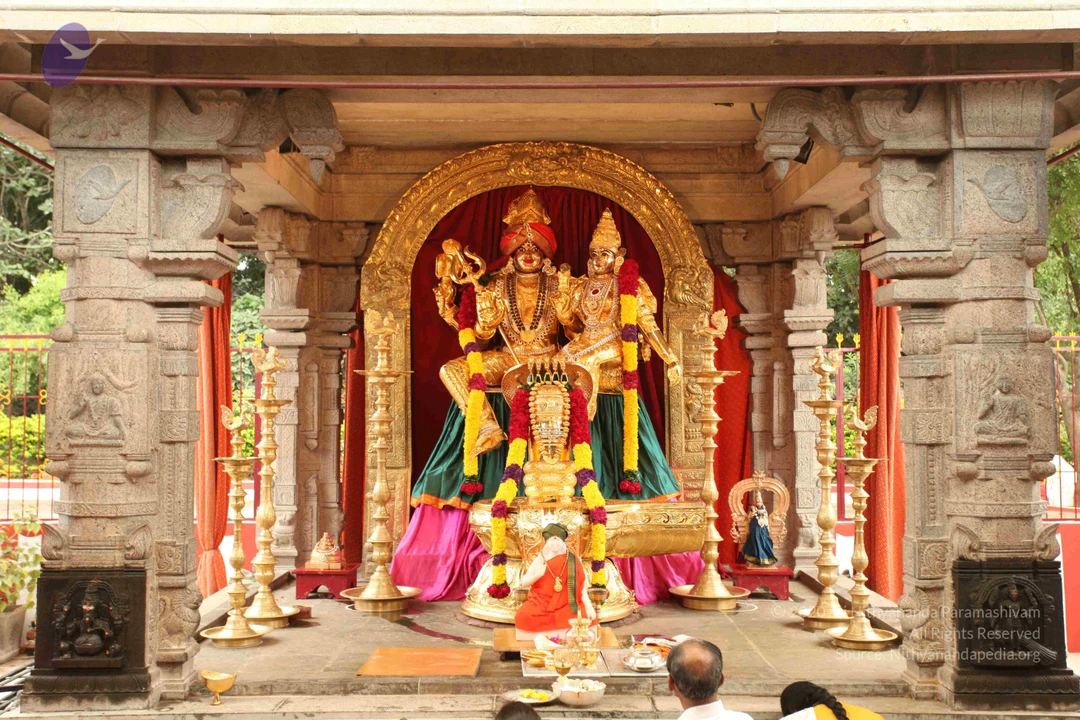
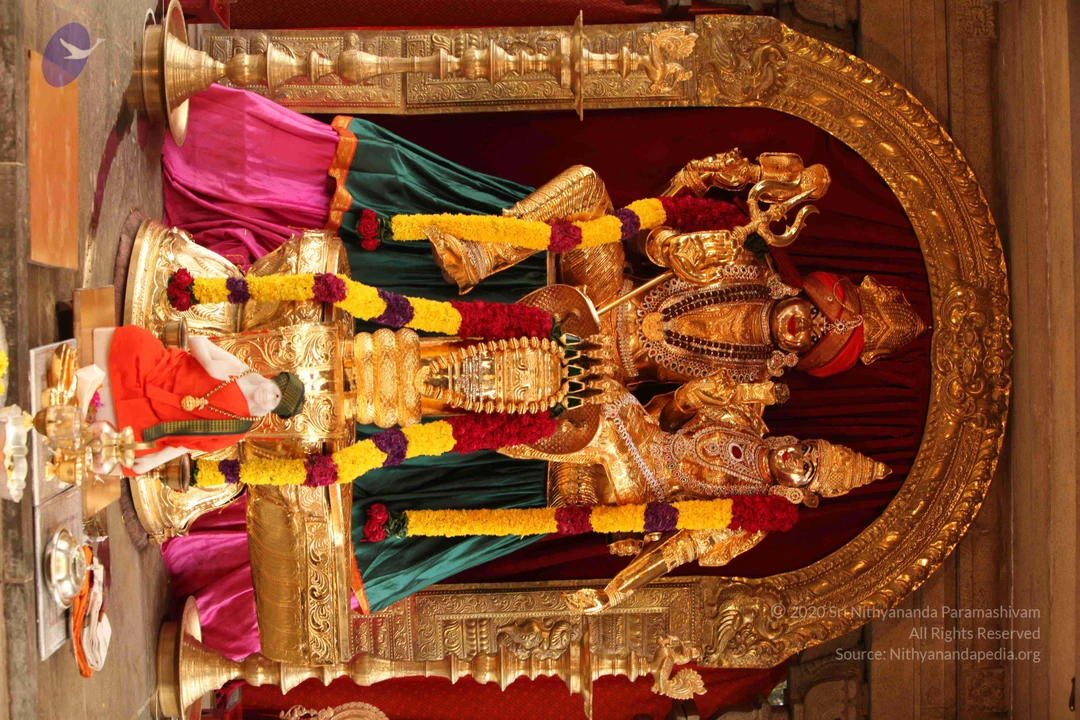
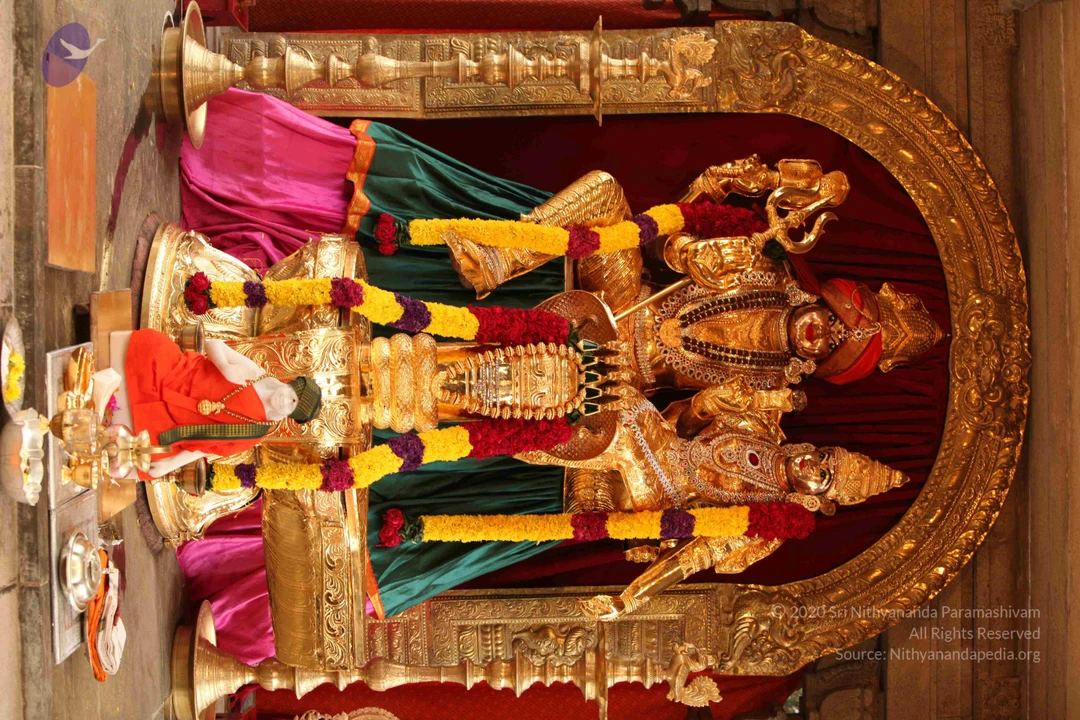
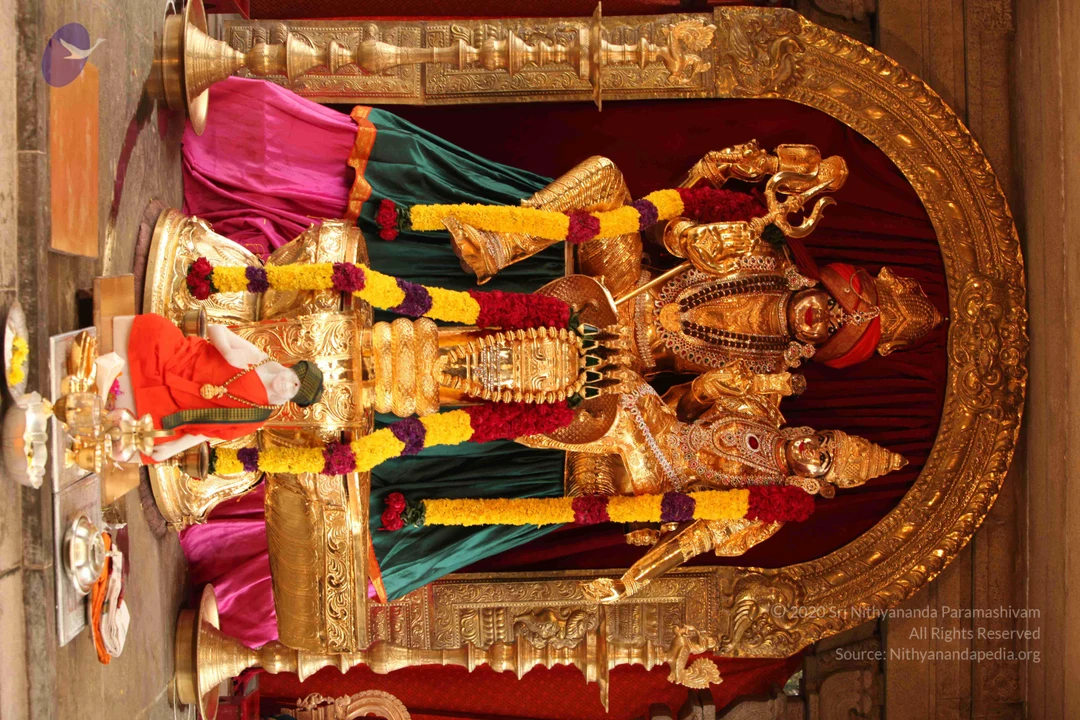
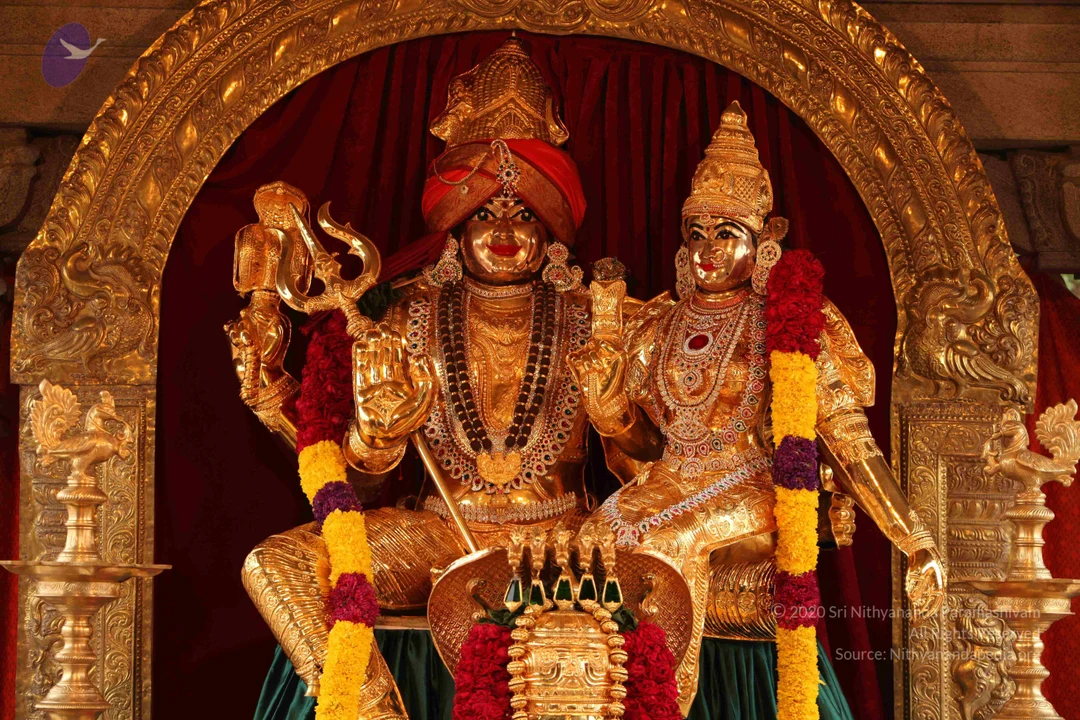
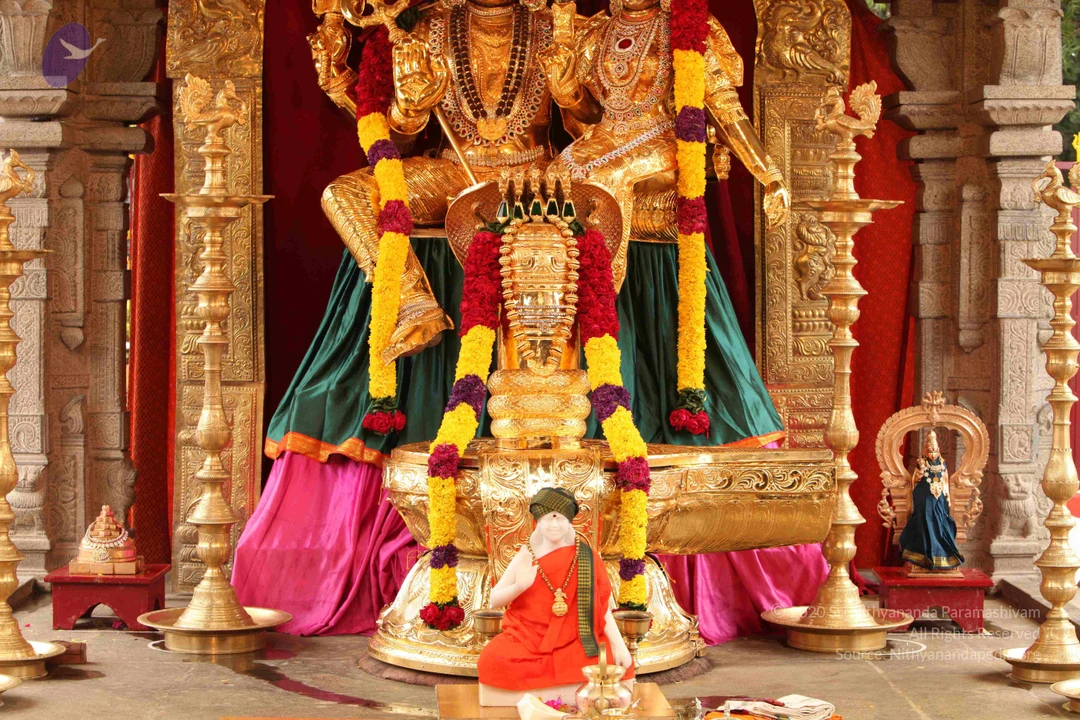
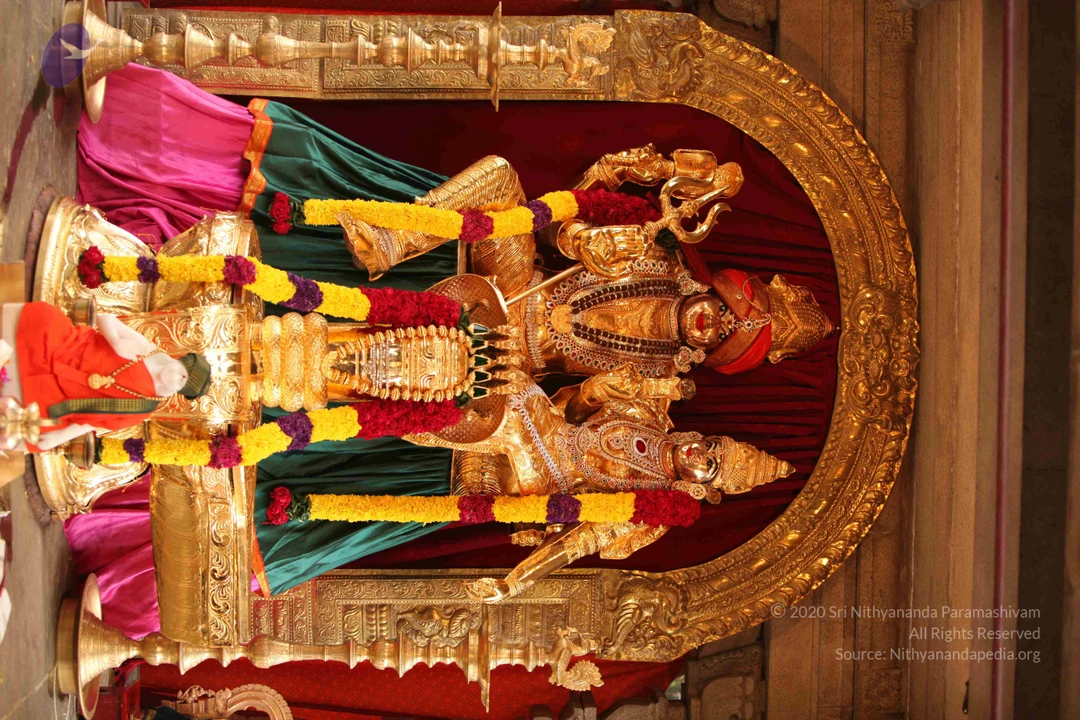
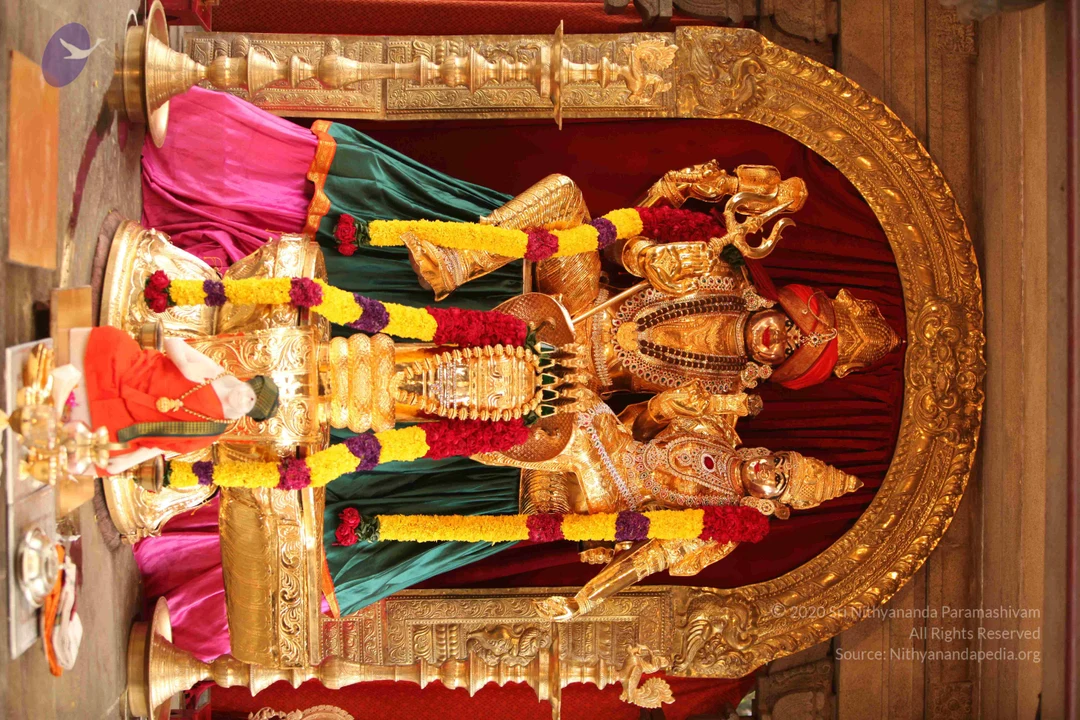
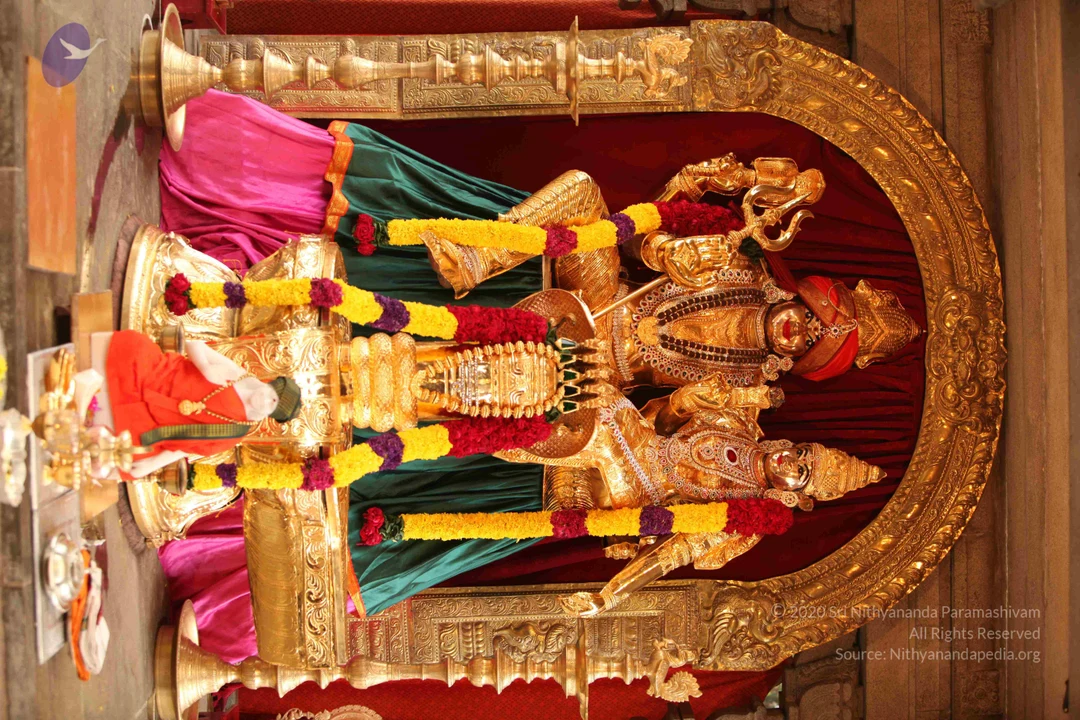
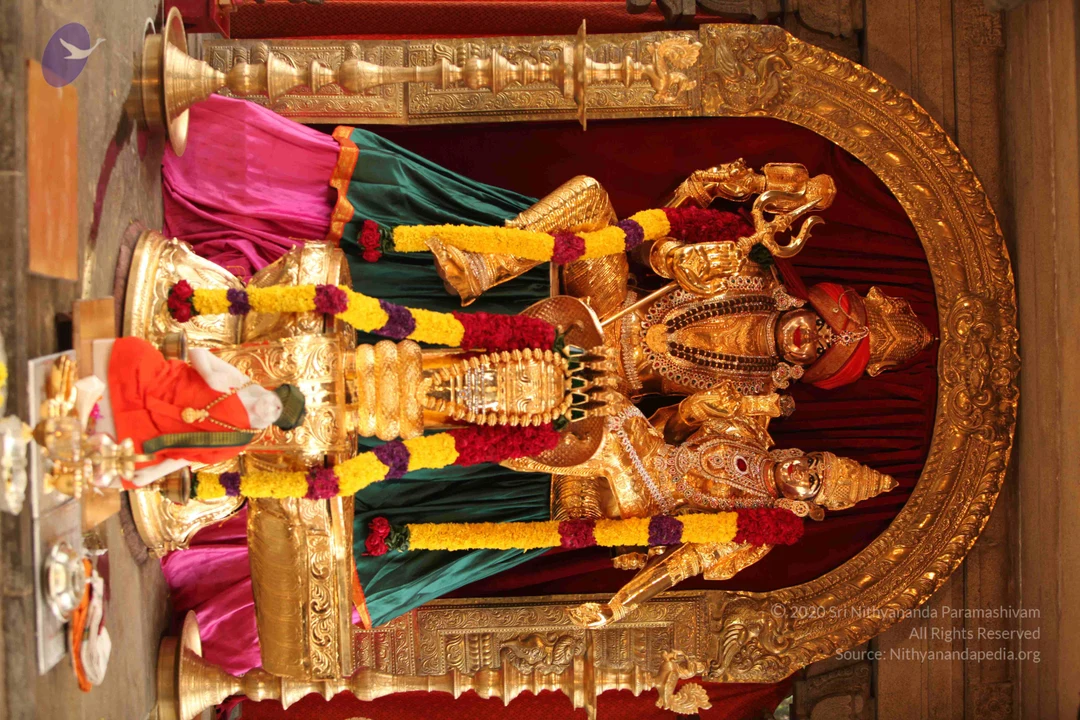
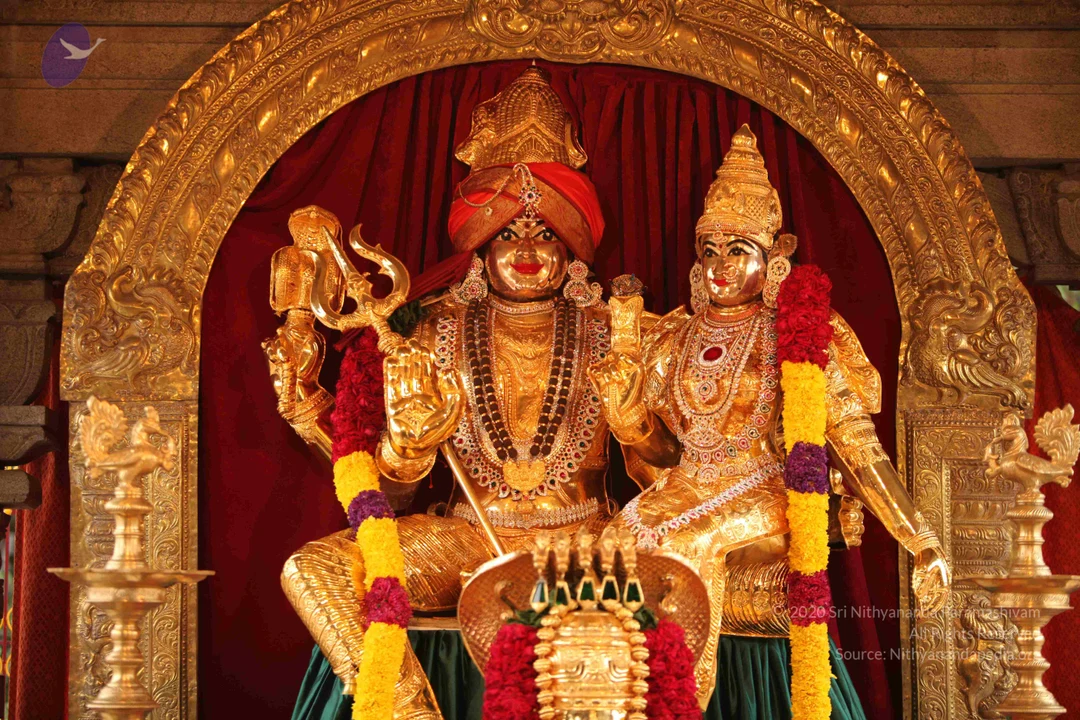
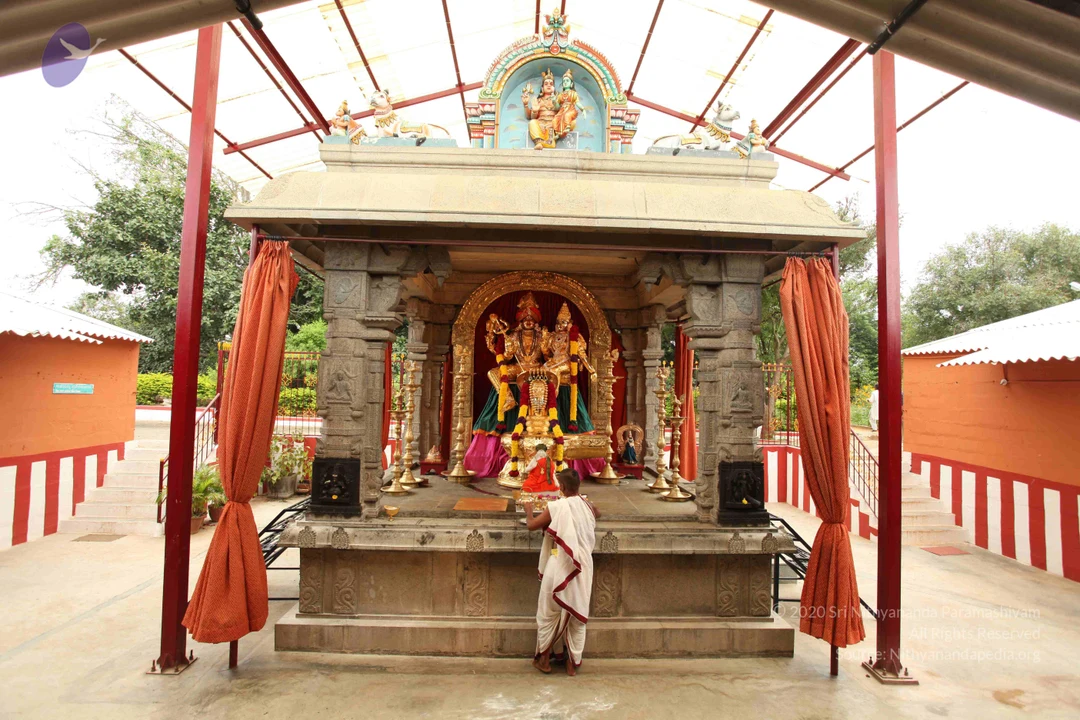
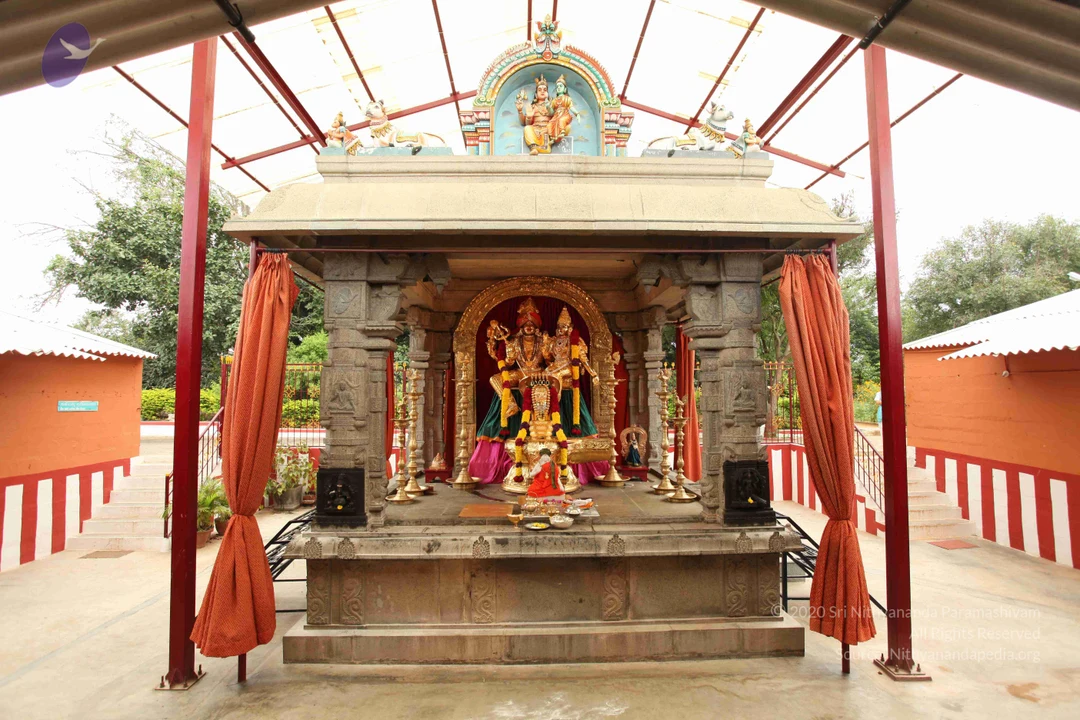
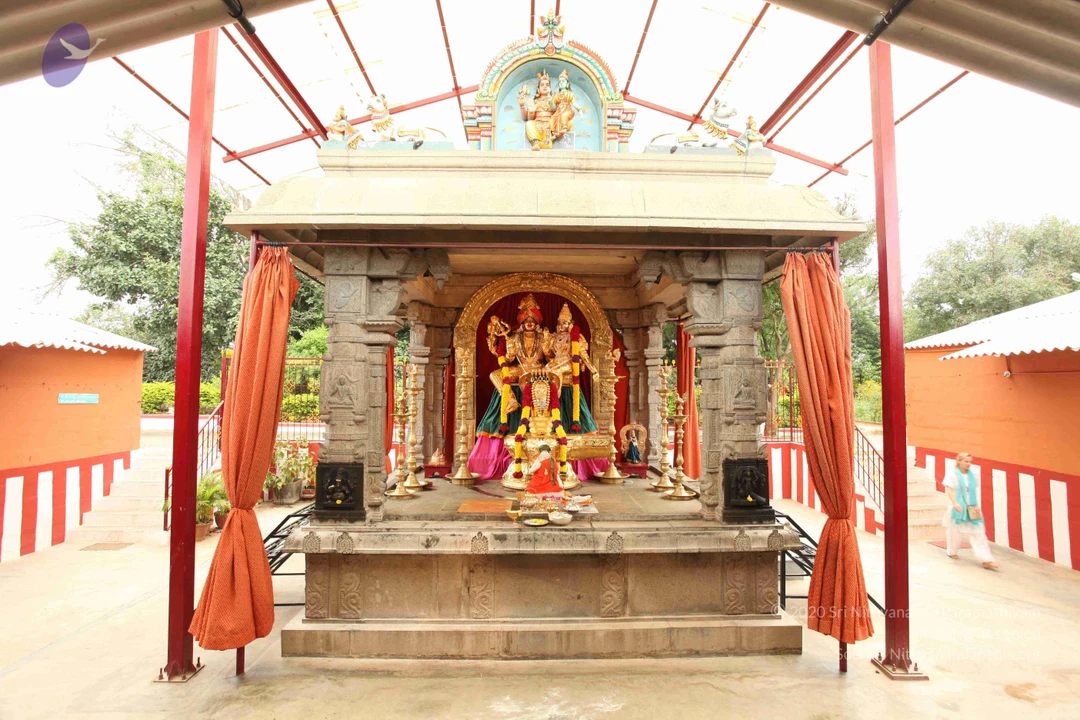
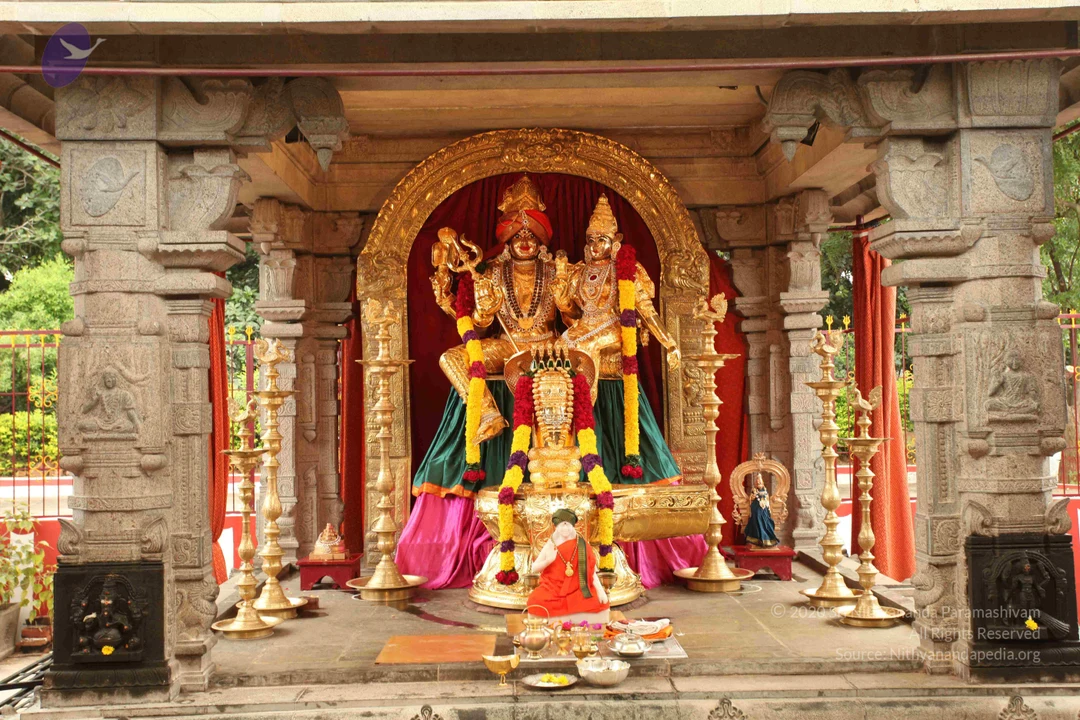
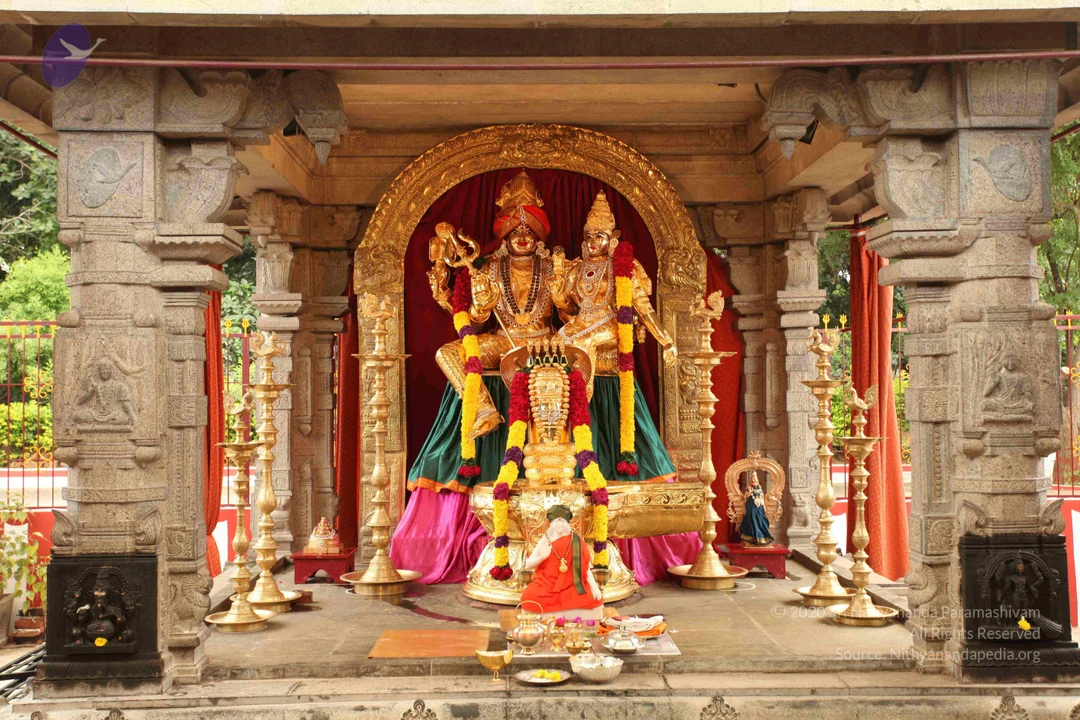
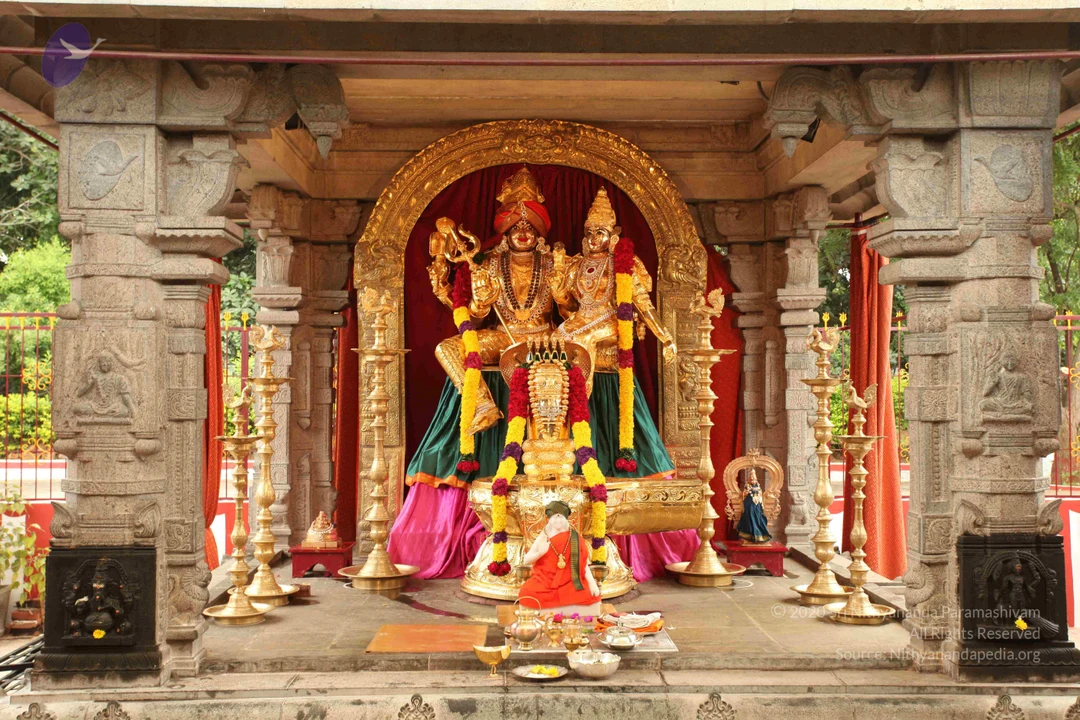
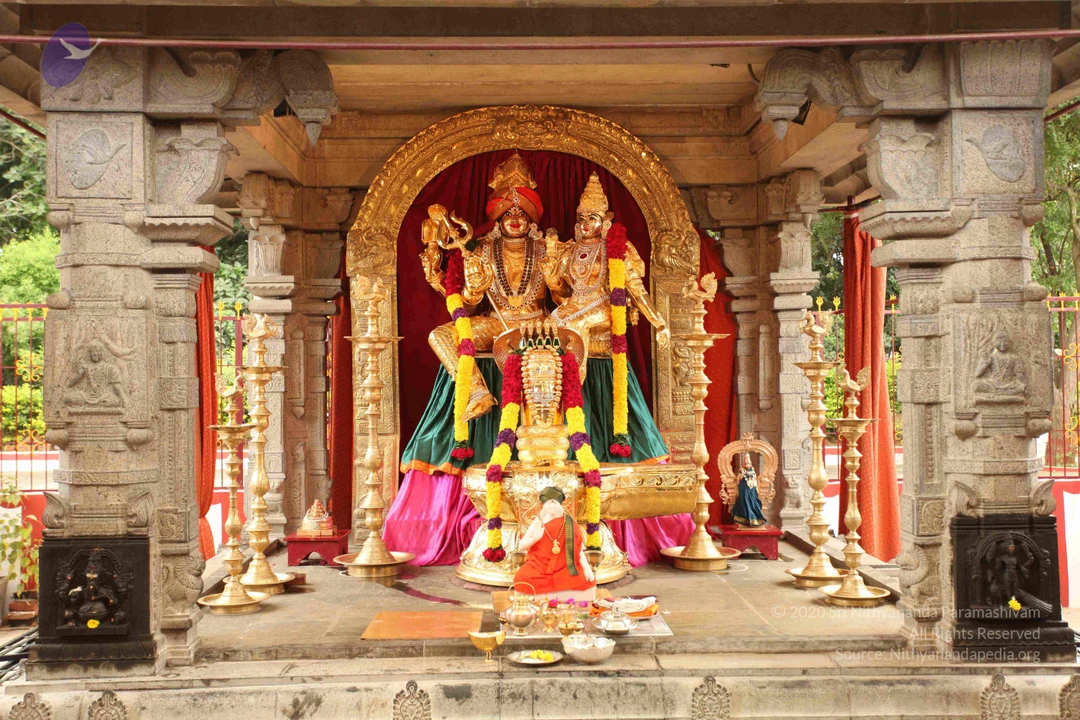
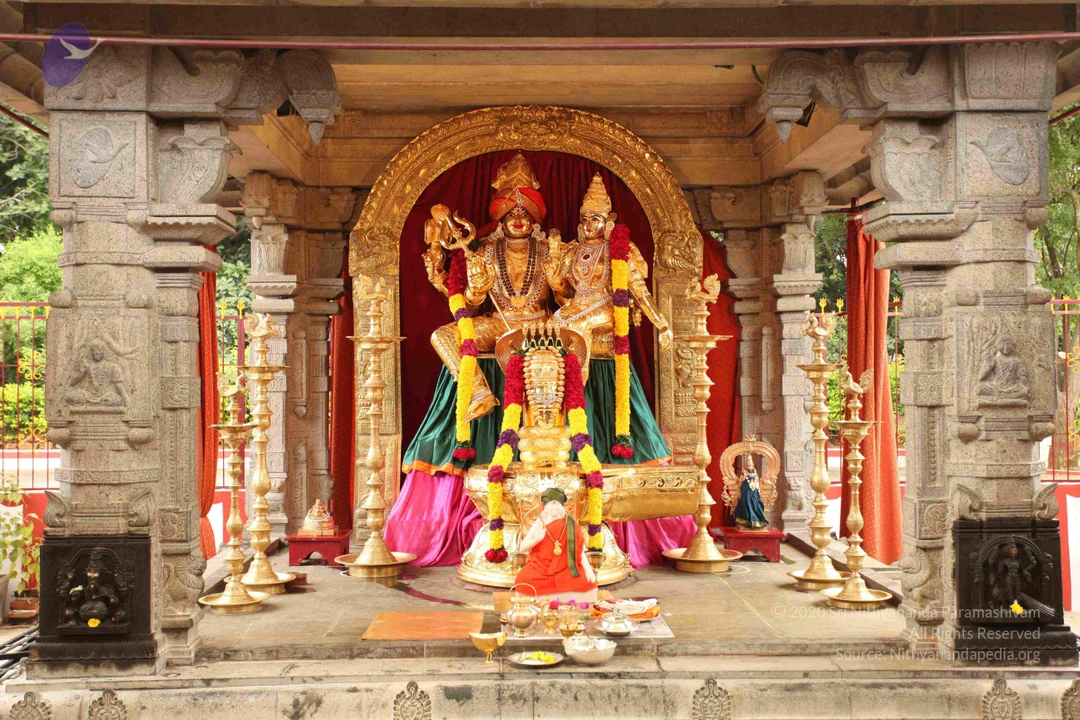
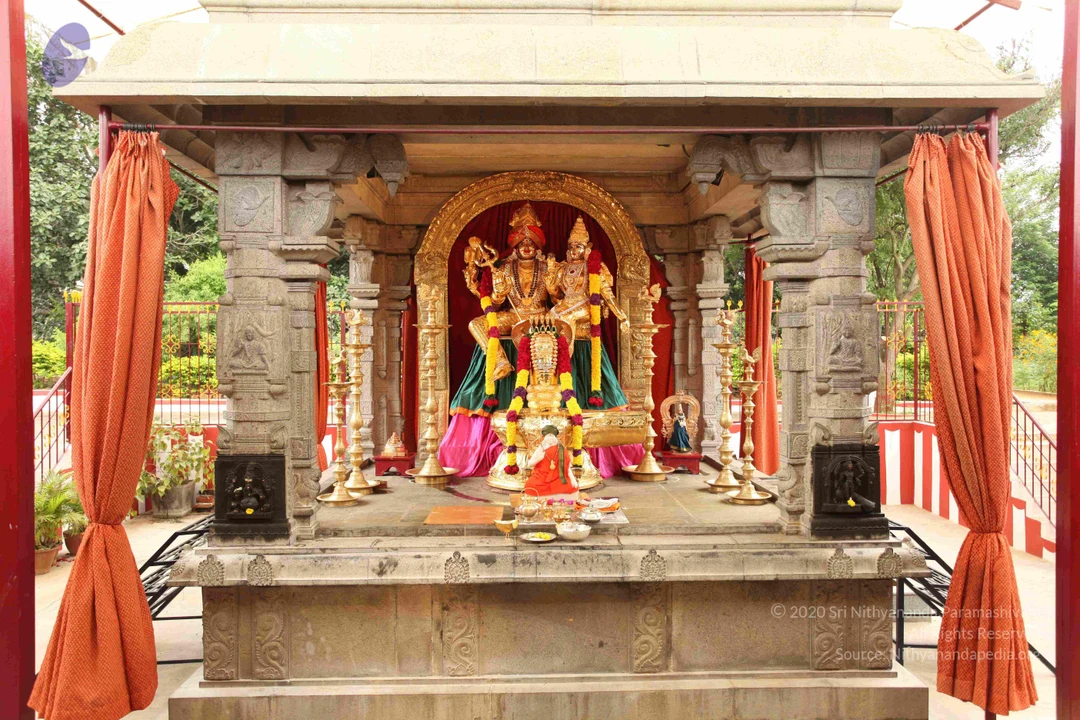
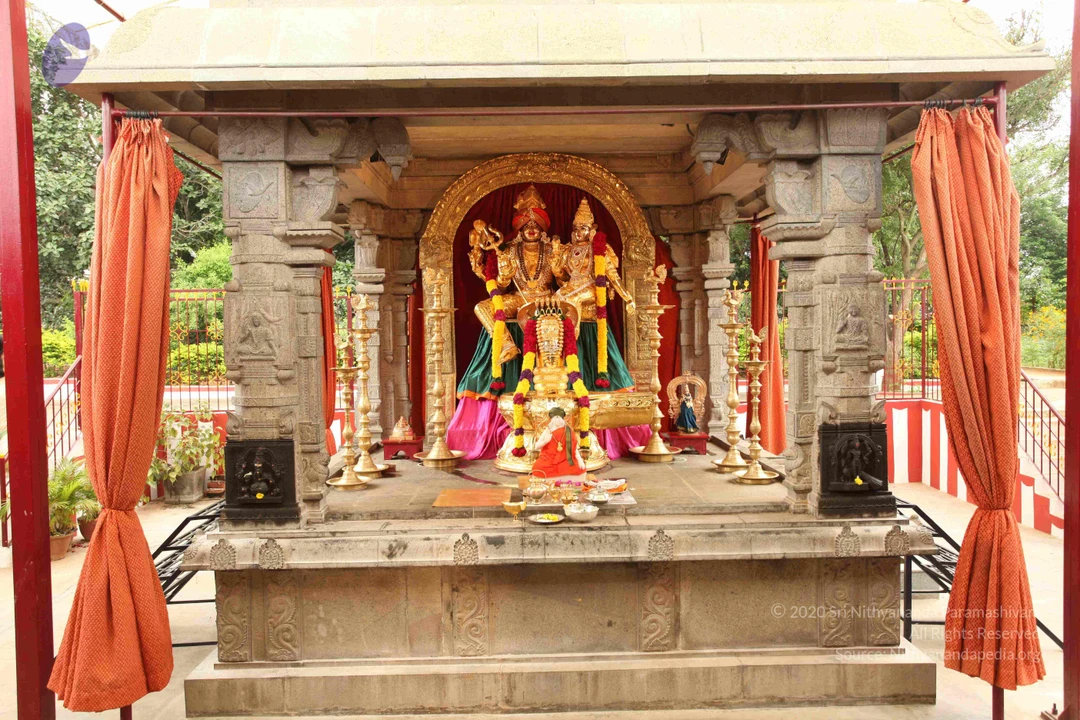
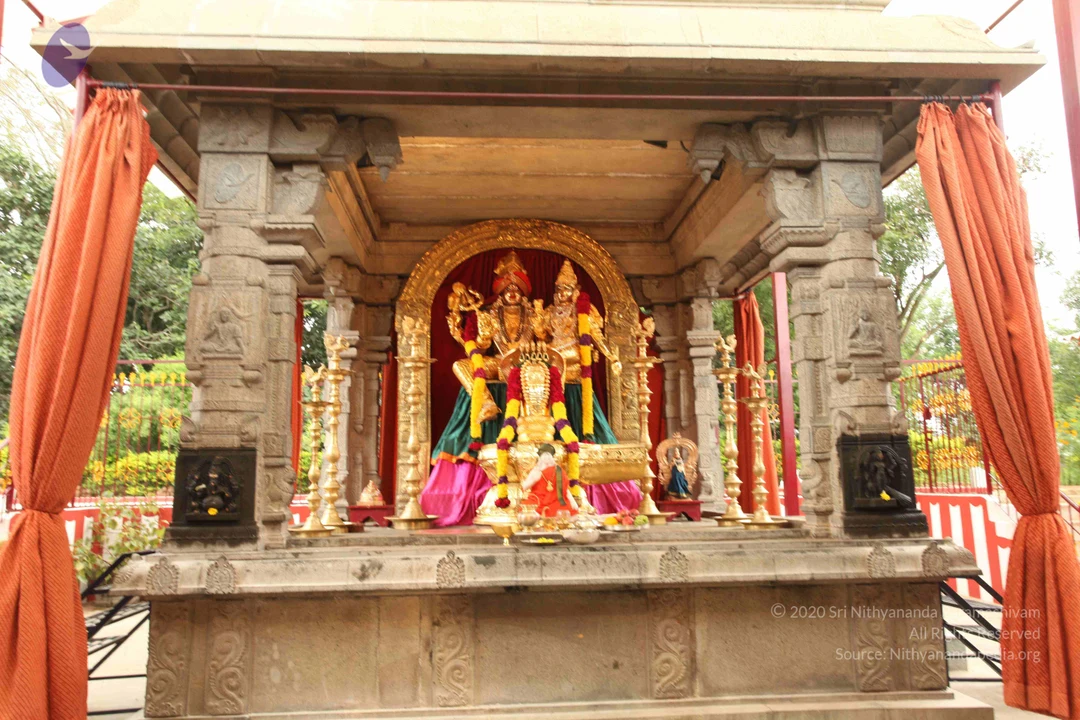
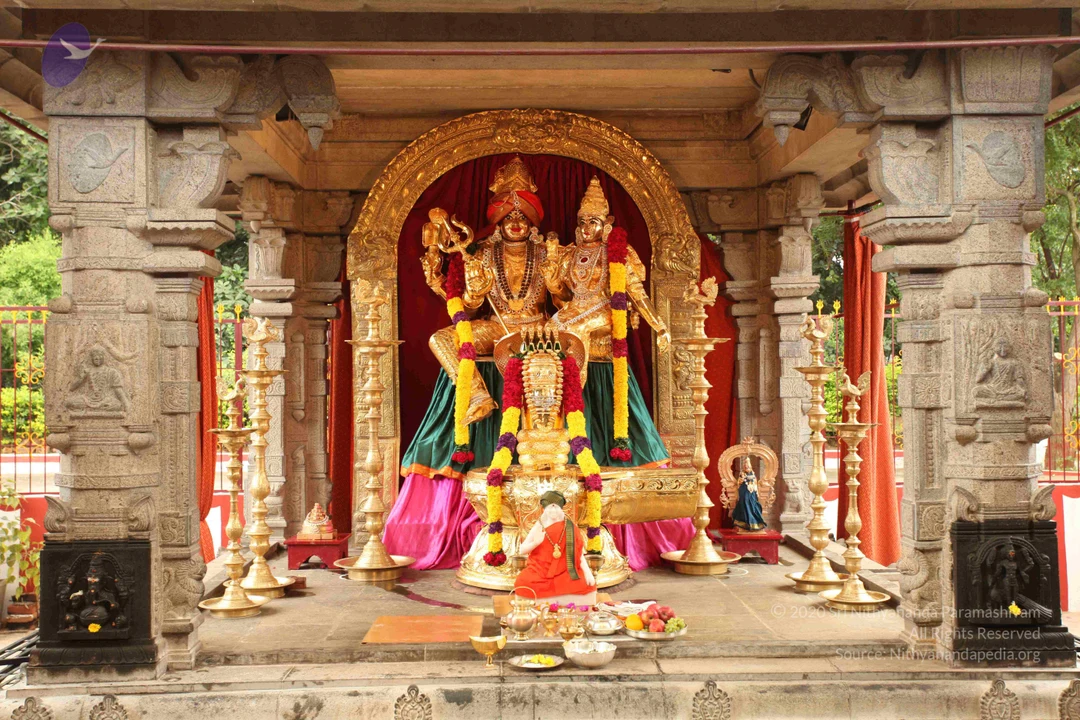
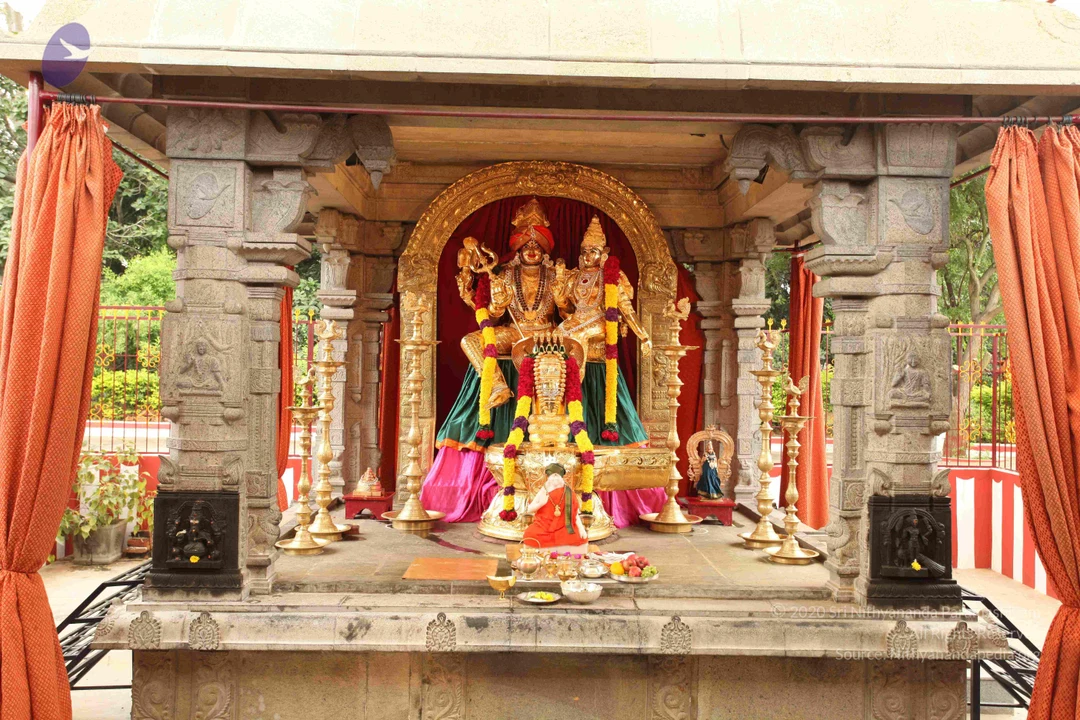
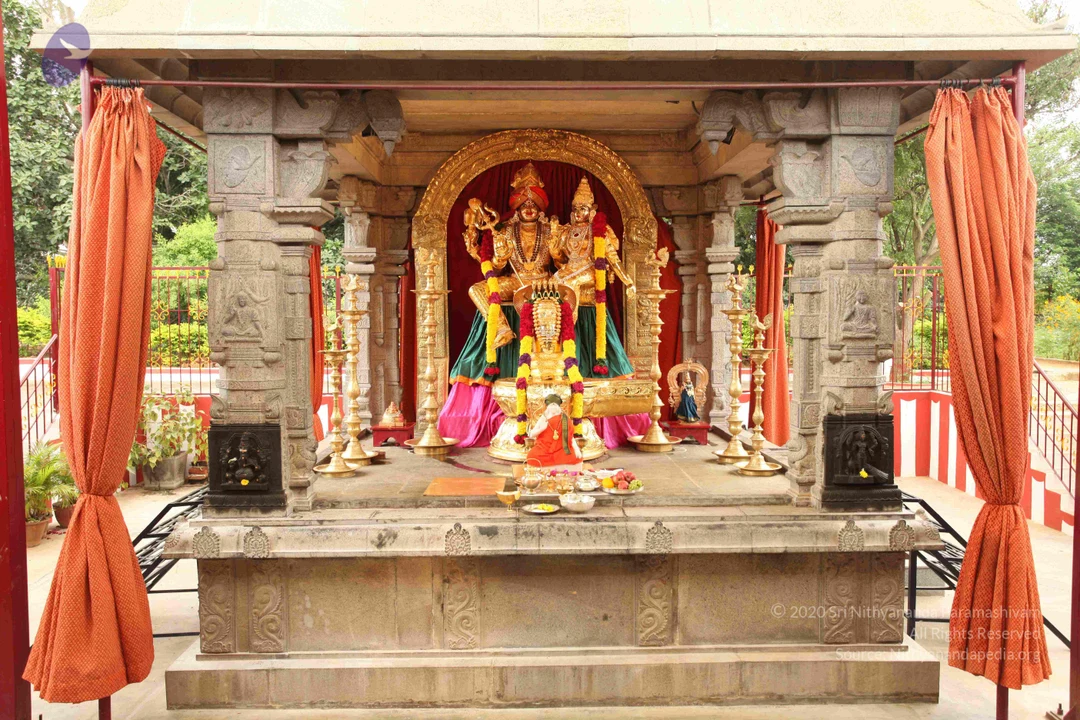
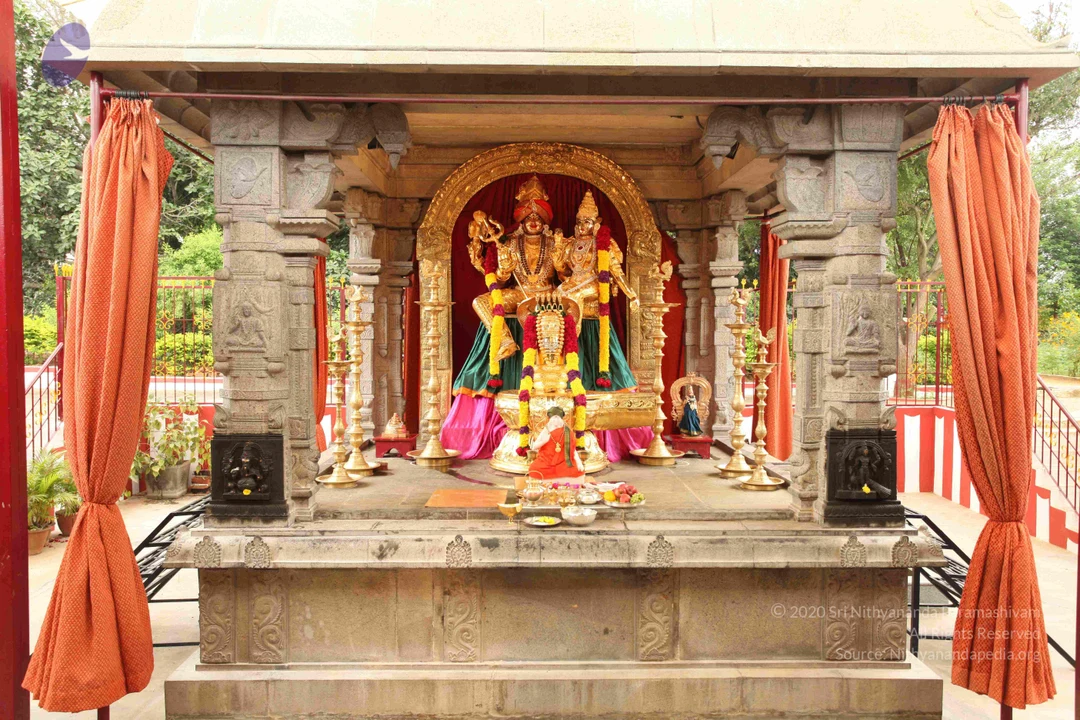
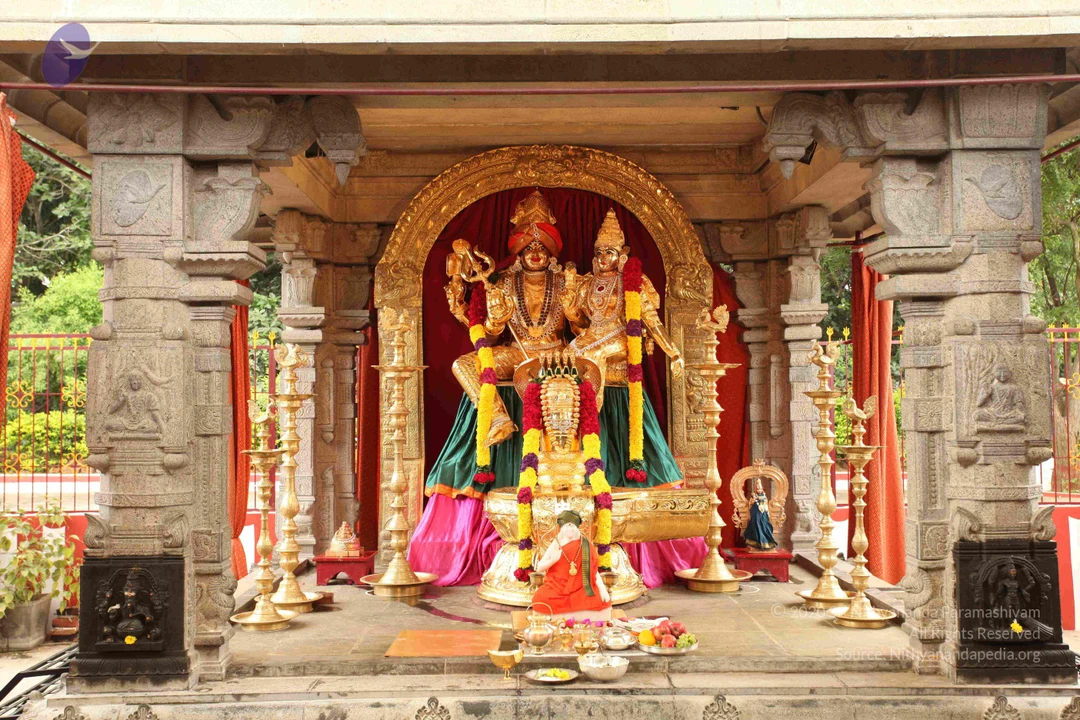
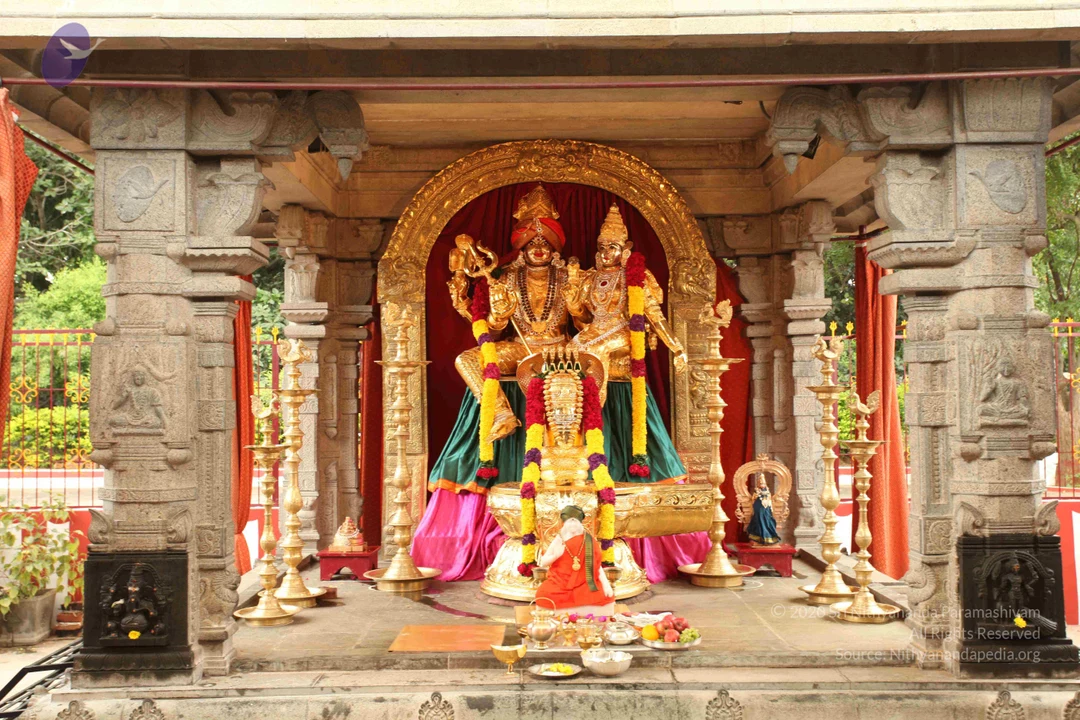
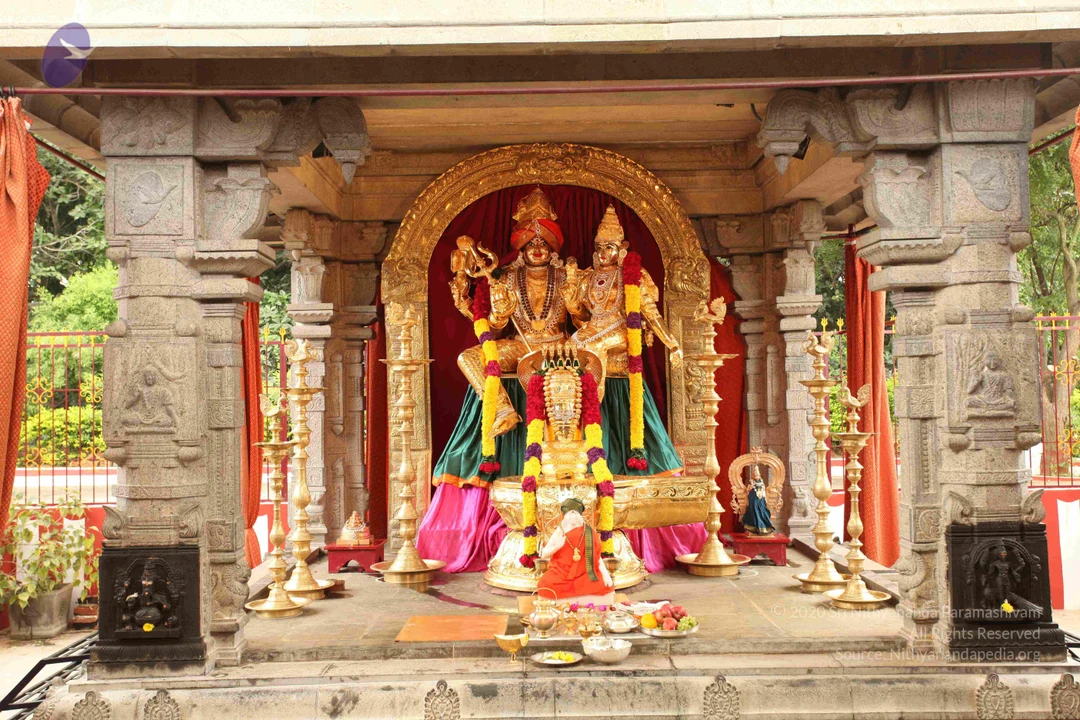
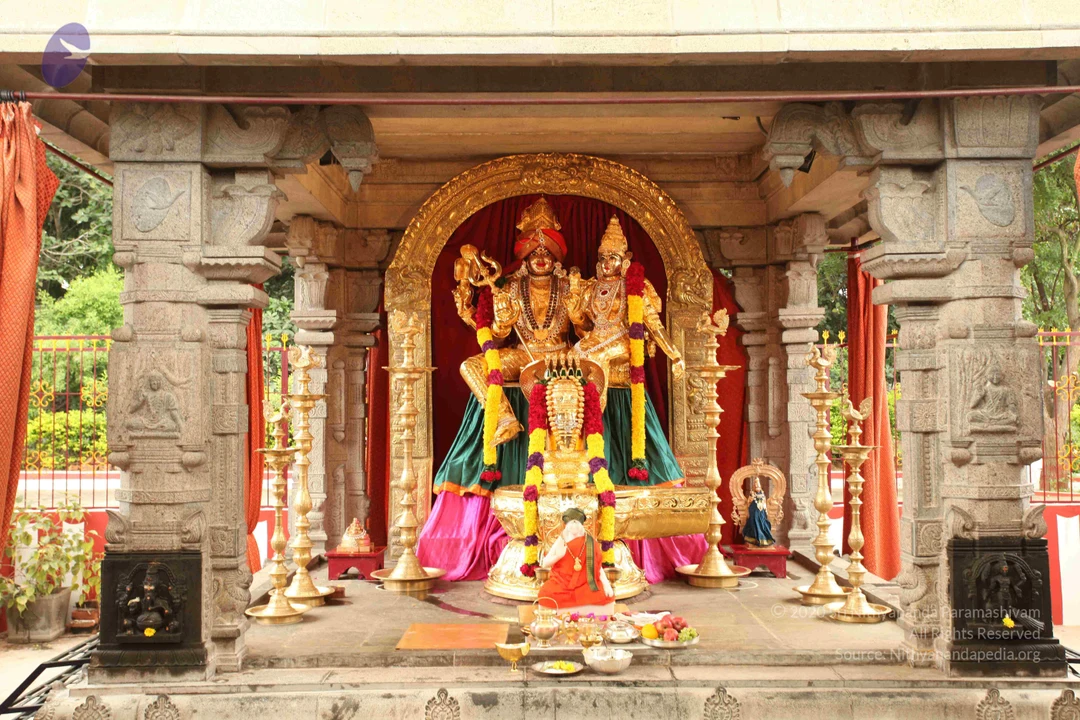
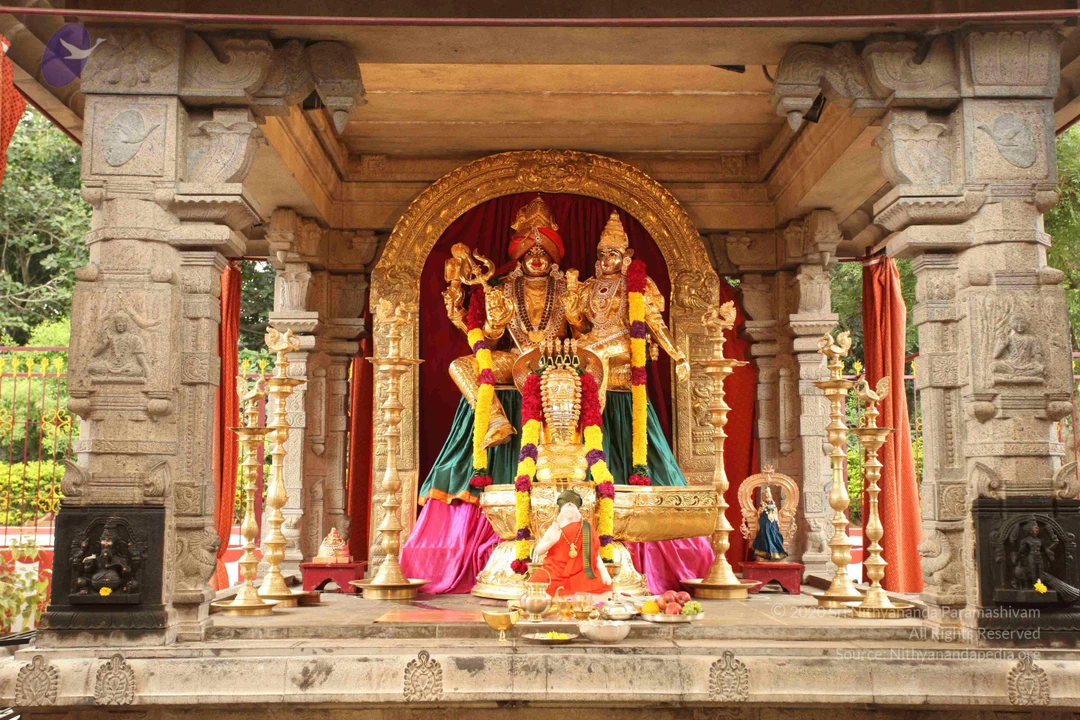
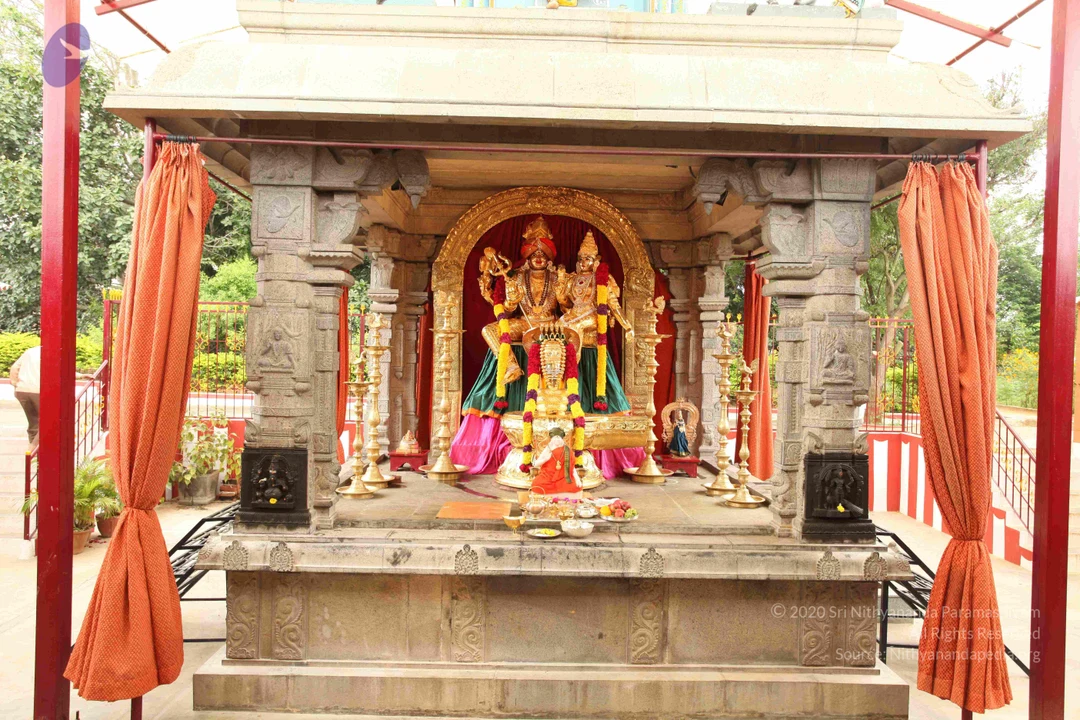
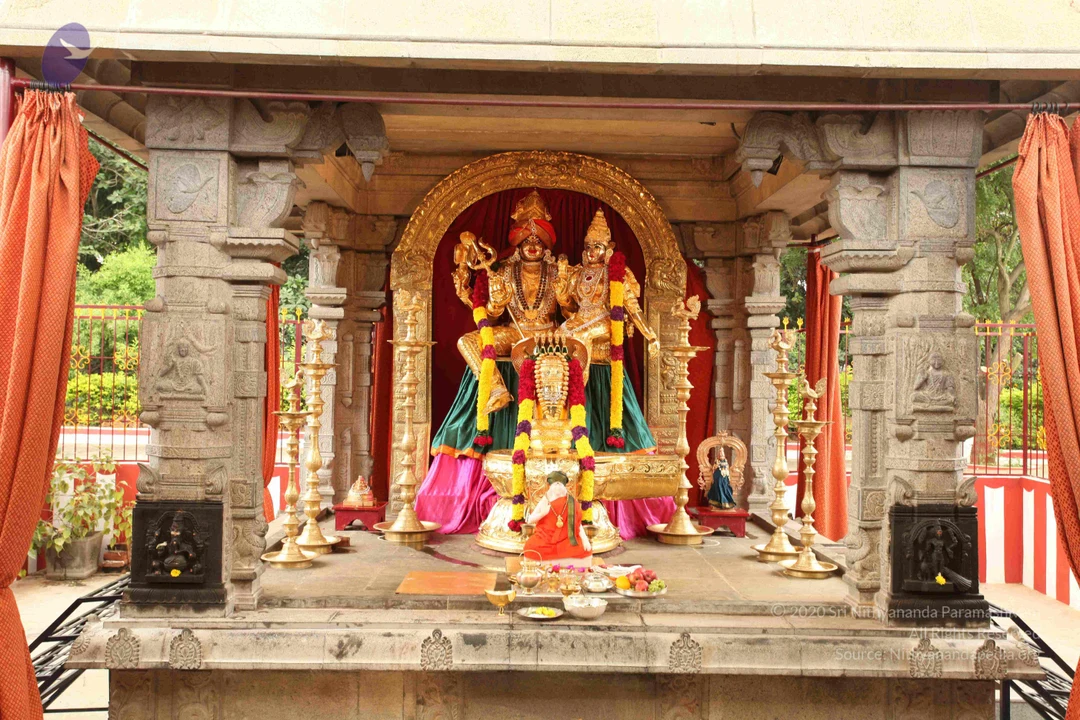
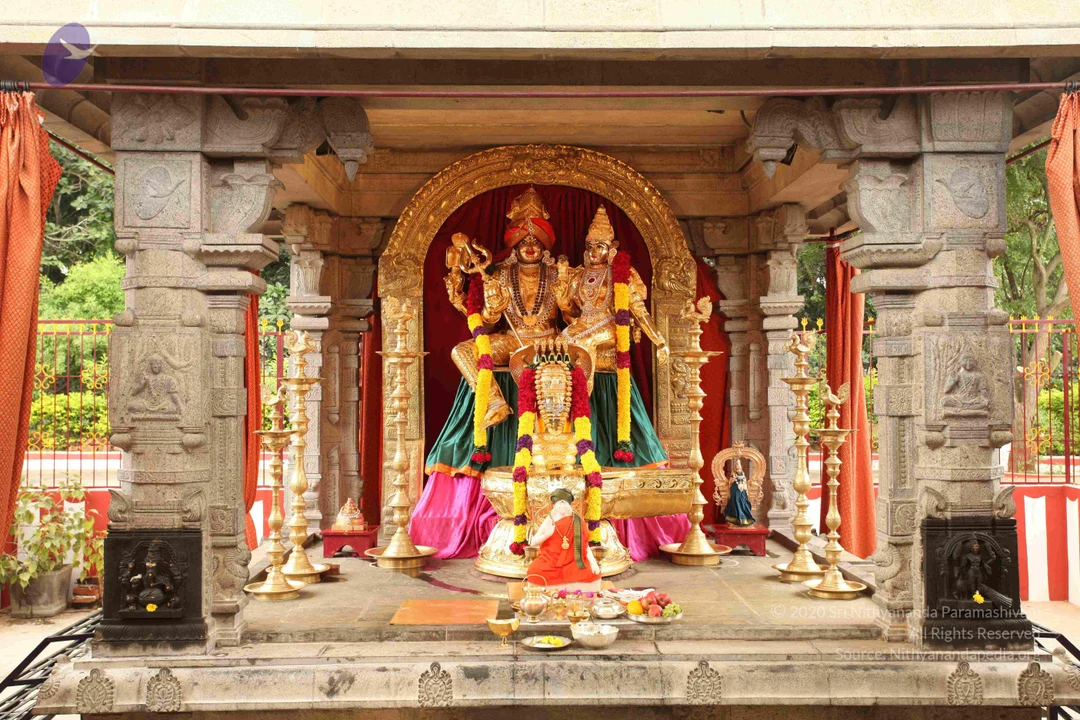
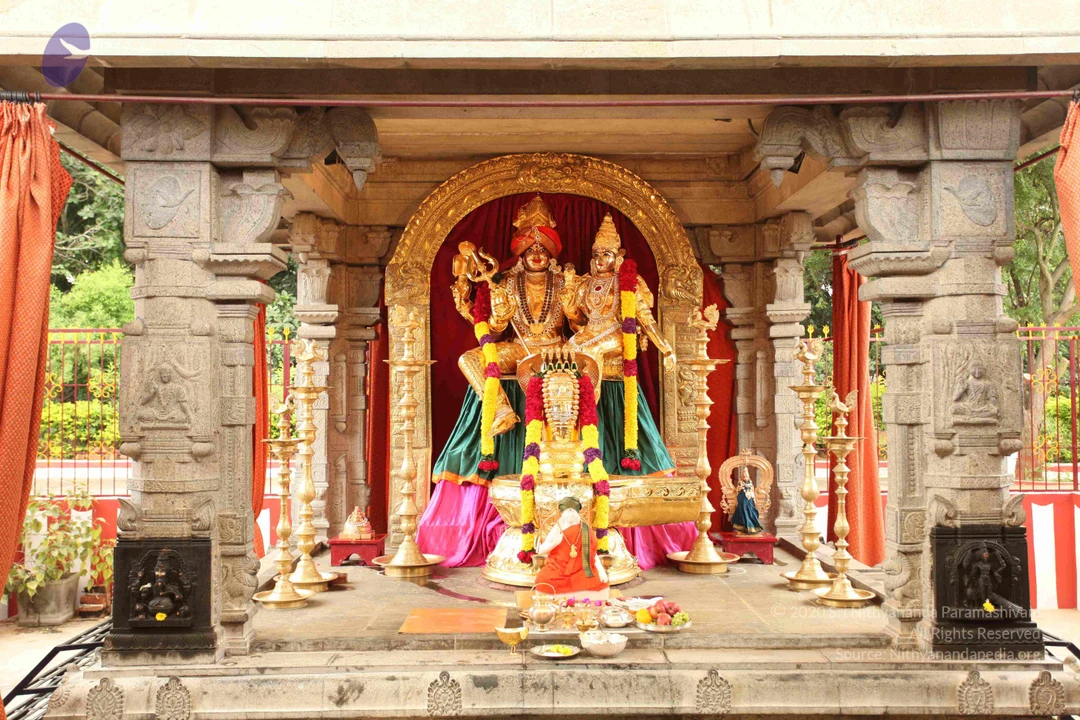
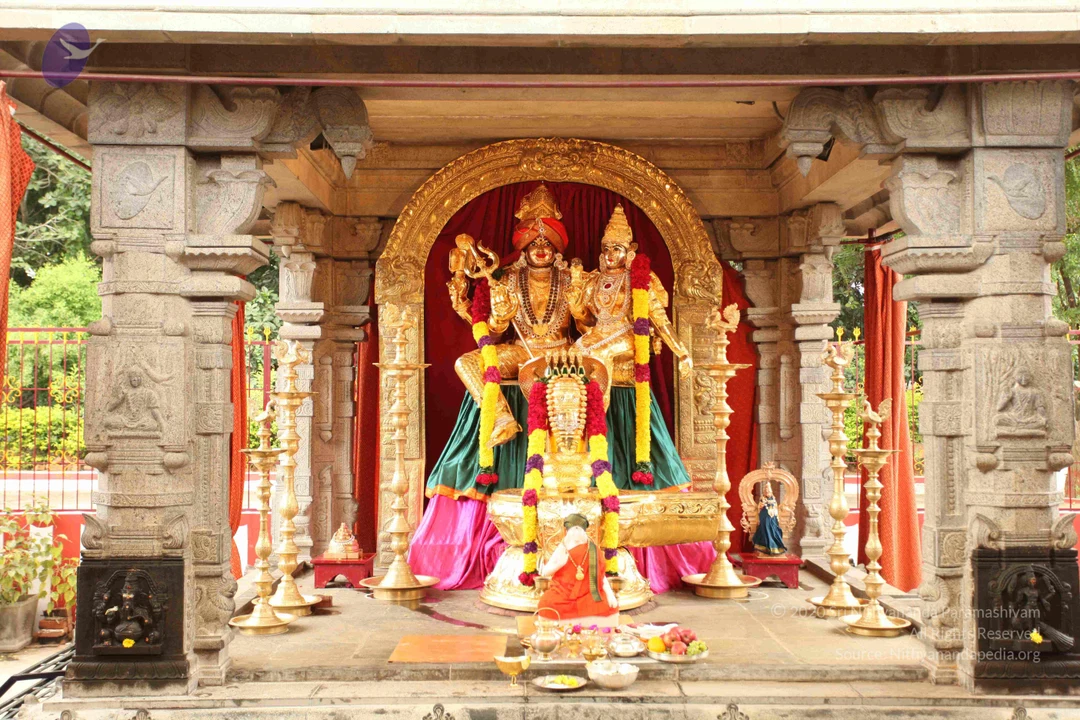
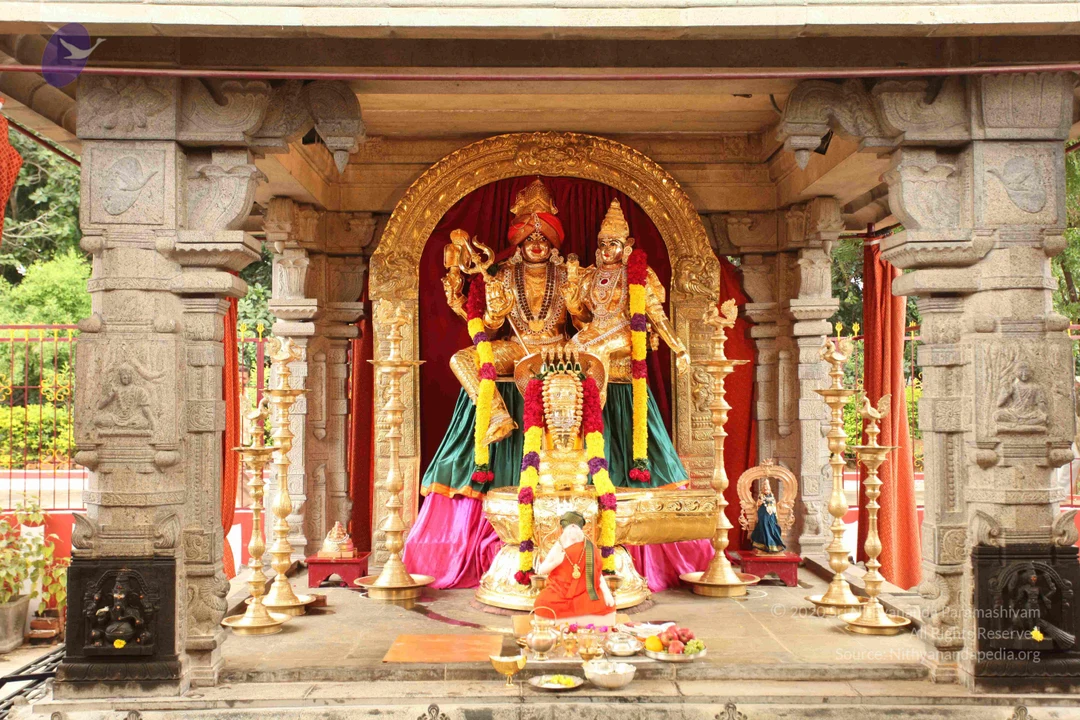
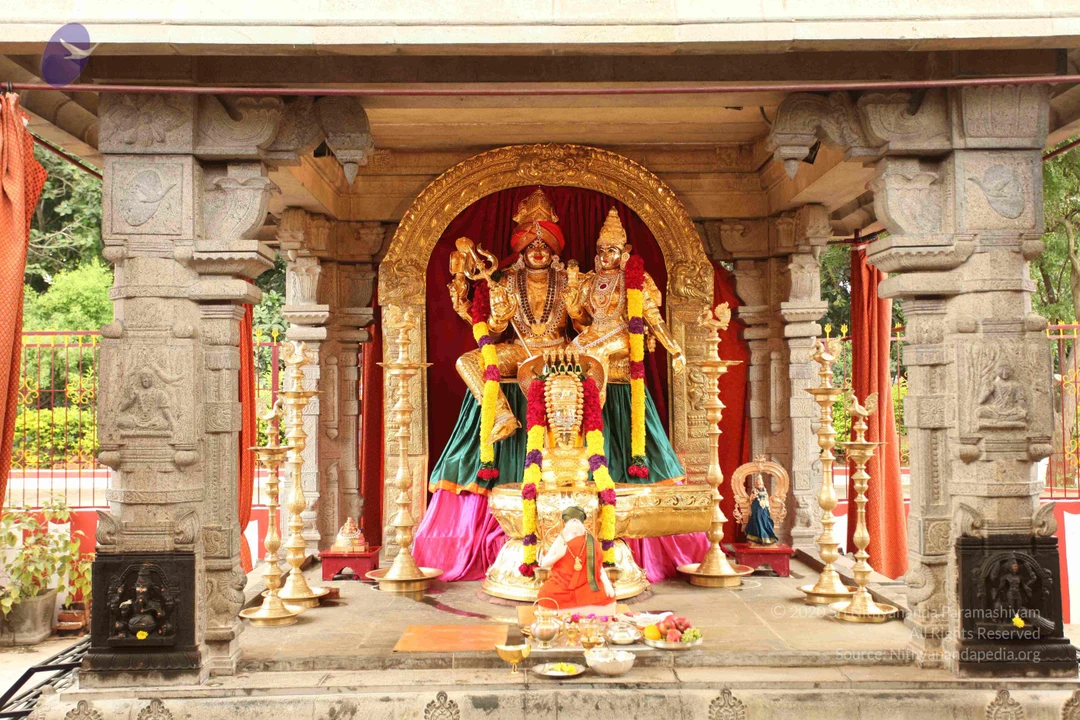
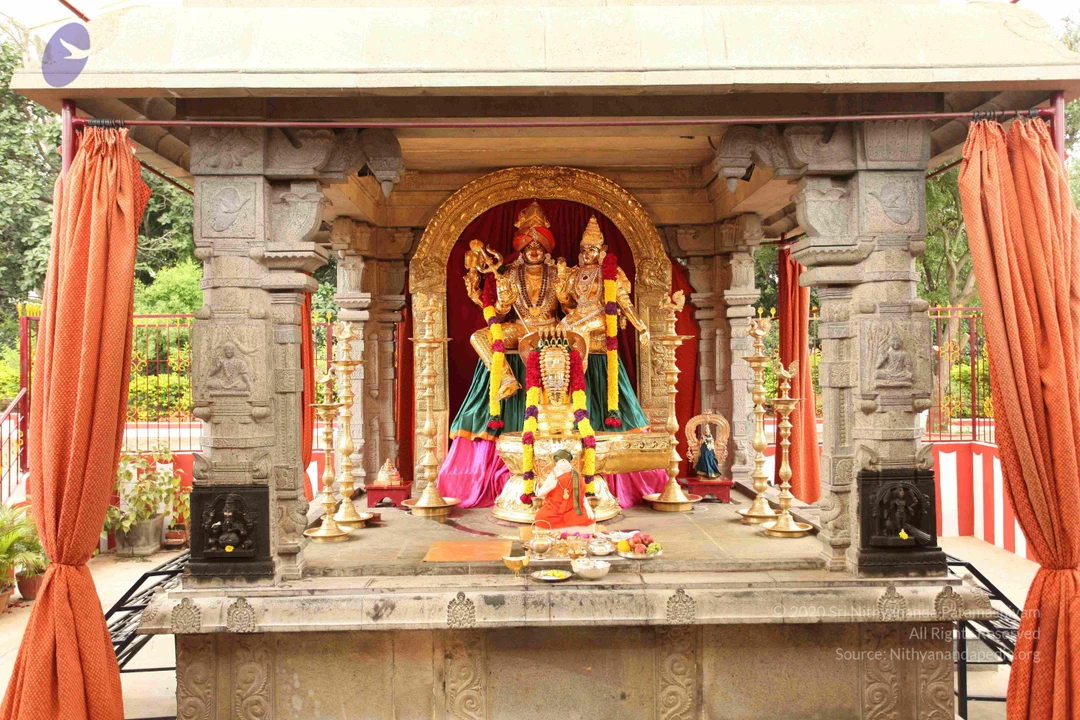
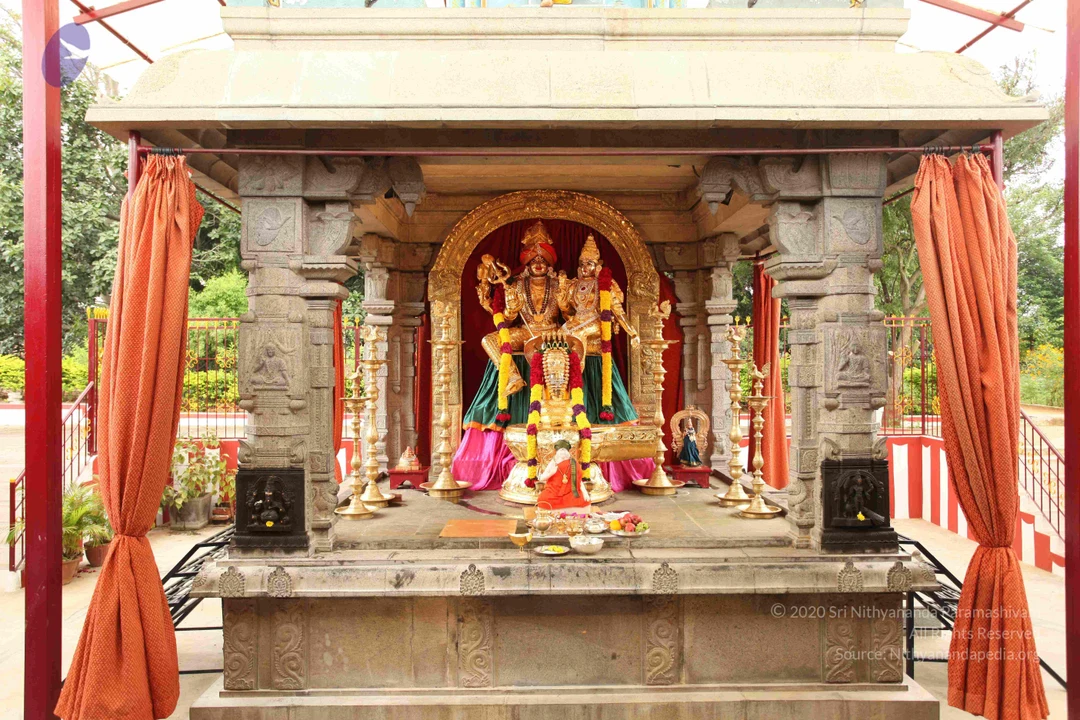
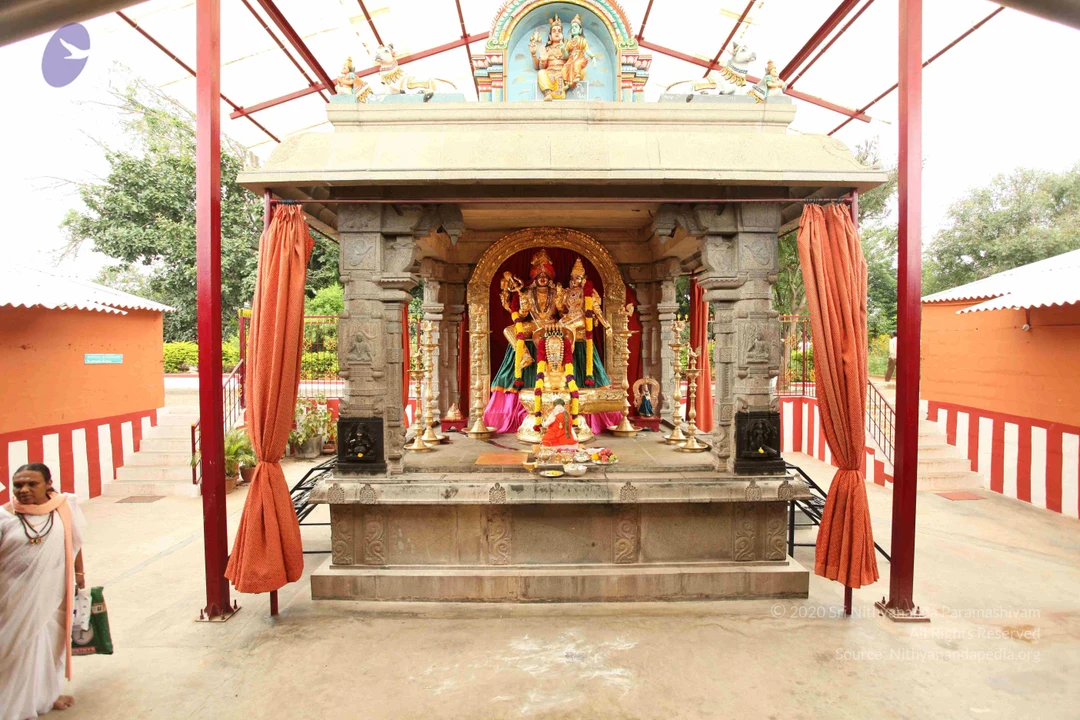
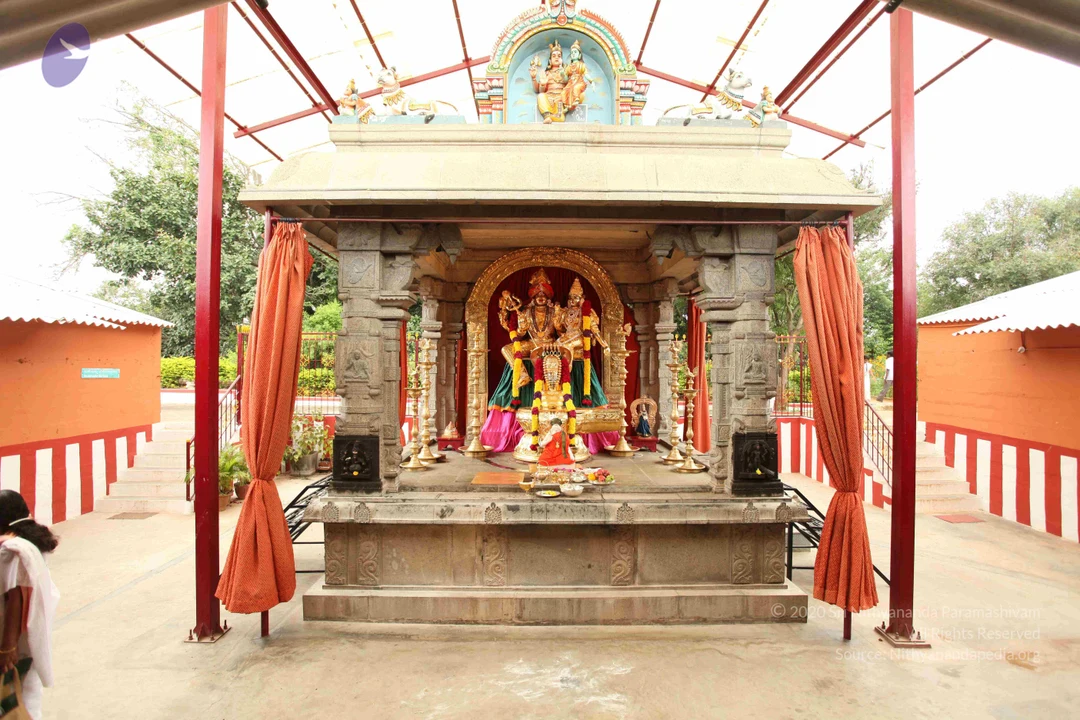
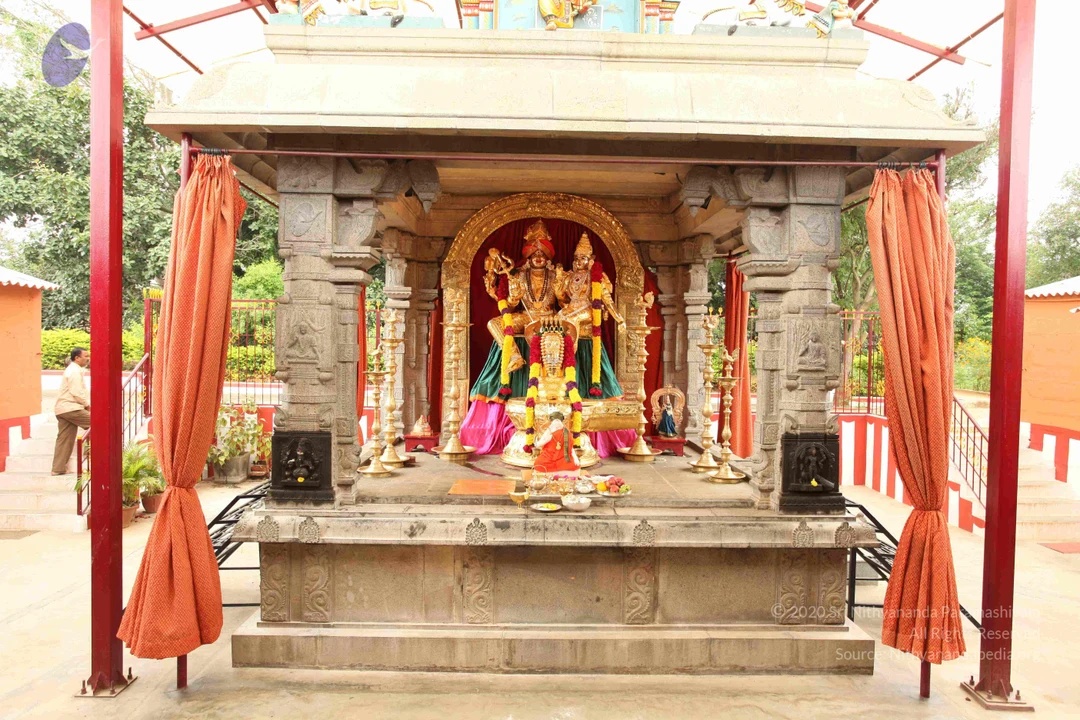
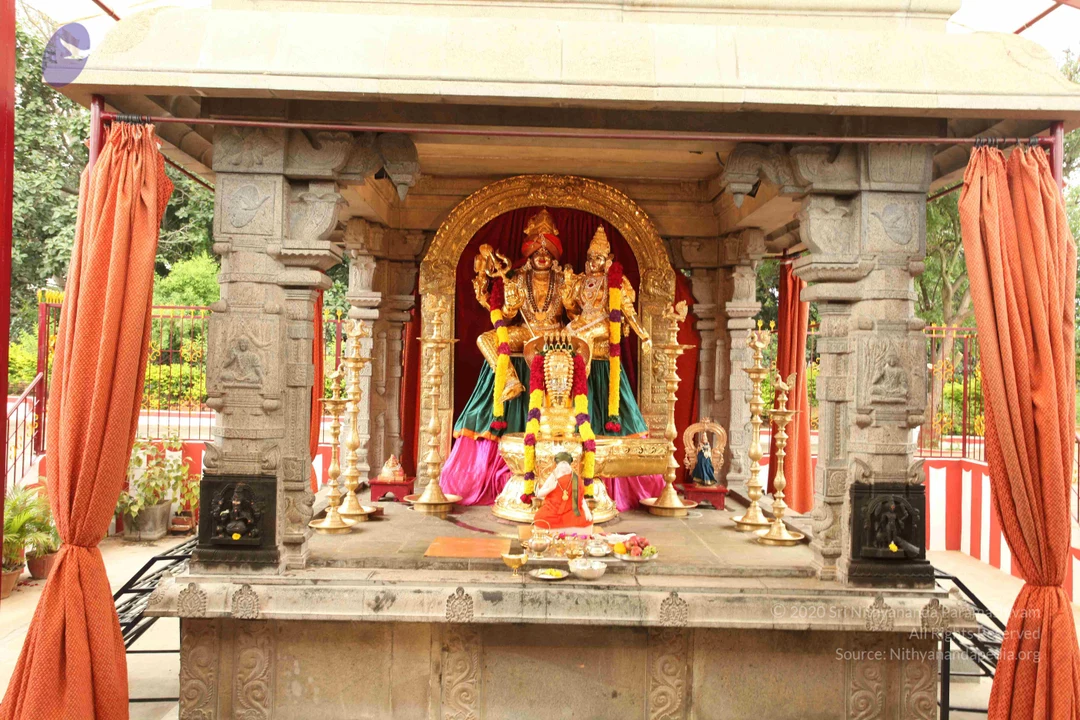
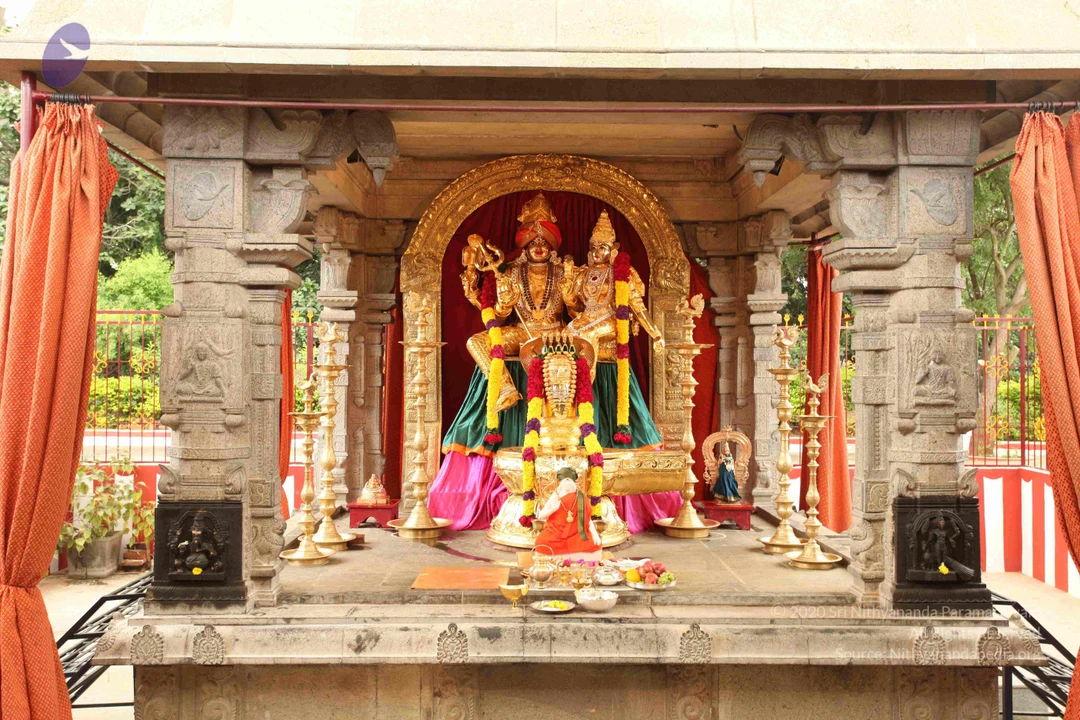
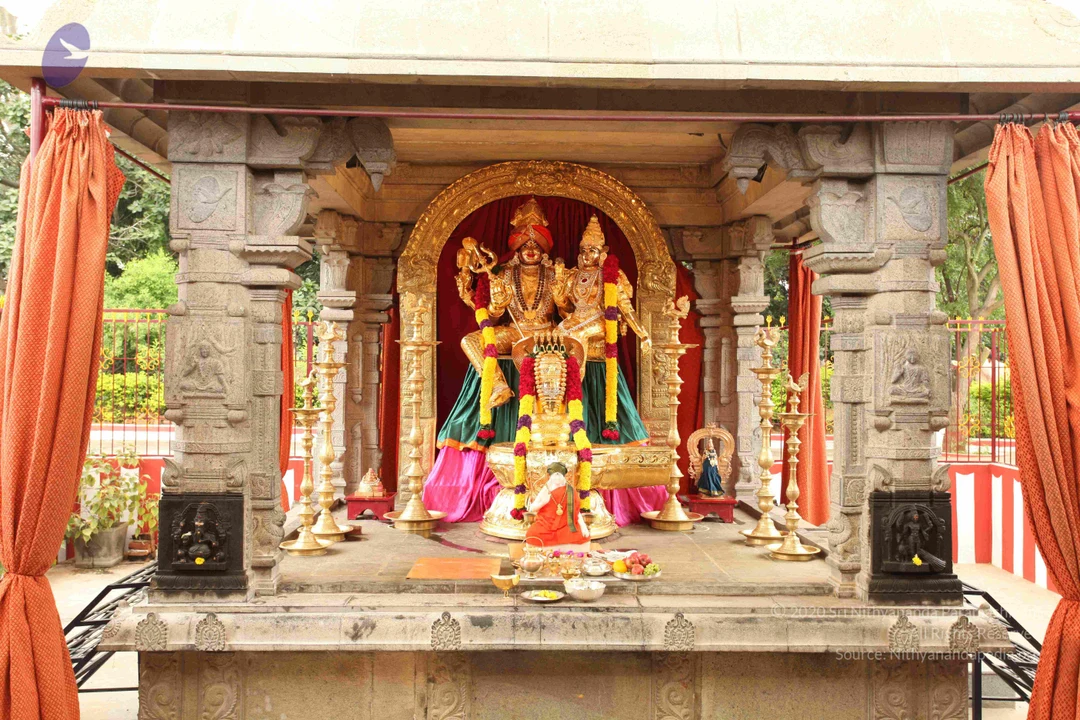
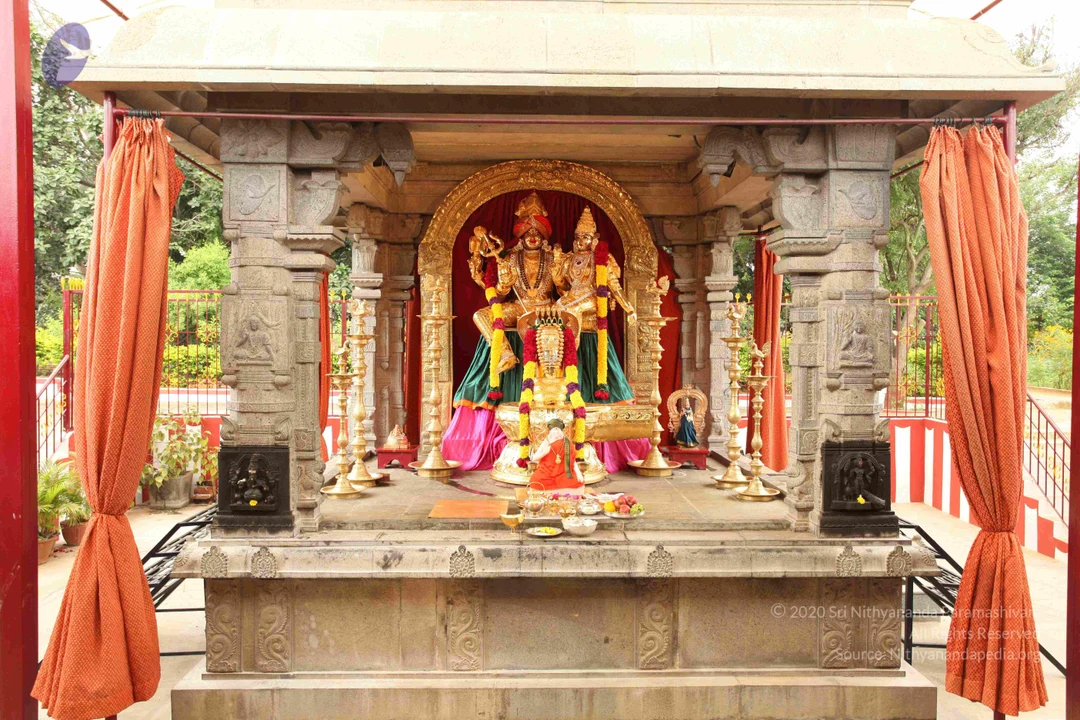
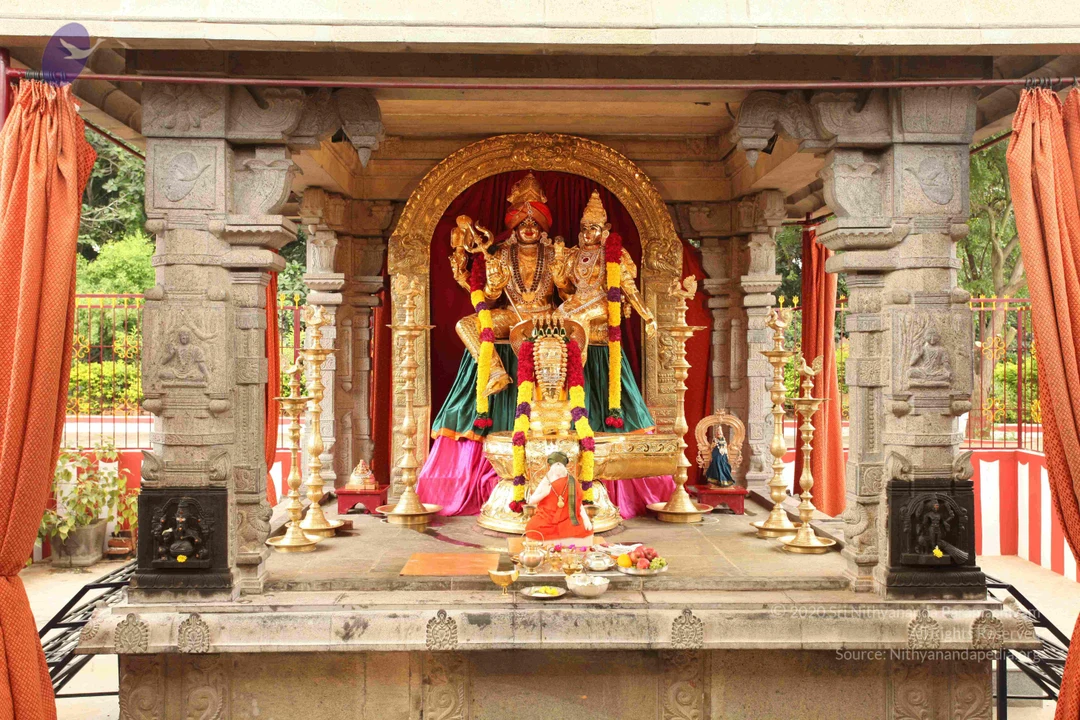
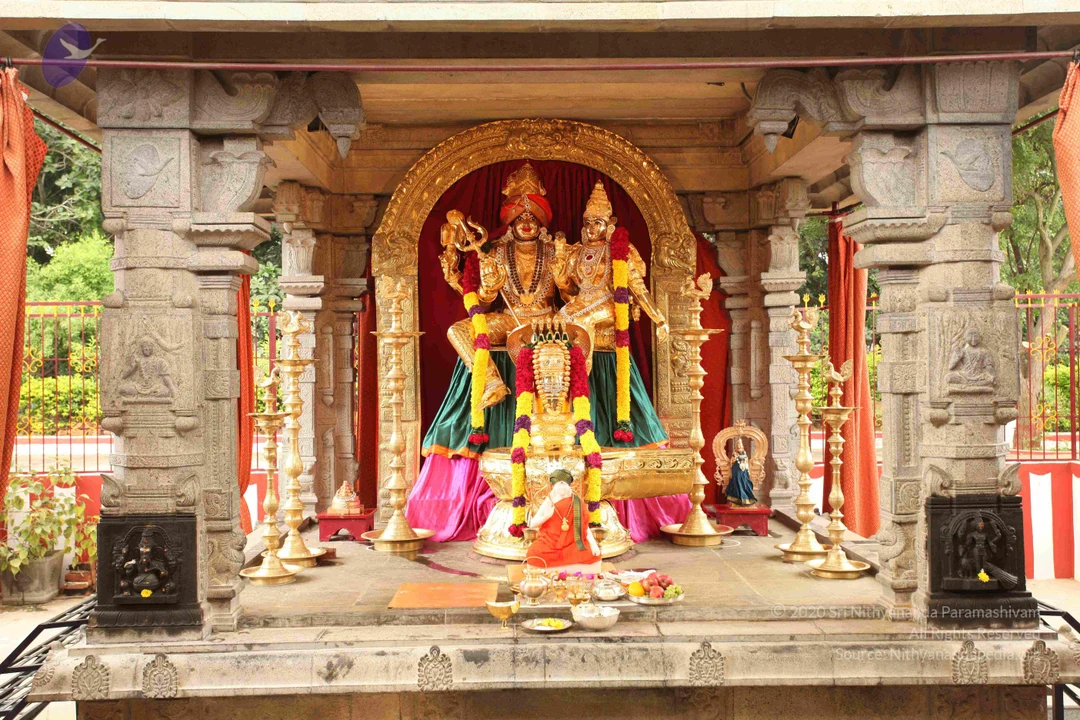
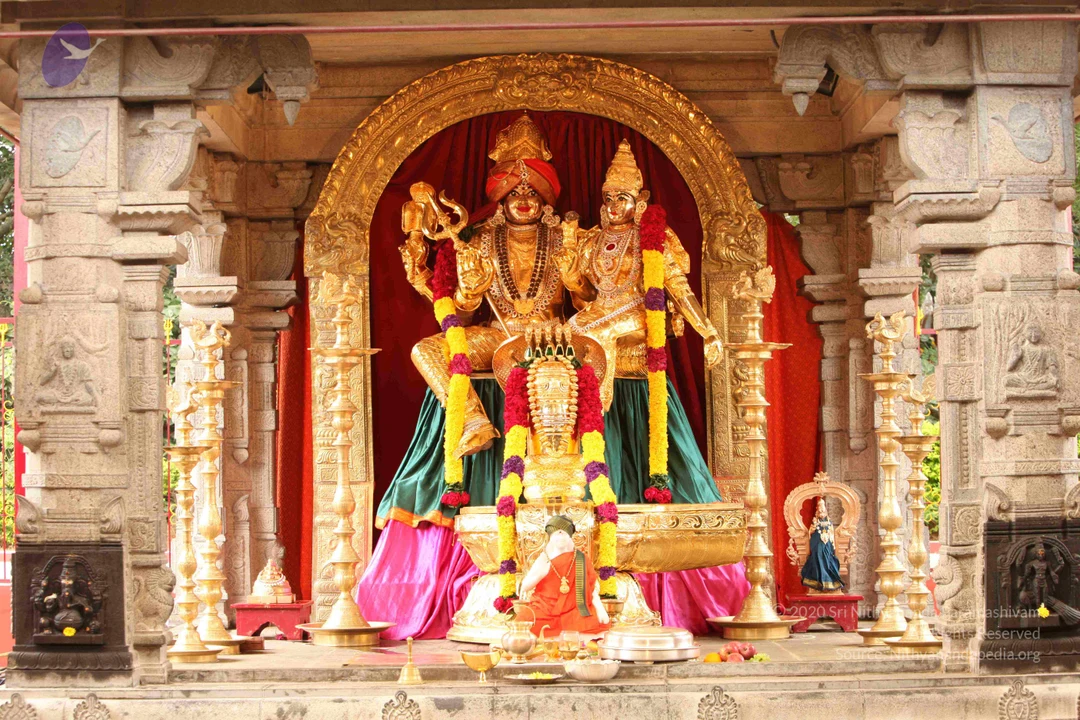
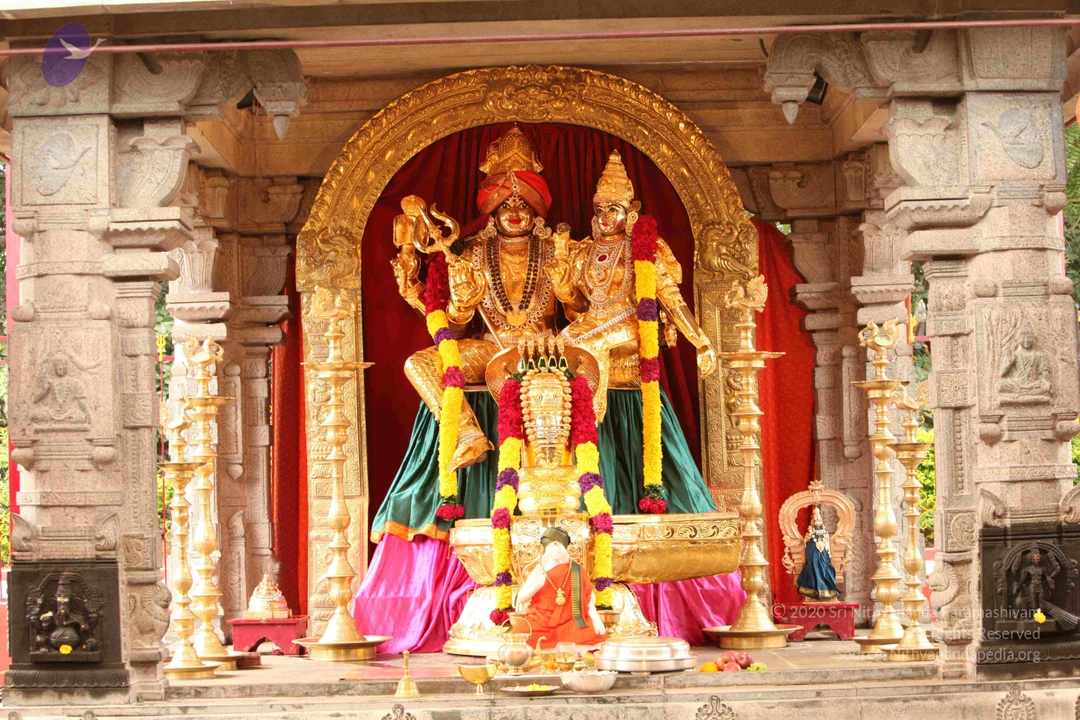
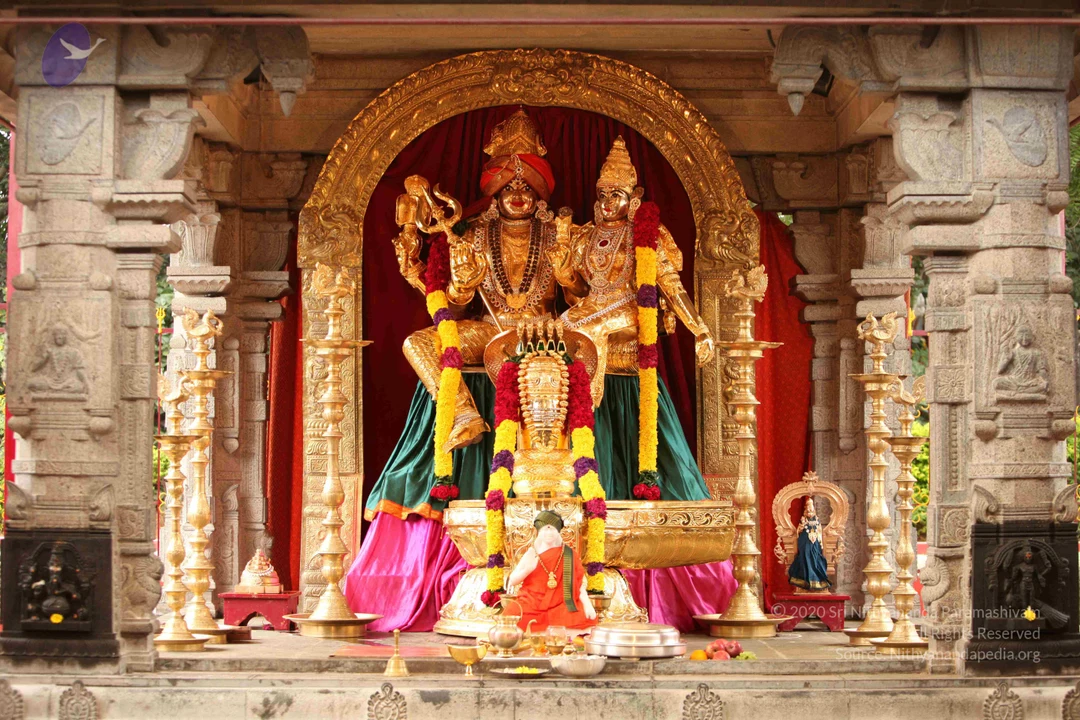
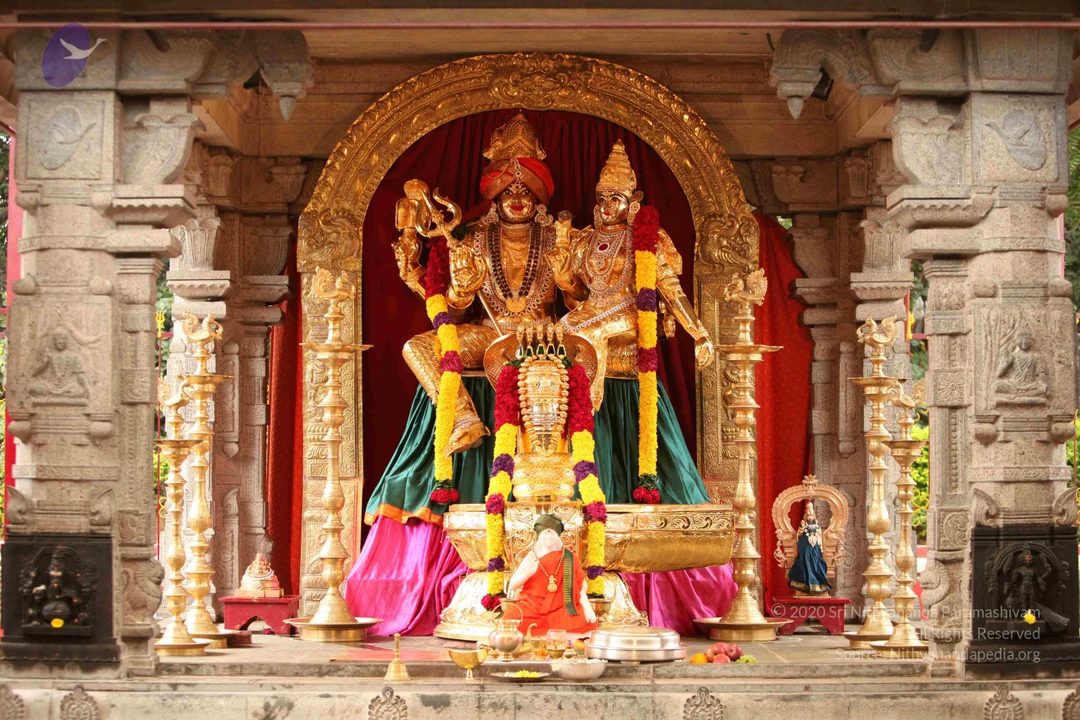
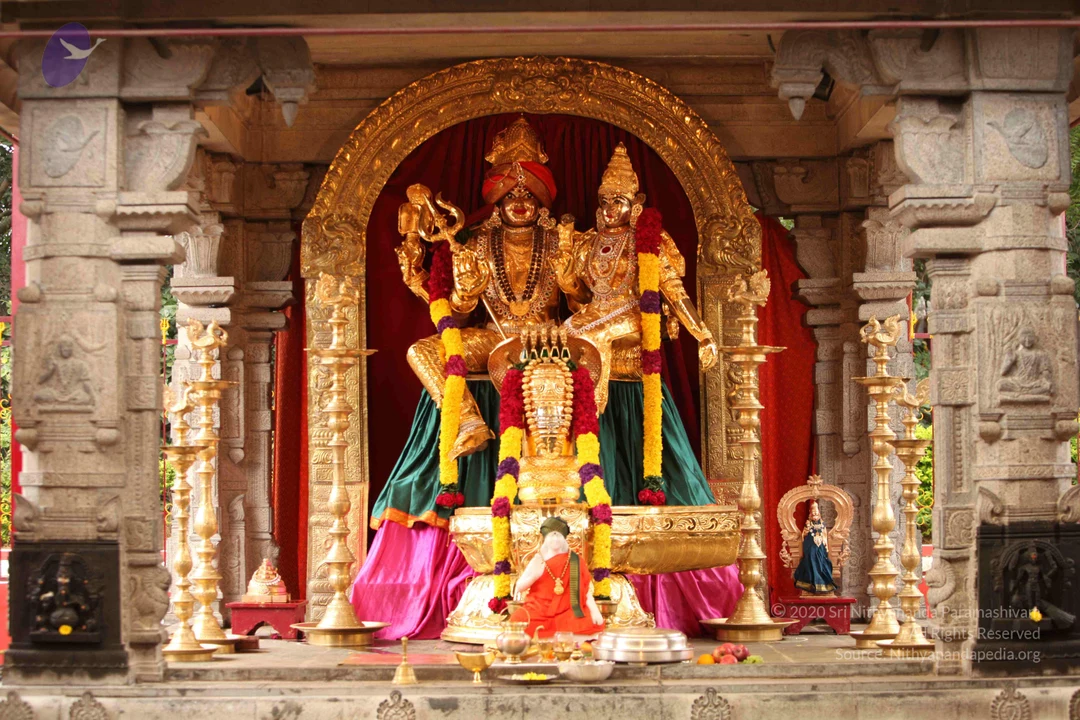
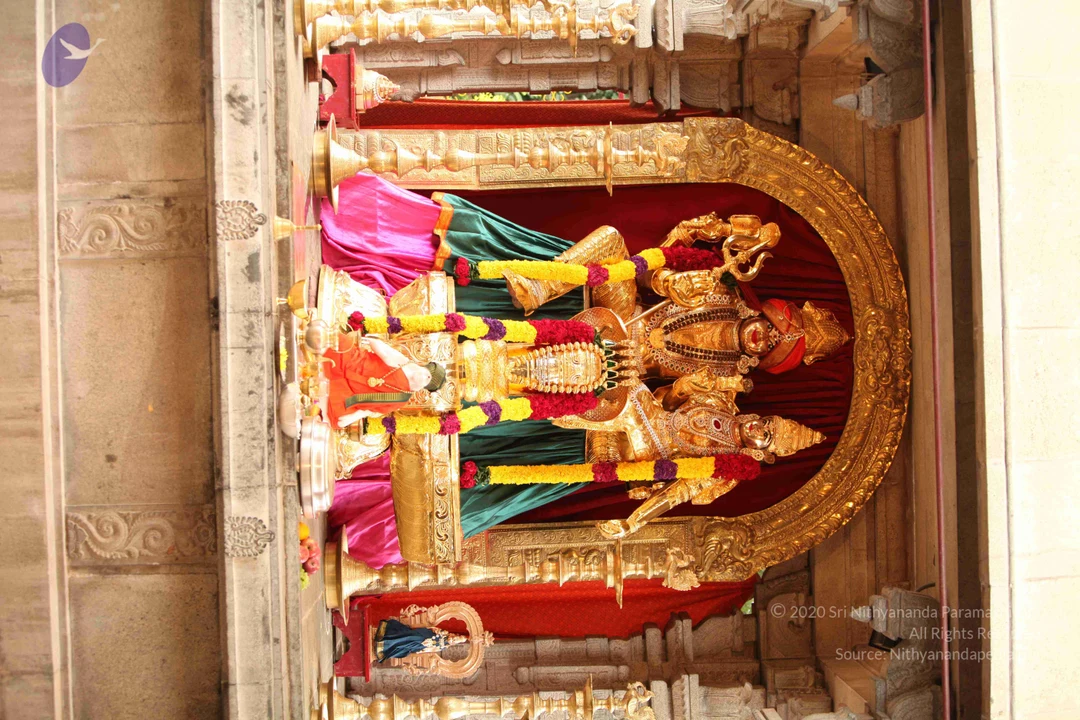
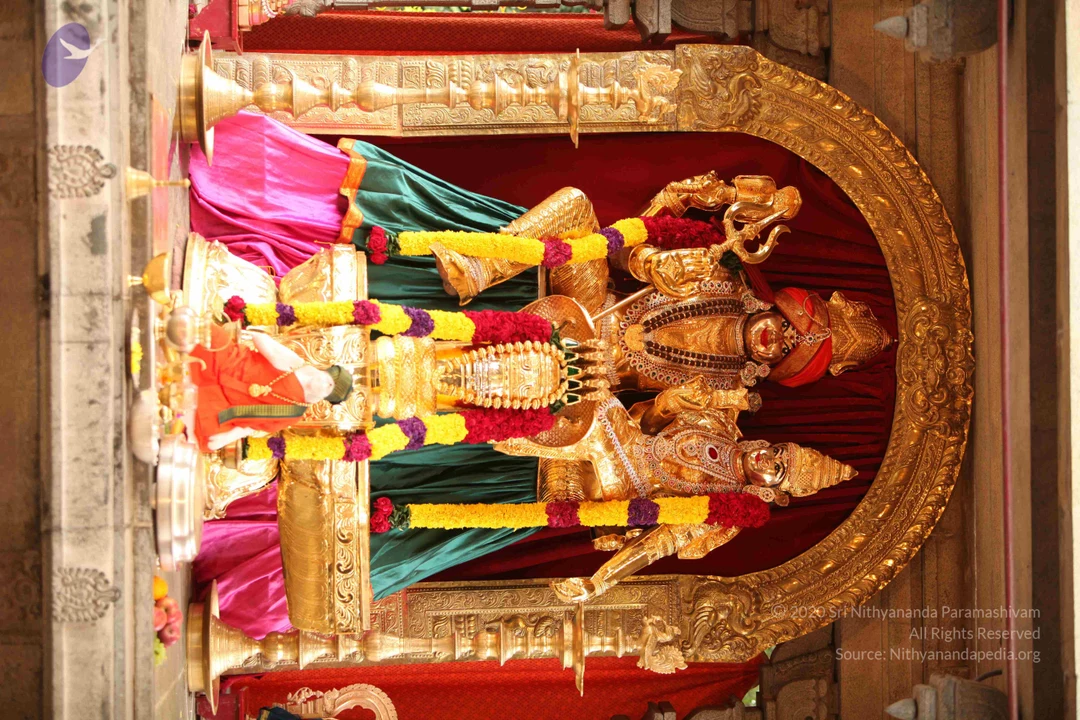
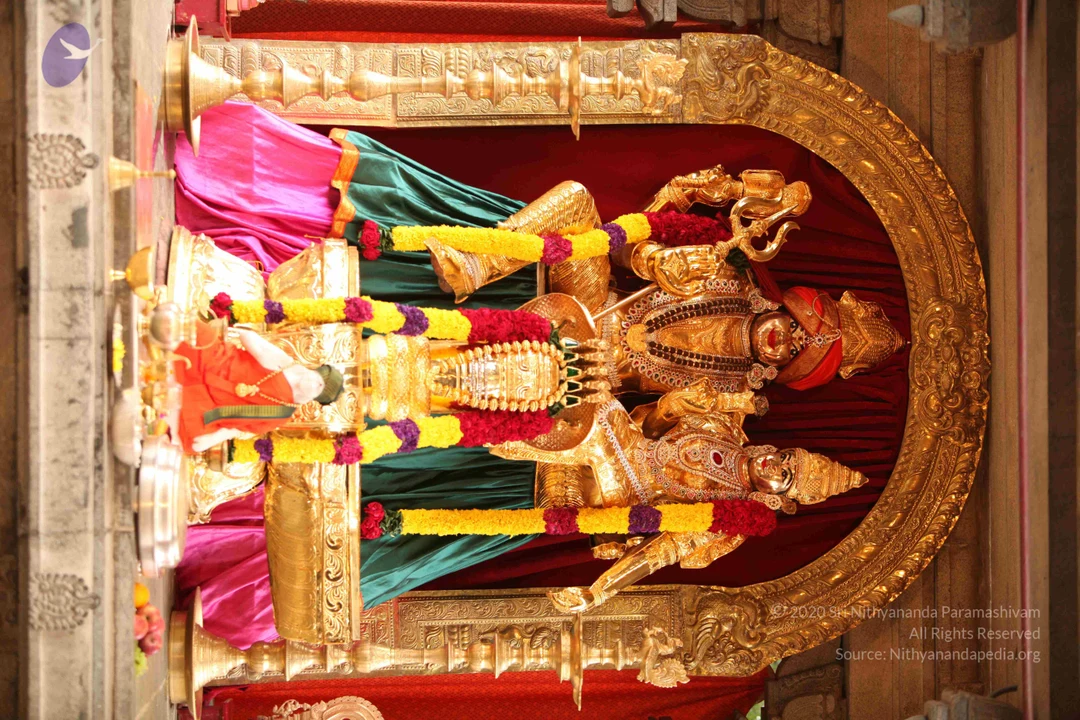
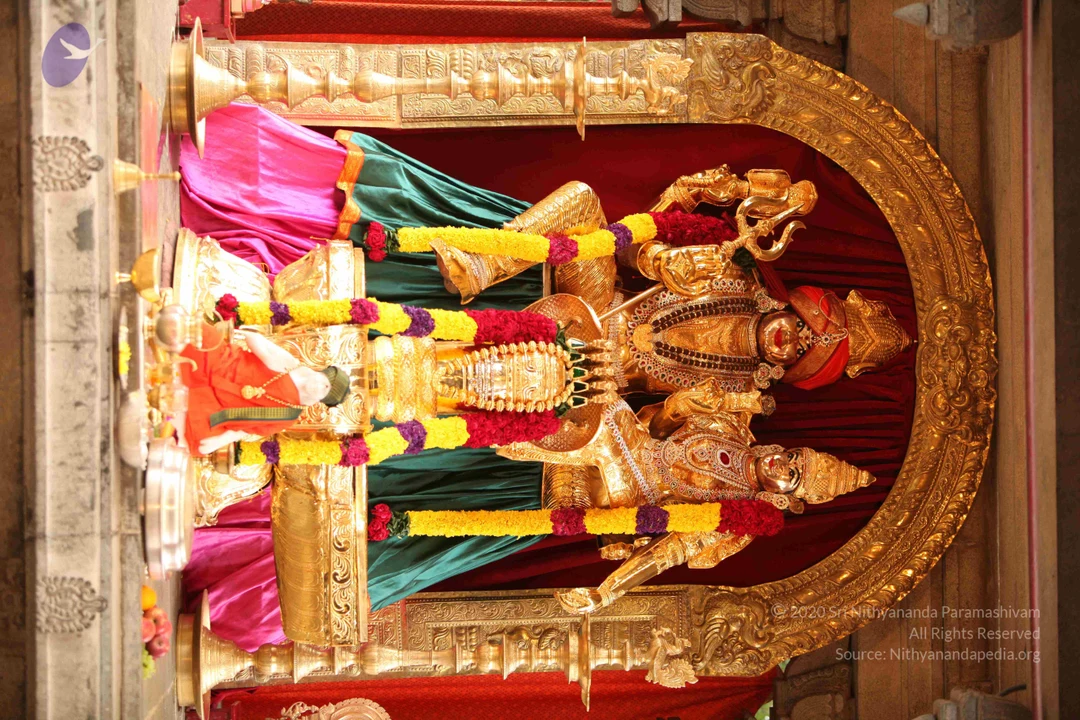
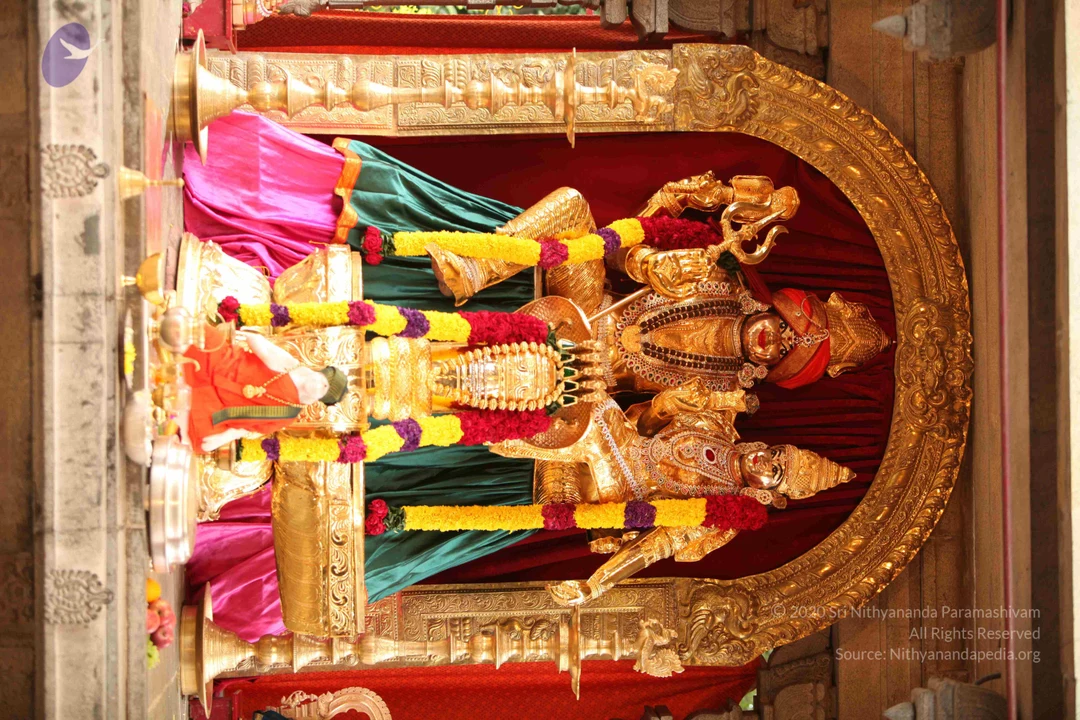
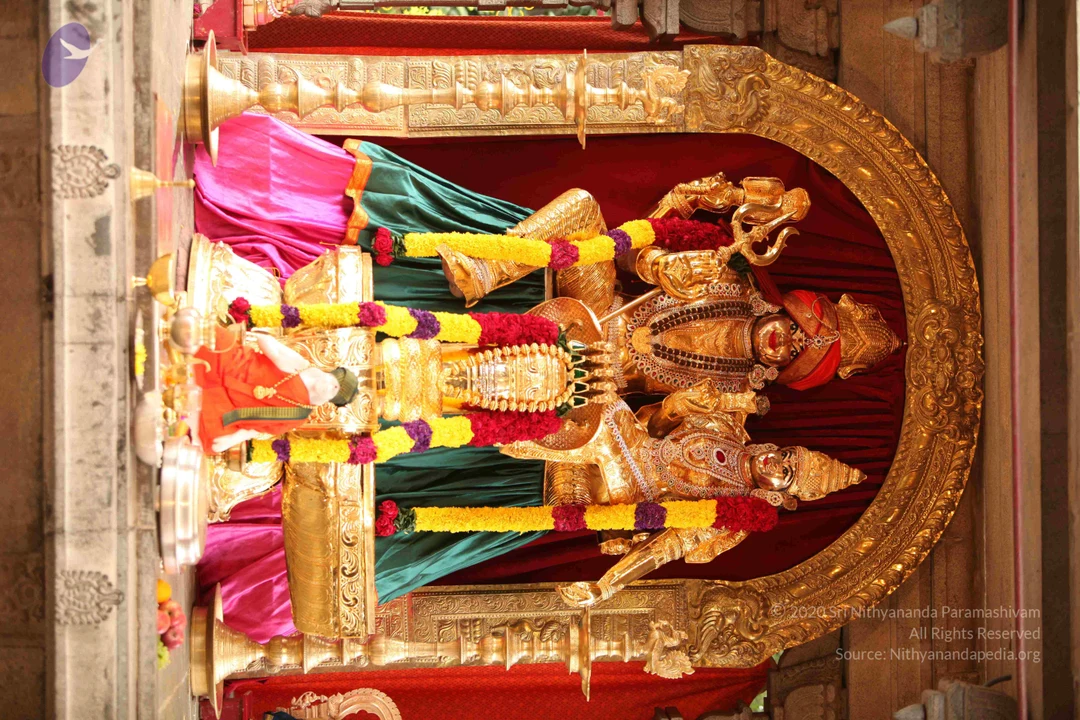
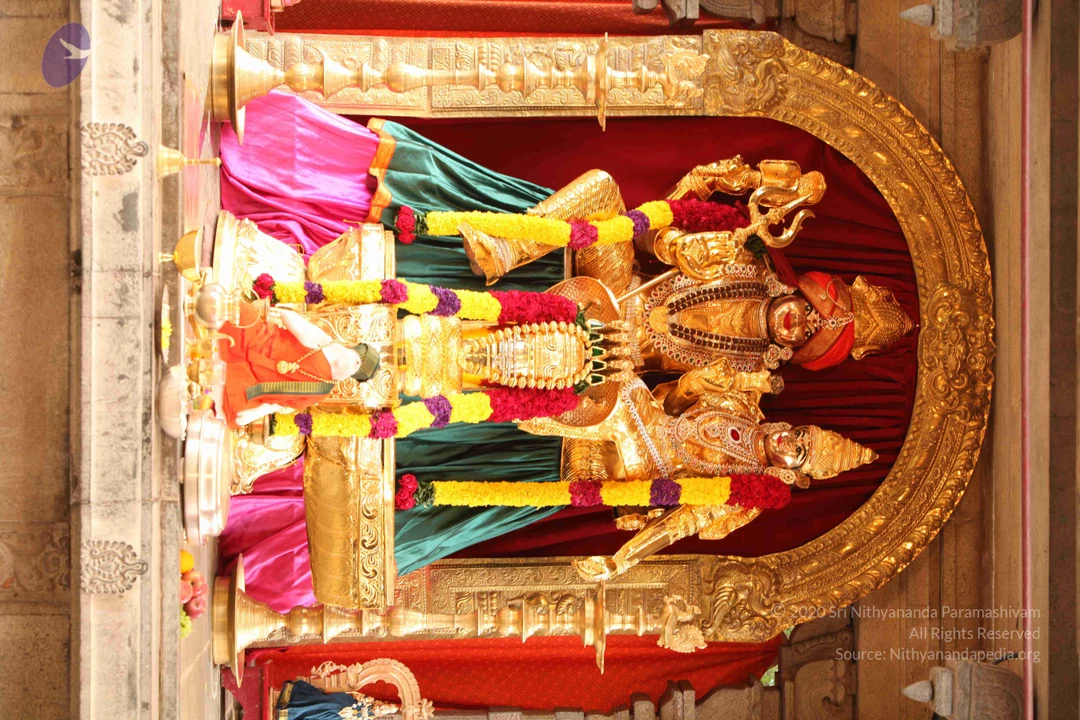
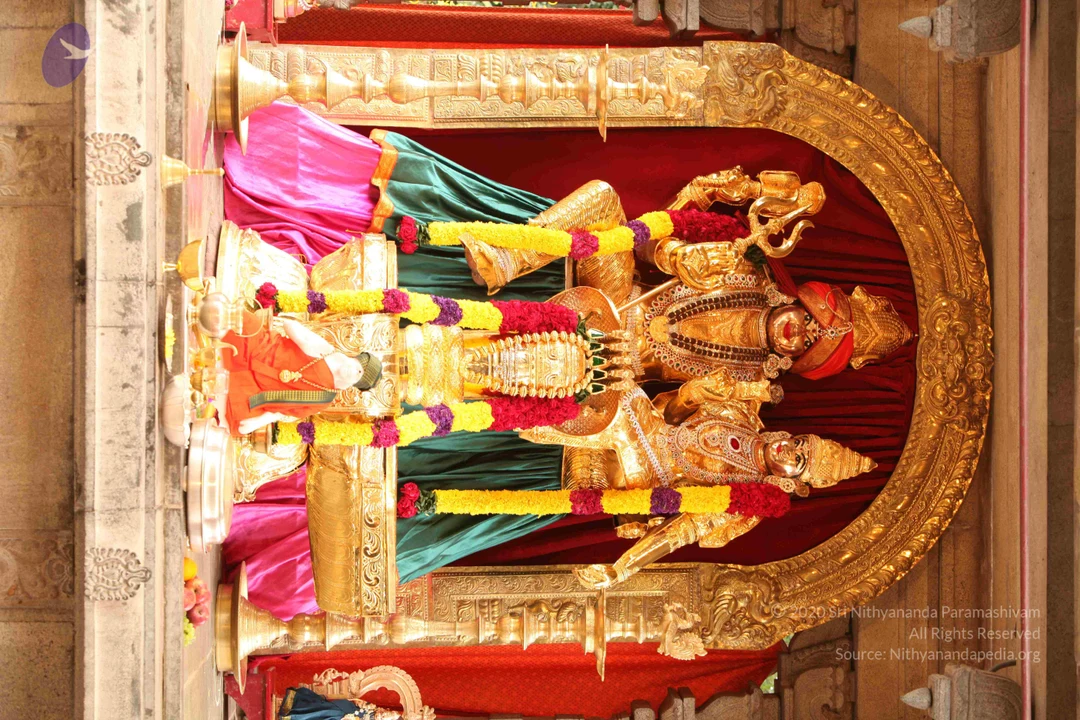
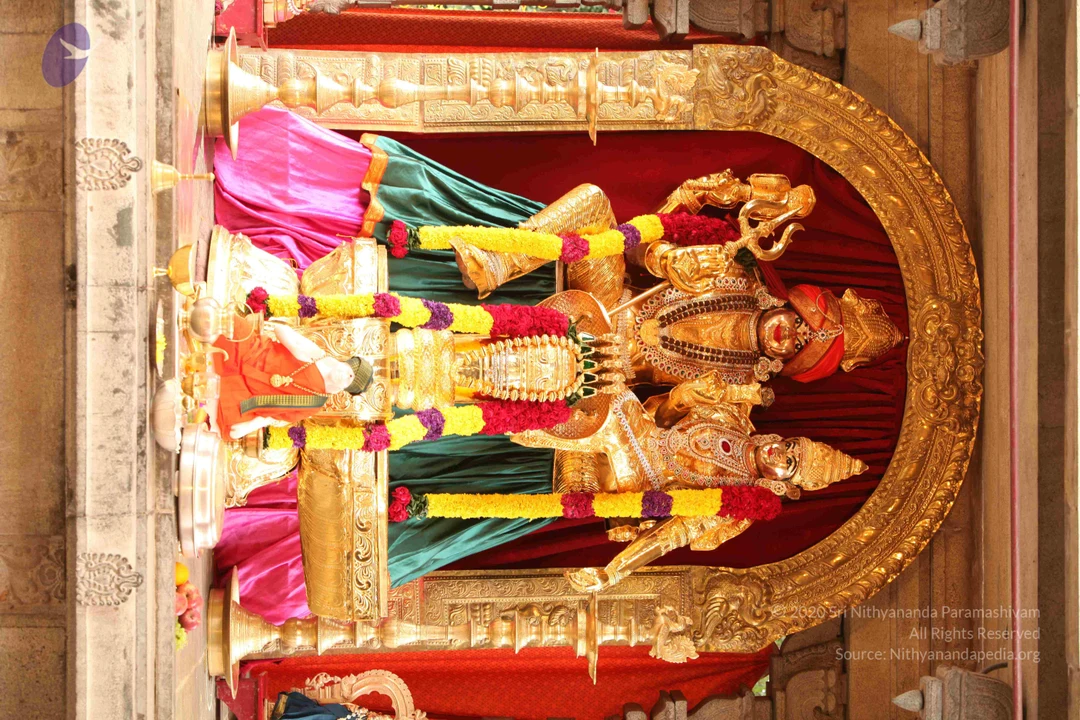
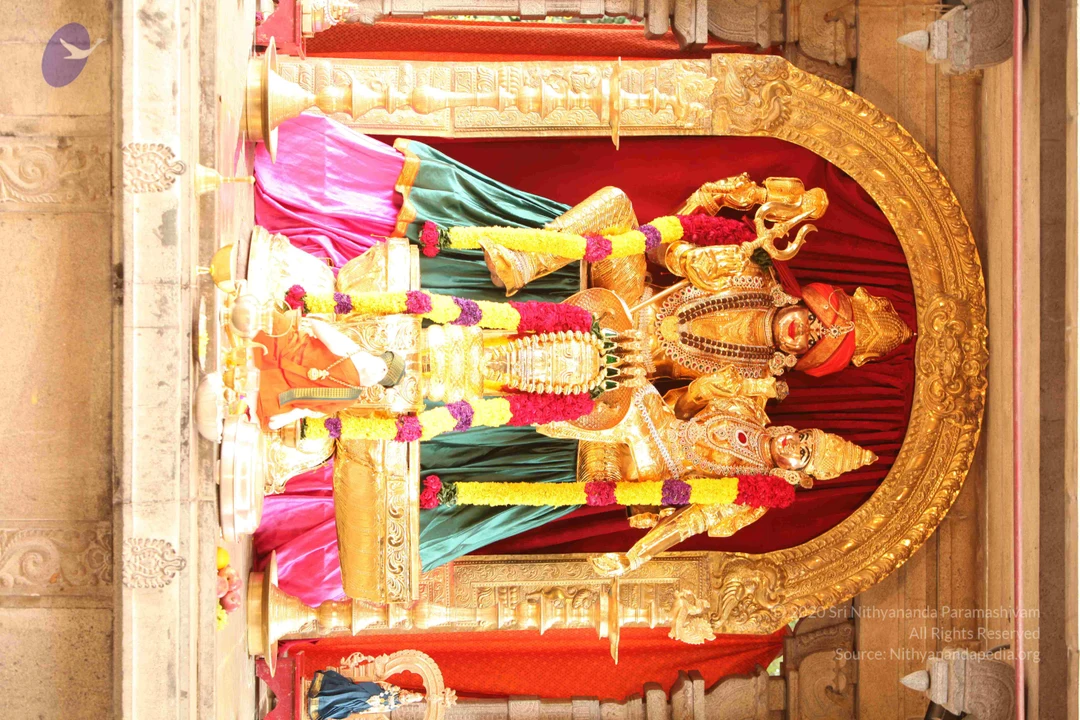
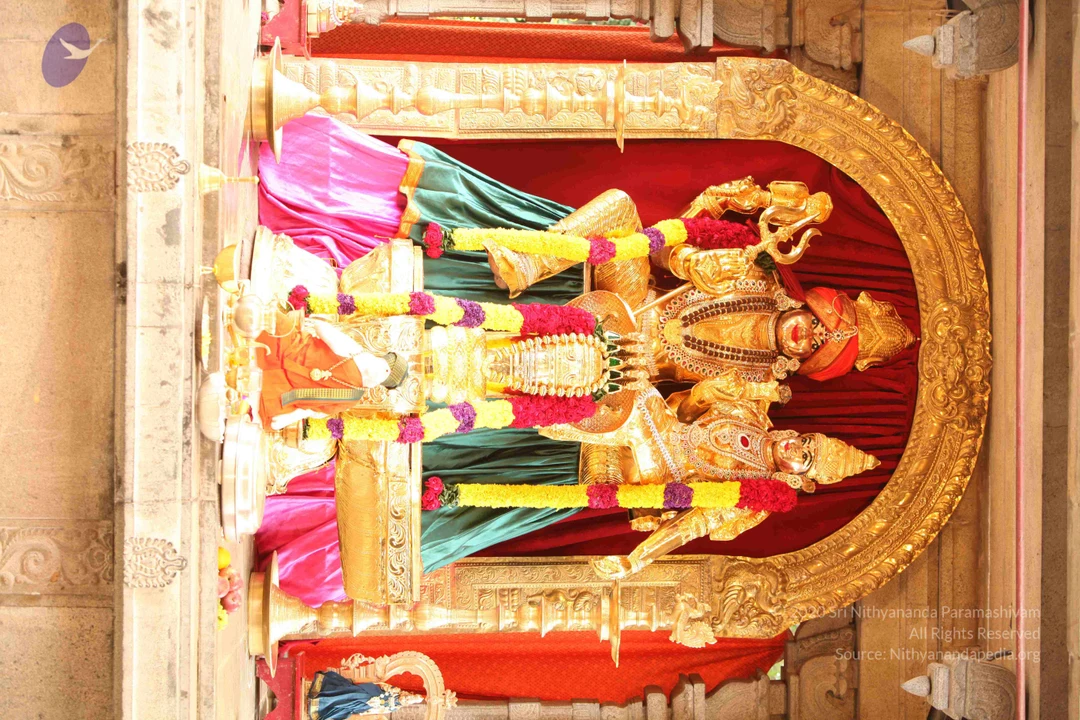
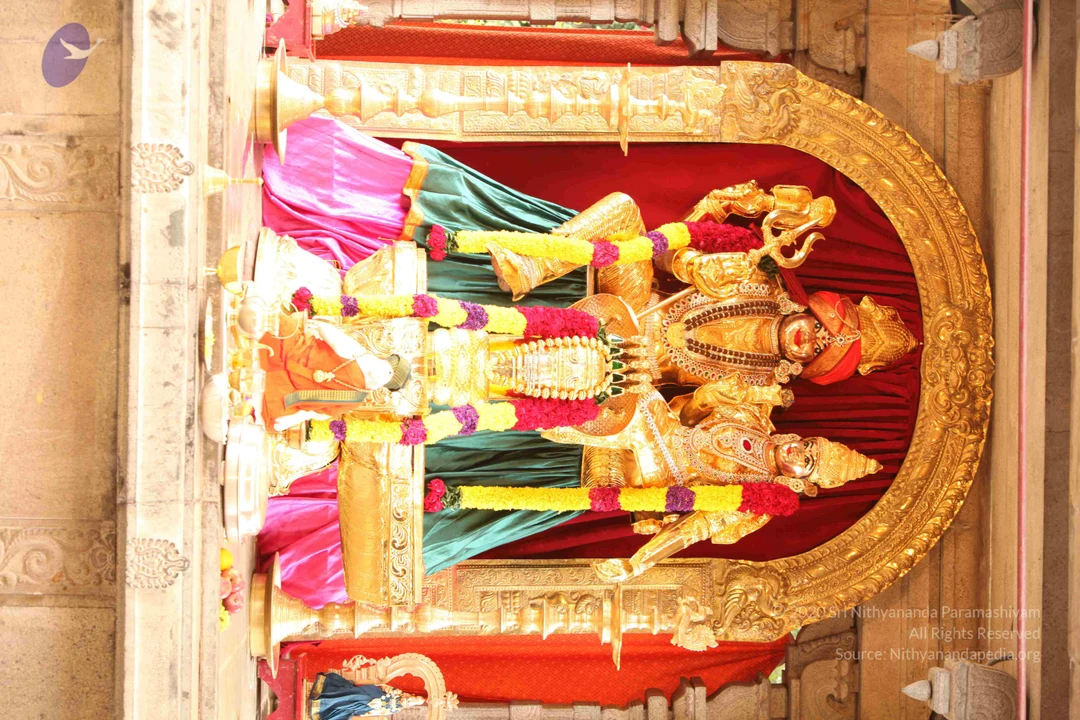
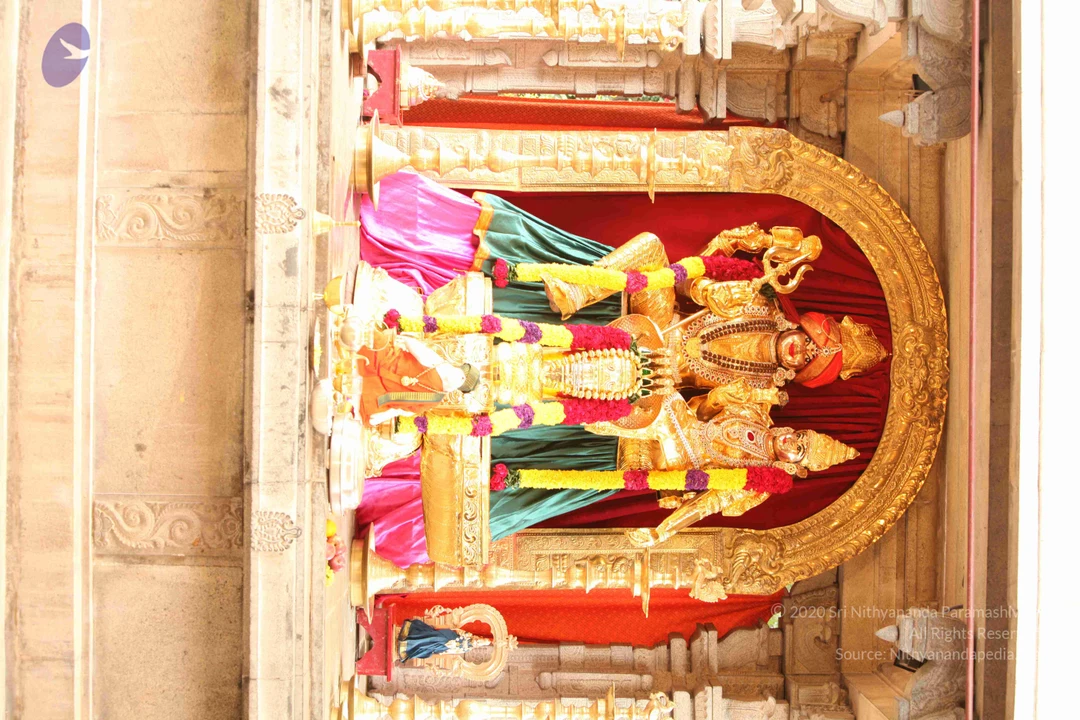
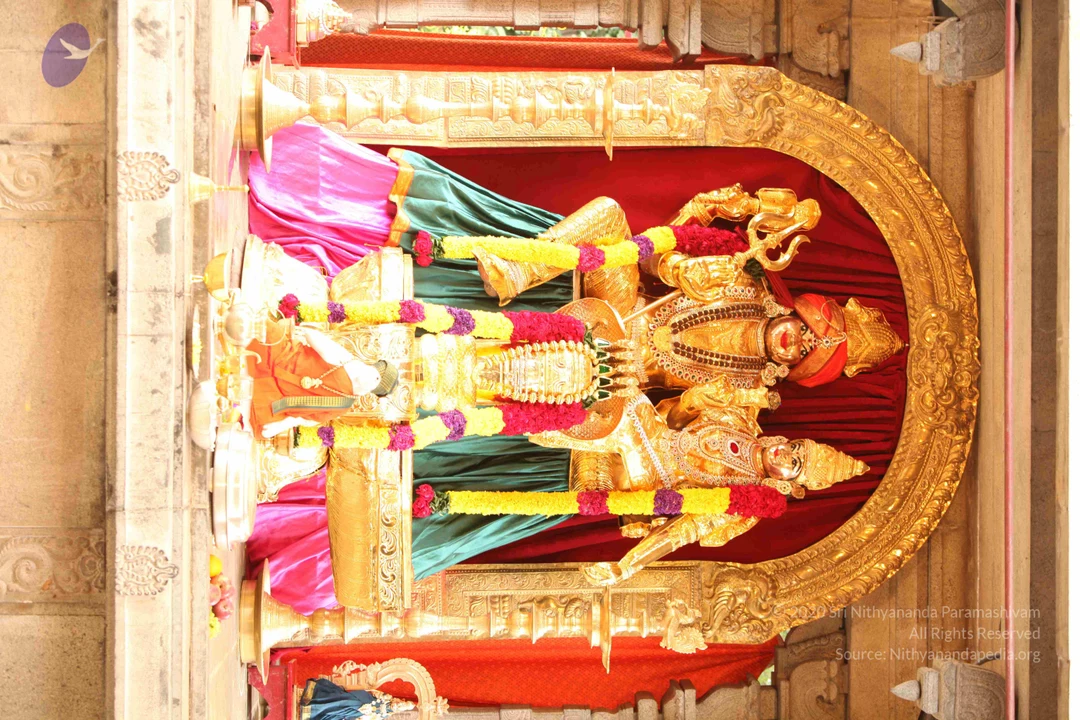
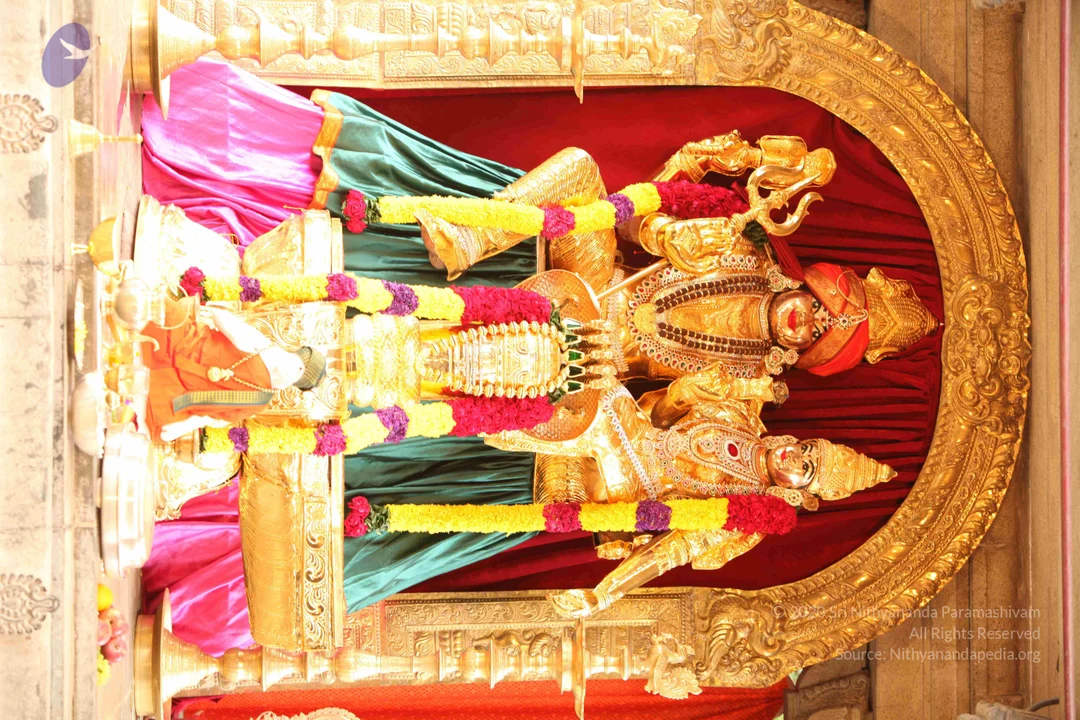
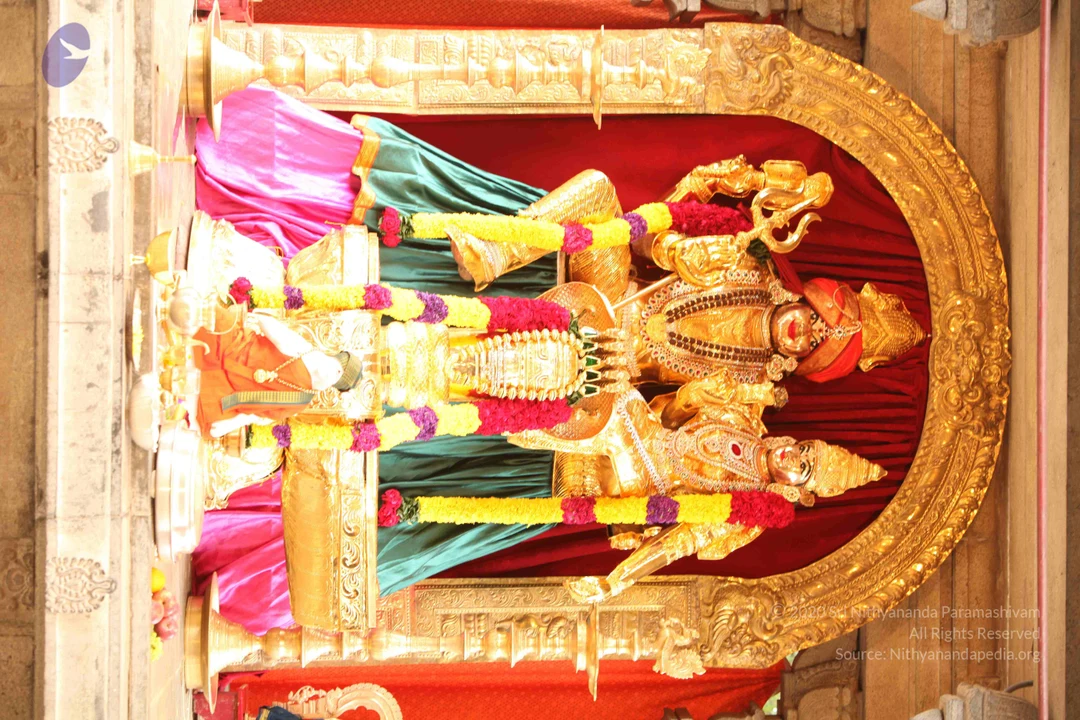
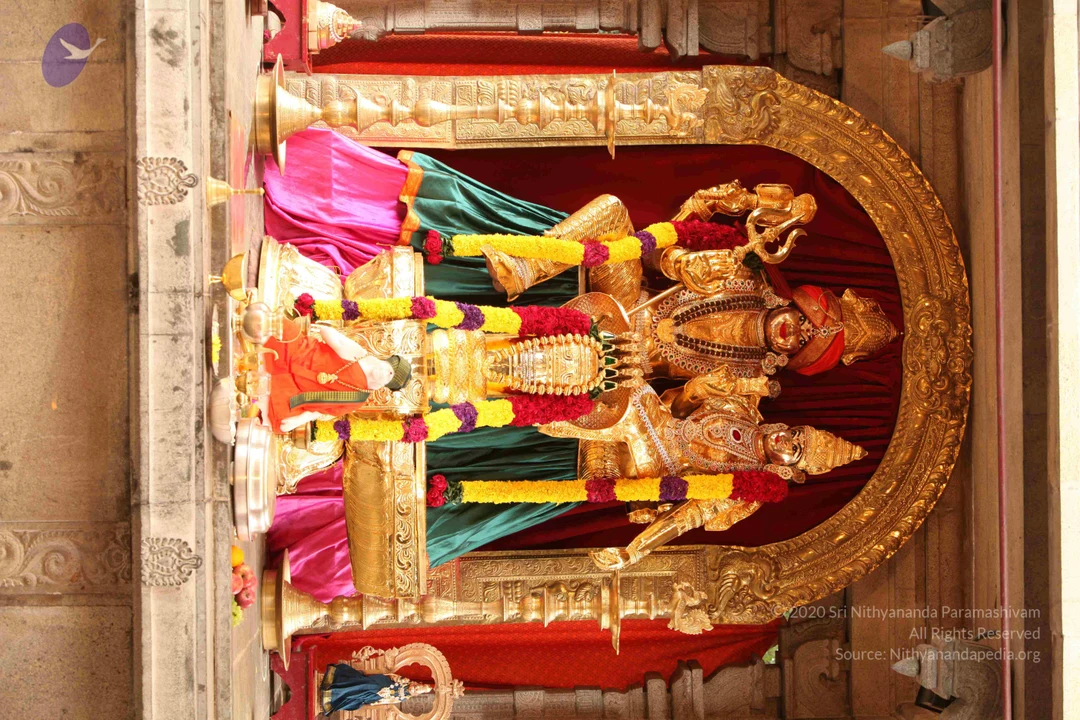
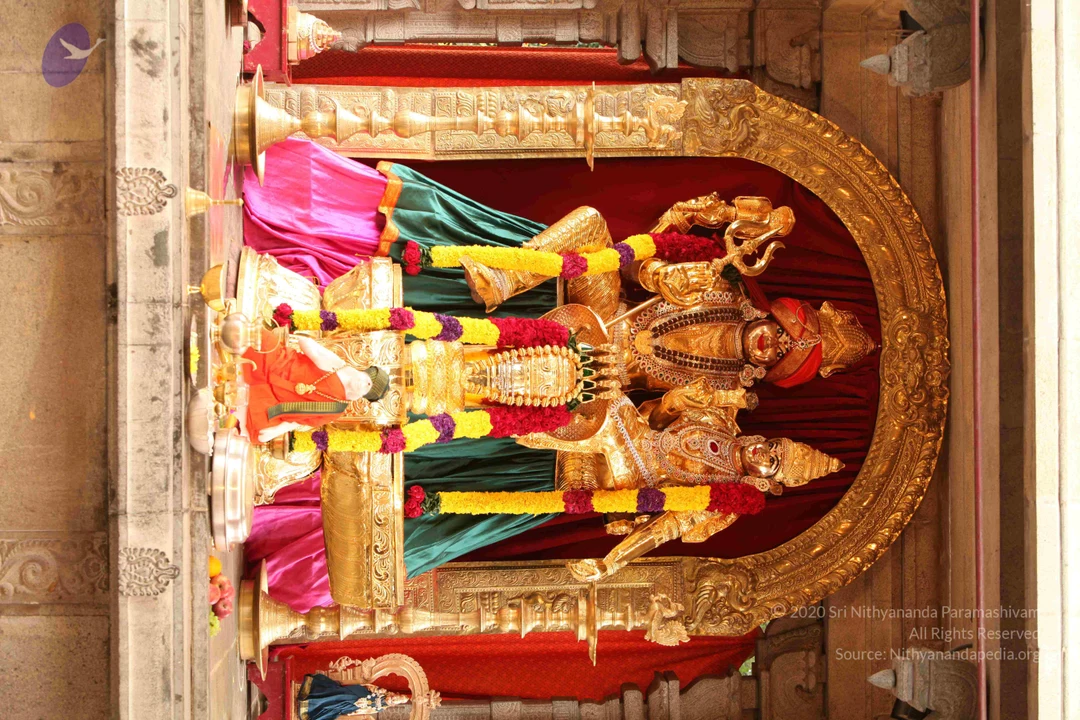
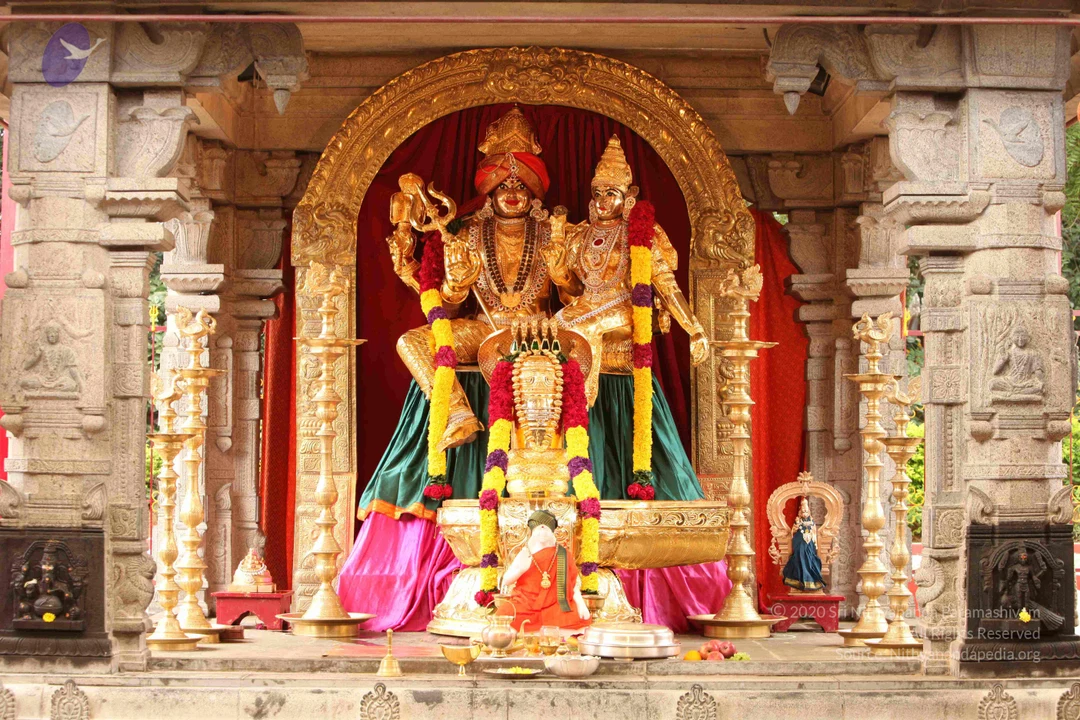
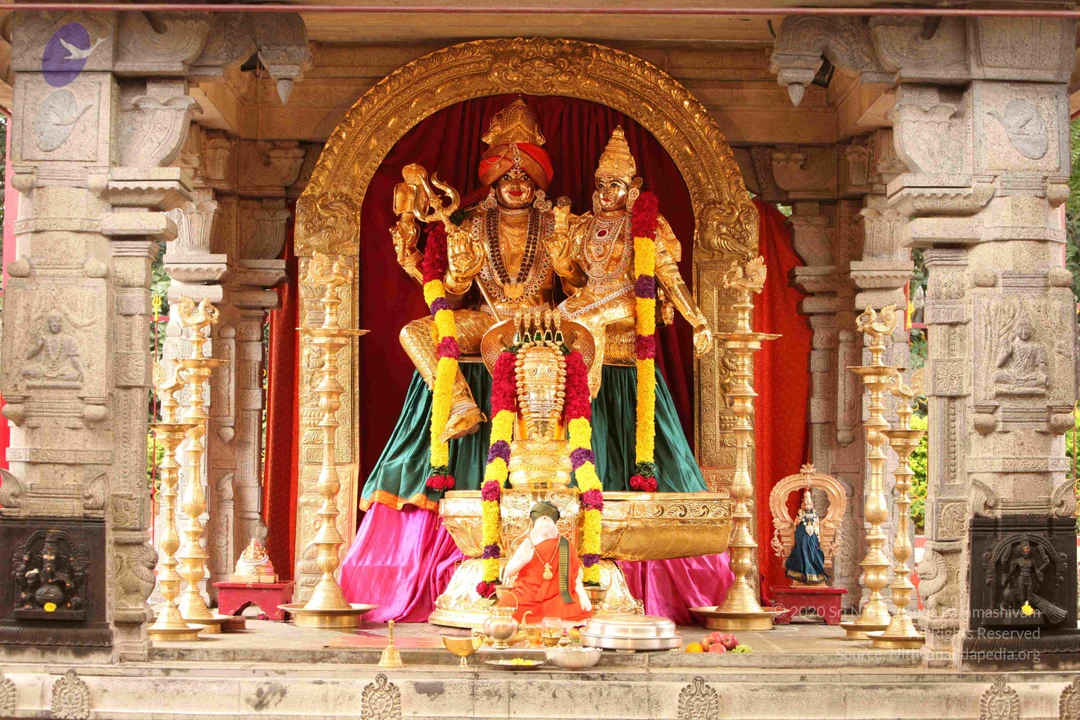
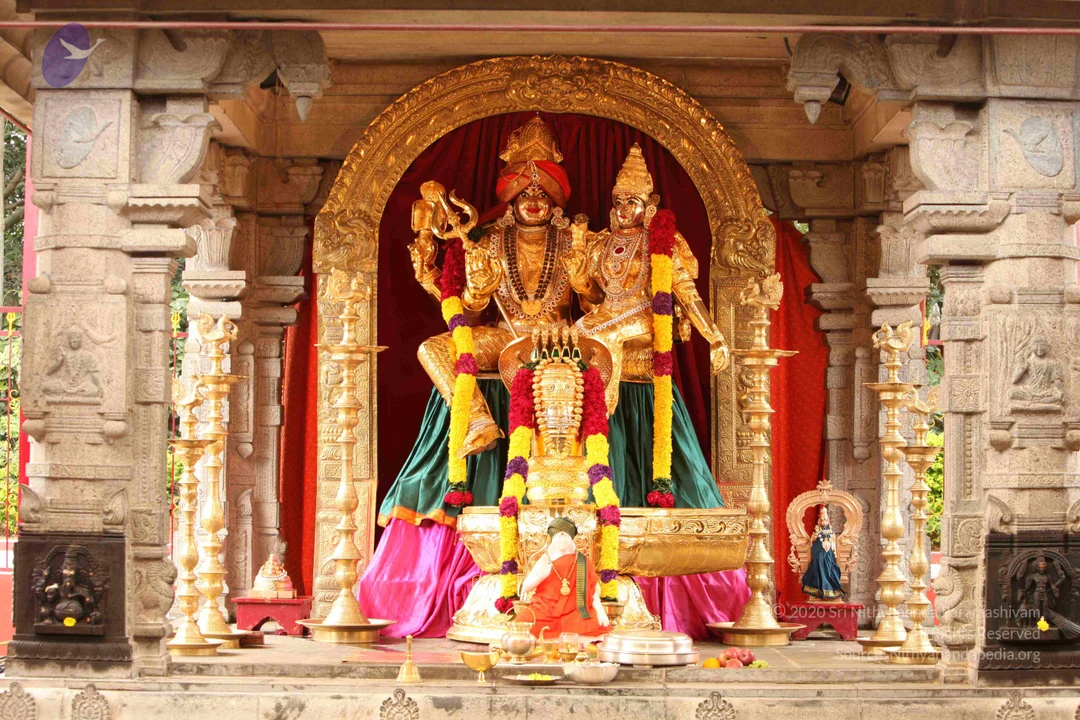
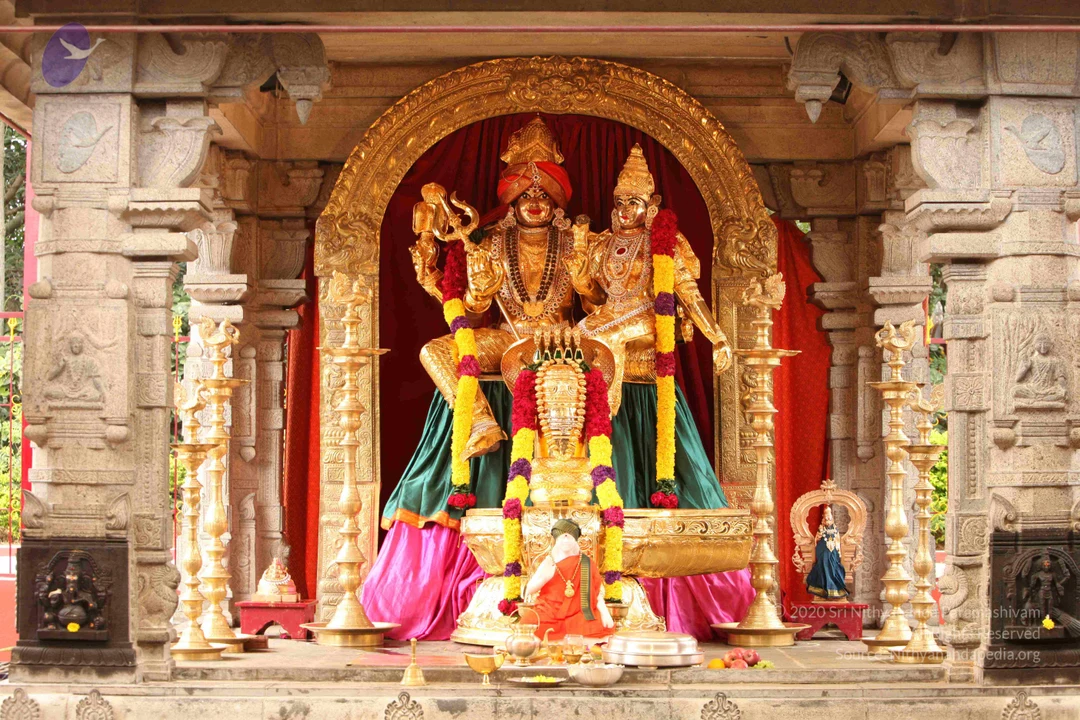
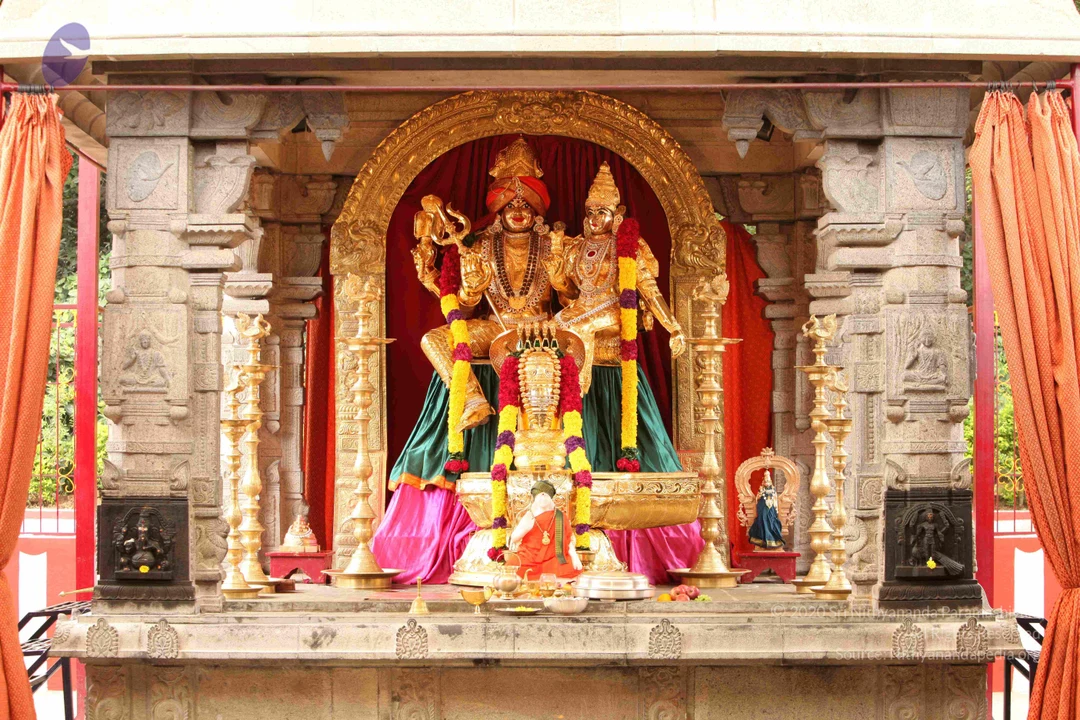
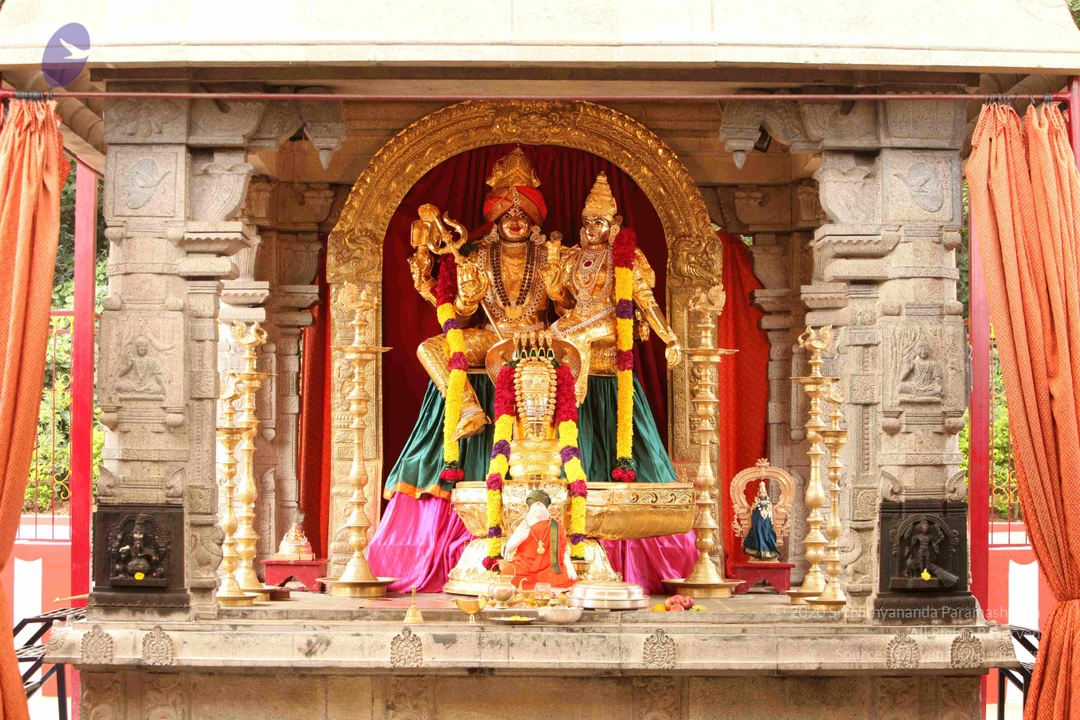
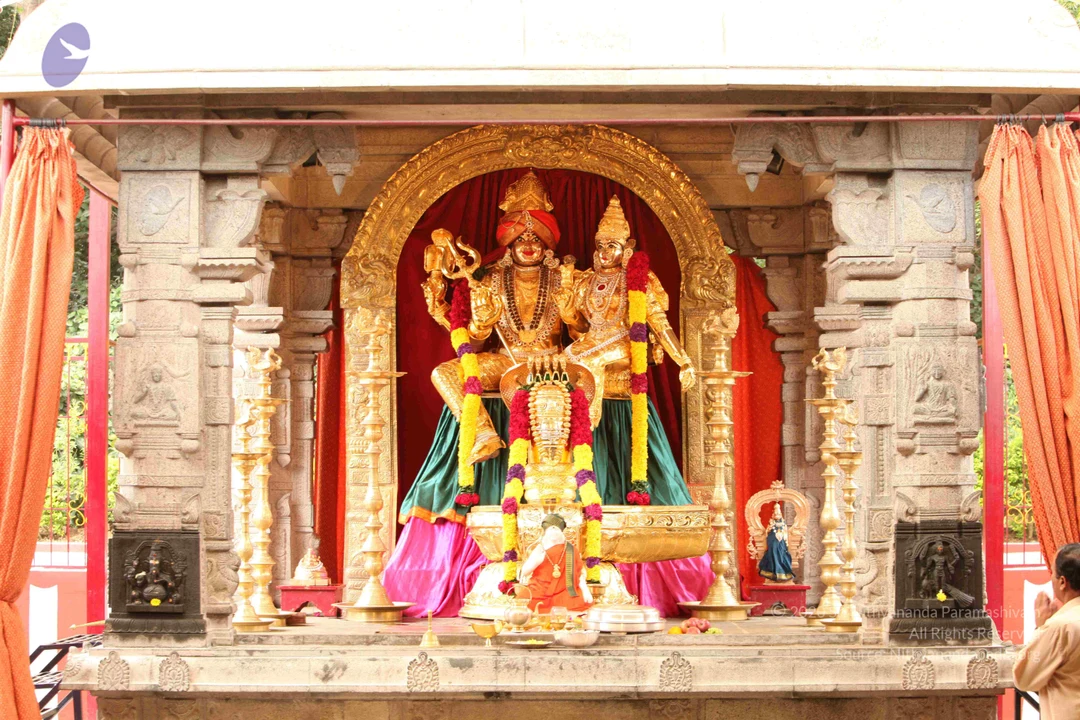
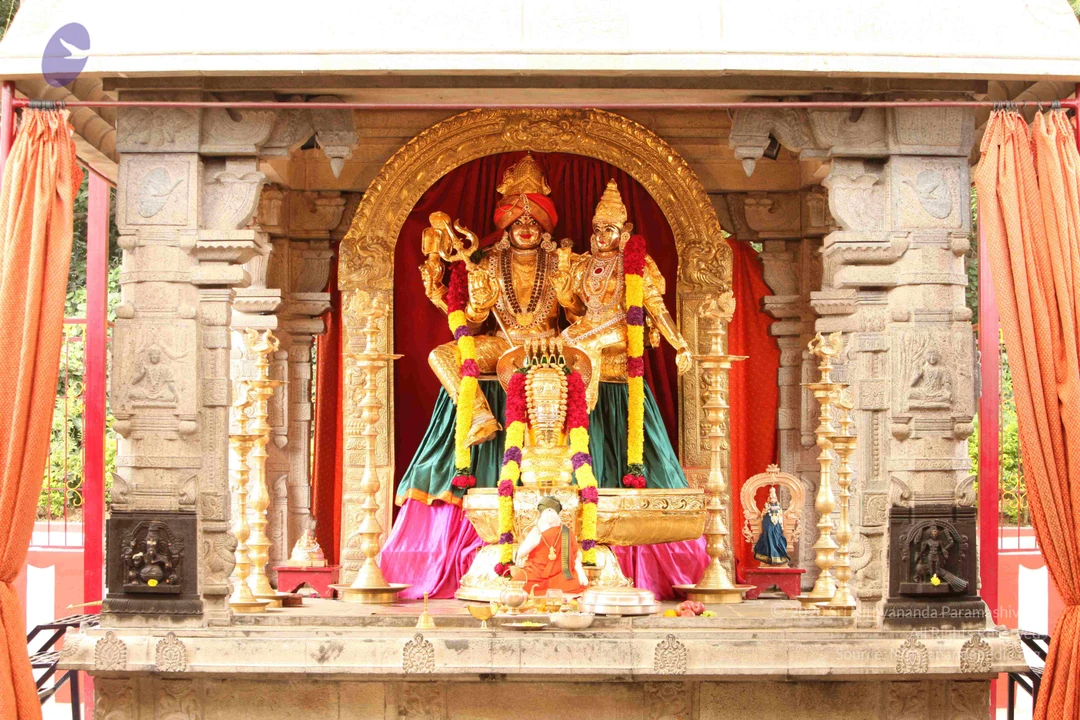
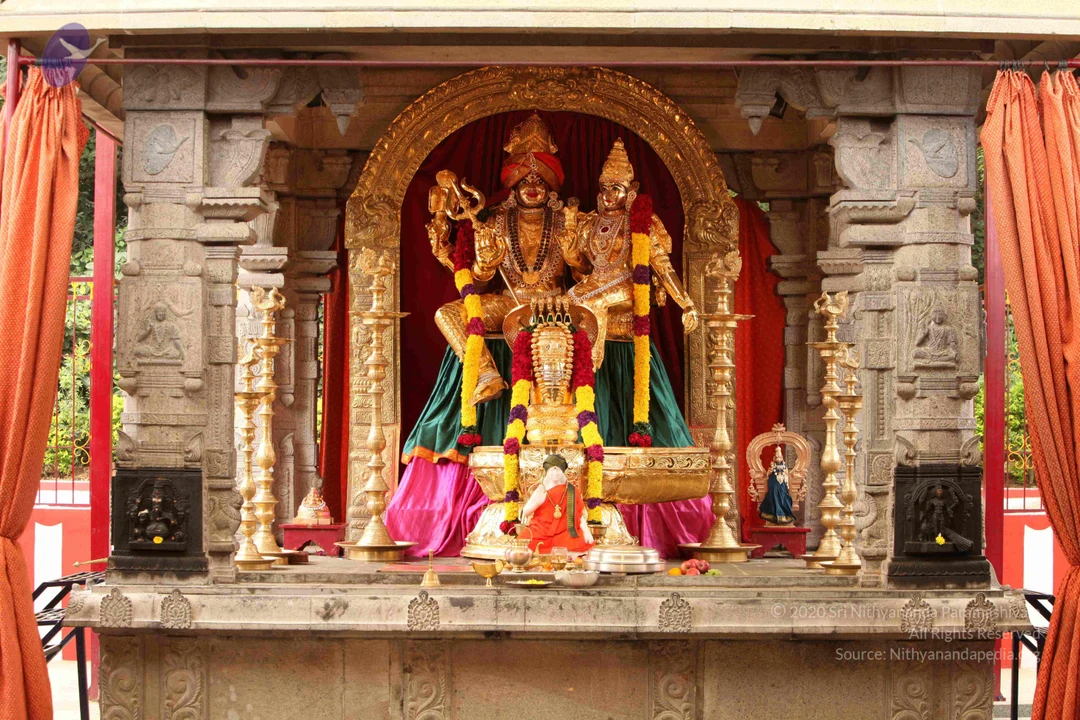
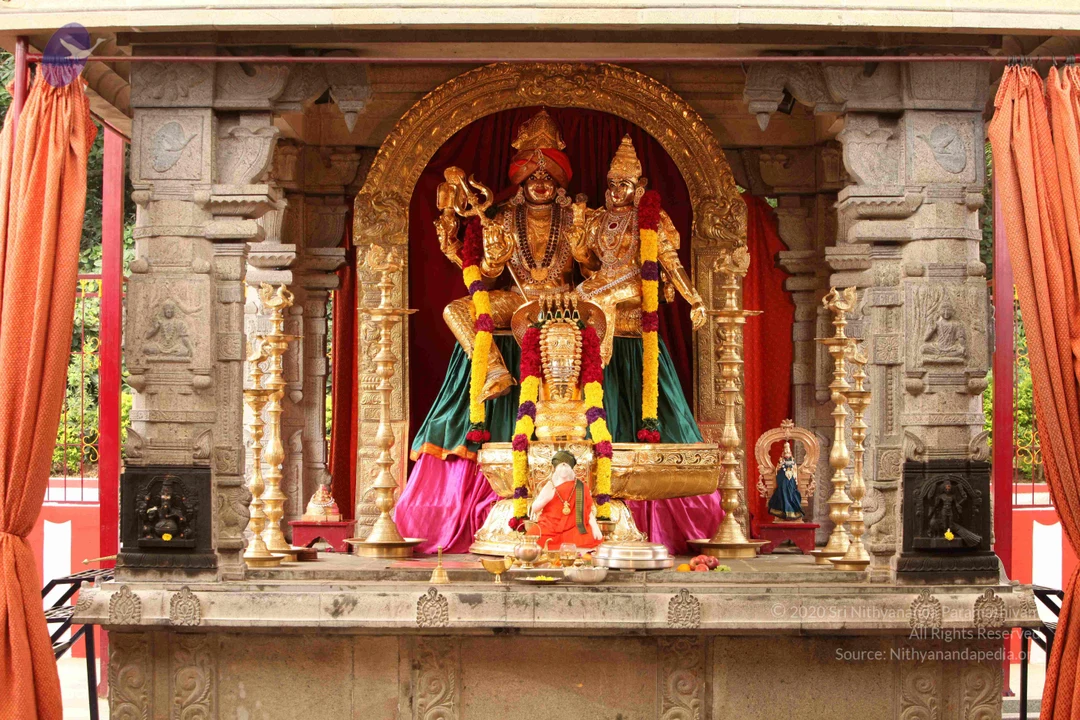
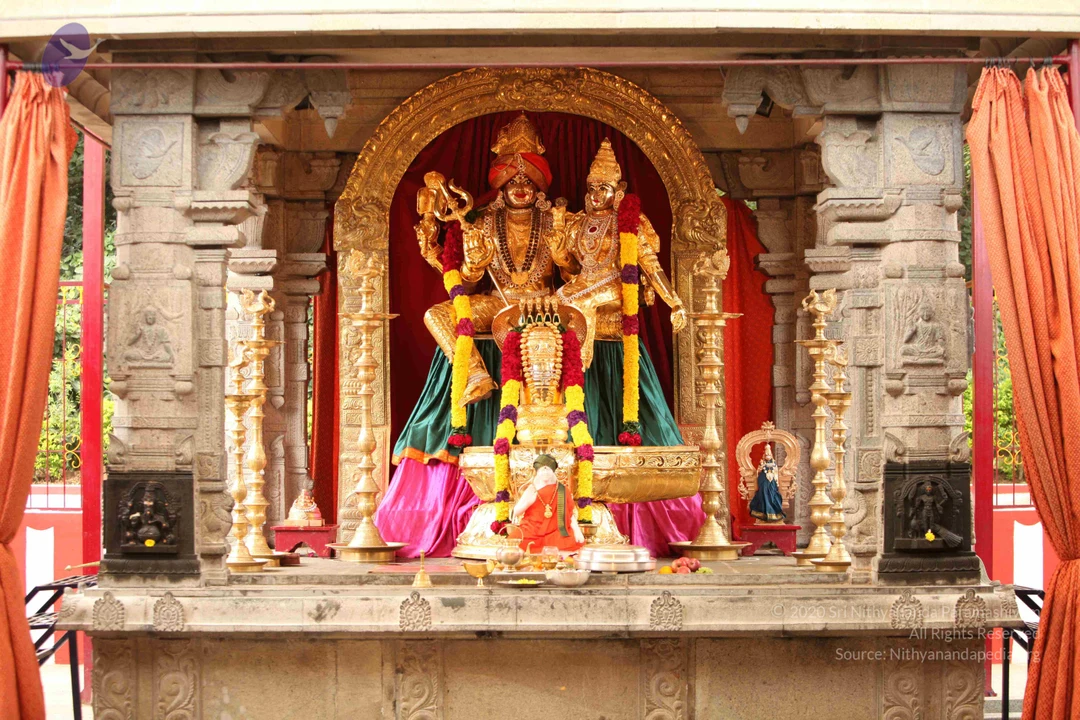
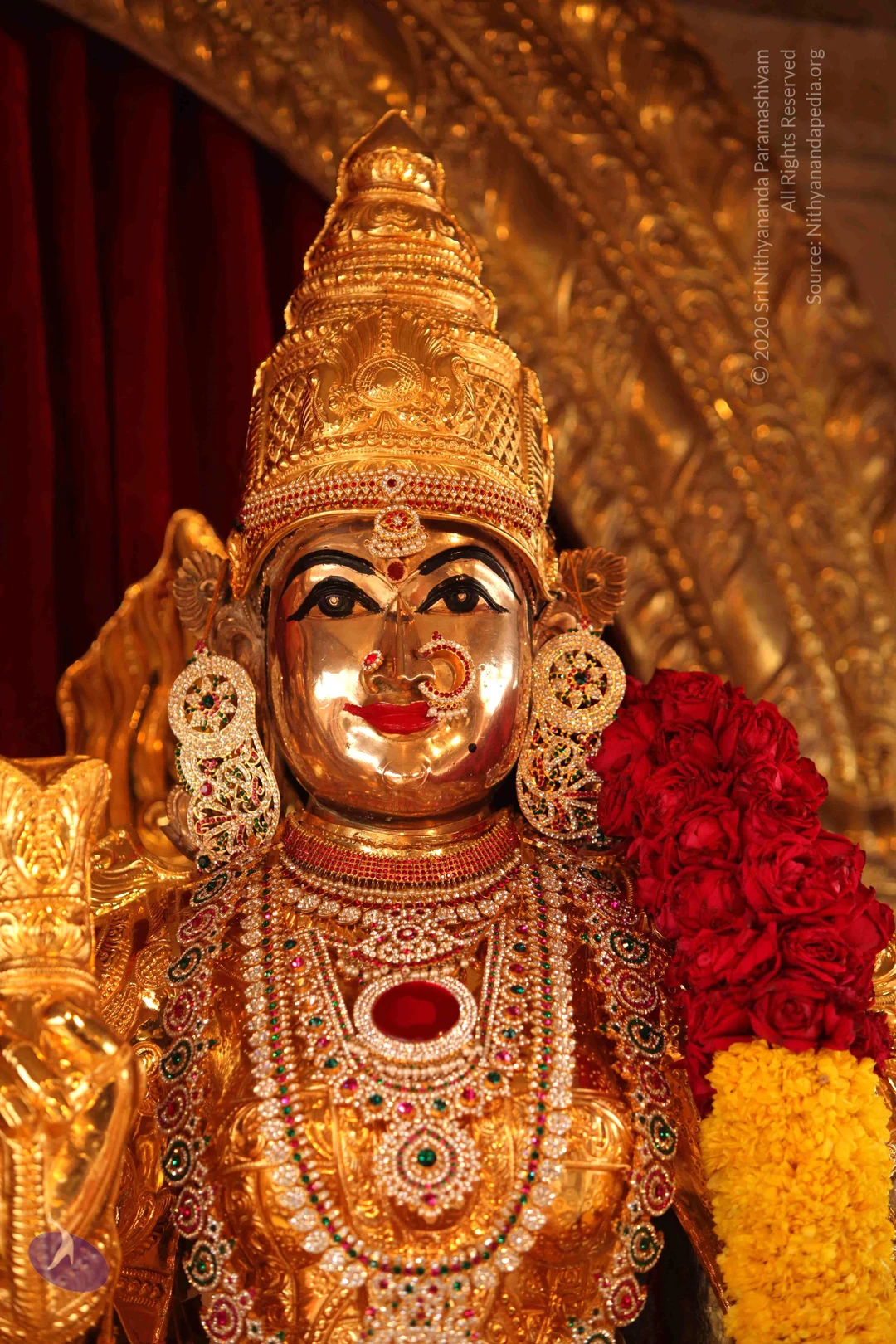
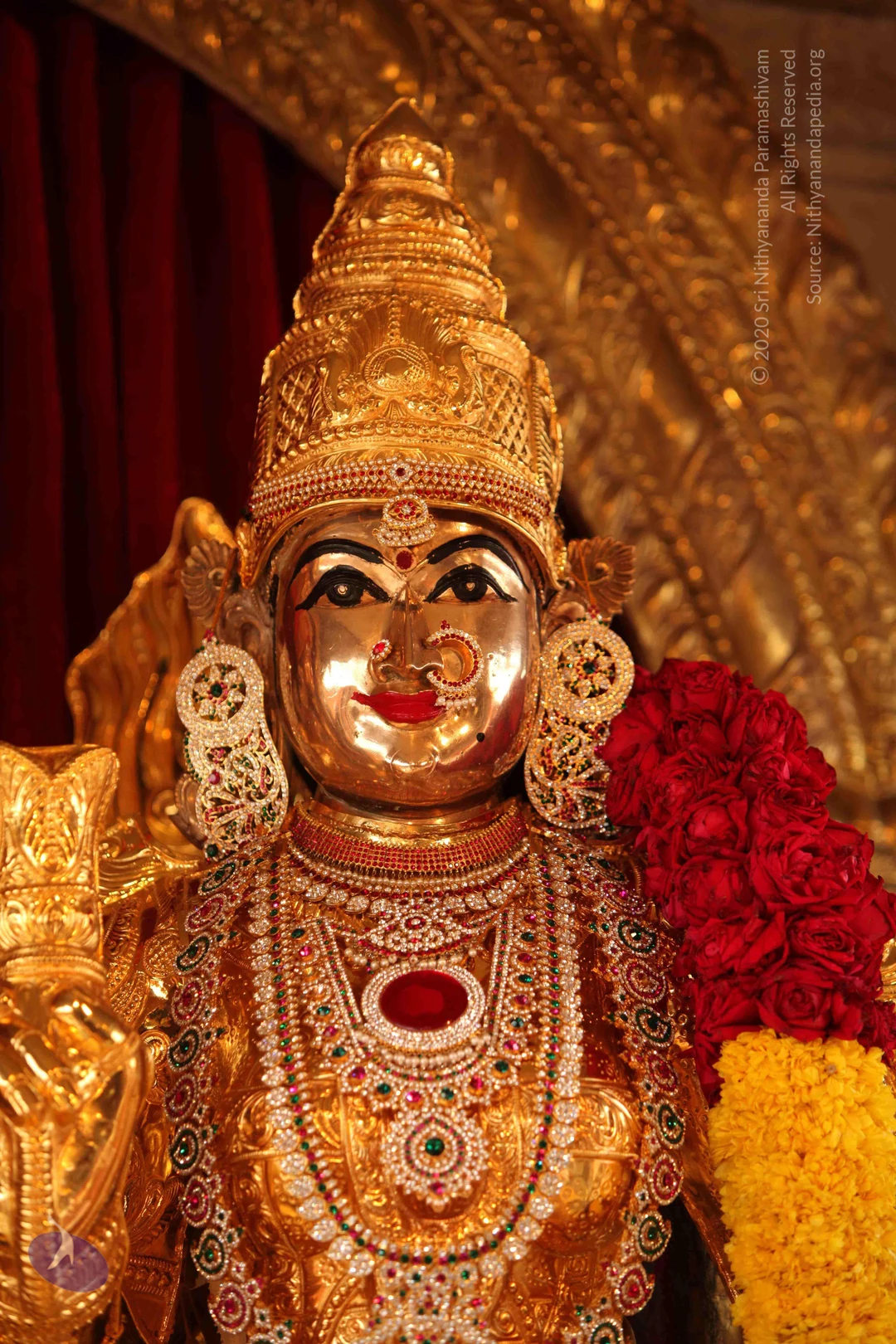
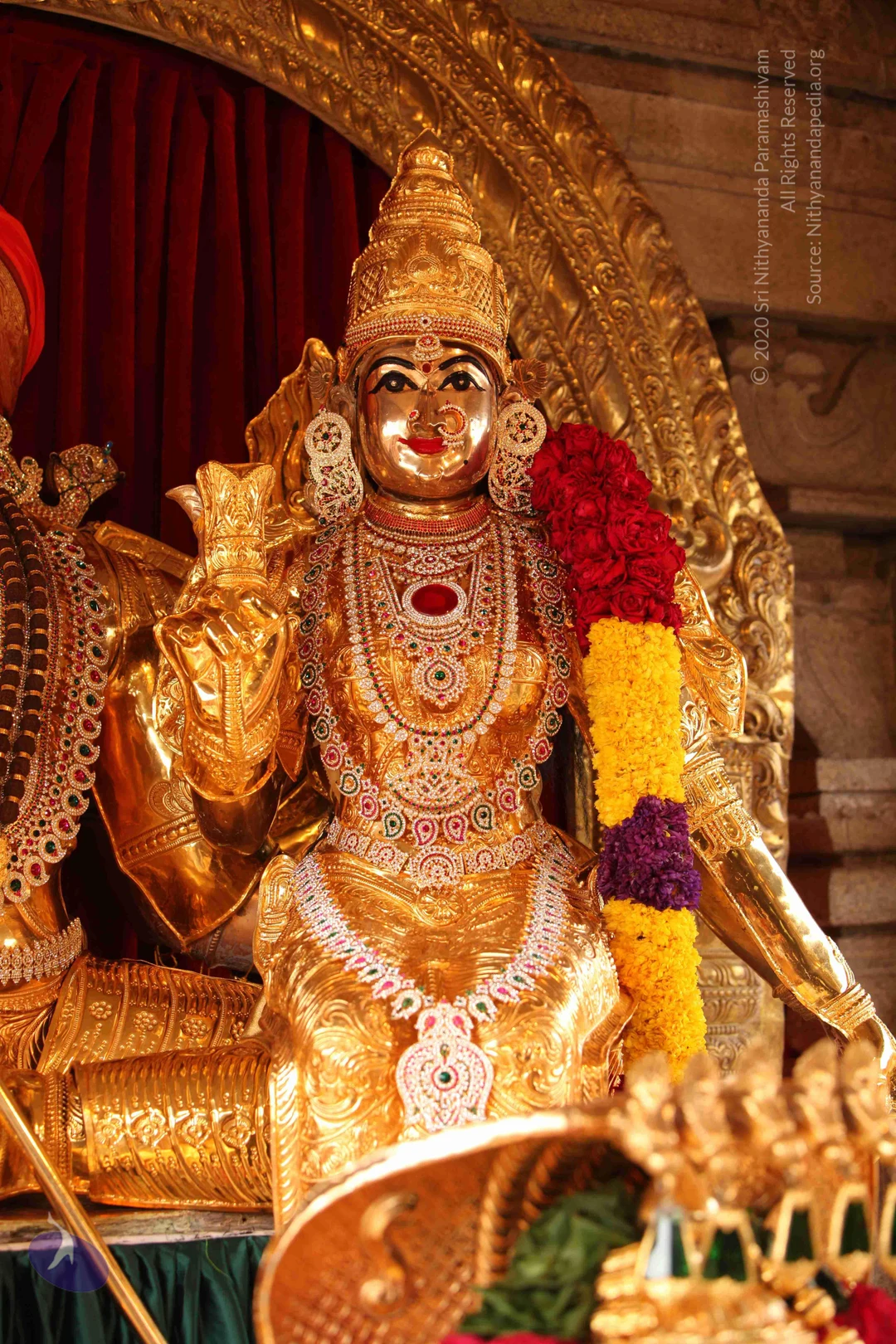
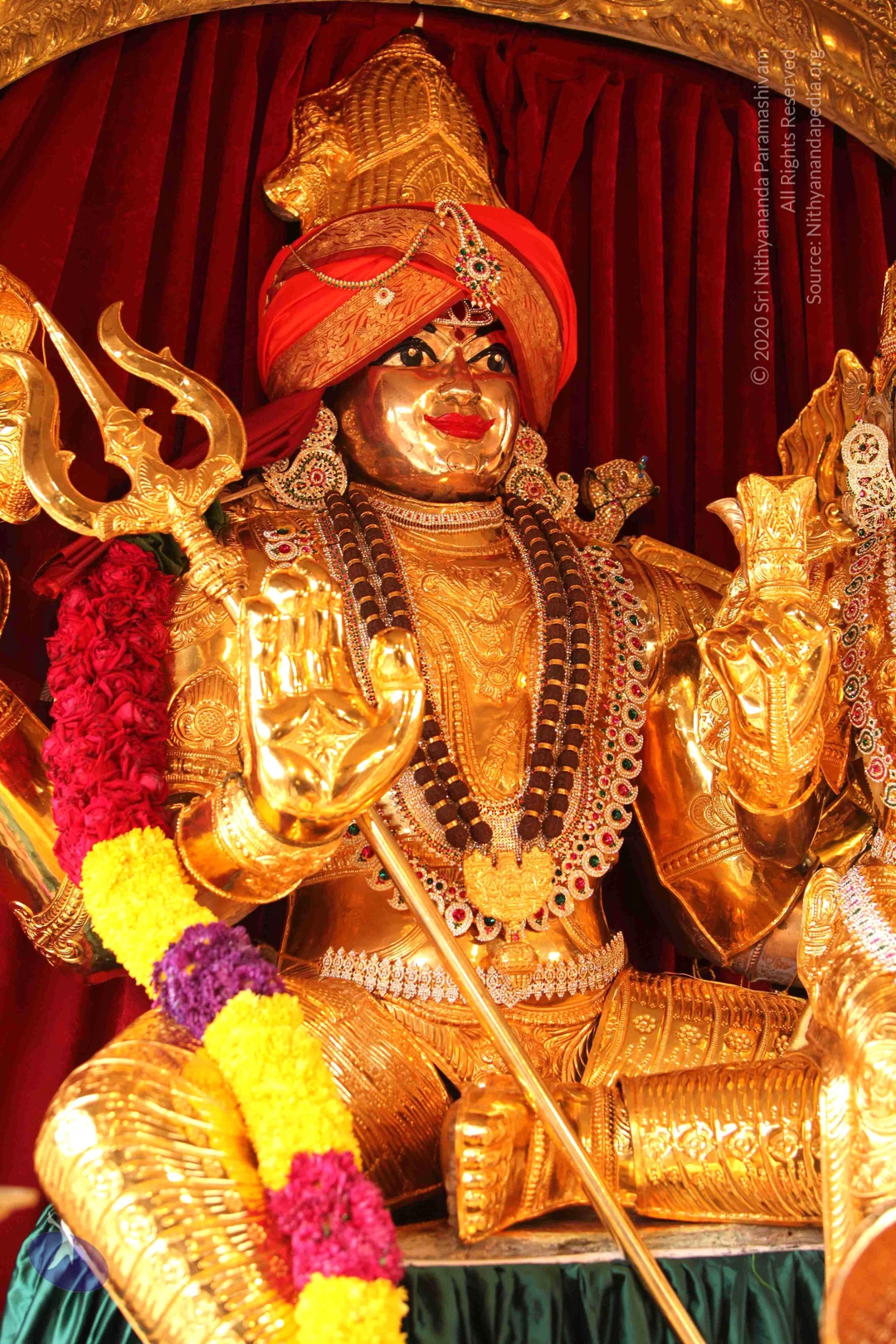
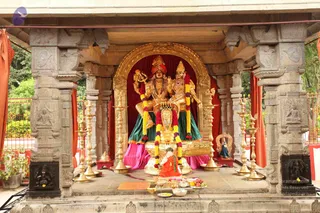
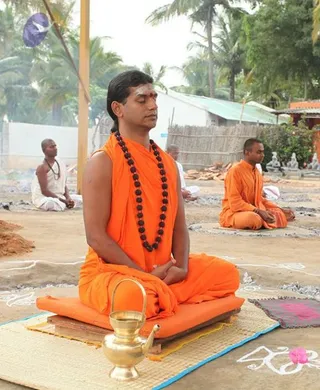
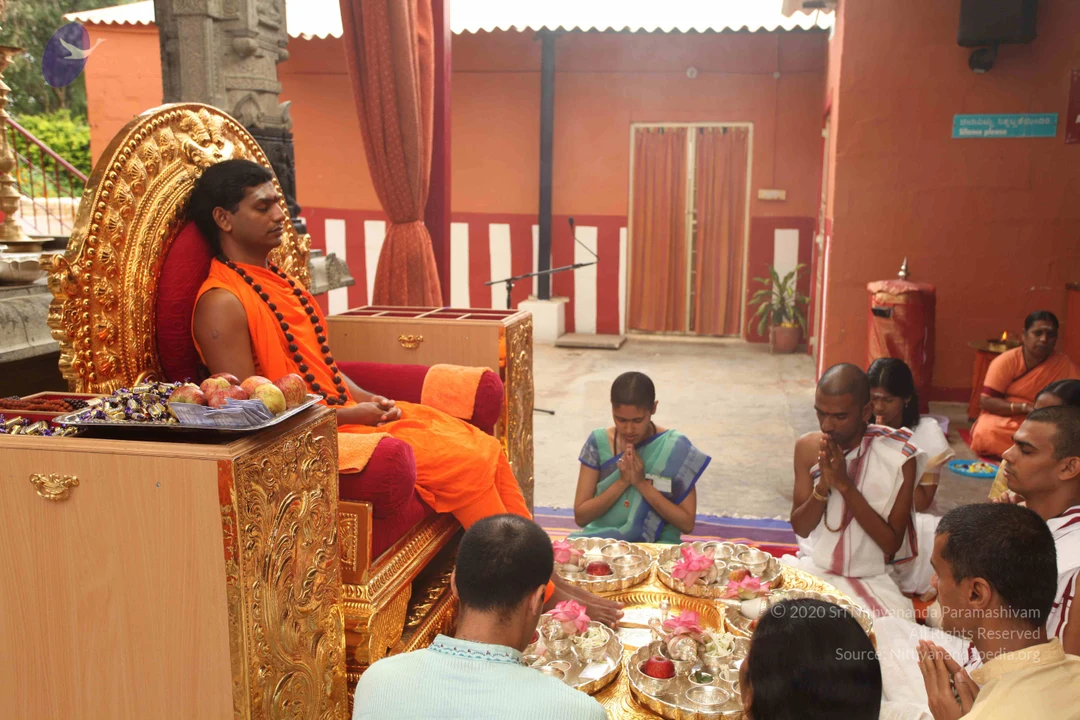
A photograph of an open-sided golden shrine set in a stone-pillared pavilion with carved granite columns. Two gilded deity murtis sit on a raised golden throne-like pedestal: a figure in a red turban with a trident and a female figure in a crown and gold ornaments, both draped in green and pink cloth and decorated with garlands of yellow, orange and purple flowers. Tall brass oil lamps stand on both sides, and offerings of fruit, flowers and a brass kalasha-style vessel lie on the platform in front. Red curtains frame the back of the shrine. No people are visible in the scene.A man seated on an ornate gold-carved throne with red cushions, wearing an orange saffron robe and a long dark rudraksha mala, his feet resting on a gold-edged platform decorated with pink lotus flowers. A woman in a teal and blue sari kneels with palms joined in namaskar, and a bald man in white dhoti and shawl with prayer beads also sits with joined hands. Before the throne are gold trays holding lotus flowers, fruit, small oil lamps and brass bowls, with a tray of apples and bananas on a side table. Behind them are orange and red walls with white stripes, a microphone stand, and a gold-framed carved panel. Several seated devotees are partially visible in the foreground.A photograph of a padapuja ceremony in an ornate courtyard with orange and red walls and white-and-red striped trim. A man seated on a gold-carved throne with red cushions wears an orange robe and a dark rudraksha mala, eyes closed, hands resting on his lap. Devotees kneel in front of him: a woman in a teal-and-blue sari with palms joined, a man in white dhoti and shawl with joined hands, and men in white and yellow clothing. Silver trays holding pink flowers, red fruit and brass vessels are placed before the throne, and apples and sweets sit on a side table. A woman in orange sits in the background beside a small oil lamp.

Photos of the day

View all 432 photos

432 distinct dated photos. Source gallery sets may overlap.

01

nithyanandam-living-enlightenment

3 dated photos in previewSource gallery
02

1--Pada-Puja

114 dated photos in previewSource gallery
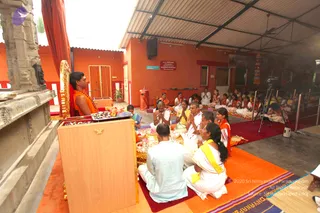
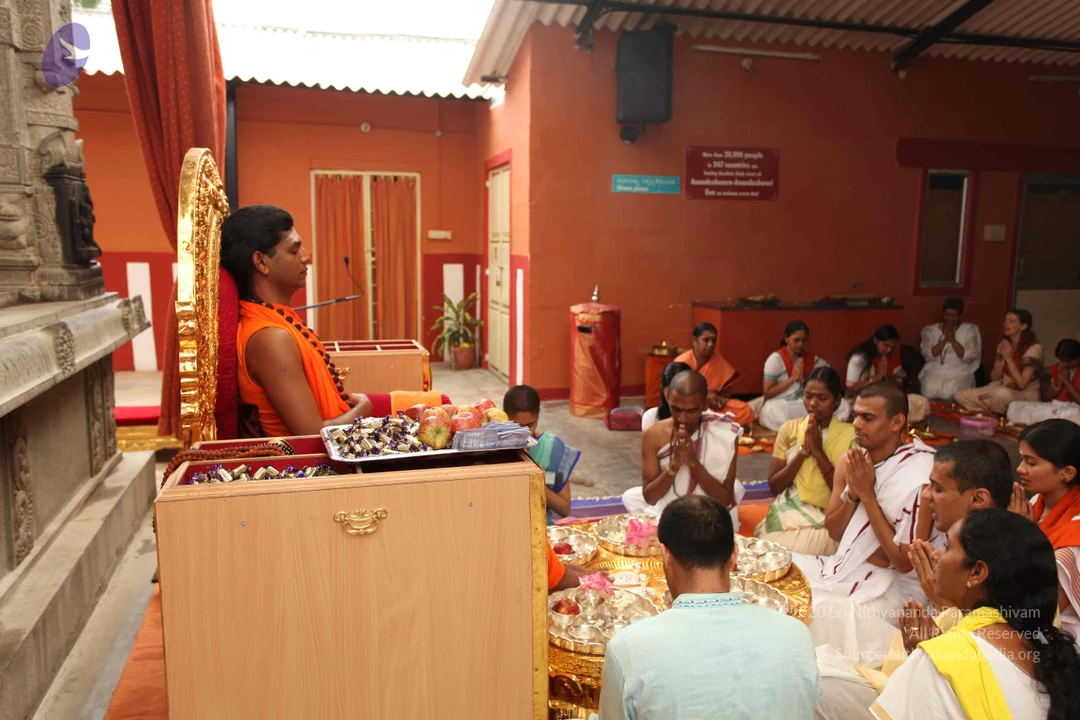
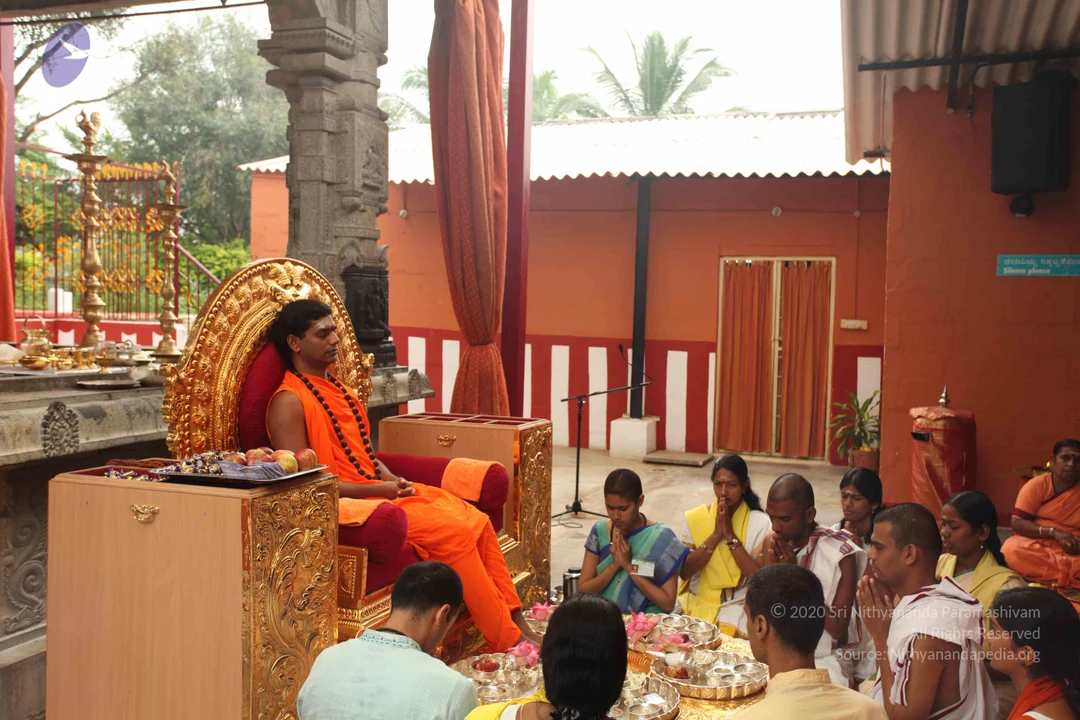
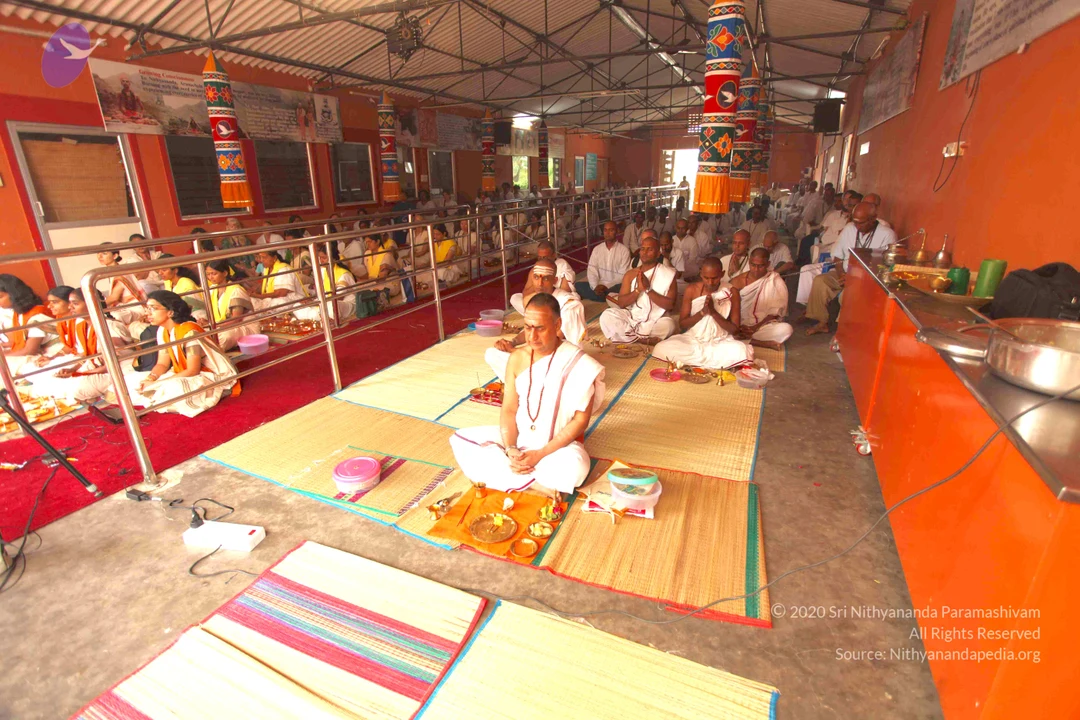
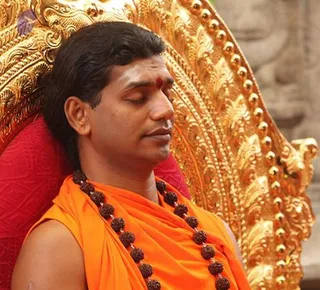
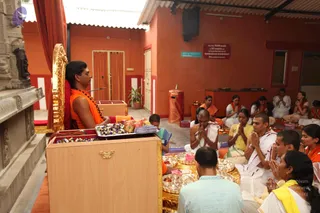
A photograph of a padapuja ceremony in an ornate courtyard with orange and red walls and white-and-red striped trim. A man seated on a gold-carved throne with red cushions wears an orange robe and a dark rudraksha mala, eyes closed, hands resting on his lap. Devotees kneel in front of him: a woman in a teal-and-blue sari with palms joined, a man in white dhoti and shawl with joined hands, and men in white and yellow clothing. Silver trays holding pink flowers, red fruit and brass vessels are placed before the throne, and apples and sweets sit on a side table. A woman in orange sits in the background beside a small oil lamp.A man seated on an ornate gold-carved throne with red cushions, wearing an orange saffron robe and a long dark rudraksha mala, his feet resting on a gold-edged platform decorated with pink lotus flowers. A woman in a teal and blue sari kneels with palms joined in namaskar, and a bald man in white dhoti and shawl with prayer beads also sits with joined hands. Before the throne are gold trays holding lotus flowers, fruit, small oil lamps and brass bowls, with a tray of apples and bananas on a side table. Behind them are orange and red walls with white stripes, a microphone stand, and a gold-framed carved panel. Several seated devotees are partially visible in the foreground.A photo of a padapuja ceremony in an open courtyard with red and white striped walls. A man seated on an ornate gold throne with red cushions wears orange robes, a rudraksha mala and a loose orange shawl, with his feet resting on a golden tray. Devotees kneel before him with palms pressed together: a woman in a teal and blue sari, a bald man in white dhoti and shawl, a man in white with folded hands, and a partly visible man in the foreground. Silver trays hold pink lotus flowers, red apples and small brass vessels. A microphone stand stands behind, with red curtains and a potted plant at right.A photograph of a satsang in an orange-walled hall. A man seated on a gilded wooden throne at left wears orange robes, a rudraksha mala and a microphone is set before him; he sits with hands in lap facing the gathering. Before him a wooden lectern-style table holds a tray of fruit and sweets and a plate of wrapped candies. Seated devotees in front, some in white dhotis and orange shawls, others in yellow and orange saris, sit with palms pressed together in anjali. Behind them more devotees sit on the floor, and a carved stone pillar stands at the far left edge. A red stone-framed sign on the wall carries printed English and Tamil-script text.A photograph of a padapuja-style gathering in a red-walled hall with orange floor mats. On the left, a man in an orange robe with a beaded mala sits on a gold-trimmed seat before a wooden lectern and a microphone, a carved stone pillar beside him. In front of him, seated devotees with hands folded in namaste include a bald man in white, a man in a light blue shirt, a woman in white with a yellow shawl, and a woman in an orange top. Brass trays of flowers, fruit and offerings sit on the mats. Behind them, rows of seated devotees, many in white and orange, face the speaker. A wall board lists a number of people trained in a meditation programme.A wide photograph of an indoor satsang hall with orange-painted walls and a corrugated metal roof. On the left, a man in an orange robe with a garland sits on a raised golden-trimmed seat beside a carved stone pillar, with a wooden lectern and offering trays in front of him. Seated on red and orange mats below him, devotees in white and yellow clothing sit with hands pressed together in namaste, including a man in pale blue kurta and a woman in white with a yellow shawl. A stack of brass plates and offerings lies on the floor, and a video camera on a tripod films the gathering at the right, with more seated devotees in the background. Some devotees wear orange shawls.
03

2--Satsang-Morning

39 dated photos in previewSource gallery
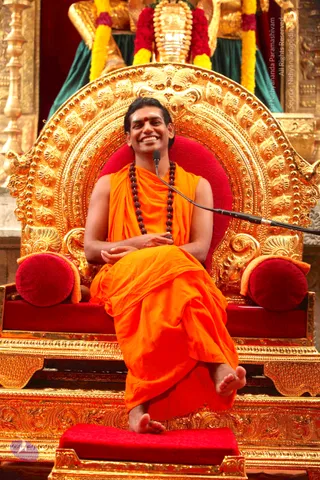
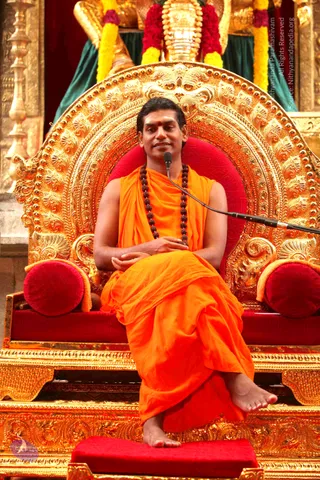
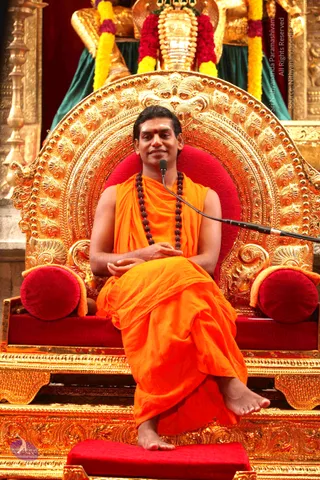
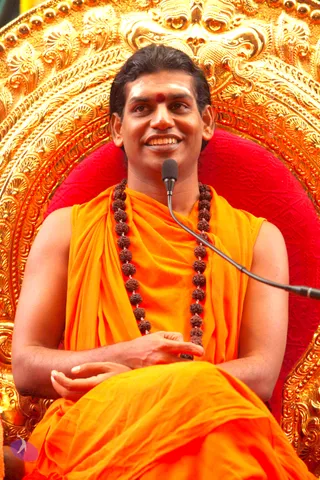
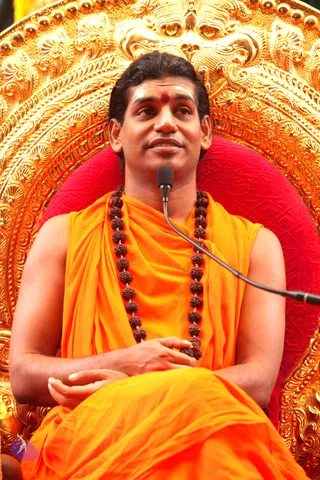
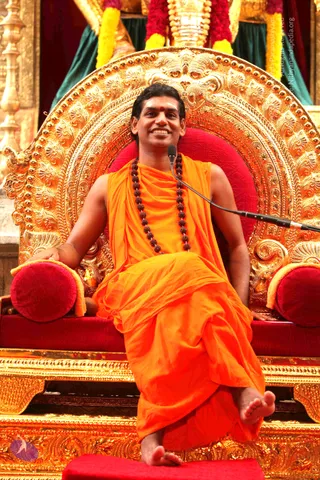
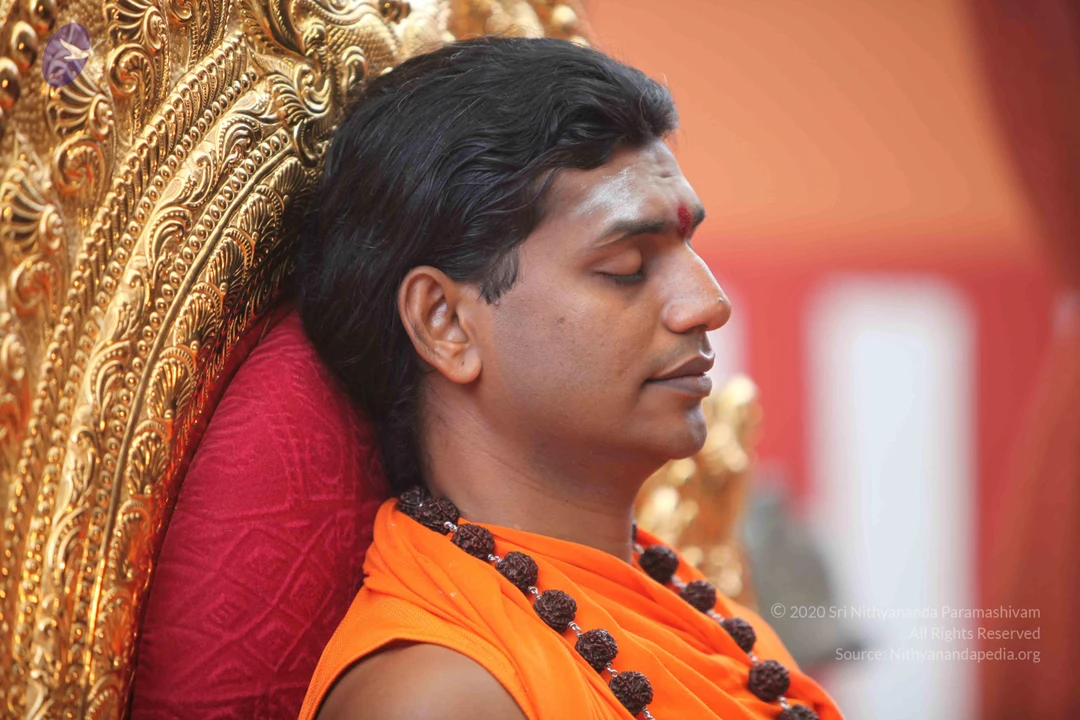
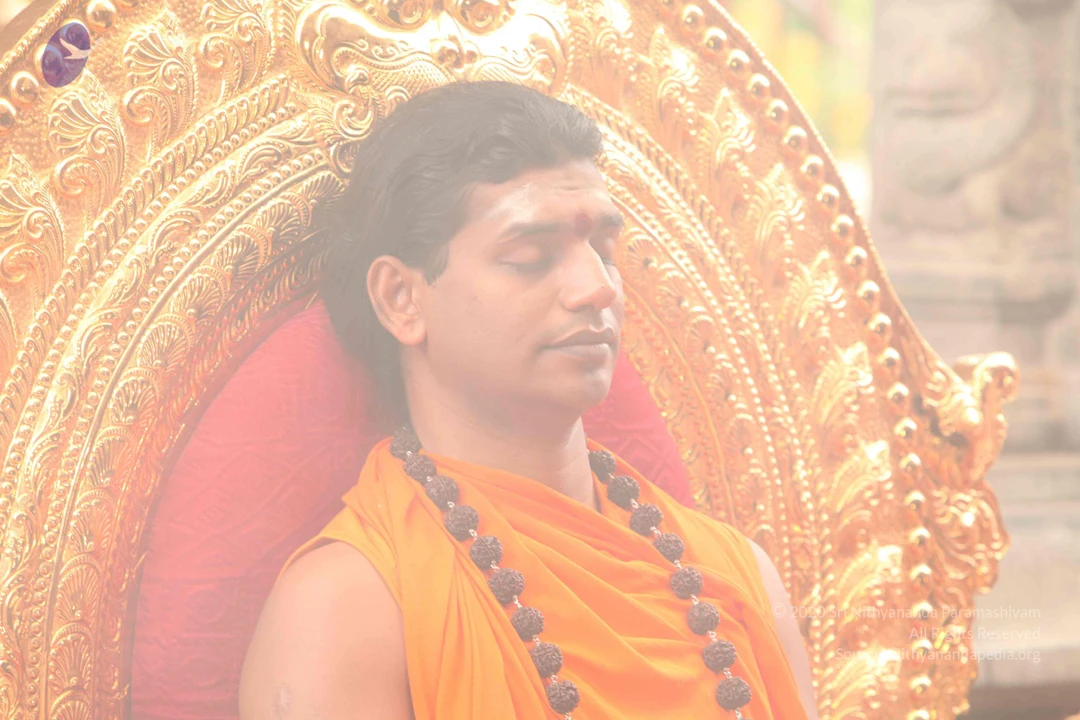
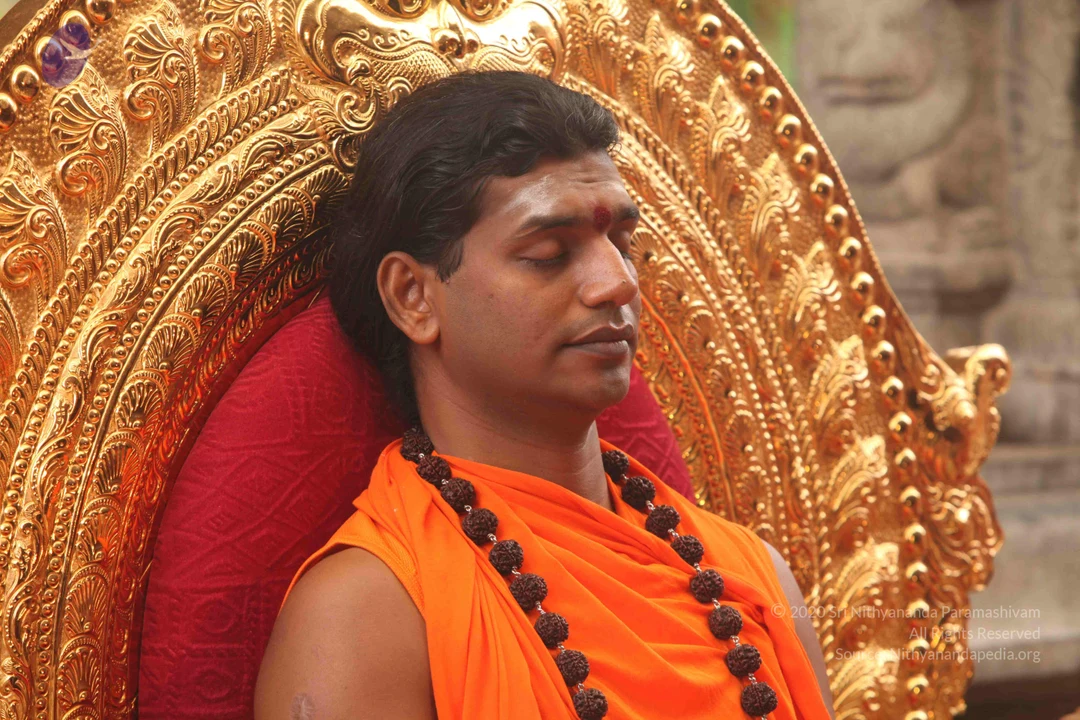
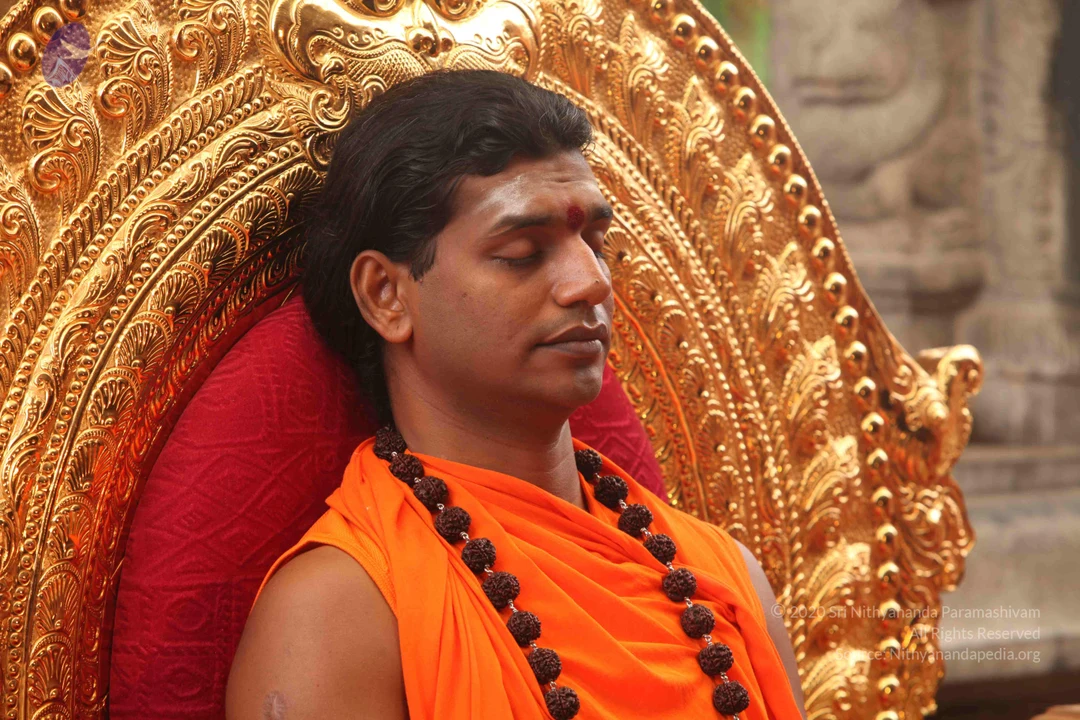
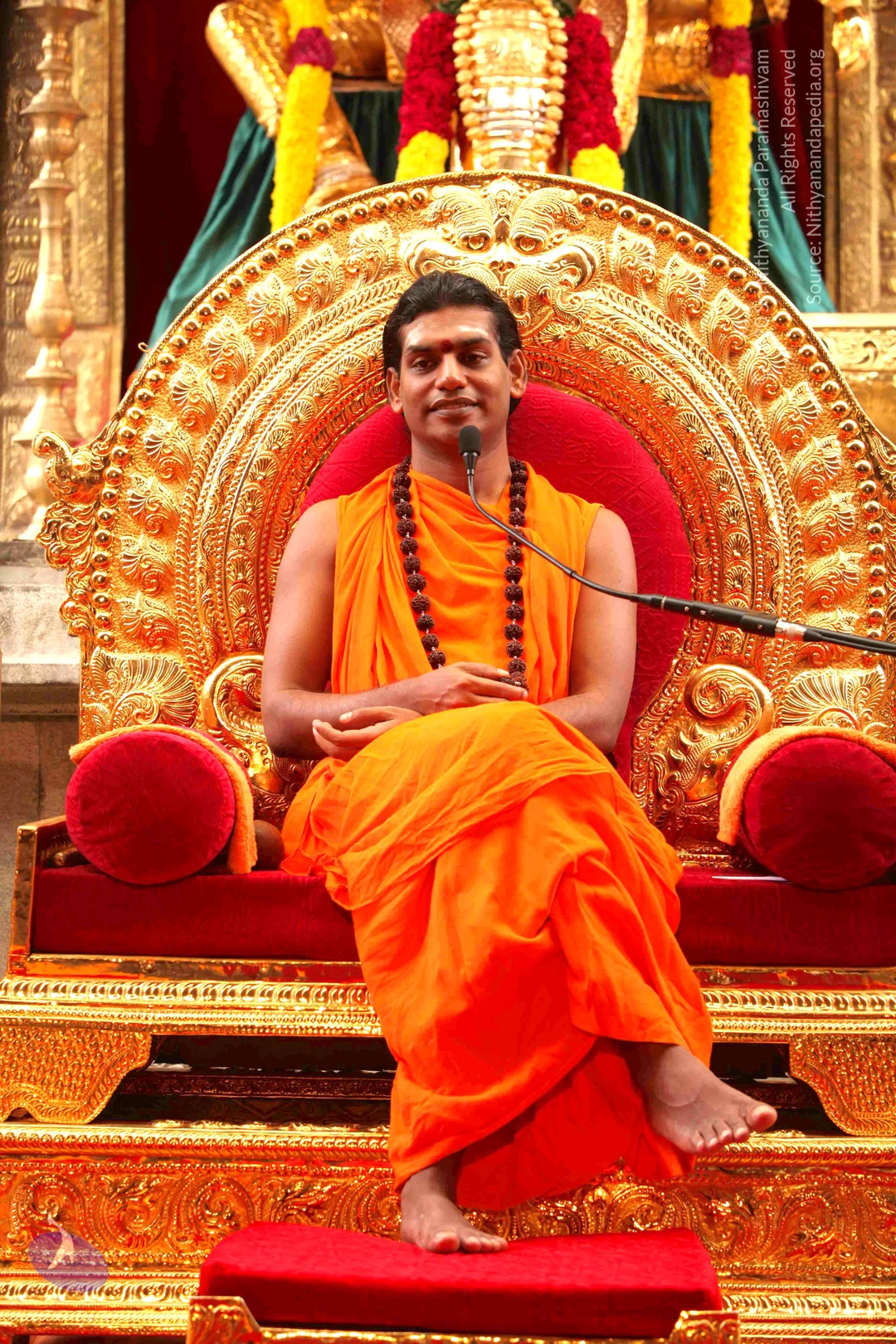
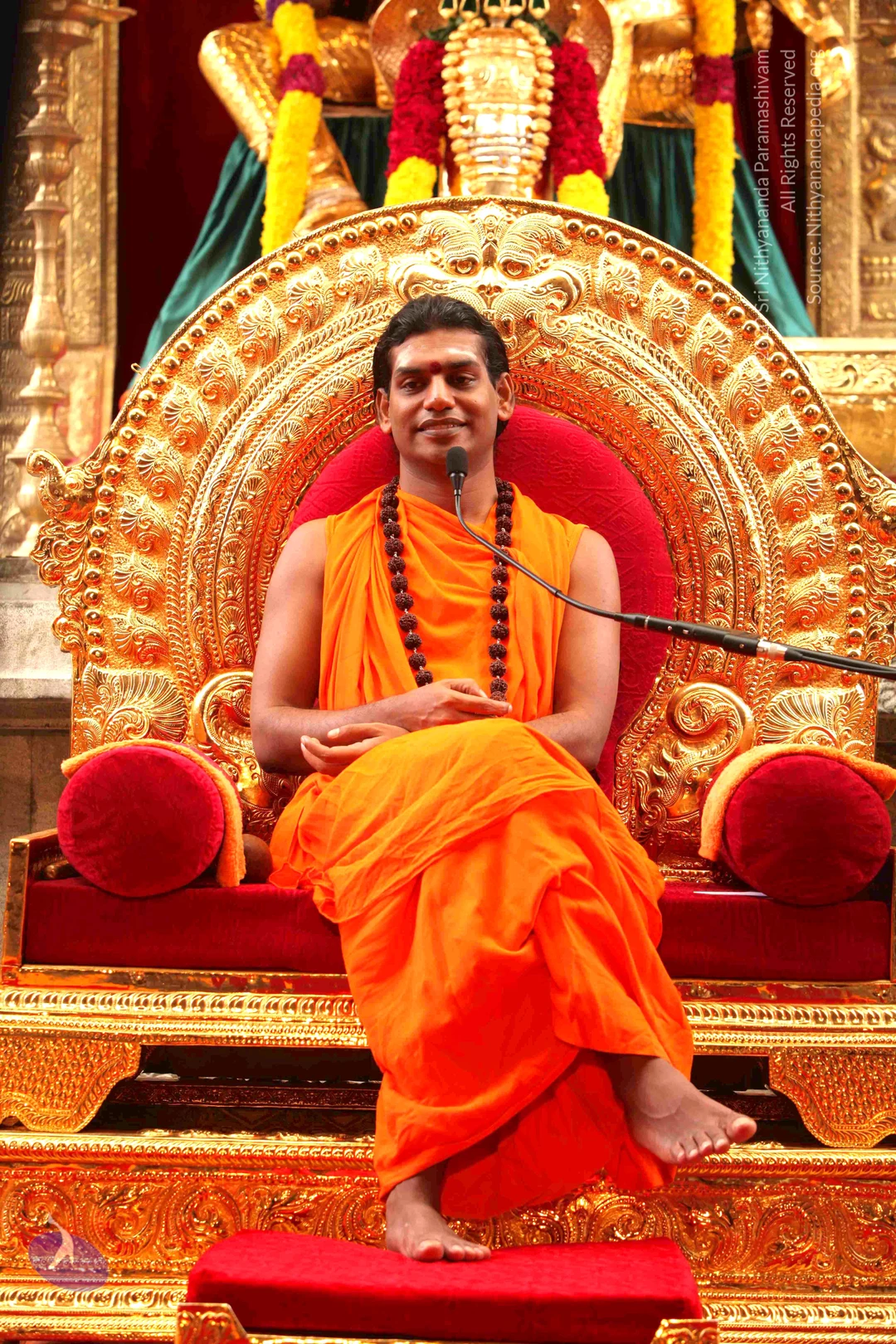
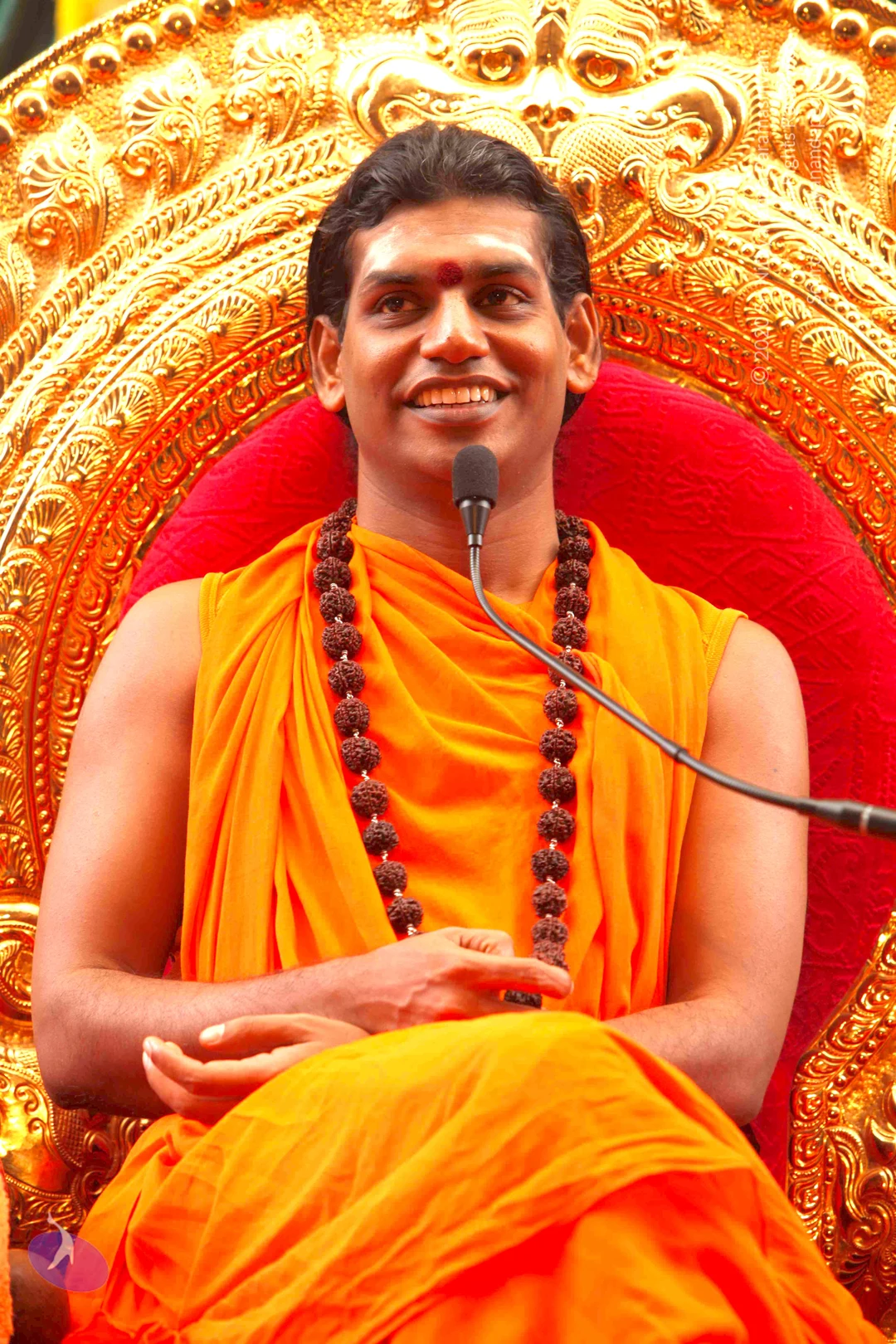
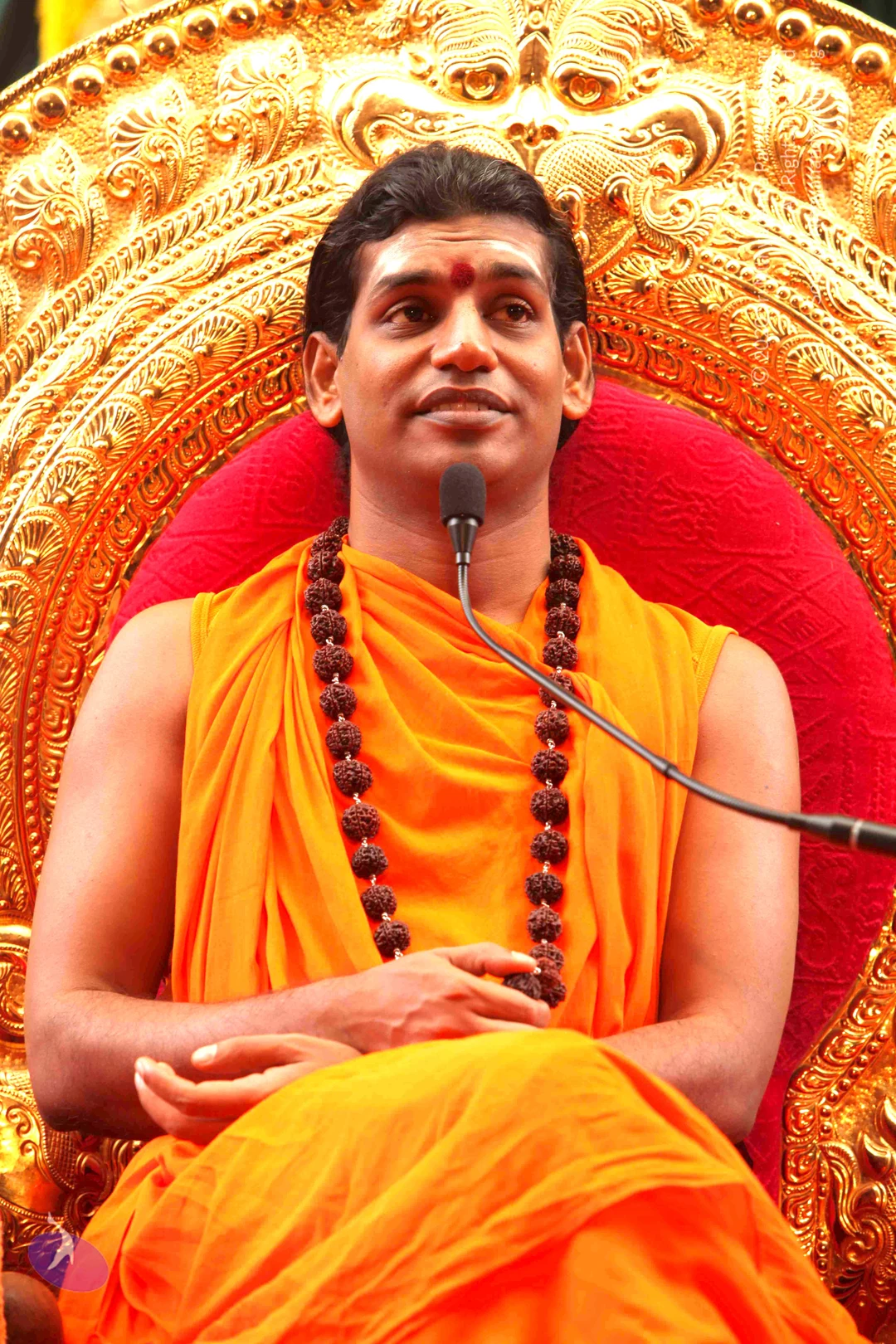
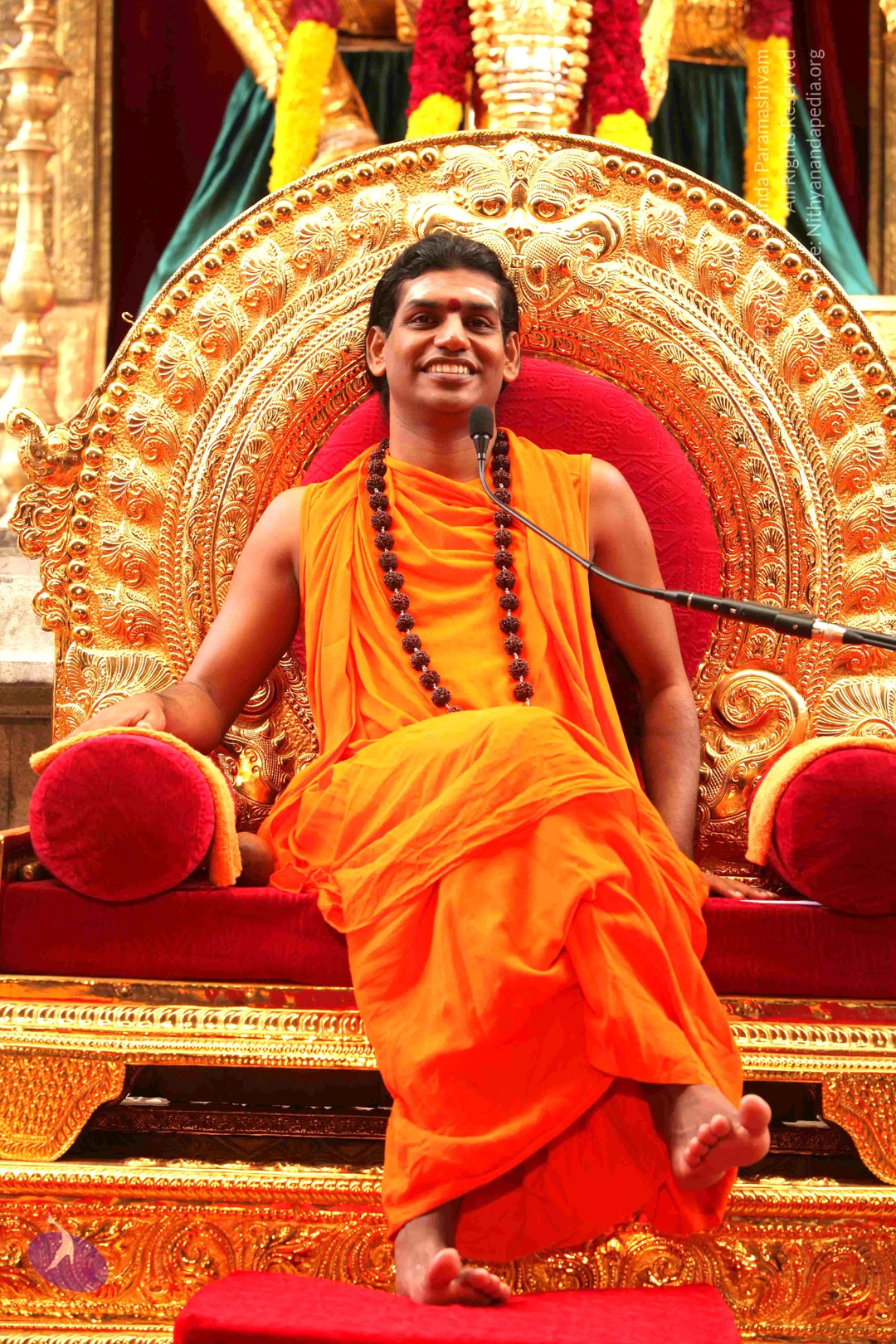
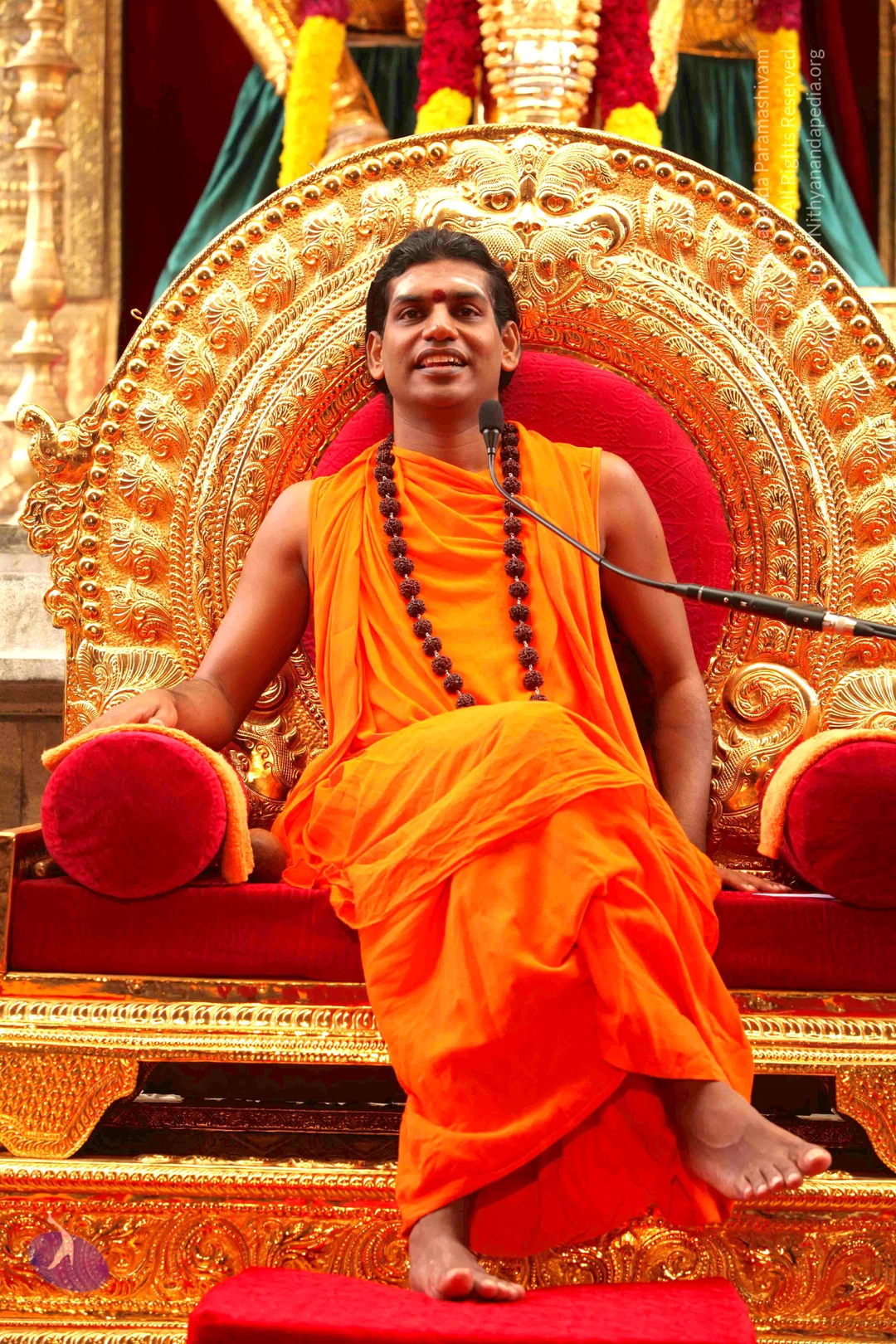
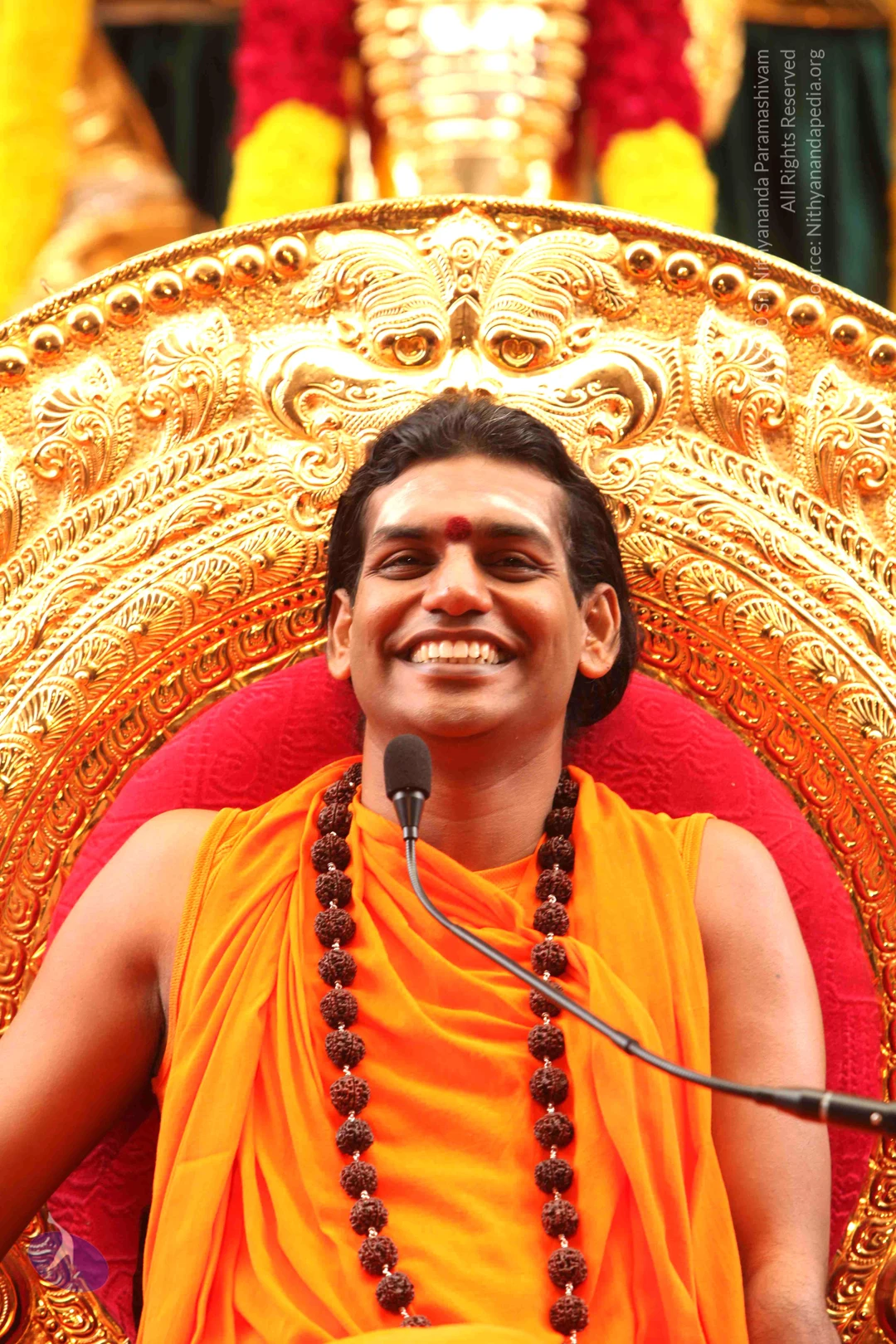
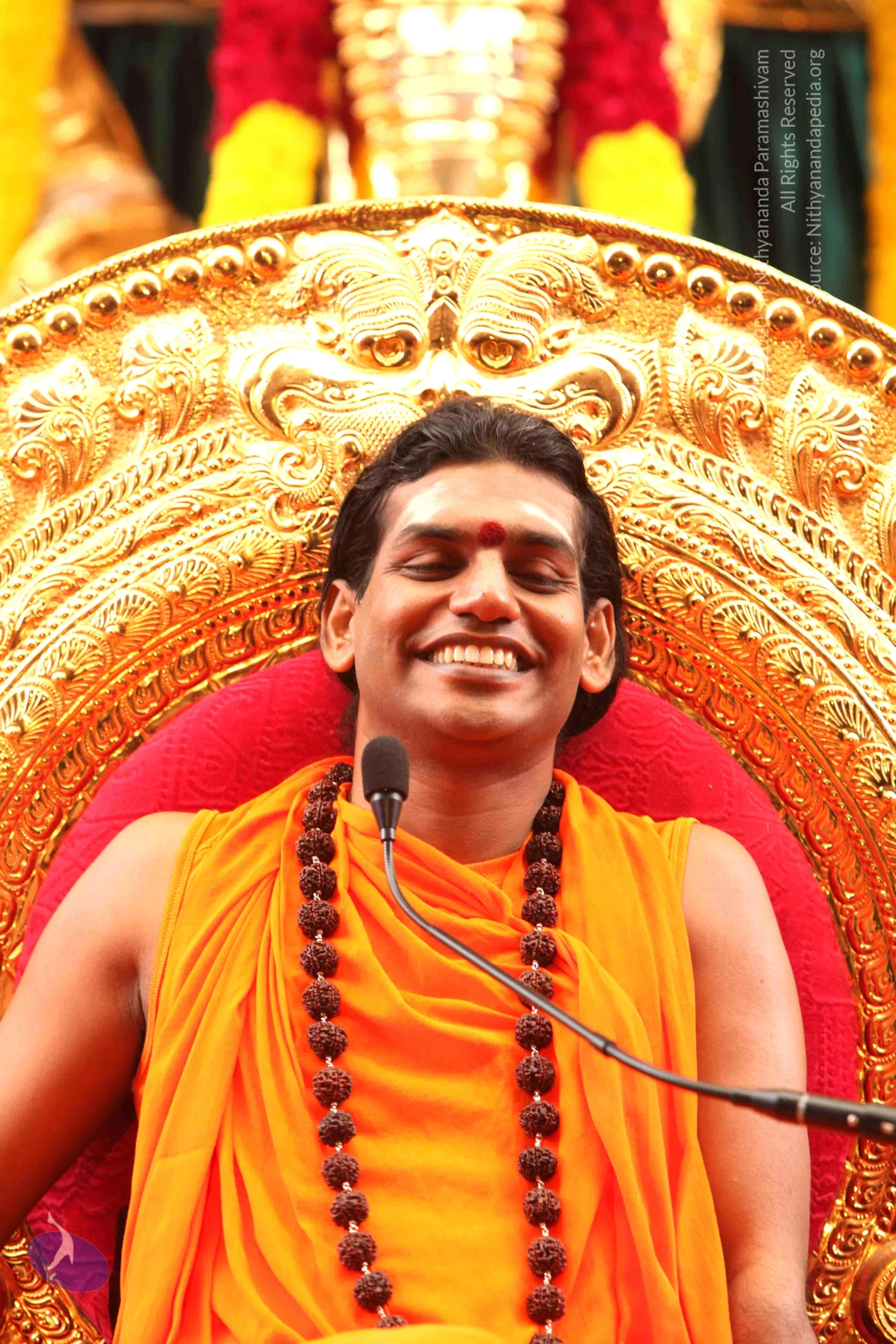
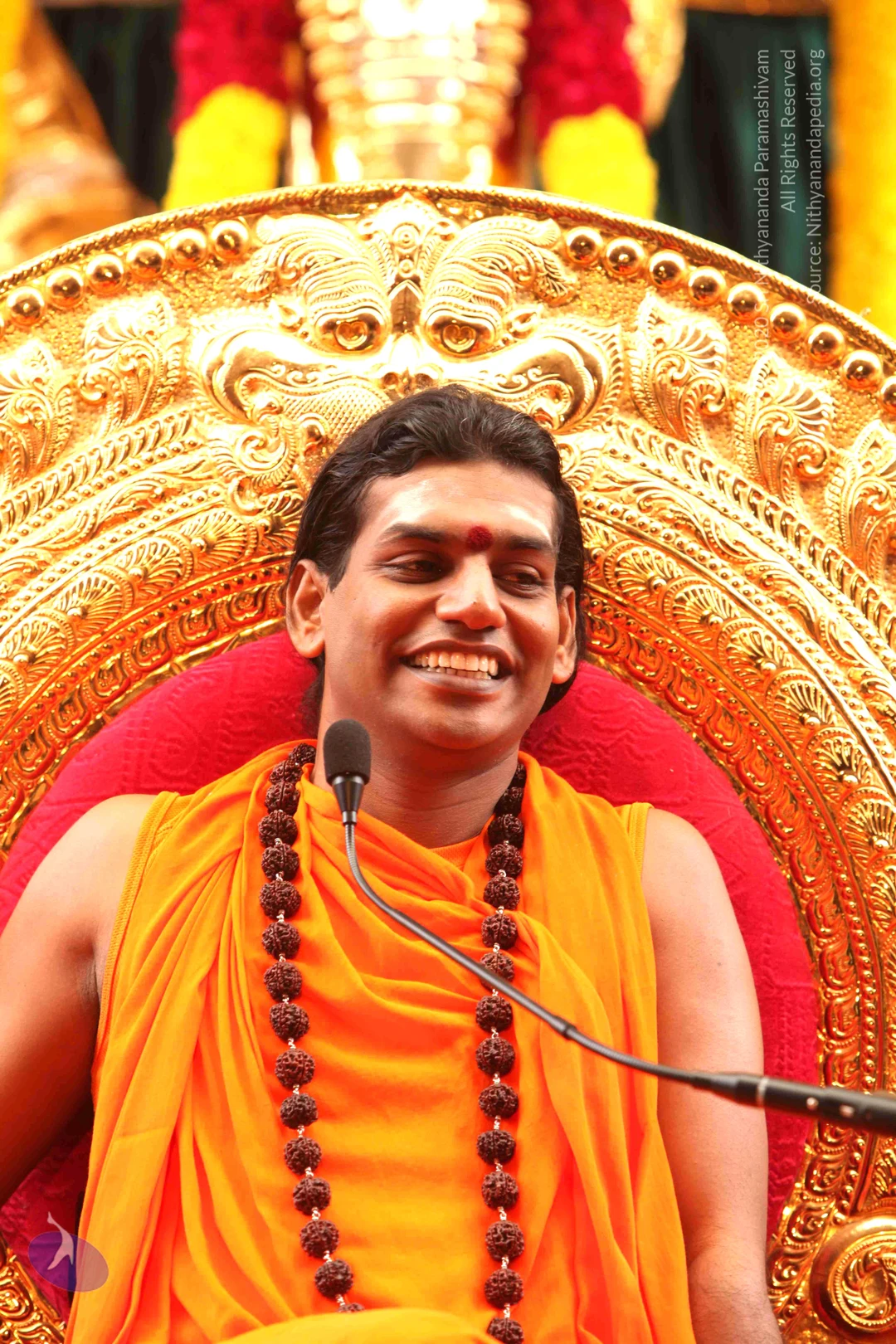
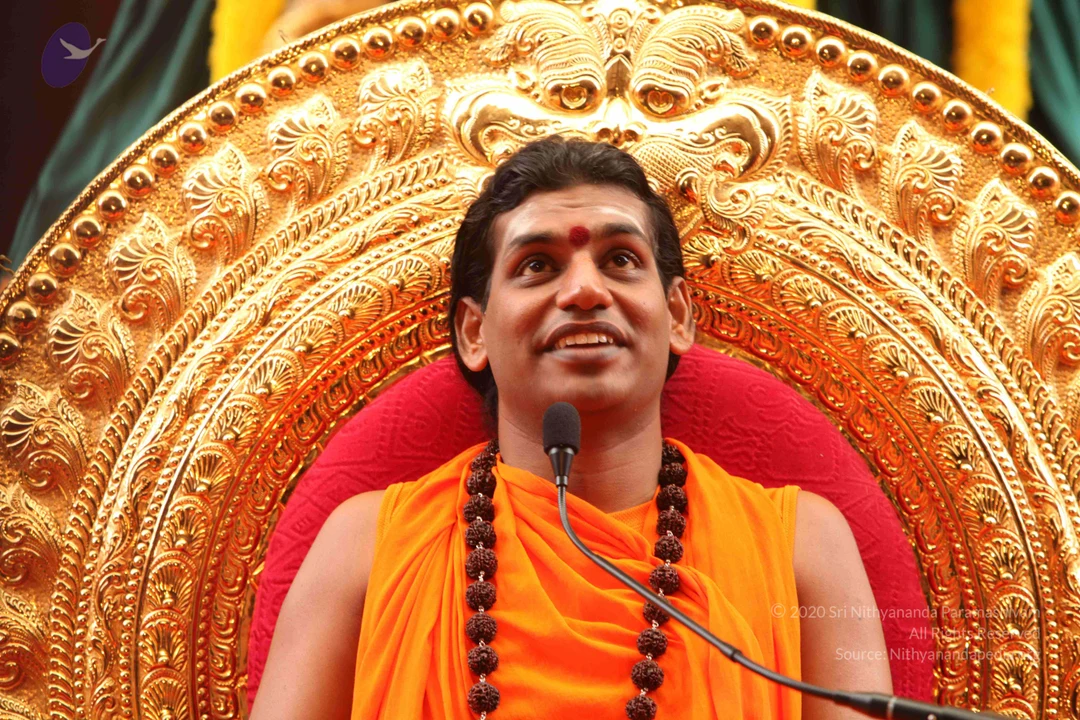
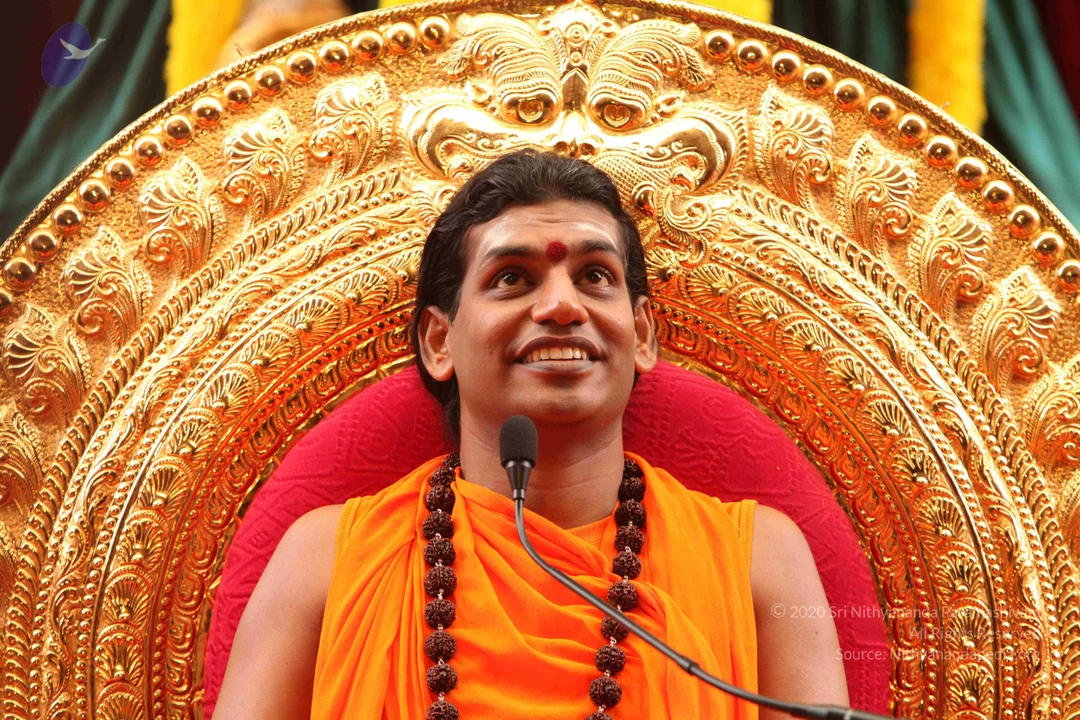
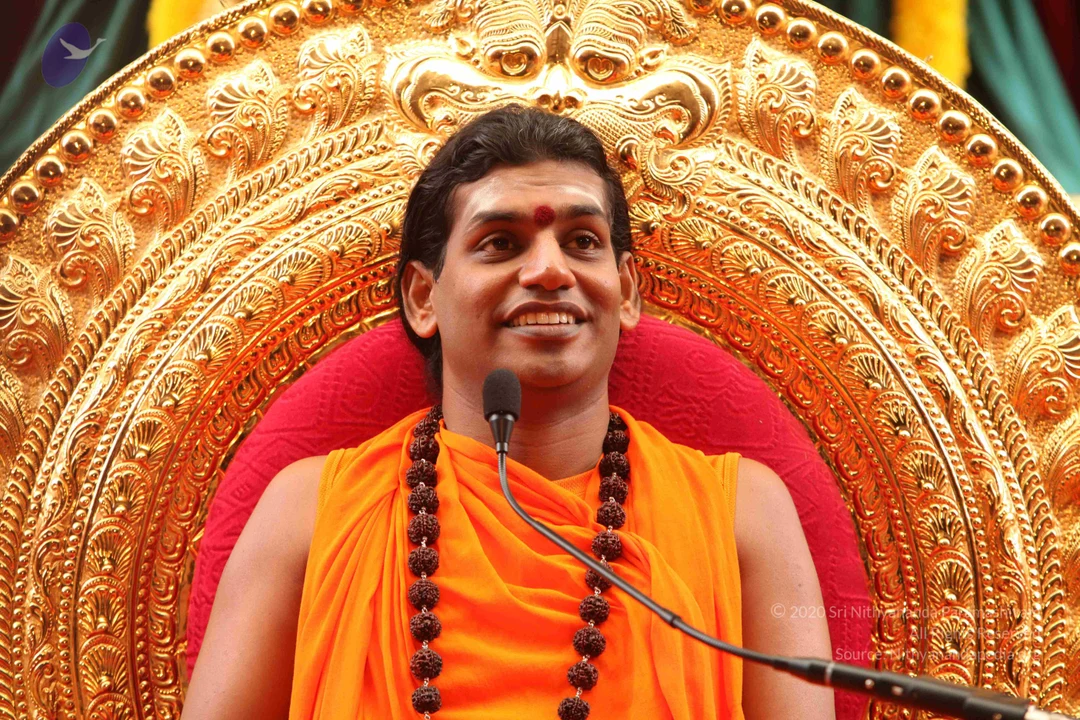
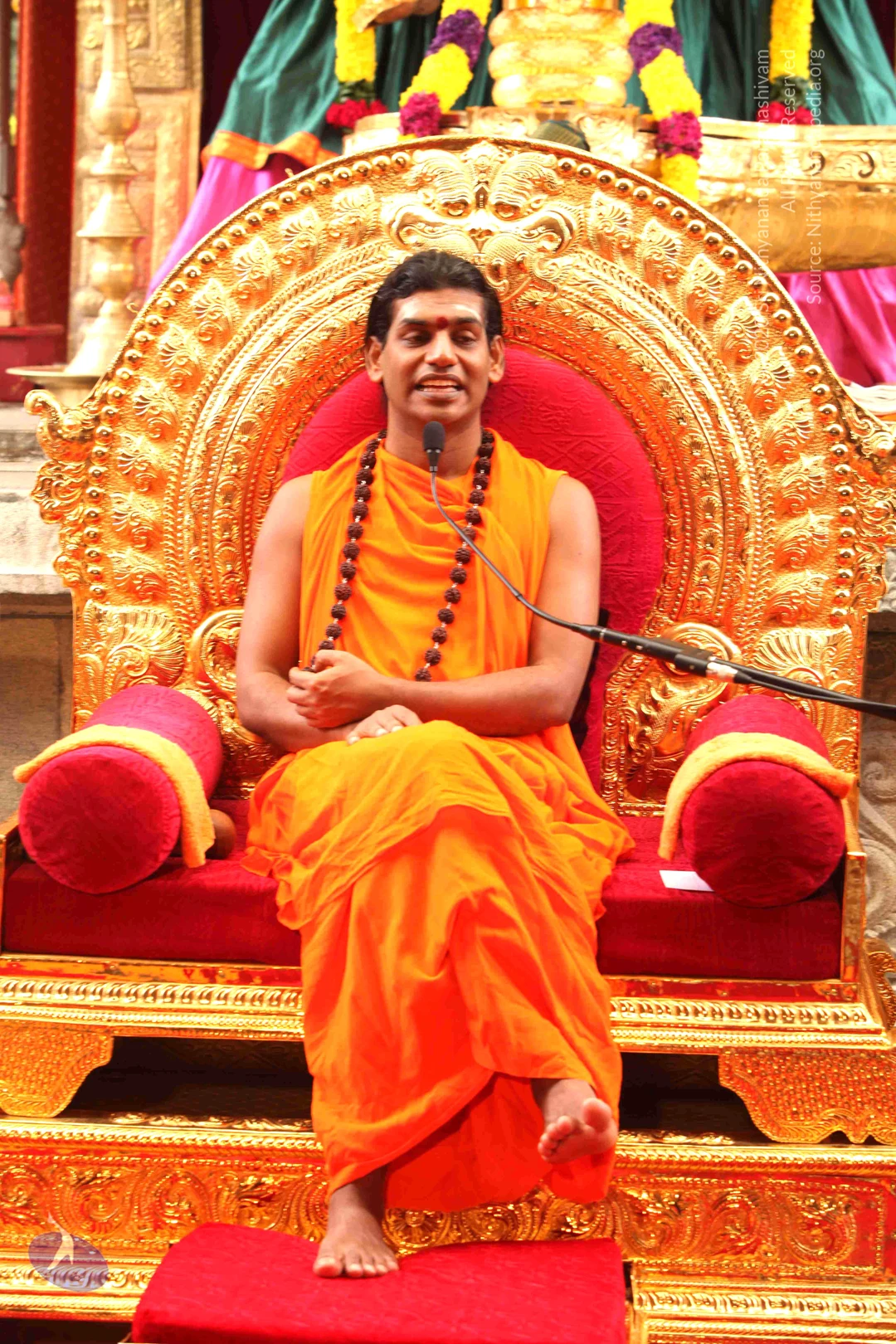
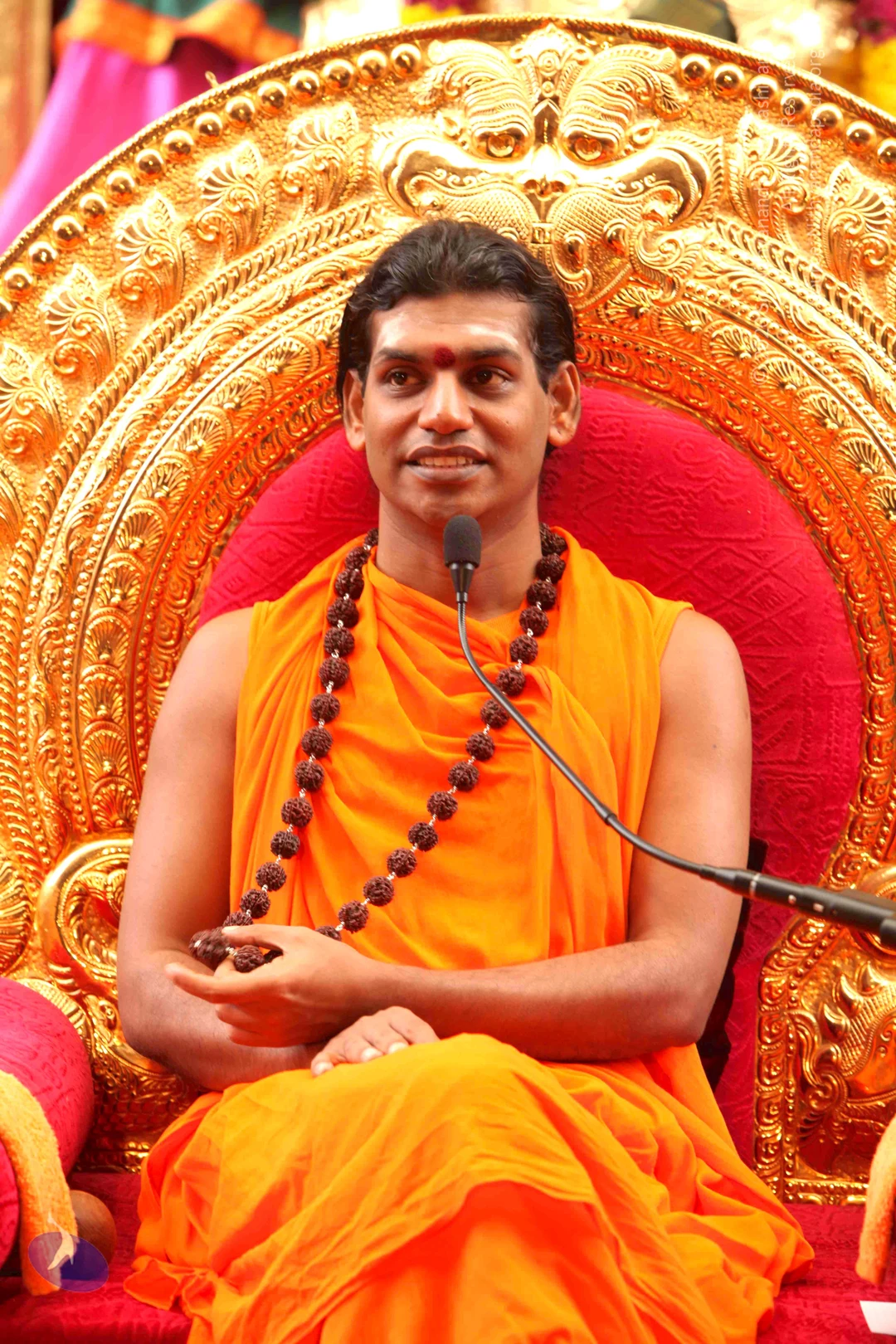
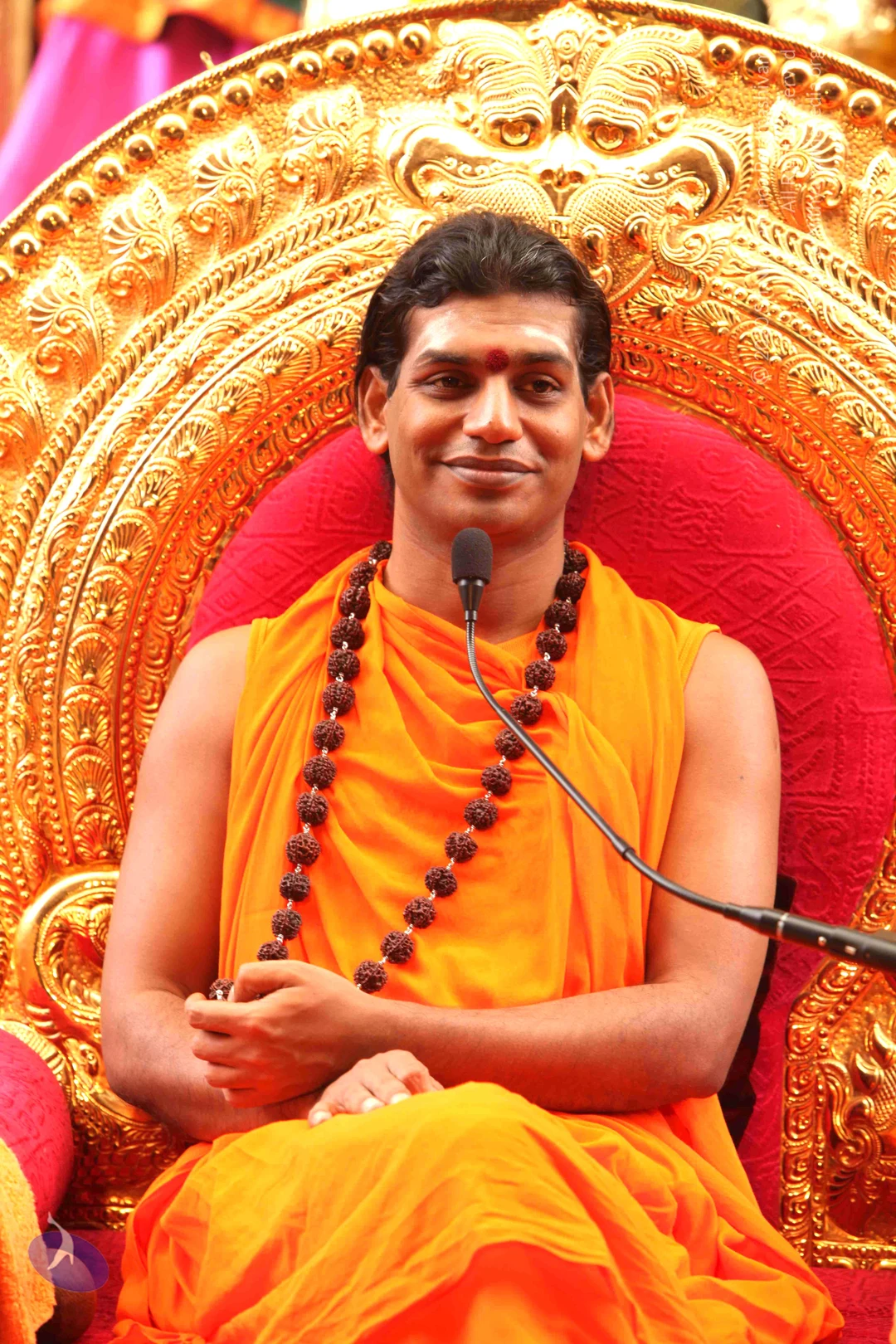
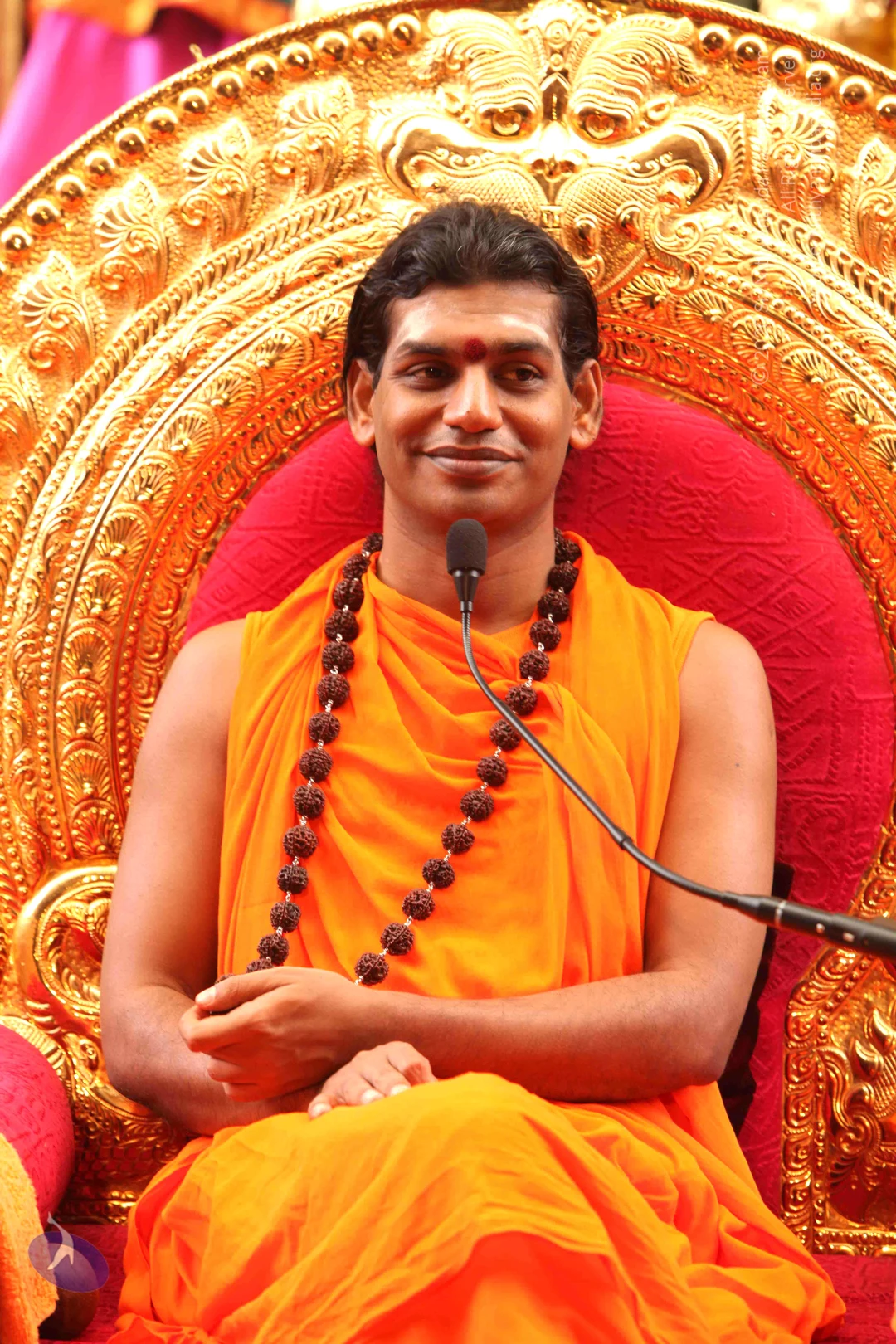
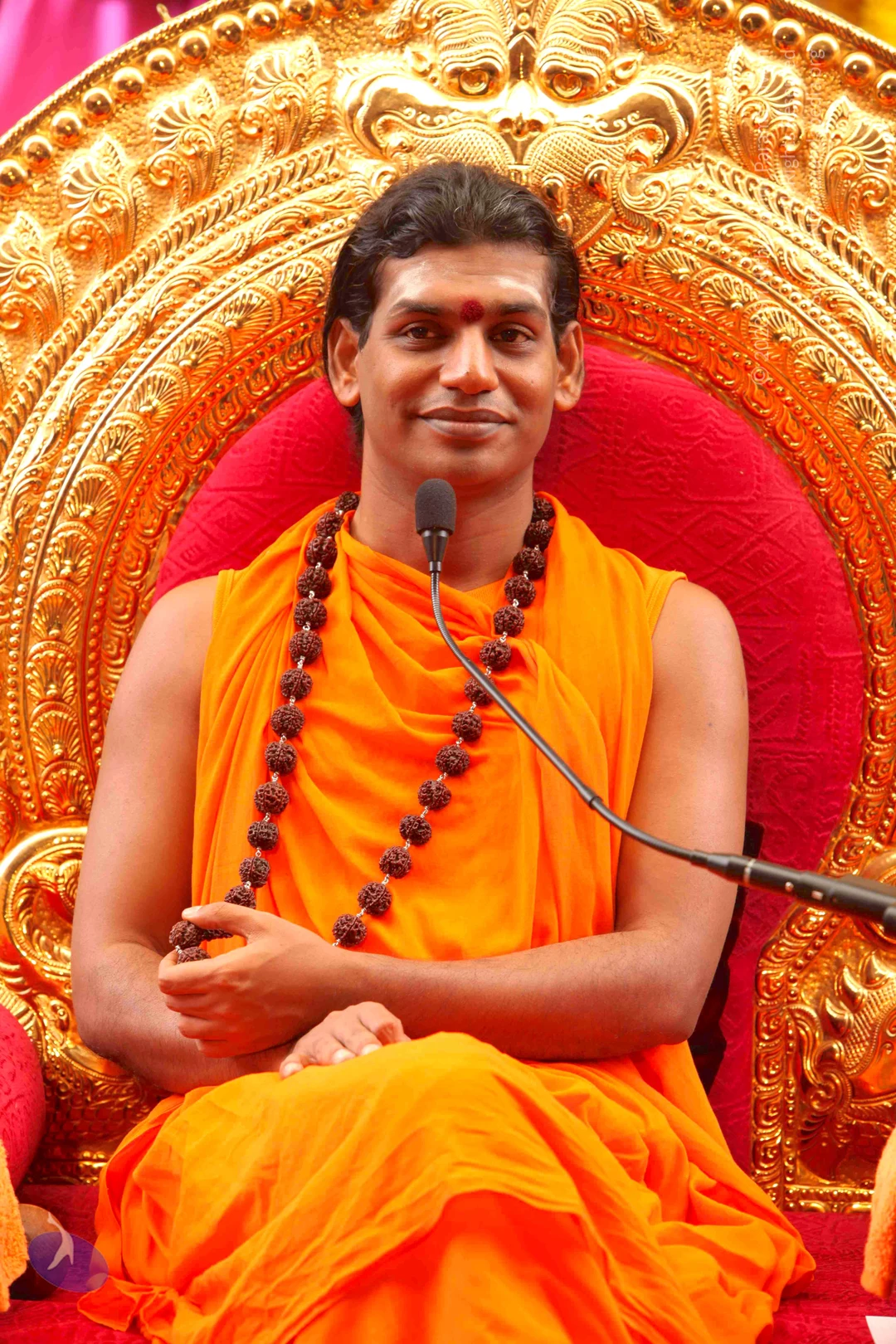
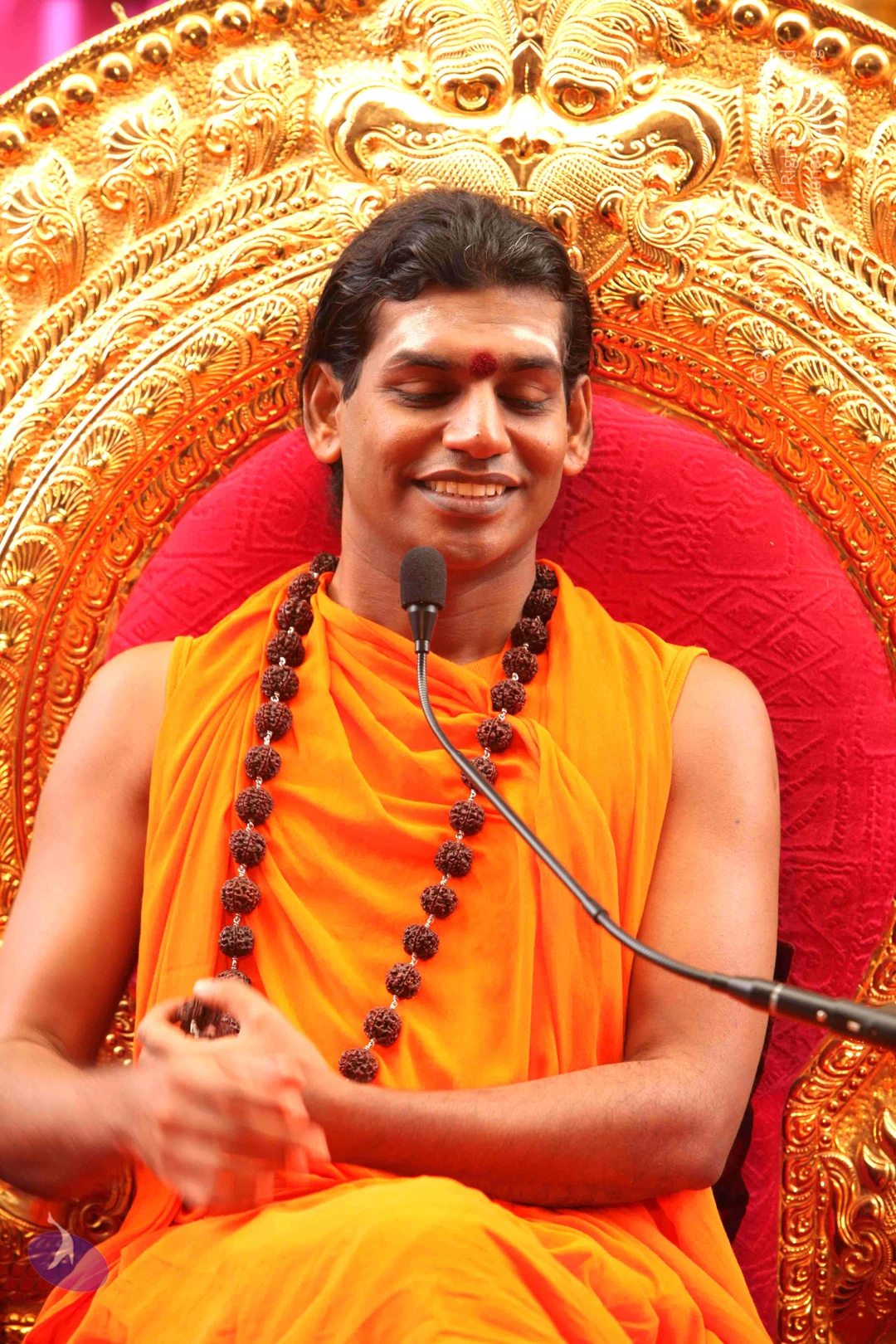
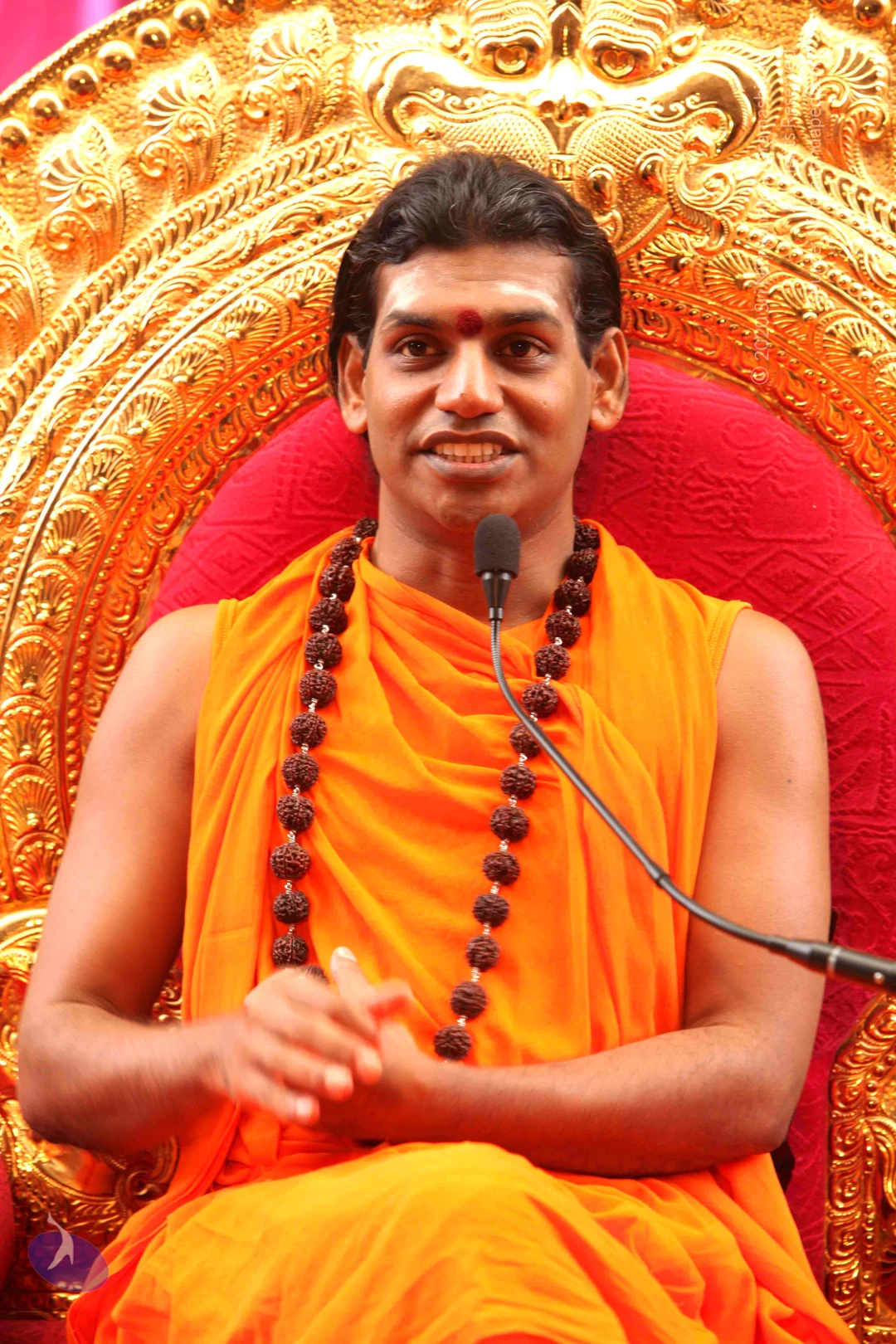
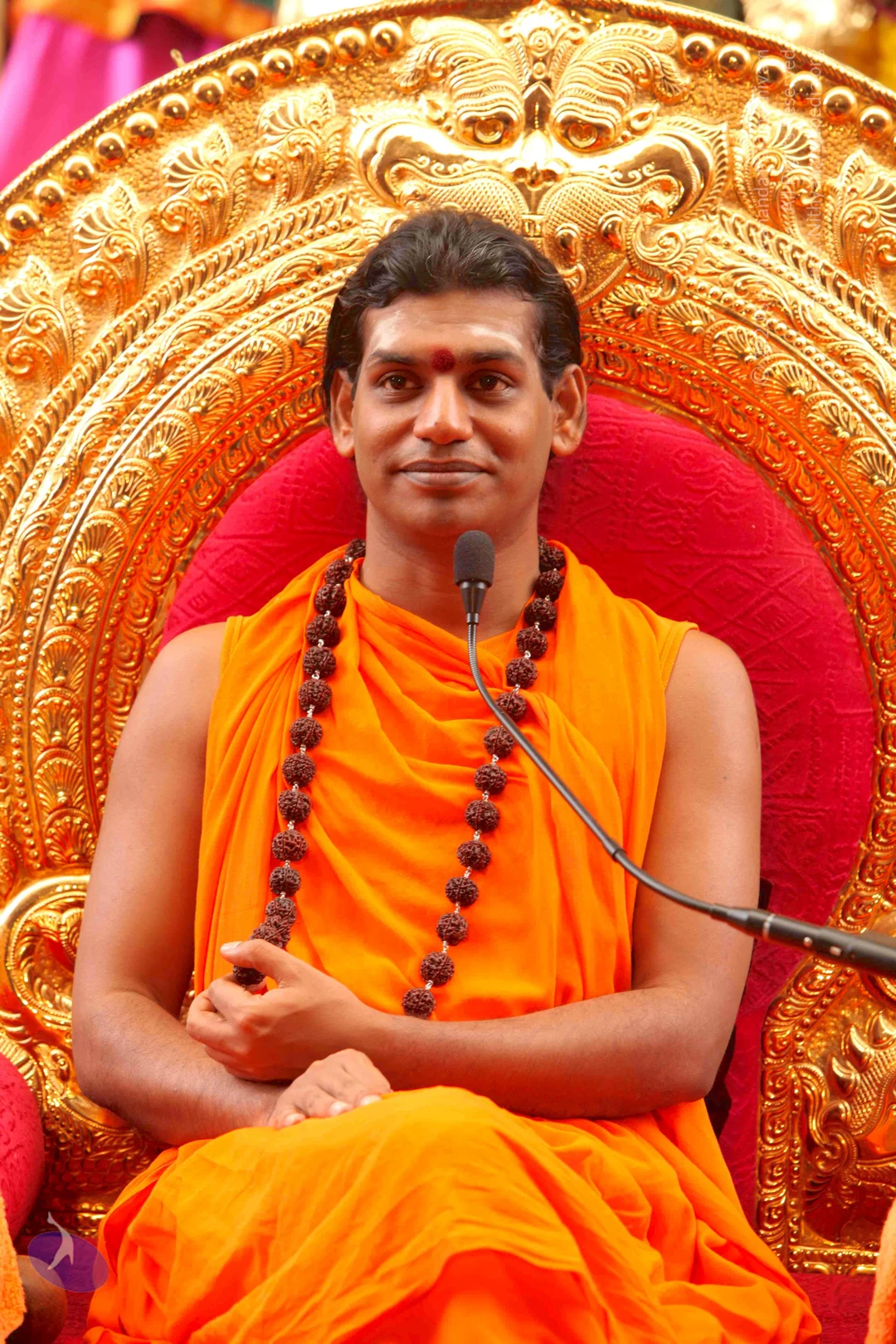
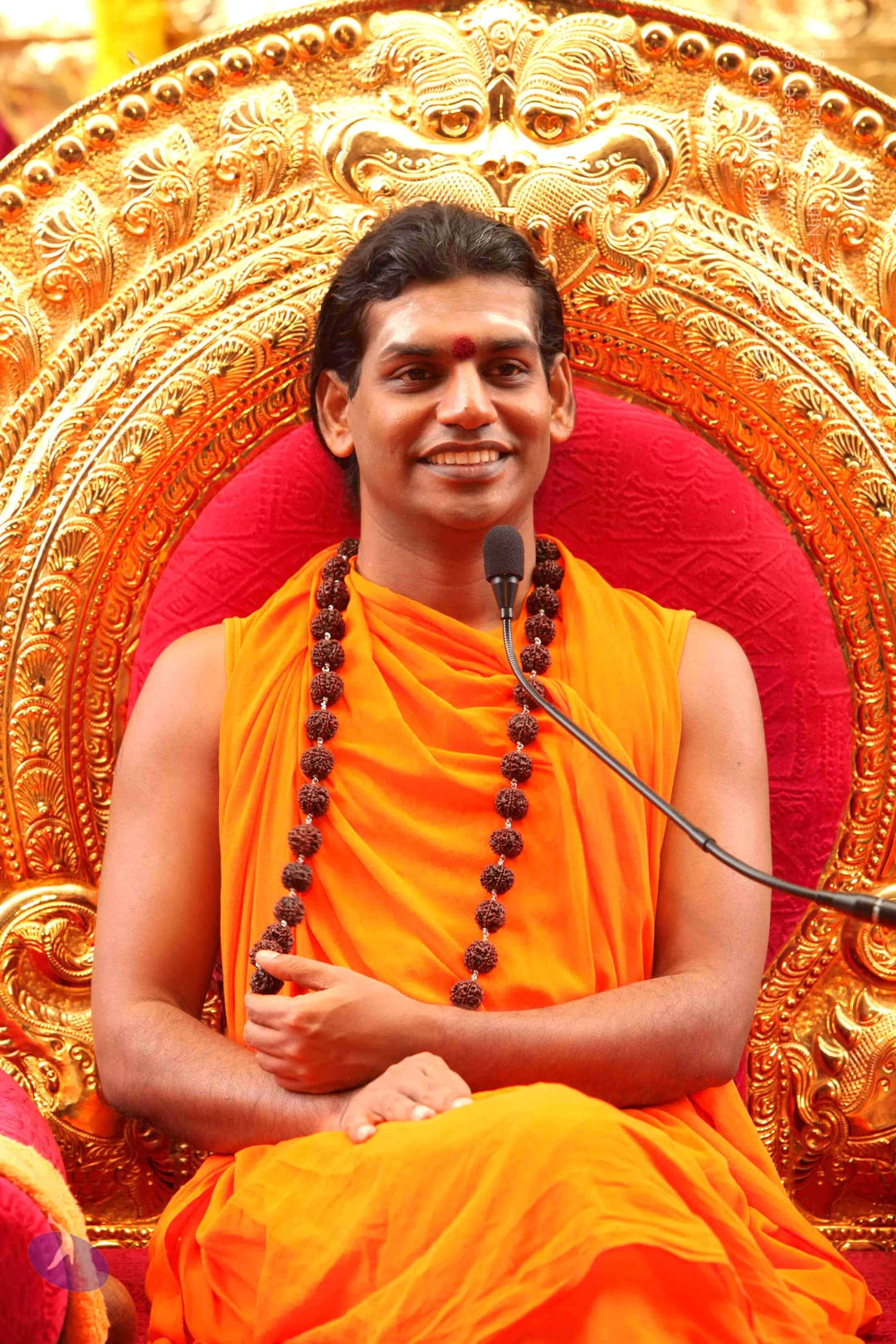
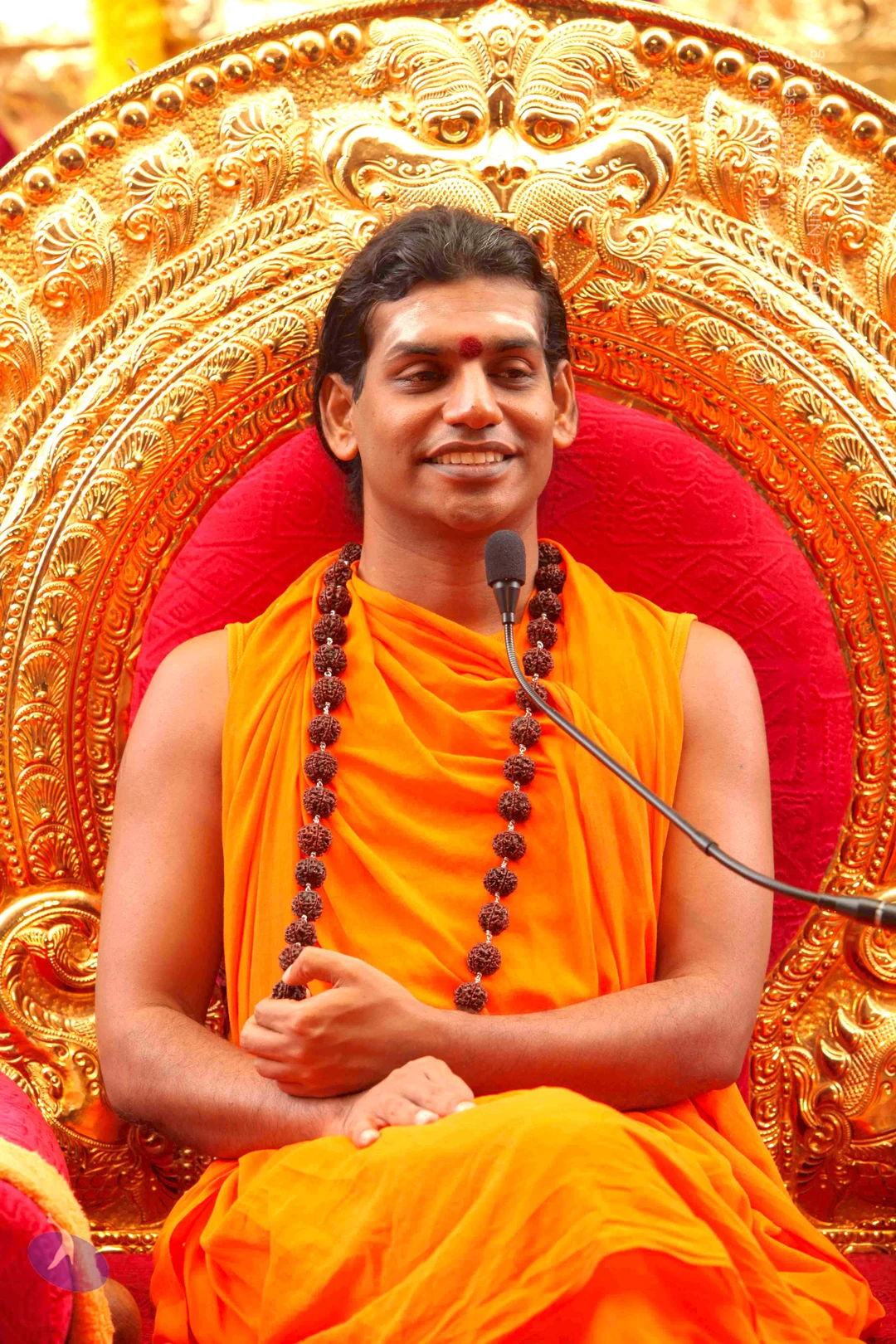
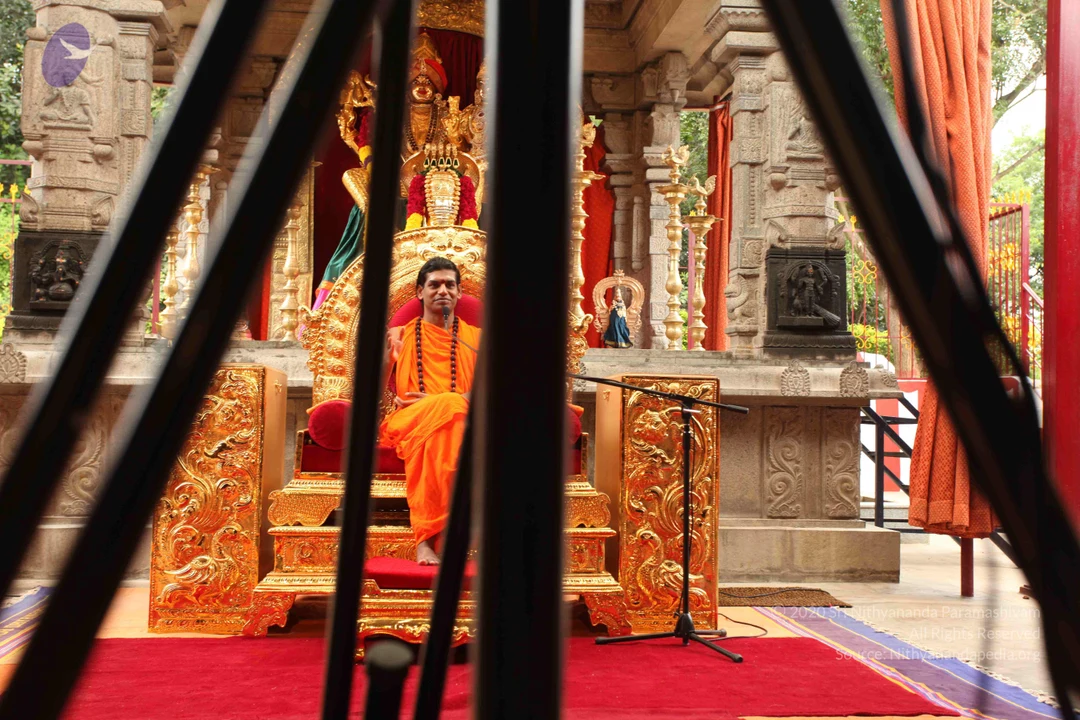
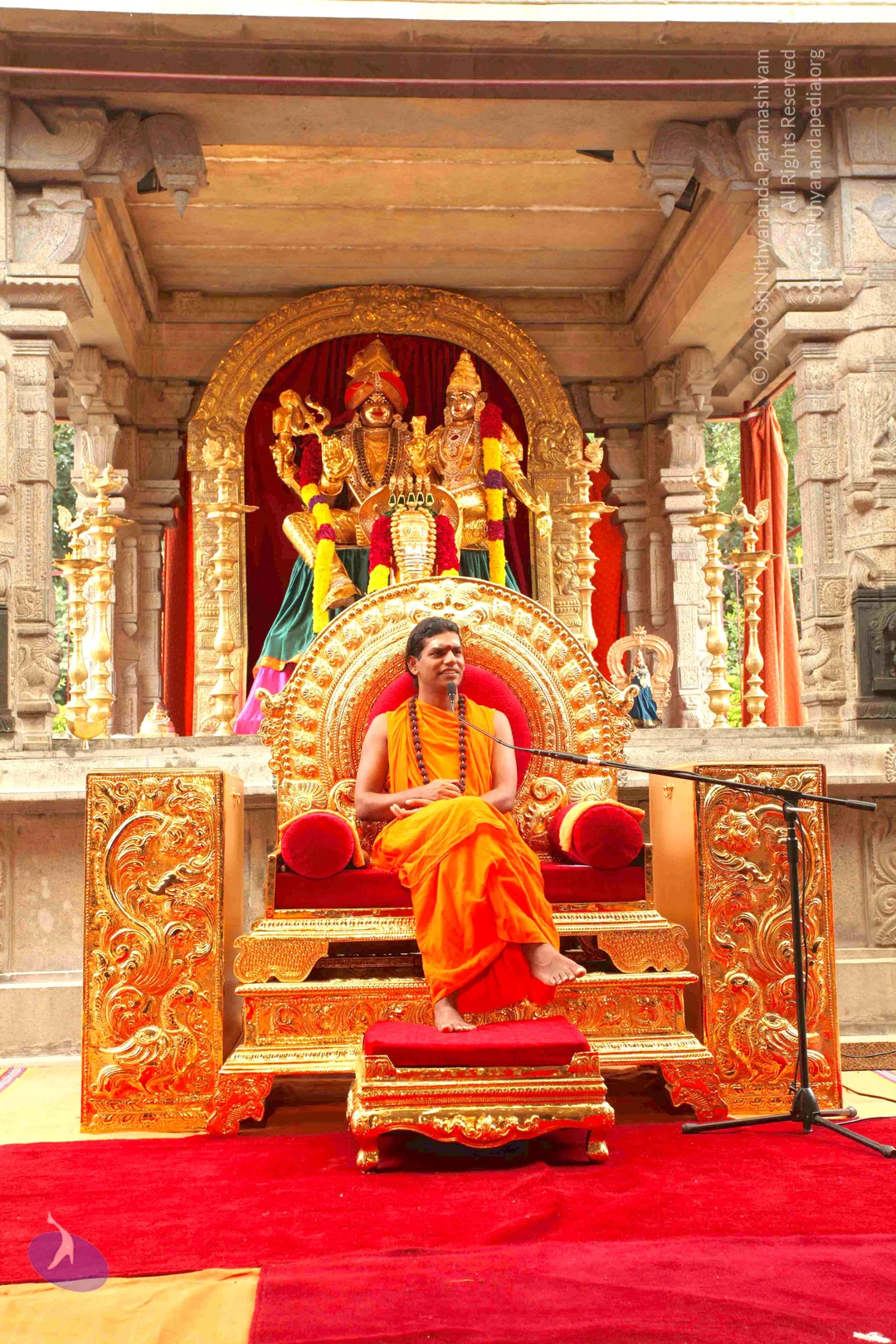
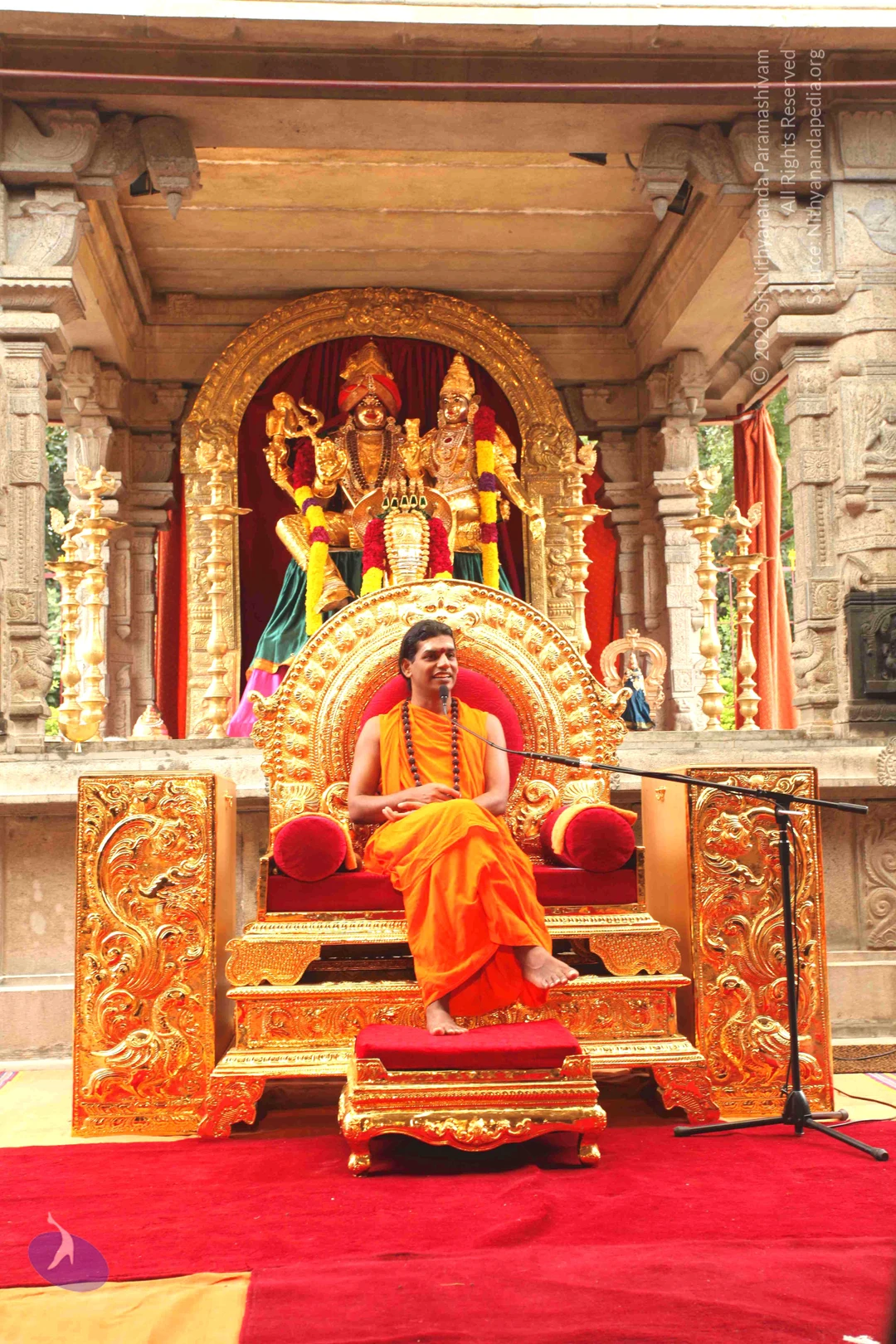
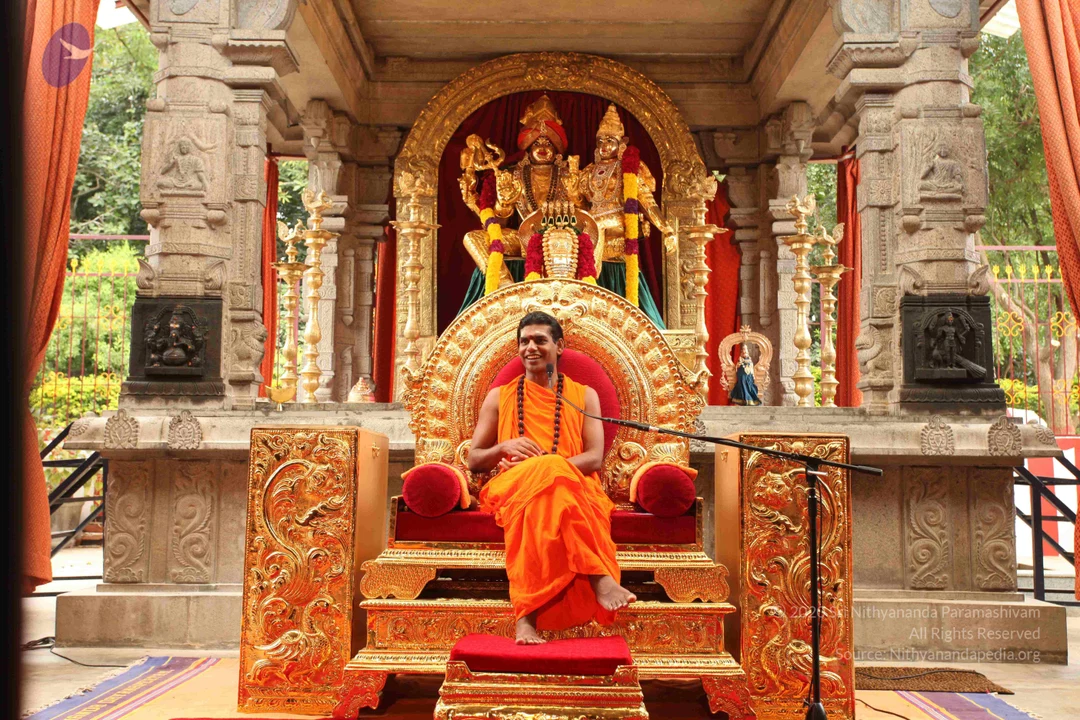
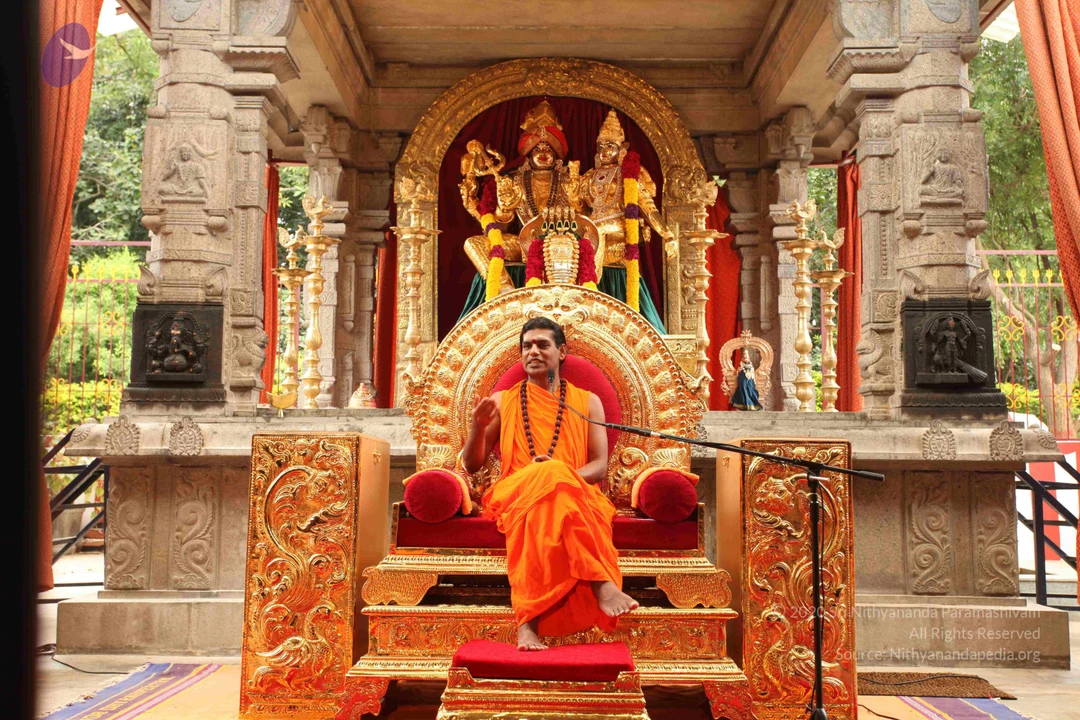
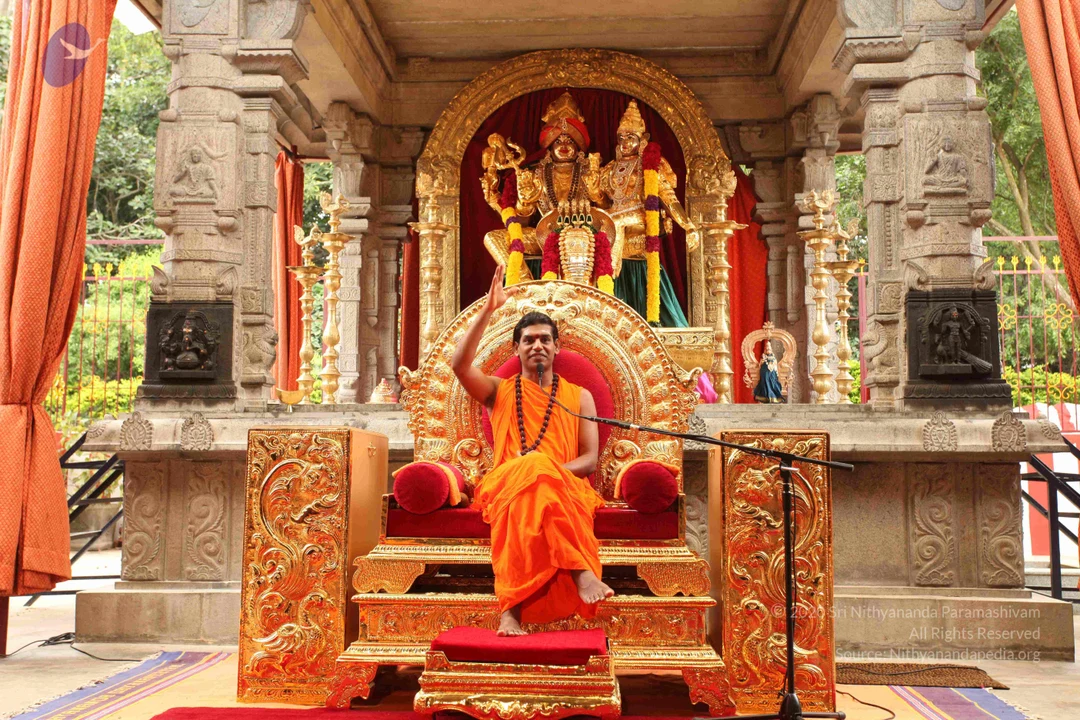
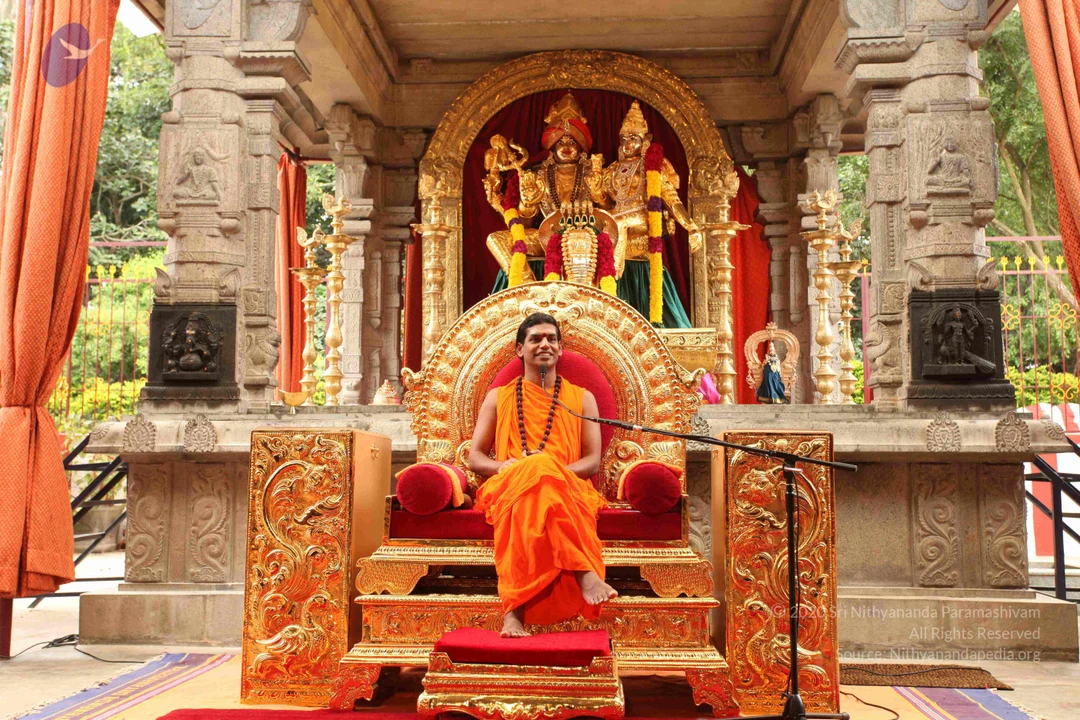
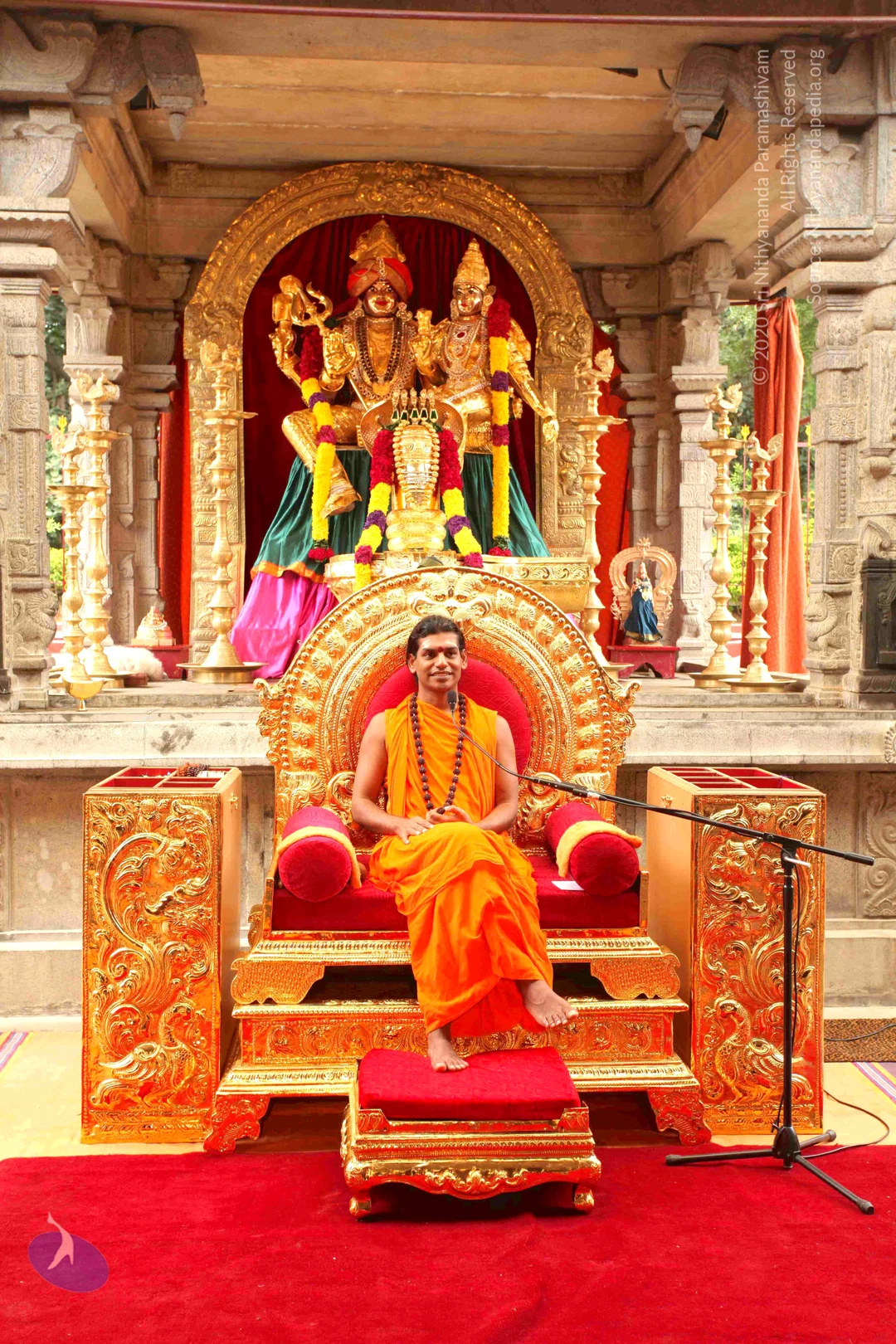
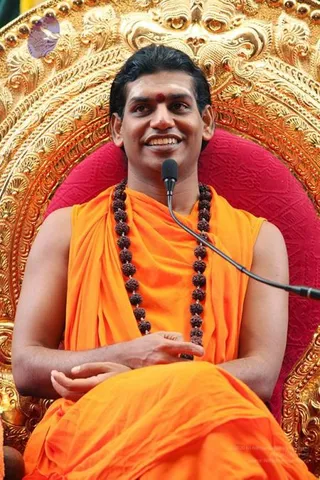
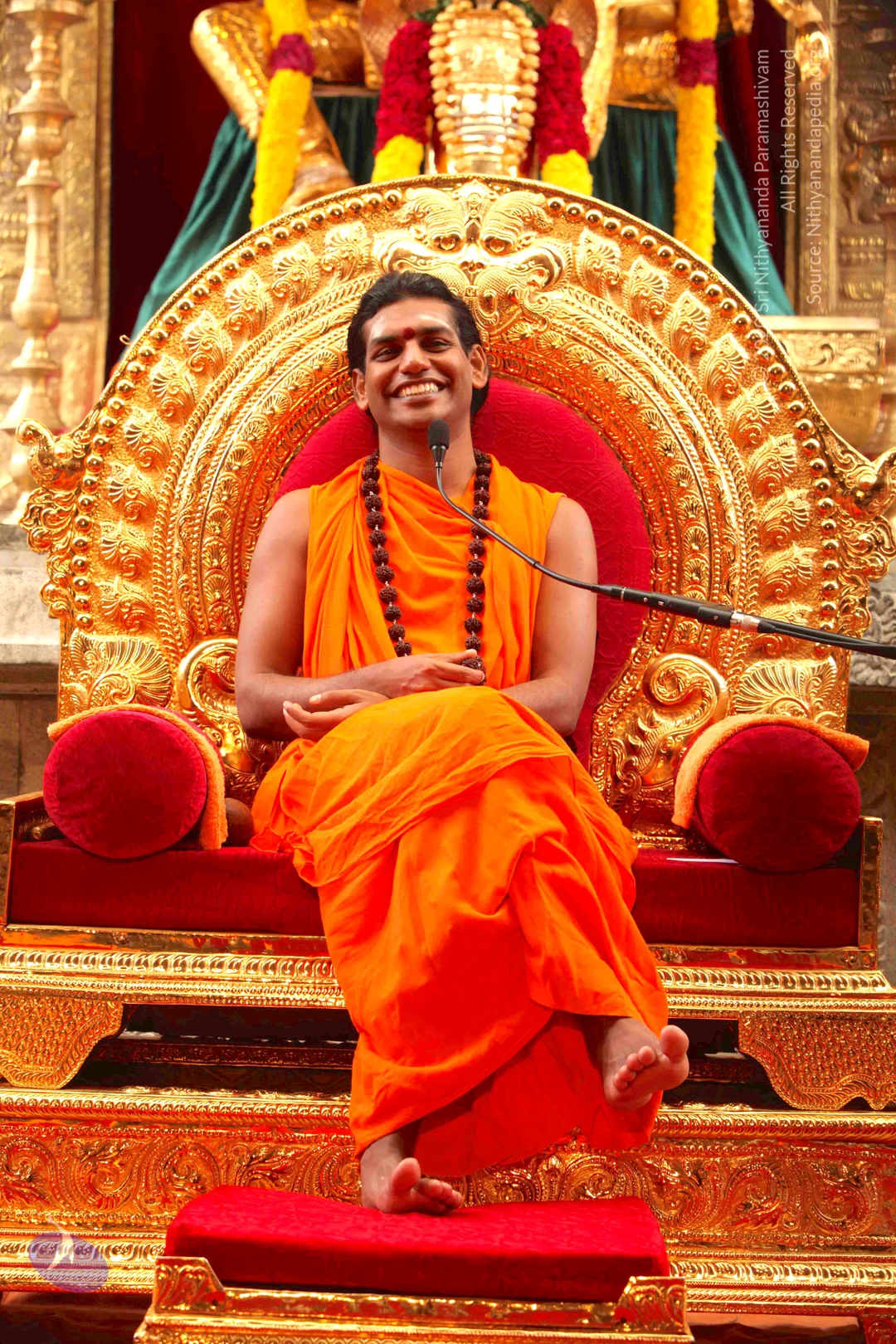
A smiling man in saffron-orange robes sits cross-legged on an ornate gold throne with red cushions, a black rudraksha mala draped over his chest and a red tilak on his forehead. A microphone on a black stand is positioned in front of him, and his hands rest together in his lap. Behind the throne, a gold kalasha-topped structure is decorated with yellow and red marigold garlands and green draping. The setting suggests a satsang discourse. The person is shown seated and speaking, with a bare left arm visible and bare feet resting on a red footstool.A seated man in saffron-orange robes sits on an ornate gilded throne with a red cushioned seat and red bolster pillows, a microphone on a stand beside him. He wears a long rudraksha mala and a red-tinted tilak on his forehead, hands resting in his lap, feet bare on a red footstool. Behind the throne rise a gold-carved backrest, a golden deity murti with red and yellow marigold garlands, and draped green cloth. Appearance-based probable Swamiji: long swept-back hair, saffron robes, rudraksha mala and a gilded throne are visible cues, matching a satsang discourse setting. One person is physically present.A seated man in saffron-orange robes sits on an ornate gold throne with a deep red cushioned seat and red bolster pillows. He wears a dark rudraksha mala around his neck and a red bindi on his forehead, with hands resting in his lap and bare feet on a red footstool. A microphone on a stand is near him. Behind the throne hang yellow and magenta flower garlands and a golden kalasha-like finial. The setting suggests a satsang talk. a person is seated on the peetha, with saffron robes and rudraksha mala as the distinguishing cues.A smiling man in saffron-orange sleeveless robes sits on an ornate golden throne with a red cushioned back. He wears a long rudraksha mala of brown beads, a red bindi on his forehead and has his hands resting in his lap. A black microphone on a gooseneck stand is in front of him. Looks like a satsang discourse.A seated man in orange saffron robes sits on an ornate gilded throne with a red cushioned backrest, speaking into a black gooseneck microphone. He wears a dark rudraksha mala necklace and has a red kumkum mark on his forehead, with his hands resting in his lap. The elaborate golden carvings of the throne frame him. Appearance-based candidate: a person, seated in a dais setting with rudraksha mala and saffron robes, consistent with a satsang discourse.A seated man in an orange saffron sleeveless robe and a long dark rudraksha mala sits on an ornate gold throne with a red velvet back and cushions, smiling with a red tilak on his forehead. A microphone on a stand is beside him, and his bare feet rest on a red cushioned footstool. Behind the throne hang yellow and red marigold garlands and green drapery, with gilded pillars in the background. The page identifies this as Swamiji, and his appearance shows long swept-back hair, saffron robes, rudraksha beads and a throne, matching the probable candidate cues, so he is labelled Swamiji (probable) in this photograph.
04

3--Sarva-Darsan

16 dated photos in previewSource gallery
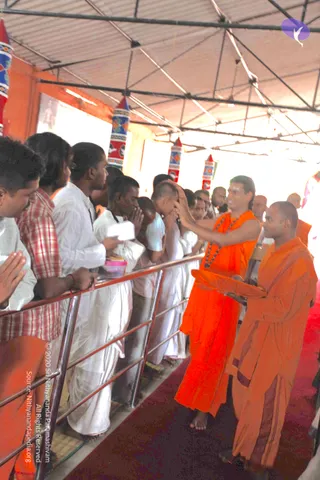
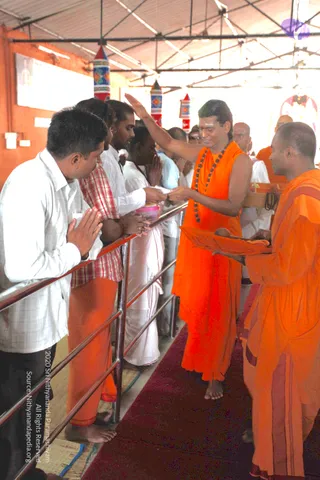
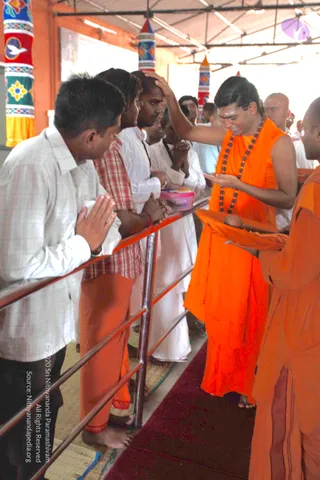
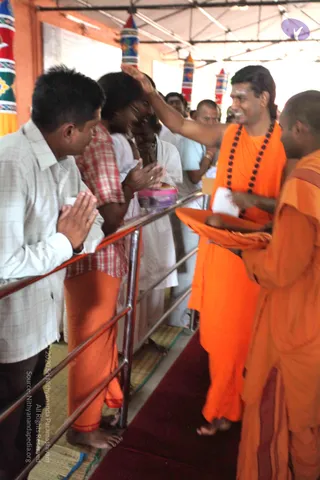
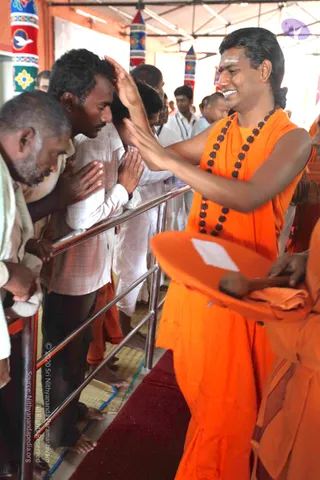
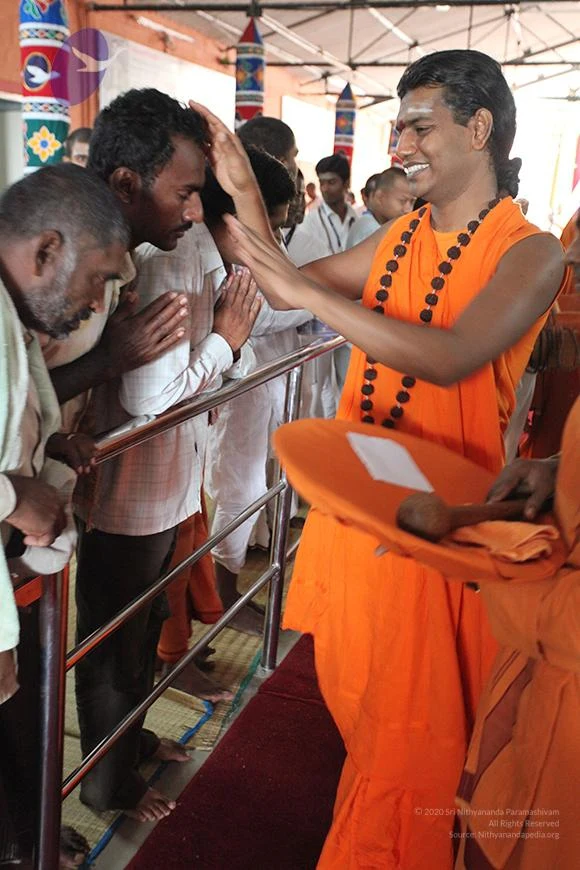
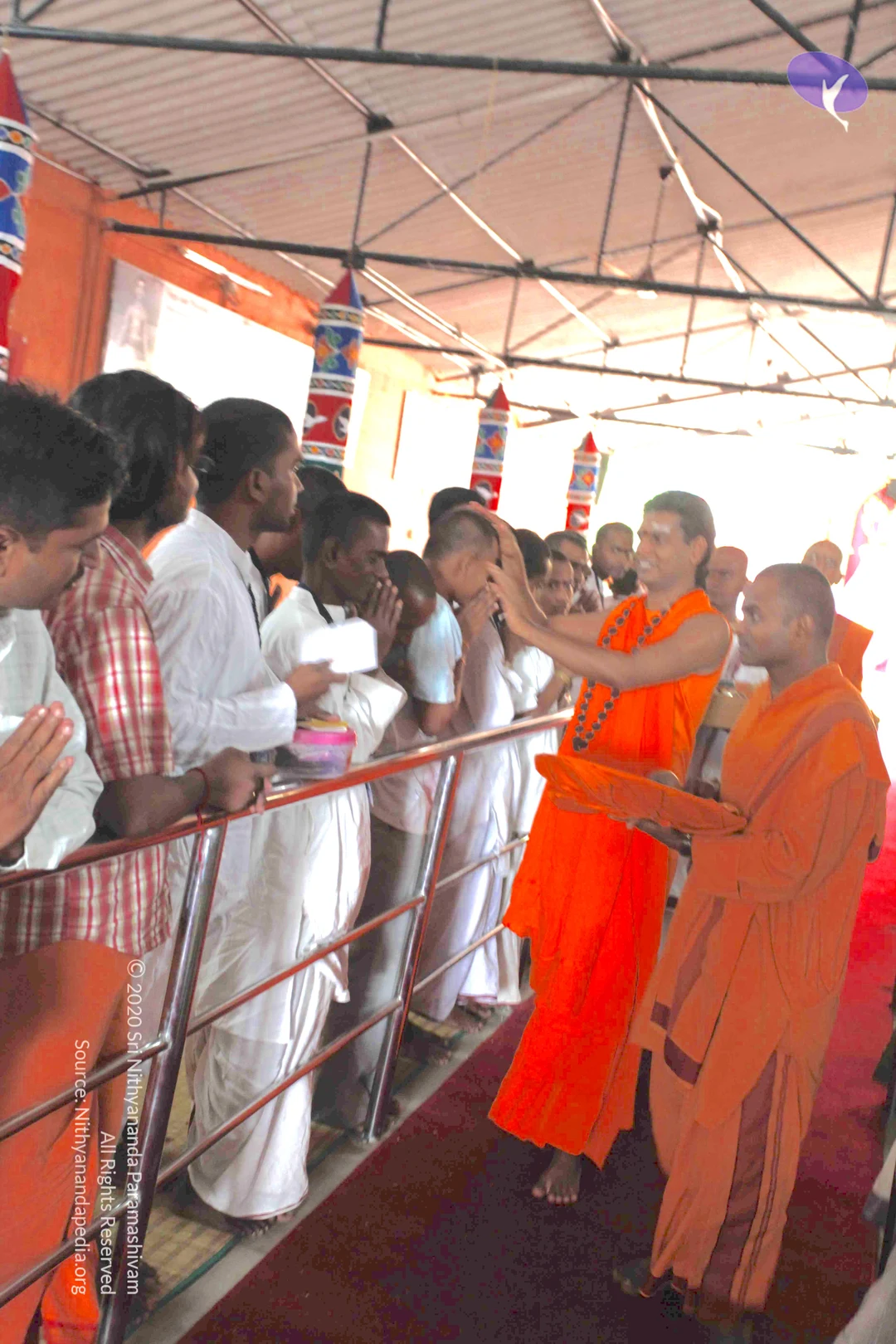
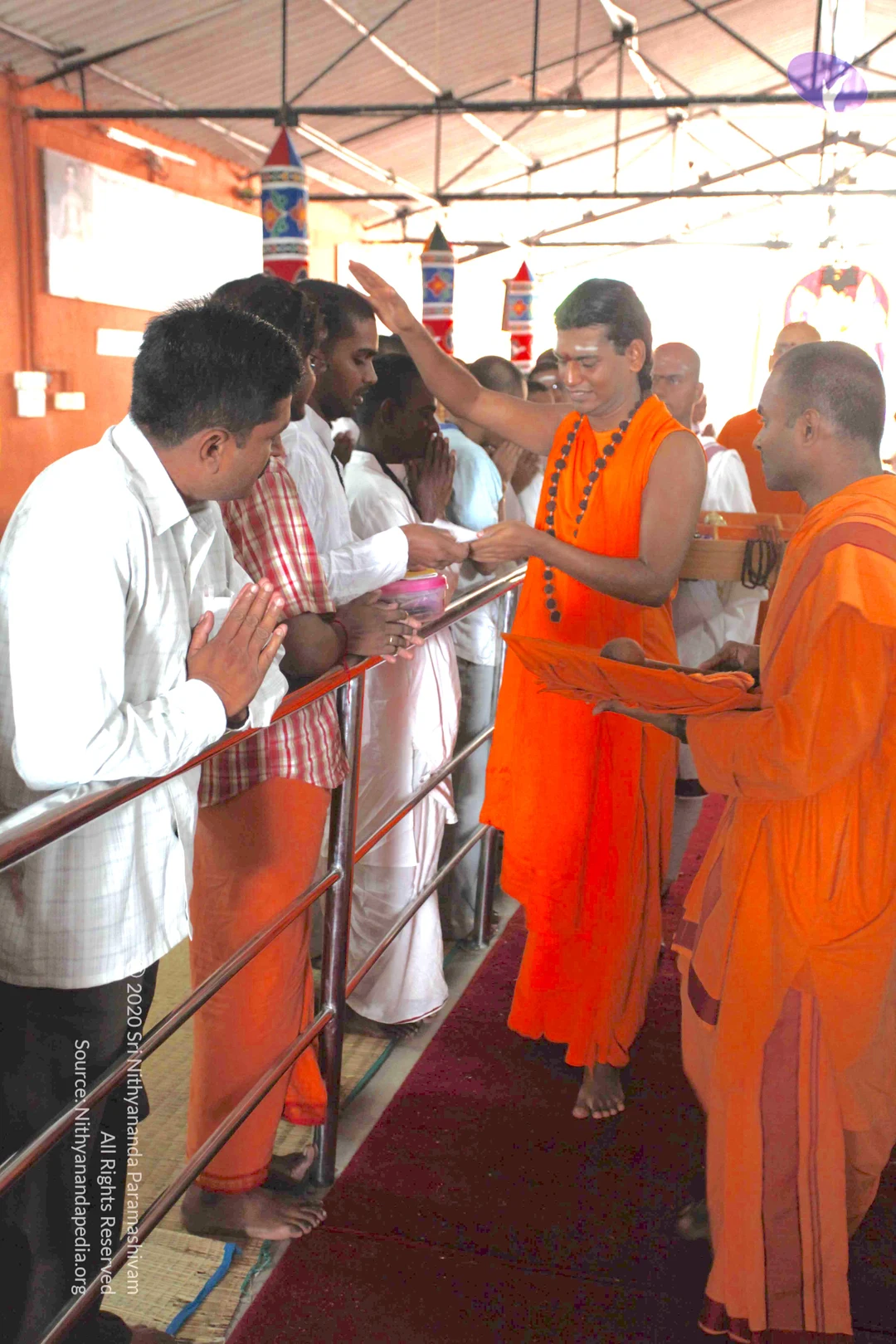
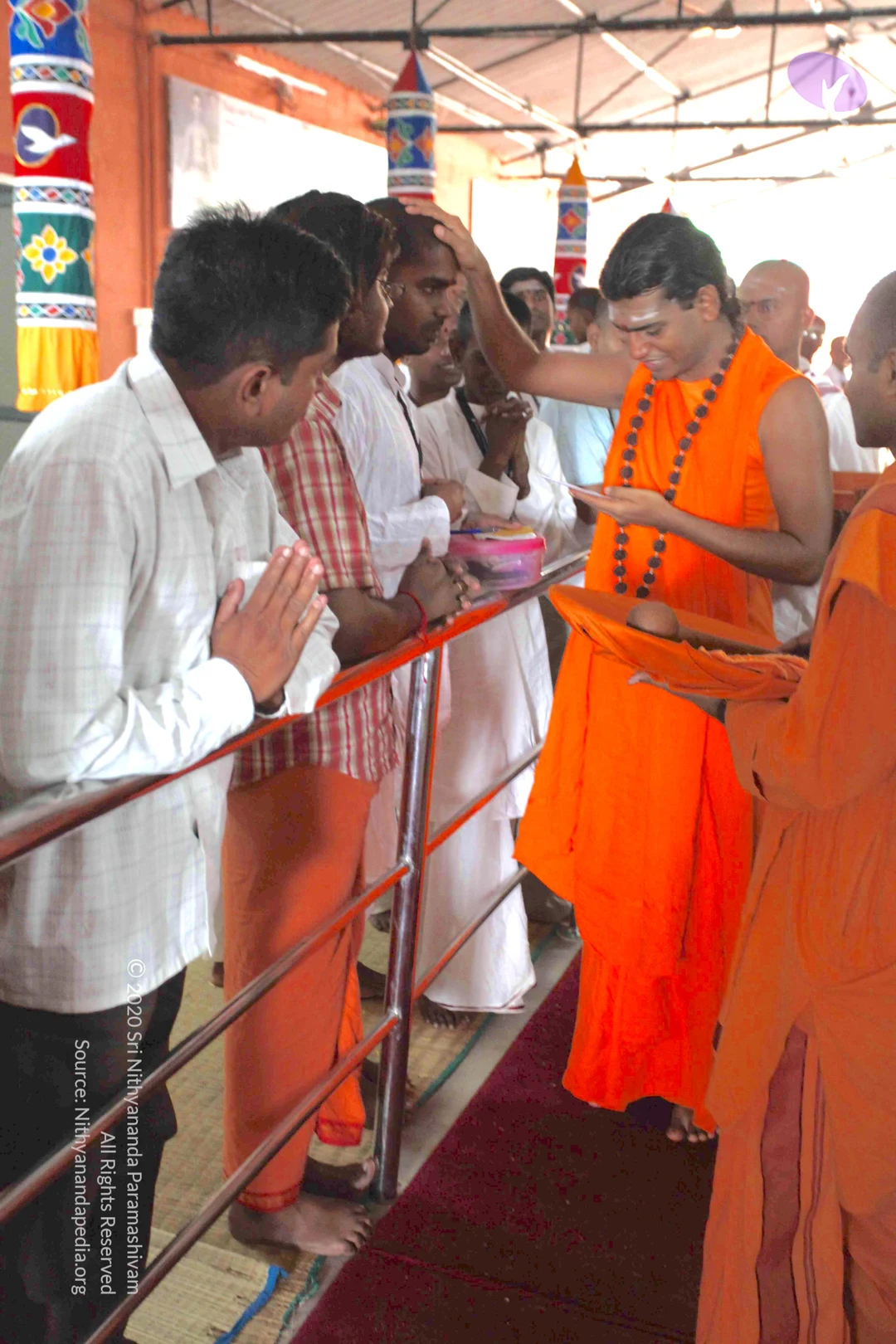
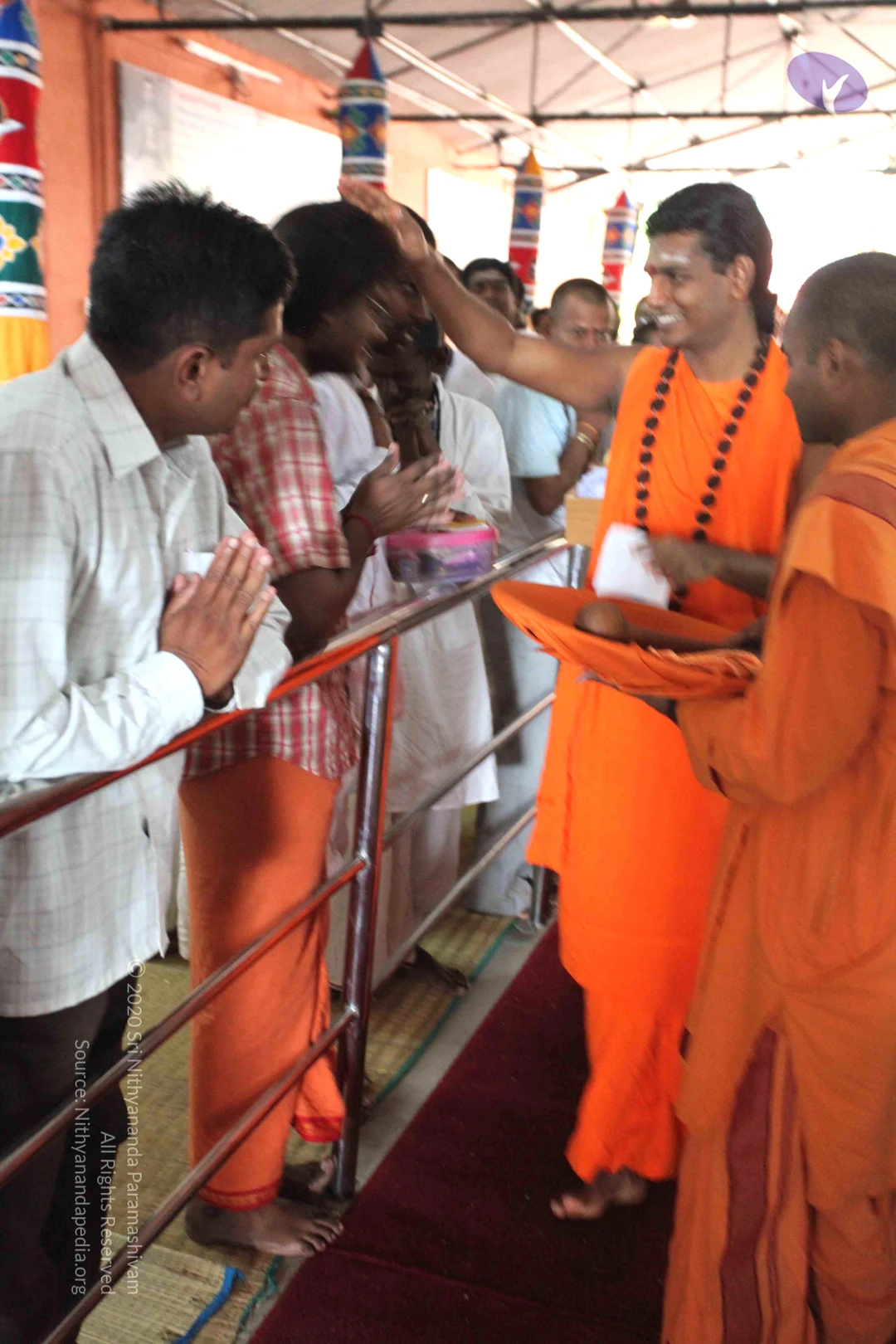
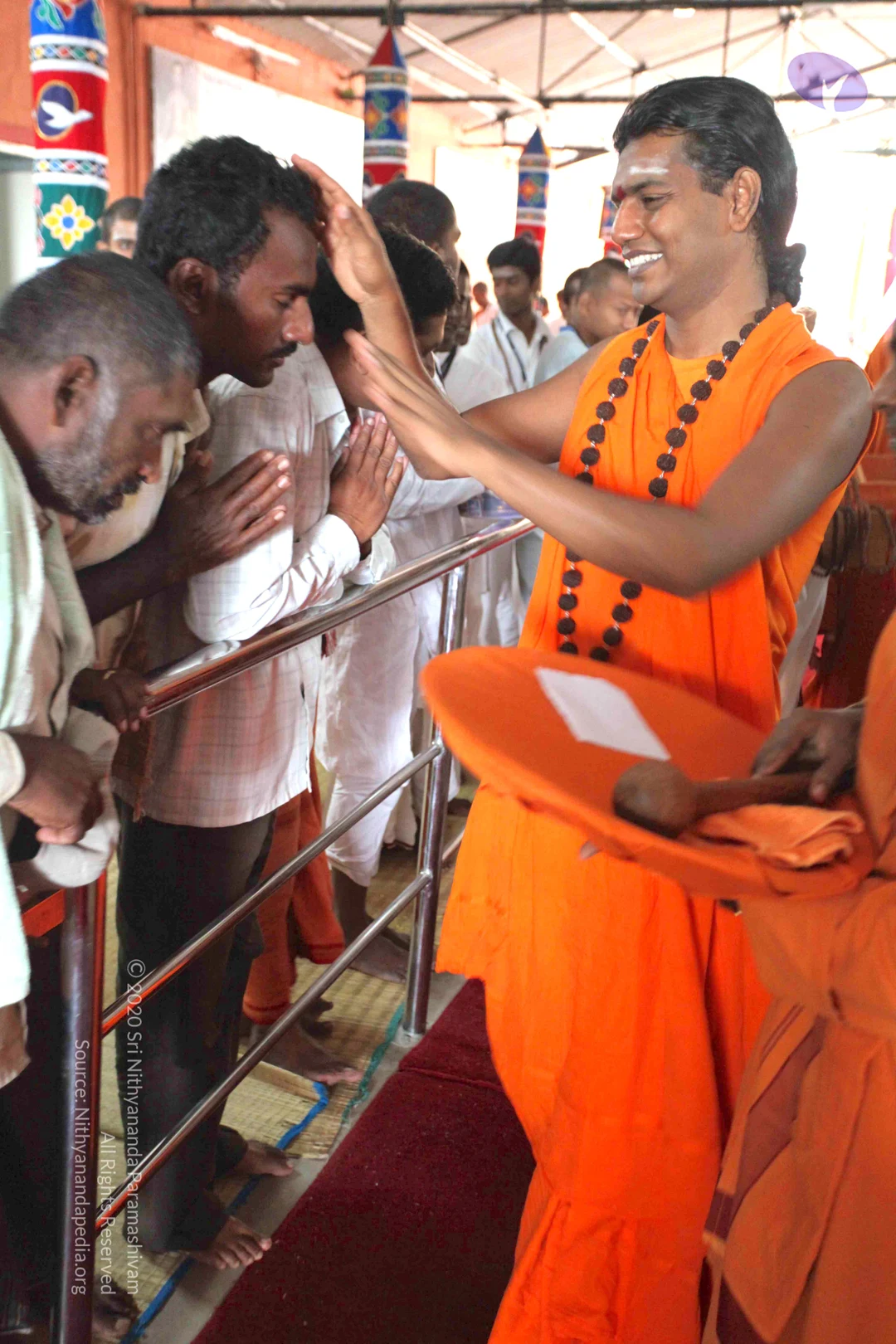
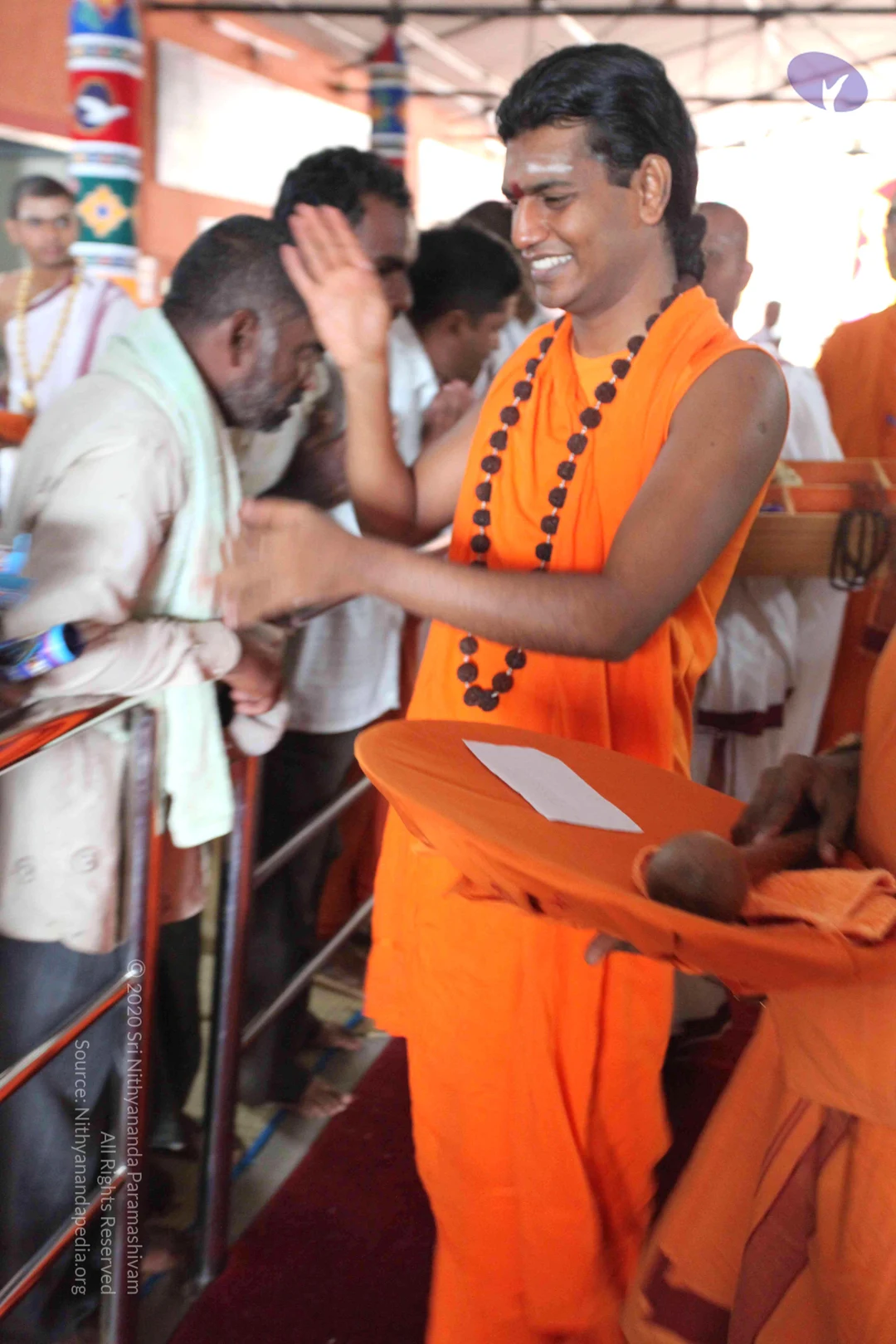
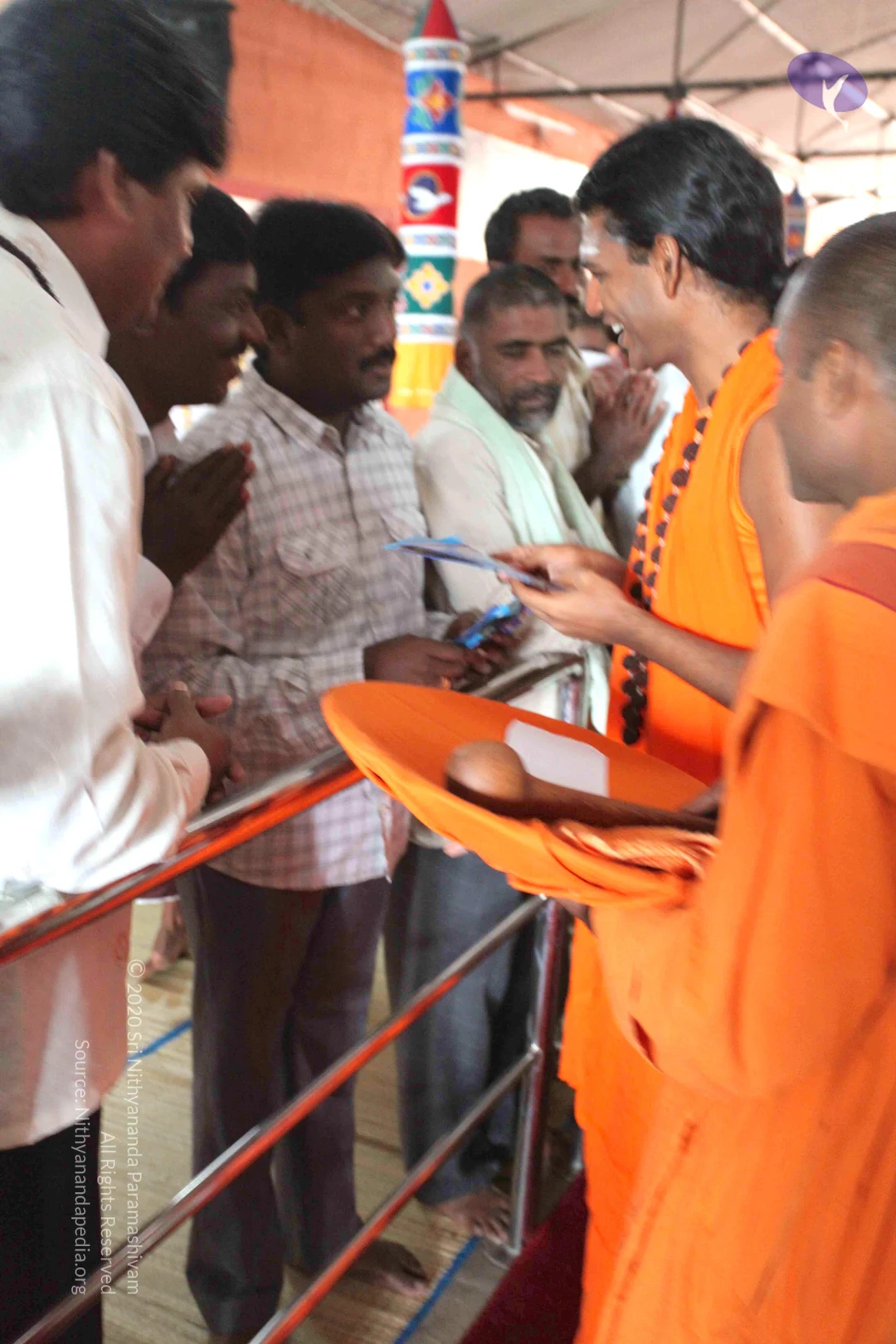
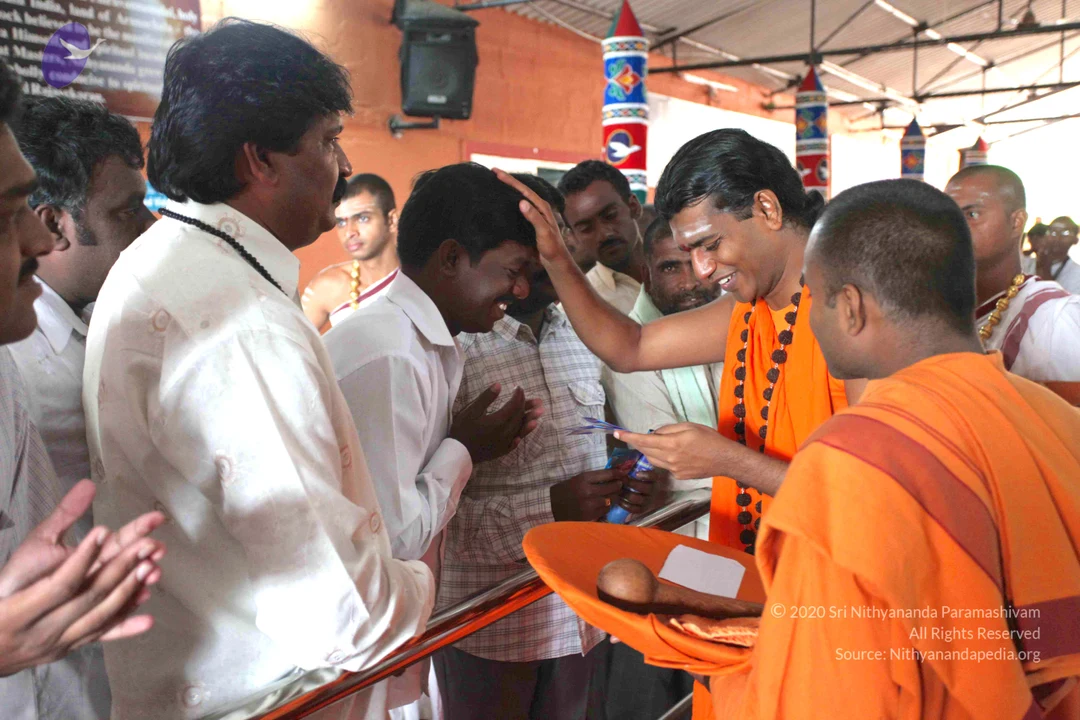
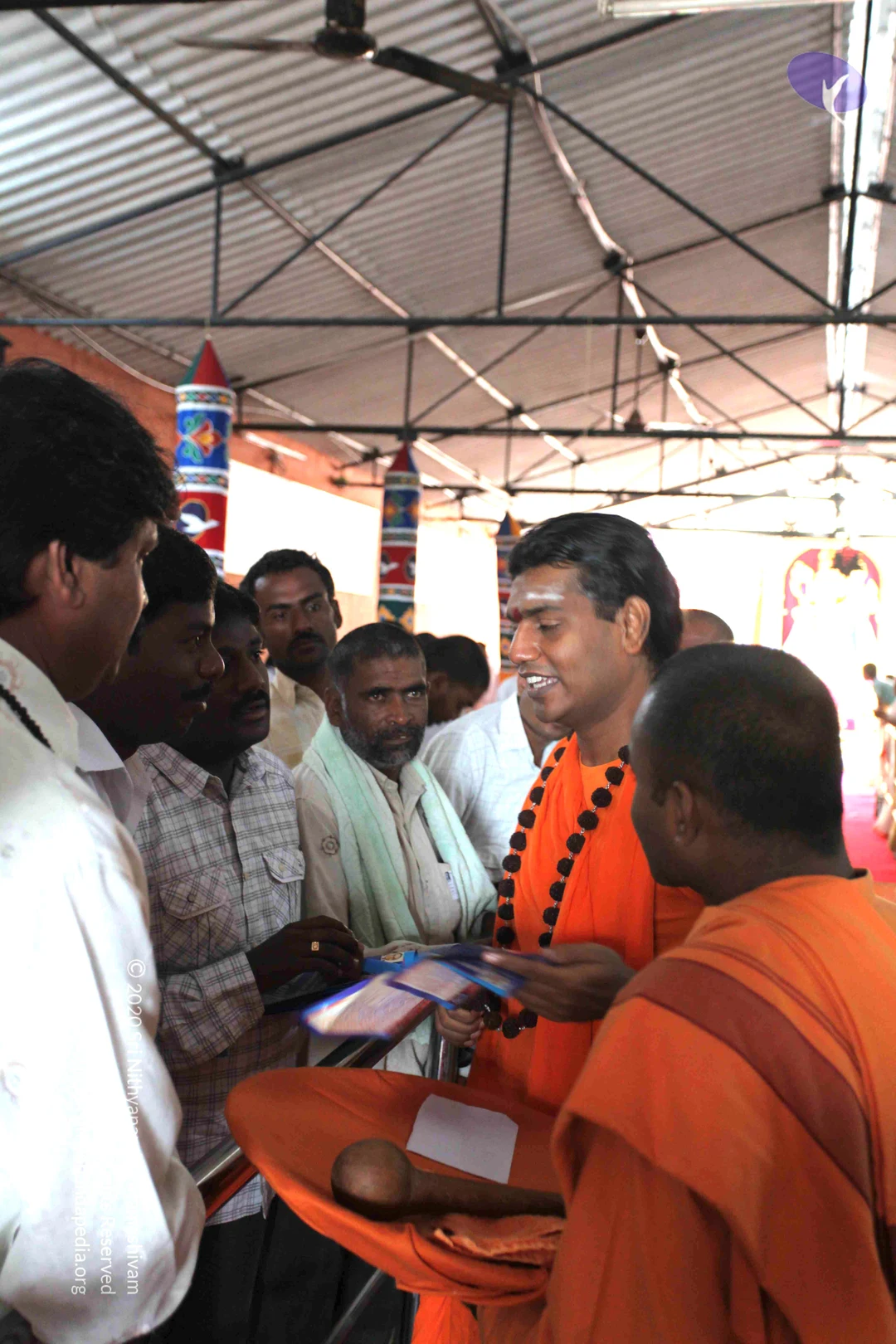
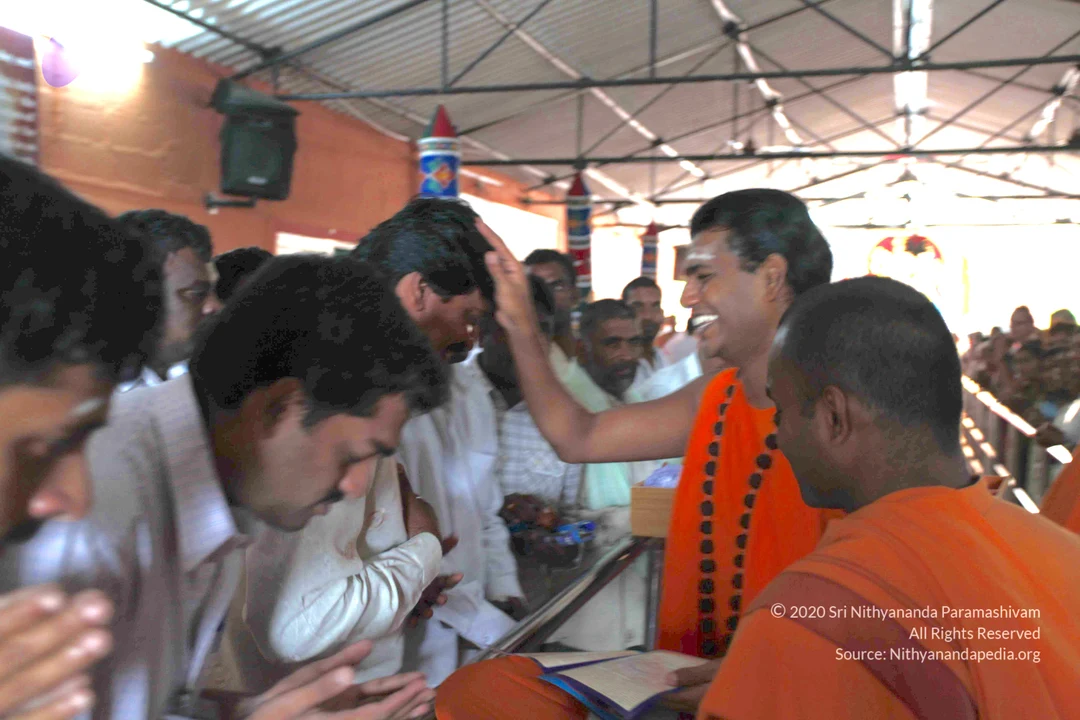
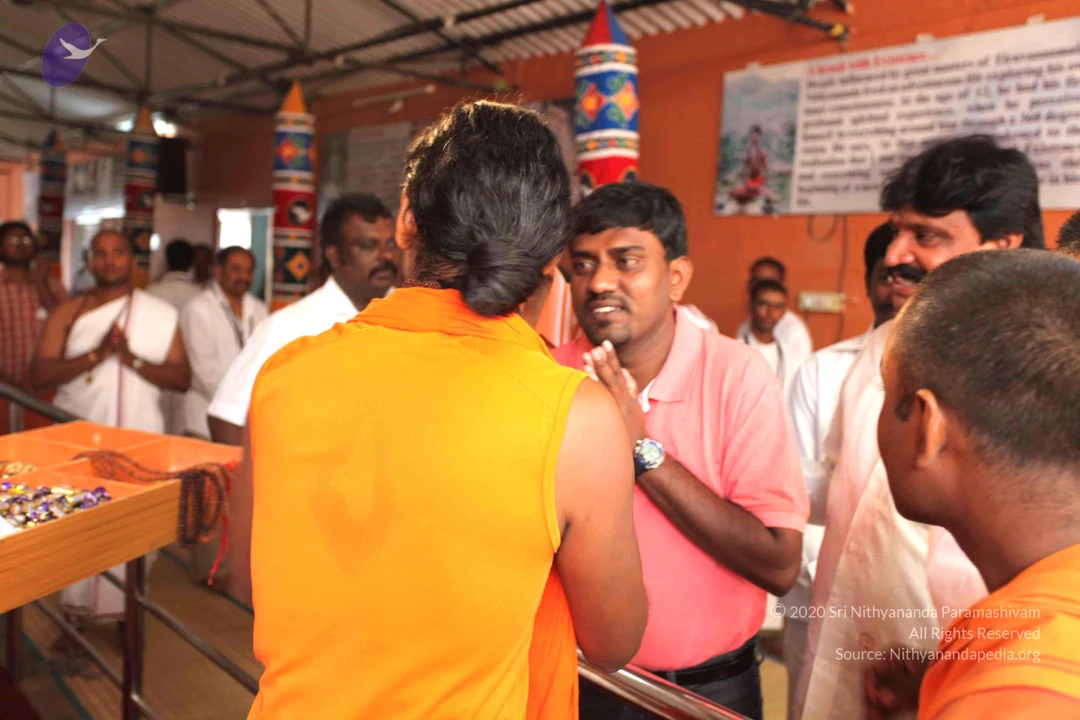
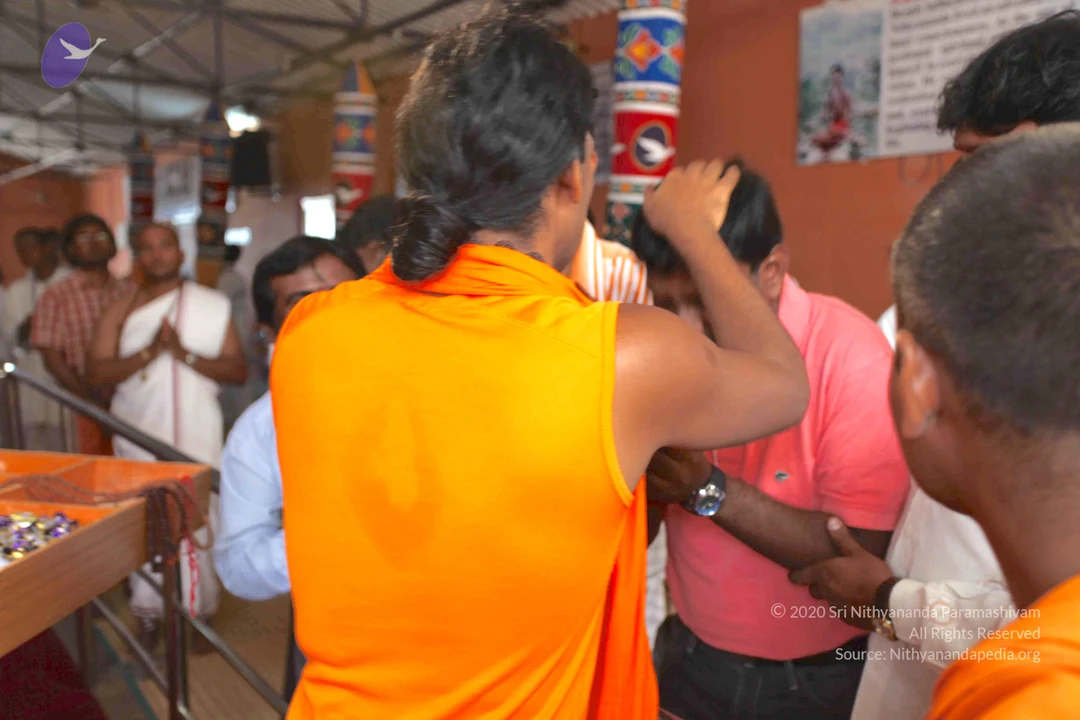
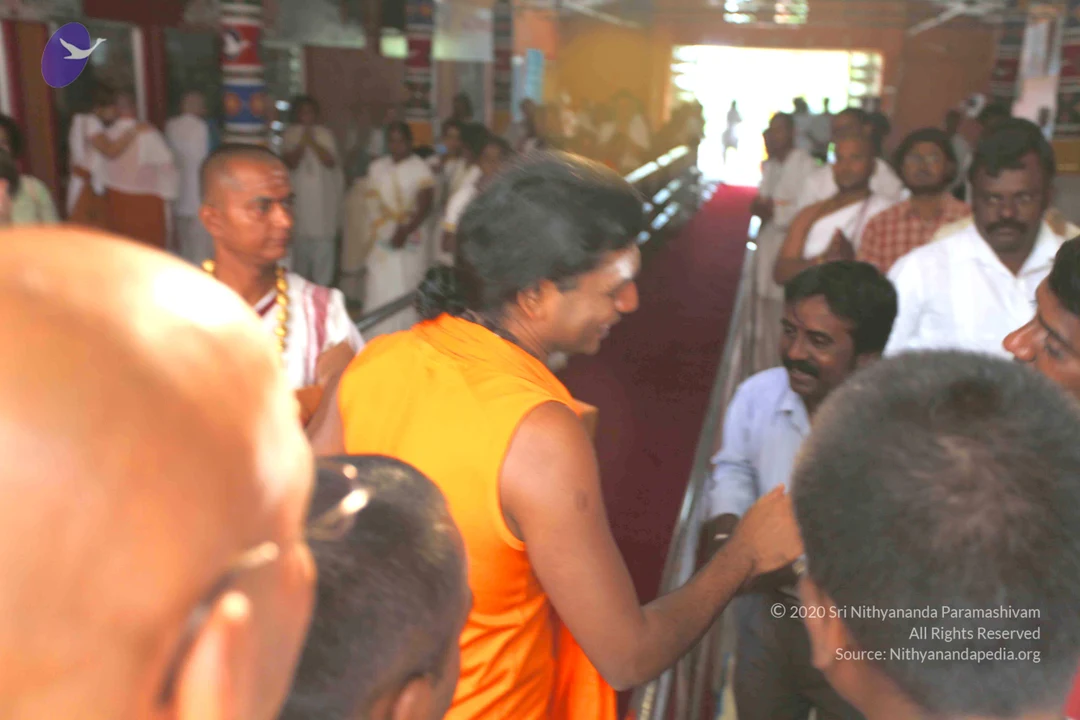
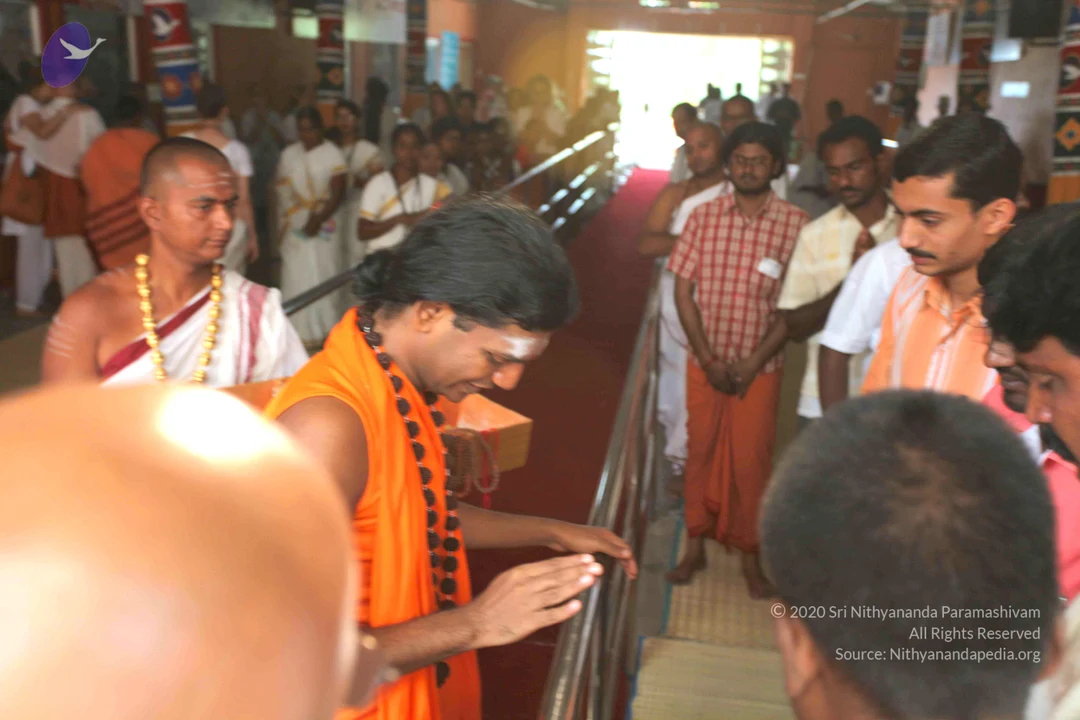
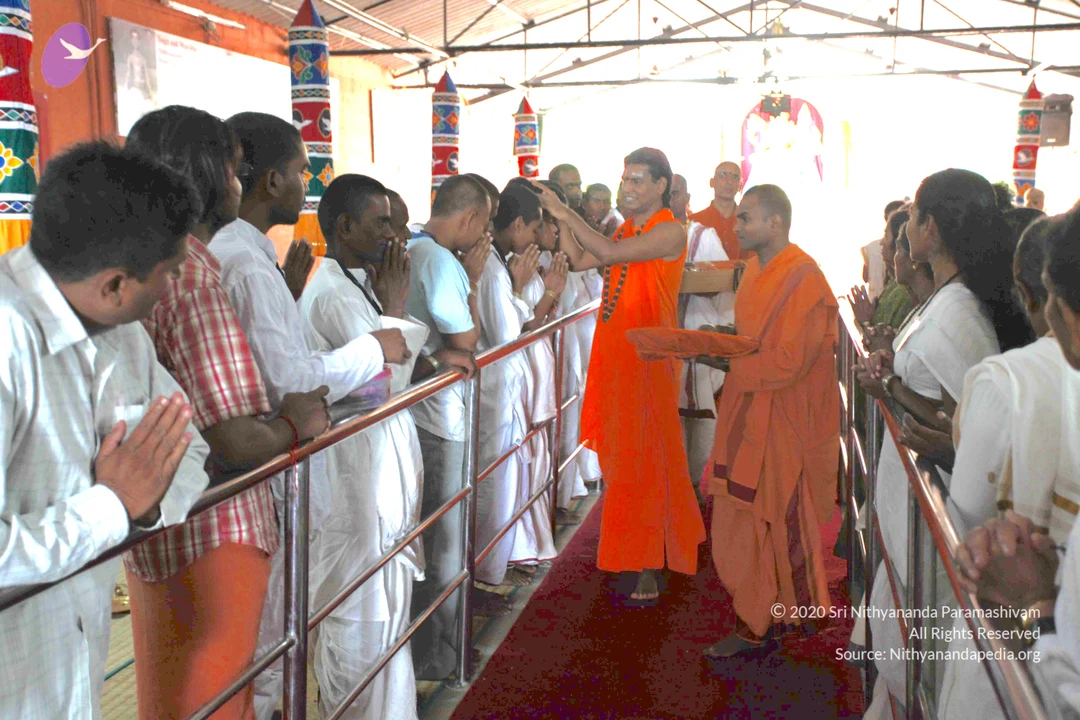
A photograph of a darshan line inside a covered hall with a red carpet running down the middle between metal railings. Beside him, a monk in an orange robe holds a brass tray. Devotees in white dhotis and kurtas and a woman in white stand with palms pressed together along the railings. Colourful painted pillars and a decorated backdrop frame the scene.A photograph of a darshan line under a metal-roofed pavilion with red and blue patterned pillars. A man in orange robes with a long rudraksha mala and swept-back hair places his hand on the head of a devotee bowing before him. Beside him, a younger monk in orange holds a tray. Devotees in white dhotis and white shirts stand behind a metal railing, some with hands folded in prayer, and a man in a red checked shirt stands at left. A red carpet runs along the walkway.A photograph inside a covered hall with a red carpet runway and metal railings where devotees queue. A man in orange robes, with a rudraksha mala and a swept-back hairstyle, stands barefoot raising one hand in blessing while receiving offerings from the devotees in white shirts, checked shirts and white dhotis, some with palms pressed together. Beside him a second monk in orange robes holds a folded cloth tray, and a basket sits nearby. Painted columns in red, blue and yellow and a hanging decorative canopy appear behind them. Swamiji (probable) is shown with distinctive orange robes, rudraksha mala and long swept-back hair while giving blessings to devotees in a darshan line.A figure in saffron-orange robes with a long rudraksha mala and a white tilak on the forehead places a hand on the head of a devotee at a railing. The devotee is in a light checked shirt with hands pressed together in namaskar. Other devotees in white garments wait behind the rail, and a saffron-robed attendant holds a tray with a coconut-like object. Colourful painted pillars with geometric patterns frame the scene under a metal-roofed hall with a red carpet runner.A photograph of a Sarva Darsan style gathering under a tent with striped and patterned banners. A man in long swept-back hair and an orange robe with a dark rudraksha mala raises his right hand in blessing toward a devotee. Beside him, a monk in orange holds an orange-cloth tray with a small object on it. On the left, a man in a white checked shirt stands with palms pressed together in namaskar, and a man in a red-and-white checked shirt with an orange lower cloth stands with hands folded. Behind them, a person in white clothing holds a small pink container. A red carpet runs along the aisle and a metal railing separates the crowd from the walkway.A photograph at a Sarva Darshan style gathering in a covered hall with striped red, blue and yellow pillars. A man in an orange robe with a dark rudraksha mala and a white tilak on his forehead raises his right hand in blessing over the head of a devotee in a white shirt, who bows with palms pressed together. Beside them, a man in a white shirt and an elderly man with folded hands also bow. An attendant in orange holds an orange tray with a folded cloth. Other people stand in the background against a metal railing, and a red carpet covers the floor. The orange-robed blessing figure has long swept-back hair and ornate ceremonial appearance, consistent with the page's a person reference, though the image does not confirm identity beyond appearance.
05

4--Temple

166 dated photos in previewSource gallery
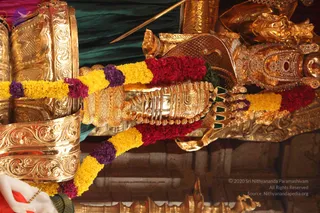
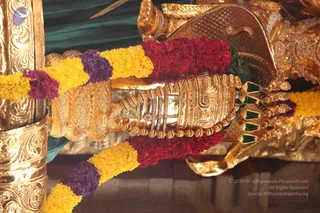
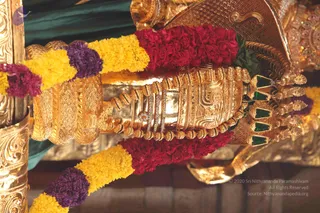
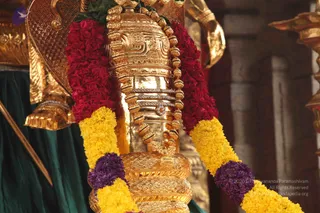
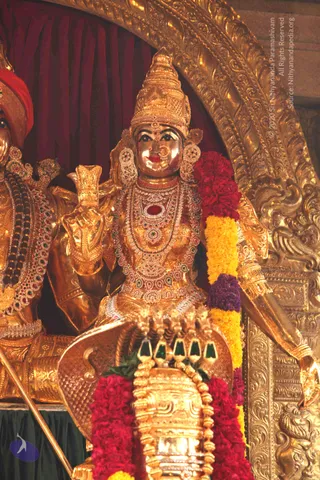
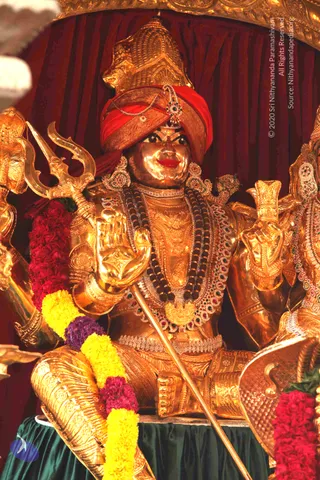
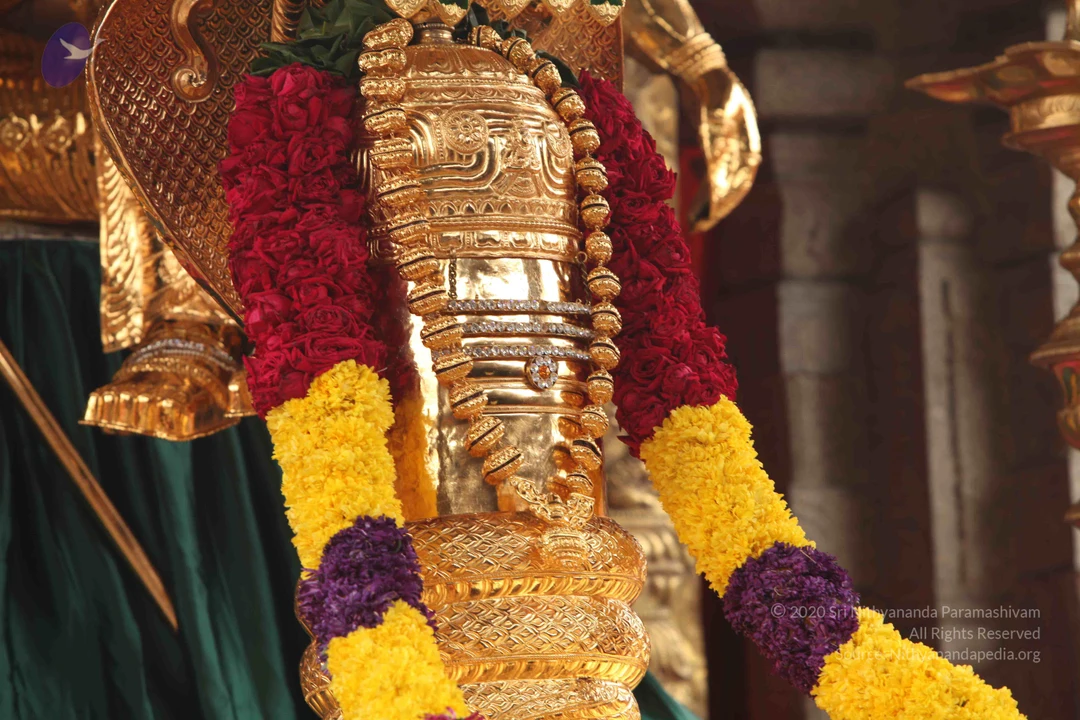
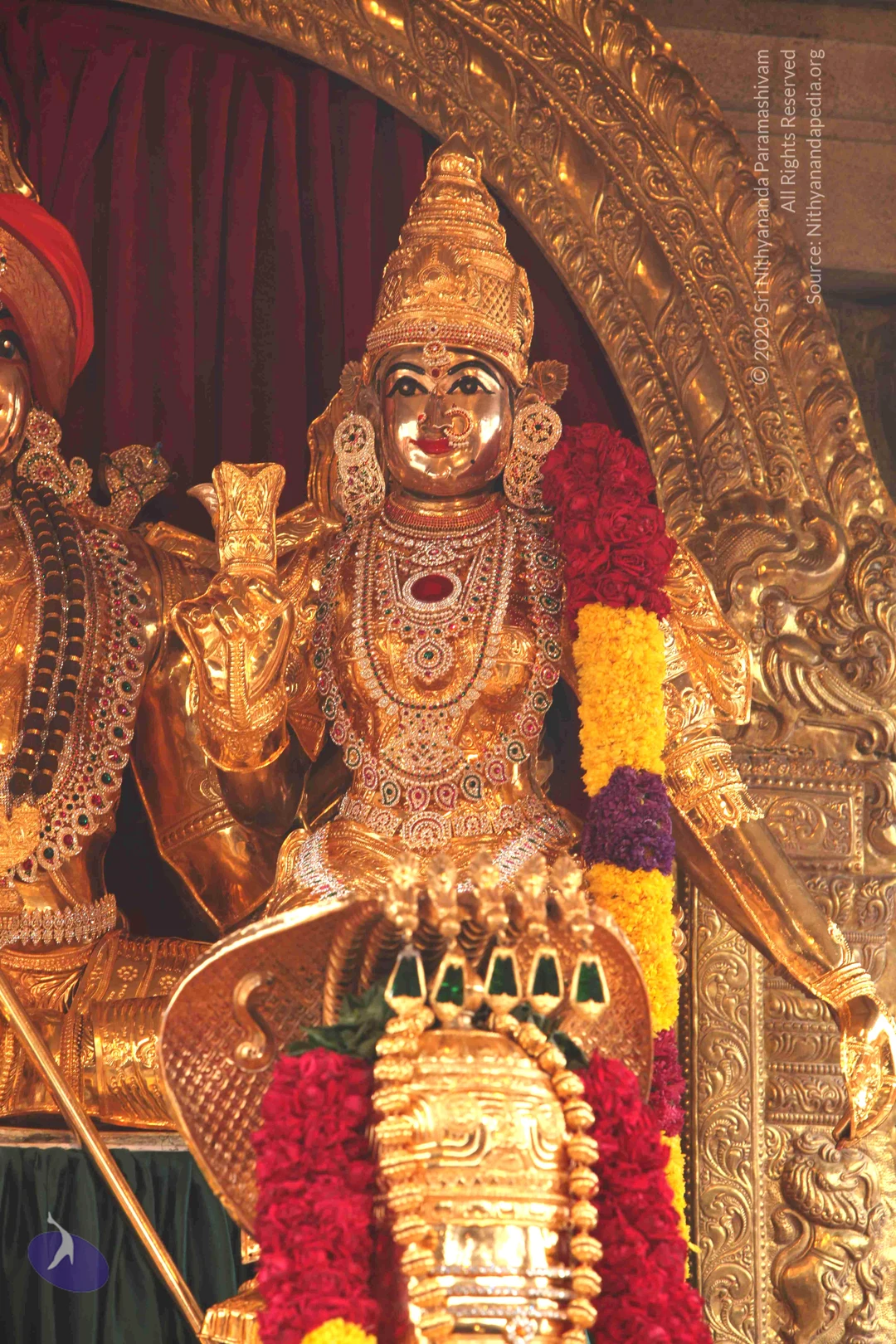
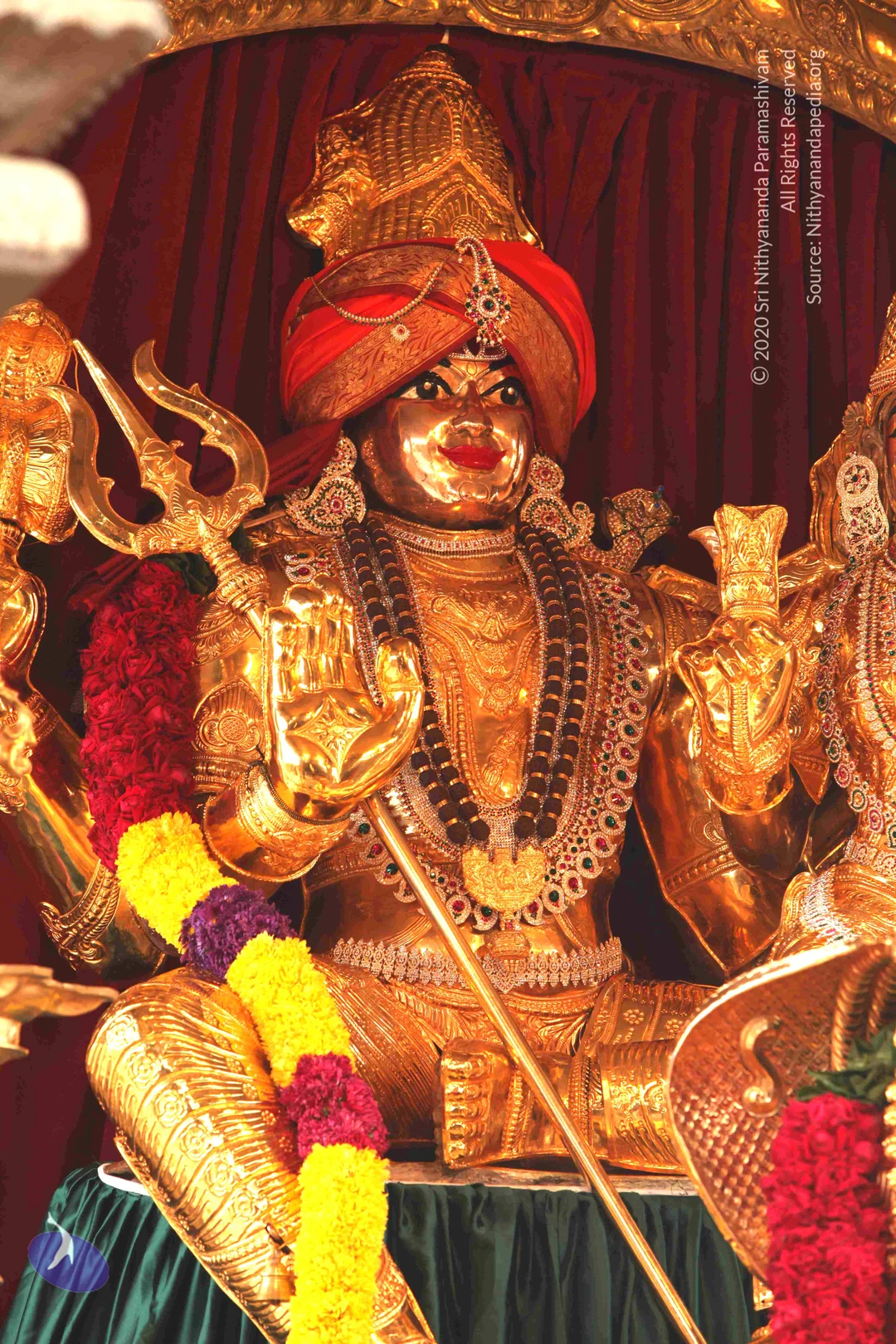
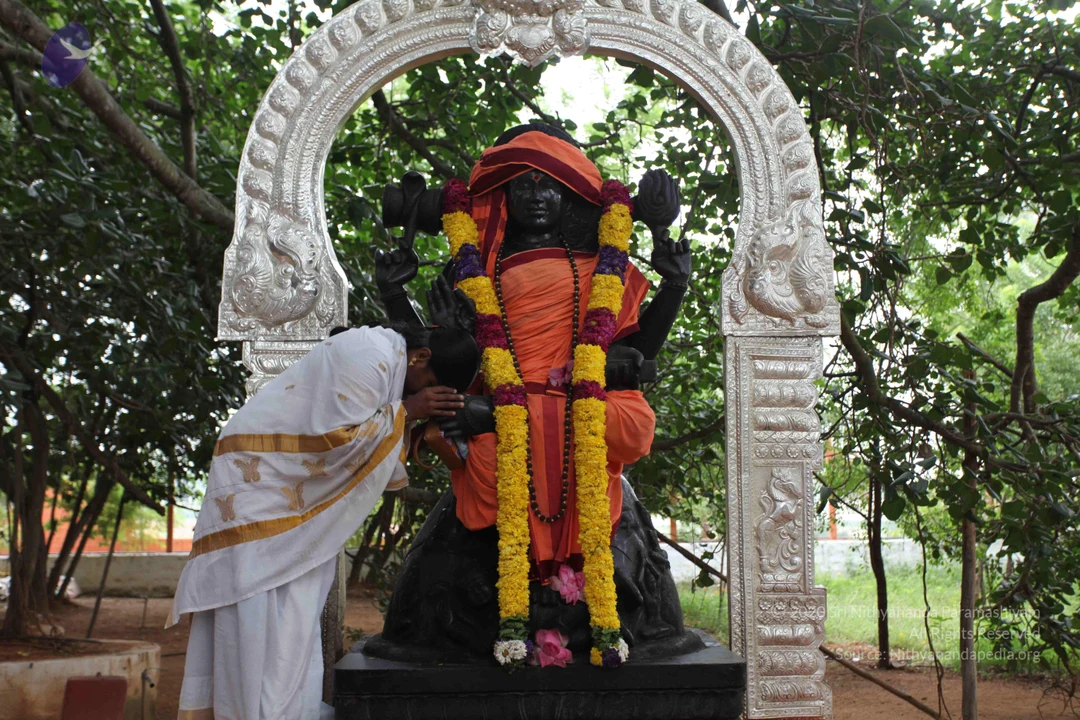
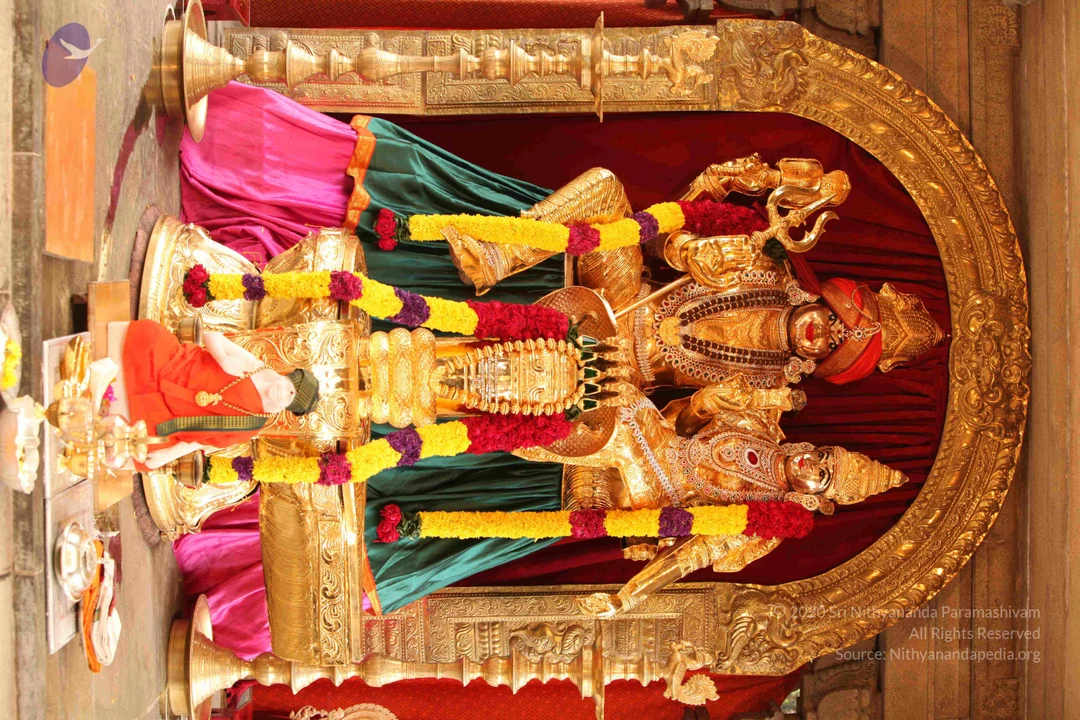
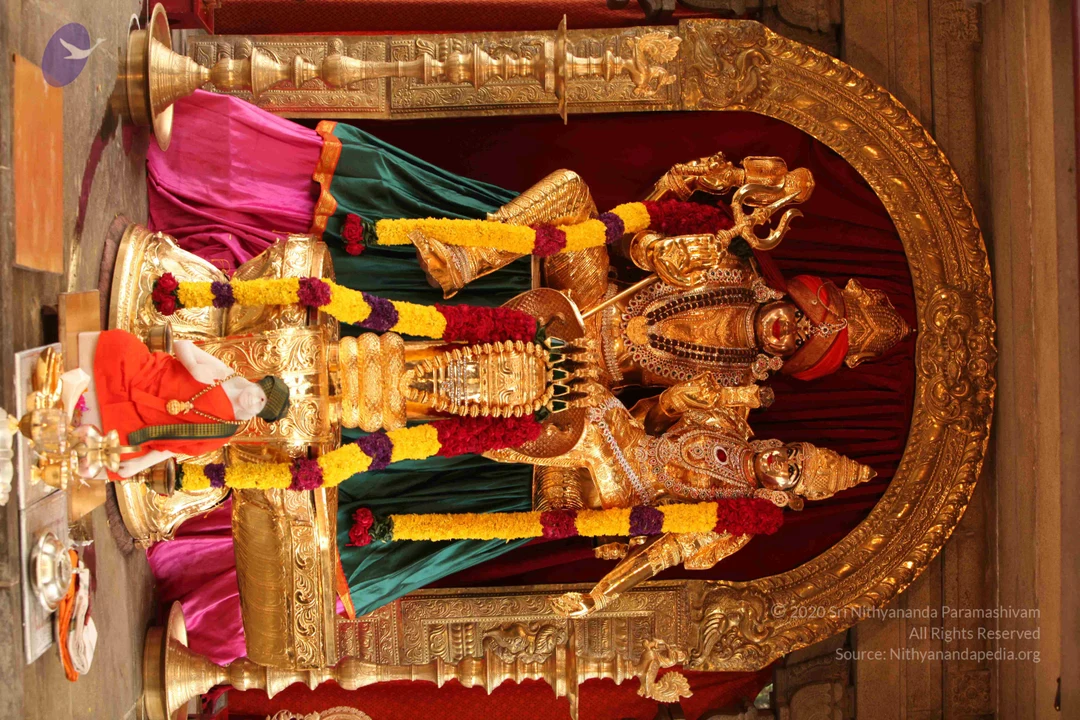
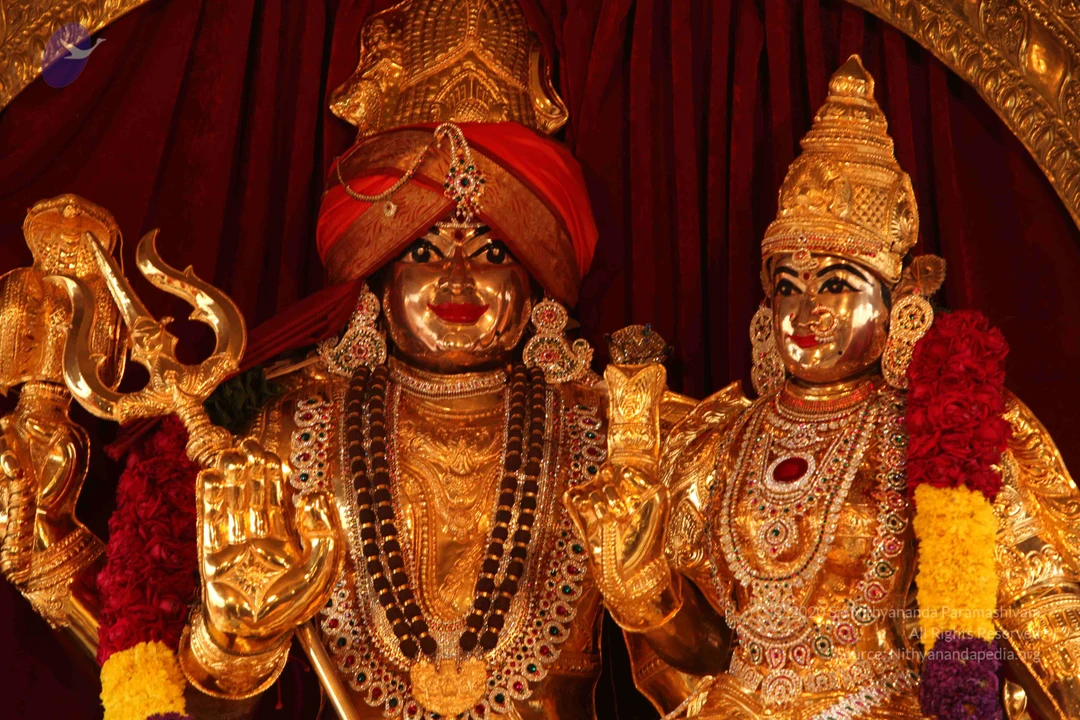
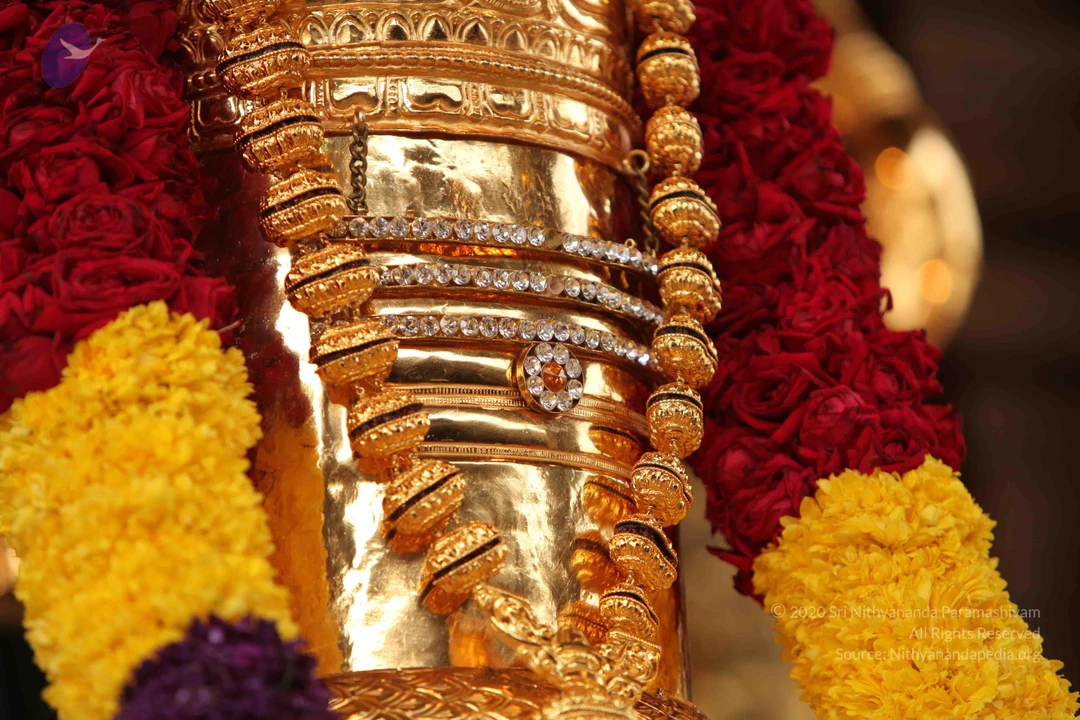
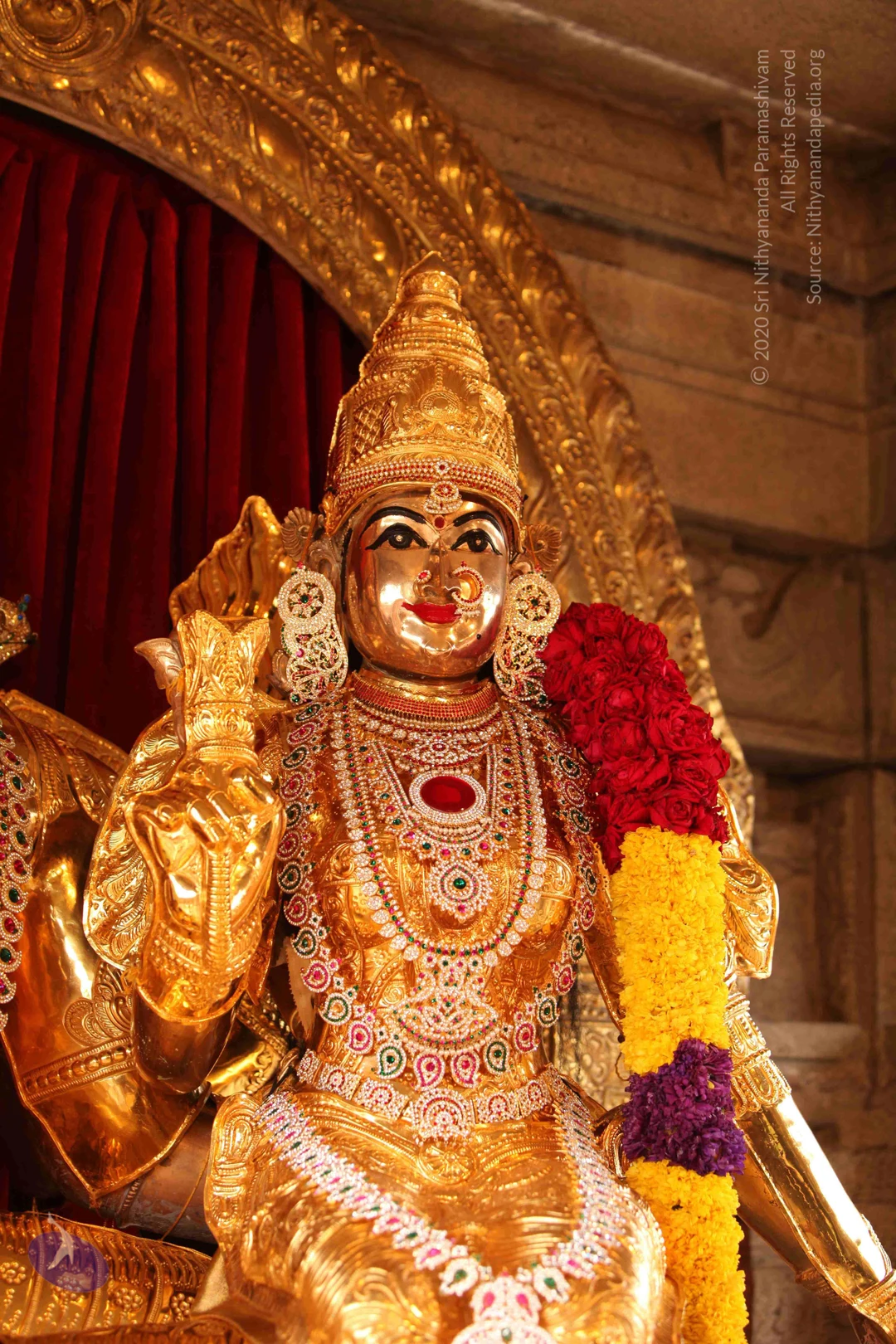
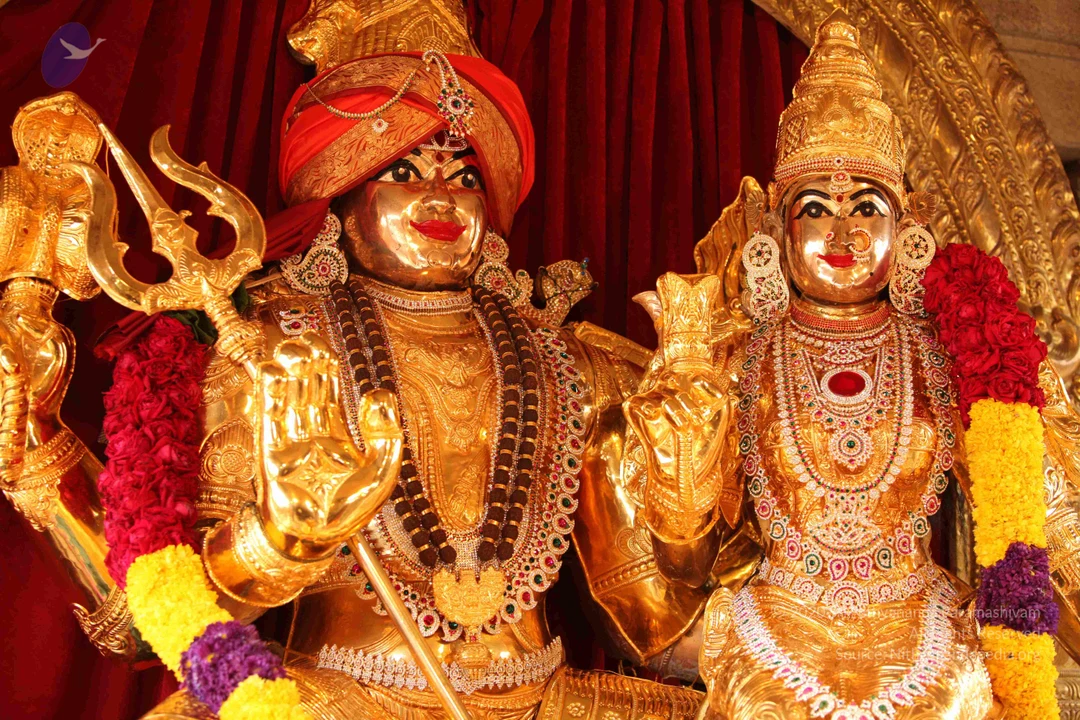
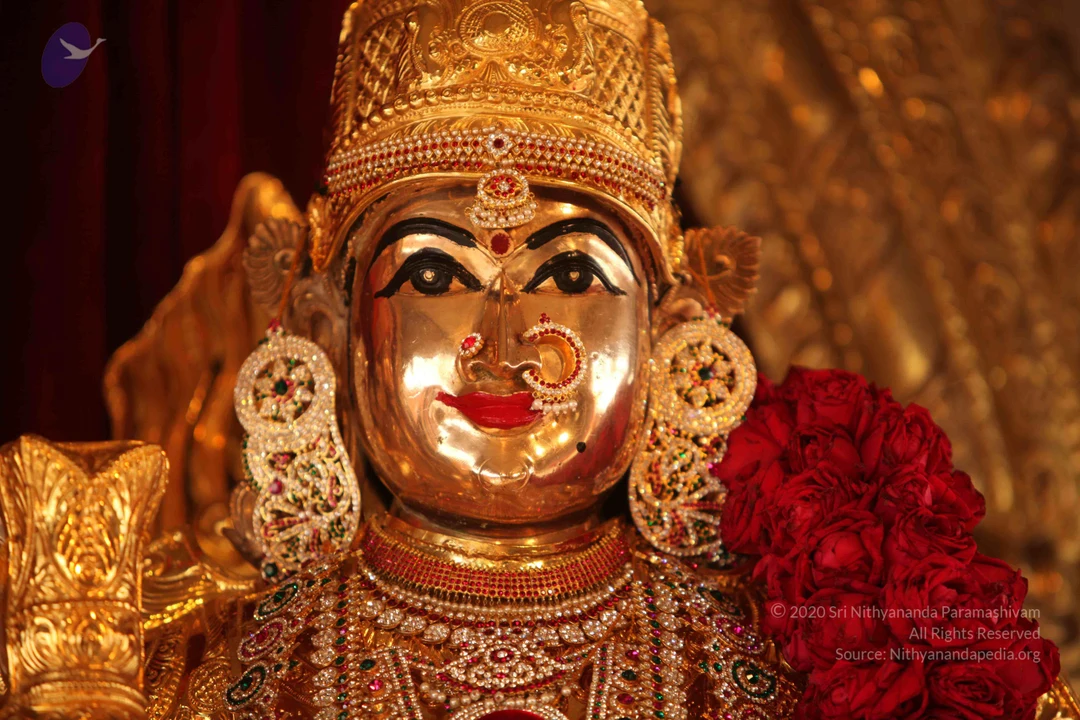
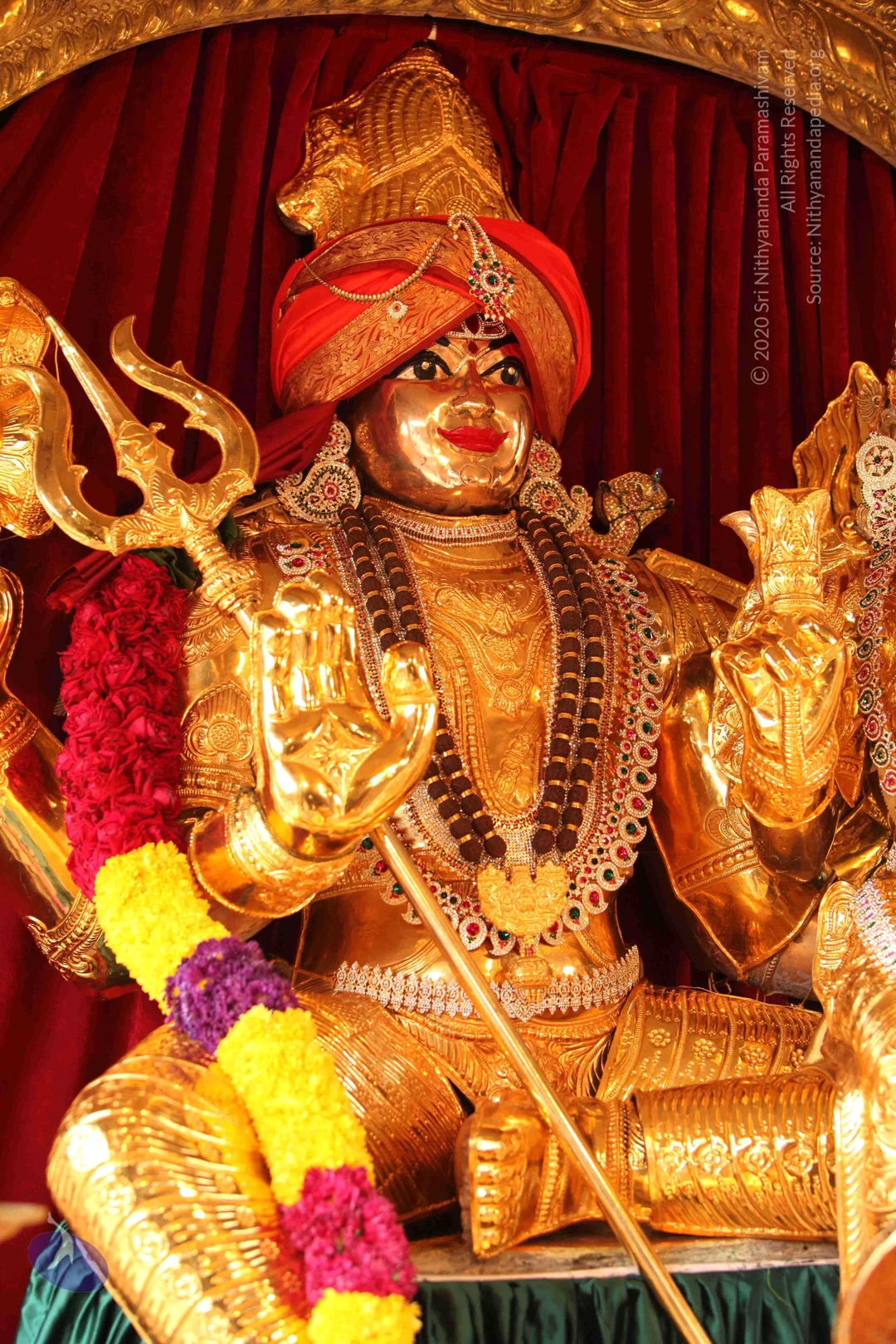
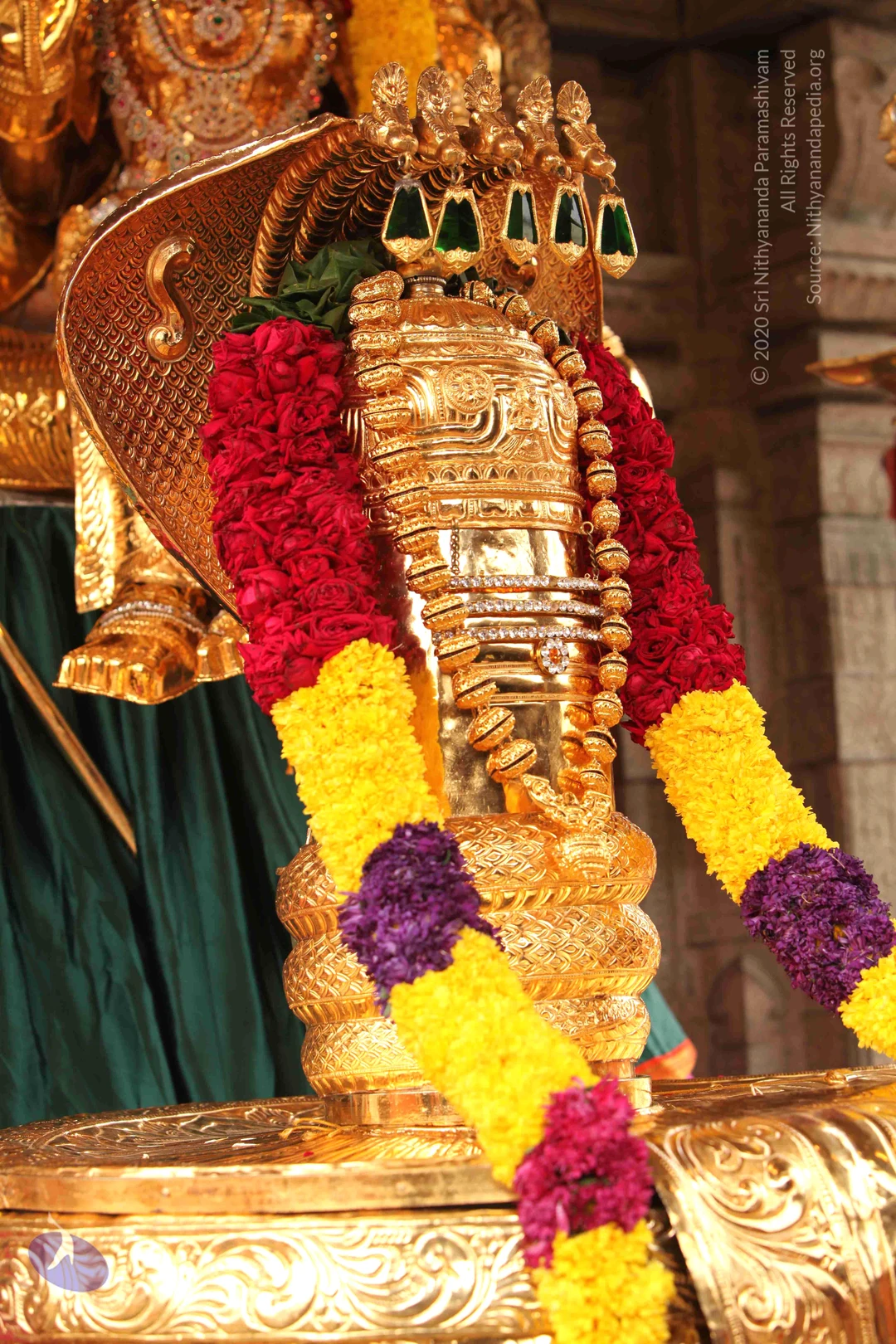
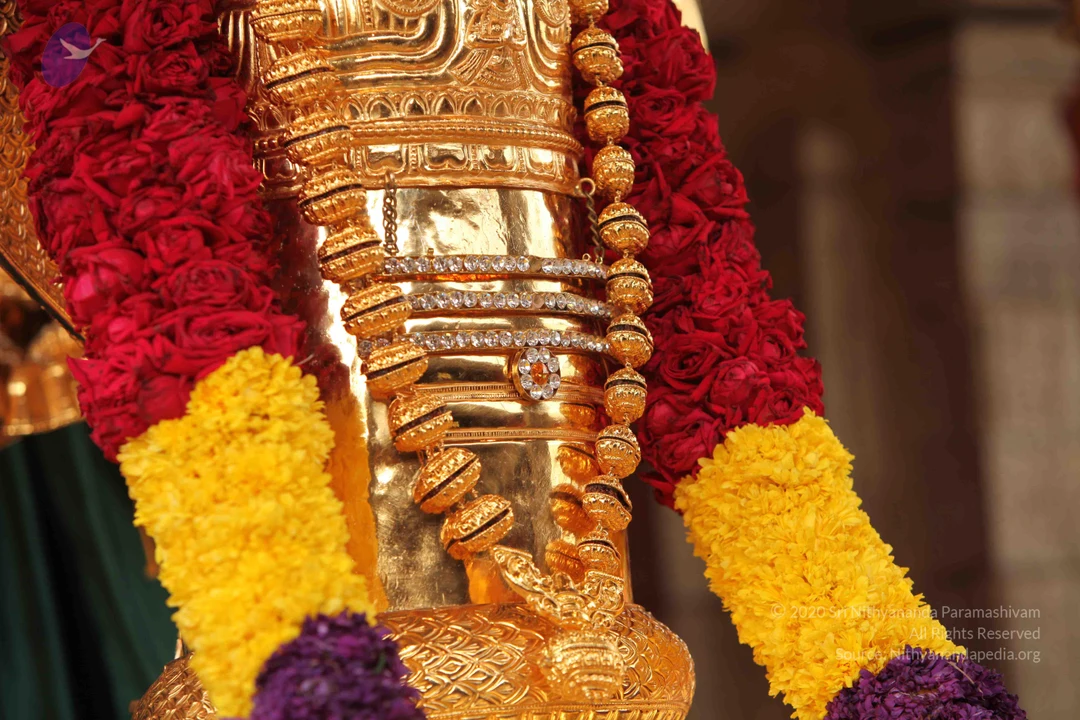
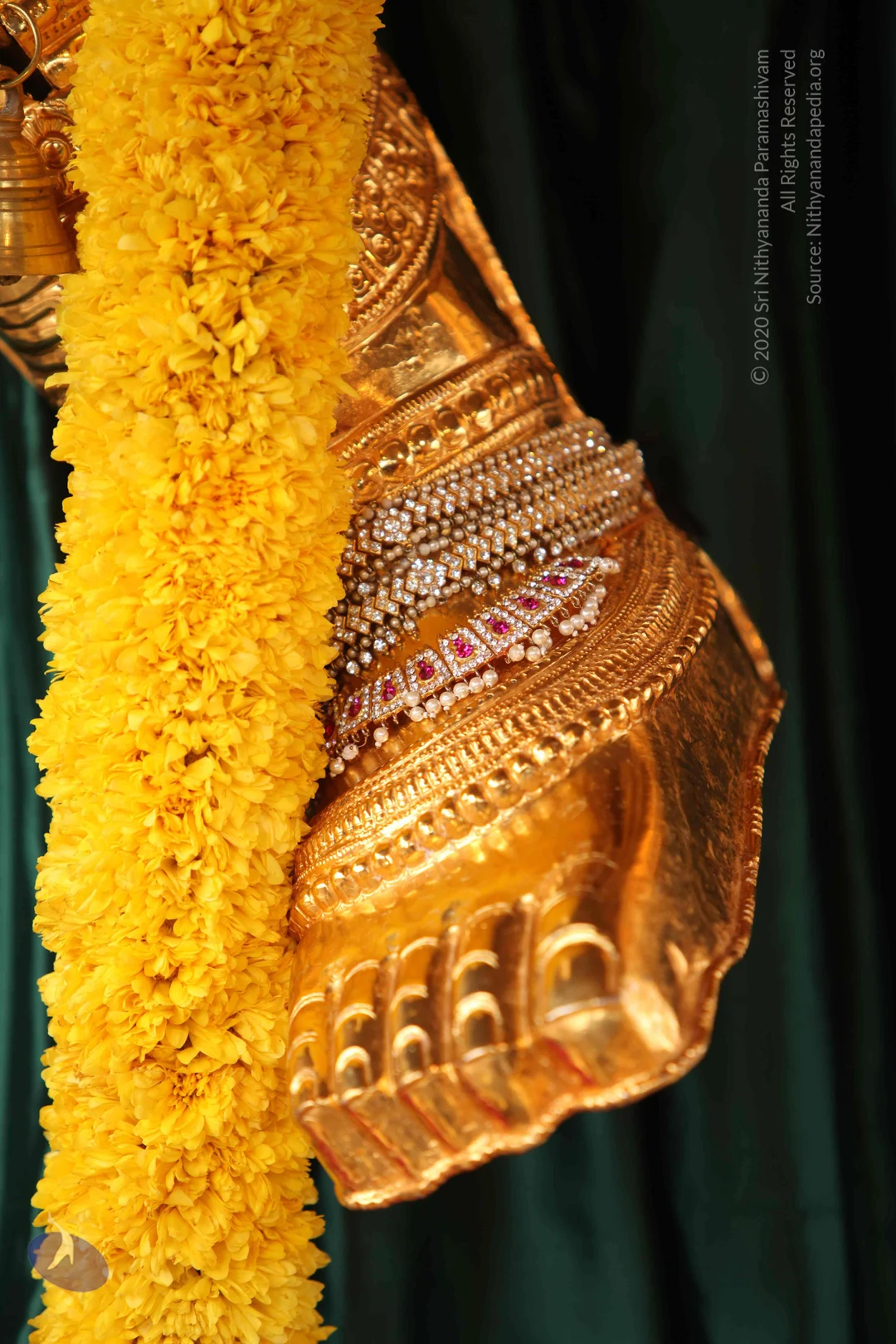
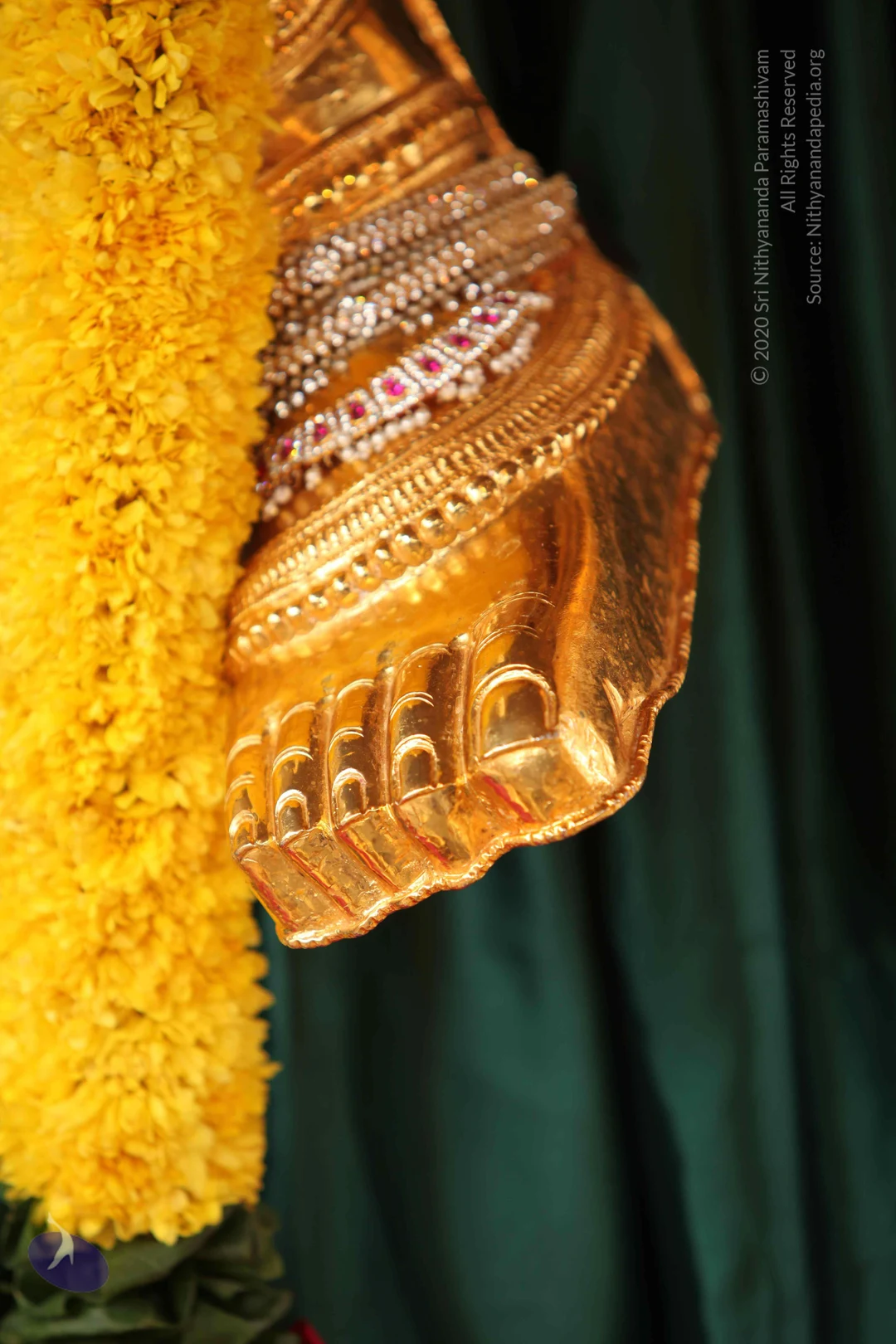
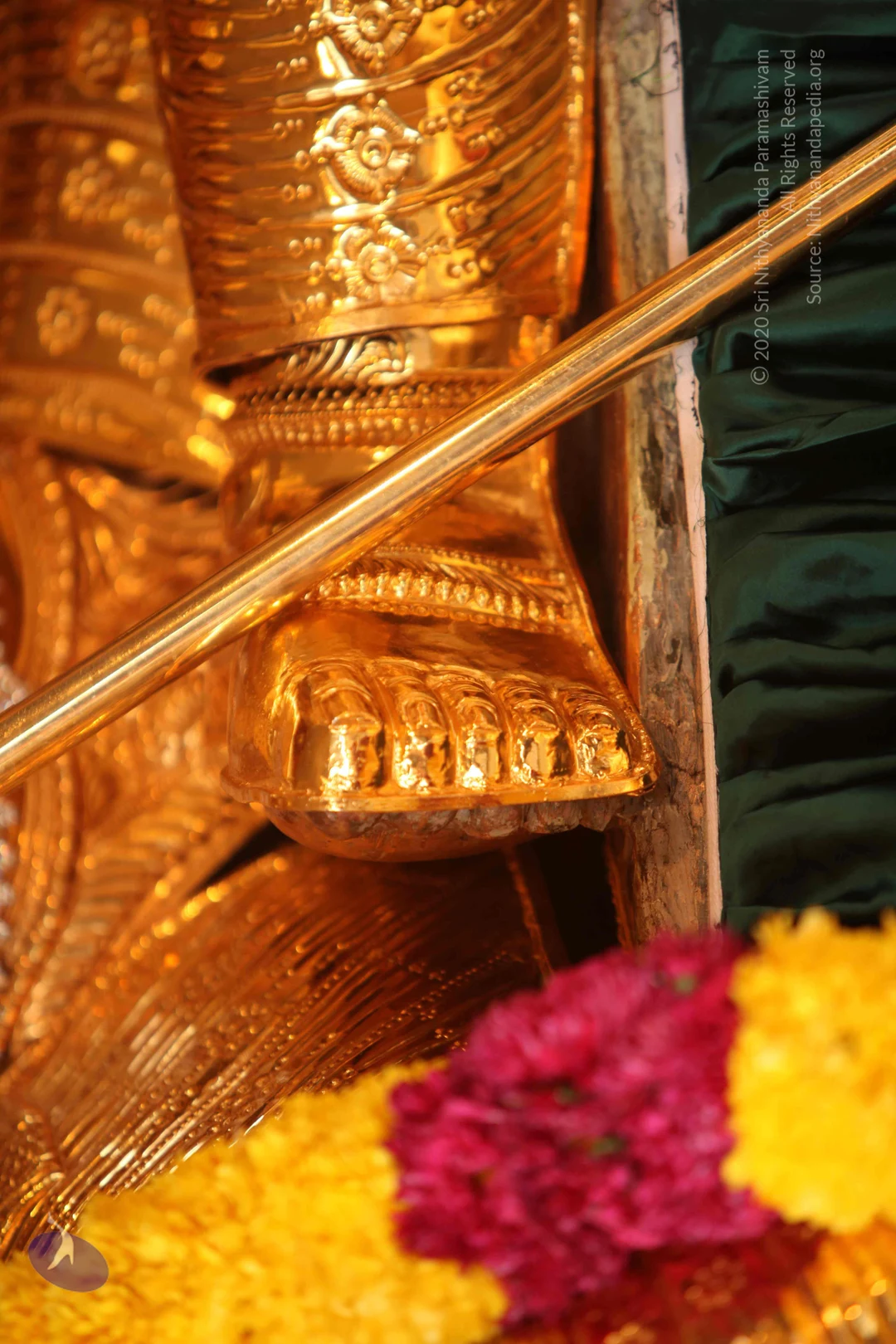
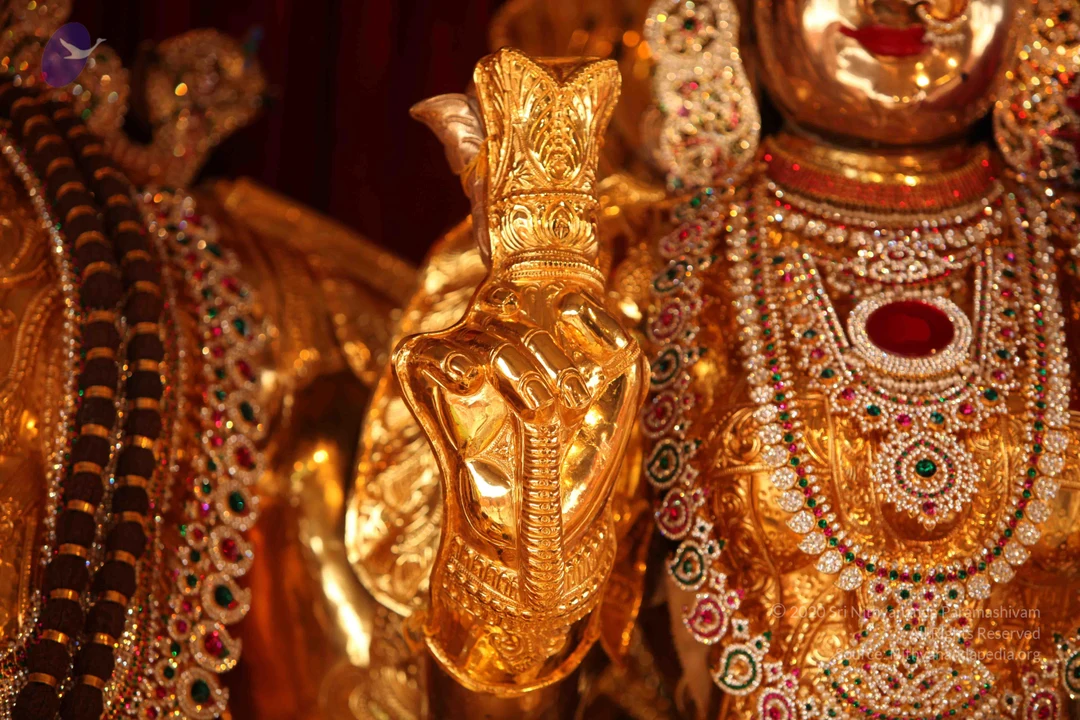
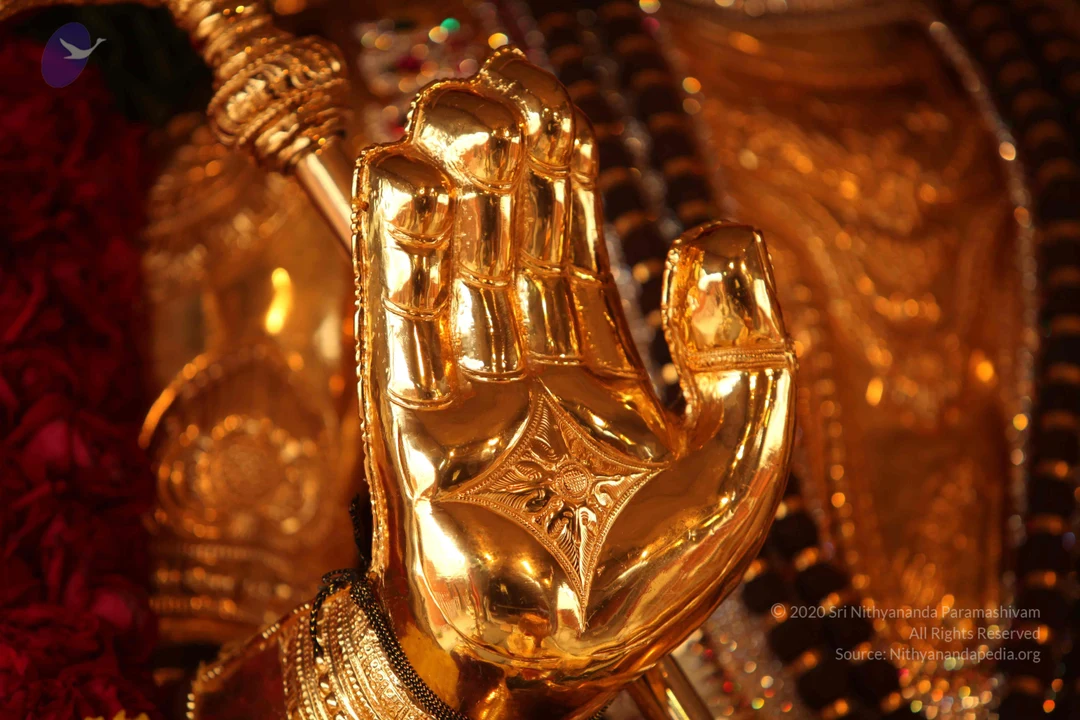
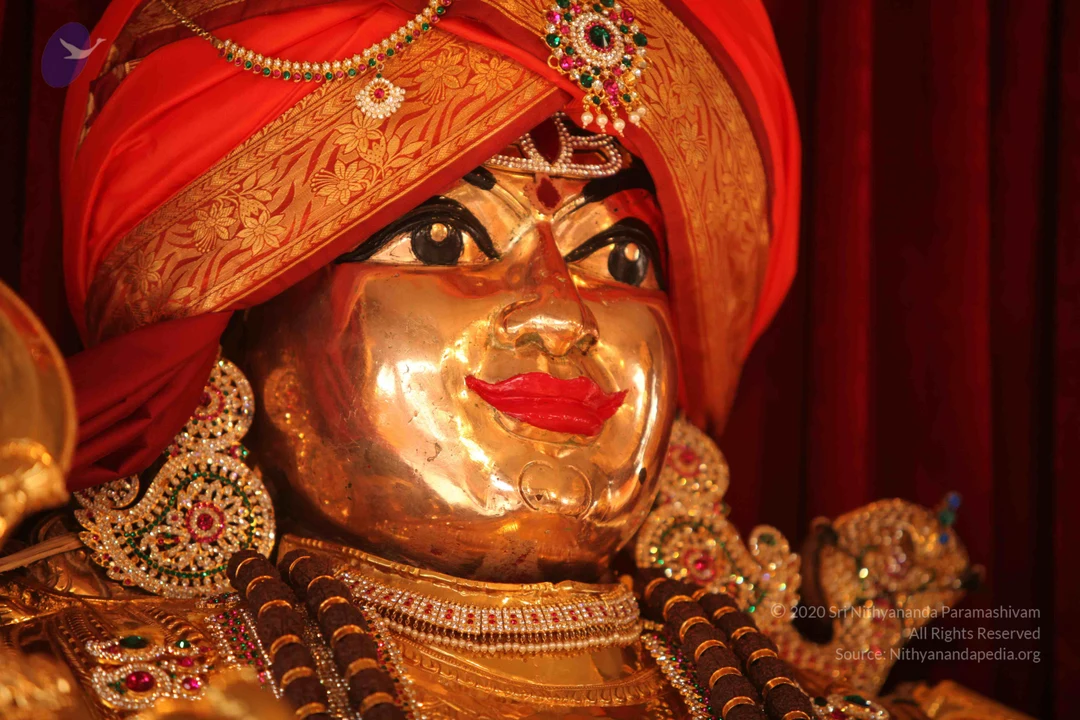
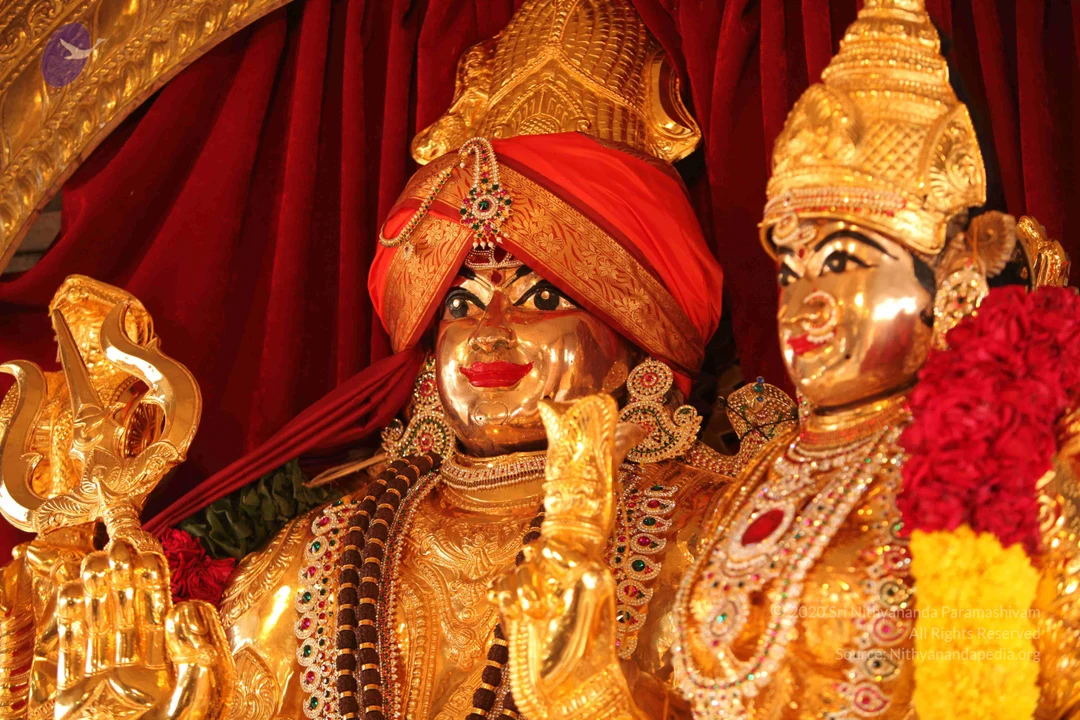
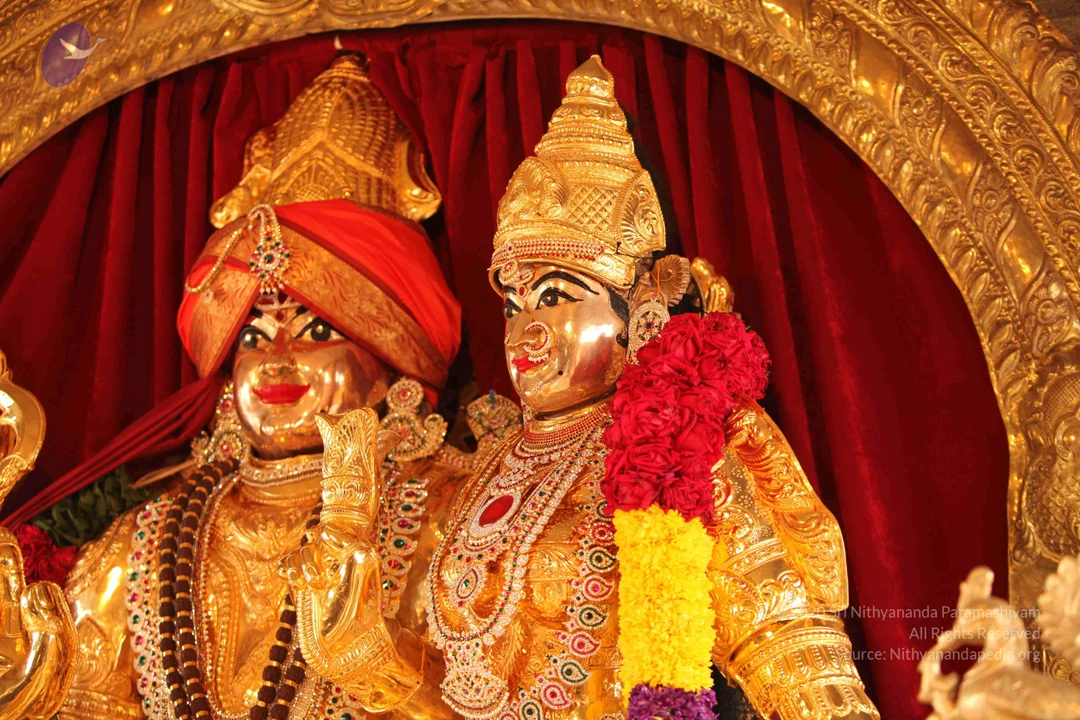
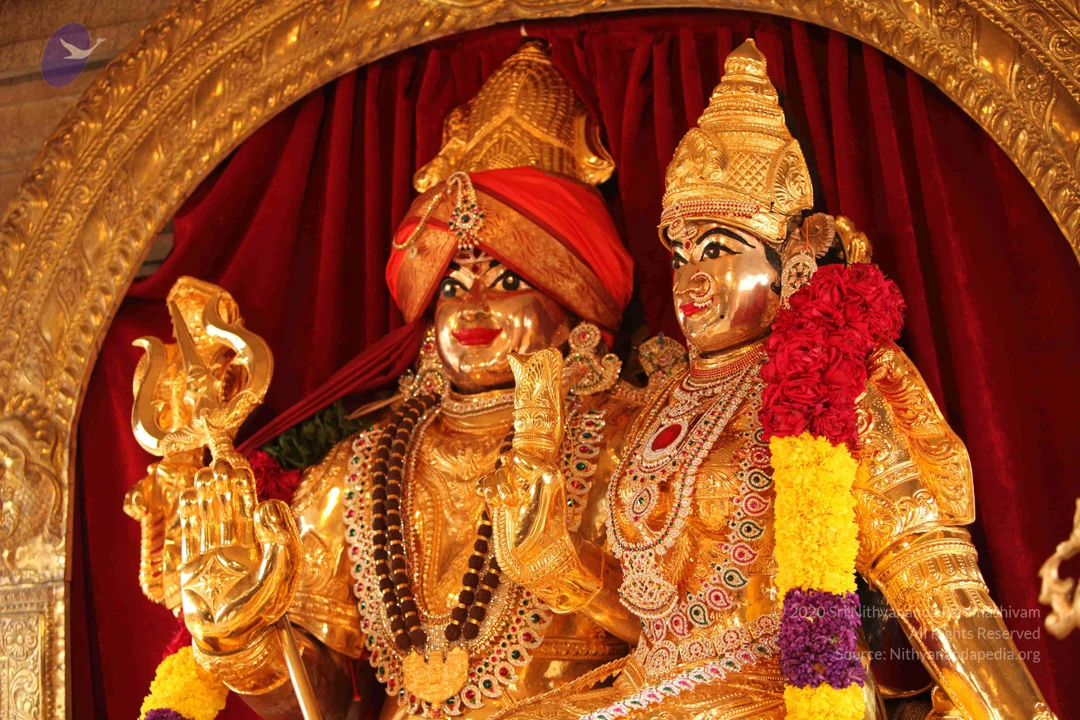
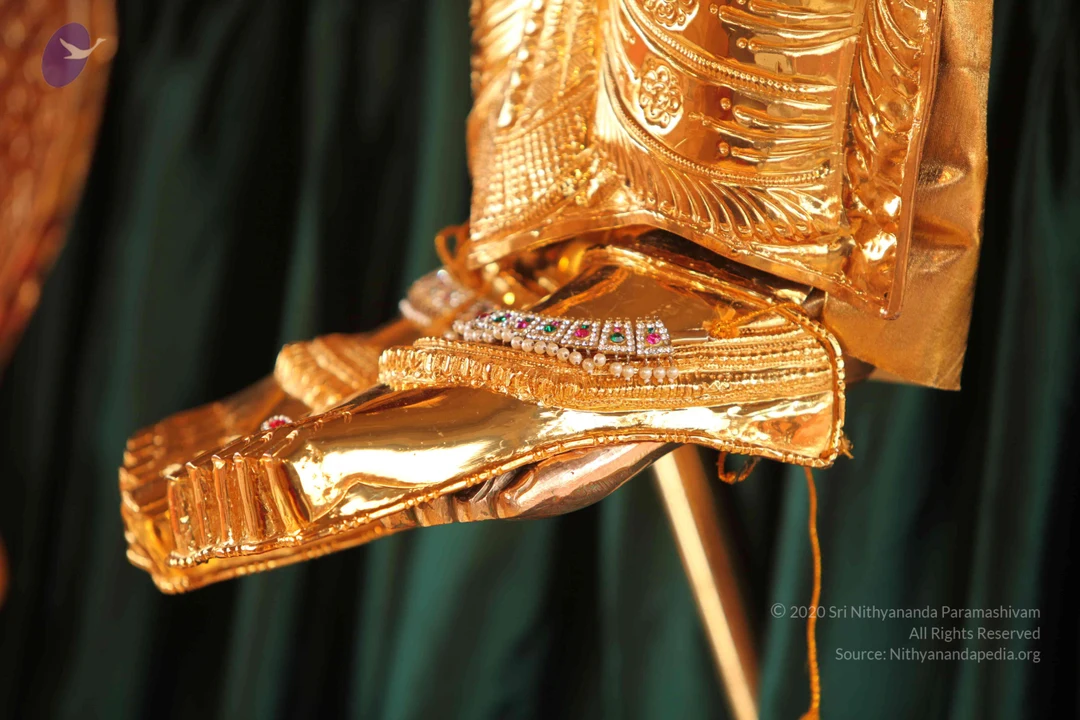
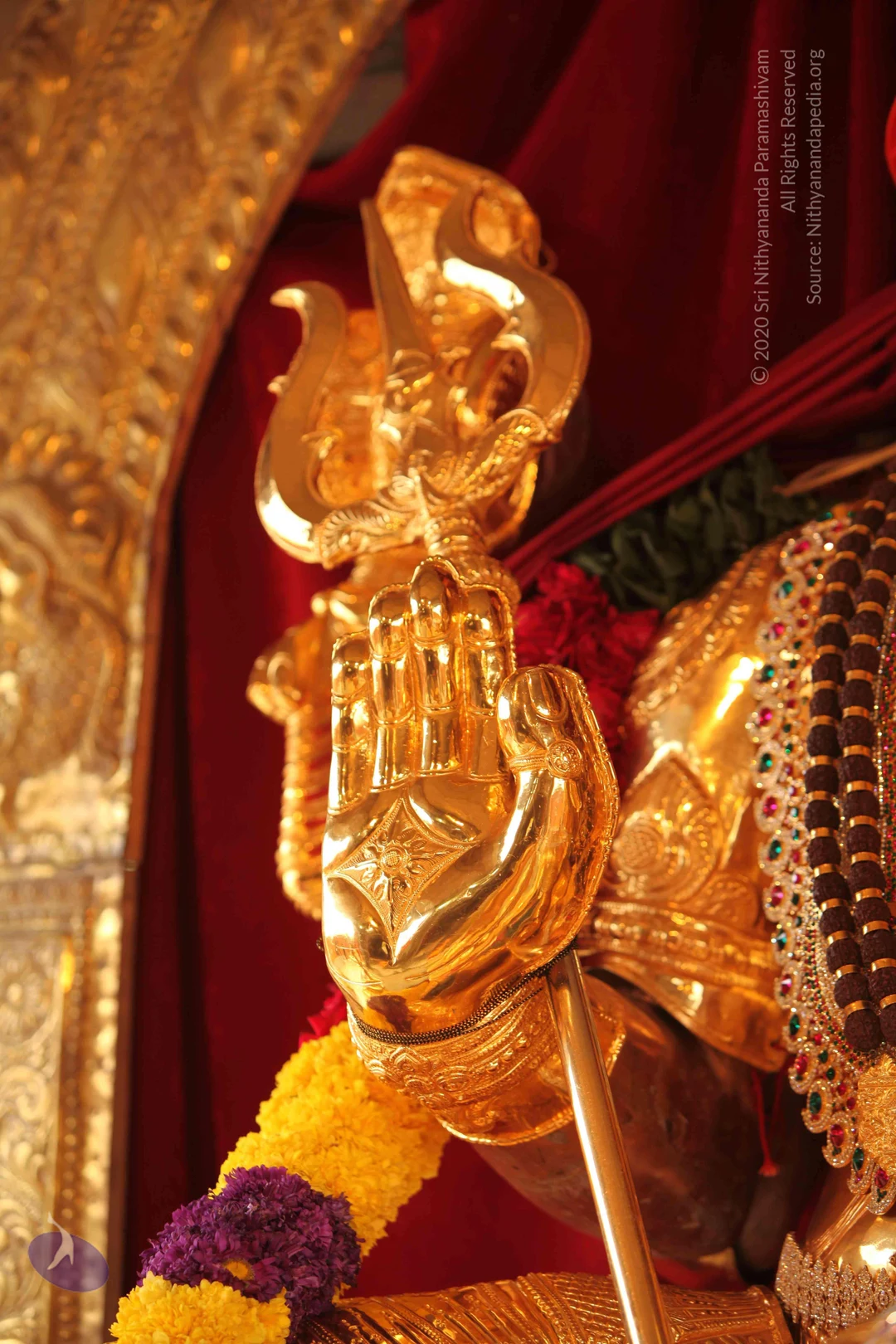
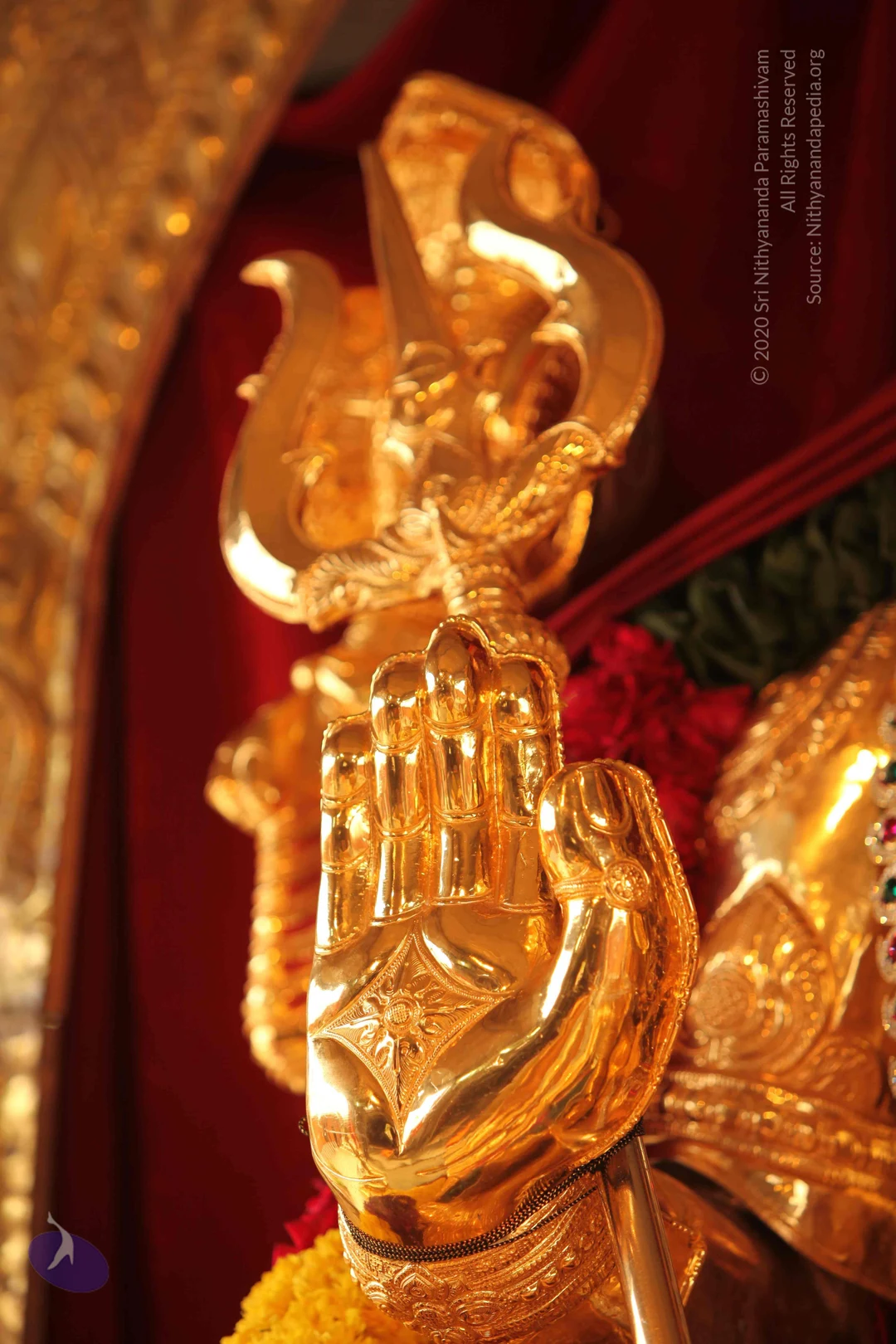
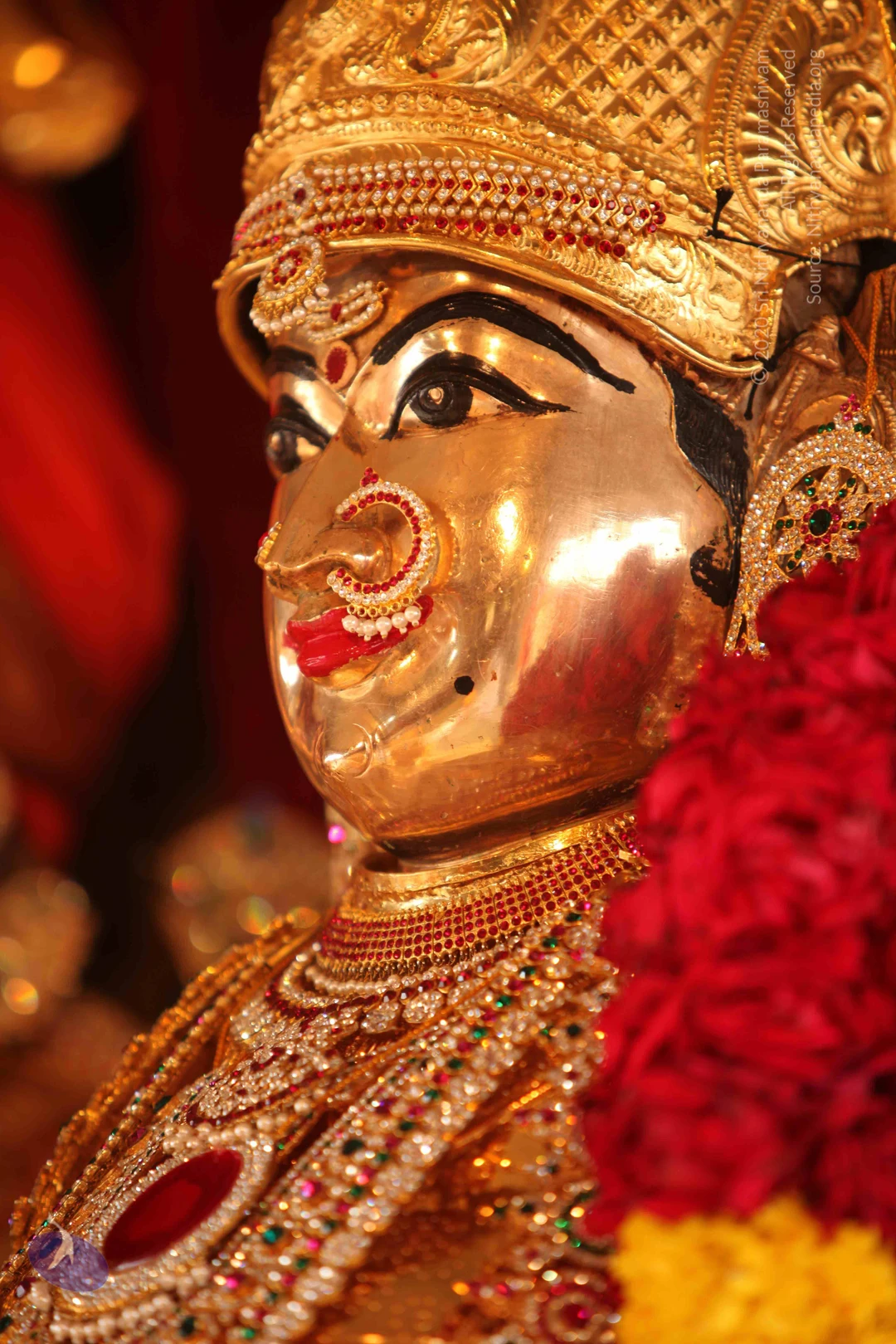
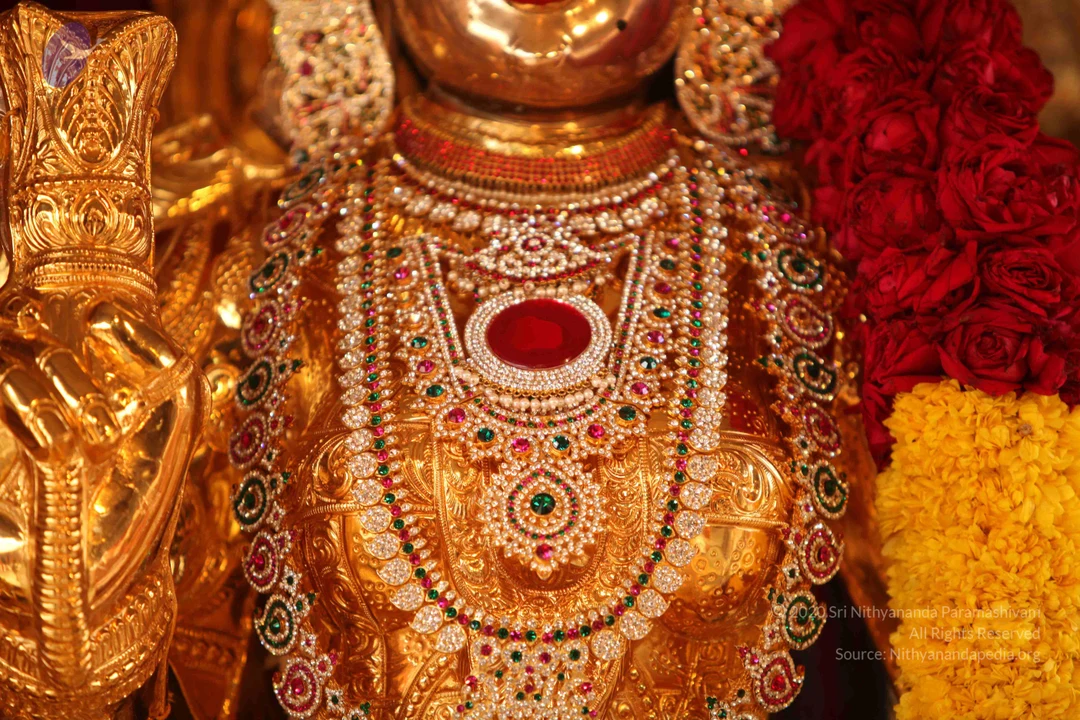
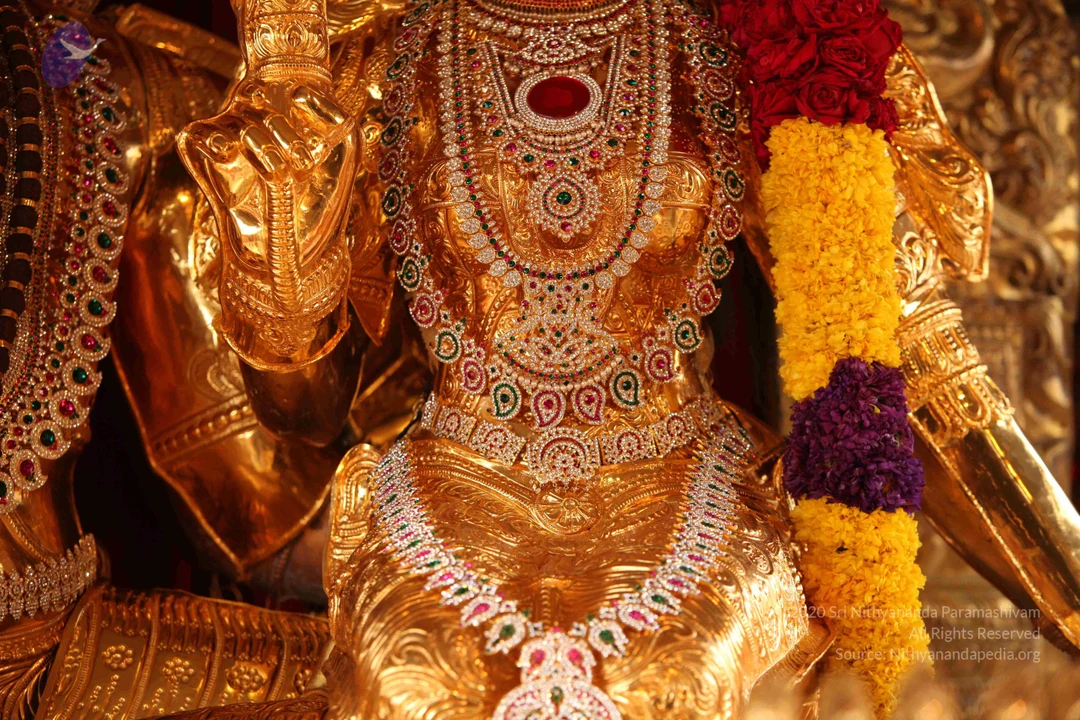
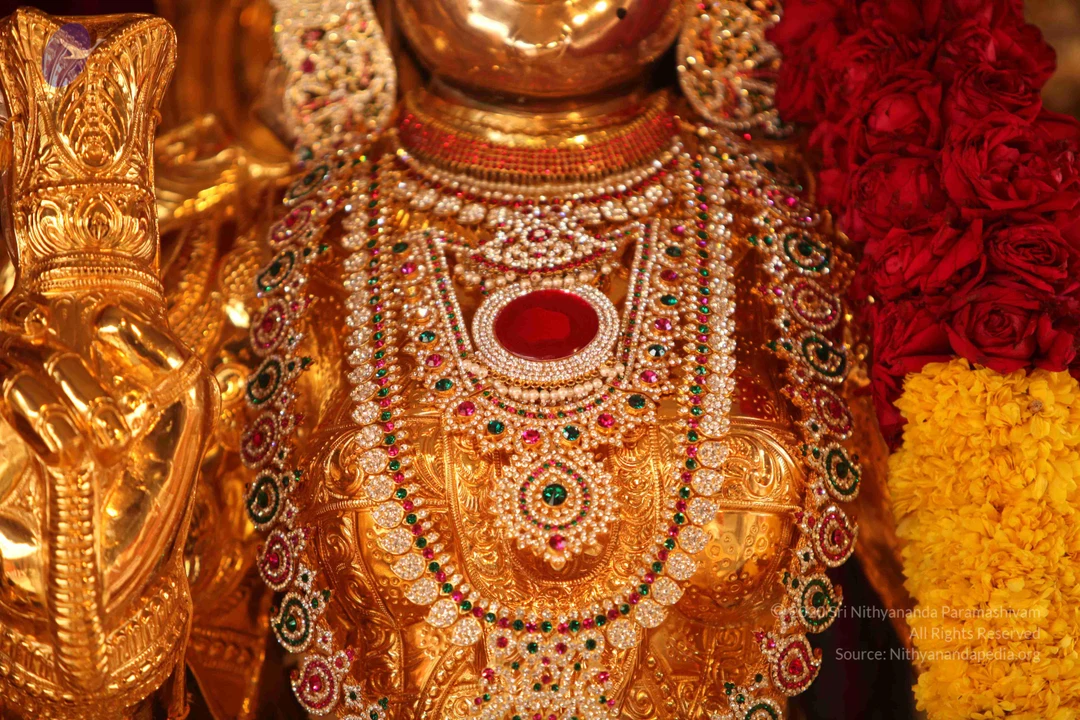
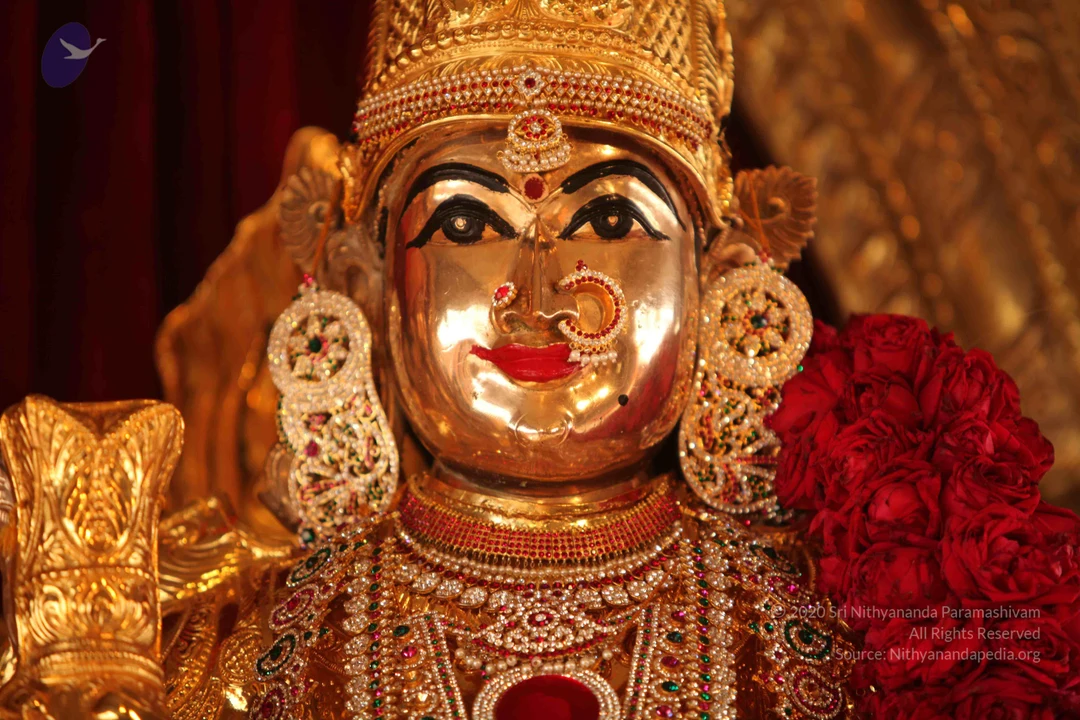
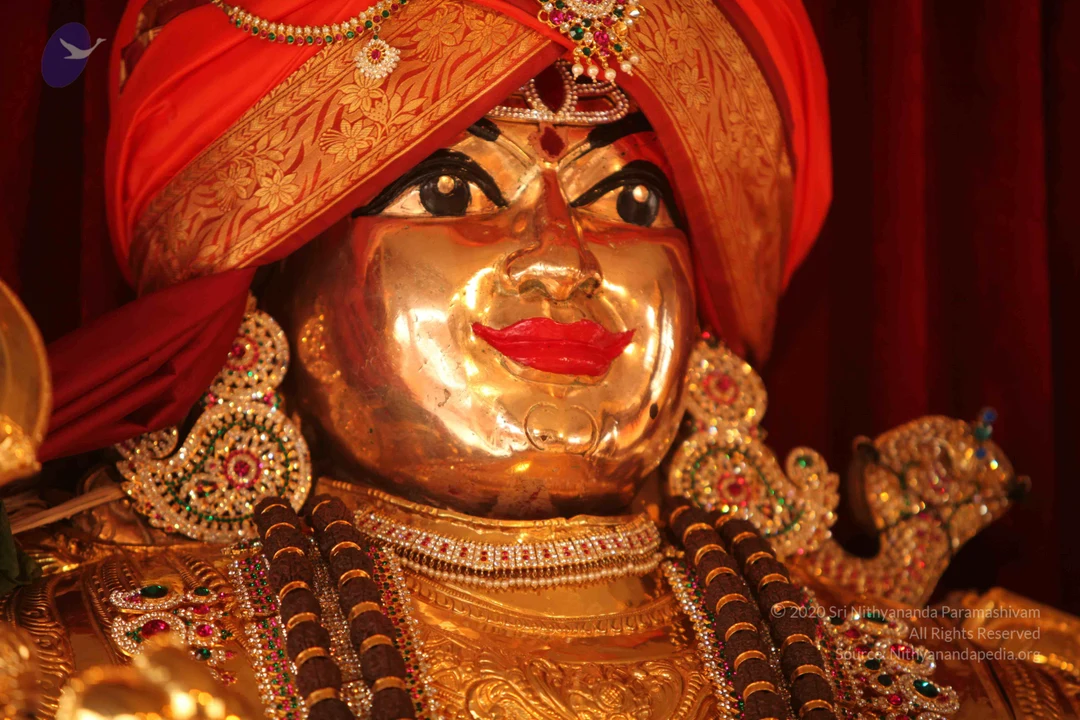
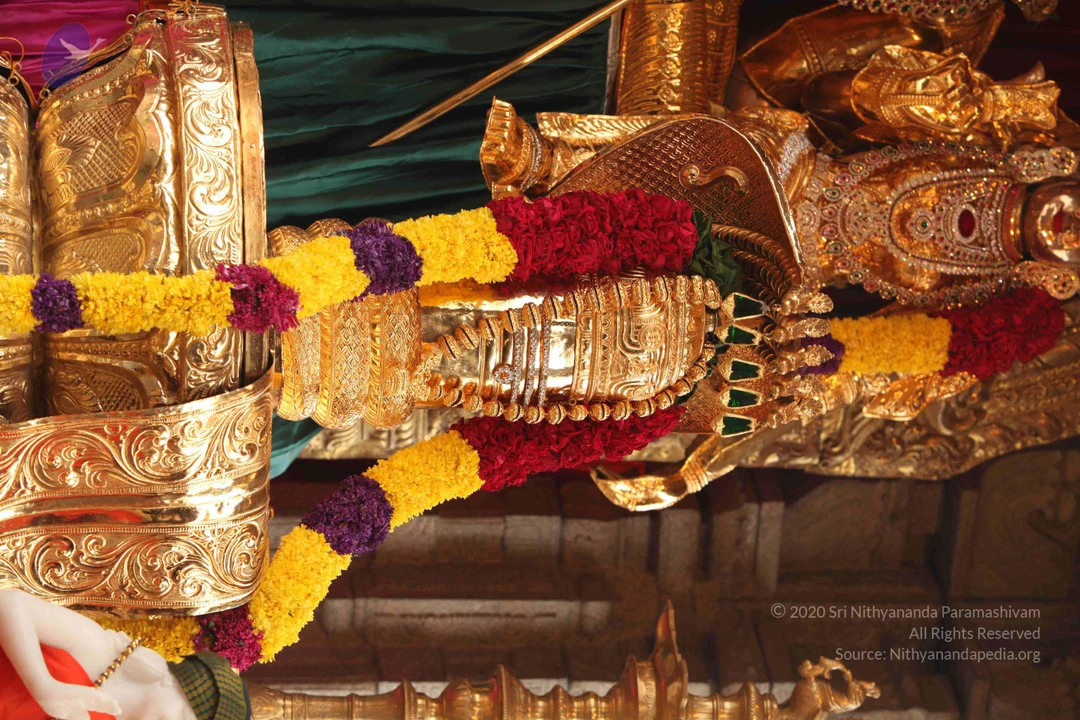
Close-up photograph of a gold-plated ceremonial ratha or chariot fitting or processional wheel-hub decoration, with ornate engraved golden bands, floral garlands of yellow marigolds, purple flowers and red roses draped across it, and a gilded deity-like figure with a jewelled crown at right. A green draped cloth forms the backdrop and a golden staff is visible at top. No people are visible.Close-up photograph of an ornate golden deity murti. Garlands of yellow marigolds, purple flowers and deep red roses are draped across it. A gold ornamental crown-like finial with green stone inlays appears at the right edge, and a golden background panel with floral engraving frames the scene. No people are visible.Close-up photograph of a richly ornamented golden ceremonial object. Its gold surface carries intricate relief patterns, ring bands and a crowned top with green jewelled elements. Behind it, more gold metalwork and a teal fabric draping are visible. No people are shown.Close photograph of a gilded ceremonial object. Ornate gold bands and rings with small jewelled inlays encircle the upper shaft, and a gold-embossed base sits beneath it. A green cloth drapes behind, with gold ornamental fittings on the left and a stone column in the background on the right. No people are visible in the frame.A golden deity murti in a procession or temple setting, seated with a tall gold crown and layered jewelled necklaces with red, green and white stones. The figure holds a raised gold object in one hand and wears a gold-framed arch behind. Beside it at left is a second gold figure in a red turban and ornate necklaces. Red and yellow-purple flower garlands drape over the central figure and a gold chariot-like base with green gem-set fittings sits in front. Red curtains and ornately carved gold panels form the backdrop. No living people are visible.A gold-plated statue of a deity seated on a green-draped platform, holding a trident in one hand and a ceremonial rod in the other. It wears a red turban with a gold crown, a dark rudraksha-style mala with a large gold pendant, and ornate jewelled necklaces and earrings. Marigold and red flower garlands hang over the seated figure, with a red velvet backdrop behind. This is a deity murti, not a living person, so no physical people are present.
06

5--Pancha-Tapas

94 dated photos in previewSource gallery
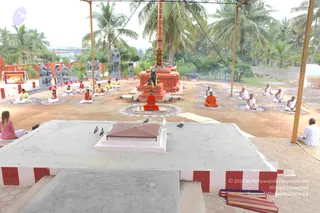
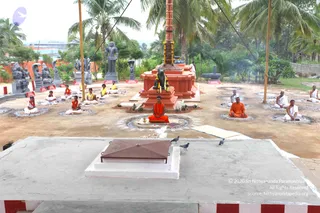
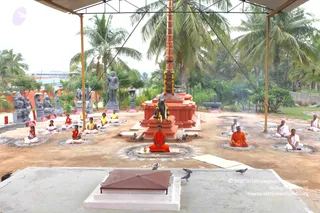
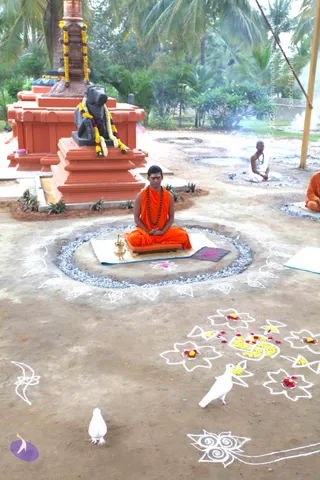
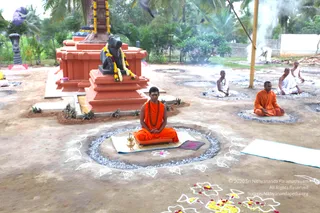
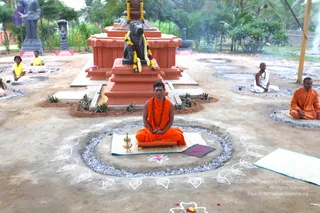
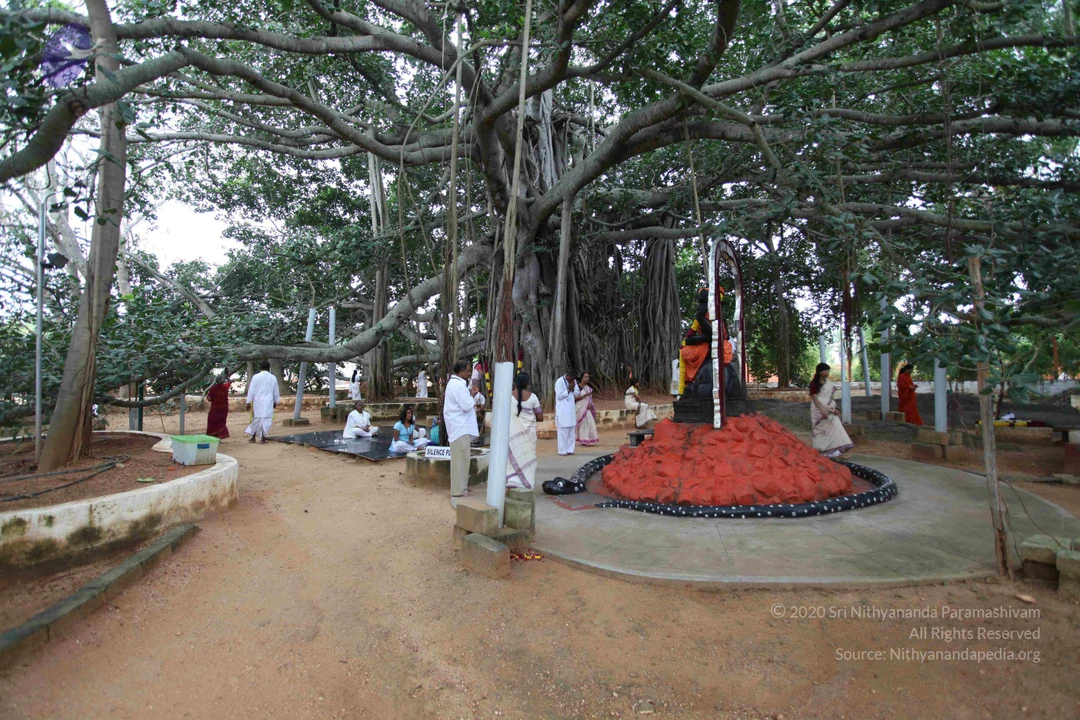
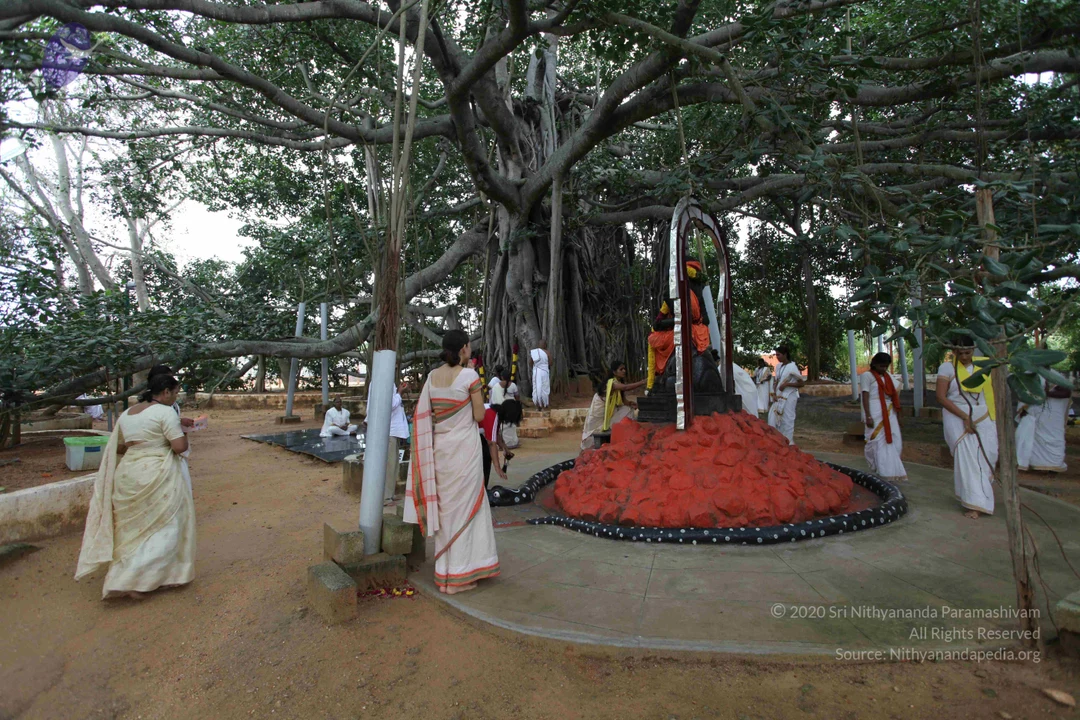
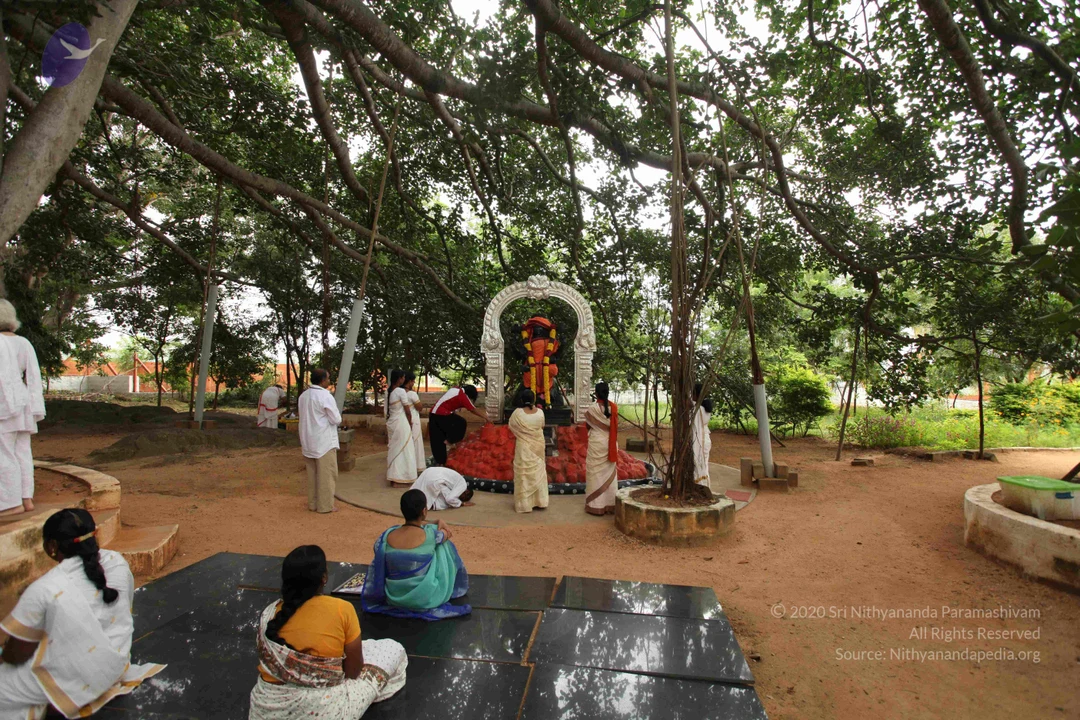
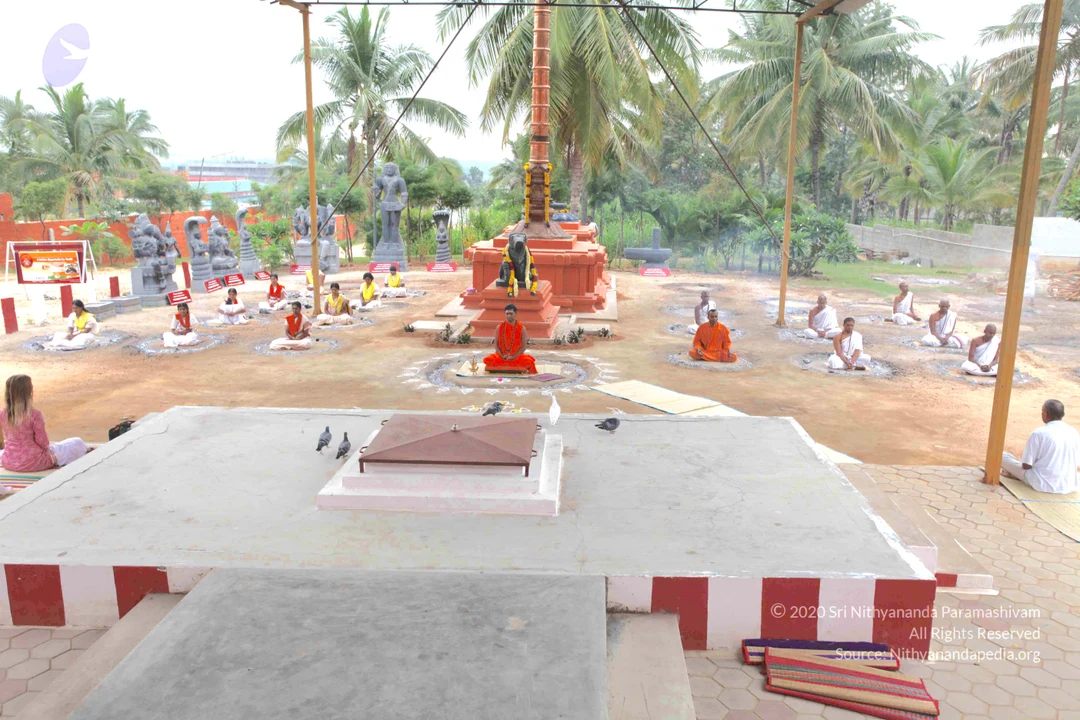
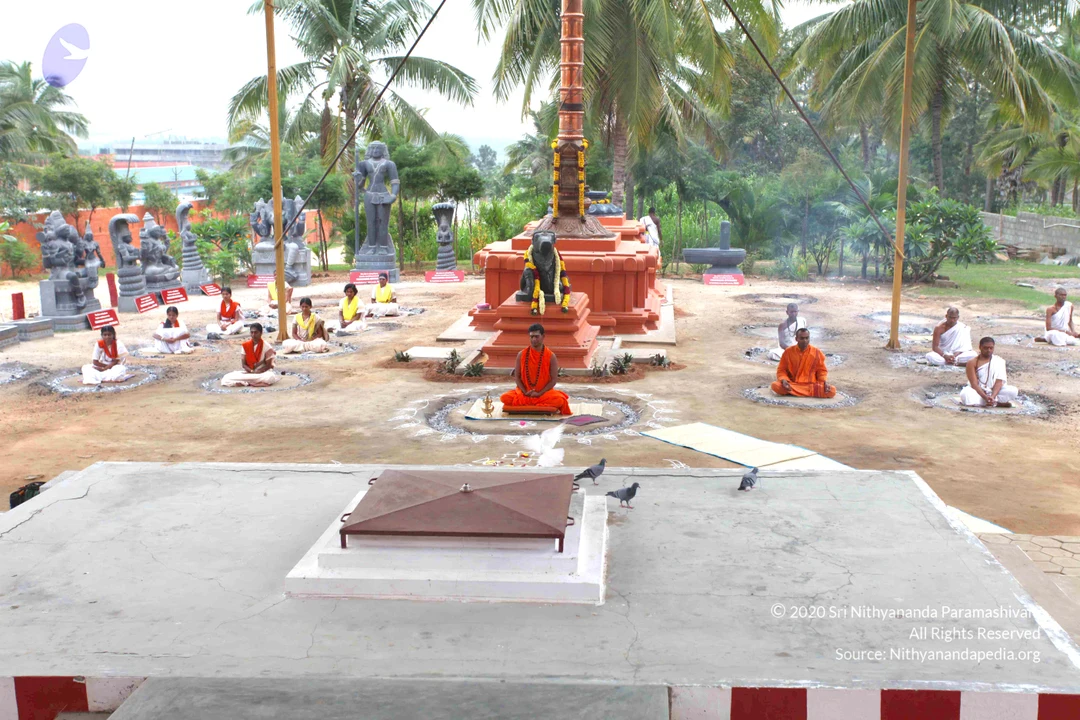
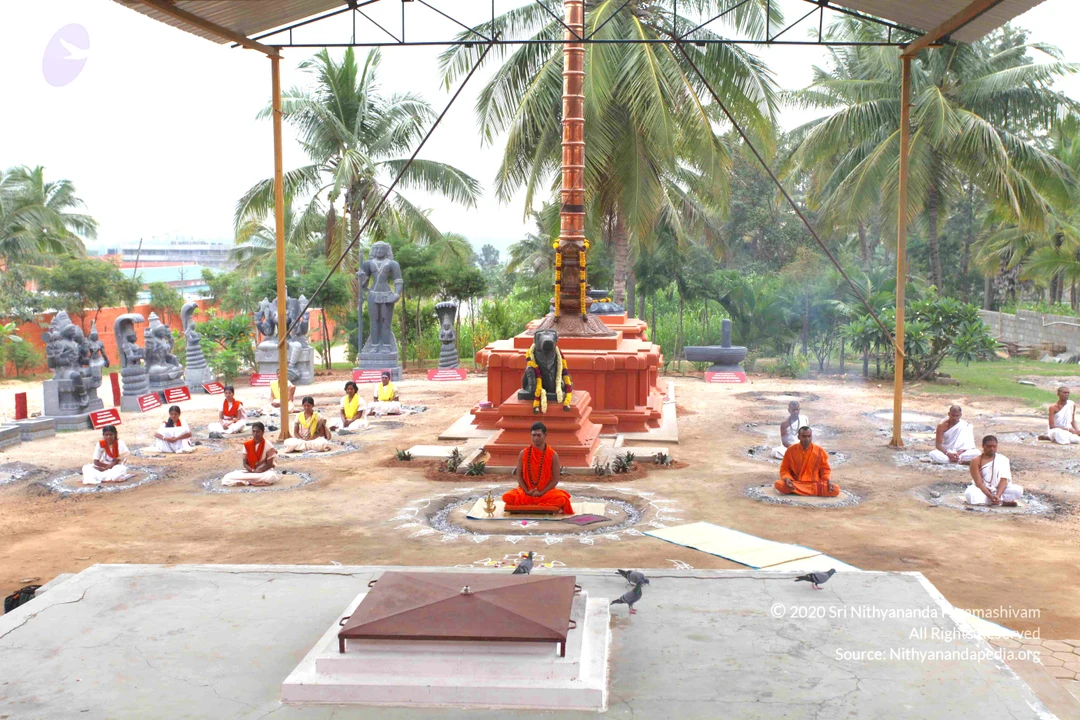
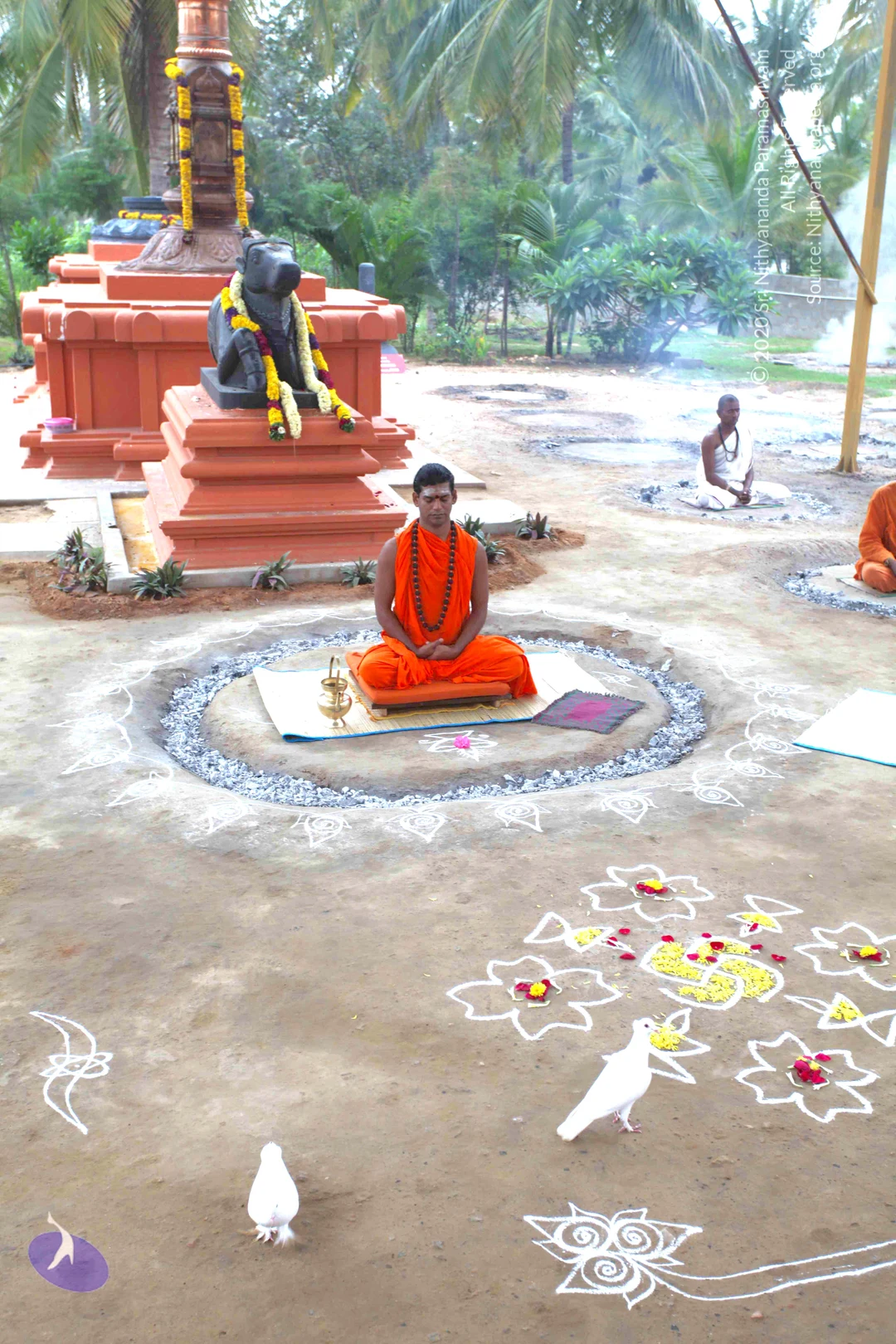
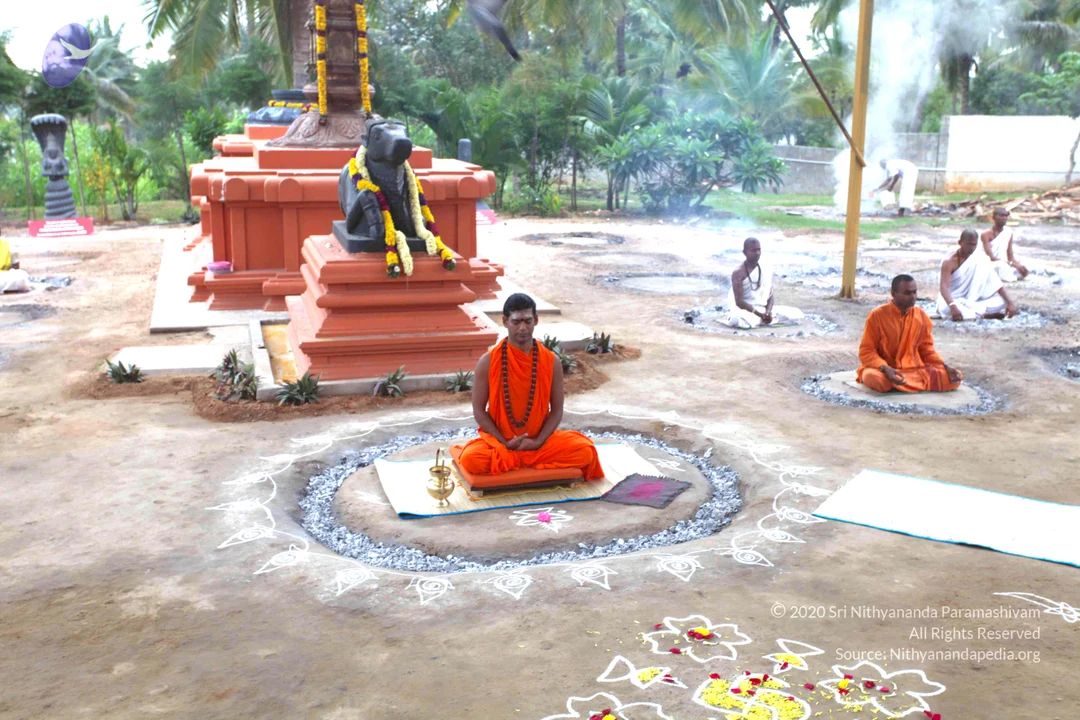
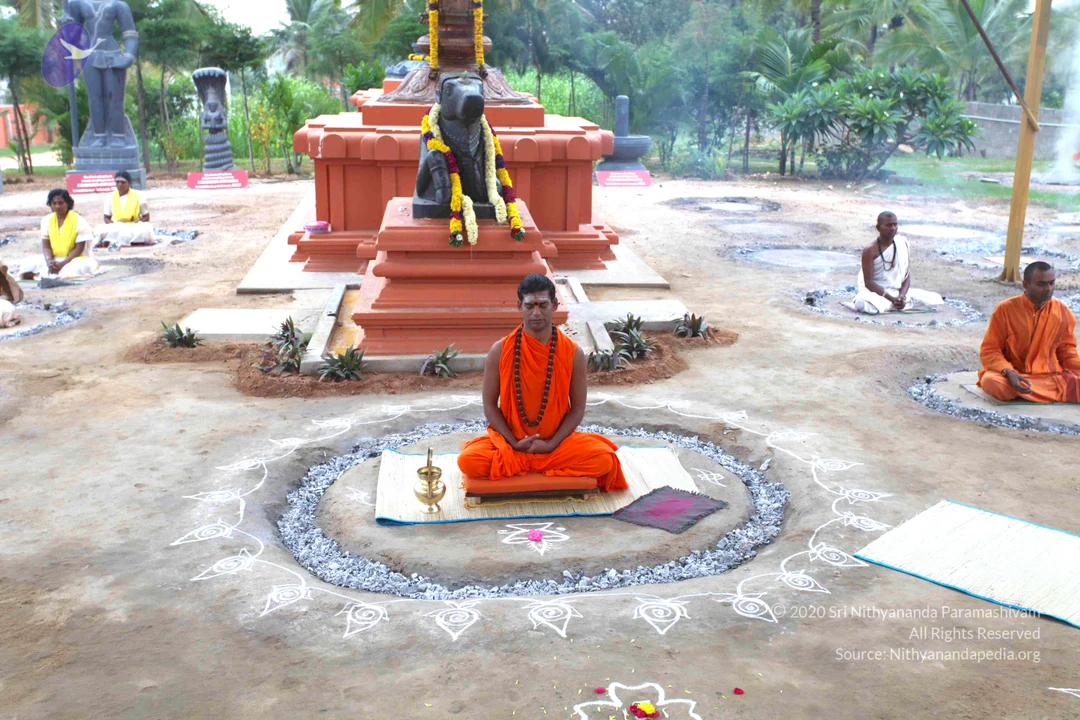
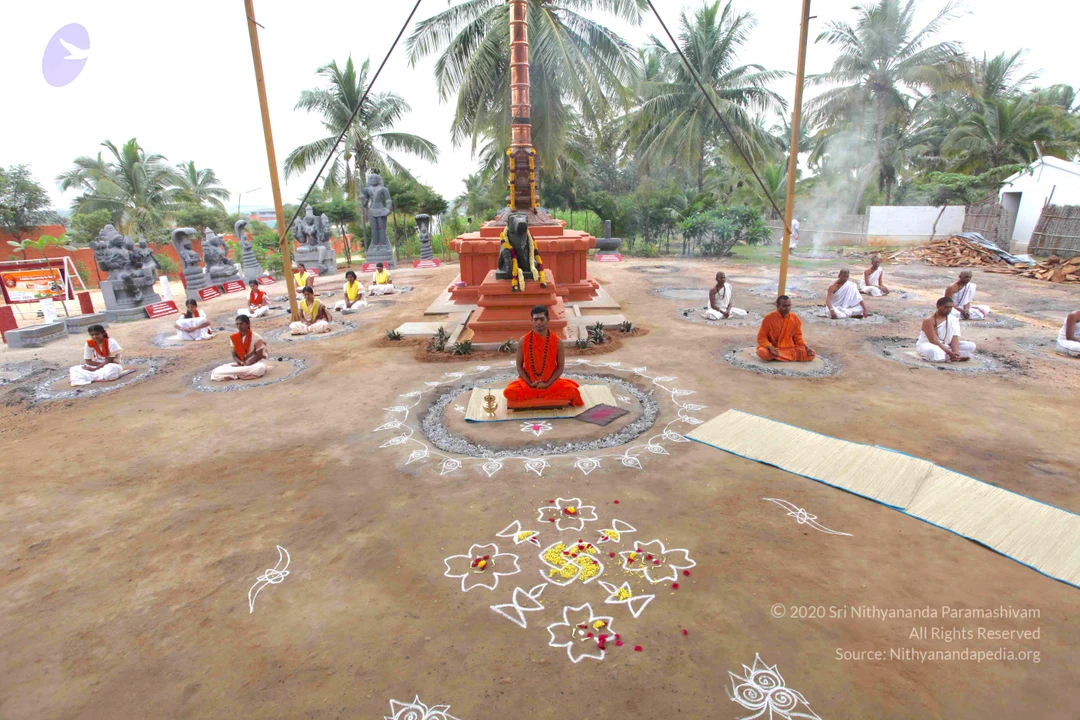
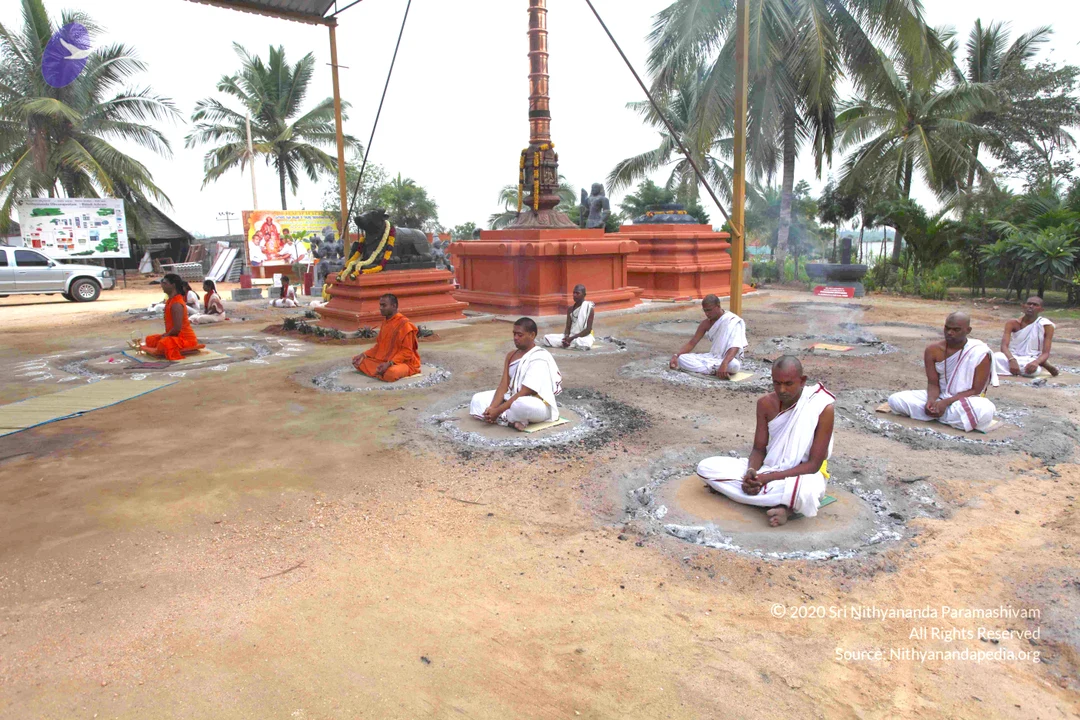
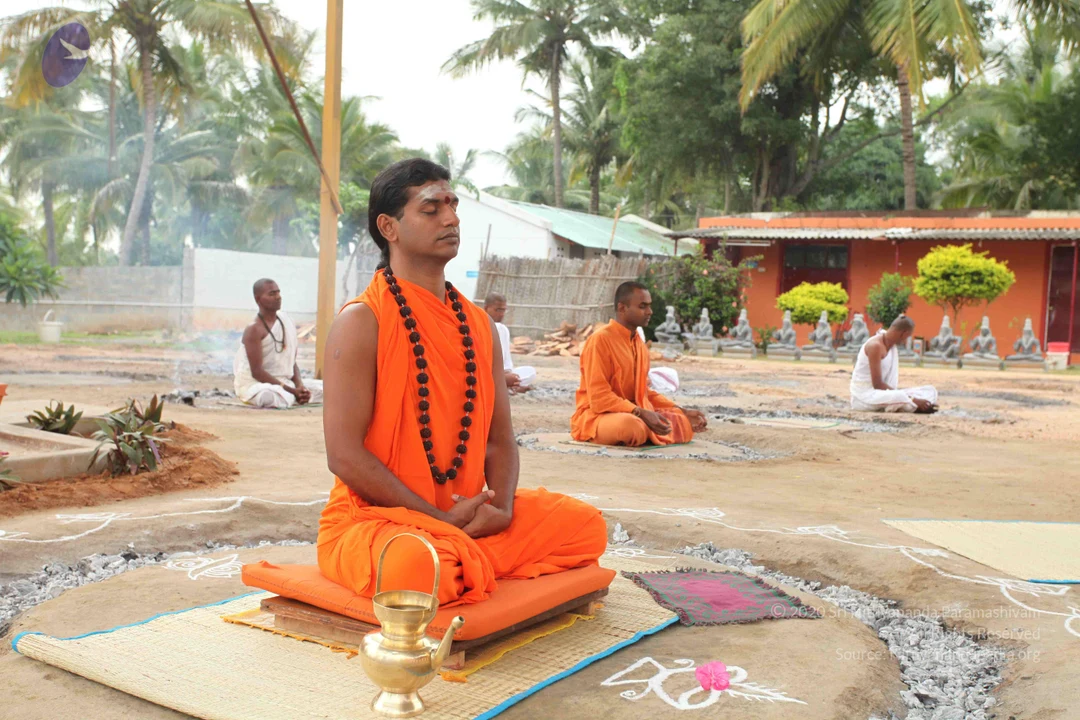
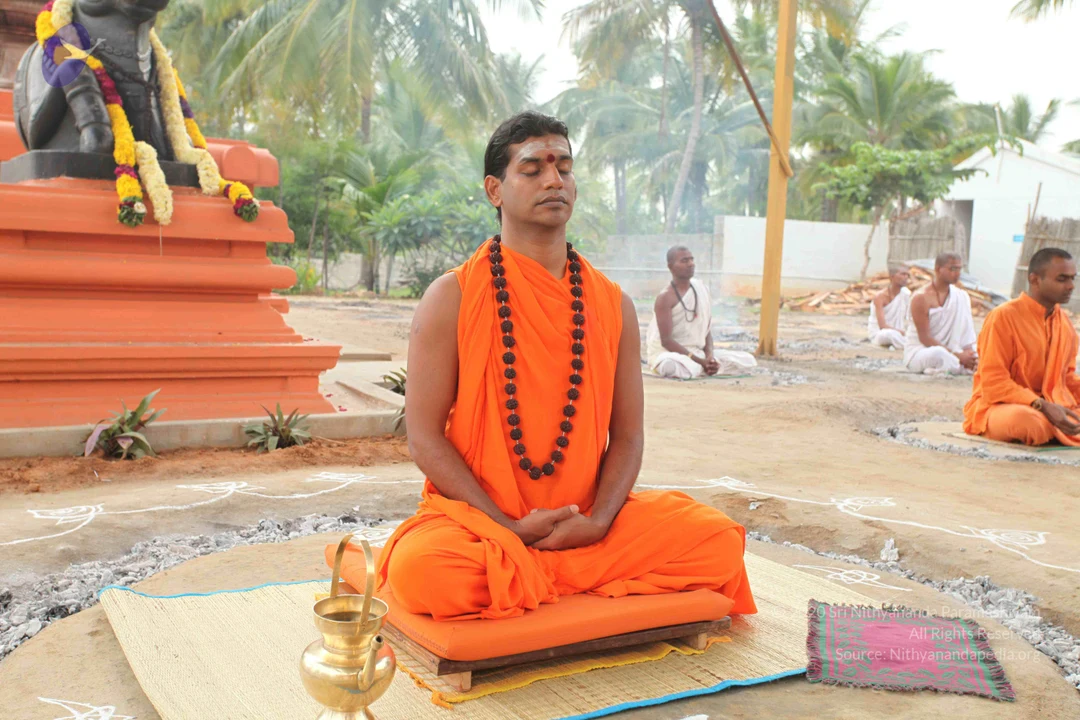
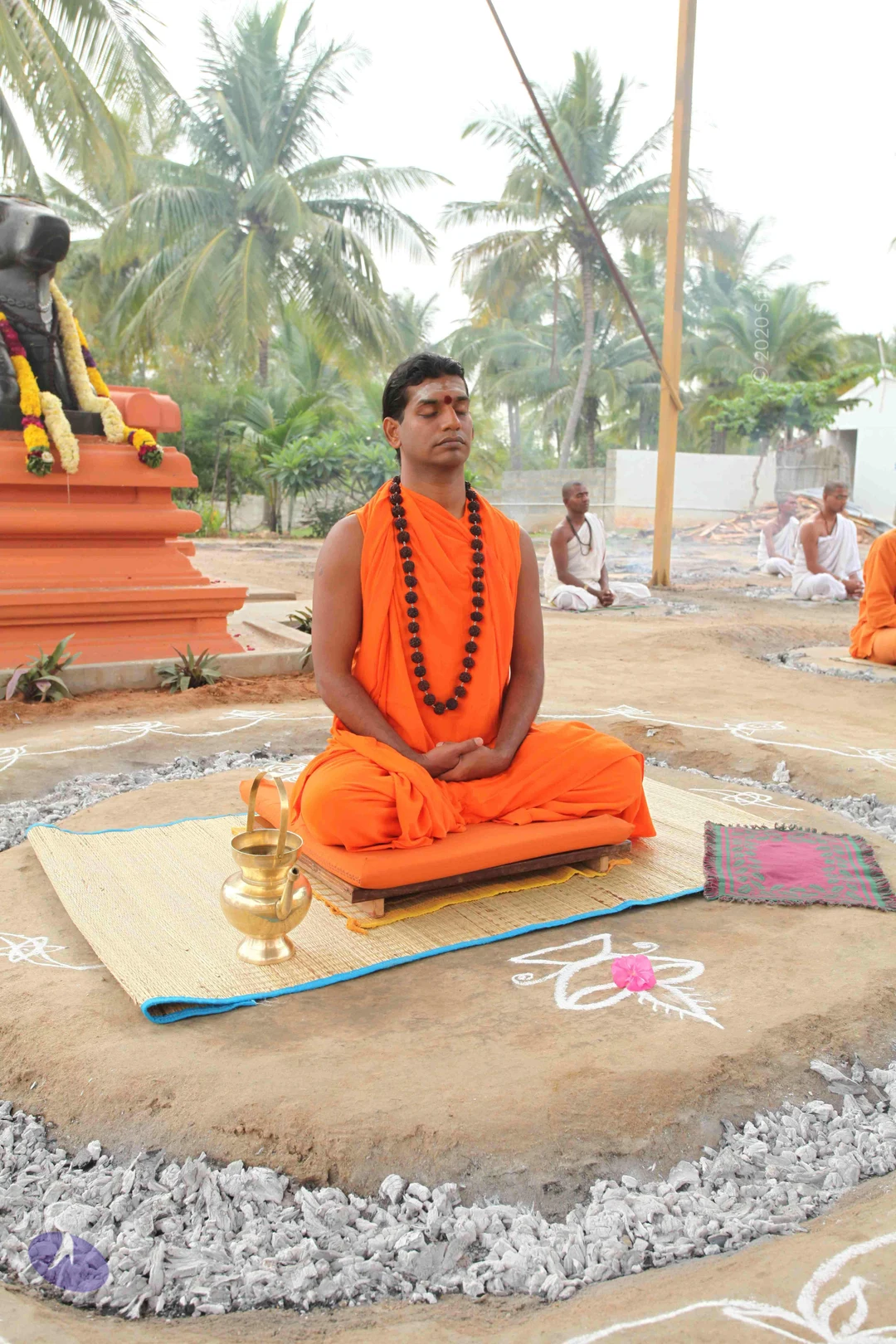
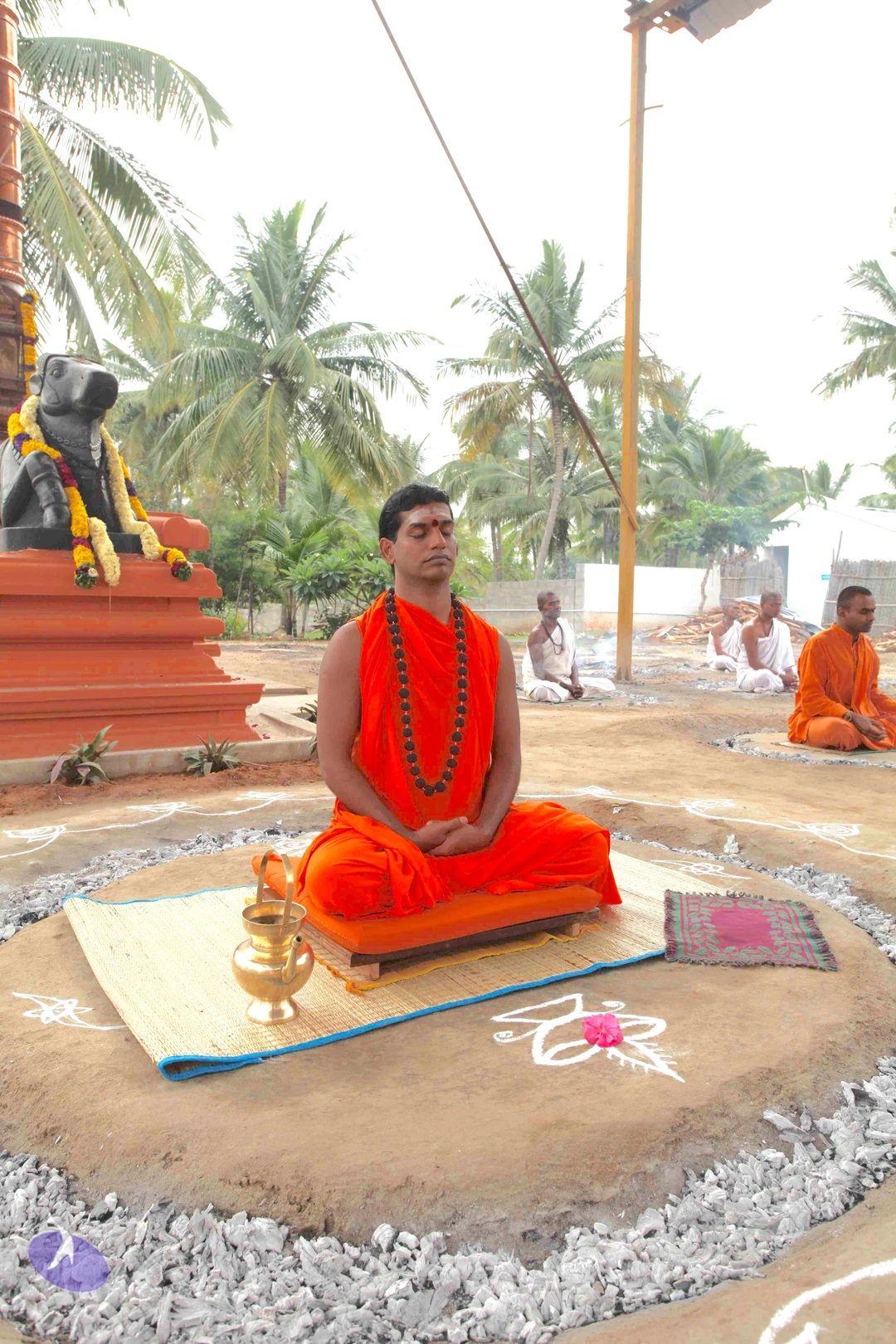
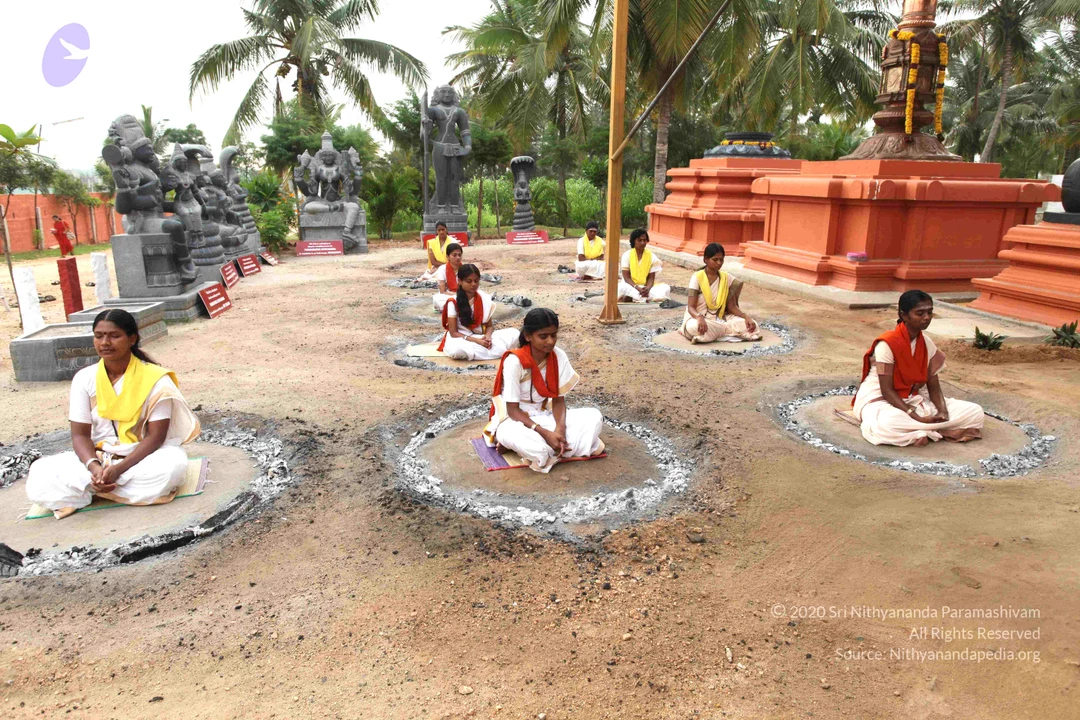
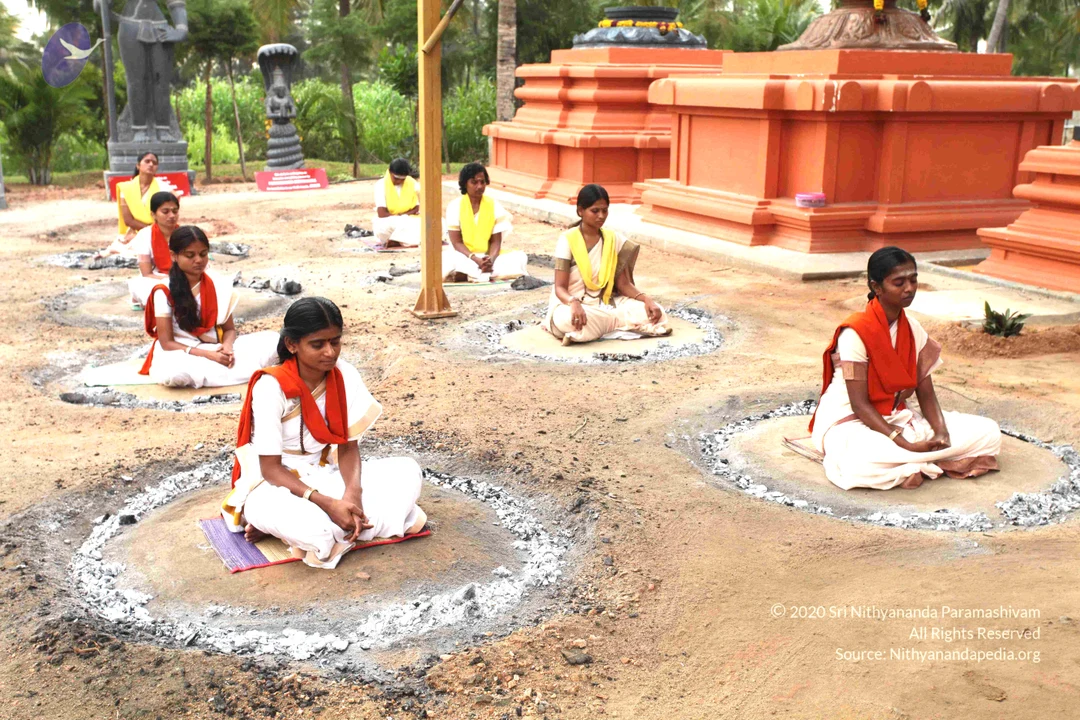
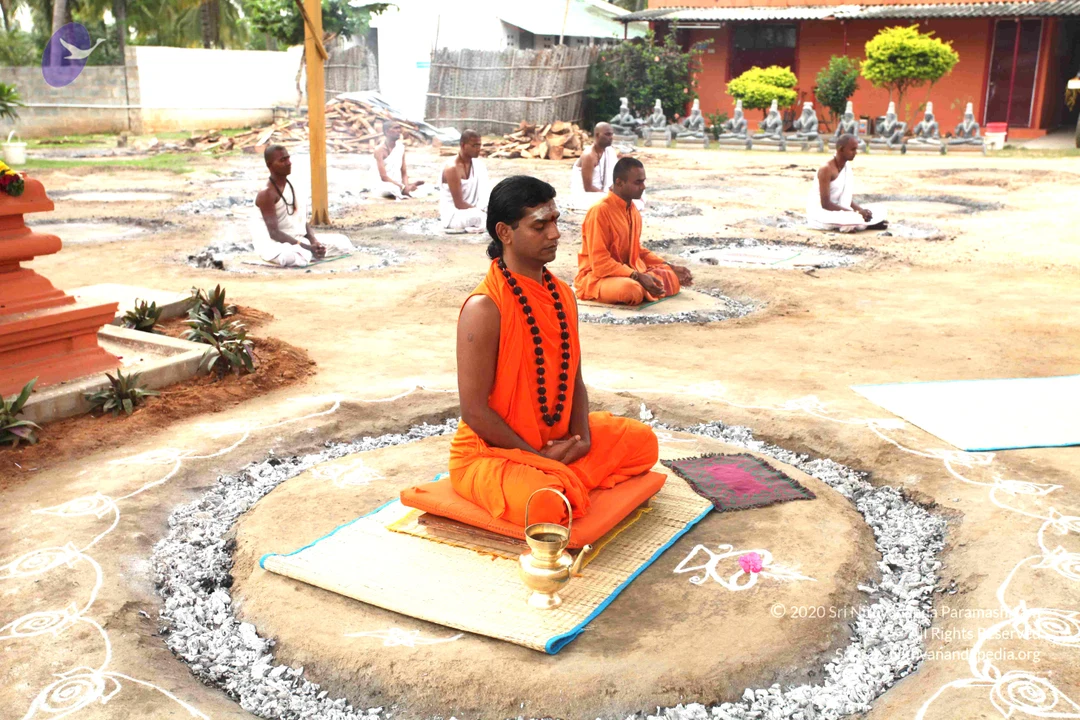
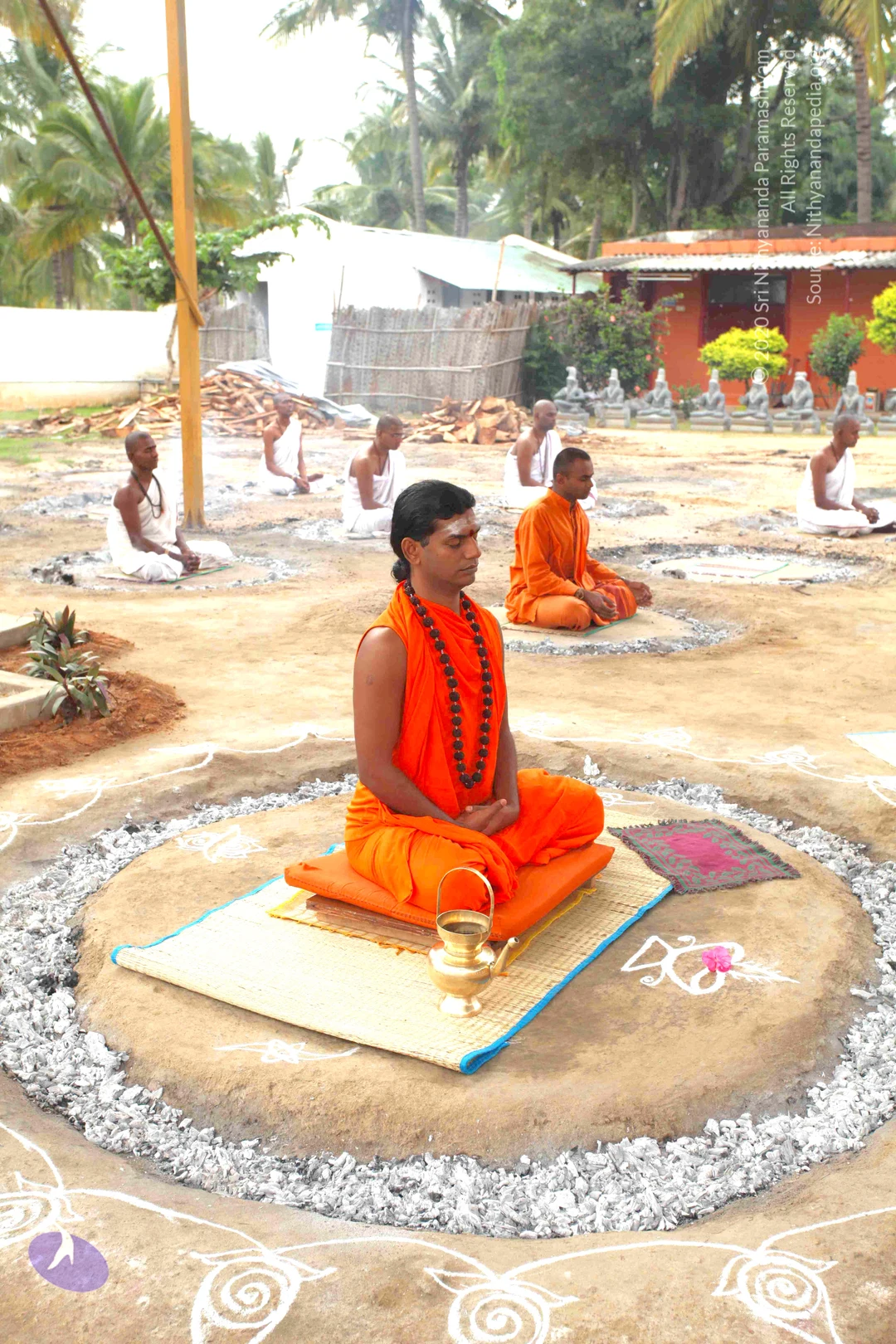
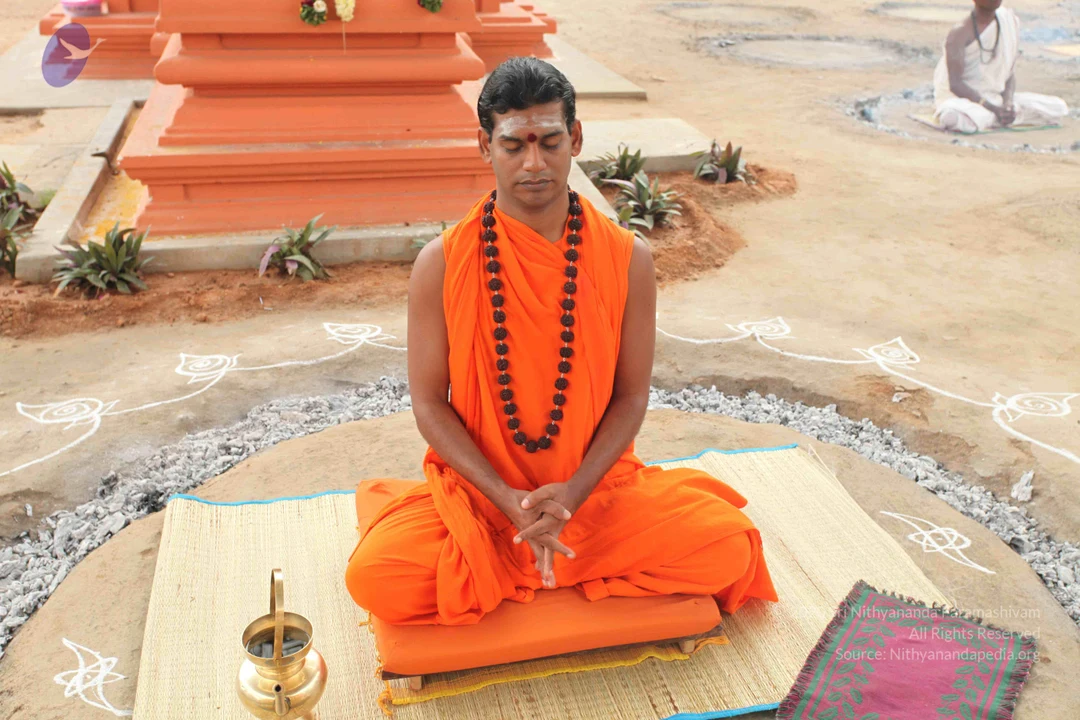
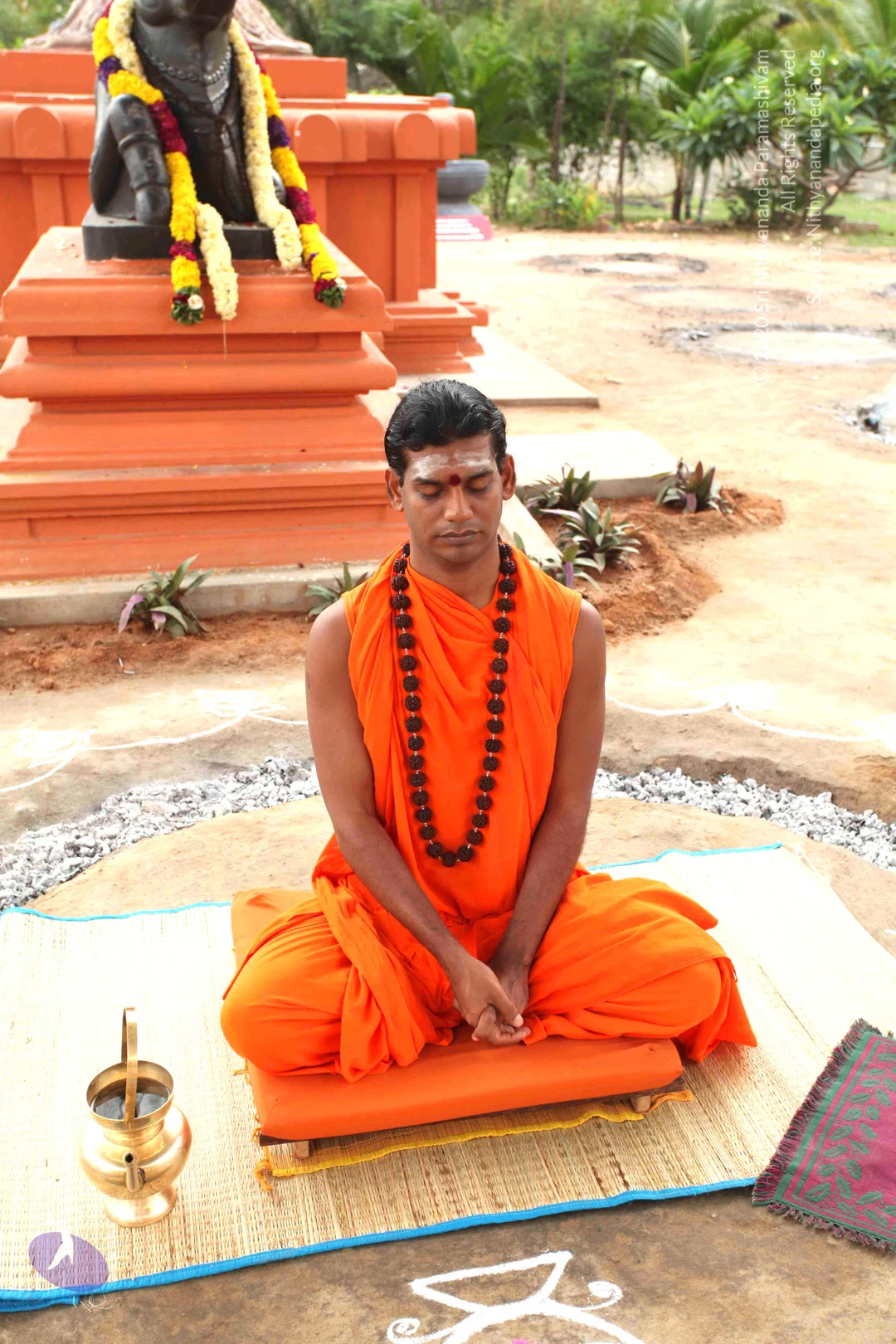
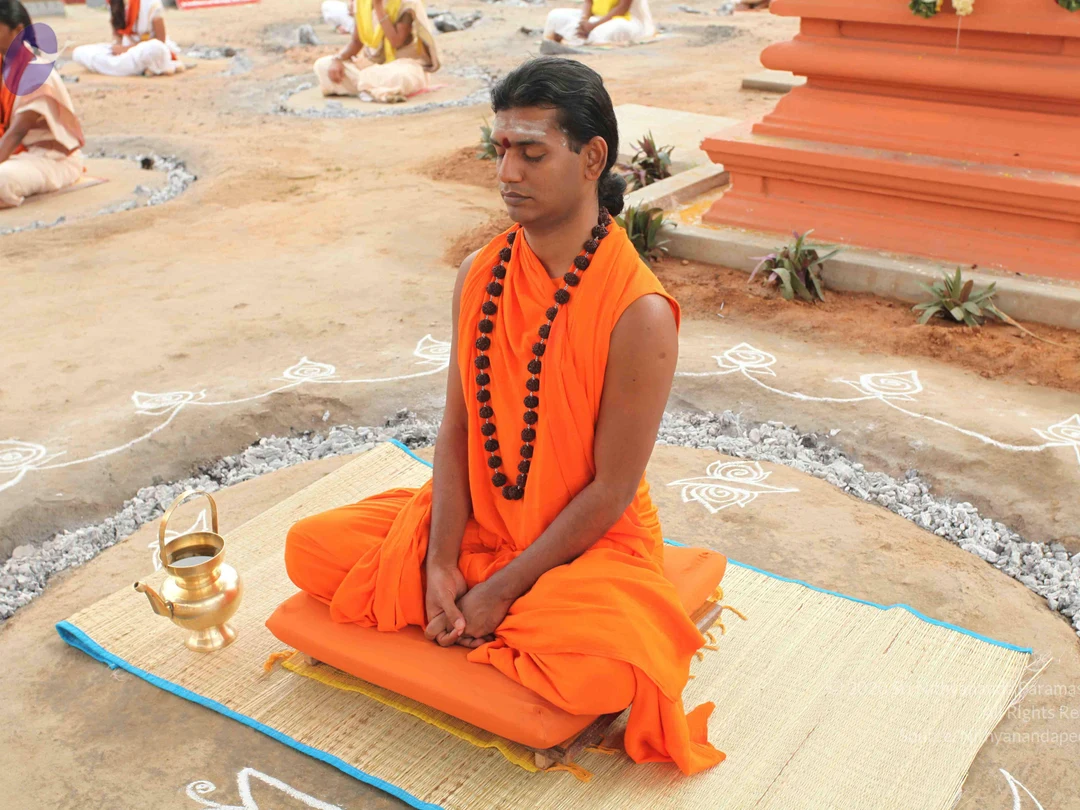
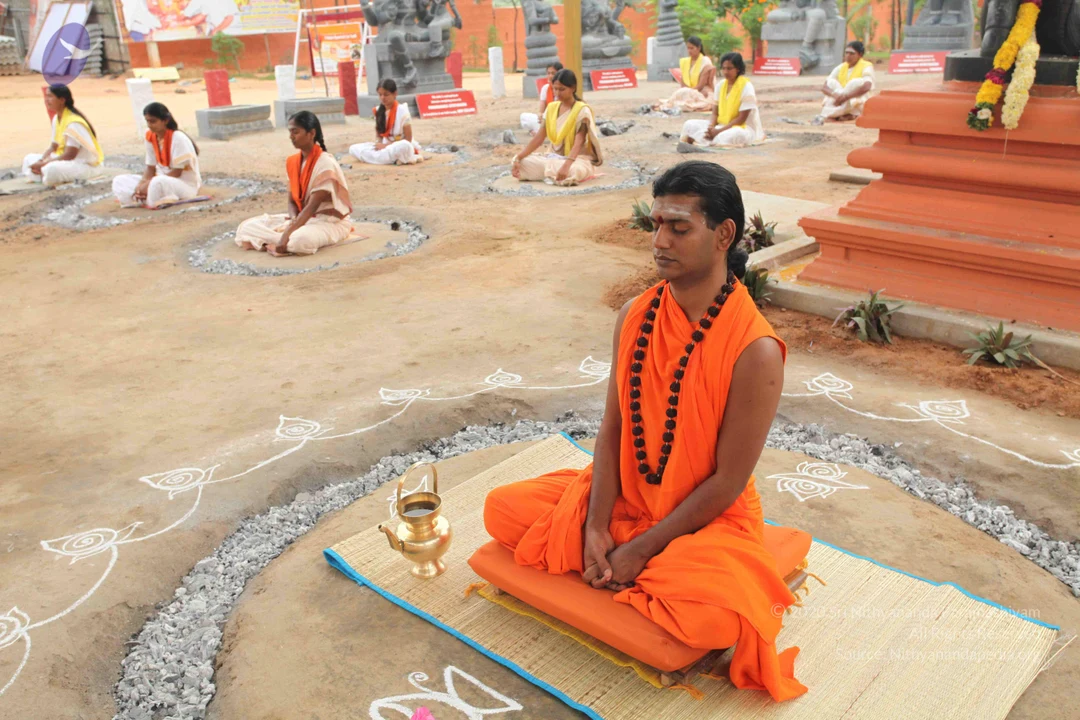
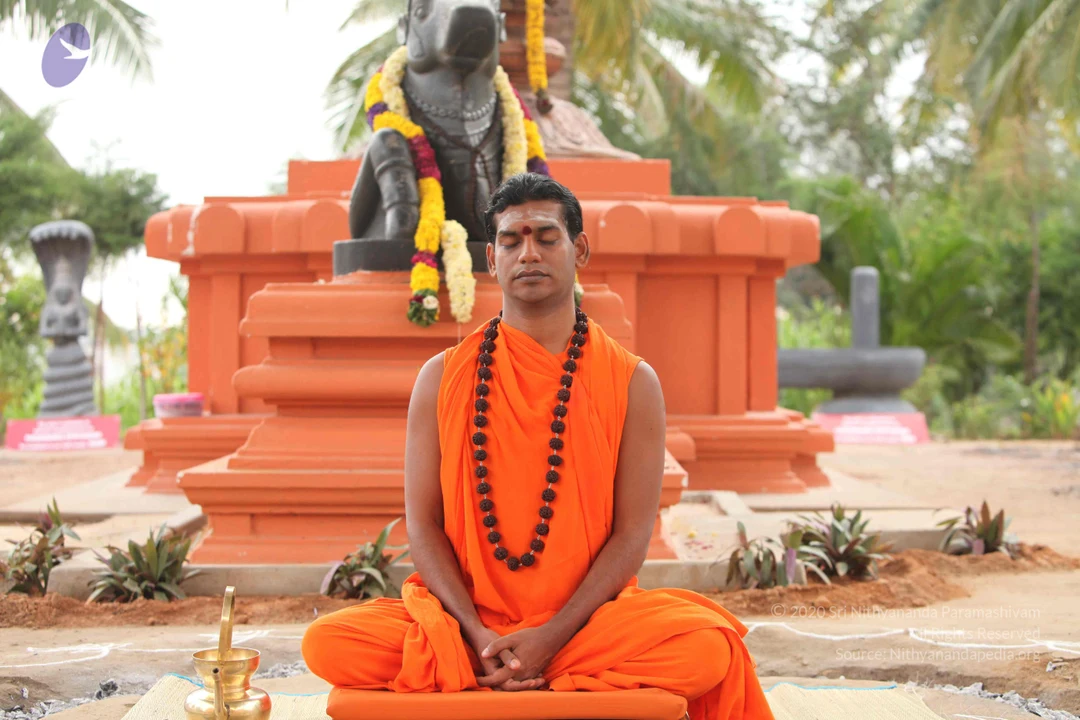
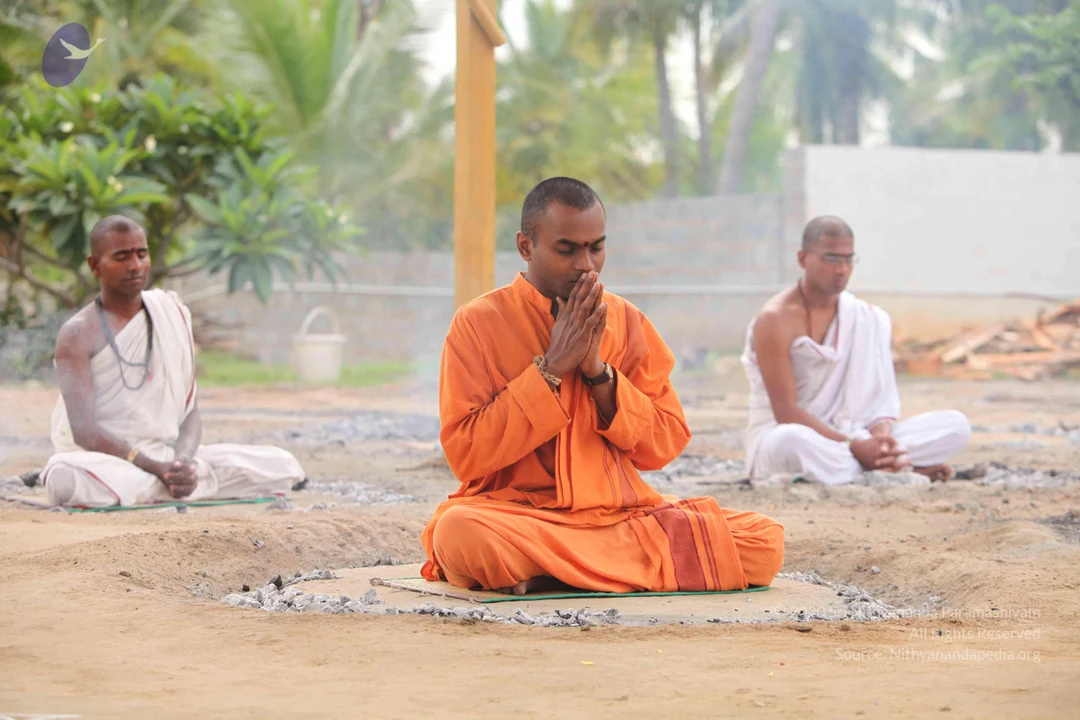
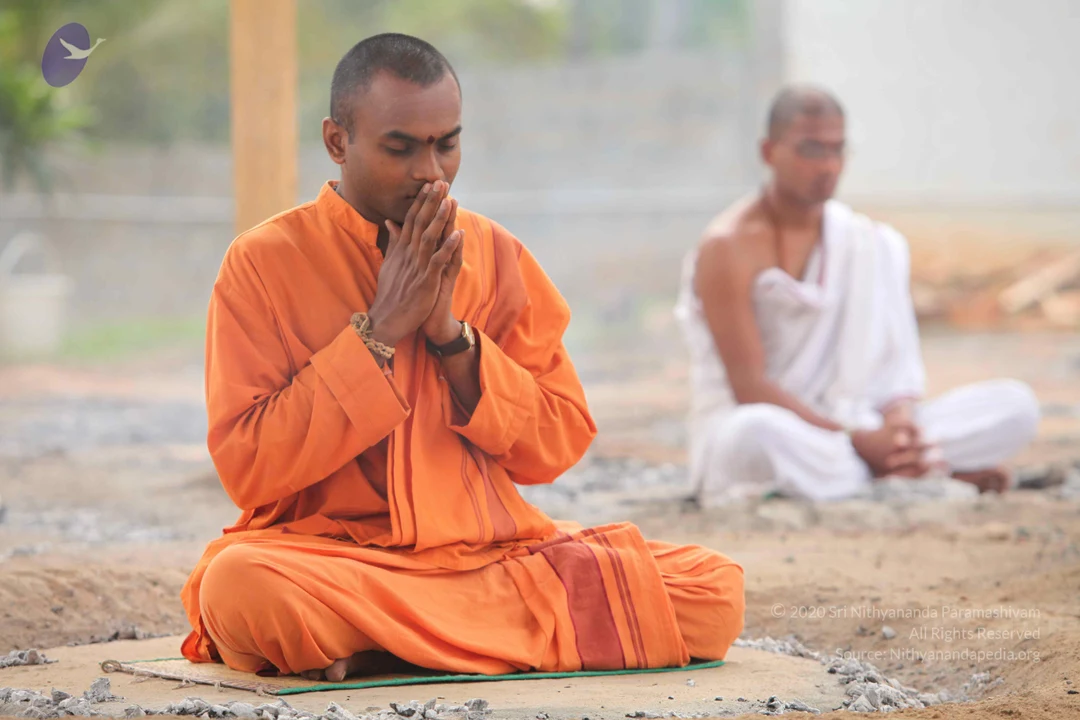
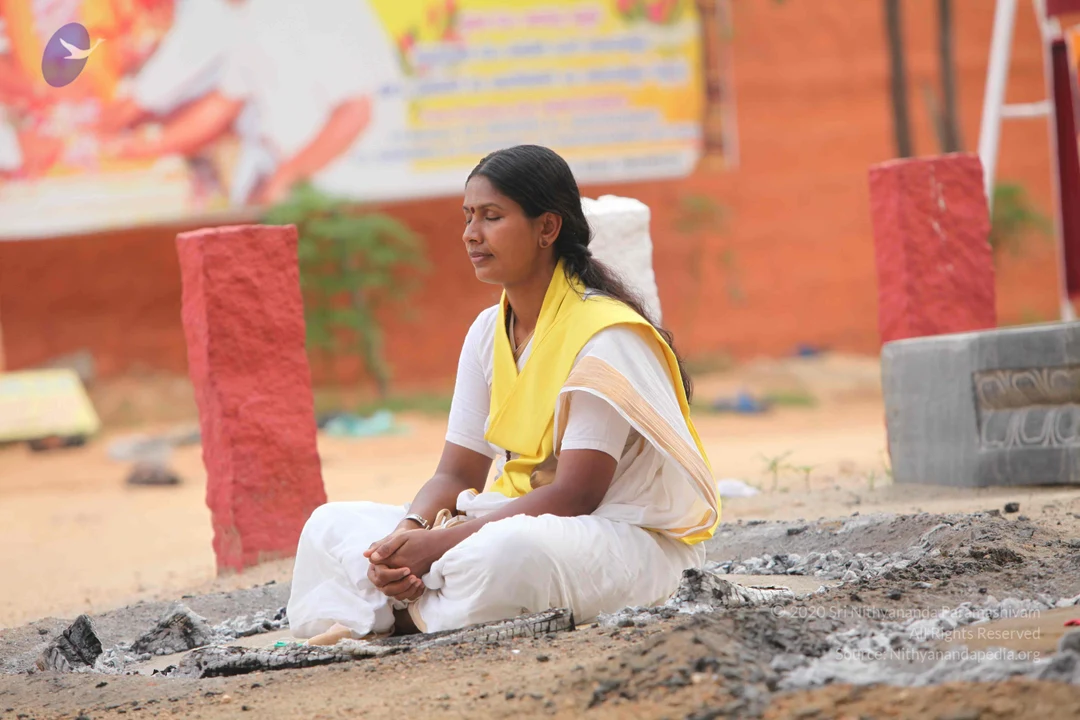
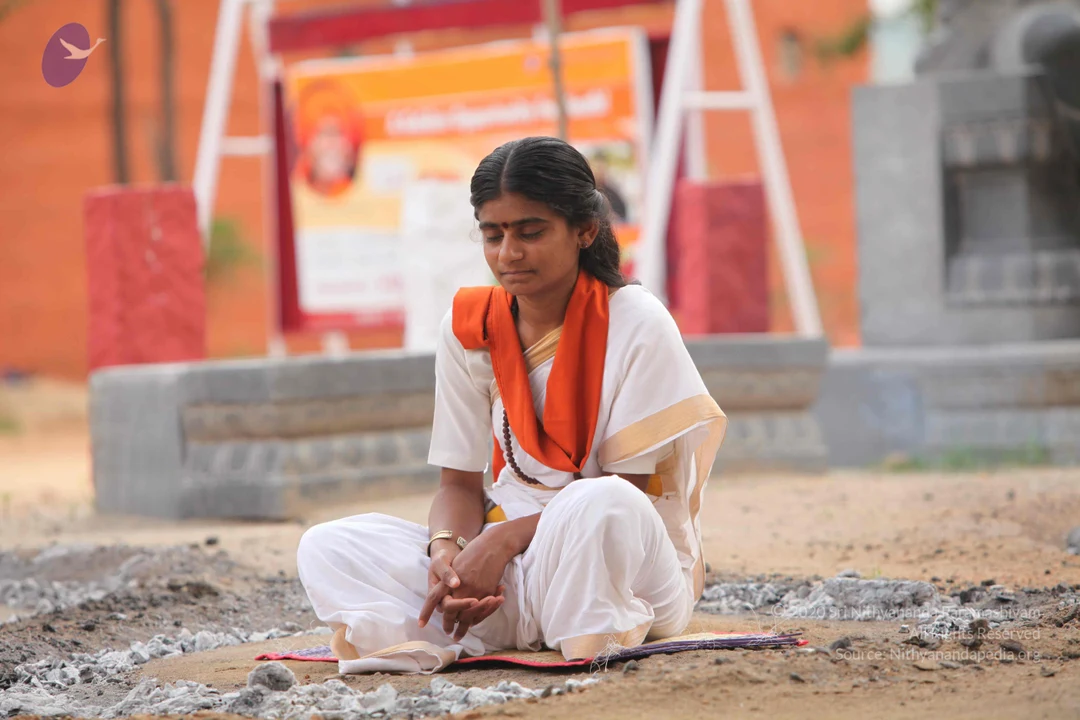
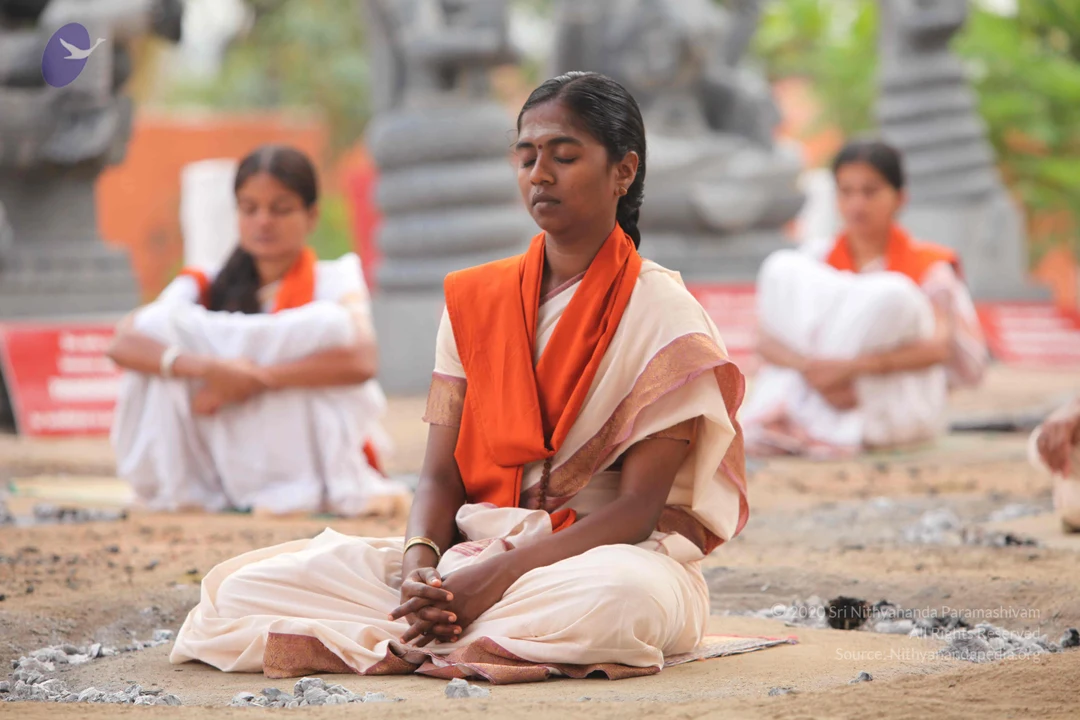
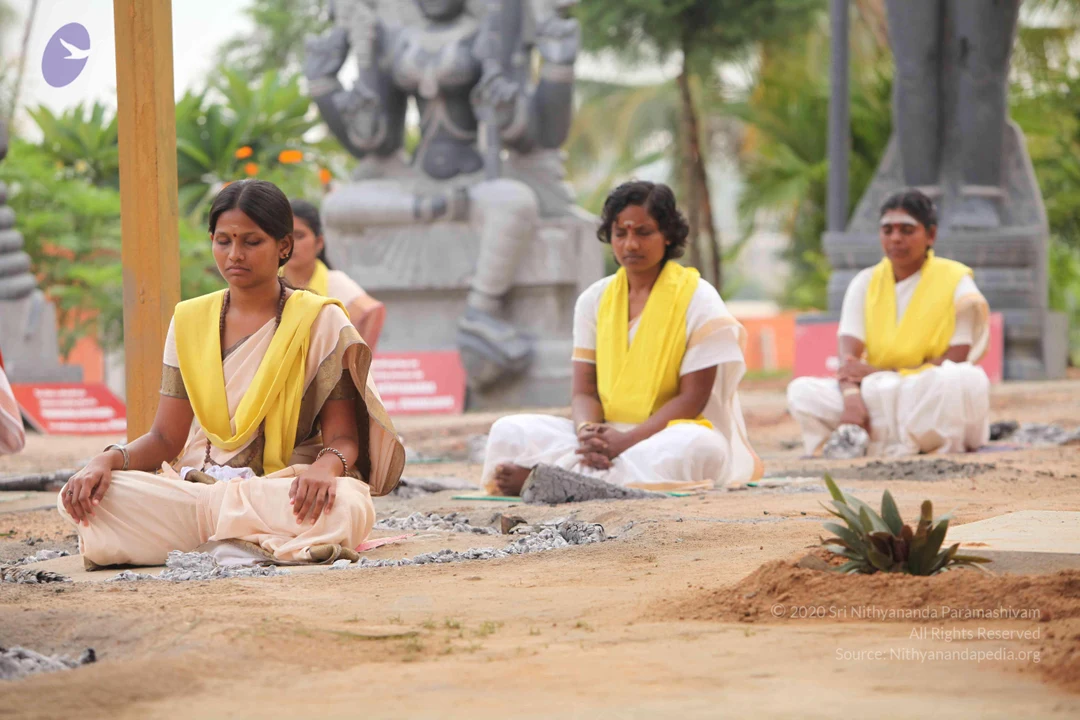
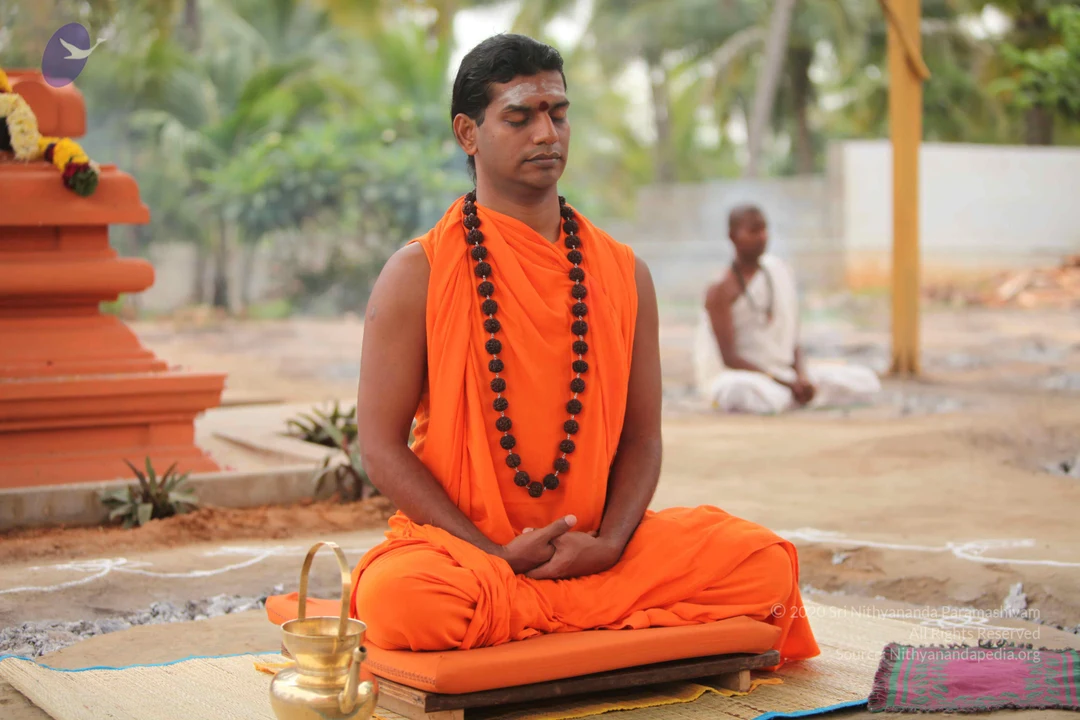
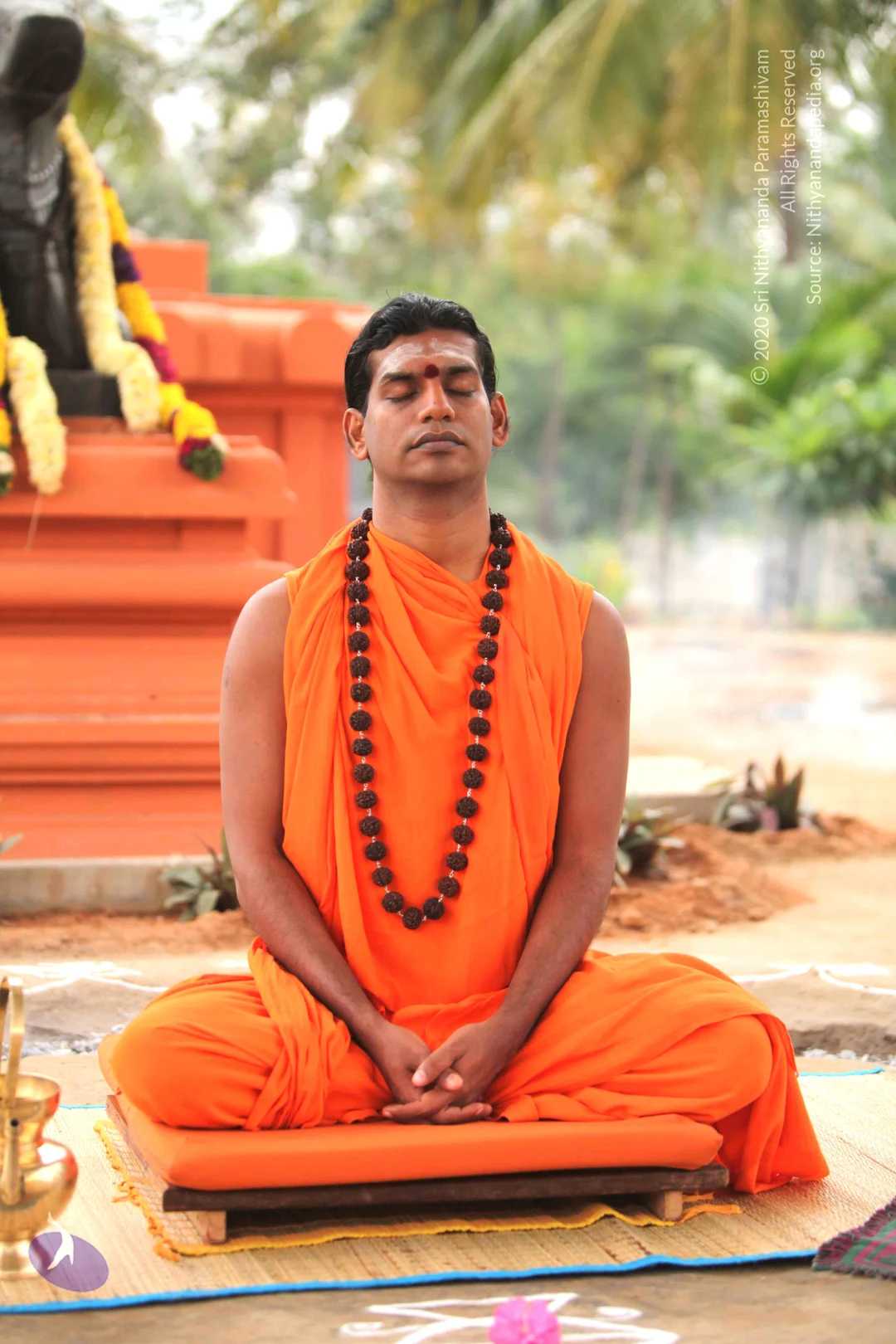
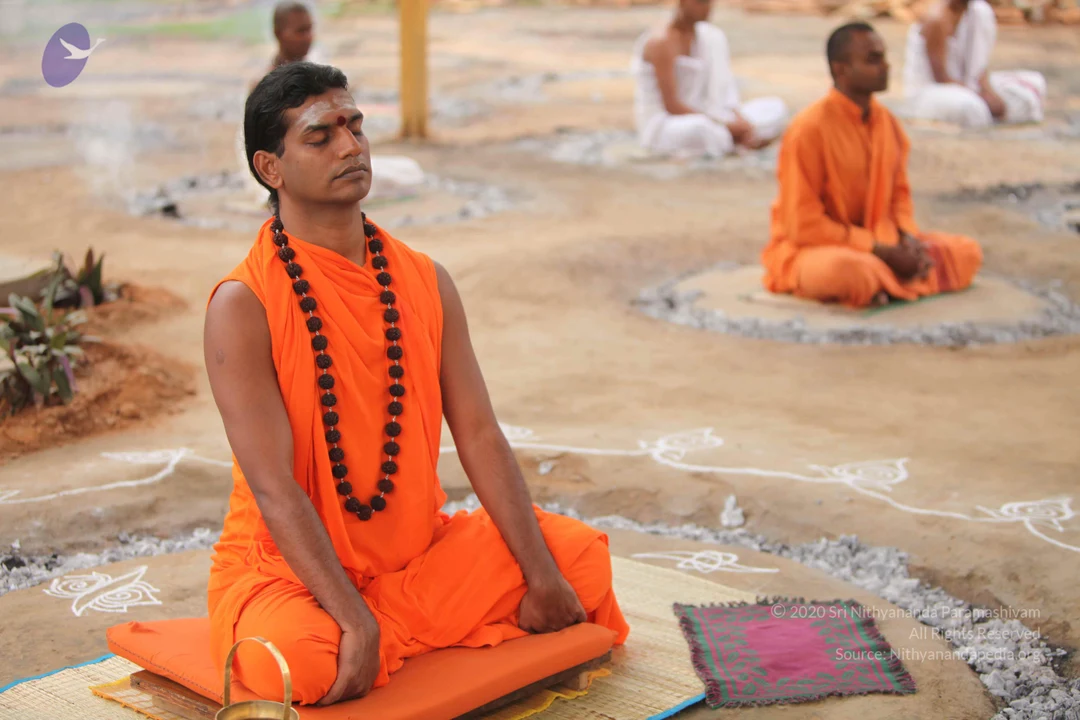
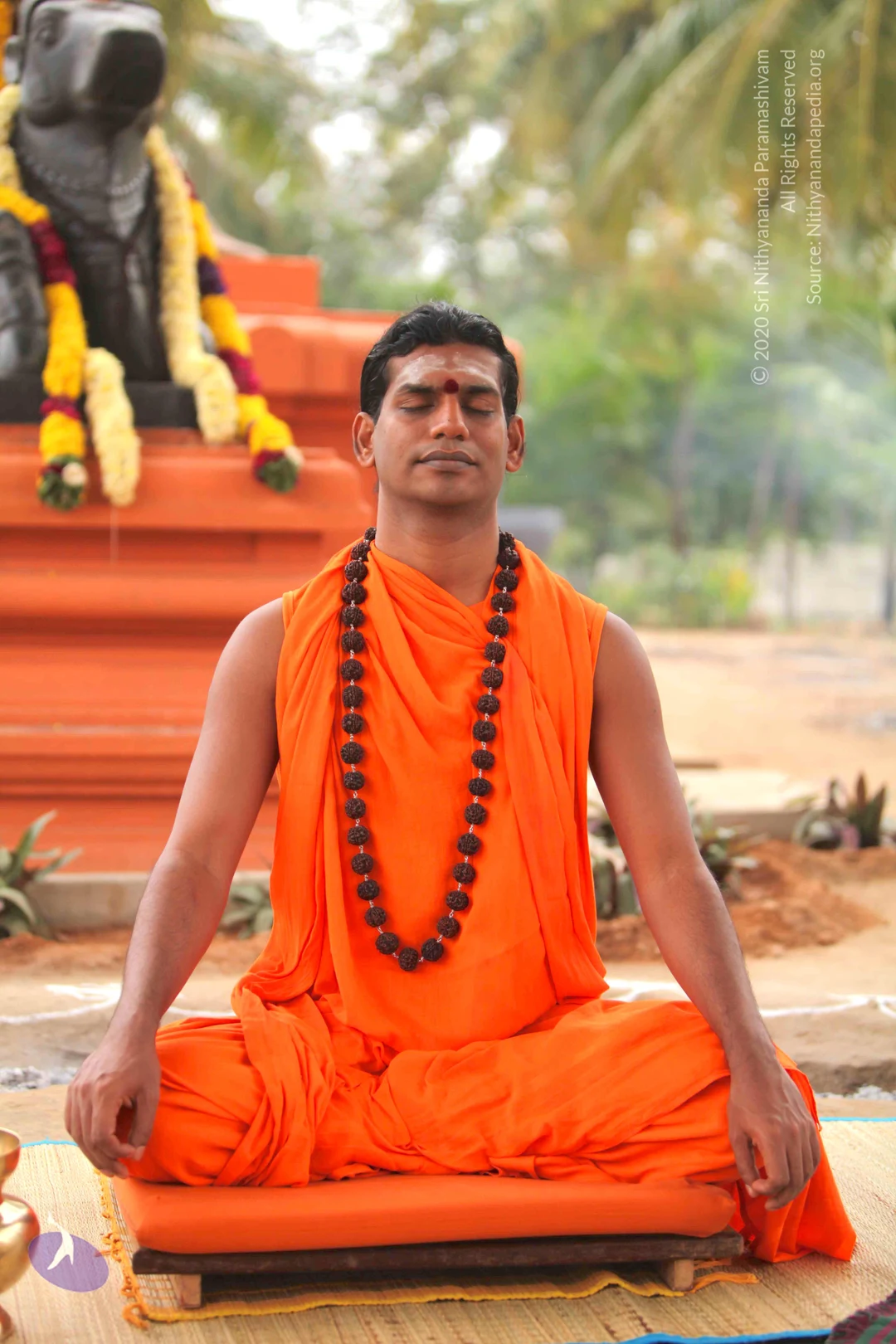
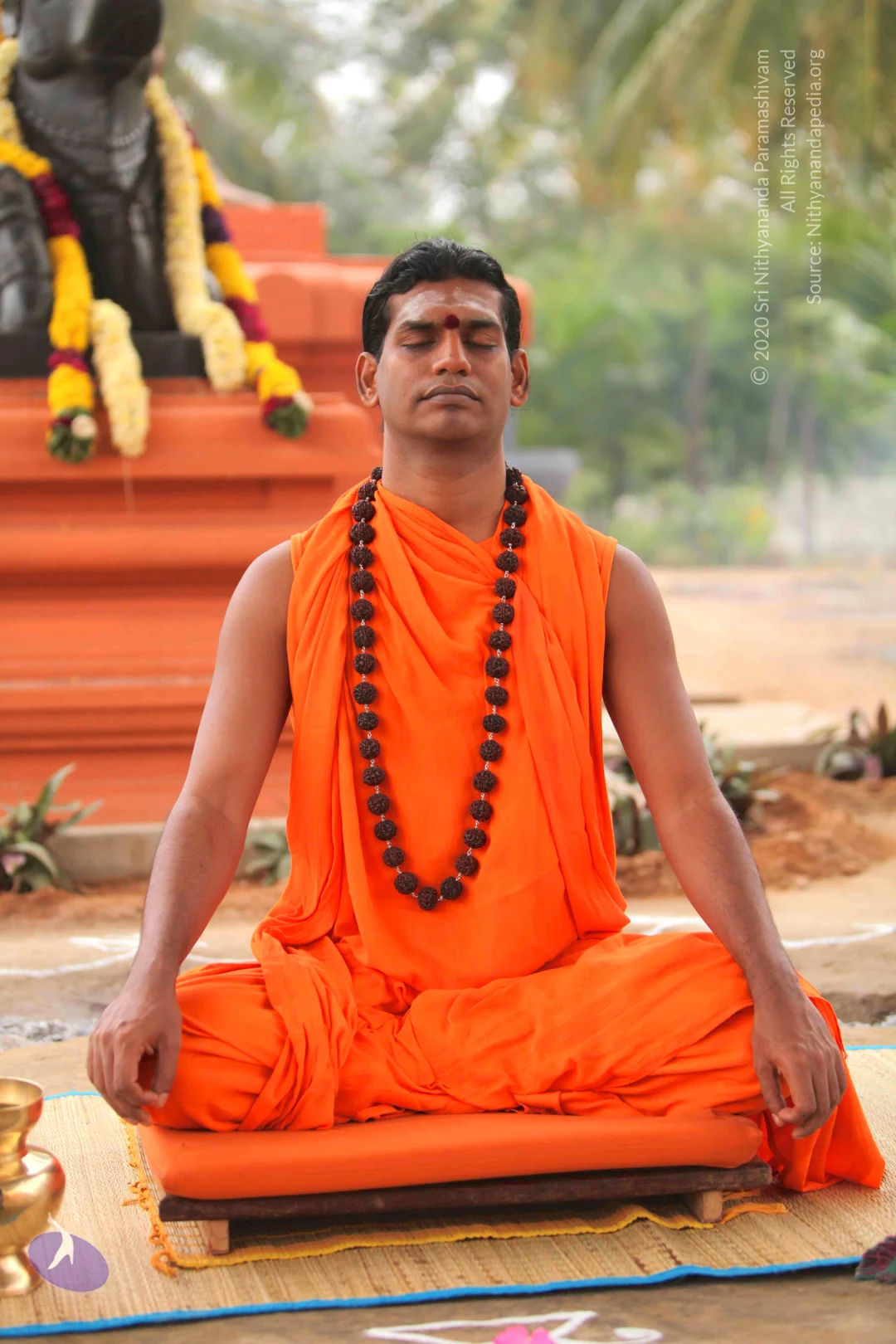
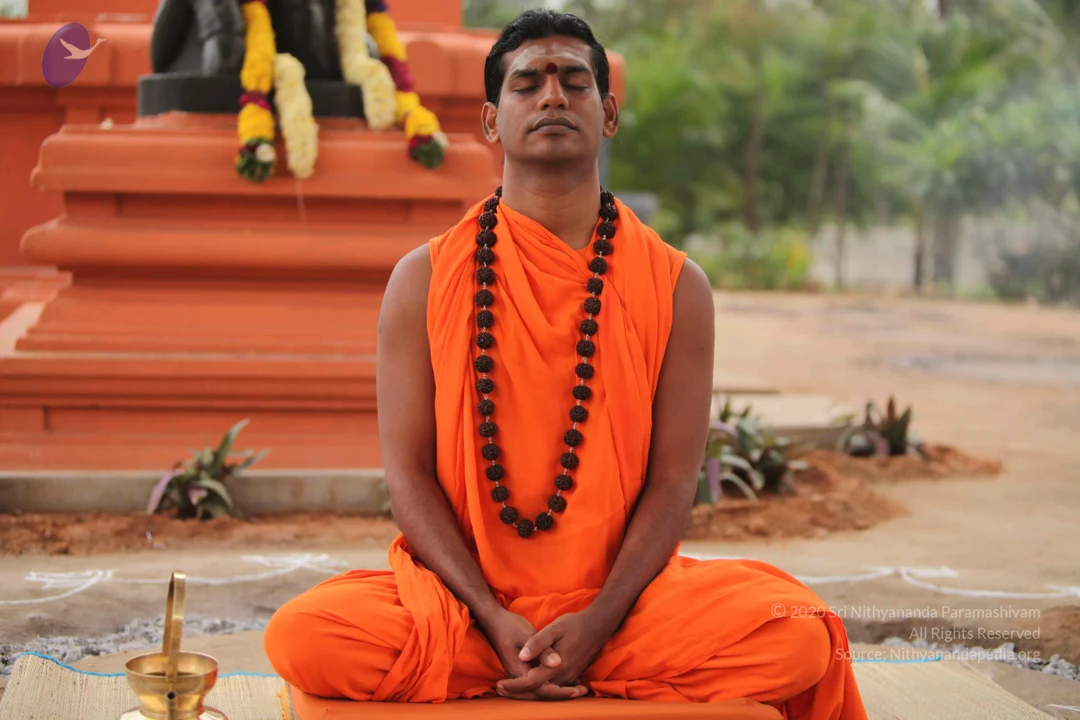
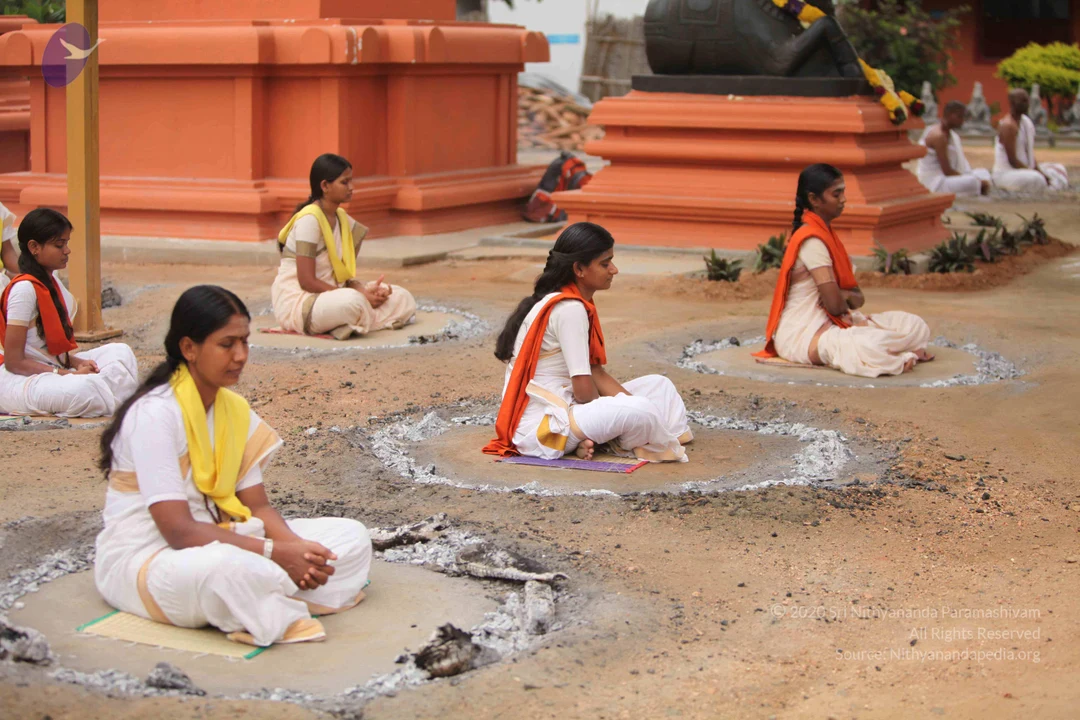
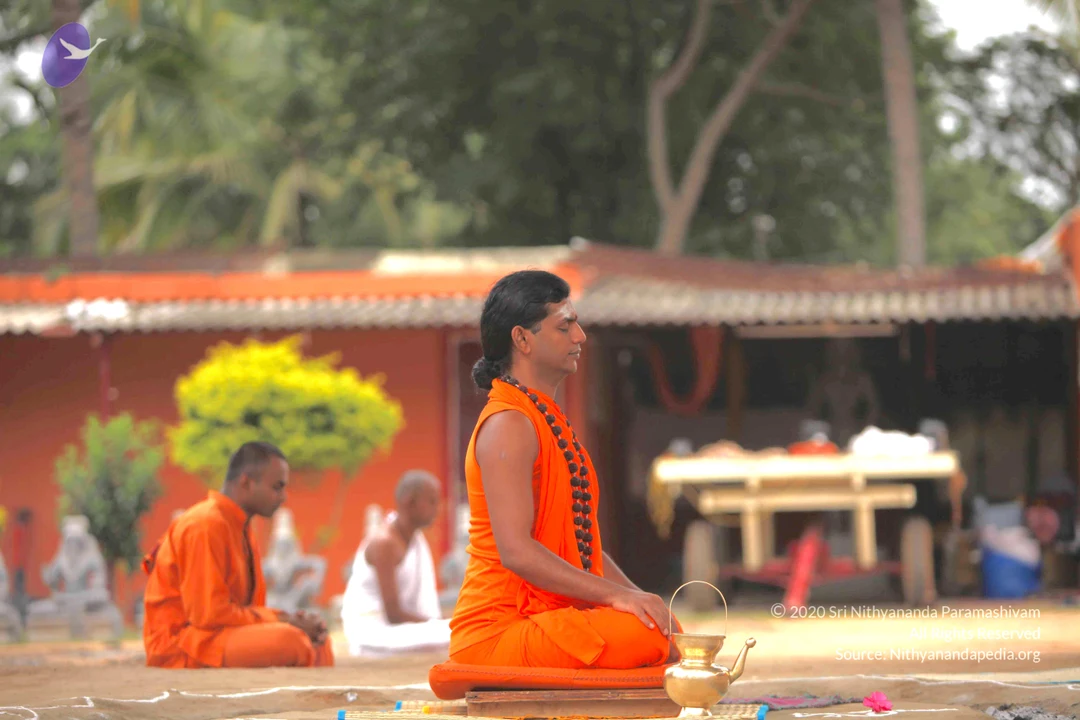
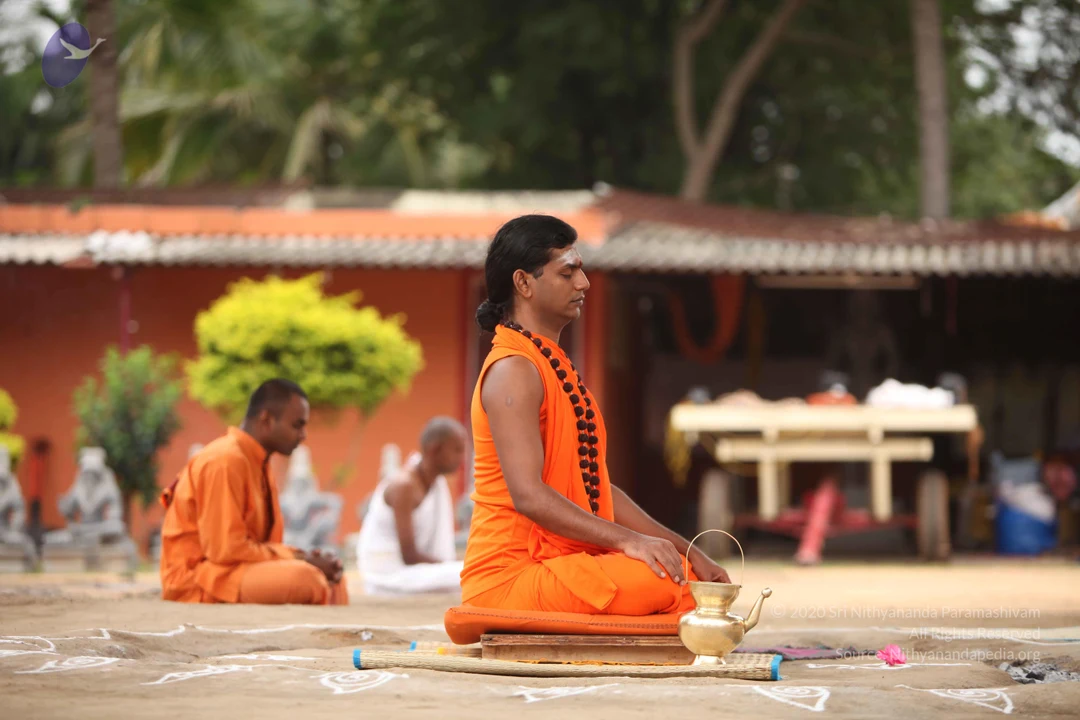
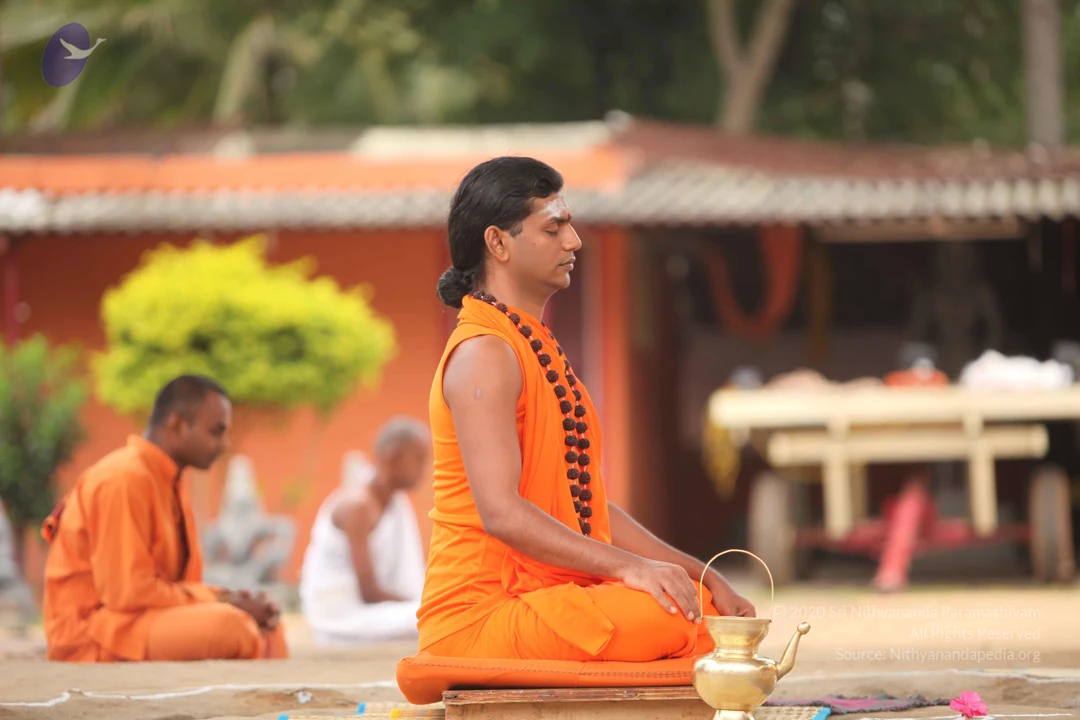
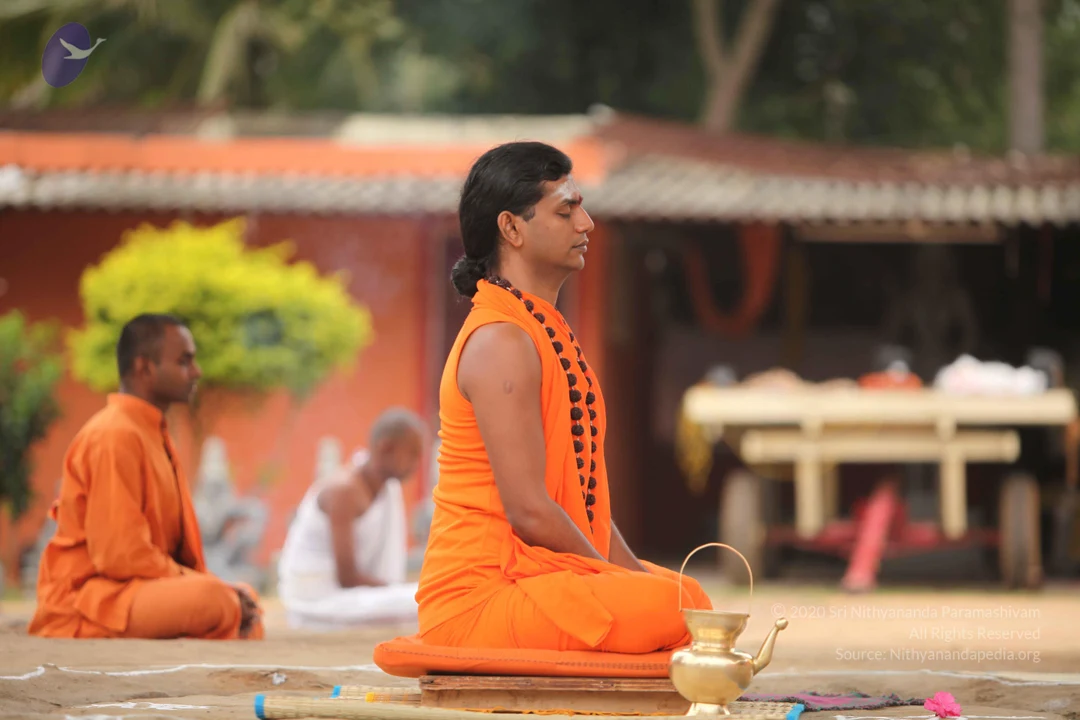
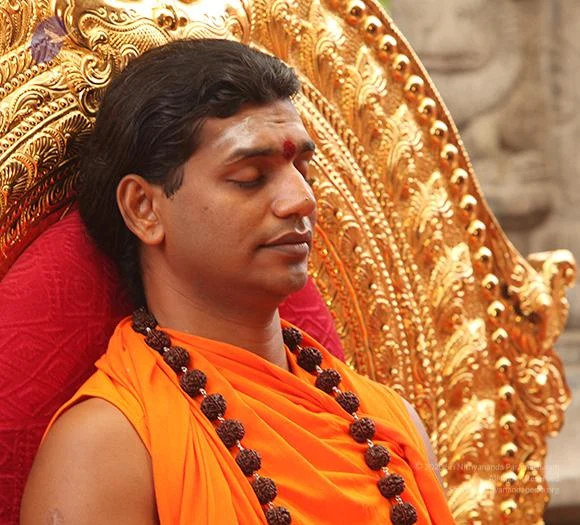
Outdoor ashram courtyard with sandy ground, tall palms and a red-and-white painted stone platform in the foreground. Behind it, a tall red-orange pillar and a red stepped shrine base hold a dark deity murti, with a kalasha and marigold garlands. A row of saffron-robed and white-clad sannyasis and devotees sit cross-legged on mats in meditation and puja around the shrine. A saffron-robed figure sits in front of the shrine, apparently leading the group, while a woman in pink sits at the left edge. Grey stone sculptures stand along the left side near a small signboard. Pigeons perch on the platform.An outdoor temple courtyard with palm trees and grey stone statues along the left, including figures and a Nandi-like bull. An orange-brick shrine with a tall flagpole wrapped in flower garlands stands at centre. Around the shrine, a line of seated participants sit in meditation on circular marked seats: a central figure in orange robes with a yellow-fringed cloth and red garland sits before a small brass lamp, flanked by people in orange, saffron and white clothes. Pigeons perch on a concrete platform in the foreground.Outdoor photo of a ritual courtyard with a tall orange-painted pillar topped by a black bull statue on an orange stepped base, decorated with yellow and orange garlands. Several people sit in meditation or prayer on mats and sand patches around the pillar, some in white clothes and some in saffron or orange robes, with yellow garments visible on others. One seated figure in saffron-orange robes sits centrally before the pillar with a small offering plate in front. Coconut palms, grey stone statues of deities and figures stand behind, and pigeons roam the paved foreground. A plain brown-topped square platform sits in the front. No clearly identifiable a person is visible as an appearance-based candidate, so the figure in the center is described only by role.Outdoor photo of a seated ritual or meditation scene in a palm-fringed courtyard. A young man in orange saffron robes and a rudraksha mala sits cross-legged on a raised circular platform ringed with grey ash, with a brass kalasha-style vessel and a small cloth before him. Behind him stands an orange-and-red stepped shrine holding a black Nandi bull statue draped with yellow and red marigold garlands and a tall copper pillar. Another man in white dhoti sits cross-legged further back on a mat, and an orange-robed person sits at the right edge. White rangoli kolam designs with yellow and red flower petals decorate the ground, and two white doves are visible in the foreground.Outdoor temple courtyard with a red stepped shrine holding a black Nandi bull statue garlanded with orange and yellow marigolds, palm trees behind. A man in saffron-orange robes with rudraksha mala and tripundra marks sits cross-legged at the centre of a chalk-drawn kolam with flower petals, a brass oil lamp before him. Several men in white dhoti and shawls sit meditatively on small mats within circular ash or sand platforms to the right, one in saffron. Smoke rises from a fire pit in the background. The posture is seated meditation or puja. The central figure's appearance is consistent with the page's a person label but is not distinctive enough to confirm.Outdoor ashram scene with a central seated figure in orange robes and a rudraksha mala, sitting cross-legged on a mat in front of a red-orange stepped plinth bearing a black Nandi bull statue garlanded with yellow and orange flowers. Behind the plinth stand grey stone sculptures and palms. A brass oil lamp sits before the central figure on a white-bordered ring of crushed paper and white kolam patterns and petals decorate the ground. Around the courtyard, several other people sit in meditation: two in yellow and white, one in white, and one in orange robes, each on their own mat within a circle. Incense smoke rises at the right.

September 22 2010

Original wiki page
Contents

Title:

How Not to Miss the Master

Narration:

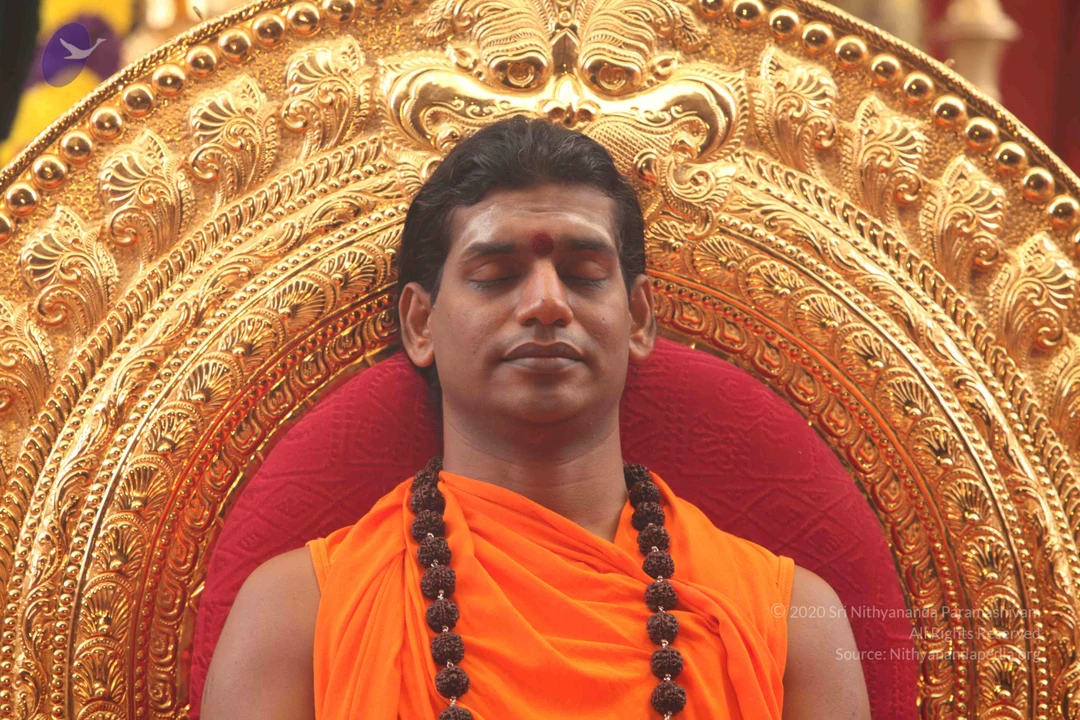
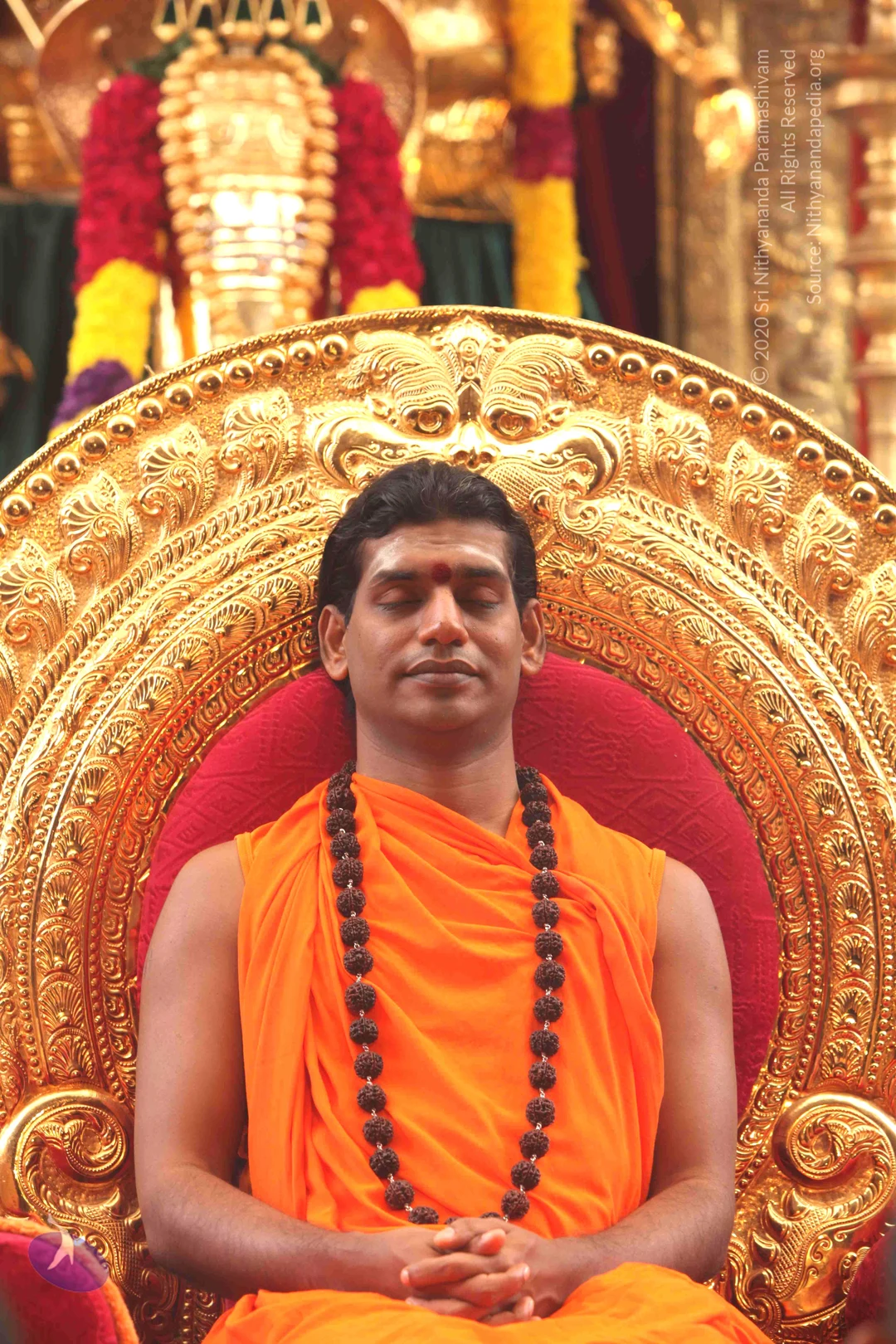
The Supreme Pontiff of Hinduism, Jagatguru Mahasannidhanam, His Divine Holiness, Bhagavan Nithyananda Paramashivam, expounded on the Cosmic Principles of Missing during a live public talk - Nithyananda Satsang. In this talk entitled How Not To Miss The Master, The Supreme Pontiff of Hinduism revealed that If you have the guarantee he (Guru) loves you, that missing will not be there. It is the fear that He may not love you anymore is the root of the missing. His Divine Holiness (HDH) shared his experience when He disrespected Arunagiri Yogeeshwara by bringing Mata Vibhutananda Puri between their relationship; He describes the relationship with Arunagiri Yogeeshwara, sharing that He tasted that extreme missing - a very painful feeling that Arunagiri Yogeeshwara may not love Him anymore. His Divine Holiness reassured everyone that the cosmos keeps everything alive to show some beautiful qualities to the world and will keep them alive just to show the courage which He is radiating, with which all of His disciples are standing with Him.

Video and Audio:

How Not to Miss the Master: Nithyananda Morning Message

VideoAudio

Transcript:

Sadashiva samarambam shankaraacharya madhyamaam Asmadaacharya paryanthaam vande guru paramparaam.

1:01 Today’s subject is How Not To Miss The Master. Fifteen days you guys are going to be physically away. When you understand master is not a mass you will not miss. As long as you think he is a mass you will miss. If somebody is mass he cannot be master if somebody is master he is not just mass. Who has mastered the mass is master.

2:10 I have the right to talk about not missing the master because I know the extreme missing and extreme fulfillment. When Arunagiri Yogeeshwara, when I felt I disrespected Arunagiri Yogeeshwara by bringing Mata Vibhutananda Puri between our relationship; my relationship with Arunagiri Yogeeshwara, I tasted that extreme missing. It is not only me missing, suddenly feeling that he may not love you anymore. That’s too painful. If you have the guarantee he loves you, that missing will not be there. It is the fear that he may not love you anymore is the root of the missing.

3:12 Understand even when physically I was not there with you guys you all loved me, stood with me. So I will stay with you, have a deep love for all of you guys. So understand I have a deep love for all of you. I still live in this body drag this body just to be with you all. So understand this next fifteen days till I come back and see you guys physically, I give you one process. You all had process for 40 min, 20 min, 1/2 an hour, 2 hour, 3 hour. I give you one process for this whole till I come back and see you guys. This one process; don’t miss the master you won’t miss me; just this one process I LOVE YOU. I am with this as process. Just be with this one process I Love You, I am With You. Just have this as a process not as my word not just as my consolation, have it as a process, you will experience me; the real me. I will be with you guys. Nobody can do anything.

4:47 Understand, I am with you, I will be with you, we will live and radiate enlightenment, go on creating enlightened beings on the planet earth. We will stand. Just the courage I am showing, I am worthy of living. The courage with which we are all standing together we are worthy of living.

5:14 Understand anything worthy of living cosmos does not destroy. We are most beautiful flowers of cosmos. It will stand with us. Don’t worry, we are worthy of living and cosmos will let us live. Cosmos wants us to live. It wants to show to the world the courage. You see cosmos keeps everything alive to show some beautiful qualities to the world. It will keep us alive just to show the courage which I am radiating, with which all of you are standing with me. Just to show the example for courage, cosmos will keep me and all of us alive doing our work.

6:06 Let us stand with it. Let us stand with it. Let us offer our whole body and mind into the one fire of courage. Let us disappear into courage. Let us disappear into courage. Cosmos will keep us alive. Cosmos will keep us alive. We will live. We will live. We will live. So have this one process I love you. Let you all experience and radiate enlightenment. Let us all achieve and radiate the eternal bliss Nithyananda.

Thank you. 7:36

Title:

La vérité sur 2012

Narration (French):

2012- Tout le monde en parle, la NASA, les philosophes, les psychologues, les hommes de science, les astronomes, les mystiques... 2012 marque t'elle la fin du monde? Est-ce le jugement dernier? Est-ce Armageddon? Pourquoi le calendrier Maya s'arrête-t'il en 2012? Quelle est la vérité au sujet de ces prophéties?

Video and Audio (French Translation):

VideoAudio

Photos Of The Day:

nithyanandam-living-enlightenment
1--Pada-Puja
2--Satsang-Morning
3--Sarva-Darsan
4--Temple
5--Pancha-Tapas