Skip to content
Friday

17 September 2010

Awaken the Sacred Feminine
662Dated photos
1Source pages
4Media embeds
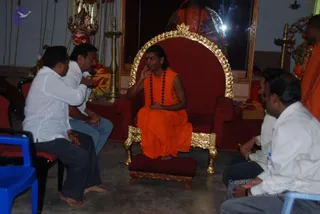
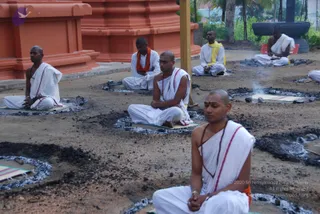
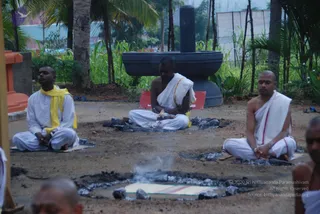
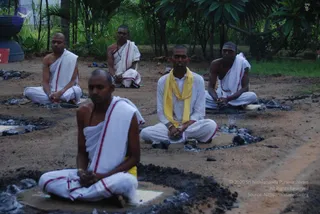
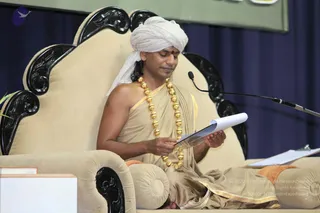
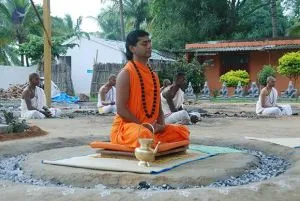
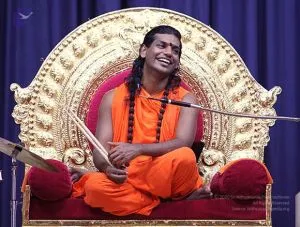
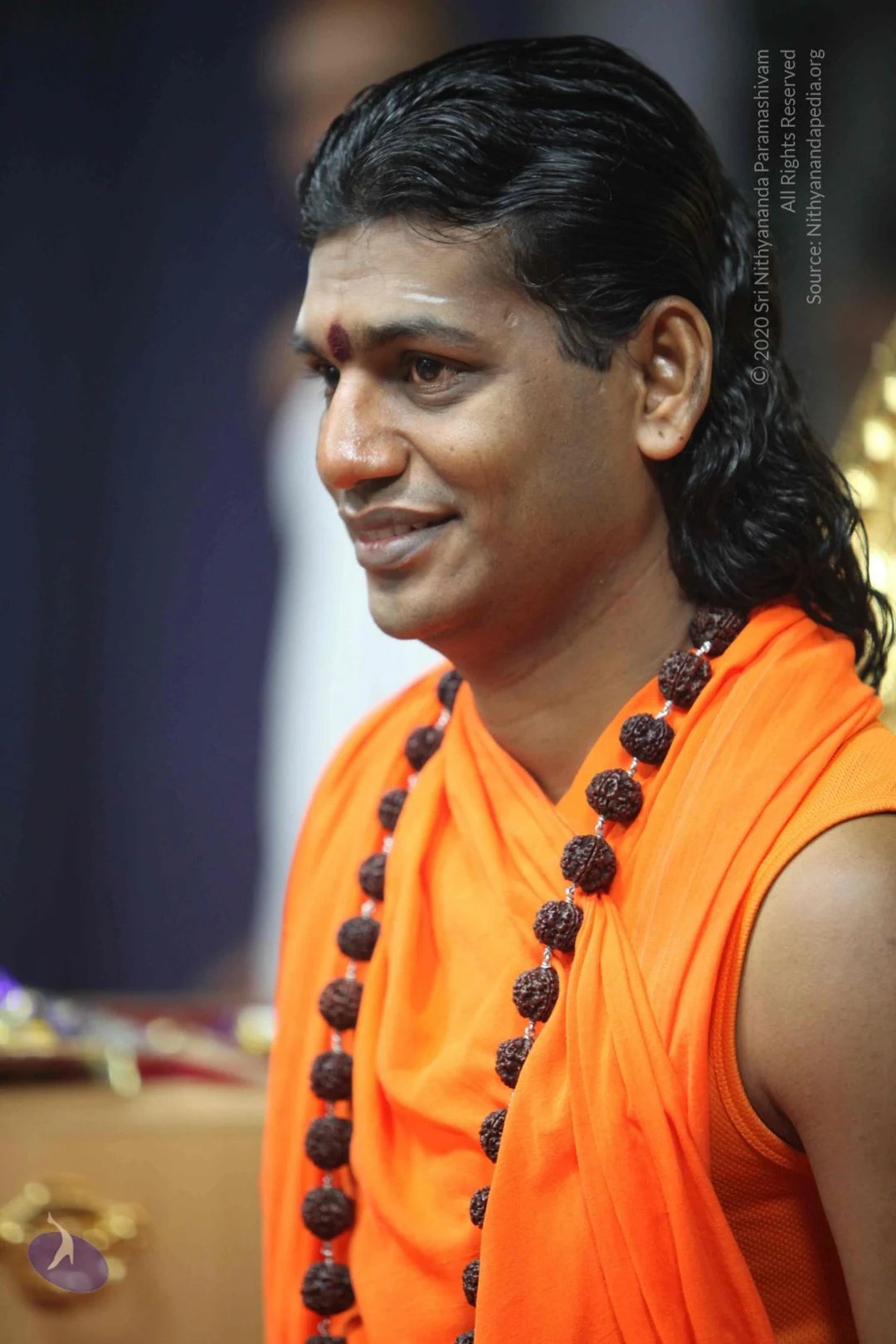
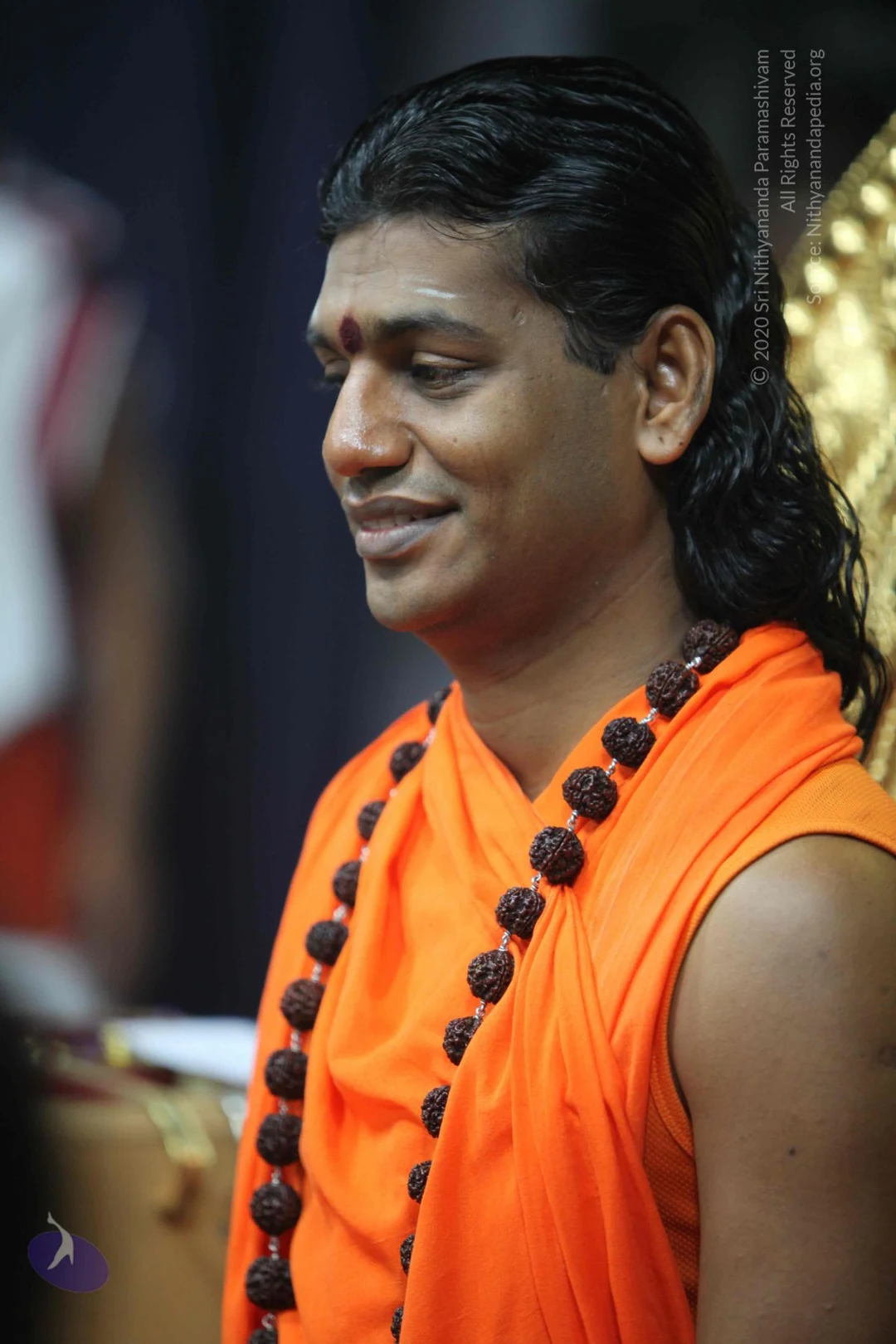
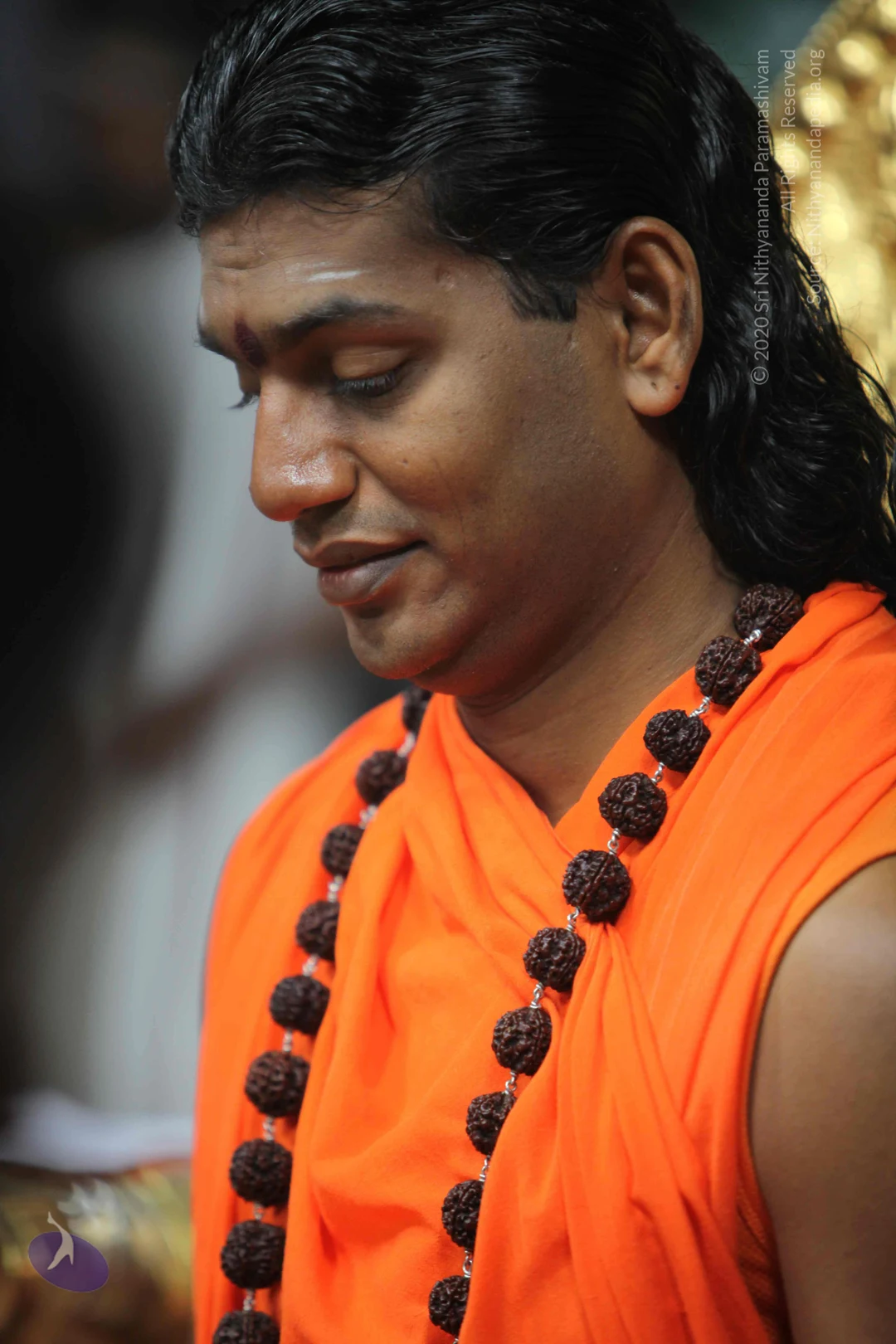
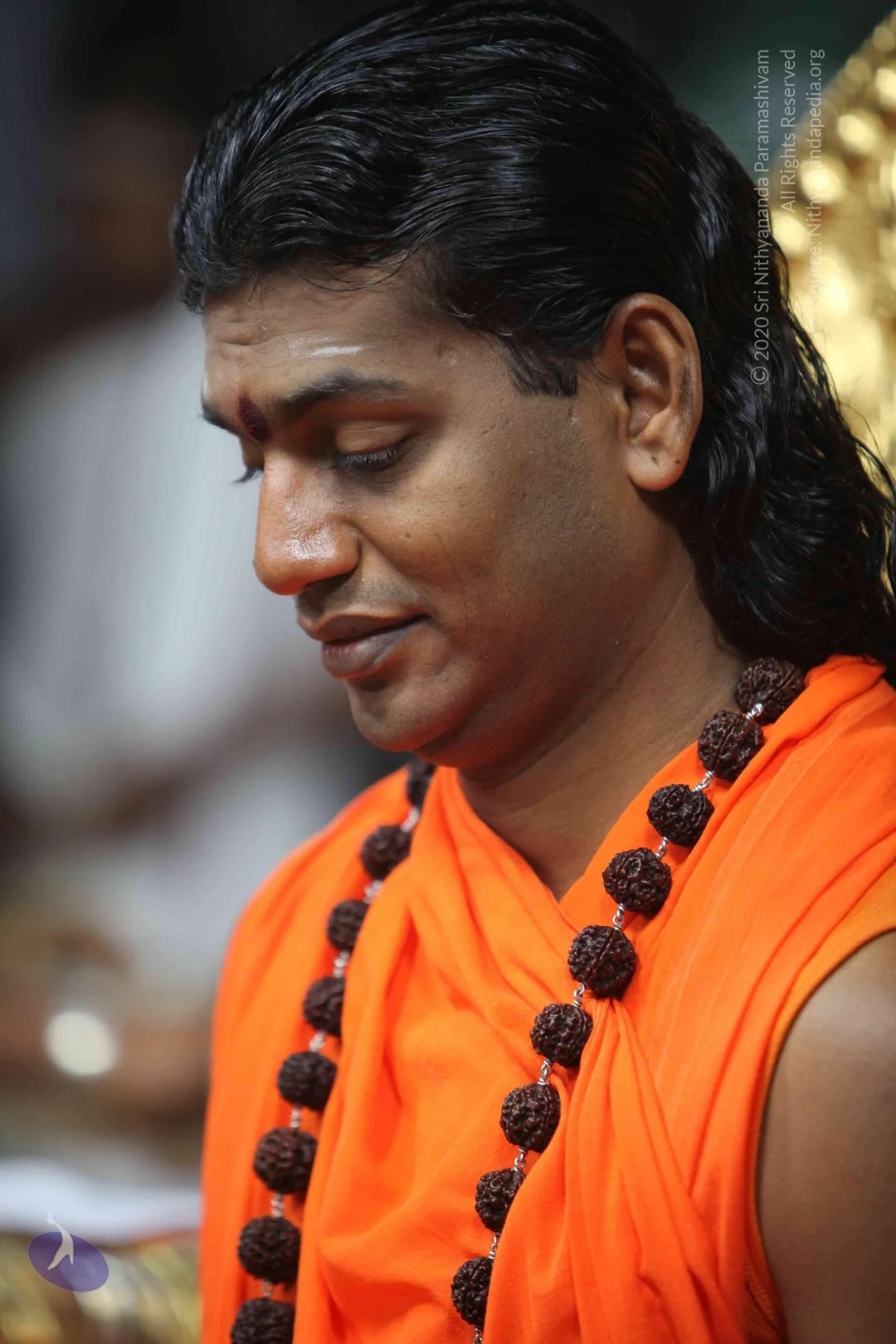
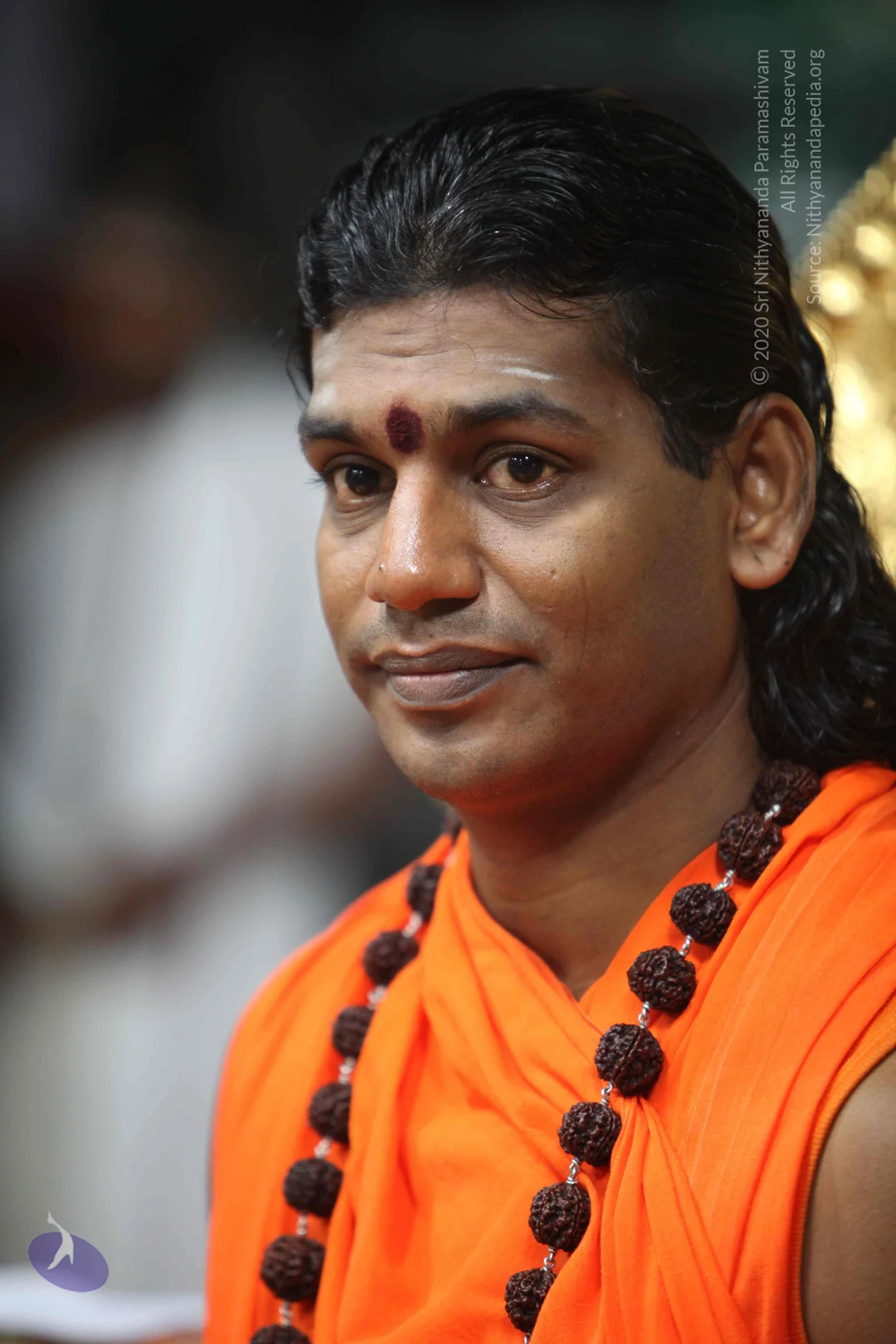
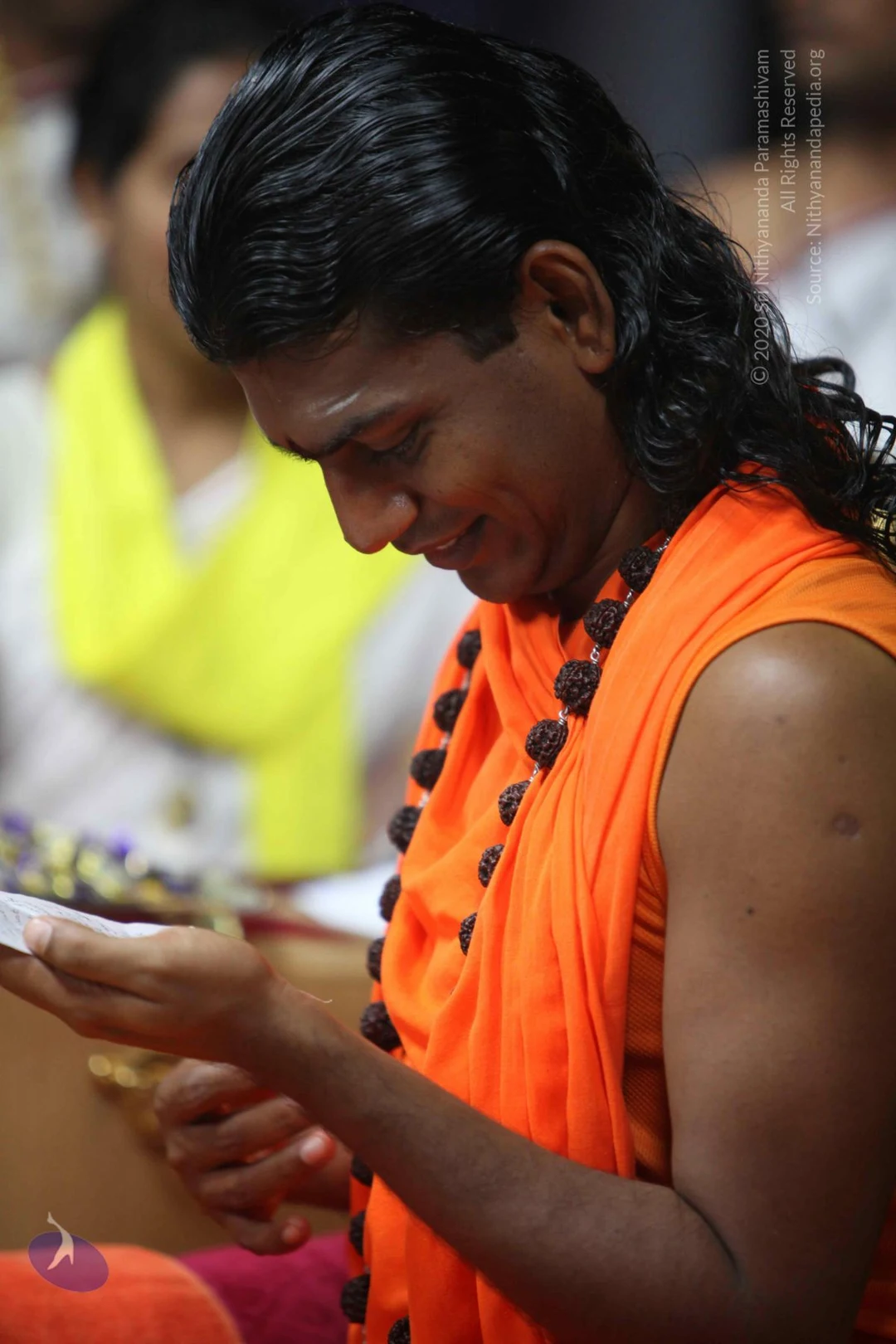
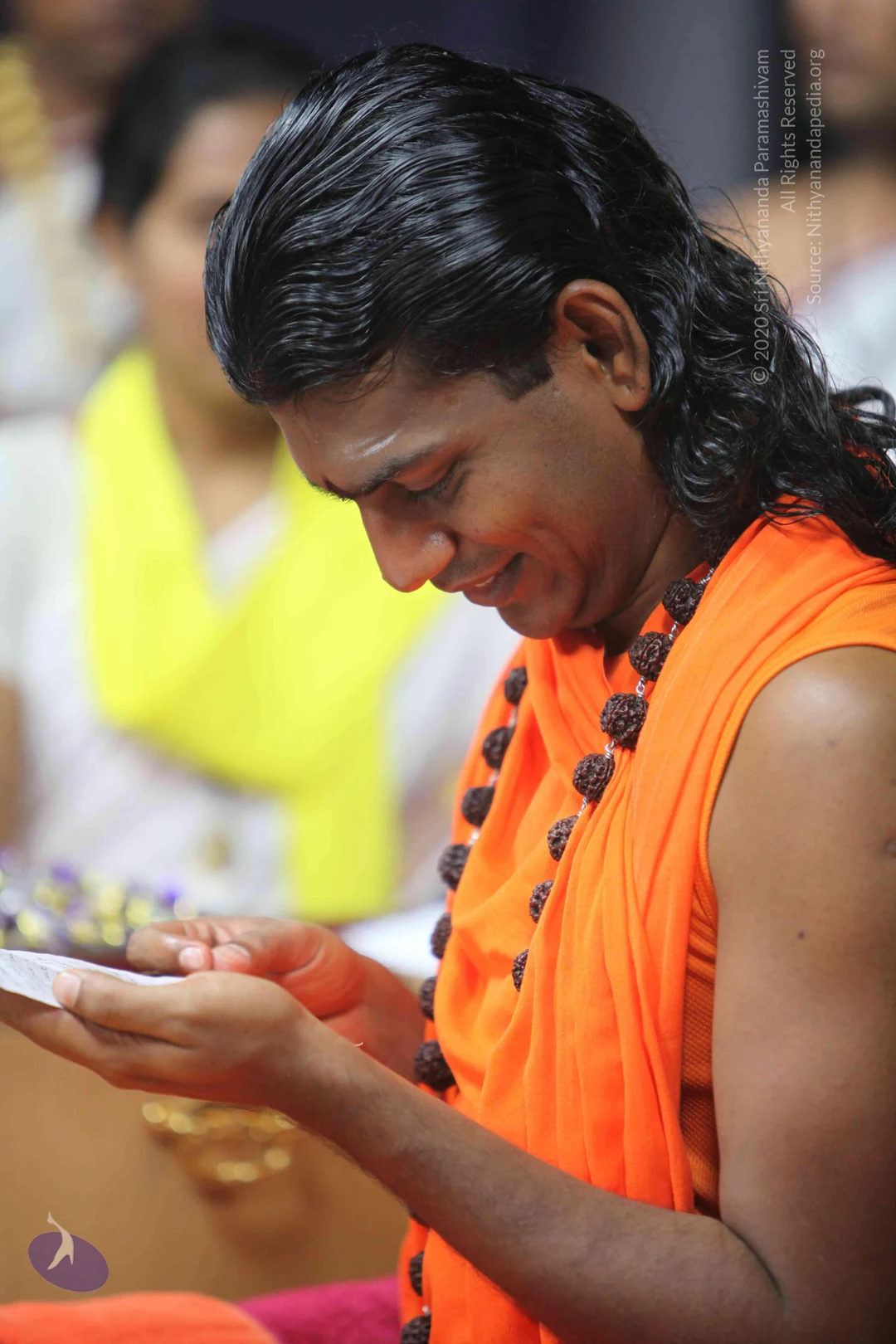
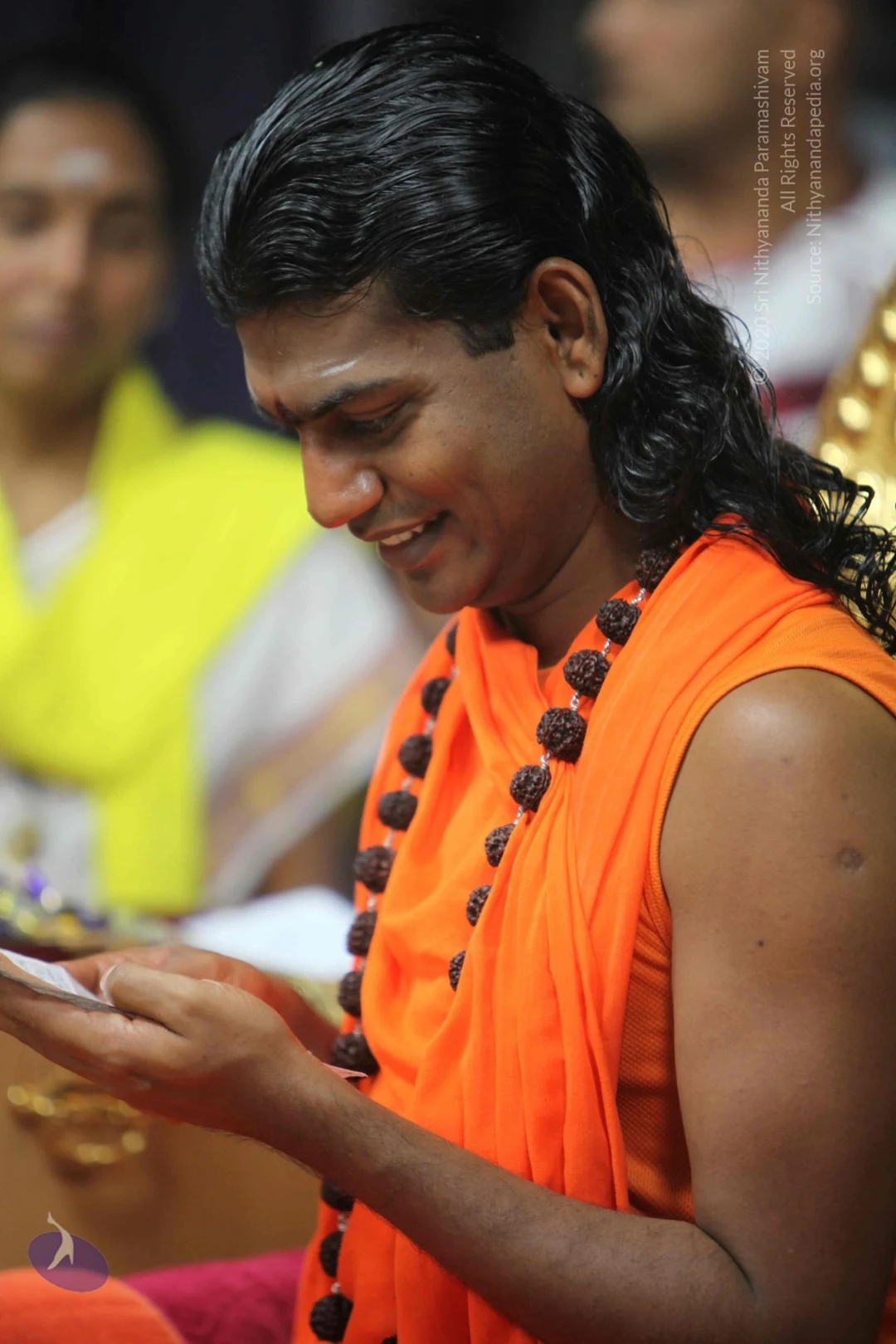
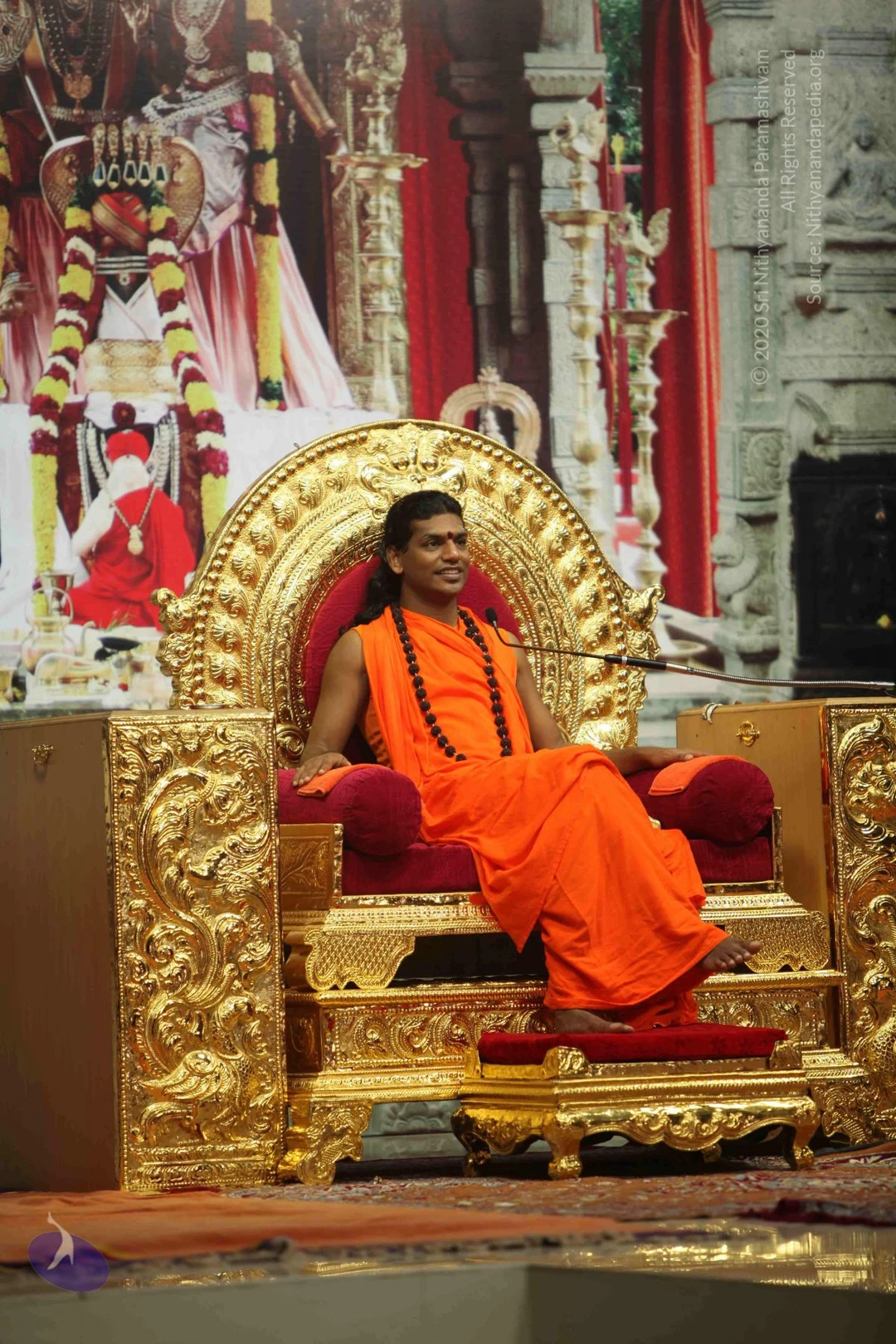
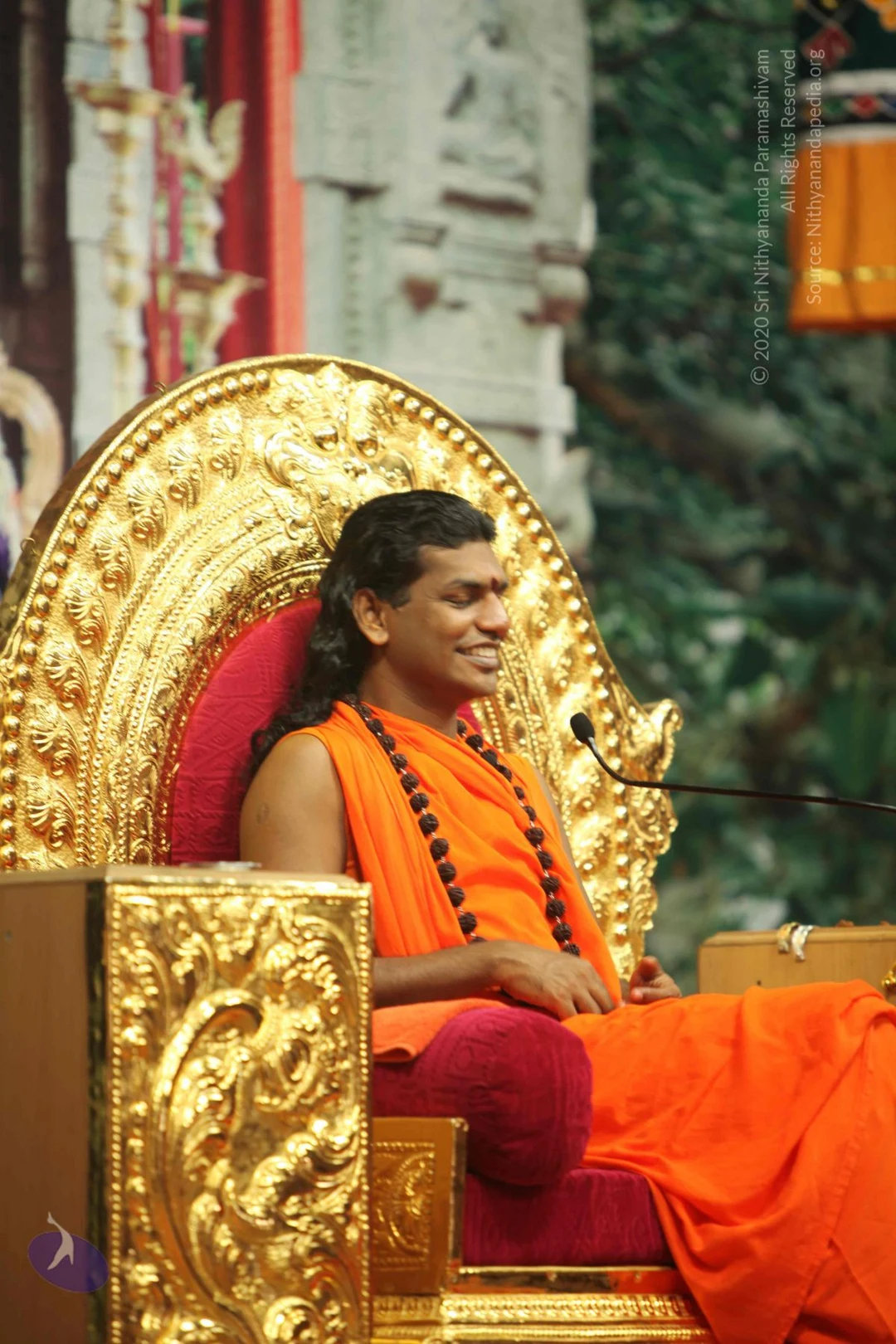
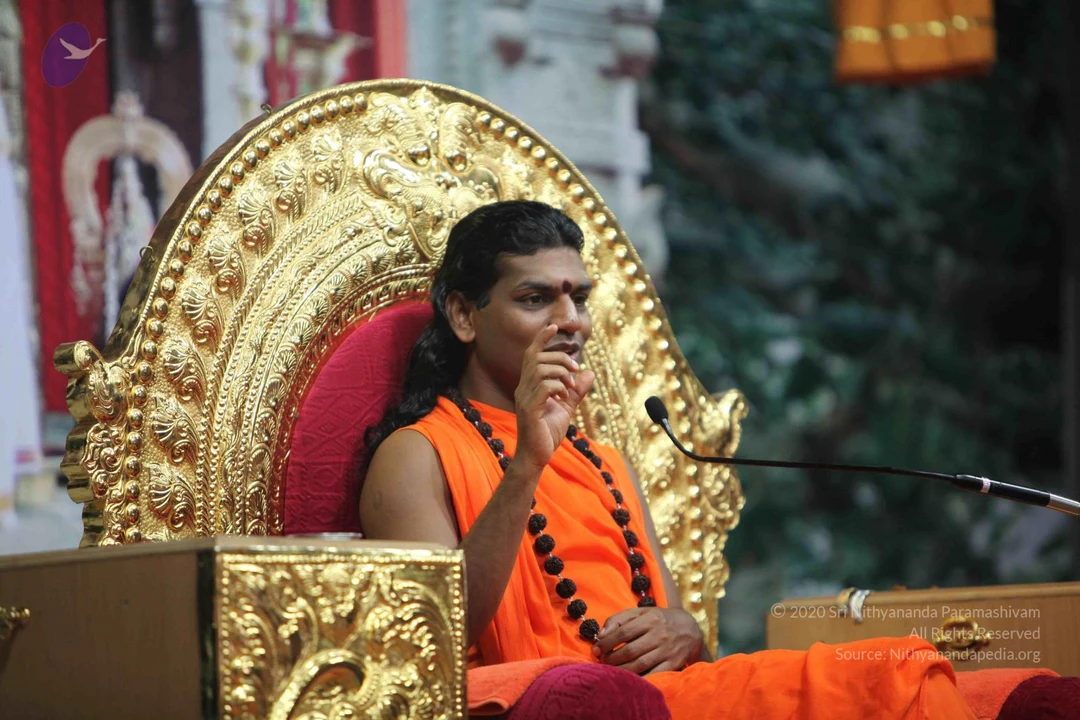
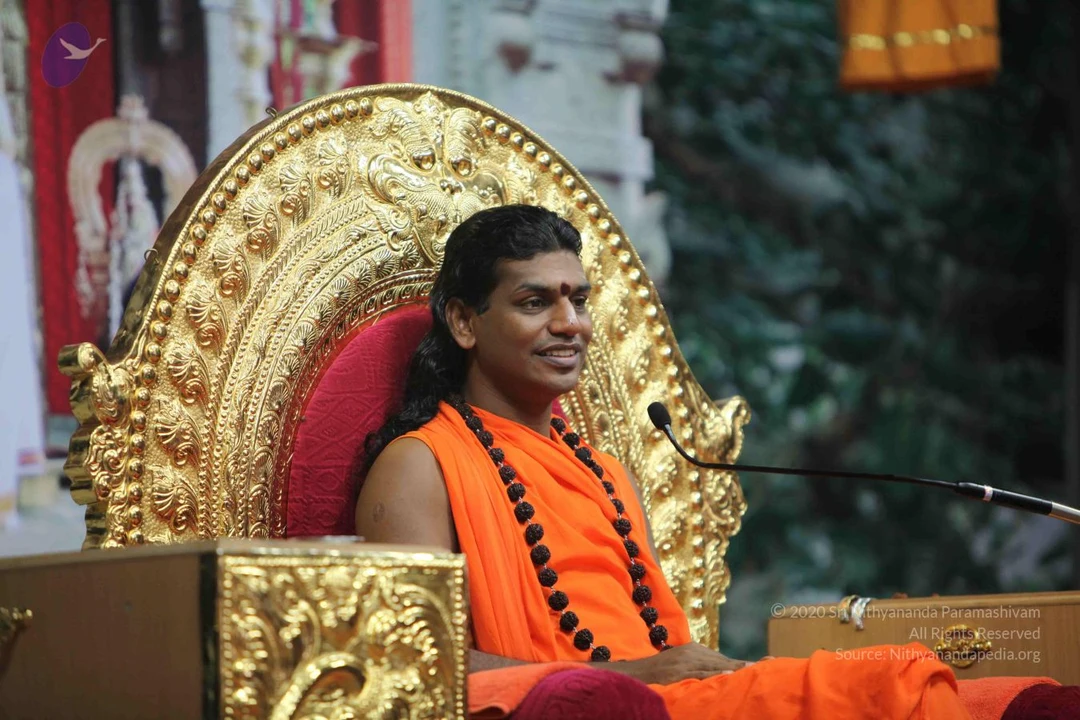
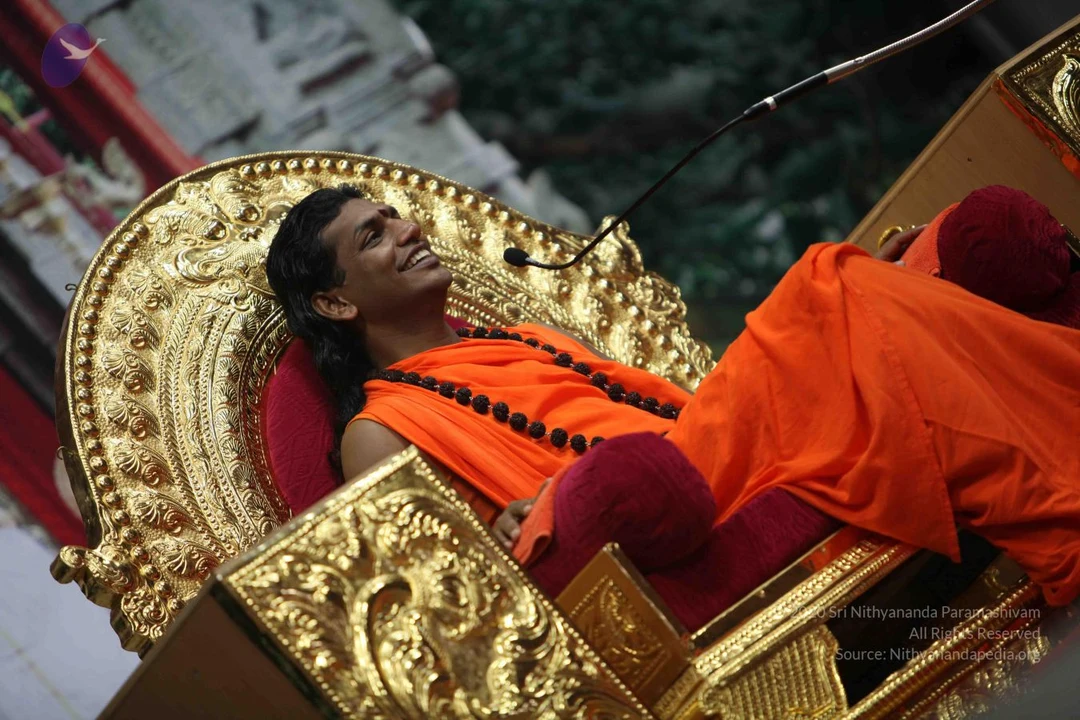
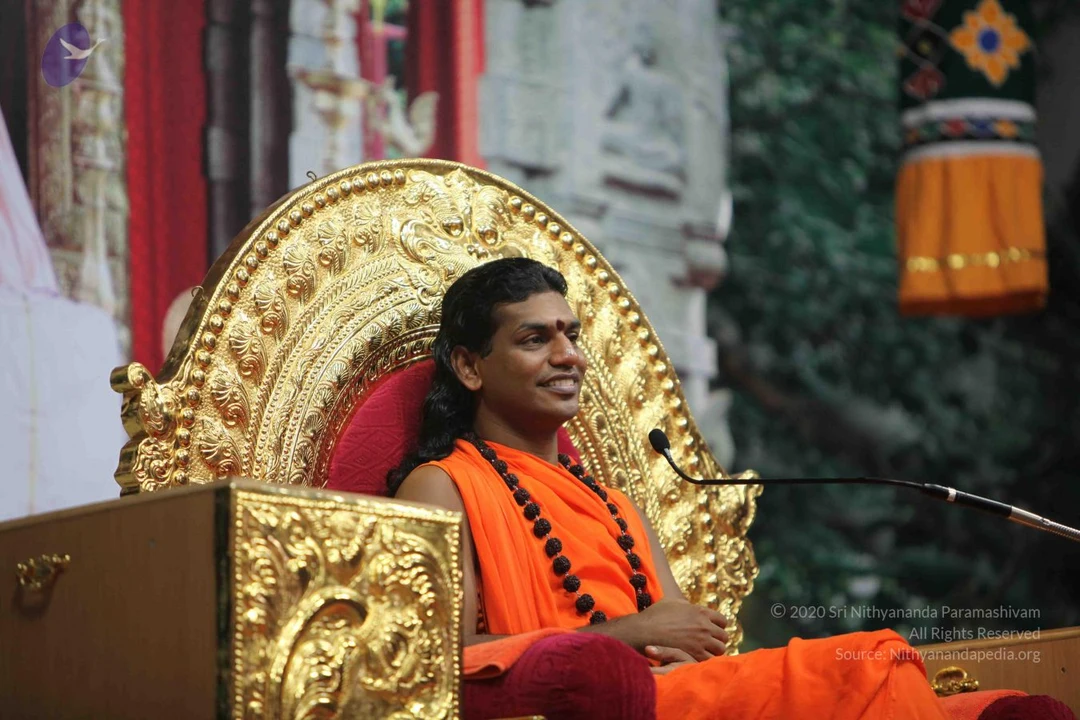
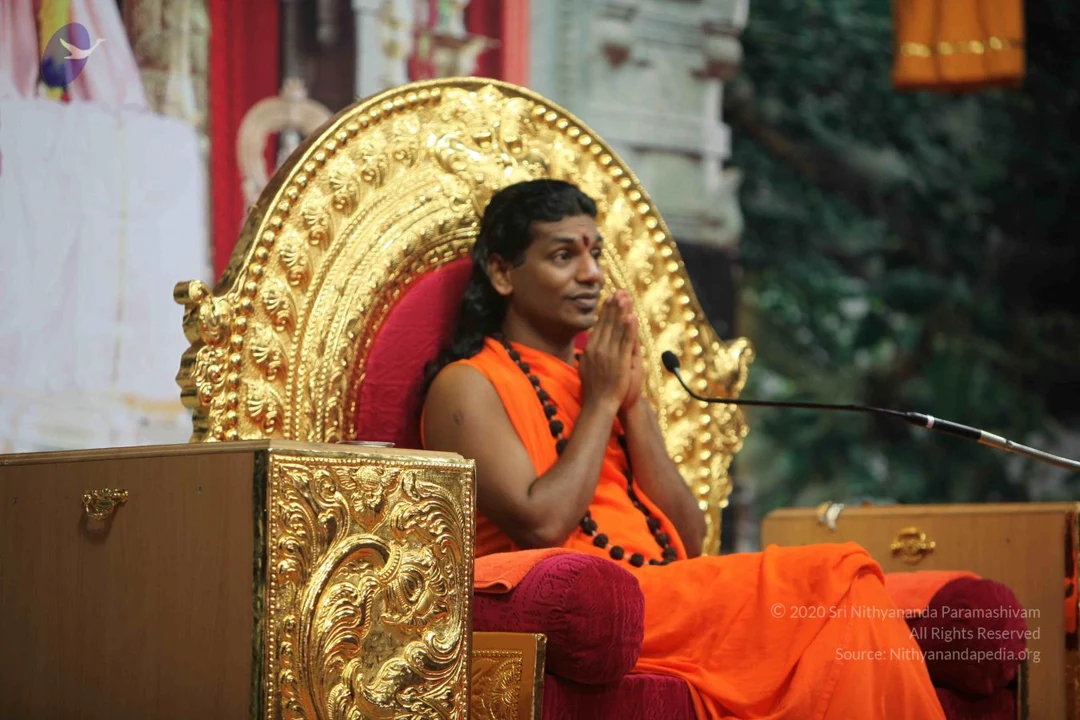
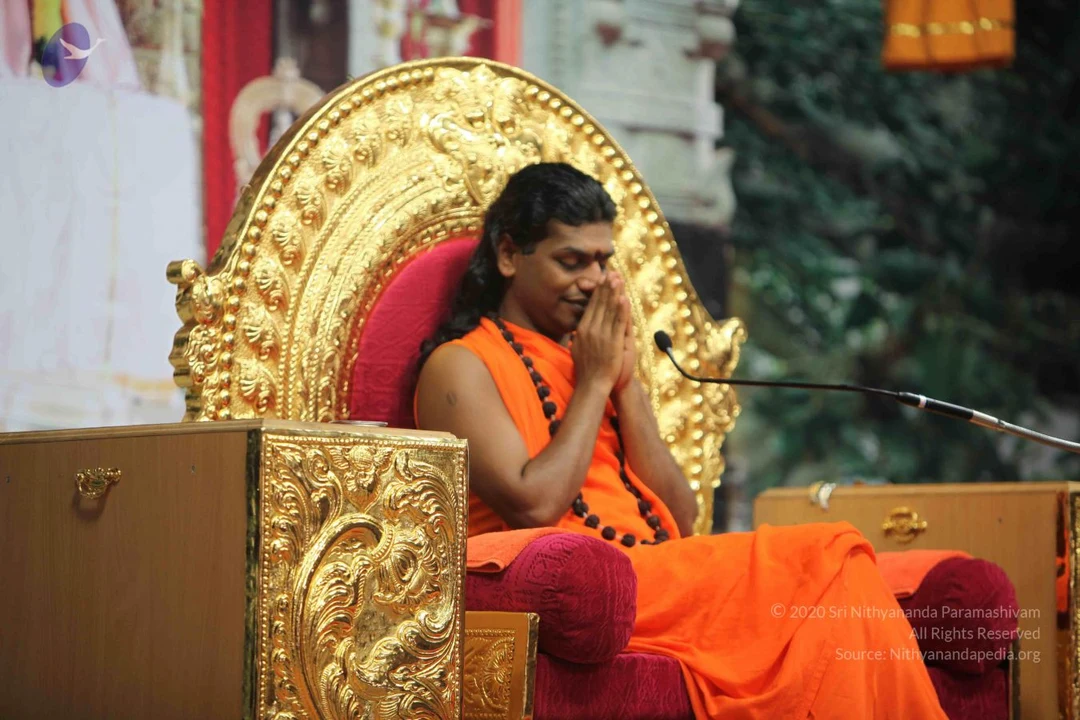
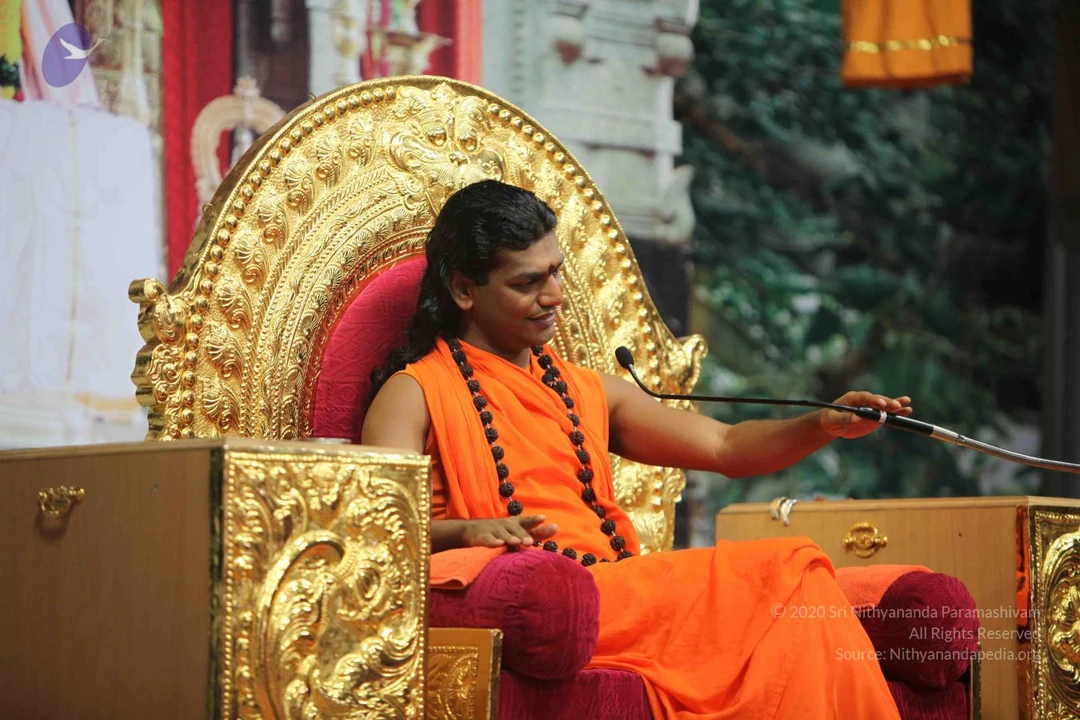
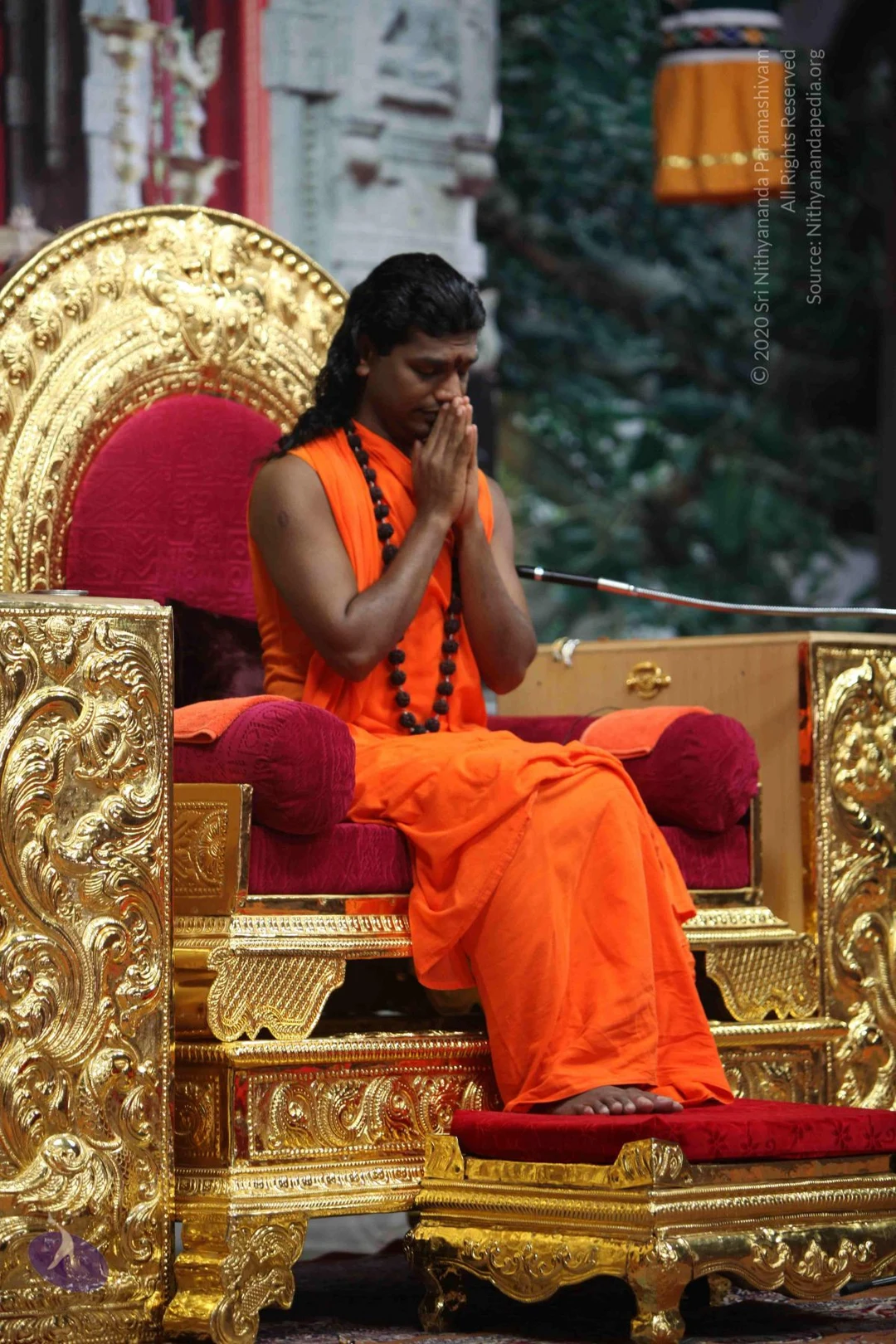
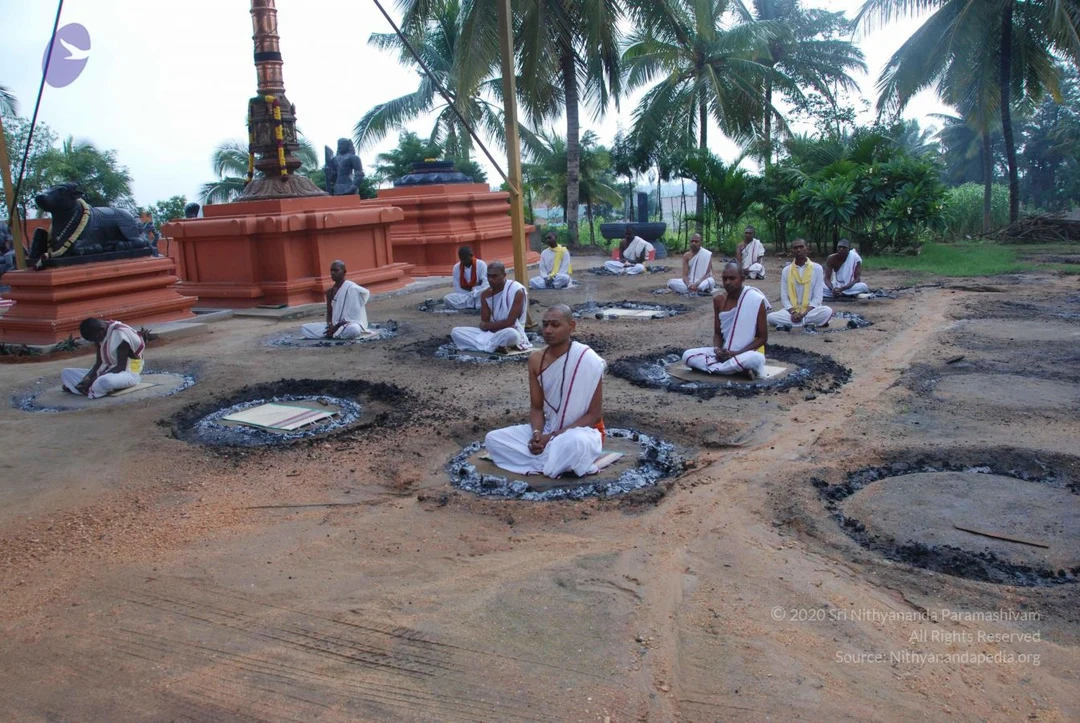
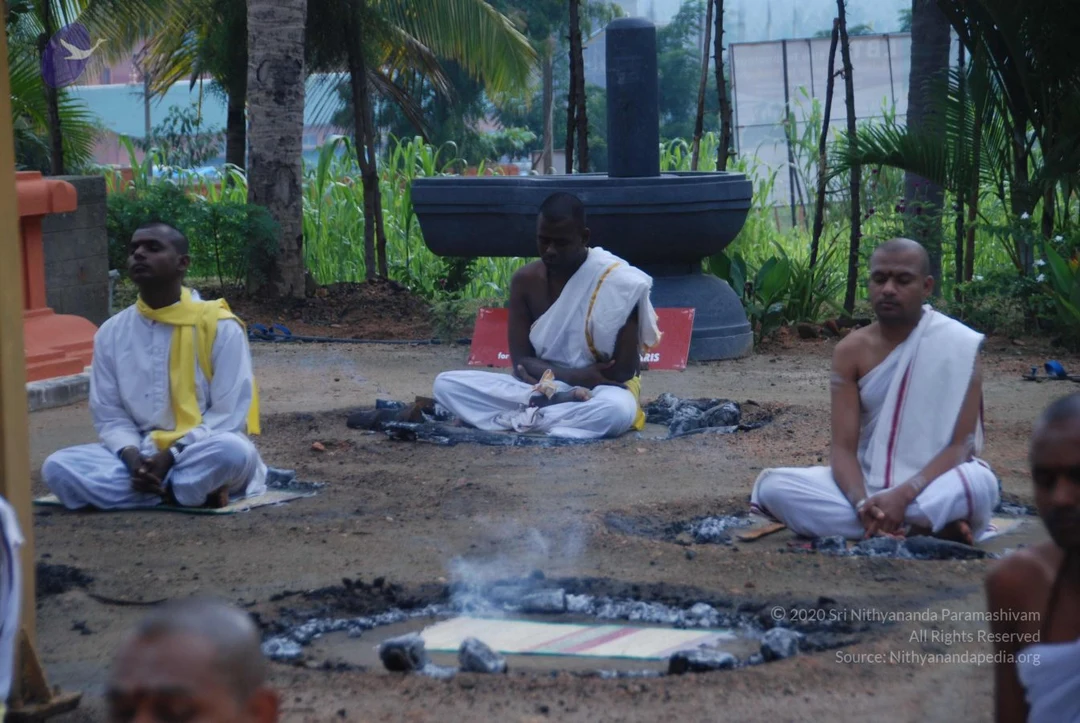
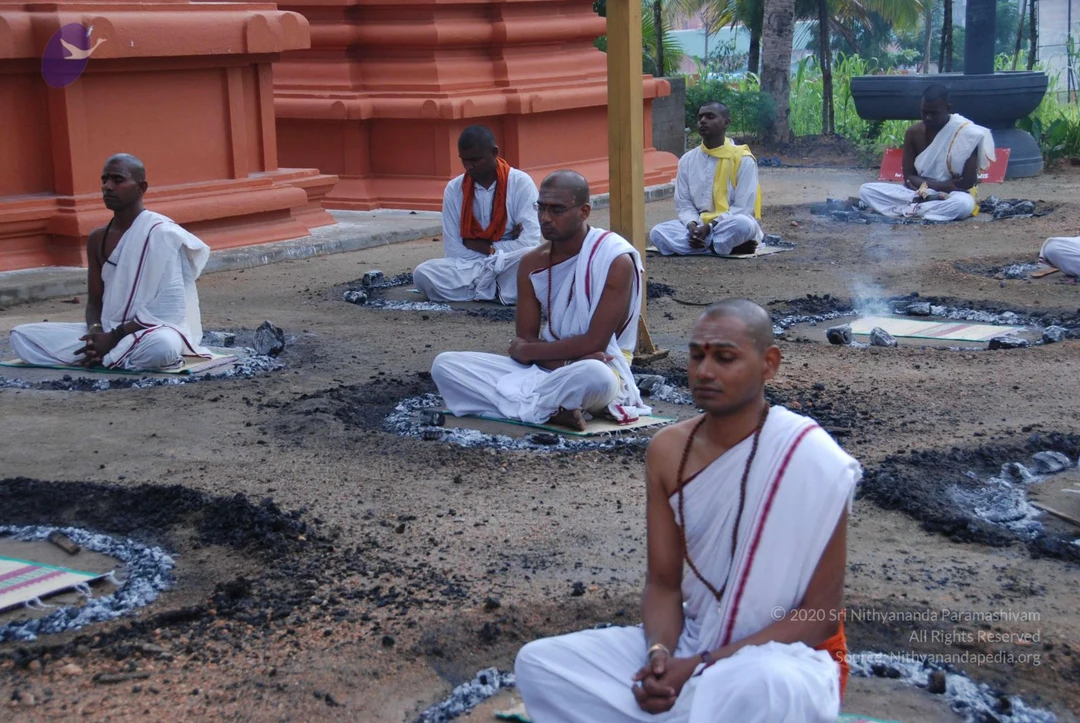
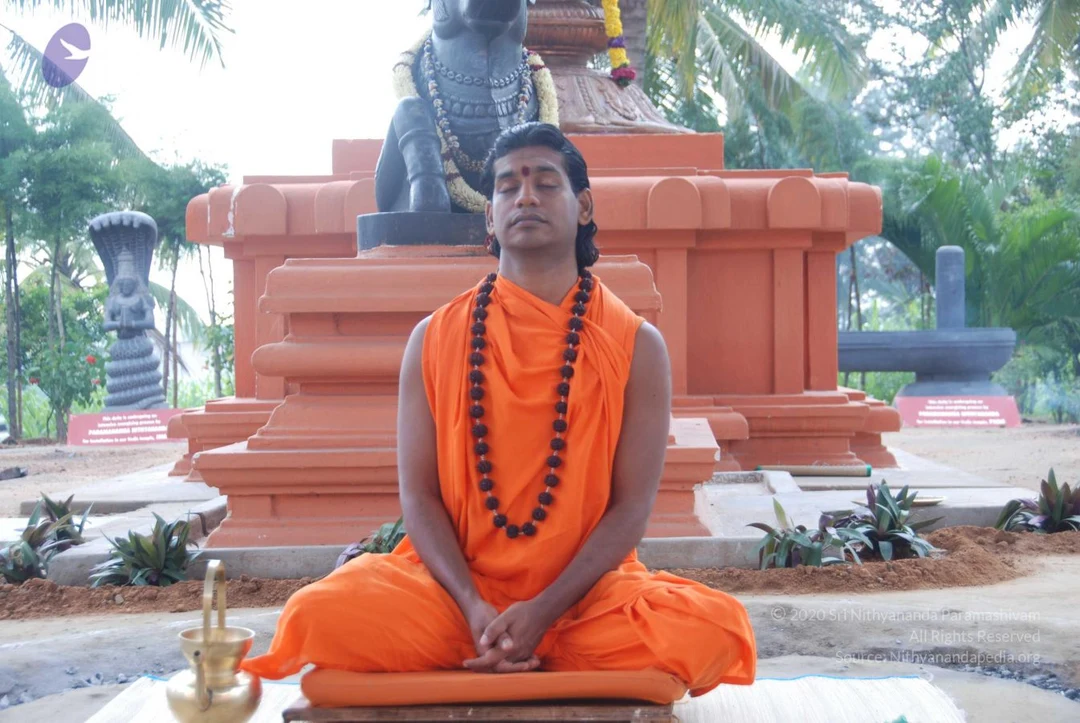
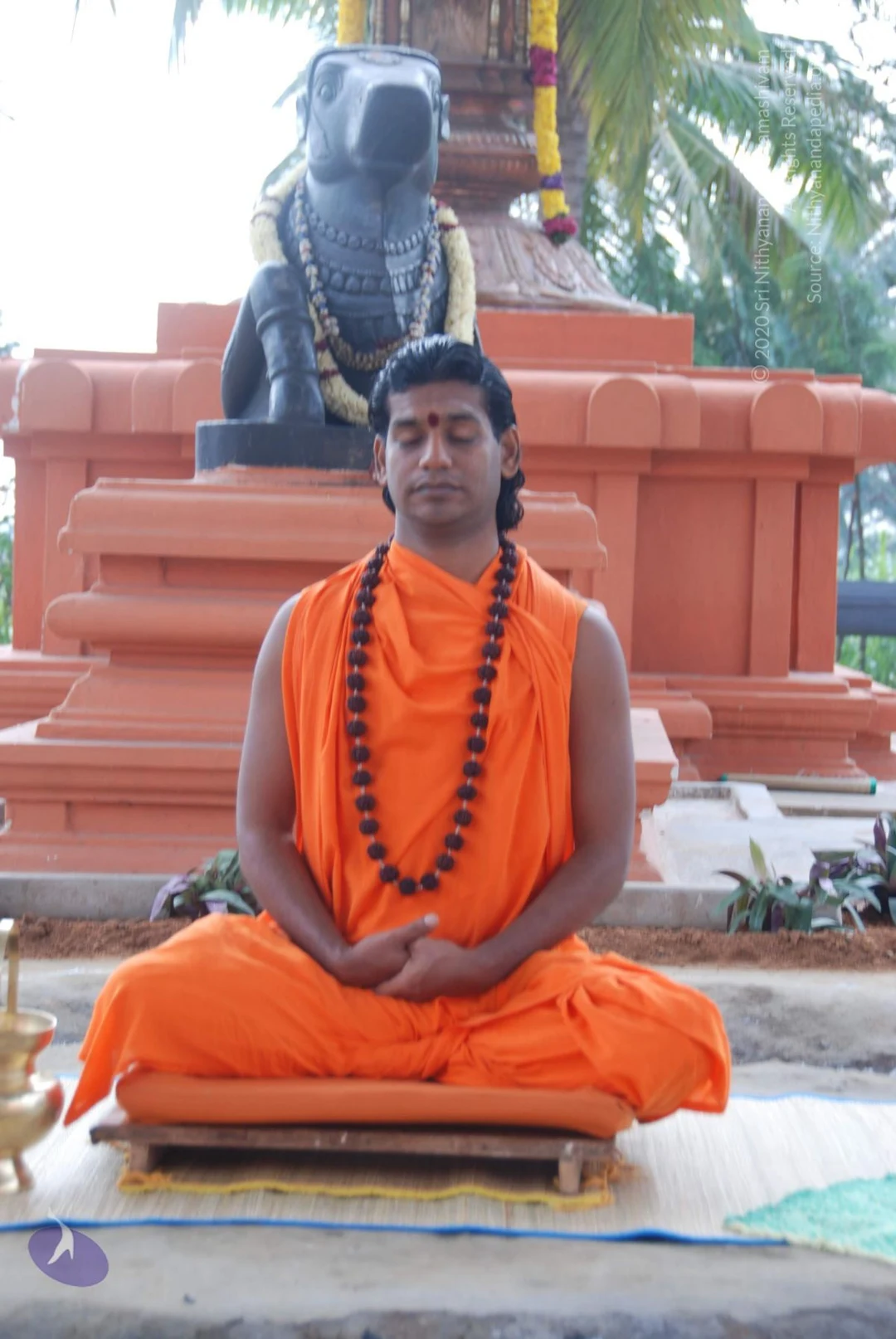
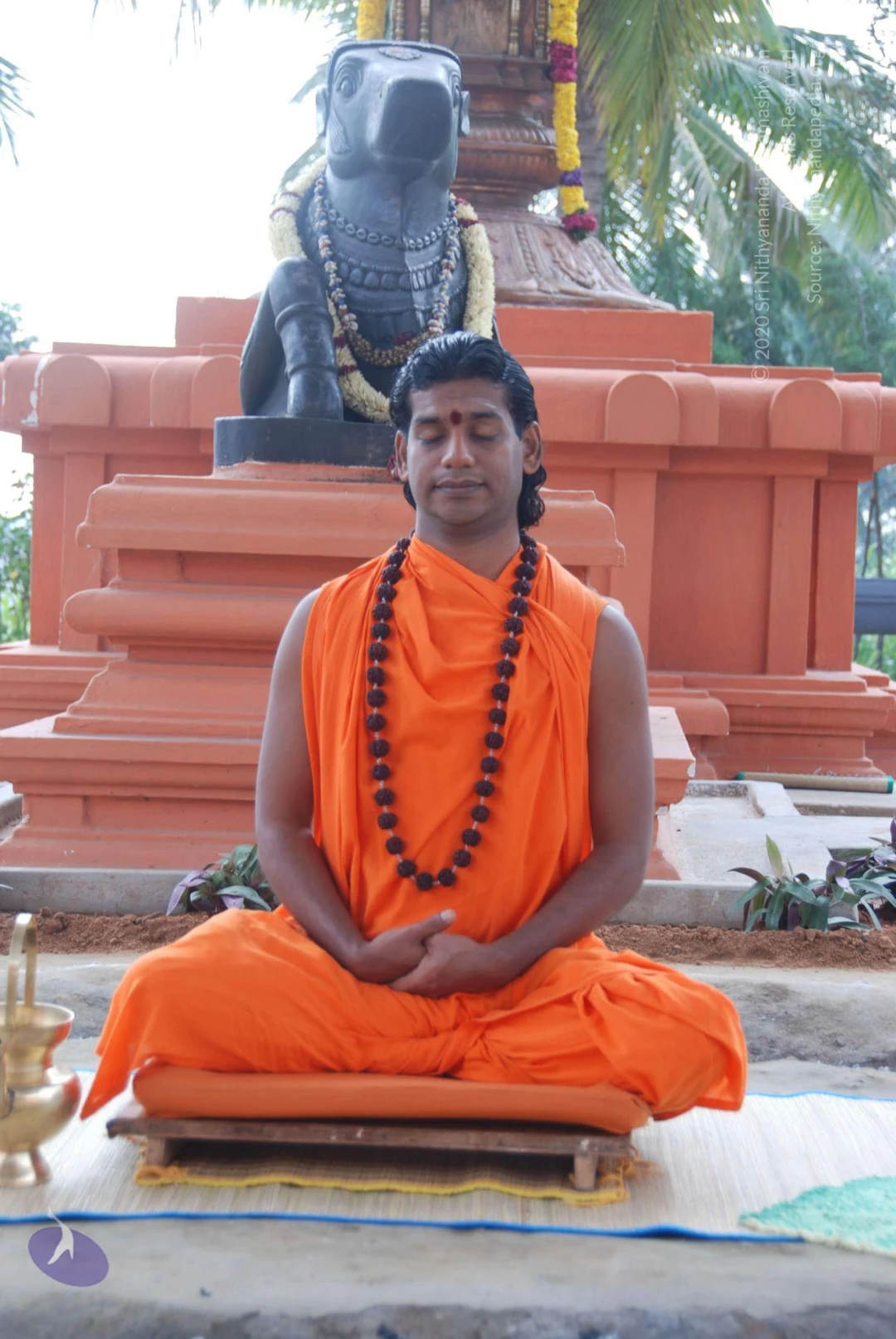
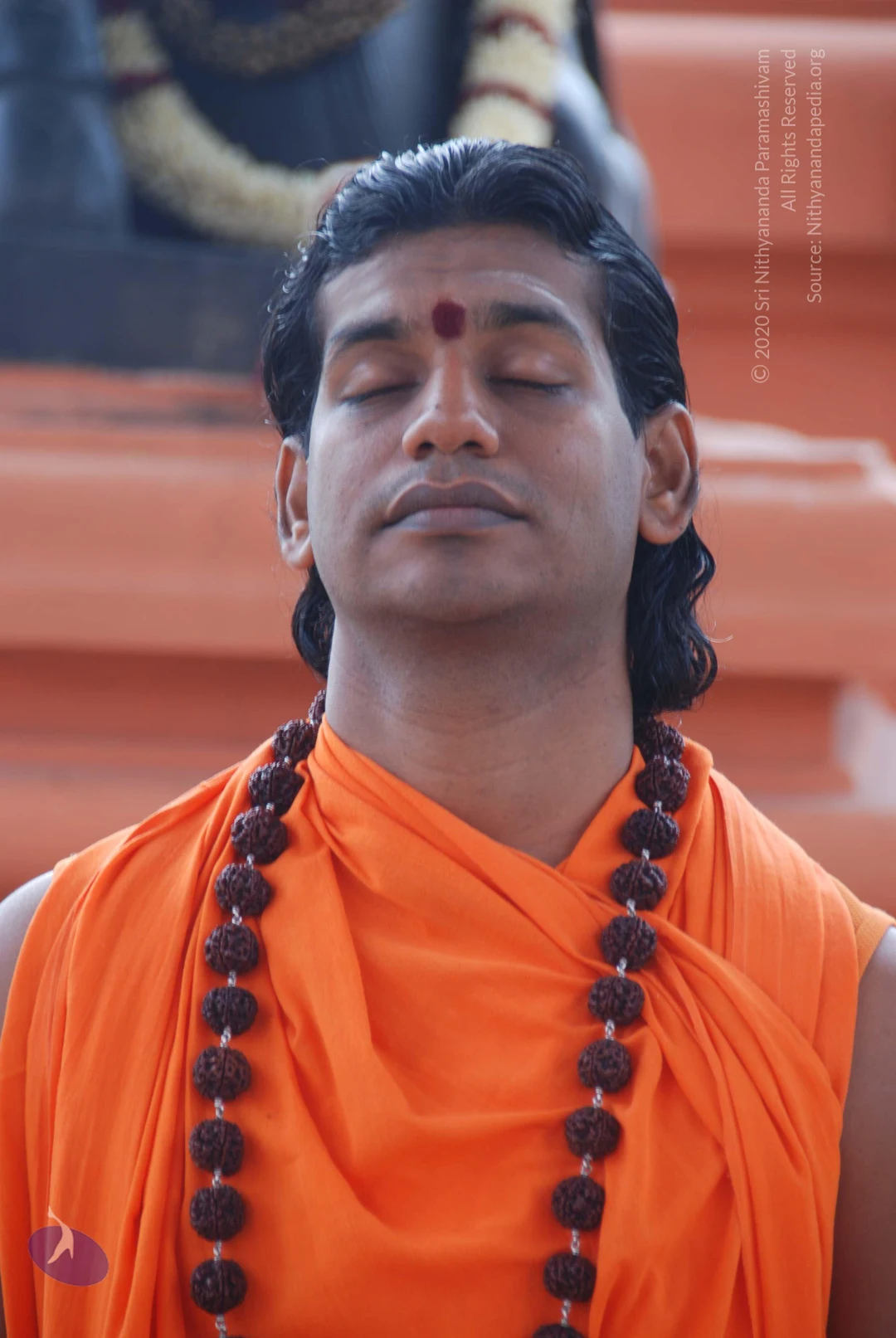
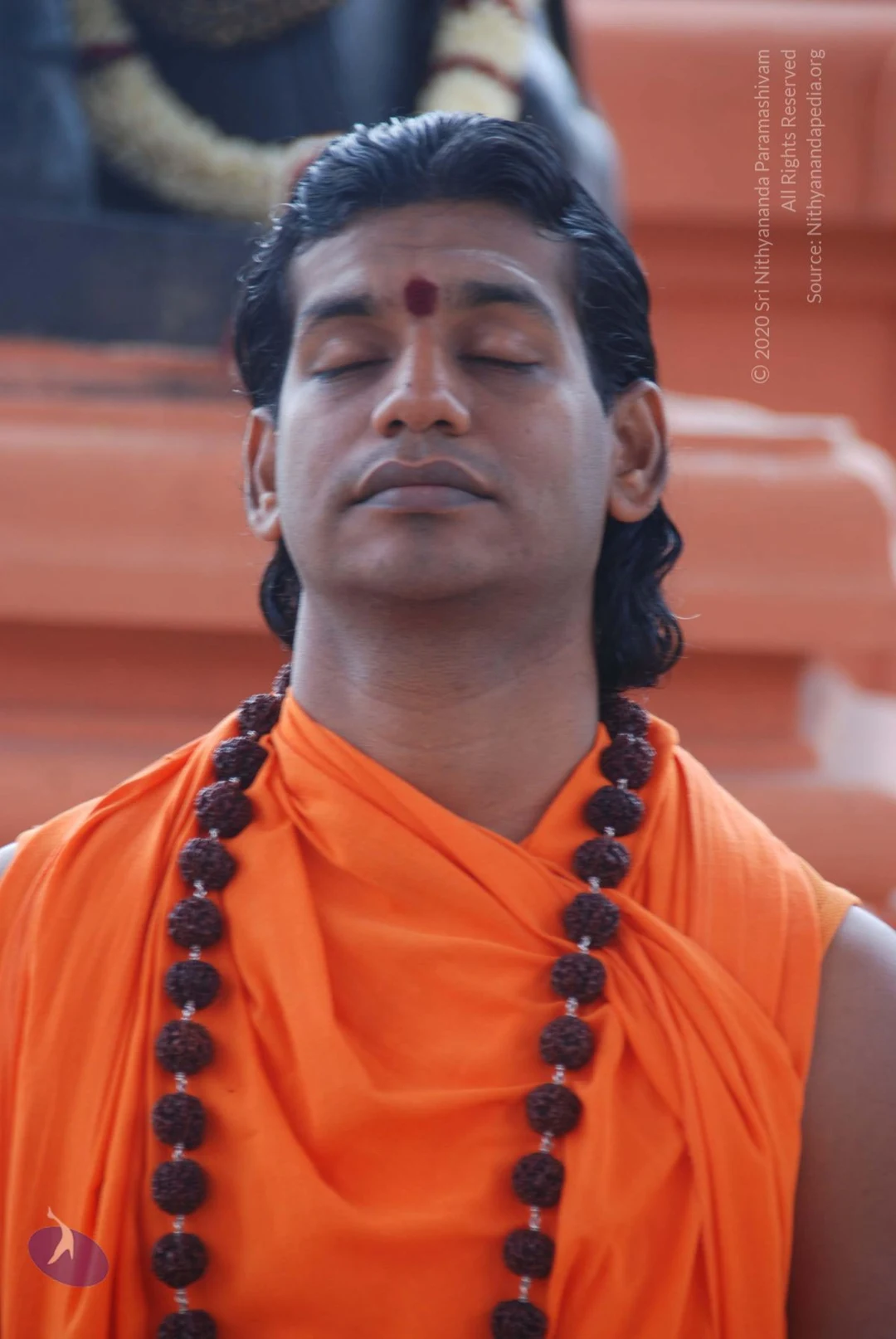
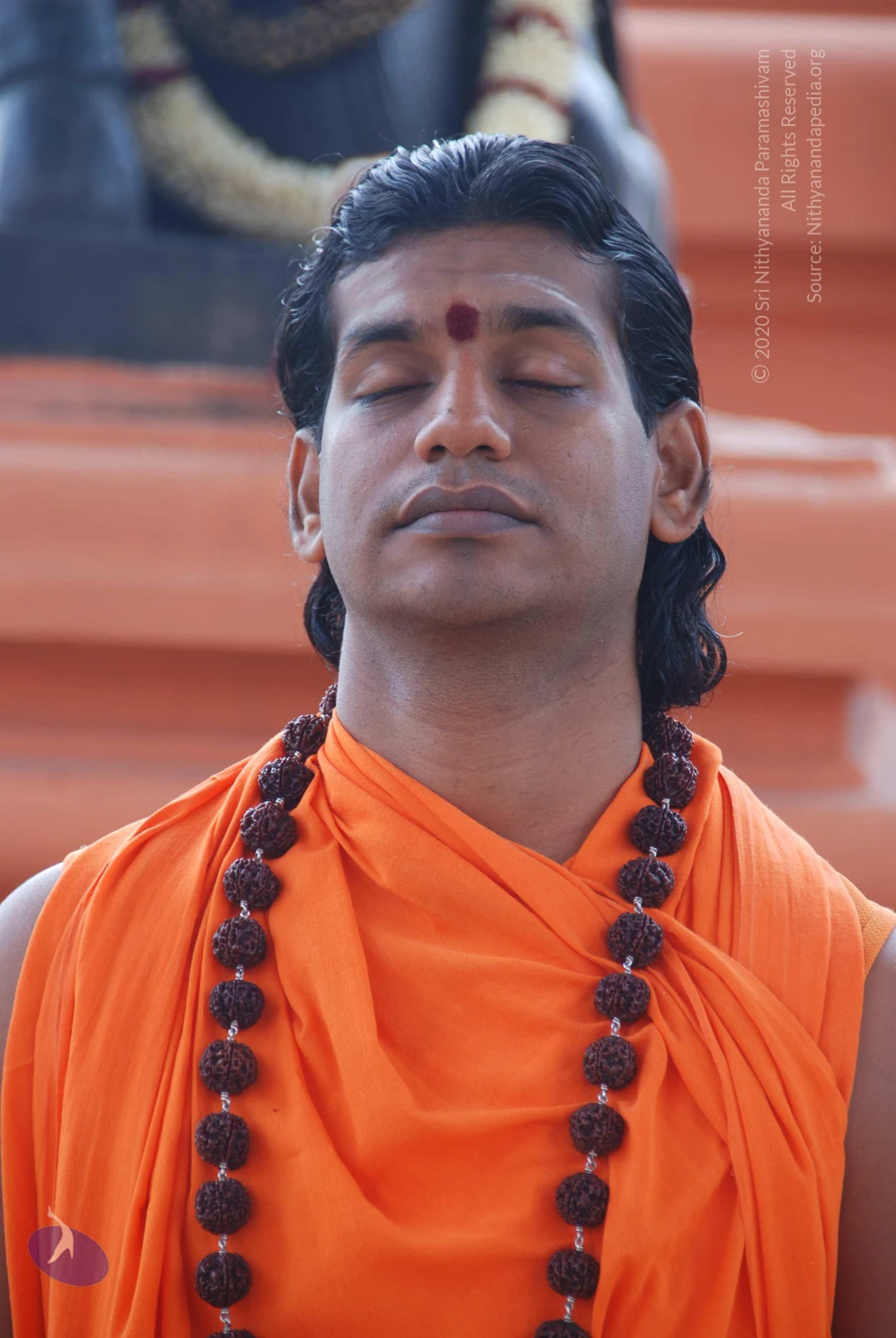
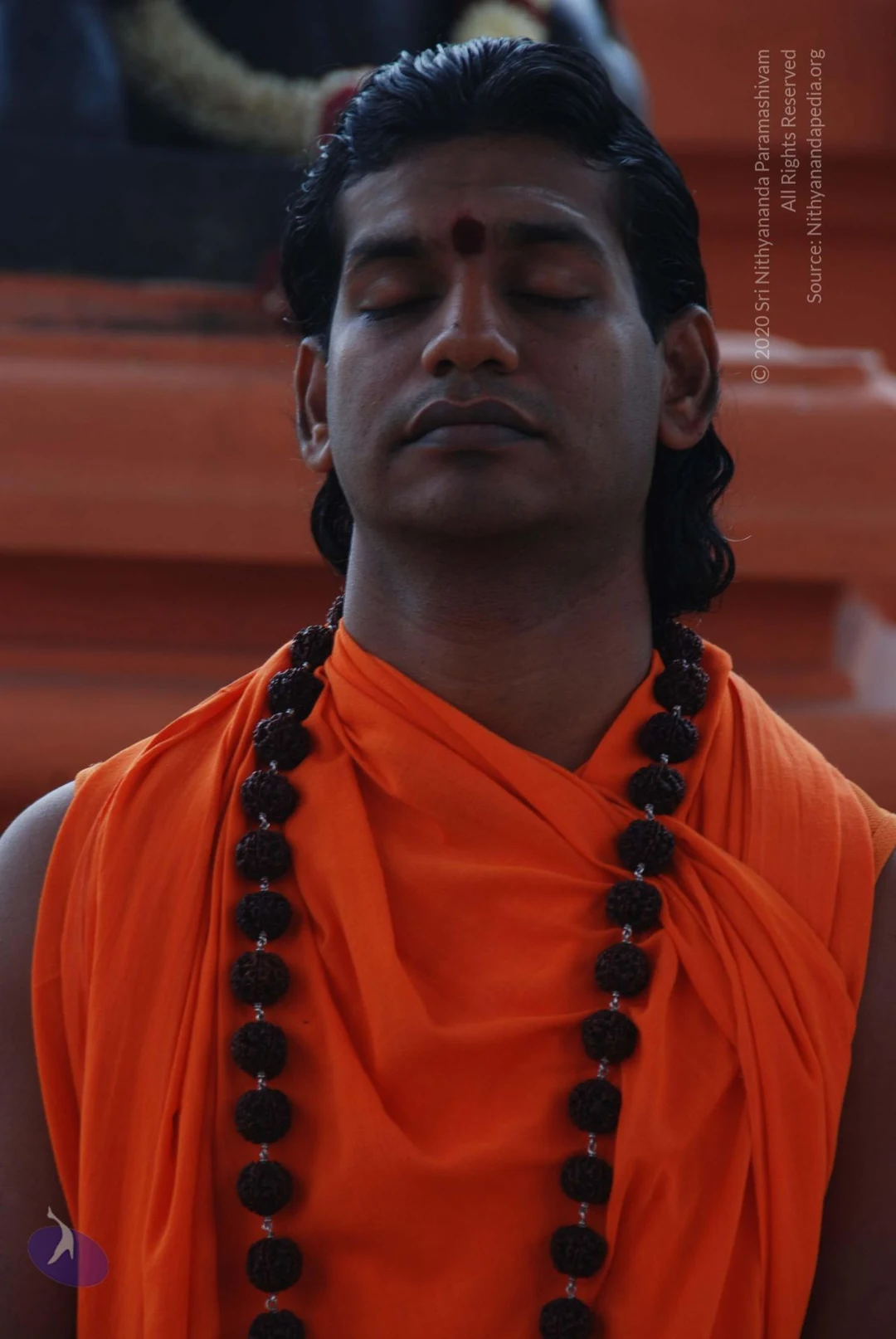
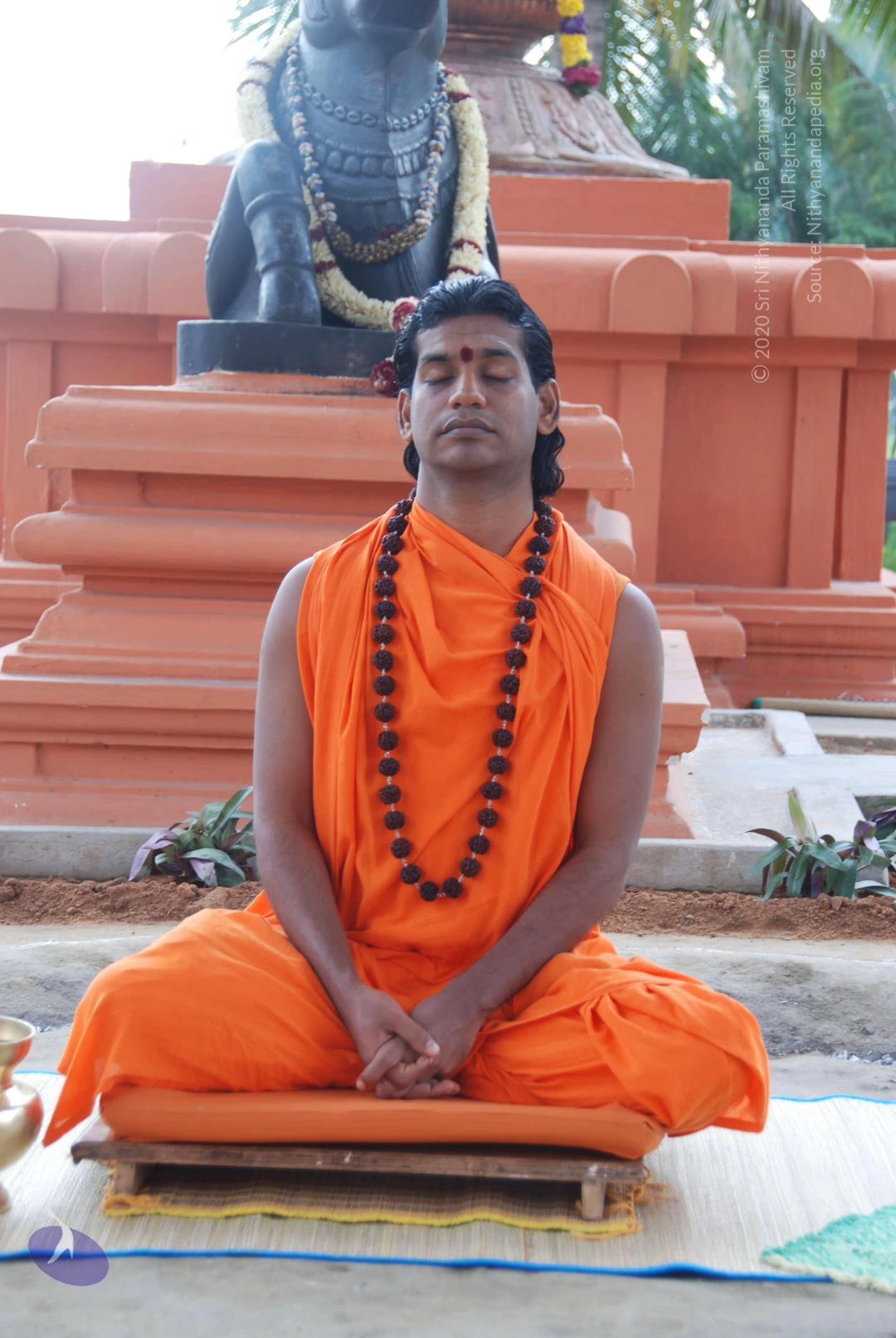
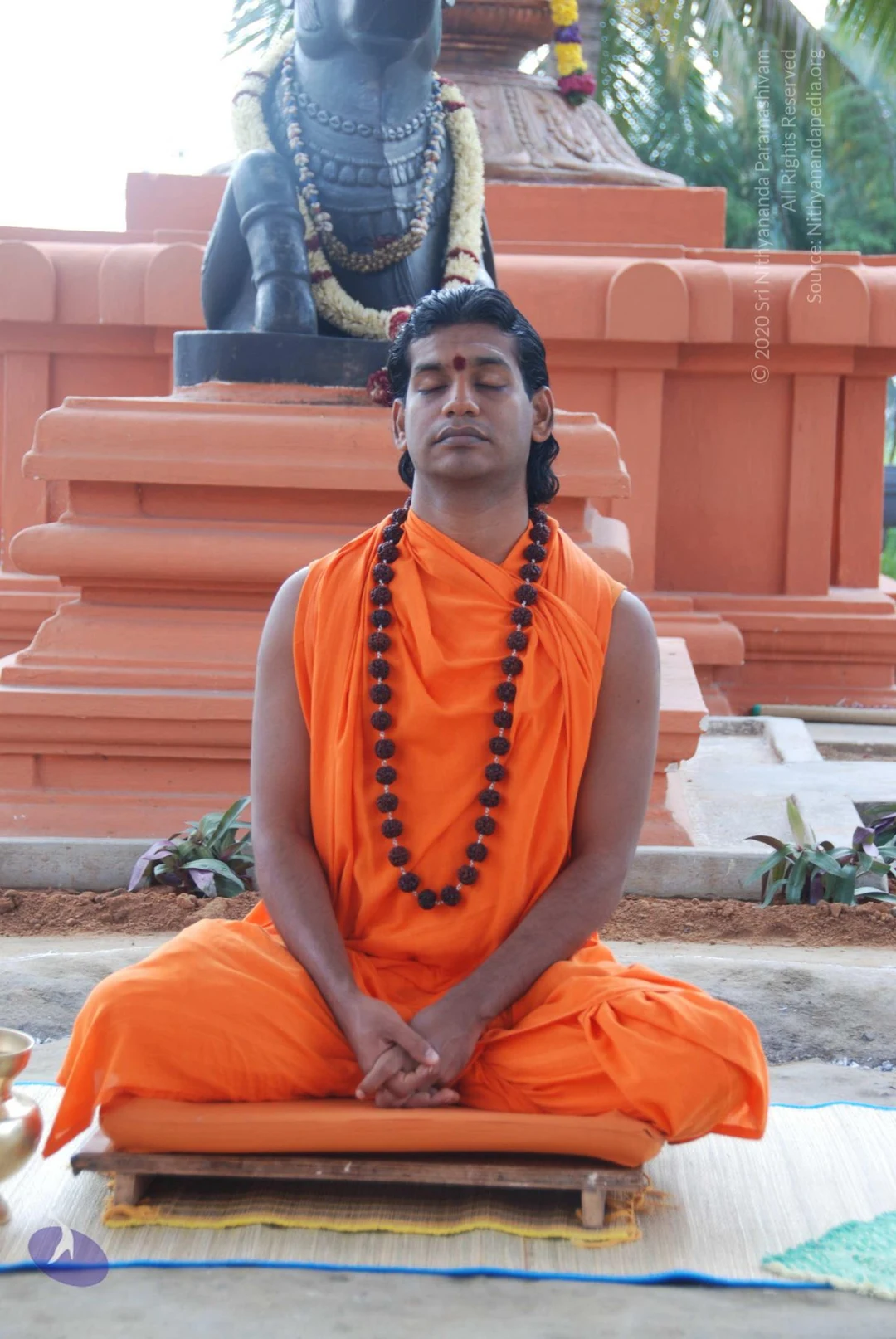
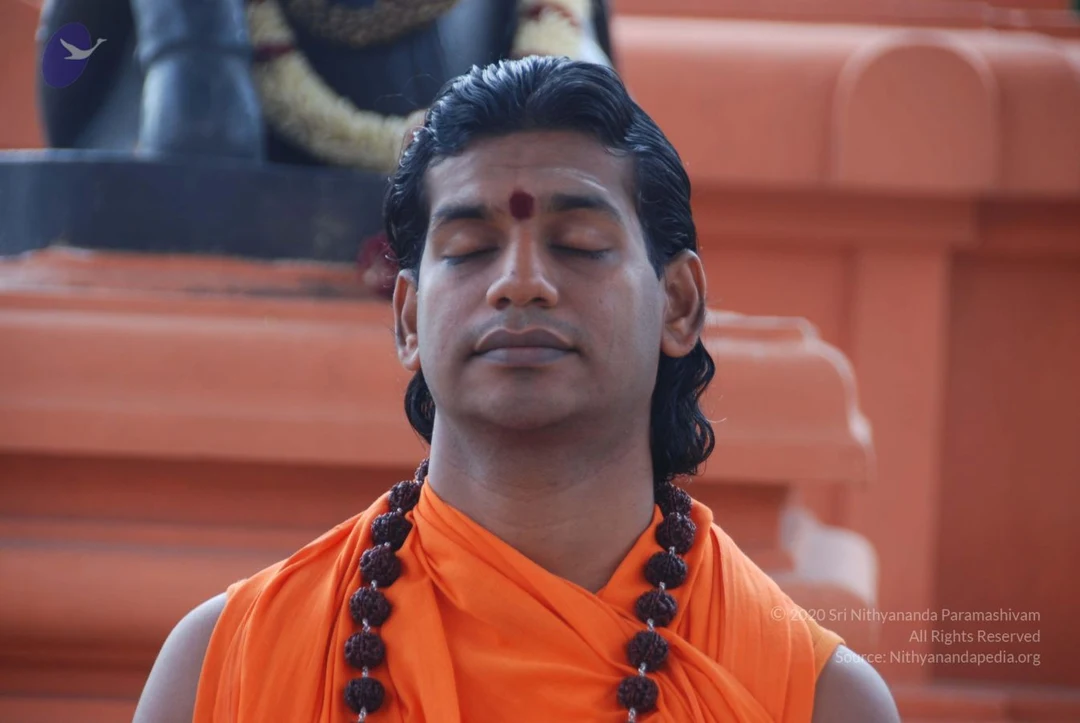
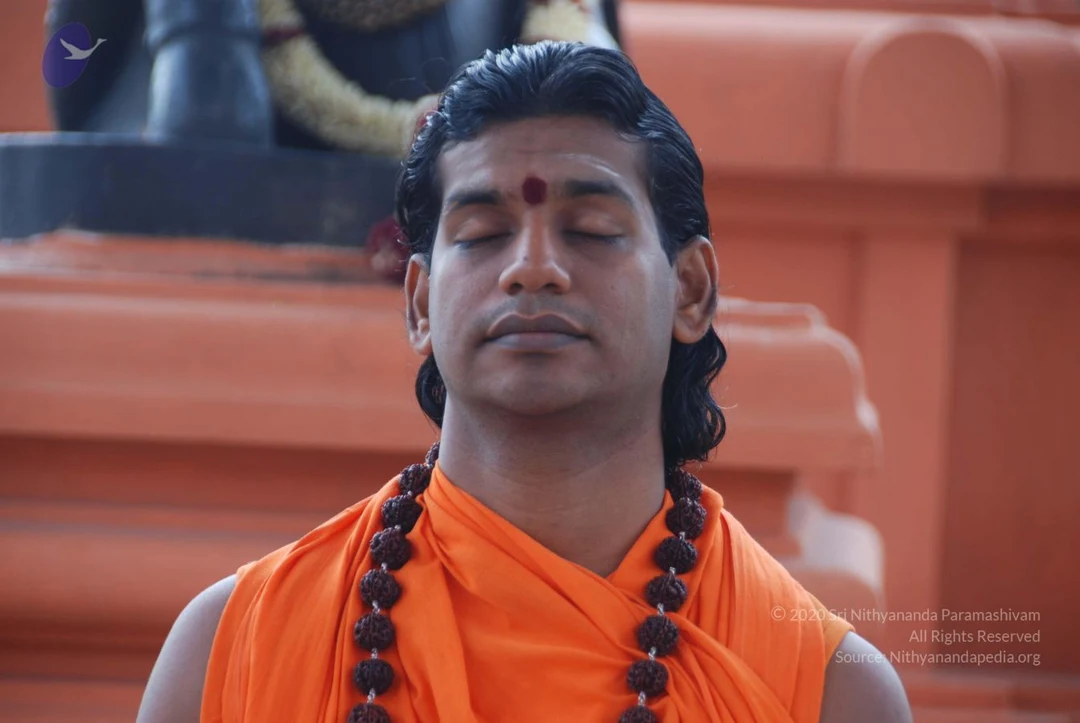
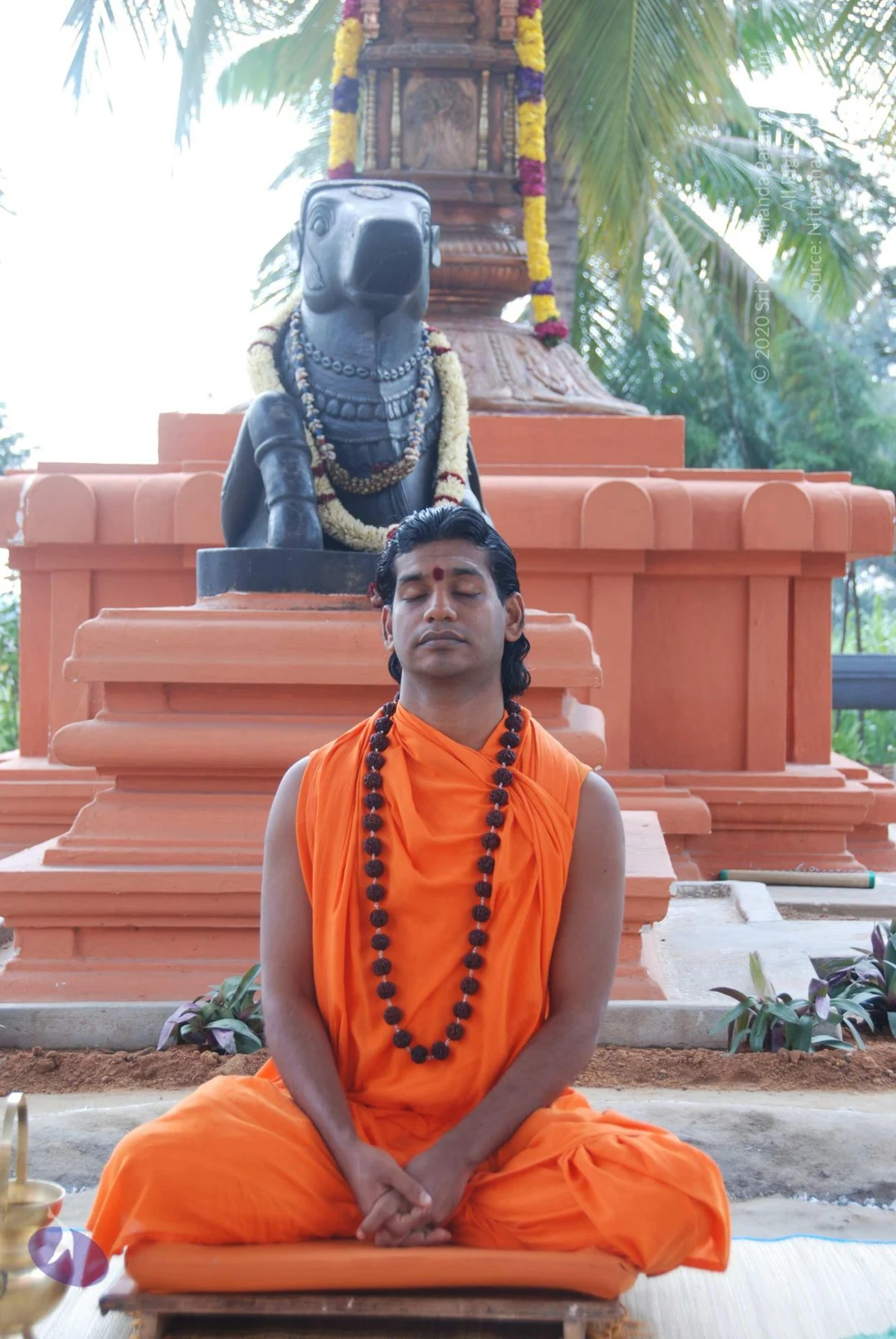
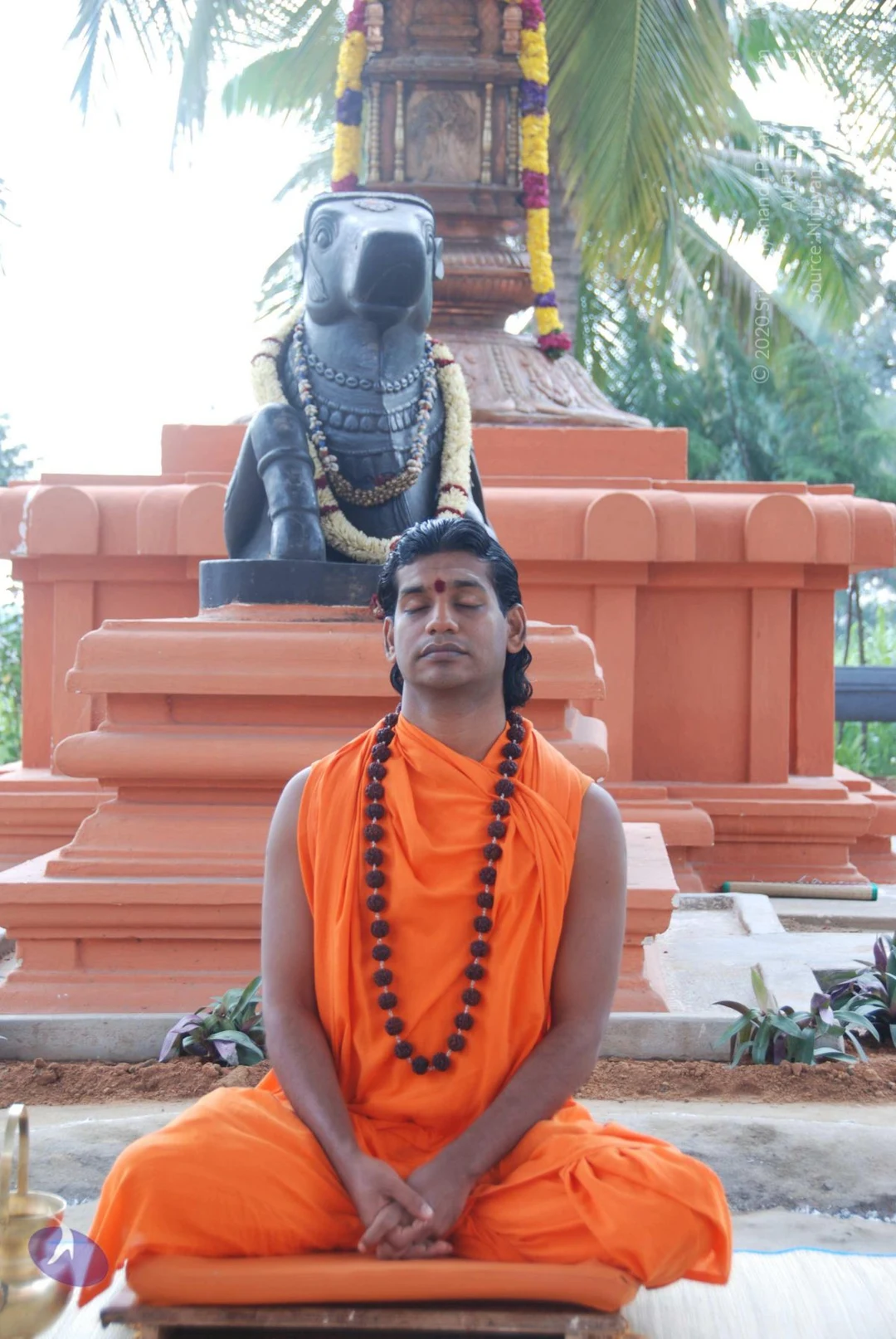
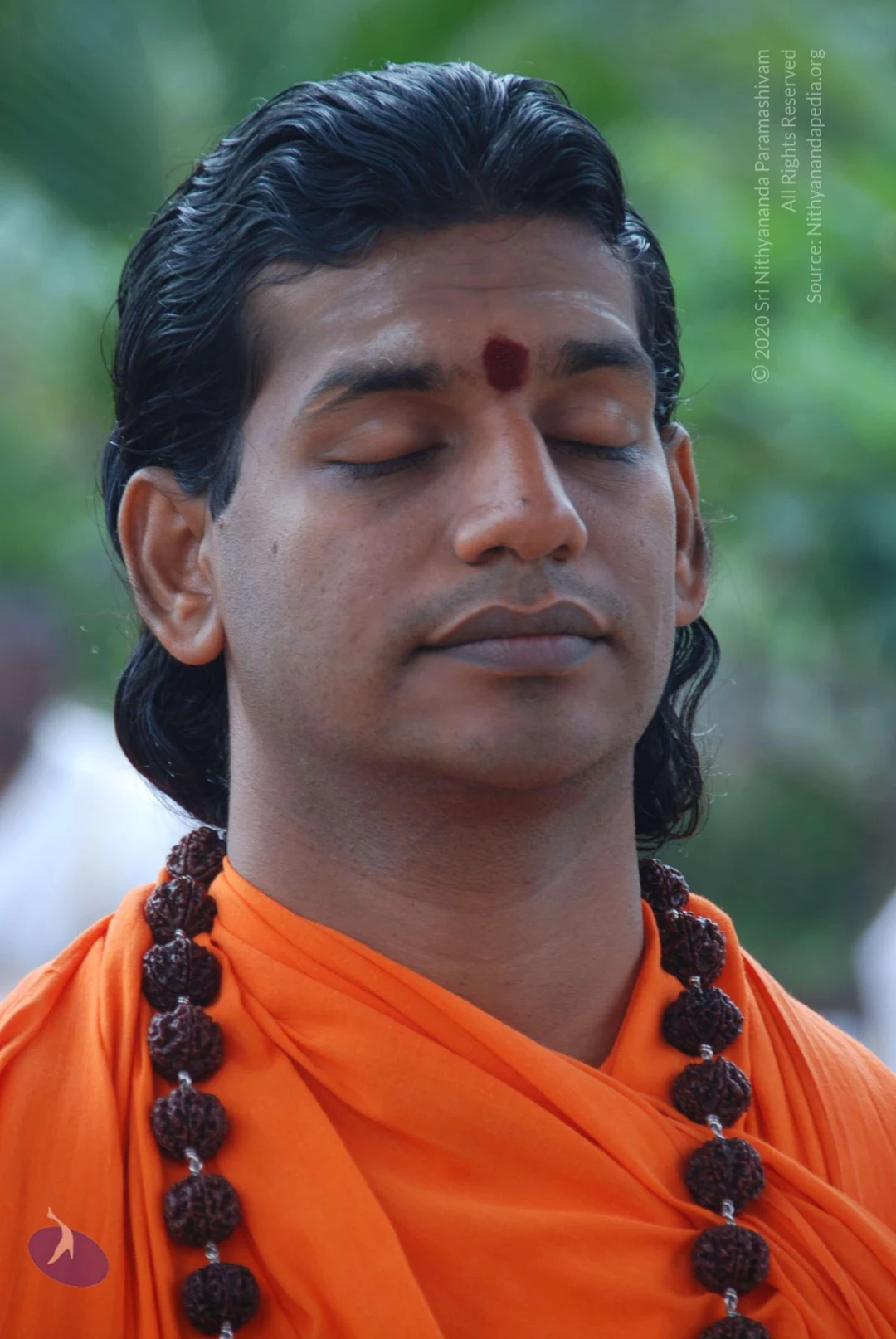
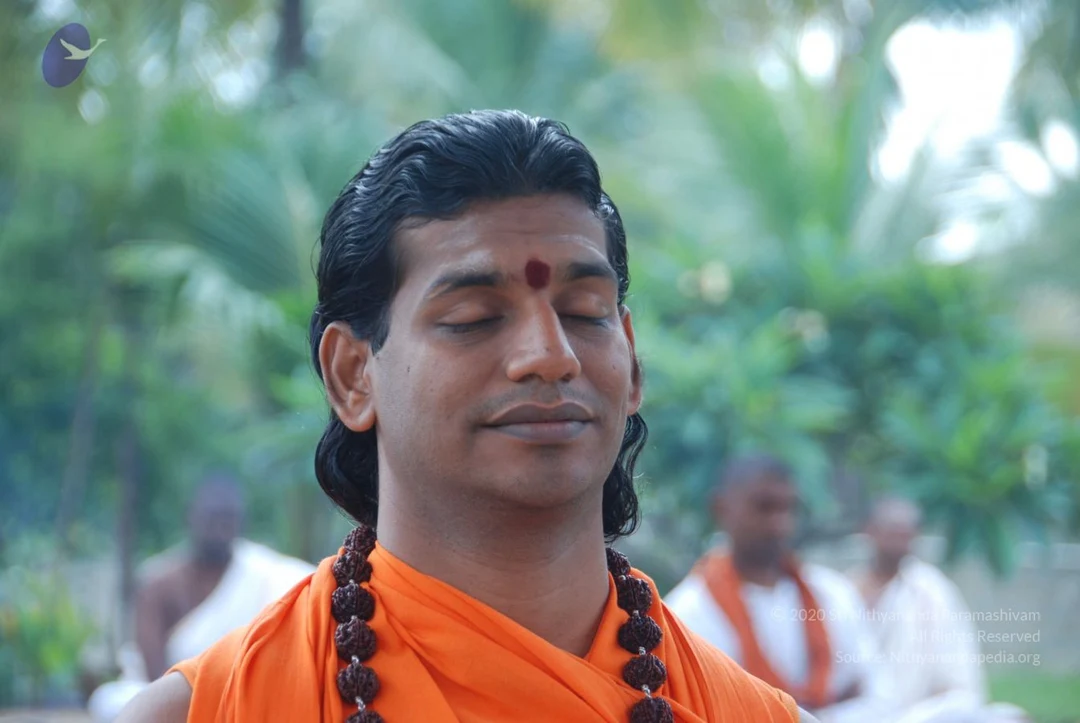
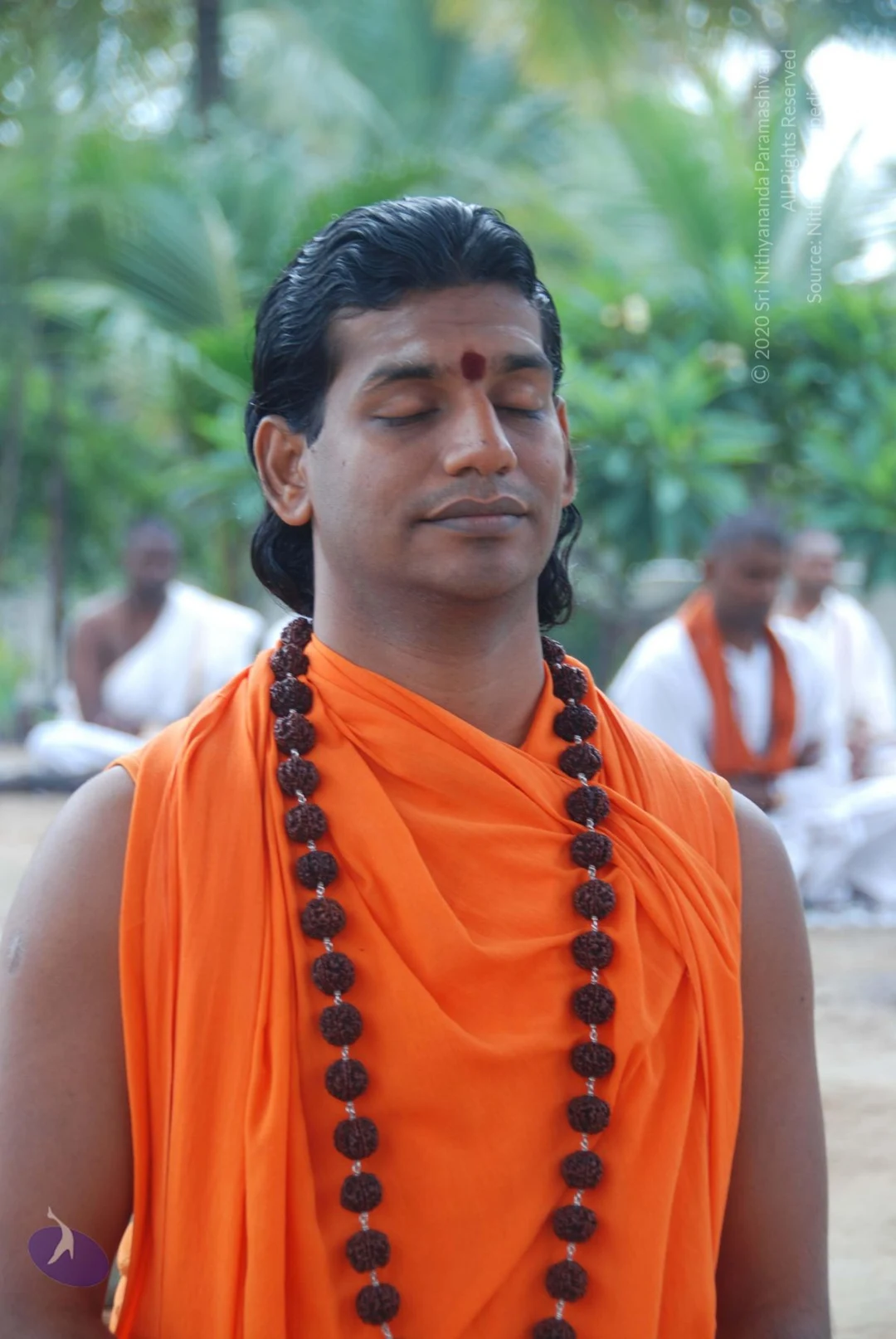
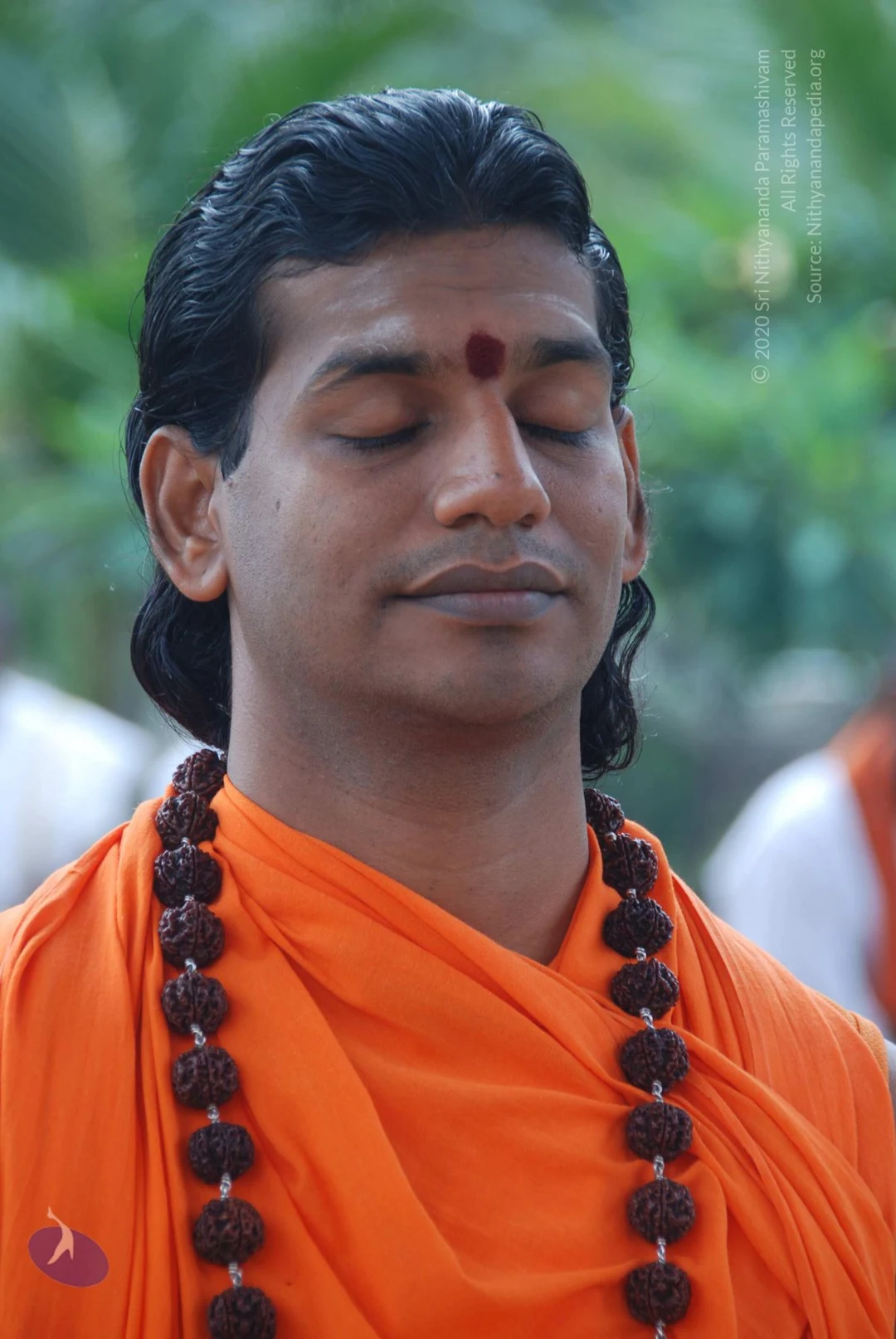
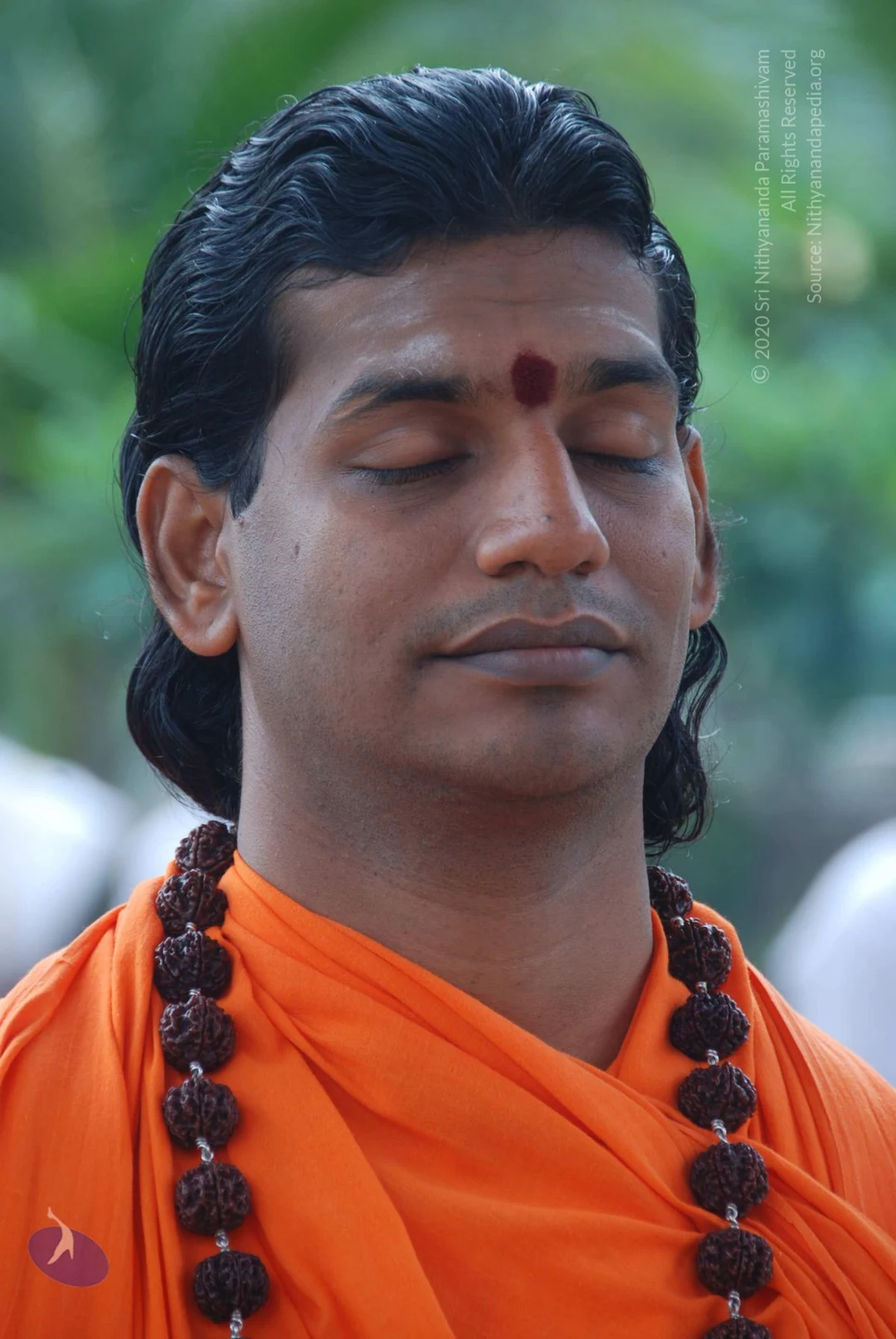
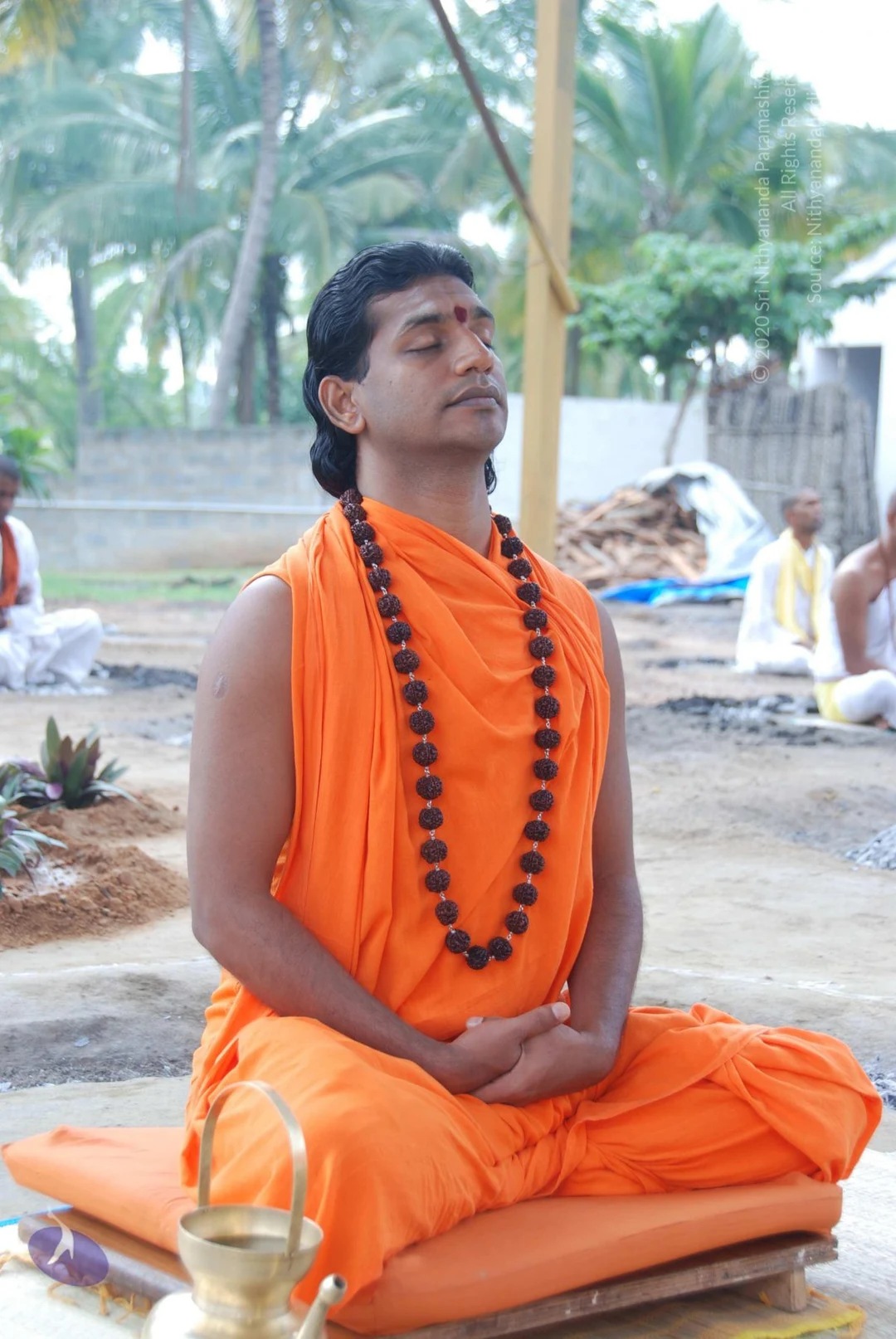
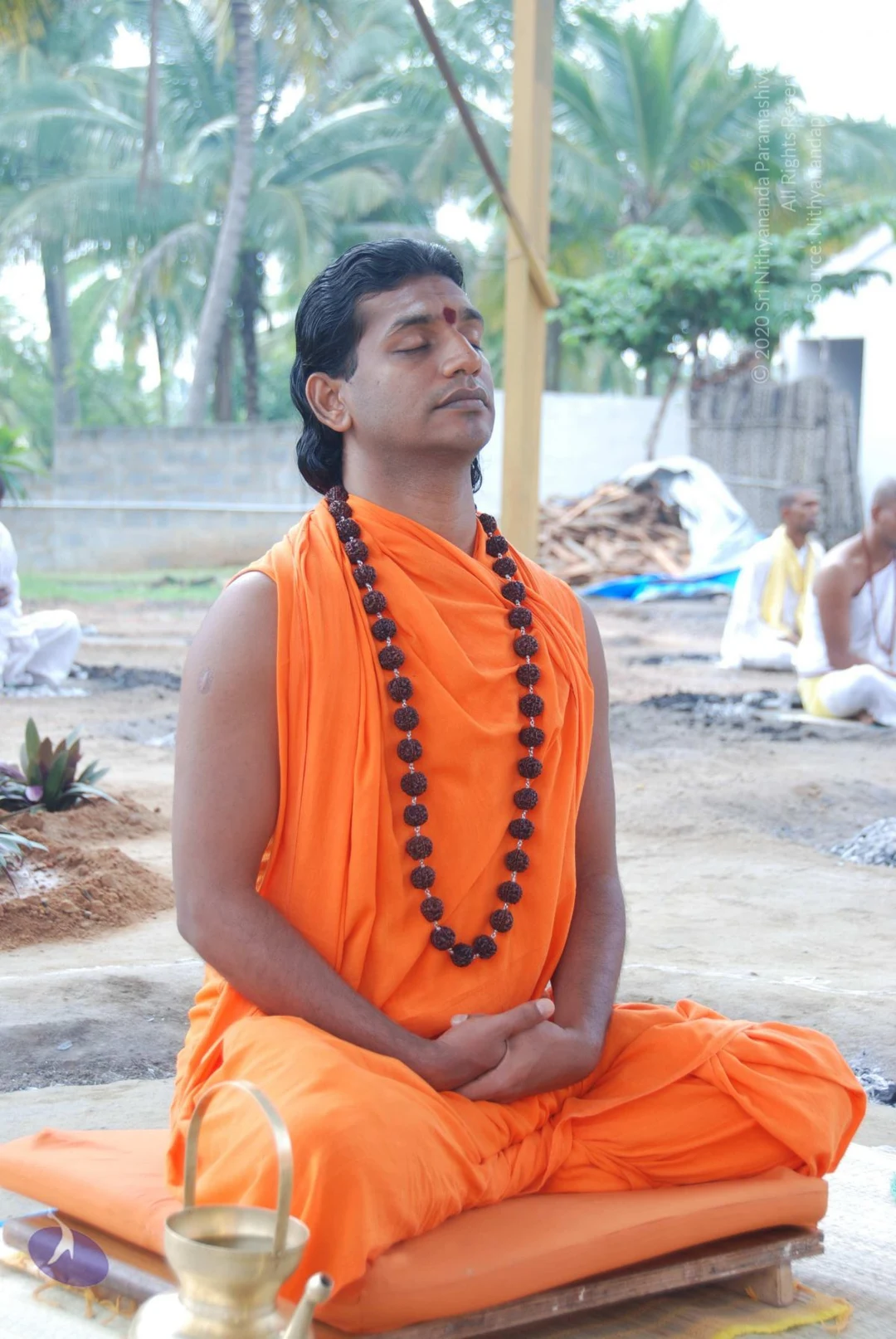
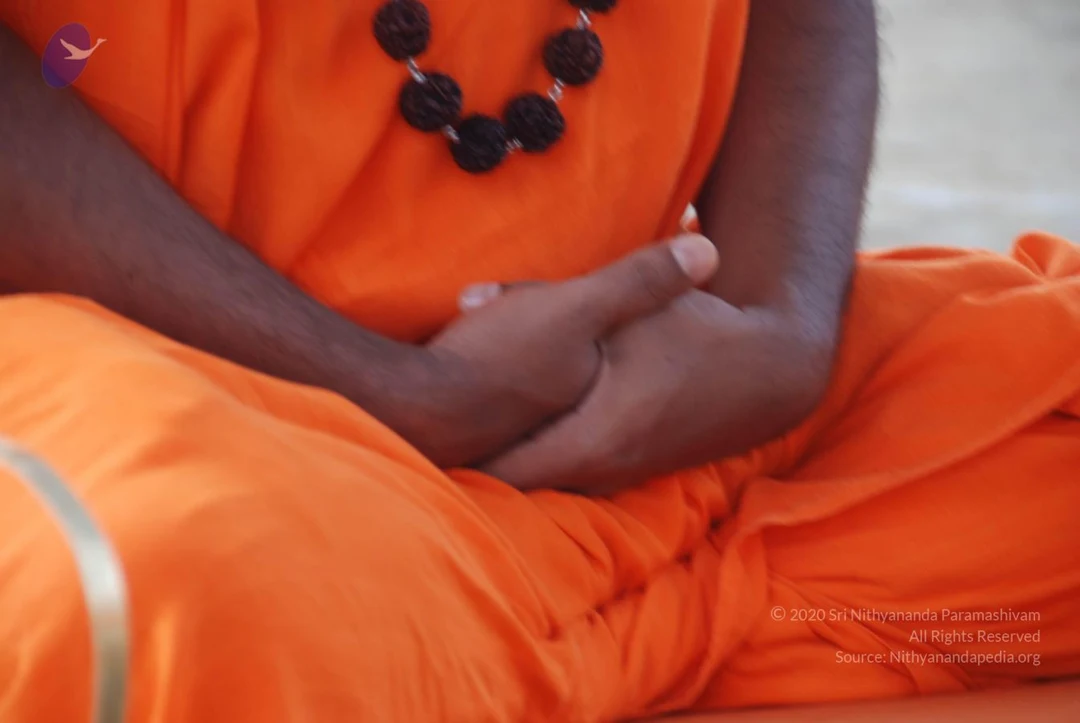
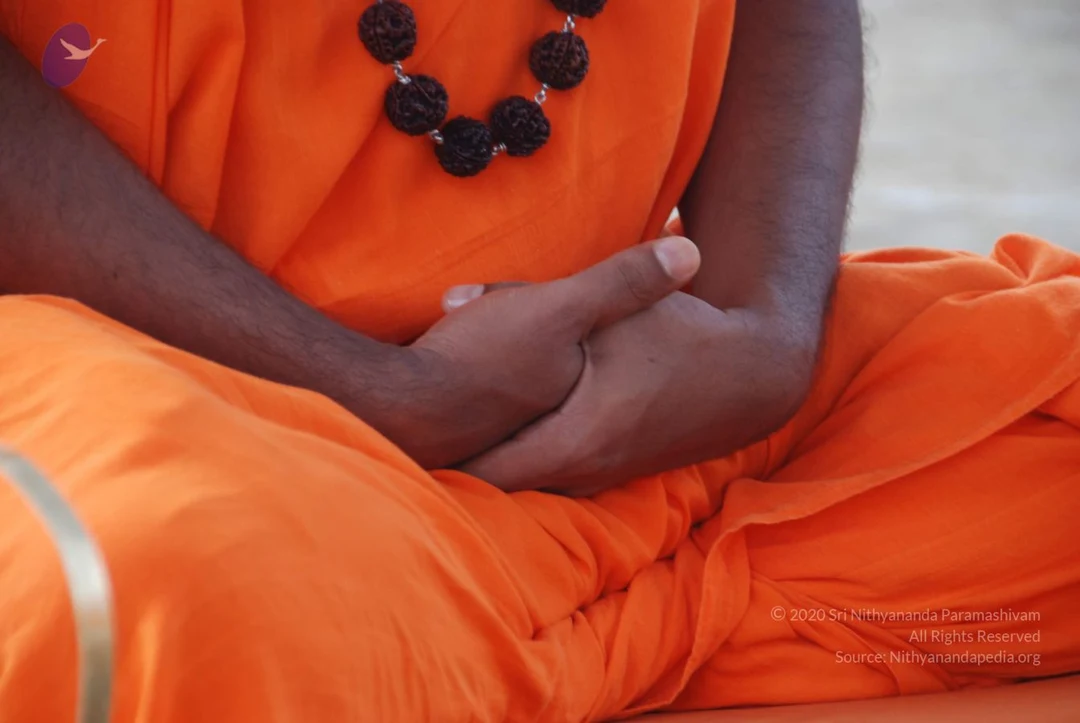
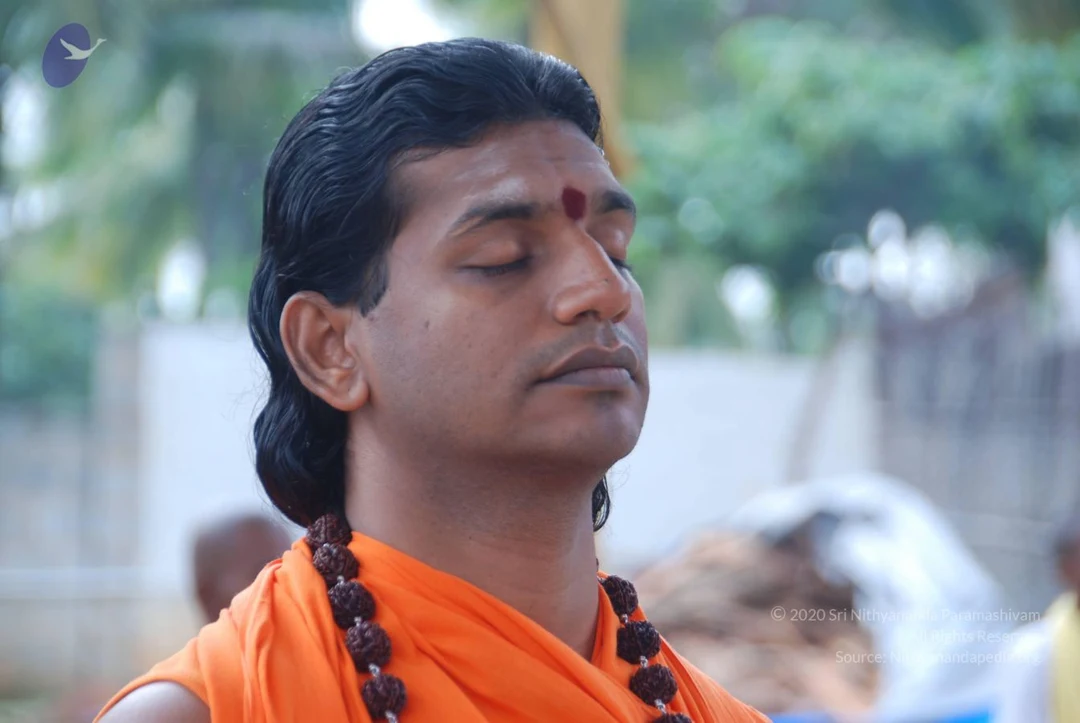
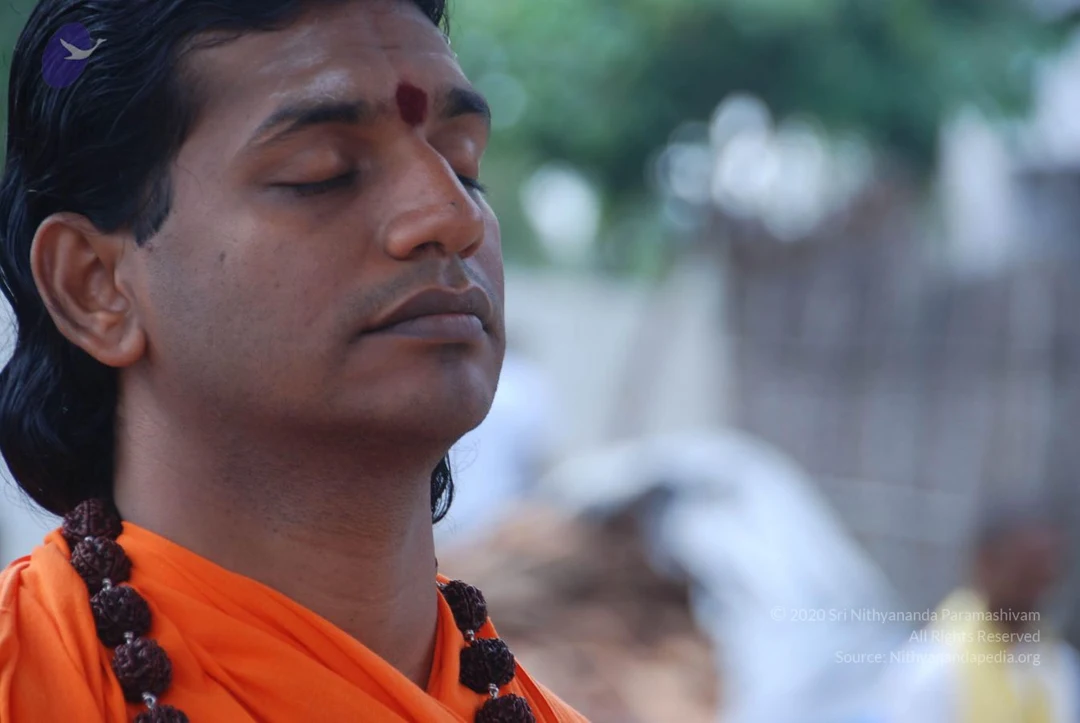
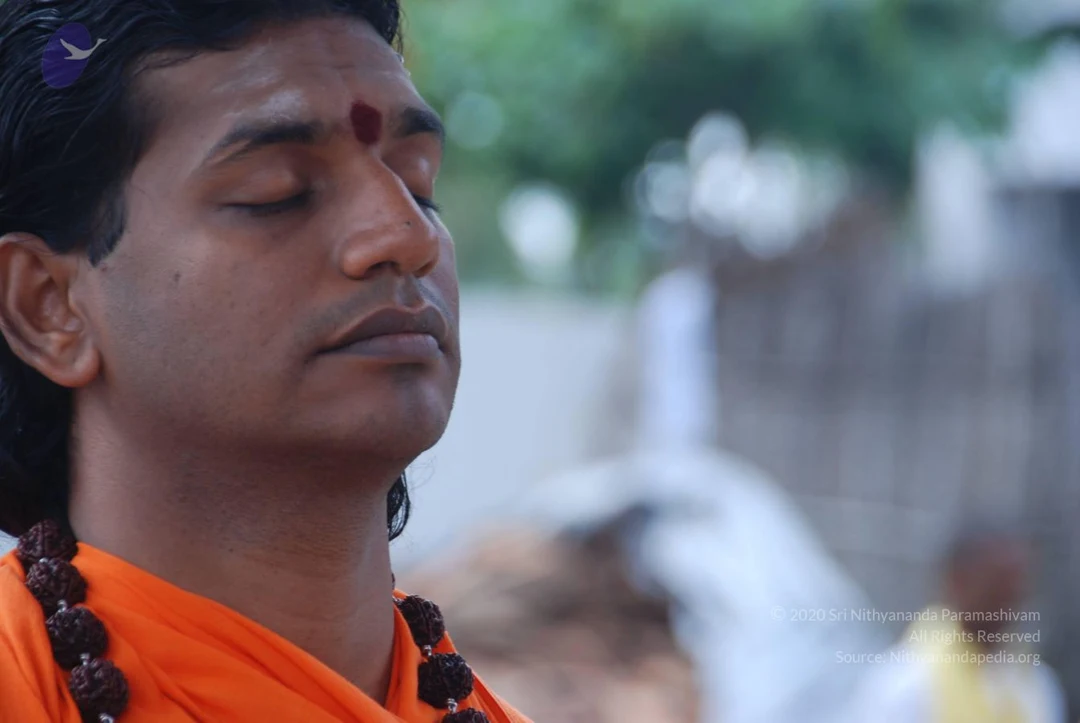
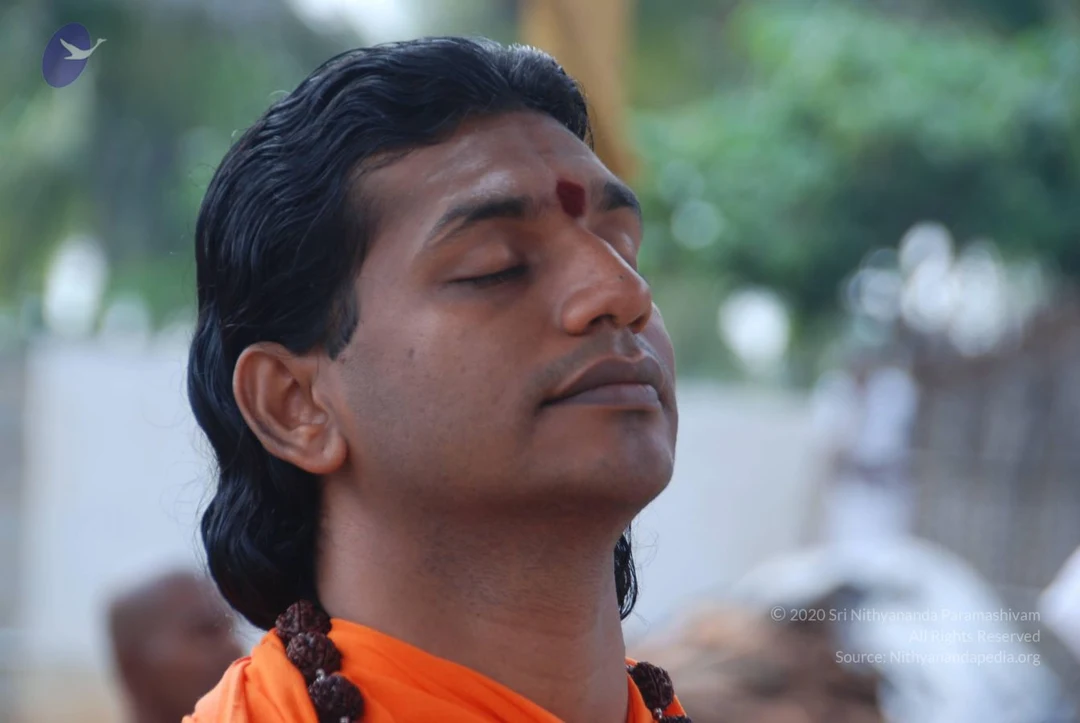
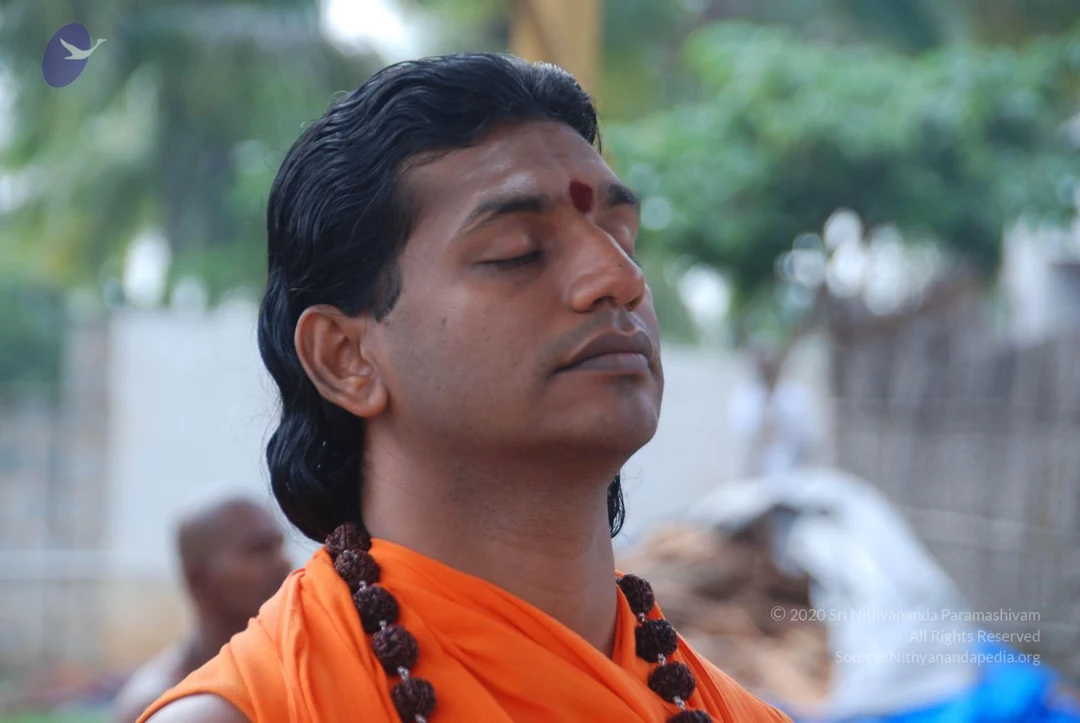
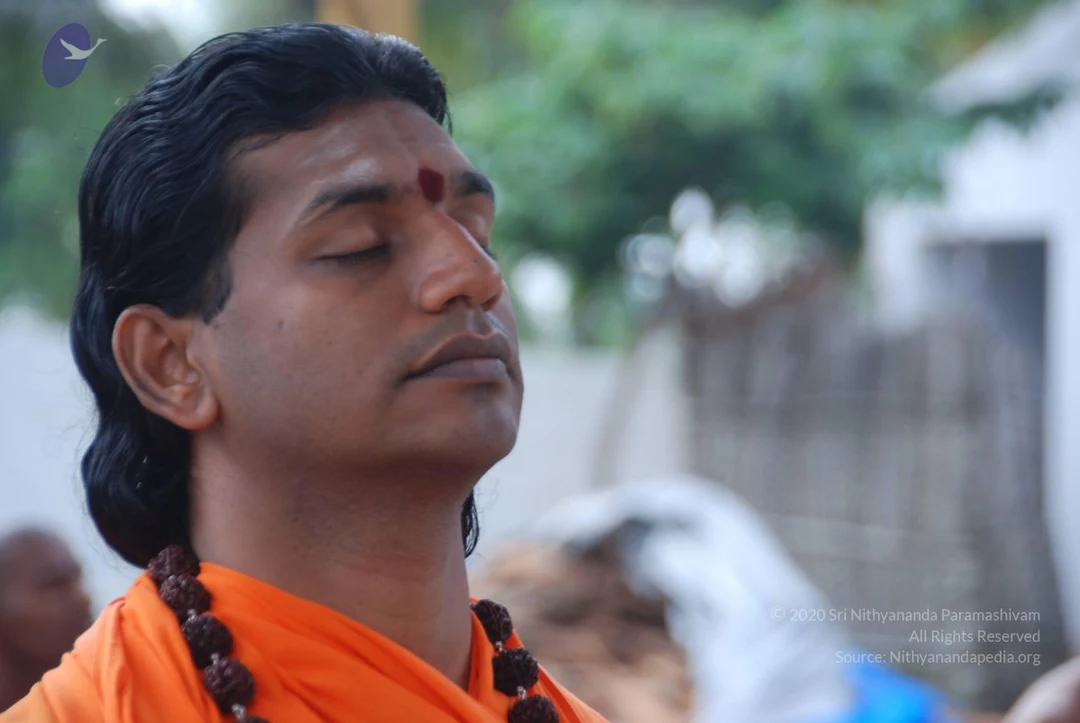
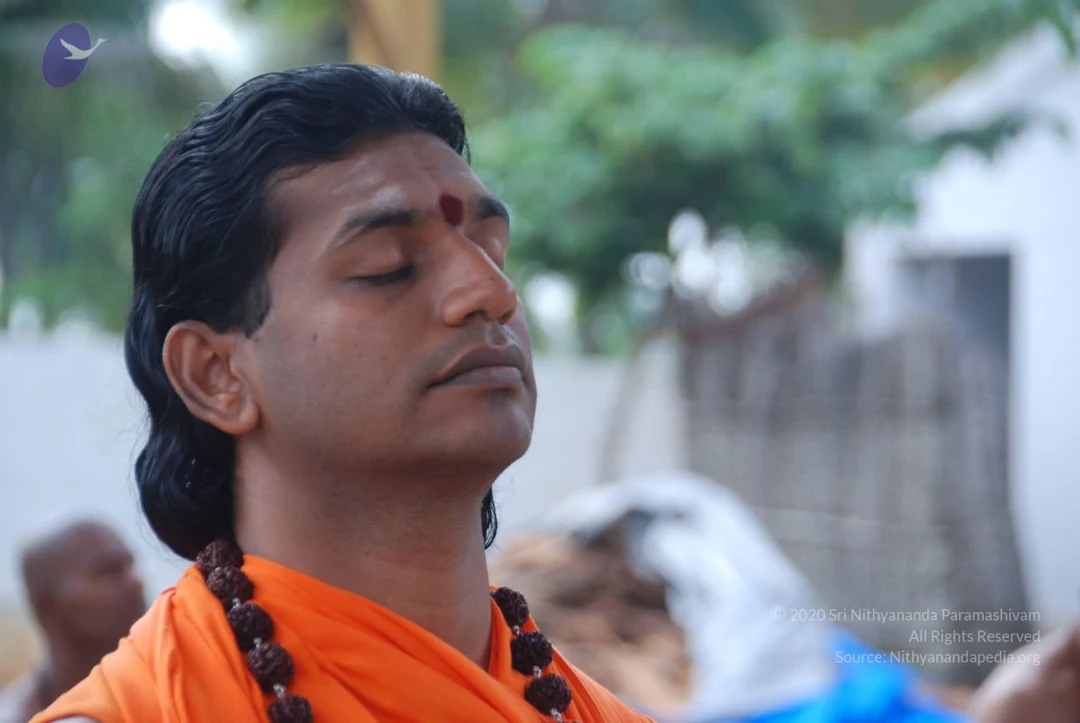
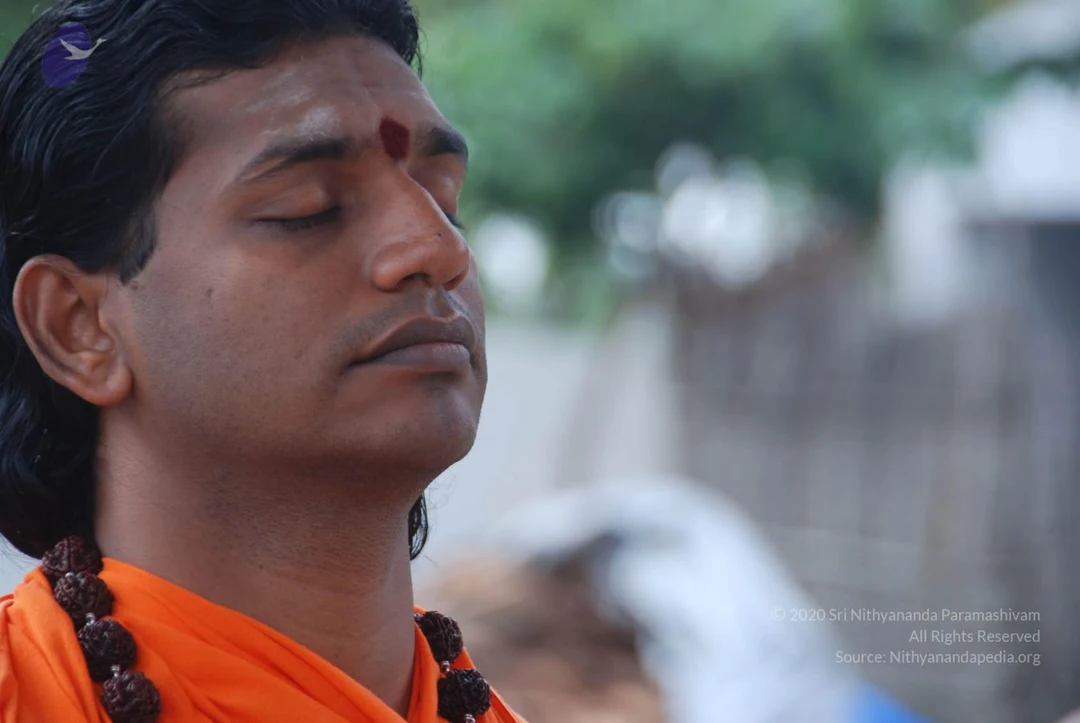
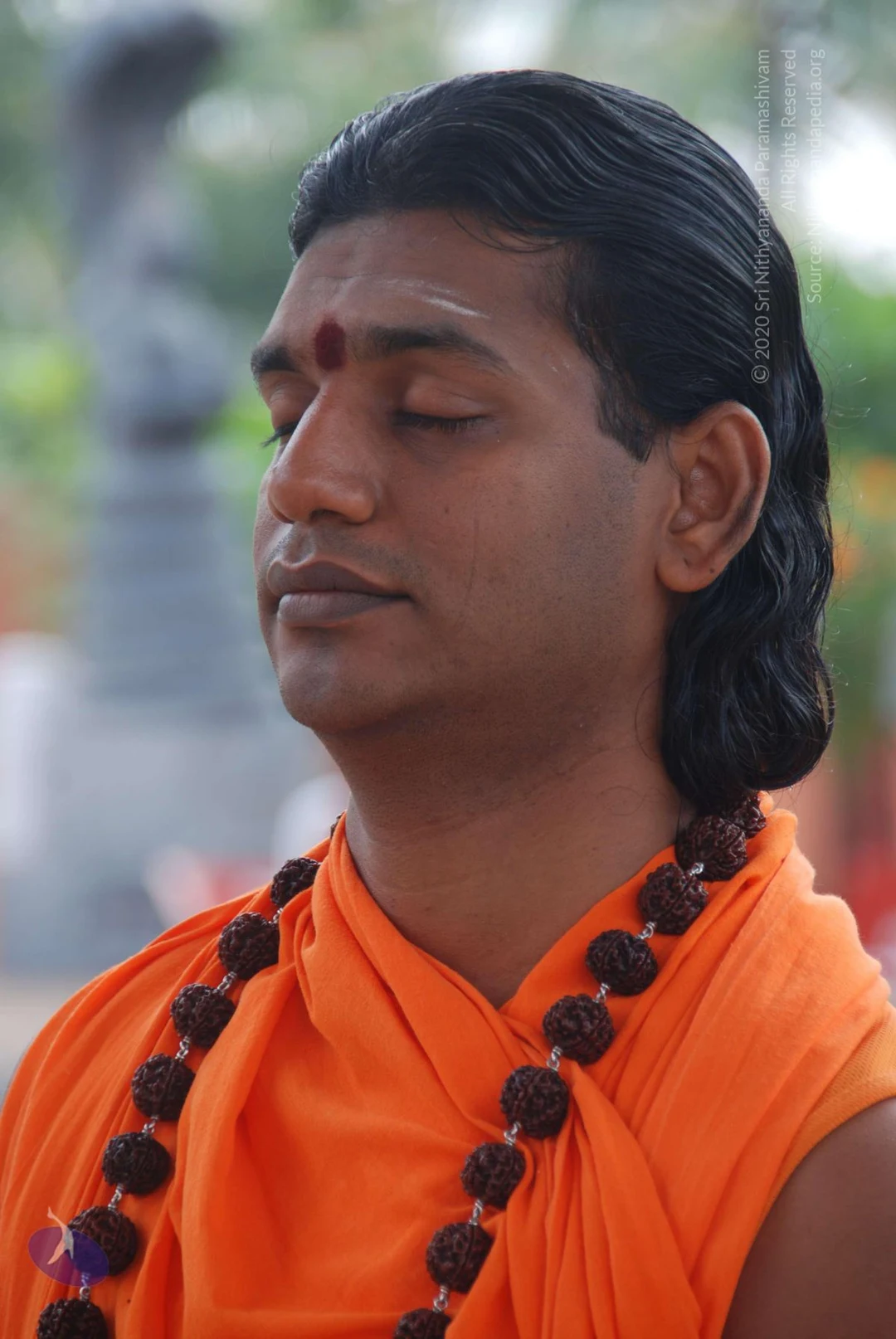
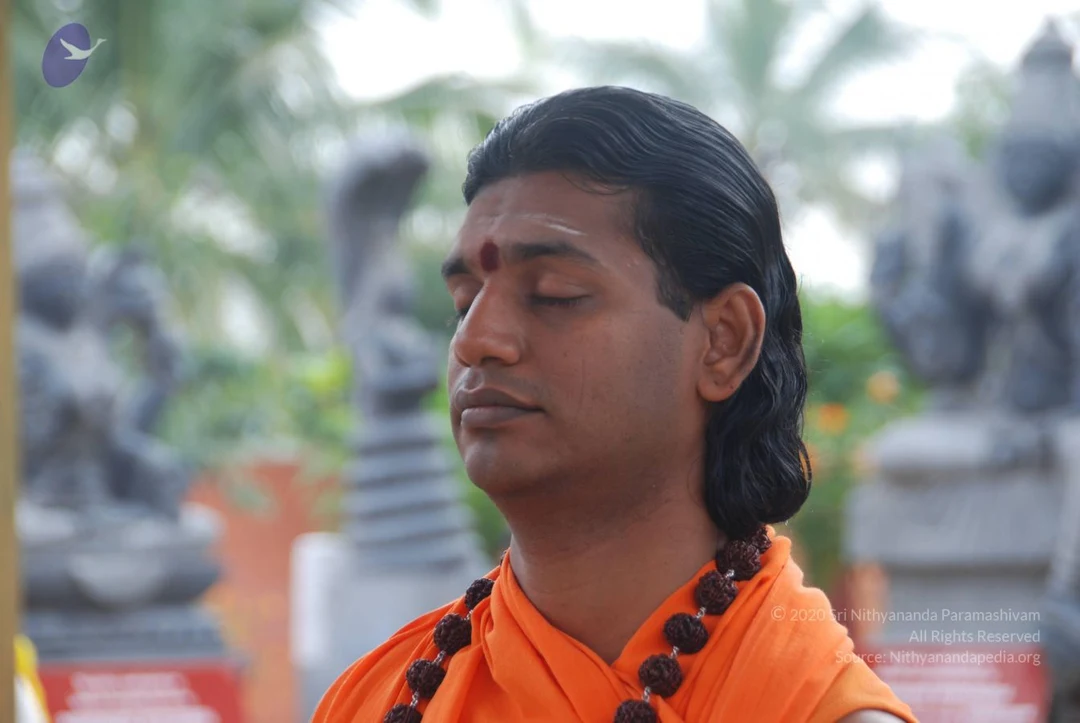
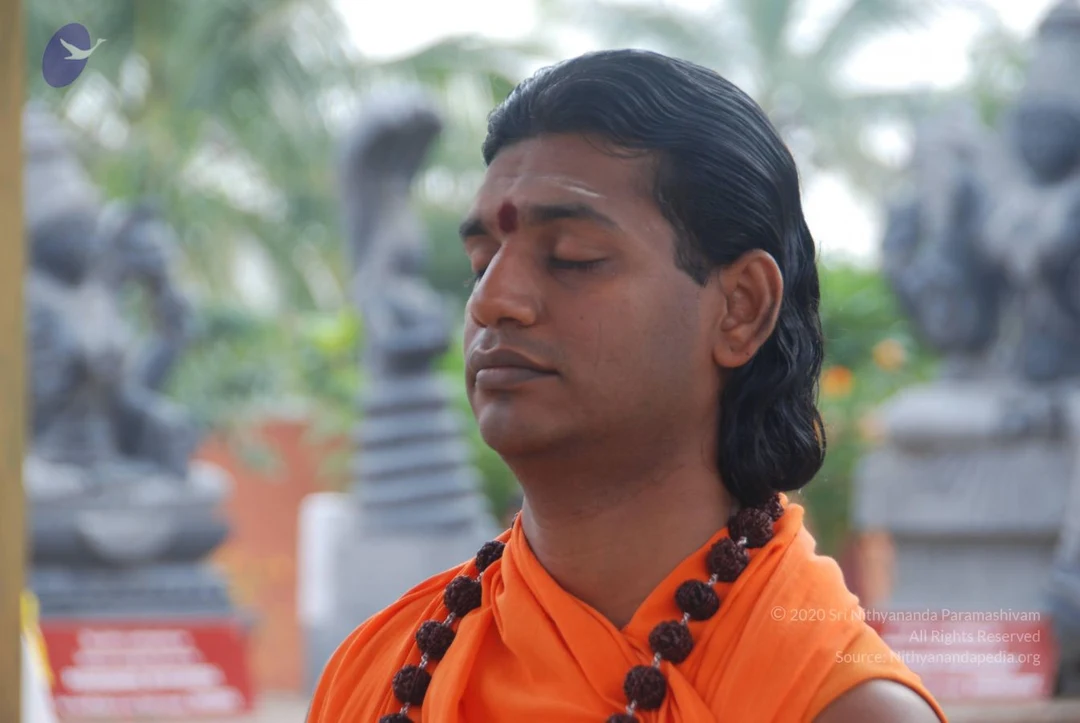
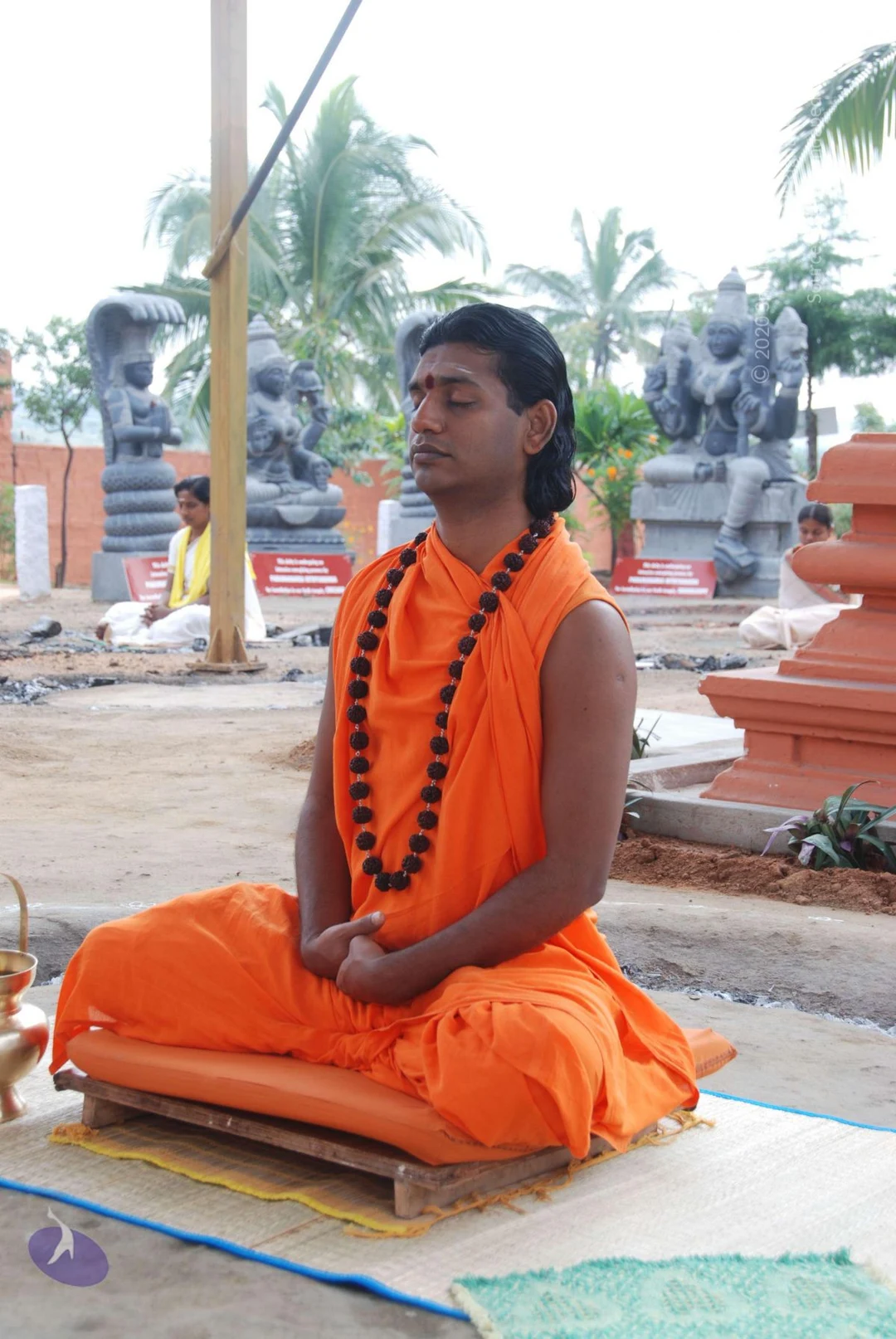
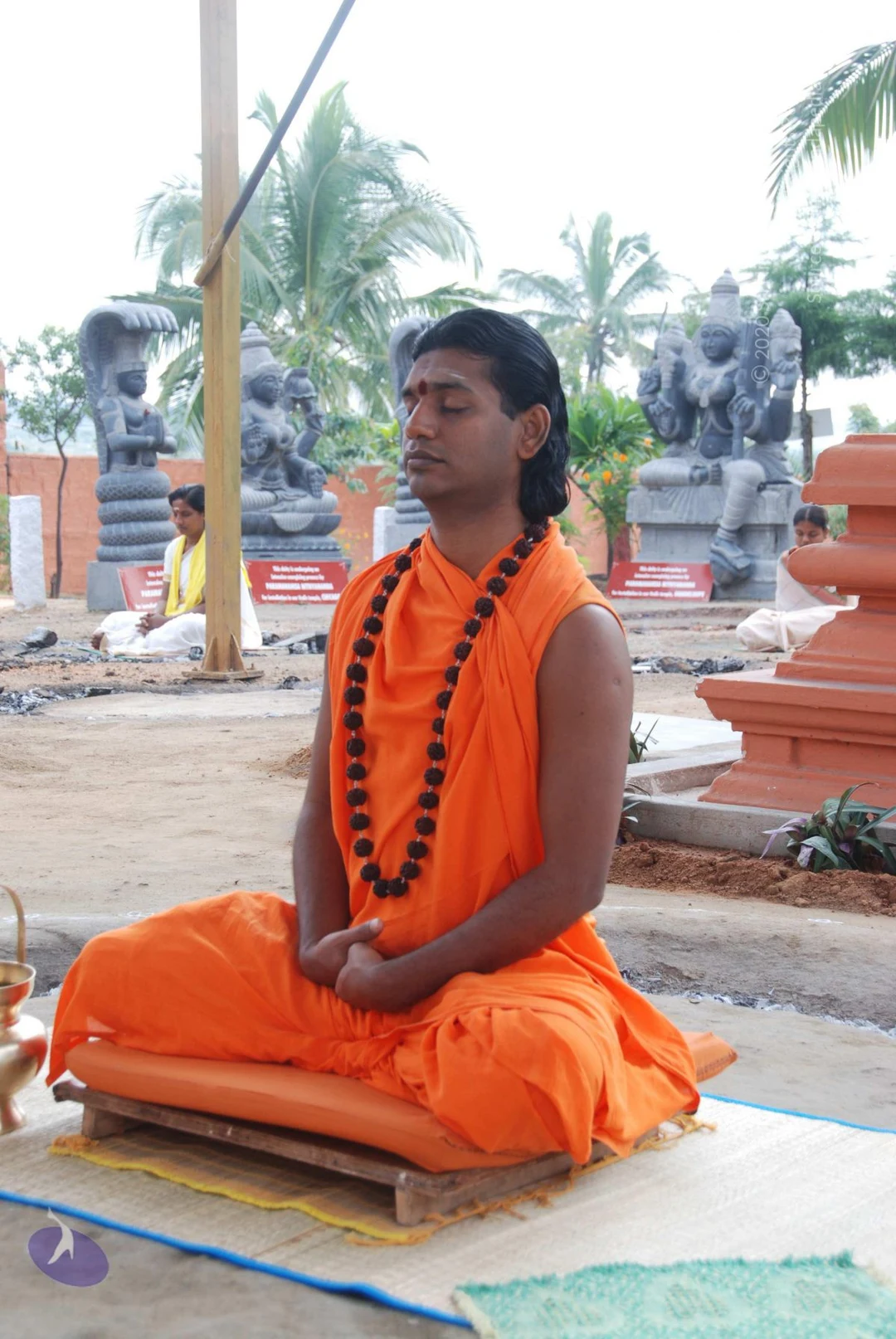
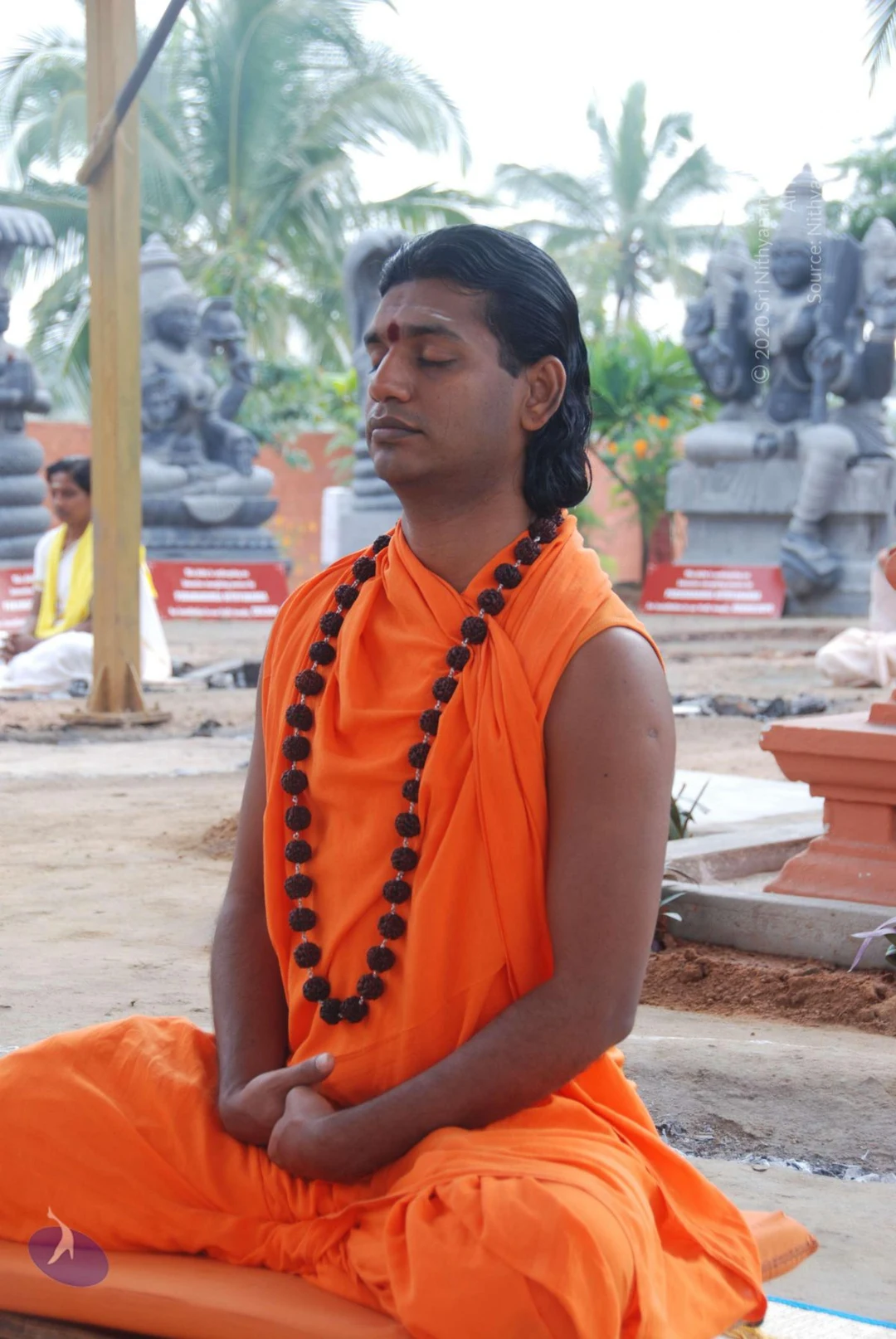
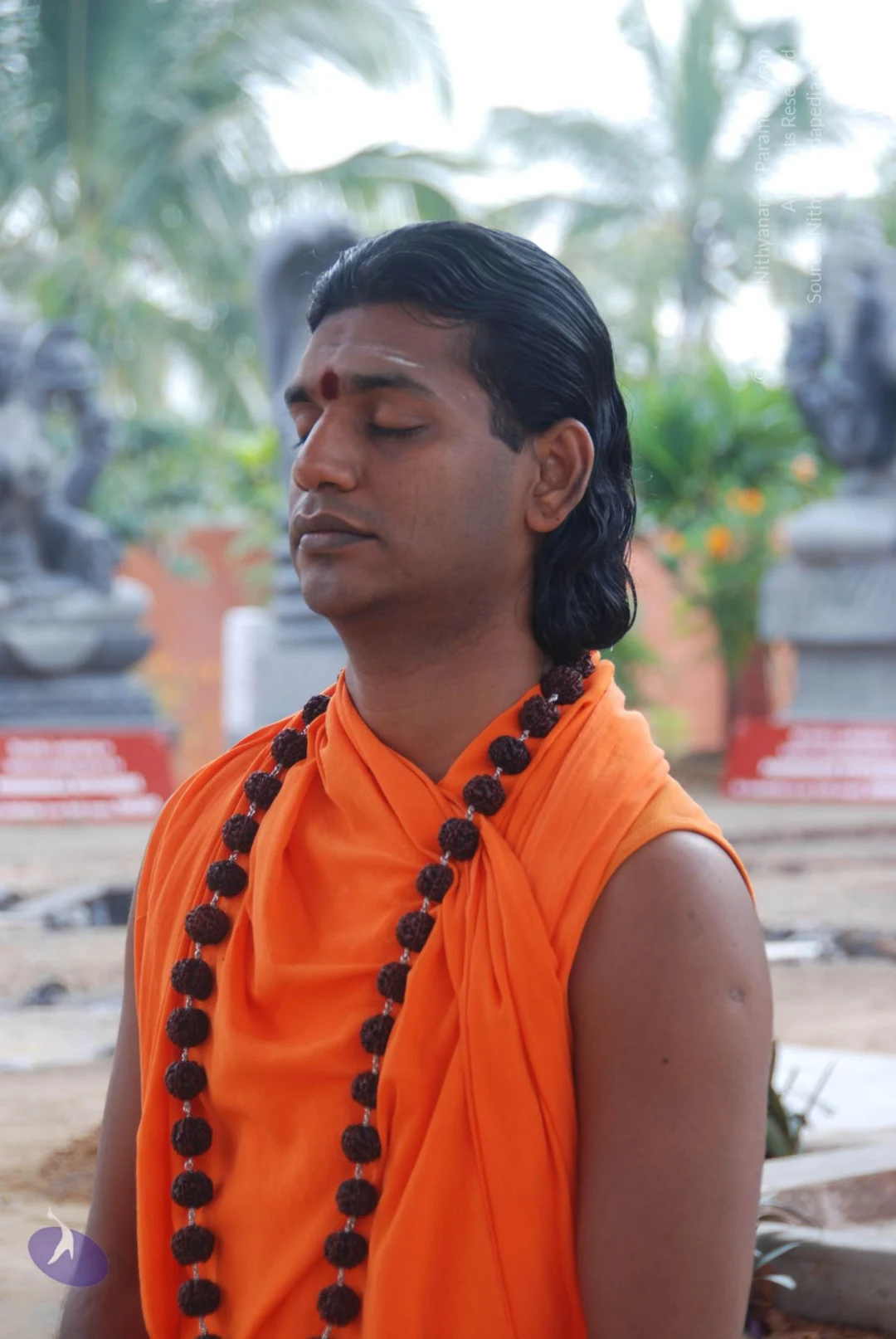
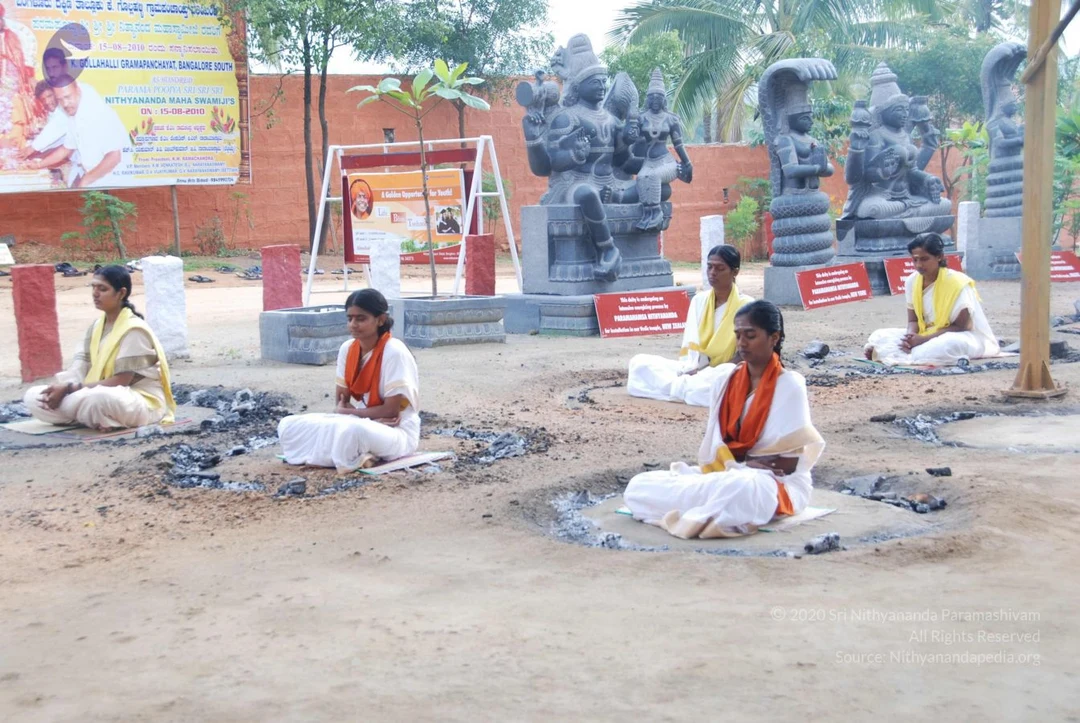
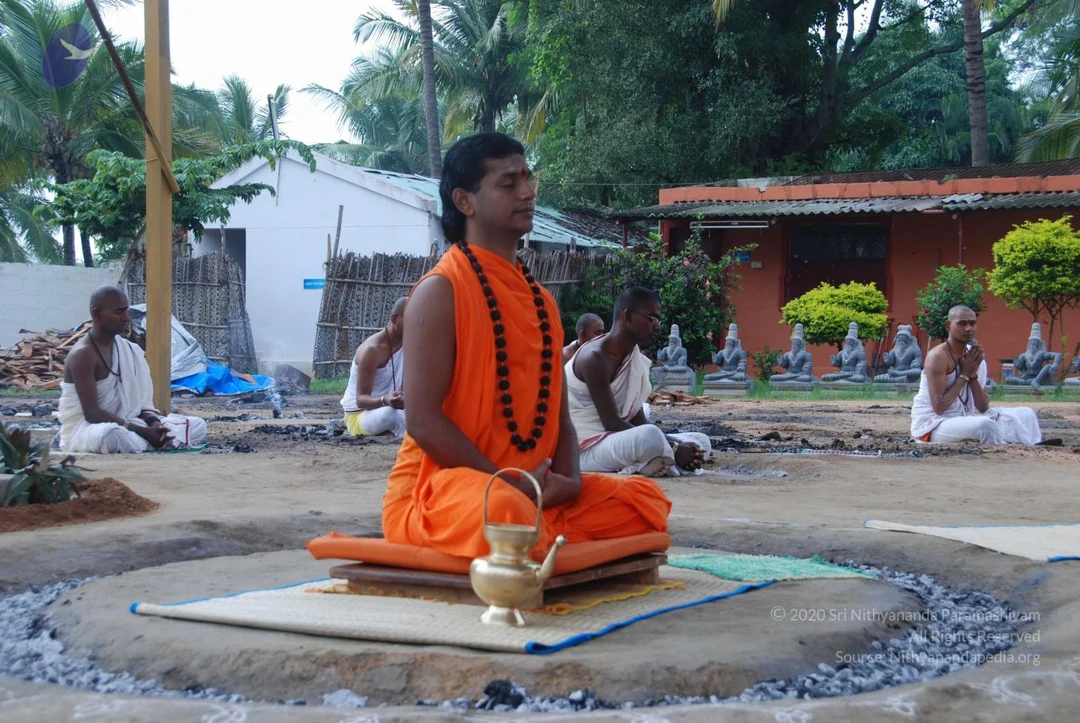
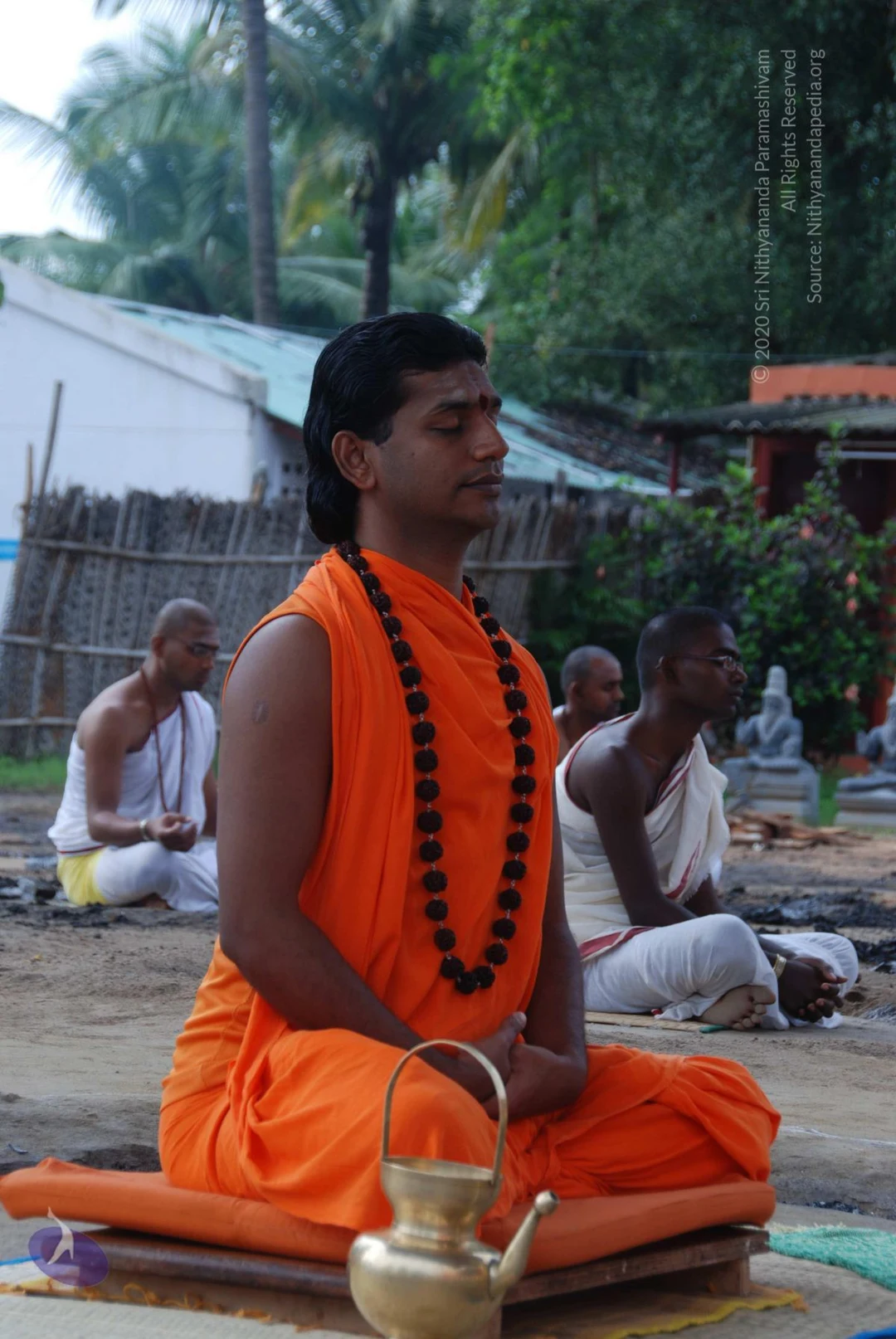
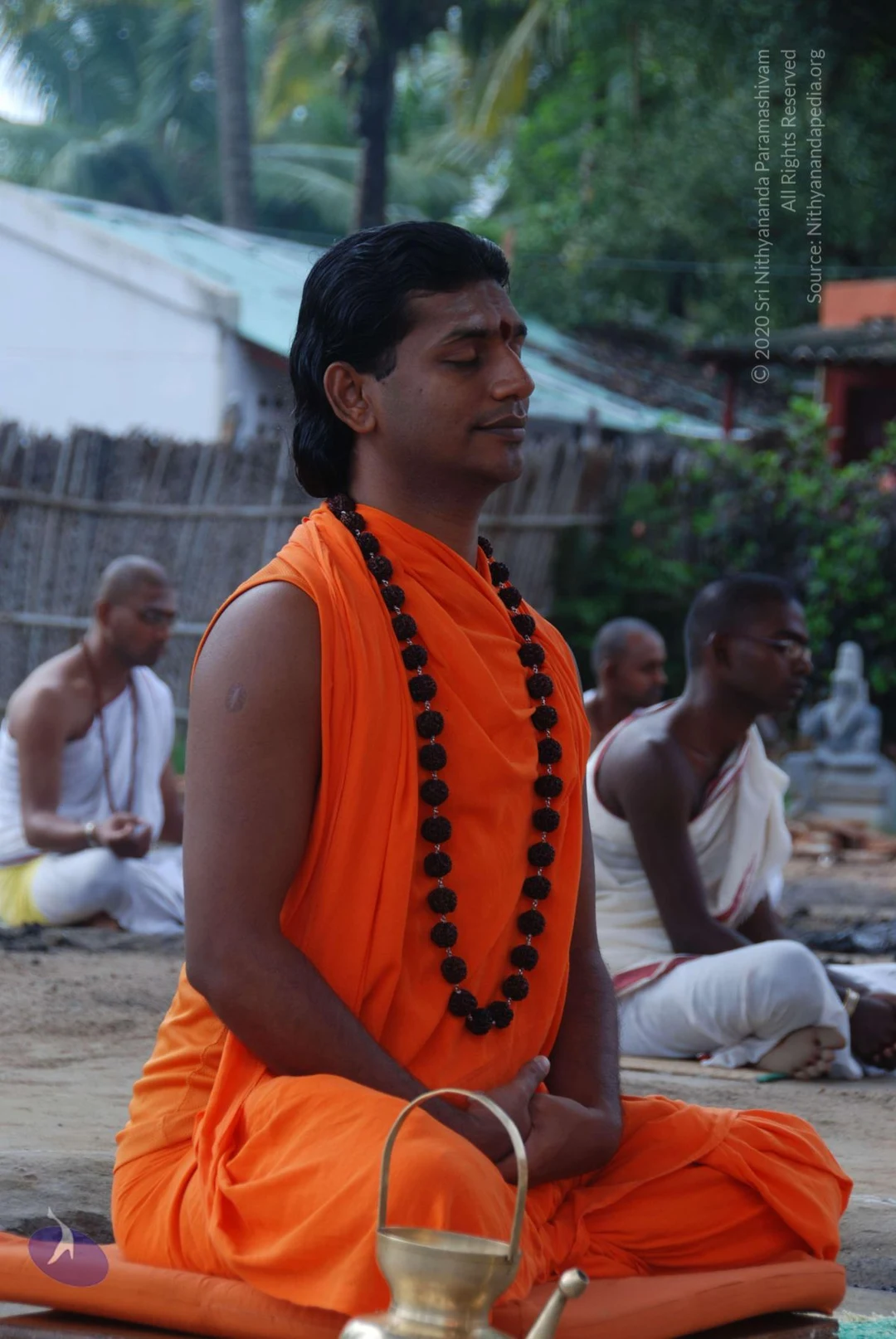
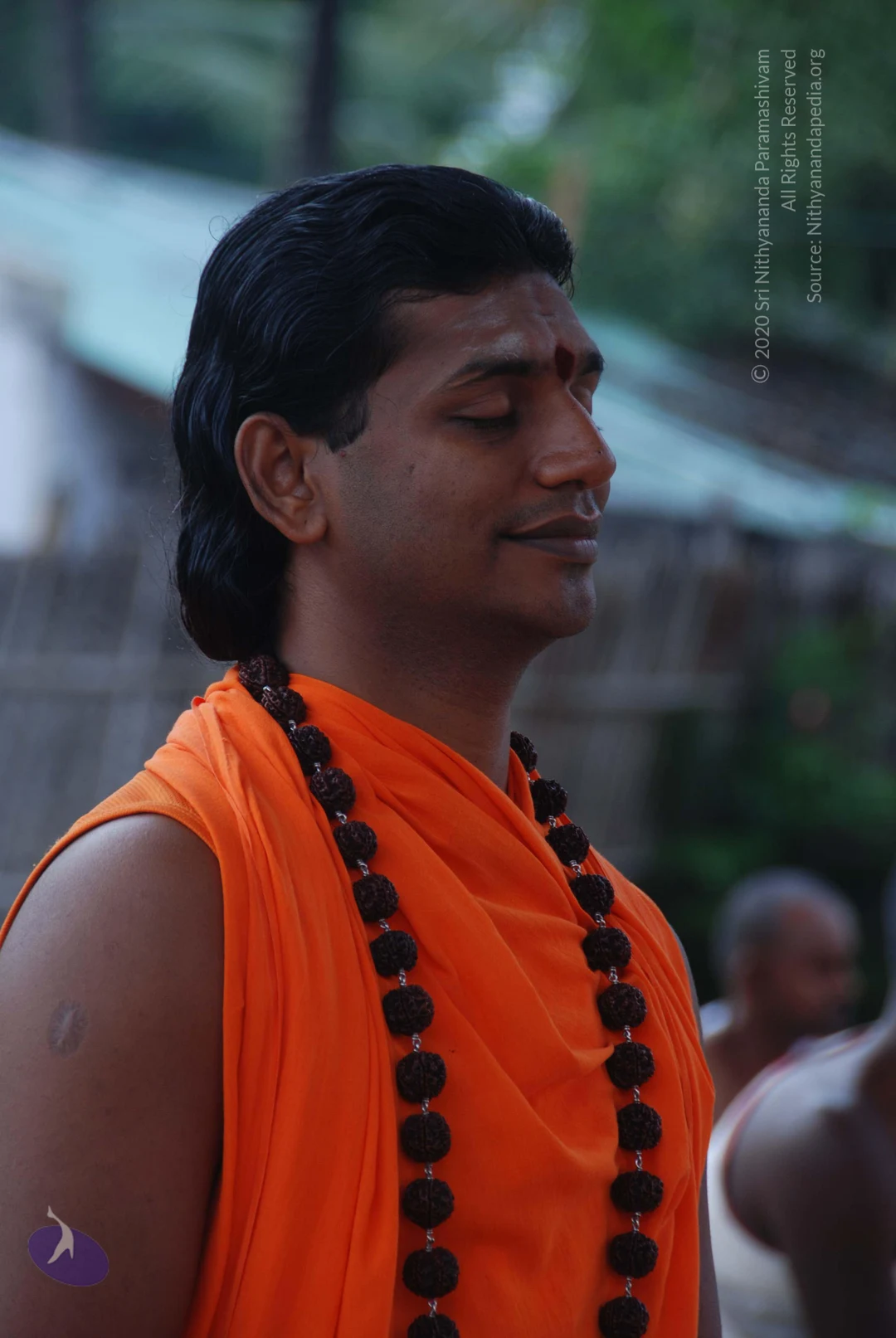
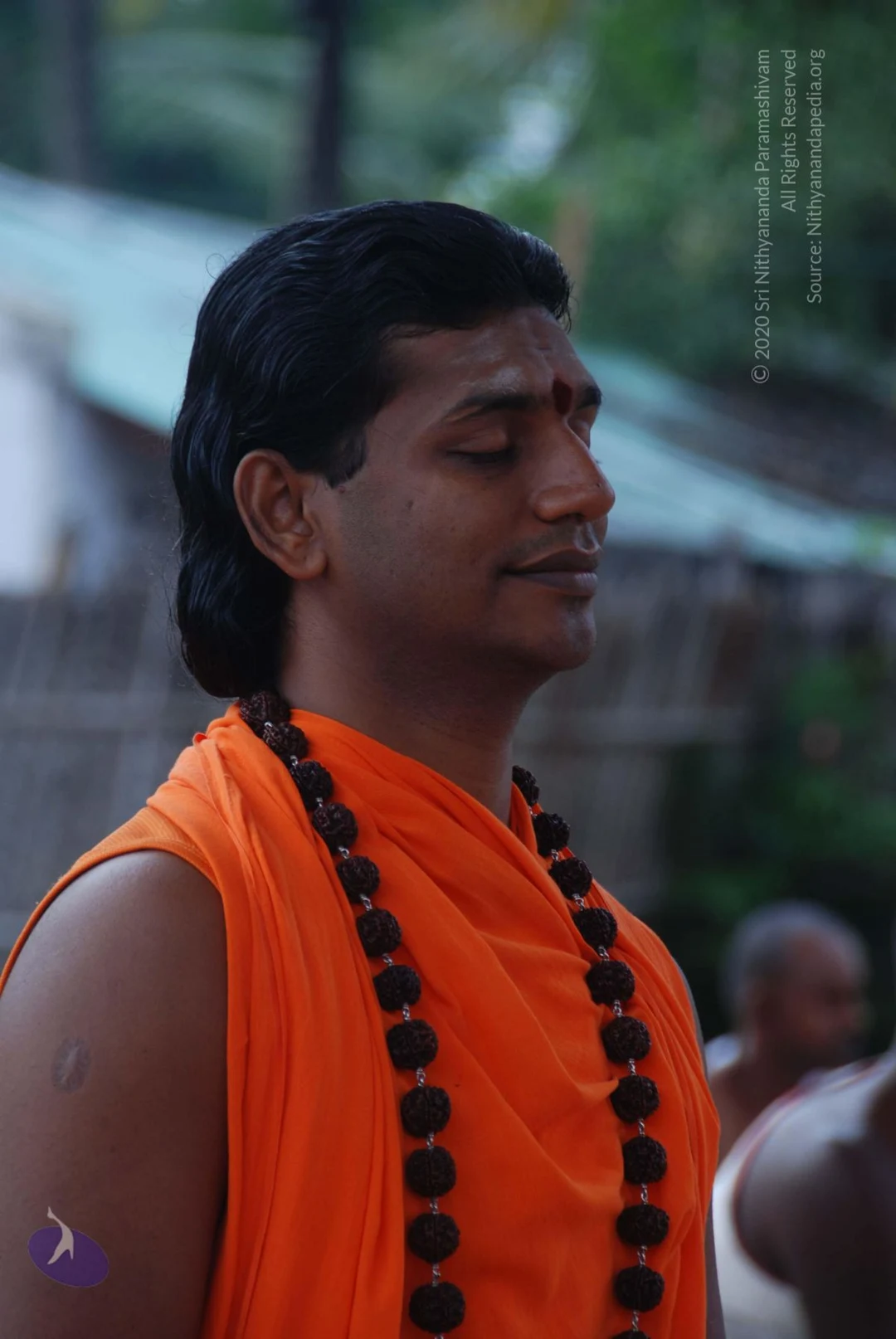
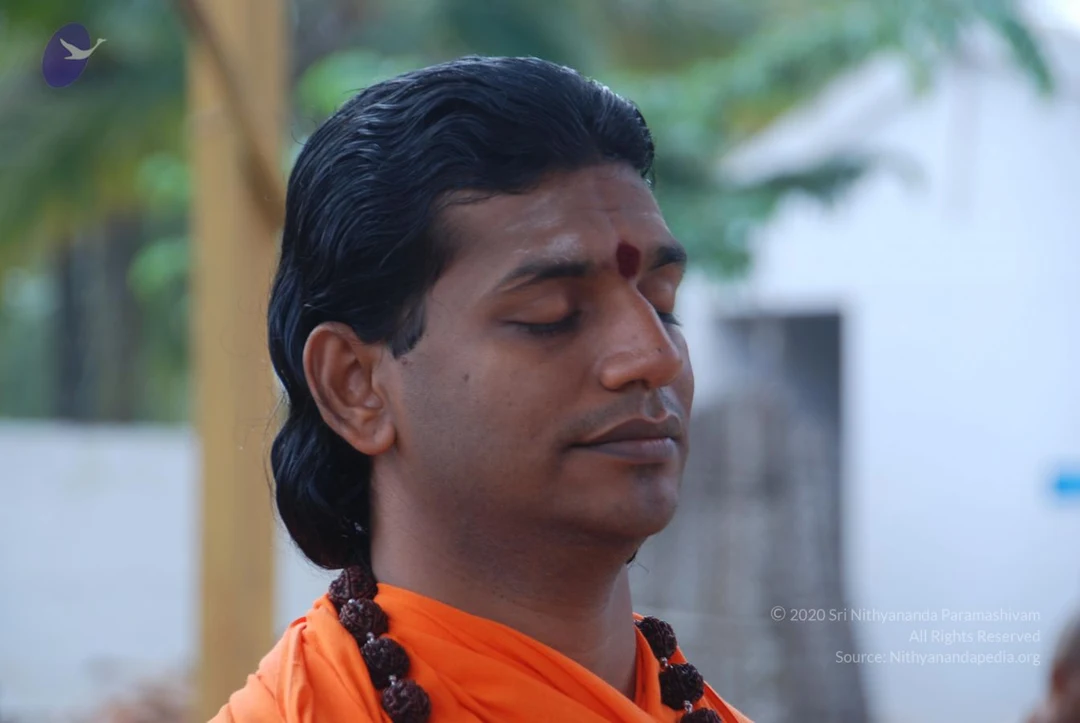
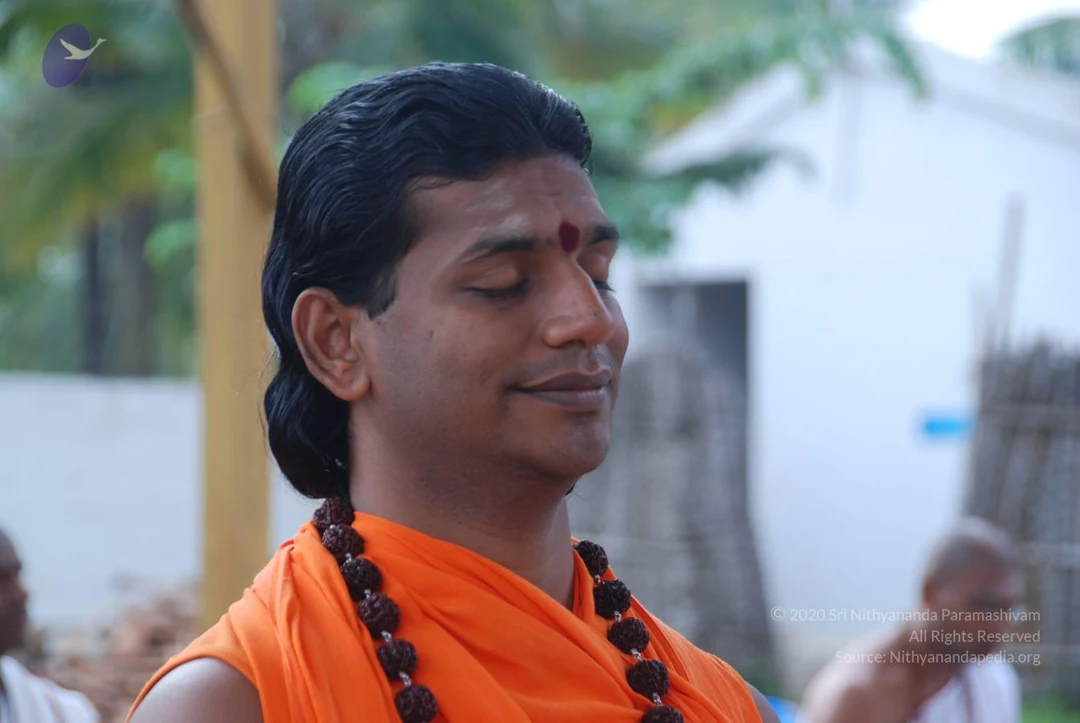
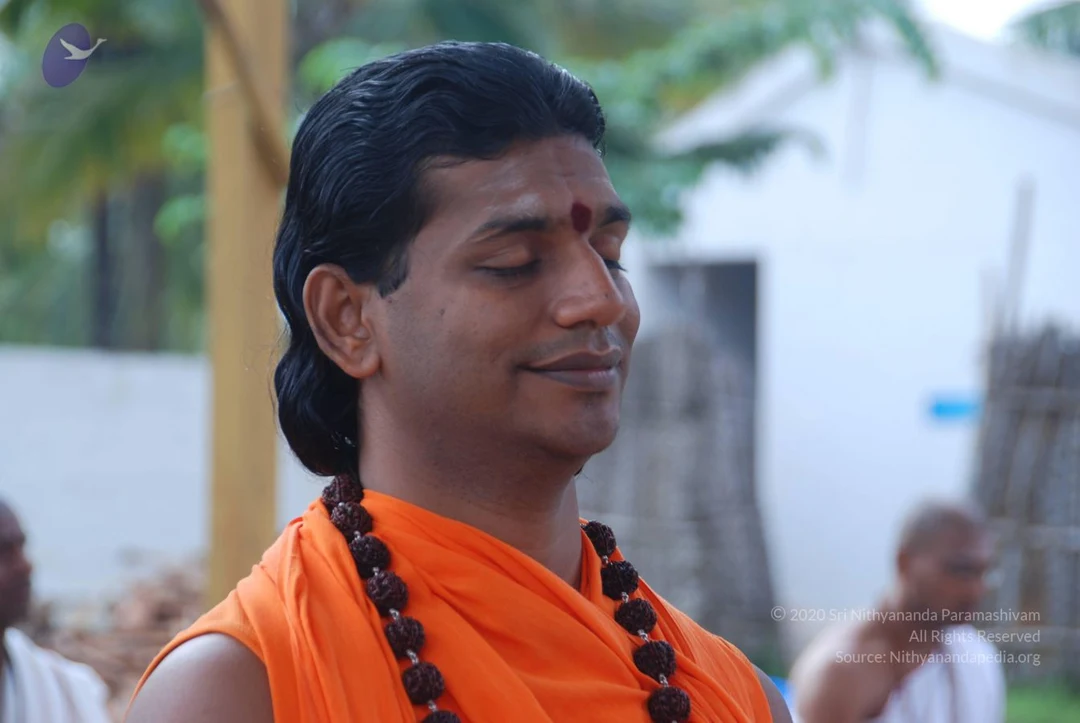
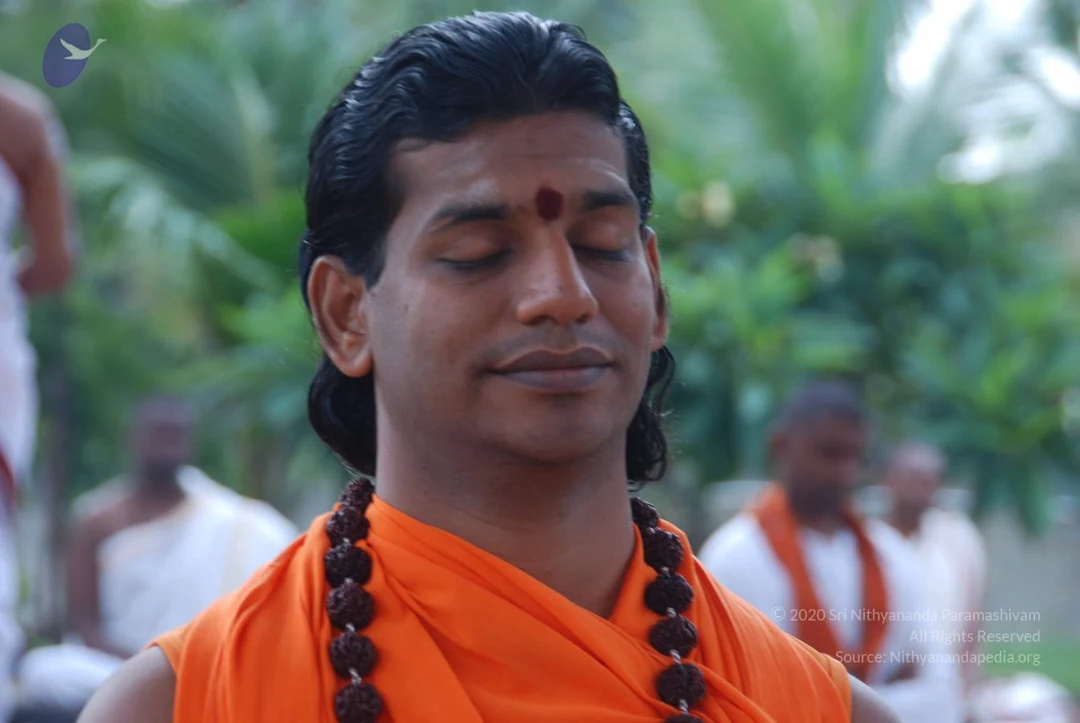
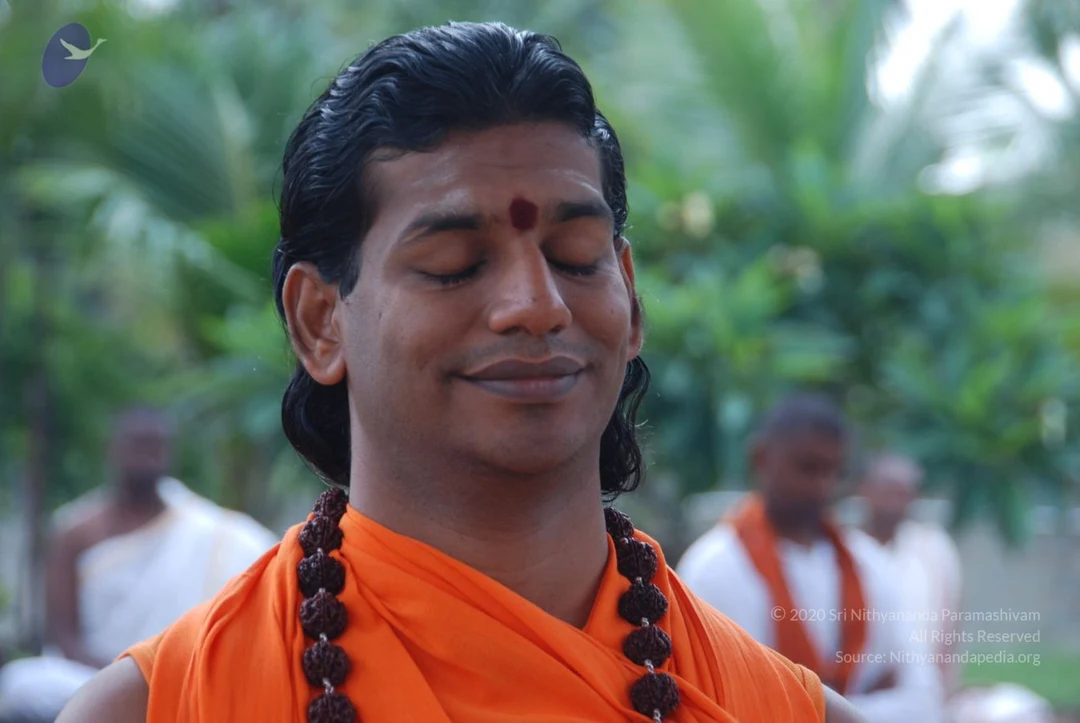
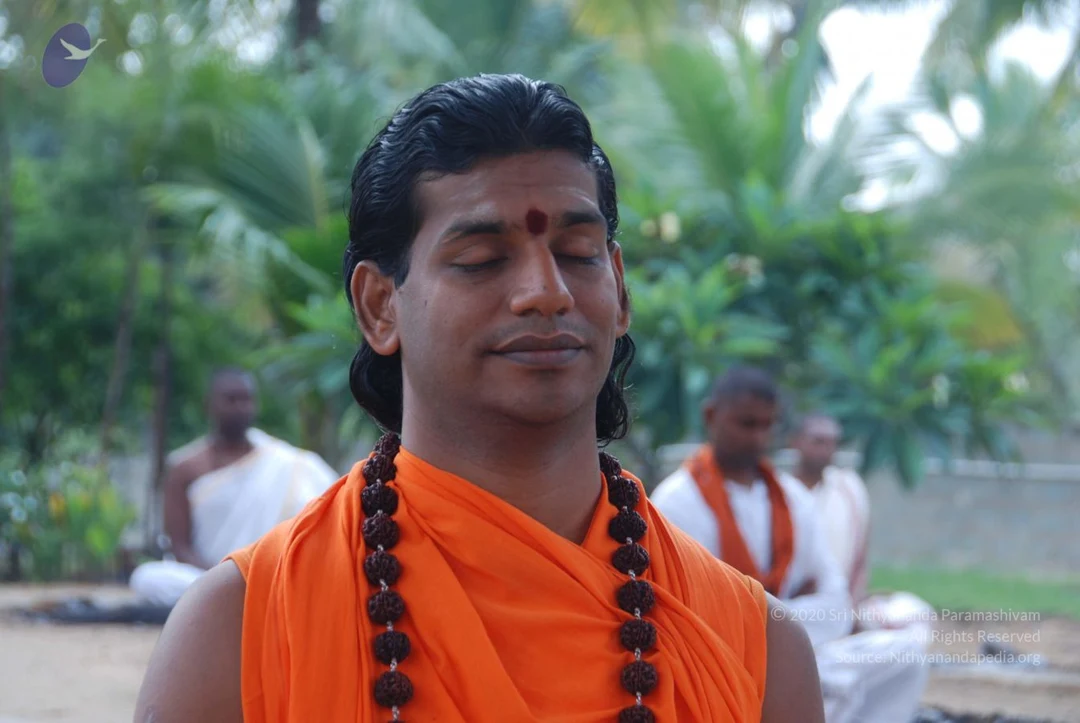
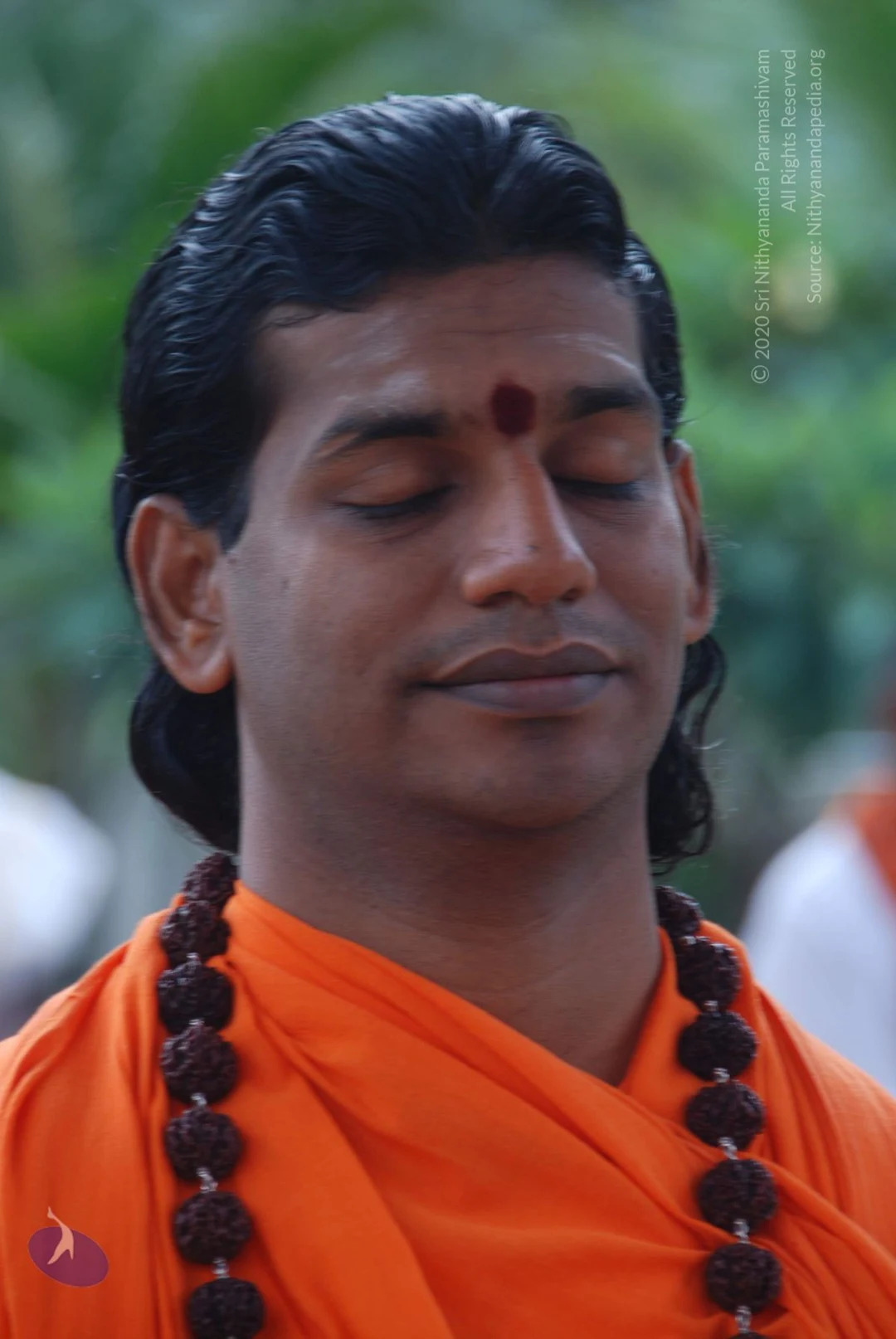
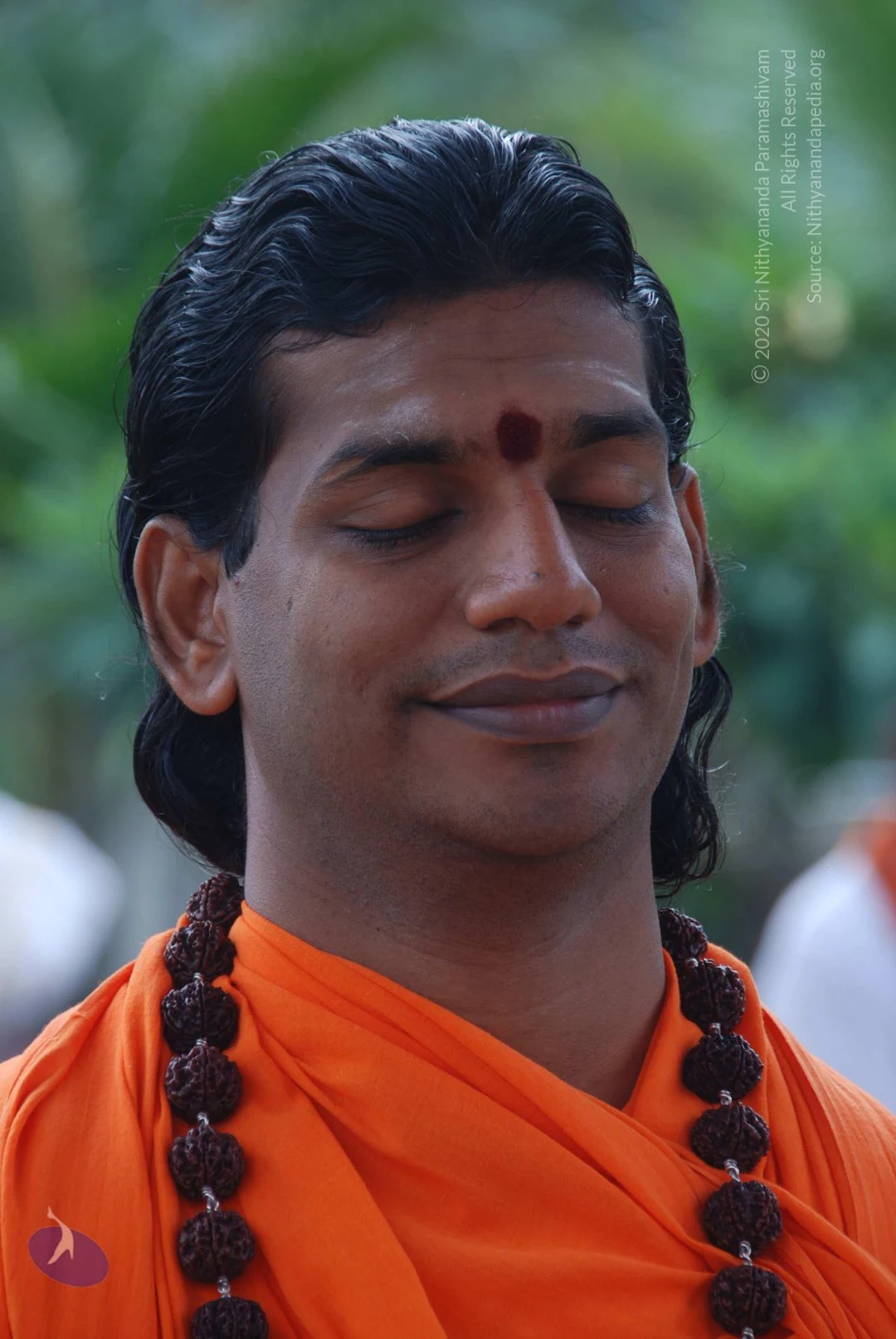
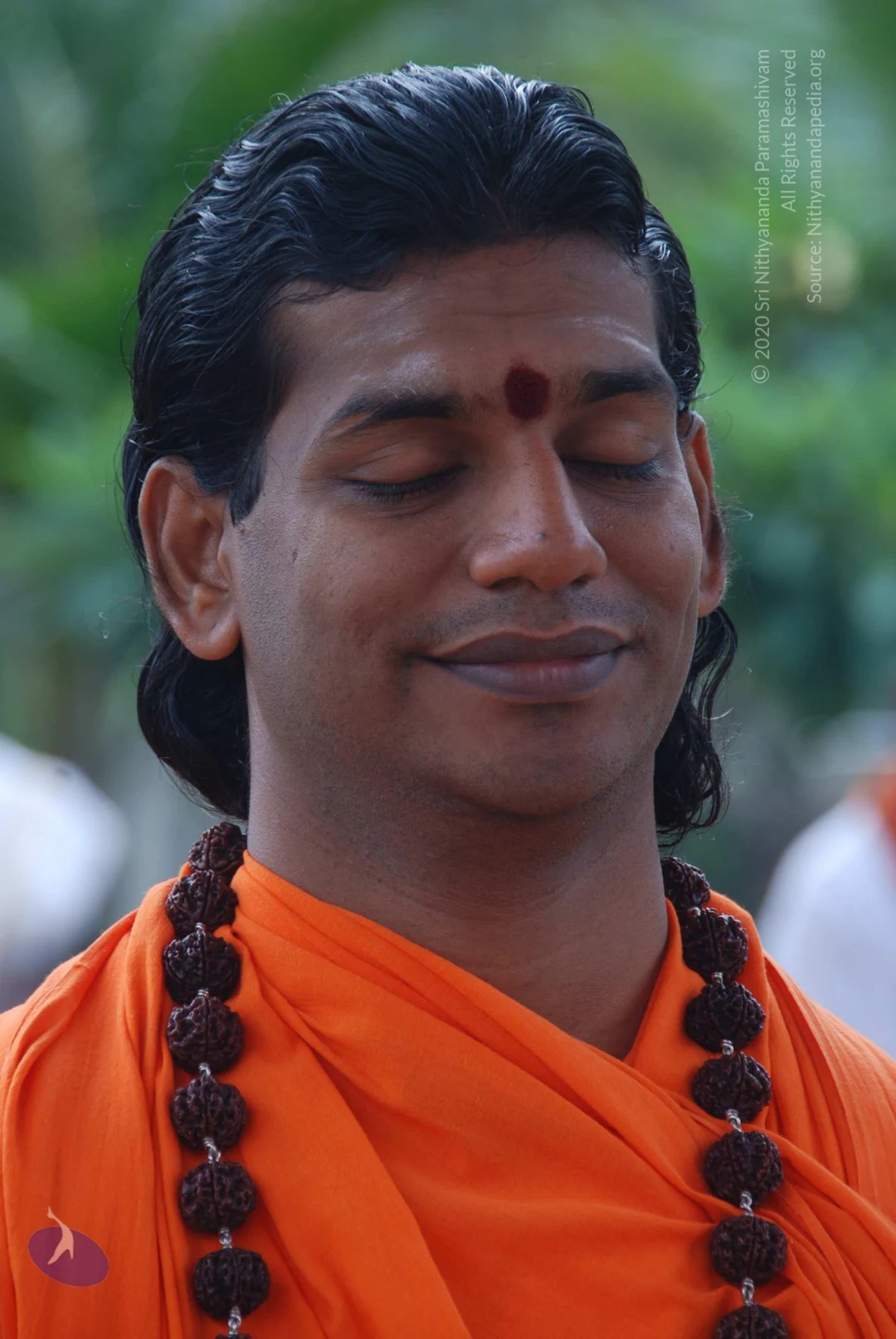
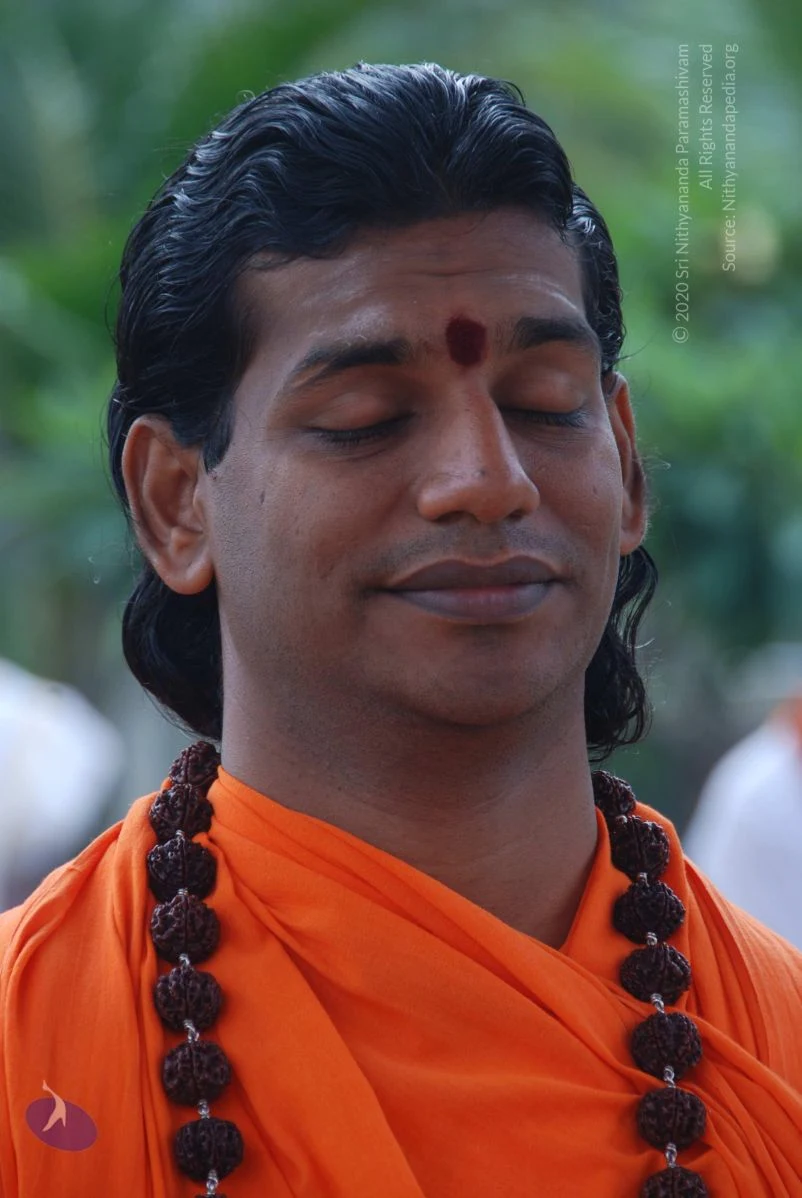
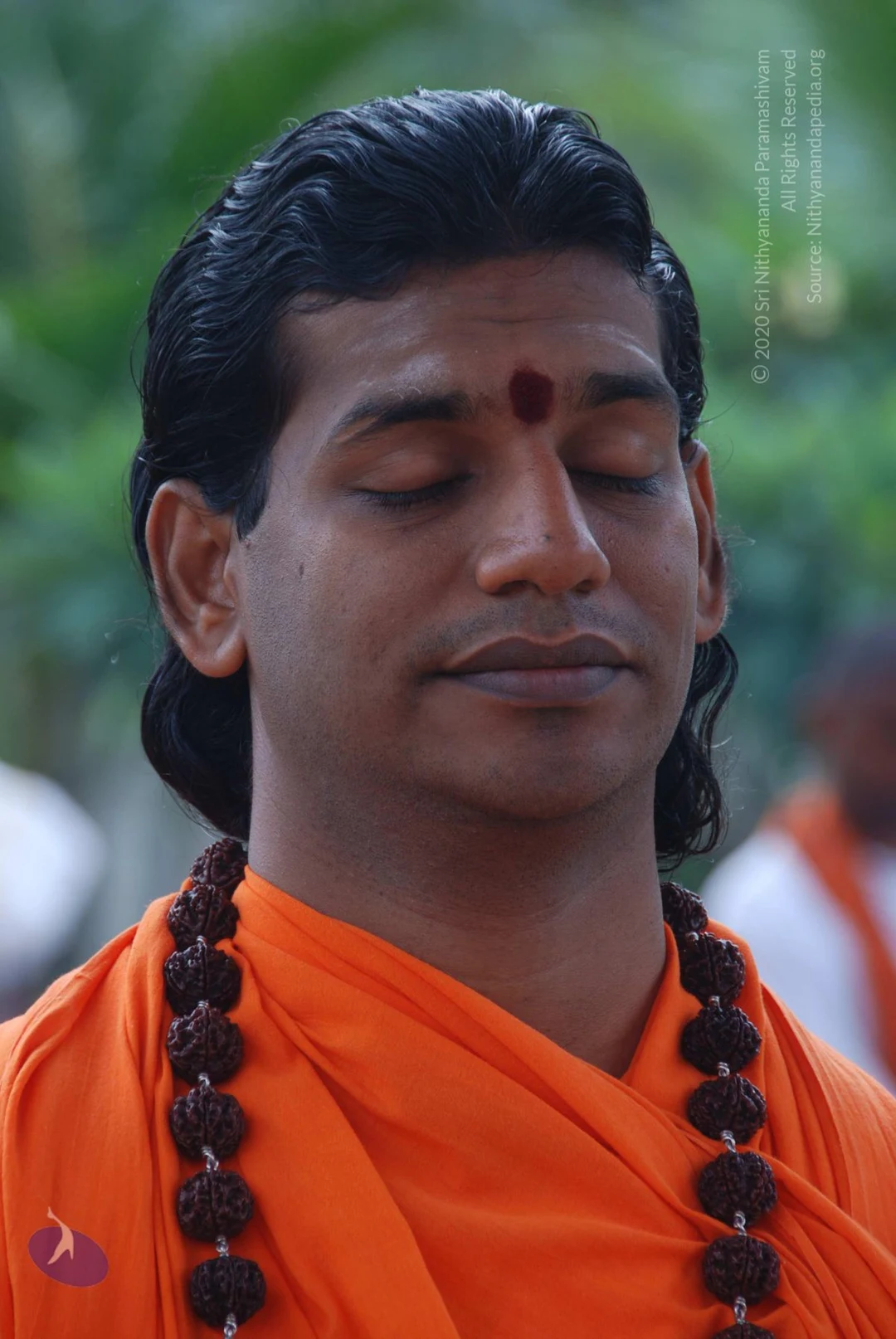
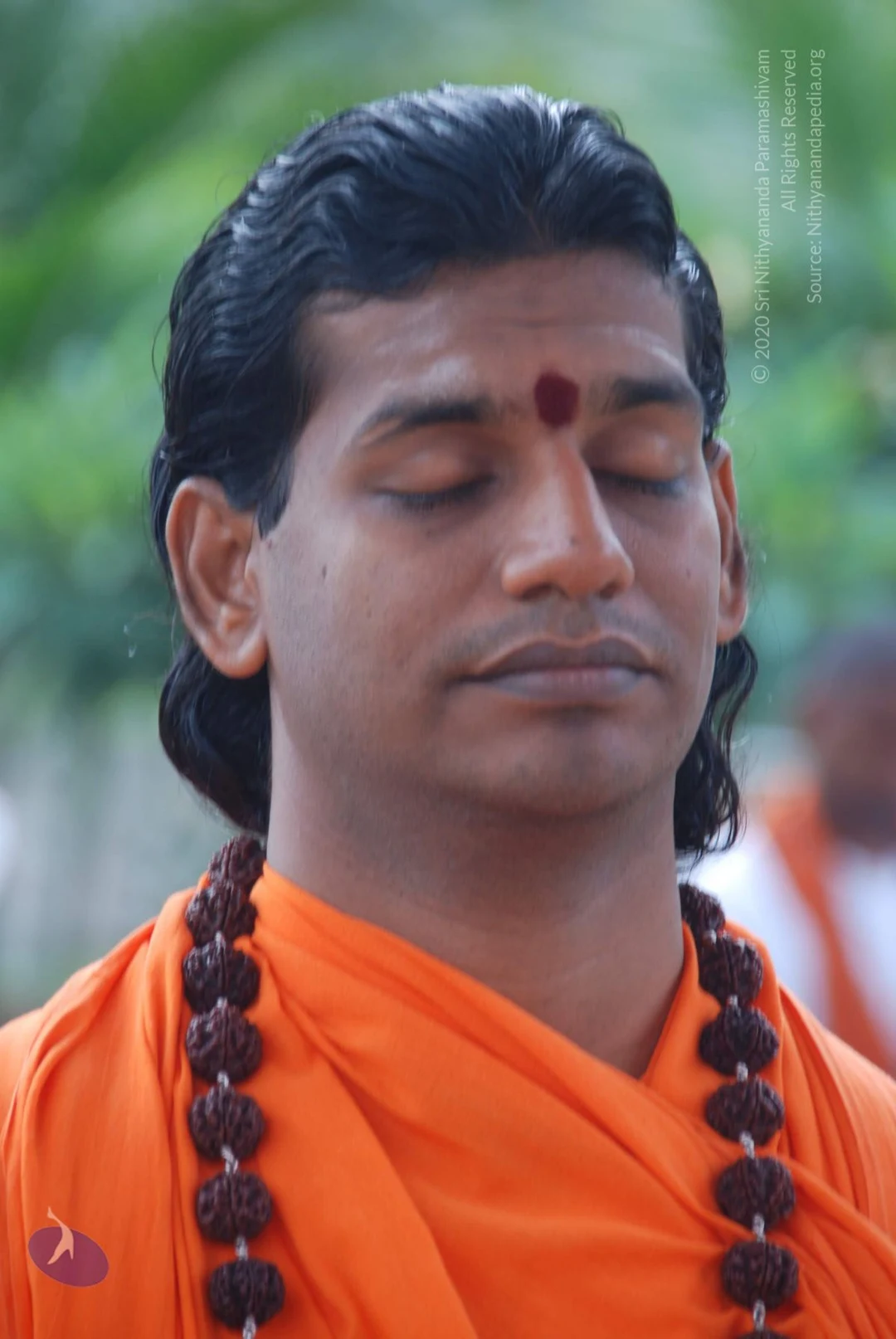
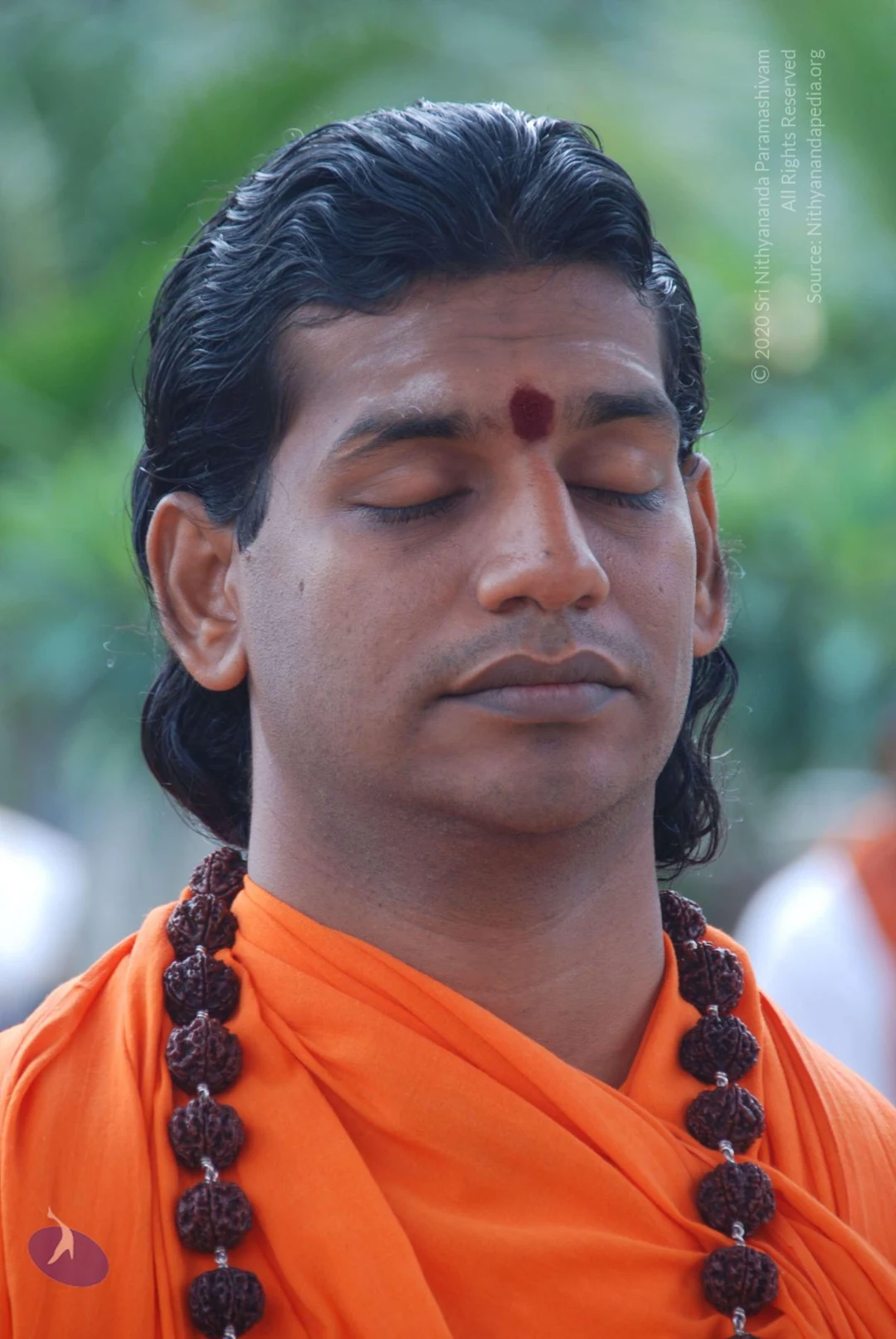
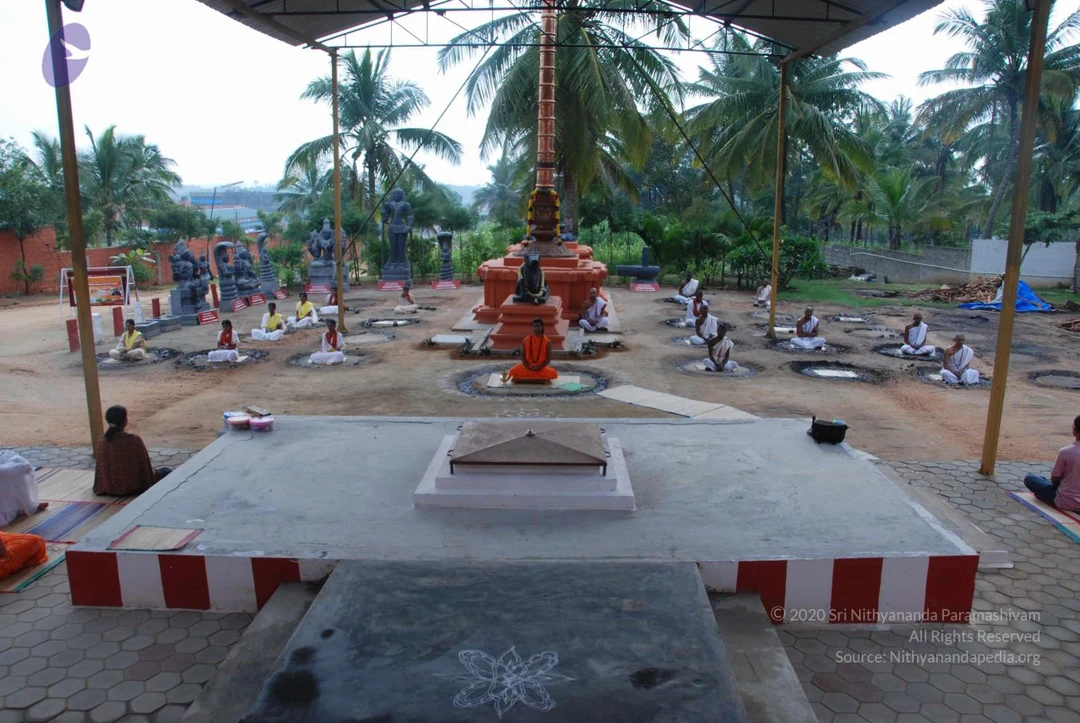
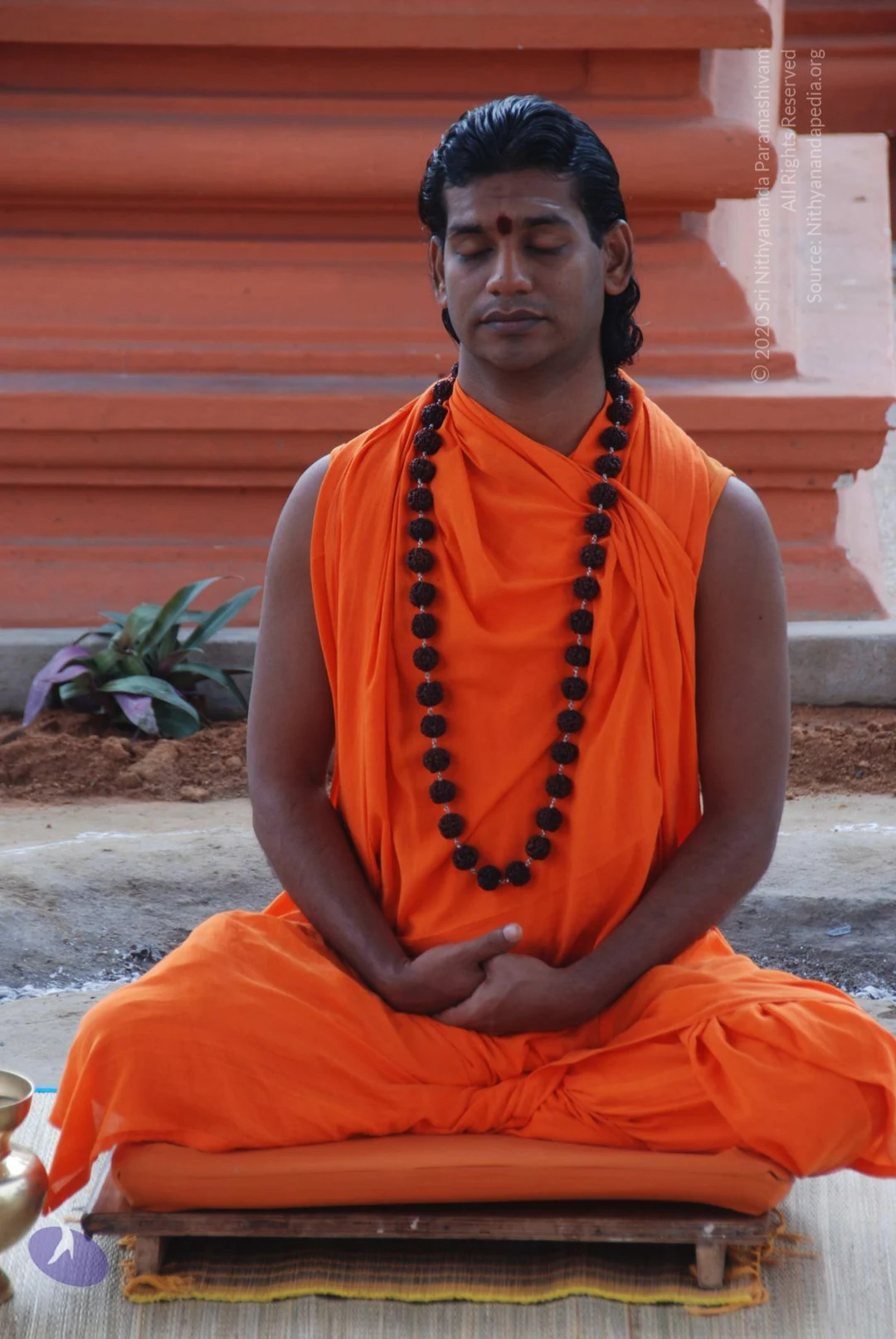
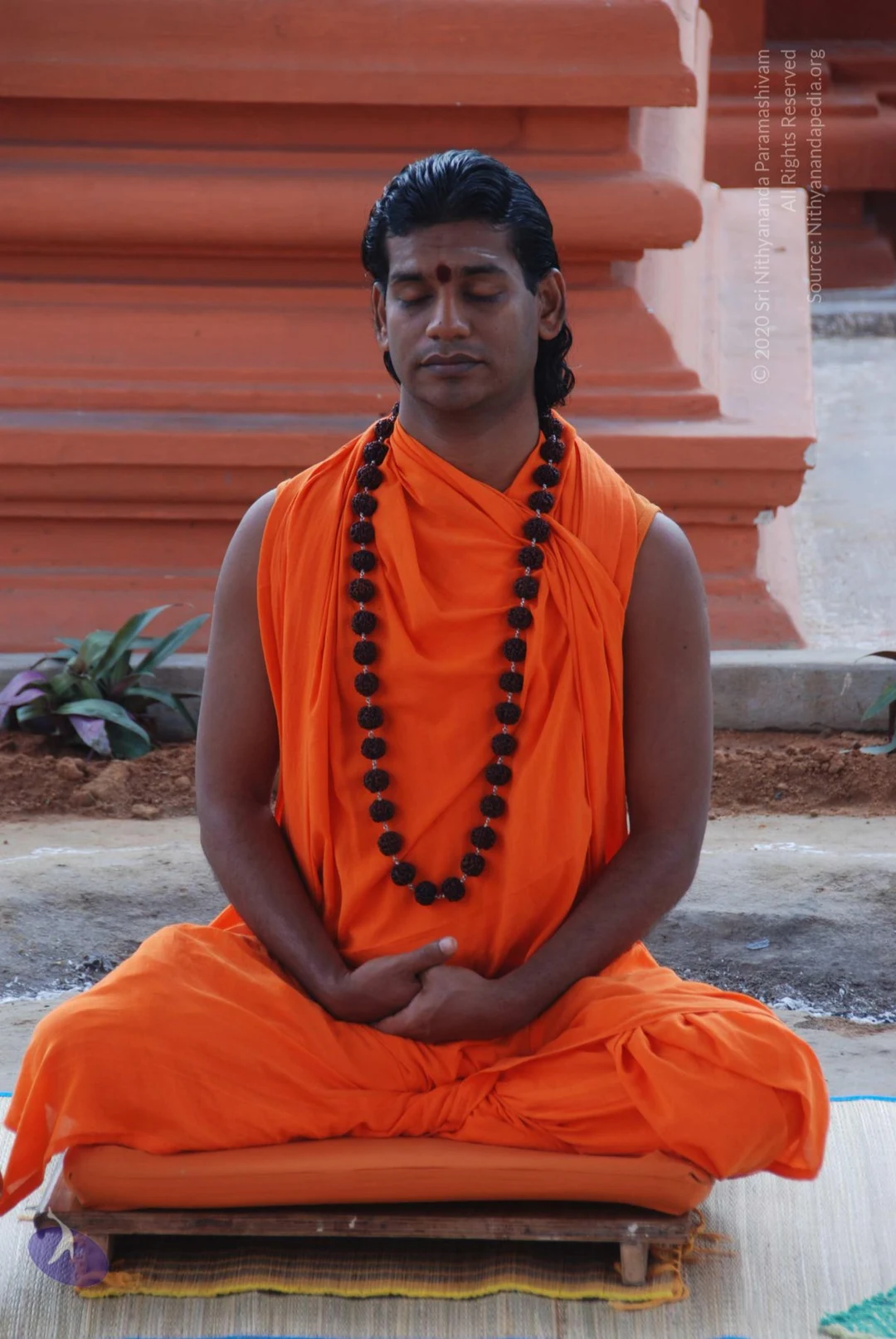
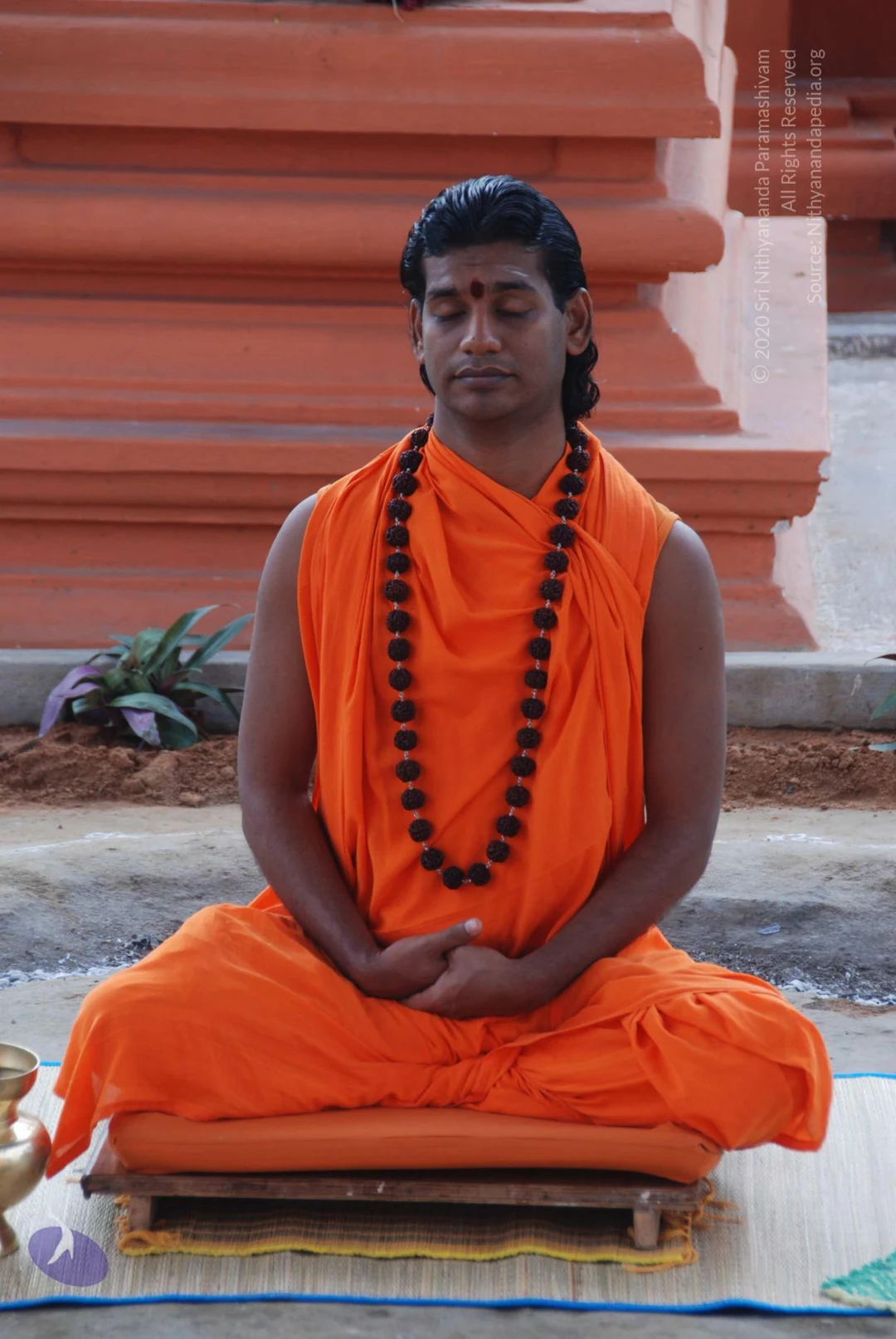
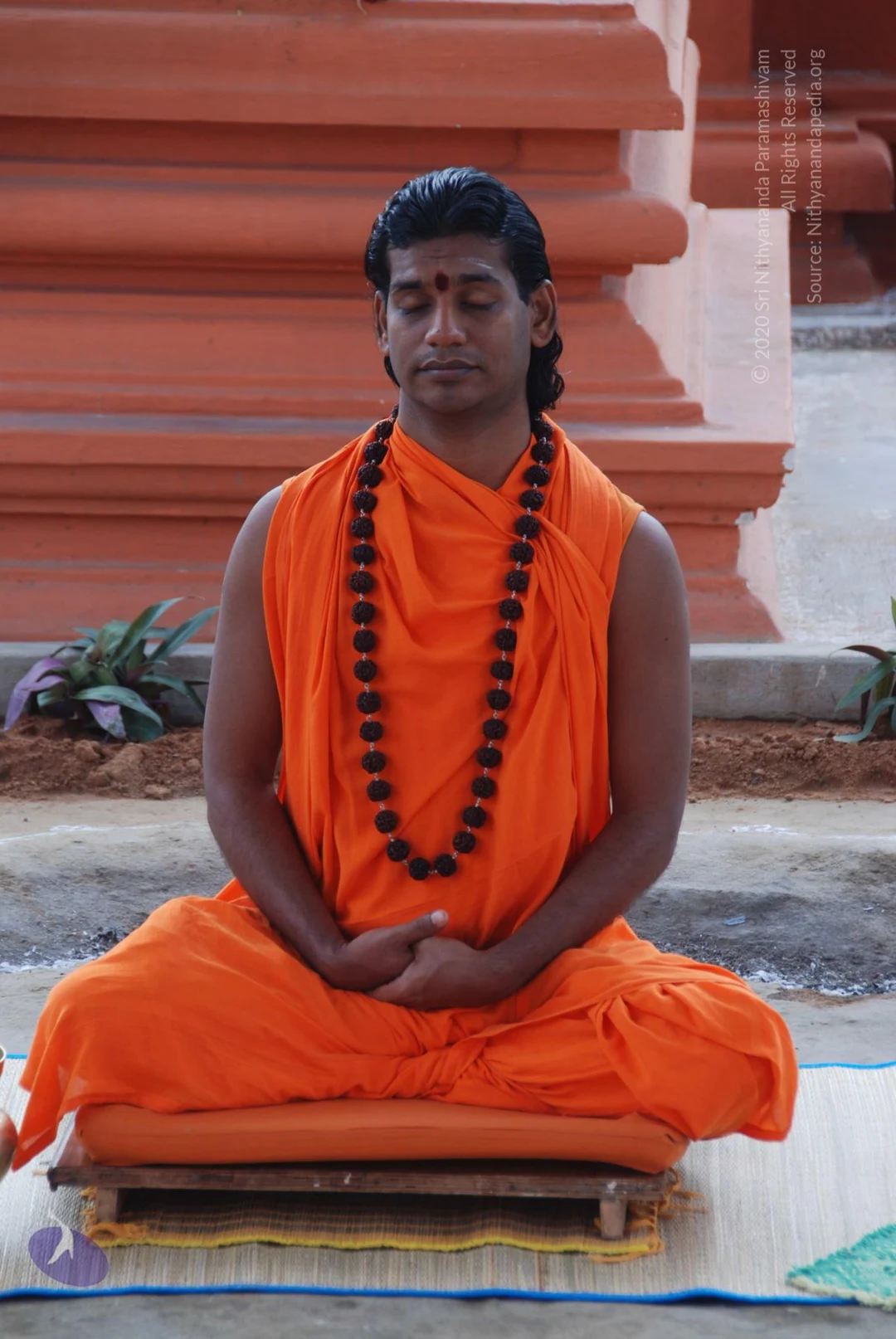
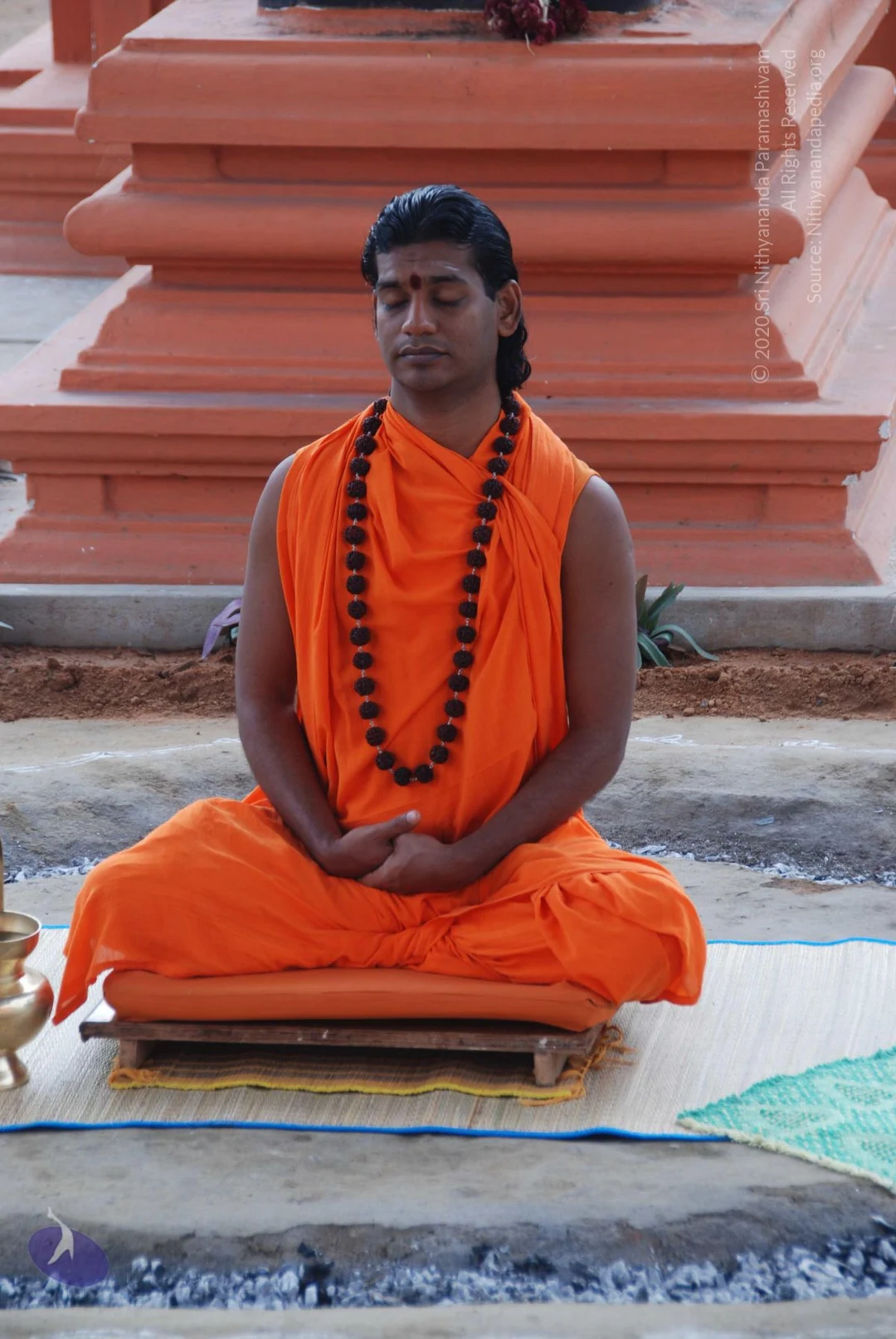
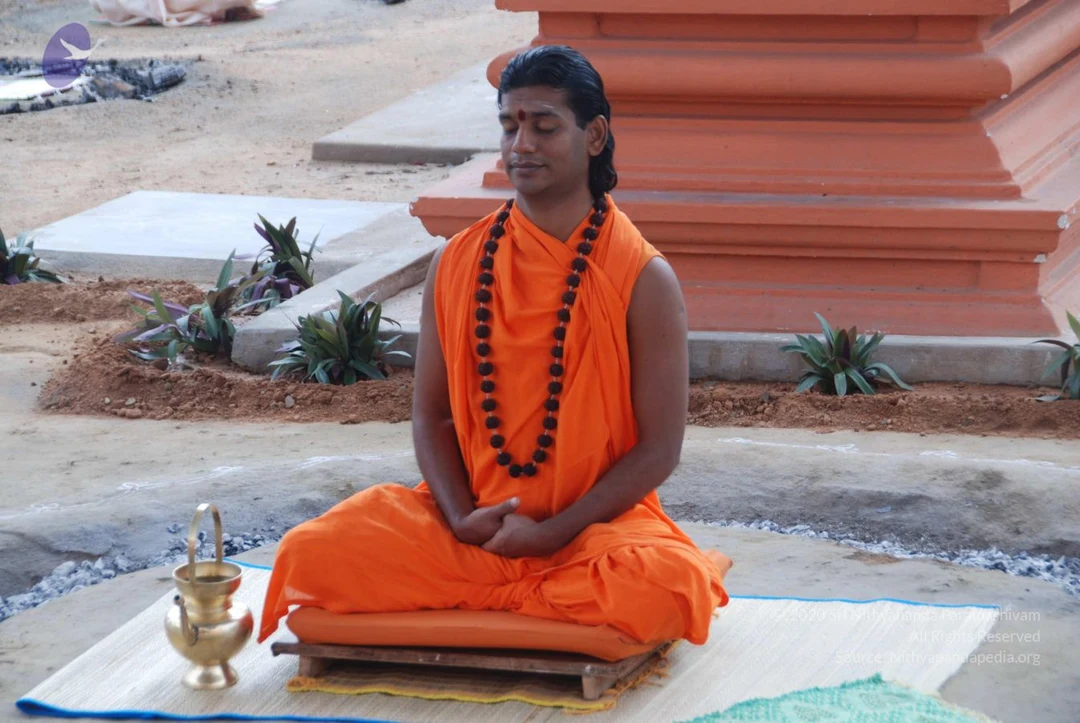
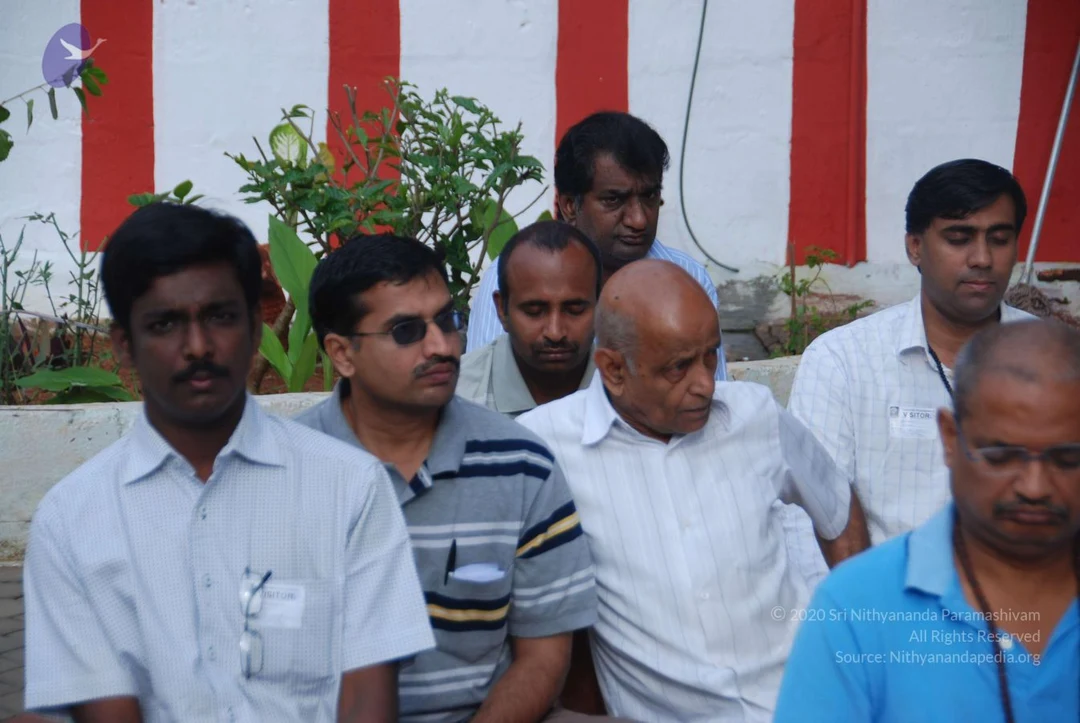
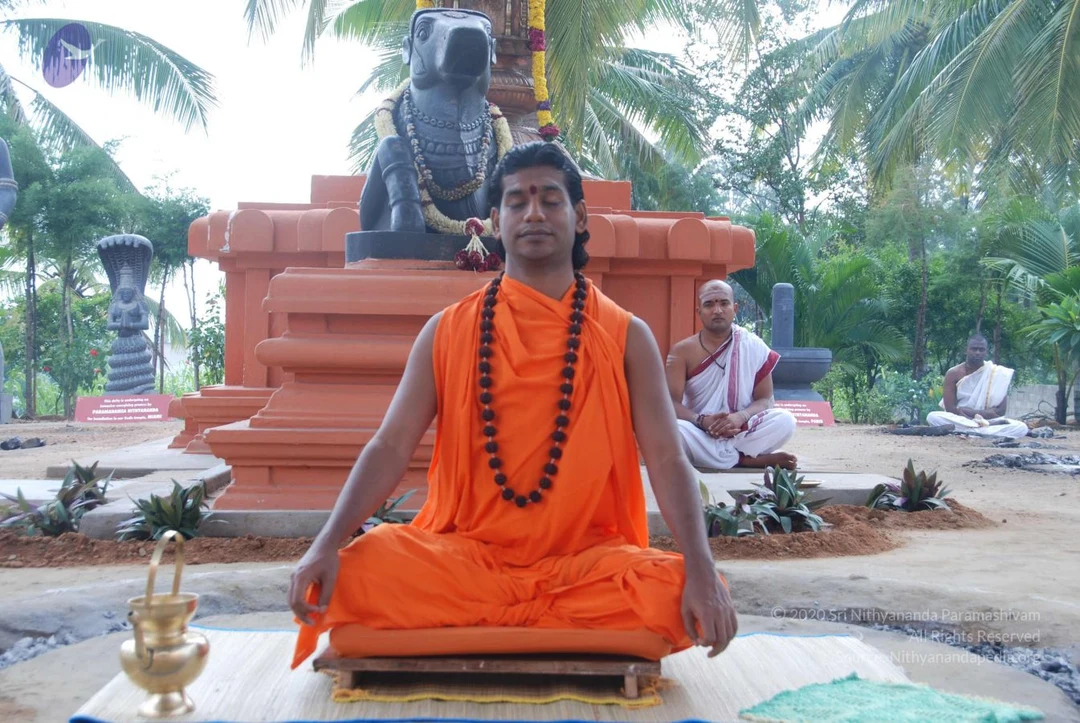
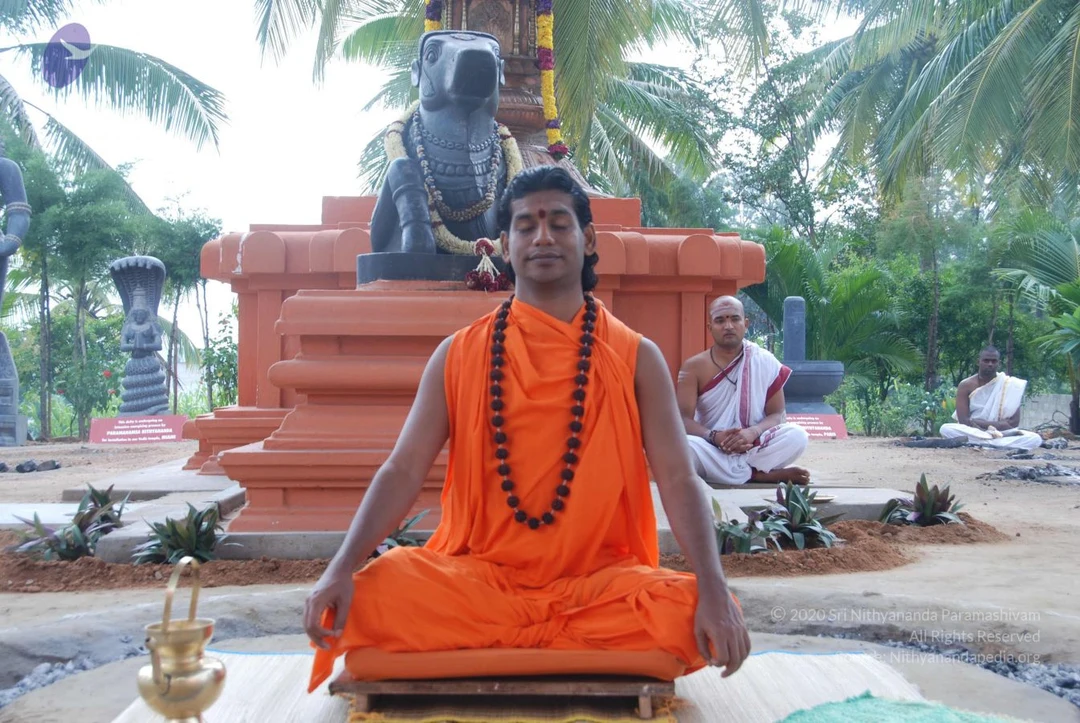
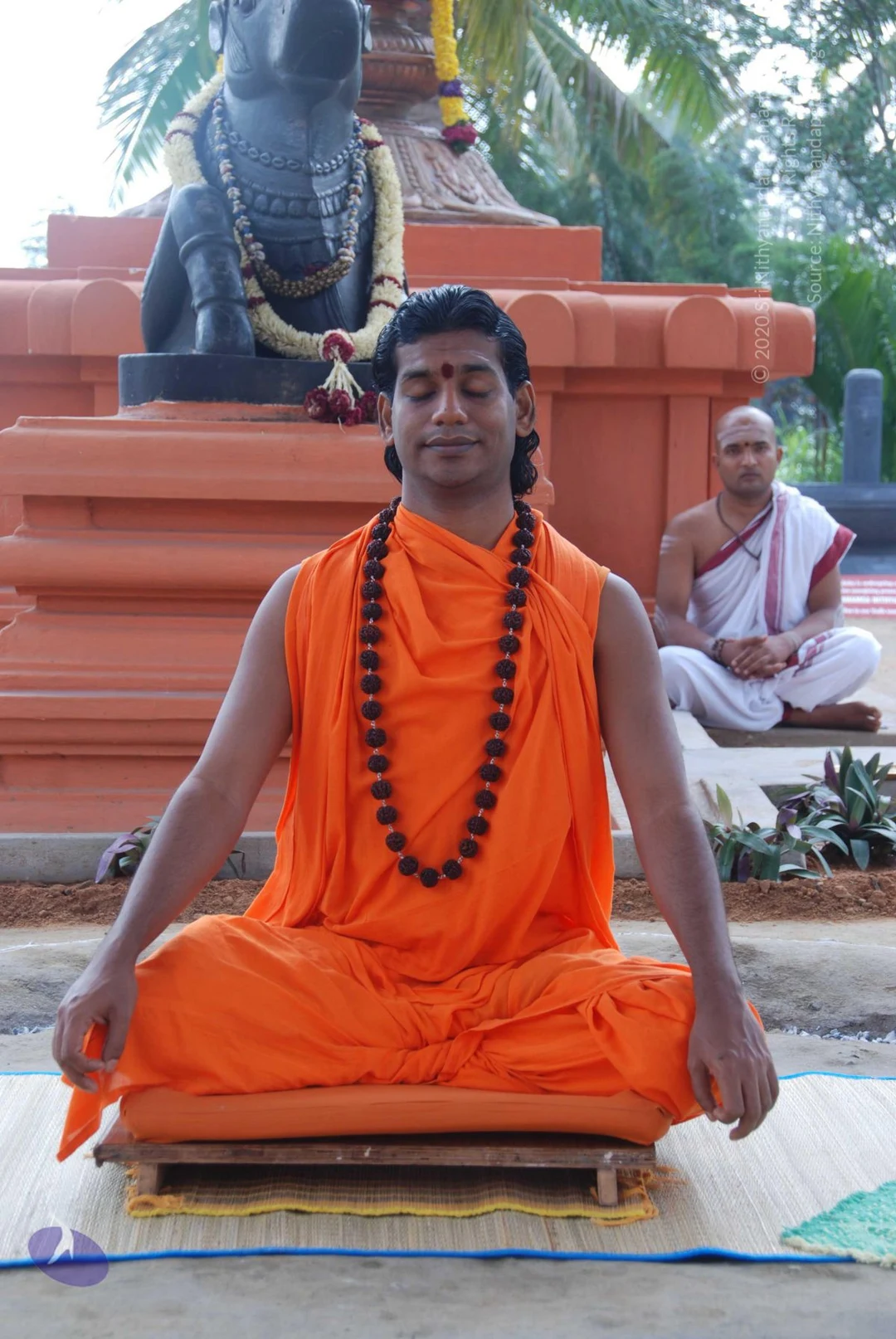
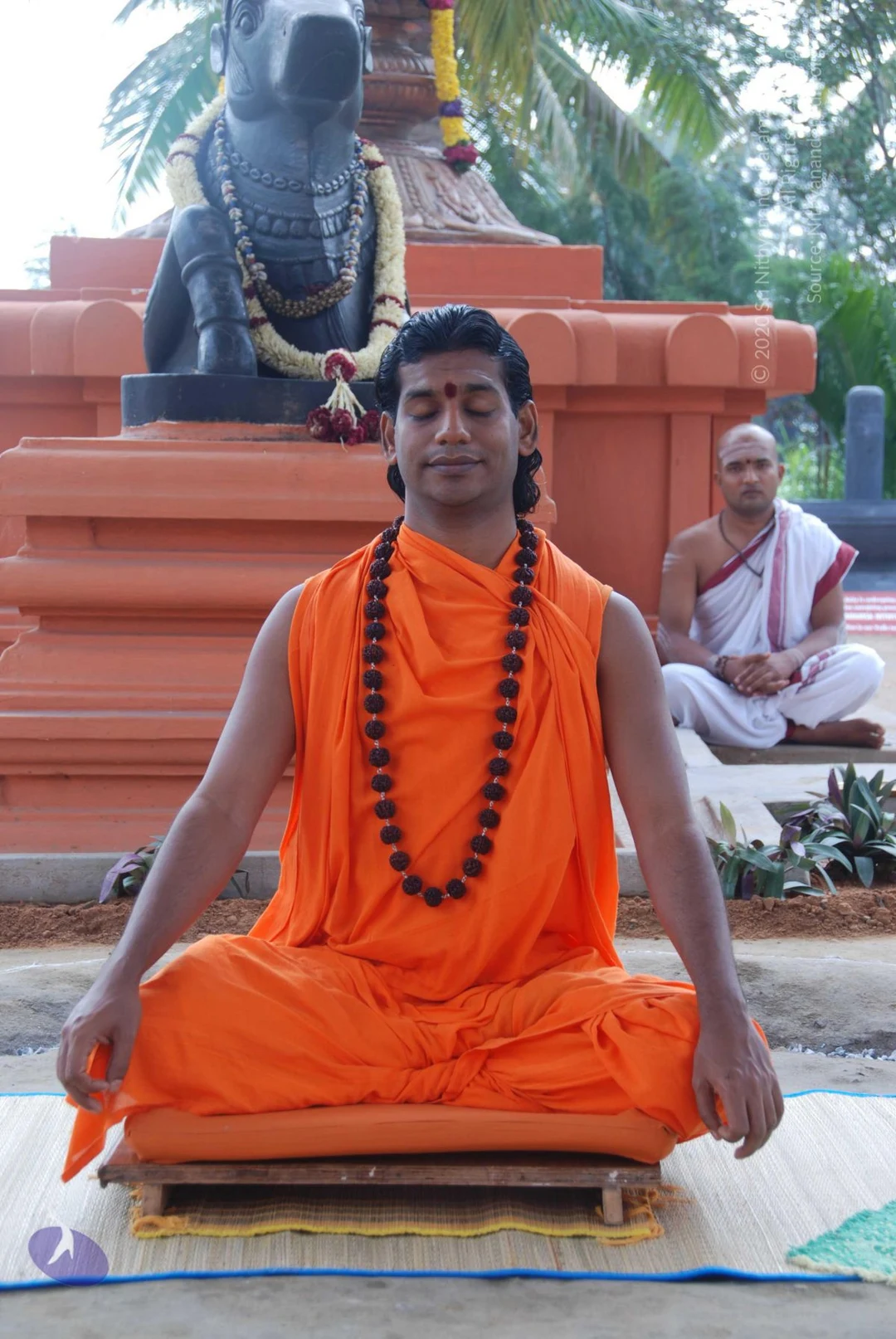
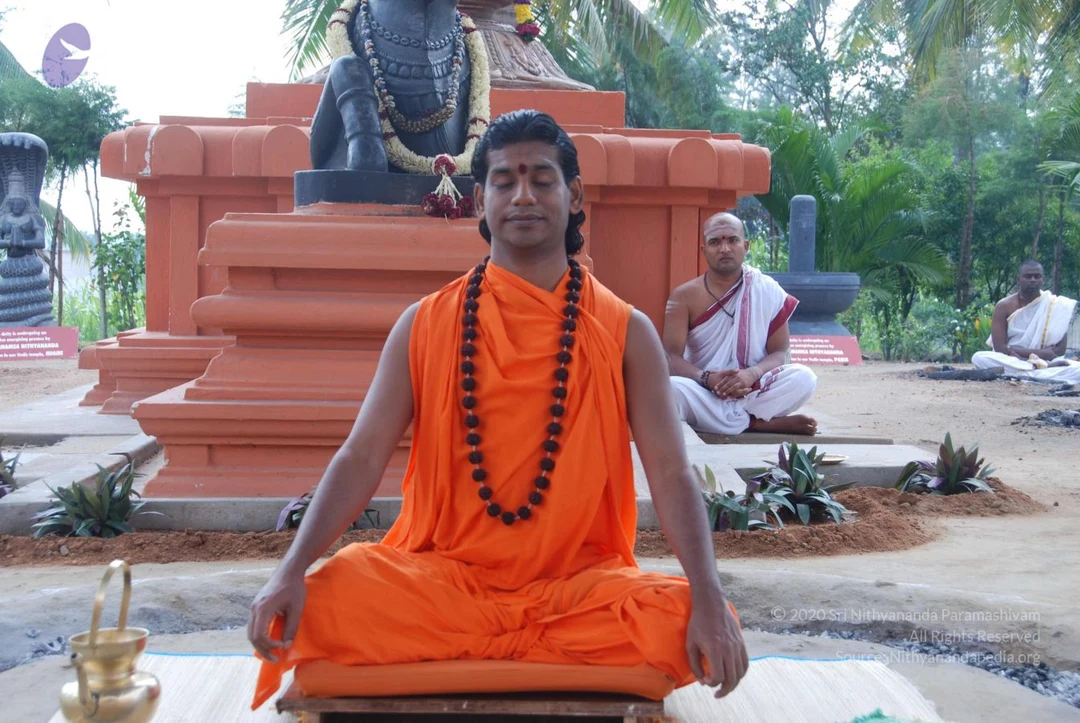
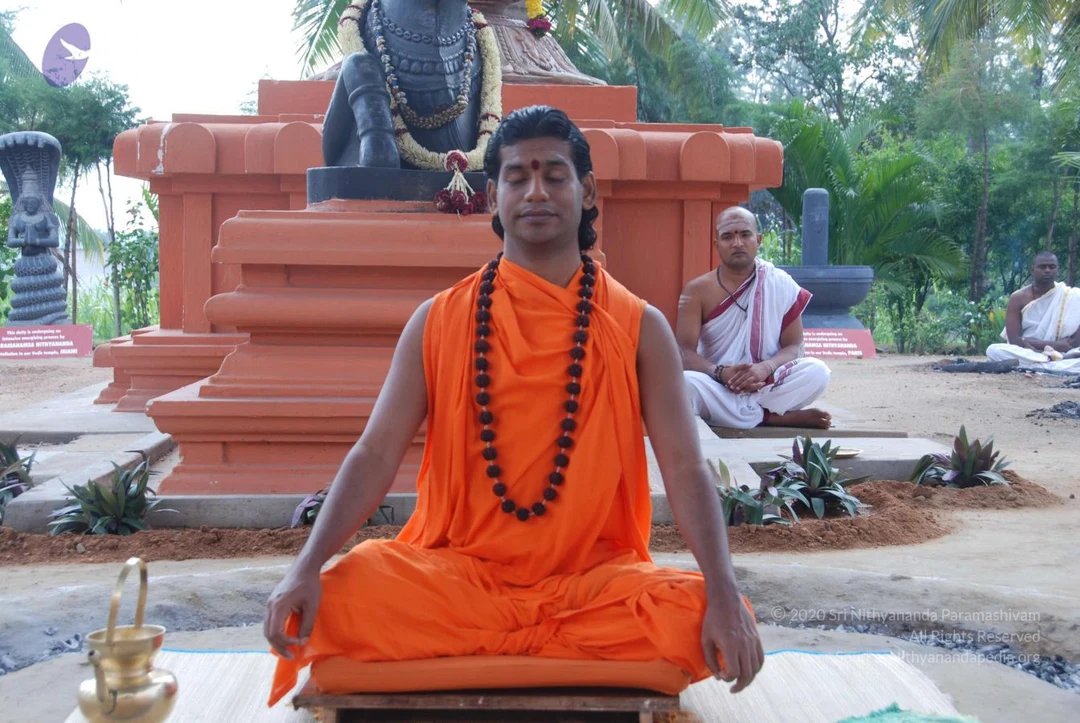
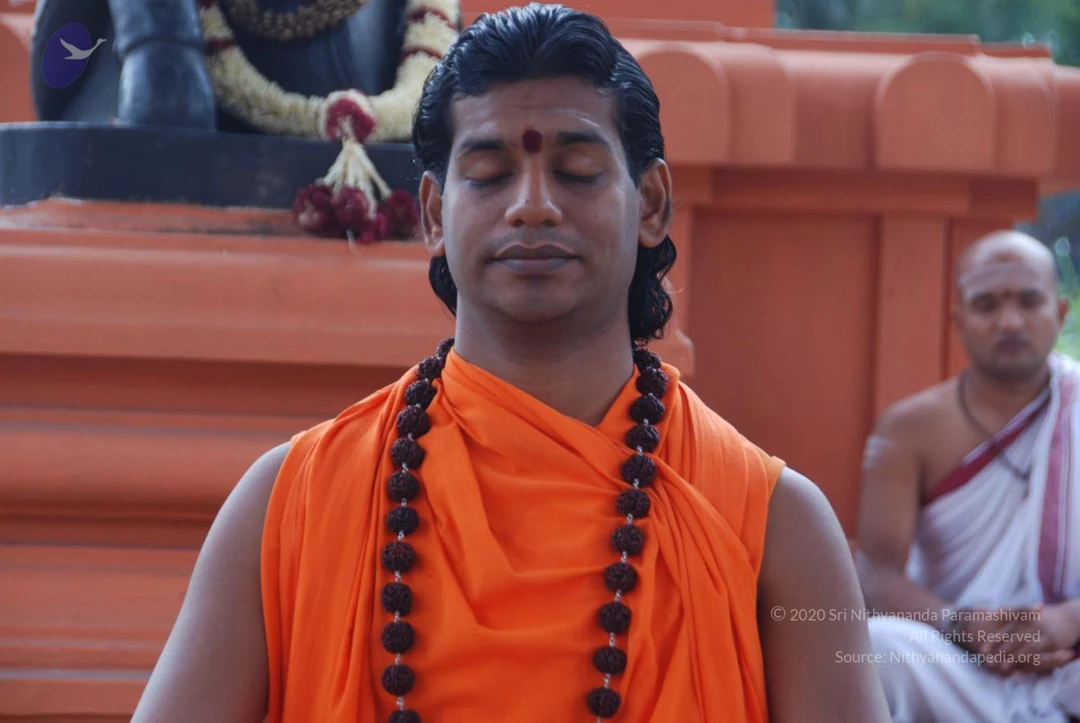
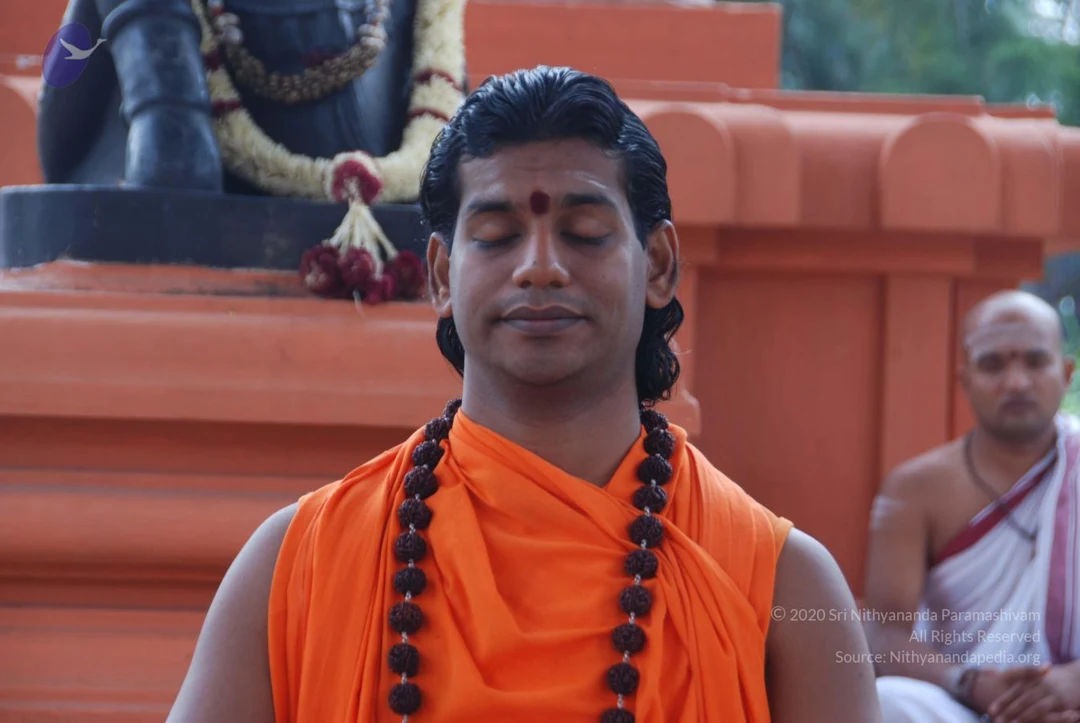
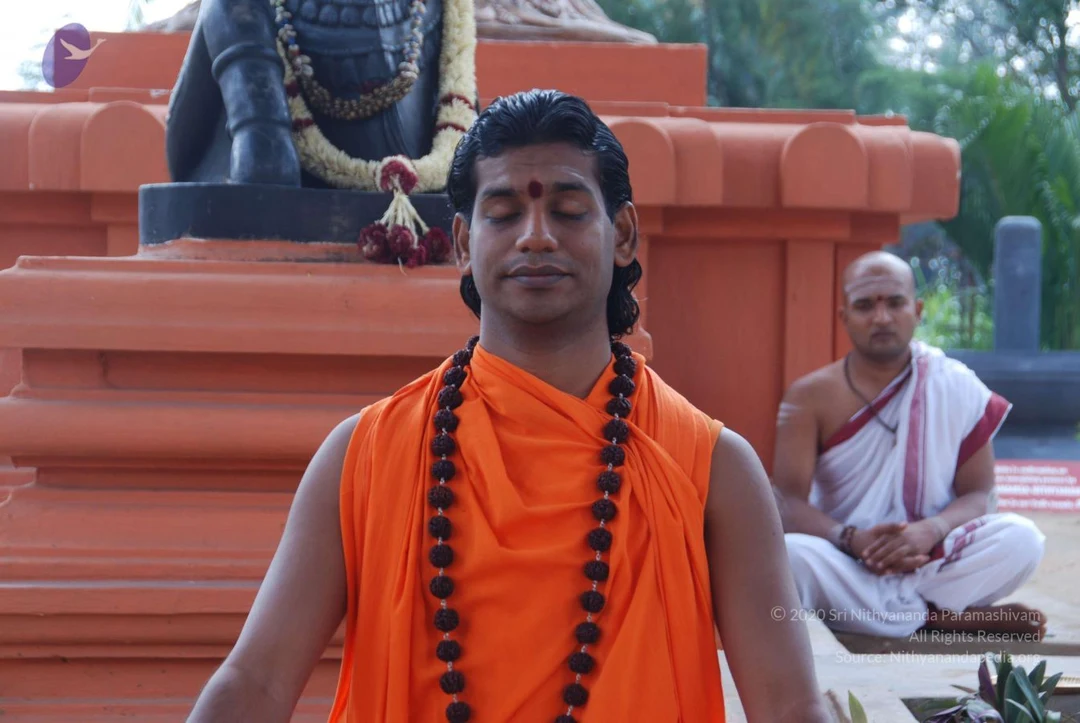
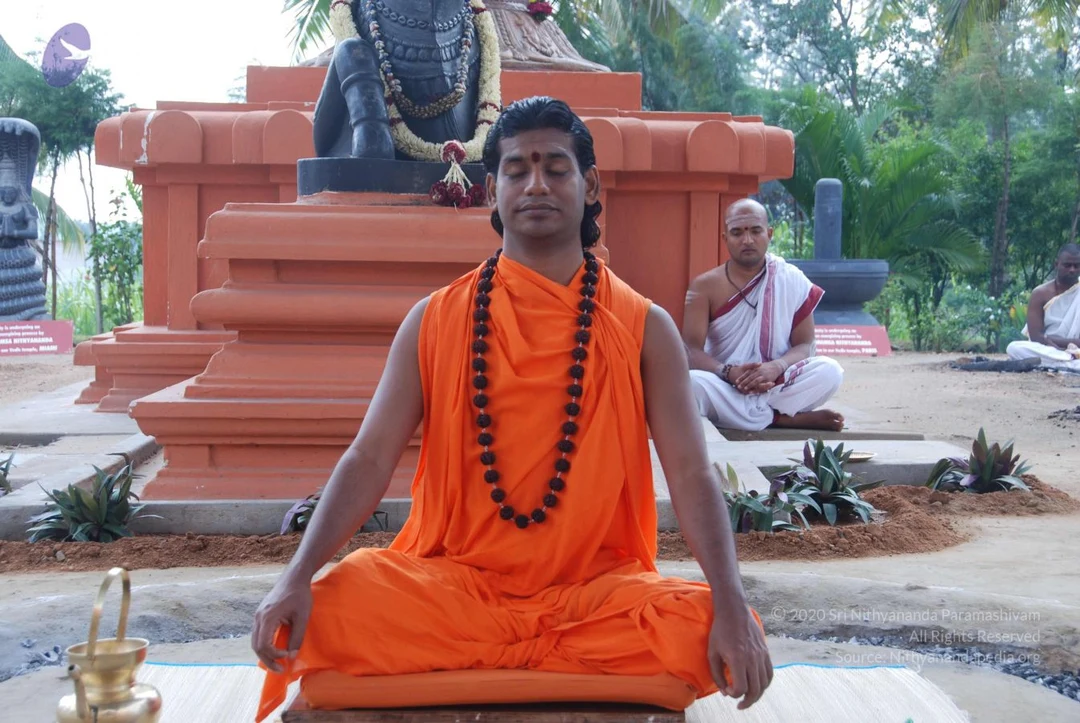
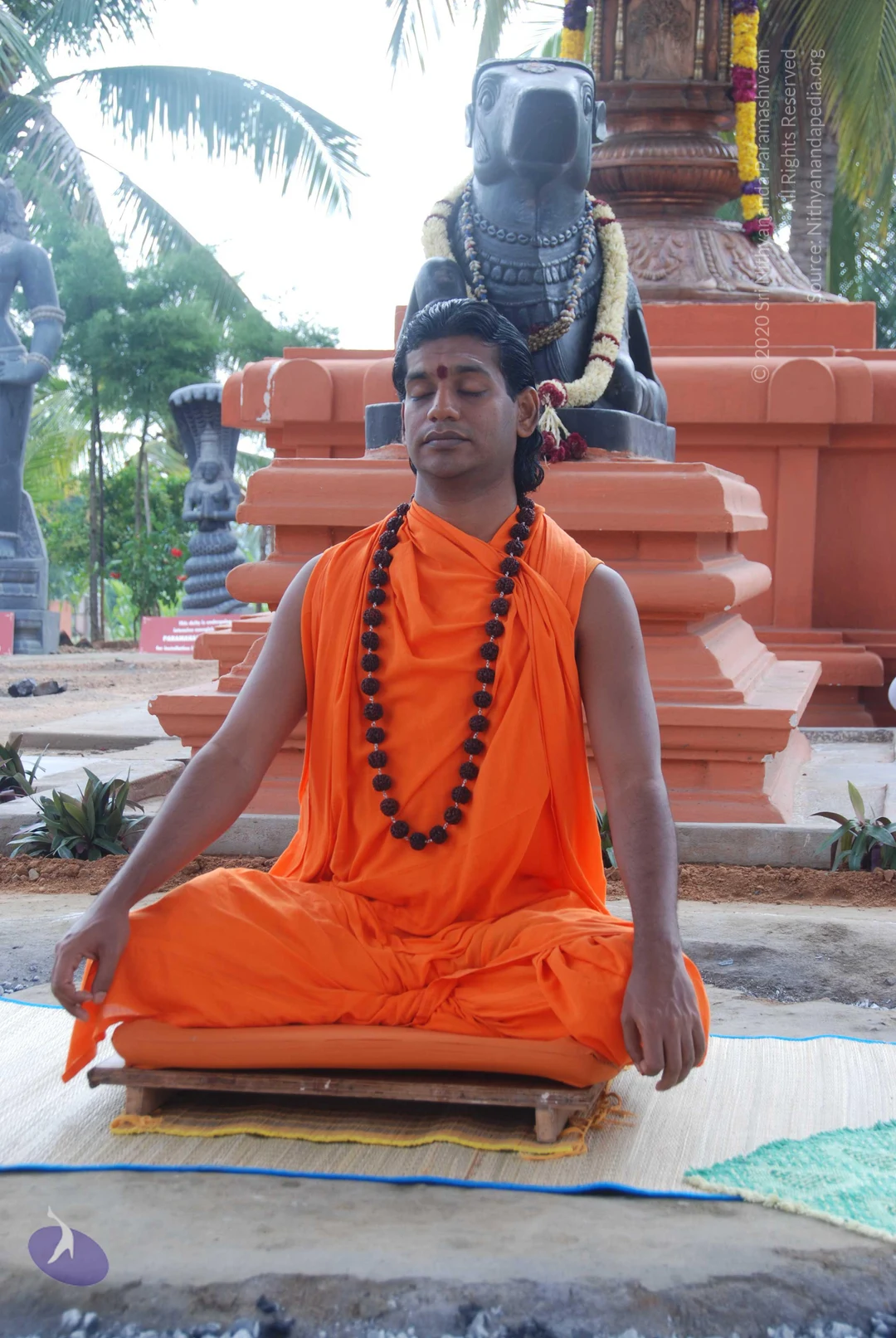
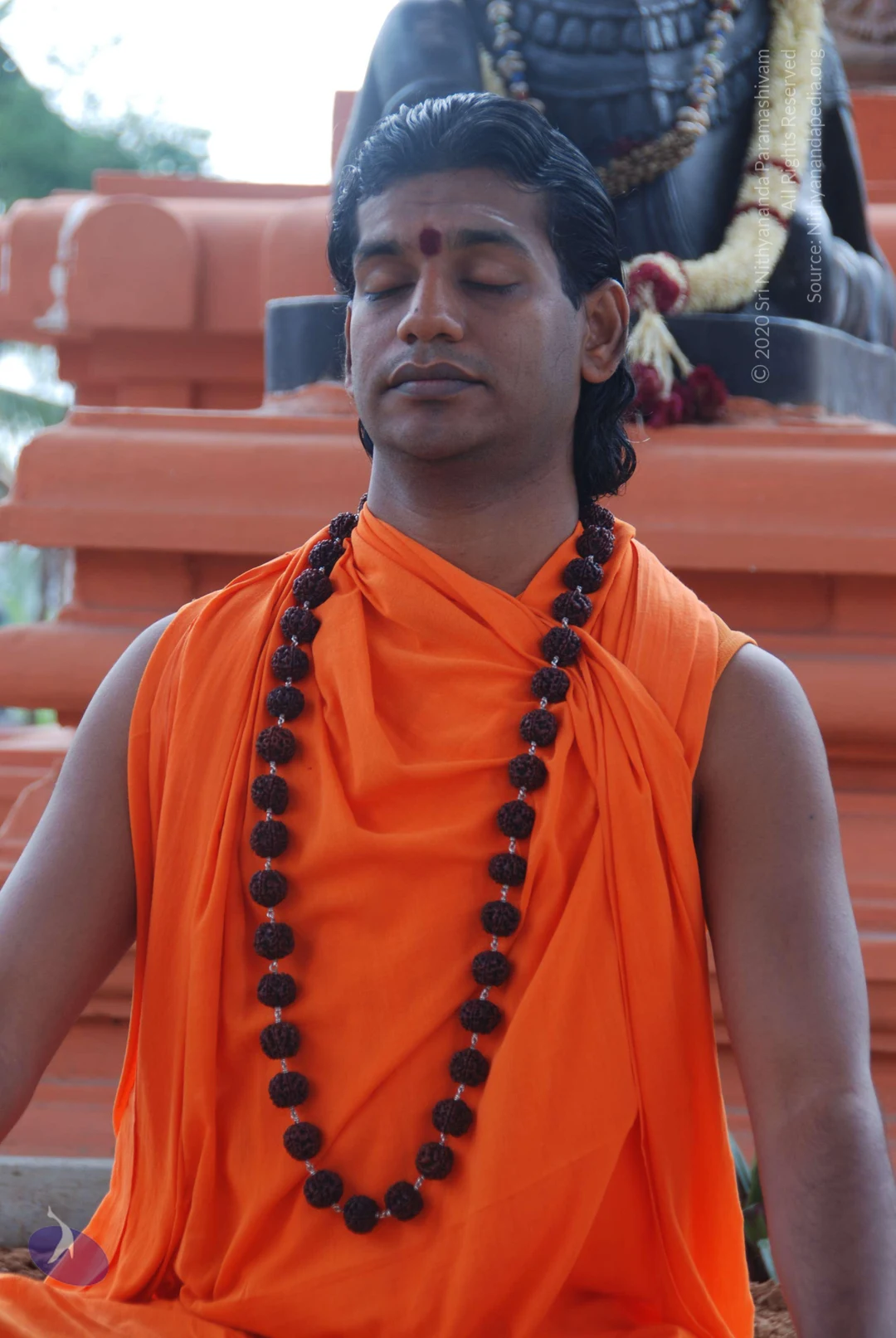
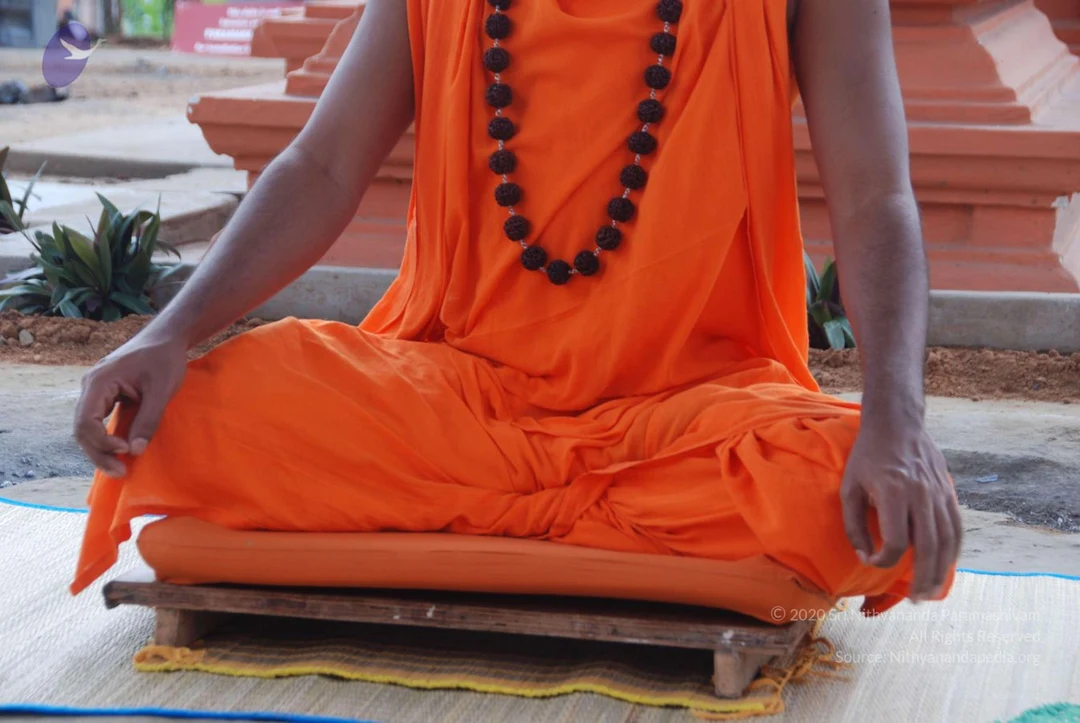
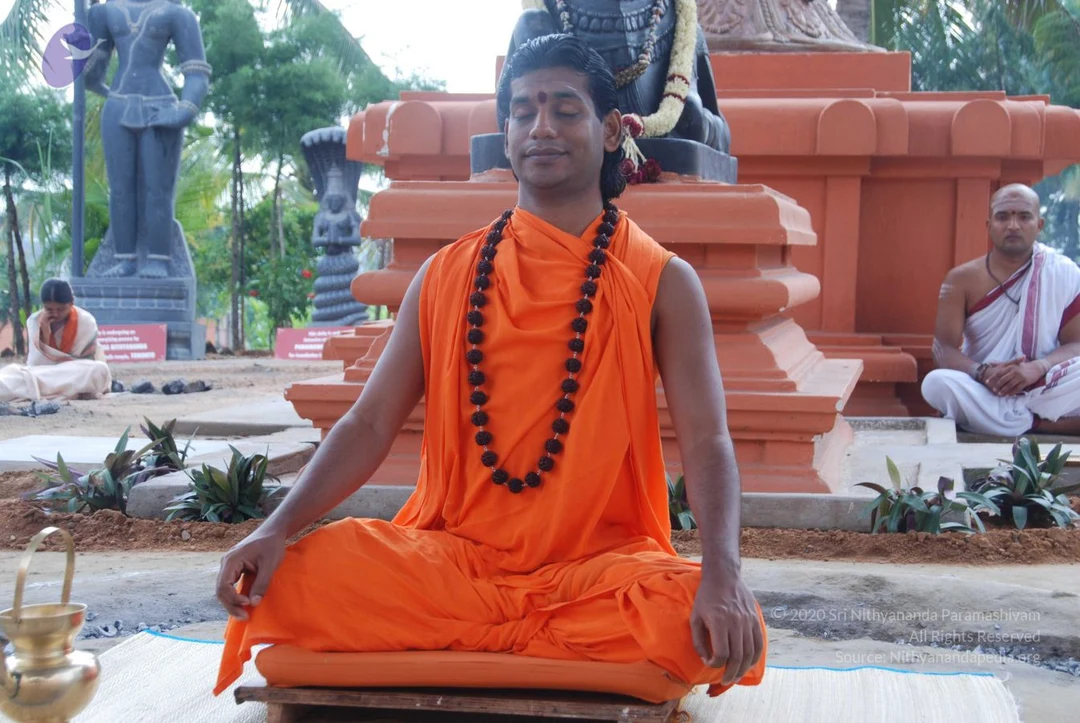
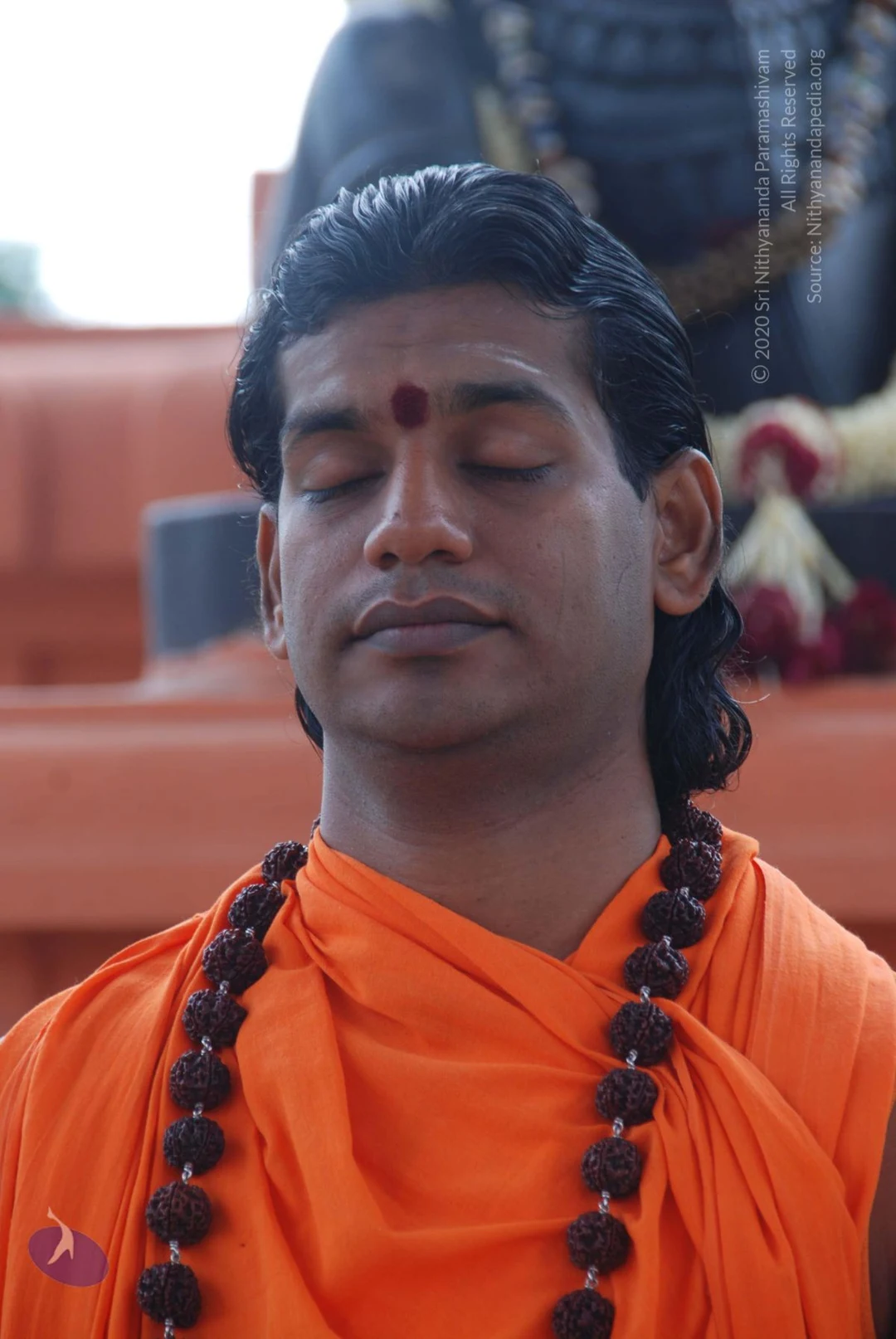
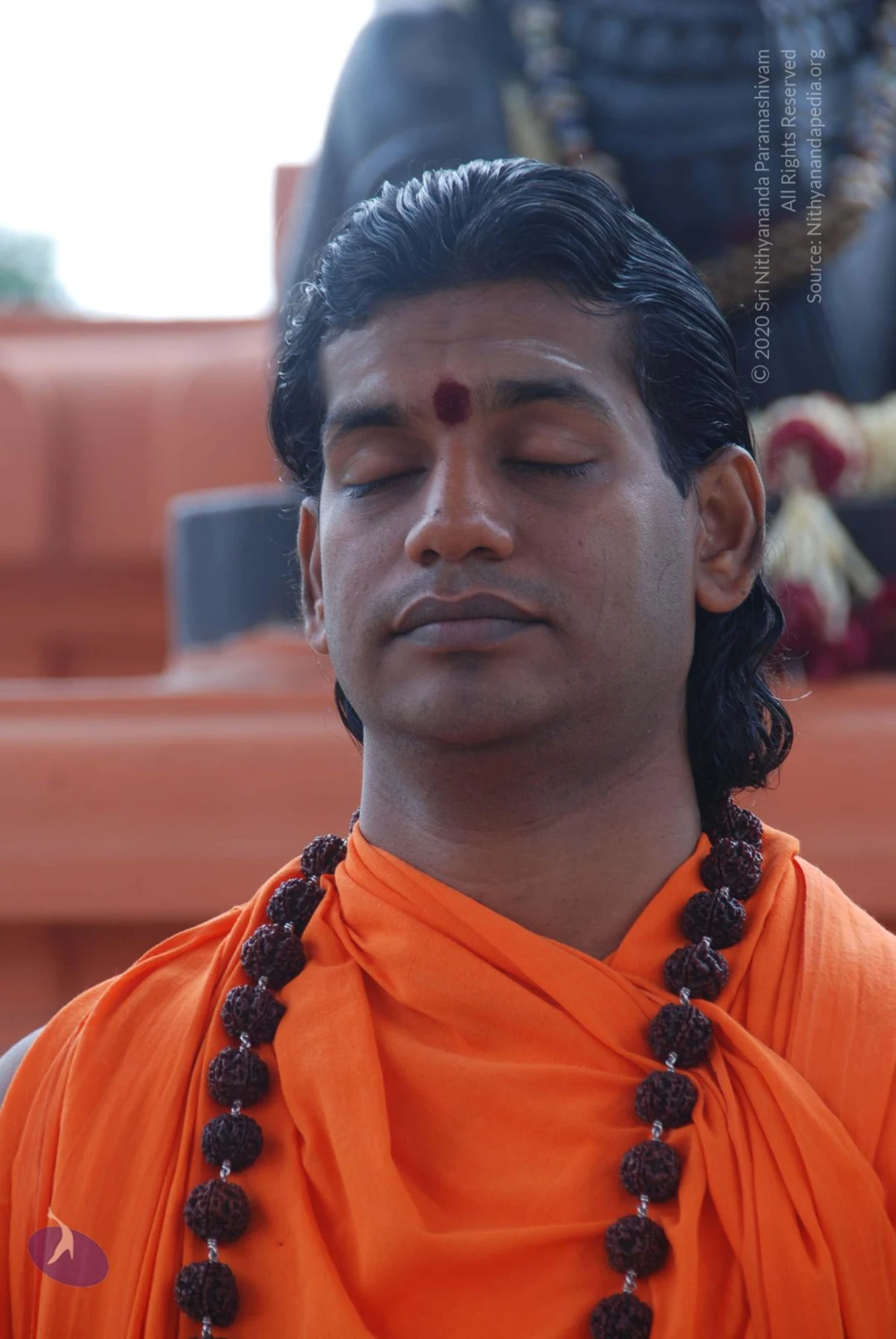
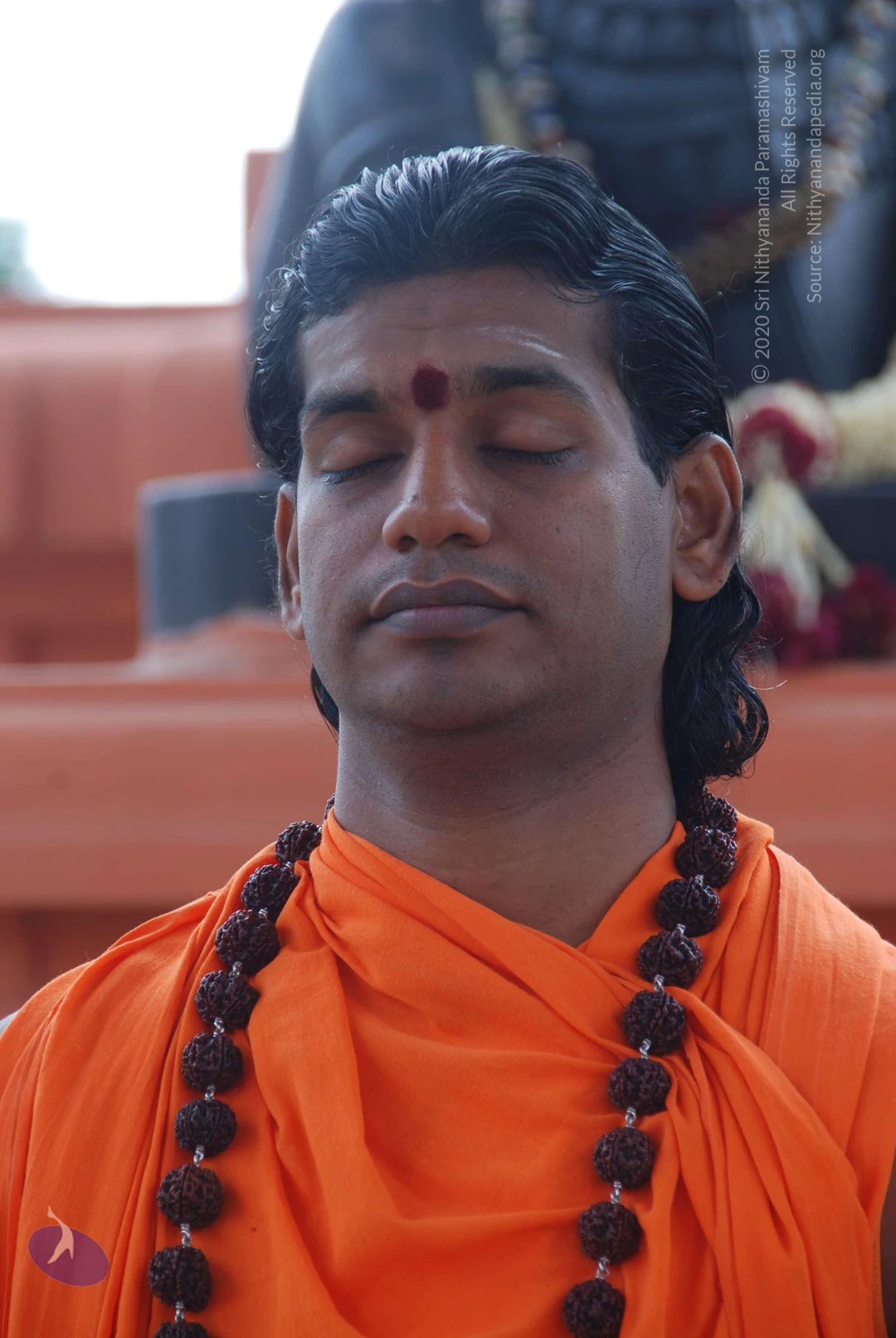
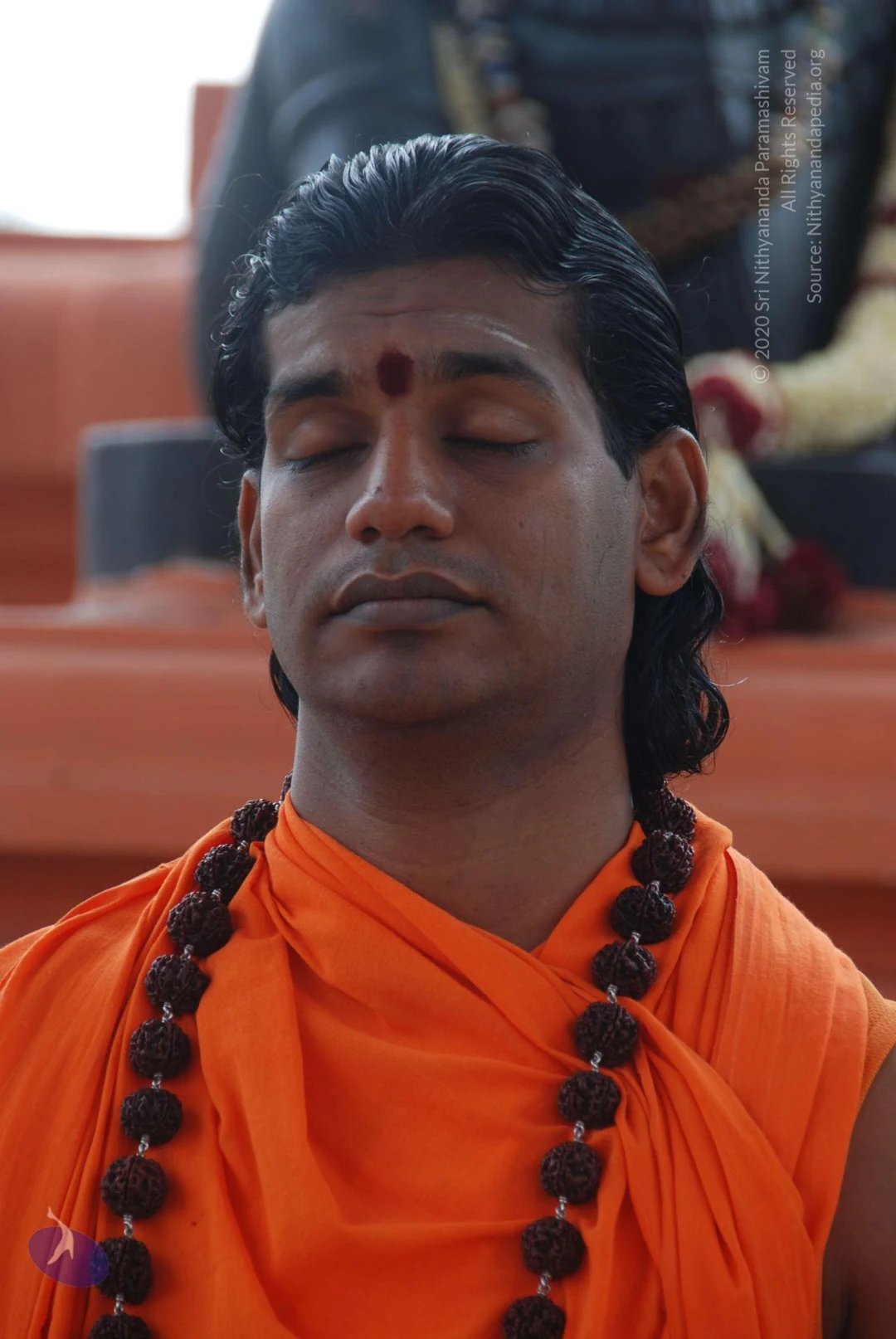
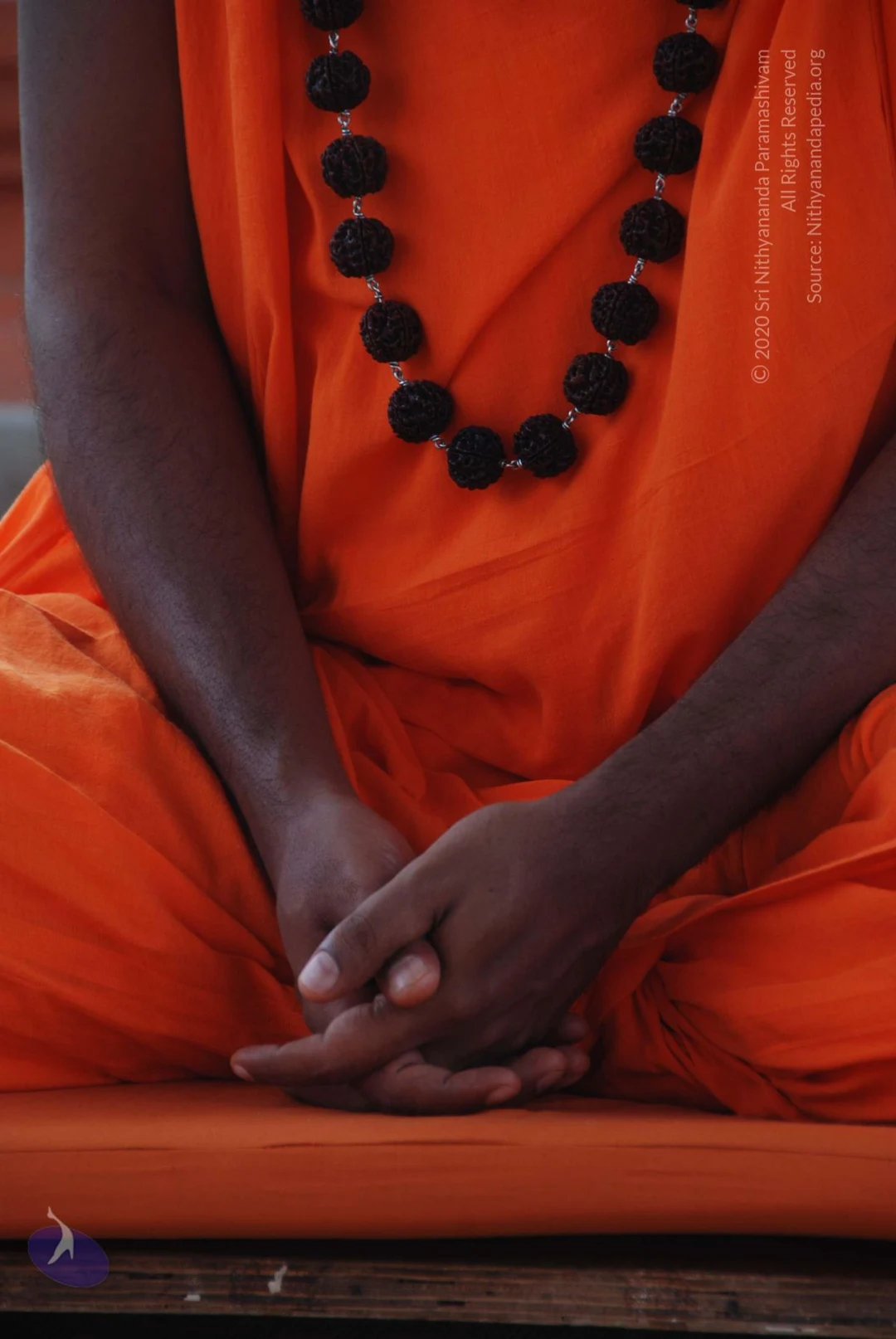
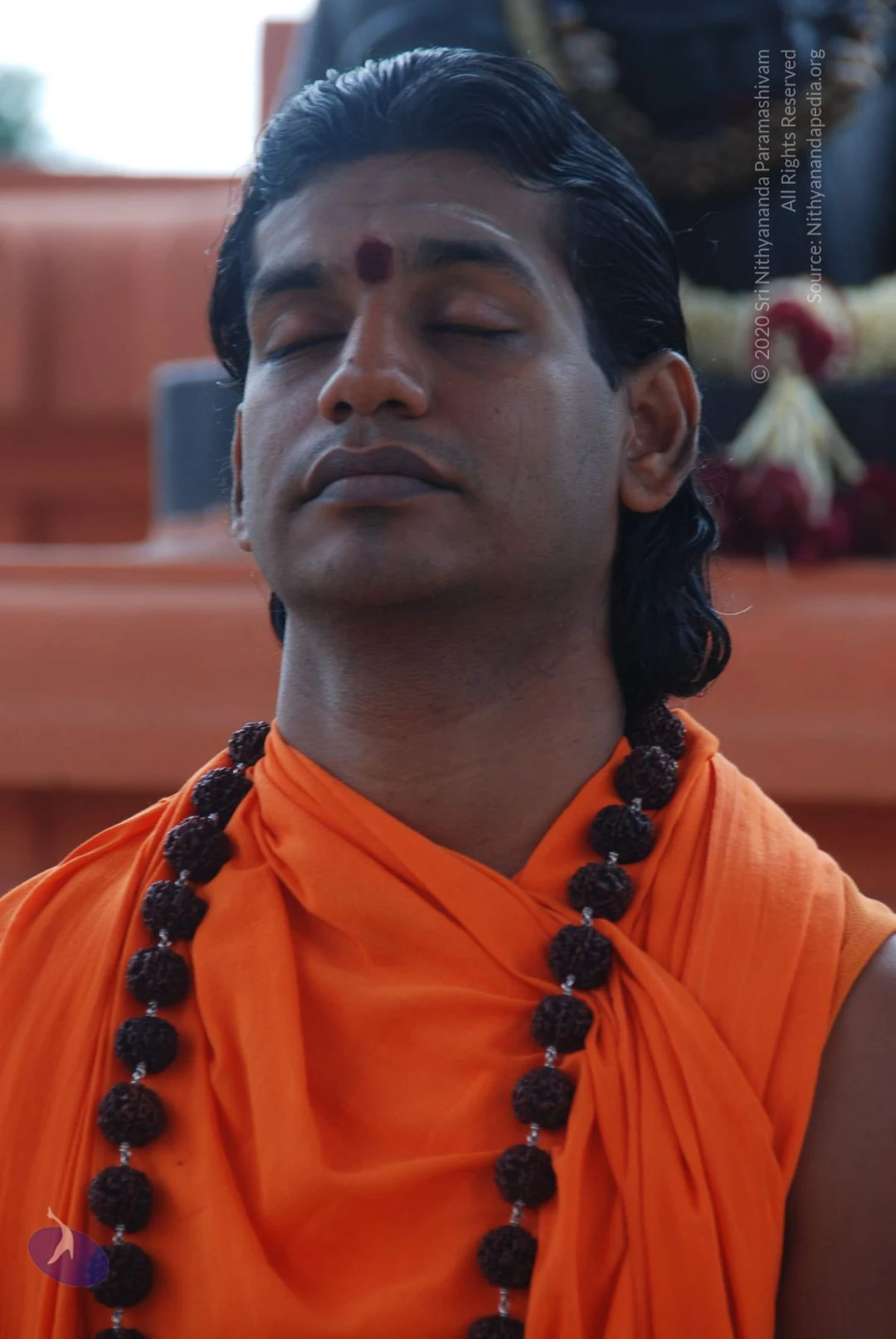
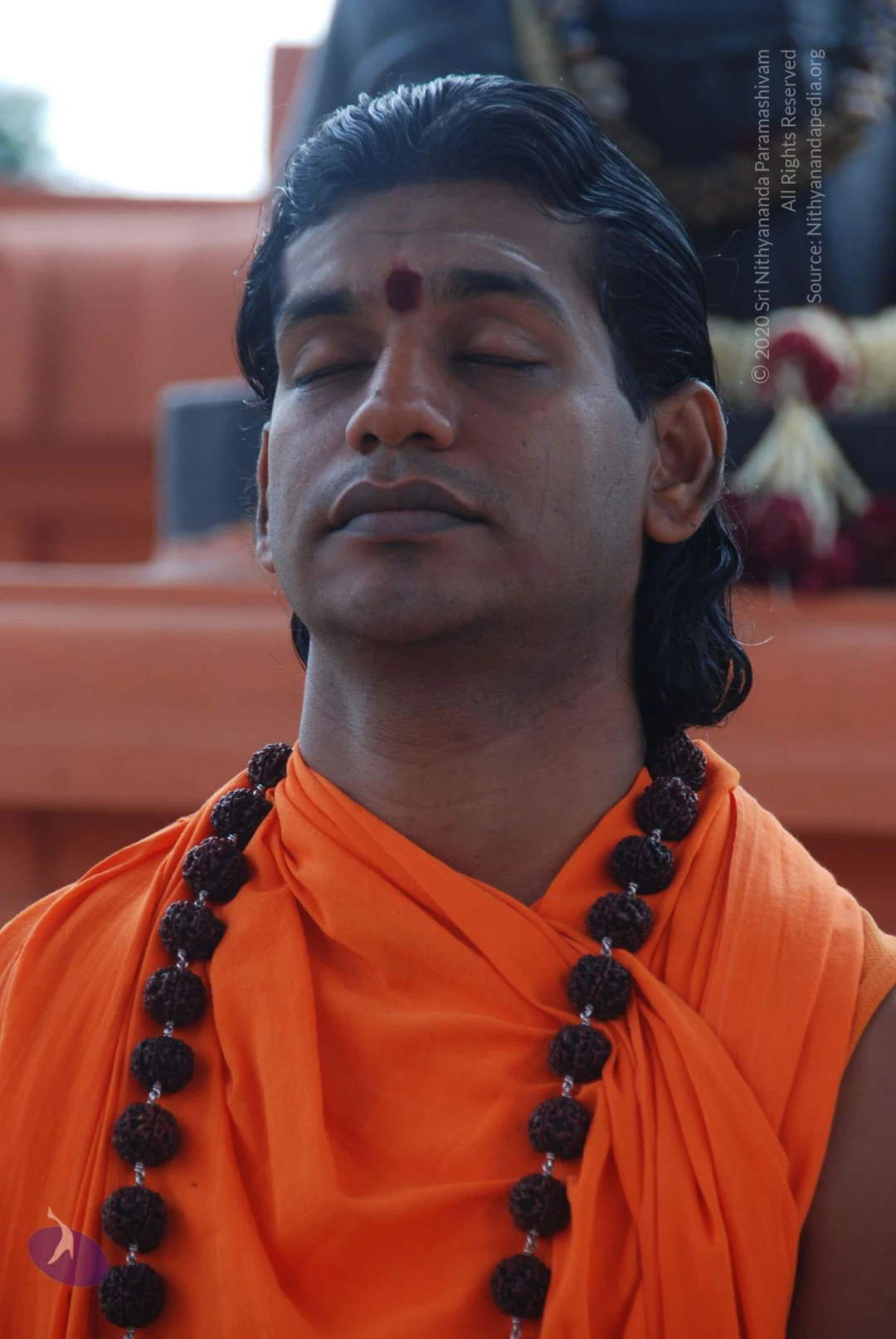
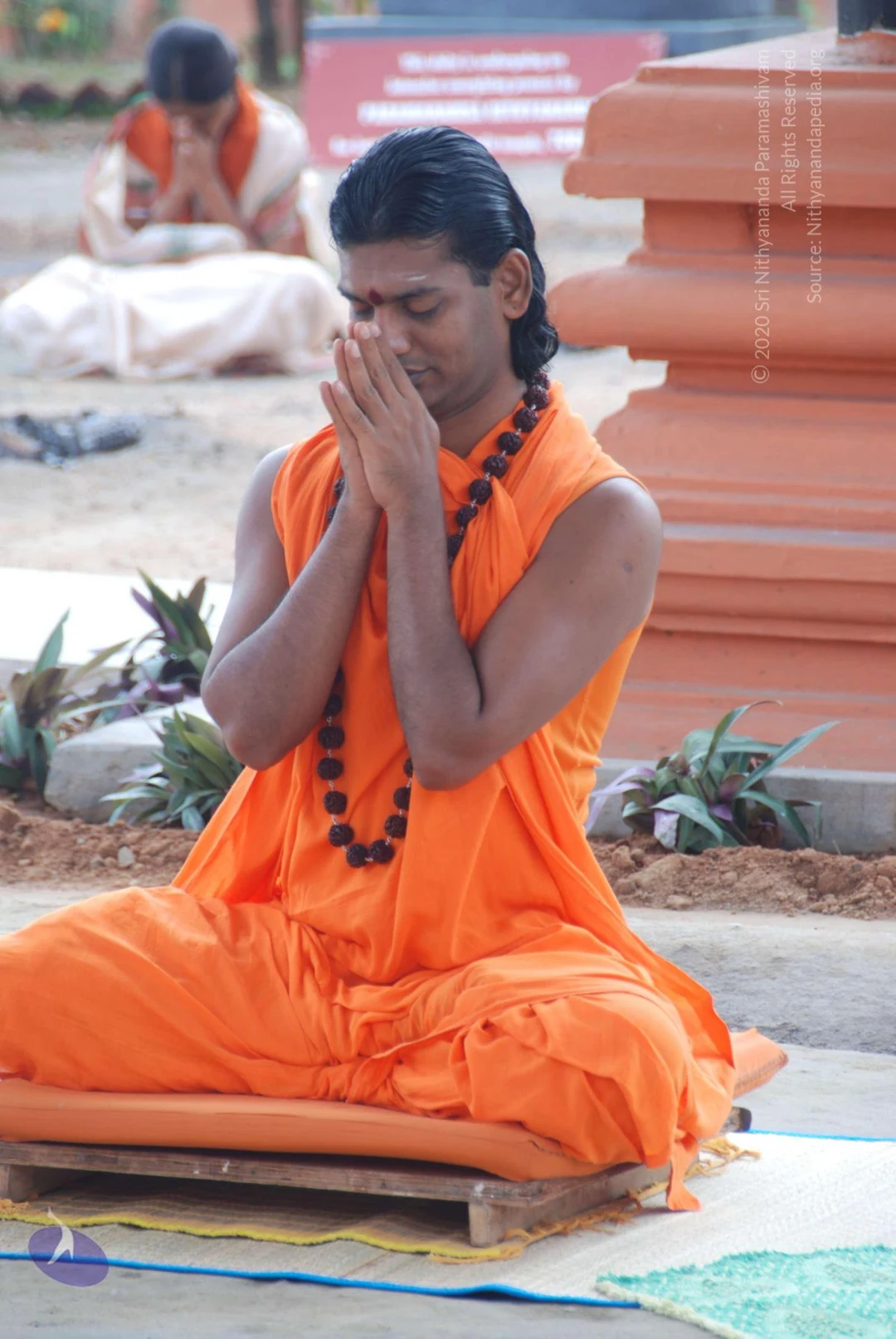
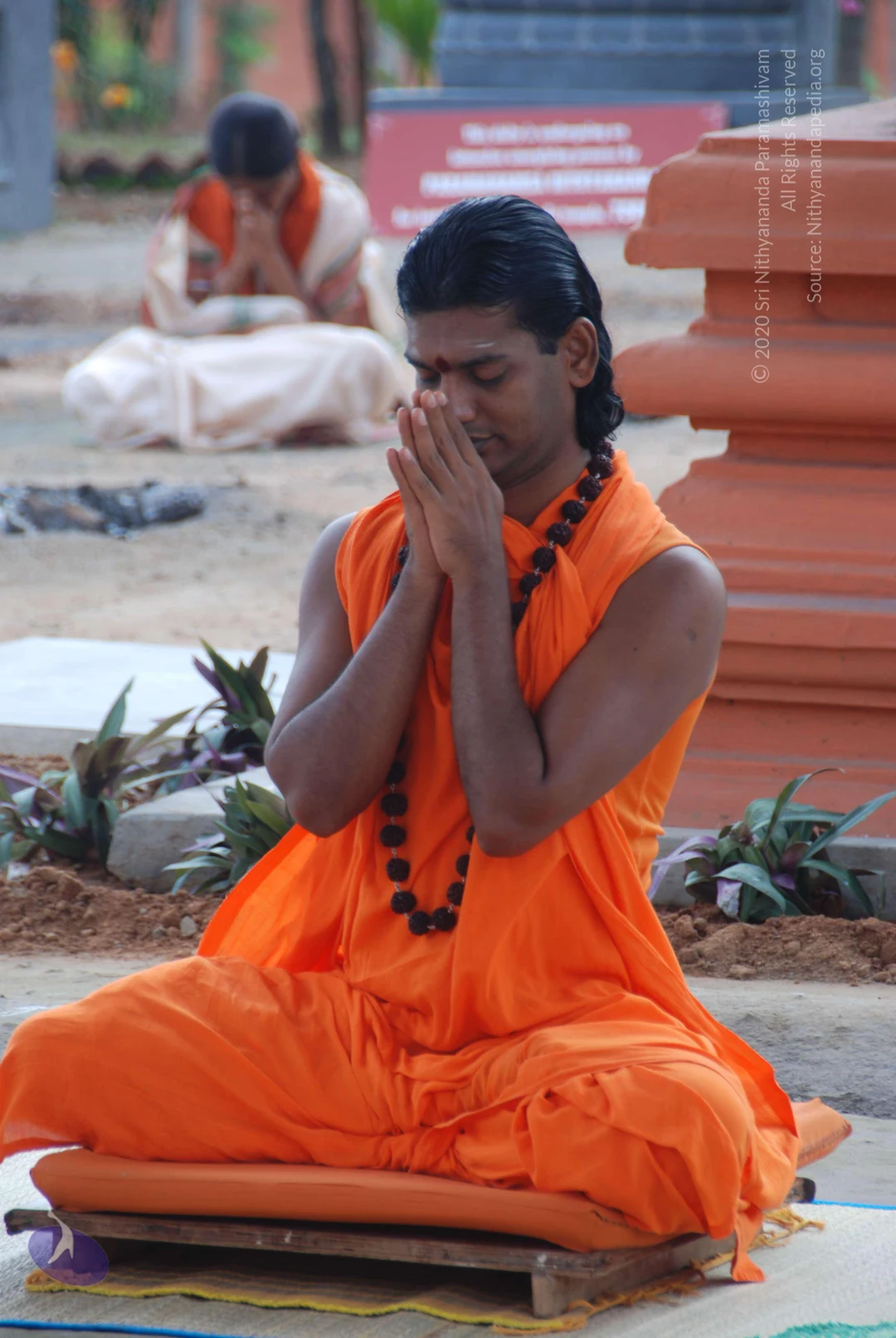
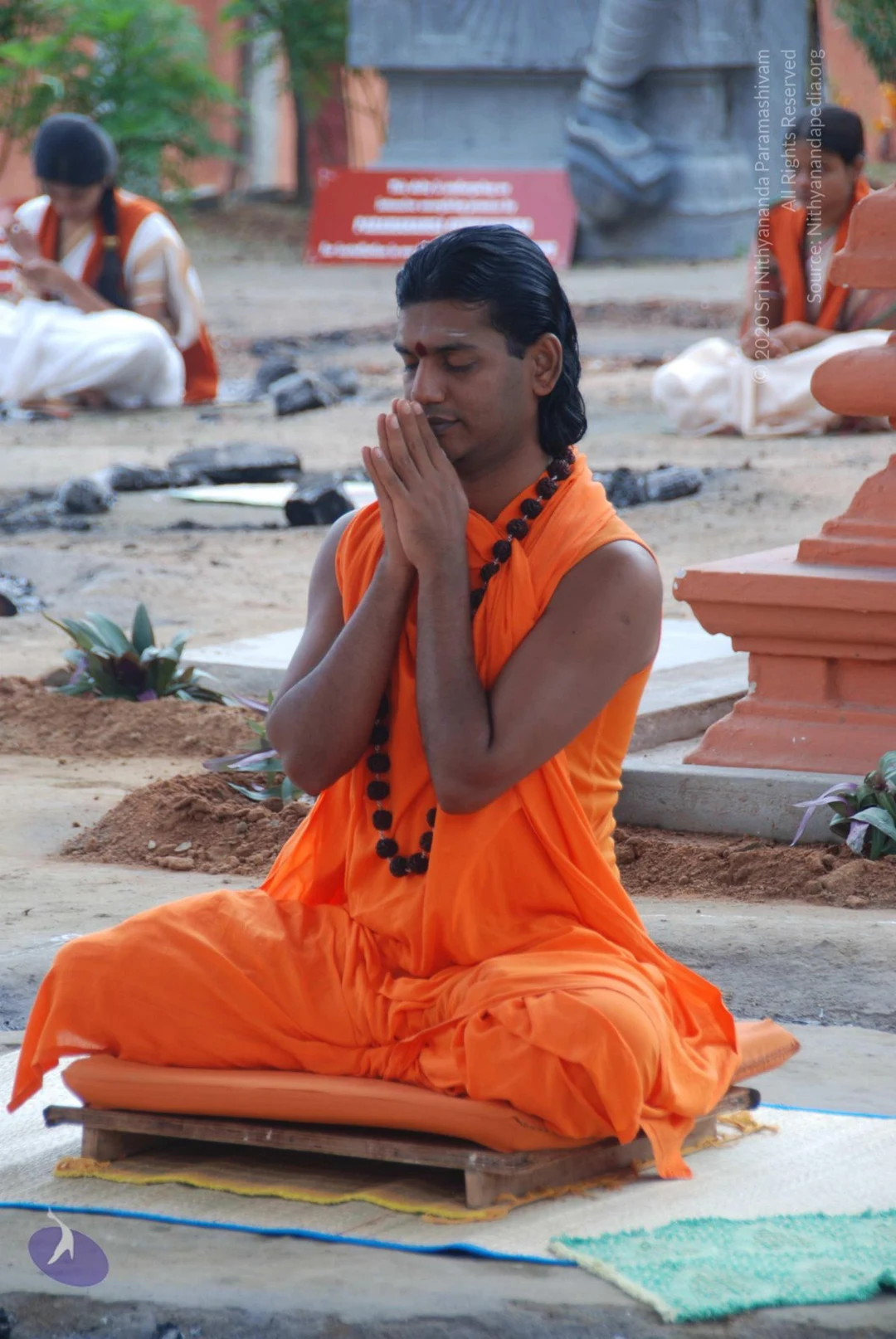
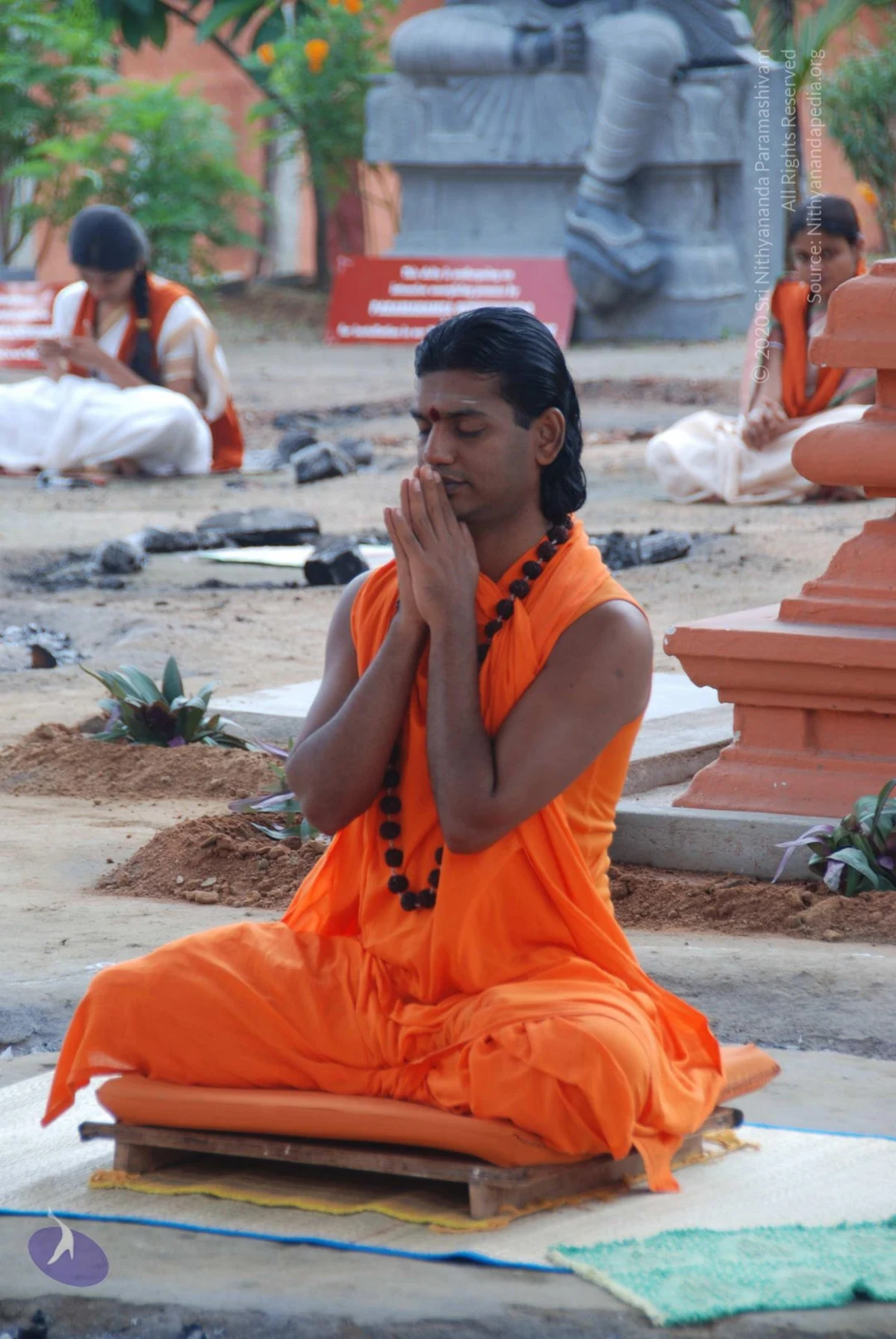
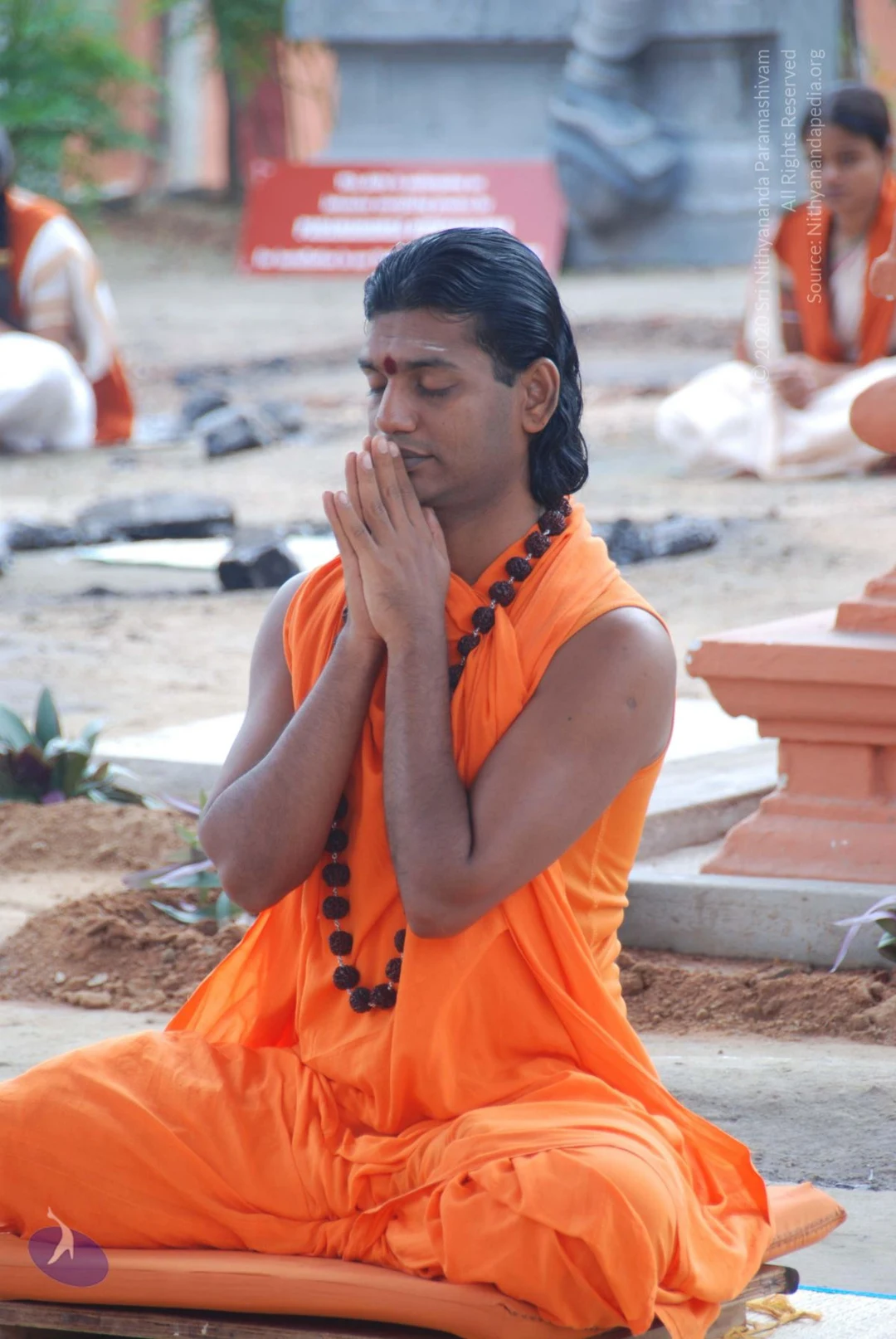
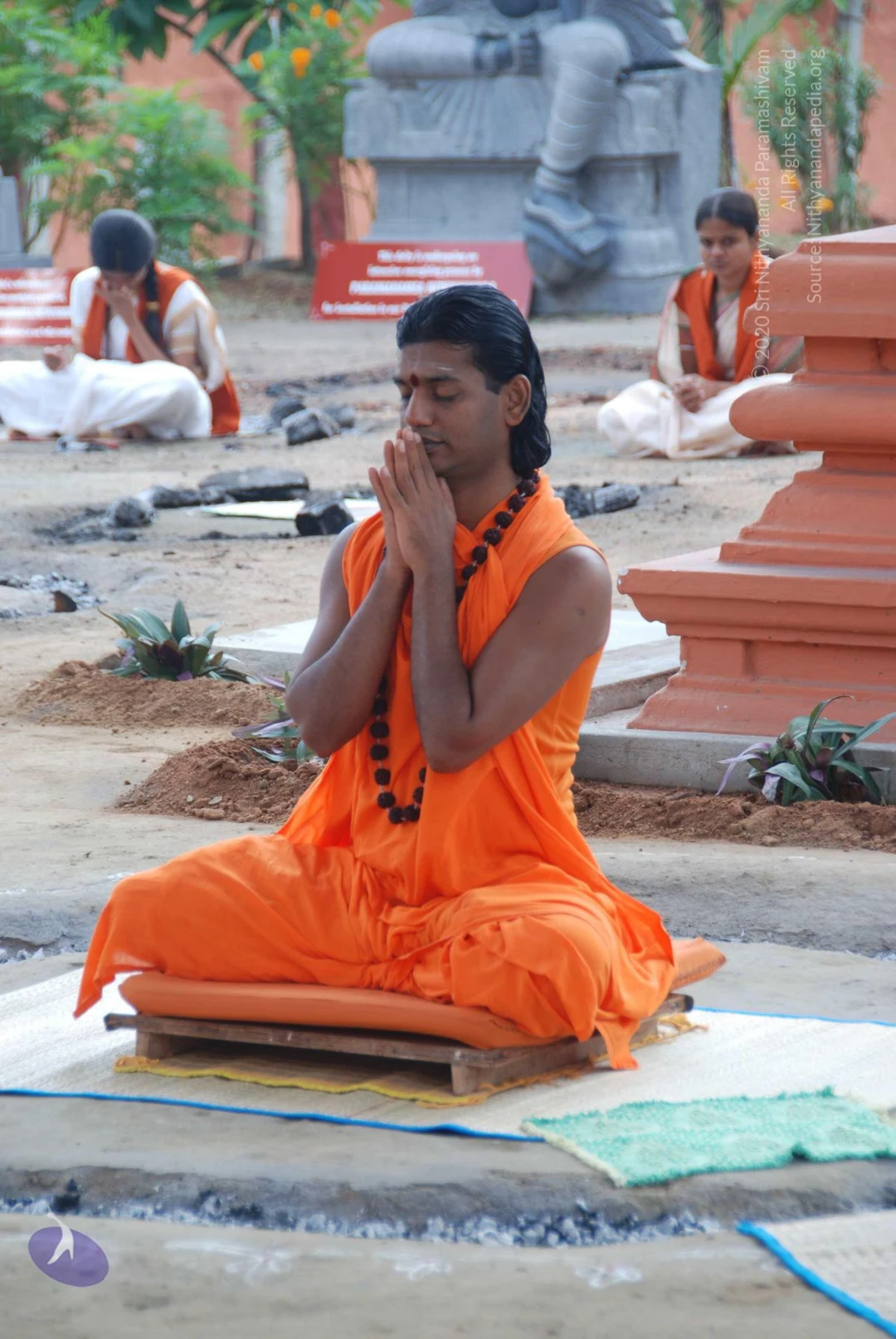
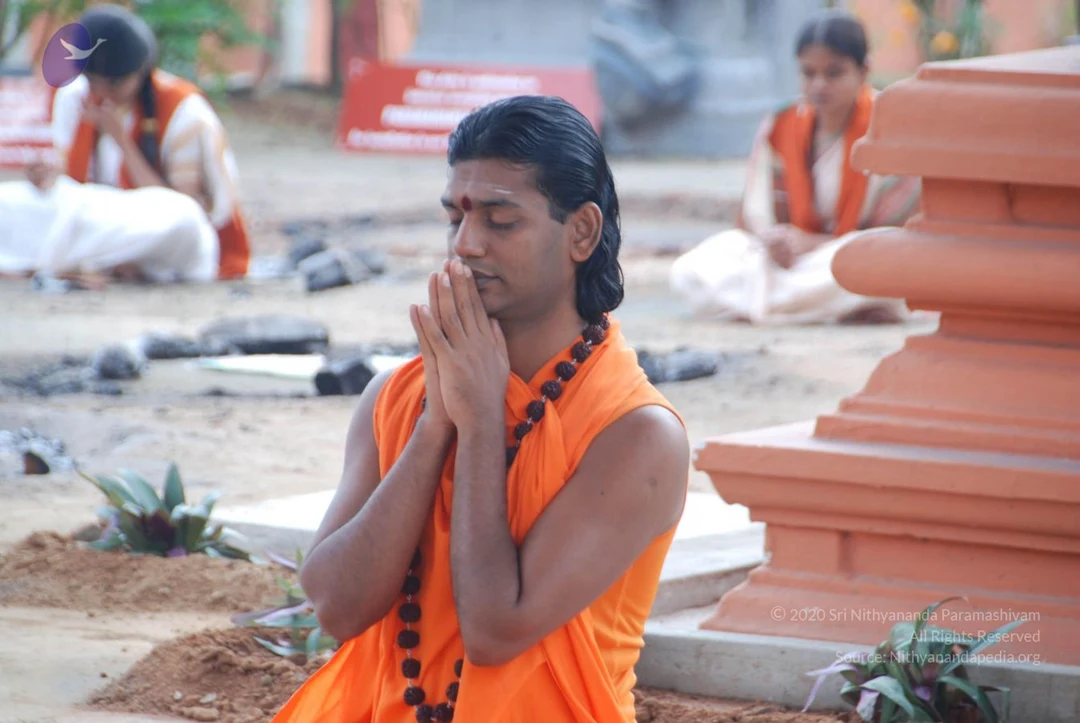
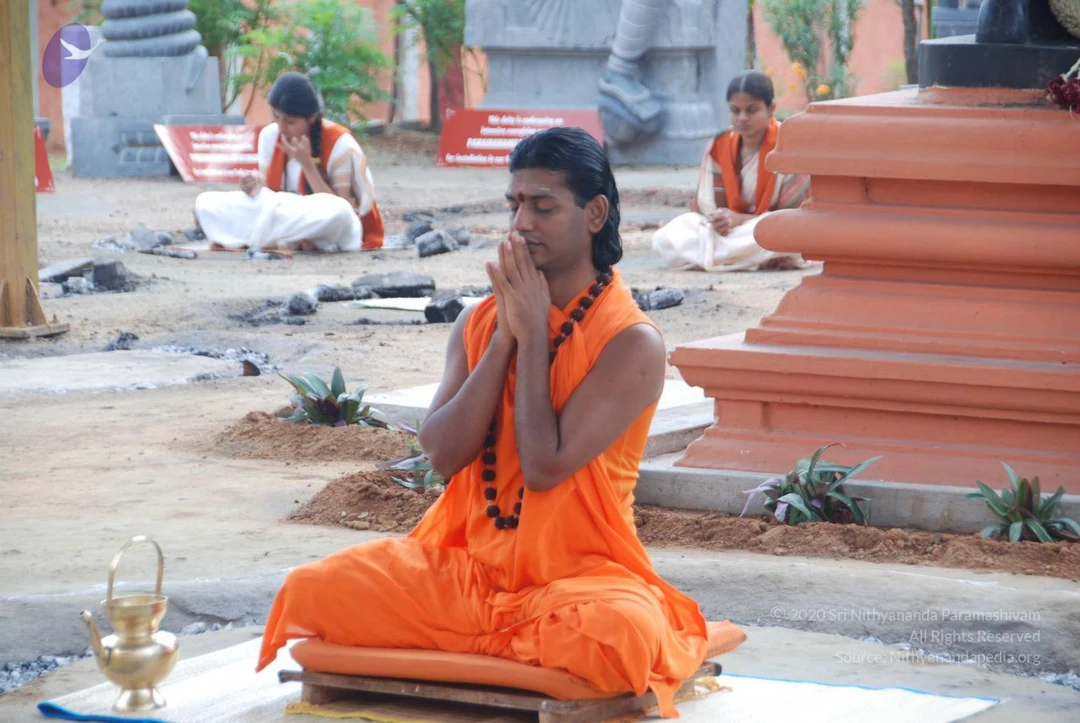
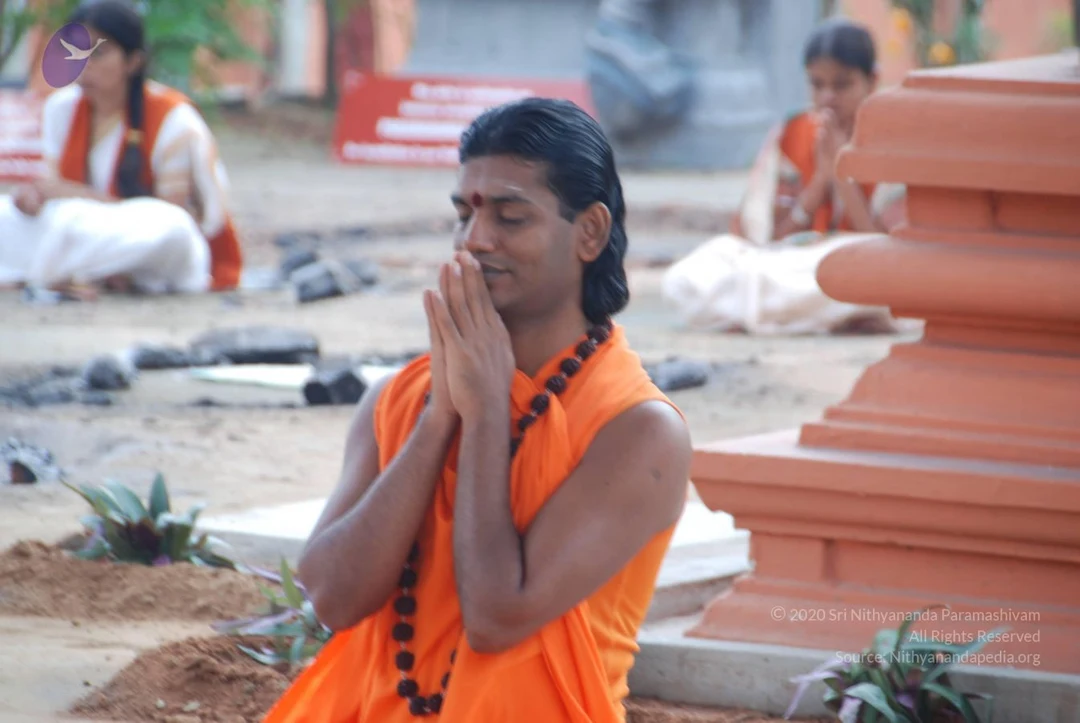
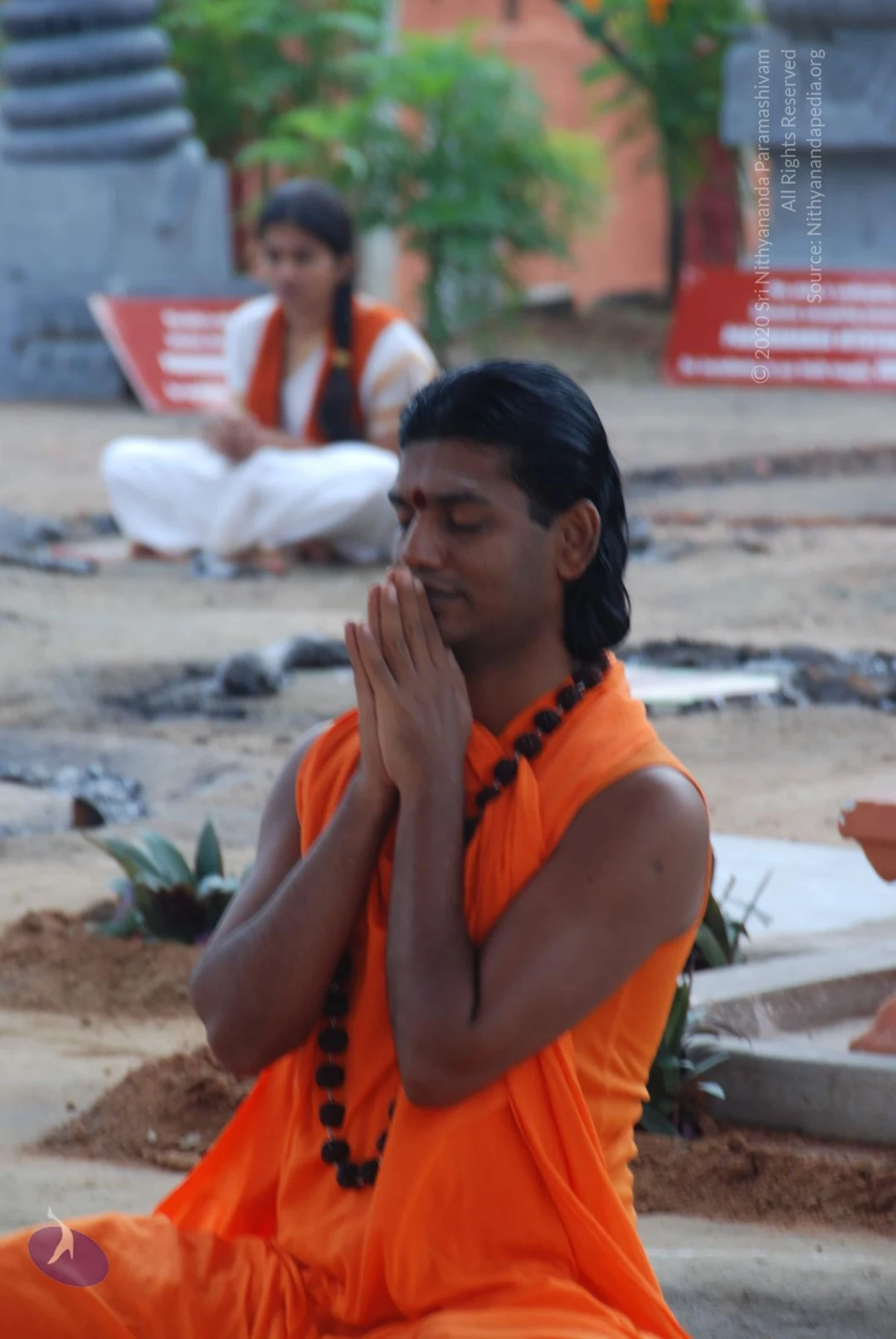
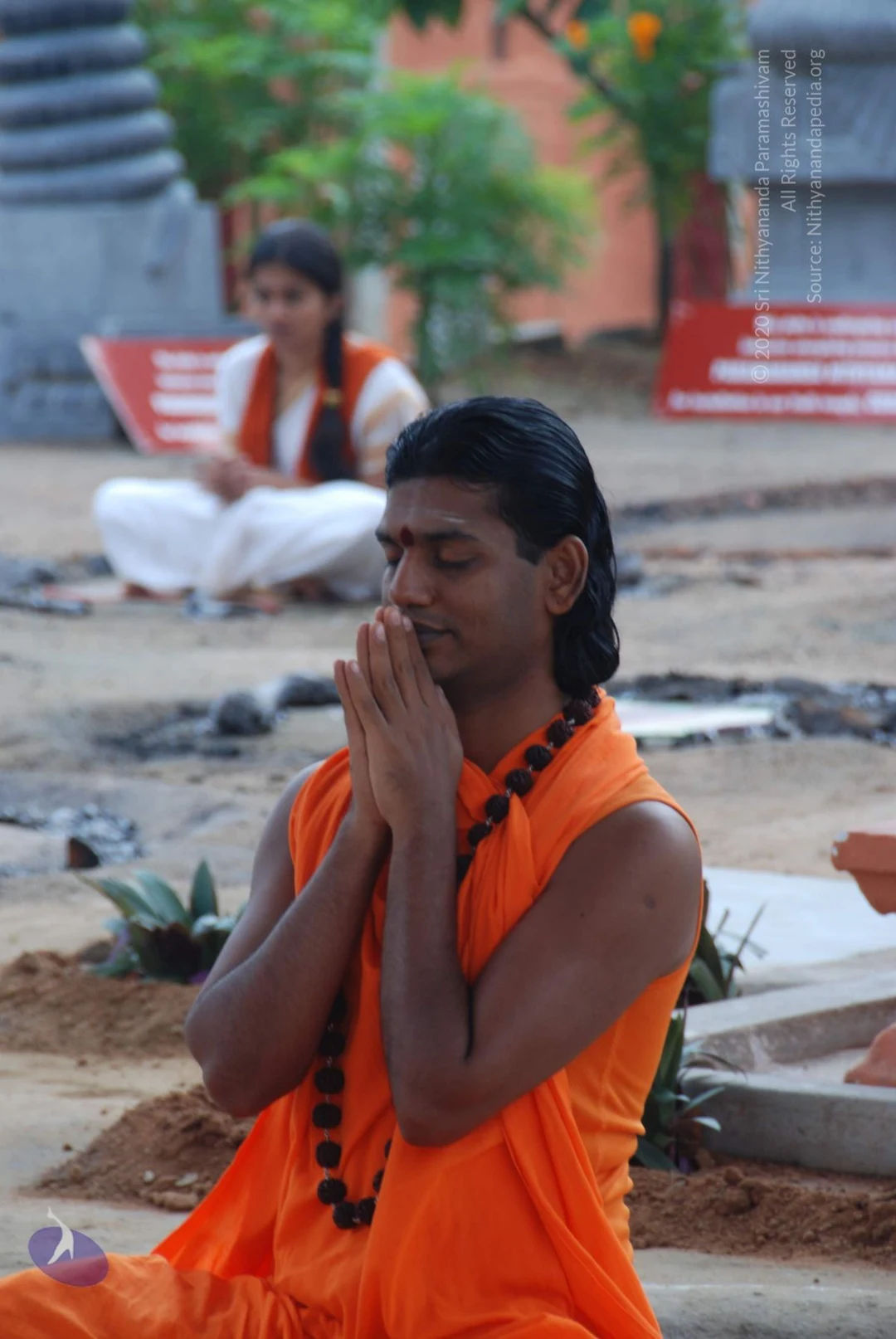
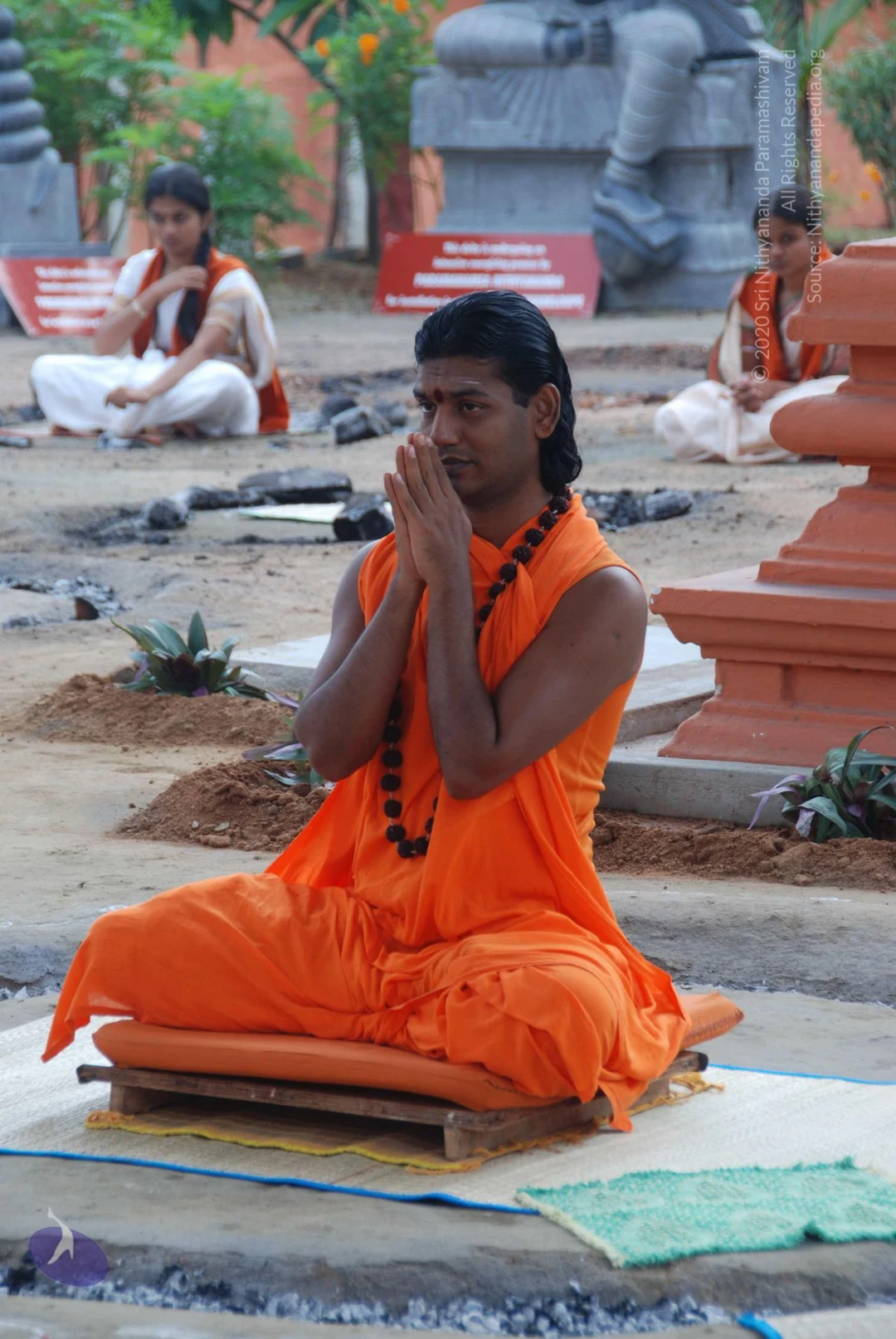
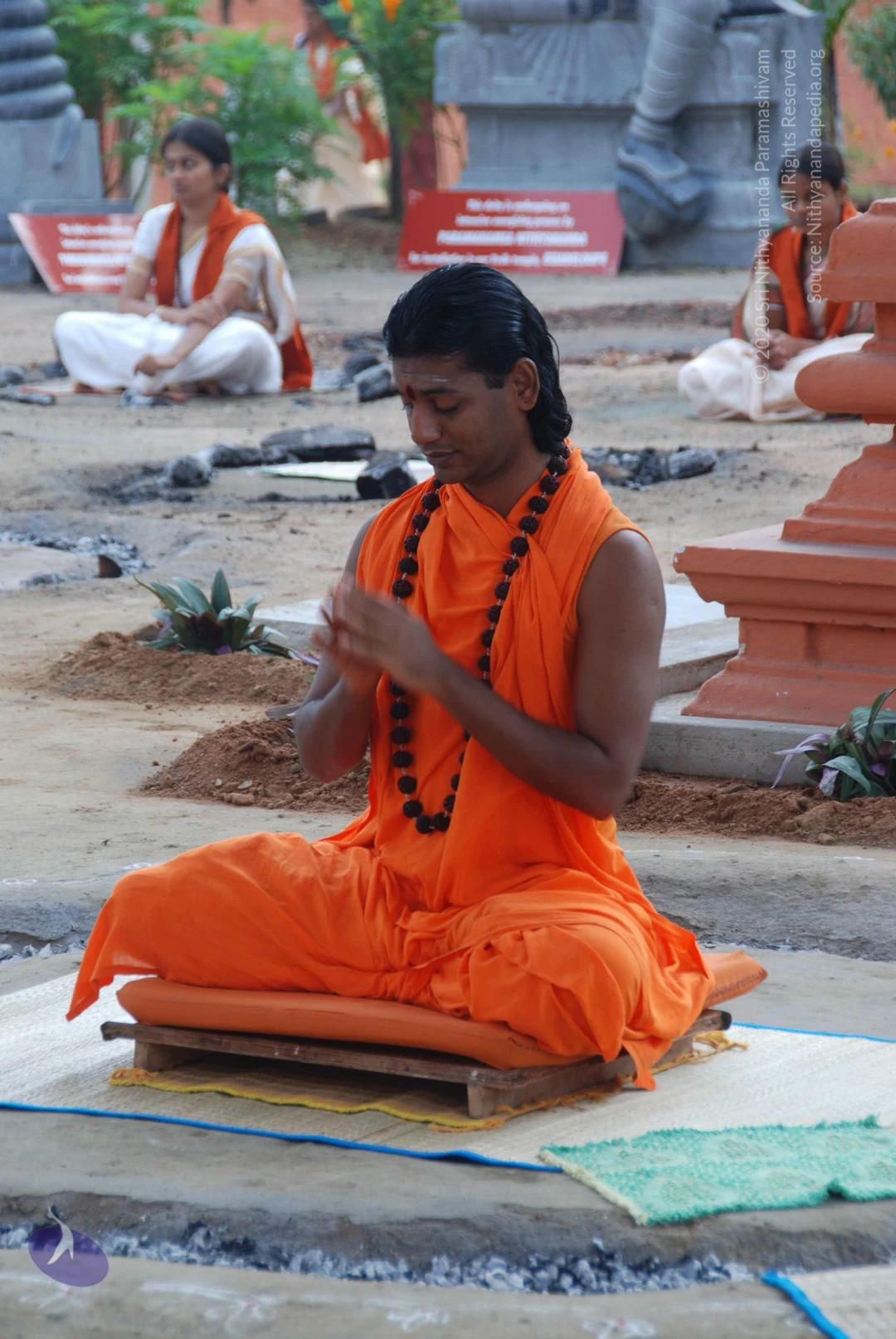
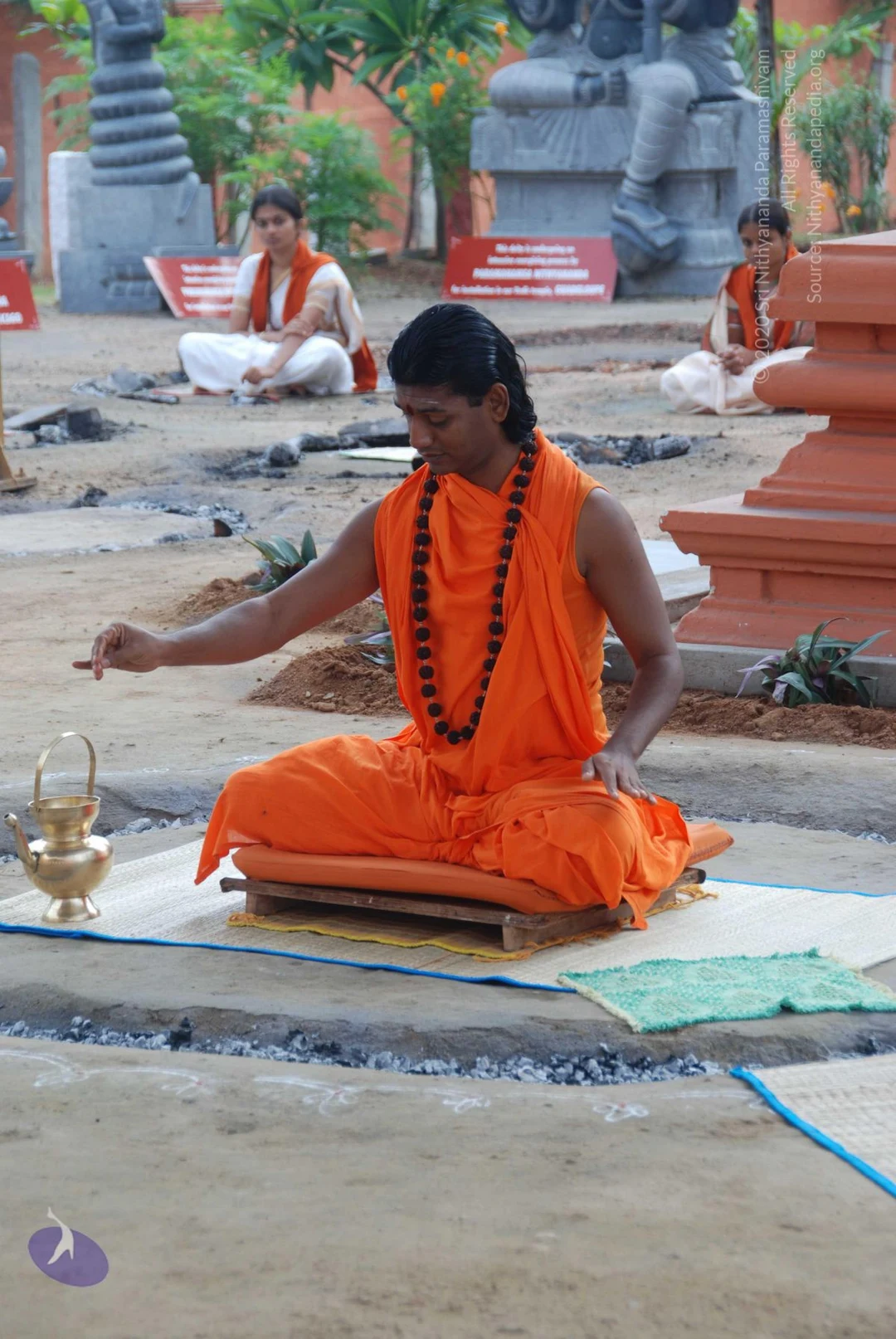
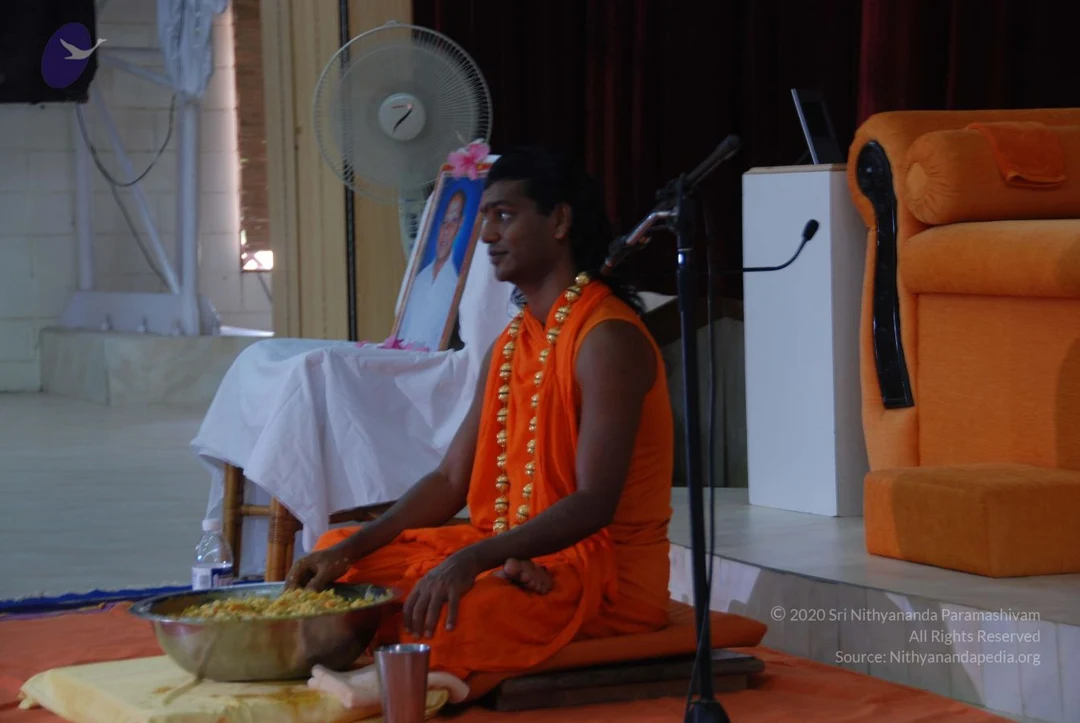
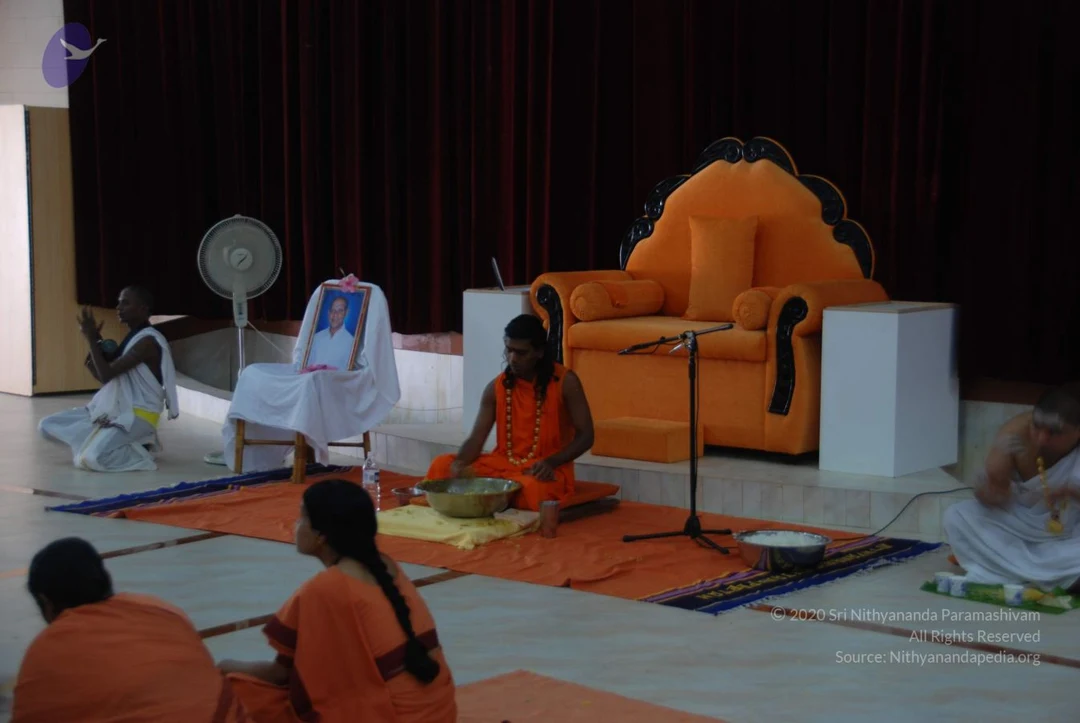
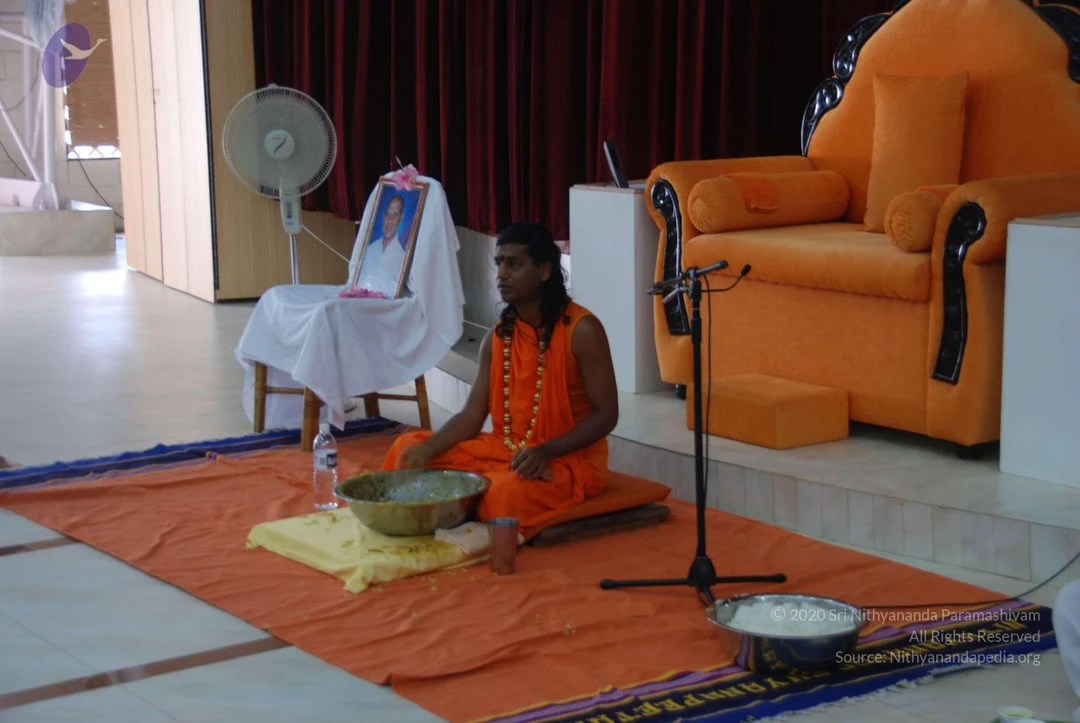
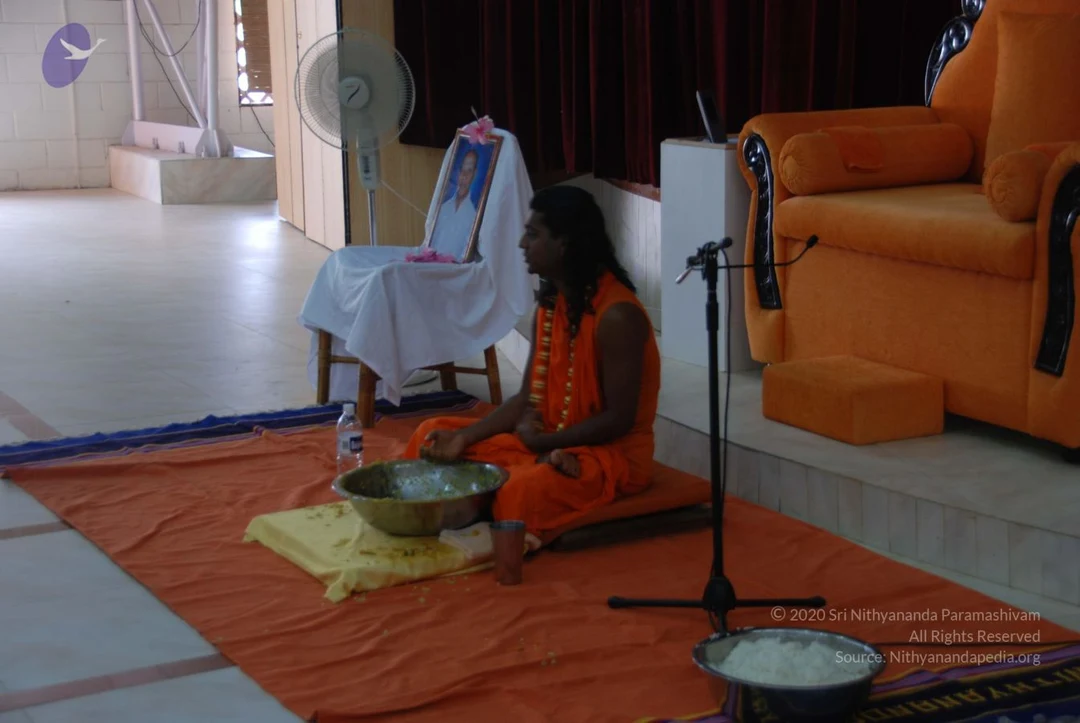
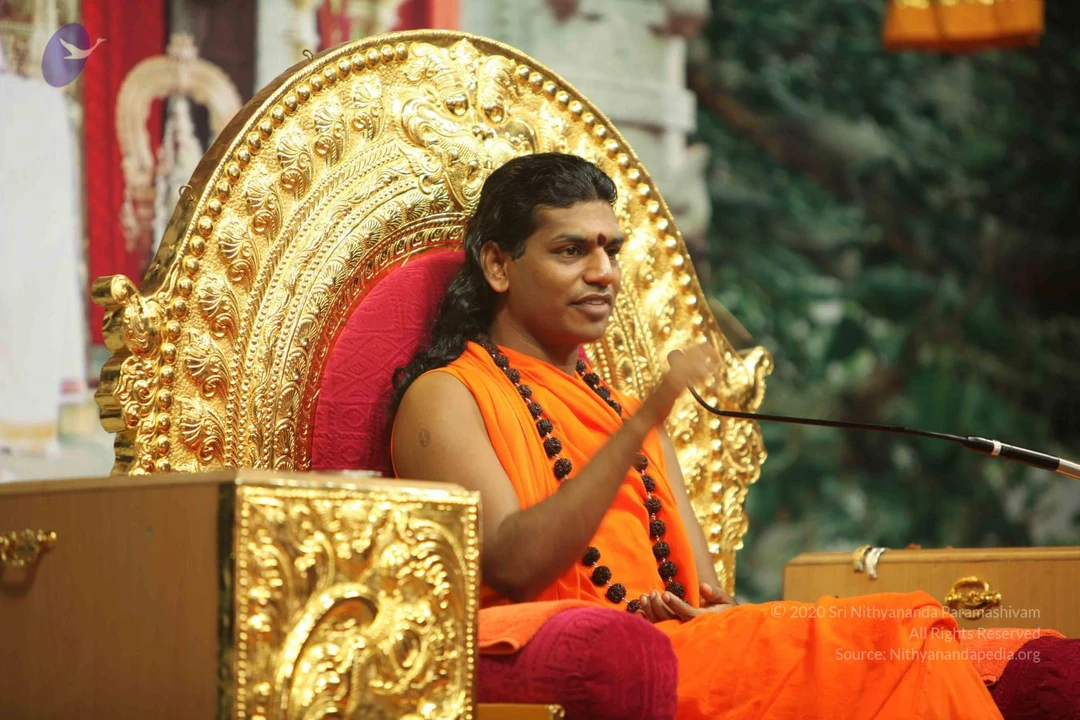
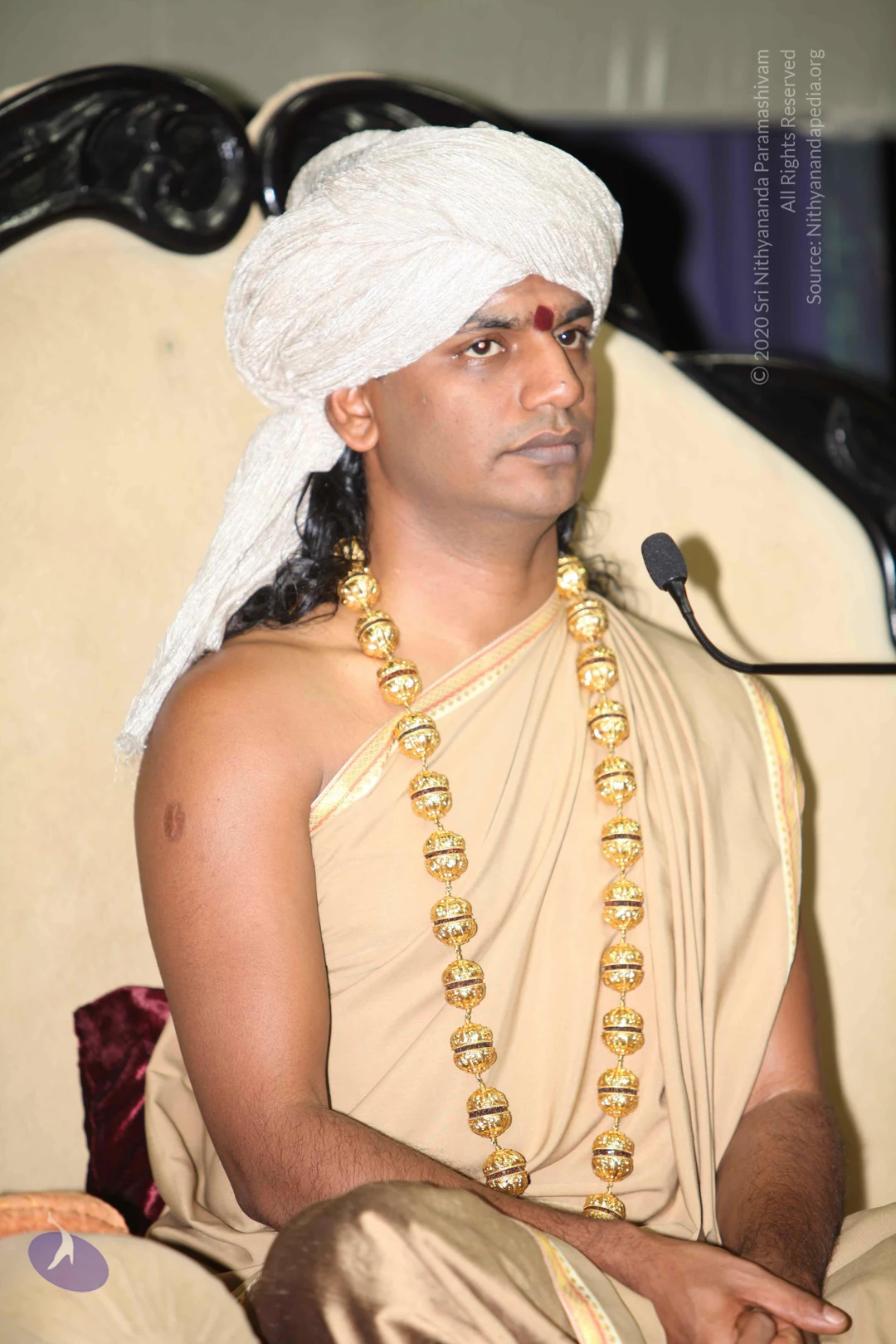
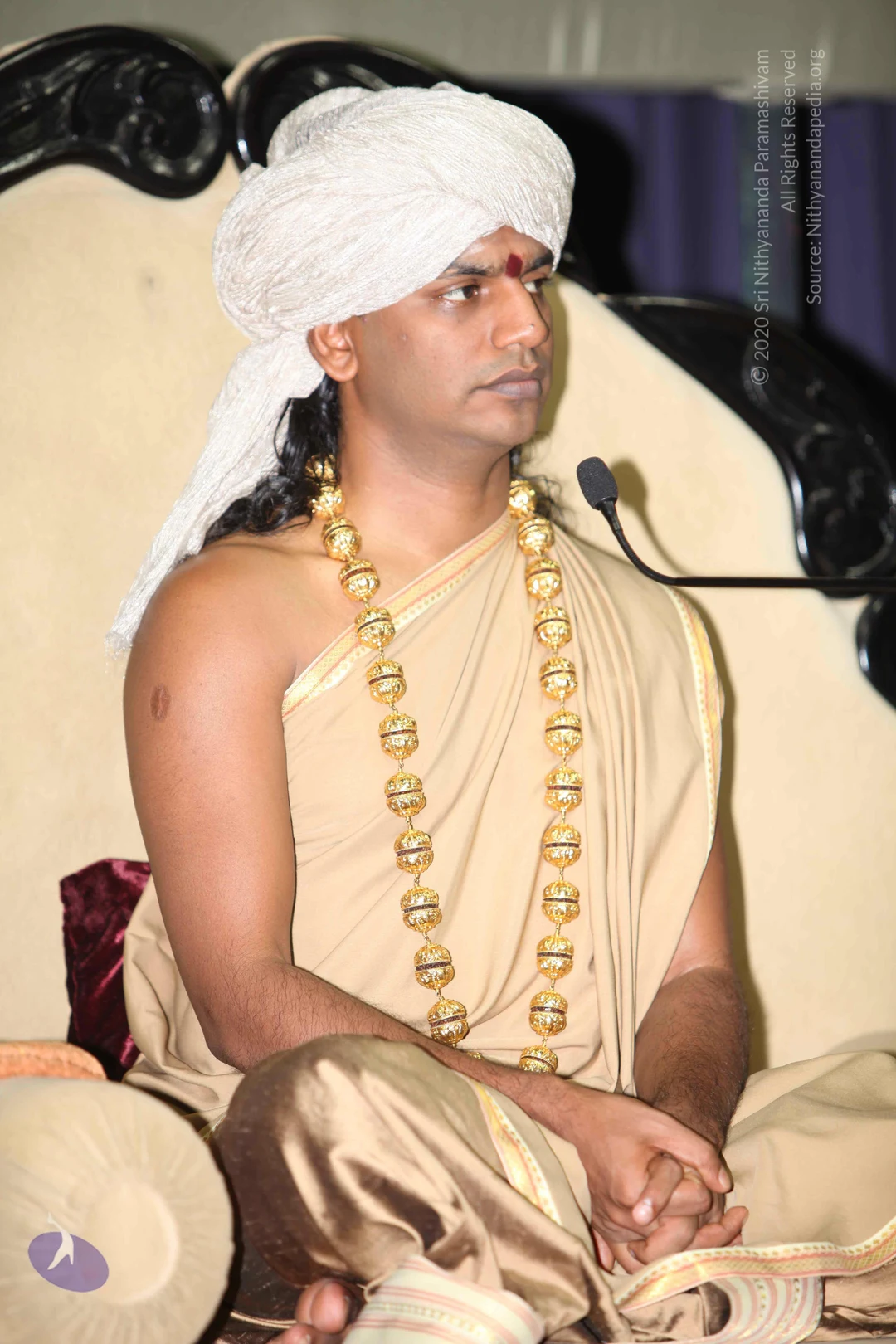
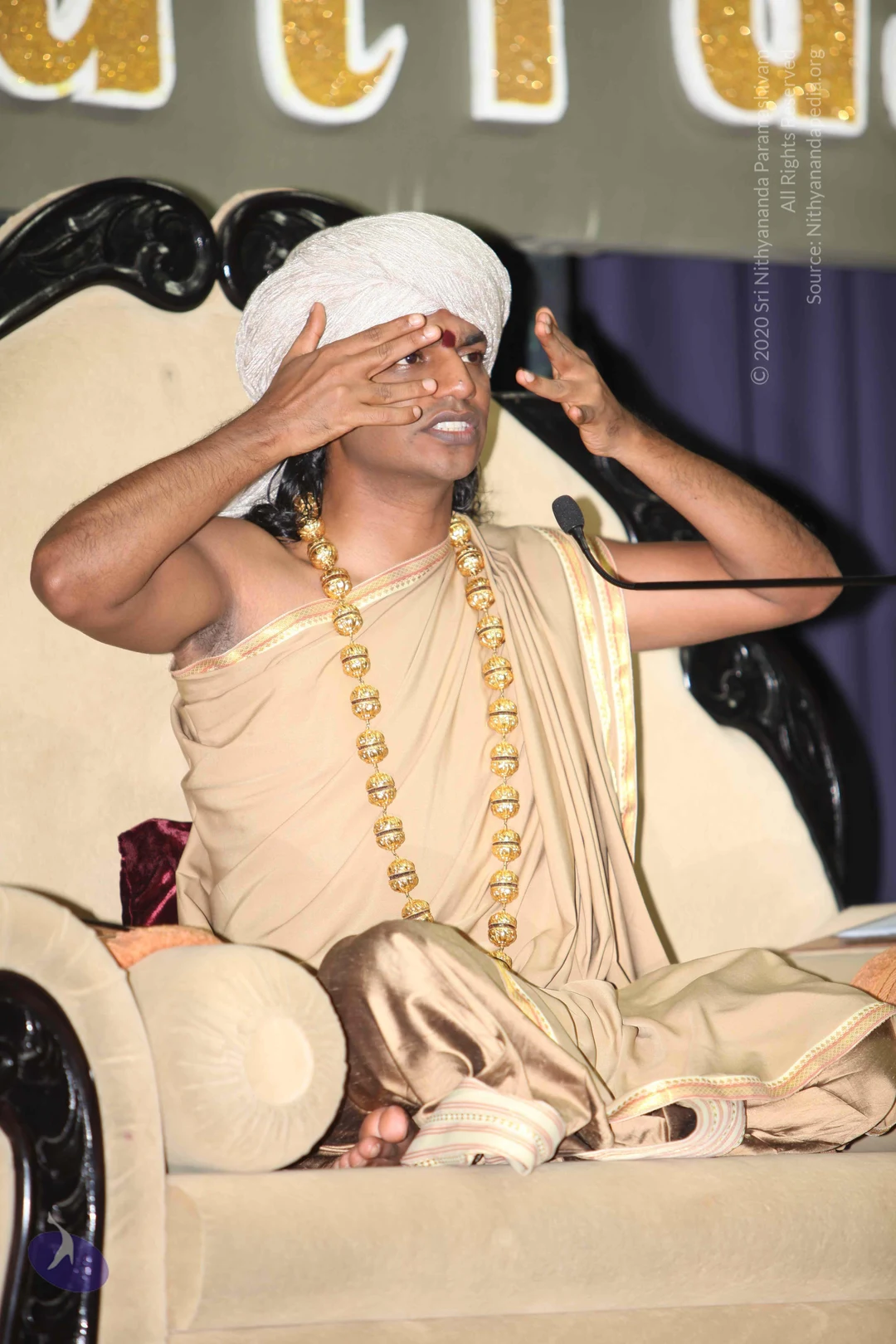
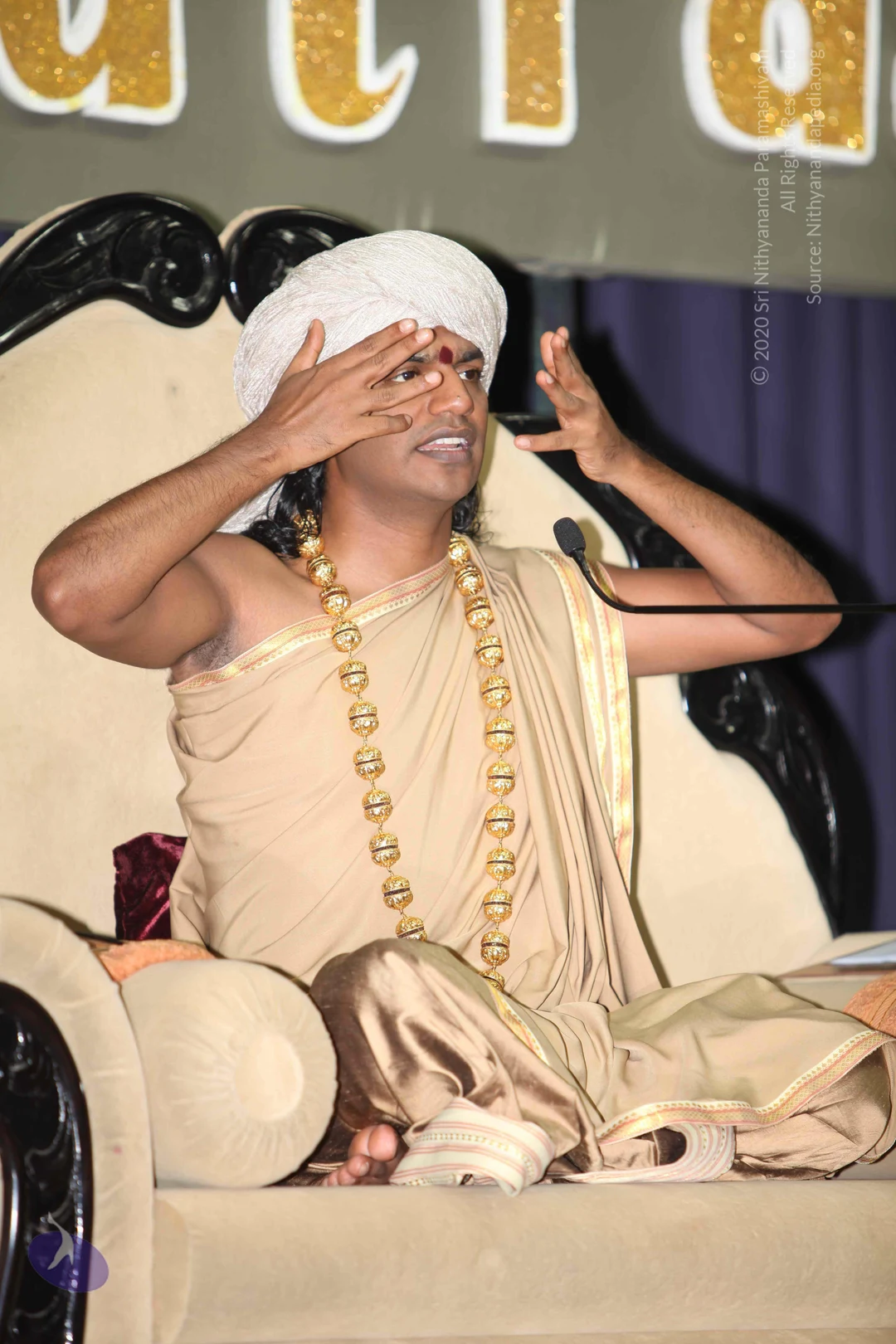
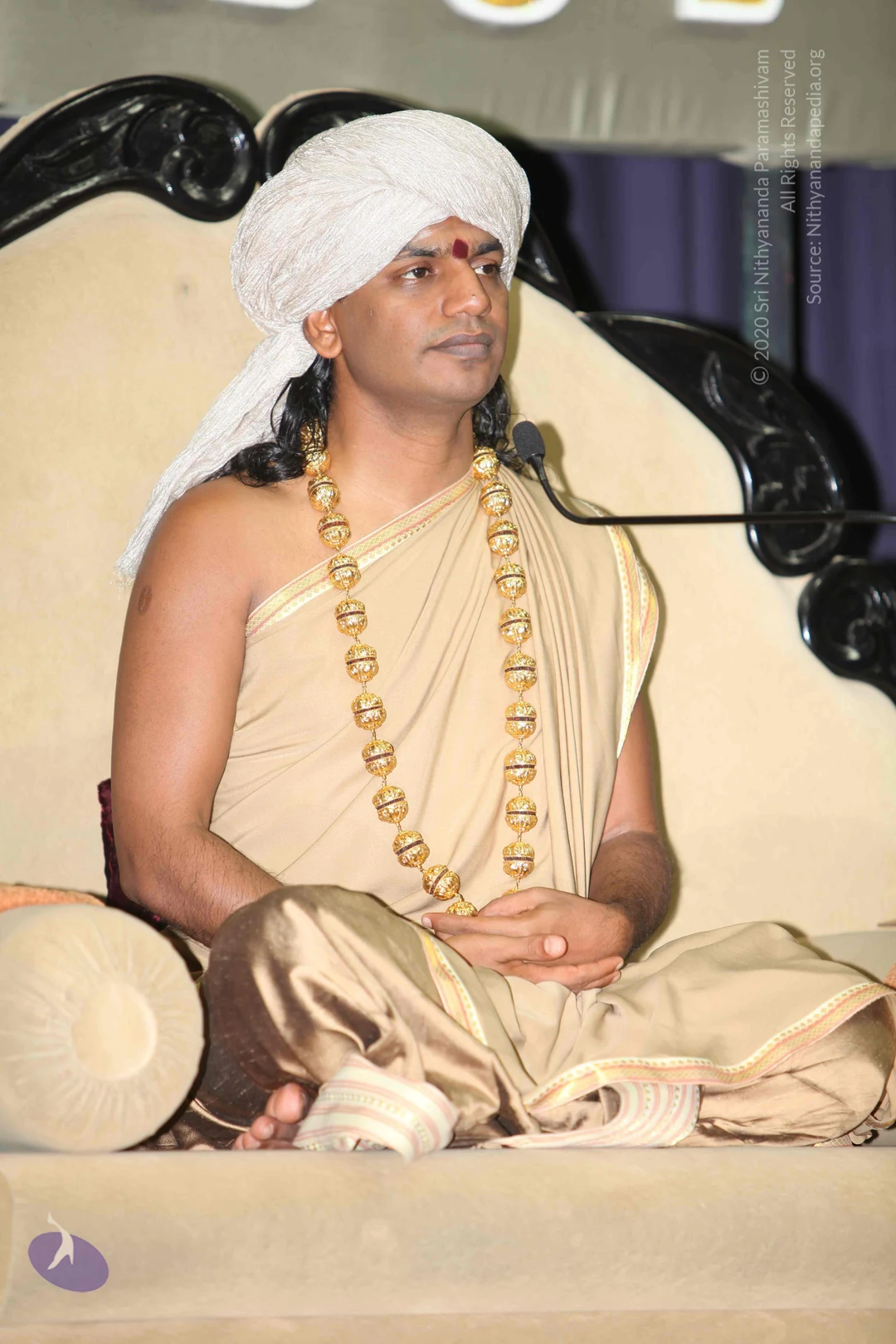
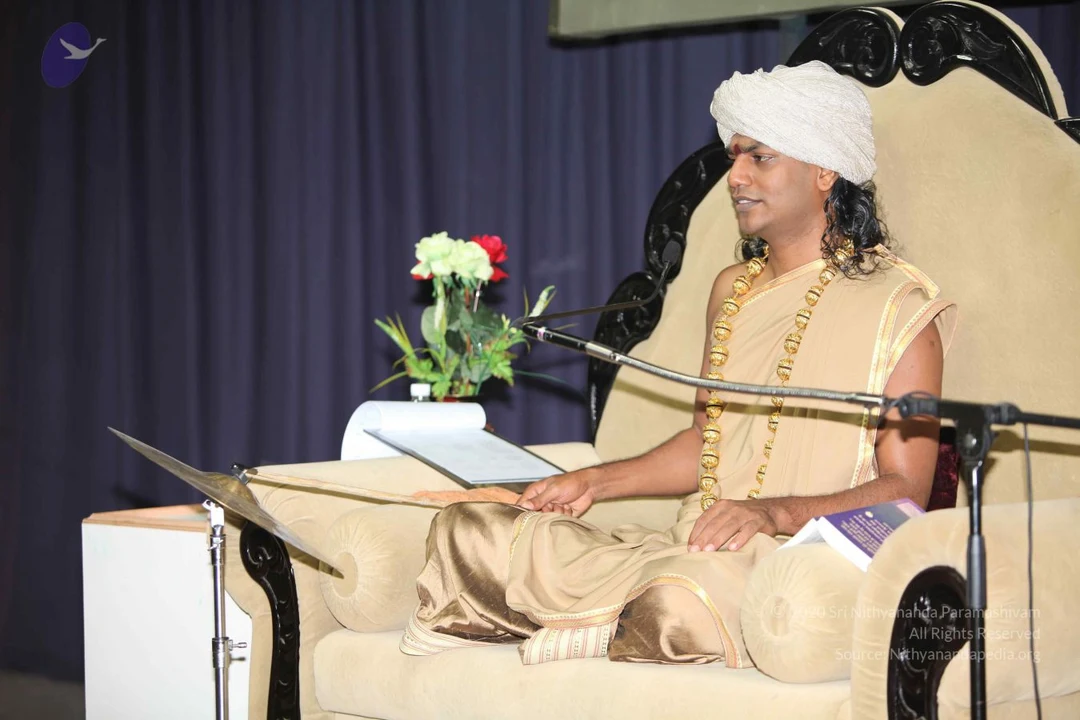
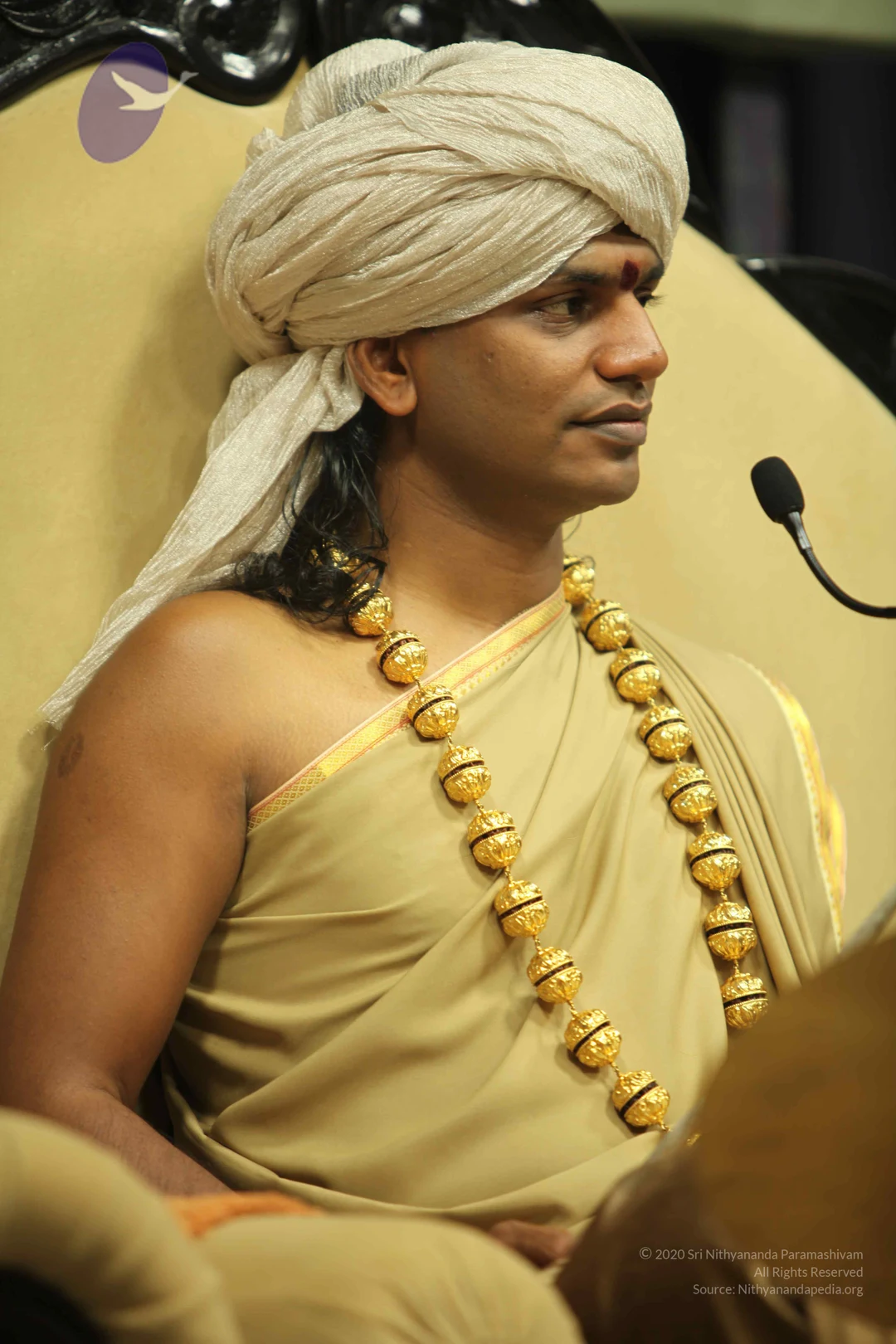
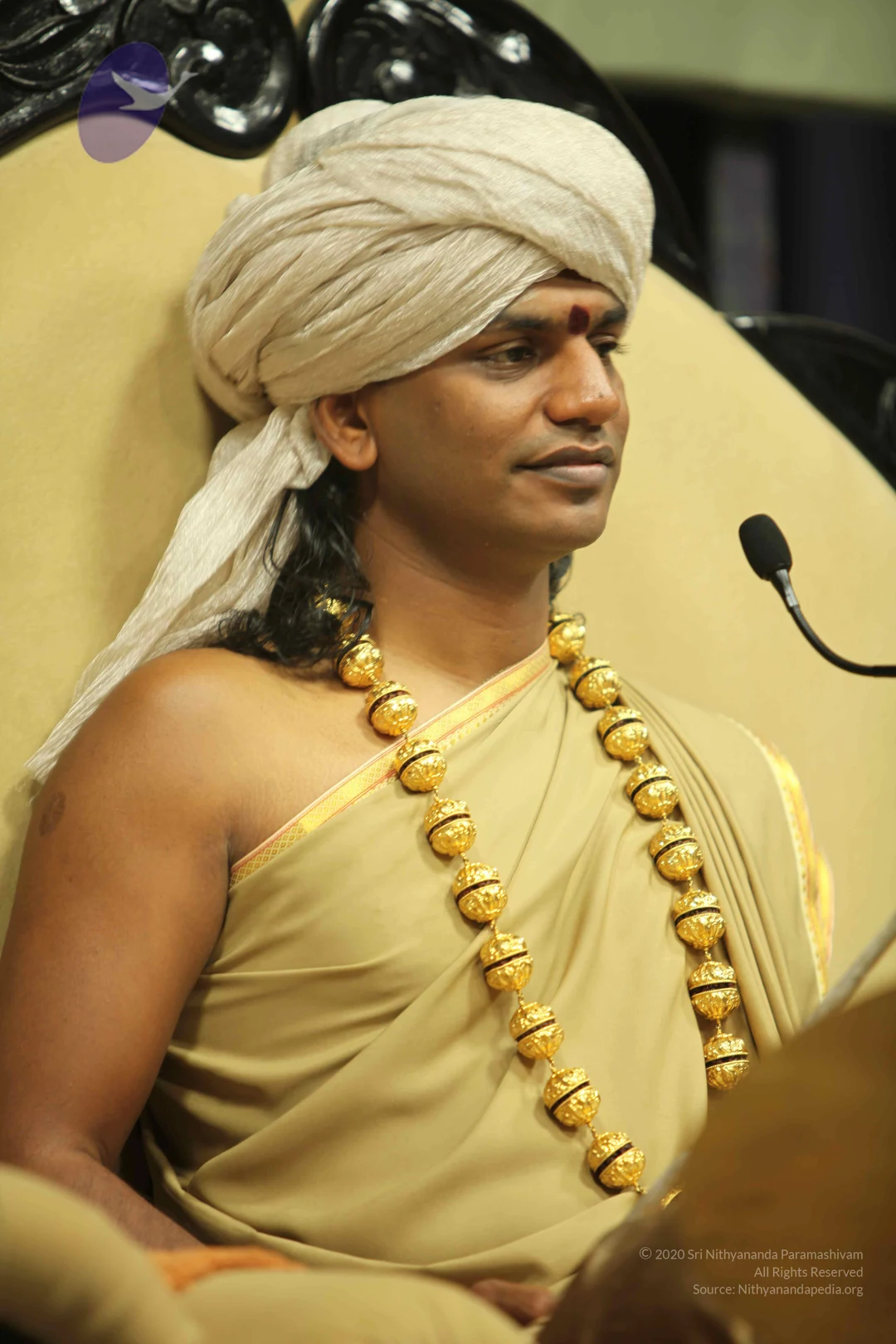
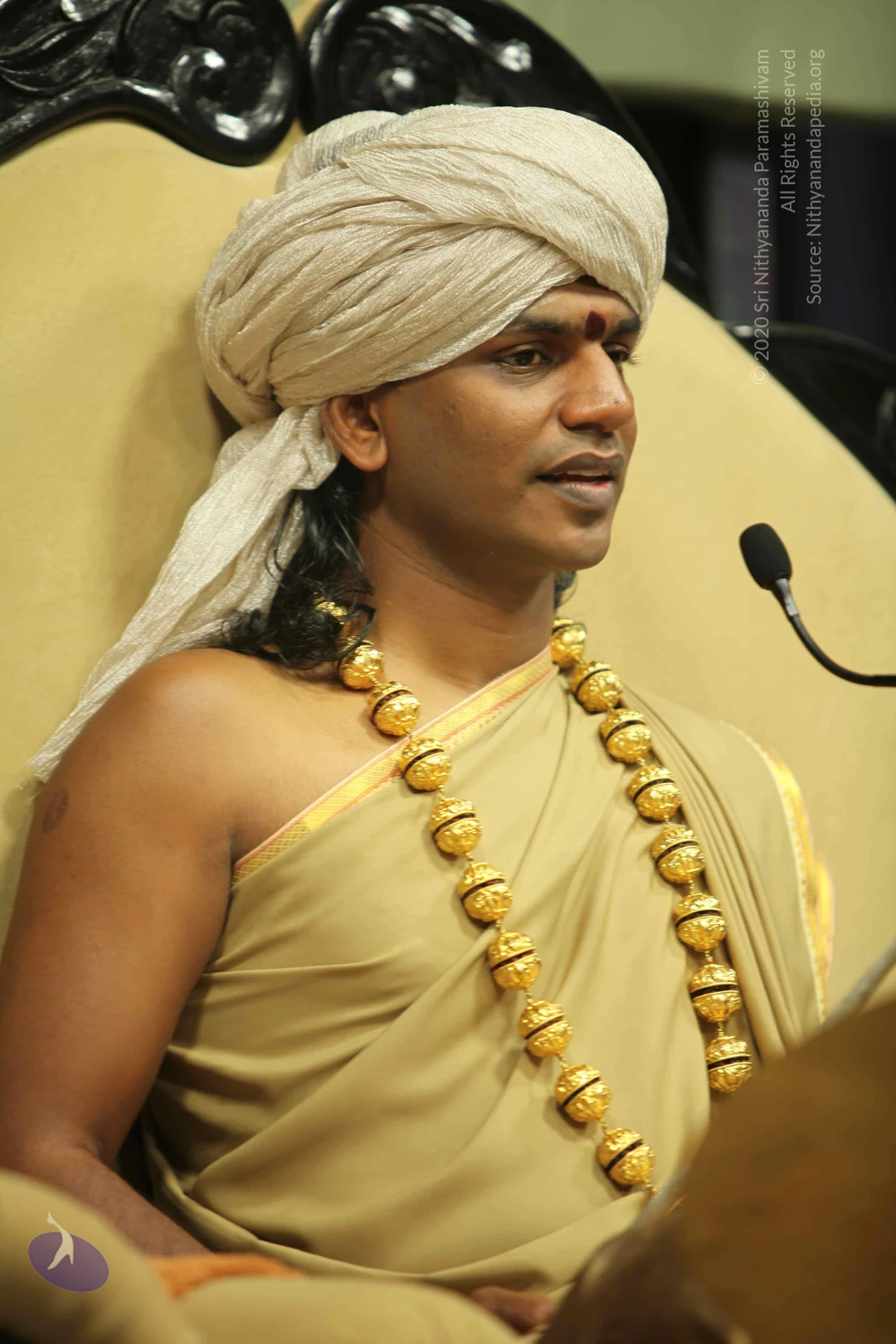
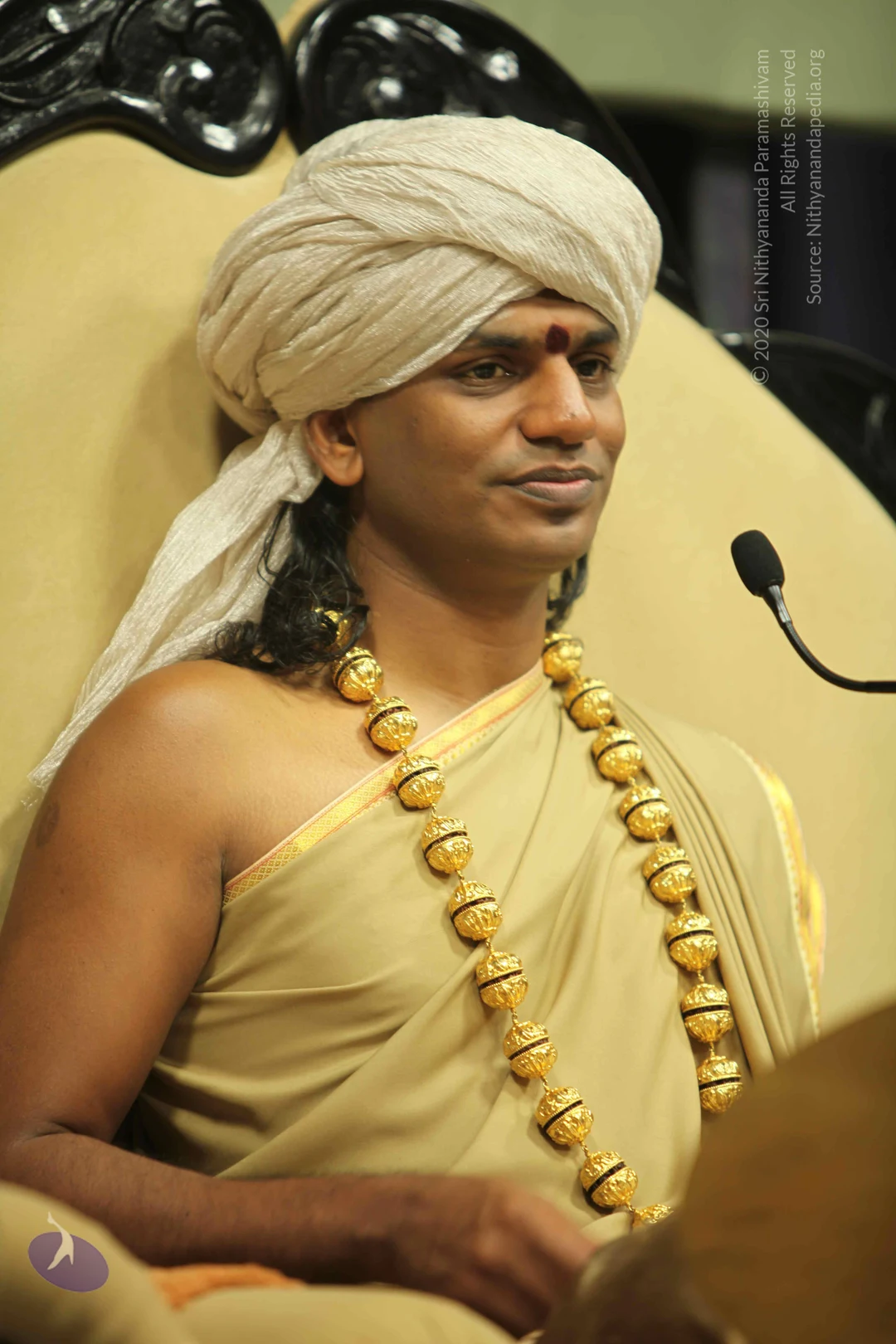
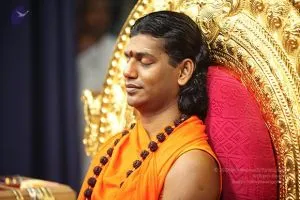
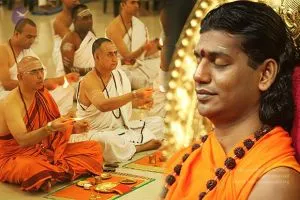
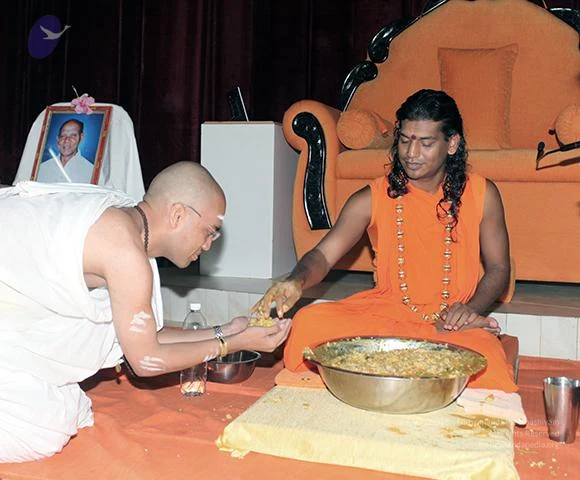
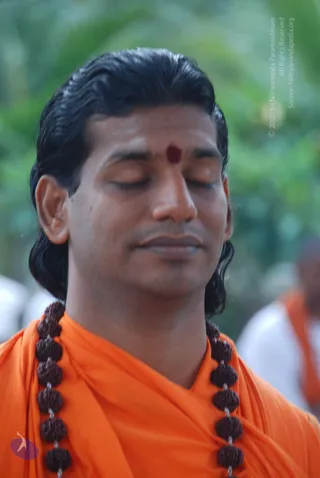
Close-up photograph of a man with long dark hair swept back, eyes closed in meditation, wearing an orange saffron shawl and a rudraksha mala of brown beads around his neck, with a red tilak mark on his forehead. Blurred green foliage forms the background. Judging by the appearance, this is a person candidate, seen in person, with cues of long swept-back hair, saffron clothing and rudraksha beads. Behind him, out of focus, a person in white and orange can be seen.A seated man in an orange sleeveless robe and a rudraksha mala sits on a red upholstered throne with gold carved trim and a matching red footstool, speaking while raising one hand toward his face. Four men in white shirts and light trousers sit on chairs around him, two on the left in conversation and two on the right, one with hands folded. Behind the throne hangs a framed picture of a figure in red and orange, a brass oil lamp stands at the right, and a red and gold decorative object is visible at the upper left. Floor is grey concrete. The speaker has long swept-back hair and a mala, consistent with the a person cues; his appearance is distinctive enough to label as probable.Outdoor photo of several shaved-headed men in white dhoti-style clothing seated cross-legged on mats in a row beside small dark fire pits with ash and charred wood. The foreground man wears white cloth with red borders, a rudraksha mala and a small tilak, hands folded in his lap. Behind him a man in an orange-red wrap and another in a yellow shawl sit in meditation or prayer, and a smoke trail rises near the pits. Orange temple walls and a black stone vessel stand in the background amid palm trees. No one here is identified as a person; they appear as ritual participants.

Photos of the day

View all 662 photos

662 distinct dated photos. Source gallery sets may overlap. Preview includes 500 photos.

01

TEMPLE

3 dated photos in previewSource gallery
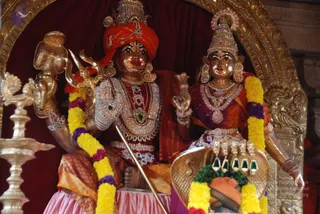
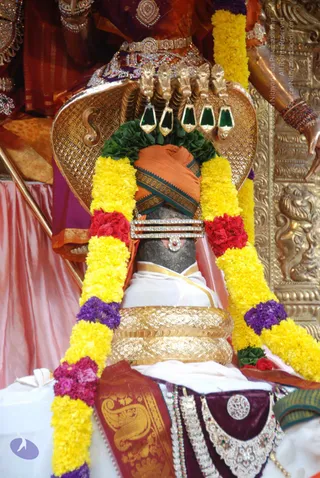
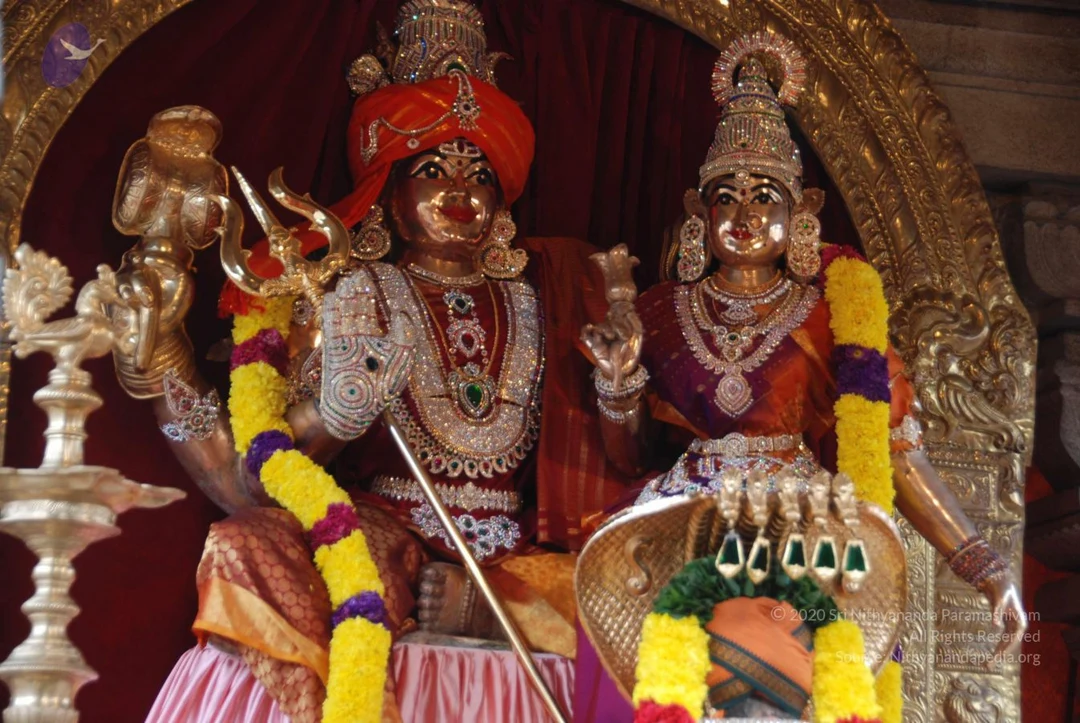
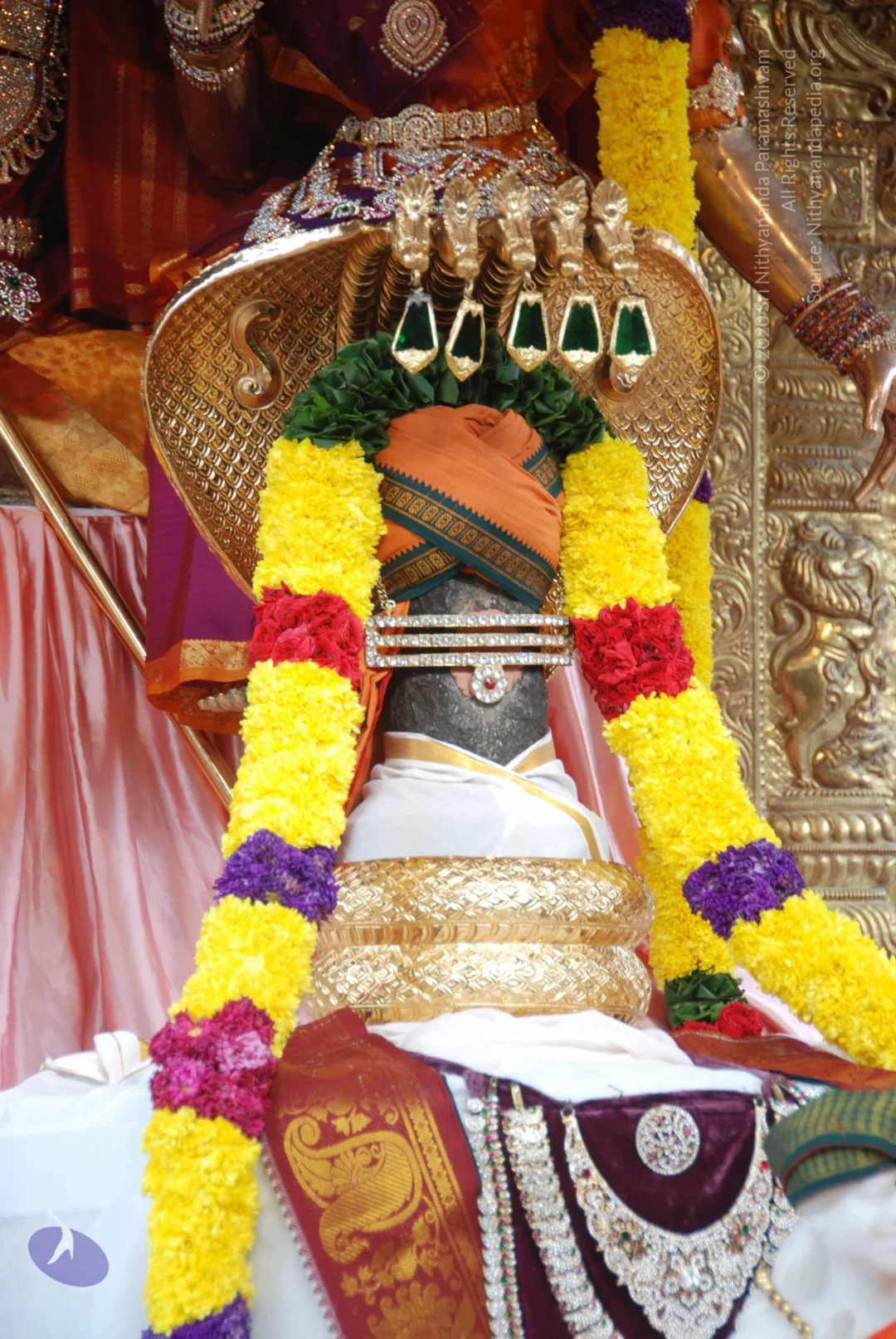
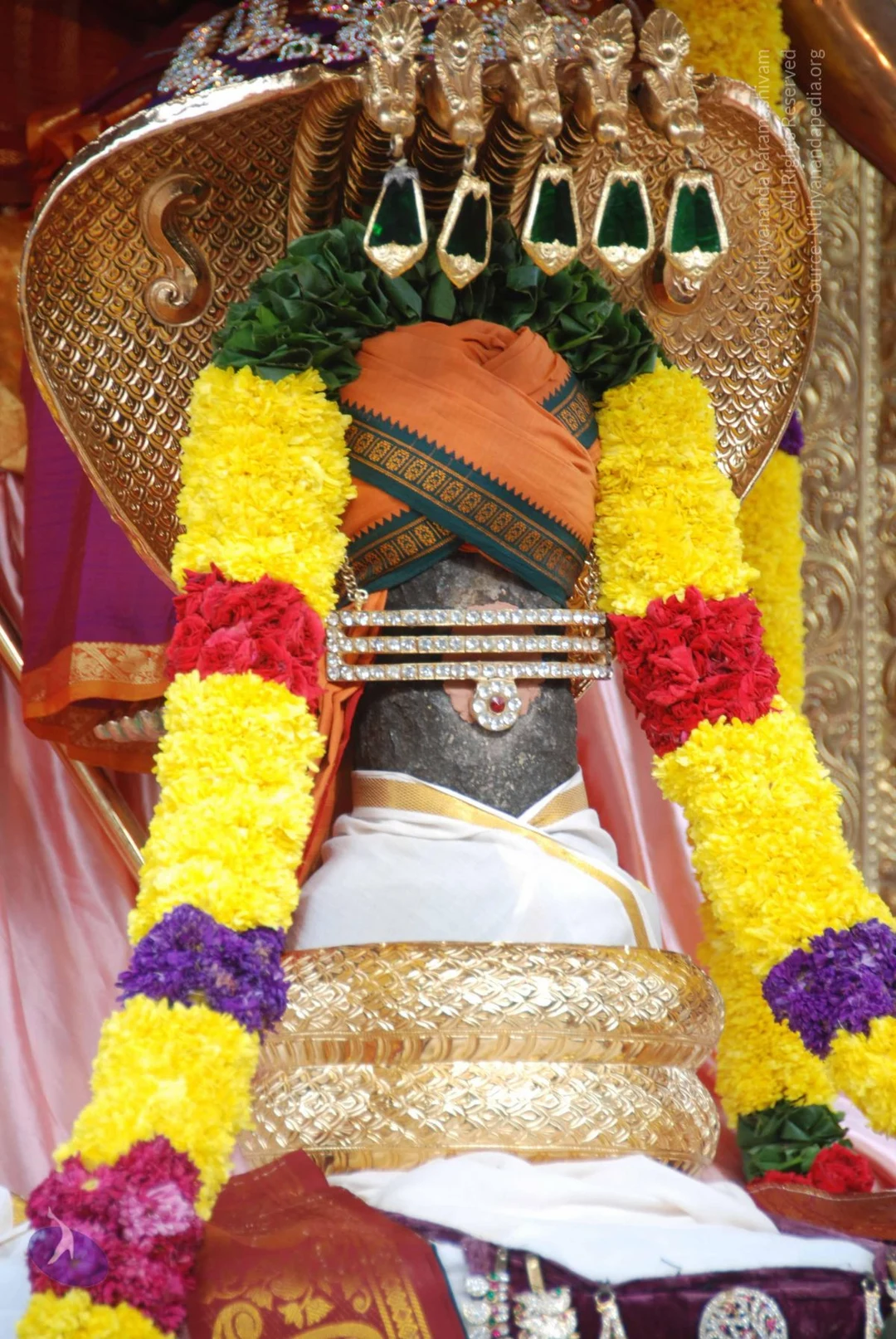
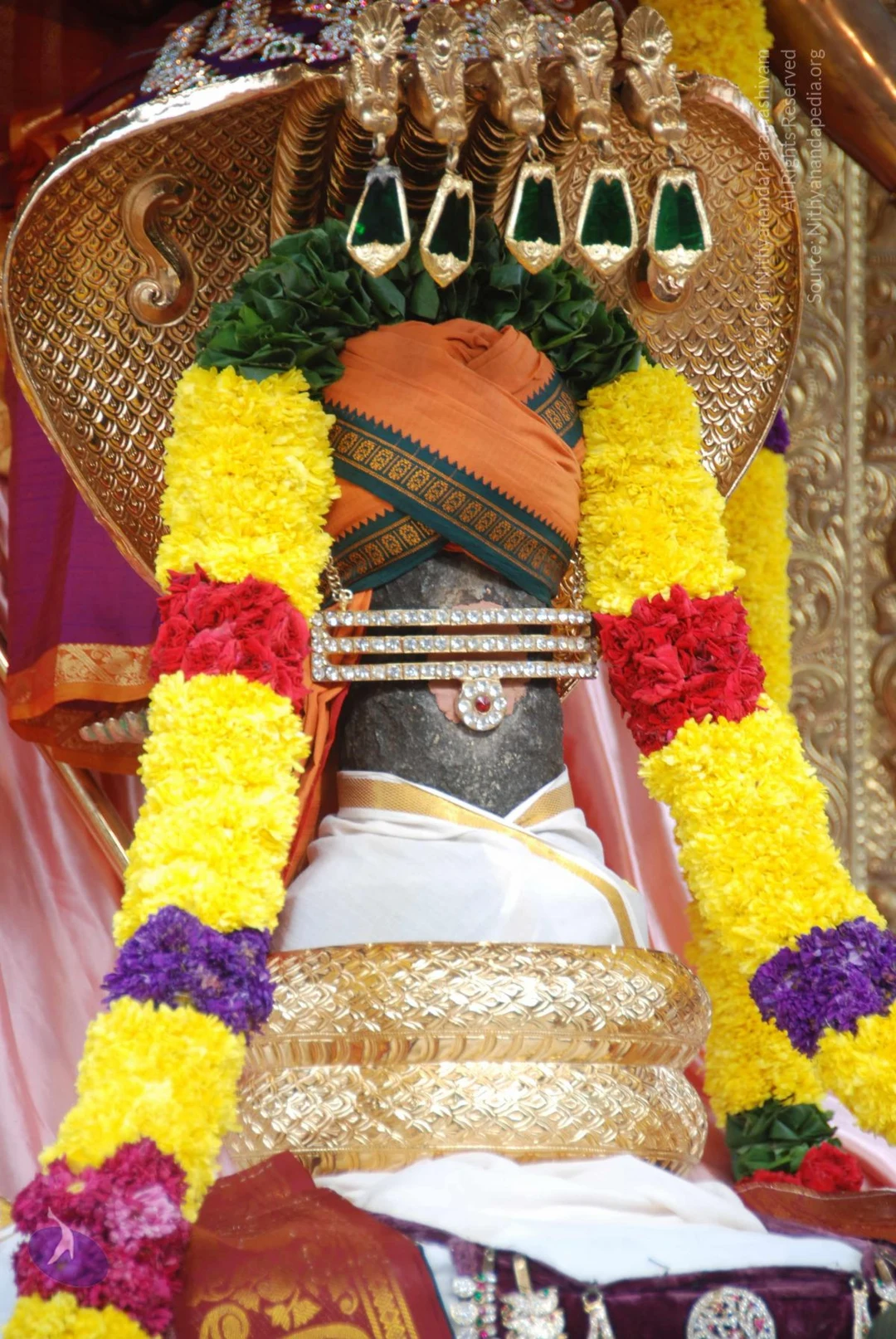
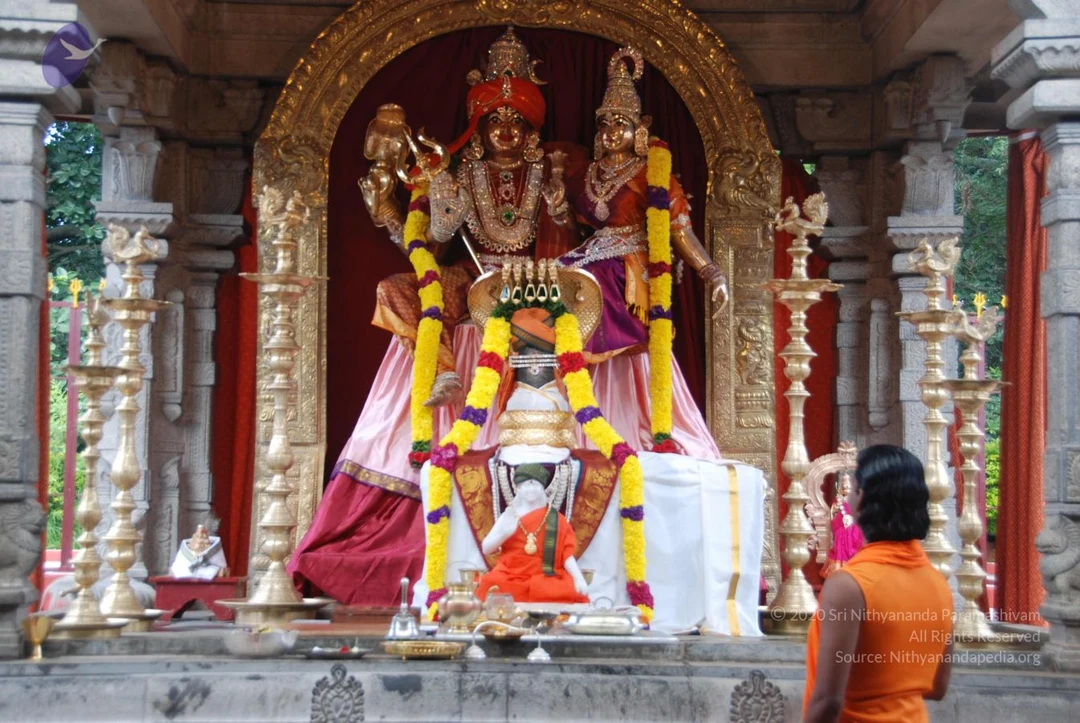
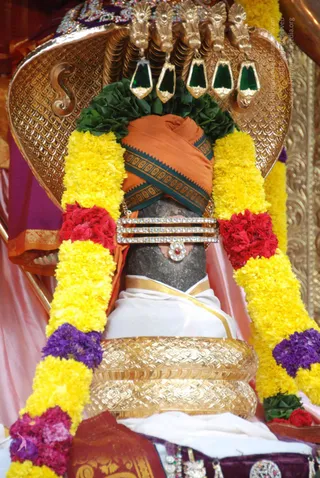
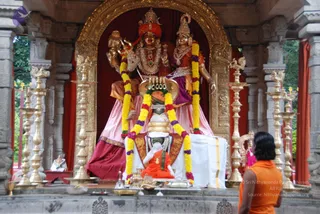
A gilded arch frames a pair of decorated deity murti statues seated on a pink-draped platform before a deep red backdrop. The male figure wears an orange-red turban, heavy jewelled necklaces and a patterned shawl, holding a trident and a small ritual object. The female figure wears a crown and layered gold necklaces with a purple and red sari, with her hand raised in a blessing gesture. Yellow and purple garlands hang over both, and a brass oil lamp stands at left. No physical people are visible; the images are statues.A close view of a dark stone Shiva lingam dressed for worship, wrapped in an orange and green bordered cloth and a white garment at its base. It is framed by yellow marigold garlands, red and purple flower strands, and green leaves, with a jeweled band and a gold cobra-hood backdrop with green gemstone pendants. A gold ornamental base encircles the lingam. No people are visible.
02

PADA-POOJA

93 dated photos in previewSource gallery
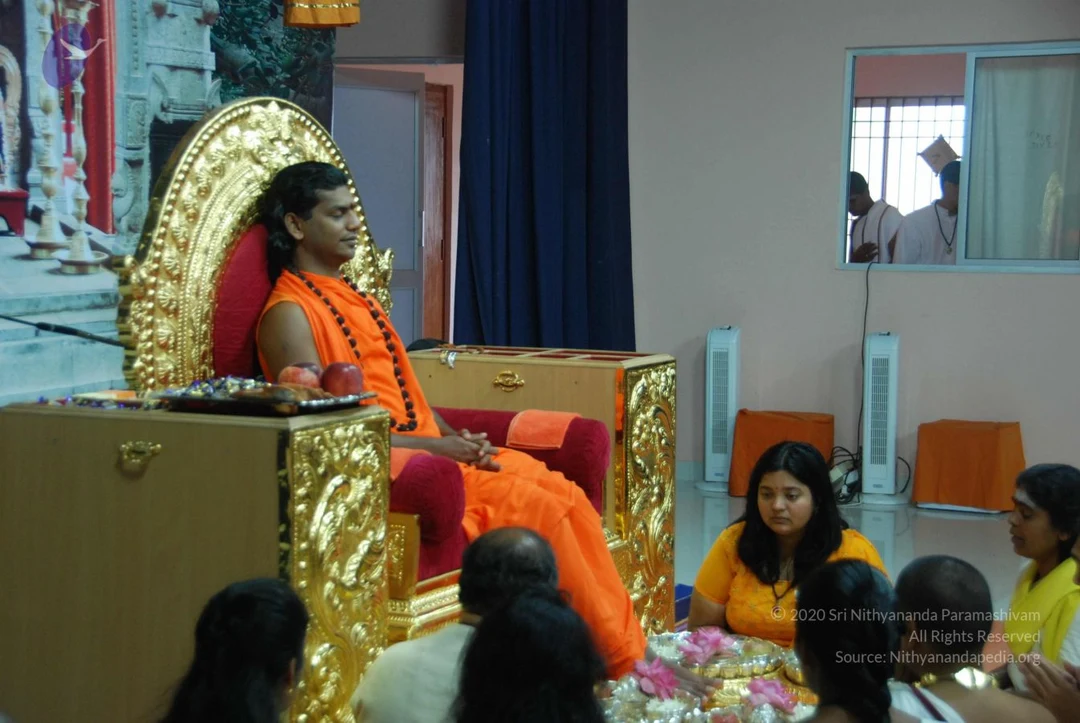
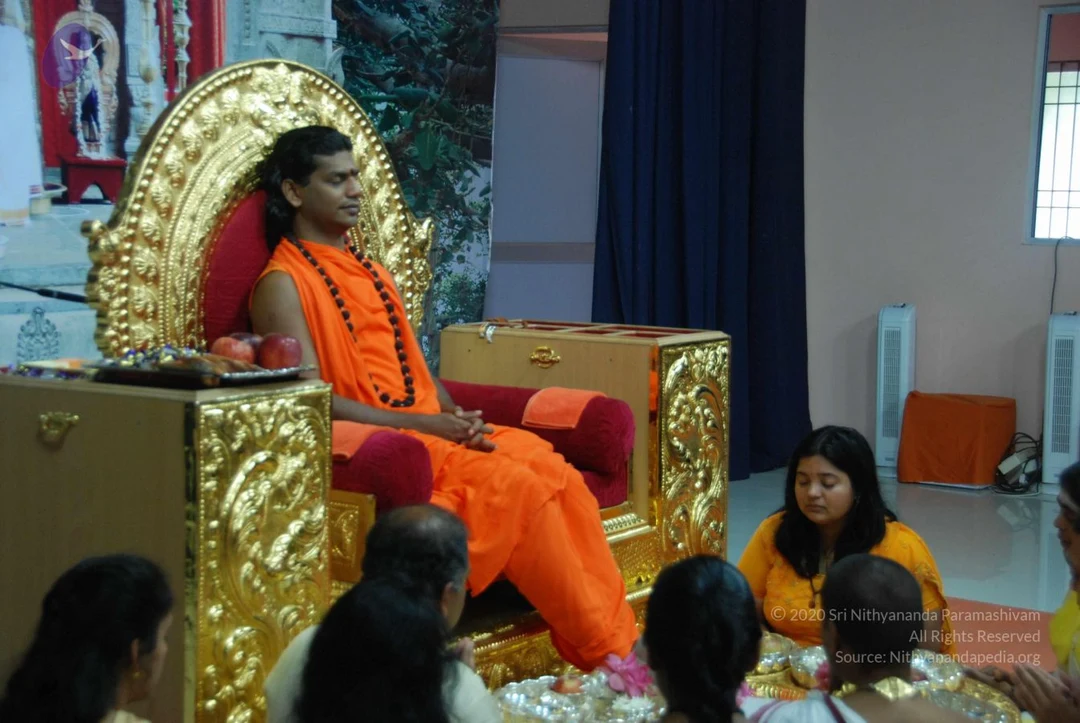
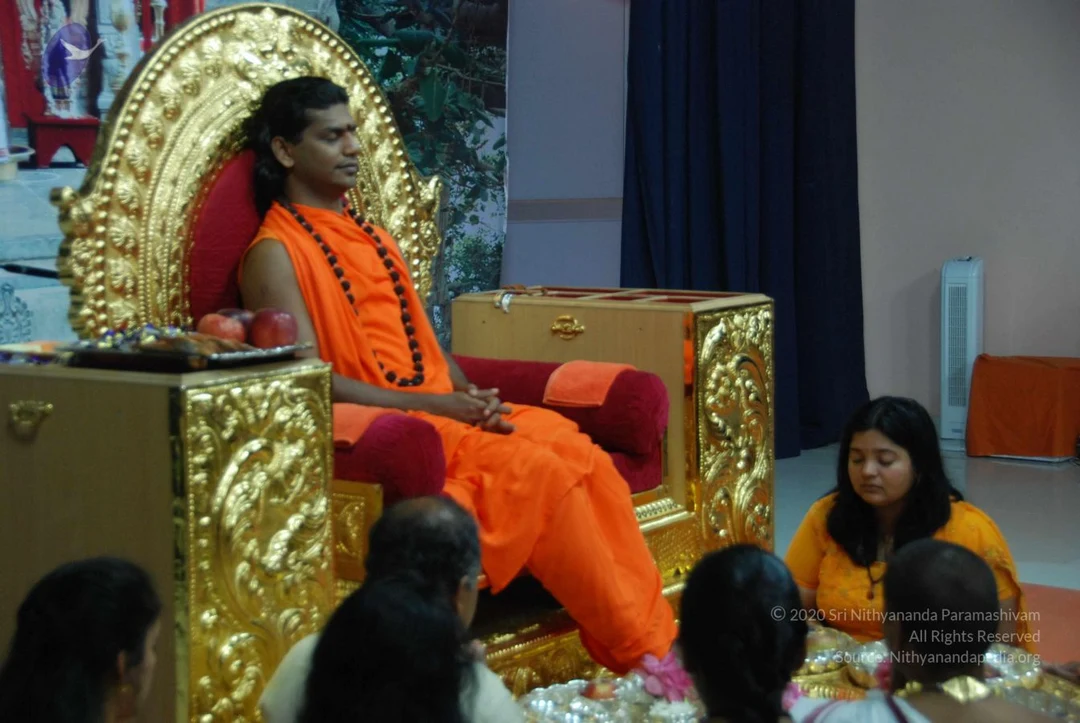
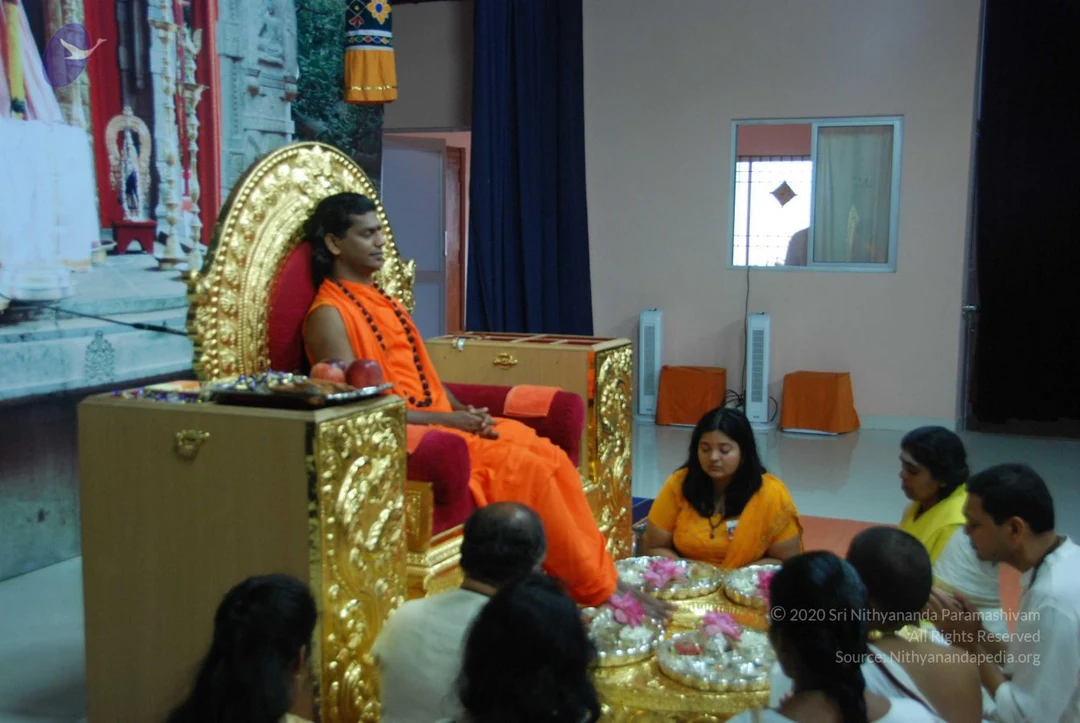
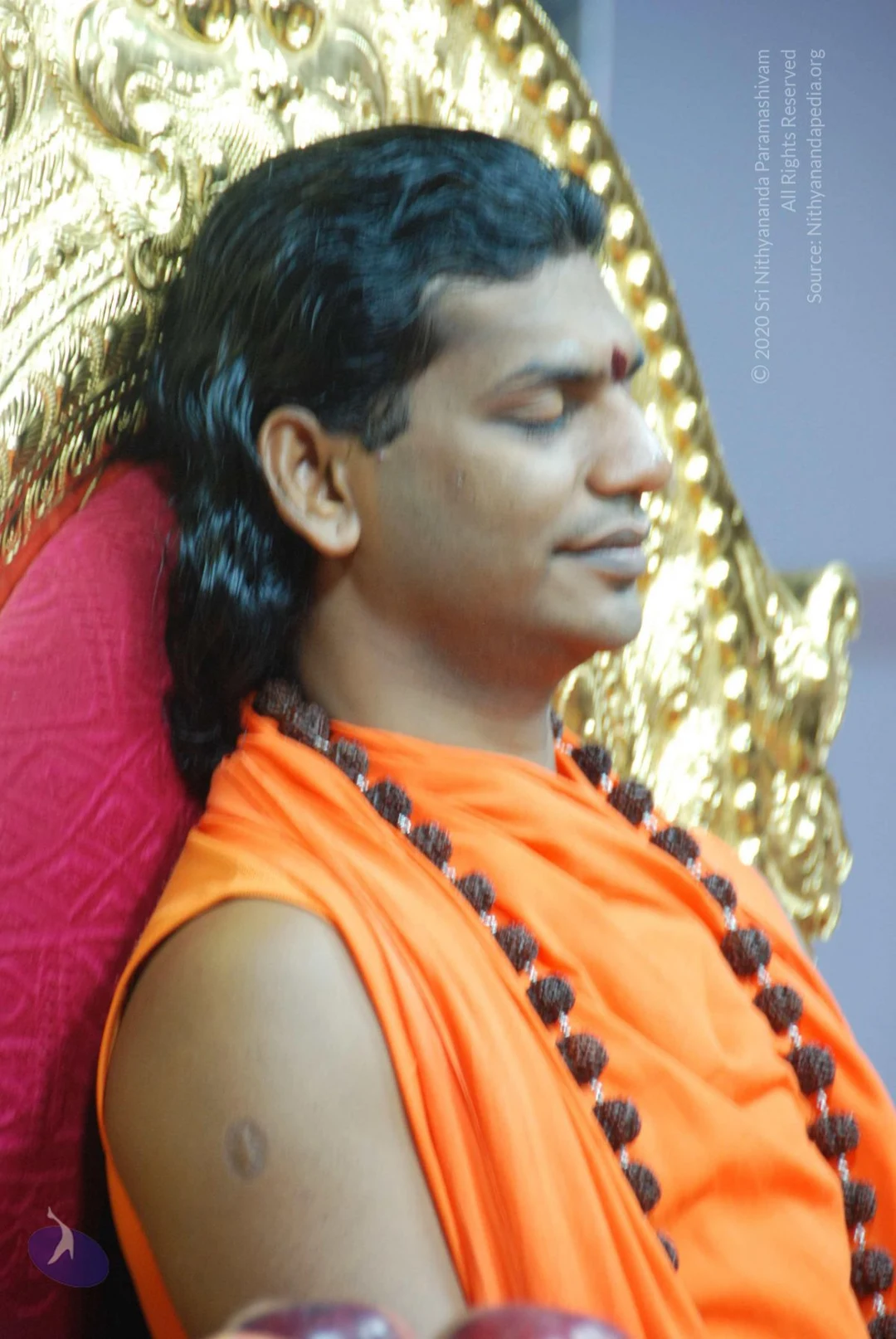
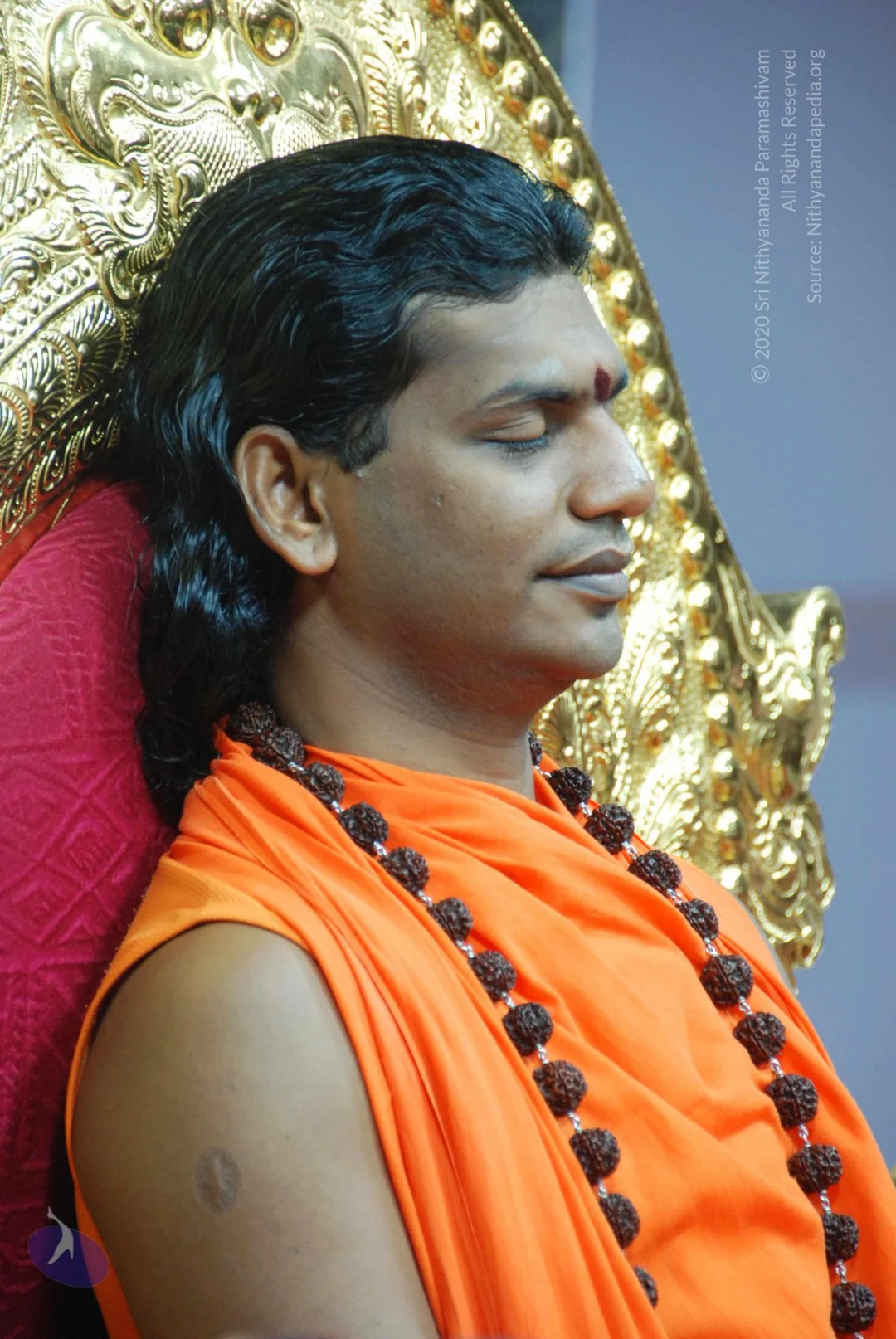
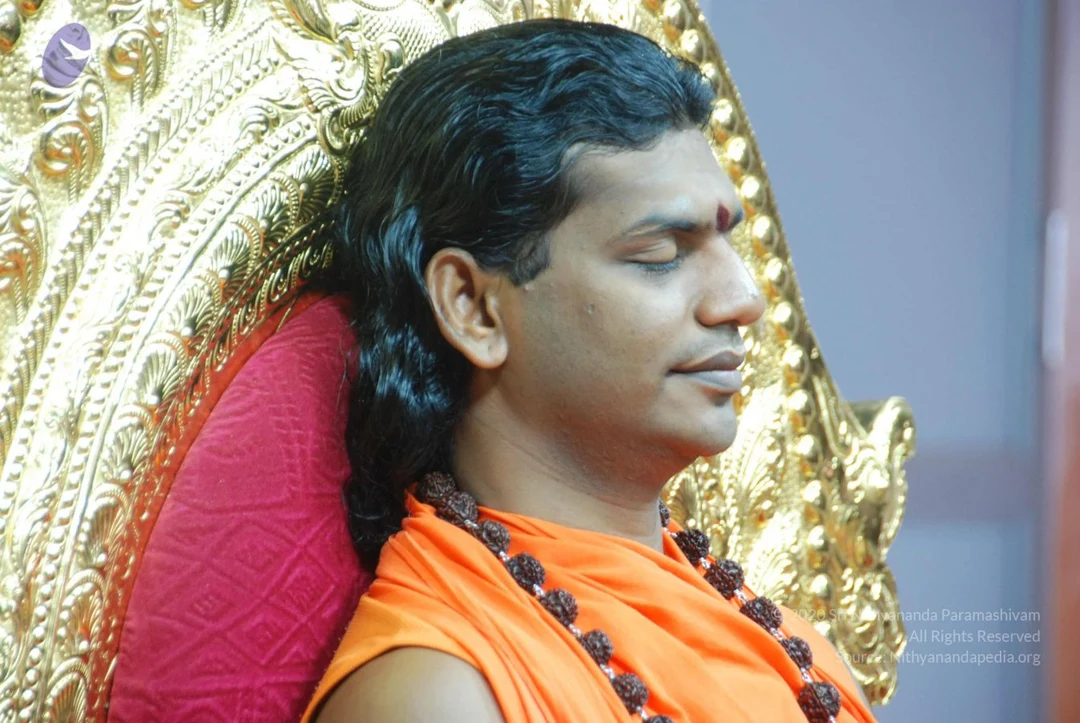
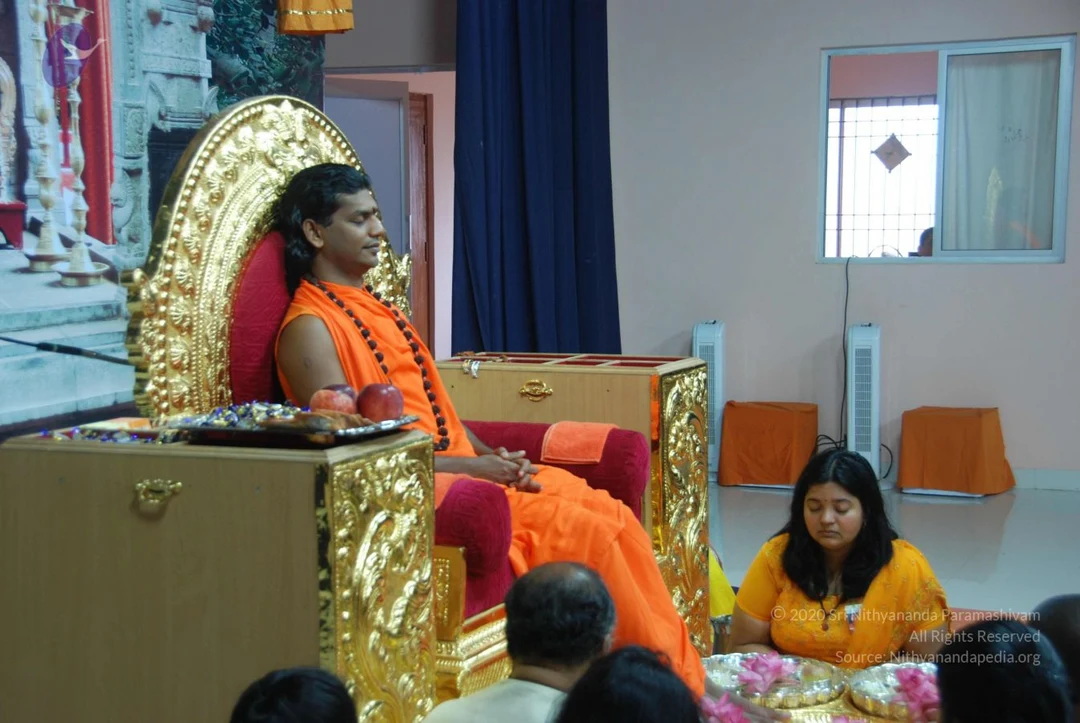
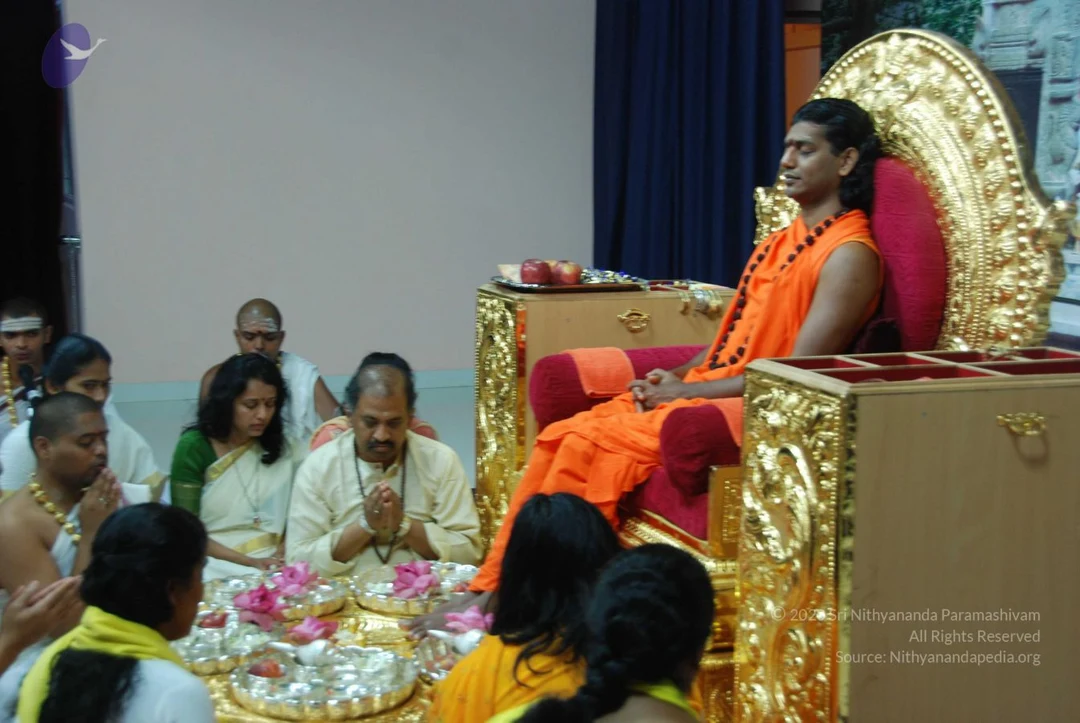
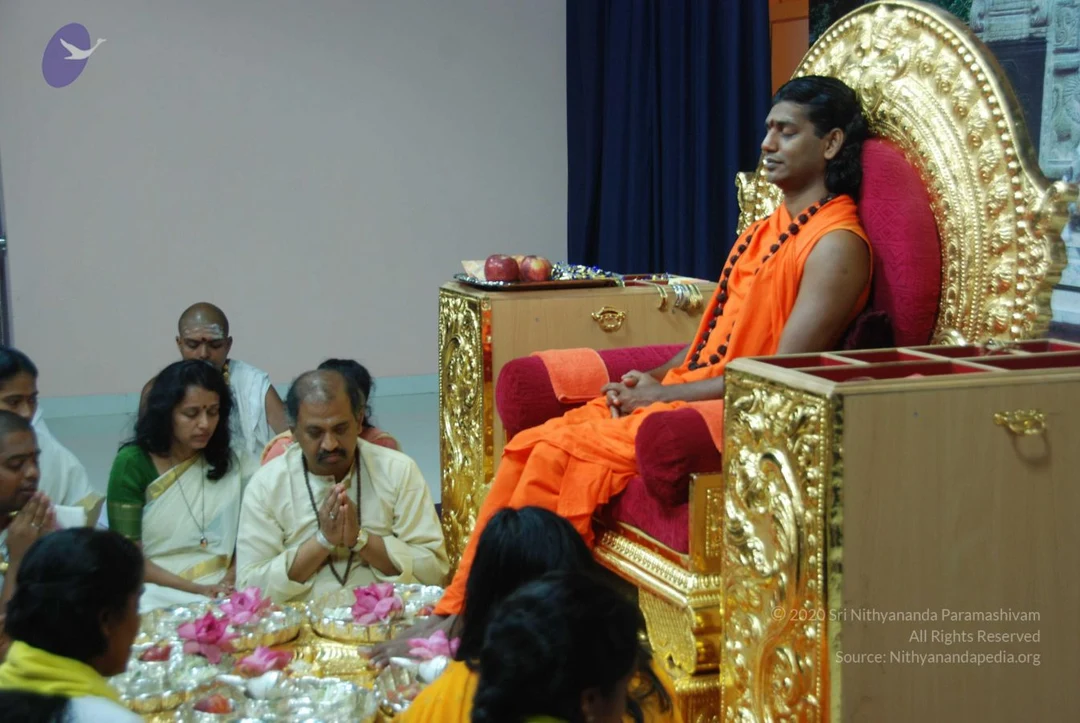
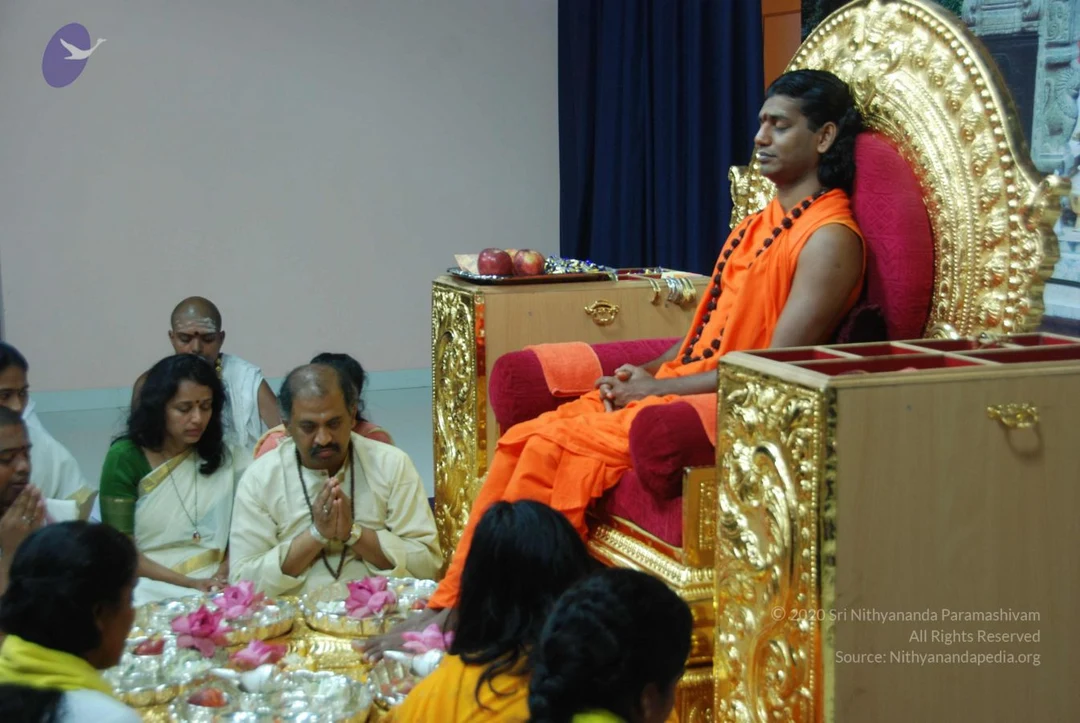
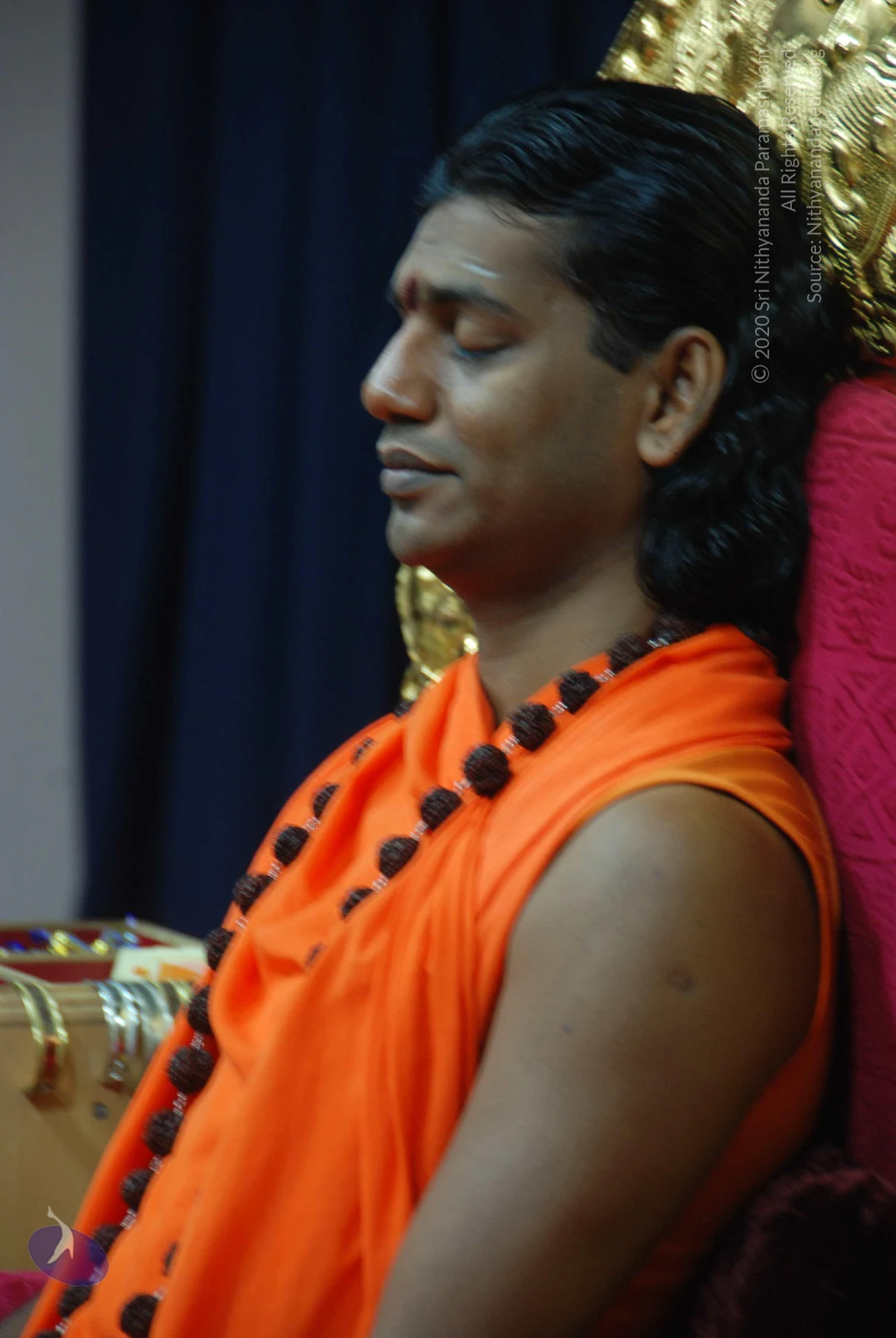
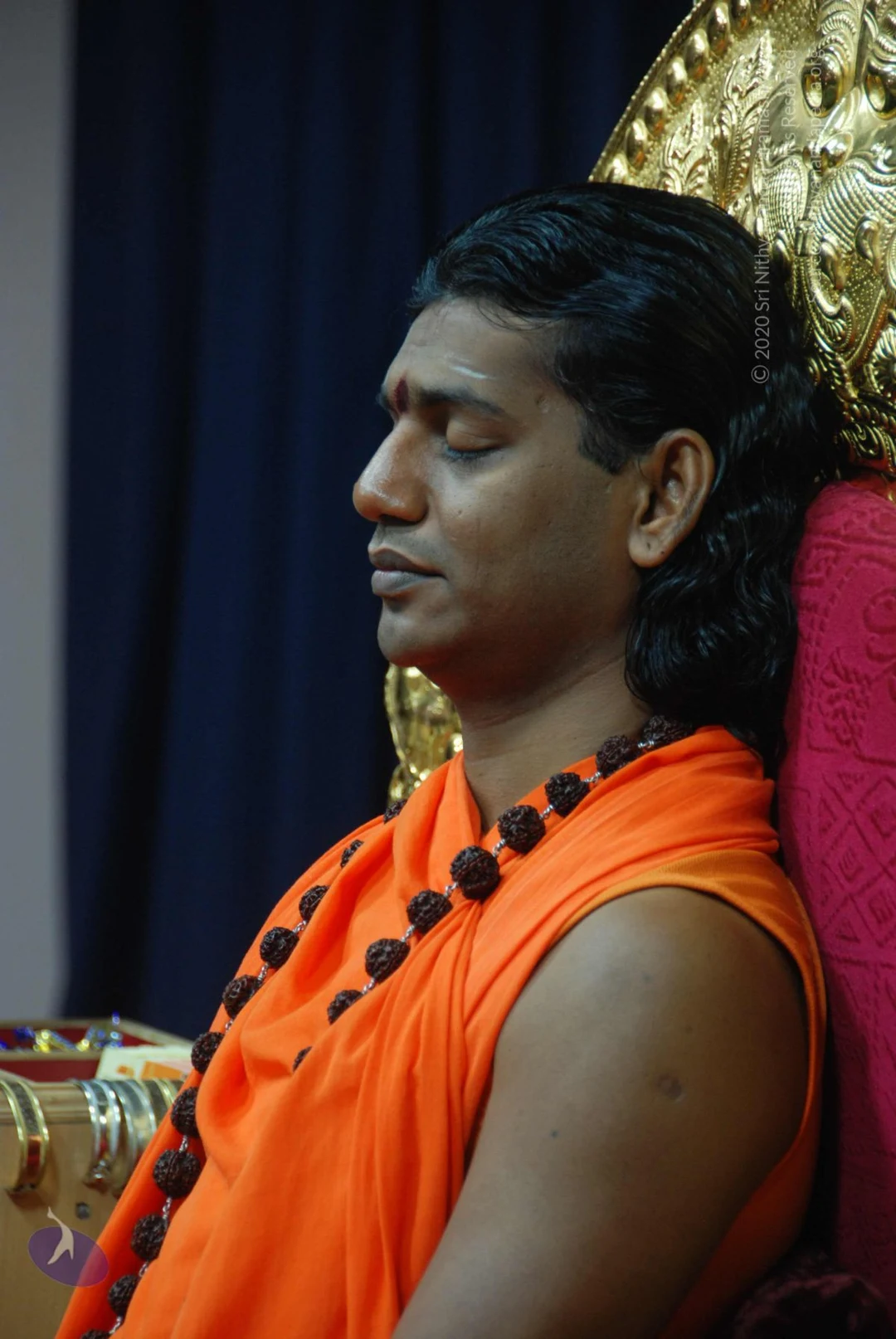
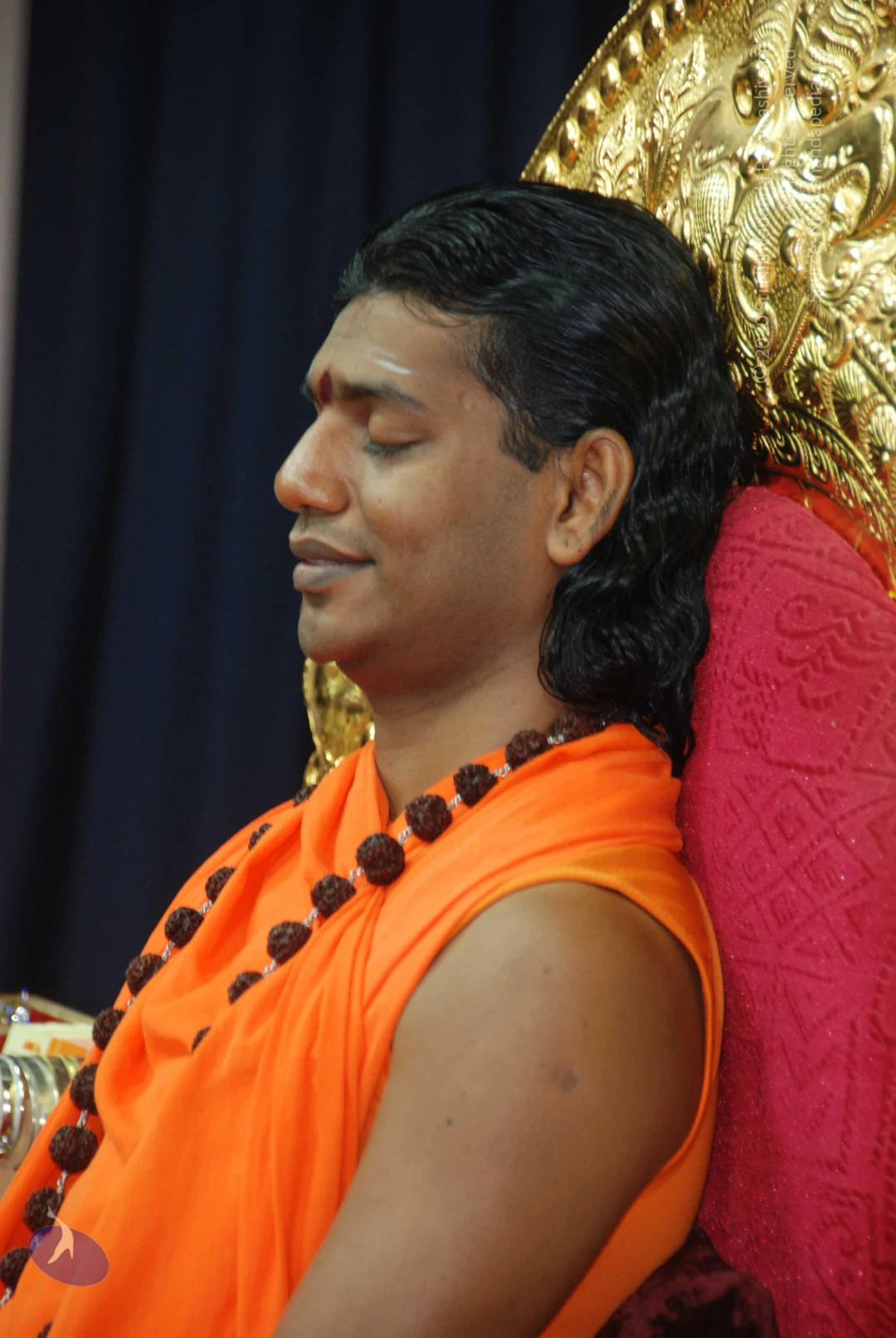
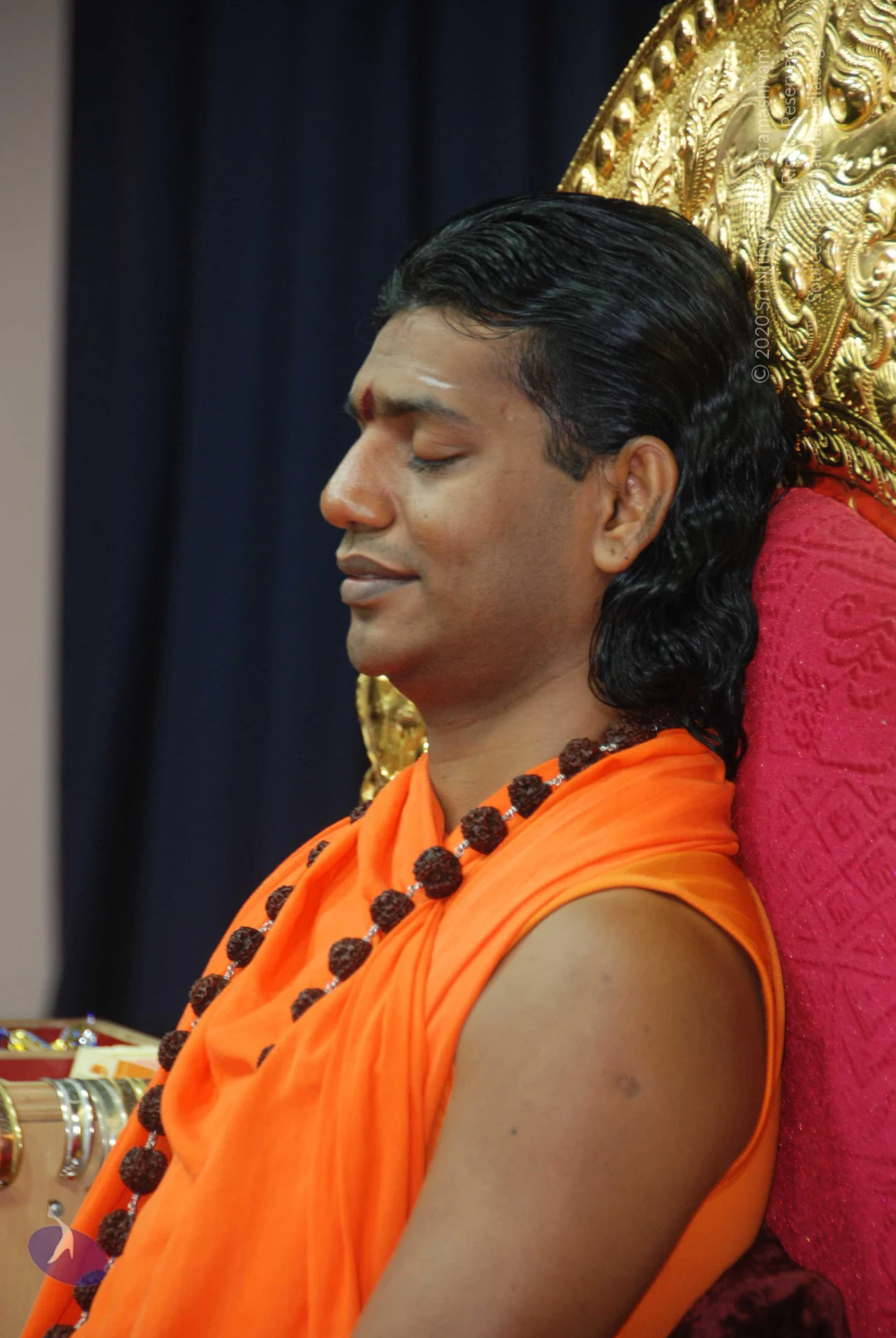
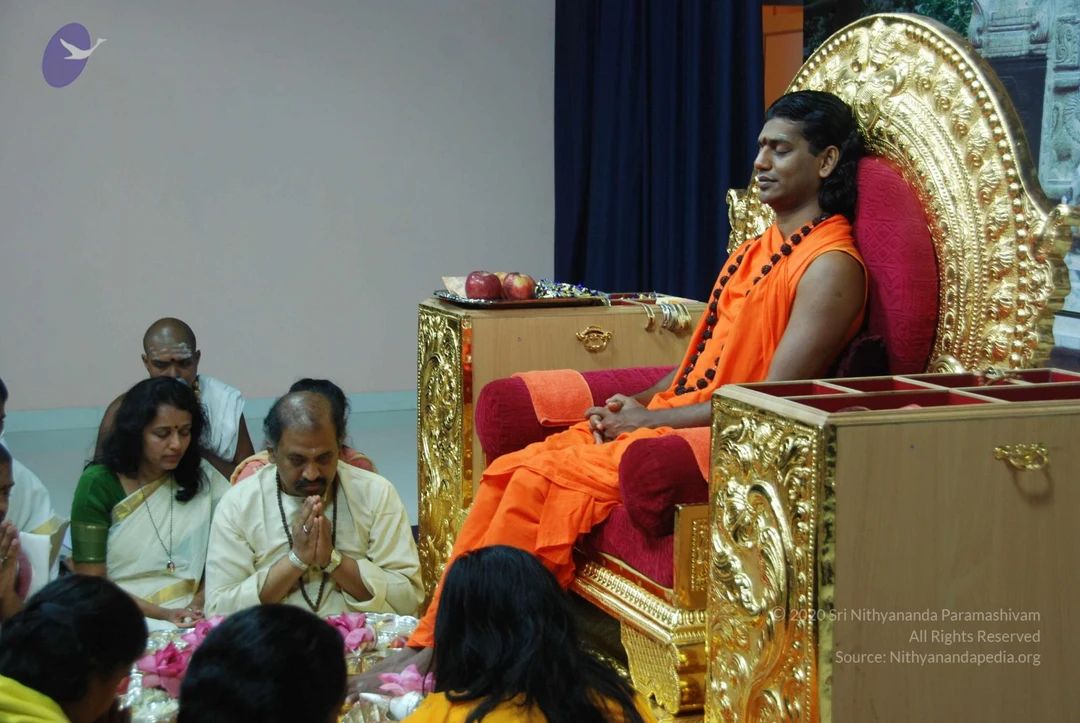
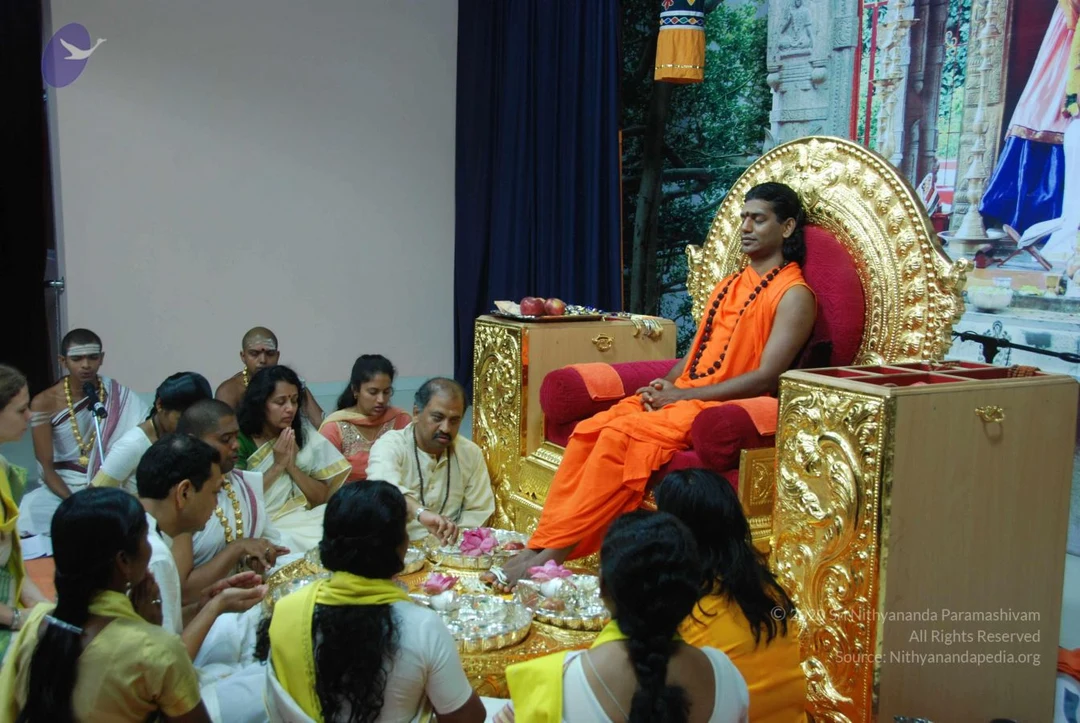
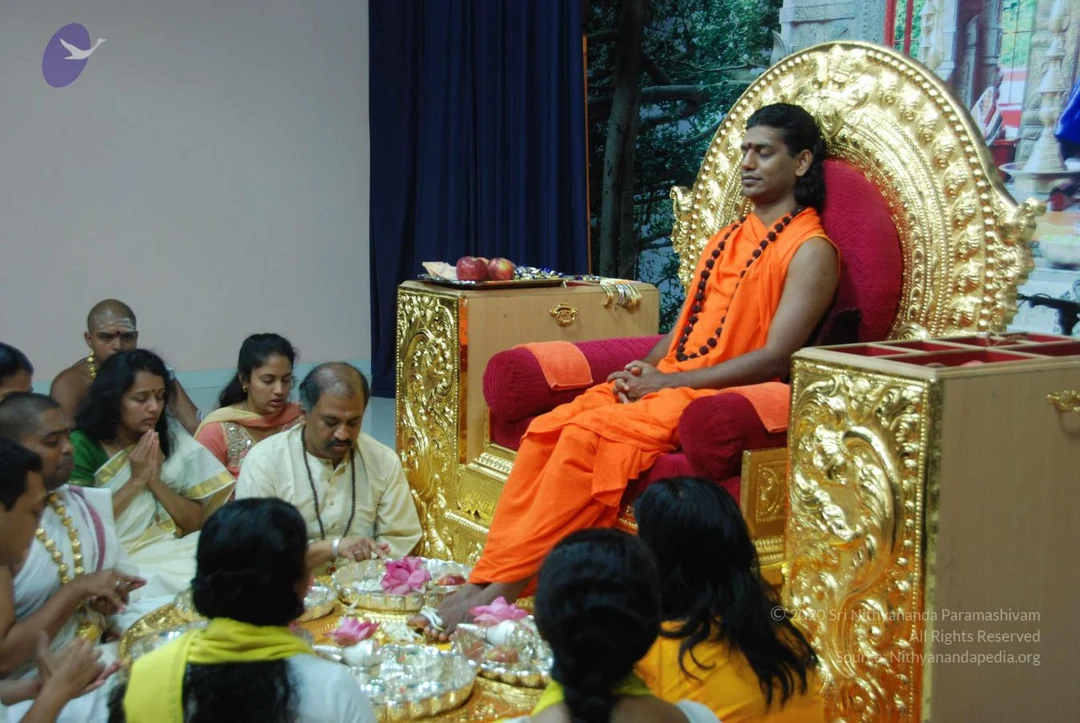
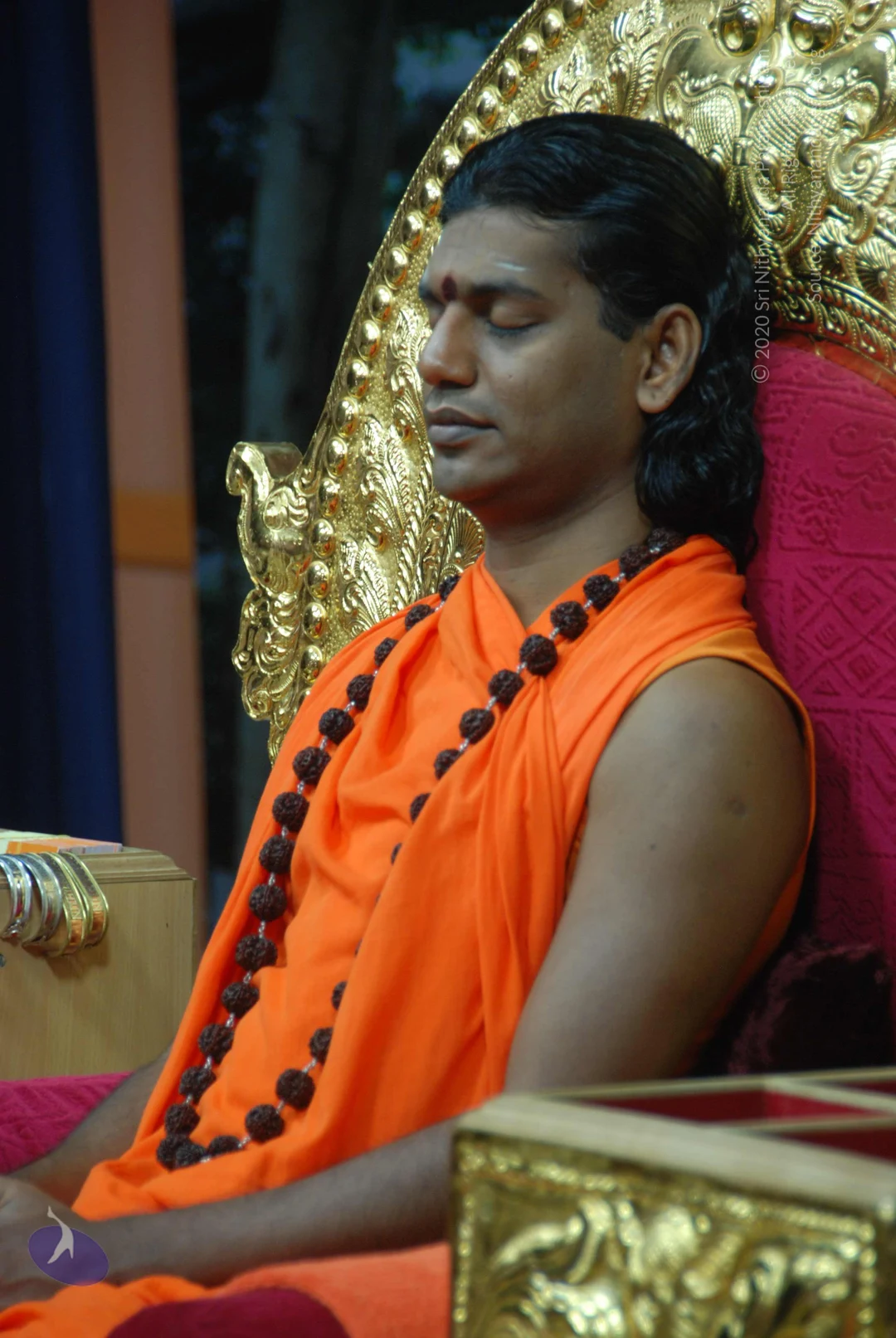
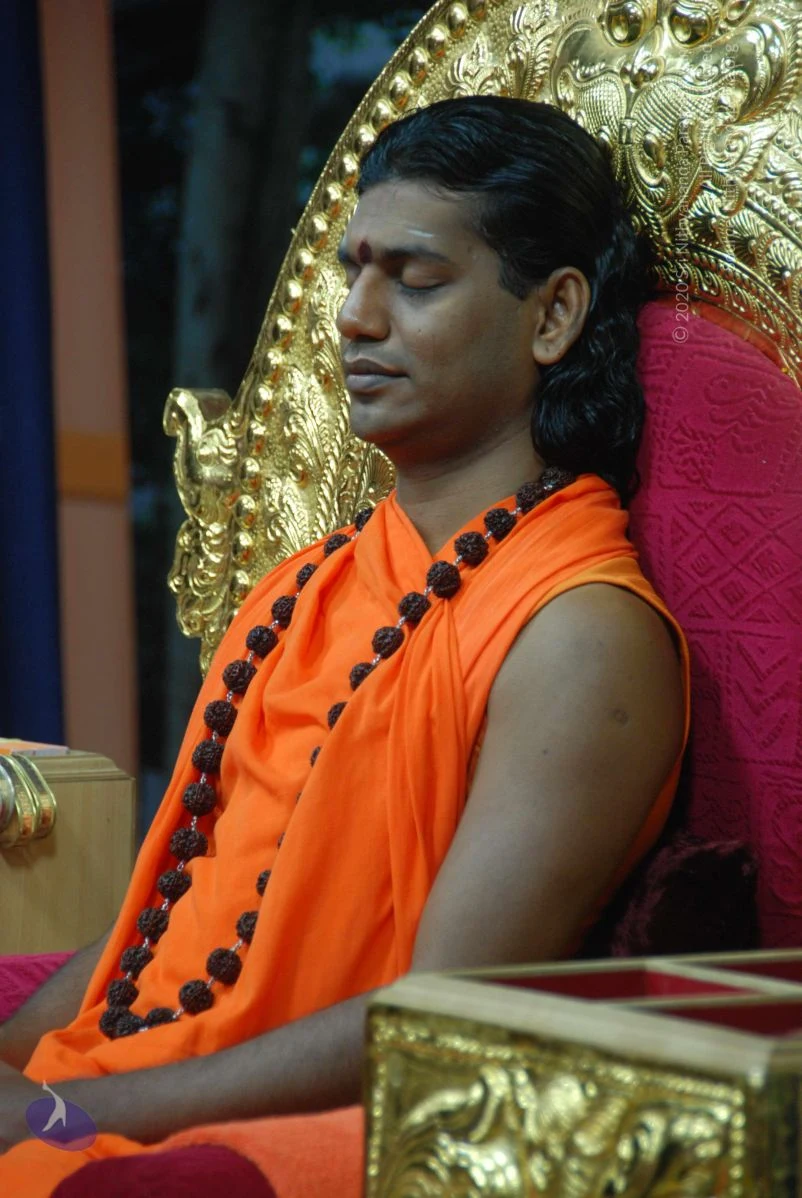
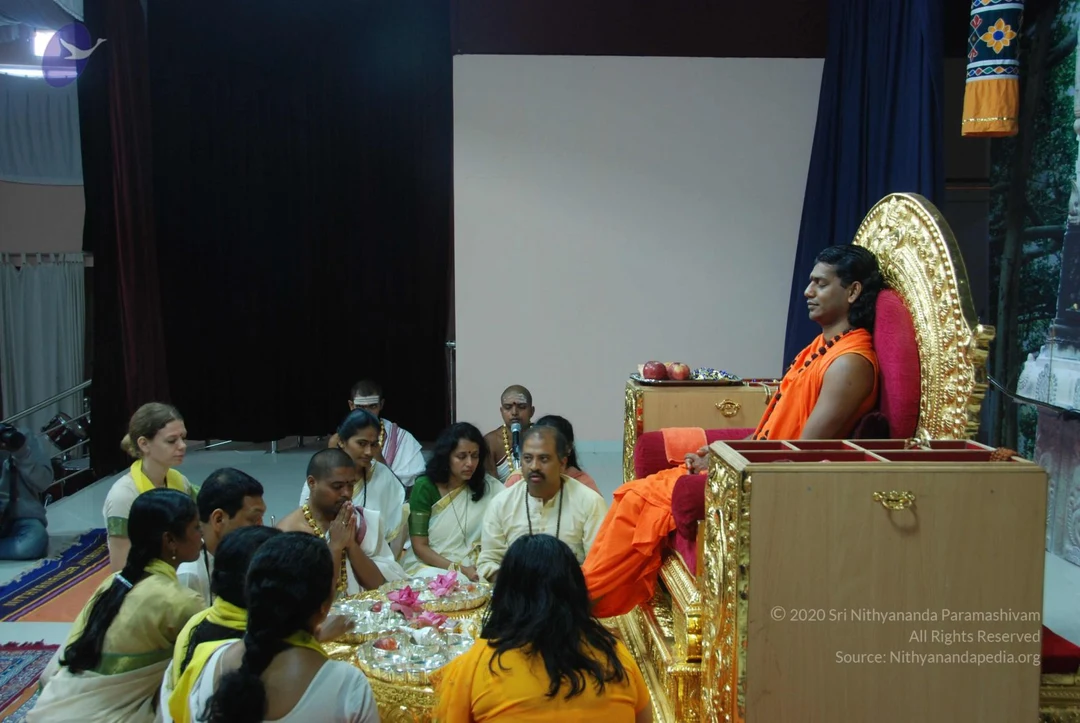
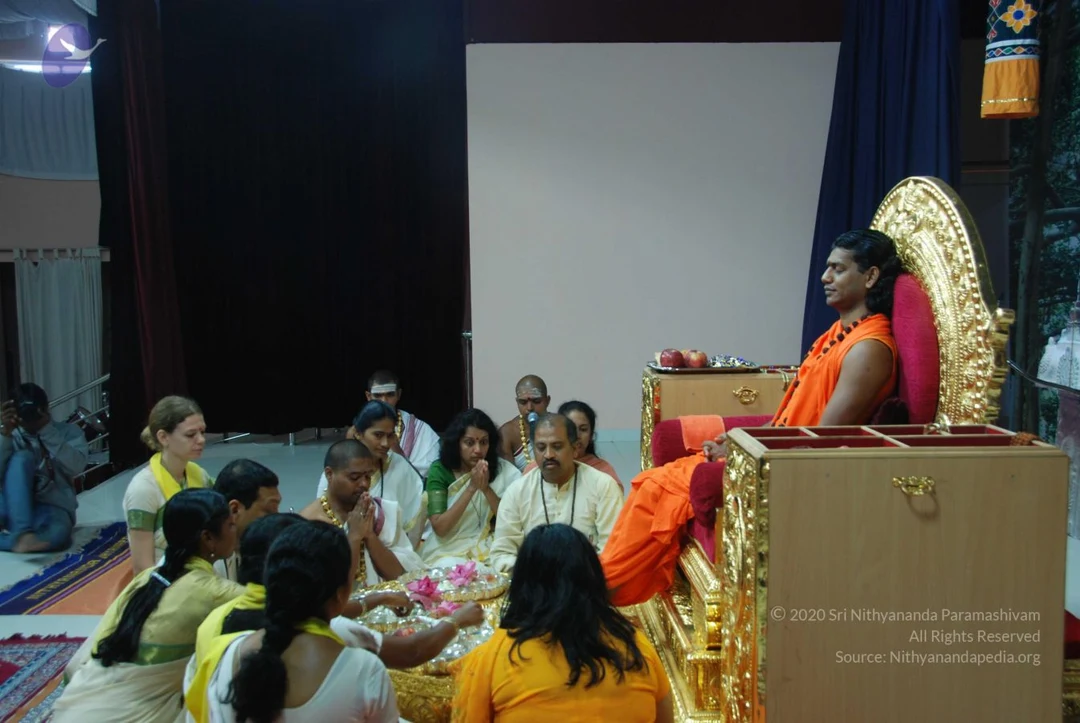
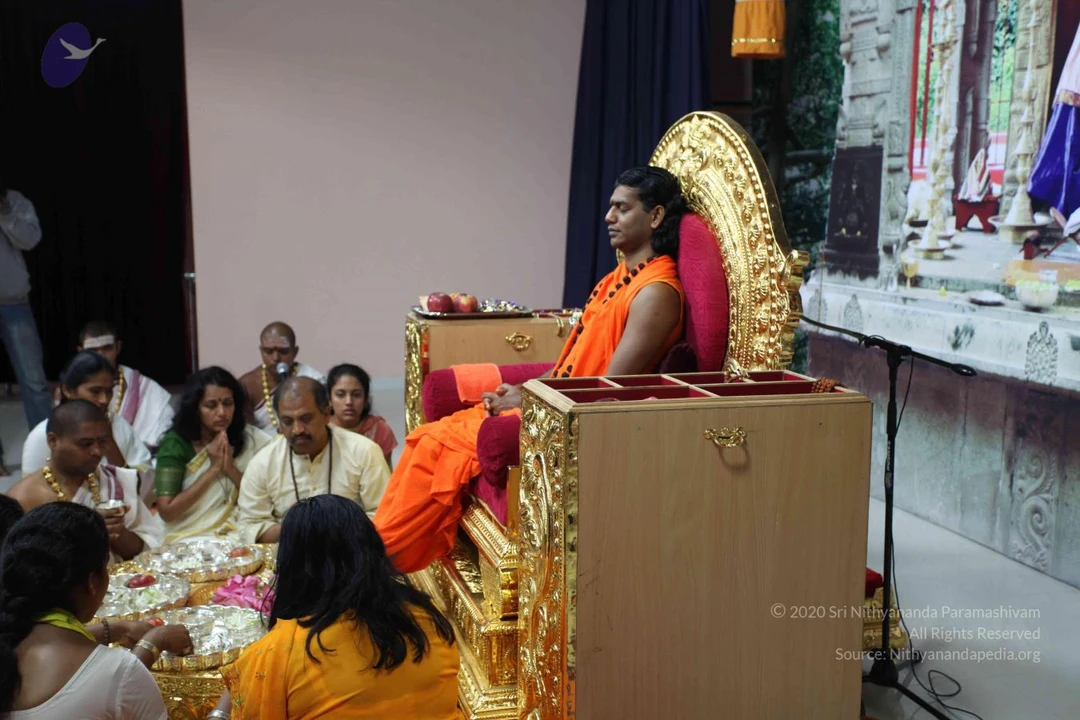
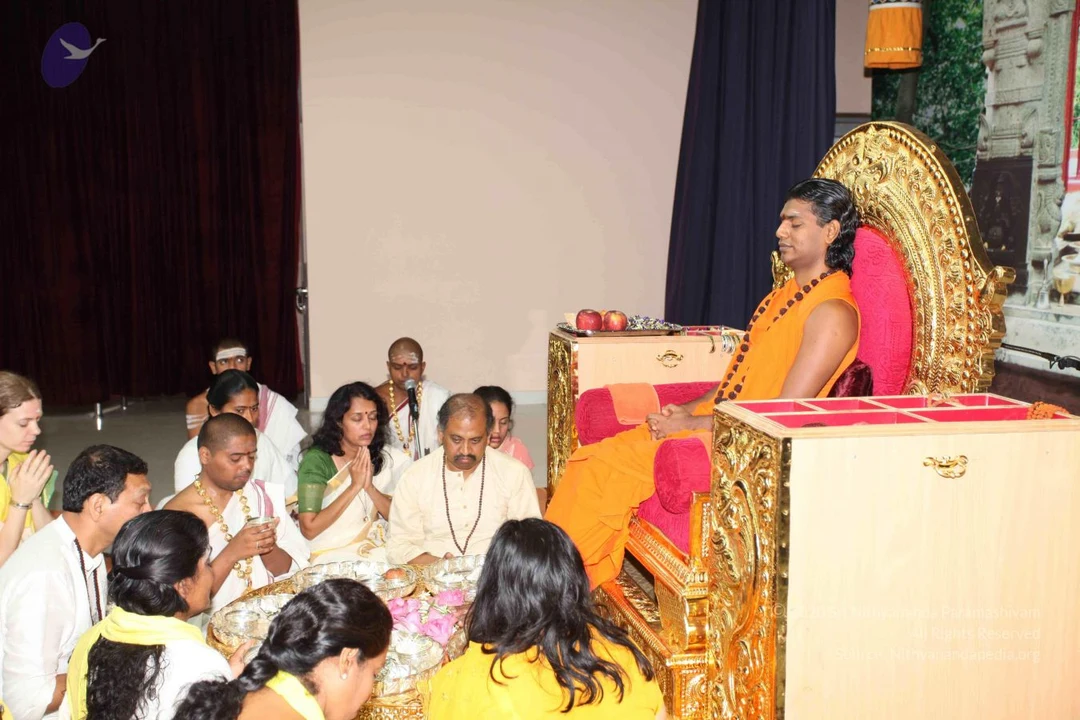
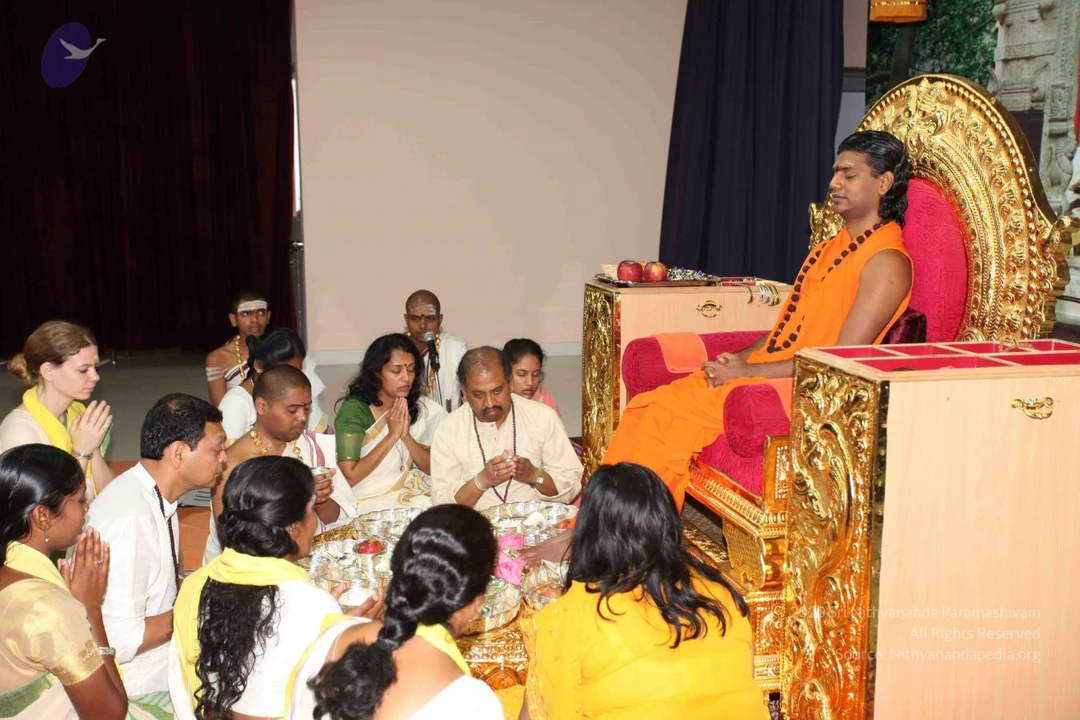
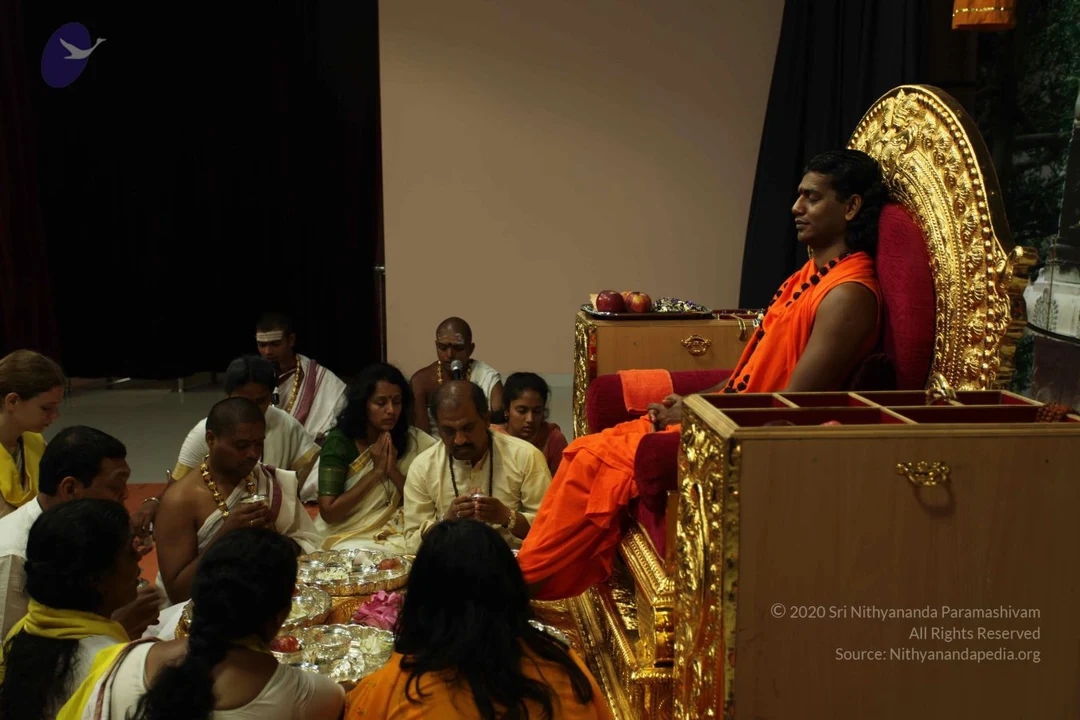
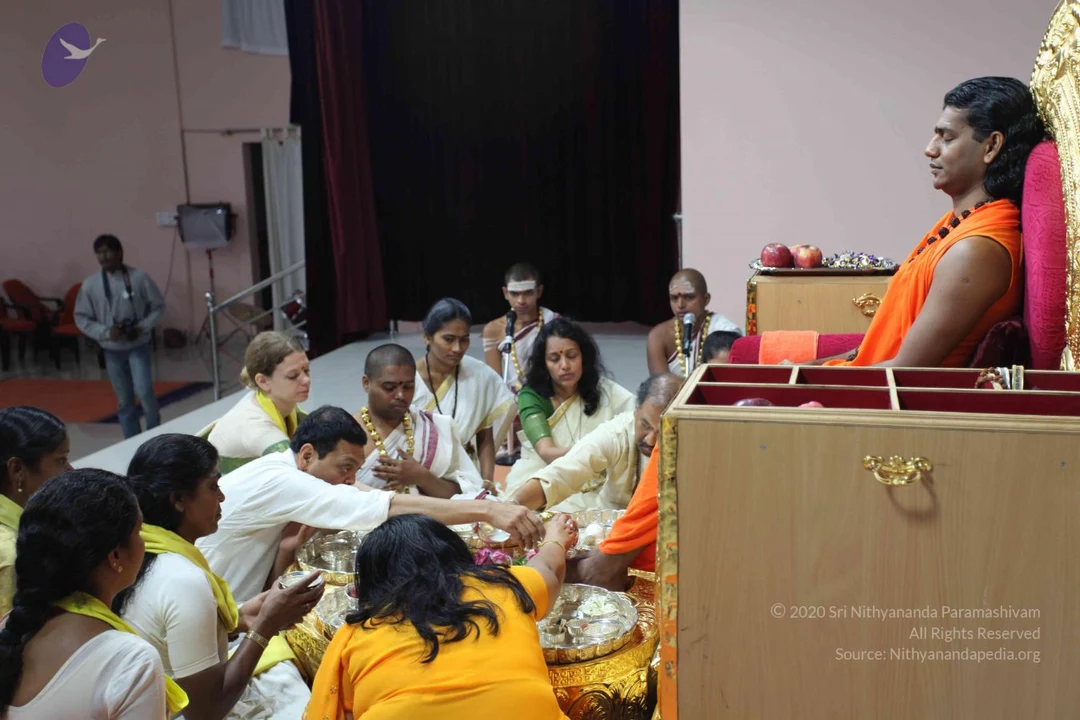
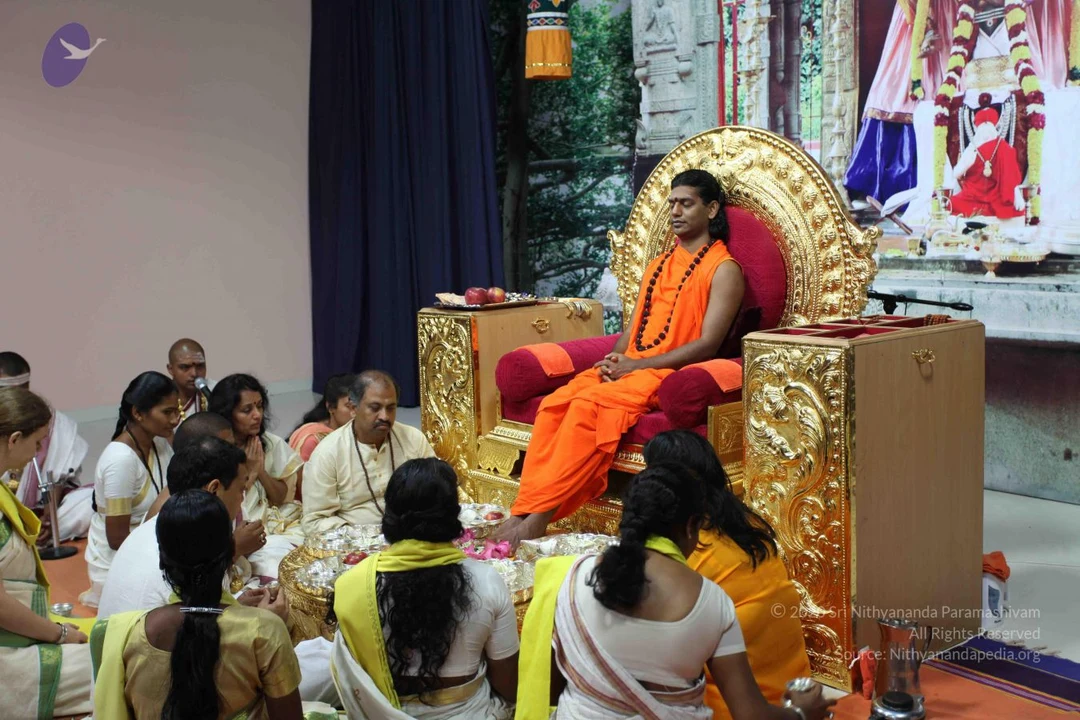
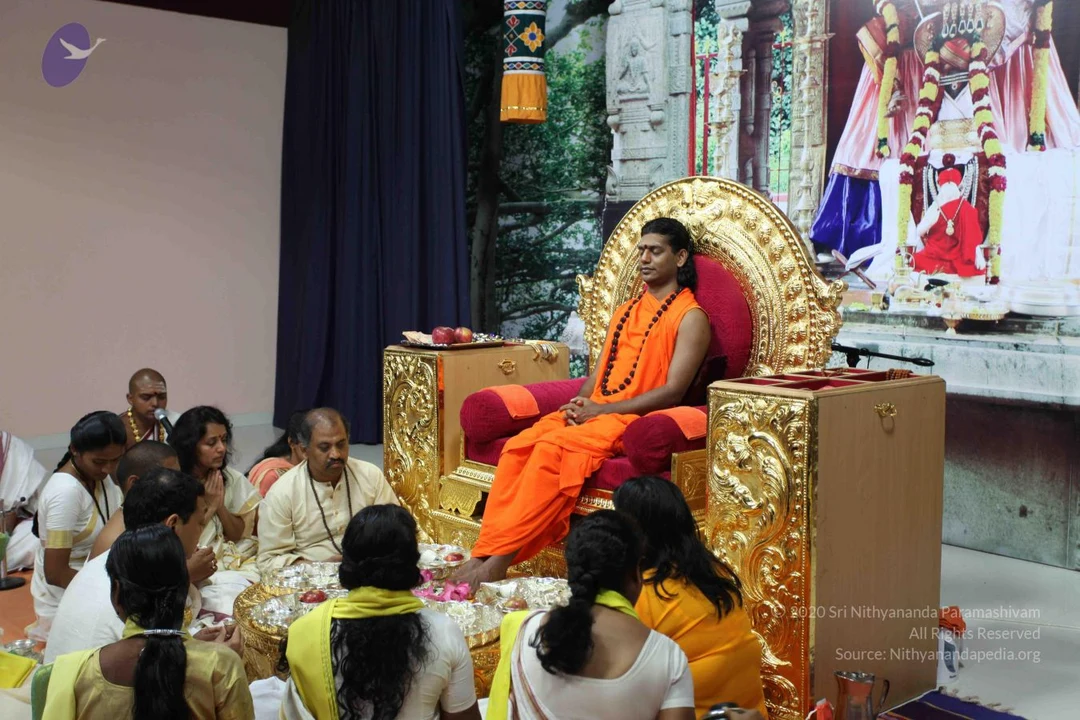
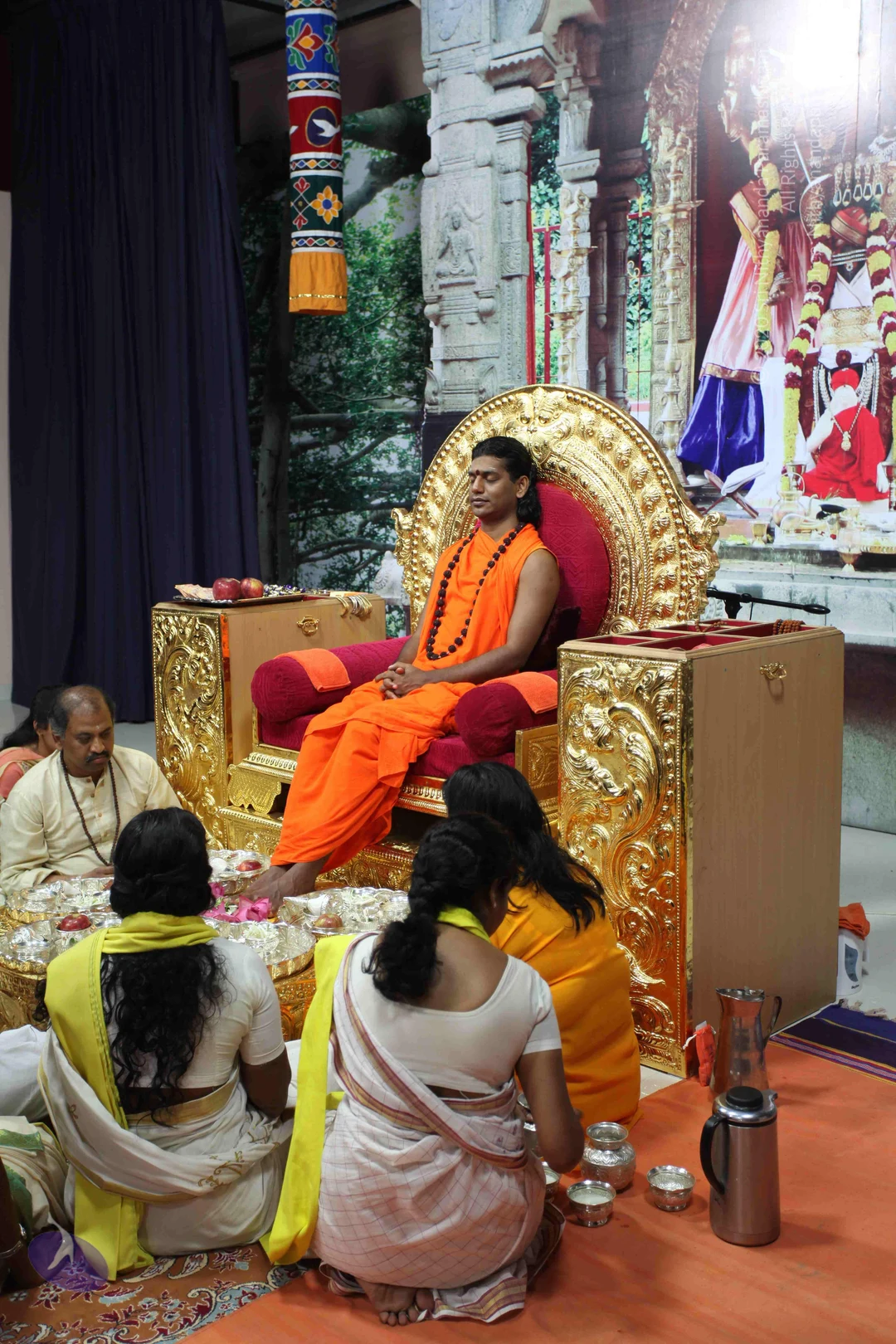
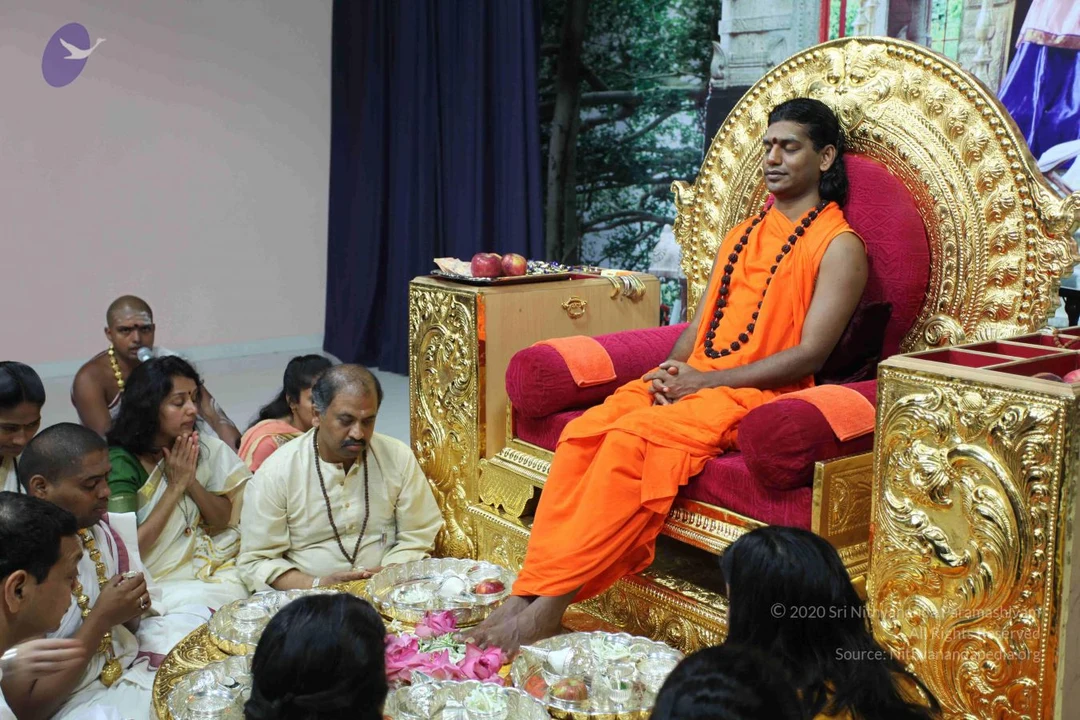
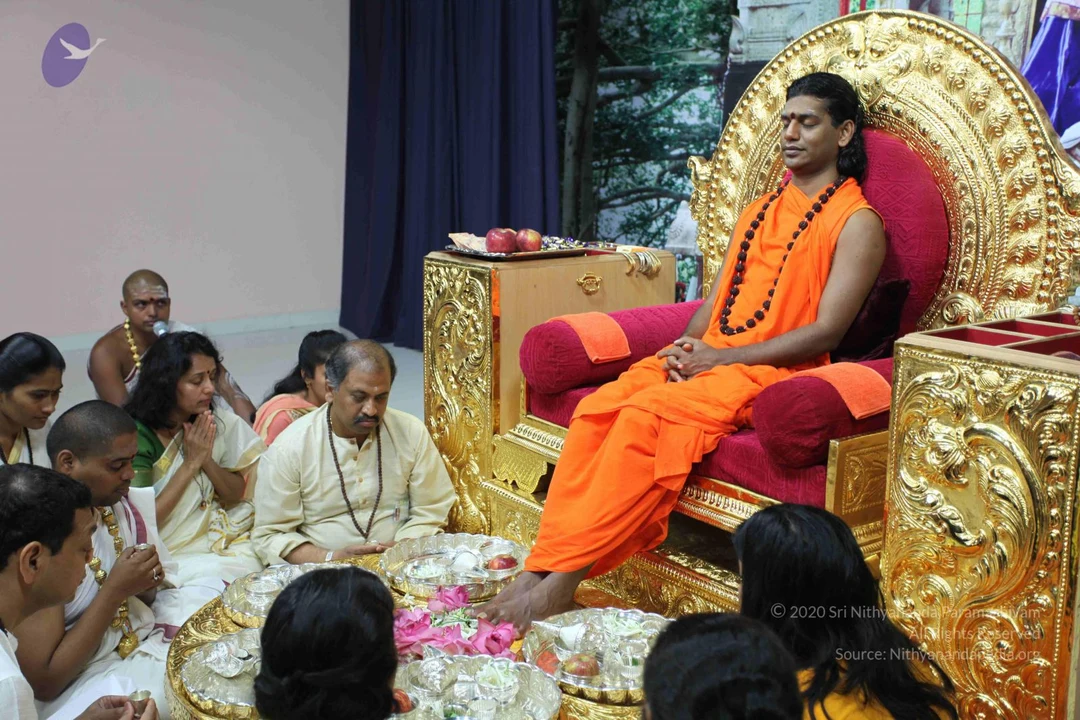
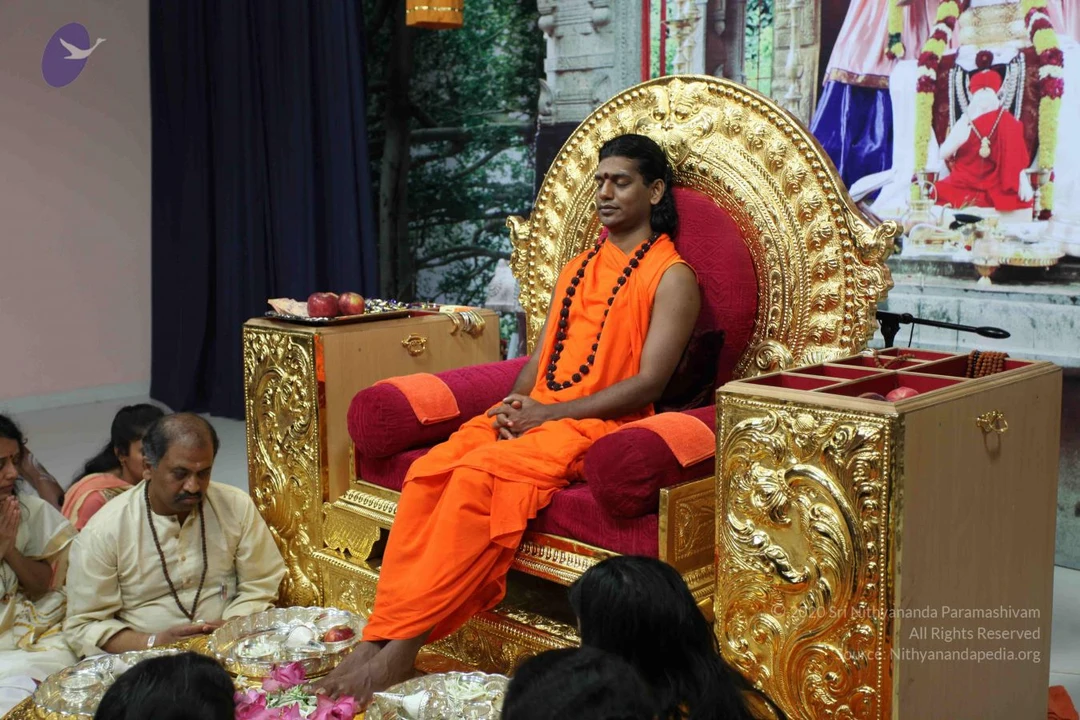
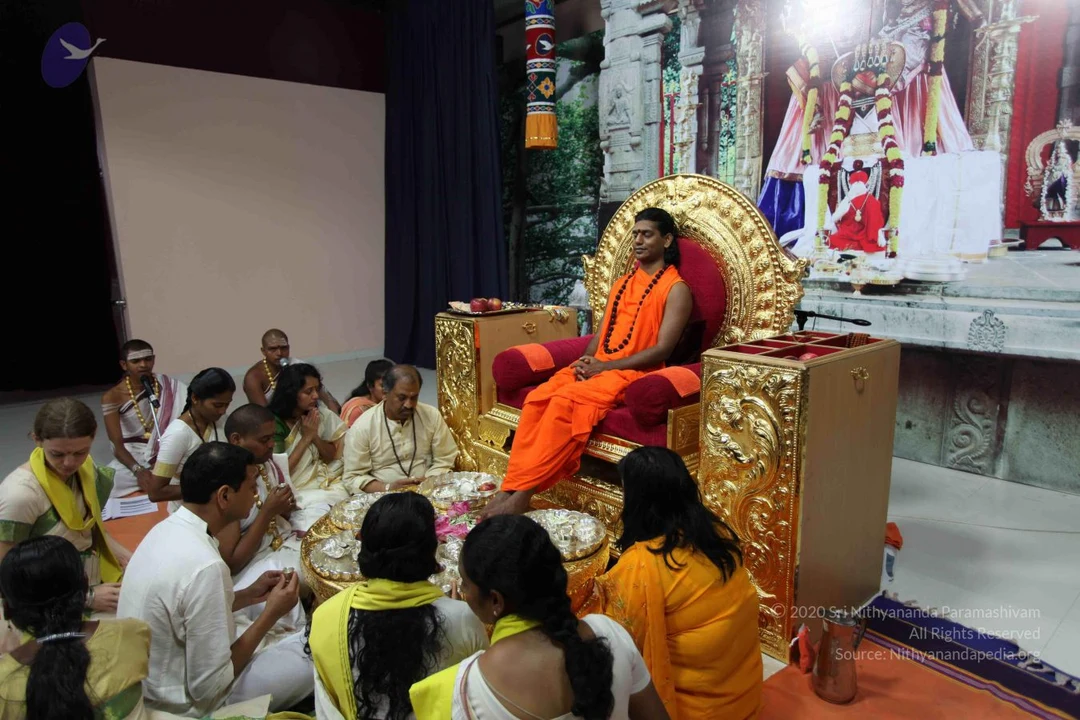
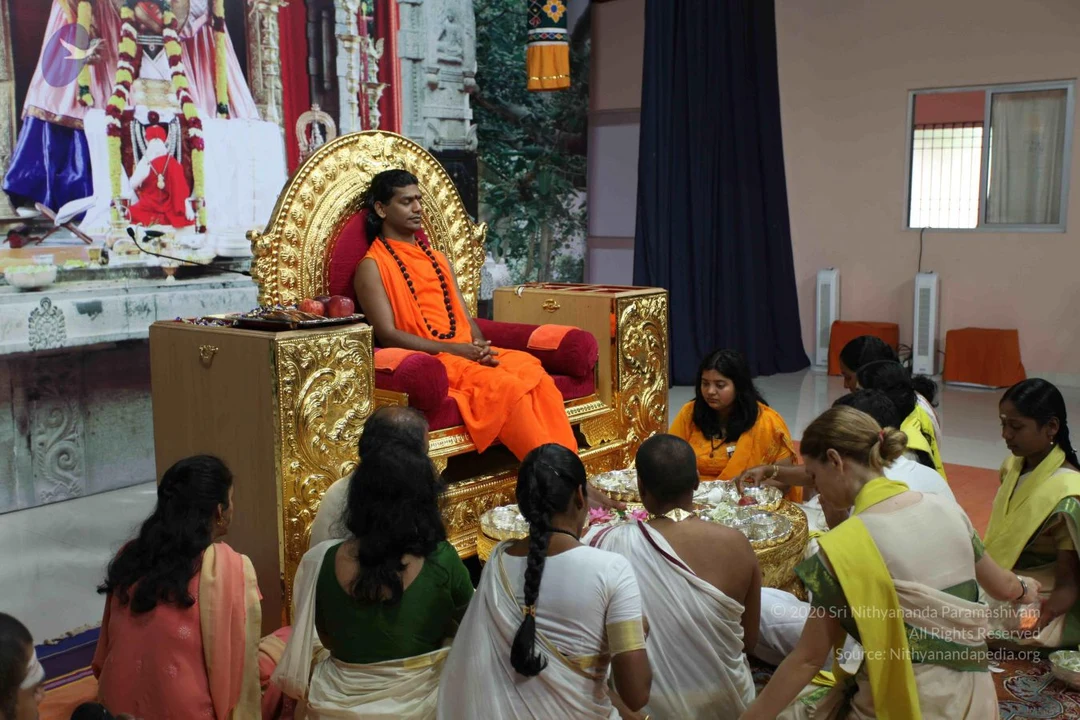
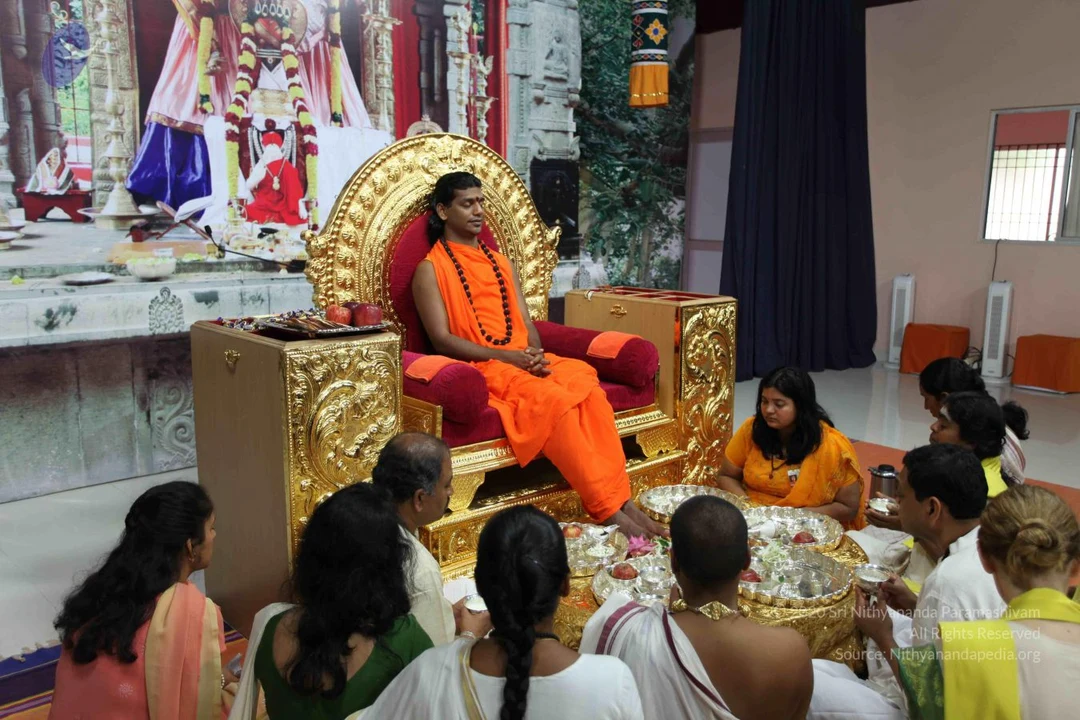
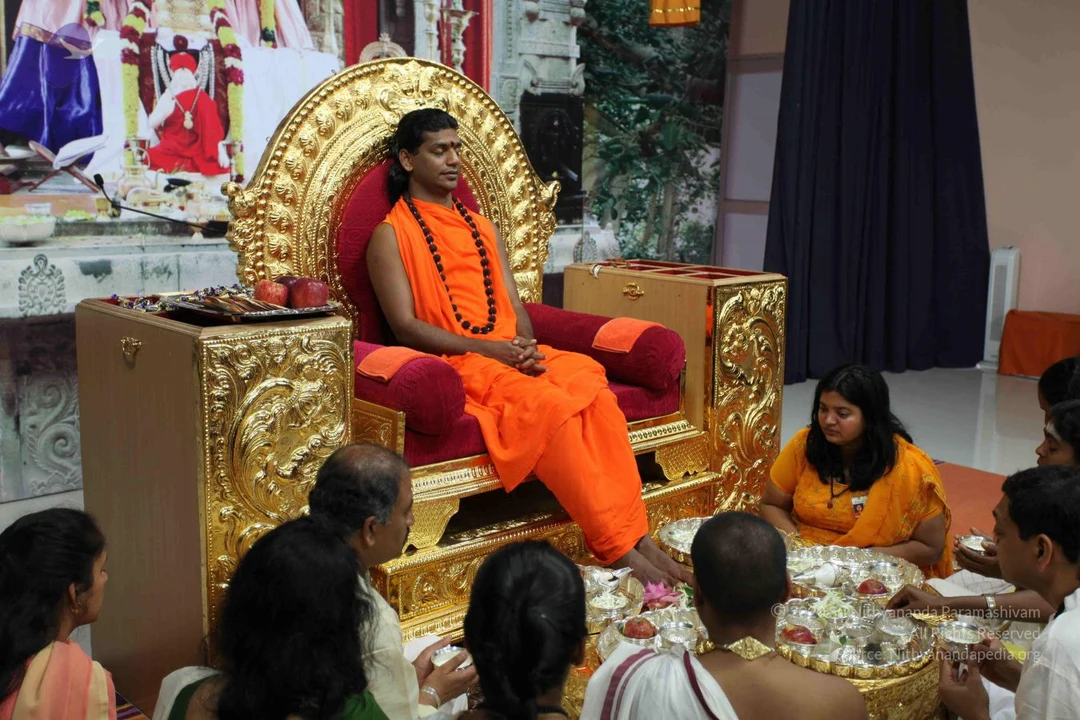
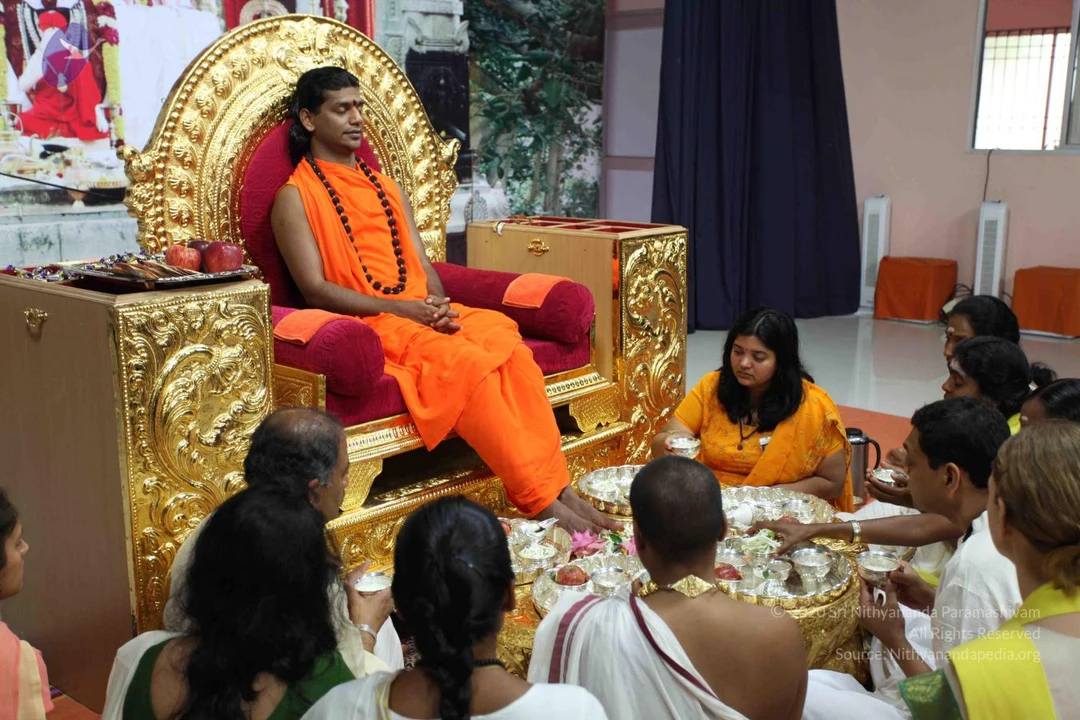
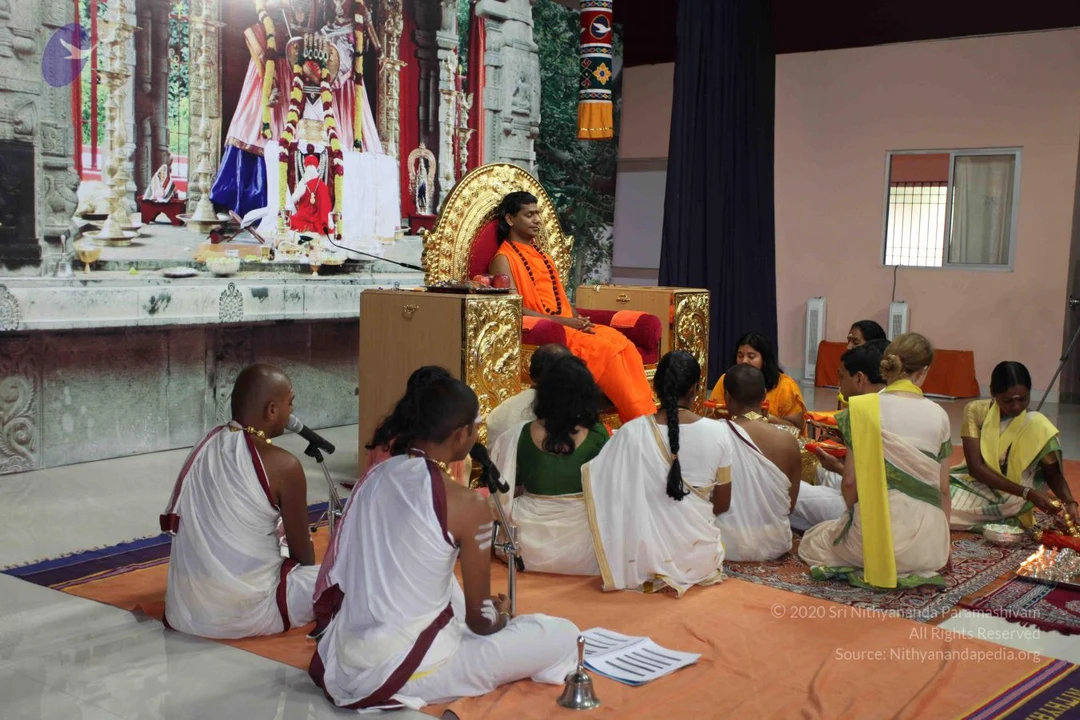
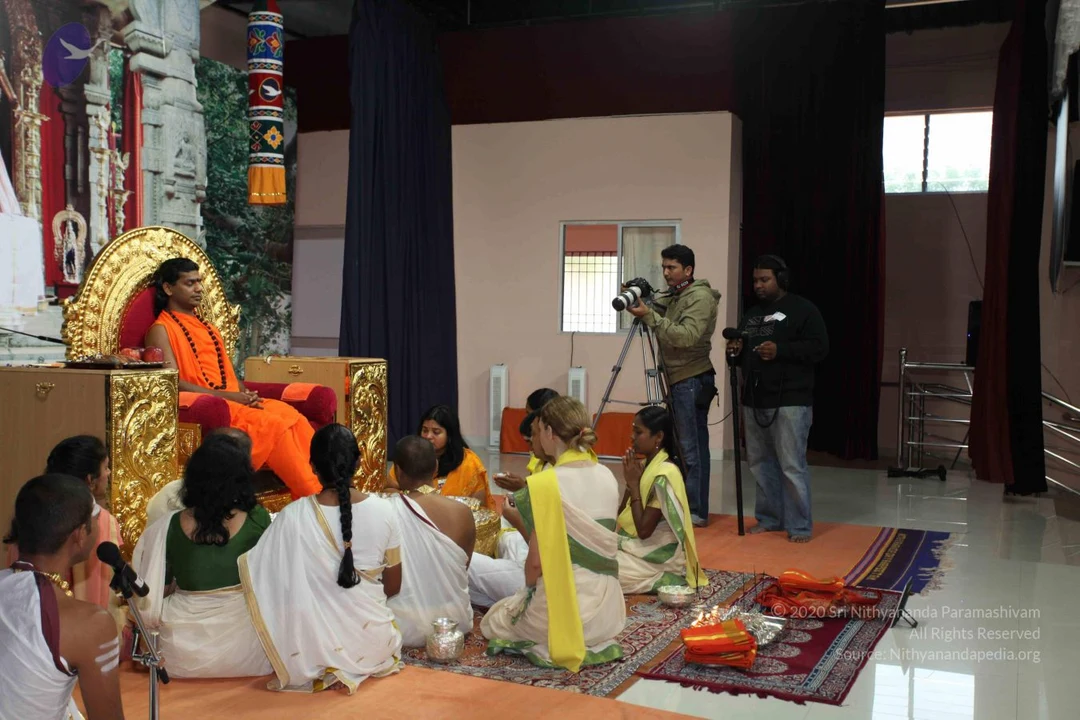
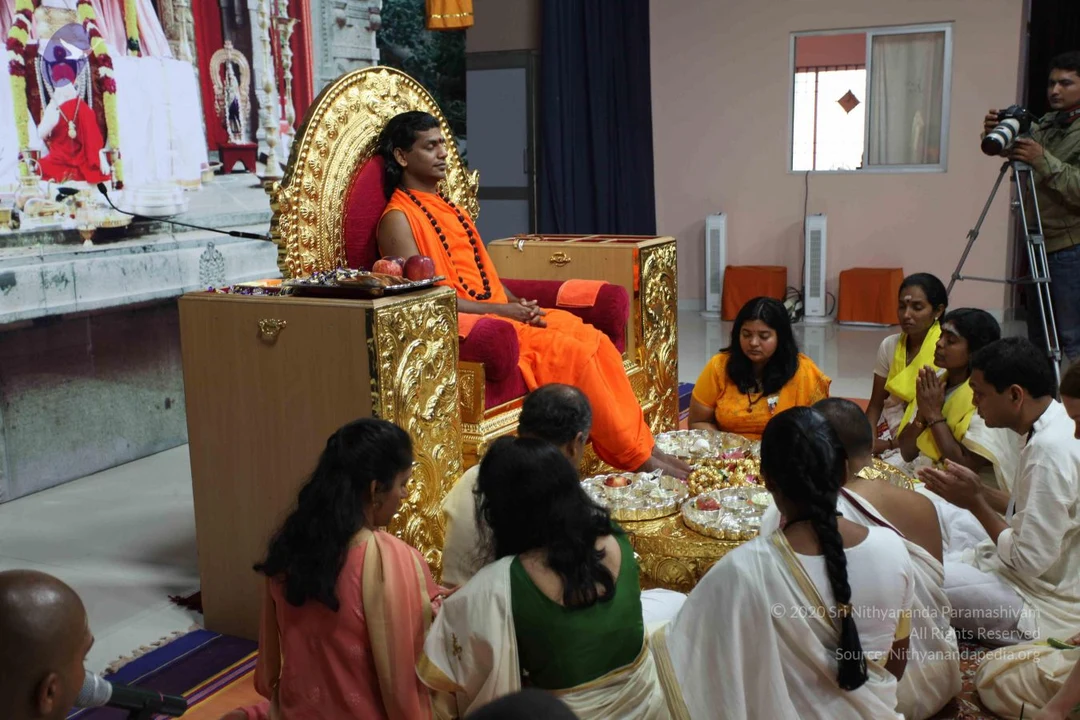
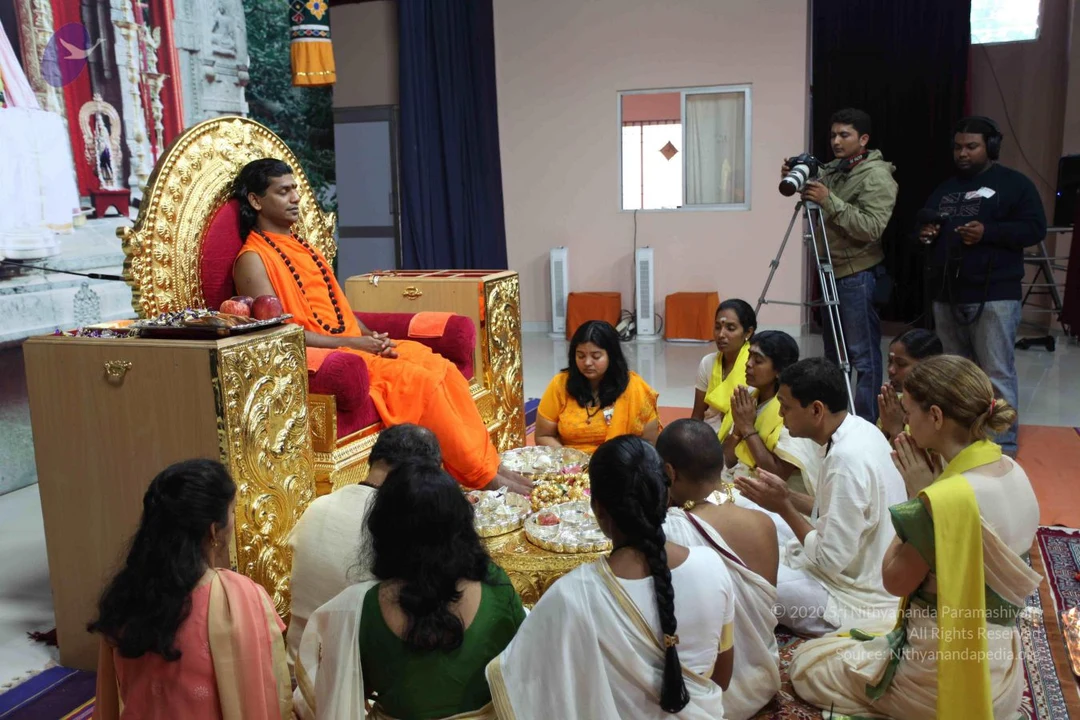
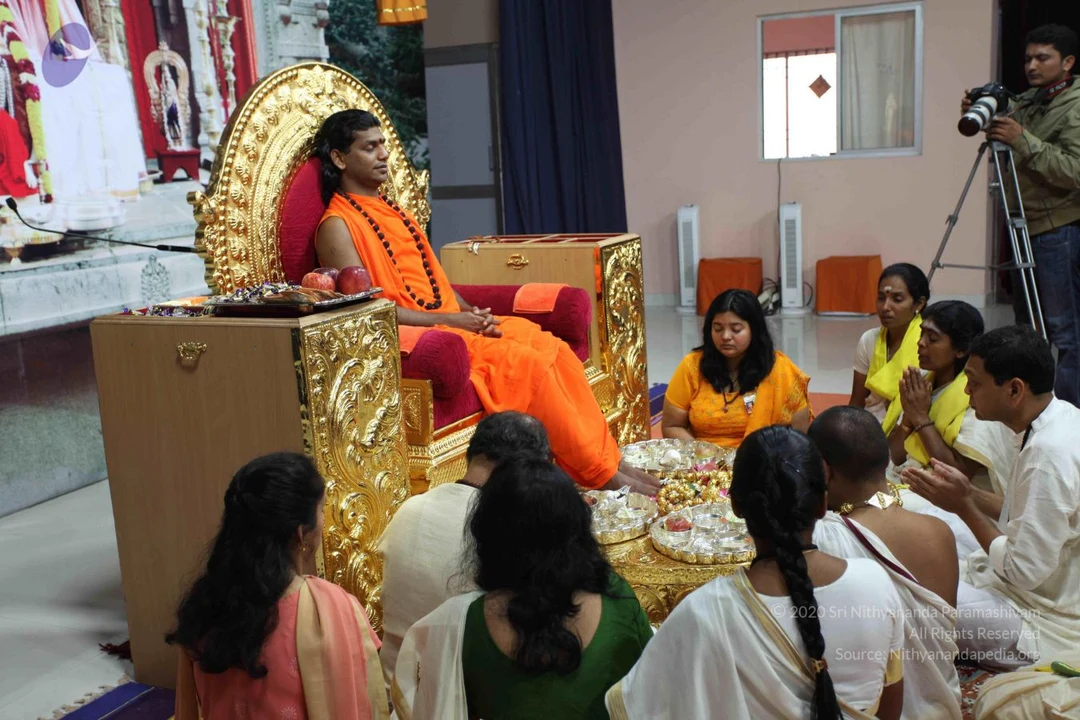
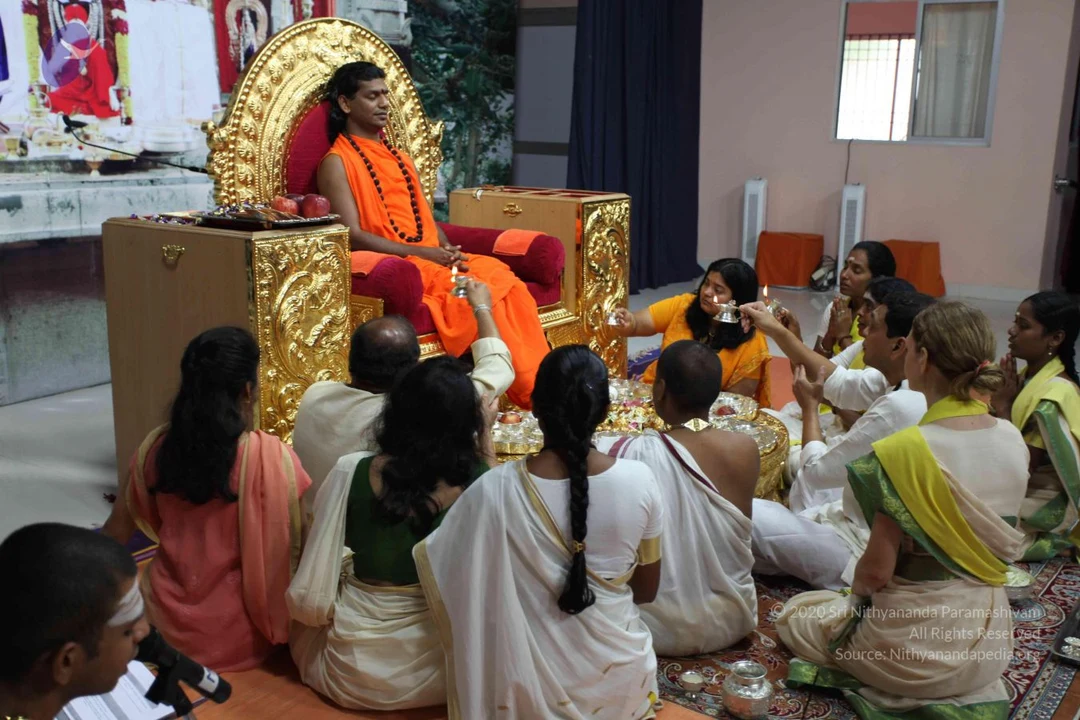
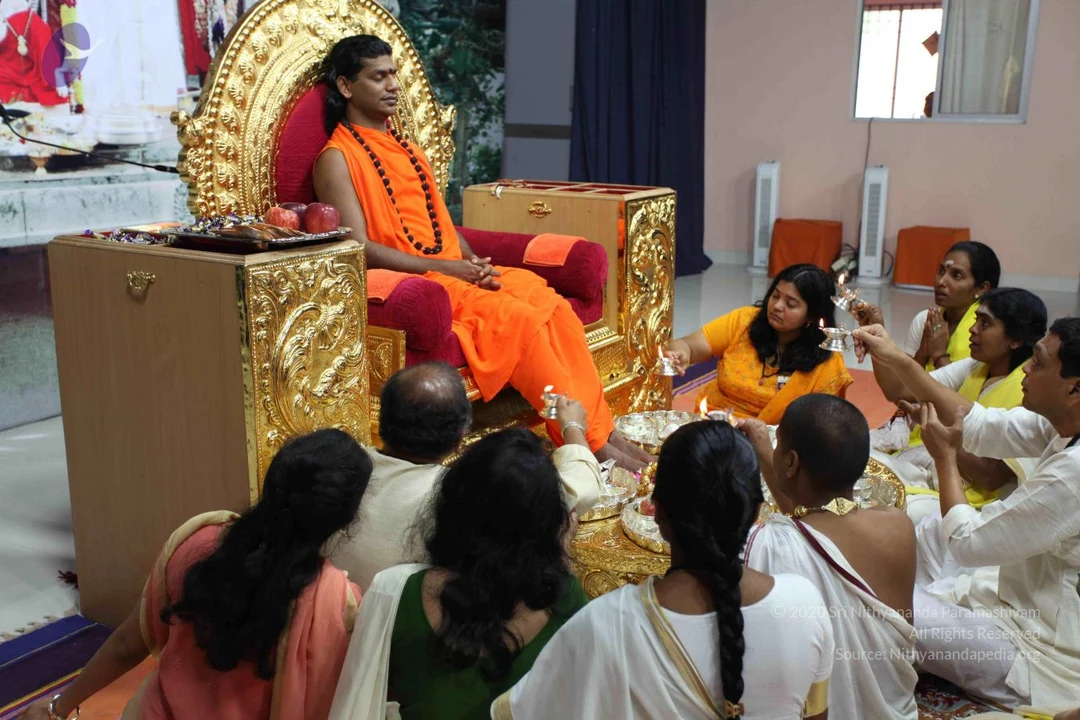
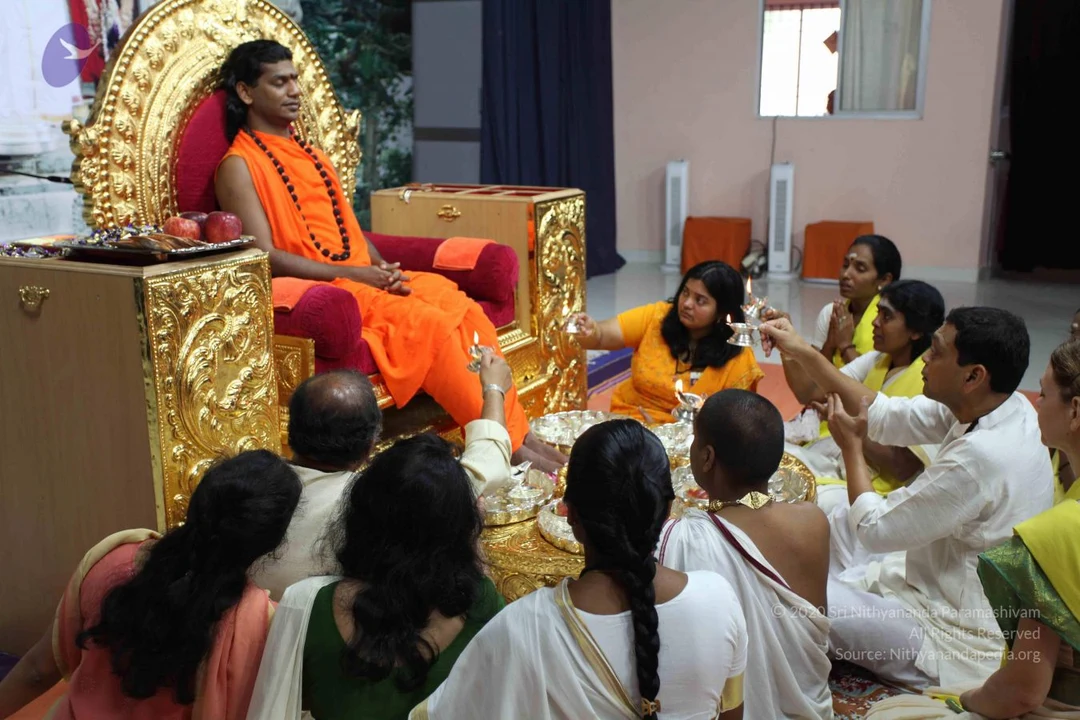
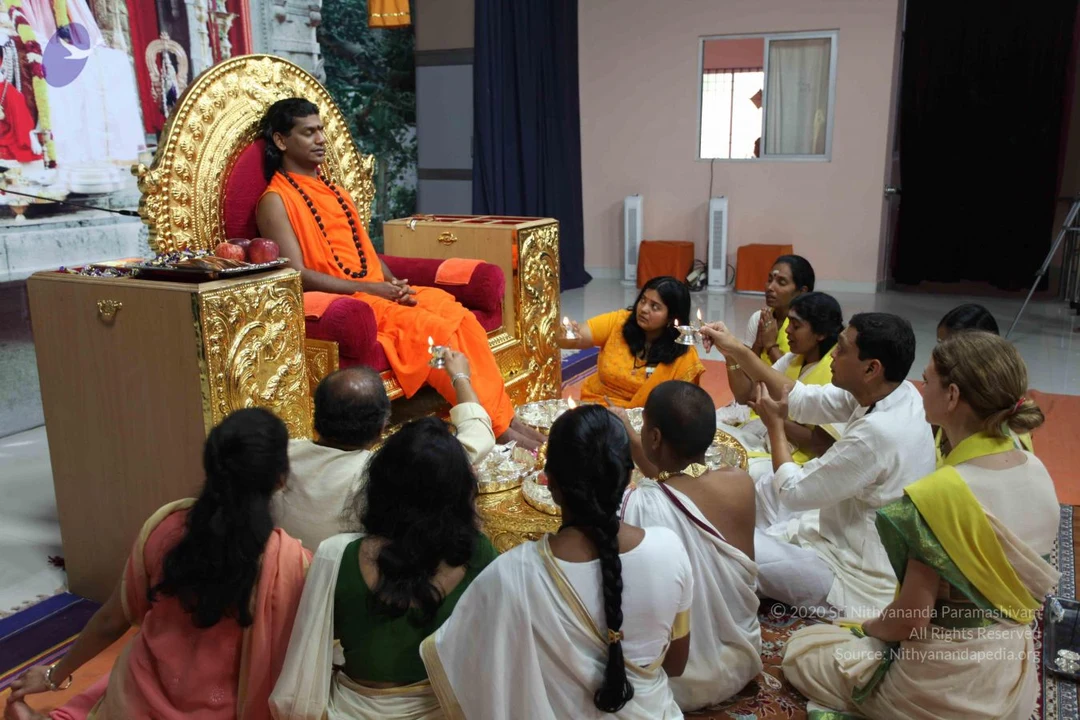
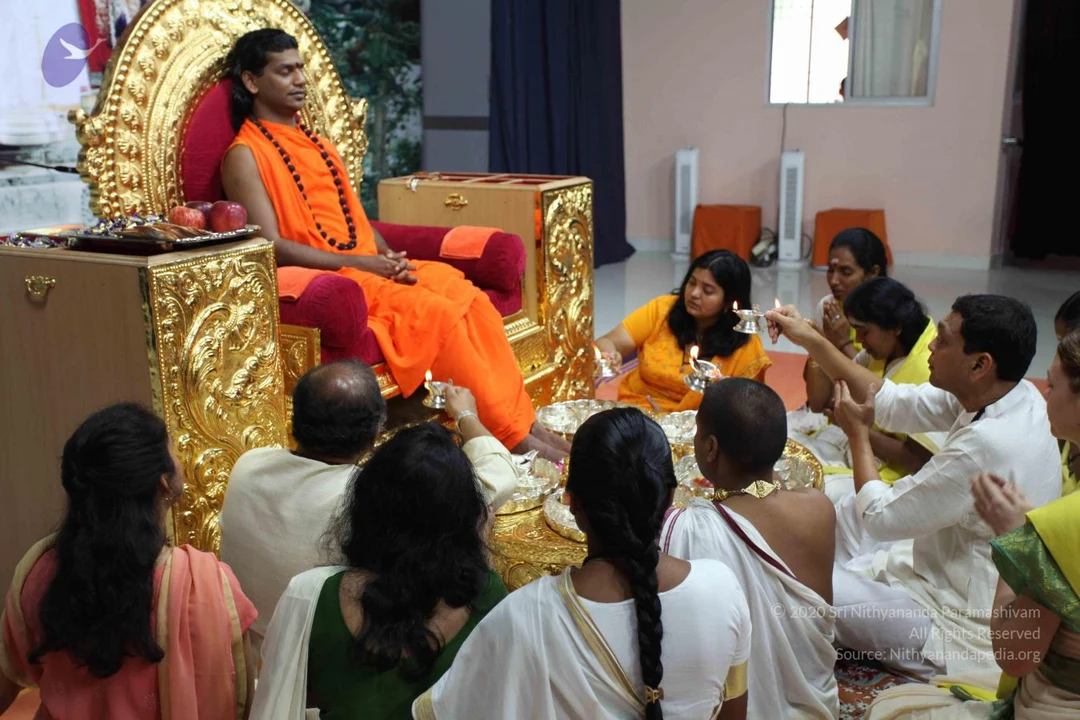
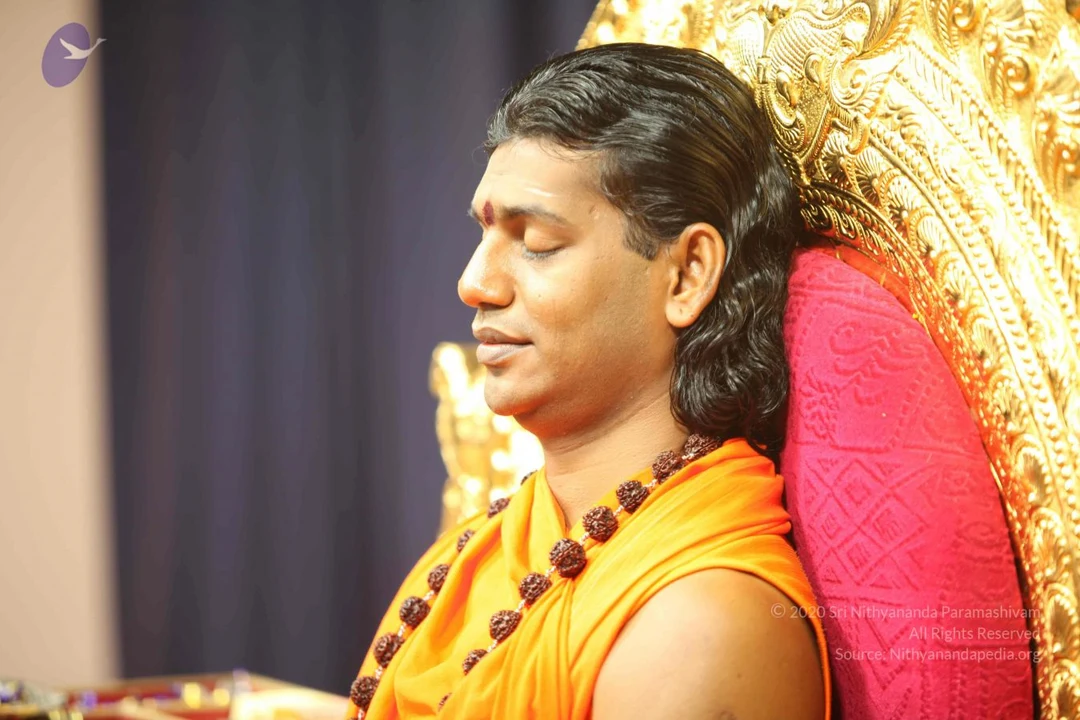
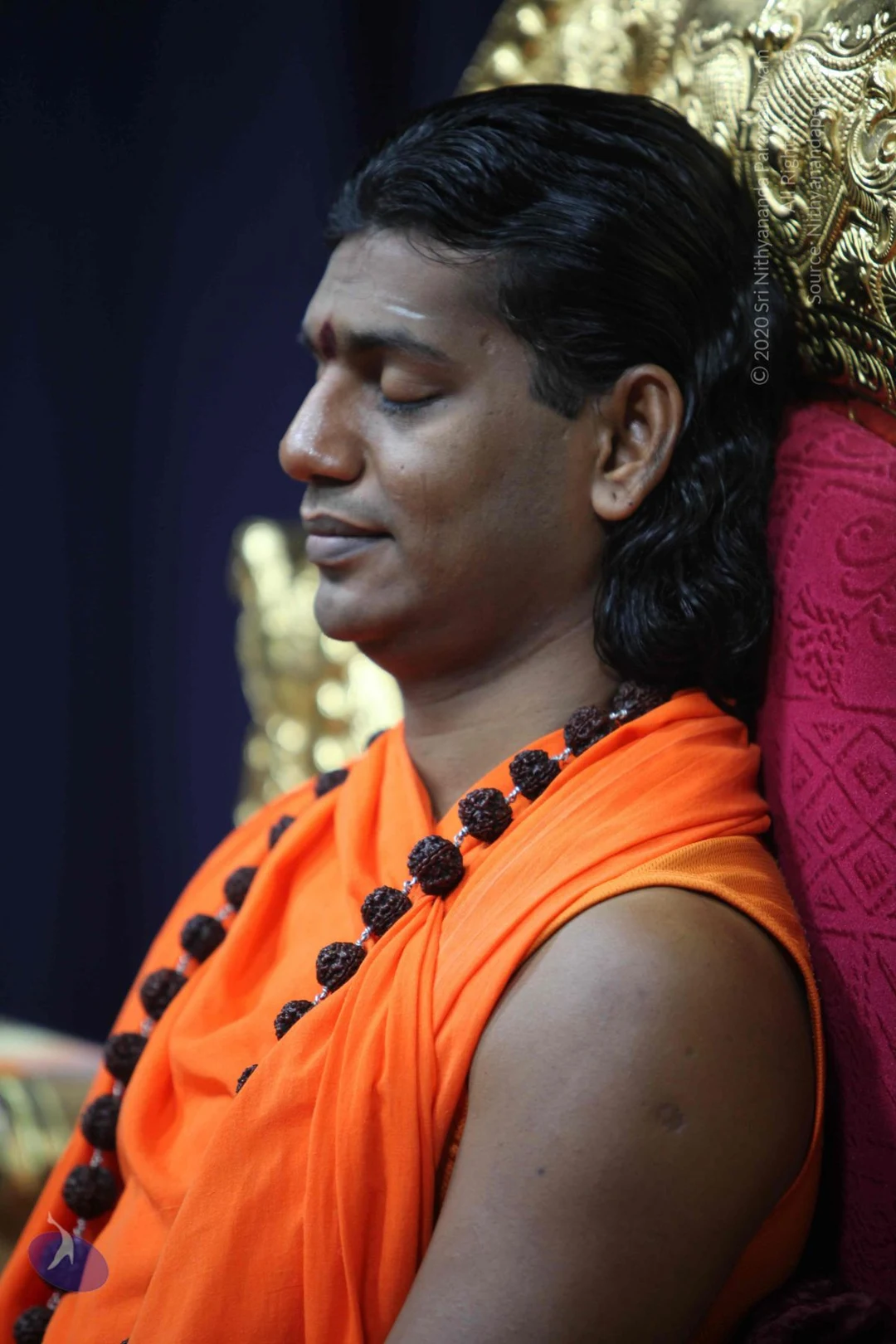
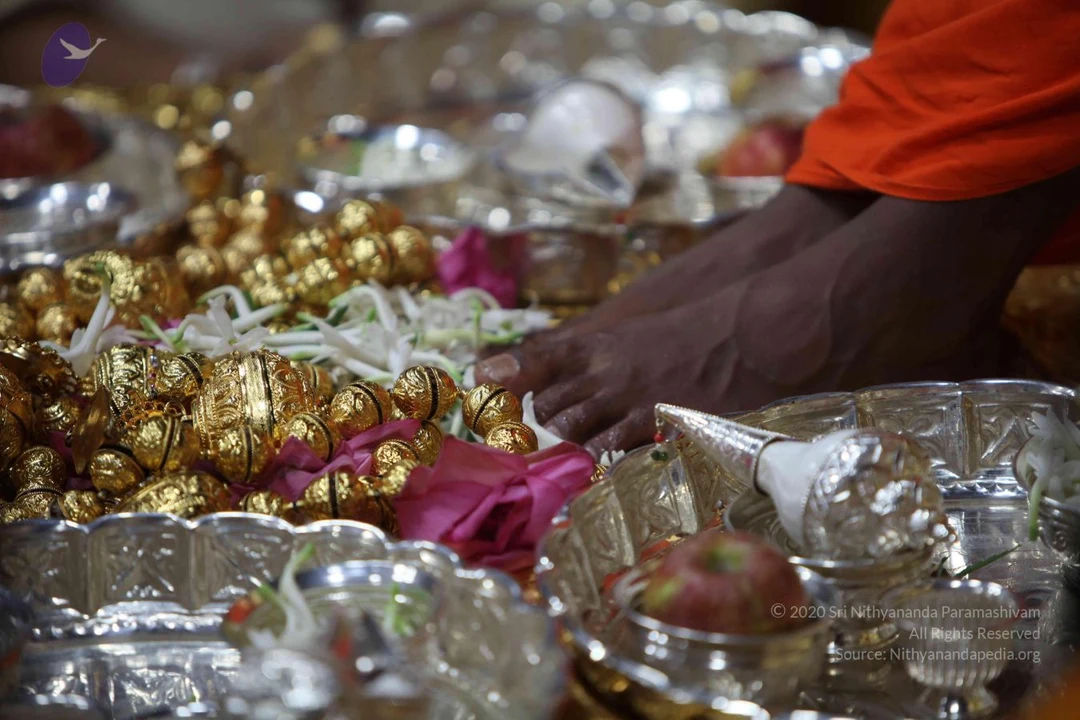
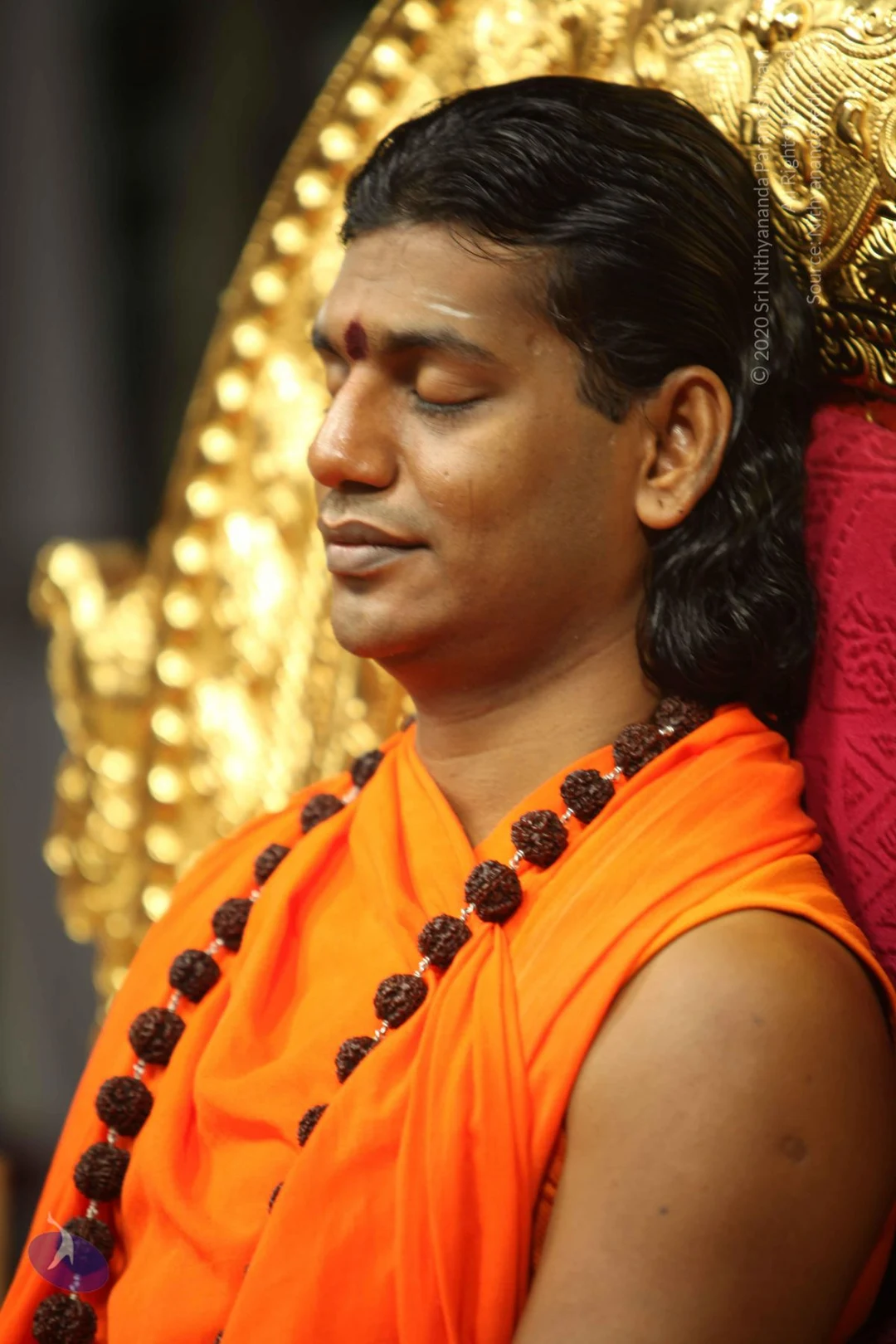
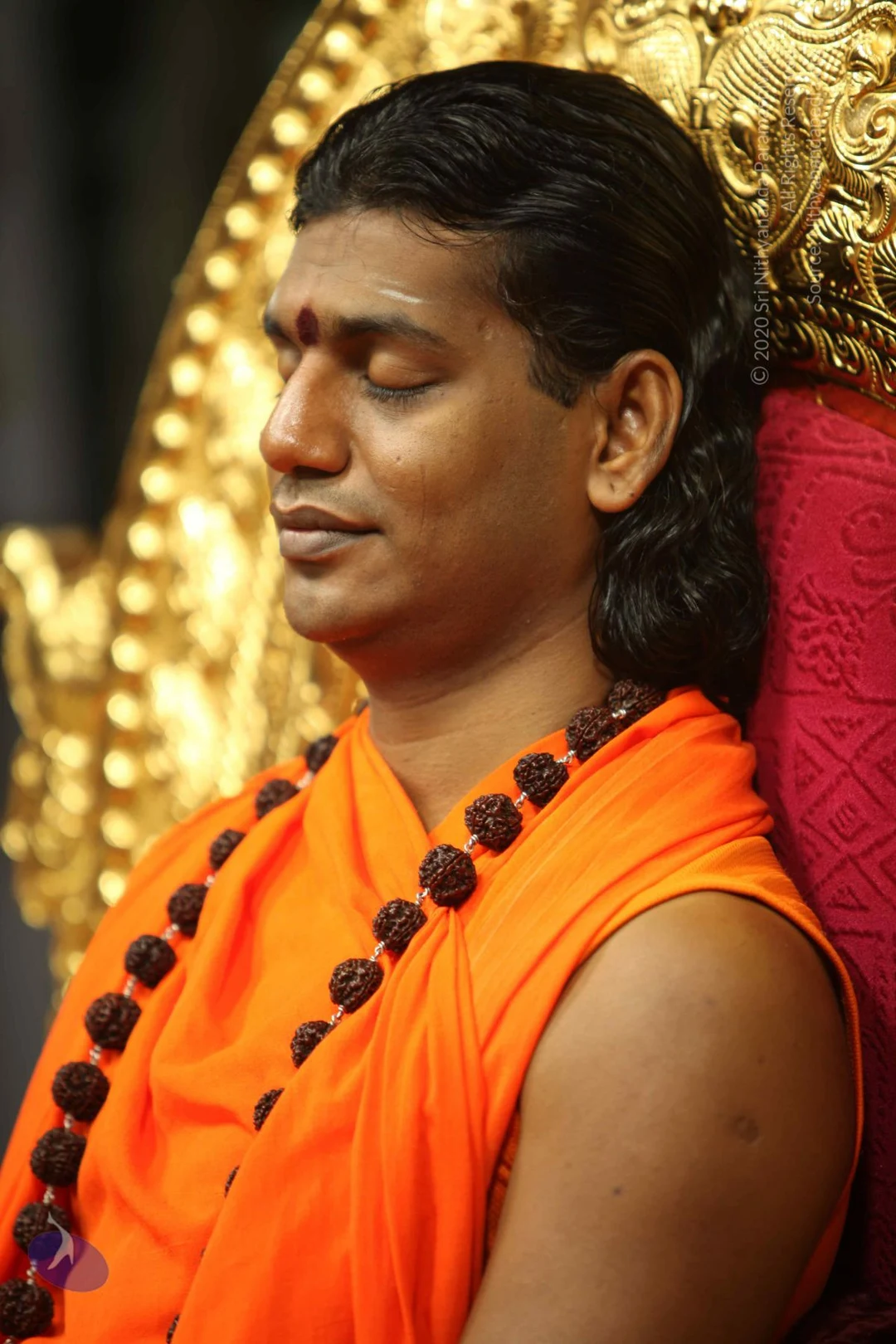
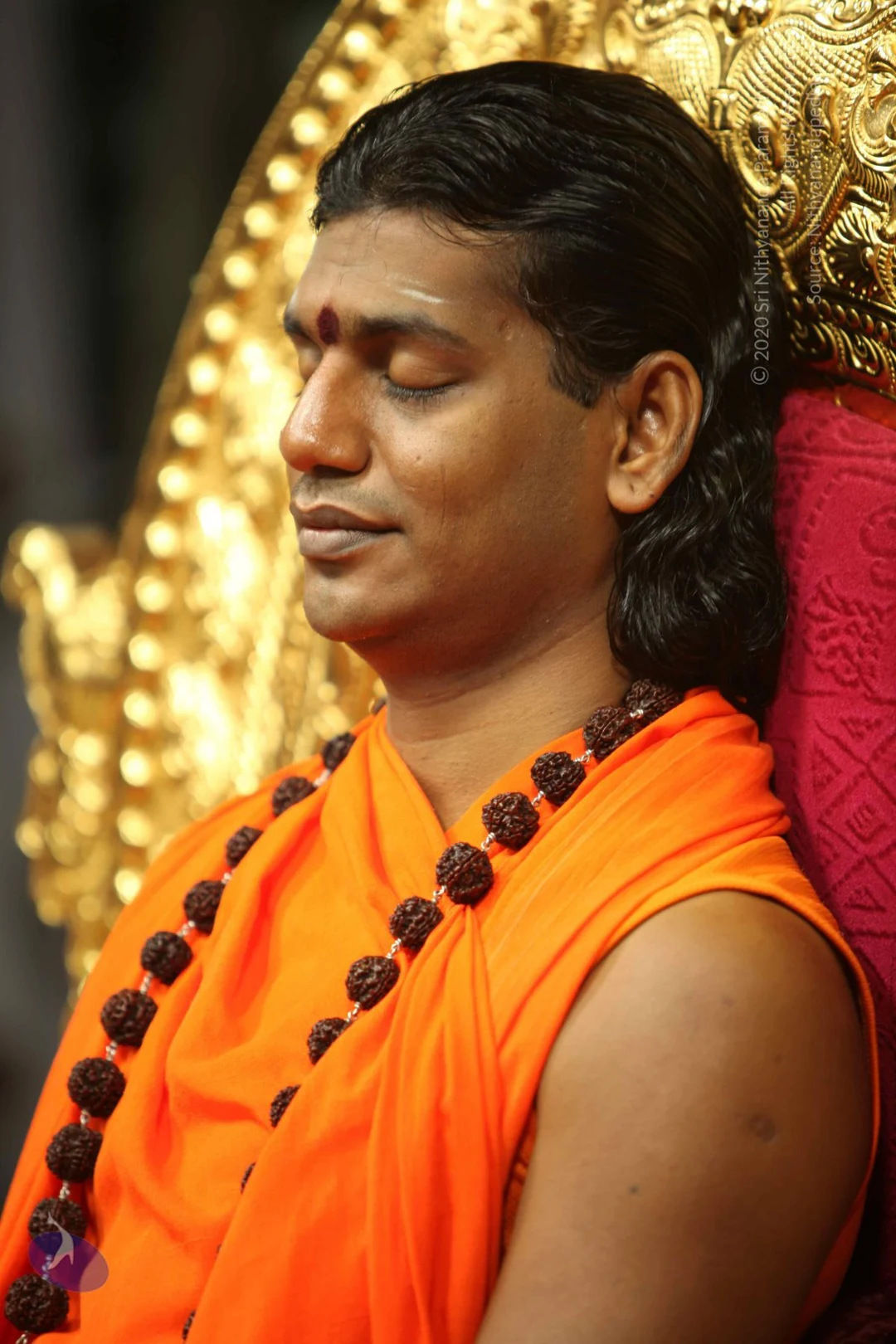
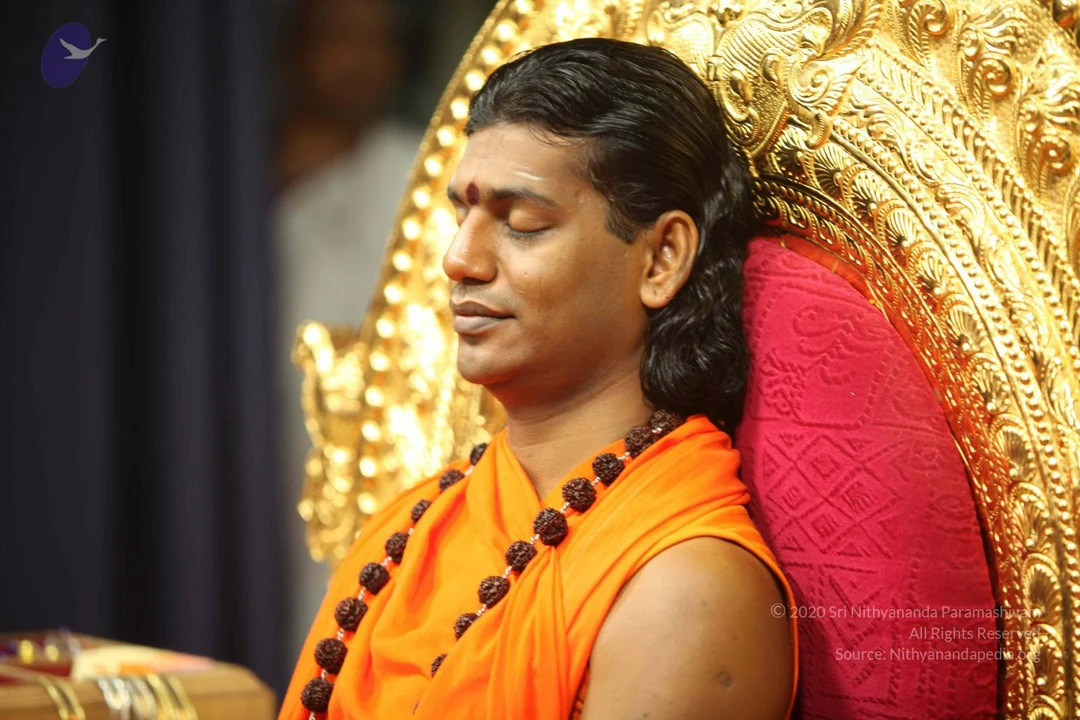
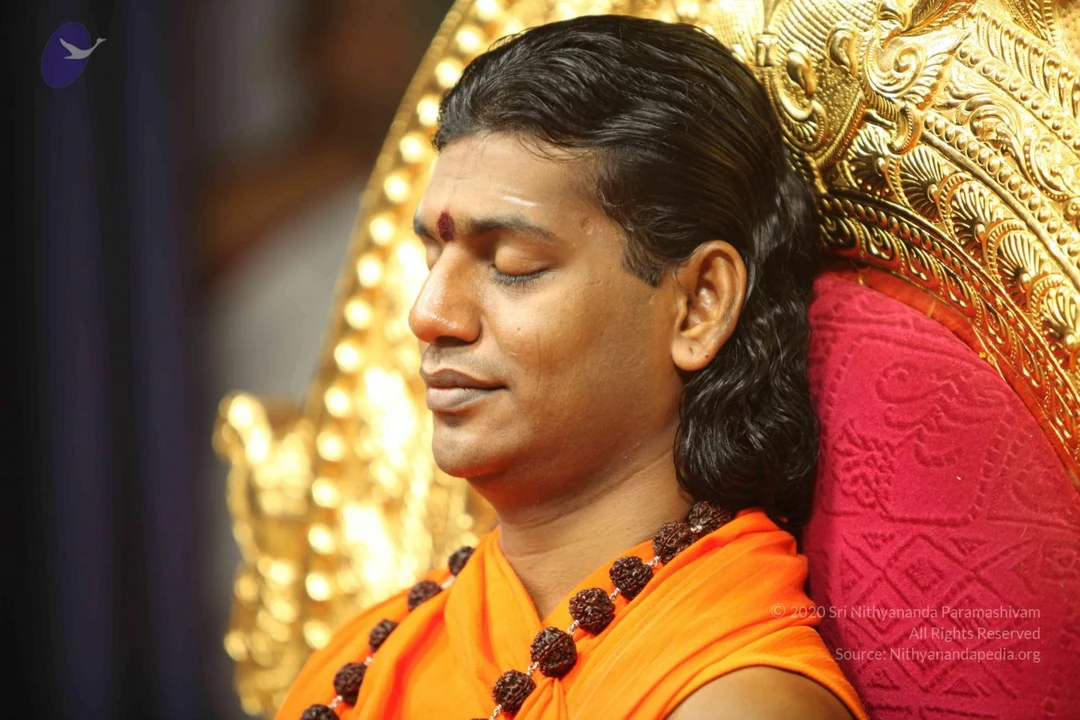
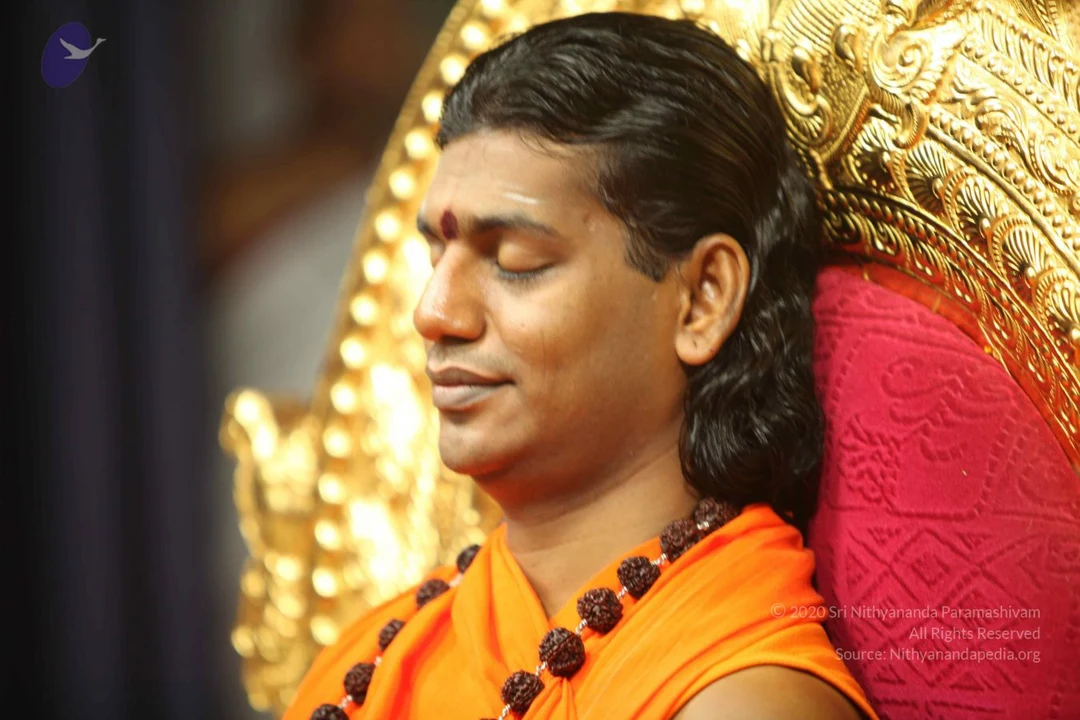
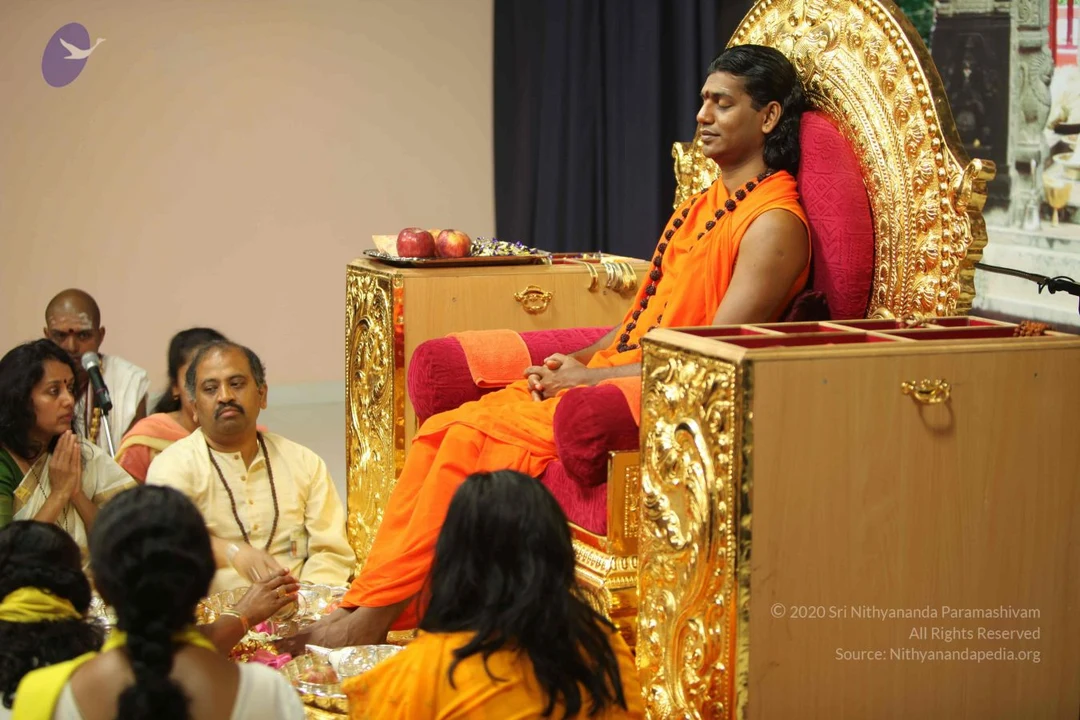
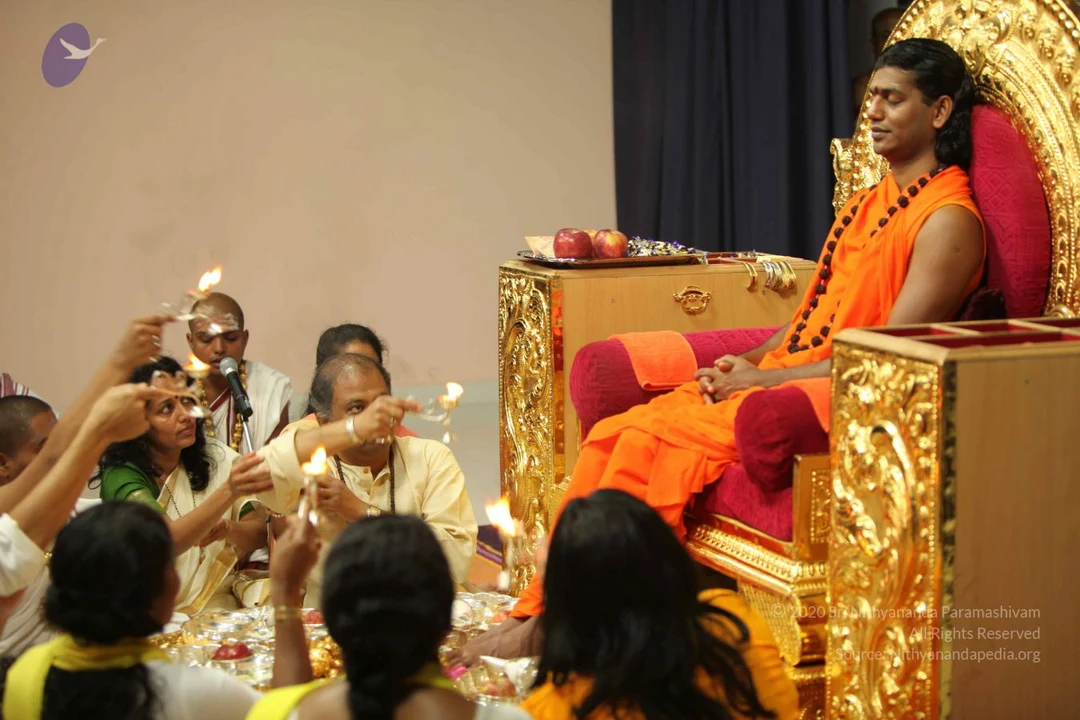
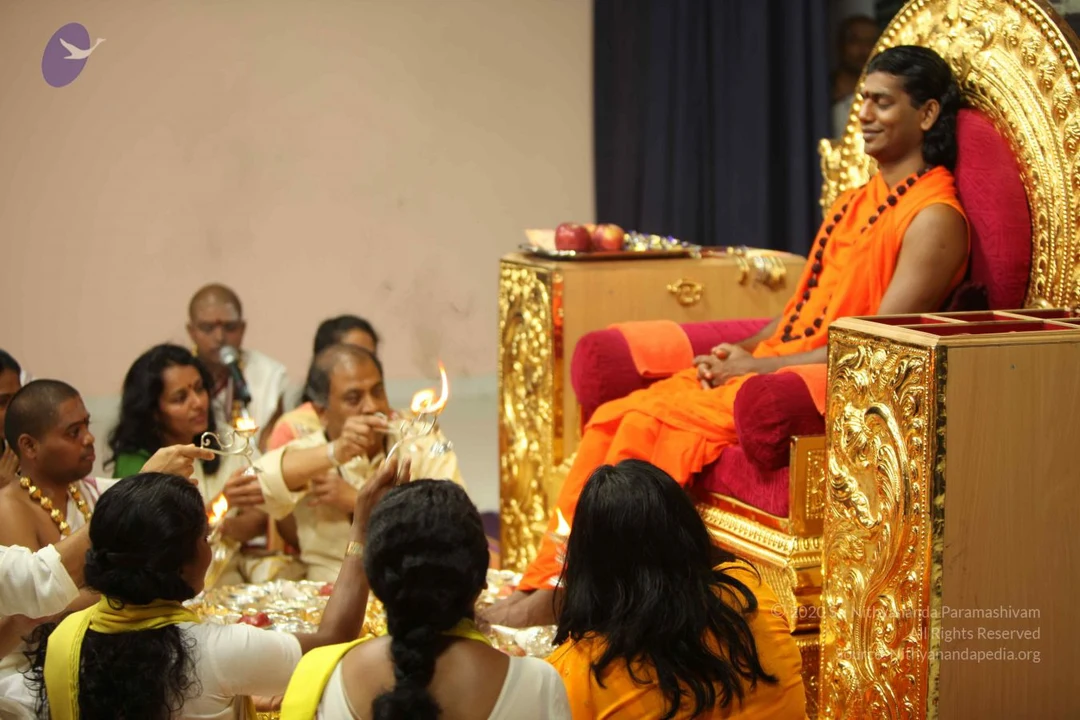
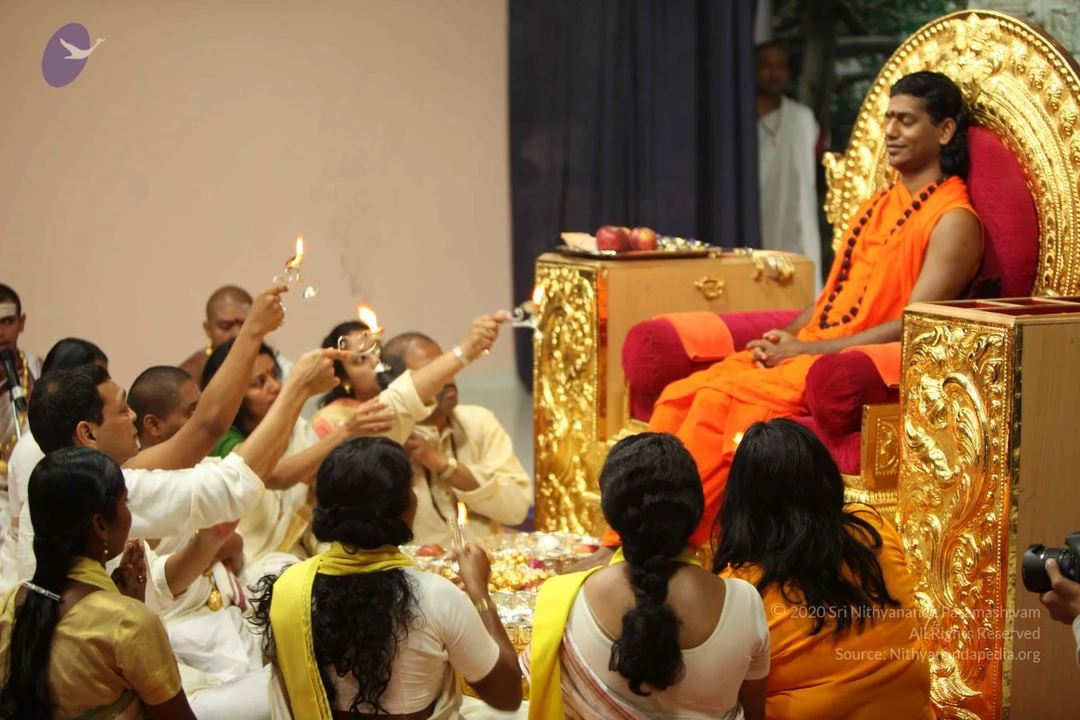
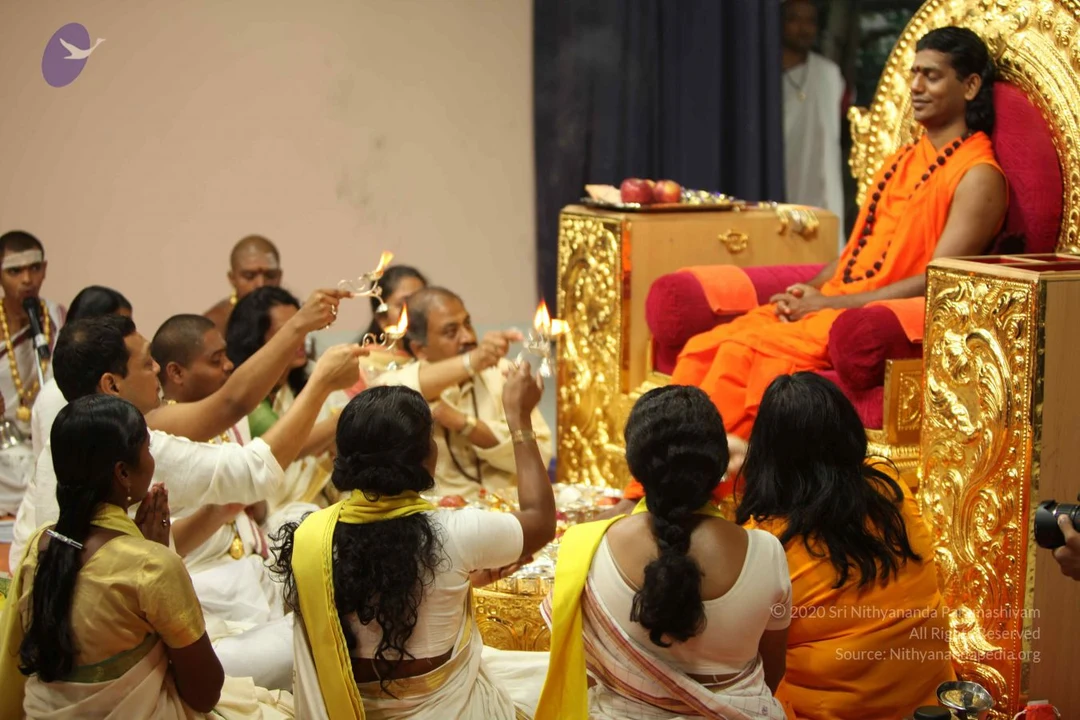
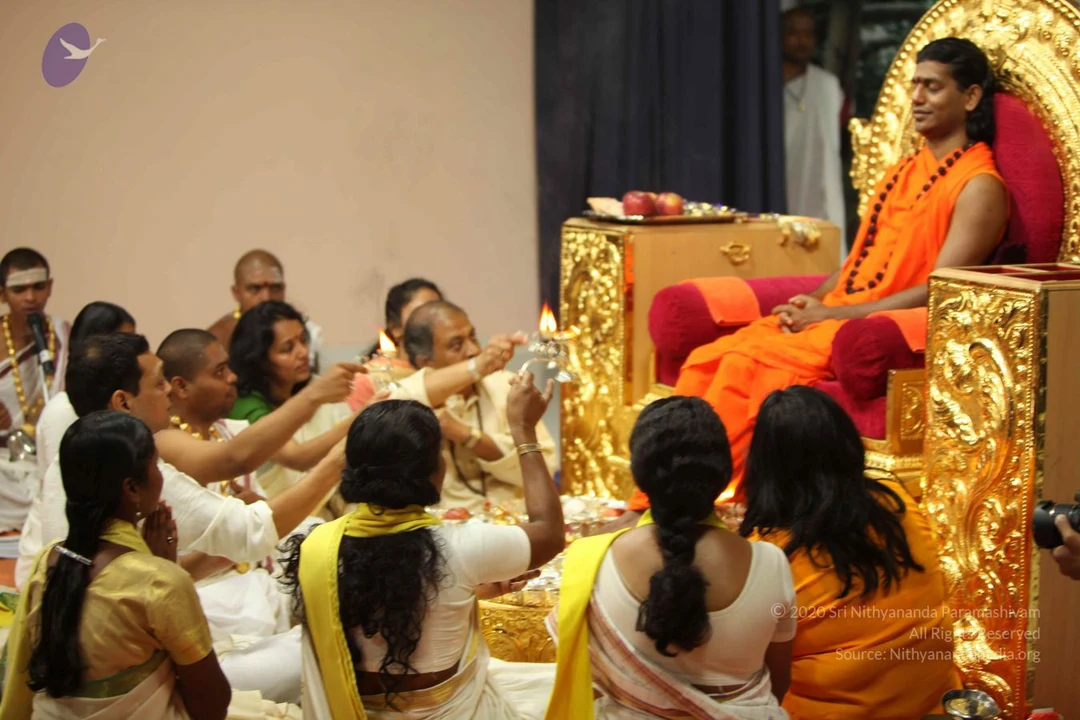
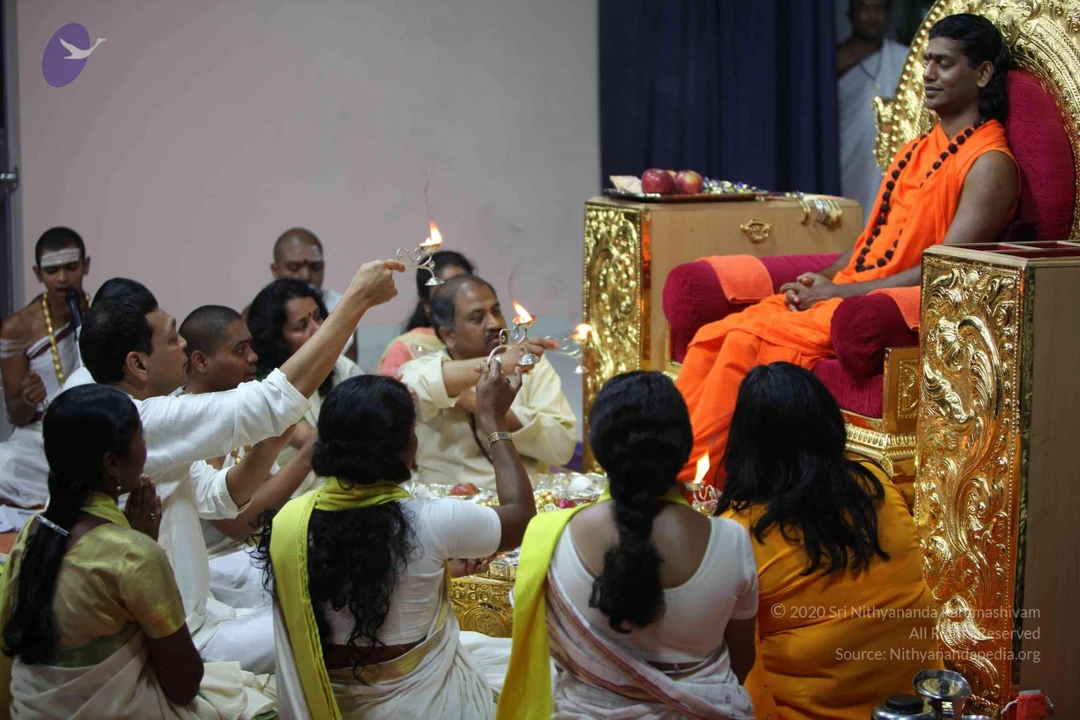
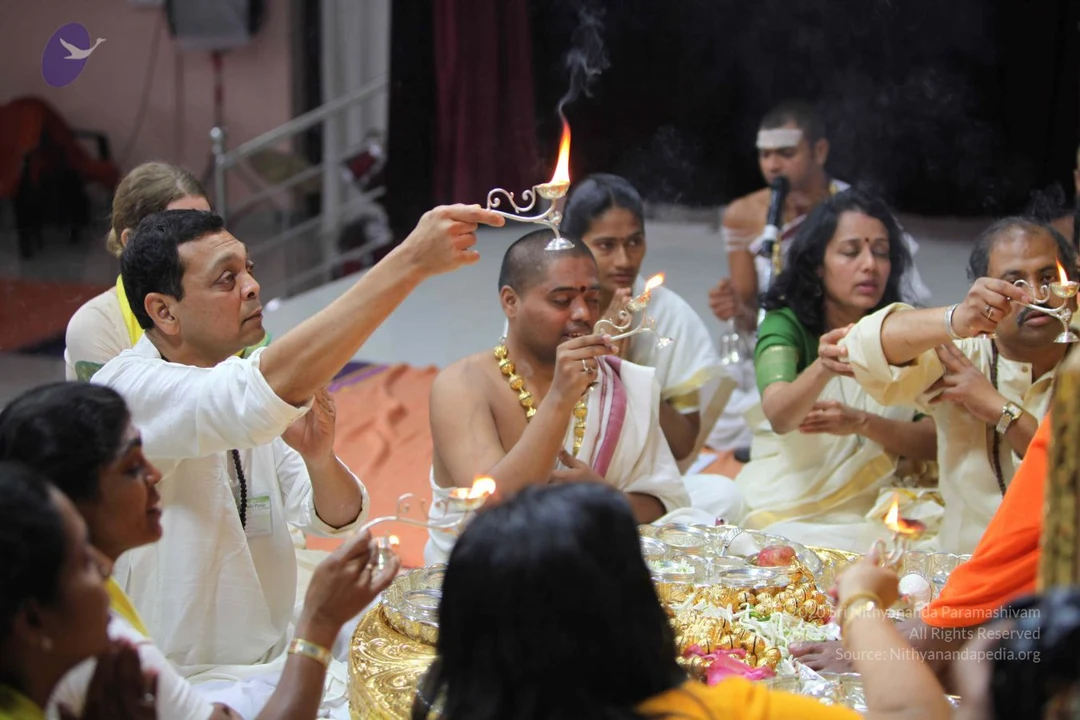
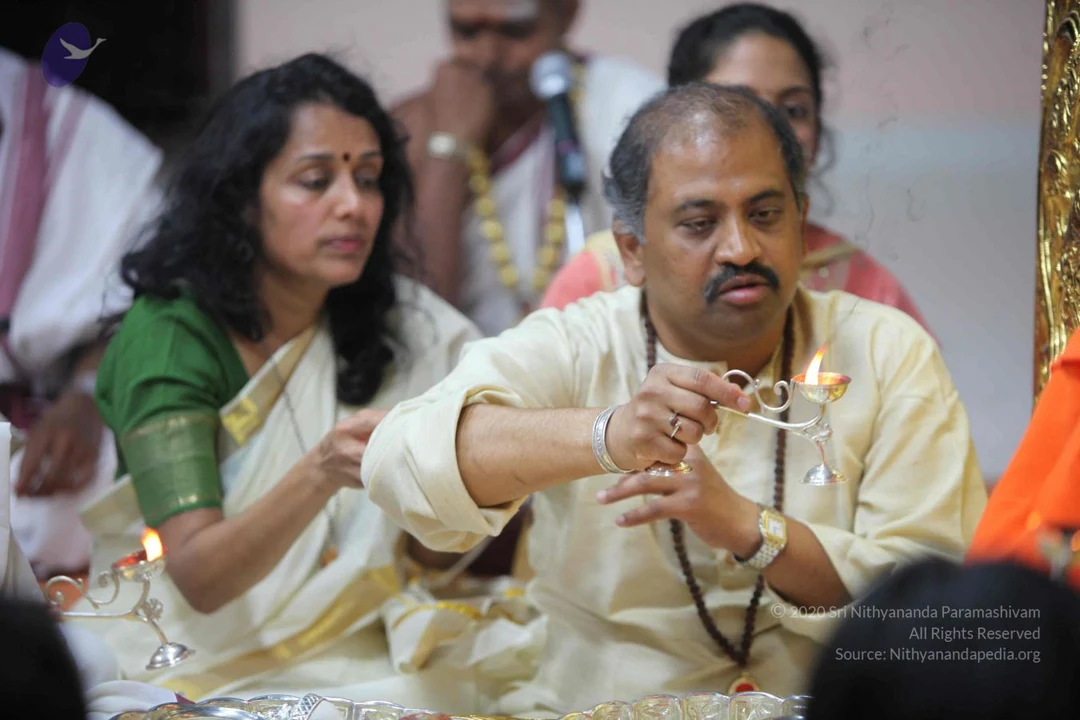
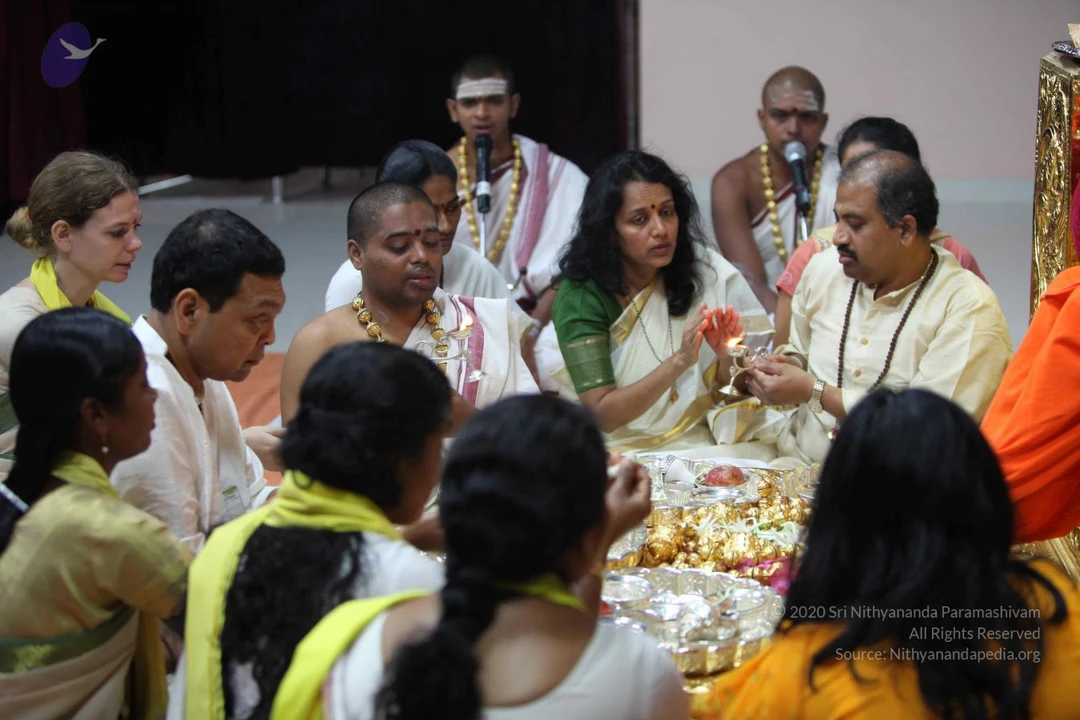
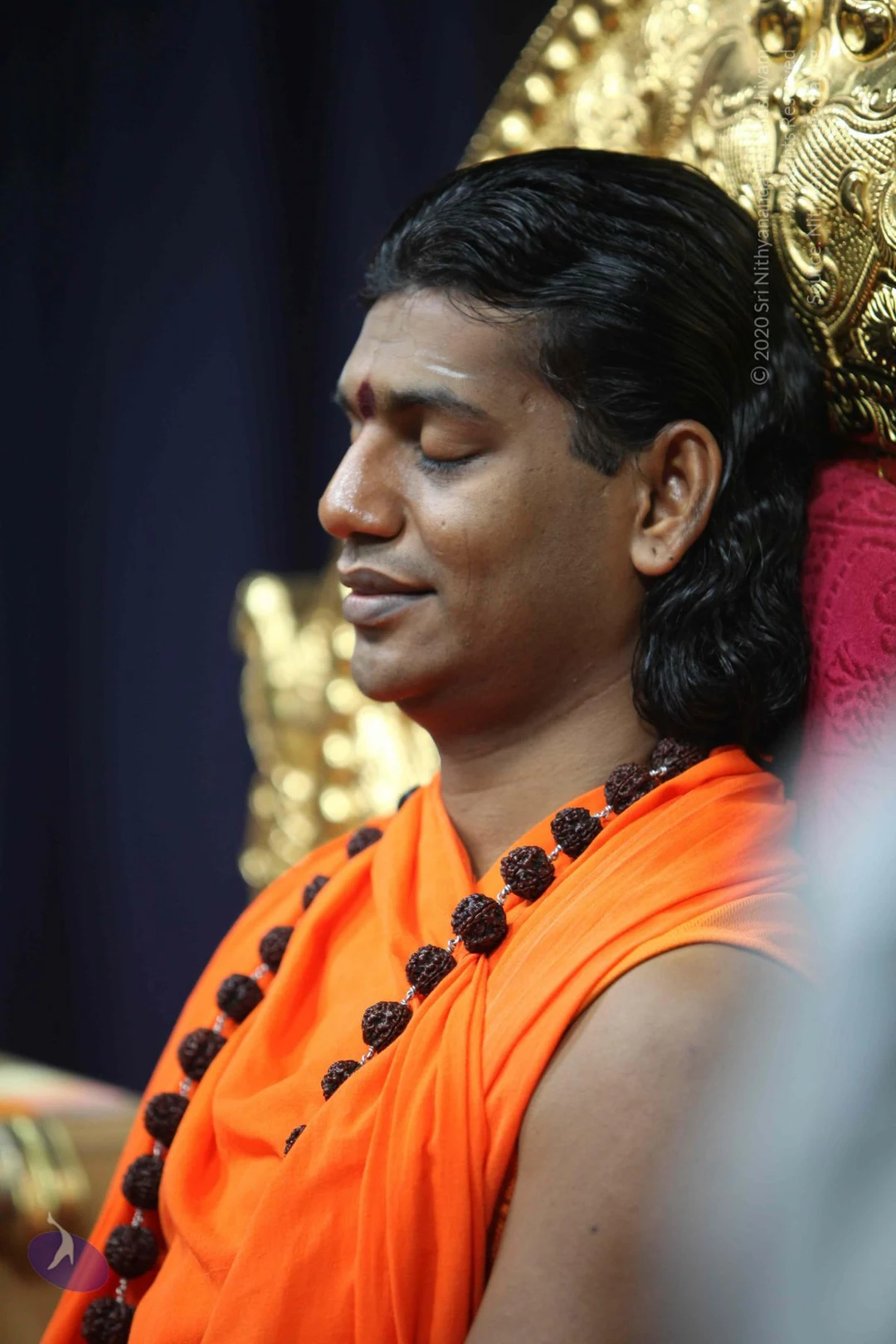
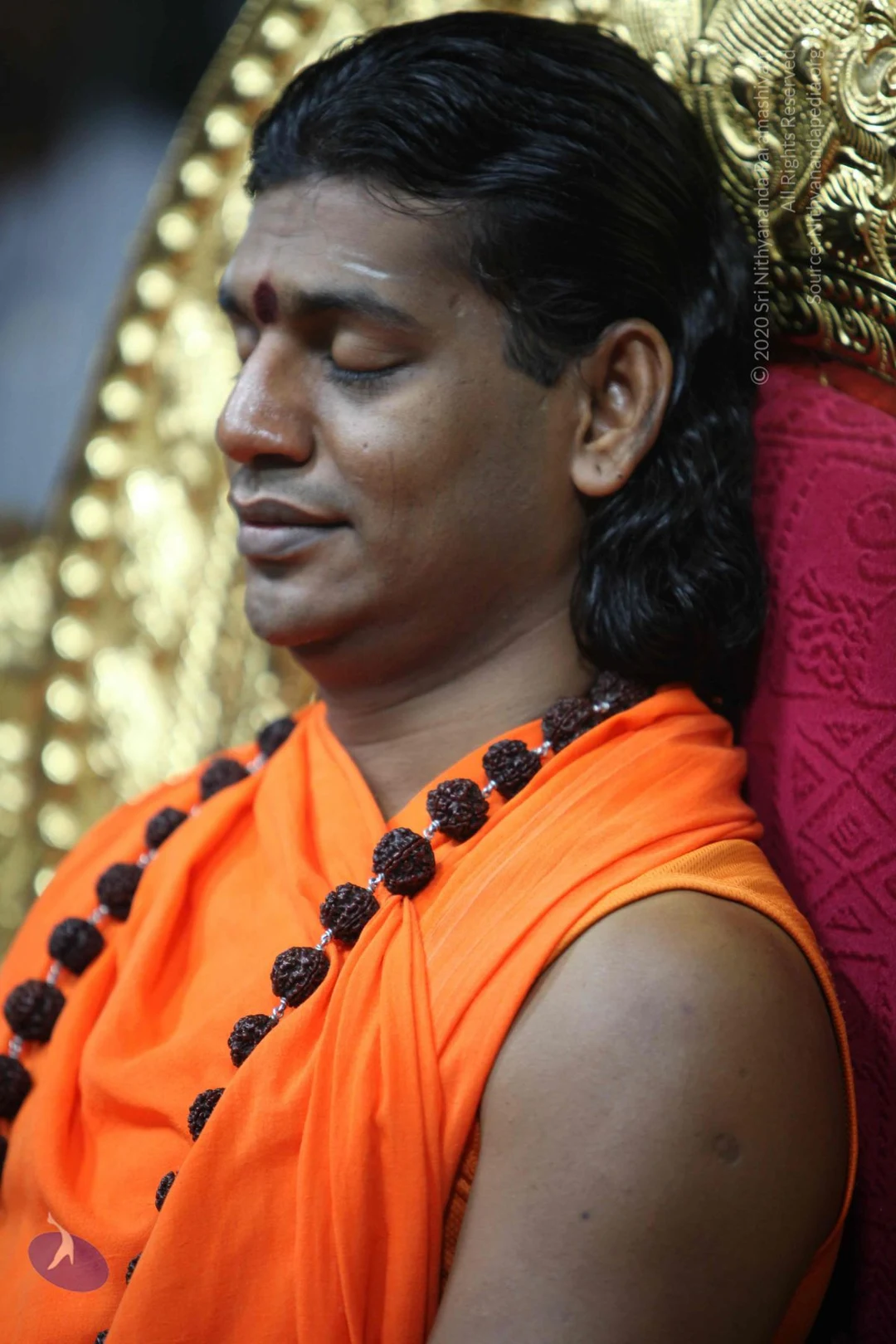
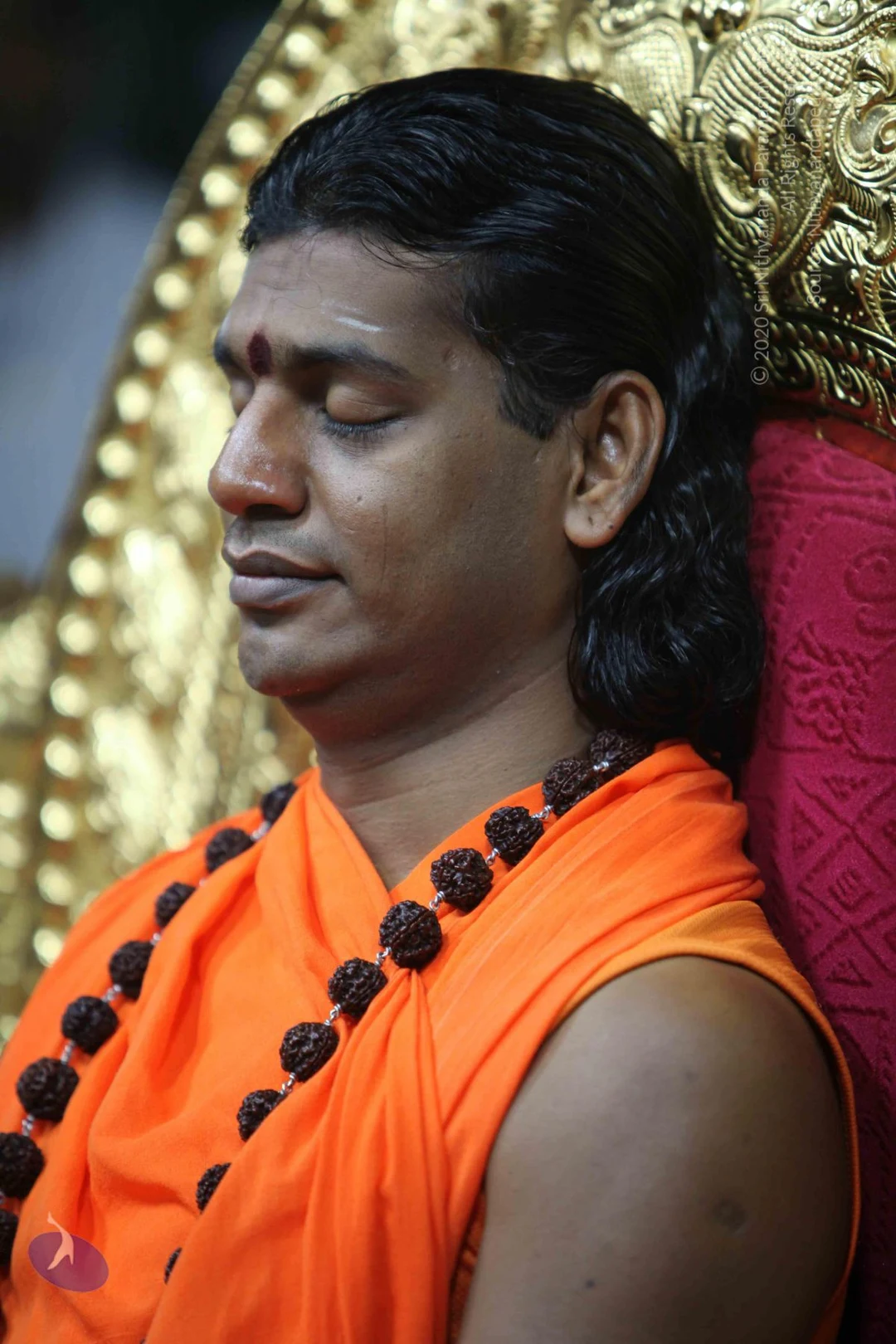
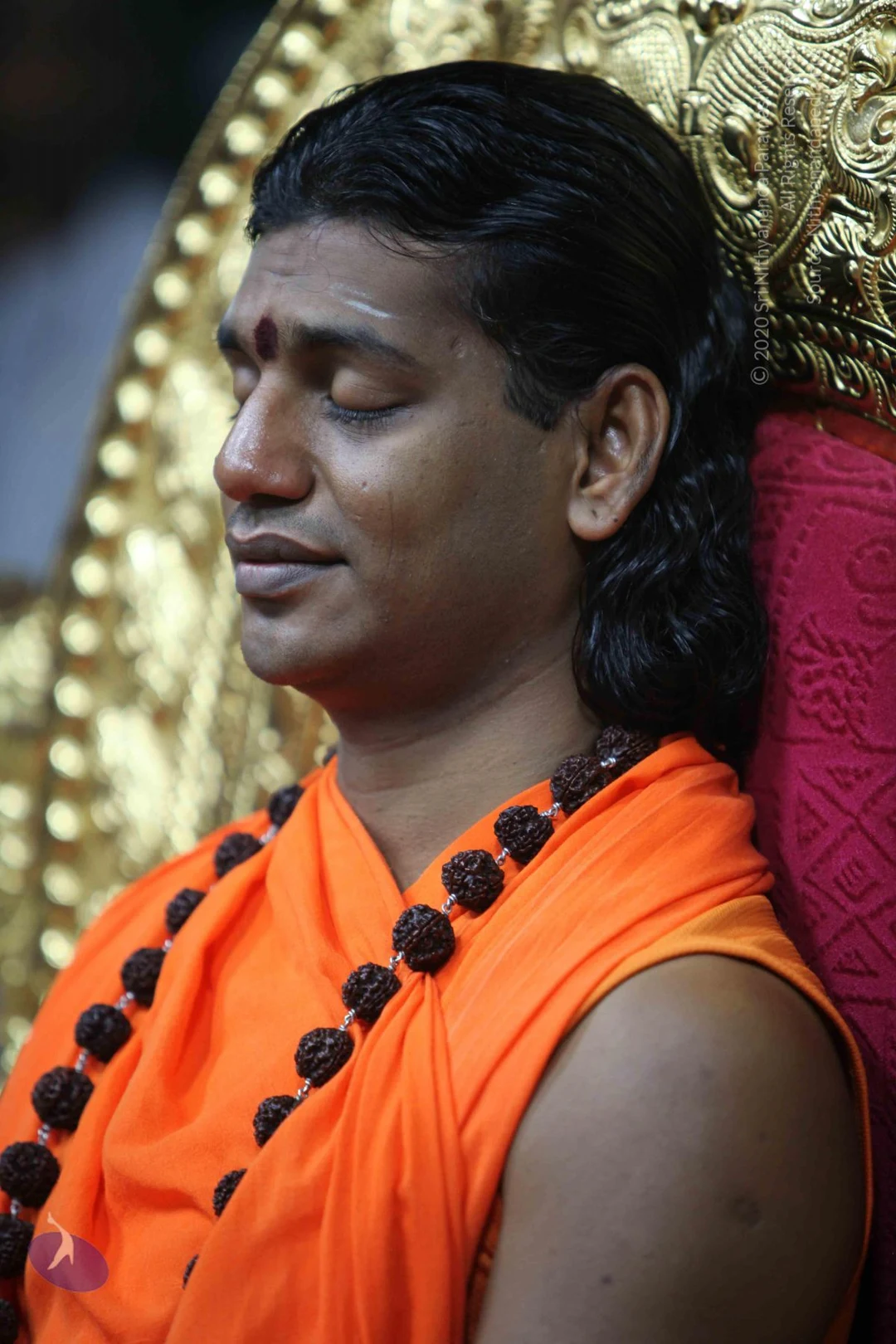
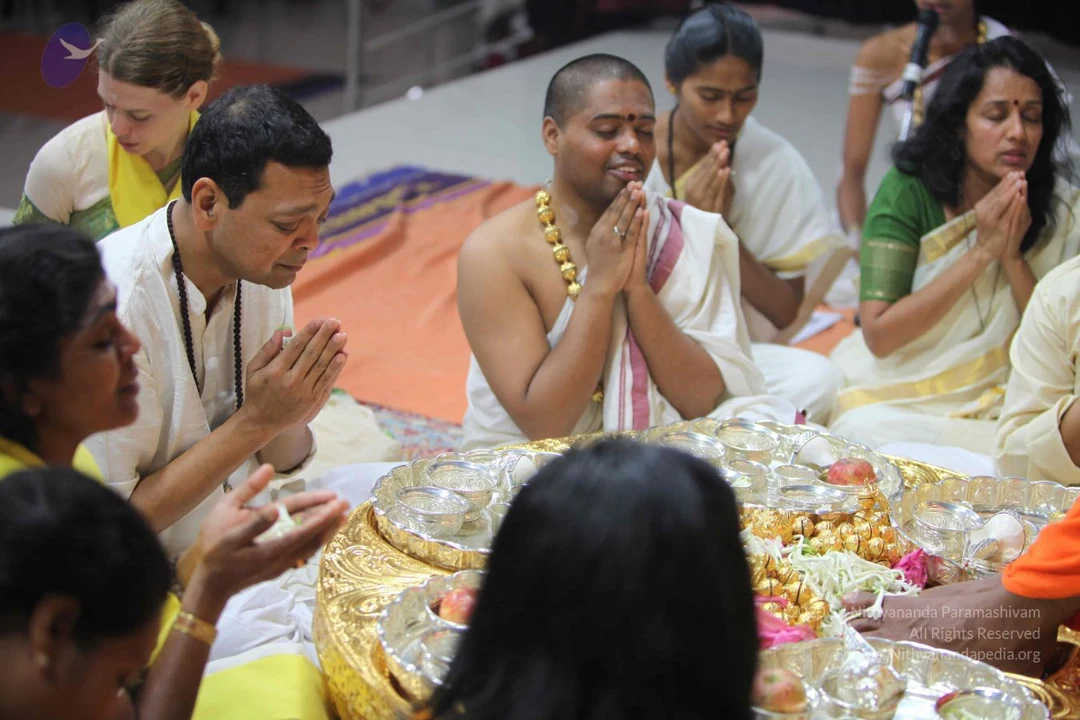
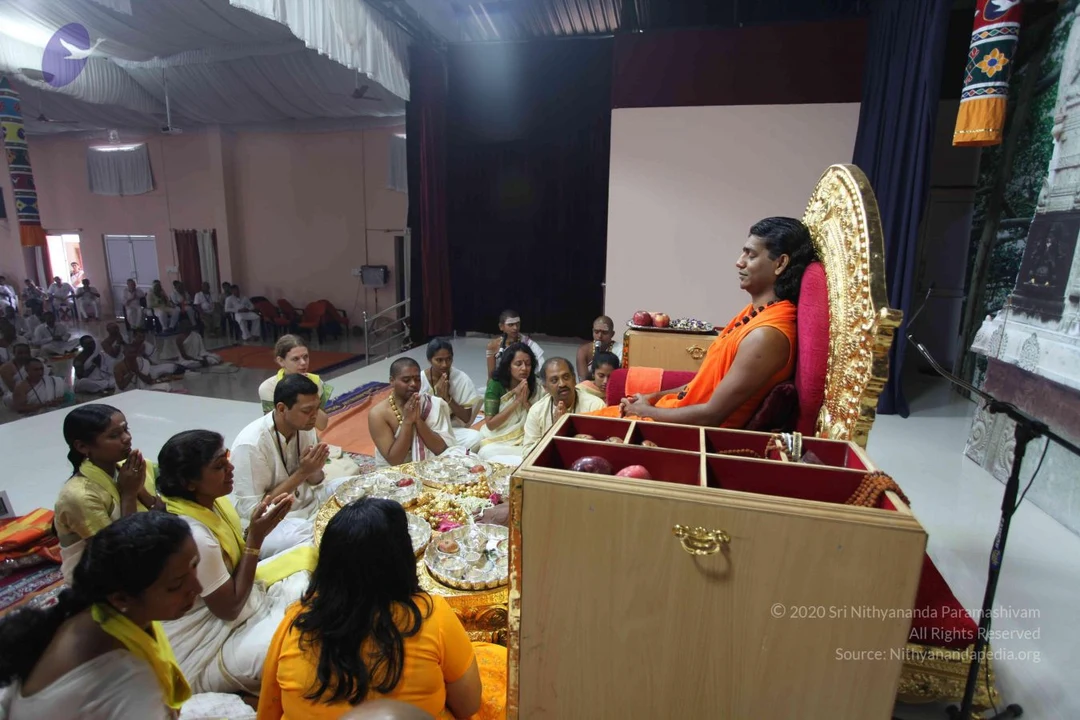
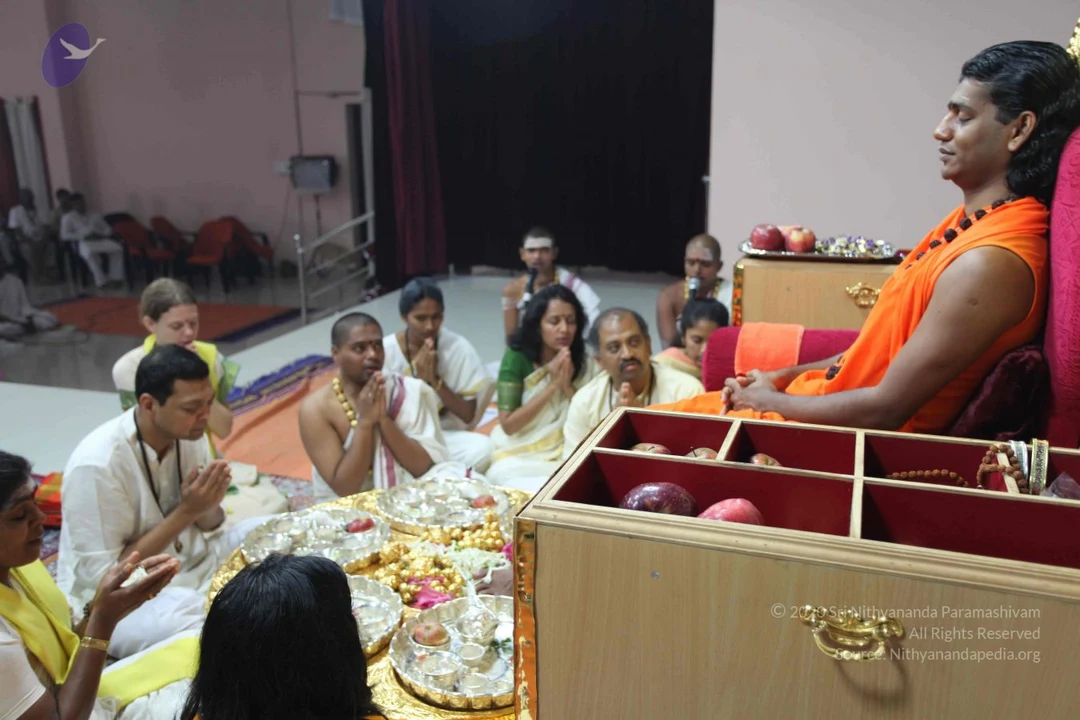
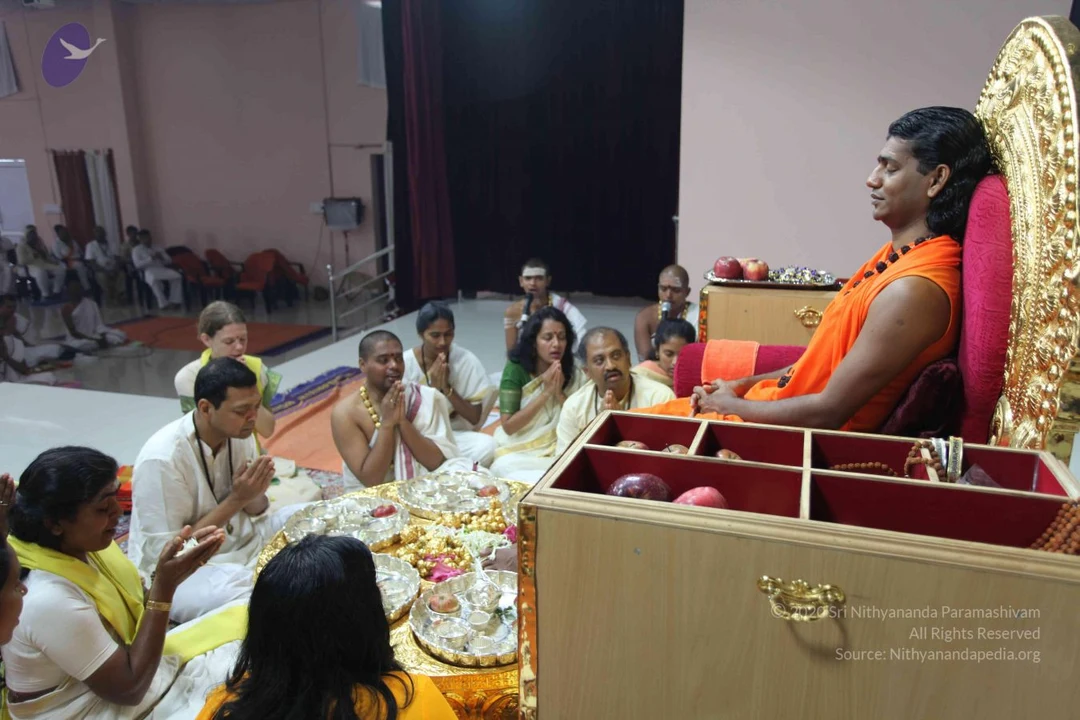
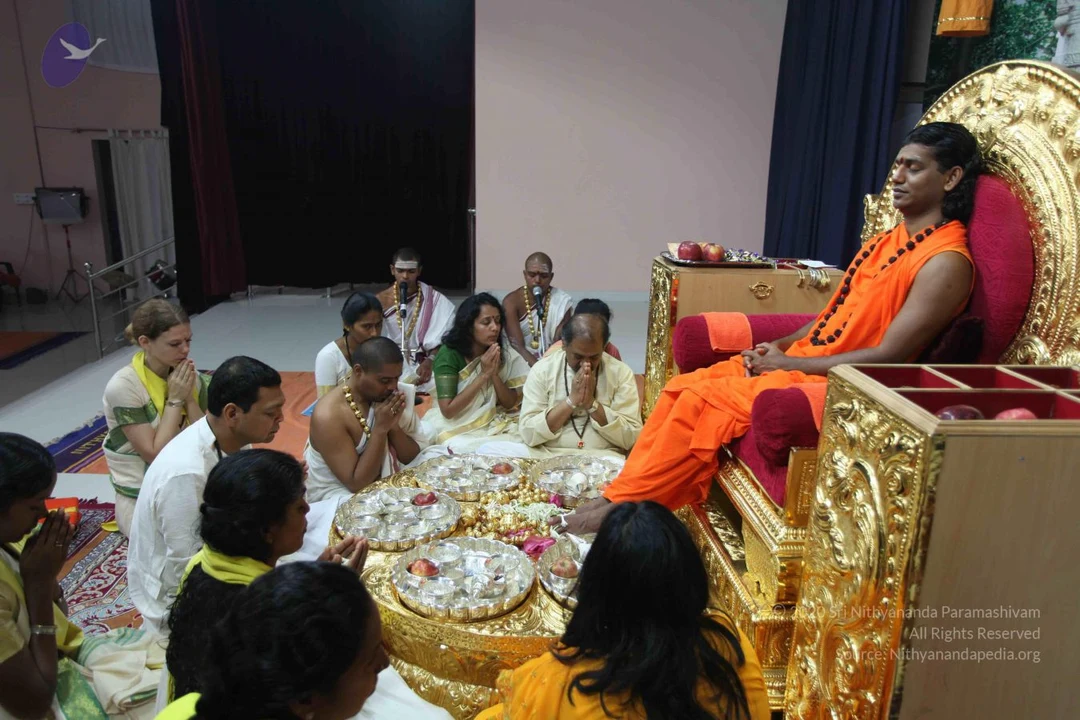
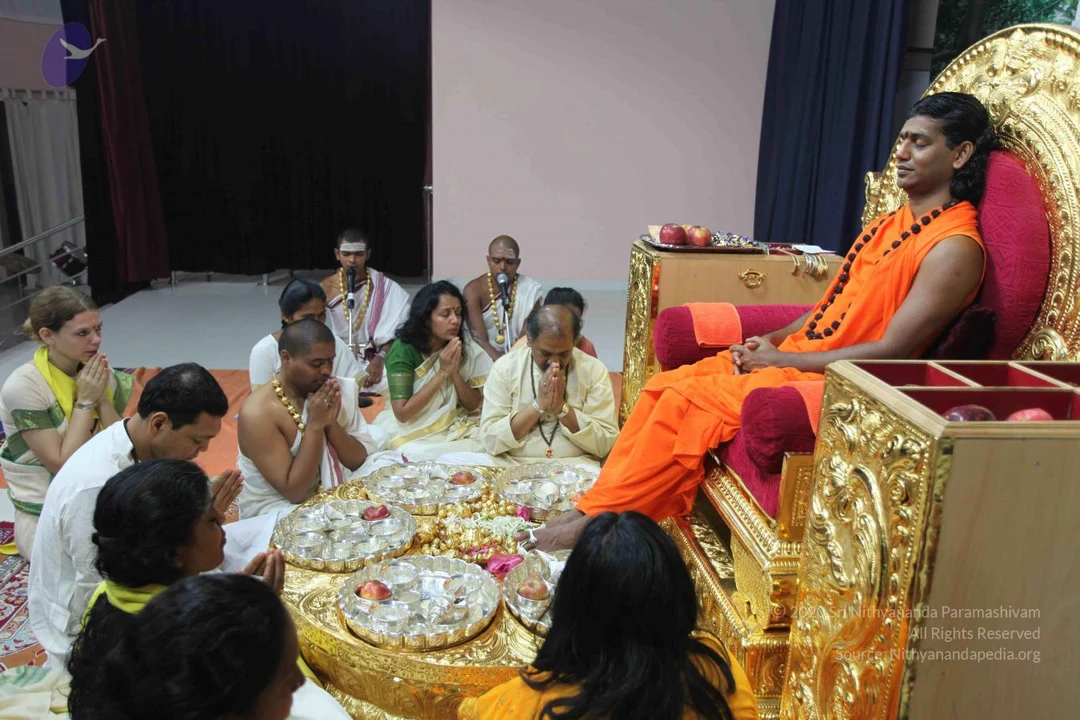
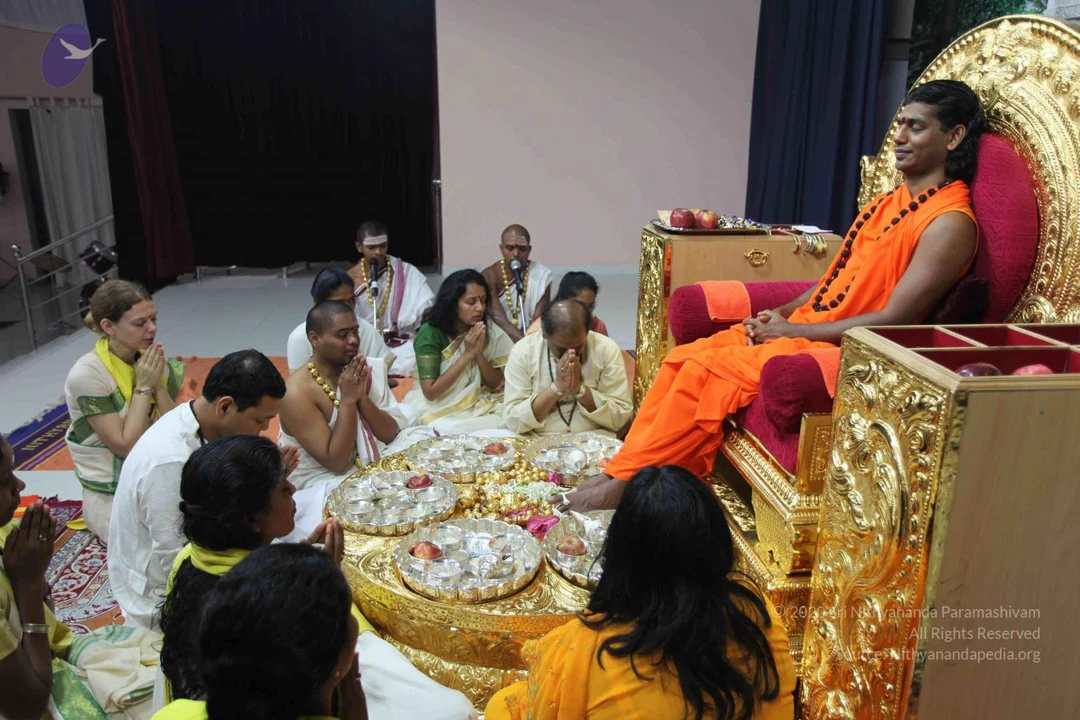
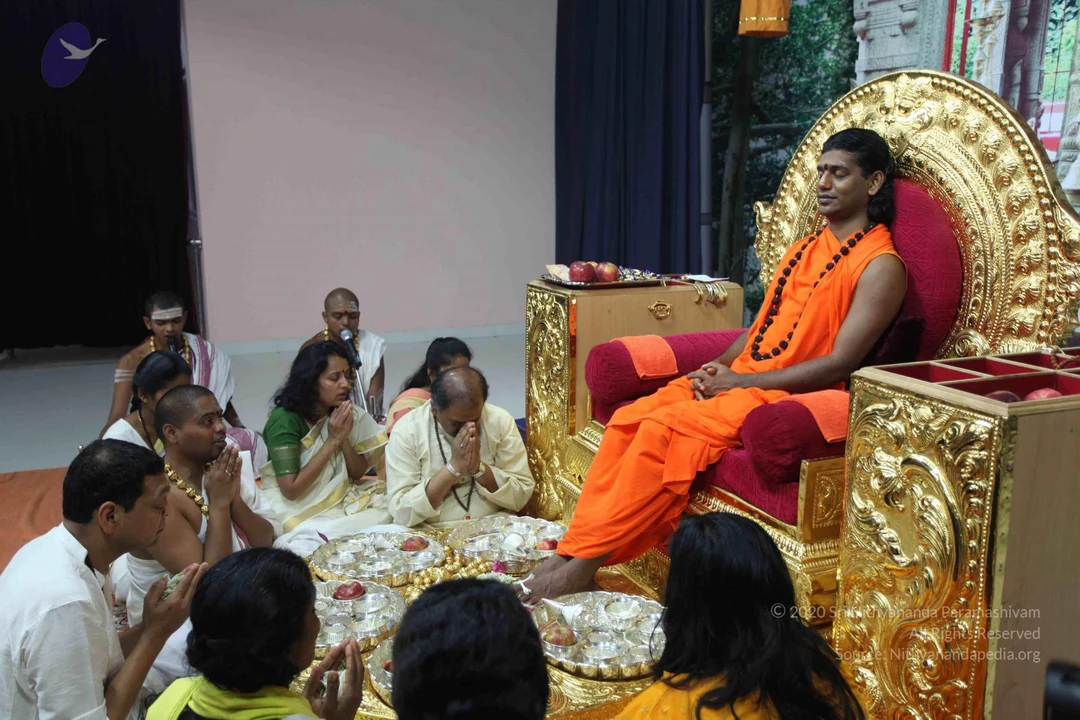
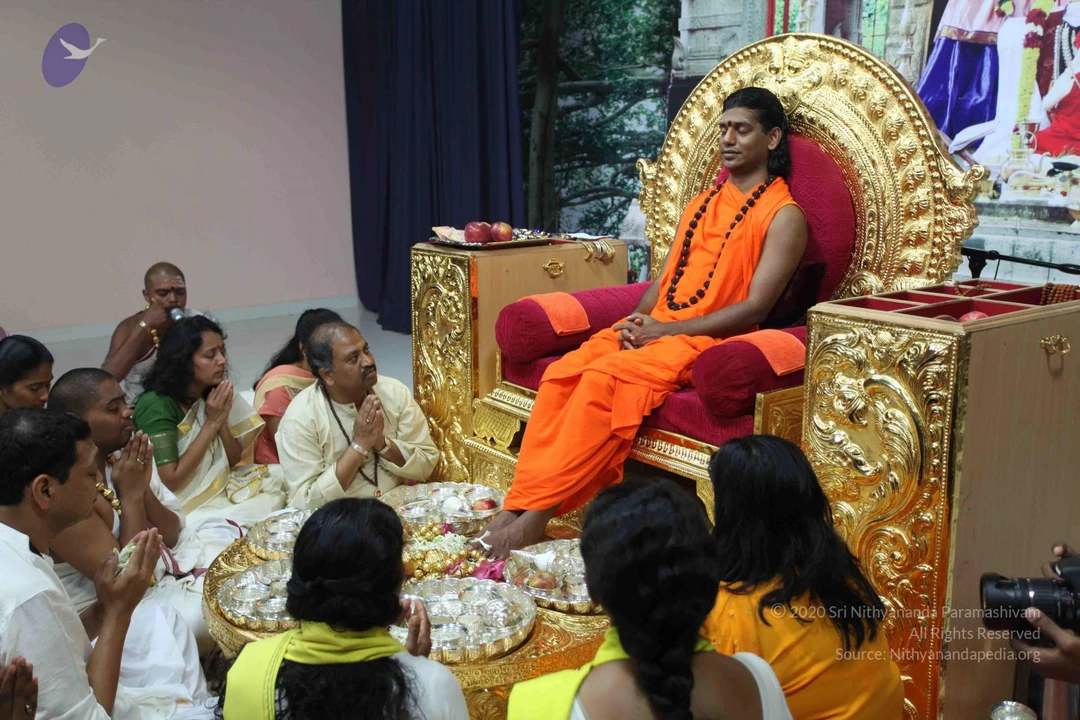
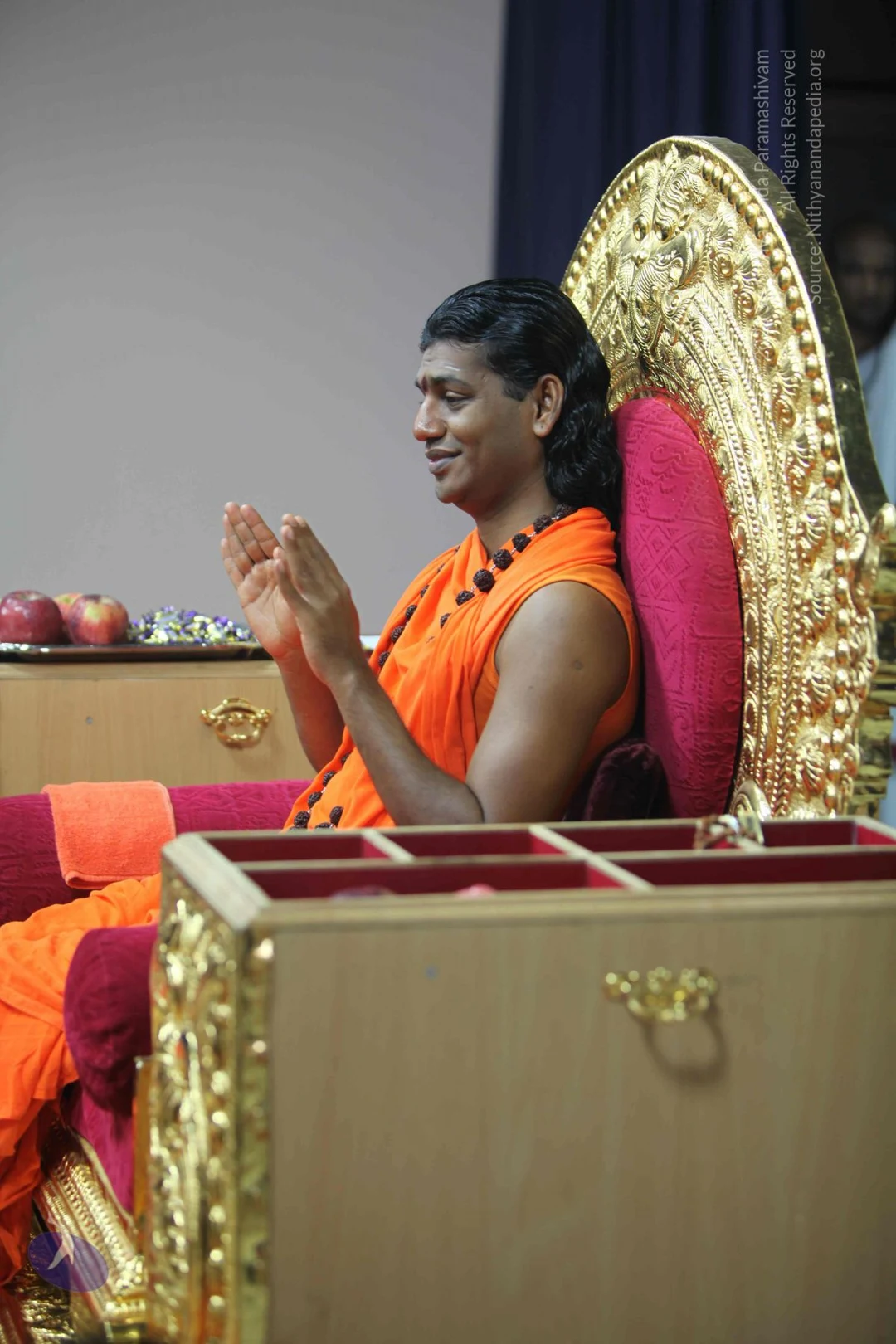
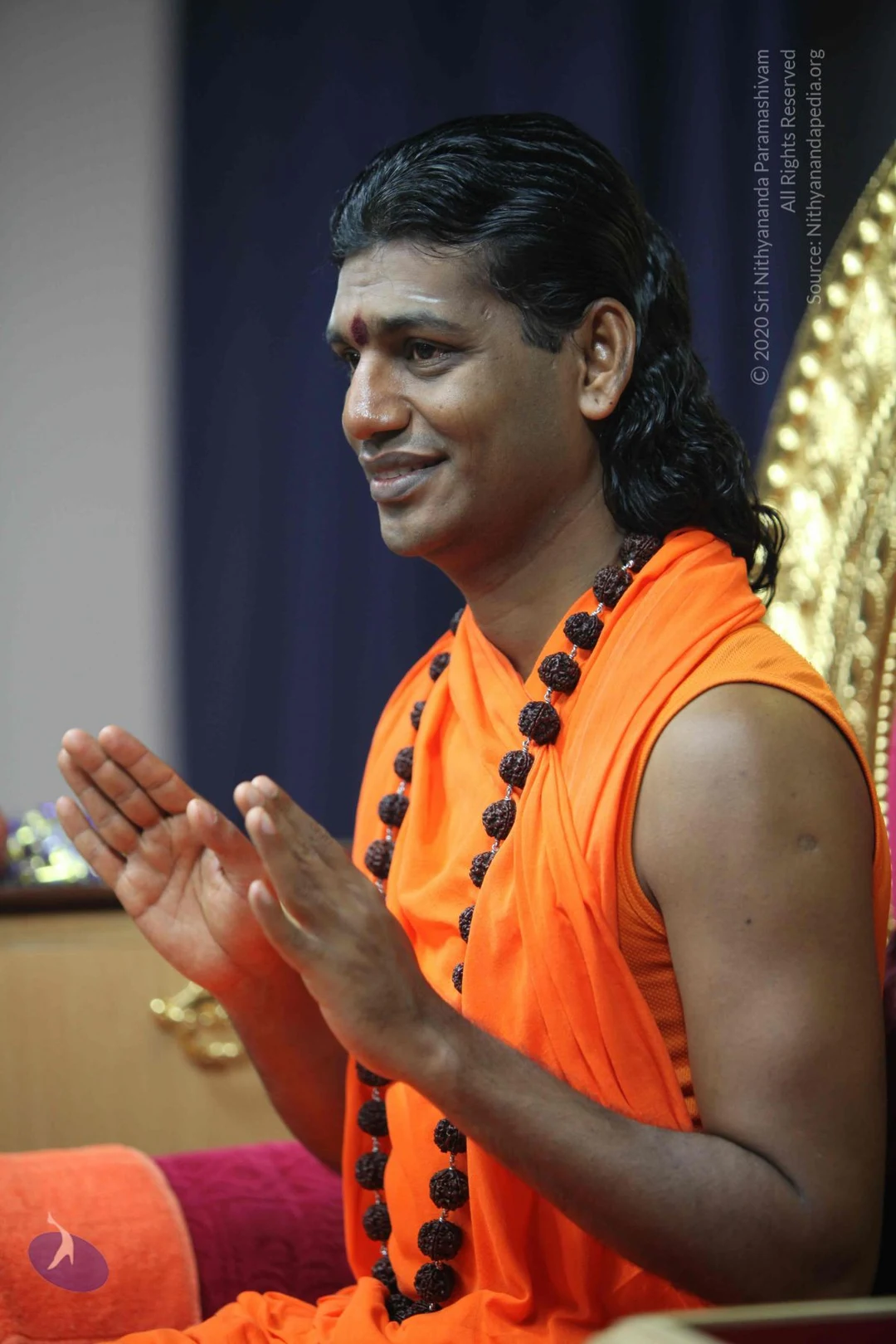
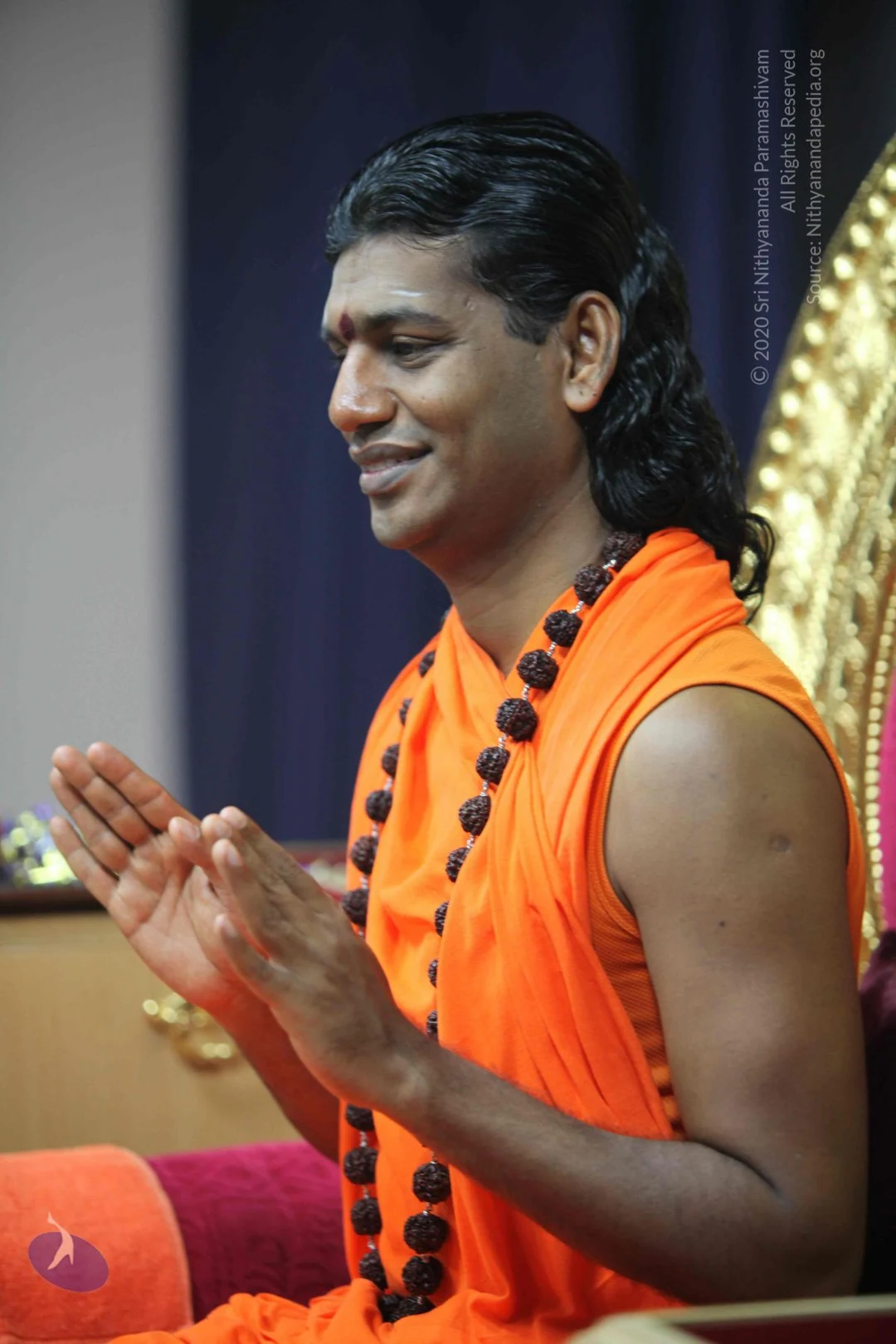
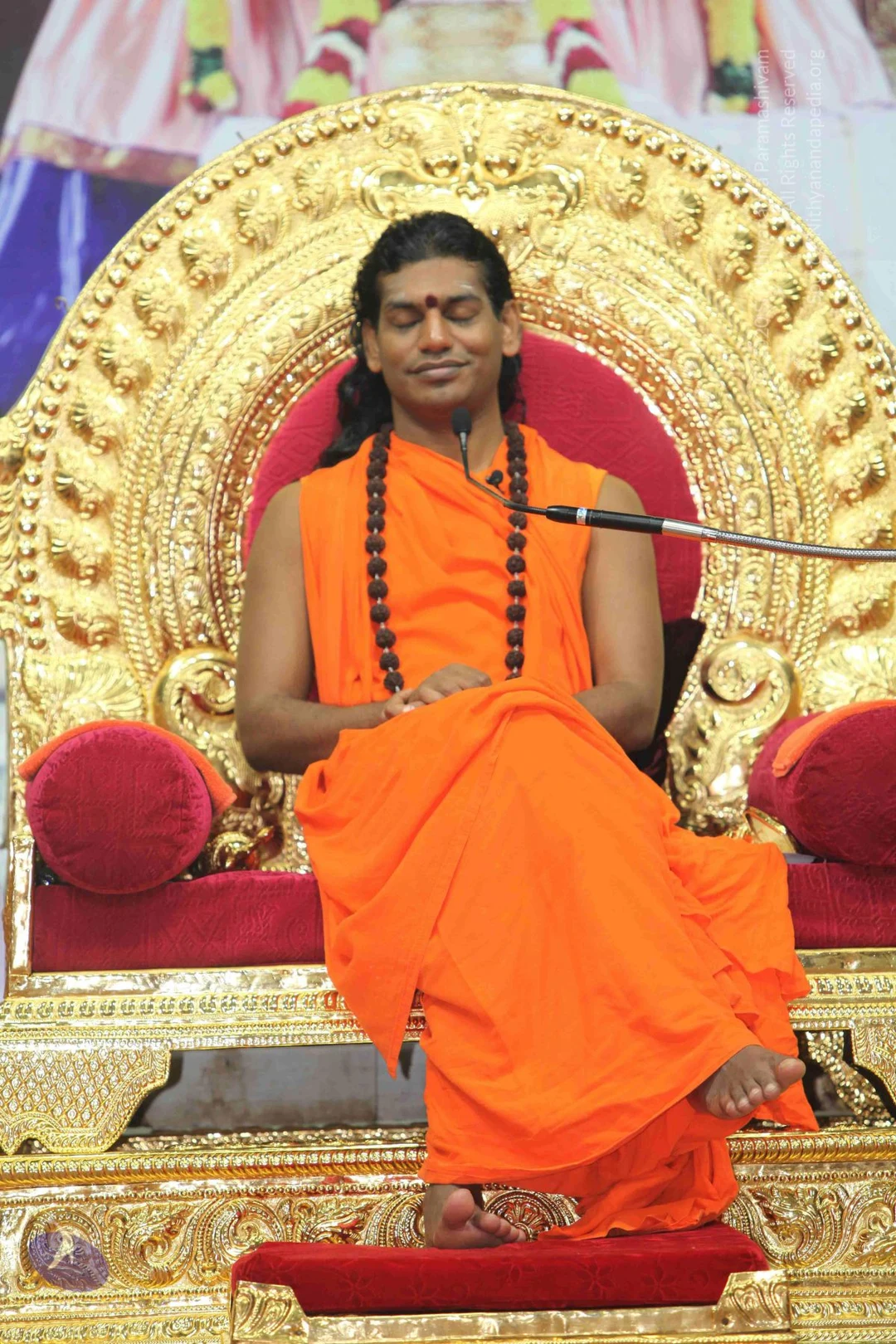
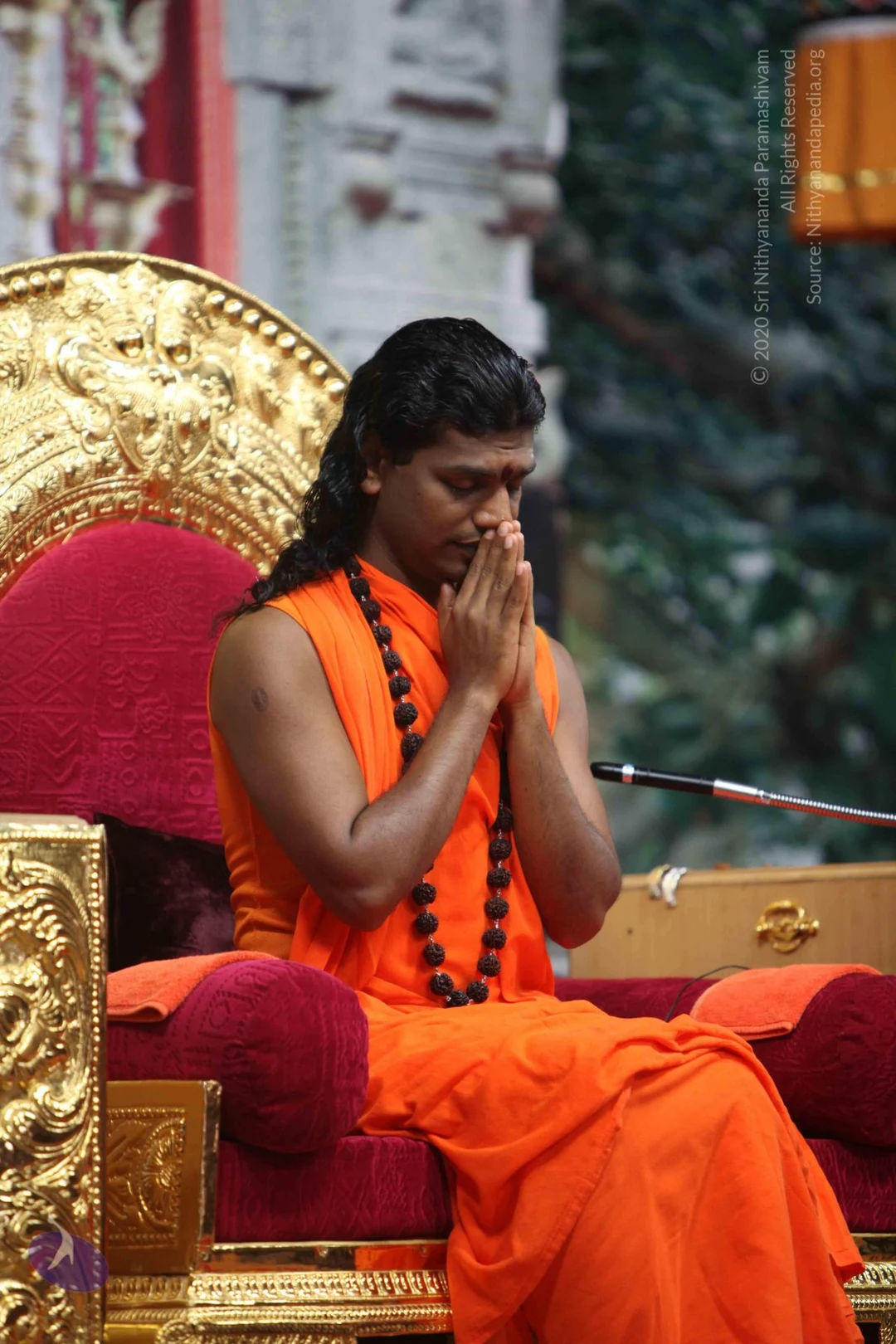
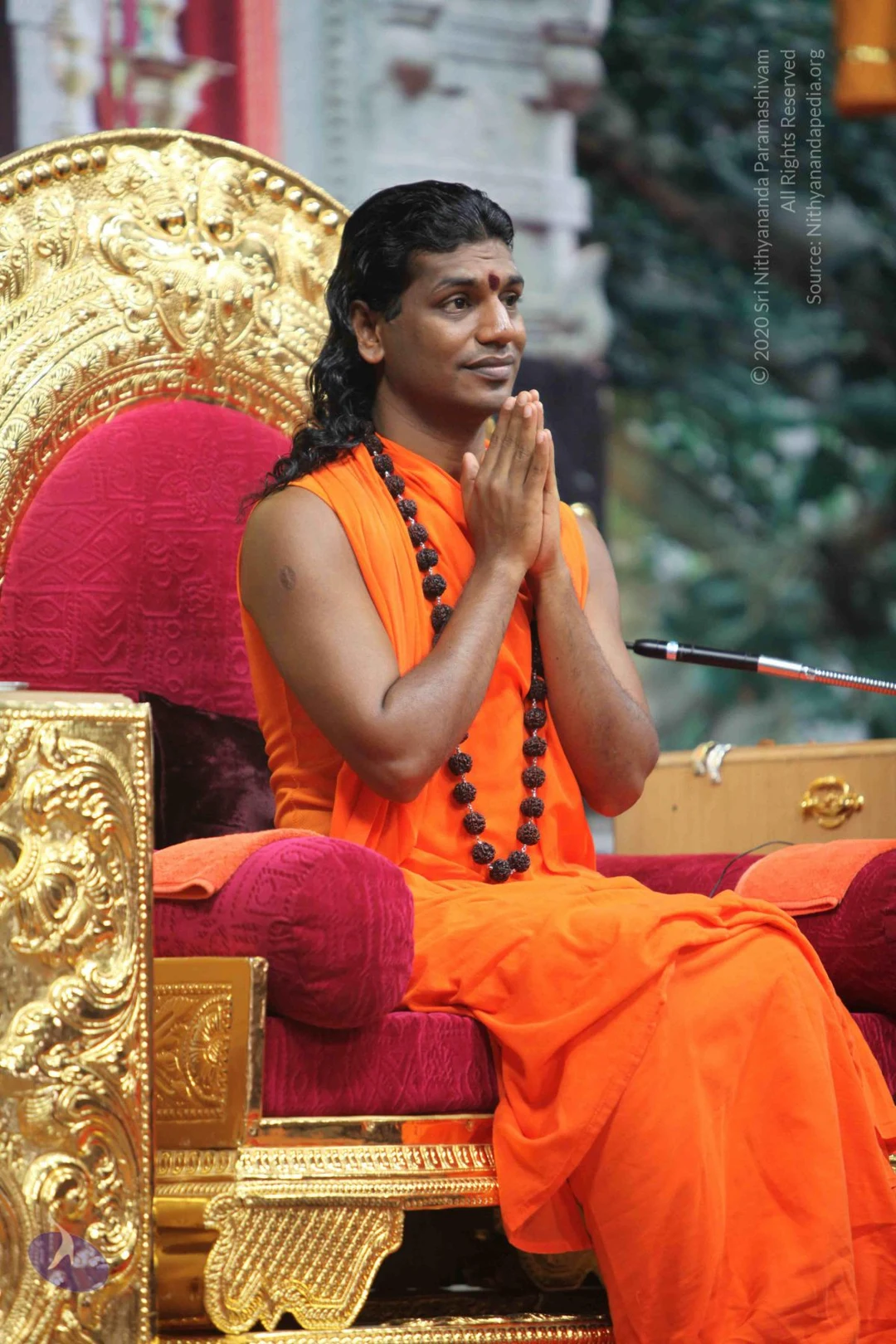
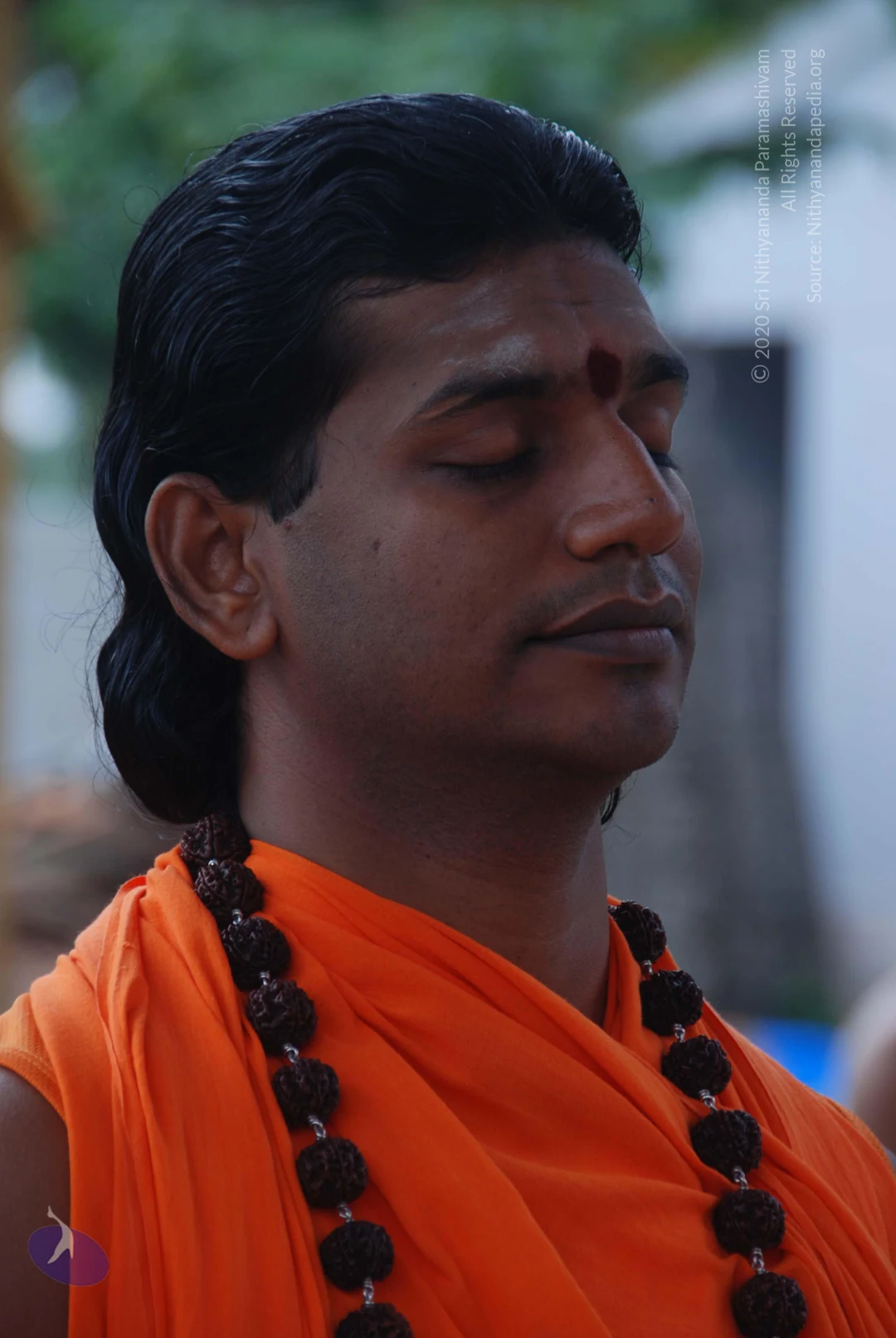
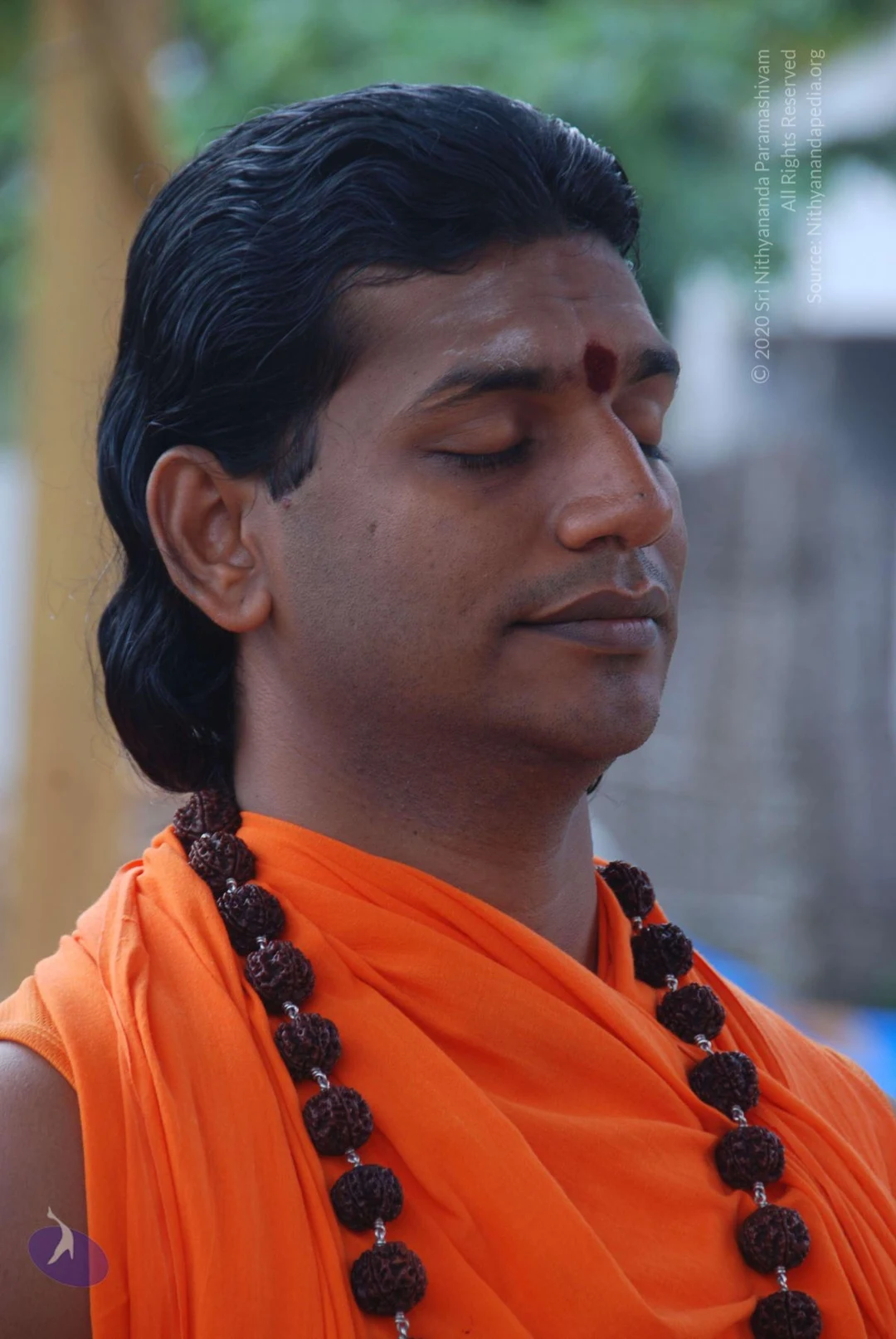
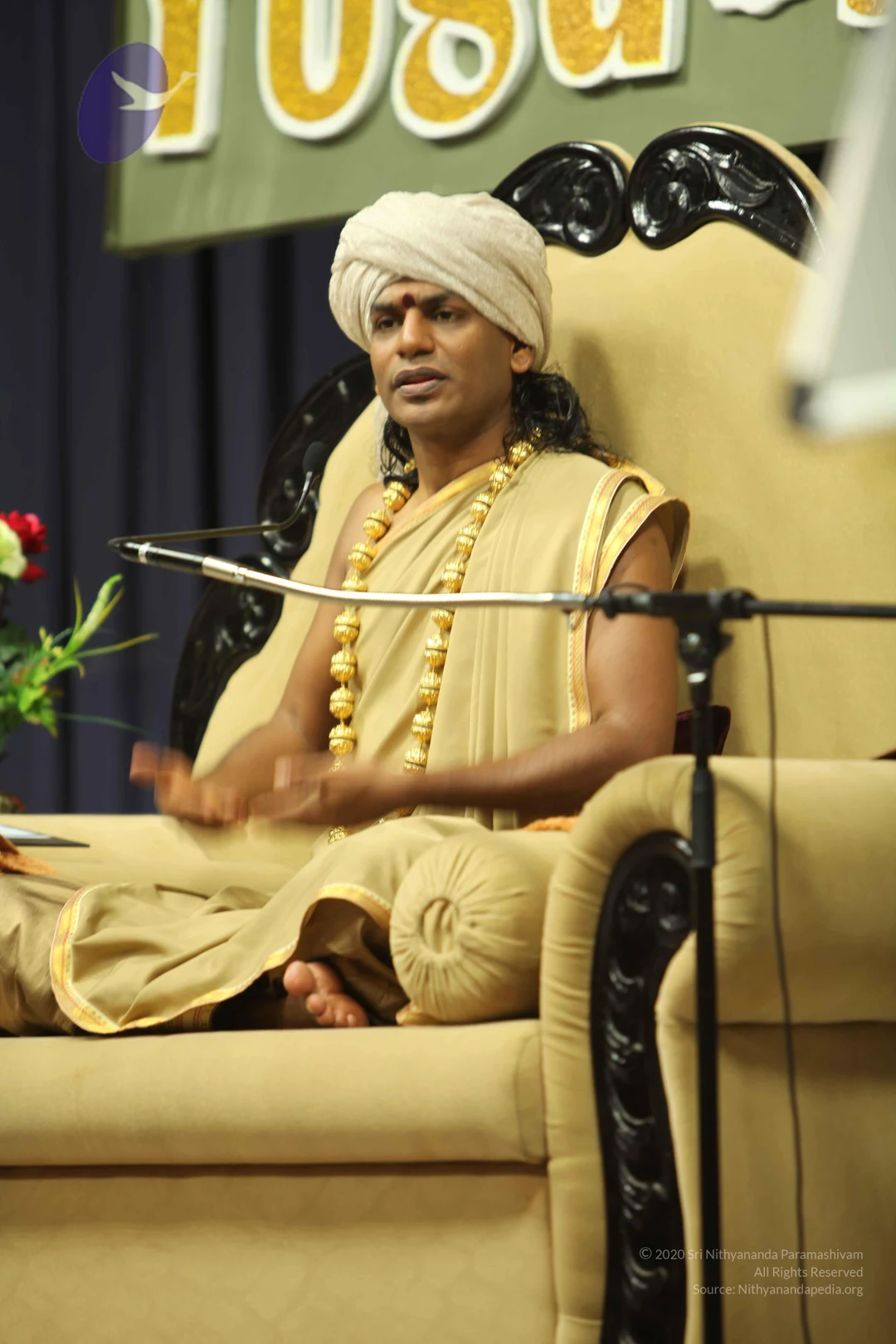
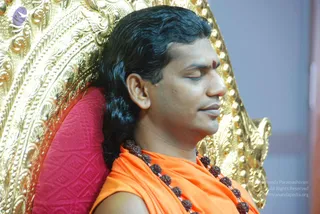
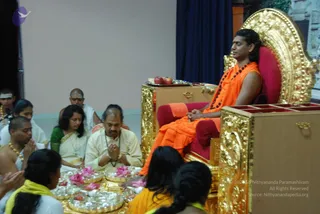
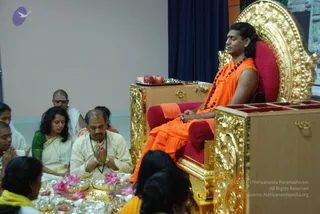
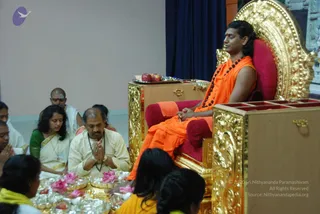
A seated man with long dark hair and an orange saffron robe sits on an ornate gold throne with red cushions, wearing a dark rudraksha mala. He rests his hands in his lap. Fruit and flower offerings sit on a tray beside the throne. In the foreground, several devotees sit on the floor facing him, including a woman in an orange top with her eyes closed, while a blue curtain and a white cooling unit stand behind. The scene appears to be a satsang gathering. a person: the seated man in orange robes, rudraksha mala and long hair on a golden throne.Close side-profile photograph of a man with long swept-back black hair and a red bindi on his forehead, eyes closed in meditation, seated against a red cushion and an ornate gold-embossed throne. He wears an orange saffron wrap over his shoulders and a long rudraksha mala with large dark beads around his neck. a person seated in a throne-like chair, appearing to meditate or listen in a satsang setting.Close-up photo of a man seated on an ornate gilded throne with a red cushion, eyes closed in a calm expression. He has long dark swept-back hair, a red tilak on his forehead, and wears an orange sleeveless garment with multiple rudraksha mala beads around his neck. The golden throne has detailed floral and scrollwork carving.A seated man in an orange-saffron robe with a dark rudraksha mala sits on an ornate gold-and-red throne, hands joined in front of him, eyes closed, with long swept-back hair. A tray with red apples rests on a gold side table beside him. In front, a group of devotees sits on the floor: a man in cream kurta with a mala and folded hands, a woman in a green sari and another in an orange garment, a bare-shouldered man with a yellow-and-white cloth, and a figure with tilak in white. Silver trays of offerings with pink flowers sit in the foreground, with two women in yellow and orange in front. Blue curtains and a painted backdrop complete the hall.A photograph of a seated man in saffron-orange robes and a rudraksha mala on a gilded, red-cushioned throne, hands folded, eyes closed, with long swept-back hair. a person, seated on the throne as the central figure. In front of the throne, a row of devotees kneel and sit on the floor: a woman in a green sari and a man in cream-white dhoti-style clothing with folded hands, a shaven-headed priest in white, and women in yellow and dark clothing in the foreground. Before them stand silver trays with pink lotus flowers and offerings, and a small tray of apples sits on the carved wooden stand beside the throne.
03

NITHYA-SATSANG

39 dated photos in previewSource gallery
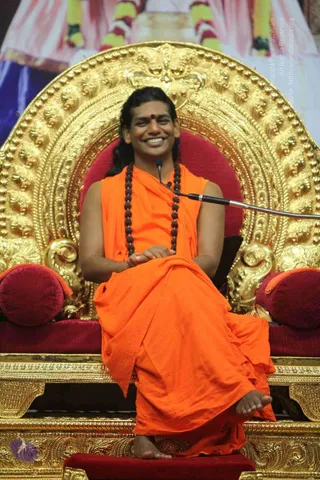
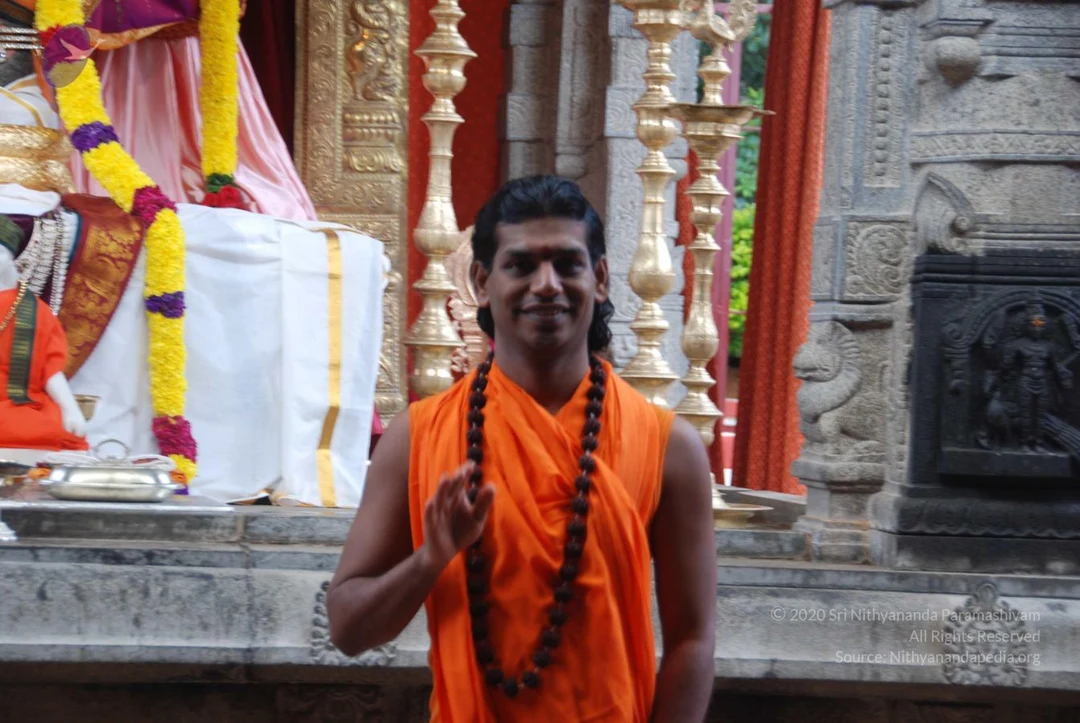
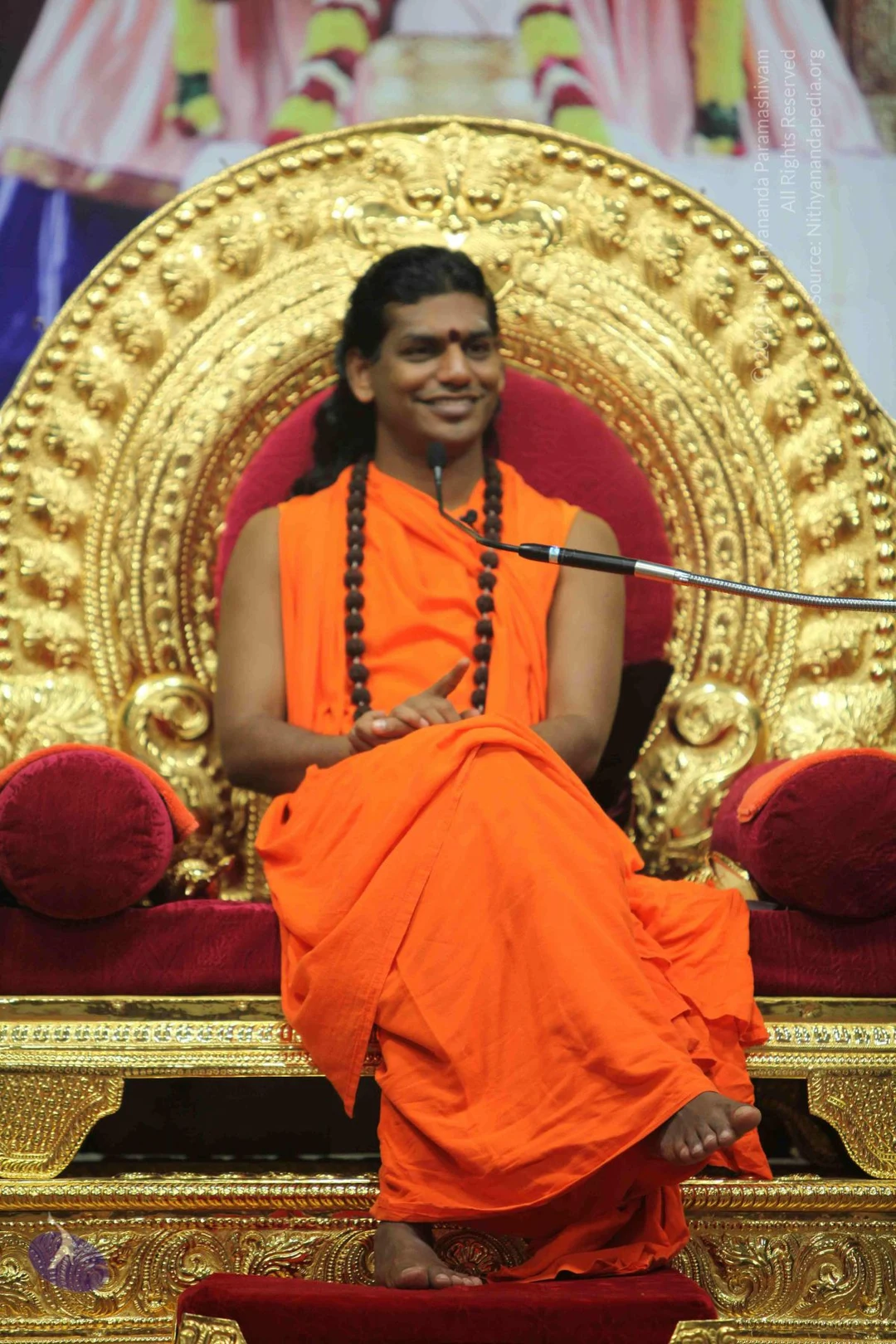
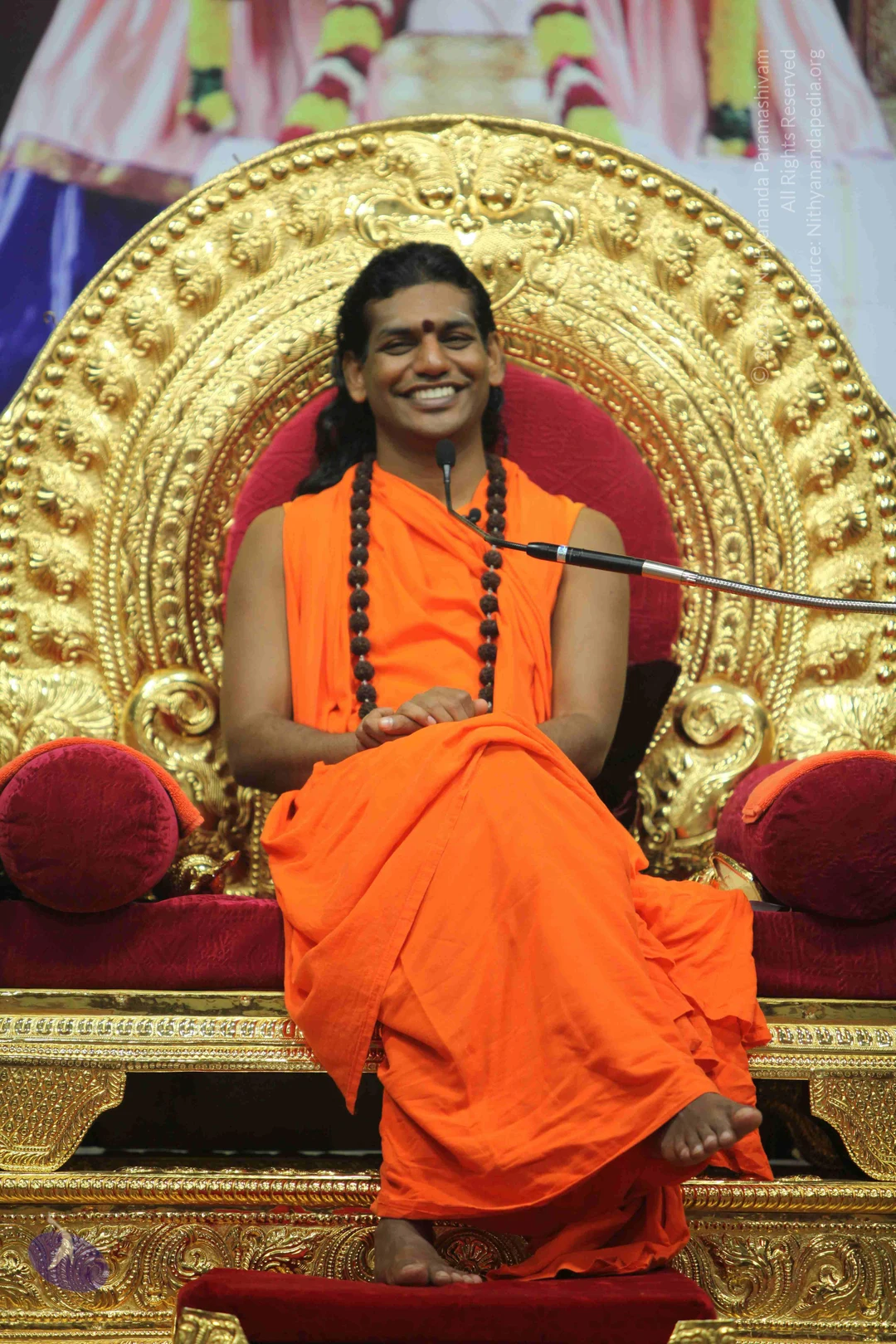
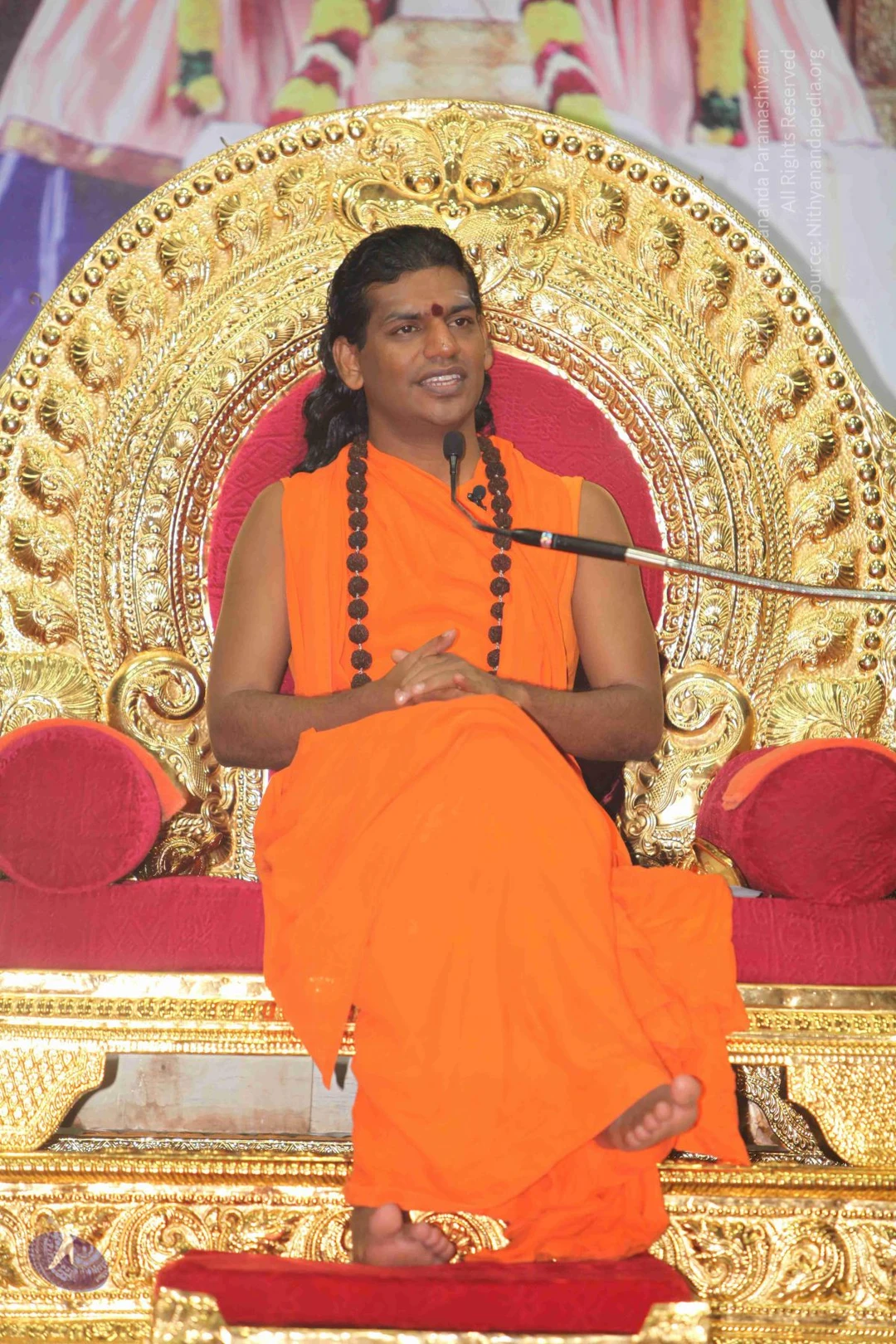
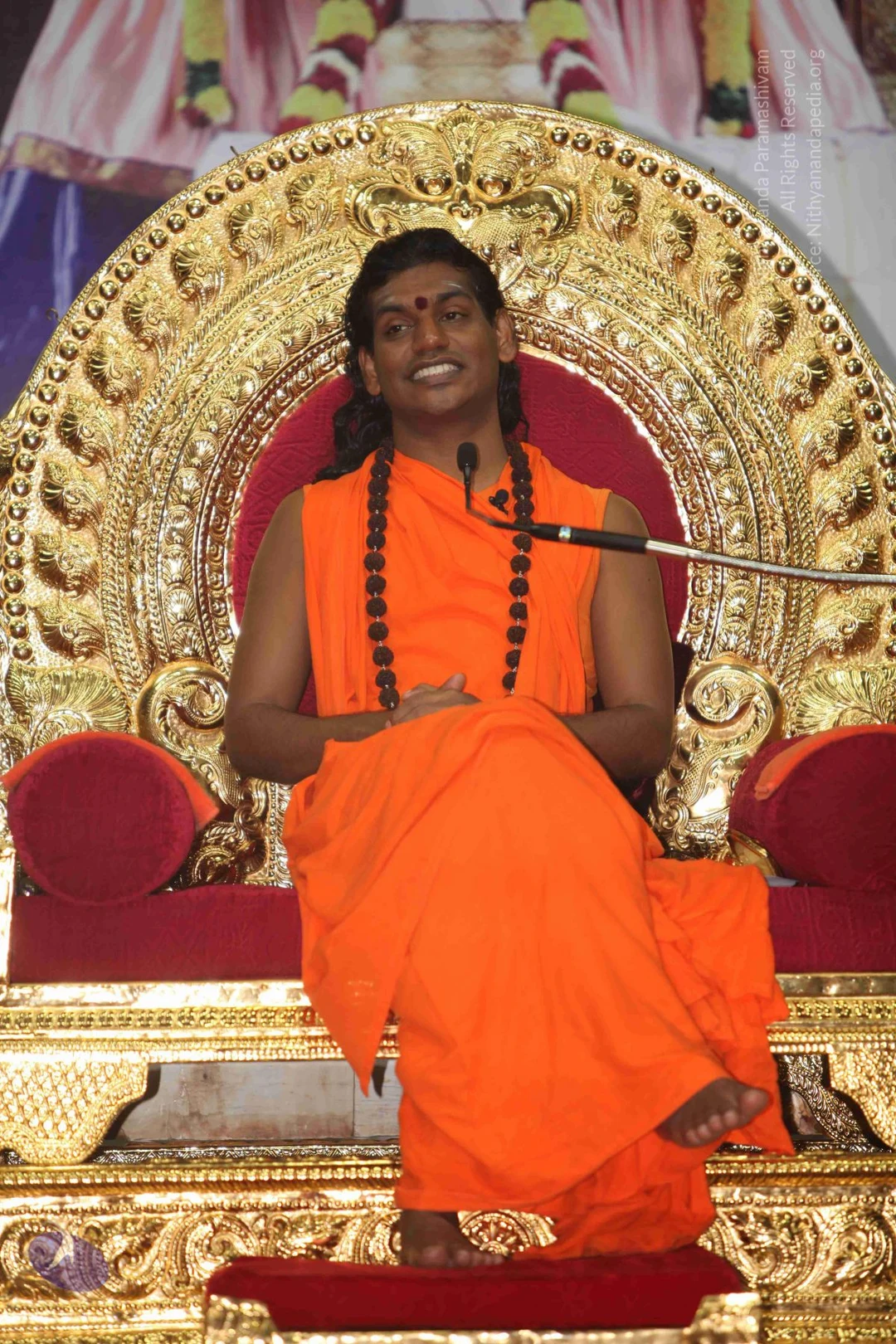
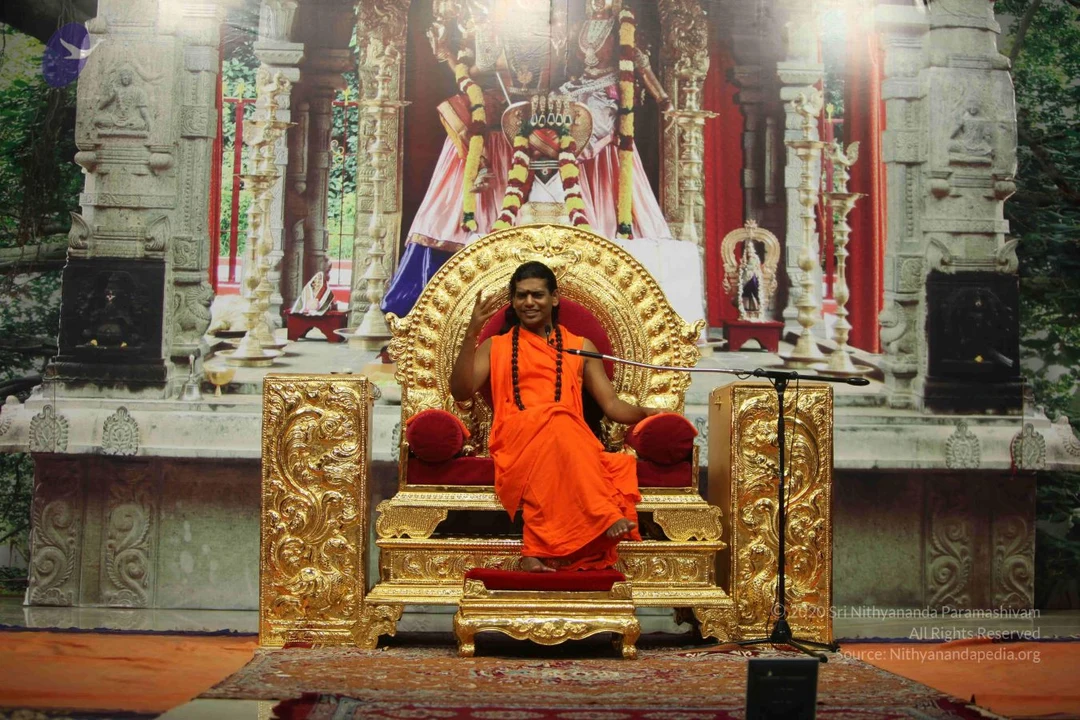
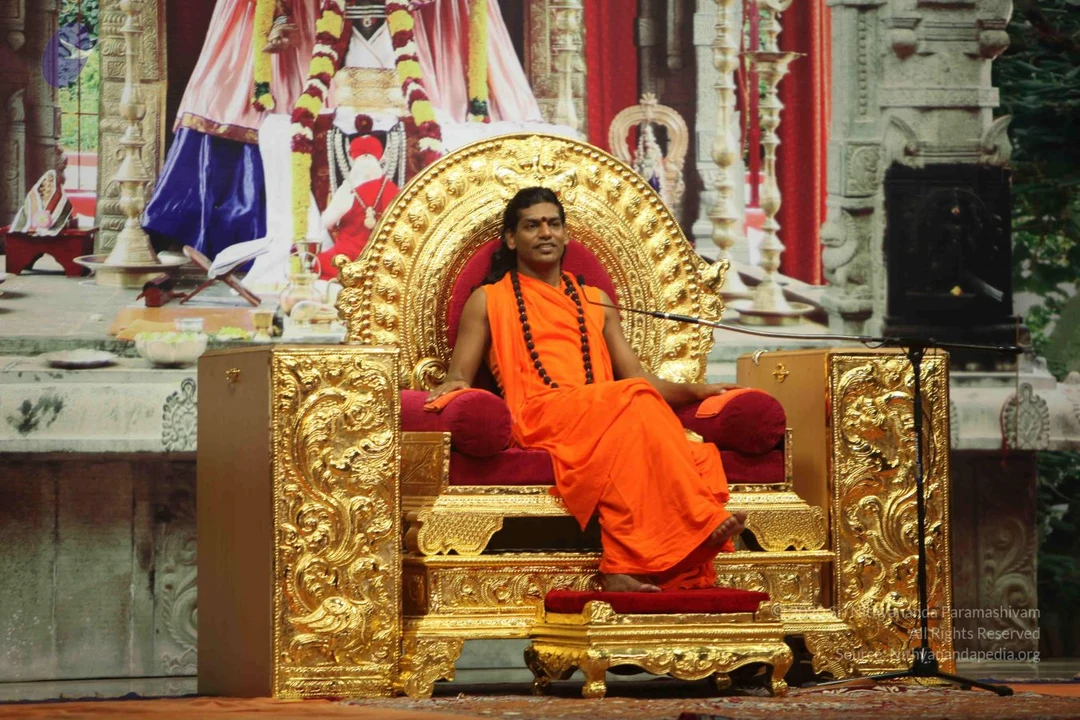
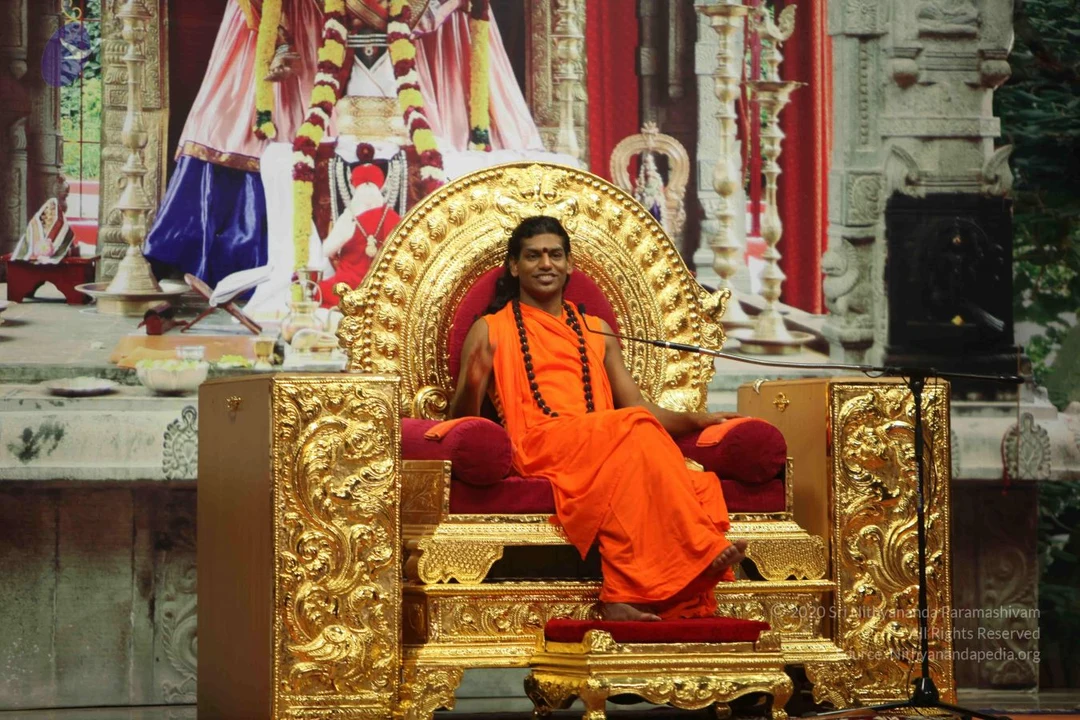
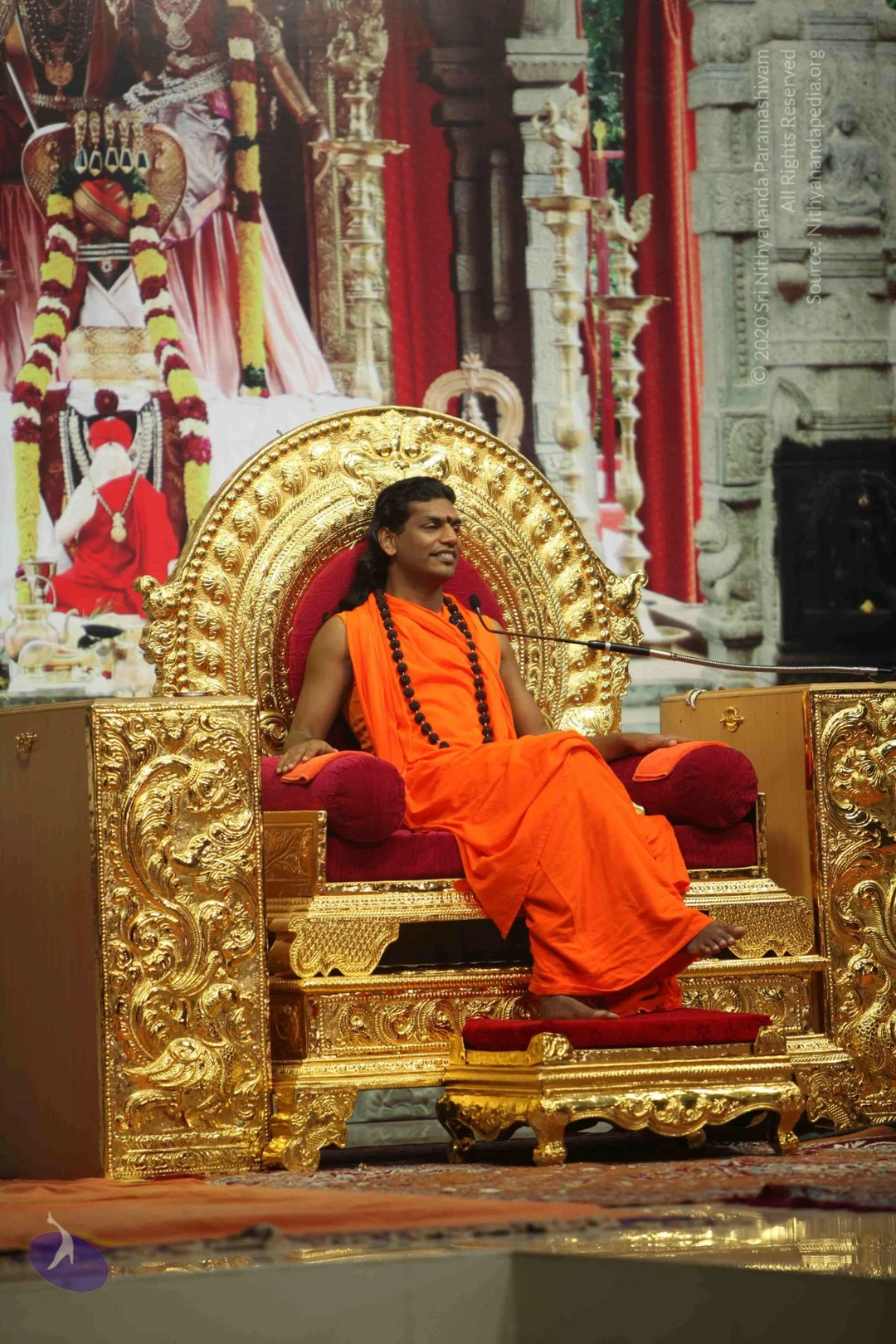
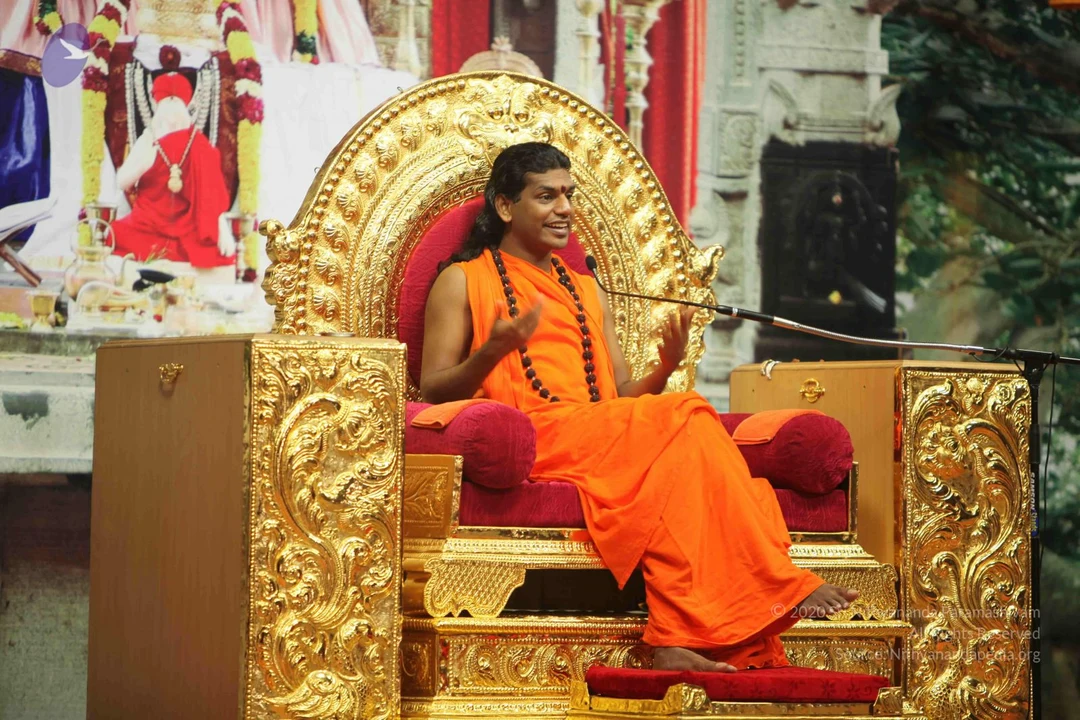
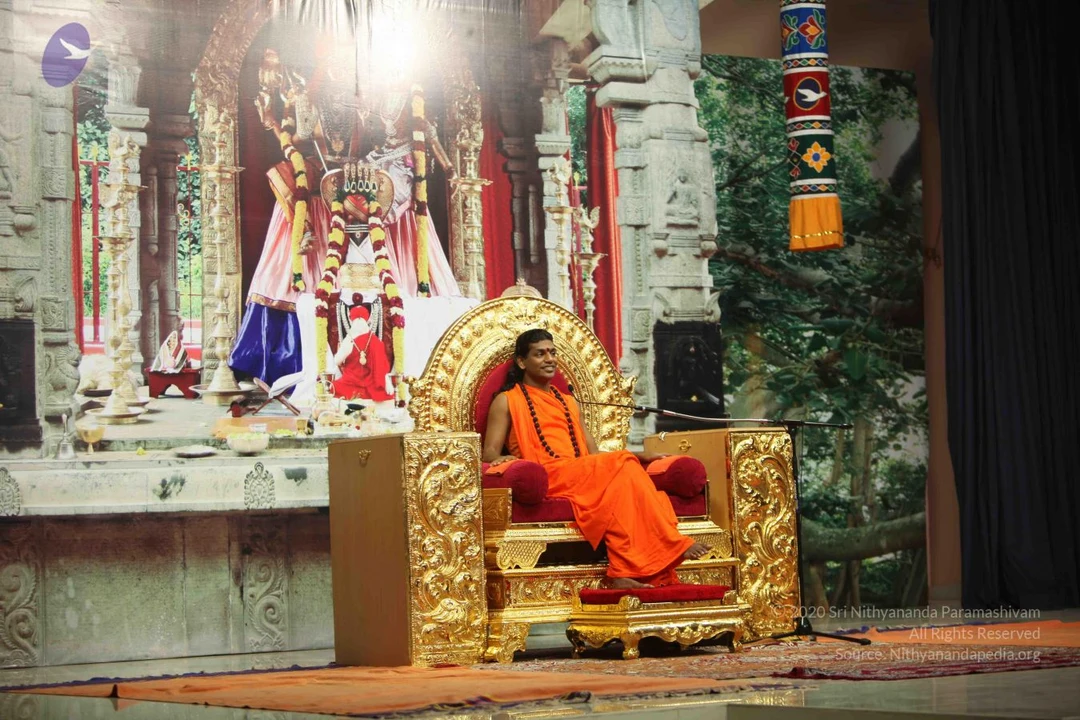
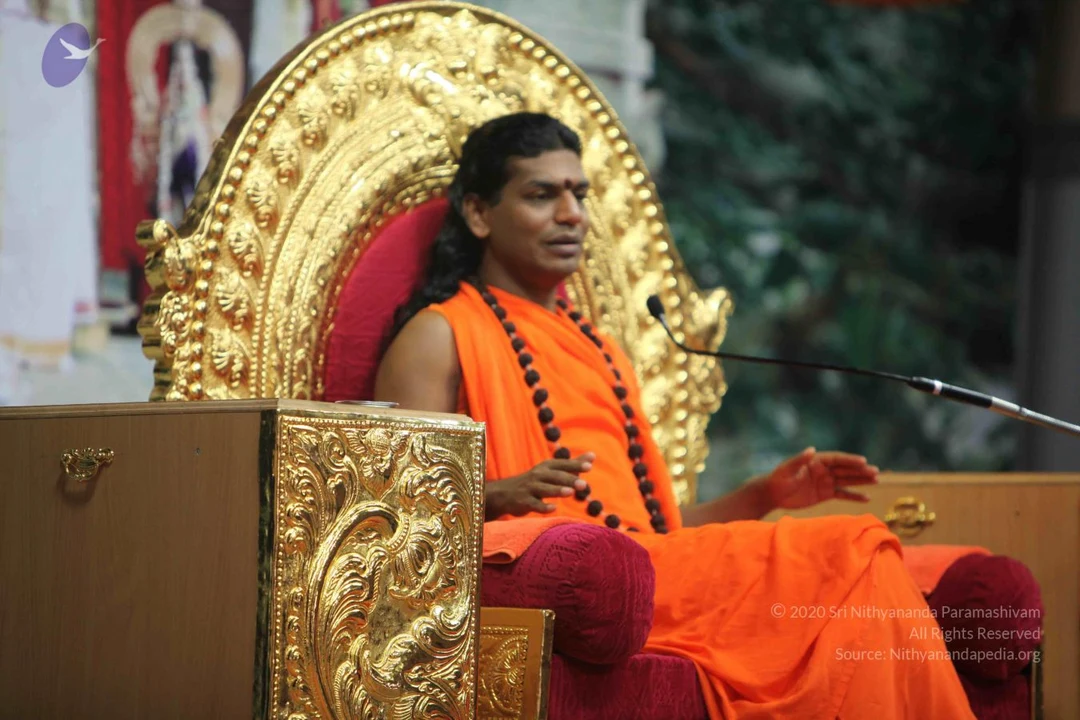
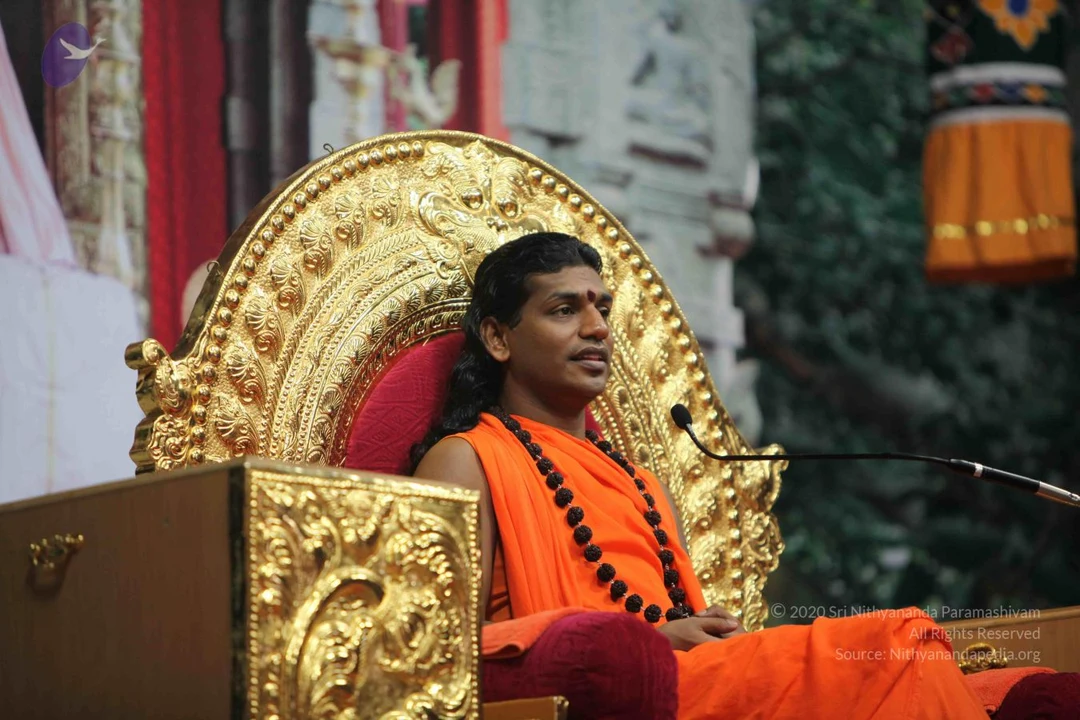
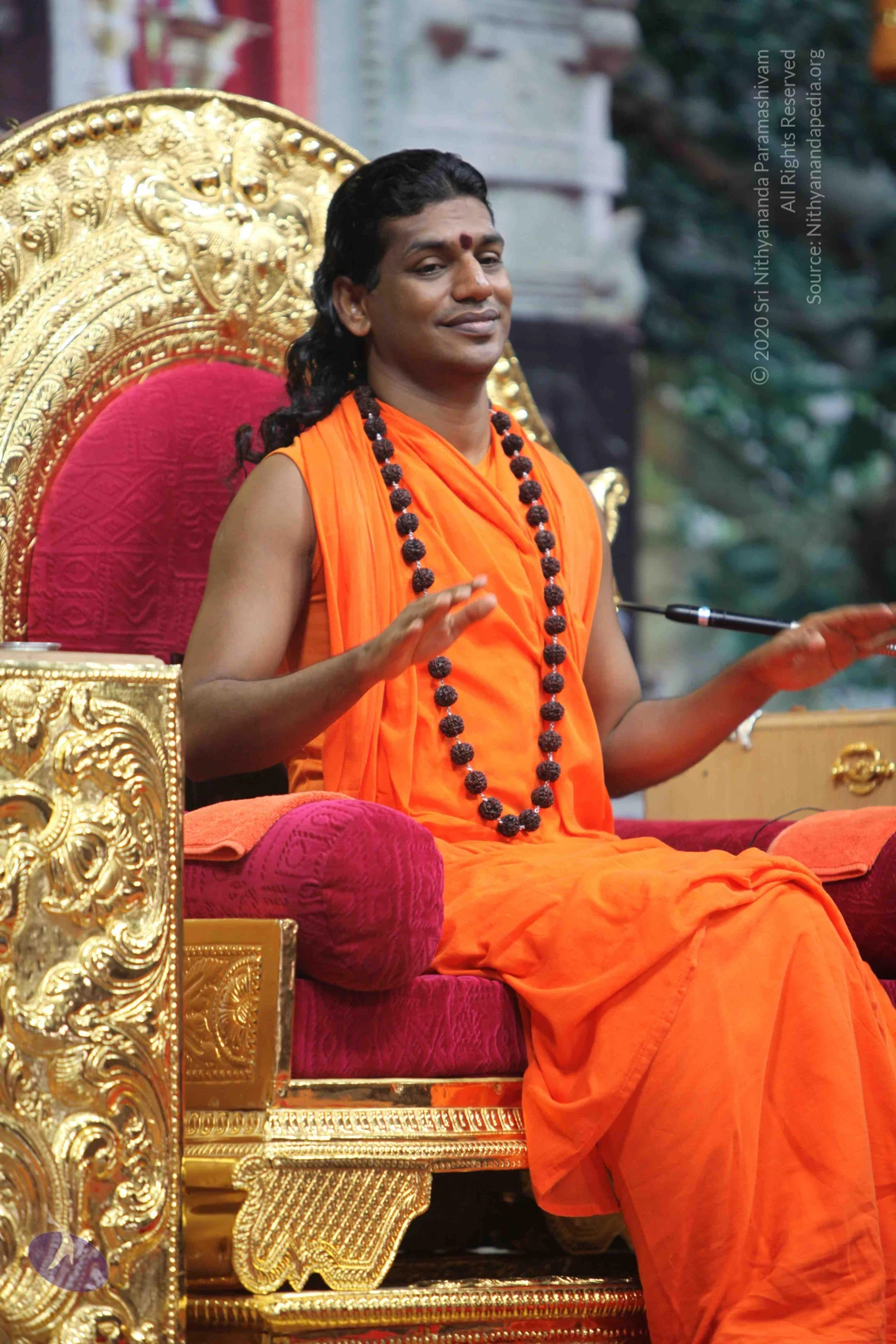
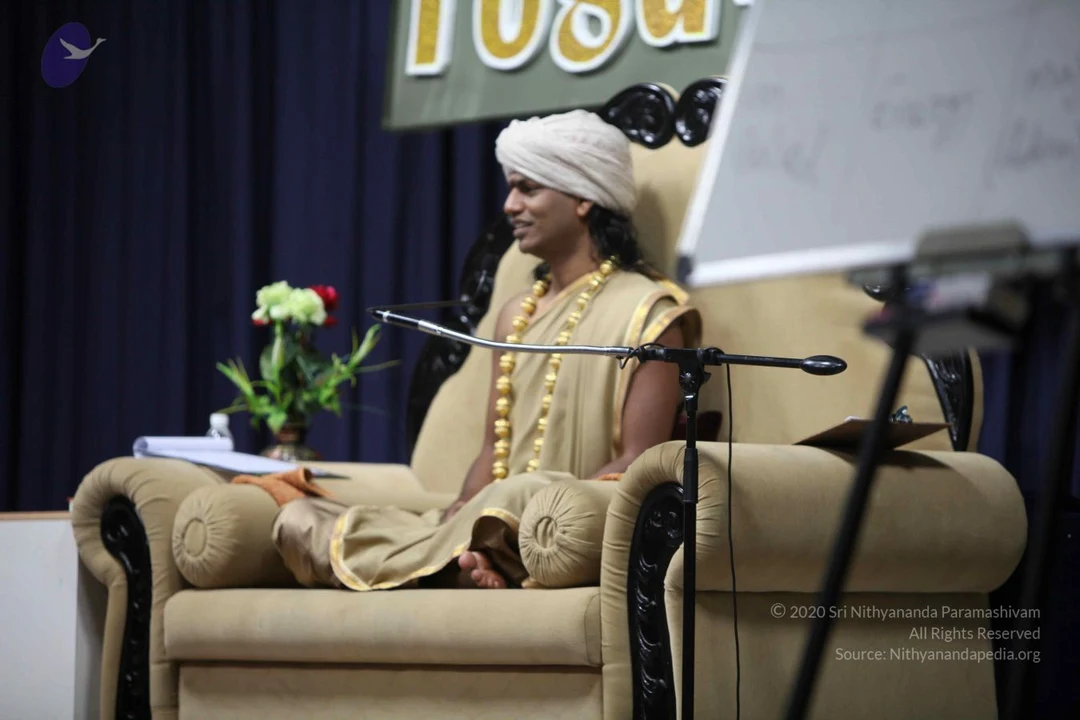
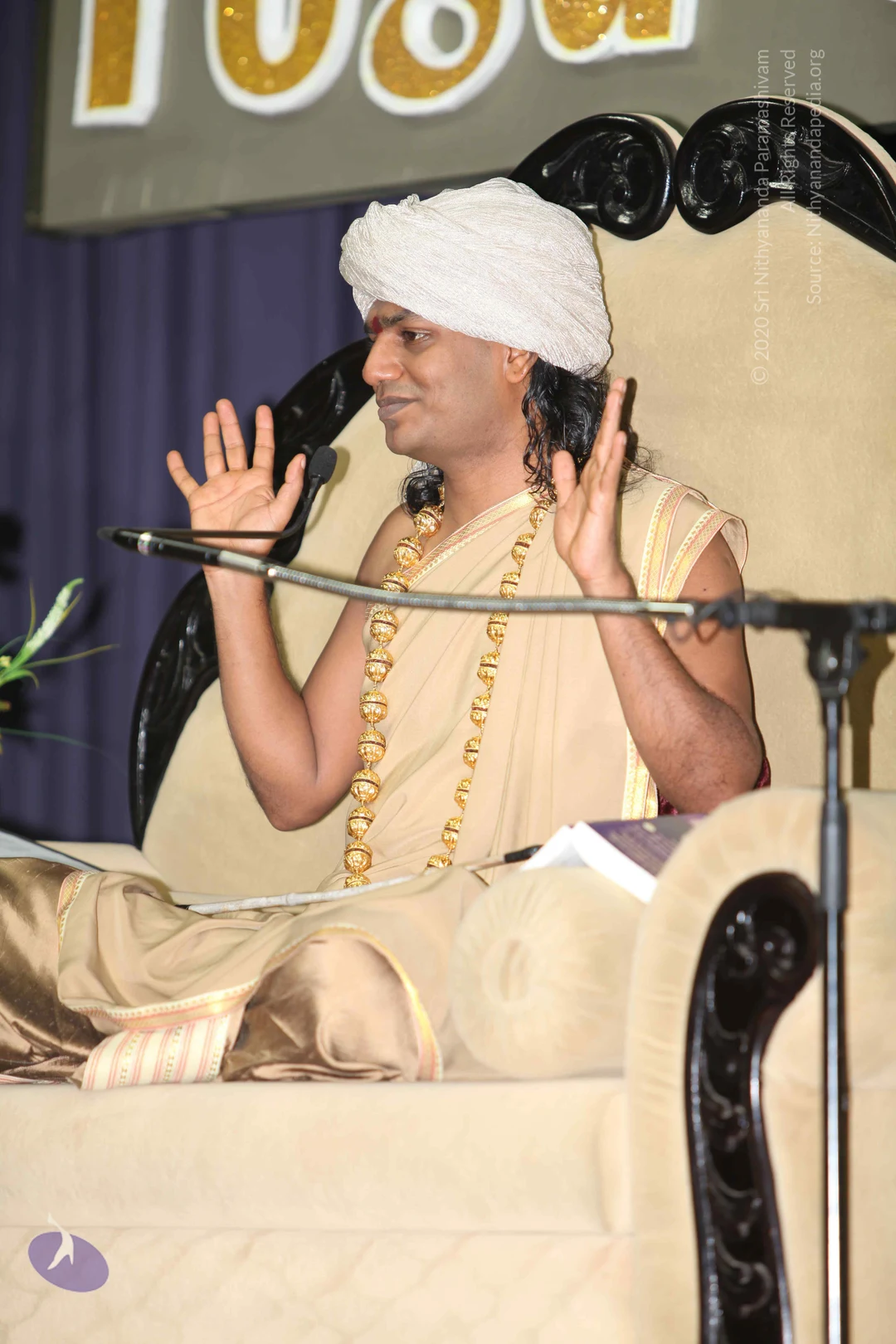
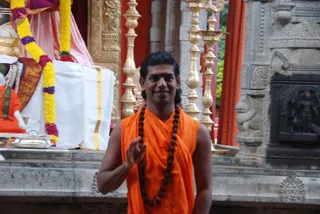
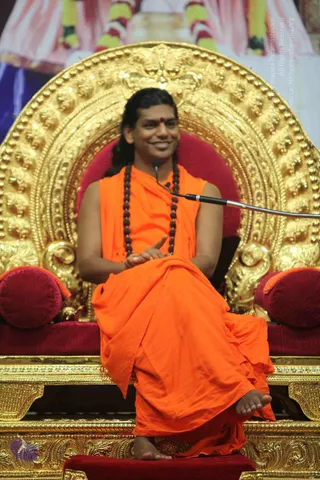
A smiling man with dark hair swept back stands outdoors in front of a stone temple shrine, raising his right hand in greeting. He wears a saffron-orange shawl wrapped over his shoulders and chest and a long dark rudraksha mala around his neck. Behind him are a white-draped altar with a yellow and orange garland, brass lamp stands, a brass plate of offerings, and a carved stone relief panel. Swamiji (probable) is the figure here, shown by swept-back hair, saffron garments and rudraksha mala, in a temple setting.A seated man in saffron-orange robes sits on an ornate gold throne with a deep red cushioned seat and red bolster pillows. He wears a long rudraksha mala around his neck, a red tilak on his forehead, and has long dark hair falling behind him. He smiles and gestures with his right hand while a microphone stand curves in front of him. His bare feet rest on a small red footstool. Behind the throne, pink and white draped fabric with red and yellow garland decorations is visible. The setting appears to be a live satsang talk on stage.A smiling man in saffron-orange robes sits on an ornate gold throne with red velvet cushions, a microphone on a flexible stand near his chest. He wears a rudraksha mala and a red bindi, with long dark hair, and his hands rest together in his lap while one bare foot is raised on a red footrest. Behind him, a large screen shows a figure in pink and white garments with yellow-green garlands. Swamiji (probable): a saffron-robed man with long swept-back hair, rudraksha mala and ornate gold throne seated as a speaker. The scene suggests a seated satsang talk.
04

SARVA-DARSHAN

11 dated photos in previewSource gallery
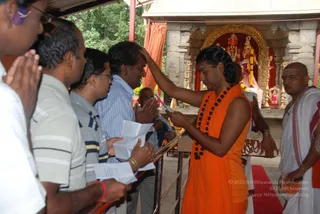
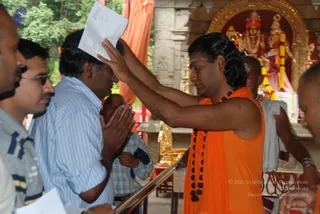
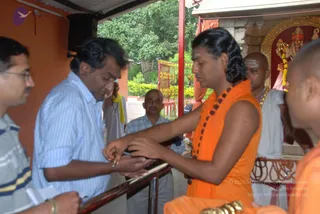
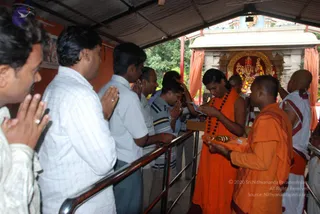
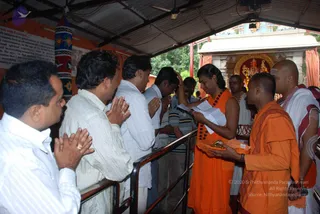
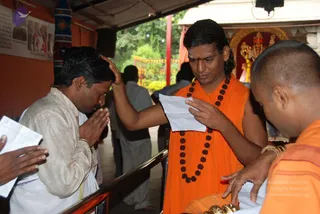
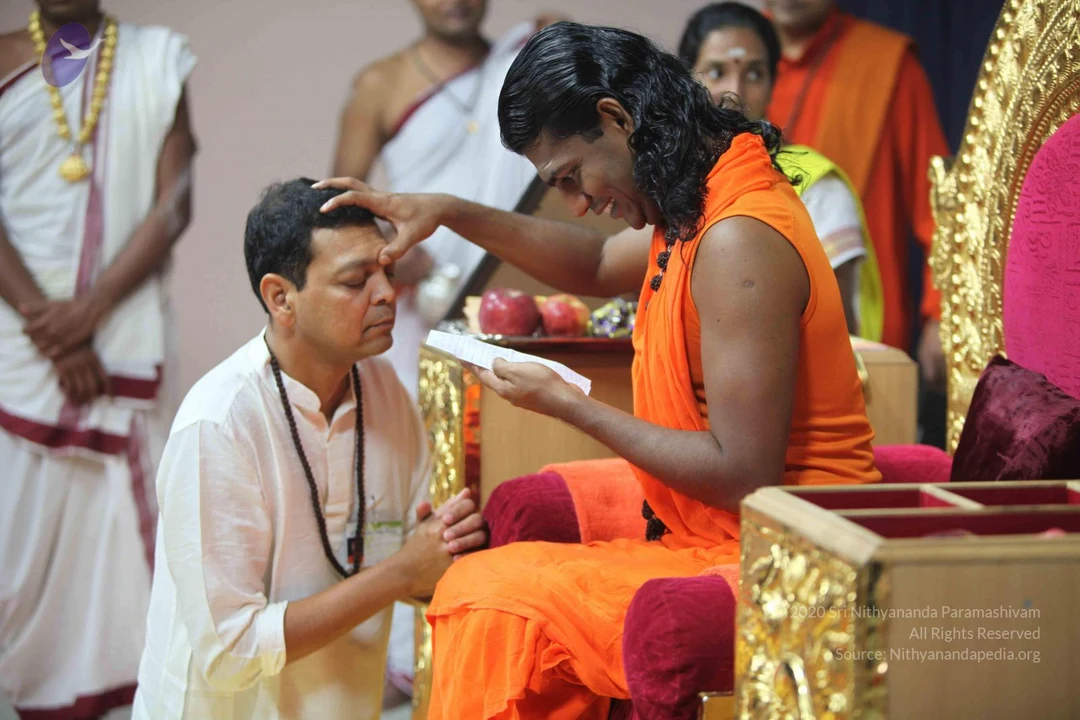
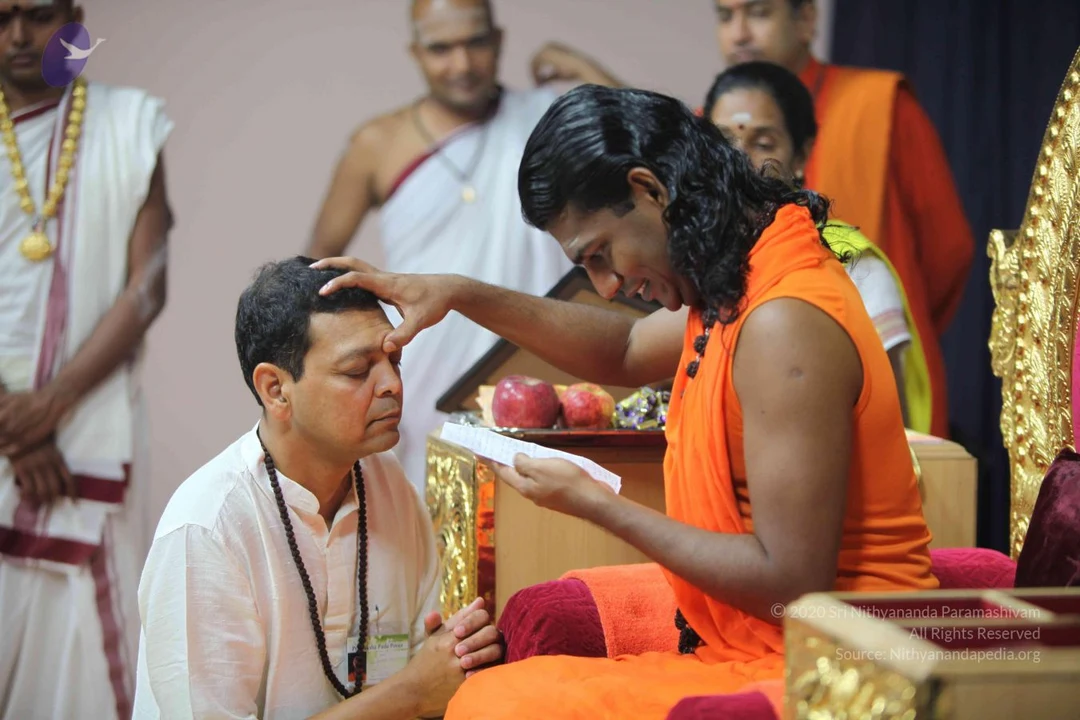
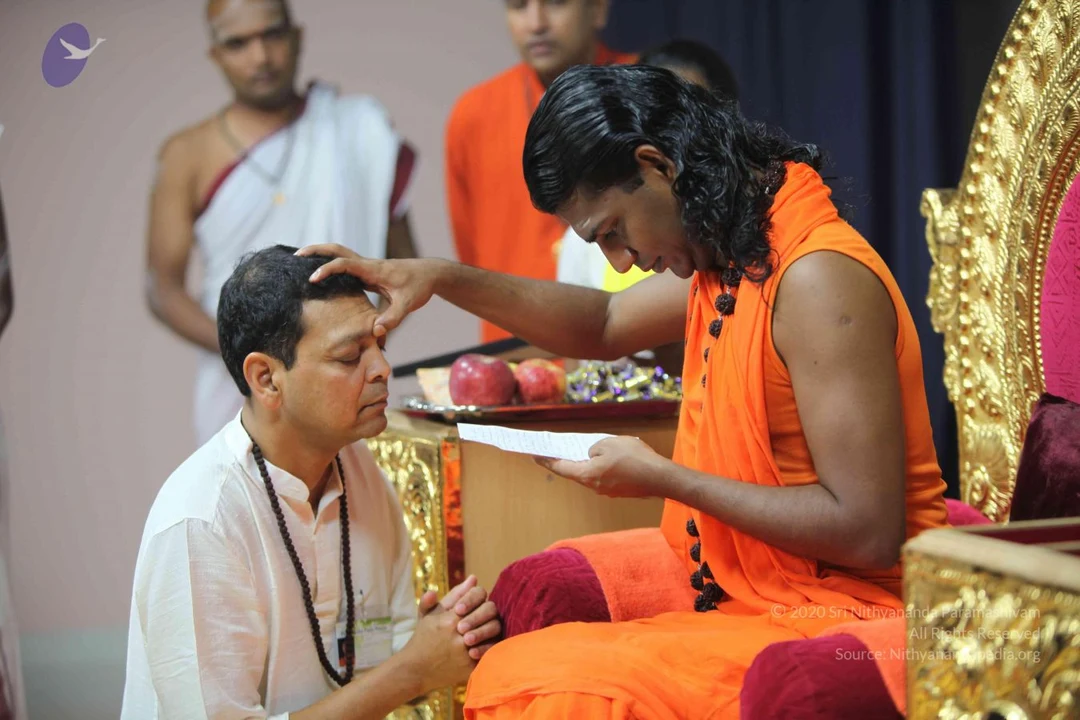
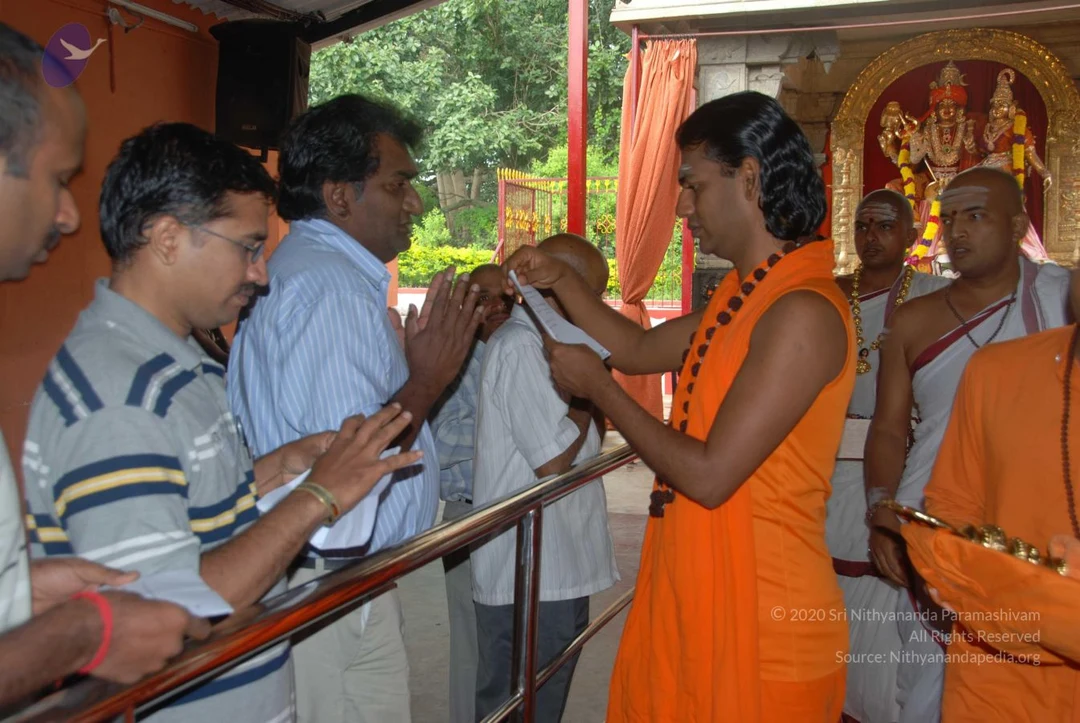
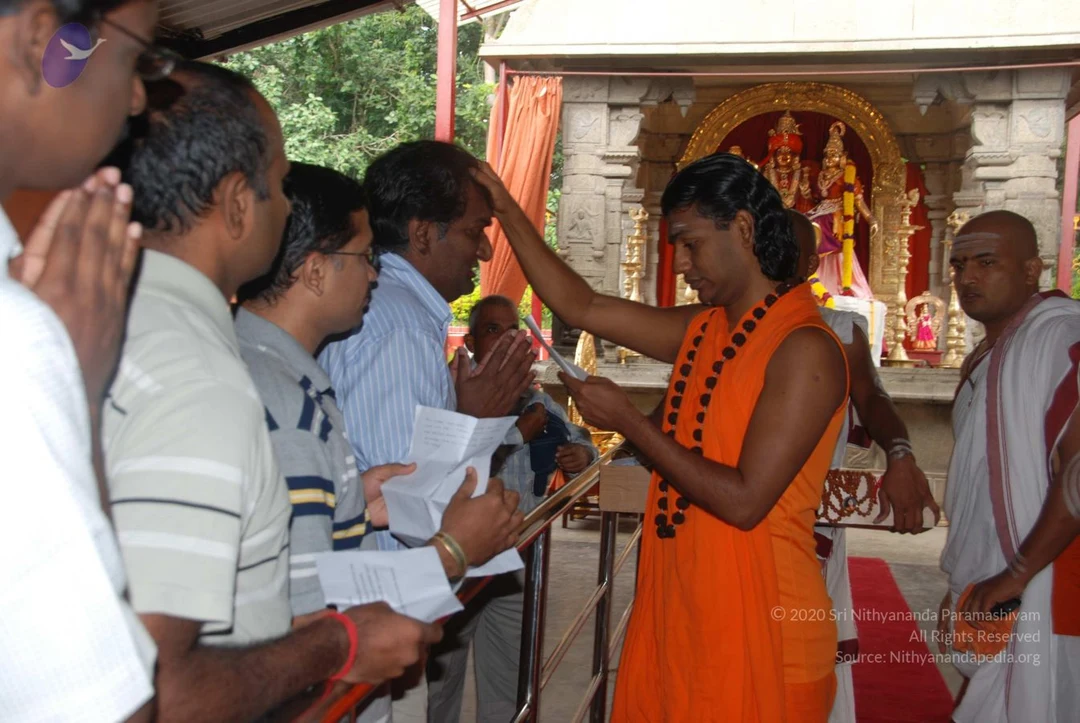
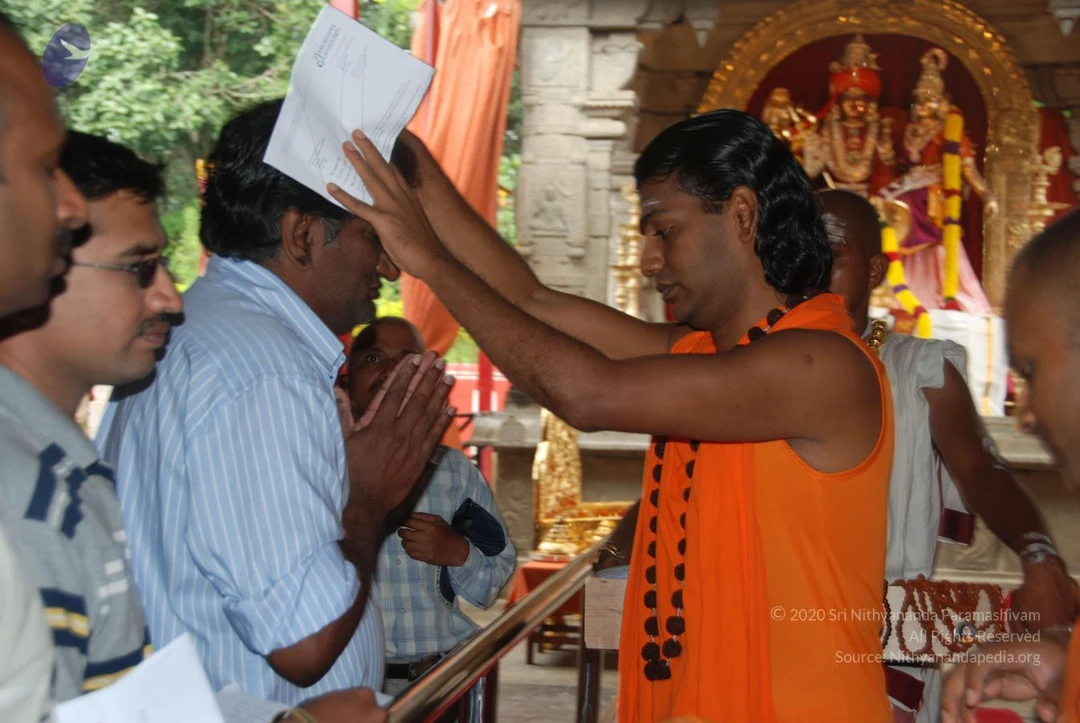
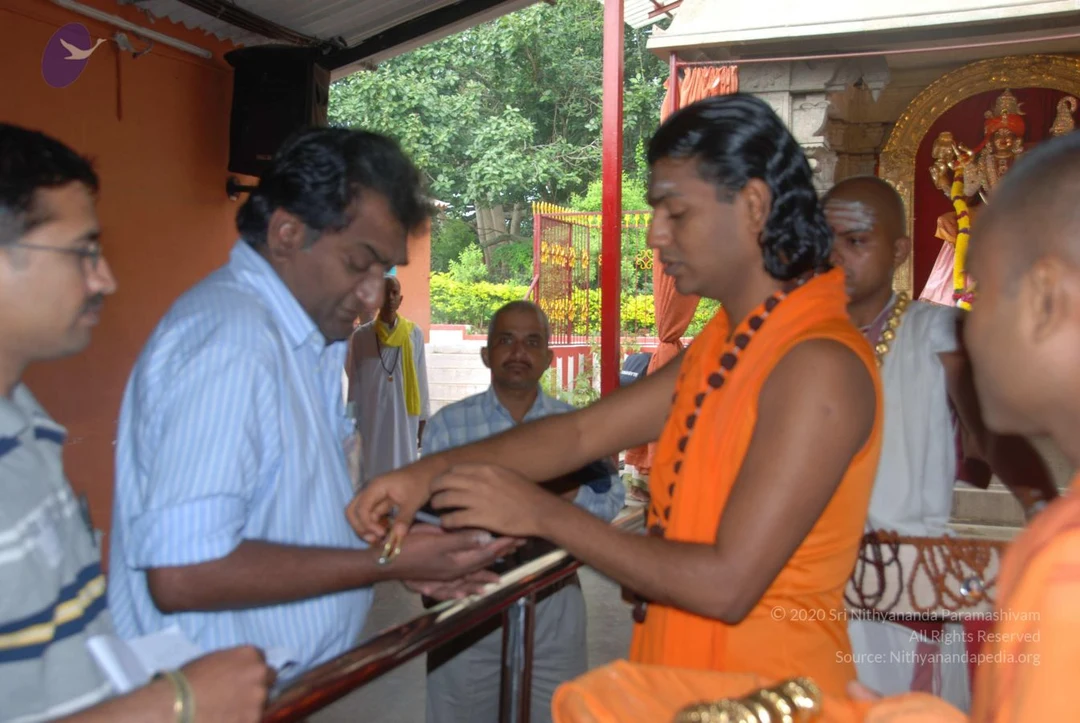
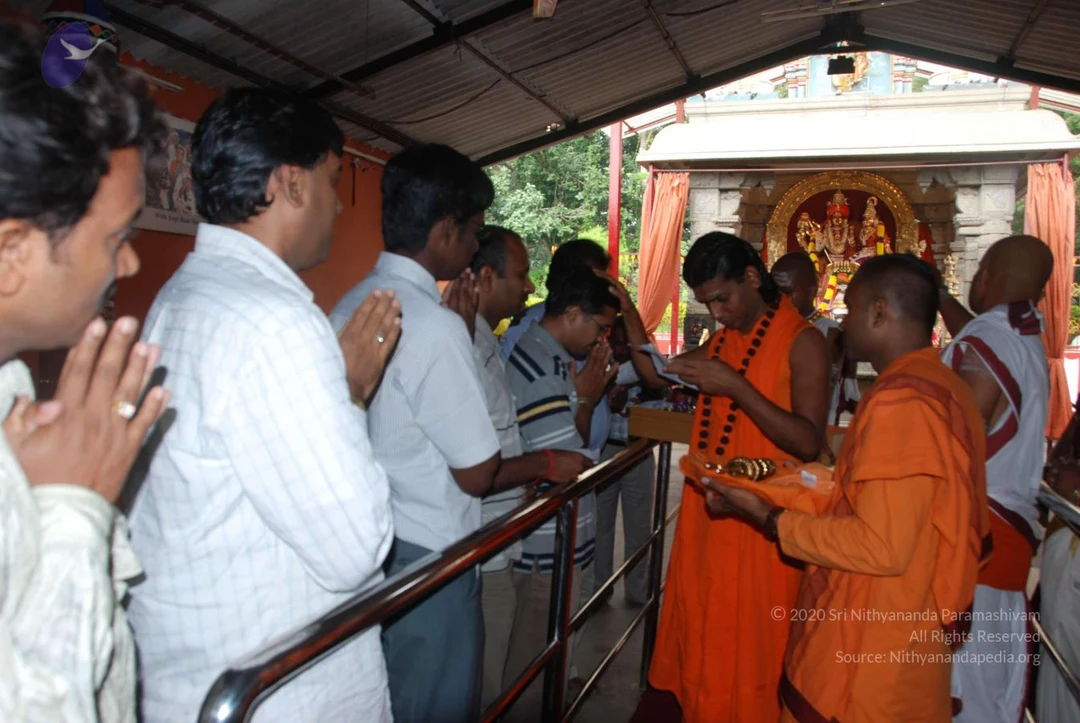
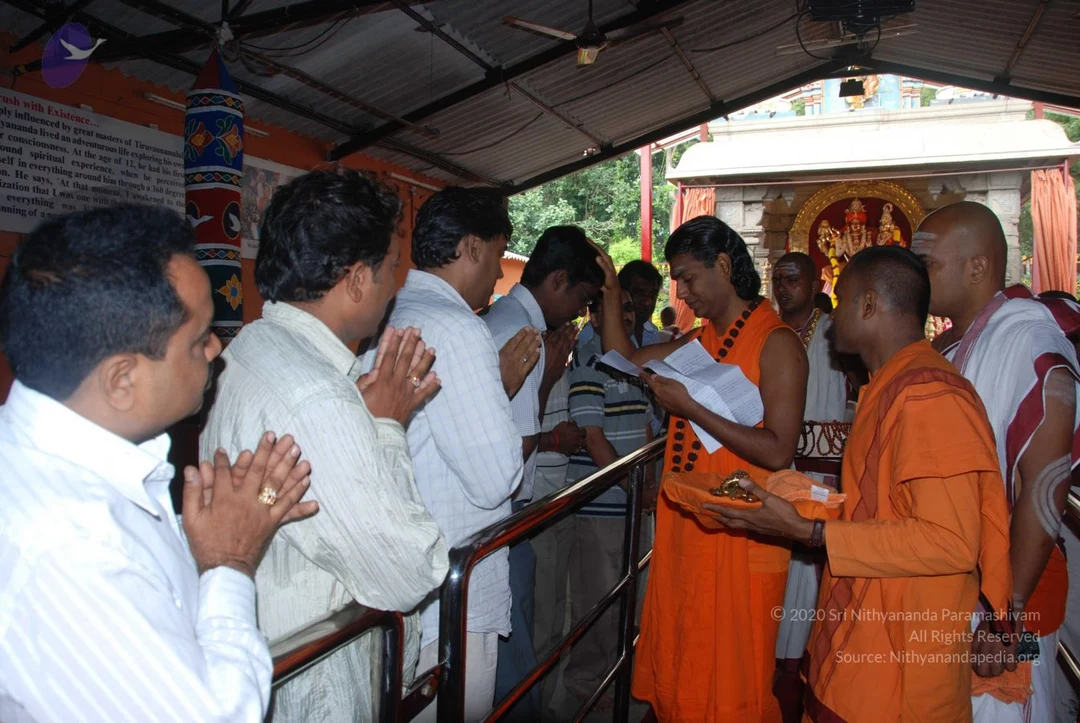
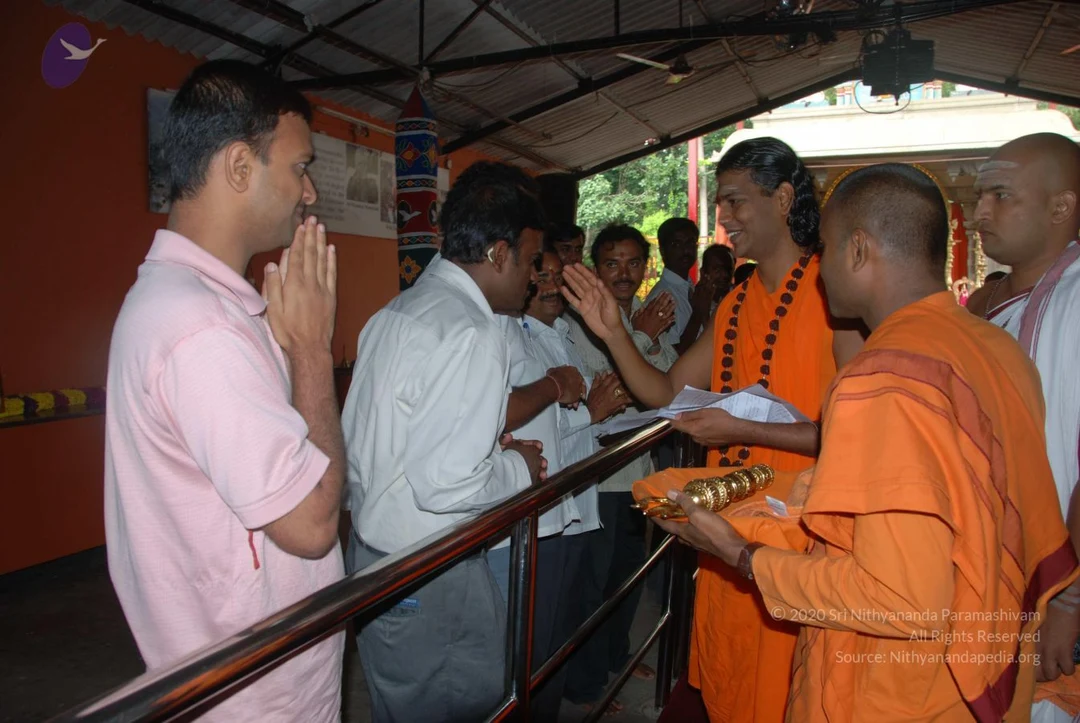
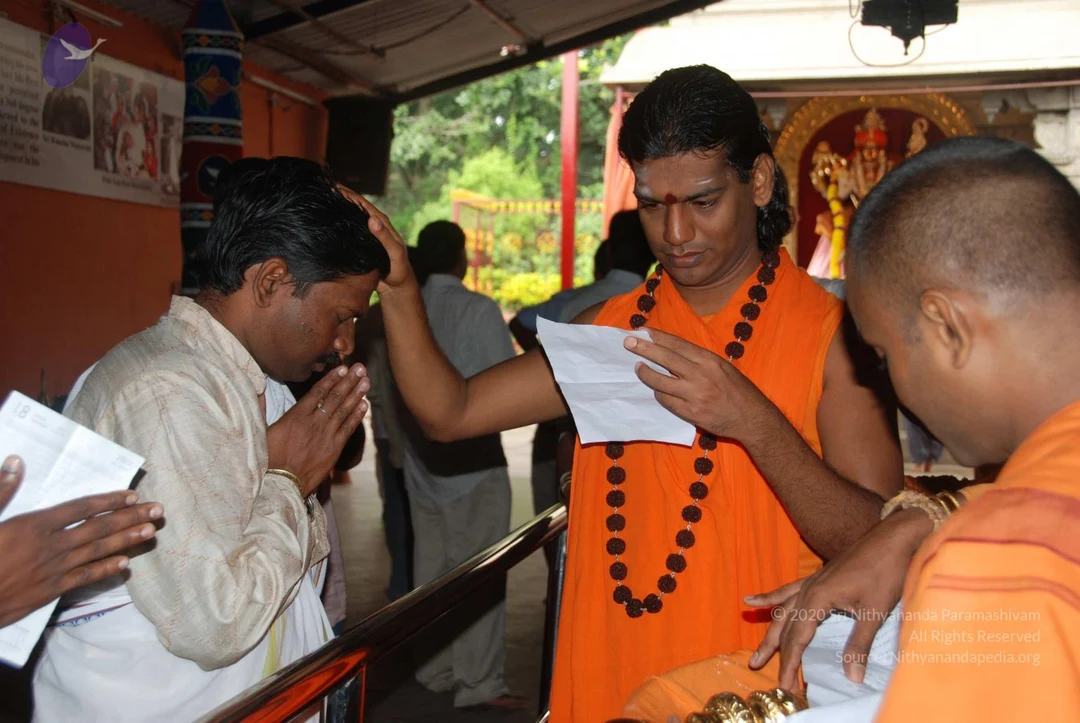
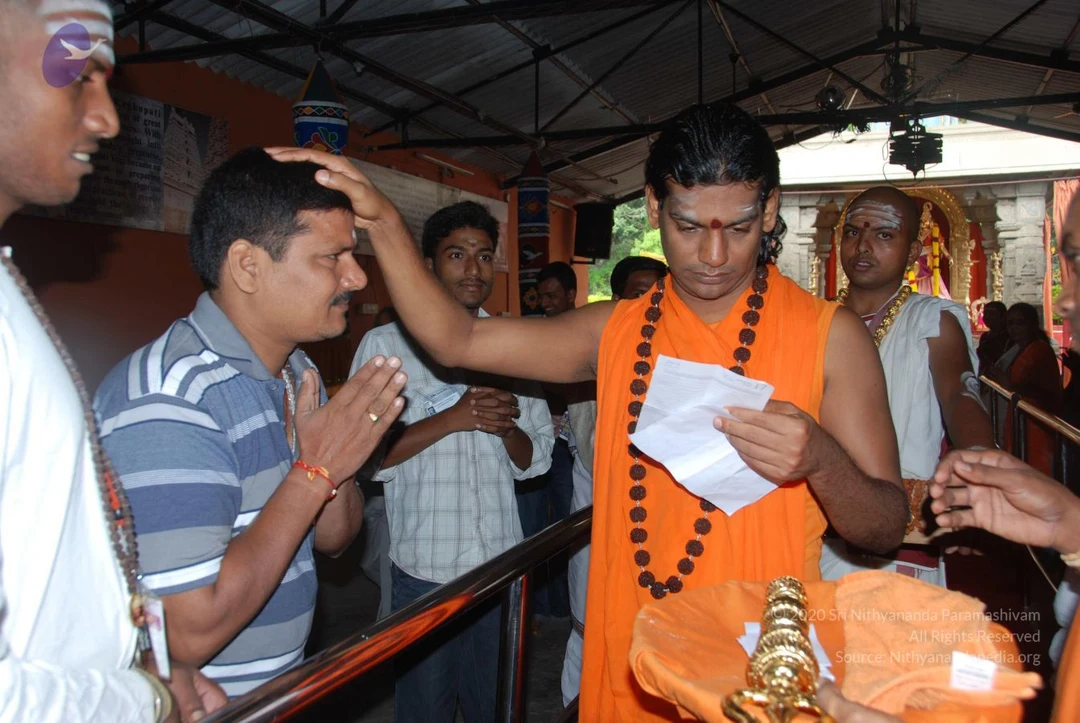
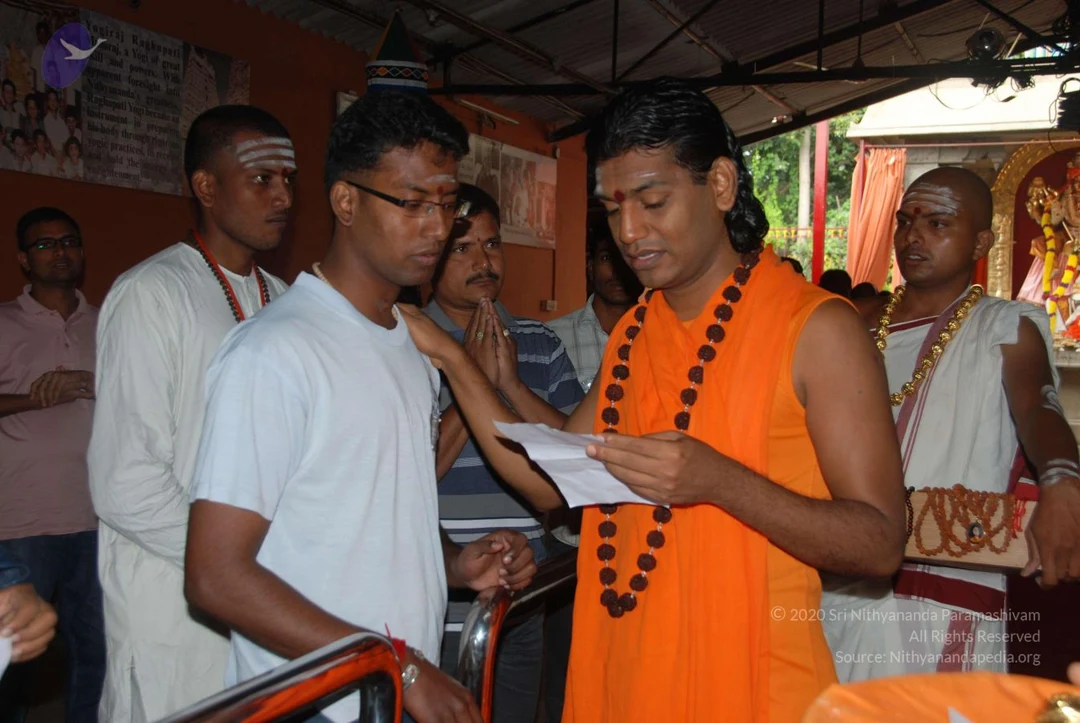
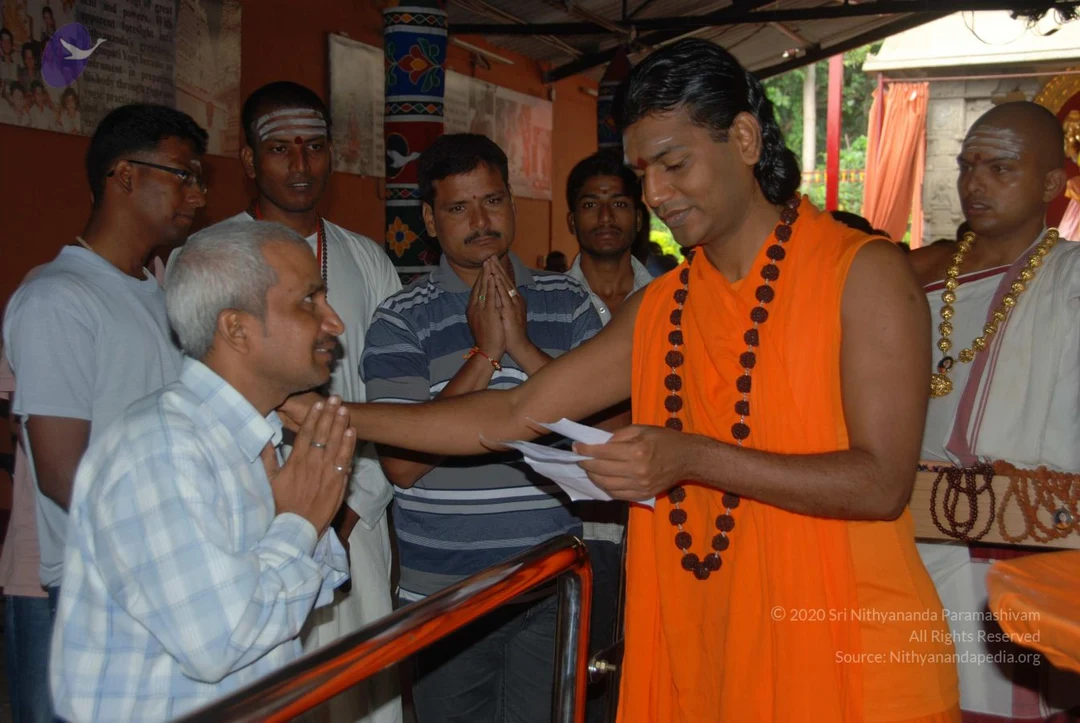
Outdoor temple scene: a long-haired man in an orange saffron sleeveless garment with a rudraksha mala blesses a devotee by pressing his palm to the man's forehead. The devotee wears a light blue striped shirt and holds a white sheet of paper, palms pressed together in namaskar. Other men stand beside them, one in a grey striped shirt with glasses, another in a blue shirt. Behind, an ornate golden shrine holds a deity murti decorated with garlands and a red and gold canopy. Probable Swamiji (long swept-back hair, saffron garment, rudraksha mala) is shown in person giving blessing.A temple ritual scene under a corrugated roof. A man in saffron-orange robes, wearing a rudraksha mala, stands at the centre holding a tray of offerings near a shrine decorated with an ornate golden arch and a deity murti with red and gold adornments. Beside him, a monk in orange with a shaved head holds a tray. Several devotees in white and striped shirts stand at a railing with palms pressed together in namaskar, while another man in white at right stands near a figure in white clothes. Orange curtains hang beside the shrine. A railing runs along the foreground.A photograph of a shaded temple courtyard where devotees stand at a metal railing with palms pressed together in namaskar. A man in a saffron-orange robe with a dark rudraksha mala stands at the front, holding an open book or papers in one hand and touching the head of a devotee with the other. Beside him, a monk in orange holds a brass vessel on an orange cloth. Behind them, men in white dhotis with red-striped borders and white ritual markings on their foreheads stand near a shrine with a decorated deity murti under a red and gold canopy. An orange and blue banner with printed text hangs on the left wall.A photograph of a temple setting where a man in orange robes and a rudraksha mala, with a red tilak on his forehead, places his hand on the head of a devotee in a cream-coloured kurta and white dhoti, who stands with palms pressed together in namaskar. The orange-robed man holds a folded white paper in his other hand. A third person in orange clothing stands at the lower right, looking down at a tray of brass items. Behind them is a rail, a red and orange shrine with a deity murti and garlands, and a few more people in the background. Wall posters are visible at the top left. The orange-robed man's appearance is consistent with the page's claim of a person's presence, but the cues are limited to the rudraksha mala and orange robes, so identity is uncertain.
05

PANCHA-TAPAS

113 dated photos in previewSource gallery
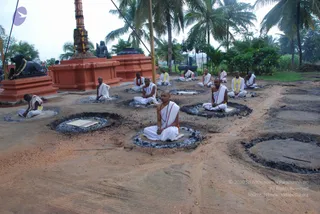
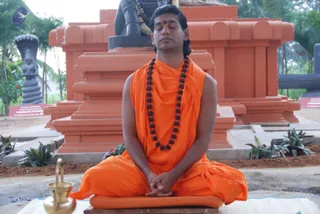
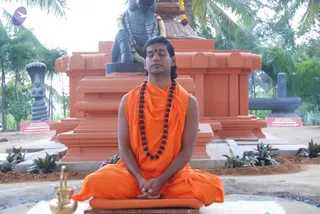
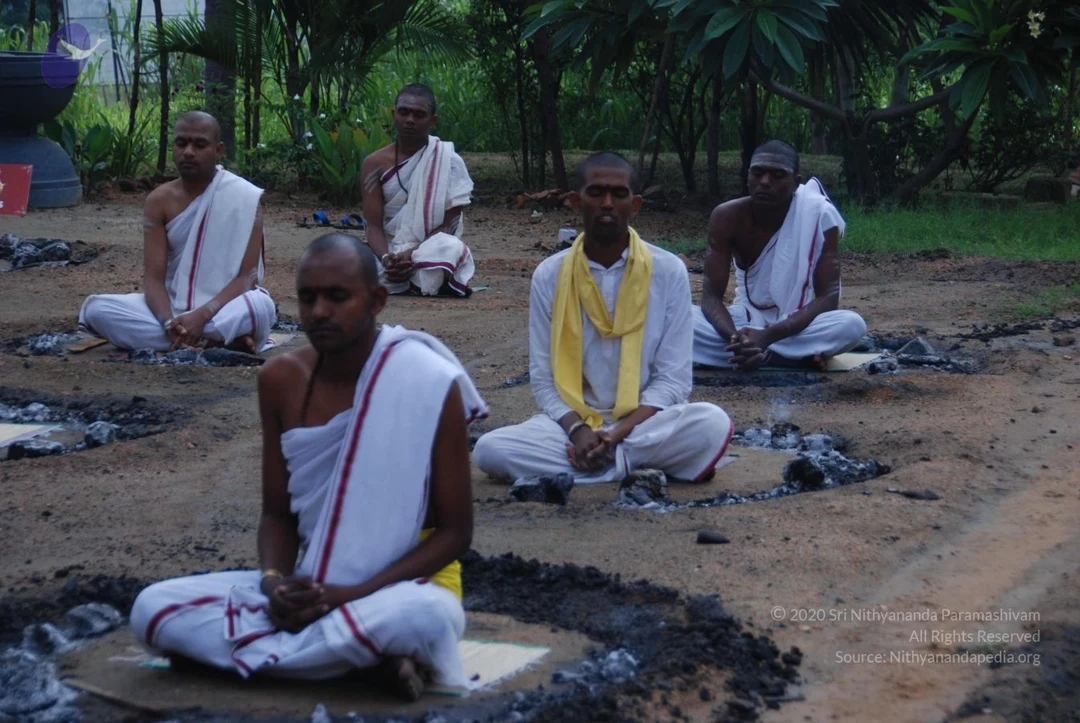
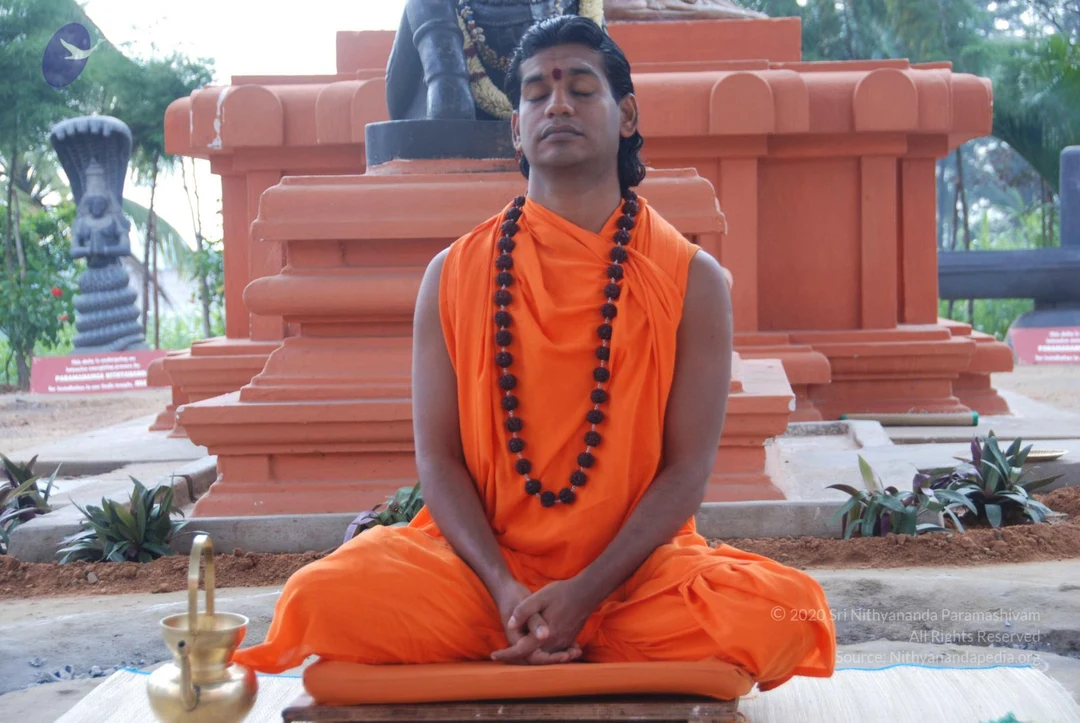
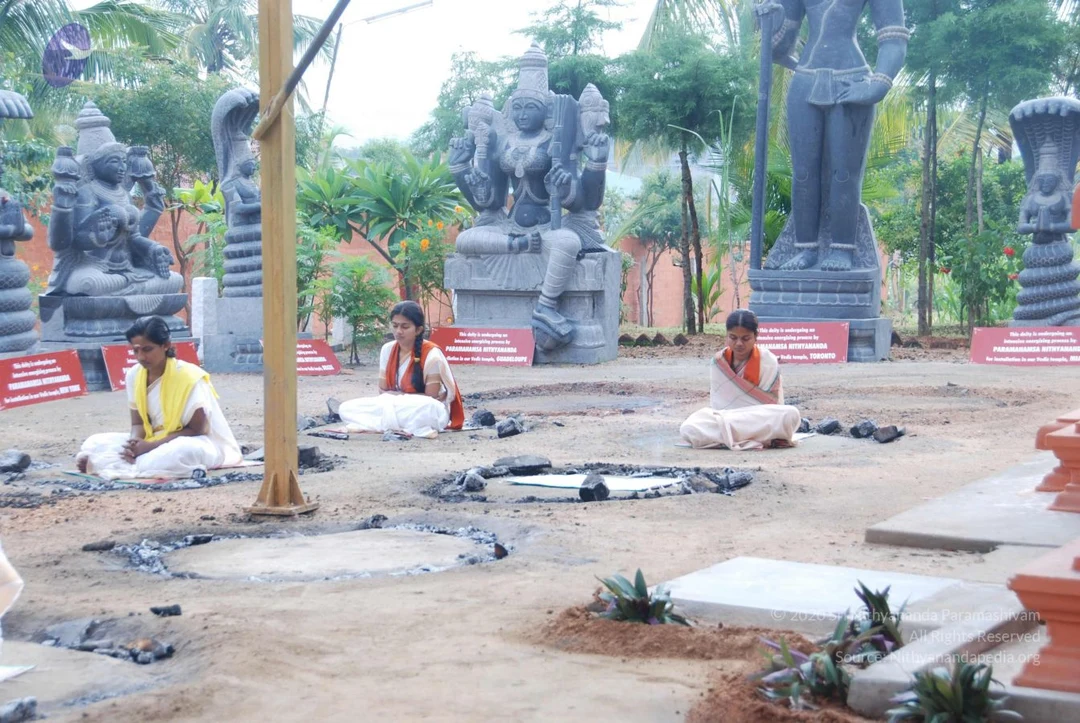
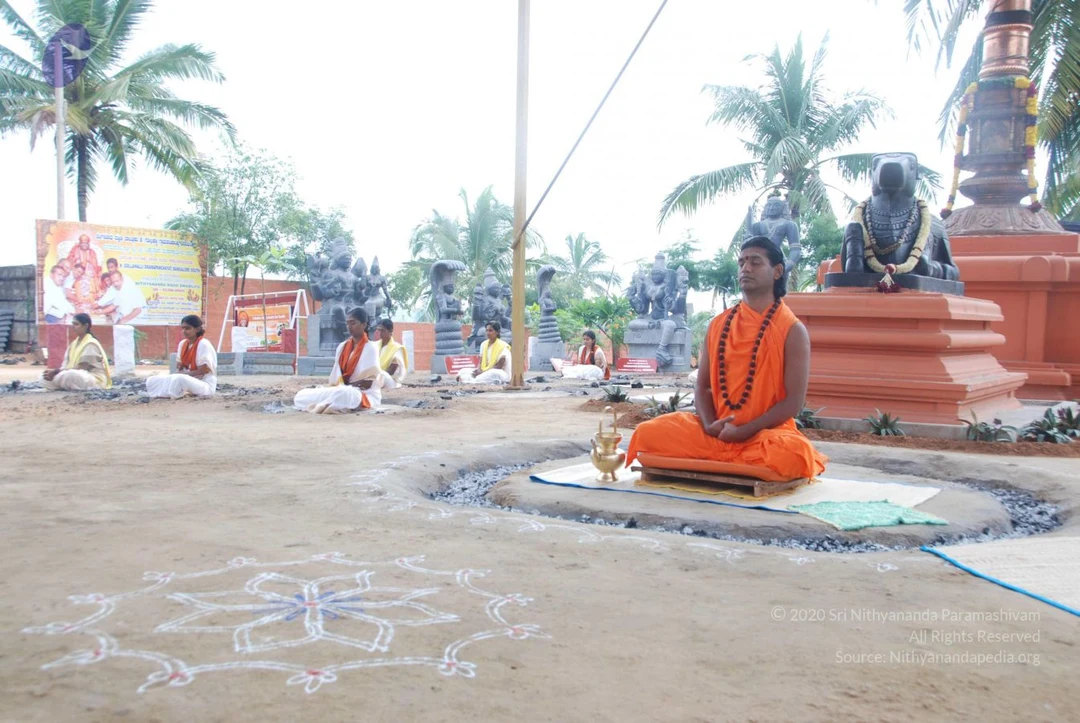
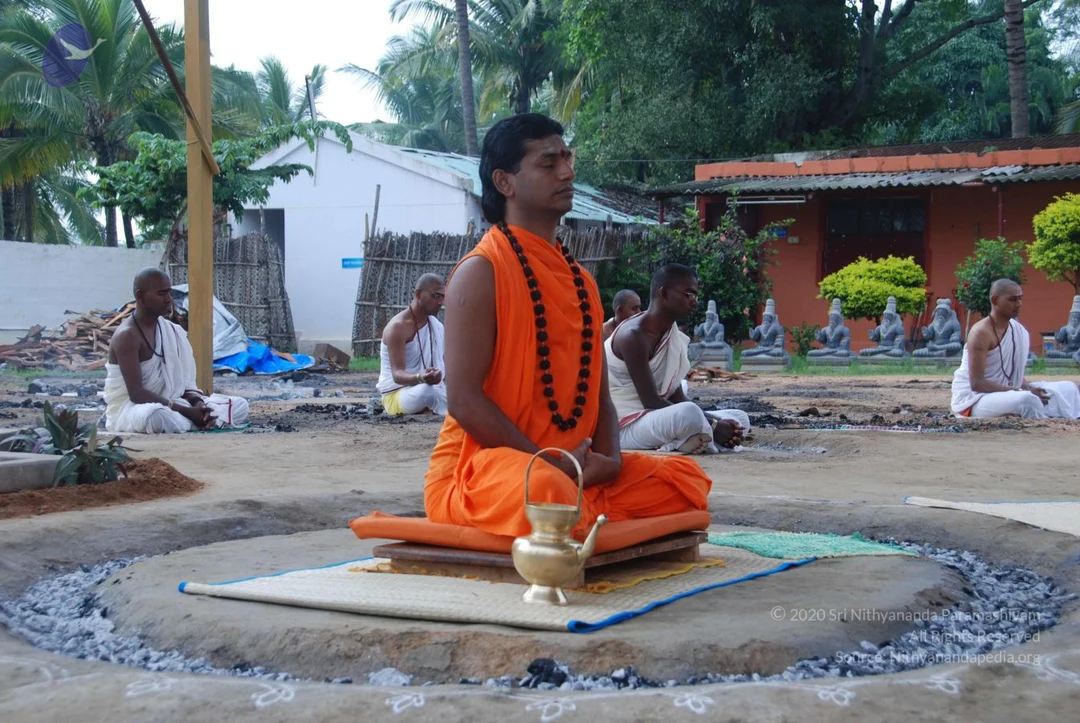
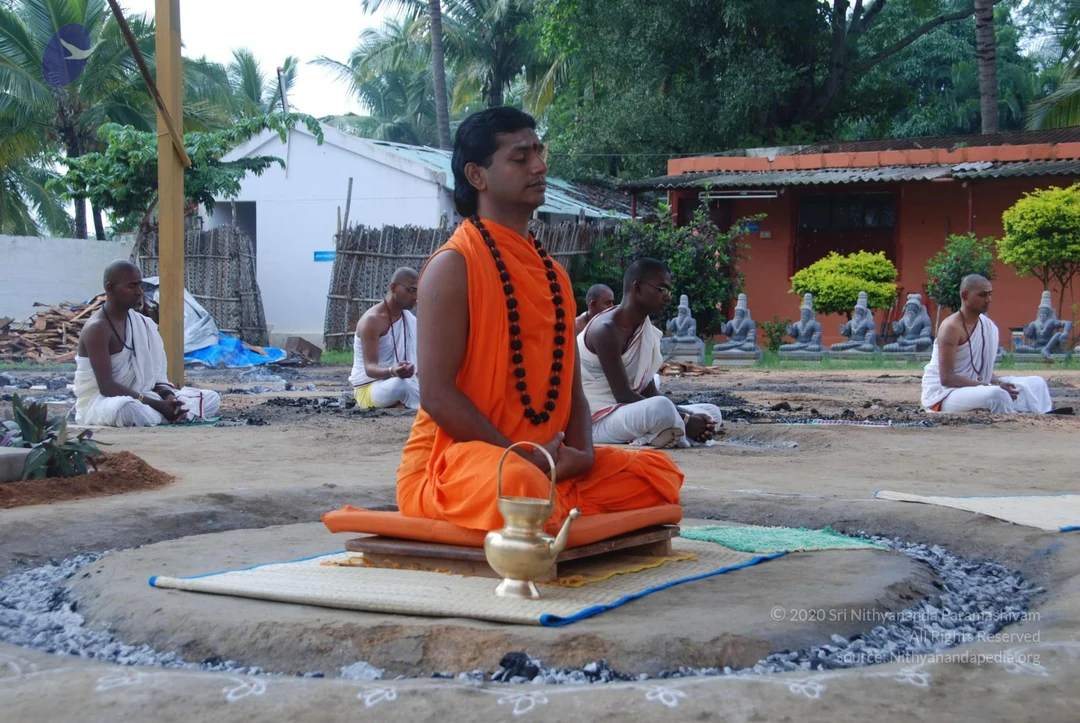
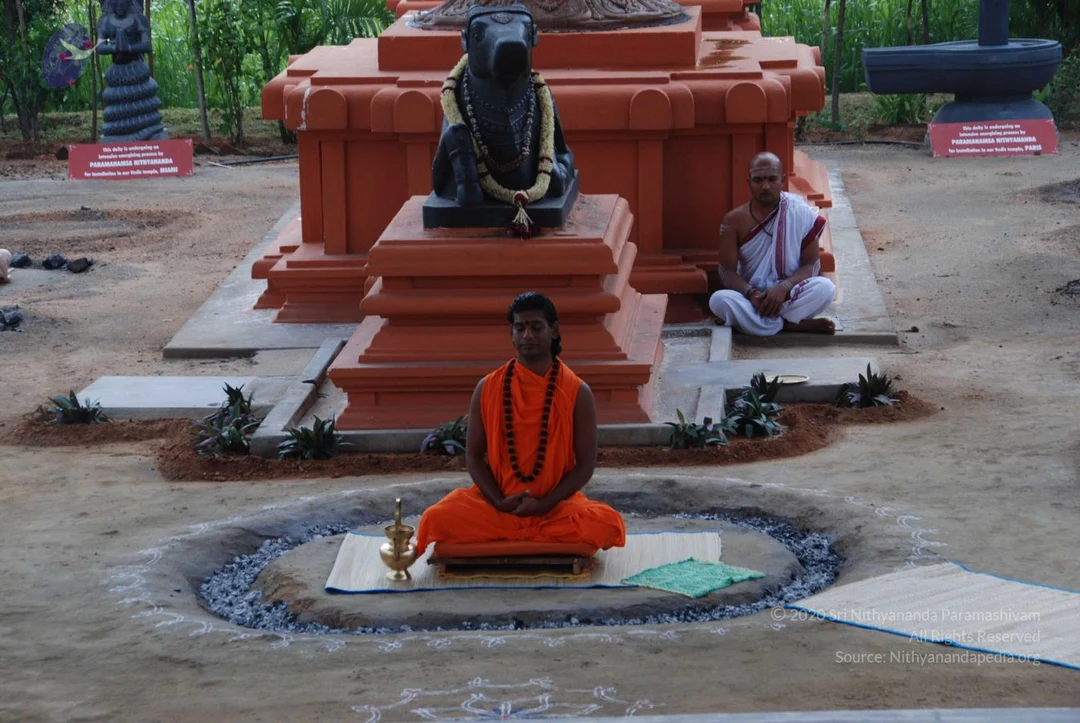
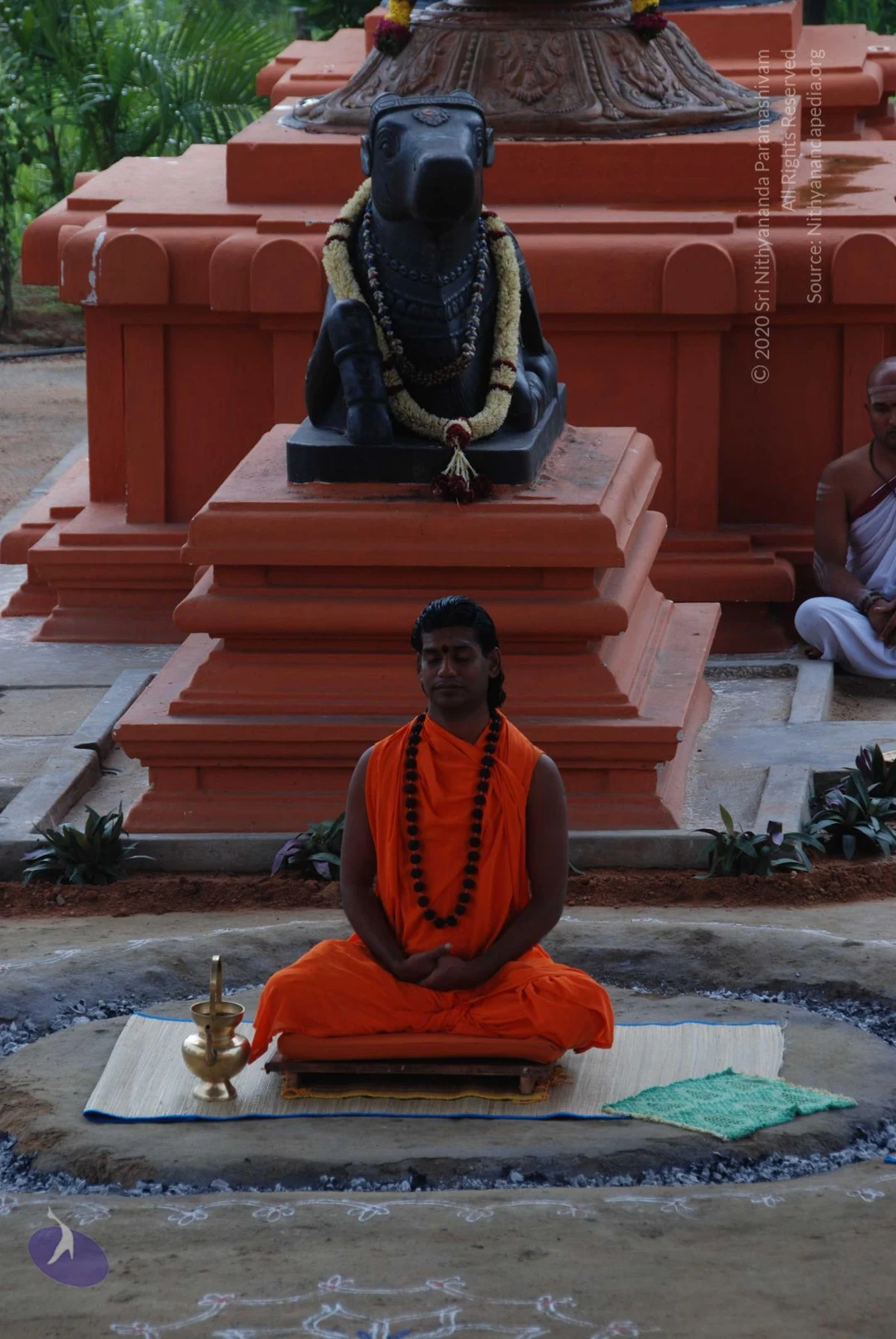
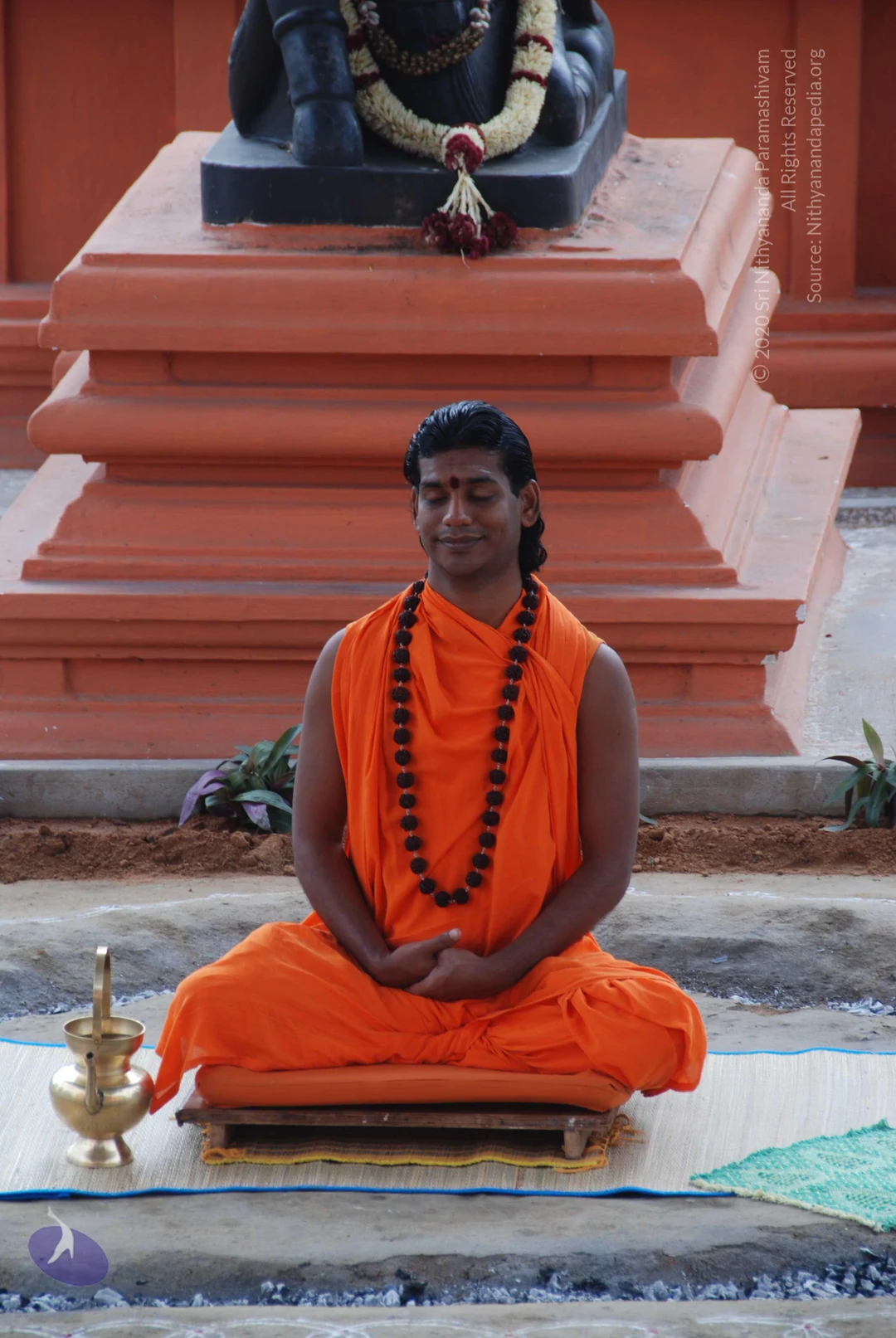
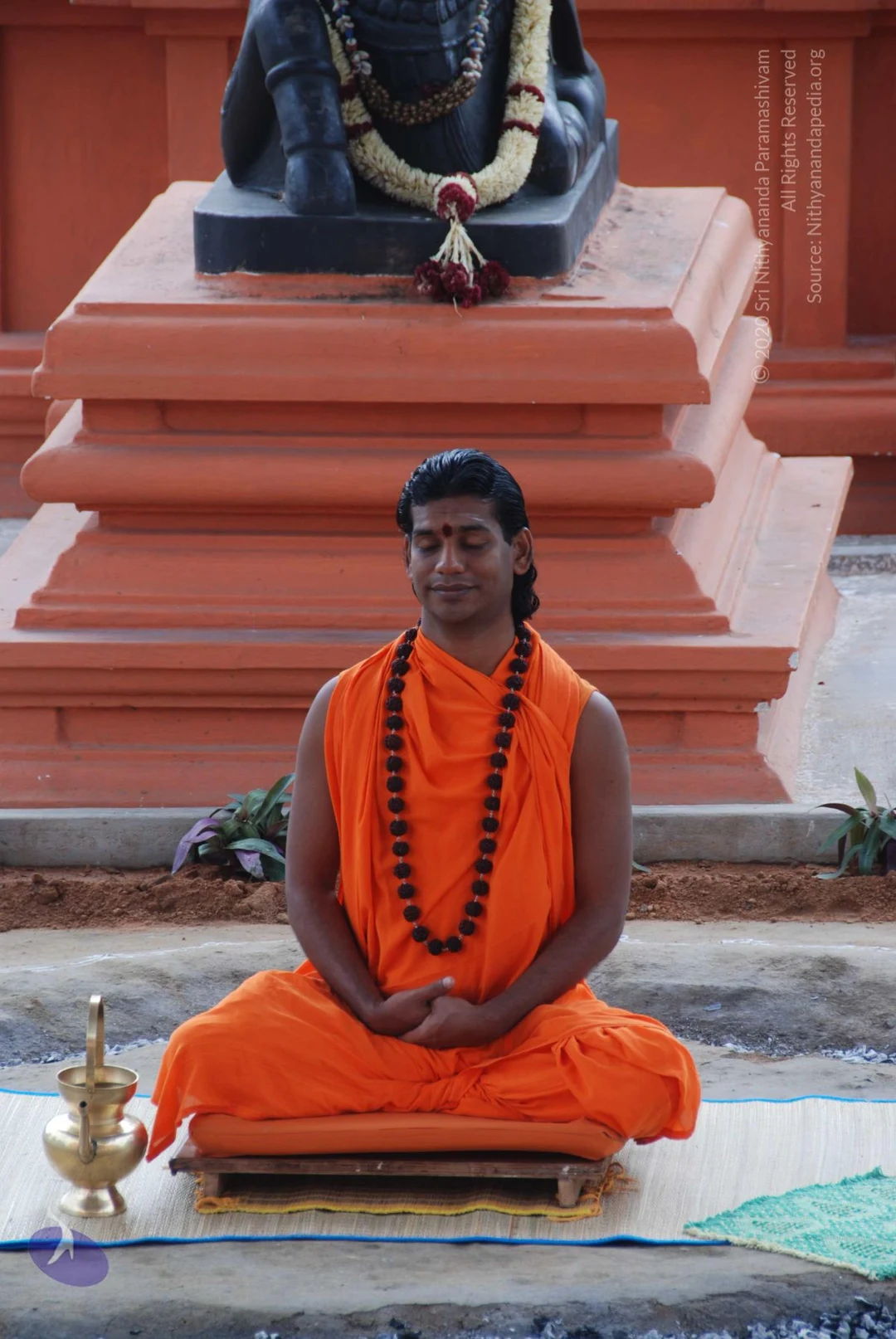
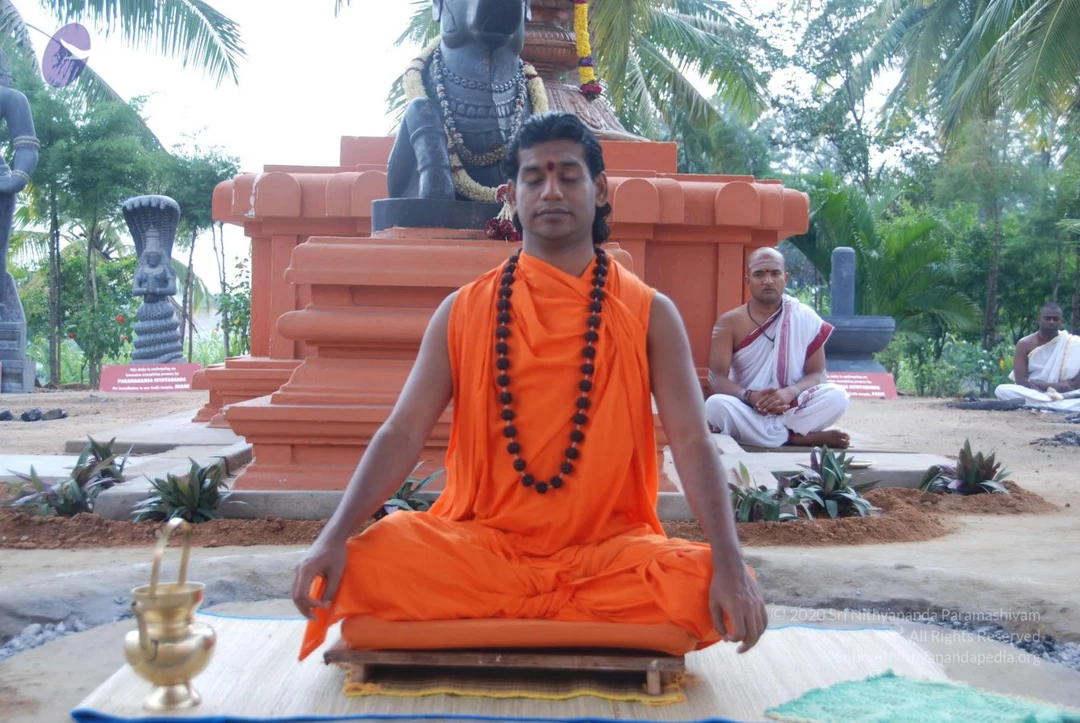
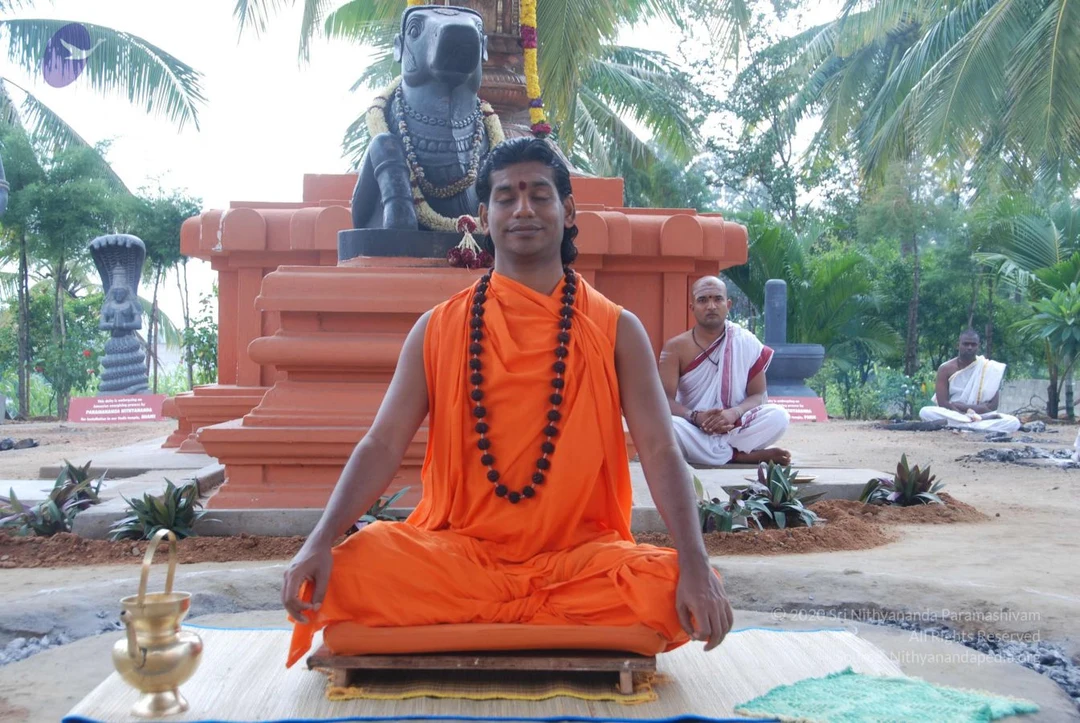
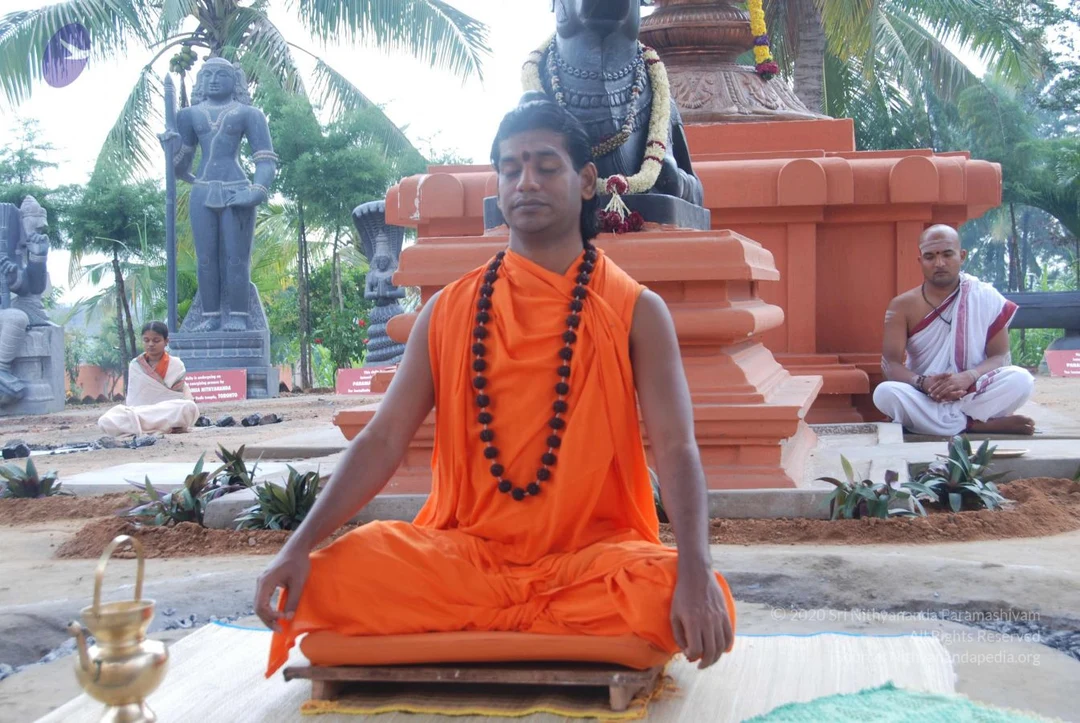
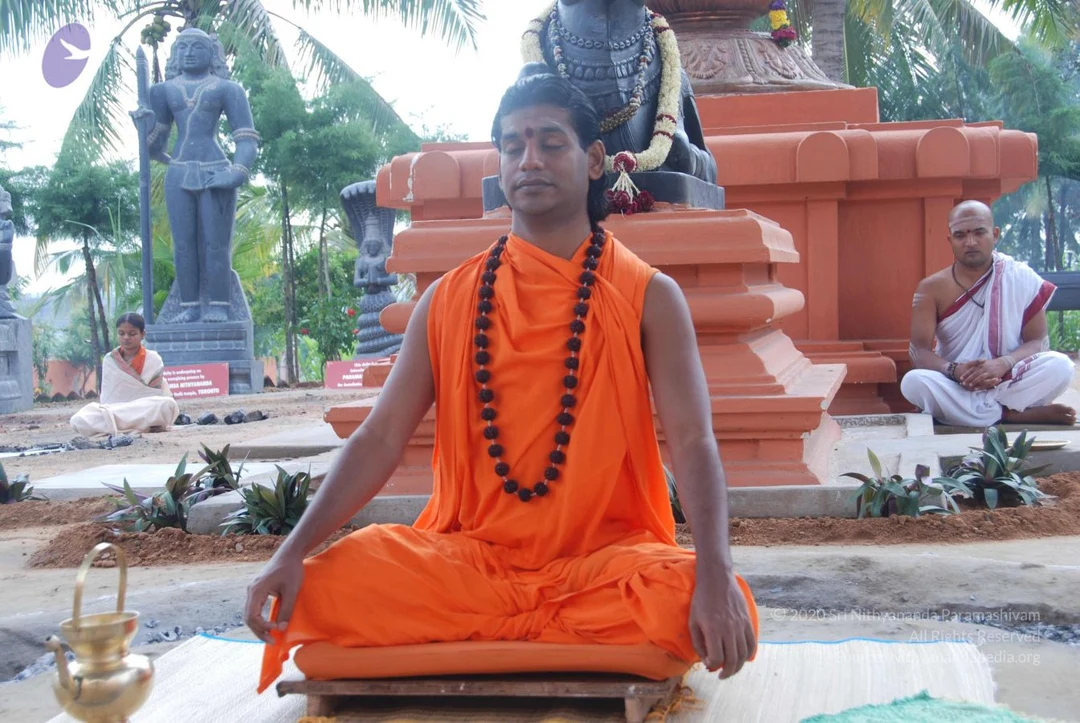
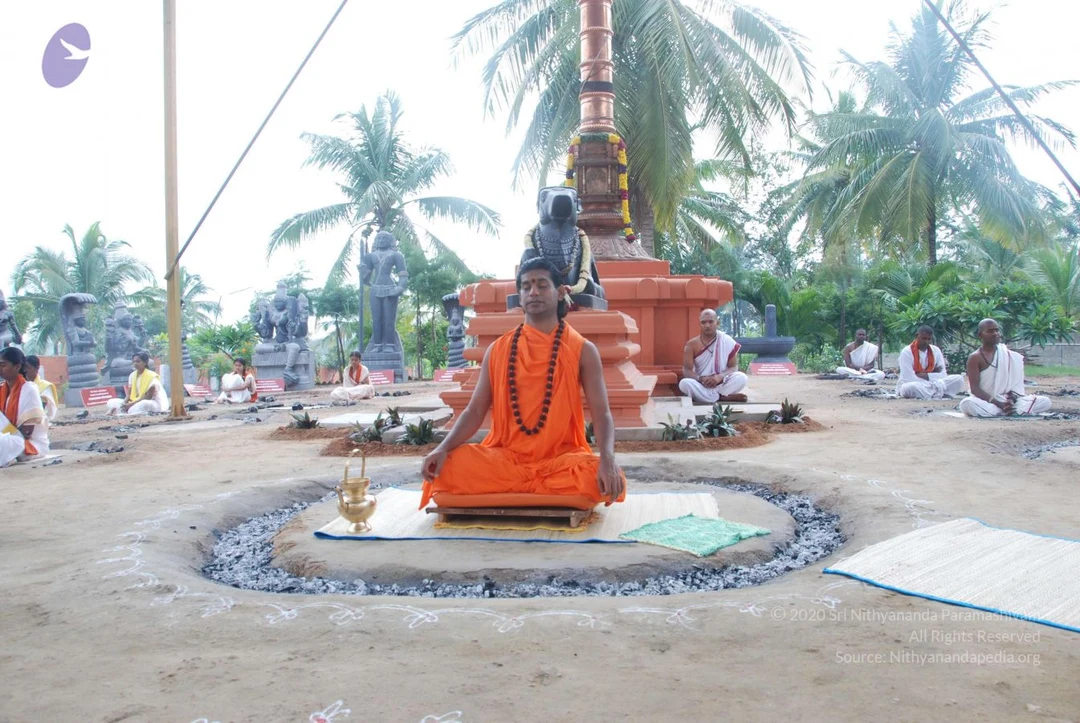
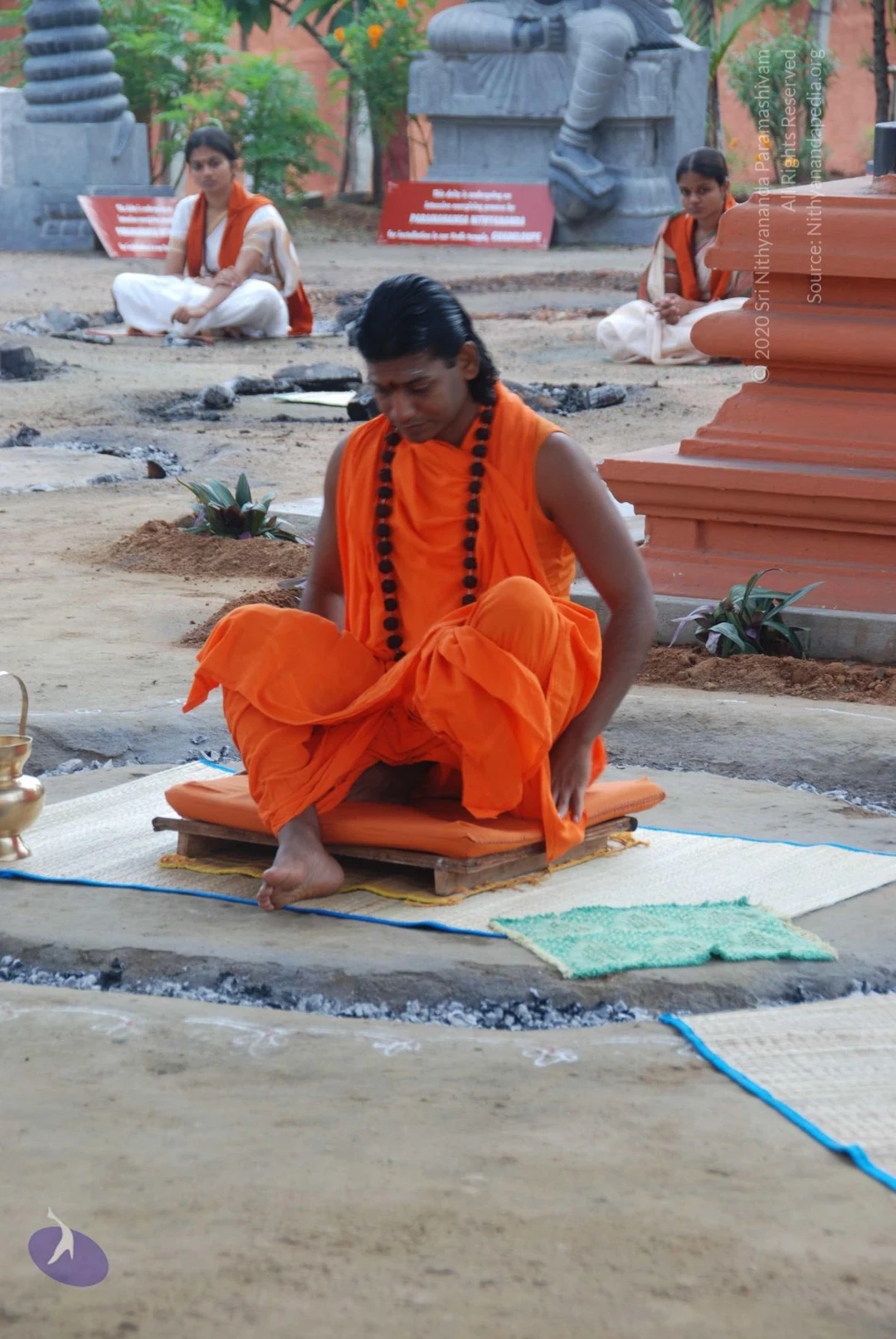
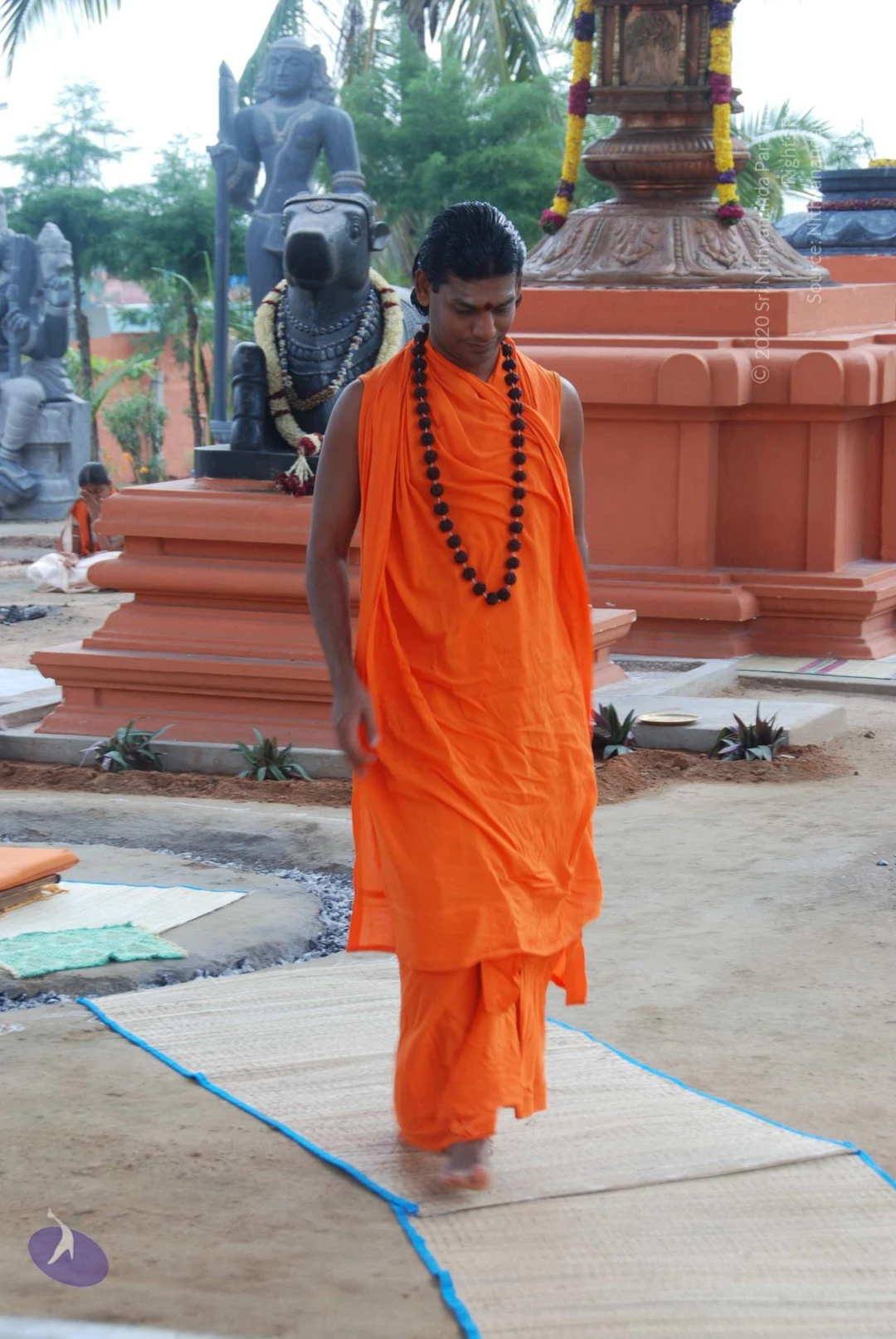
Outdoor ritual homa in an open sandy courtyard with palm trees behind. About ten shaved-headed priests in plain white dhoti and shawl sit cross-legged on mats around individual circular fire pits filled with ash and embers. Several wear ceremonial garlands; some hold small objects. Behind them stand a tall copper-toned kalasha-style pillar on an orange-red stepped plinth and a black Nandi bull statue with a garland at left. Lush tropical greenery frames the scene.Outdoor photo of several shaved-headed men in white dhoti-style clothing seated cross-legged on mats in a row beside small dark fire pits with ash and charred wood. The foreground man wears white cloth with red borders, a rudraksha mala and a small tilak, hands folded in his lap. Behind him a man in an orange-red wrap and another in a yellow shawl sit in meditation or prayer, and a smoke trail rises near the pits. Orange temple walls and a black stone vessel stand in the background amid palm trees. No one here is identified as a person; they appear as ritual participants.Five men sit cross-legged in meditation on bare earth in an outdoor garden with tropical plants behind them. They wear plain white dhotis with red-bordered shawls over their shoulders, and their hands rest in their laps. The man in front wears a shawl draped over his shoulder and a rudraksha-style bead necklace; the man in the centre wears a yellow scarf and white shirt. Small patches of ash or burnt material mark the ground around each seat. Eyes are closed and the posture is still, reflecting a yoga or meditation practice.A seated man in saffron-orange robes sits cross-legged on an orange cushion in an outdoor garden with eyes closed in meditation, hands folded in his lap. He wears a long mala of dark rudraksha beads, a small red tilaka on his forehead, and his hair is swept back. Beside him stands a brass oil lamp on a white cloth. Behind him is a tiered terracotta-red stone pedestal topped by a dark deity murti, with a stone naga-hooded sculpture and green plants nearby. The scene is calm and devotional. The appearance matches the Swamiji (probable) cues of swept-back hair and saffron robes with a rudraksha mala, and he is physically present.A man seated cross-legged in meditation on an orange-red cushion in an outdoor garden setting. He wears a sleeveless saffron-orange robe, a long rudraksha mala of dark beads, and a red tilak on his forehead, with his hands clasped in his lap and eyes closed. Behind him rises an orange-red stepped plinth topped by a dark stone deity murti draped with white and yellow flower garlands. Nearby are a brass kalasha-style vessel, a dark stone naga sculpture, a black stone shivalinga, palms and green shrubs. Small pink signs with white text stand at the plinth base.
06

MAHESHWARA-POOJA

100 dated photos in previewSource gallery
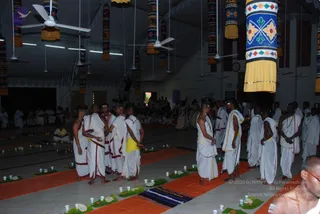
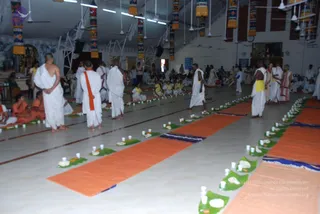
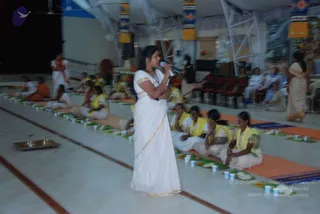
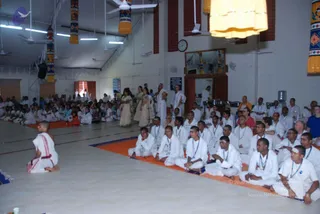
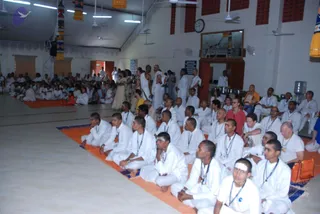
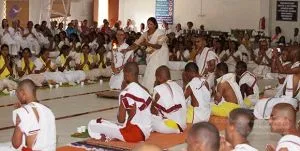
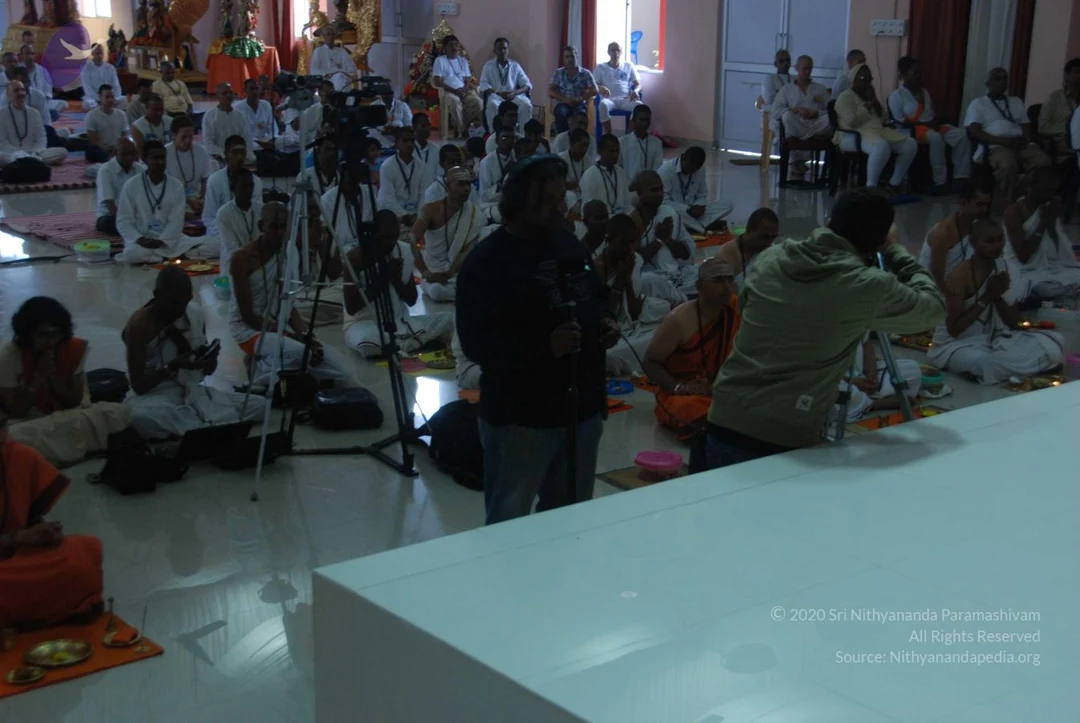
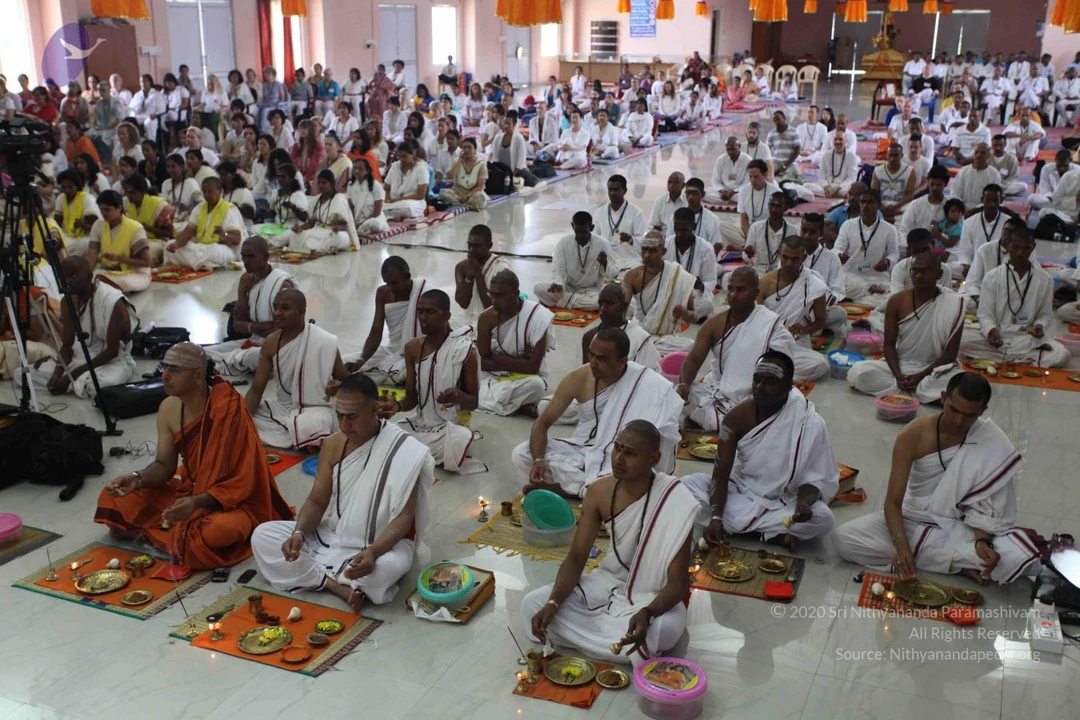
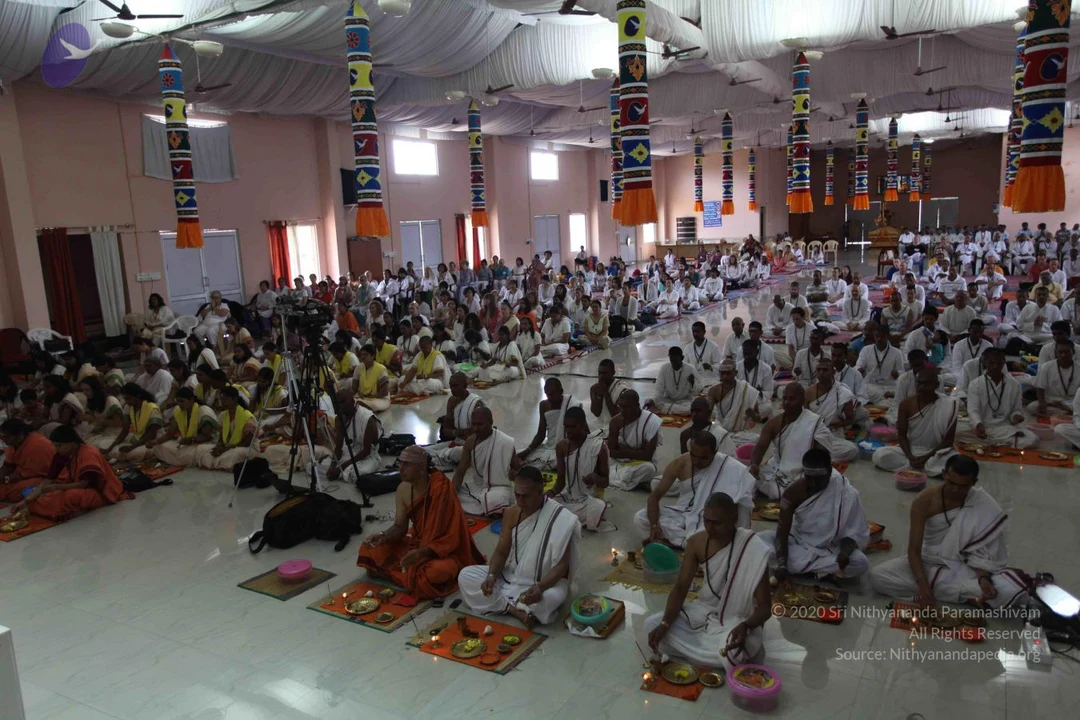
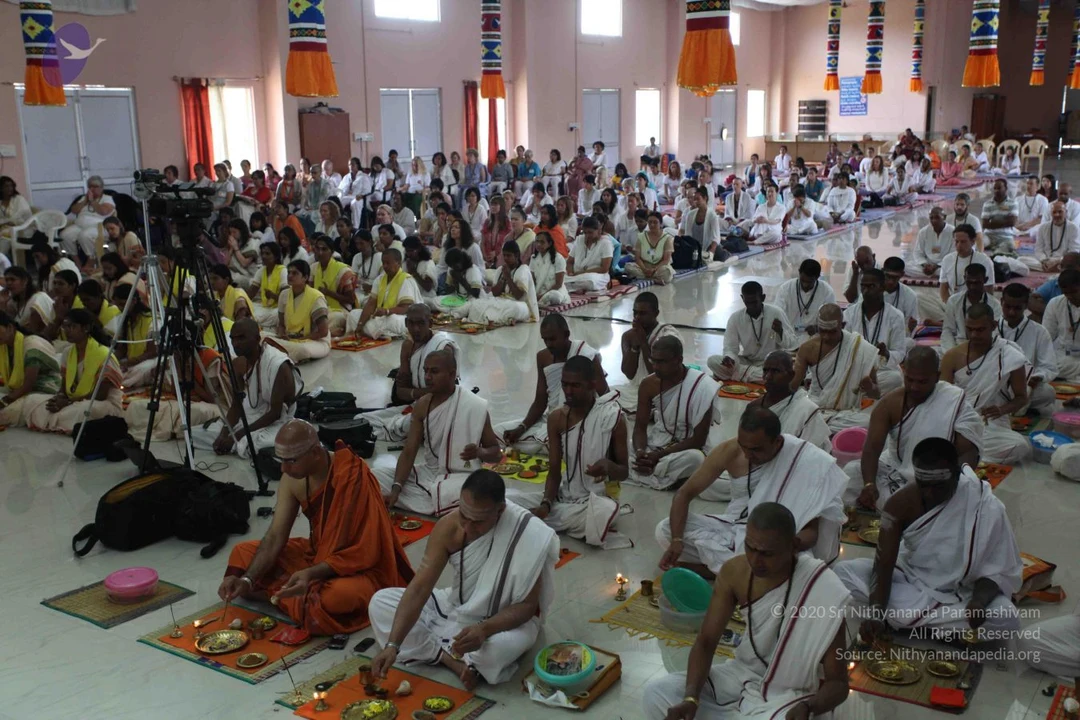
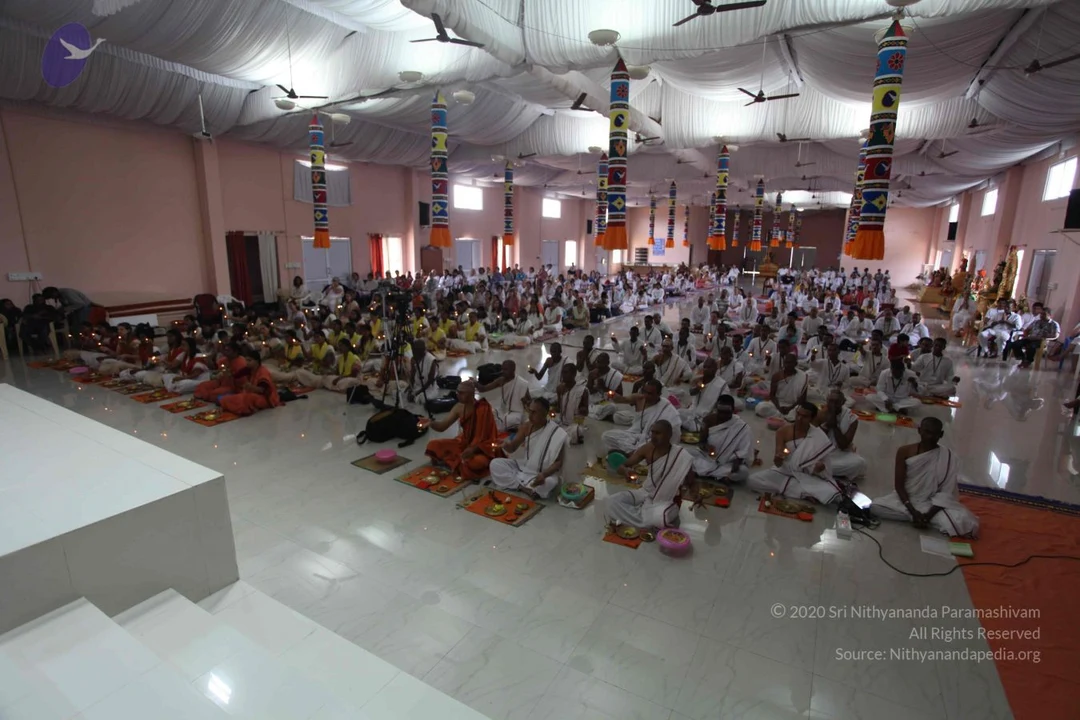
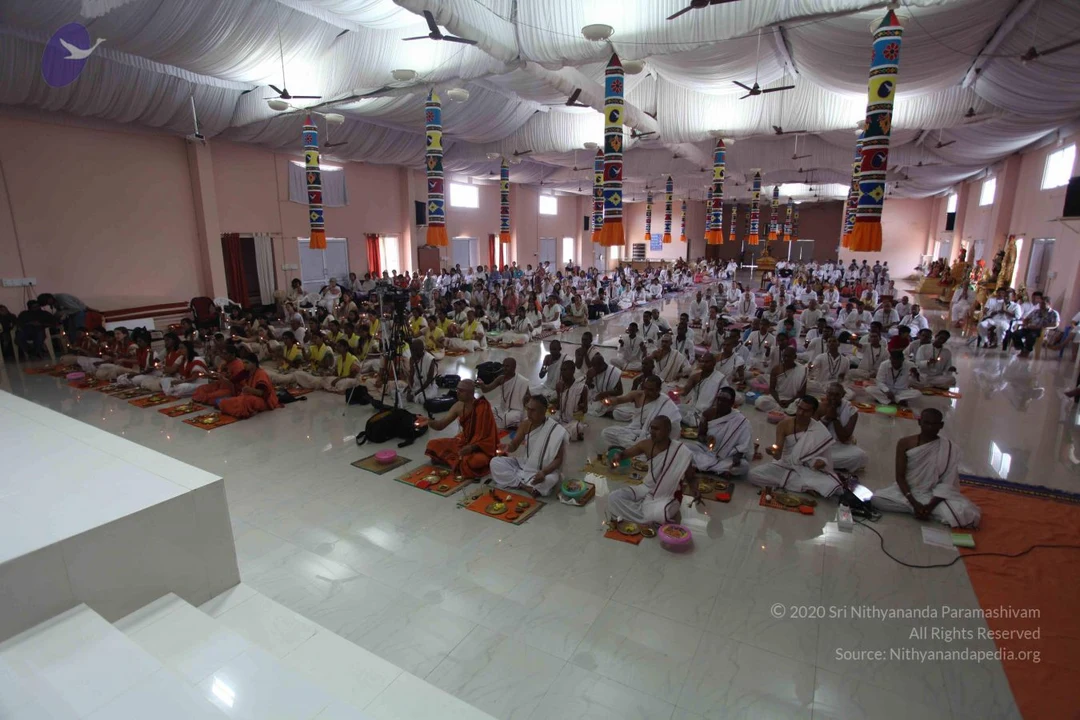
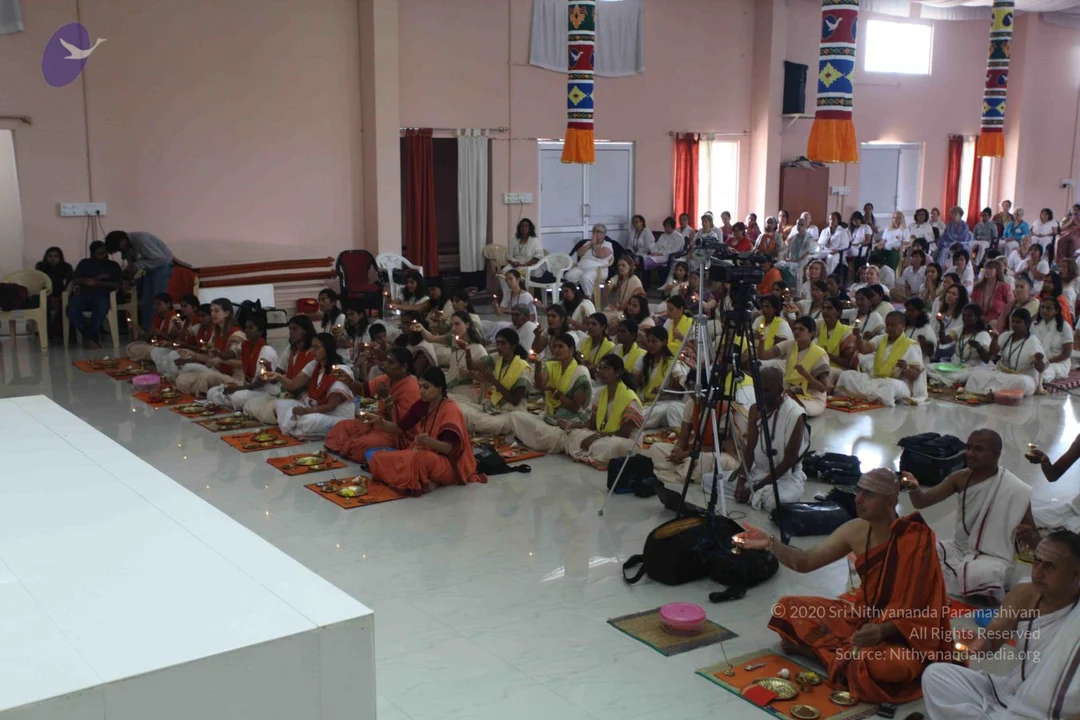
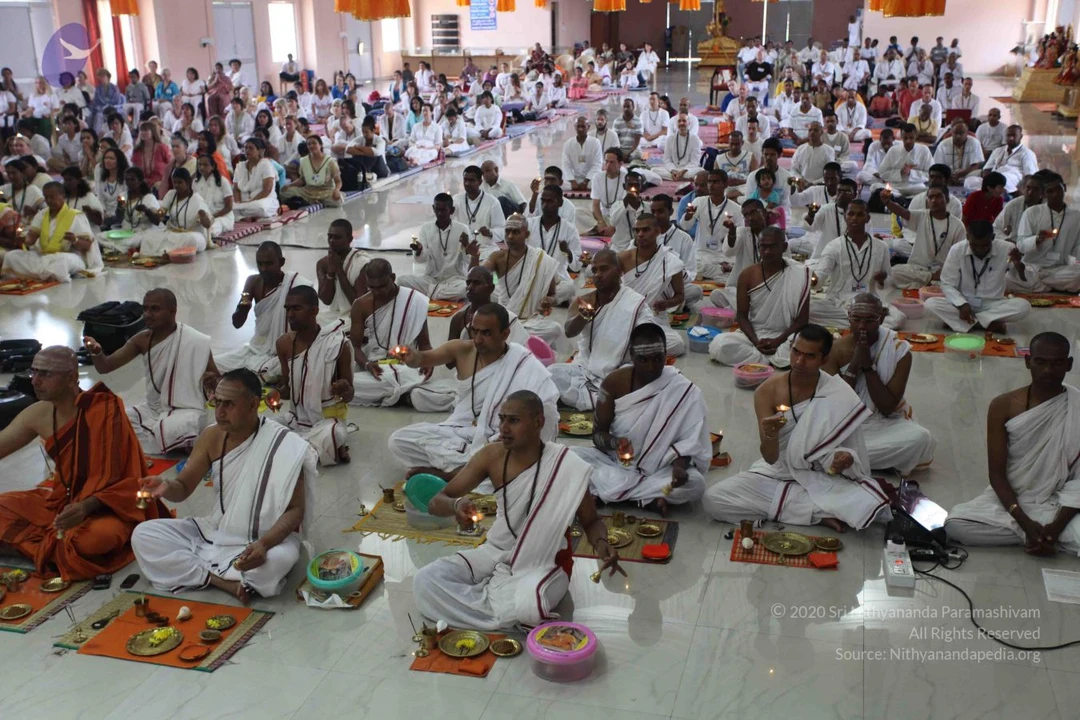
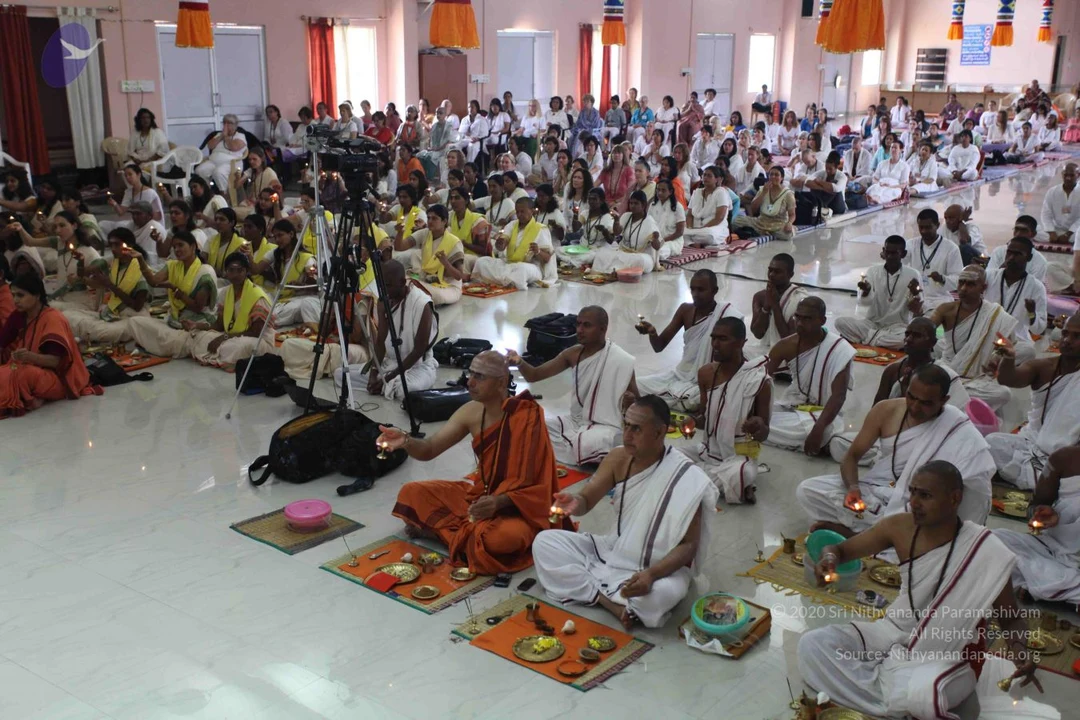
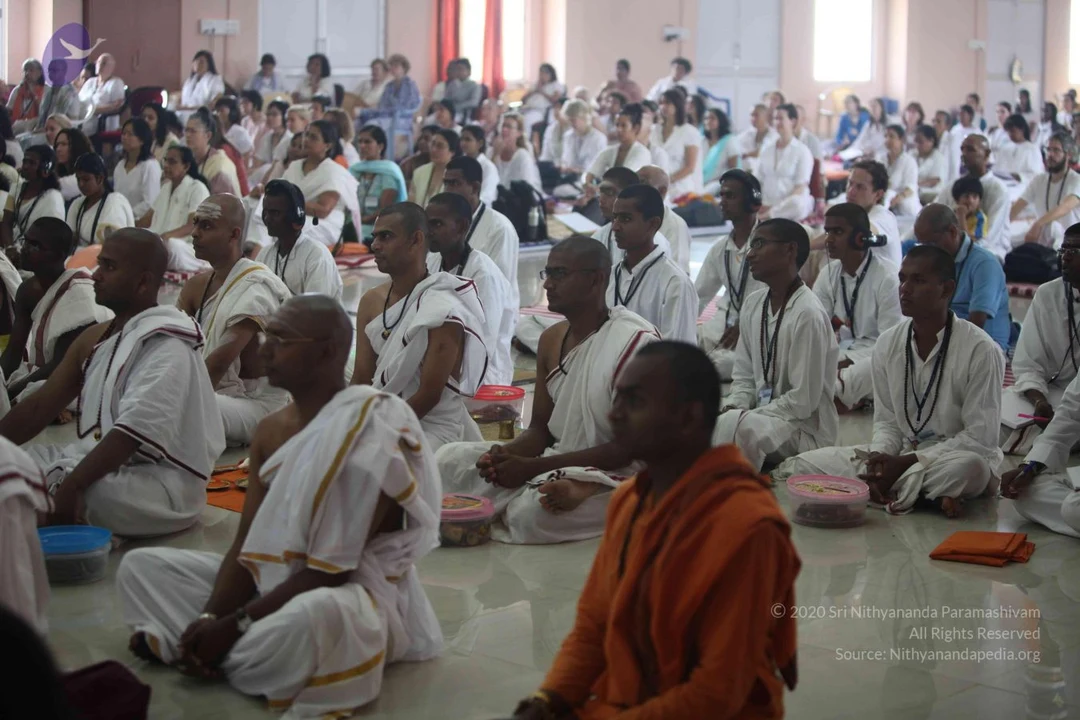
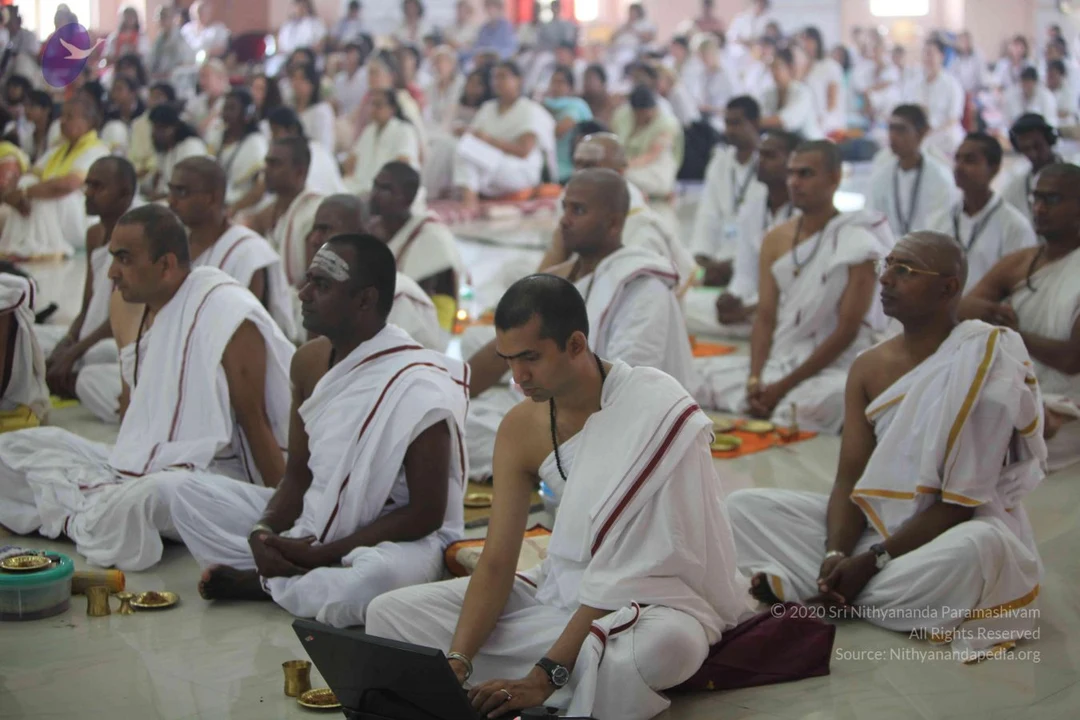
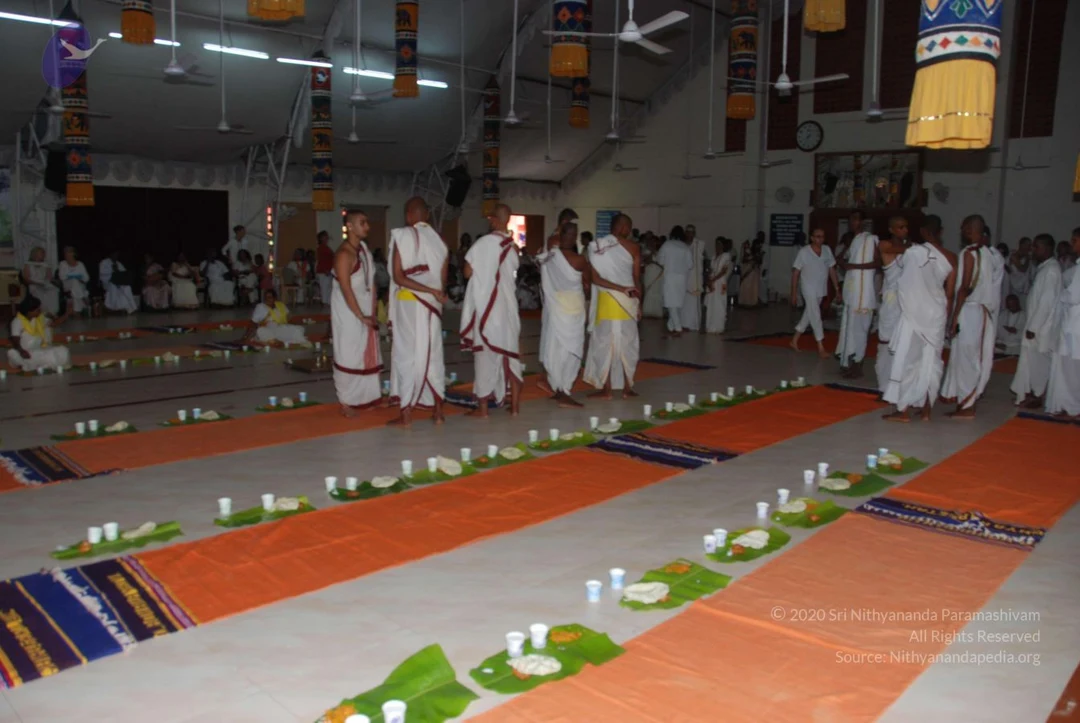
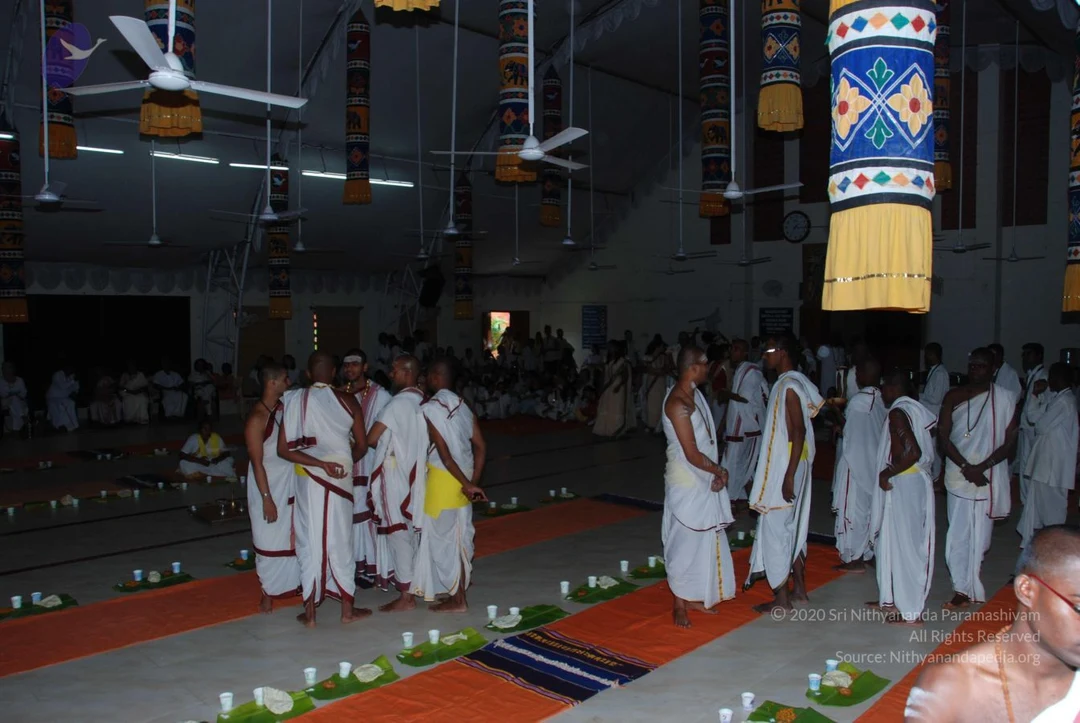
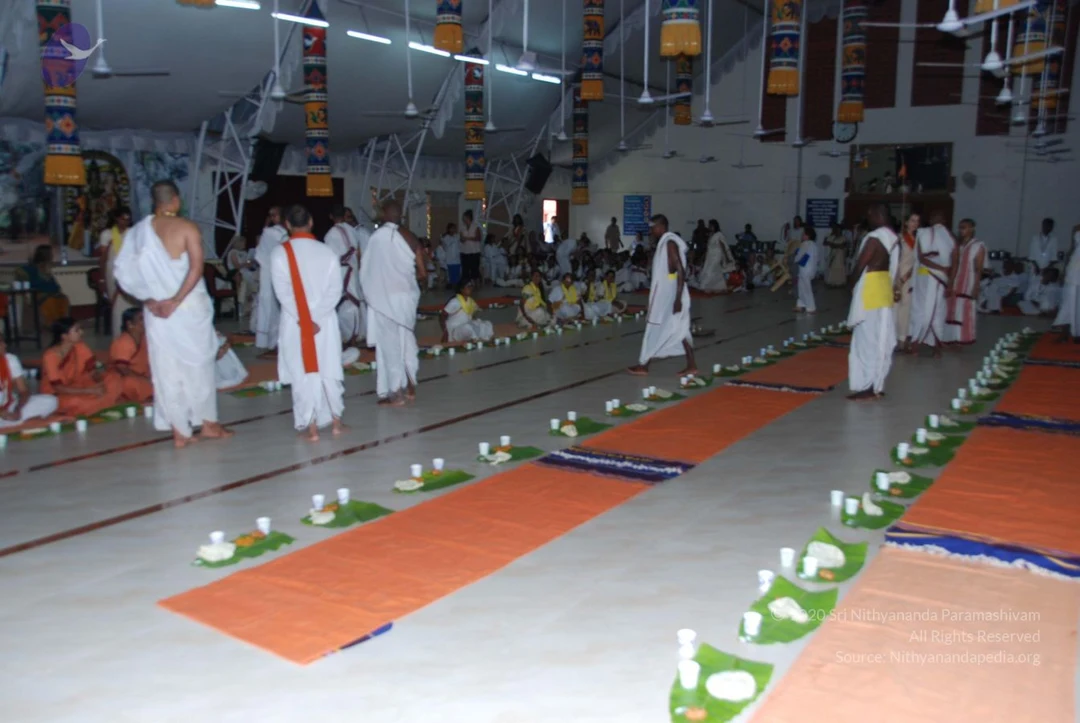
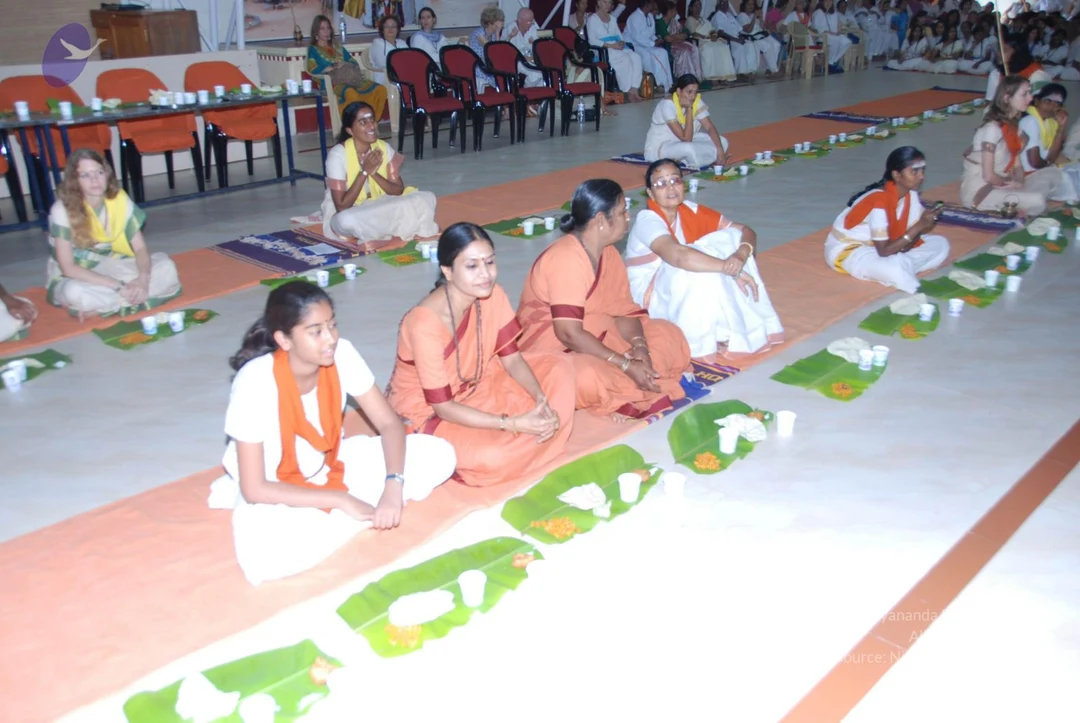
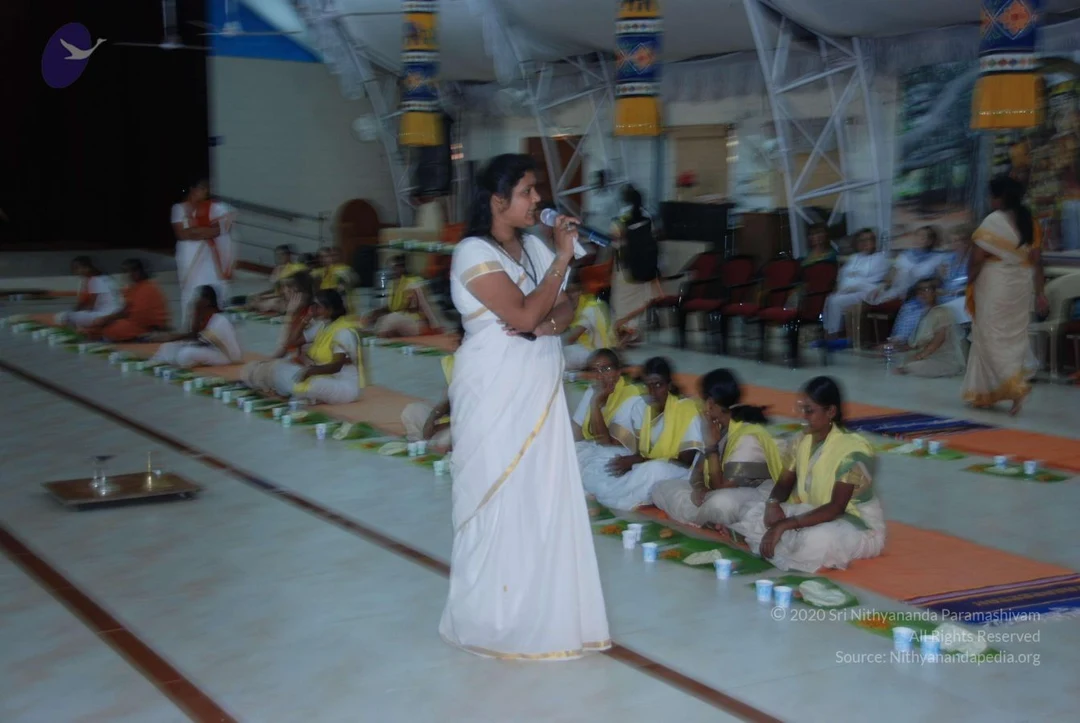
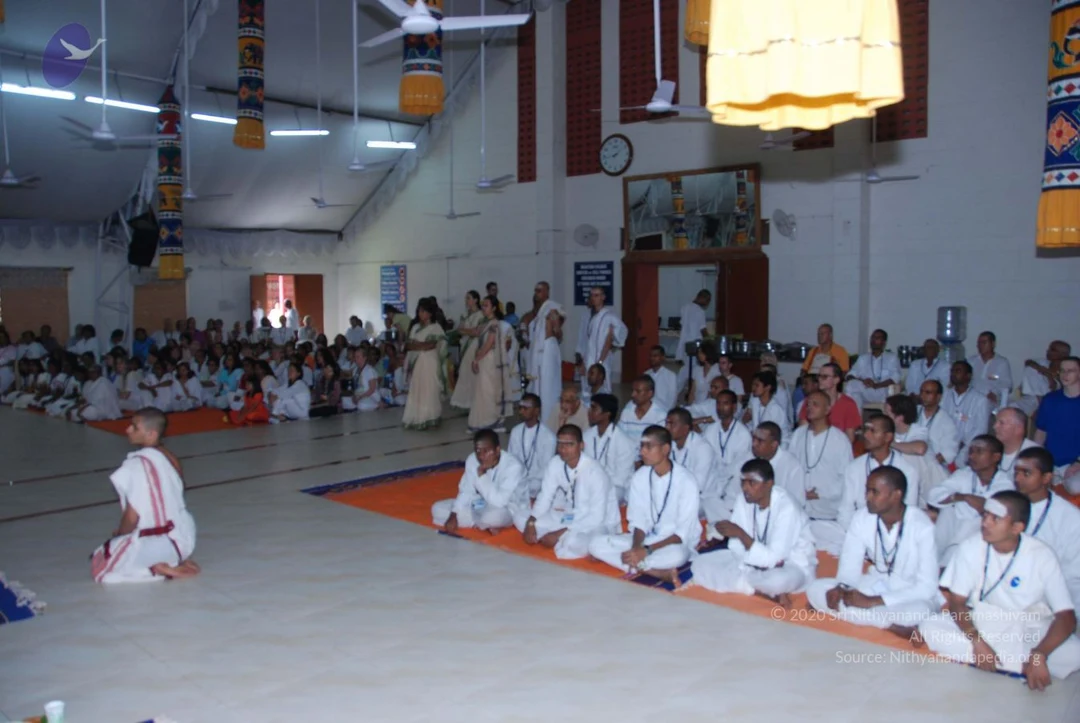
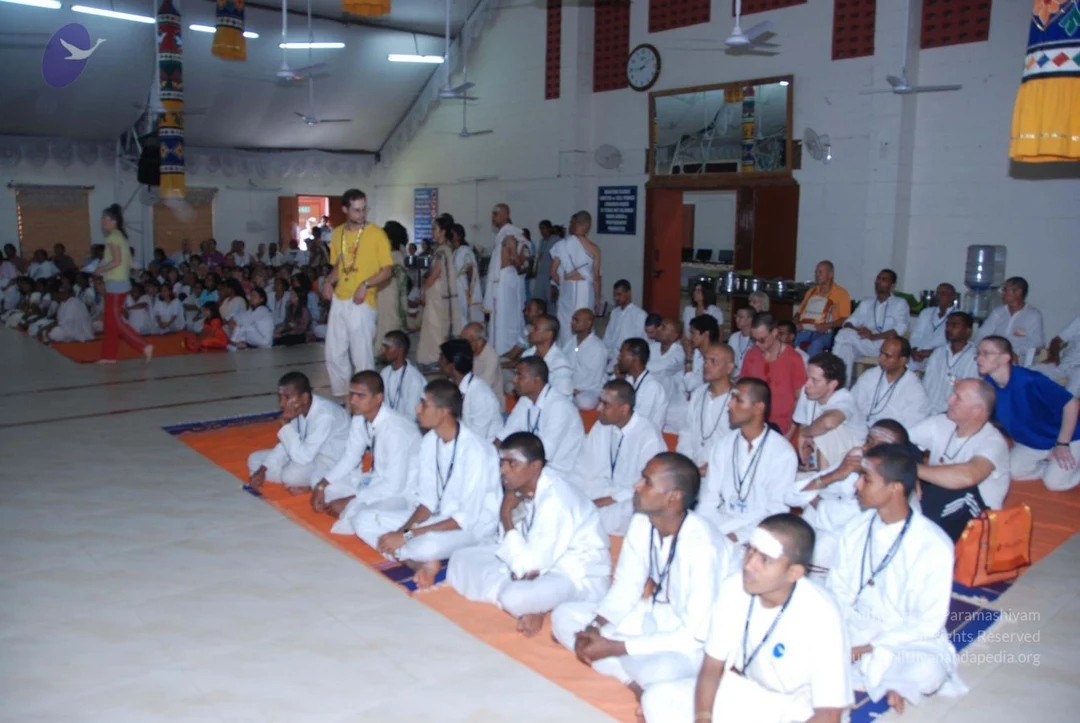
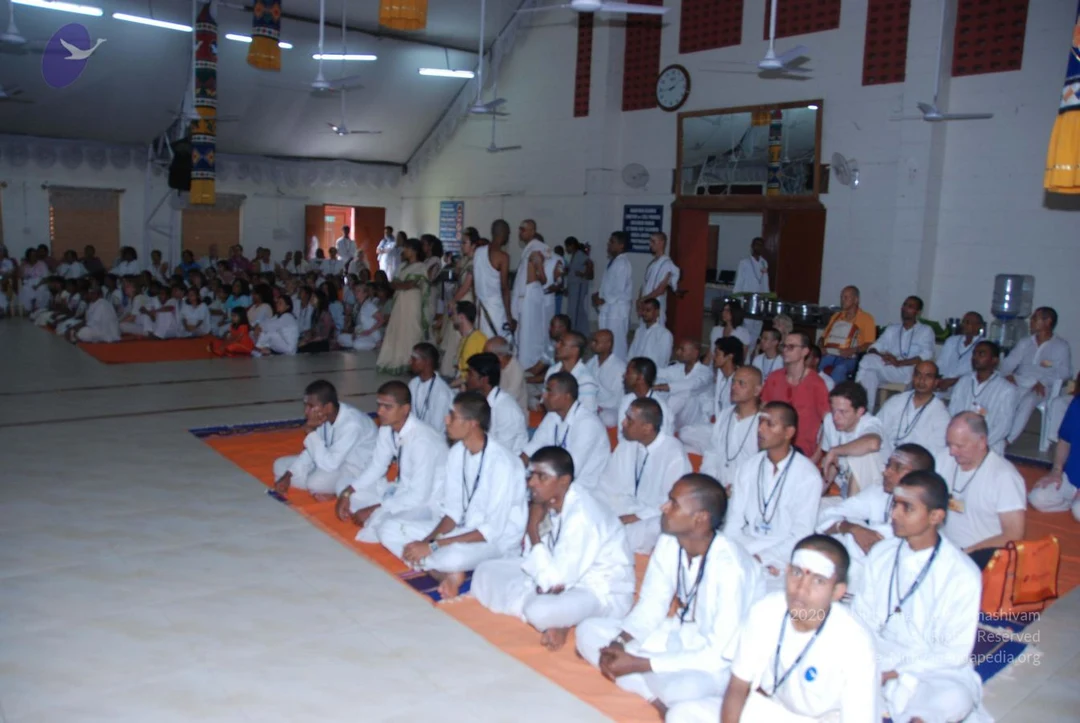
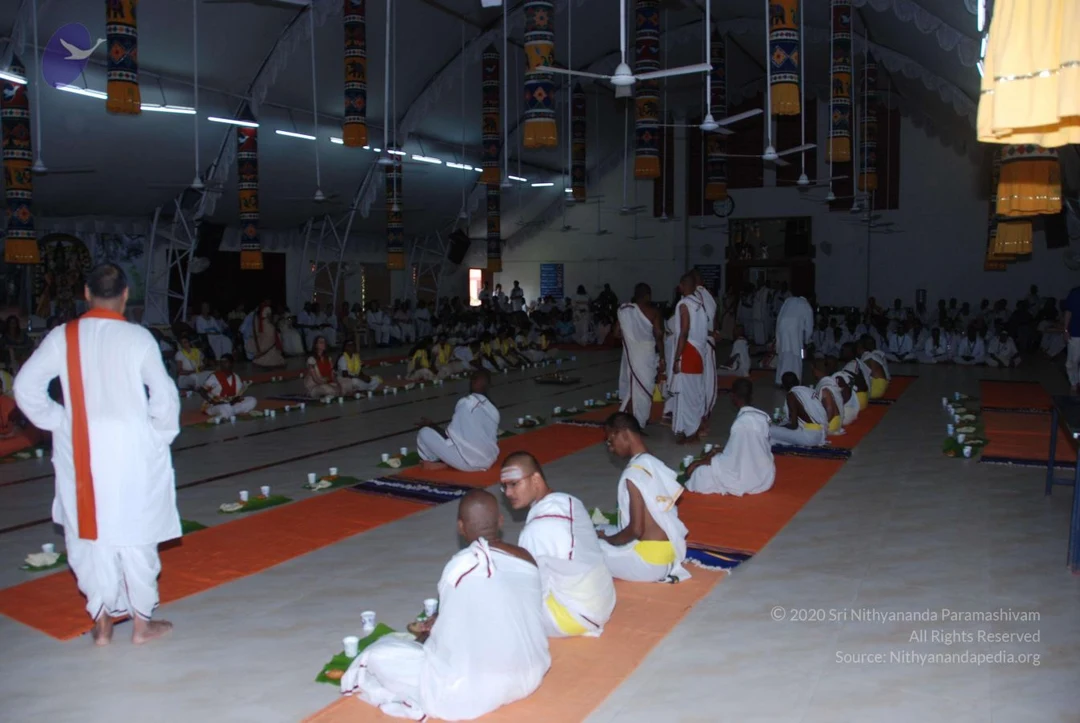
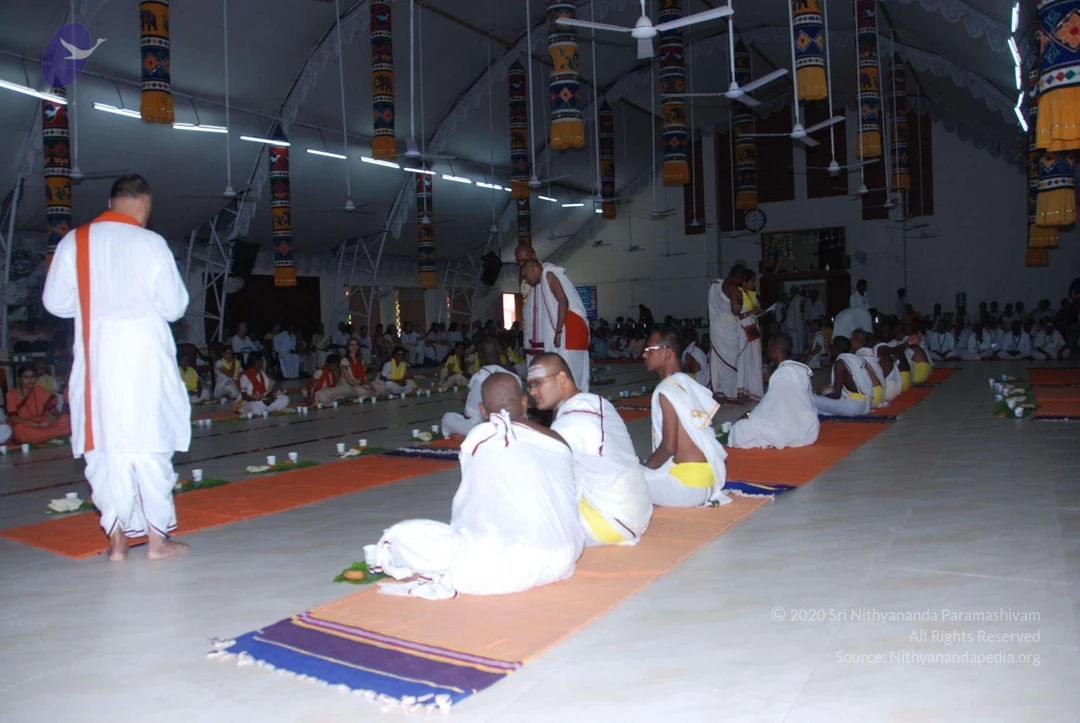
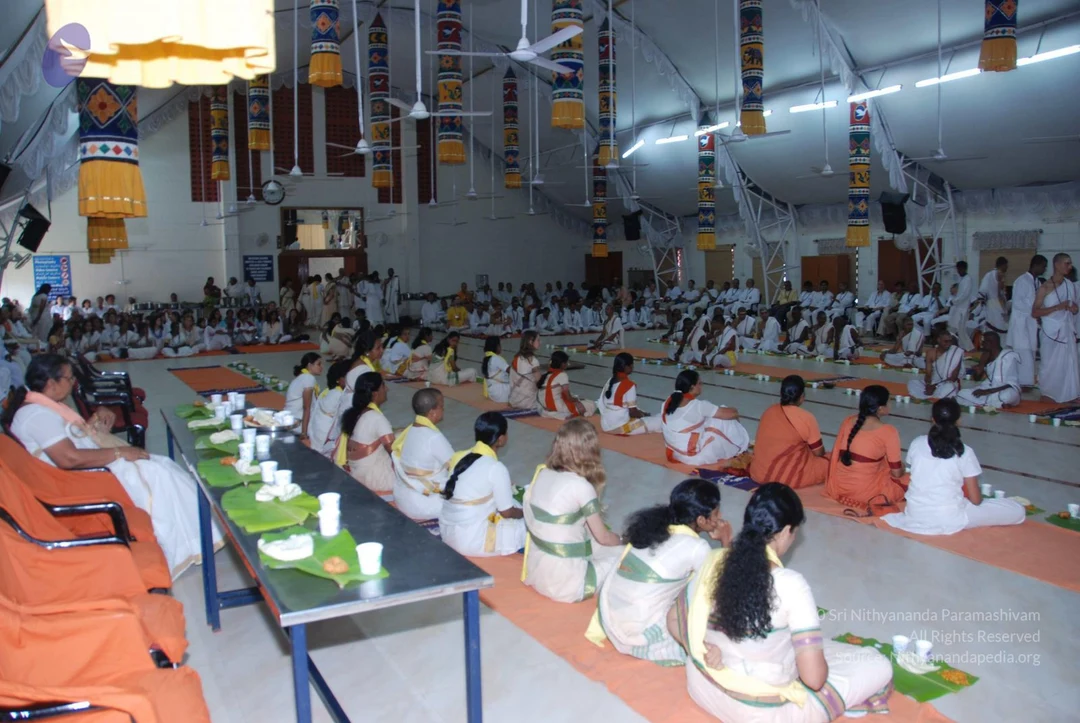
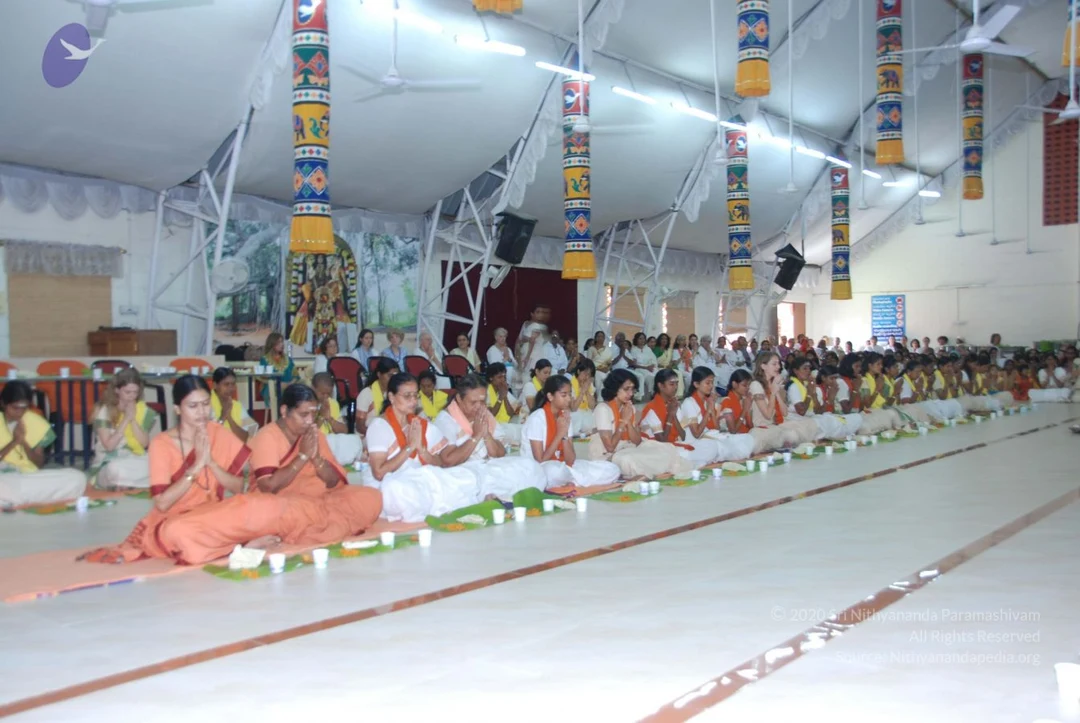
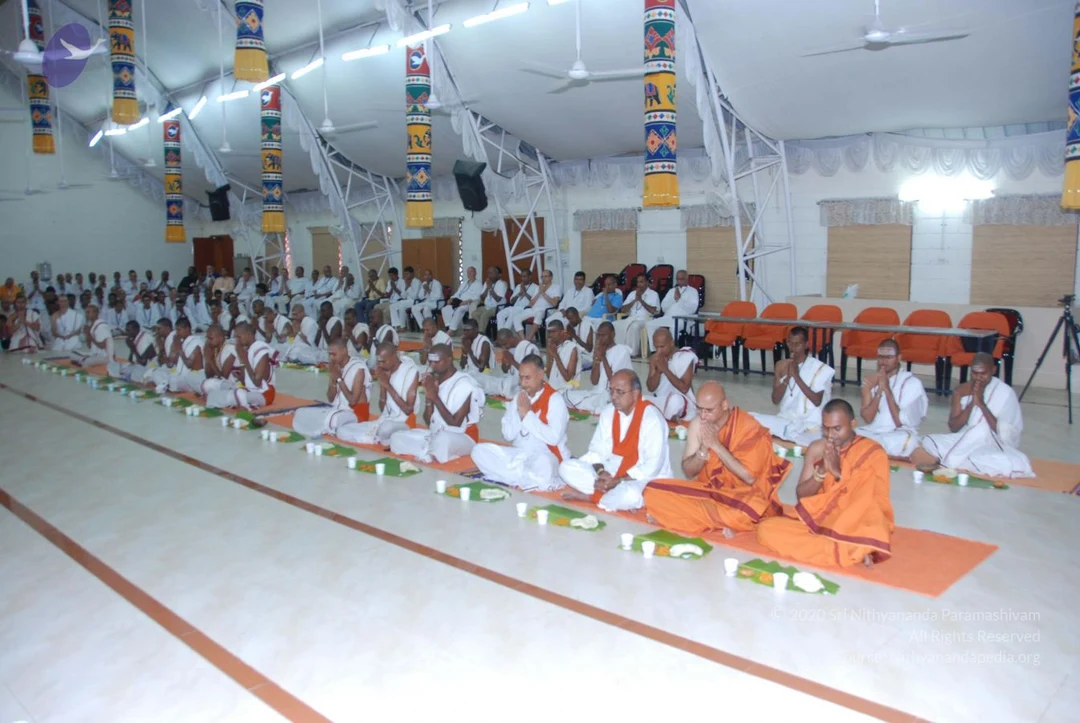
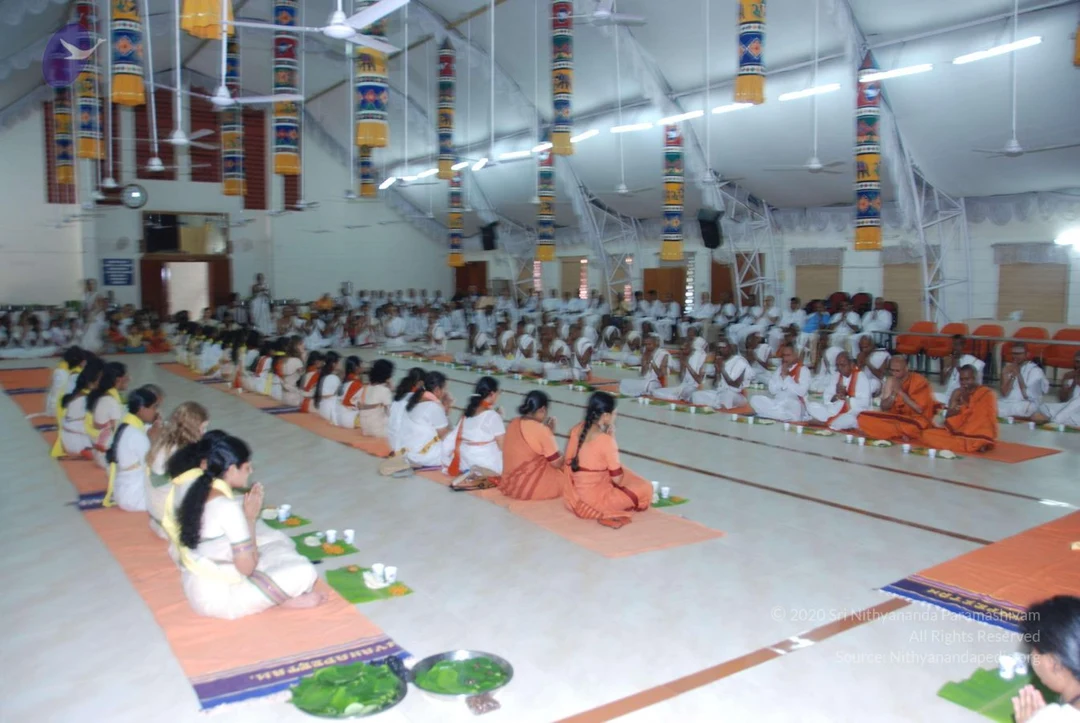
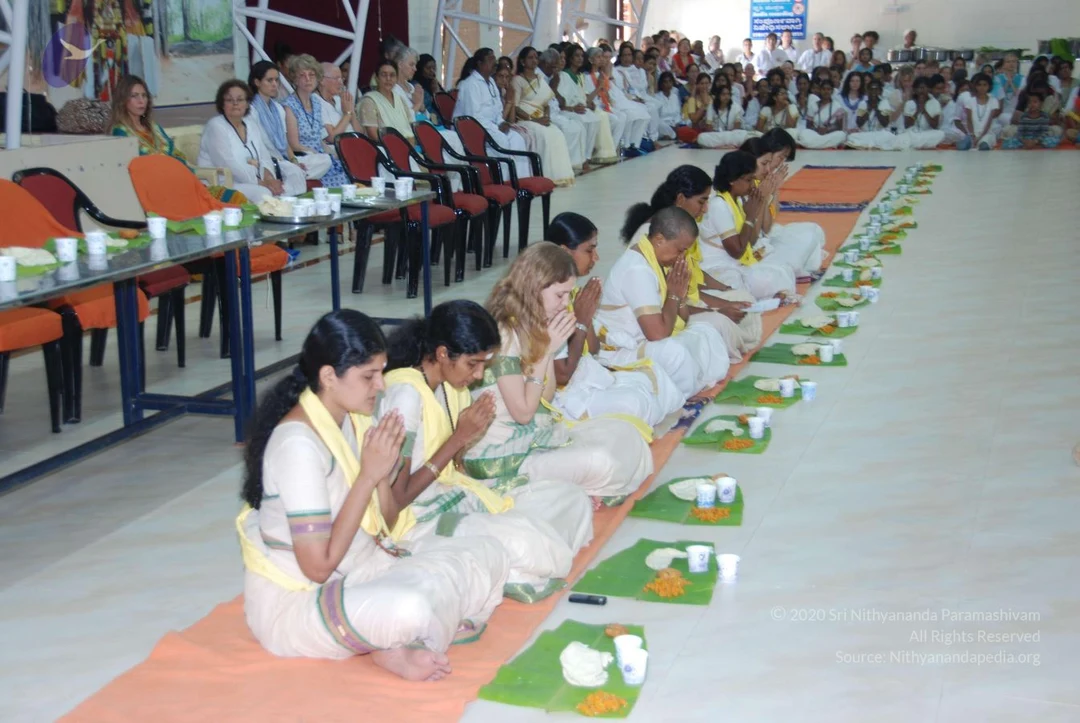
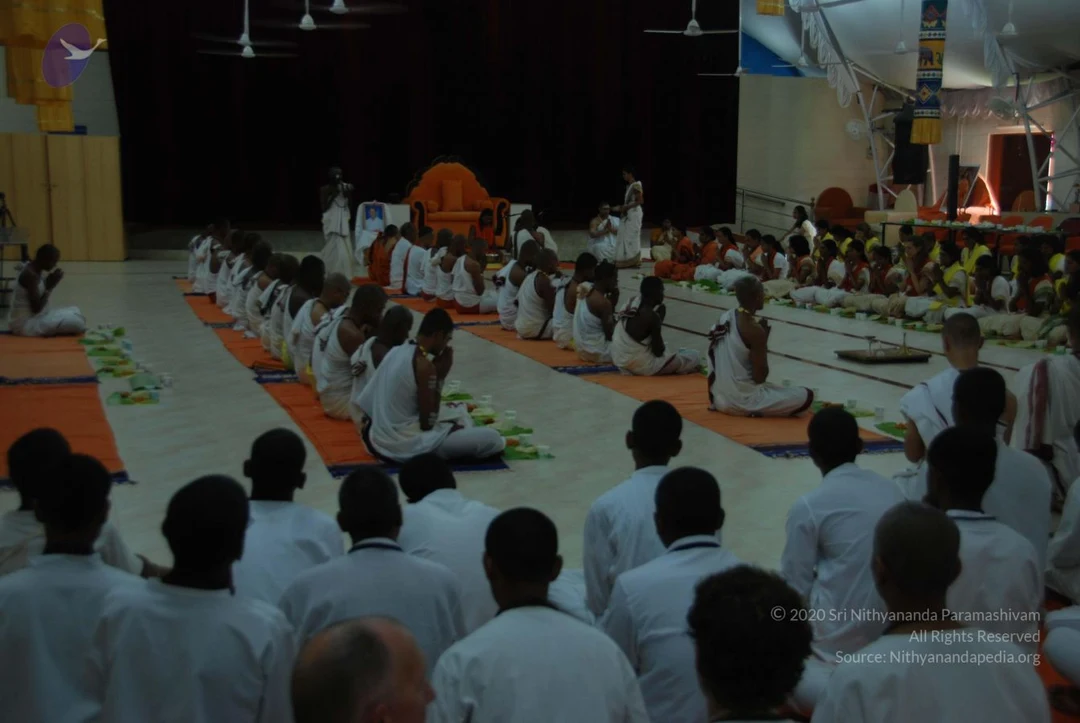
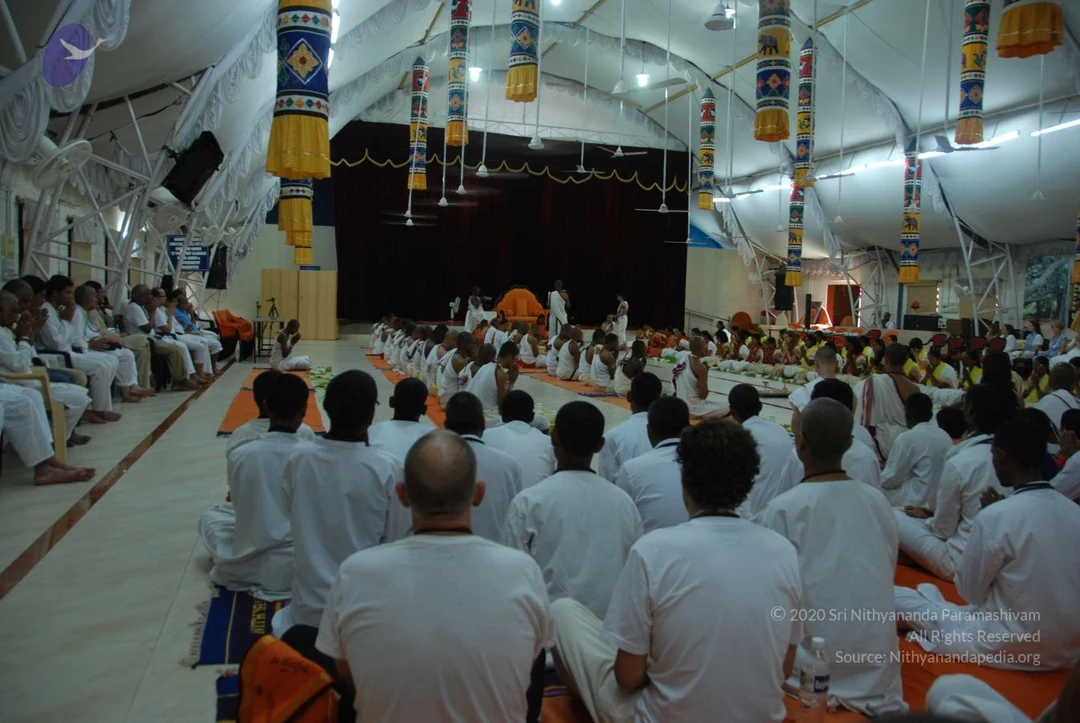
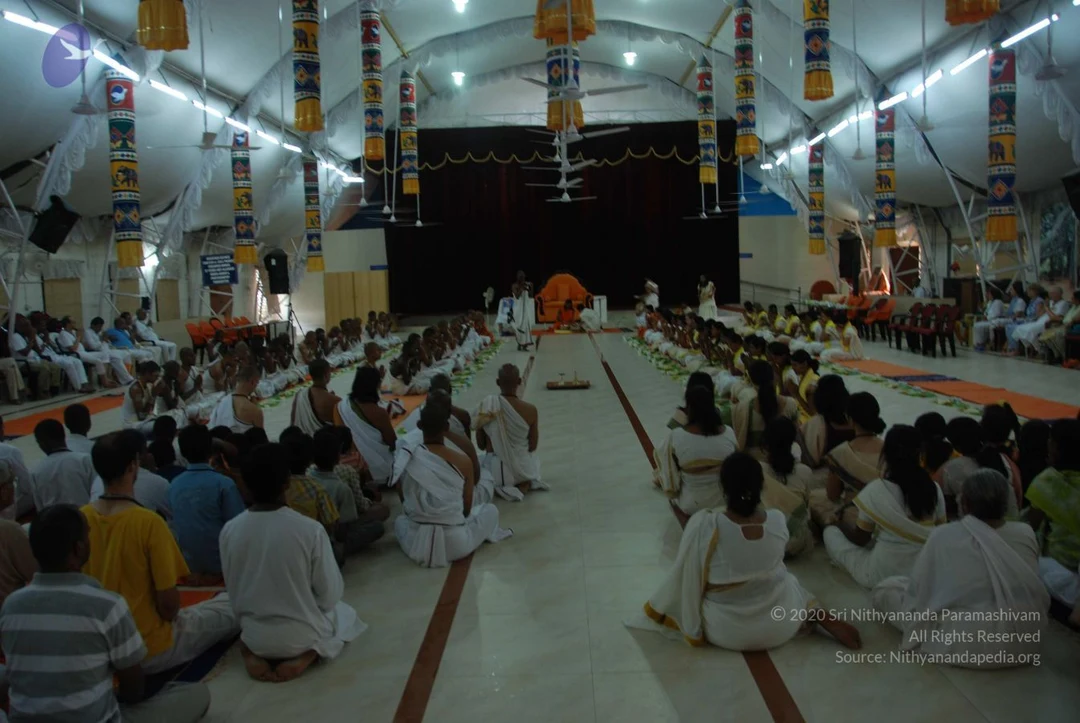
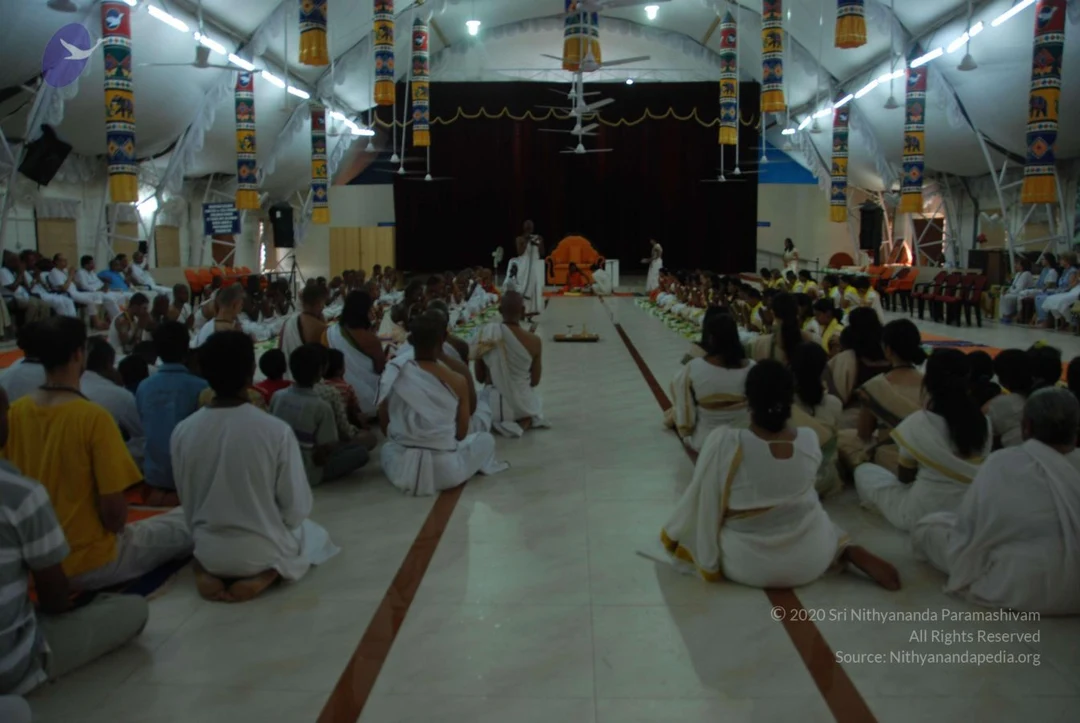
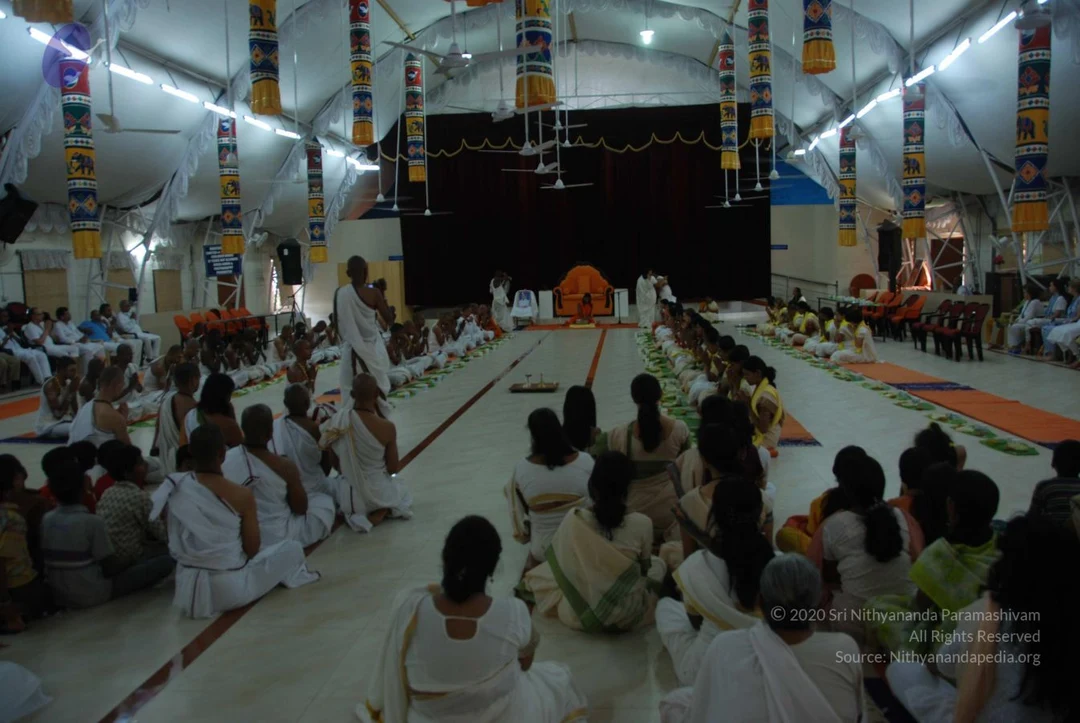
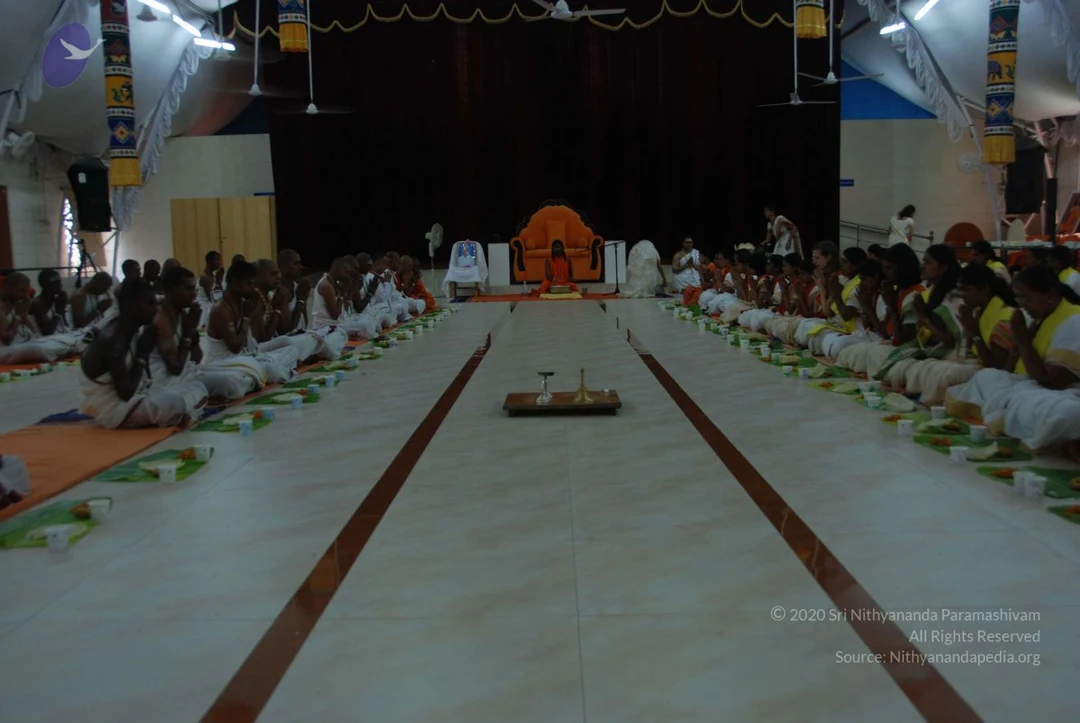
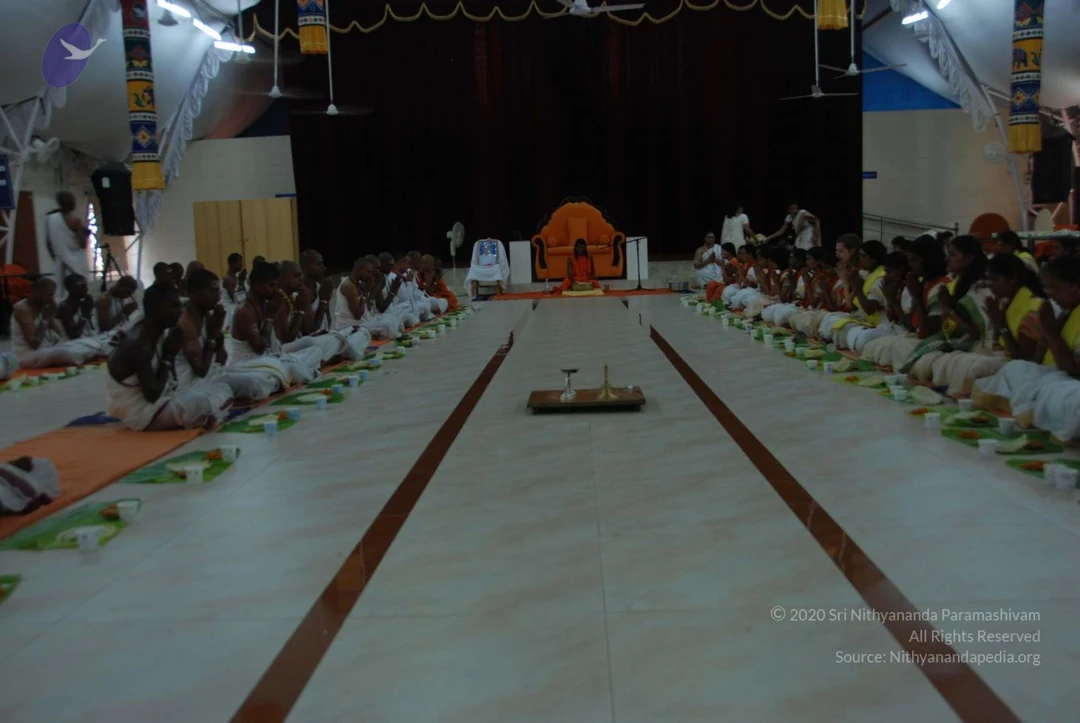
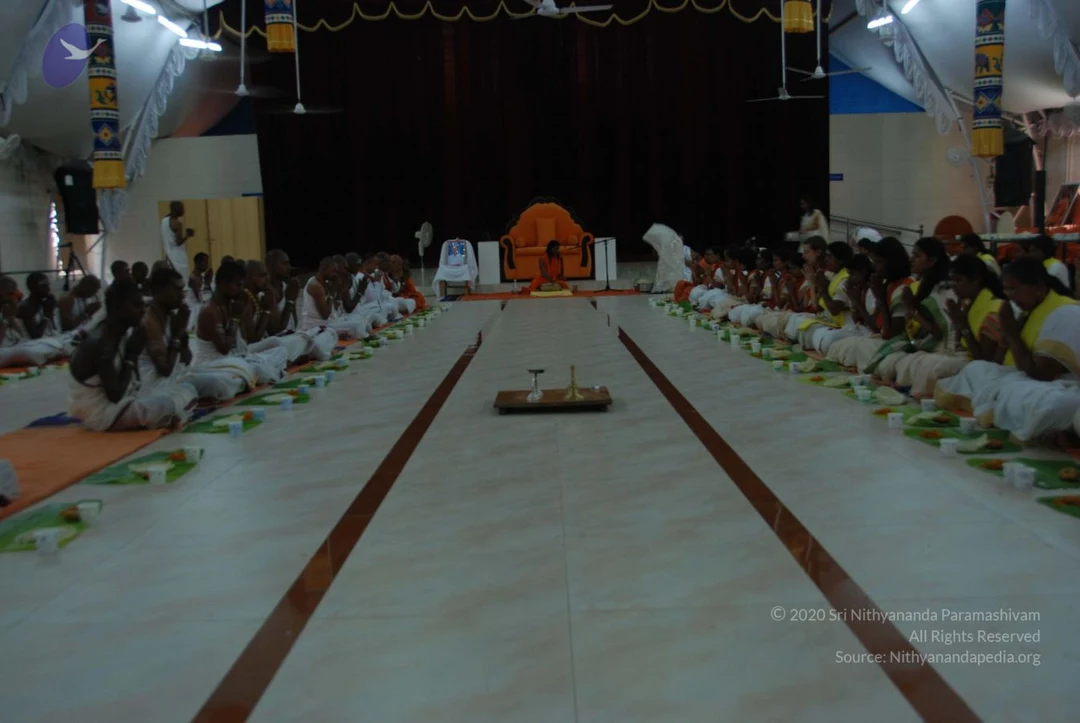
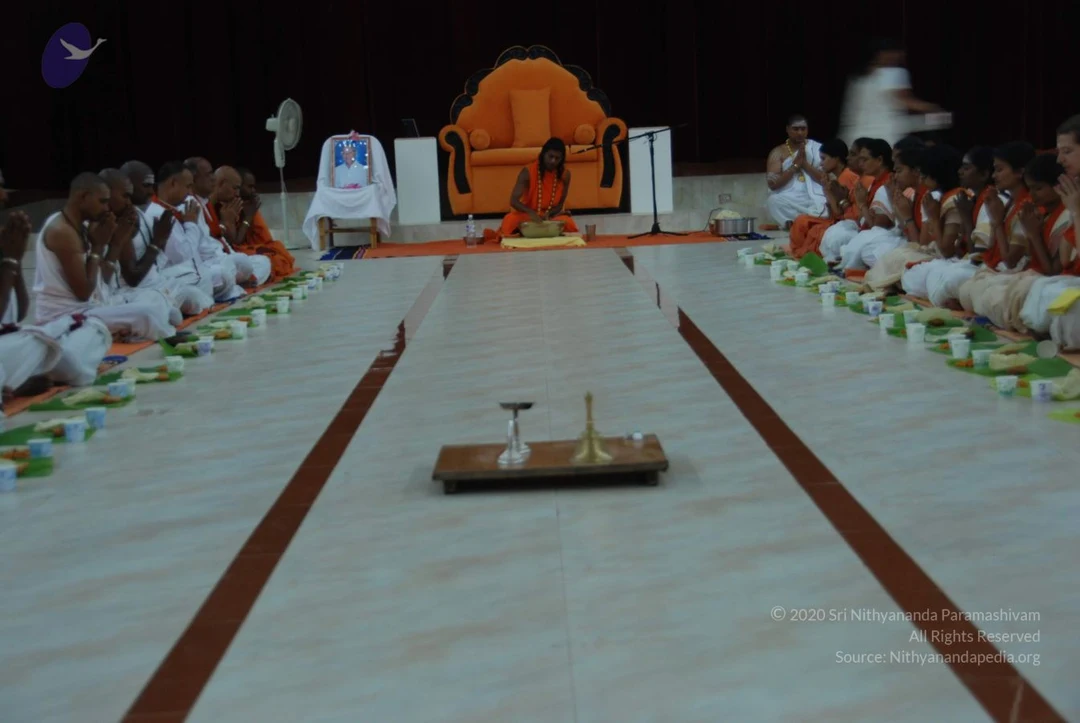
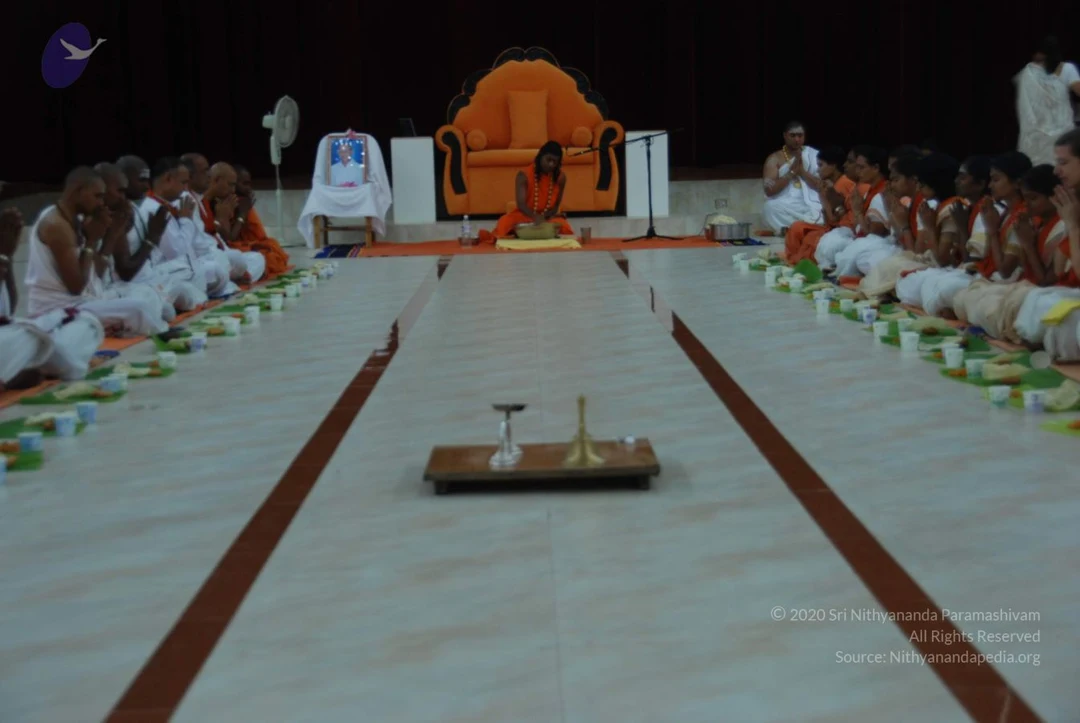
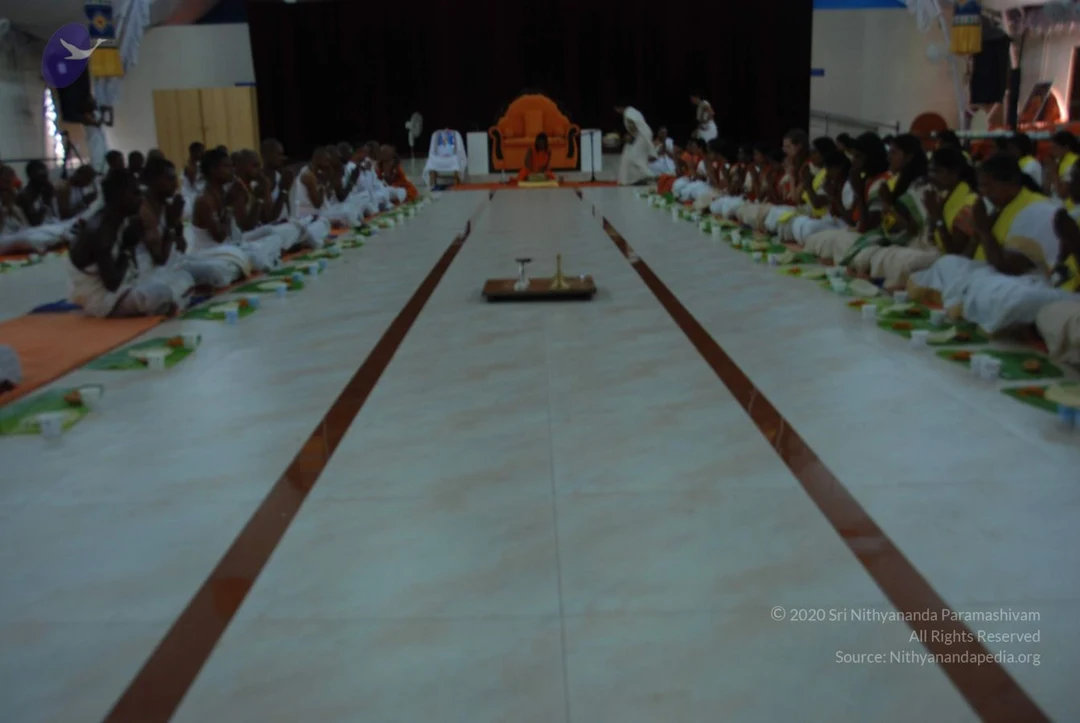
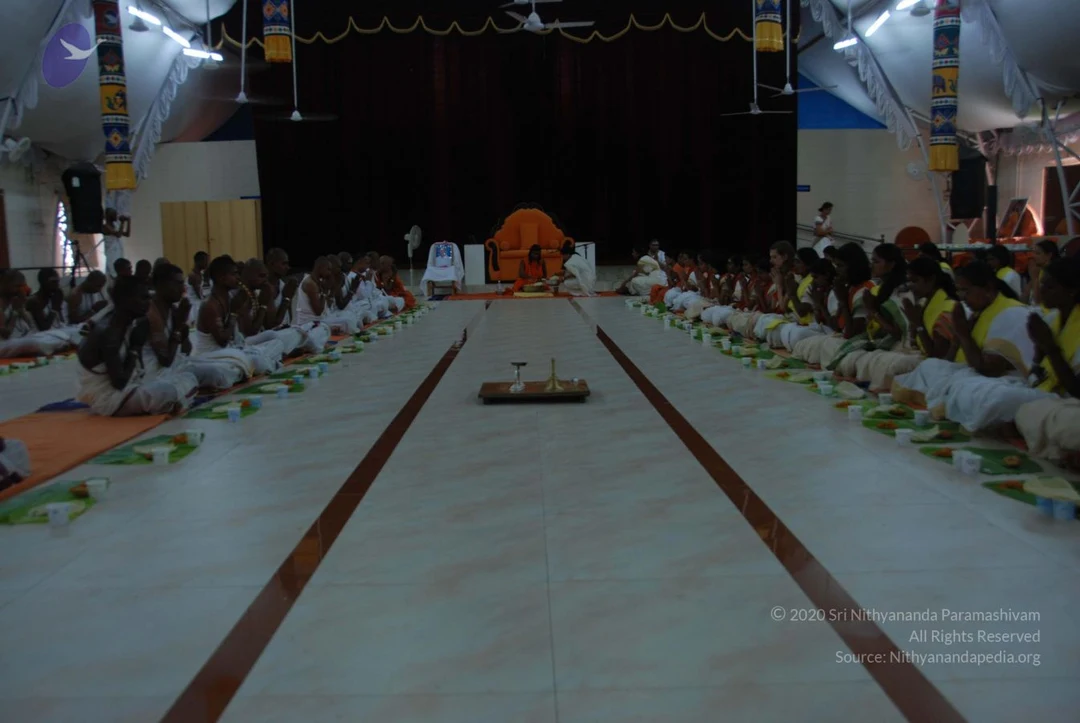
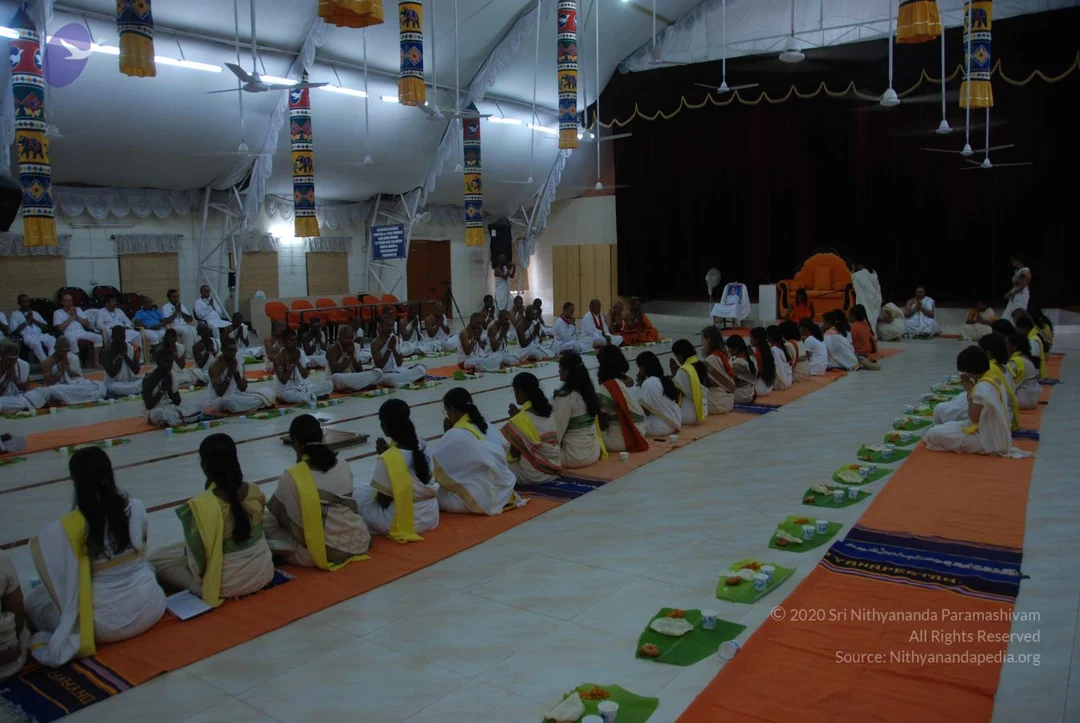
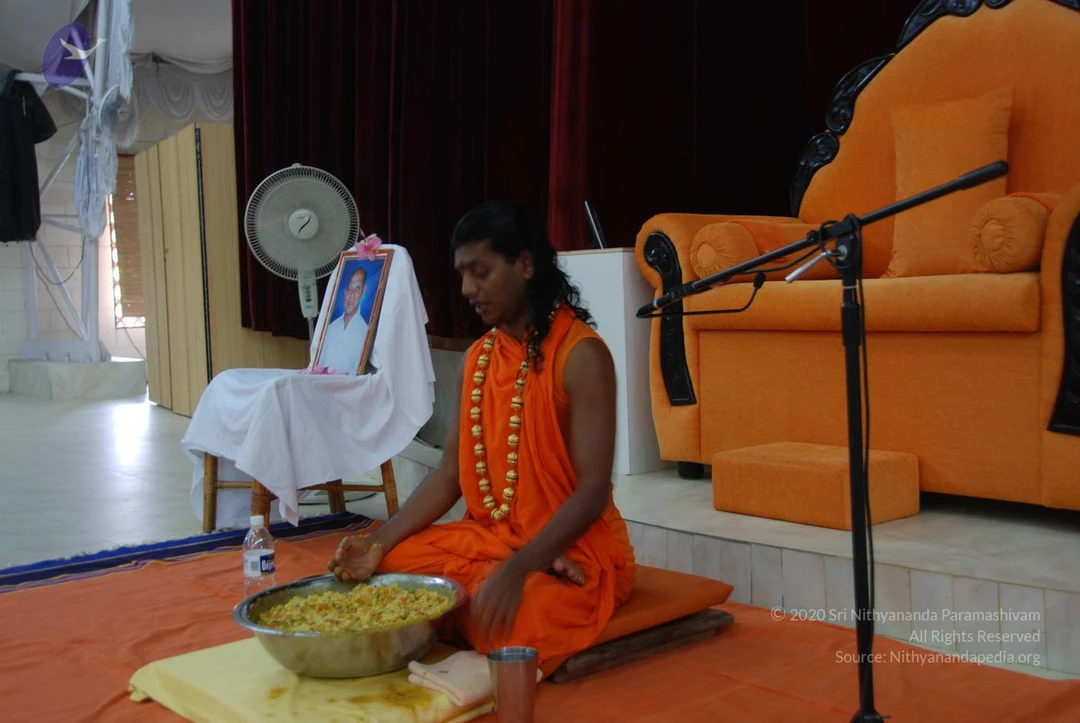
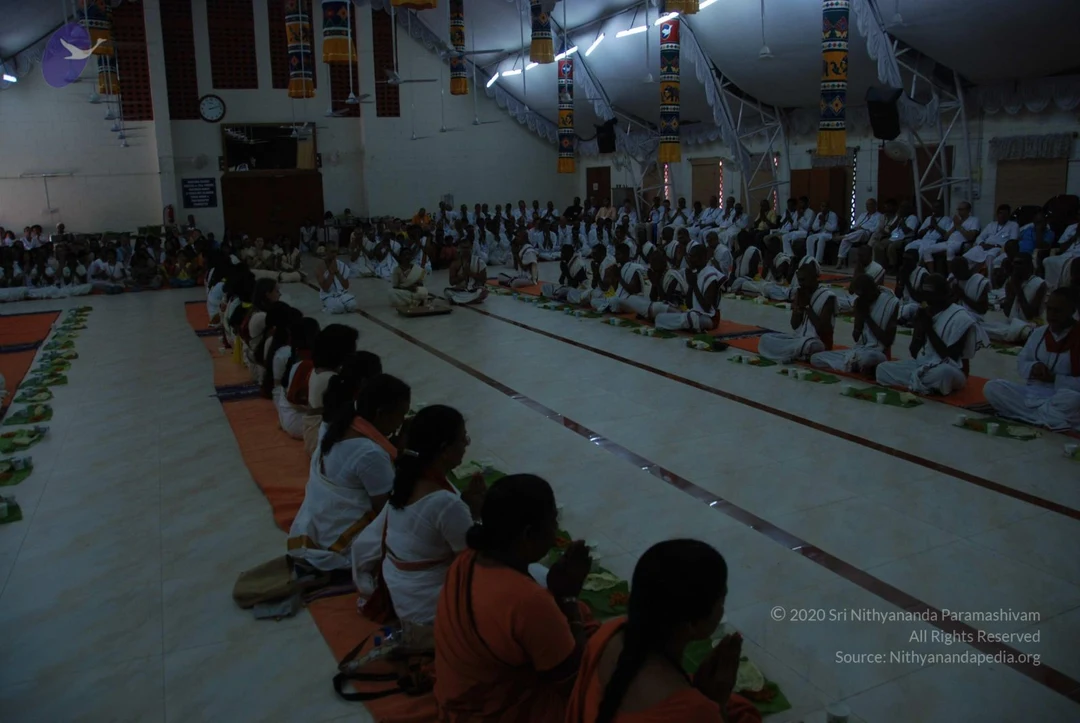
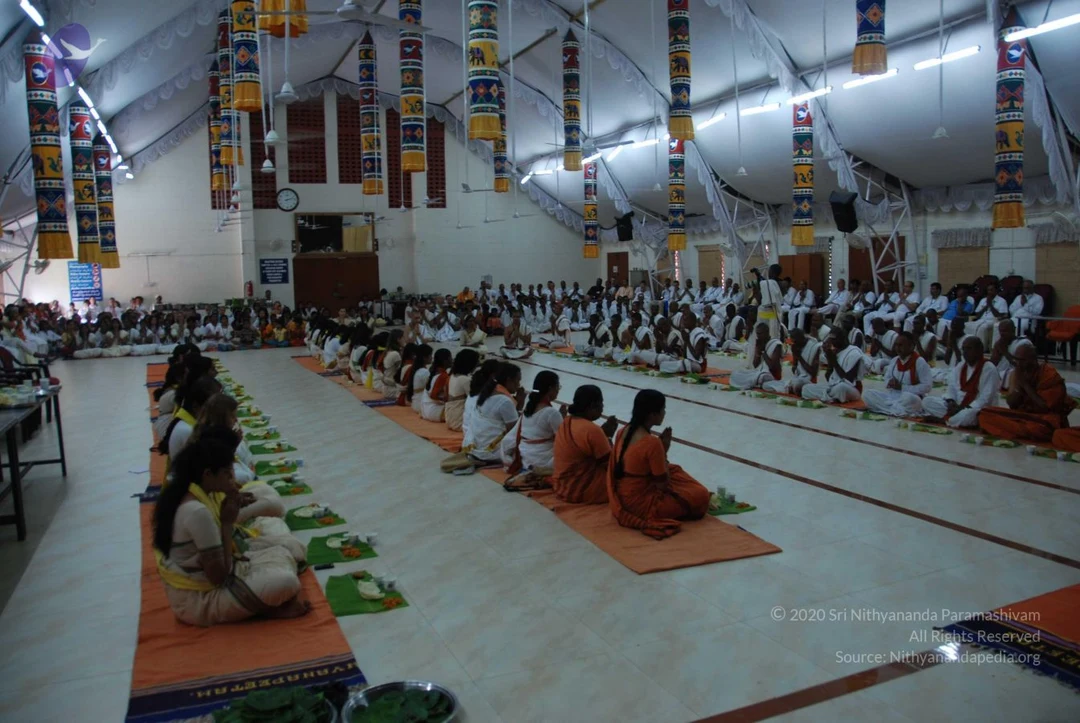
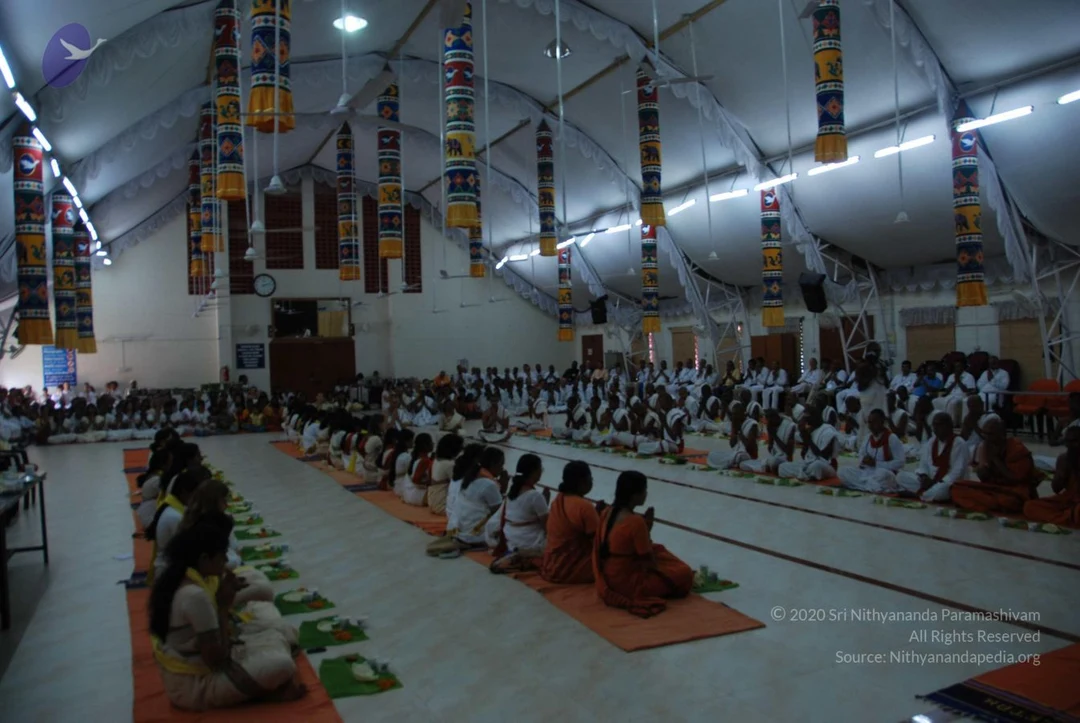
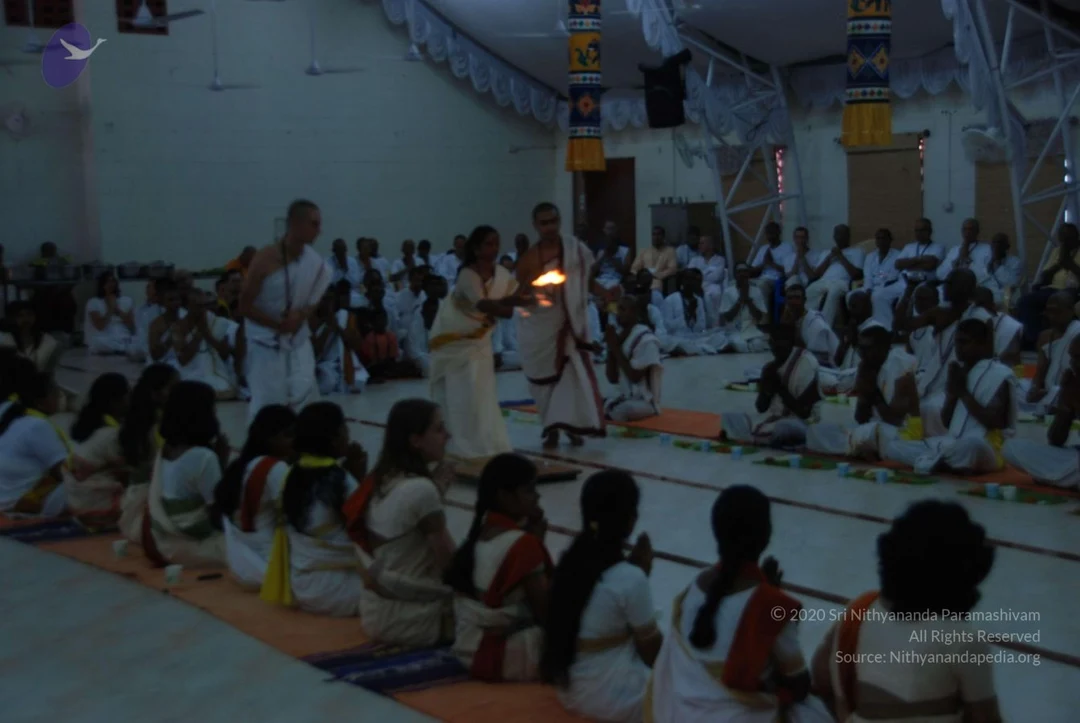
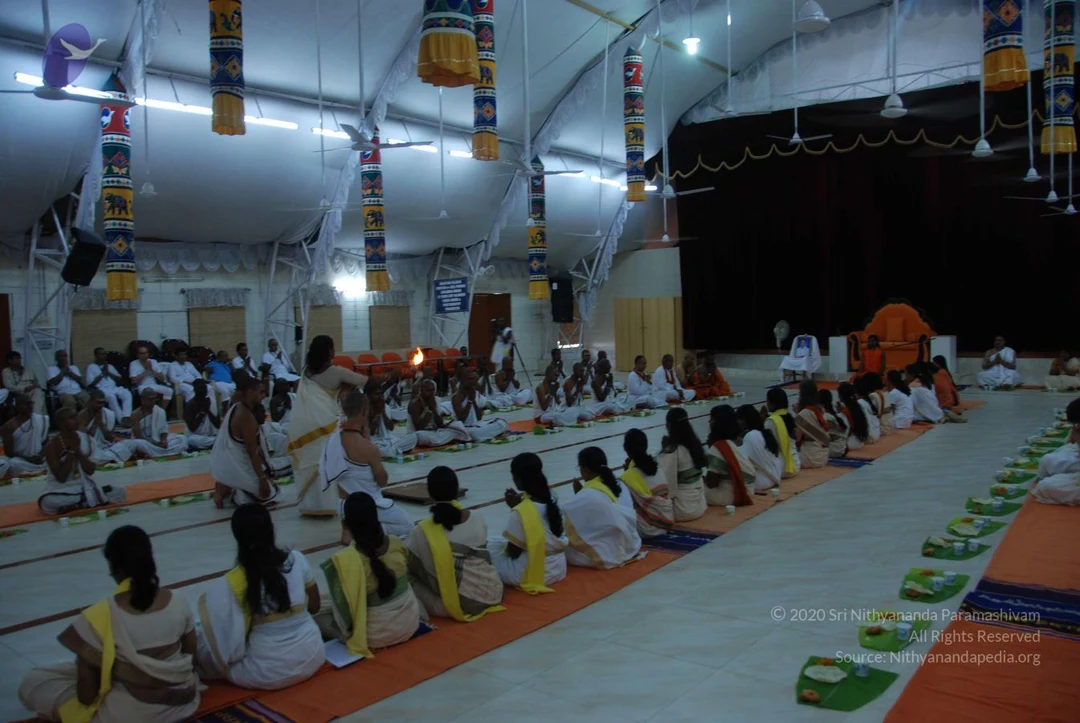
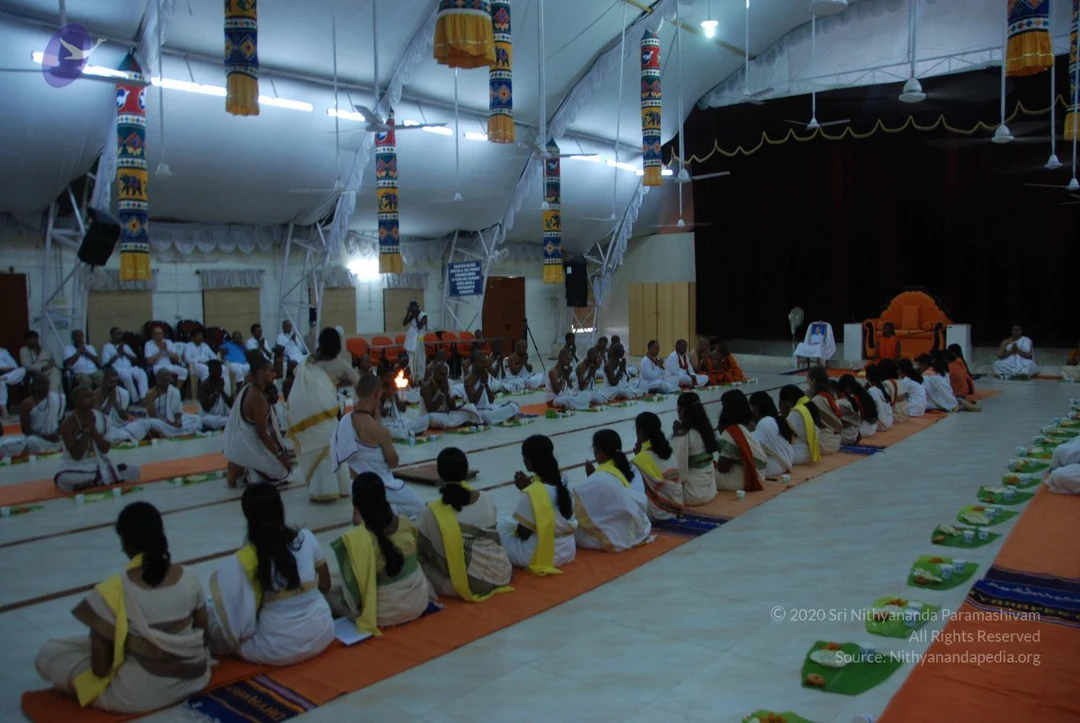
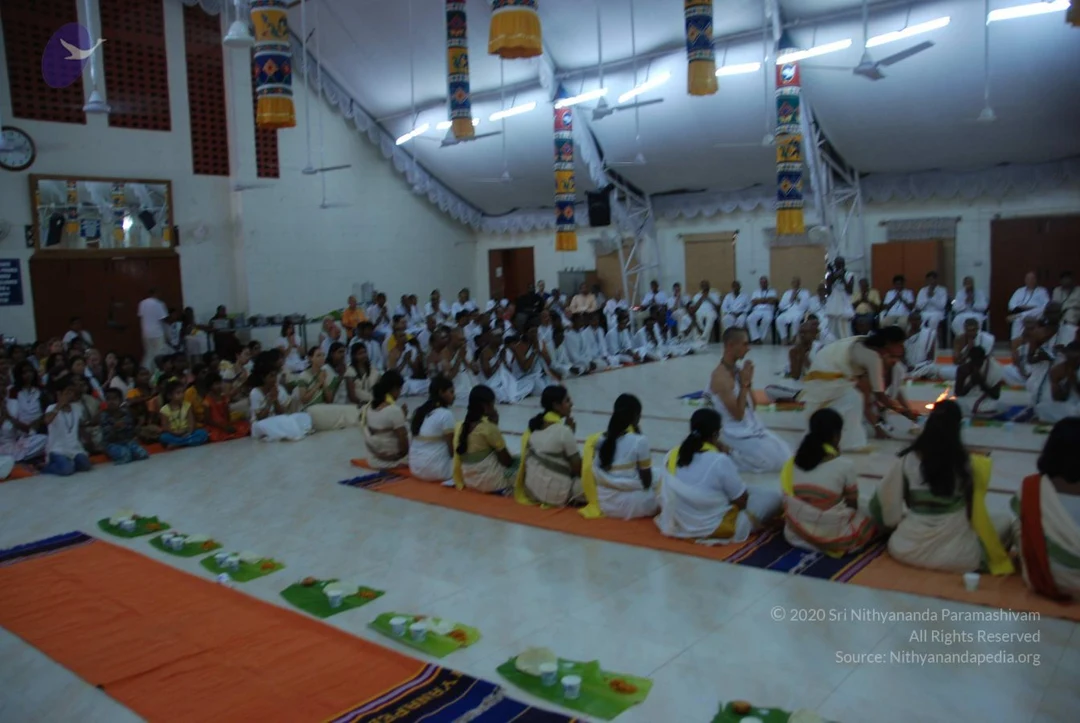
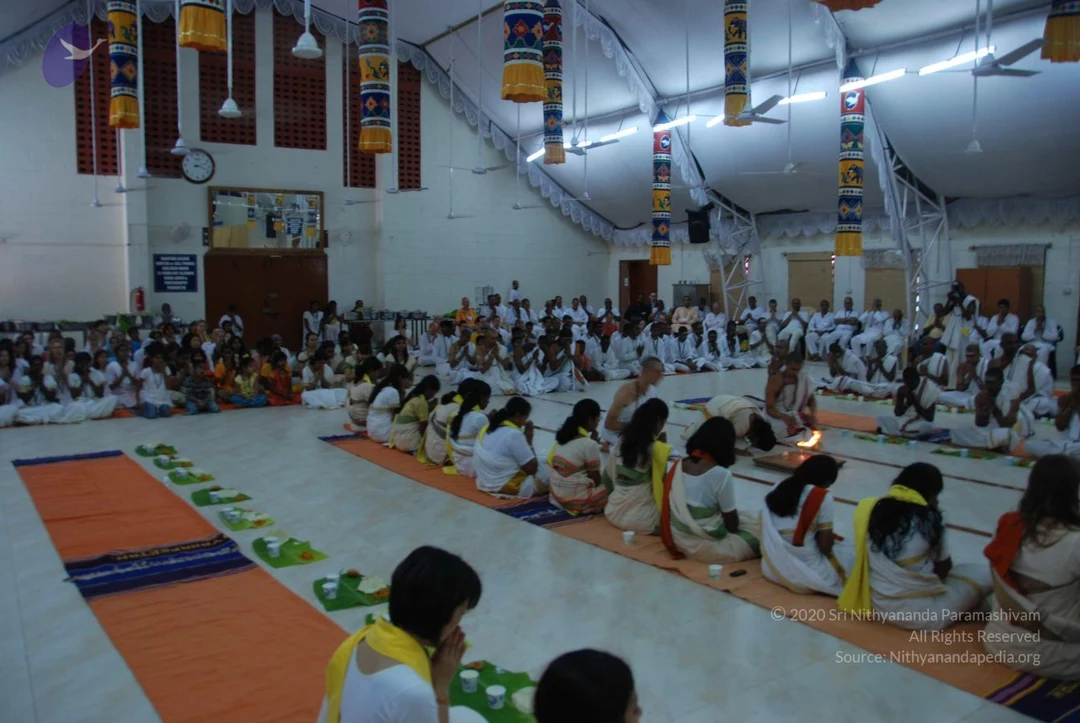
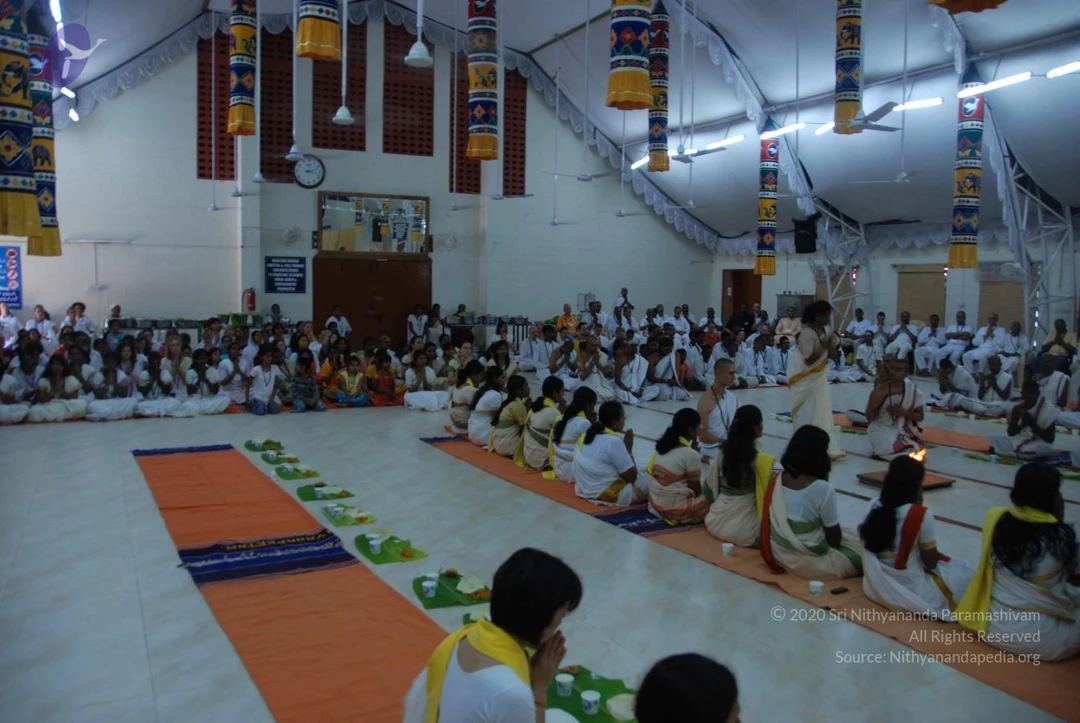
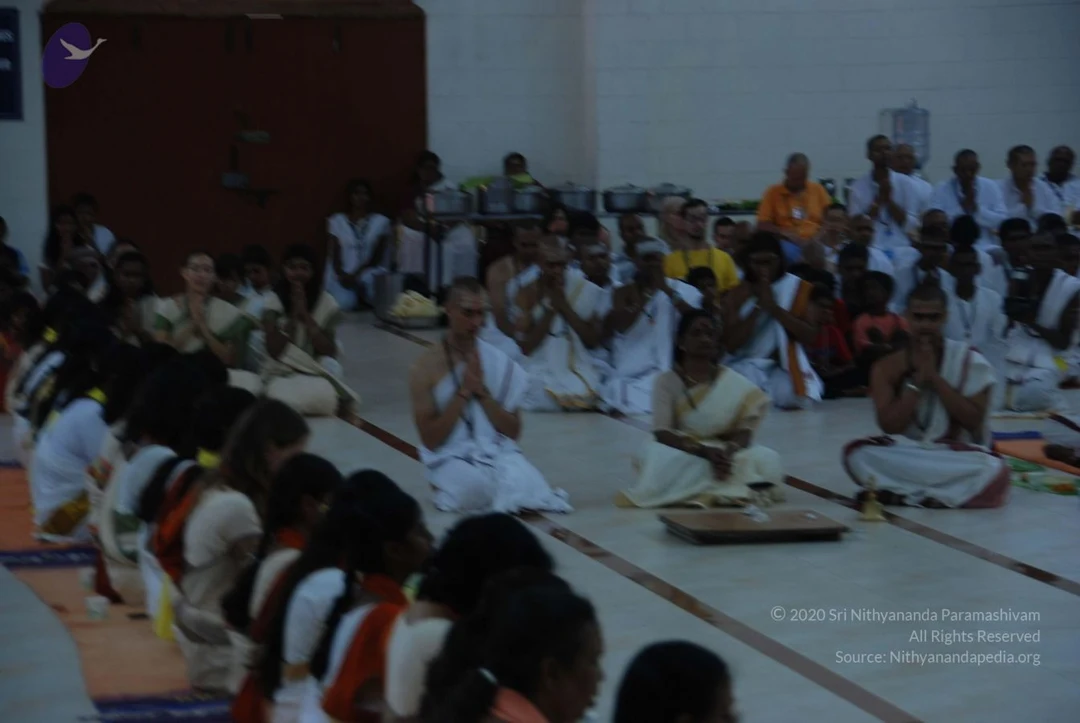
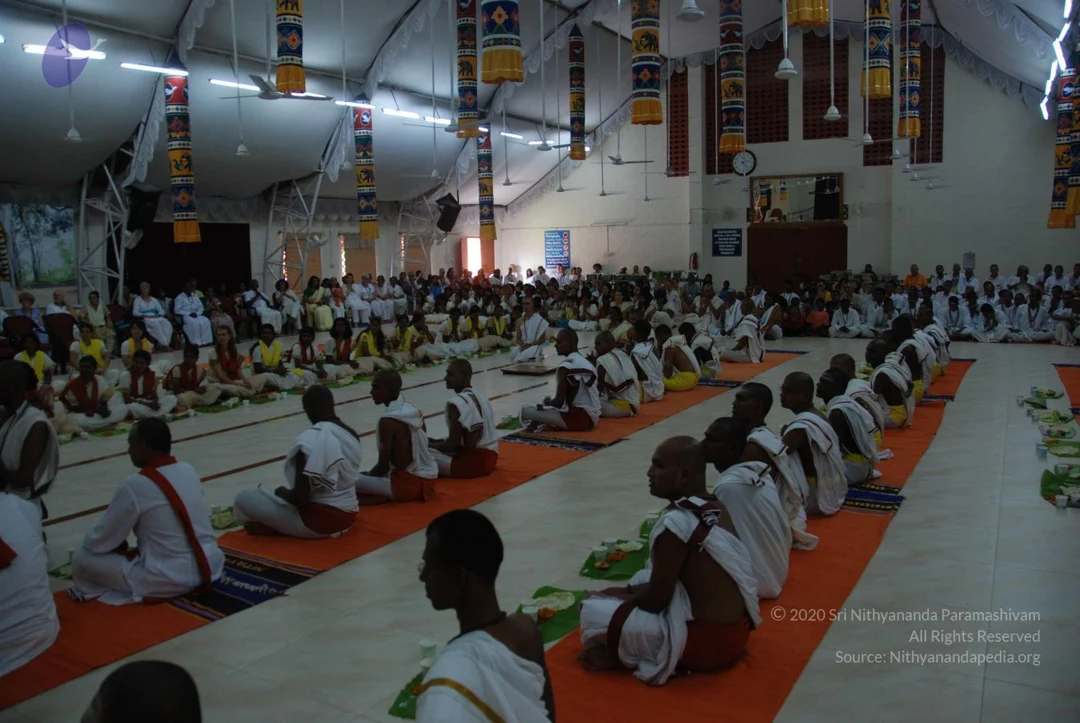
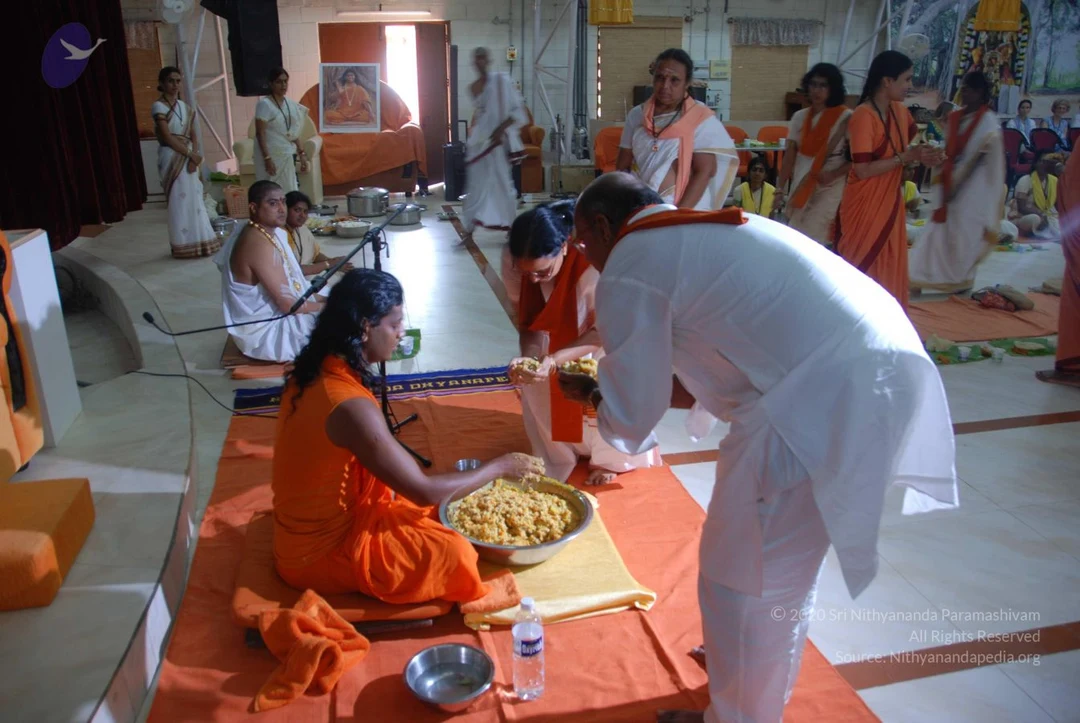
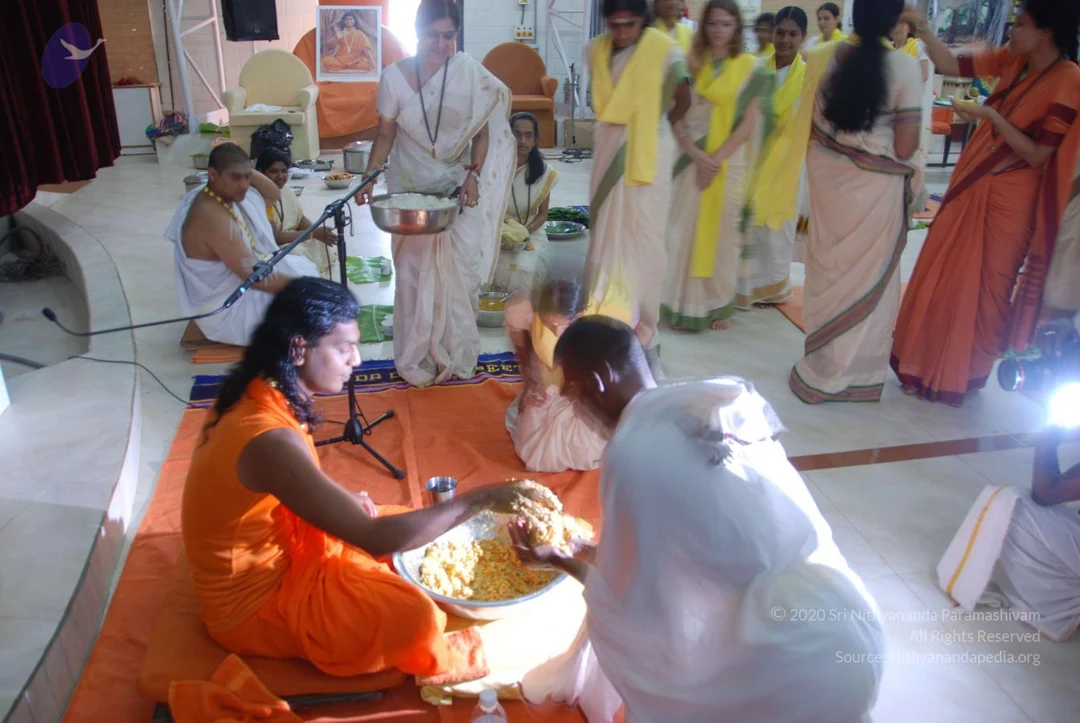
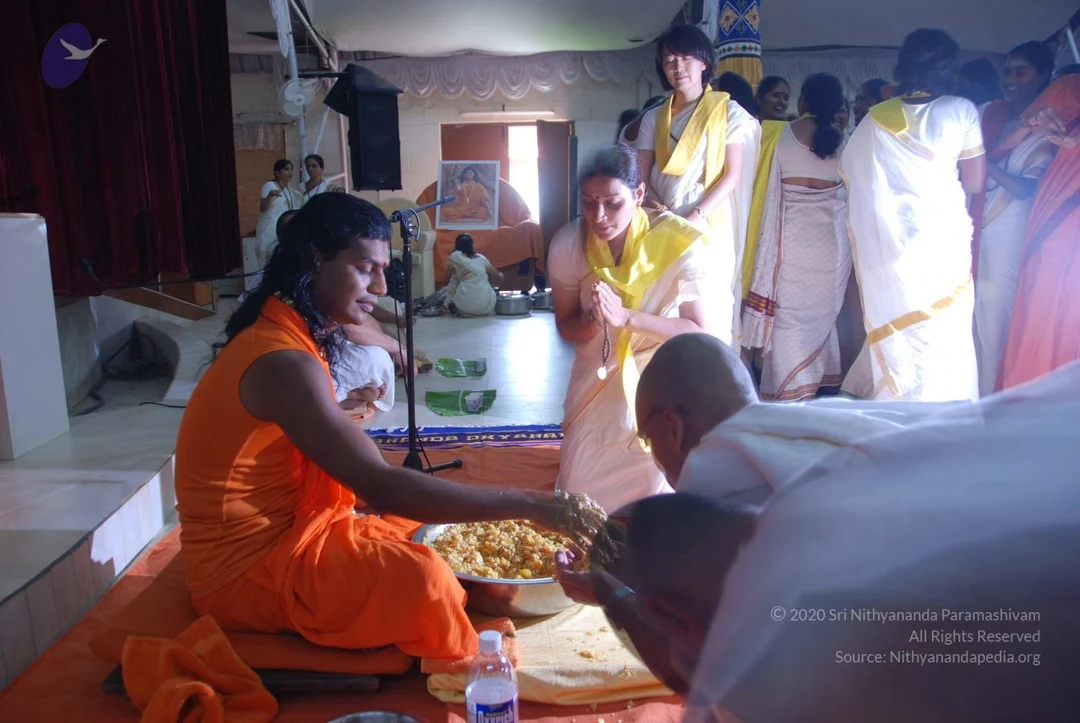
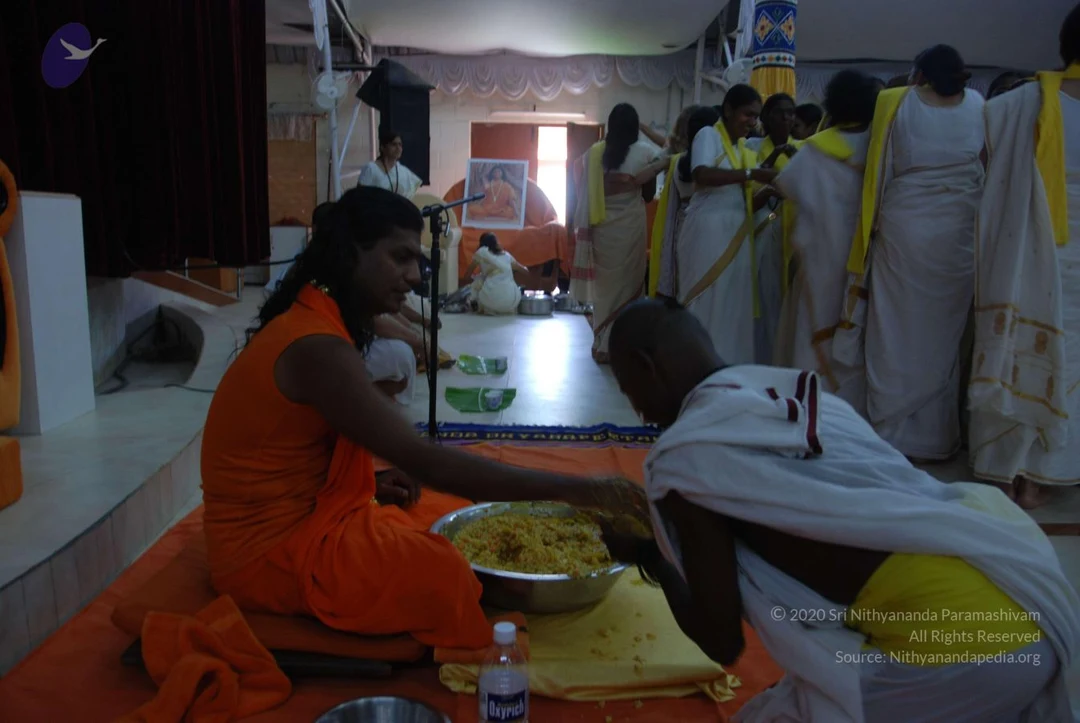
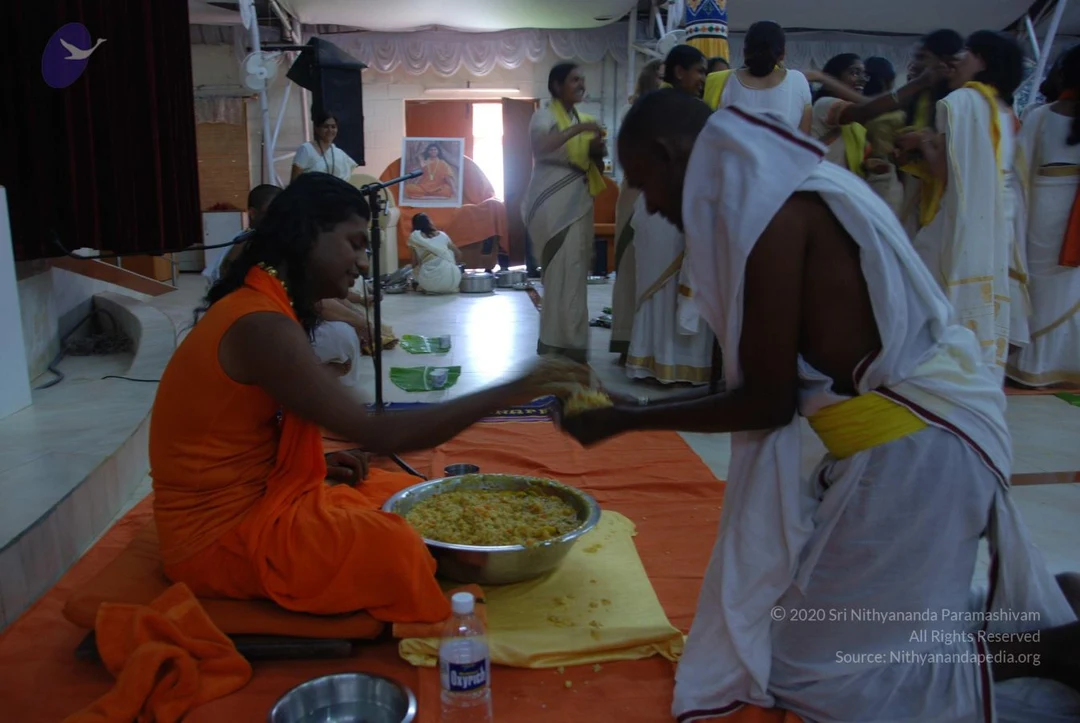
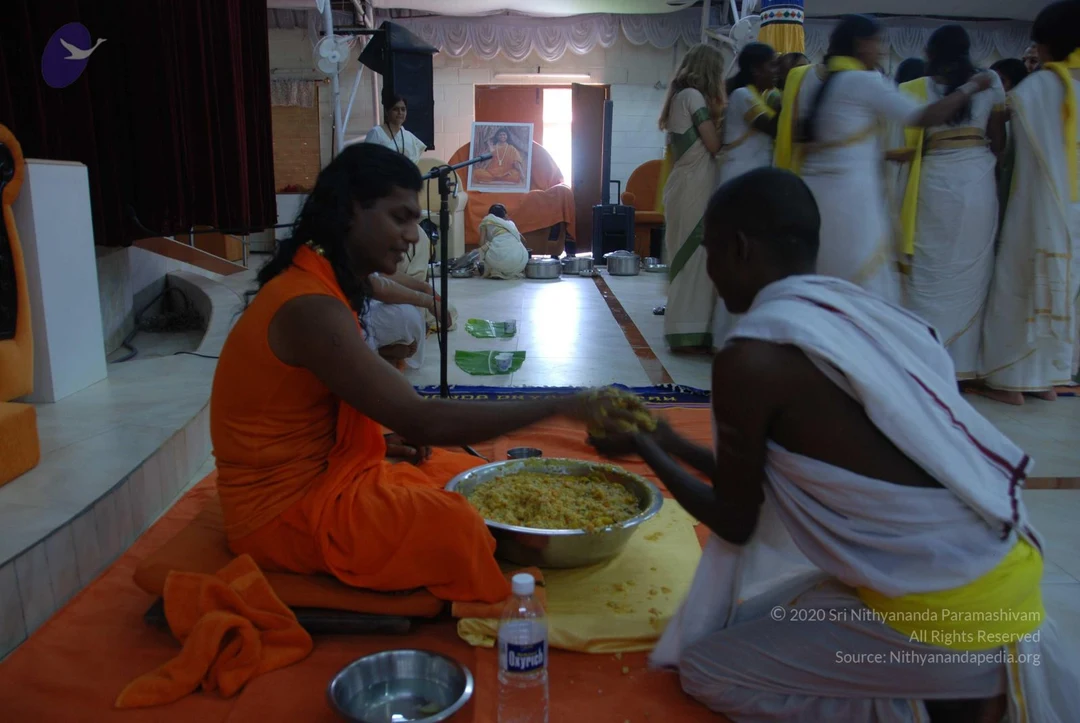
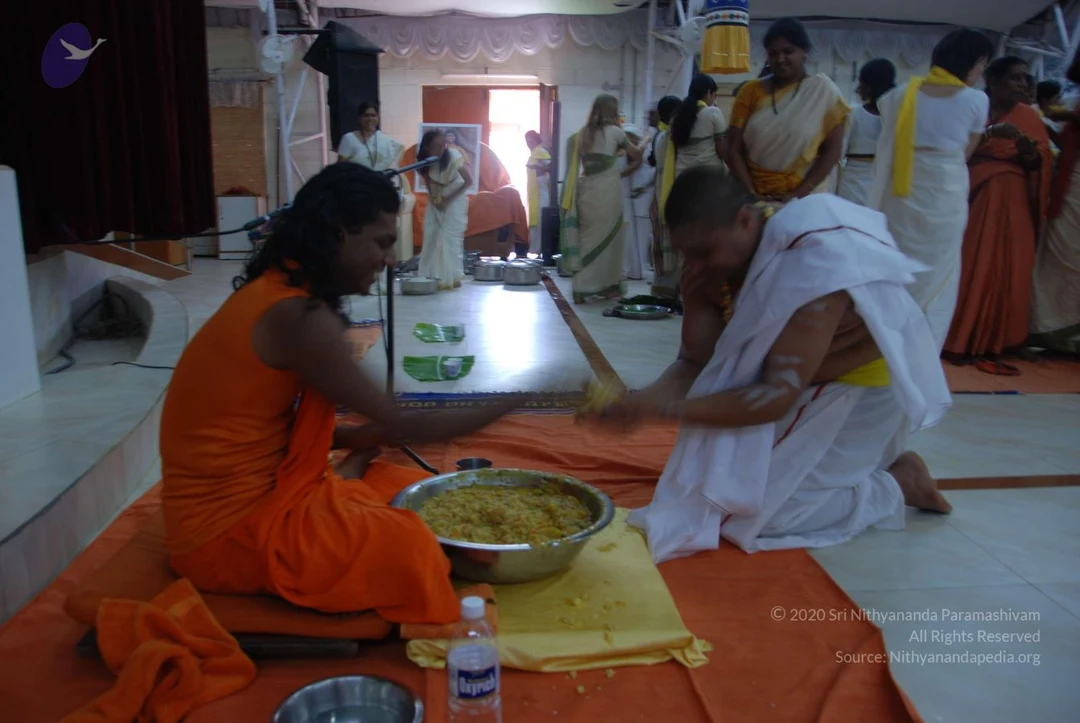
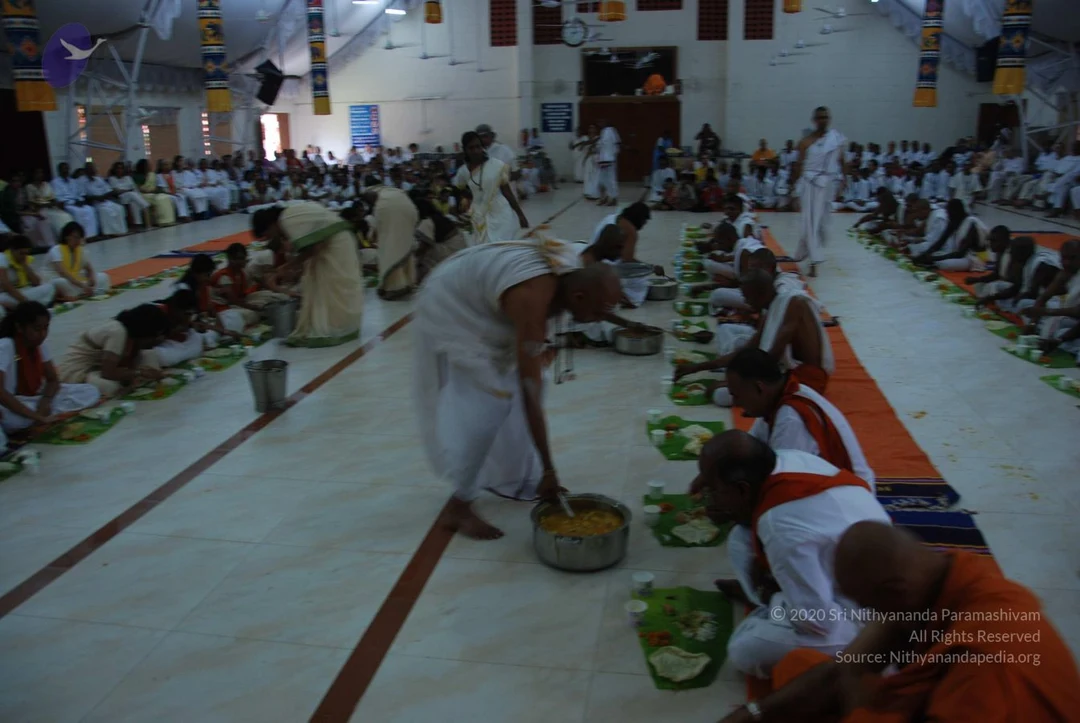
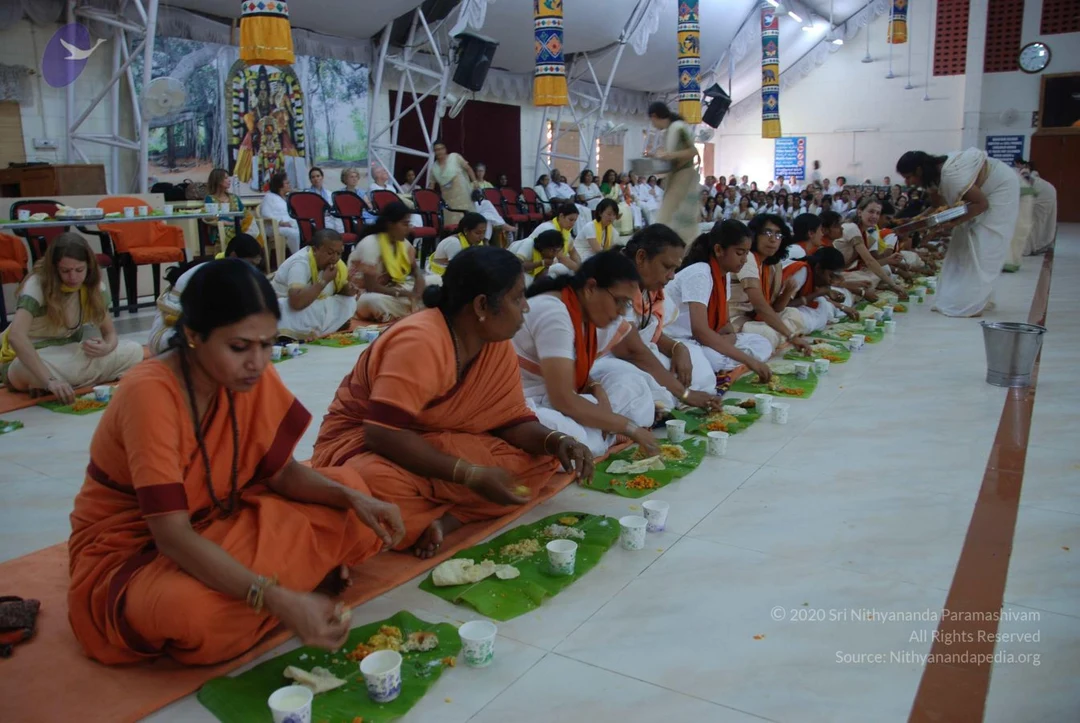
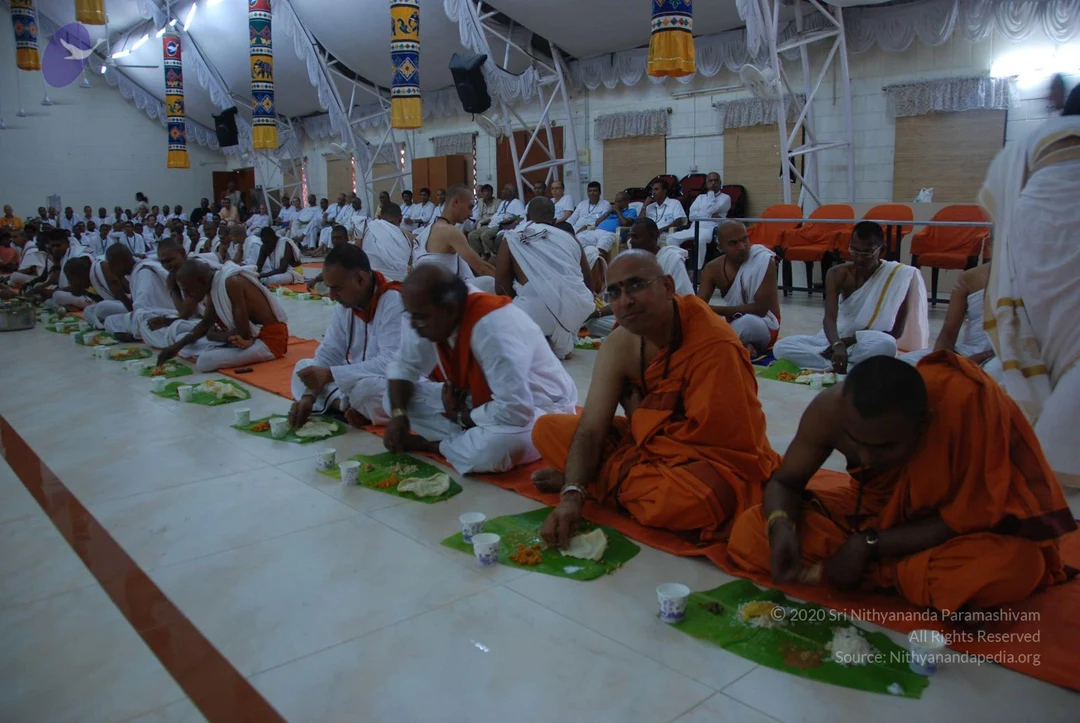
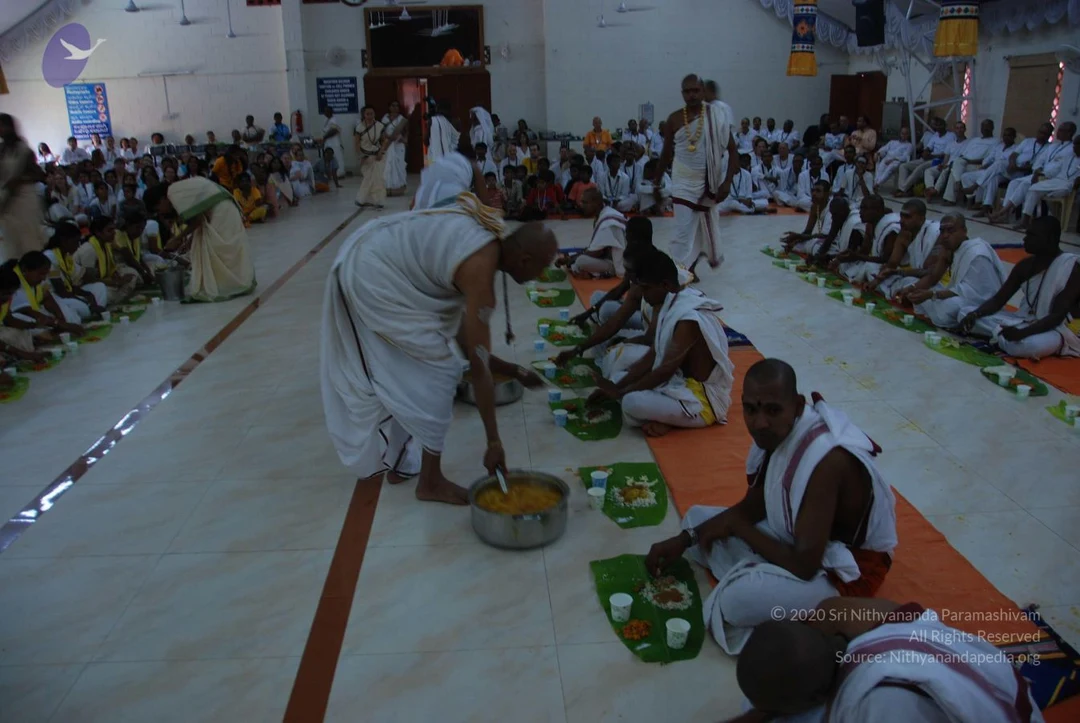
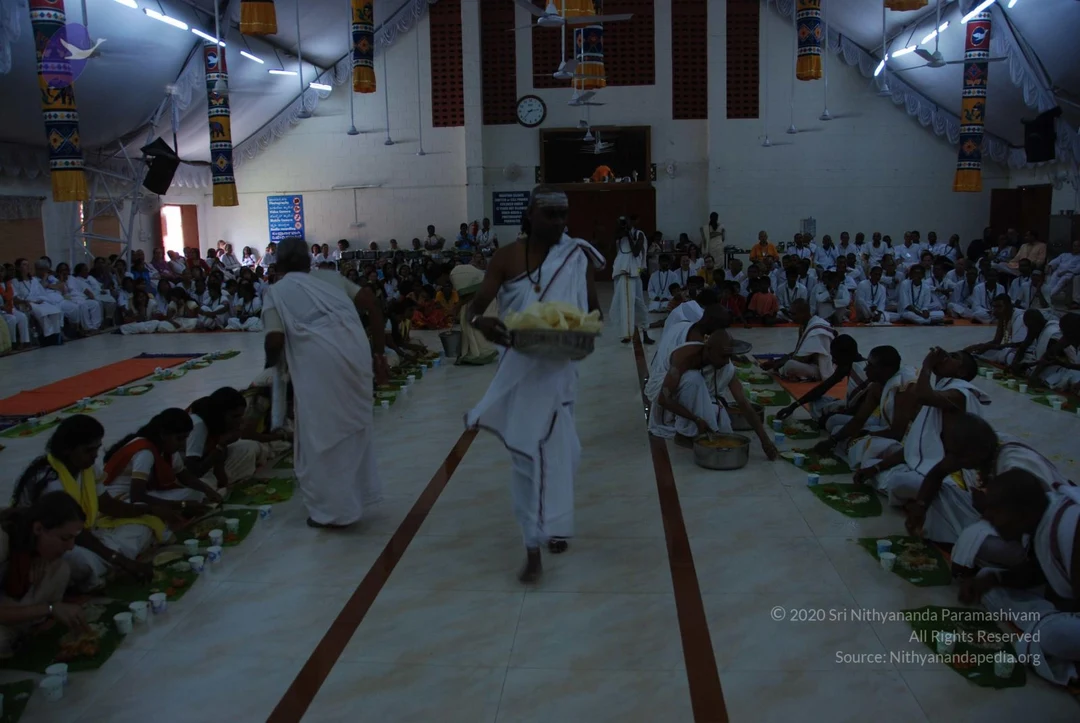
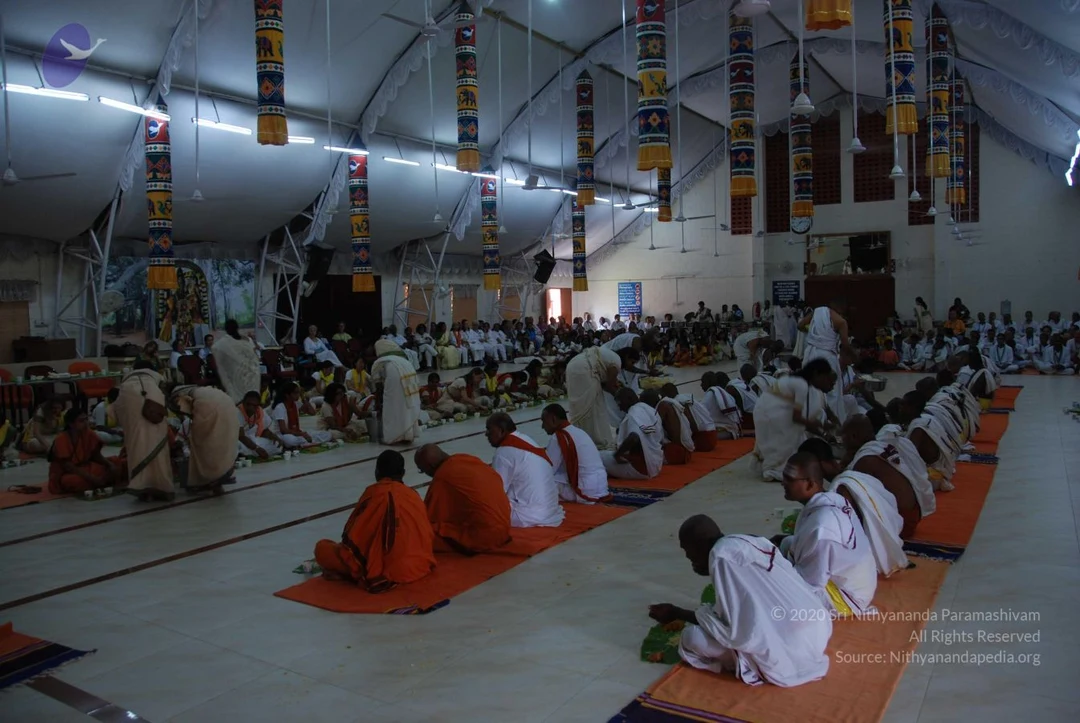
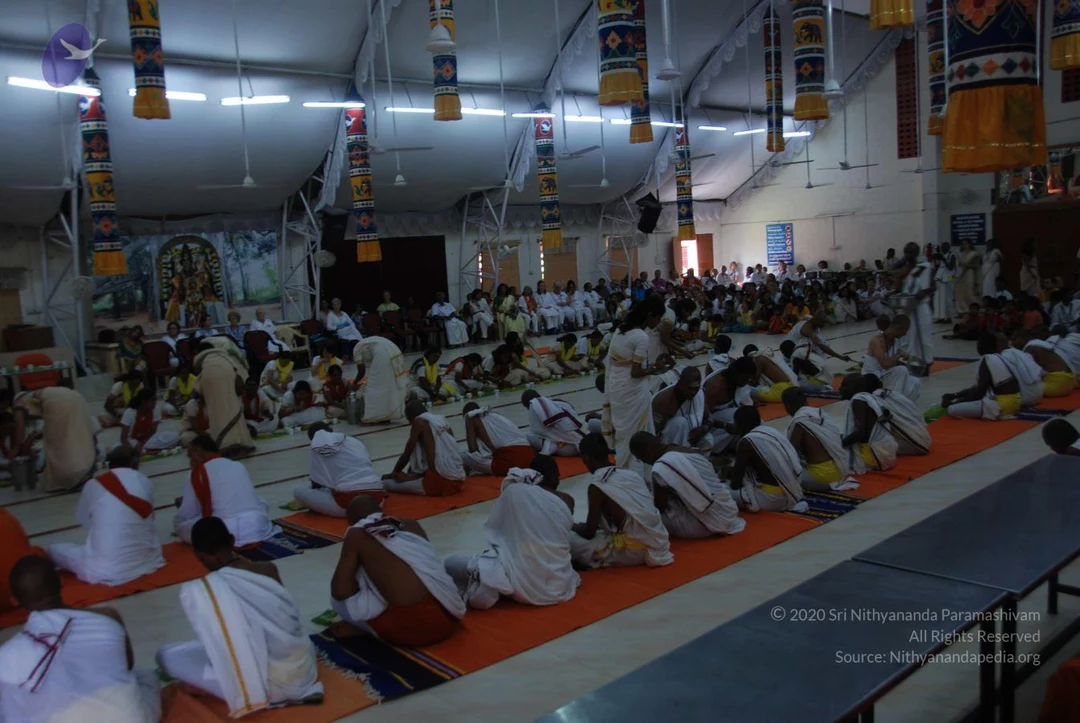
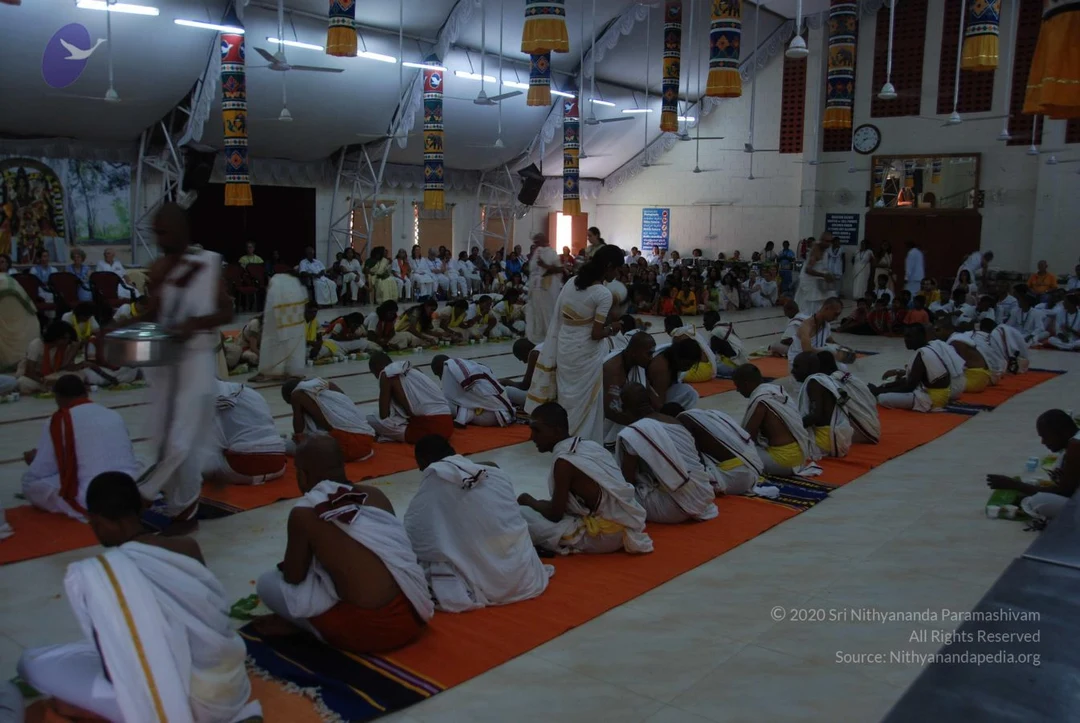
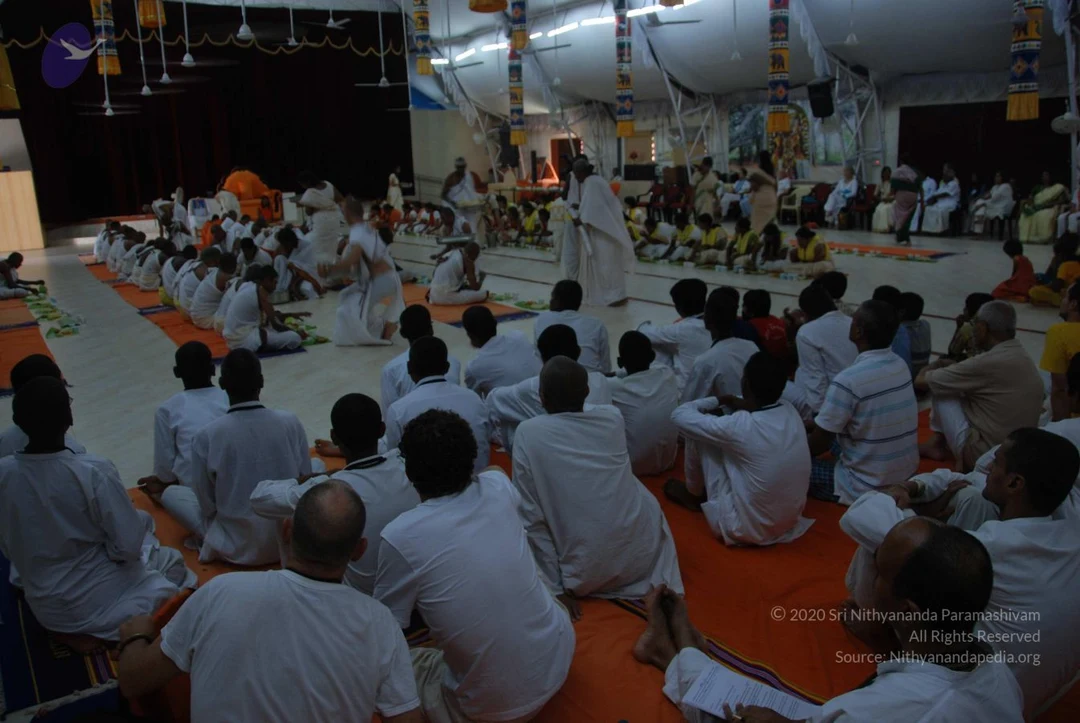
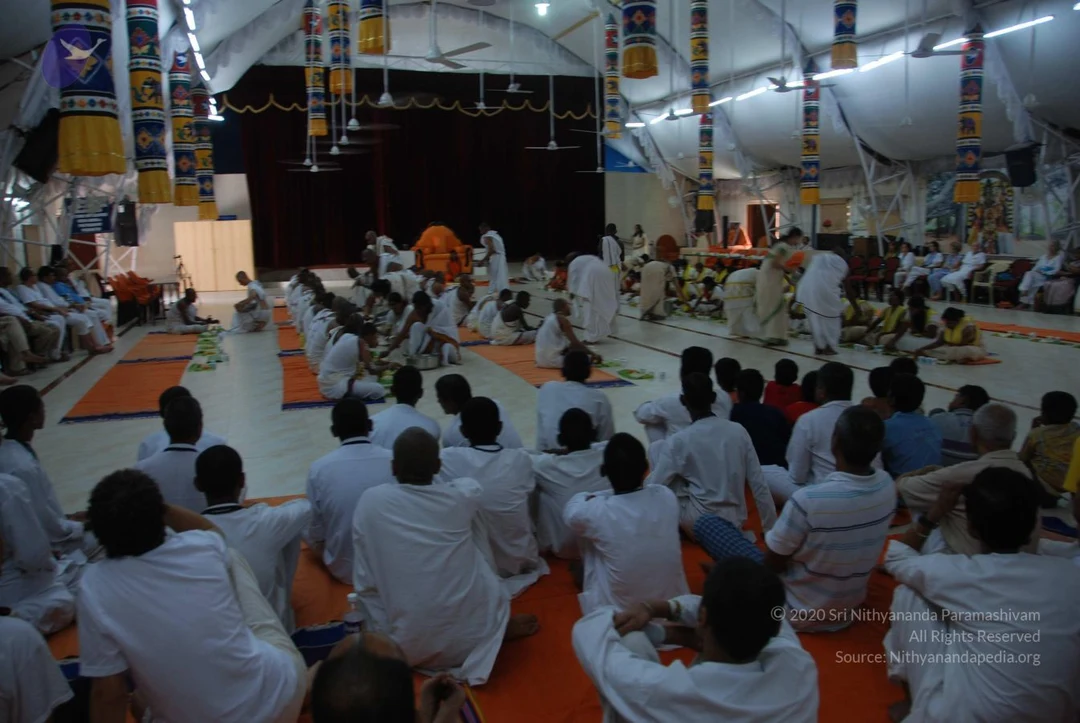
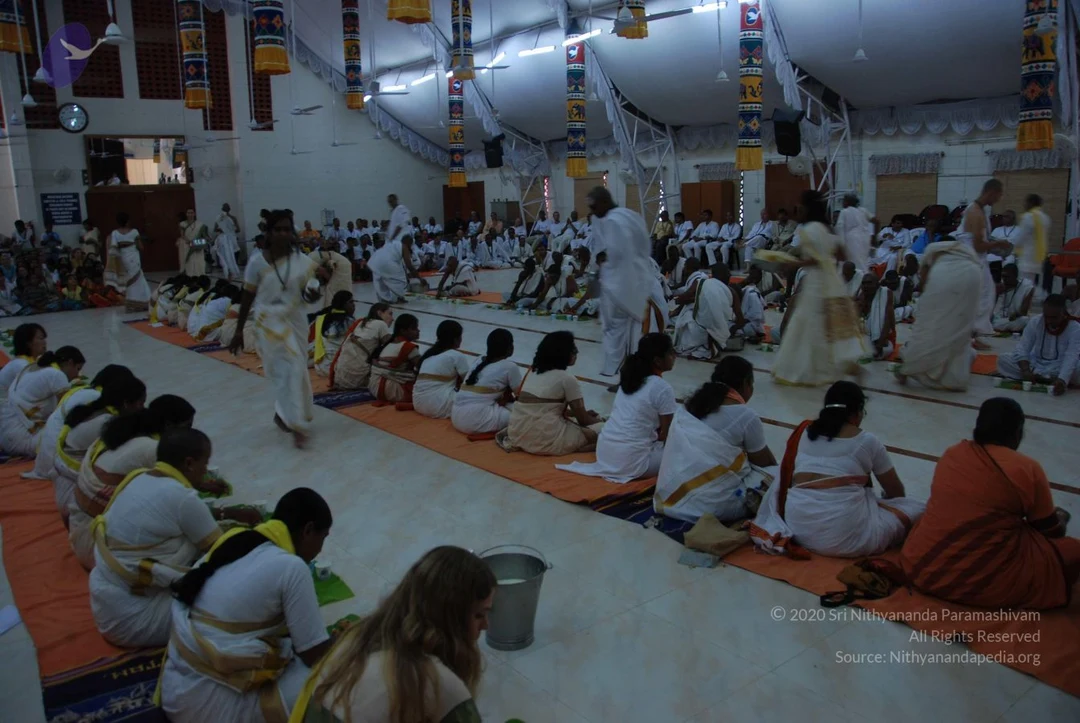
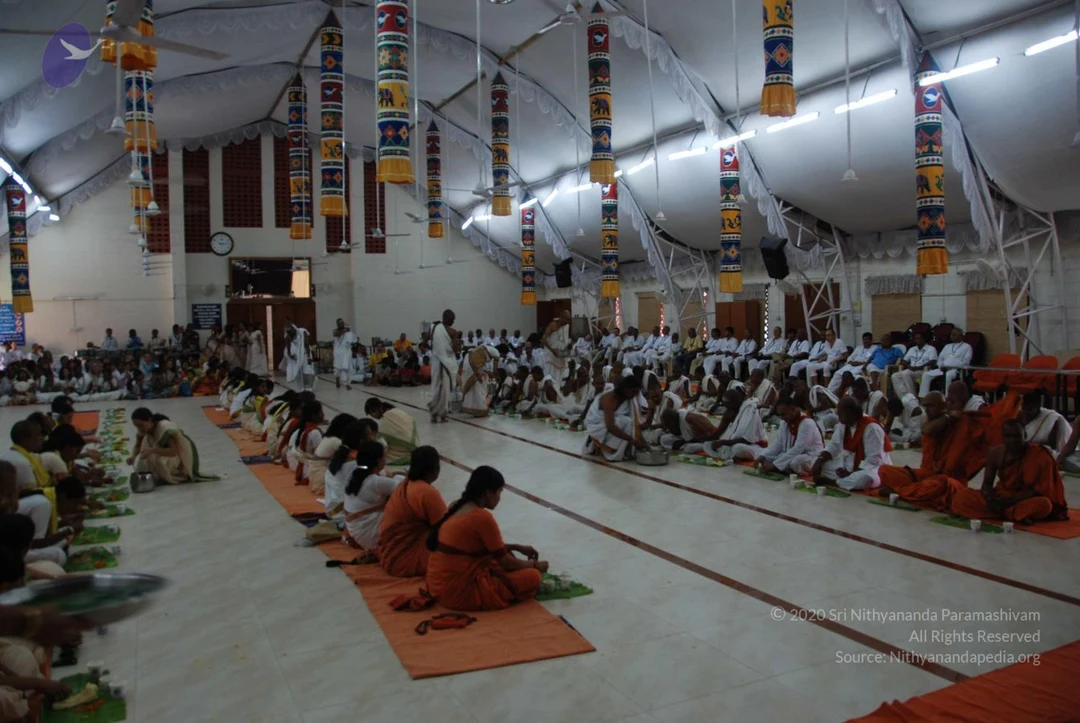
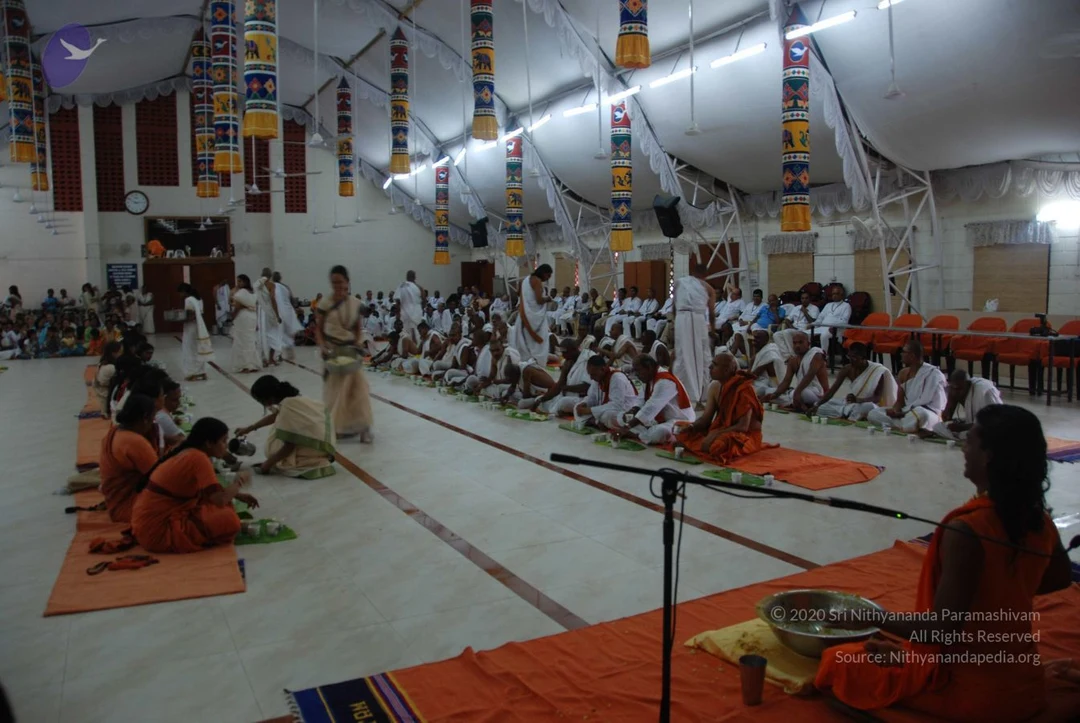
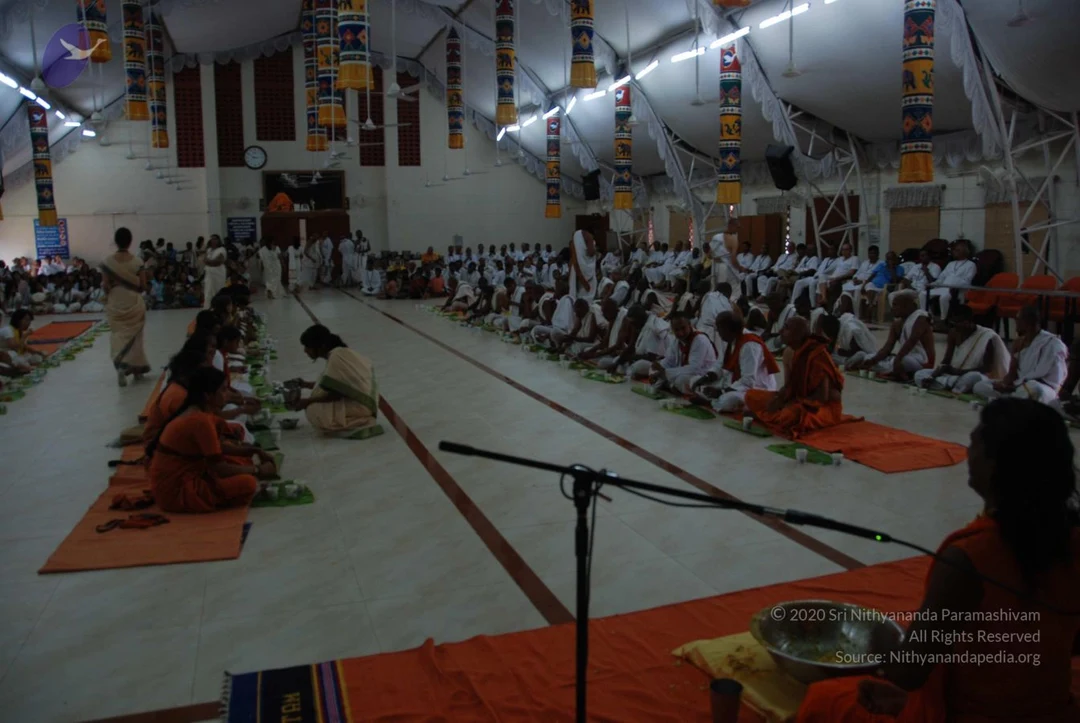
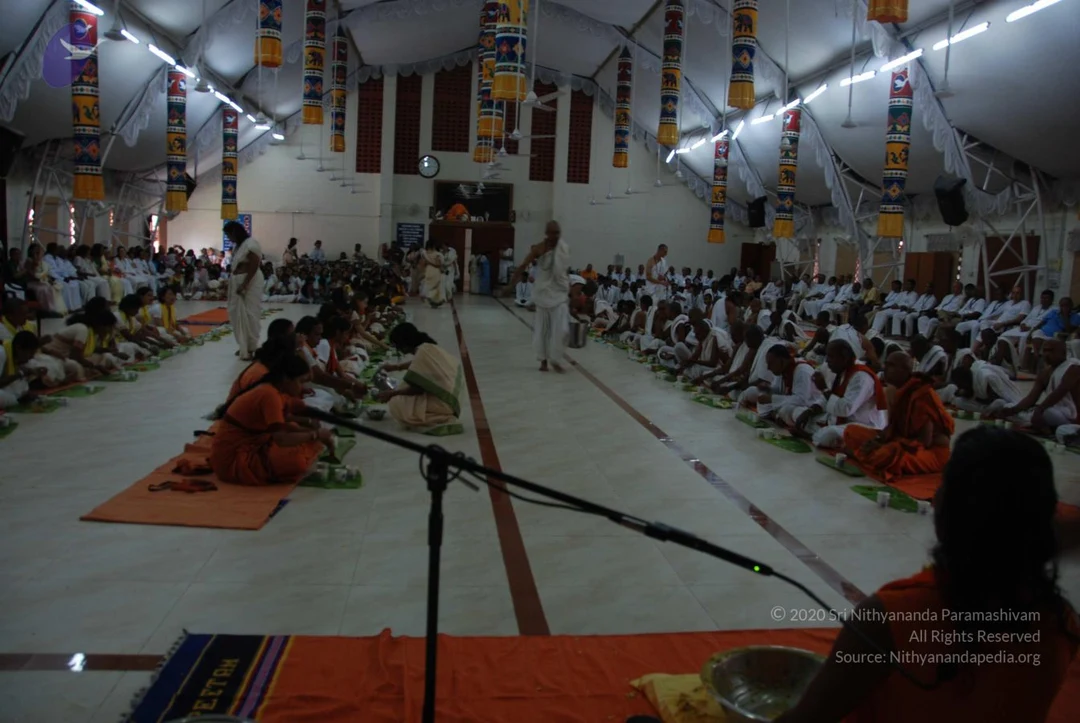
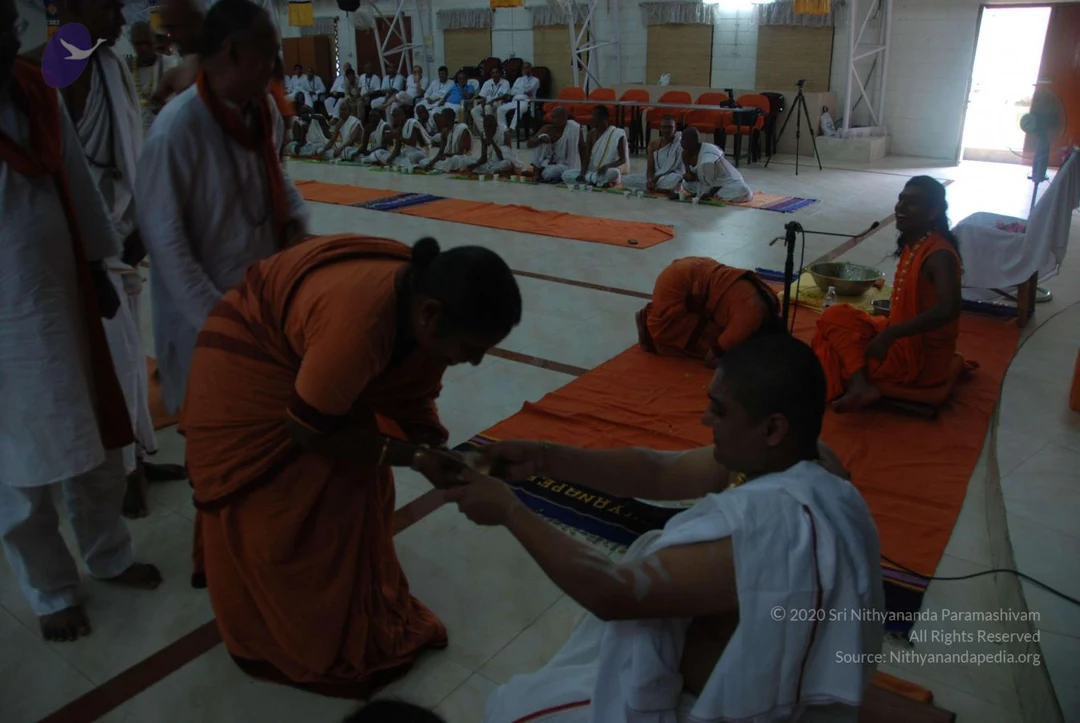
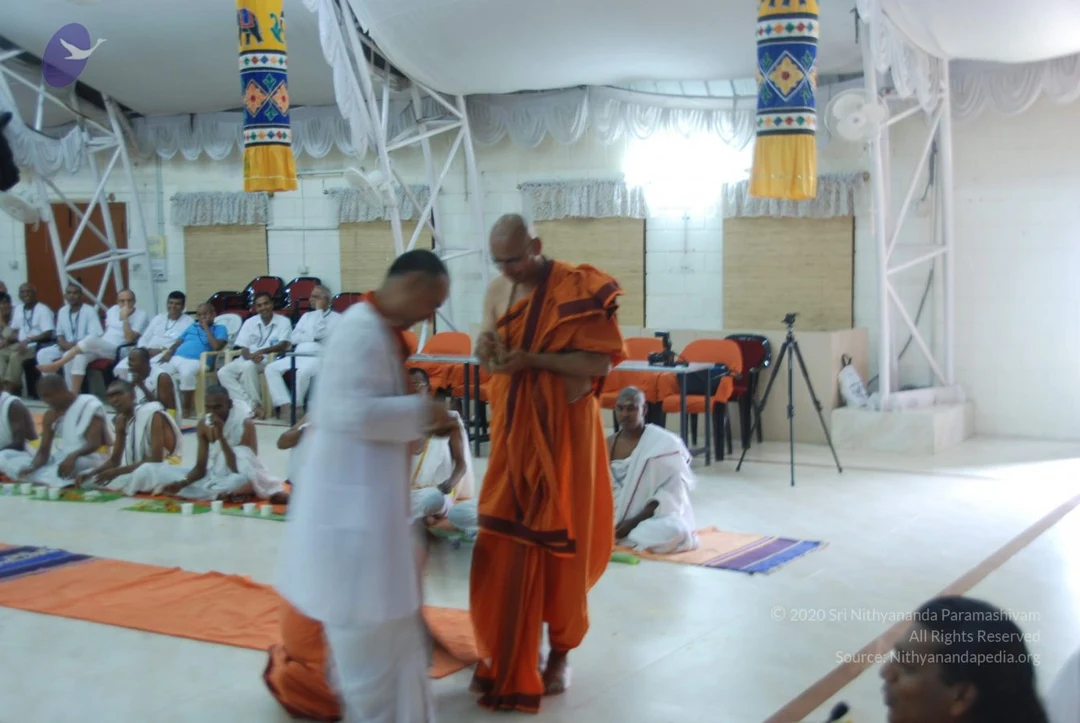
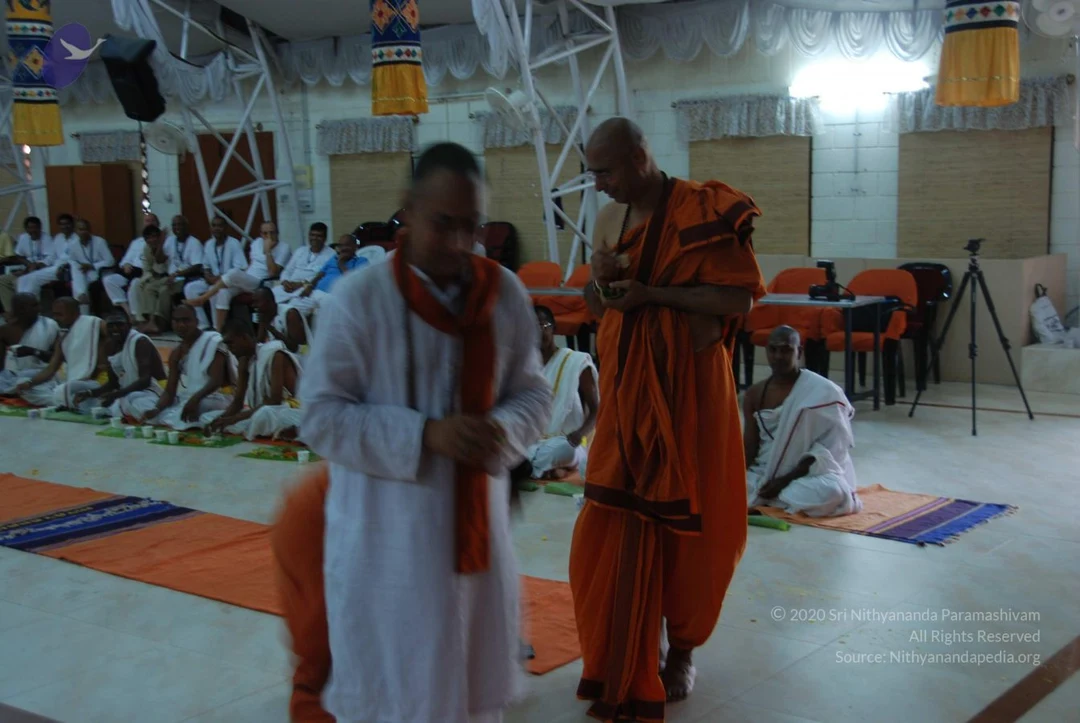
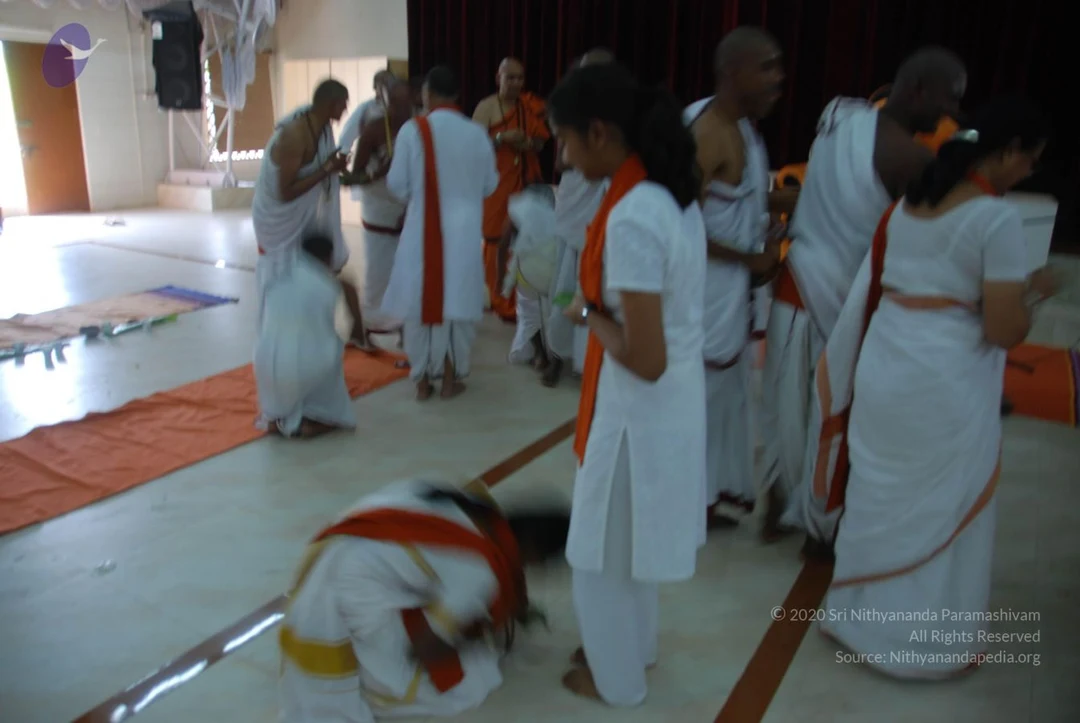
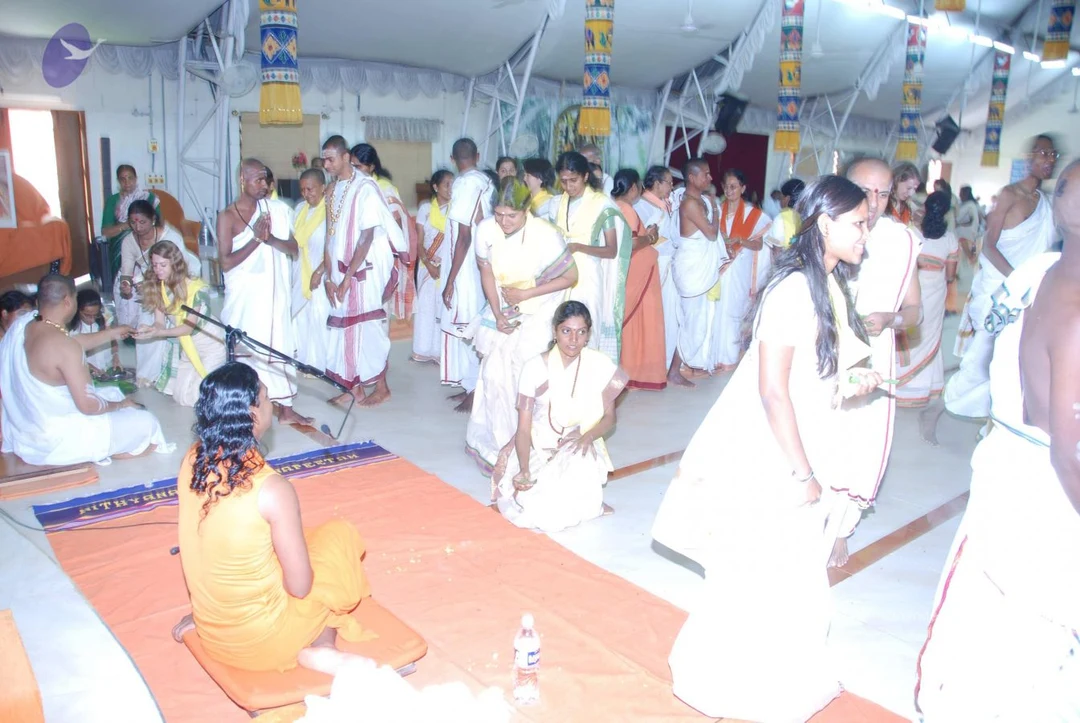
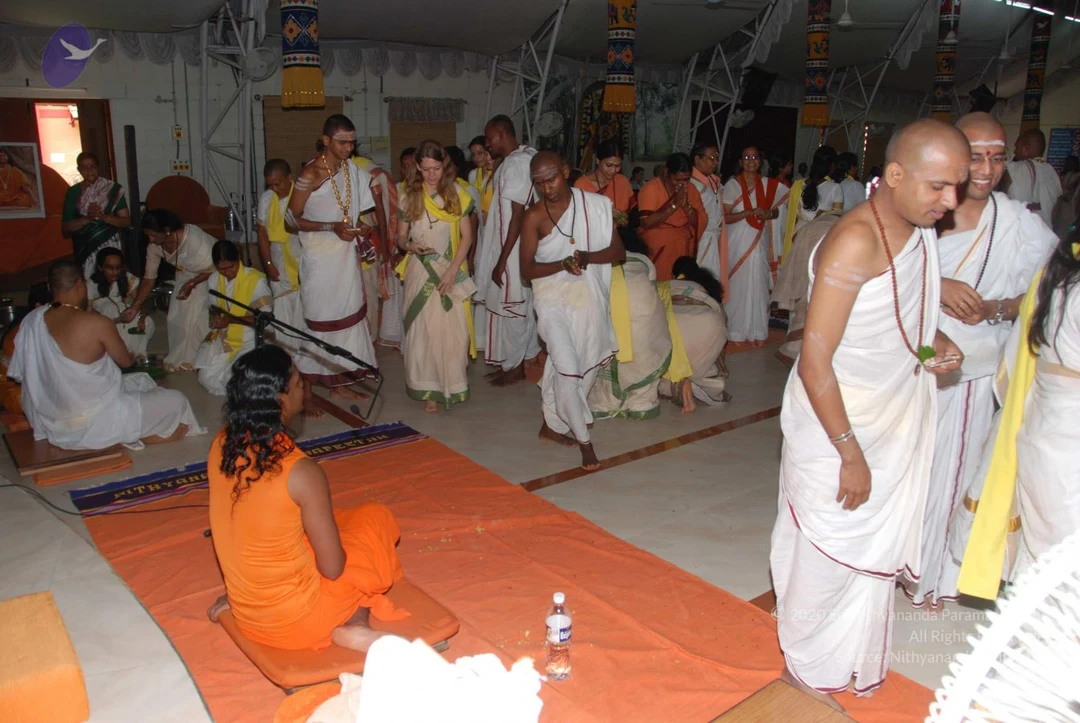
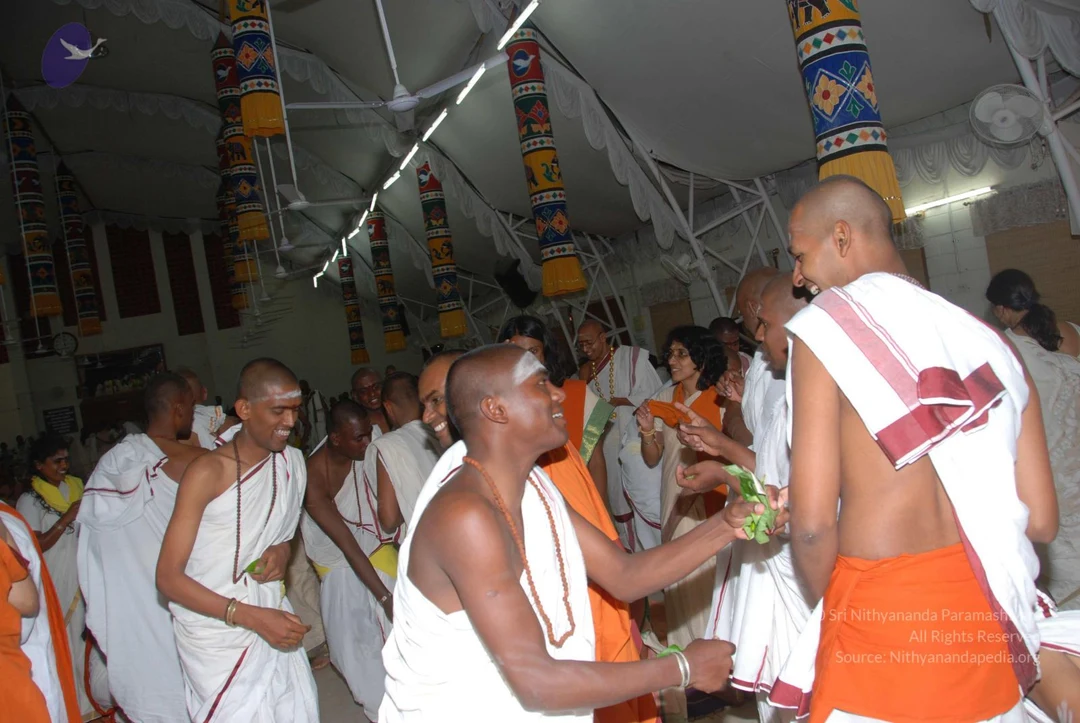
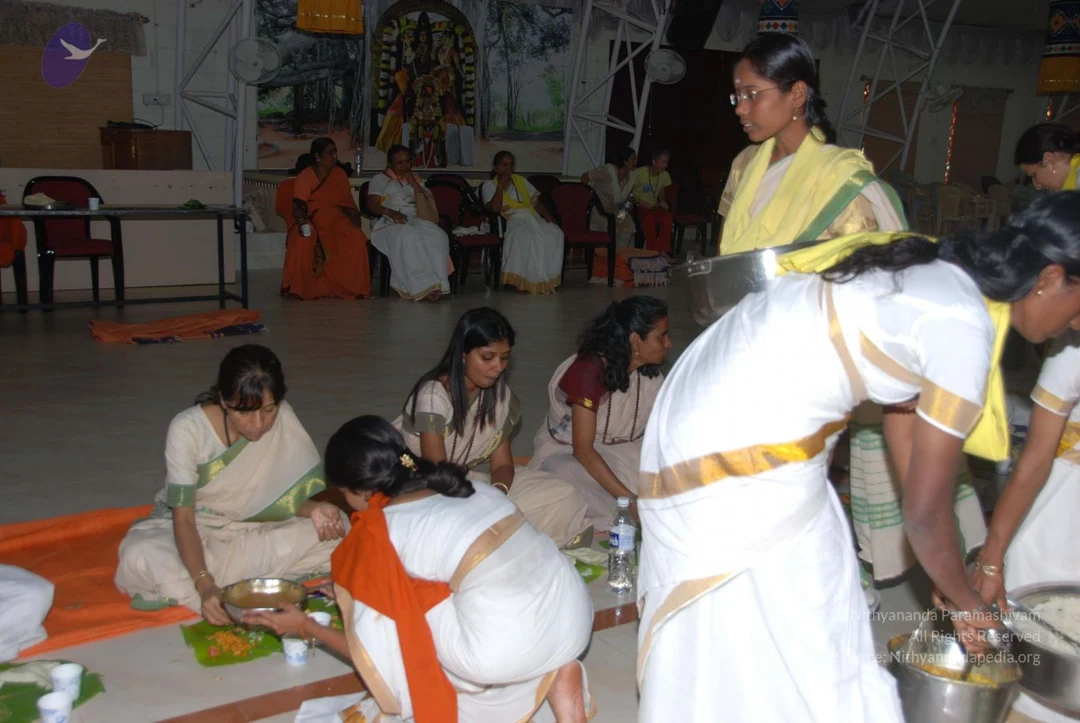
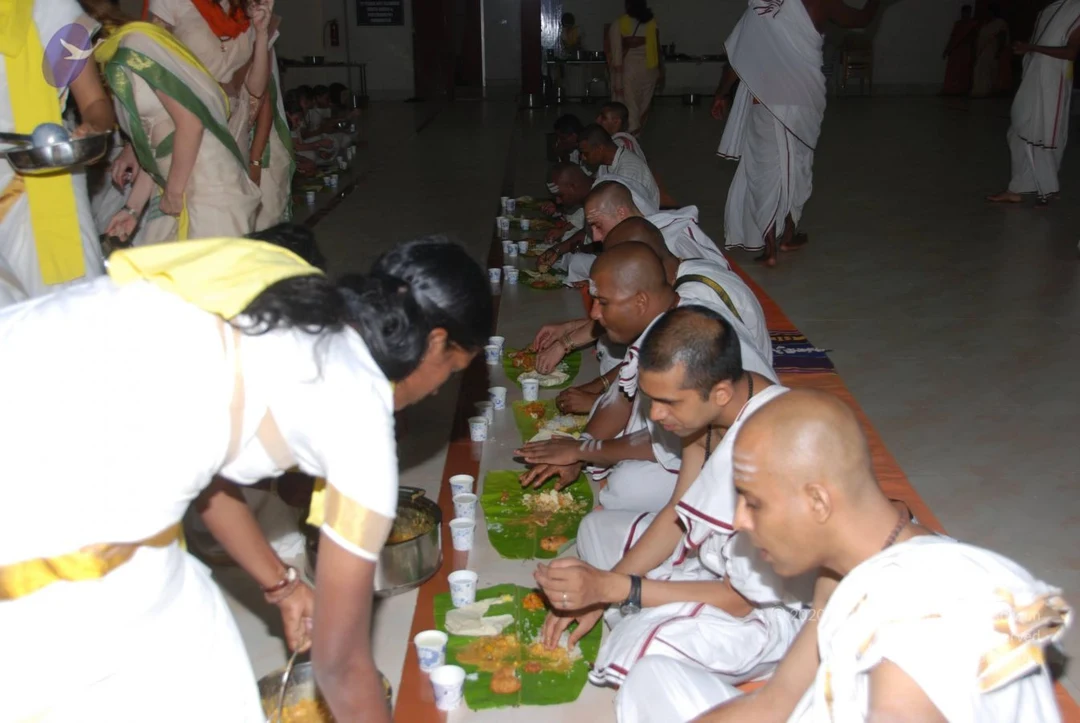
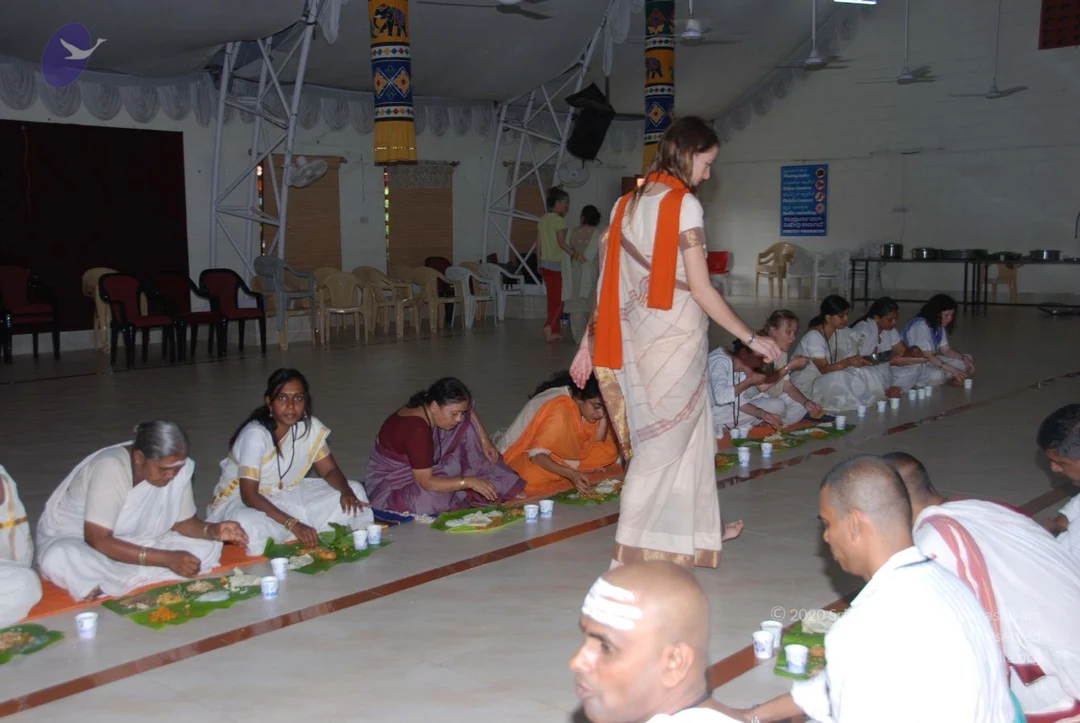
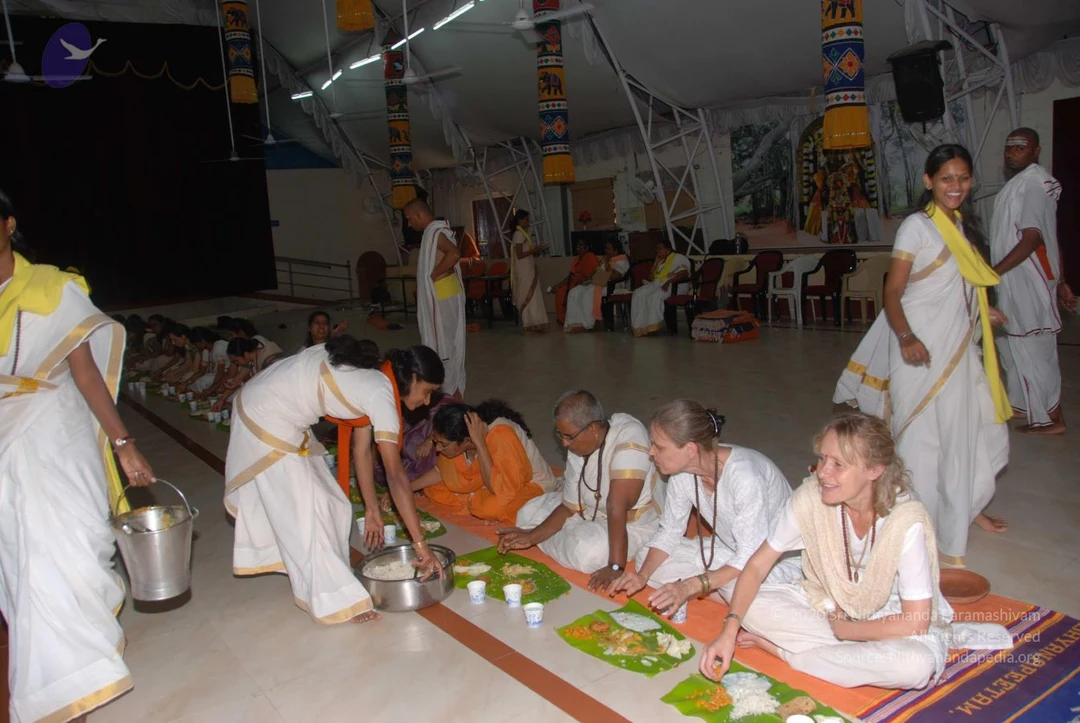
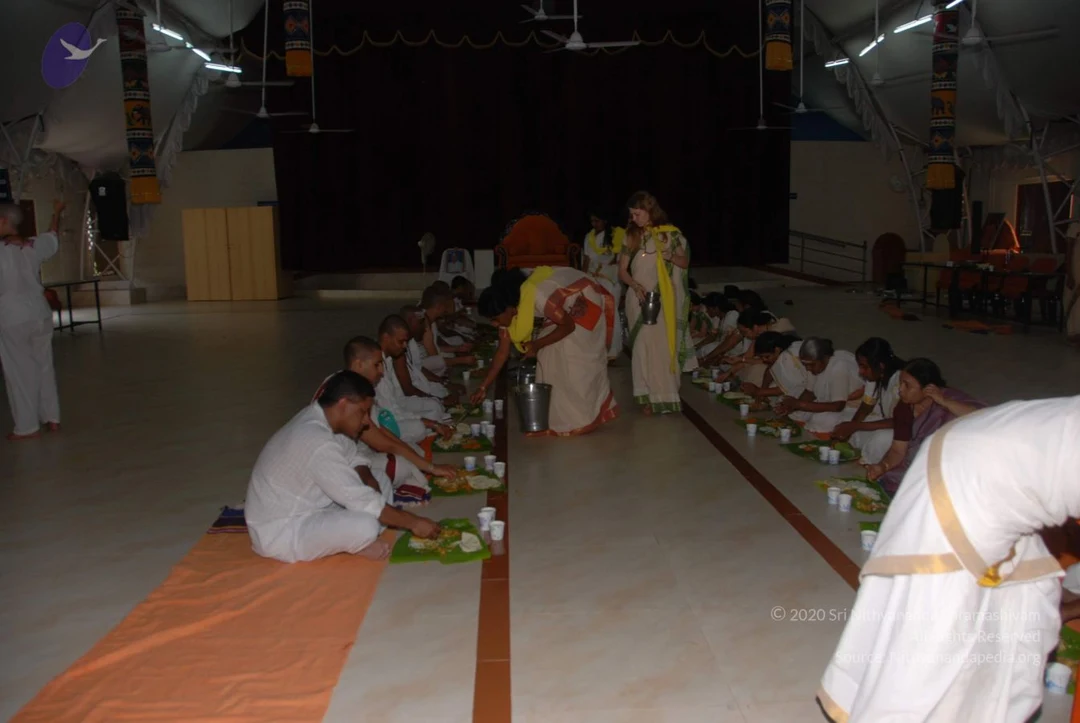
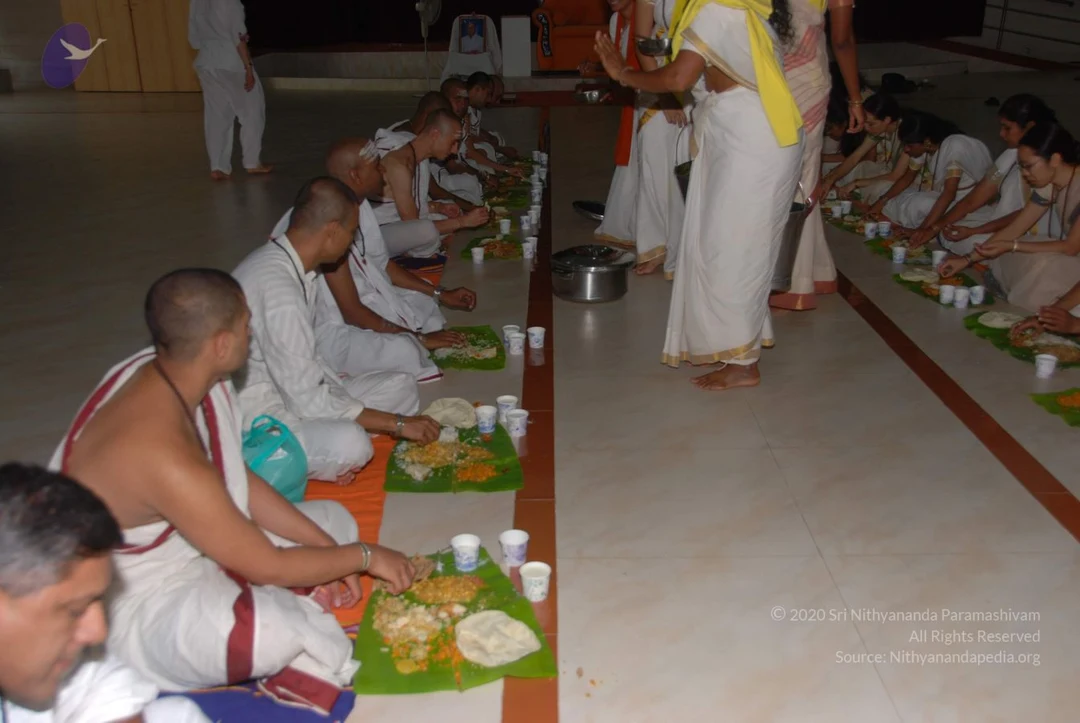
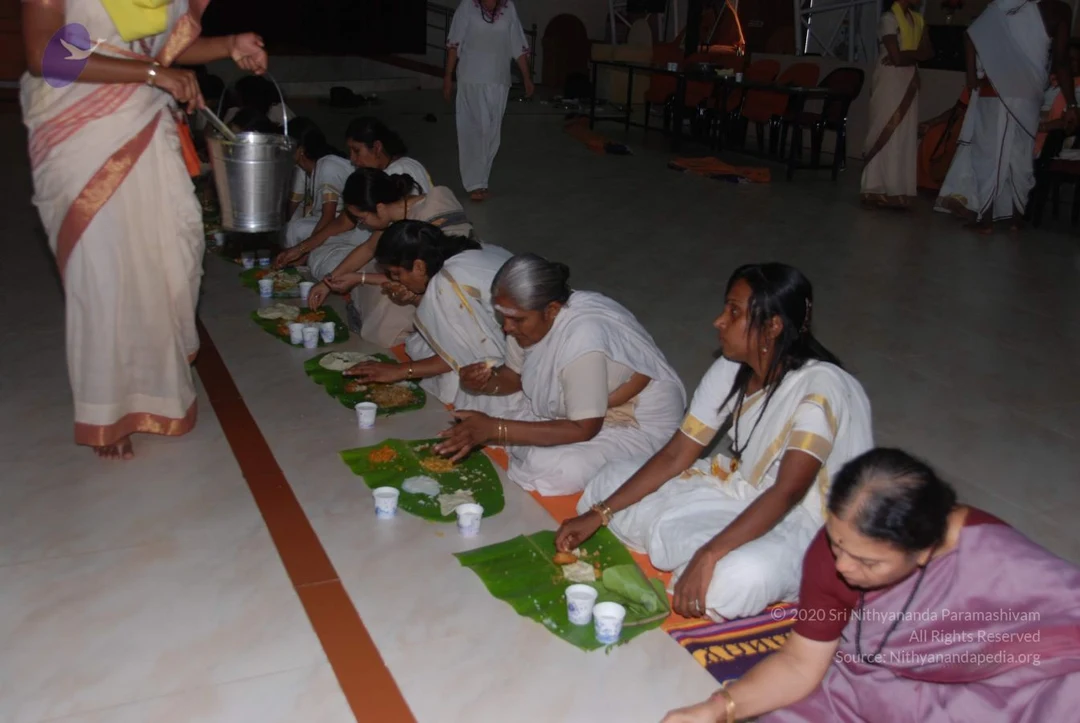
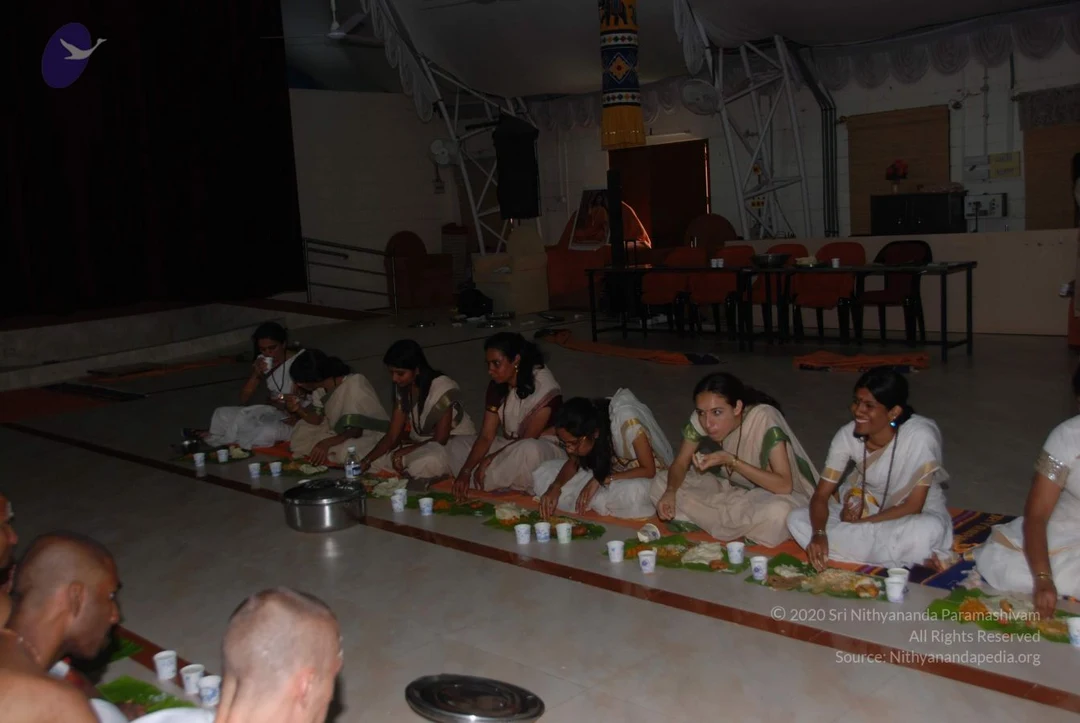
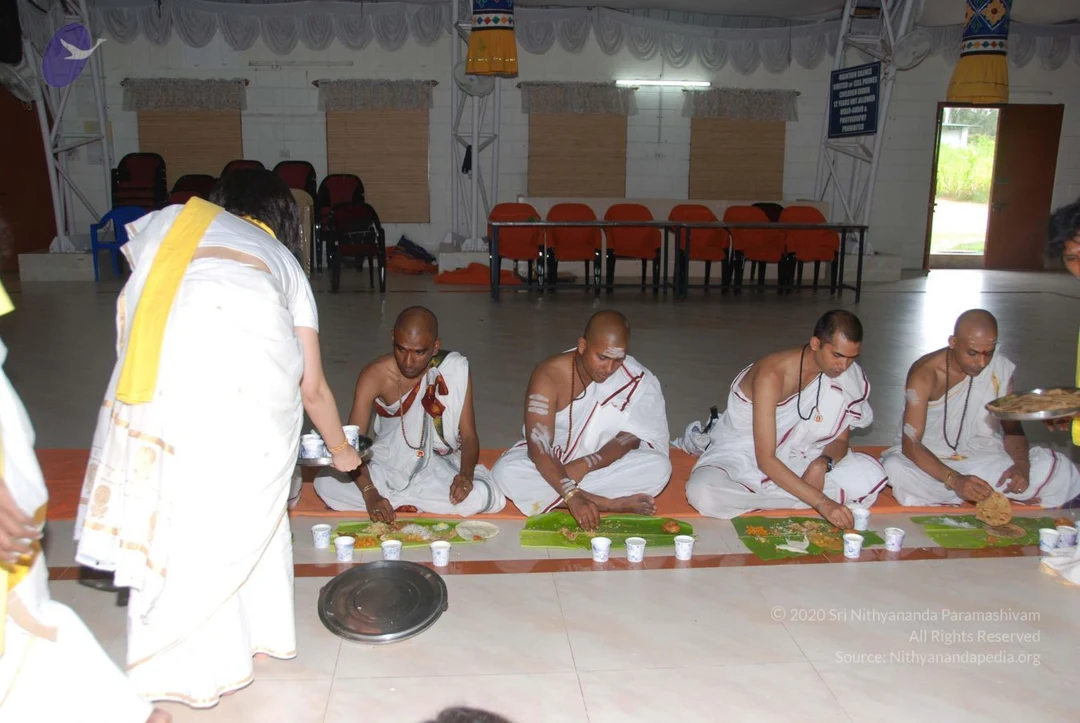
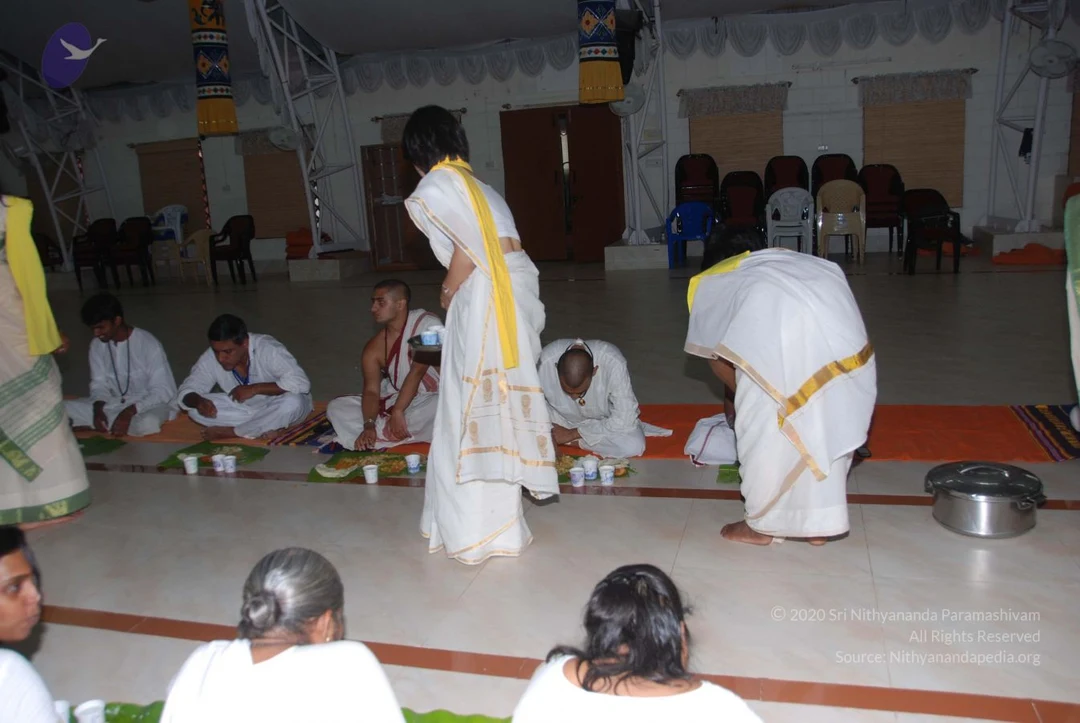
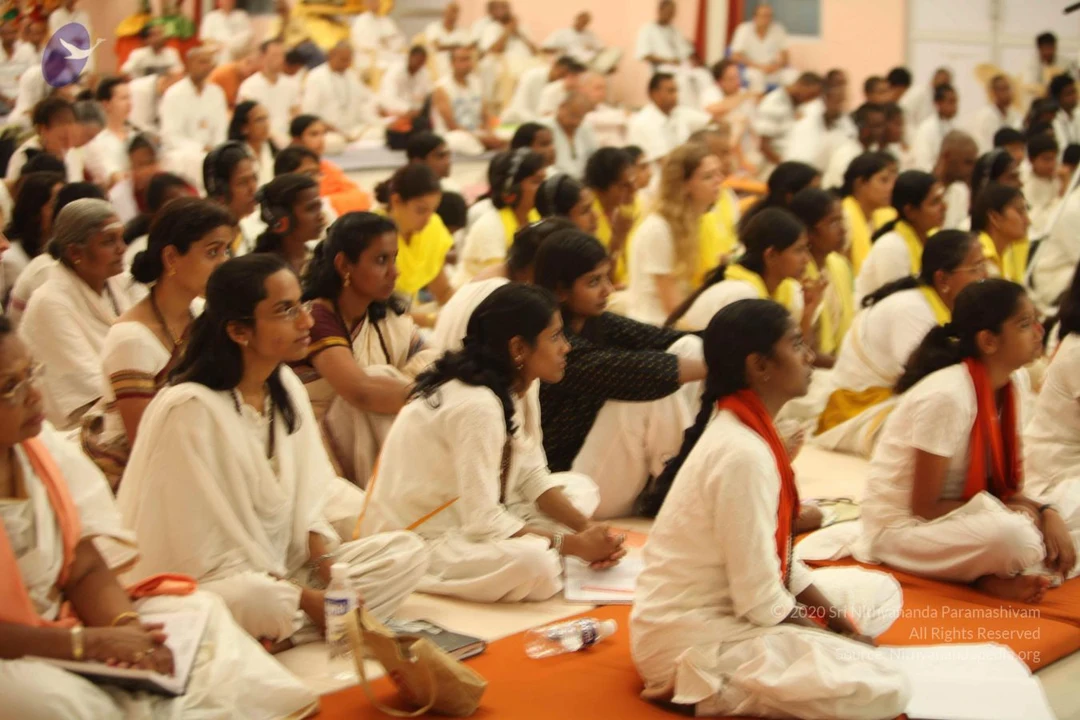
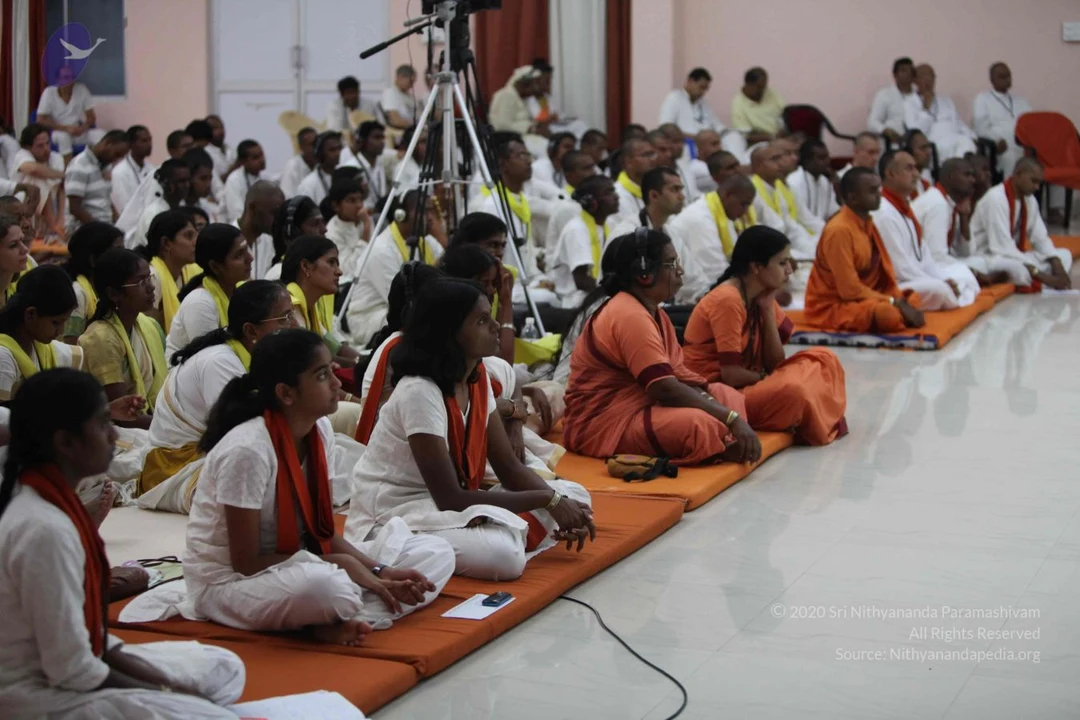
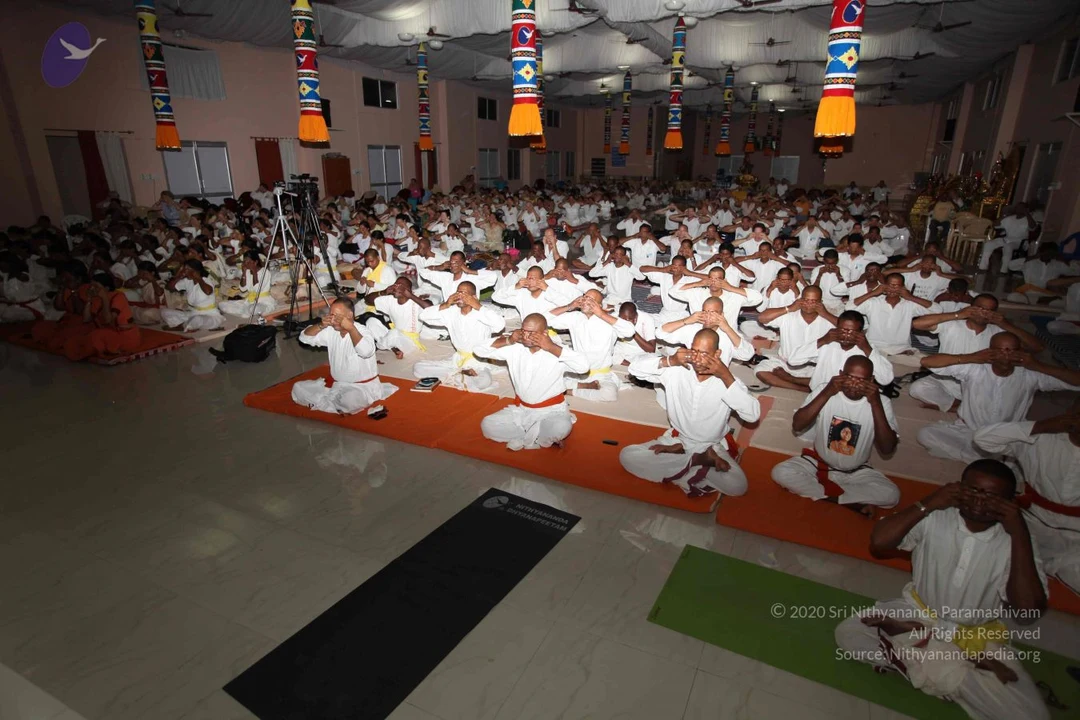
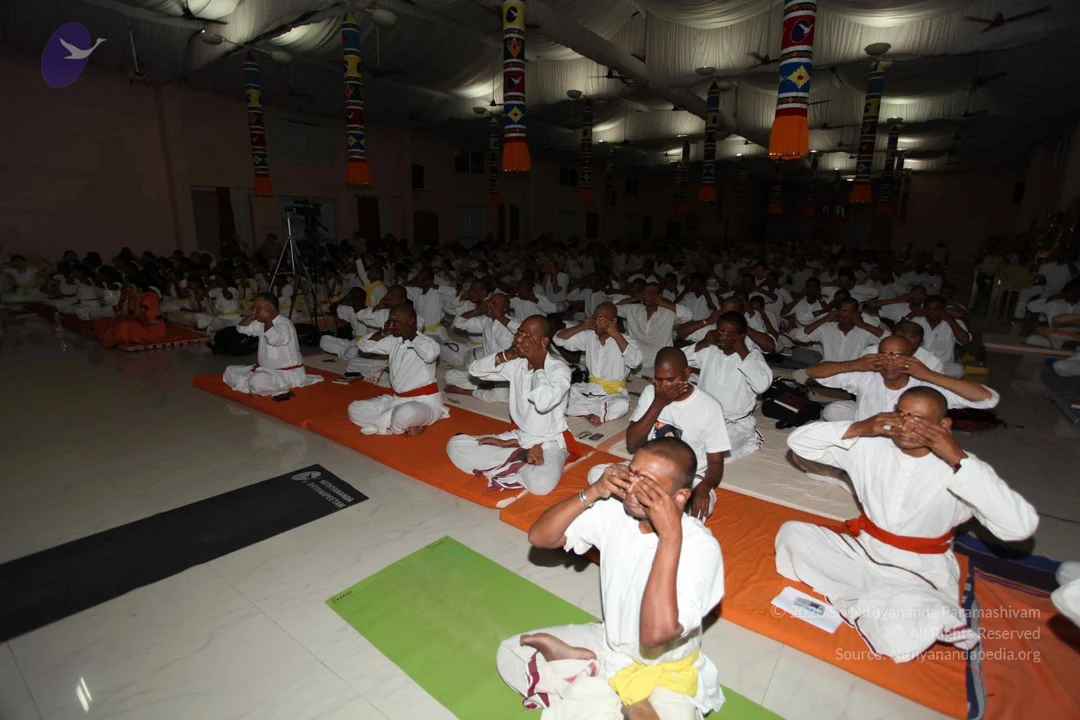
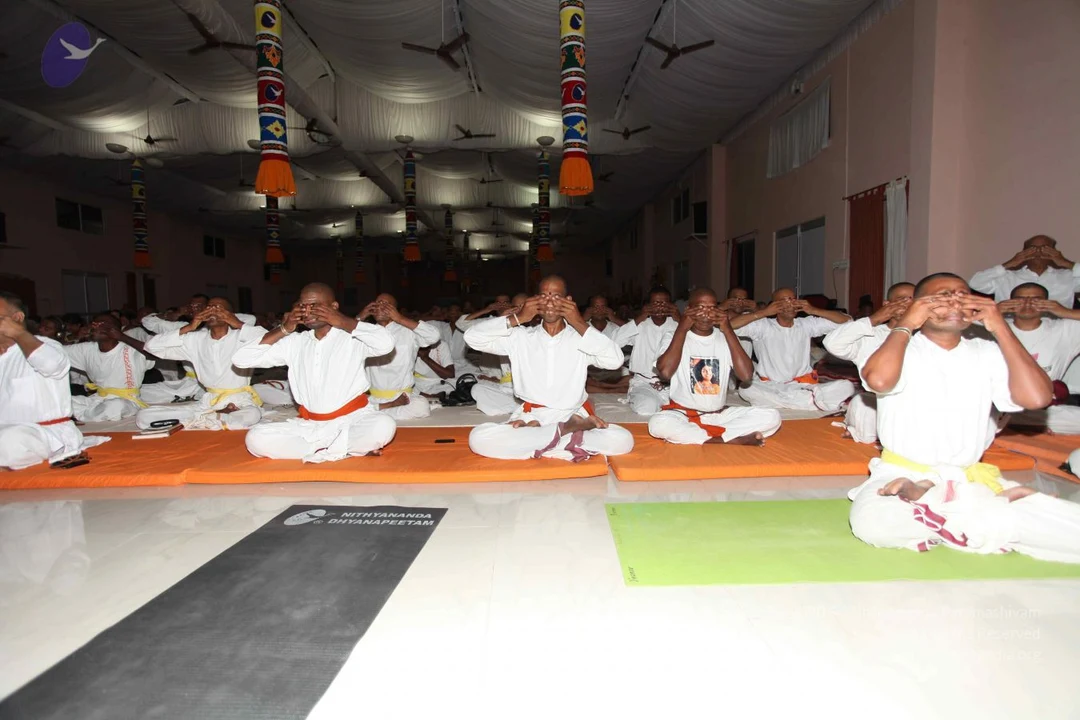
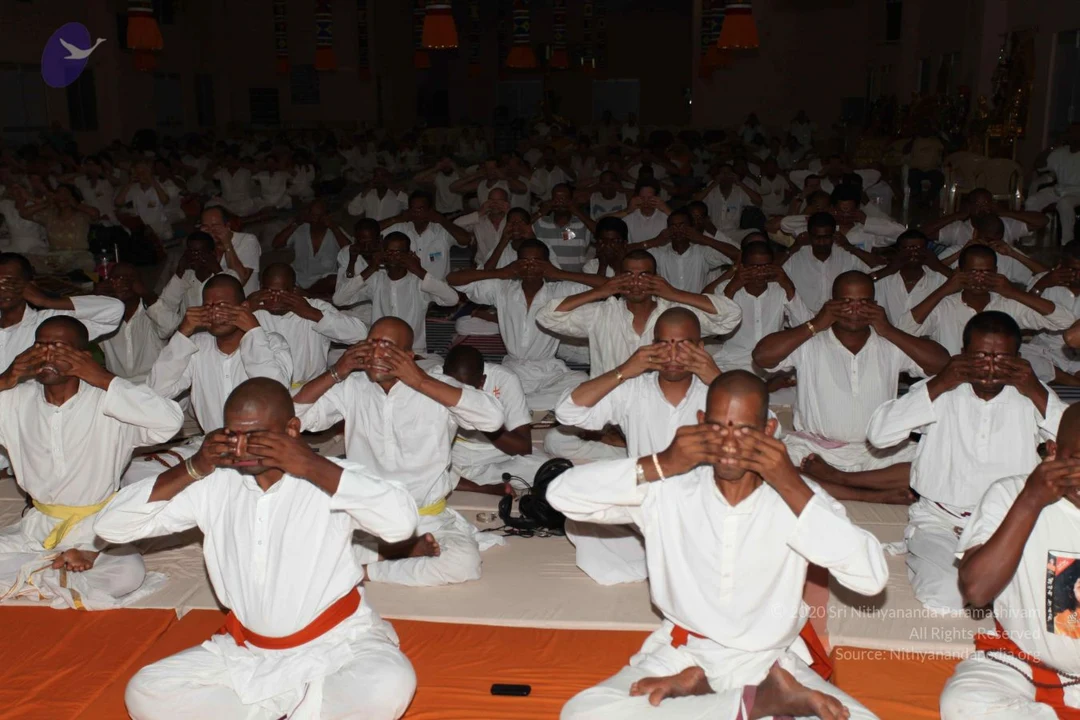
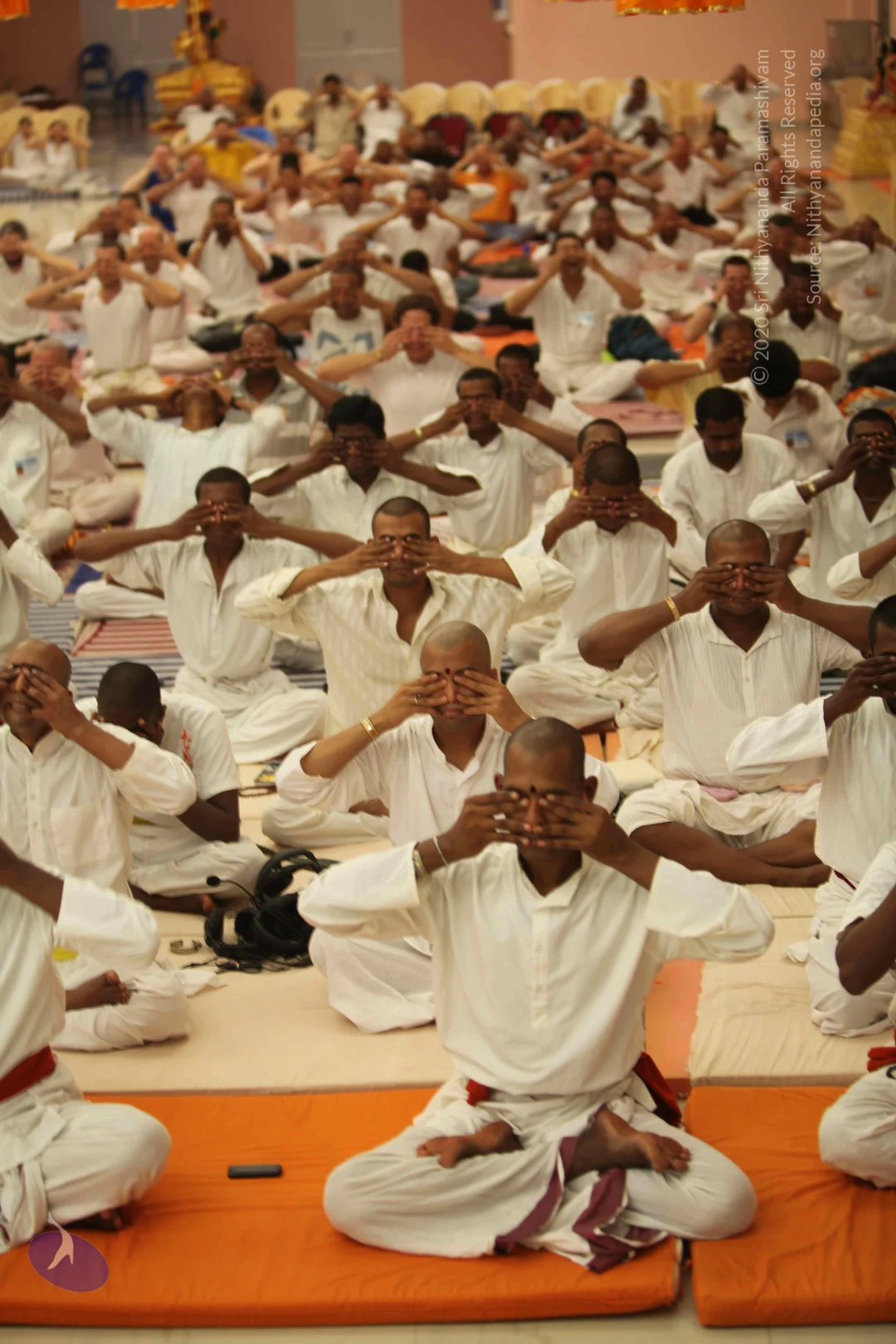
Interior of a large hall with white ceiling fans and hanging decorative cylindrical banners in red, yellow and blue. Several men in white dhotis and shawls stand and walk along a central aisle lined with orange cloth mats. Along both sides, banana leaf plates hold small white offerings and clay lamps. Some people in orange robes sit on the left, and a crowd in white clothing sits or stands in the background. Whether any of the standing men is a person cannot be determined from appearance, so no identification is made.A woman in a white sari with a thin gold border stands center-left holding a handheld microphone and speaking, appearing to lead a chant. Around her, rows of women and girls in white clothes with yellow shawls sit cross-legged on orange and striped mats, with green leaf plates and small cups set before them along the floor. In the background, a few people in orange and white robes and seated audience members in a hall with white ceiling structures and decorative yellow pillars. A small brass tray with glasses sits on the floor at left. No identifiable a person figure is visible in the frame.A wide photograph of a large hall with white walls, ceiling fans and hanging banners, where a crowd of mostly men in white ritual clothes sits on orange mats on a pale floor. Many wear white dhotis or kurtas, sacred threads and white forehead markings, with some in saffron robes near the right. A row of people stands in the centre background, and a few women in white or green saris are visible. Seated men in front wear white clothing and lanyards. Drums and a water dispenser are at right, and a wall clock is above the doorway. The people count is well above twenty.
07

LEP-SESSION

1 dated photos in previewSource gallery
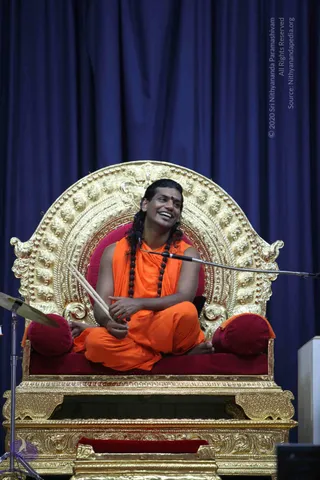
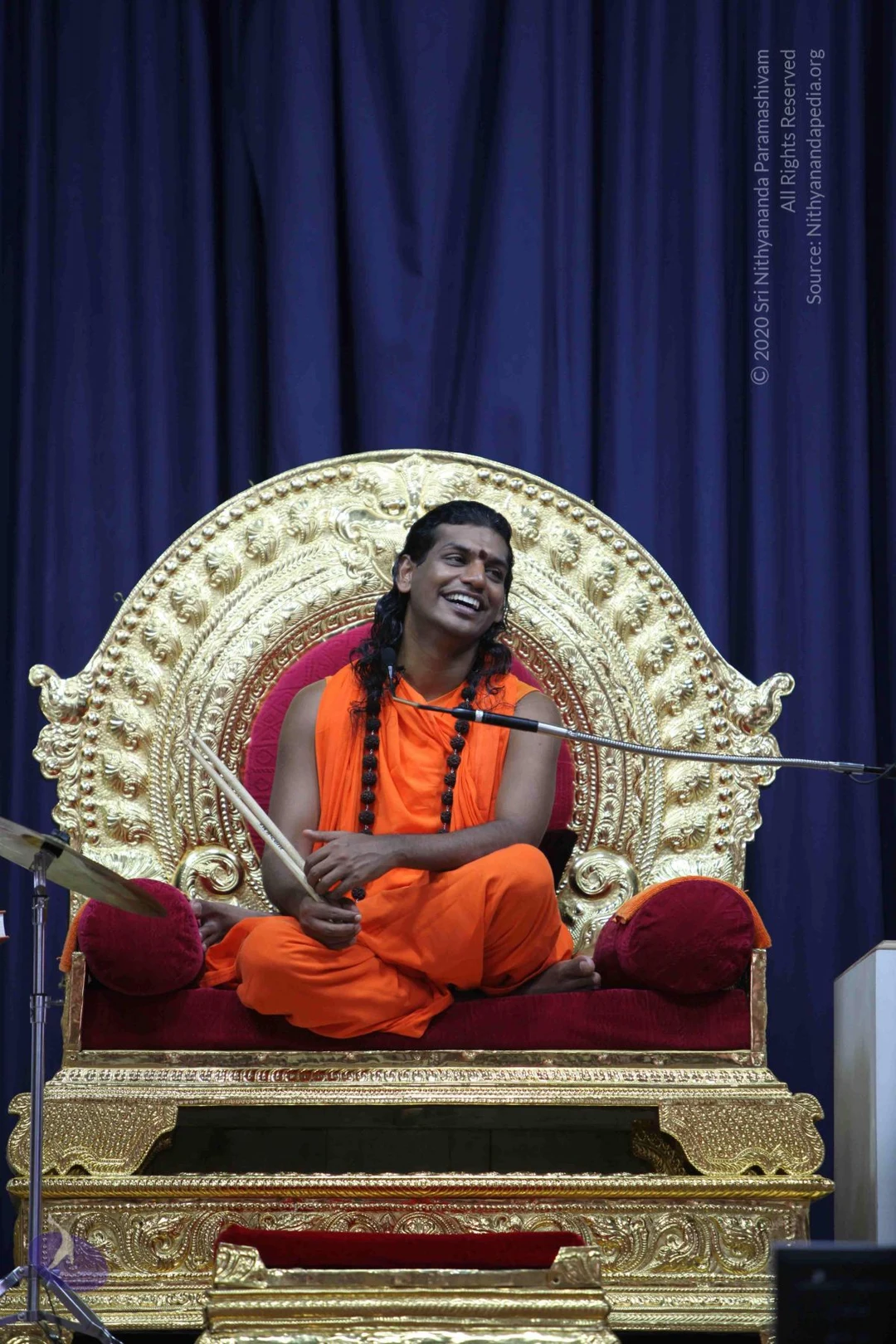
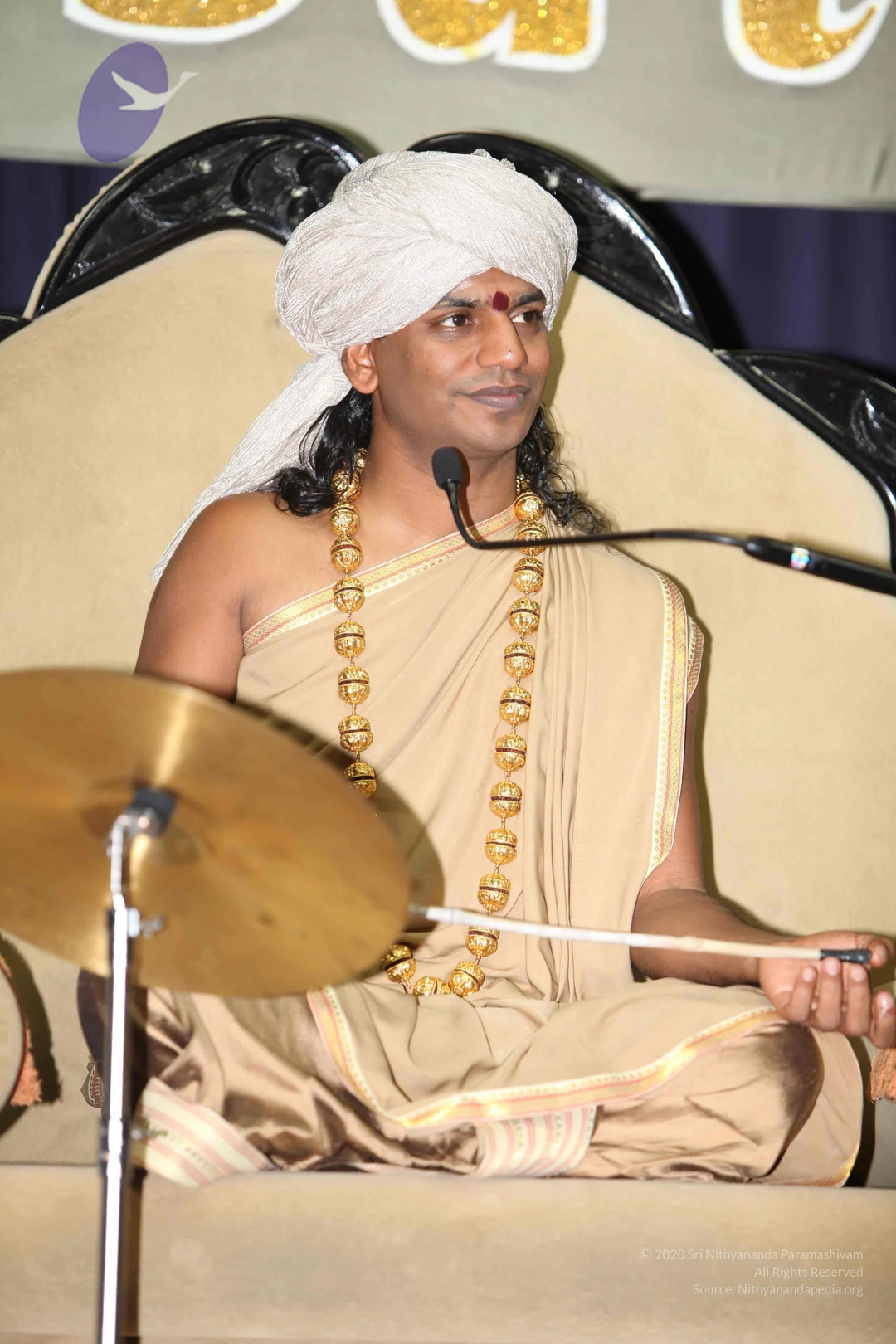
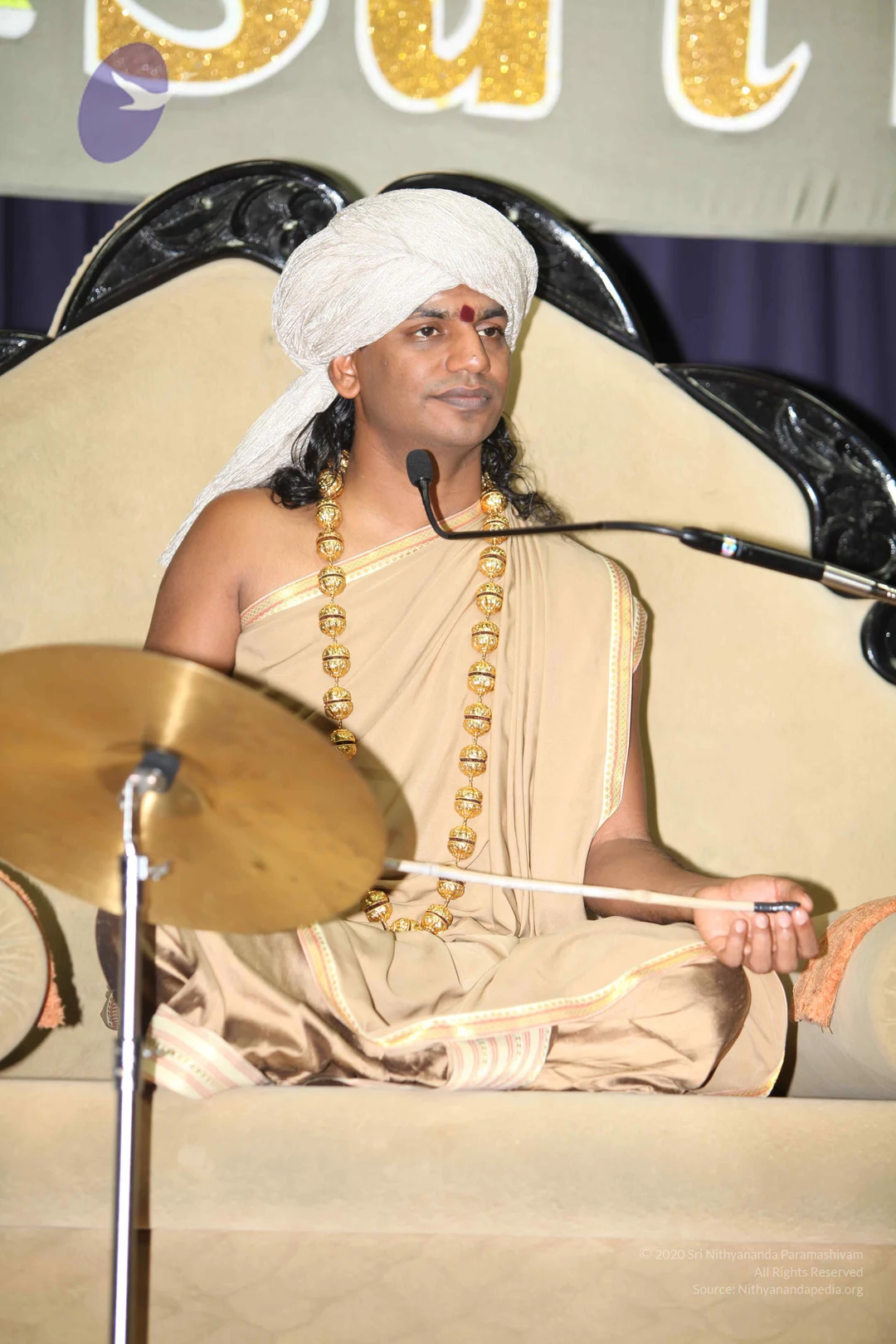
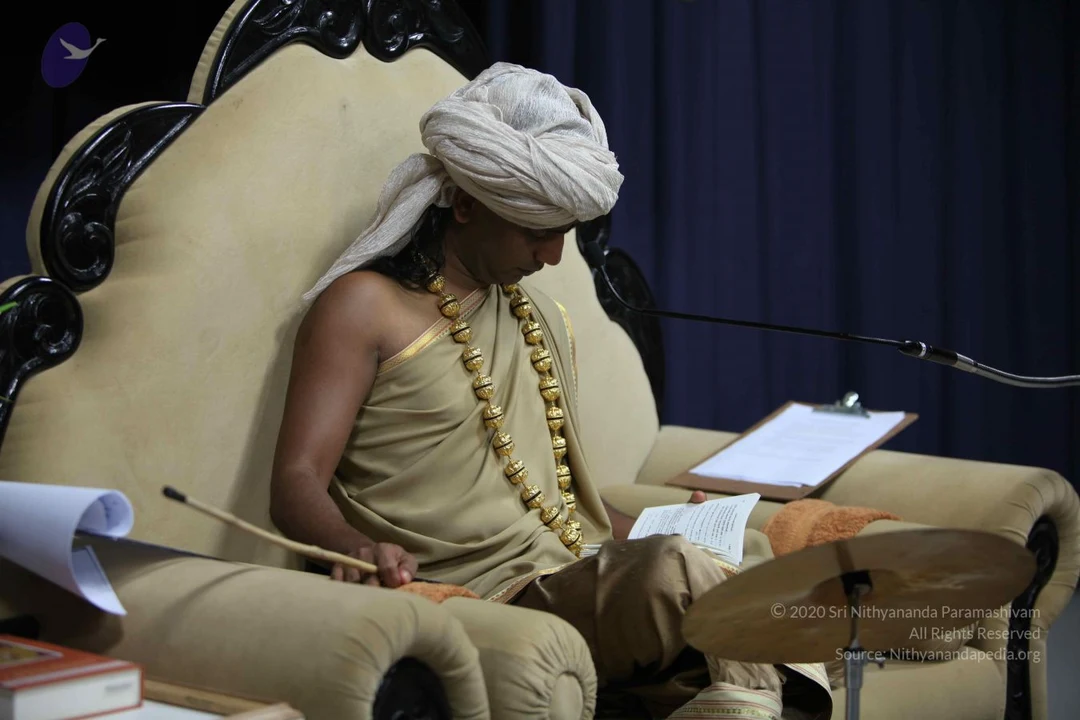
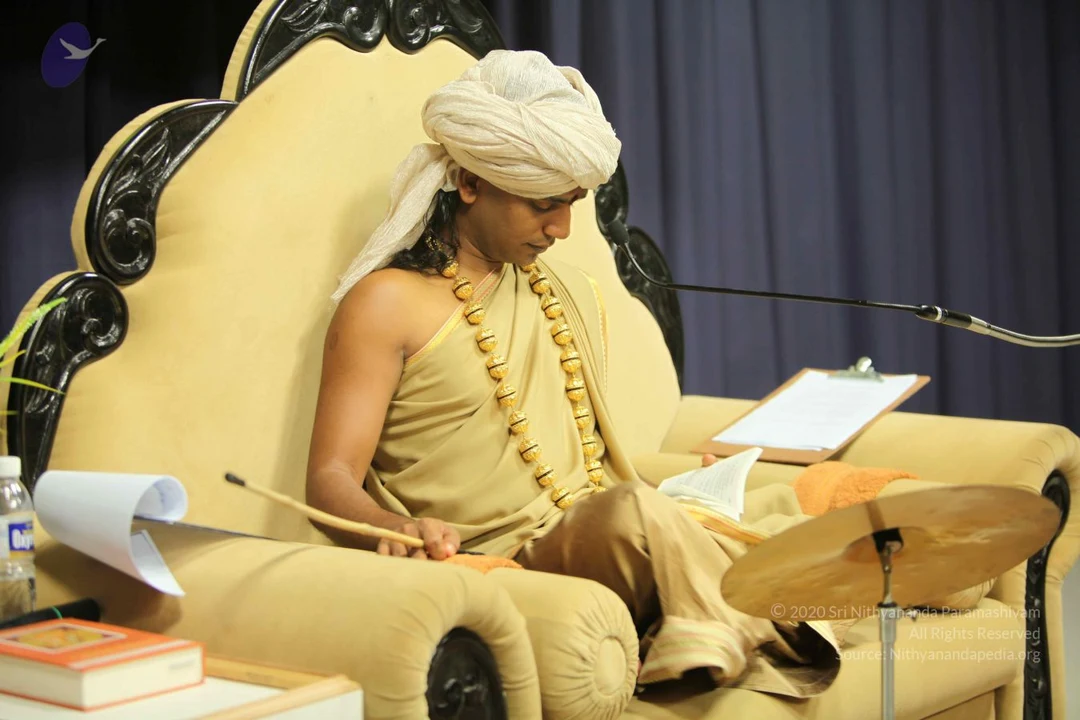
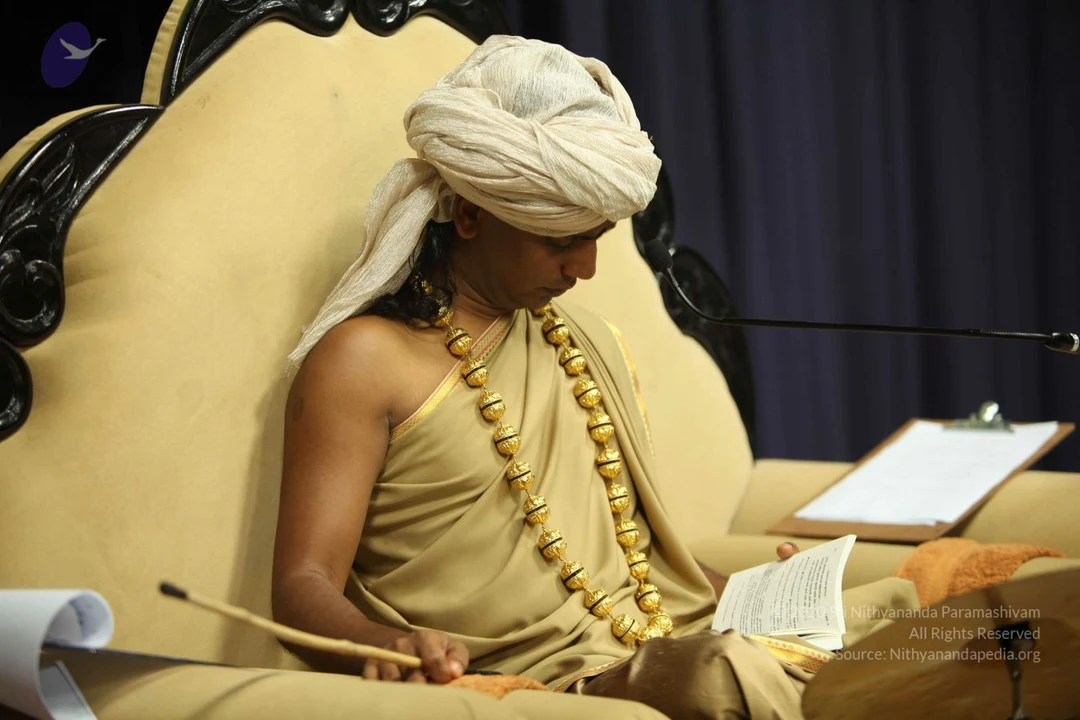
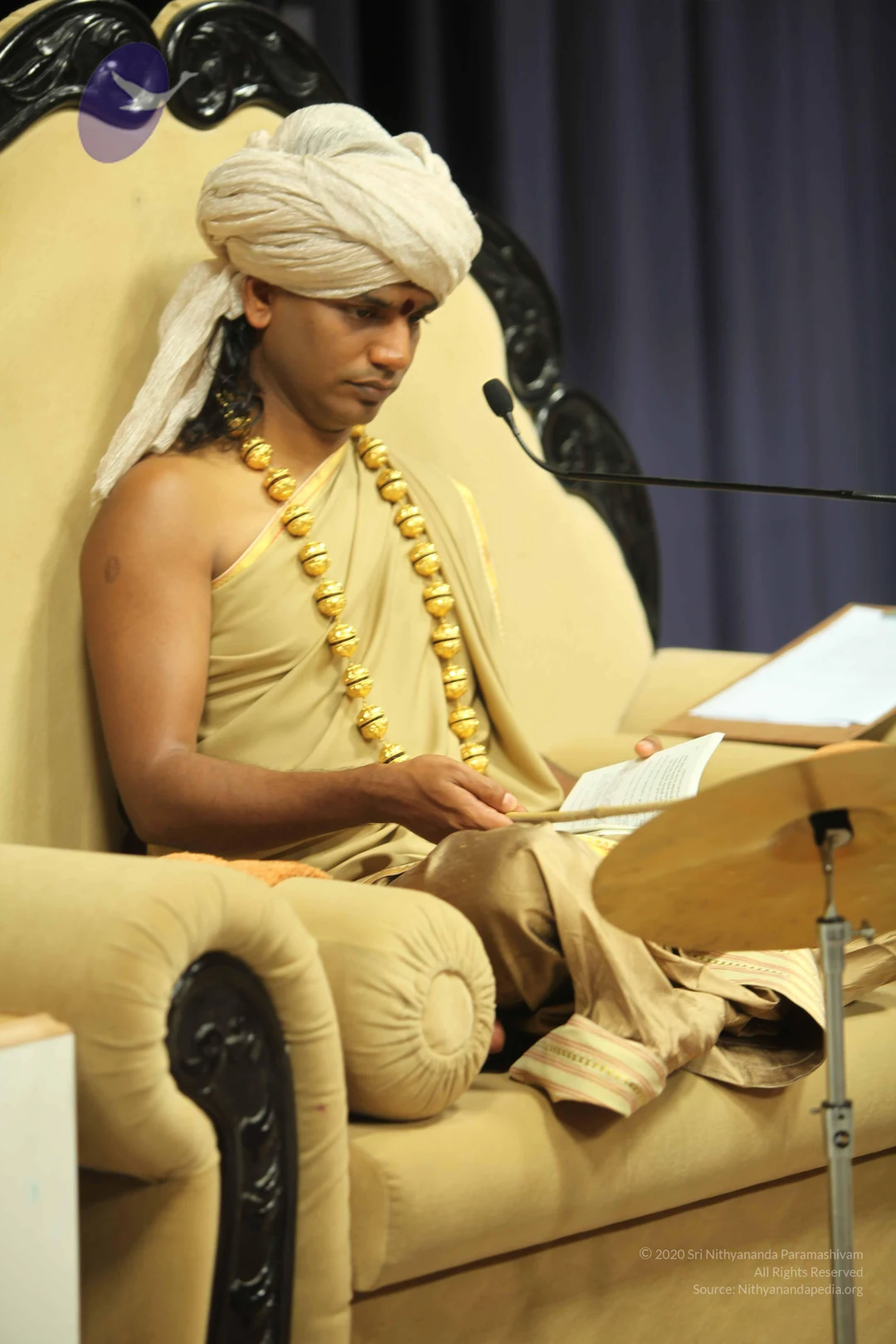
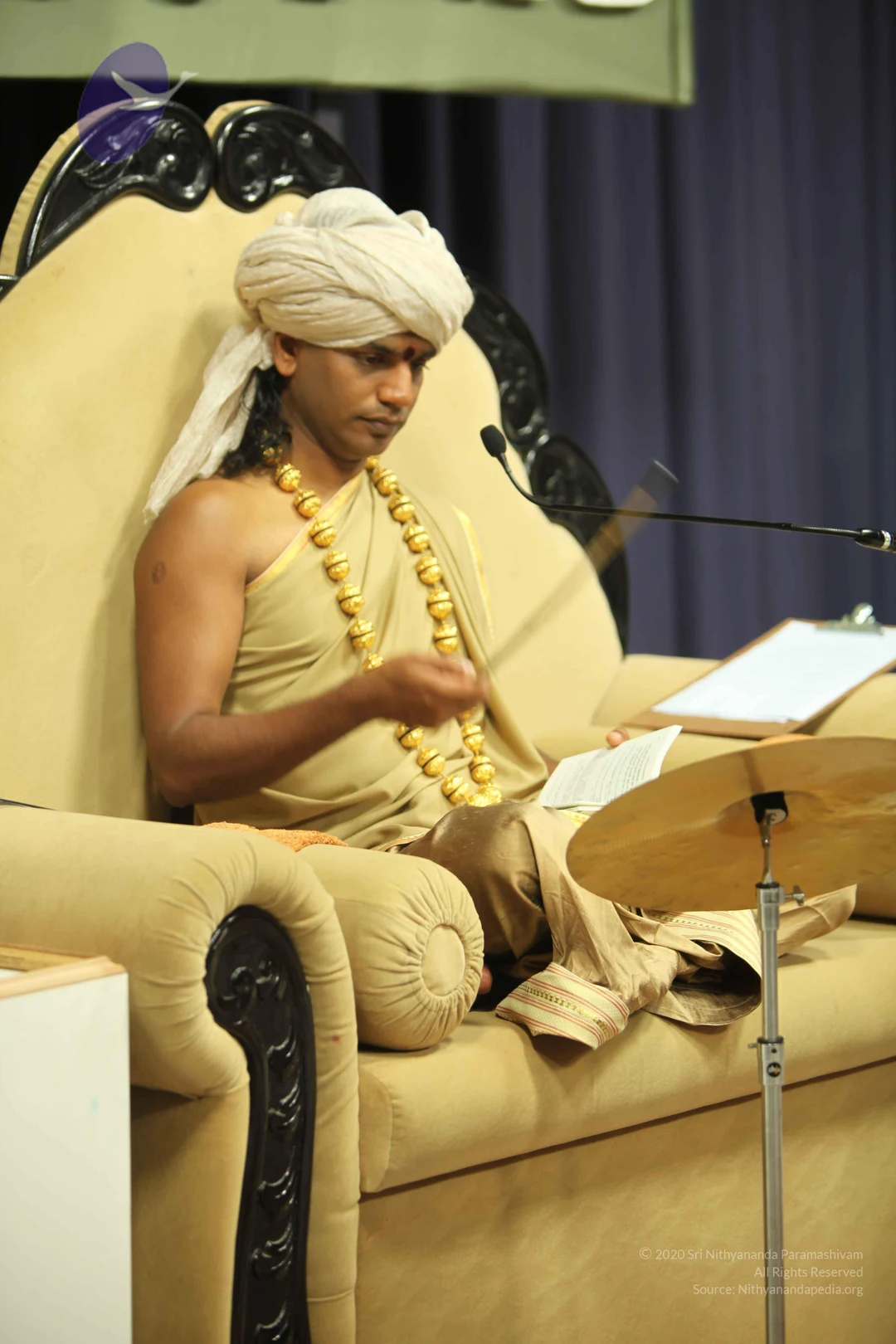
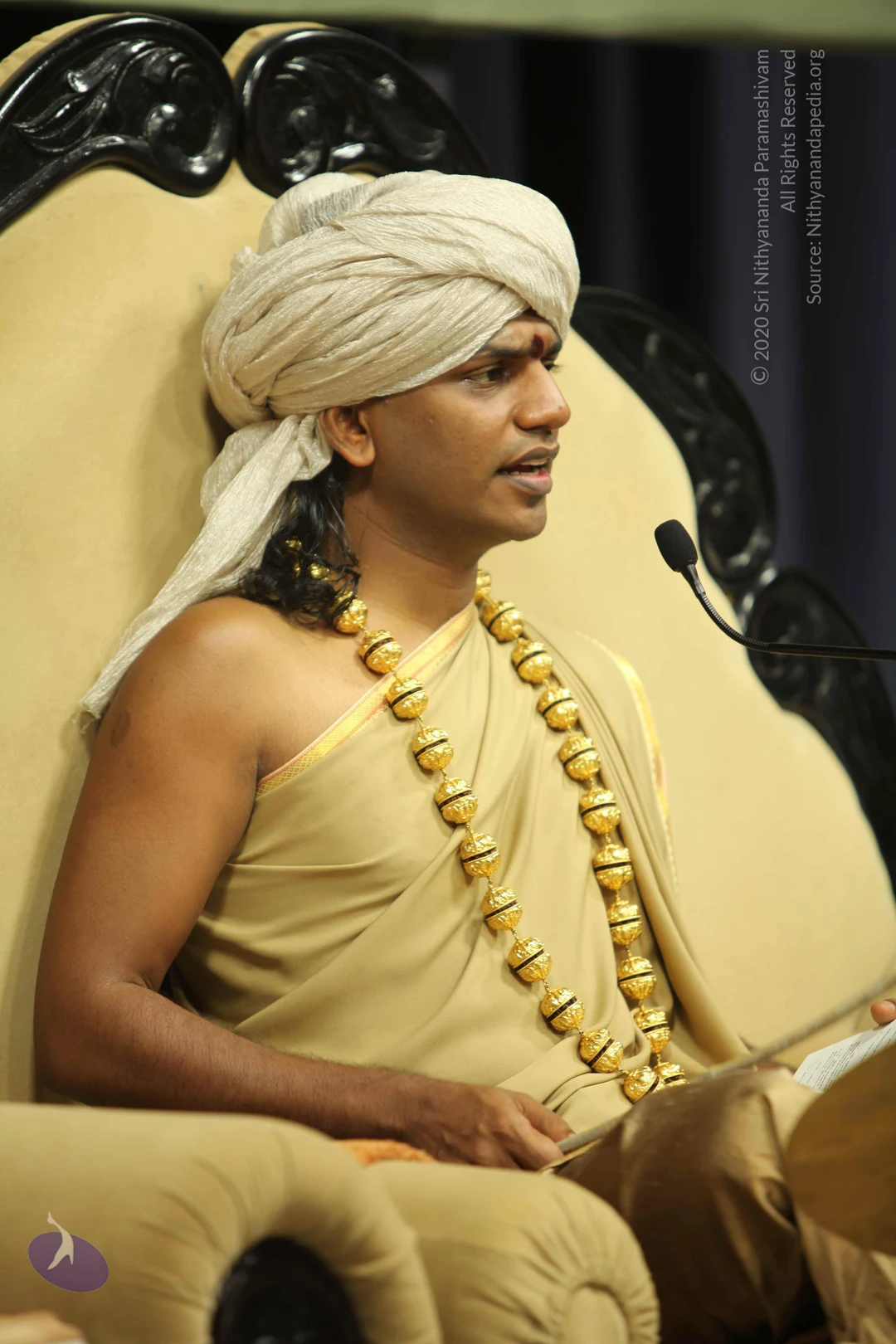
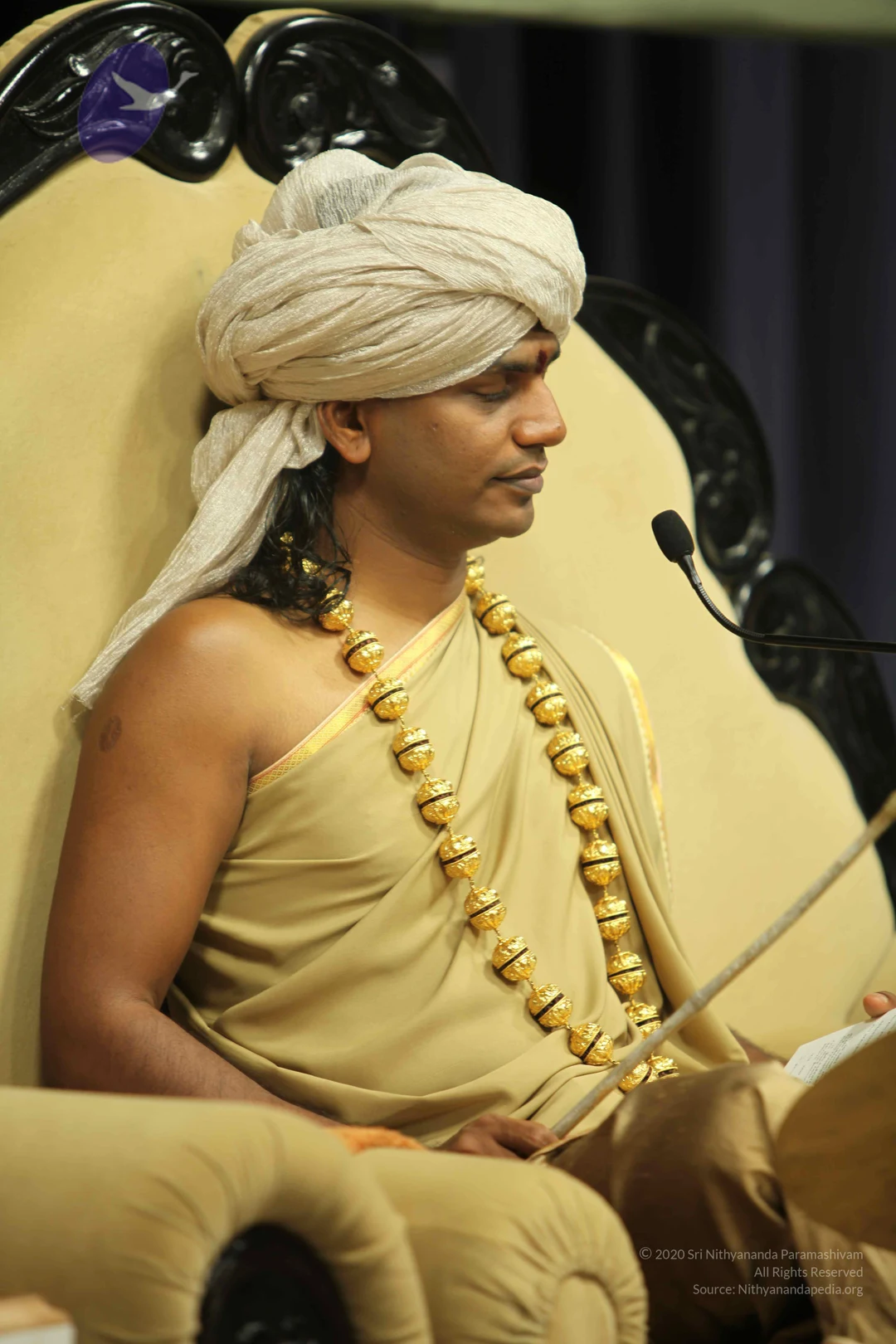
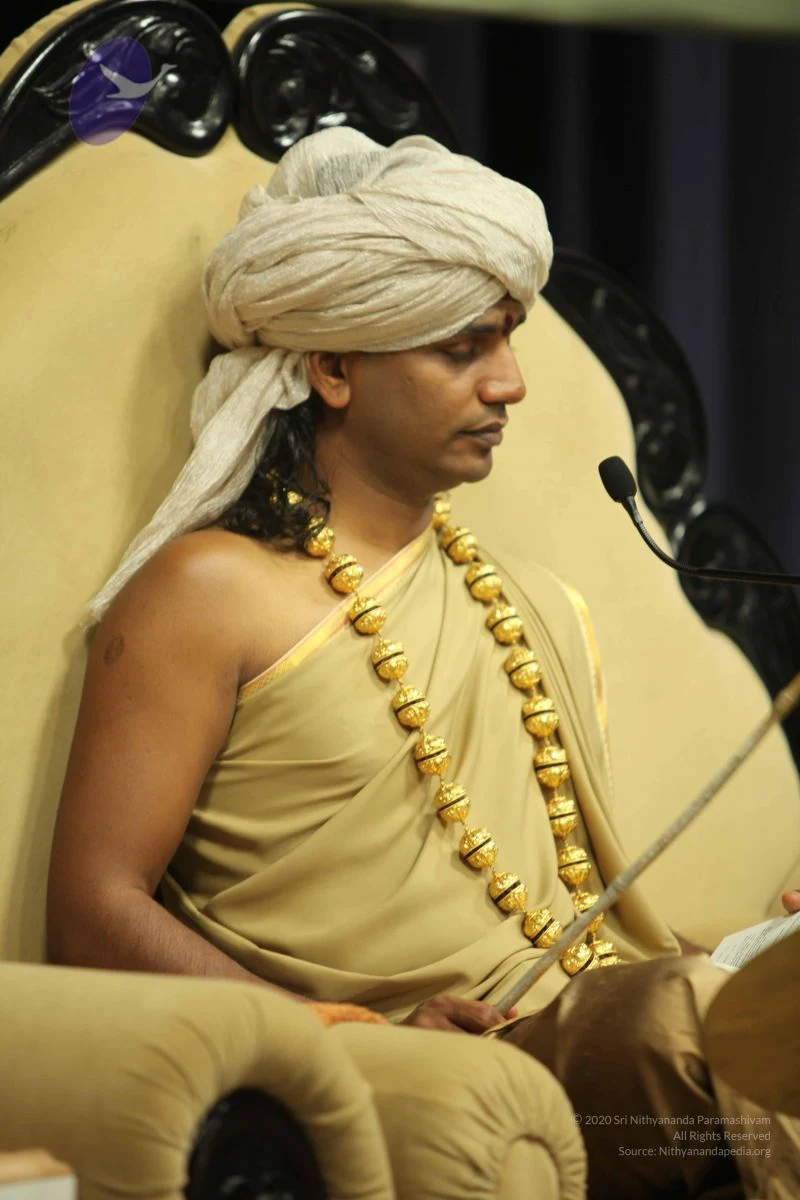
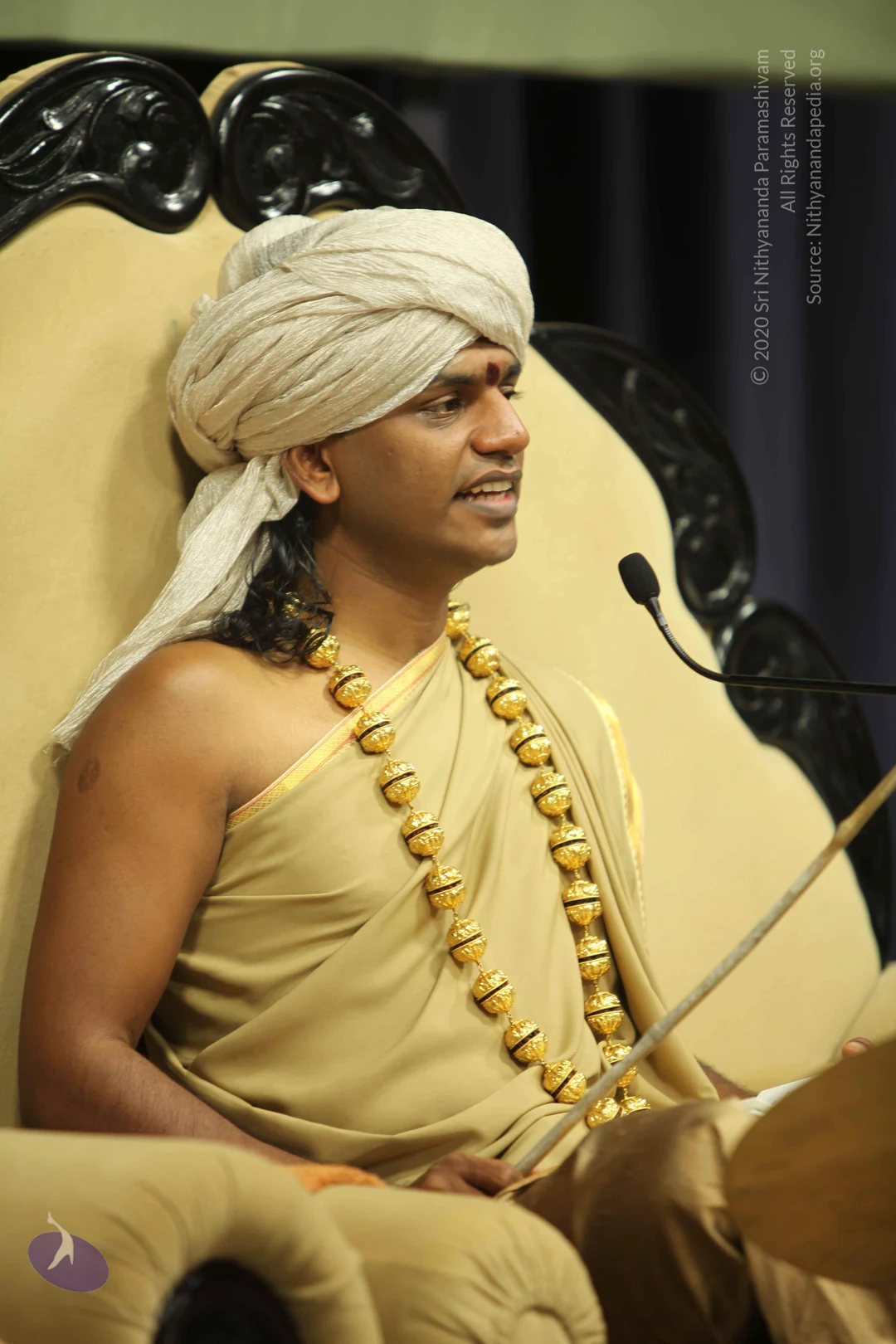
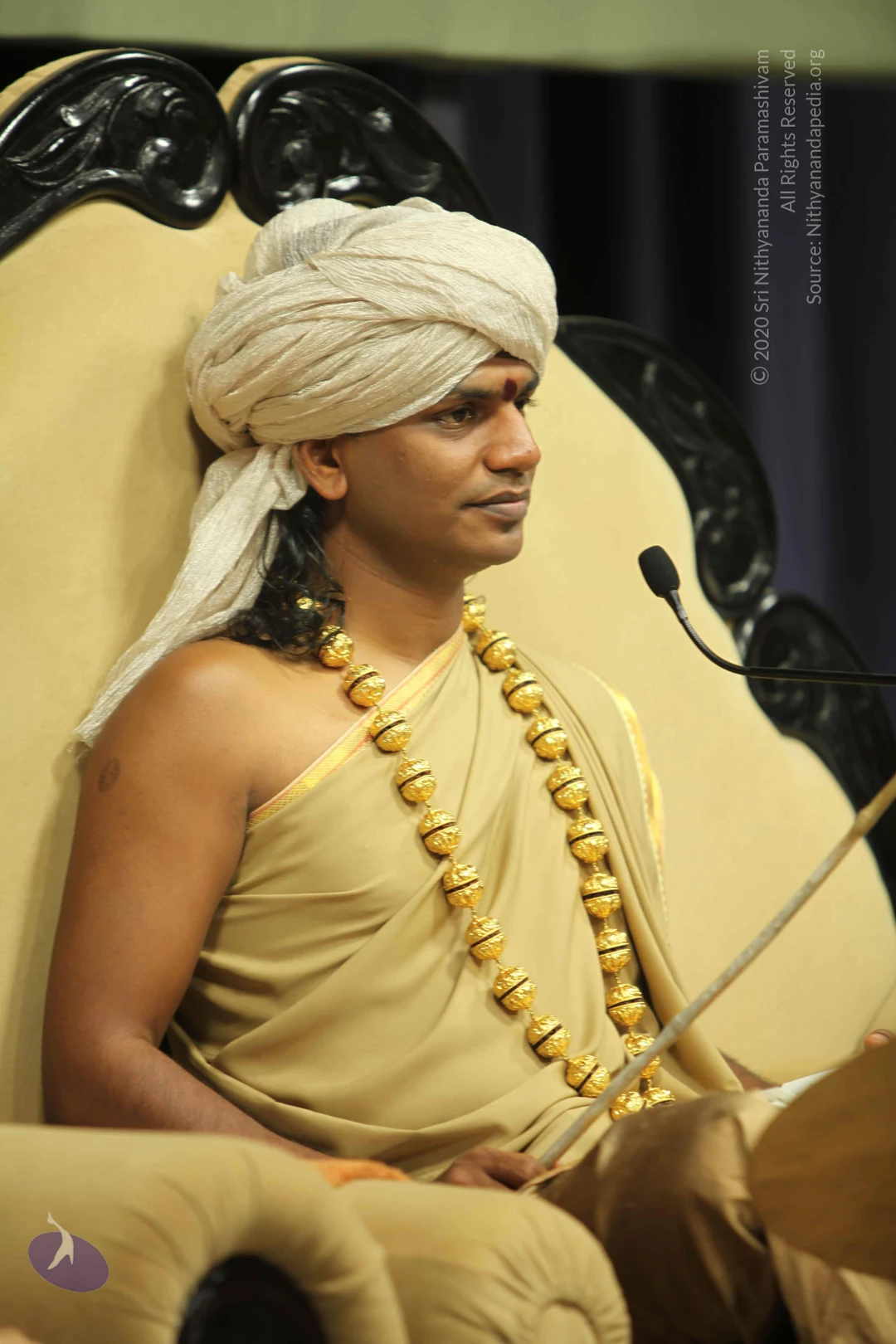
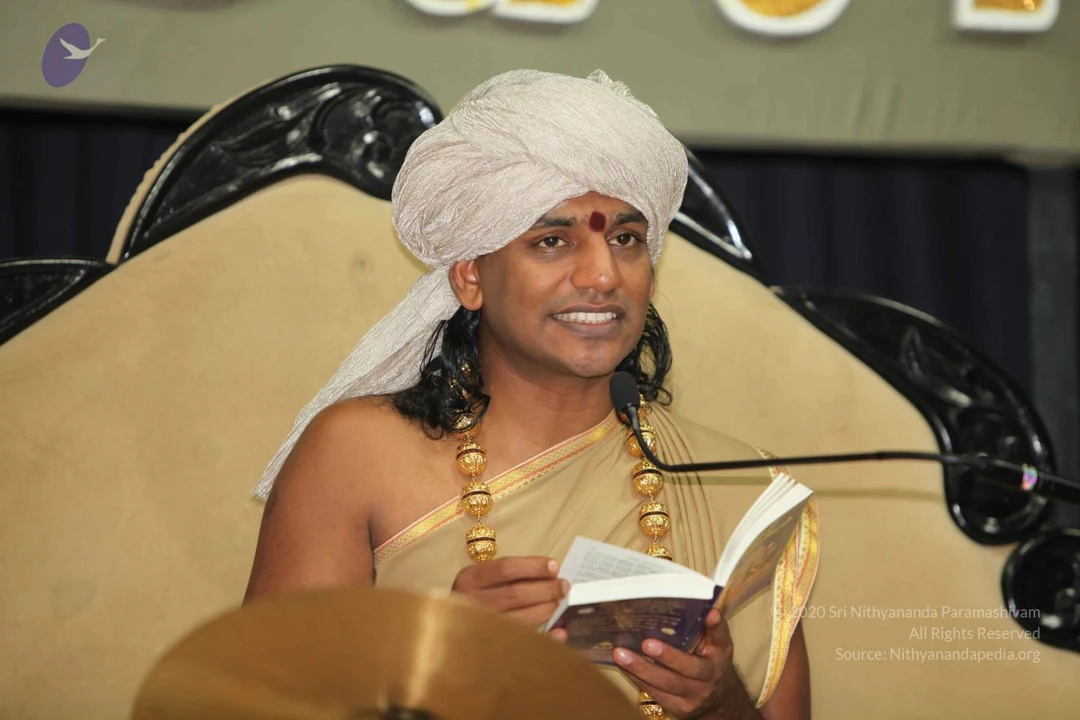
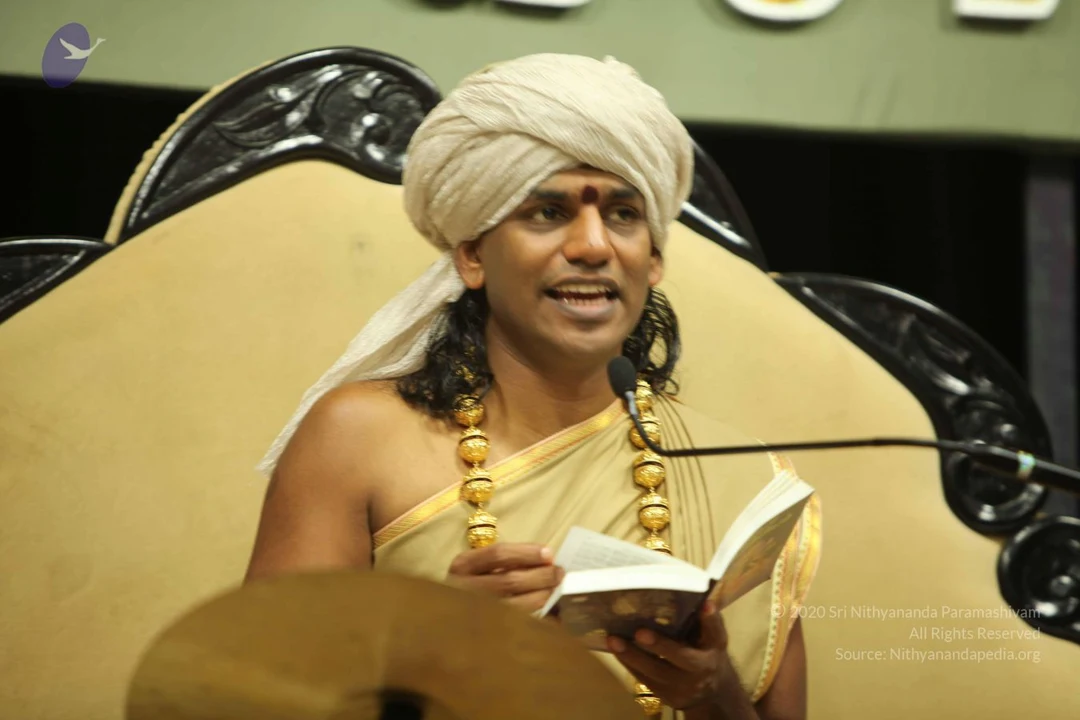
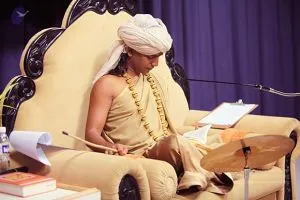
A man in an orange saffron robe and rudraksha mala sits cross-legged on an ornate gold throne with red cushions, smiling broadly and gazing to the side, holding a wooden stick across his lap. A microphone stand is at his shoulder and a cymbal sits at the left edge against a blue draped curtain.
08

VIP-VISITS

6 dated photos in previewSource gallery
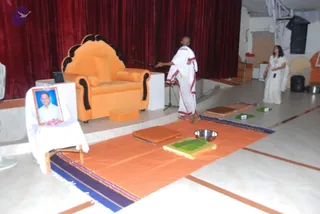
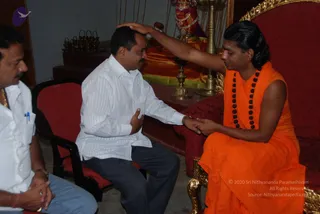
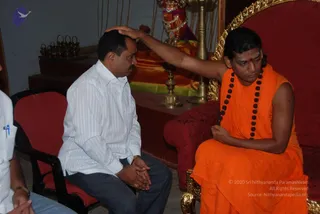
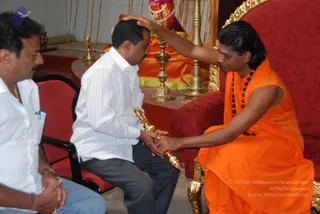
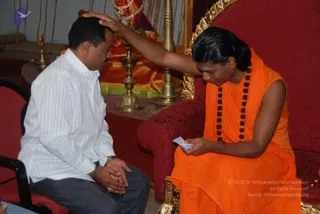
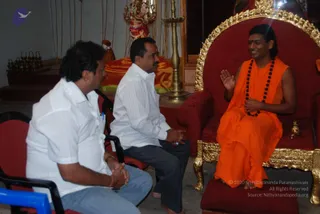
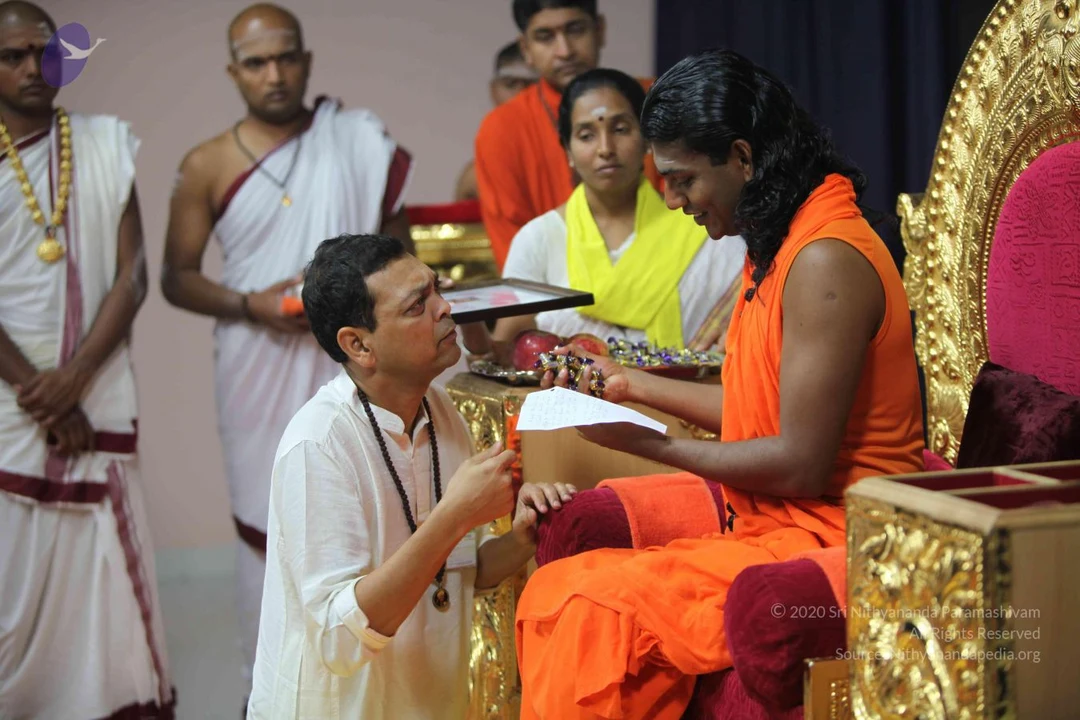
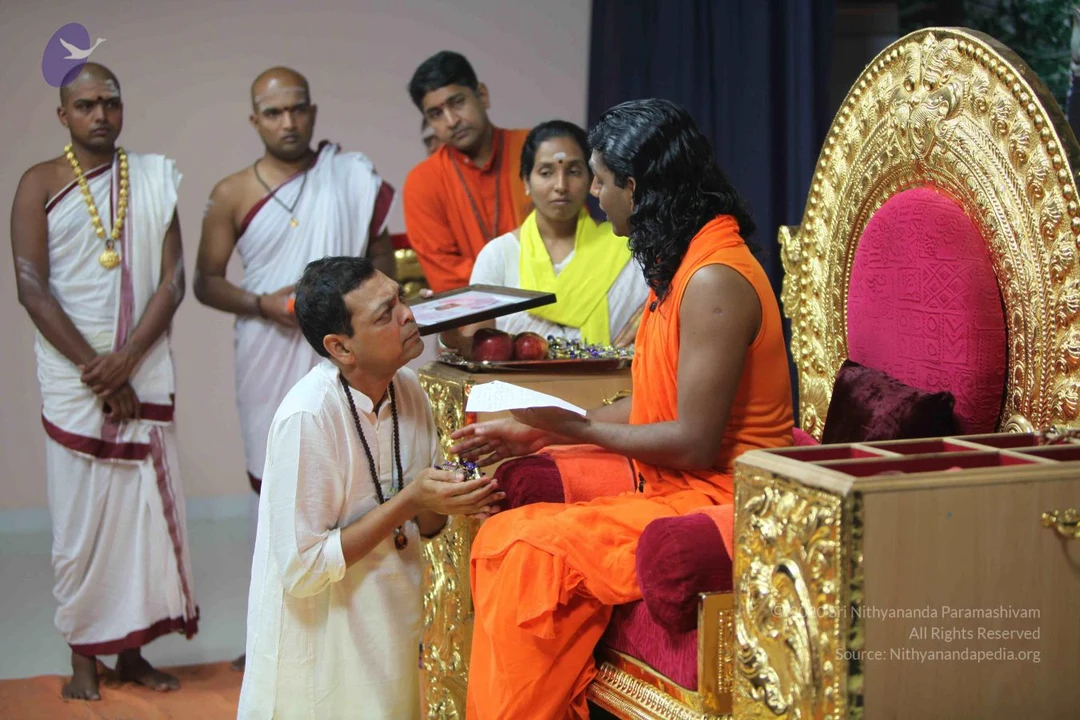
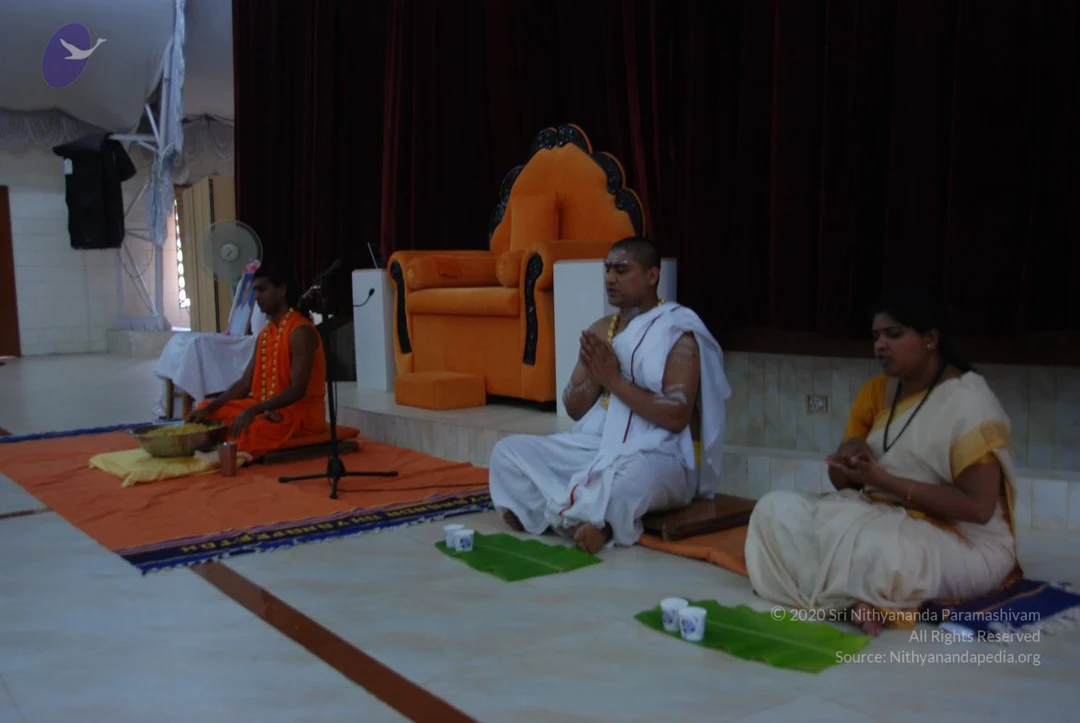
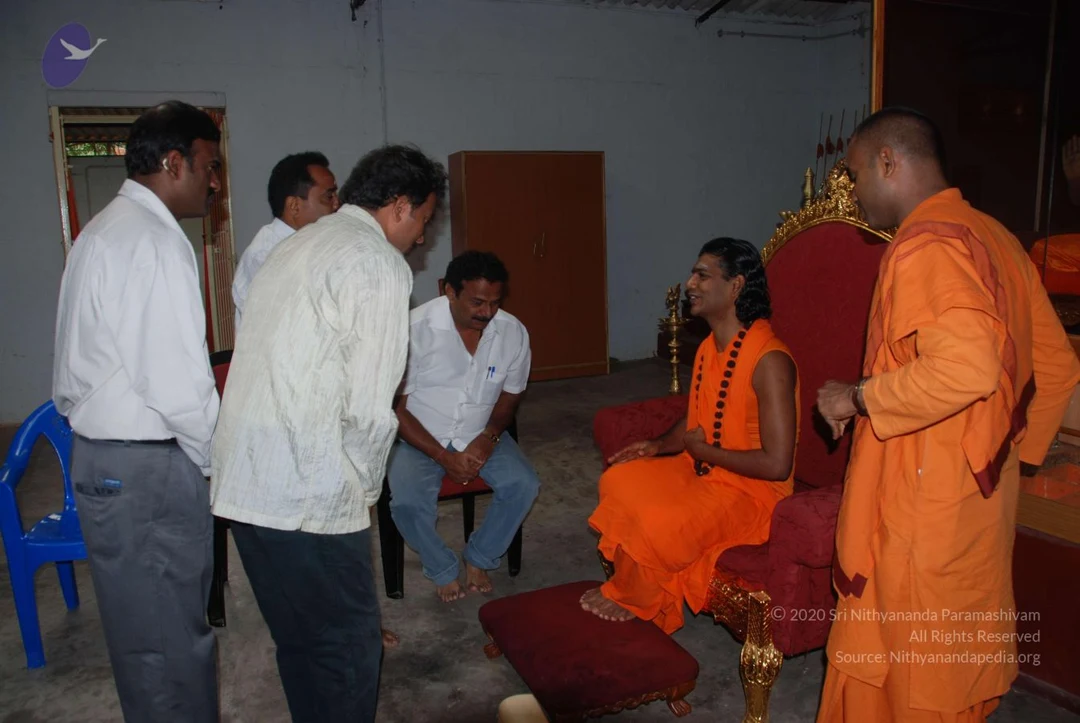
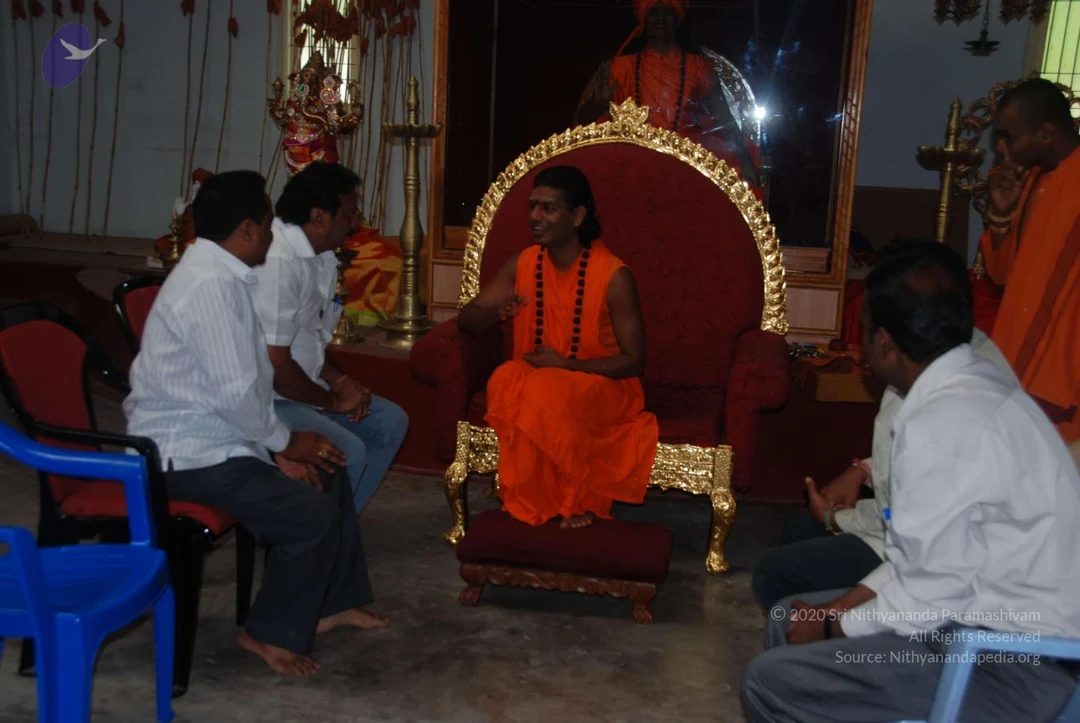
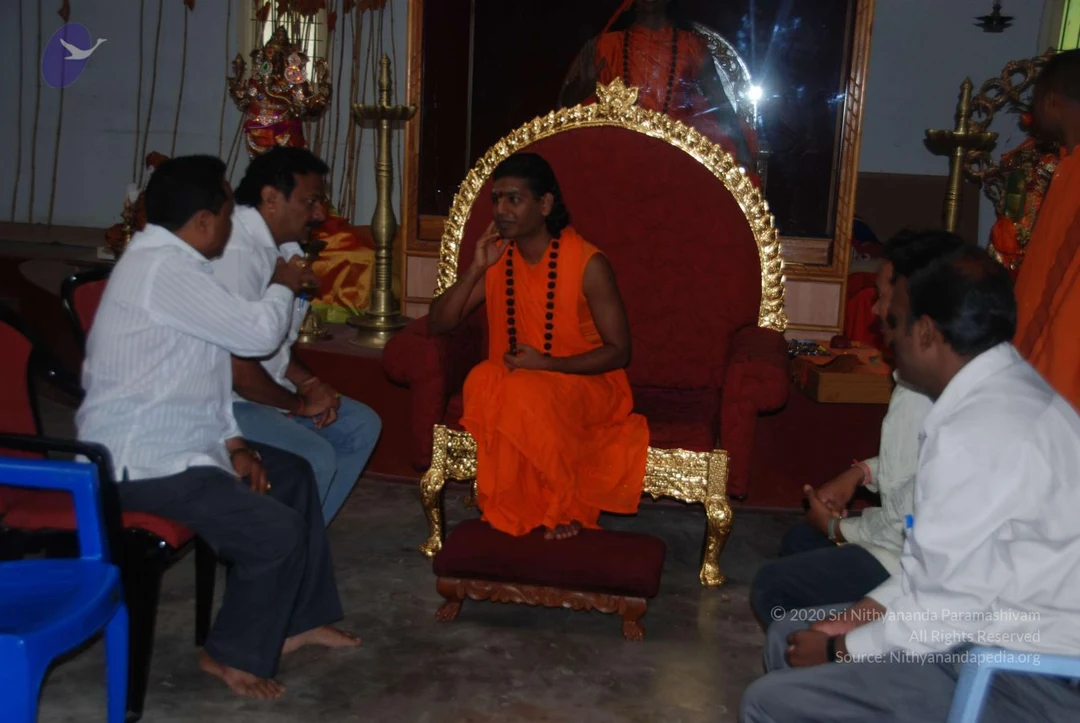
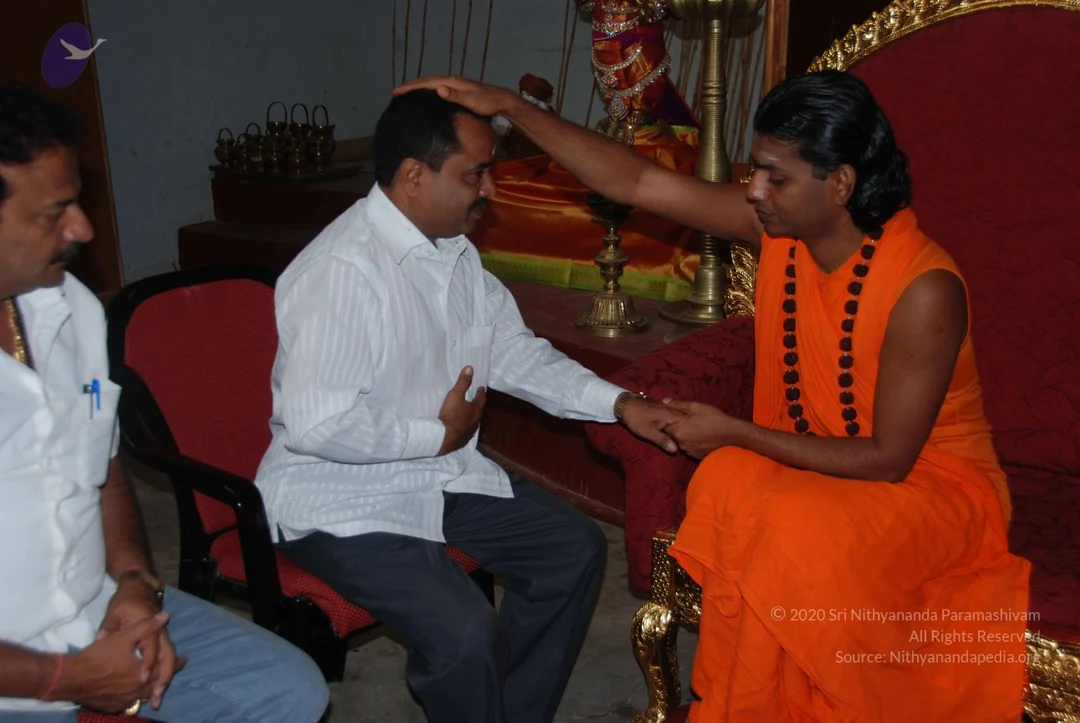
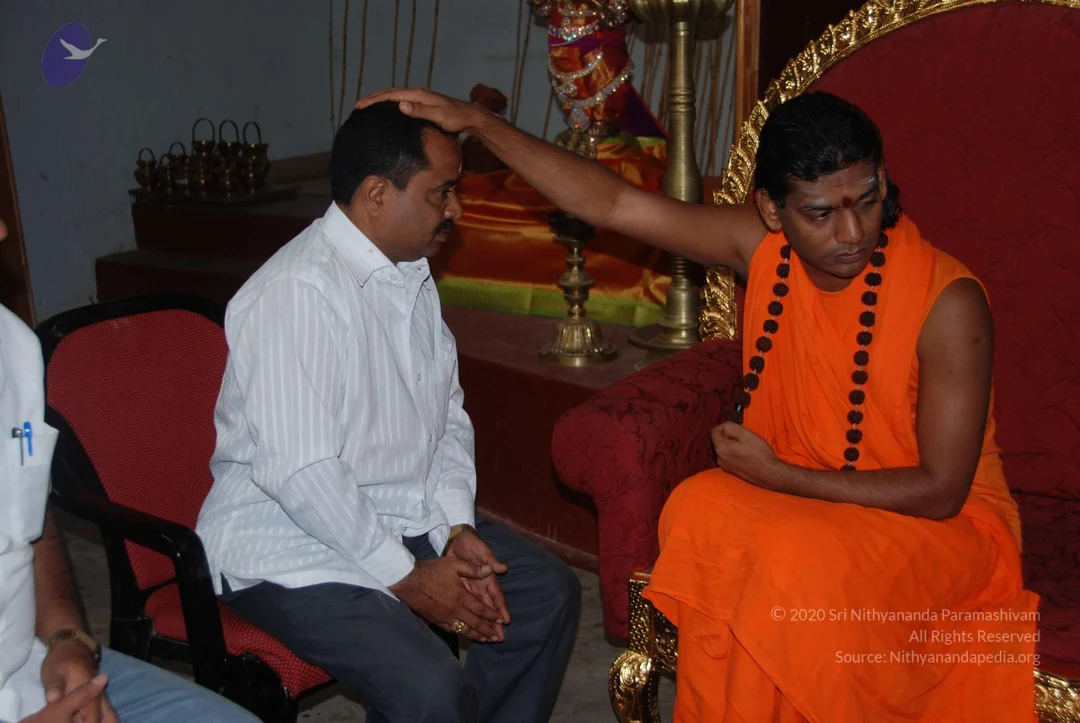
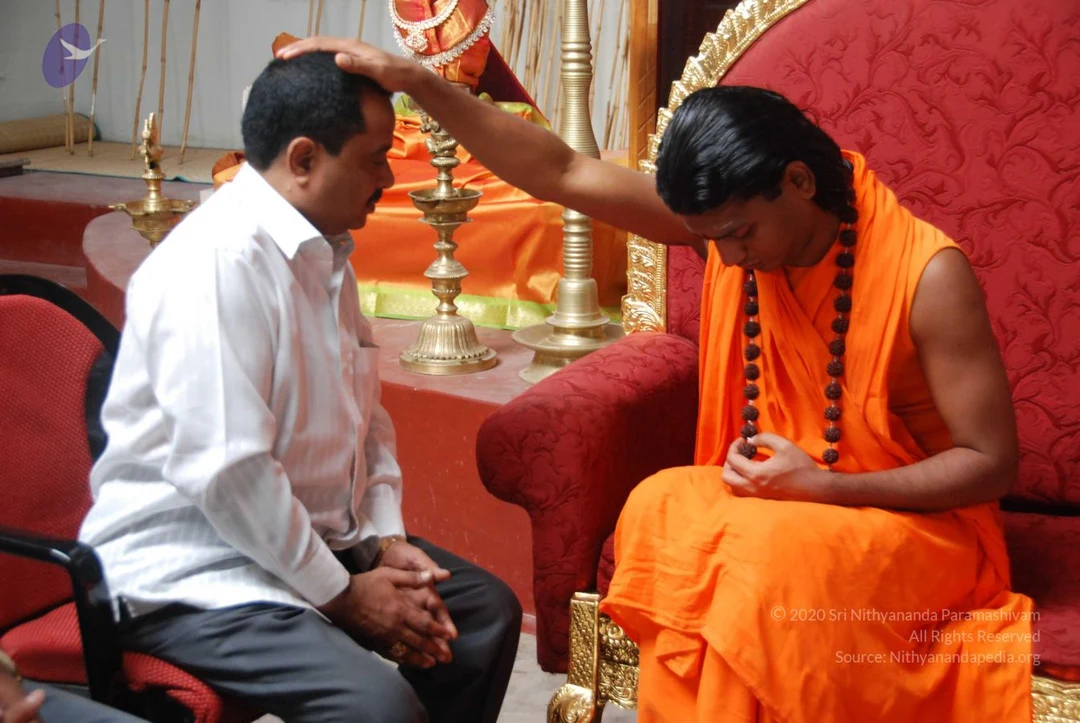
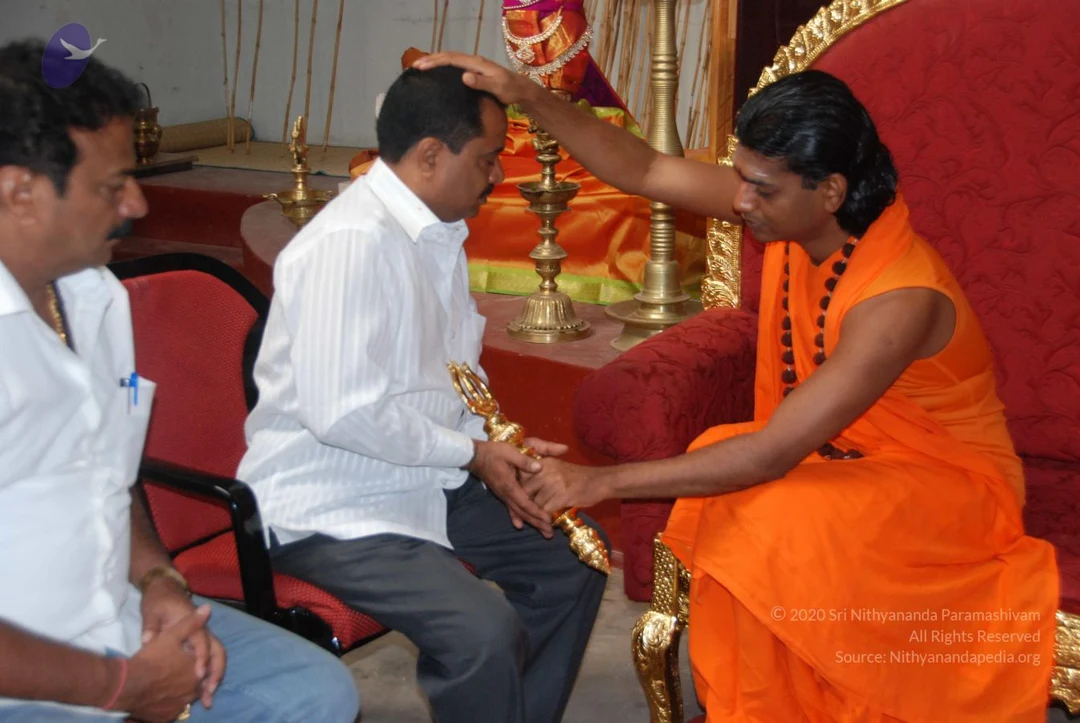
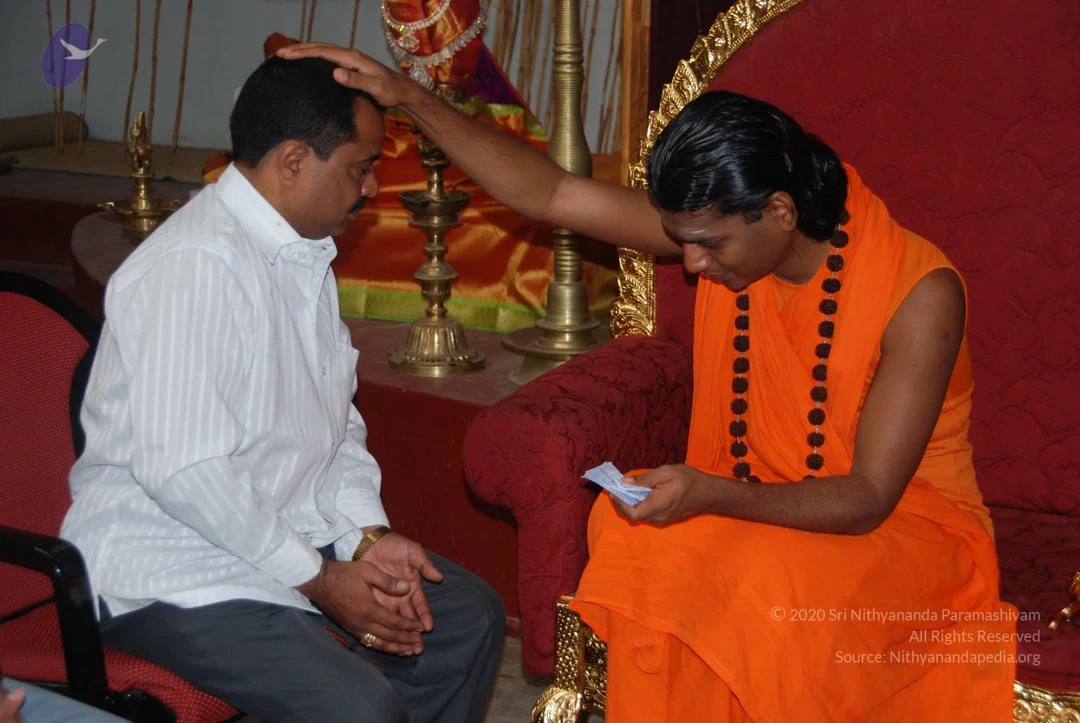
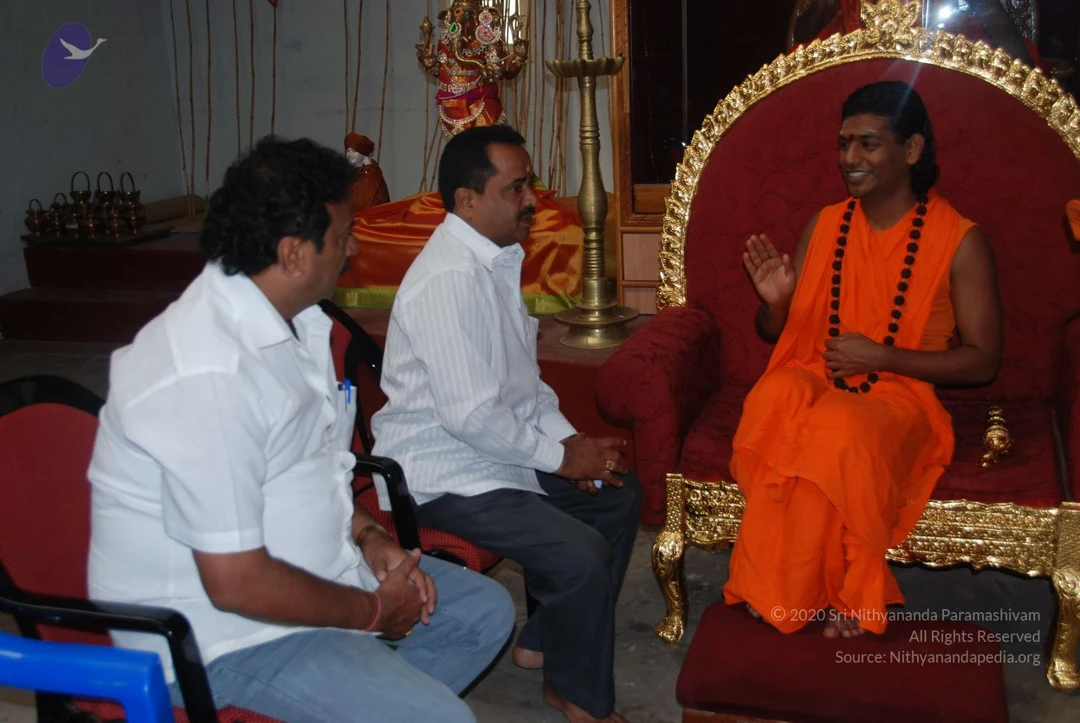
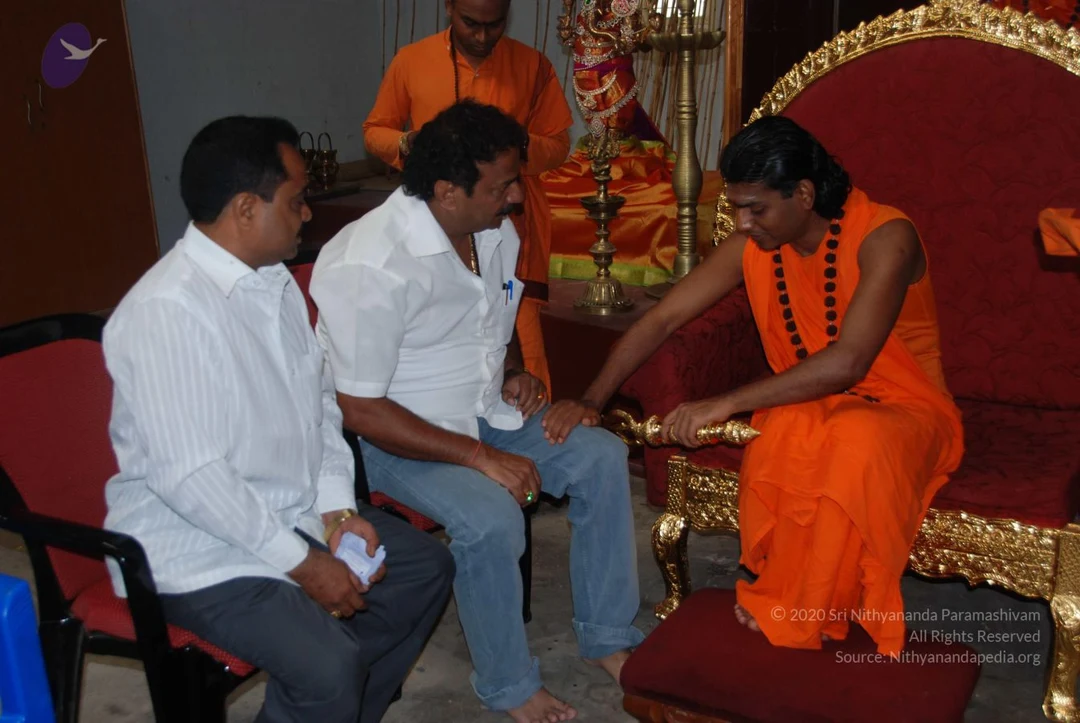
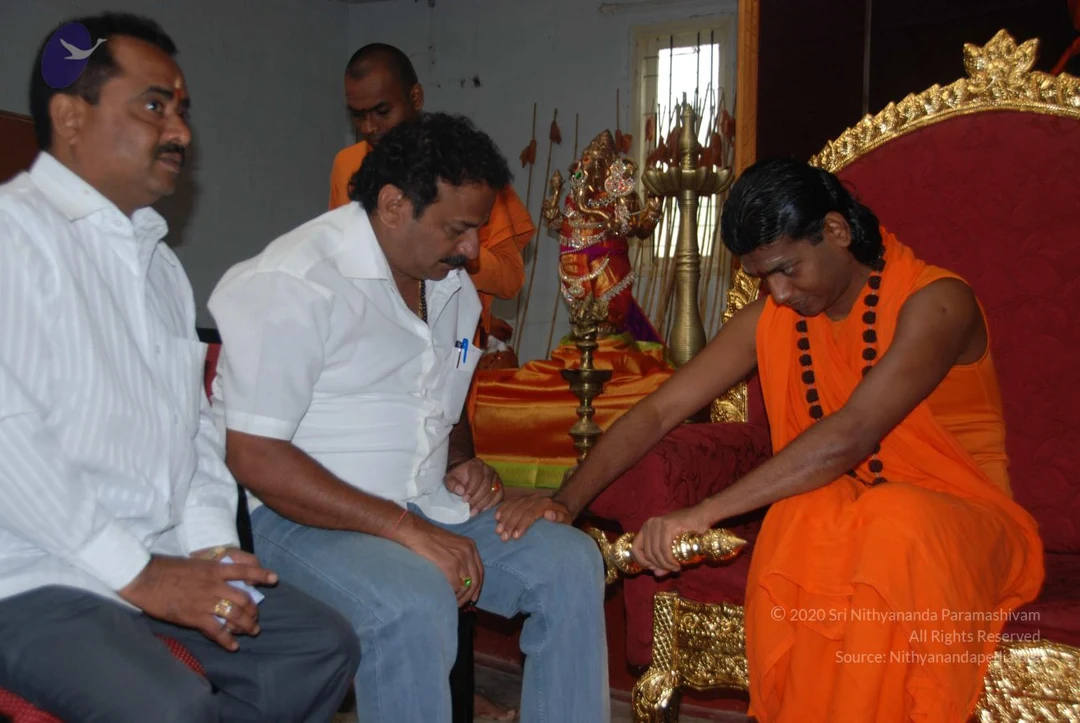
A seated man in an orange sleeveless robe and a rudraksha mala sits on a red upholstered throne with gold carved trim and a matching red footstool, speaking while raising one hand toward his face. Four men in white shirts and light trousers sit on chairs around him, two on the left in conversation and two on the right, one with hands folded. Behind the throne hangs a framed picture of a figure in red and orange, a brass oil lamp stands at the right, and a red and gold decorative object is visible at the upper left. Floor is grey concrete. The speaker has long swept-back hair and a mala, consistent with the a person cues; his appearance is distinctive enough to label as probable.A photograph of a seated man in a white striped shirt and dark trousers, with his head bowed, receiving a blessing as an orange-robed figure seated on an ornate red and gold throne places a hand on his head. The seated figure wears a saffron robe, a long rudraksha mala and a small red tilak on the forehead. Behind them stands a deity murti draped in red, orange and green cloth with a tall brass lamp stand and brass kalasha-style vessels on a side table. A man in a light shirt sits at the left edge. Probable Swamiji: the blessing figure shows long swept-back hair, saffron clothing and rudraksha mala, consistent with the page's reference to Swamiji, a blessing given from the throne.A seated man in an orange saffron robe with a rudraksha mala and a long swept-back hairstyle sits on a red upholstered throne, his right hand raised over the head of a man in a white striped shirt and grey trousers who bows and grips a brass trident-shaped staff. A second man in a white shirt sits at left wearing a red thread on his wrist. Behind them stand brass oil lamps and a deity figure draped in orange and purple cloth. Swamiji (probable) is the seated figure, identified by the orange robe, rudraksha mala and long swept-back hair while bestowing a blessing on the kneeling devotee.A seated man in a white striped shirt and grey trousers, with a gold wristwatch, bows his head while a robed figure in saffron-orange cloth and a dark rudraksha mala places a hand on his crown in blessing. The blessing figure sits on a richly upholstered red throne with gold trim and holds a folded stack of small papers. Behind them stands a brass oil lamp and a brass kalasha-style vessel on a red-draped platform, with a deity murti and orange-and-gold fabric in the background. The blessing figure has long, swept-back dark hair and distinctive ceremonial adornment, consistent with the page's a person reference; the appearance-based label is probable, and the scene shows a blessing or darshan setting.A seated man in saffron-orange robes and a dark rudraksha mala sits on an ornate red and gold throne, smiling and gesturing with raised right hand while speaking. Two men in white and light shirts sit facing him in plastic-and-metal chairs in the foreground. Behind them stand a brass oil lamp, a golden-red draped cloth, a small golden deity murti with a red-and-gold shrine area, and brass lamps on a shelf at left. The a person candidate is shown in appearance-based cues: long swept-back hair, saffron clothing and a rudraksha mala, seated on a throne in a conversational setting.
09

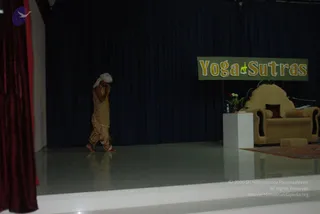
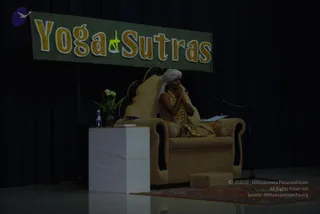
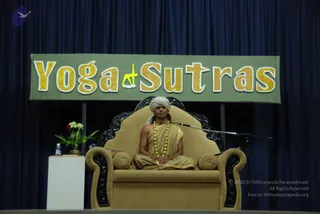
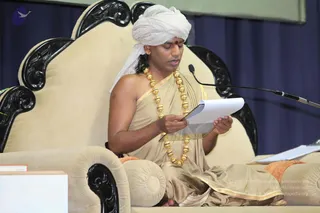
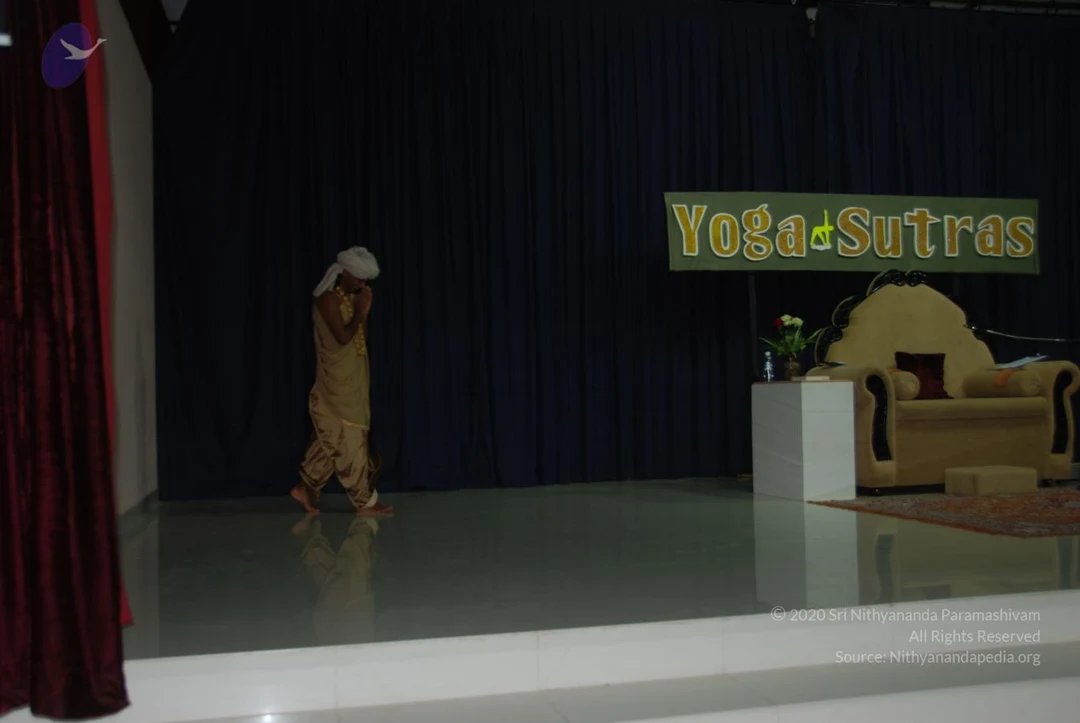
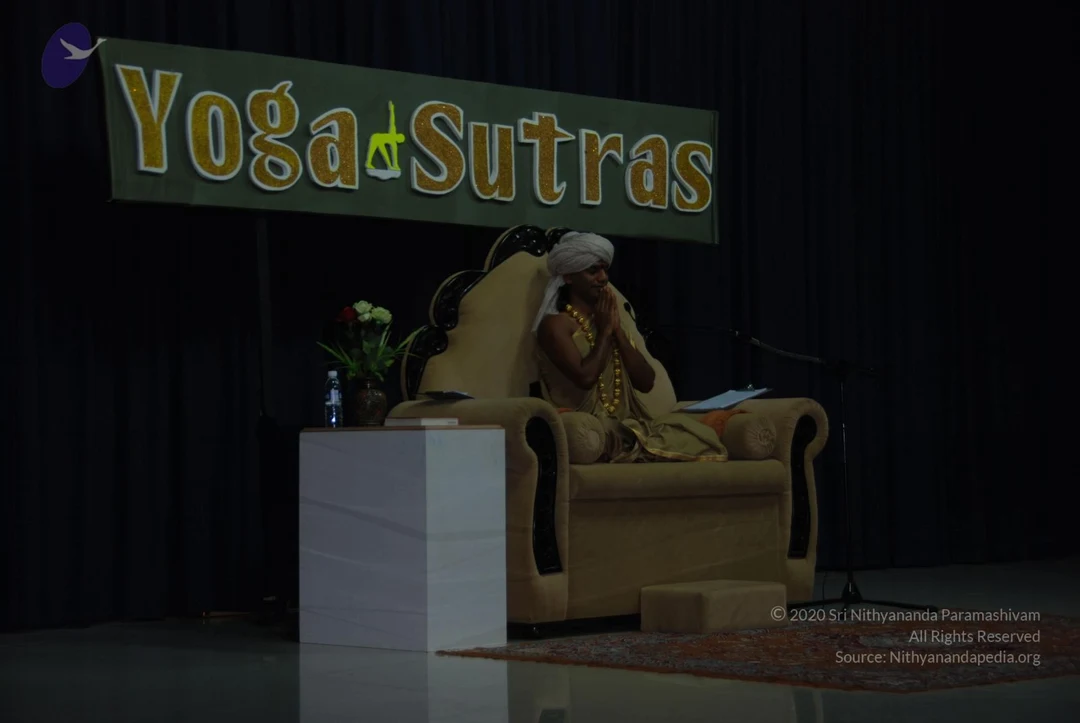
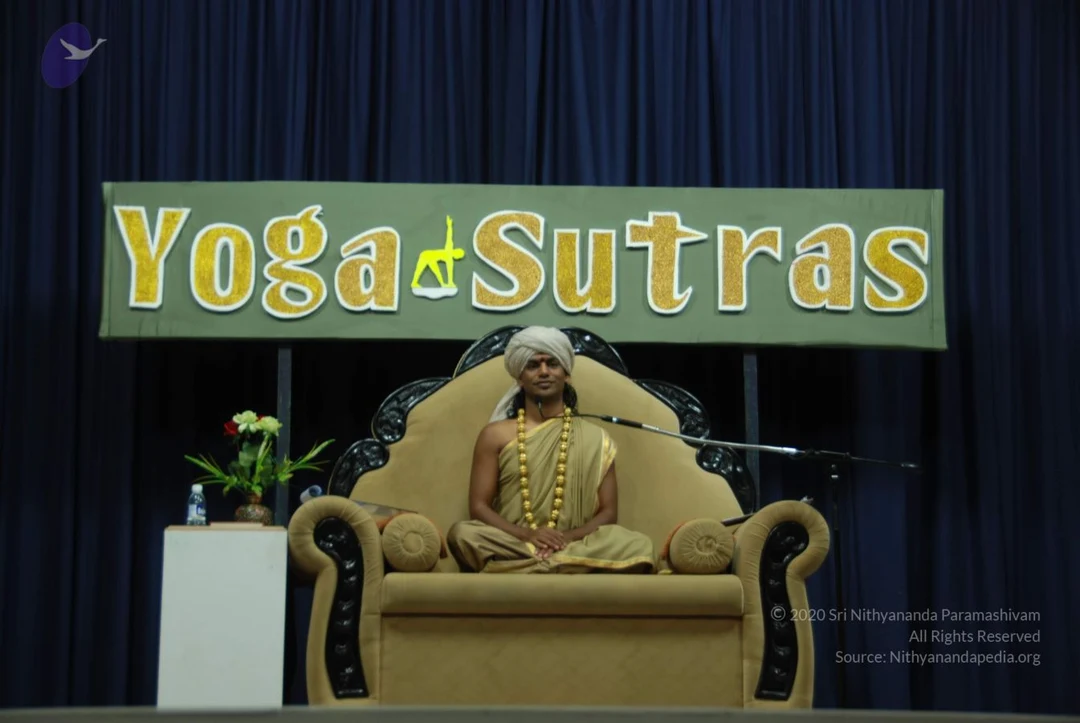
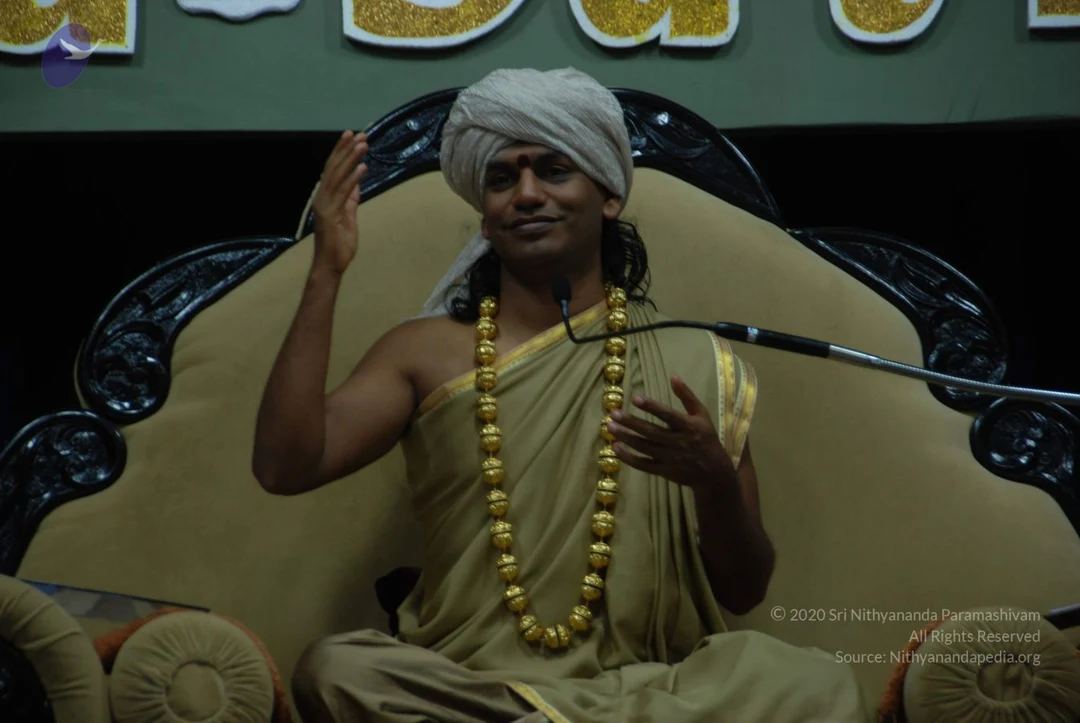
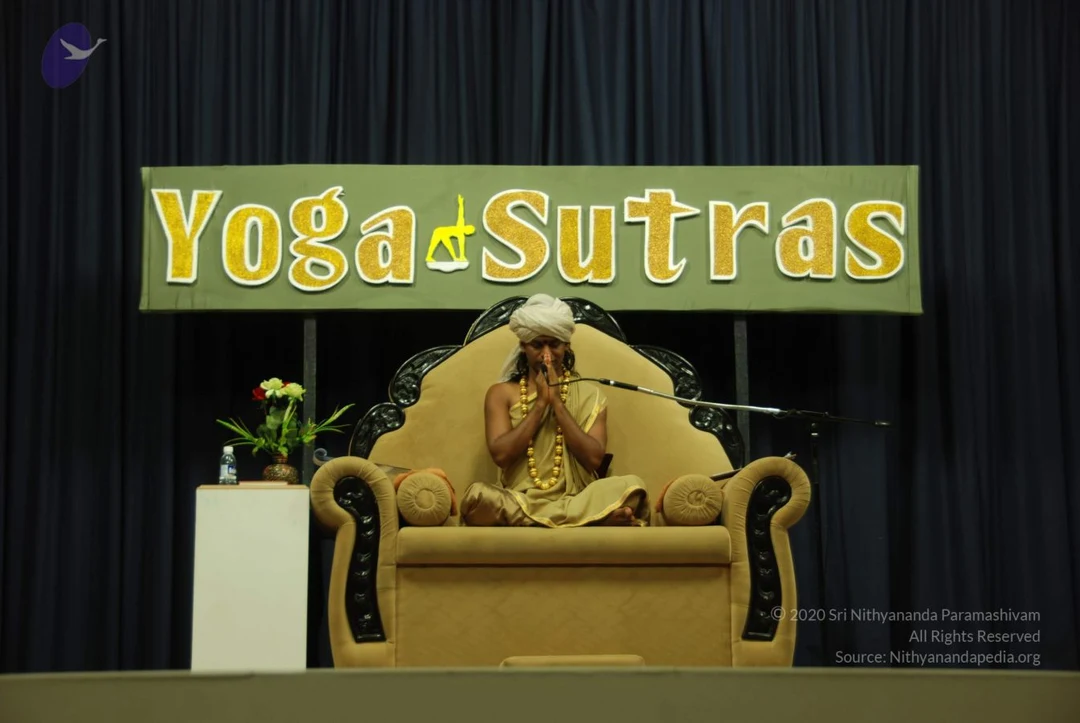
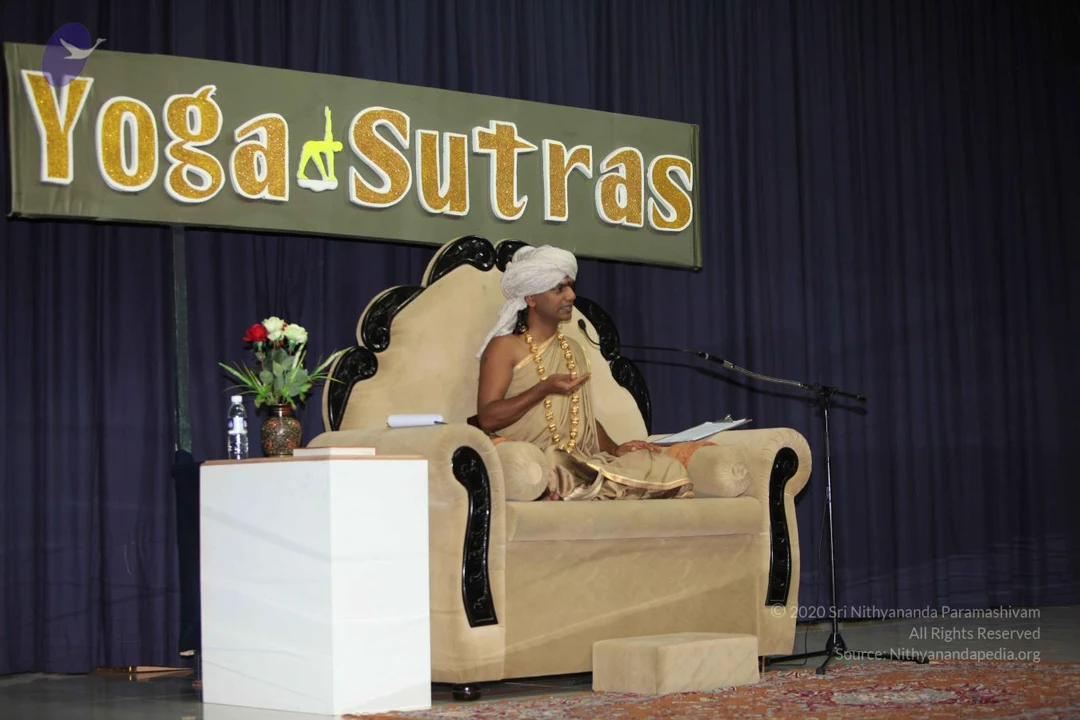
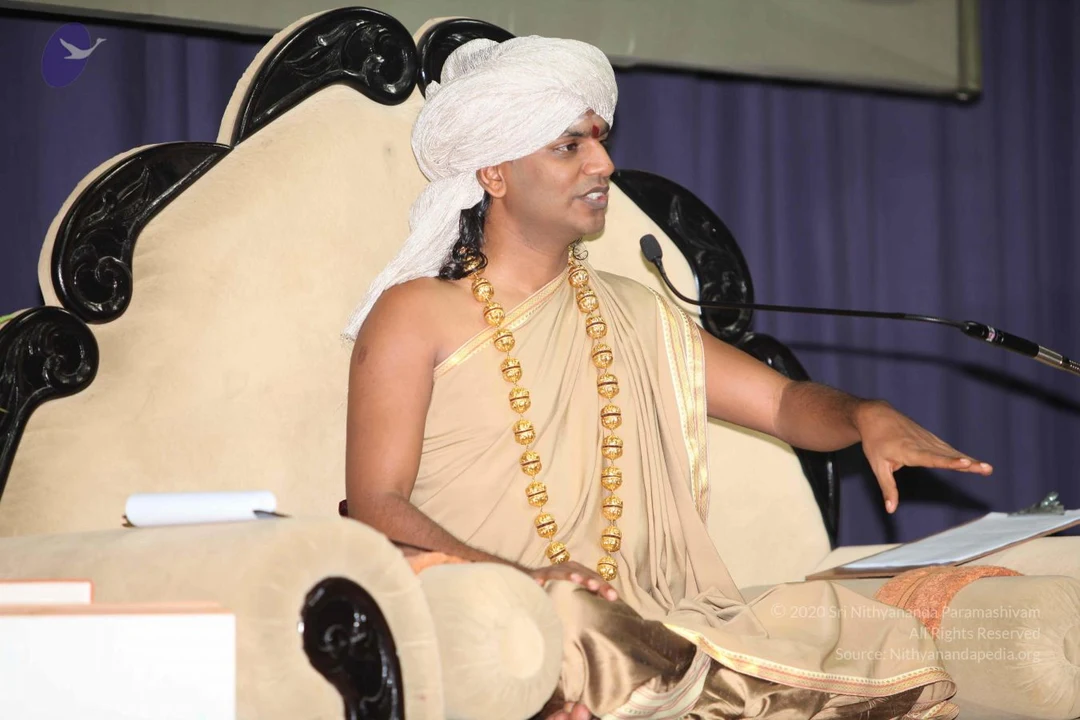
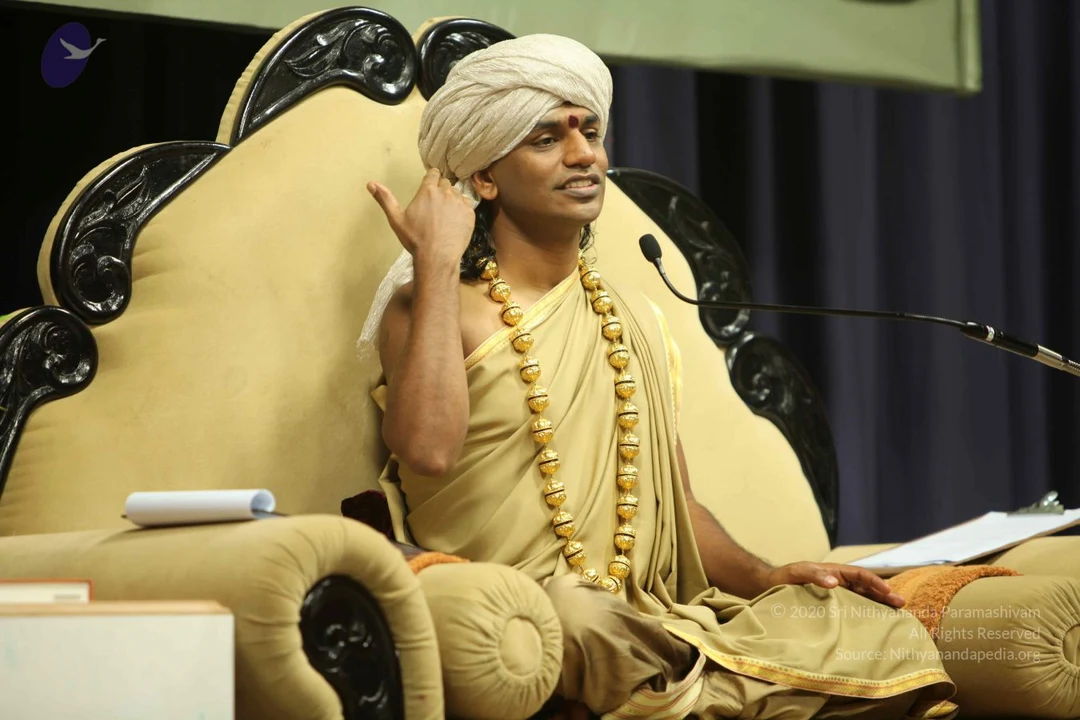
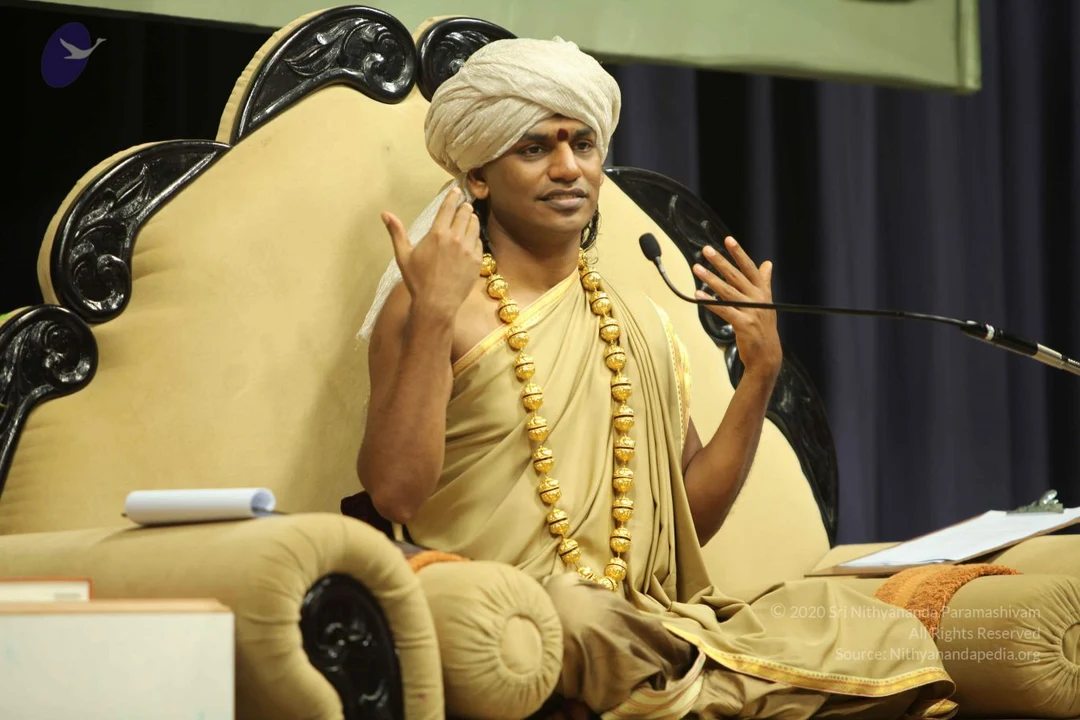
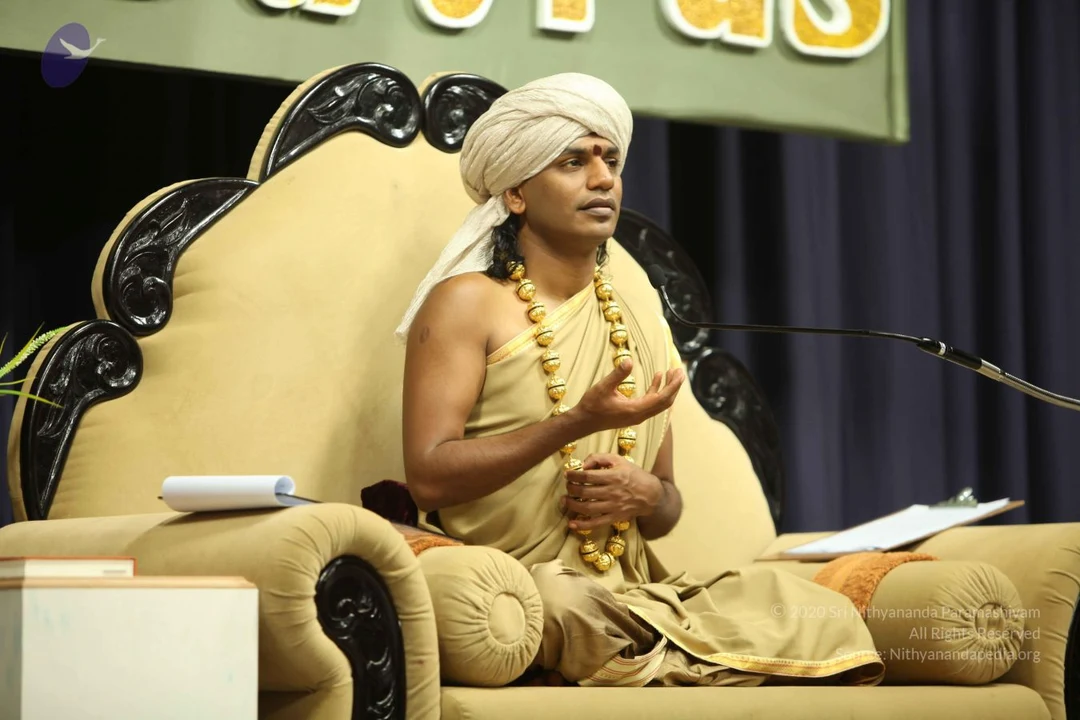
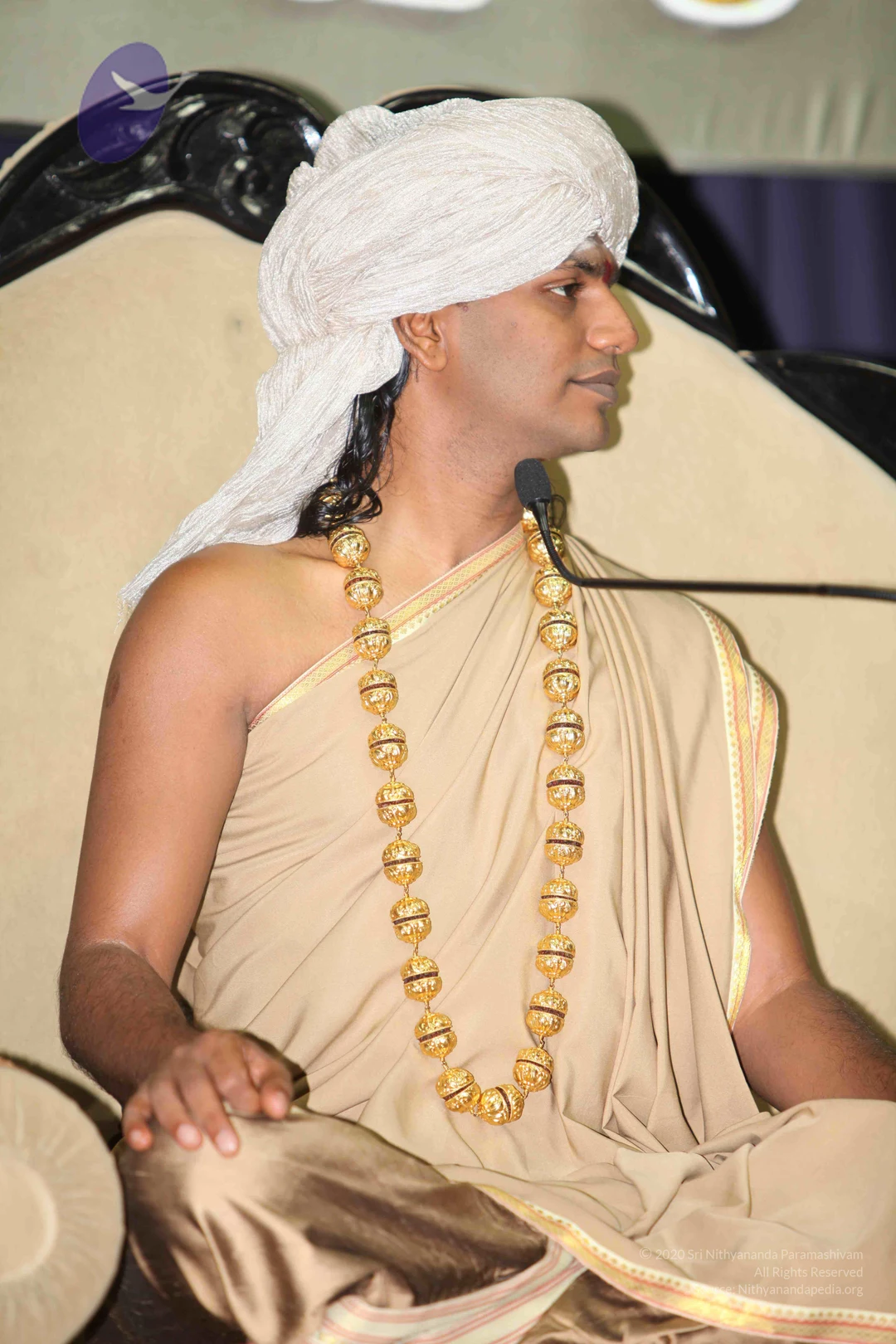
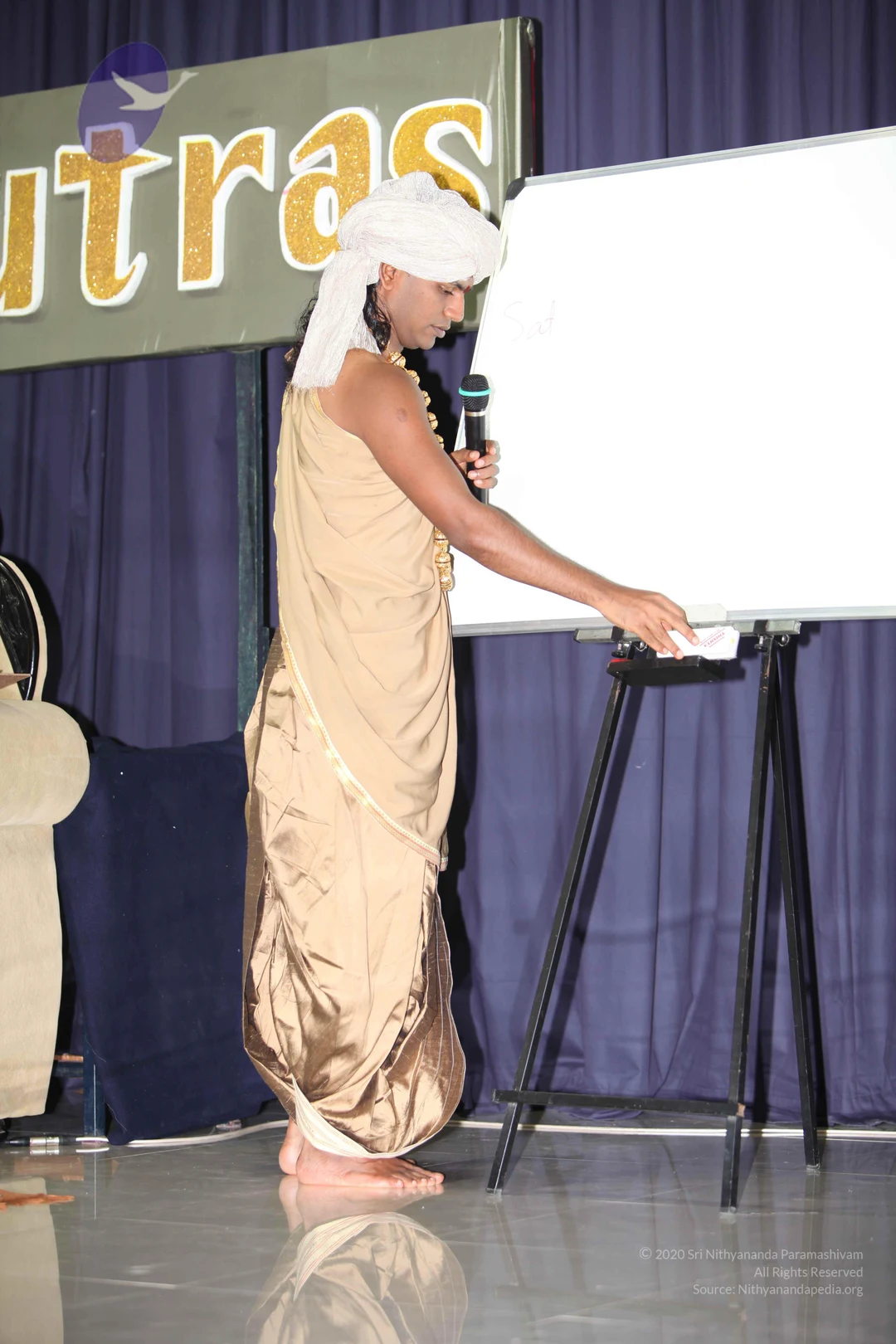
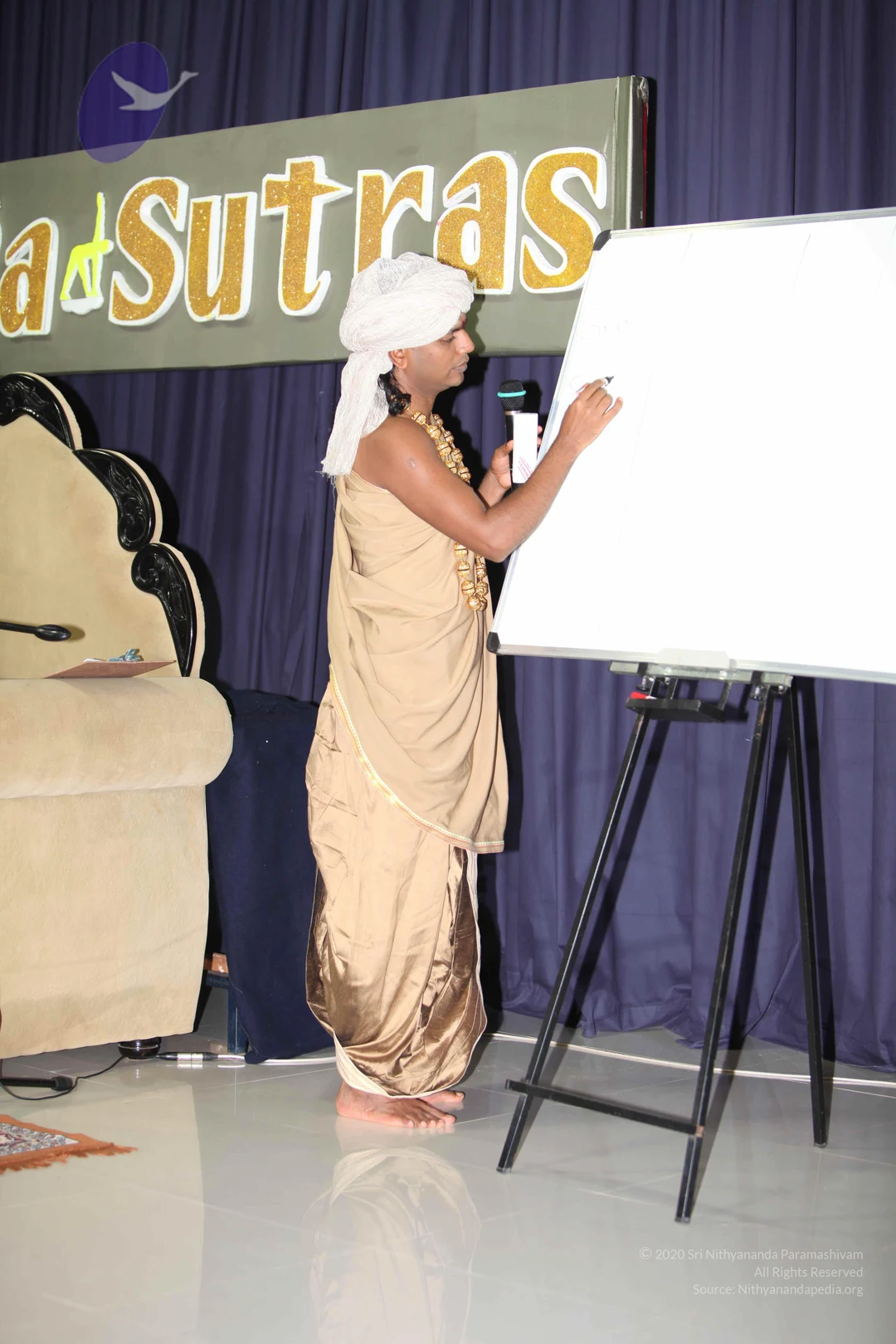
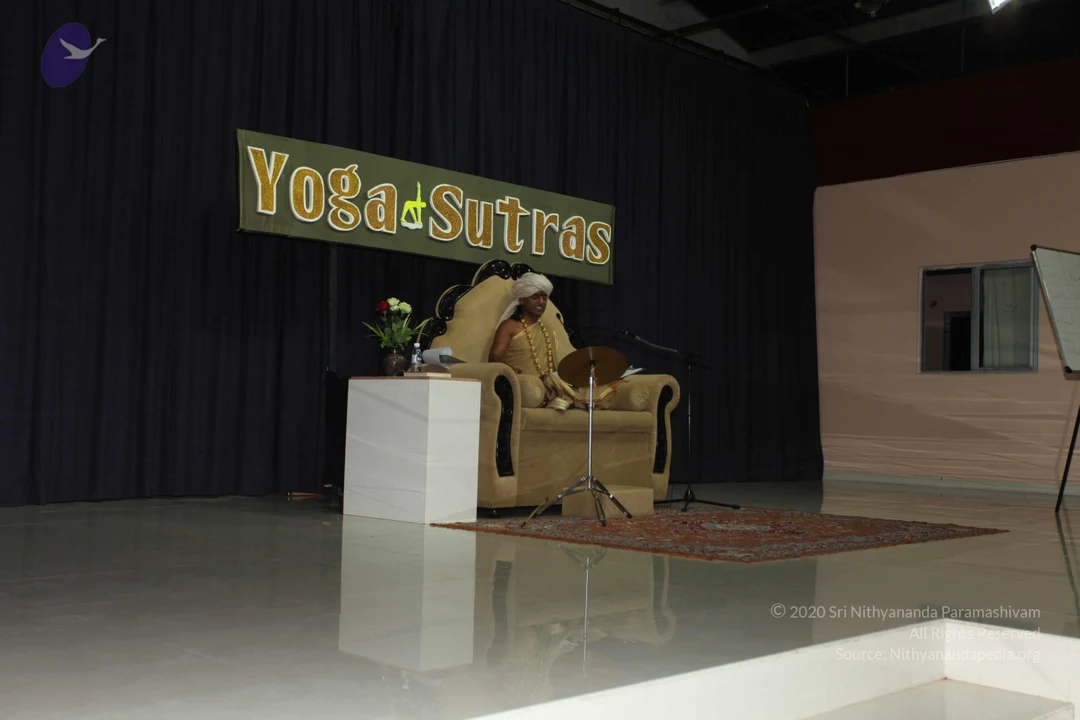
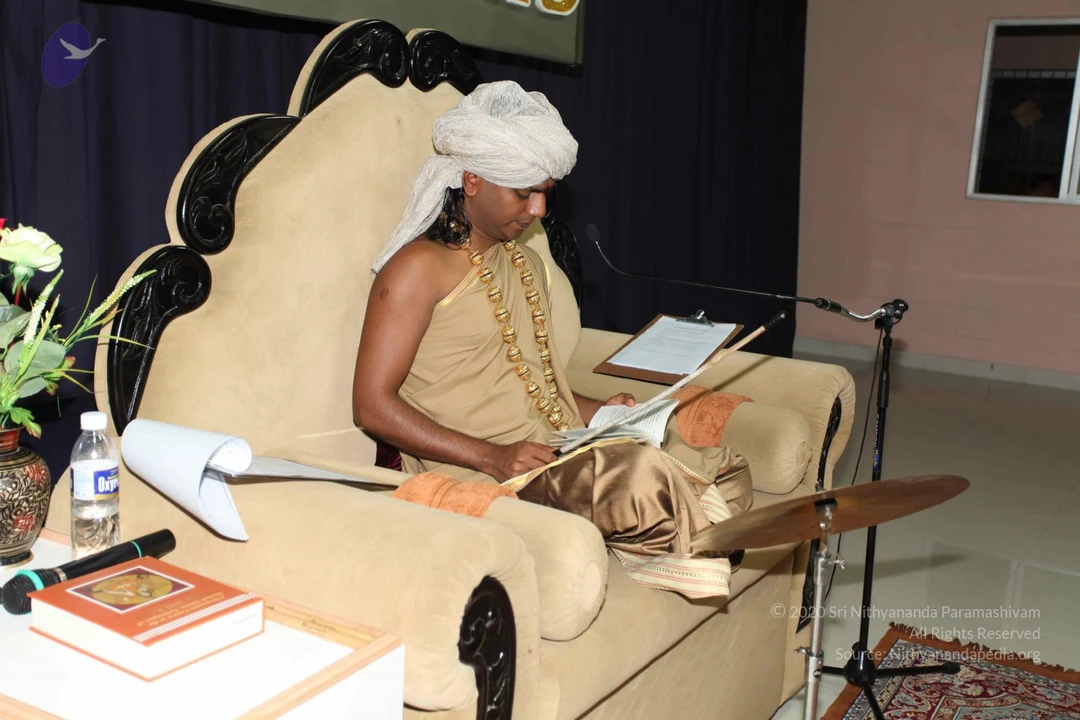
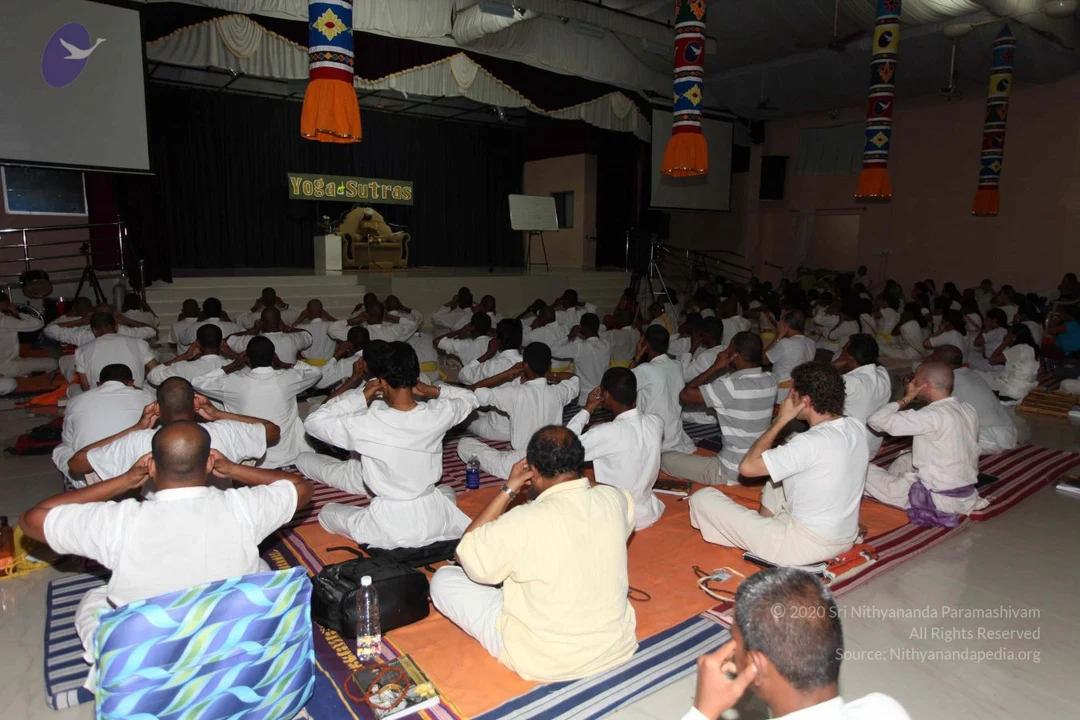
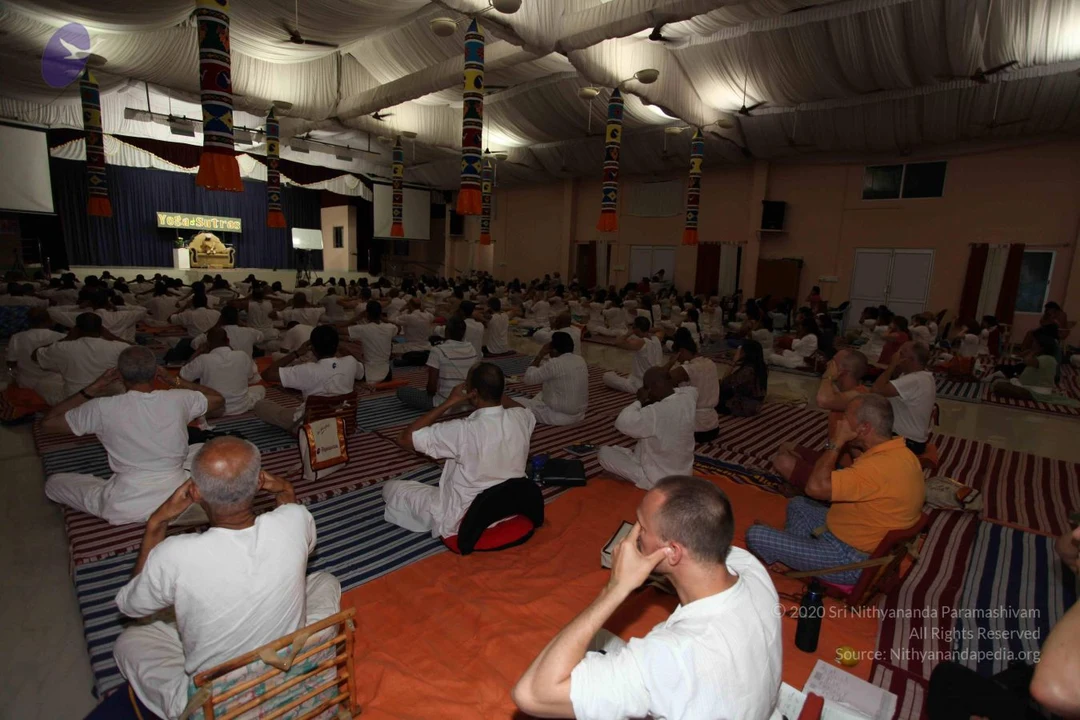
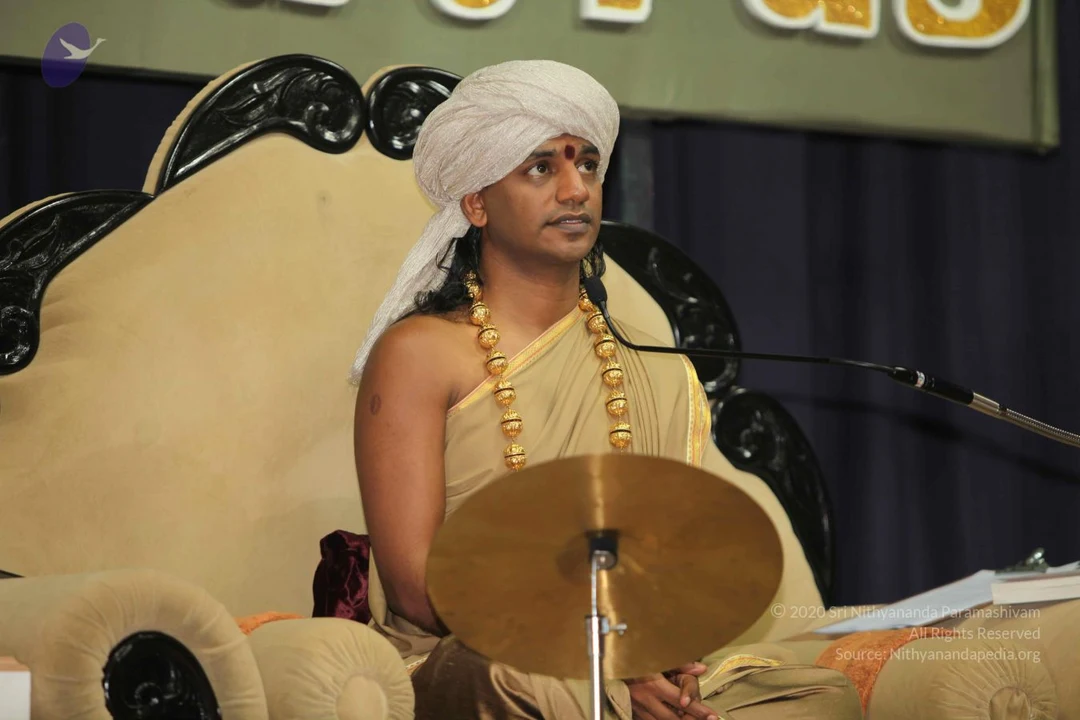
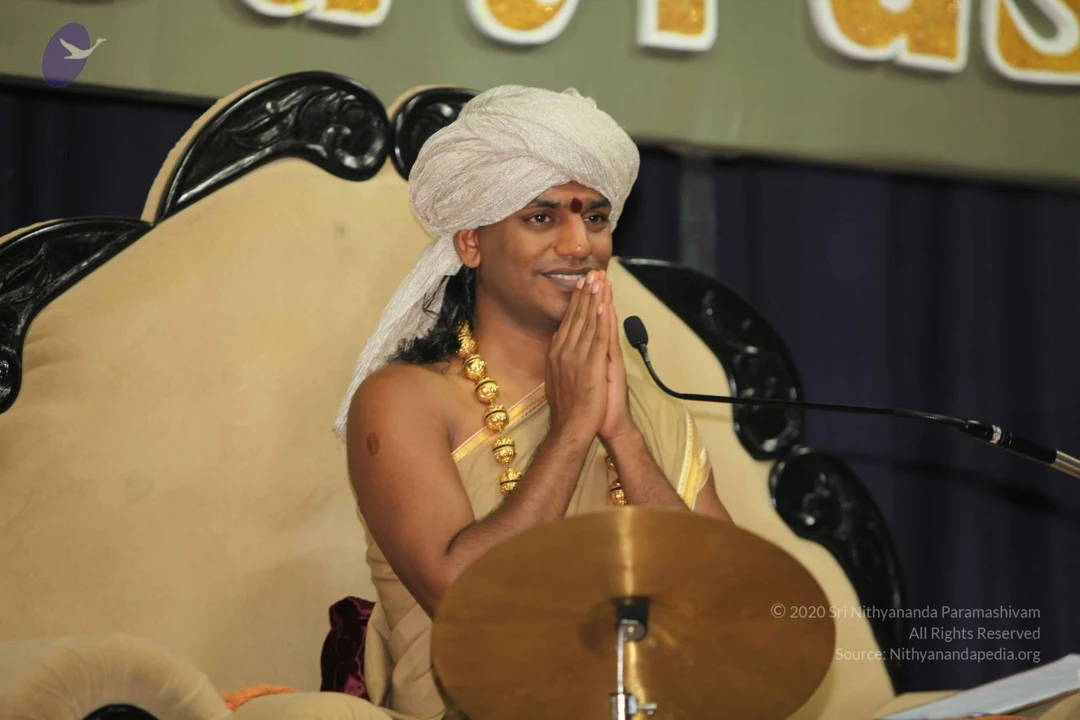
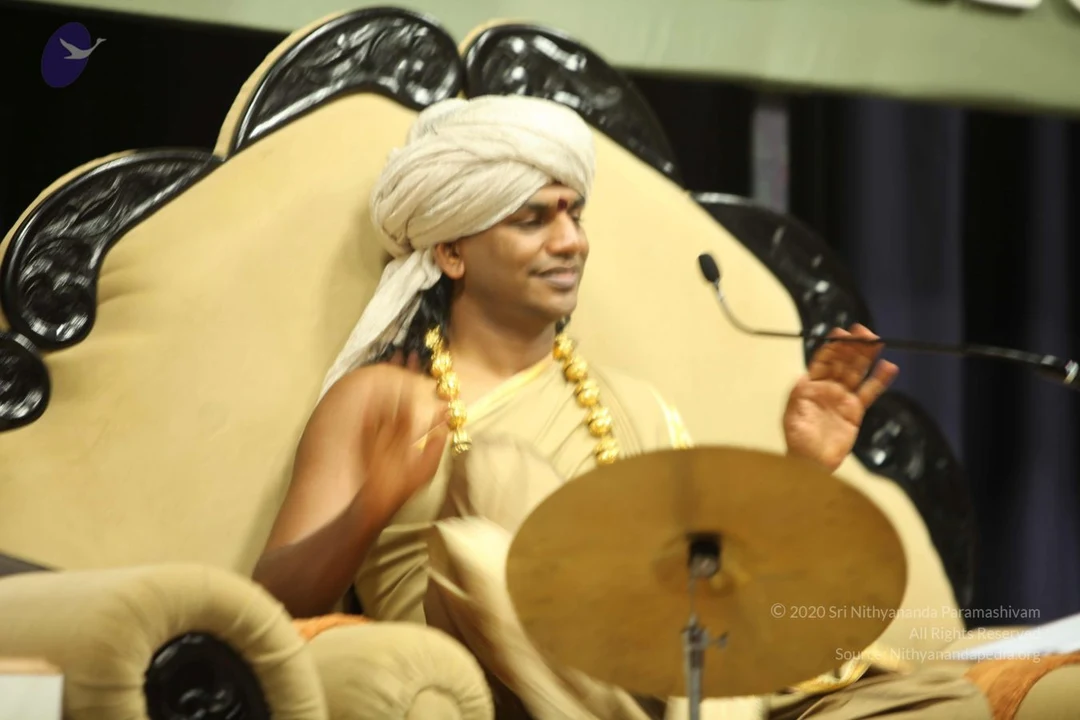
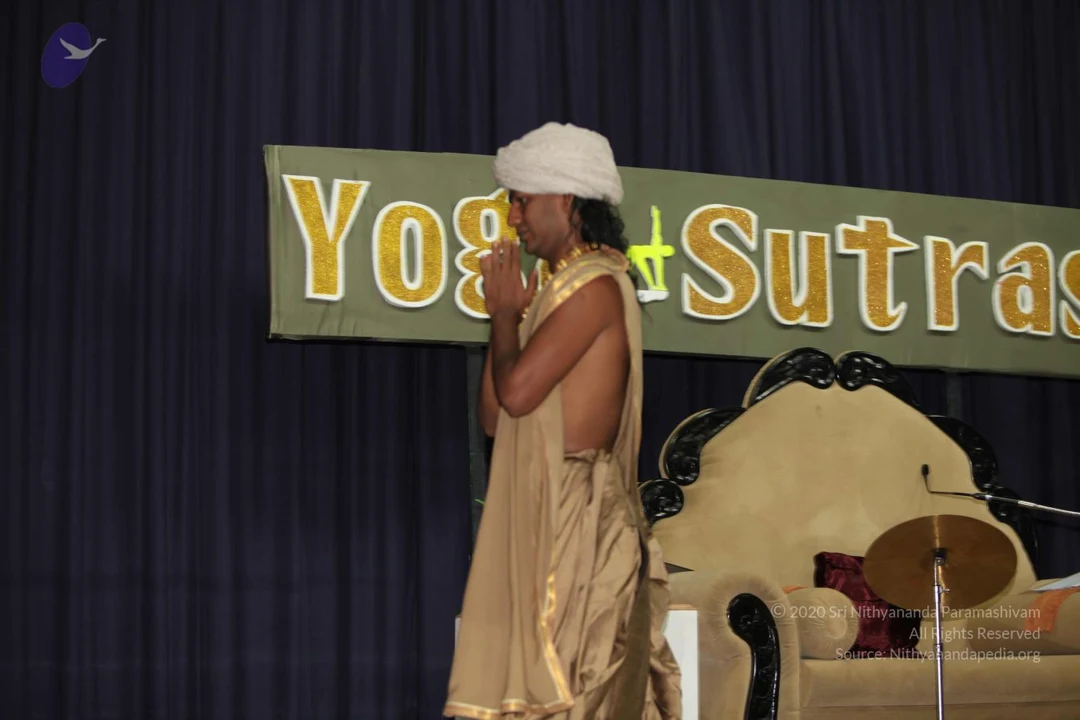
YOGA-SUTRAS

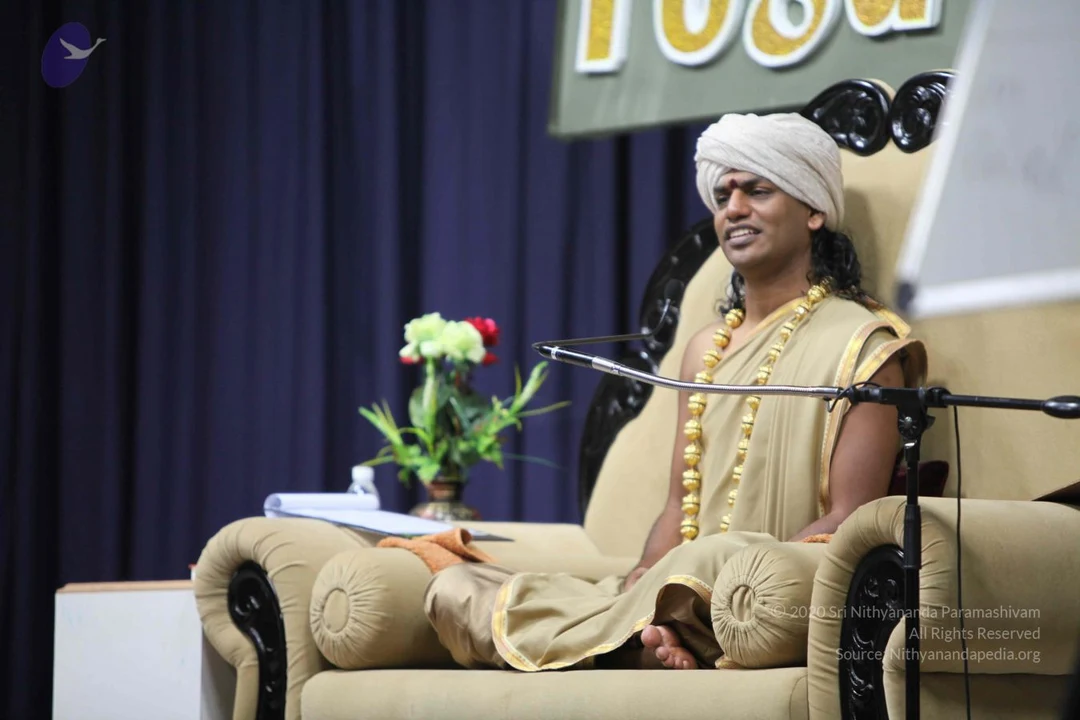
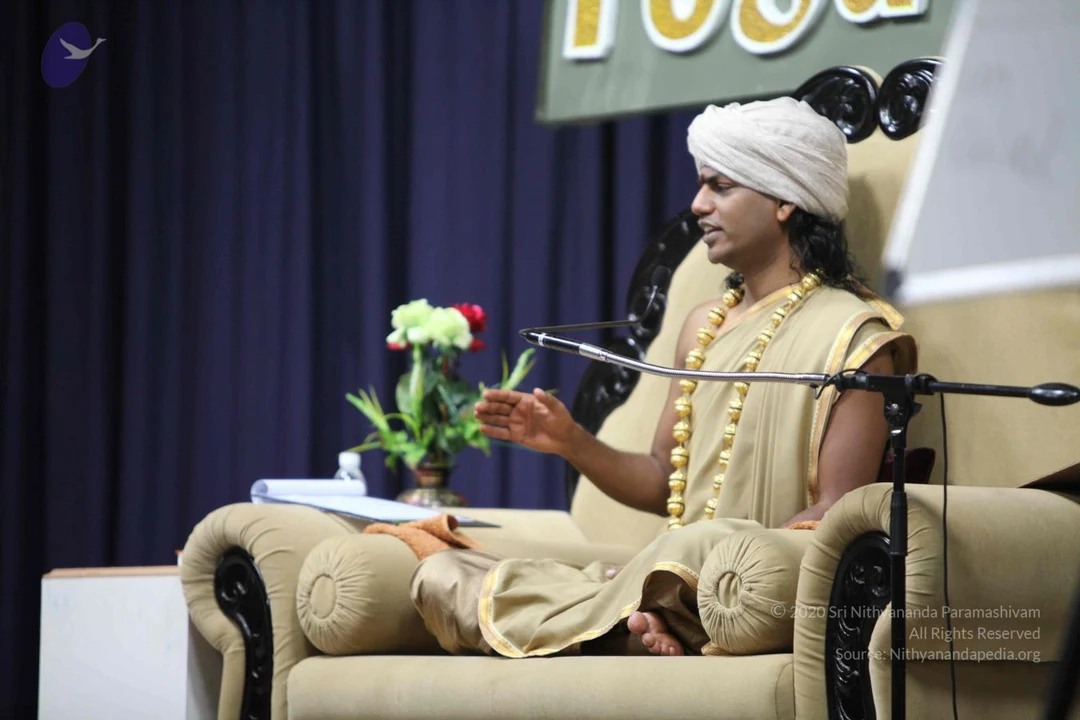
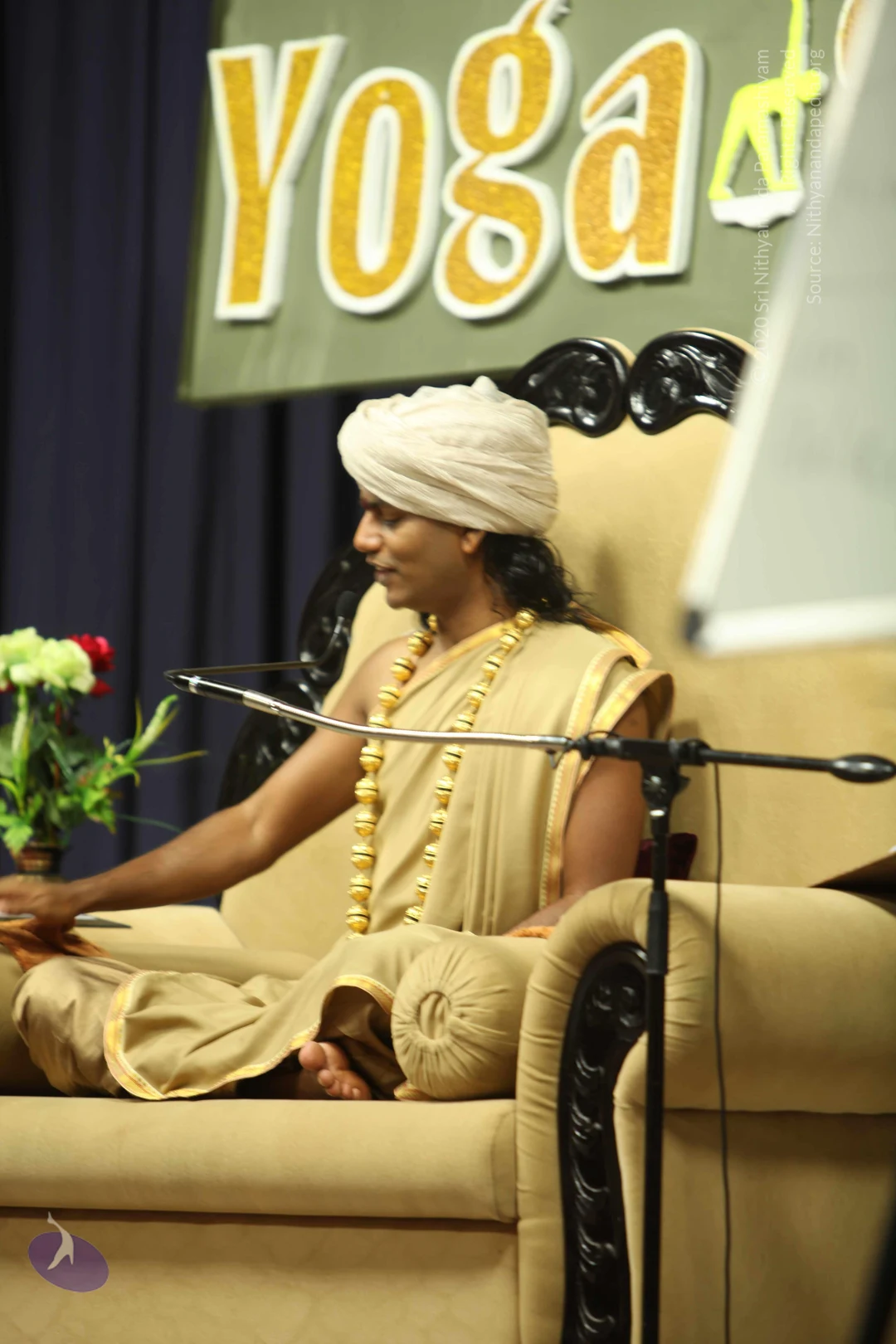
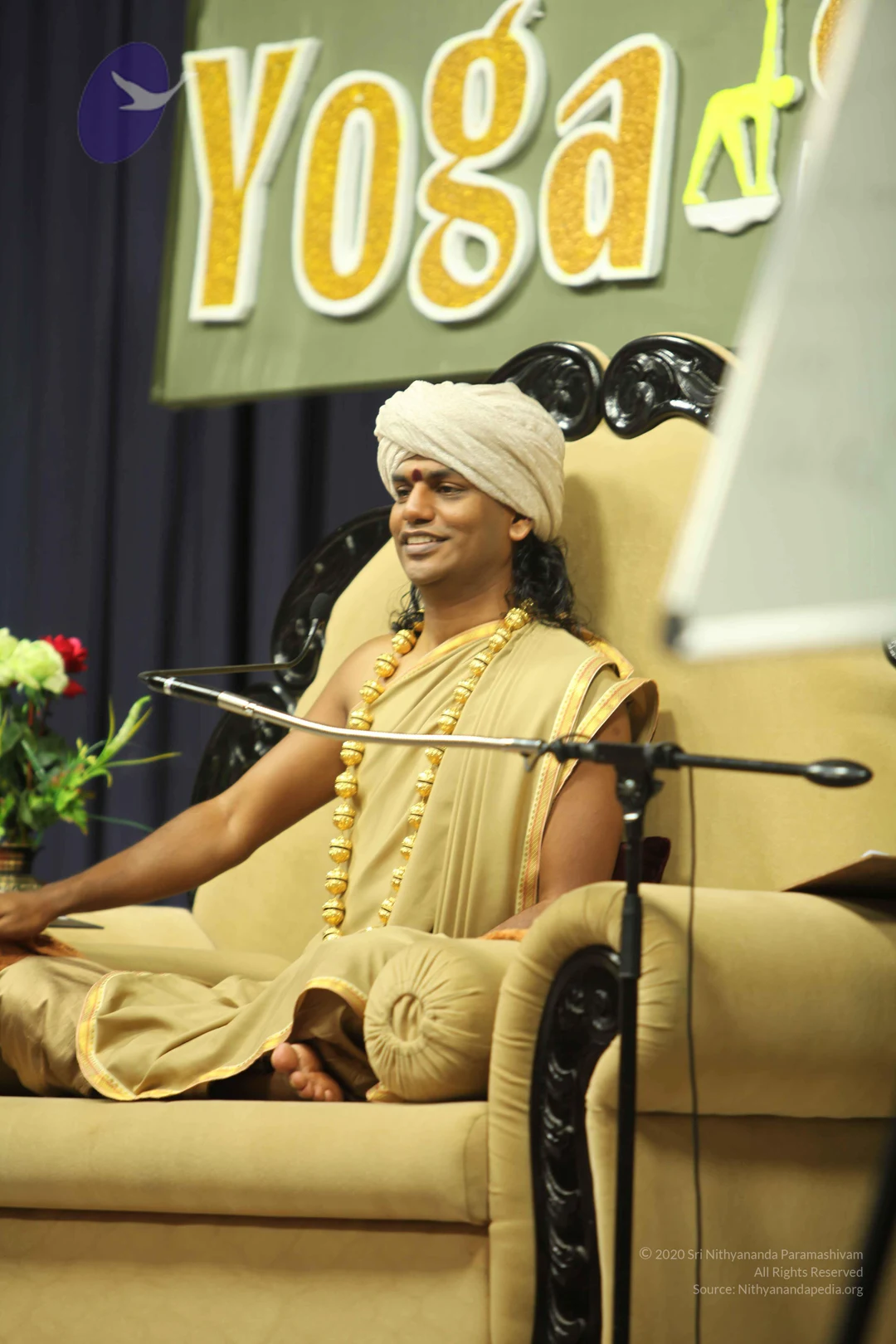
3 dated photos in previewSource gallery
10

TEMPLE

3 dated photos in previewSource gallery
A gilded arch frames a pair of decorated deity murti statues seated on a pink-draped platform before a deep red backdrop. The male figure wears an orange-red turban, heavy jewelled necklaces and a patterned shawl, holding a trident and a small ritual object. The female figure wears a crown and layered gold necklaces with a purple and red sari, with her hand raised in a blessing gesture. Yellow and purple garlands hang over both, and a brass oil lamp stands at left. No physical people are visible; the images are statues.A close view of a dark stone Shiva lingam dressed for worship, wrapped in an orange and green bordered cloth and a white garment at its base. It is framed by yellow marigold garlands, red and purple flower strands, and green leaves, with a jeweled band and a gold cobra-hood backdrop with green gemstone pendants. A gold ornamental base encircles the lingam. No people are visible.
11

PADA-POOJA

93 dated photos in previewSource gallery
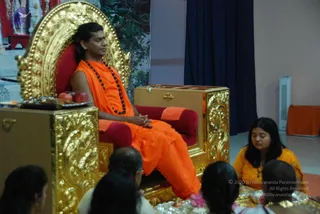
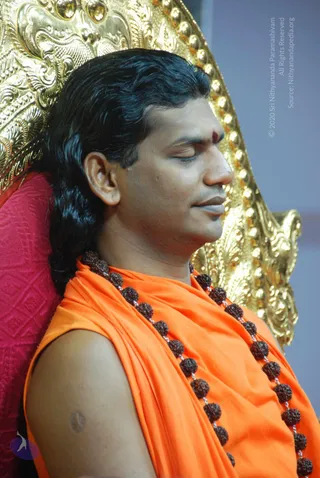
A seated man with long dark hair and an orange saffron robe sits on an ornate gold throne with red cushions, wearing a dark rudraksha mala. He rests his hands in his lap. Fruit and flower offerings sit on a tray beside the throne. In the foreground, several devotees sit on the floor facing him, including a woman in an orange top with her eyes closed, while a blue curtain and a white cooling unit stand behind. The scene appears to be a satsang gathering. a person: the seated man in orange robes, rudraksha mala and long hair on a golden throne.Close side-profile photograph of a man with long swept-back black hair and a red bindi on his forehead, eyes closed in meditation, seated against a red cushion and an ornate gold-embossed throne. He wears an orange saffron wrap over his shoulders and a long rudraksha mala with large dark beads around his neck. a person seated in a throne-like chair, appearing to meditate or listen in a satsang setting.Close-up photo of a man seated on an ornate gilded throne with a red cushion, eyes closed in a calm expression. He has long dark swept-back hair, a red tilak on his forehead, and wears an orange sleeveless garment with multiple rudraksha mala beads around his neck. The golden throne has detailed floral and scrollwork carving.A seated man in an orange-saffron robe with a dark rudraksha mala sits on an ornate gold-and-red throne, hands joined in front of him, eyes closed, with long swept-back hair. A tray with red apples rests on a gold side table beside him. In front, a group of devotees sits on the floor: a man in cream kurta with a mala and folded hands, a woman in a green sari and another in an orange garment, a bare-shouldered man with a yellow-and-white cloth, and a figure with tilak in white. Silver trays of offerings with pink flowers sit in the foreground, with two women in yellow and orange in front. Blue curtains and a painted backdrop complete the hall.A photograph of a seated man in saffron-orange robes and a rudraksha mala on a gilded, red-cushioned throne, hands folded, eyes closed, with long swept-back hair. a person, seated on the throne as the central figure. In front of the throne, a row of devotees kneel and sit on the floor: a woman in a green sari and a man in cream-white dhoti-style clothing with folded hands, a shaven-headed priest in white, and women in yellow and dark clothing in the foreground. Before them stand silver trays with pink lotus flowers and offerings, and a small tray of apples sits on the carved wooden stand beside the throne.
12

NITHYA-SATSANG

40 dated photos in previewSource gallery
A smiling man with dark hair swept back stands outdoors in front of a stone temple shrine, raising his right hand in greeting. He wears a saffron-orange shawl wrapped over his shoulders and chest and a long dark rudraksha mala around his neck. Behind him are a white-draped altar with a yellow and orange garland, brass lamp stands, a brass plate of offerings, and a carved stone relief panel. Swamiji (probable) is the figure here, shown by swept-back hair, saffron garments and rudraksha mala, in a temple setting.A seated man in saffron-orange robes sits on an ornate gold throne with a deep red cushioned seat and red bolster pillows. He wears a long rudraksha mala around his neck, a red tilak on his forehead, and has long dark hair falling behind him. He smiles and gestures with his right hand while a microphone stand curves in front of him. His bare feet rest on a small red footstool. Behind the throne, pink and white draped fabric with red and yellow garland decorations is visible. The setting appears to be a live satsang talk on stage.A smiling man in saffron-orange robes sits on an ornate gold throne with red velvet cushions, a microphone on a flexible stand near his chest. He wears a rudraksha mala and a red bindi, with long dark hair, and his hands rest together in his lap while one bare foot is raised on a red footrest. Behind him, a large screen shows a figure in pink and white garments with yellow-green garlands. Swamiji (probable): a saffron-robed man with long swept-back hair, rudraksha mala and ornate gold throne seated as a speaker. The scene suggests a seated satsang talk.
13

SARVA-DARSHAN

11 dated photos in previewSource gallery
Outdoor temple scene: a long-haired man in an orange saffron sleeveless garment with a rudraksha mala blesses a devotee by pressing his palm to the man's forehead. The devotee wears a light blue striped shirt and holds a white sheet of paper, palms pressed together in namaskar. Other men stand beside them, one in a grey striped shirt with glasses, another in a blue shirt. Behind, an ornate golden shrine holds a deity murti decorated with garlands and a red and gold canopy. Probable Swamiji (long swept-back hair, saffron garment, rudraksha mala) is shown in person giving blessing.A temple ritual scene under a corrugated roof. A man in saffron-orange robes, wearing a rudraksha mala, stands at the centre holding a tray of offerings near a shrine decorated with an ornate golden arch and a deity murti with red and gold adornments. Beside him, a monk in orange with a shaved head holds a tray. Several devotees in white and striped shirts stand at a railing with palms pressed together in namaskar, while another man in white at right stands near a figure in white clothes. Orange curtains hang beside the shrine. A railing runs along the foreground.A photograph of a shaded temple courtyard where devotees stand at a metal railing with palms pressed together in namaskar. A man in a saffron-orange robe with a dark rudraksha mala stands at the front, holding an open book or papers in one hand and touching the head of a devotee with the other. Beside him, a monk in orange holds a brass vessel on an orange cloth. Behind them, men in white dhotis with red-striped borders and white ritual markings on their foreheads stand near a shrine with a decorated deity murti under a red and gold canopy. An orange and blue banner with printed text hangs on the left wall.A photograph of a temple setting where a man in orange robes and a rudraksha mala, with a red tilak on his forehead, places his hand on the head of a devotee in a cream-coloured kurta and white dhoti, who stands with palms pressed together in namaskar. The orange-robed man holds a folded white paper in his other hand. A third person in orange clothing stands at the lower right, looking down at a tray of brass items. Behind them is a rail, a red and orange shrine with a deity murti and garlands, and a few more people in the background. Wall posters are visible at the top left. The orange-robed man's appearance is consistent with the page's claim of a person's presence, but the cues are limited to the rudraksha mala and orange robes, so identity is uncertain.
14

PANCHA-TAPAS

113 dated photos in previewSource gallery
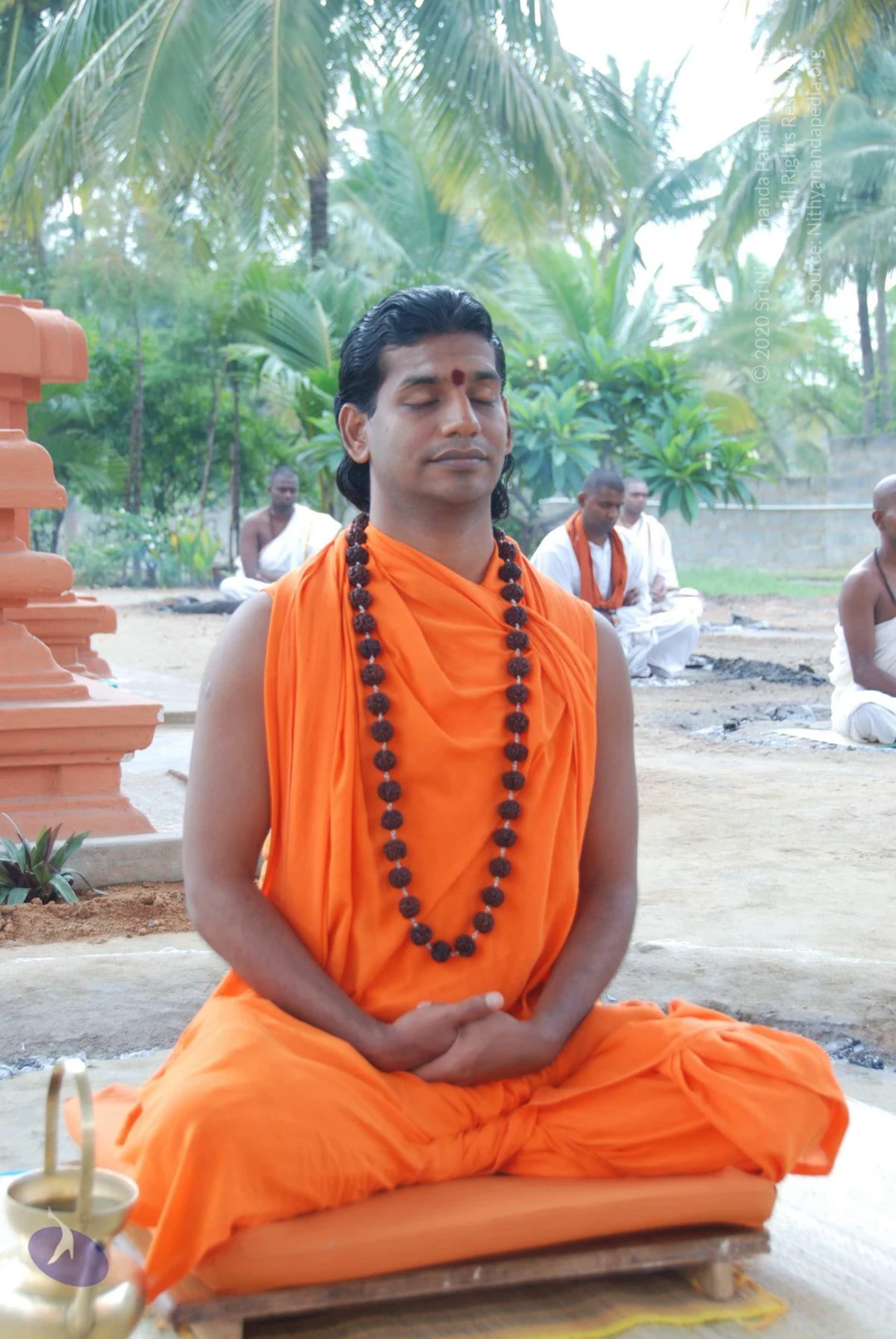
Outdoor ritual homa in an open sandy courtyard with palm trees behind. About ten shaved-headed priests in plain white dhoti and shawl sit cross-legged on mats around individual circular fire pits filled with ash and embers. Several wear ceremonial garlands; some hold small objects. Behind them stand a tall copper-toned kalasha-style pillar on an orange-red stepped plinth and a black Nandi bull statue with a garland at left. Lush tropical greenery frames the scene.Outdoor photo of several shaved-headed men in white dhoti-style clothing seated cross-legged on mats in a row beside small dark fire pits with ash and charred wood. The foreground man wears white cloth with red borders, a rudraksha mala and a small tilak, hands folded in his lap. Behind him a man in an orange-red wrap and another in a yellow shawl sit in meditation or prayer, and a smoke trail rises near the pits. Orange temple walls and a black stone vessel stand in the background amid palm trees. No one here is identified as a person; they appear as ritual participants.Five men sit cross-legged in meditation on bare earth in an outdoor garden with tropical plants behind them. They wear plain white dhotis with red-bordered shawls over their shoulders, and their hands rest in their laps. The man in front wears a shawl draped over his shoulder and a rudraksha-style bead necklace; the man in the centre wears a yellow scarf and white shirt. Small patches of ash or burnt material mark the ground around each seat. Eyes are closed and the posture is still, reflecting a yoga or meditation practice.A seated man in saffron-orange robes sits cross-legged on an orange cushion in an outdoor garden with eyes closed in meditation, hands folded in his lap. He wears a long mala of dark rudraksha beads, a small red tilaka on his forehead, and his hair is swept back. Beside him stands a brass oil lamp on a white cloth. Behind him is a tiered terracotta-red stone pedestal topped by a dark deity murti, with a stone naga-hooded sculpture and green plants nearby. The scene is calm and devotional. The appearance matches the Swamiji (probable) cues of swept-back hair and saffron robes with a rudraksha mala, and he is physically present.A man seated cross-legged in meditation on an orange-red cushion in an outdoor garden setting. He wears a sleeveless saffron-orange robe, a long rudraksha mala of dark beads, and a red tilak on his forehead, with his hands clasped in his lap and eyes closed. Behind him rises an orange-red stepped plinth topped by a dark stone deity murti draped with white and yellow flower garlands. Nearby are a brass kalasha-style vessel, a dark stone naga sculpture, a black stone shivalinga, palms and green shrubs. Small pink signs with white text stand at the plinth base.
15

MAHESHWARA-POOJA

101 dated photos in previewSource gallery
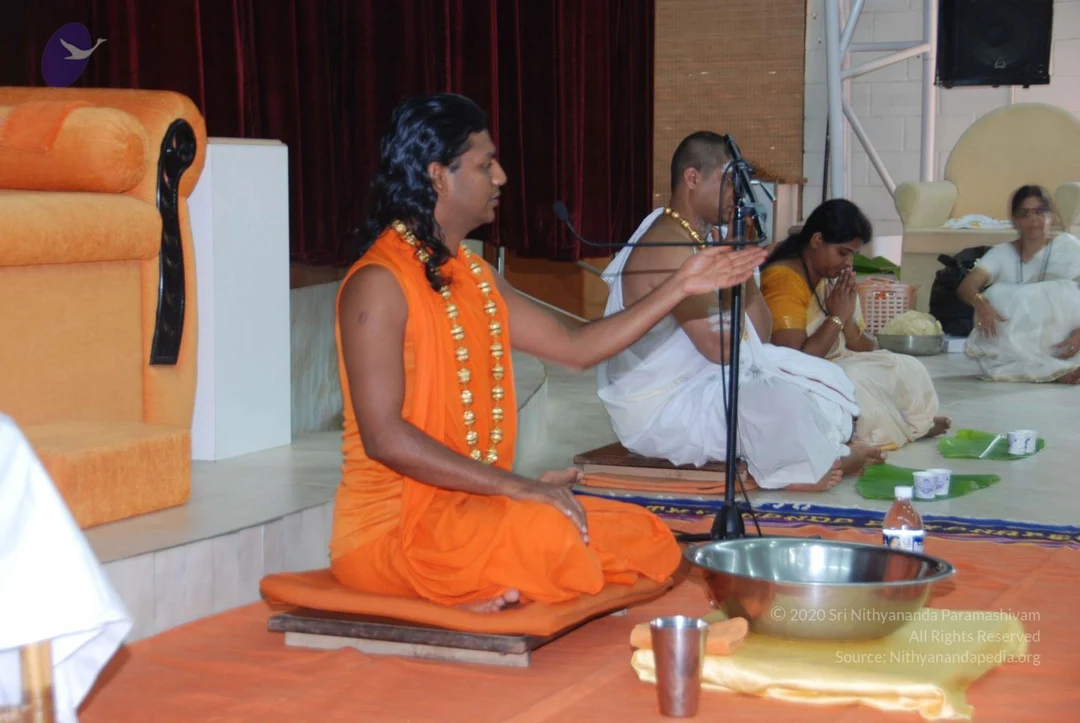
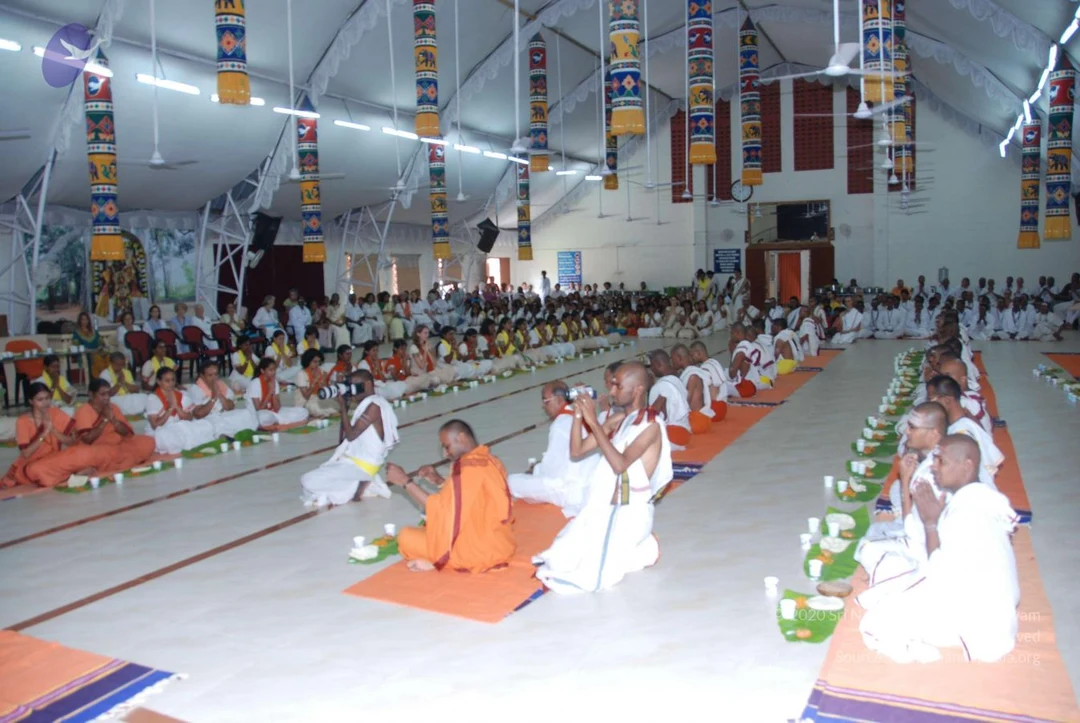
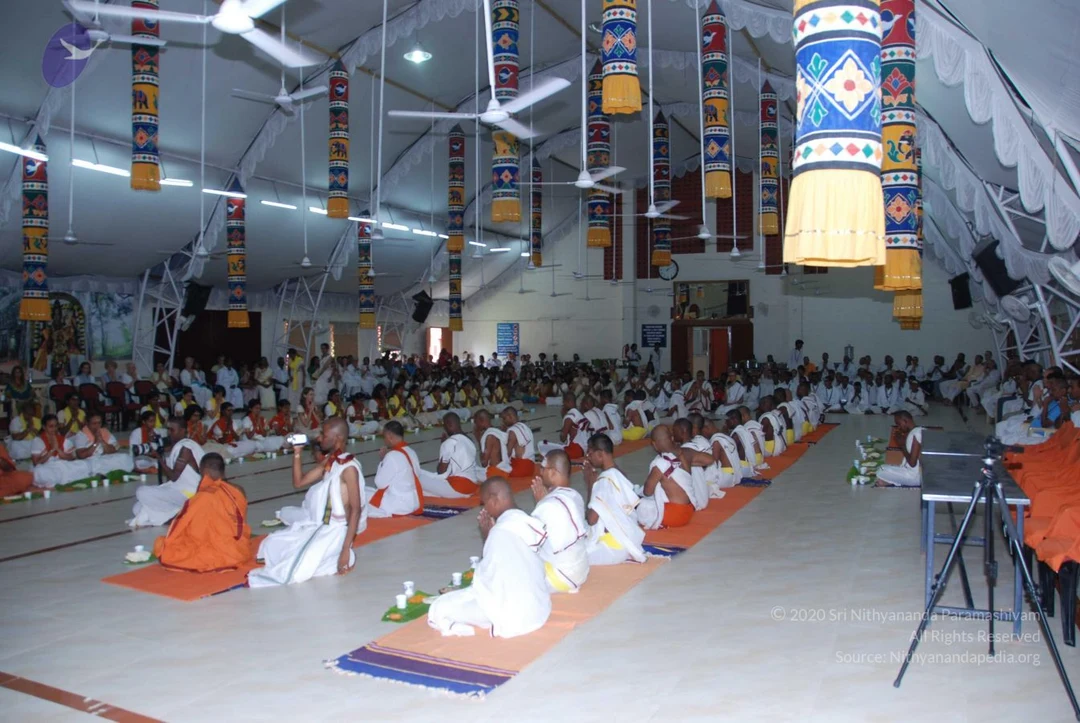
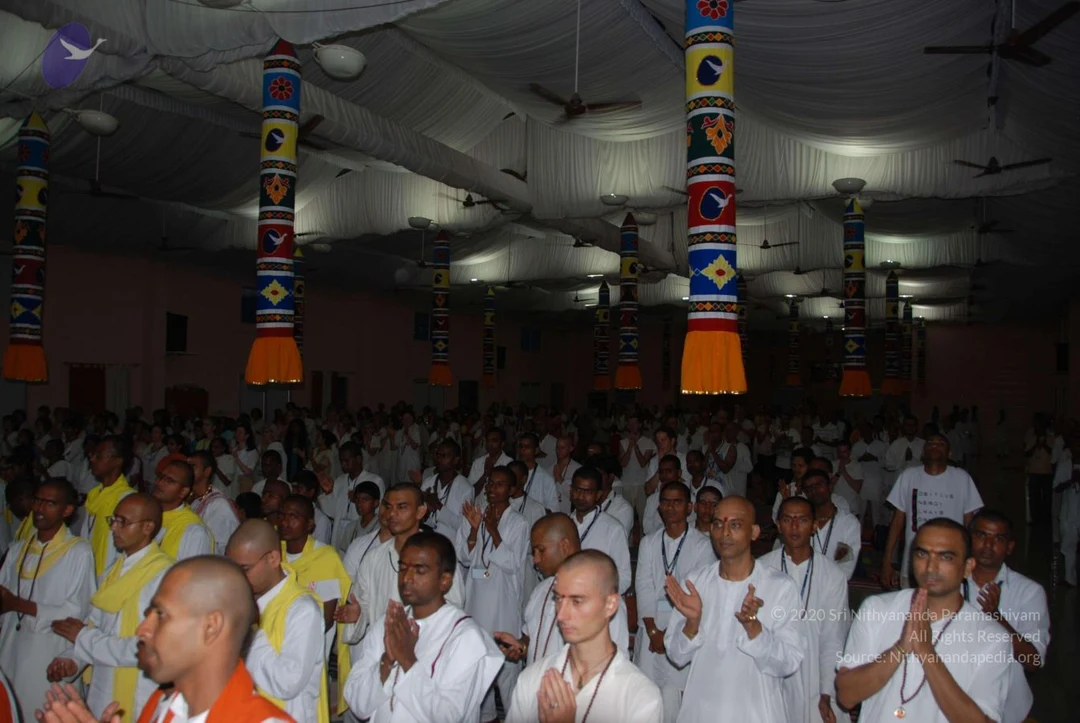
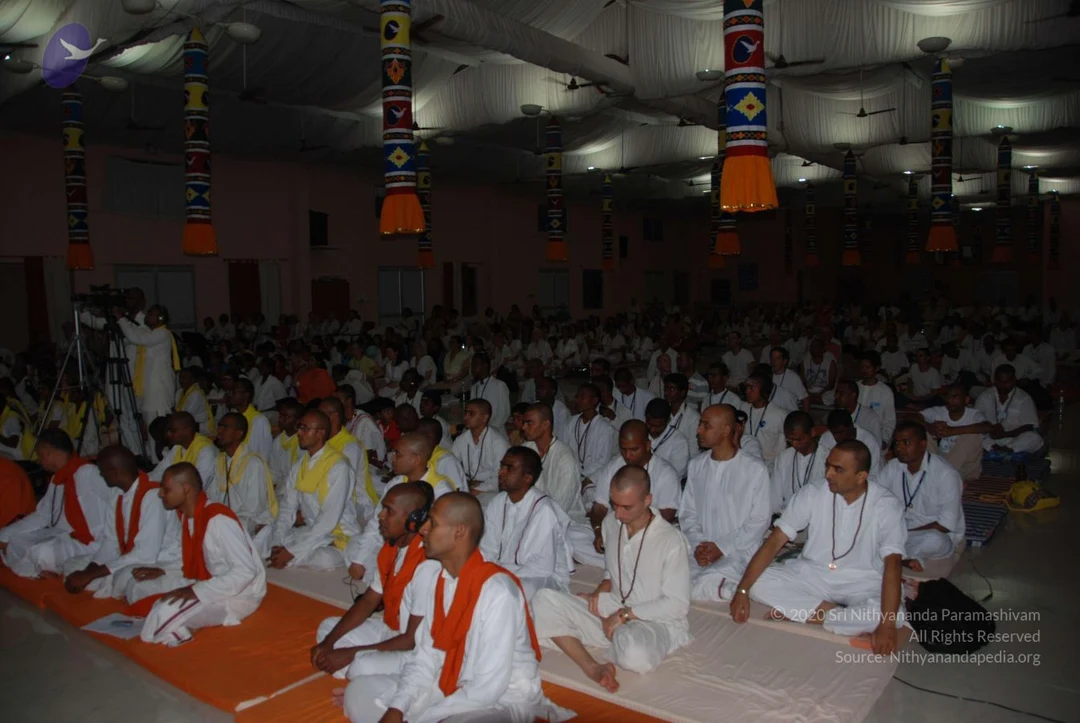
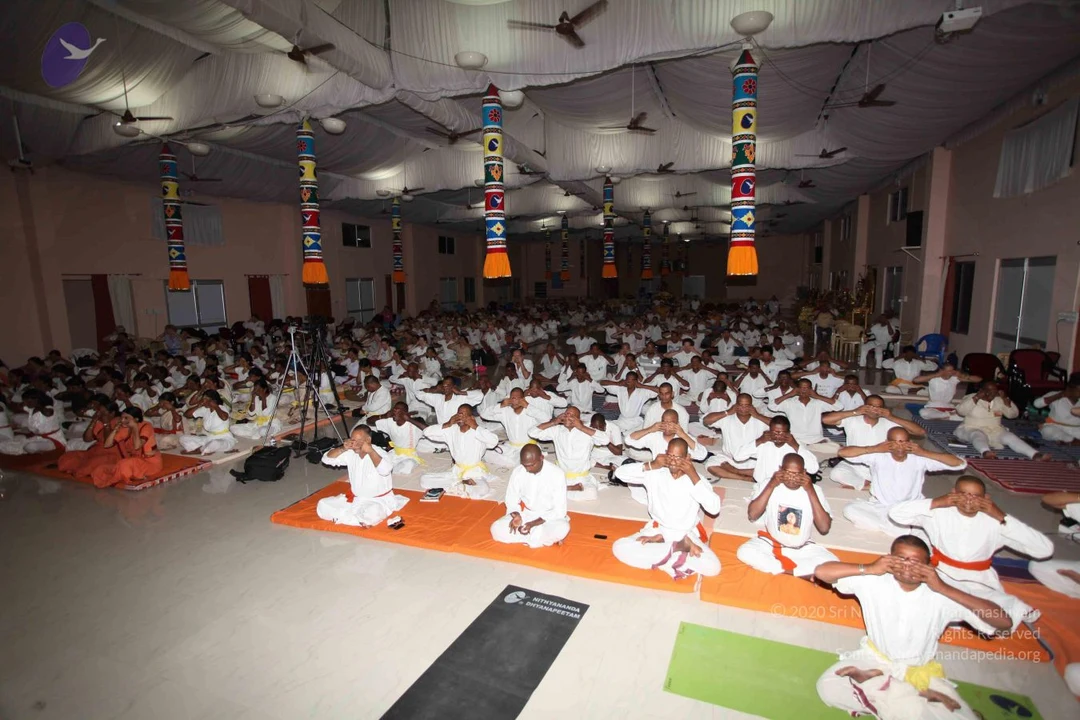
Interior of a large hall with white ceiling fans and hanging decorative cylindrical banners in red, yellow and blue. Several men in white dhotis and shawls stand and walk along a central aisle lined with orange cloth mats. Along both sides, banana leaf plates hold small white offerings and clay lamps. Some people in orange robes sit on the left, and a crowd in white clothing sits or stands in the background. Whether any of the standing men is a person cannot be determined from appearance, so no identification is made.A woman in a white sari with a thin gold border stands center-left holding a handheld microphone and speaking, appearing to lead a chant. Around her, rows of women and girls in white clothes with yellow shawls sit cross-legged on orange and striped mats, with green leaf plates and small cups set before them along the floor. In the background, a few people in orange and white robes and seated audience members in a hall with white ceiling structures and decorative yellow pillars. A small brass tray with glasses sits on the floor at left. No identifiable a person figure is visible in the frame.A wide photograph of a large hall with white walls, ceiling fans and hanging banners, where a crowd of mostly men in white ritual clothes sits on orange mats on a pale floor. Many wear white dhotis or kurtas, sacred threads and white forehead markings, with some in saffron robes near the right. A row of people stands in the centre background, and a few women in white or green saris are visible. Seated men in front wear white clothing and lanyards. Drums and a water dispenser are at right, and a wall clock is above the doorway. The people count is well above twenty.
16

LEP-SESSION

122 dated photos in previewSource gallery
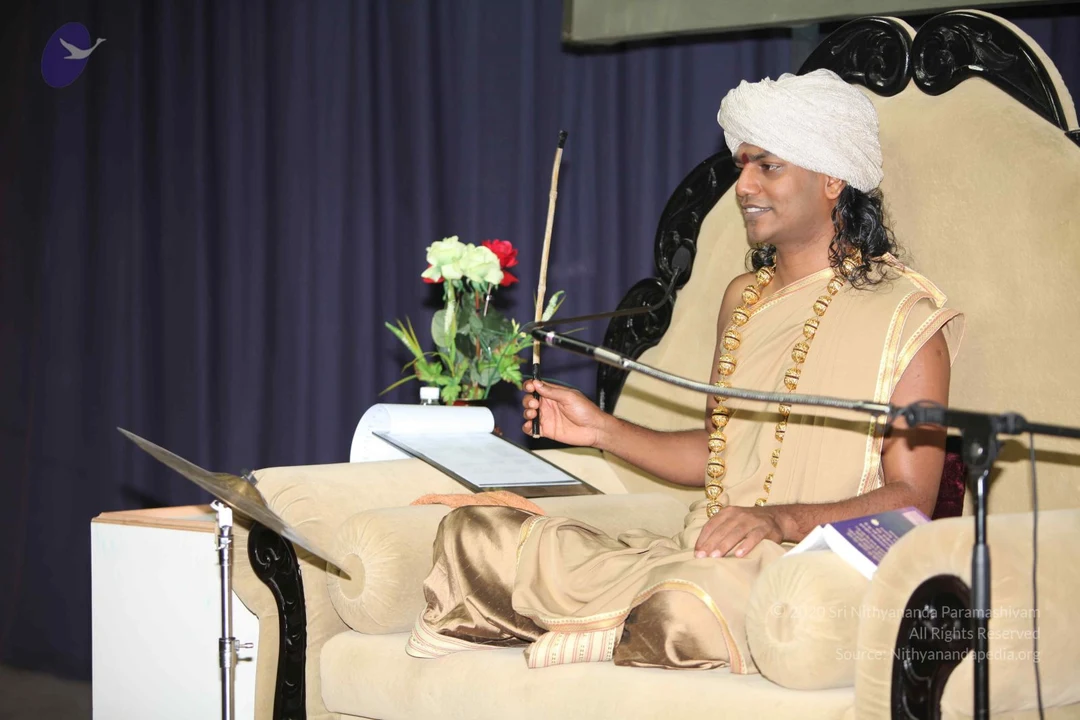
A man in an orange saffron robe and rudraksha mala sits cross-legged on an ornate gold throne with red cushions, smiling broadly and gazing to the side, holding a wooden stick across his lap. A microphone stand is at his shoulder and a cymbal sits at the left edge against a blue draped curtain.
17

VIP-VISITS

6 dated photos in previewSource gallery
A seated man in an orange sleeveless robe and a rudraksha mala sits on a red upholstered throne with gold carved trim and a matching red footstool, speaking while raising one hand toward his face. Four men in white shirts and light trousers sit on chairs around him, two on the left in conversation and two on the right, one with hands folded. Behind the throne hangs a framed picture of a figure in red and orange, a brass oil lamp stands at the right, and a red and gold decorative object is visible at the upper left. Floor is grey concrete. The speaker has long swept-back hair and a mala, consistent with the a person cues; his appearance is distinctive enough to label as probable.A photograph of a seated man in a white striped shirt and dark trousers, with his head bowed, receiving a blessing as an orange-robed figure seated on an ornate red and gold throne places a hand on his head. The seated figure wears a saffron robe, a long rudraksha mala and a small red tilak on the forehead. Behind them stands a deity murti draped in red, orange and green cloth with a tall brass lamp stand and brass kalasha-style vessels on a side table. A man in a light shirt sits at the left edge. Probable Swamiji: the blessing figure shows long swept-back hair, saffron clothing and rudraksha mala, consistent with the page's reference to Swamiji, a blessing given from the throne.A seated man in an orange saffron robe with a rudraksha mala and a long swept-back hairstyle sits on a red upholstered throne, his right hand raised over the head of a man in a white striped shirt and grey trousers who bows and grips a brass trident-shaped staff. A second man in a white shirt sits at left wearing a red thread on his wrist. Behind them stand brass oil lamps and a deity figure draped in orange and purple cloth. Swamiji (probable) is the seated figure, identified by the orange robe, rudraksha mala and long swept-back hair while bestowing a blessing on the kneeling devotee.A seated man in a white striped shirt and grey trousers, with a gold wristwatch, bows his head while a robed figure in saffron-orange cloth and a dark rudraksha mala places a hand on his crown in blessing. The blessing figure sits on a richly upholstered red throne with gold trim and holds a folded stack of small papers. Behind them stands a brass oil lamp and a brass kalasha-style vessel on a red-draped platform, with a deity murti and orange-and-gold fabric in the background. The blessing figure has long, swept-back dark hair and distinctive ceremonial adornment, consistent with the page's a person reference; the appearance-based label is probable, and the scene shows a blessing or darshan setting.A seated man in saffron-orange robes and a dark rudraksha mala sits on an ornate red and gold throne, smiling and gesturing with raised right hand while speaking. Two men in white and light shirts sit facing him in plastic-and-metal chairs in the foreground. Behind them stand a brass oil lamp, a golden-red draped cloth, a small golden deity murti with a red-and-gold shrine area, and brass lamps on a shelf at left. The a person candidate is shown in appearance-based cues: long swept-back hair, saffron clothing and a rudraksha mala, seated on a throne in a conversational setting.
18

NITHYANANDA-LIVING-ENLIGHTENMENT-PROCESS-IN-BIDADI

11 dated photos in previewSource gallery
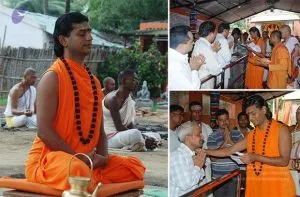
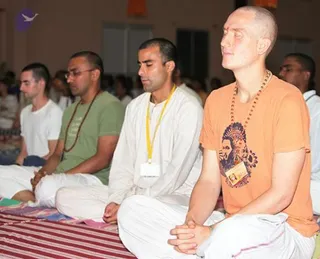
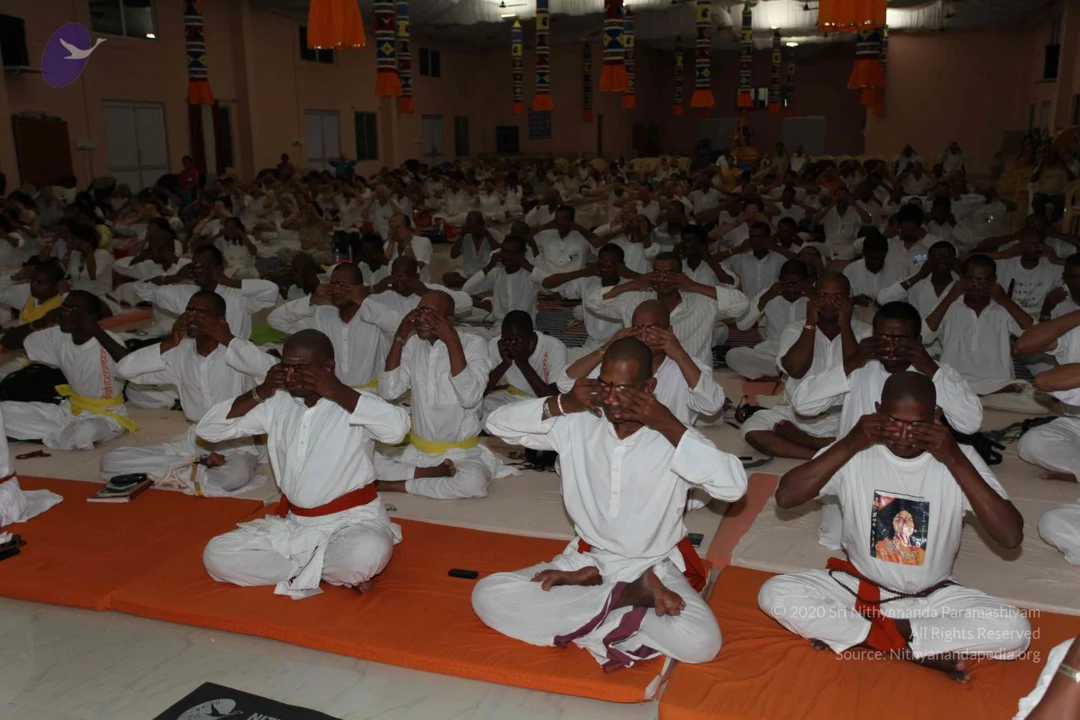
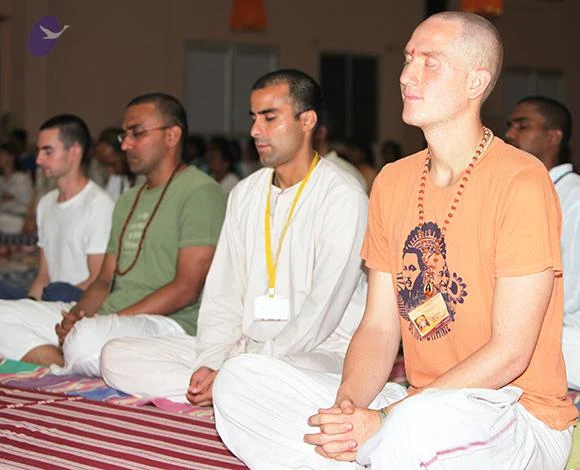
A man in saffron-orange robes and a long rudraksha mala sits cross-legged on a mat in an outdoor courtyard, hands joined near a brass kalasha or pot placed before him. Several other seated figures in white clothes sit in the background on mats around a stone-bordered circle, with a small shrine and orange-roofed building behind. The setting appears to be a ritual or satsang gathering in an ashram courtyard with stone platforms and palm trees.A four-panel collage photo grid. The top-left panel shows a shaved-headed man in orange robes and a rudraksha mala seated cross-legged on a mat, with a brass vessel in front and white-clad devotees seated behind him in a rural outdoor setting. The top-right panel shows a man in orange robes and rudraksha malas standing in a white-clad crowd on a covered vehicle. The bottom-left panel shows a man in orange robes and beads amid people in white clothes, with a bright sign or banner behind. The bottom-right panel shows a man in orange robes wearing a rudraksha mala seated while a man in white is garlanded and receives an offering. Each panel is a photograph, and the collage has a person Satsang style. No printed names are legible.A man seated cross-legged on an ornate golden throne with a large red cushioned seat, smiling broadly while speaking into a microphone on a stand at right. He wears a saffron-orange robe and has long dark hair with a swept-back style, with a rudraksha-style mala visible at his neck. He holds a small open book or notebook on his lap with both hands. Behind him is a blue backdrop with gold patterns. The throne's gilded ornate backrest suggests a formal satsang discourse setting. Appearance-based label: a person seated as the speaker at a satsang talk.Photograph of a seated meditation session indoors. In the foreground a shaved-headed man in an orange t-shirt with a printed deity graphic and a rudraksha mala sits cross-legged on a striped mat with eyes closed and hands folded. Beside and behind him, several devotees in white clothing and green shirts sit in meditation, some wearing lanyards and rudraksha malas. Carpeted floor and pale walls with a crowd behind.
19

September 17 2010

162 photosView all

Open the full photo collection to see this set.

September 17 2010

Original wiki page
Contents

Title:

Awaken the Sacred Feminine

Narration:

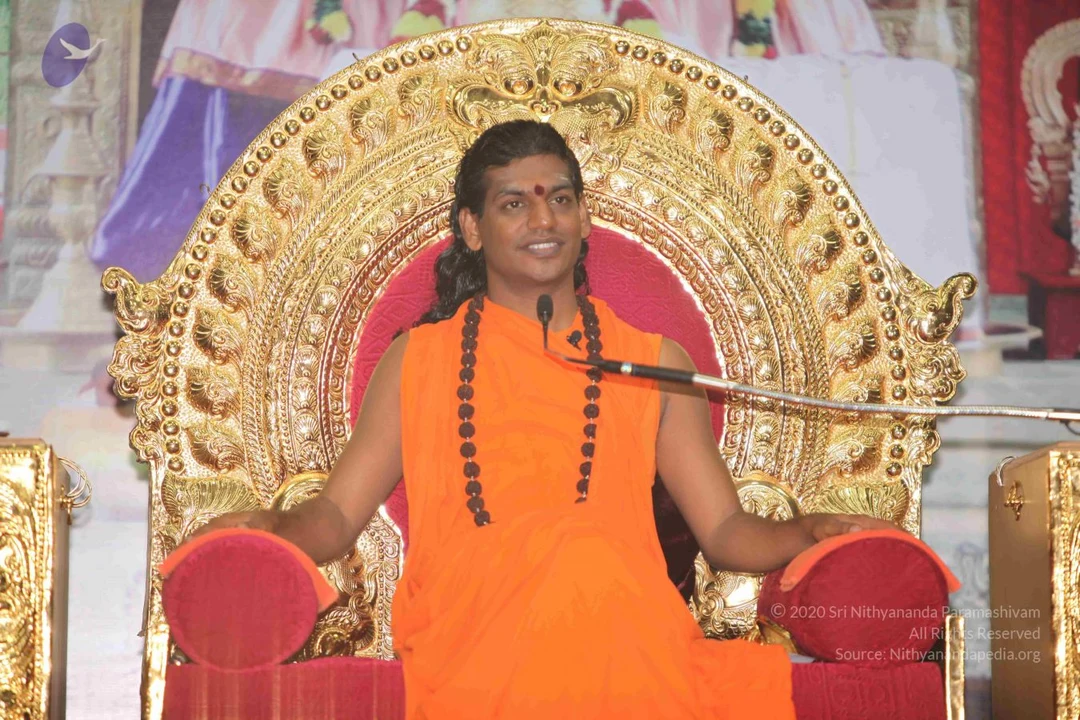
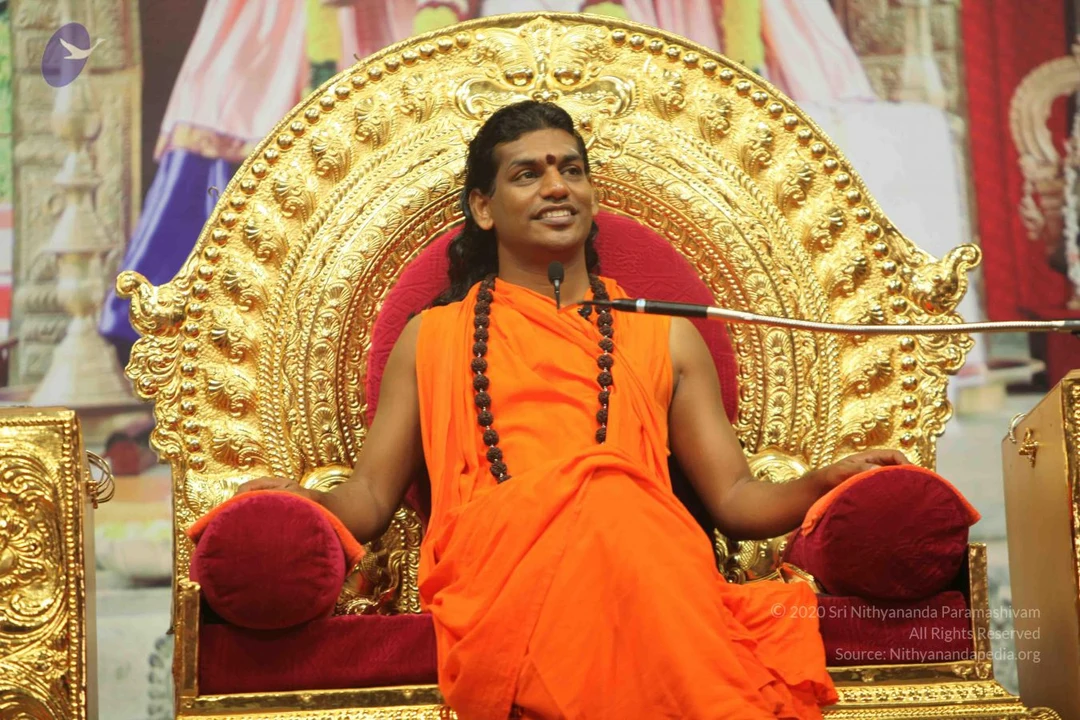
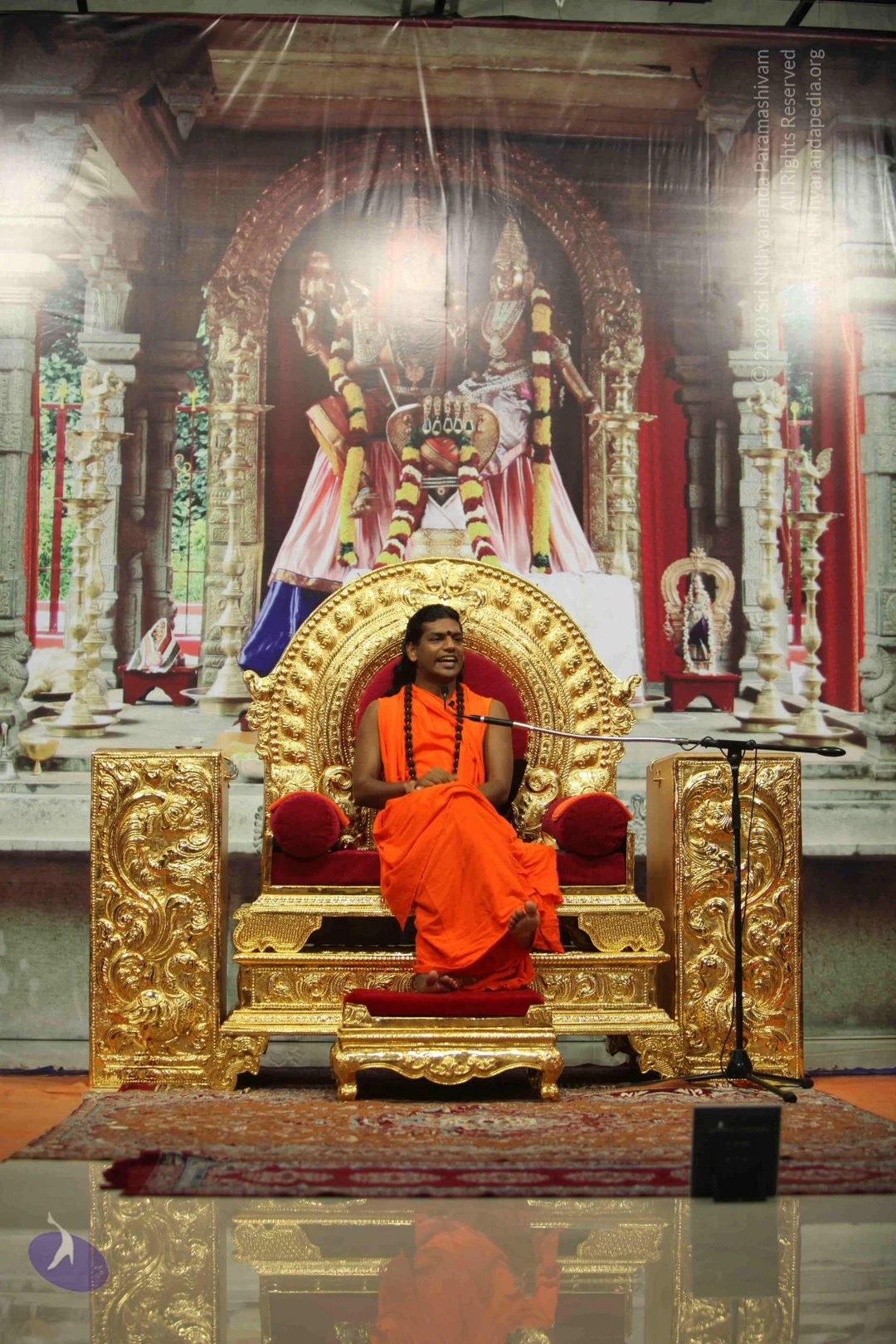
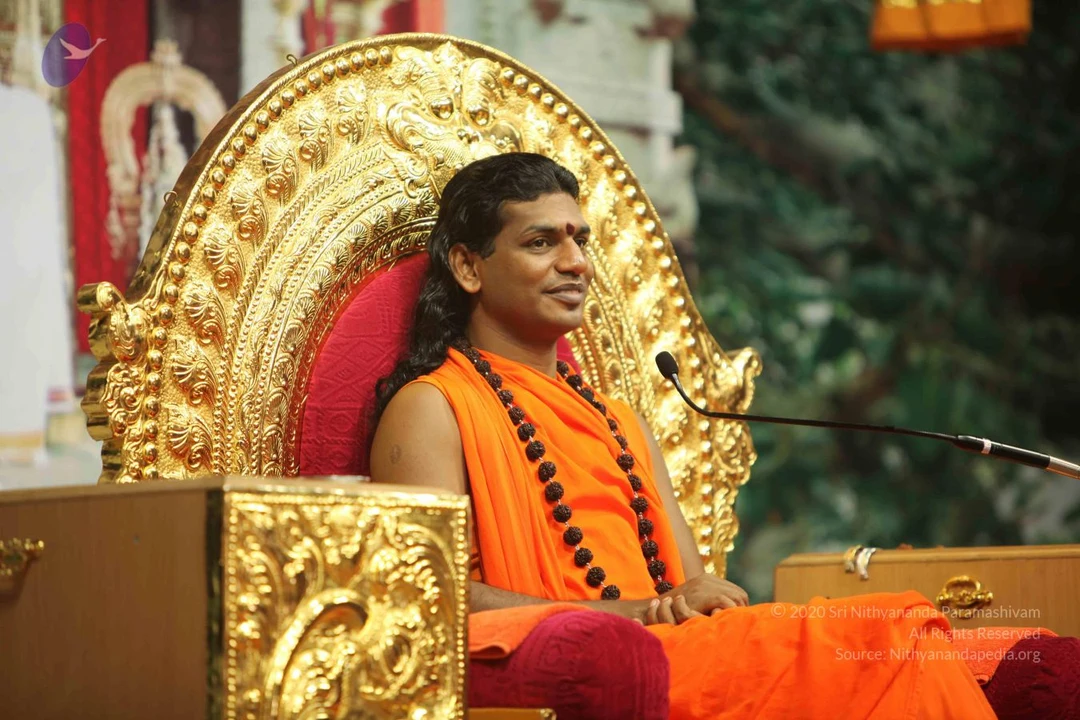
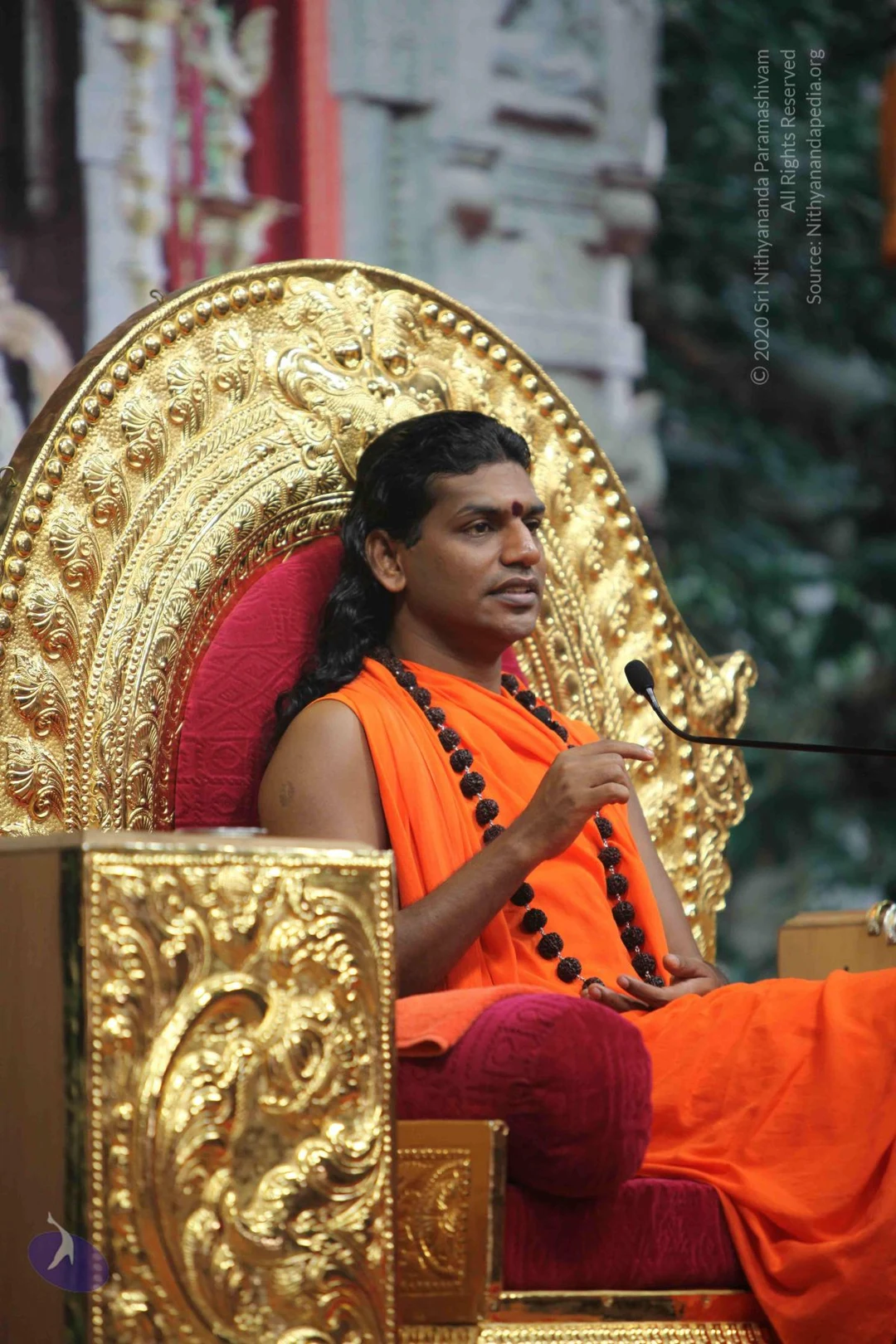
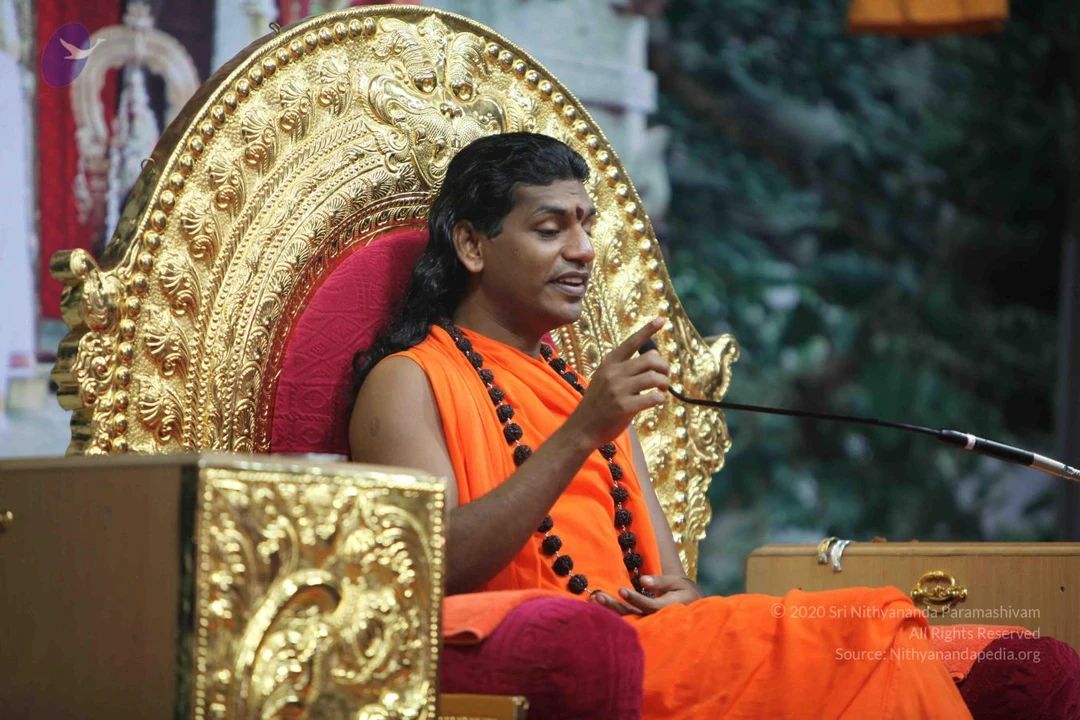
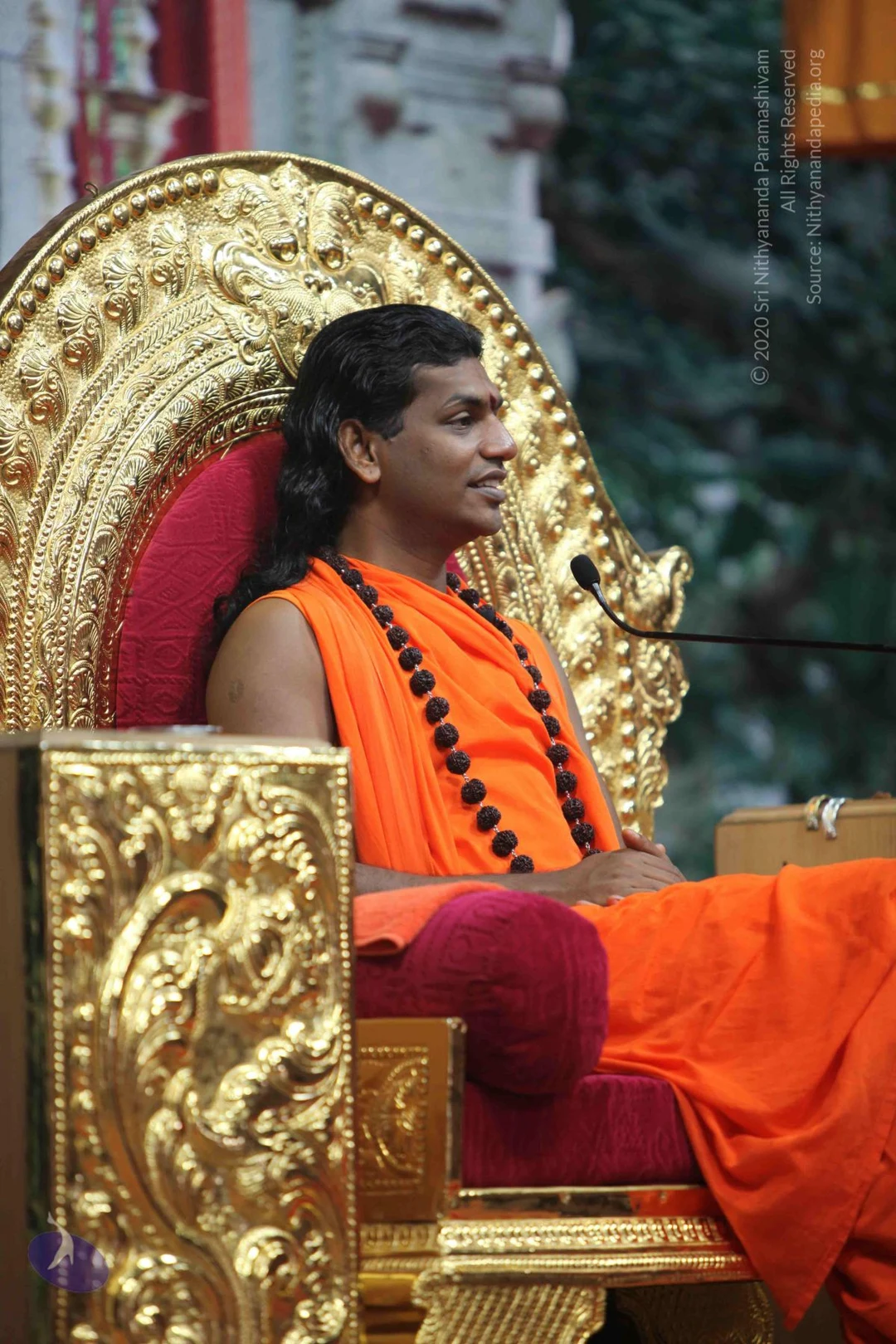
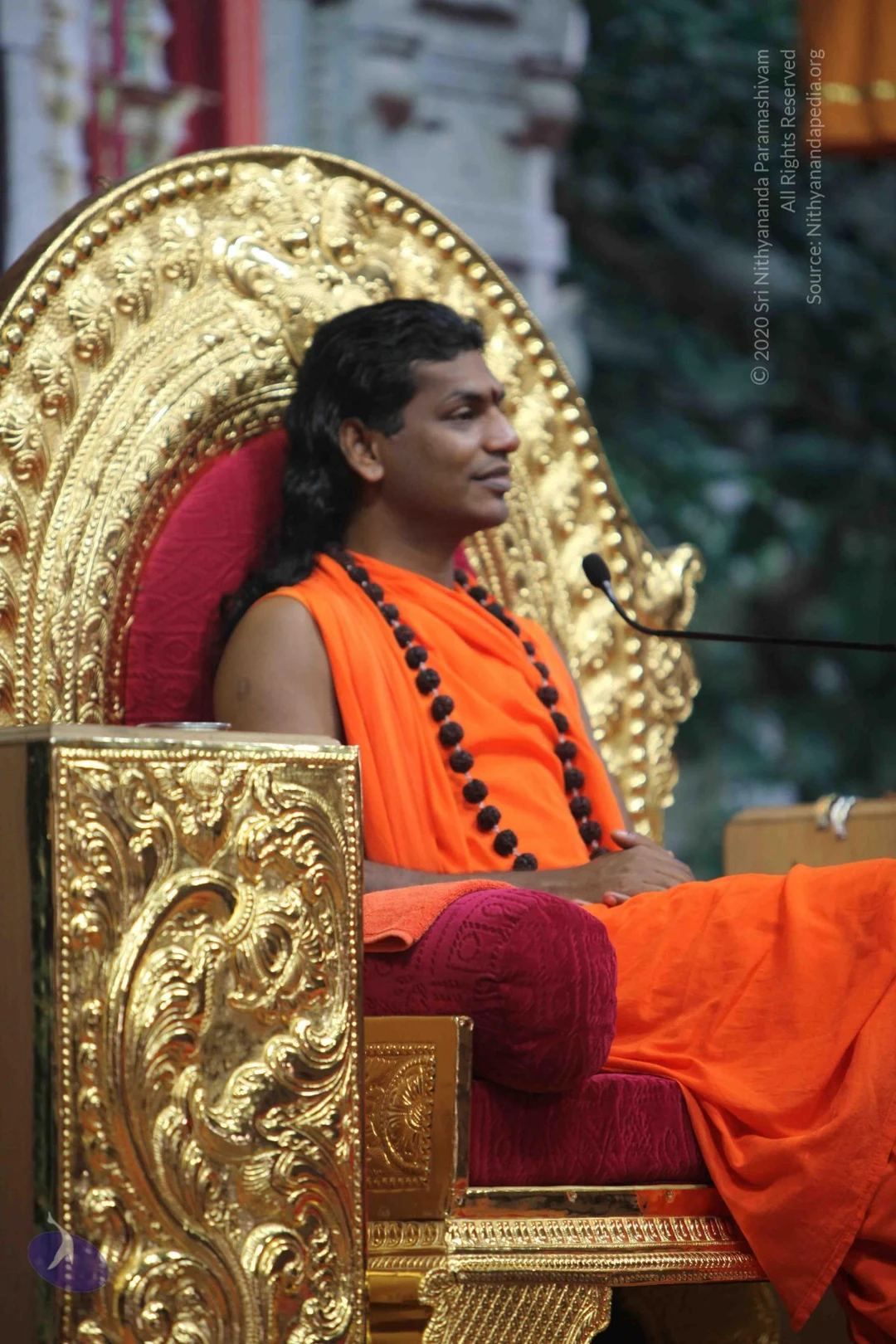
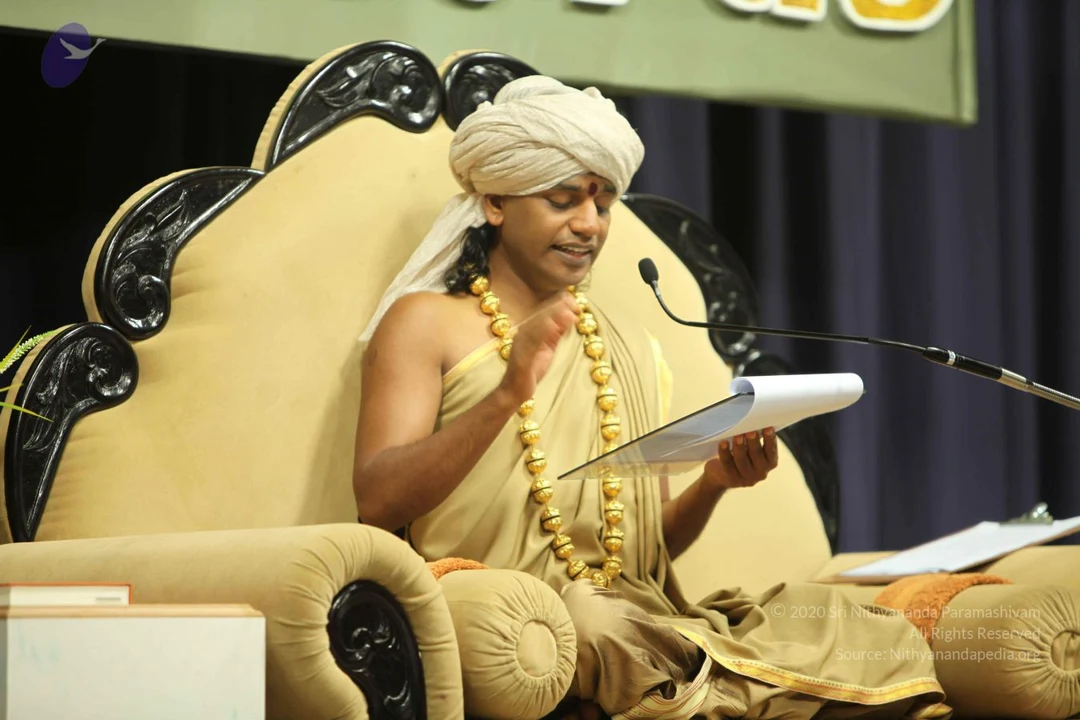
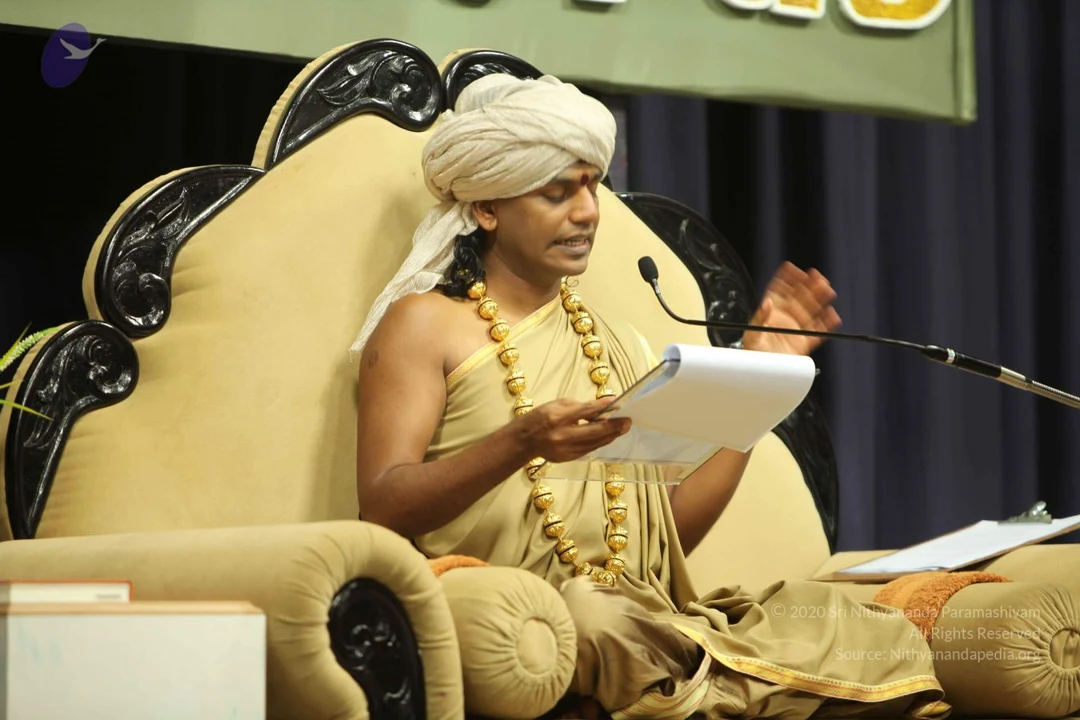
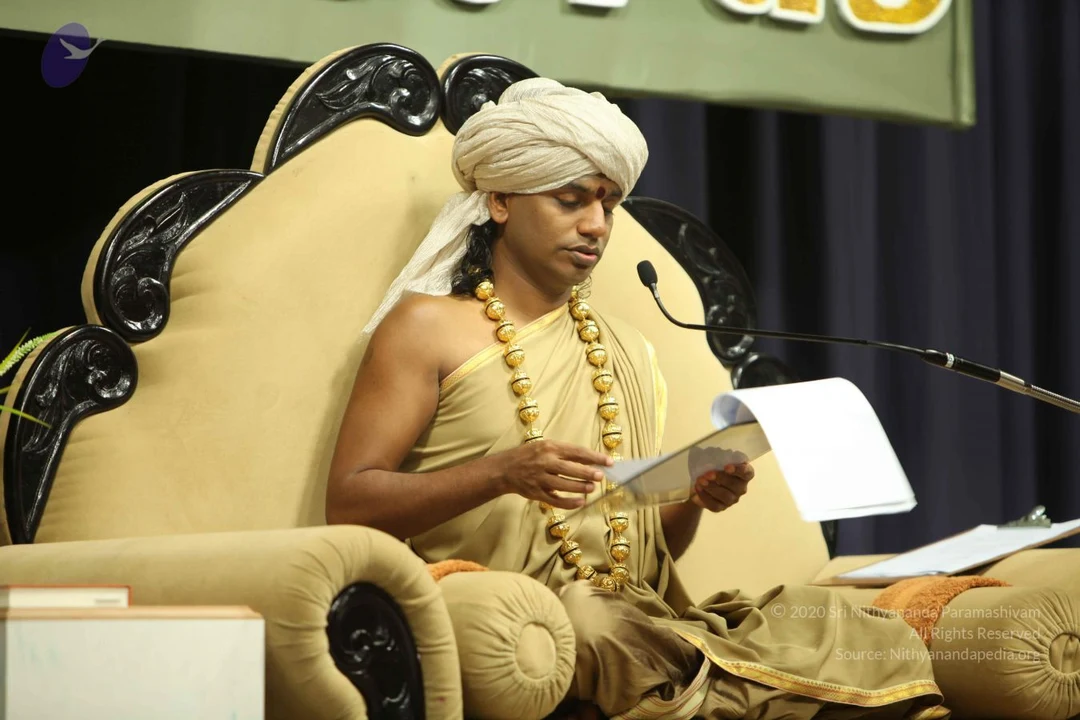
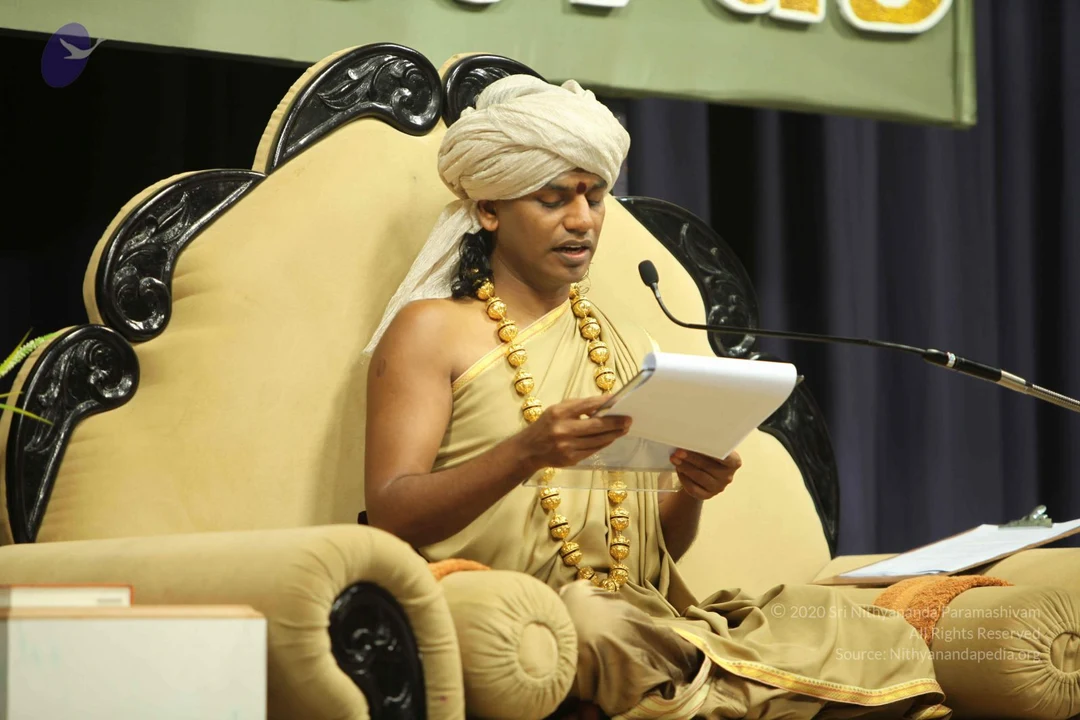
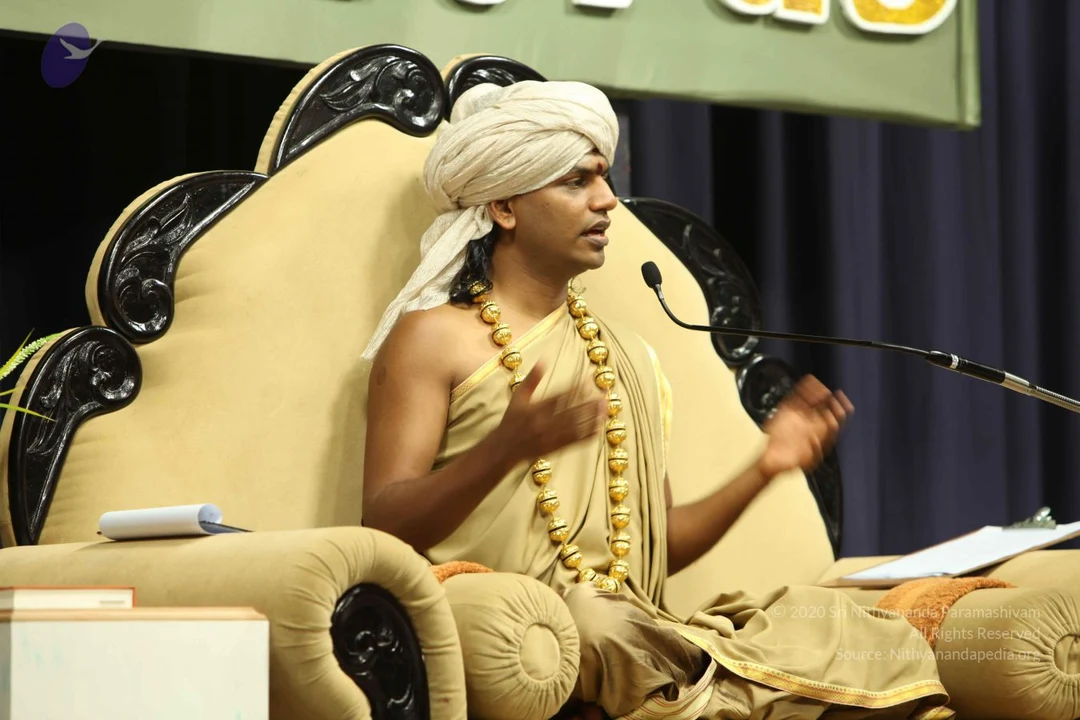
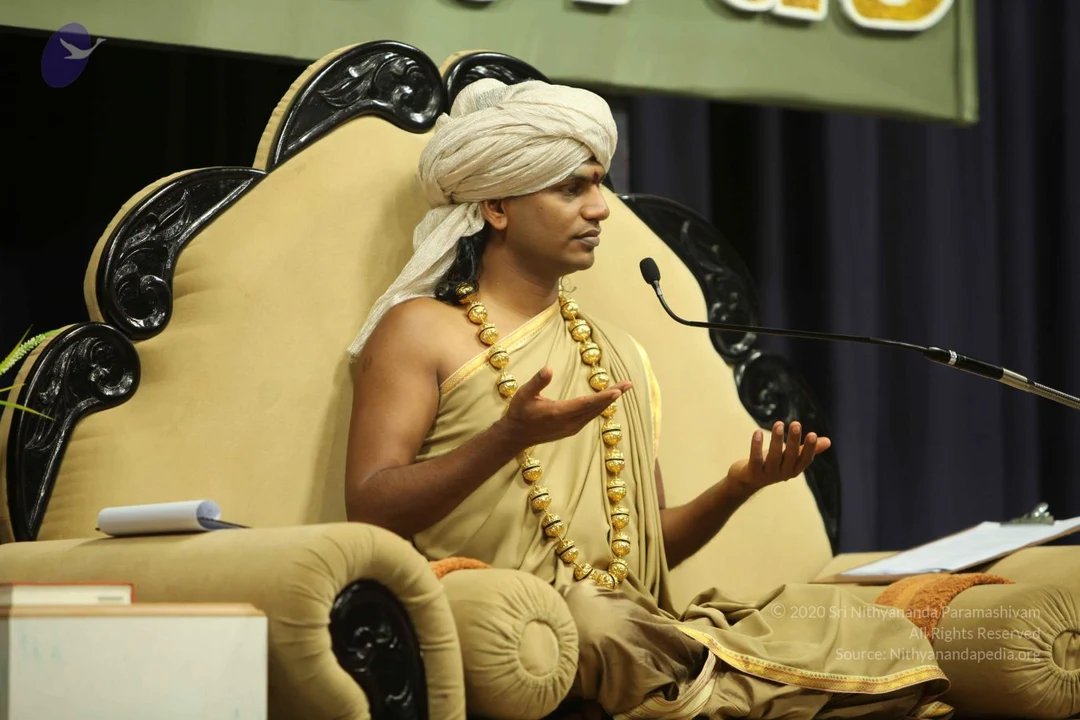
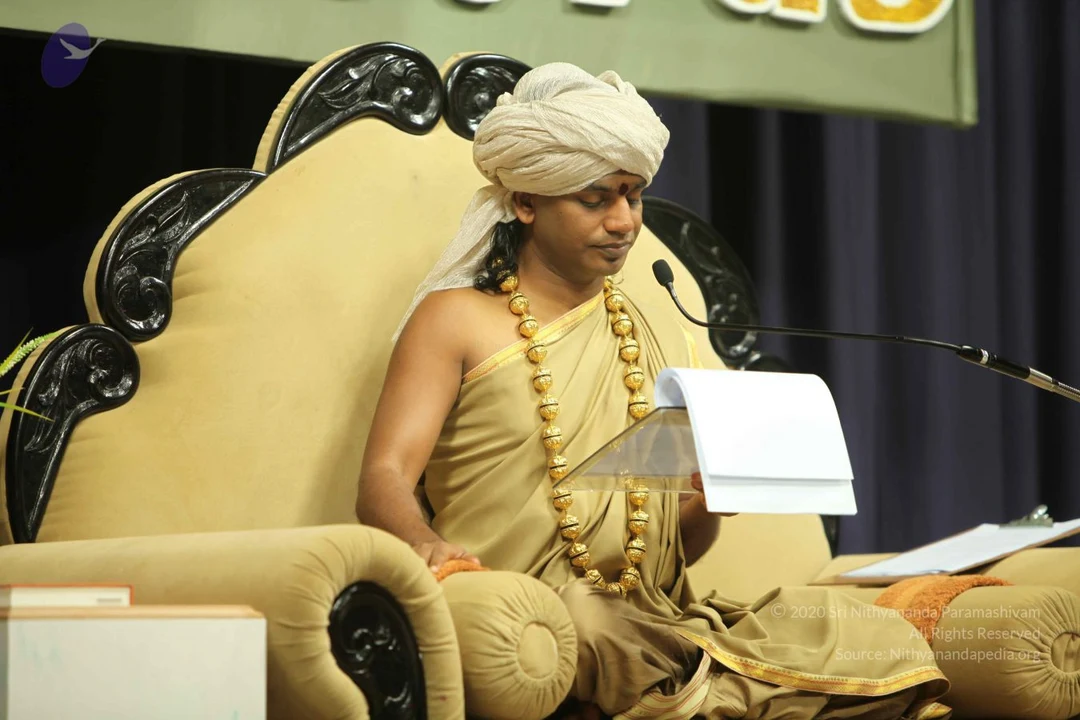
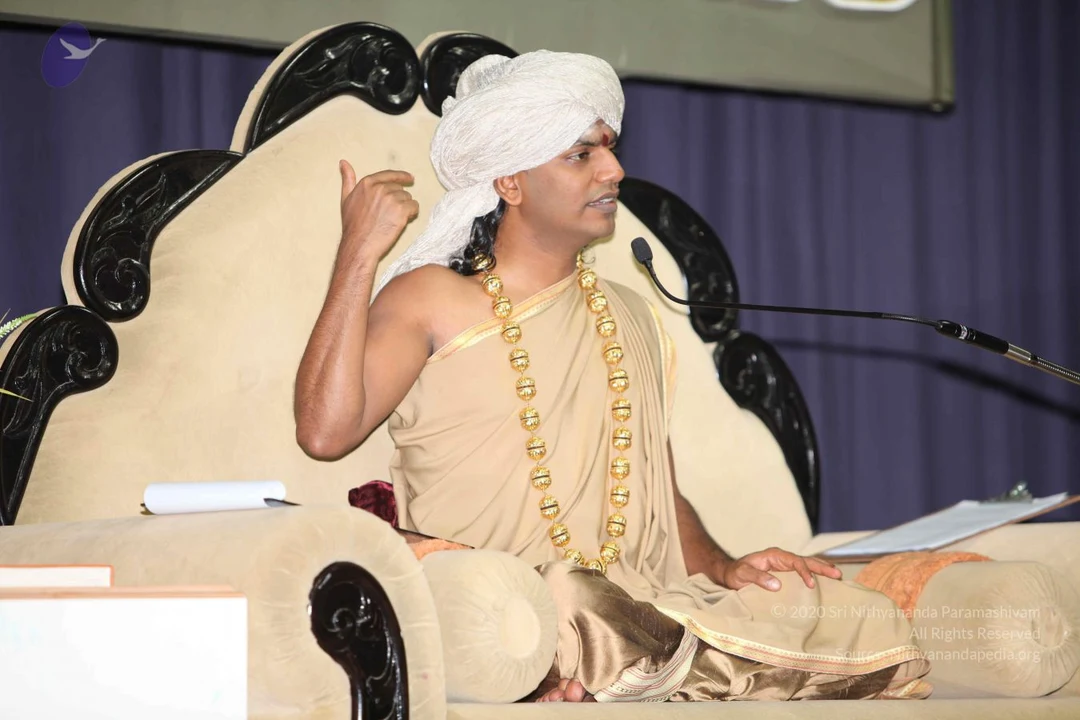
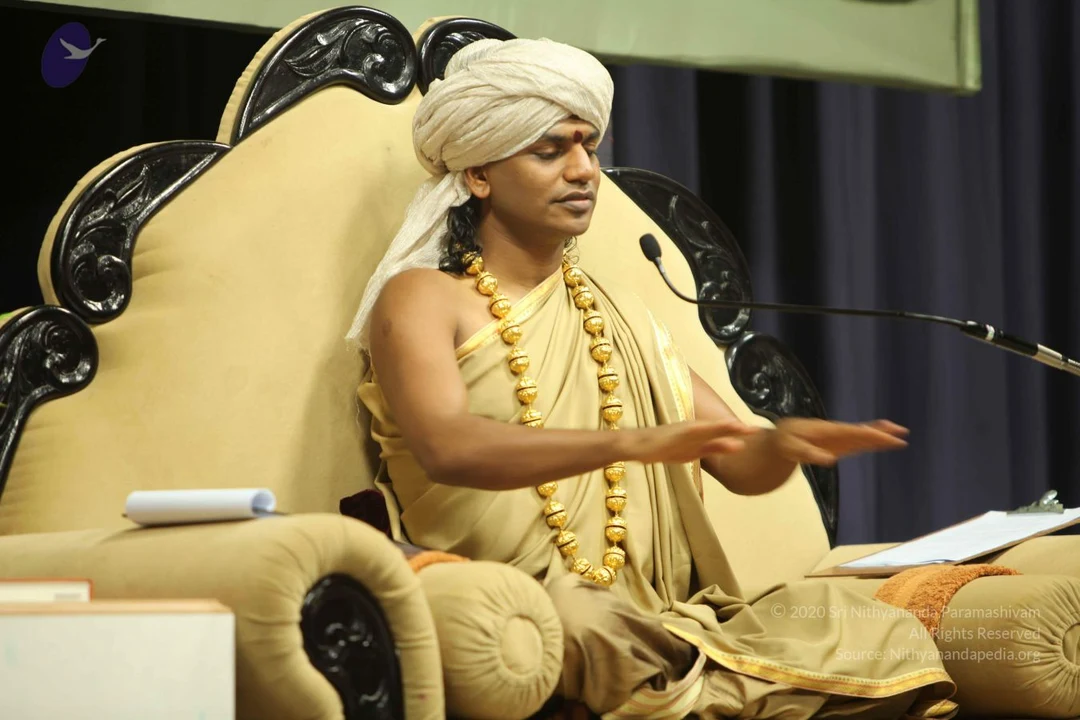
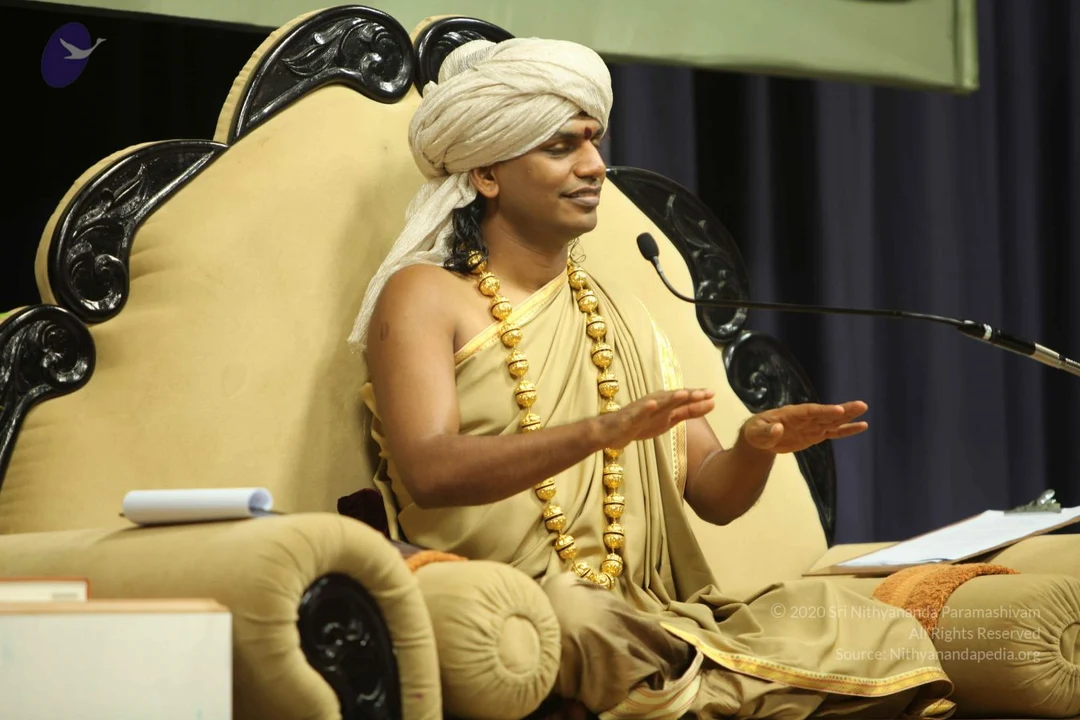
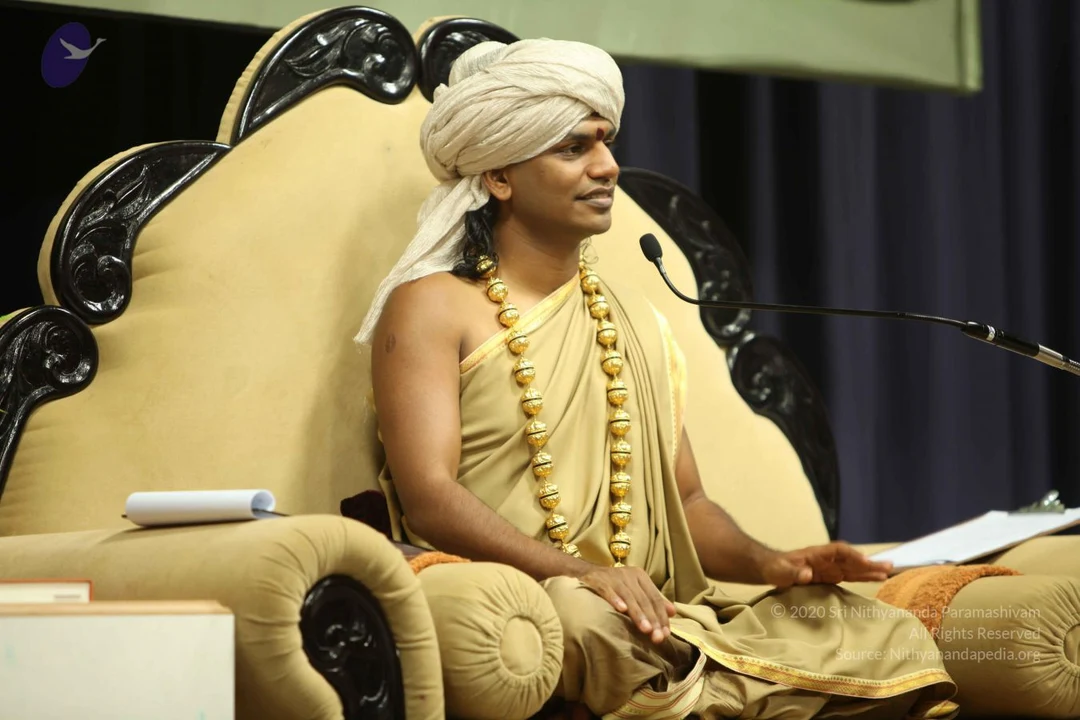
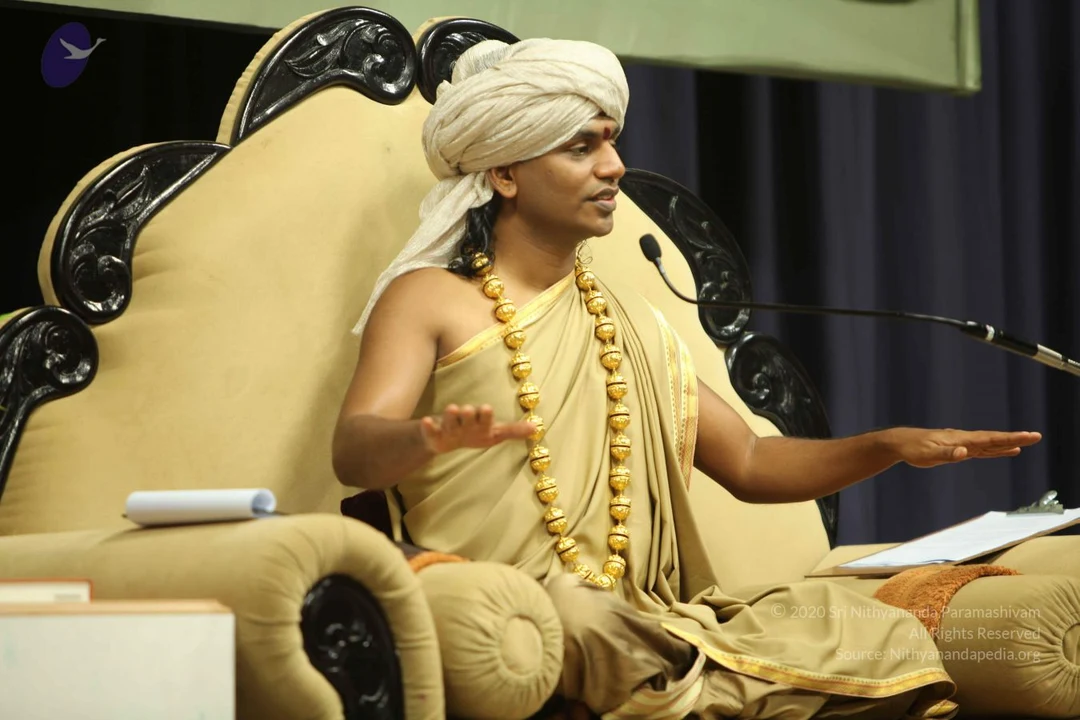
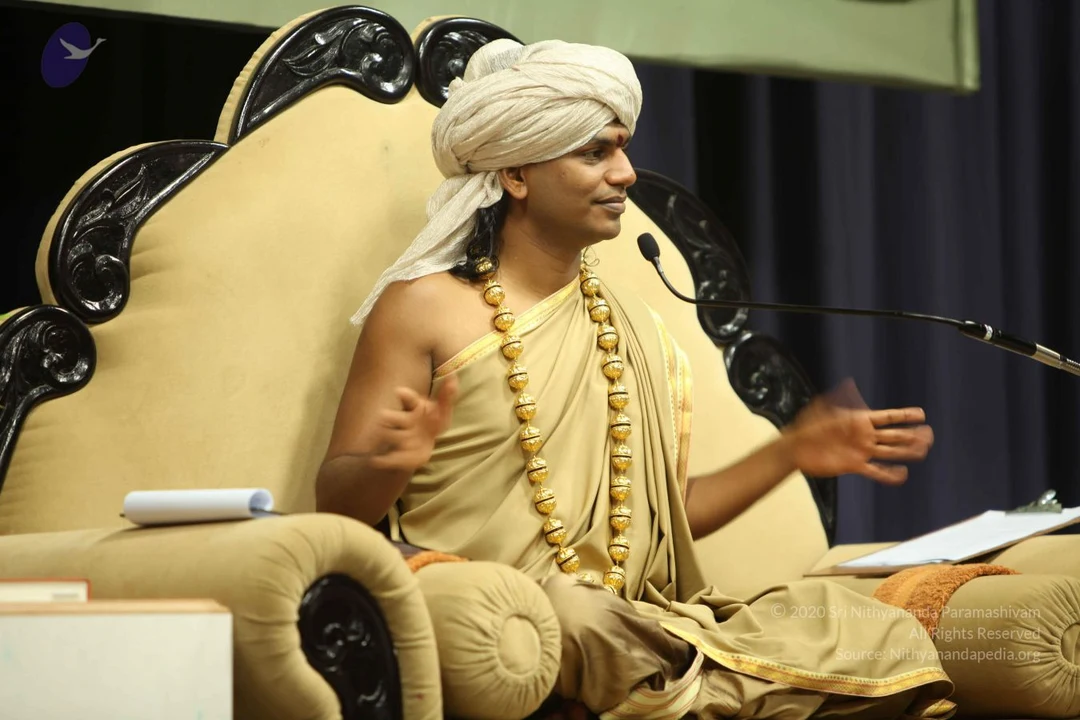
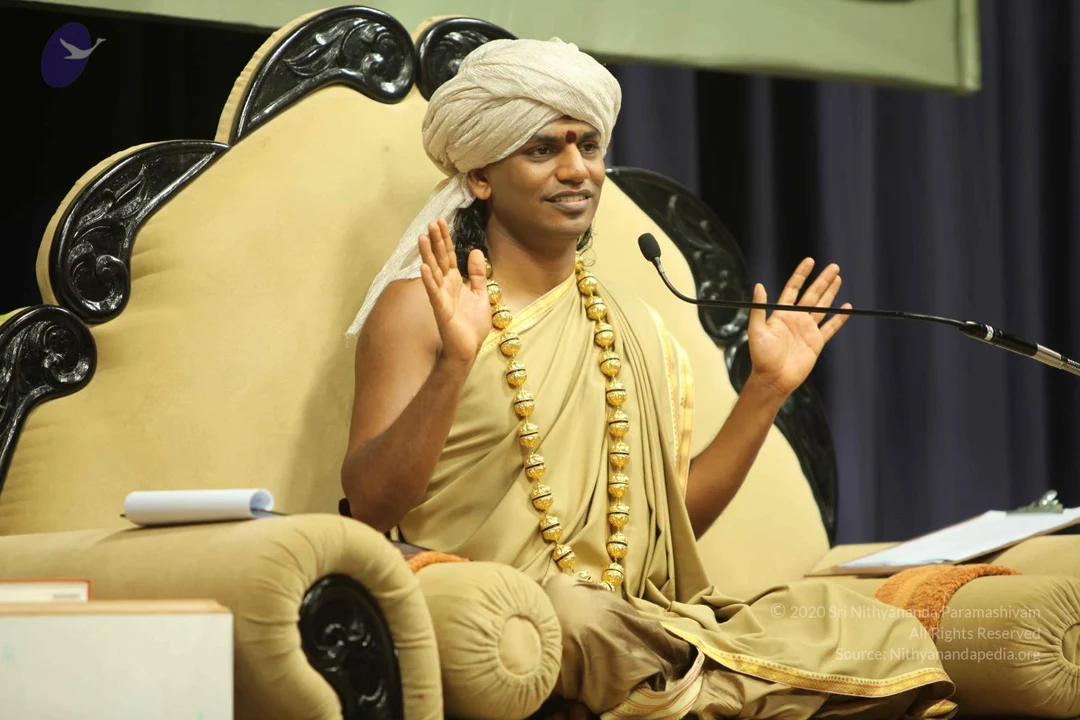
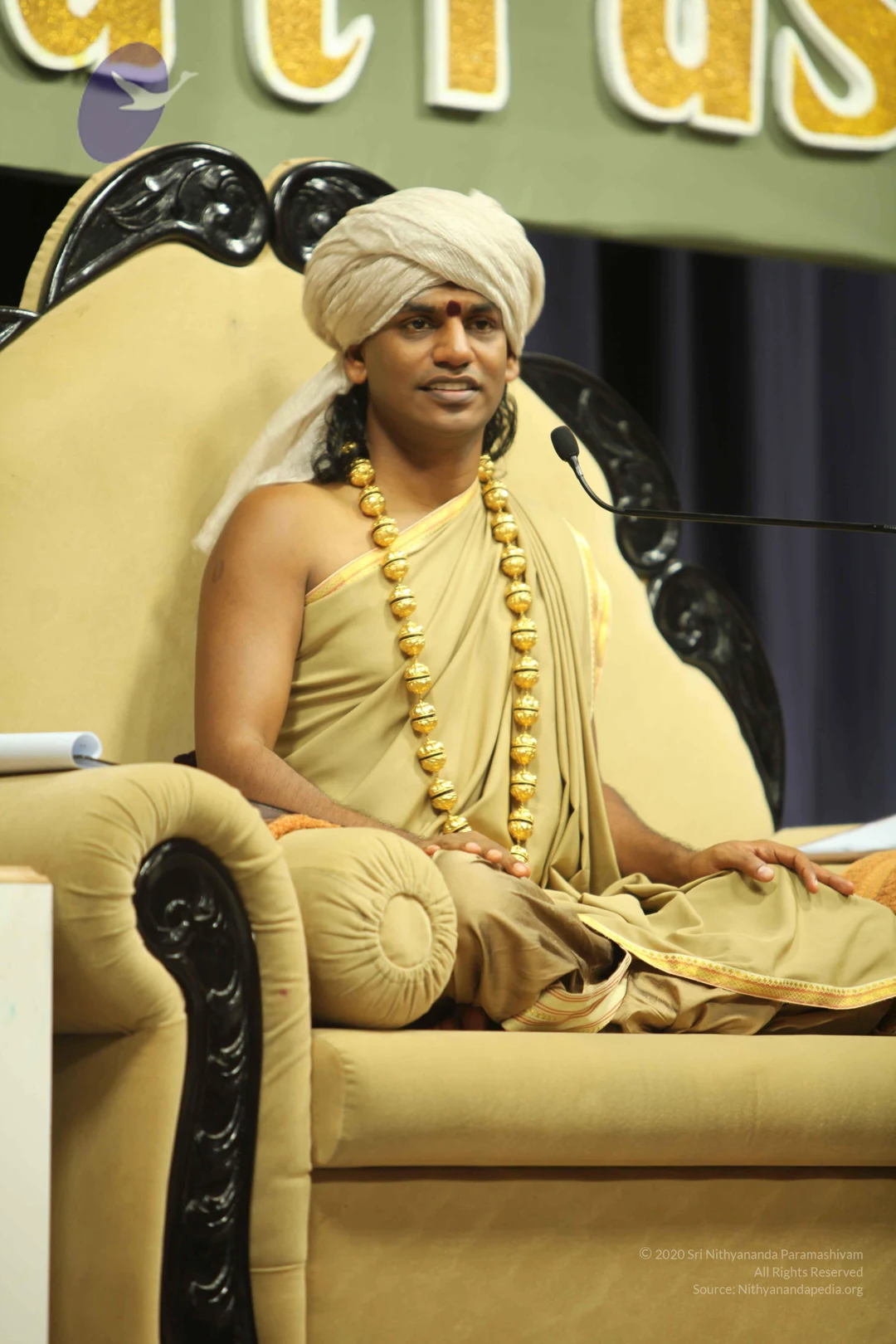
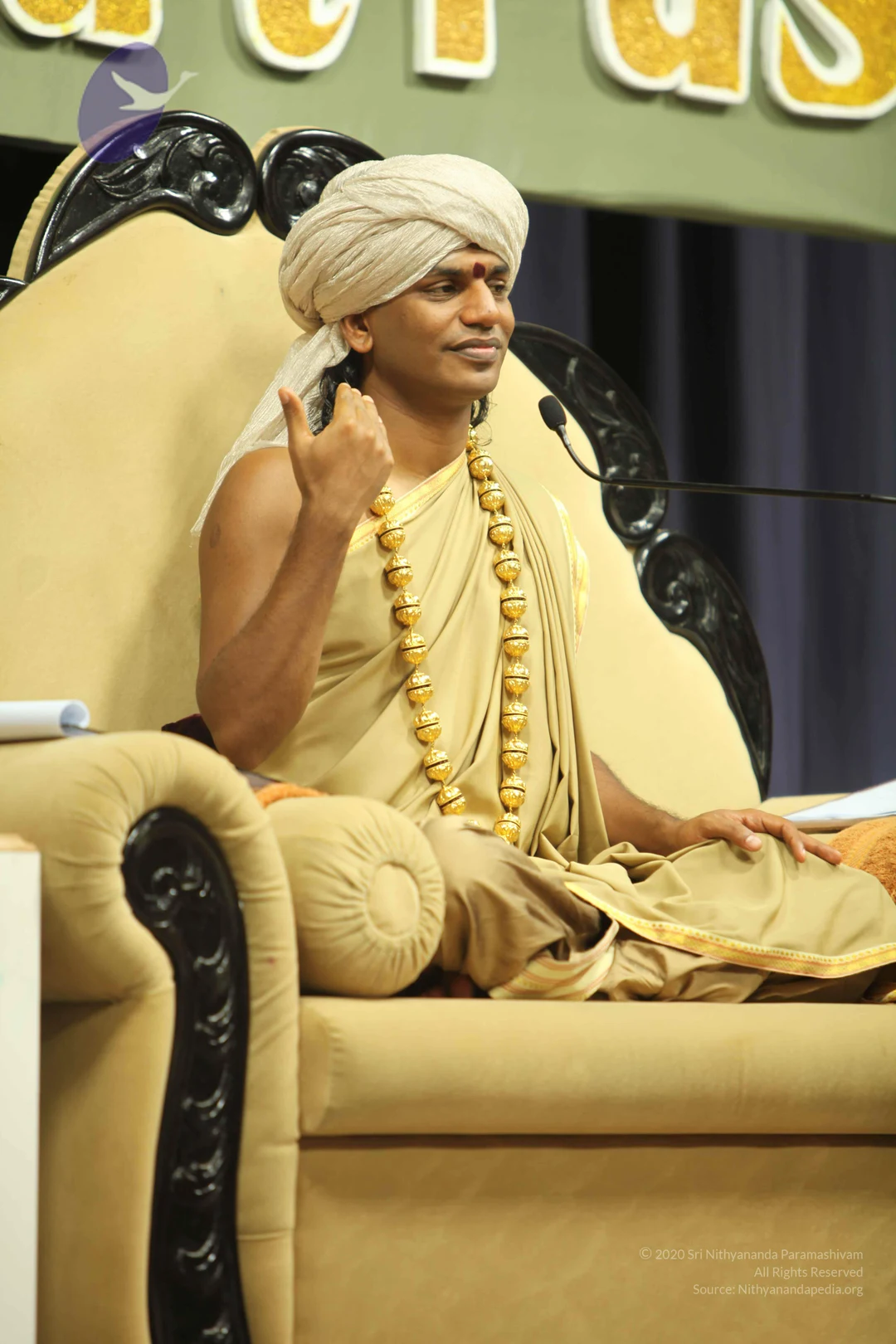
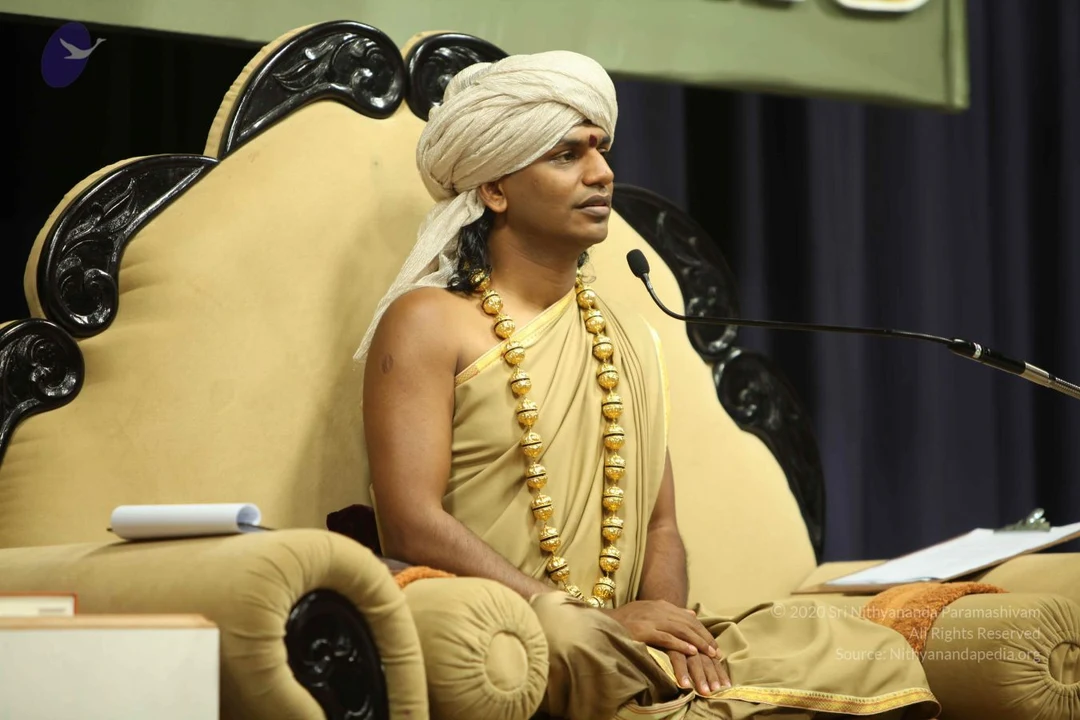
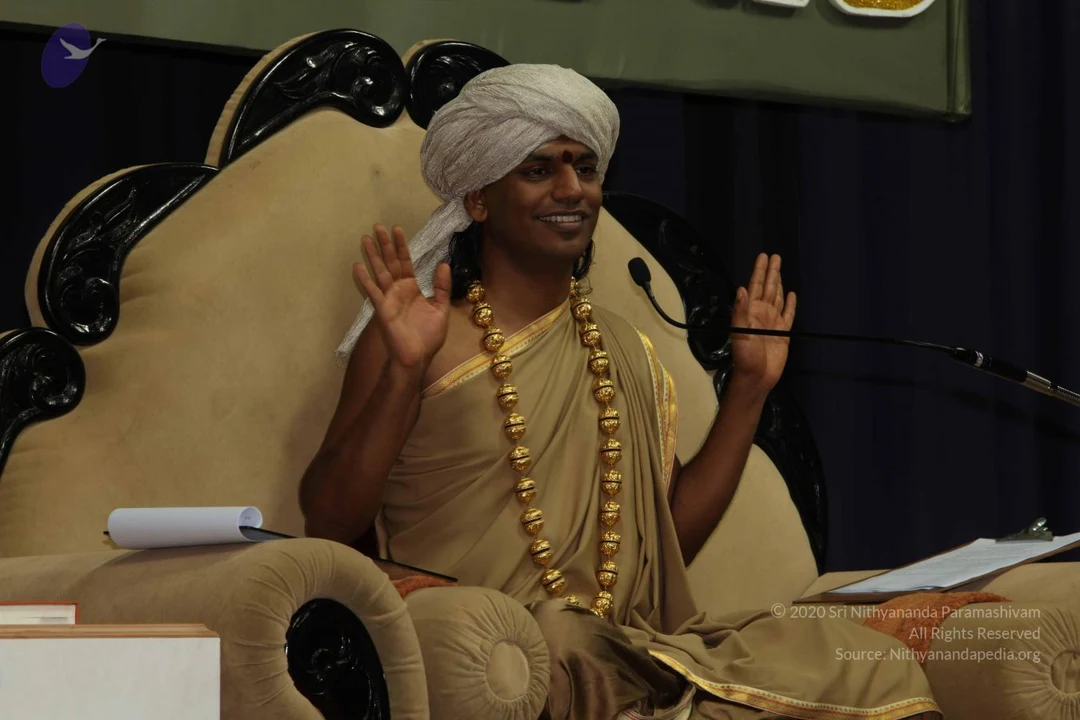
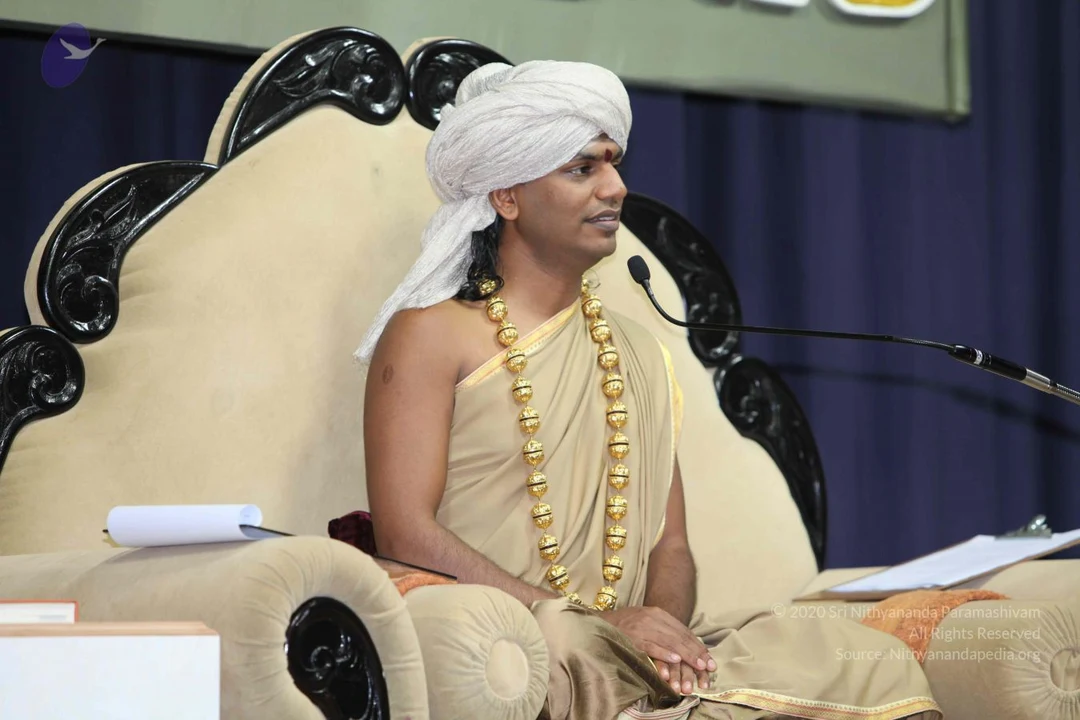
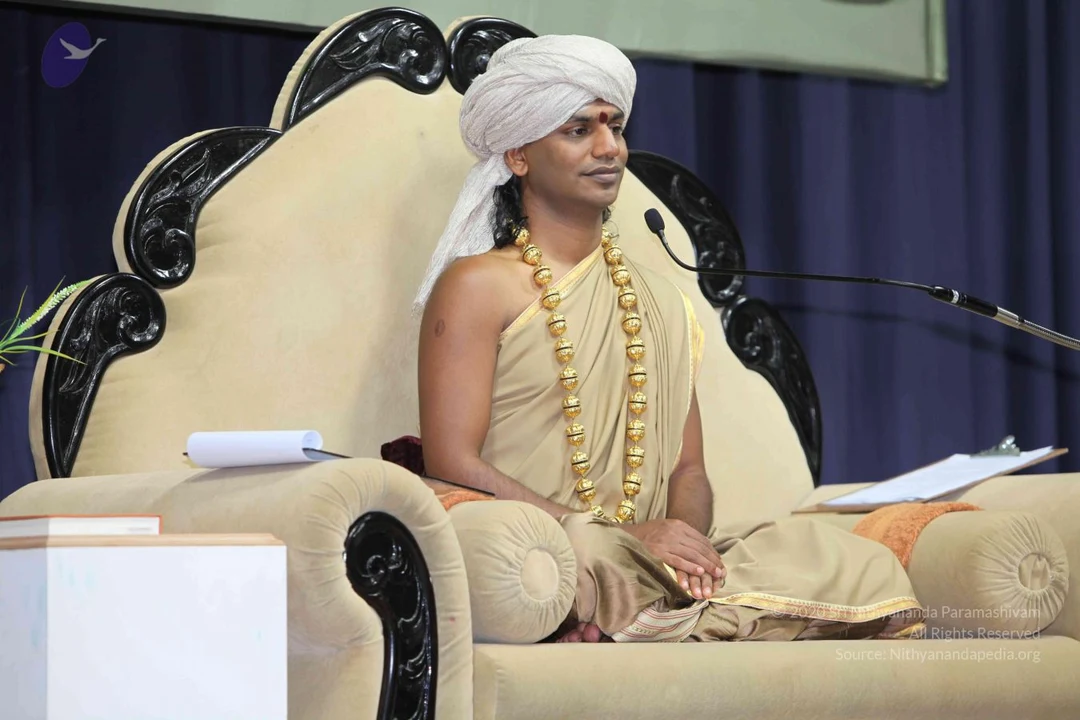
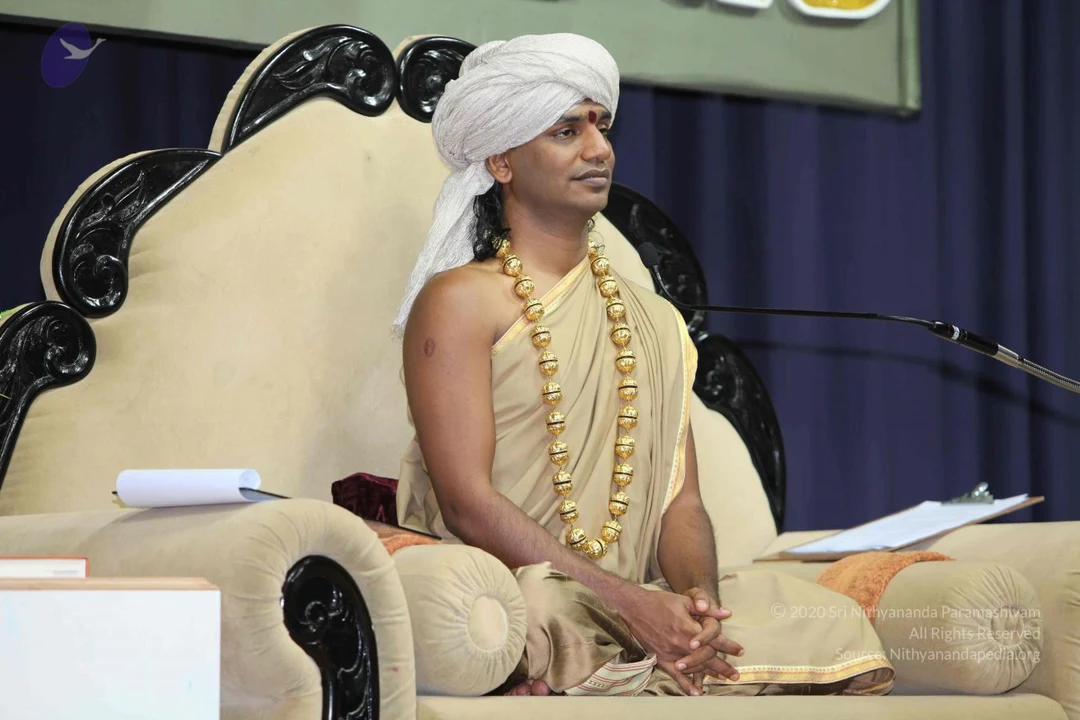
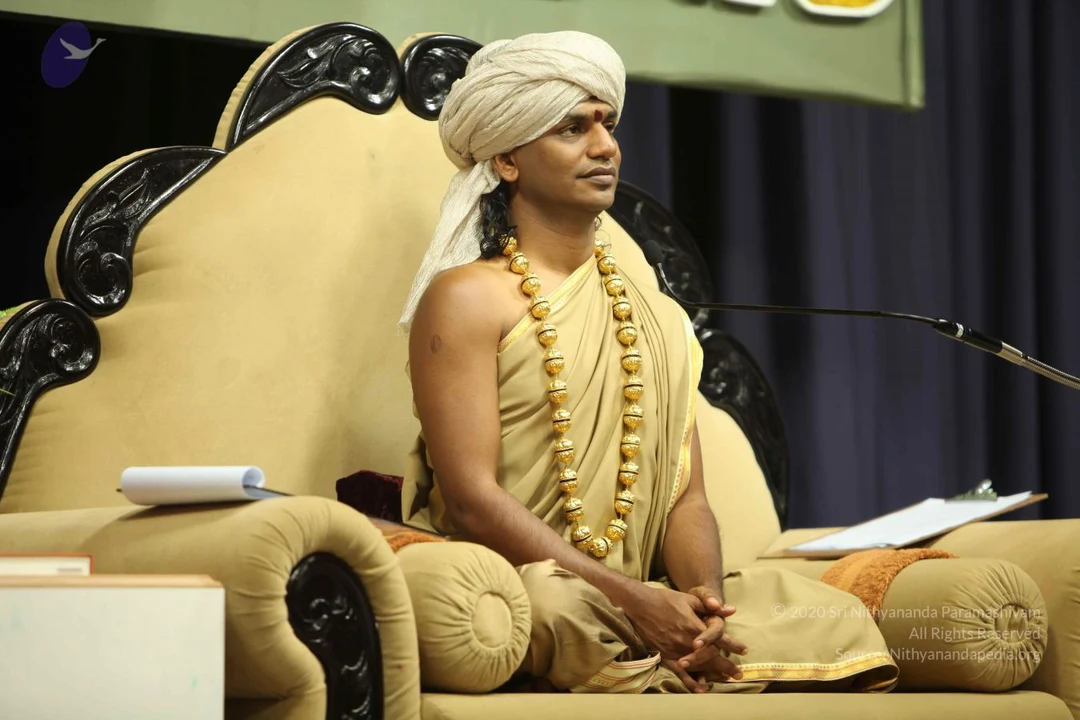
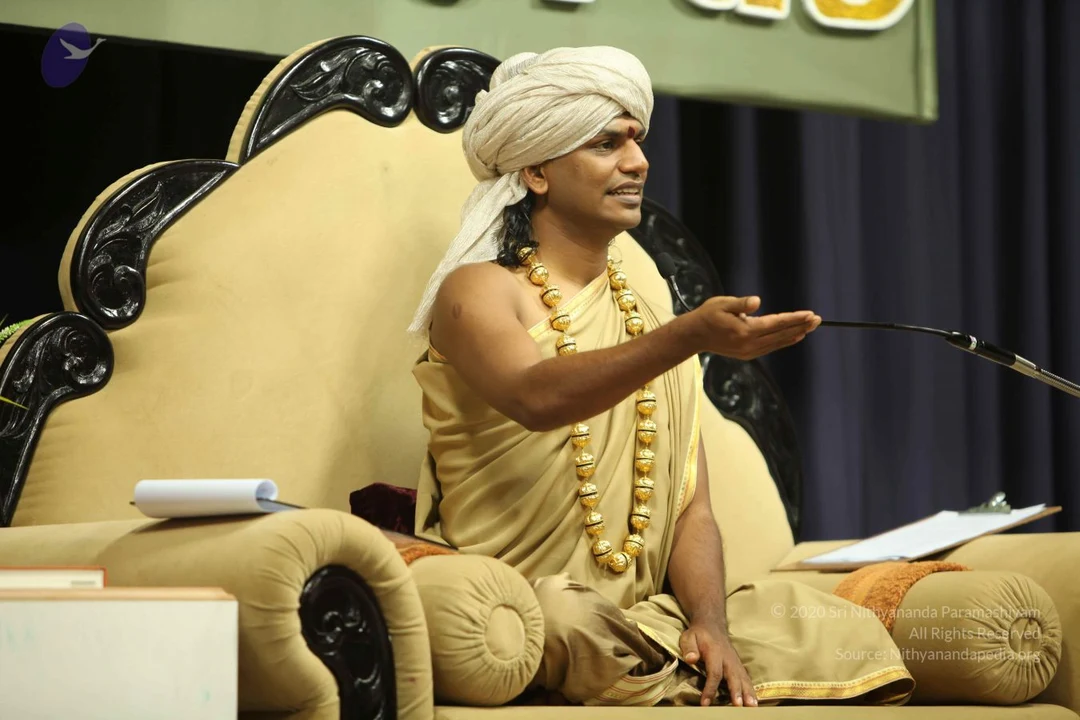
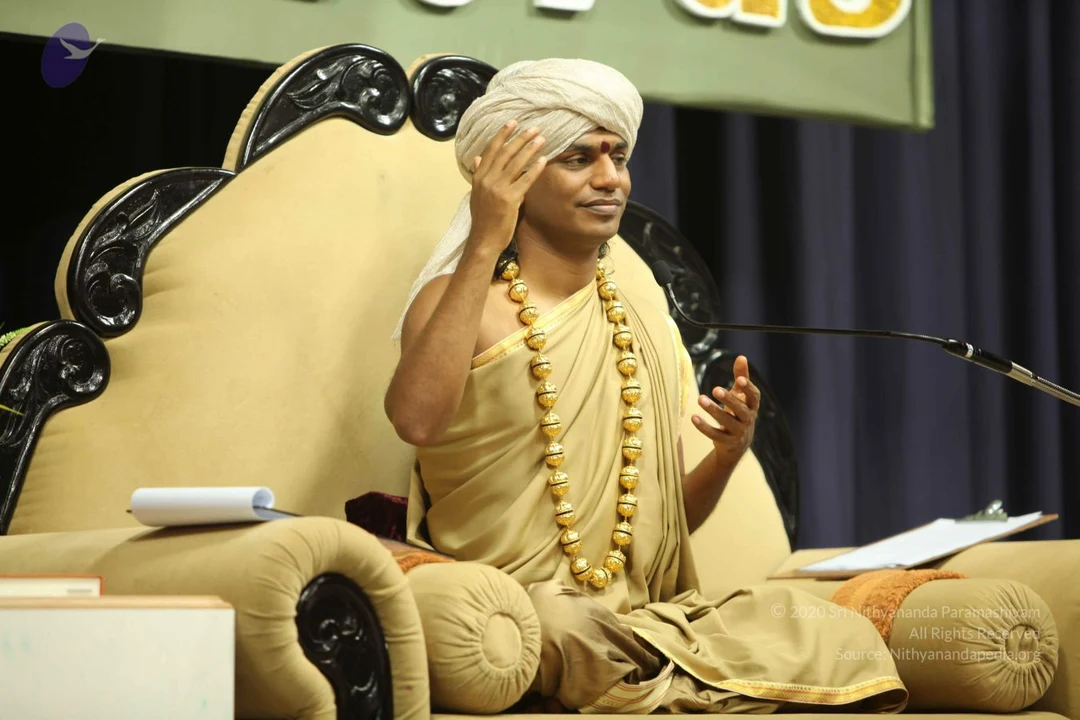
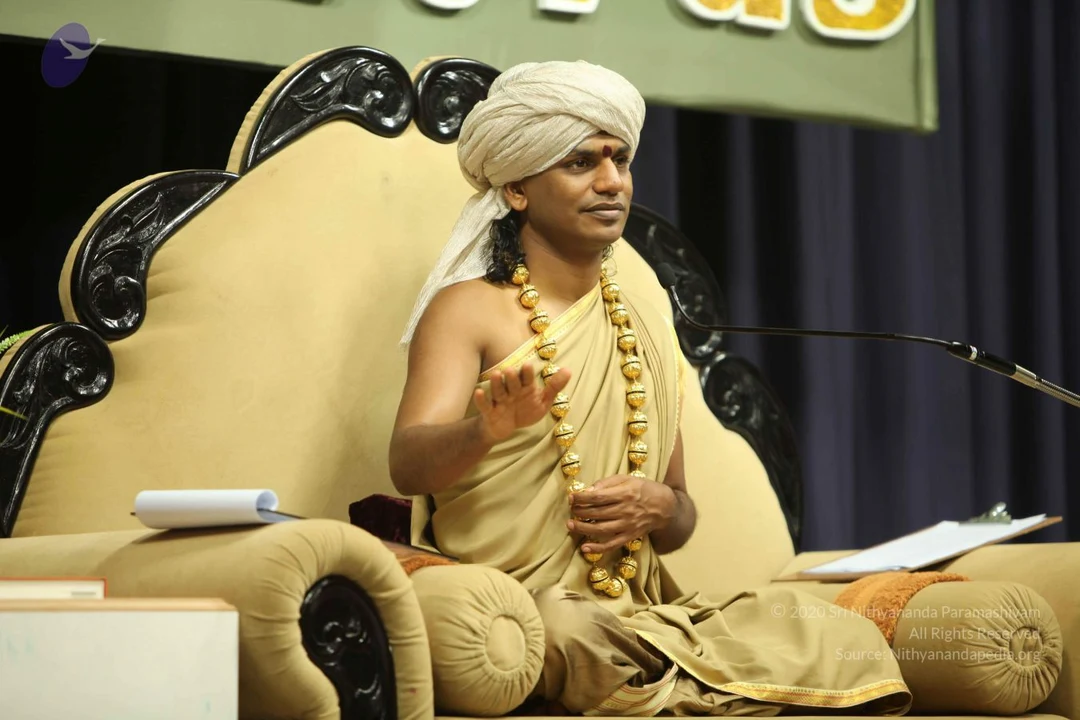
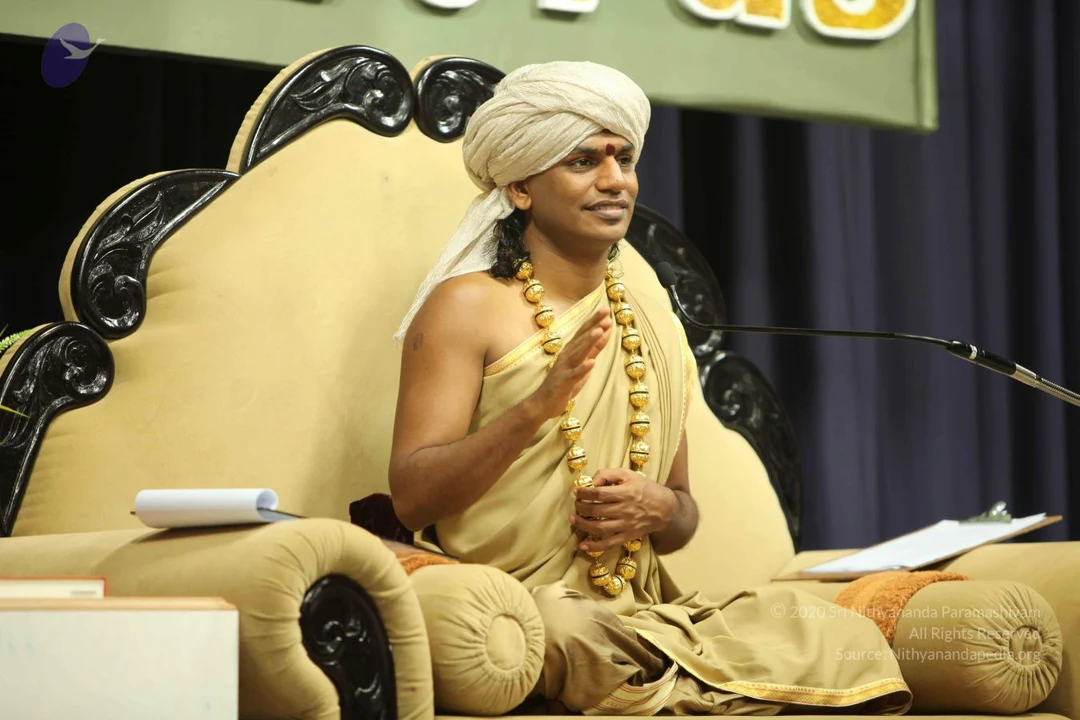
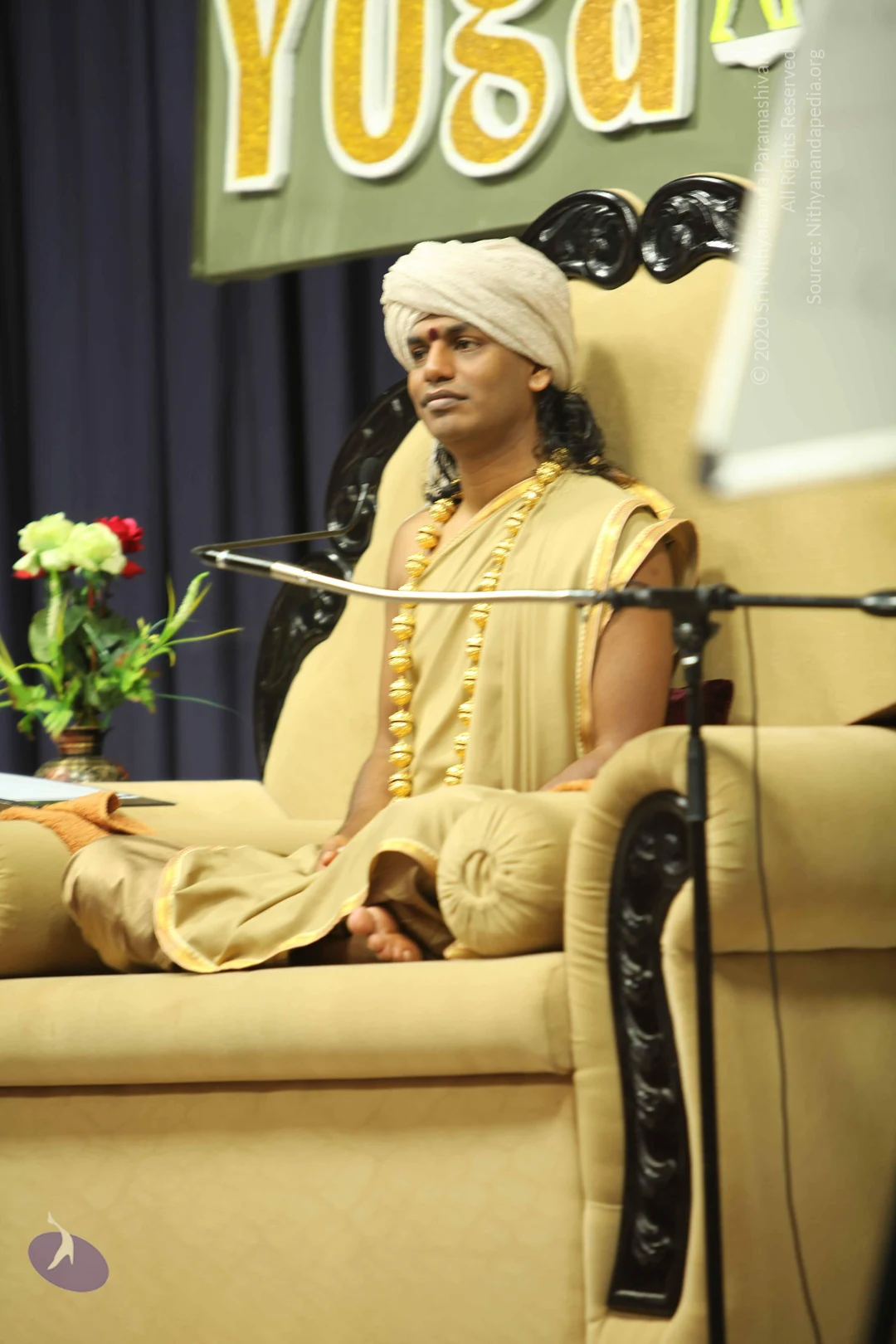
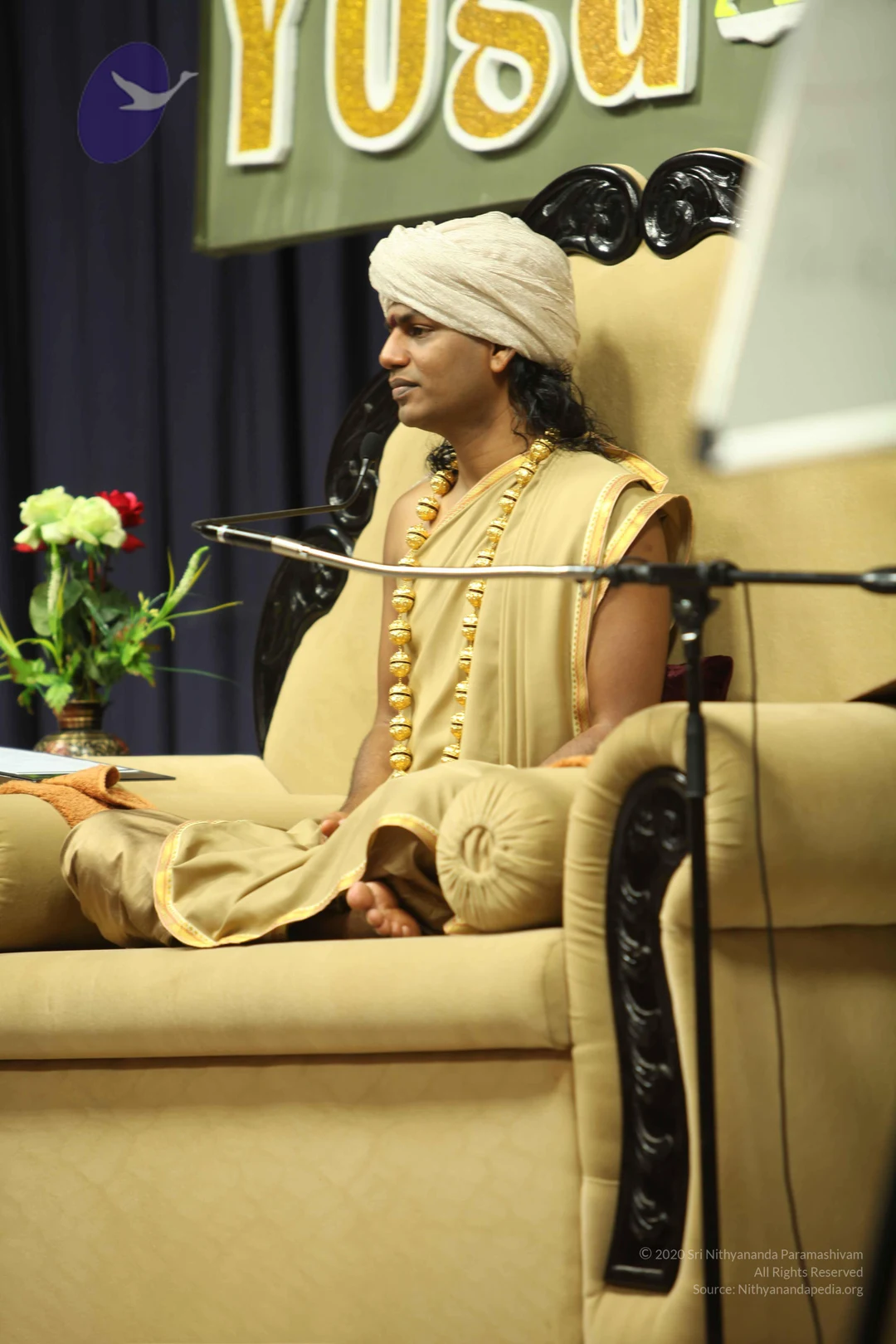
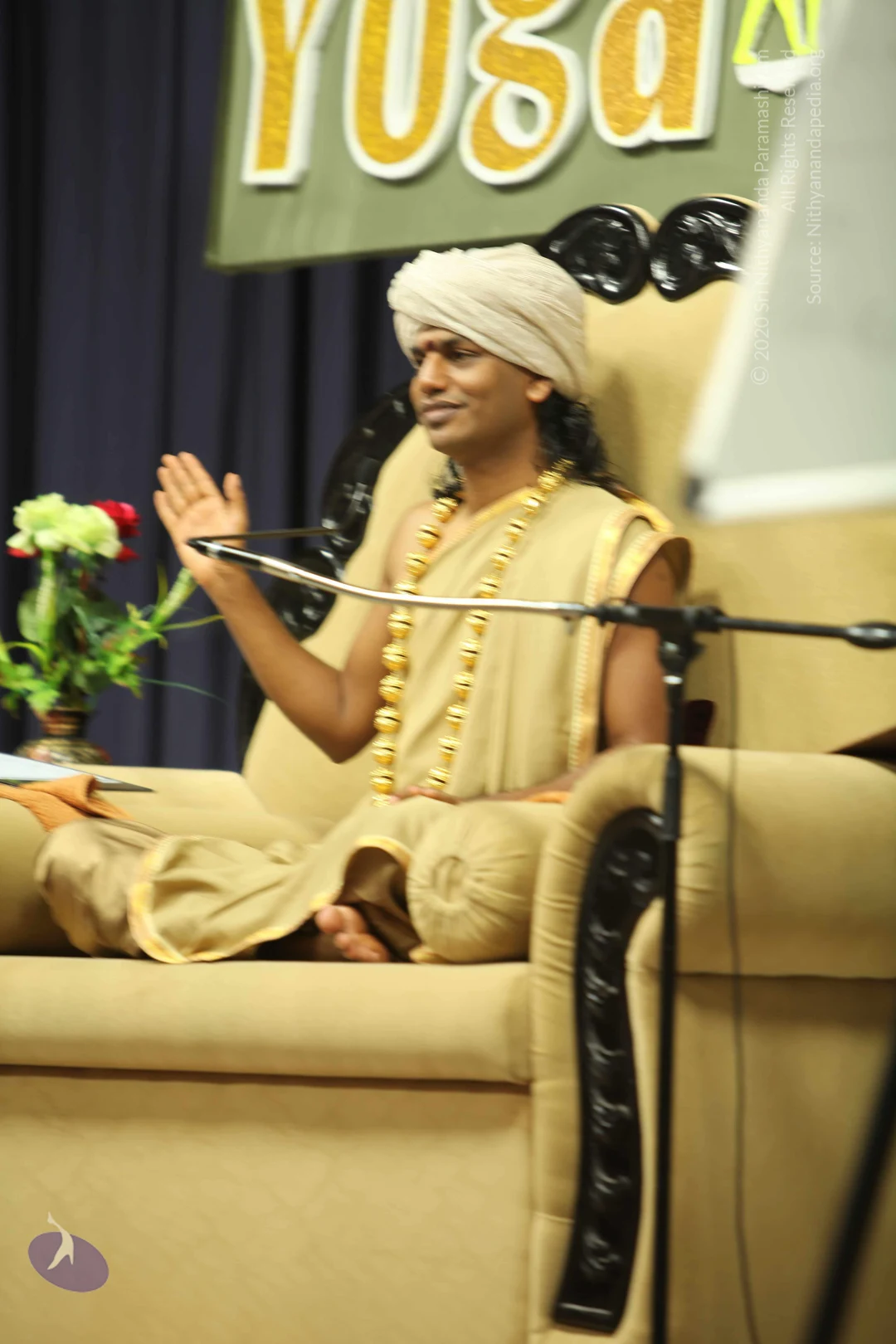
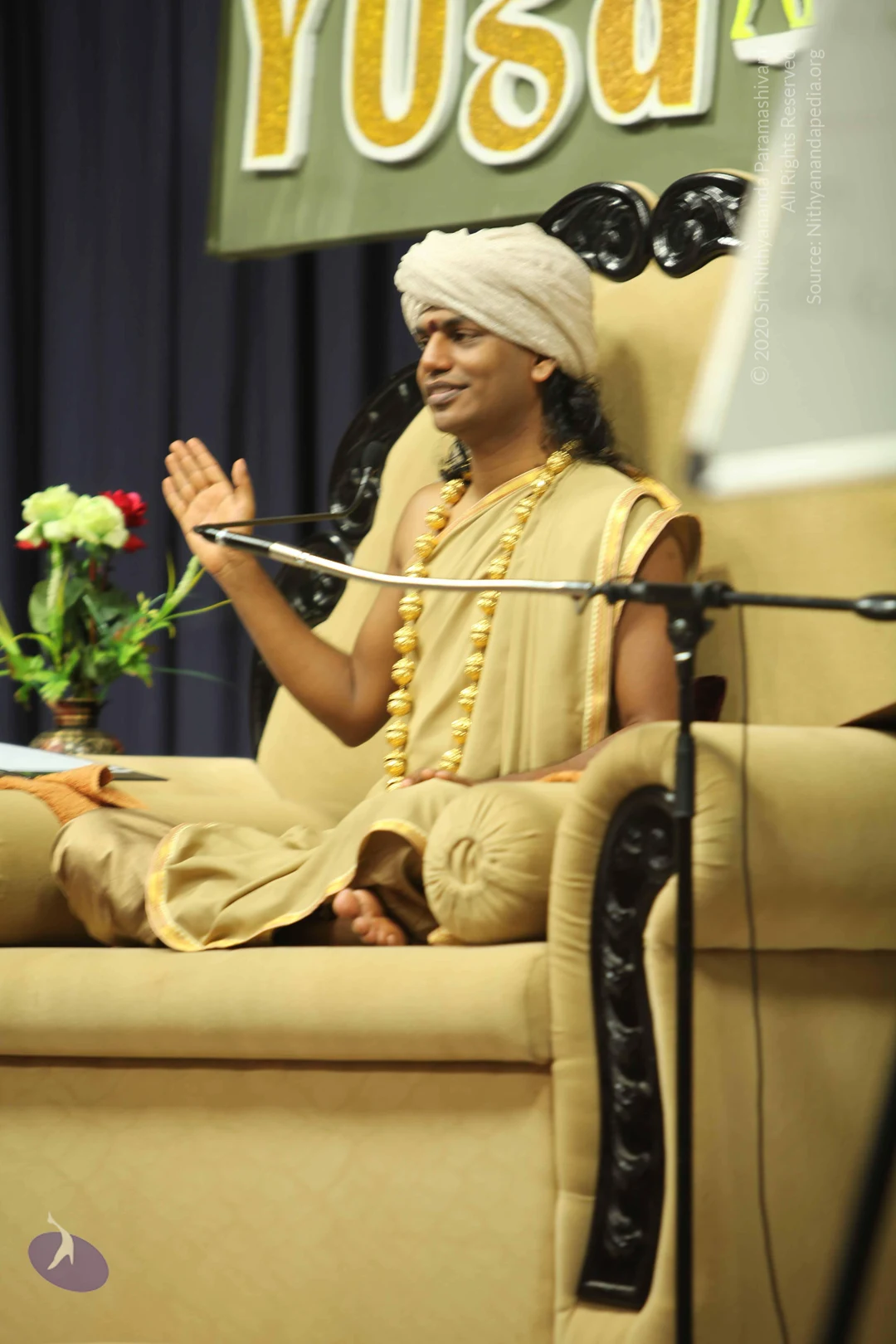
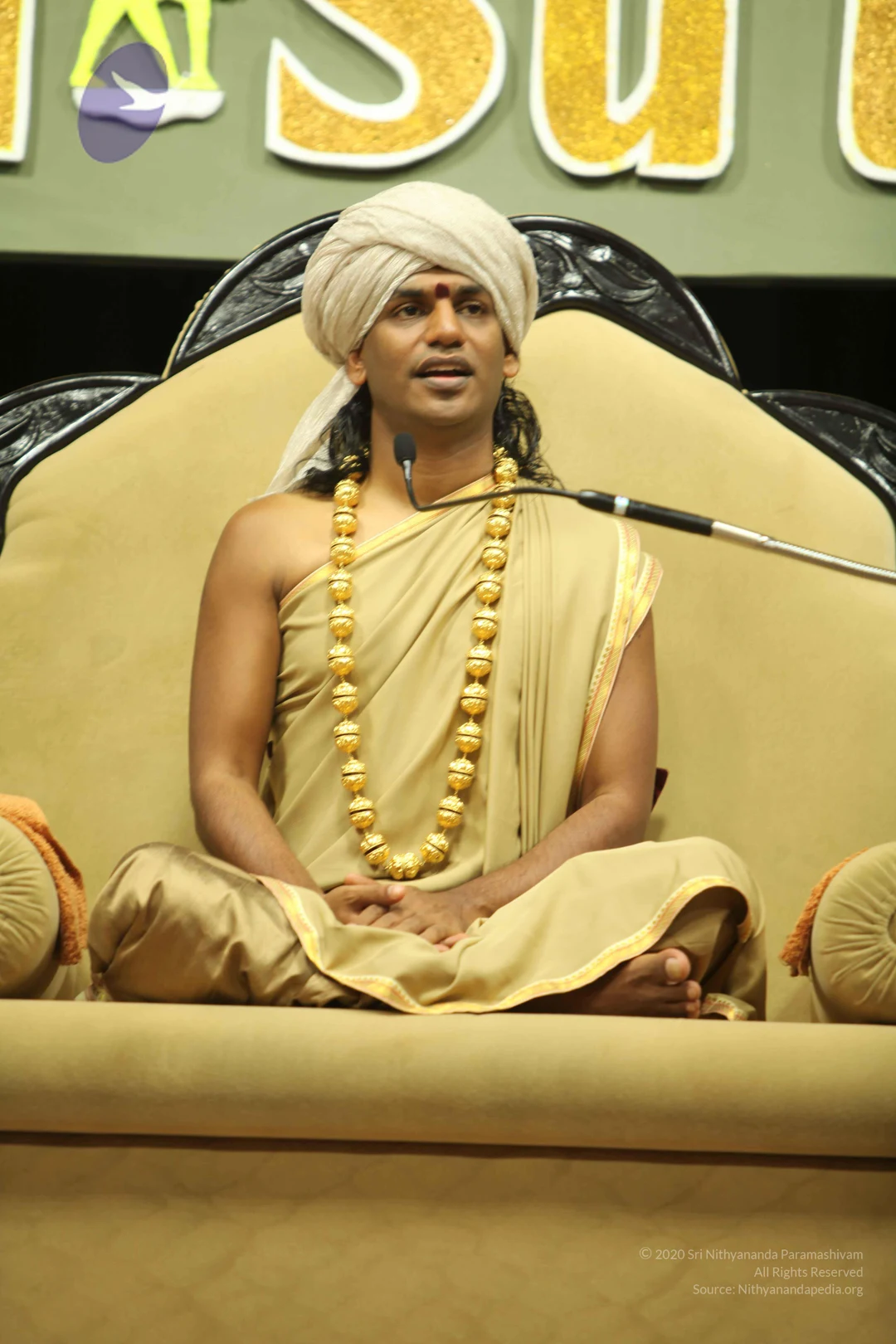
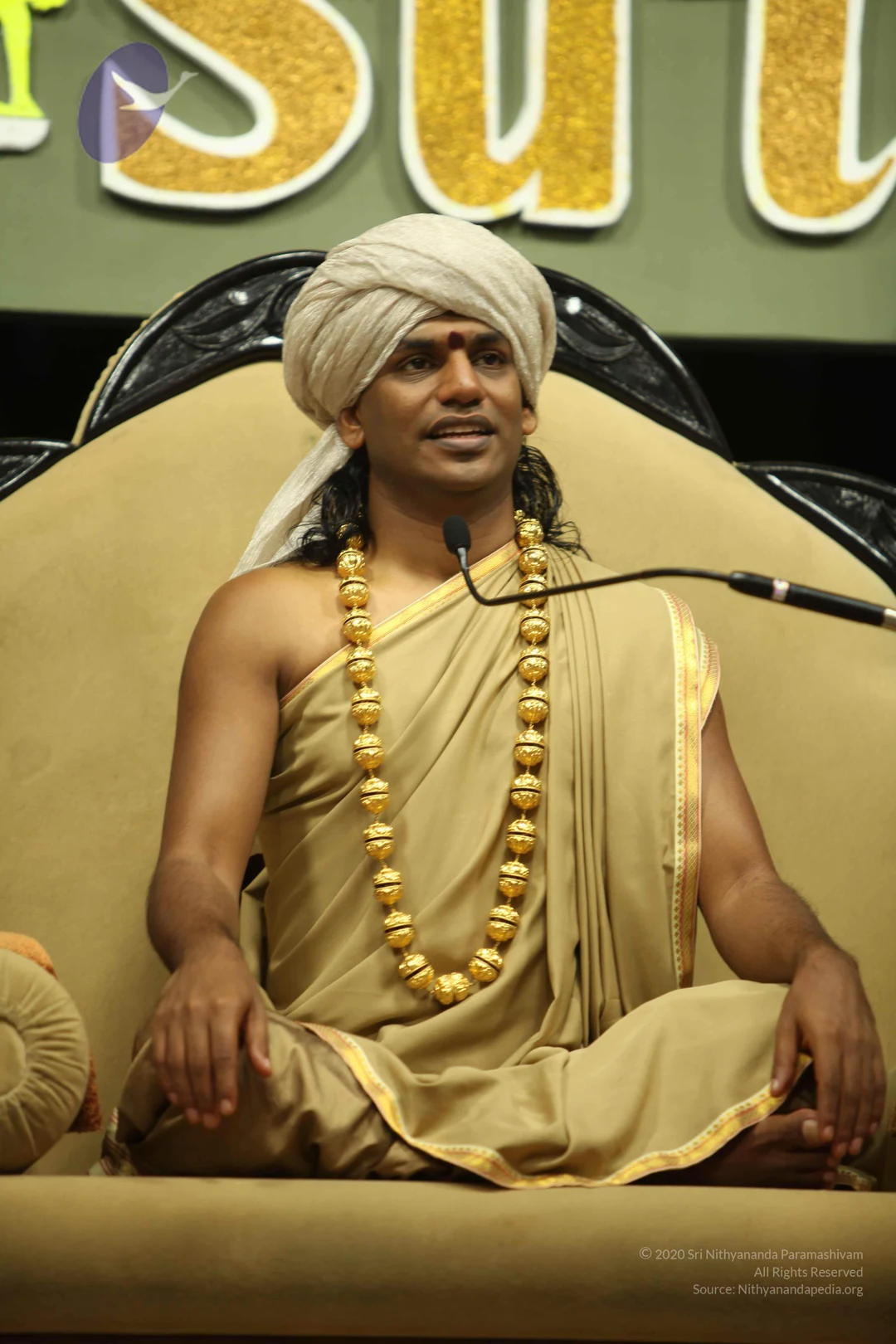
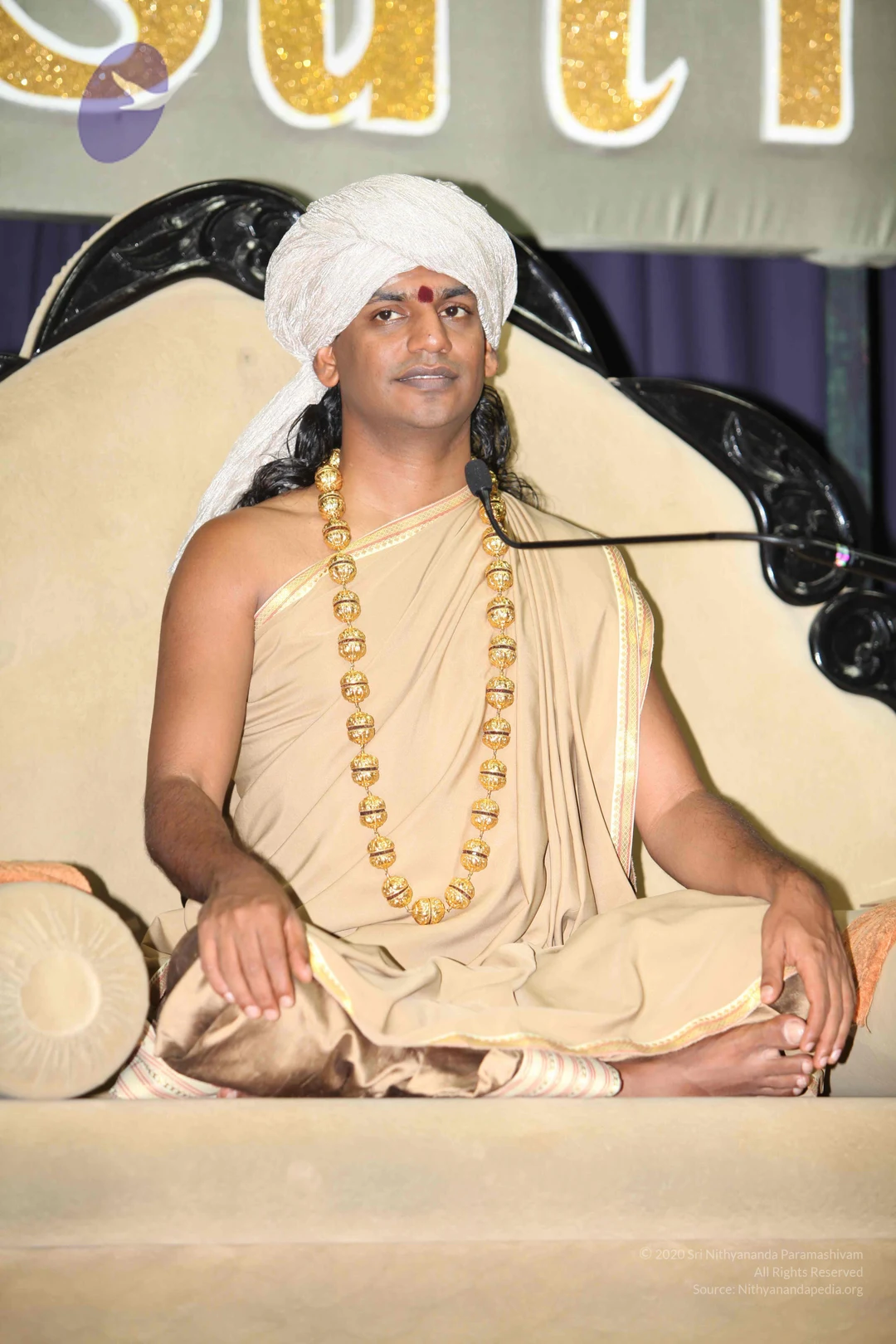
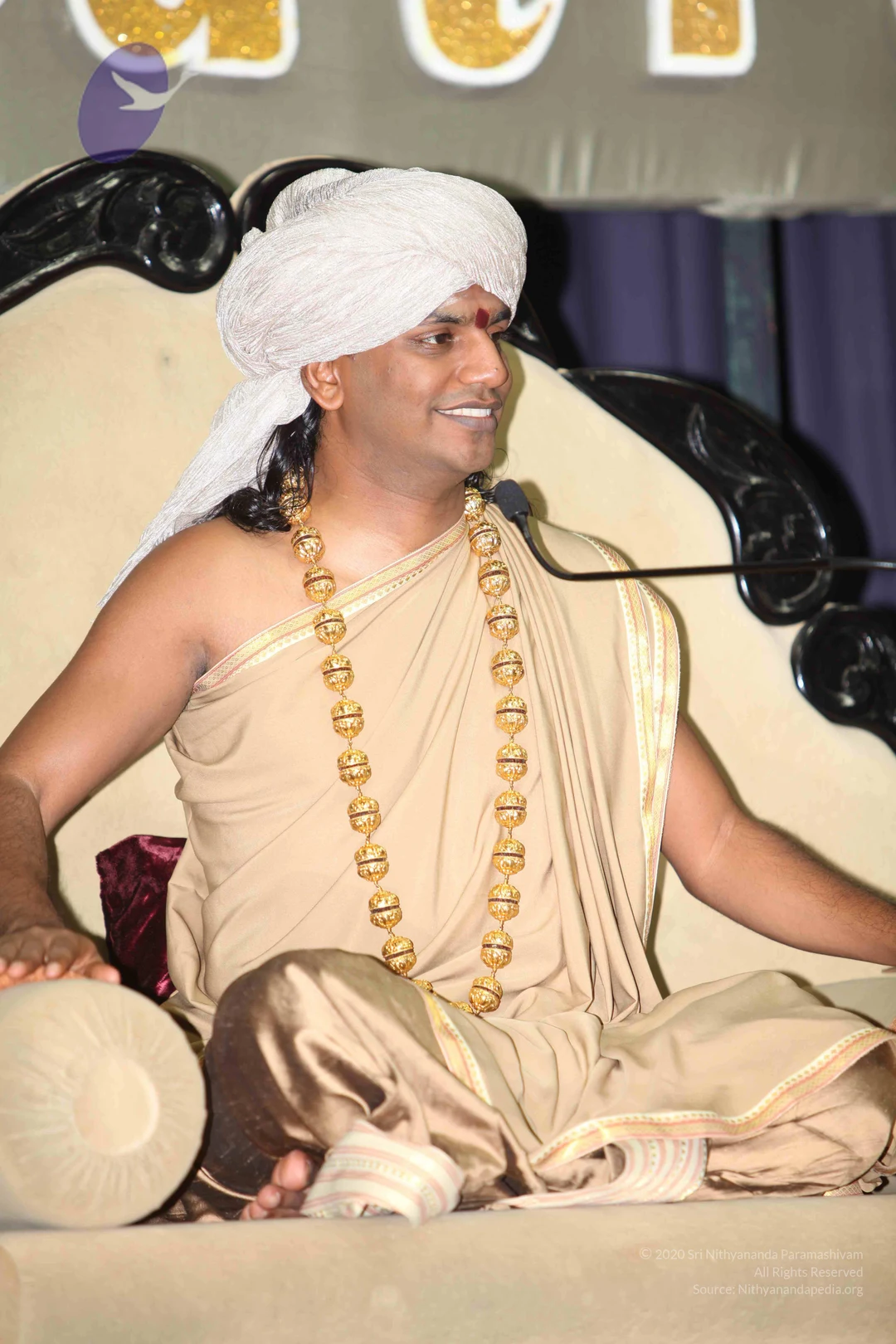
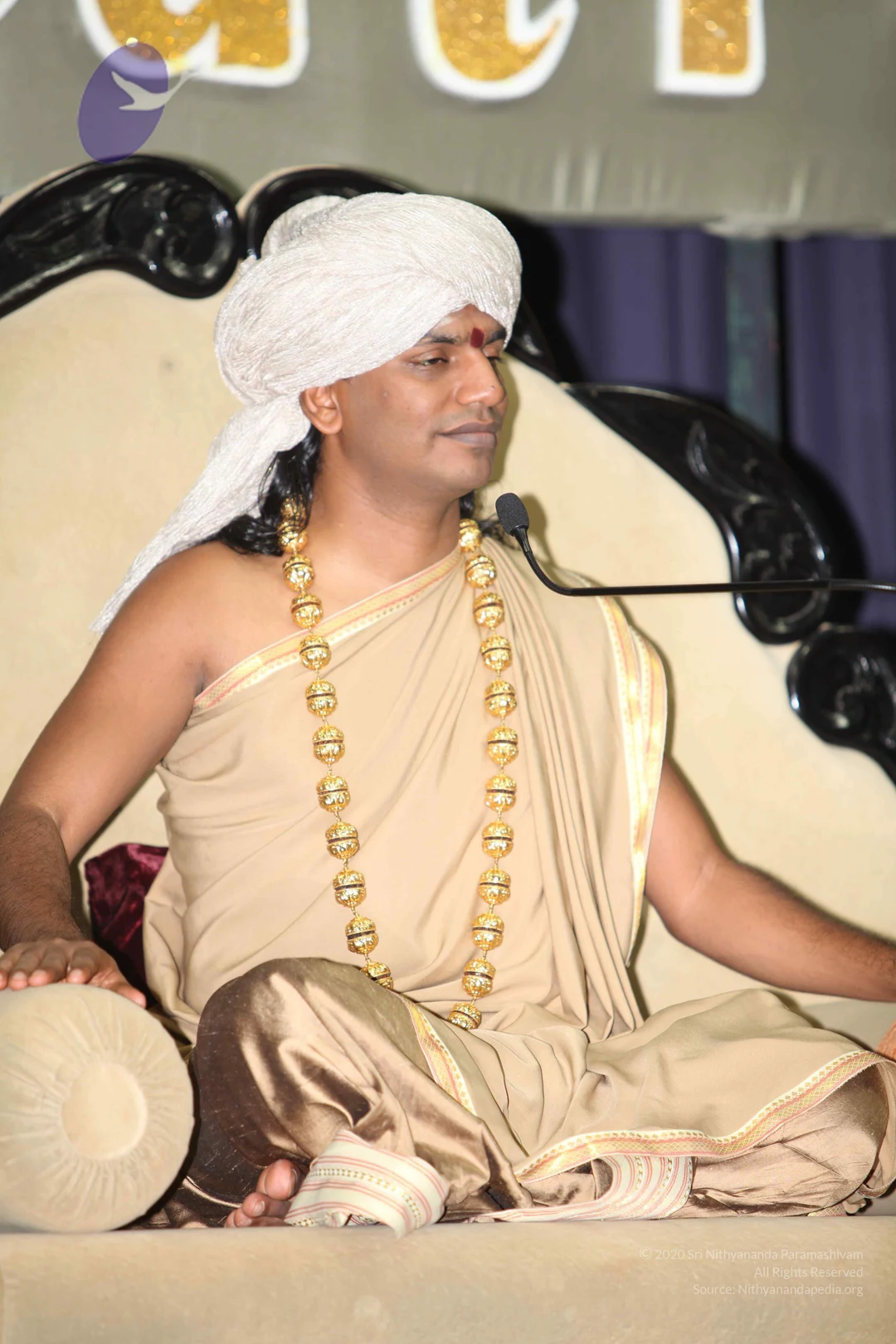
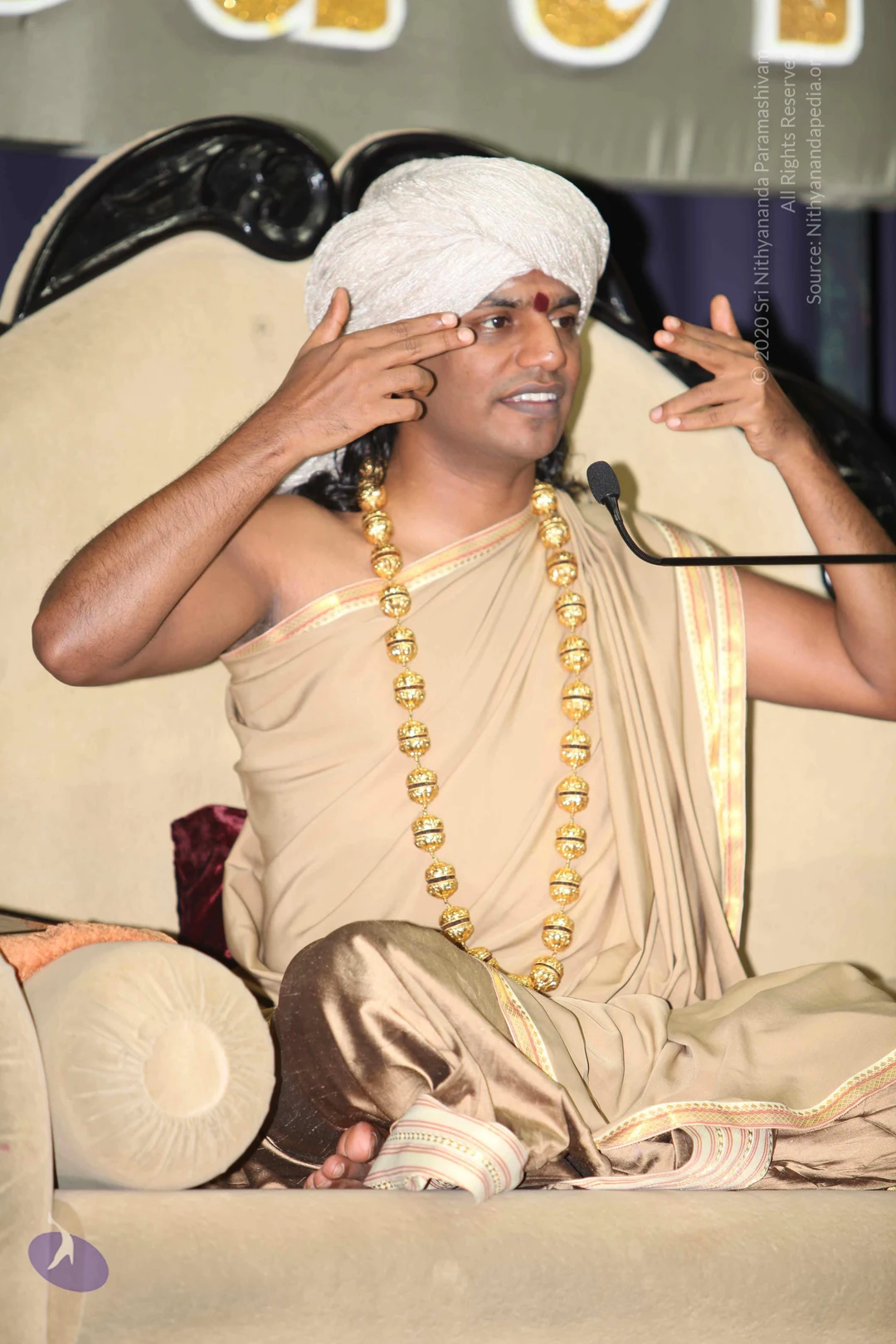
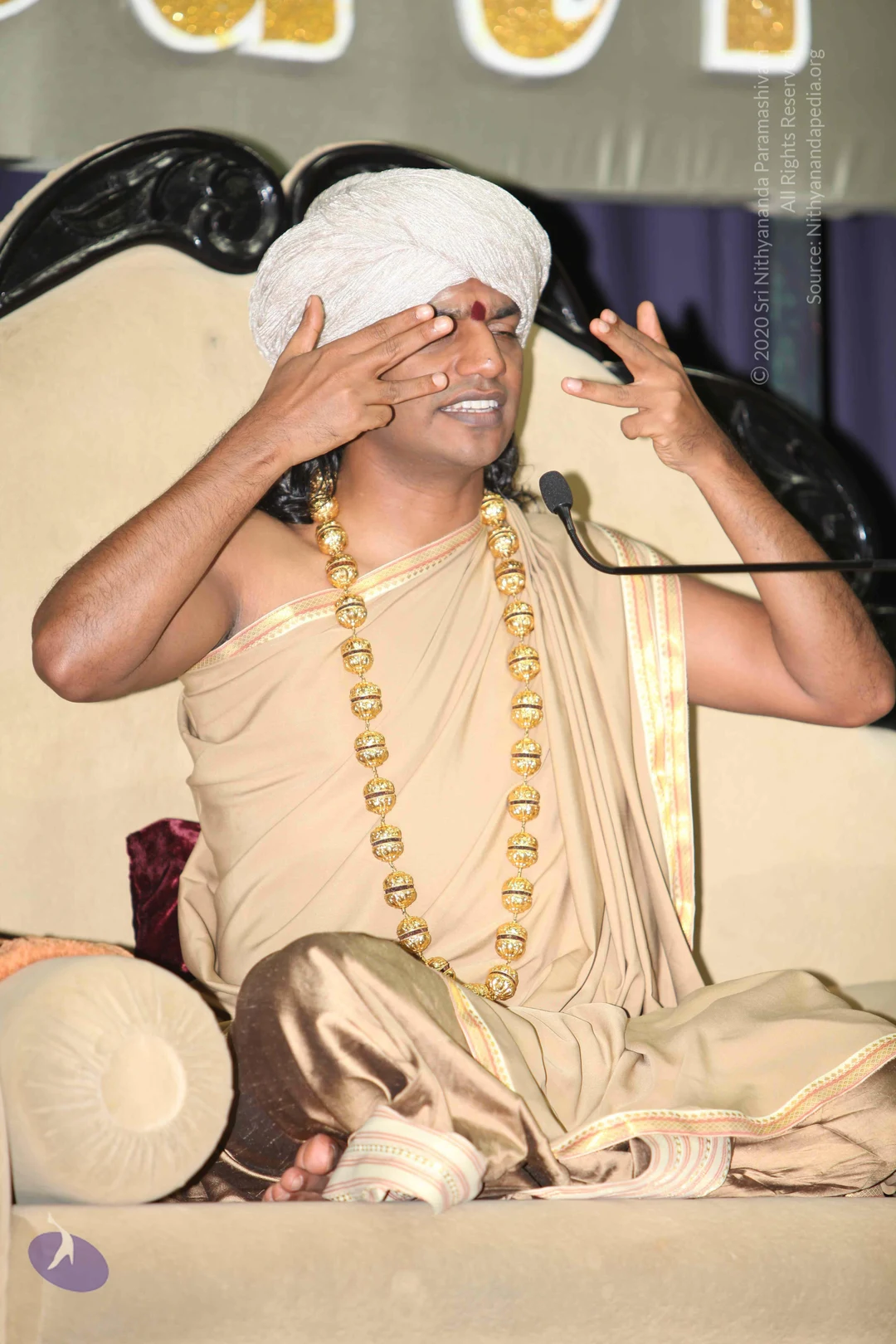
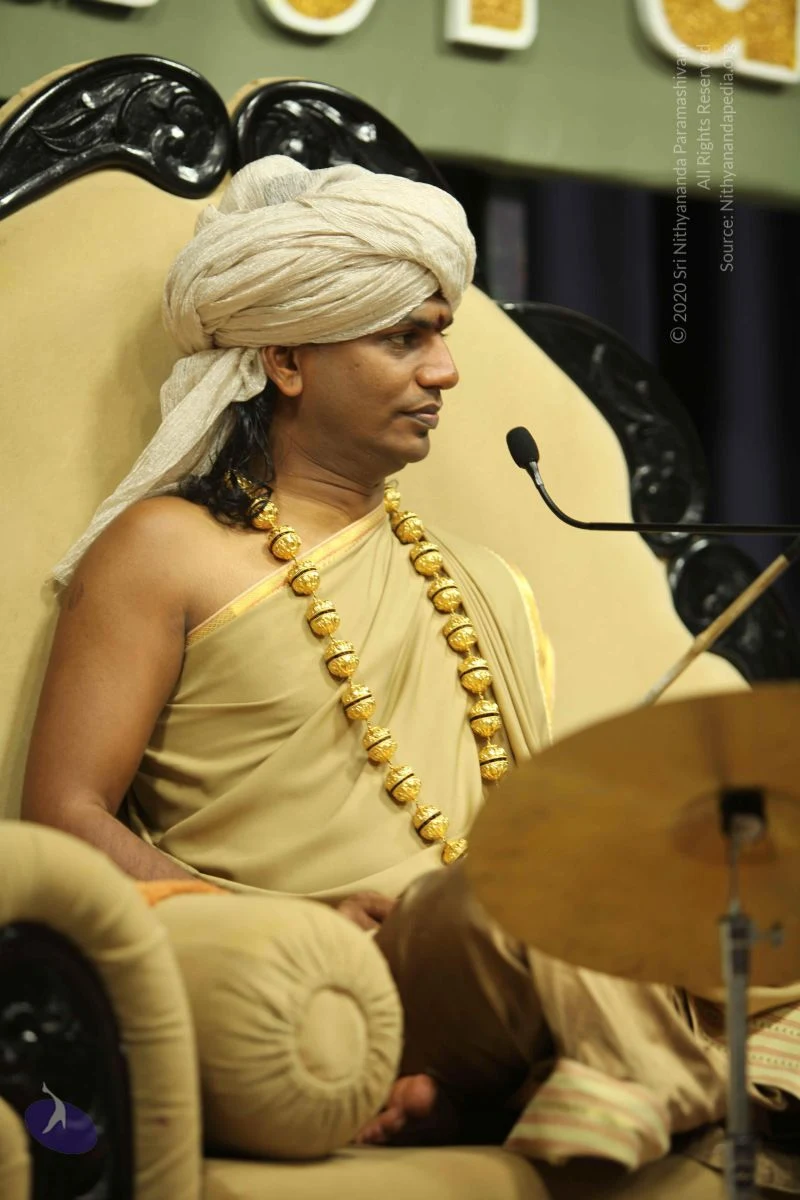
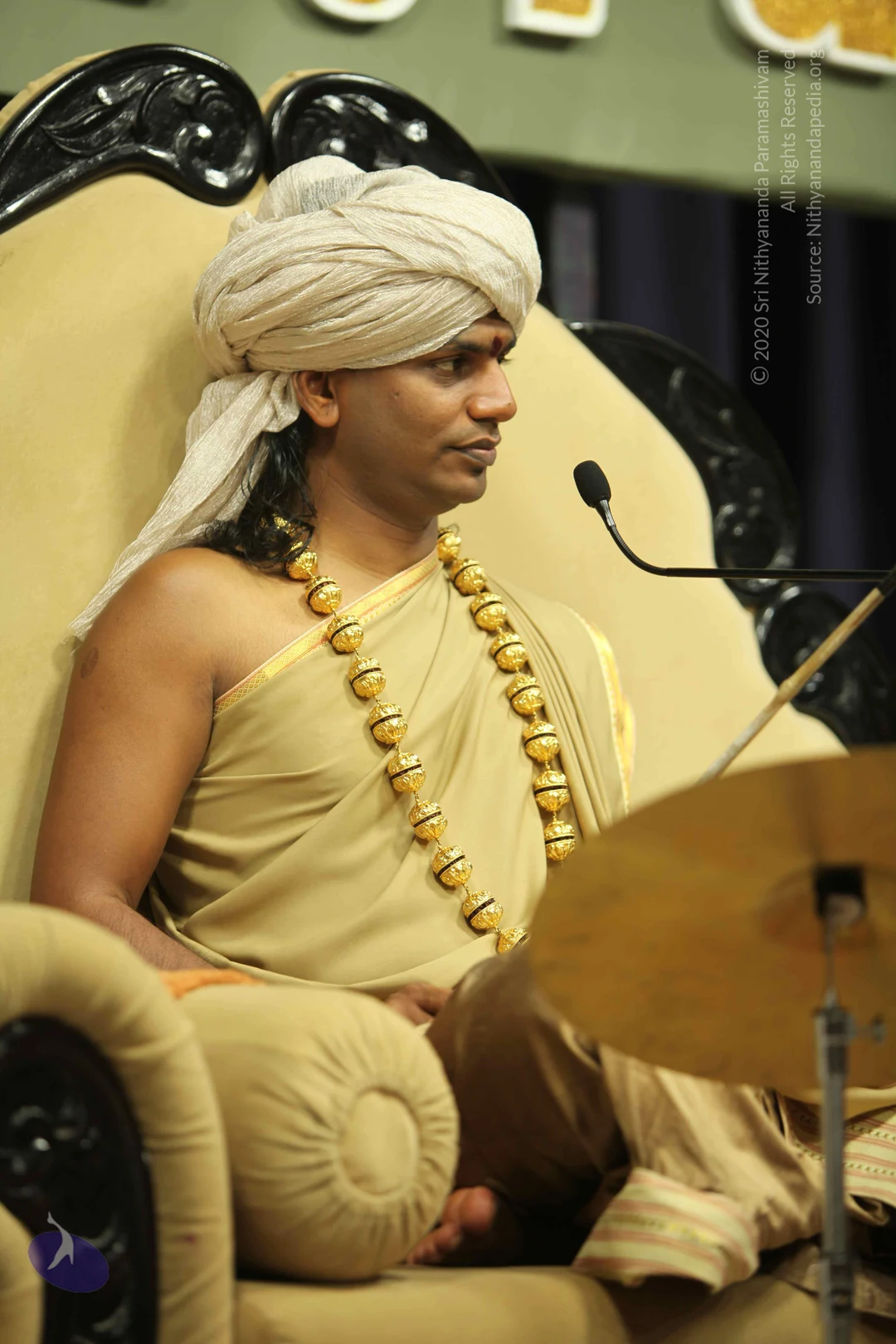
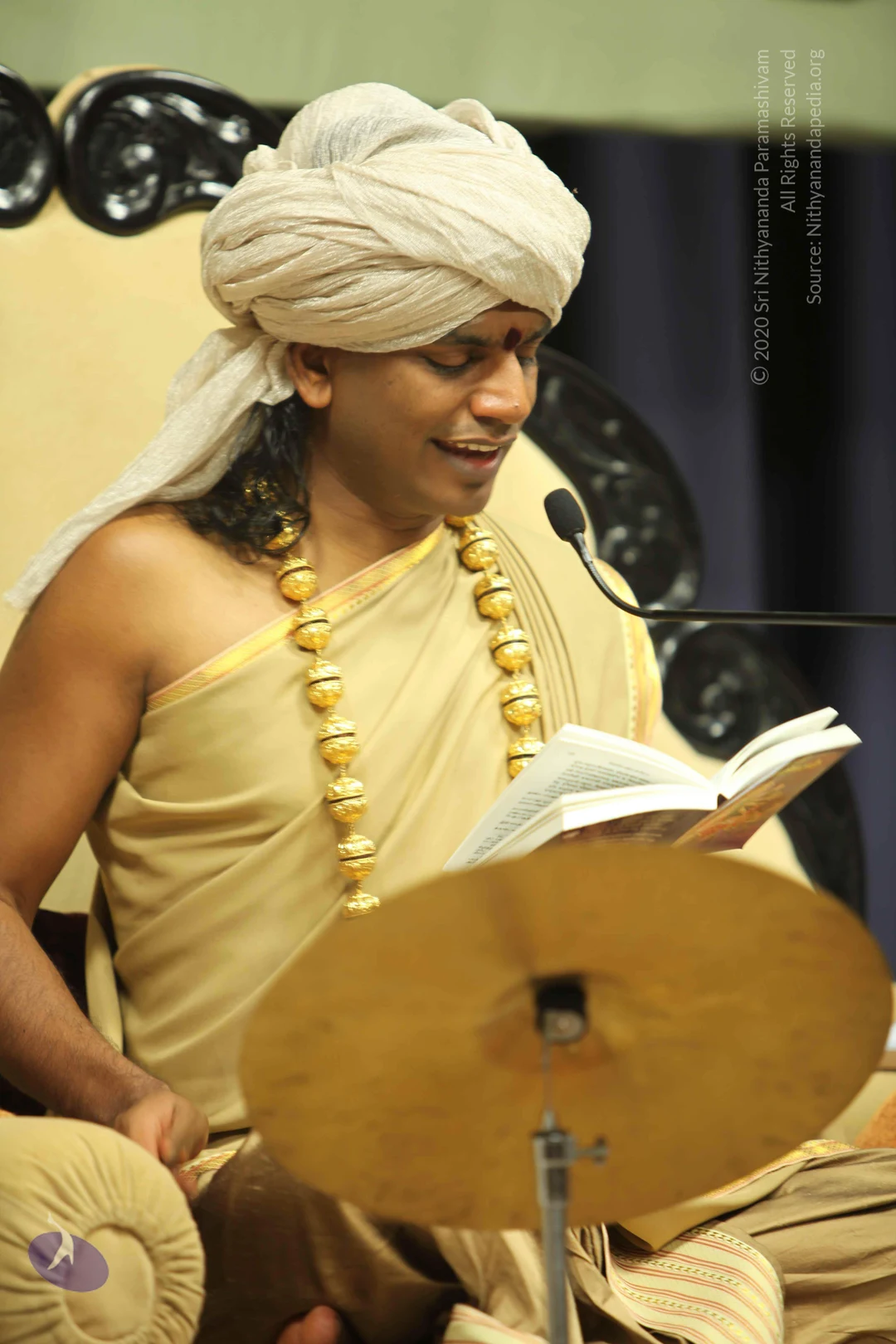
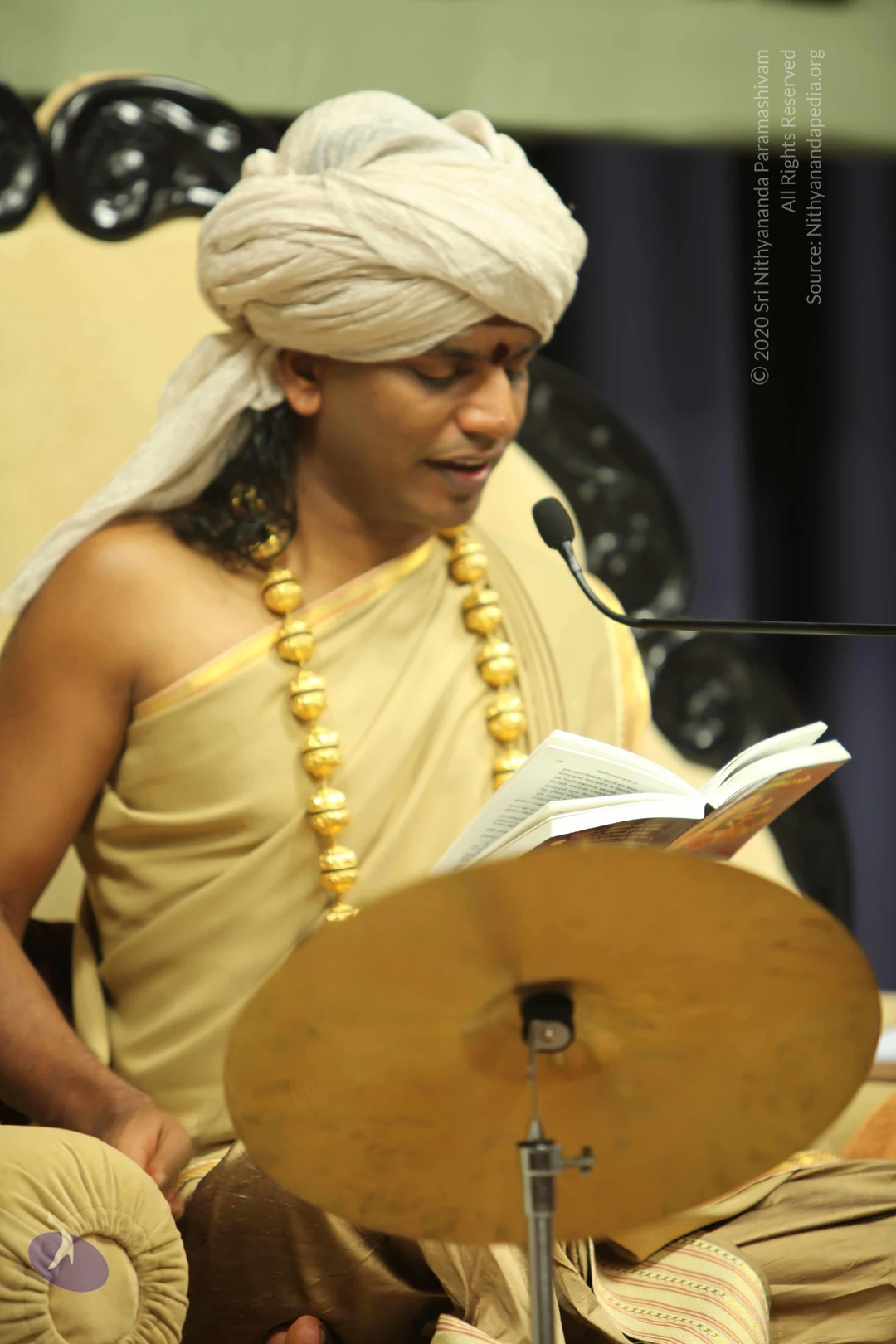
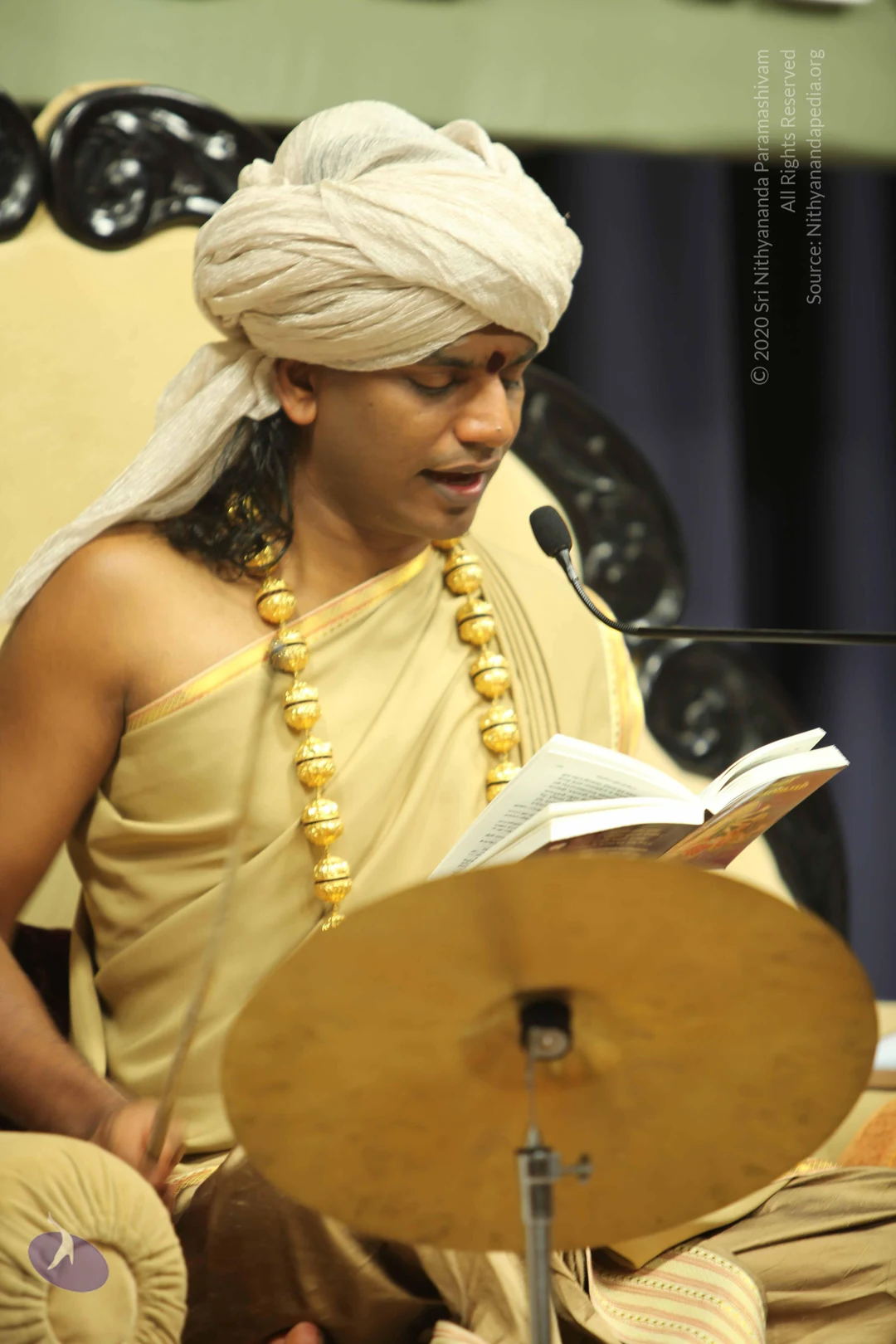
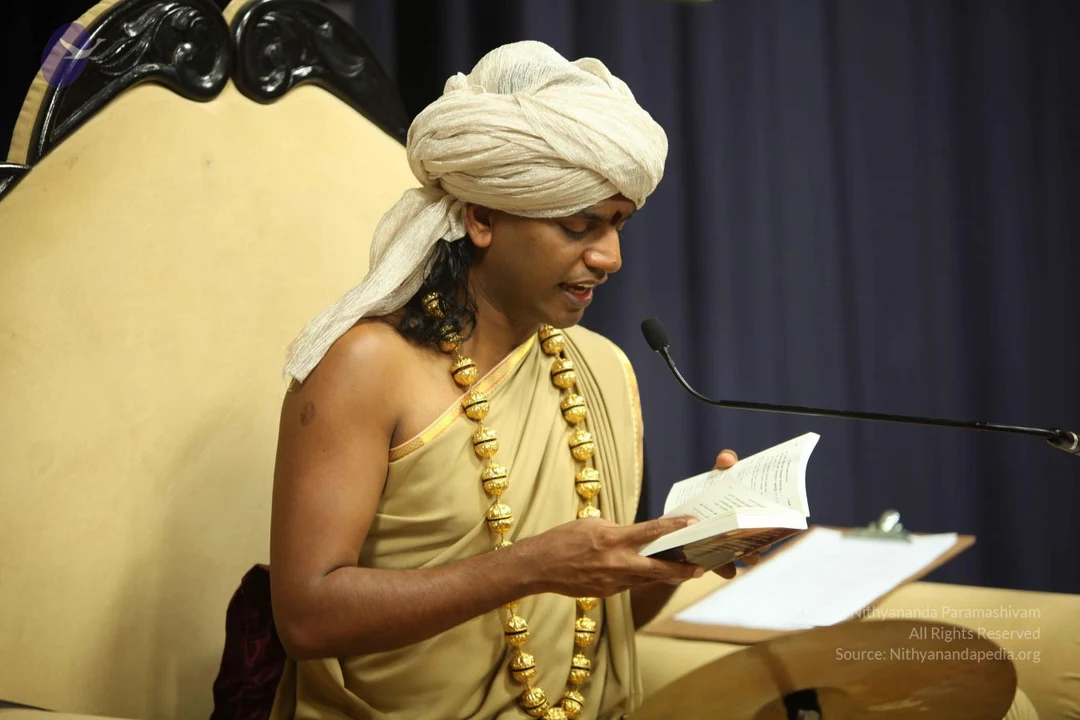
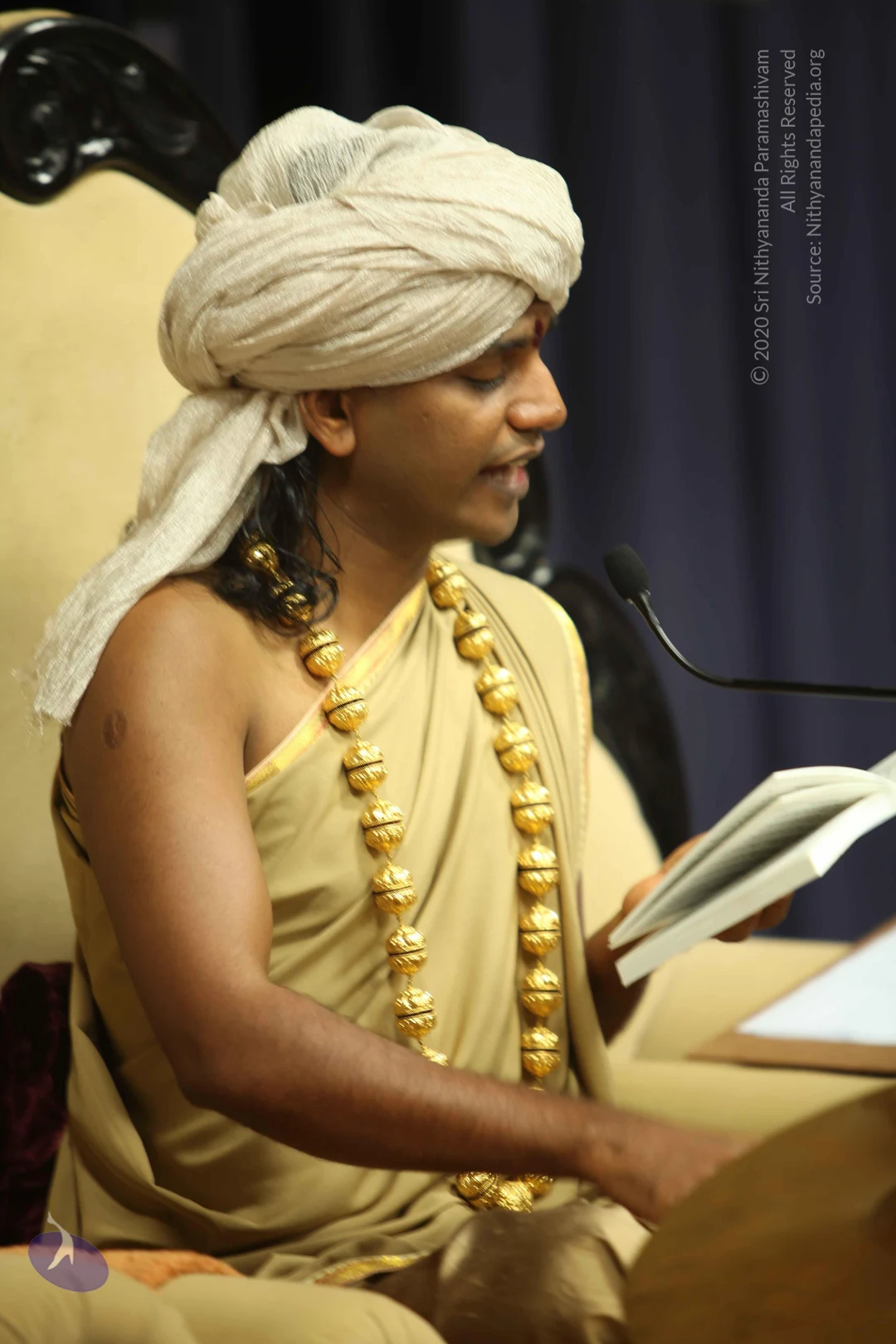
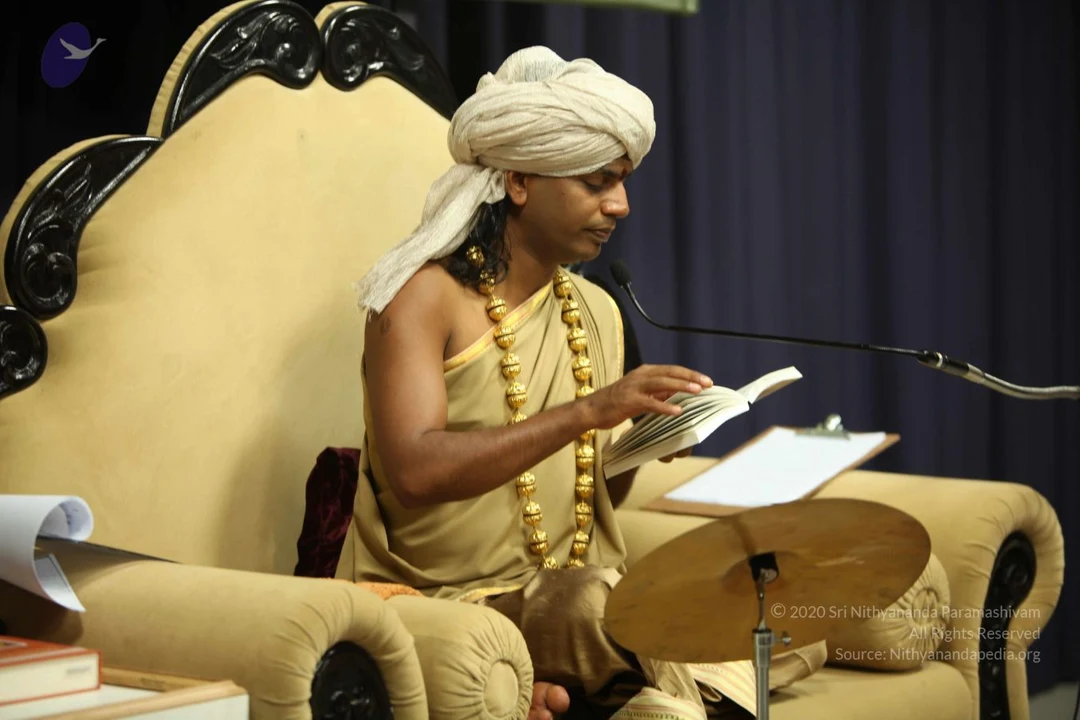
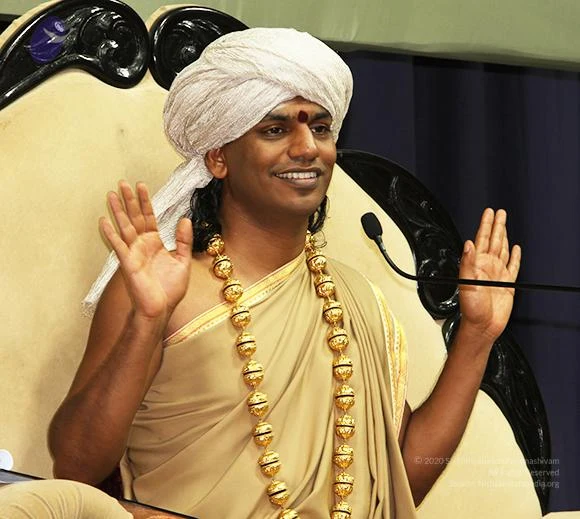
The Supreme Pontiff of Hinduism, Jagatguru Mahasannidhanam, His Divine Holiness, Bhagavan Nithyananda Paramashivam, expounded on the Cosmic Principles of the Sacred Feminine Energy during a live public talk - Nithyananda Satsang. In this talk entitled Awaken The Sacred Feminine, The Supreme Pontiff of Hinduism revealed that only feminine energy can be given the title sacred explaining that when it is awakened it does so much in the system and has nothing to do with gender. He shared further that the whole world is suffering with too much masculine energy and if politics were handed over to women, there would have been a completely family based civilization, with all of the basic needs being supplied to the world. His Divine Holiness shared that the sacred feminine means extraordinary creativity in any field and concluded by advising everyone to remember constantly “you are Devi - Cosmic Mother” and to recite whenever you can, the sounds of sacred Chandi - the seven hundred sacred verses dedicated to Devi.

Video and Video:

Awaken the Sacred Feminine

VideoAudio

Transcript:

(0:19)

Sadāshiva samārambām shankarācharya madhyamām Asmadācharya paryanthām vande guru paramparām. (0:55)

I welcome you all with My love and respects. Today’s subject is Awaken the sacred feminine... Understand the whole subject ‘Awaken the sacred feminine’. All three are unique words. Only feminine energy can be given the word sacred. Have you ever heard sacred masculine? Only feminine energy can be given the word; given the title sacred; because when it is awakened it does so much in your system and it has nothing to do with your gender. That’s a important thing. The gender; male or being female, nothing to do with it. It is something to do with your inner quality. And next word, awaken; only the feminine energy, sacred feminine need to be awakened. You already have too much masculine. The whole world is suffering with too much masculine energy. If at all politics can be handed over to women so much good would have happened to the human society; human civilization. Unfortunately… see, if it was handed over to women it would have been completely family based civilization. So naturally everybody would have had their basic needs. All the basic needs would have been supplied to the whole world. Only the feminine energy need to be awakened, only that can be called as sacred.

(3:19)

Let Me define the sacred feminine. Understand, the extraordinary creativity; creativity will never be possessive. There are two kinds of civilization; creativity based civilization, agriculture based; possessive, possession based, money based. Sacred feminine means extraordinary creativity in any field. Why it is associated with word feminine, because by nature, without any choice all women experience that creativity when they carry a child. During their pregnancy, their system, even if they are unconscious about the feminine energy, even if they don’t know anything about feminine energy, when they carry a child their body is made to go through, experience sacred feminine. If you are matured enough your being also can experience sacred feminine; so creativity; the sacred feminine part, is an extraordinary energy.

(5:05)

In Vedic tradition, we call this as Matru Rupena Samsthita. There is a beautiful shloka in chandi

'Yaa Devi Sarva Bhooteshu Matru Rupena Samsthita, Namasthasyai Namasthasyai Namasthasyai Namo Namaha'

या देवी सर्वभुतेषु मातृरूपेण संस्थिता । नमस्तस्यै नमस्तस्यै नमस्तस्यै नमो नमः ॥

O Devi! Who is residing in all beings, Bhuteshu - even the beings word is not a complete translation; whatever exists, sarva bhuteshu matru rupena samsthita, in the form of ultimate creativity; mother, matru rupena samsthita, who is residing, namasthasyai namasthasyai namasthasyai namo namaha, I bow down, I bow down, I bow down, I surrender. It’s amazing stotra.

(6:23)

In the vedic tradition there are two literature, two seven hundred slokas which can directly give you to Enlightenment, give you Enlightenment, lead you to Moksha. One seven hundred sloka is philosophy - Bhagavad Gita; the other seven hundred sloka is technique - Chandi - saptashati, which can directly lead you to Enlightenment just by reciting. Nothing else need to be done. See, Bhagavad Gita is linguistic importance, understand - try to practice. Chandi is phonetic importance - just reciting, nothing else. Just reciting, it can lead you to Enlightenment.

(7:13)

In Bhagavad Gita it is more working like a light based, means if you read, understand, cognitive shift and experience Enlightenment. Here in the Chandi it is working on sound, just the very phonetic sound, chant or listen, enough! Work happens inside you. They call it Saptashati; seven hundred on Devi; the sacred seven hundred verses on Devi. That is the ultimate sound vibration. I can tell you I have read lakhs of mantras but nothing like Chandi; nothing like Chandi. When you recite you can feel inside your body that creativity getting expressed; the sacred feminine getting awakened and, the Devi who resides in you in the form of creativity, getting awakened. The whole body will feel the intense energy just by the sound.

(8:41)

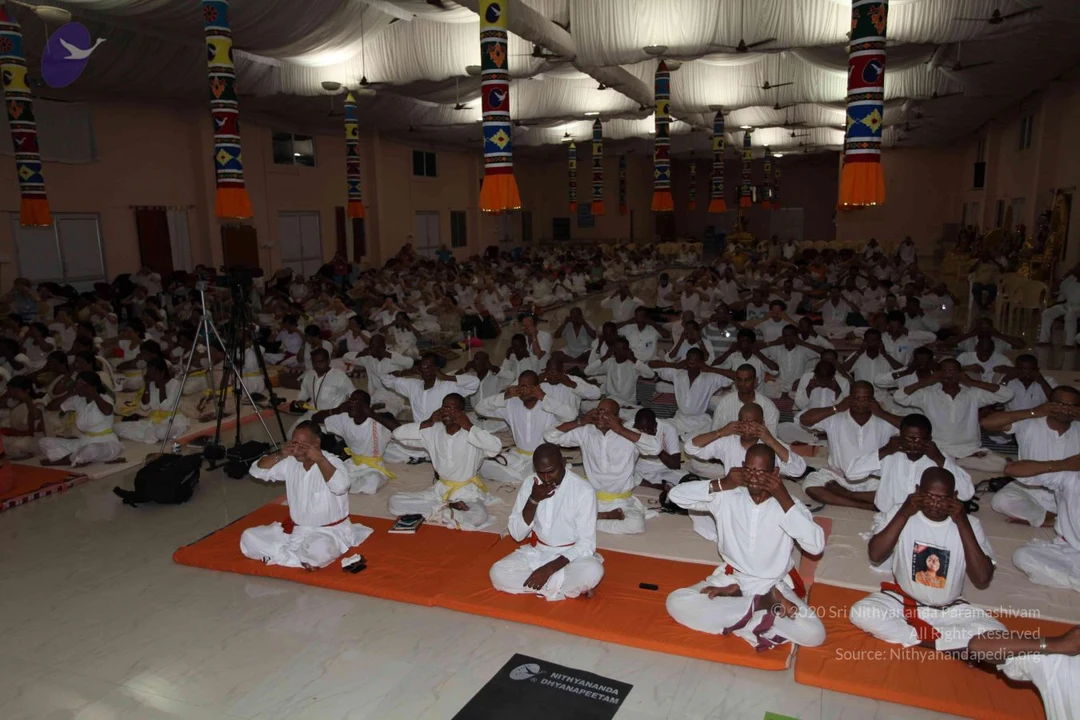
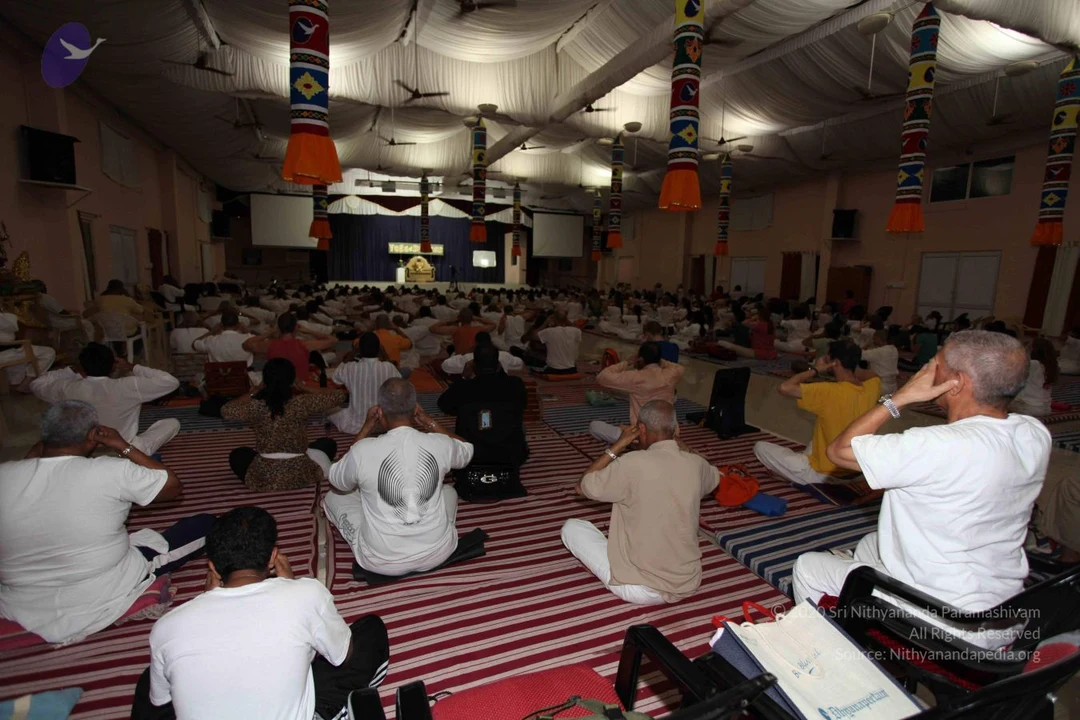
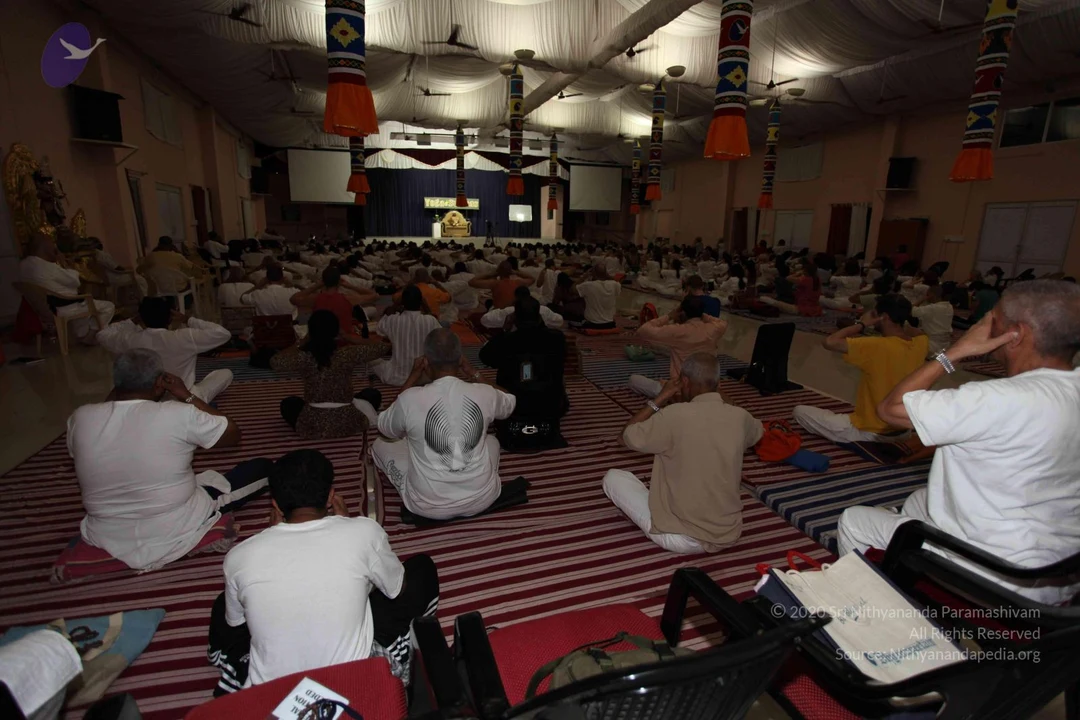
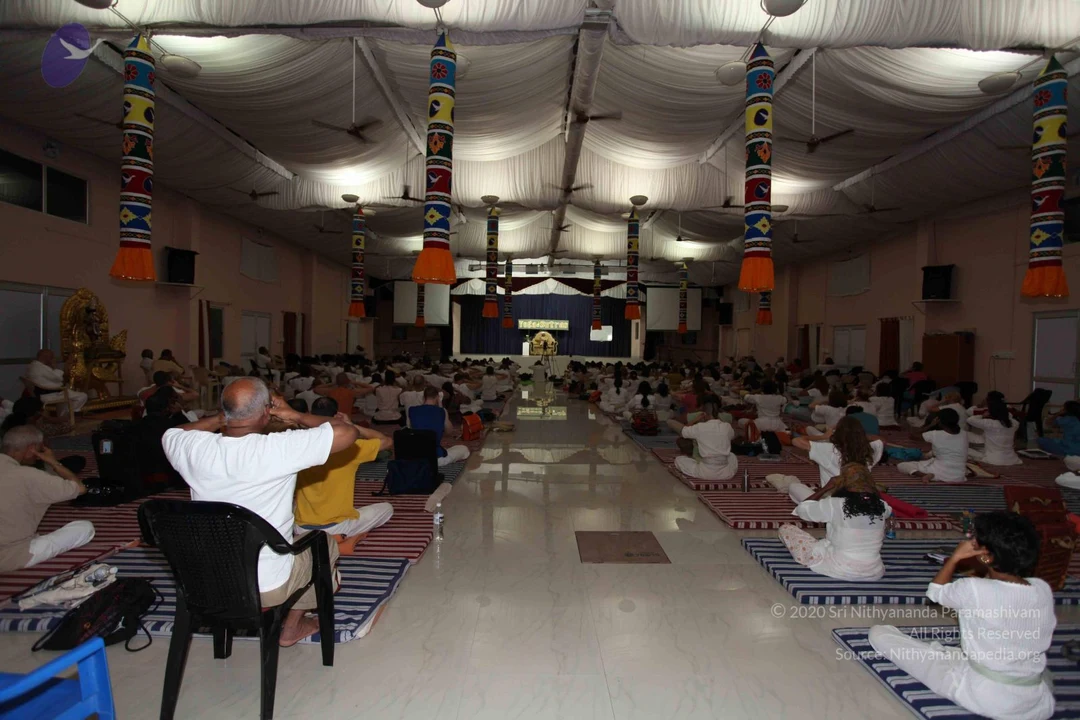
I will make this, our priest to recite Chandi for you guys and I will also recite. Maybe I’ll recite little for you guys today… Today we need to work on vyana but one session, maybe half an hour, I will take to work on this sacred feminine energy. Because it has nothing to do with women or female body, there is something to do with all bodies; all bodies.

(9:25)

Male can express, experience and express the sacred feminine energy in two way: One. if you have a son or daughter spend more time making, helping them grow. You will feel physically the sacred feminine in you and mentally mother yourself, help you to grow. You may think how can I help me to grow! Means your personality, what you identify as you, in mentally, physically, work on those things to grow. Try to change your physical form as you always wanted, through yoga or pranayama; try to change your mind as you wanted, through life solutions; meditation. Mother, you will experience sacred feminine inside you, in the mind, in your being.

(10:30)

Sacred feminine, understand just the uttering of the very word you are in different plane, your mood is different. Only one small change; Mary should have had the place of Devi or Mary Mcdellin. In these two any one, Mary Mcdellin should have had the place of Radha in Christianity. The whole world would have been different; the whole world would have been different. Either the place of Devi, Parashakti or the place of Radha was given openly, of course there are mystical tradition in Christianity still gives the place of Radha to Mary Mcdellin, and gives the place of Devi to the Mary, mother of Jesus. Still there are mystical traditions but not the mainstream.

(11:54)

The unique contribution to the spiritual consciousness from Vedic tradition is sacred feminine worship as the mainstream tradition. I tell you even if everything Vedic tradition gave is lost in some tsunami or earthquake, just if this worship of women, worship of mother; the sacred feminine tradition, if that is retained then the whole thing can be revived, because that is the seed. That is the seed.

(12:31)

Hinduism has at least ten thousand sub sects. I can say at least because each Master is one sect, one sampradaya, one tradition. Hinduism has at least ten thousand sampradayas. I am saying at least. If all sampradayas are lost for some reason, only this one sampradaya, the Devi worship, mother worship is retained, I will tell you whole thing can be brought back, because the whole thing is centered on this one, mother worship. Mother worship carries the blueprint, the hologram of the whole Vedic civilization.

(13:12)

Just this one book, this seven hundred shloka, all the Hindu Sanskrit literatures, Vedic Sanskrit literatures if you put together, it will be at least ten million; at least ten million shlokas, means crore. I am saying minimum because Mahabharata itself is hundred thousand, one lakh. Like this surely we have thousands of books, at least ten million we have. If all the ten million lost except this seven hundred, this Chandi; the verses on the sacred feminine energy, I tell you the whole Hindu tradition can be revived. The whole Vedic tradition will come back. That’s a hologram of Vedic tradition, hologram of Vedic tradition.

(14:08)

I tell you there is no Enlightened Being on the planet earth without worshipping the sacred feminine; including Me, I am basically a Shakta. I myself followed Devi worship from the beginning. If you see My biography and all the deities I carved, the darshan I had, all mother based; the Devi based. All Enlightened Masters, all Masters, Ramakrishna says very beautifully, ‘Shiva is Brahman but Devi has the key to reach the Brahman. Unless she opens nobody can reach; unless she opens nobody can reach.’ Very beautifully he describes like a house scene. Even though husband is the owner he doesn’t have the key, it is hanging in the hip of the mother. Either you need to fall at the feet of the mother or maybe the sons, small kids, who are already near to mother, they can go and have the right to remove the key from the hip. Only they can touch that place and remove the key, nobody else can touch. So either surrender to mother or people who are closer to mother that’s all. No other way to reach Enlightenment.

(15:44)

It’s very poetically described but I tell you it’s a fact, it’s a truth; still the key is with sacred feminine energy, with mother. And same way, all mother based traditions only continue to deliver Enlightenment and keep the sangha, the stream of transmitting Enlightenment tradition alive. One of the biggest blow happened to the vedantic tradition is, women are not allowed to sit in the throne and rule the samsthanas and sanyasa sampradayas. I am changing it, I am changing it... That is why I installed Anandeshwari in the same Deity. Even if I put separately, little gap later on some fellow can remove it or make that as a second grade citizen; Devi as a second grade citizen. I do not want that. That is why in the same Deity in the same mould I added Devi. Even if you take photograph I do not want two different Deities. No….

(17:37)

All traditions which missed the sacred feminine, whether worshipping the sacred feminine or techniques to awaken the sacred feminine, lost its life within hundred years. One of the greatest thing happened to Ramakrishna mission is, Sharada Devi was included in the main worship altar within hundred years of the Ramakrishna mission organization creation. They found out the important component which they were missing and they added, saved themself... Same way the Ramana’s tradition, Ramana maharishi’s tradition, they gave place for his mother. Unless the place, representation for the sacred feminine energy, techniques to awaken the sacred feminine energy, neither Enlightenment can happen nor it can be transmitted.

(18:58)

I already made a clear rule. Of course I have created enough techniques to awaken the sacred feminine energy and give Enlightenment. Even in the sangha I made a clear rule, at least 33% of all the rights whether it is a initiation, sacred spiritual ceremonies or wealth or running or decision making, will be with women, who experience sacred feminine energy naturally. Here I am connecting sacred feminine energy and women in this part but that does not mean always women experience sacred feminine energy or always men does not experience. No. The possibility is more for the female body. All you need is the sacred feminine to be awakened inside you, you are enlightened; nothing else. Because already masculine is there. That does not need to be awakened. That is too aggressive, ugly. The sacred feminine is awakened, you are there already where you need to be.

(20:30)

Exactly Enlightenment means the suppressed sacred feminine in you gets awakened. That is what we say when somebody becomes Enlightened he becomes Ardhanareeshwara; beyond male and female. This unconscious idiots don’t know difference between Ardhanareeshwara and gay. Below both is gay, beyond both is Ardhanareeshwara. Below both is eunuch, not even gay, eunuch. Beyond both is Ardhanareeshwara. Of course, I am not any way interested in hurting any sentiment related to gay or eunuch. I have a deep respect for them because they are also created by human beings and it’s their choice. They are also created by the divine and it’s their choice. We have no right to condemn even them. All I am saying is that is different and Ardhanareeshwara is different.

(21:36)

All Enlightened beings will carry that feminine grace because they awakened, experienced, sacred feminine energy. So... Meditate on sacred feminine energy, mother, mother energy, healing energy. It can be a very powerful process, very beautiful meditation technique.

(22:21)

In two Vedic tradition this technique is used. Whether you carry male body, female body; don’t bother. Just remember yourself as a cosmic mother, that’s all; nothing else. Just remember yourself as Devi. You may think, oh… My body language everything became feminine what will I do. Don’t worry it will not be ugly feminine as you think. It will not be eunuch feminine, it will be Ardhanareeshwara feminine. It will just only add juice to you, grace to you. Same way, when you remember your cosmic mother if you are carrying female body it will suddenly add the masculine courage in you; veera of the Devi; Chandi. For men it will add the grace of the mother.

(23:23)

I can give you these two as a technique. One; remember constantly you are Devi; cosmic mother and recite whenever you can, this sounds of sacred Chandi, these seven hundred verses. These two can do a big transformation in you; awaken the sacred feminine. We will be having the Chandi Homa done at least hundreds of times in our ashram during Navratri. Hope all of you will be here and enjoy and experience sacred feminine.

Let you all experience and radiate the sacred feminine energy. Achieve and radiate Enlightenment. Live and radiate the Eternal Bliss, Nithyananda. Thank you.

(24:21)

Title:

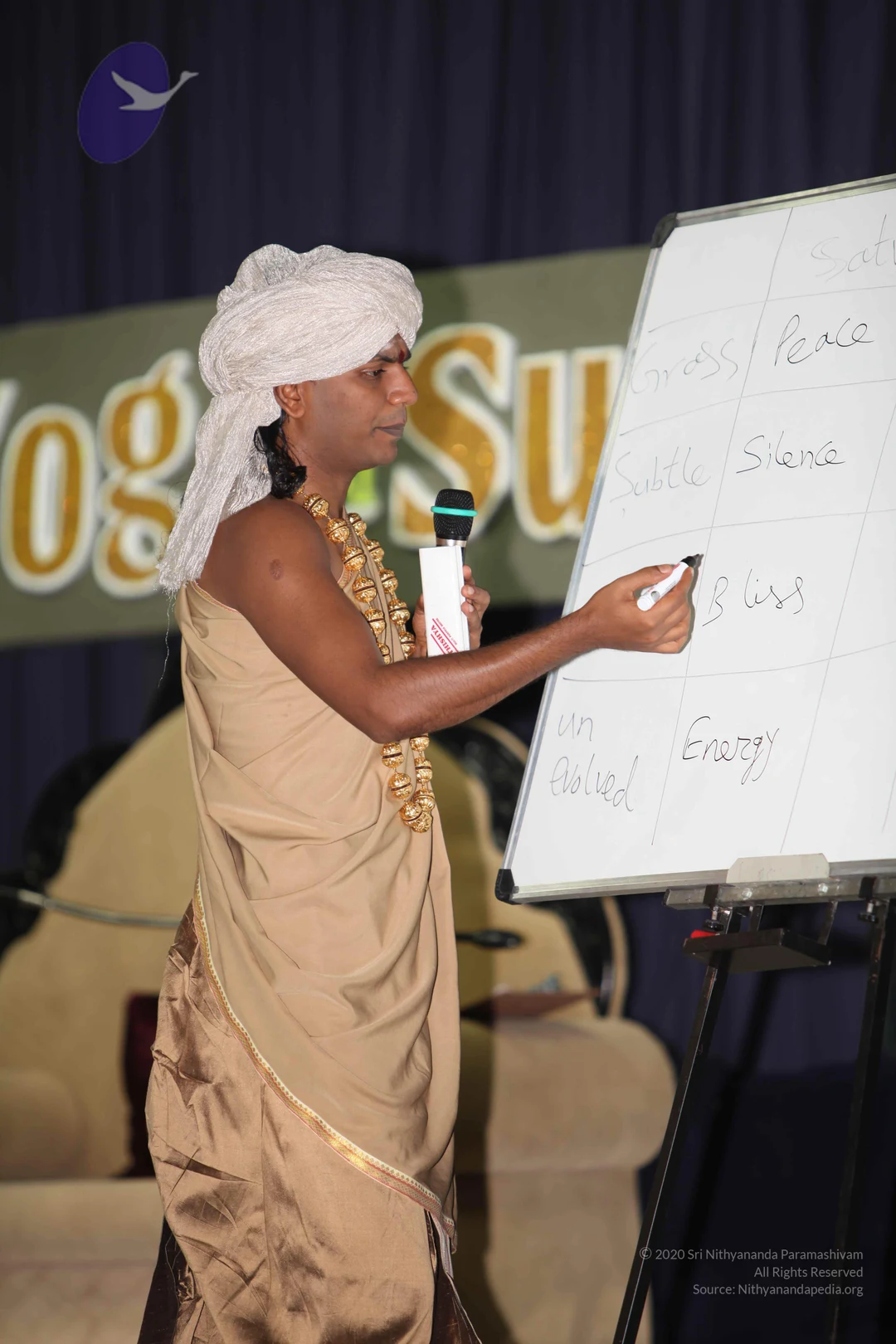
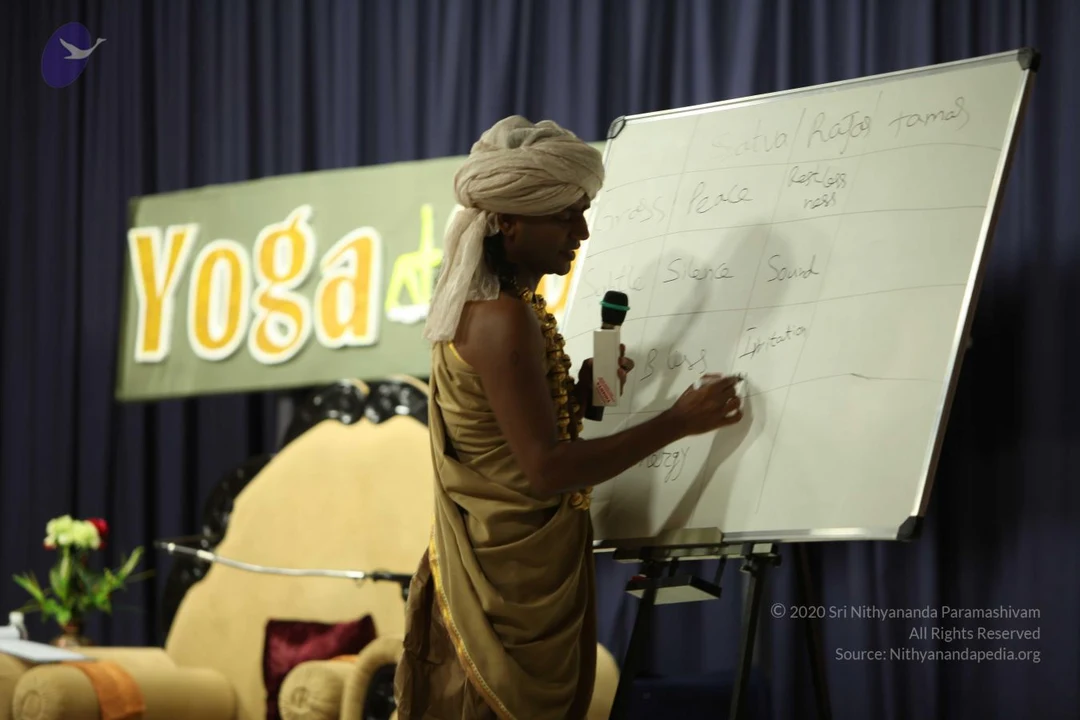
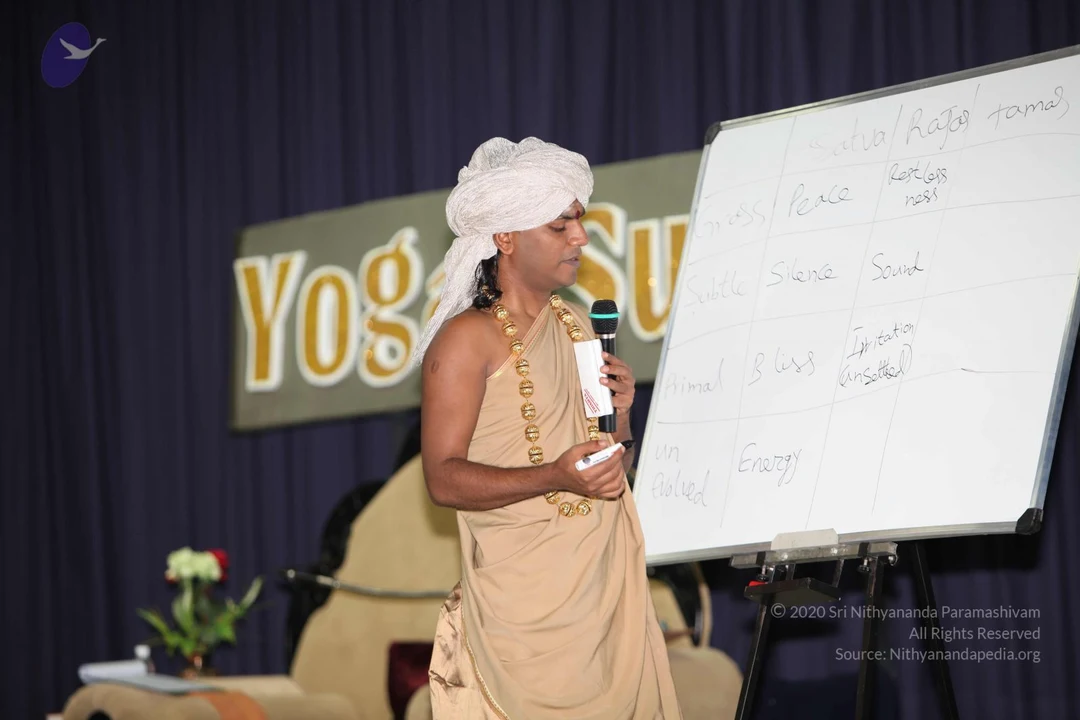
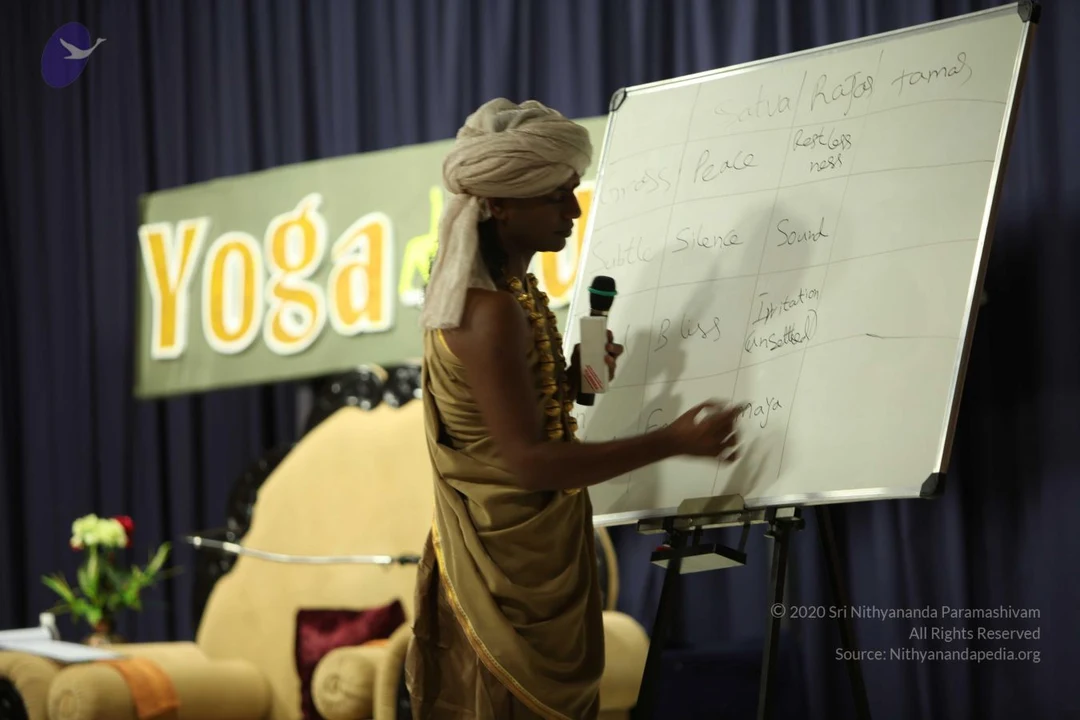
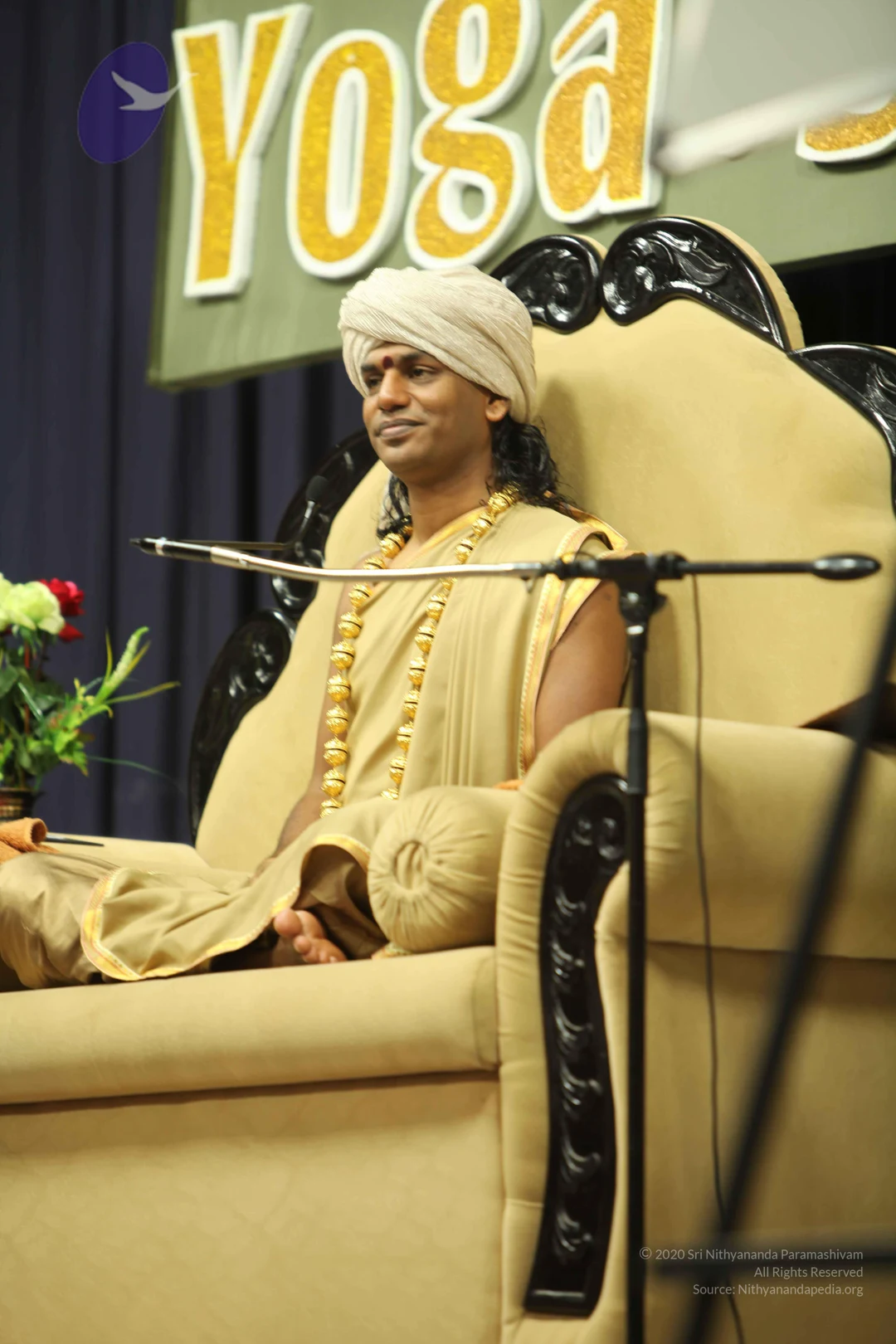
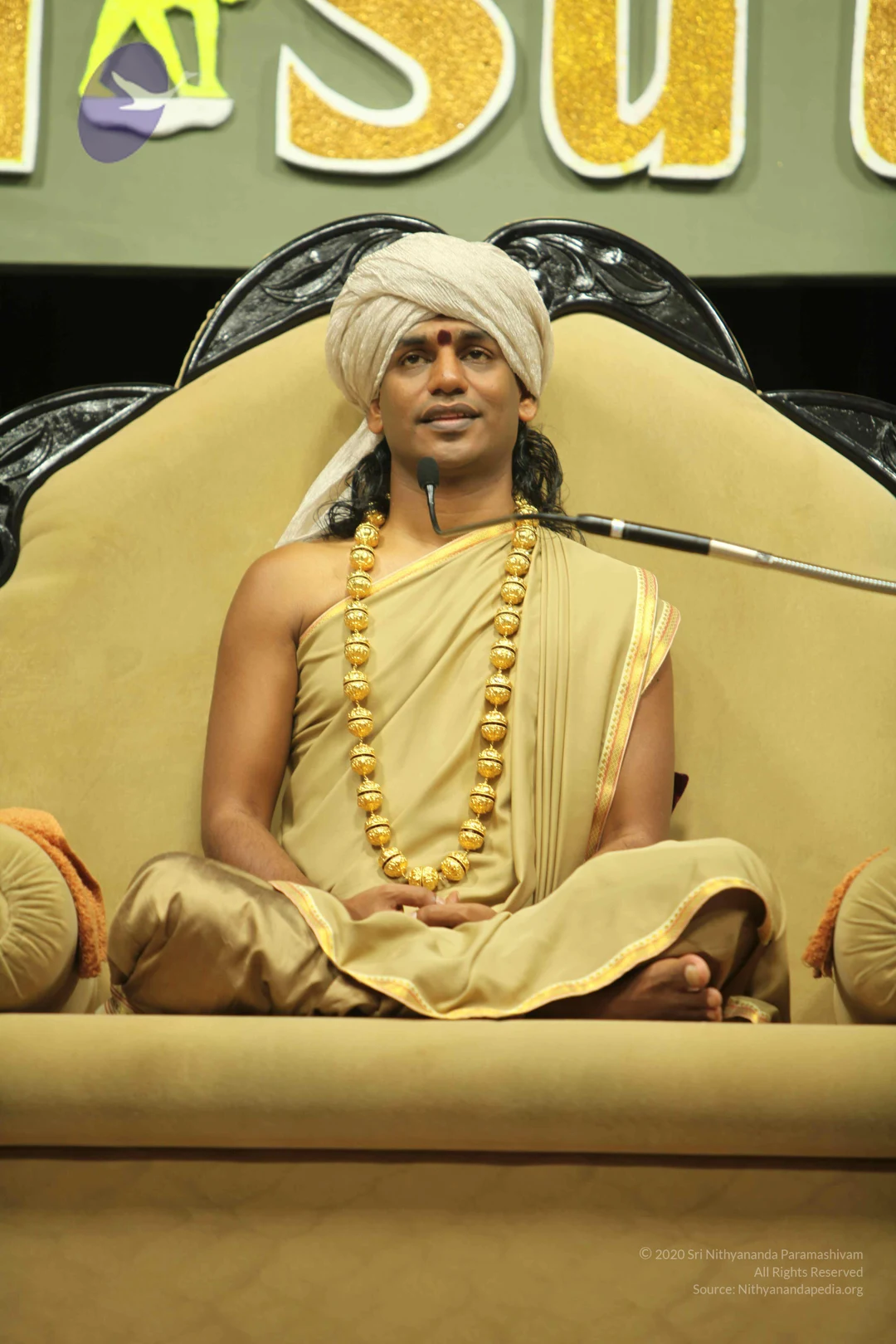
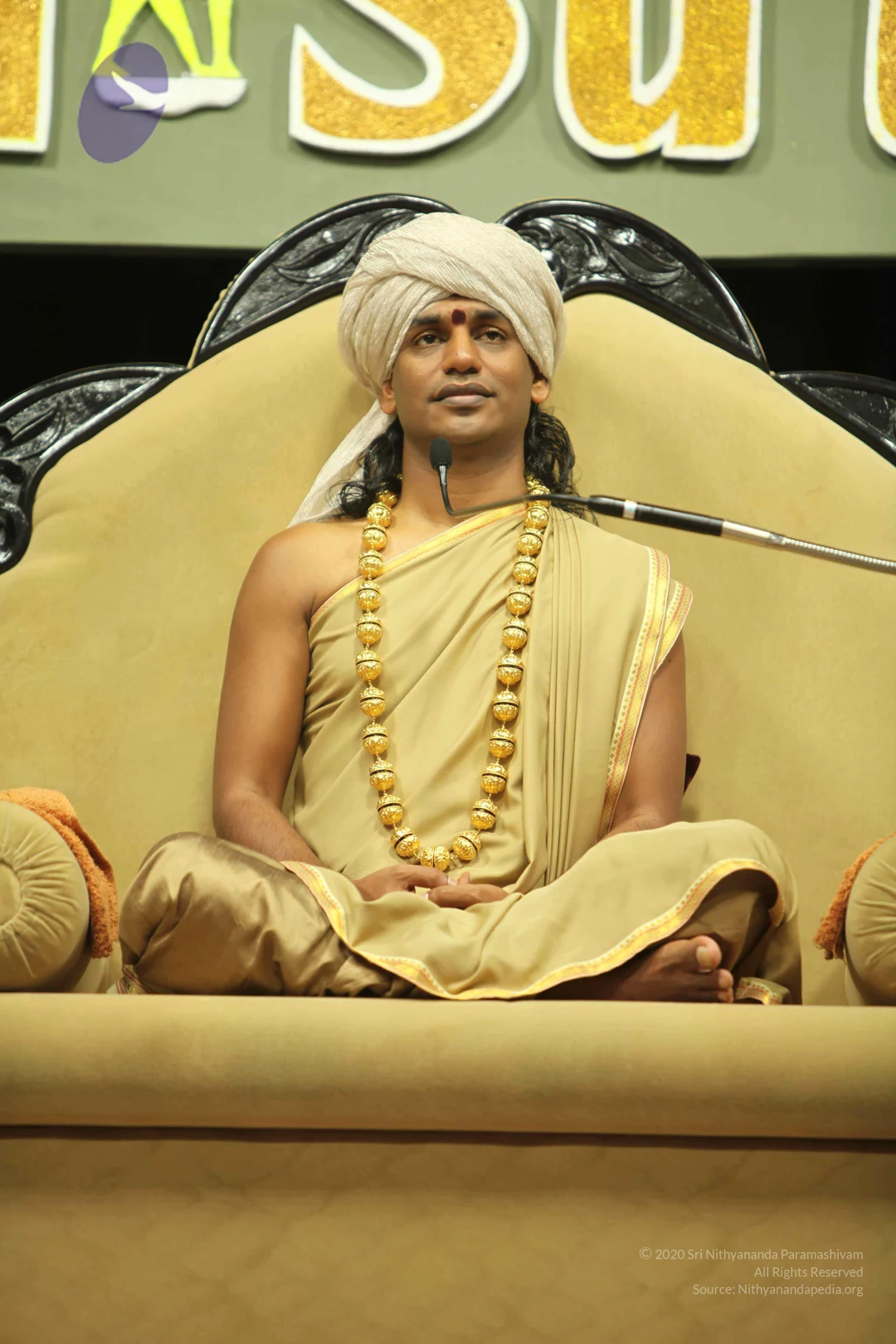
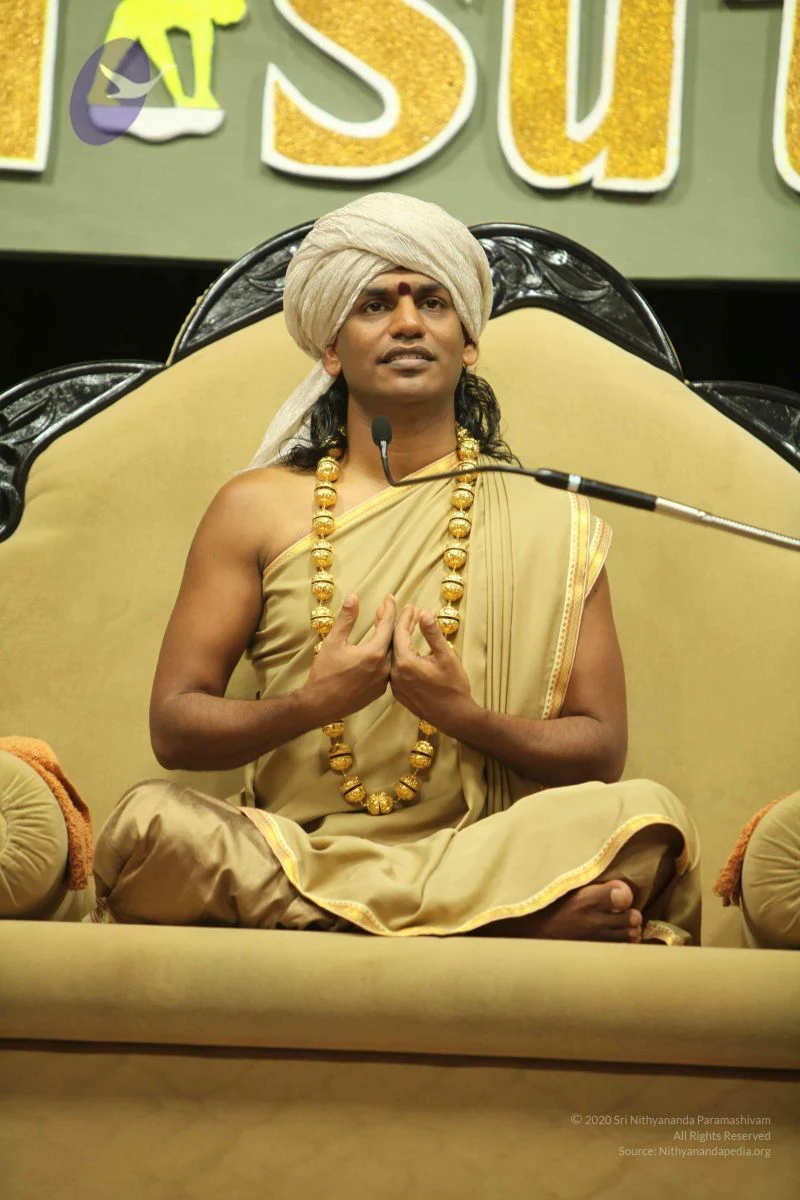
You are Constant Change (PYS70): Nithyananda on Patanjali Yoga Sutra (17 Sep 2010)

Description:

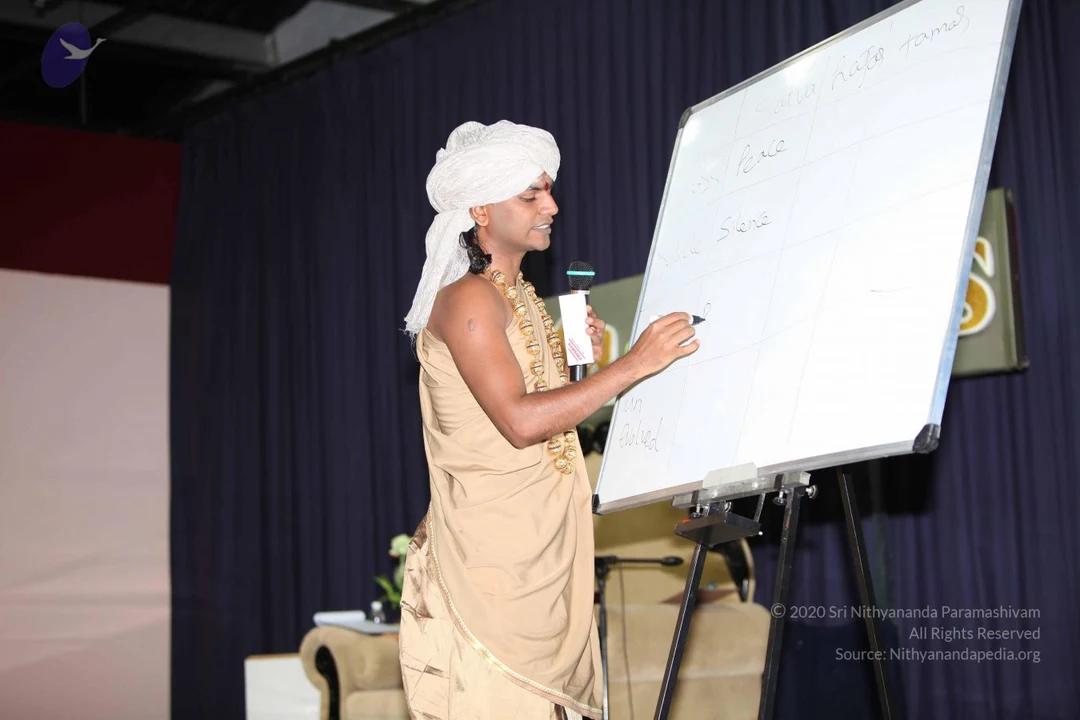
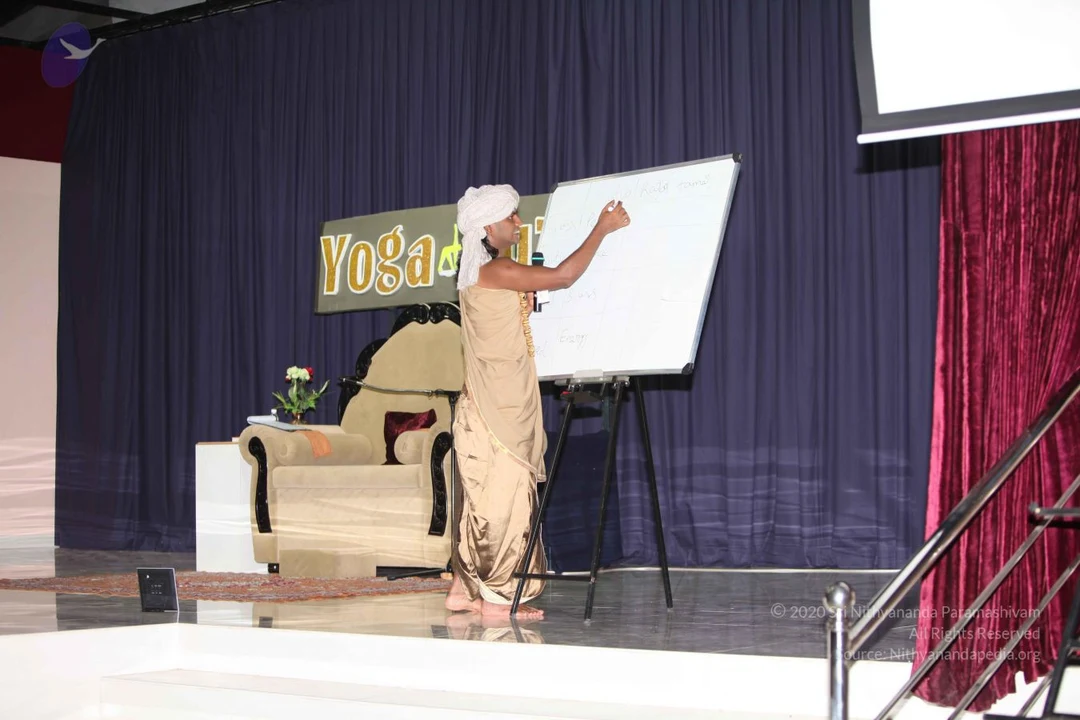
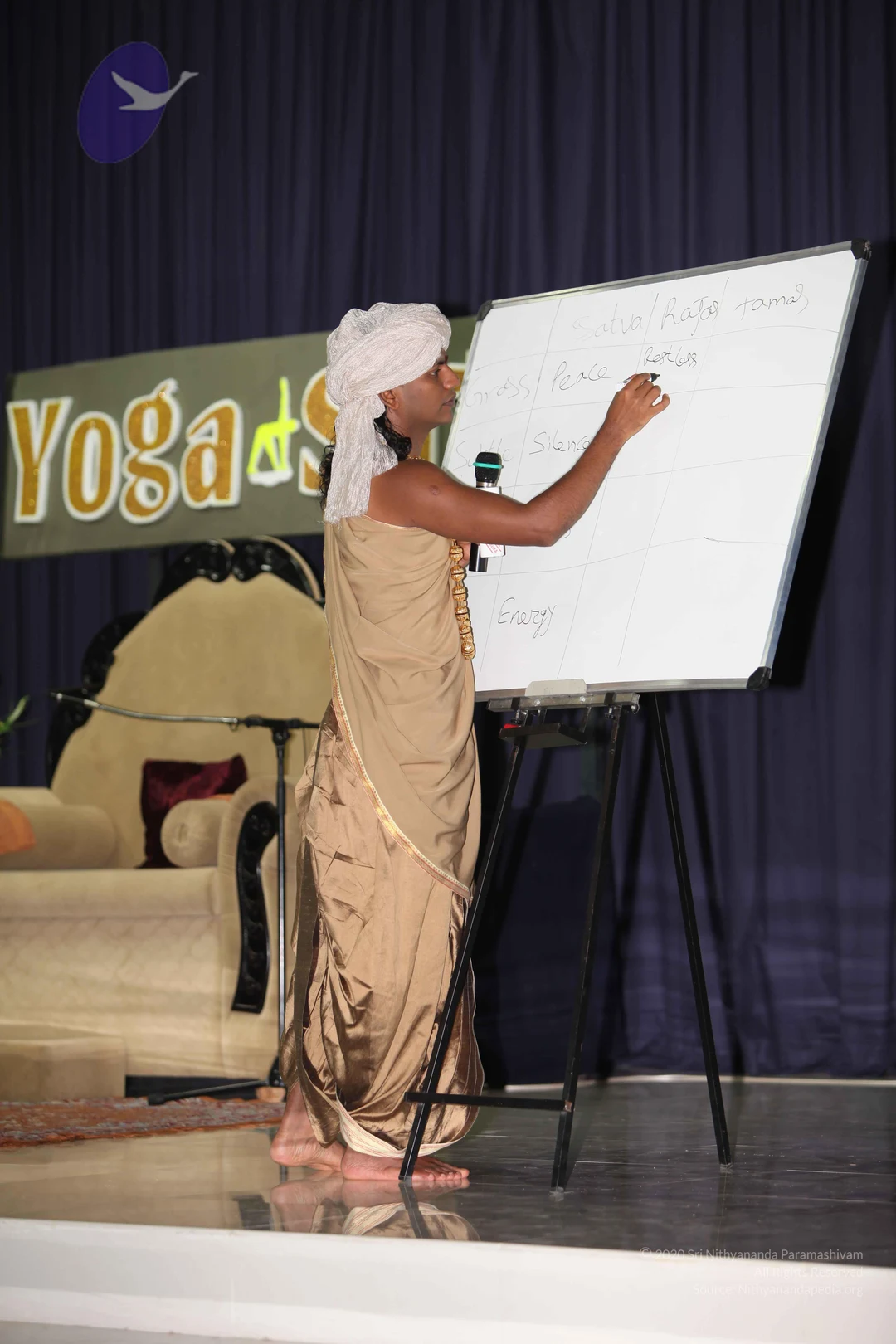
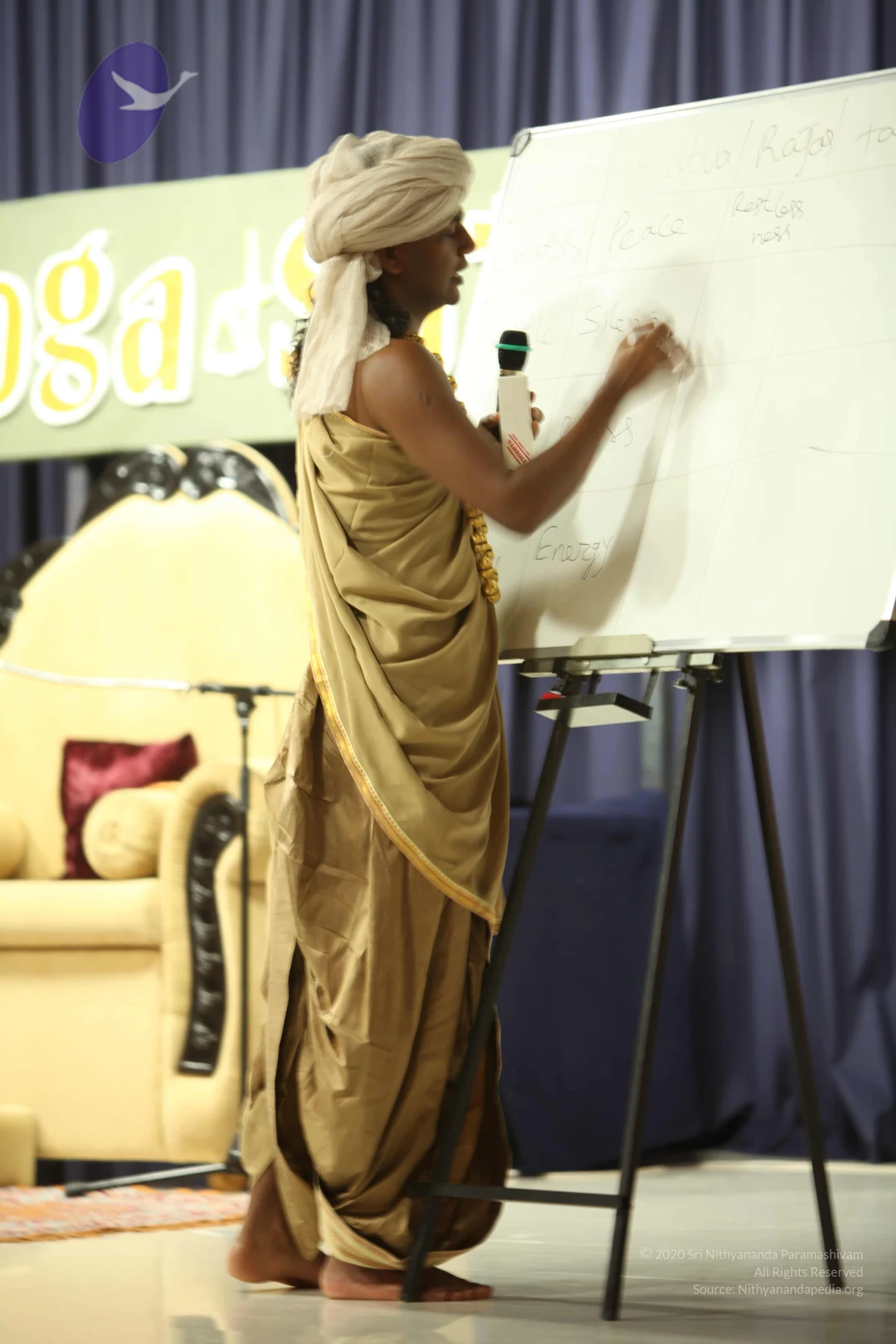
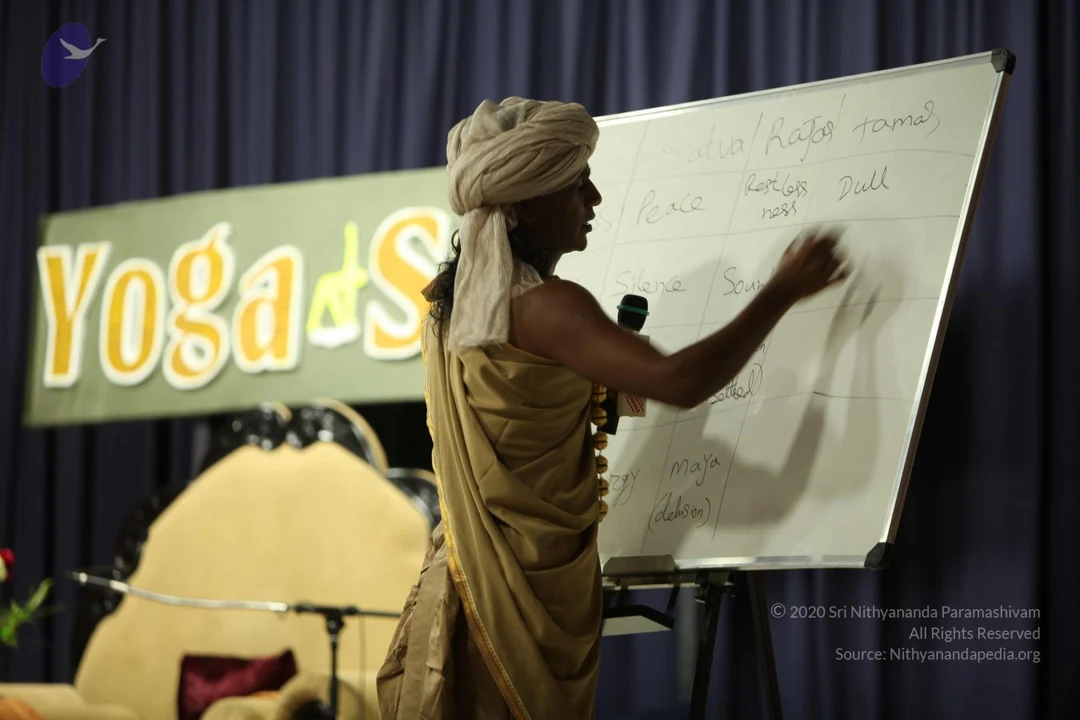
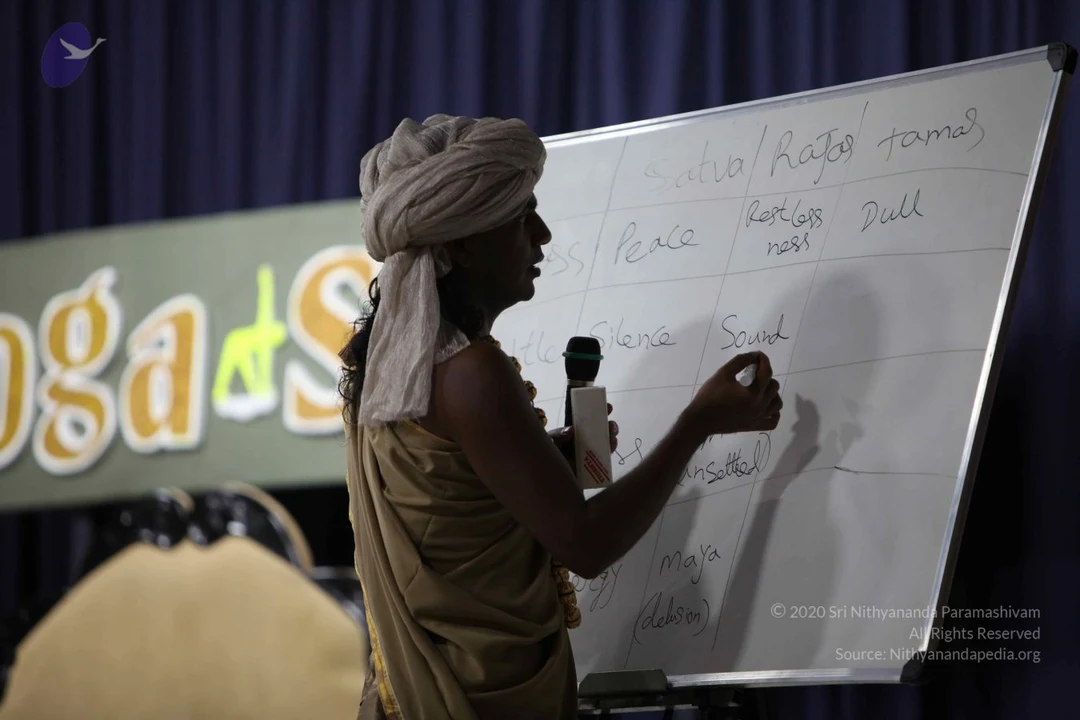
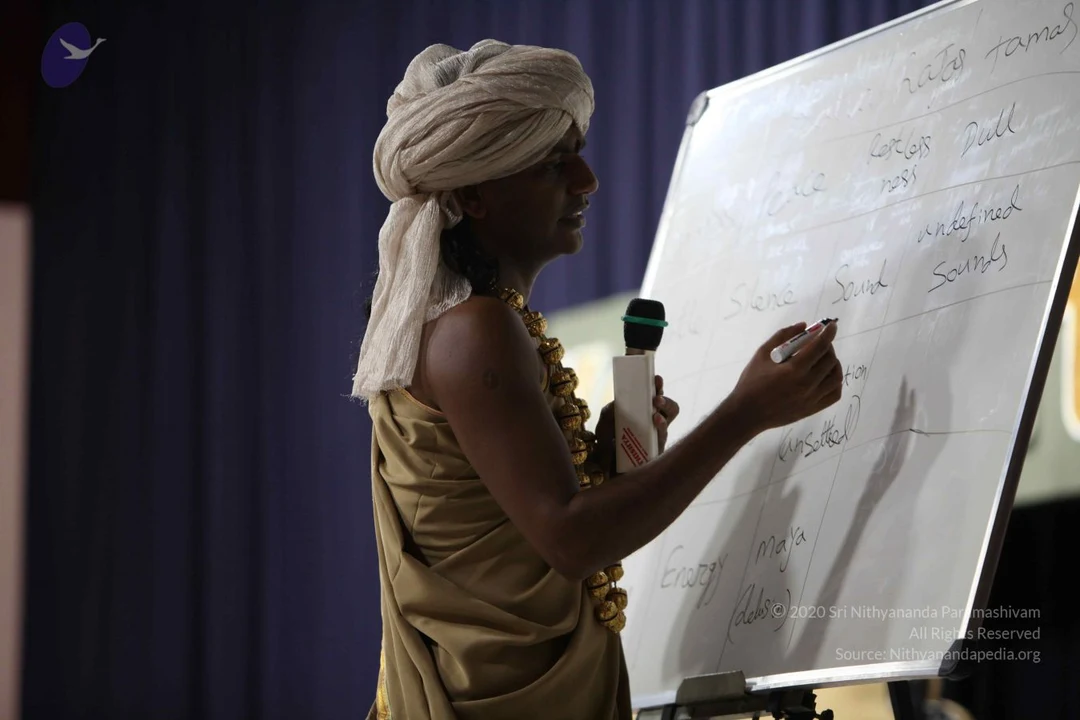
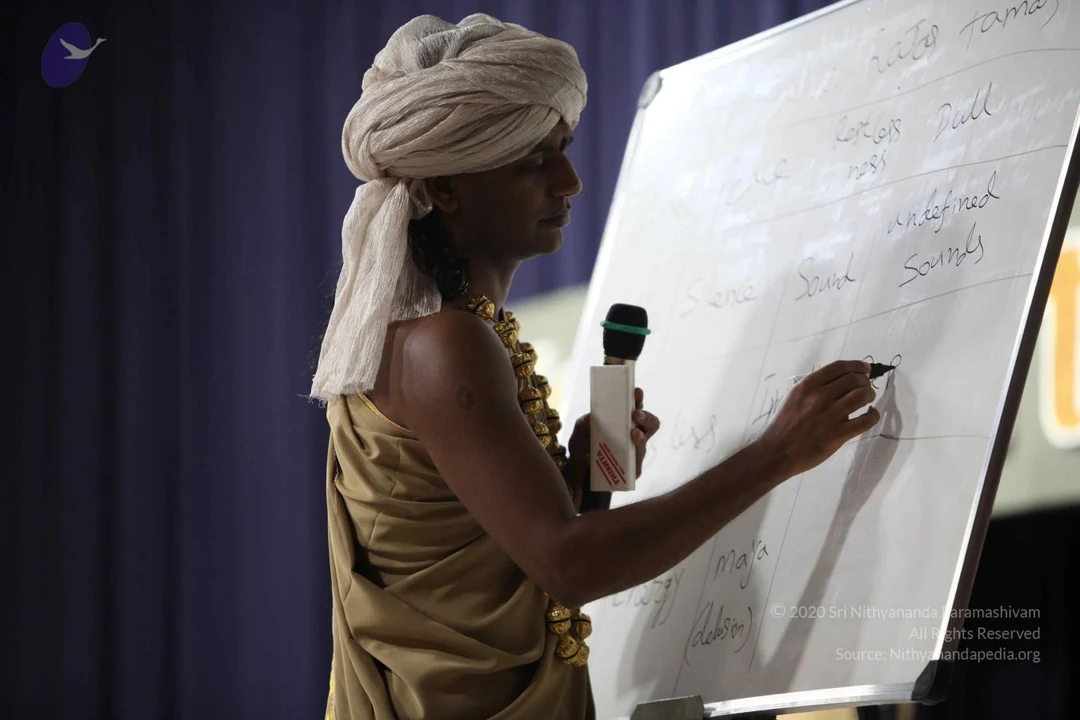
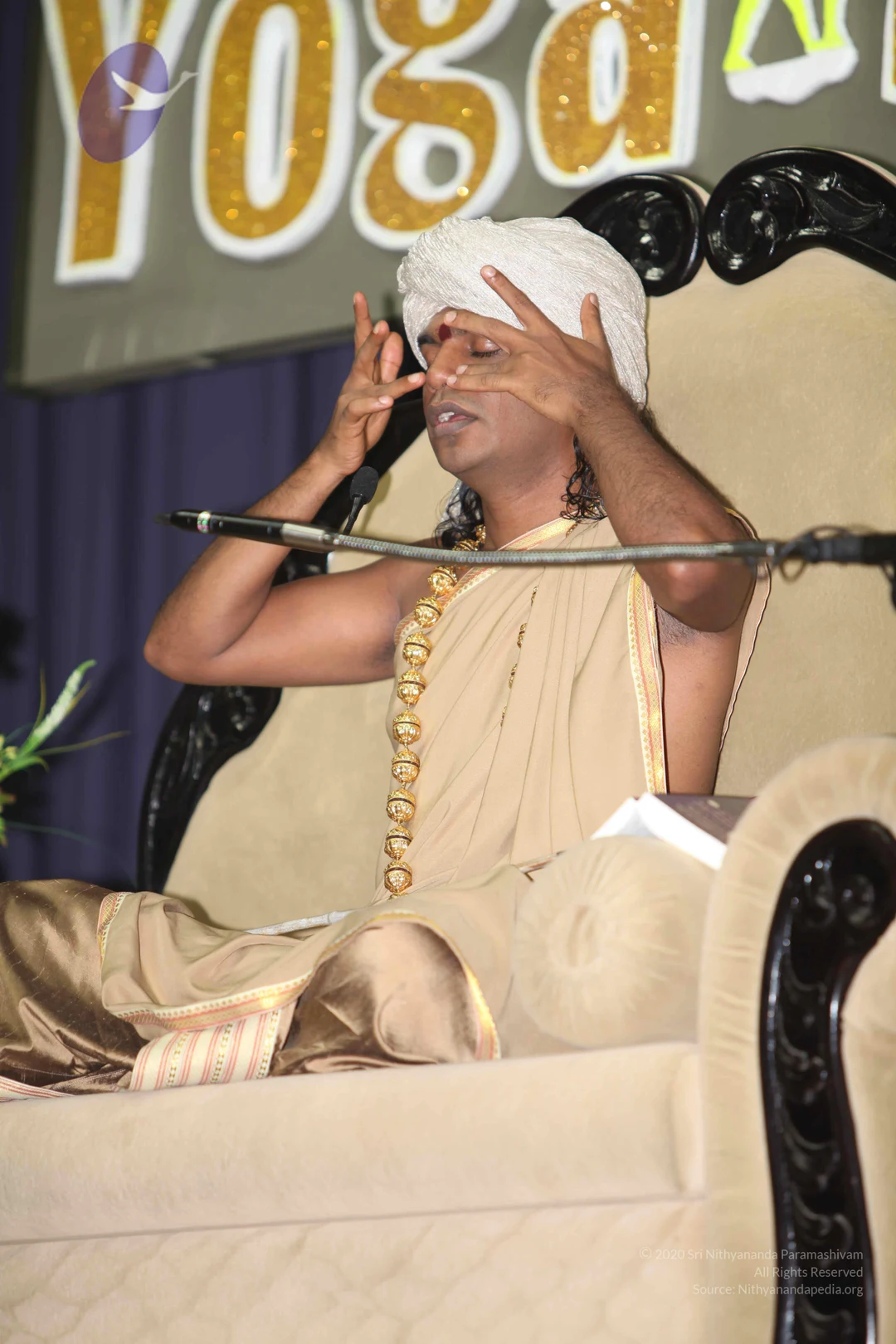
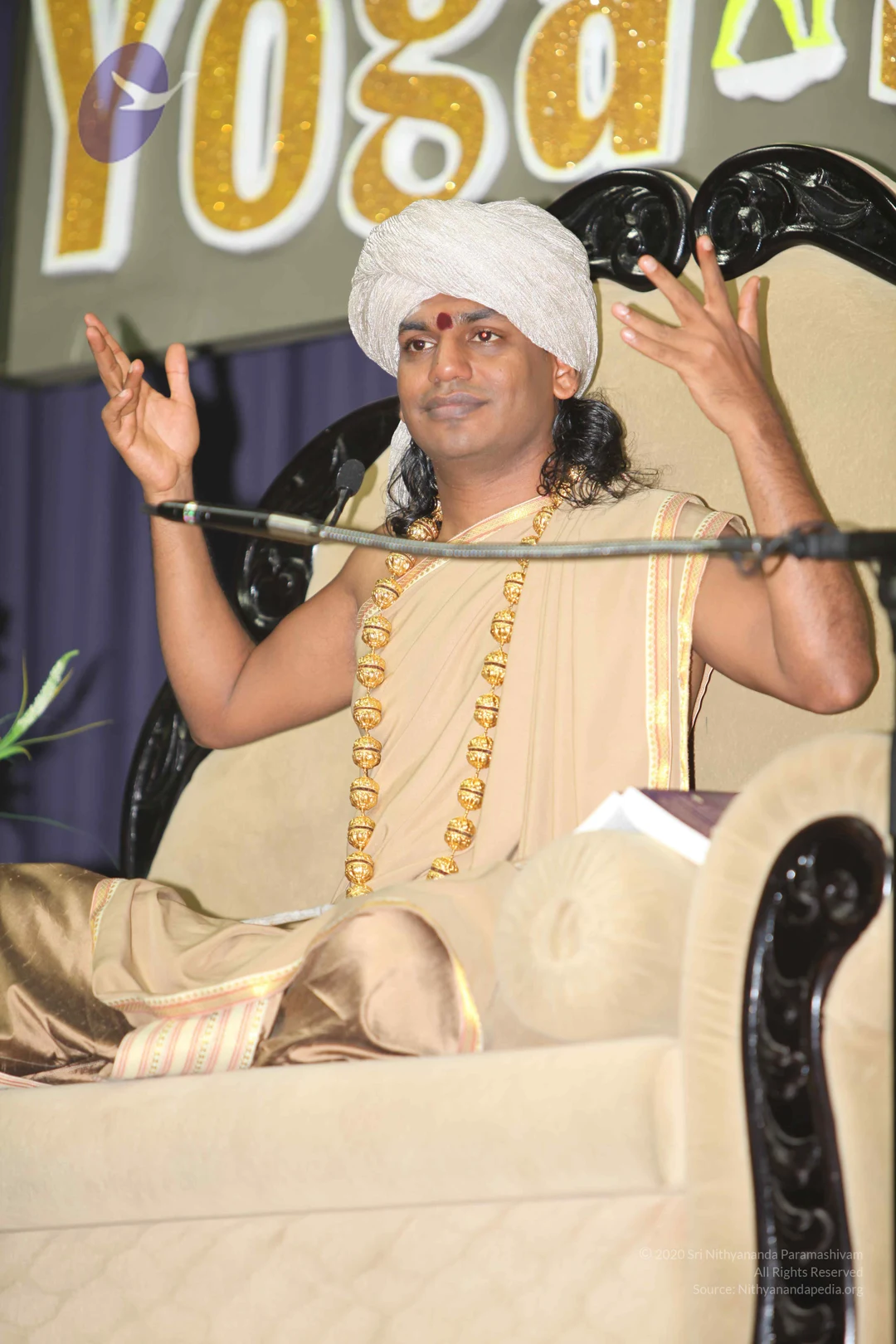
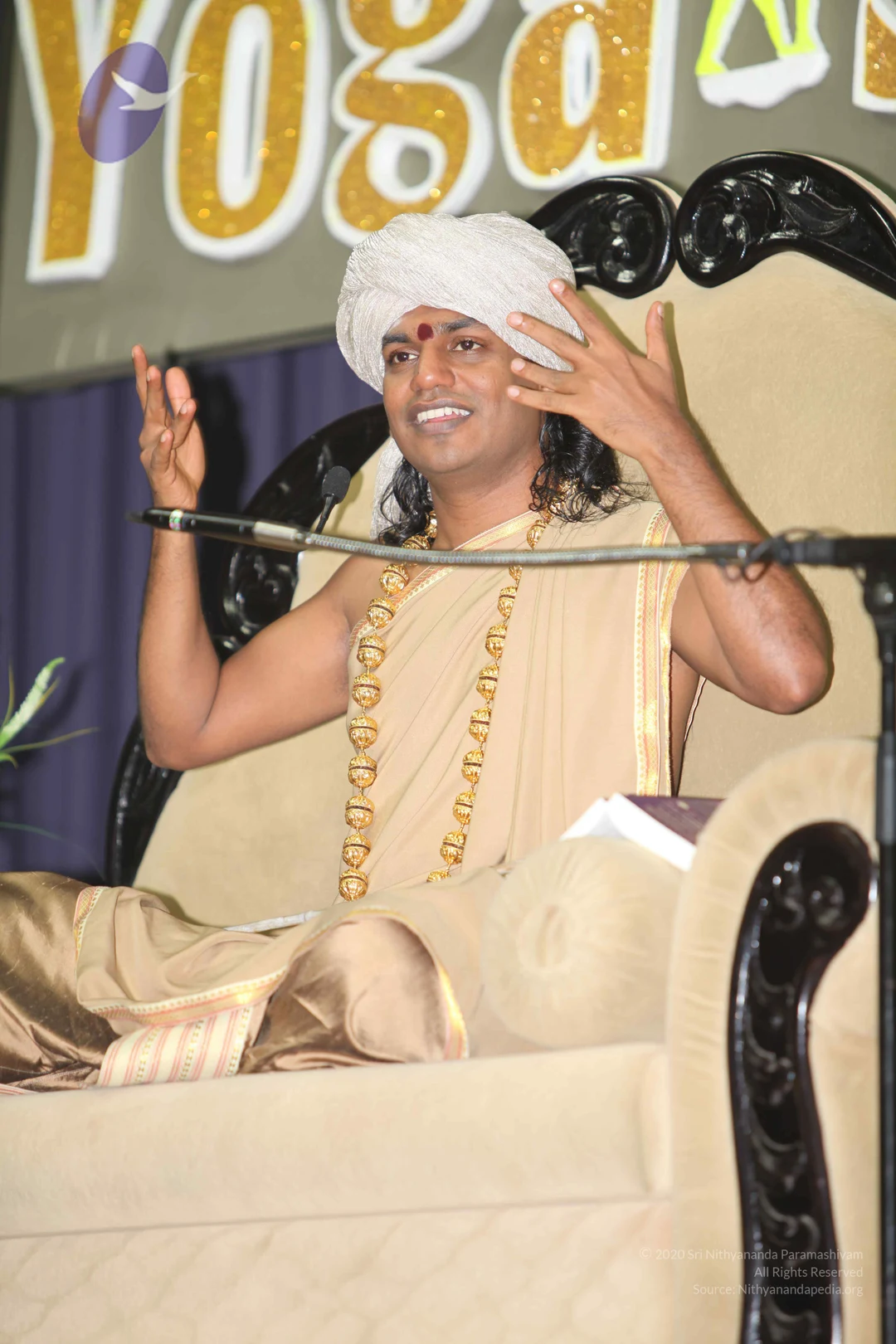
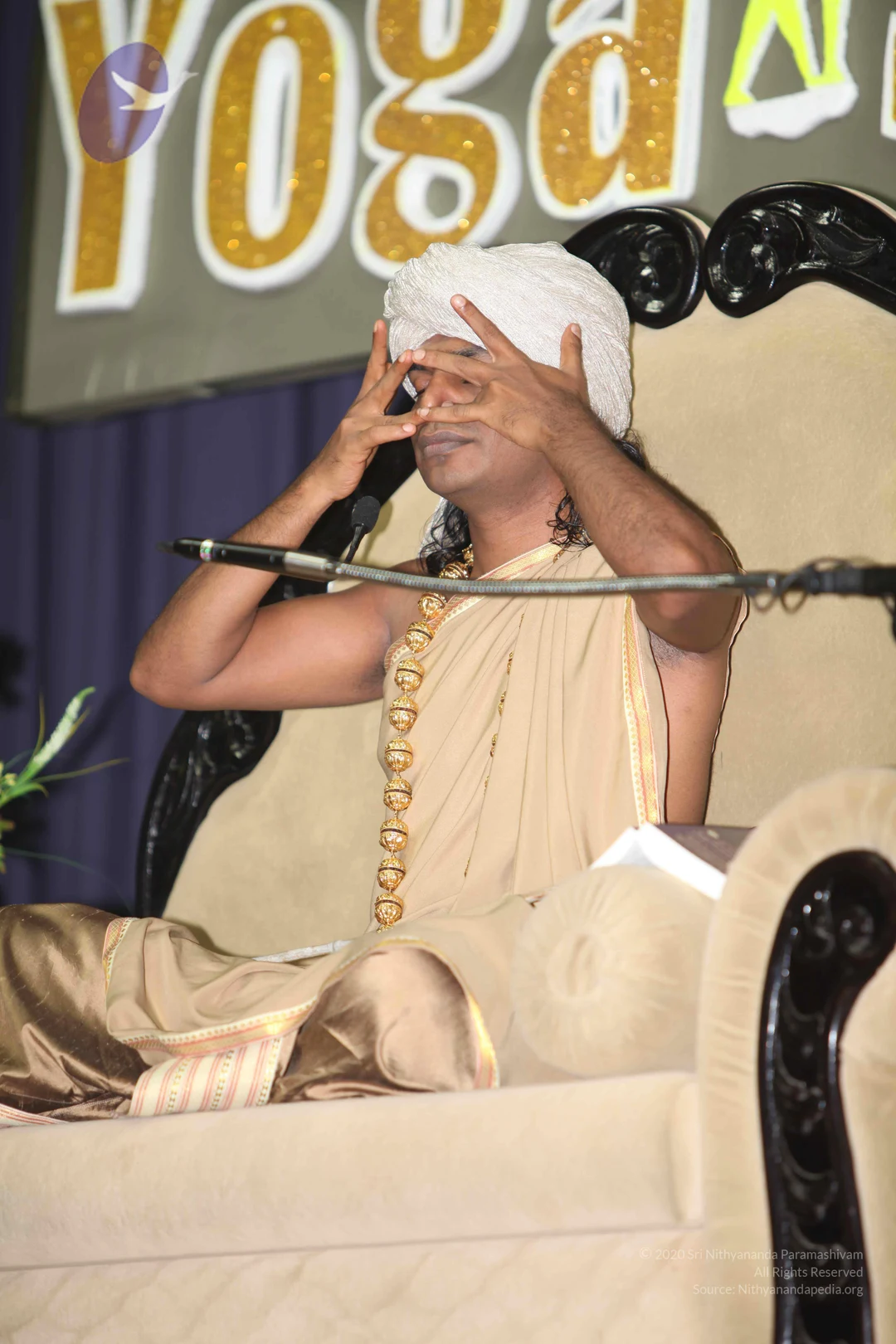
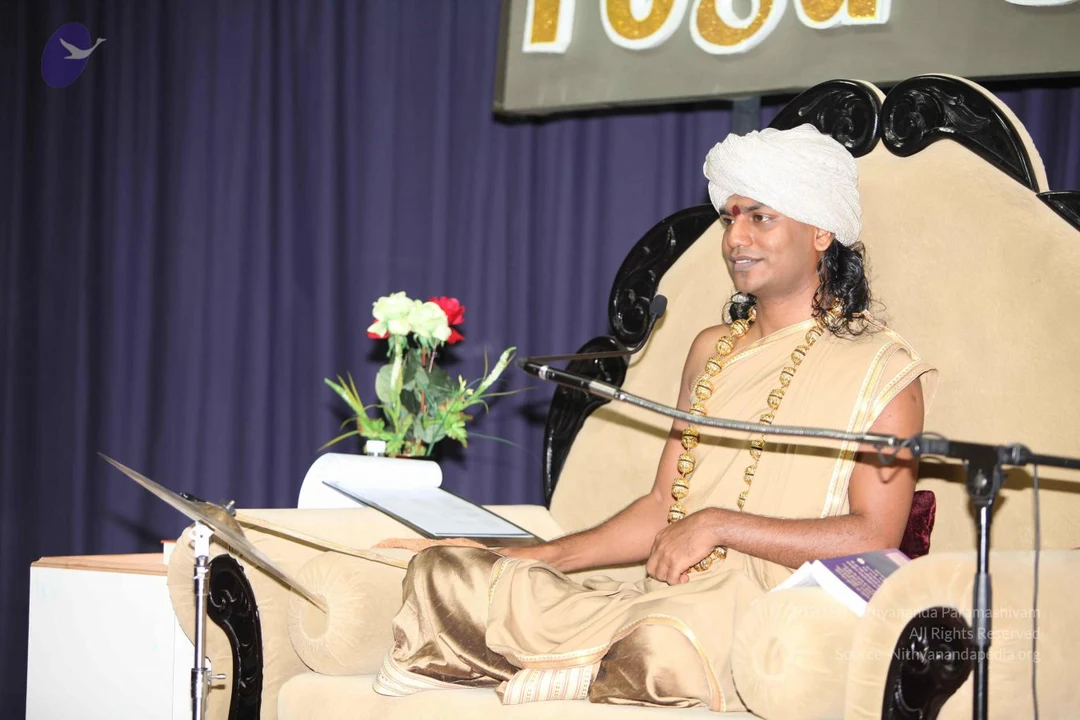
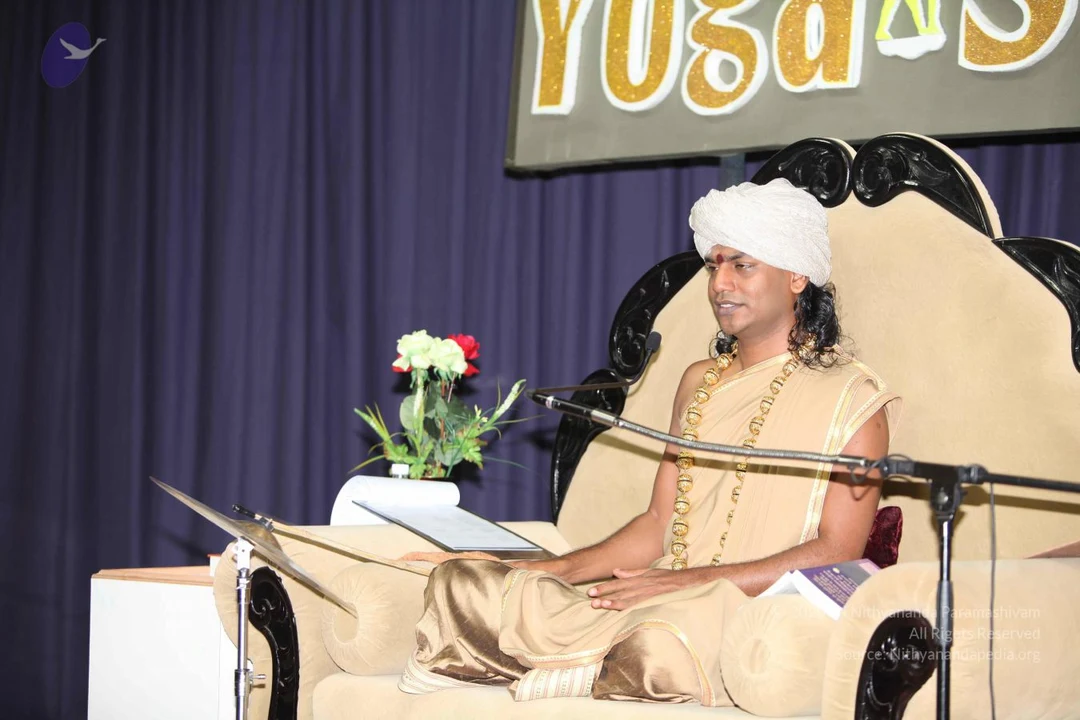
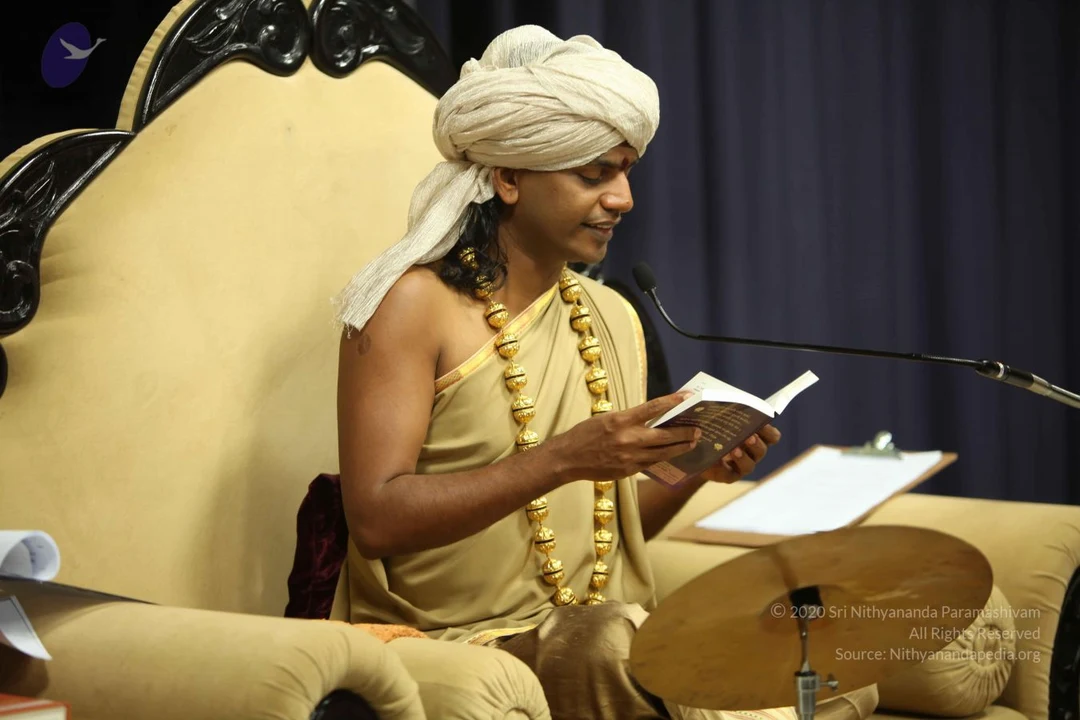
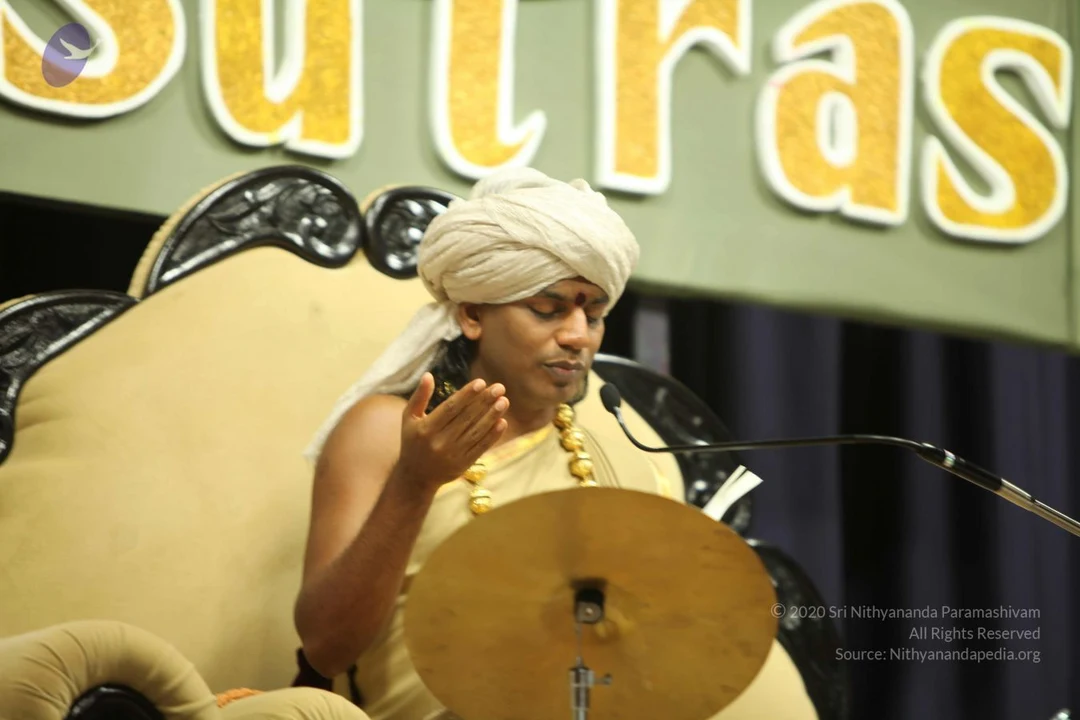
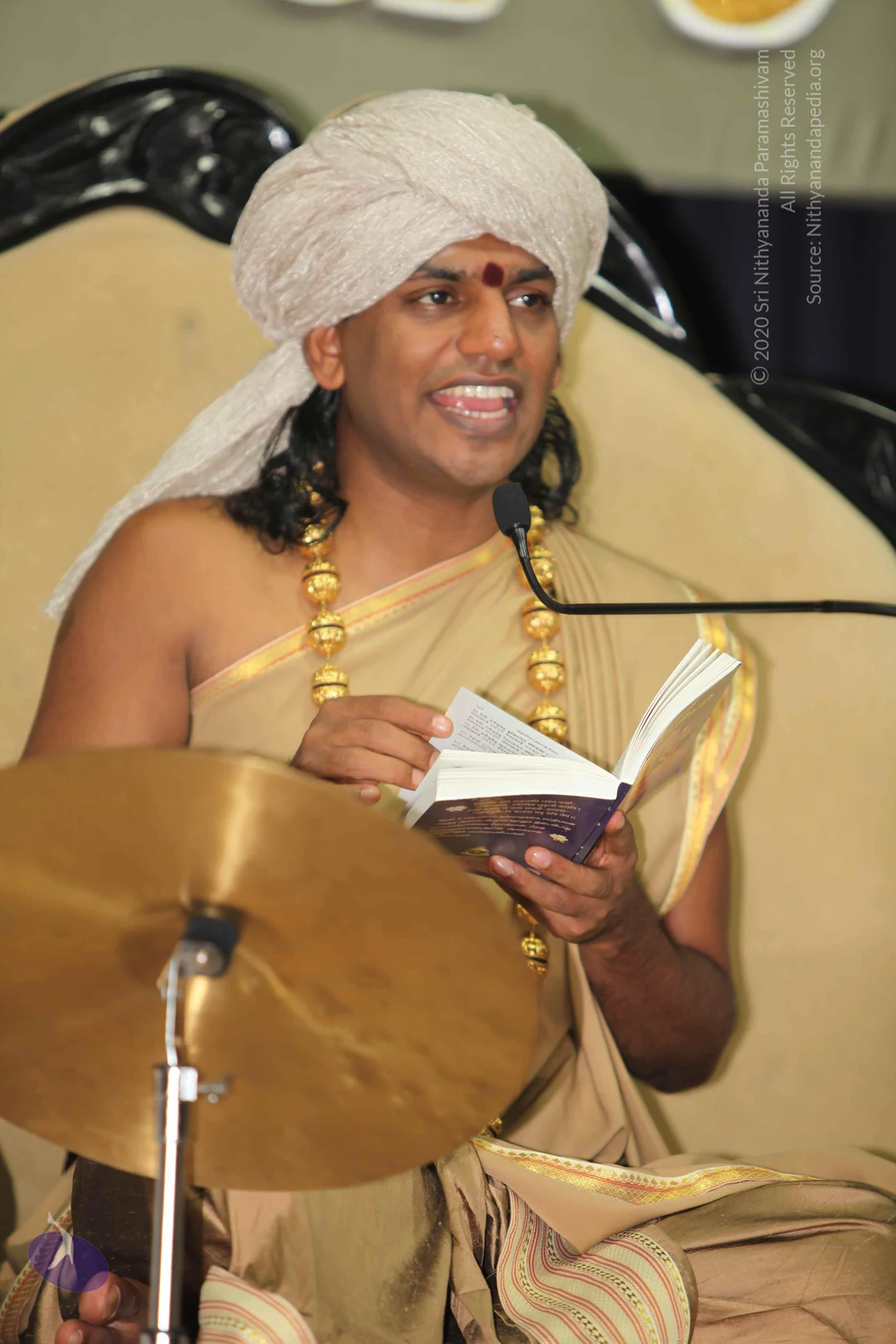
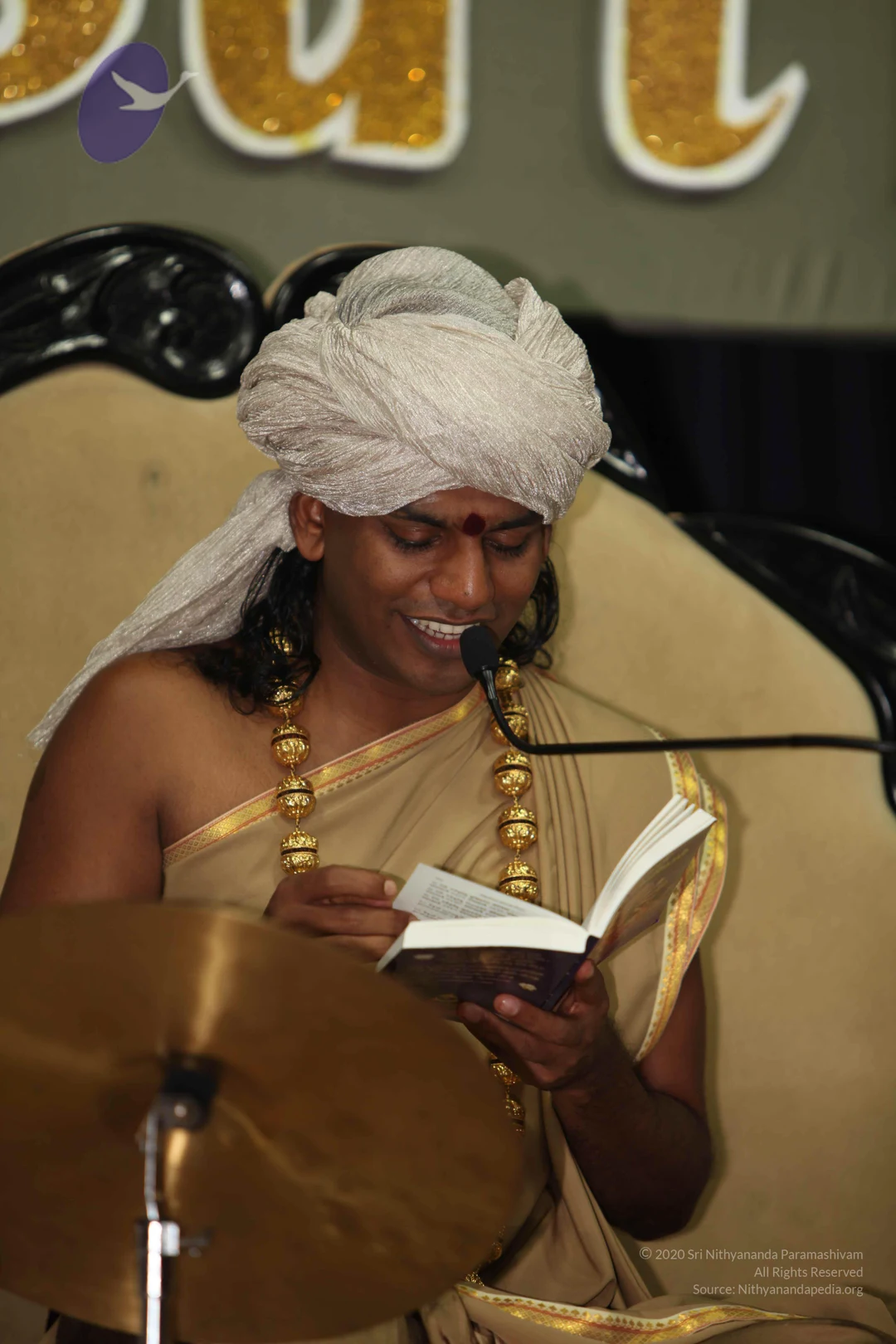
In this discourse on Patanjali Yoga Sutras, Paramahamsa Nithyananda describes how life is a constant change and when one flows with the change, life is blissful.

Video and Audio:

You are Constant Change (PYS70): Nithyananda on Patanjali Yoga Sutra

VideoAudio

Photos Of The Day:

TEMPLE

PADA-POOJA

NITHYA-SATSANG

SARVA-DARSHAN

PANCHA-TAPAS

MAHESHWARA-POOJA

LEP-SESSION

VIP-VISITS

YOGA-SUTRAS

Photos Of The Day:

TEMPLE

PADA-POOJA

NITHYA-SATSANG

SARVA-DARSHAN

PANCHA-TAPAS

MAHESHWARA-POOJA

LEP-SESSION

VIP-VISITS

Photos Of The Day:

NITHYANANDA-LIVING-ENLIGHTENMENT-PROCESS-IN-BIDADI