Skip to content
Saturday

17 September 2016

The Matrix - Q&A on AUM, Maya, Cosmic Law, Time Shaft, Sadashiva

Dated photos
140
Source pages
1
Media
2
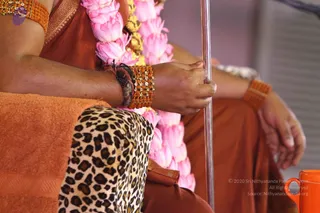
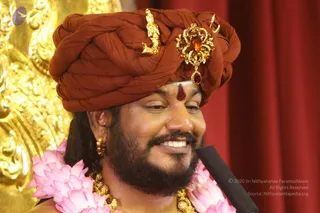
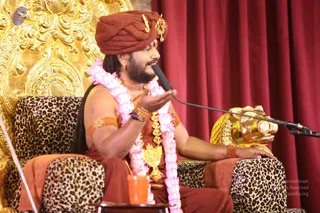
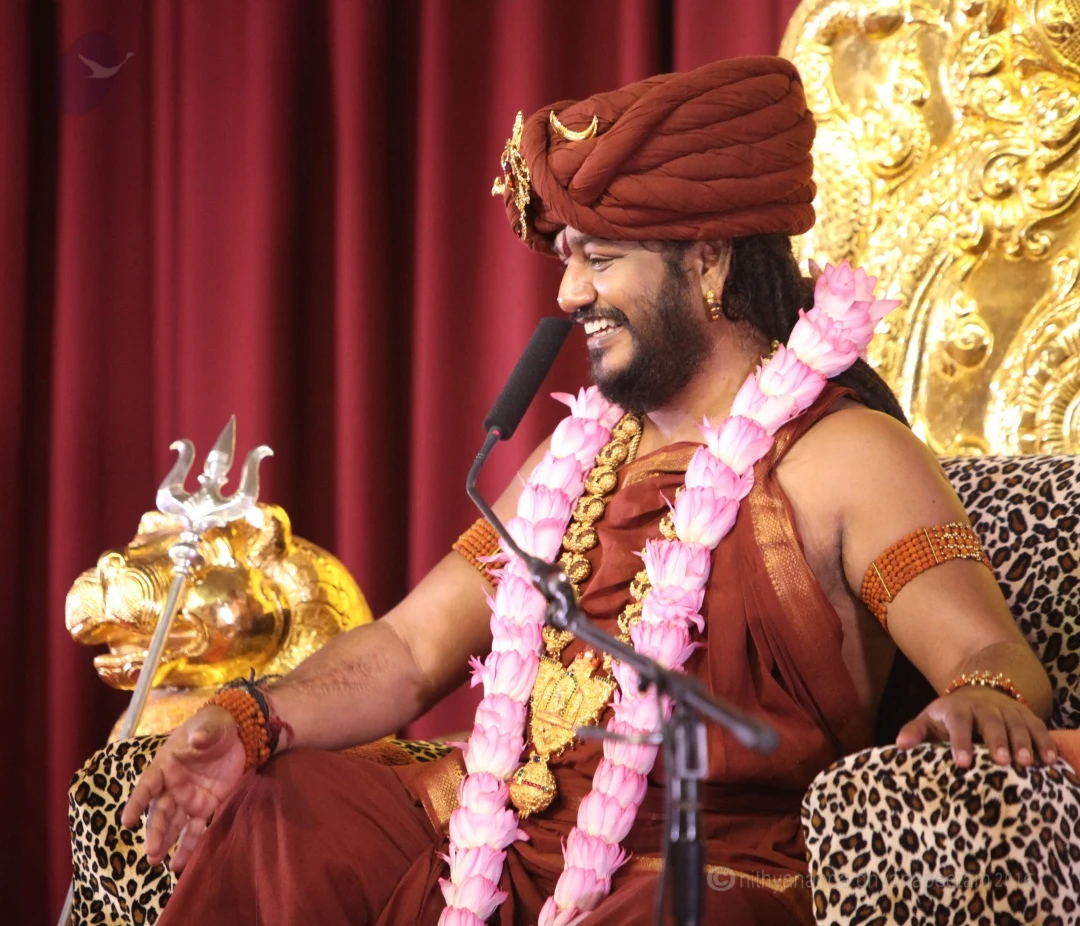
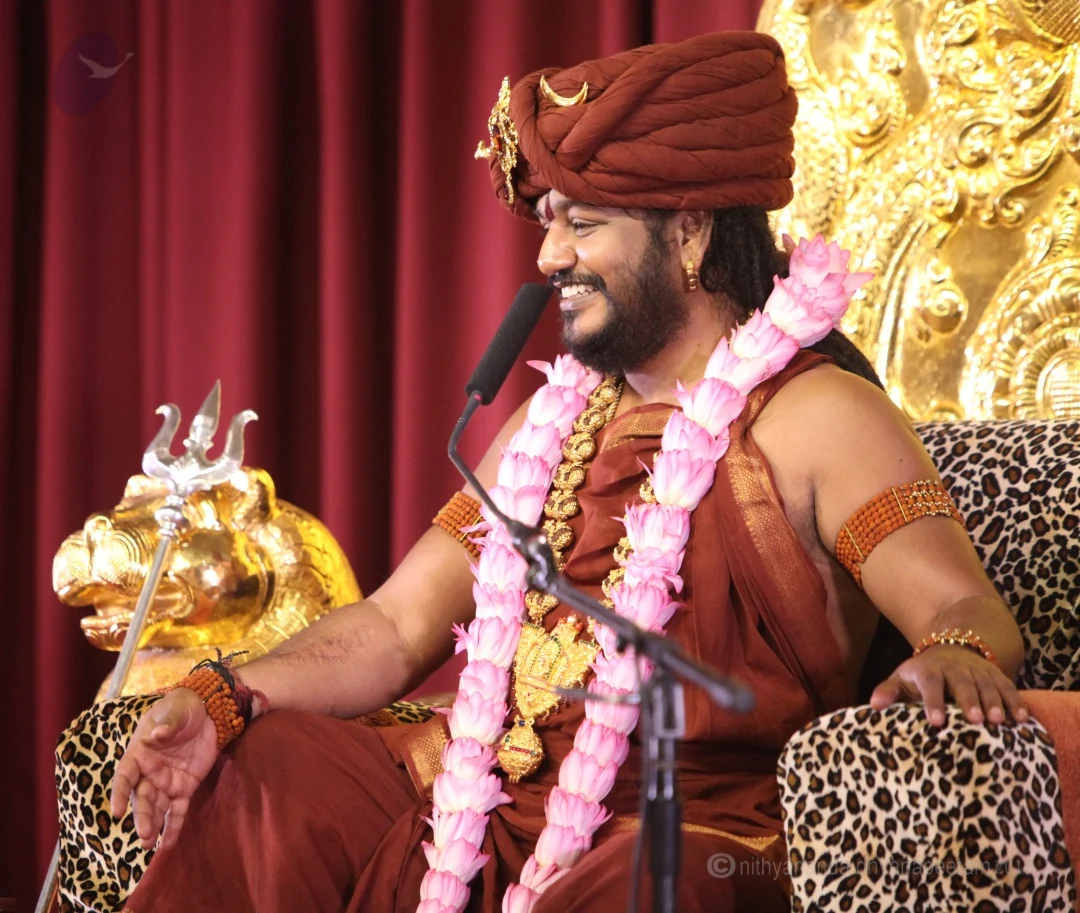
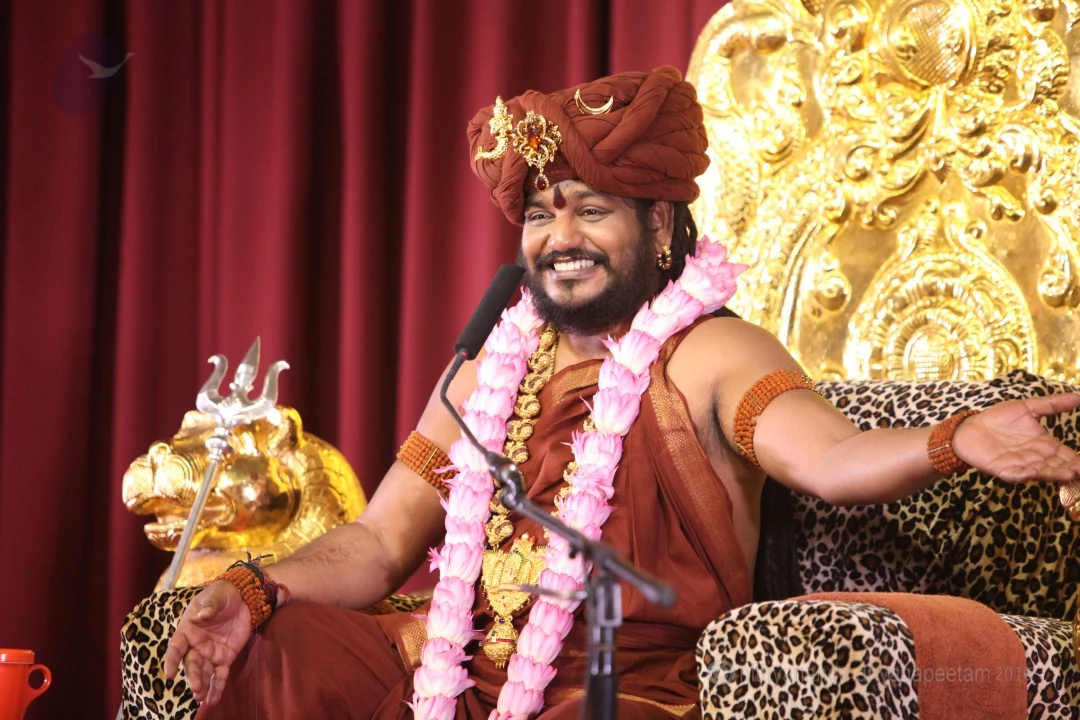
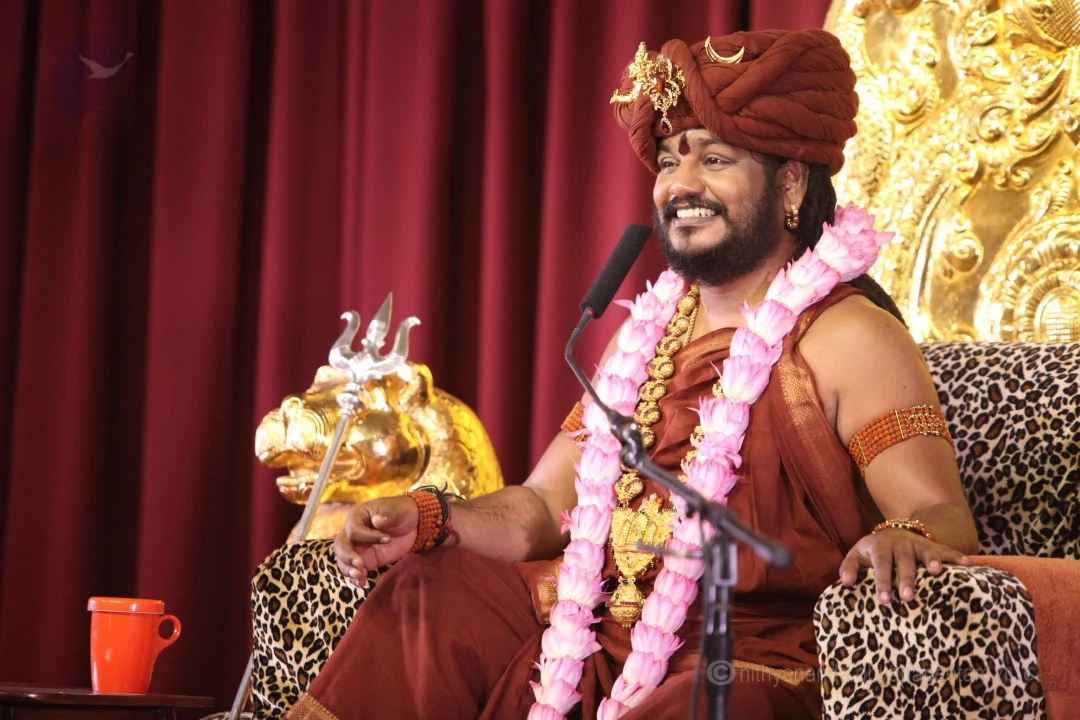
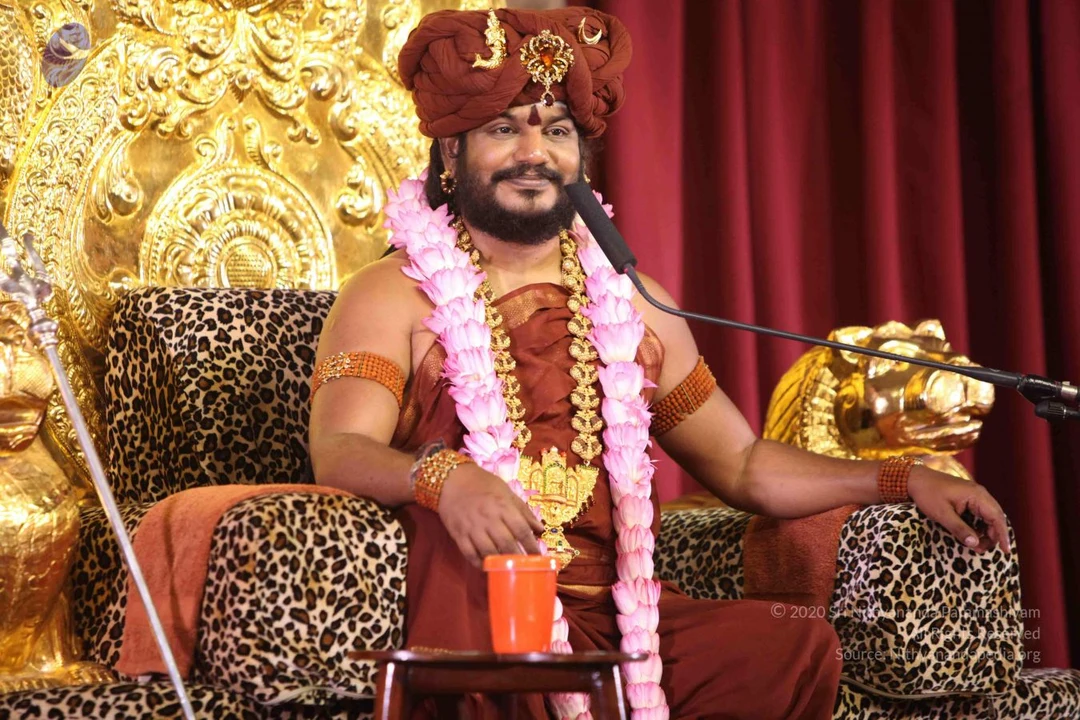
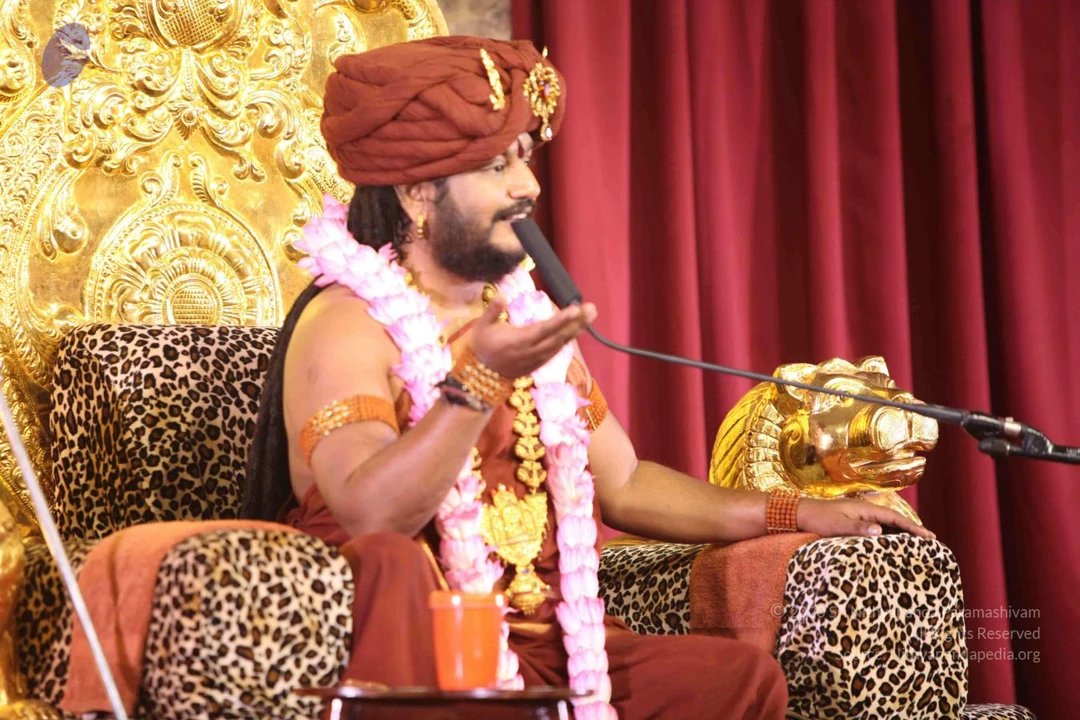
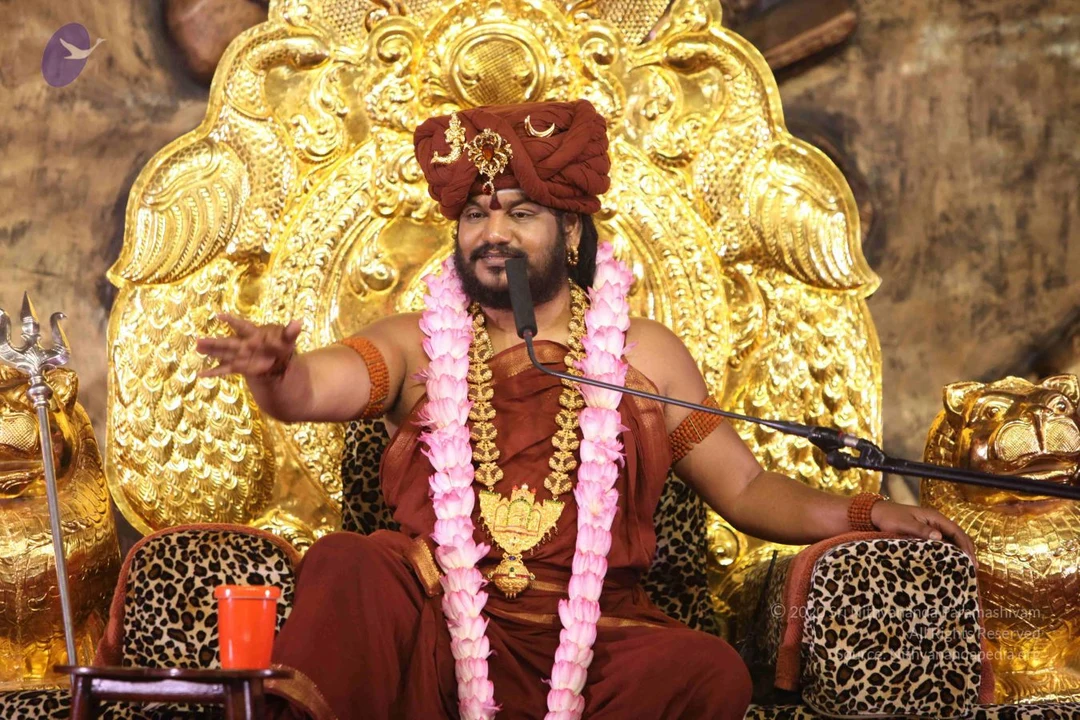
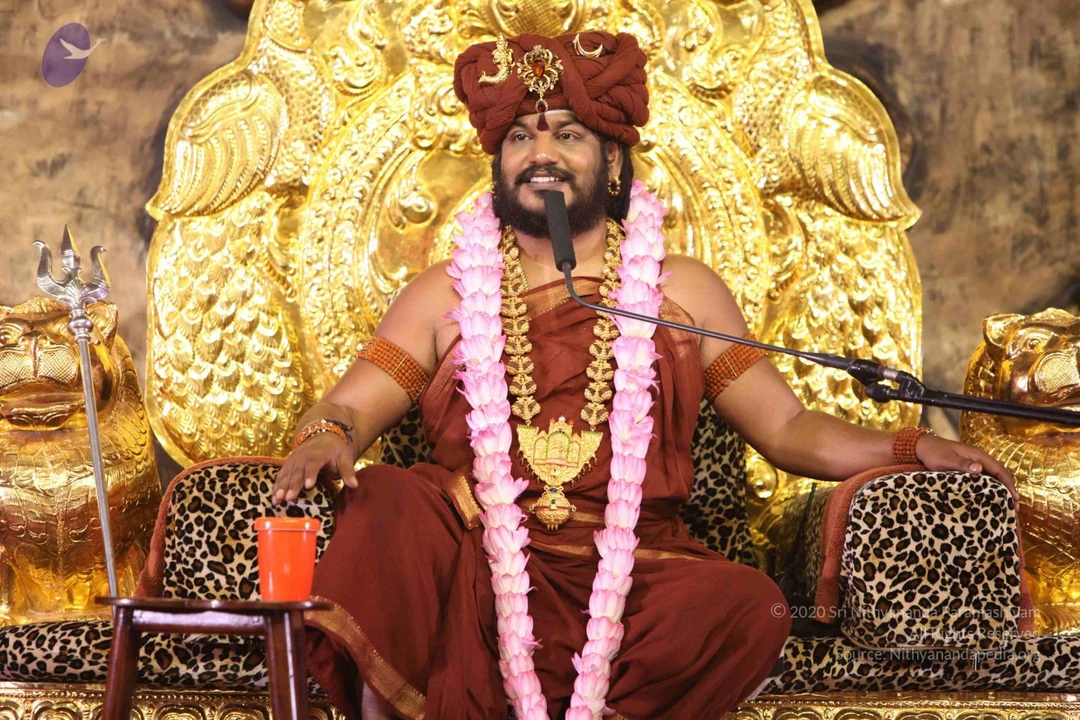
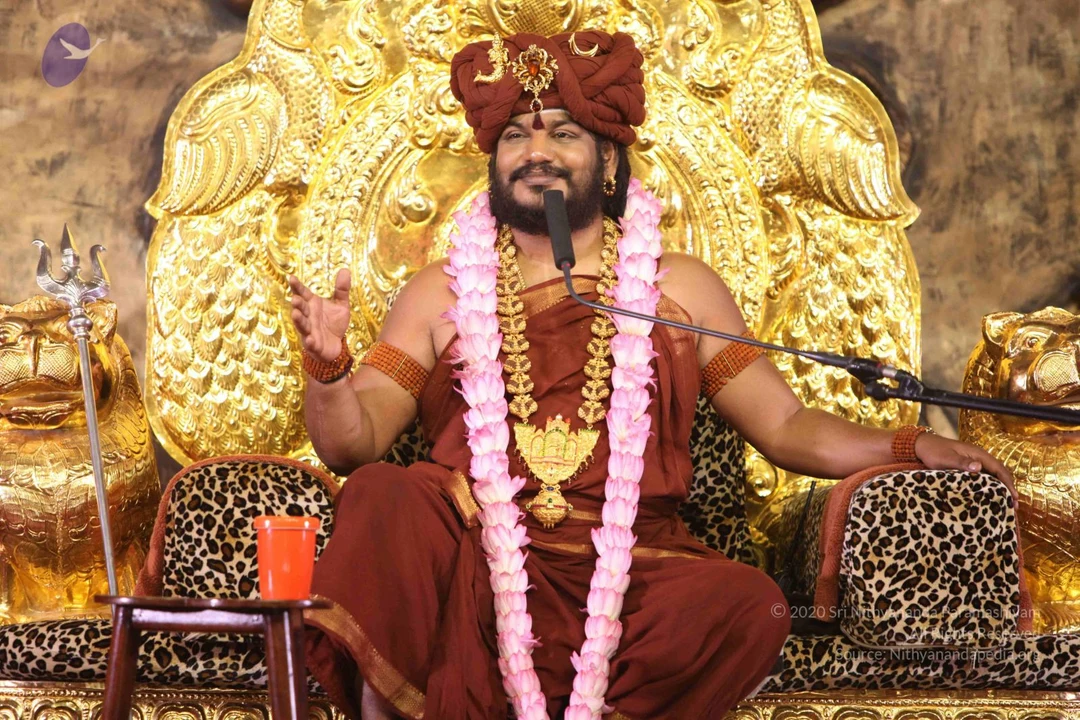
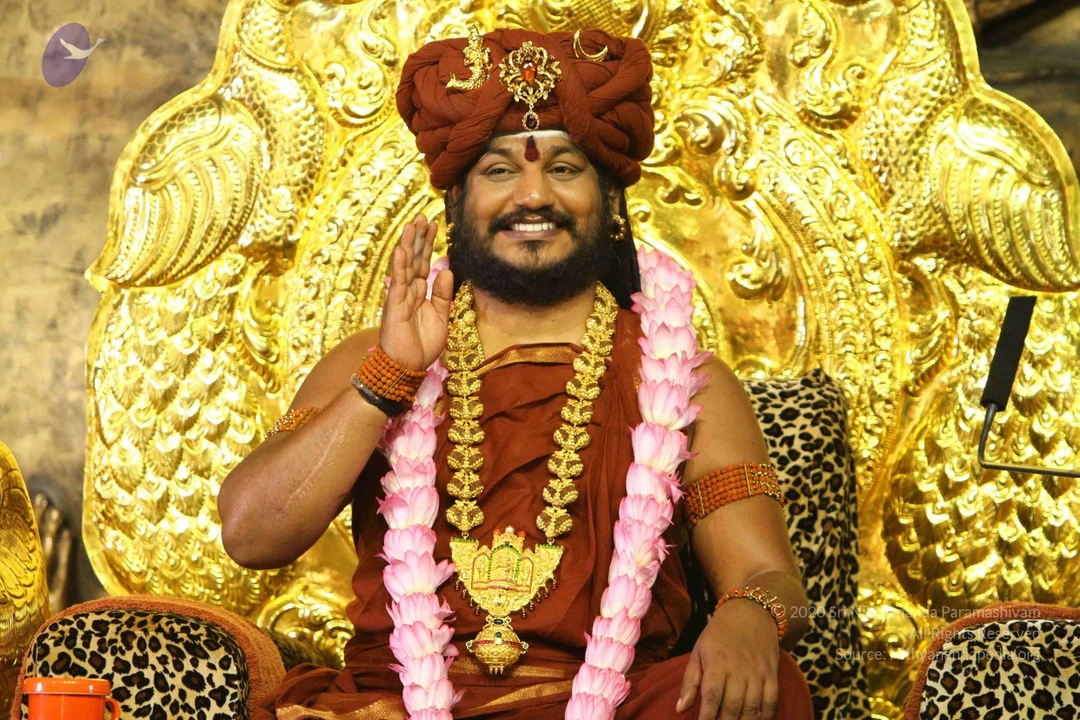
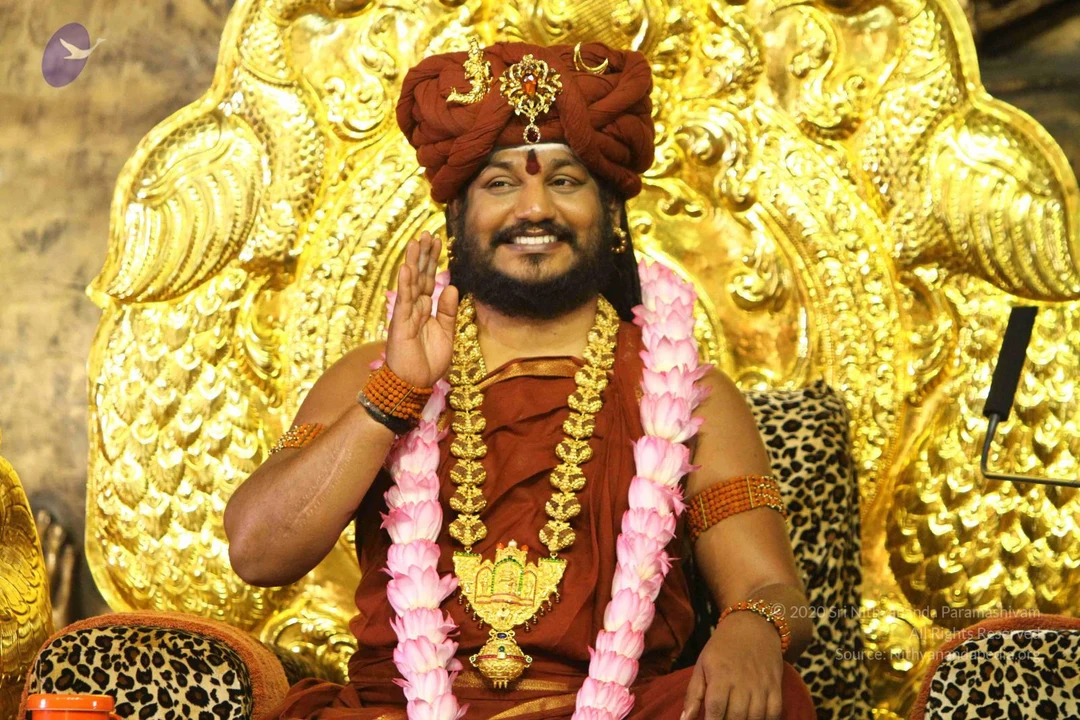
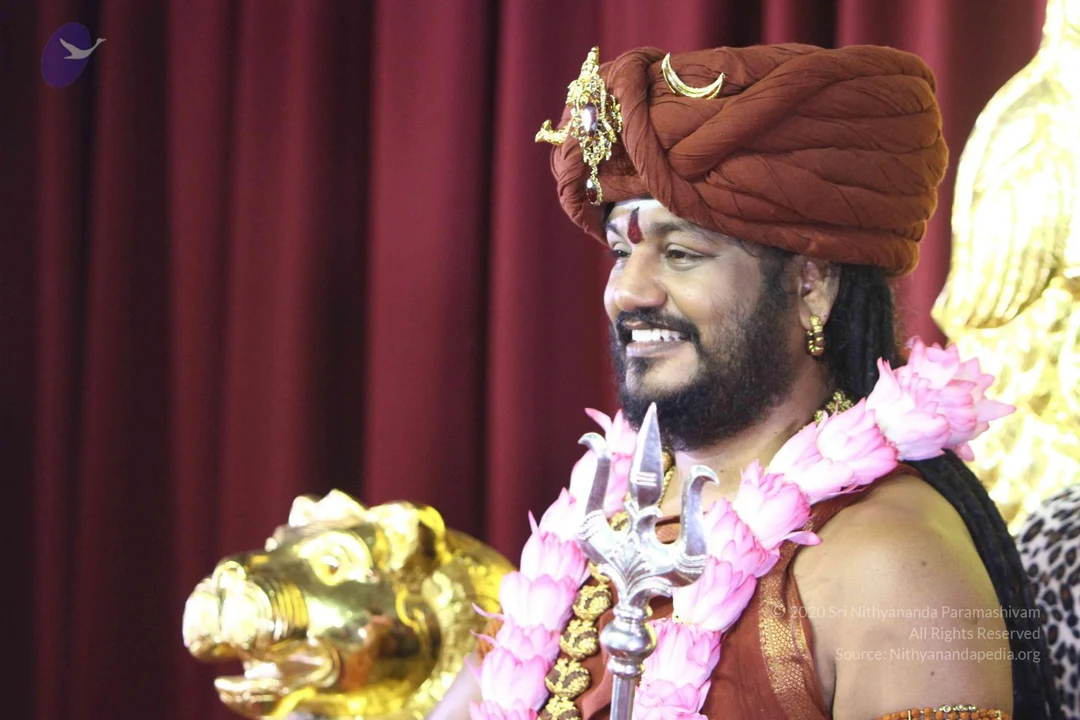
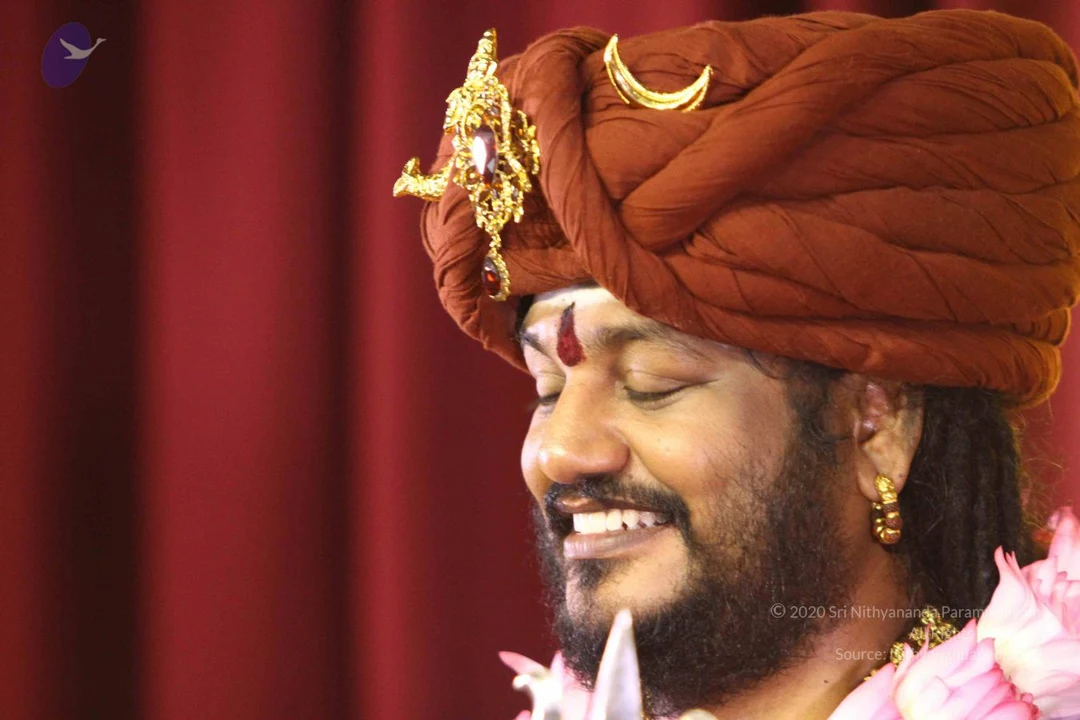
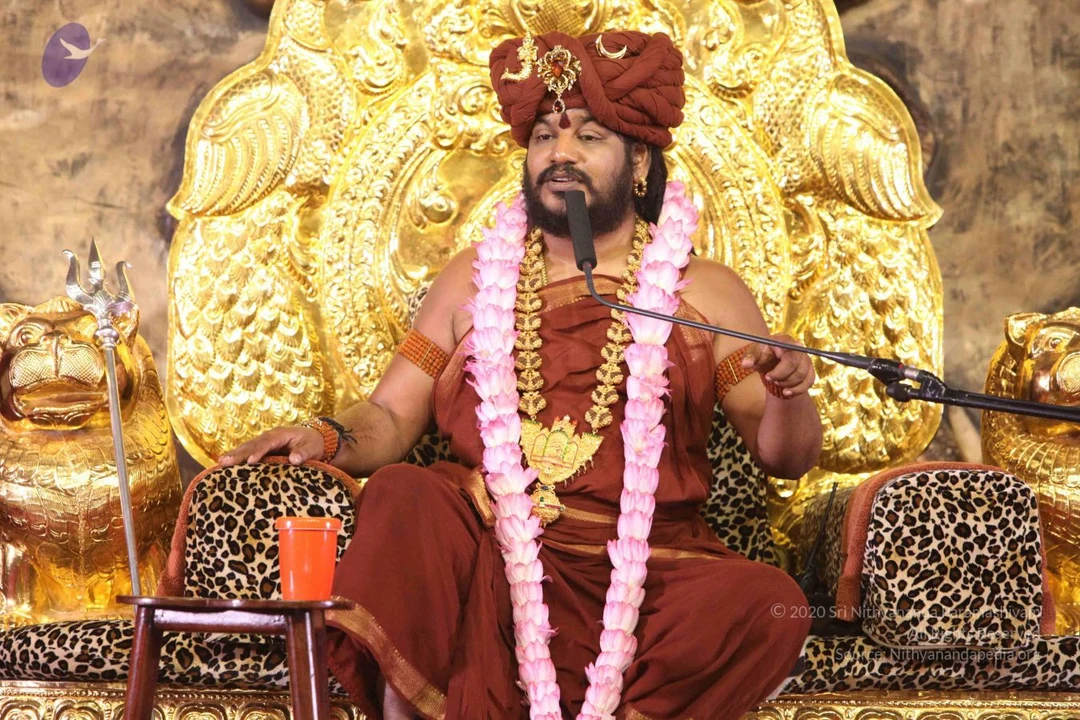
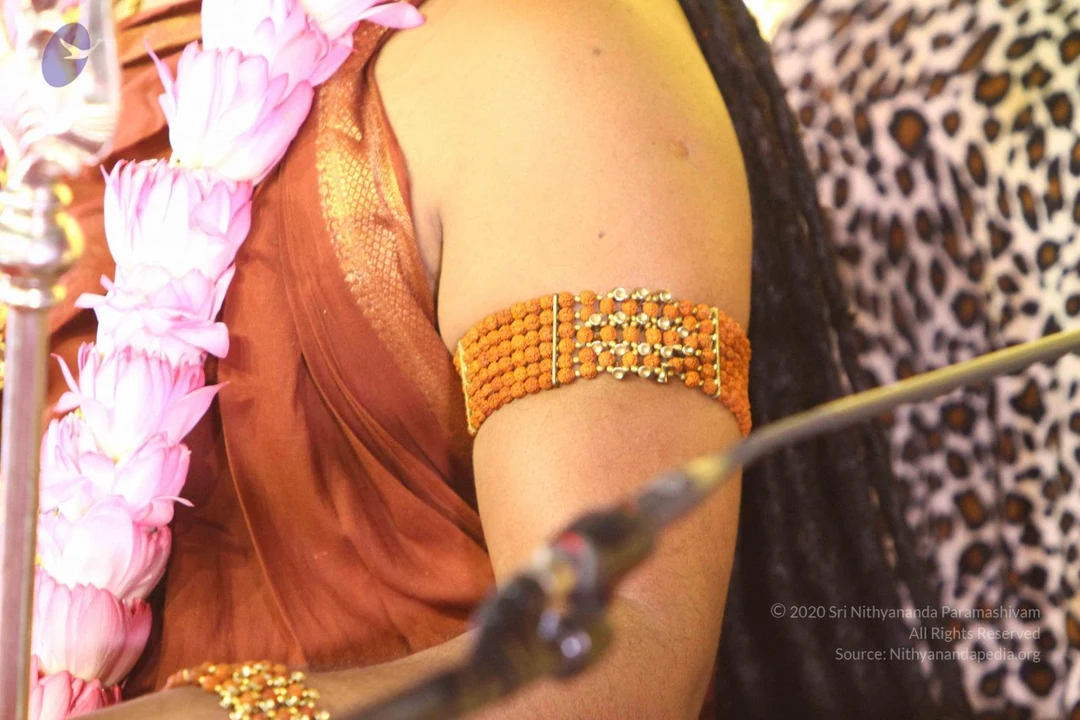
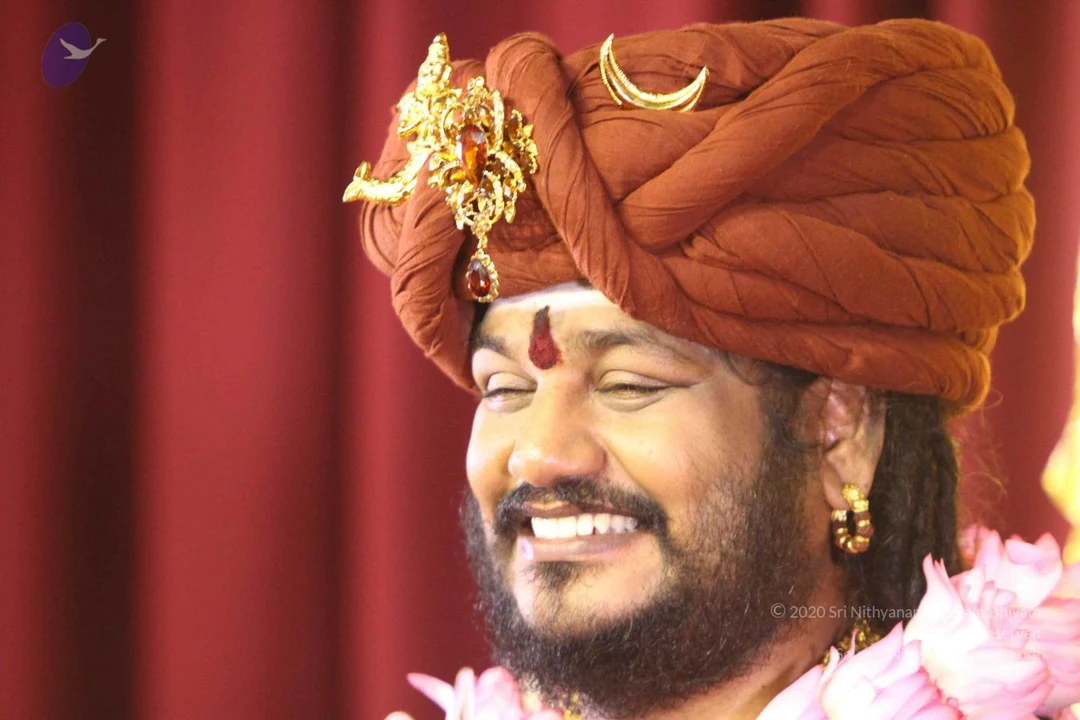
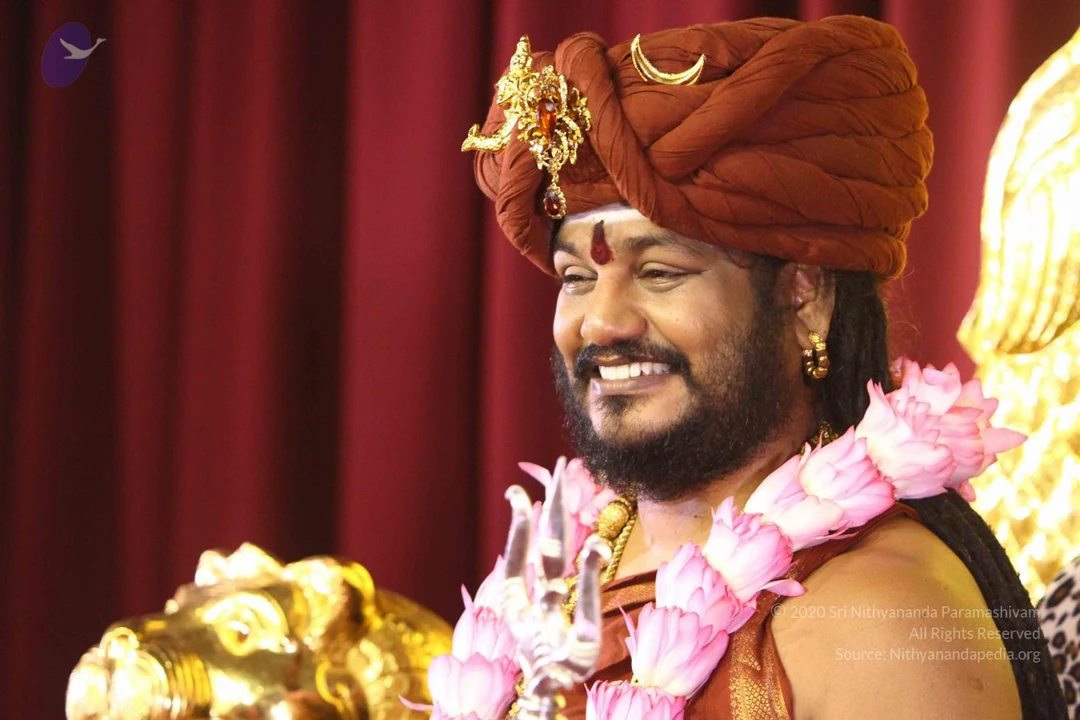
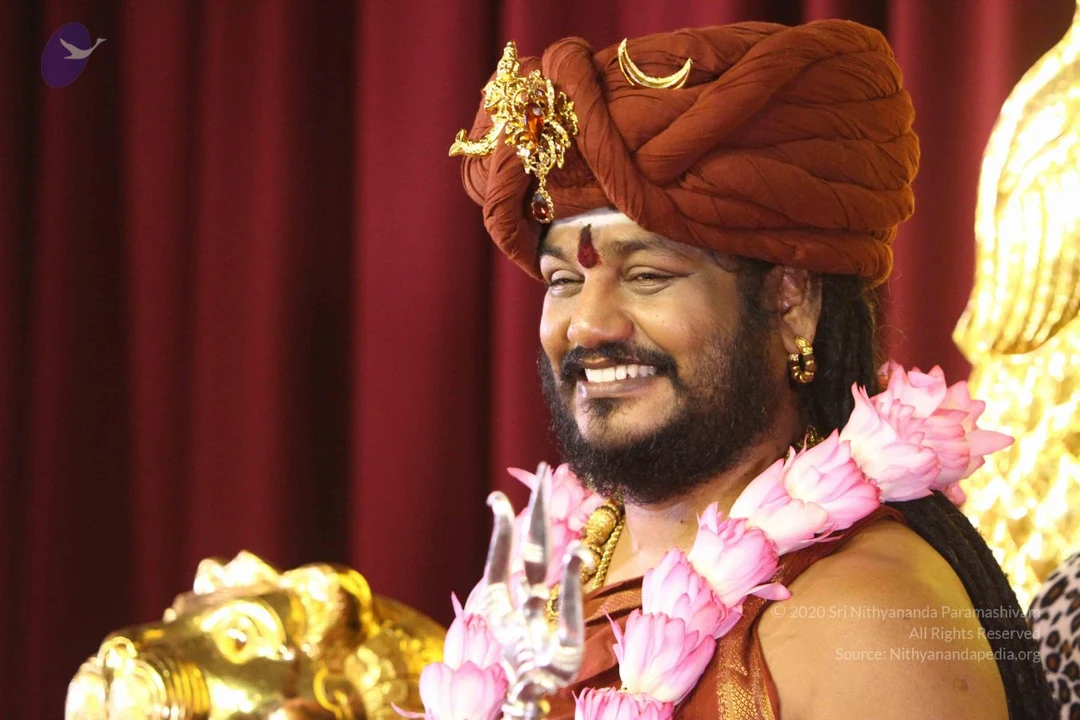
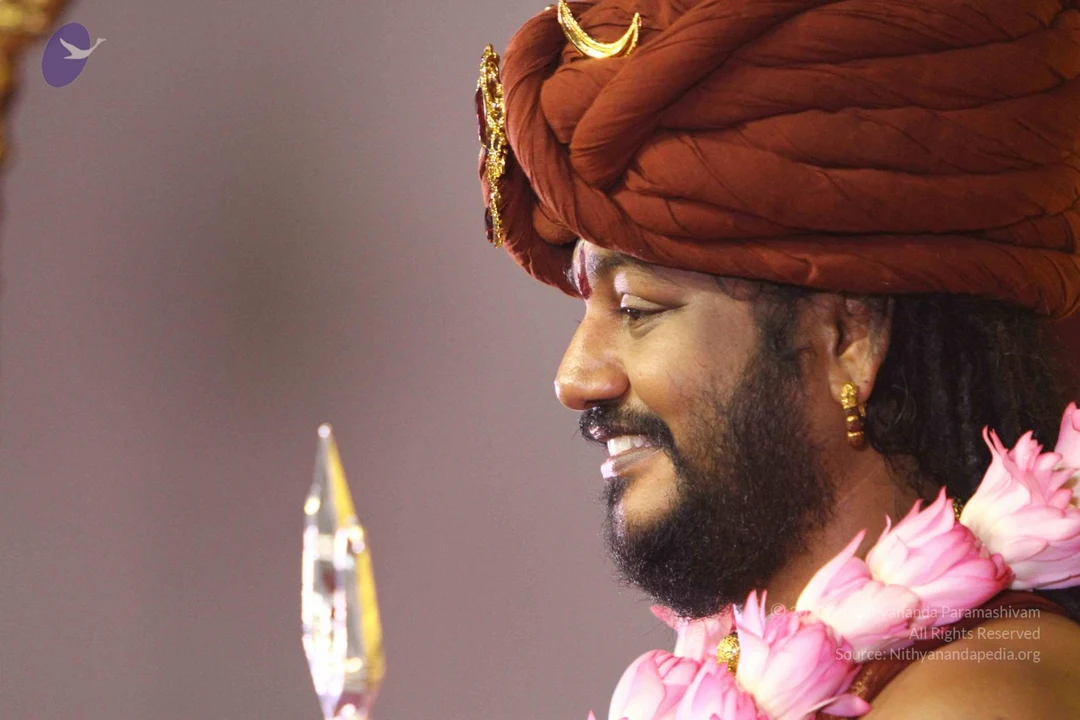
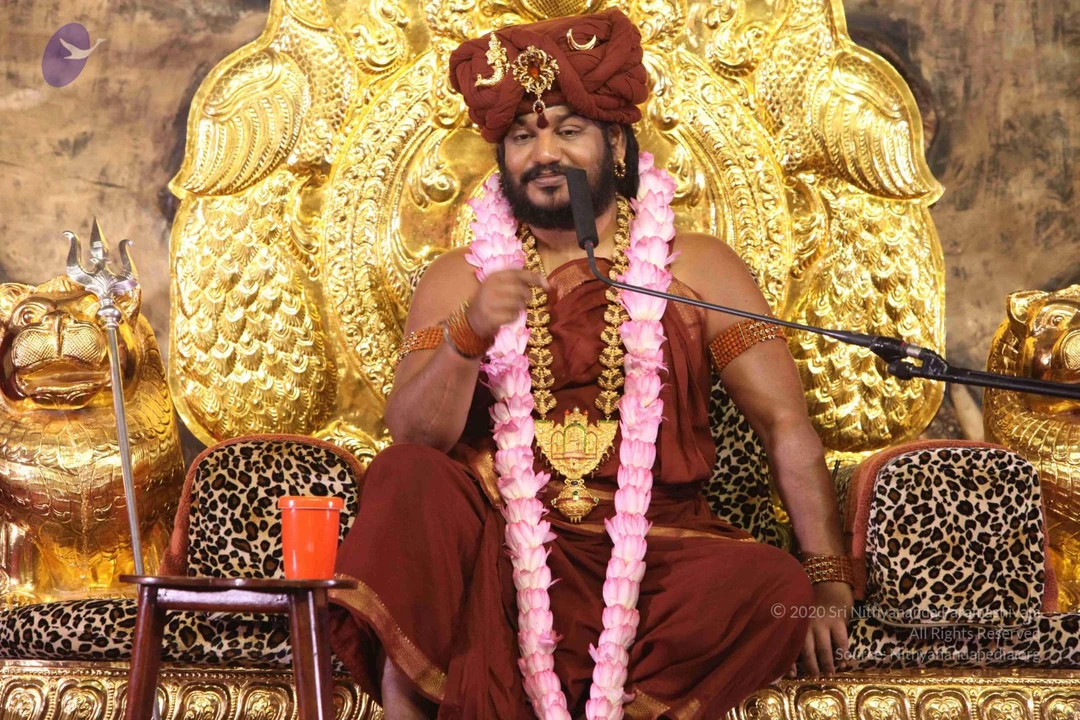
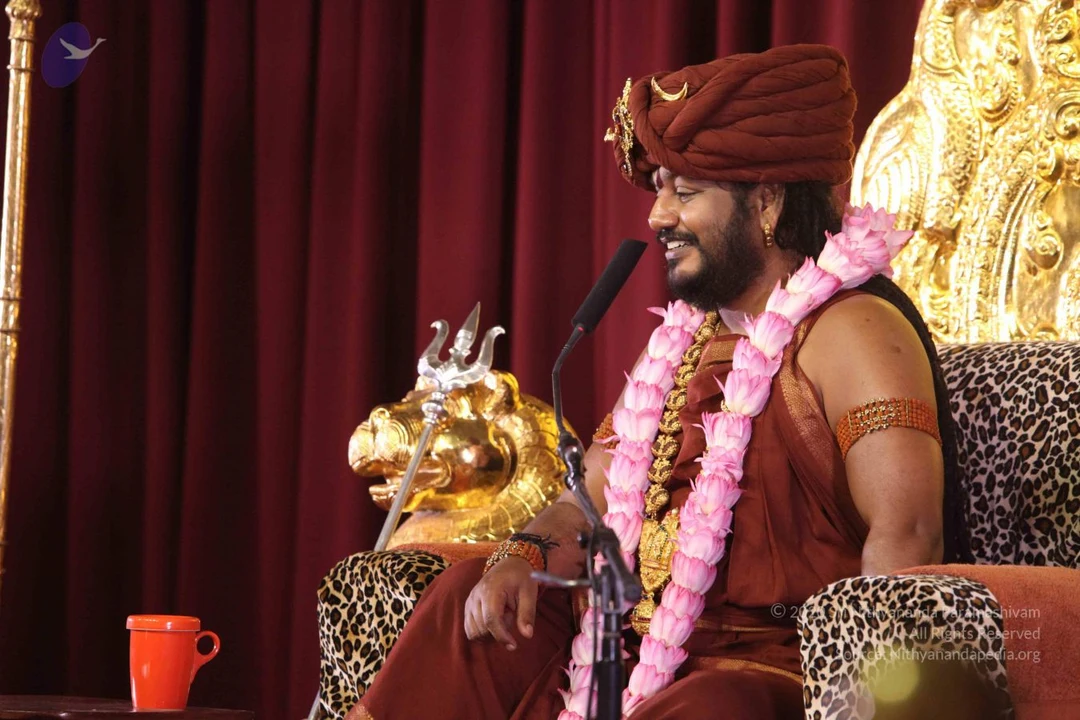
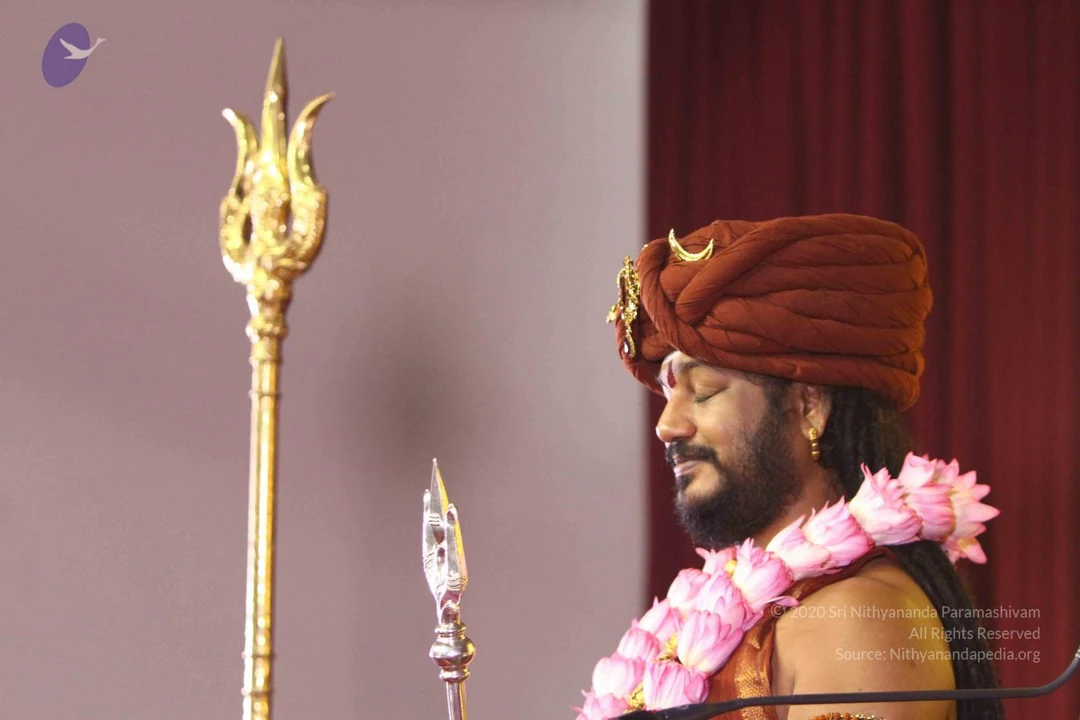
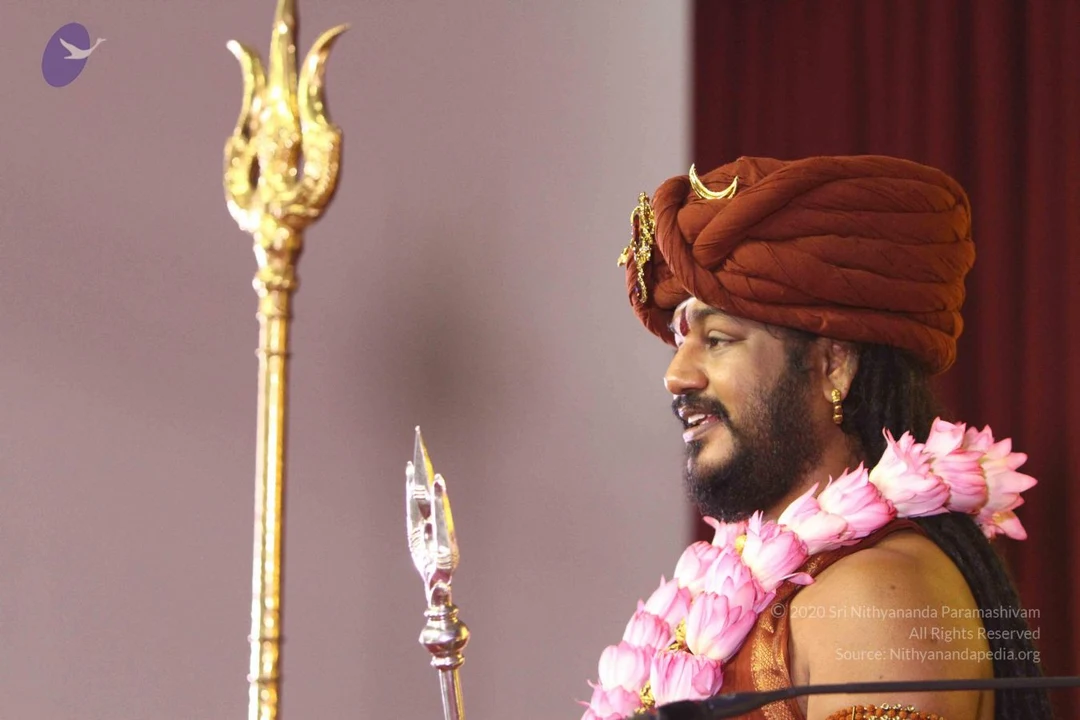
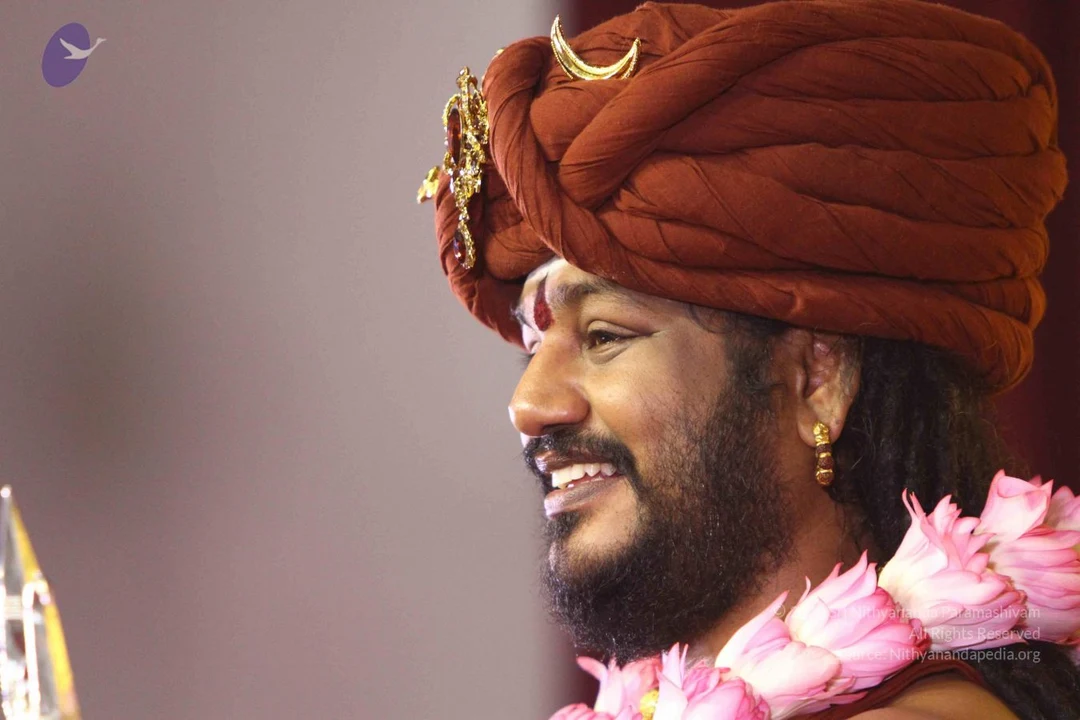
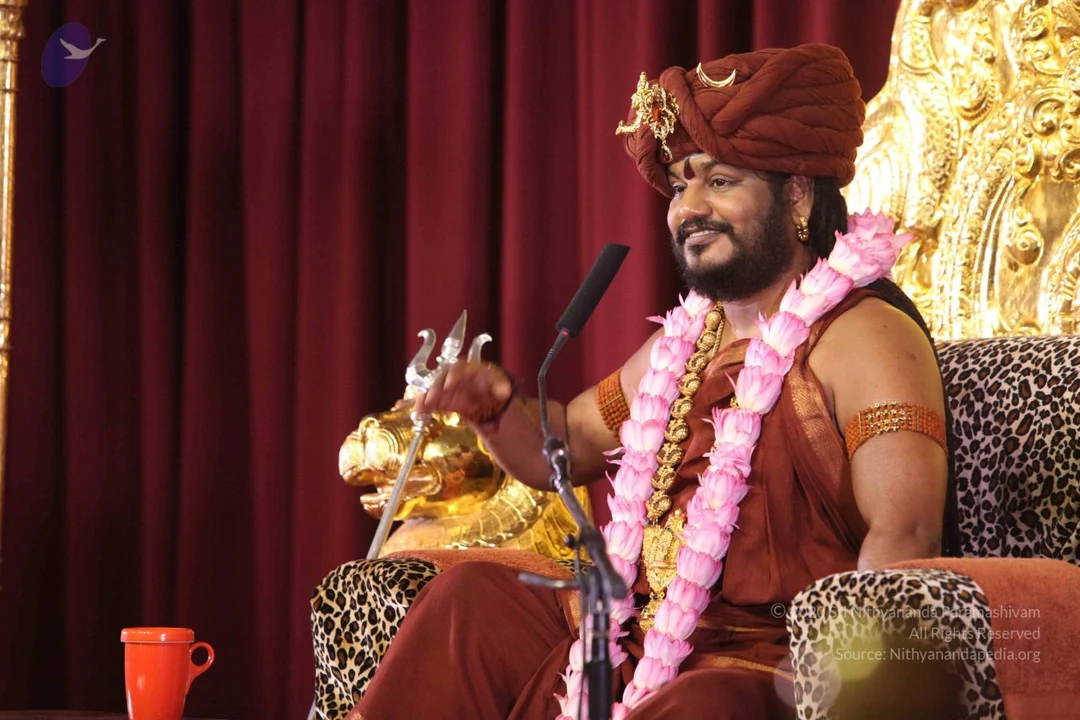
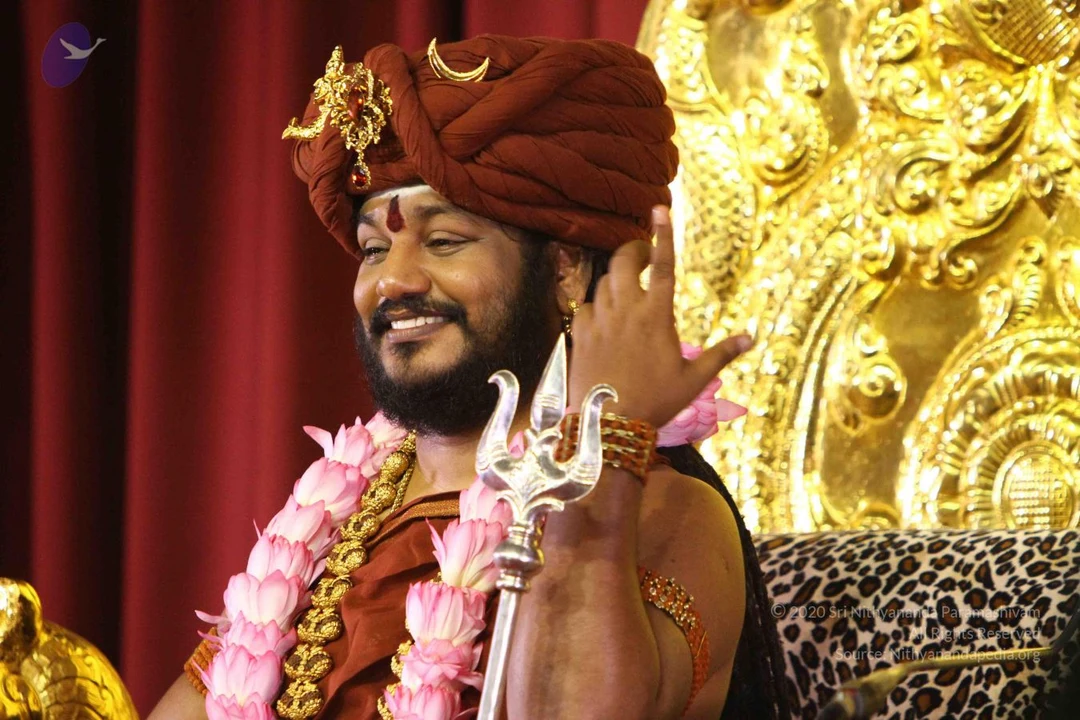
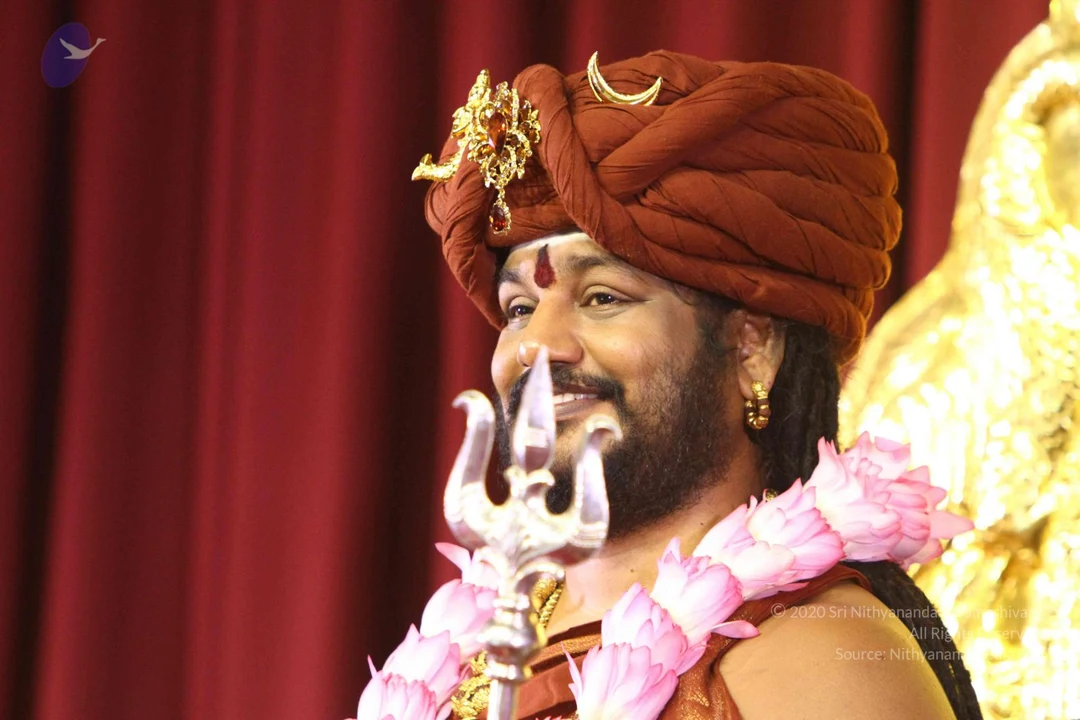
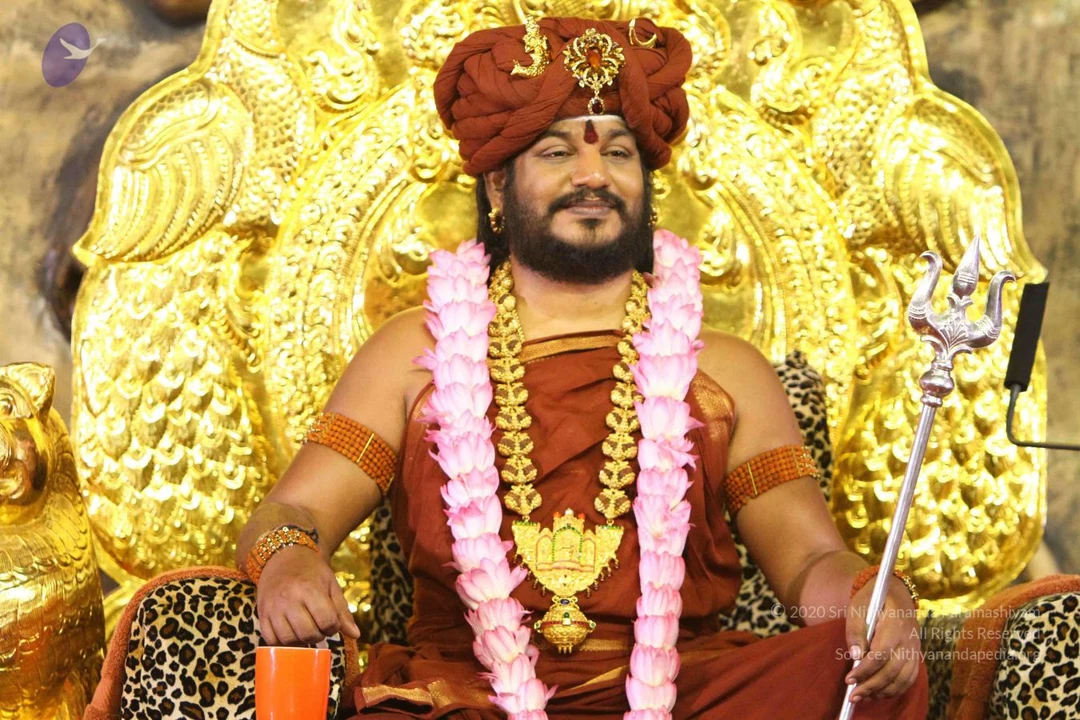
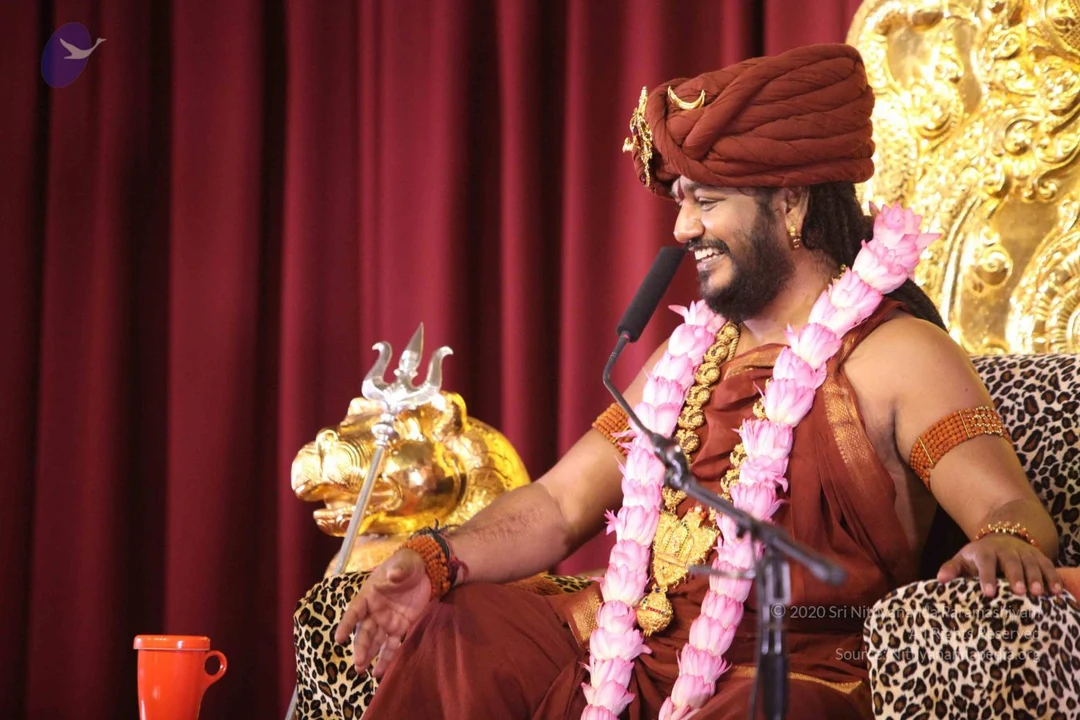
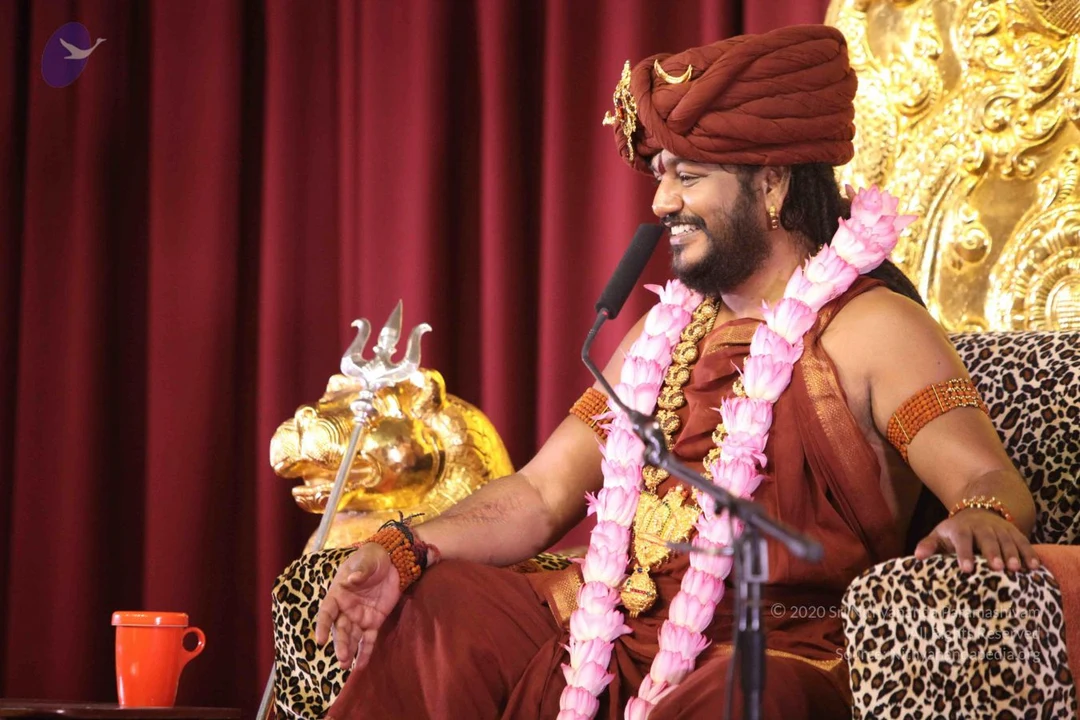
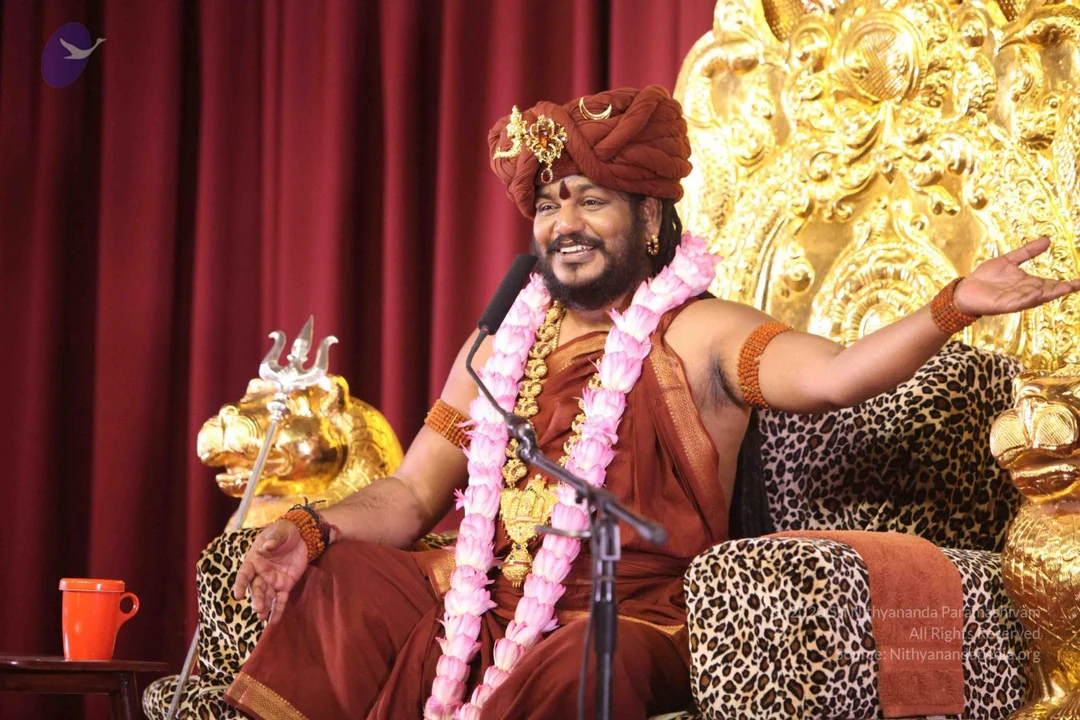
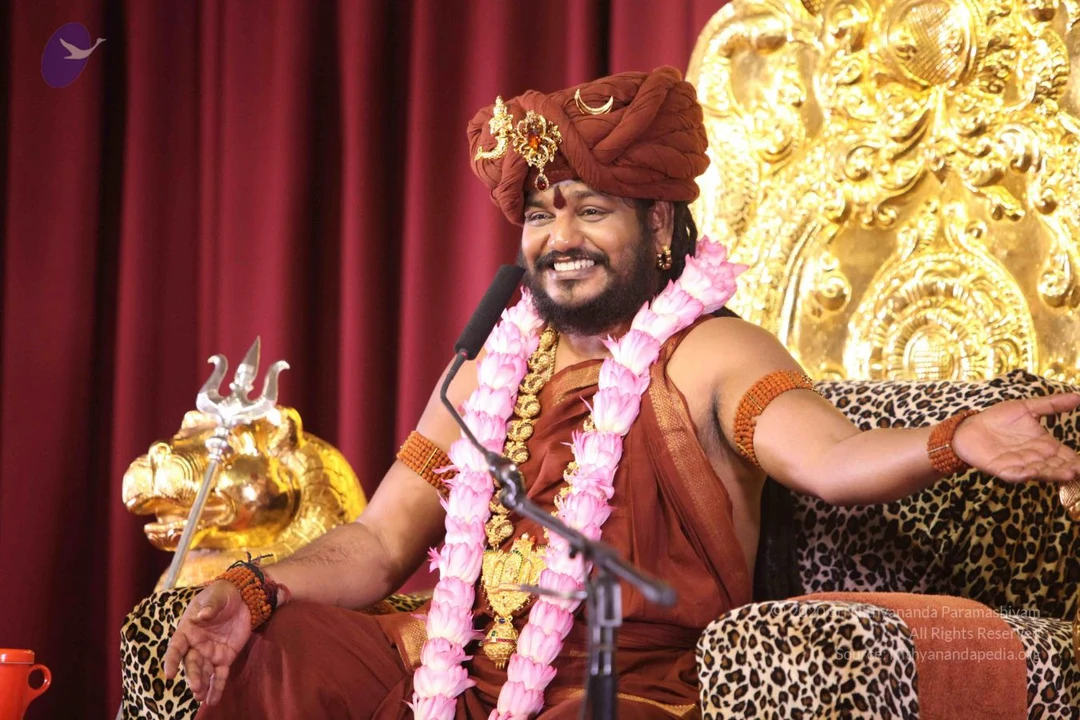
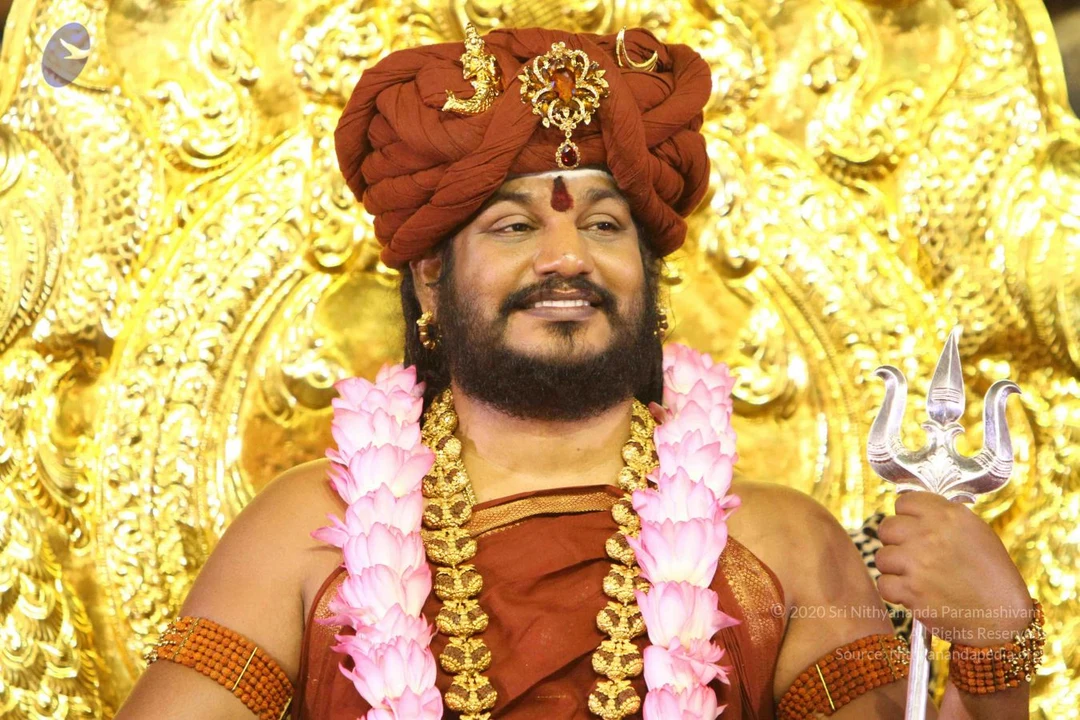
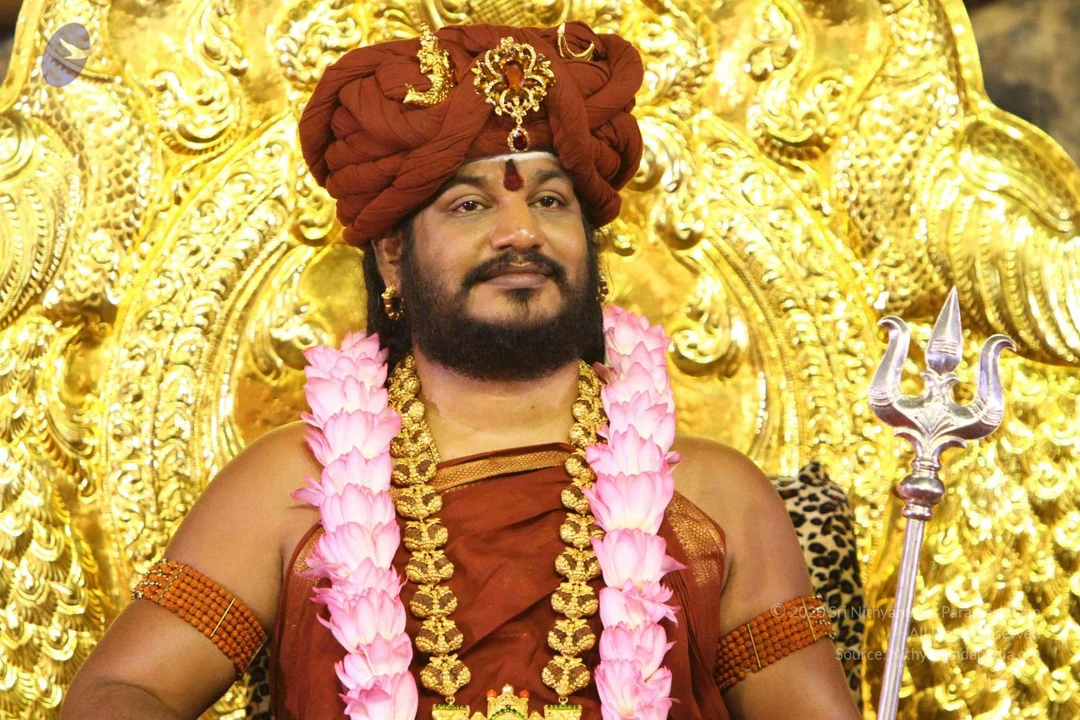
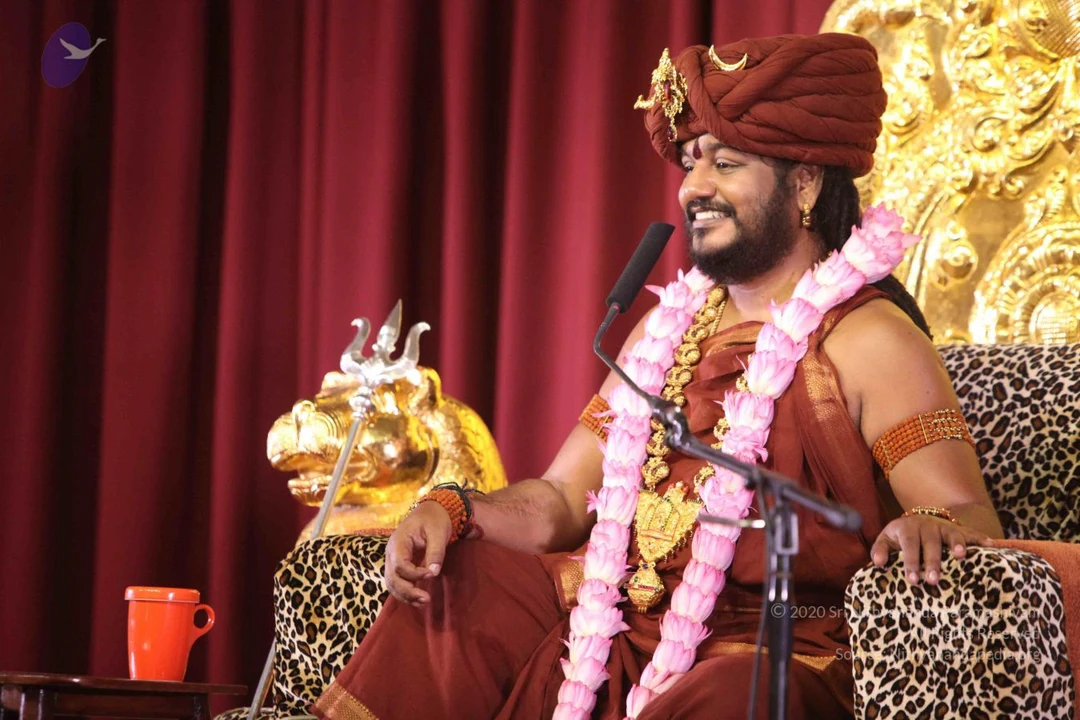
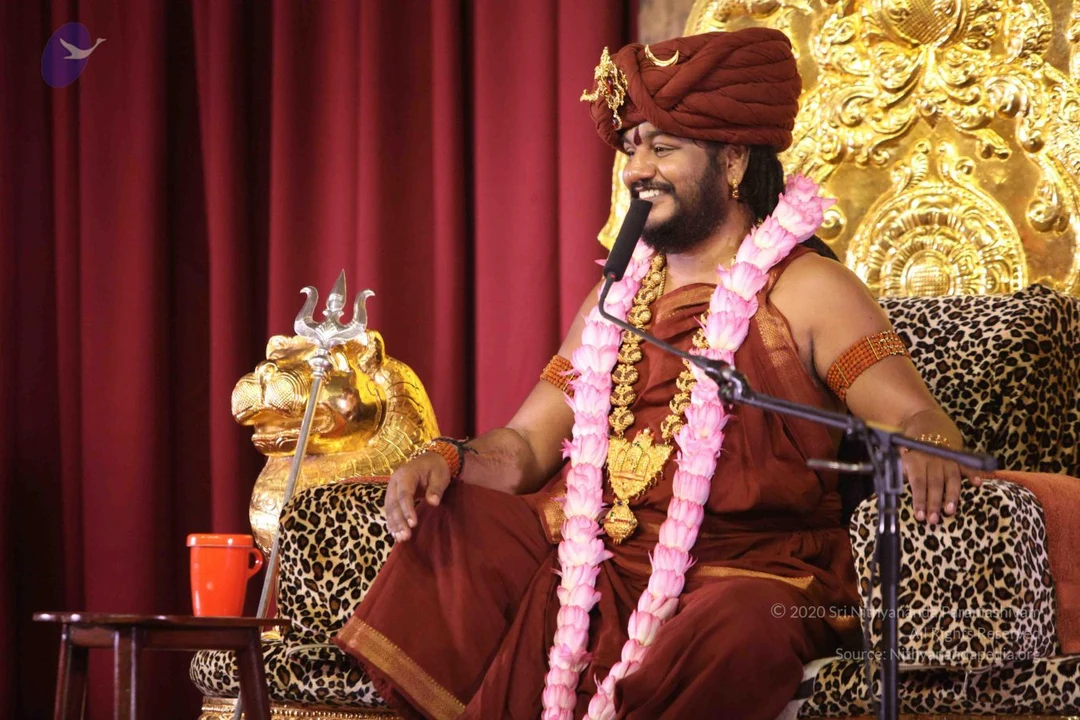
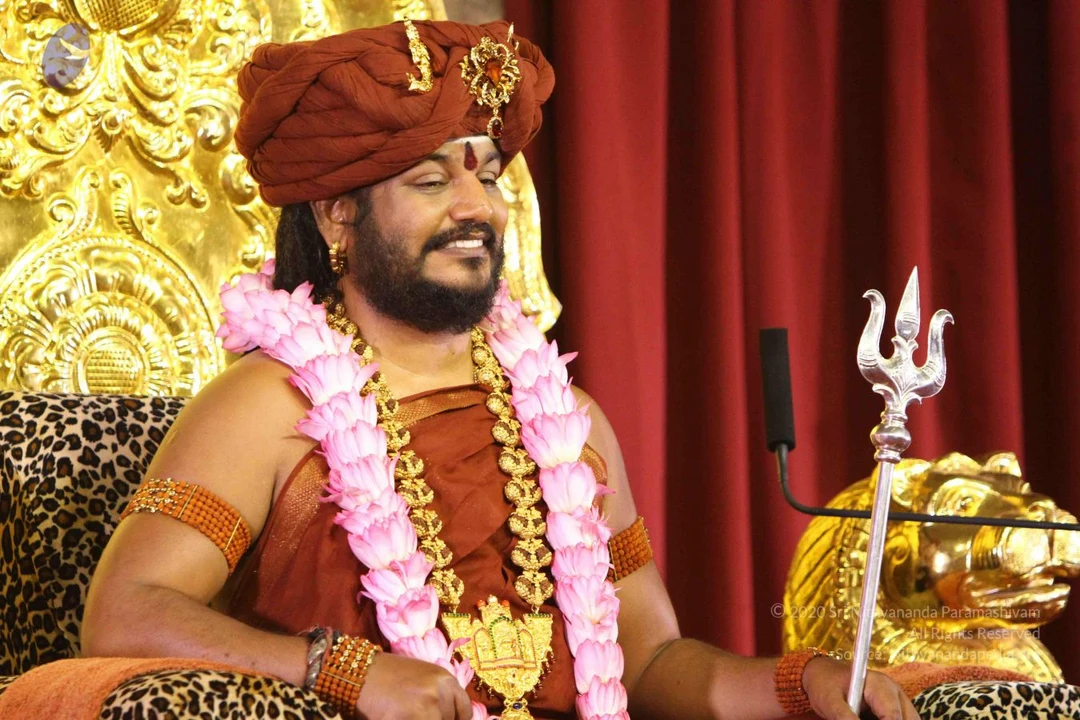
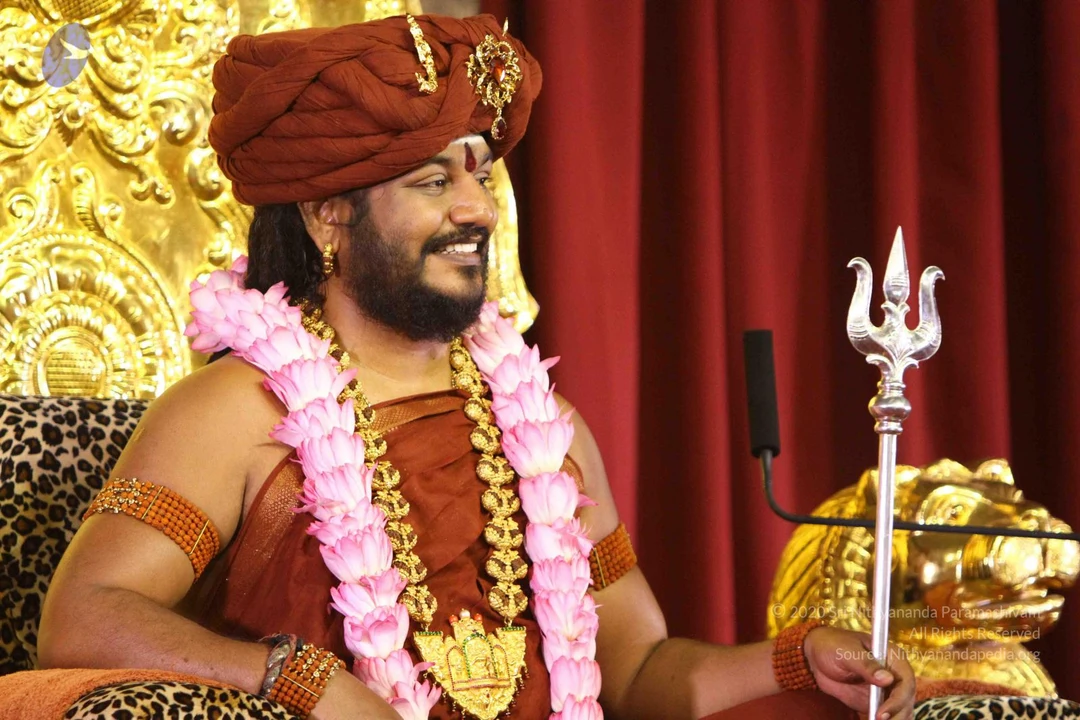
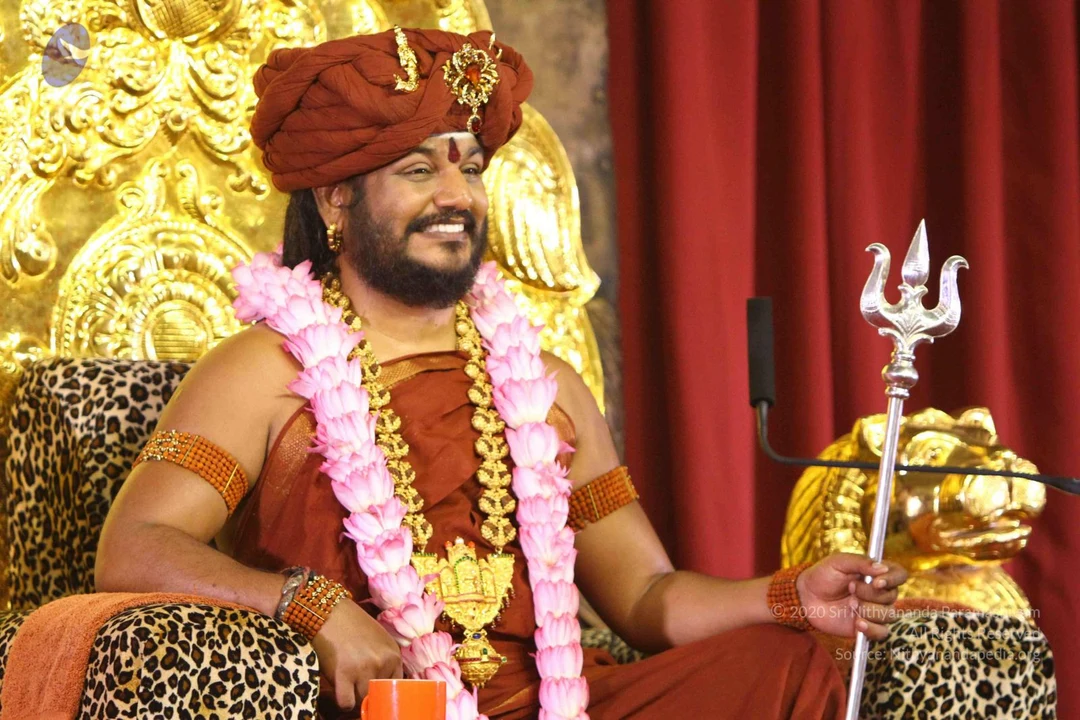
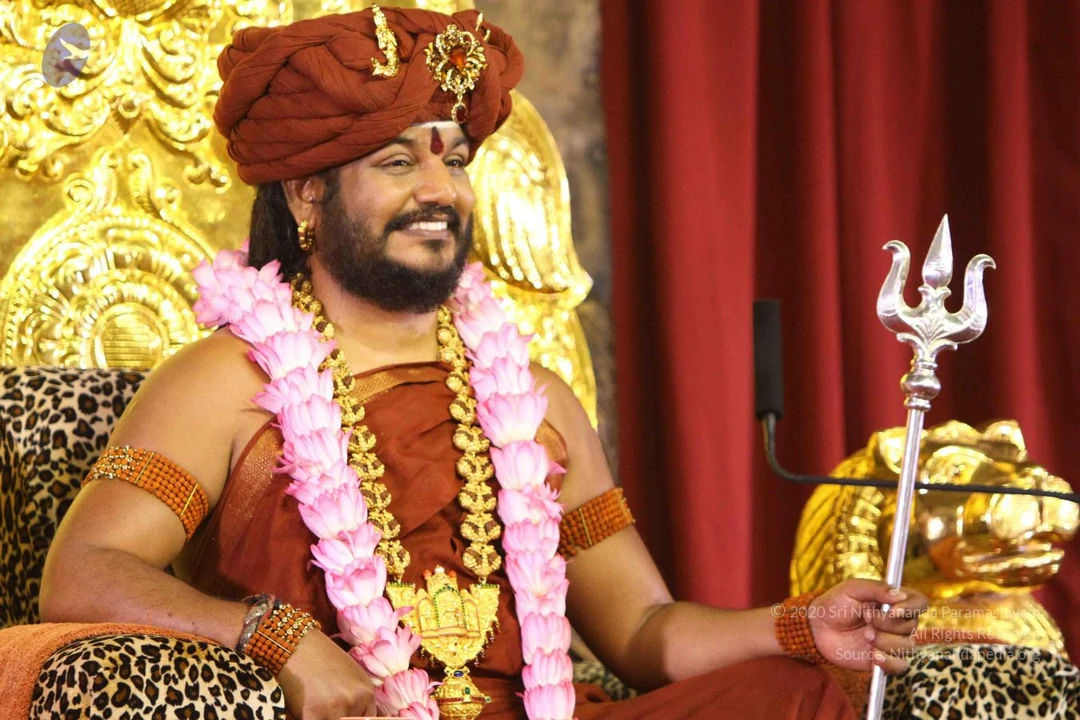
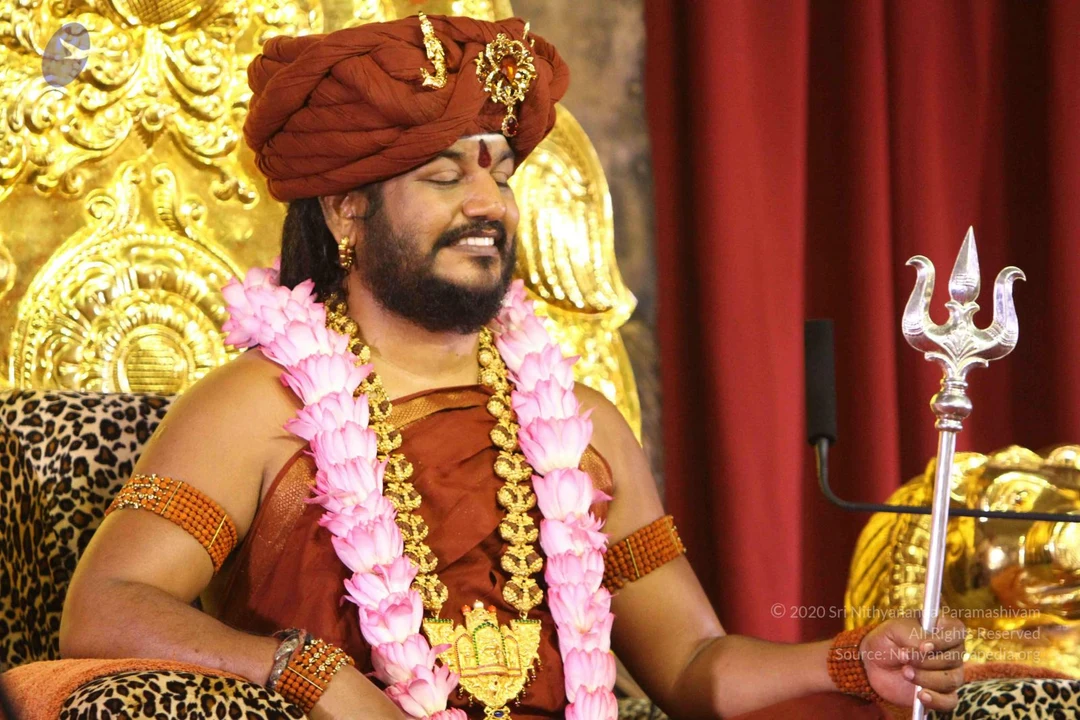
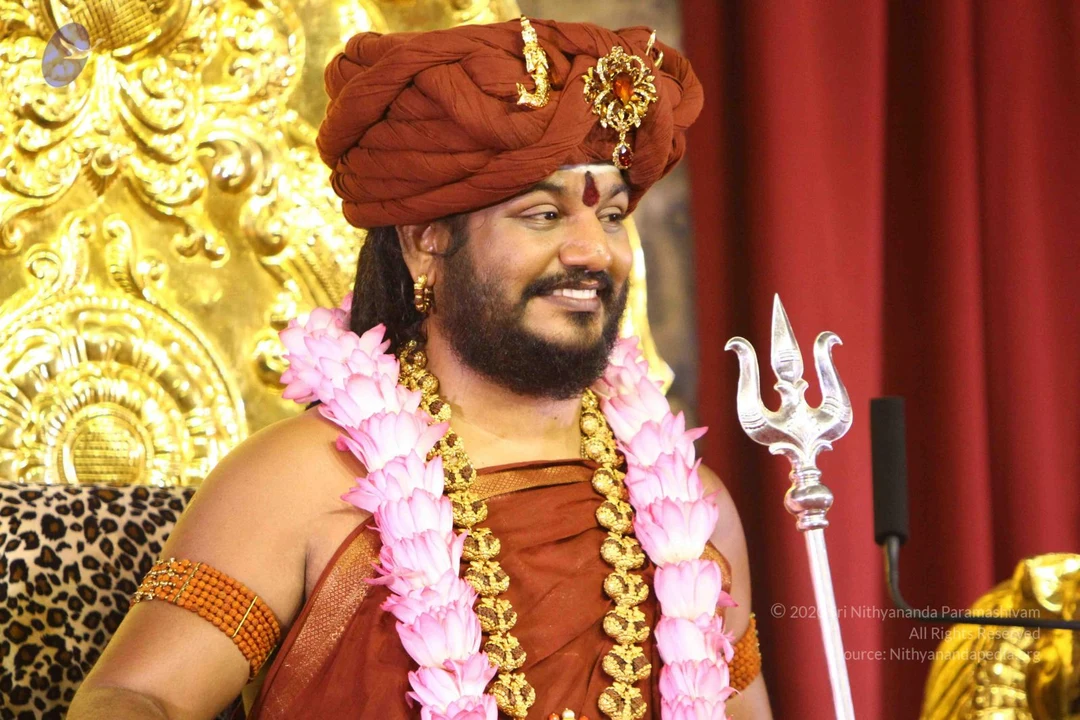
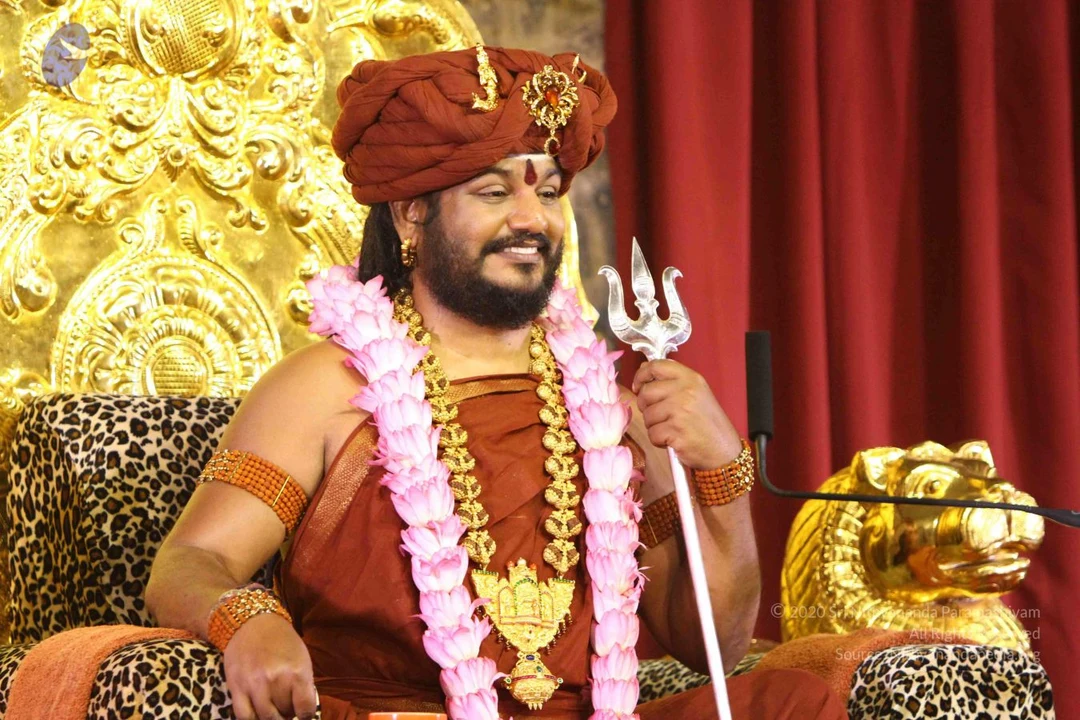
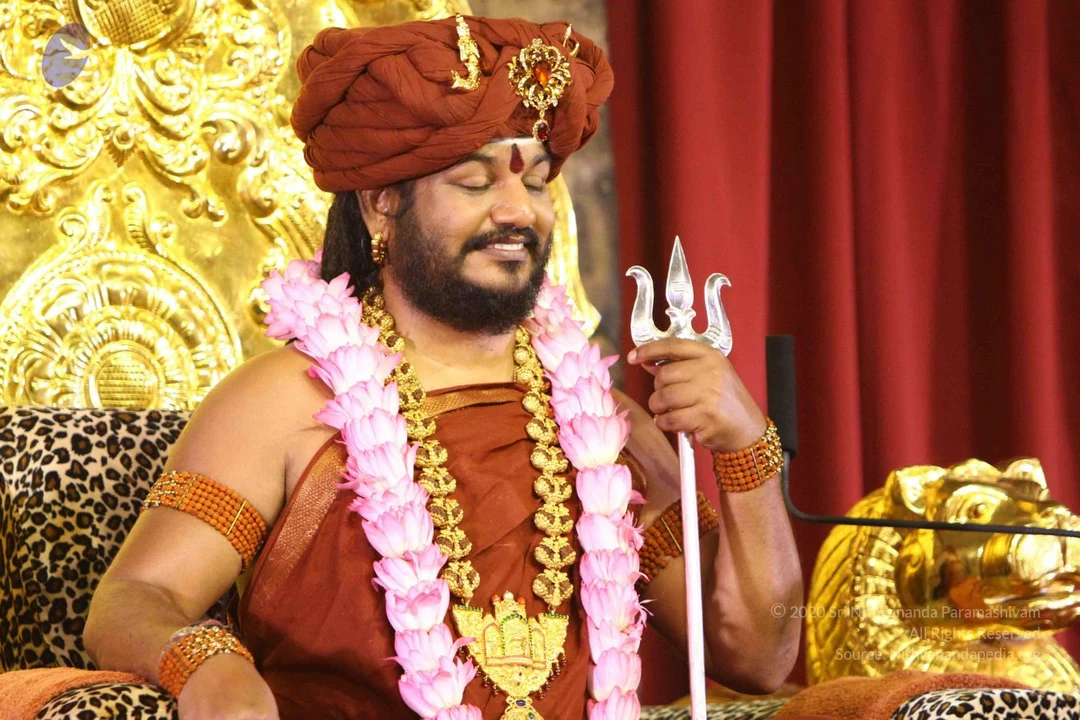
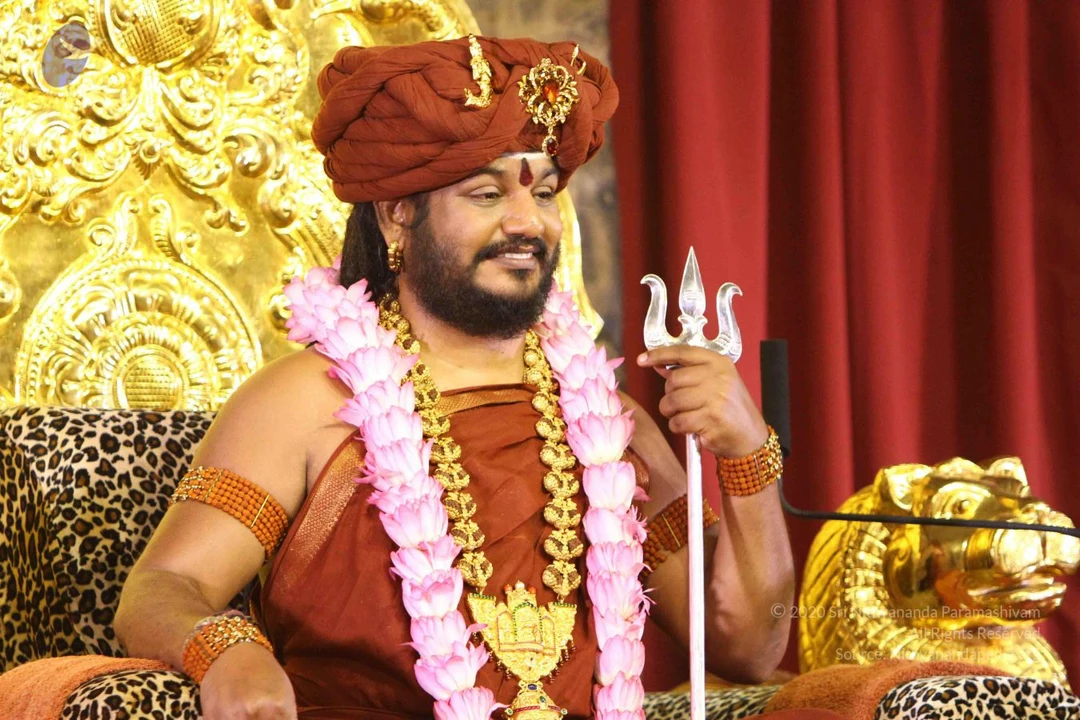
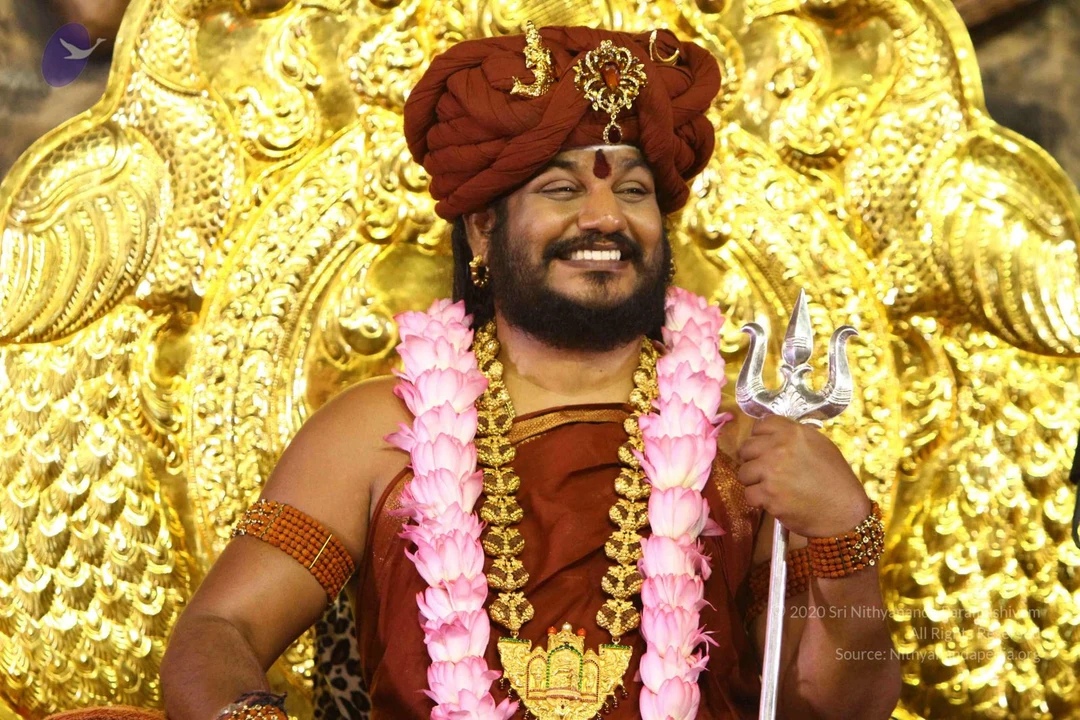
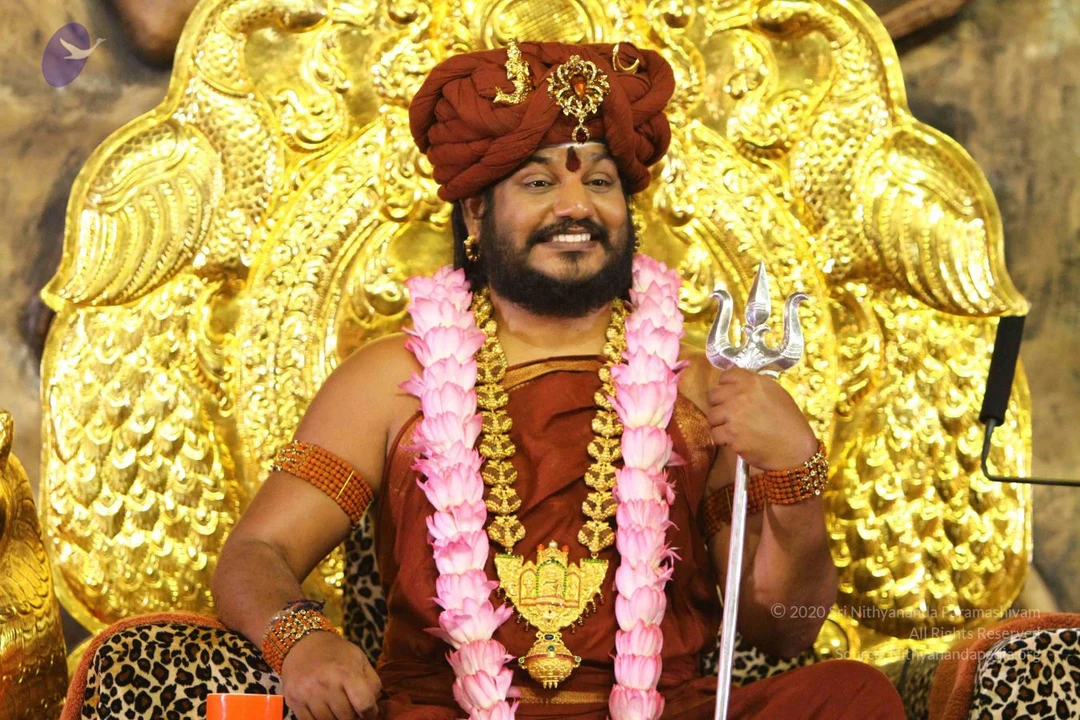
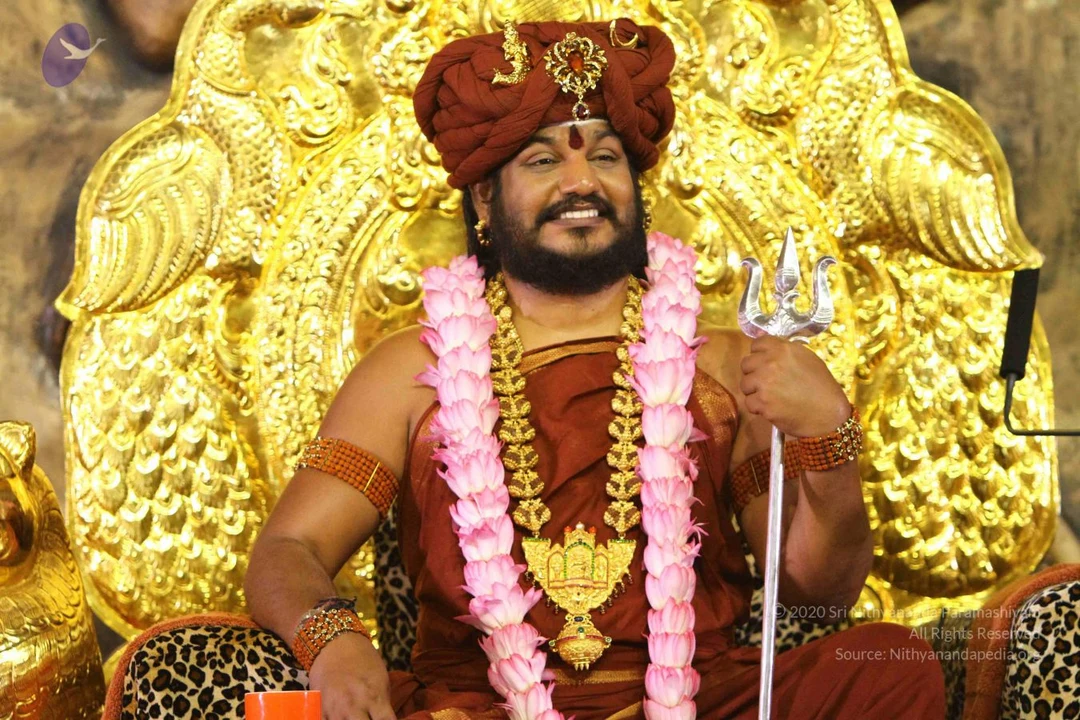
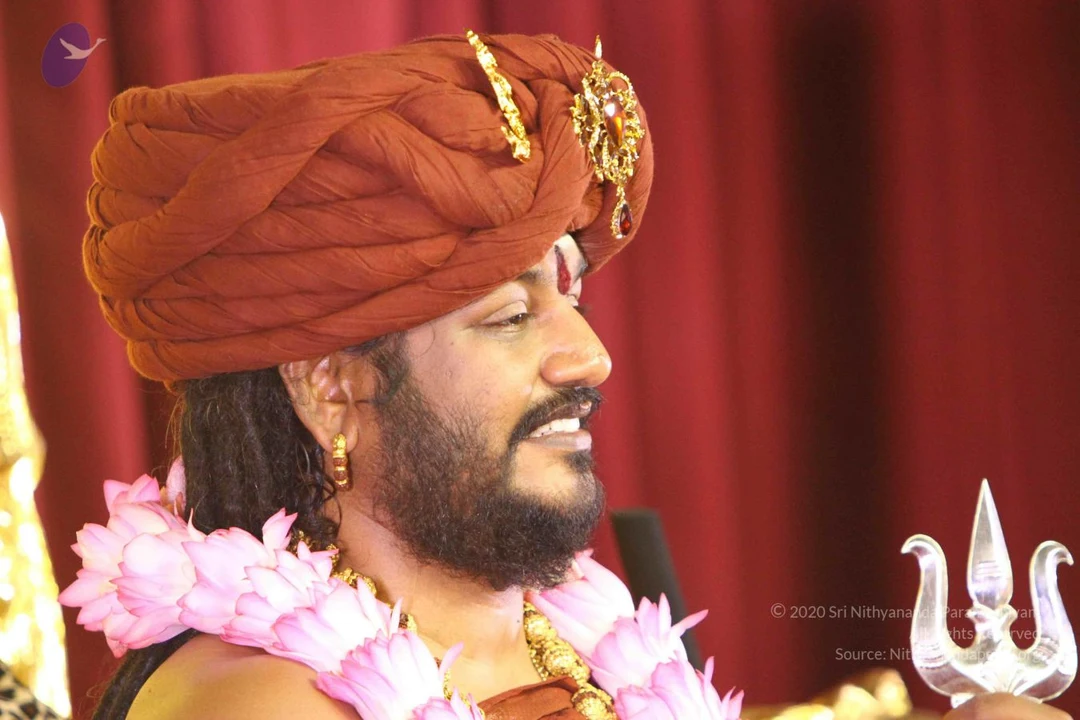
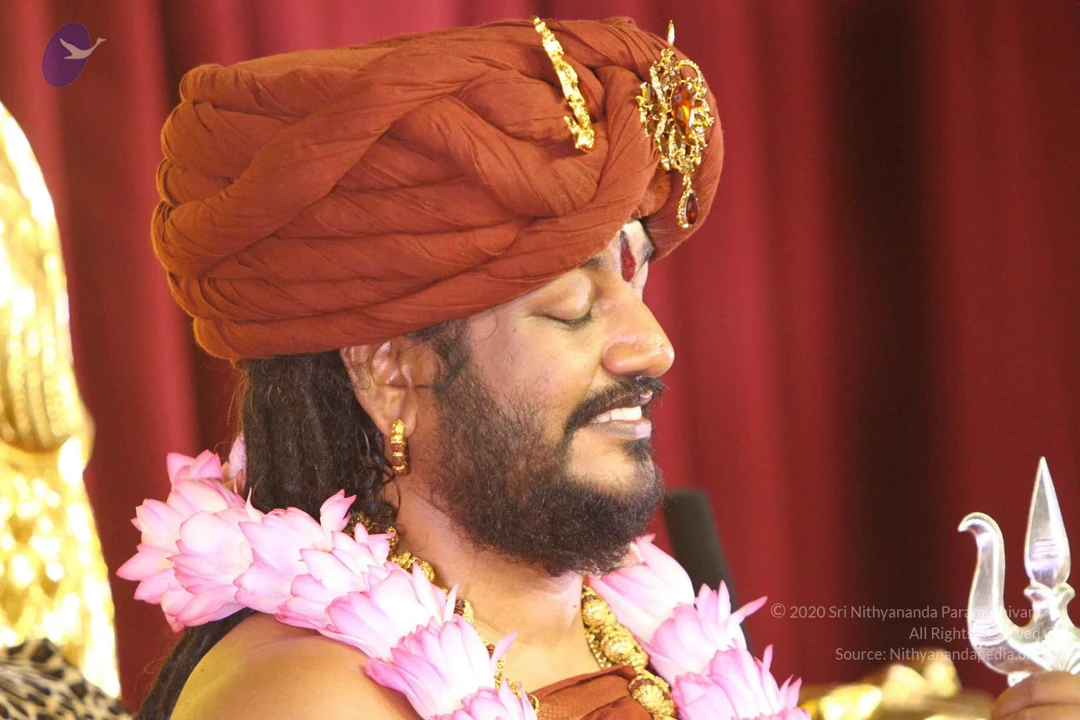
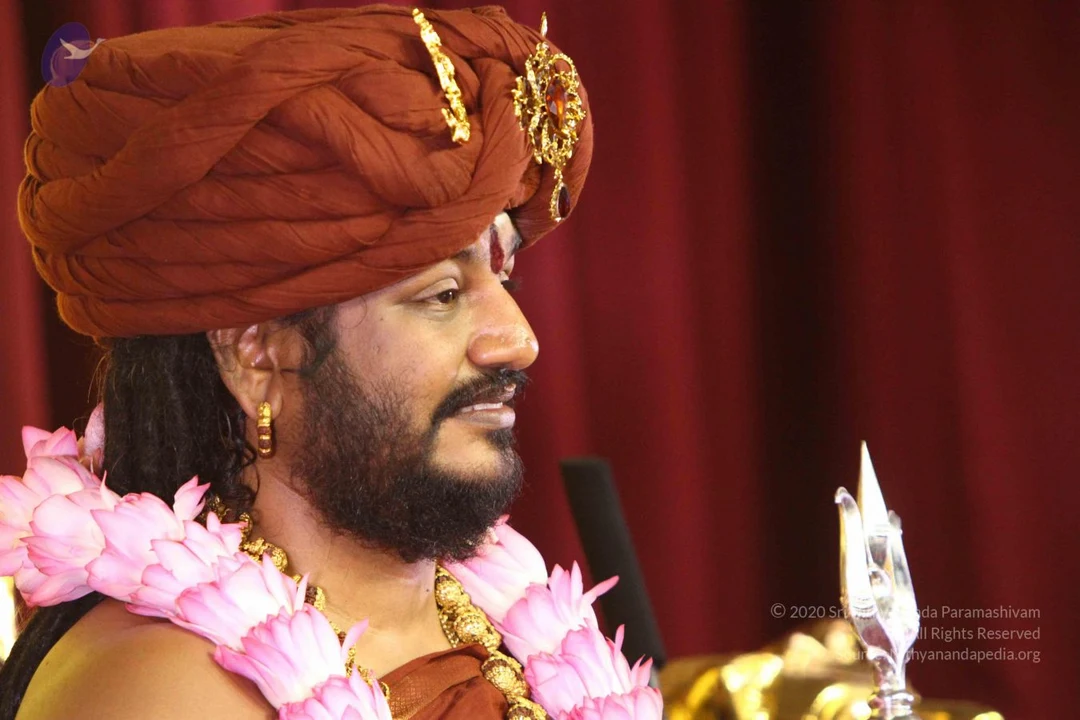
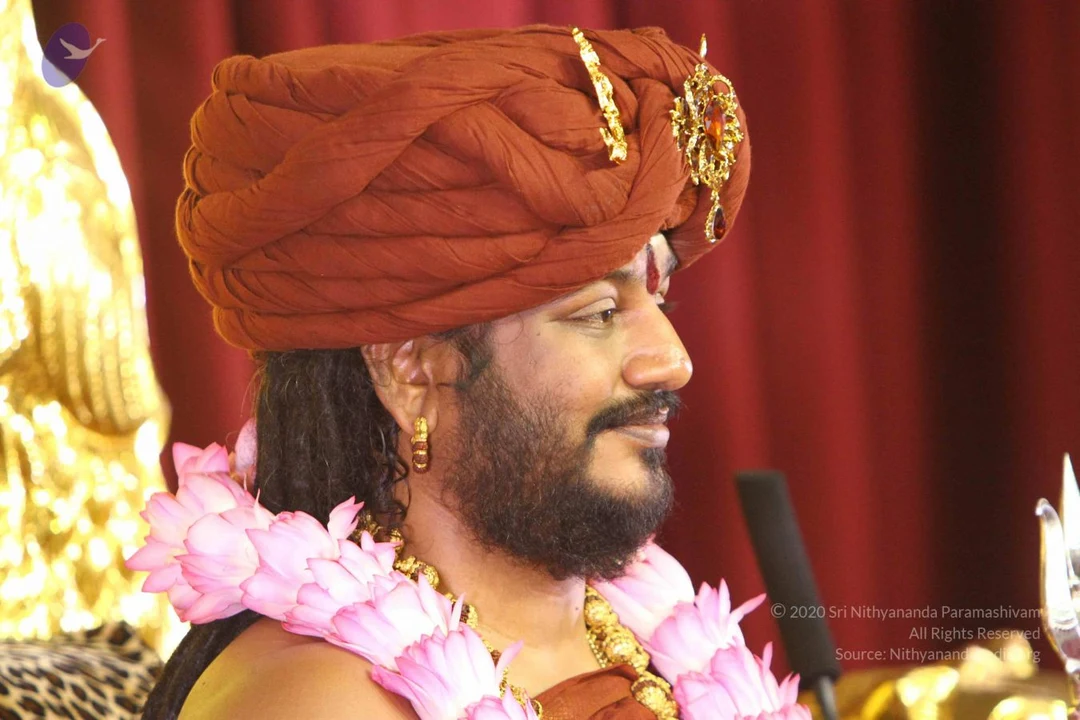
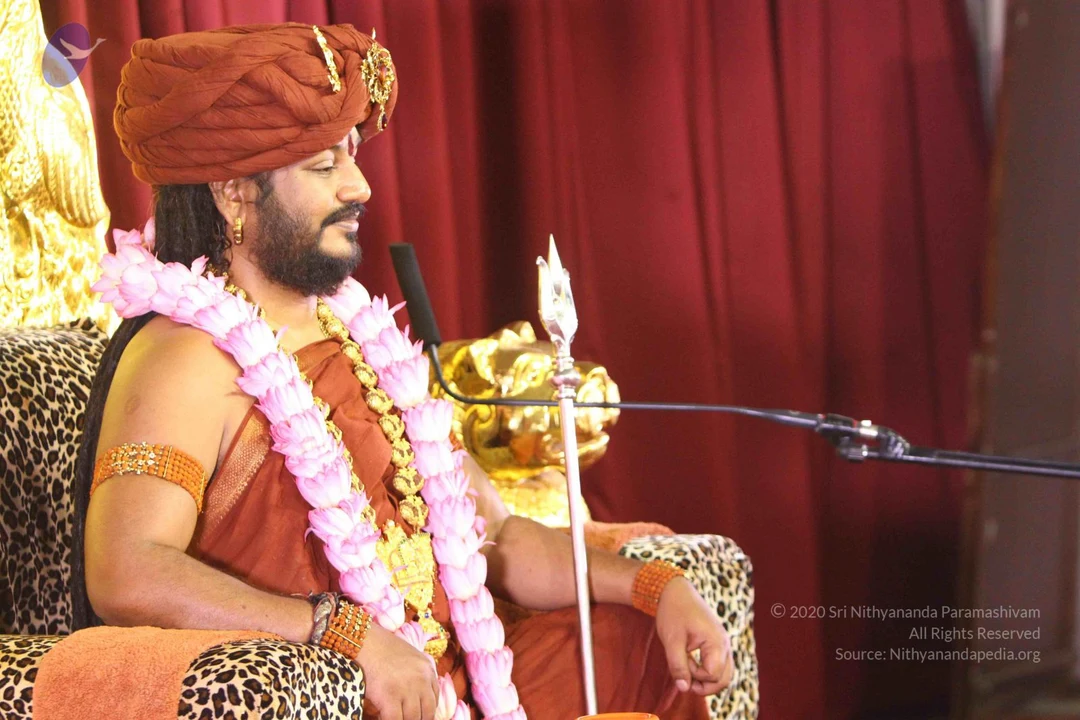
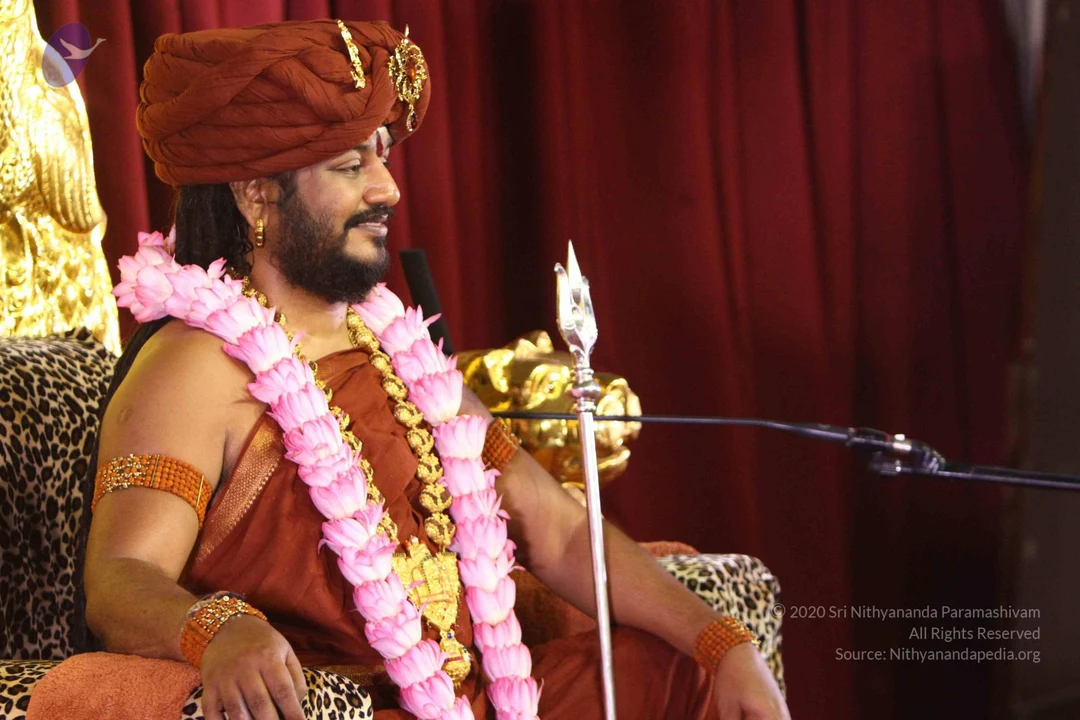
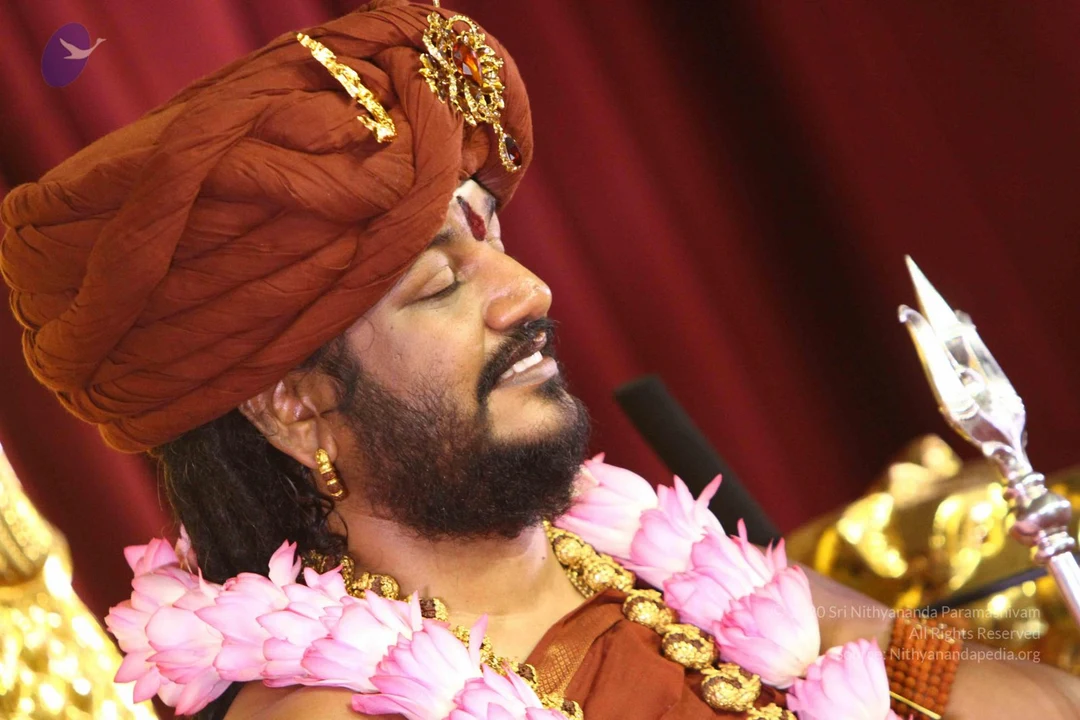
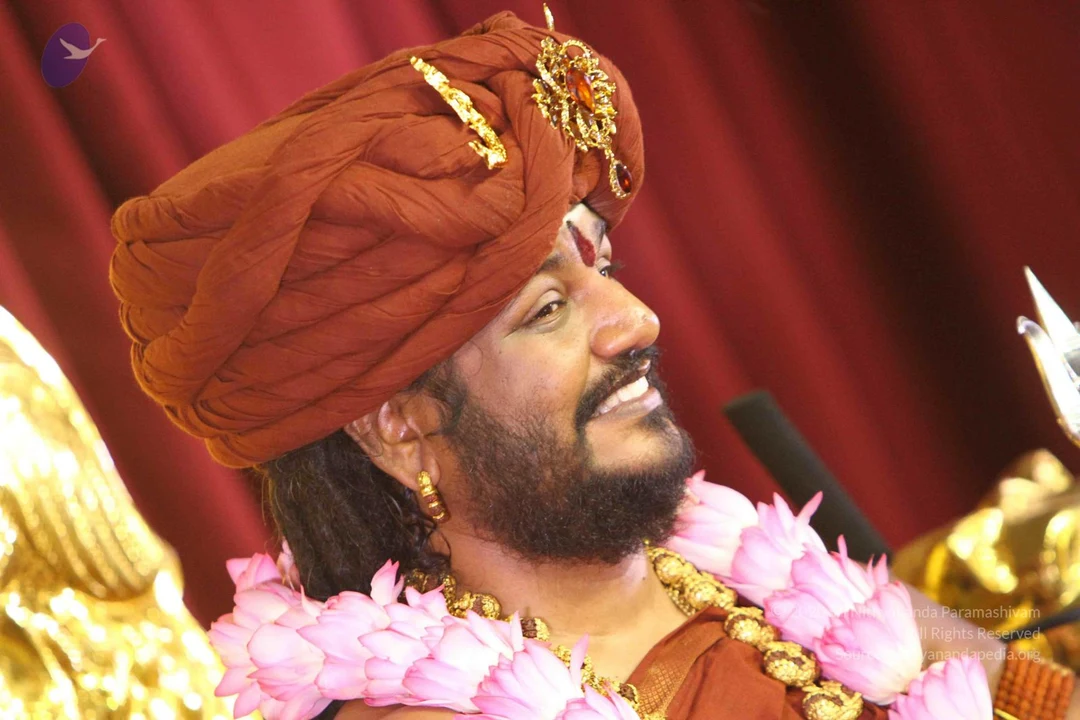
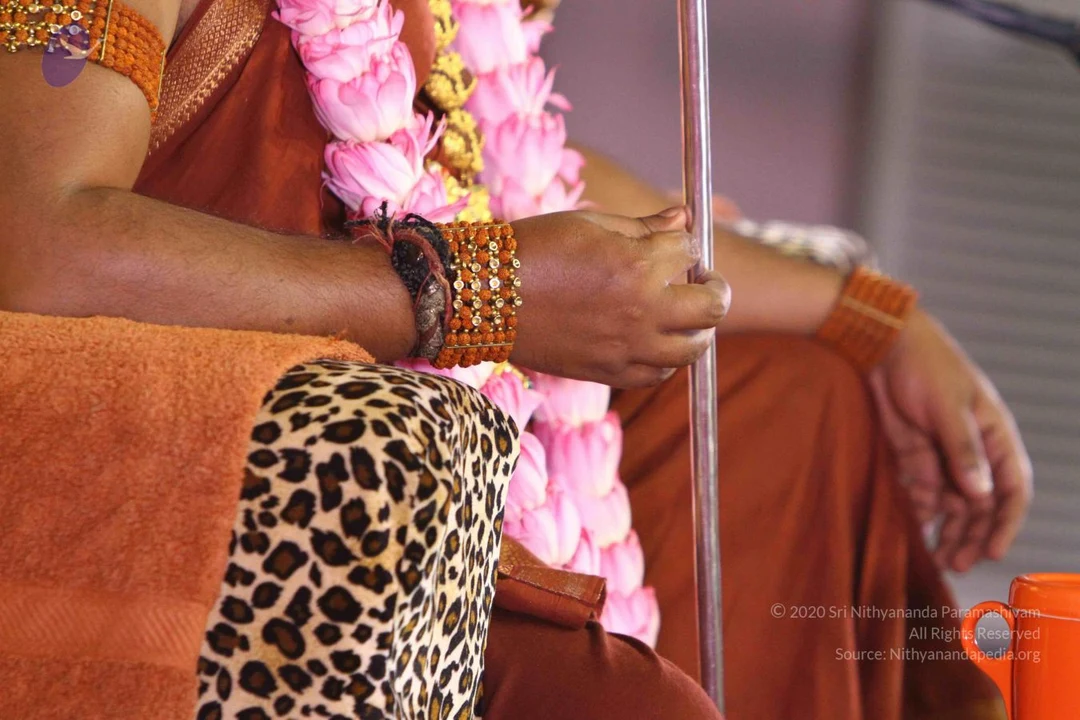
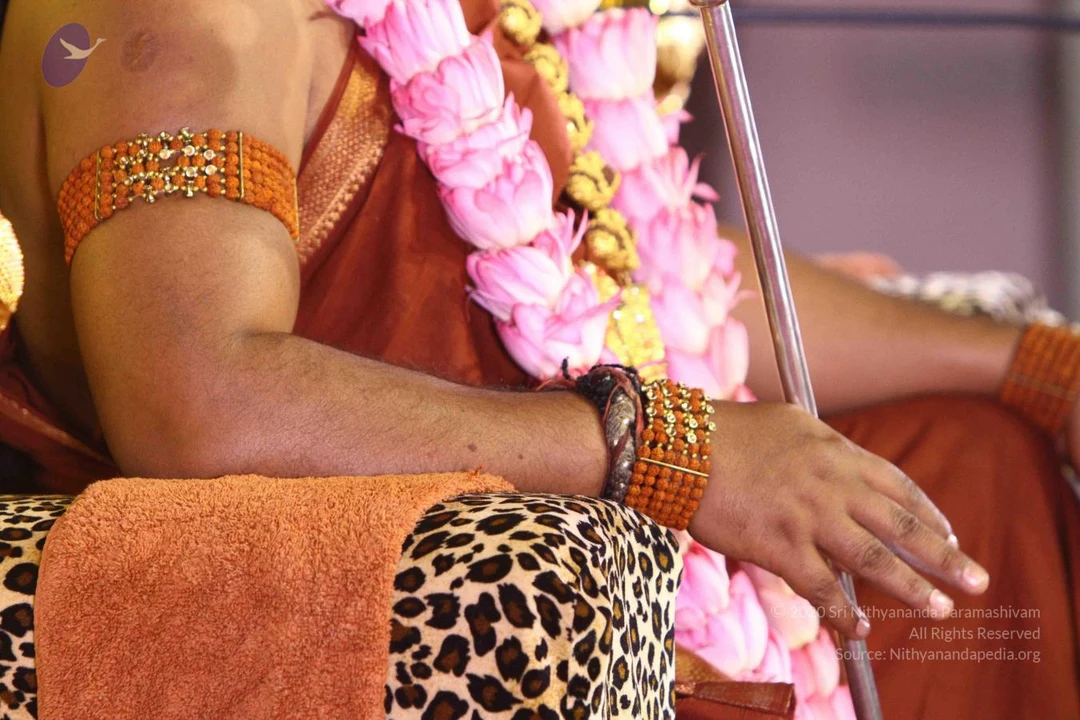
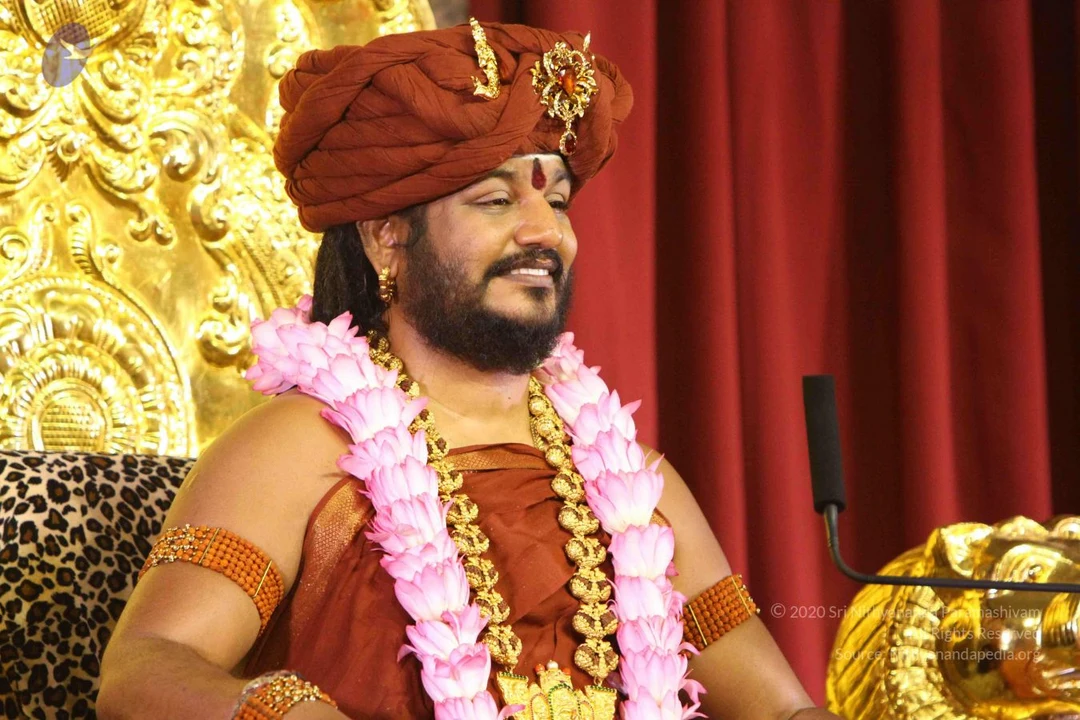
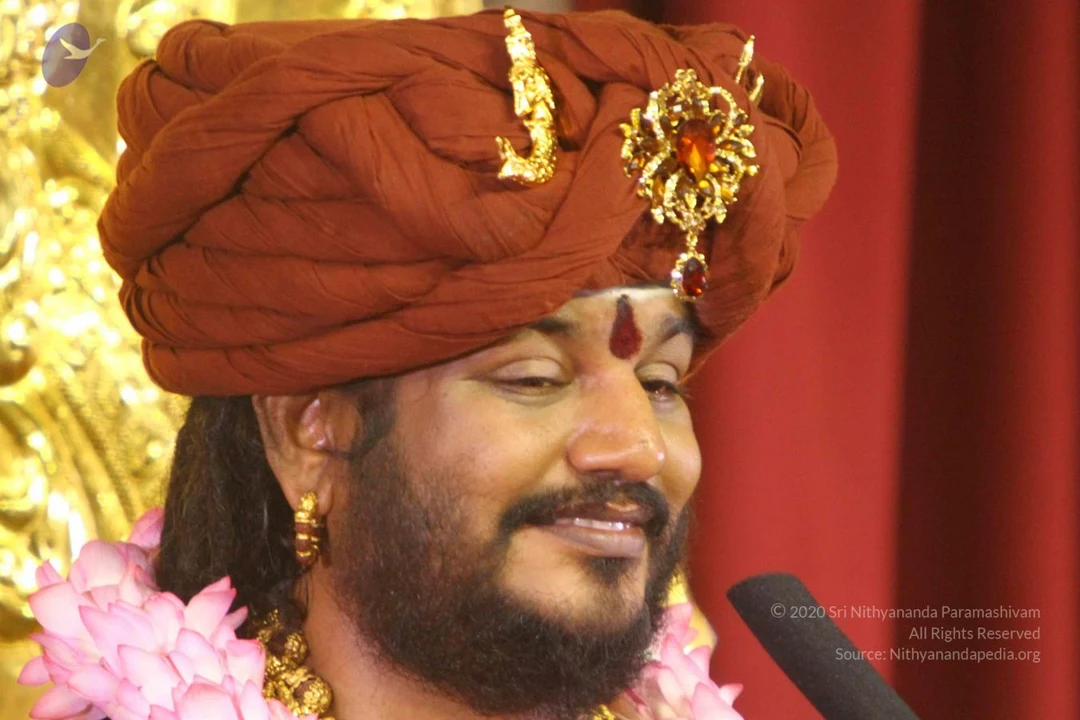
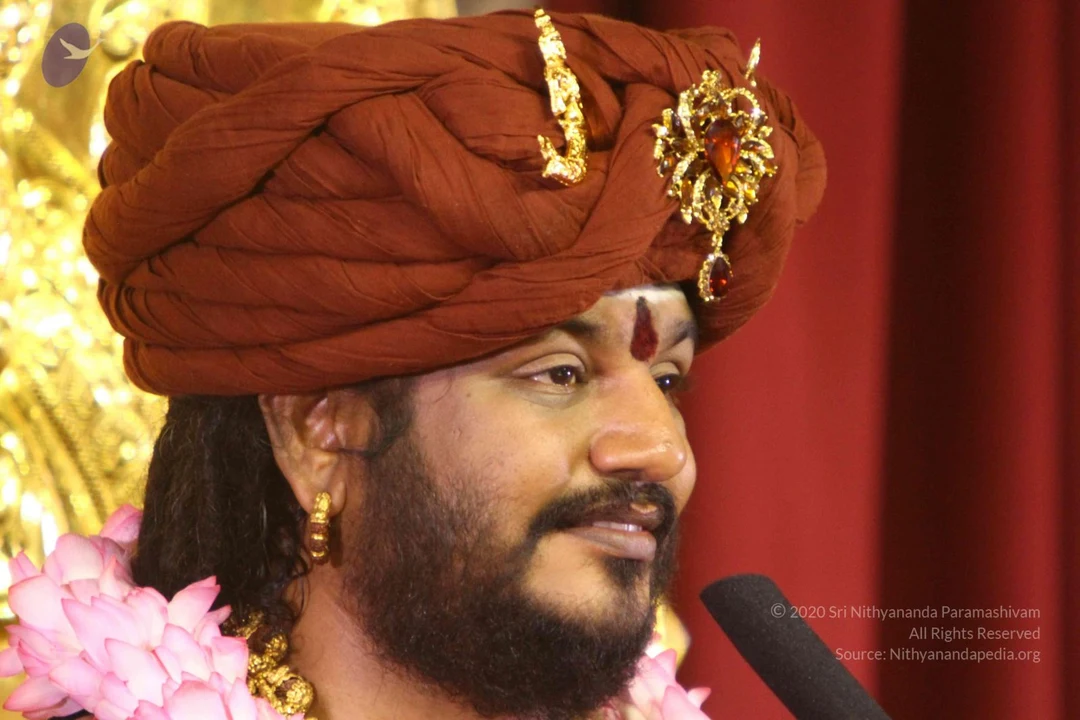
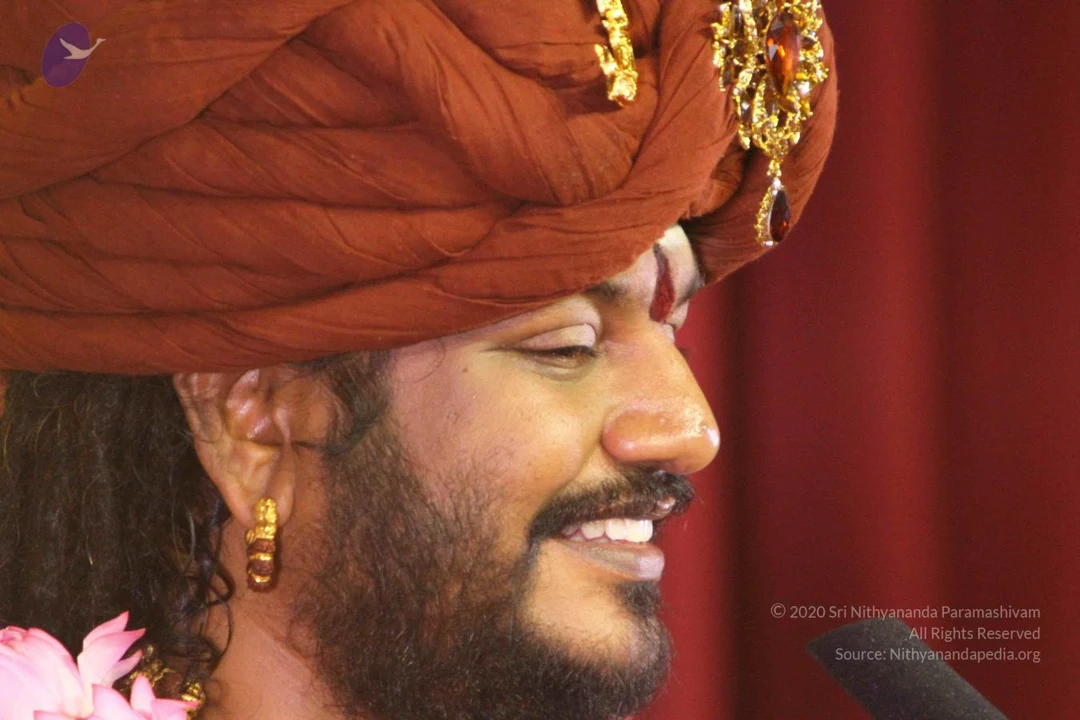
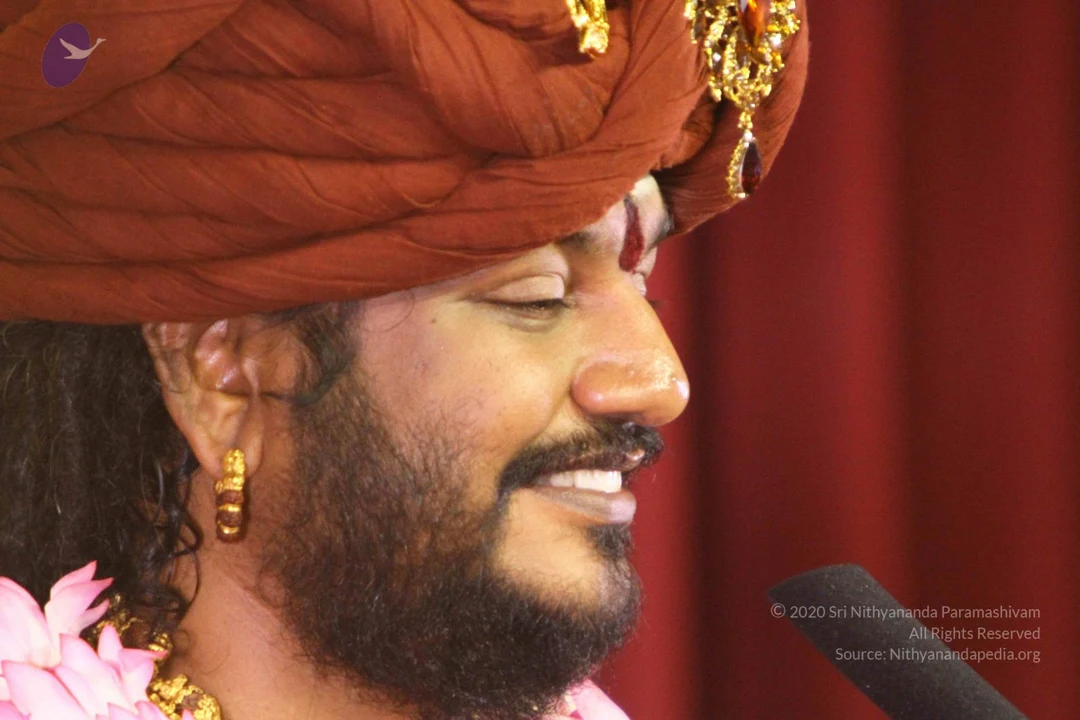
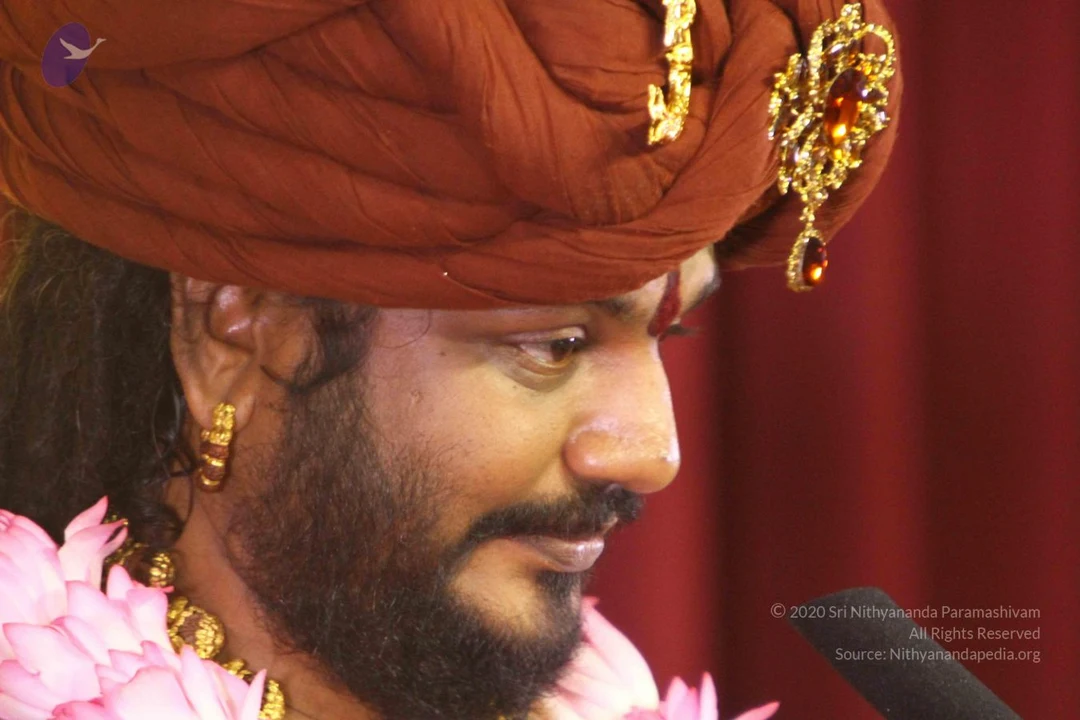
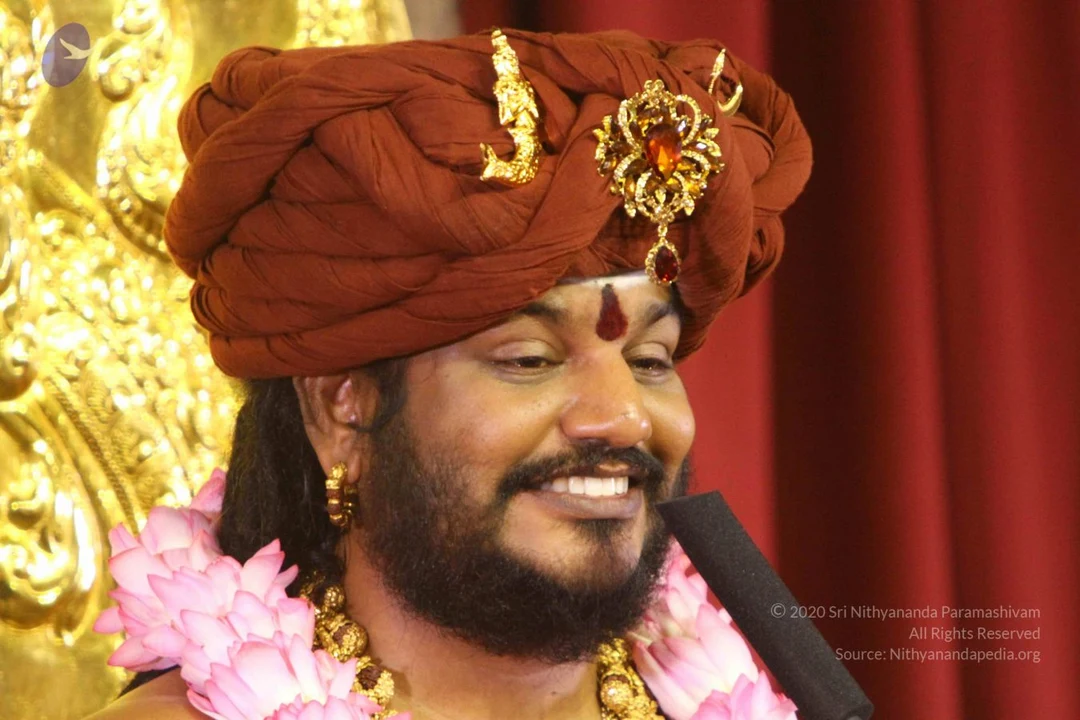
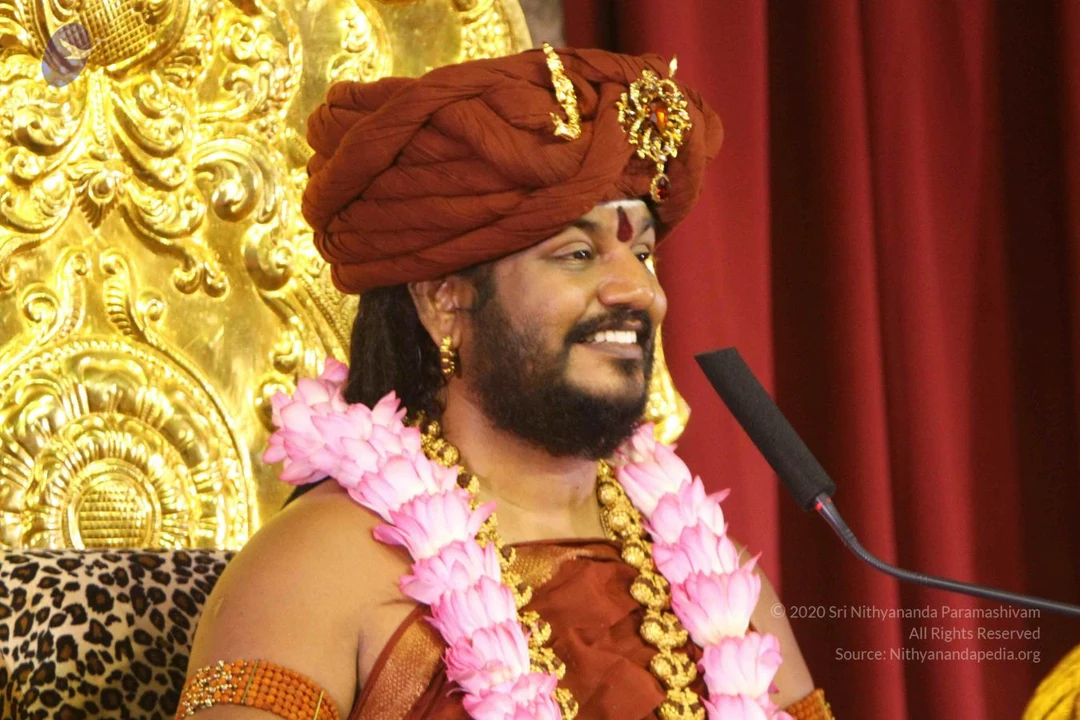
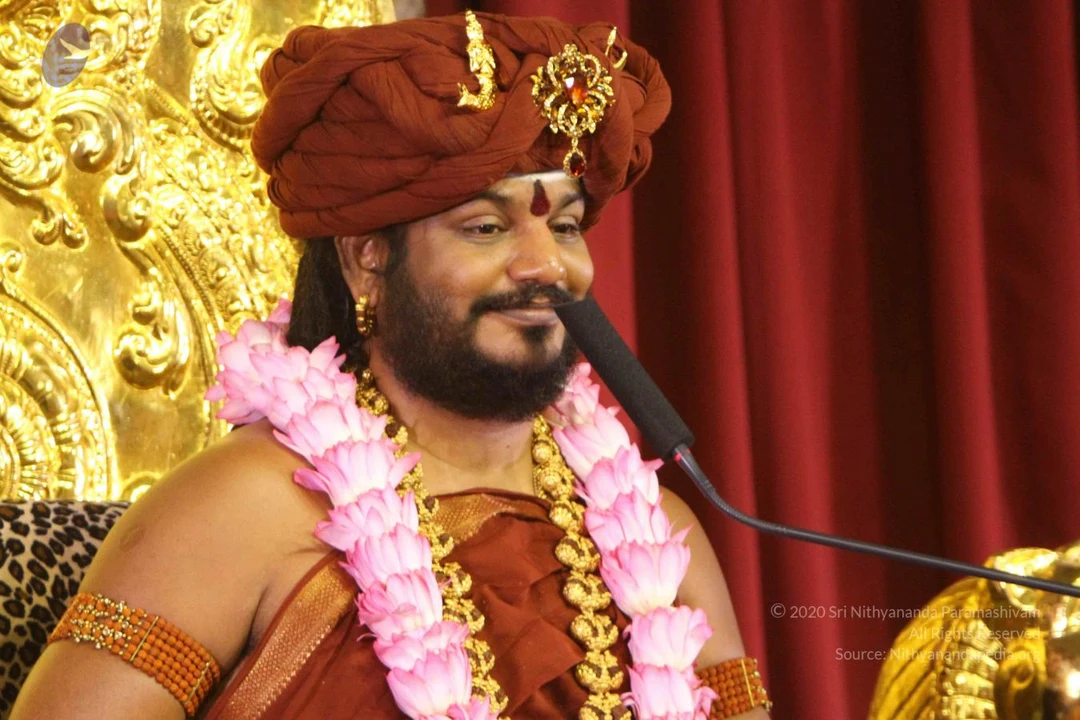
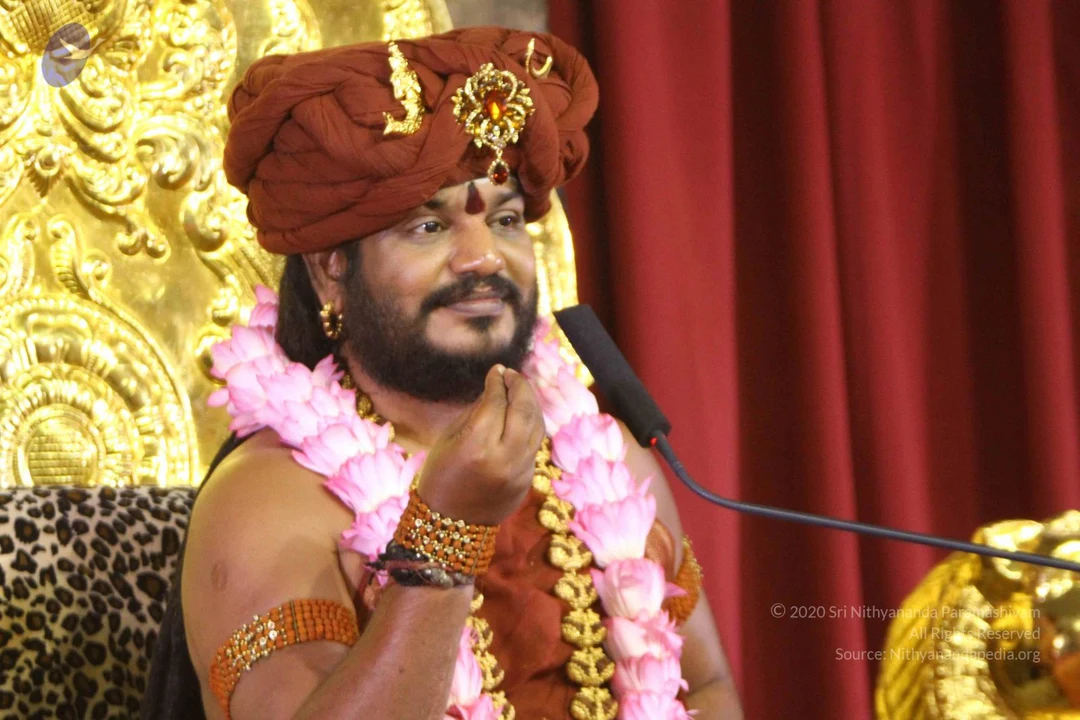
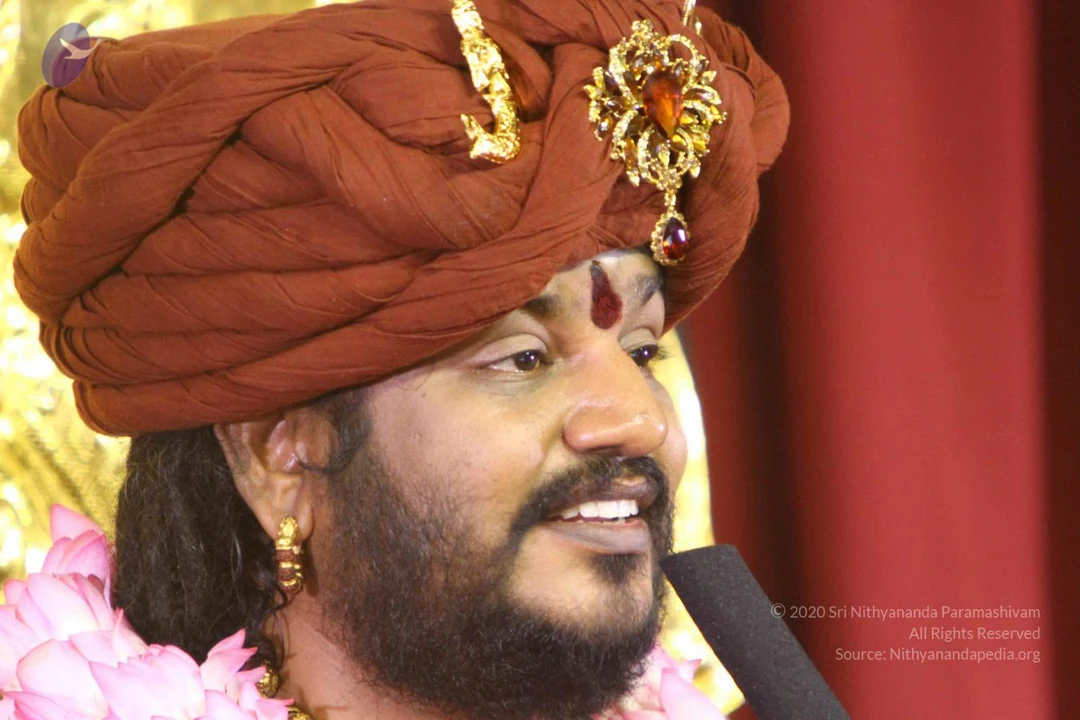
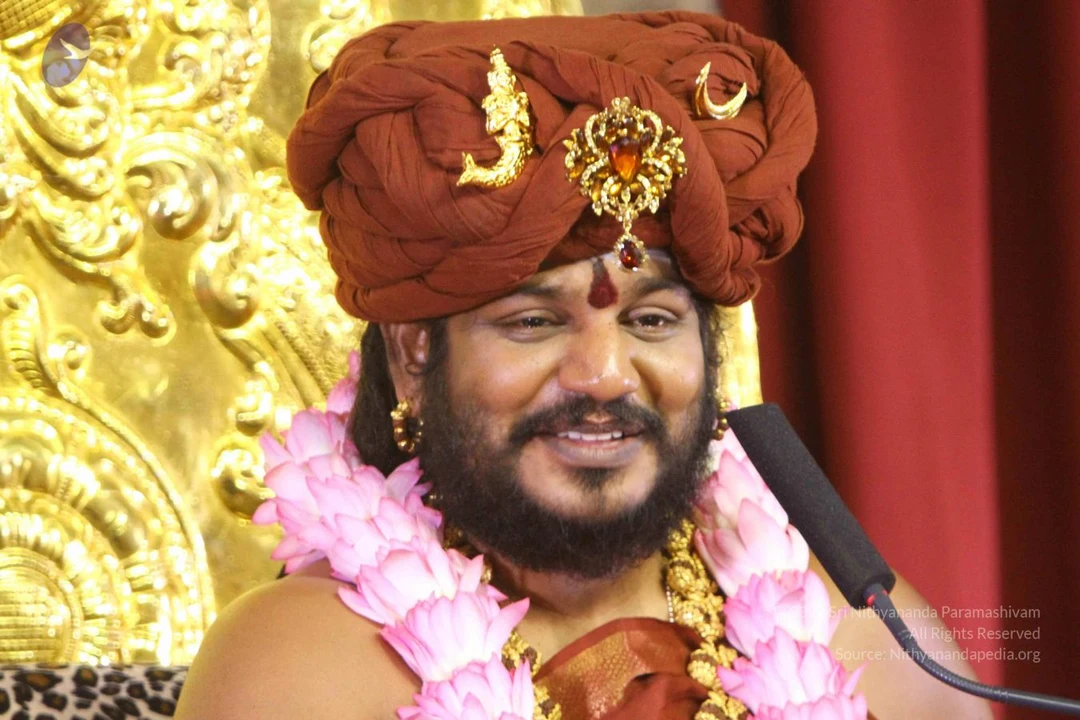
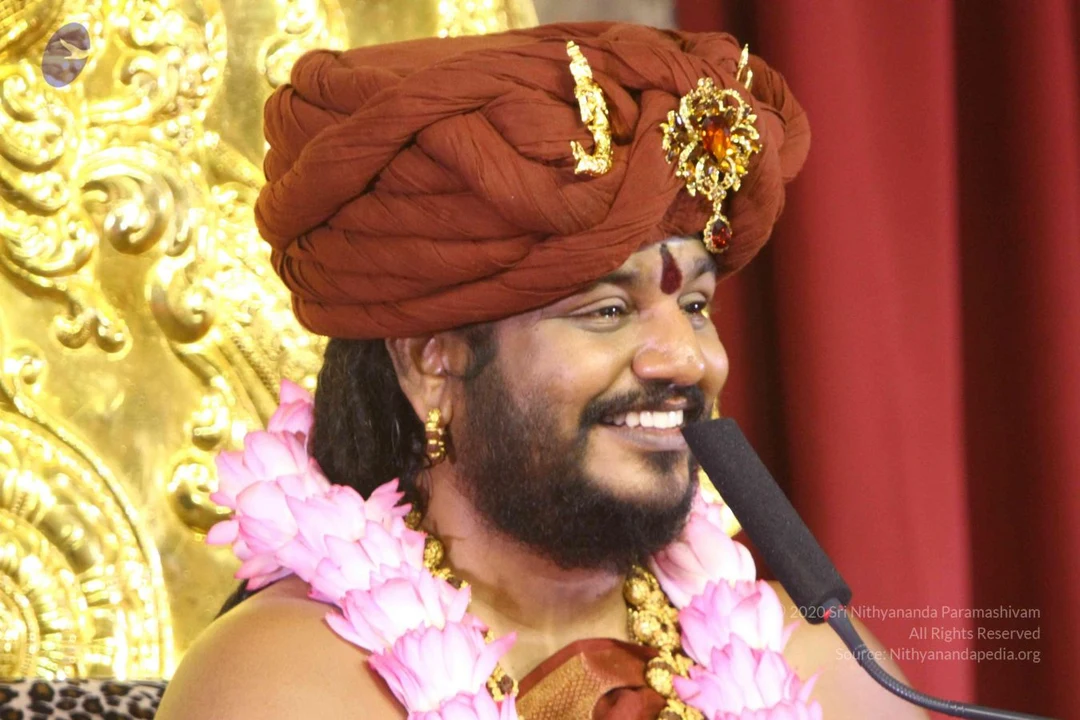
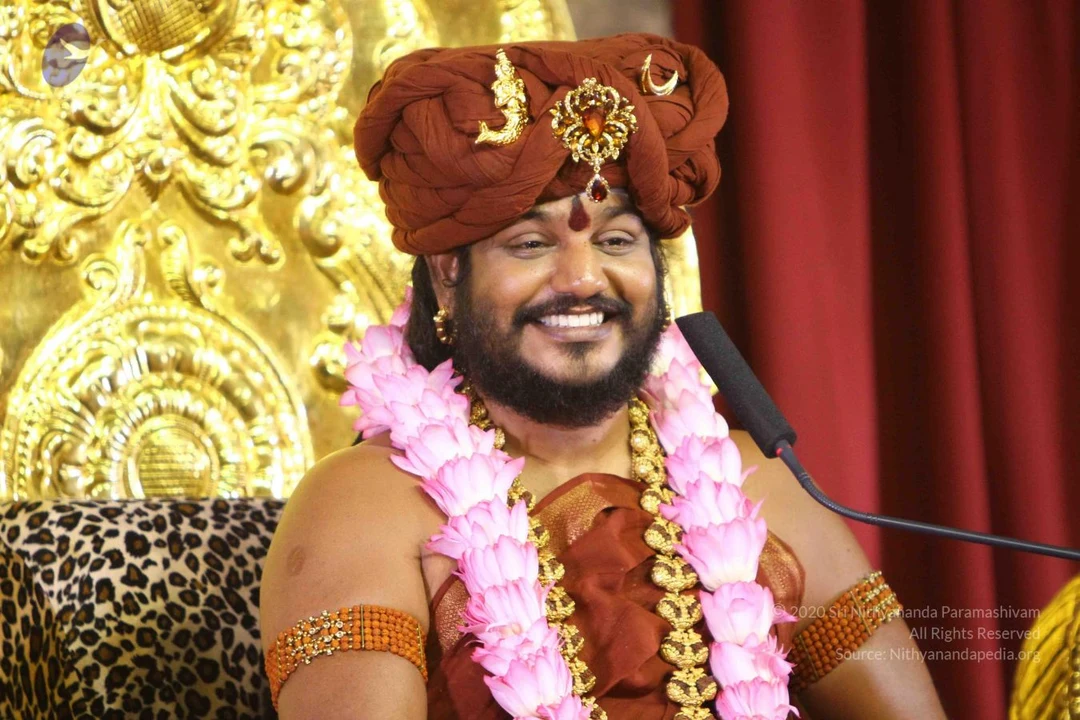
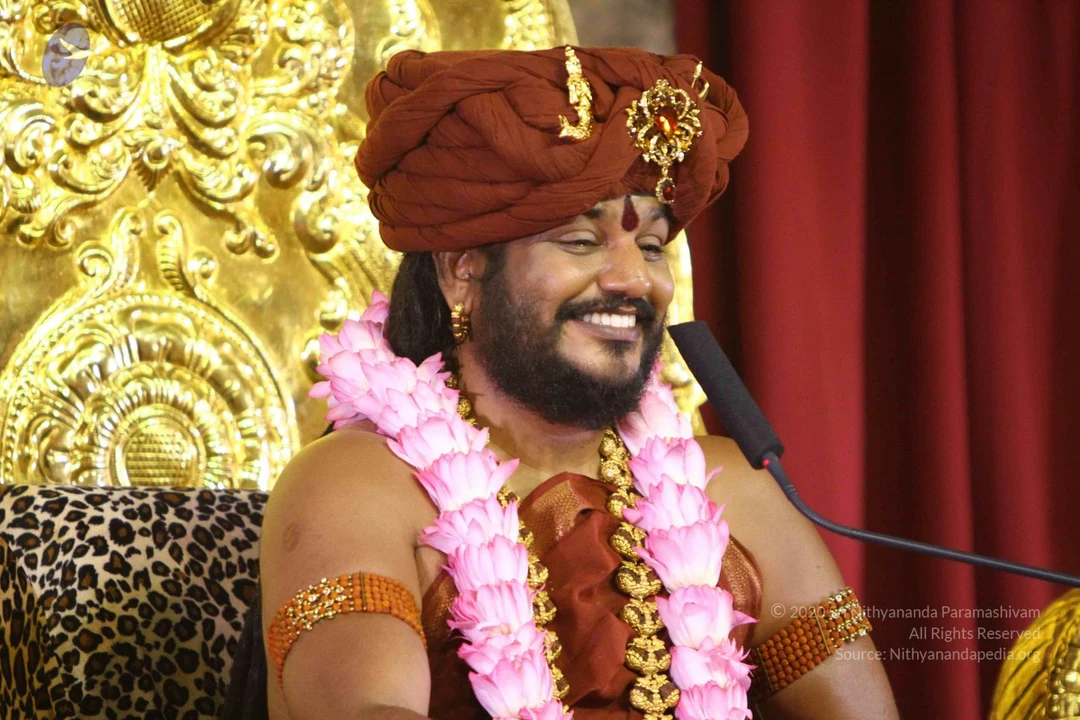
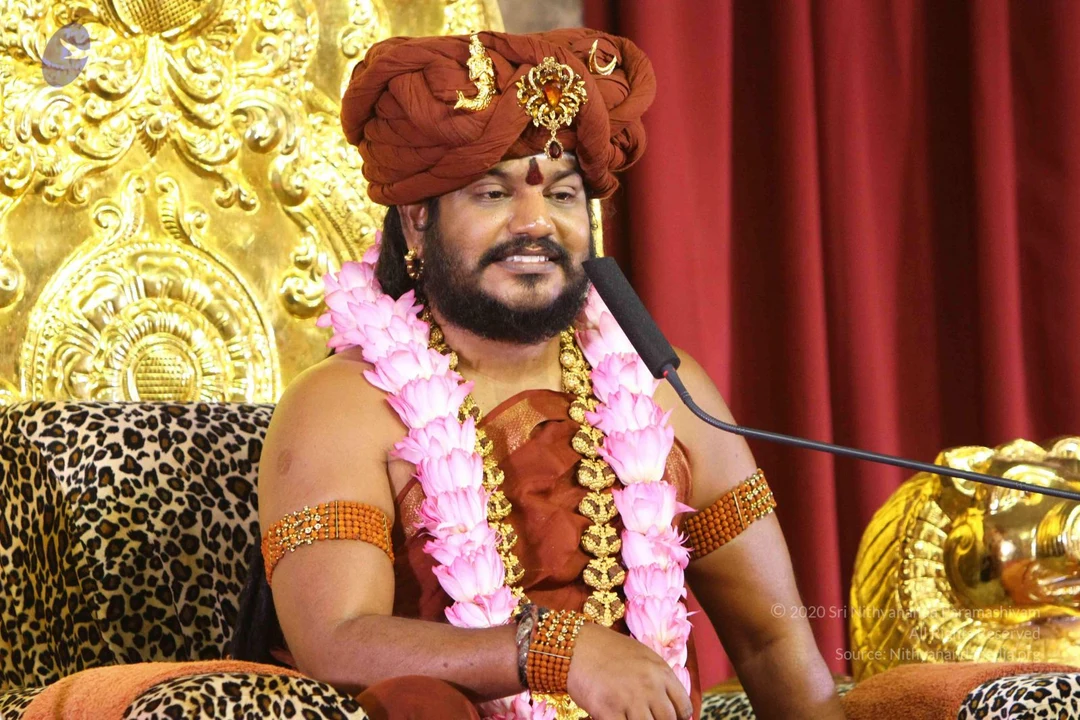
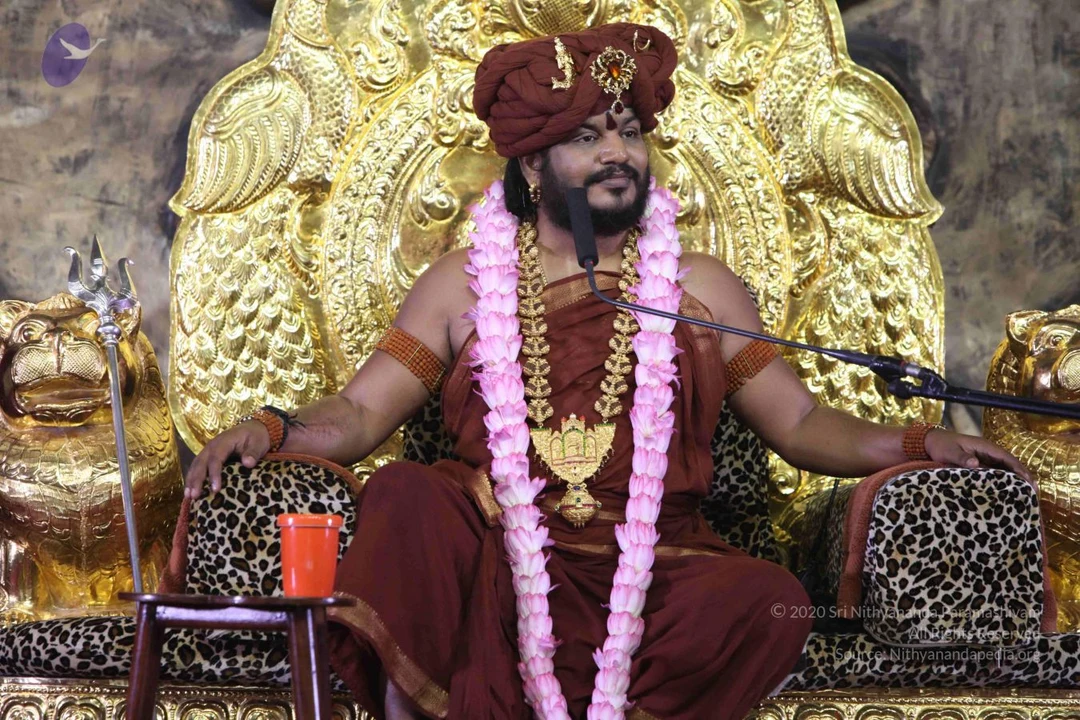
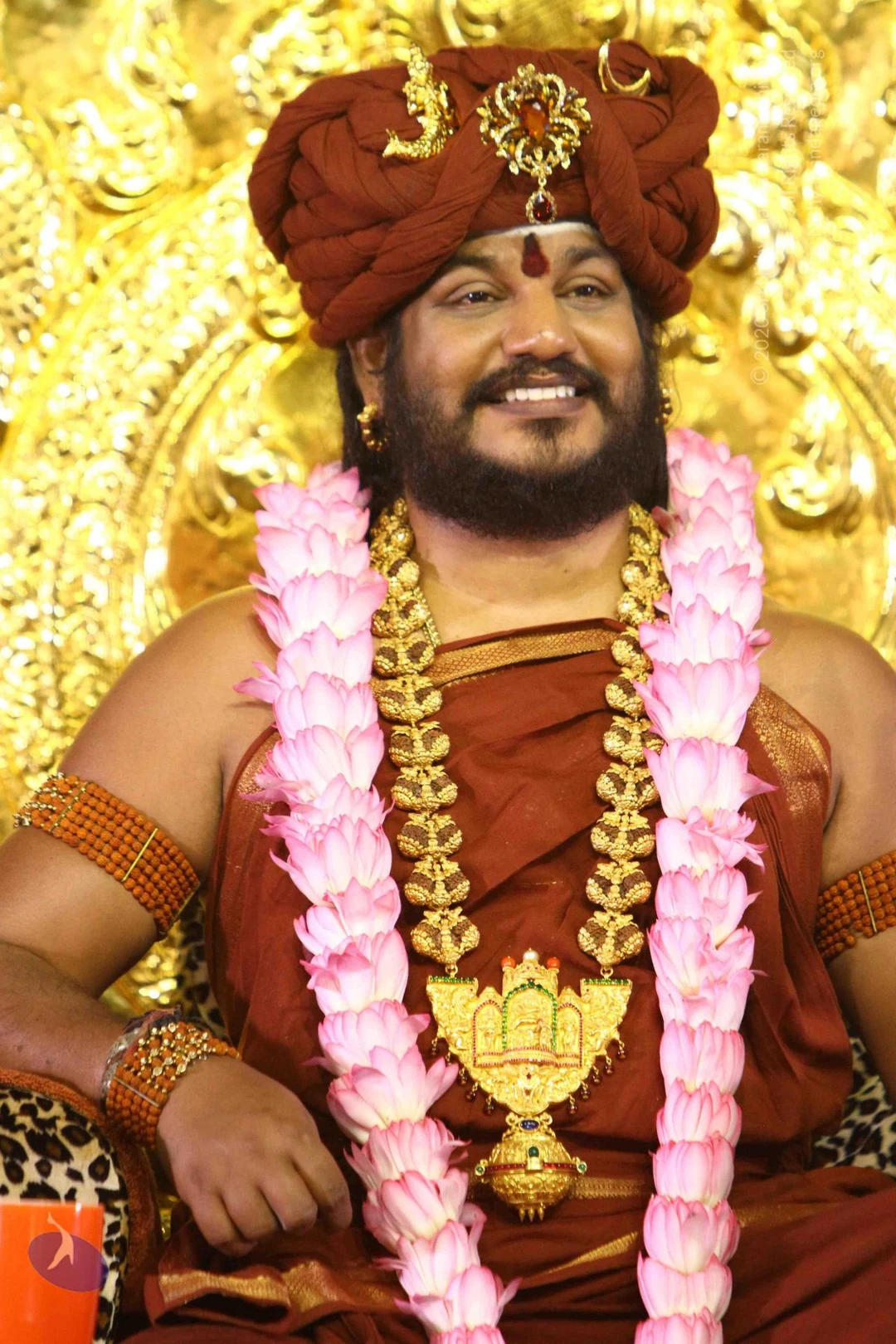
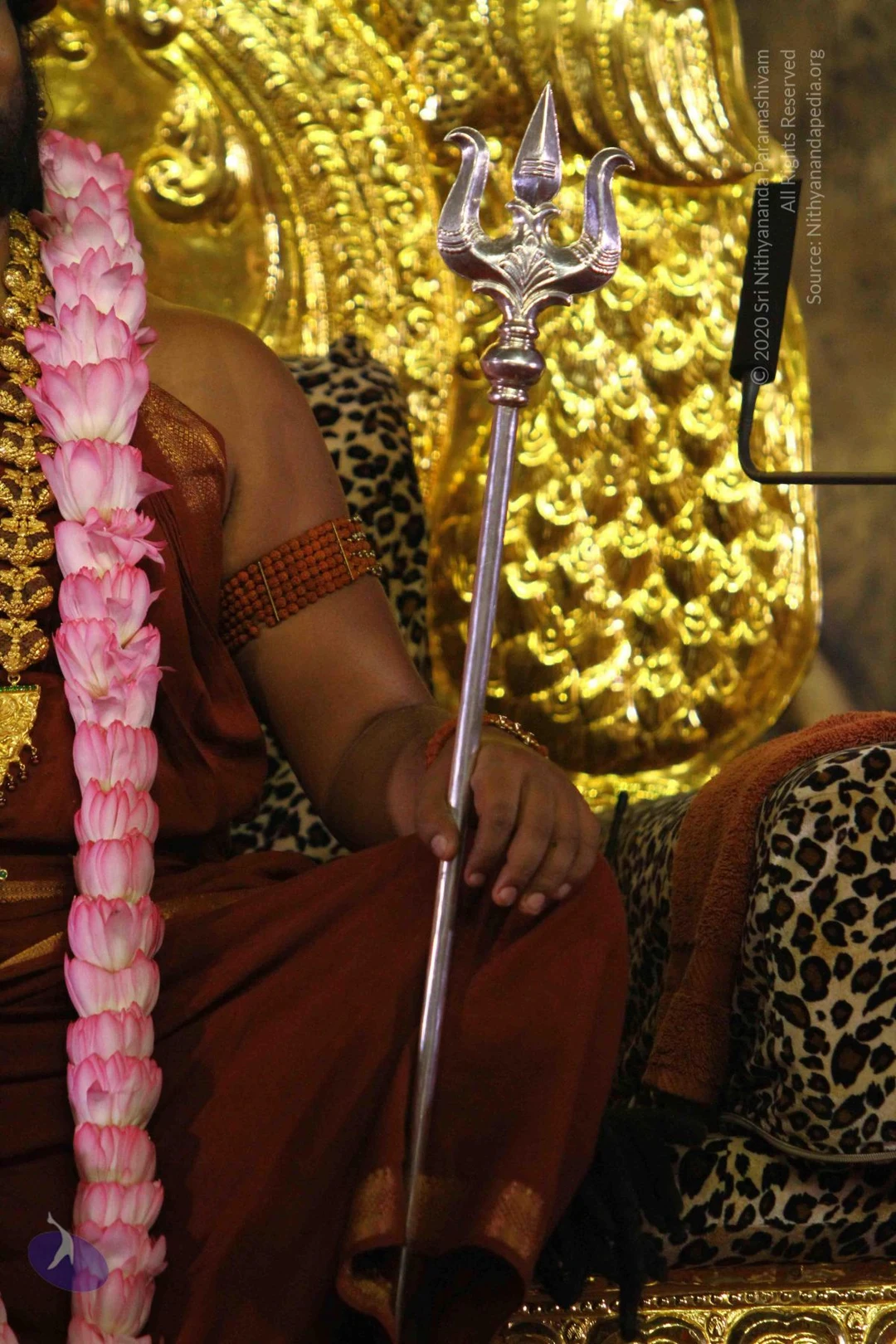
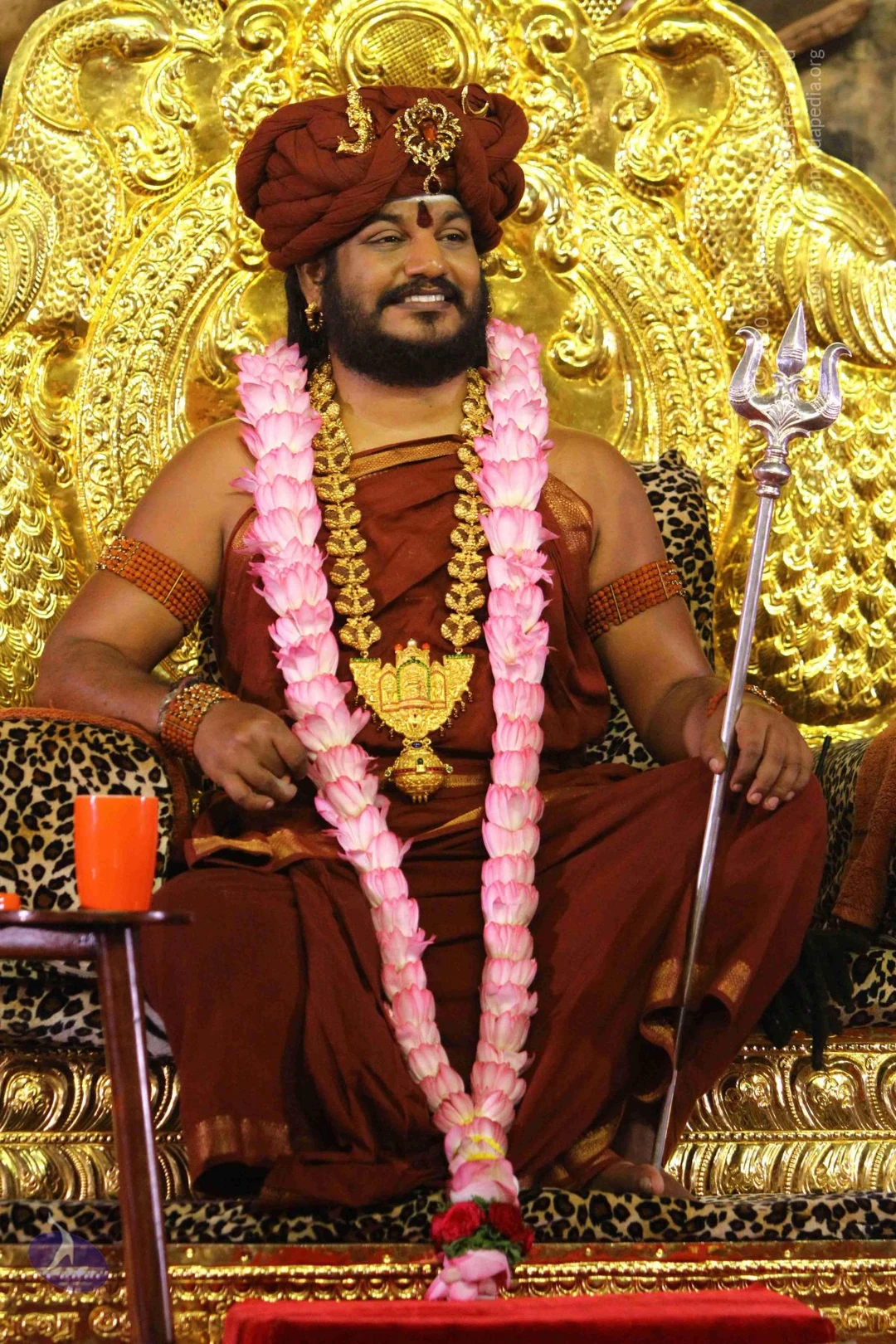
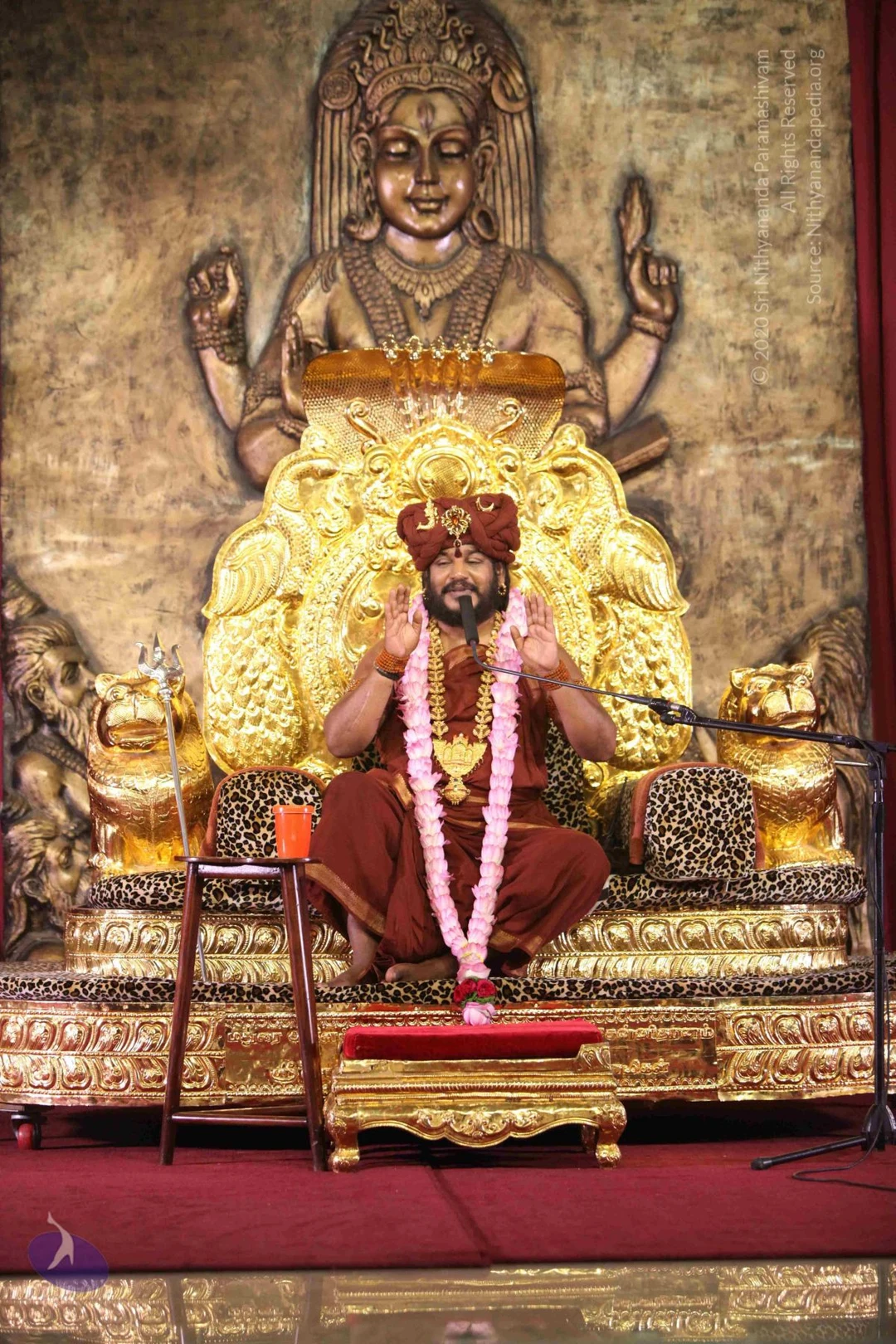
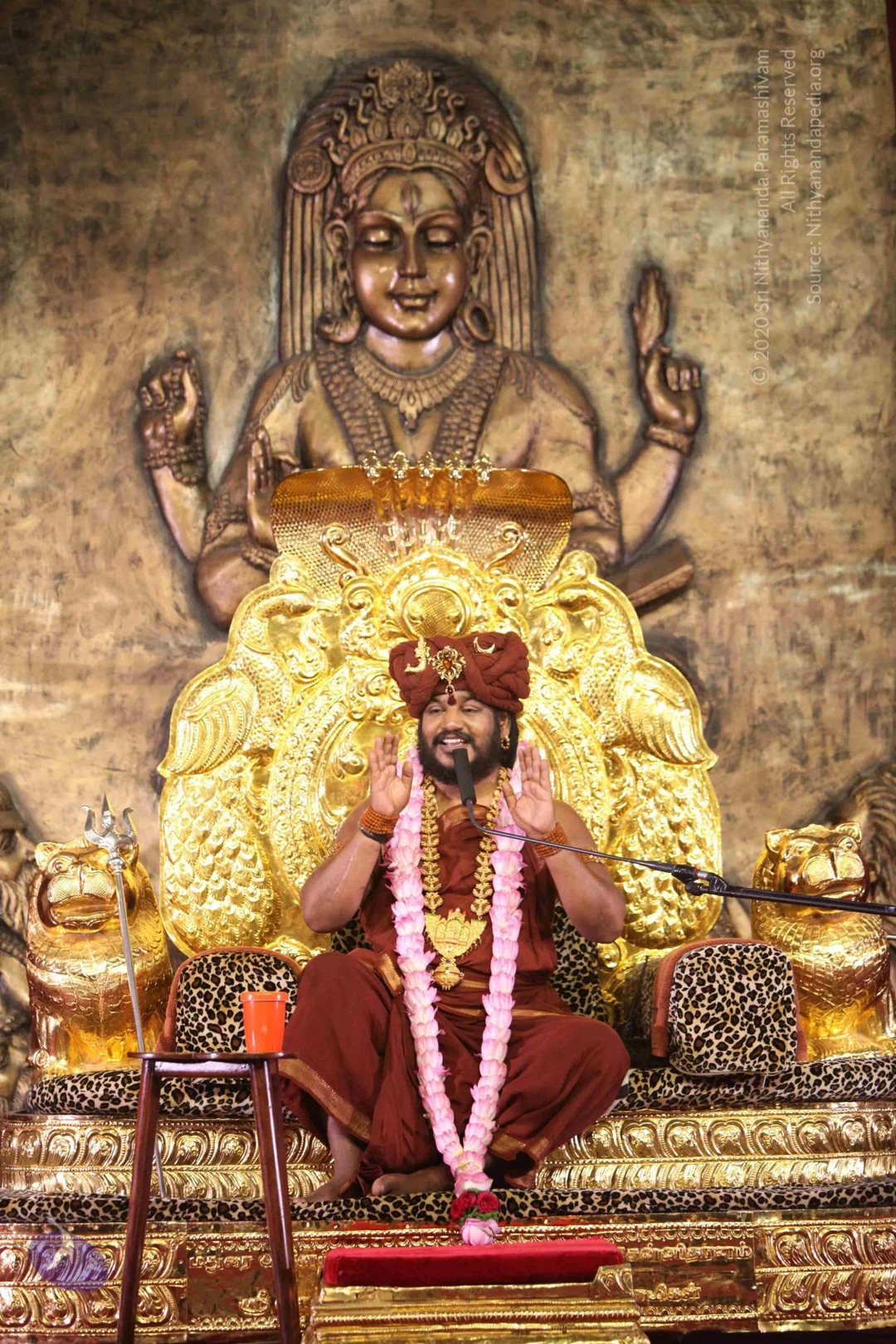
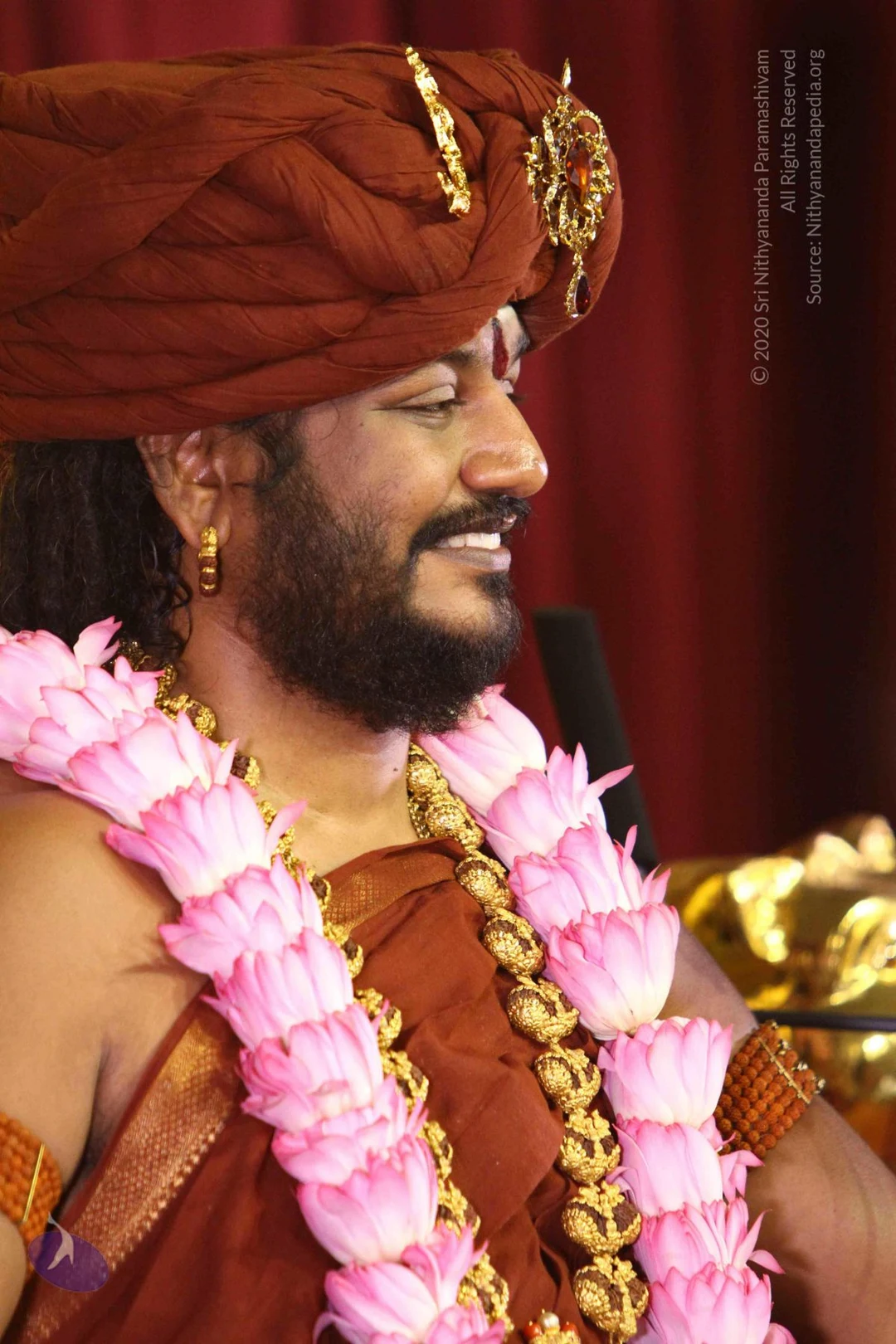
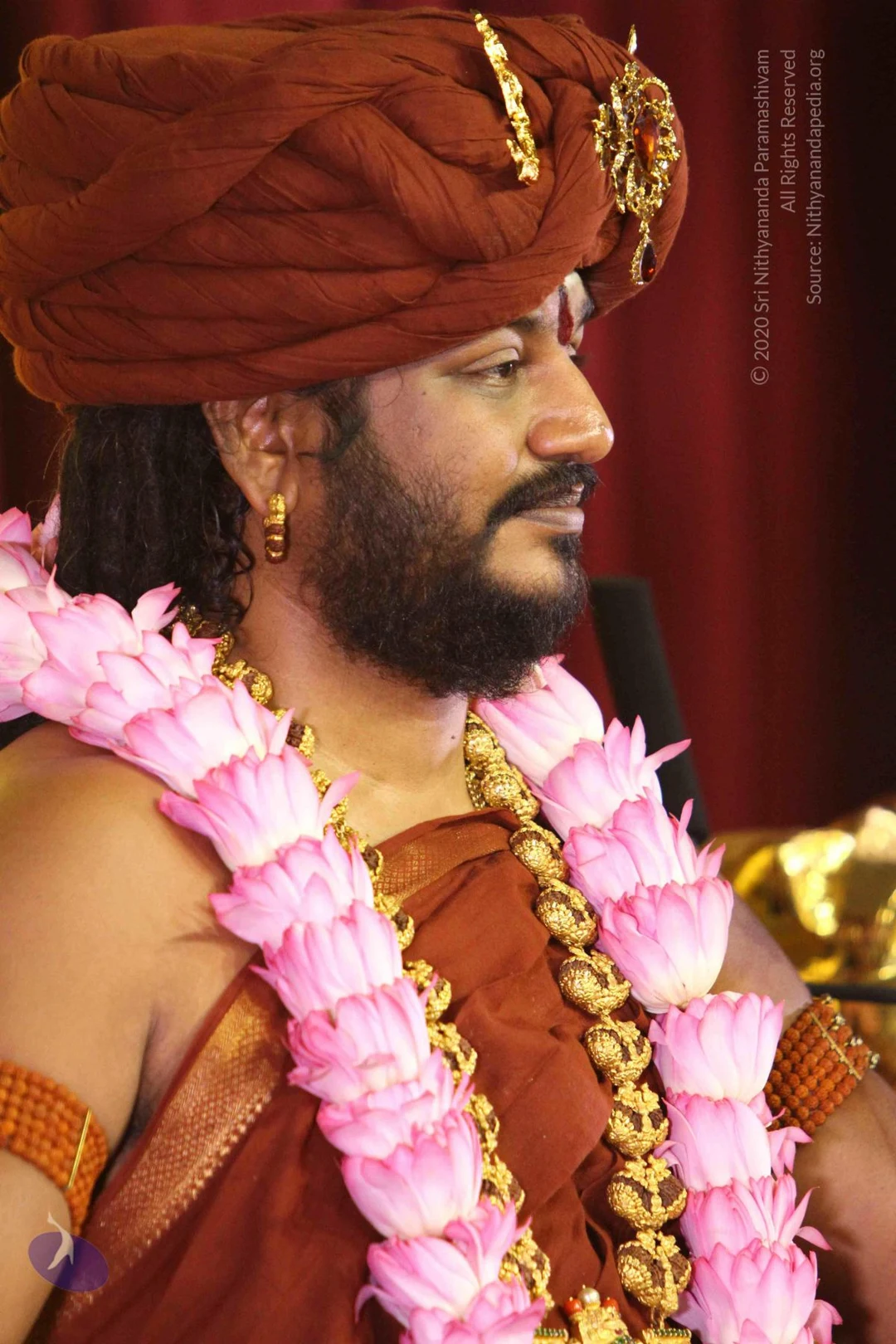
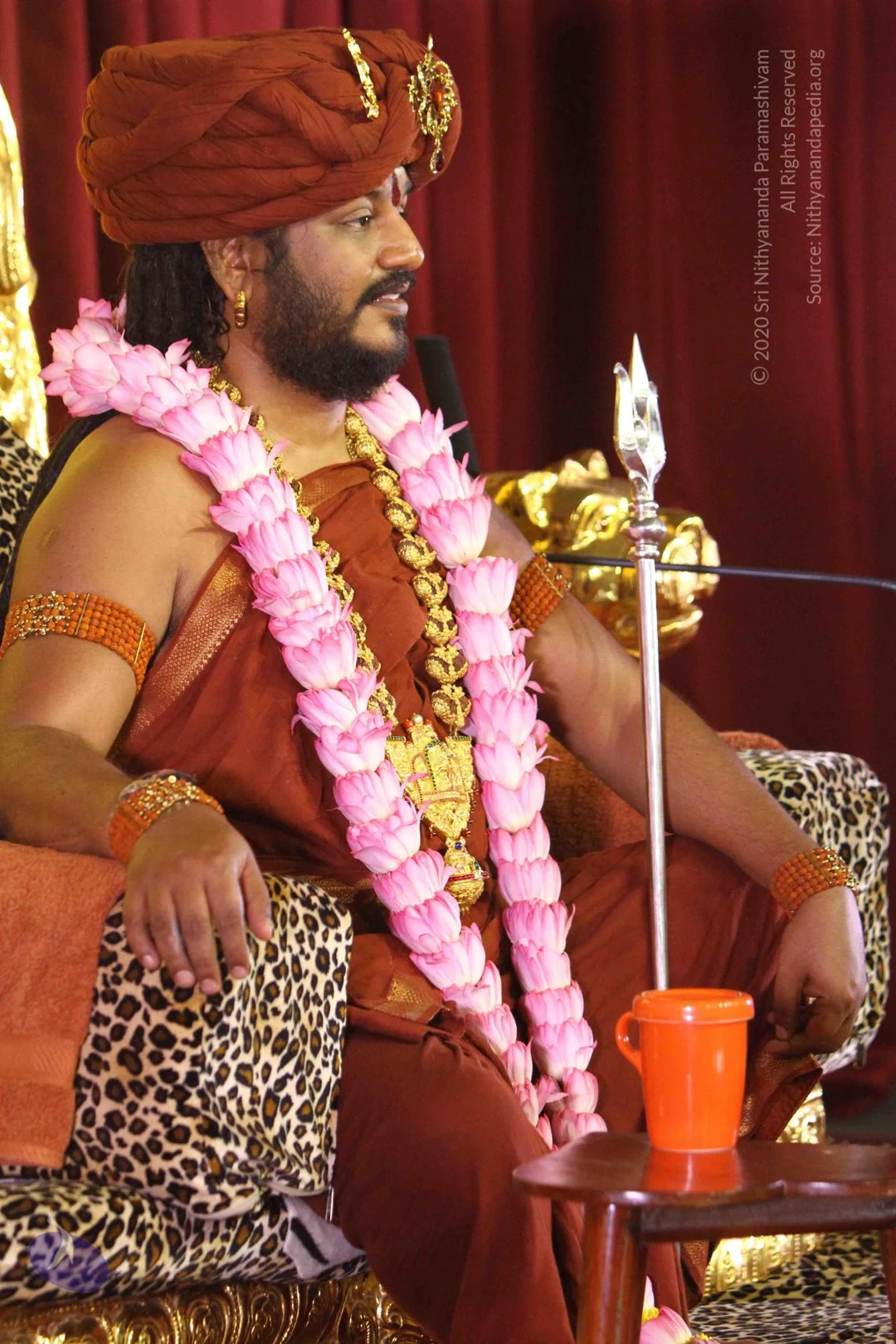
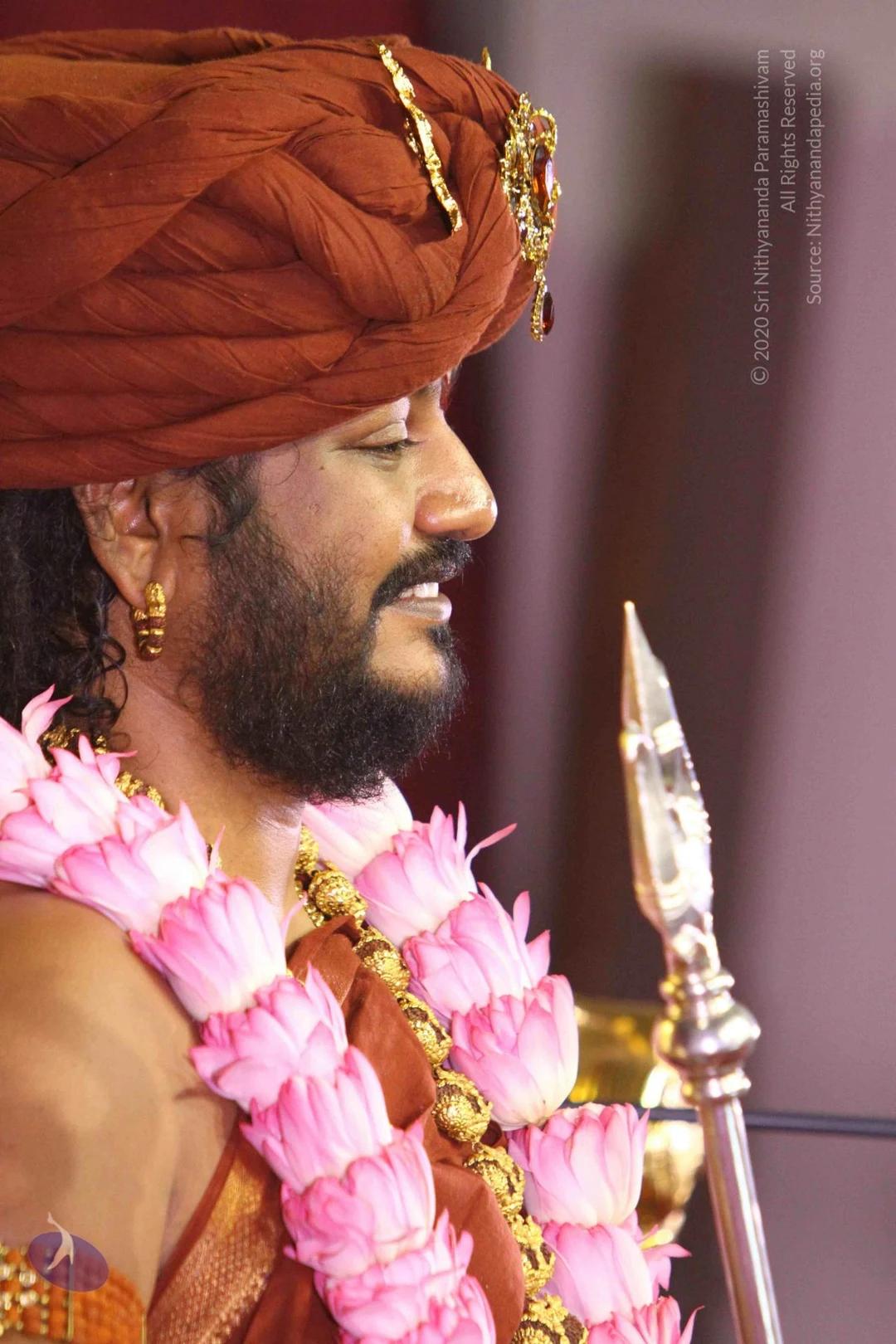
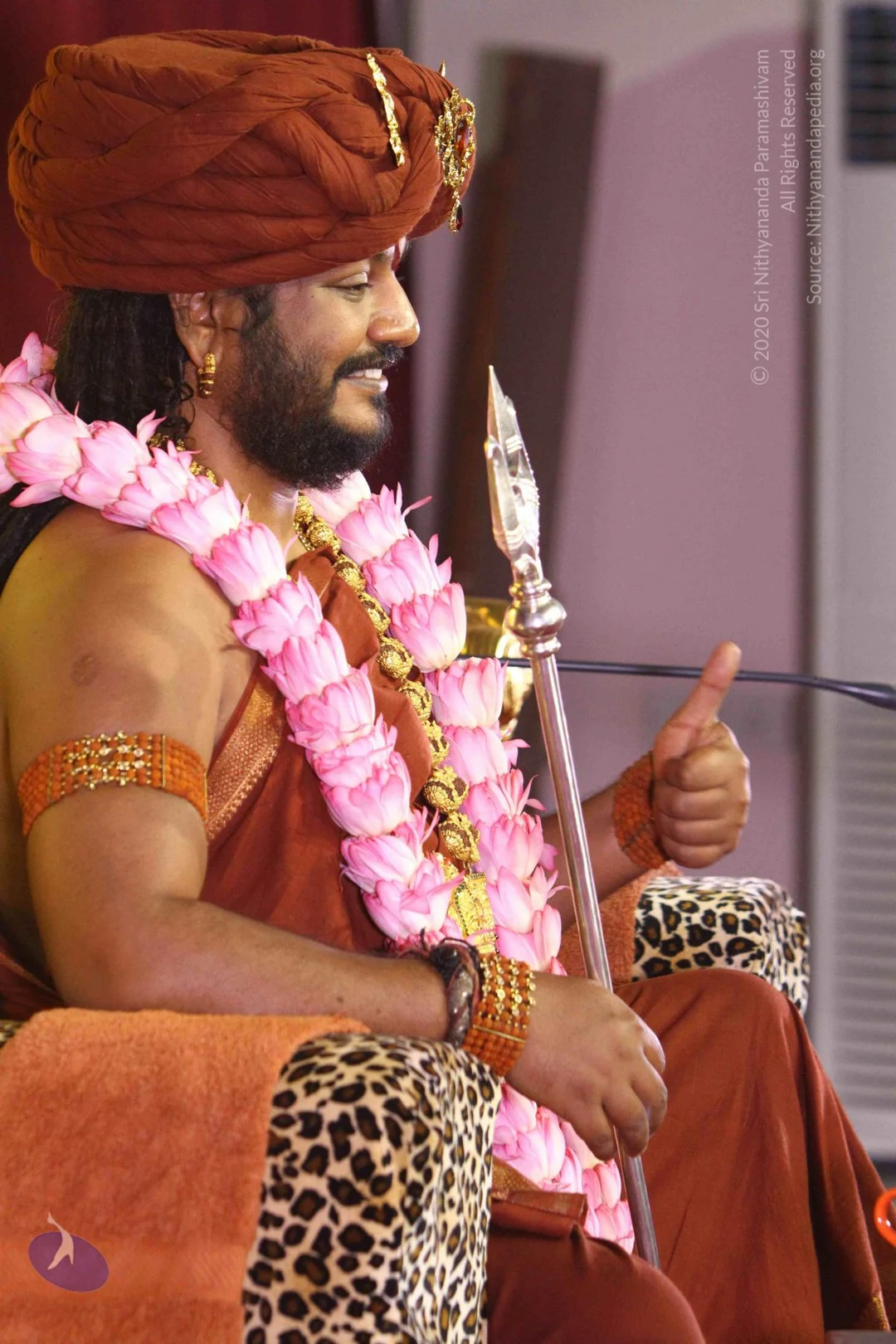
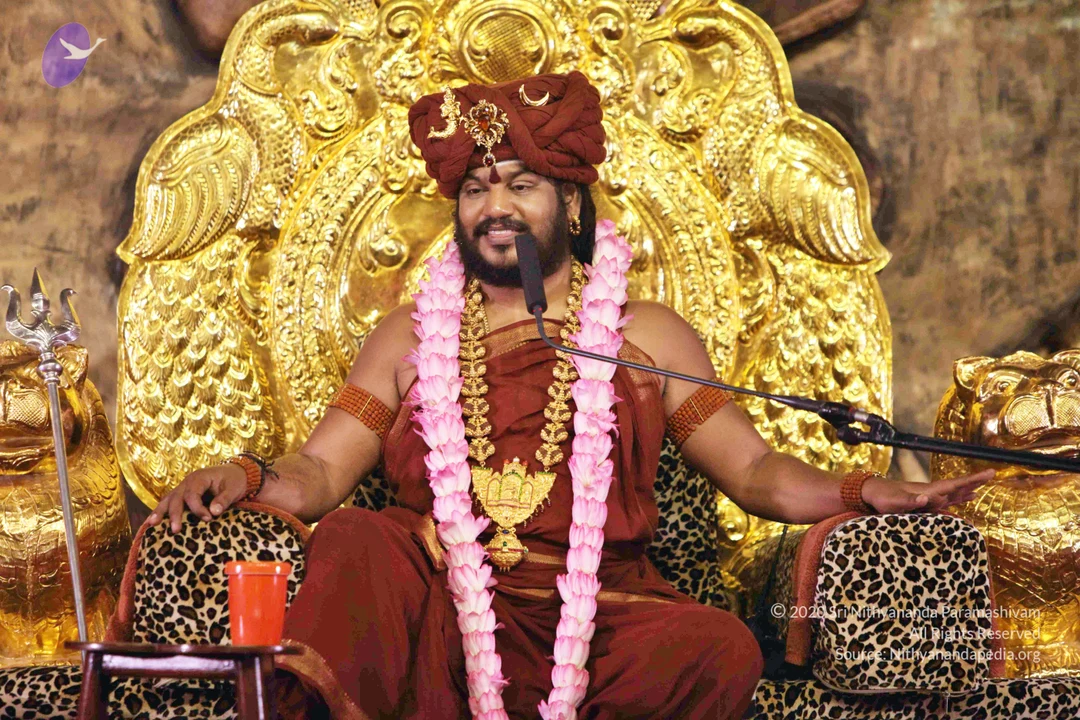
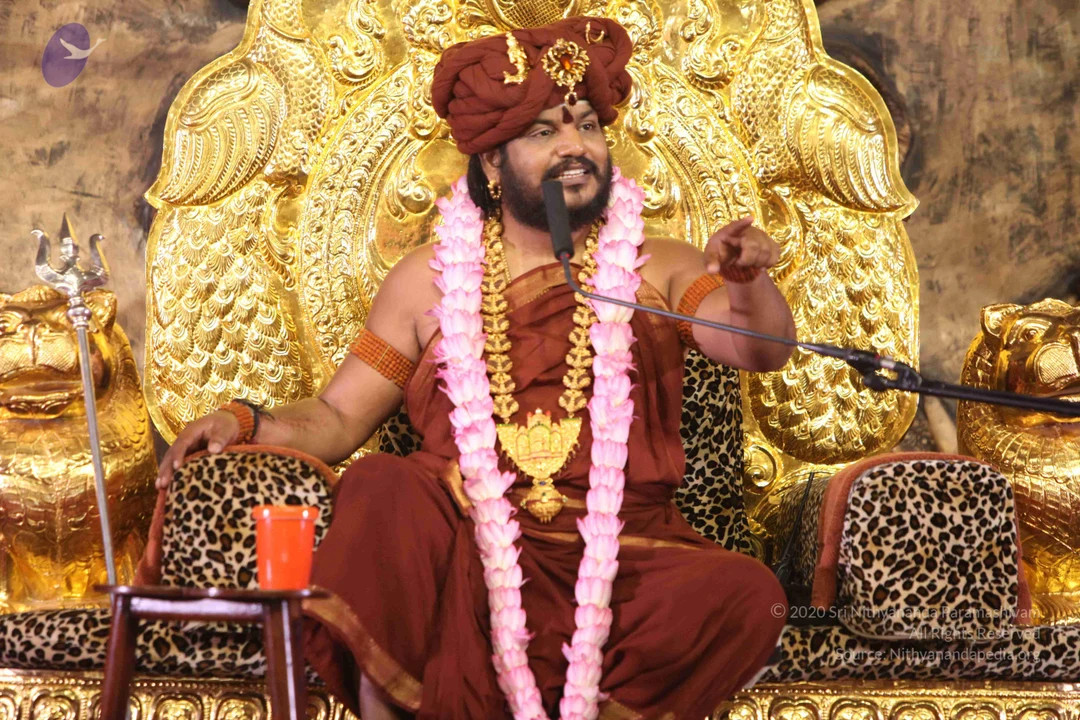
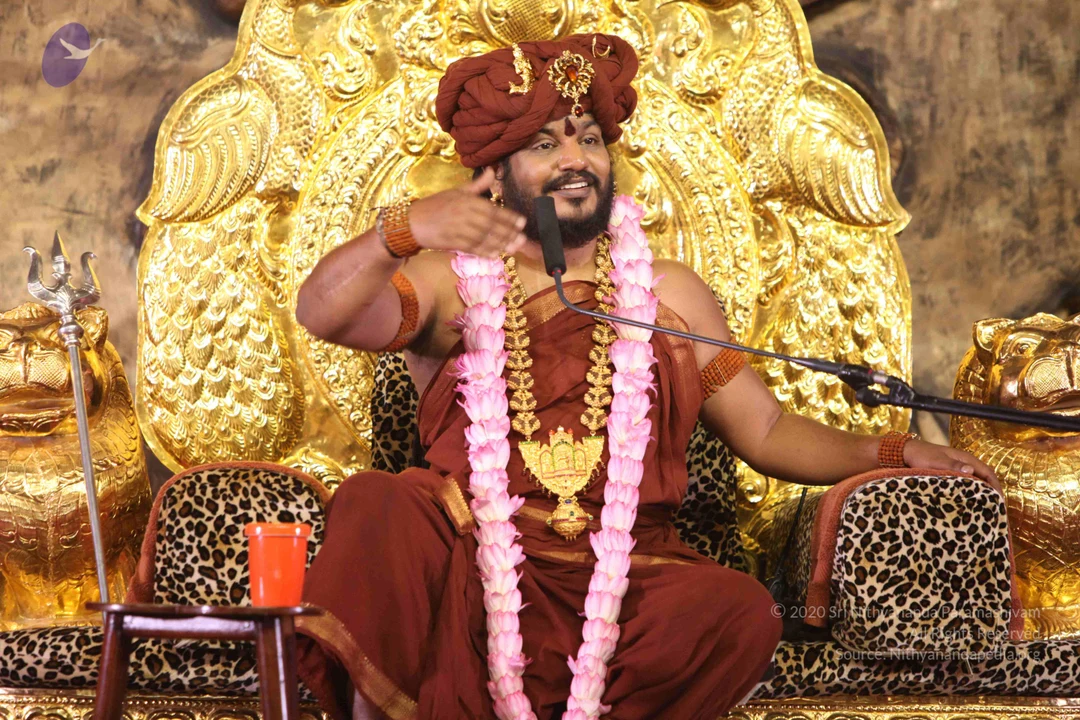
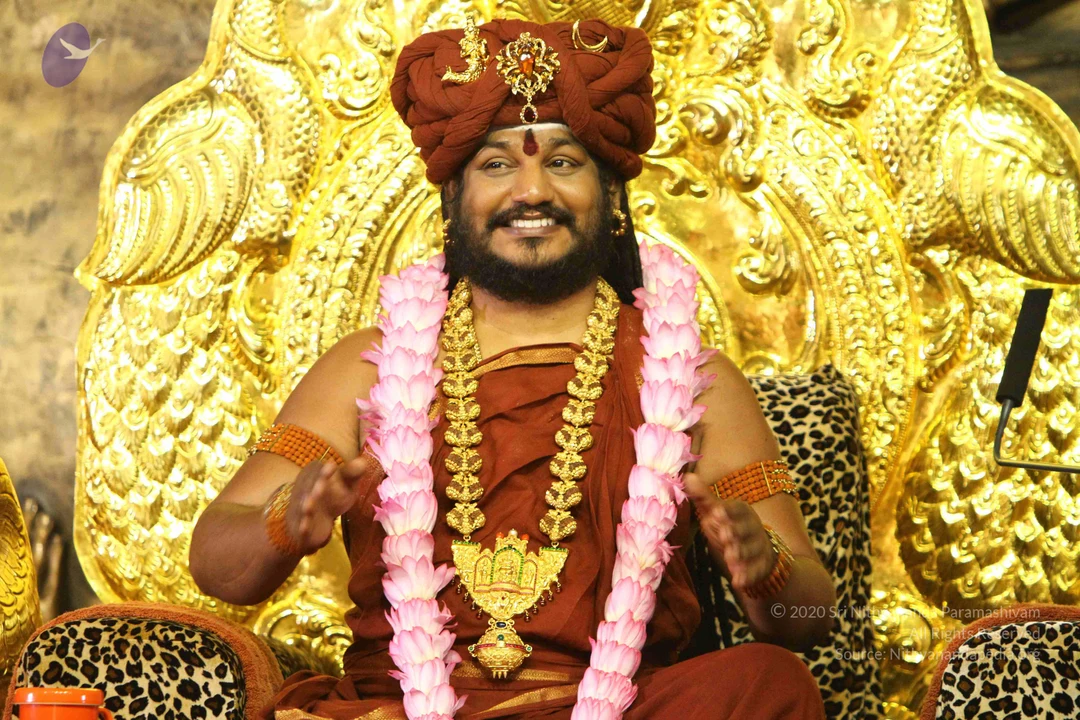
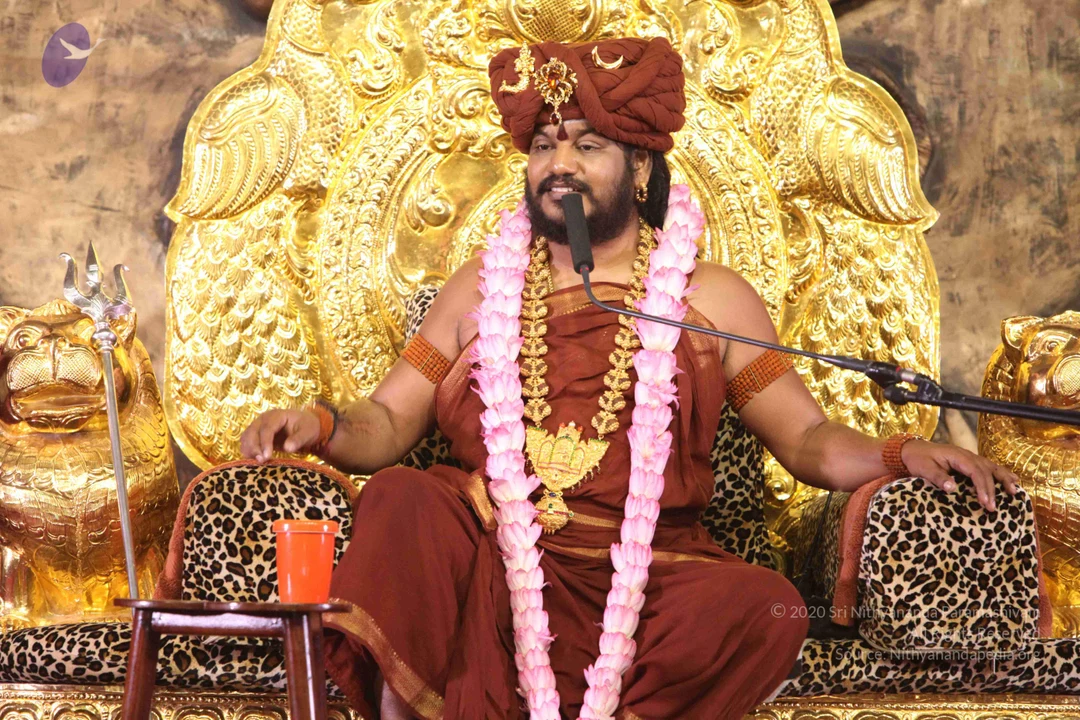
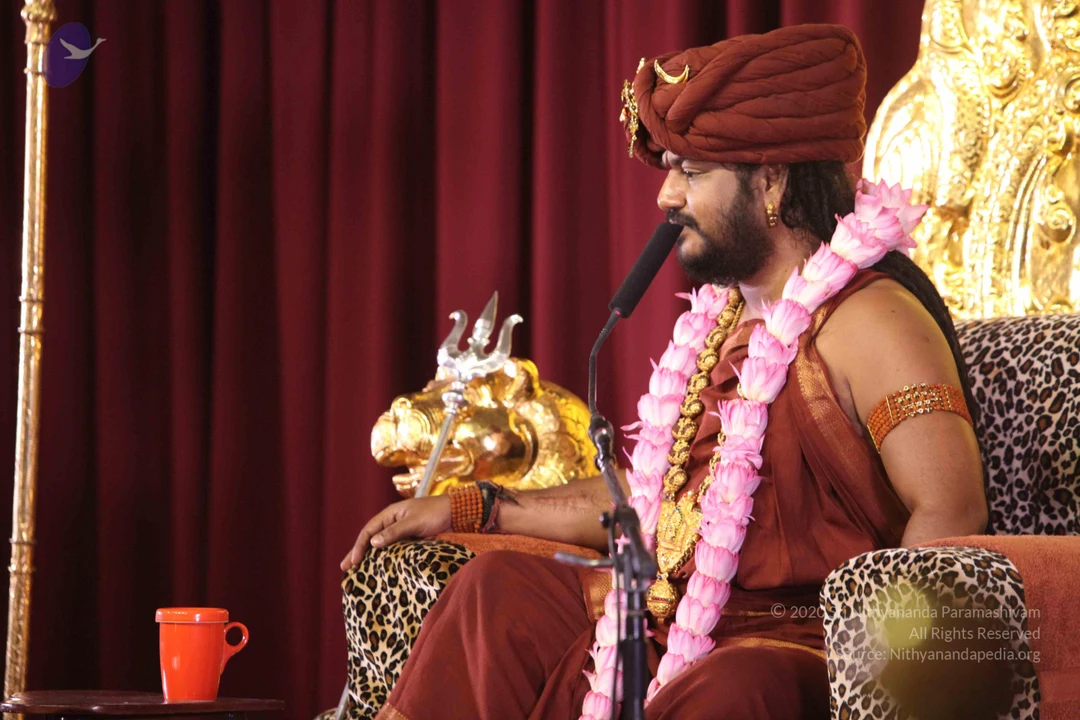
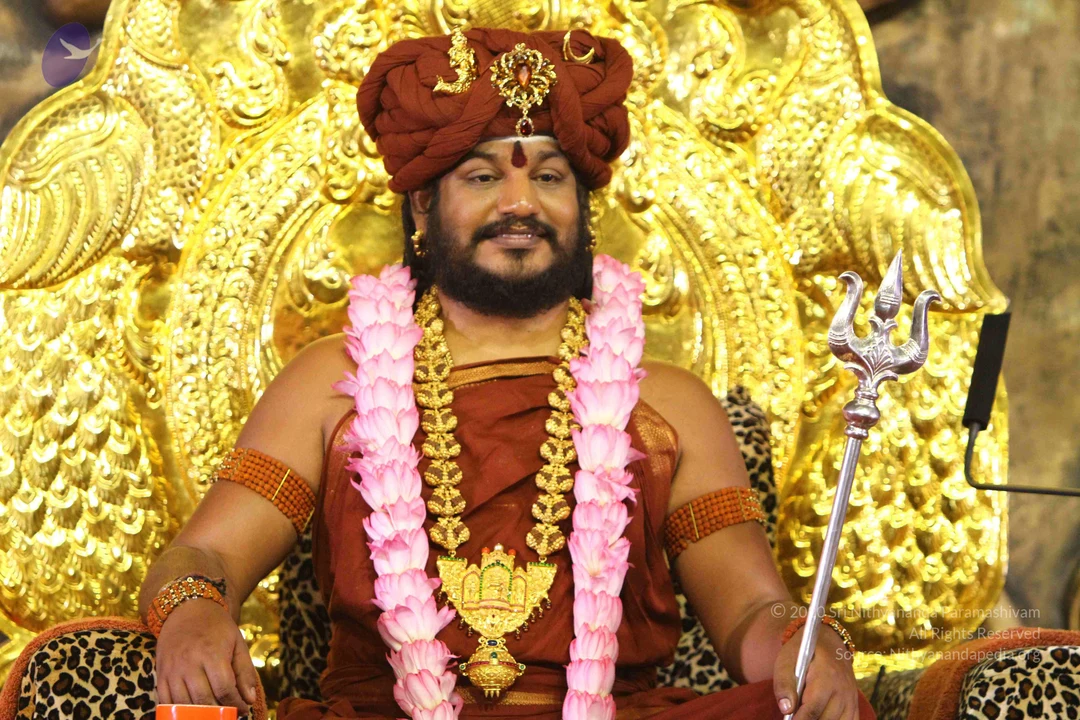
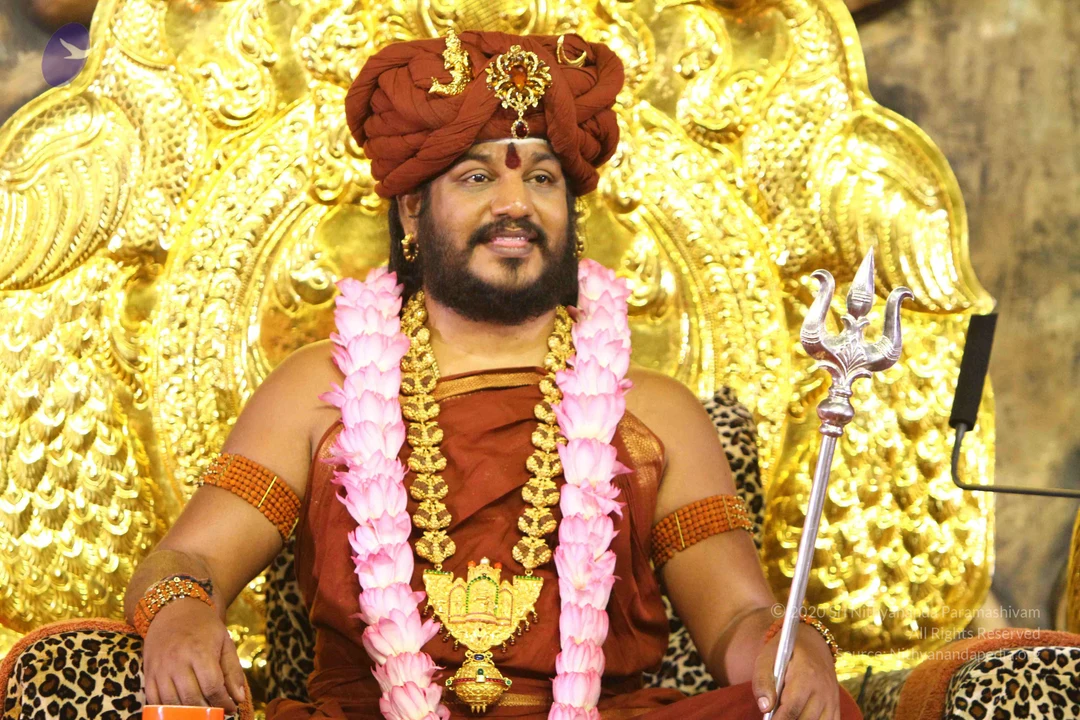
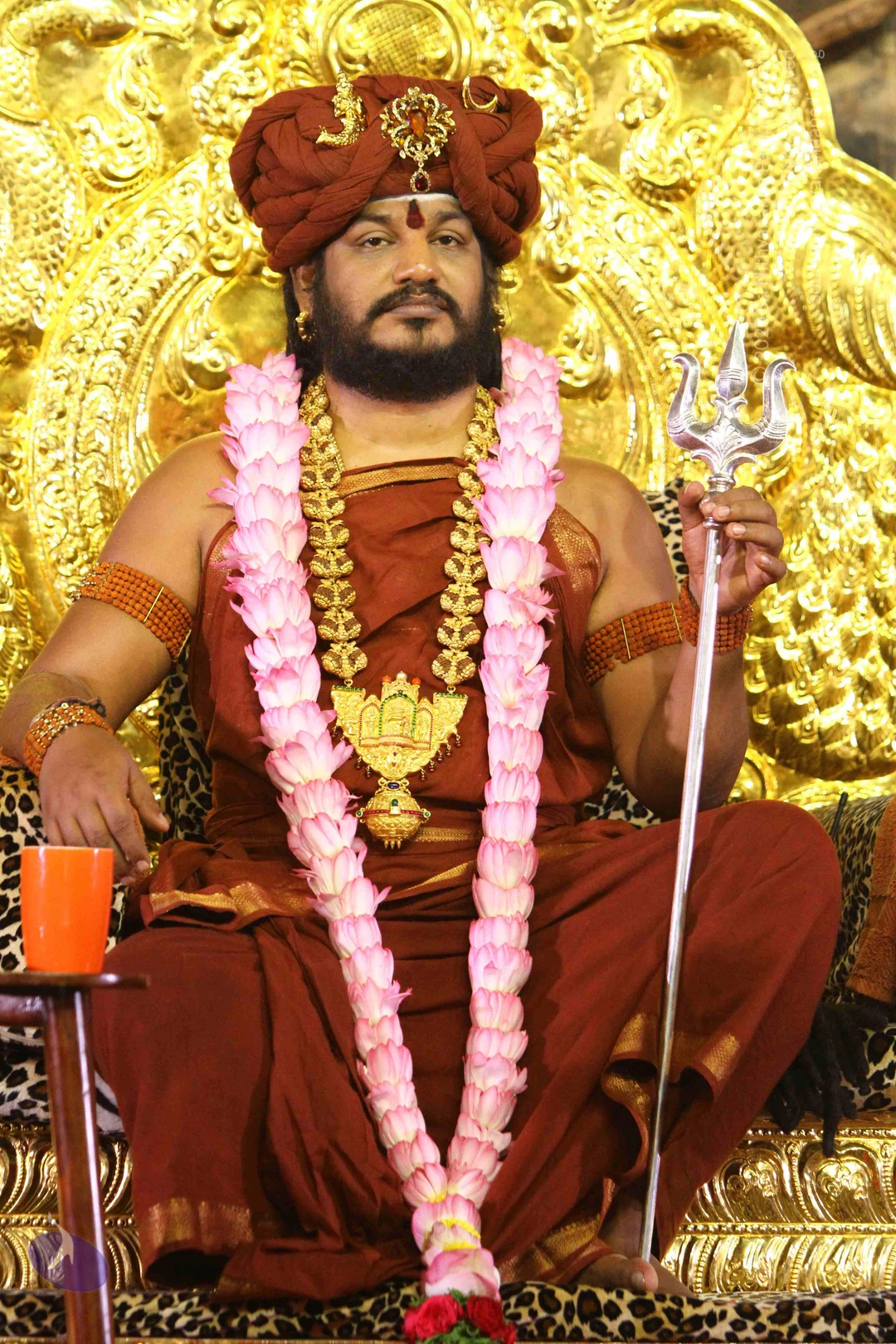
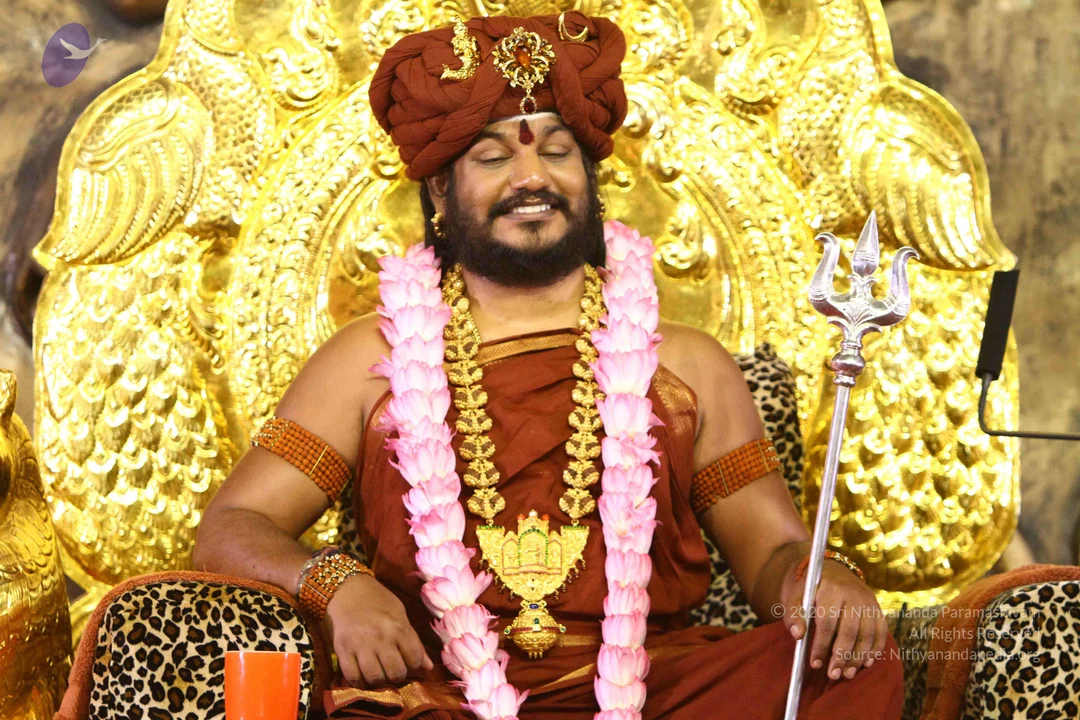
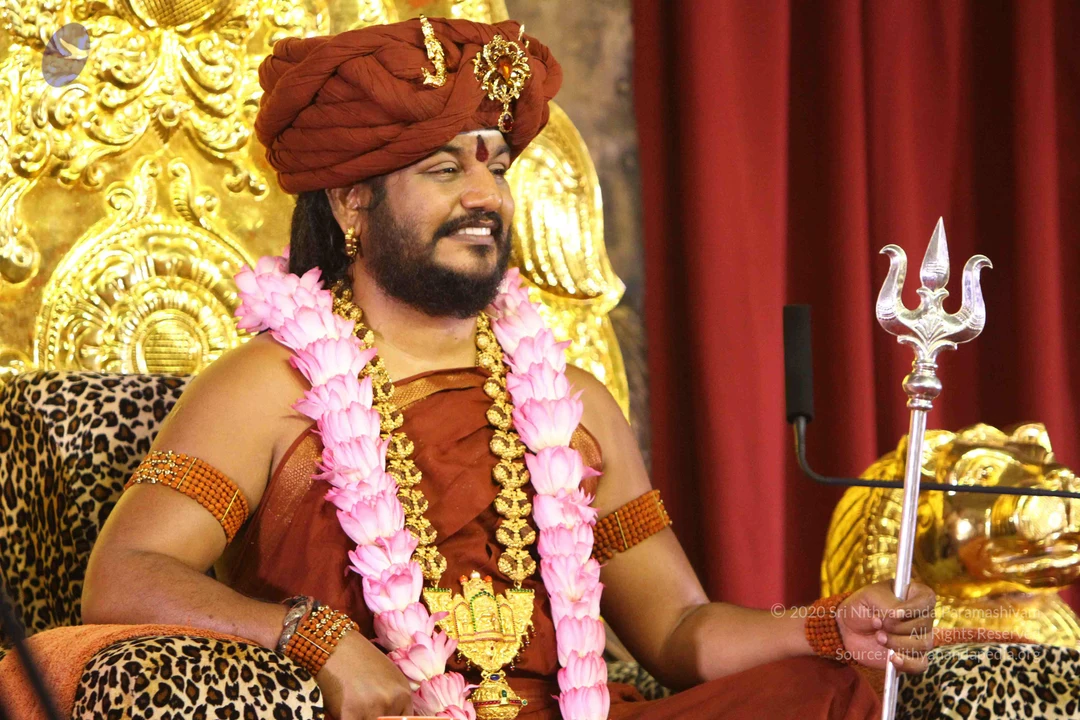
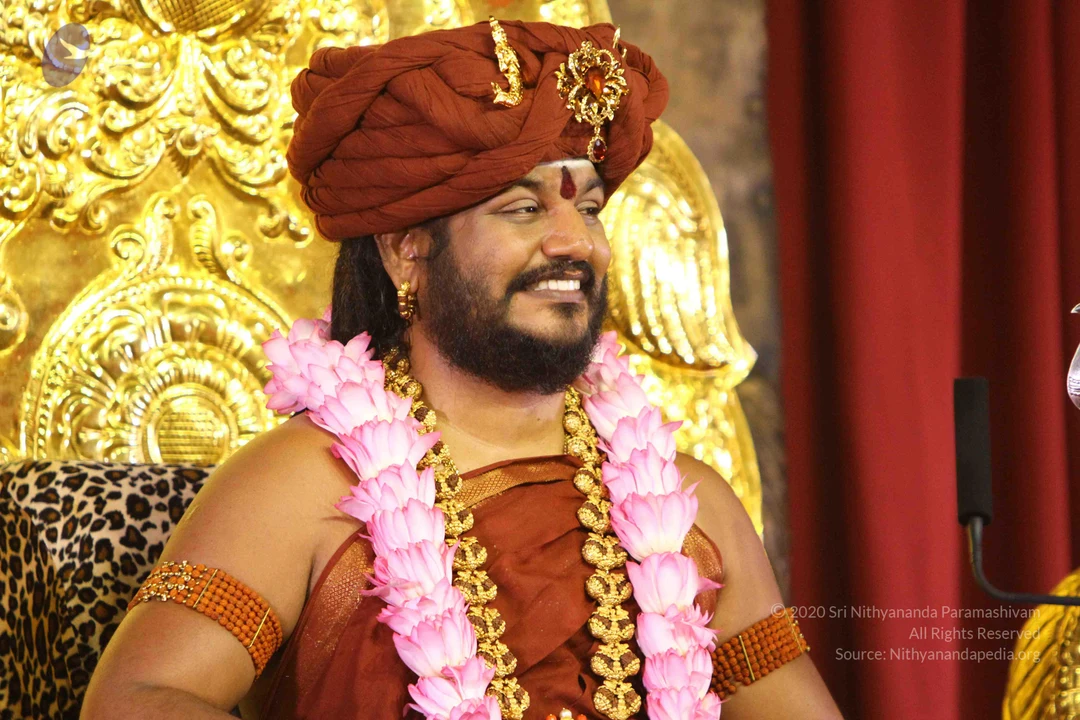
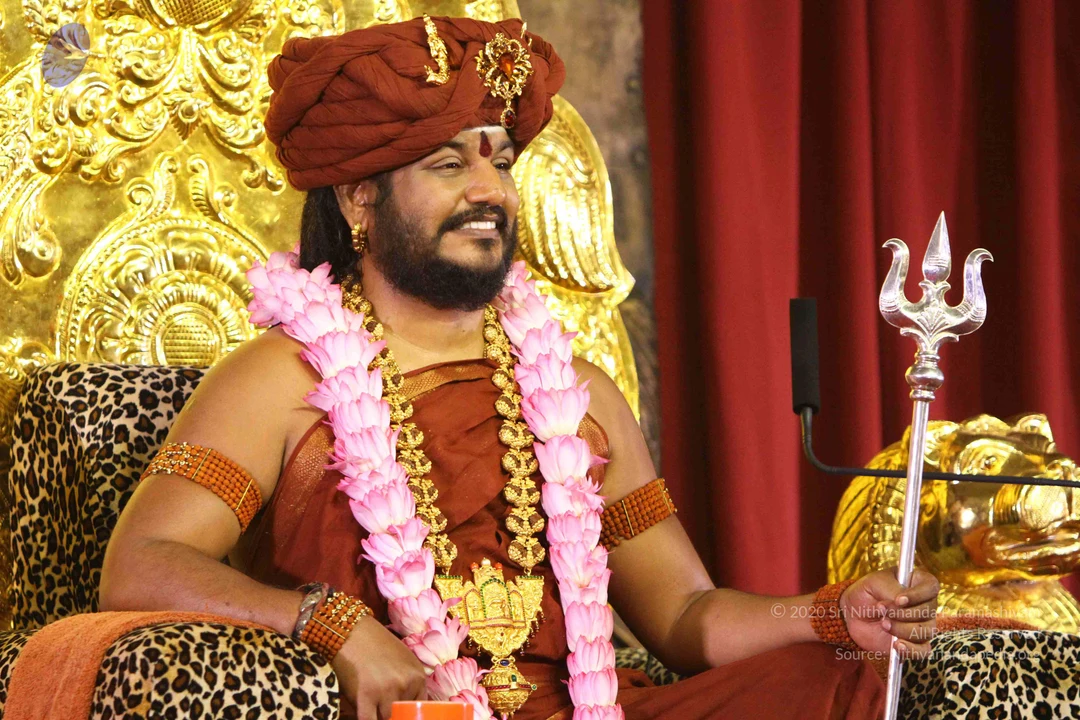
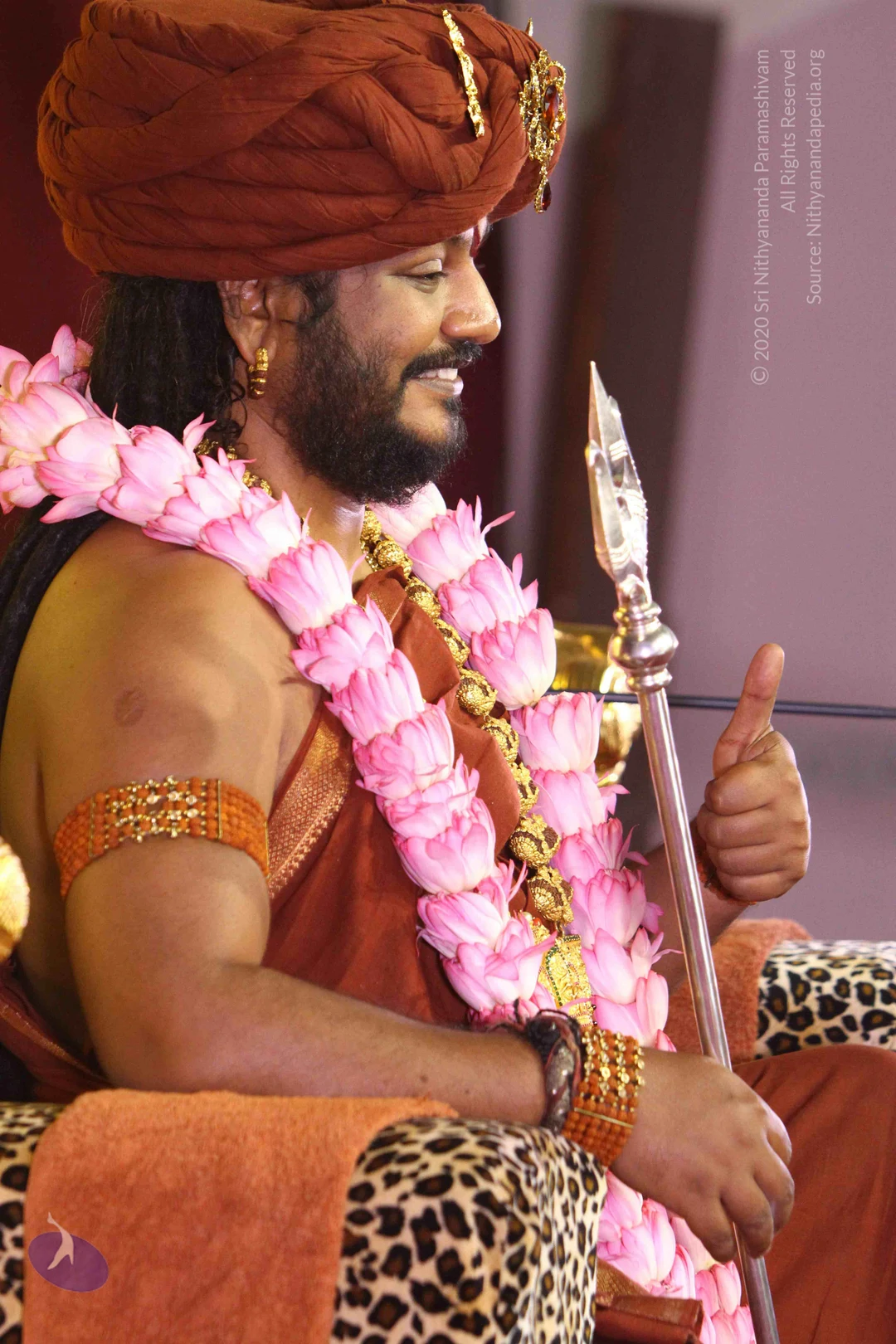
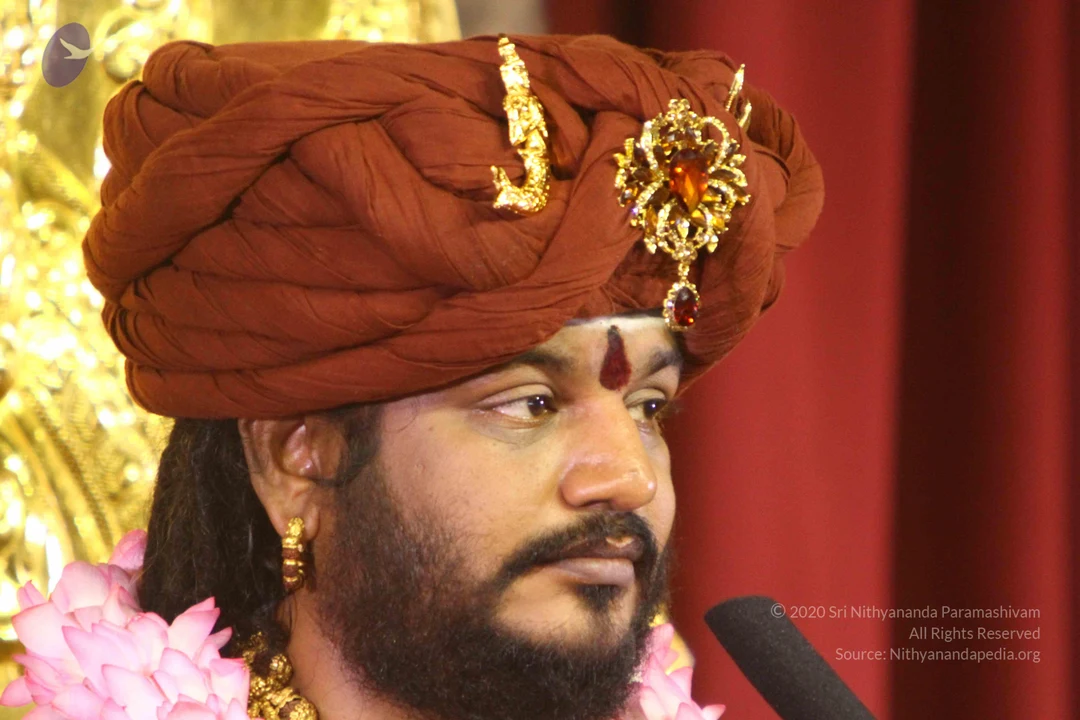
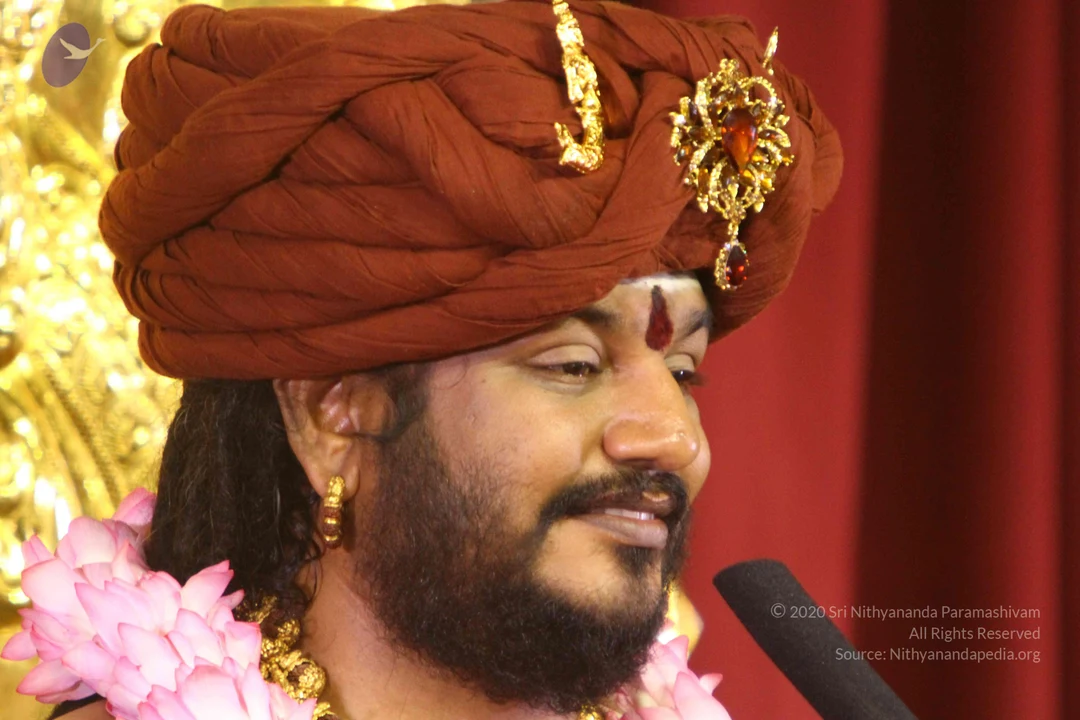
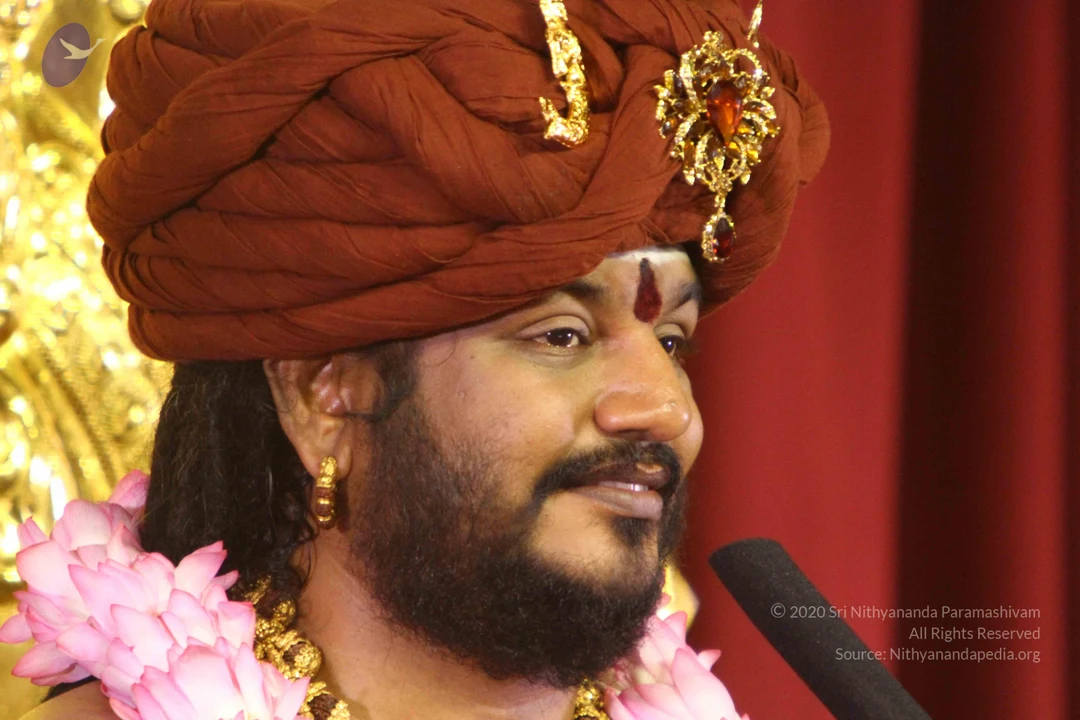
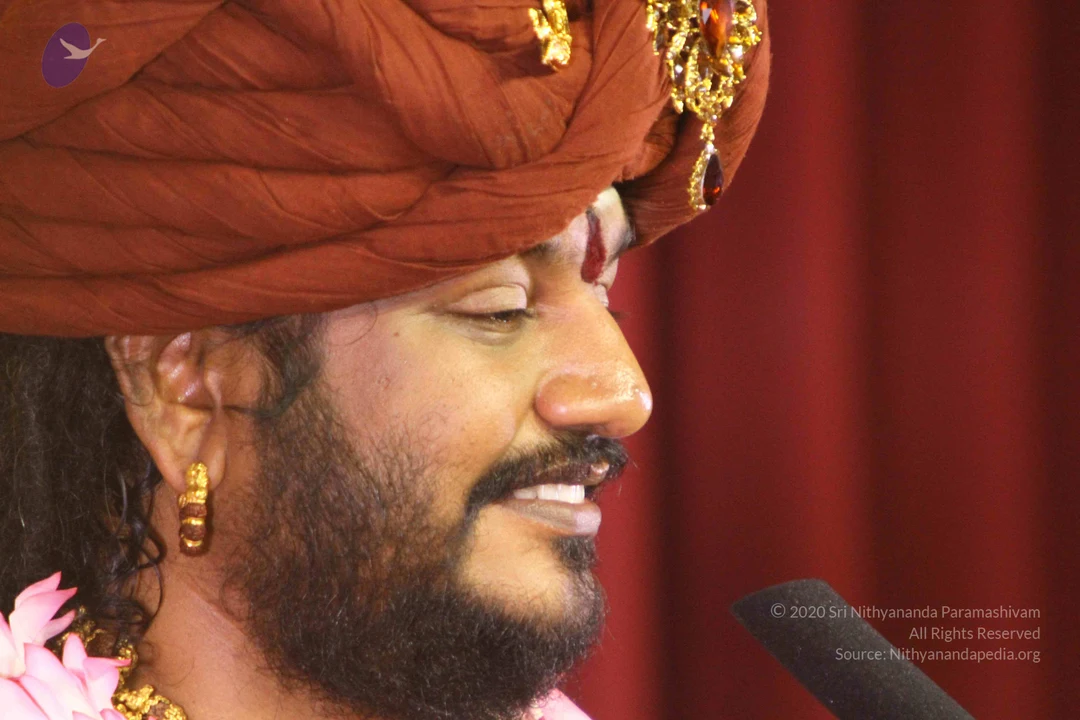
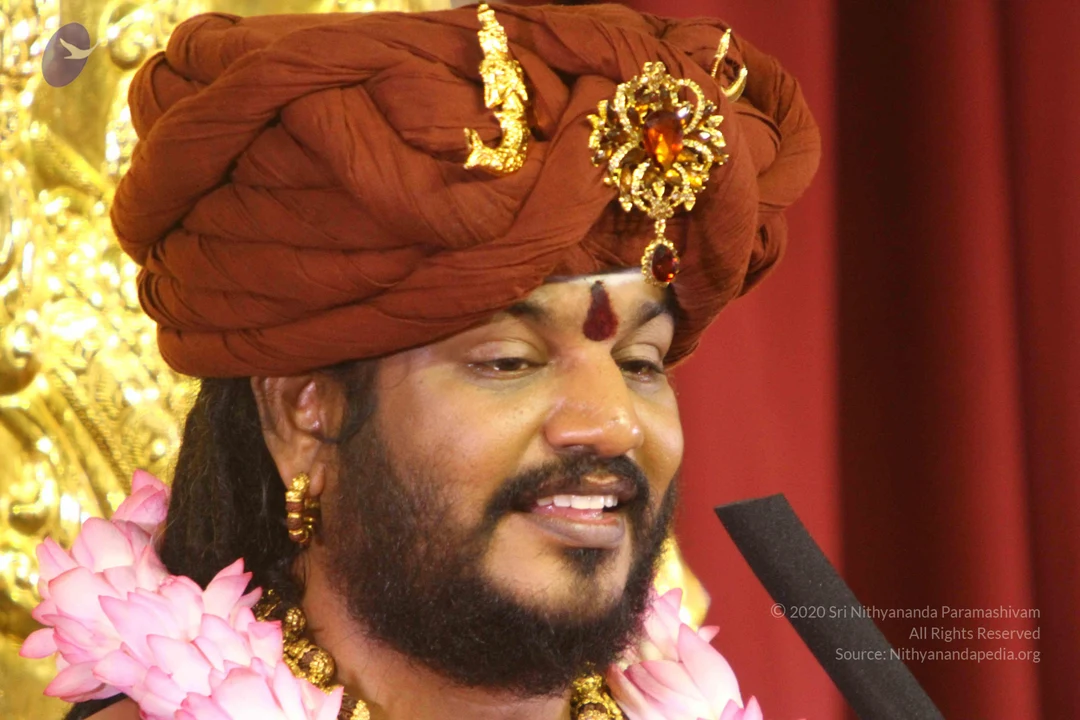
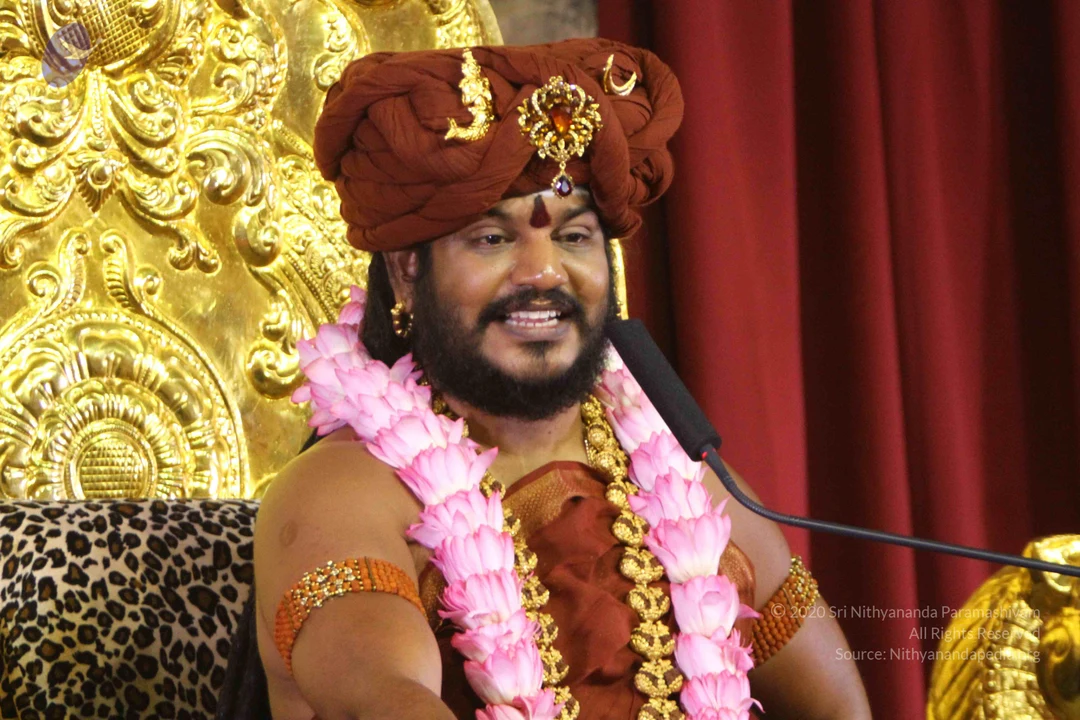
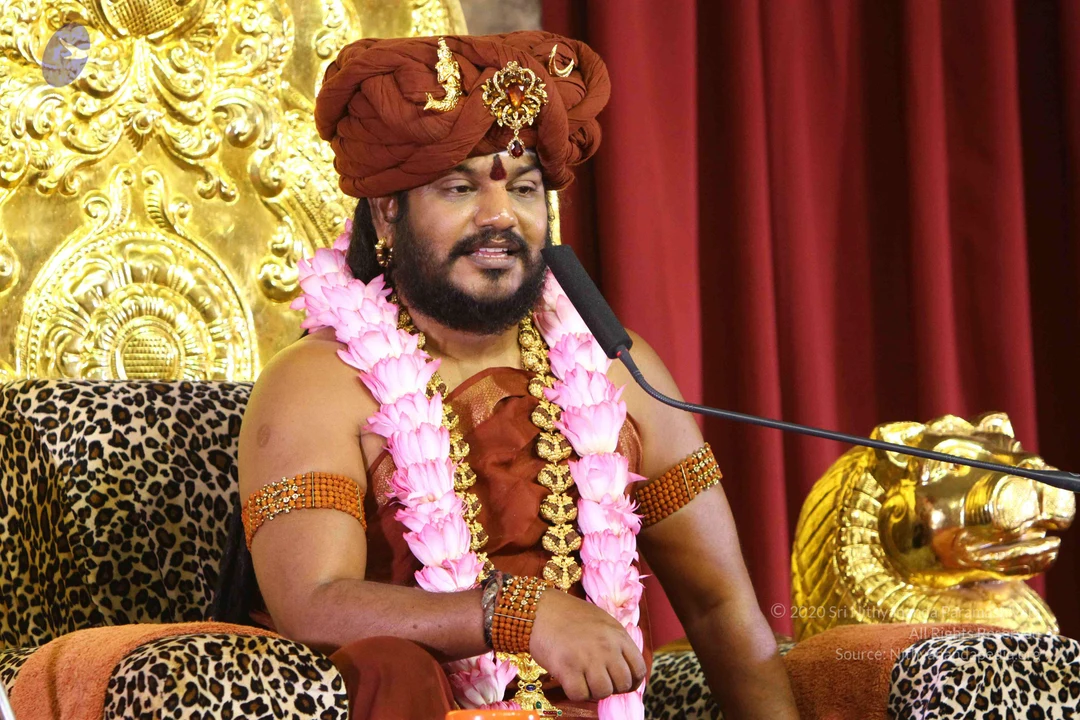
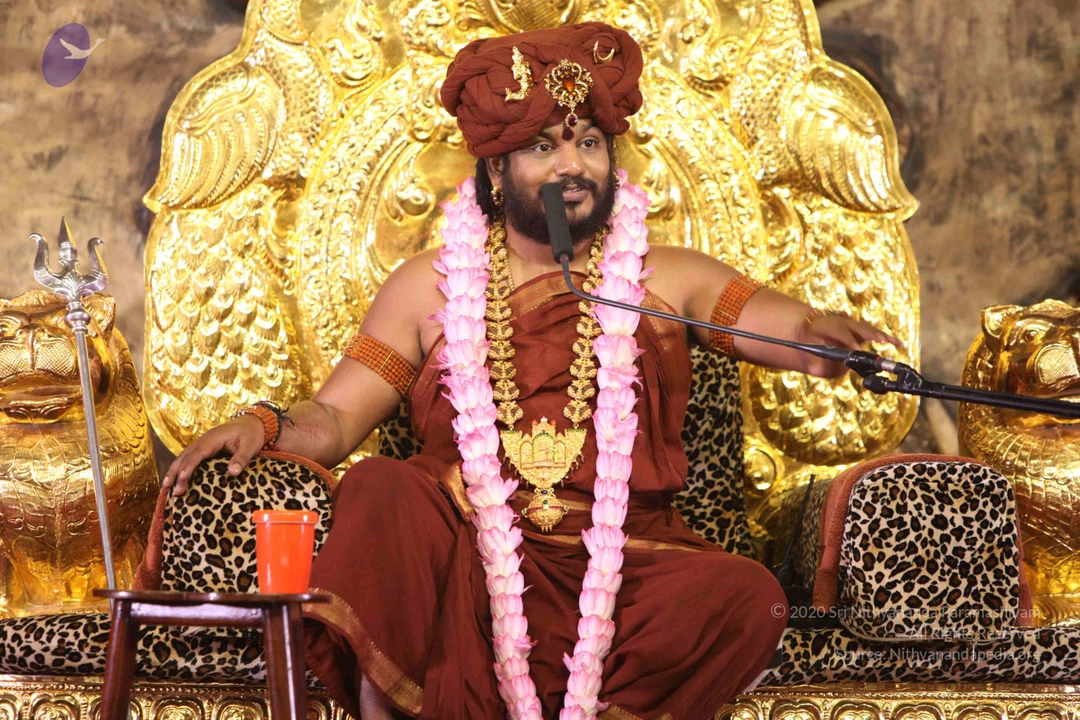
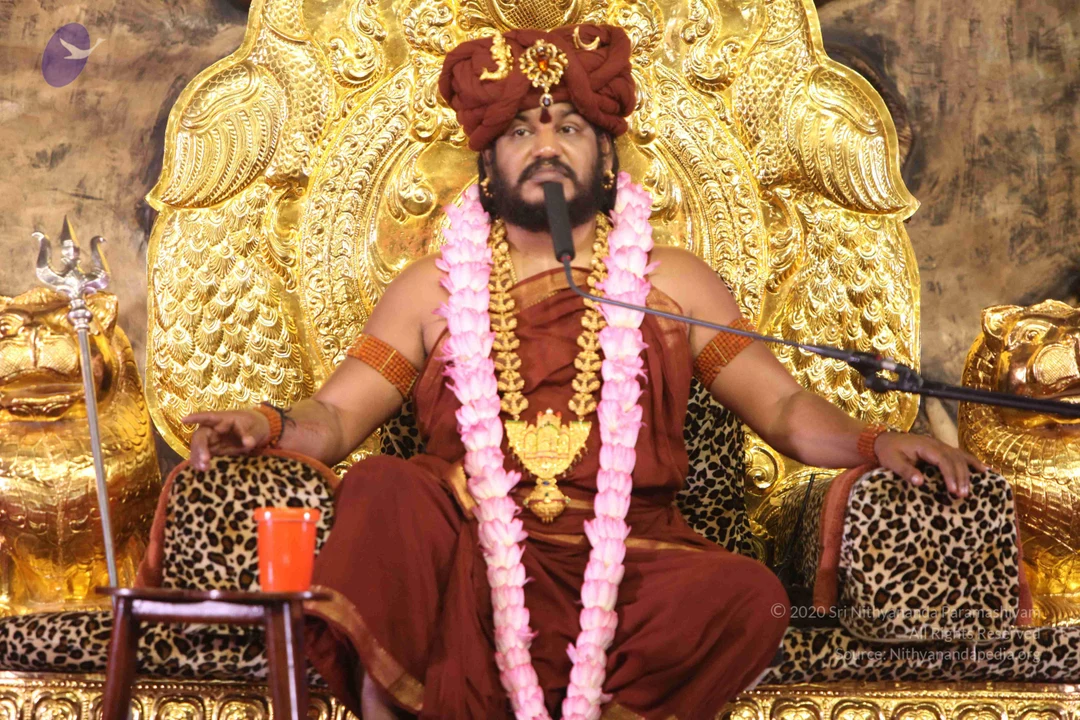
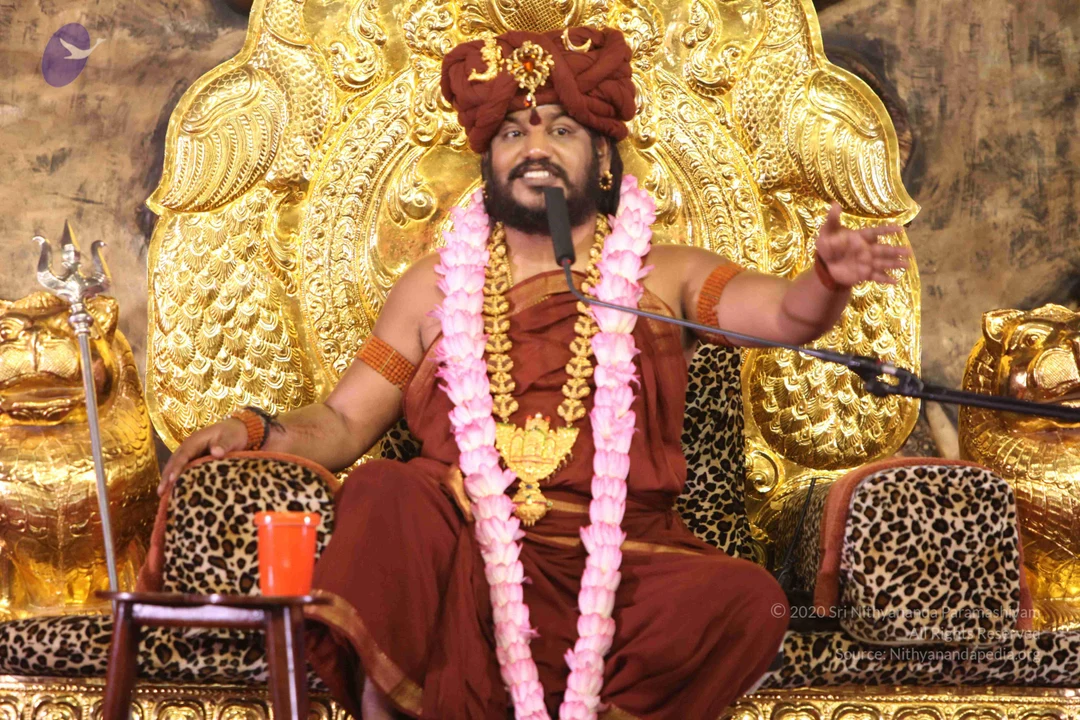
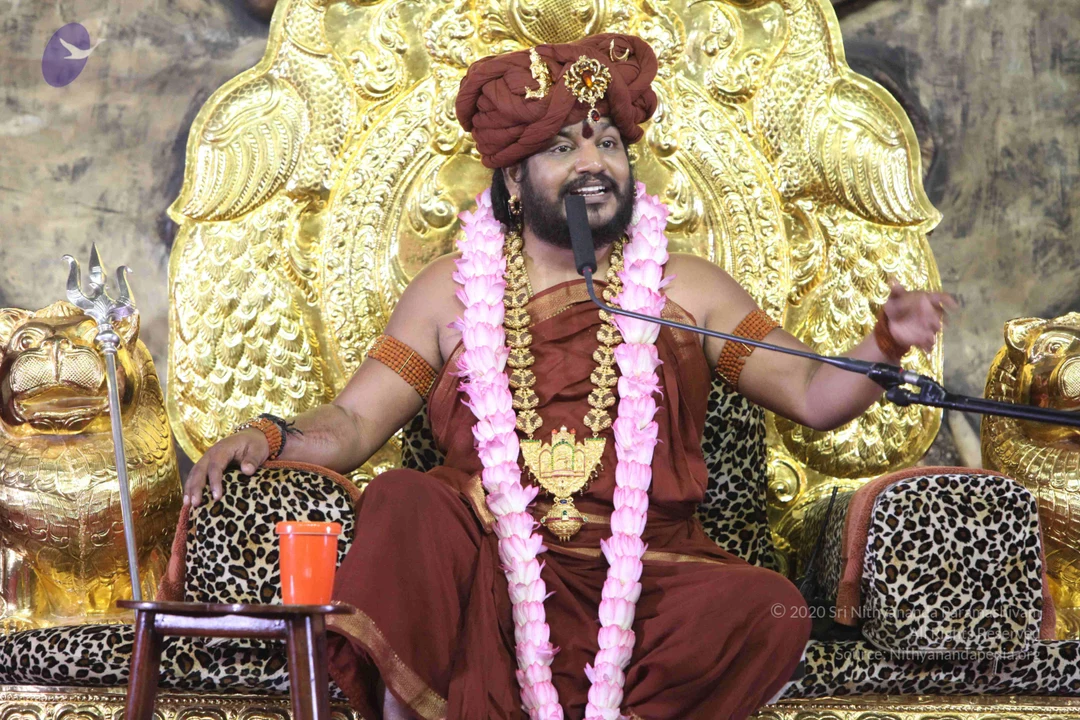
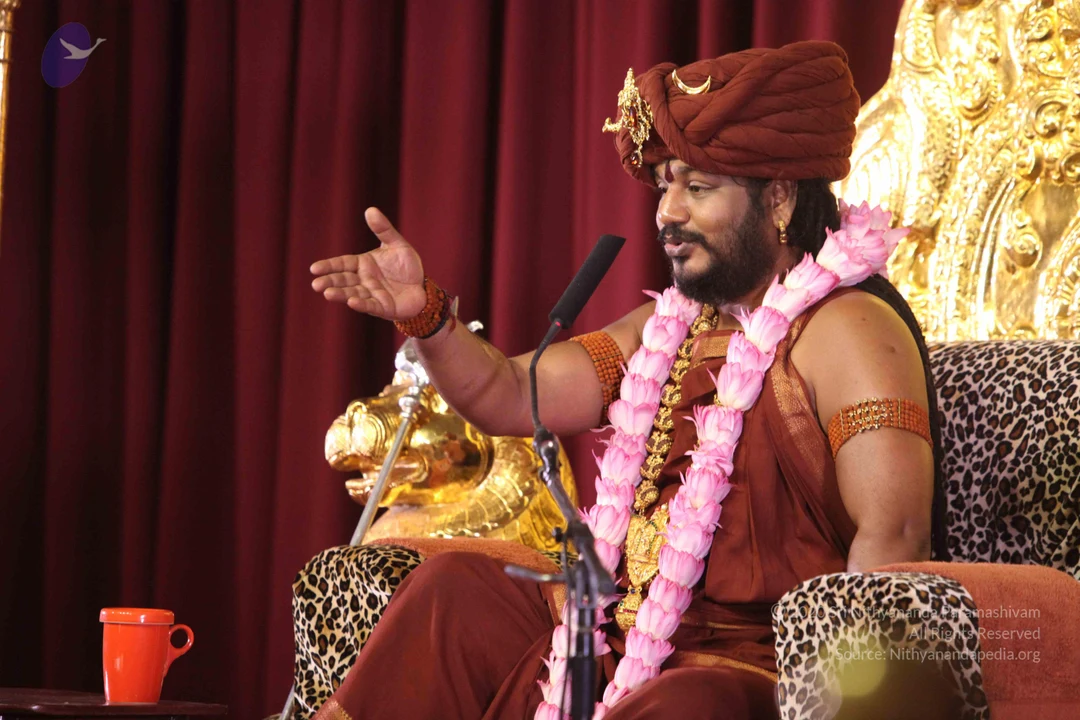
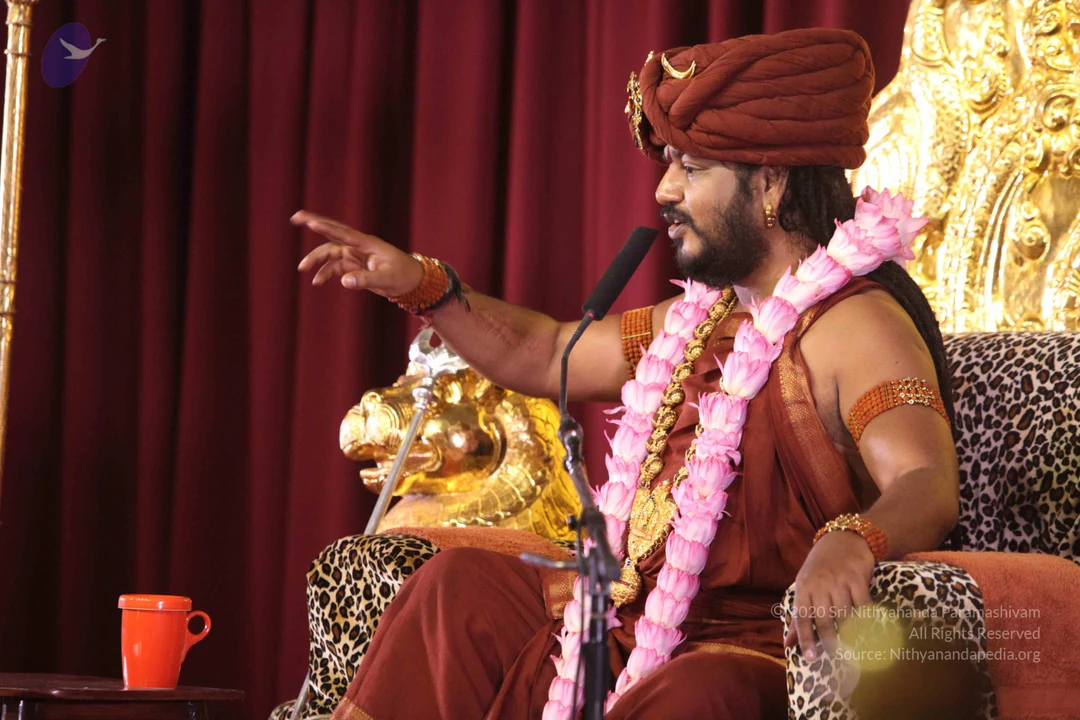
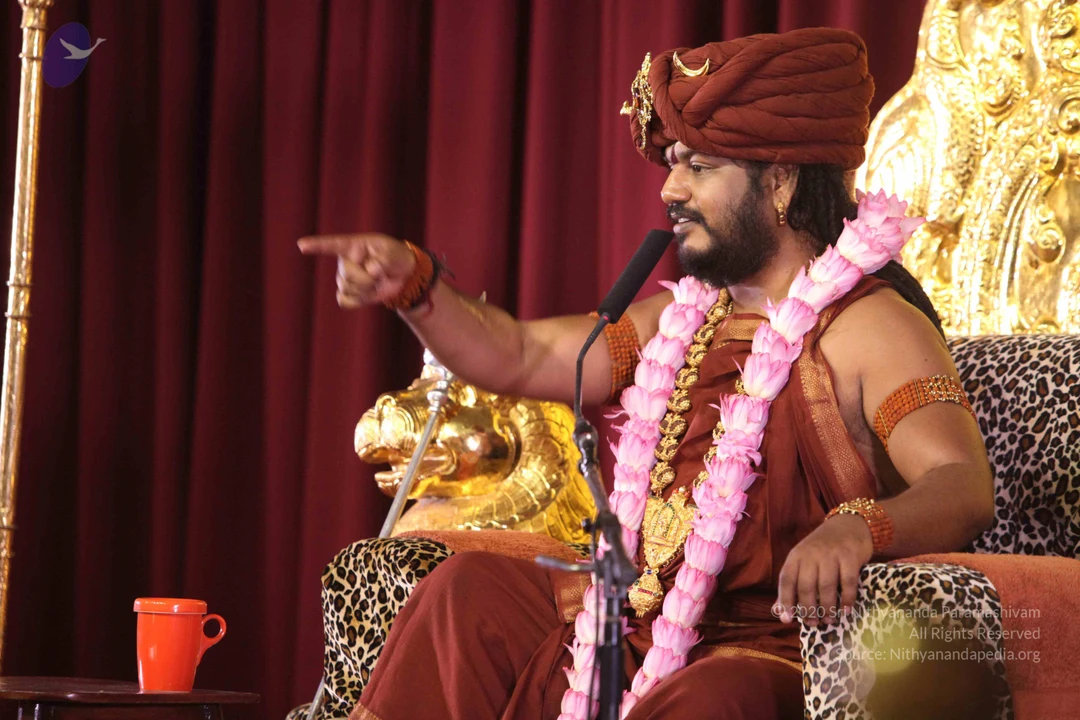
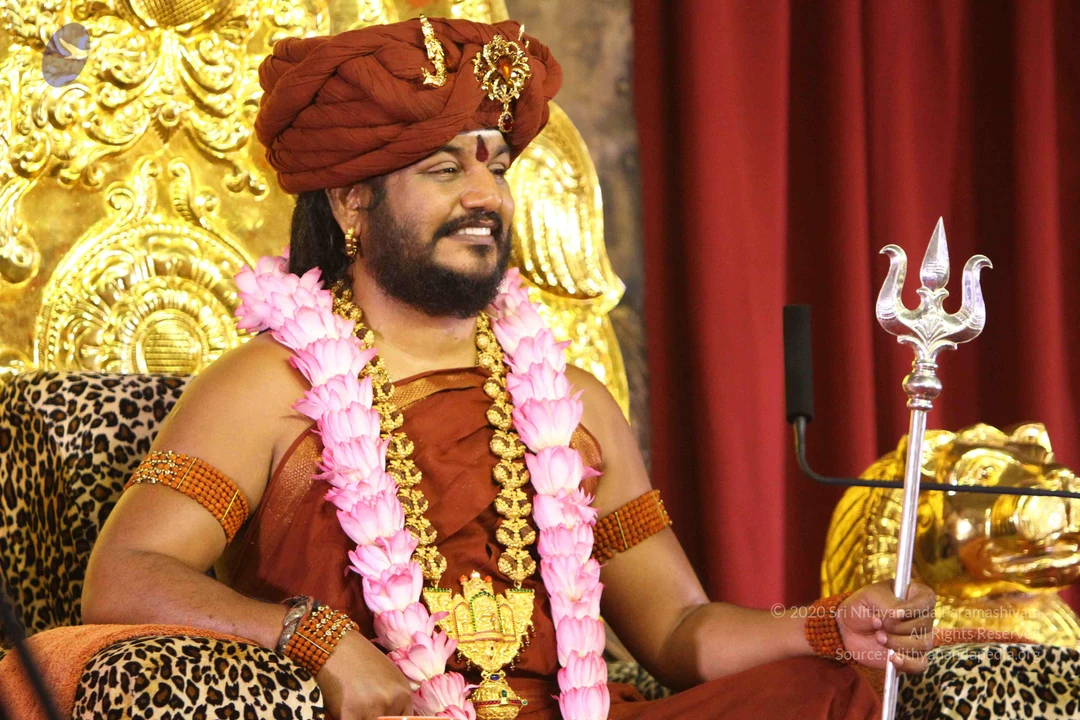
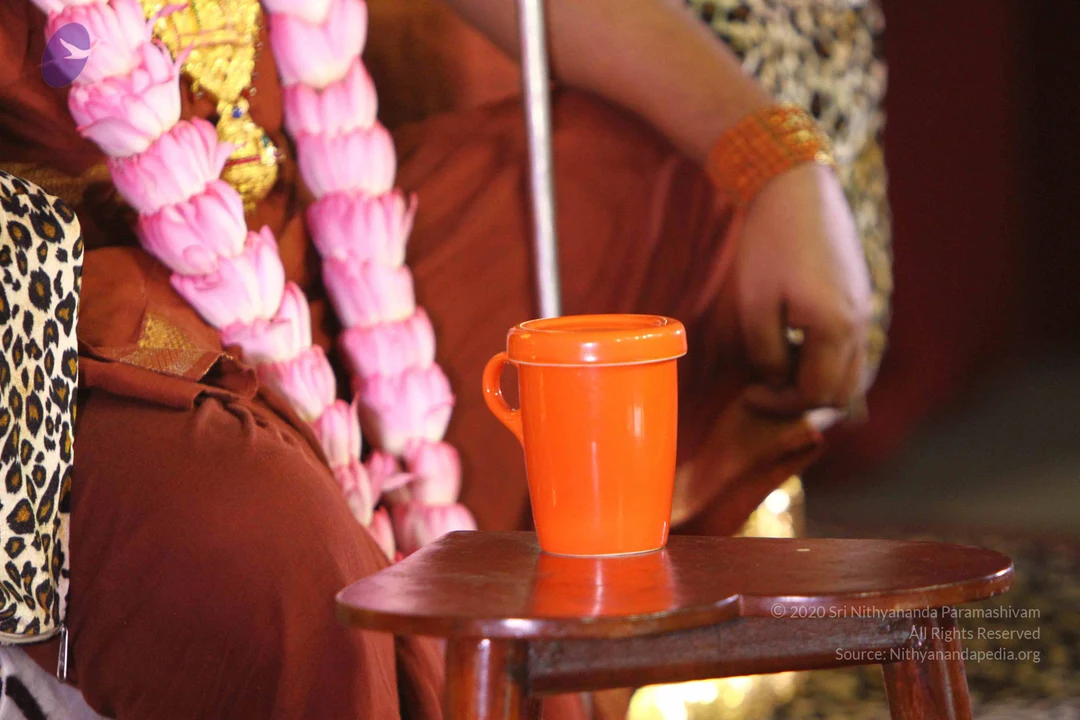
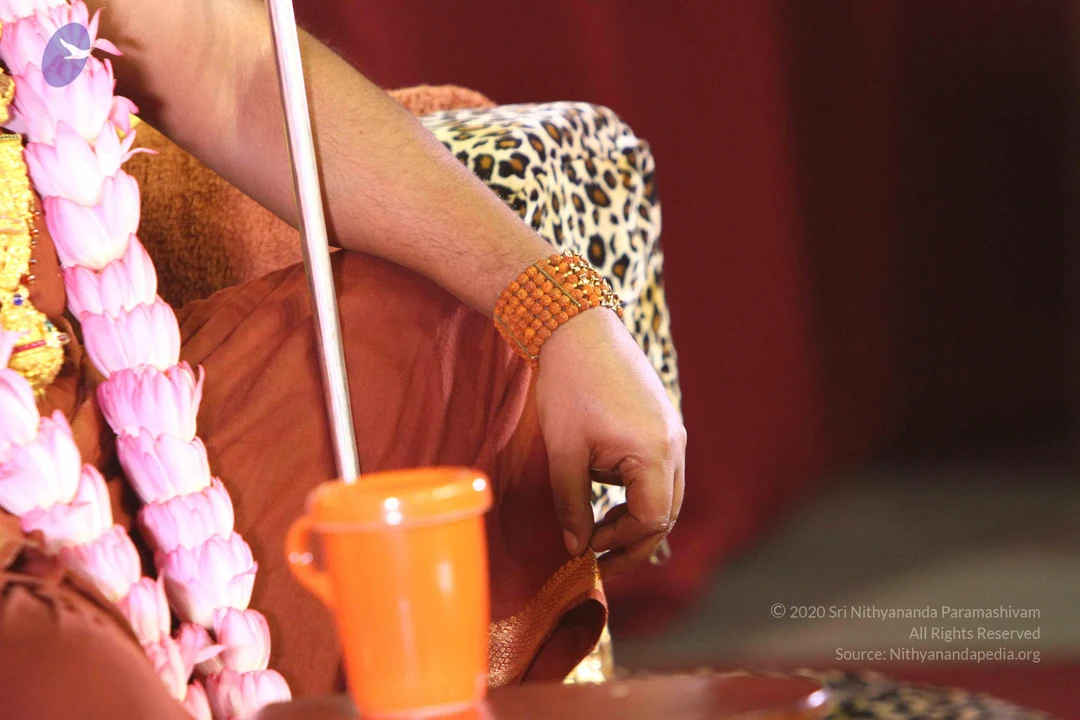
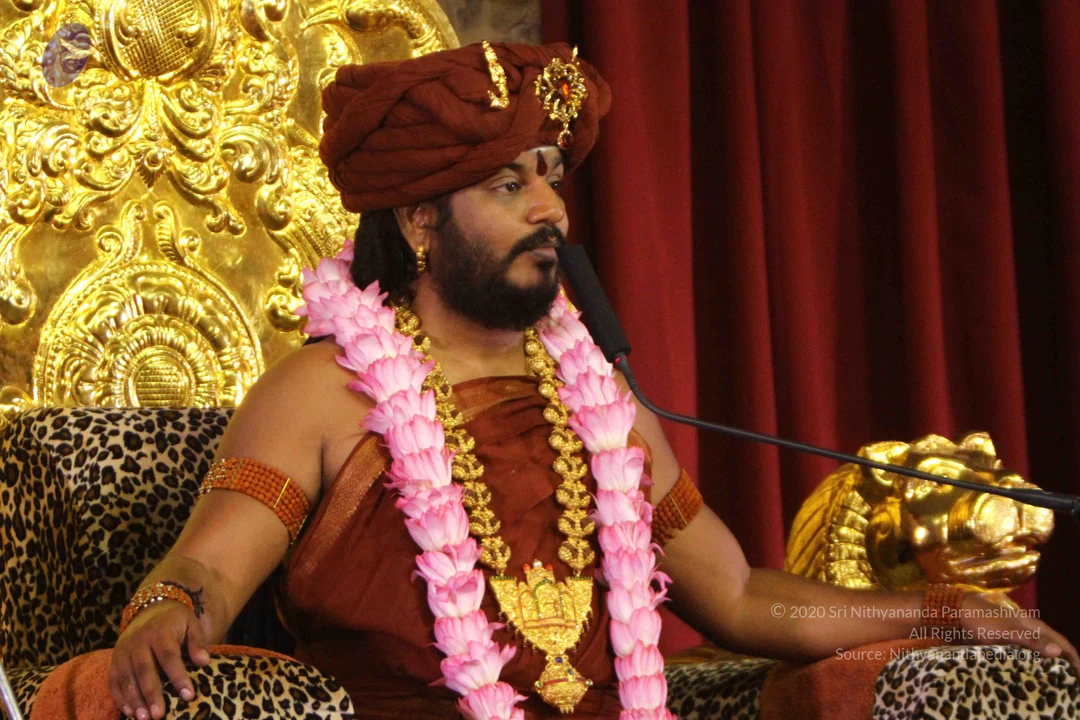
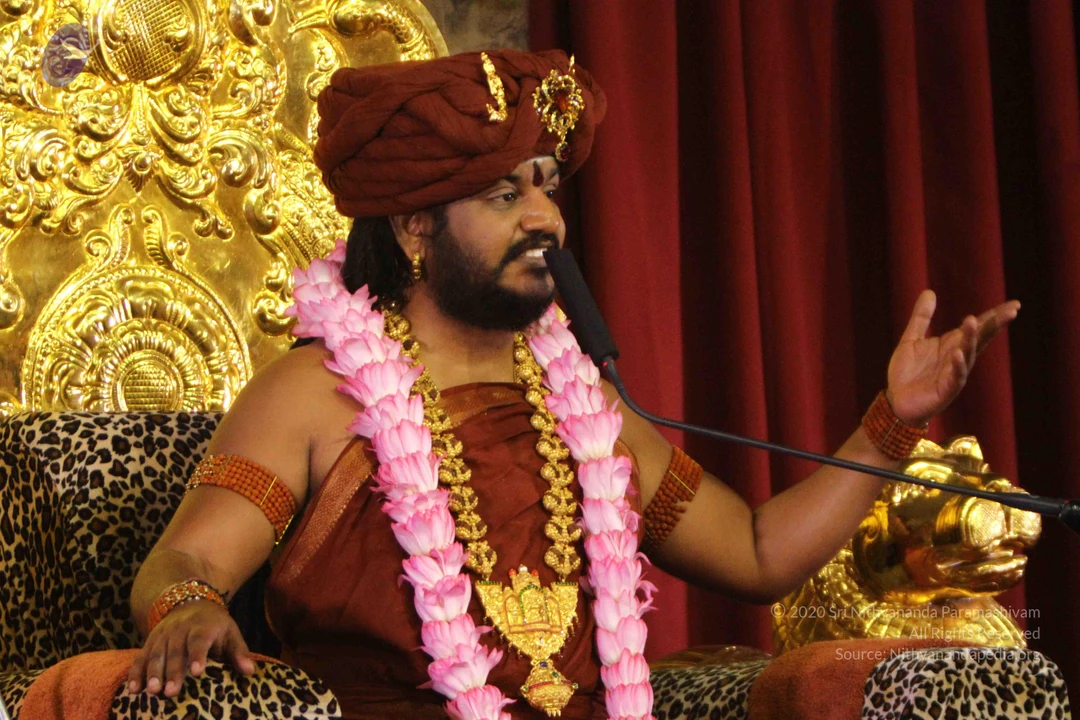
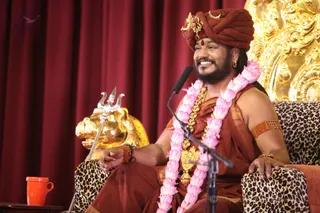
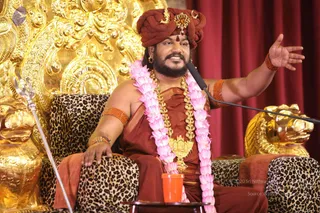
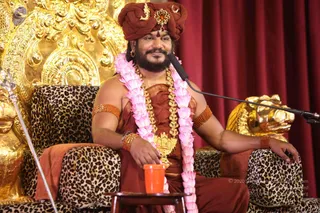
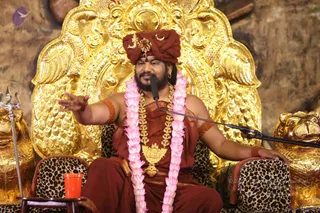
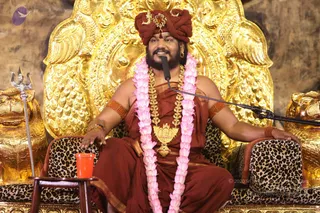
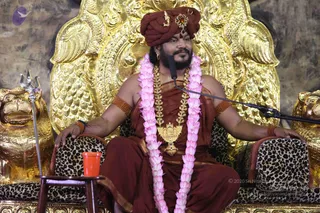
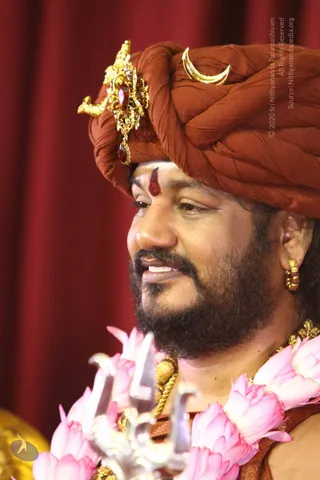
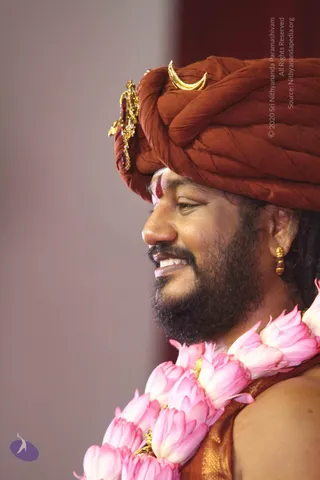
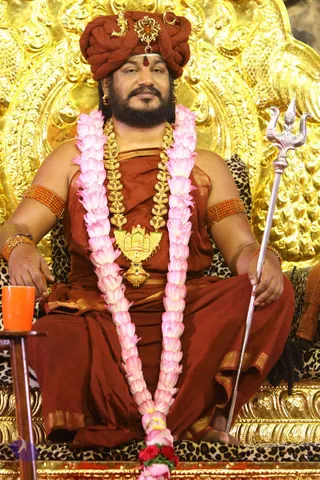
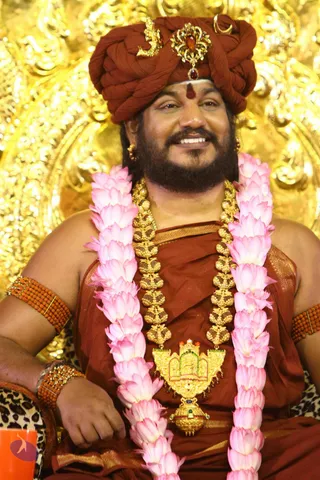
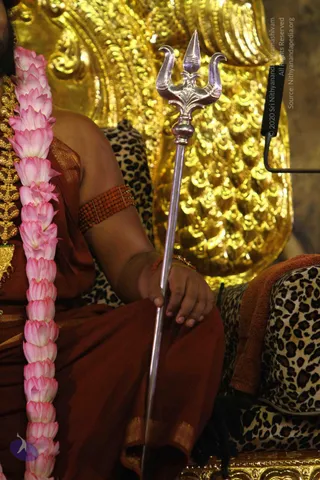
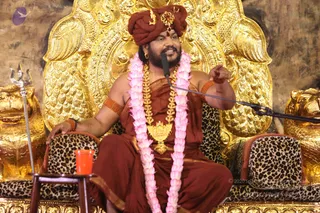
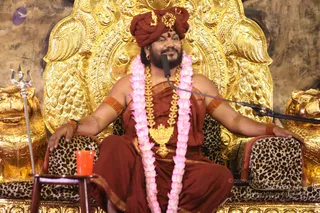
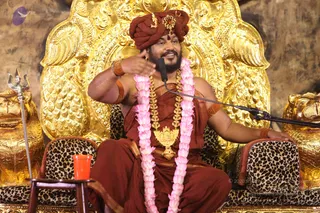
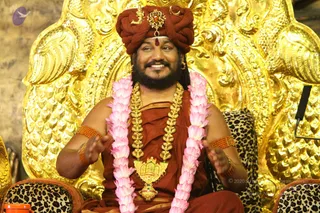
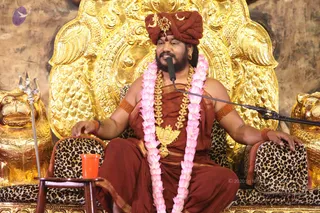
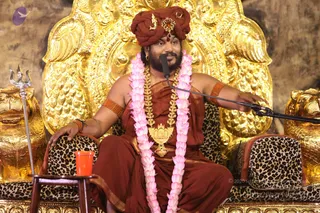
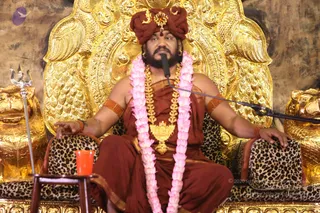
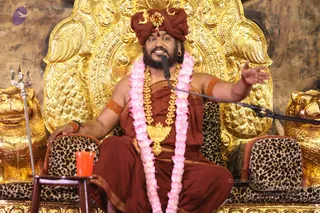
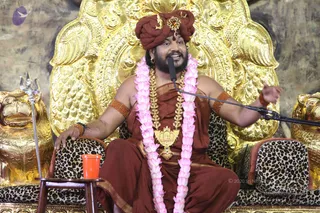
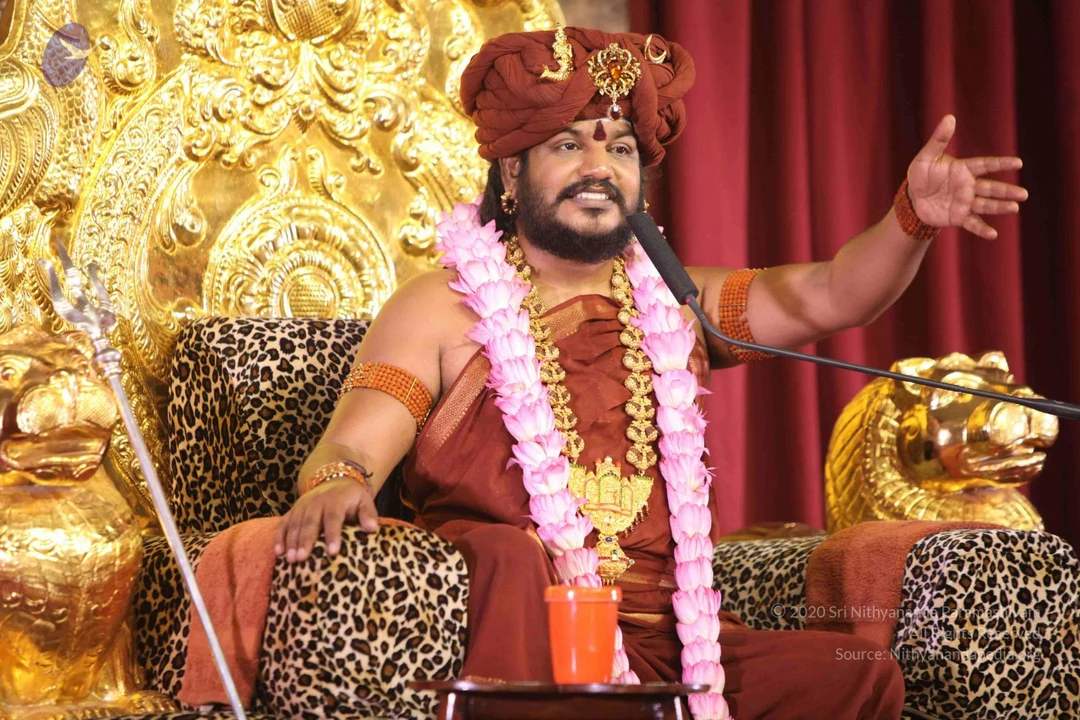
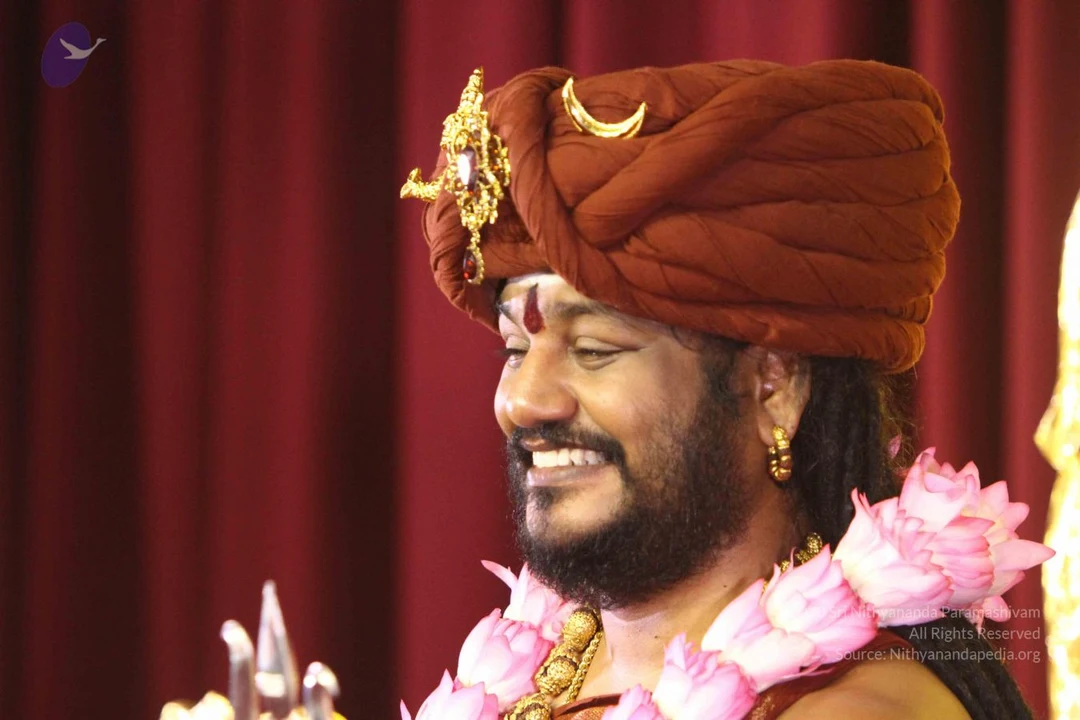
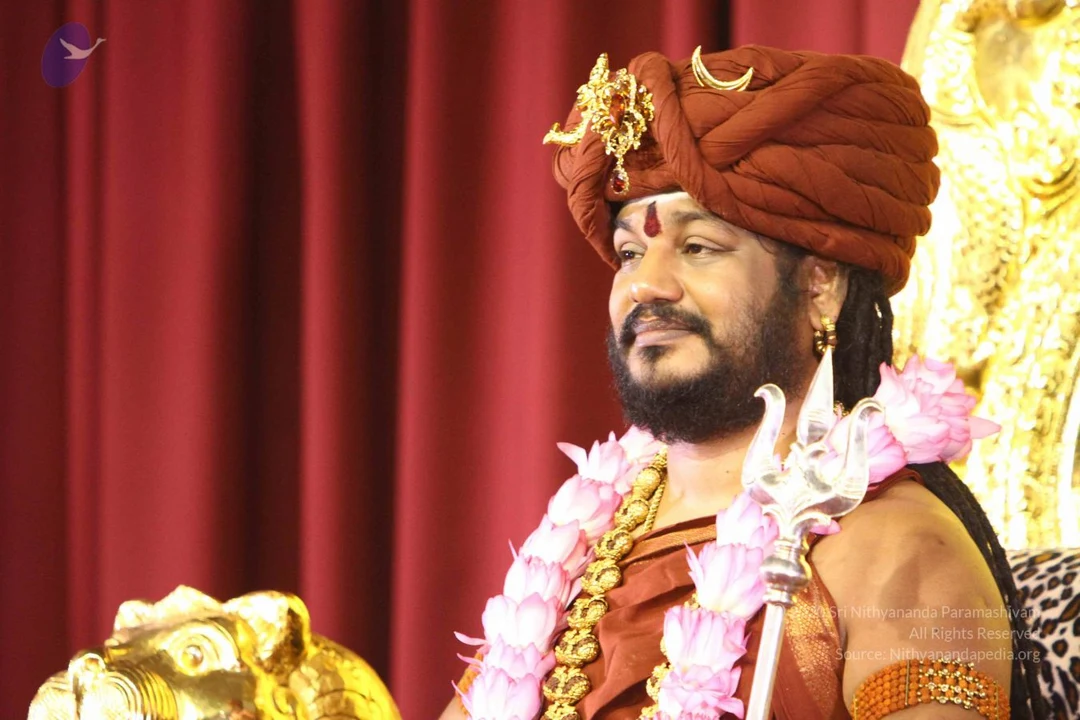
Close photo of two seated people in orange-brown robes, with arms and hands visible. The nearer person has a leopard-print cloth over the lap, a folded orange-brown towel, rudraksha bracelets on the wrist and a black-and-brown cord bracelet. A pink flower garland with lotus-like blooms hangs across the frame, and a metal rod is held in one hand. Beside them sits an orange cup at the lower right.Close photo of a smiling bearded man in a rust-red turban with gold crescent and jeweled brooch ornaments and a red tilak on the forehead. He wears gold earrings, a gold necklace and a garland of pink lotus flowers, and holds a black microphone near his mouth. Behind him is ornate gold-embossed panelling beside a red curtain. Swamiji (probable): the turban, gold jewelry and pink lotus garland are distinctive ceremonial cues for this speaker, shown at a satsang discourse.A seated man speaks into a handheld microphone during a discourse. He wears a rust-red turban with gold ornaments, a pink and white flower garland, a gold necklace, gold armbands and bangles, and a rust-red robe. He sits on an ornate gold throne with a leopard-print cushioned seat and a gold lion-head armrest. A red velvet curtain hangs behind him, and an orange cup sits on a small table at the lower left.

September 17 2016

Original wiki page
Contents

Title

The Matrix - Q&A on AUM, Maya, Cosmic Law, Time Shaft, Sadashiva

Link to Video:

VideoAudio

Transcript

I welcome all--of you, with my love and respects. I welcome all the devotees disciples, Samadies, Satsangies Sri Mahants, Mahants, Kotaries, Tannedars, everyone--- sitting with us--- all over the world, through-- Nithyananda TV, FB Live, YT Live, to view Video conferencing, Having NainaDeeksha I welcome all of you--- with my love and respect.

I'll answer some more questions on --the sacred secret-- Science of third Eye Awakening --Yesterday all the-- Inner Awakening Volunteers had Jnana Ajana initiation --And the-- manifestation of the power session ---

Today they will again continue to have more sessions and -- more process --Let me answer your questions on ---third eye.

Rani Lyer asks : Nithyanandam, Swamiji. In the exercise to classify the entanglements with Existential reality and Matrix, where do I place my children Swamiji ? Is our connection with children considered existential if they are young, under 18 ? After completing the exercise, I see that I am mostly in the existential realm, but have this one strong sense of loyalty towards the child.

Rani let us be very straight --It is not --It is not-- even though-- you would love to have that-- marked under existential reality. Unfortunately it is not. Surely-- when you give birth you have certain-- responsibilities towards it because the human child is the--most vulnerable. No other baby, no other animal’s baby-- needs so much attention.--

If the cow give birth to the calf, the calf may need maximum-- a week attention. Any other-- animals species. If you see, the babies don't need so much attention but---Unfortunately the-- human beings, still the age of 7, physical, physiological, psychological---till the age of 14, physical and physiological. So I should put it in this way : till the age of 14 psychological and physiological not physical, and till the age of 21-- at least psychological. He may not need a physical and physiological but psychological. Attention and support is needed-- for the human babies-- so---It's a commitment you take within the Matrix. As long as you are inside the Matrix, you are expected to --be integrated to the commitment you took inside the Matrix. Once you are out of the Matrix, the whole commitment takes will be irrelevant. It's irrelevant. Even if your are inside the Matrix after 21 if you continue to do, you are called possessive. Even if you are inside the Matrix don't continue, which is not required.

I have seen many kids getting suffocated by the love of their parents--- Suffocated by the love of their parents. Don't do that. And same way,-- as long as you're inside the Matrix ---this commitment is ---your integrity relevant you have to do but- it is under the Matrix. It is not methodology for liberation. It will no way liberate you. It is a commitment you took within the Matrix, you have to play it, to maintain your integrity because ---you gave birth. Rani, sorry but what I said is truth. Next

Sri Nithya Mangalatmananda, from Bengaluru Adheenam Asks : Is listening to celestial sound OM is related to higher dimension, or is it also possible we also have a third ear which activation only can give us this kind of experience ?

Actually that is something called 7;38?????? sound which is not created, sound which is not generated. So OM comes under that category. There, there's no such thing as third ear, but you listen, though your consciousness without using both your ears. Next

SurekhaRAdhakrishmanasks : Is Maya the root cause of wrong decisions in life even when you are secured by the Guru? Does Maya have power over and enlightened Guru ?

So record first thing- Maya is not the root cause of wrong decisions--It is forgetting the decisions you already took. Understand--- This one example: you are dancing, jumping, you move the right leg, you move the left leg, you throw the right leg you throw the left leg, suddenly you come to a posture where-- you push the right leg and raise the left leg. In the same position standing, you try to move the---raise the right leg also which is impossible. You are not able to move the right because you already raised the left. The decision you took already ---raising the left. So now the whole leg is on the right.---You are not able to raise the right because of the decision such you have already took. If you call that as a wrong decision I will not agree. I will only called this as--- forgetting the earlier decisions you made---Nothing is wrong nothing is right --in the life.

That is not the such thing as, you should not raise the right hand, you should not raise the right leg, you should not raise the left leg, no---You are not able to move the right leg and you call that : “OH! I'm in bondage, just two minutes before I raise the same leg-- Now I'm not able to raise--I am trying-- and you sit and trying even to pull your leg--And the whole beauty of the dance is lost. Understand--- Forgetting the earlier decision you took--and calling them as wrong because you feel certain--- suffocation, certain among of a--- choicelessness.

Where you can't make a choice--- It is not because of your past wrong decisions, the choicelessness is because of a choices you took. If you know, because of the Choices you took, you are in childlessness, you can just put the left leg, and raise the right leg that's all ! Or you can relax both of the leg and just jump, raise both the legs that’s all ! Understand-- all ----Maya, is nothing but Forgetting the past decisions you took. Not wrong decisions. Listen -- because you forget the past decisions,you go on blaming your boundage, and you try to find some solution-- Because you are not able to find solution, you call past decisions as a wrong decisions. Please understand, forgetting the contest of a past decision, is Maya.

And --You have a next question Surekha Radhakrishnan : Is Maya the root cause of wrong decisions in life, even when you are secured by the Guru?

First thing be very clear. Guru always secures you, do you procure Guru? Do you procure Him ? No -- How much of-- procurement of Guru has happen inside you ? Find out. He goes on securing you. Goes on, goes on, goes on. Even he can only secure you, not to make you live. Even he can only protect you, Safeguard you but living has to be done by you. More than Guru securing you, you procuring him, Is important. How muchyou procure Guru insideyou ?

Surekha Radhakrishnan, the question you are asking is “ Is Maya the root cause of wrong decisions” Forgetting all your past decisions Is the root cause of wrong decisions-- in life. Even when you are secured by Guru, Guru can secure you but you have to procure Him. If you don't procure Him, He just securing you can keep you alive, nothing more than that. Can Keep you--- without being dead. He can clinically keep you alive. Clinically you can be alive but, only if you procure Him, you can be living. Living.

So the third question : does Maya have power over and enlightened Guru ? - Relax. If he's enlightened, Maya cannot have power over Him. The next question. By same Surekha Radhakrishnan, Next question. Surekha RAdhakrishman asks :

“ In the Drishti Srishti or Srishti Drishti,which triggers which ? Cognitive shift trigger emotion or the emotion triggers the cognitive shift or the desires are the root cause of emotion and the cognitive shift ? Whocontrols the Maya in the cosmiclaw ?

Too many questions. One by one, one by one. Sureka the bench of confusion you are carrying is layer by layer. Need to beclarified First : “ In the Drishti Srishti or Srishti Drishti Which triggers which ?” Clearly listen-- In Drishti Srishti, Drishti triggers Srishti. In Srishti Drishti, Srishti triggers Drishti. And both are truth in different levels, different places. Some of the Vedanthis try to declare : “both of them are wrong, or one is completely right and one is completely wrong. Both of them are neither right, both of them are neither wrong. In one place, one is right, in other place something else is right.

And--Next question : Cognitive shift triggers emotion or the emotion triggers the cognitive shift. Listen-- When the cognitive shift triggers emotion--It is called delusion. When the emotion triggers the cognitive shift, it is called spiritual practice (Saadana ? )I'll explain, give an example : because you have a cognition at the low inner image, you trigger the same low inner image. Same low emotions like: ma baguette has been stolen, she took away my husband, I will take revenge by taking her husband. Cheap-- slam level ---emotions. When will those cheap slam level emotions will be triggered in you? When you have that --cheap innerimage about you. Understand--- when I use the word Slam I don't mean the living place. I mean-- the way the mind is.

They are-- many people, who leave in slam and great devotees who just-- connect ! With Sadashiva, live with God !I myself have seen---some people in Gujarat, in Villages, In Gujarat villages people who don't have anything other than one small hat and a cow living with Krishna ! Literally. Not only living, just how our Balansants, Gurukul Balasants are able to show you whatever you want in a mirror. I have seen one old lady just by touch --she showed me-- Krishna. Living ! Alive. I actually wanted to go back to the village and ---collect details about that and record it in my autobiography. The old lady who showed--- Krishna to an incarnation-- by a touch ! So slam is not a place it’s a place.

Listen---So if your low cognition is generating triggering emotion It's delusion. And-- by you creating higher emotions, sacred sentiments, the clarity about Cosmos, Ishwara, Jagat, Jiva...and changing your cognition, that is spiritual practice. Whenever --you study about the 25 states of consciousness of-- eleven dimensions, suddenly certain emotions are triggered in you which puts you in higher cognition, at least for next few days. Putting yourself in higher cognitions everyday is the purpose of morning spiritual routine. Yoga, or Kirtan or Puja or Satsang, Pancha Kriya… all this : Yoga, Pancha Kriya, Puja, Kirtan, satsang. All this five Is to put you in a higher cognition. Making that higher cognition as a living reality. As a life. As an understanding.

When higher emotions trigger the cognitive shift, It's called the spiritual practice. When the lower cognitions create, trigger the emotions It's called delusion. I tell you--- you if your cognition shifts, you will never trigger this lower emotions

I've really seen-- people going and biting the dog back. Because it has bitten them. Biting the dog back is not going to heal you. You are going to get into-- deeper diseases. More problems. Biting the snake back Is going to get you out of a poison--- Biting the scorpion back --Is going to get you out of a problem ---Fighting the wife back Is going to get you out of the problem. Don't do this tree. Don’t do this tree.

In front of Guru, in front of wife, never fight. In the-- fight in front of wife you will lose this world (showing finger down) fight in front of Guru you will lose that world (showing finger up). But never have the delusion you are going to win in anyone of this fight.

Listen--- there are many things. If you look at the past-- taking revenge will-- be realise that a waste of time. That is what I call higher cognitions. Cognition about life and the future.

Listen ---Carefully---If still taking revenge, seems very logical and right, You are in Slam. Psychological Slam. If taking revenge does not seem logical ---Living the future seems to be more logical ---Taking revenge looks irrelevant and redundant ---You are raise your consciousness towards life, you are ready for the Upanishad Mantra. ????22:46 Tamul----Renounce and celebrate---live hundreds of years ---Always say yes for life.

That is our Upanishad statement. Anybody who understands this verse, taking revenge will be irrelevant for them. Understand-- Whenever you say yes for life, Kalabhairava takes revenge on your bedarf. Because--- when you say yes for life you become Sada Shiva. Now the Kalachakra, the time shaft, the Kalachakra the time shaft has to-- take revenge. And the people who are--- trying to harm you, try to harm you.

Understand, in your cognition whenever-- taking revenge become irrelevant , redundant and your cognition does not trigger the emotions of taking revenge and violence, because you are looking about the future you are not bothered about the past which is already redundant irrelevant, you are SadaShiva.

I'm not saying people who try to harm you will go unpunished, no---They will actually be crashed by Kalabhairava. Which even you cannot do even if you take revenge. The best revenge is, making the mentality of a the revenge redundant for you. Irrelevant for you.

If--- you can look at the future, and --- hey ! -- Why waste time on this? Buffalos and ??? 25:11 all that---Life is great and so much is available, so much you have to do whenever you say YES for the future. Go on-- with the future --You are really for the great Upanishad declaration of 25;34??? tamul Renounce and celebrate live life say yes to it--- Live hundreds of years Happily by saying YES to life 25:54 ?? Live hundreds of years---Celebrating life.

I tell you the cognition which does not trigger the emotions of revenge--And taking revenge--- Is the cognition where SadaShiva is living. Life is not unjust. It's a pure??? ---Power of---Dharma - just.

Let you make revenge taking consciousness redundant to you, irrelevant to you---By being in the understanding of Sadashivoham, Sadashiva. Kalabhairava is too--- powerful to--- to ---available. Too much powerful, too much available. Let---Conscious and invoking of the-- higher emotions. Change cognitif shift in you. Not the cognitive shift-- triggering lower emotions in you.

Next-- part of the-- question Whatever is present now is past as every minute ooh! That's one more part. Who controls the Maya in the Cosmic law ?

Surekha RAdhakrishnan, this question does not fall under the---secret sacred science, it falls on the --- sacred secret sweet science. It's a classified document. It’s a classified information. Only when you become an ??? insidered ? Can beavailable for you. Who controls the Maya in the Cosmic law ? I can give you a rough answers you try to Understand you, you, you SurekaRAdhakrishnan. You control the Maya in the cosmic law. Understand. At least try to understand

Whatever is present now, is past as every minute the time moves. What's a scale to calculate the past to present or present to future --

Understand --- Scaleless way moving is--- the quality of time. You are trying to make physics out of time, no---You can't make physics out of time. You can only make chemistry with the time. Have a right chemistry in the time. You cannot make physics out of time. If you make physics out of time, you will be dead. If you have a right chemistry with the time you will become biology, alive.

Right chemistry with the time will make you biology. Living. Alive. Trying to make physics out of time, will make you dead.

There are two Museums. Dead Museum, where the antiques are kept, living Museum where the traditions are lived.

I am the Living Museum of Vedic tradition. I am the Living Museum of Vedic tradition. Actually, very soon, people can work in-- to our campus, literally see and taste all the 460 powers Sadashiva-- explains in Agama, taste what is called living--- museum

They will walk into the Welcome Centre, and say that they want to stay for 2 days, the Swami in charge in the Welcome centre will just drow the key from the air and hang it over ---

Please go to your room--- When my Gurukul kids, Balasants take over the Campus and start running, this is the way that campus will be running. You willsee. --- This is the way the conversations will be : the person will come “ I wanted to stay here for--- a week”--- The Balasants will just drow the key from the---tin air and give it to him : please go, this is your room key. Do I need to swipe the credit card ? No, It's already done, you go

Then you will get the--credit card and say : No--- I wanted to stay for 7 days but it is only 3 this right? No thursday evening evening you are going to get an urgent call and you may need to go and attend that, so only--- 3 days you will be able to stay and you’il, you’ll have to come back after that you continuous your stay. Whenyou come we’ll talk, please go on---

I am the Living Museum of Vedic tradition.--- Sangha will be the living Museum of Vedic tradition. Do not make physics out of time---Do not try to make physics out of time---Have the right chemistry with the time. You will become living biology So-- don’t even have this question : “What is the scale to calculate the past to present or present to future, there is no scale. In that dimension, scales don't work, scales don't matter. And matter cannot be measured with the scale of length, breadth, depth, in the dimension of time. It is all together different-- dimension.

So with this, I bless you all-- Let you all rediate with Integrity, Authenticity, Responsibility, Enriching, Causing Living ShuddhadvaitaSaivam. The eternalbliss, Nithyananda .Thankyou. Be blissful

Photos From The Day:

Nithya Satsang
Photos Of The Day:

Nithya-Satsang
Photos Of The Day:

Nithya-Satsang
01-Nithya-Satsang

01-Nithya-Satsang

Photos from this day

View all 140 photos

Nithya Satsang

6 photosSource gallery
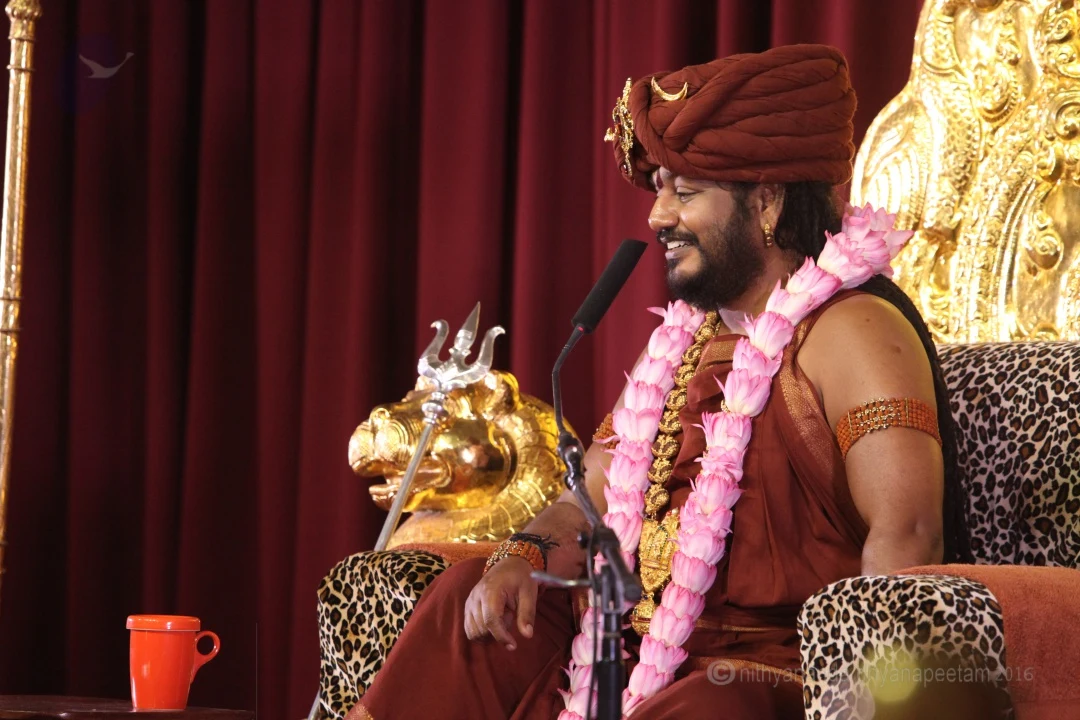
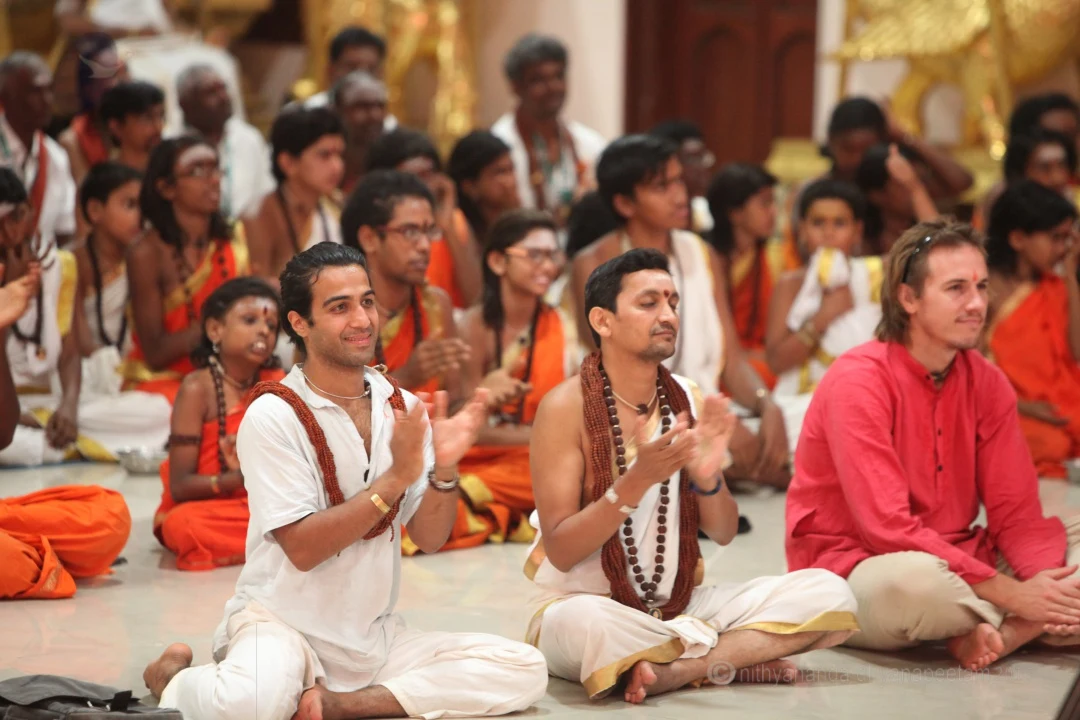
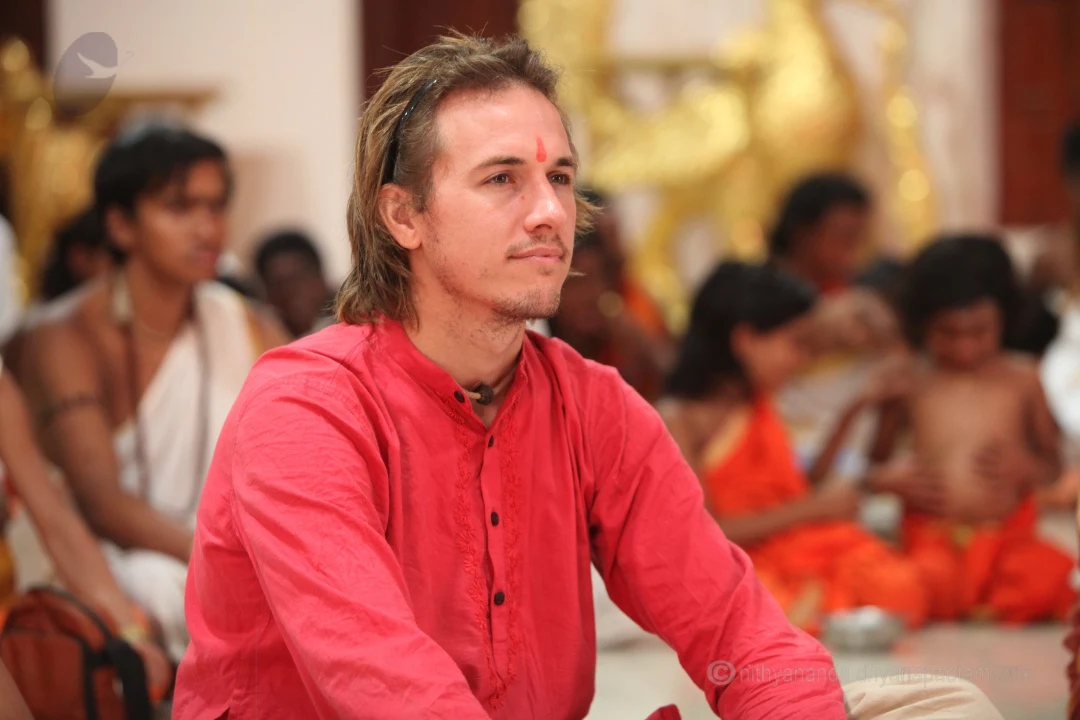
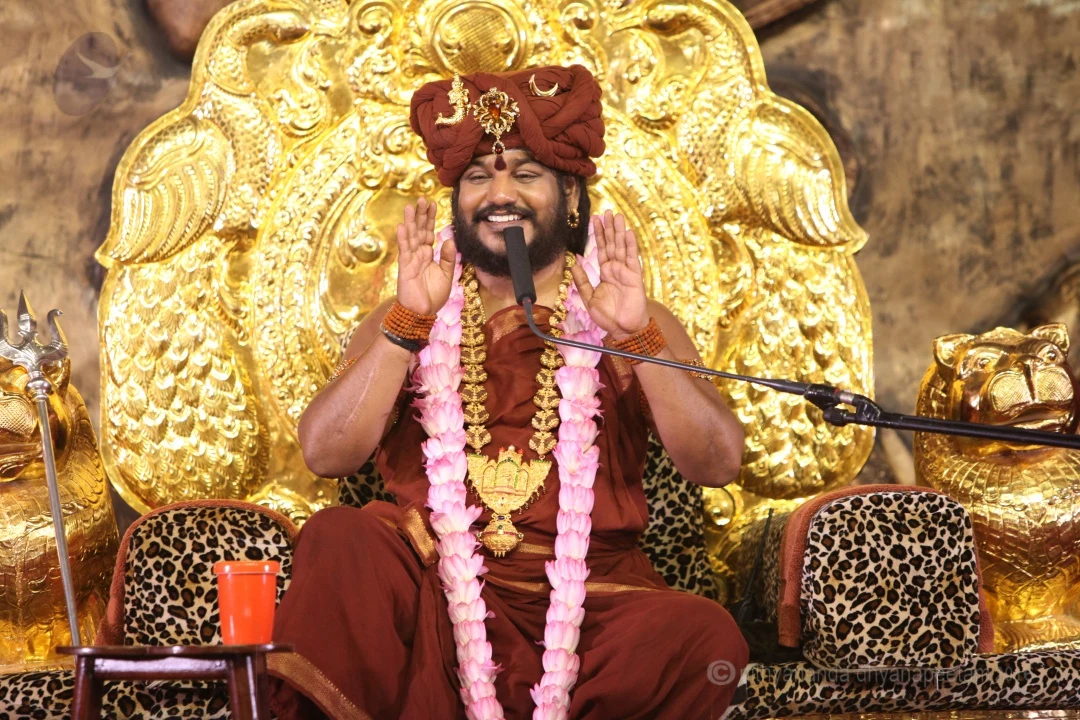
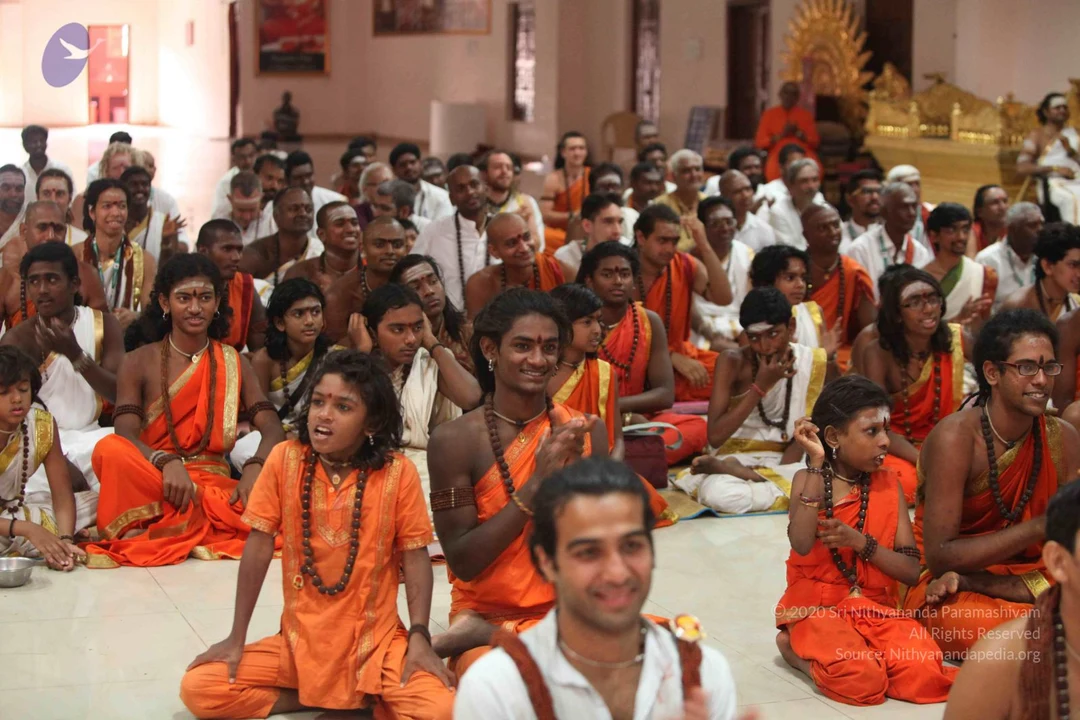
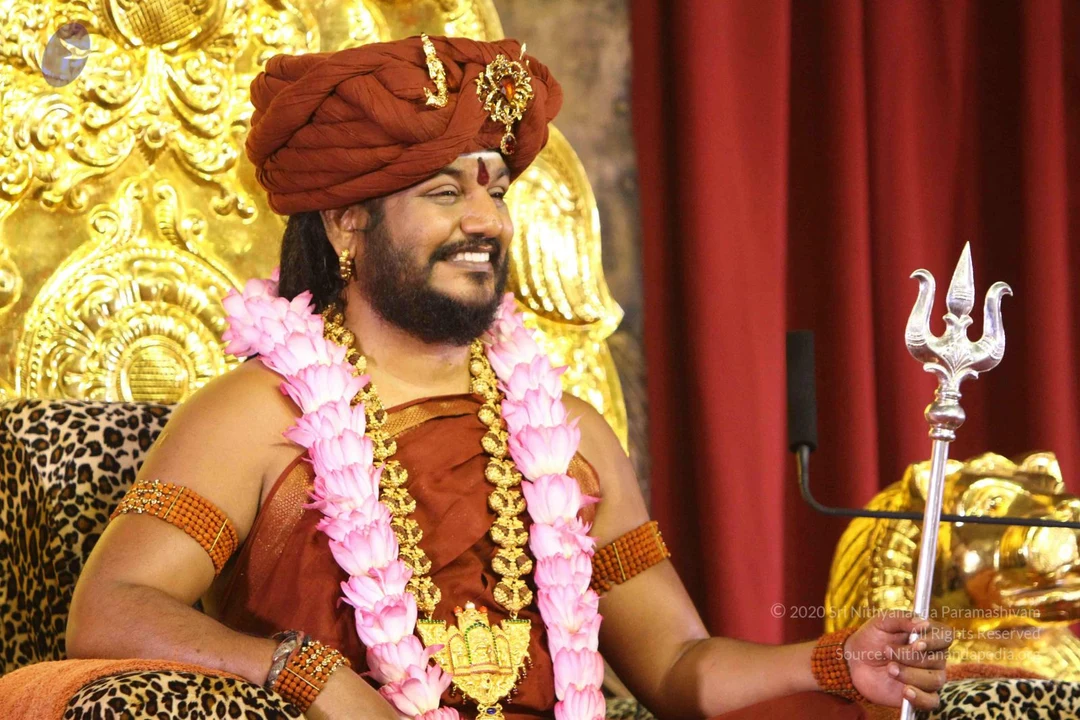
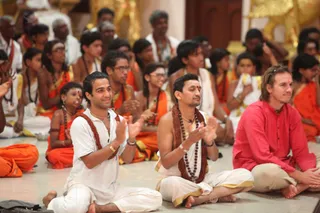
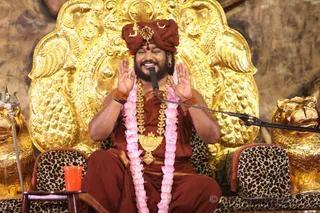
A seated congregation of devotees in a hall with a gold-toned ornate background at the top. In the foreground, a young man in white dhoti and shirt with a rudraksha mala and red sacred thread sits cross-legged with palms pressed together. Beside him, a man in white dhoti with gold border, bare-chested, wears a long rudraksha mala and red thread, pressing his palms in greeting. To the right, a man in a red kurta sits with palms joined. Behind them, rows of children and adults in saffron and orange garments, some with vibhuti marks and beaded necklaces, sit on the floor, many clapping or folding hands in devotion. No one among the visible people is clearly the a person.Photo of a smiling man seated on a leopard-print cushioned seat in front of a gold ornate backdrop and red curtains during a satsang. He wears a rust-brown turban with a gold crescent ornament, a rust-brown dhoti-style garment, a long pink lotus garland, gold necklaces, and orange beaded armbands. A silver trident rests beside him against a gold bull figure, and a microphone stand is in front of him. Probable Swamiji by appearance cues: long hair, turban, saffron-toned ornate clothing and gold adornments, presented as the speaker at the satsang. Swamiji (probable) is seated and addressing the gathering.A smiling man seated on a leopard-print chair in front of a gold ornate throne and deep red curtains. He wears a rust-brown turban with a gold crescent and trident pin, a rust-brown robe, a long pink lotus garland, gold ceremonial necklaces, rudraksha bracelets on the arm and wrist, and a gold earring. A silver trident leans beside a gold bull statue at left, and a black microphone stands in front of him. The appearance is a probable Swamiji (probable) given the saffron-toned ornate clothing, long hair, turban and rudraksha cues, seated in a discourse setting.A photograph of a smiling bearded man seated on a leopard-print chair before a gold-carved throne and deep red curtains. He wears a rust-red turban with a gold crescent and ornament, a red-orange robe, a gold necklace, a large pink lotus garland, and orange rudraksha bracelets on his wrist and upper arm. A microphone stand is at his side, a golden trident leans nearby, a gold ceremonial figure sits behind him, and an orange mug rests on a small table at the left.A seated man with shoulder-length light brown hair and a red bindi on his forehead sits in the foreground, wearing a red collarless kurta with a small pendant at the neck. Behind him, several people sit on a floor in a temple-style hall; a young man on the left wears white dhoti-style cloth, and children on the right wear orange robes. A blurred golden figure and ornate golden decor fill the background, and a small brass plate sits near the bottom right.A man seated on an ornate golden throne with lion-shaped armrests and a leopard-print cushion, speaking into a microphone with both palms raised and smiling. He wears a rust-red turban with a gold ornament and crescent emblem, a rust-red robe, a long gold necklace, and a pink flower garland. Beside him is a golden trident, and a red cup sits on a small wooden table. Given the page's claim, this appears to be a person: a swept, turbaned presentation, ceremonial gold necklaces and saffron-toned robes on a throne, seated in a satsang discourse.

Nithya-Satsang
86 photosSource gallery
A night landscape under a dark, cloudy sky with a moon glowing faintly behind clouds near the centre. Silhouetted trees and bamboo poles stand over a flat, dimly lit open ground in the foreground. A bright floodlight or lamp shines in the distance at right, beside a low structure. No people are visible in the scene.A bearded man seated on a leopard-print cushioned throne in front of an ornate gold carved backdrop and red drapes, speaking into a microphone while gesturing with his right hand raised. He wears a maroon-red turban with gold ornaments, a red tilak, a long rust-red robe, a pink lotus garland, layered gold necklaces and a rudraksha-style orange bead bracelet on each arm. A silver trident leans beside the throne, and a gold lion-head armrest sits at the right. Swamiji (probable): the appearance cues of a red turban with gold crown ornament, layered gold necklaces, a pink lotus garland and a trident indicate a presenter at a satsang-style discourse with a microphone and an orange cup on a small table.A bearded man sits on a leopard-print upholstered chair in front of a large gilded golden throne and a deep red curtain. He wears a rust-red turban with a gold ornament, a red-brown robe, a long pink flower garland, and layered gold necklaces, with orange bangles on his upper arms and wrists. A microphone on a stand is in front of him, and an orange cup sits on a small wooden table beside him. Gold lion-head armrests are visible at the sides.A seated man speaks into a handheld microphone during a discourse. He wears a rust-red turban with gold ornaments, a pink and white flower garland, a gold necklace, gold armbands and bangles, and a rust-red robe. He sits on an ornate gold throne with a leopard-print cushioned seat and a gold lion-head armrest. A red velvet curtain hangs behind him, and an orange cup sits on a small table at the lower left.A seated man in rust-red ceremonial robes and a maroon turban adorned with a gold crescent and gold ornament speaks into a microphone while gesturing with his right hand. He wears a pink lotus garland, a heavy gold necklace with a large gold pendant, and orange beaded armbands. Behind him stands an ornate gold throne with carved scrollwork and gold lion heads on either side, and a golden trident leans at the left edge. A red cup sits on a small wooden side table. The leopard-print cushions match the setting of a discourse hall. Swamiji (probable): the seated speaker wears a maroon turban with a gold crescent, a pink lotus garland and gold necklaces, and sits on a gold throne, so the figure is a probable identification and the speaker is presented as the discourse teacher.A bearded man seated on an ornate golden throne with carved gold lion-shaped armrests and leopard-print cushions, speaking into a microphone on a stand. He wears a maroon-red turban decorated with a gold ornament, a maroon-red robe, gold ceremonial necklaces with a lotus pendant, gold armbands and a long pink flower garland. A small red cup sits on a wooden side table beside him, and a trident leans at the left edge of the frame. a person: the appearance cues of a long-bearded figure in a red-maroon turban, ornate gold necklaces, rudraksha-style adornment and a golden throne are consistent with the page's a person claim, but not conclusive. The scene reads as a discourse or satsang.

Nithya-Satsang
14 photosSource gallery
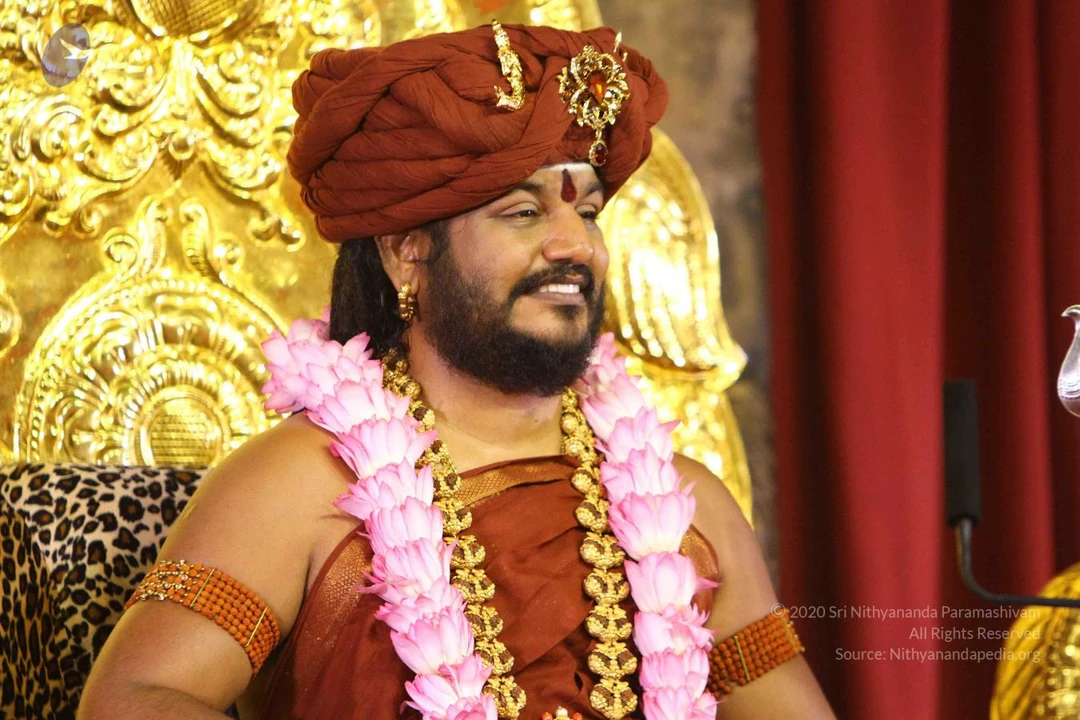
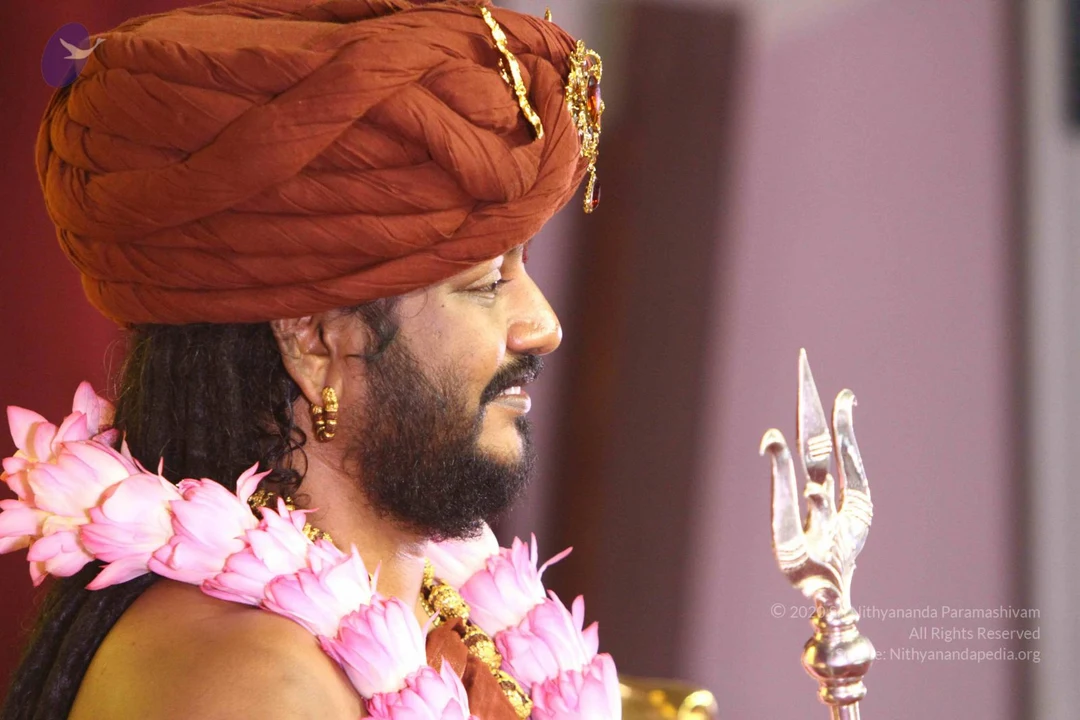
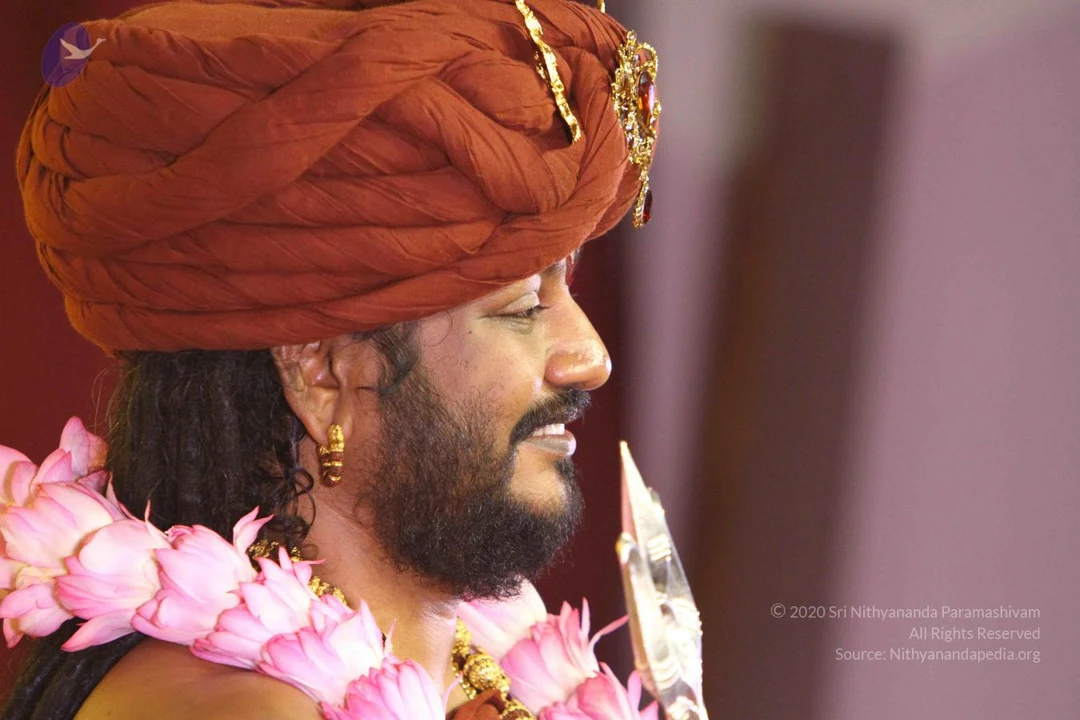
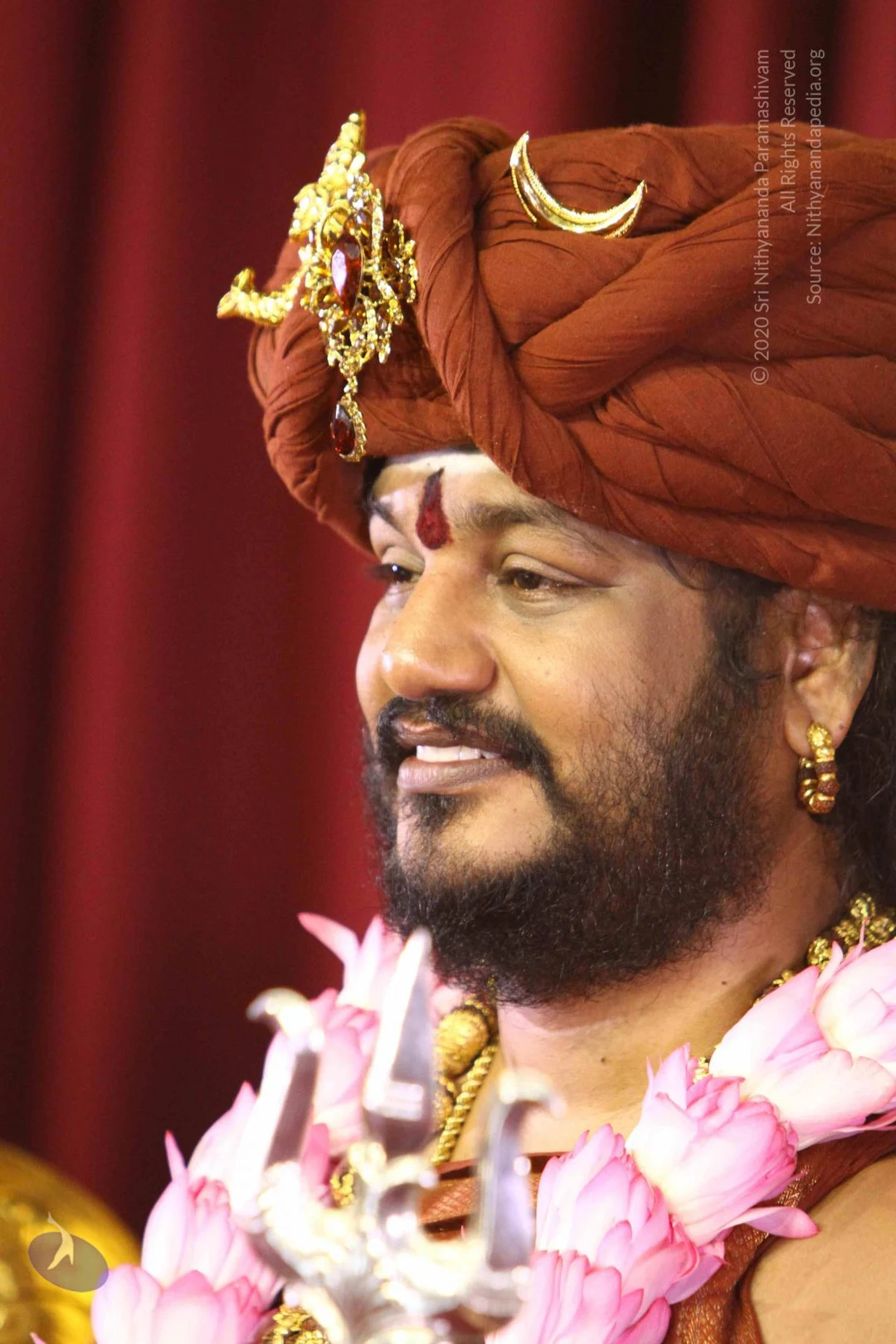
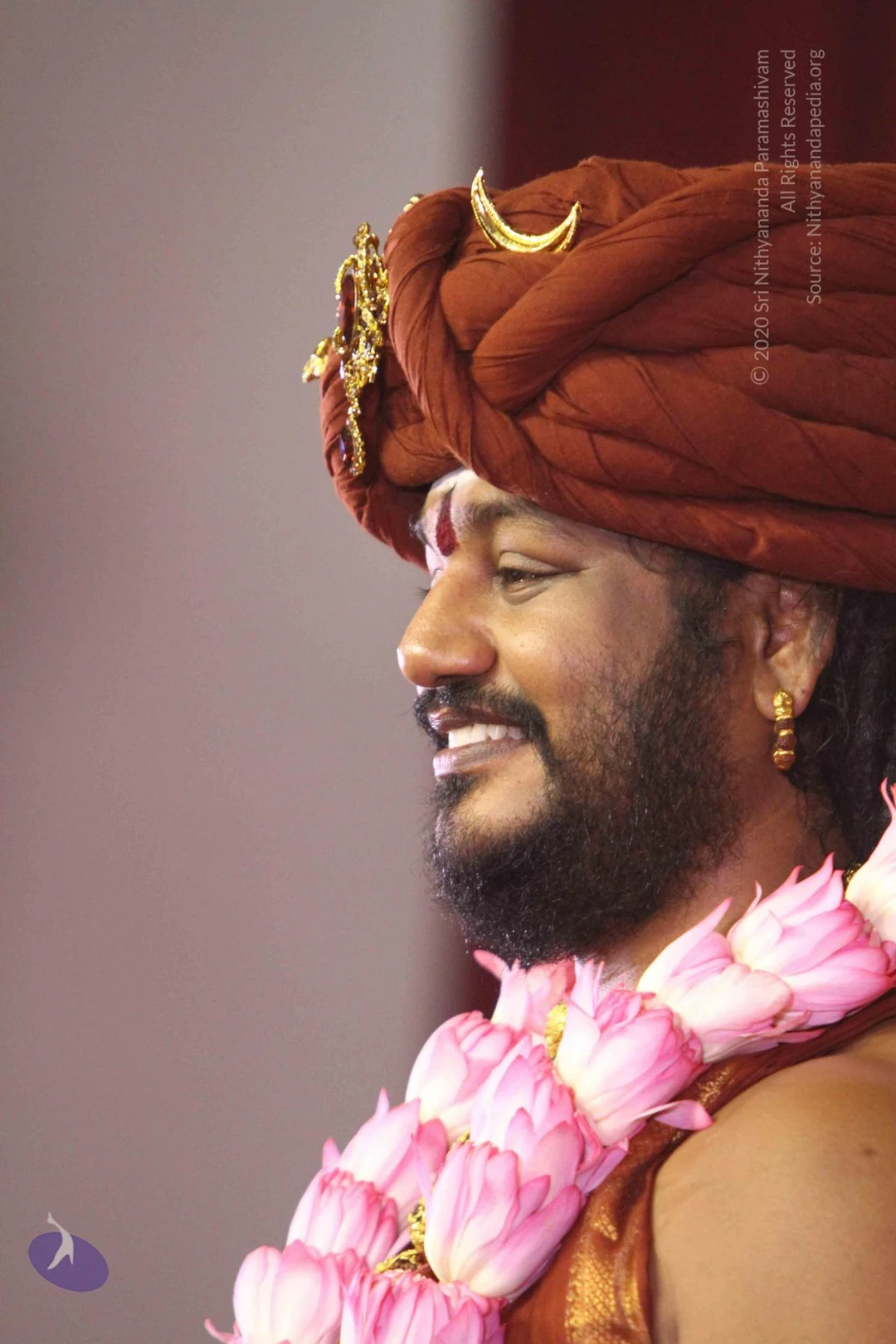
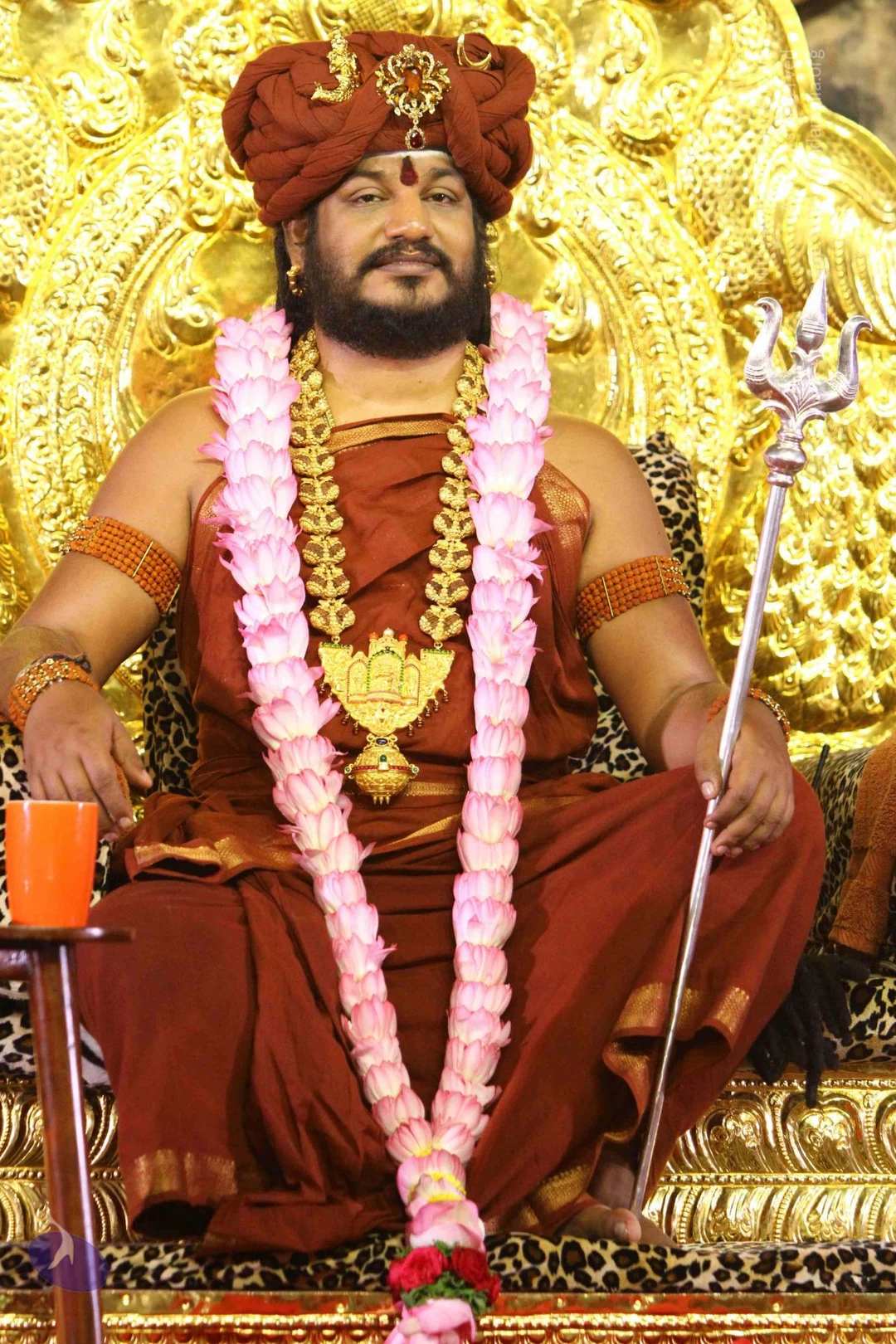
A man seated on an ornate gold throne with carved lion-head armrests and a leopard-print cushion, speaking into a microphone during a discourse. He wears a maroon turban with a jewelled ornament, a maroon robe, a gold ceremonial necklace with a large pendant, and pink flower garlands; he has a tilak and gold armbands. A saffron-orange cup sits on a small wooden table beside him and a trident stands at the left edge. Swamiji (probable): the shown cues are a turban, flower garland and ornate gold jewellery on the seated speaker, consistent with the page's Swamiji reference, though his appearance is not fully certain.Close-up photograph of a bearded man in a rust-orange turban decorated with a gold jewelled ornament and a gold crescent moon, with a red tilak on his forehead, gold earrings, and a pink lotus garland over his shoulders. He holds a silver trident-shaped object and smiles toward the side against a deep red curtain. a person: long hair, orange turban, gold ornaments and garland cues are consistent with the page's a person reference, so the appearance-based label applies.Side profile close-up of a smiling man wearing a rust-orange turban with a gold crescent moon ornament and a jewelled gold brooch at the front. He has a red tilak mark on his forehead, a full dark beard, a gold earring, and a large garland of pink lotus flowers draped over his shoulders, with a bare shoulder visible beneath an orange-gold garment. The background is a plain soft grey wall with a dark red edge at upper right. Probable Swamiji by visible cues: distinctive rust-orange turban with gold crescent and jewelled brooch, lotus garland and ornate gold jewellery.A man seated on an ornate gold throne with a leopard-print cushion, wearing a rust-red turban with a jeweled ornament, a rust-red shawl and dhoti, a heavy gold necklace and a pink lotus garland. He holds a silver trident in his right hand and wears orange-beaded armlets. A small orange cup sits on a side table beside him. The turban, saffron-toned robes, rudraksha-style beaded armbands, ceremonial gold necklace and trident are visible cues, so this is a probable Swamiji (probable) presenting as a seated spiritual leader on the throne.A photograph of a smiling bearded man seated against an ornate gold relief backdrop. He wears a rust-red turban with a gold ornament and red stone, a red-brown robe with gold border, layered gold rudraksha-style necklaces, and a large gold pendant with green and red stones. He is draped with a long garland of pink lotus flowers and wears orange rudraksha bracelets and armbands. A red tilak mark is on his forehead. Appearance-based label: a person, seated in a ceremonial setting with his distinctive adornments and saffron-red clothing.Close-up photograph of a seated figure in a rust-red robe holding a silver trident with a tall central spike and curved side prongs, its shaft resting across the lap. A pink lotus flower garland hangs over the left shoulder, and a beaded rudraksha band encircles the upper arm. Behind is an ornate gold-leaf throne with leopard-print cushions. Only a partial torso and hand are visible. a person is.

01-Nithya-Satsang
23 photosSource gallery
A seated man in a maroon turban with a gold ornament and red stone, wearing a maroon robe, layered gold necklaces, a long pink lotus garland, and red beaded armbands, speaks into a microphone on a leopard-print cushioned seat. Behind him stands an ornate gold throne with carved scroll and lion-like motifs; a gold trident rests at left and a small orange drink sits on a side table. A probable Swamiji is visible in person, identified by the pink garland, ceremonial gold necklaces, turban and ornate maroon clothing combined with the teaching setting.A man seated on an ornate golden throne with carved peacock-feather and lion motifs, speaking into a microphone while gesturing with his right hand. He wears a deep maroon turban with a gold ornament, a maroon robe, layered gold necklaces, and a long pink lotus garland. Red bangles on his wrists and upper arm, and a trident-topped staff stand at his left. A small orange cup sits on a wooden stool beside him, and leopard-print cushions frame the throne. Swamiji (probable) is seated in a satsang setting, wearing a turban and ornate gold necklaces with a bare-chested robe. The throne and gold lion sculptures sit behind him.A seated man in rust-red robes and a matching red turban with a jewelled brooch sits on an ornate golden throne carved with scrolls and lion-like heads, with leopard-print cushions on the armrests. He wears a pink flower garland, layered gold chains and a large gold pendant, plus red bangles on both wrists, and speaks into a microphone on a stand. A small orange cup sits on a wooden side table and a golden trident leans at the left edge. Swamiji (probable): long hair and a ceremonial turban and gold chains on a throne, matching the page's Swamiji flag; this is an in-person satsang scene.A bearded man in a deep maroon turban with gold ornaments and a red-orange robe sits on a leopard-print cushioned seat before an ornate gold throne with carved lion-like figures. He wears a long pink flower garland, layered gold necklaces with a lotus-shaped pendant, and beaded bracelets on his arms, and gestures with one hand while speaking into a microphone on a stand. Beside him stands a silver trident, and a bright orange cup sits on a small wooden table. The figure is seated and speaking, appearing to give a satsang discourse. Appearance-based identification is probable given the turban, ornate gold jewellery and maroon robes alongside the page's note of a satsang.A smiling man seated on a golden ornate throne carved with peacock-like motifs, gesturing with both hands during a discourse. He wears a rust-red turban with gold ornaments and a red tilak, a pink lotus garland, layered gold necklaces, a gold pendant, rust-red robes and orange beaded armbands. A leopard-print cushion is on one side and a microphone stand is visible at the right edge. Swamiji (probable): the appearance cues of a turban, ornate gold adornments, layered necklaces and ceremonial robes match the page's identification, so this is an appearance-based label, with the man seated as the speaker at a satsang-style setting.A seated man in rust-red robes and a matching rust-red turban with a gold ornament and crescent, wearing a long pink lotus garland, multiple gold necklaces with a large gold pendant, and orange-red armbands, speaks into a microphone on a stand. He sits on a leopard-print cushioned seat in front of a large ornate gold throne-back carved with floral and scroll motifs. Golden lion-head armrests flank him, and a golden trident leans at the left edge. An orange cup sits on a small wooden table at his side. The a person cues are the distinctive turban, pink garland and layered gold ornaments, identifying him as a discourse speaker on a golden throne during a satsang.

01-Nithya-Satsang
11 photosSource gallery
A seated man in a maroon-red turban with gold ornaments and a red bindi speaks into a microphone on a stand. He wears a maroon-red robe, a gold necklace with a lotus pendant, multiple gold chains, and a long pink flower garland, with red beaded armbands. He sits on a leopard-print cushioned seat in front of an ornate gold carved backdrop, with gold lion-shaped armrests on each side. A brass trident stands at left and an orange cup sits on a small wooden stool.A man seated on an ornate golden throne with carved peacock-feather and floral backrest, flanked by golden lion-head armrests. He wears a deep maroon turban with a gold and red jewelled ornament, a maroon robe, a long pink flower garland, layered gold necklaces, and a gold pendant, with maroon armbands. He sits with arms spread along leopard-print cushions, speaking into a microphone on a stand. A trident leans at left and a small red cup rests on a wooden stool beside him. The figure is a probable Swamiji by visible cues: distinctive gold jewellery, maroon turban and ornate throne as a seated speaker, though the appearance is only partially confirmed.A man seated on an ornate golden throne with a gilded peacock-feather backrest and golden lion armrests, speaking into a microphone on a stand. He wears a maroon-red turban with a gold jewelled ornament, a maroon-red robe, a heavy gold necklace, gold bangles, and a long pink flower garland. A tall trident stands at the left, and an orange candle sits on a small wooden stool beside the throne, with a leopard-print cushion behind him. Swamiji (probable): the seated speaker wears a red turban, ornate gold necklaces and a shawl-like robe, with a long flower garland, consistent with the page's Swamiji reference.A bearded man in a maroon-red turban with gold ornaments and a red bindi sits on a leopard-print cushioned throne in front of an ornate gold carved backrest. He wears a maroon dhoti-style robe, layered gold necklaces with a gold pendant, and a long pink flower garland, with red beaded armlets on both arms. He is speaking into a microphone on a stand, gesturing with one hand. Golden lion-shaped armrest sculptures flank the throne, a trident stands at left, and an orange cup sits on a small wooden table. The image shows one physical person, the speaker, in a satsang-style setting. Probable Swamiji seated as speaker, identified by the turban, maroon robes, garlands and throne.A photograph of a seated man speaking at a microphone during a satsang discourse. He wears a rust-orange turban with a gold crescent ornament, rust-orange robes, a long pink lotus garland, a gold necklace, and orange beaded armbands. His right hand is raised in an explanatory gesture. He sits on a gold throne with leopard-print cushions in front of deep red drapes, with a gold ceremonial object beside him and a red mug on a small table at left. The appearance is consistent with the Swamiji (probable) cues of a crown-style turban, saffron-toned ornate clothing and ceremonial gold necklaces, while the page indicates a Q&A satsang.A photograph of a seated man in a maroon-brown turban with a gold crescent ornament, wearing a maroon-brown robe, gold-and-orange beaded armbands and wrist bands, and a long pink lotus garland with gold beads. He has long hair and a beard, gesturing with his right hand toward the left while speaking into a microphone on a stand. He sits in a leopard-print upholstered chair in front of a golden throne with a carved gold lion-head arm and dark red curtains. A red mug sits on a small table at left. The clothing and seated position match the Swamiji (probable) candidate, shown as a speaker at a satsang-style session, with the turban, long hair, rudraksha-style beads and gold ornaments as the qualifying cues.