Skip to content
Tuesday

14 September 2010

Bliss is Choice
794Dated photos
1Source pages
2Media embeds
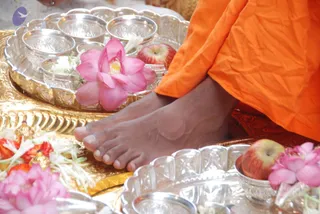
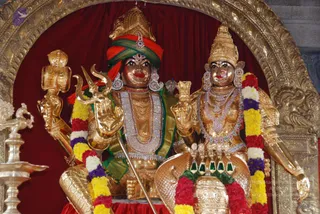
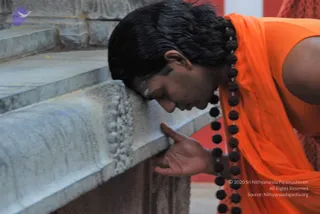
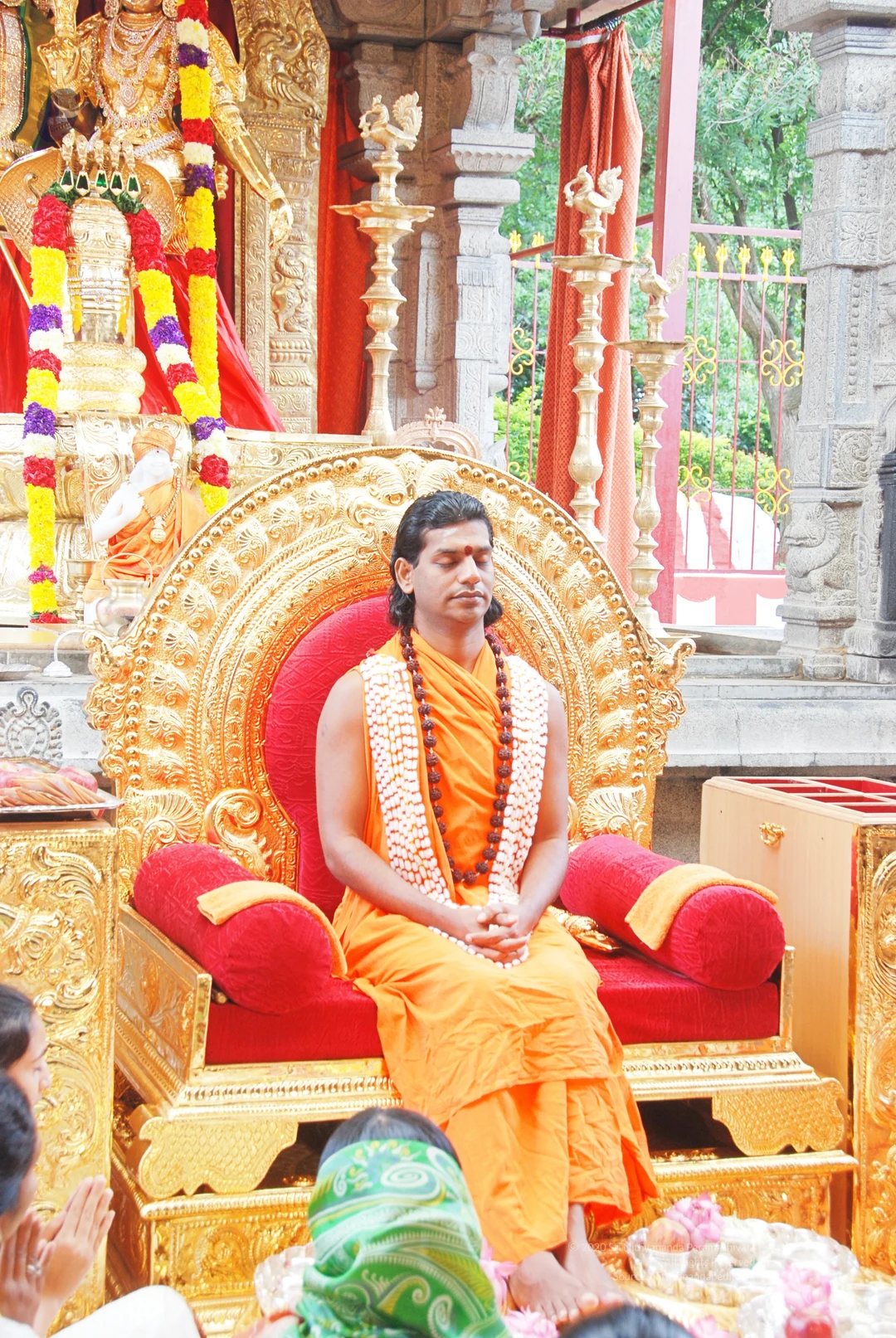
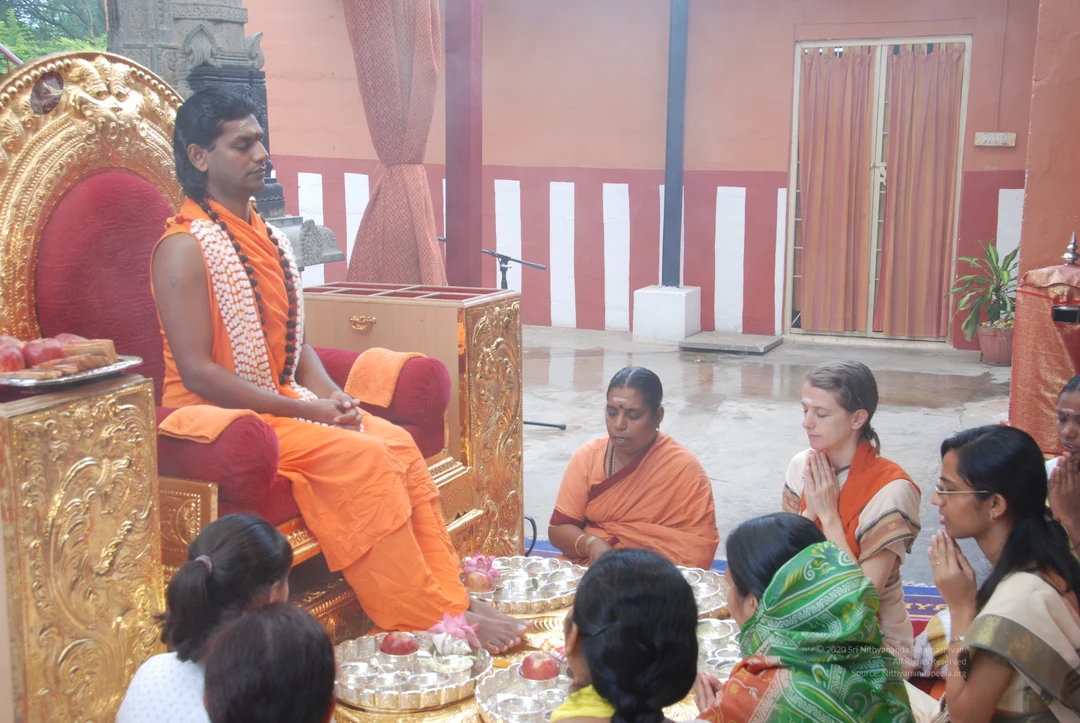
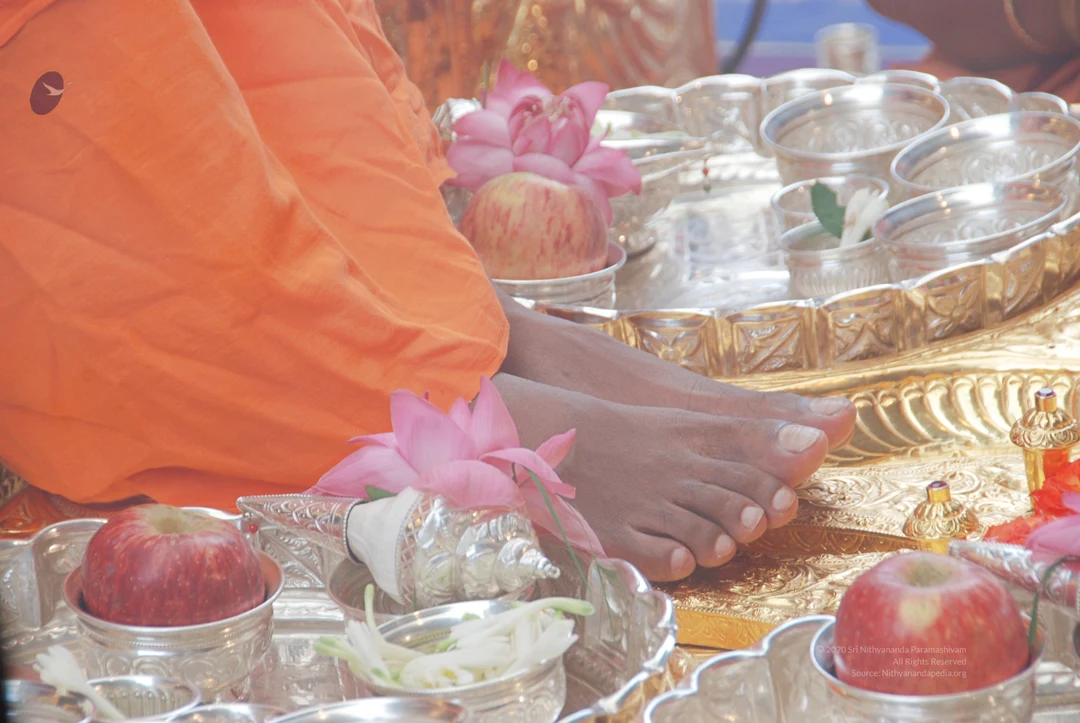
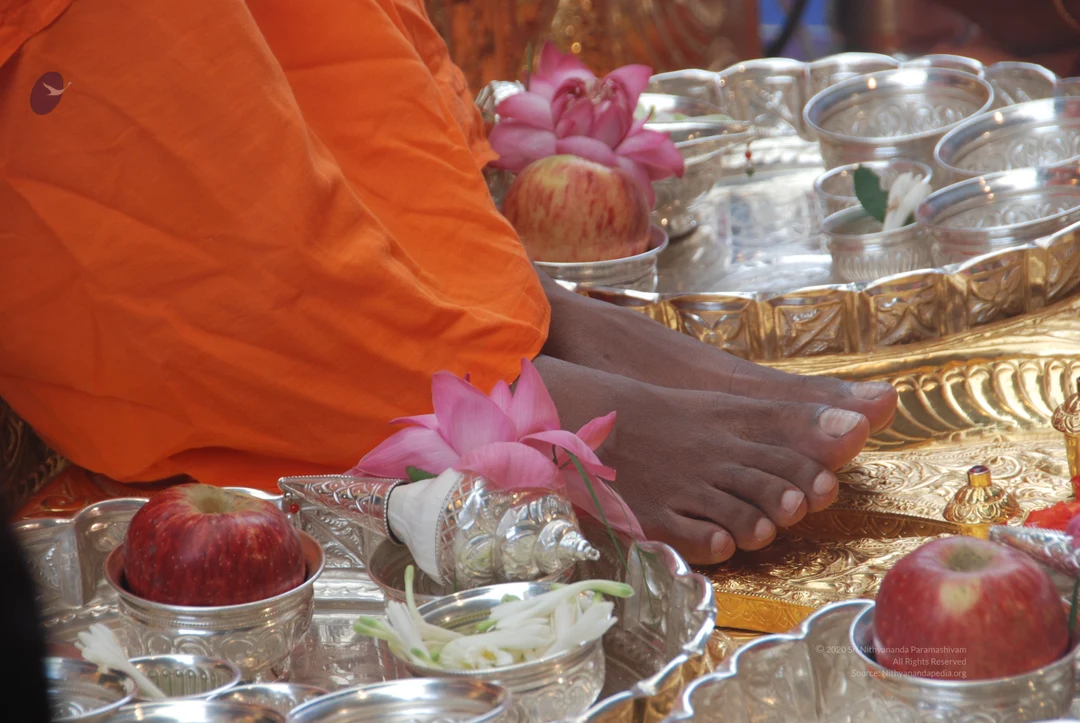
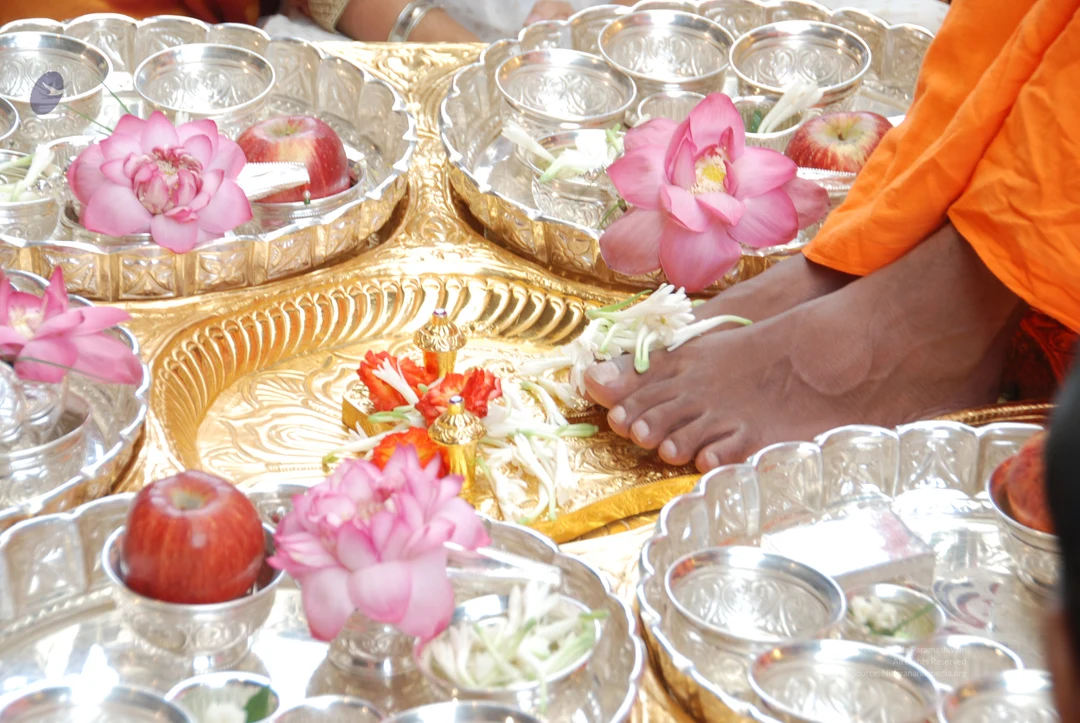
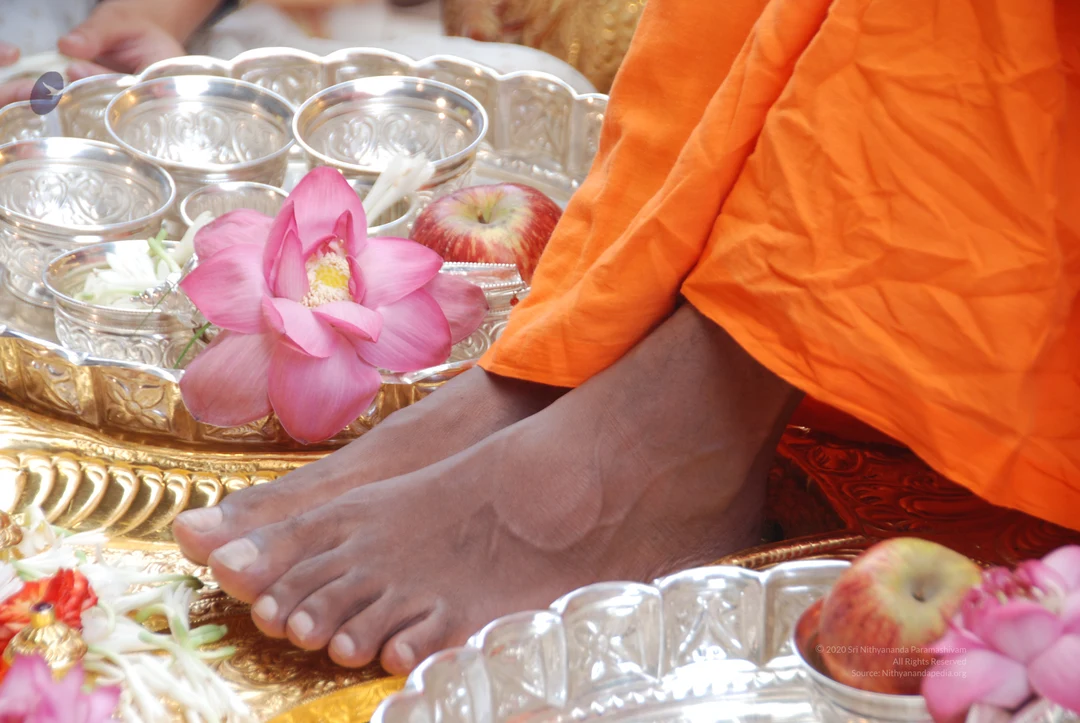
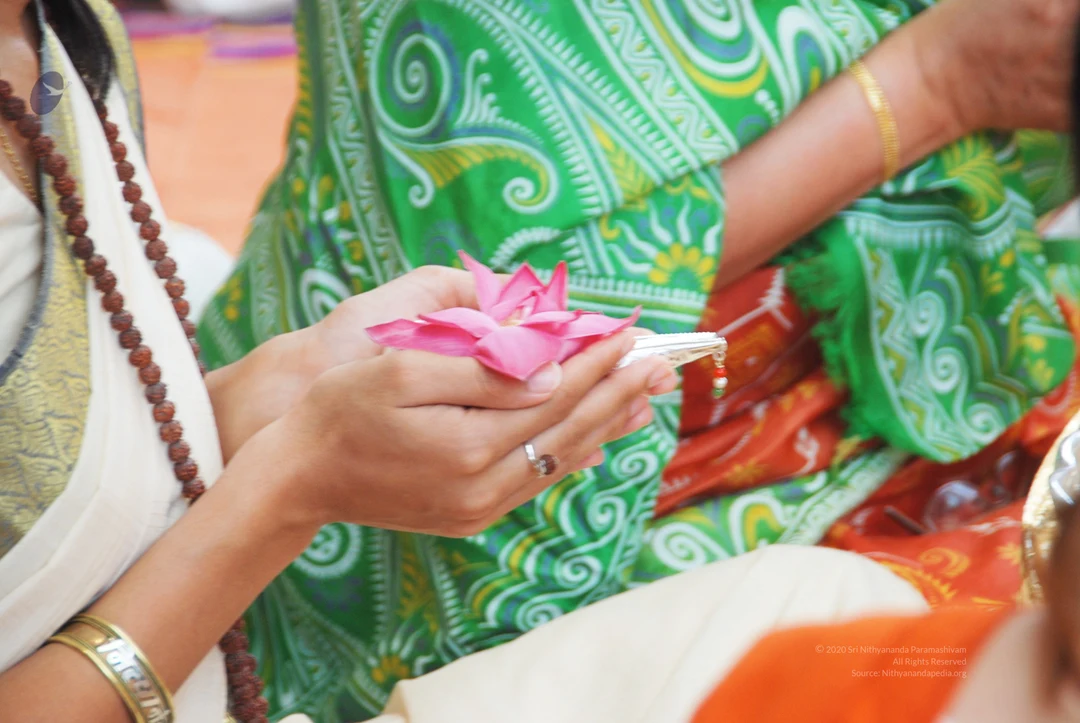
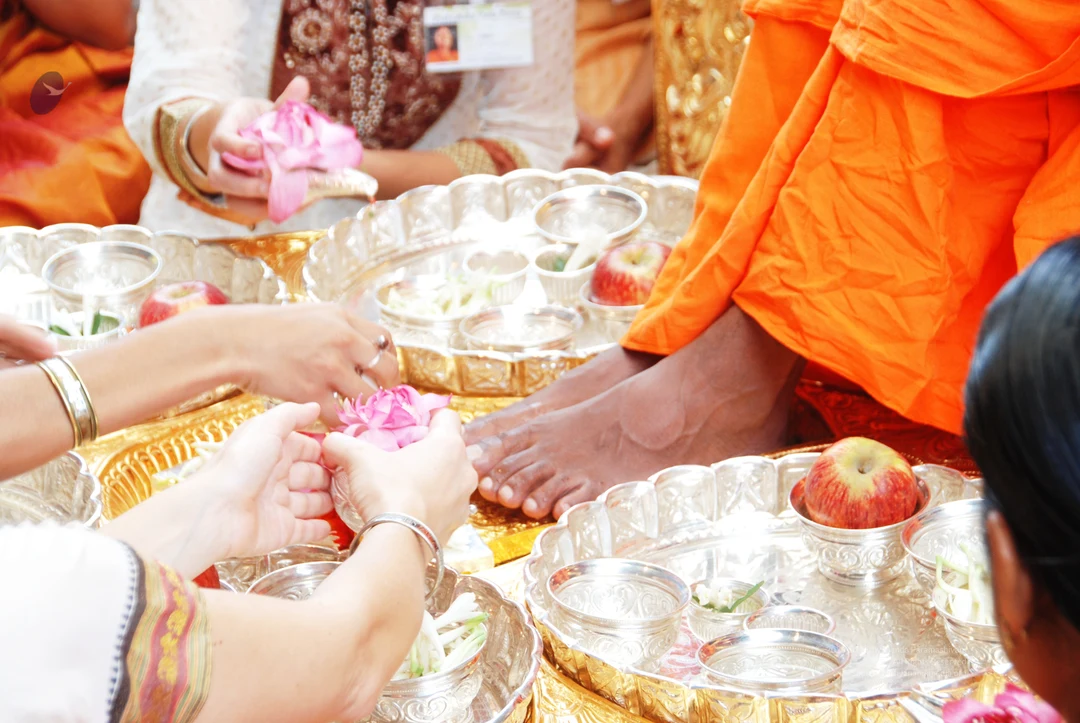
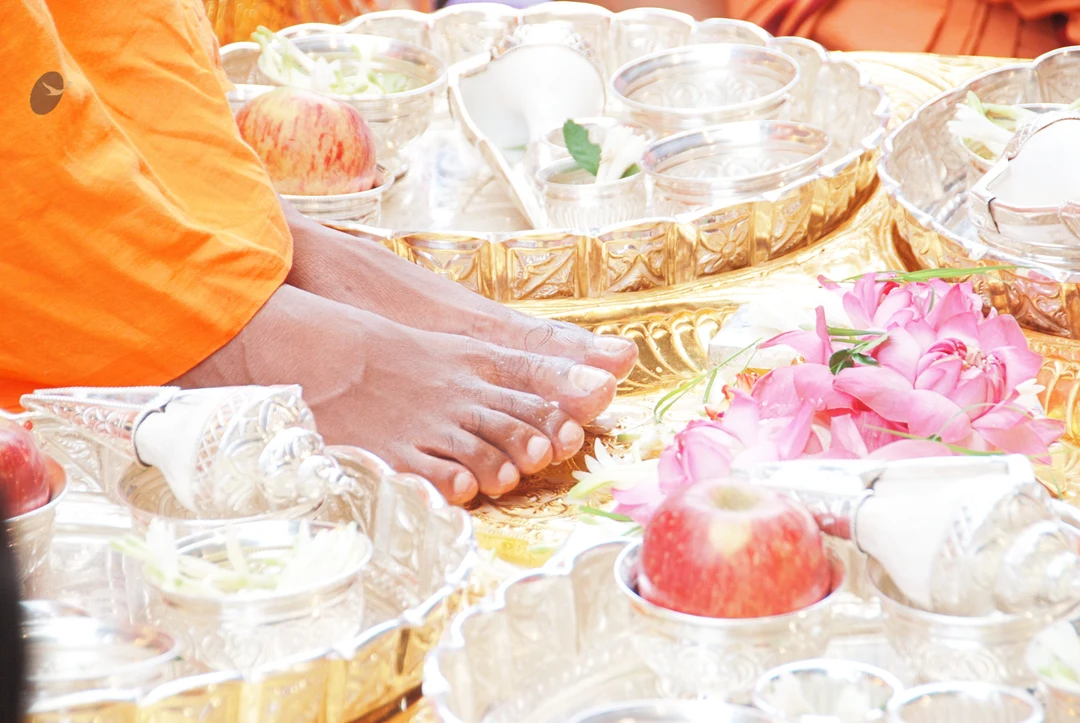
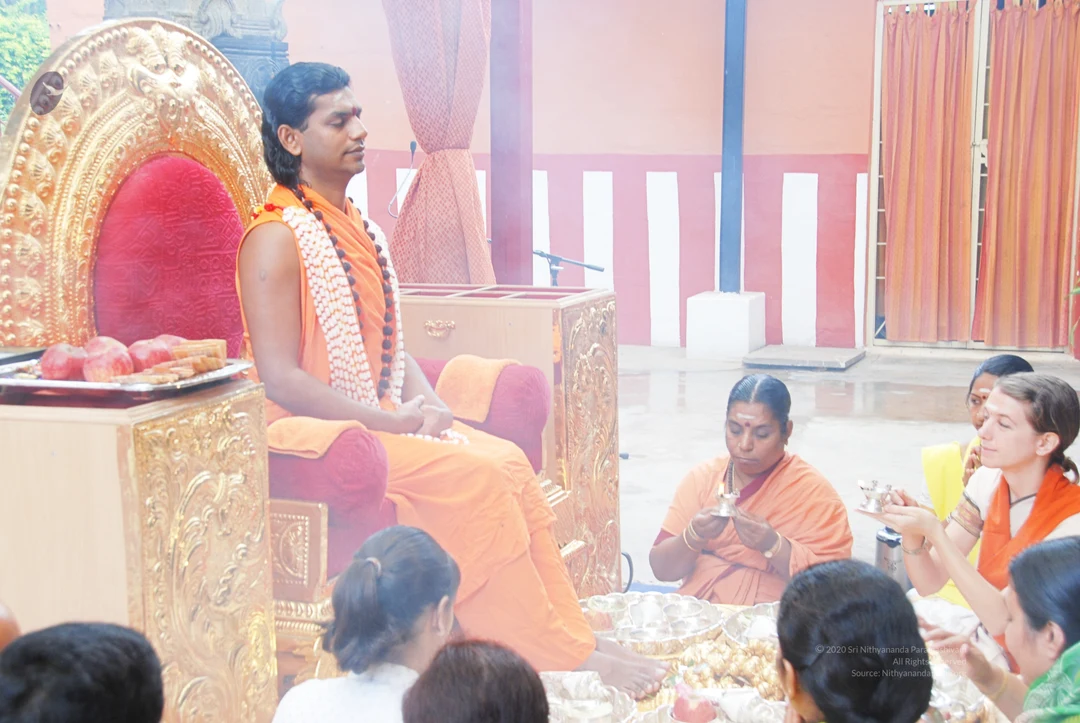
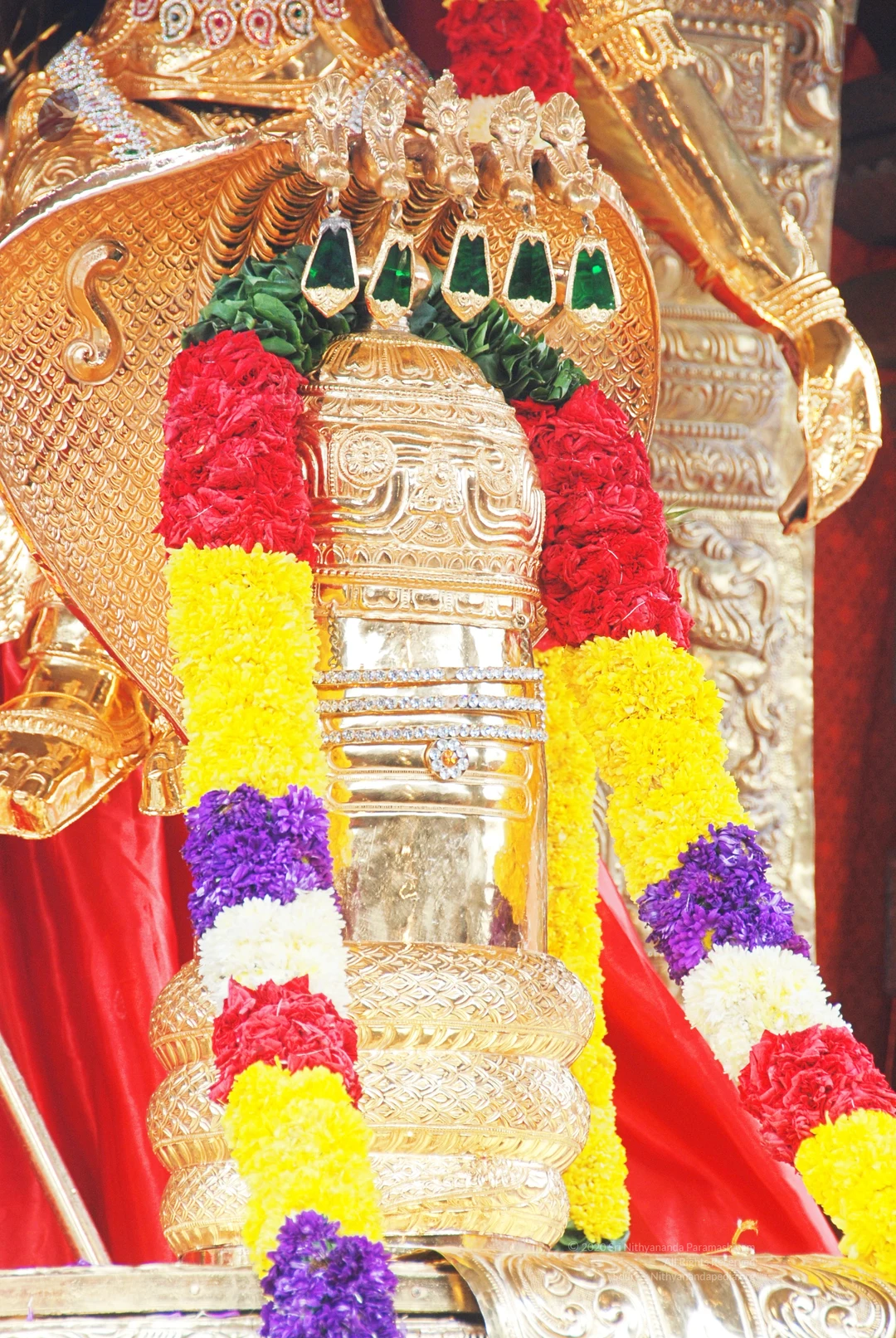
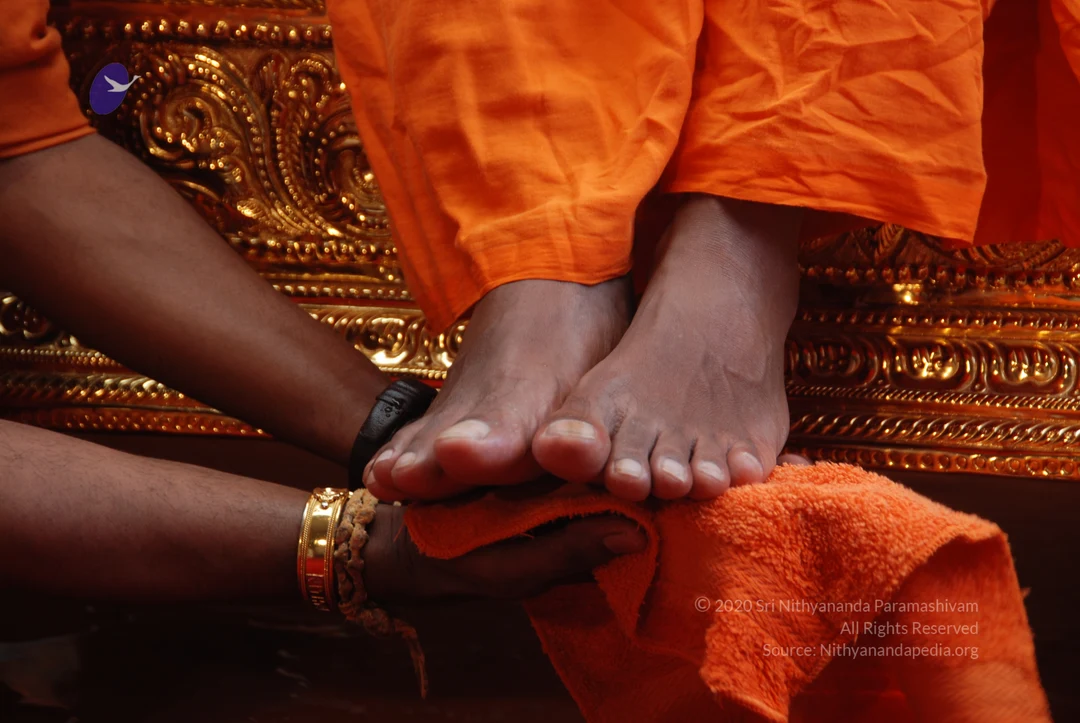
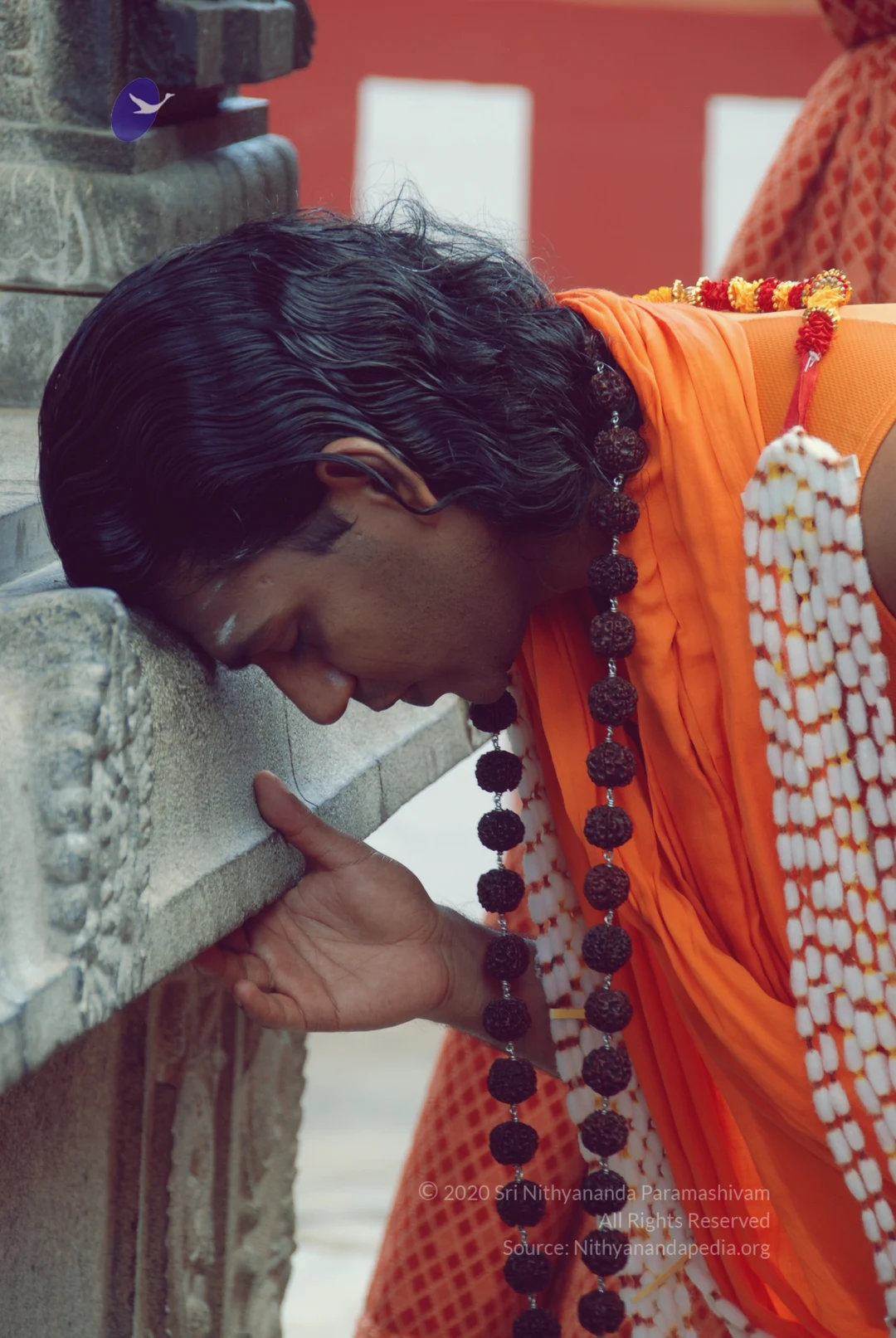
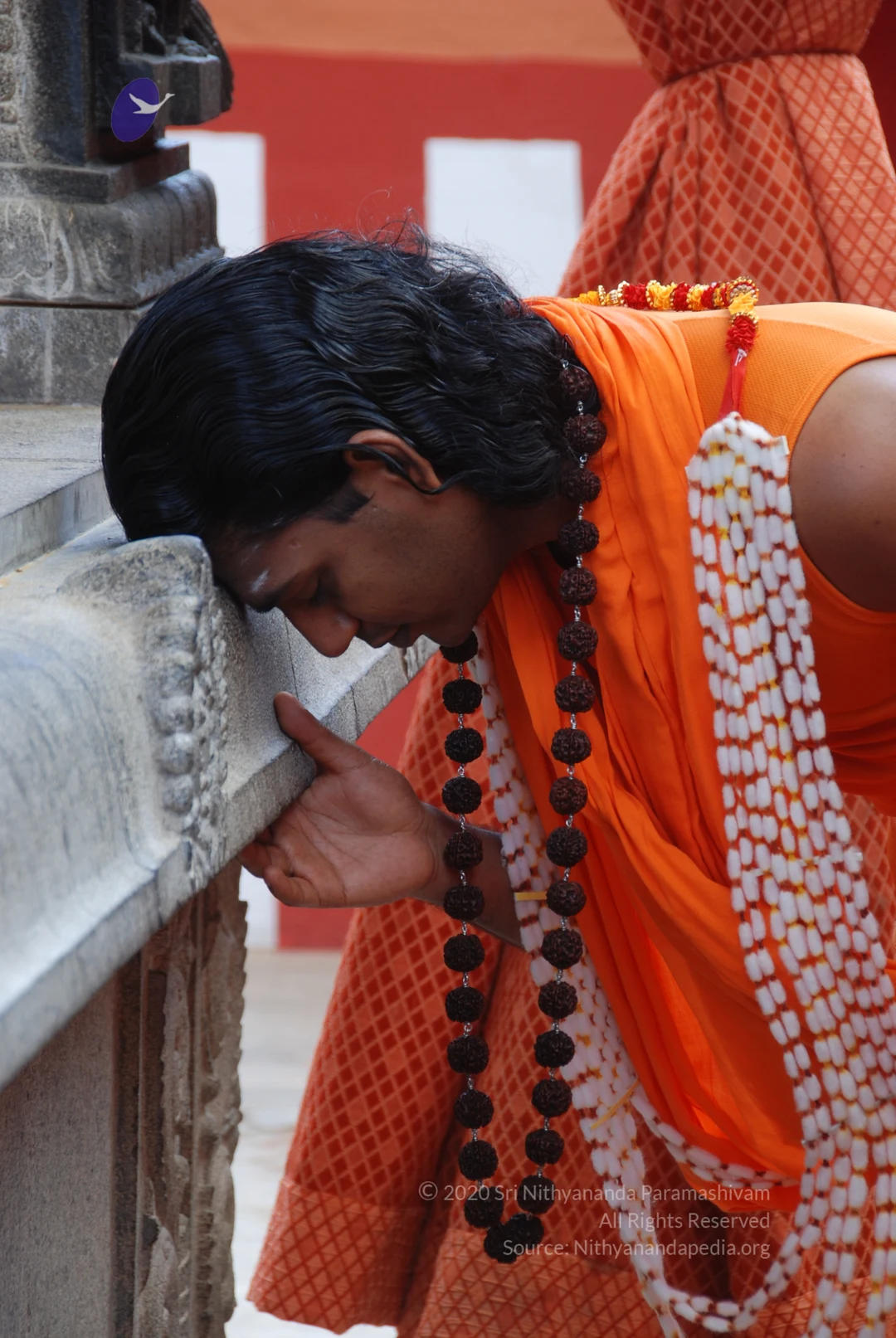
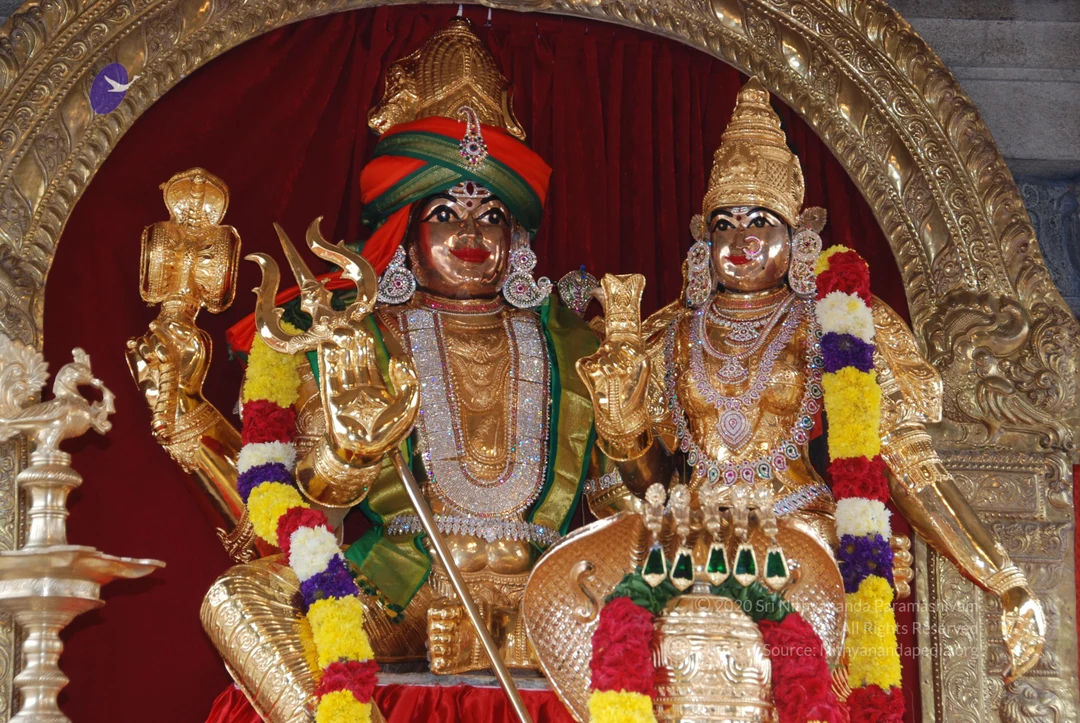
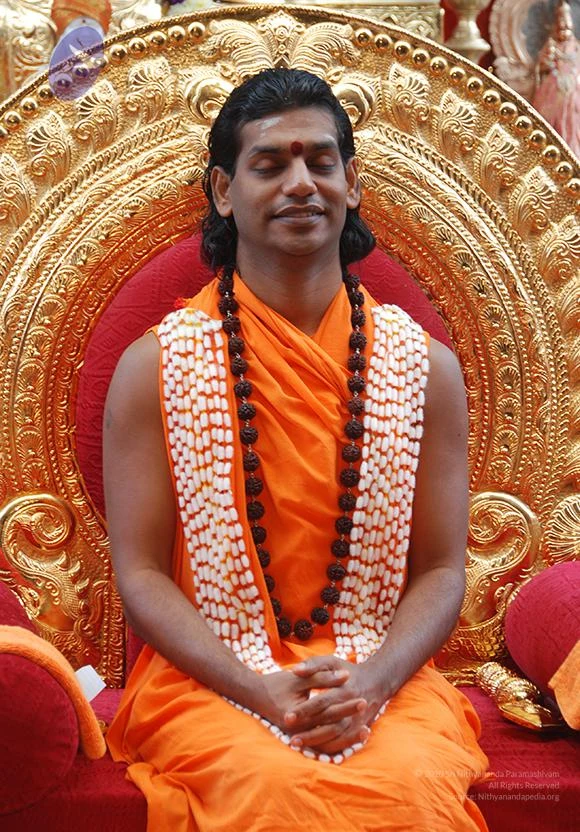
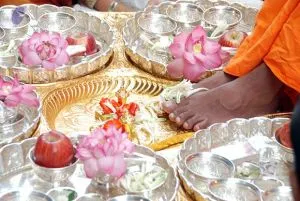
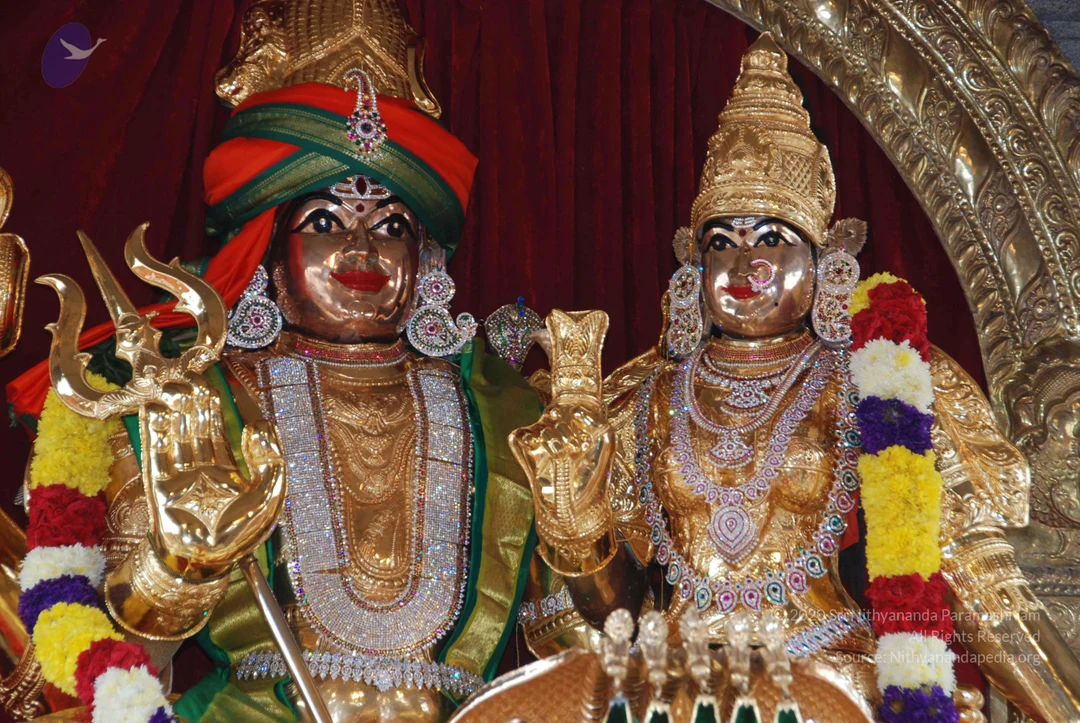
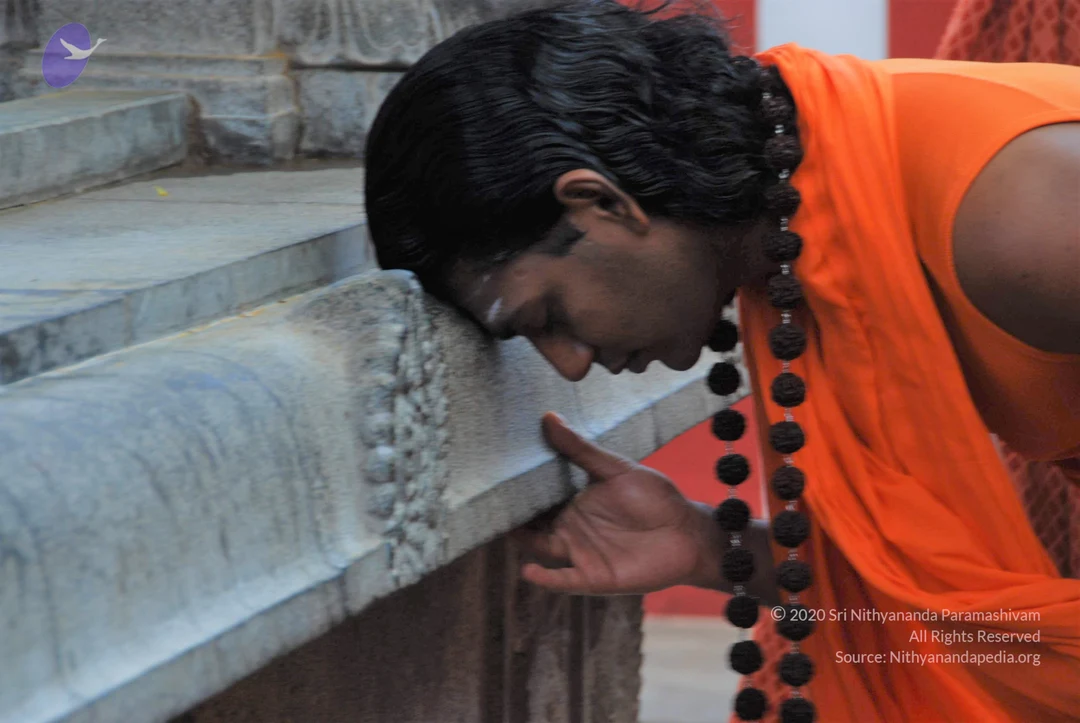
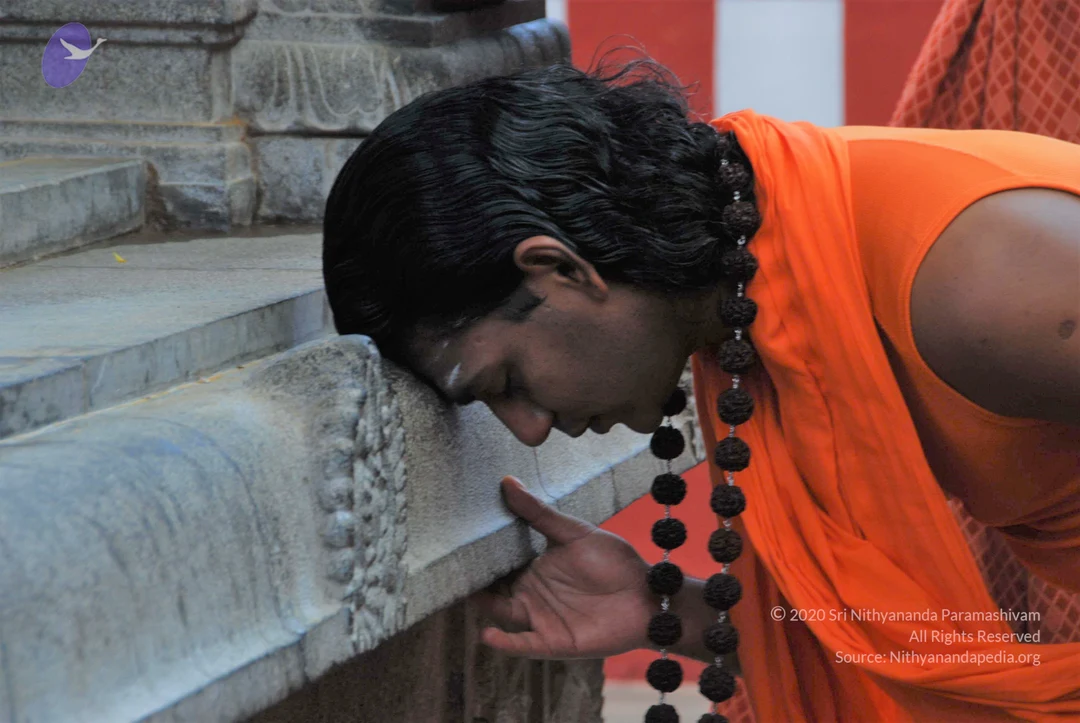
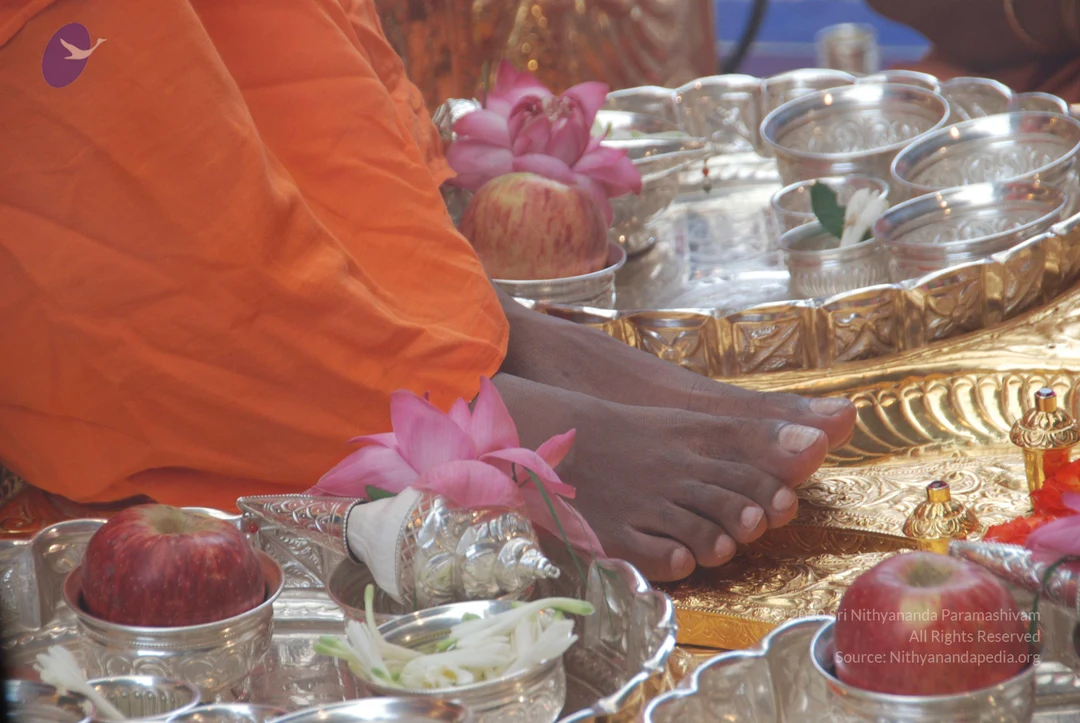
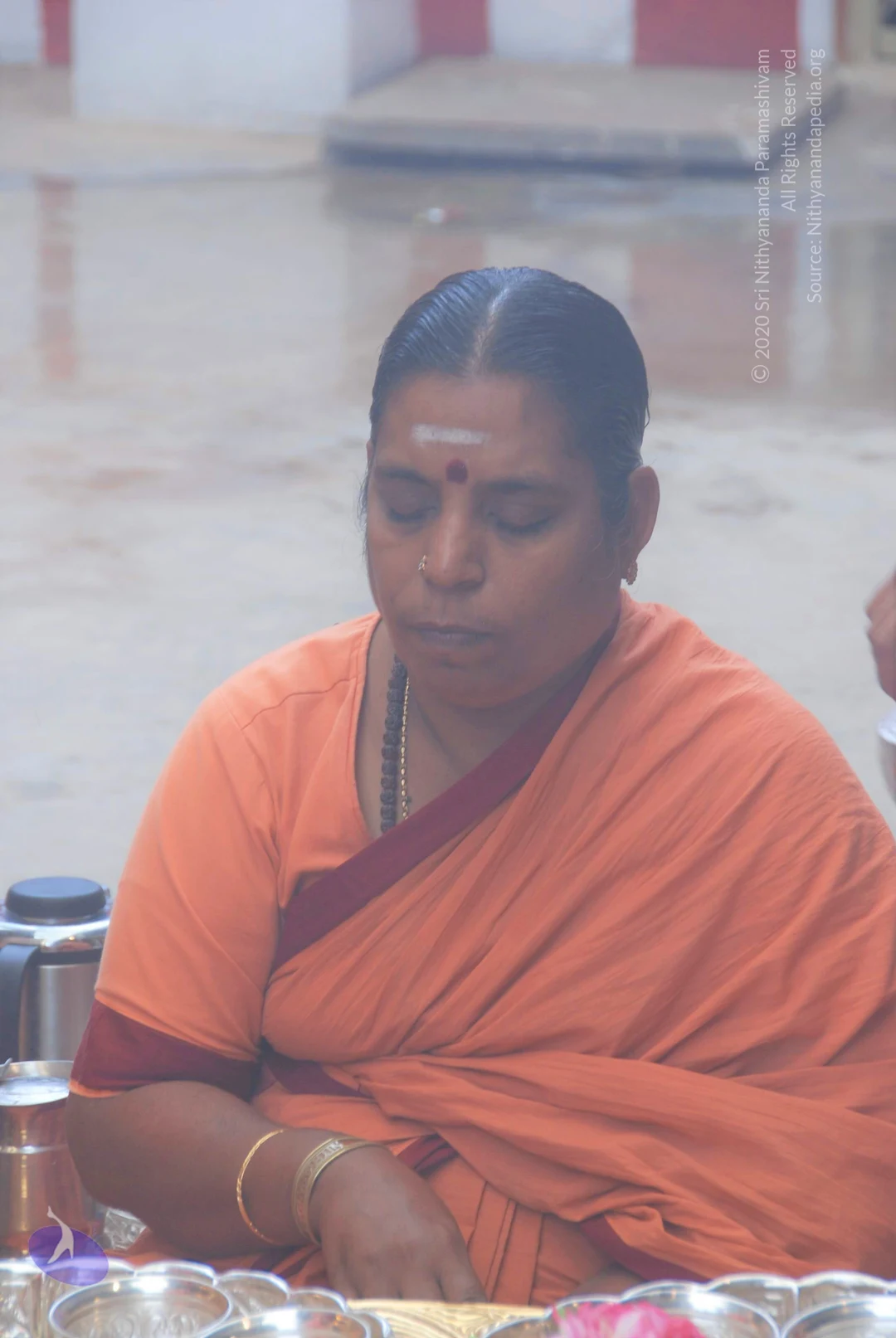
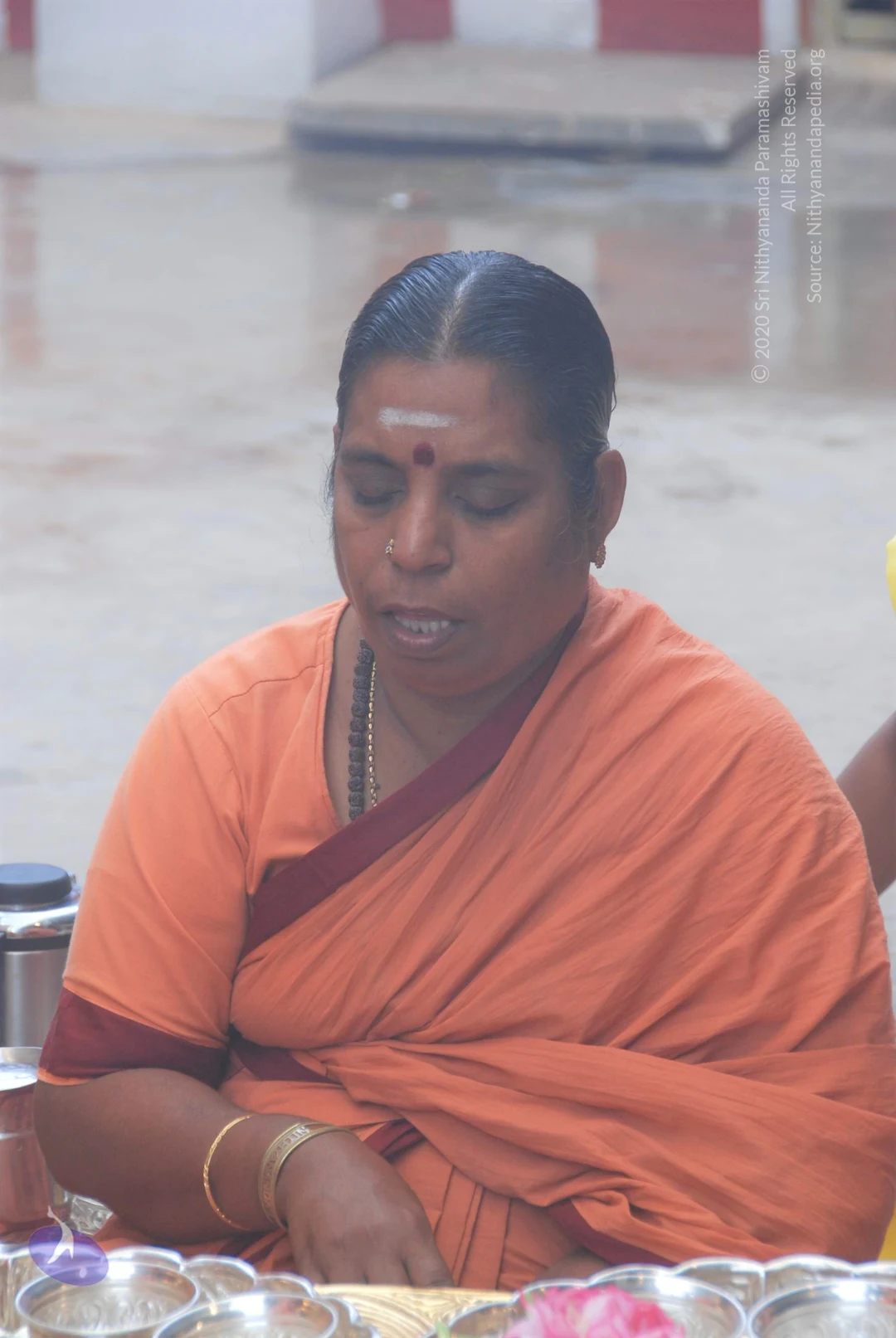
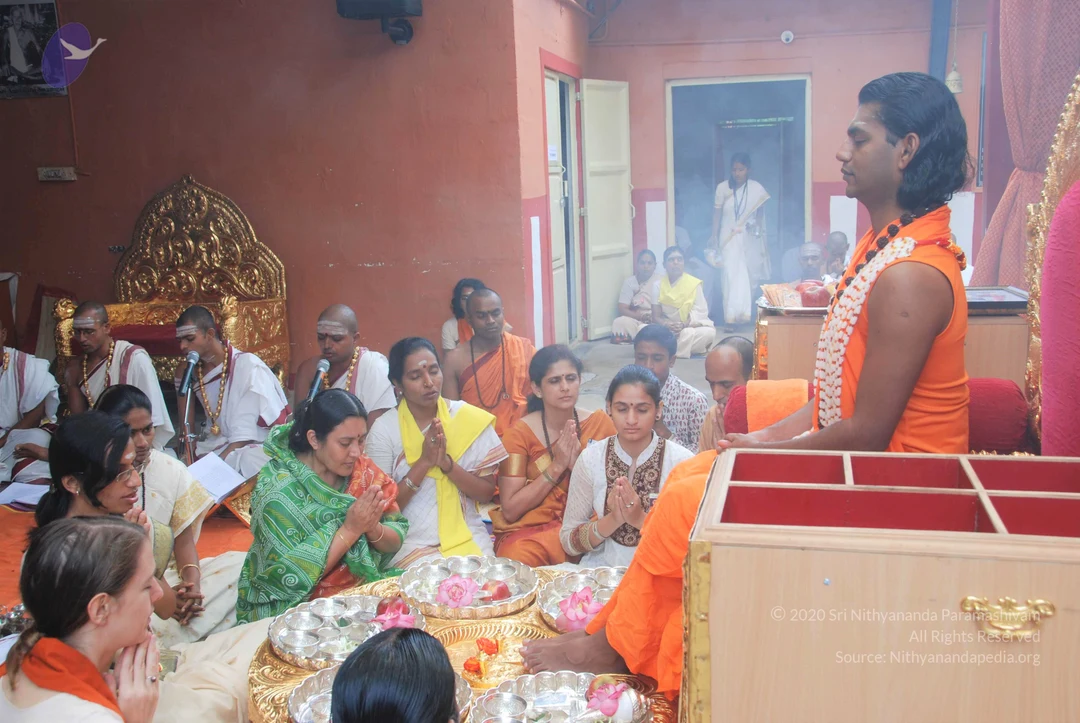
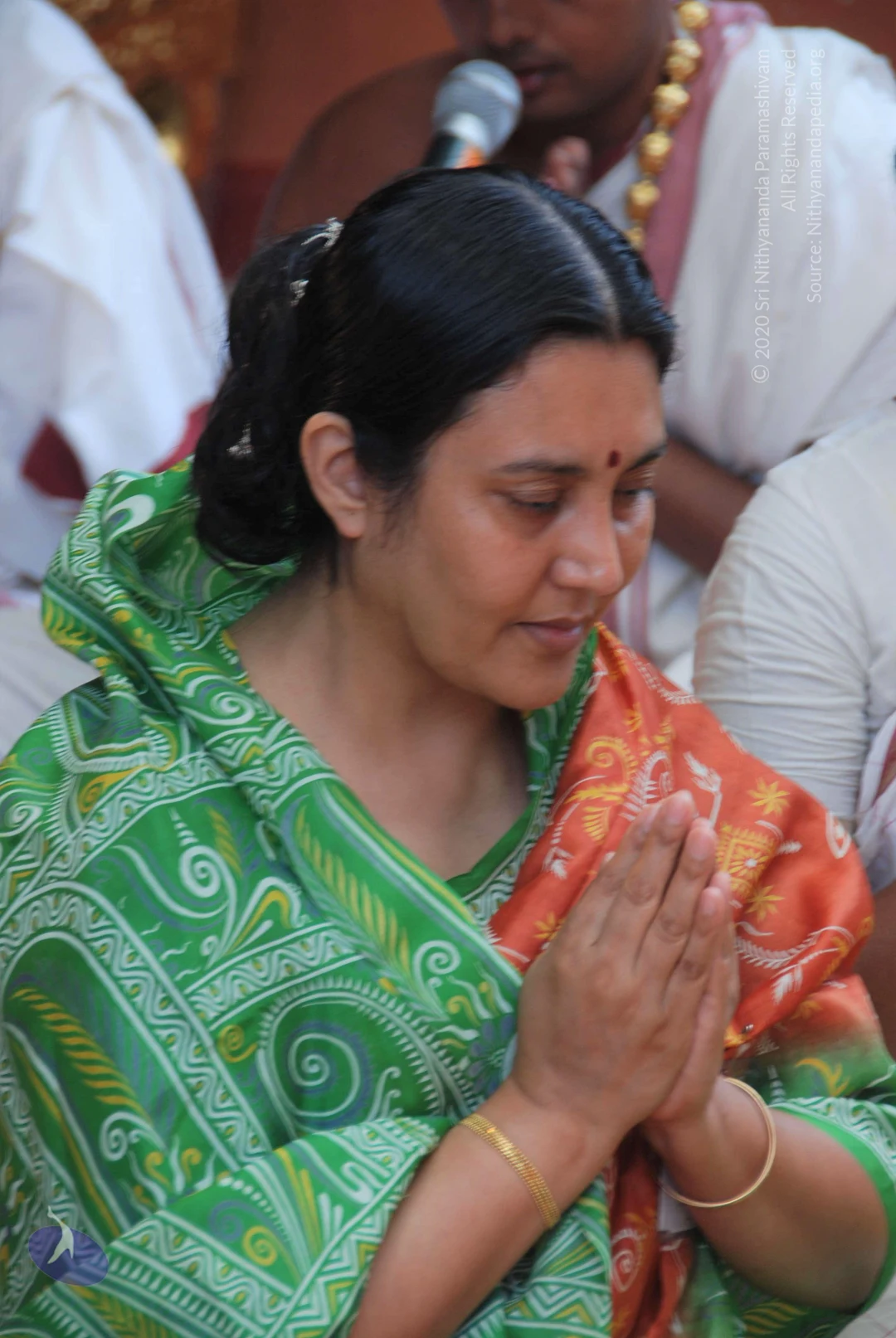
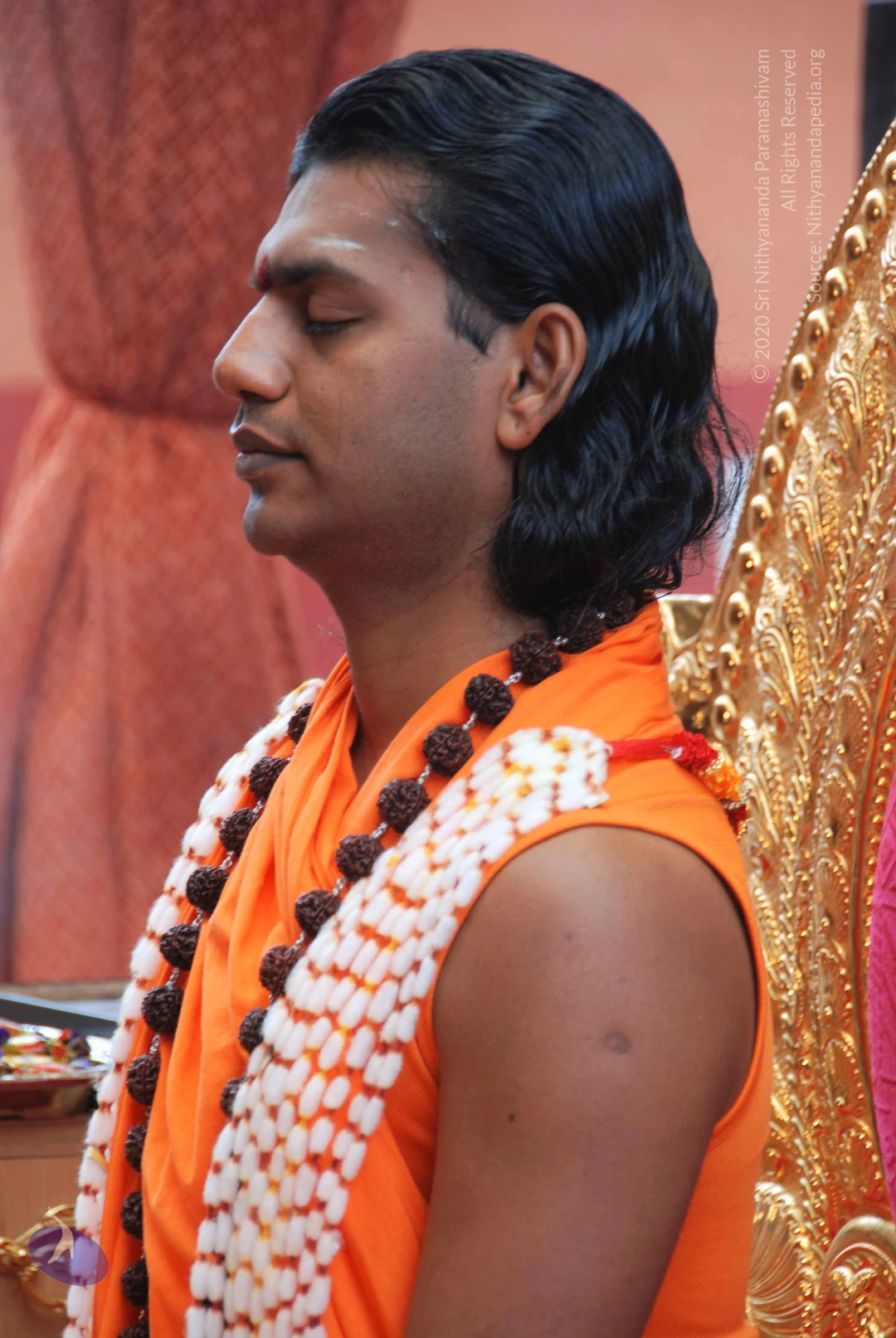
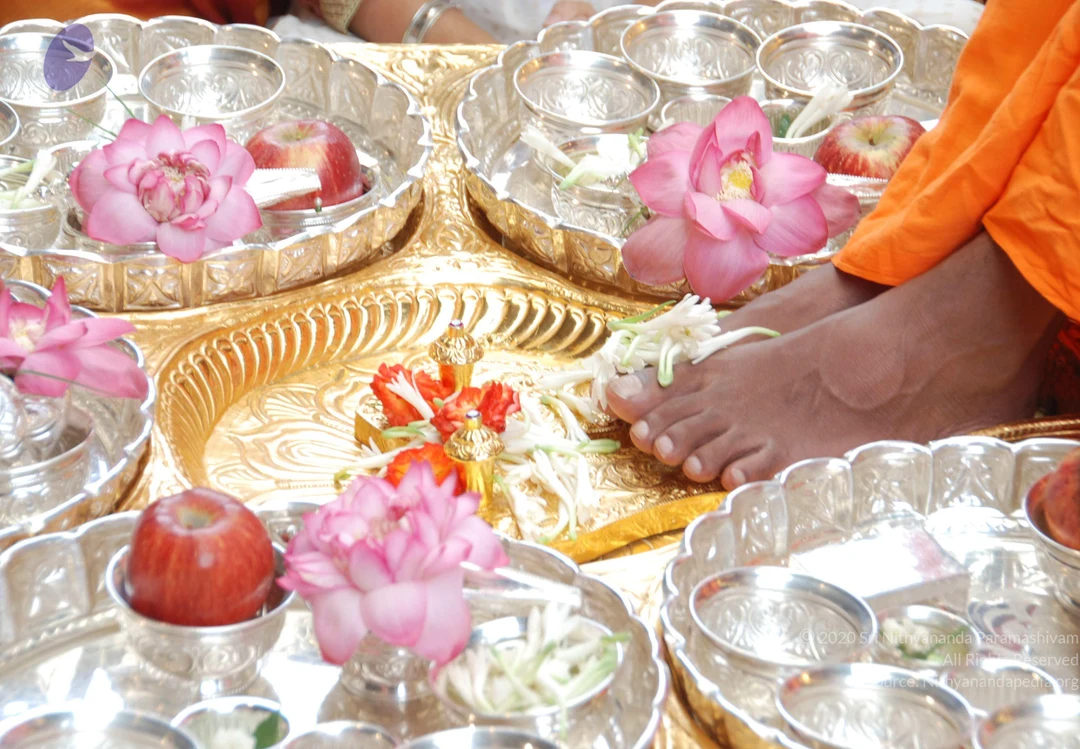
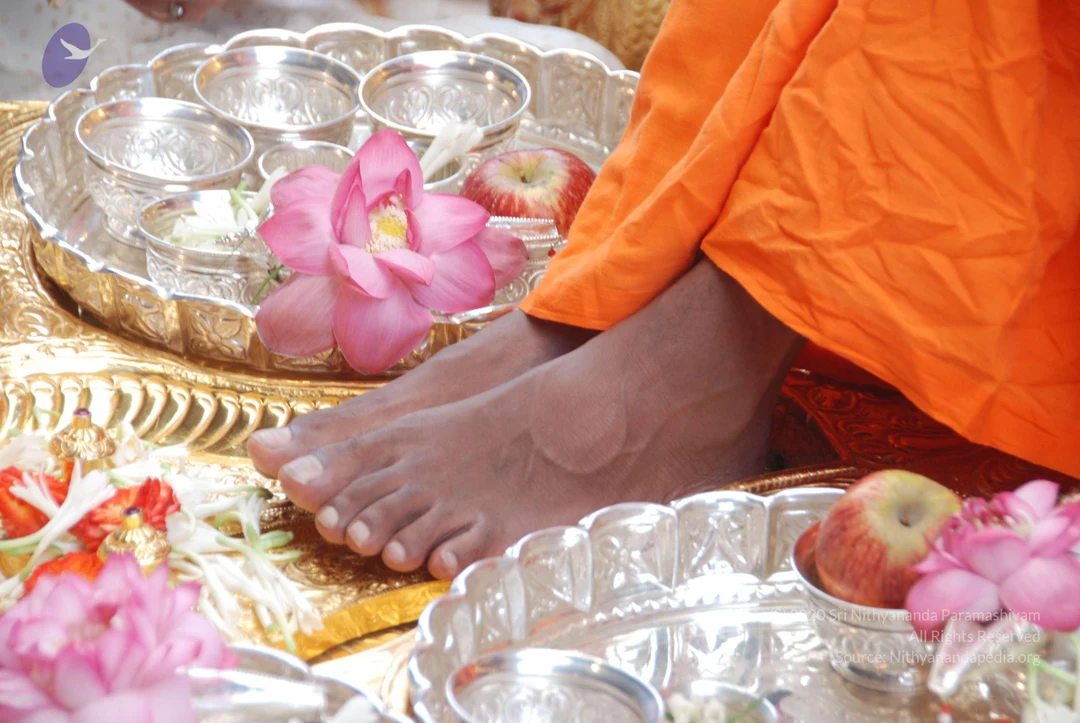
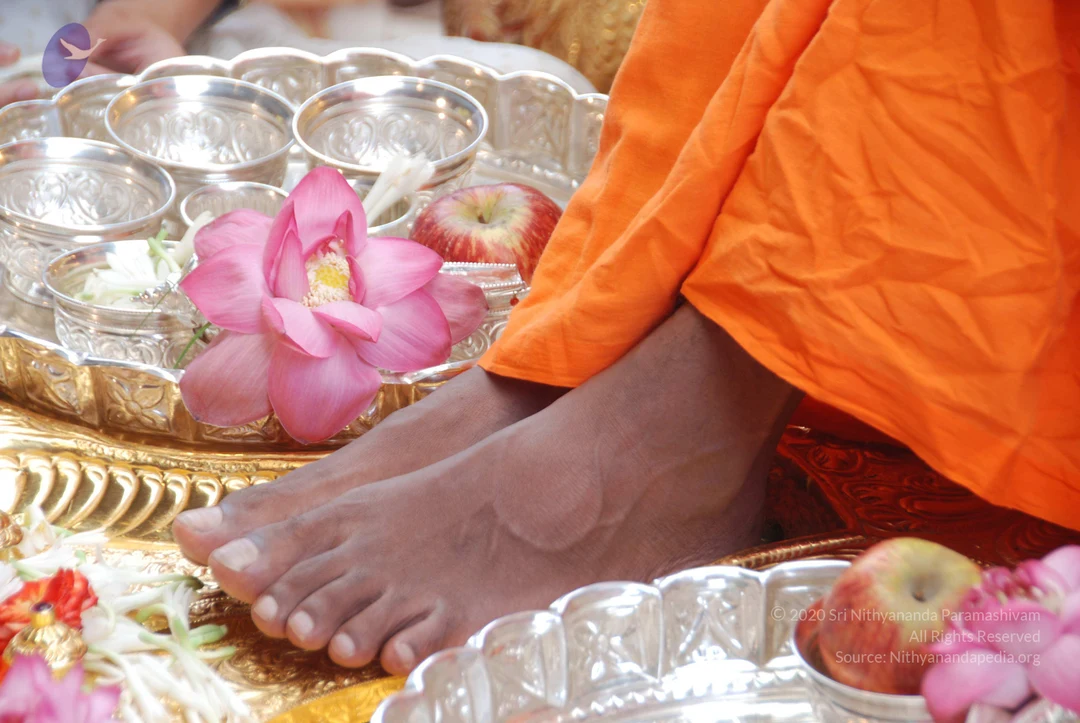
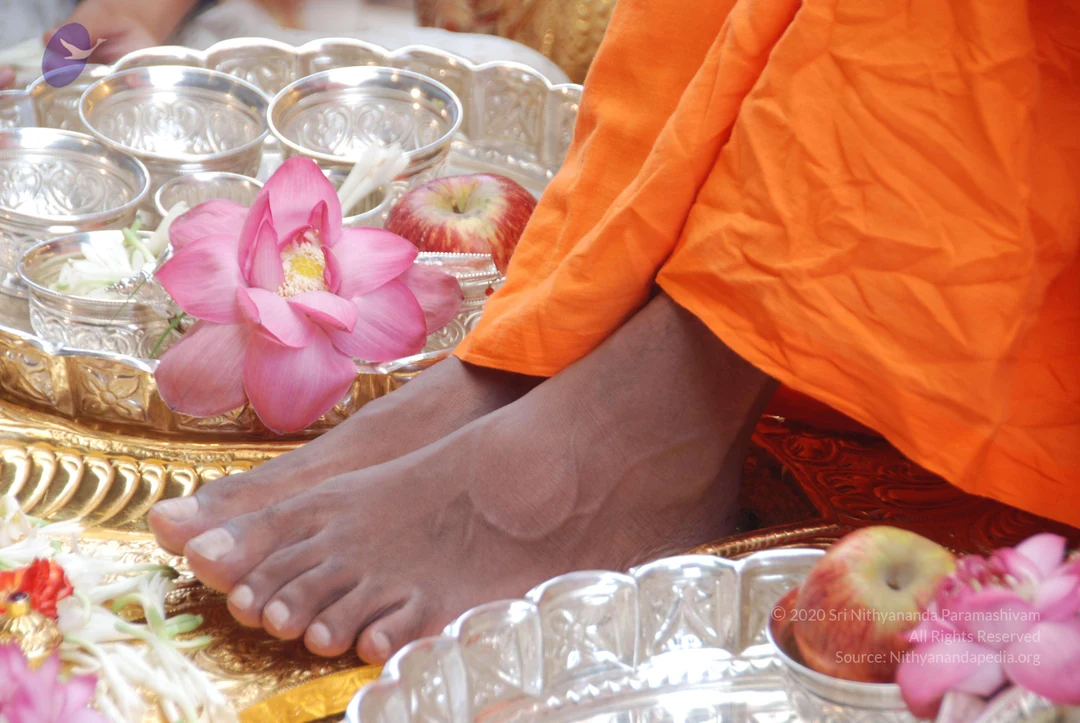
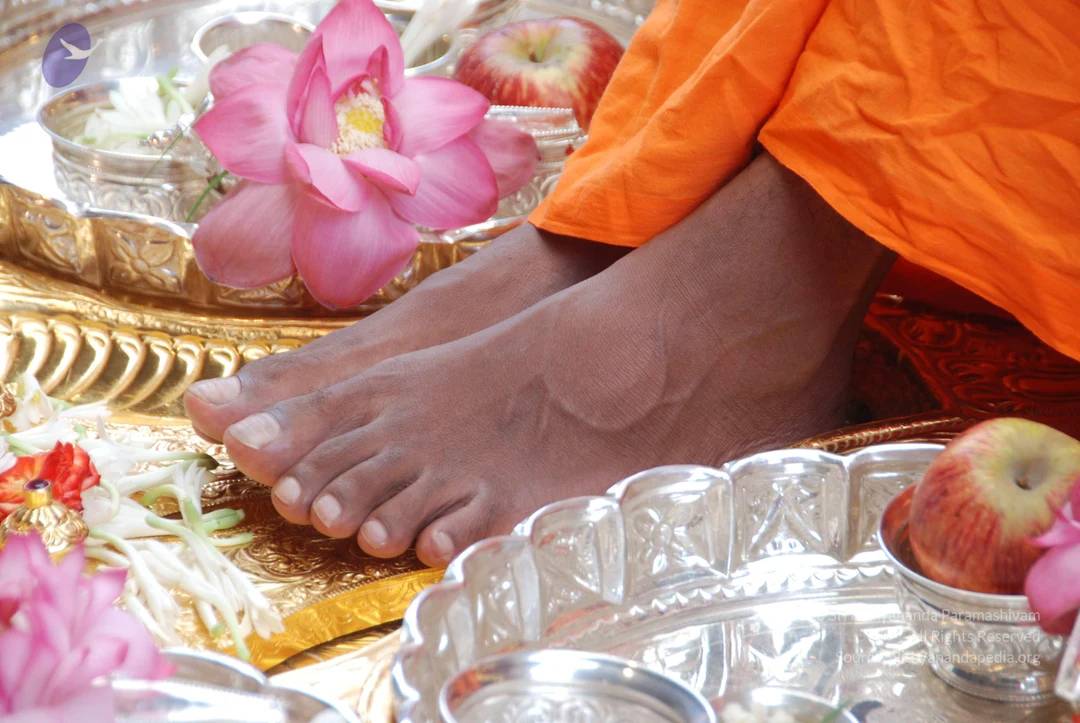
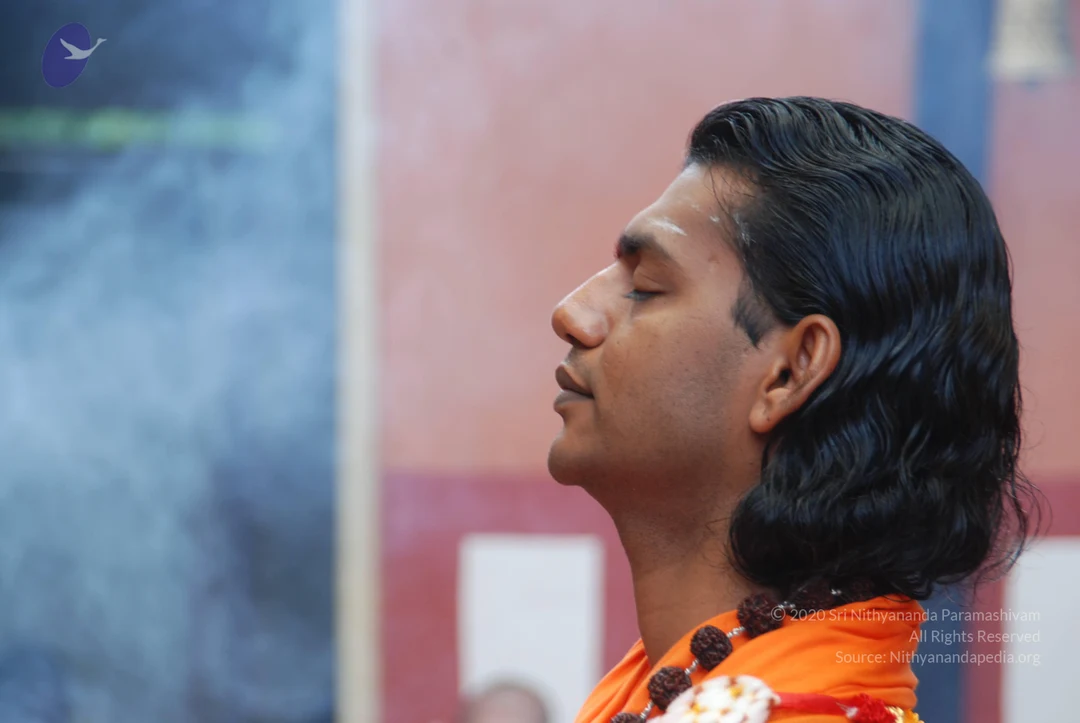
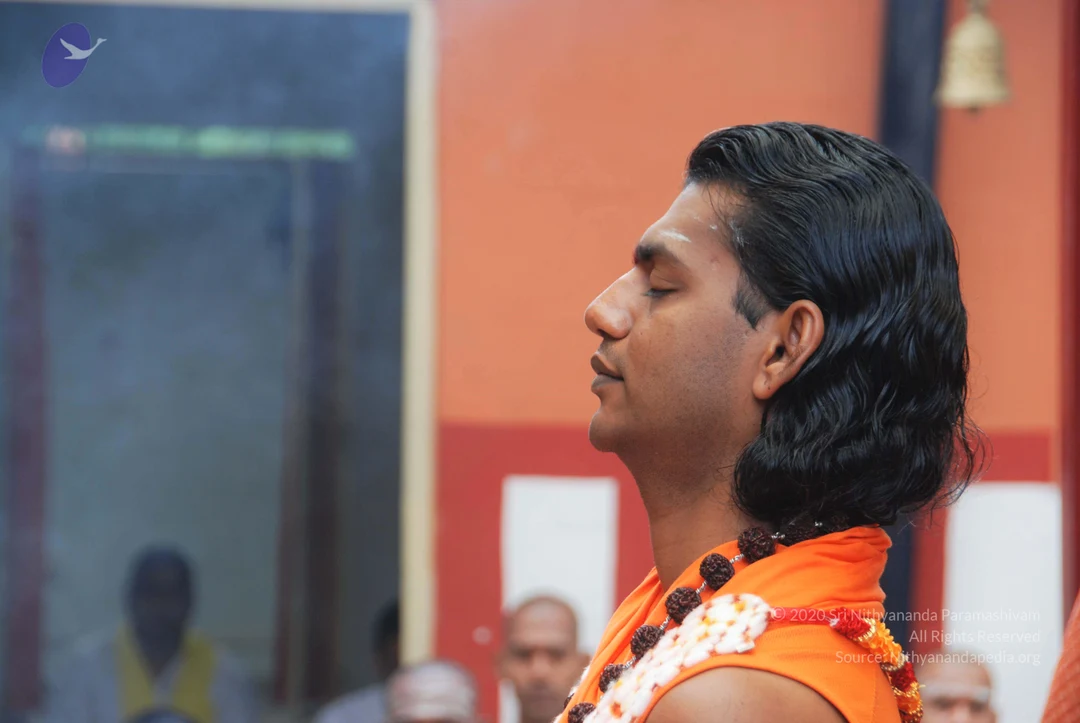
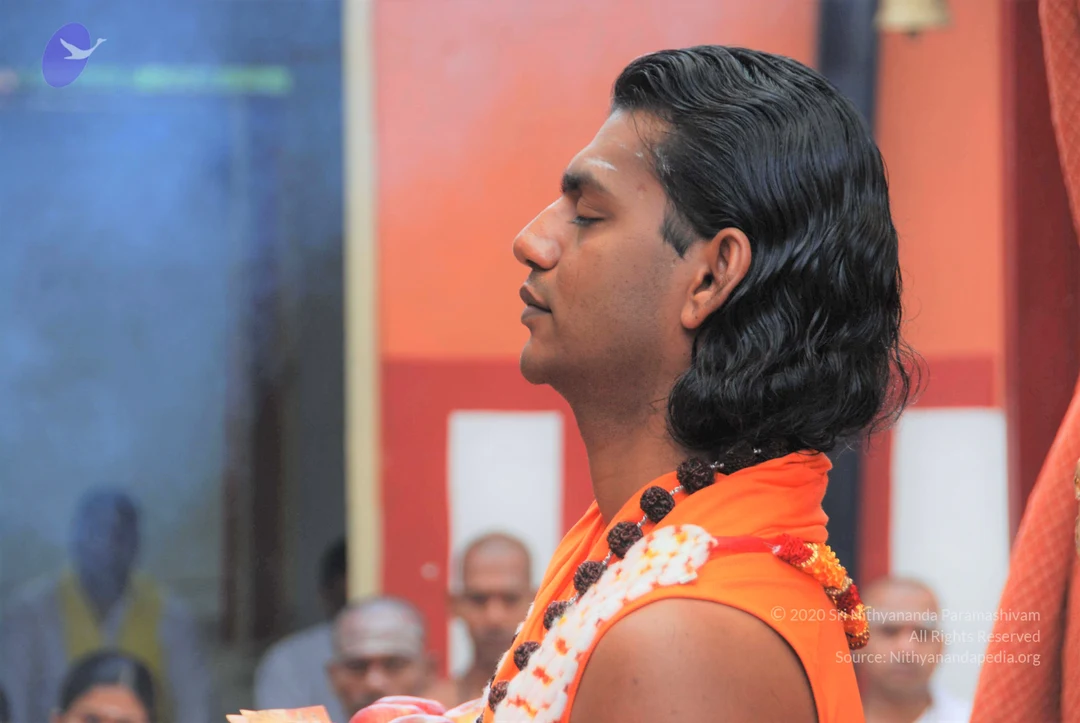
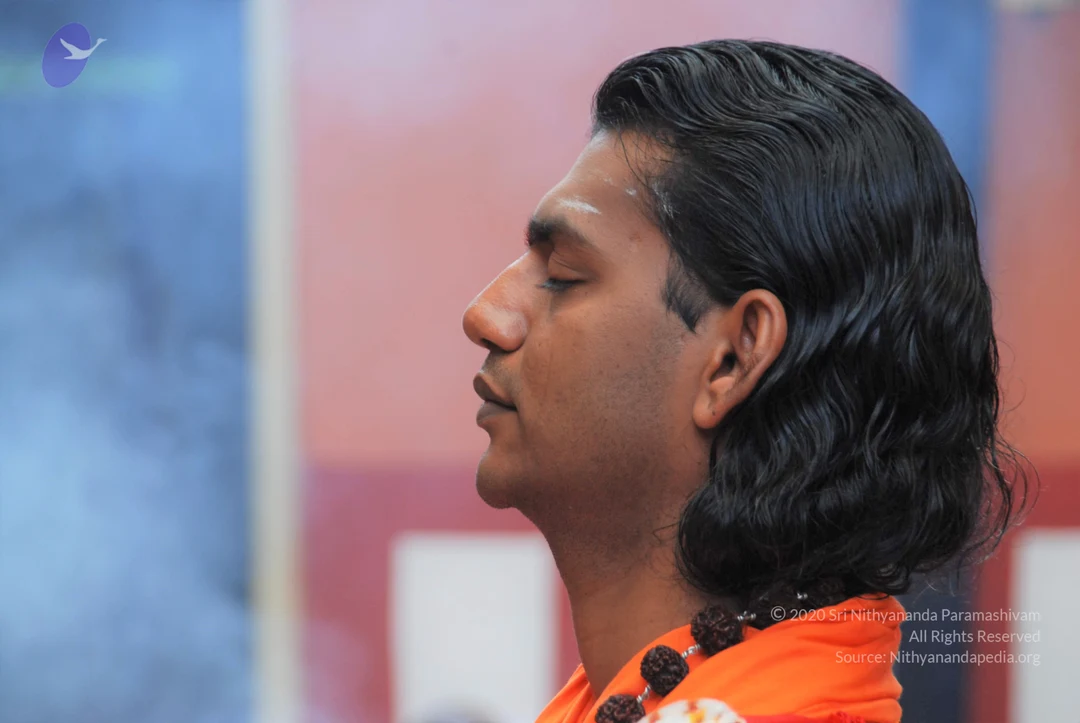
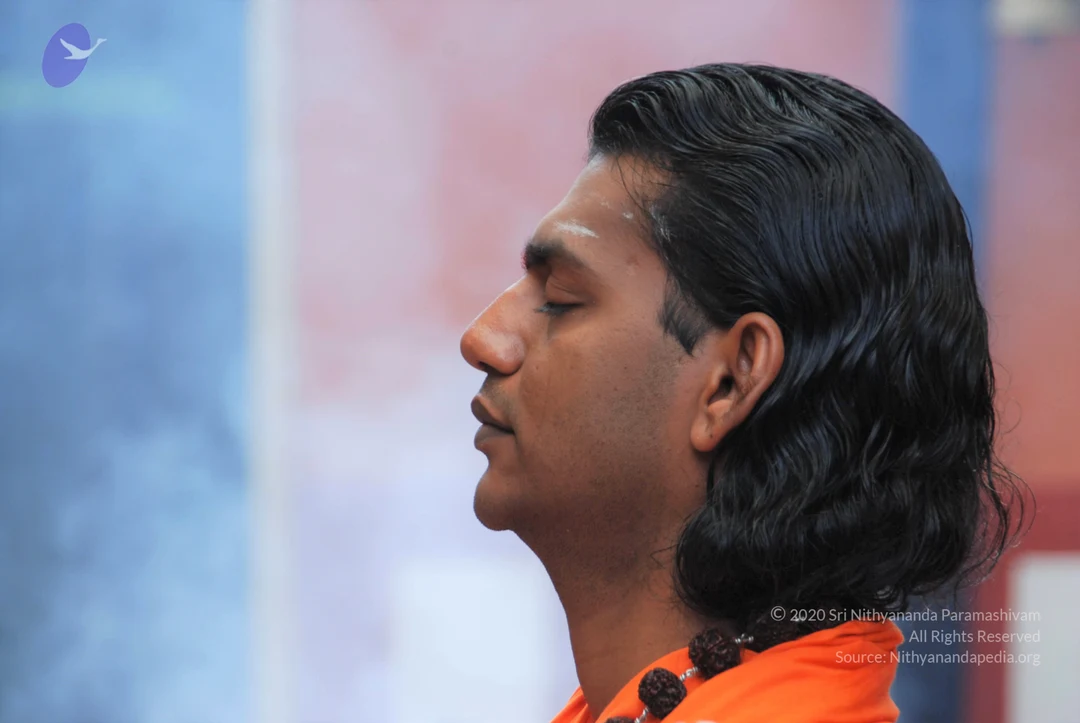
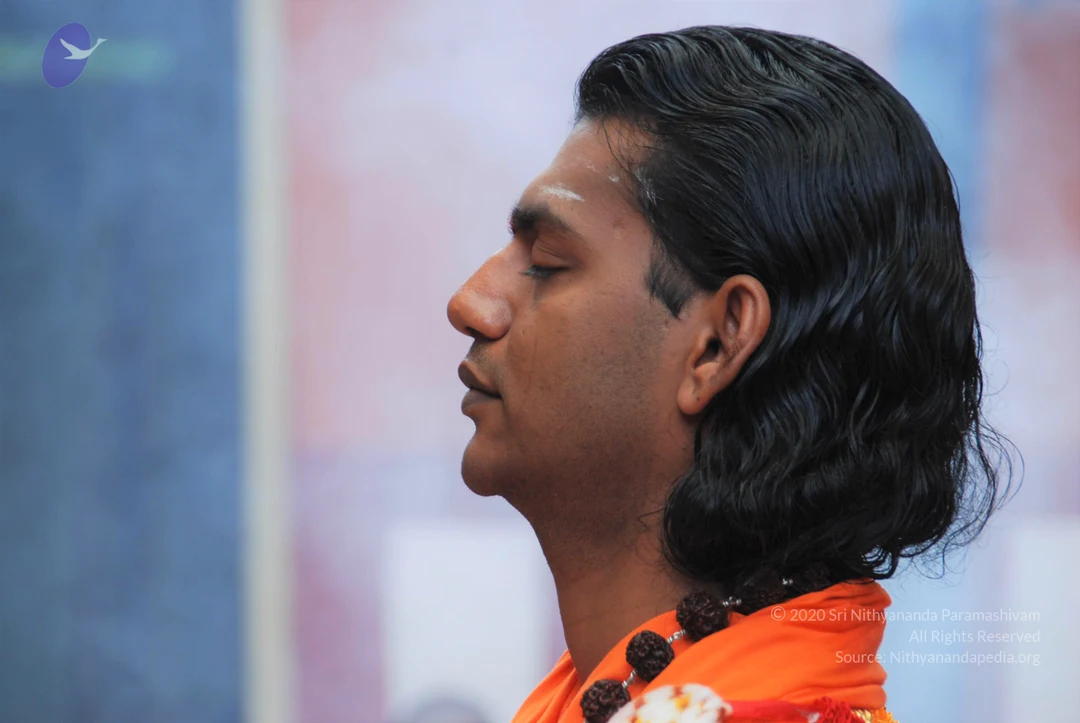
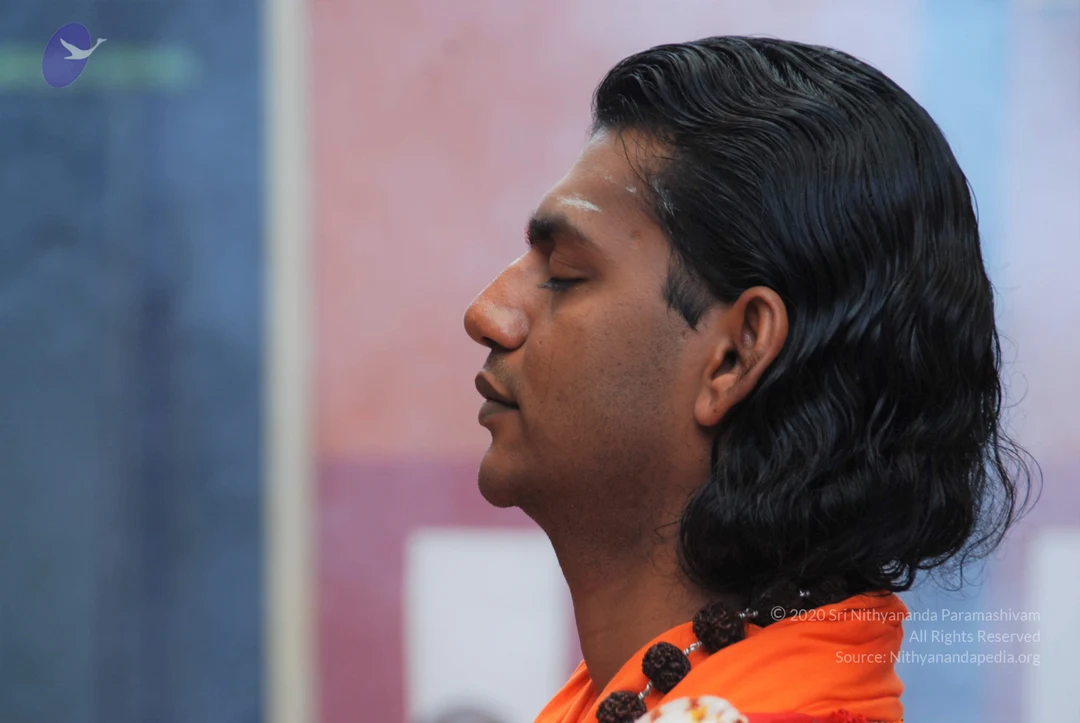
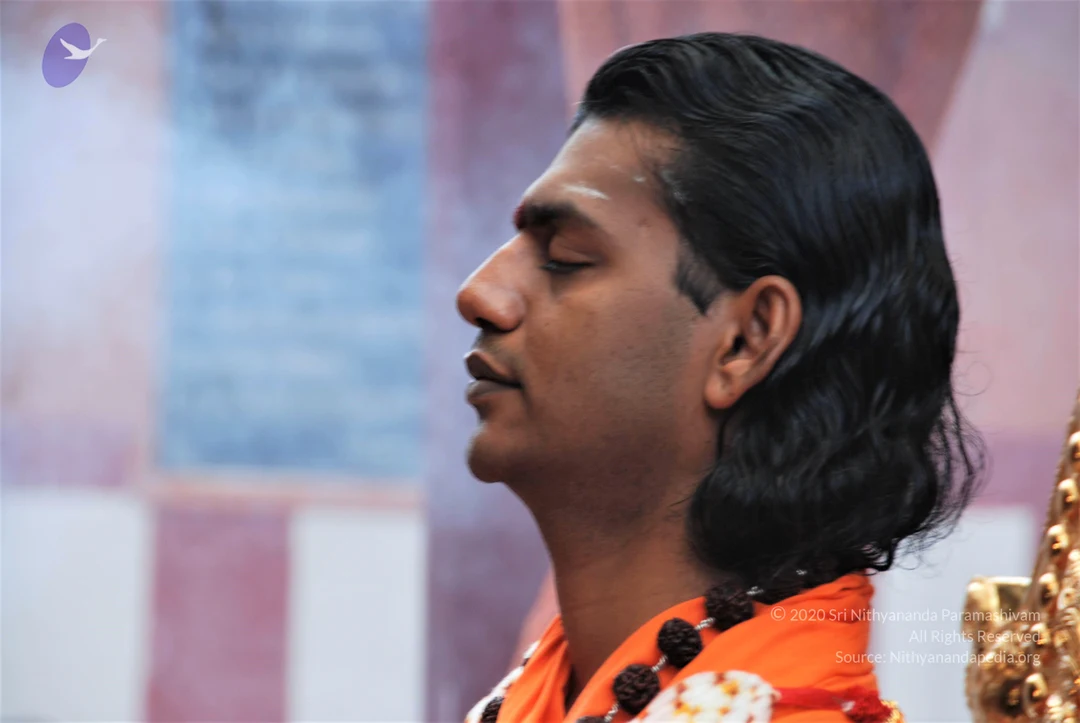
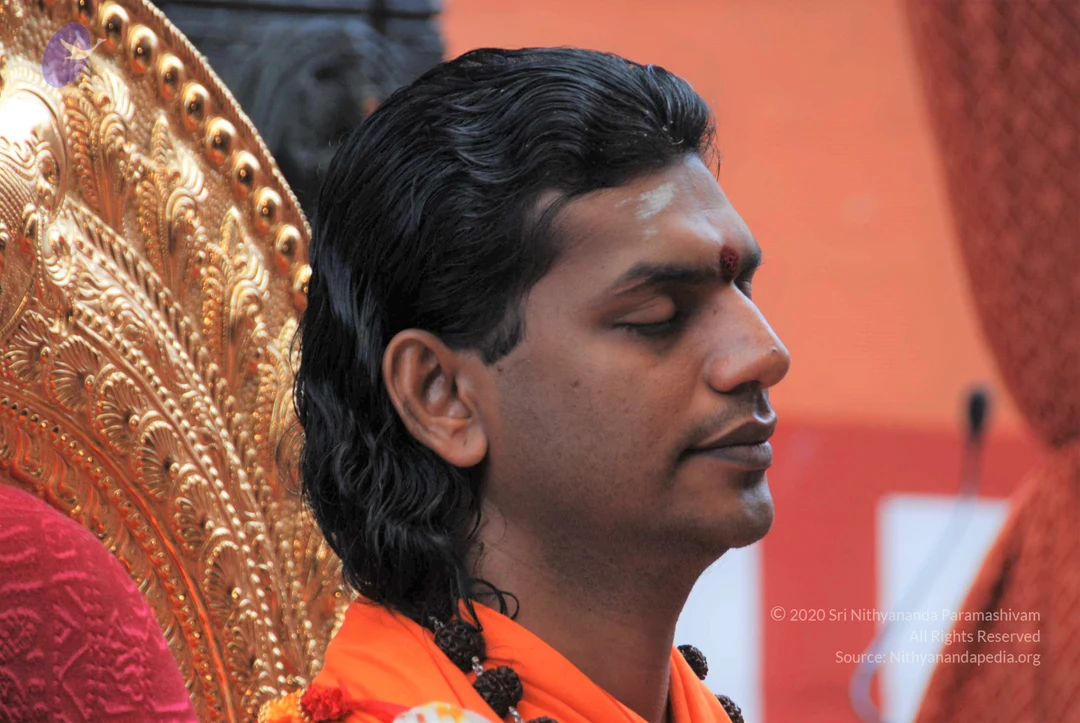
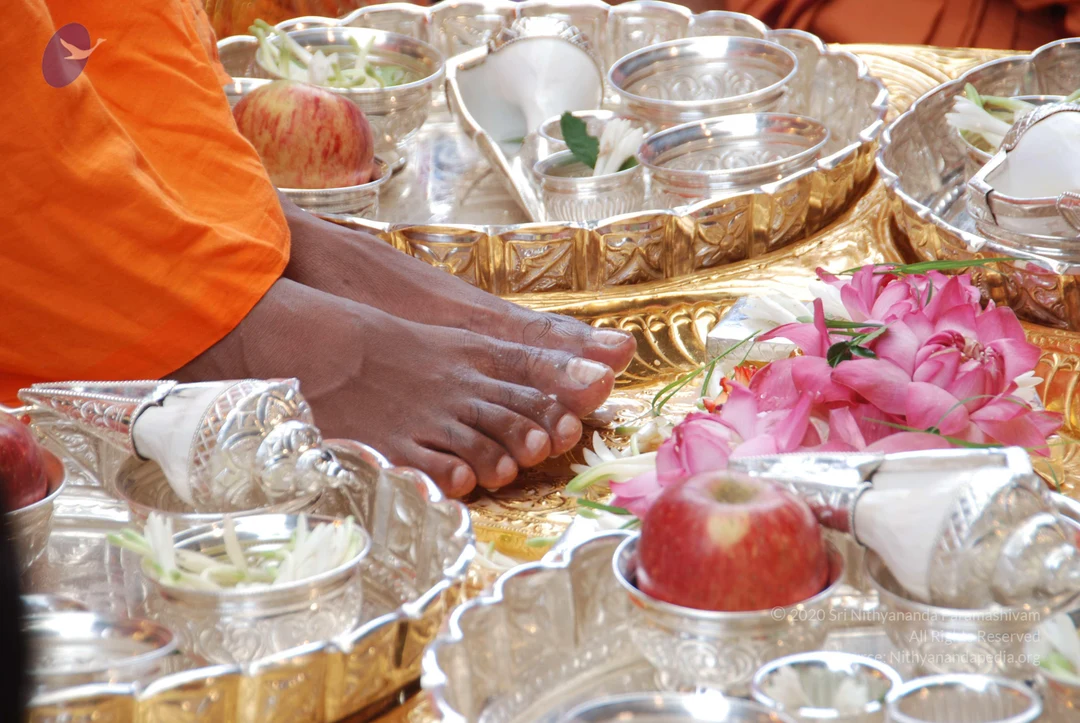
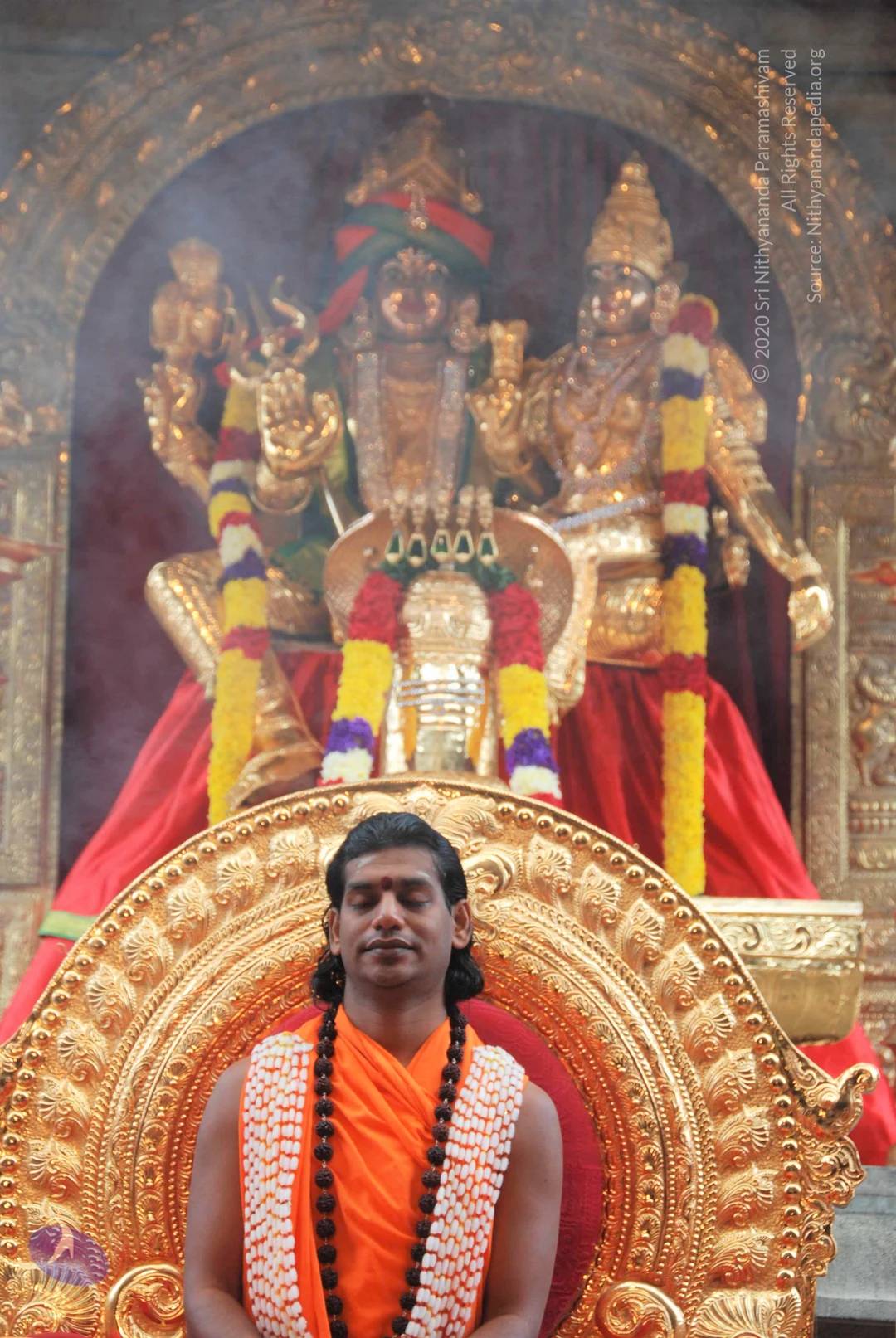
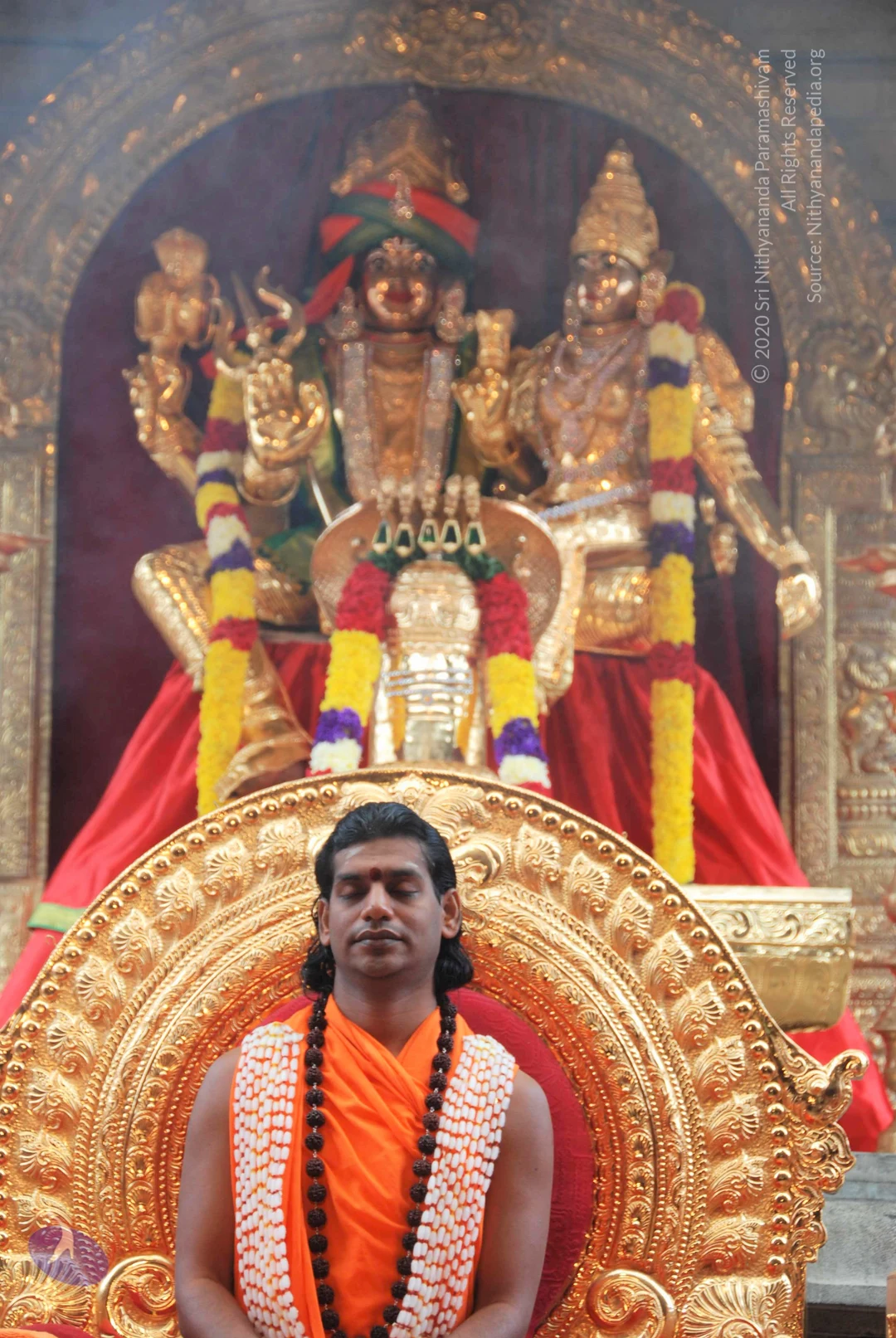
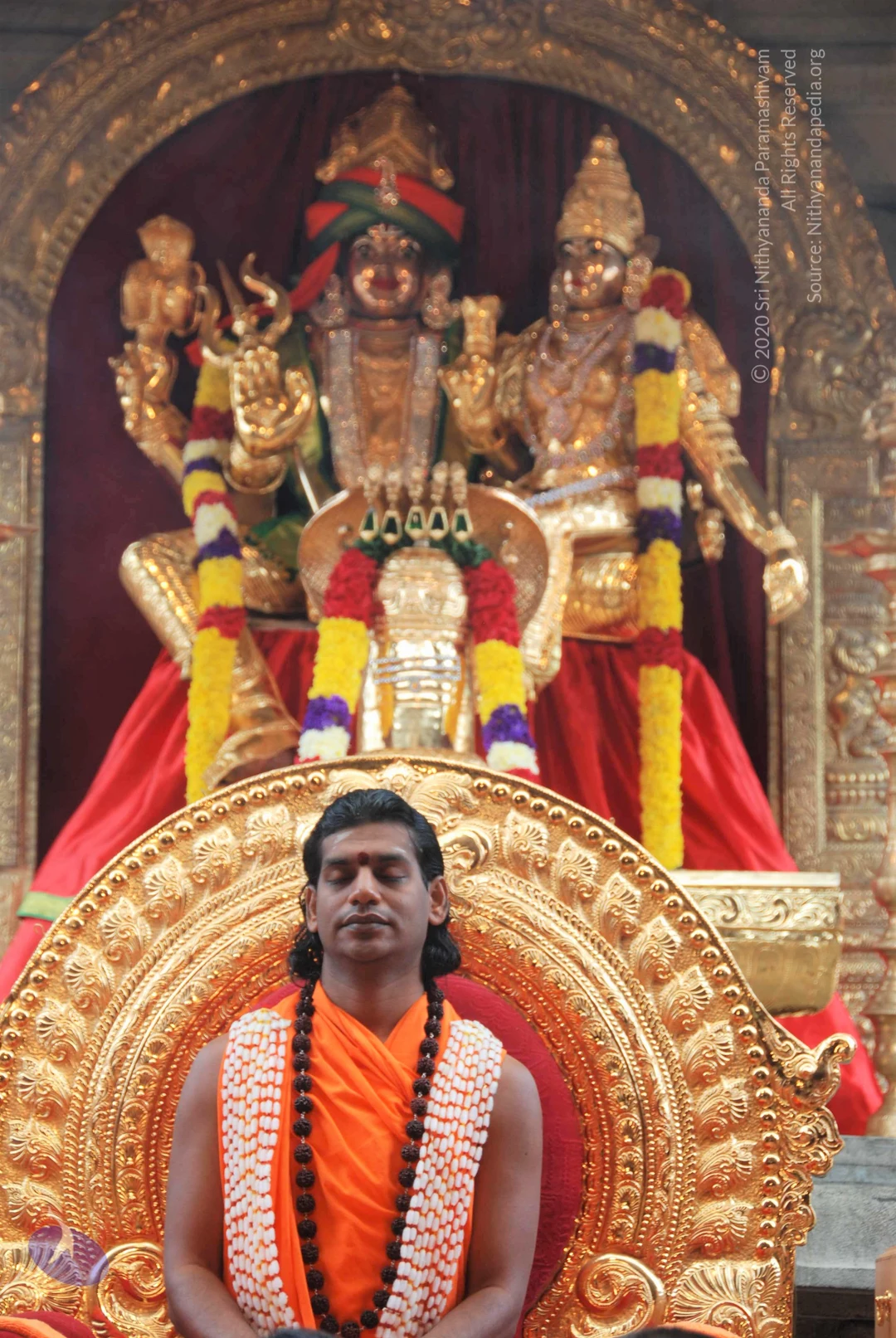
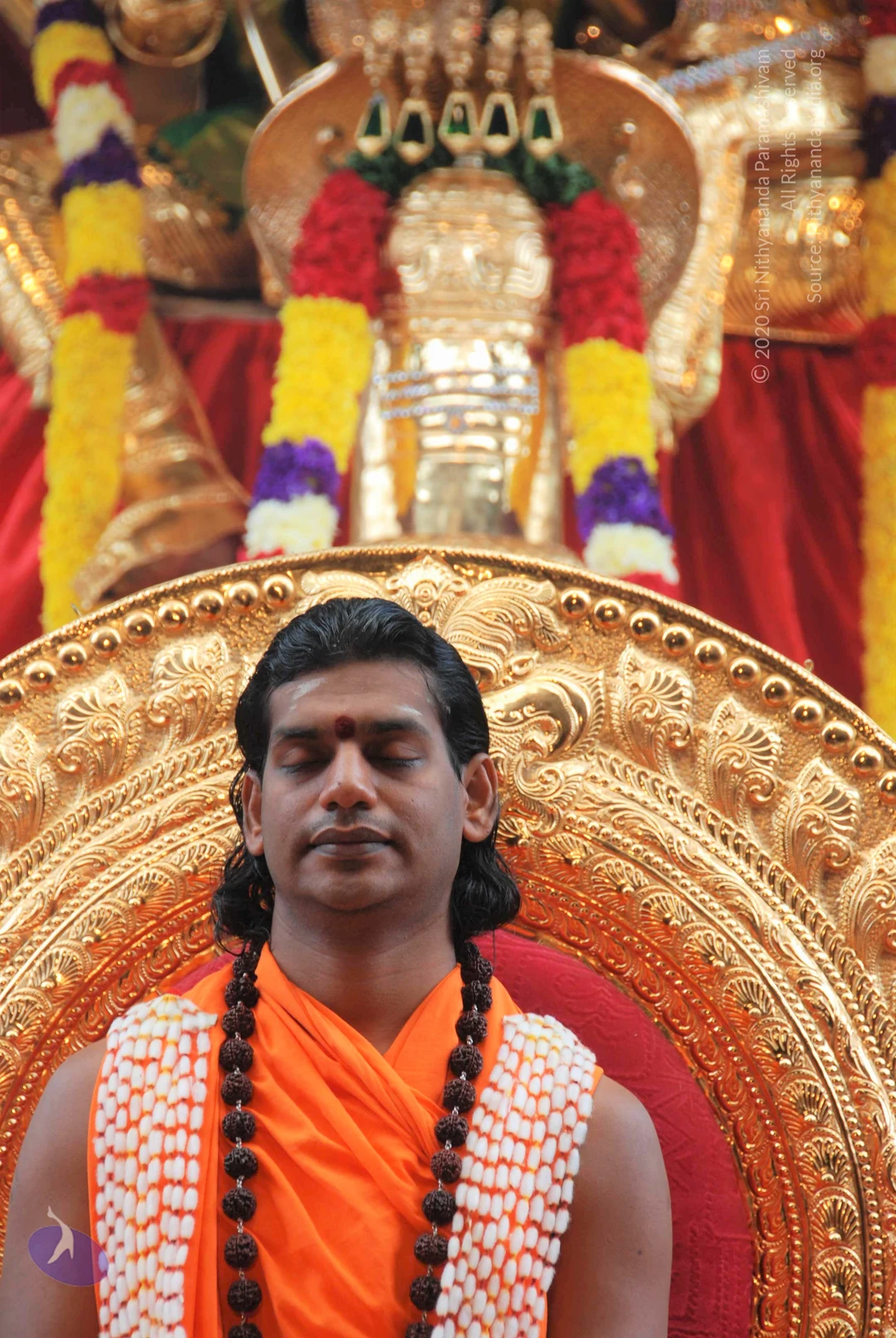
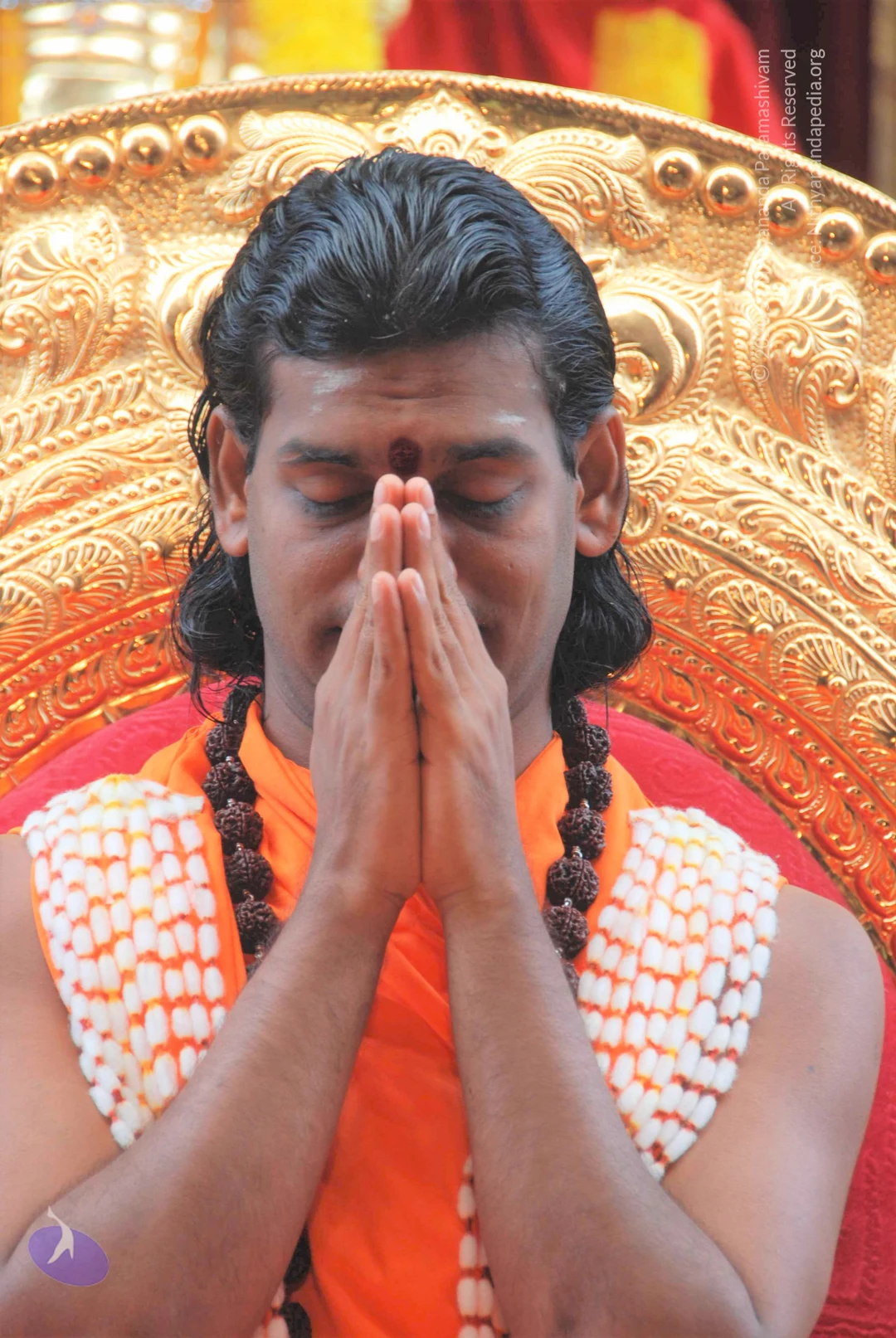
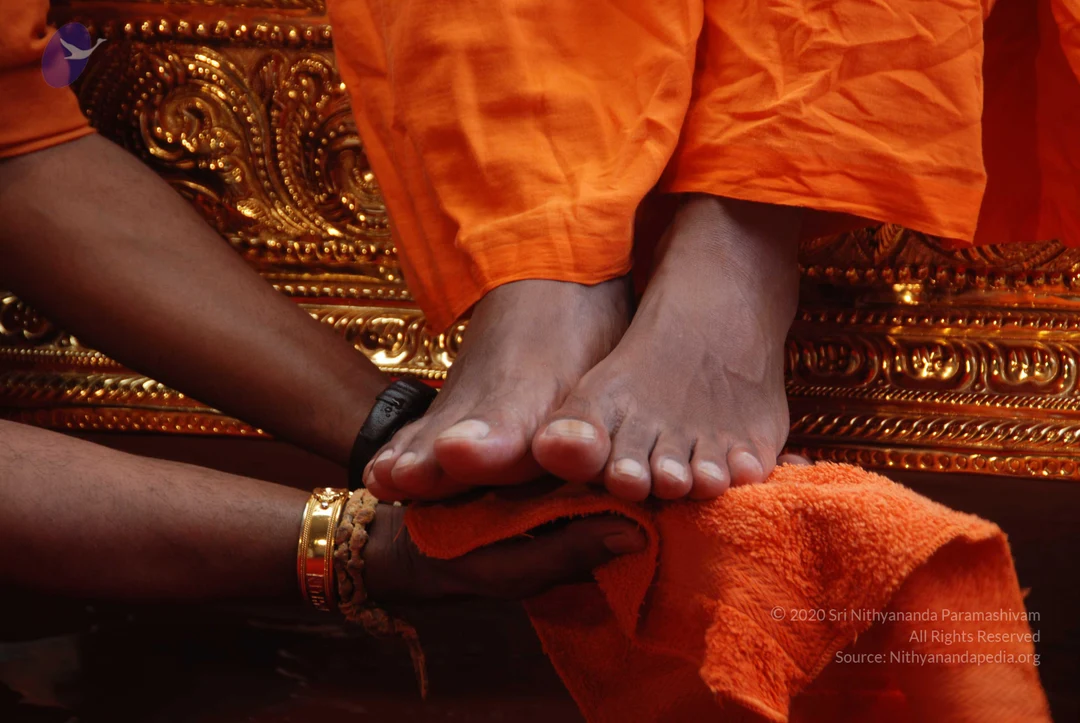
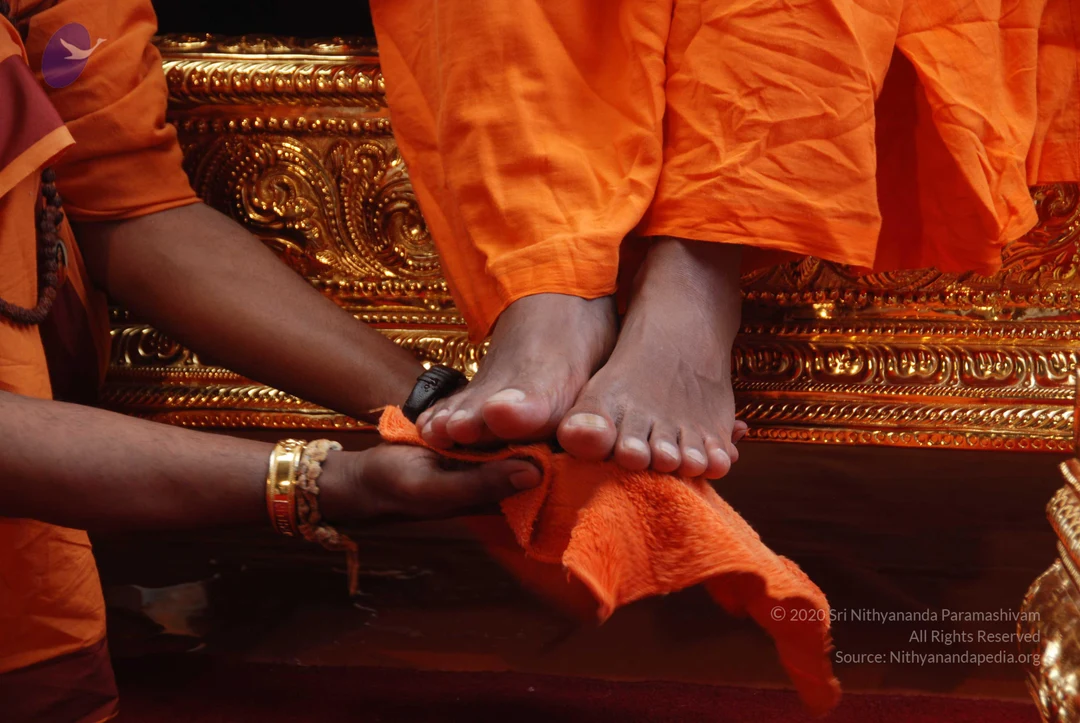
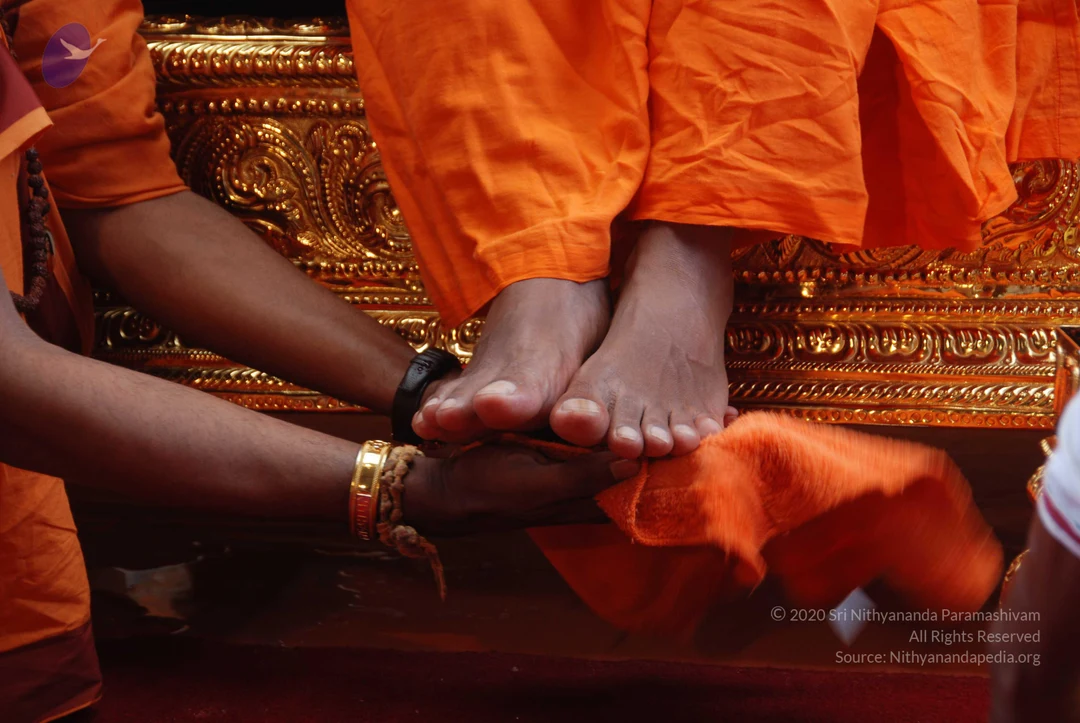
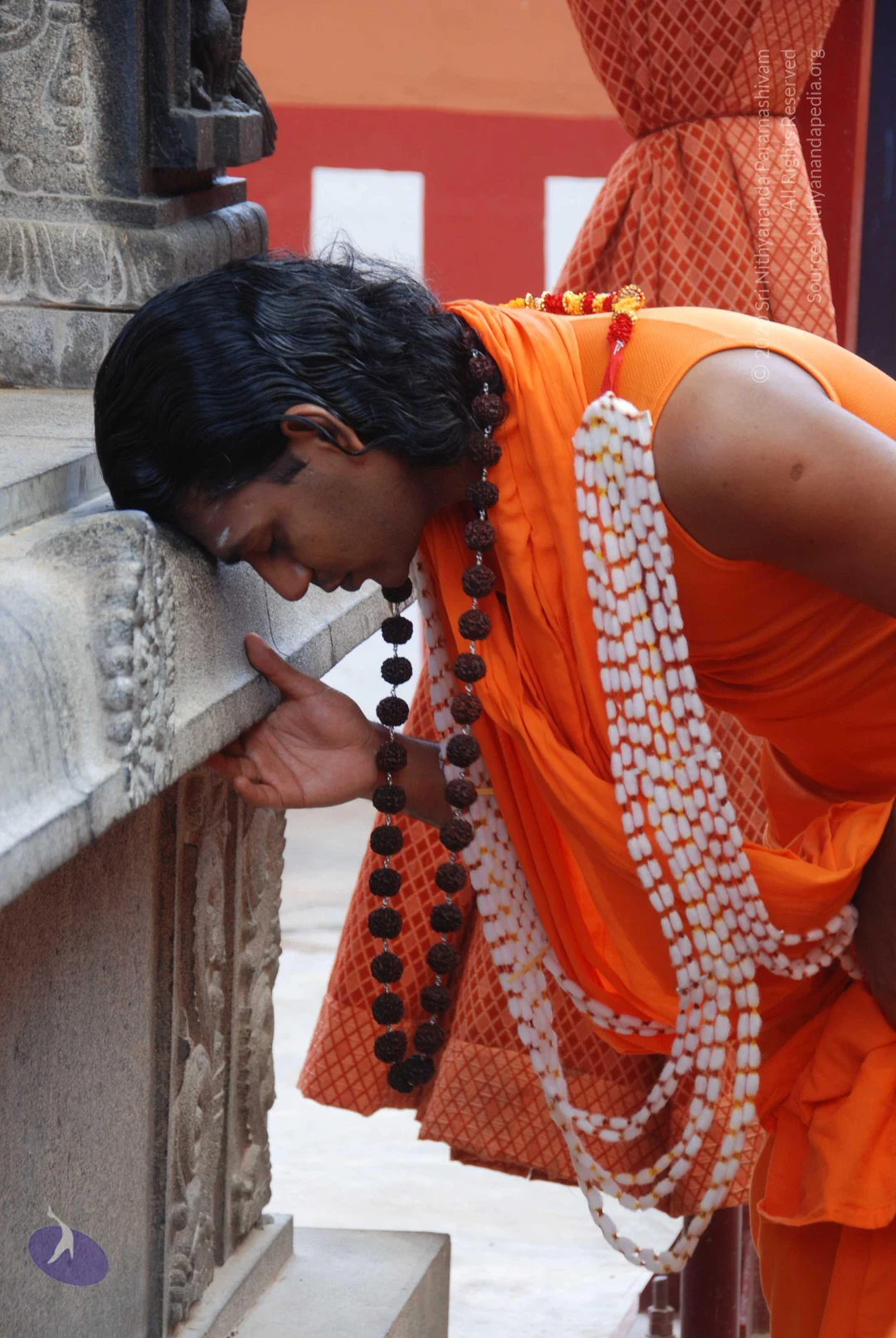
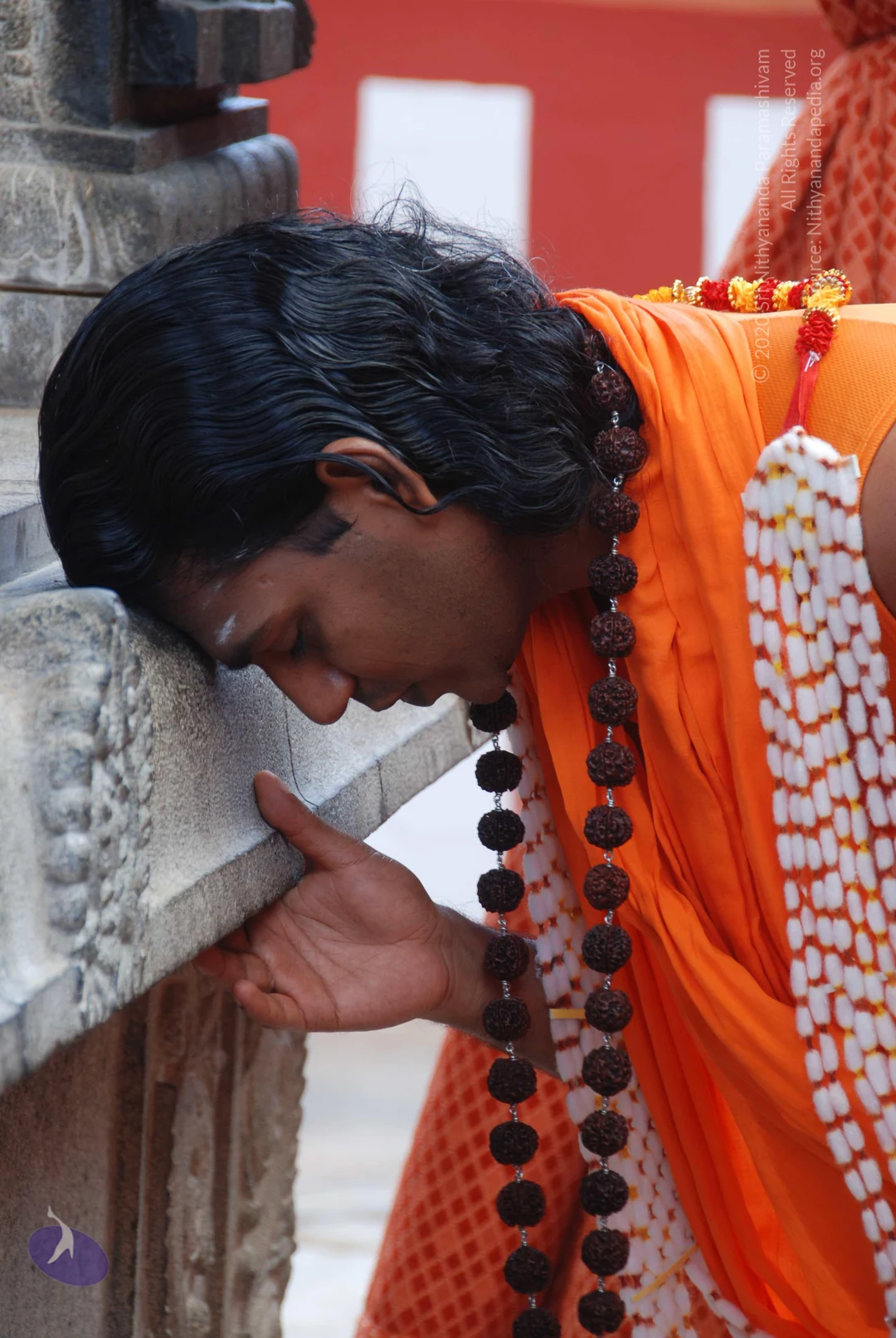
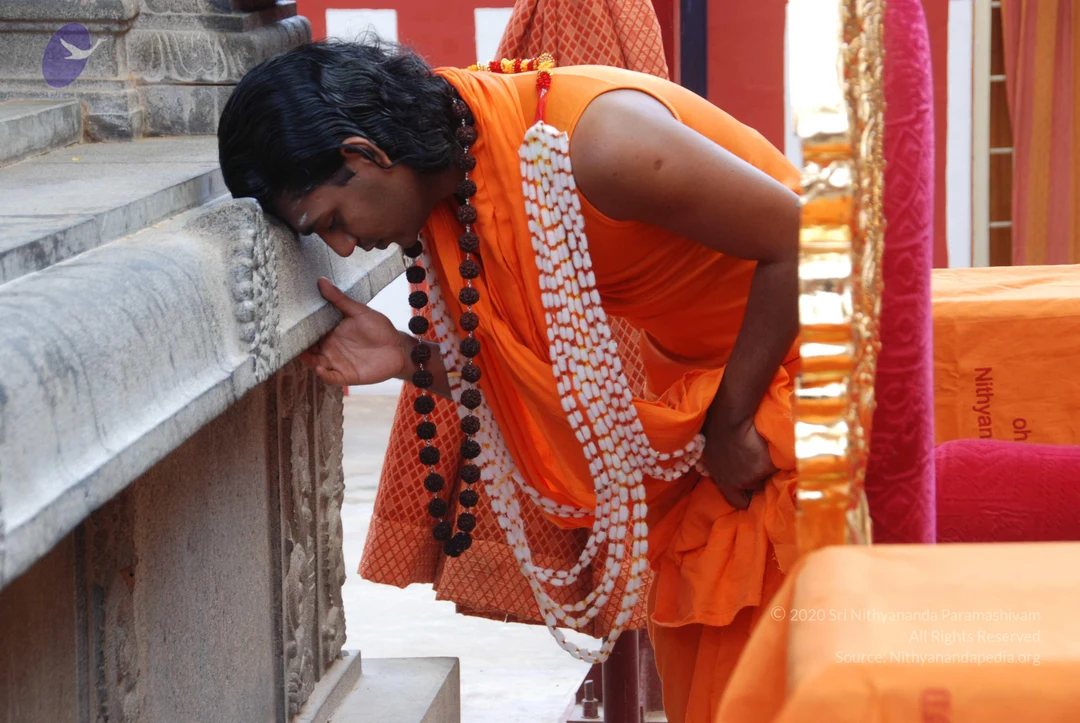
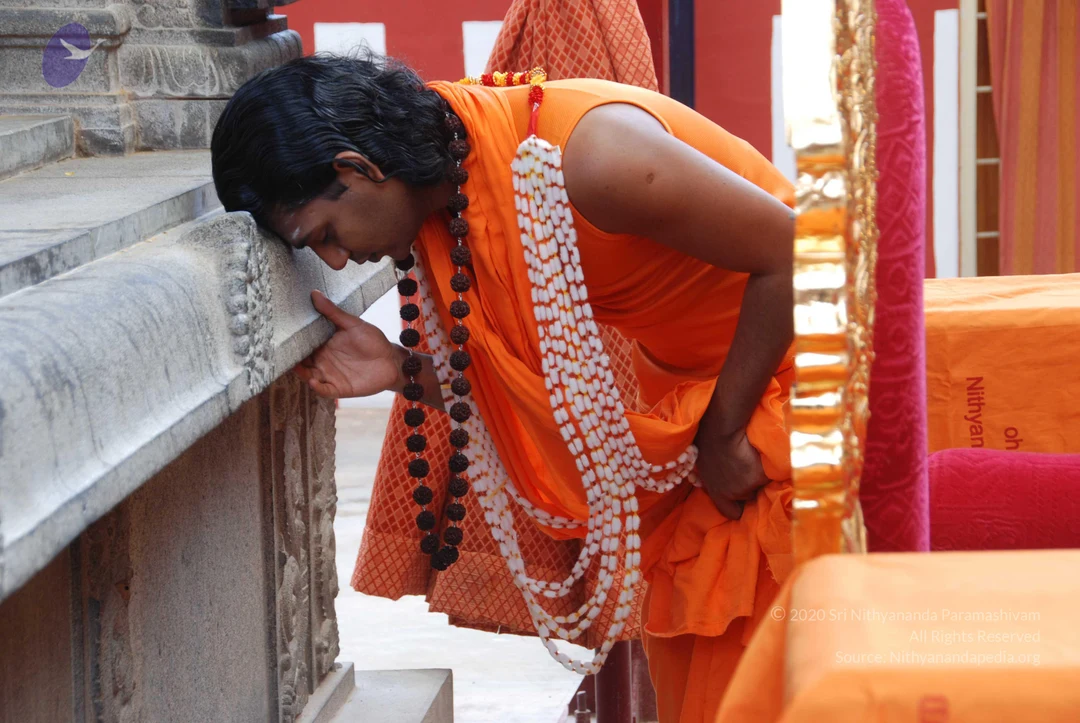
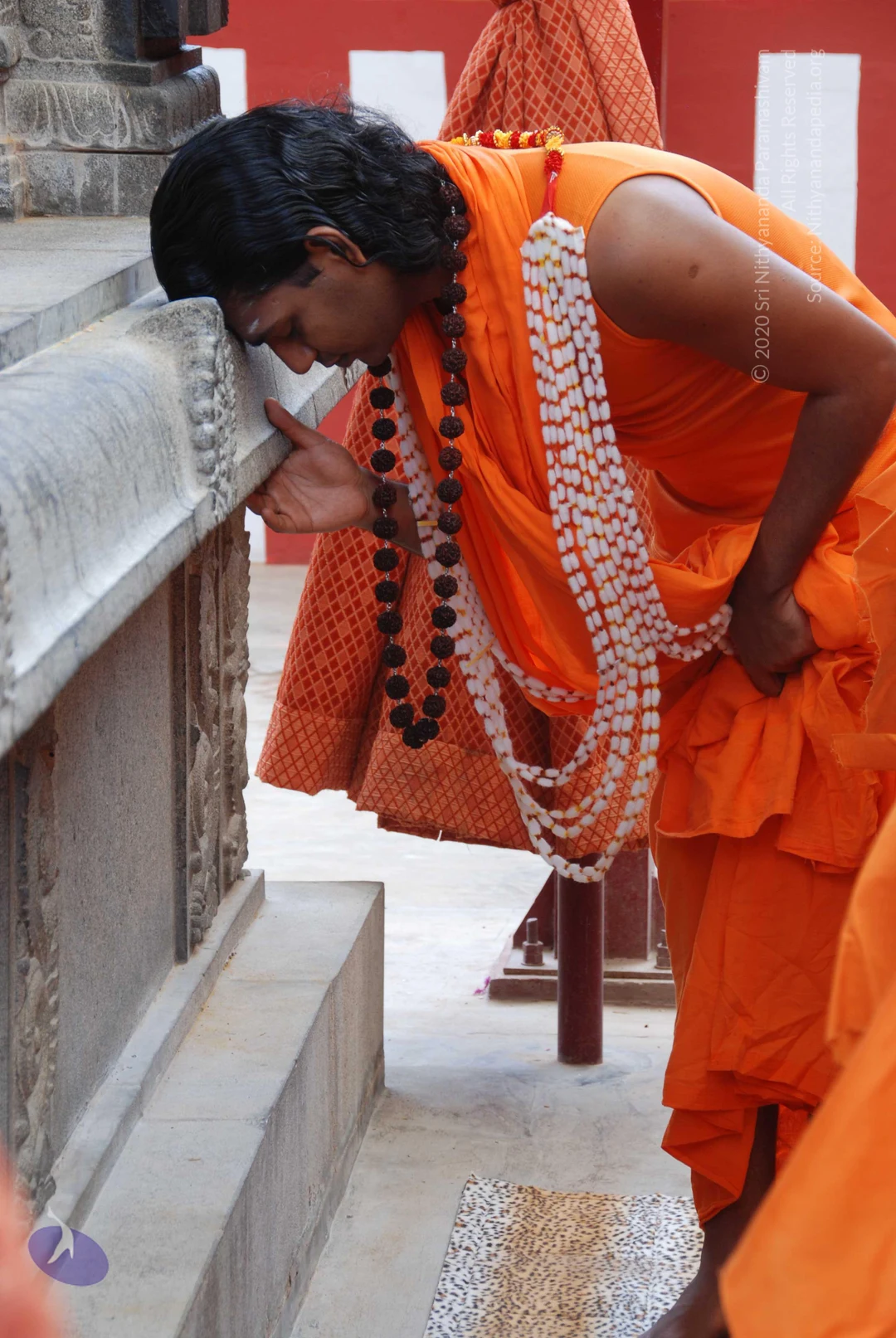
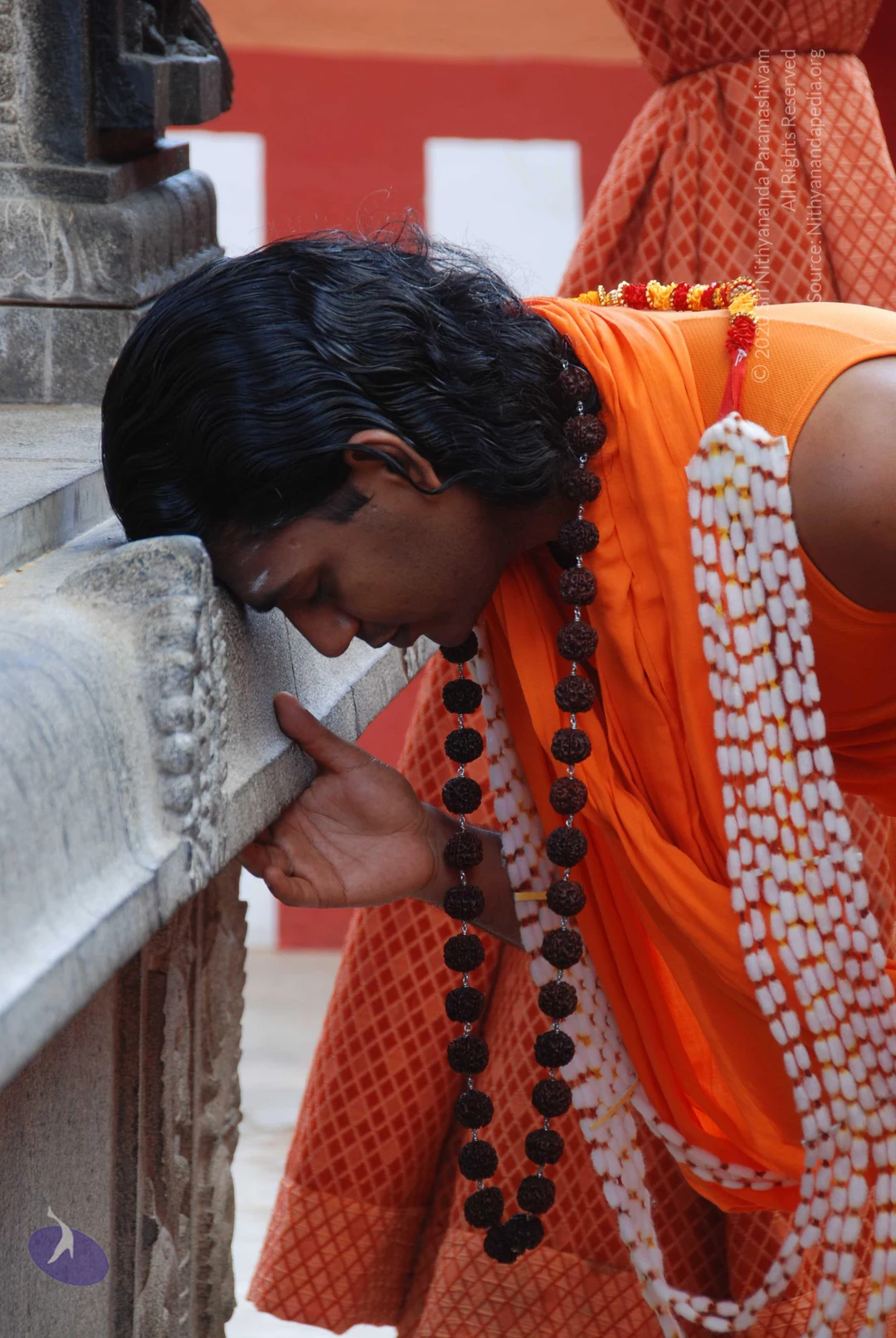
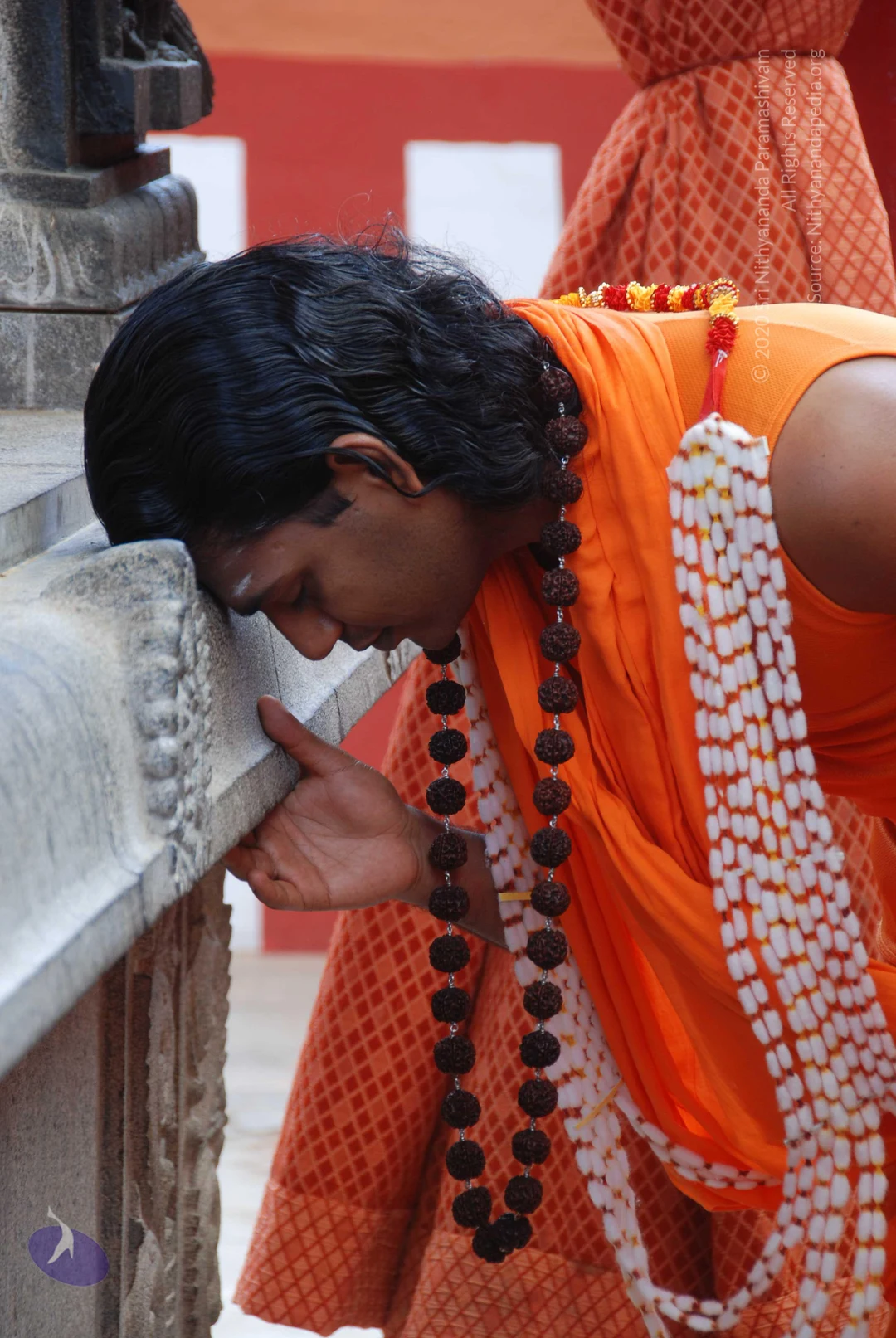
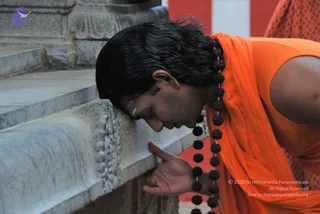
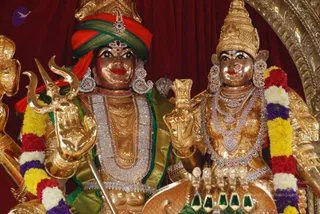
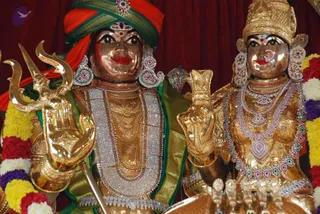
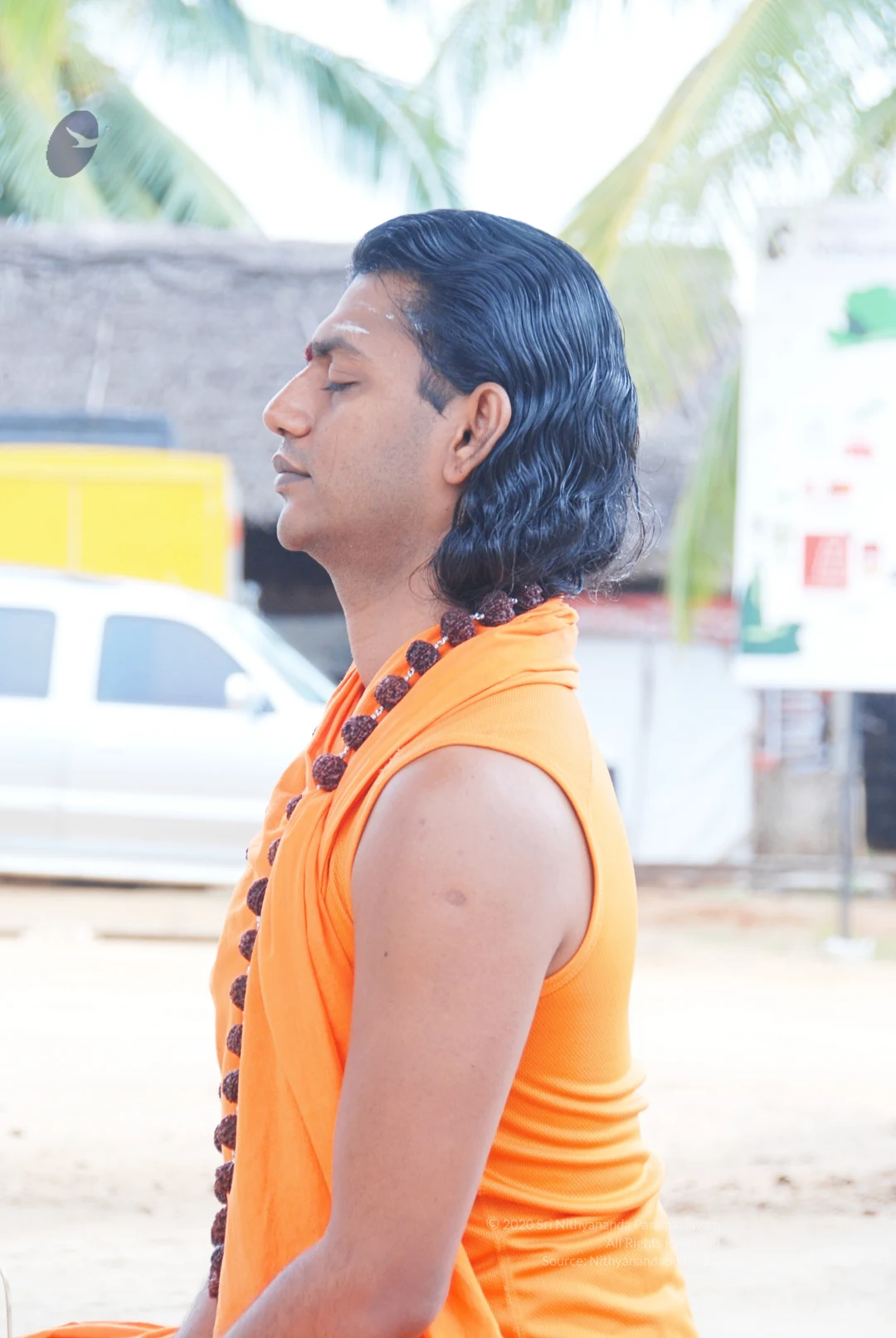
A photograph of a person in an orange saffron robe bowing forward with forehead resting on a grey granite step or plinth carved with floral relief. The person has long dark hair swept back, wears a dark rudraksha mala draped over the shoulder, and has a white mark on the forehead. One hand is pressed flat against the stone edge. Behind is a red and white striped wall. This is a padapuja-style gesture of reverence at a stone platform.Close view of bare feet of a seated person in orange robes resting on a gold tray during a padapuja foot-worship ritual. Silver bowls, pink lotus flowers, red apples, white flower petals and marigold garlands surround the feet on silver and gold trays. No face is visible, and no one else is visibly present in the frame.A golden deity murti pair seated on a raised throne before a red velvet backdrop within an ornate gilded arch. The figure on the left wears a red and green turban with a crown-like headpiece, rich layered jewellery and a green silk garment, holding a golden trident and a staff. The figure on the right wears a tall golden crown, layered necklaces and a red-and-gold garment. Both are garlanded with marigold-like flowers in yellow, red, purple and white. A brass oil lamp stands at the left edge, and a golden kalasha-like vessel sits in the foreground.

Photos of the day

View all 794 photos

794 distinct dated photos. Source gallery sets may overlap. Preview includes 500 photos.

01

01-Temple

31 dated photos in previewSource gallery
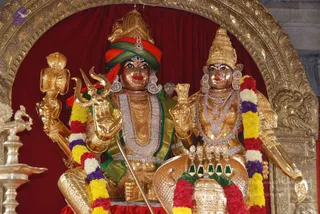
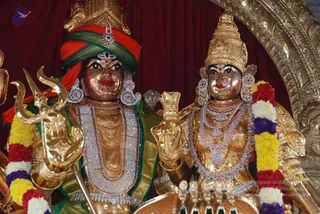
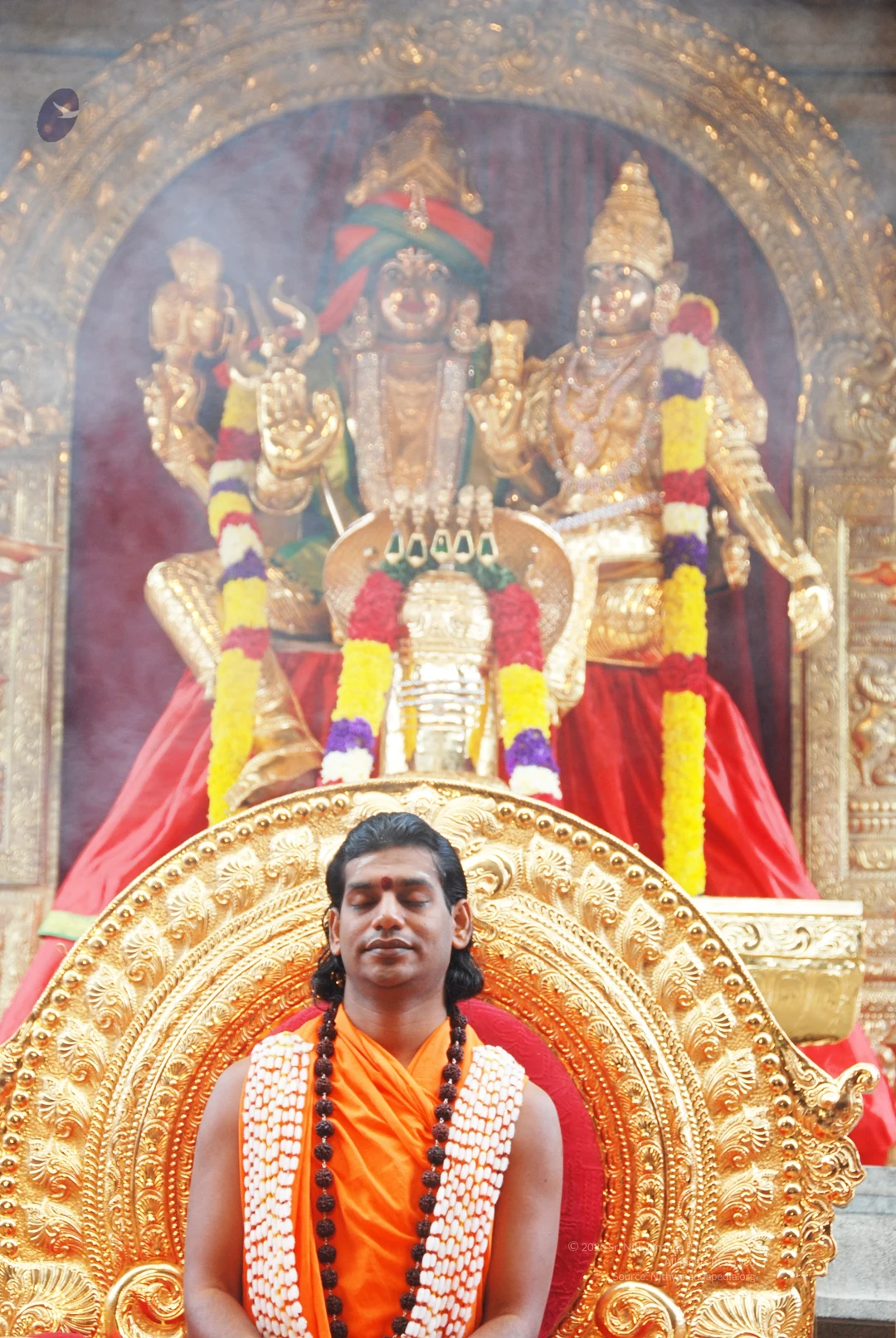
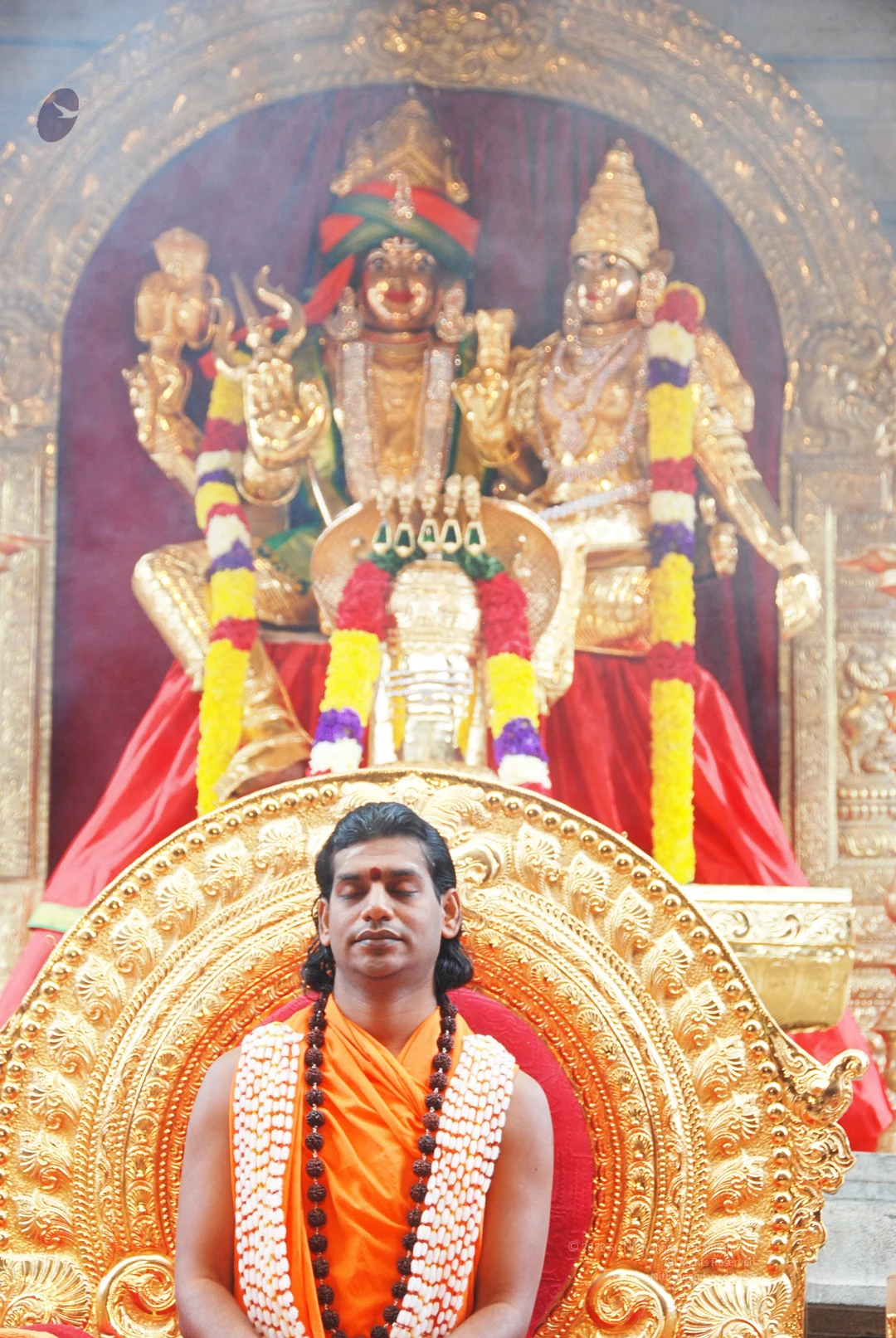
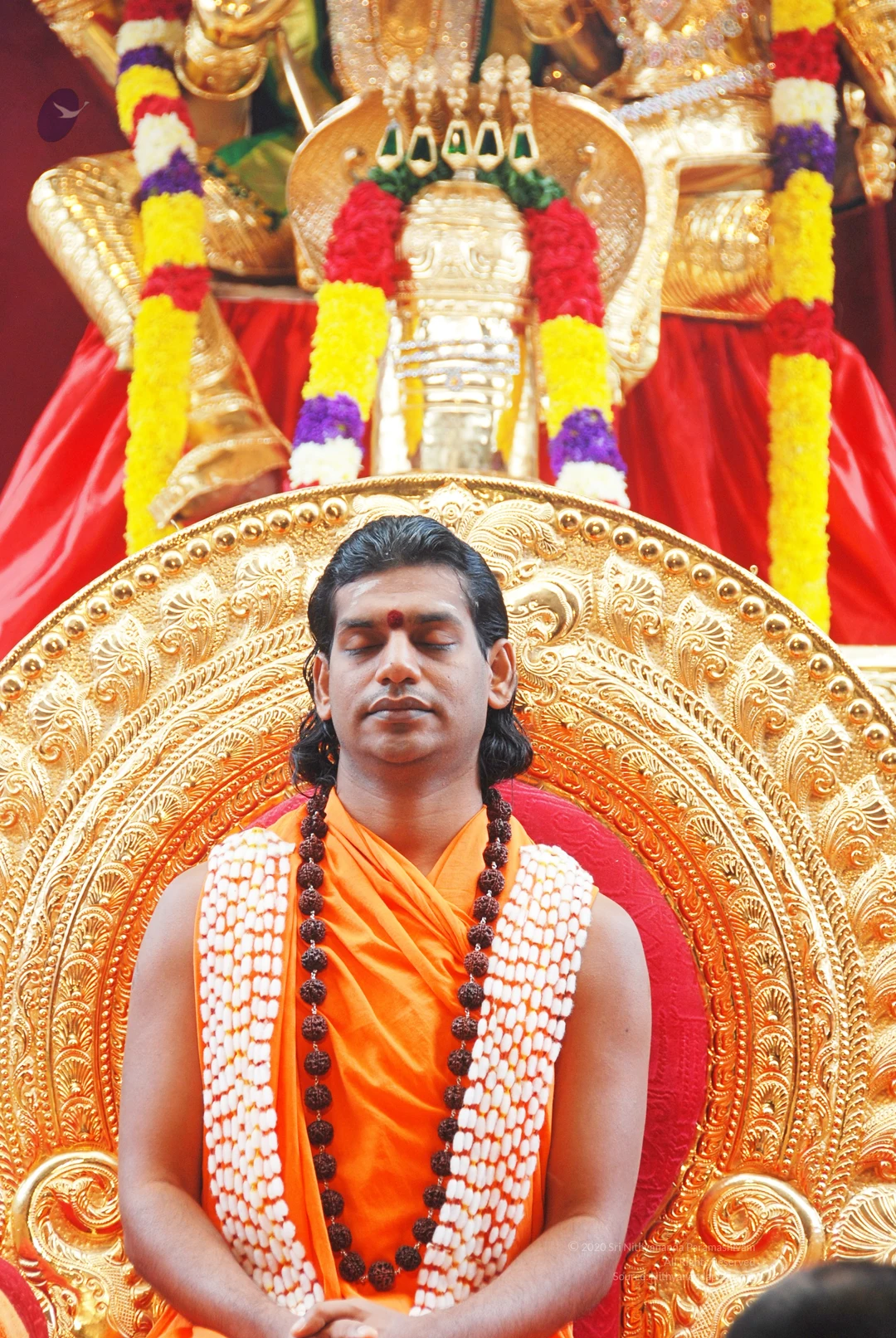
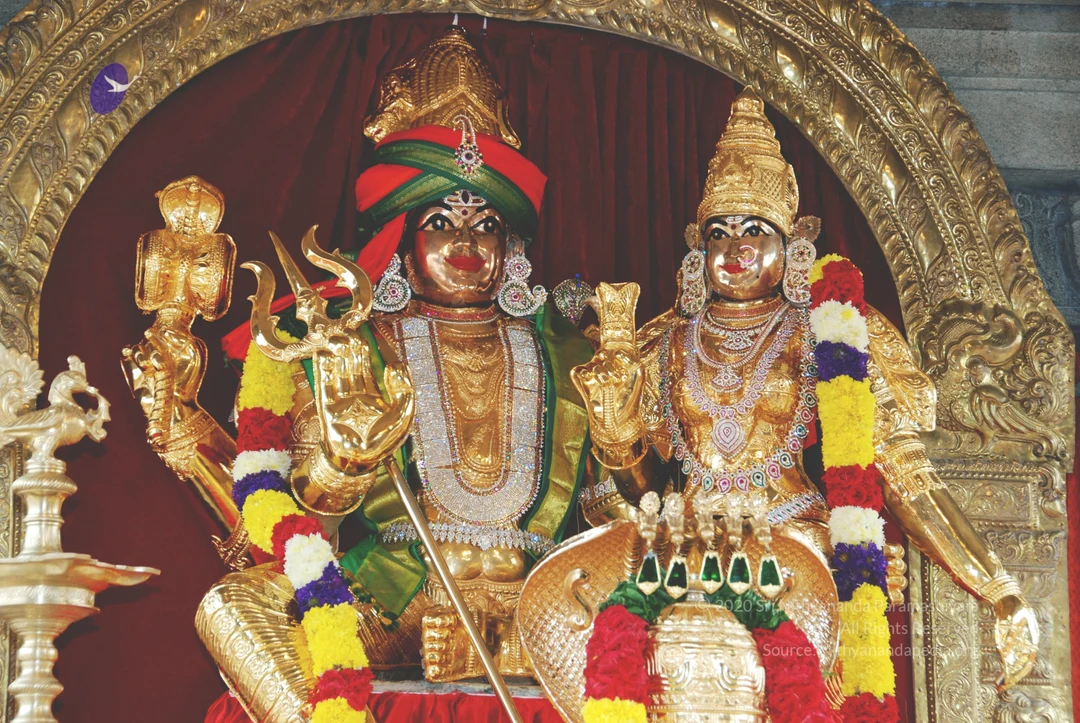
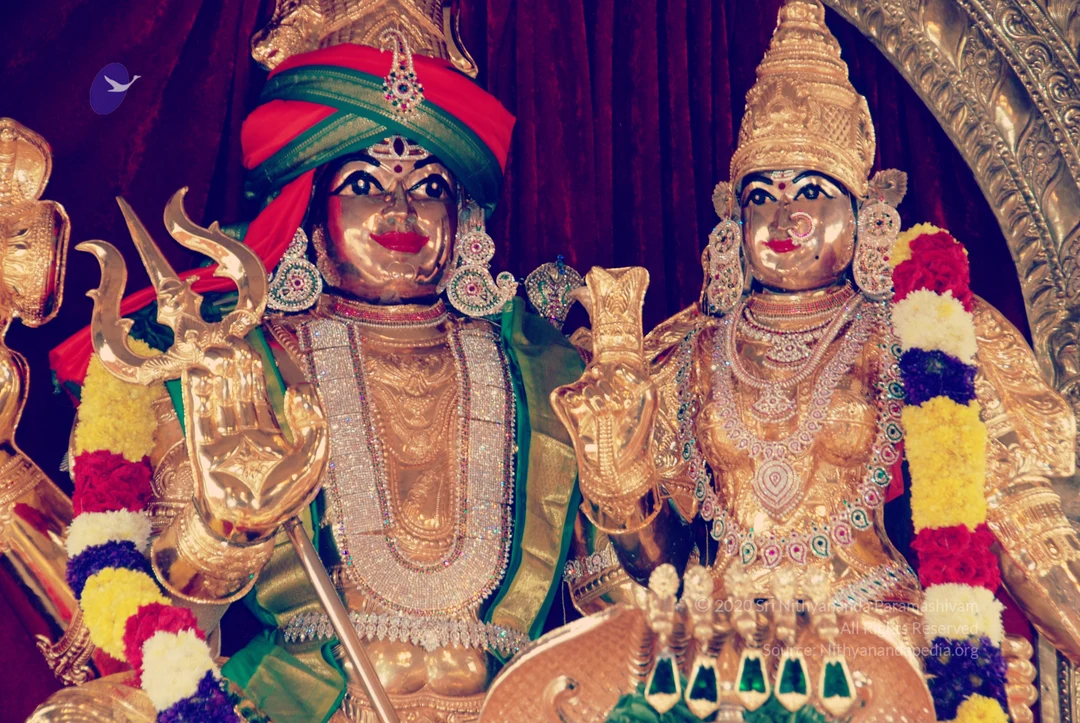
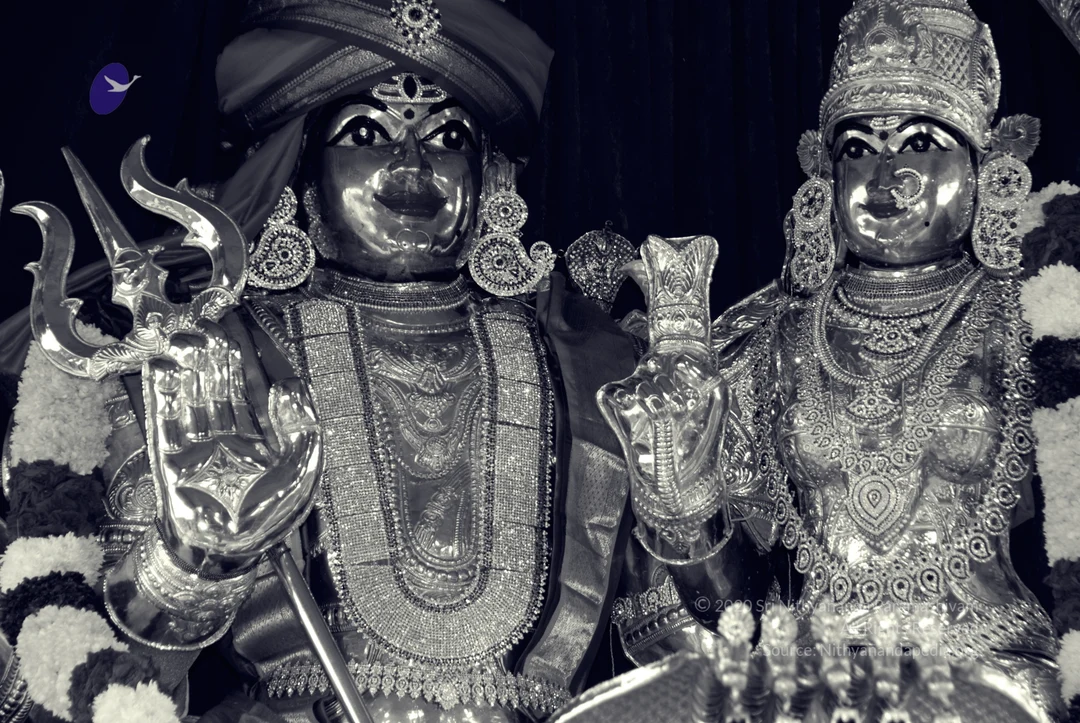
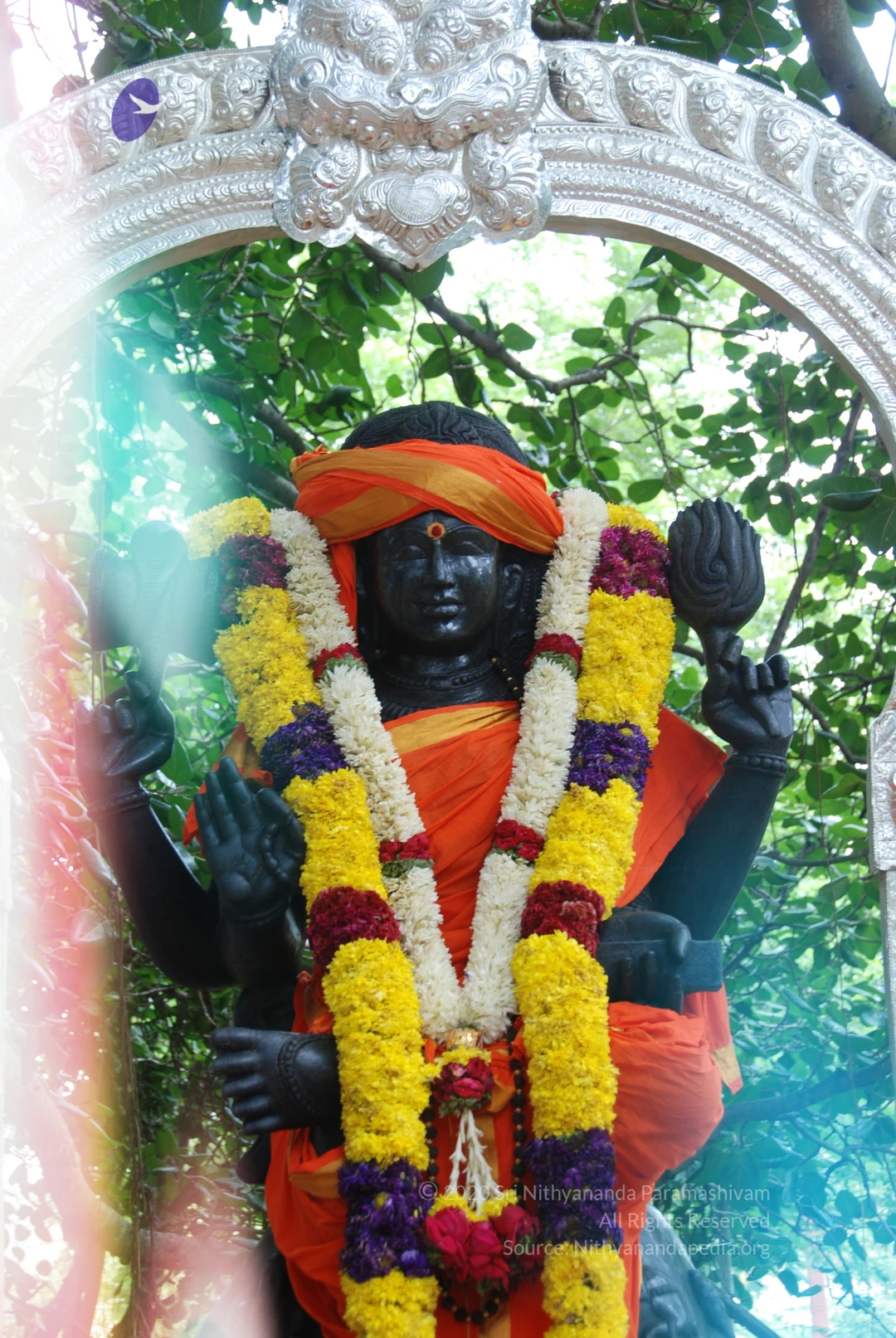
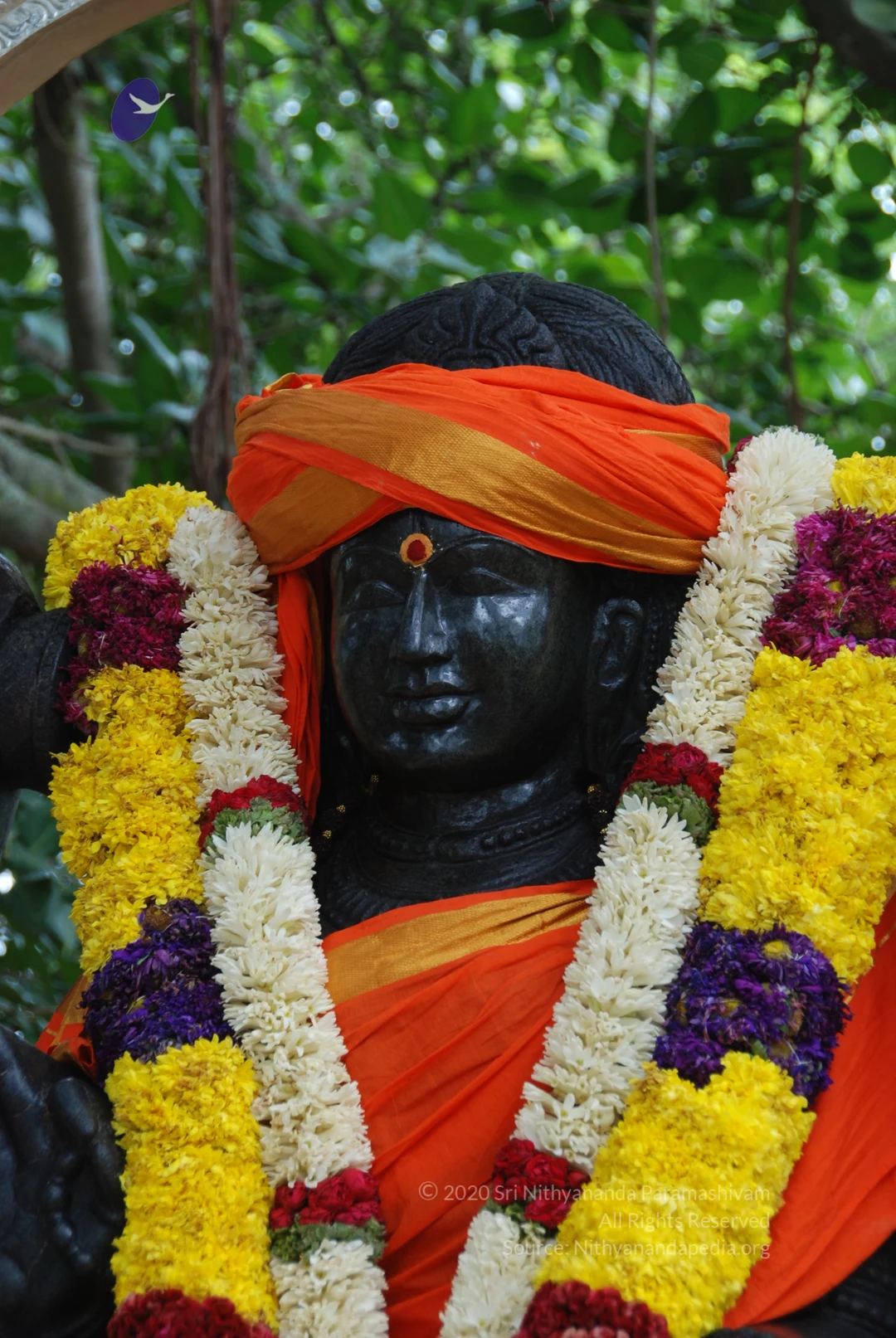
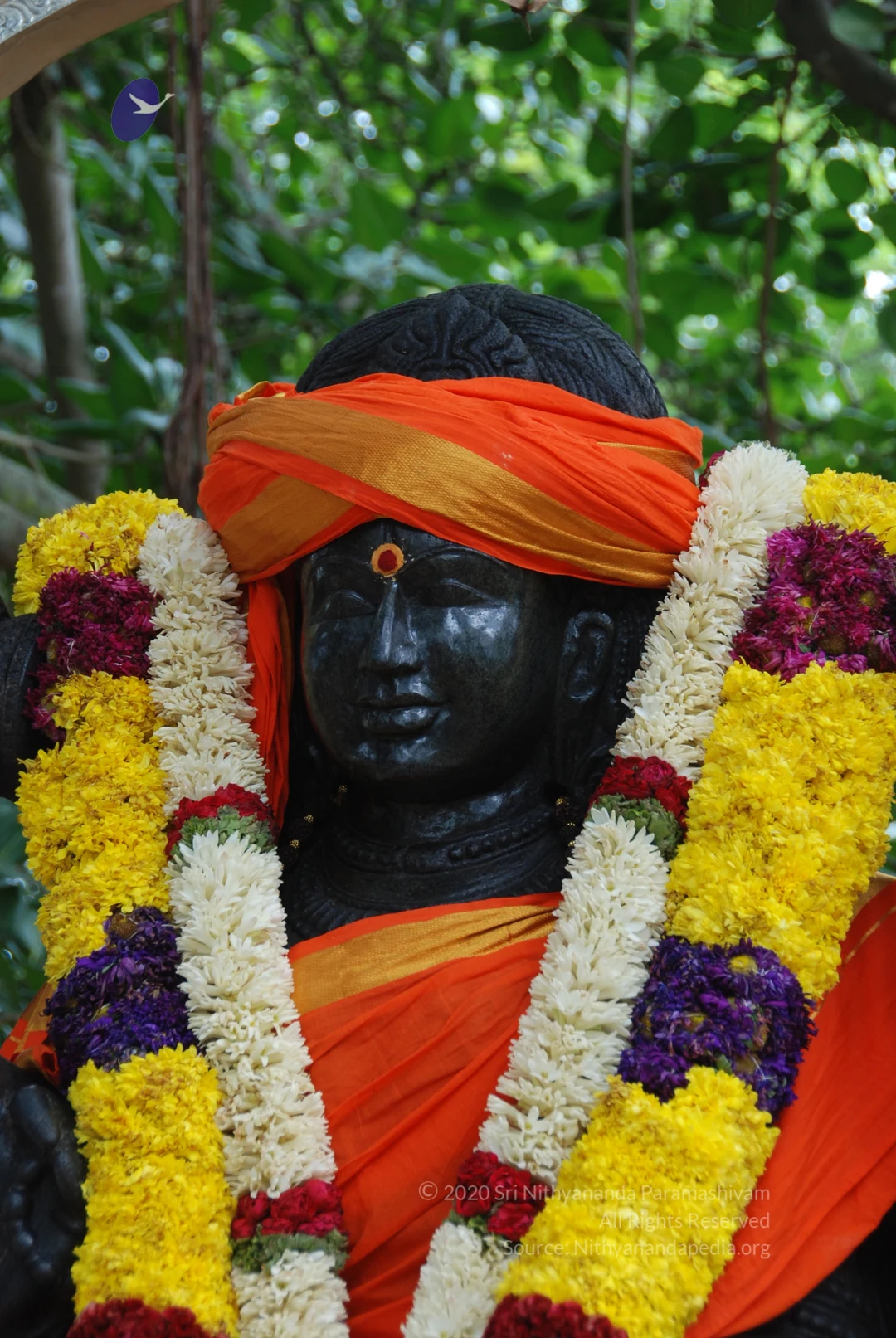
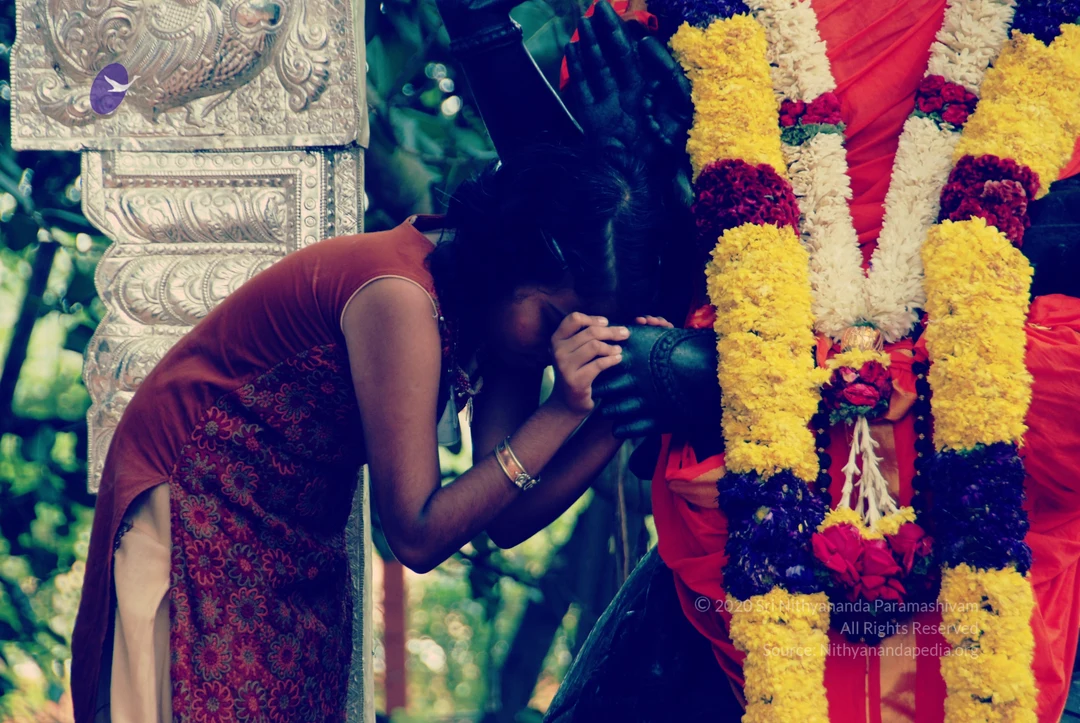
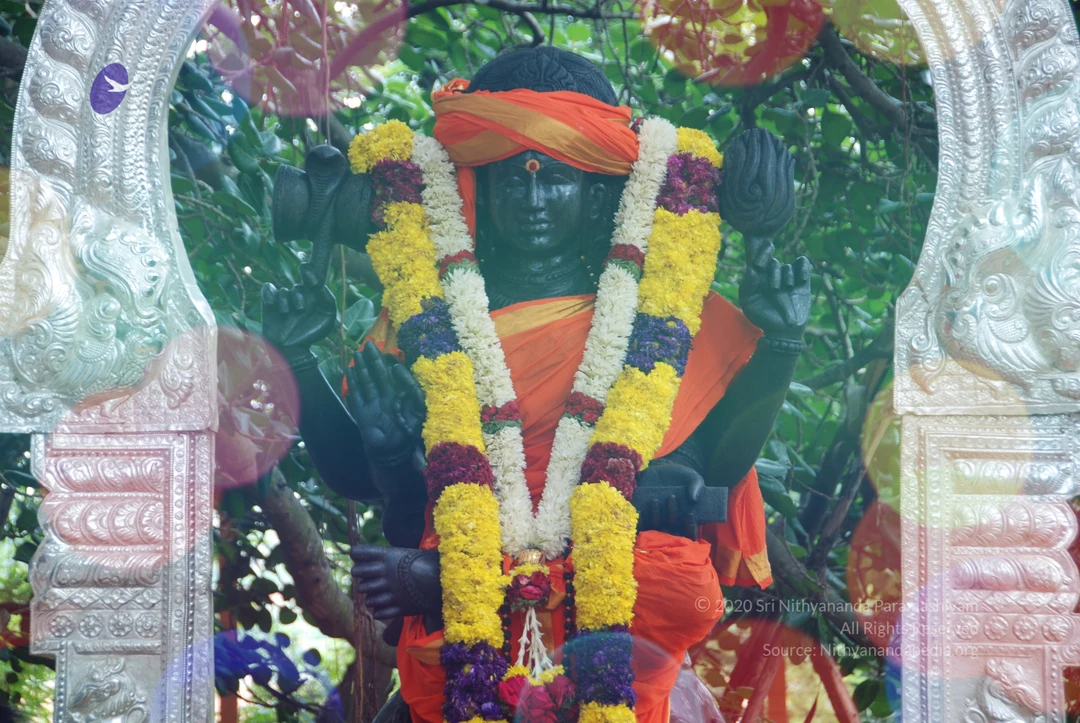
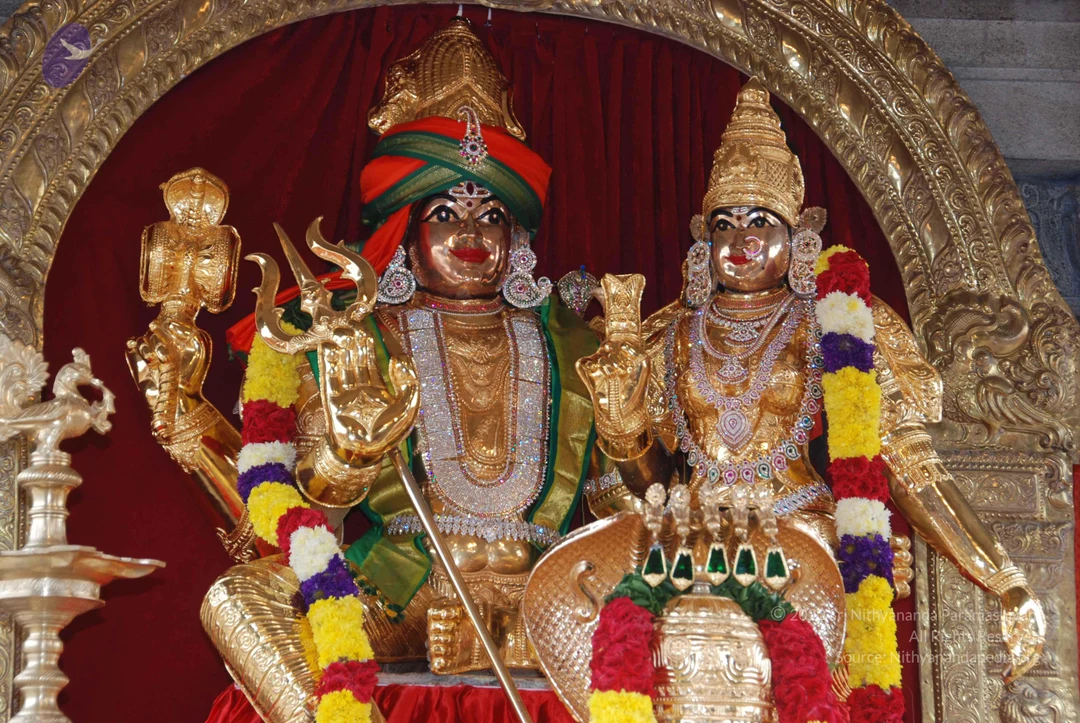
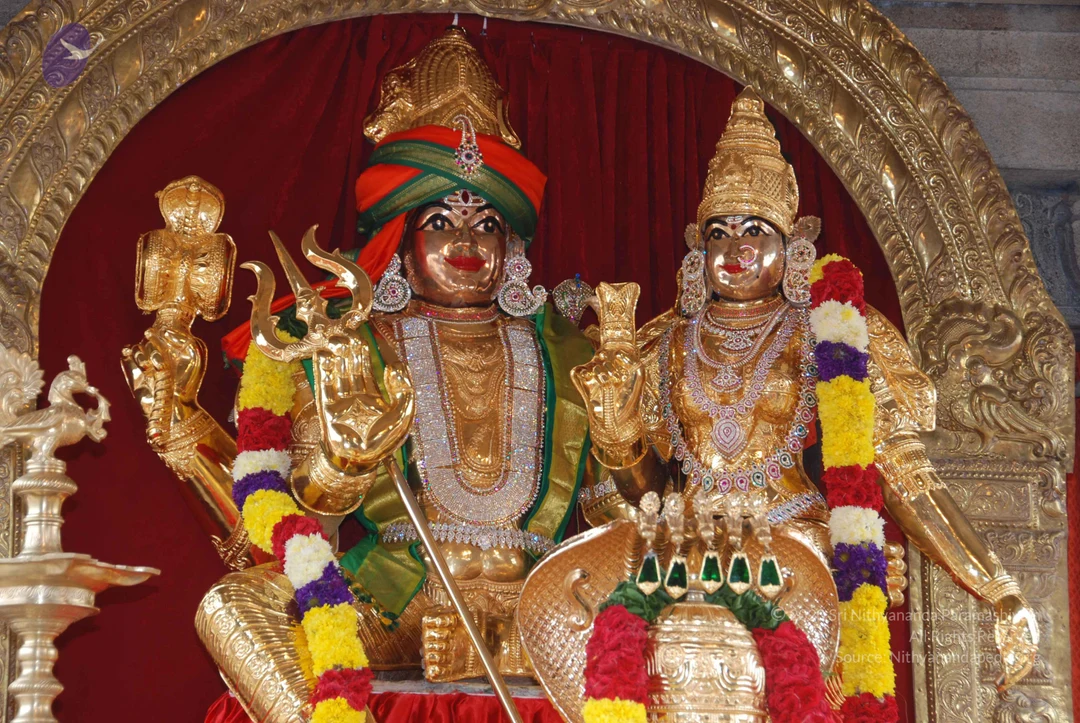
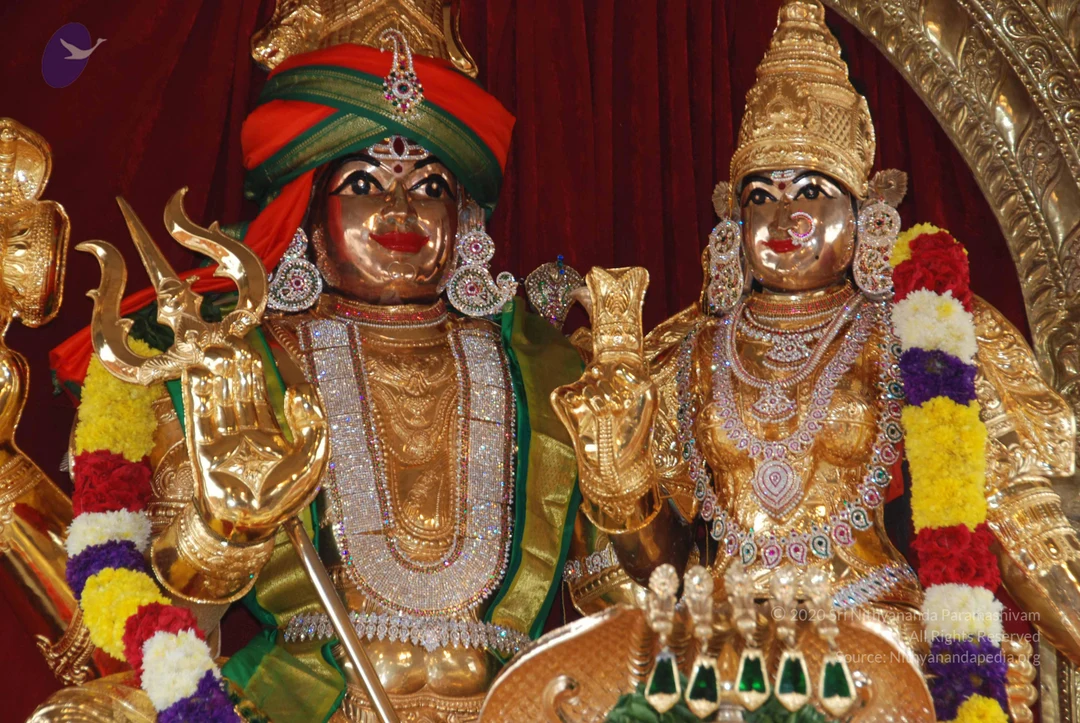
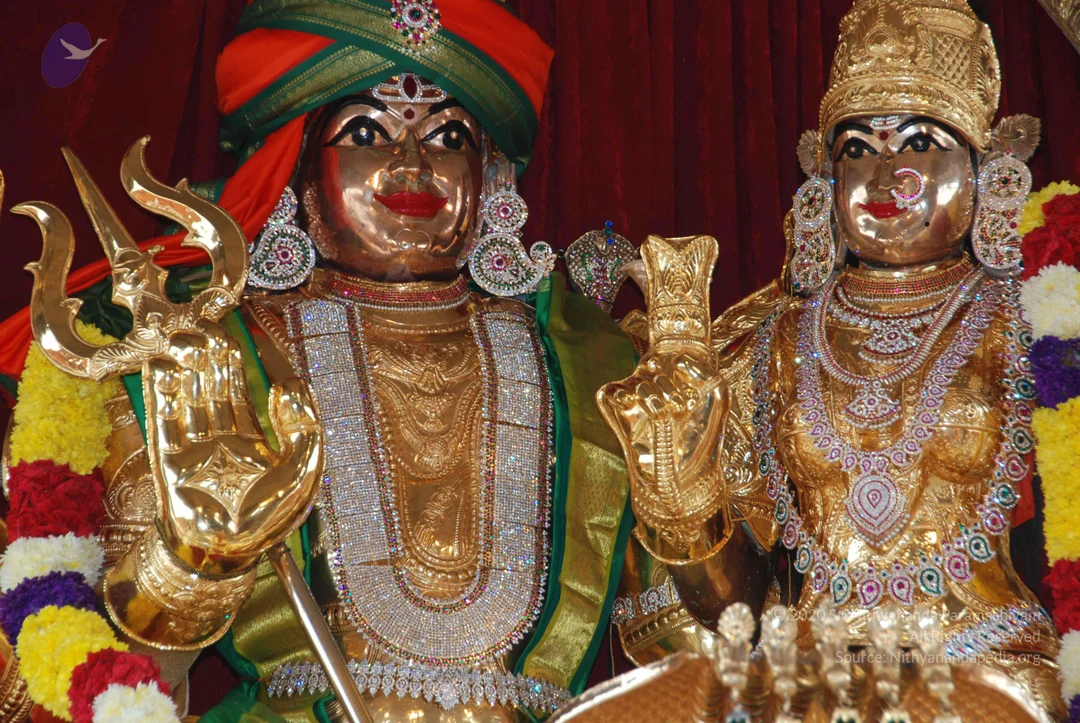
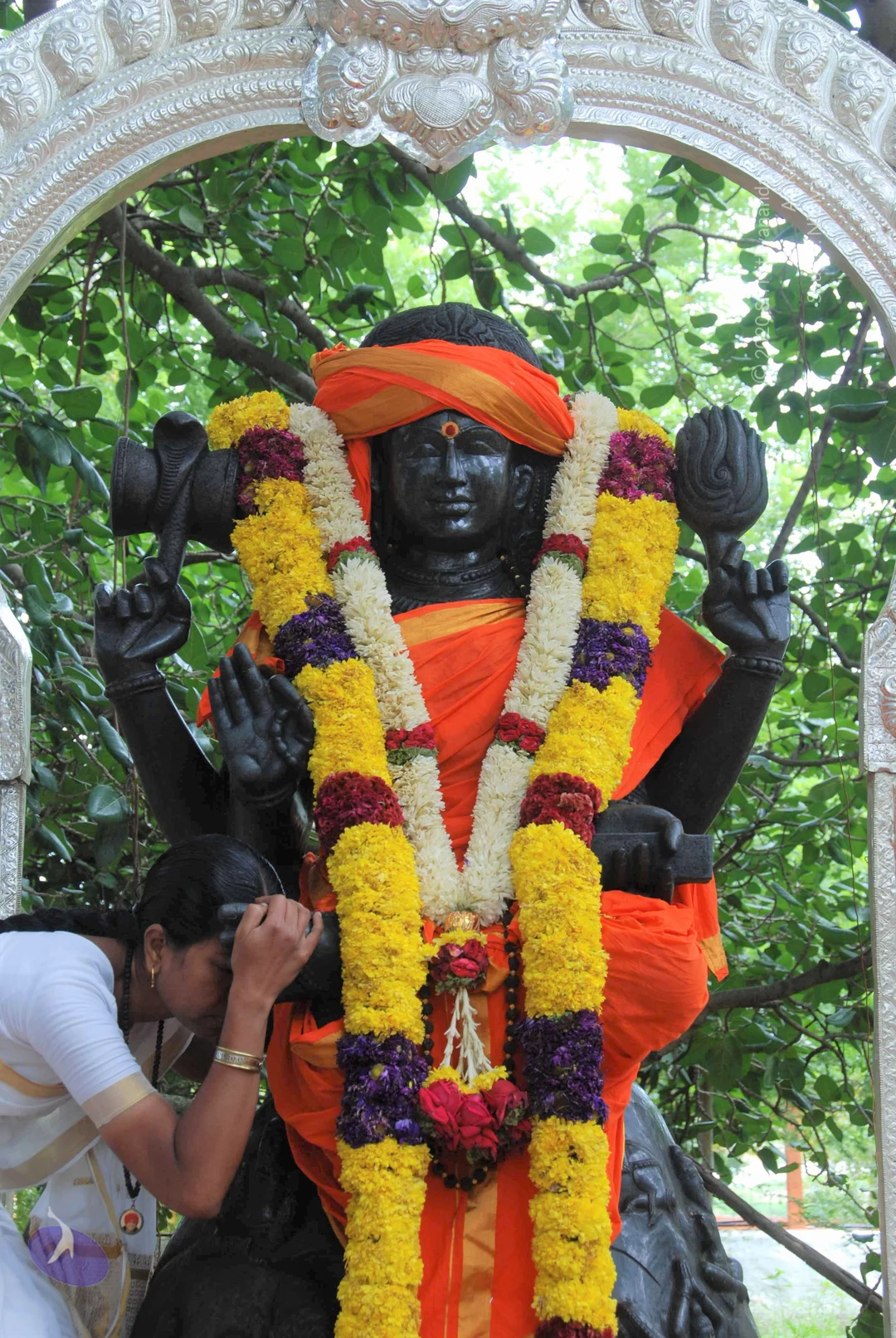
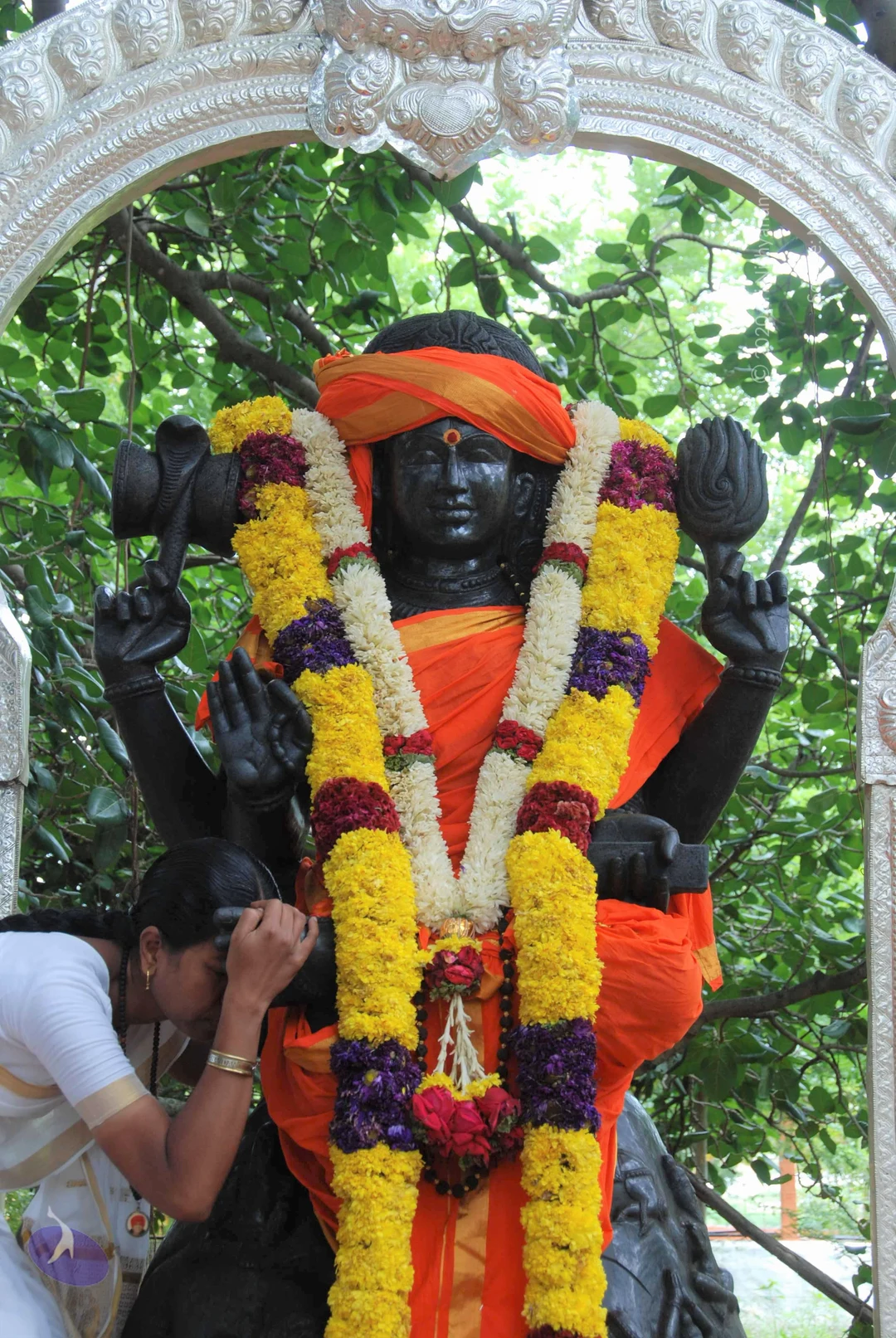
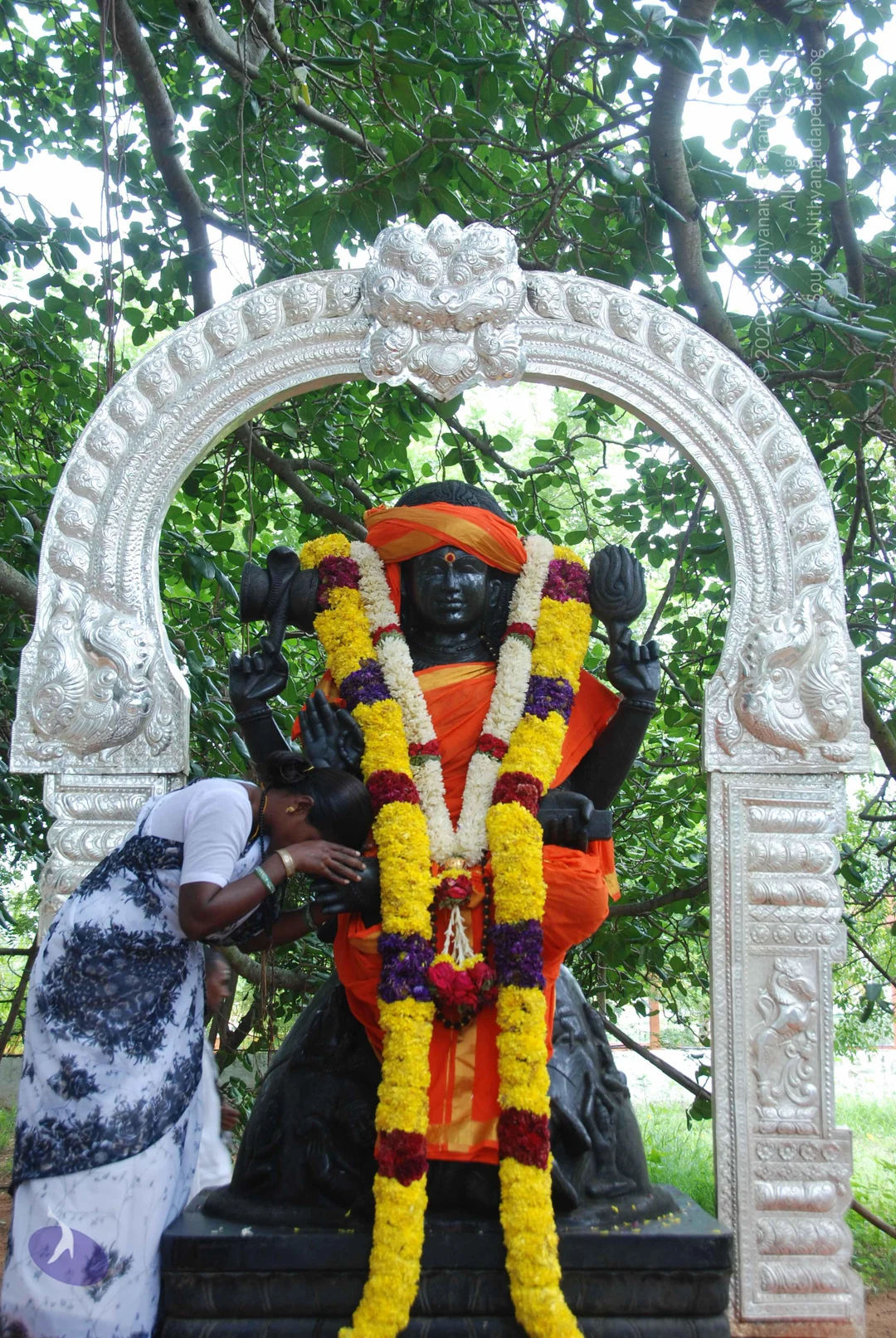
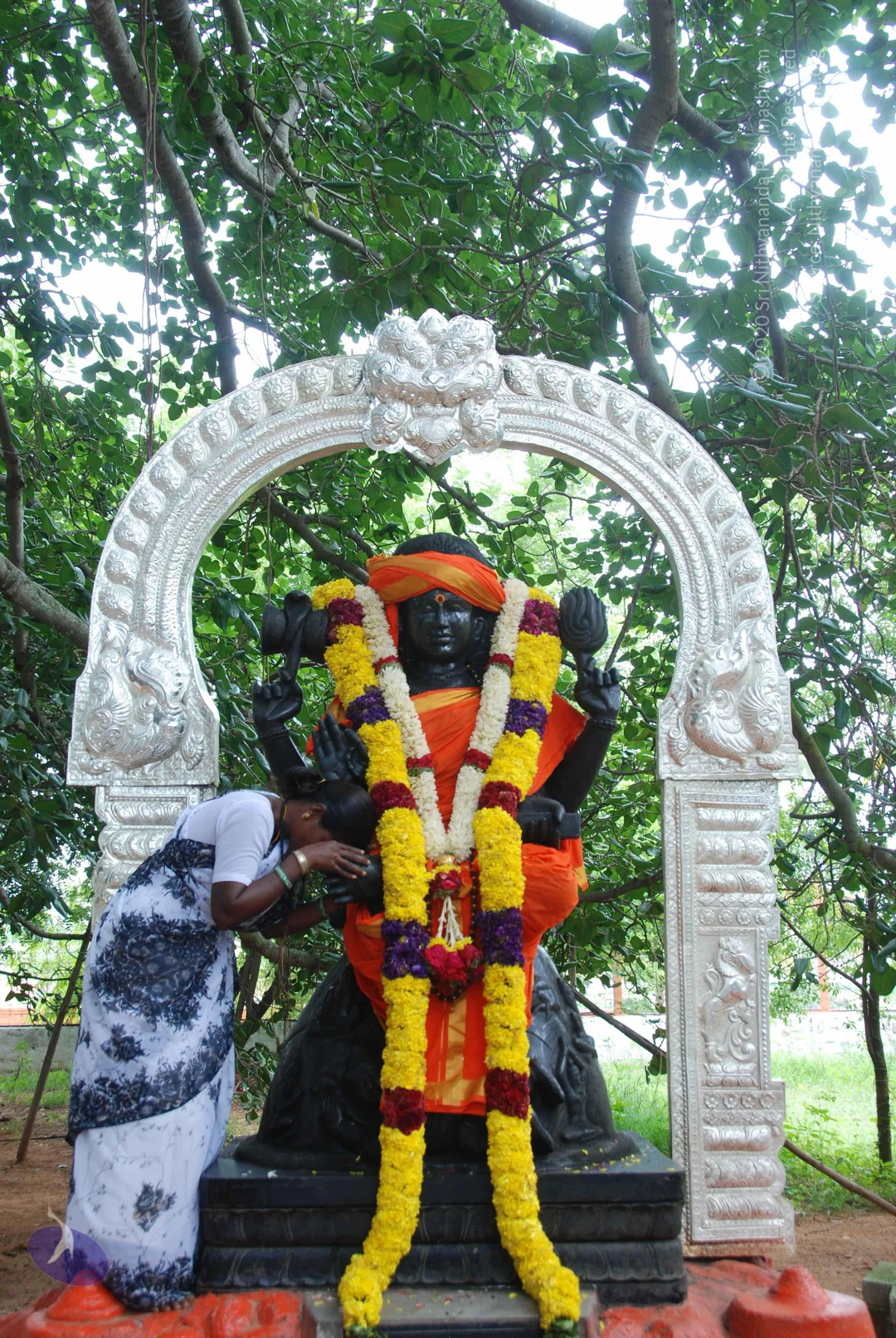
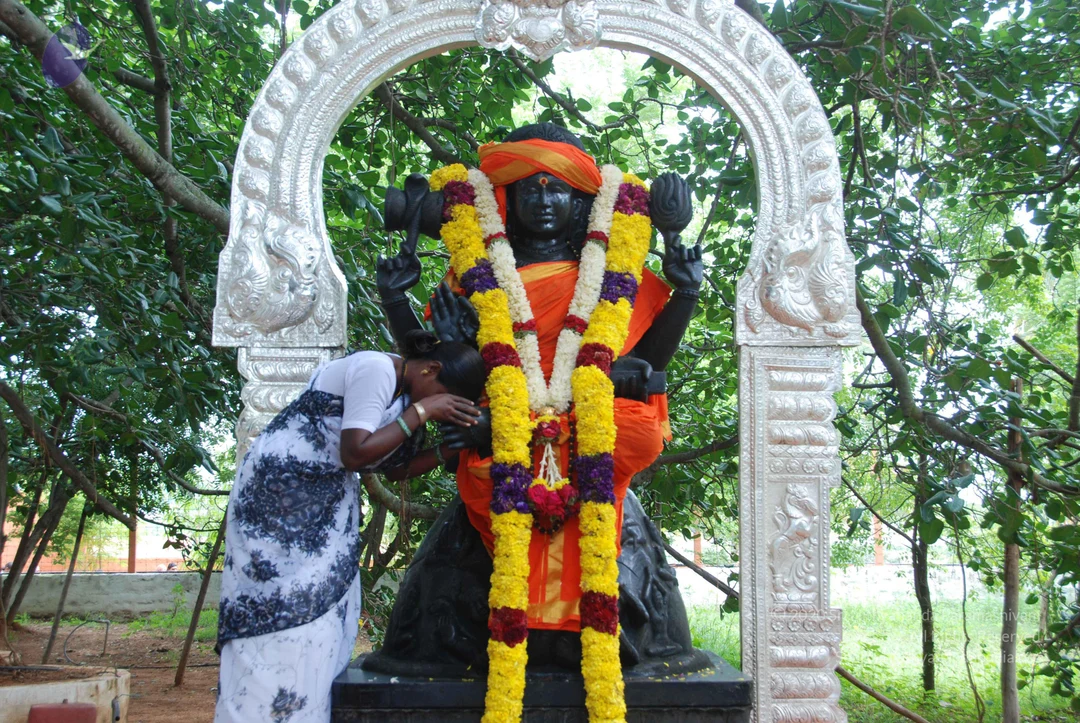
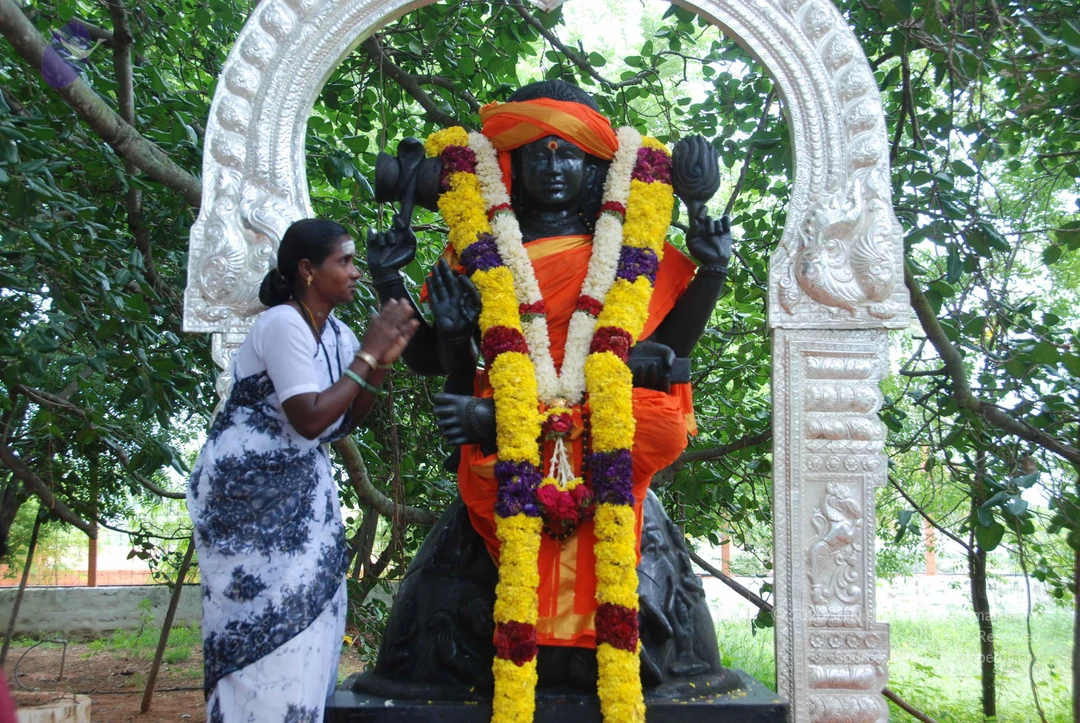
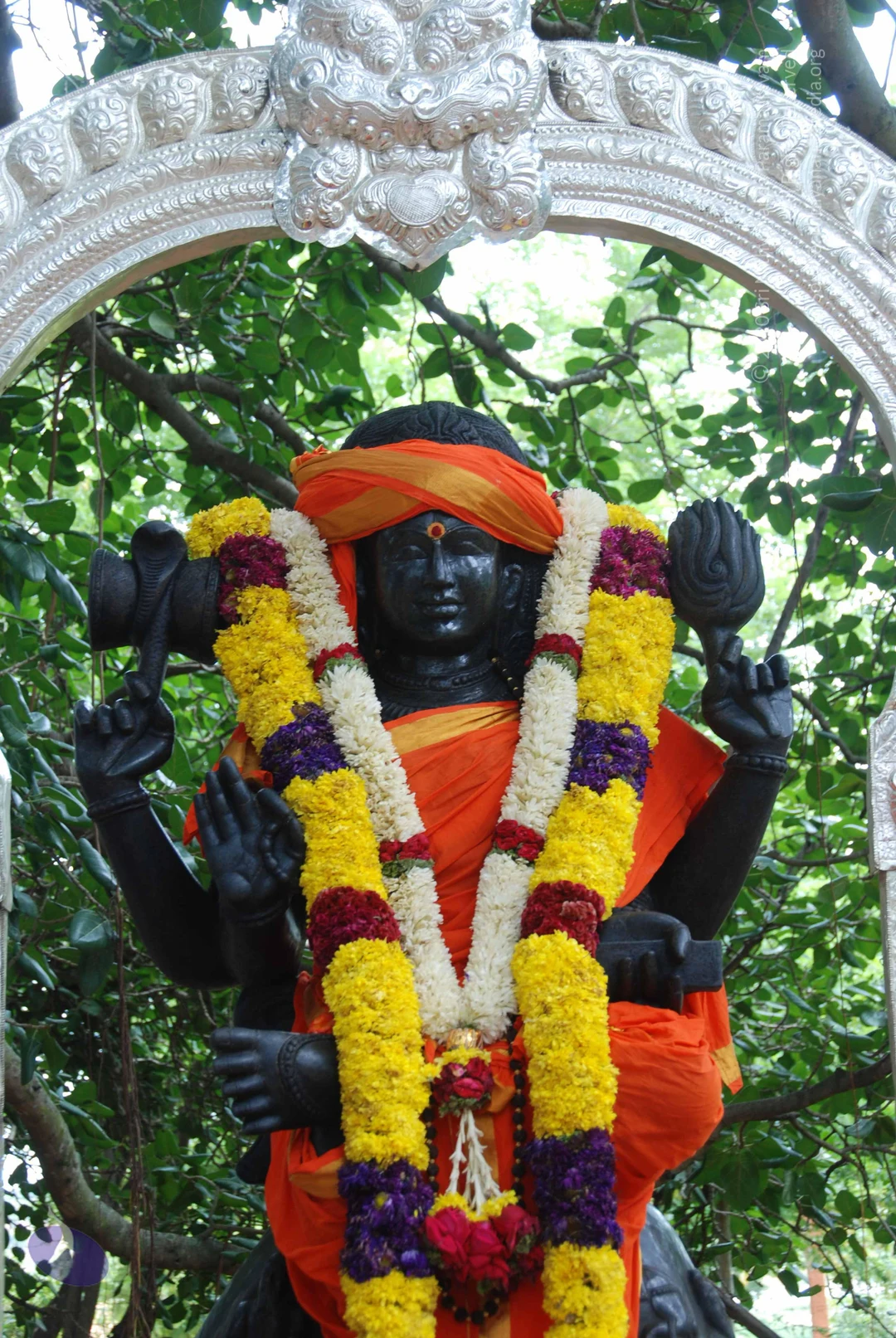
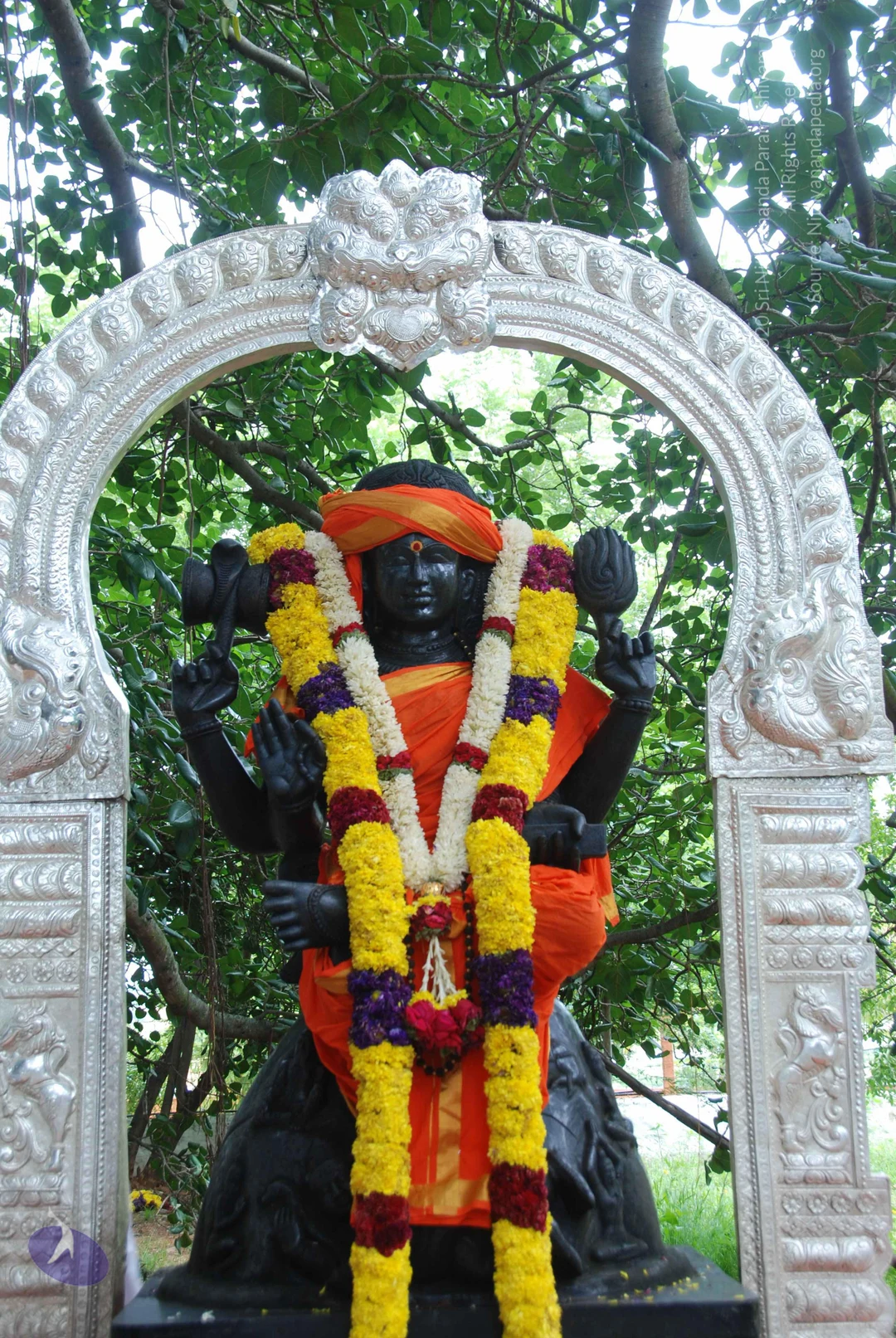
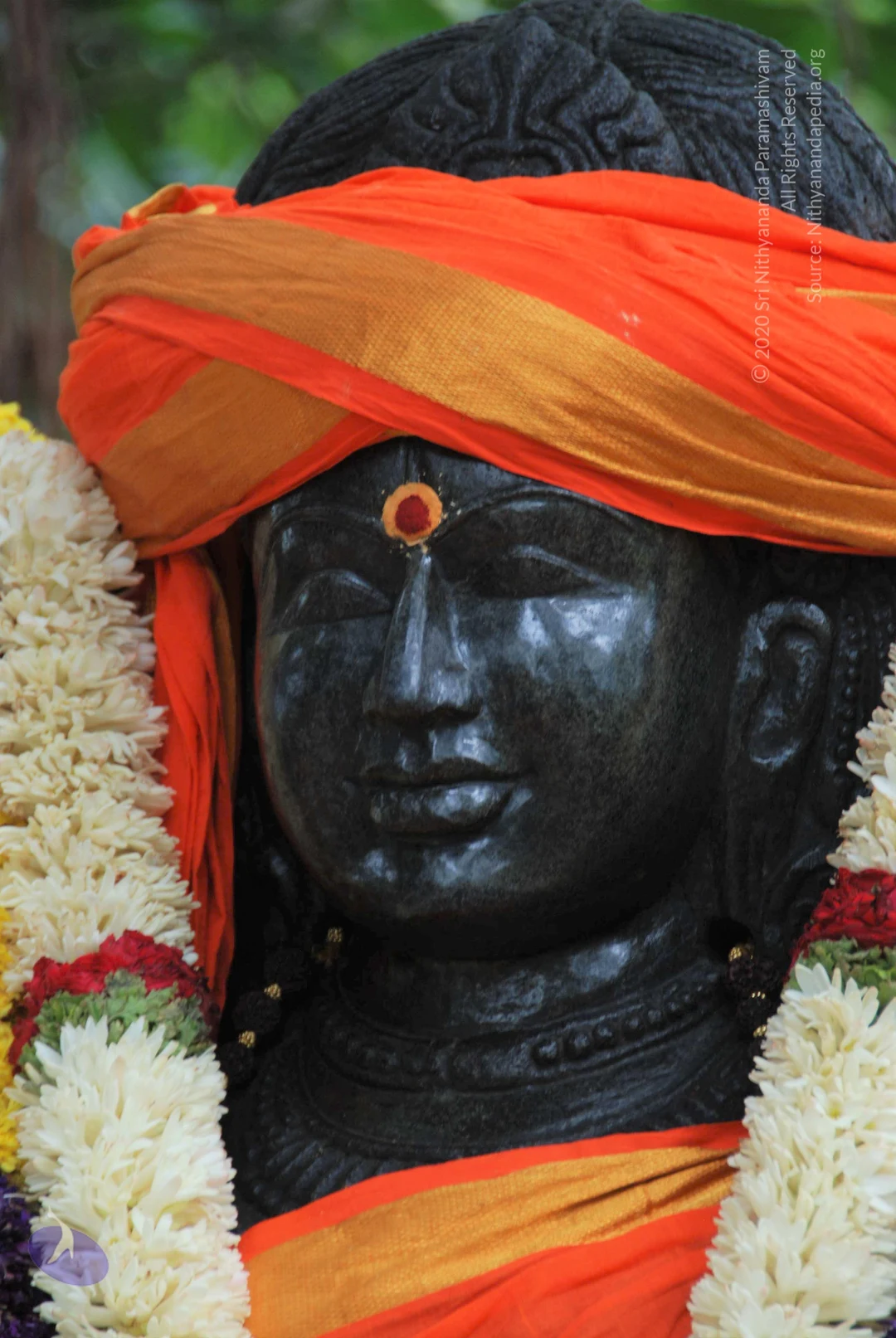
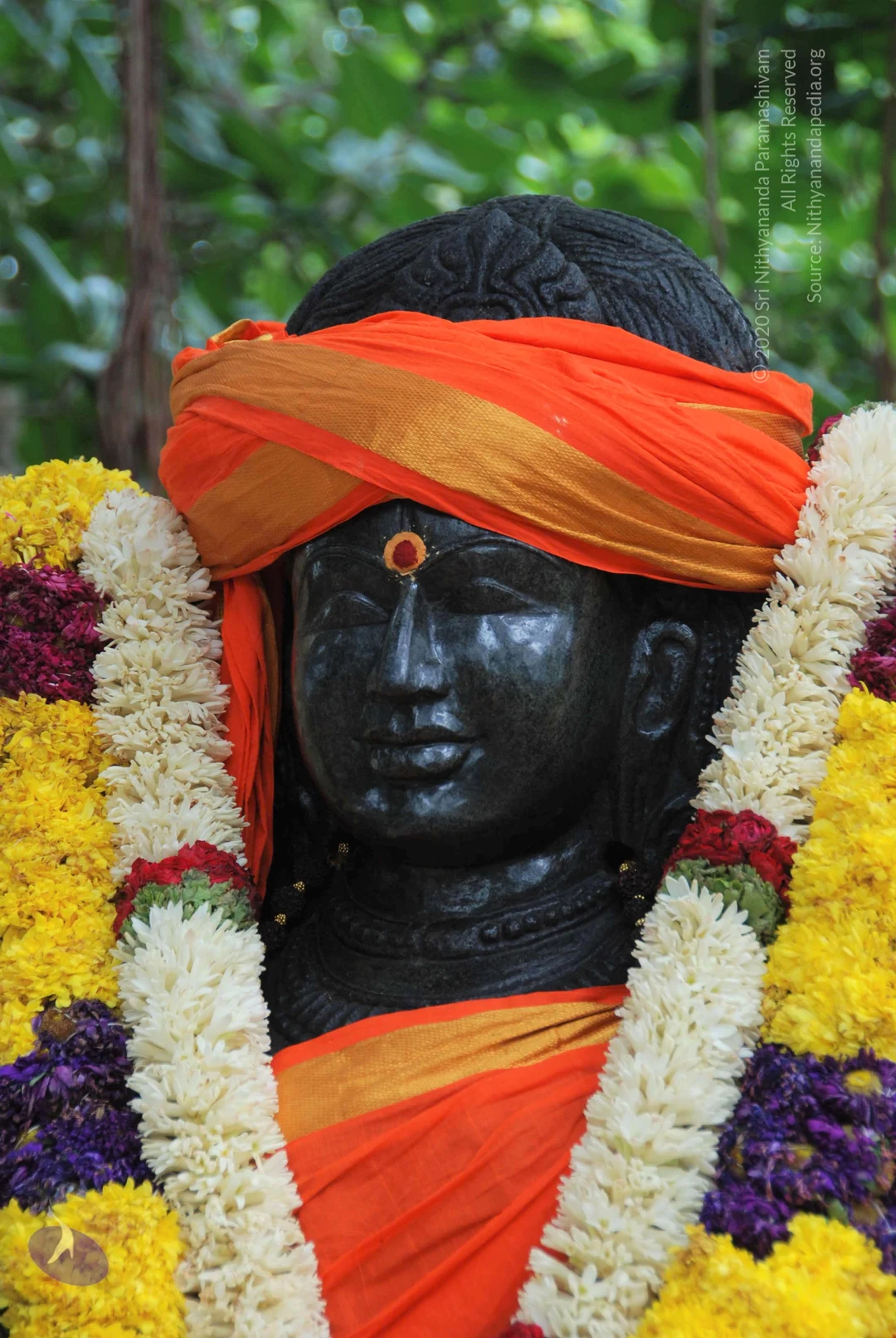
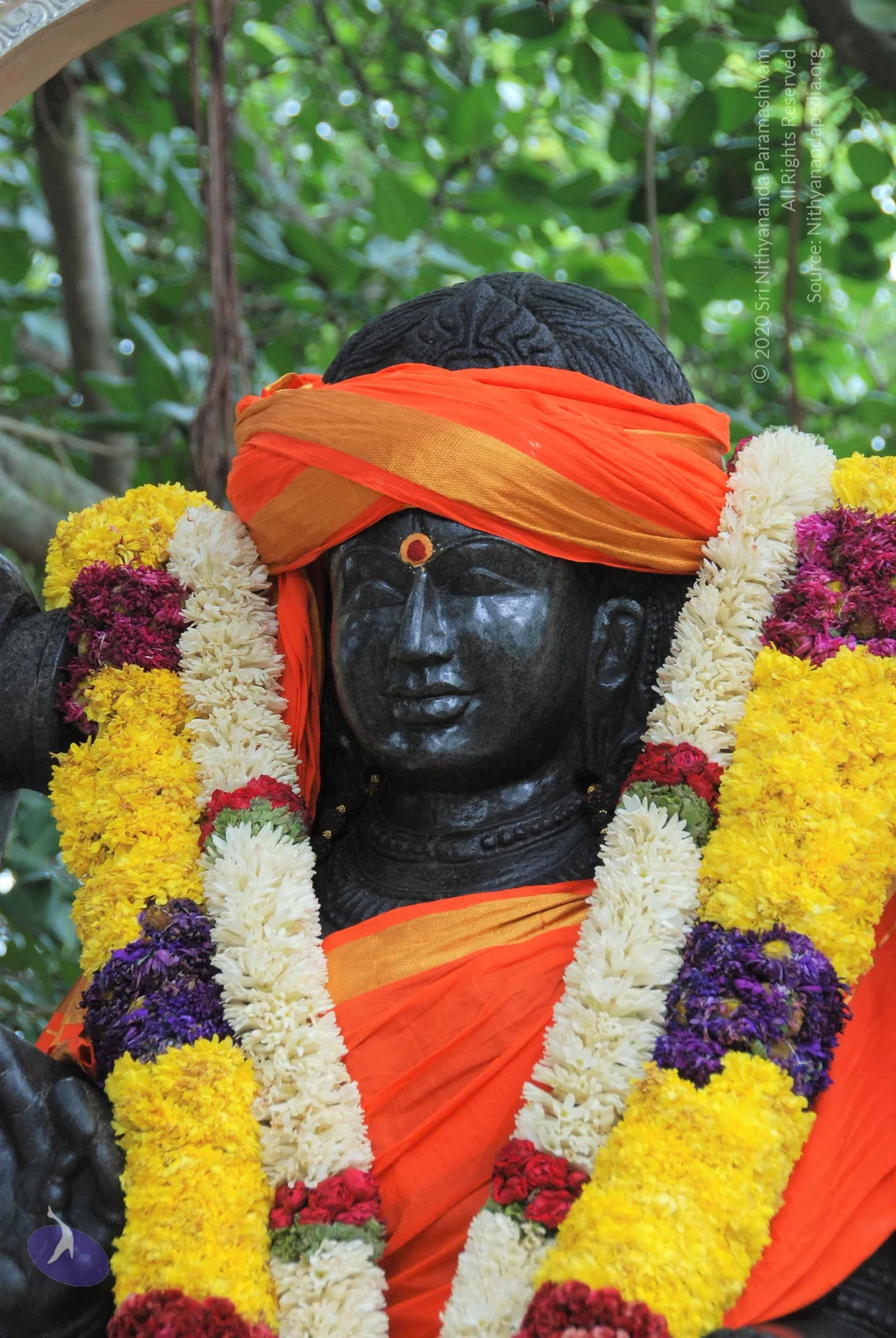
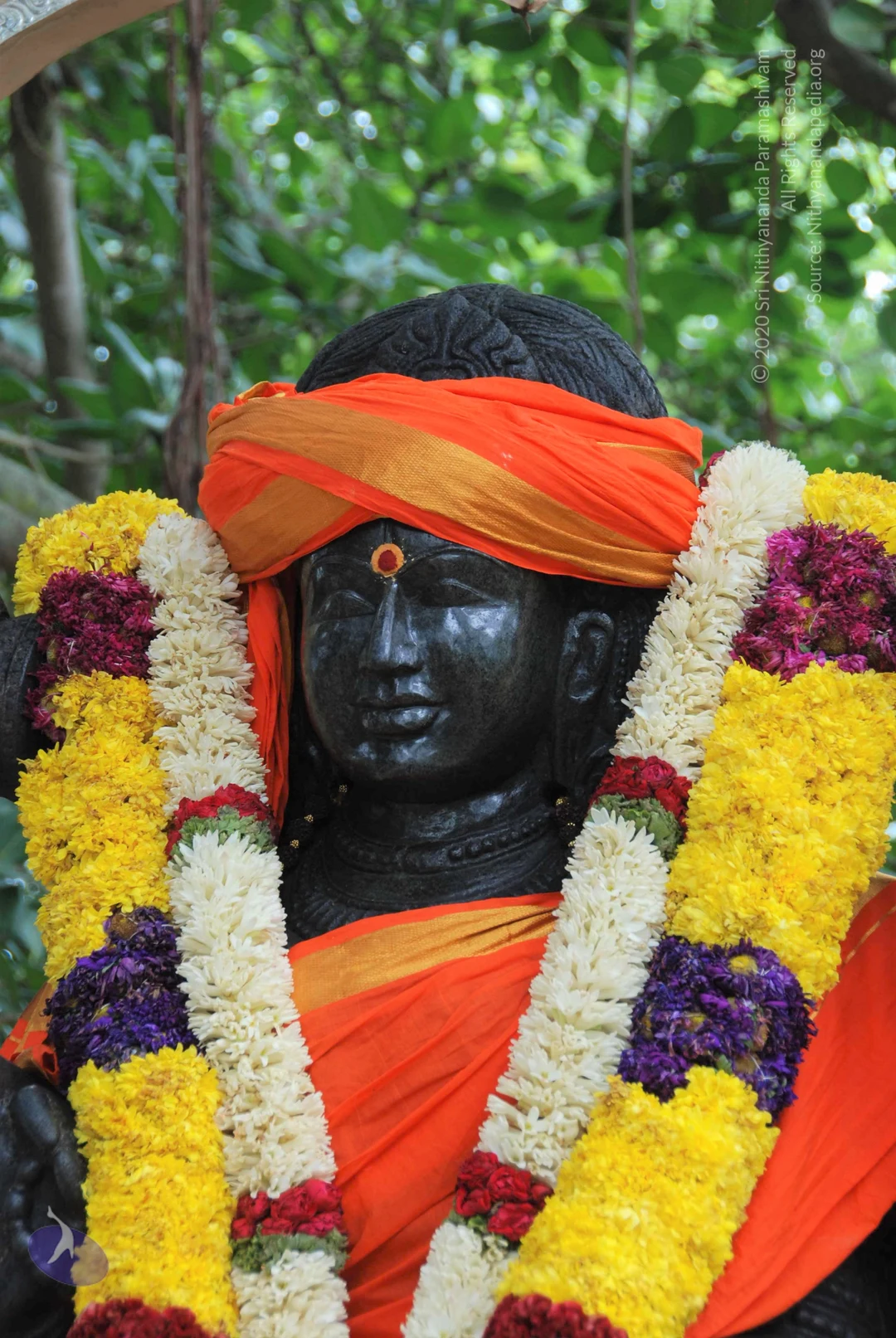
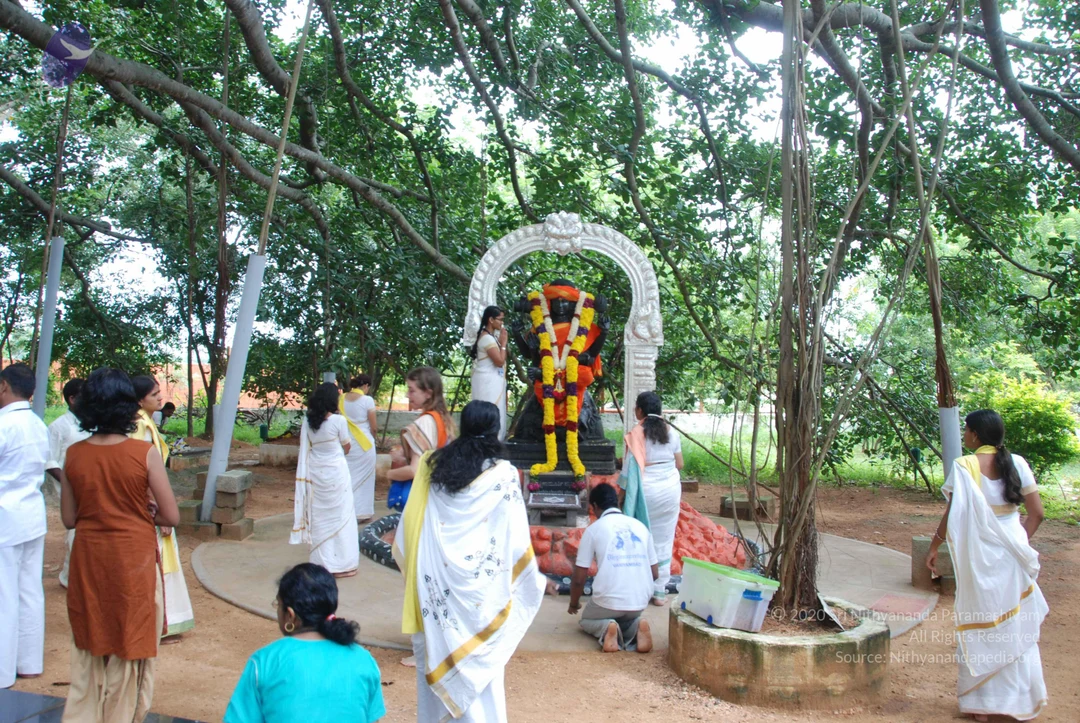
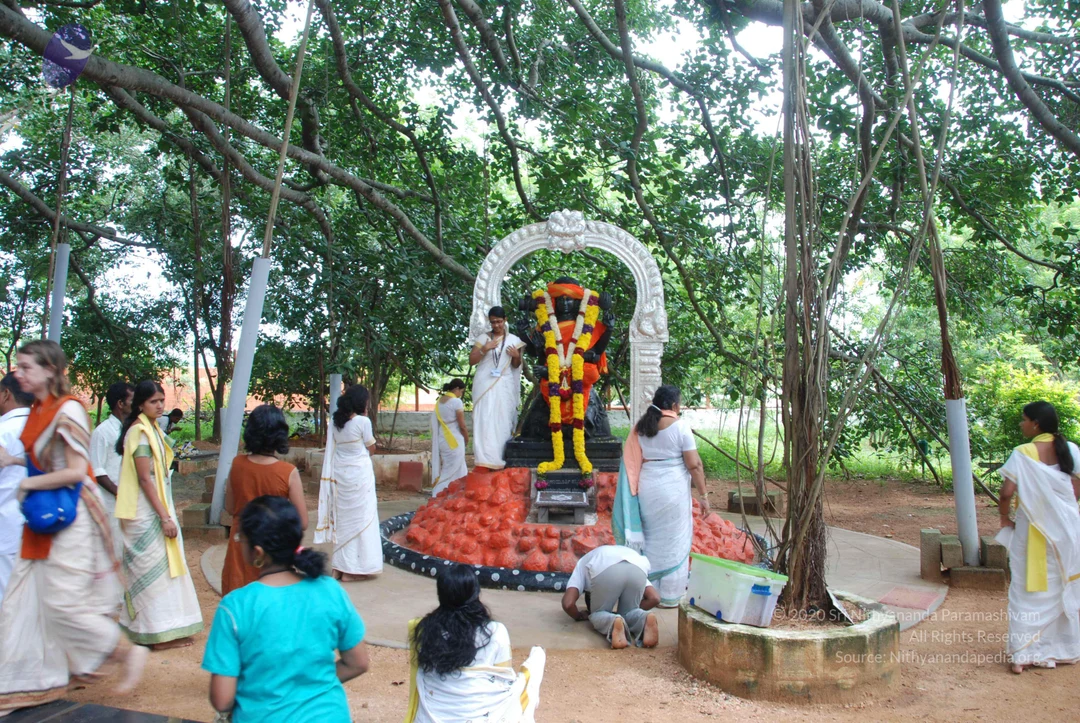
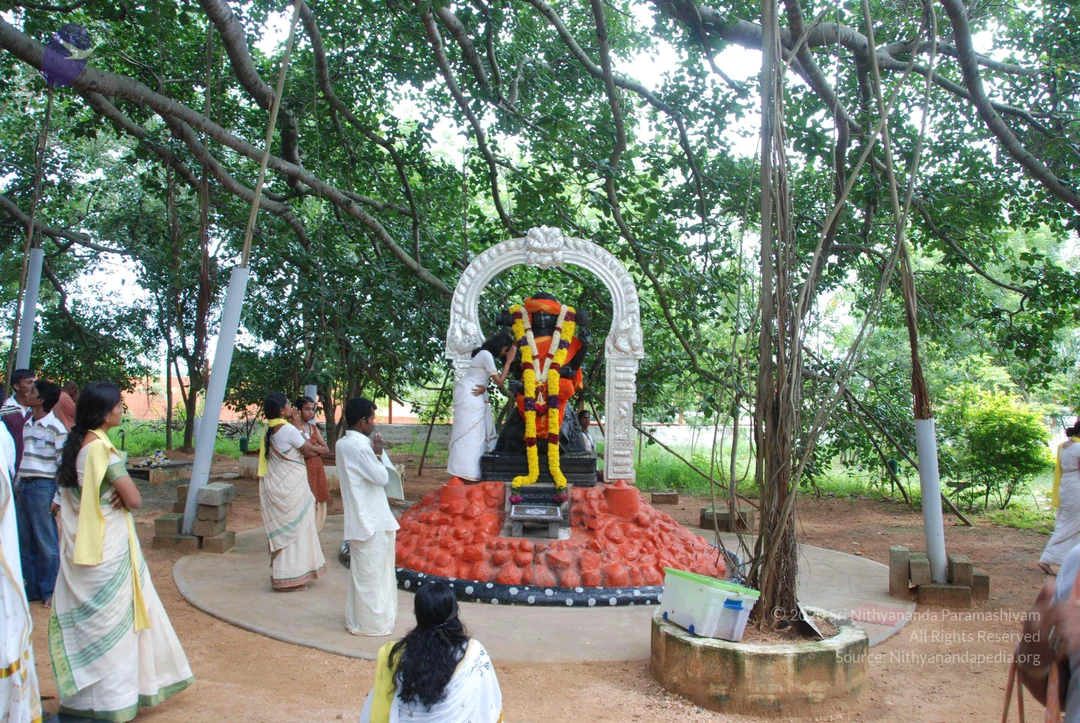
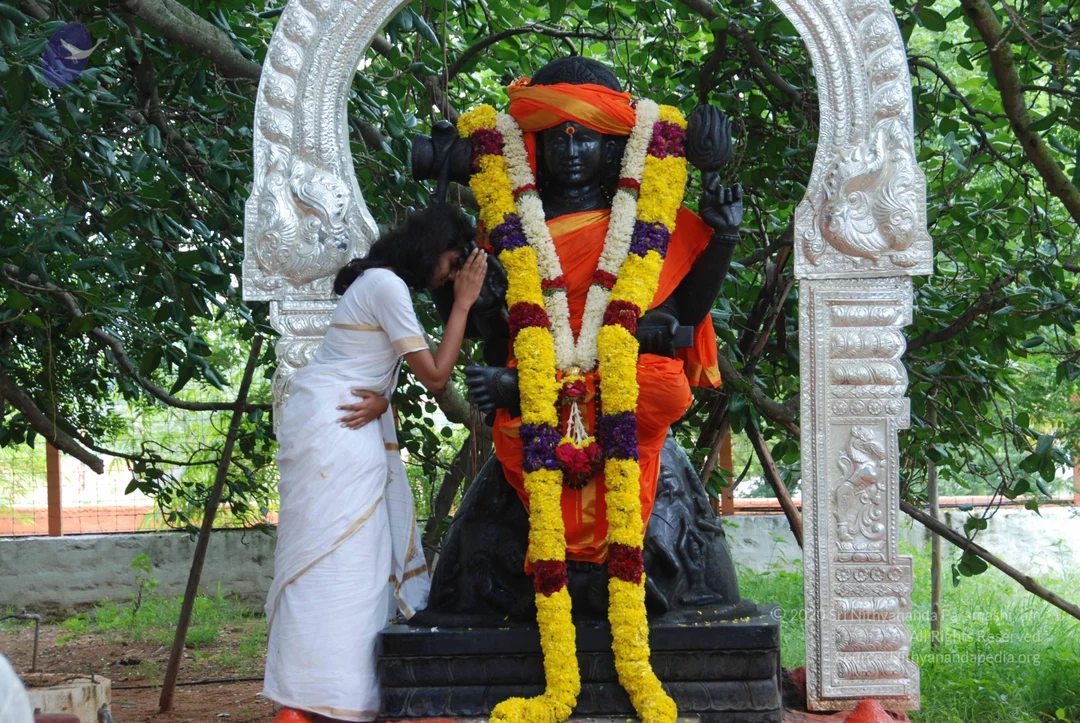
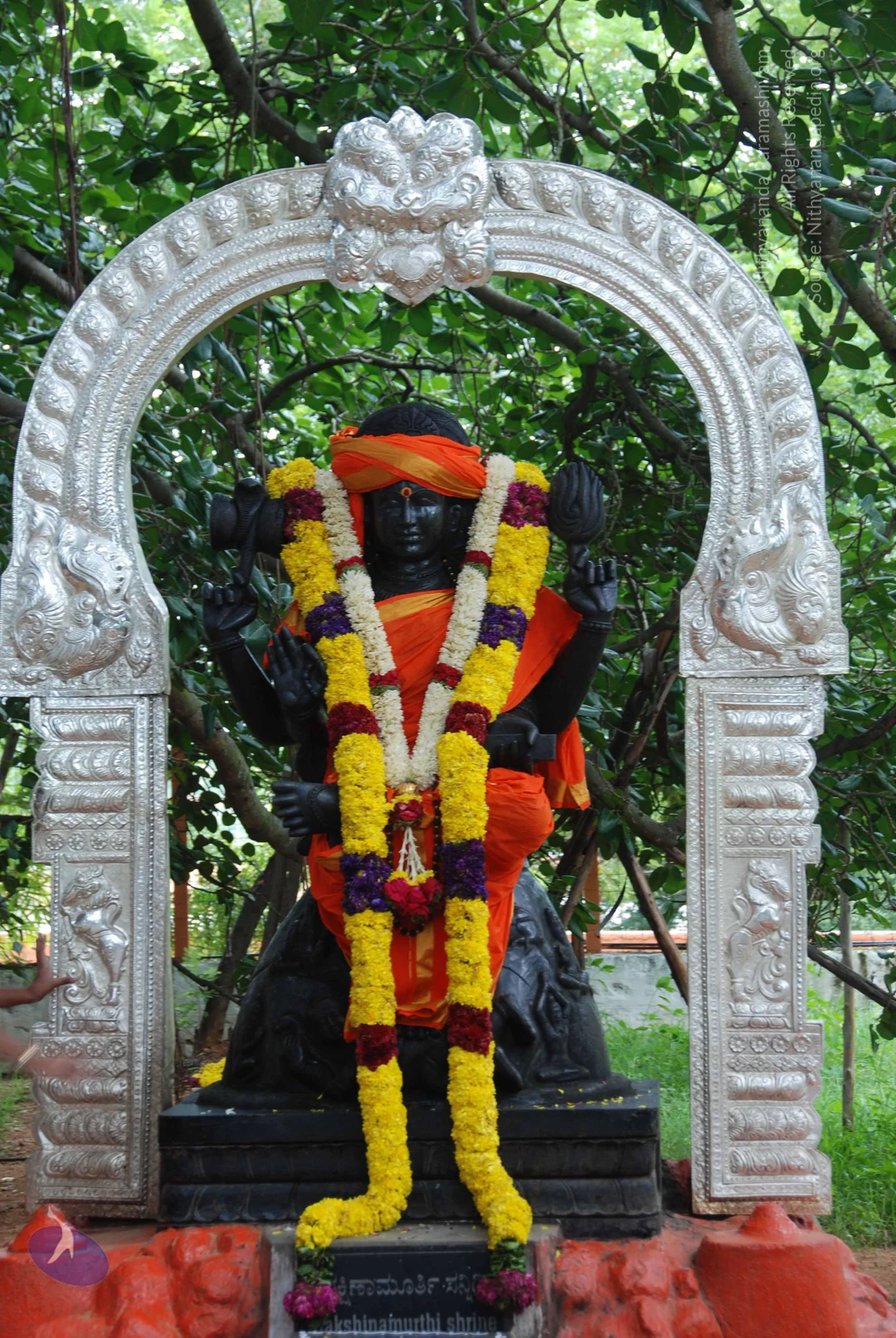
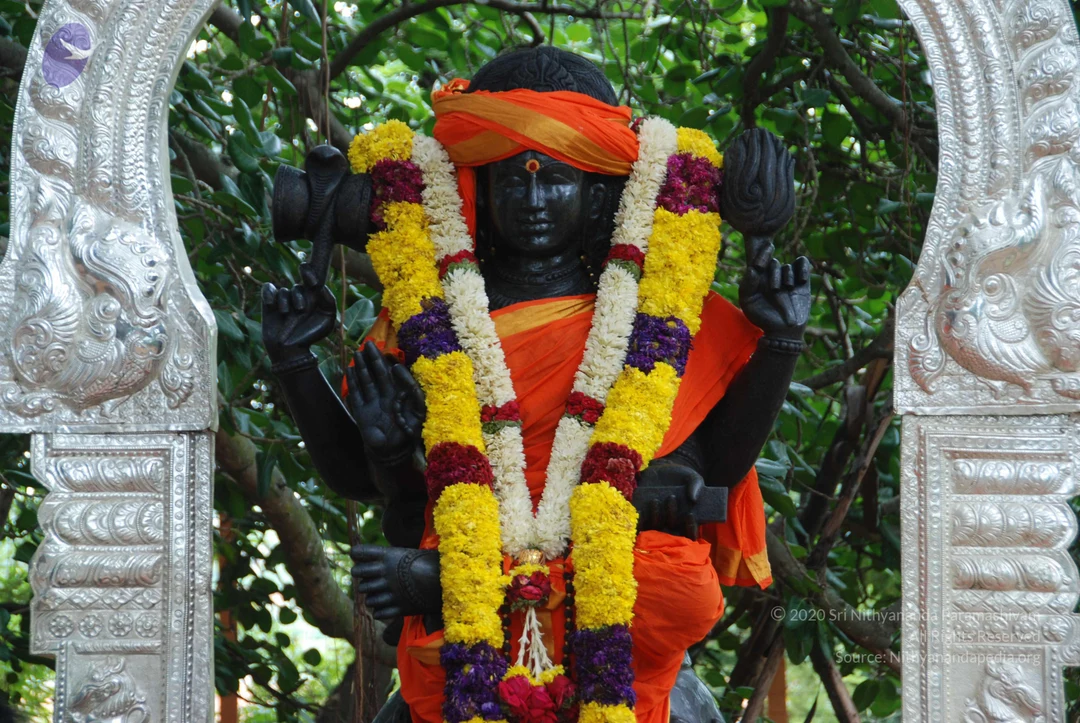
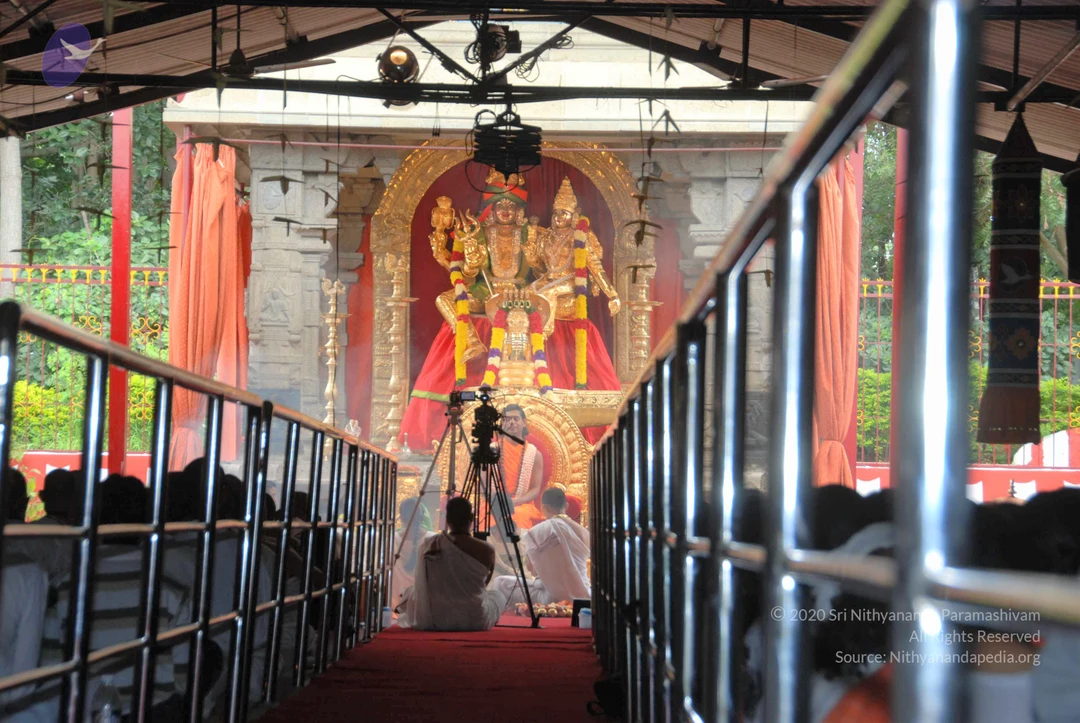
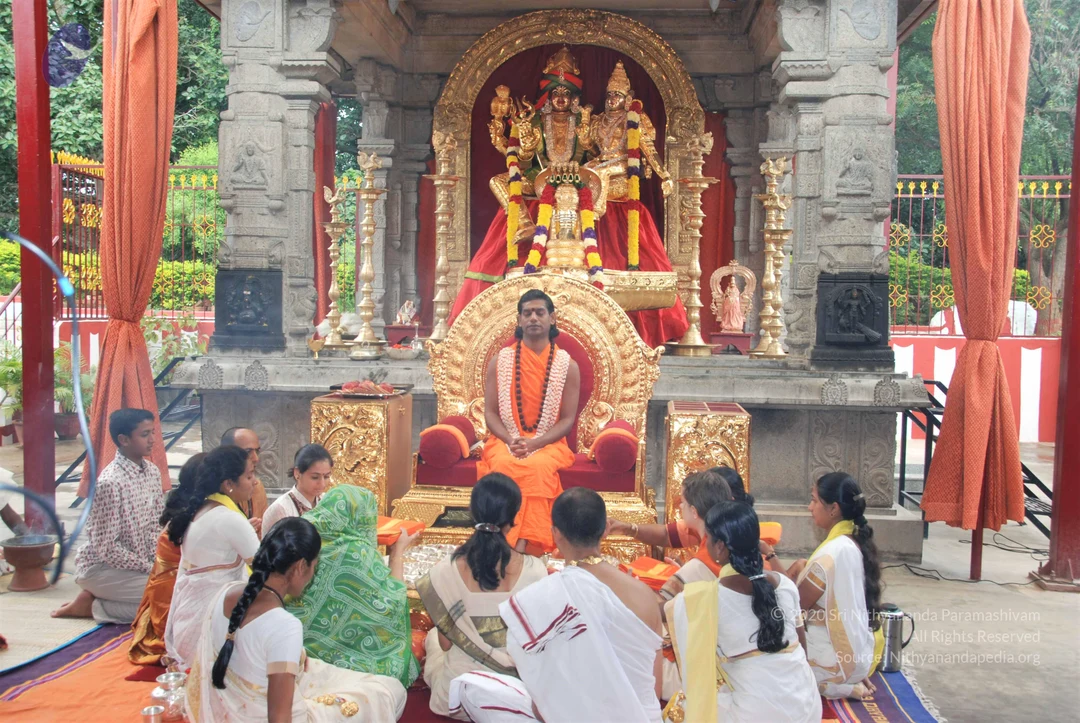
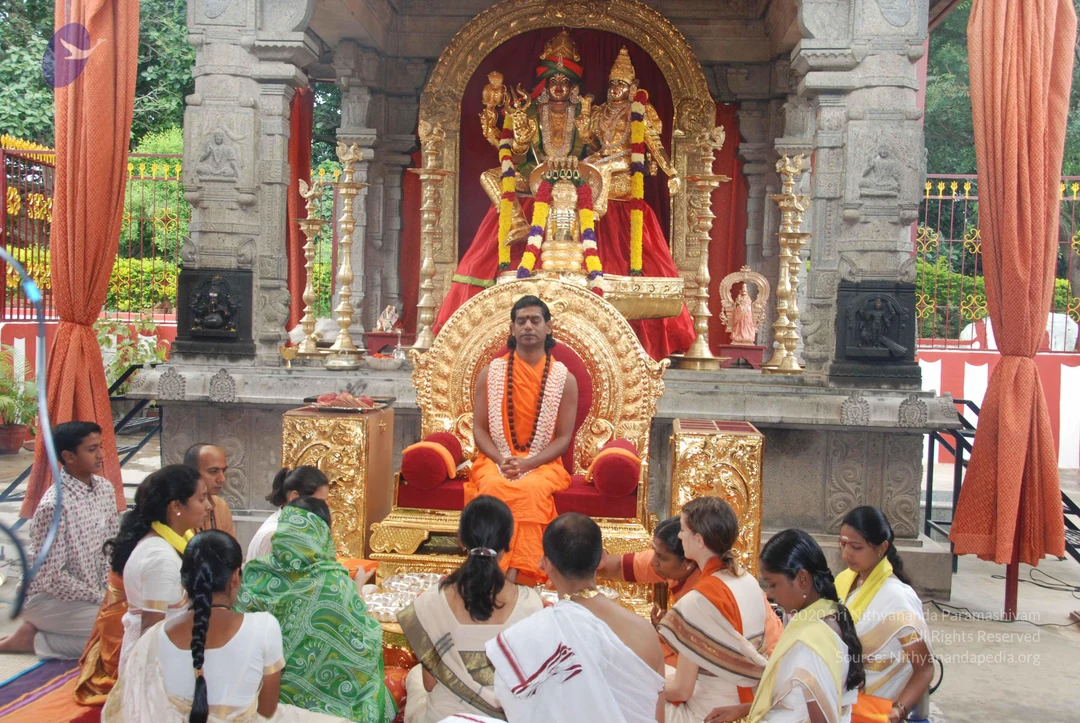
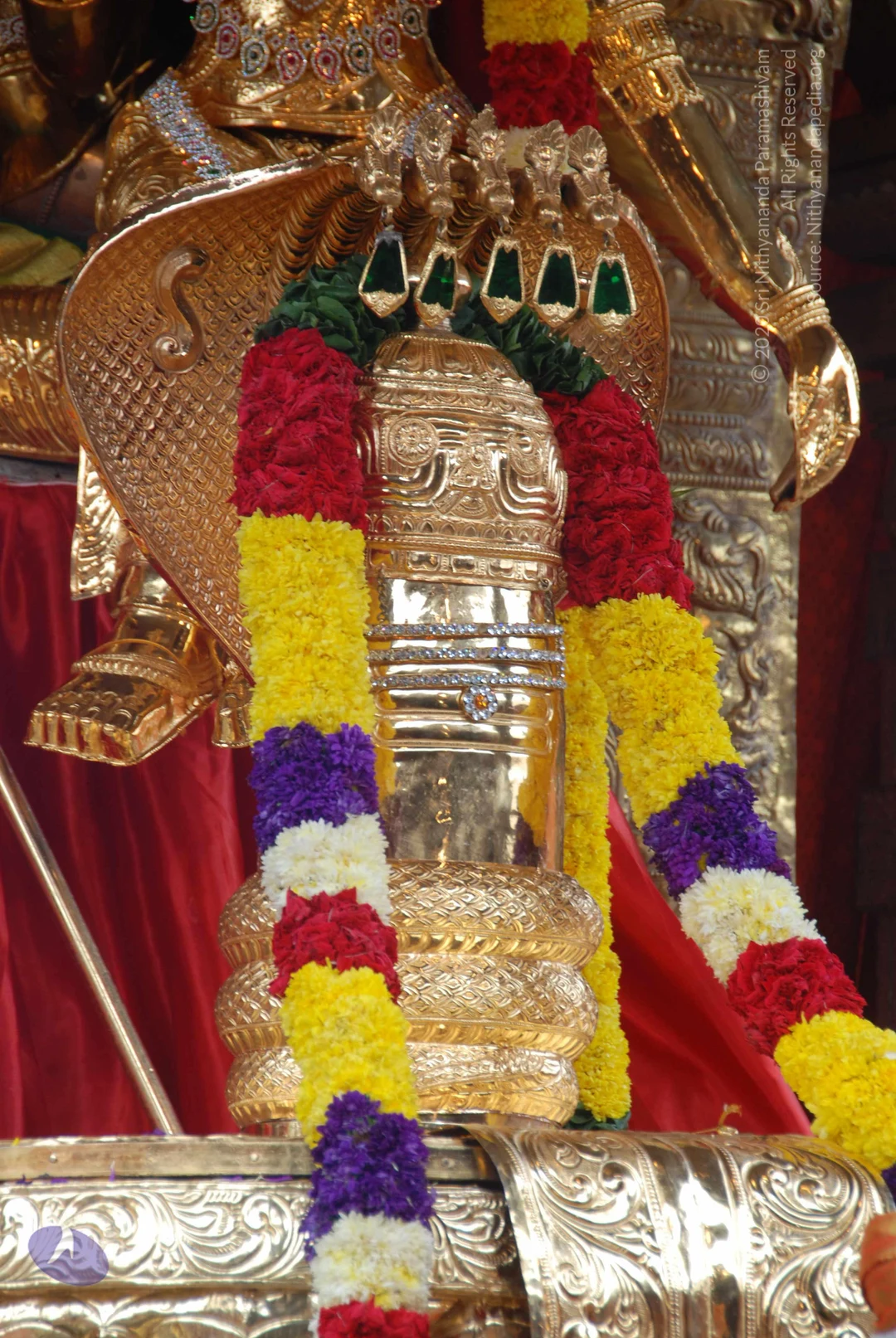
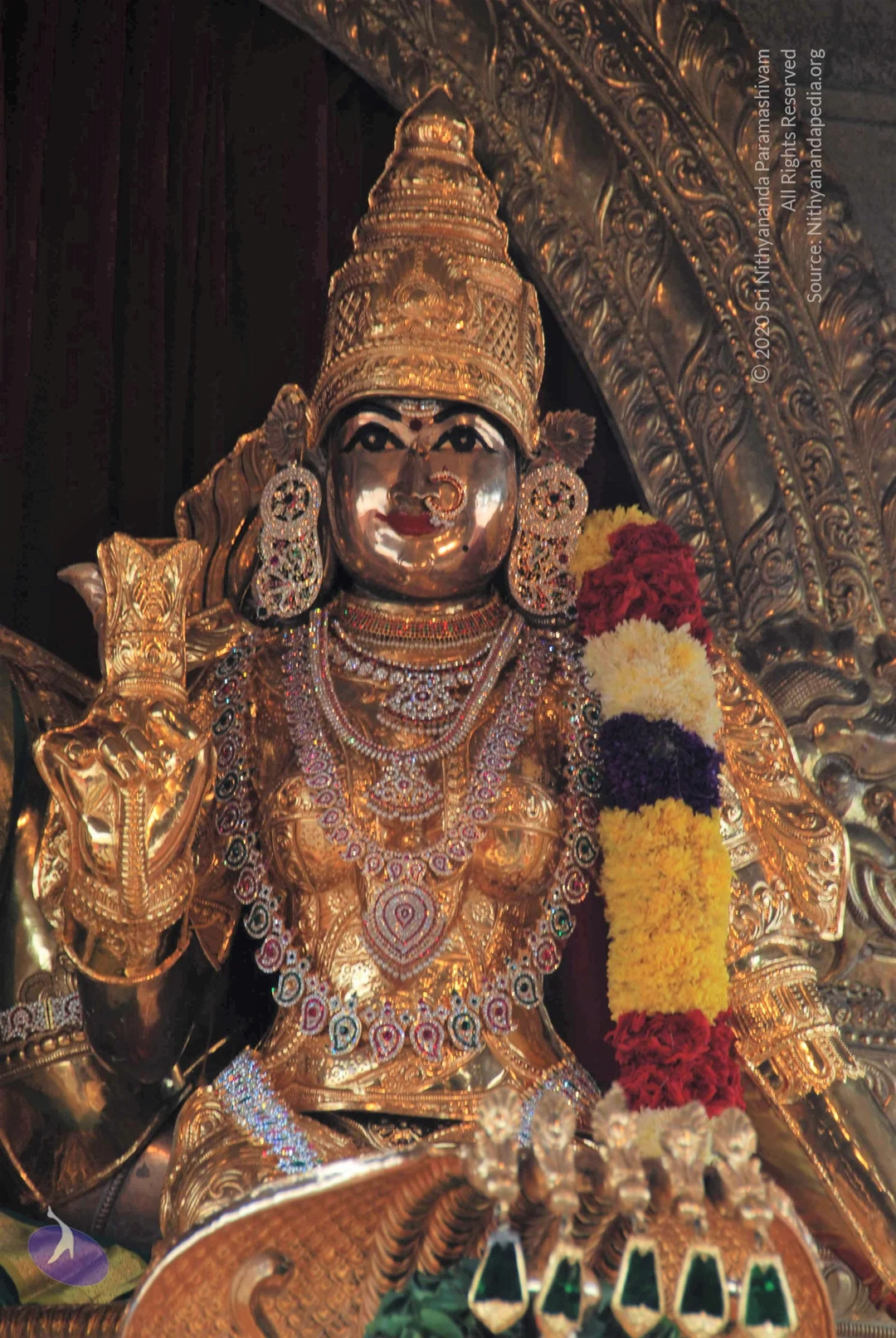
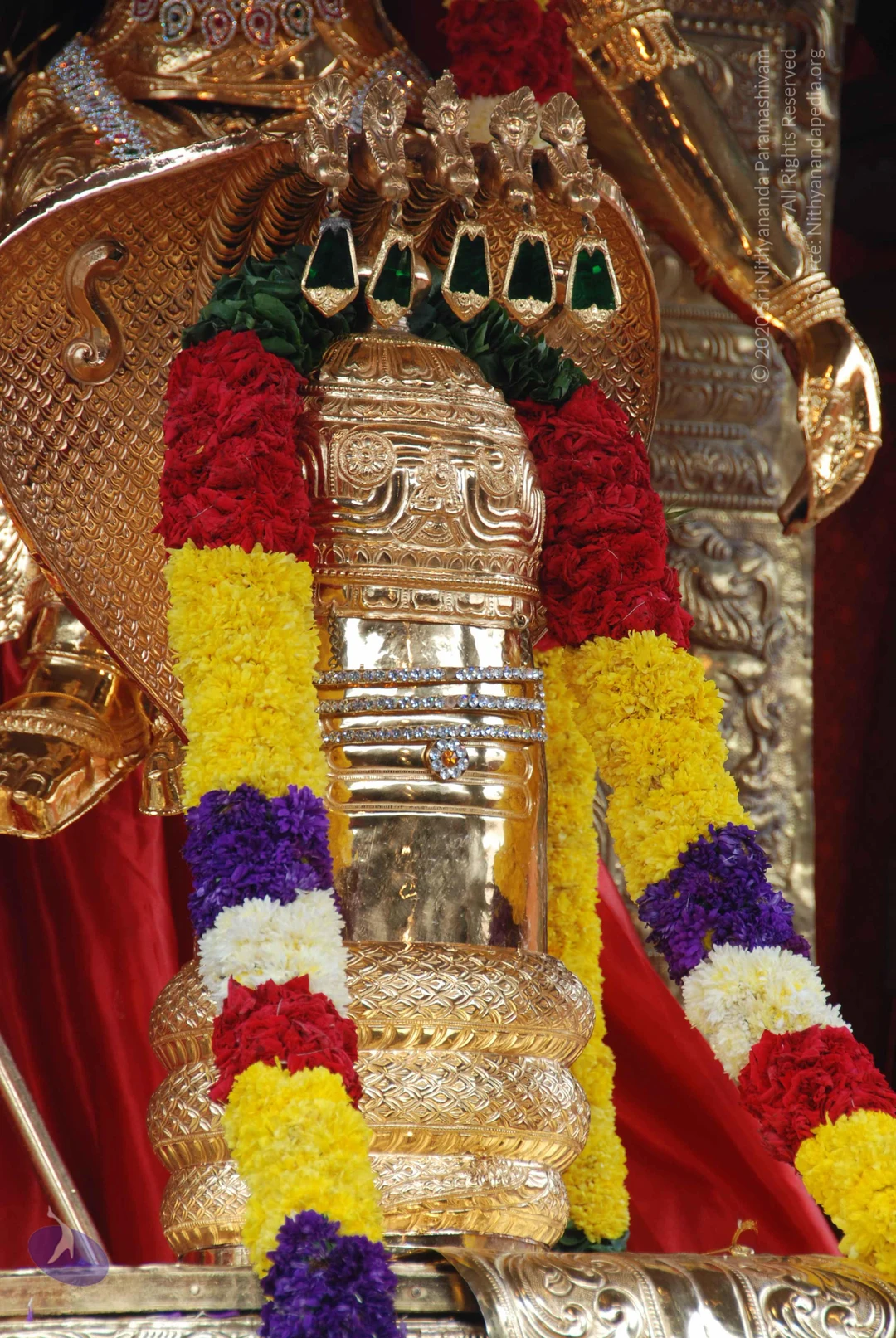
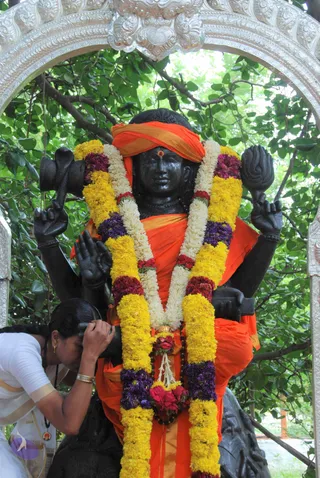
A golden deity murti pair seated on a raised throne before a red velvet backdrop within an ornate gilded arch. The figure on the left wears a red and green turban with a crown-like headpiece, rich layered jewellery and a green silk garment, holding a golden trident and a staff. The figure on the right wears a tall golden crown, layered necklaces and a red-and-gold garment. Both are garlanded with marigold-like flowers in yellow, red, purple and white. A brass oil lamp stands at the left edge, and a golden kalasha-like vessel sits in the foreground.Two golden deity murti seated side by side under an ornate gilded arch against a red velvet backdrop. The figure on the left wears a red and green turban with a red bindi, holds a golden trident, and has a broad green sash over the shoulder and a jewelled necklace. The figure on the right wears a golden crown, jewelled earrings and necklaces, and raises one hand in a blessing gesture. Both are garlanded with red, yellow, white and purple flowers. A golden oil lamp stands at the left edge, and a golden pot-shaped offering sits in front of them. No people are visible.A photograph of two gilded metal deity murtis standing before a red velvet backdrop and an ornate gold-framed arch. The figure on the left wears a green and red turban, a green garment, a silver-jewelled necklace and large jewelled earrings, and holds a golden trident. The figure on the right wears a gold crown, layered jewelled necklaces, bangles and a garland of yellow, red, white and purple flowers. The murtis are adorned with jewels and marigold-style garlands, and their faces are painted with bindi and lip colour.Two golden deity murtis stand side by side against a deep red draped backdrop with an ornate gold arch. The left figure, a male deity, wears a red and green turban with a jewelled ornament, a green sash, and a heavy silver-toned bead necklace; he holds a golden trident in one hand. The right figure, a female deity, wears a tall golden crown, nose ring, layered jewelled necklaces and a gold-and-red garland. Both murtis are decorated with jewelled ornaments and red-and-yellow flower garlands hang at their sides. A gold peetha or throne with green jewelled elements is visible in the foreground. No people are present.Close-up photograph of two gilded deity murti figures decorated for worship, set against a dark red curtain and framed by garlands of yellow, red, and purple flowers. The figure on the left wears a green and red turban, a green and gold garment, heavy jewelled necklaces and a trident held in one hand. The figure on the right wears an ornate gold crown, a nose ring, elaborate jewelled necklaces and earrings, and holds a small gold ritual object. No physical people are visible, only statues.A black stone statue of a four-armed deity stands in a silver-framed arch, surrounded by green leaves. The statue wears an orange turban and orange garments, and is draped in thick garlands of yellow marigolds, white jasmine and purple and red flowers. A small red tilak marks its forehead, and it holds a snake-entwined staff and a flame-like object in its upper hands. In the lower left, a woman in a white sari with a gold border leans in and touches her forehead to the statue's base in reverence, a padapuja-style offering. The statue is a murti rather than a living person, and the scene is an outdoor temple setting.
02

02-Pancha-Tapas

119 dated photos in previewSource gallery
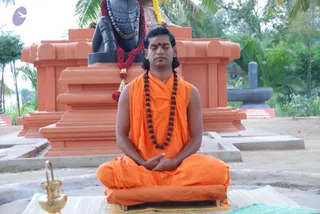
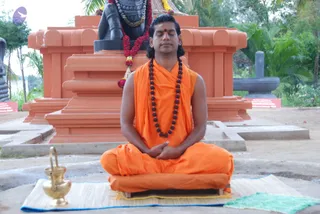
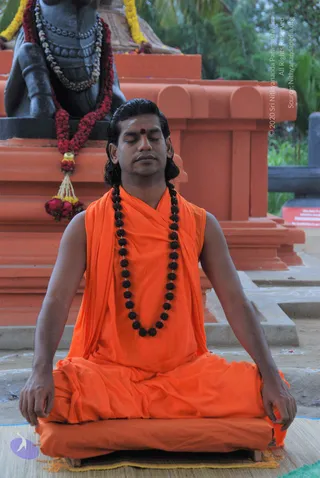
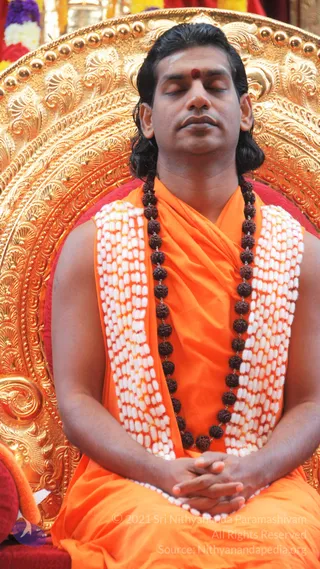
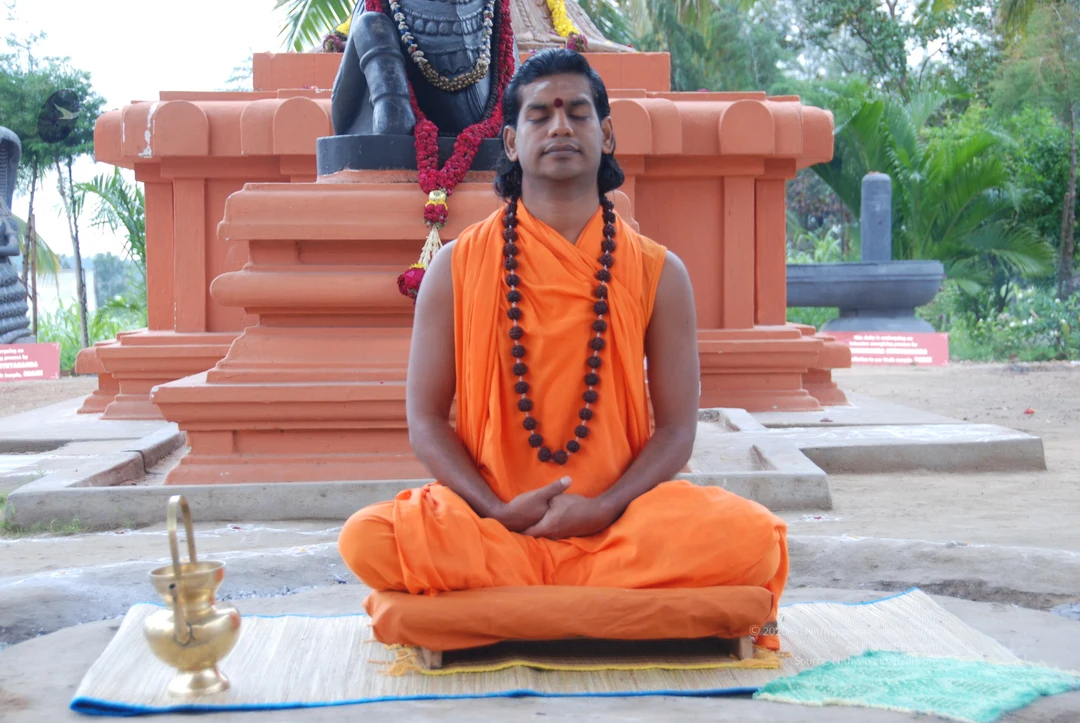
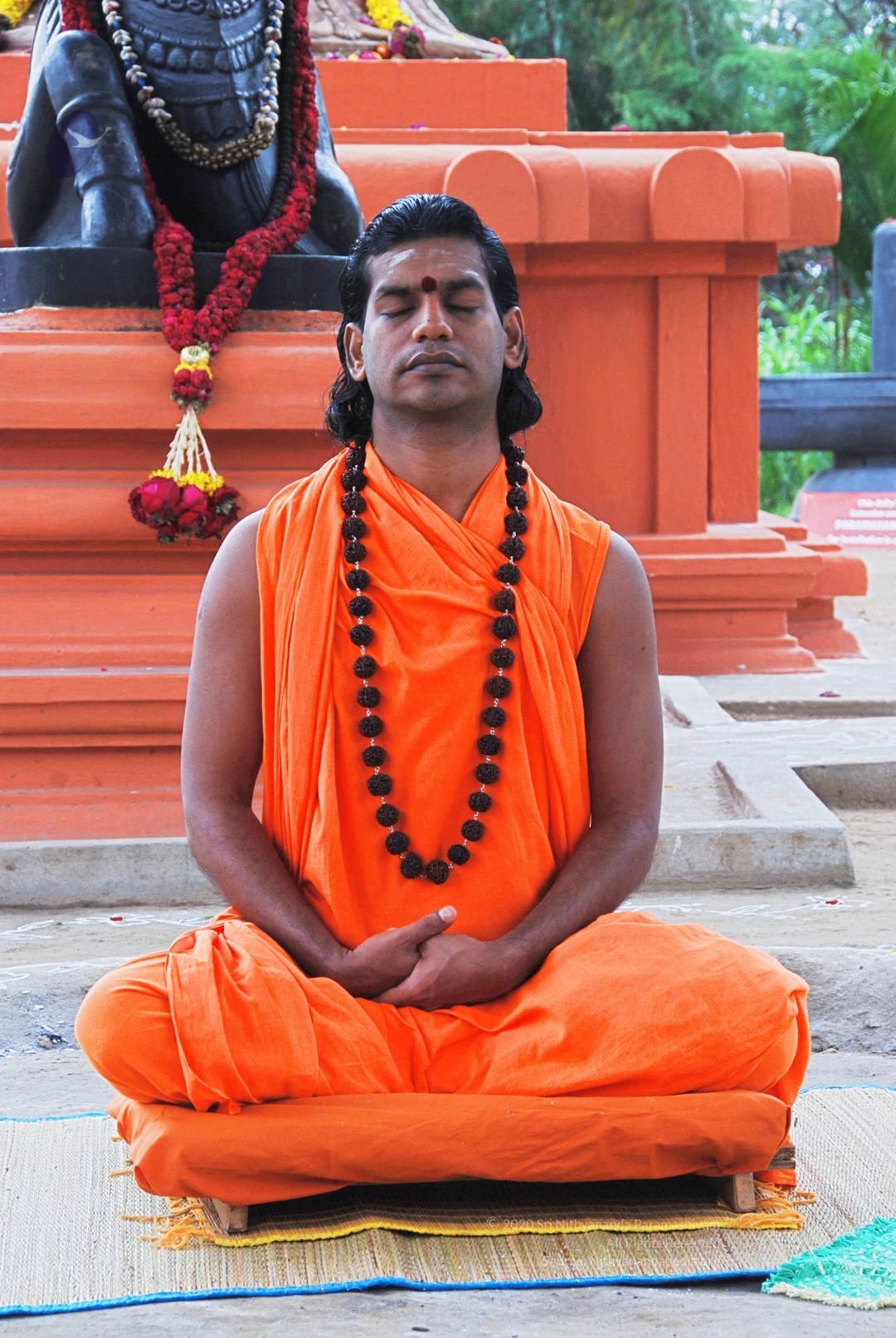
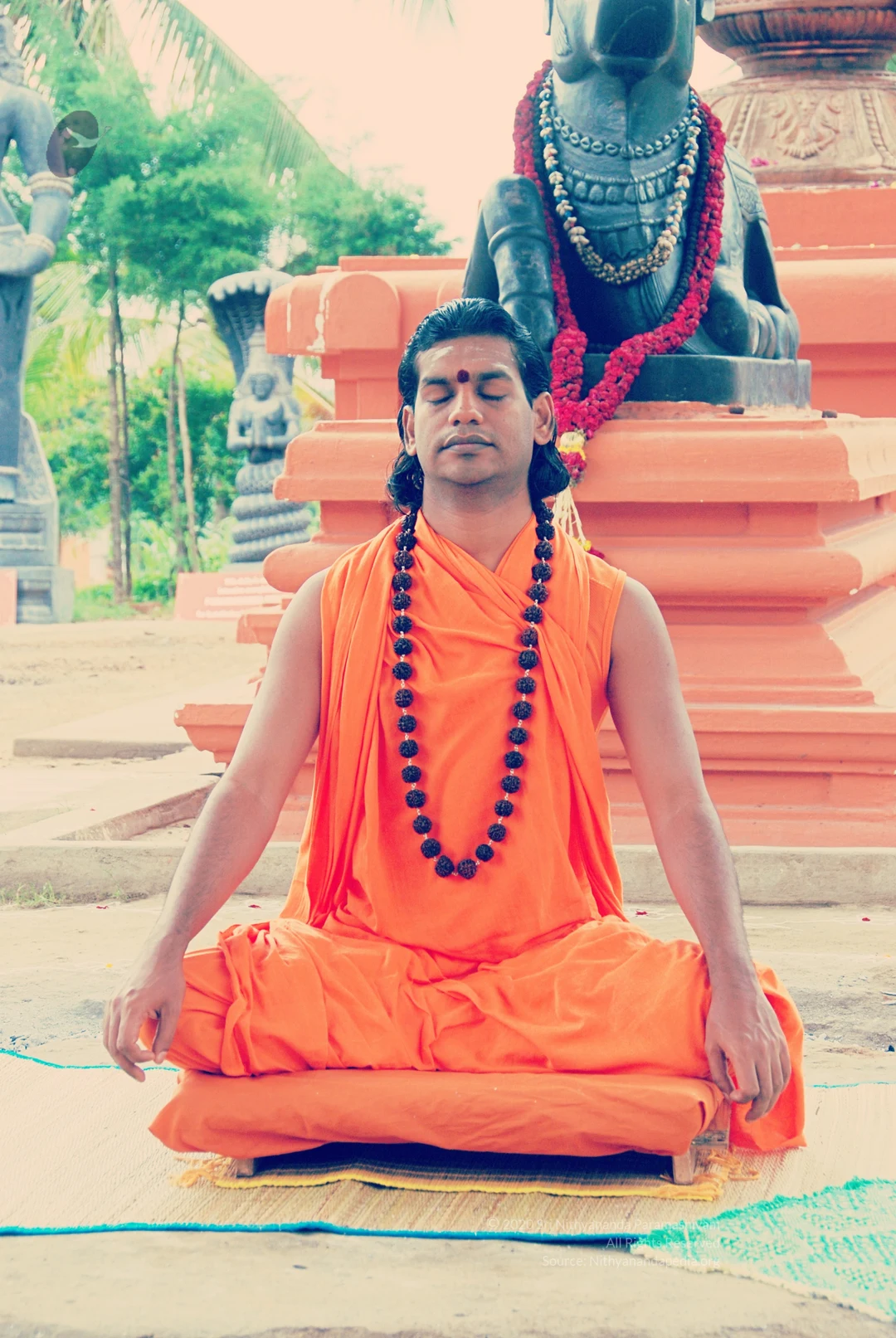
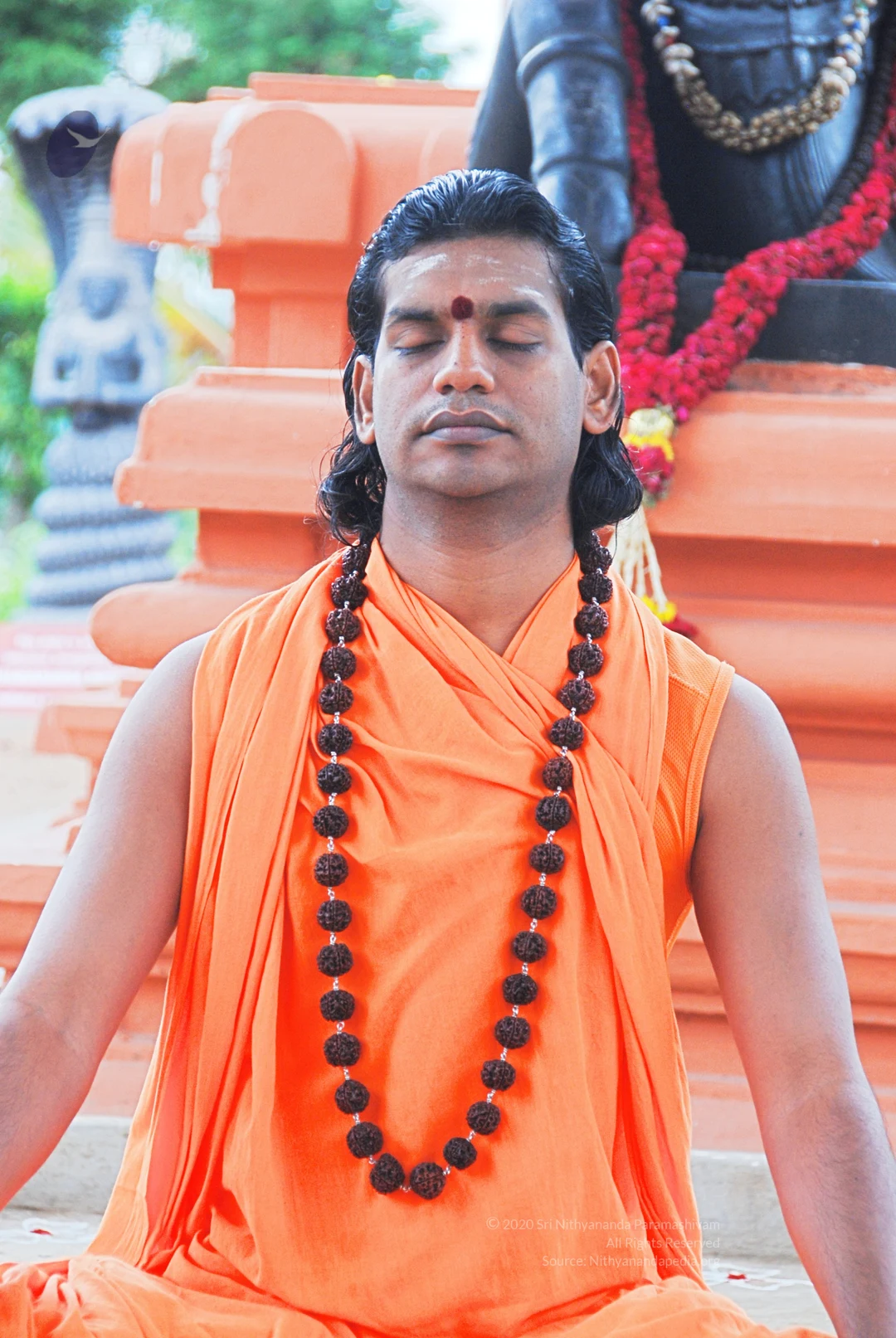
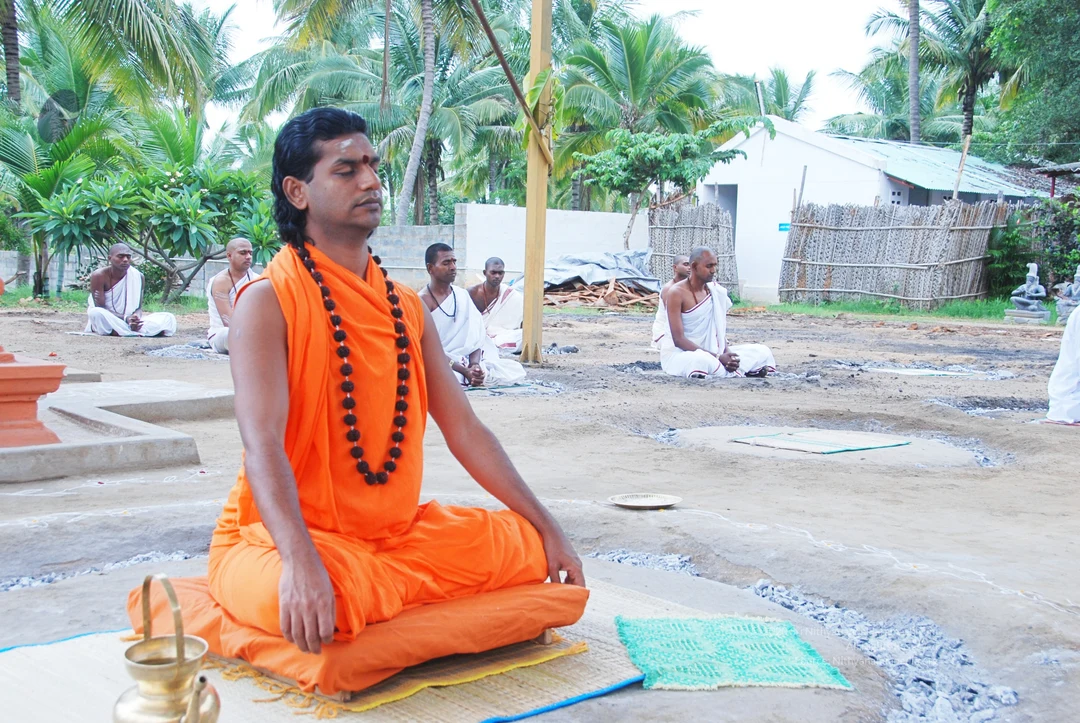
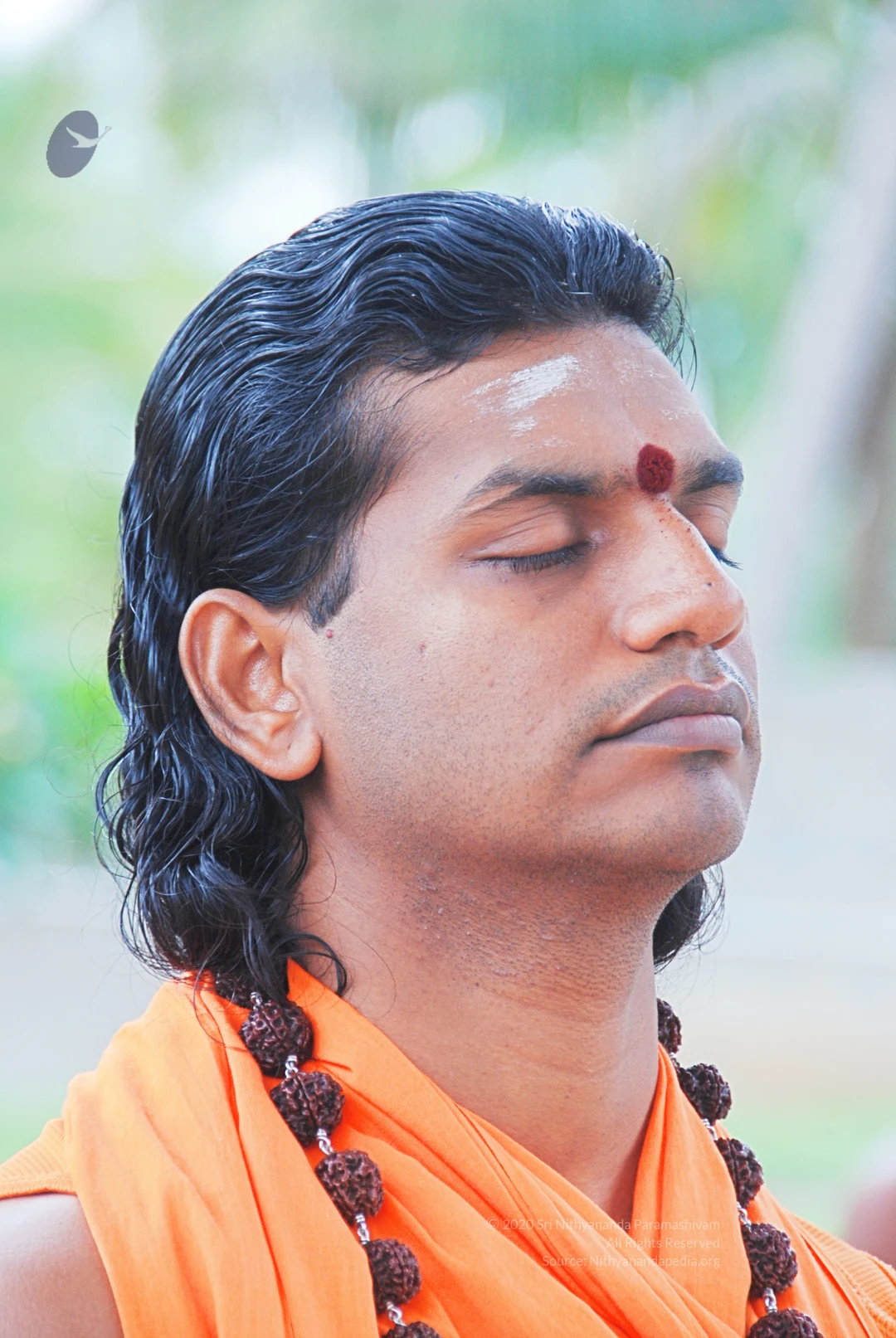
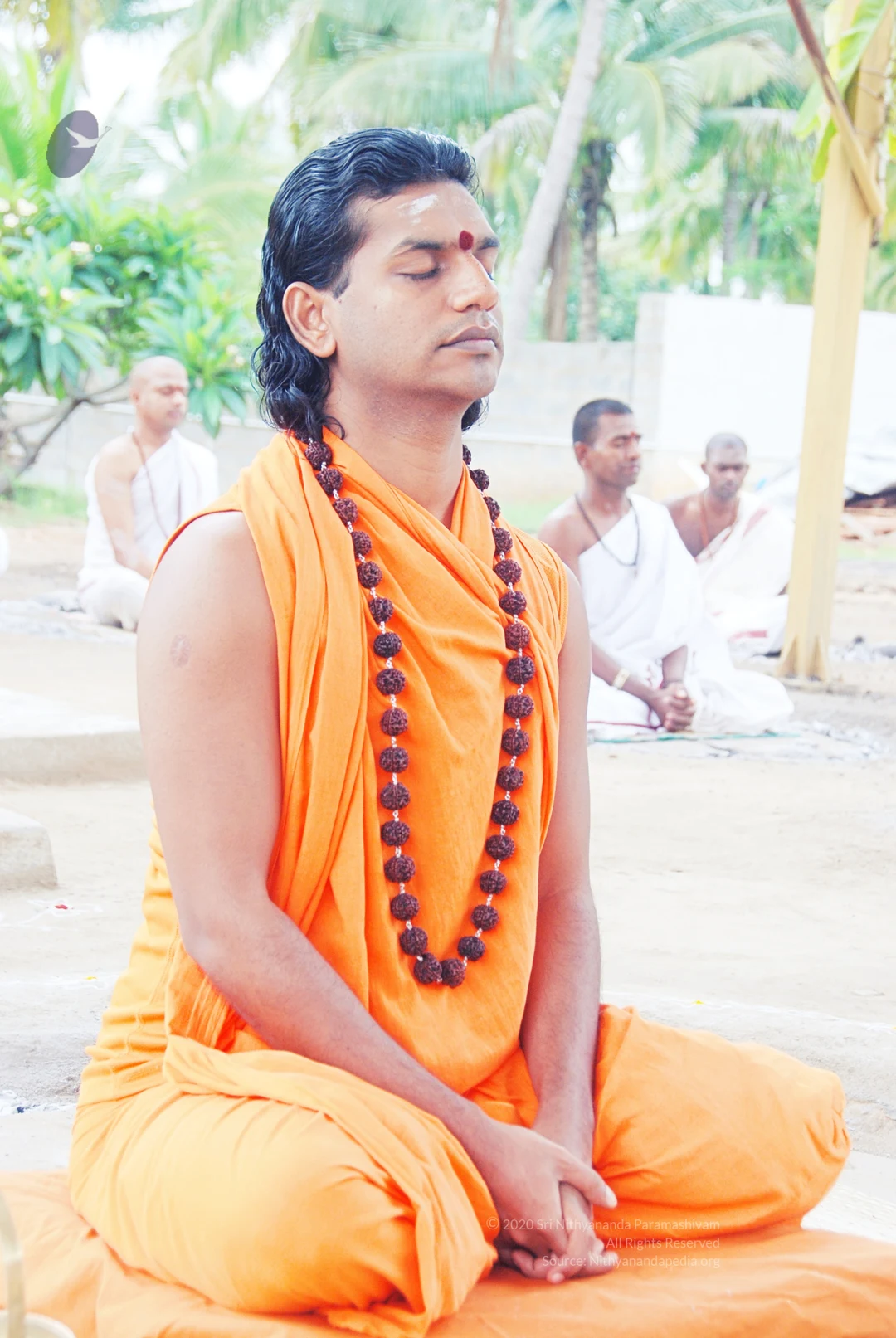
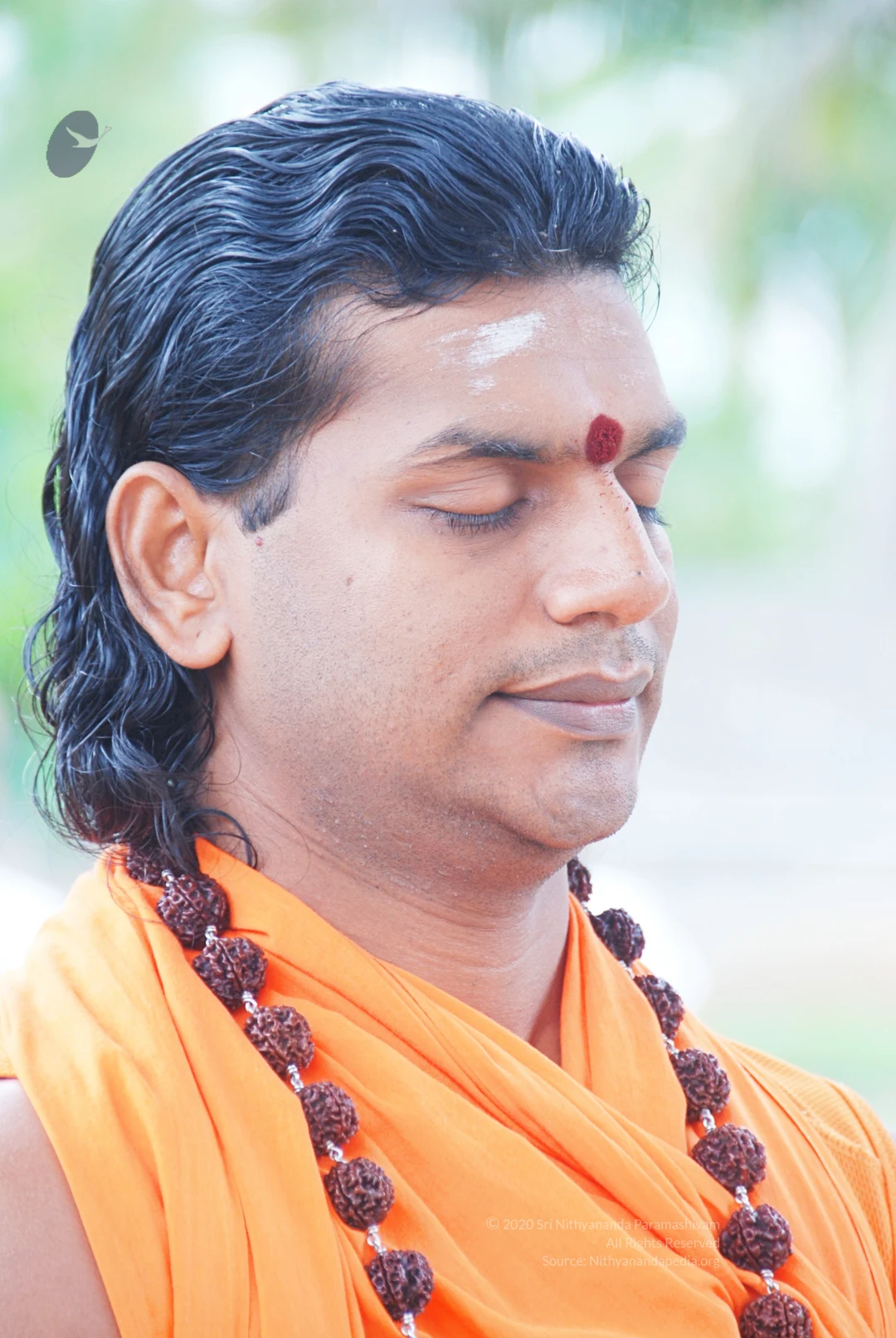
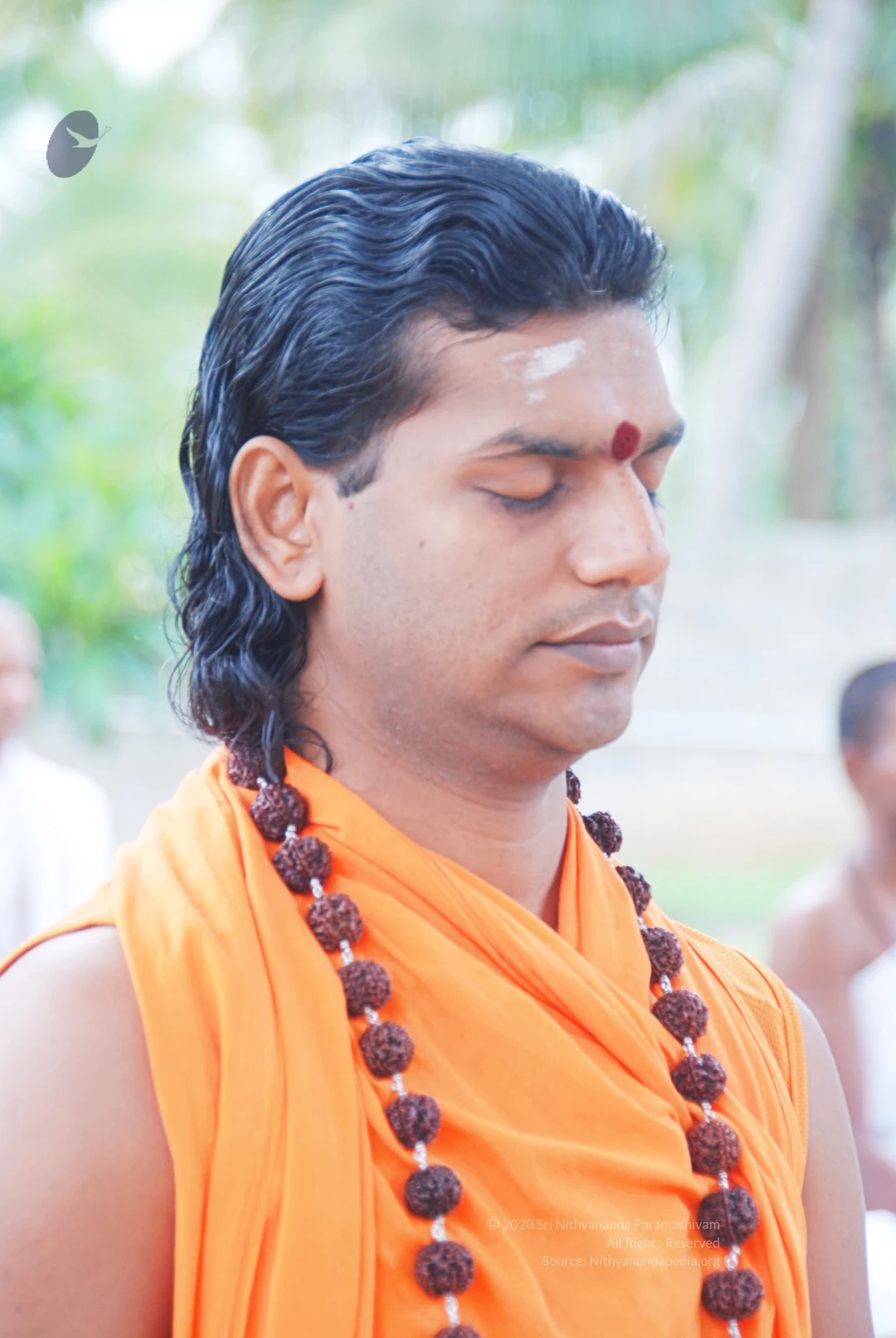
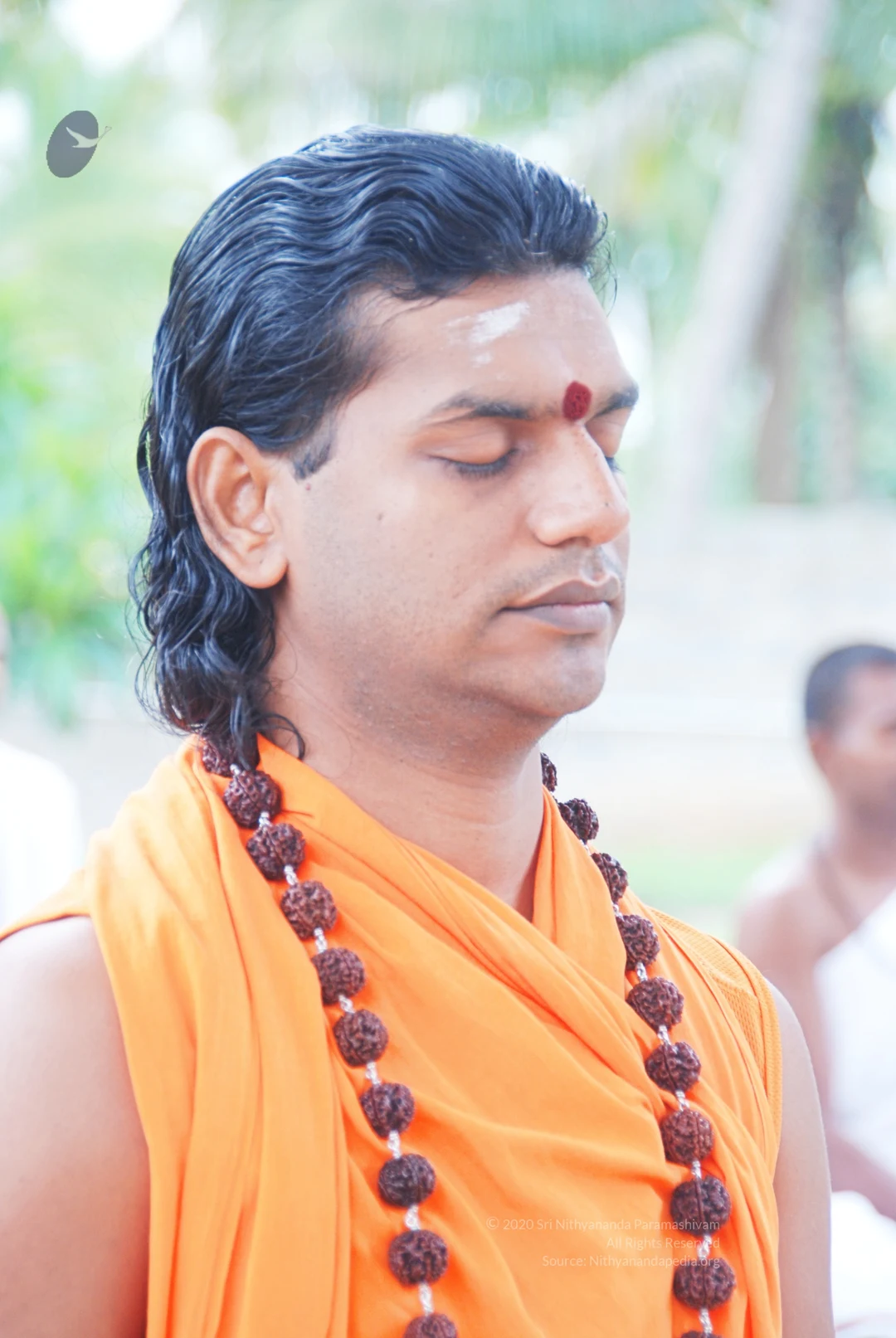
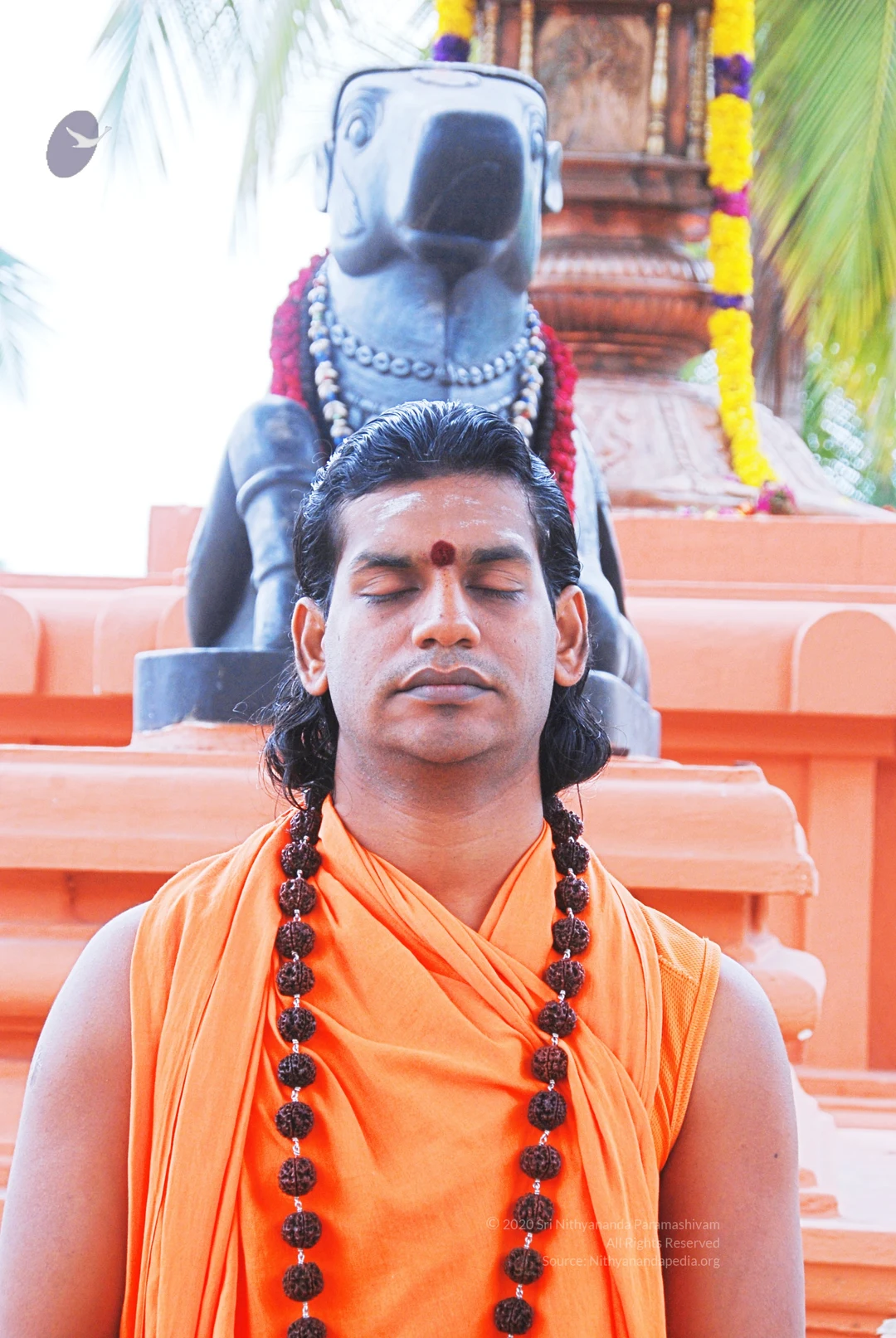
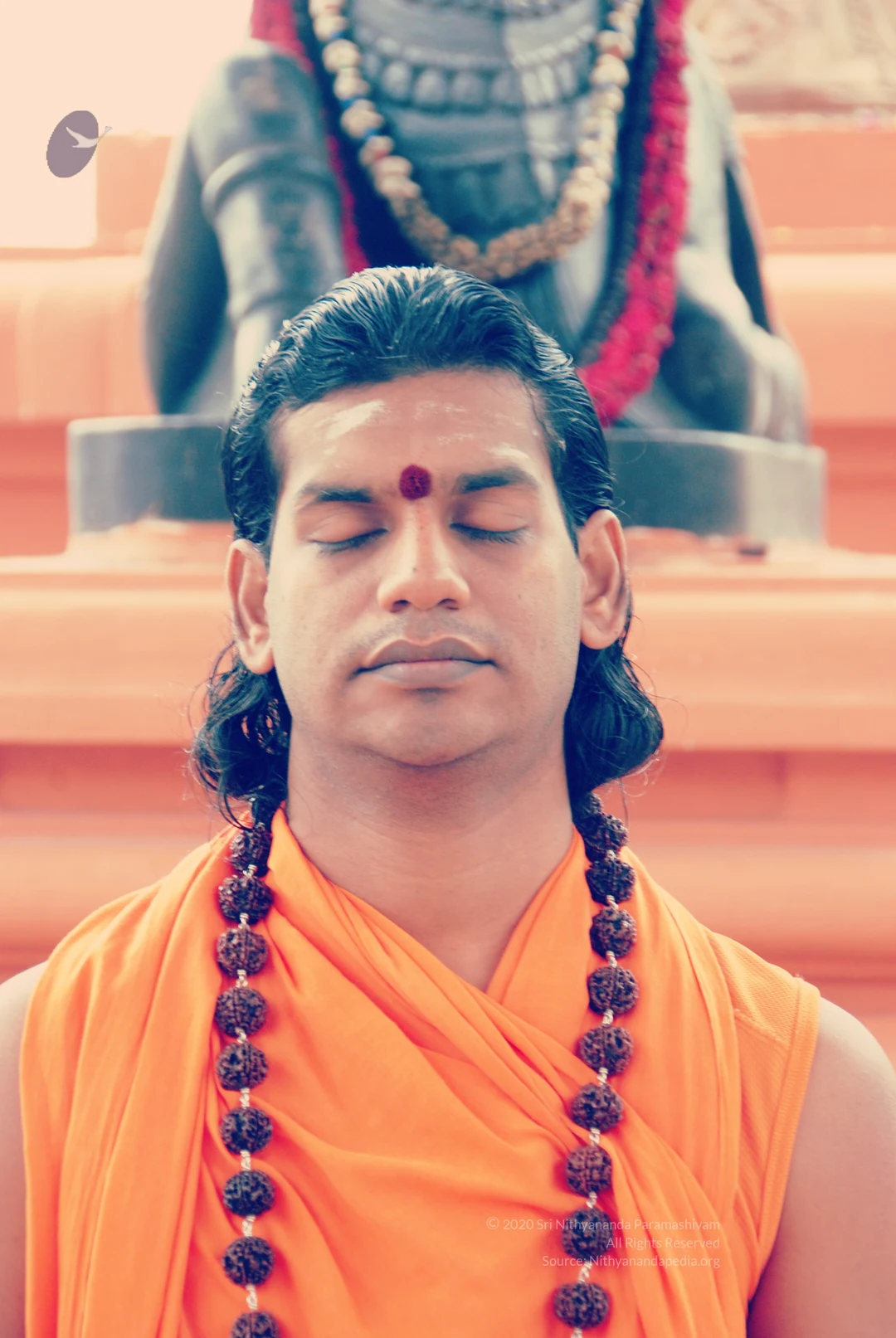
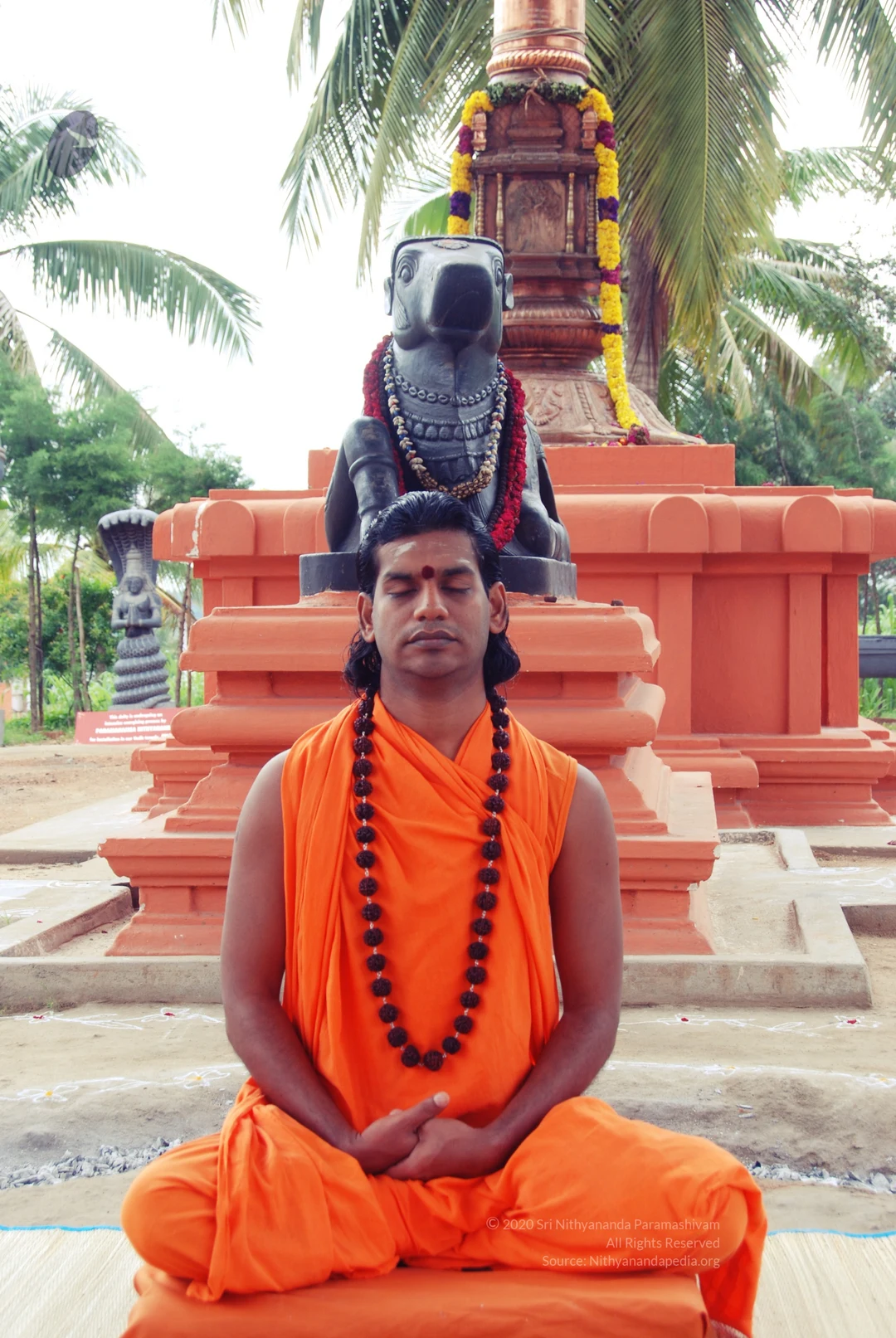
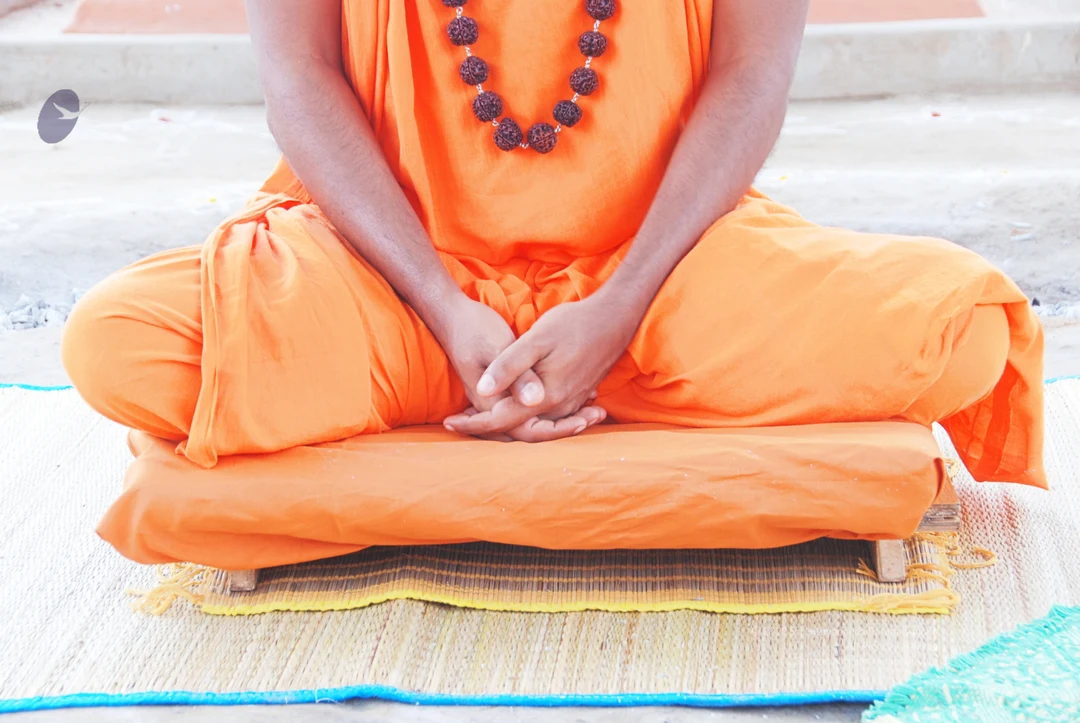
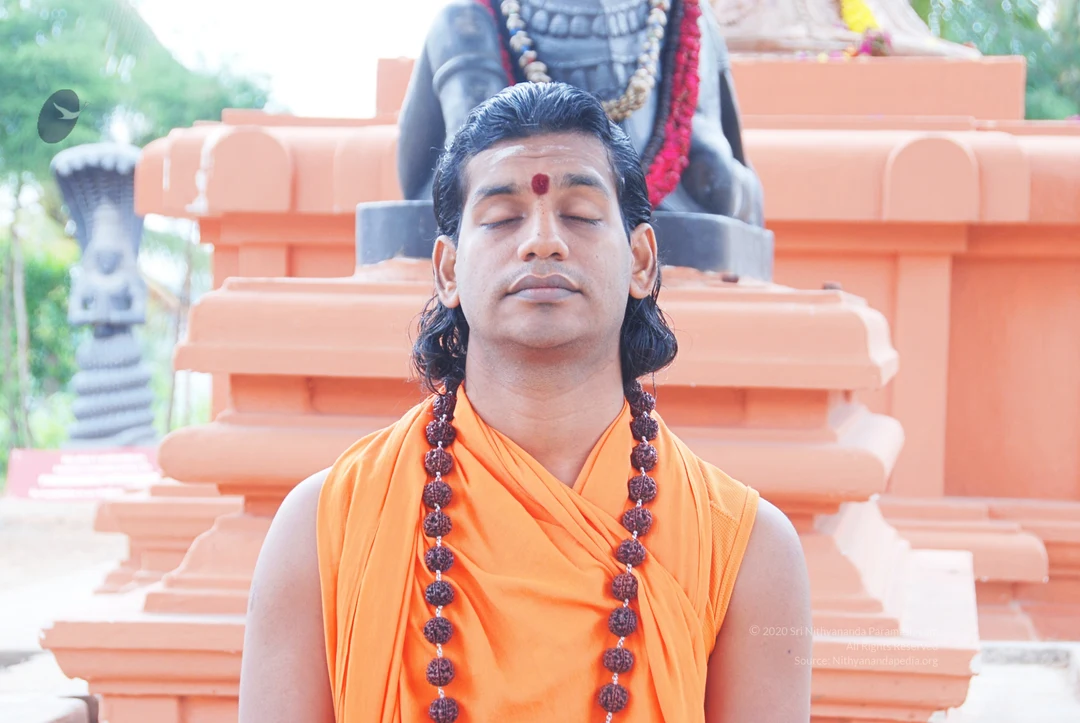
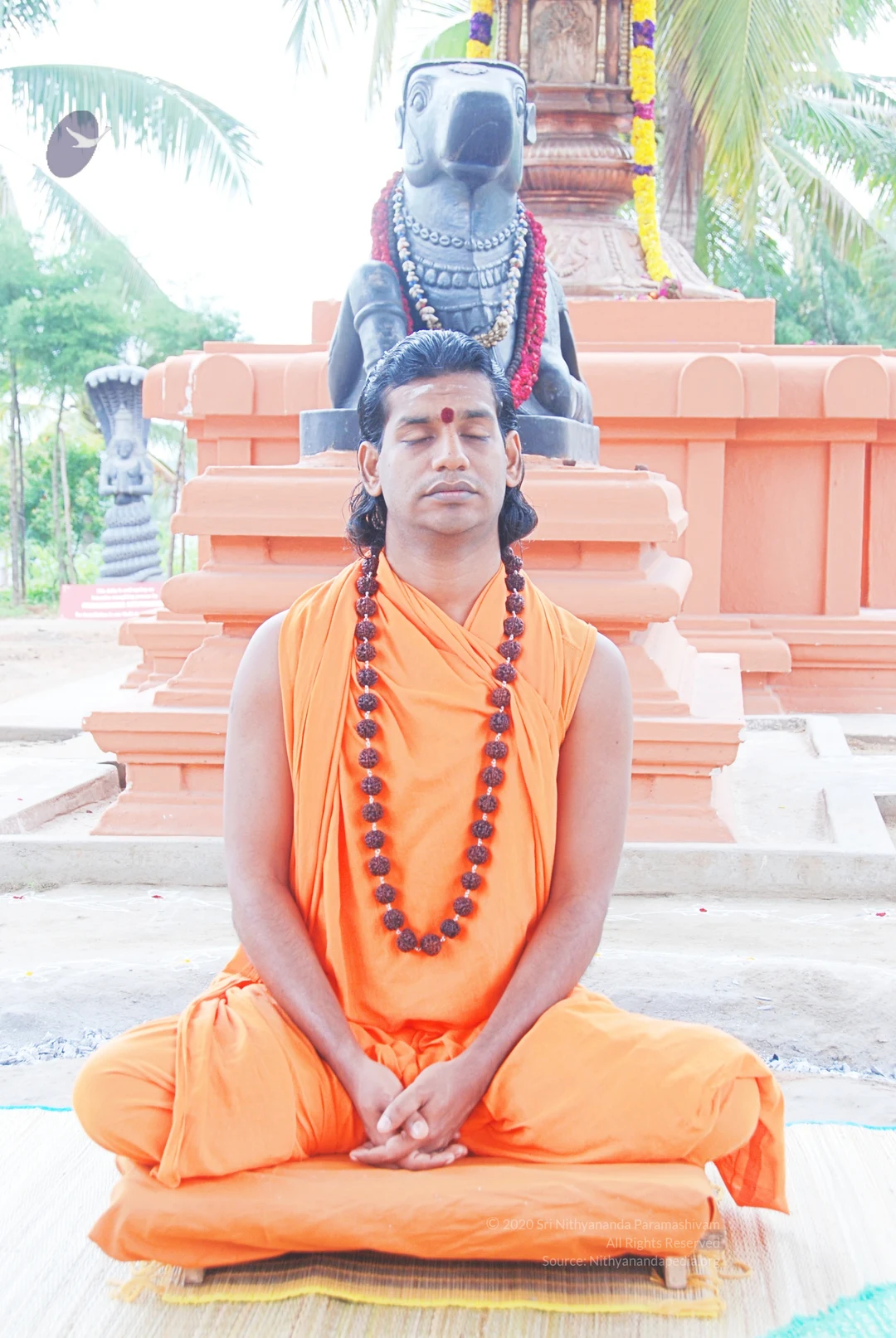
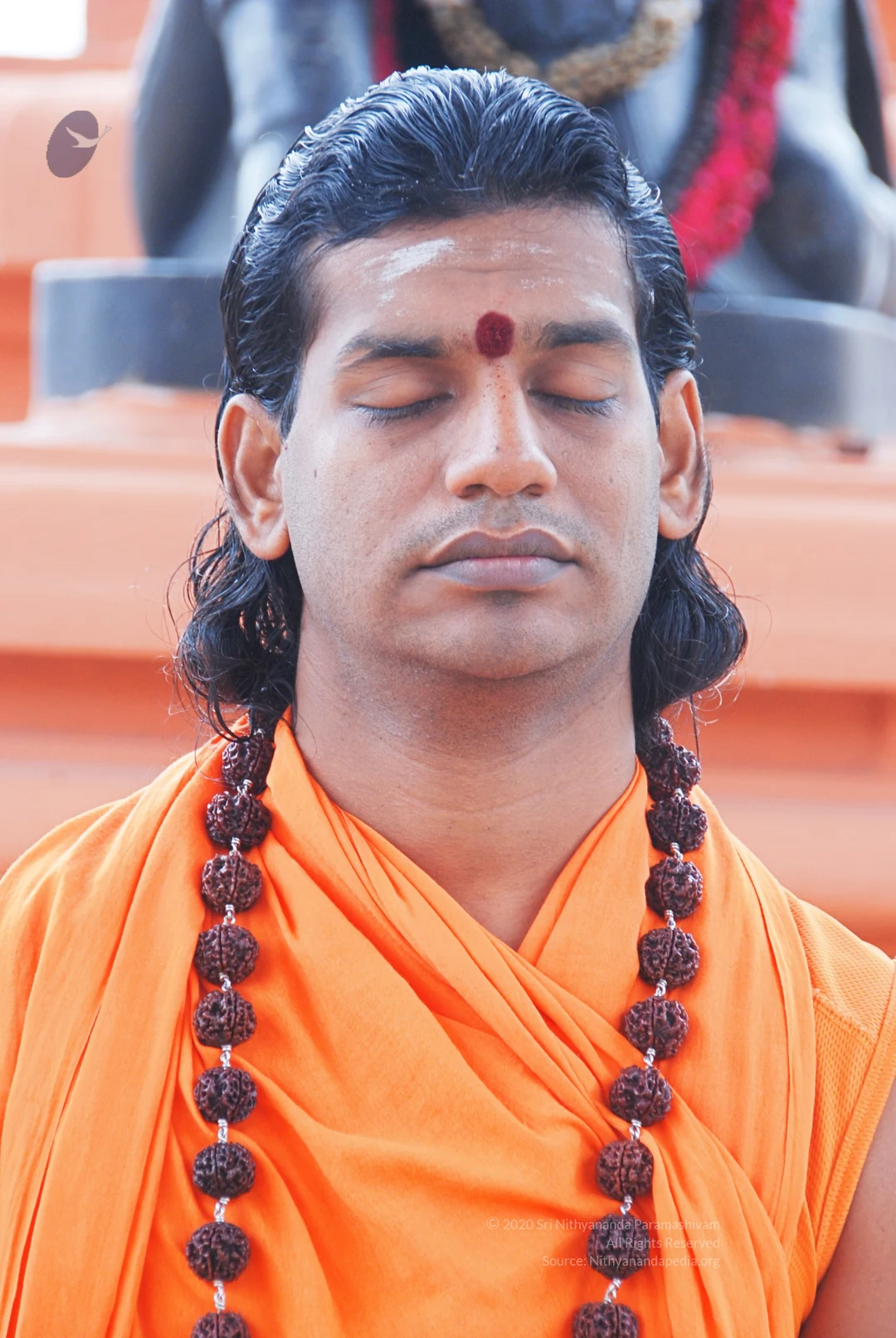
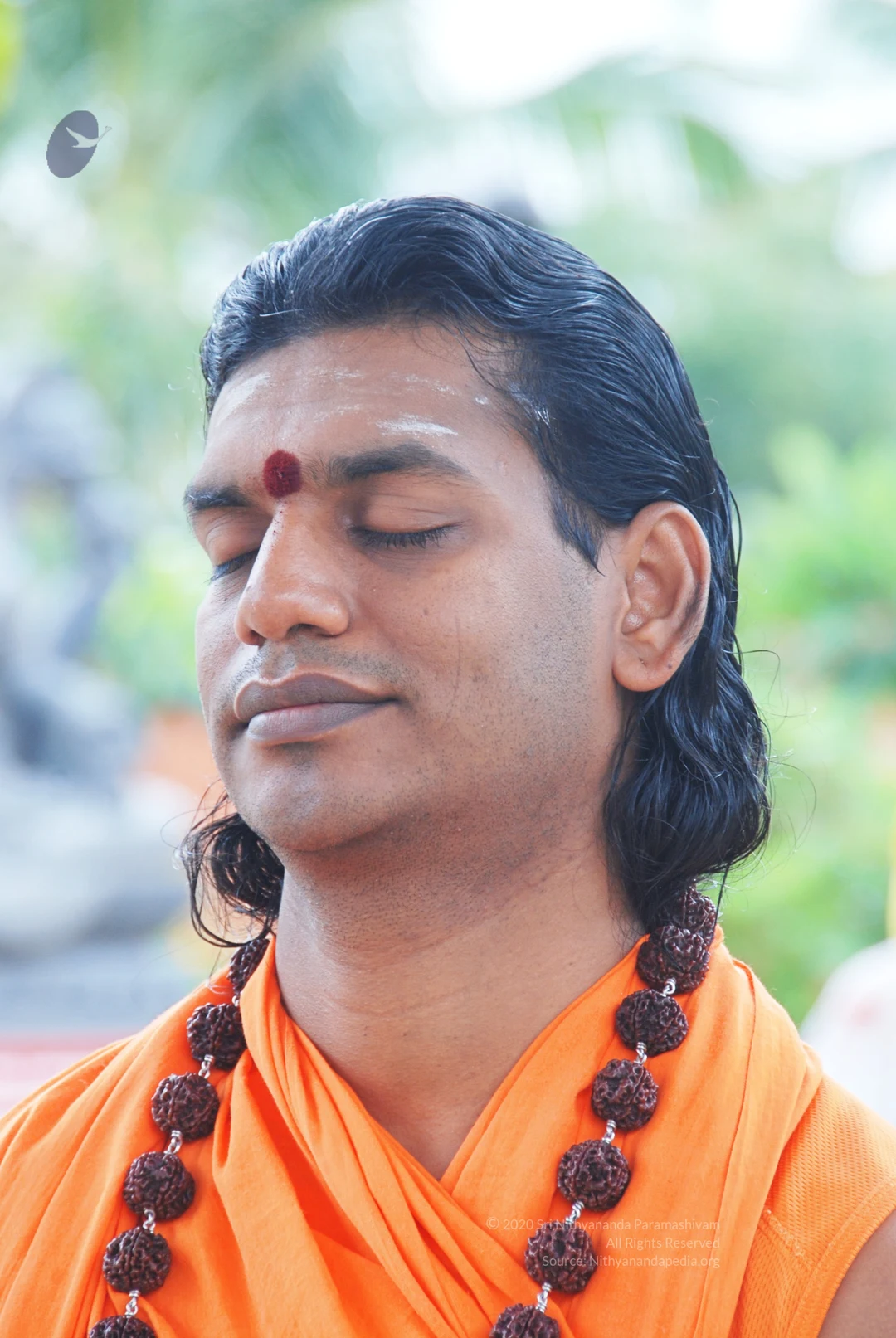
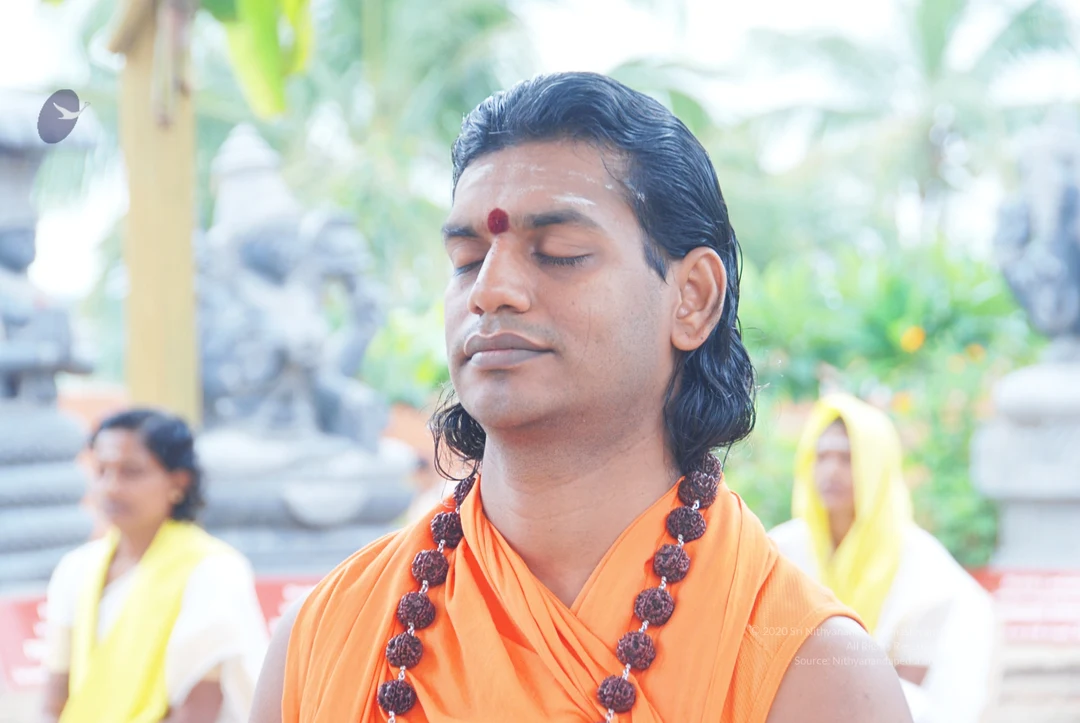
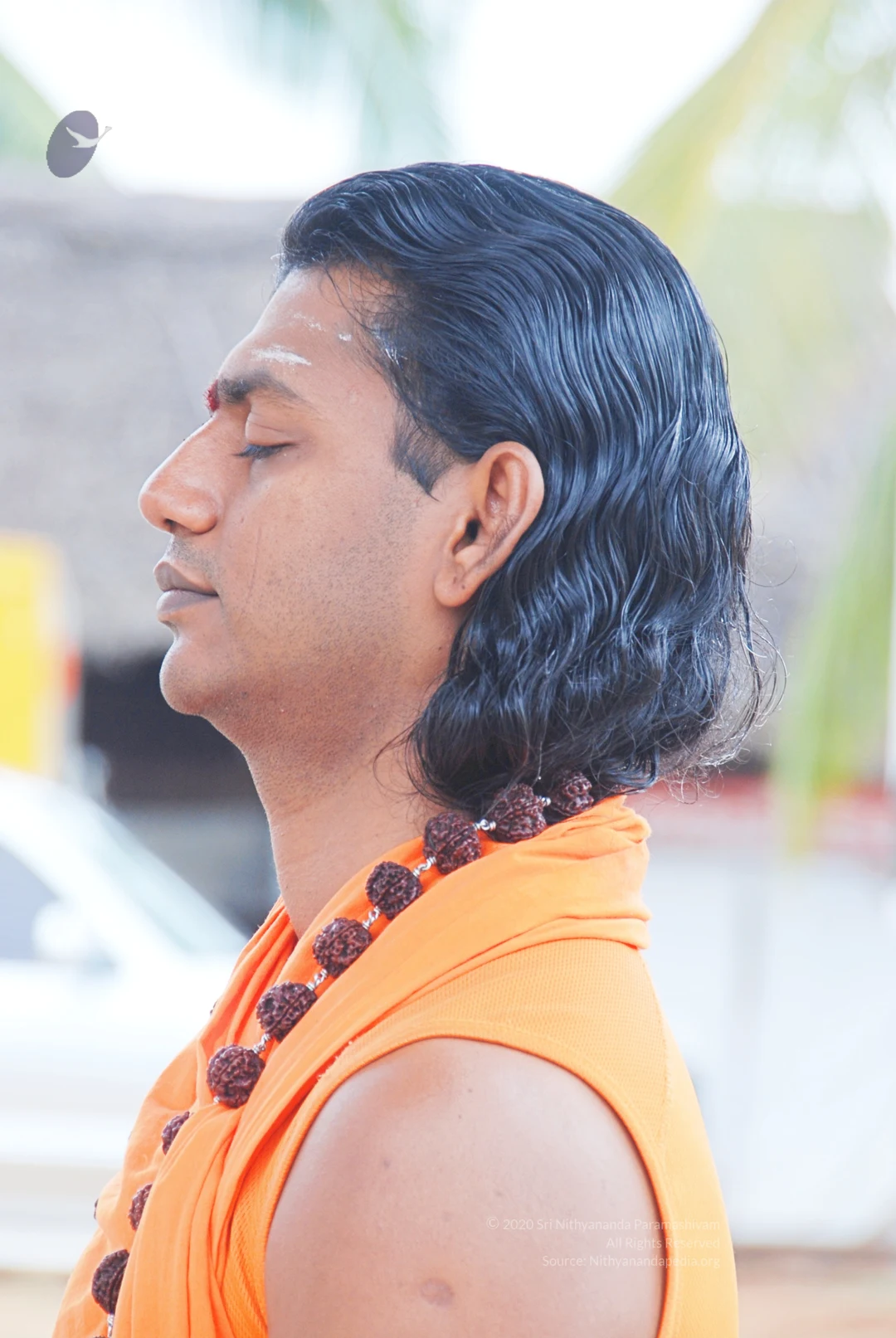
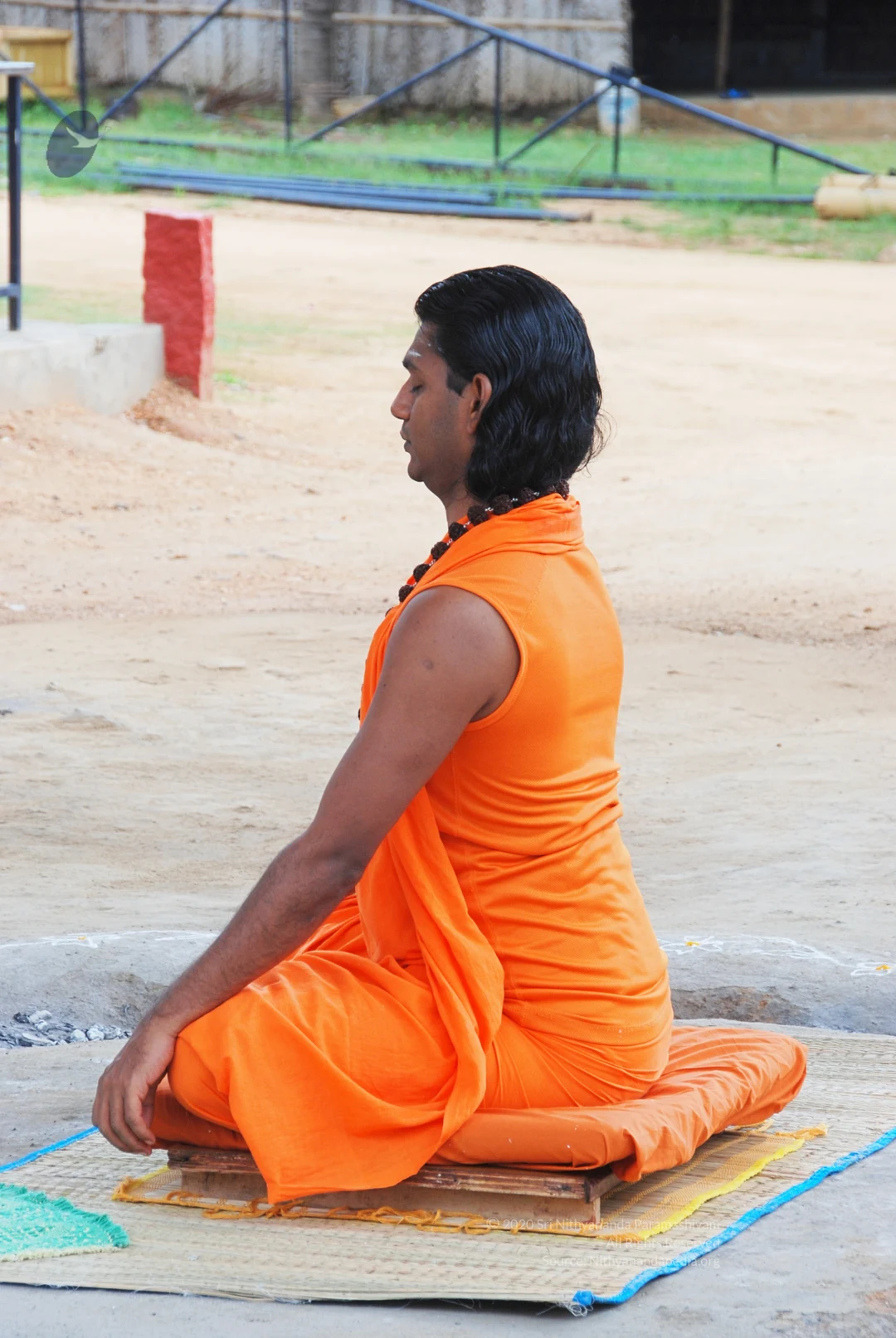
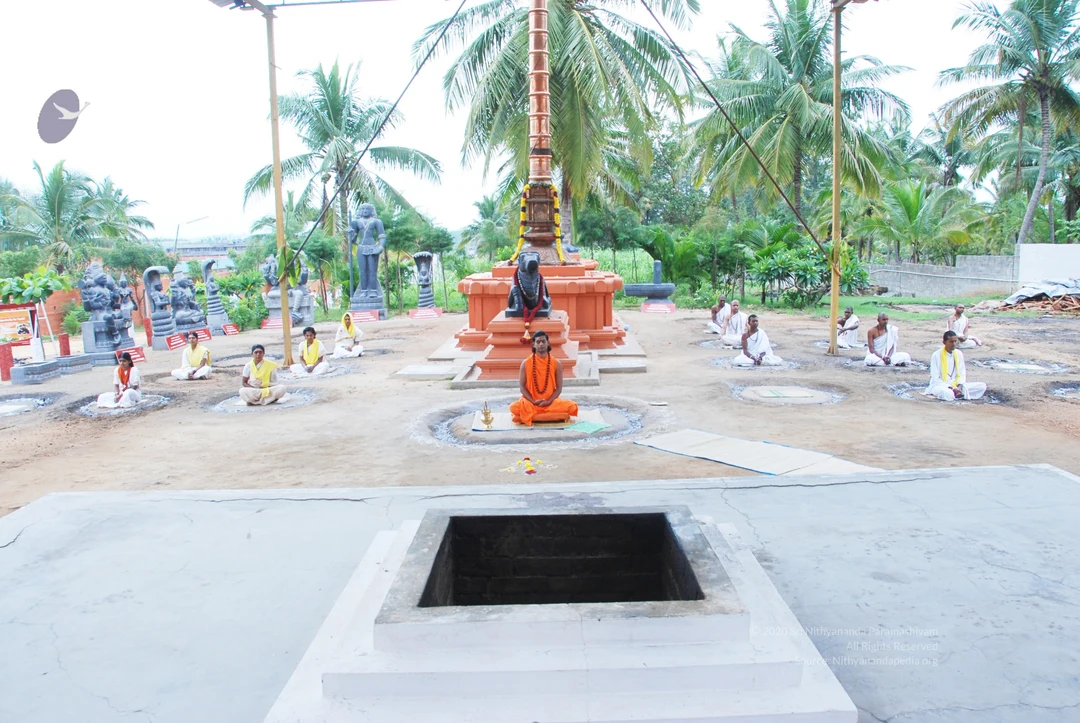
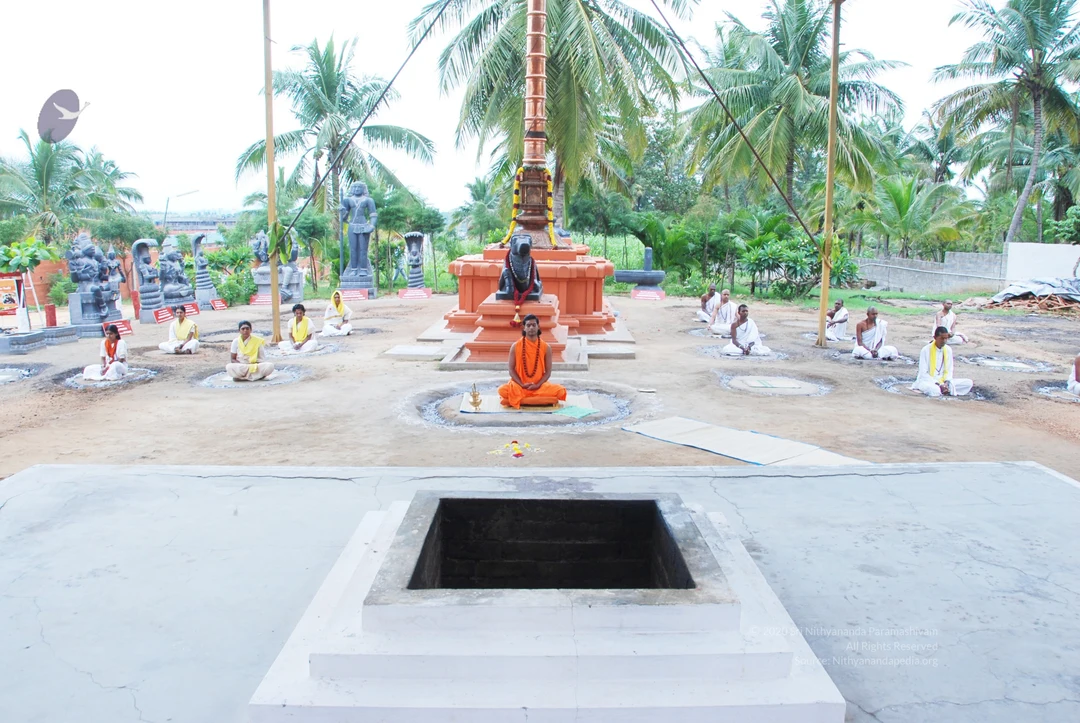
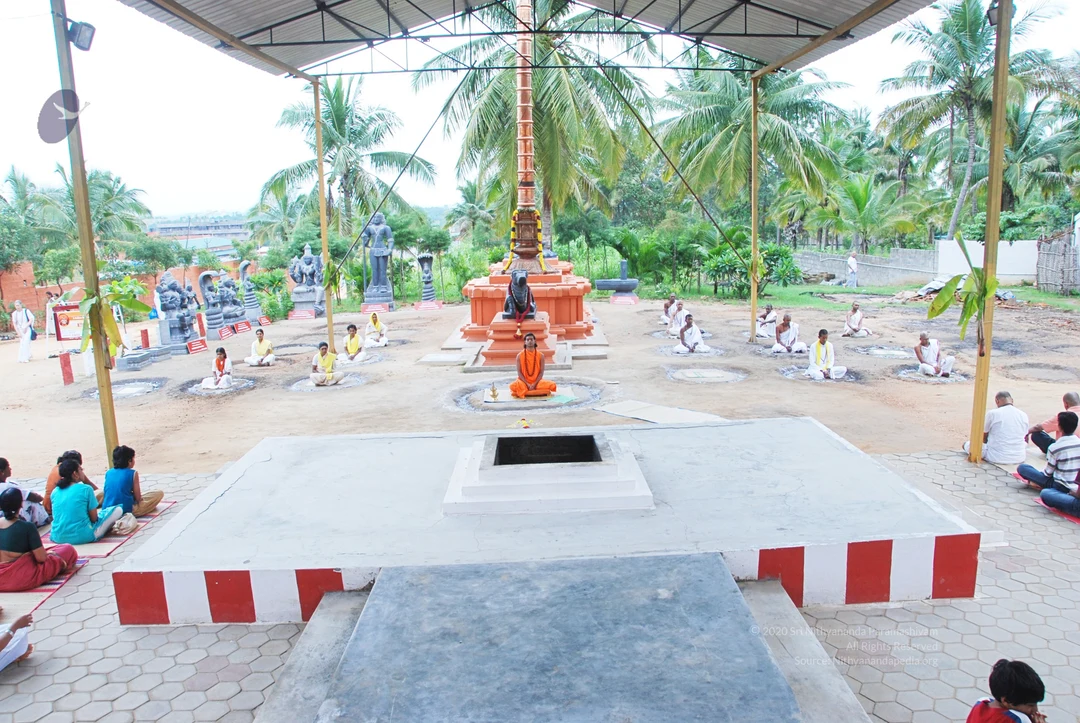
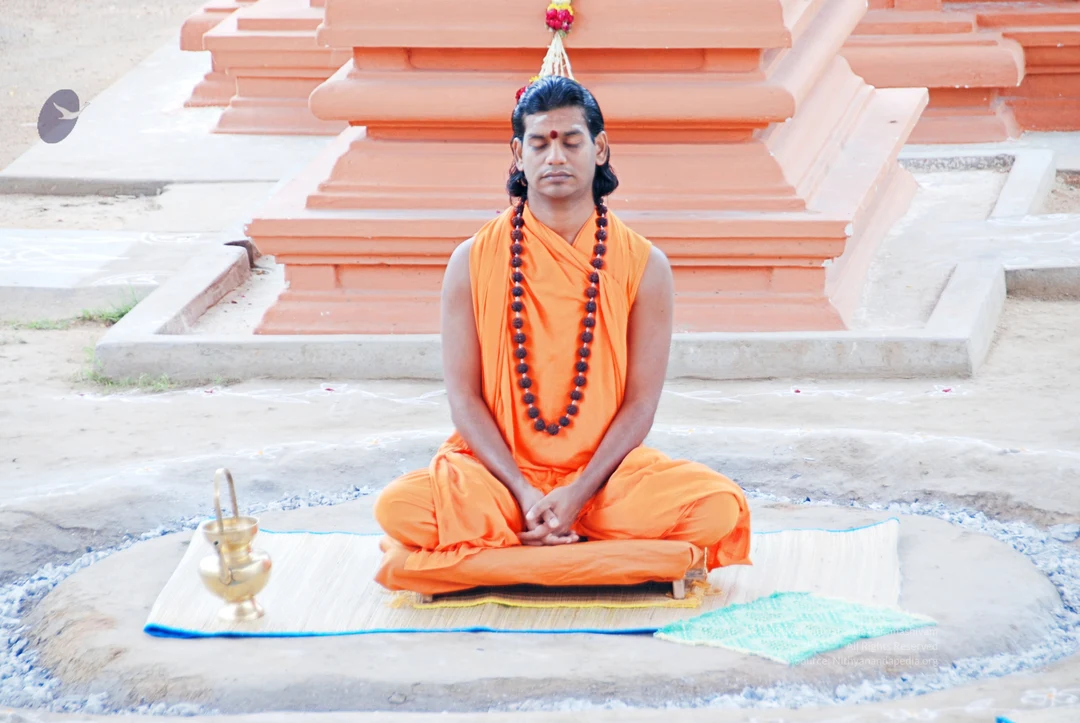
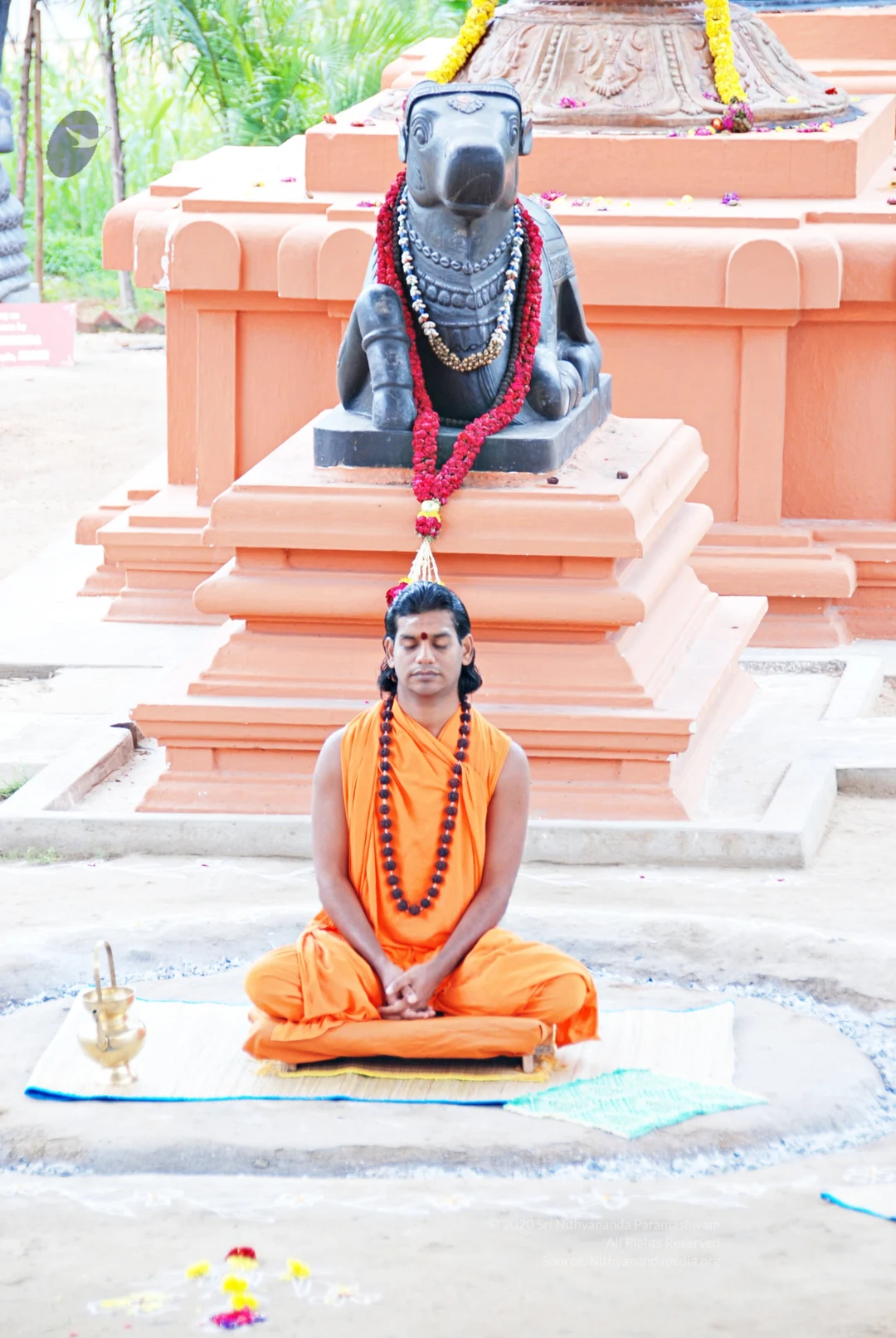
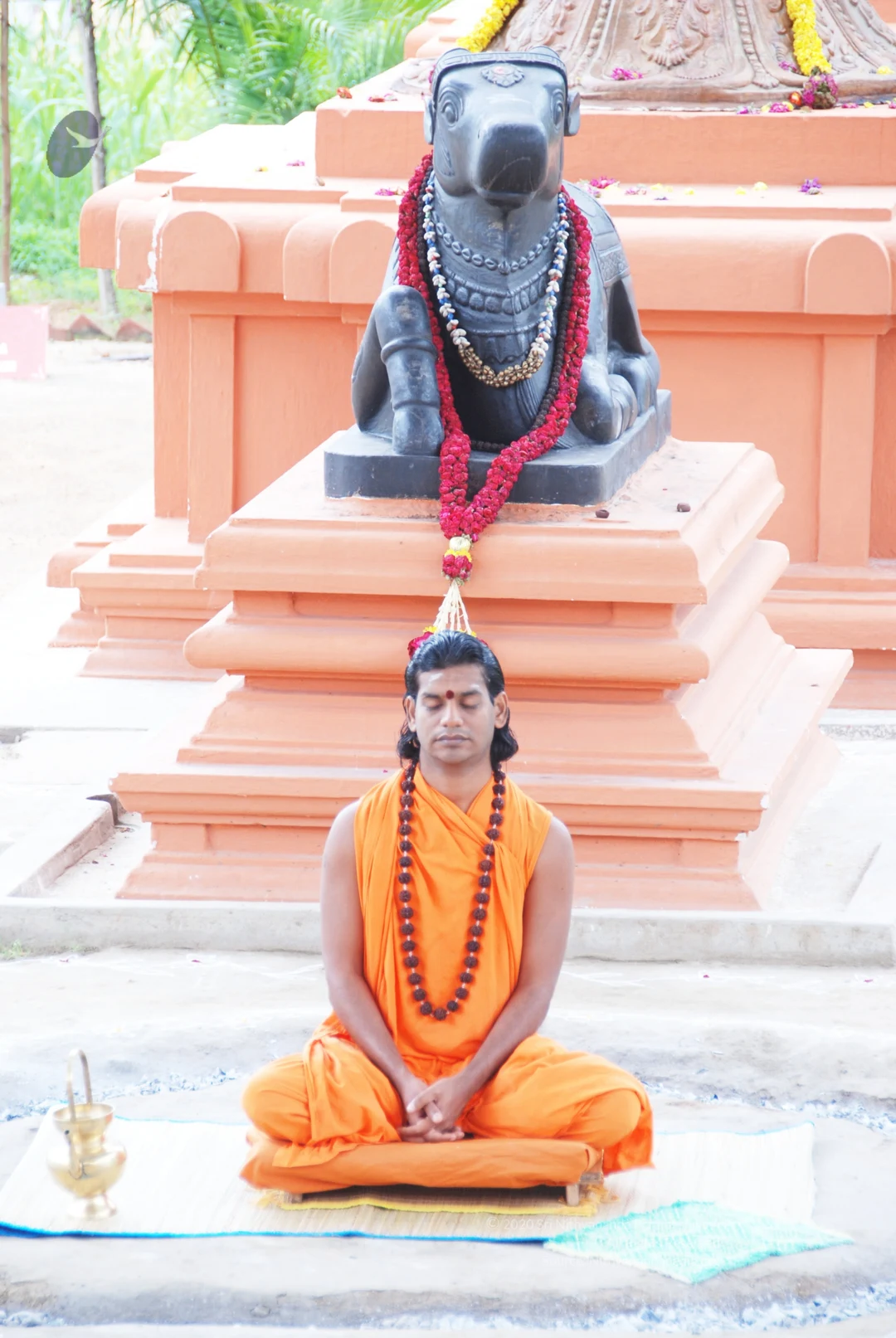
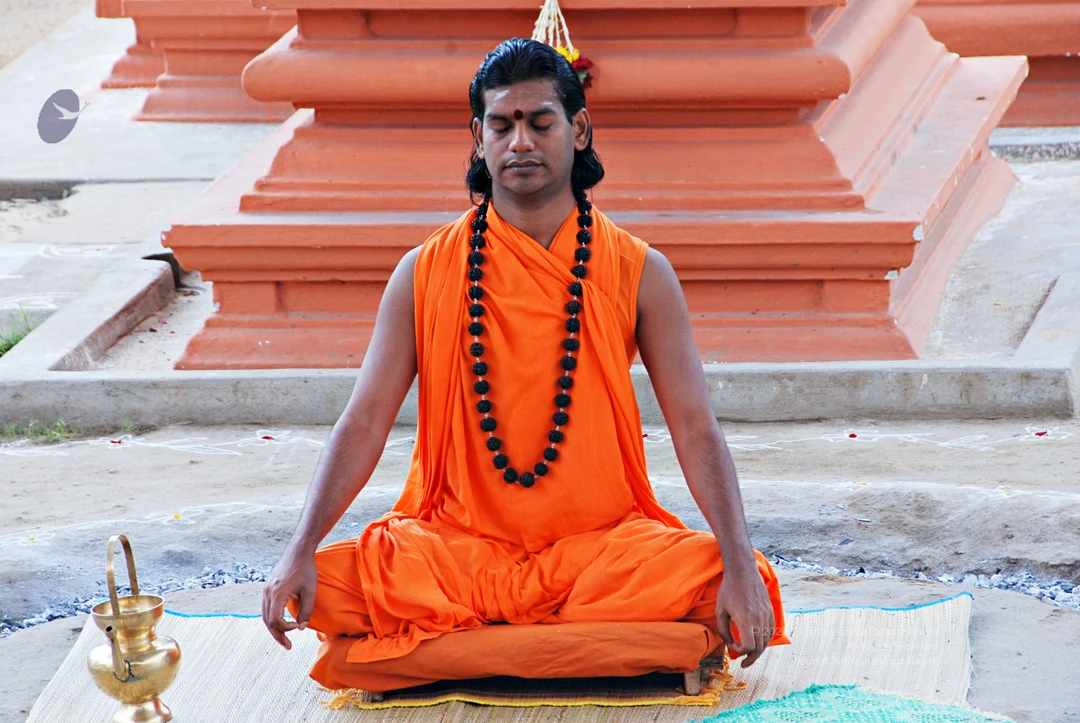
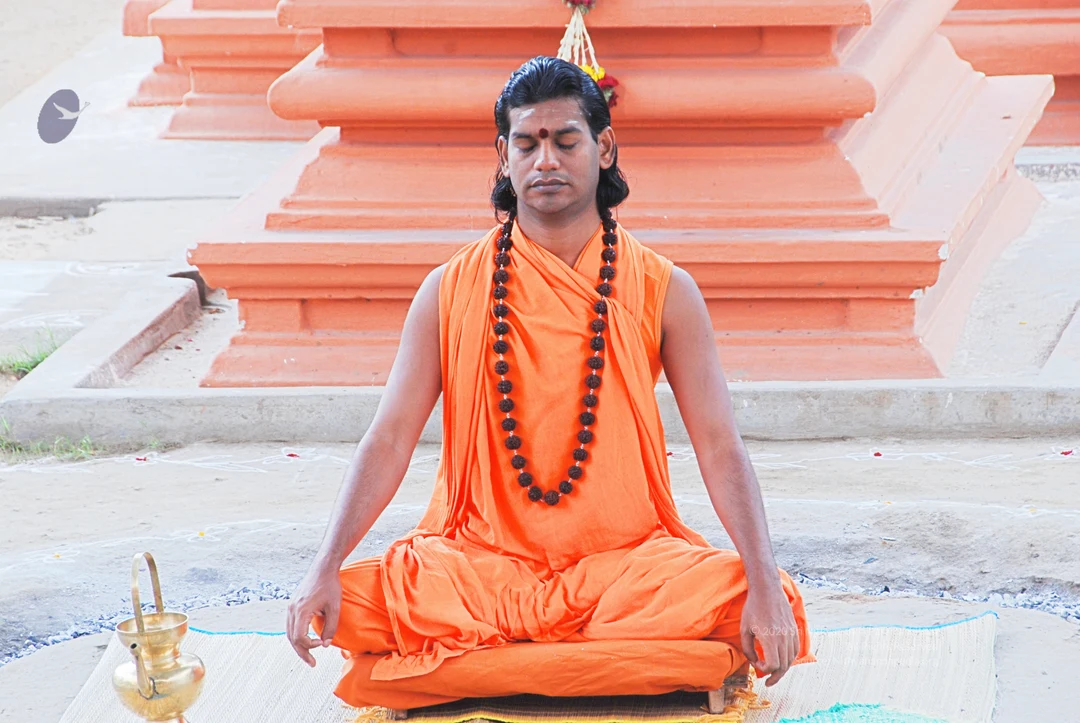
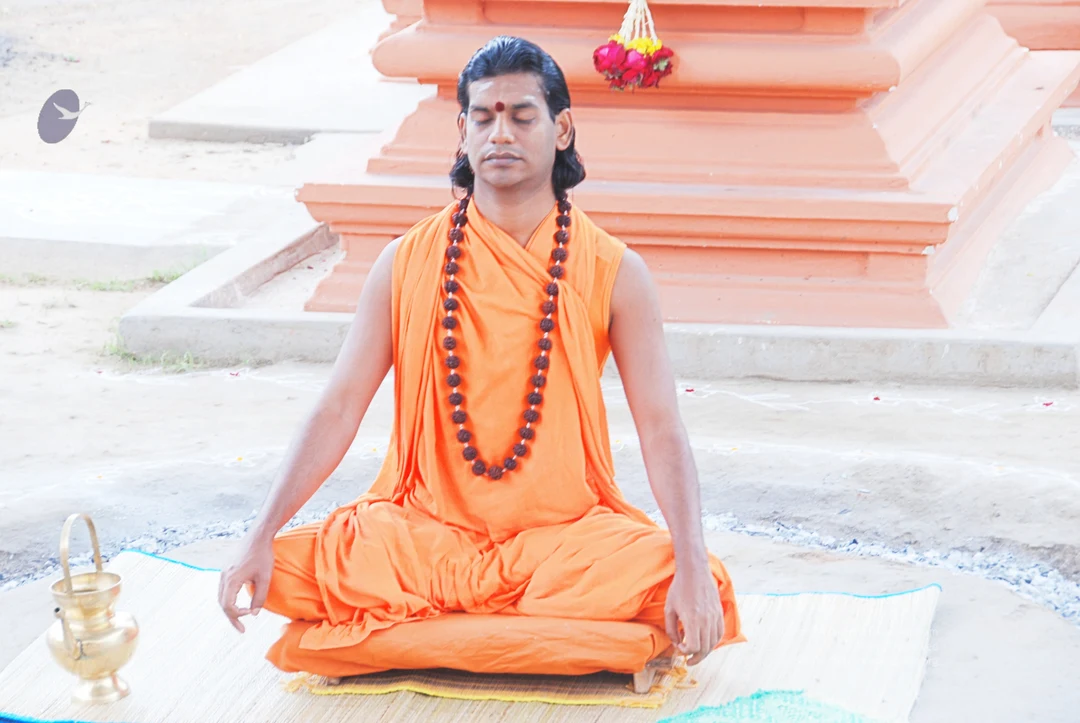
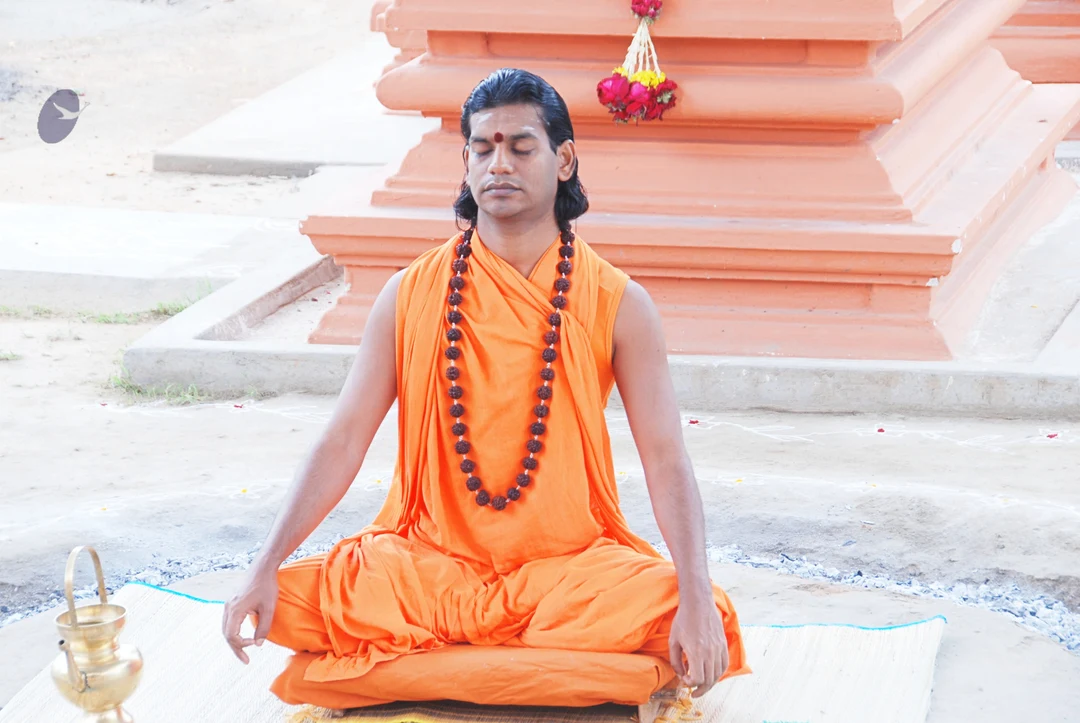
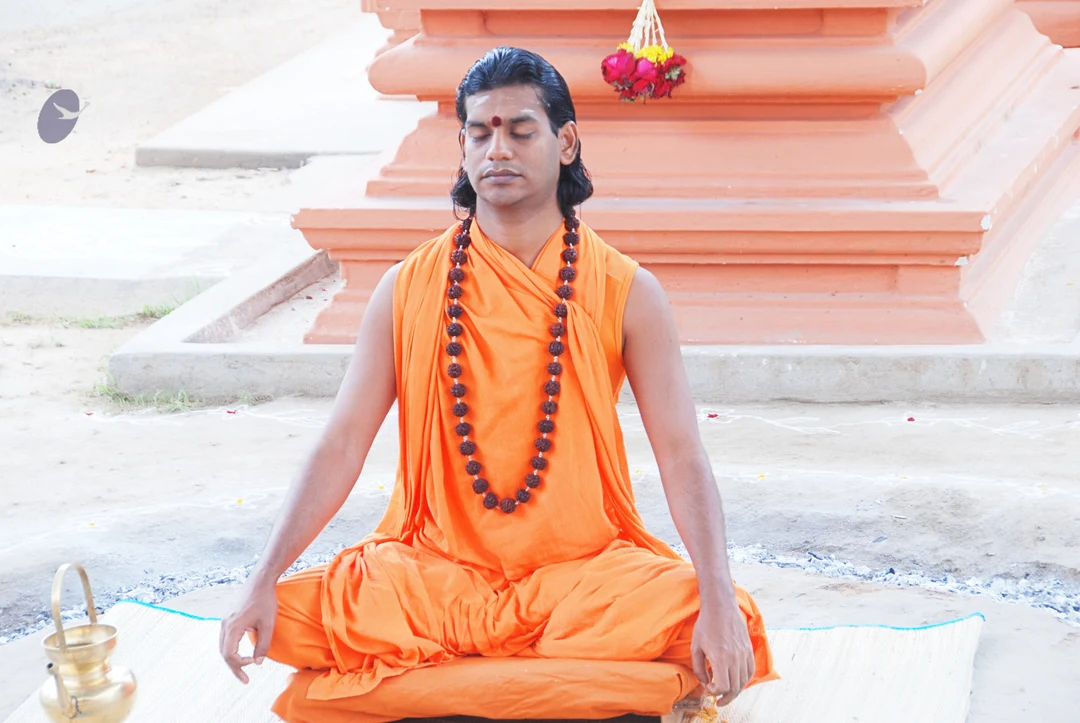
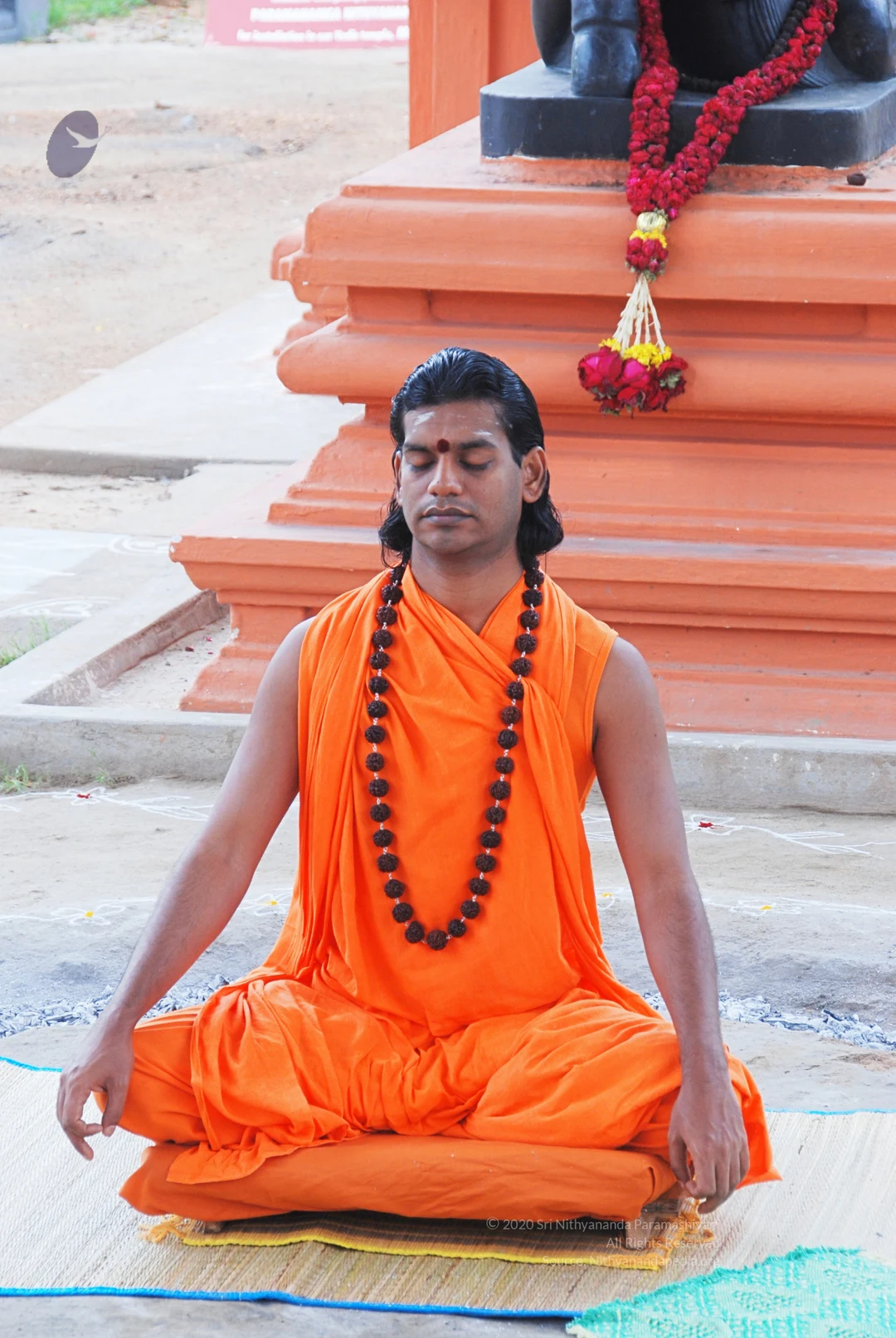
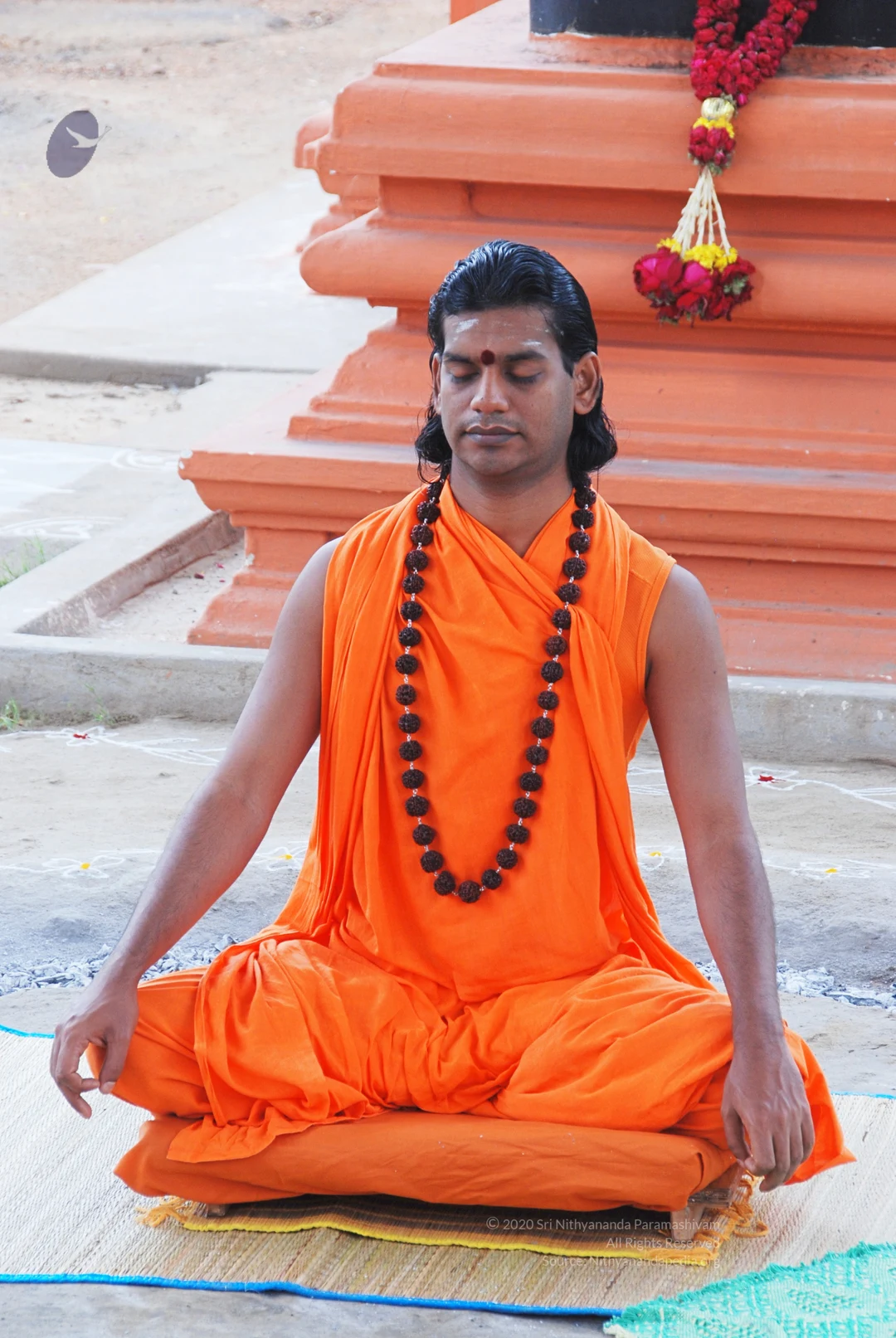
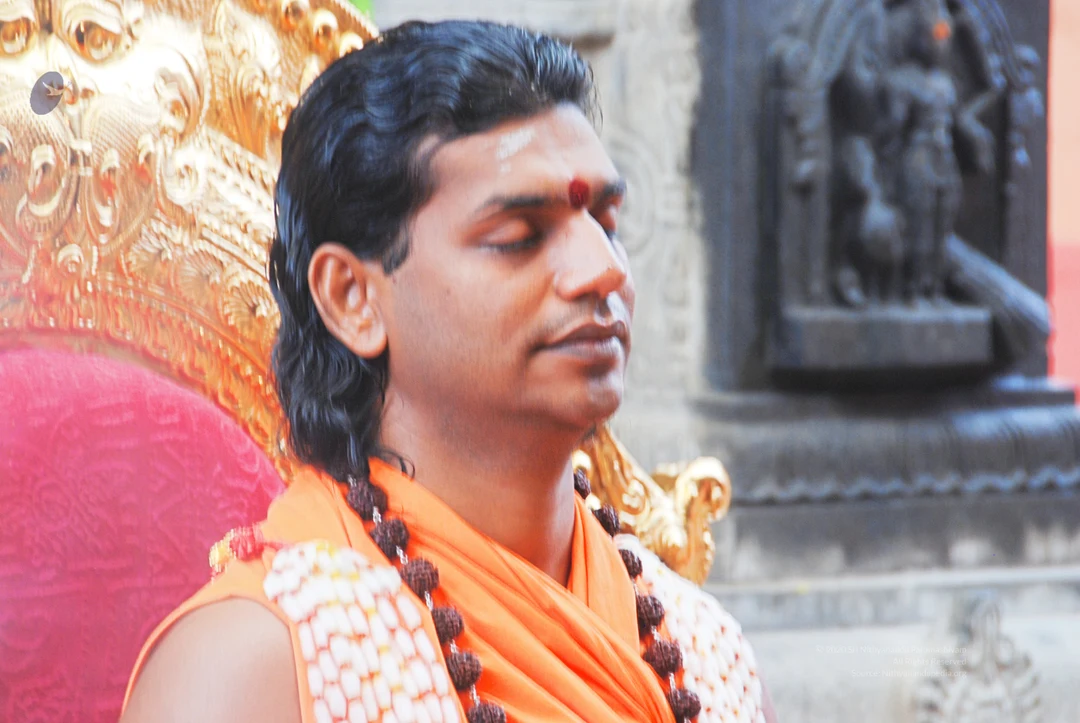
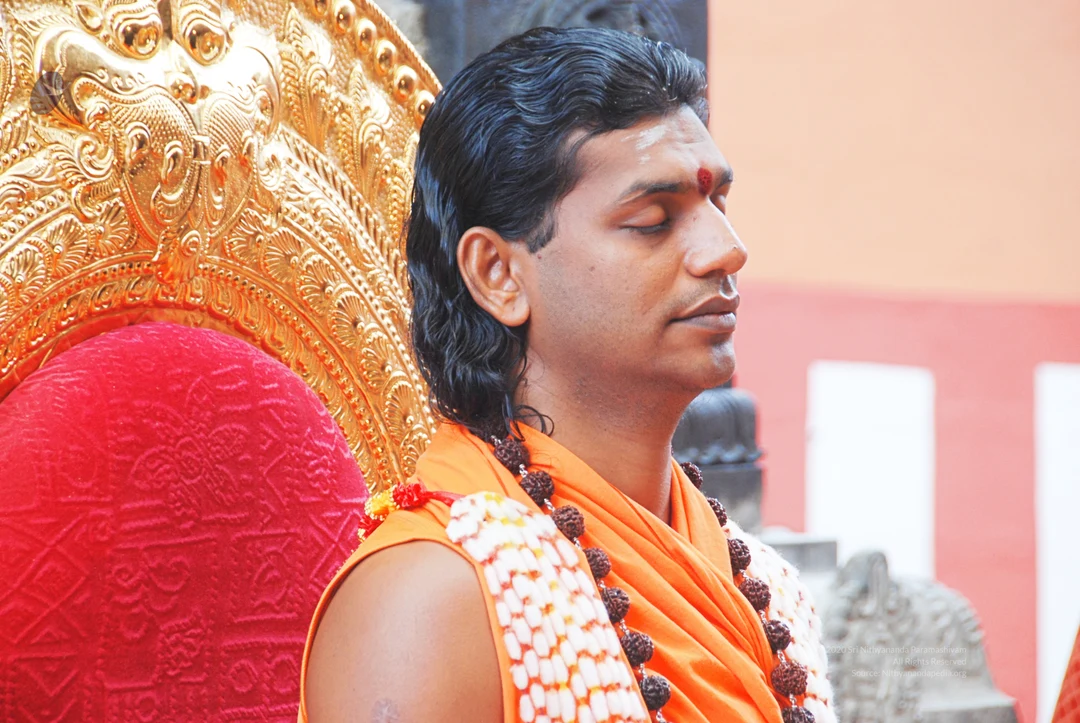
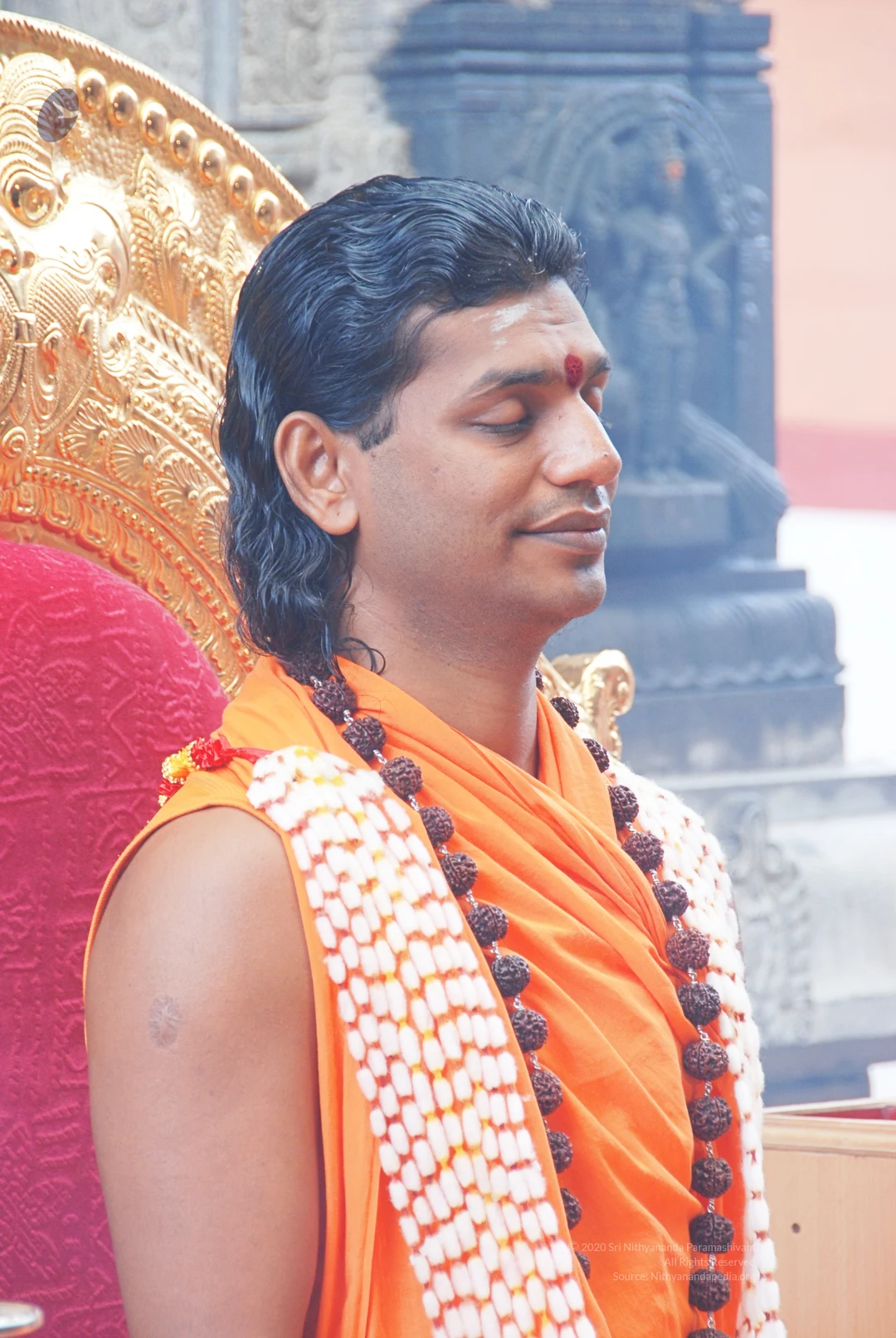
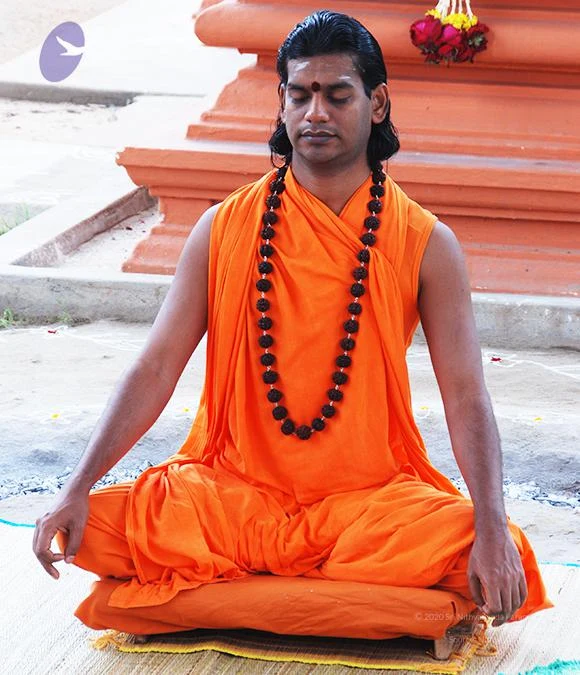
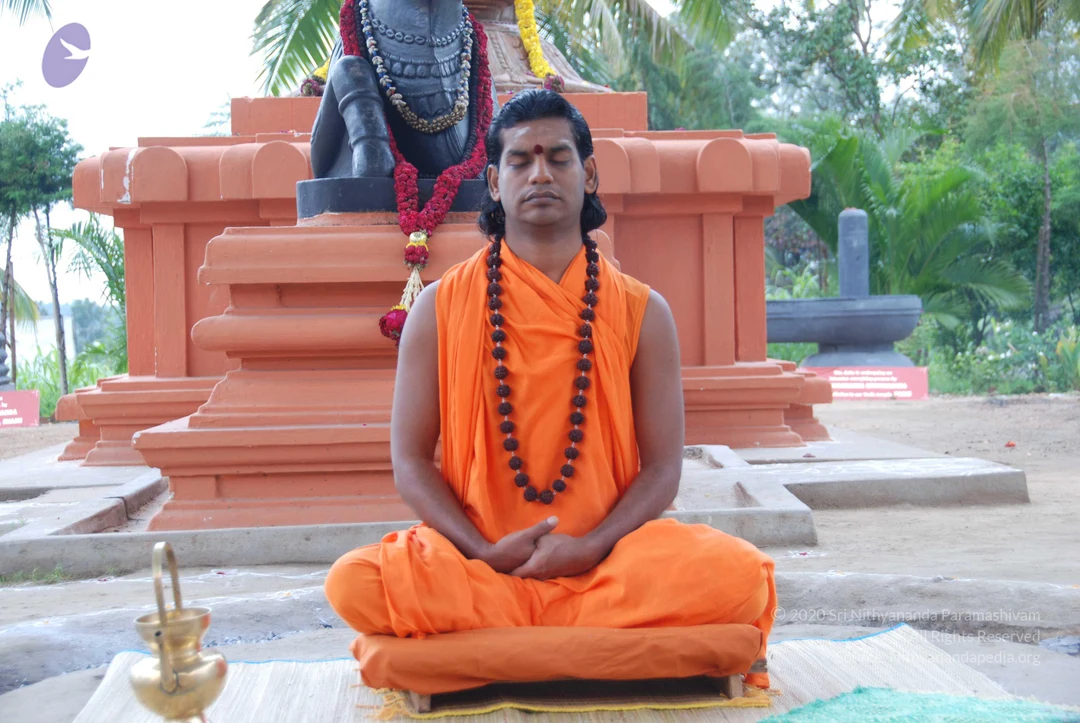
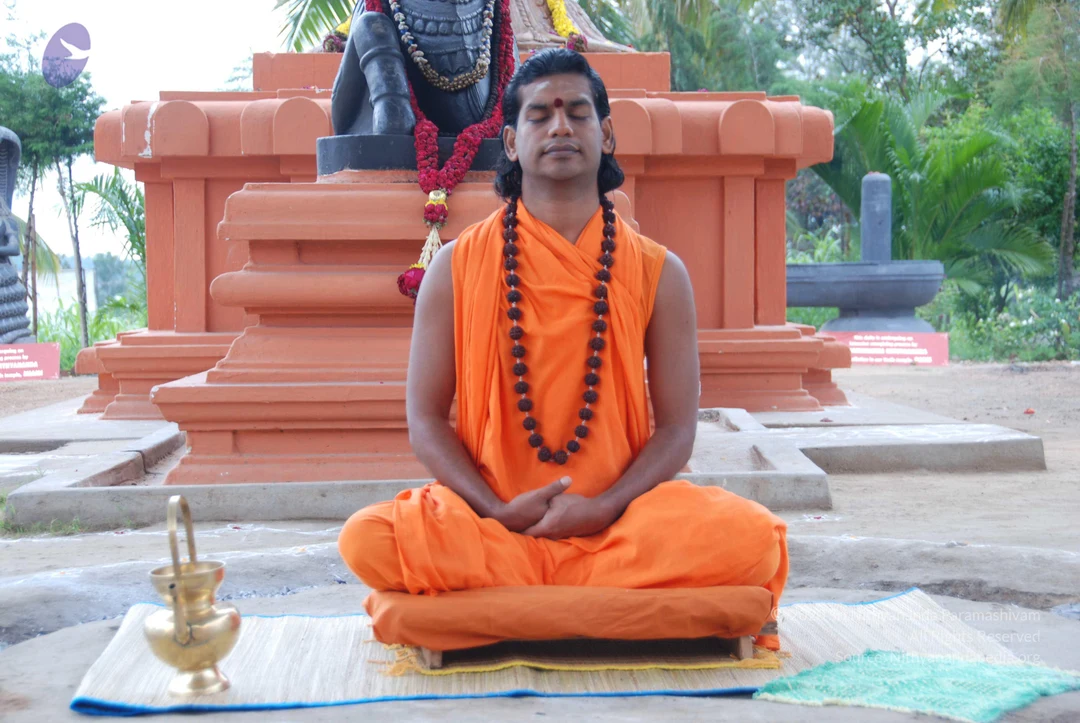
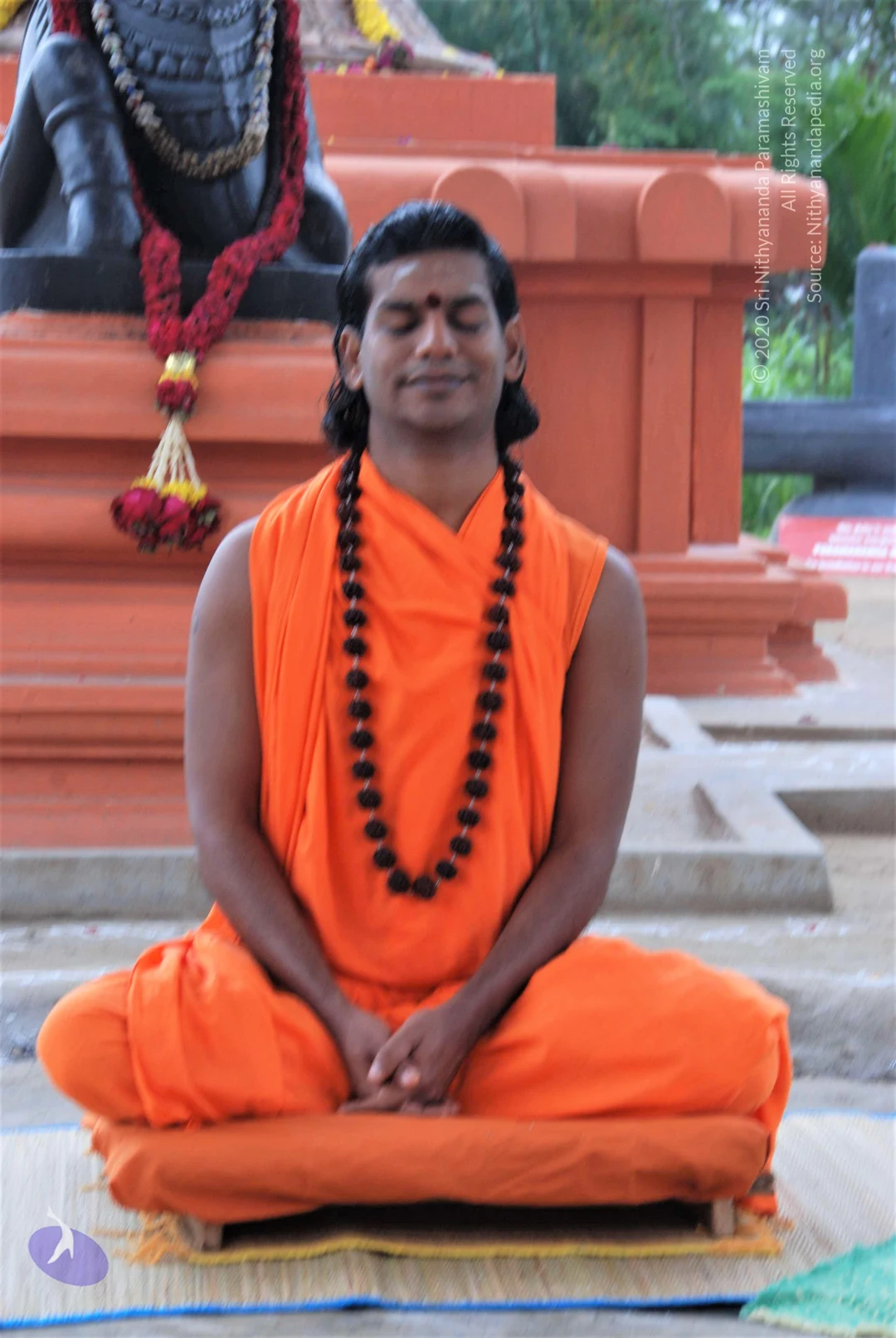
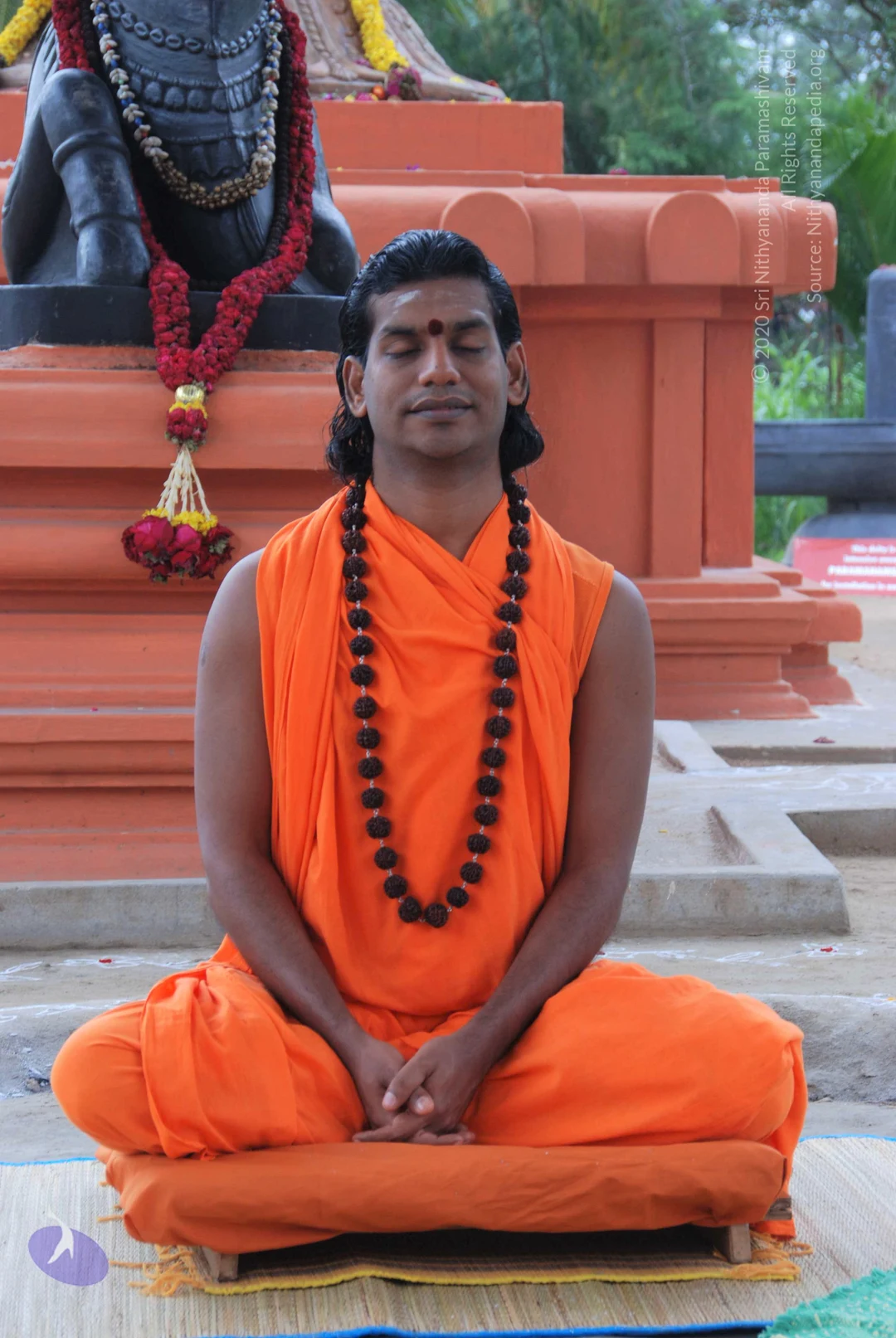
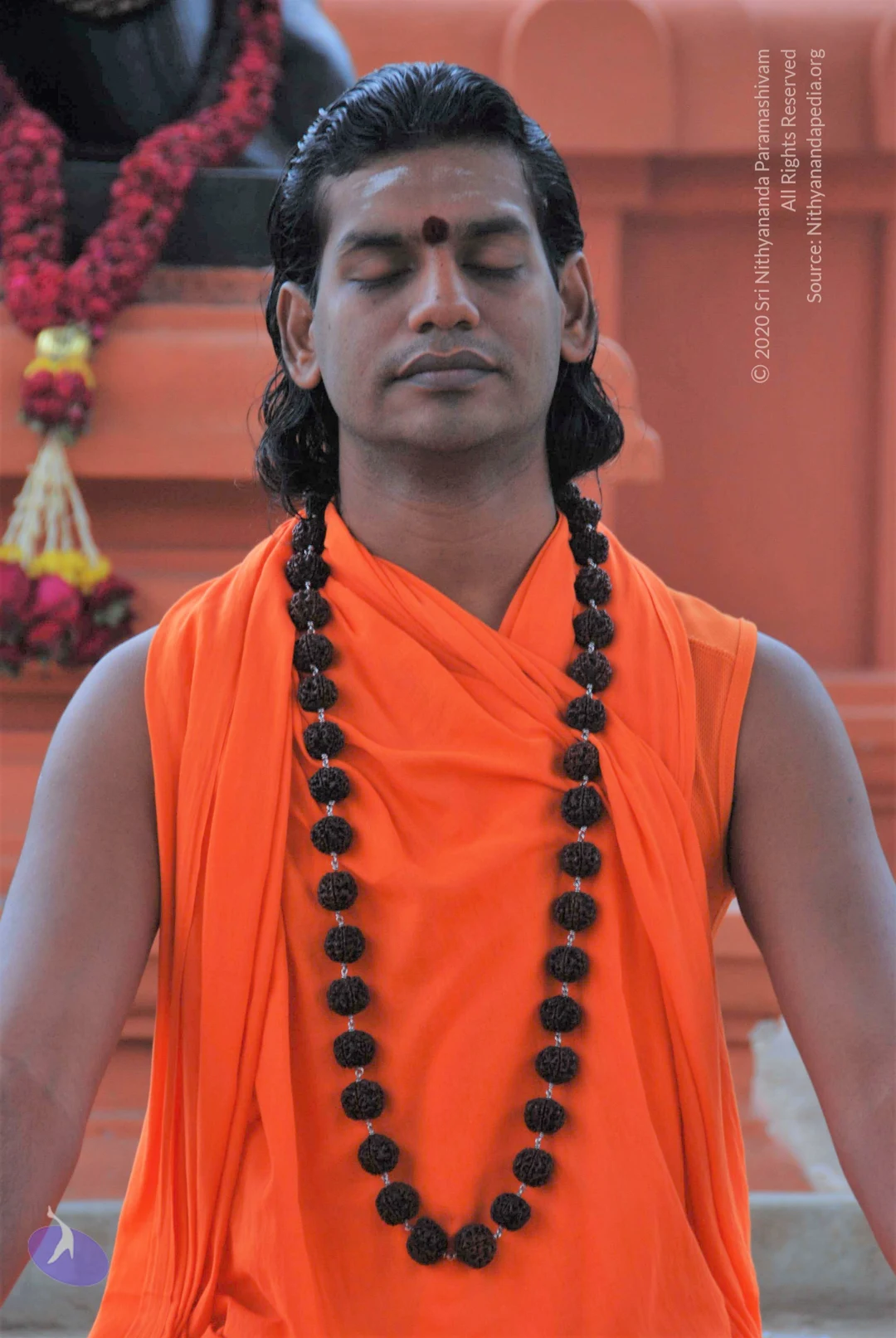
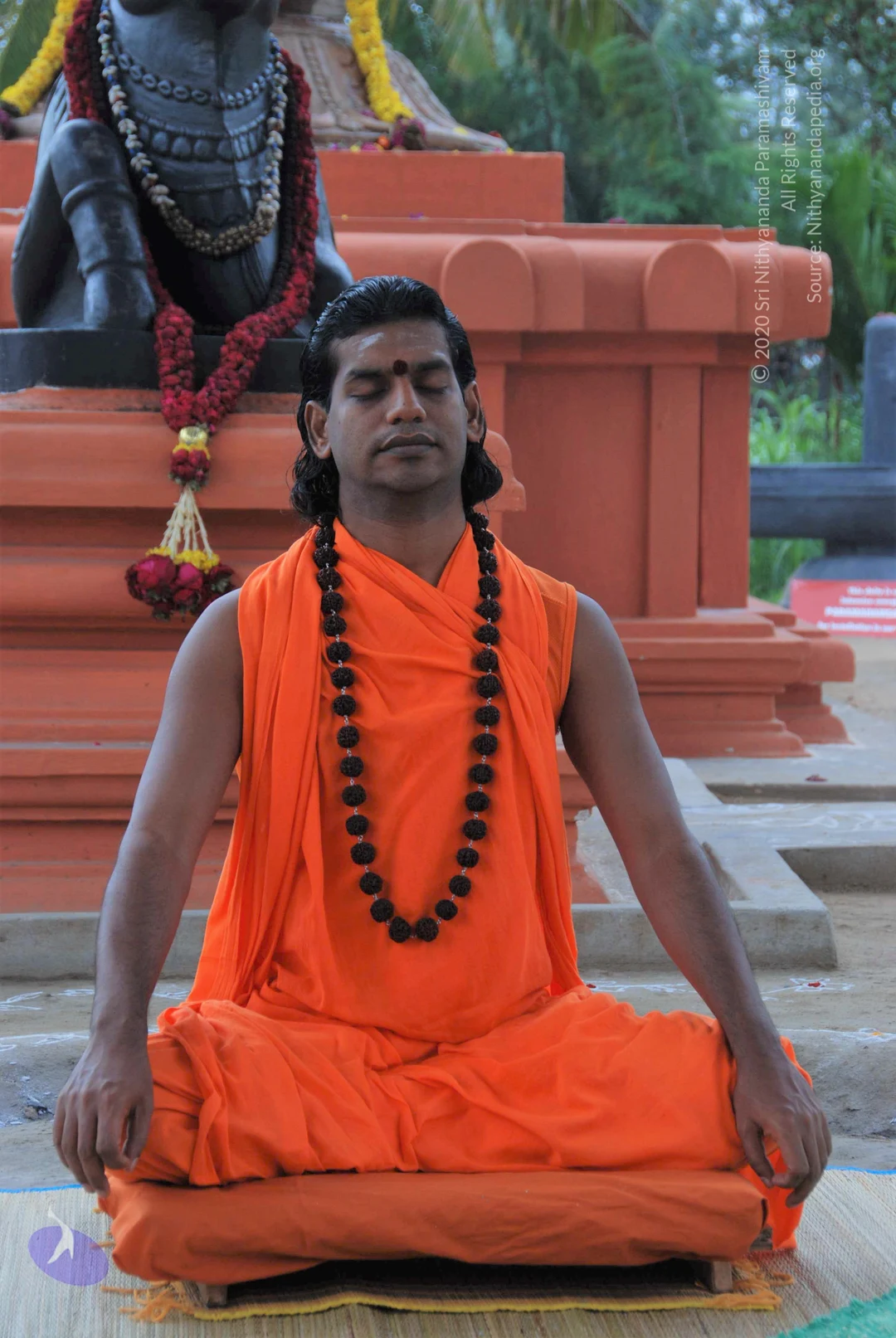
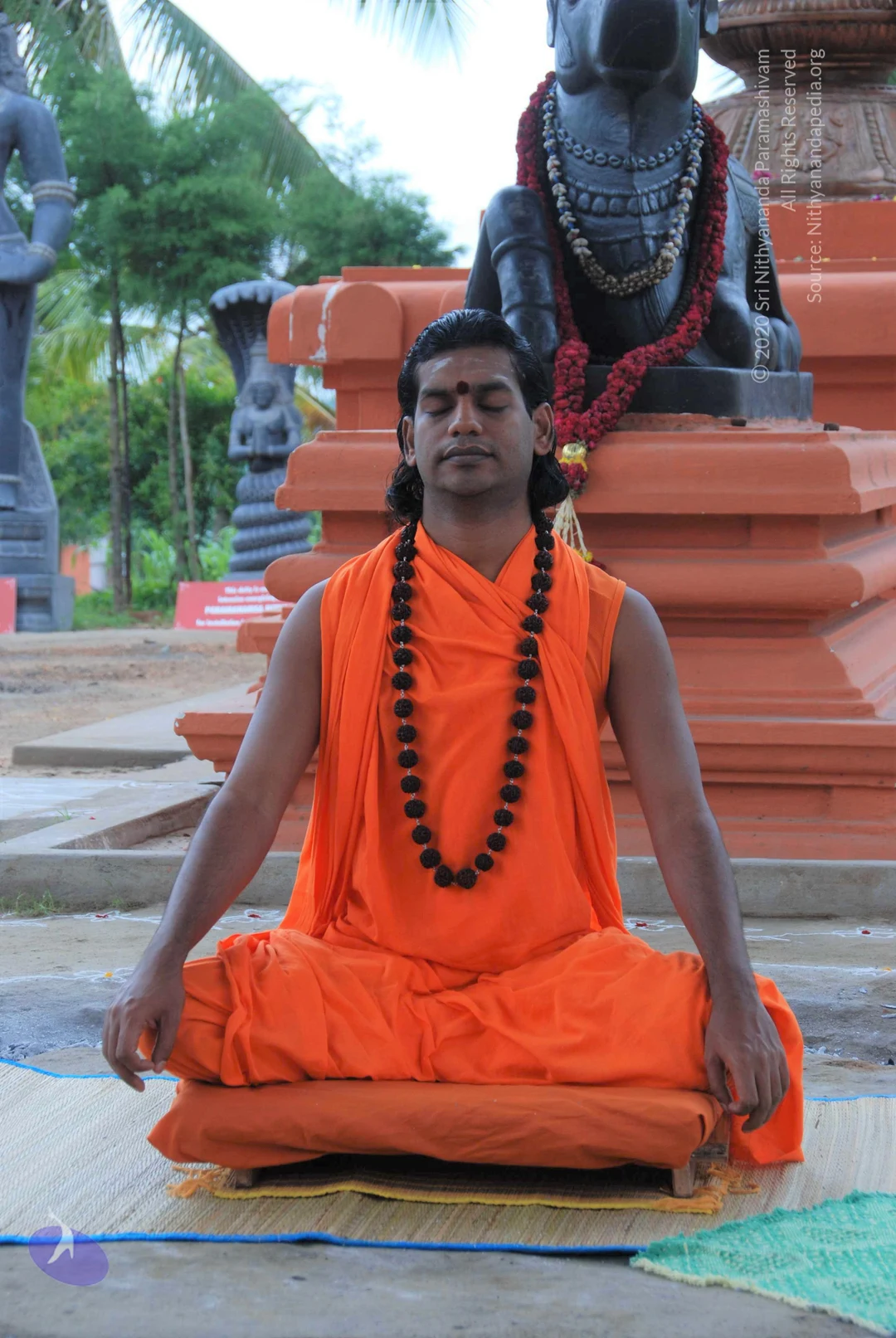
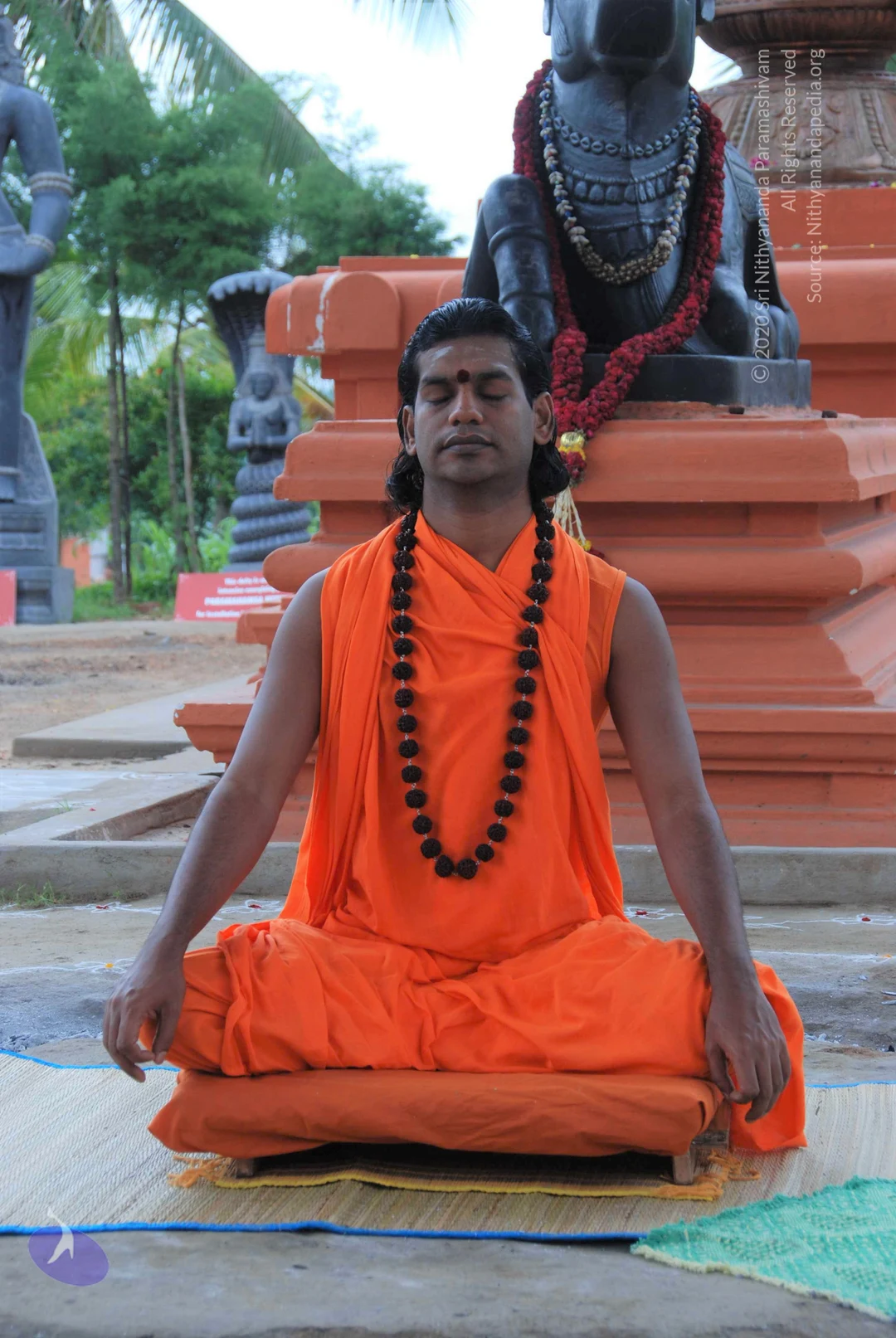
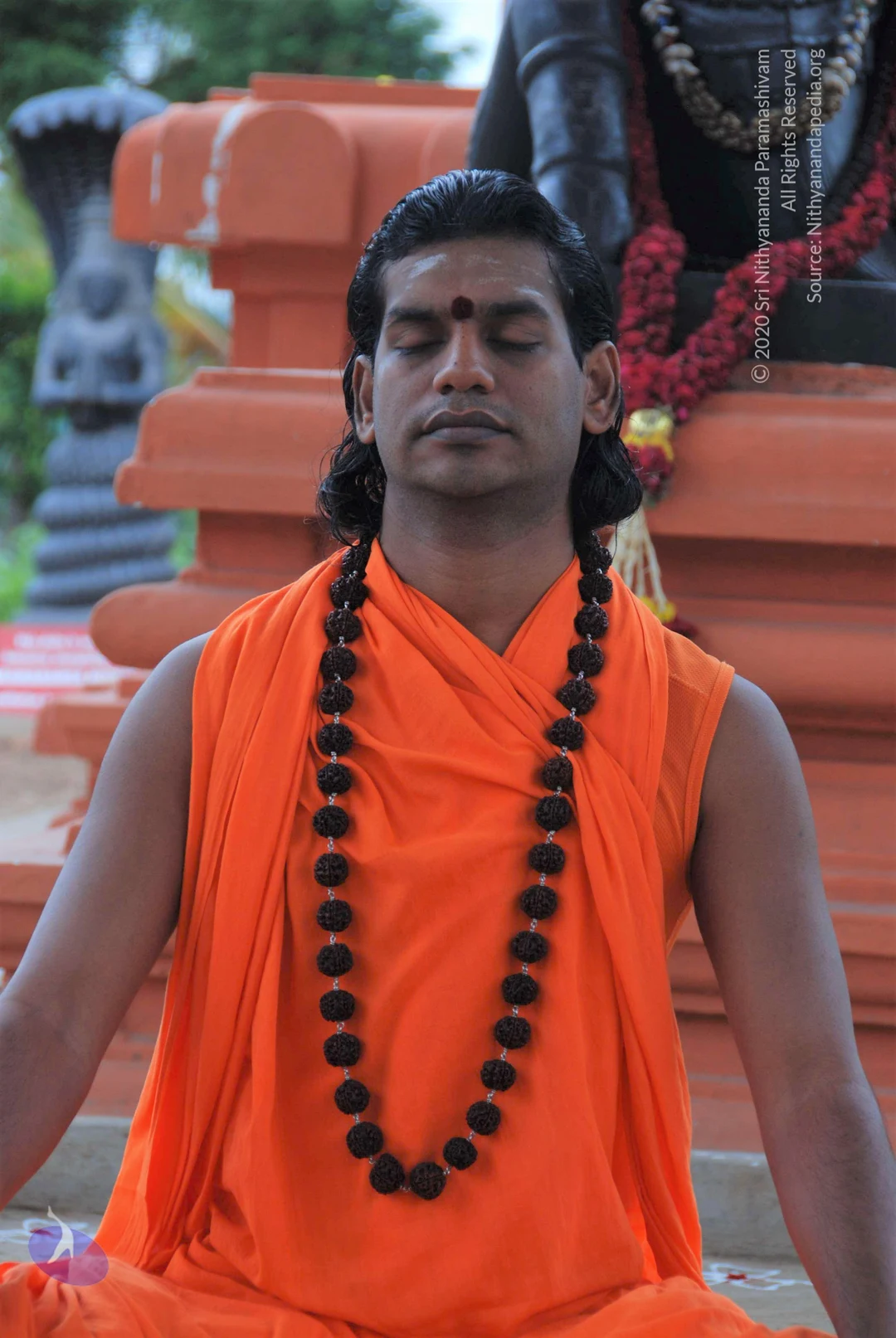
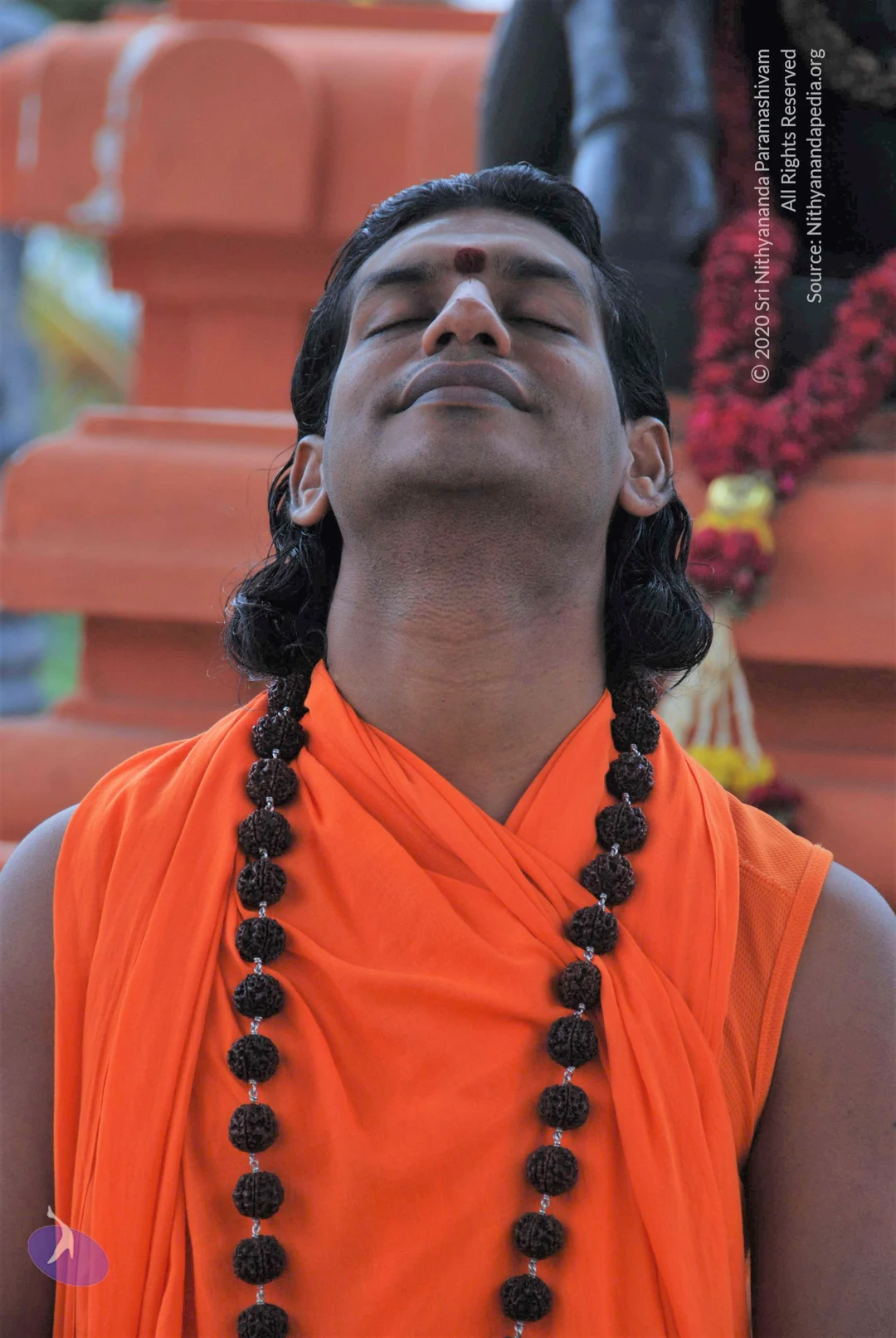
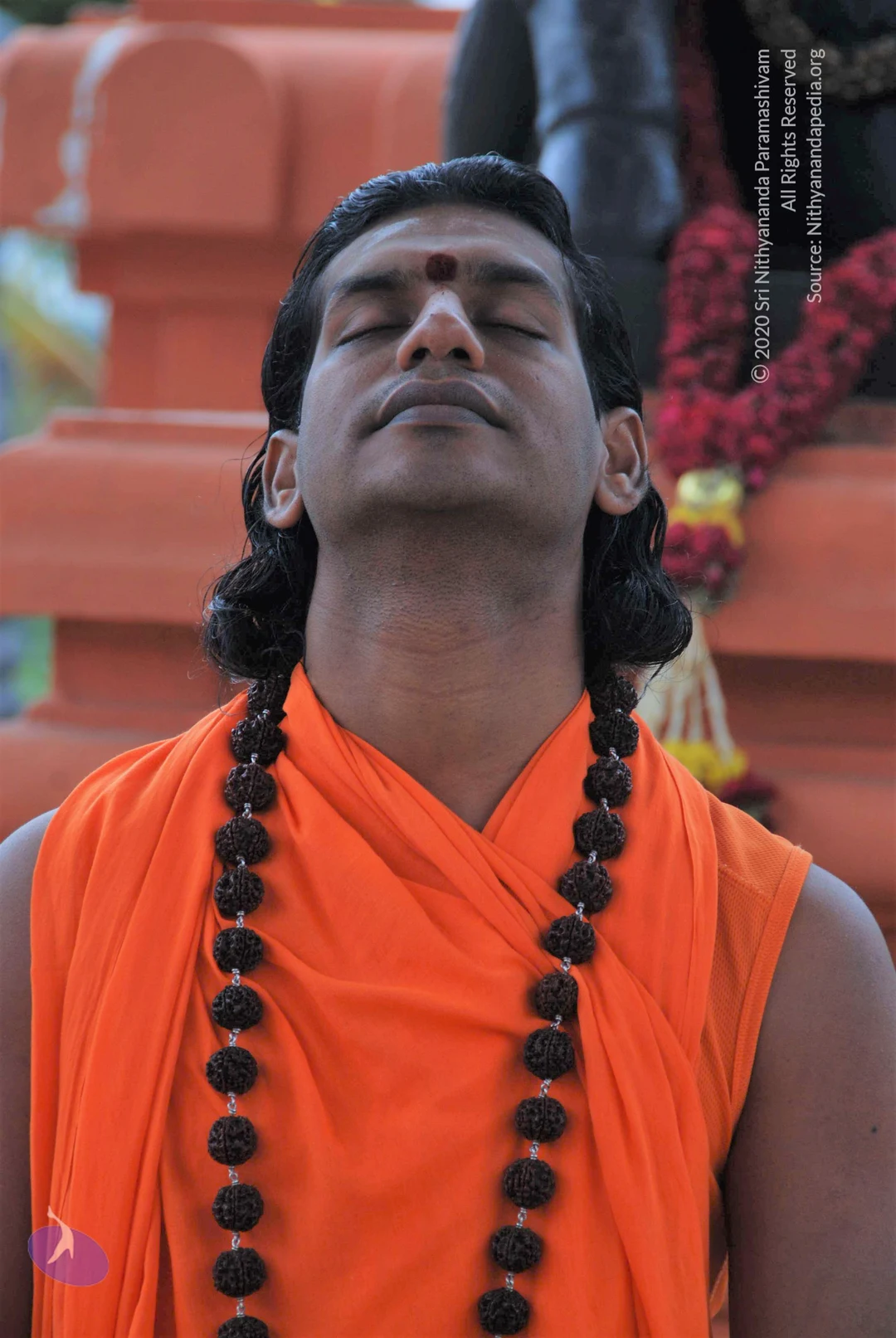
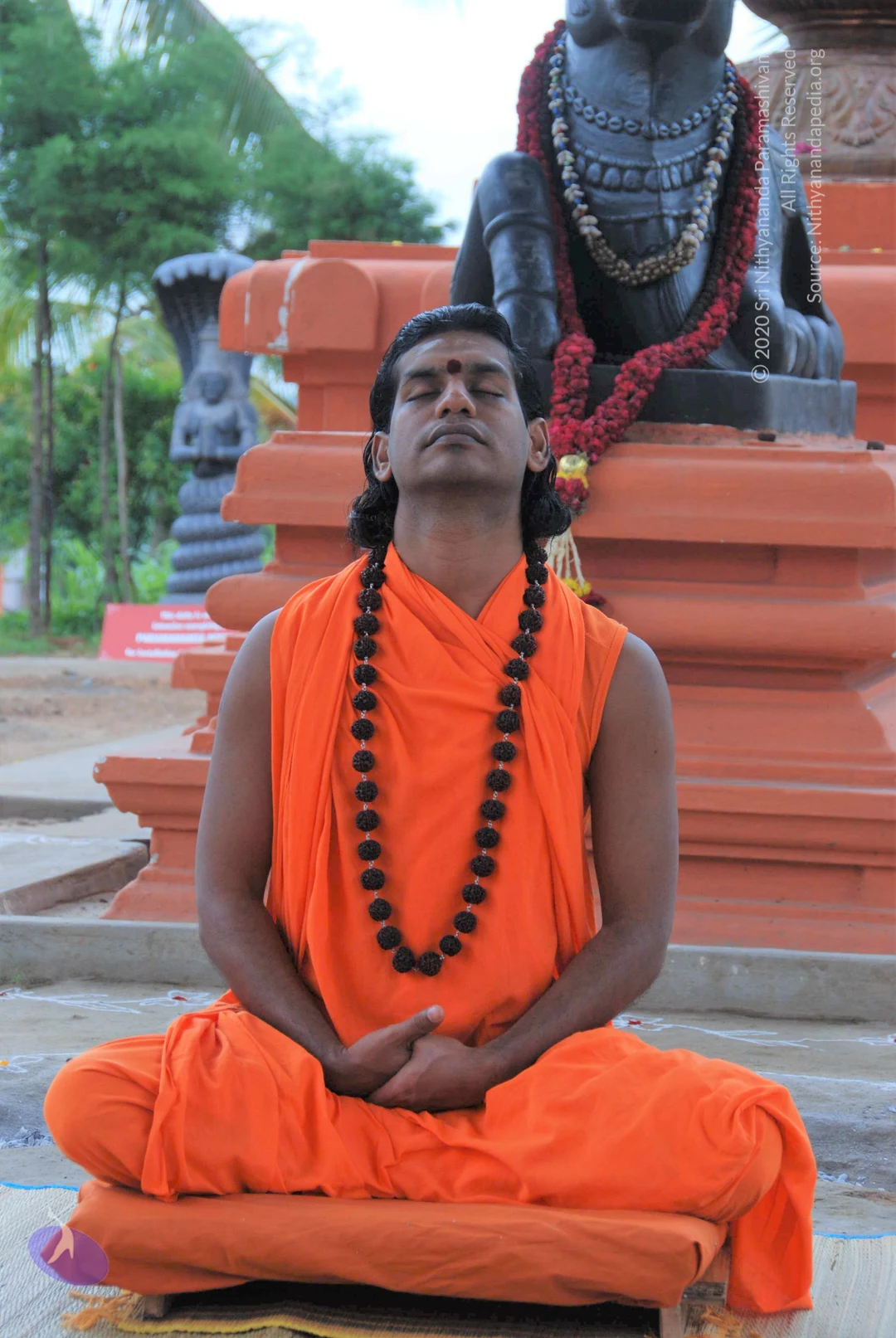
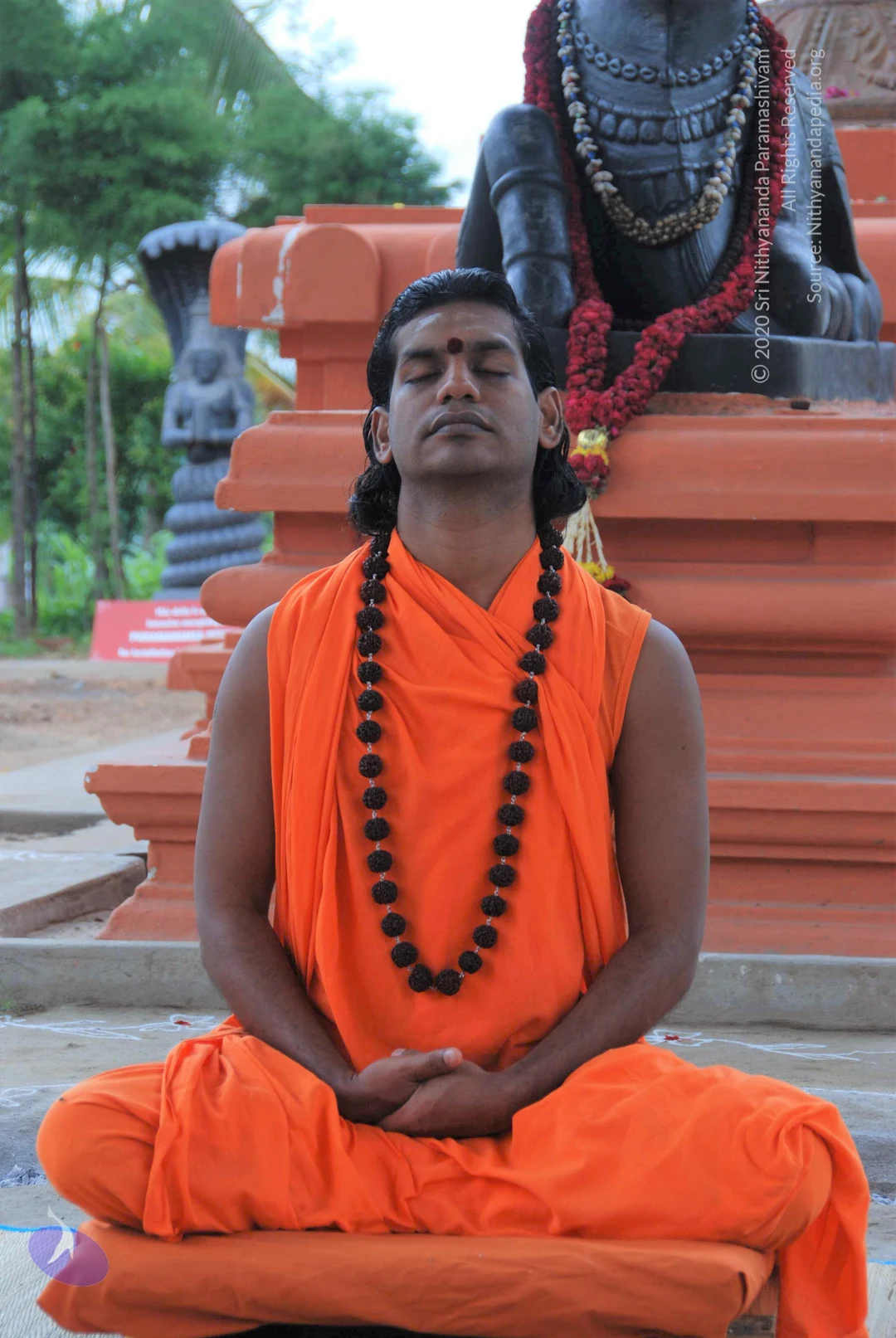
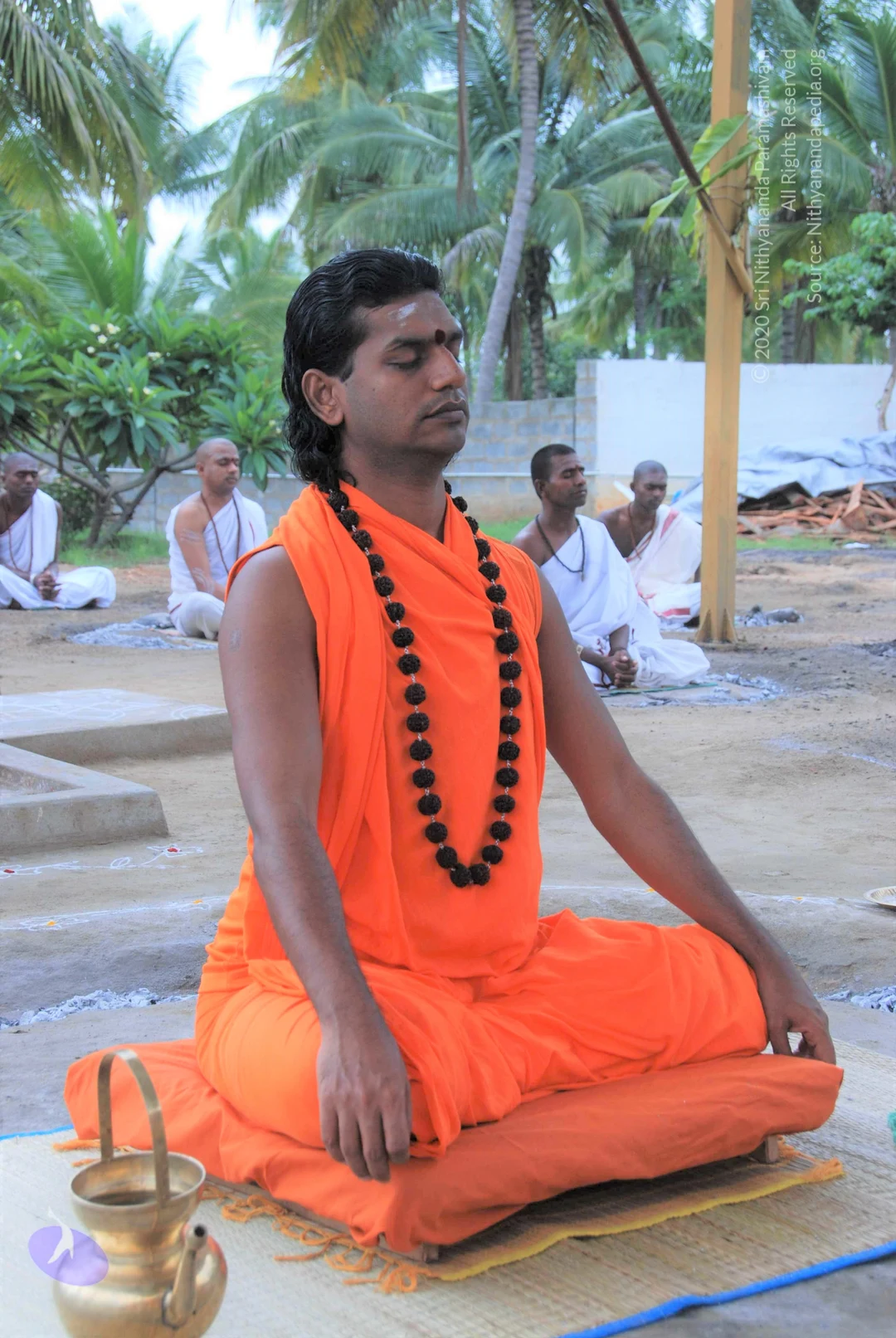
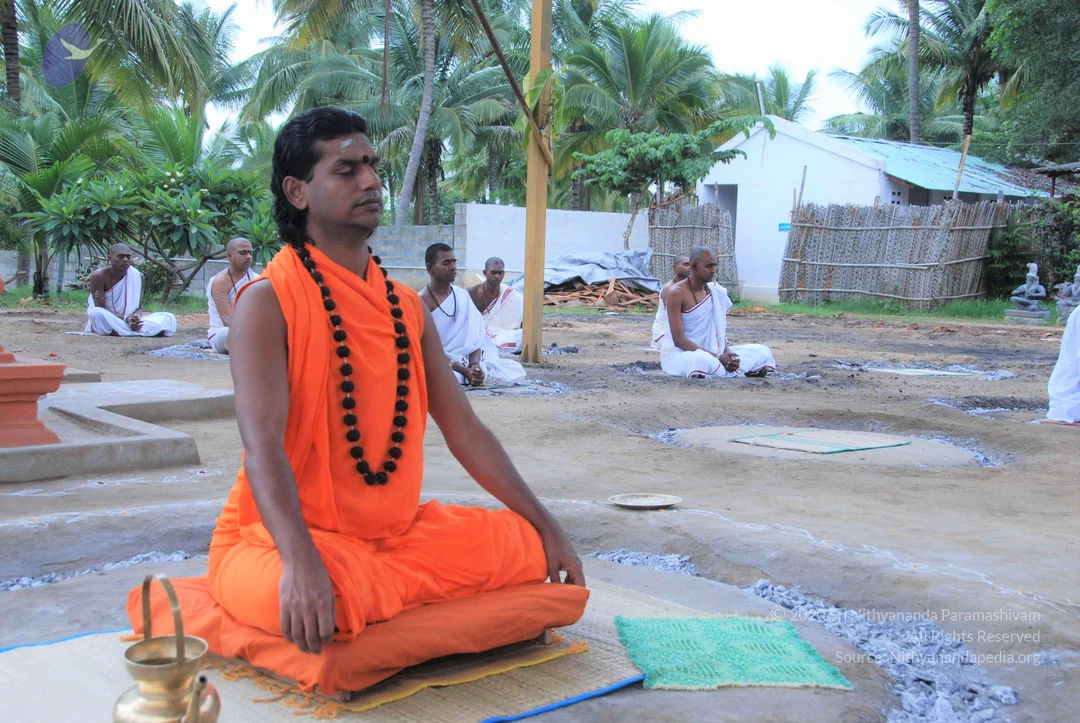
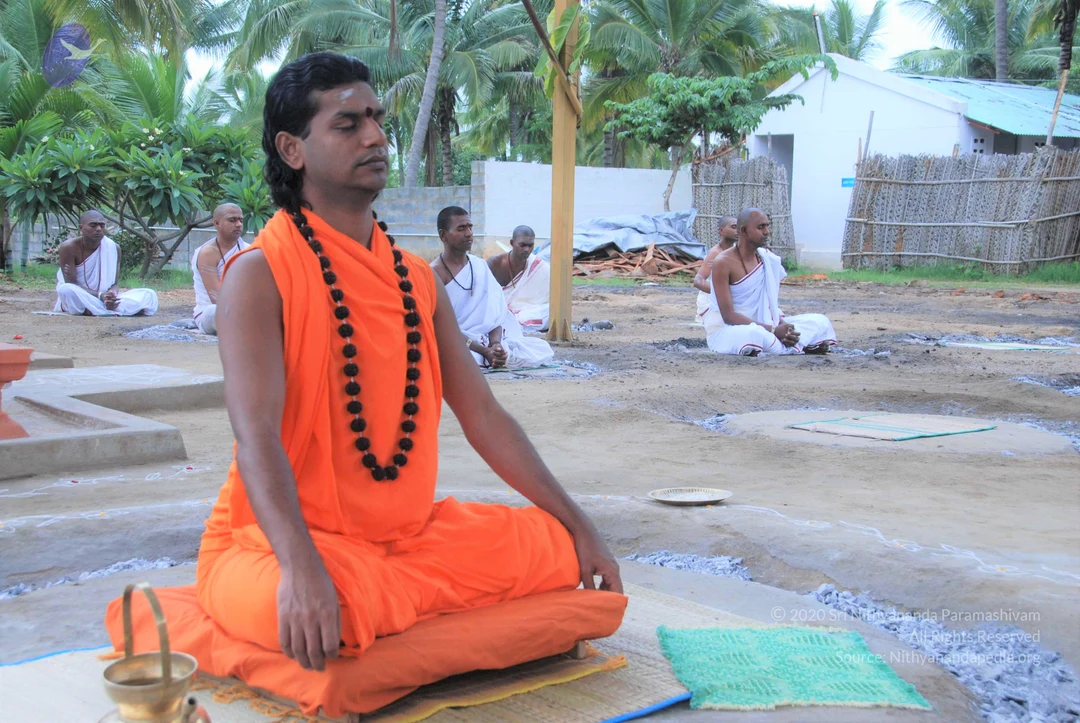
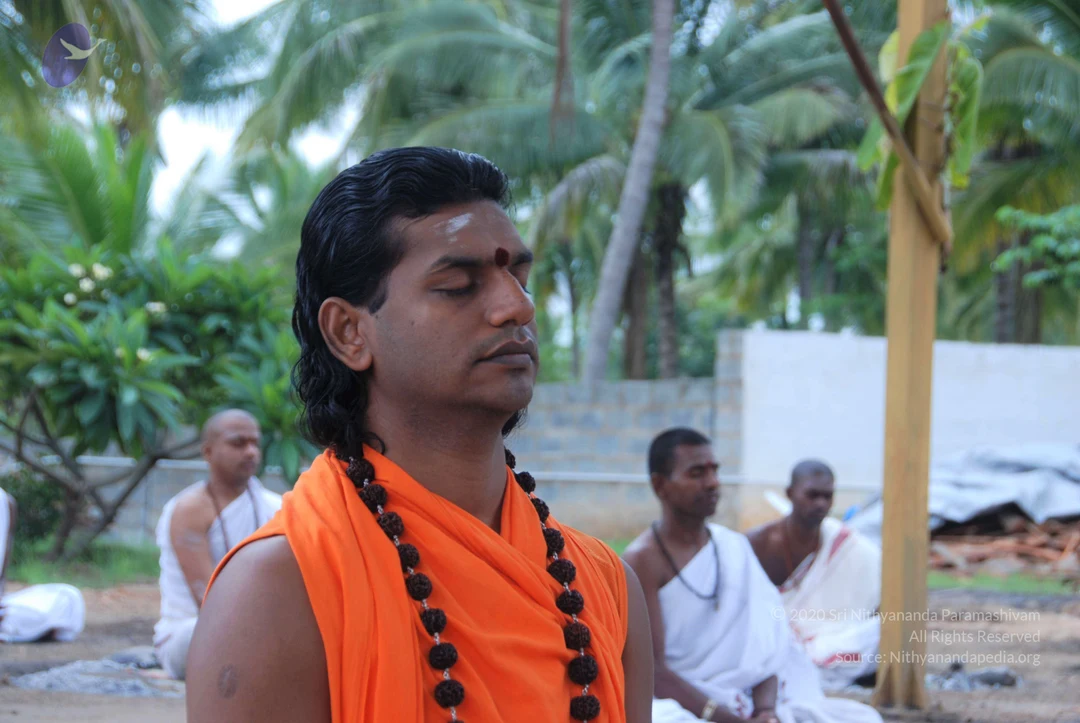
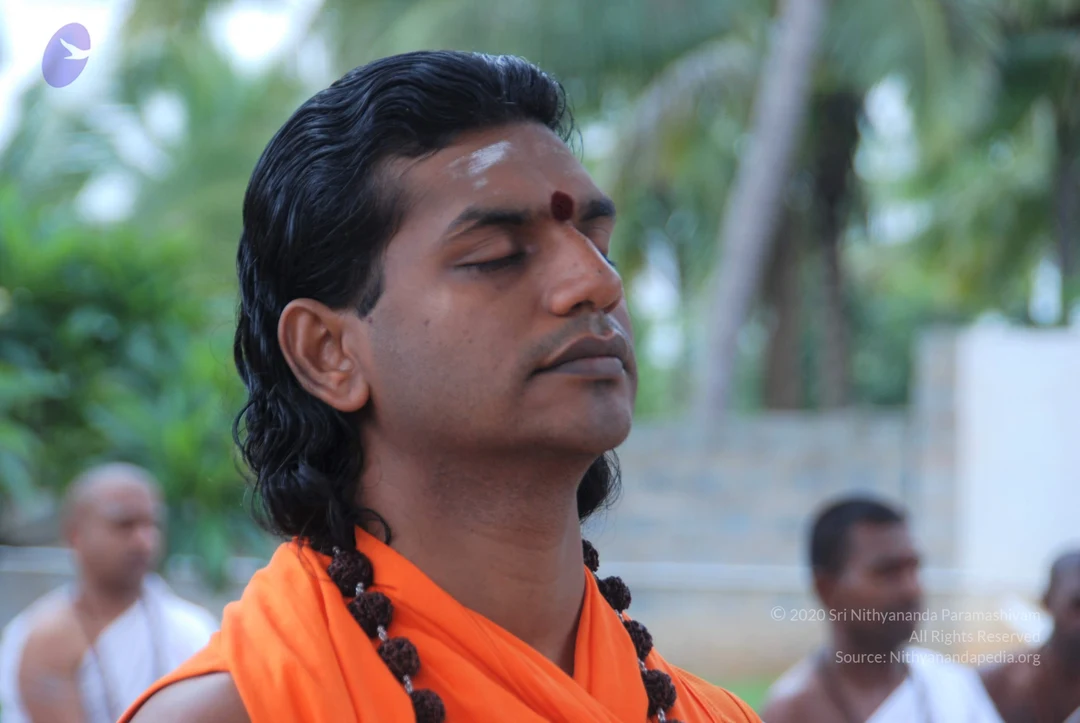
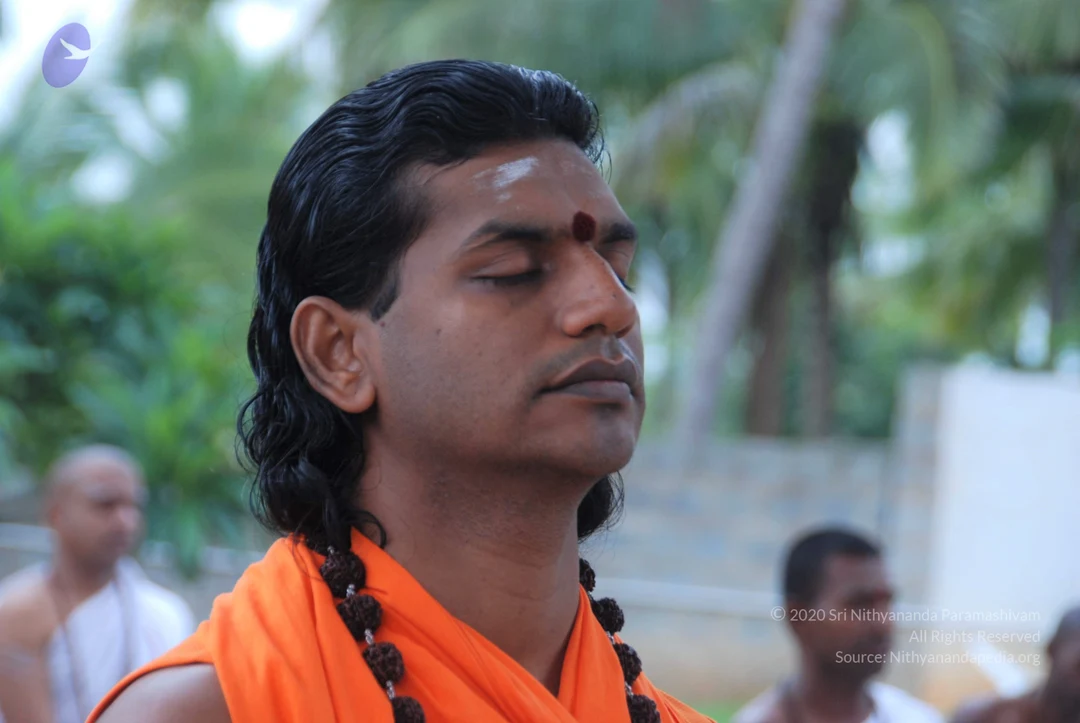
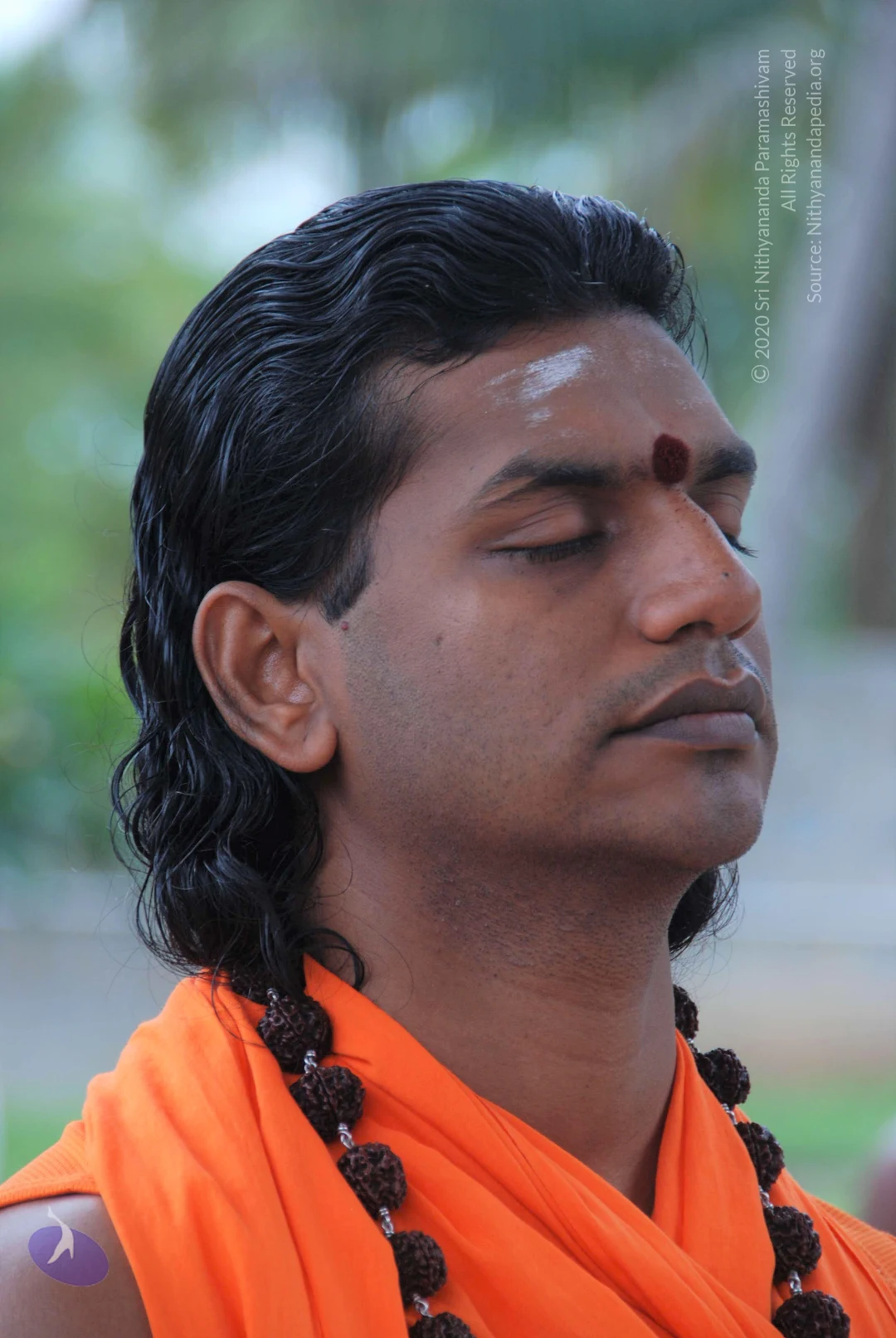
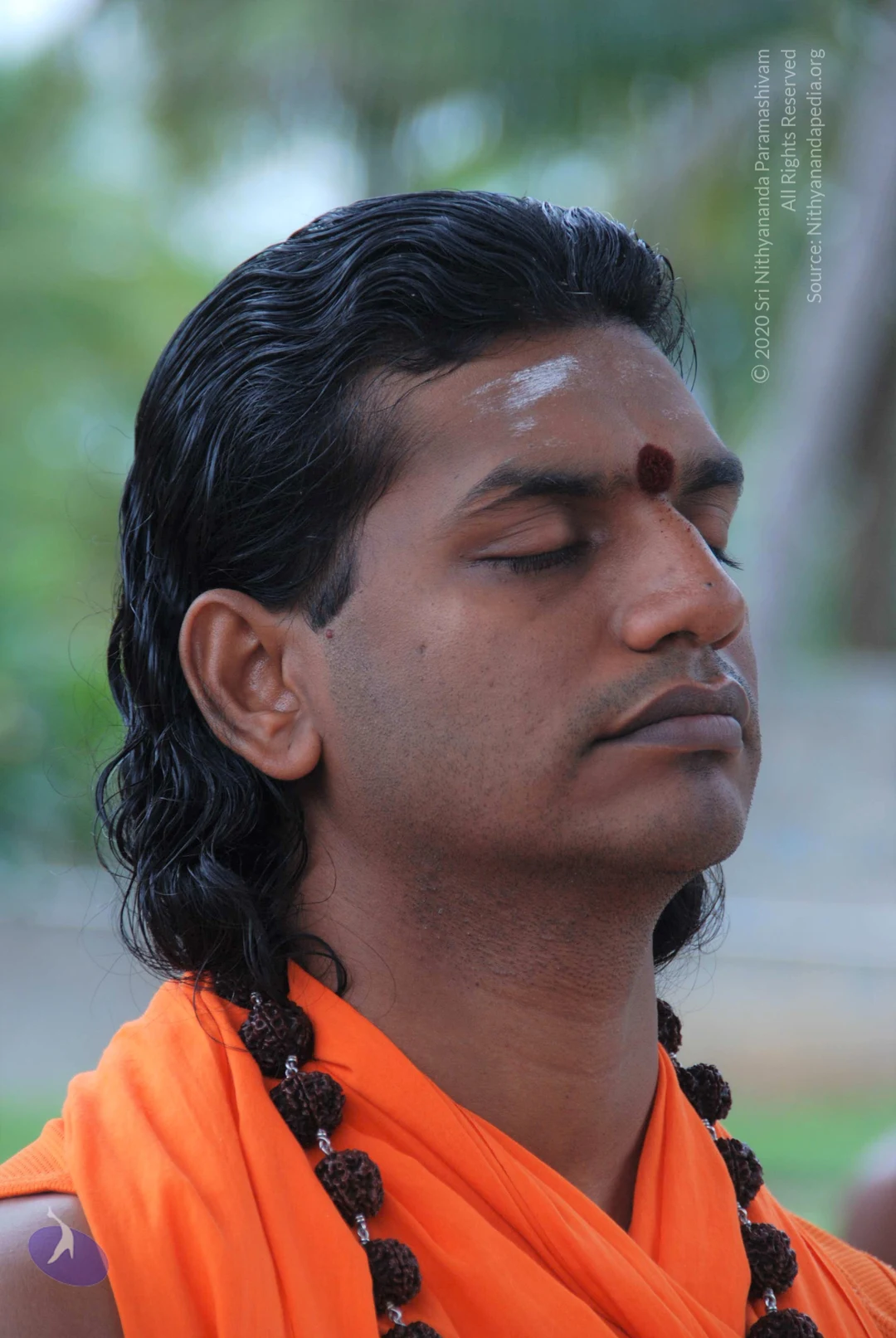
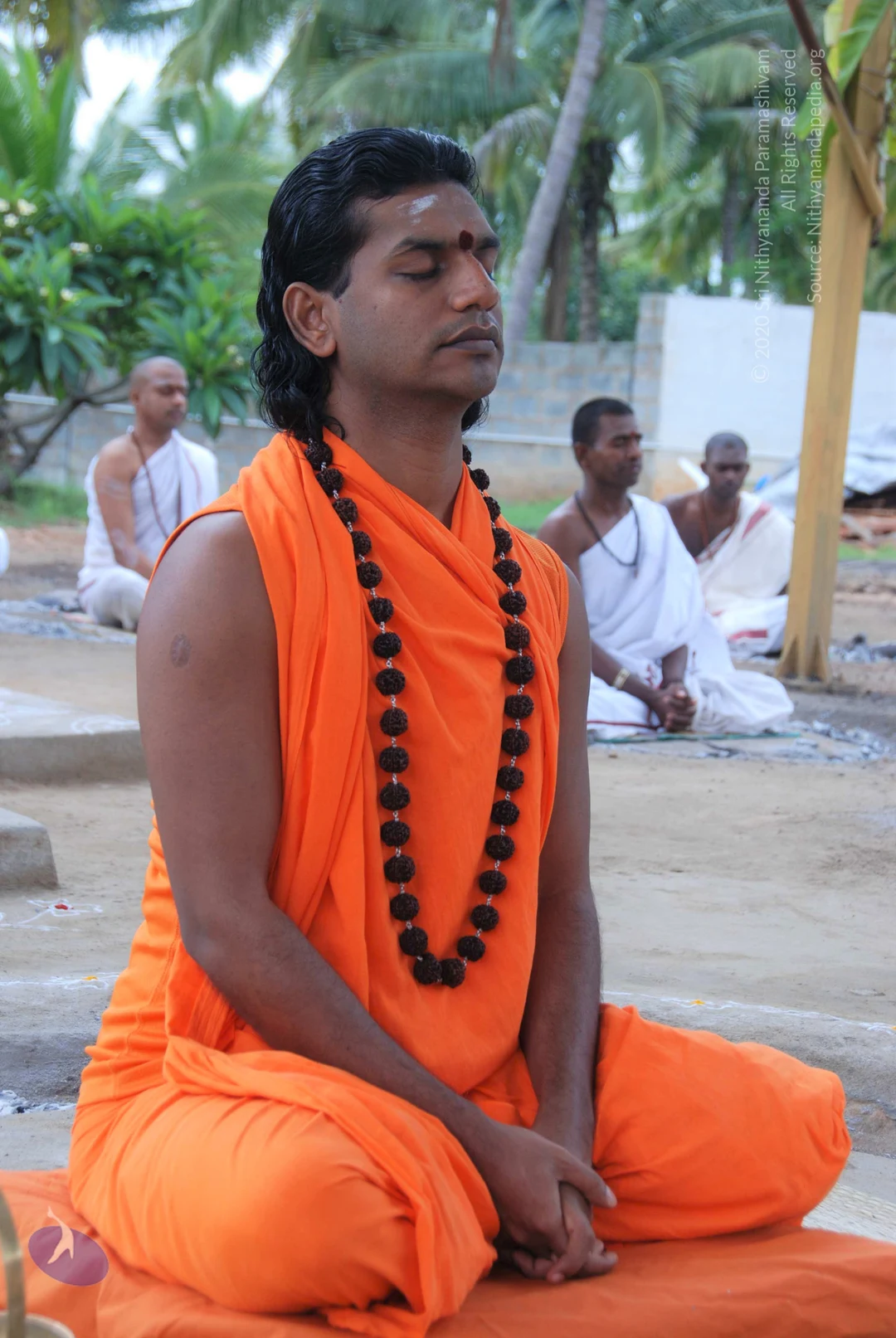
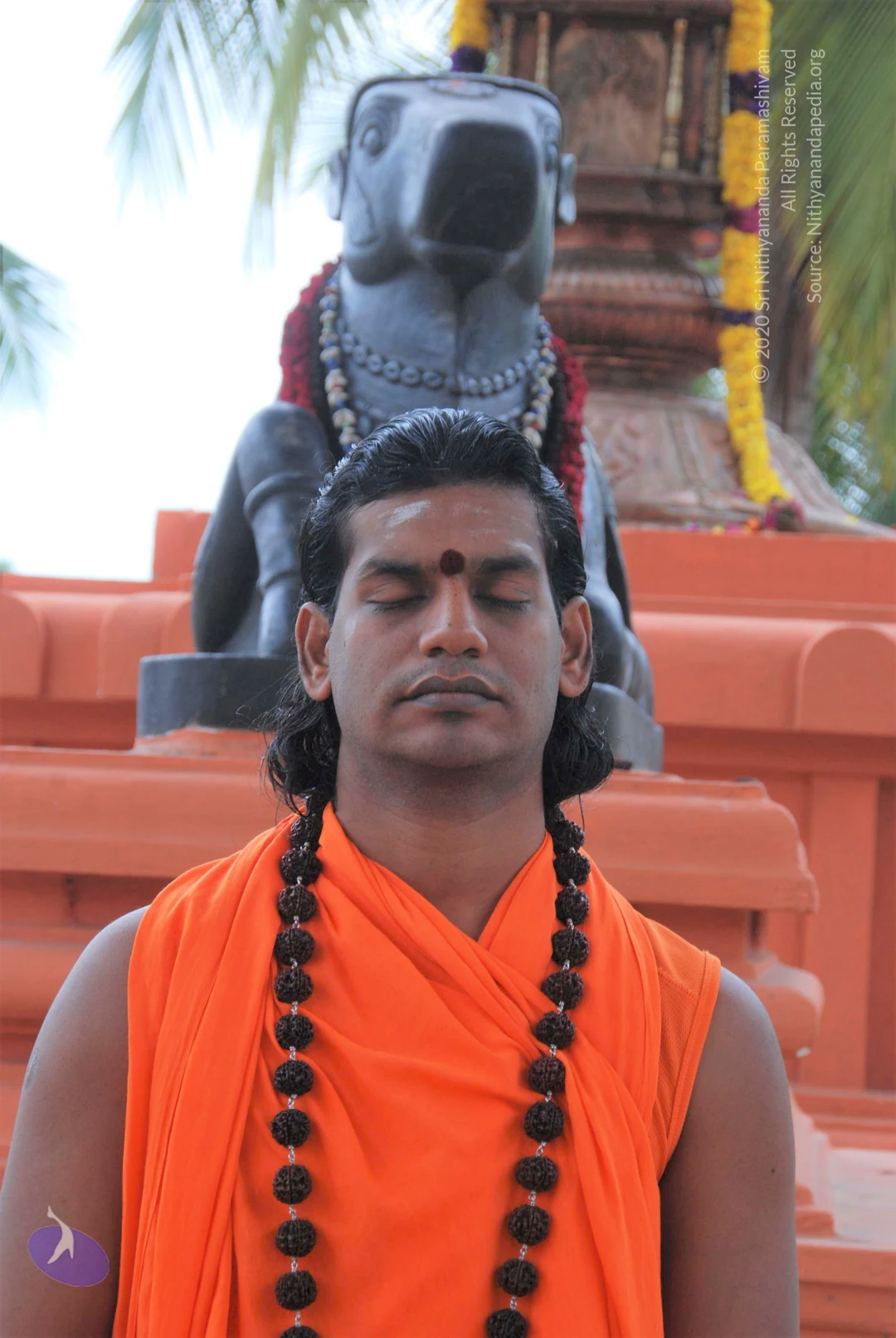
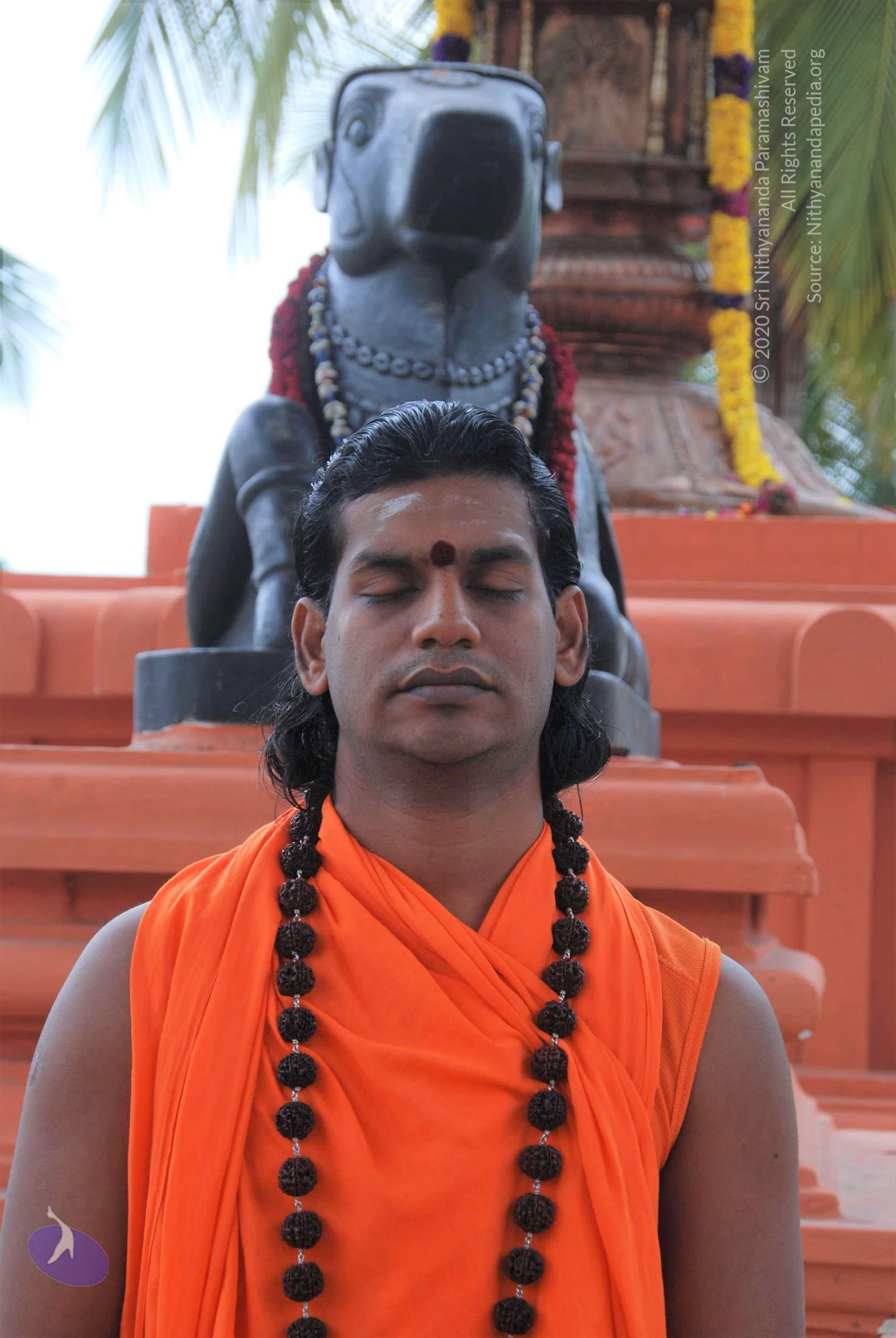
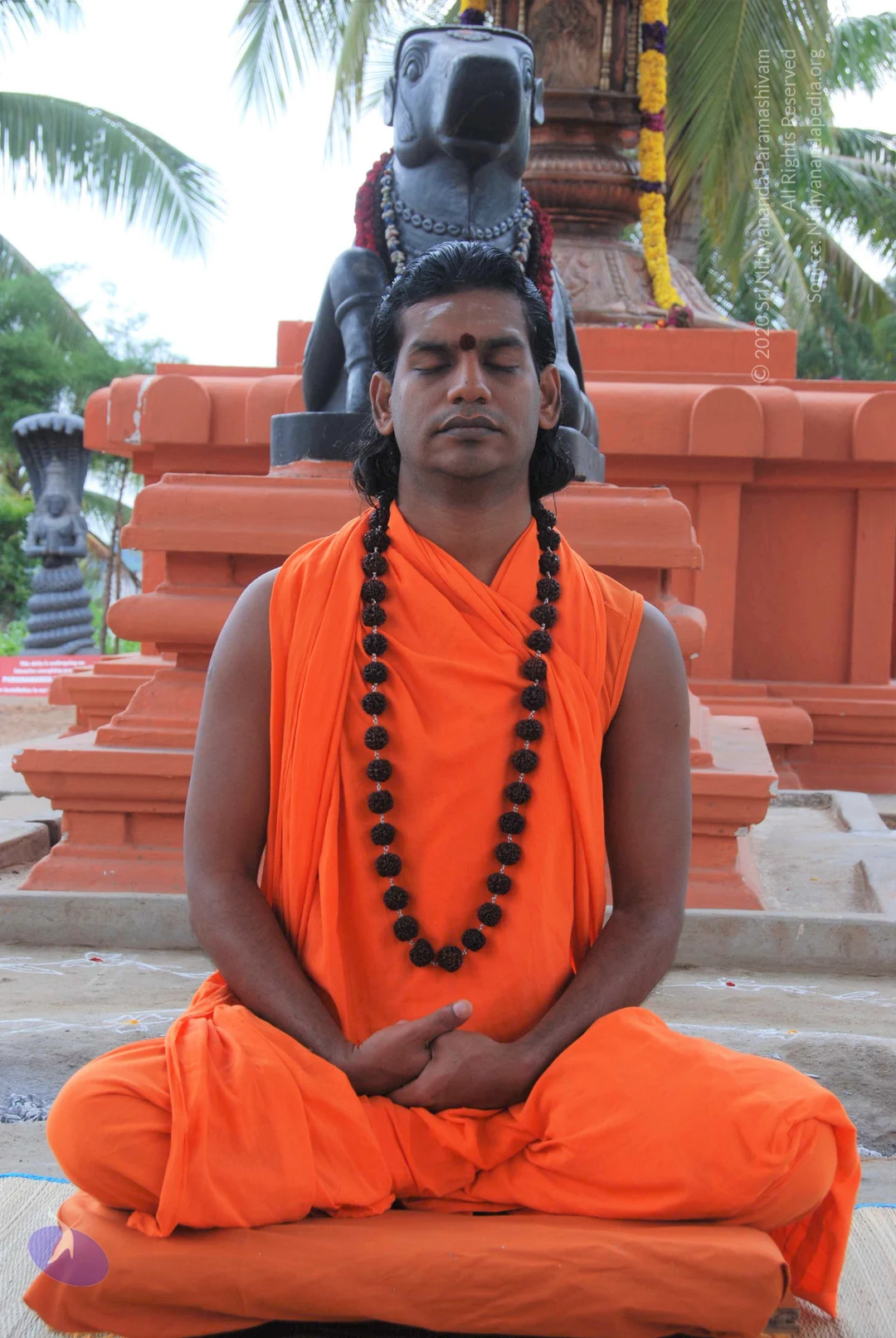
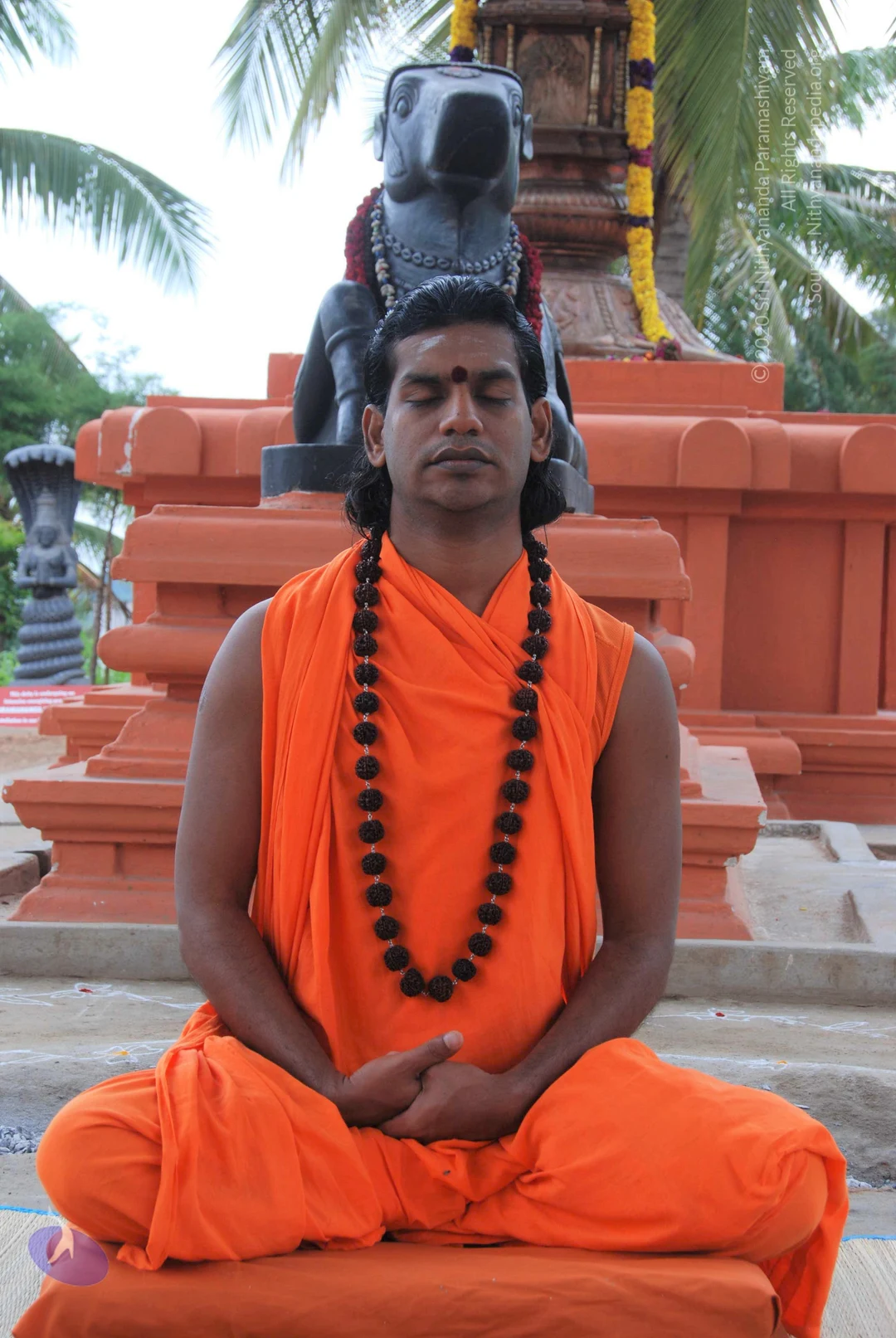
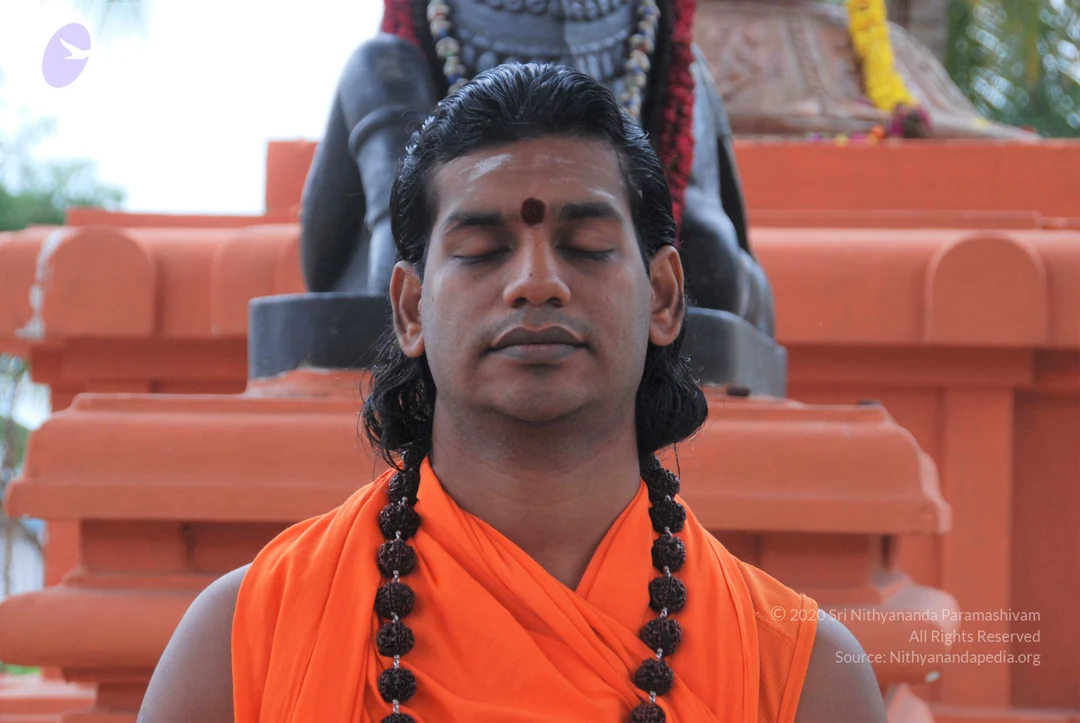
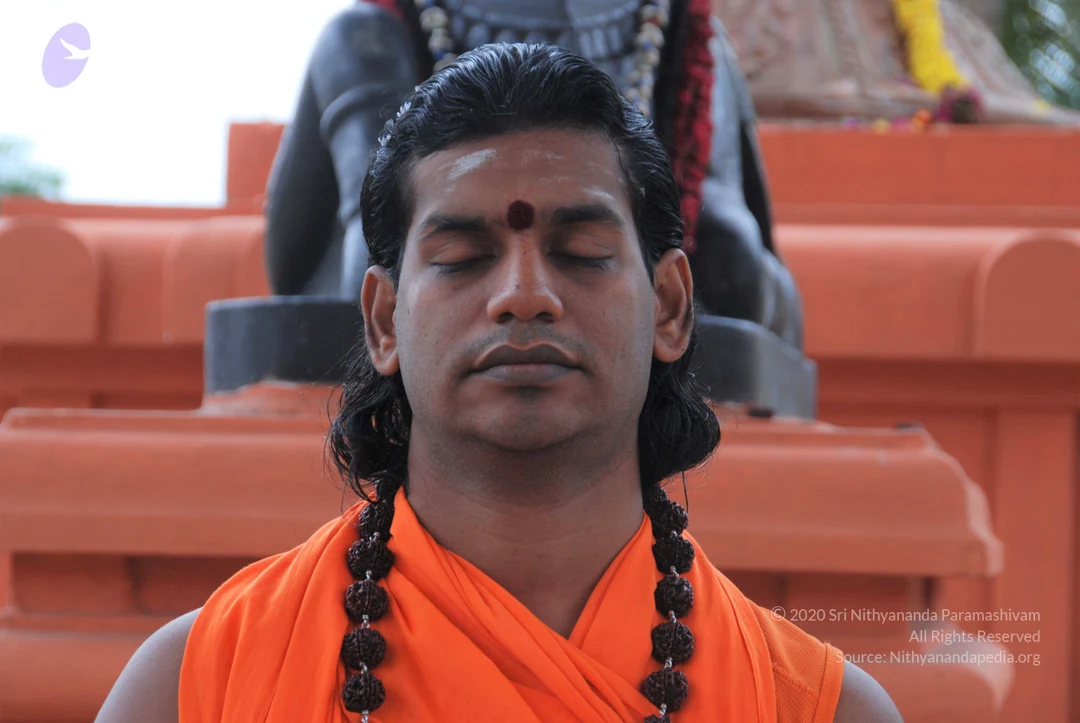
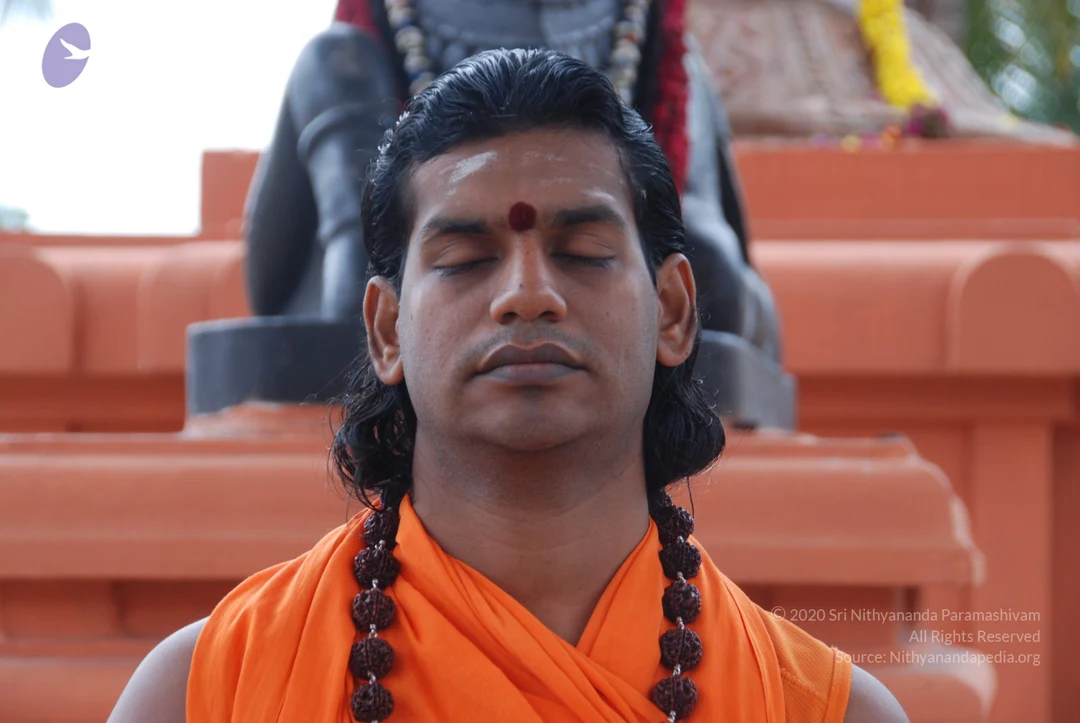
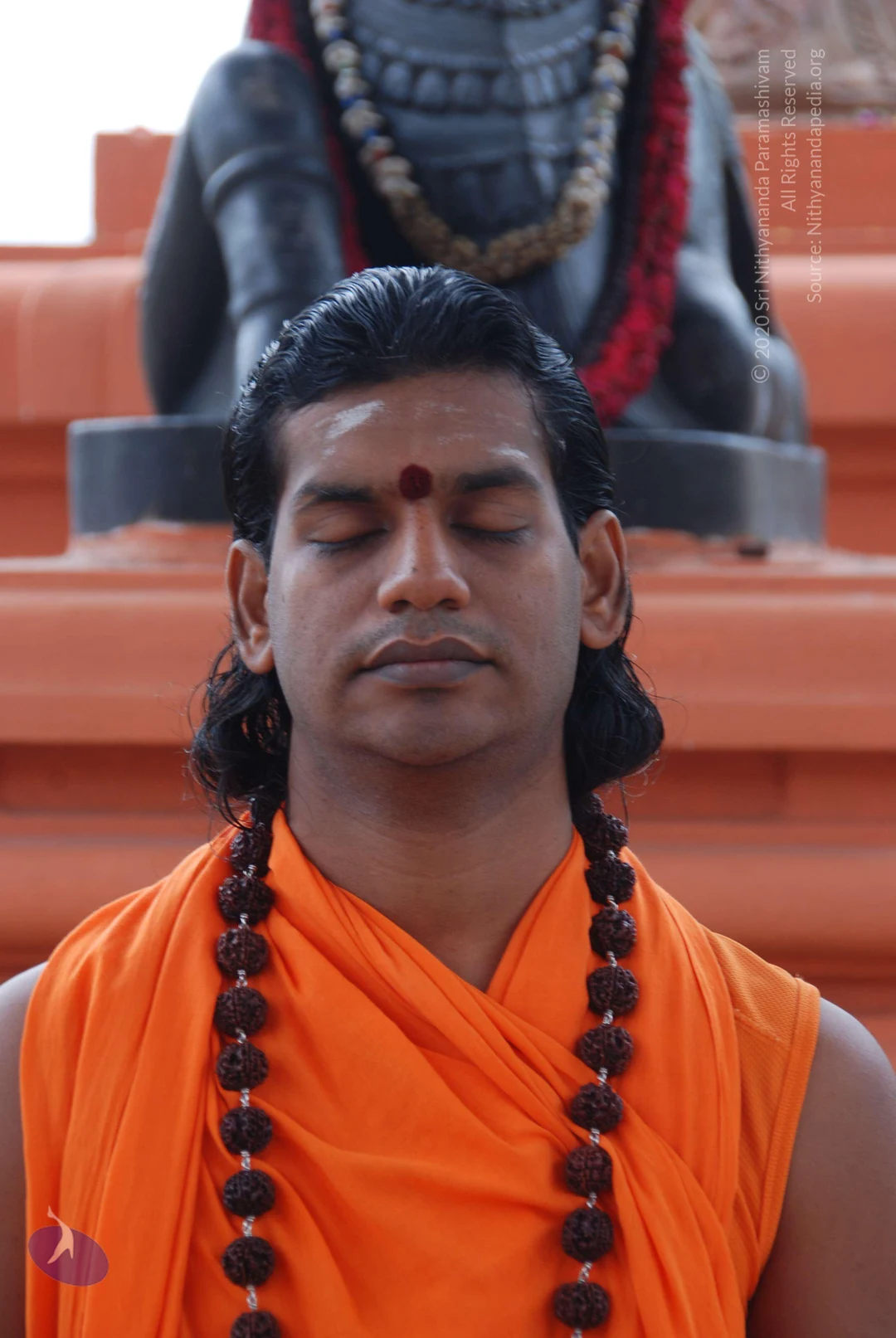
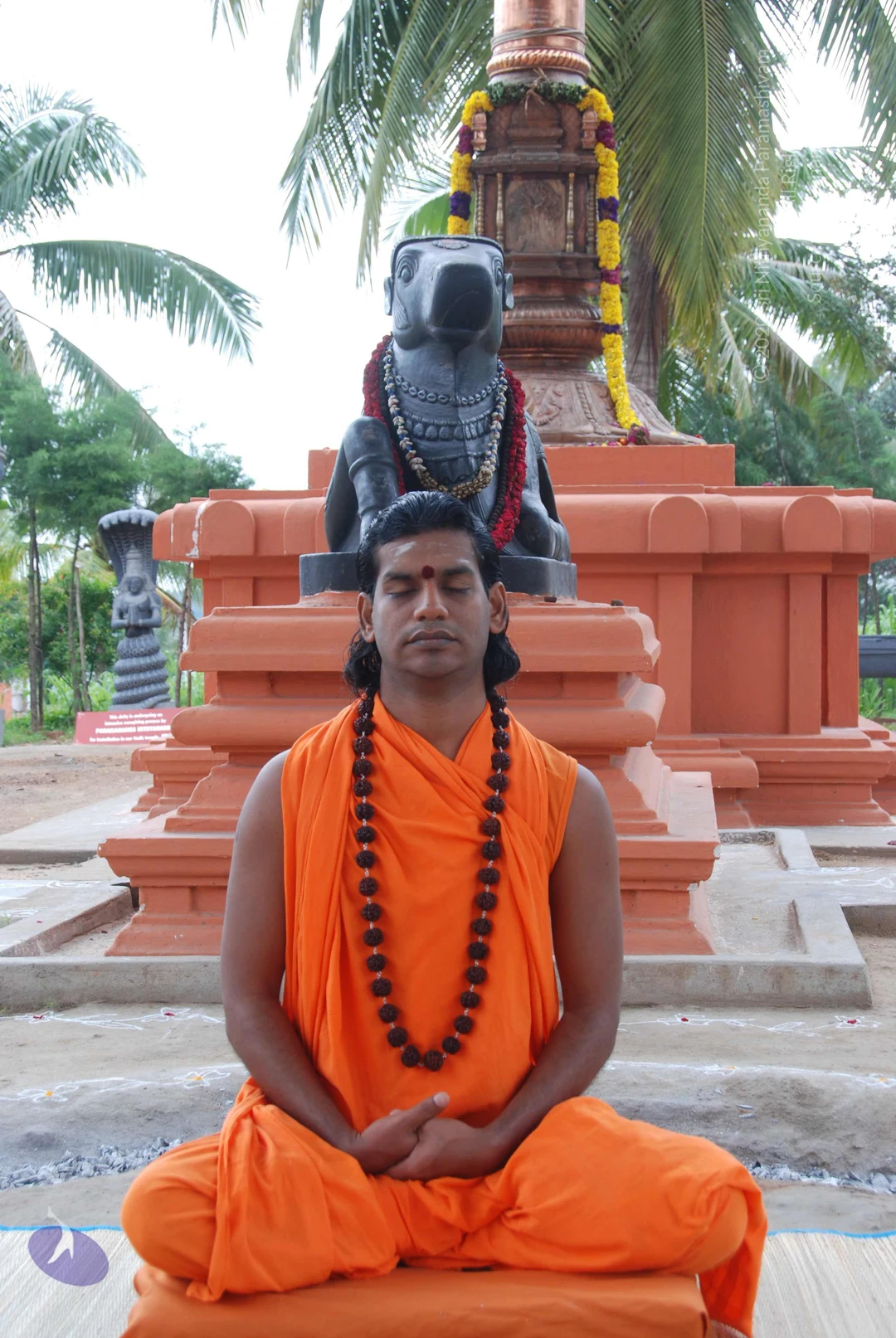
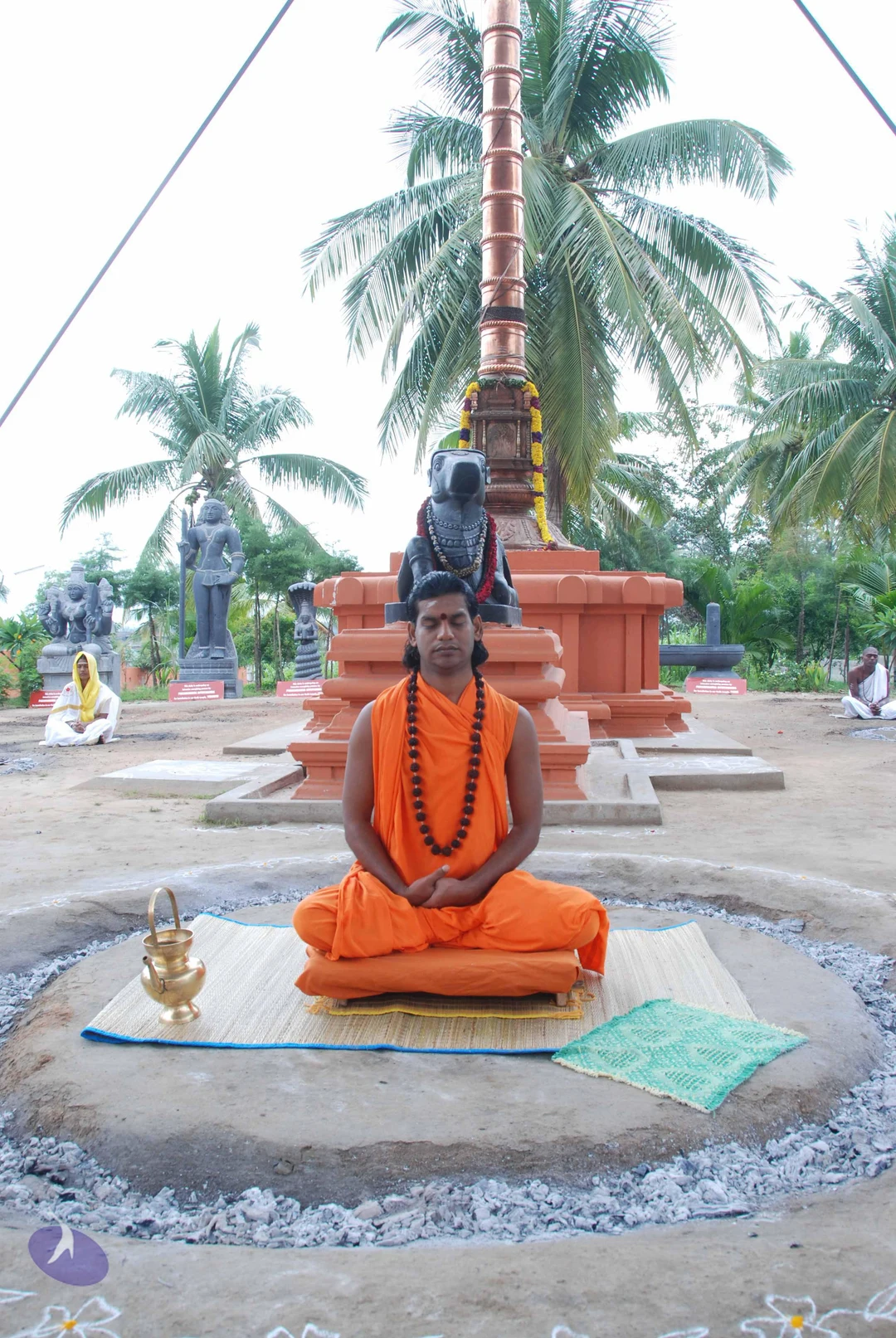
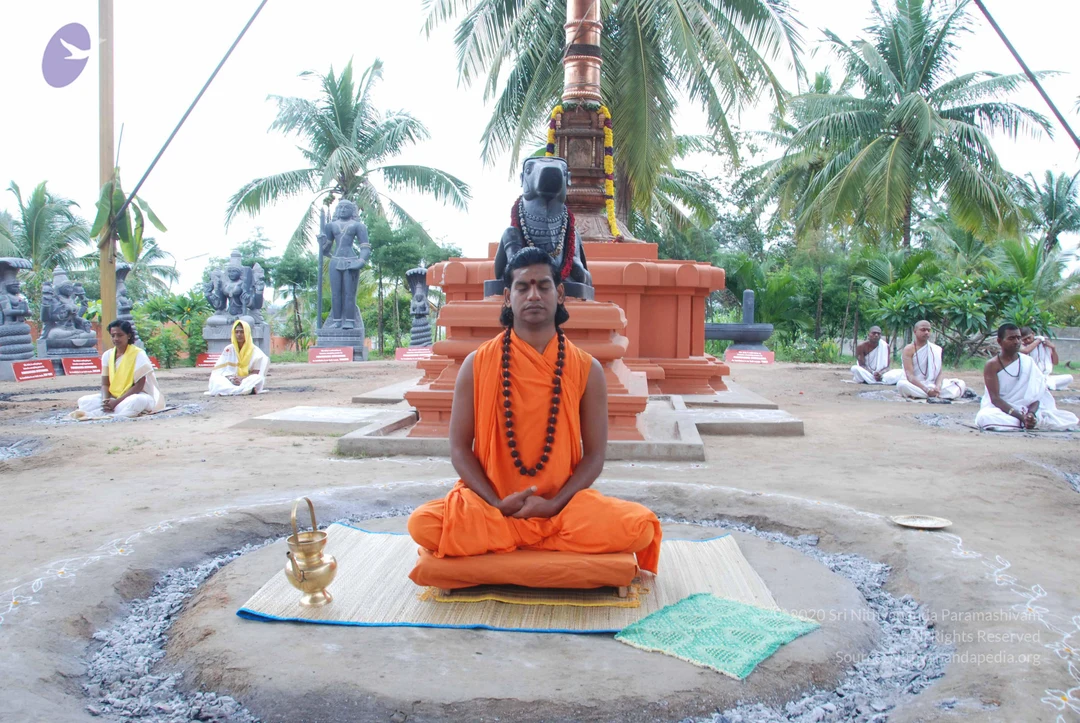
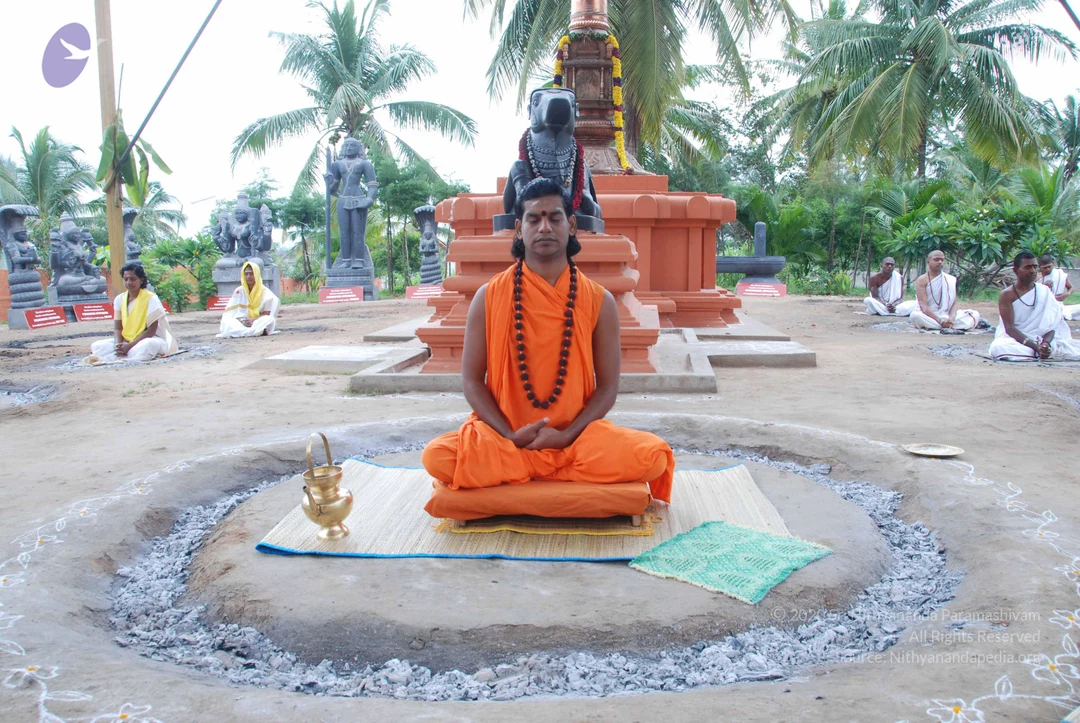
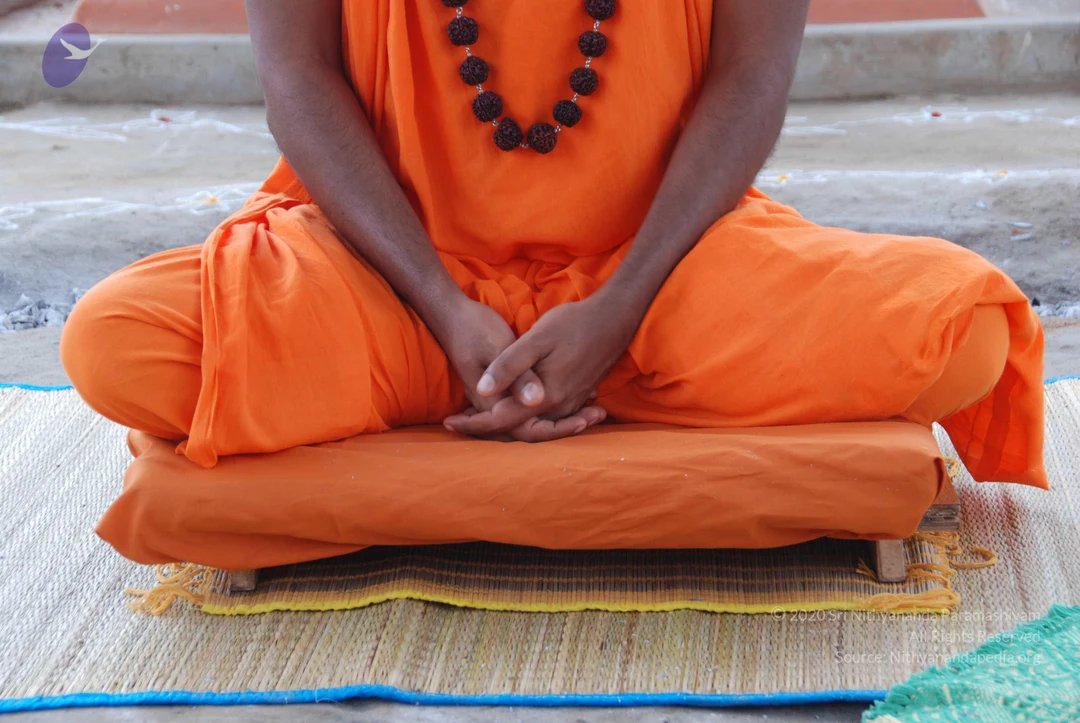
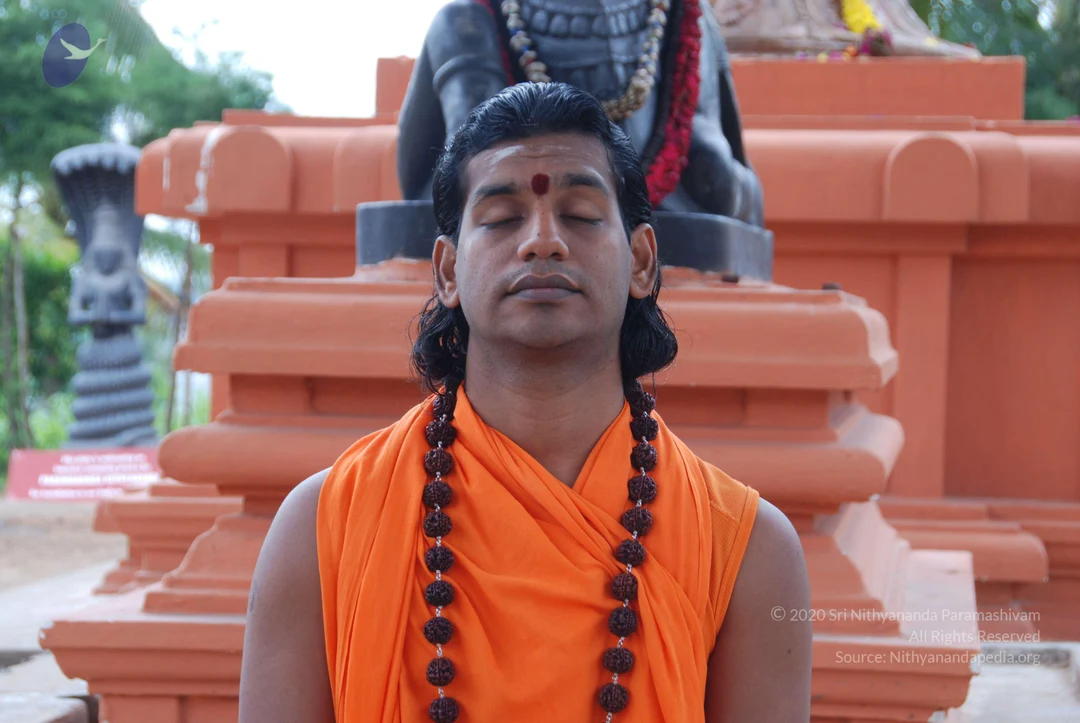
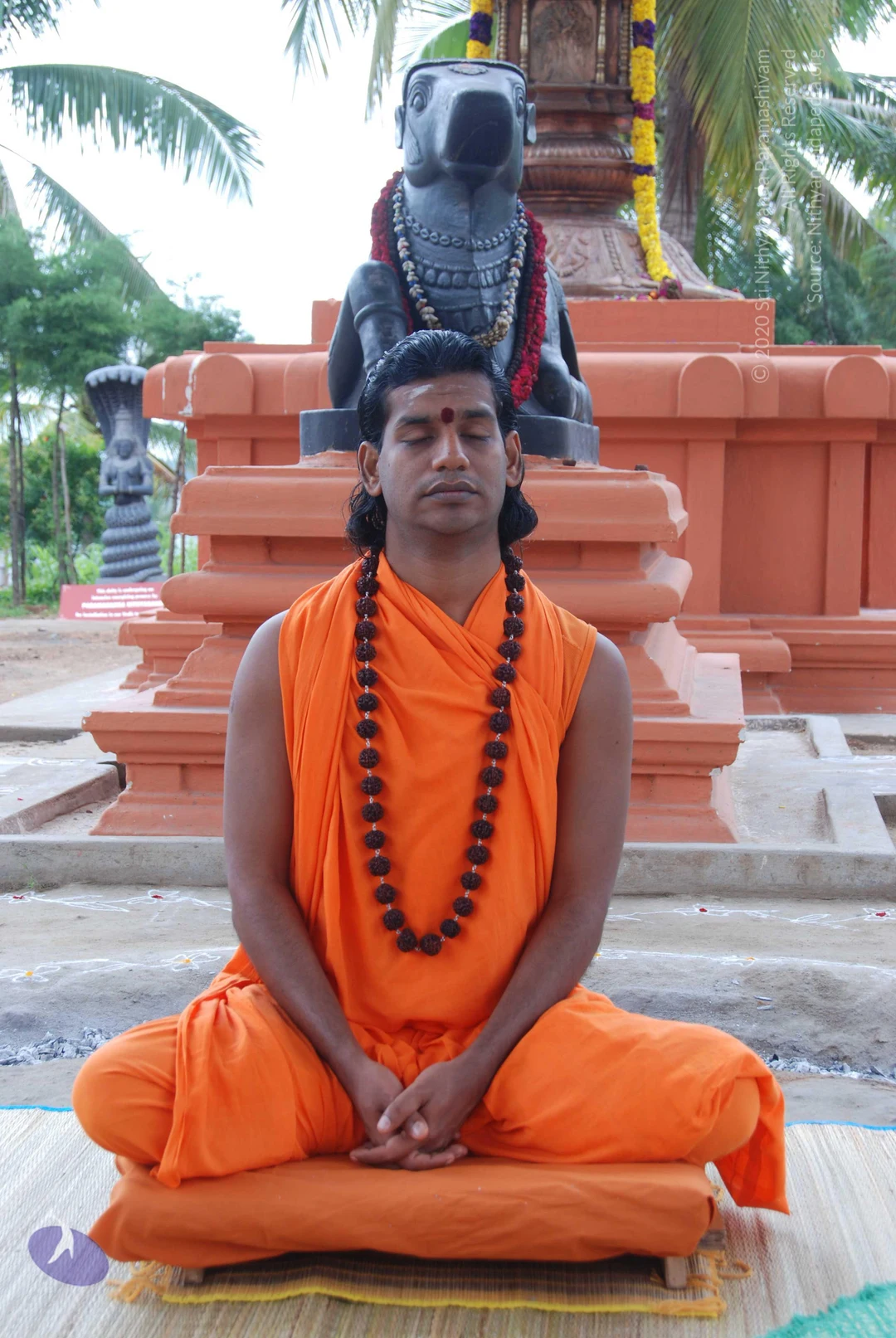
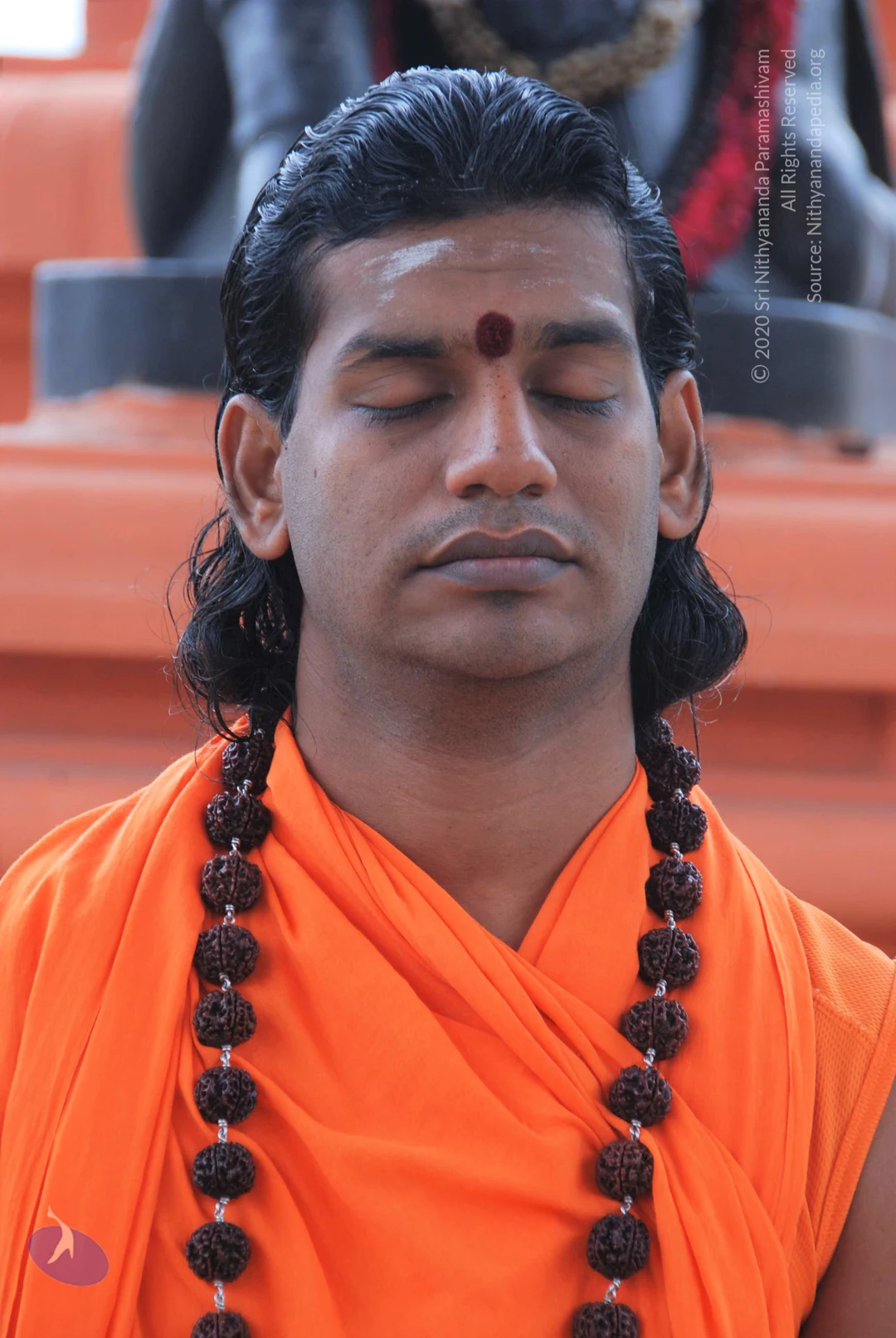
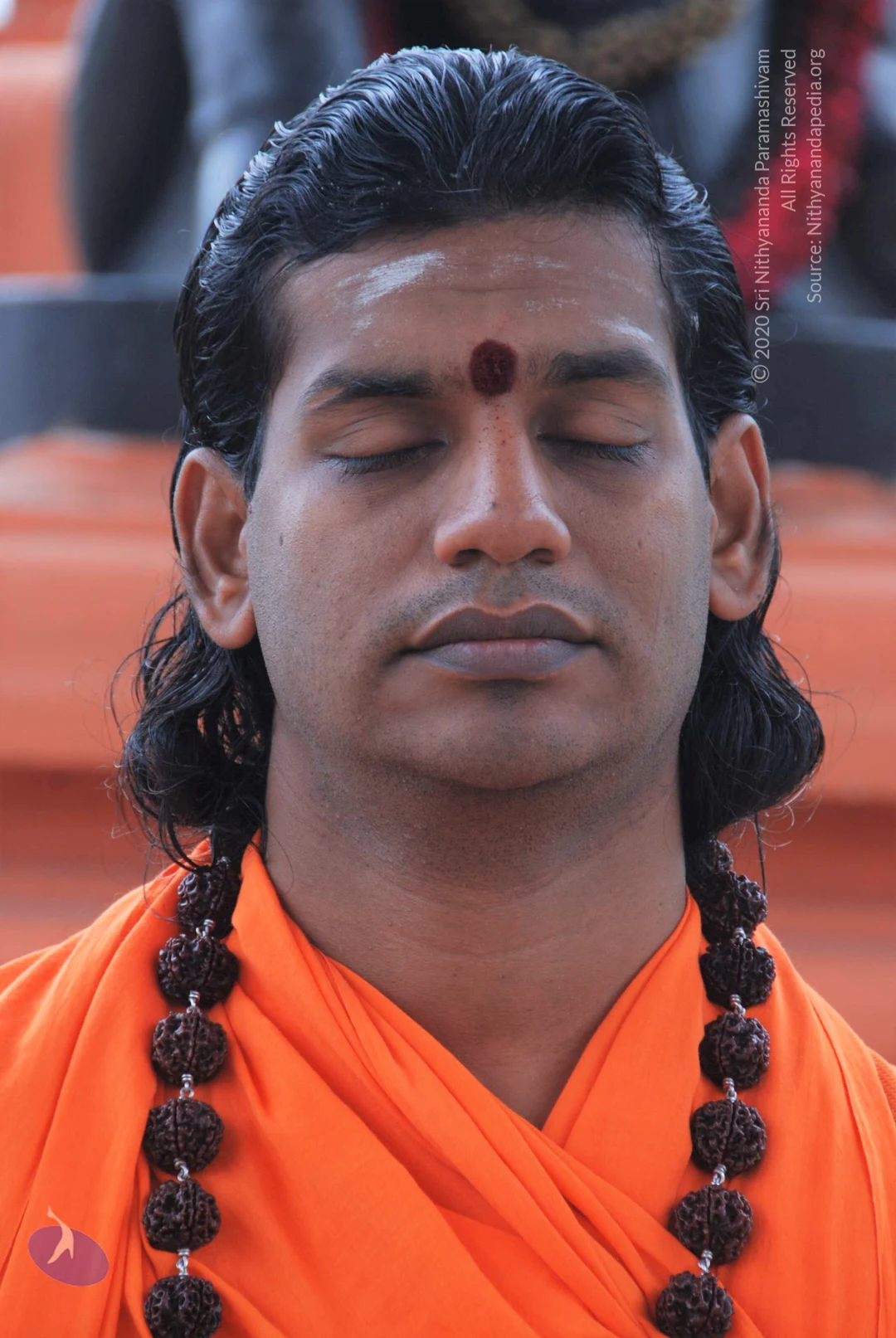
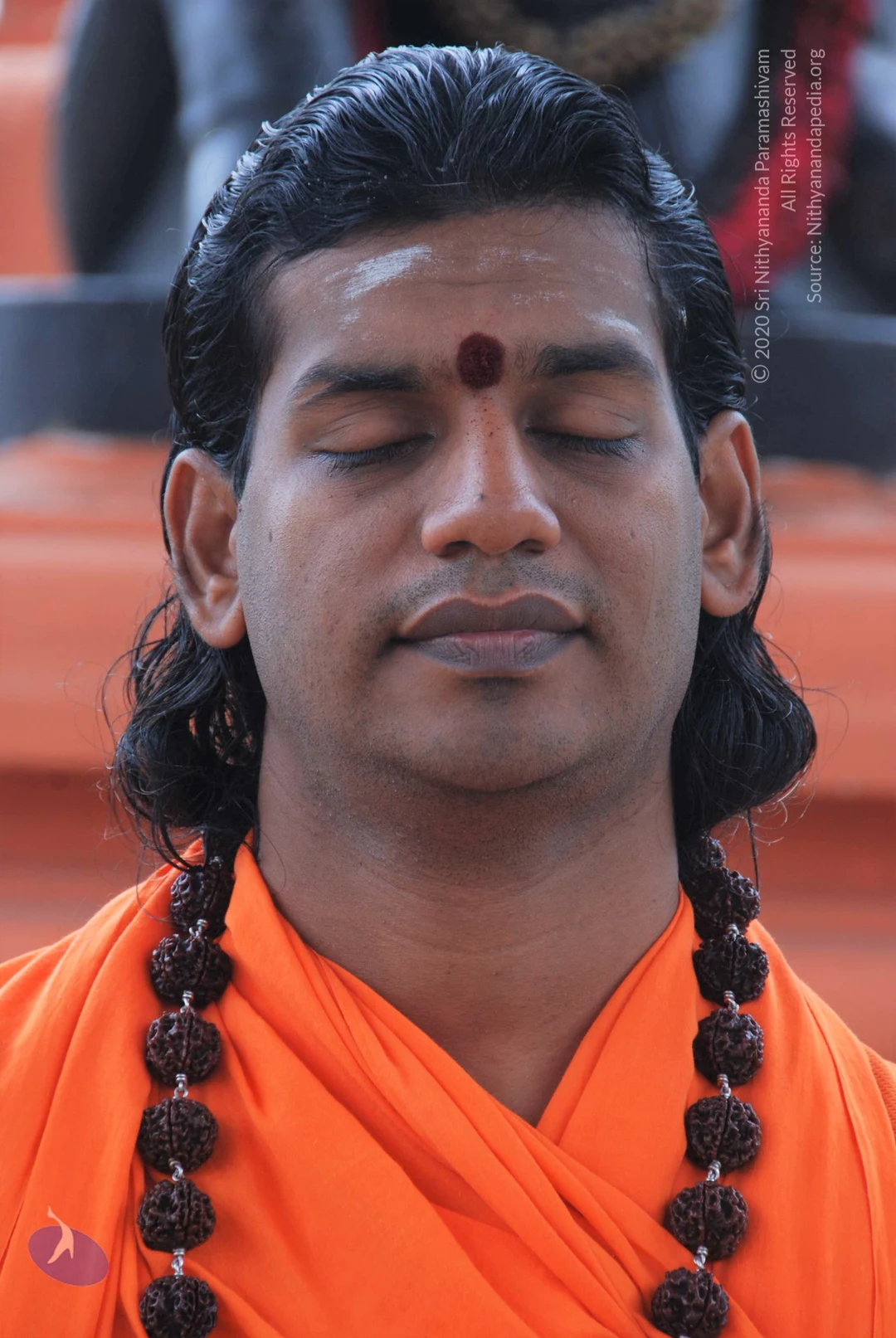
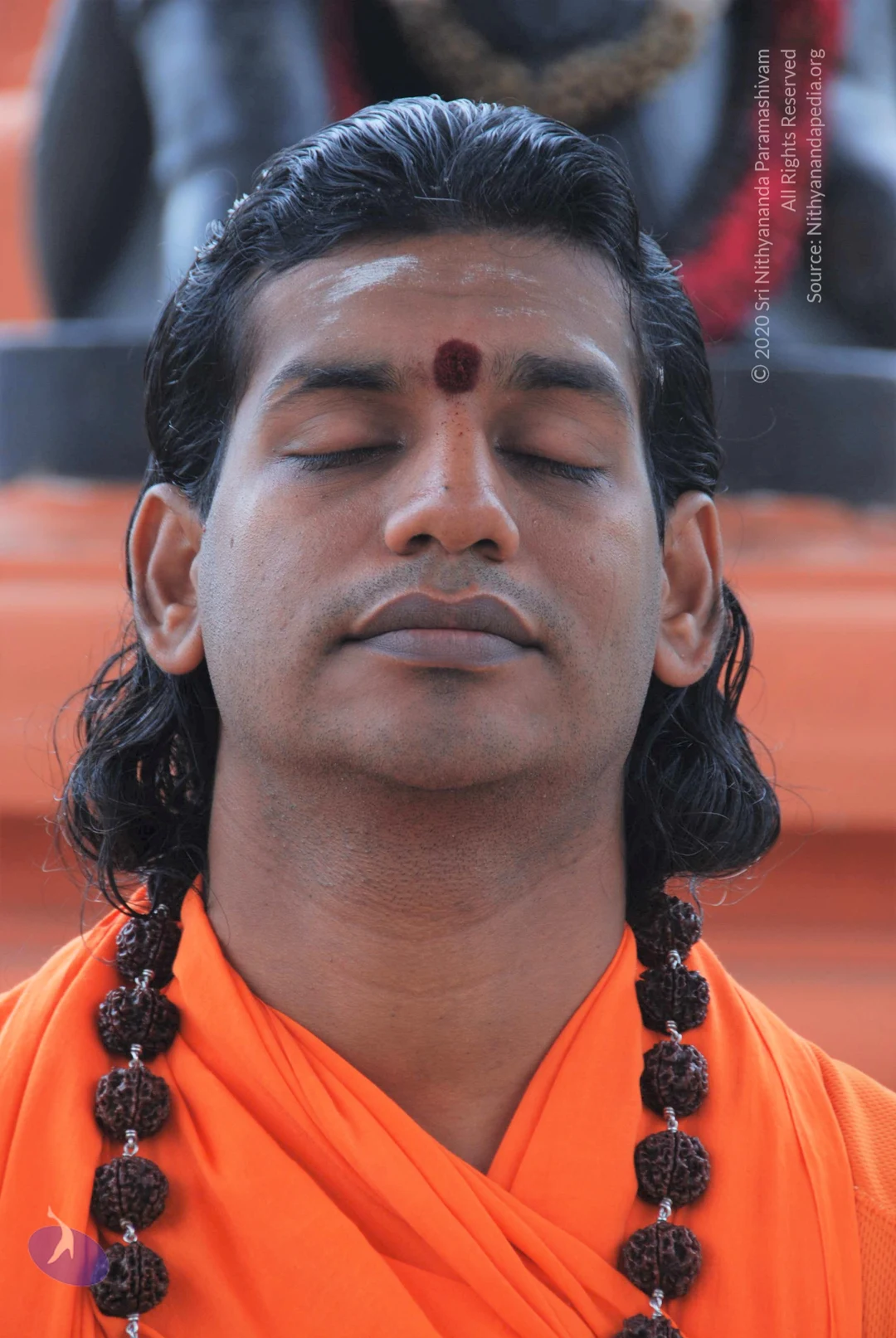
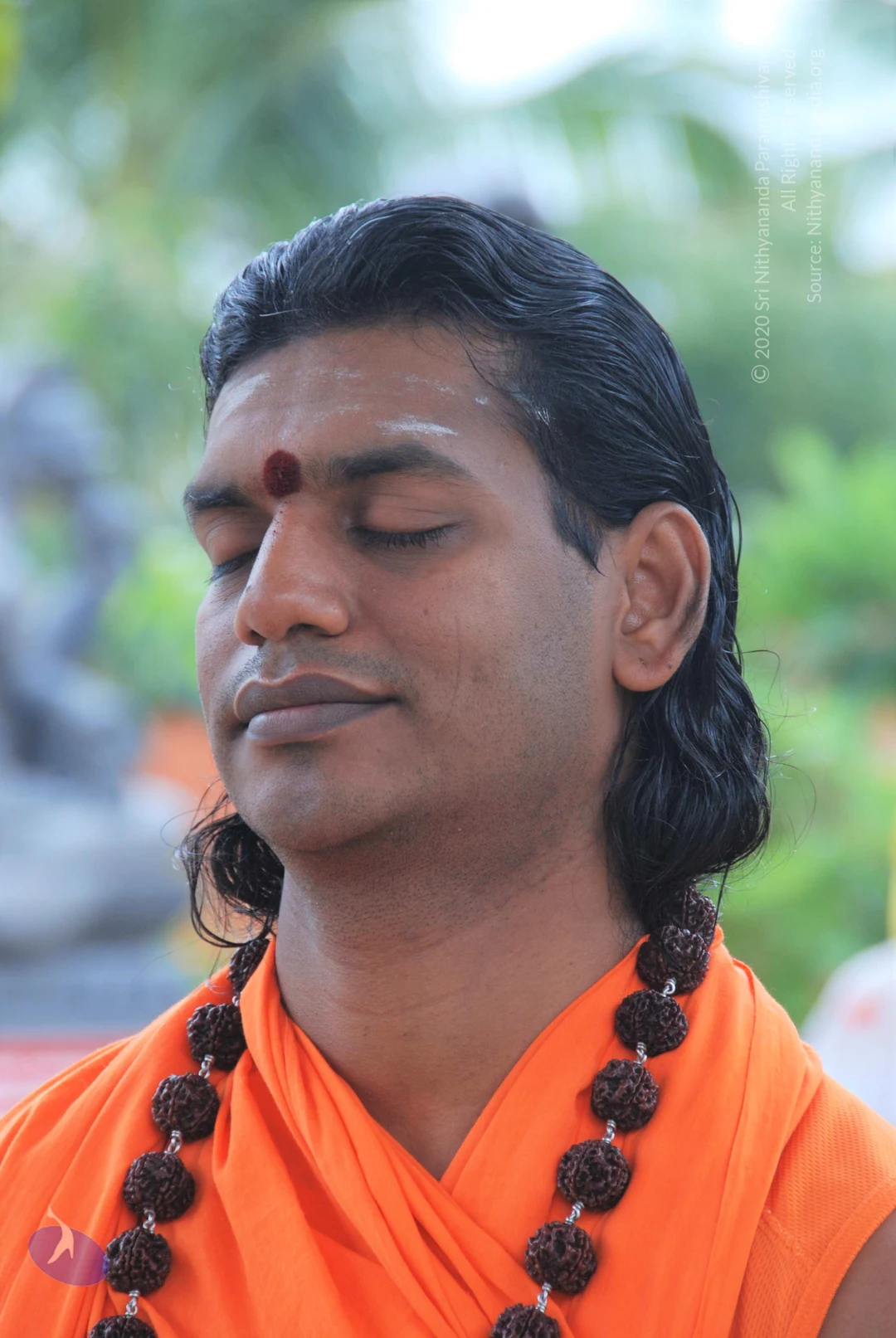
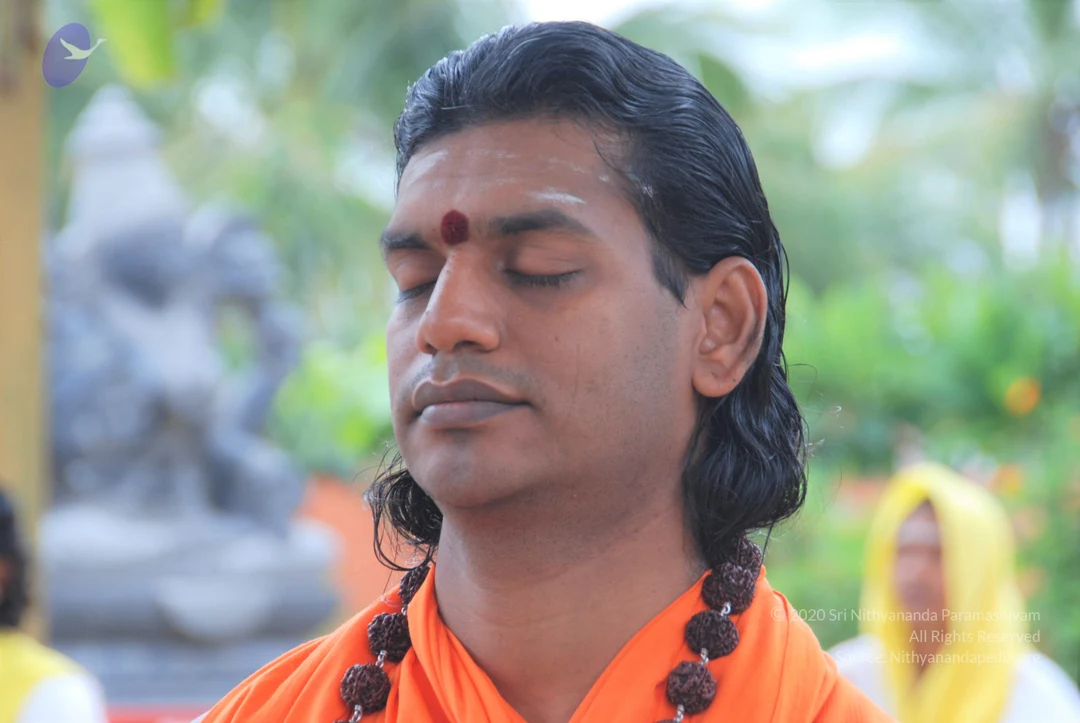
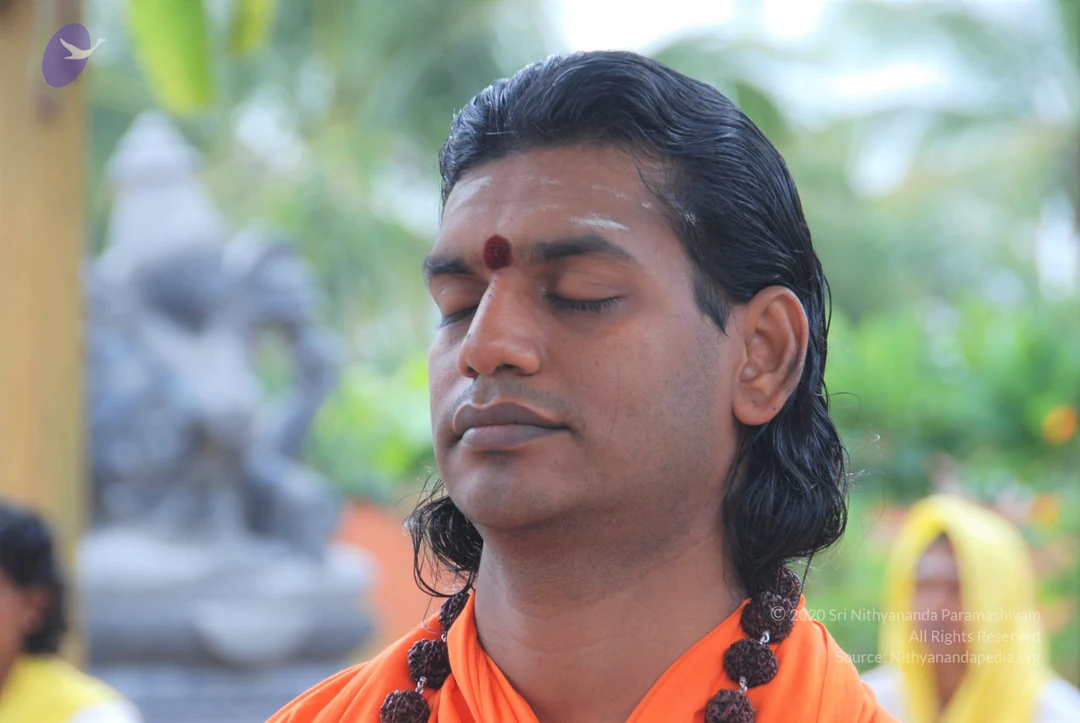
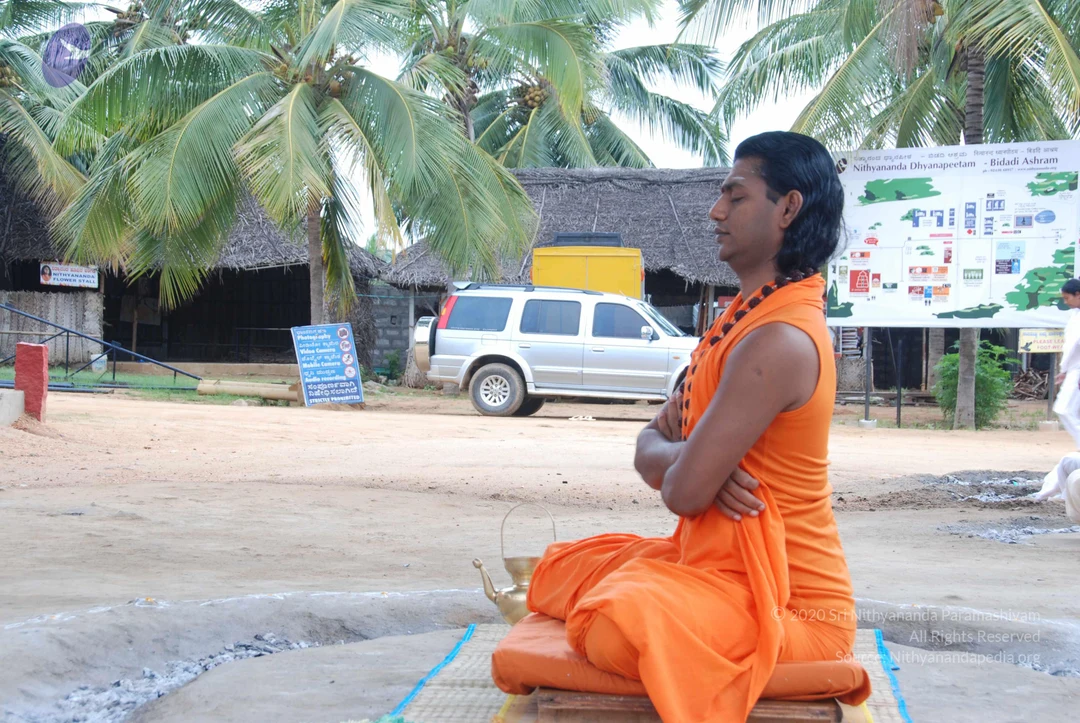
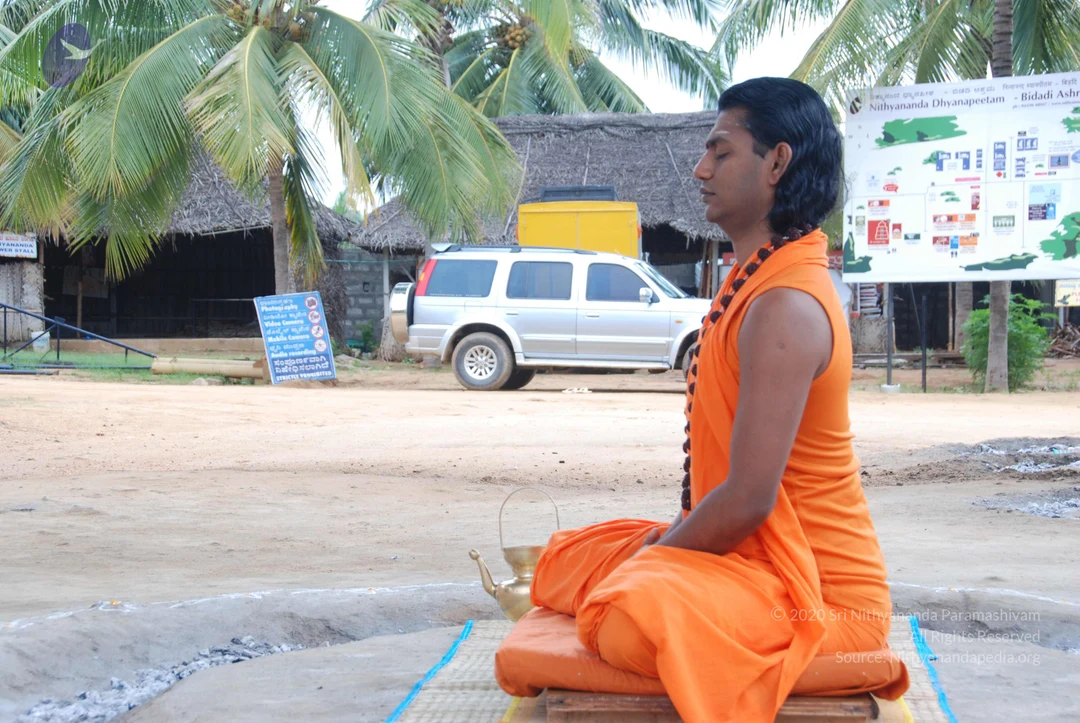
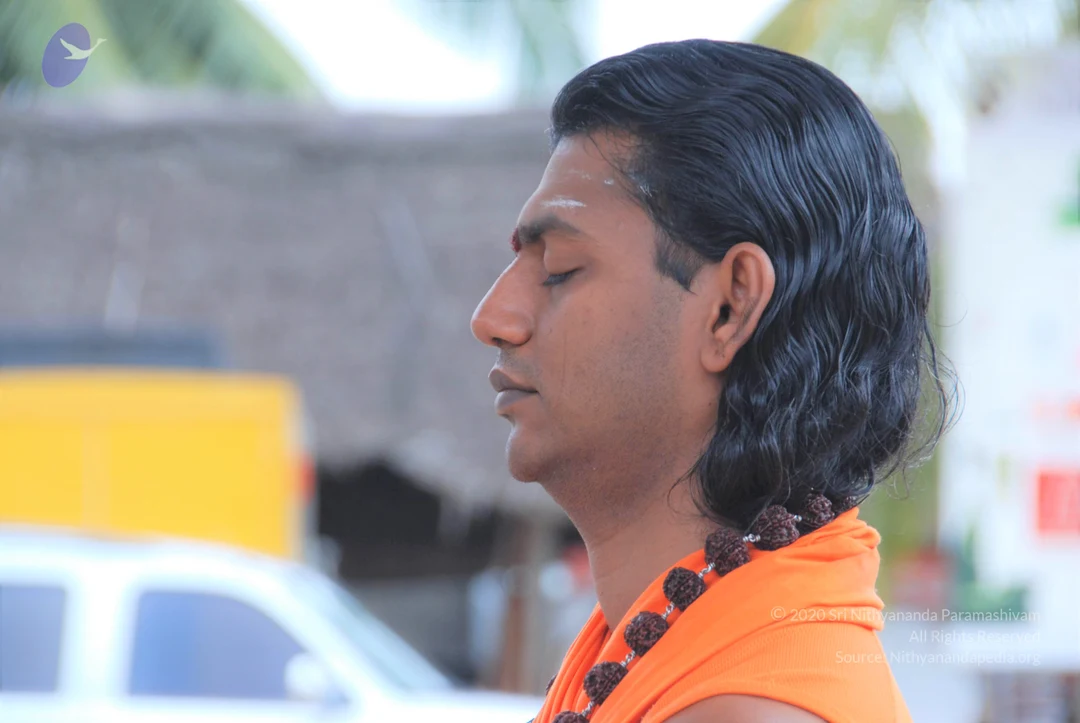
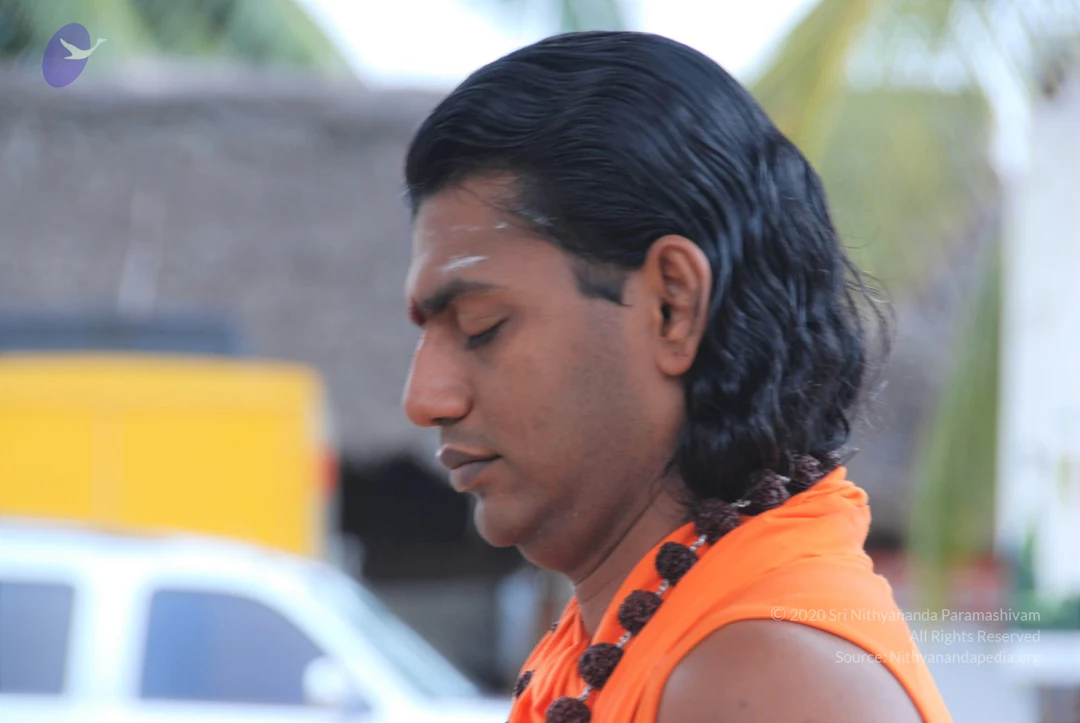
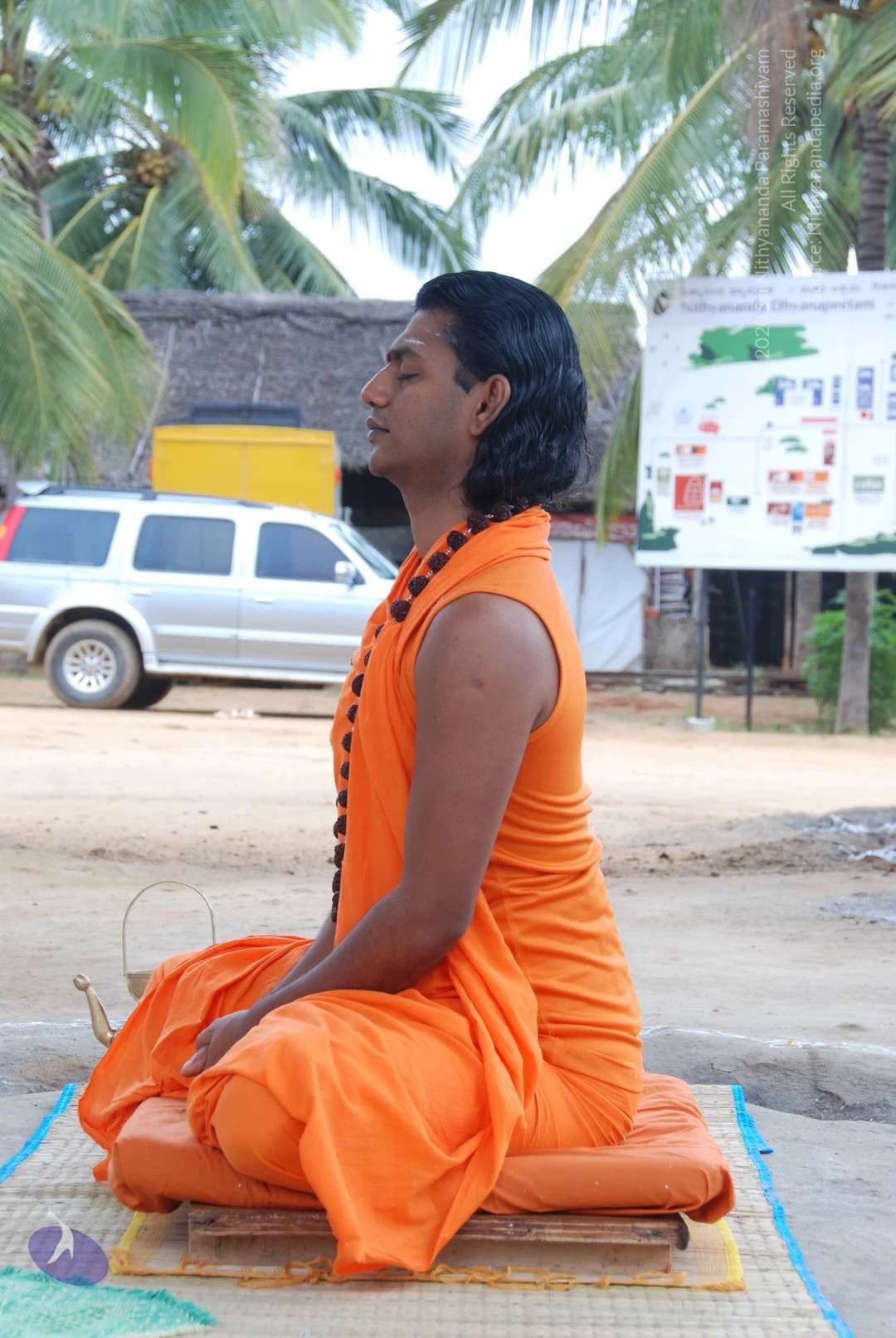
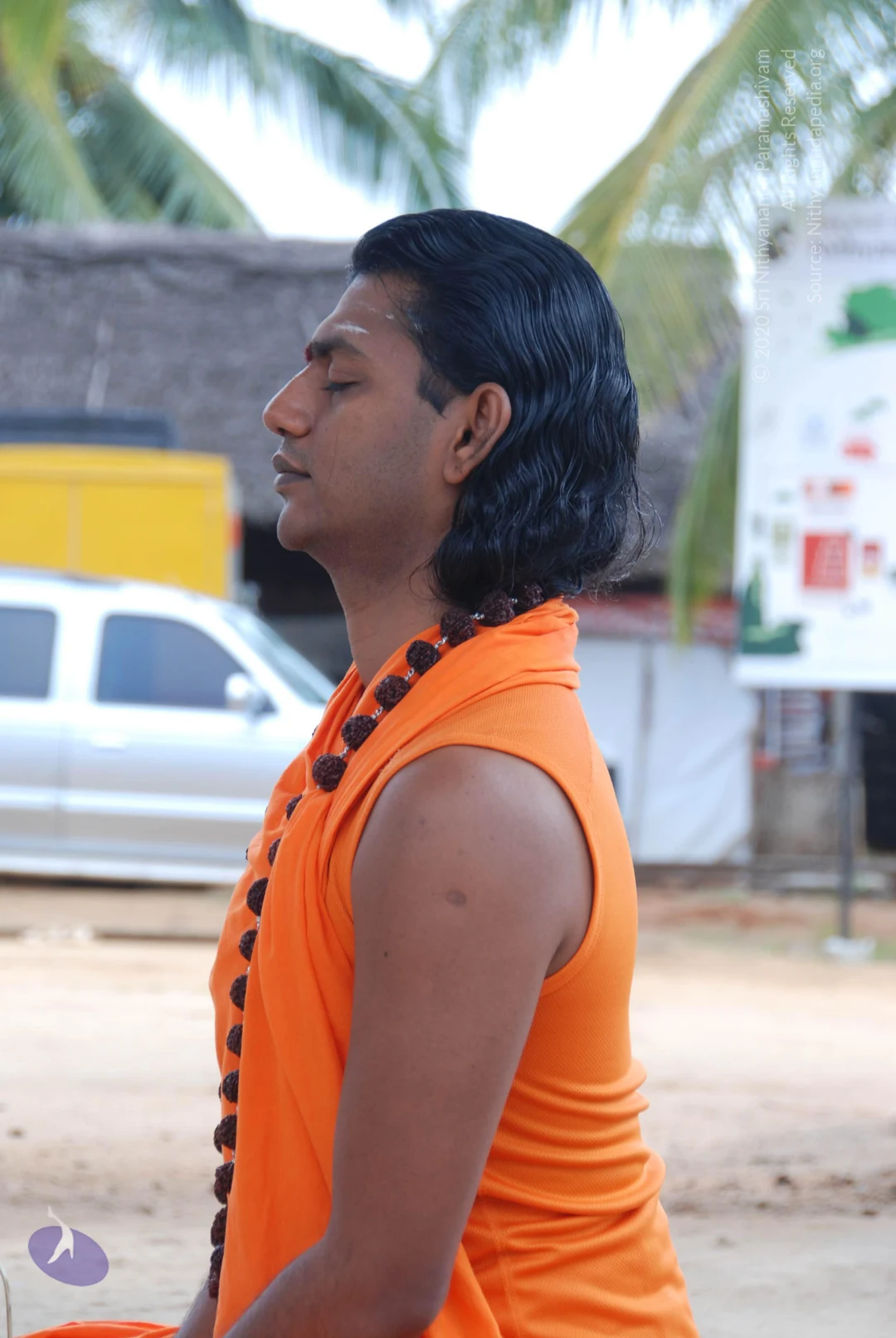
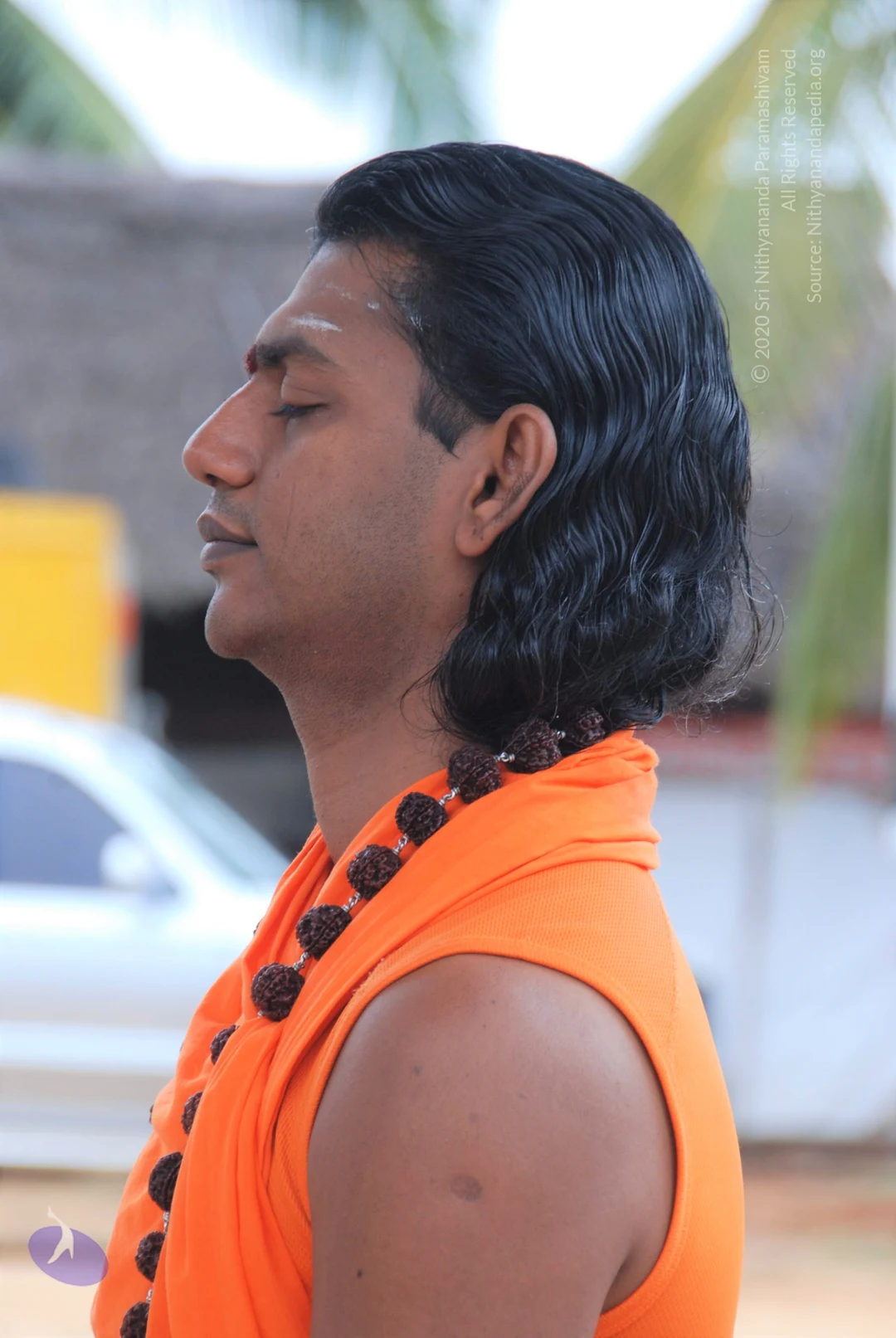
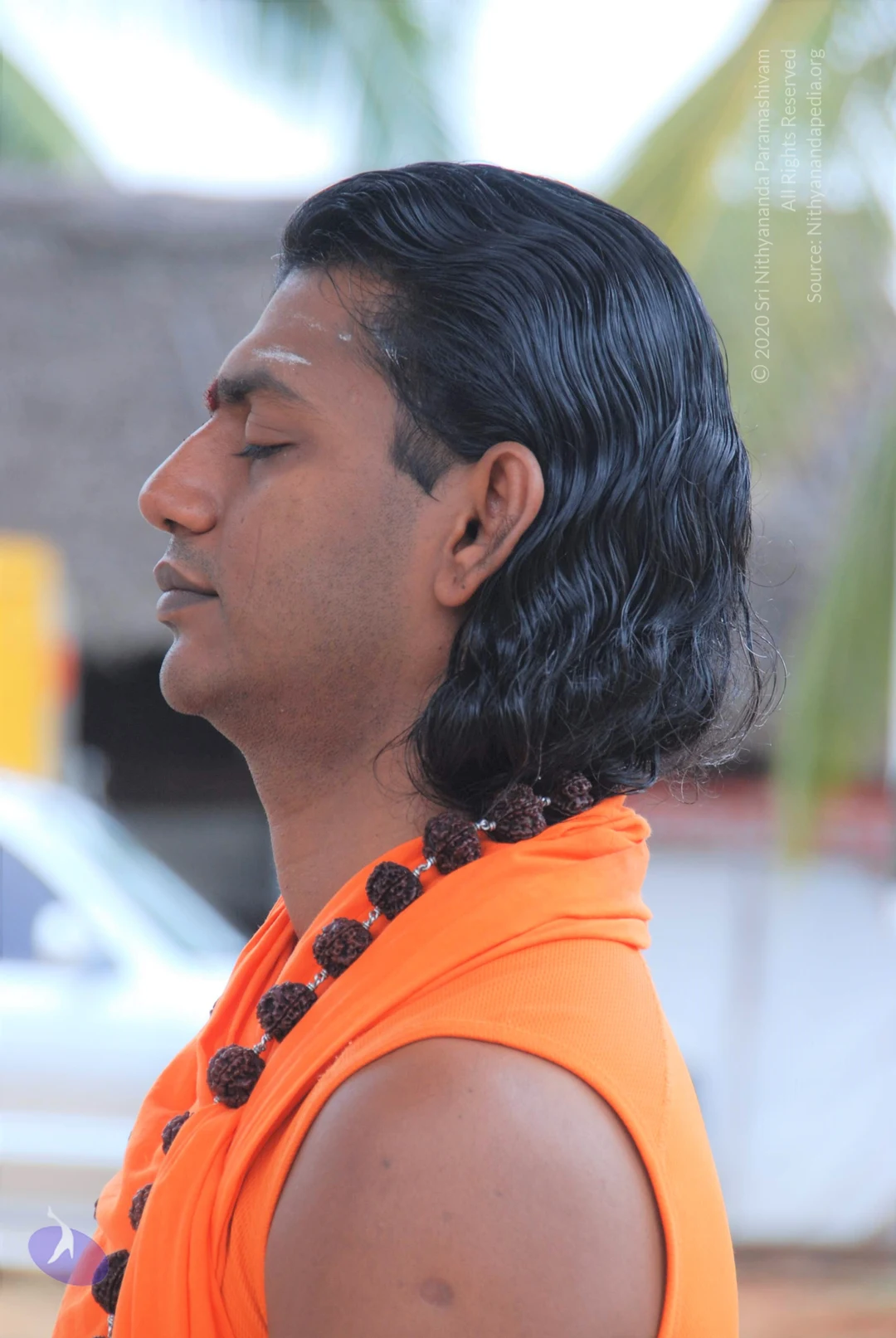
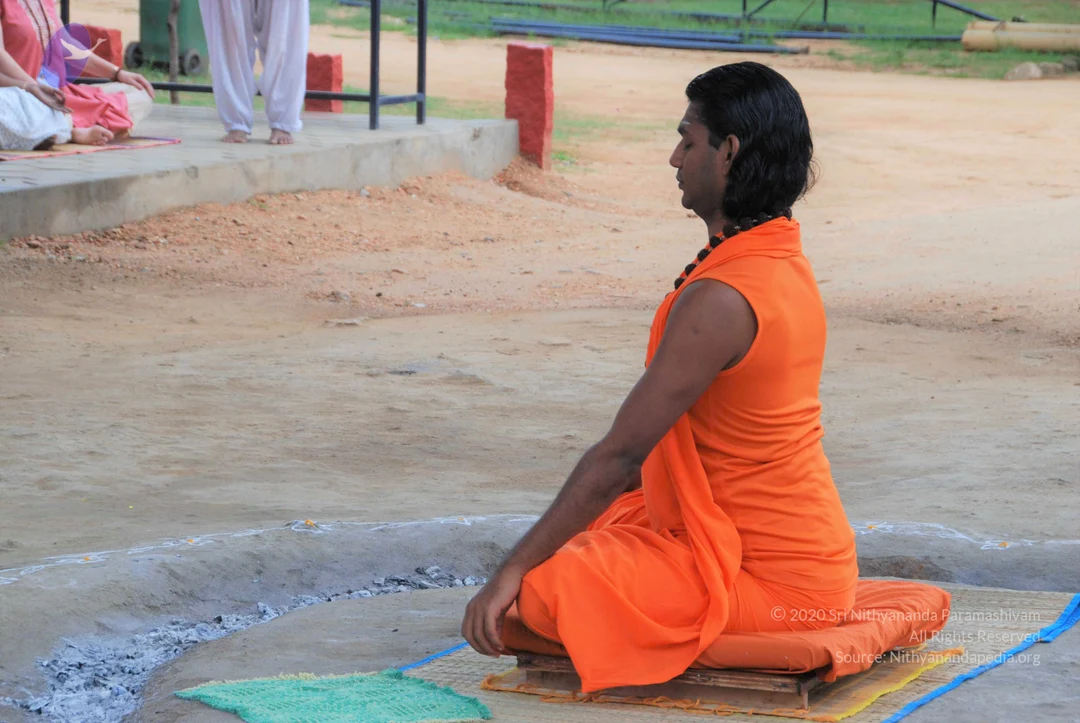
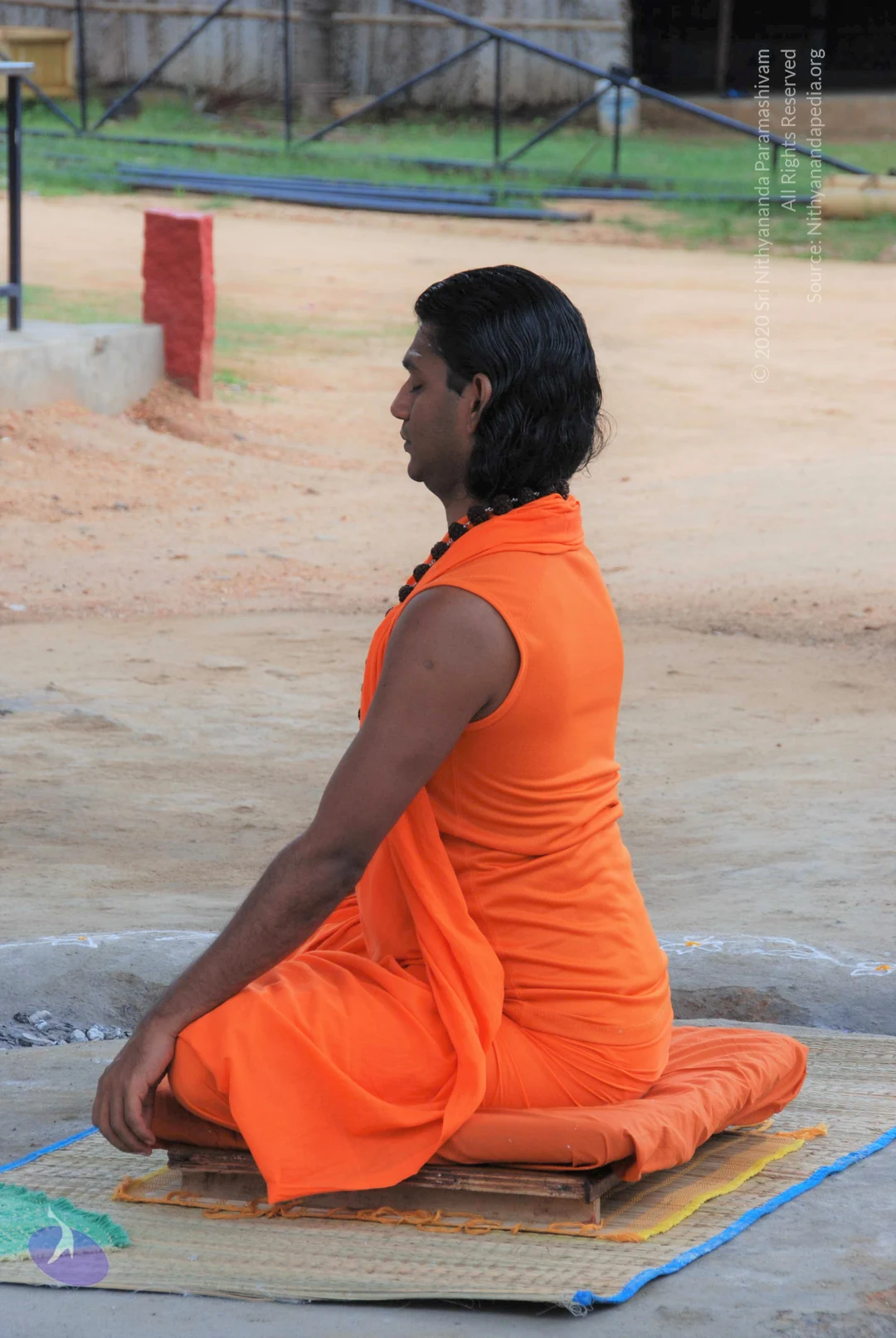
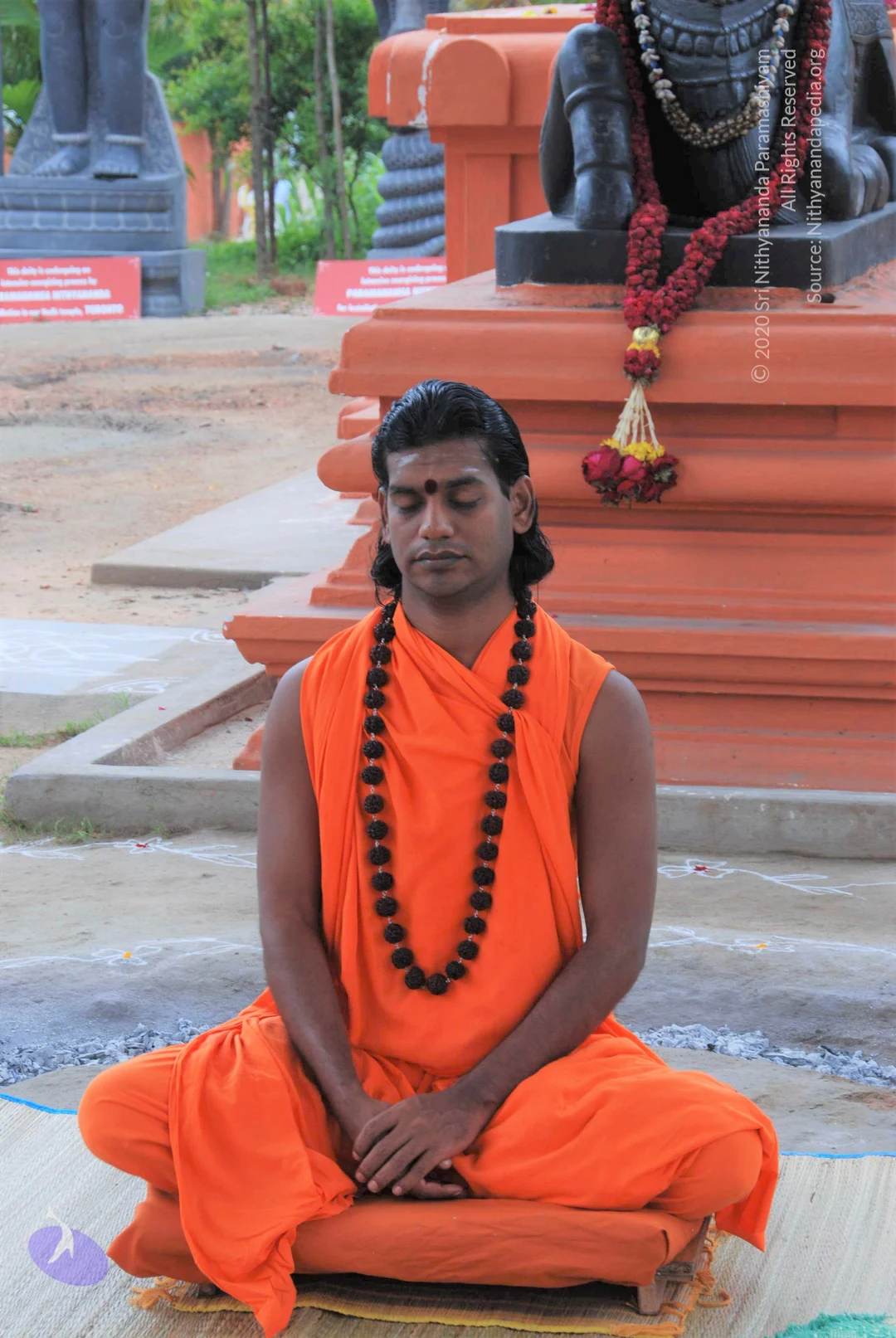
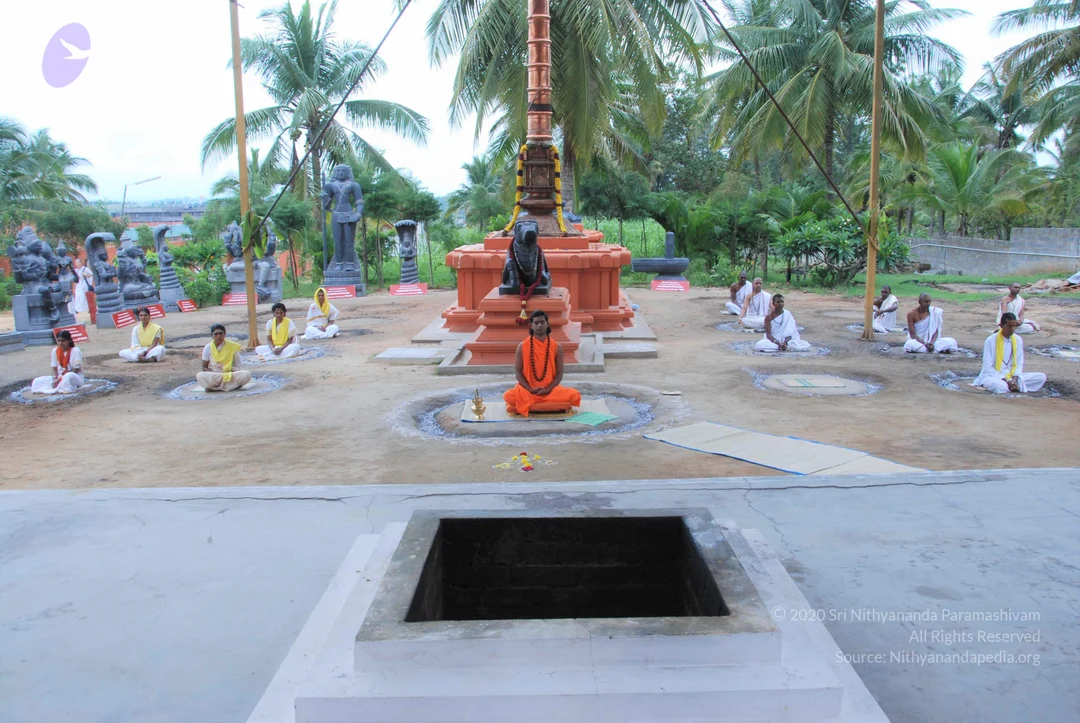
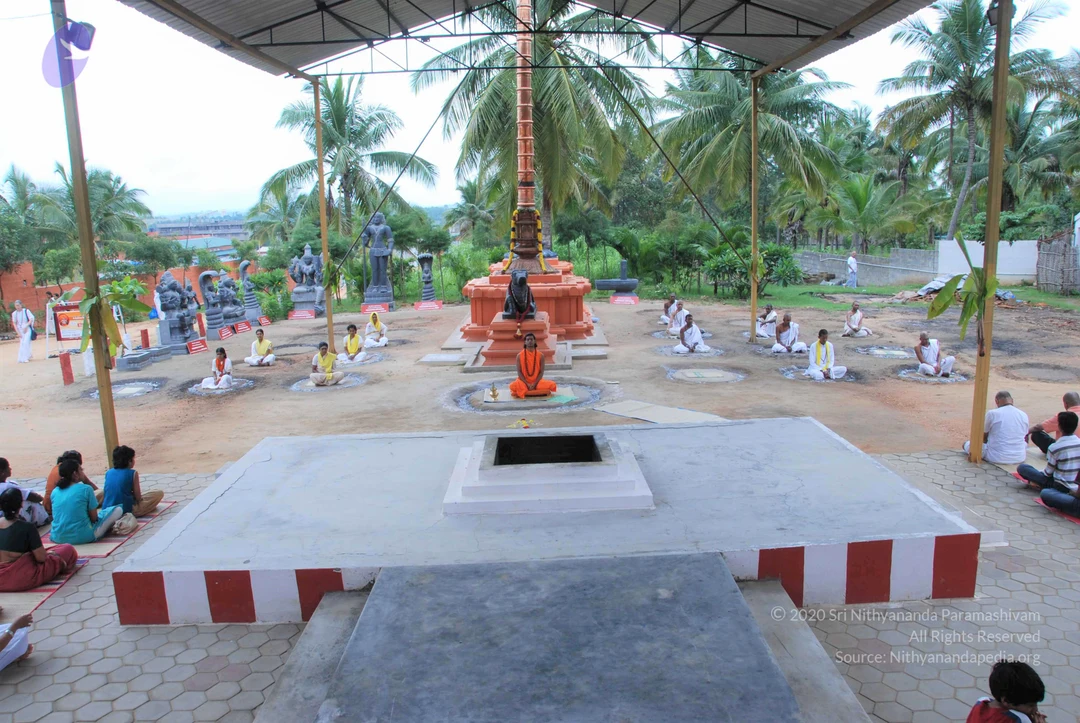
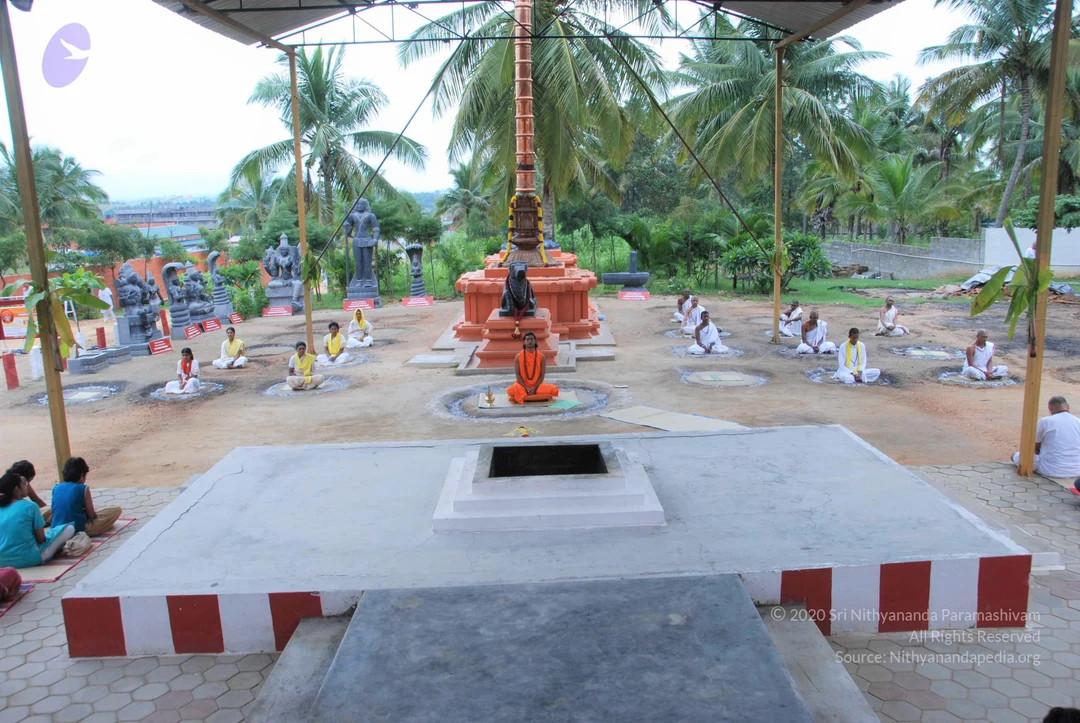
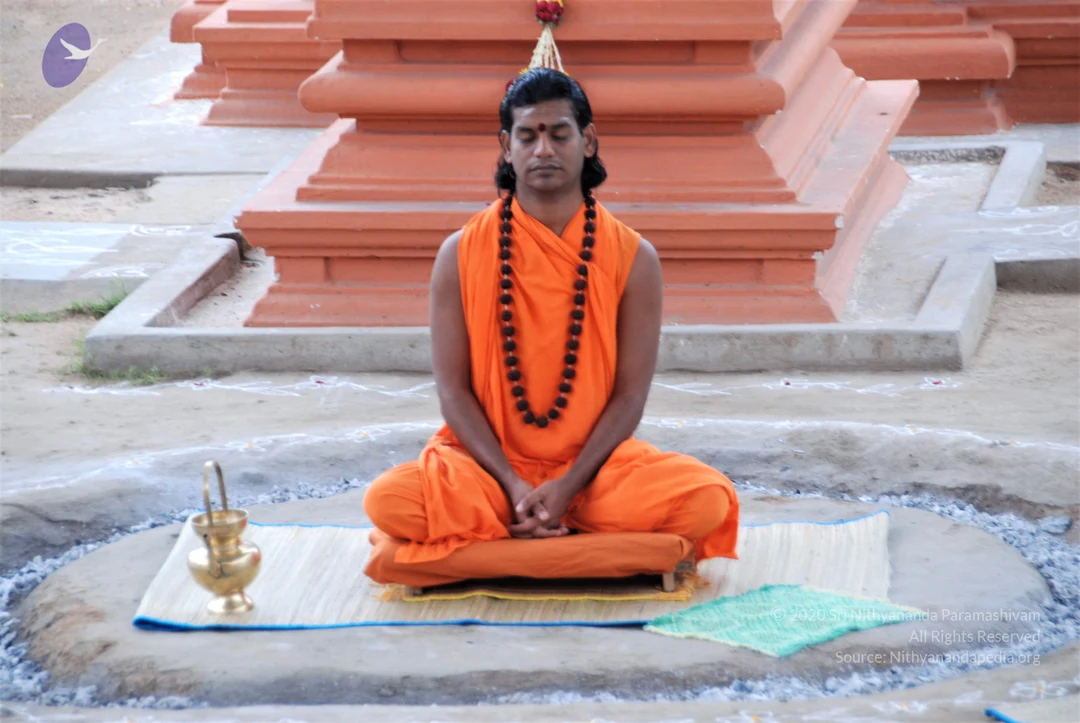
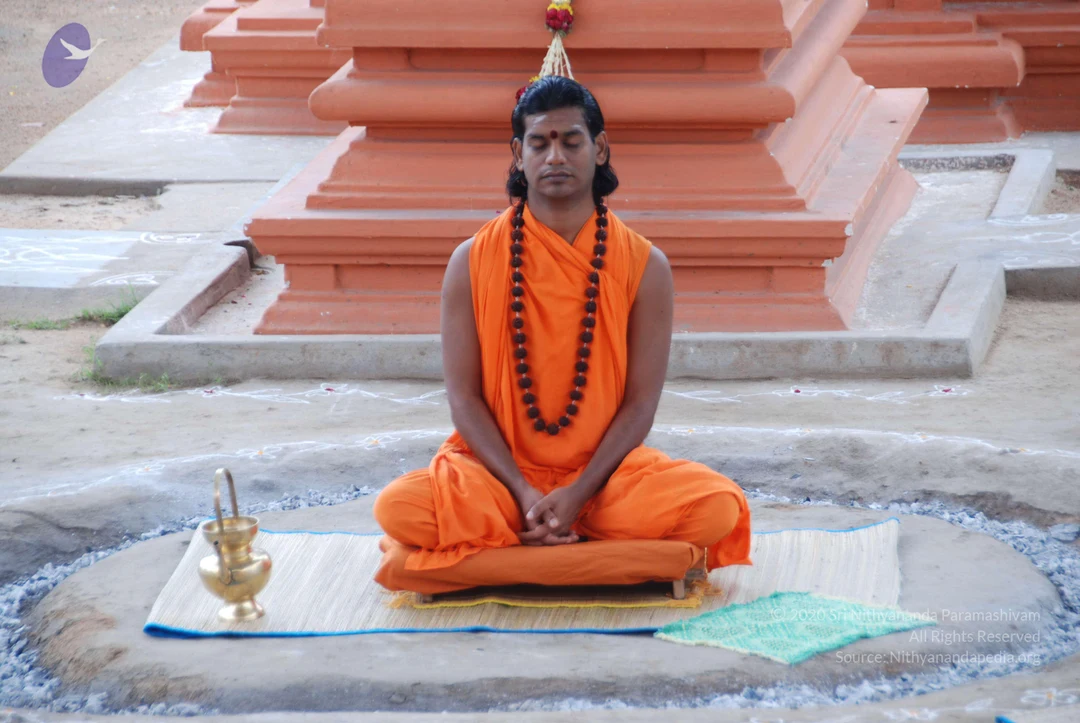
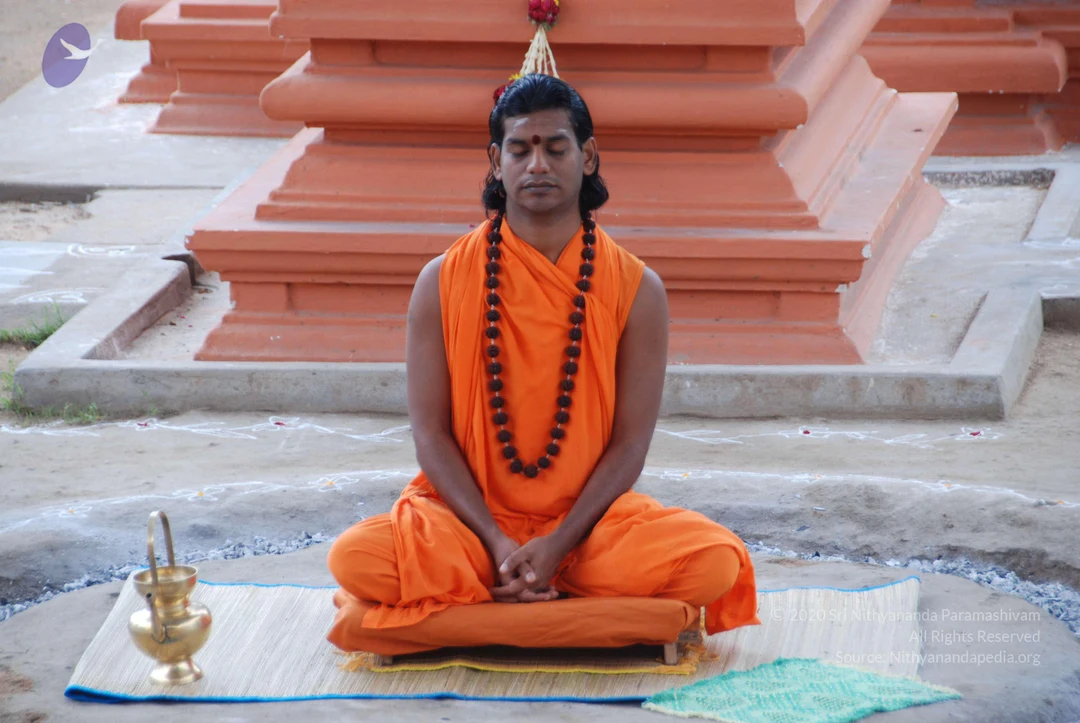
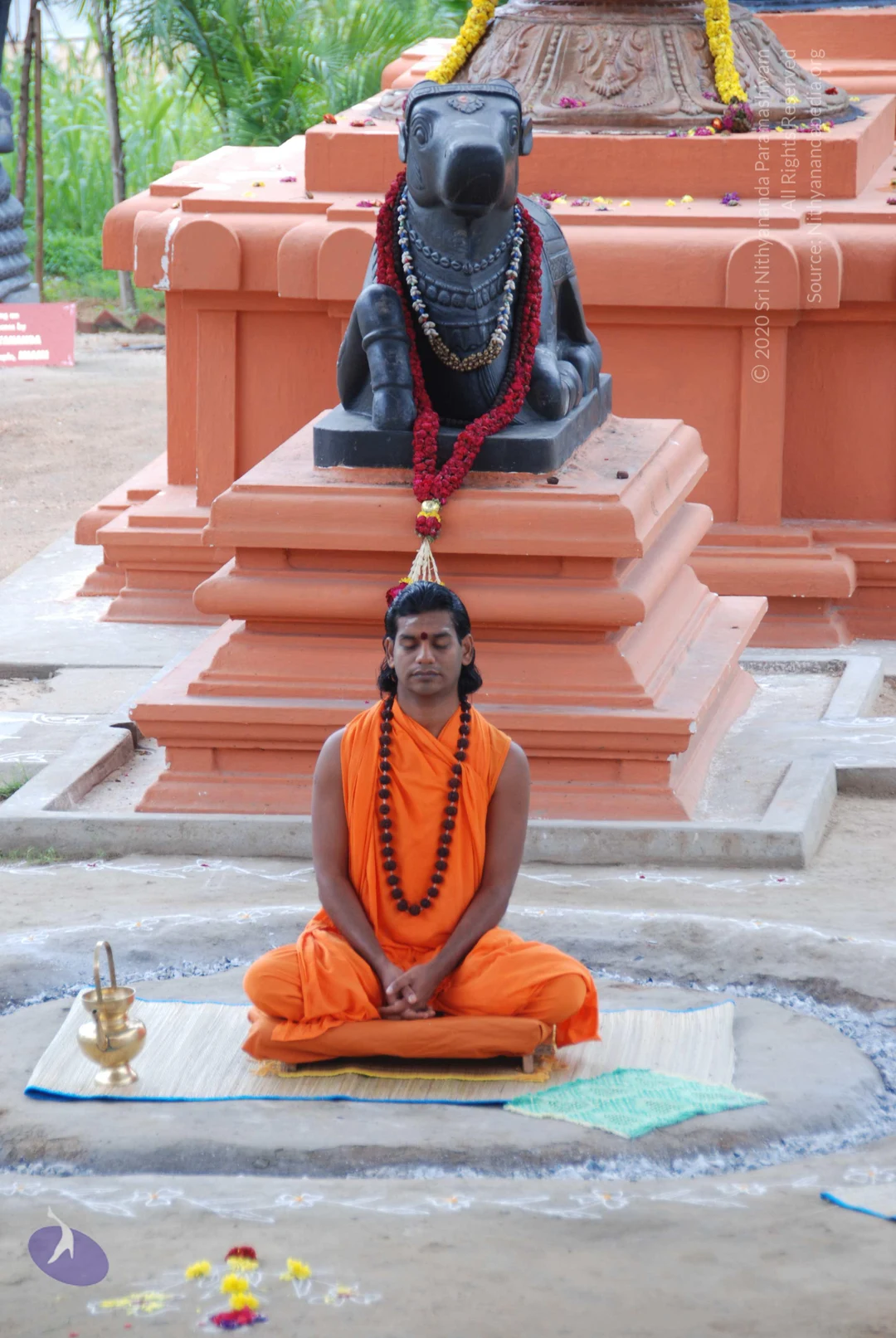
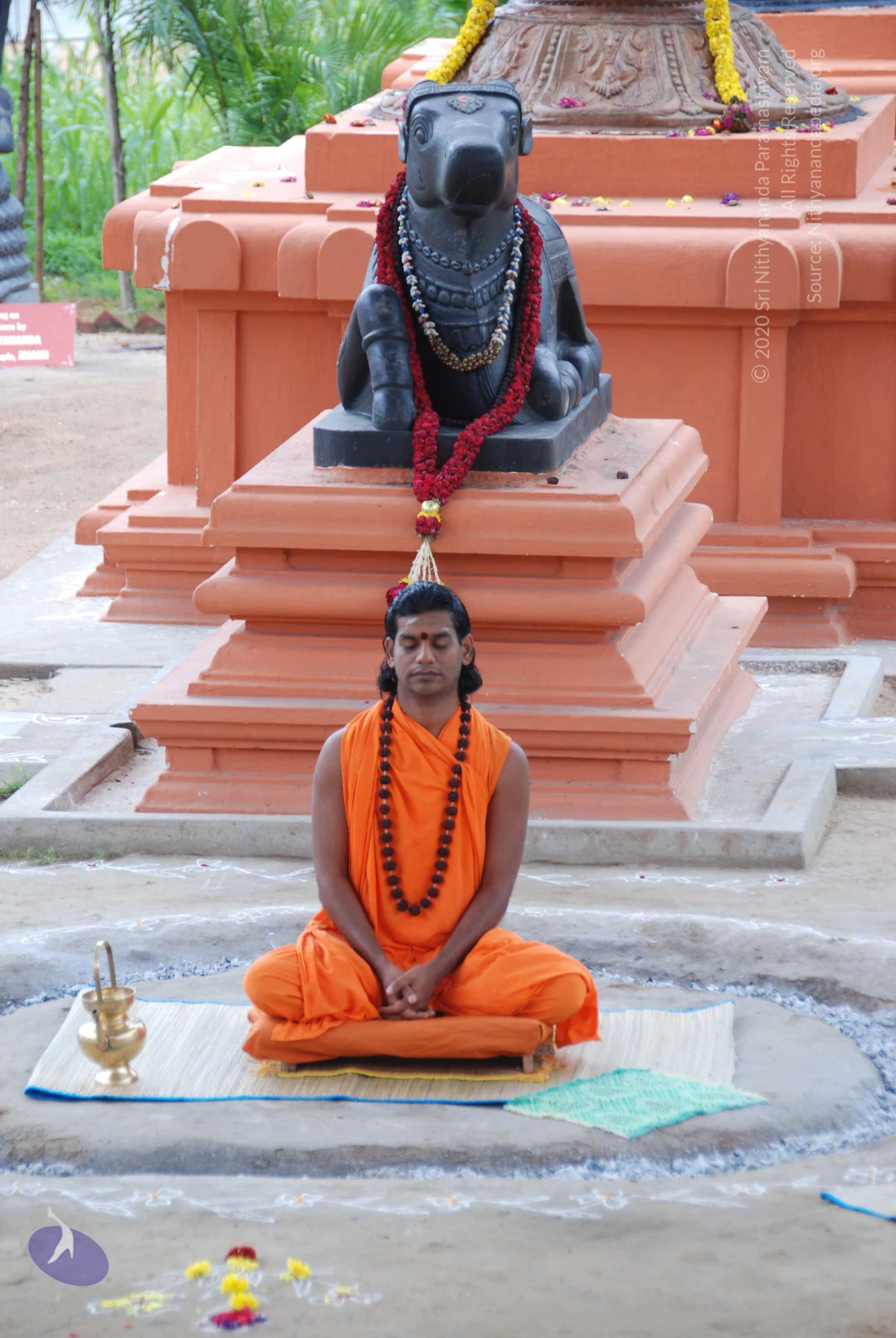
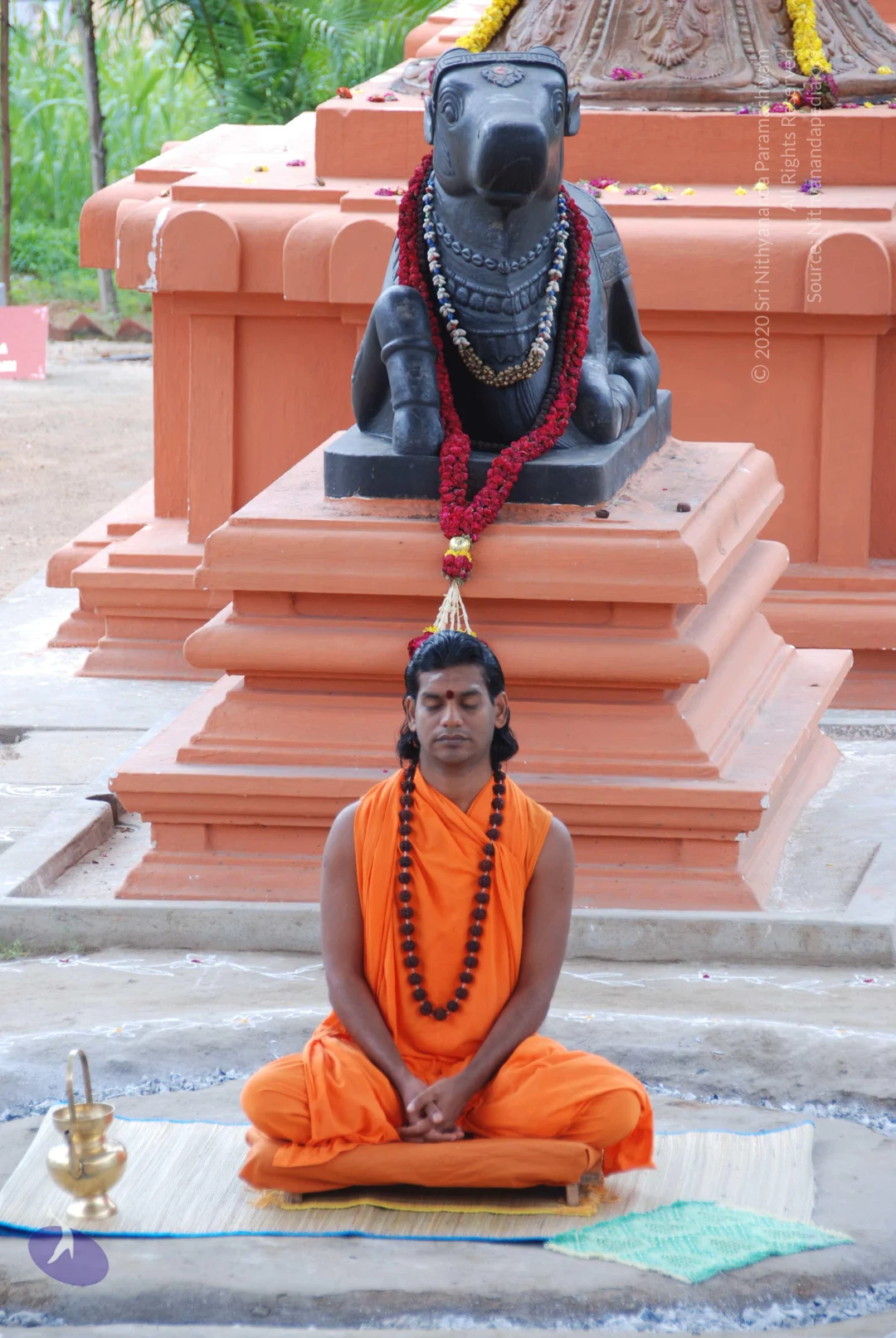
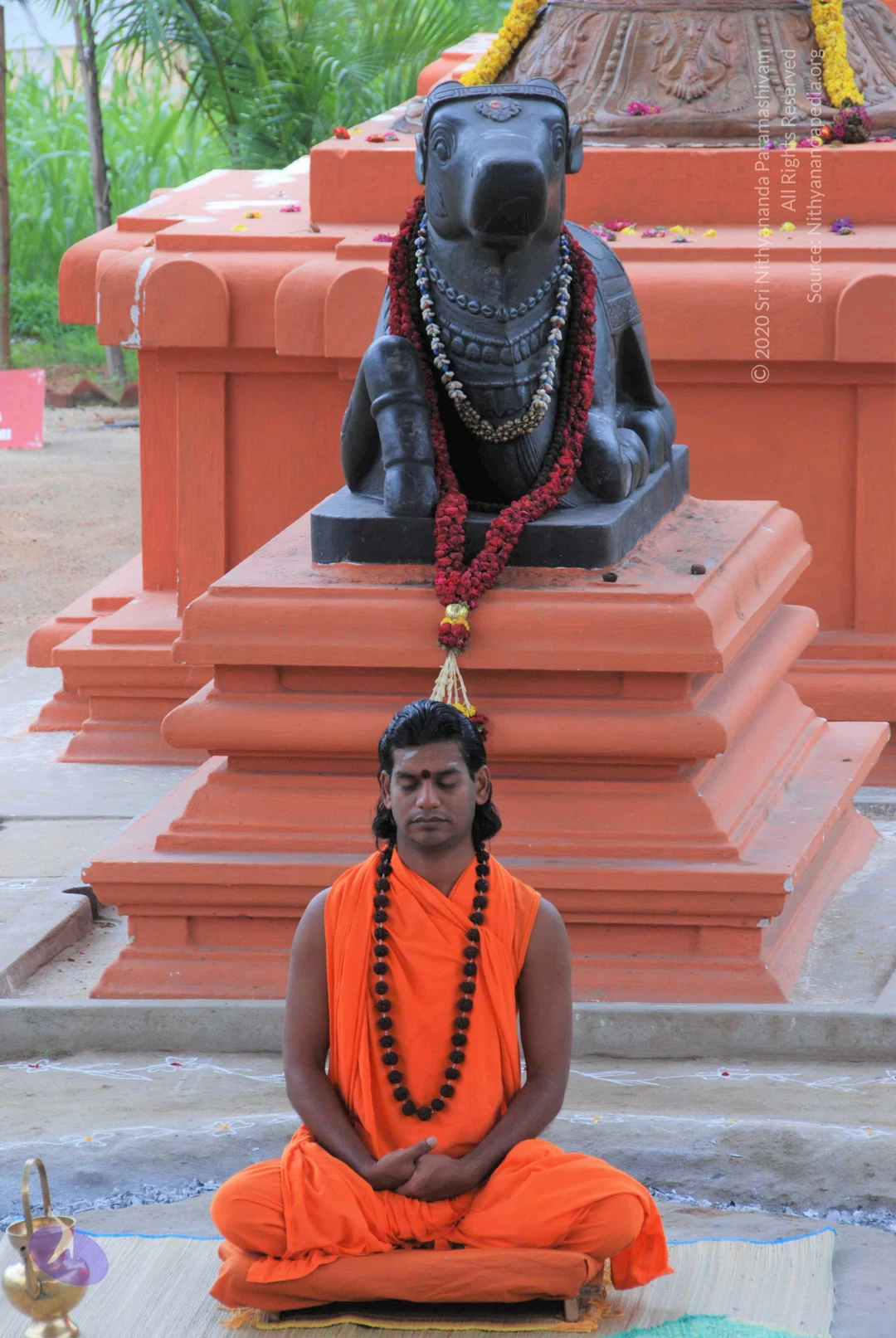
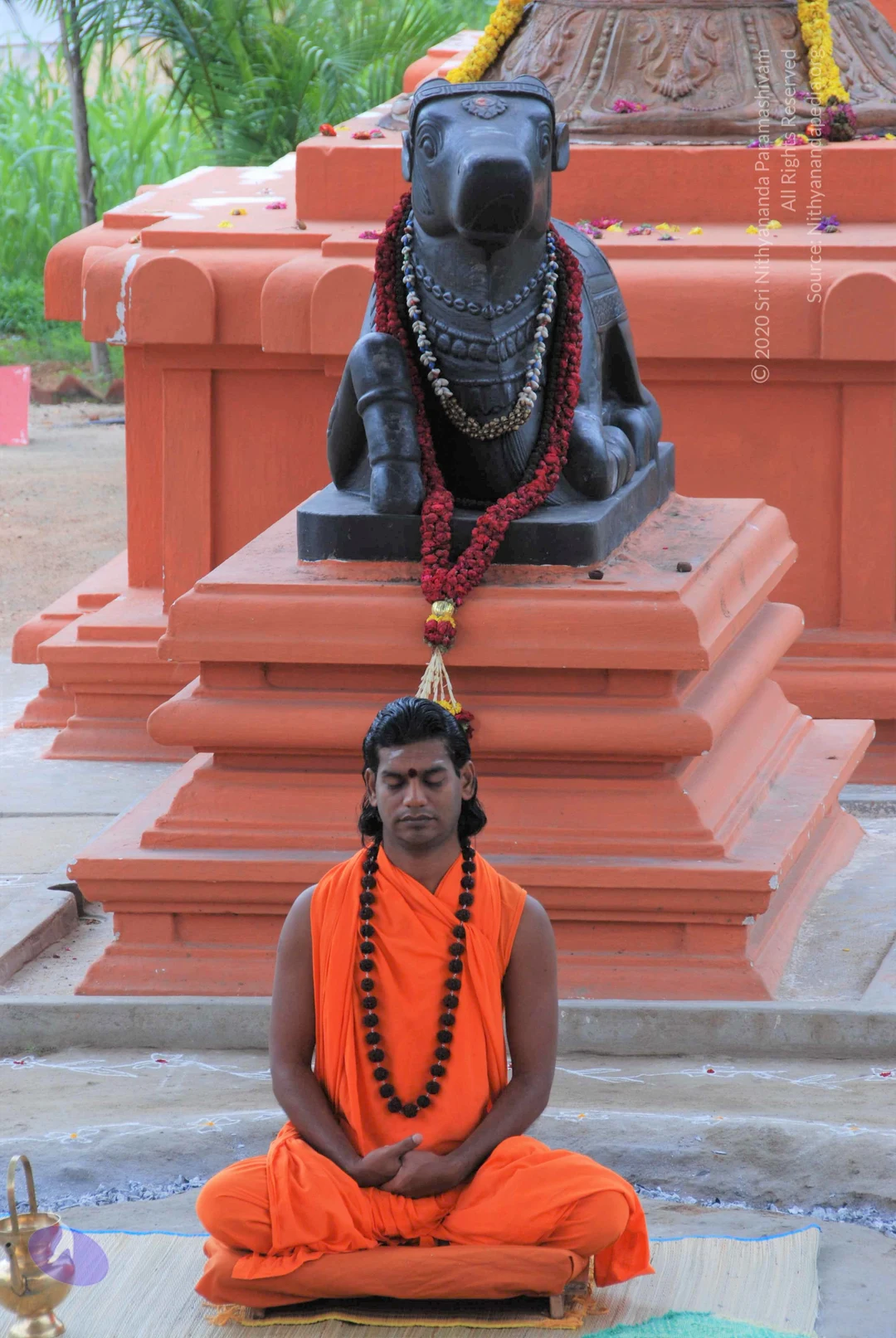
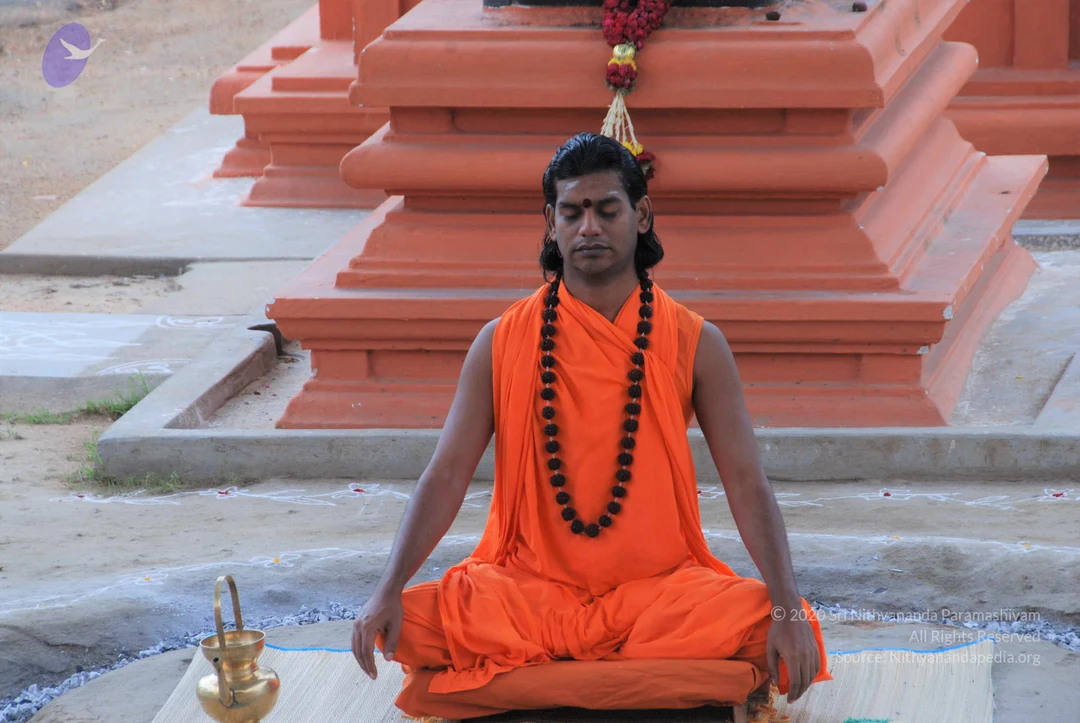
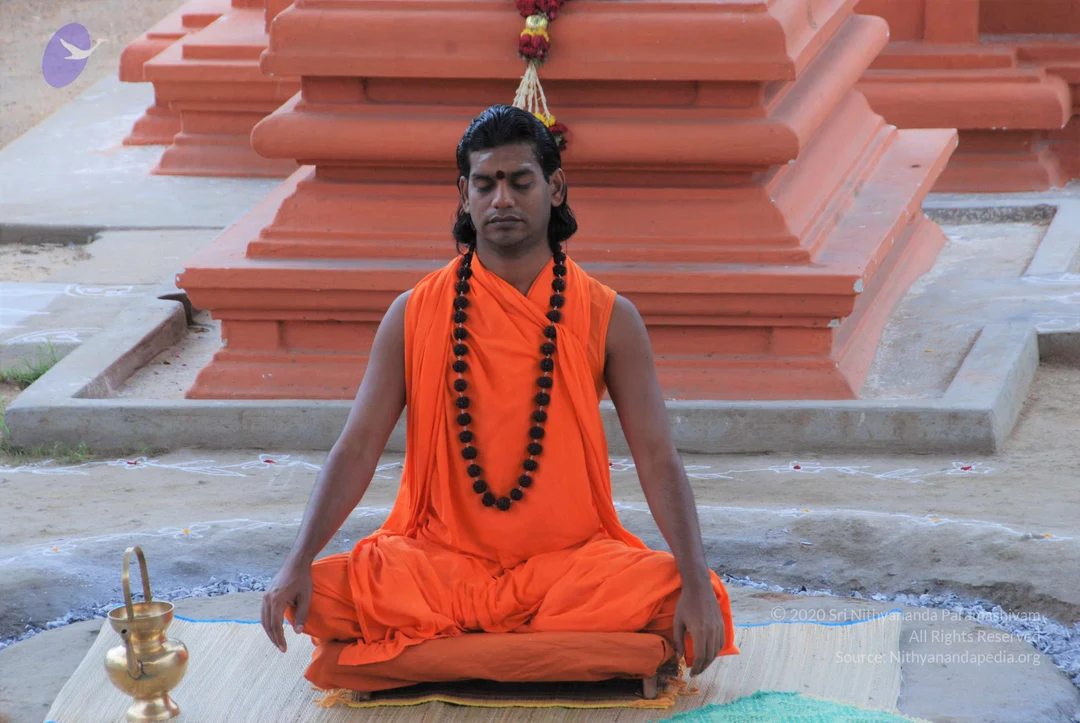
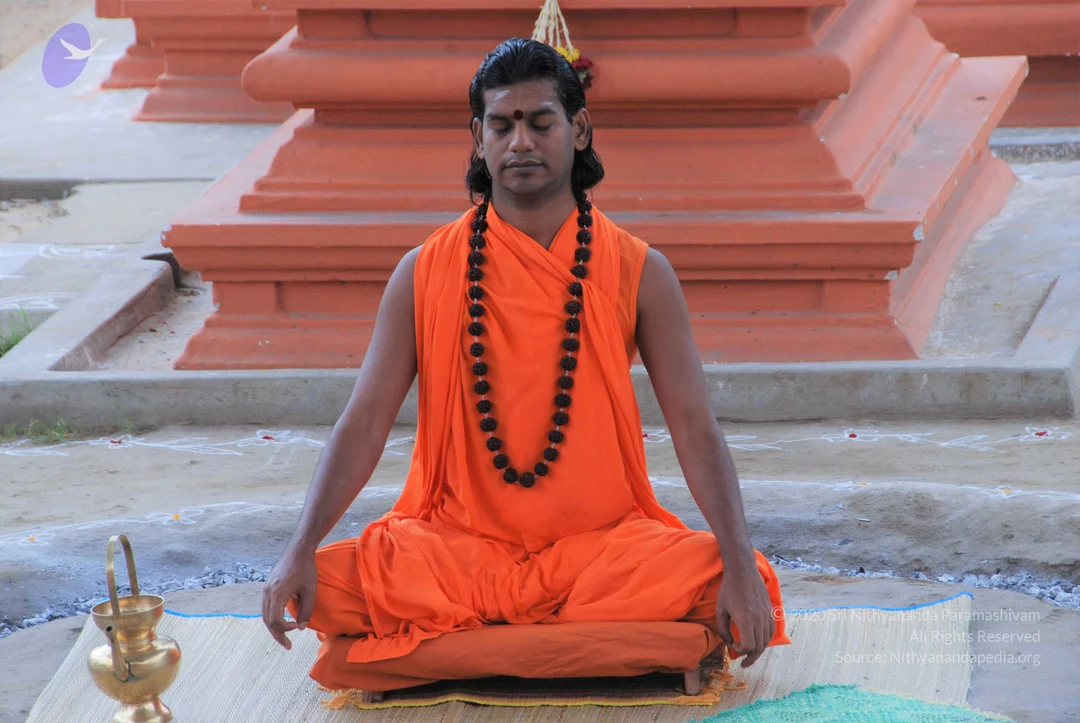
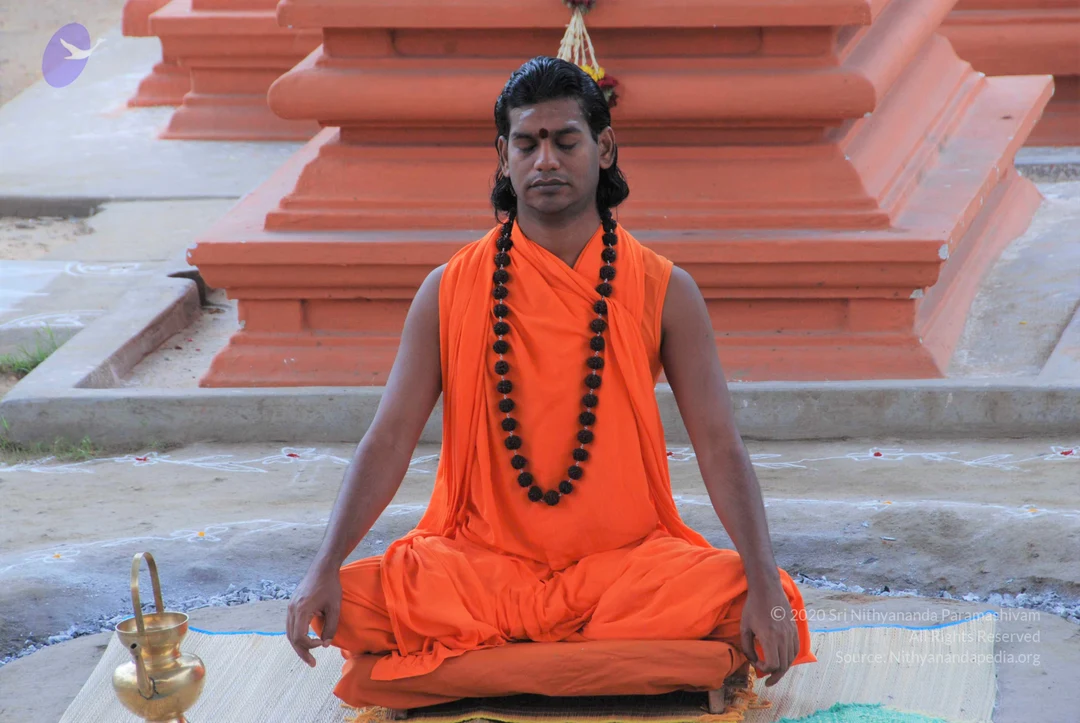
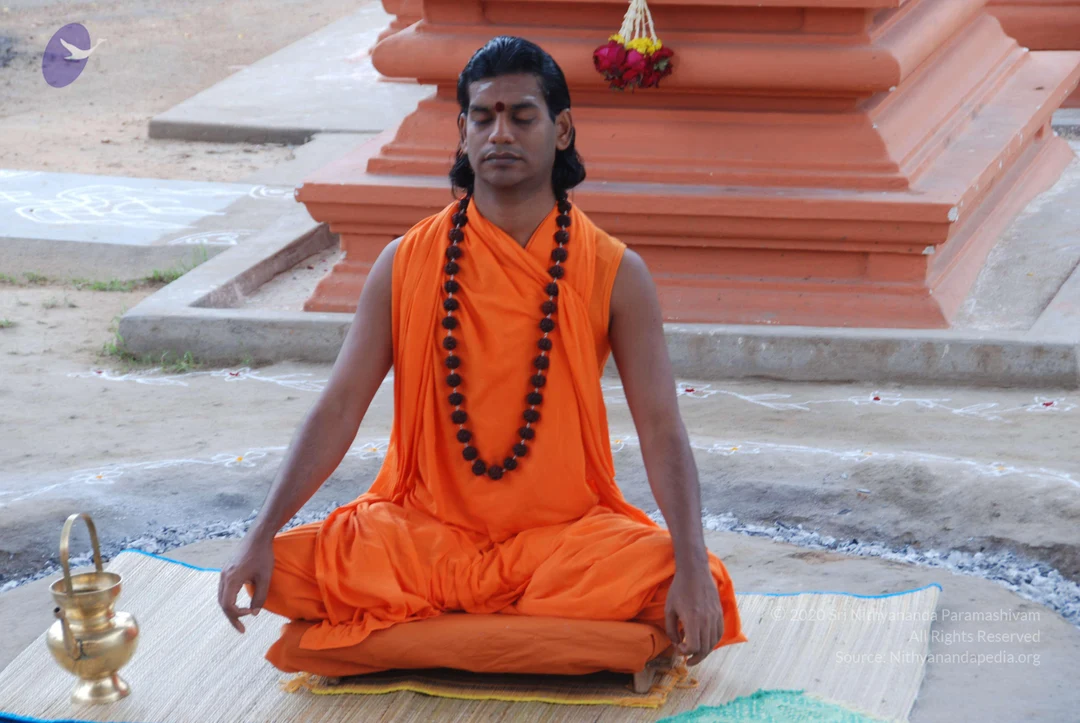
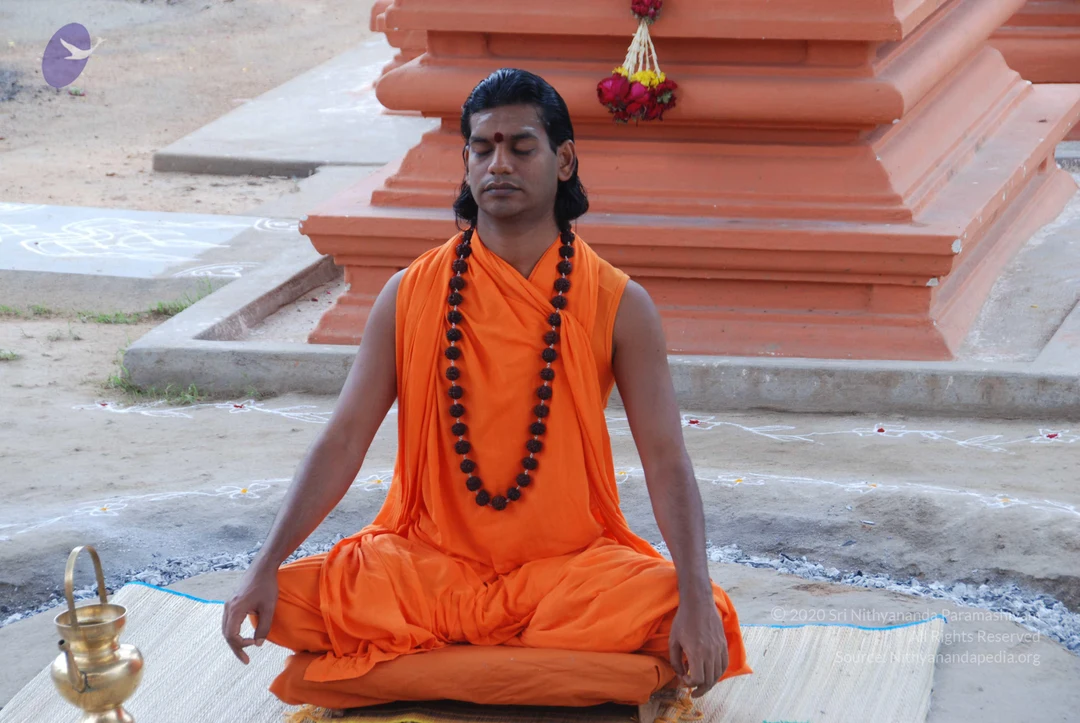
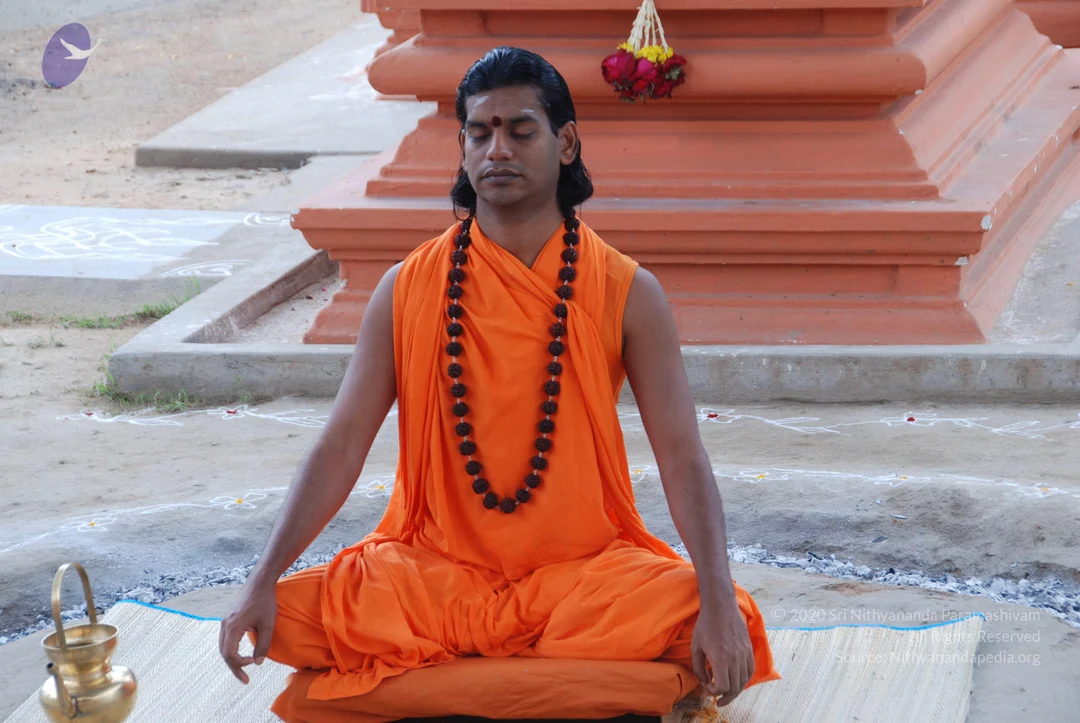
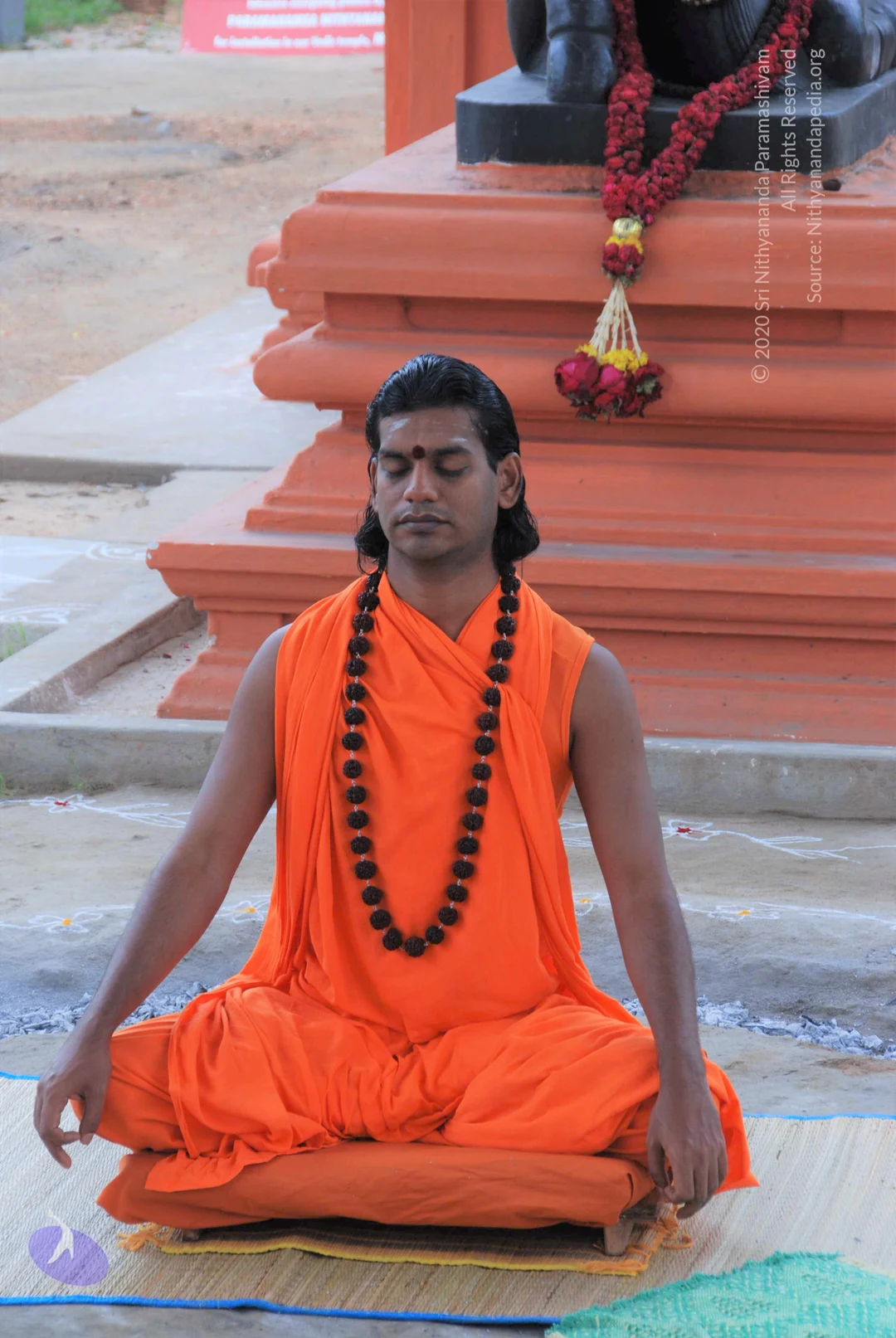
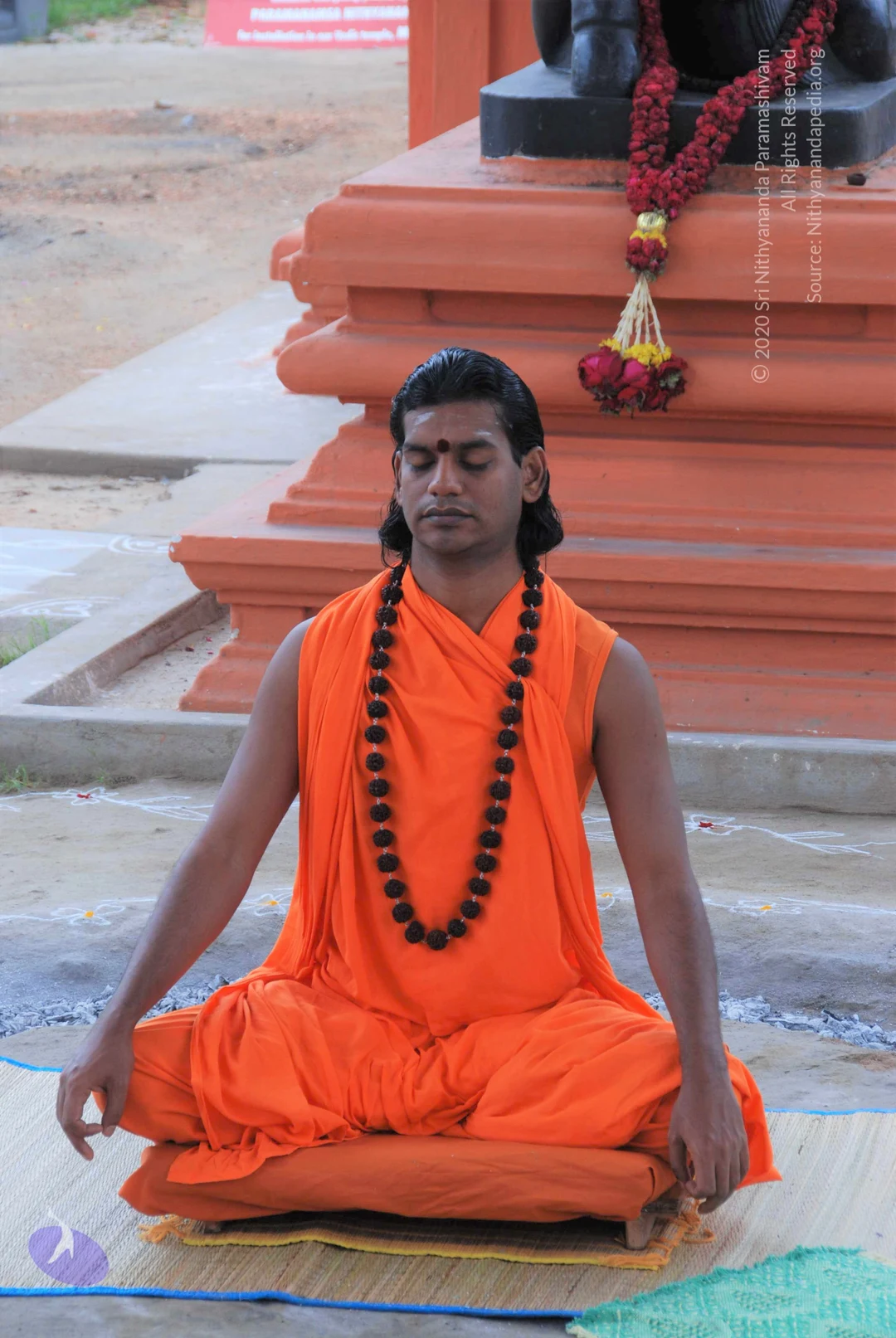
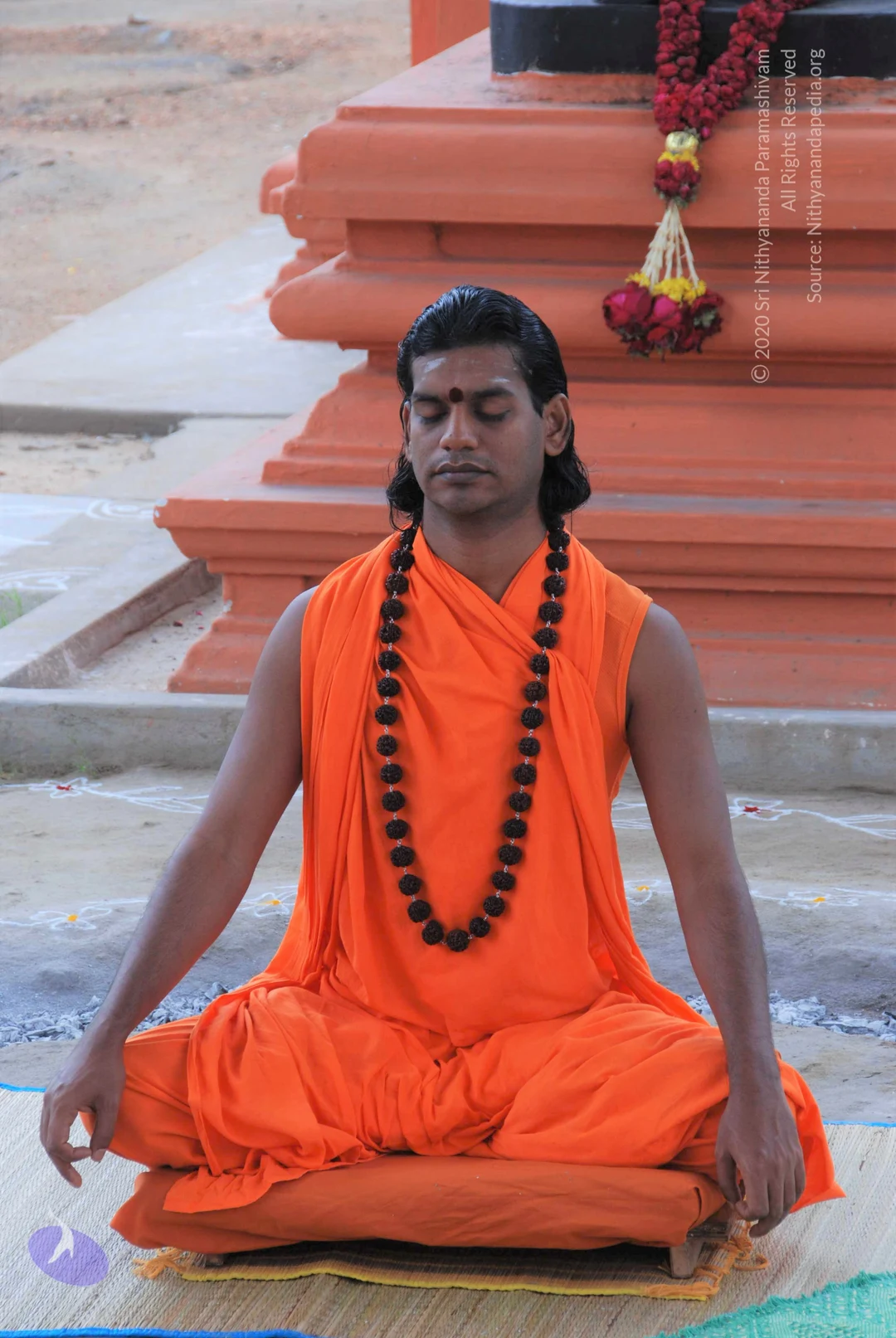
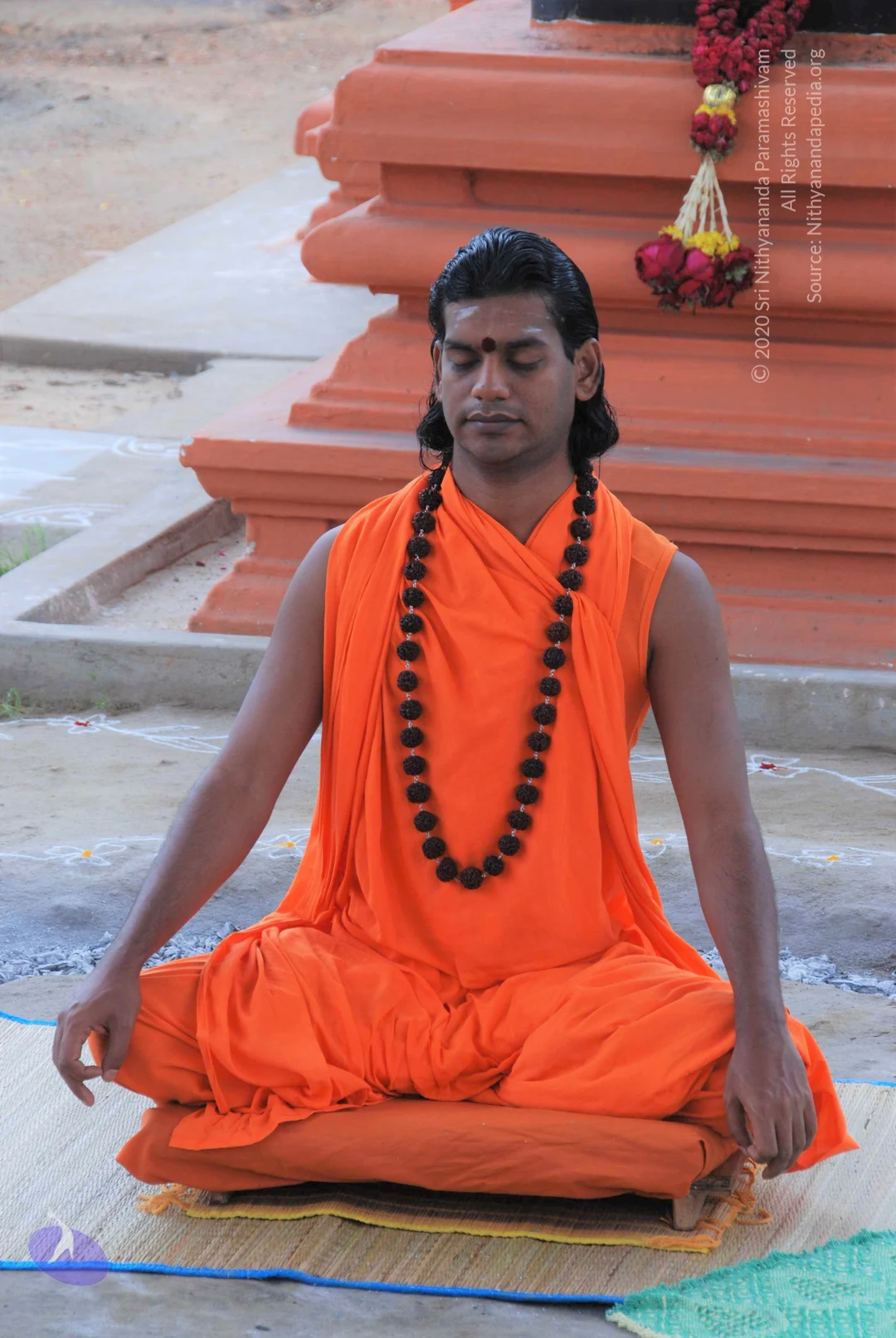
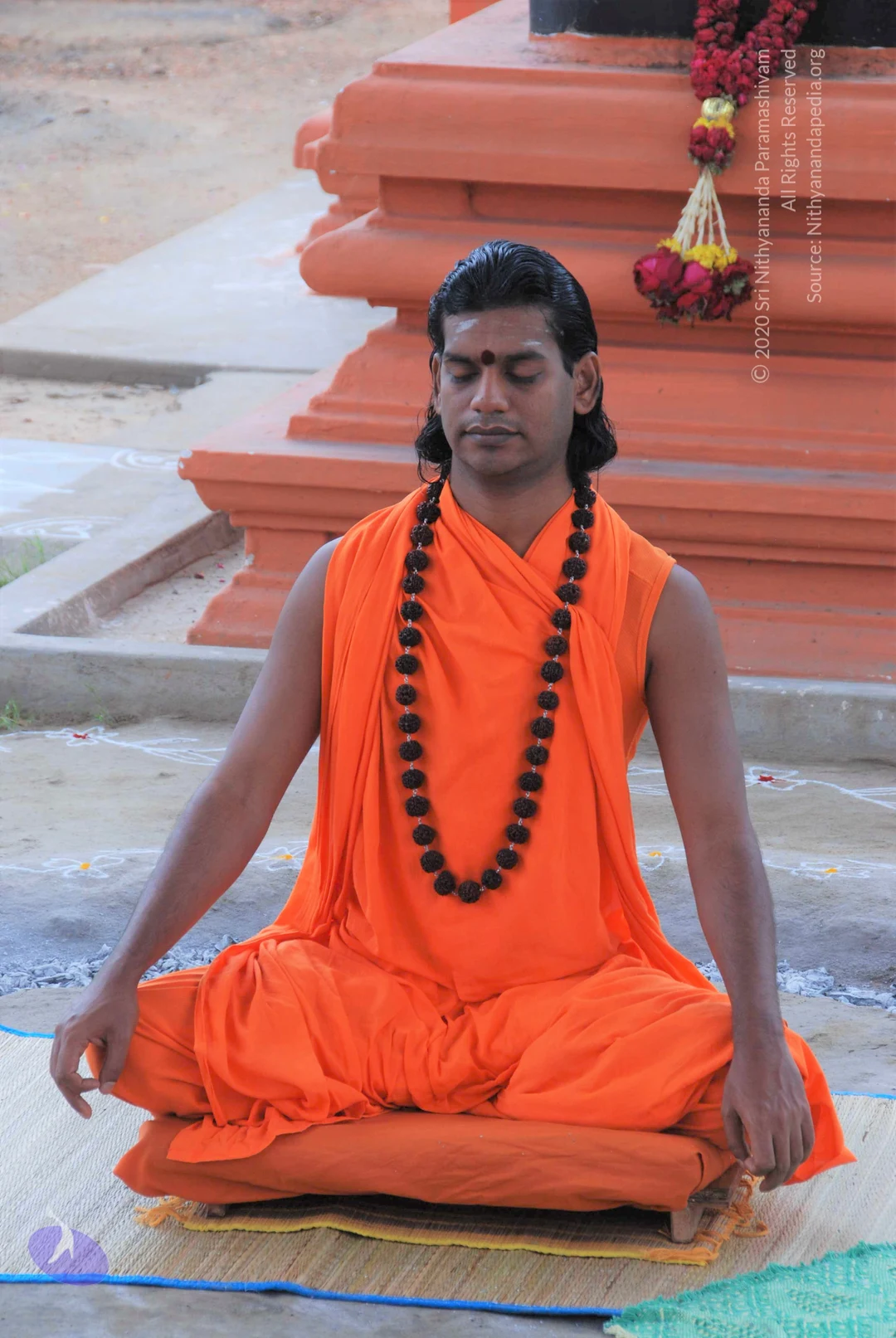
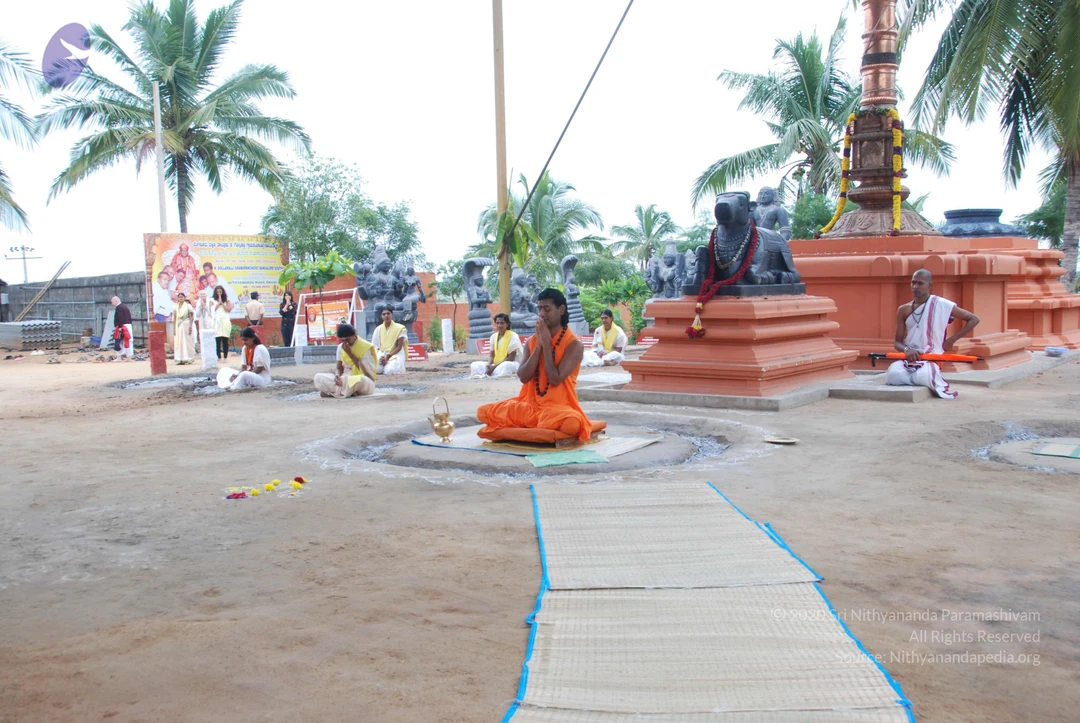
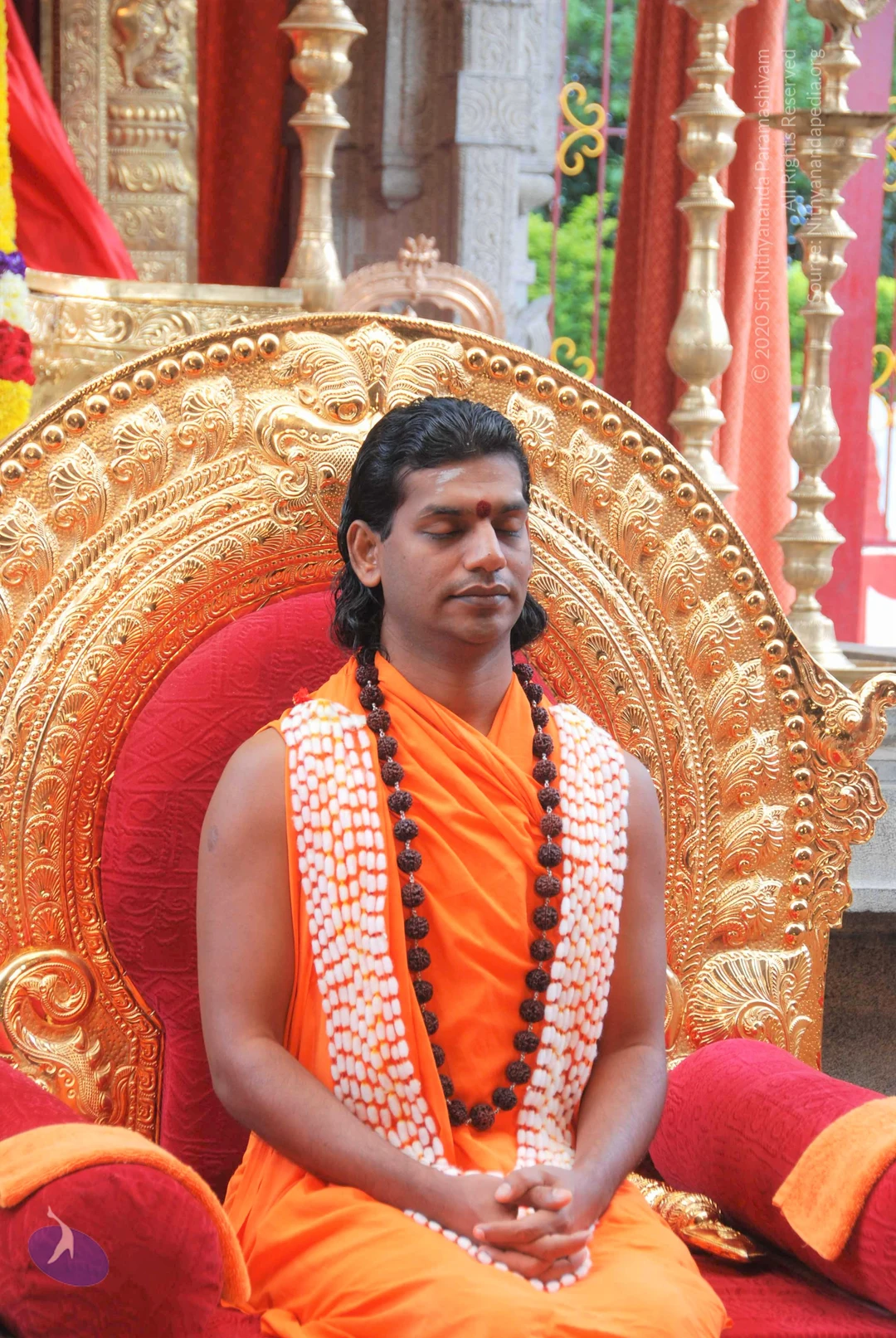
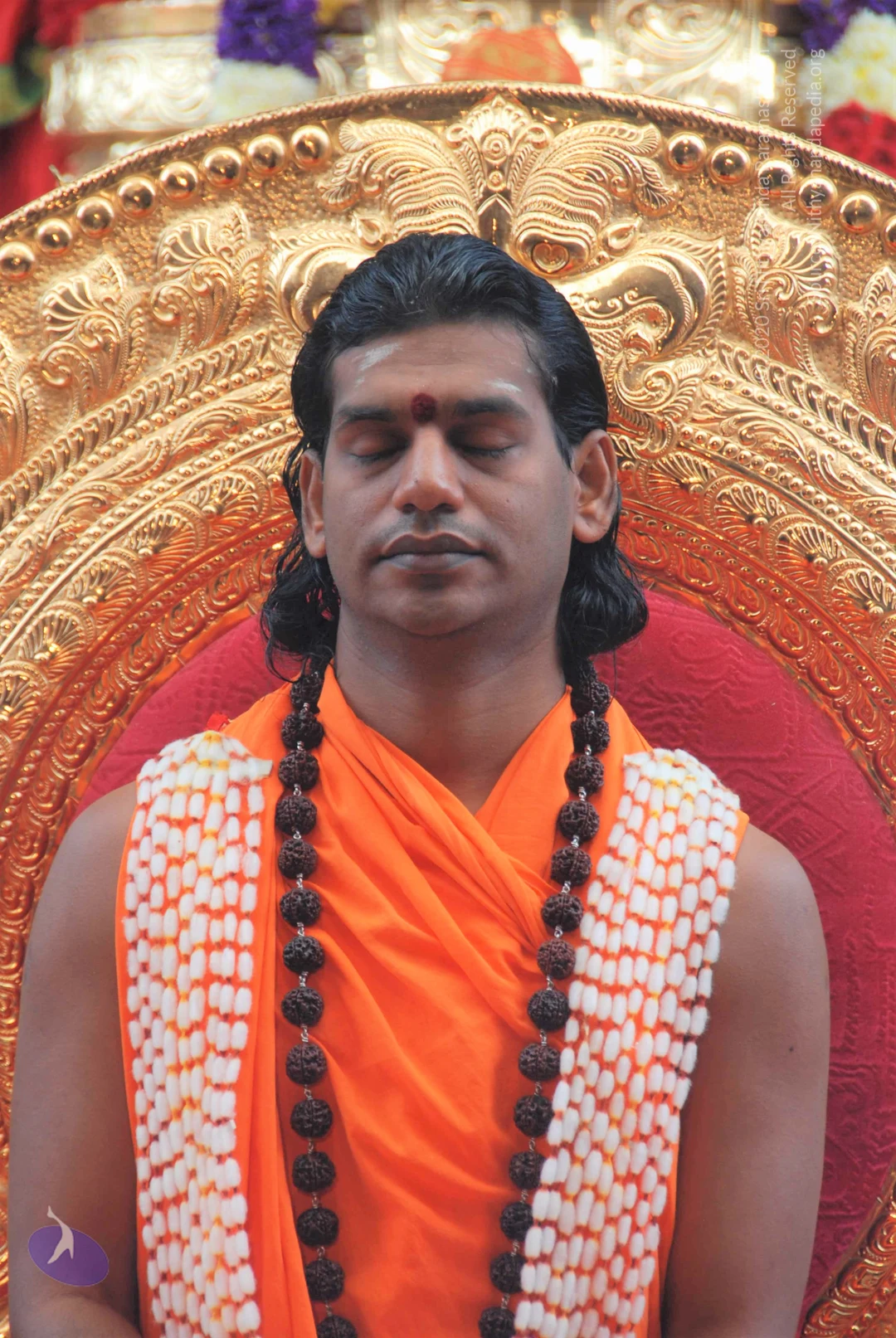
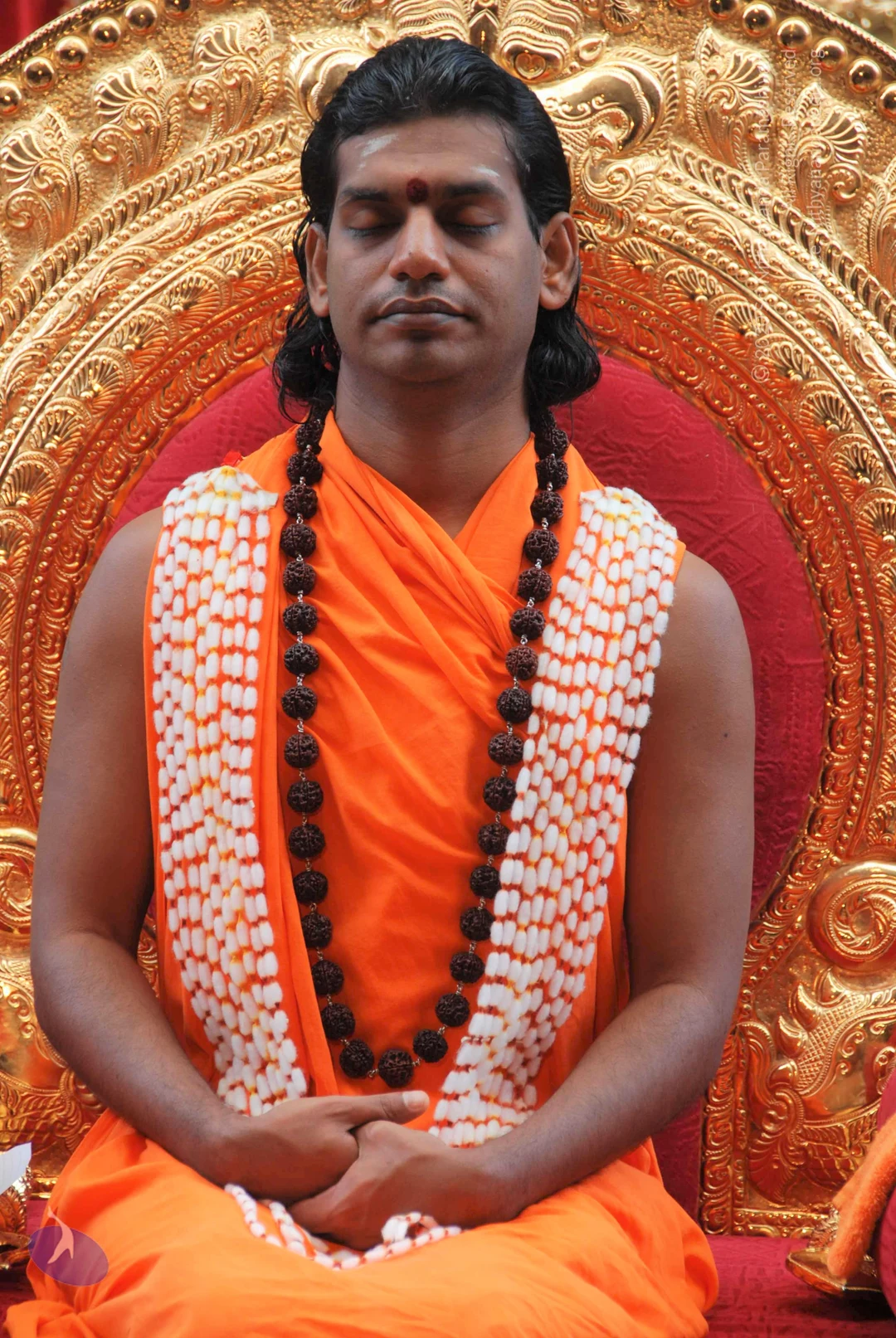
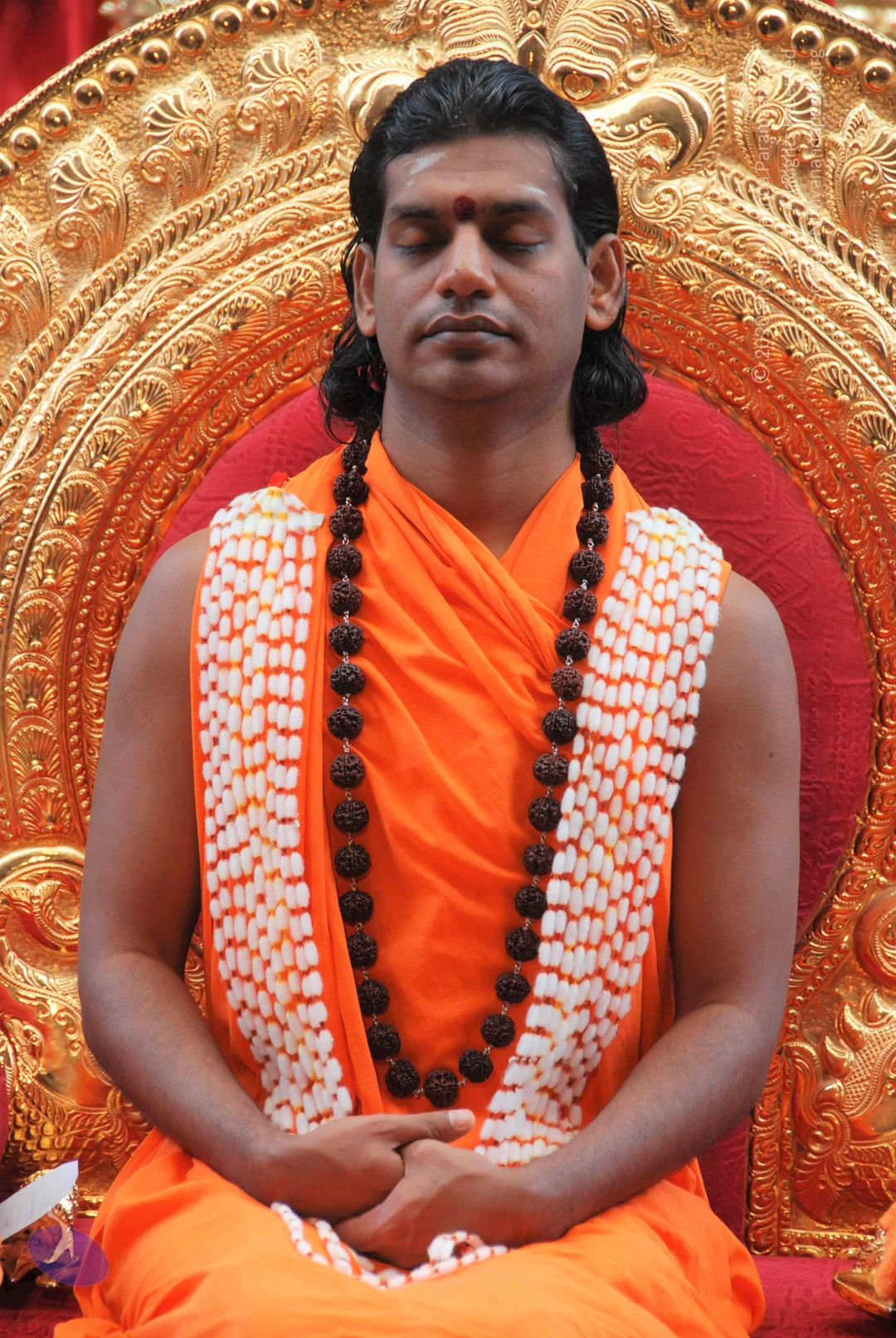
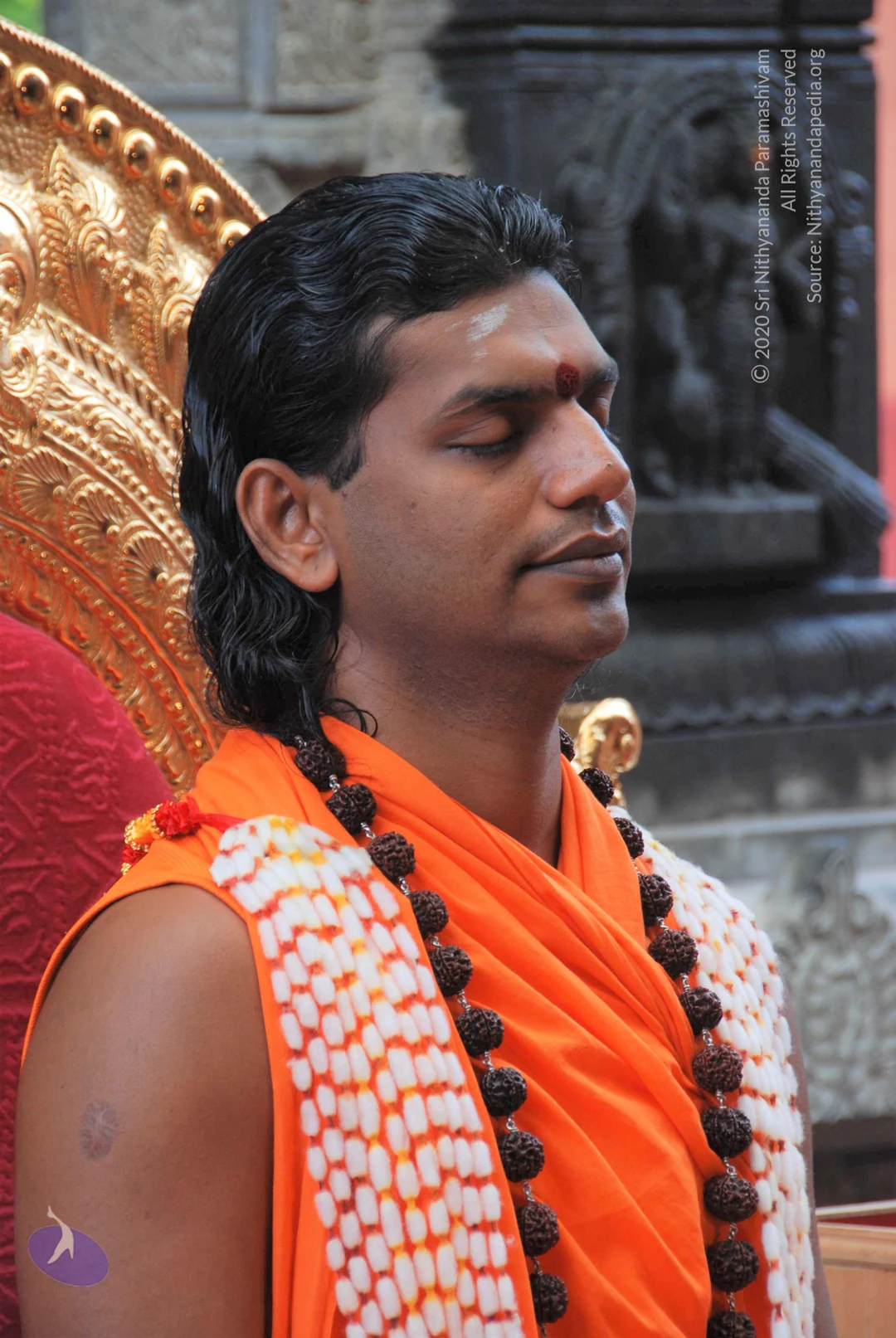
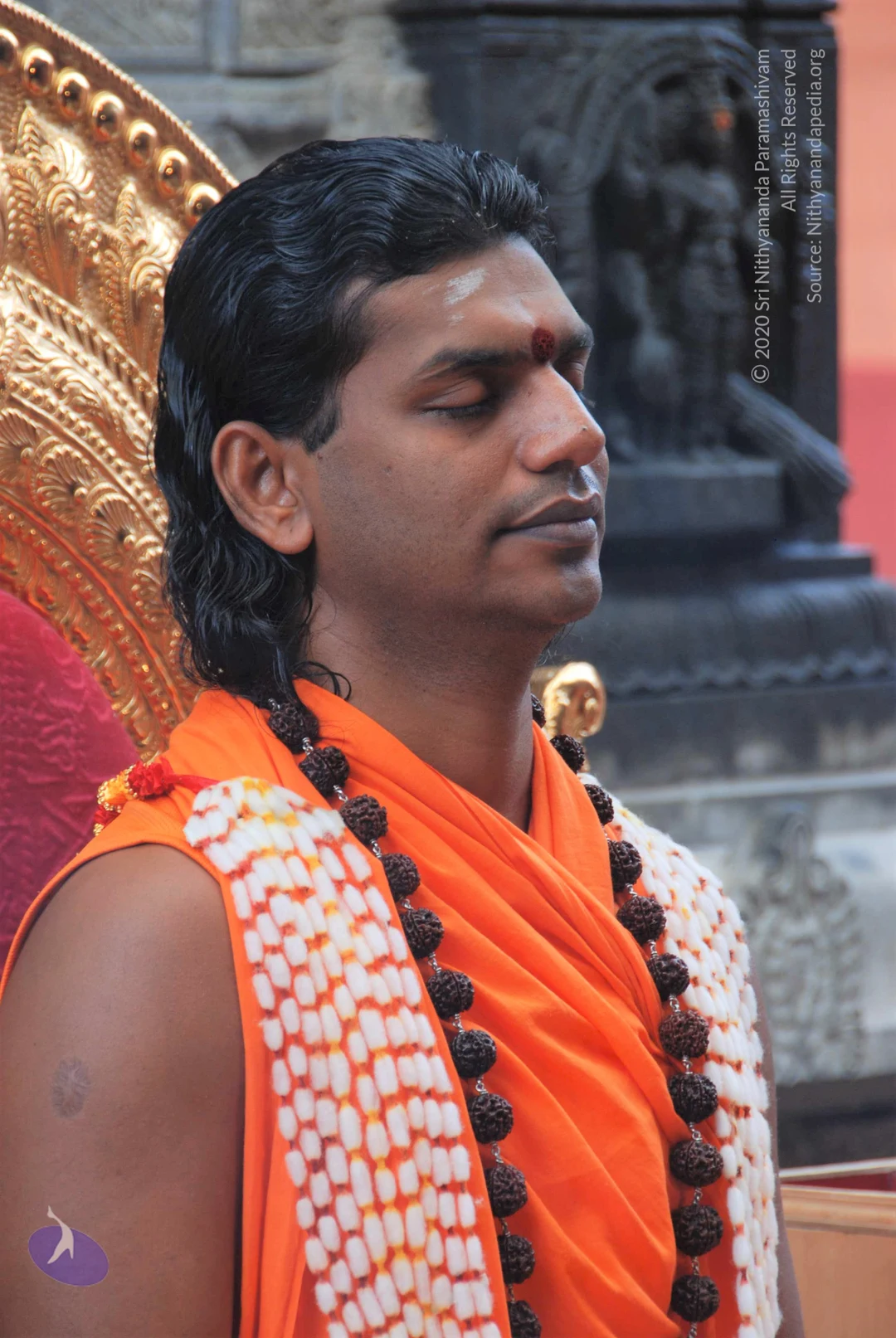
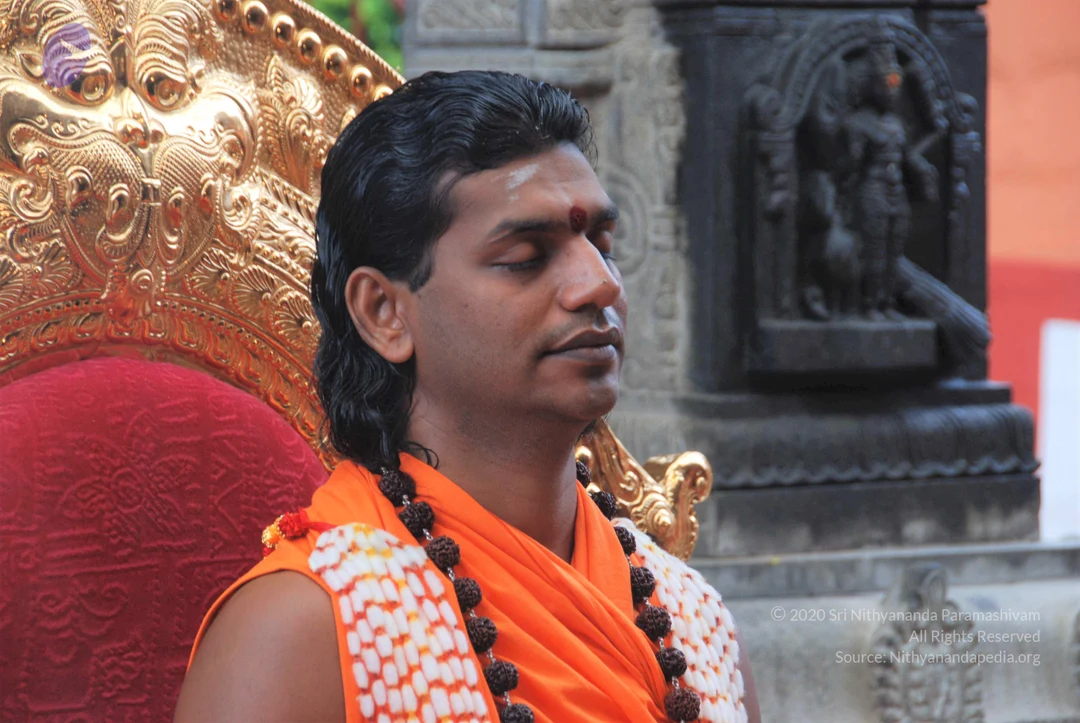
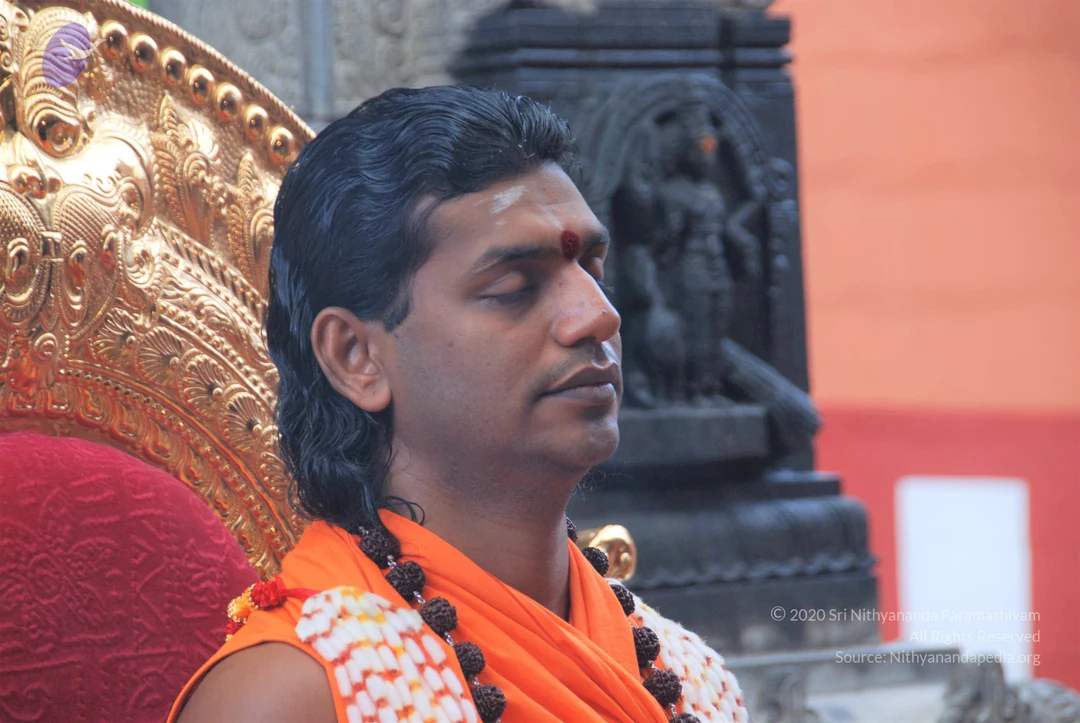
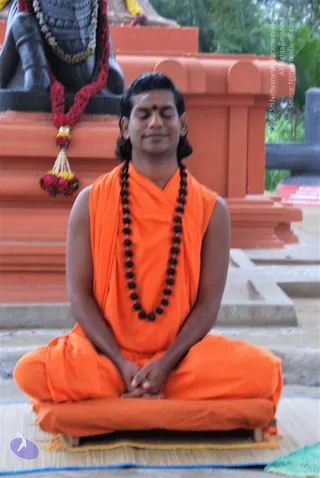
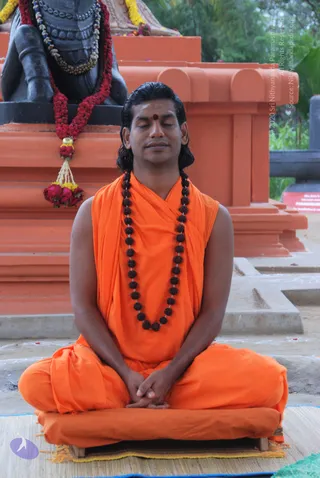
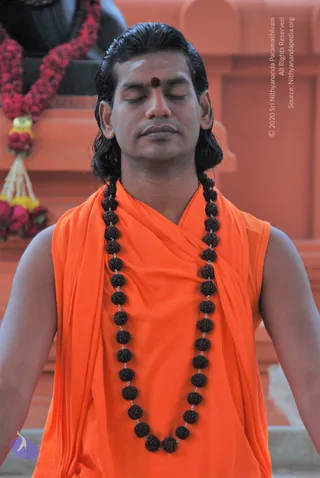
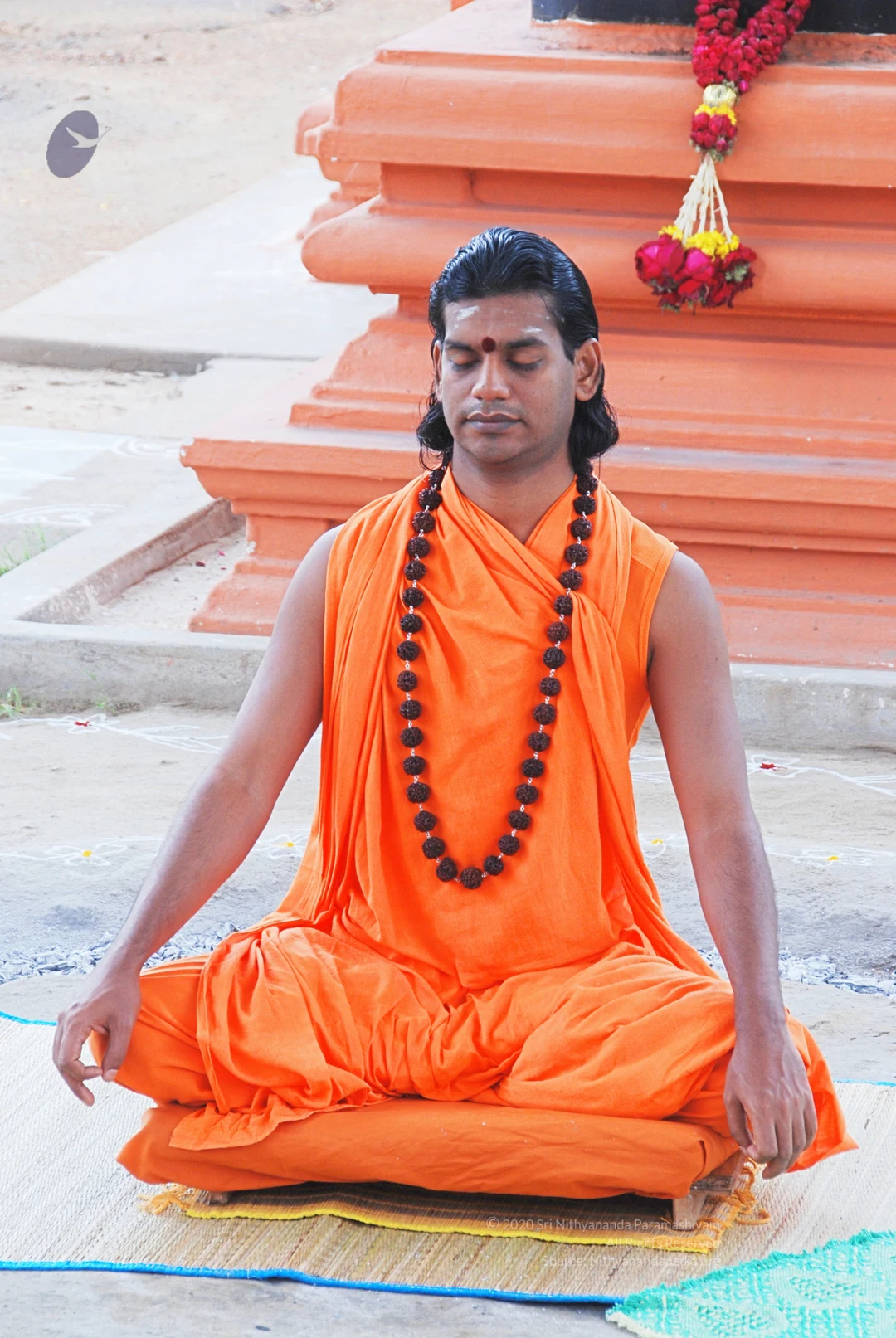
A man seated in cross-legged meditation on a low wooden seat atop an orange-red cloth on a sandy ground, eyes closed and hands resting in his lap. He wears a saffron-orange sleeveless wrap over orange clothing, a long dark rudraksha mala, and a red tilak on his forehead; his hair is long and swept back. Behind him stands a large dark stone deity murti of a seated figure draped with garlands of red flowers and a white-and-gold necklace, set on a tiered terracotta-coloured pedestal. Palm trees and greenery surround the courtyard, and a brass oil lamp sits at the lower left corner. The appearance-based label is probable, with the saffron wrap, long swept-back hair and rudraksha mala as cues.A man in saffron-orange robes sits cross-legged in meditation on a woven mat and cushioned seat in an outdoor garden setting. His eyes are closed, hands rest together in his lap, and he wears a red bindi and a long rudraksha mala. Behind him is a large orange-red stepped pedestal bearing a black stone Shiva deity murti draped with red and white garlands. A small brass kalasha-style vessel with a handle sits on the mat at the lower left, and a black stone shivalinga stands in the right background among palm trees. Swamiji (probable) is shown with long hair swept back, saffron clothing and rudraksha malas, seated in meditation.A man sits cross-legged in meditation on a low orange cushion placed on a woven mat outdoors. He wears an orange sleeveless robe with the cloth draped over one shoulder, a long black rudraksha mala hanging to his waist, and a red bindi on his forehead. His long dark hair is swept back, eyes closed, hands clasped in his lap. Behind him stands a black stone deity murti draped with a red and yellow flower garland, beside an orange-painted stone platform and greenery.A man with swept-back long dark hair sits cross-legged in meditation with eyes closed on a woven mat and a folded orange cushion. He wears orange saffron robes draped over his shoulders and a long rudraksha mala of dark beads, with a red bindi on his forehead, hands joined in his lap. Behind him stands a dark stone deity murti draped in red and yellow flower garlands, set on orange-painted steps with green foliage in the background.Close photo of a man with eyes closed and arms slightly spread, seated in meditation before an orange-red temple wall with a red and yellow flower garland at upper left. He wears a sleeveless saffron-orange shawl over the shoulders and chest, a long double strand of dark rudraksha beads, and a red bindi with white vibhuti marks on the forehead. His long, swept-back dark hair is wet-looking. The likeness shows long swept-back hair, saffron clothing and rudraksha malas, so this is an appearance-based probable Swamiji candidate in meditation; identity is only probable. One person is visible.A man sits cross-legged on a mat in meditation with eyes closed, wearing orange saffron robes draped over one shoulder and a long black rudraksha mala with a red tilak on his forehead. Long dark hair falls past his shoulders. Behind him stands a dark stone deity murti adorned with red and yellow flower garlands and shell-like beads, set before orange-painted stone platforms in an outdoor garden setting with palm trees. Nithyananda Dhyanapeetam-style outdoor setting. The man is a probable Swamiji candidate based on long swept-back hair, saffron clothing and rudraksha mala cues, shown seated in meditation.
03

03-Pada-Puja

197 dated photos in previewSource gallery
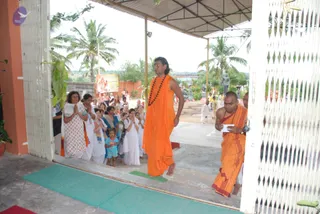
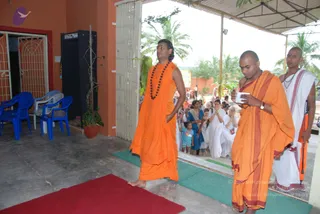
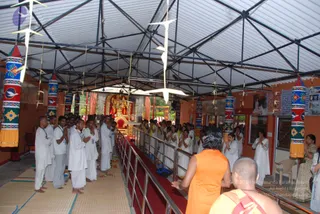
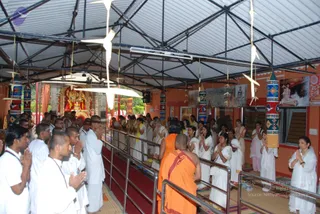
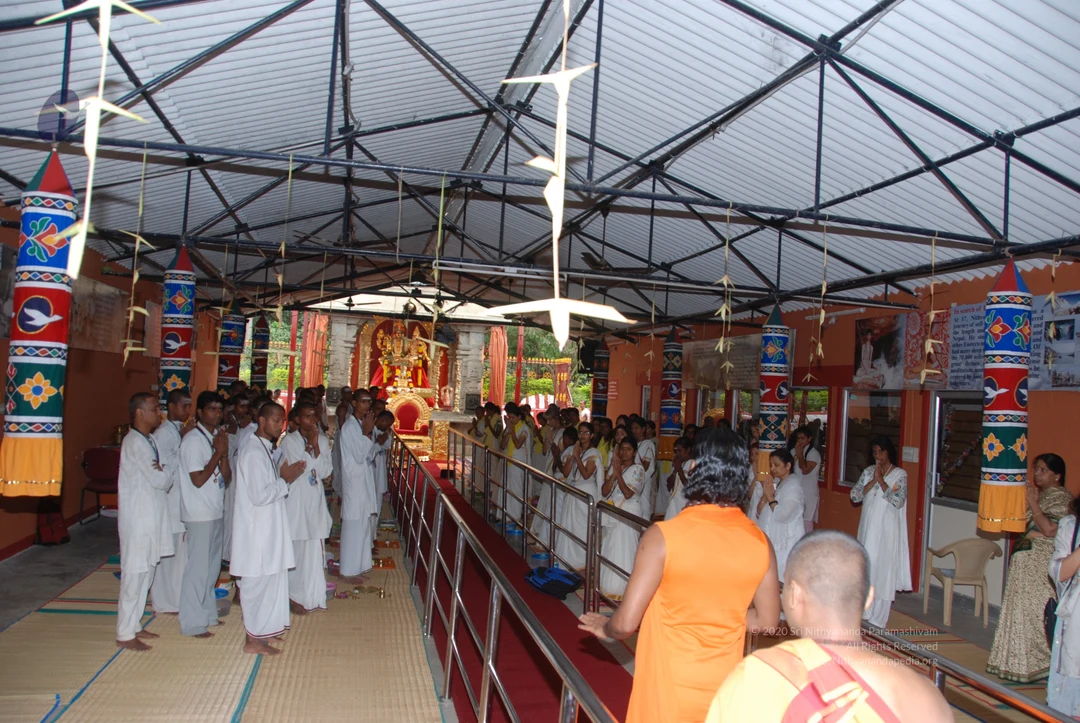
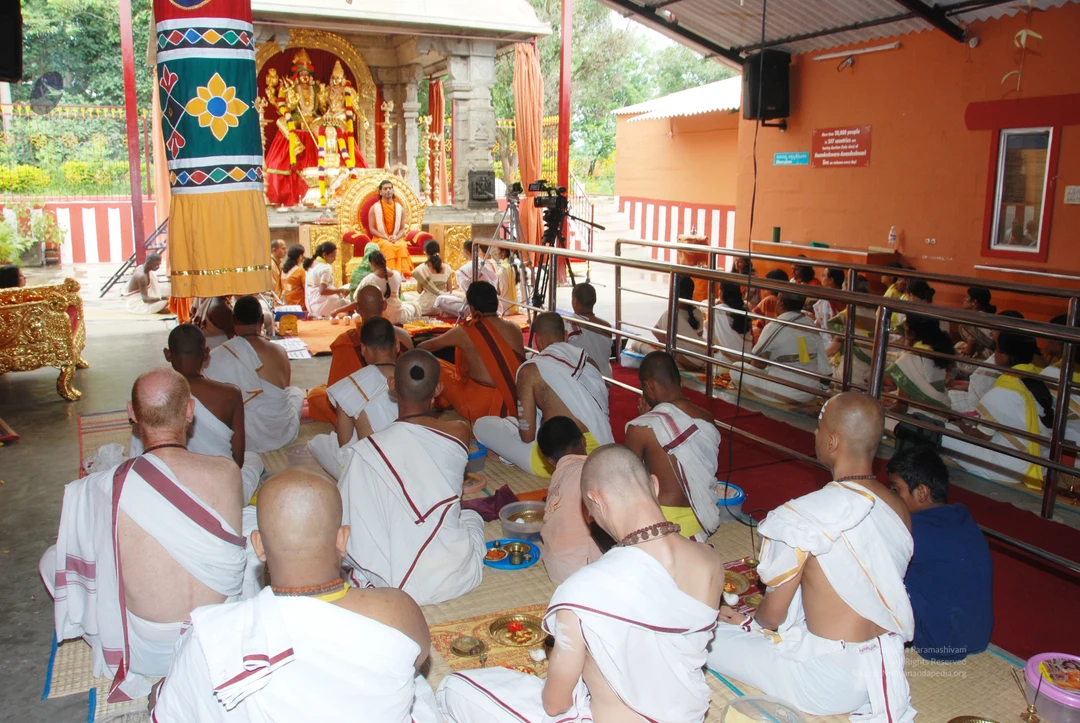
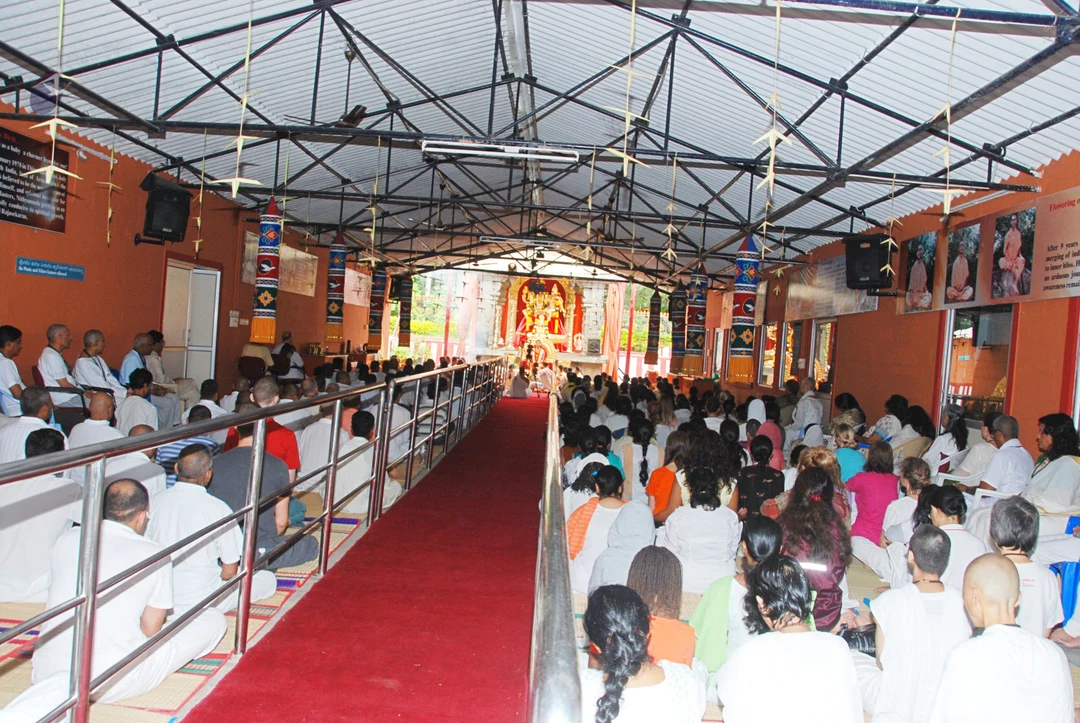
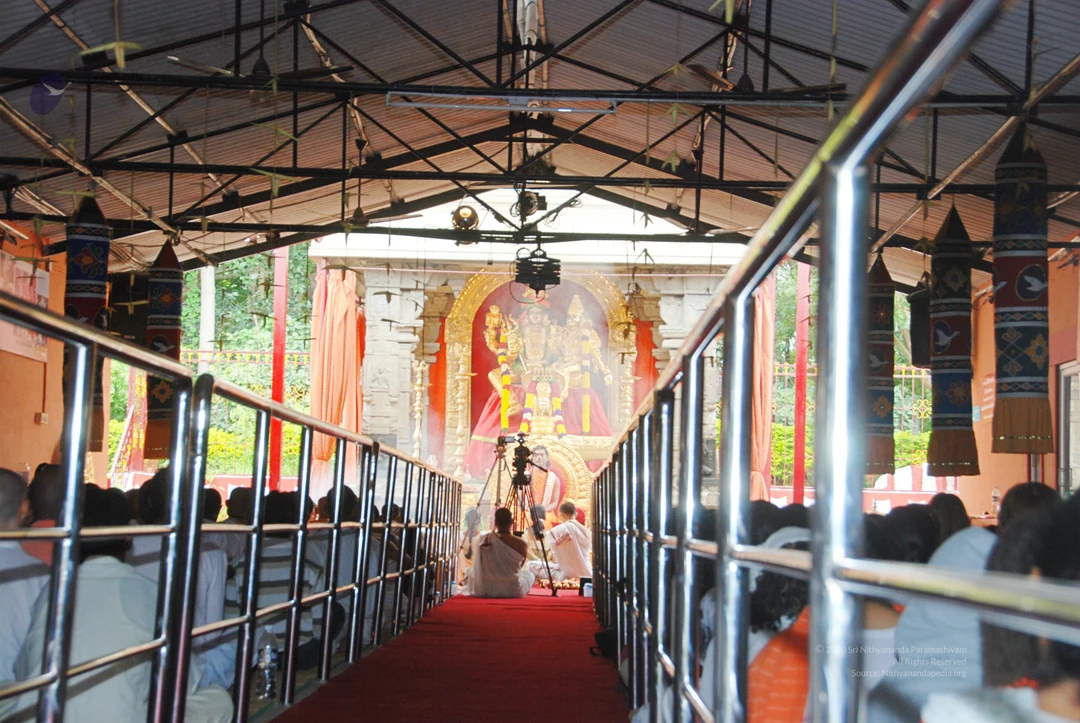
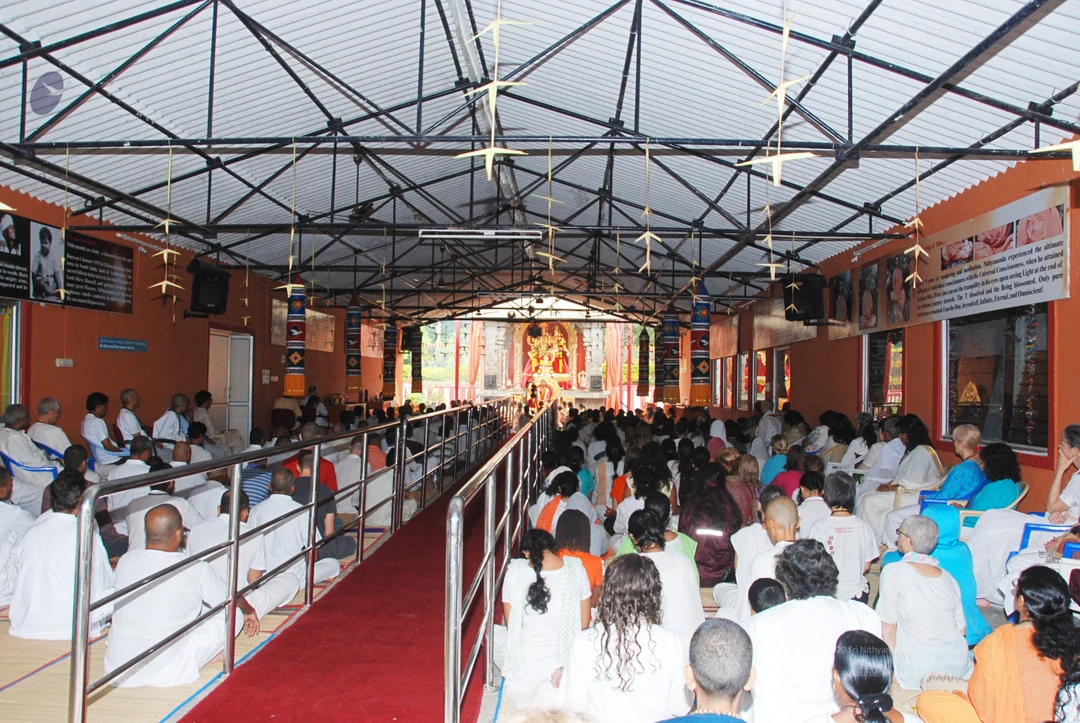
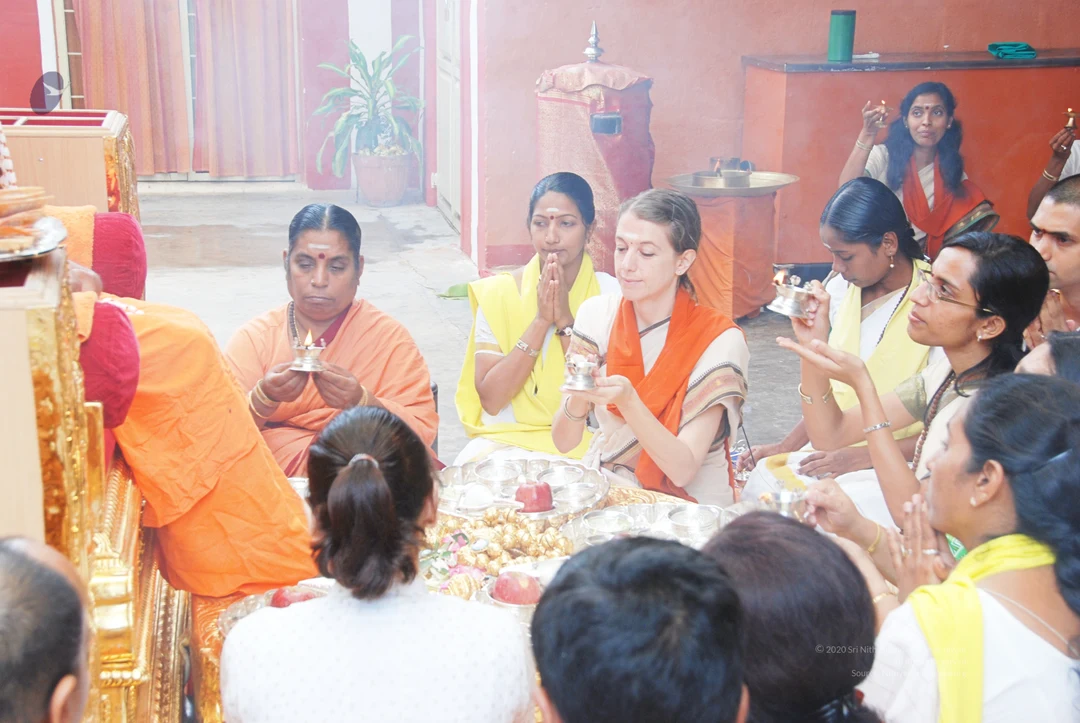
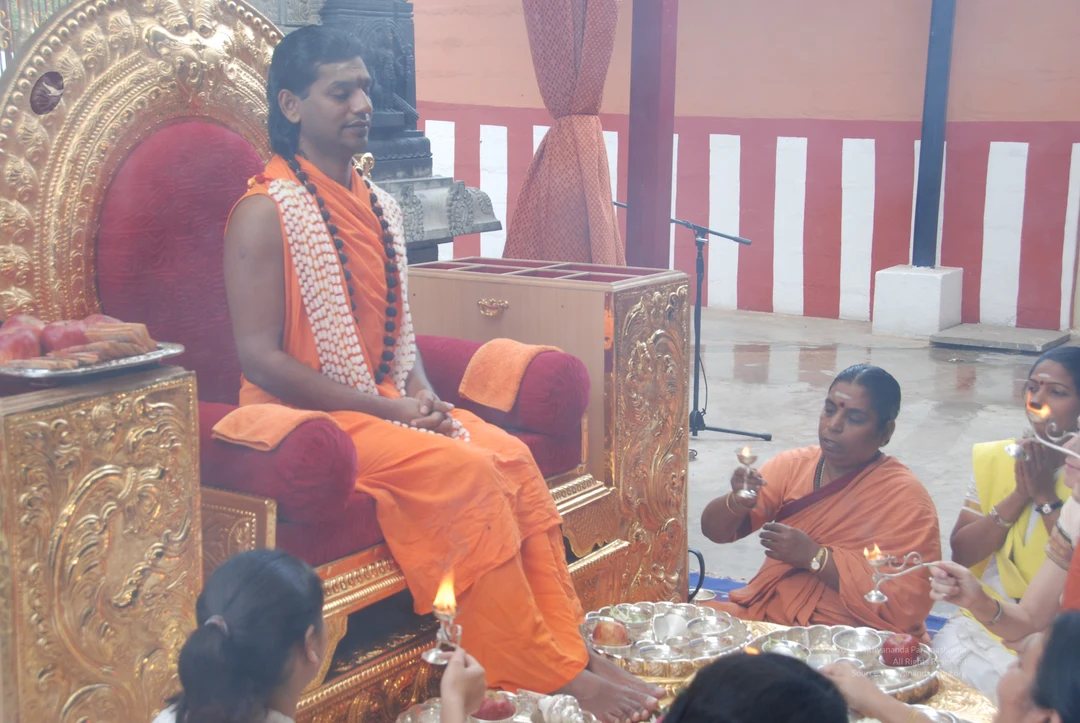
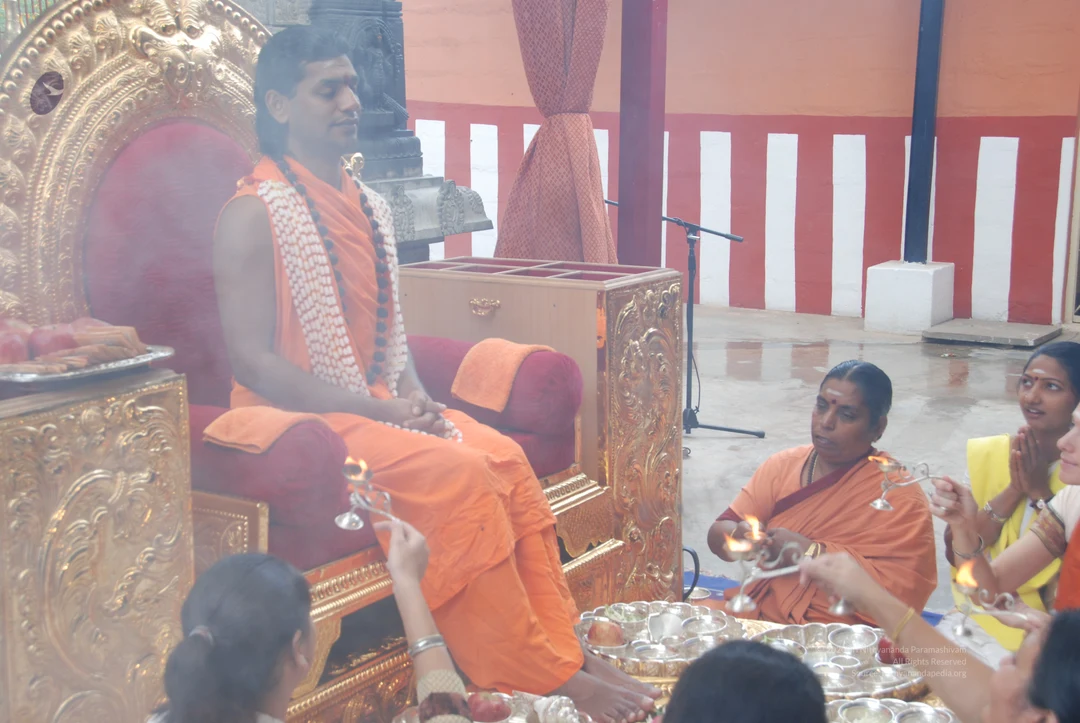
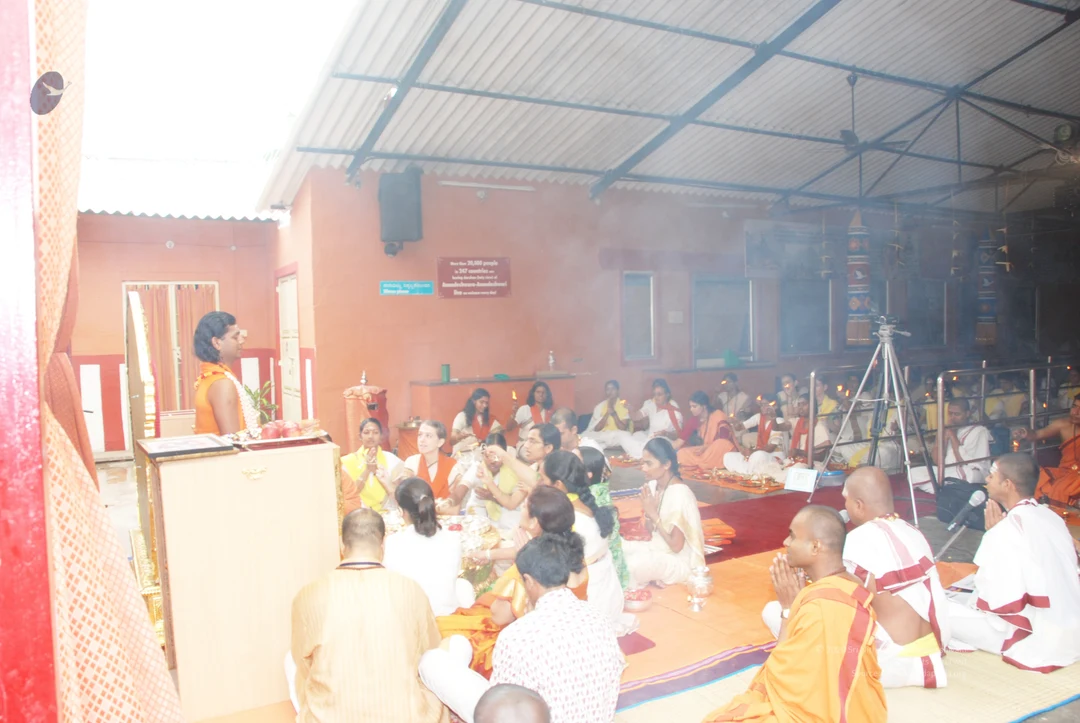
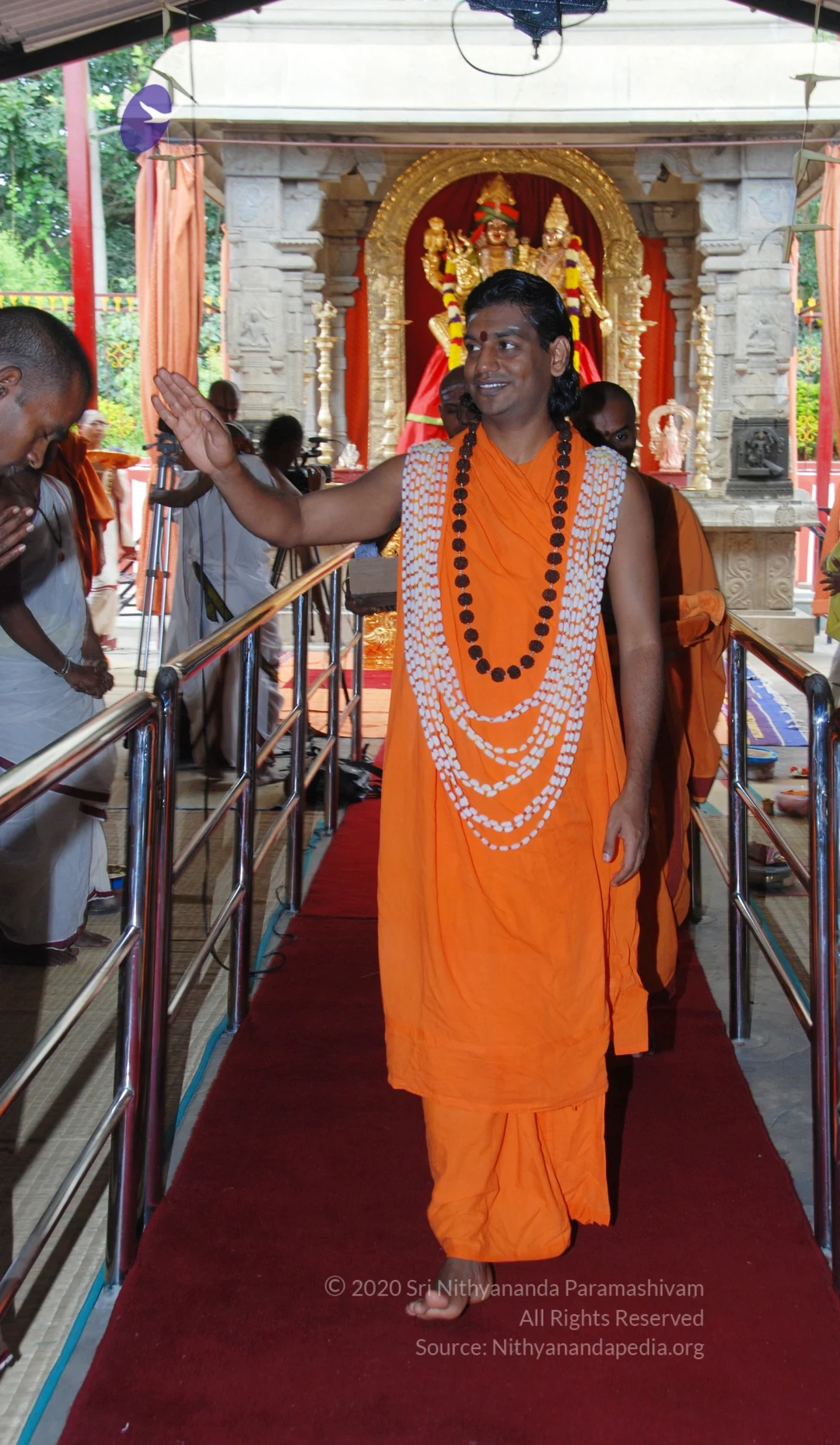
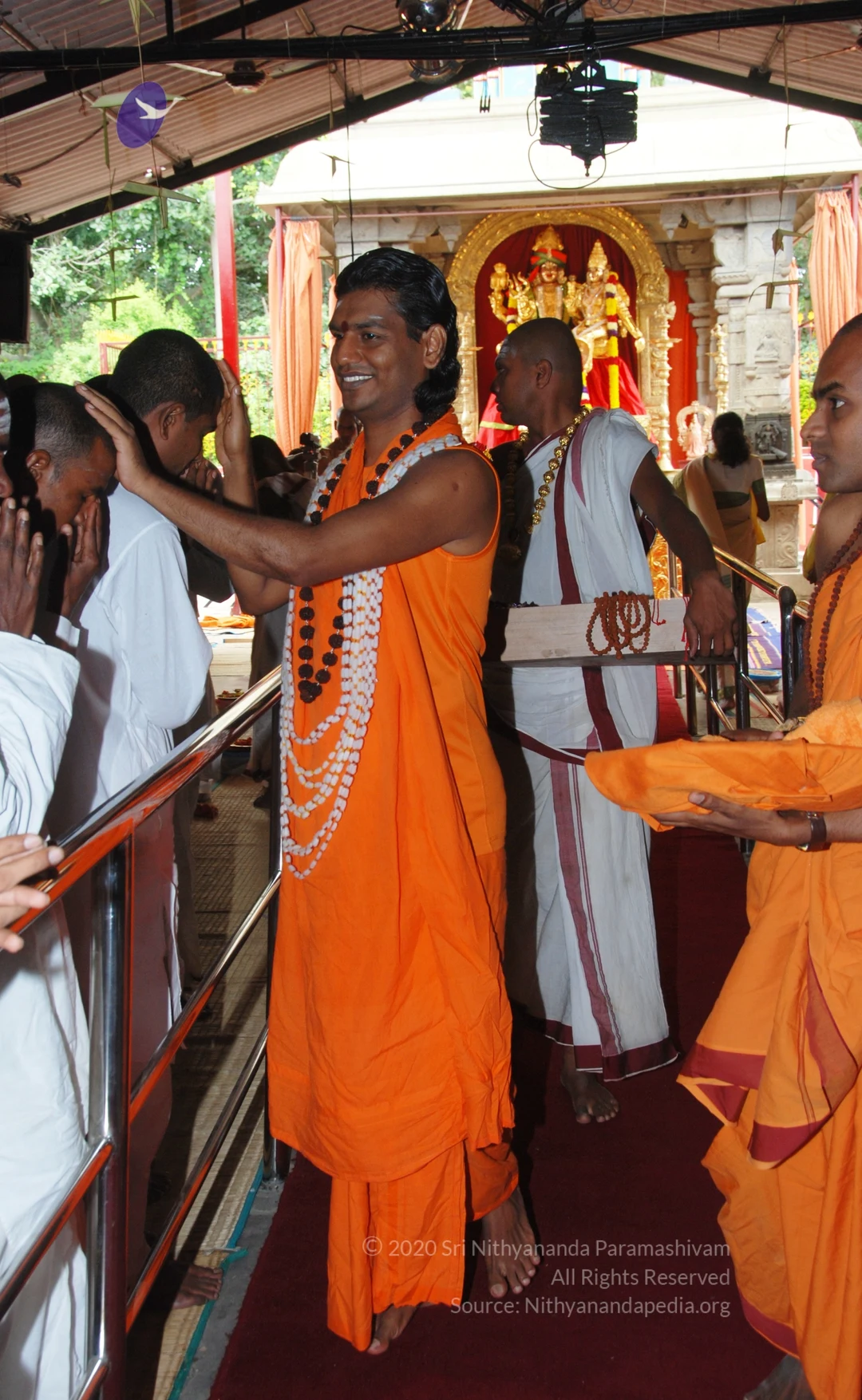
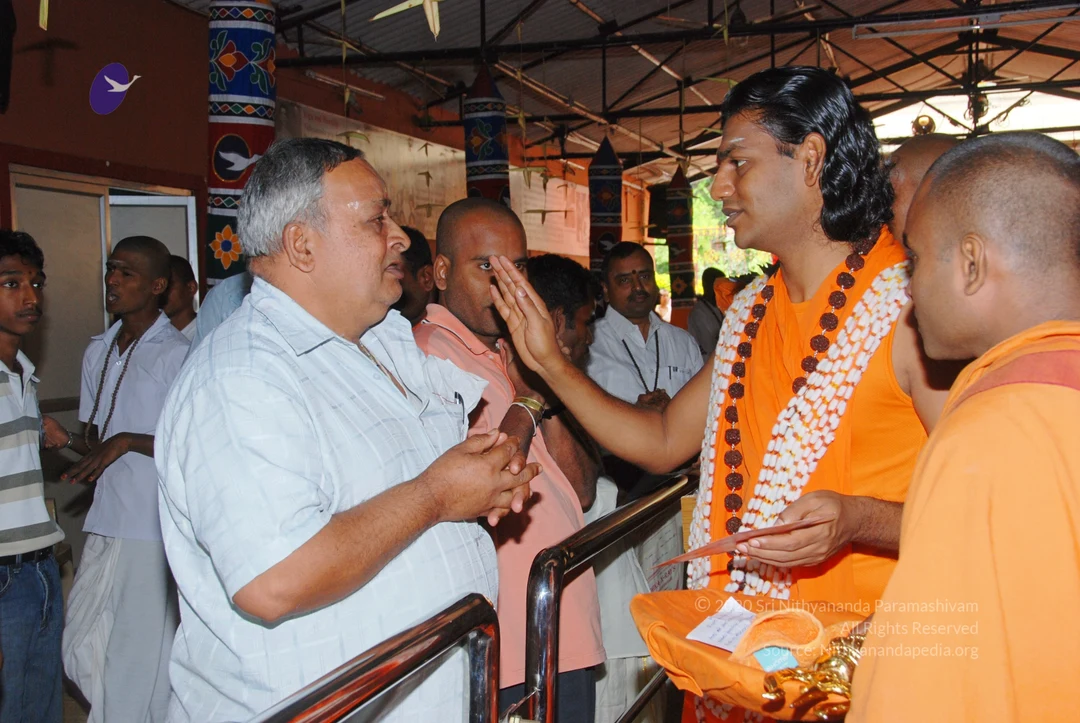
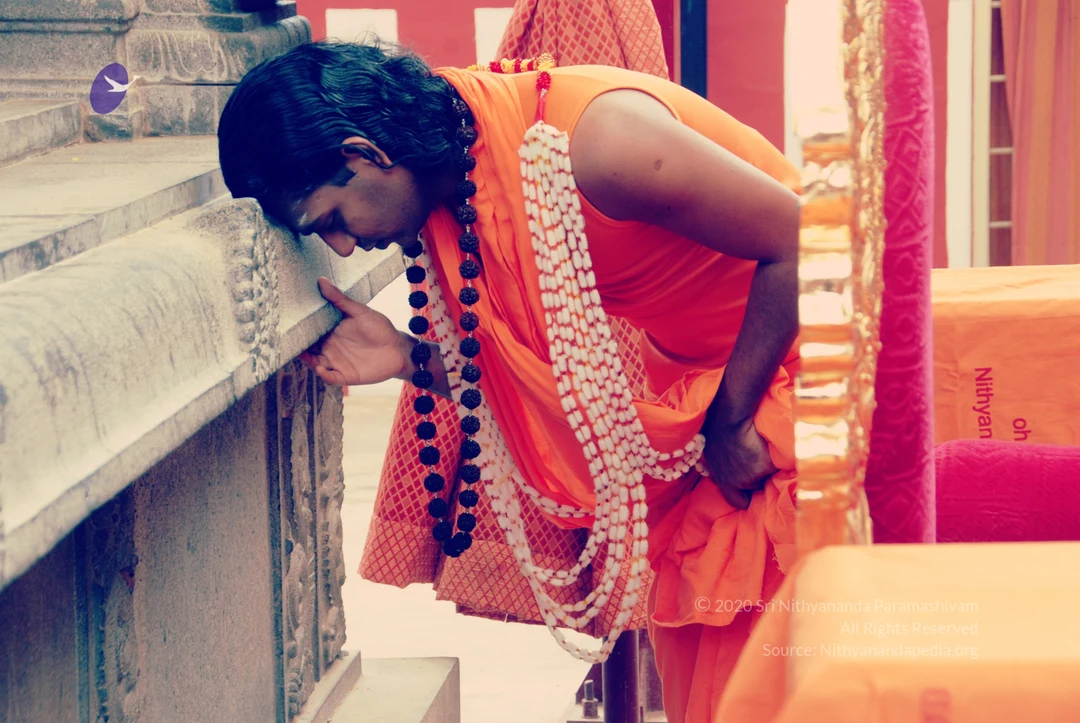
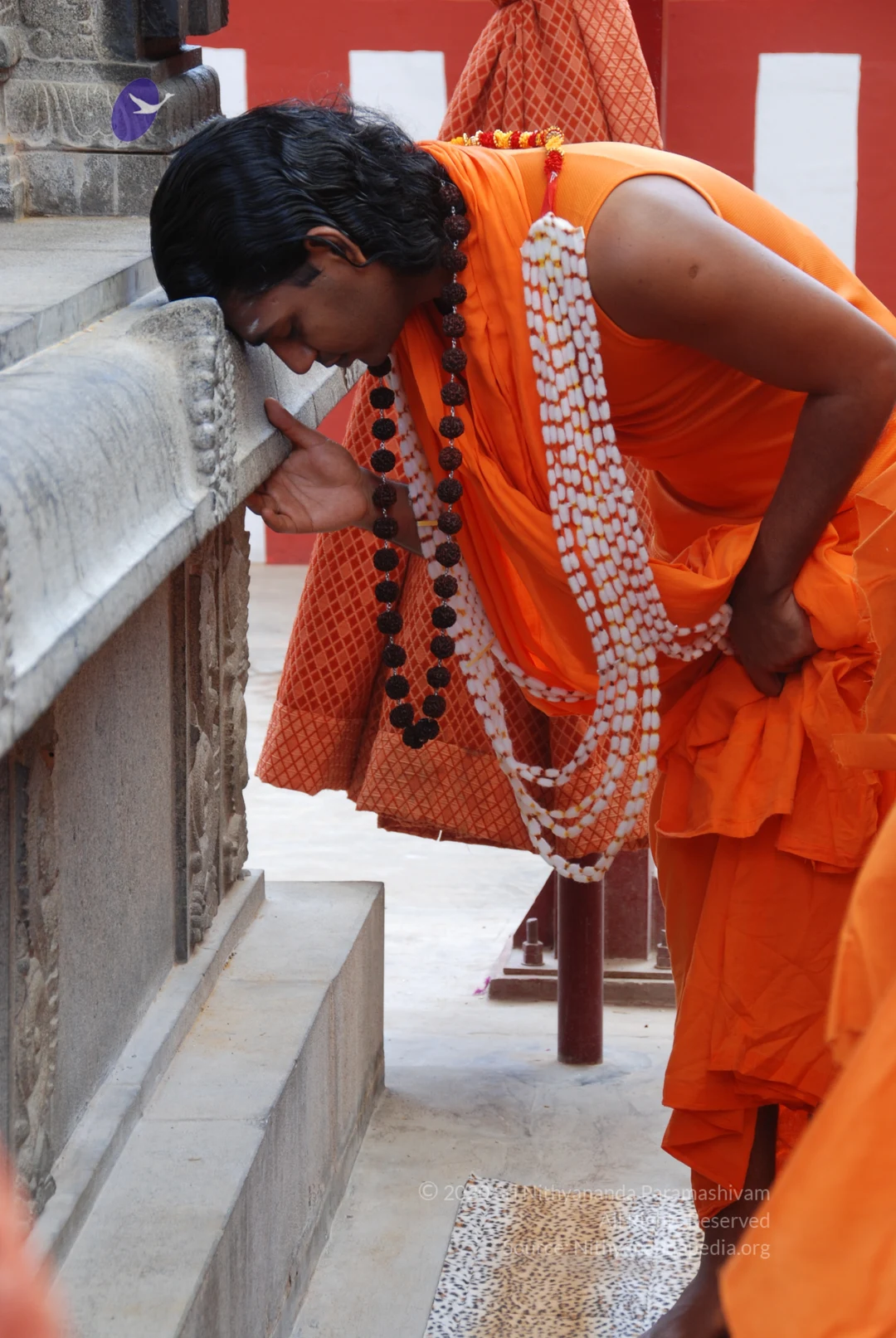
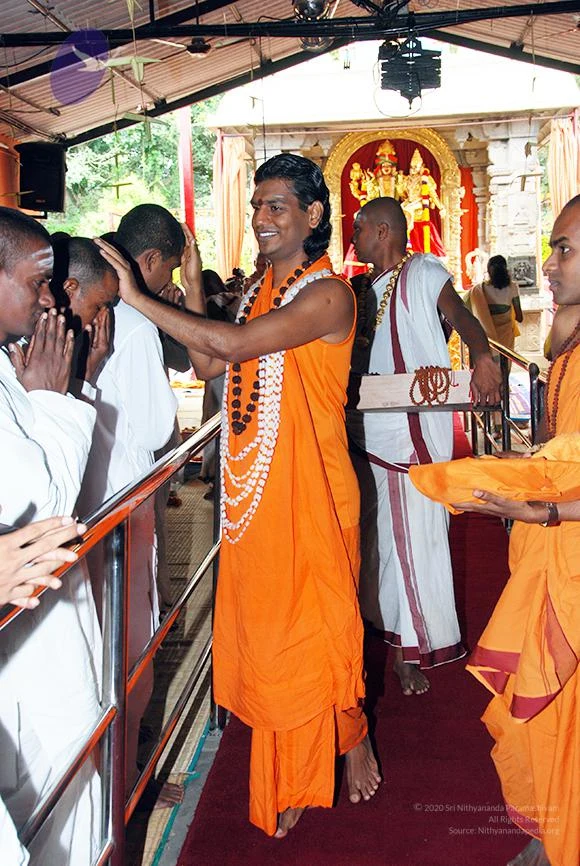
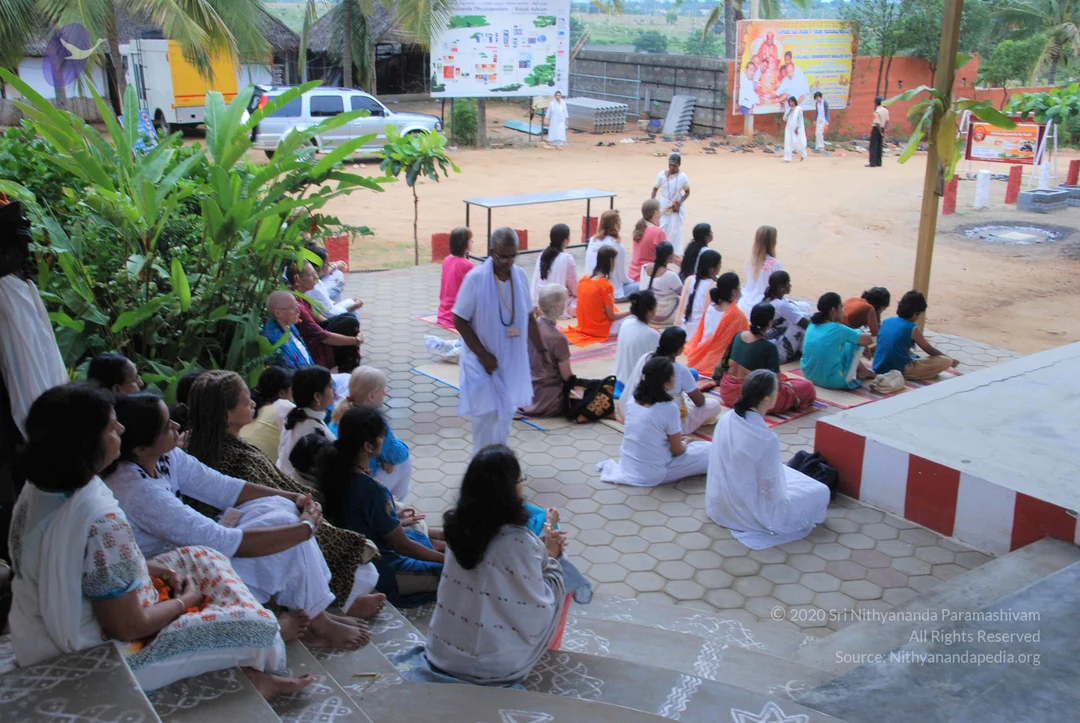
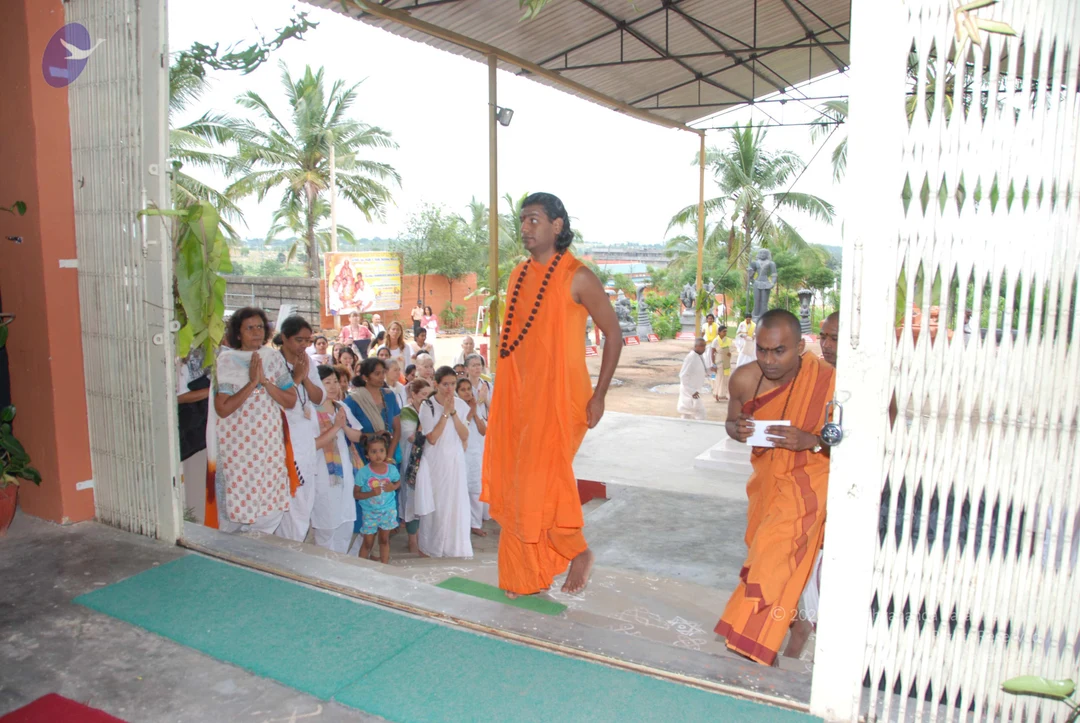
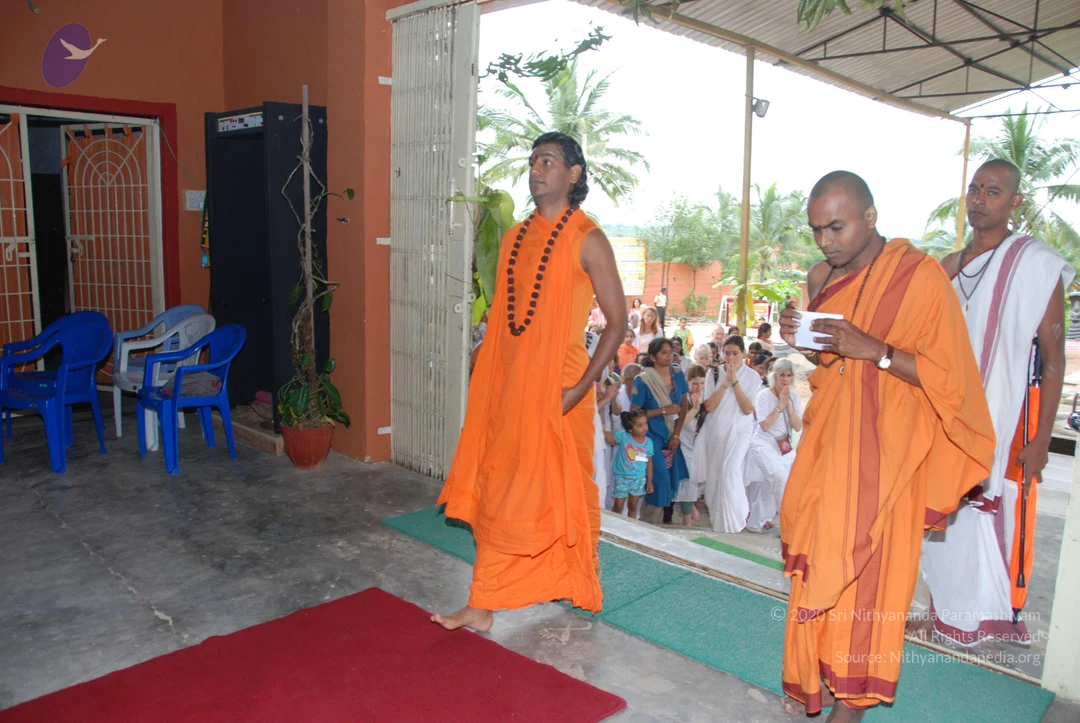
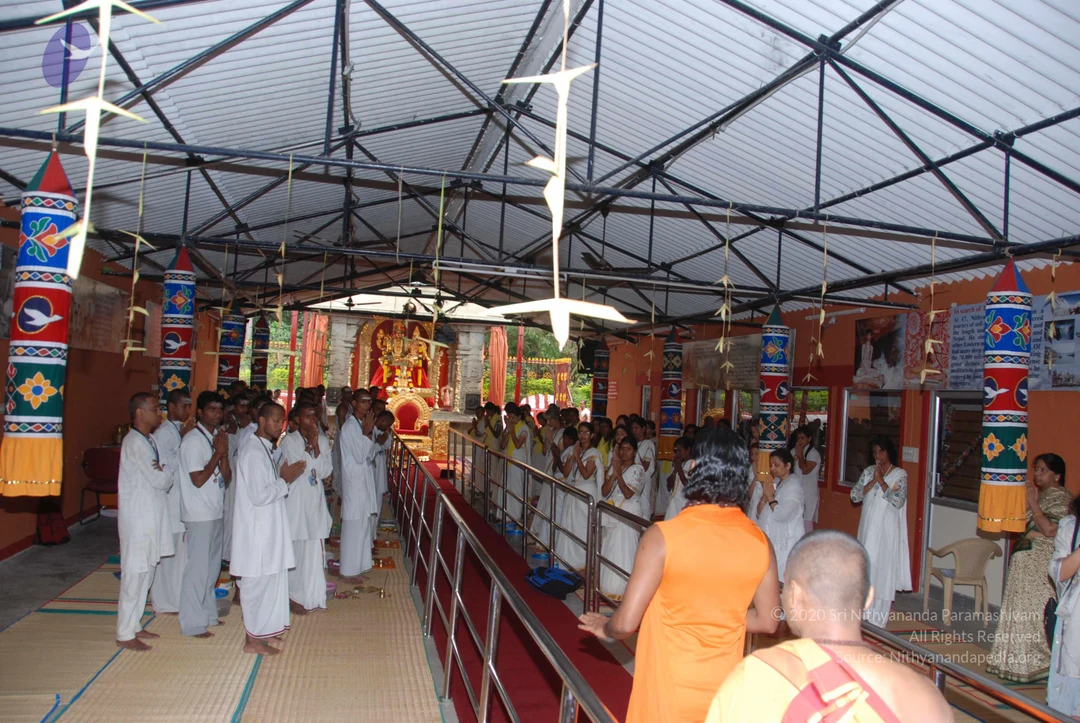
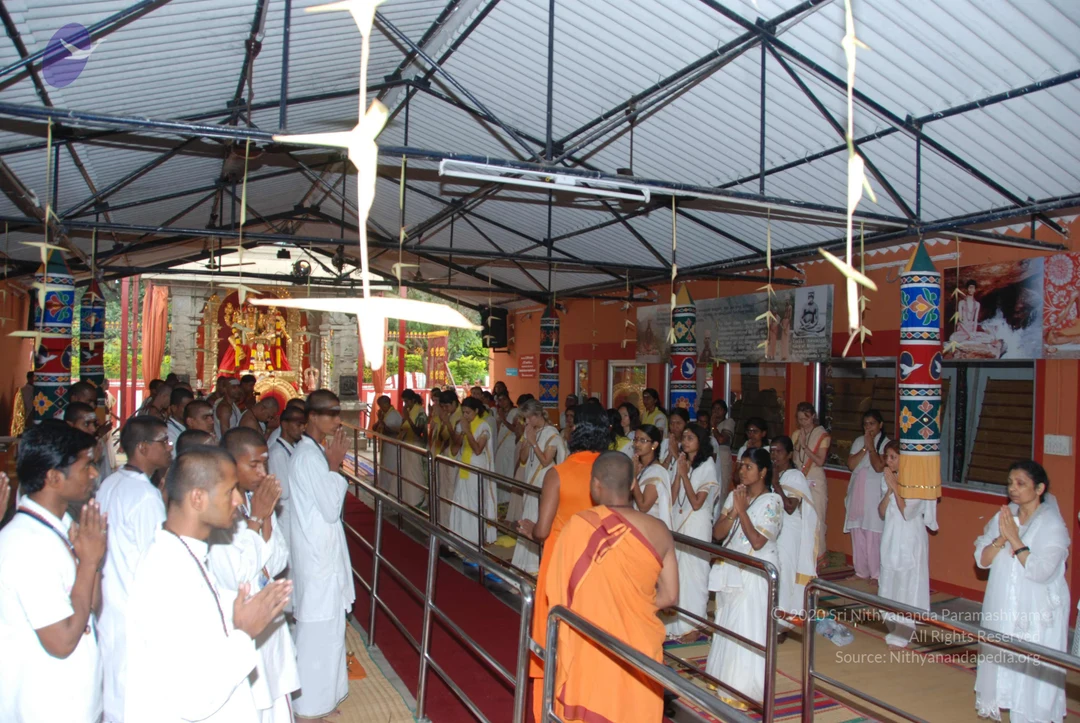
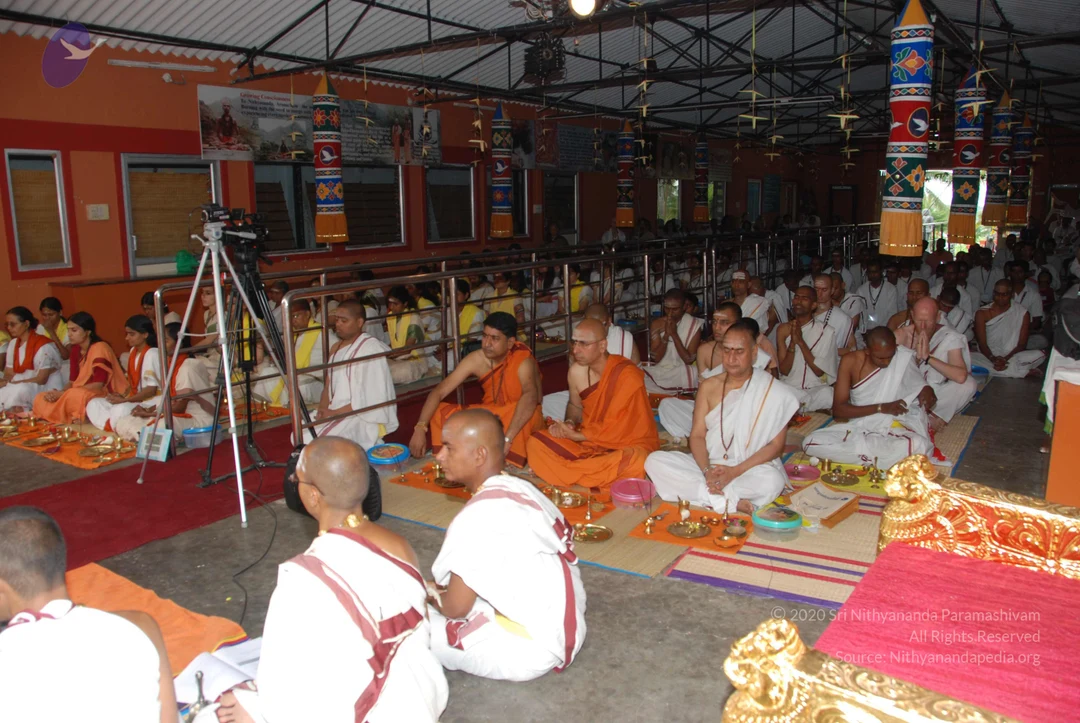
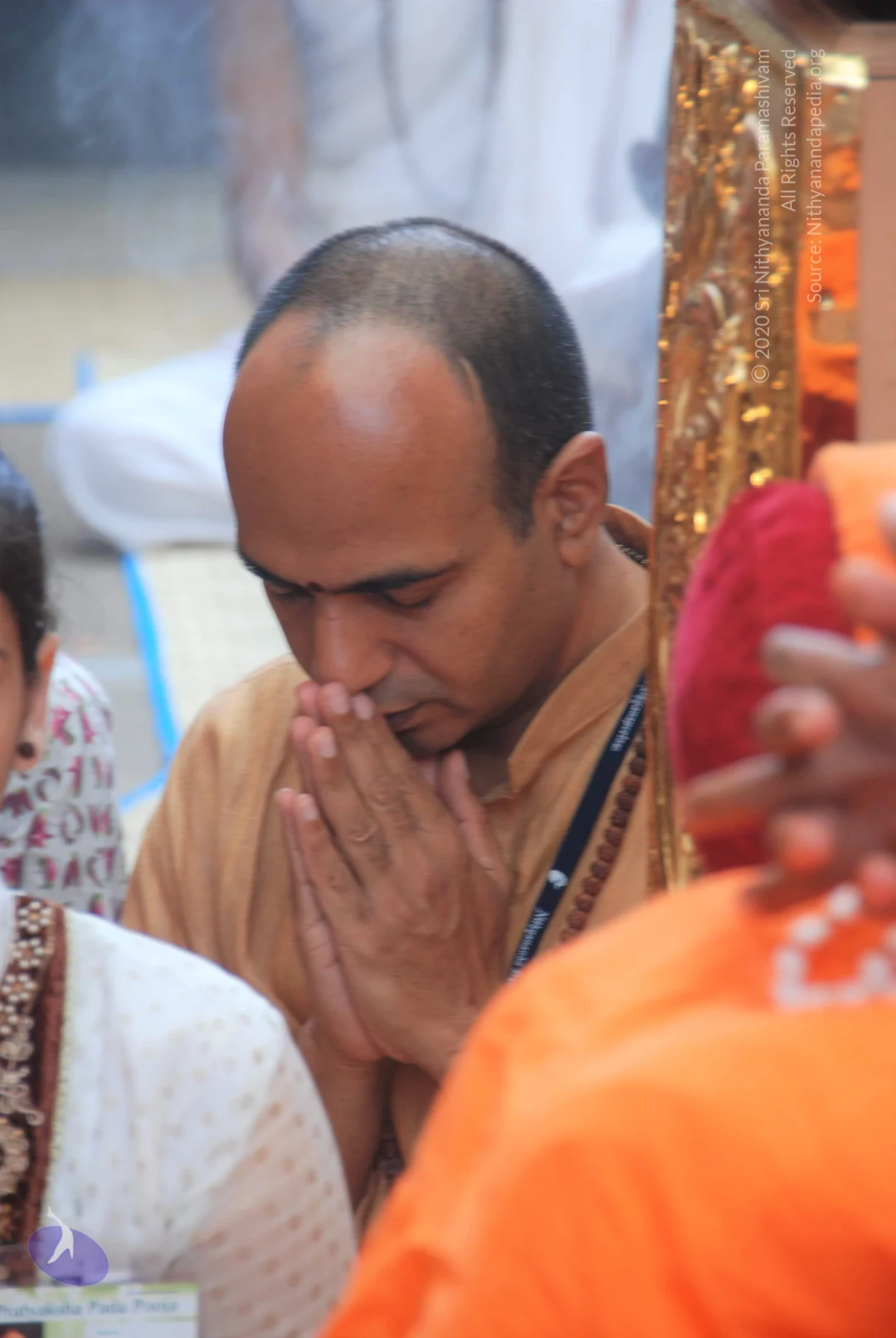
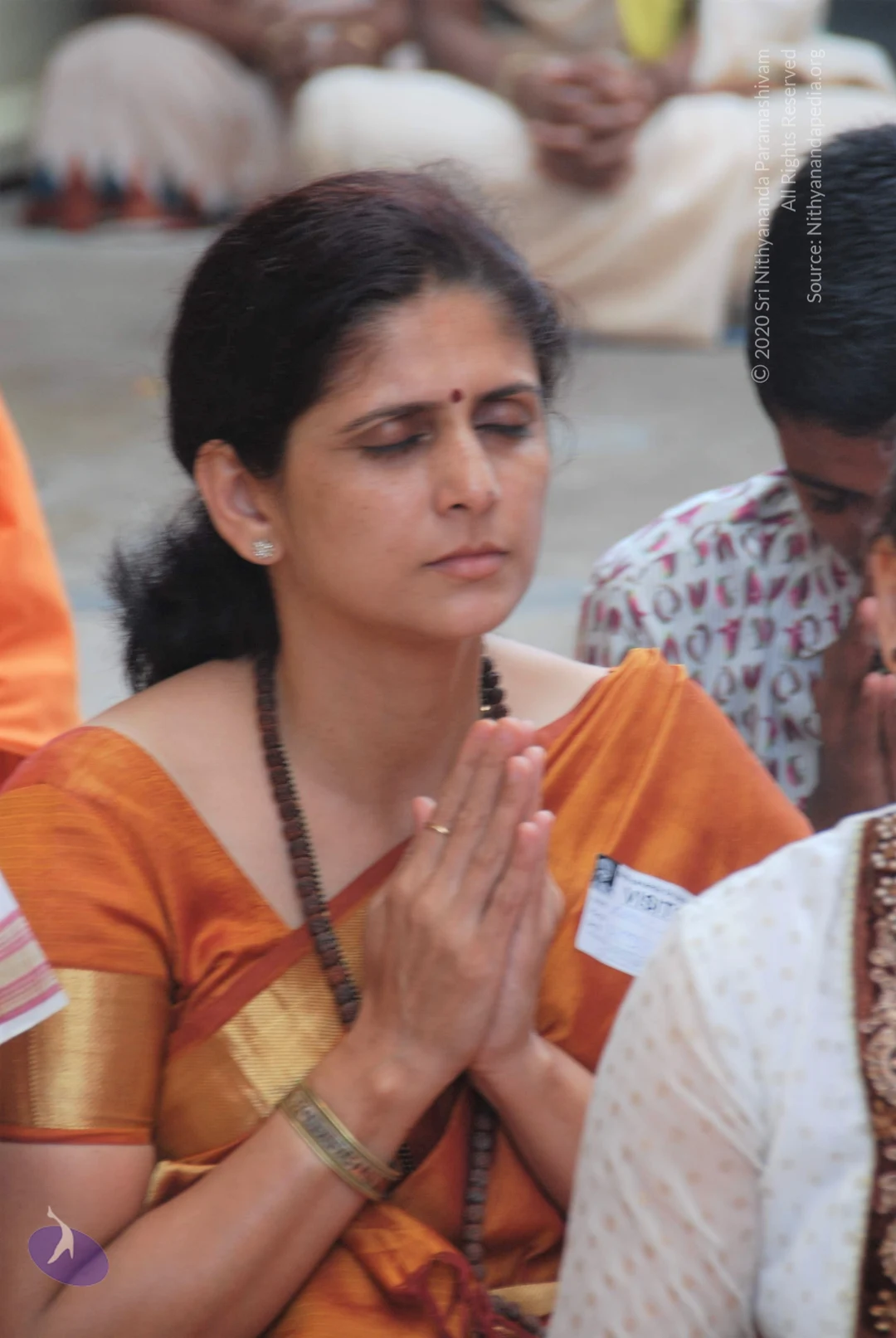
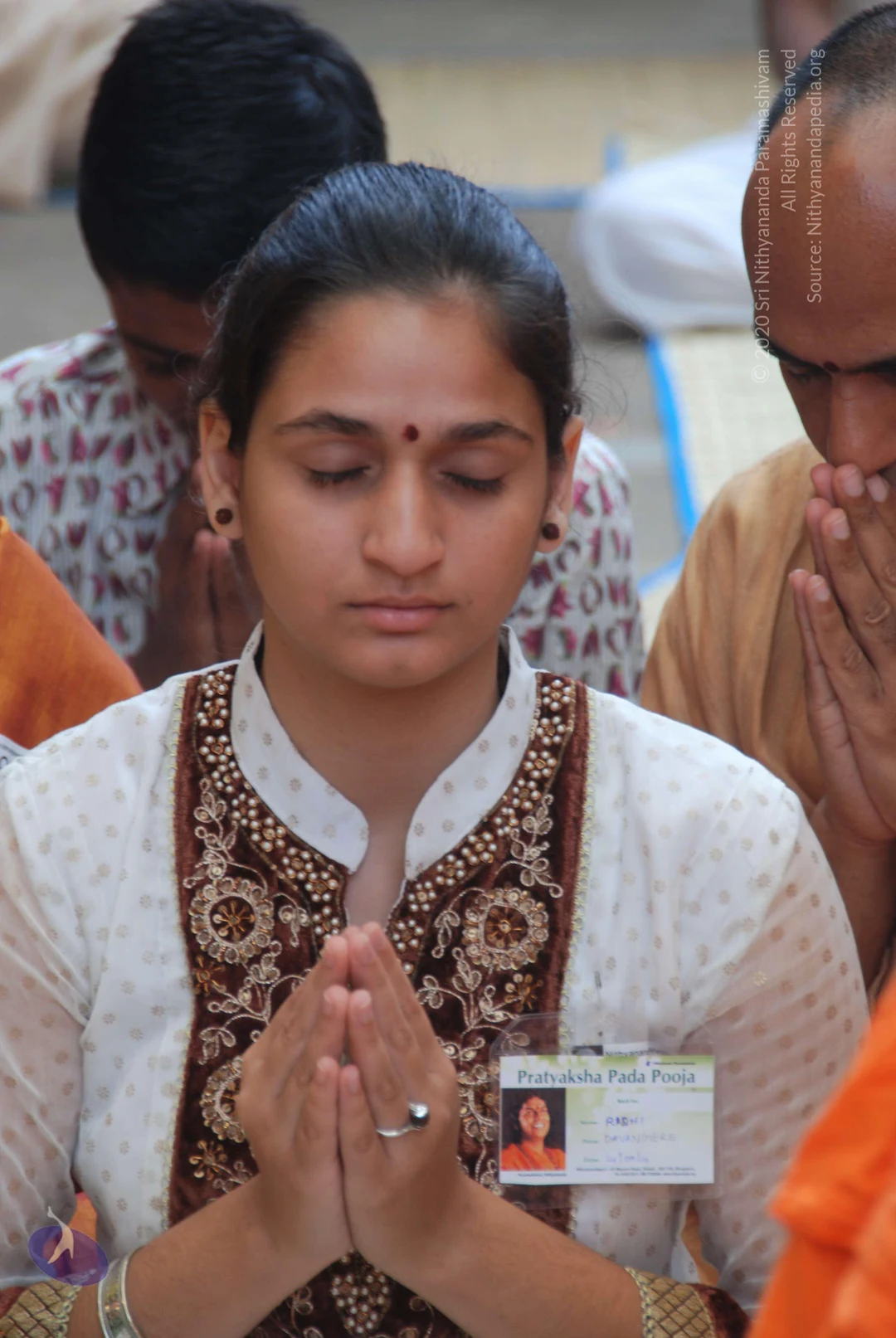
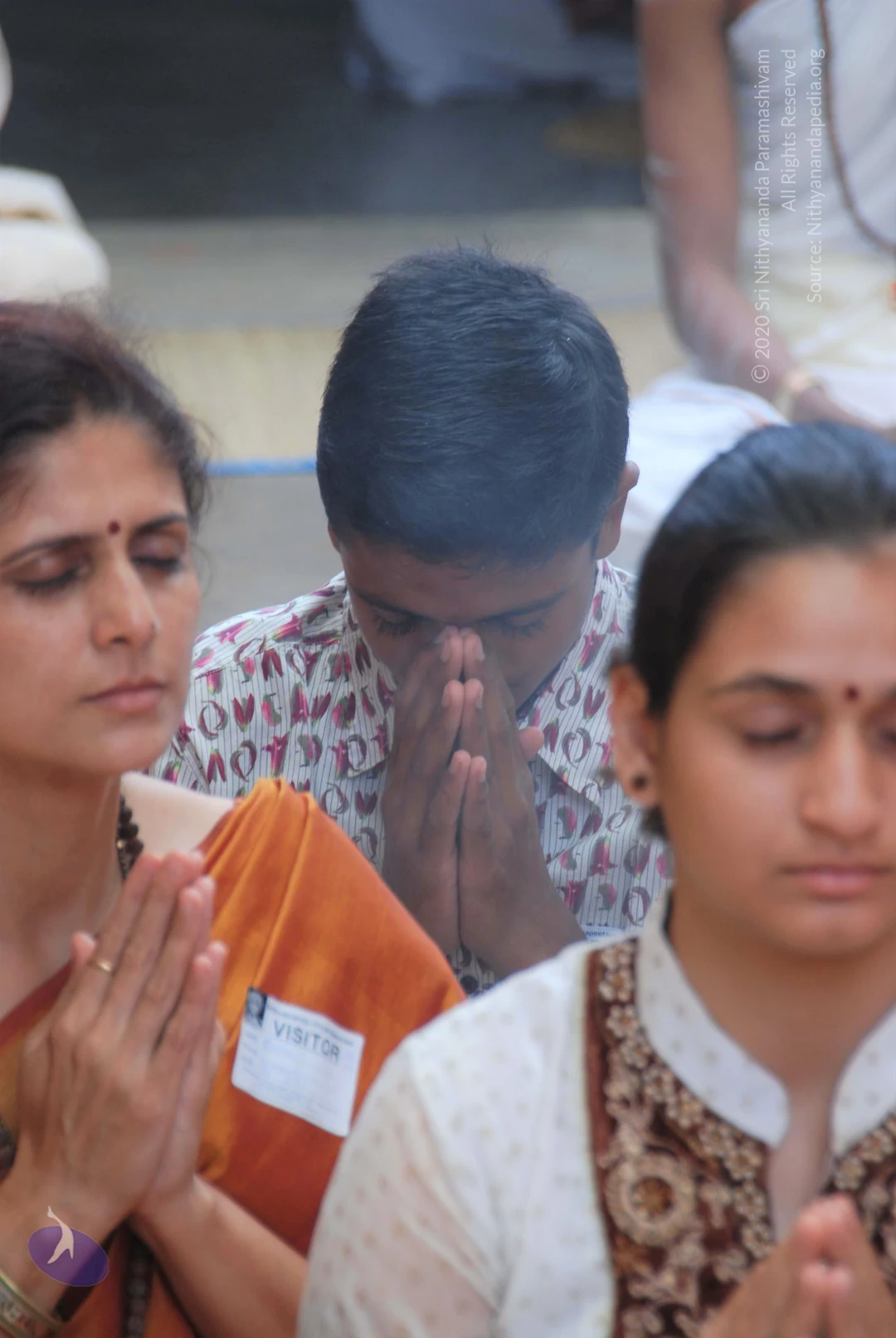
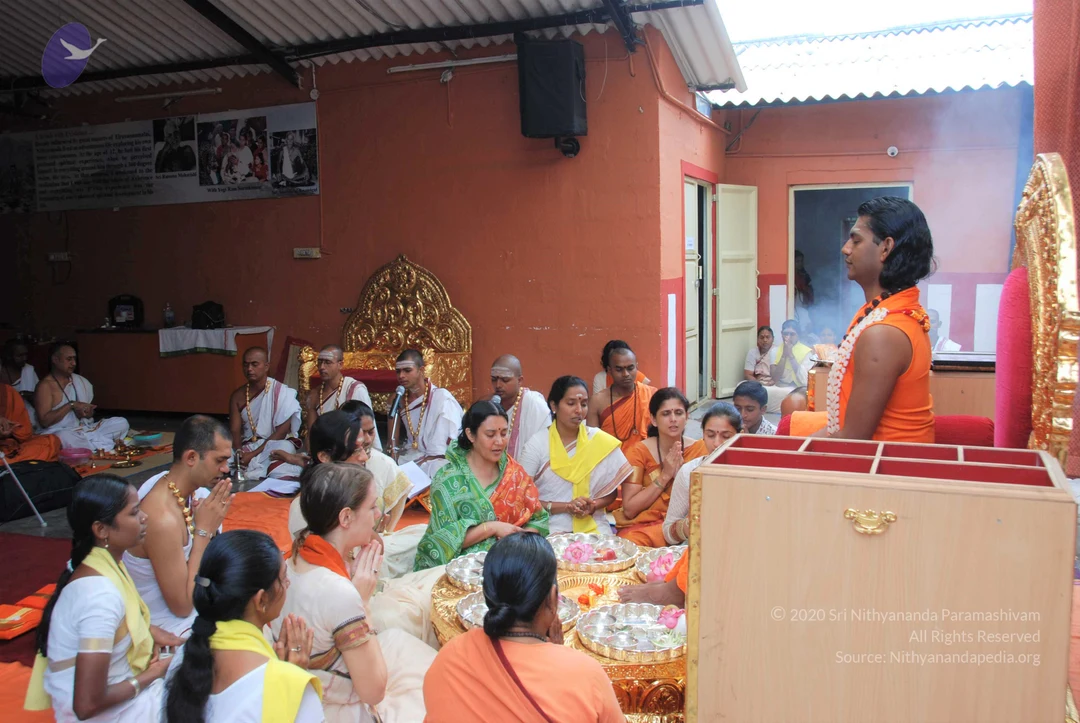
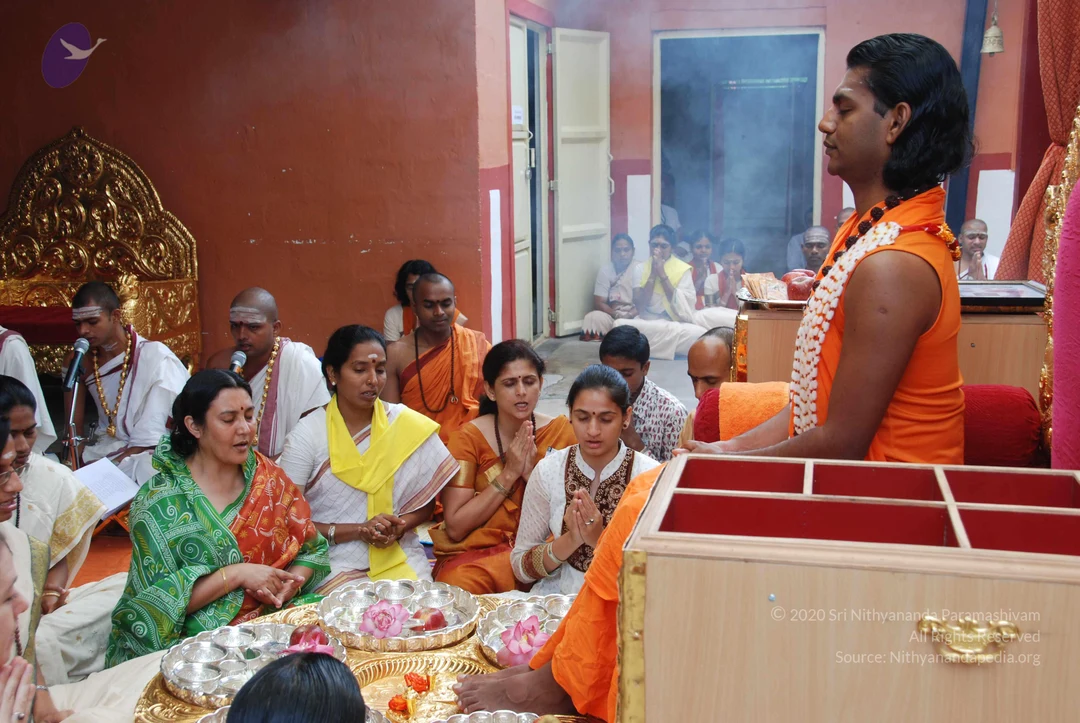
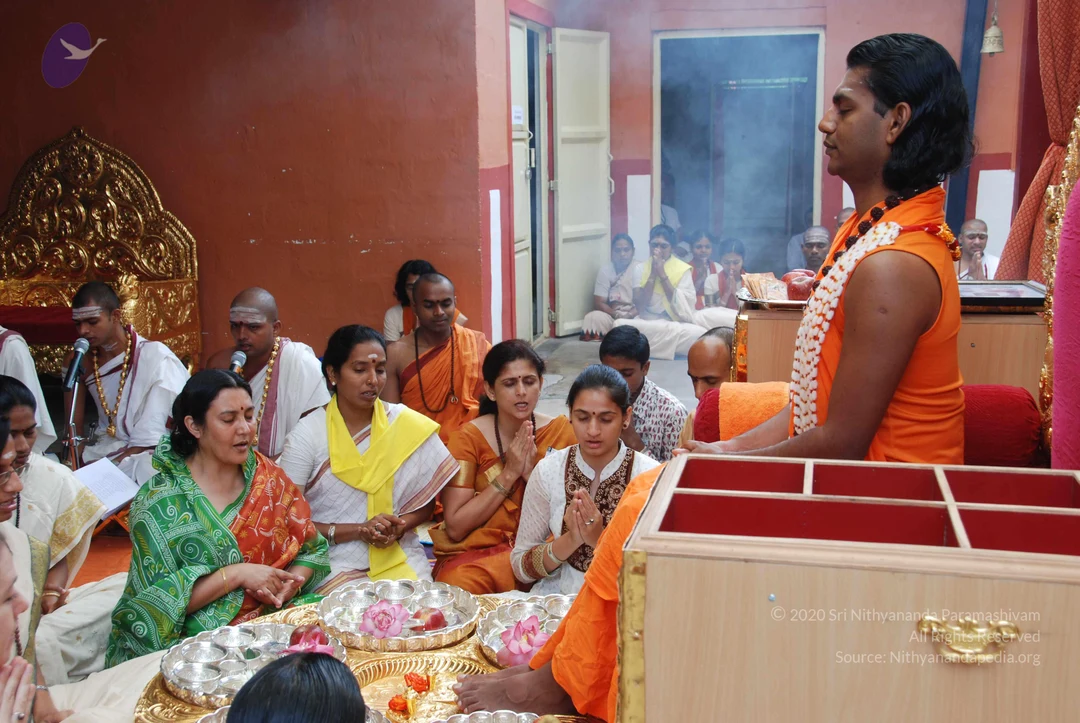
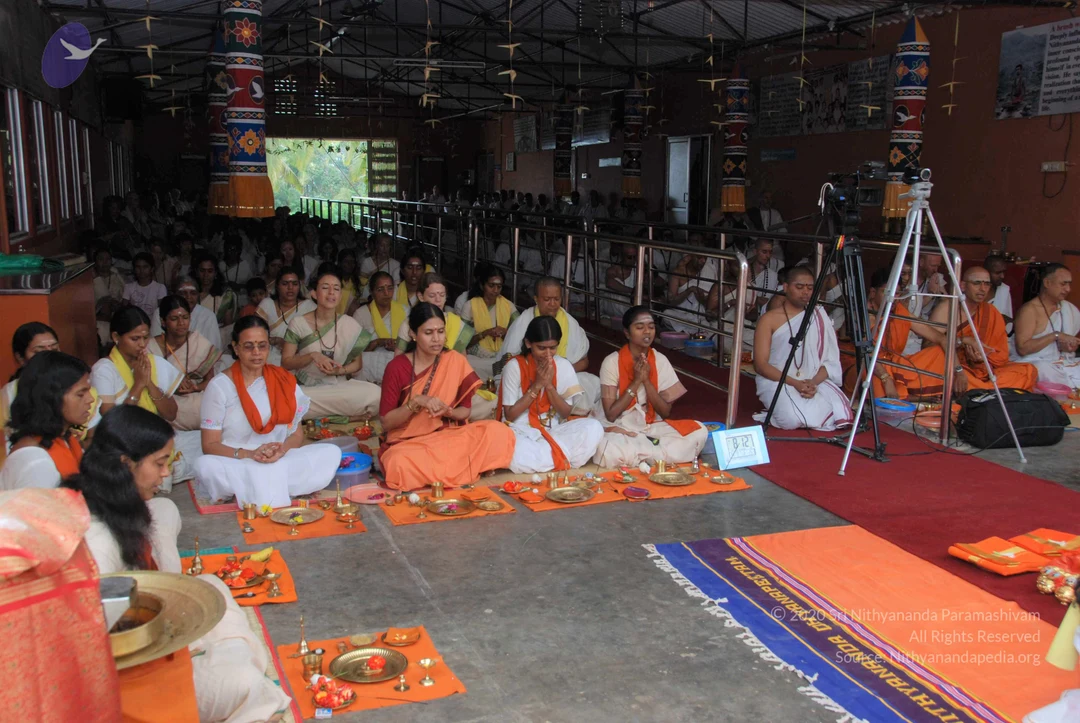
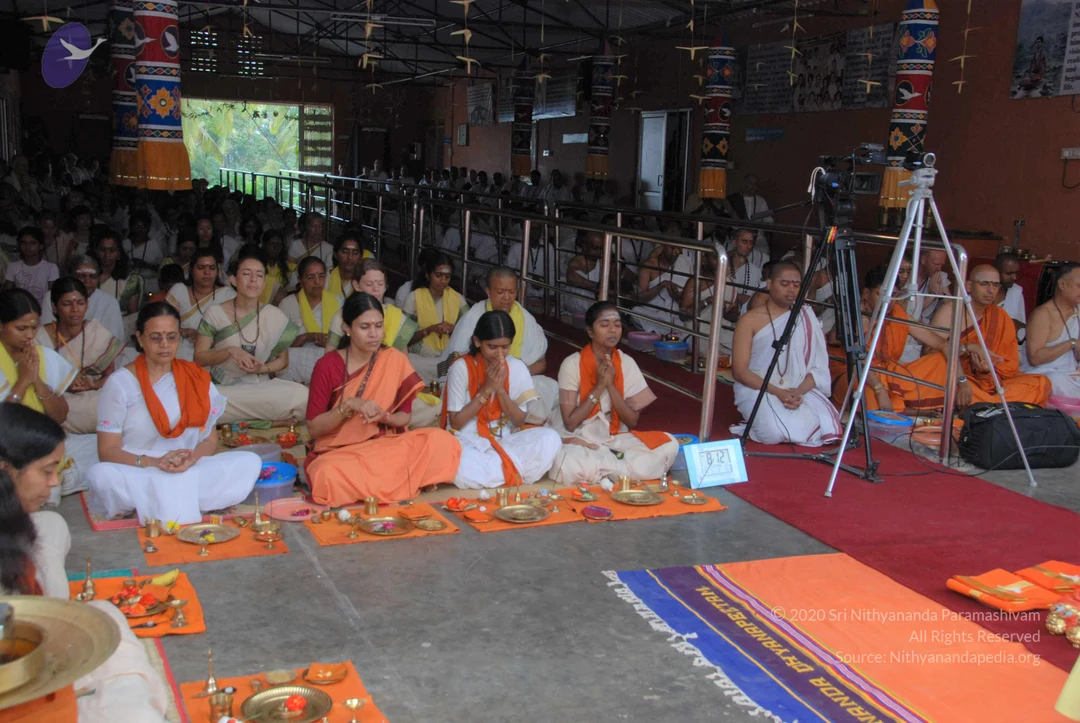
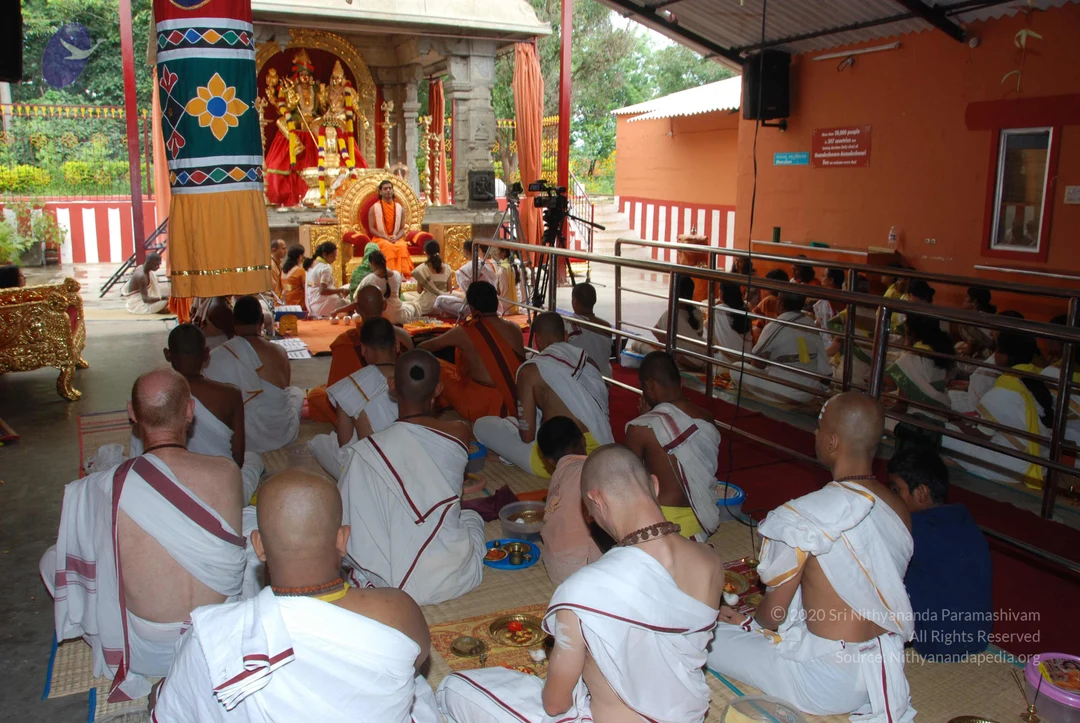
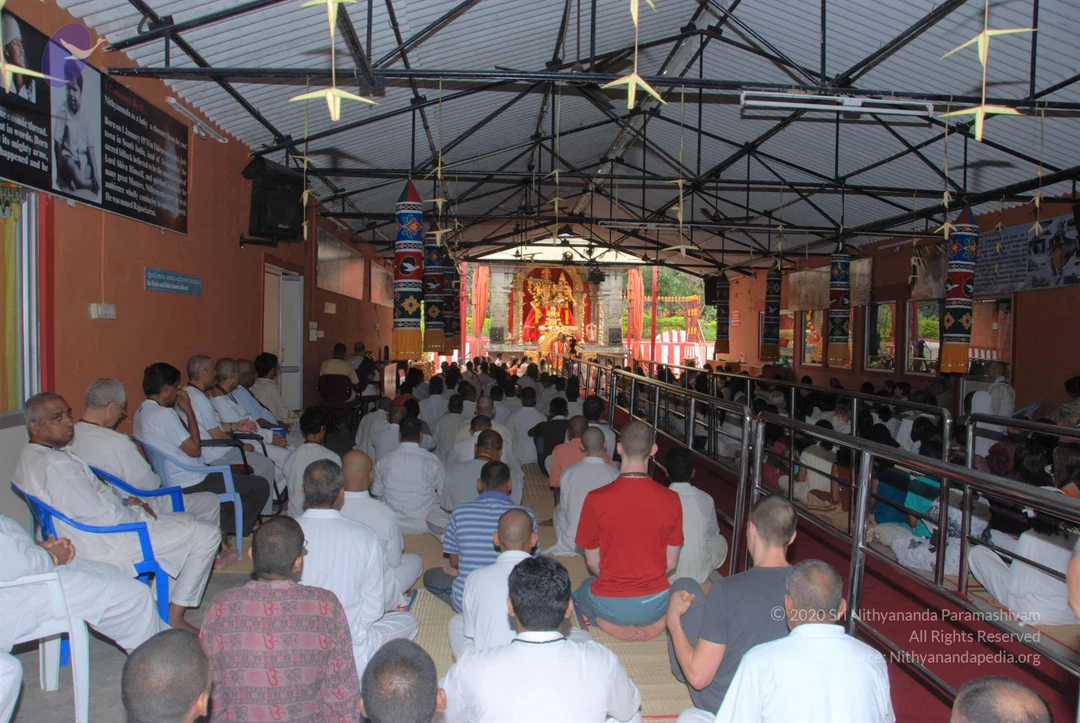
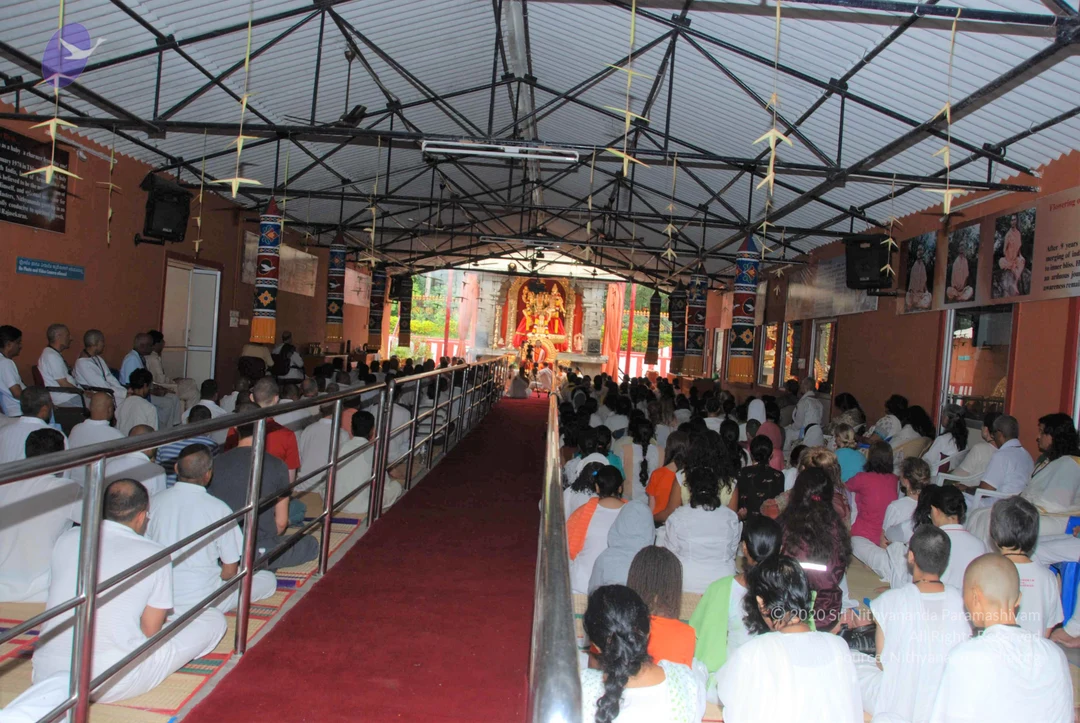
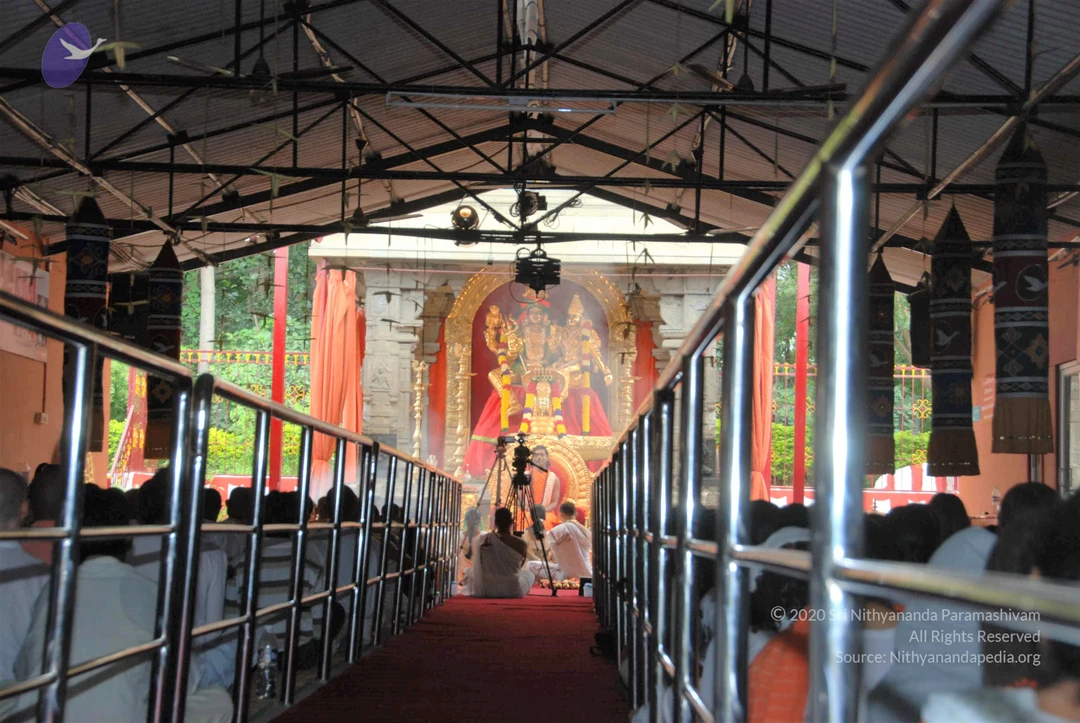
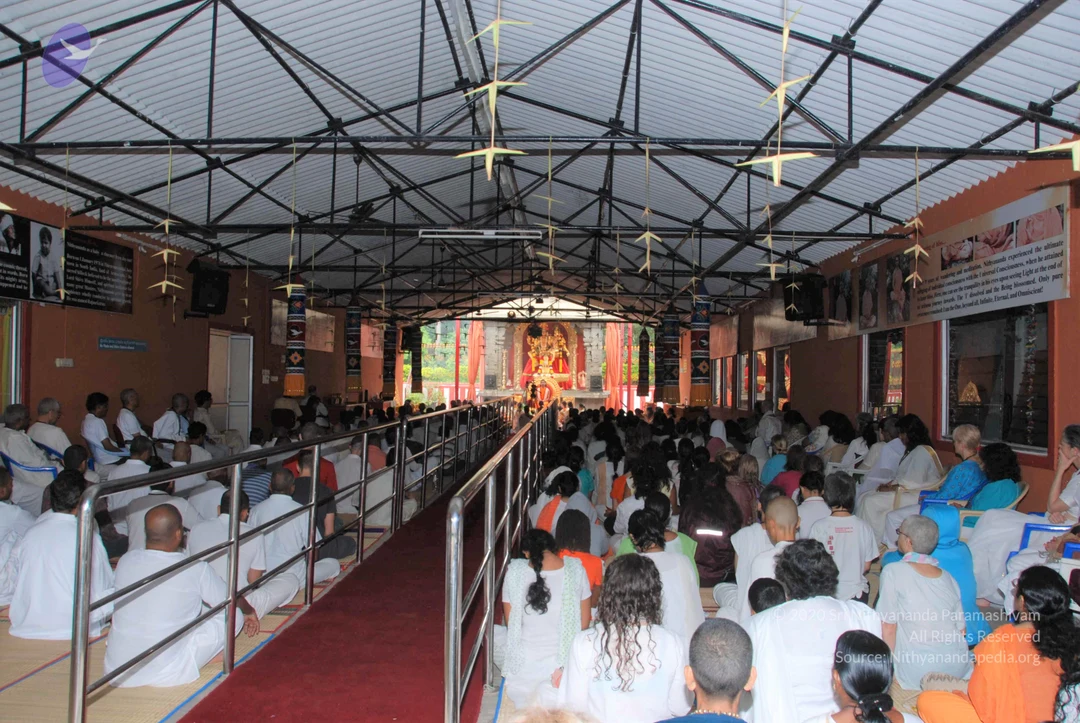
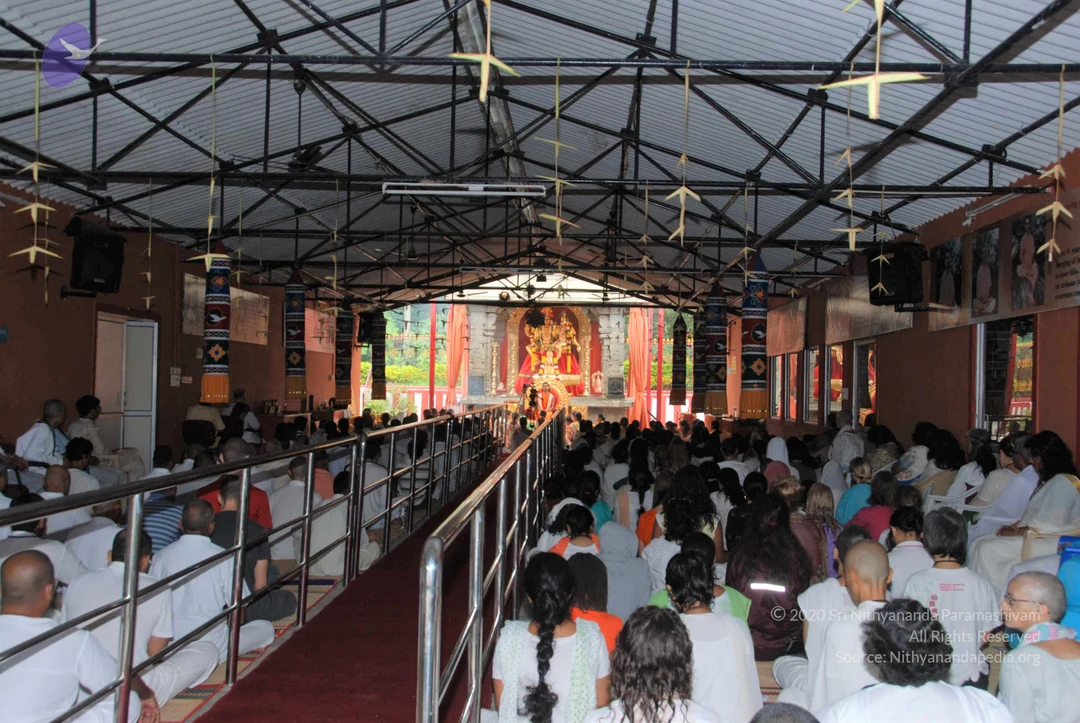
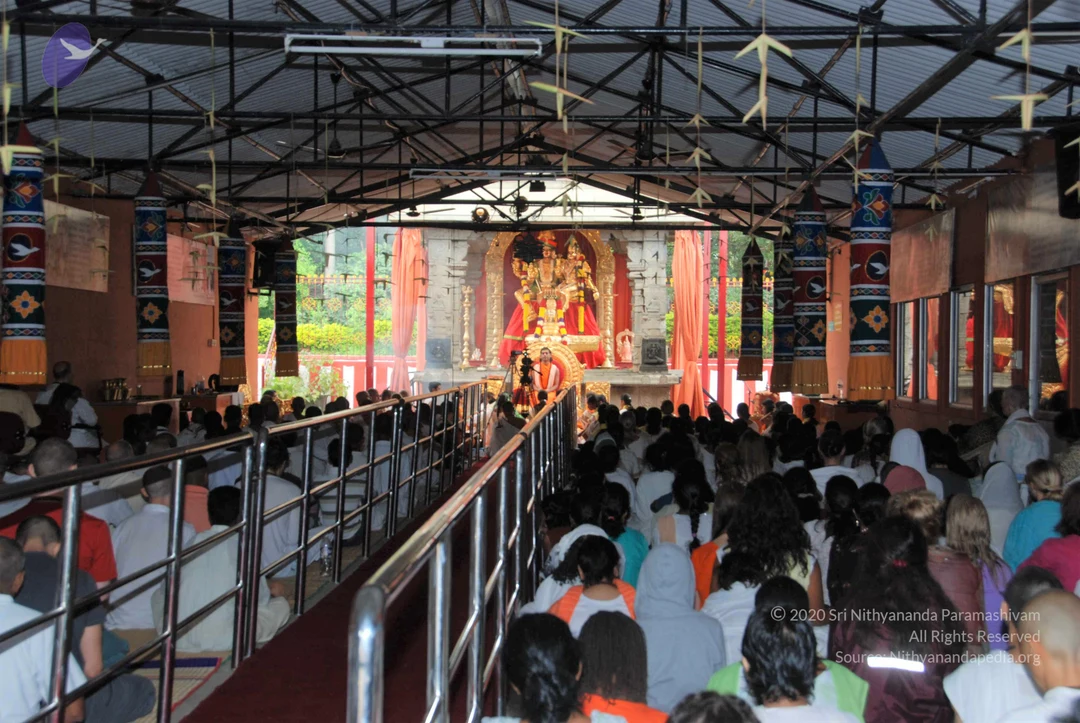
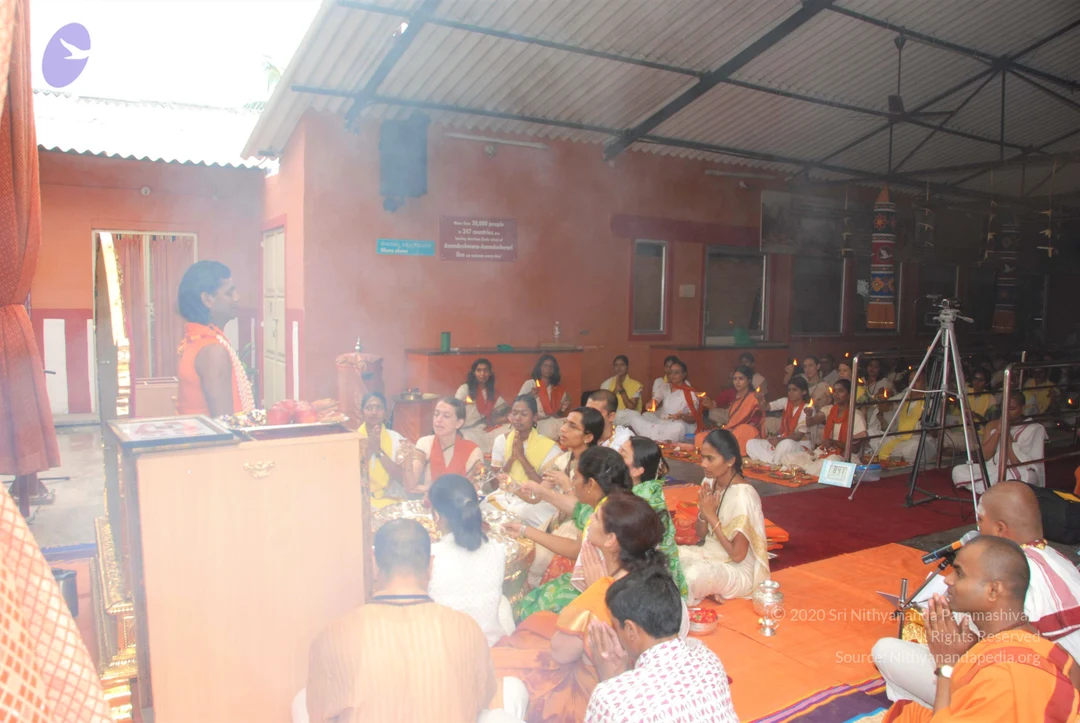
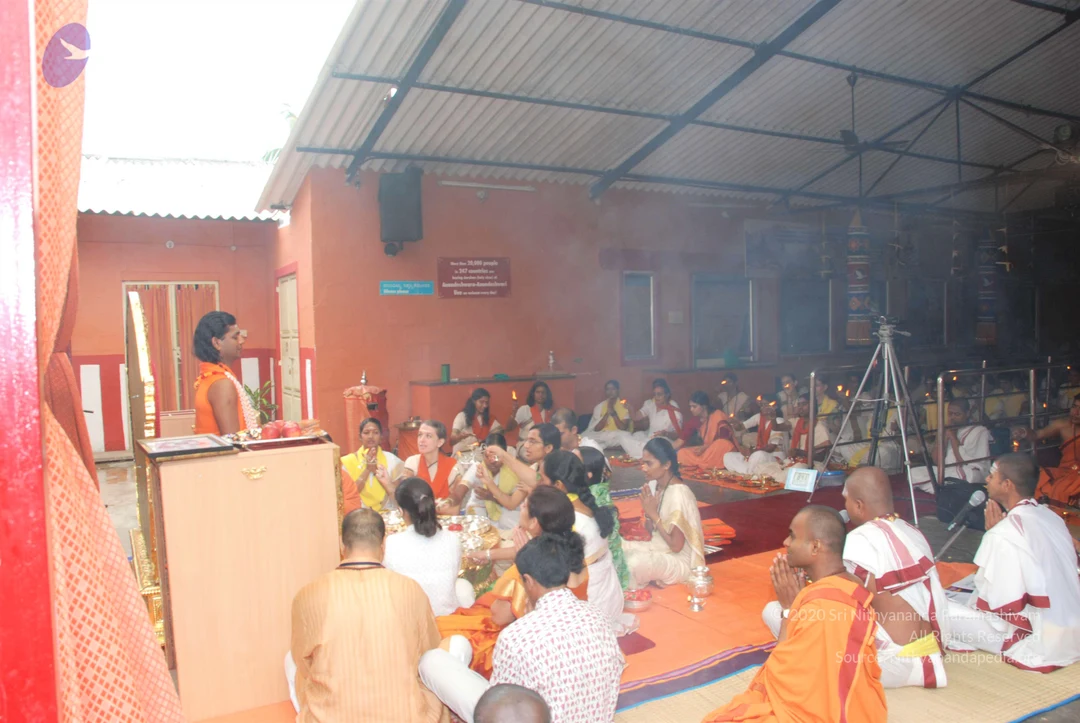
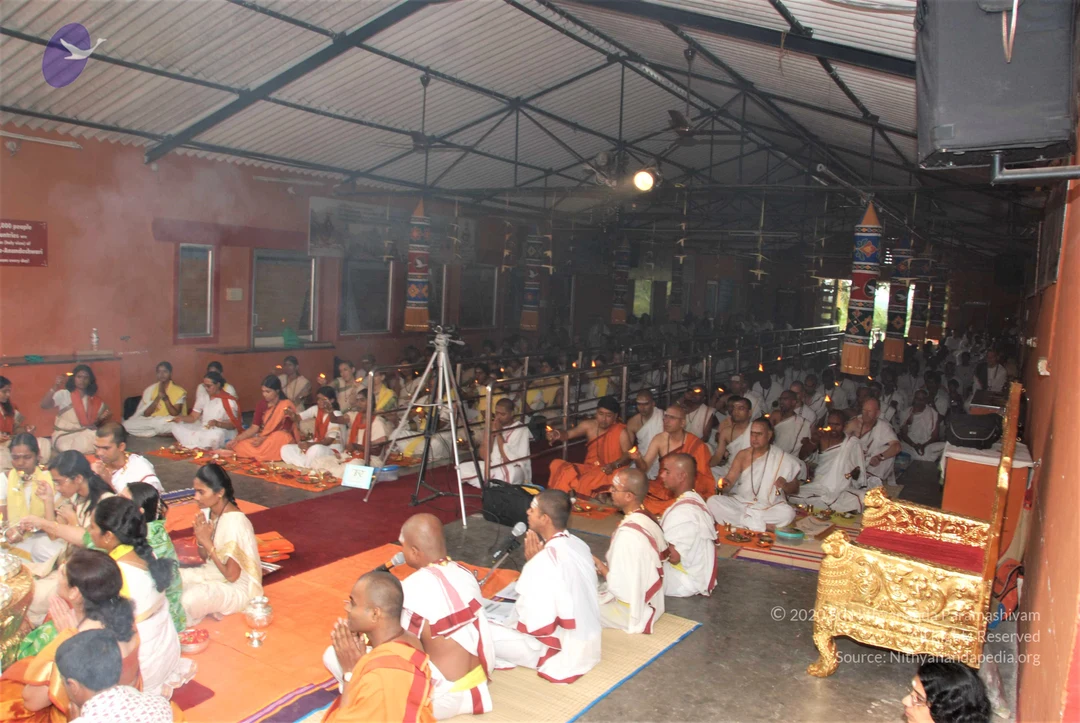
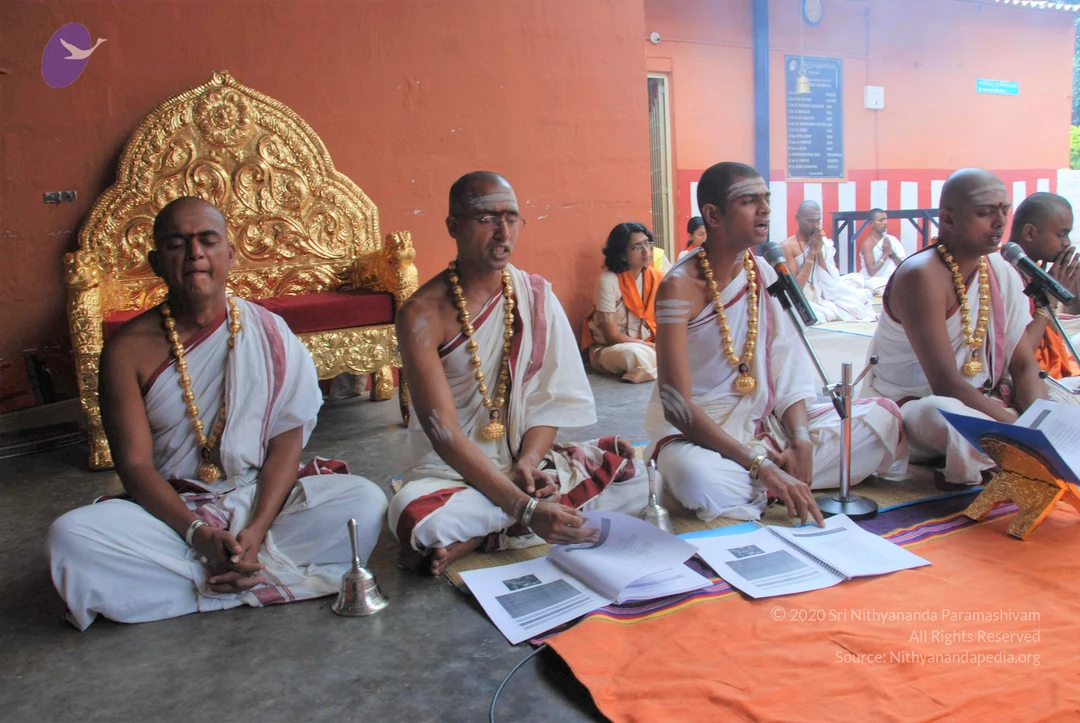
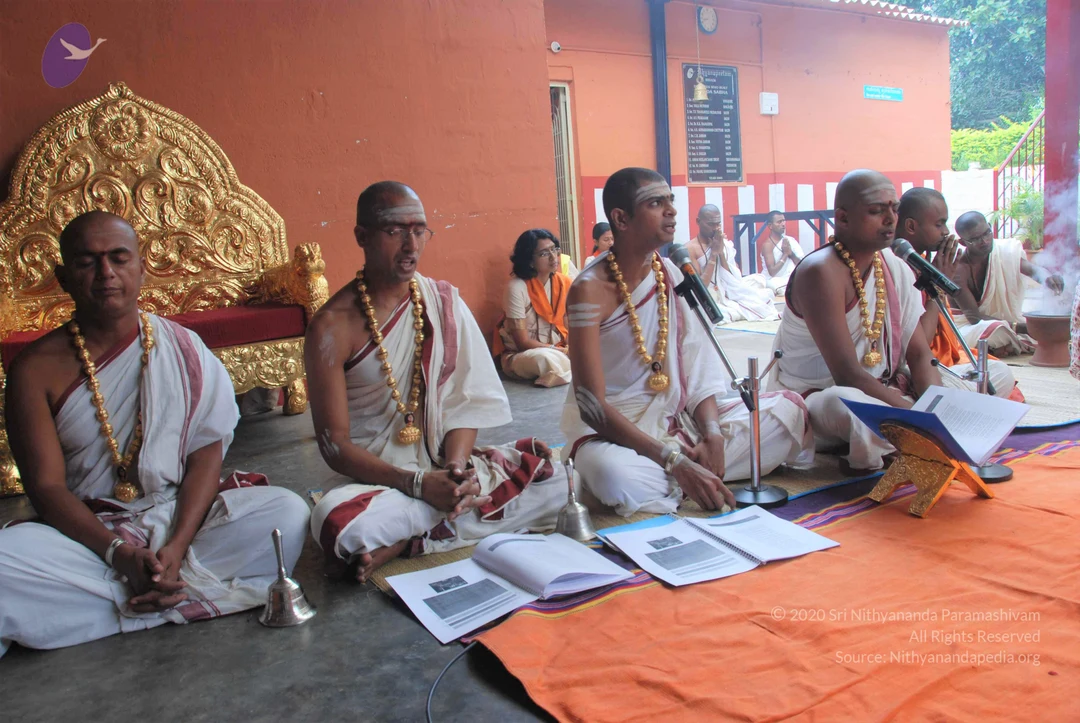
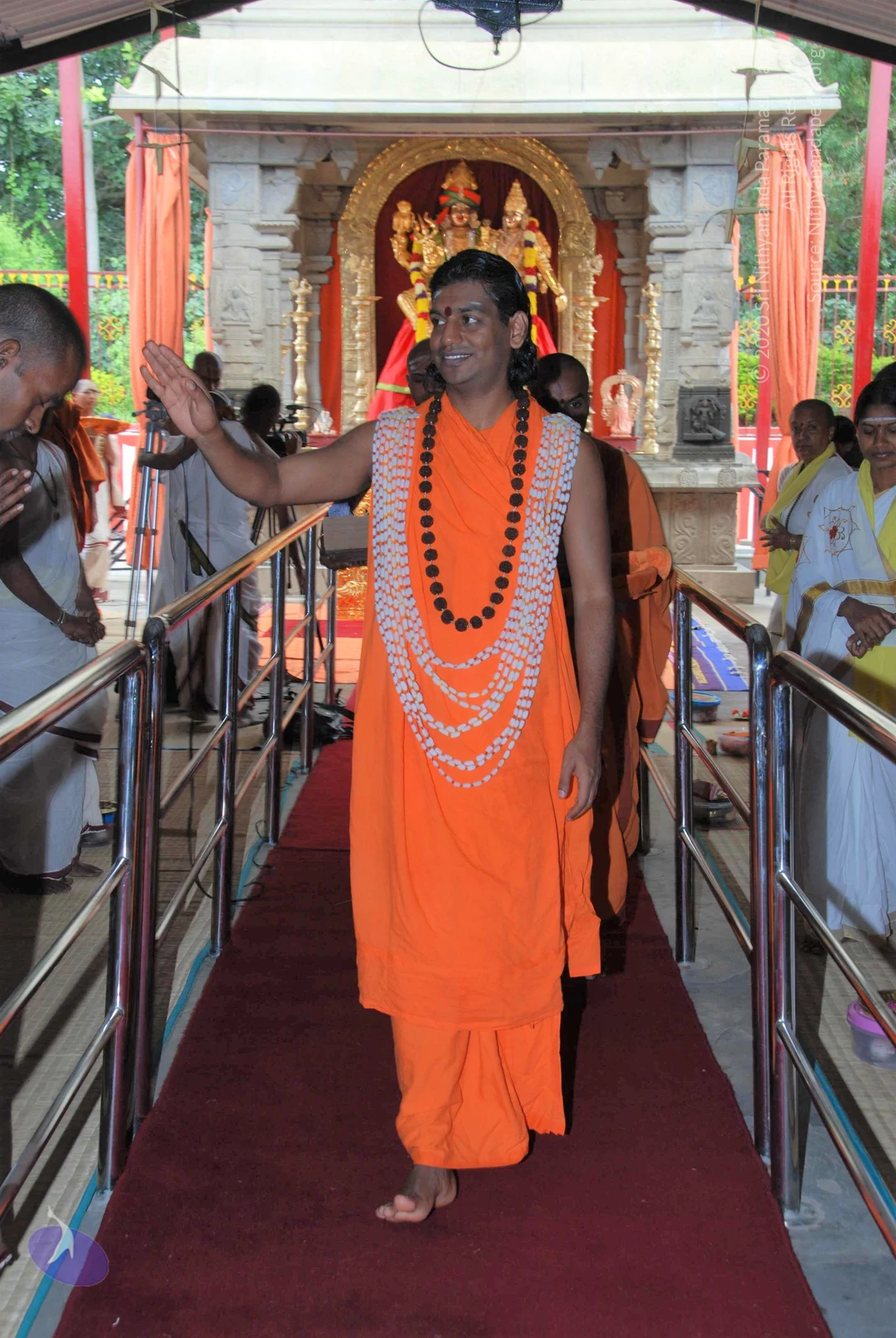
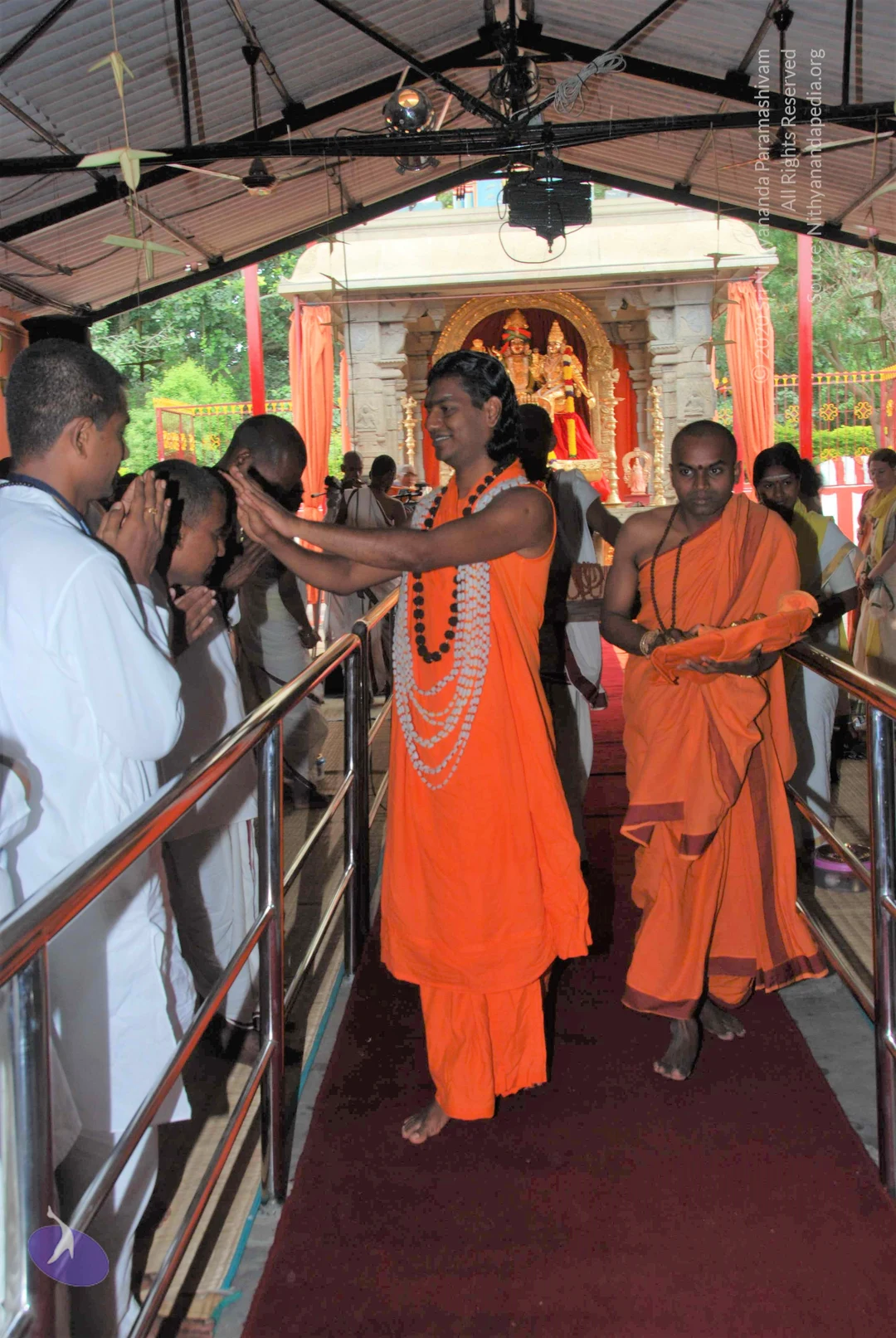
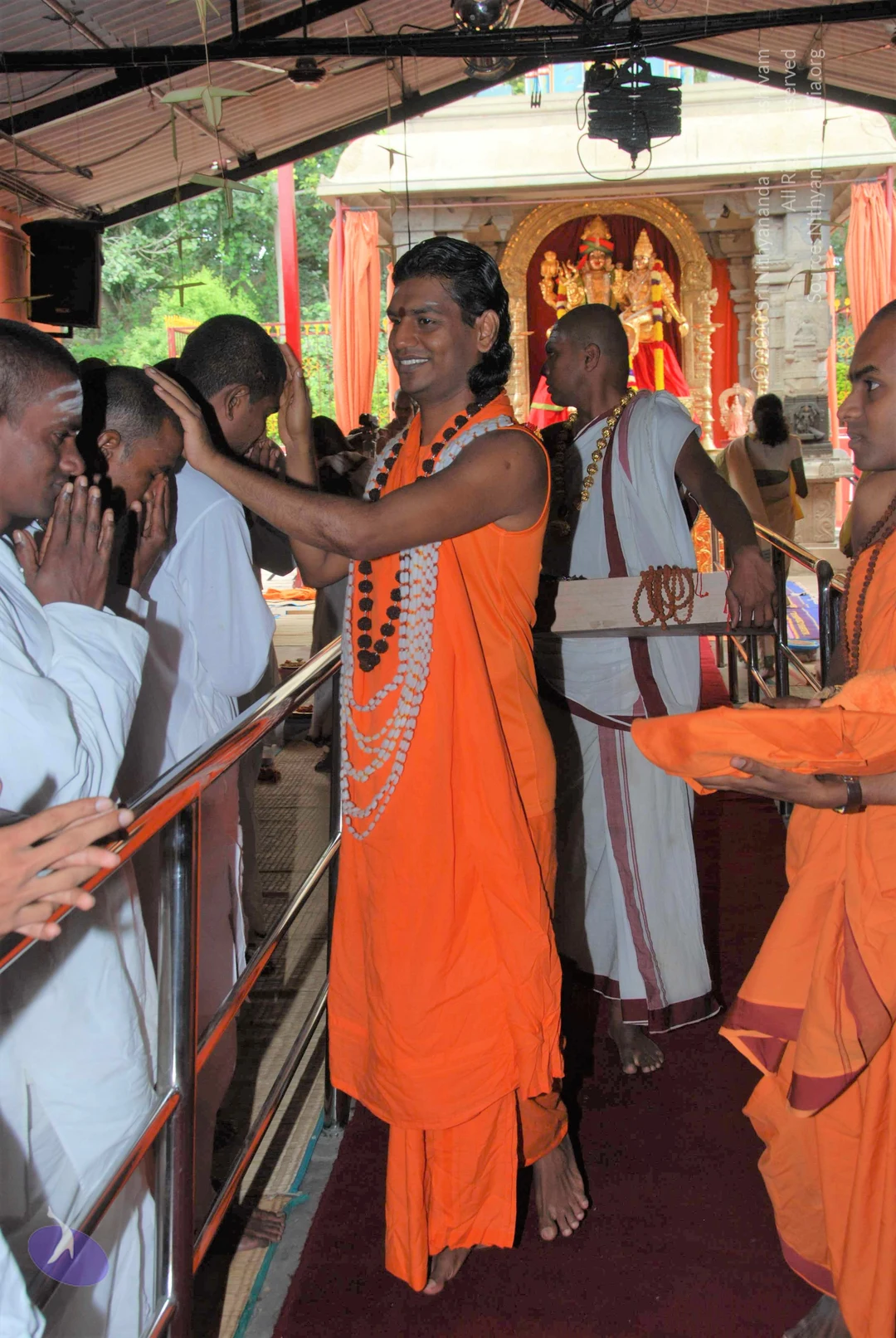
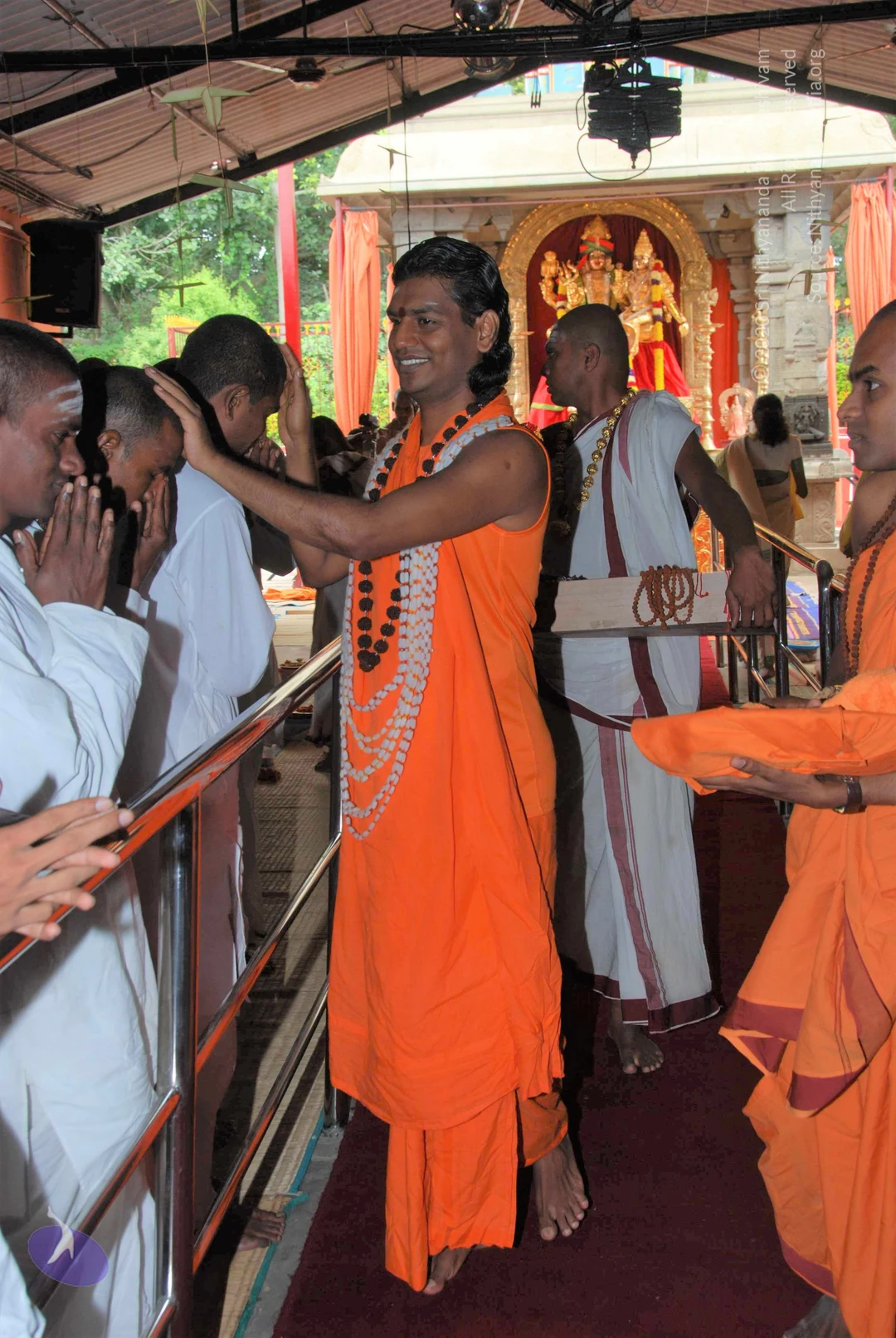
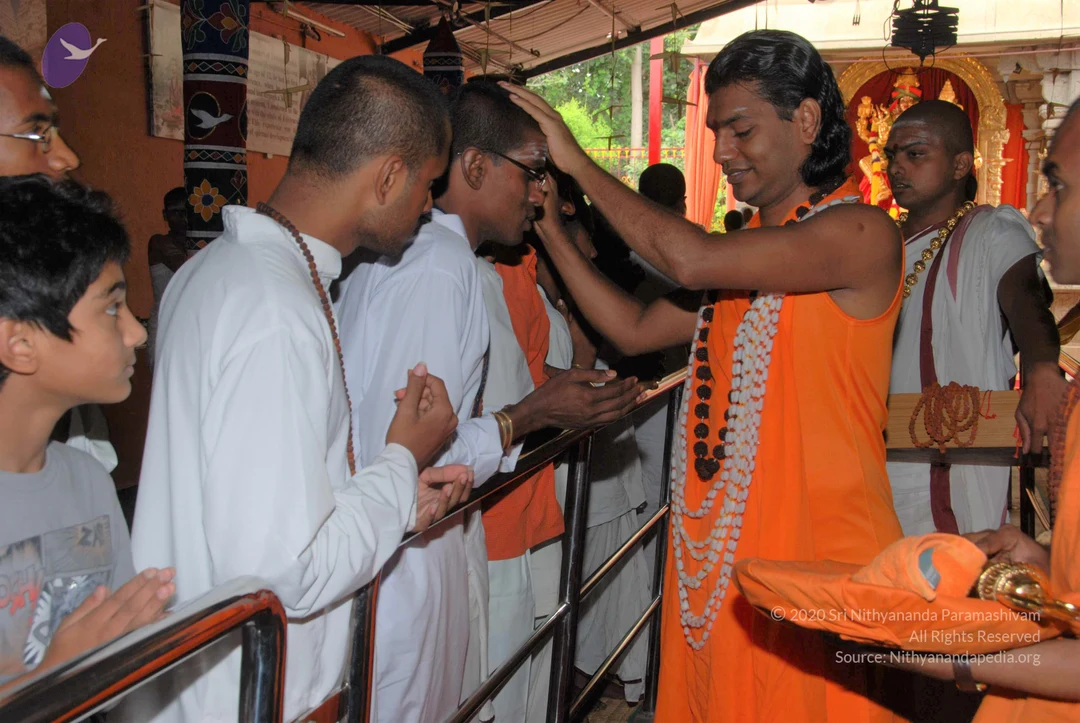
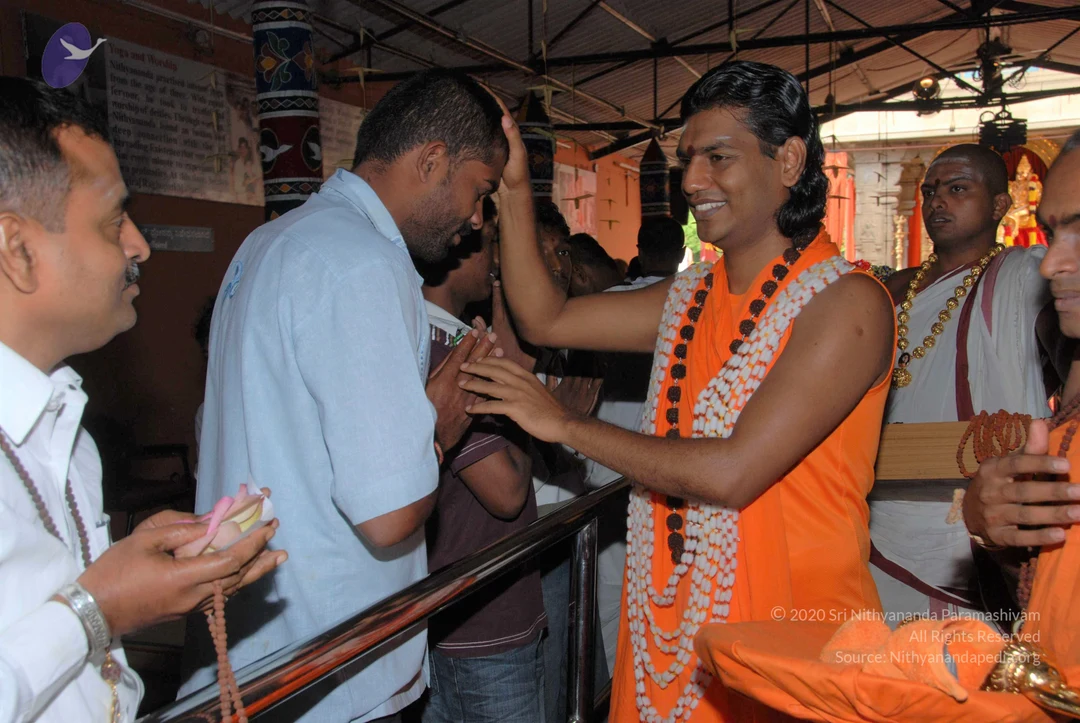
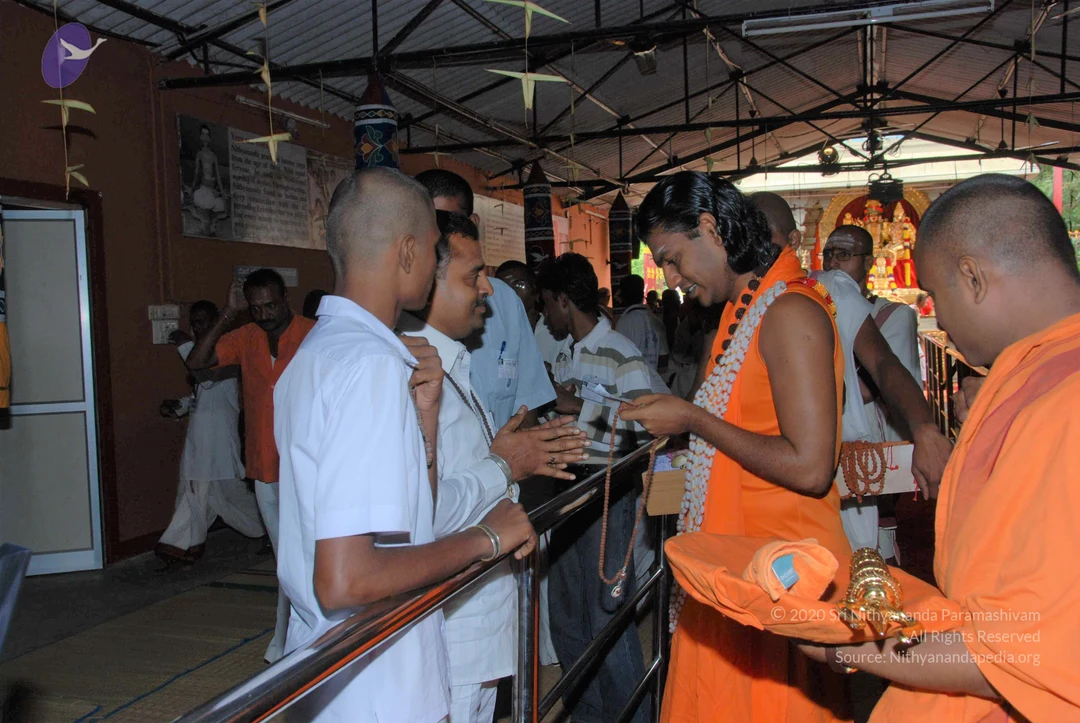
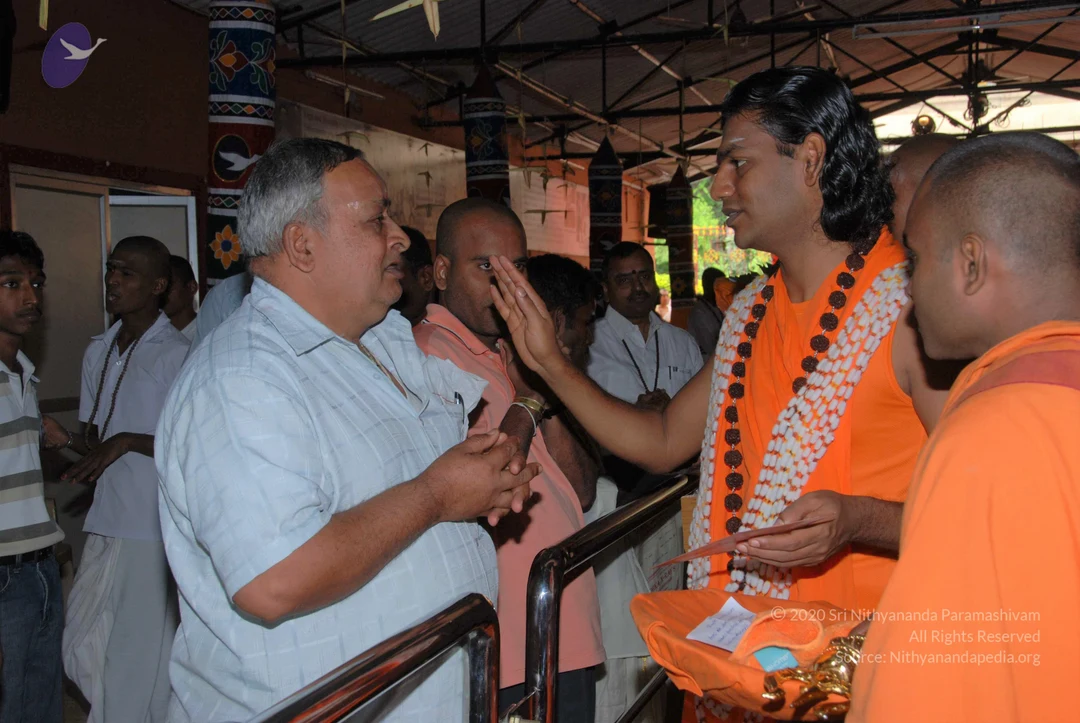
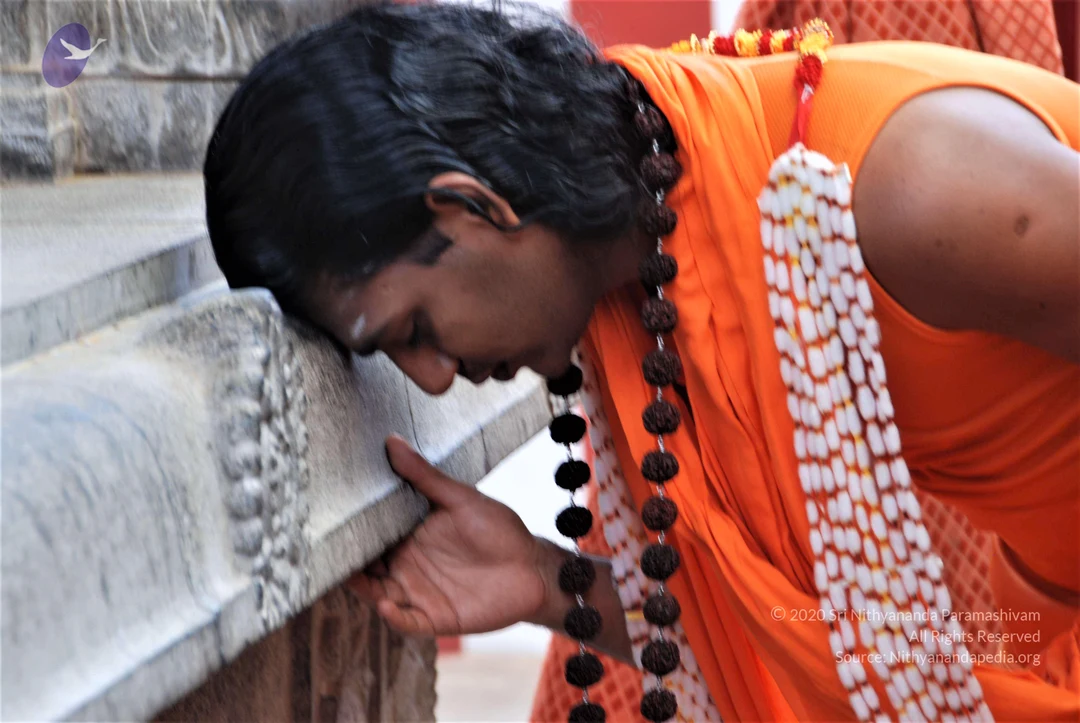
A photograph taken at an open-sided ashram entrance under a corrugated metal roof, with palm trees and a white latticed screen on the right. A tall man with long swept-back dark hair, bare-armed, wears a saffron-orange wrap and a long rudraksha mala, walking barefoot across a green mat toward the viewer. Beside him a shaved-headed monk in orange robes holds a folded white paper. Behind them a line of women in white and cream saris and salwar-kameez stands with palms pressed together in anjali, one small girl in a turquoise outfit among them. Further back, other white-clad devotees and orange-robed attendants move about a courtyard with stone statues and a red-and-yellow poster of deities on a wall. Swamiji (probable) is the tall man with long hair, saffron wrap and rudraksha mala, shown in person; this is a pada puja-style reception with devotees offering reverence.A photograph of a courtyard entrance at an ashram-style building with orange walls, a tin roof, palm trees and a red-and-green mat on the ground. In the foreground, a barefoot man with long swept-back hair and a rudraksha mala wears a sleeveless saffron-orange robe and walks forward. Beside him, a shaved-headed man in orange robes with a maroon border holds a small white card or paper while glancing down. At the right, a man in a white dhoti and shawl with a sacred thread stands holding an orange-handled item. Behind them, a crowd of devotees in white and blue clothes, some with hands folded in namaskar, stands watching near the doorway, with a child in a teal top among them. Blue plastic chairs sit to the left.A photograph of an indoor hall with a corrugated roof and paper bird decorations hanging from the ceiling, with colourful striped cloth pillars along the walls. At the far end, a deity murti sits on a red throne in a golden shrine. Men in white dhotis and women in white saris stand in two rows along a red-carpeted walkway with metal railings, hands folded in anjali. In the right foreground a woman in an orange sari with her back to the camera faces the shrine, and a person in a saffron top with a backpack is at the lower right edge. Several devotees in white kneel or stand near the front of the walkway, and some framed pictures hang on the wall.A photograph of a devotional gathering in a covered hall with an orange-painted interior and a metal-railed walkway. Devotees in white clothing stand with palms pressed together in anjali mudra, facing toward a shrine at the left where a deity murti in red and gold sits. A saffron-robed figure stands in the foreground near the railing, joined by a shaven-headed man in orange robes with hands folded at the center. Decorative white star-shaped hanging ornaments and colourful painted pillars frame the room, with framed pictures on the wall at the right. The scene suggests a padapuja or darshan, with devotees gathered in prayer.A person in an orange saffron garment with a long rudraksha mala draped over the shoulder bows low, forehead pressed to a grey stone step, one hand extended flat on the stone. The person has long dark hair swept back and a white mark on the forehead. The stone step has carved relief detailing along its edge, and a red wall is visible behind. This appears to be a pada puja, a devotional gesture of touching the feet or step of a sacred place. Swamiji (probable): the saffron clothing, long swept-back hair and rudraksha mala match the appearance cues, and the page names him at this event, but the face is not clearly visible.A photograph of a person in an orange saffron robe bowing forward with forehead resting on a grey granite step or plinth carved with floral relief. The person has long dark hair swept back, wears a dark rudraksha mala draped over the shoulder, and has a white mark on the forehead. One hand is pressed flat against the stone edge. Behind is a red and white striped wall. This is a padapuja-style gesture of reverence at a stone platform.
04

04-Morning-Message

71 dated photos in previewSource gallery
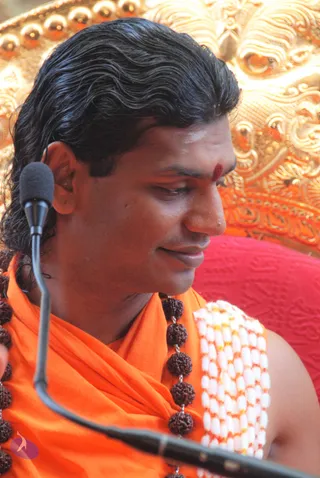
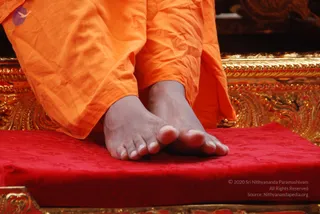
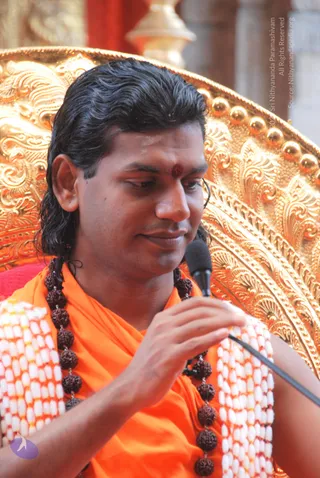
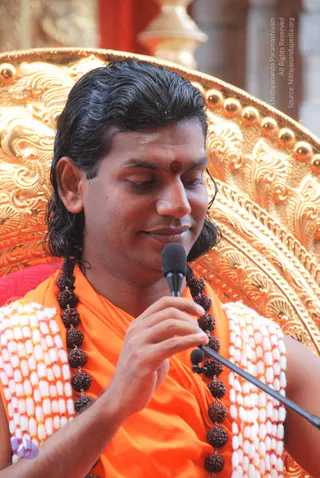
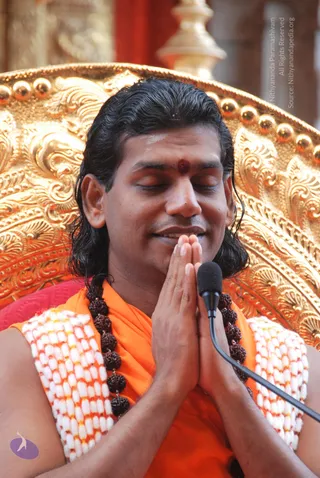
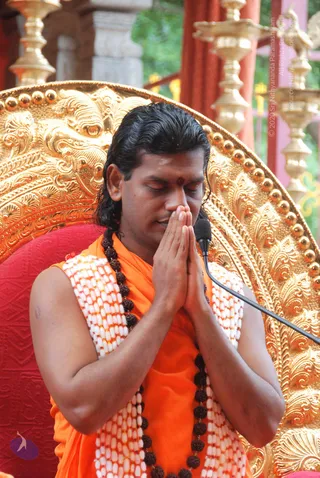
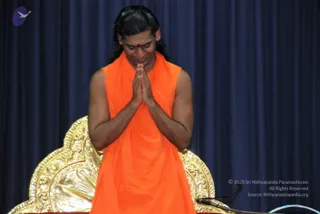
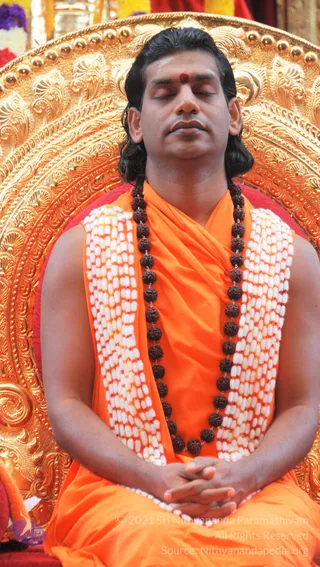
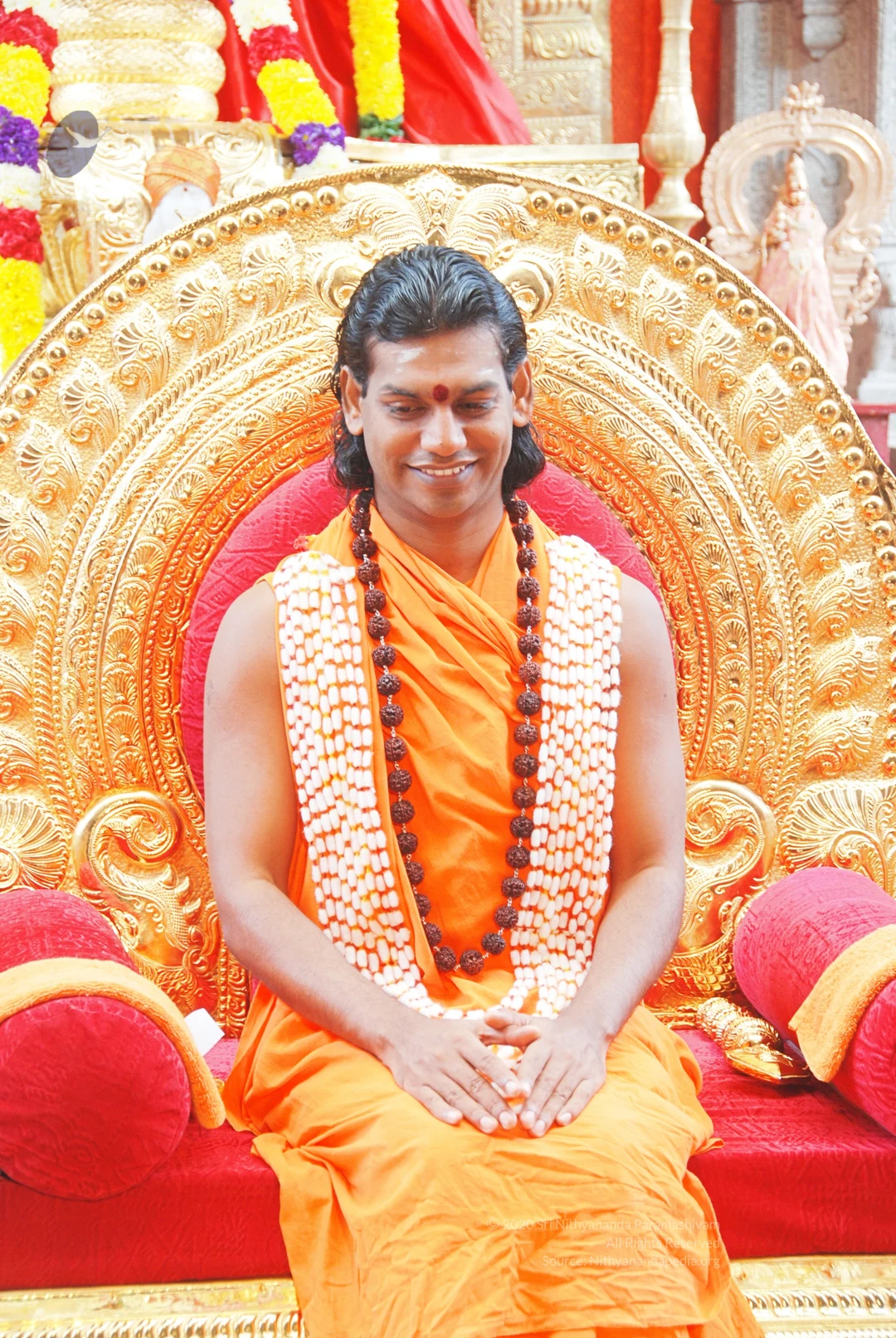
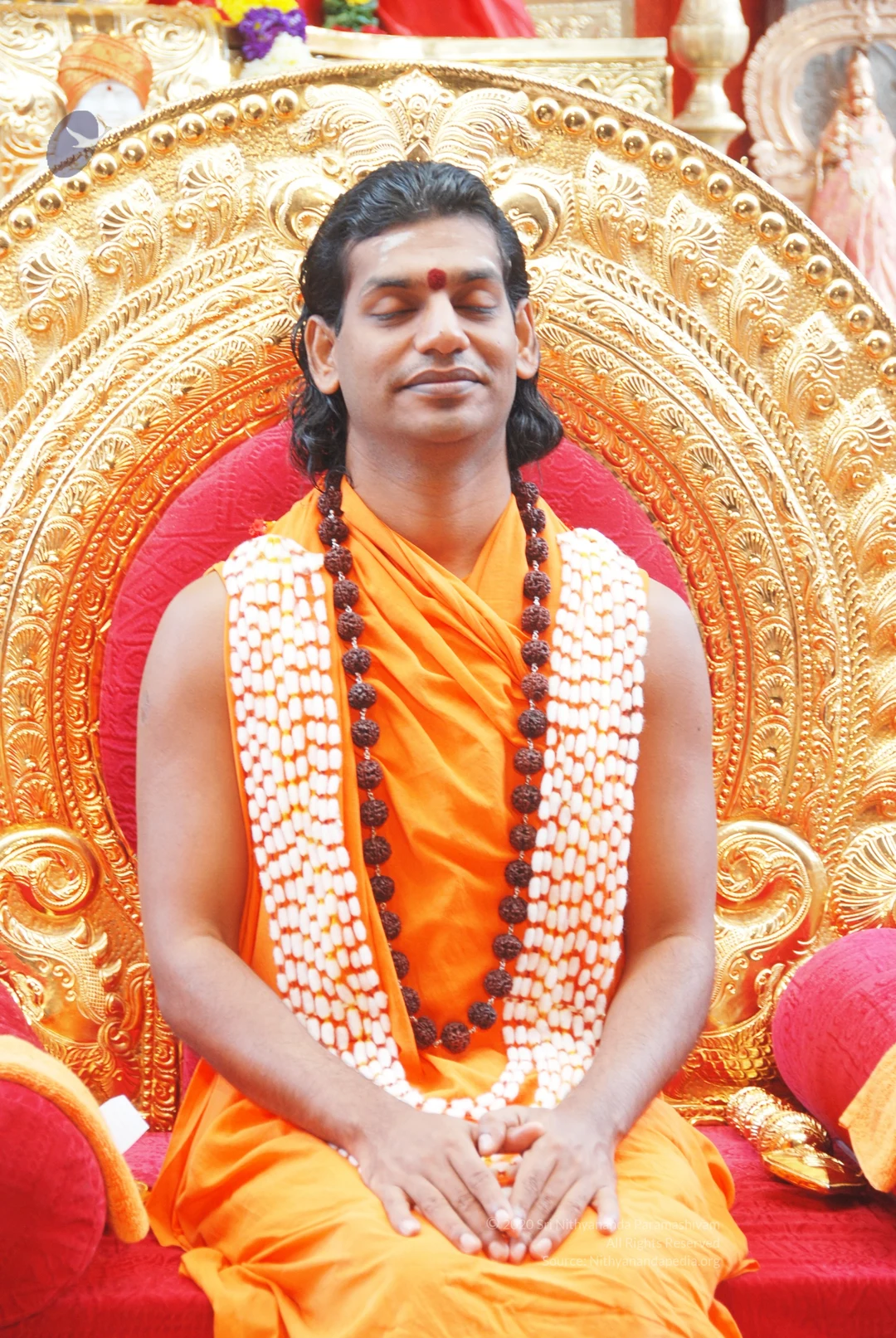
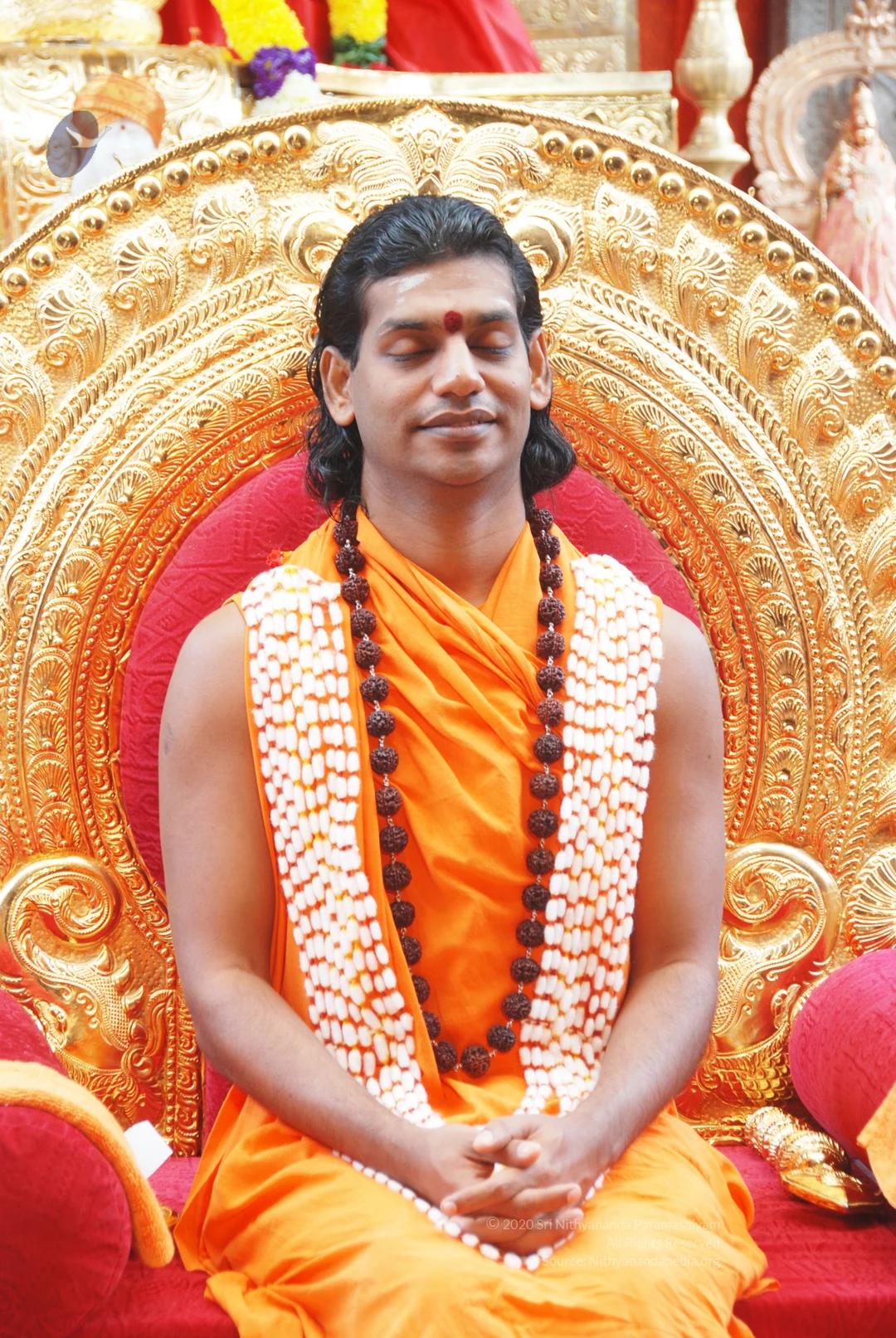
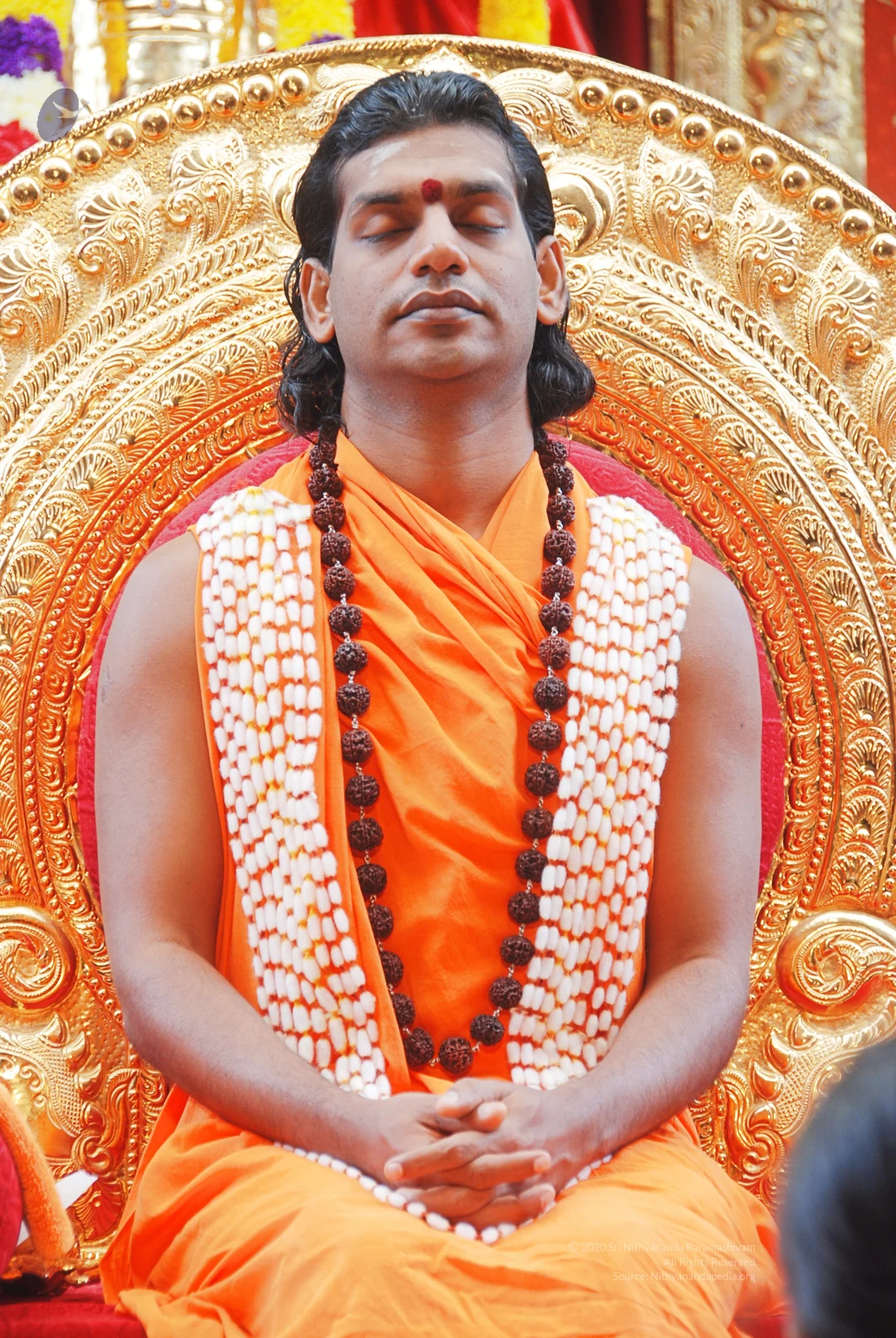
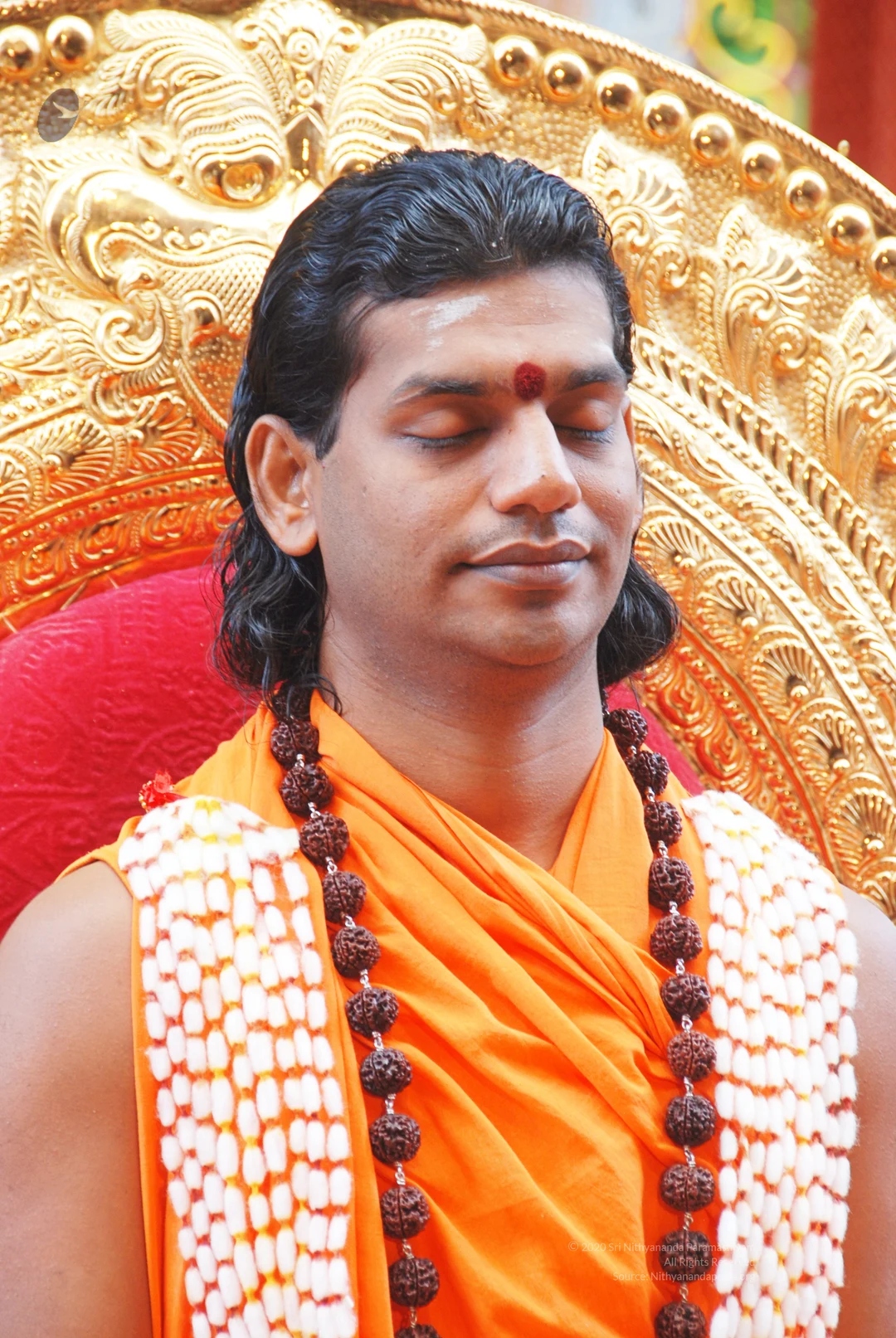
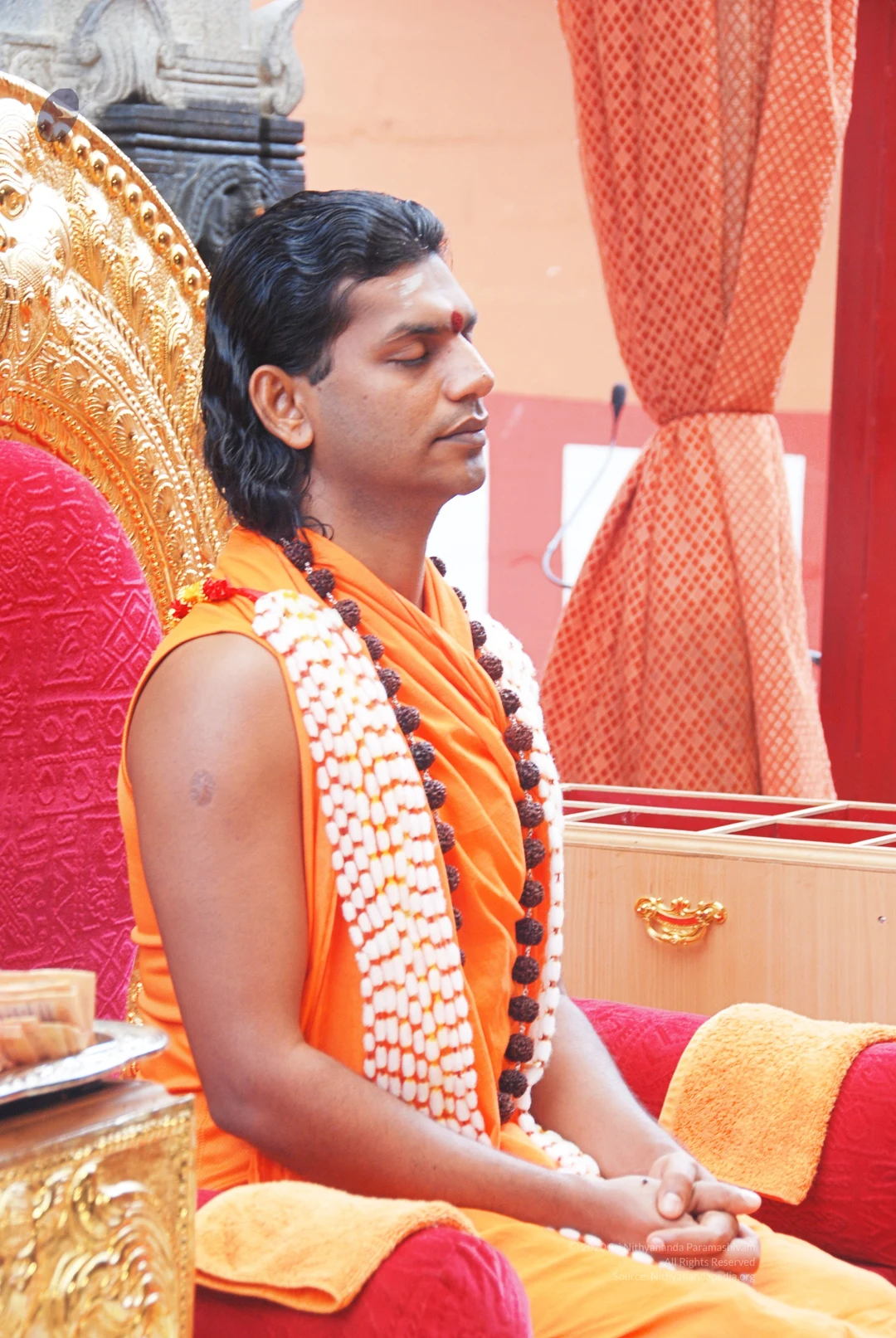
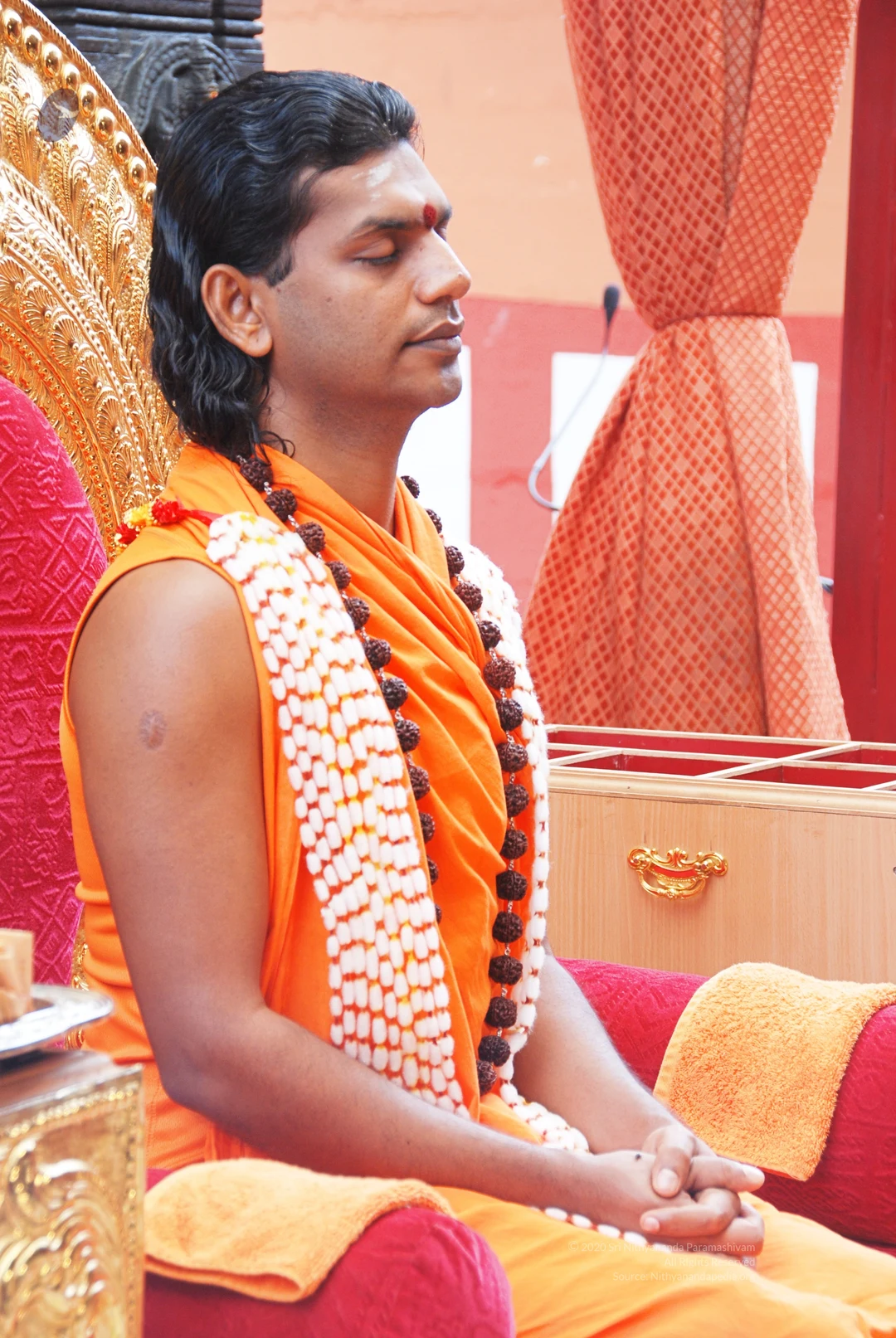
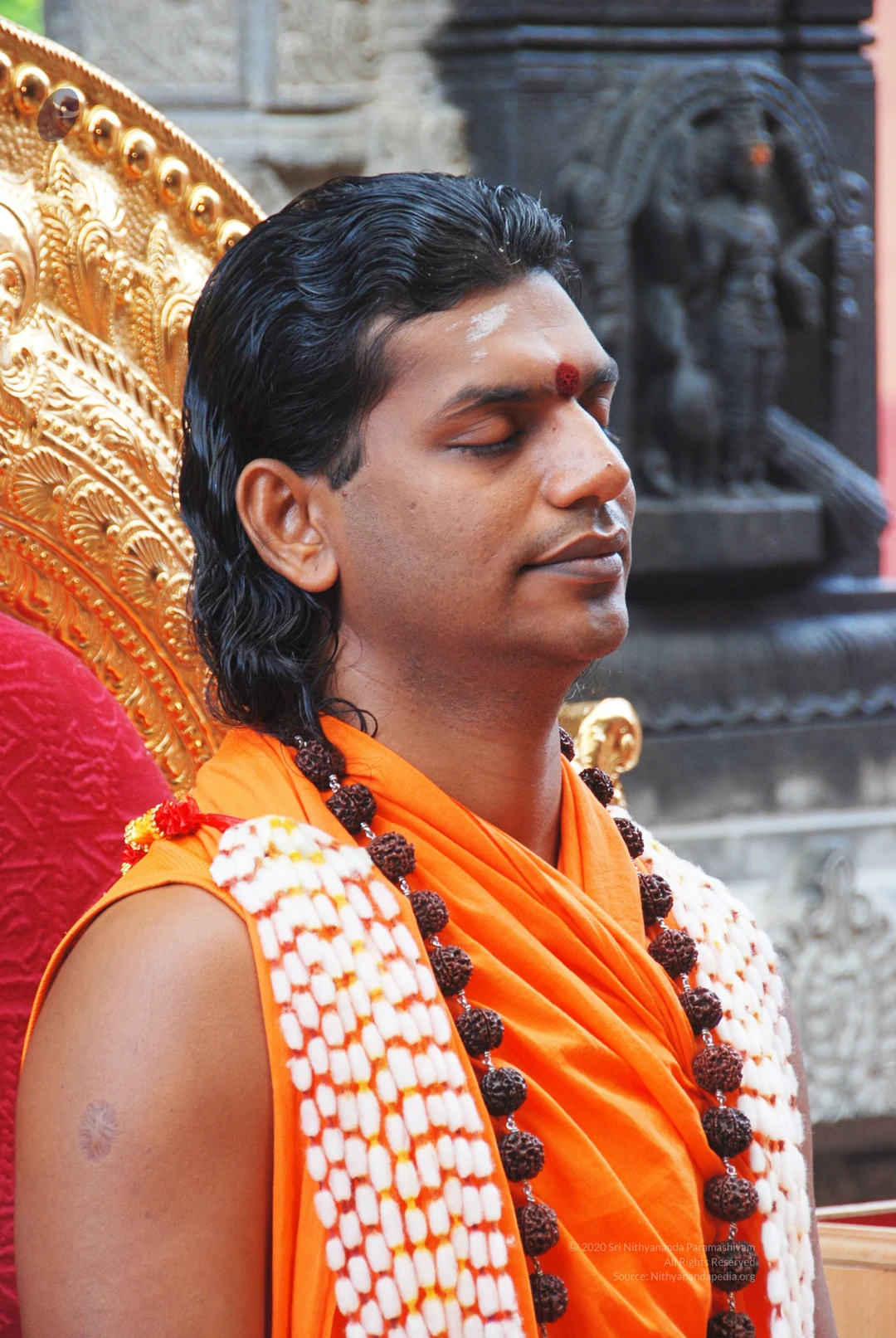
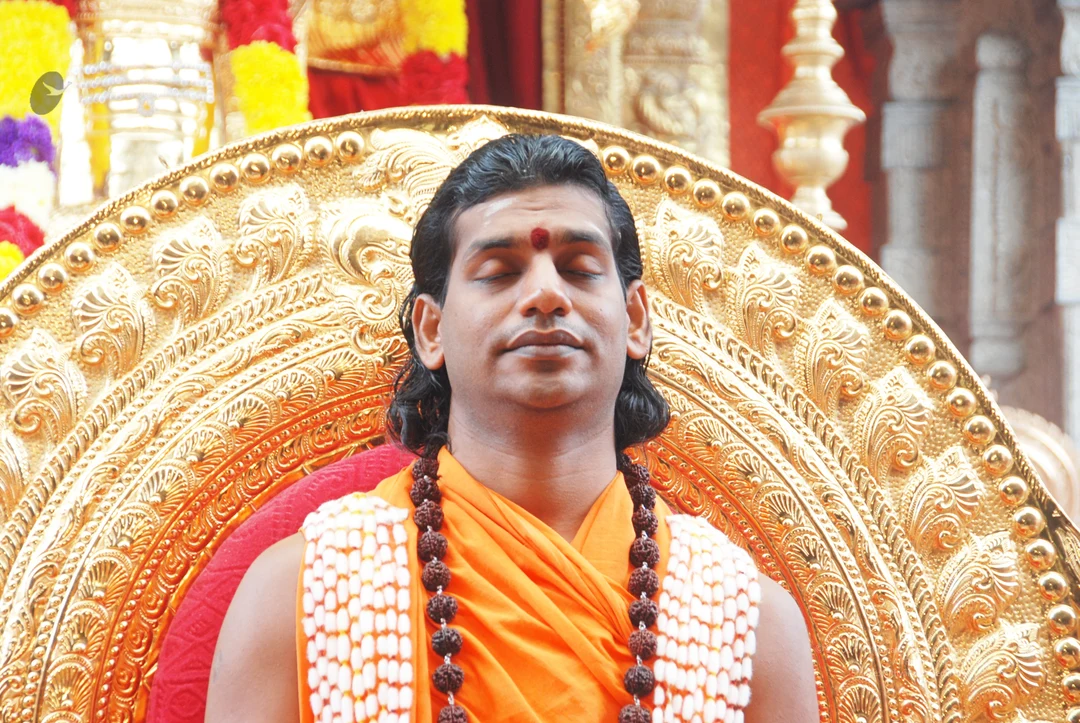
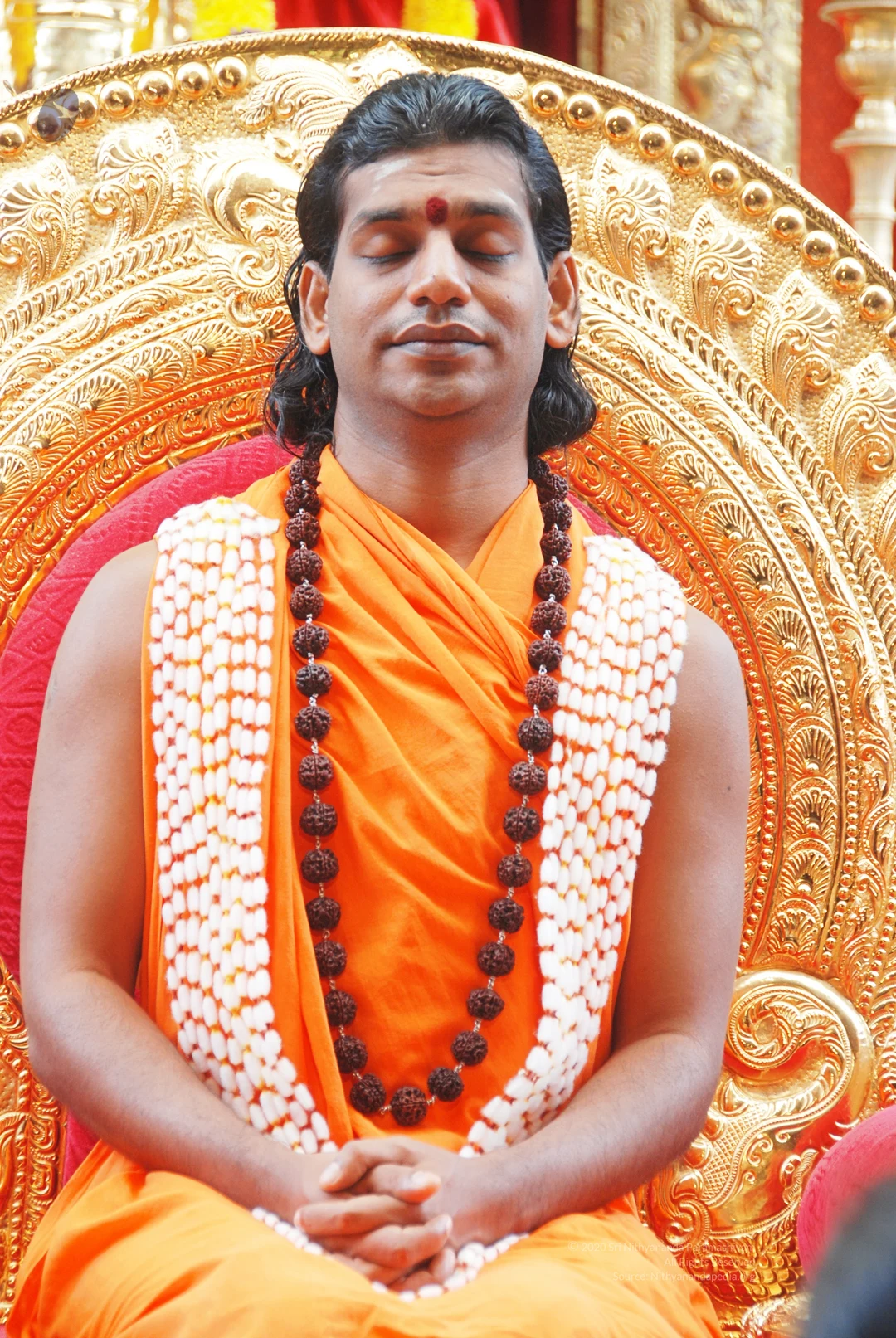
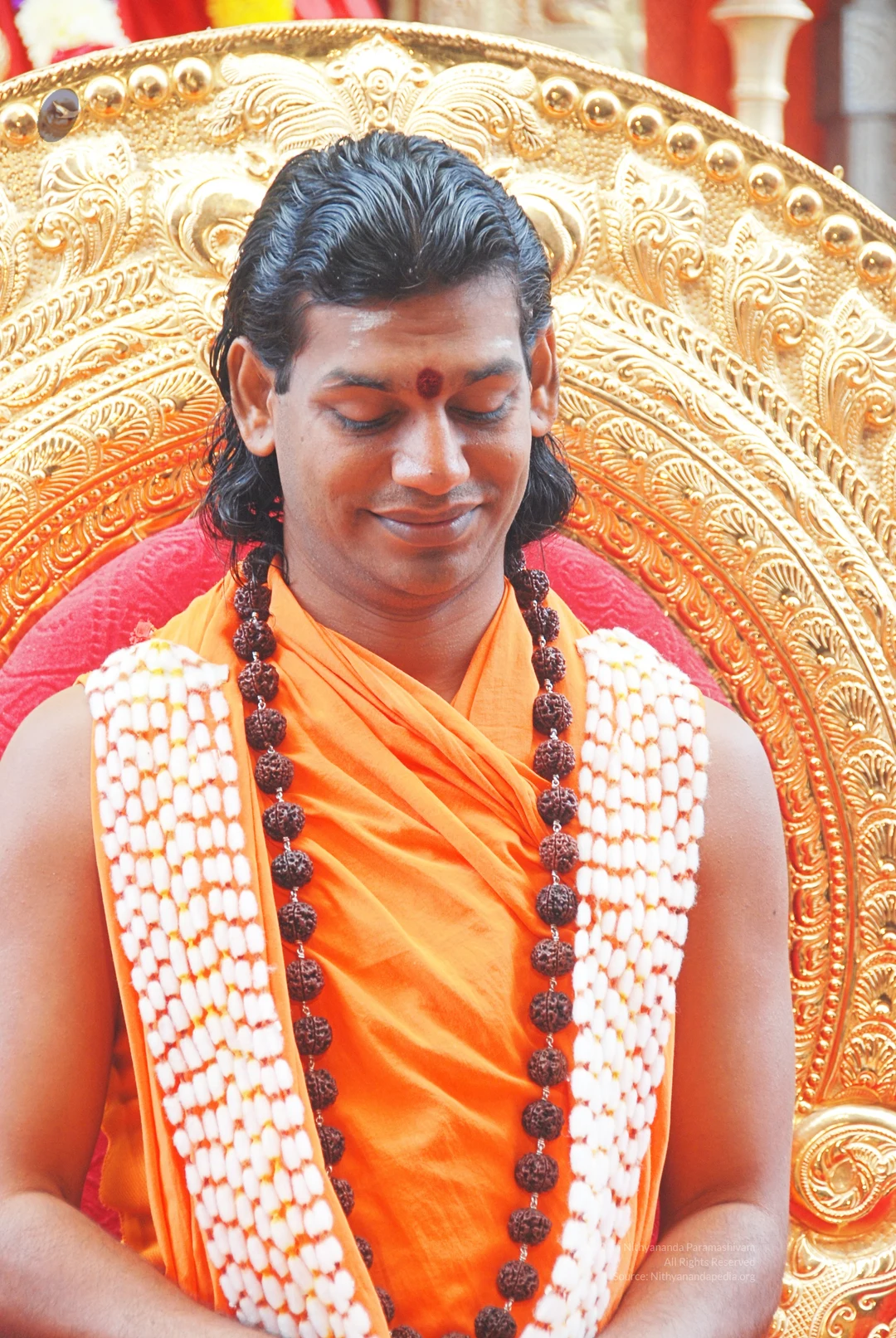
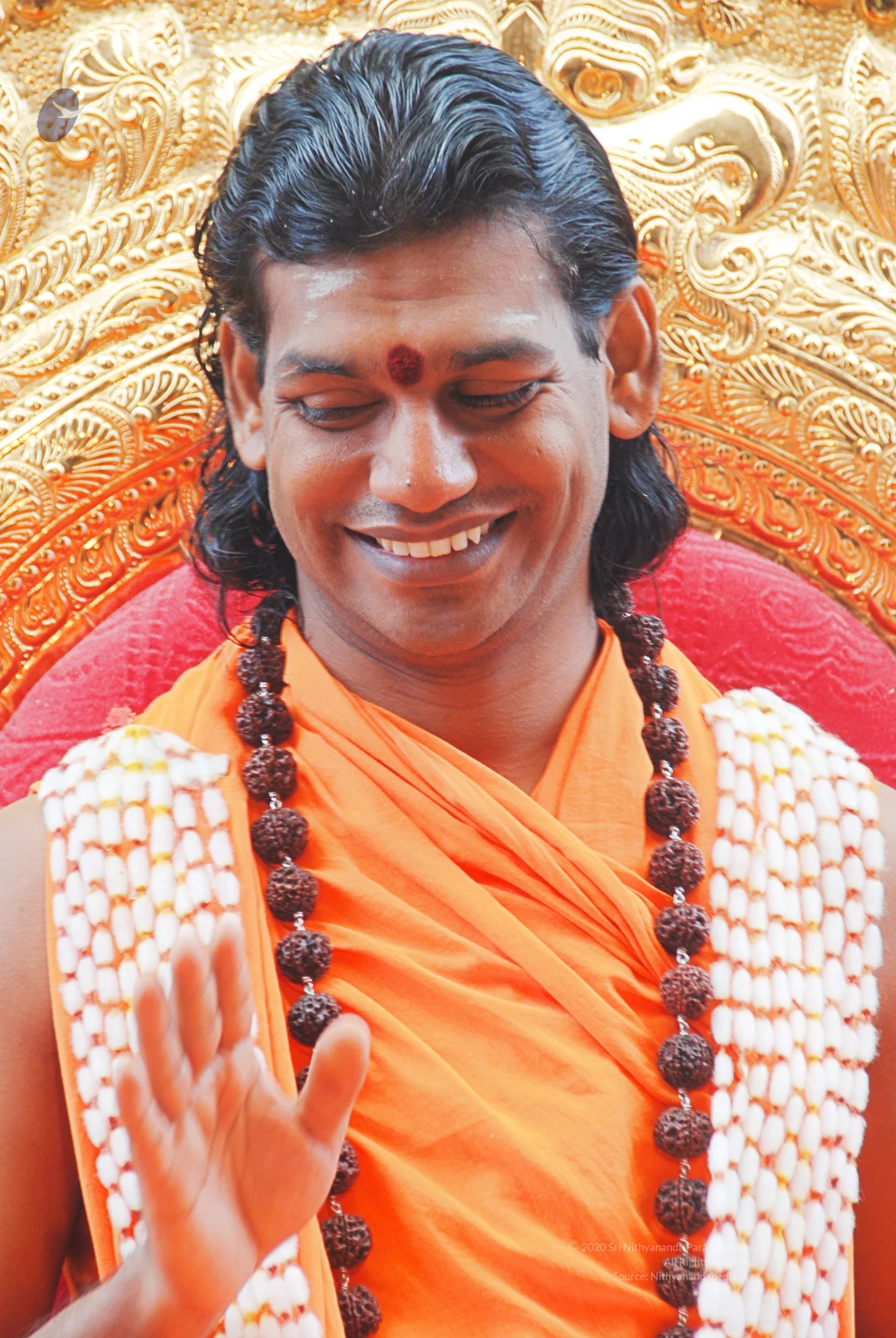
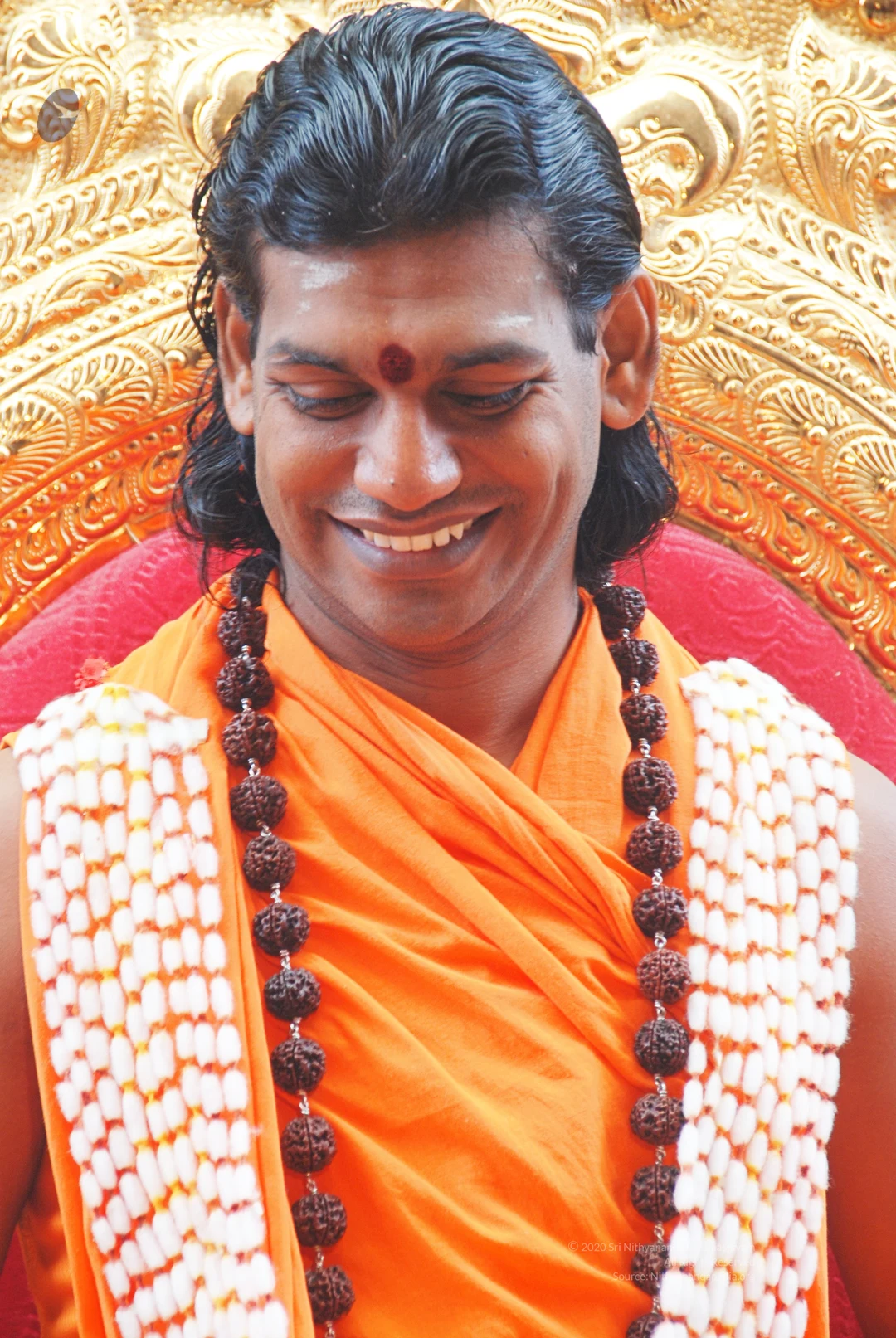
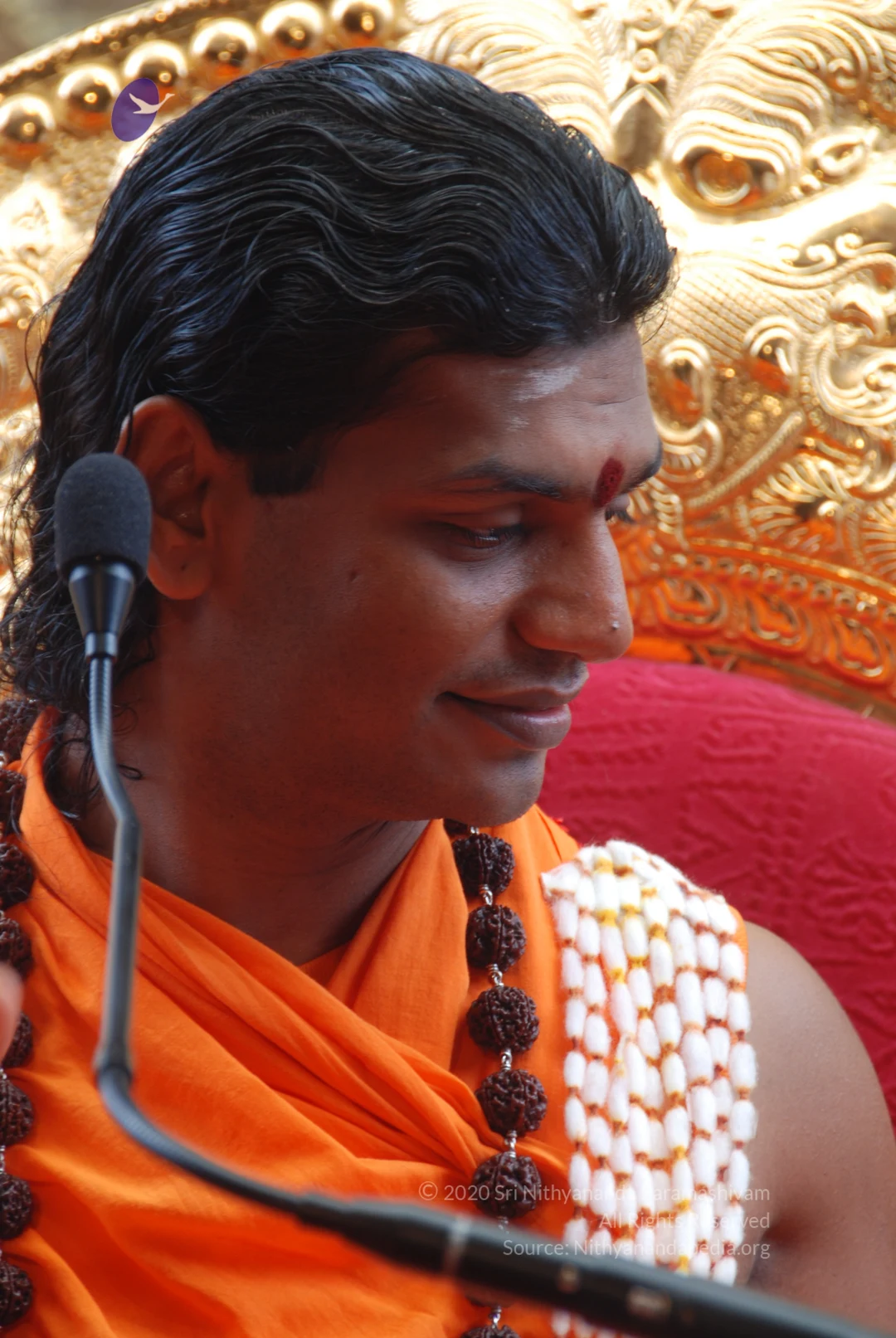
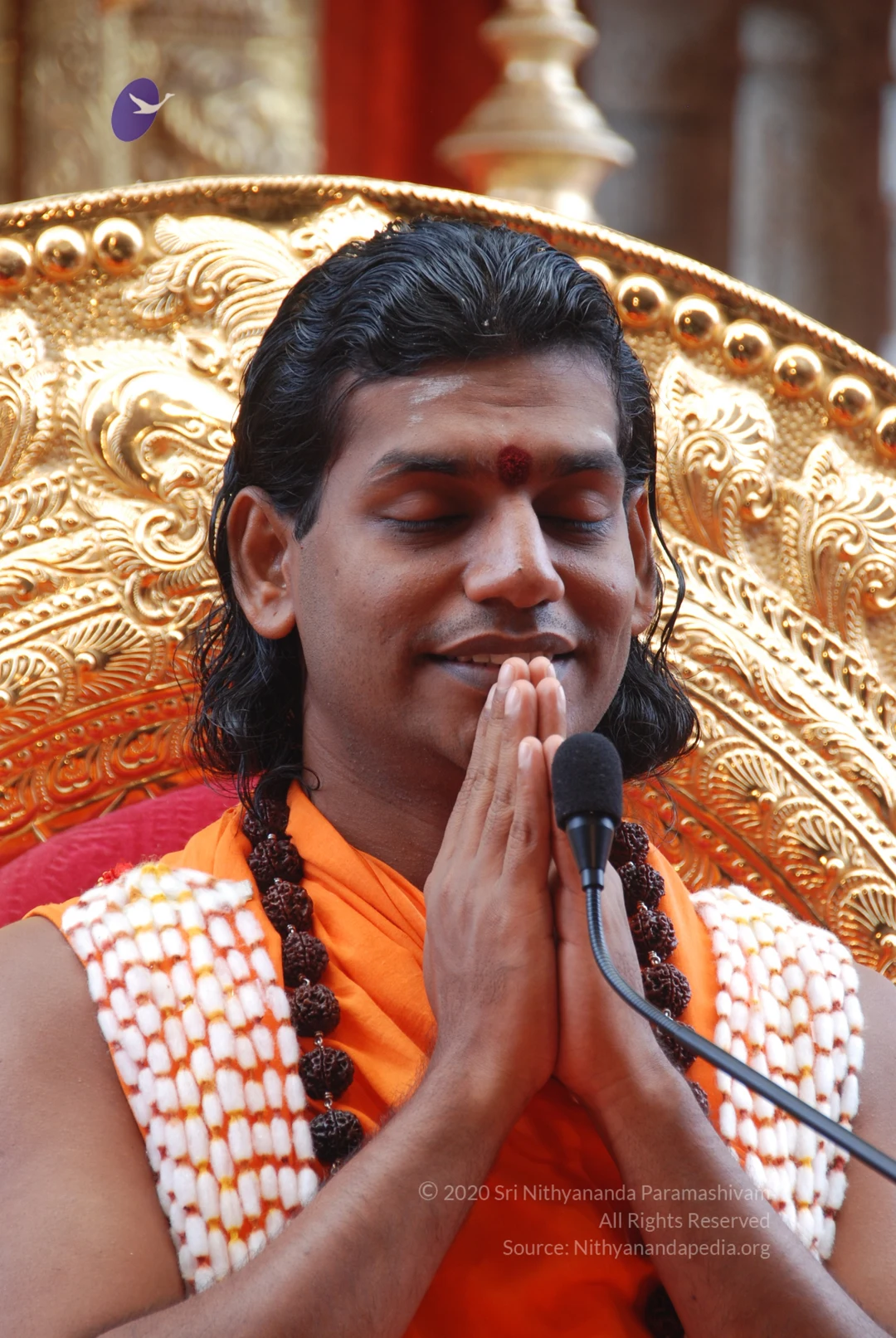
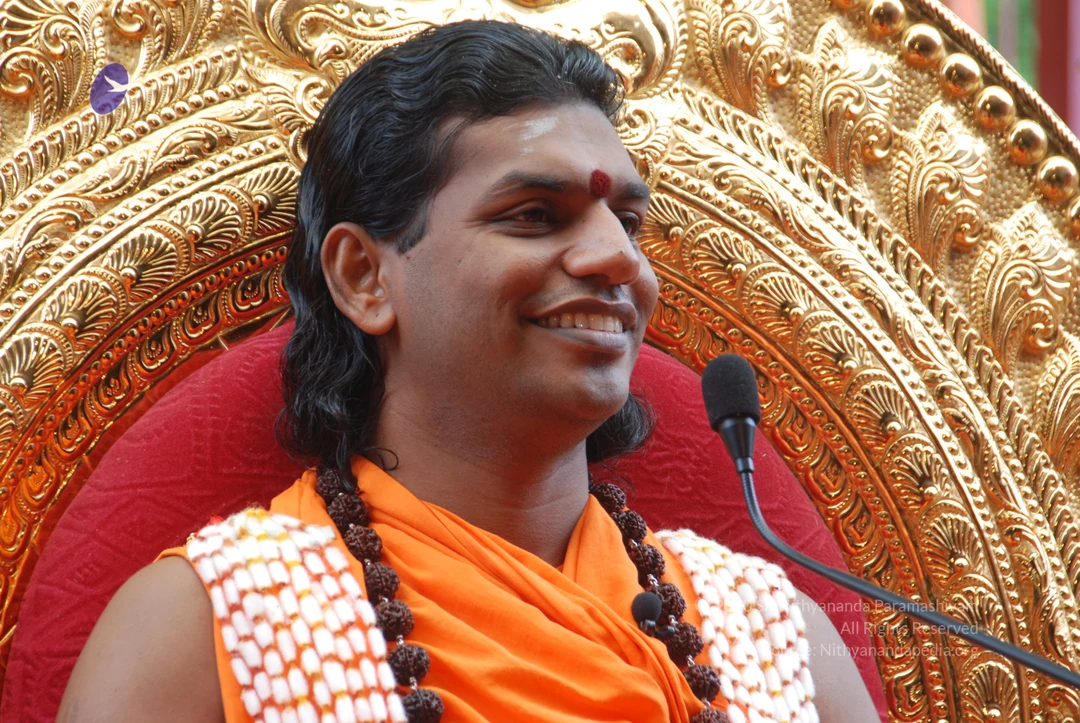
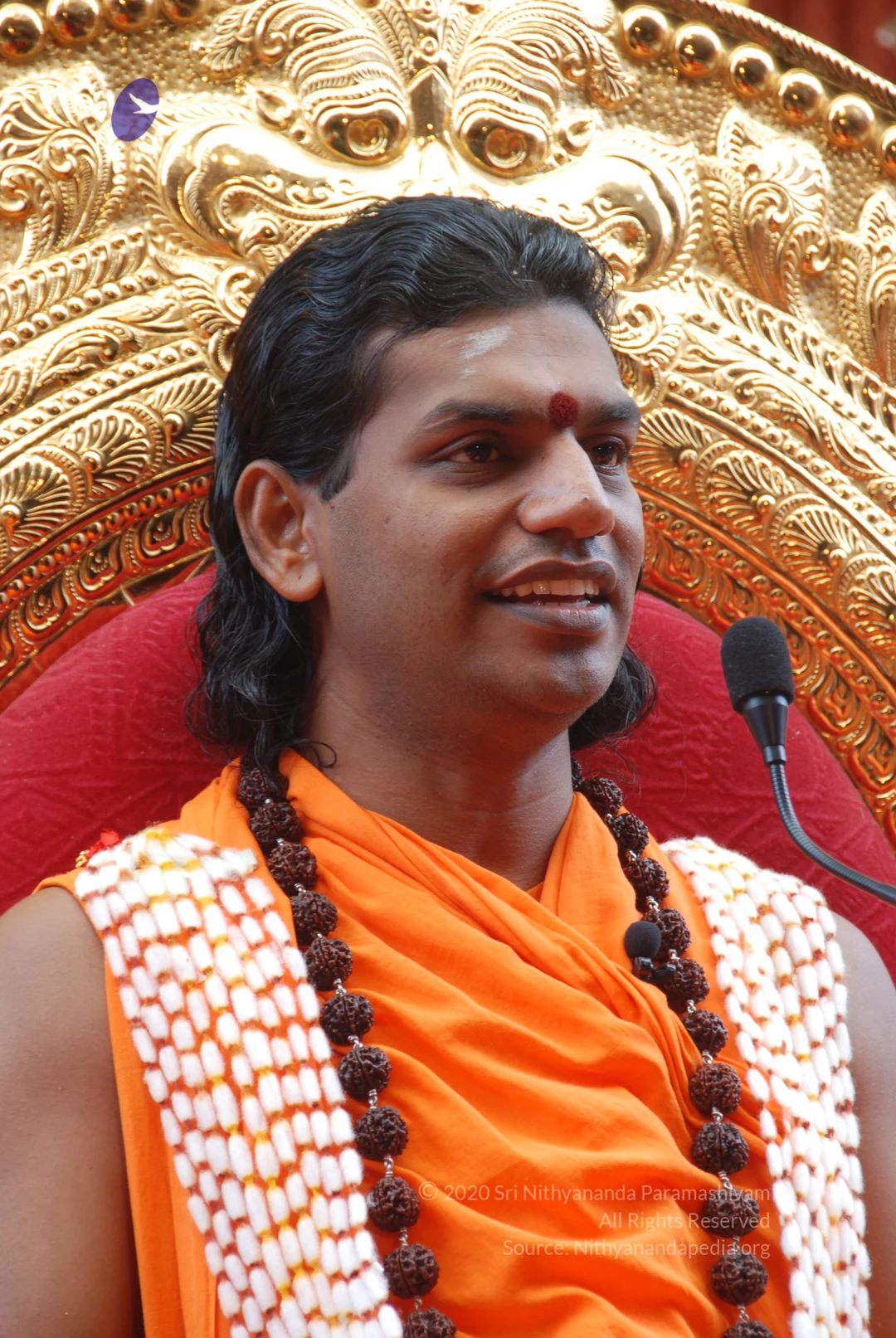
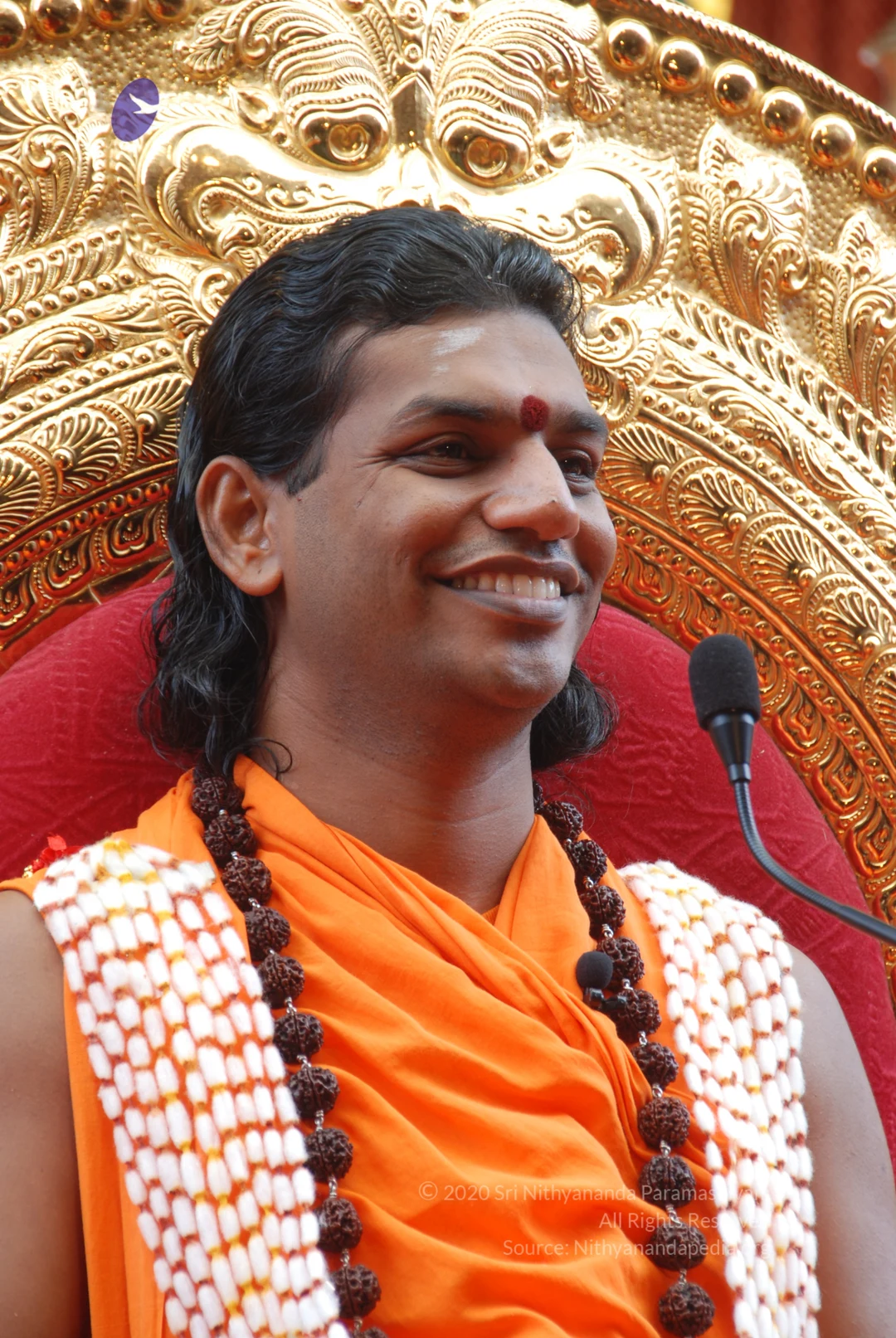
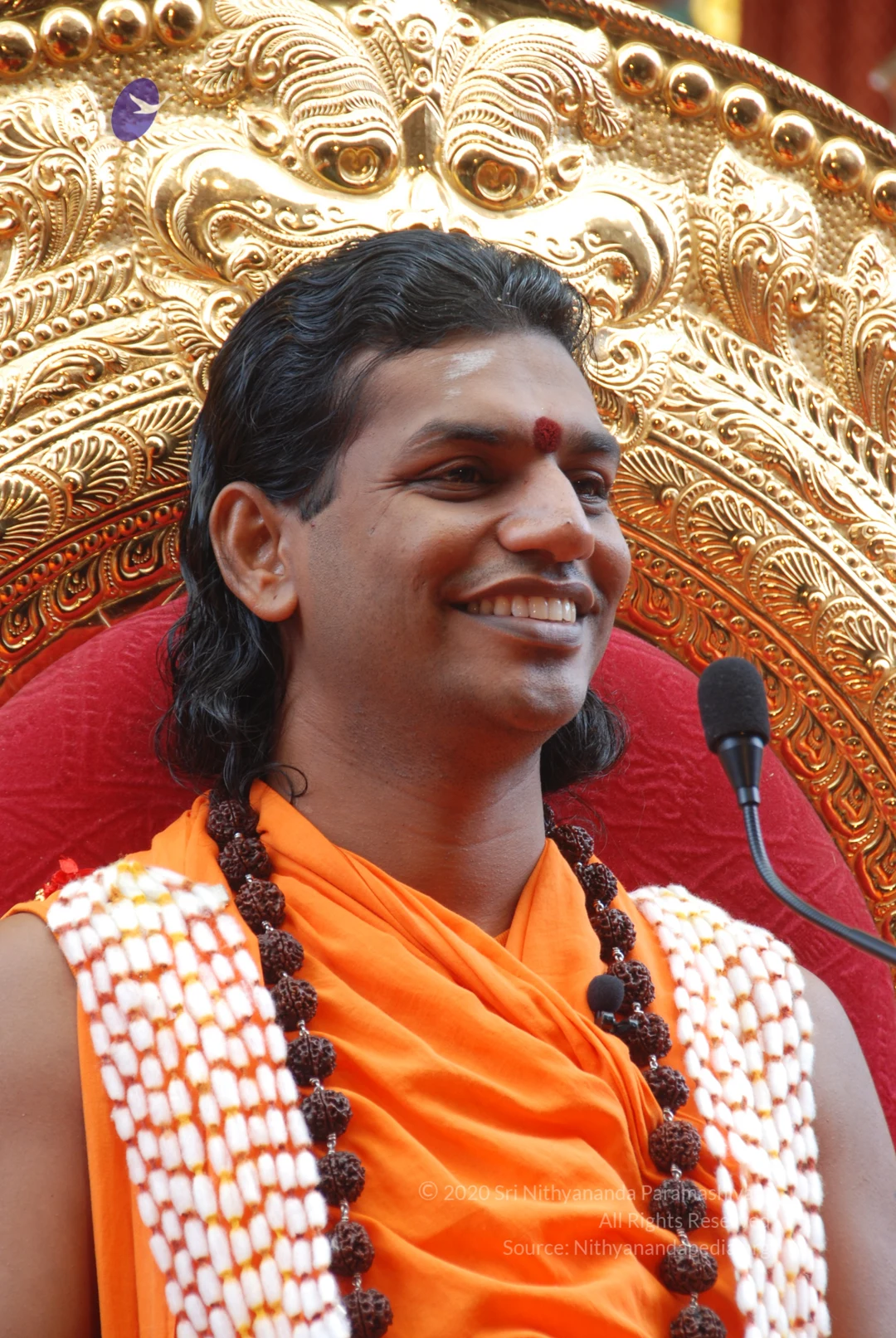
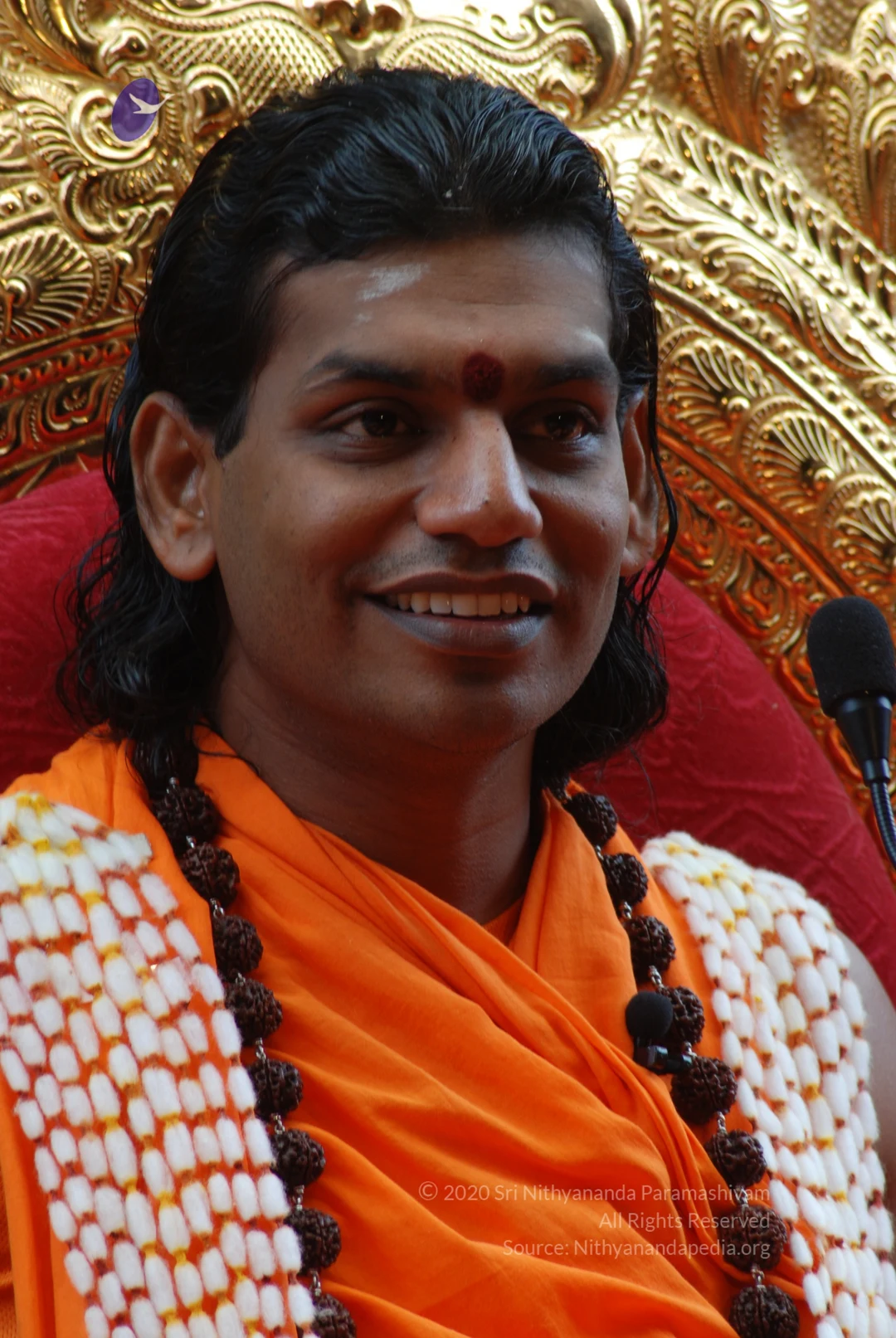
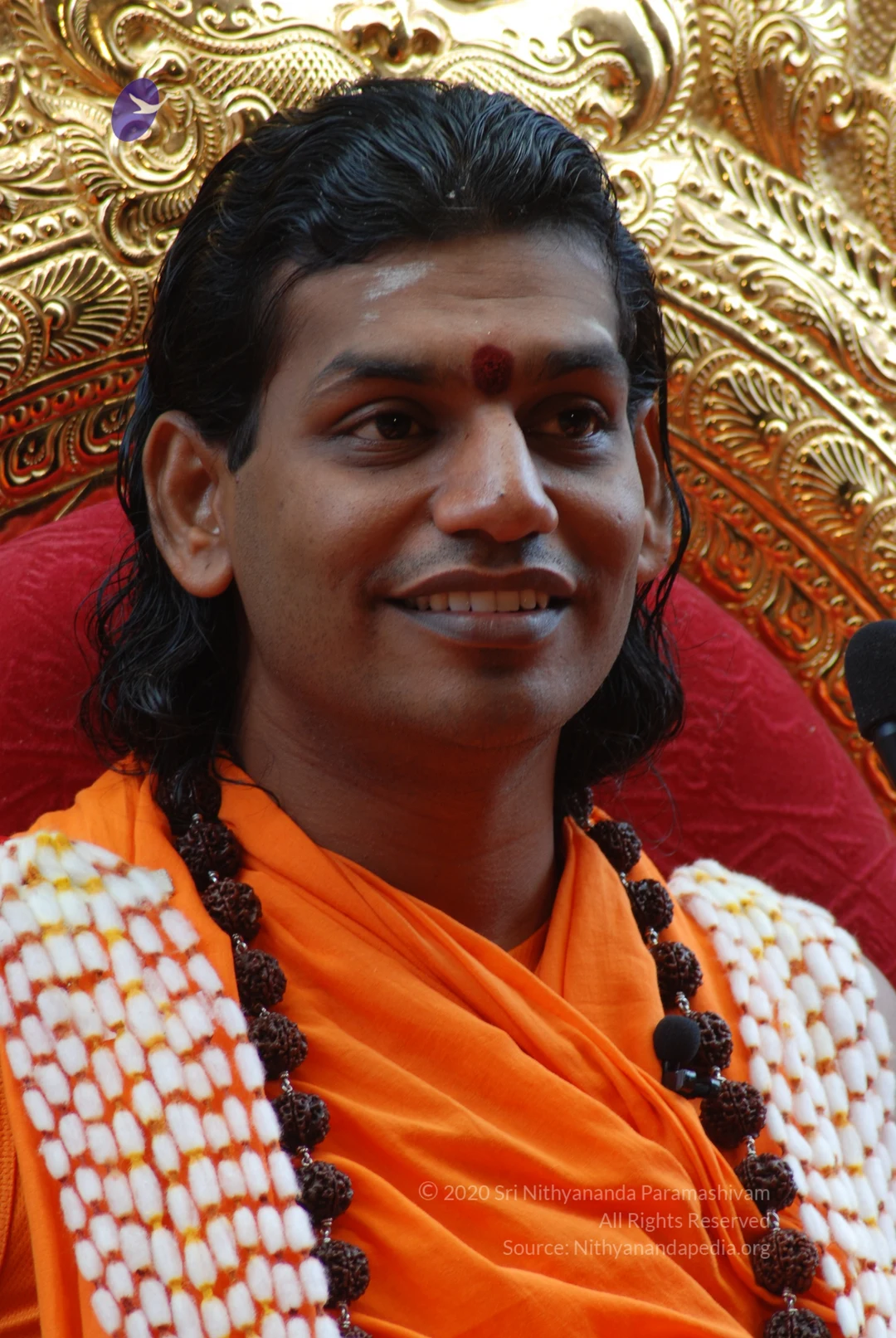
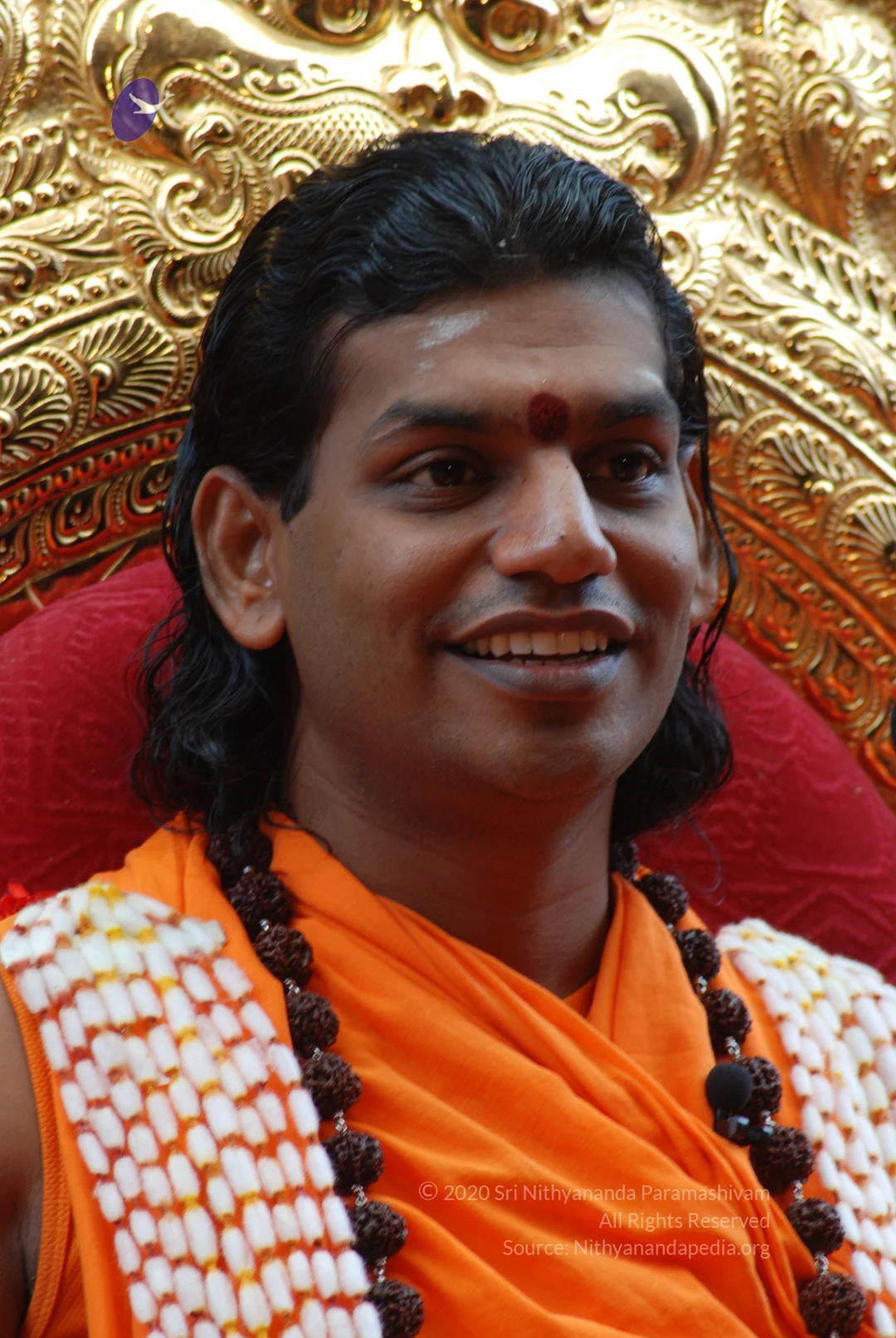
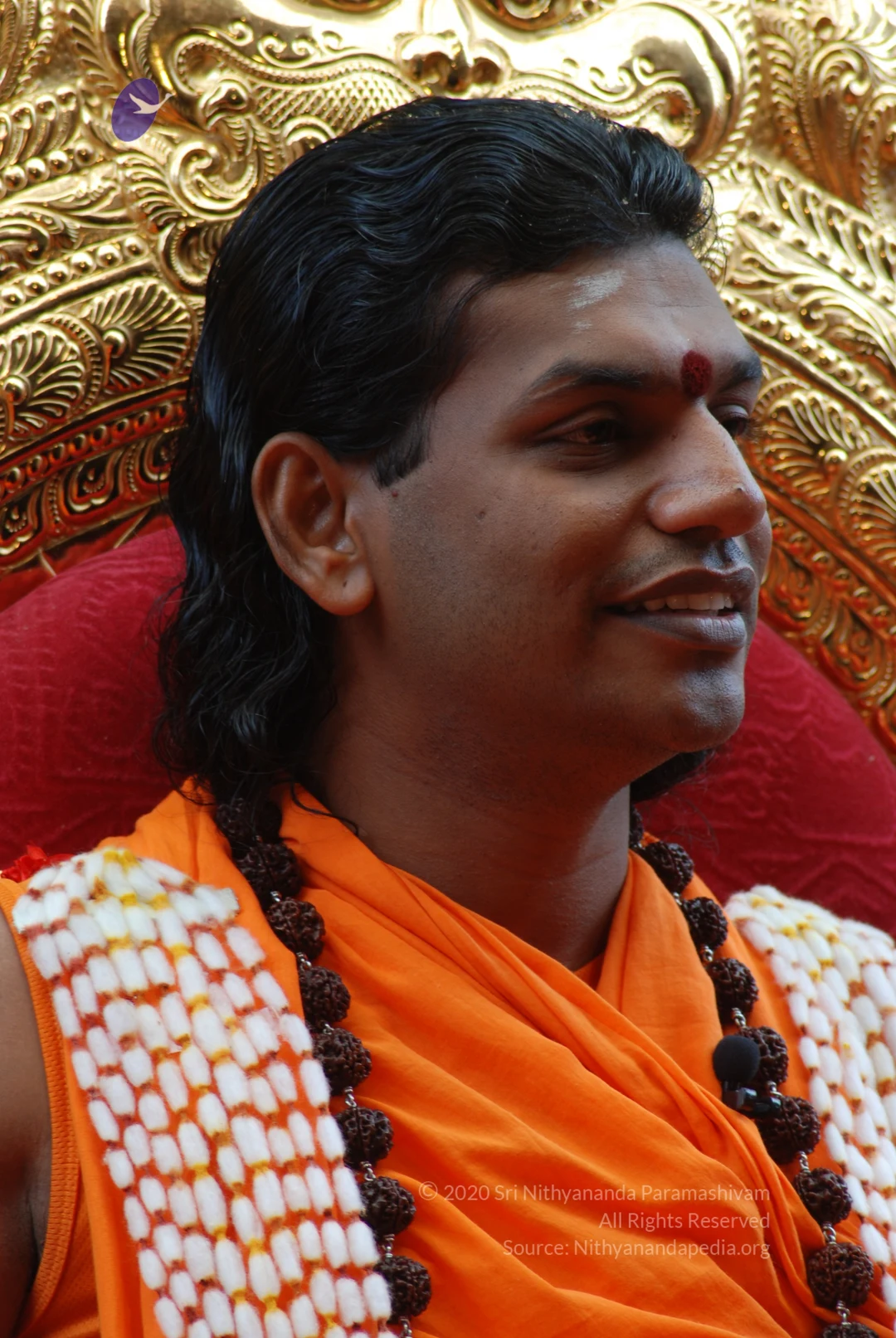
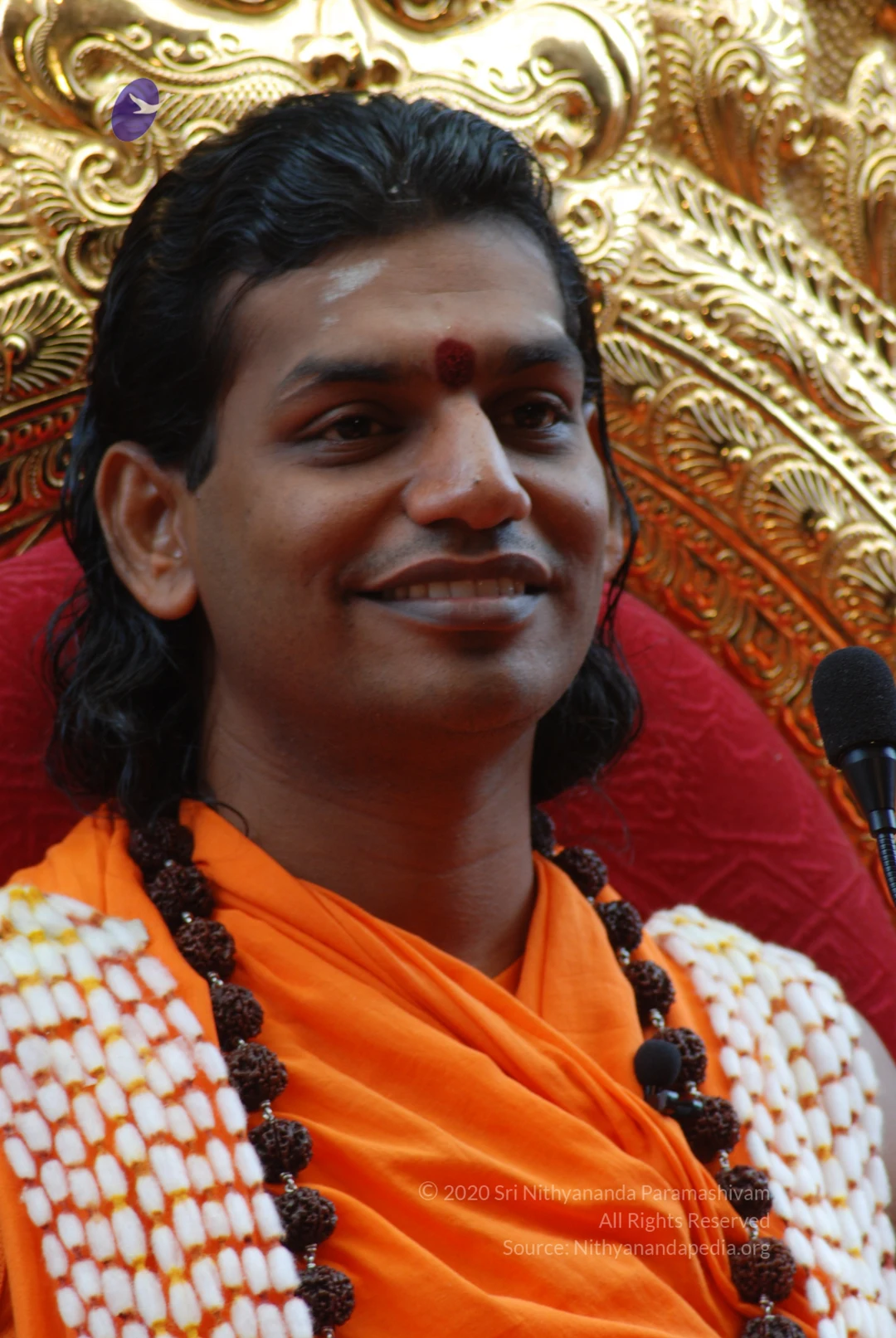
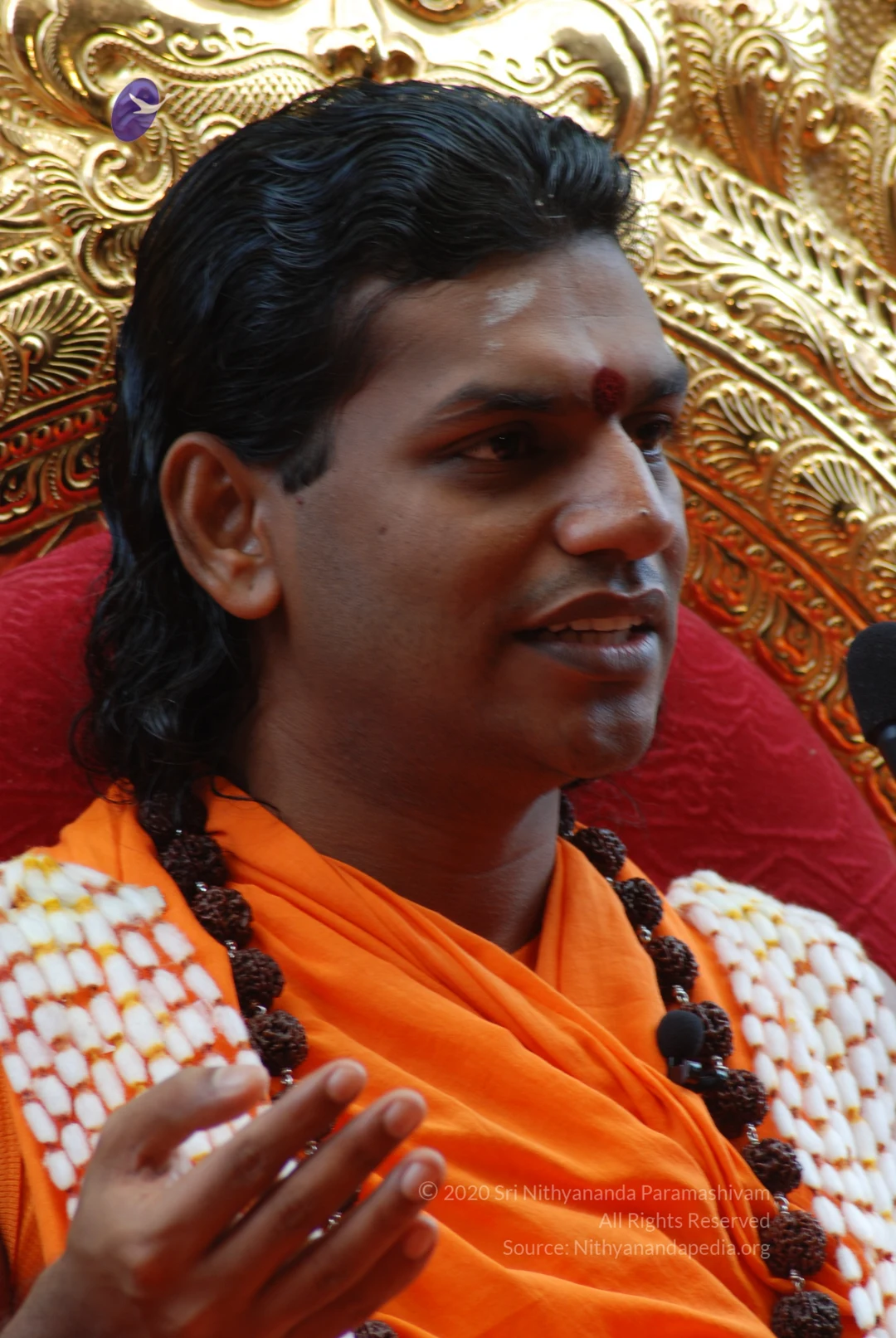
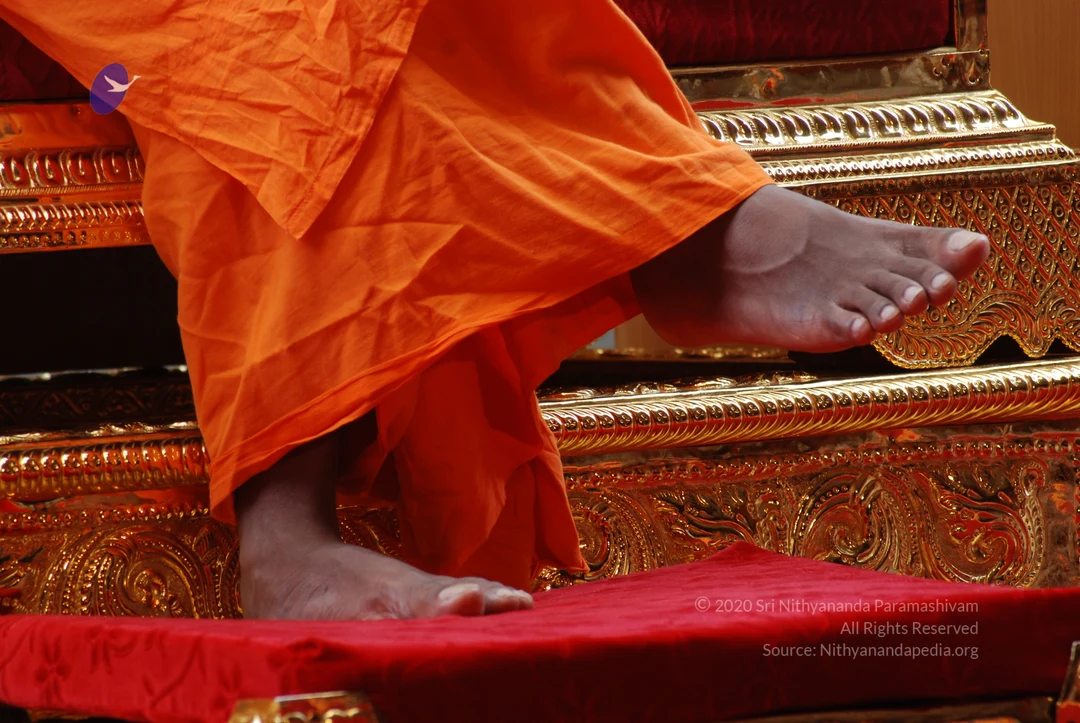
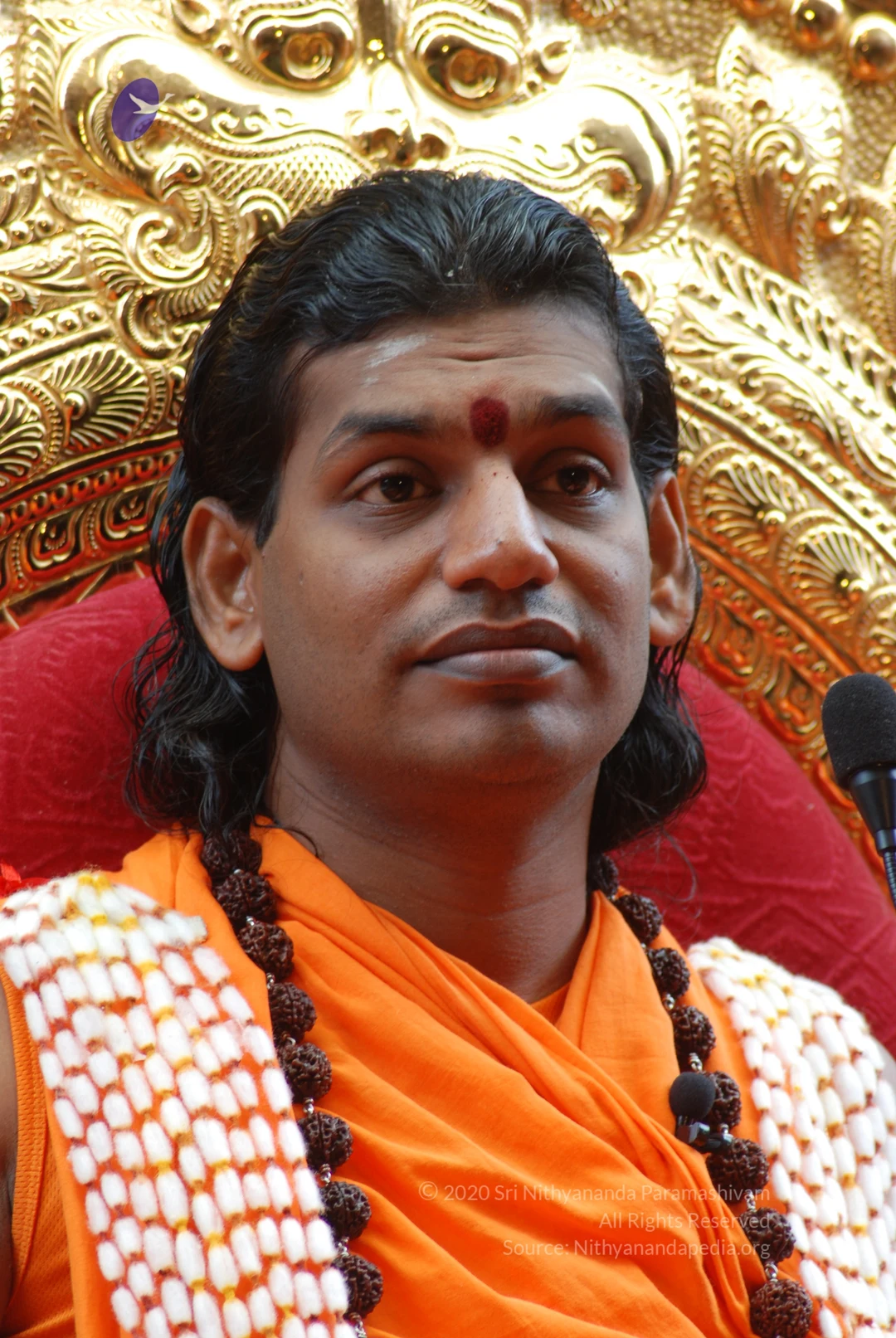
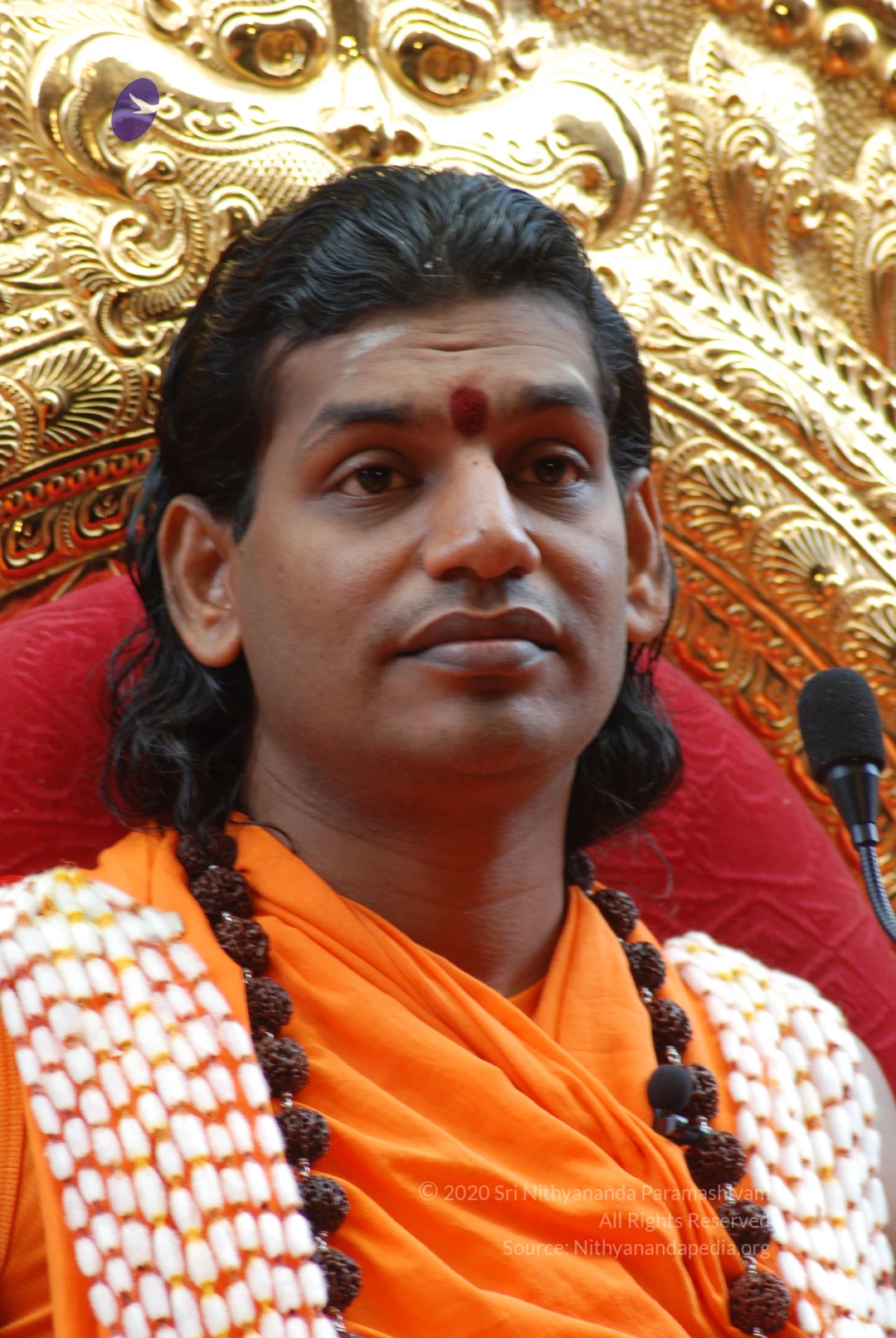
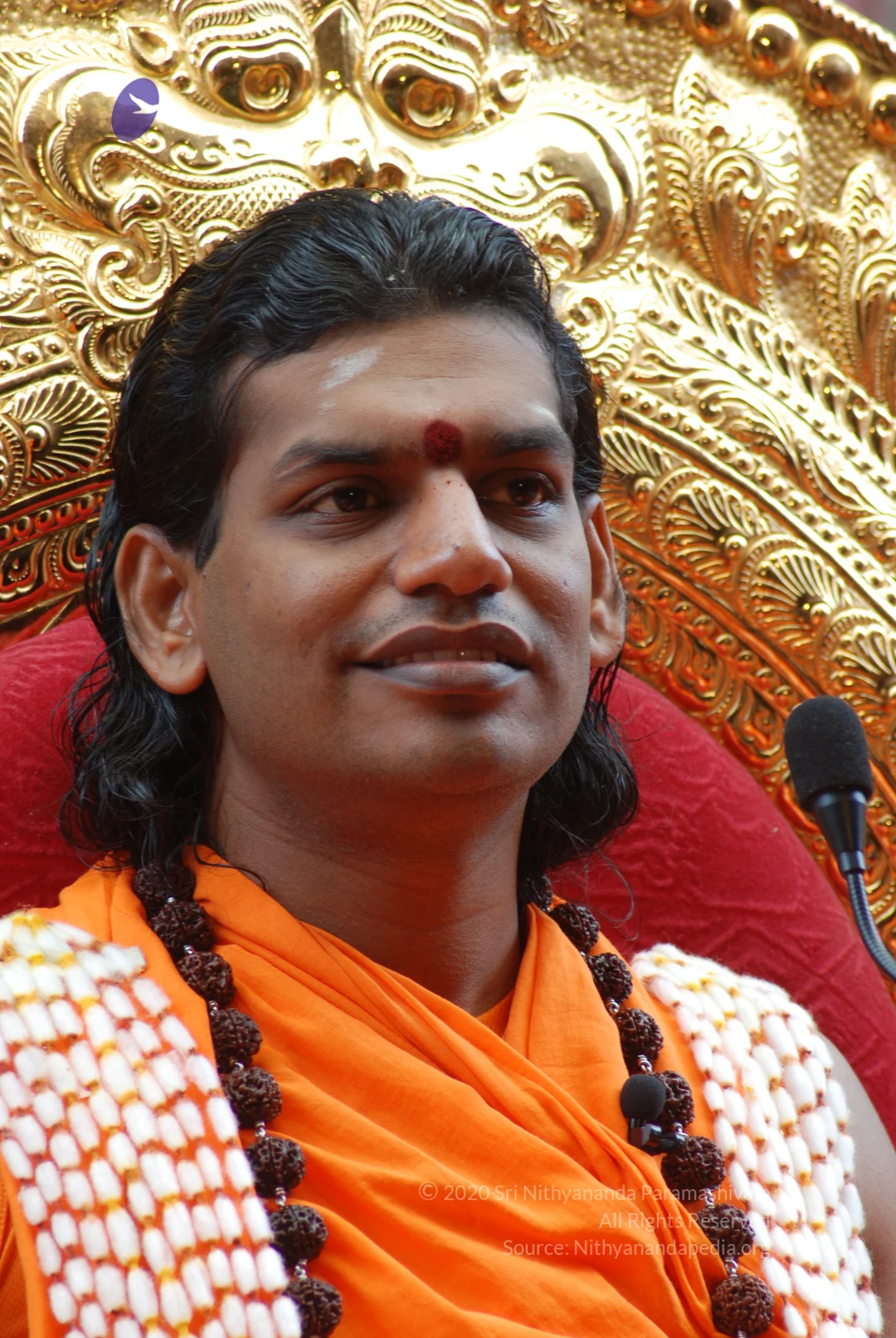
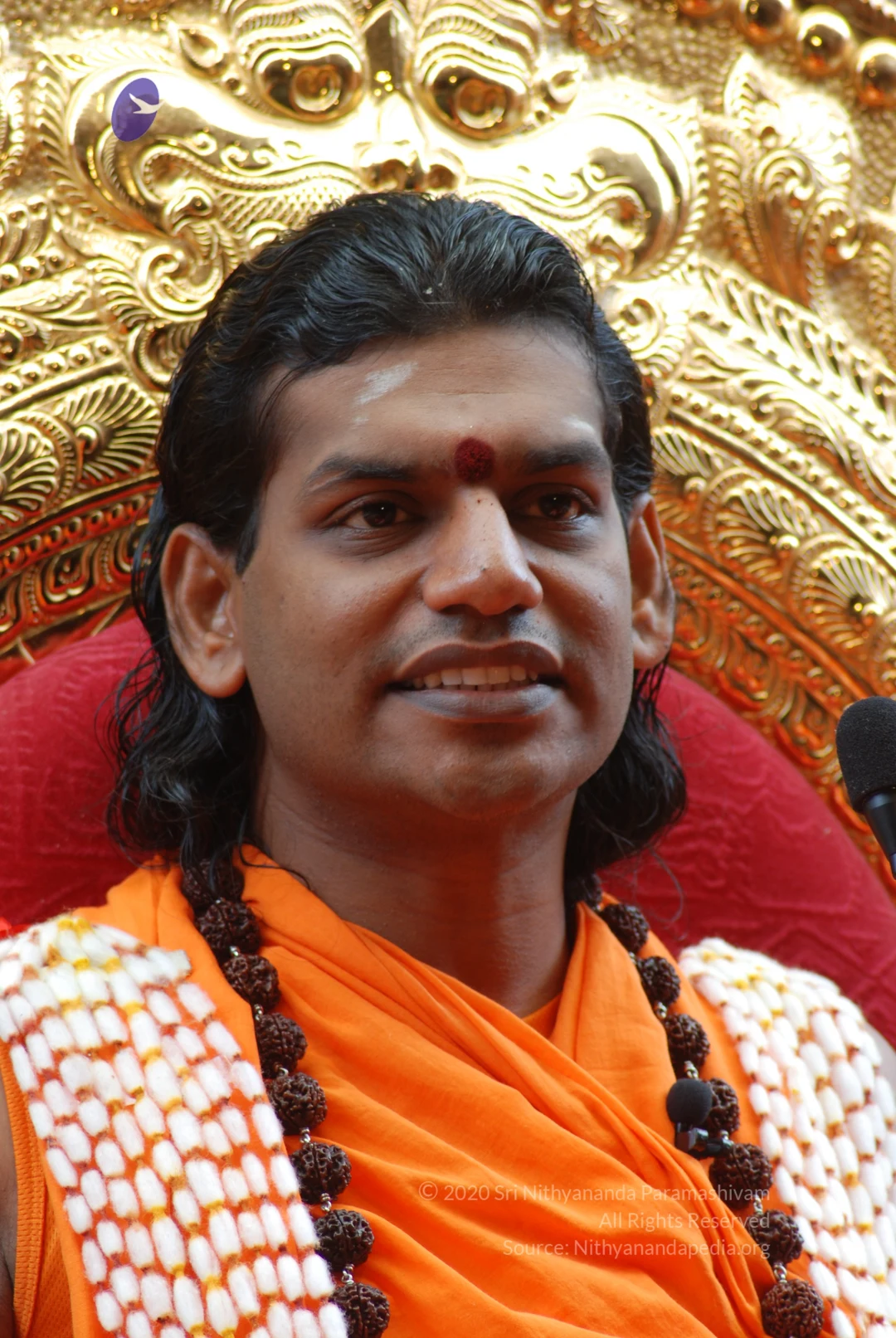
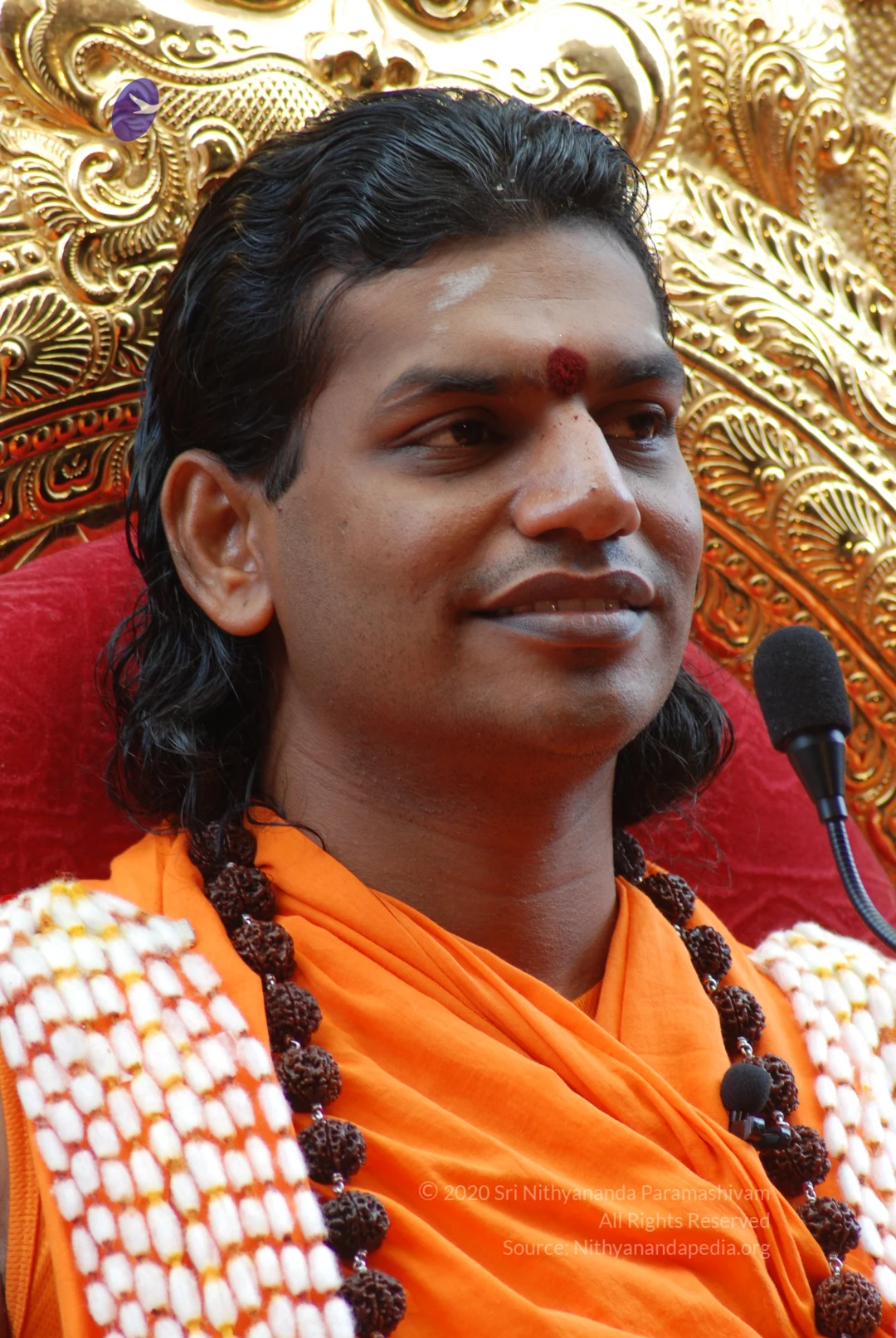
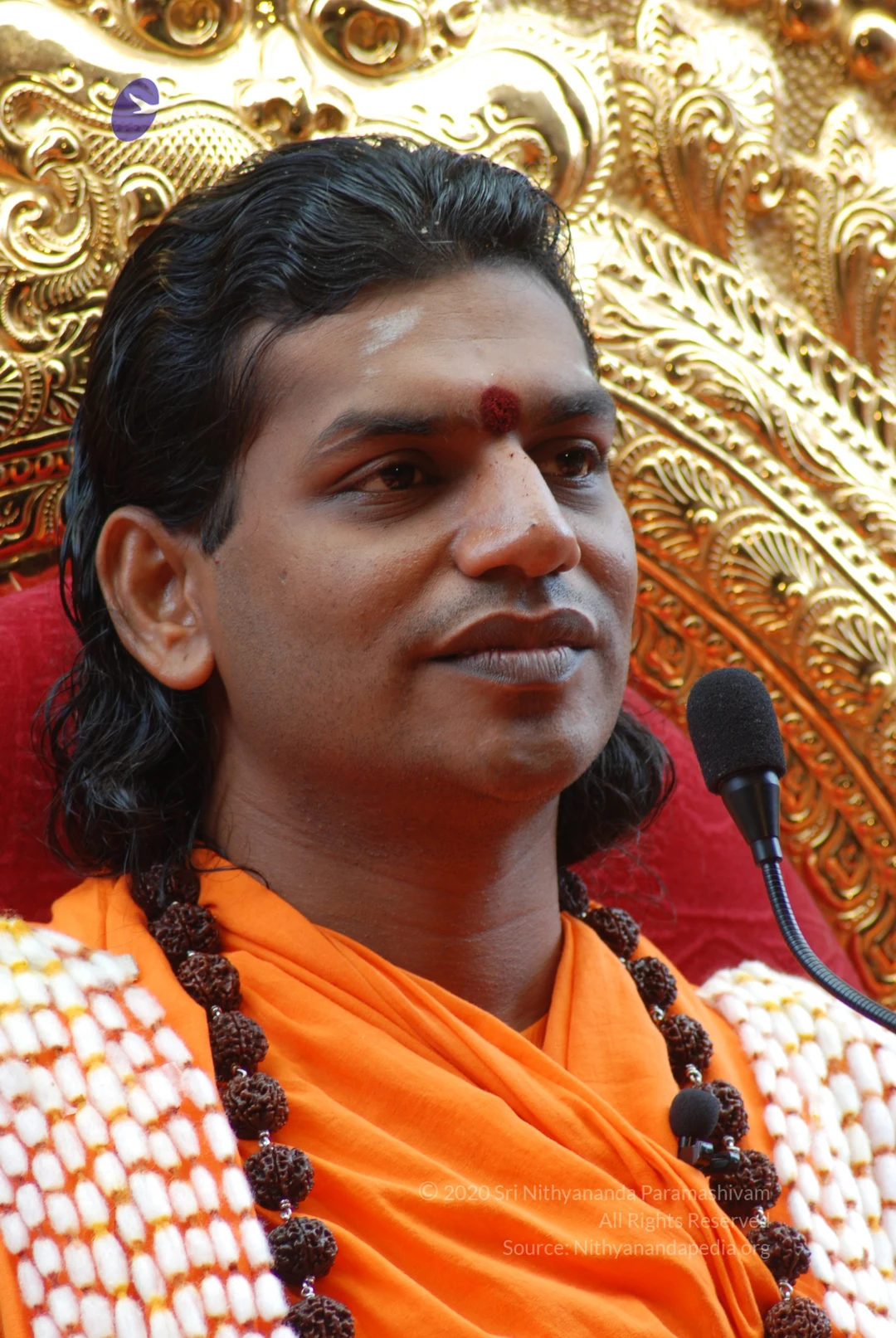
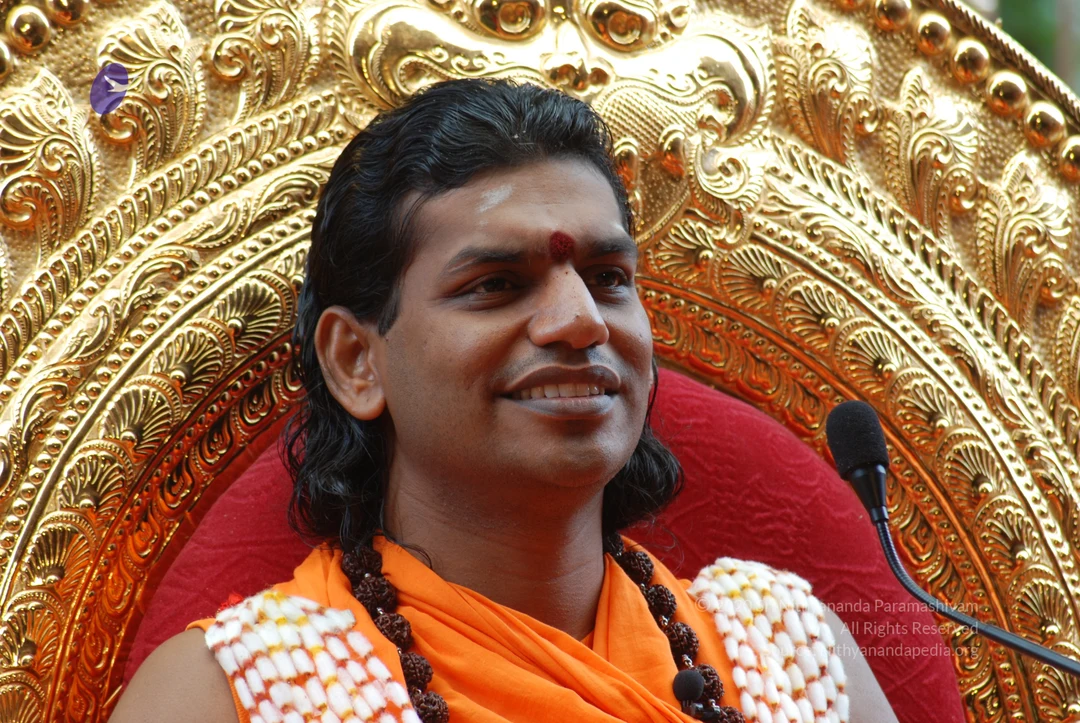
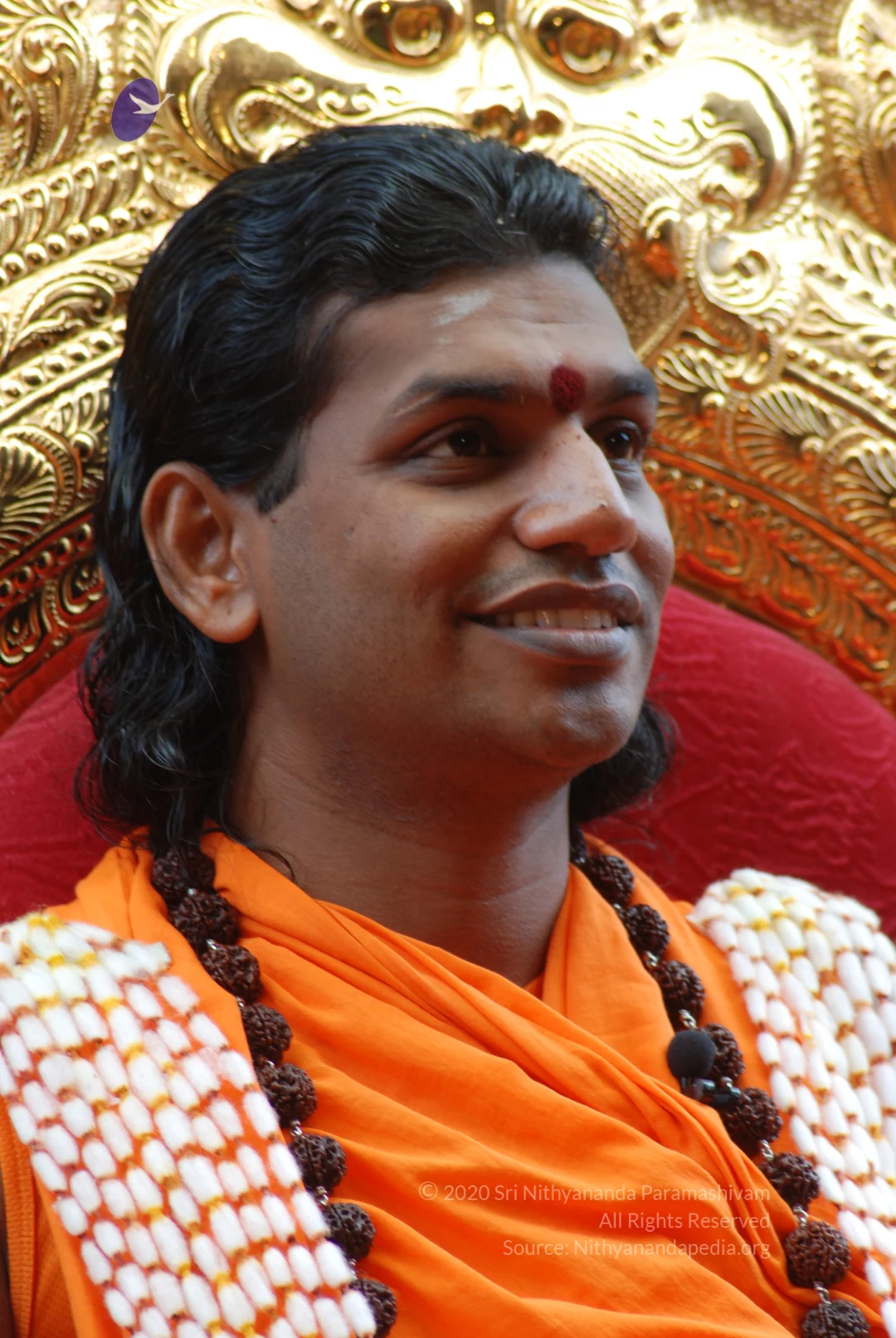
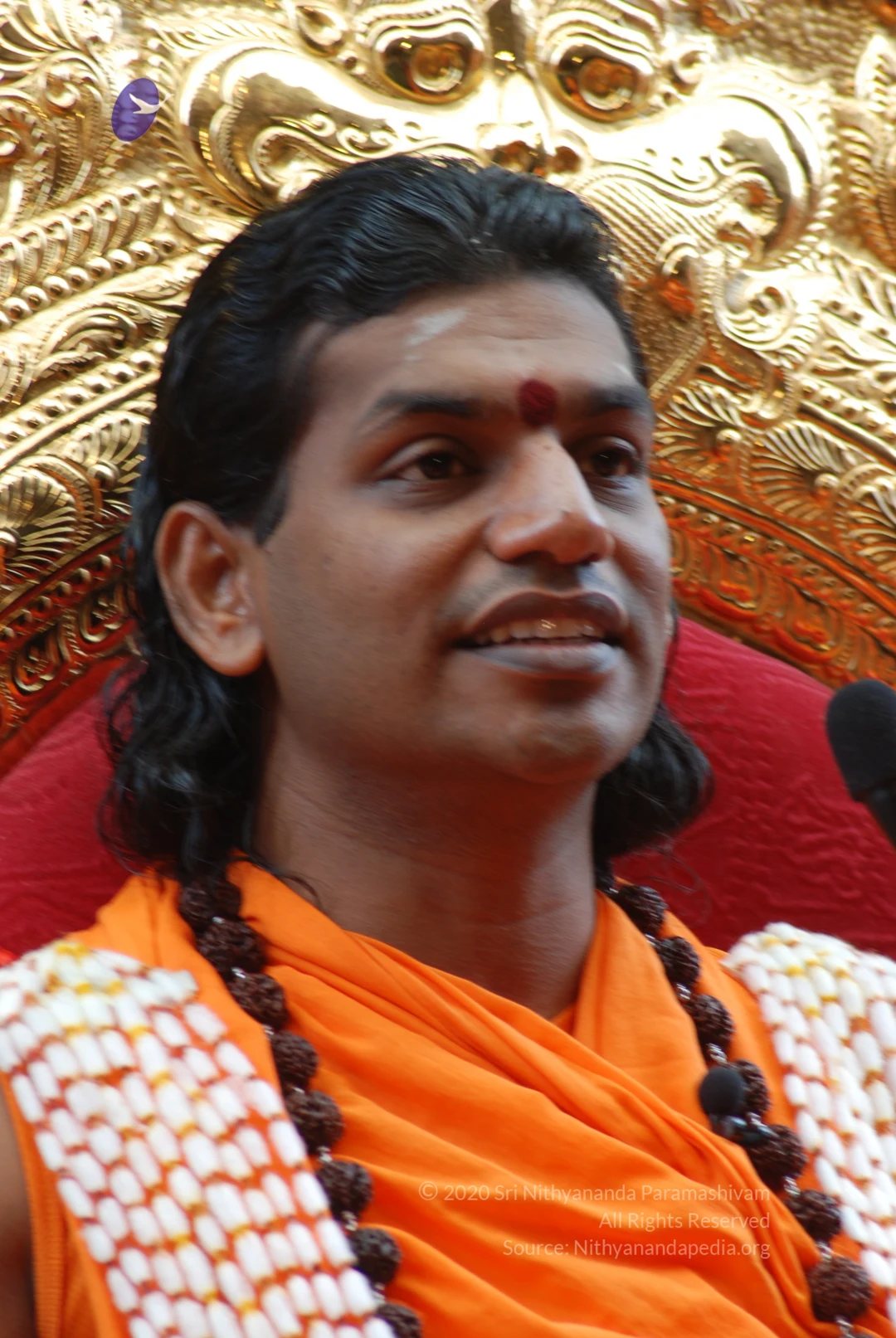
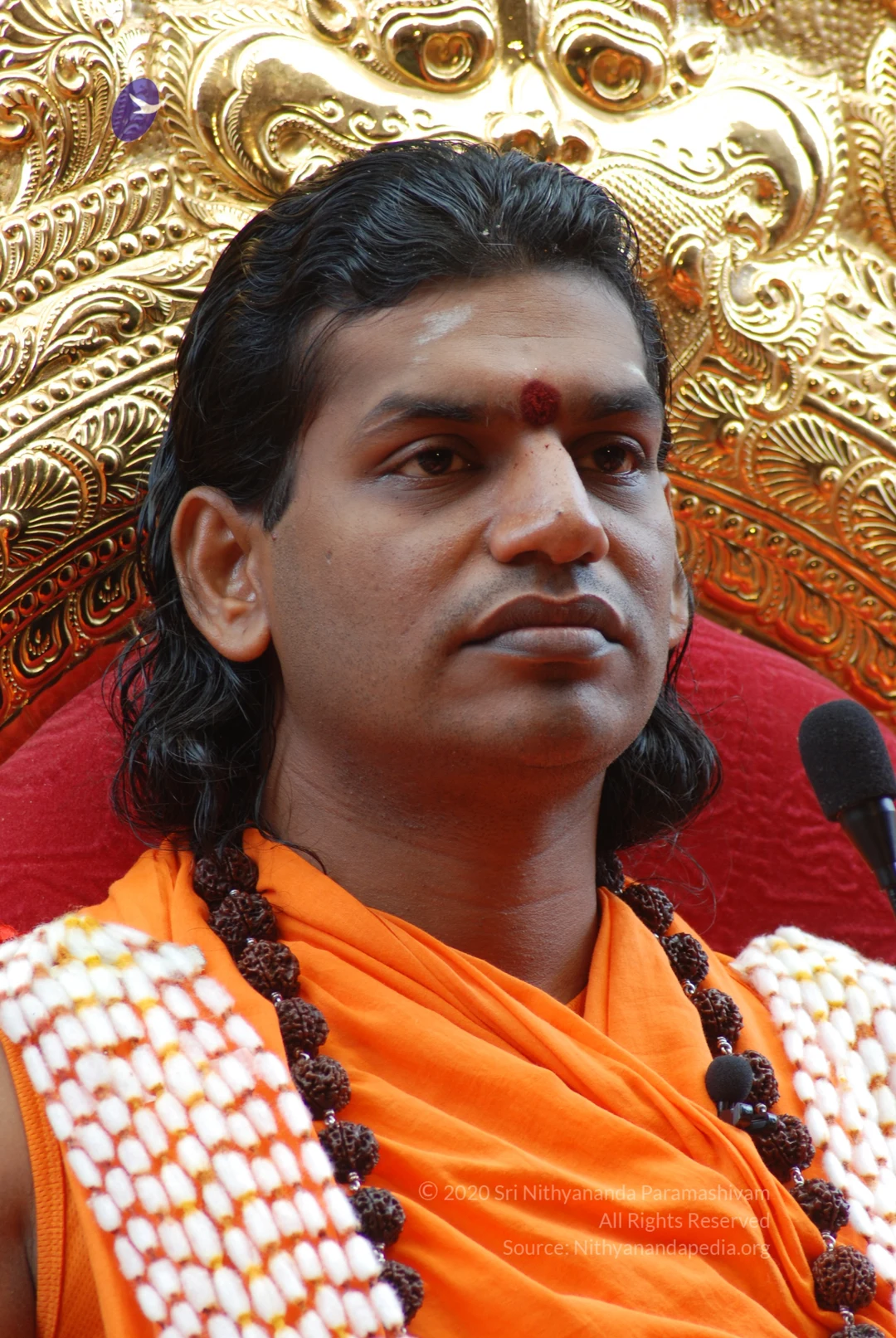
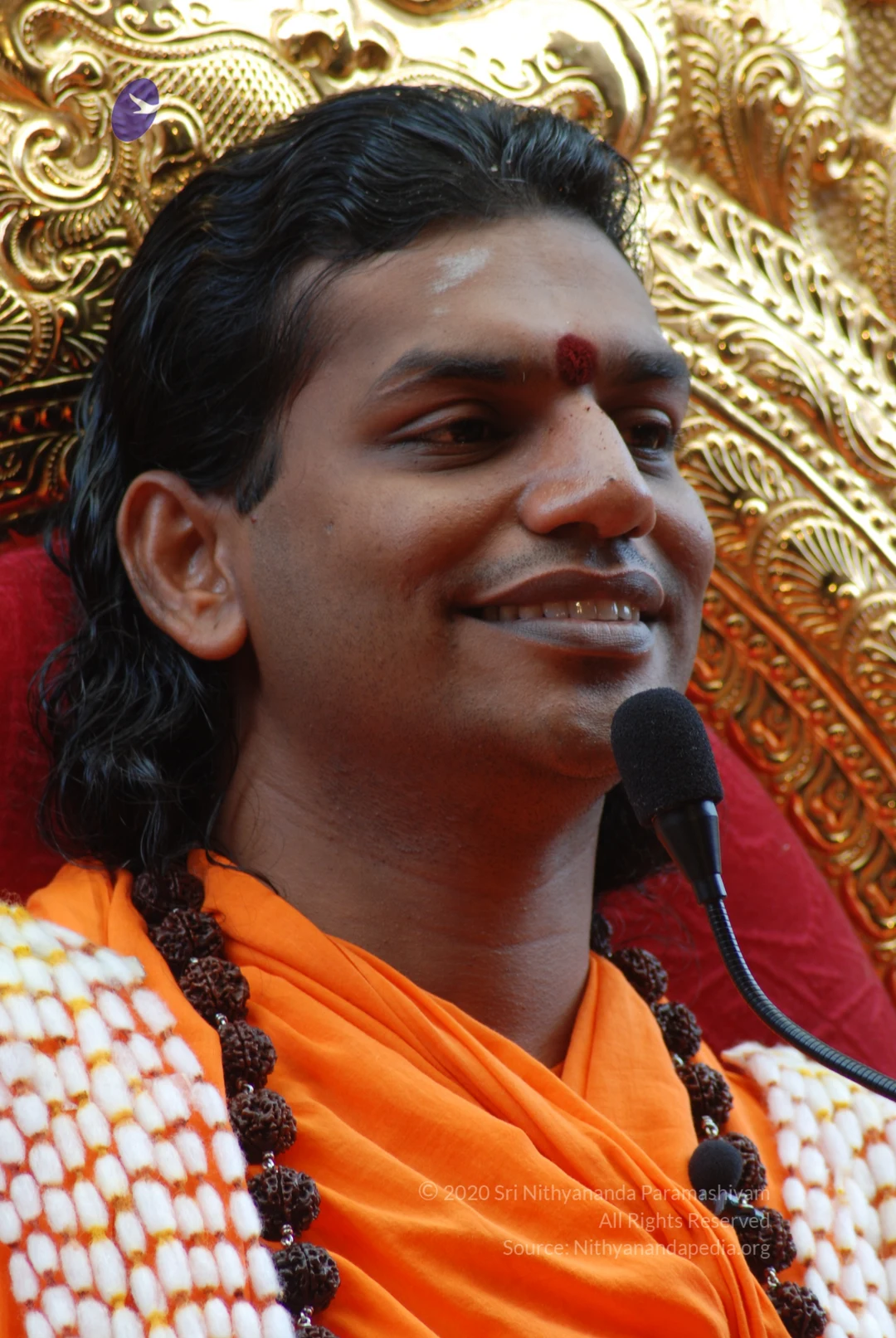
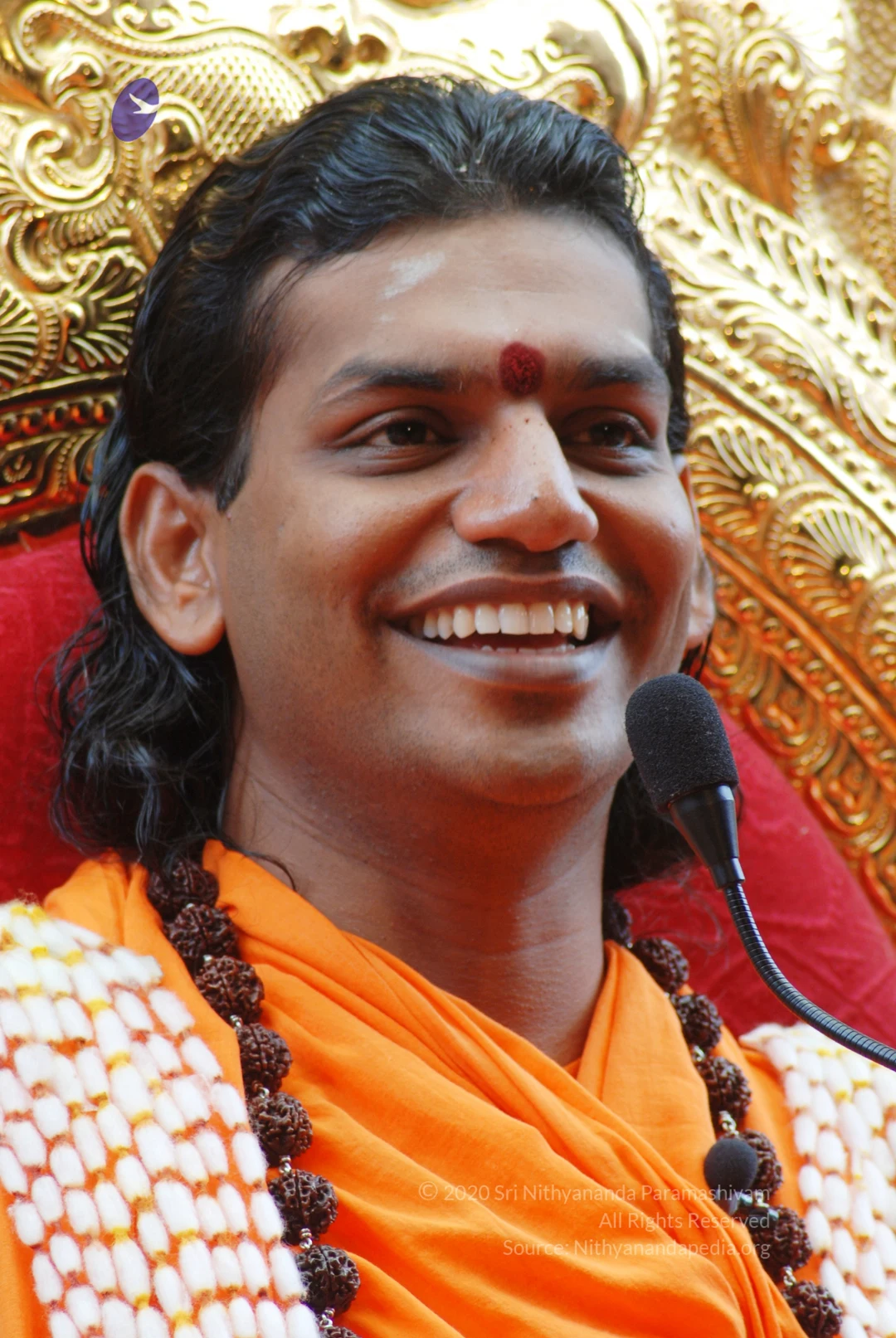
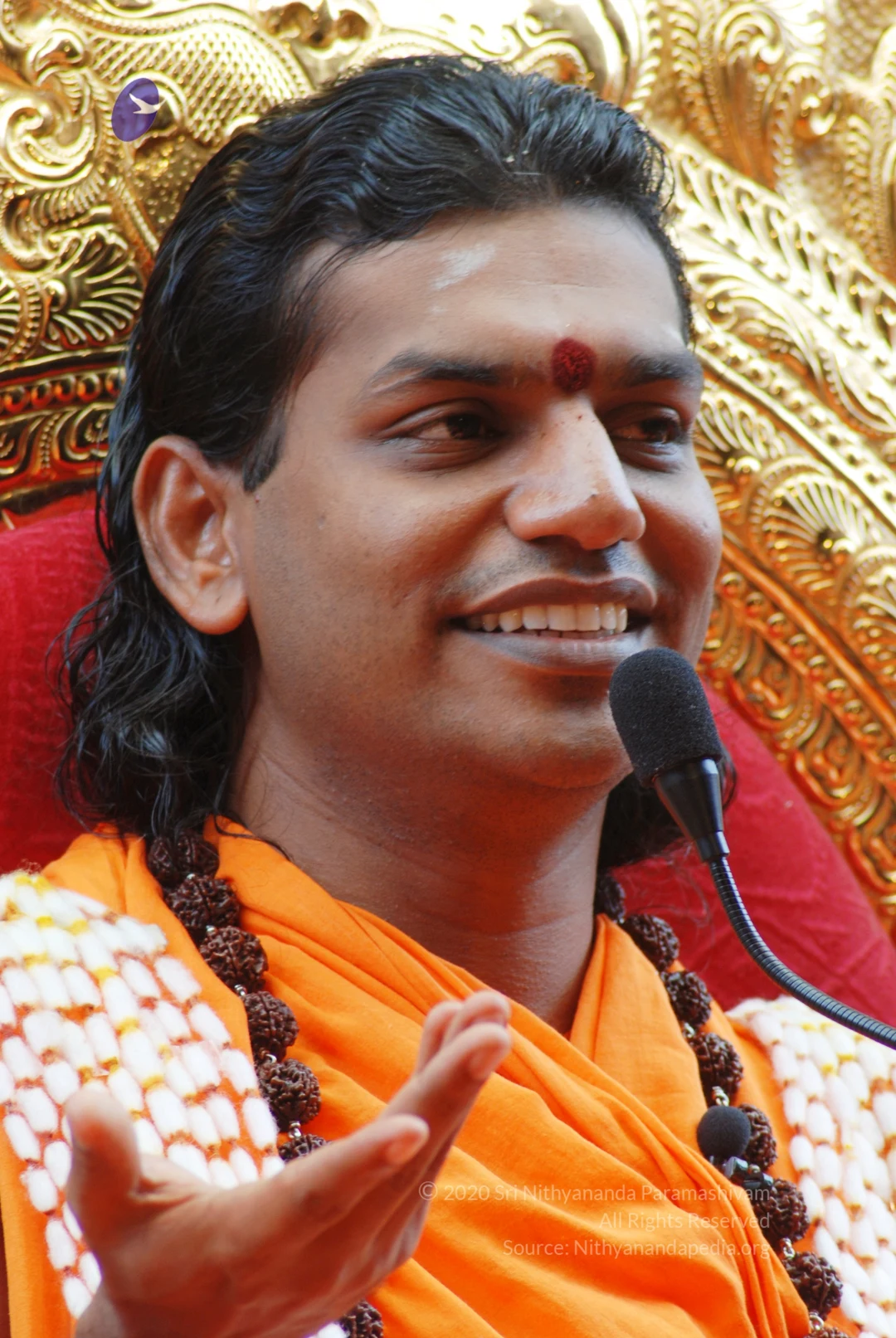
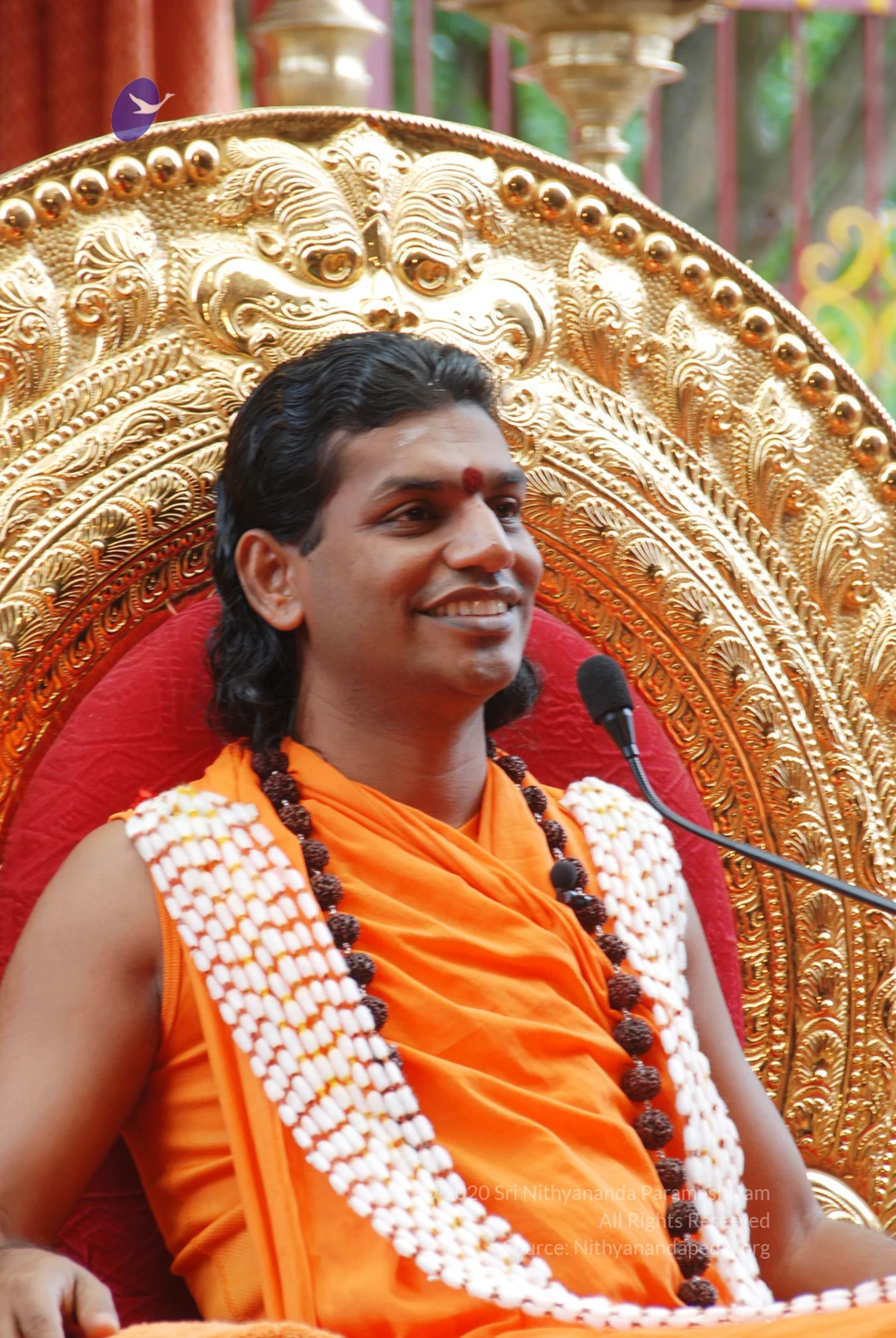
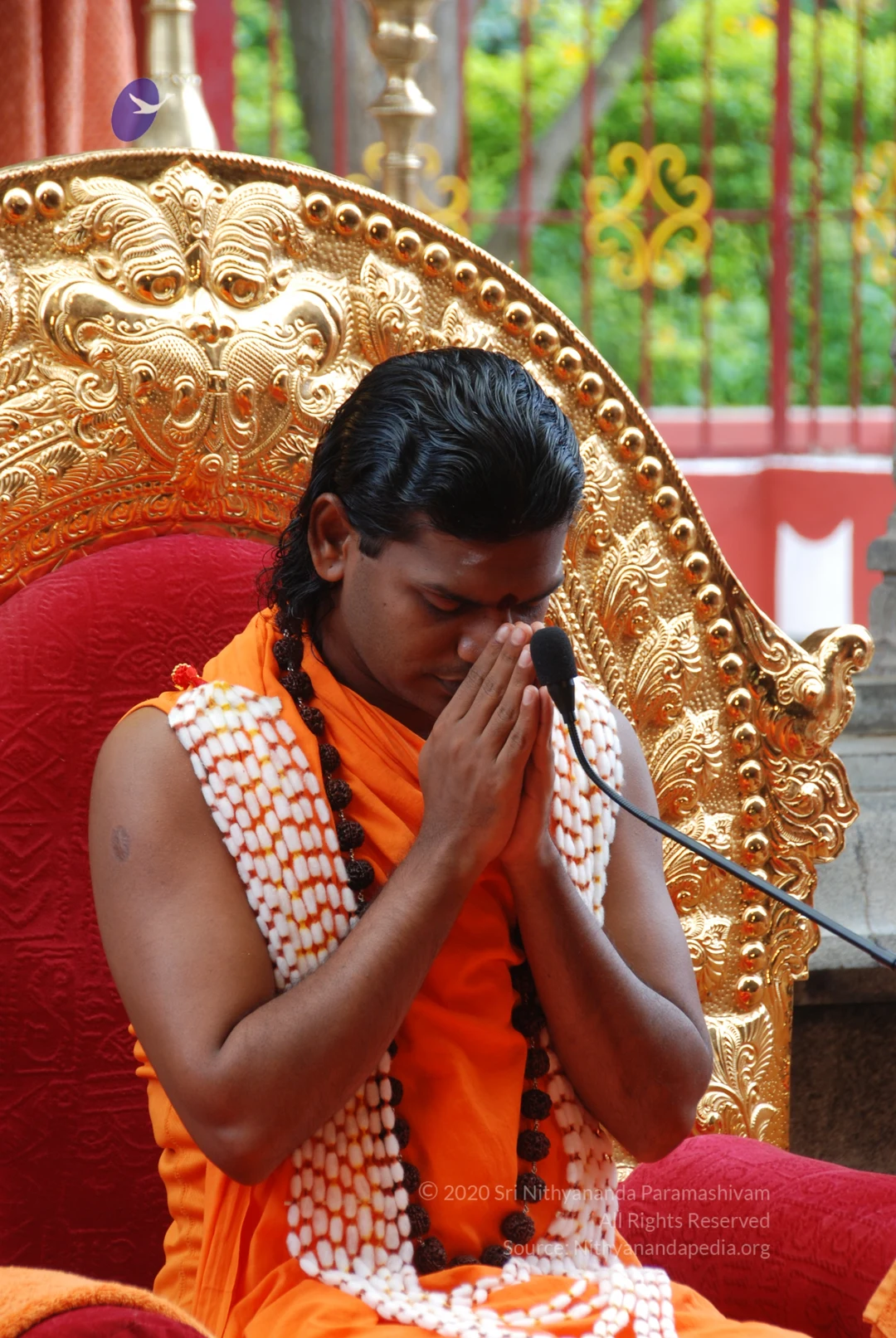
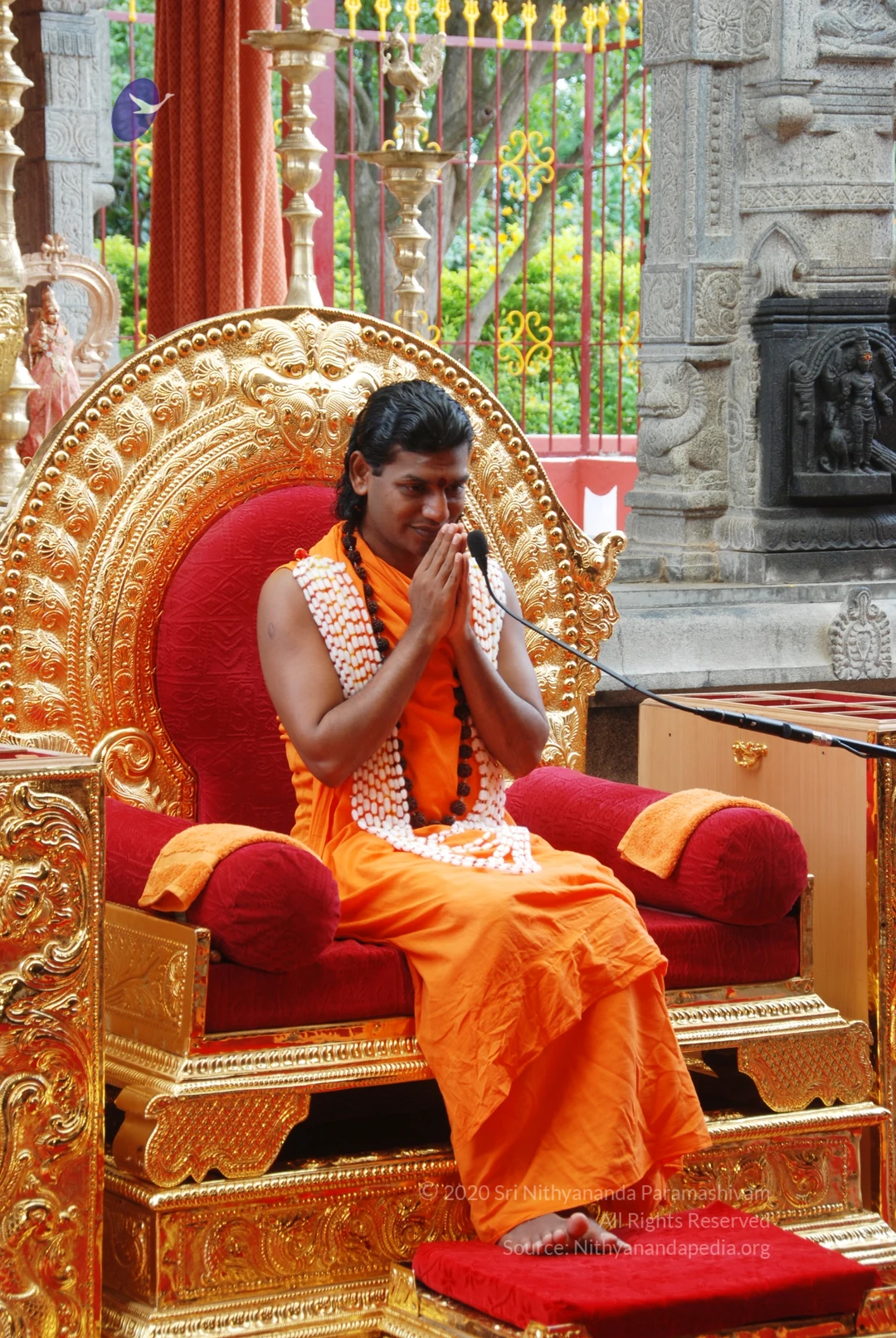
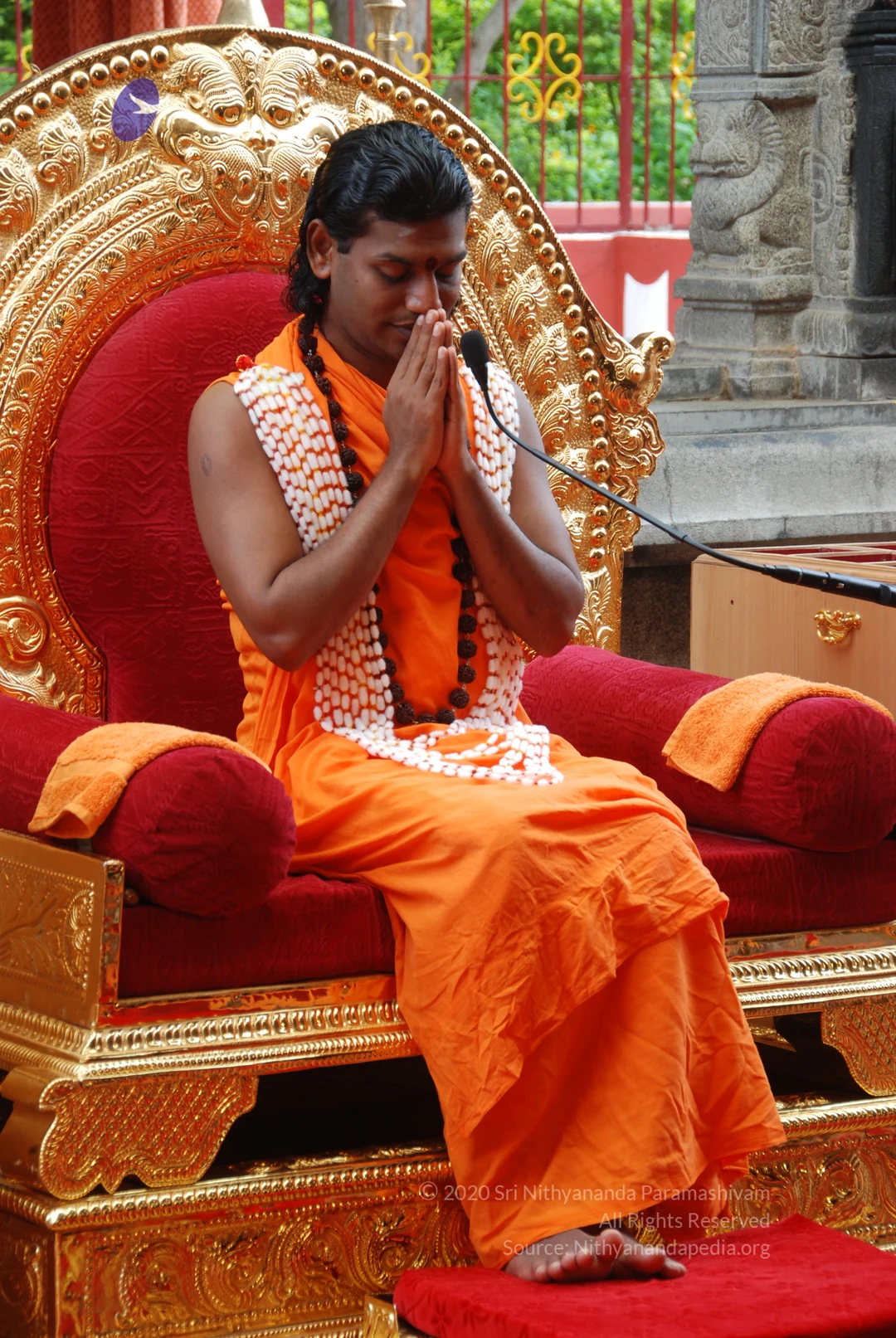
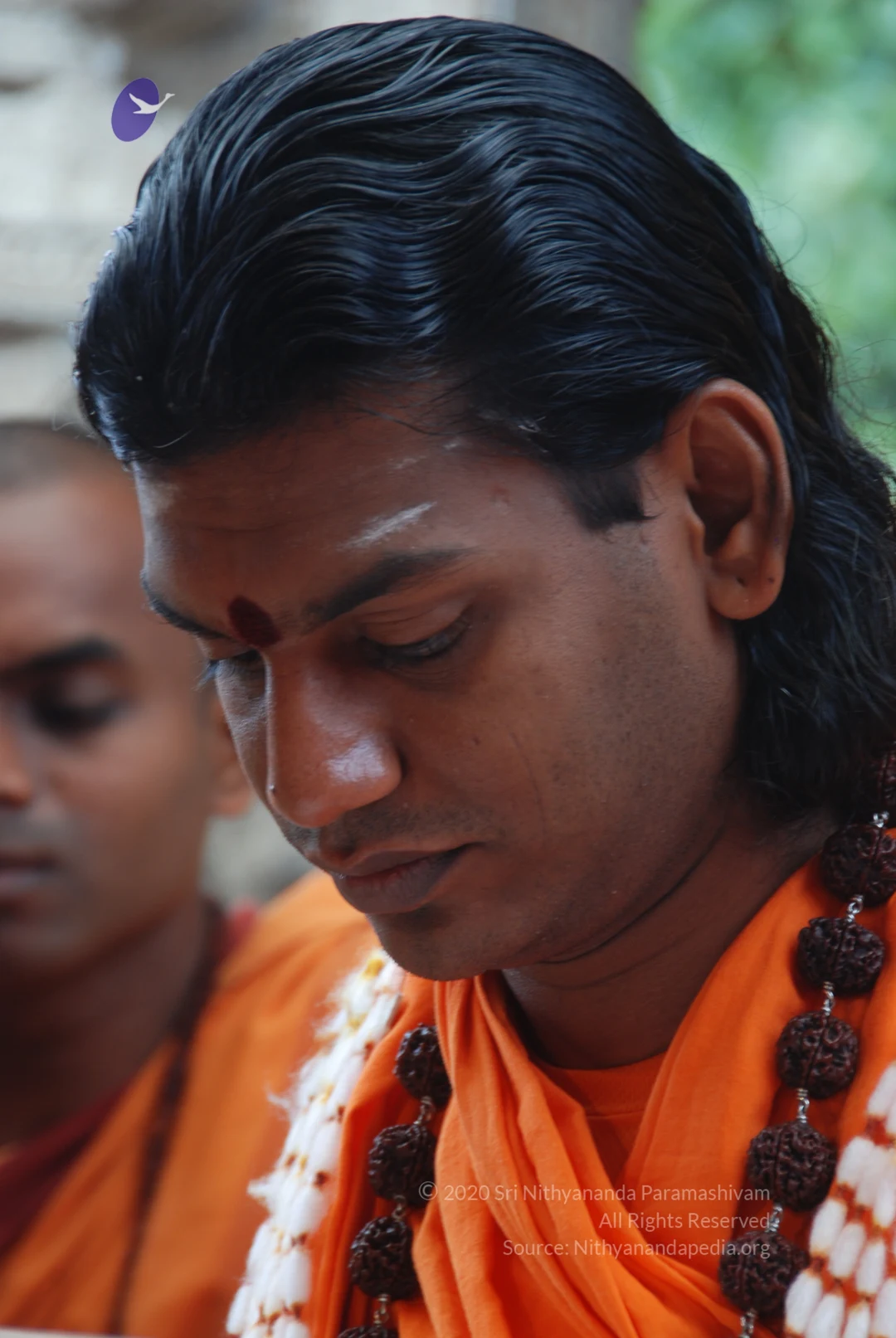
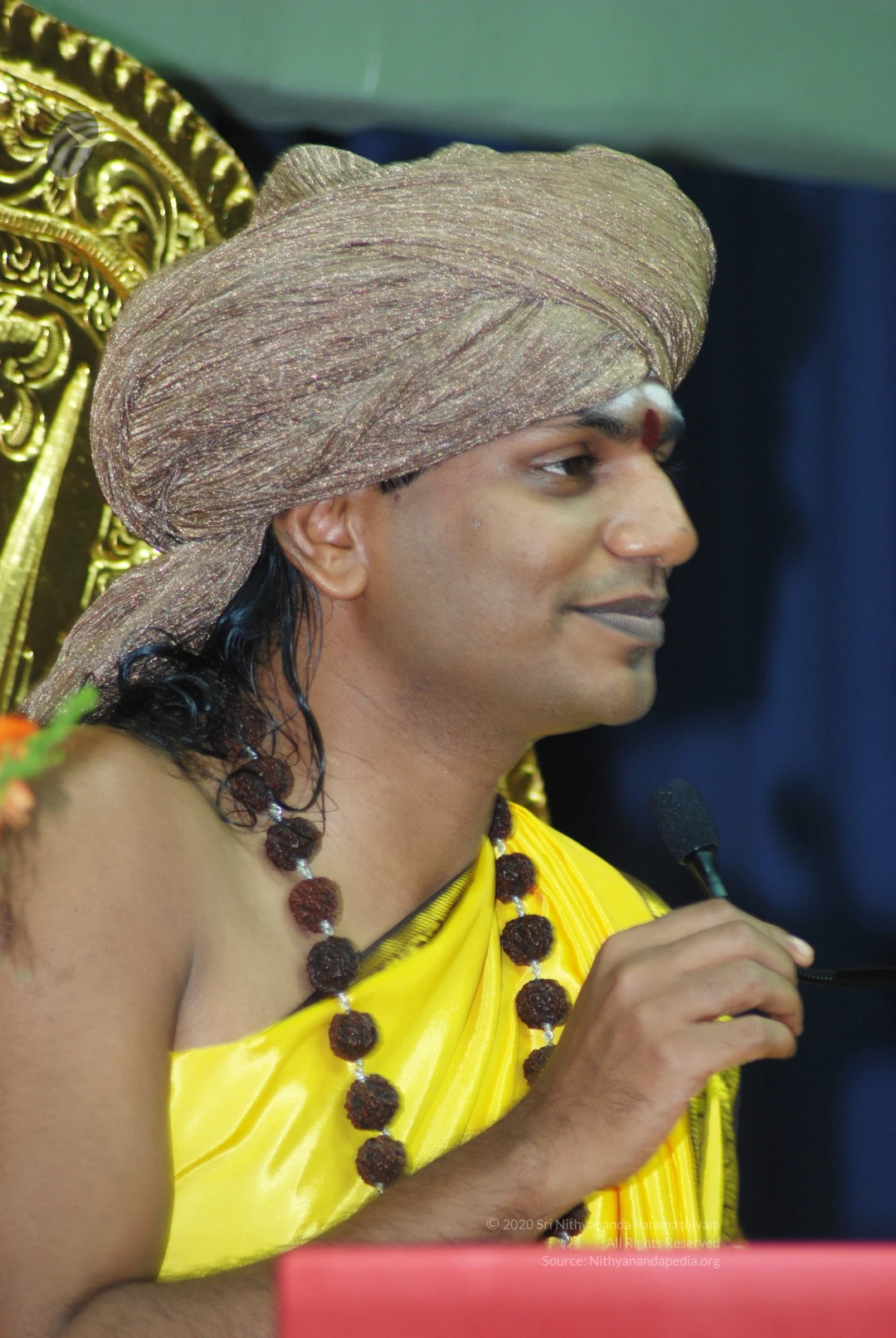
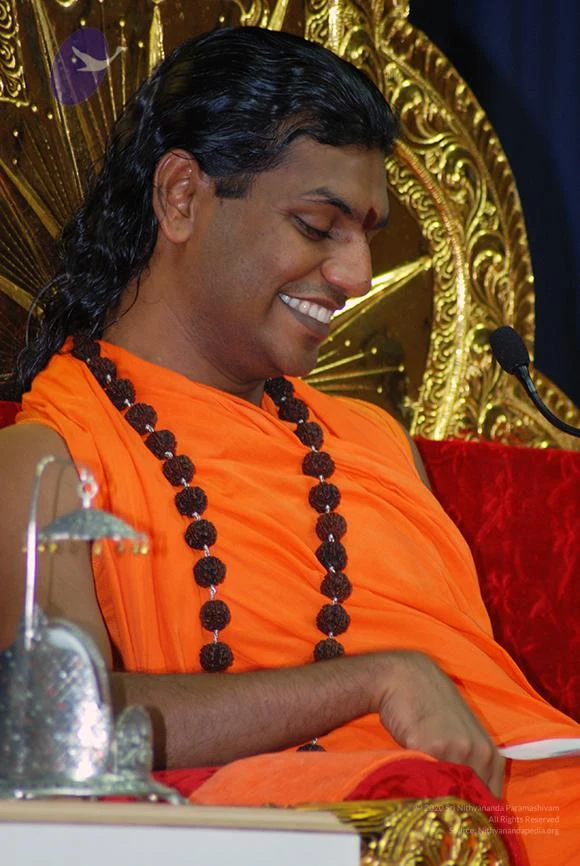
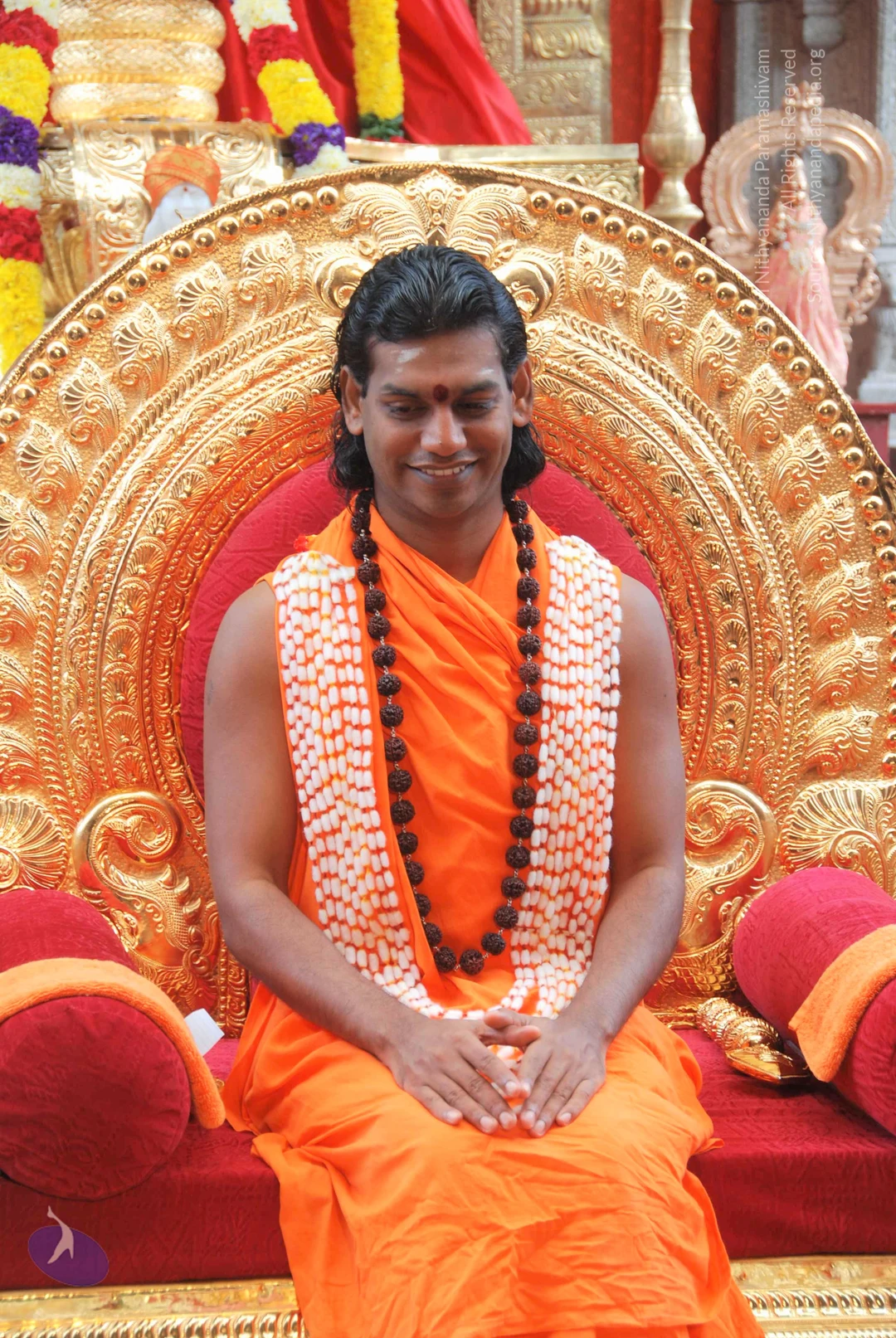
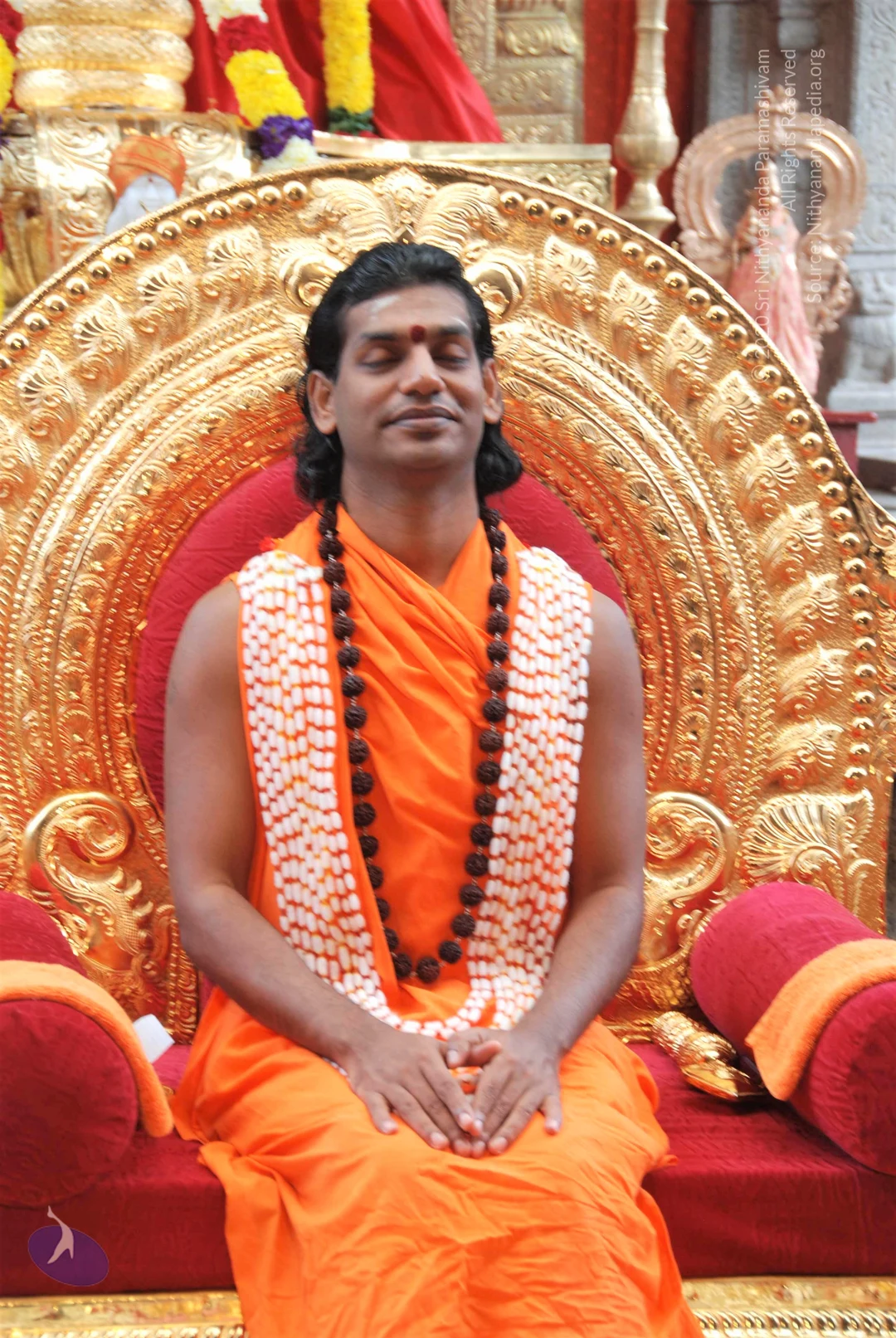
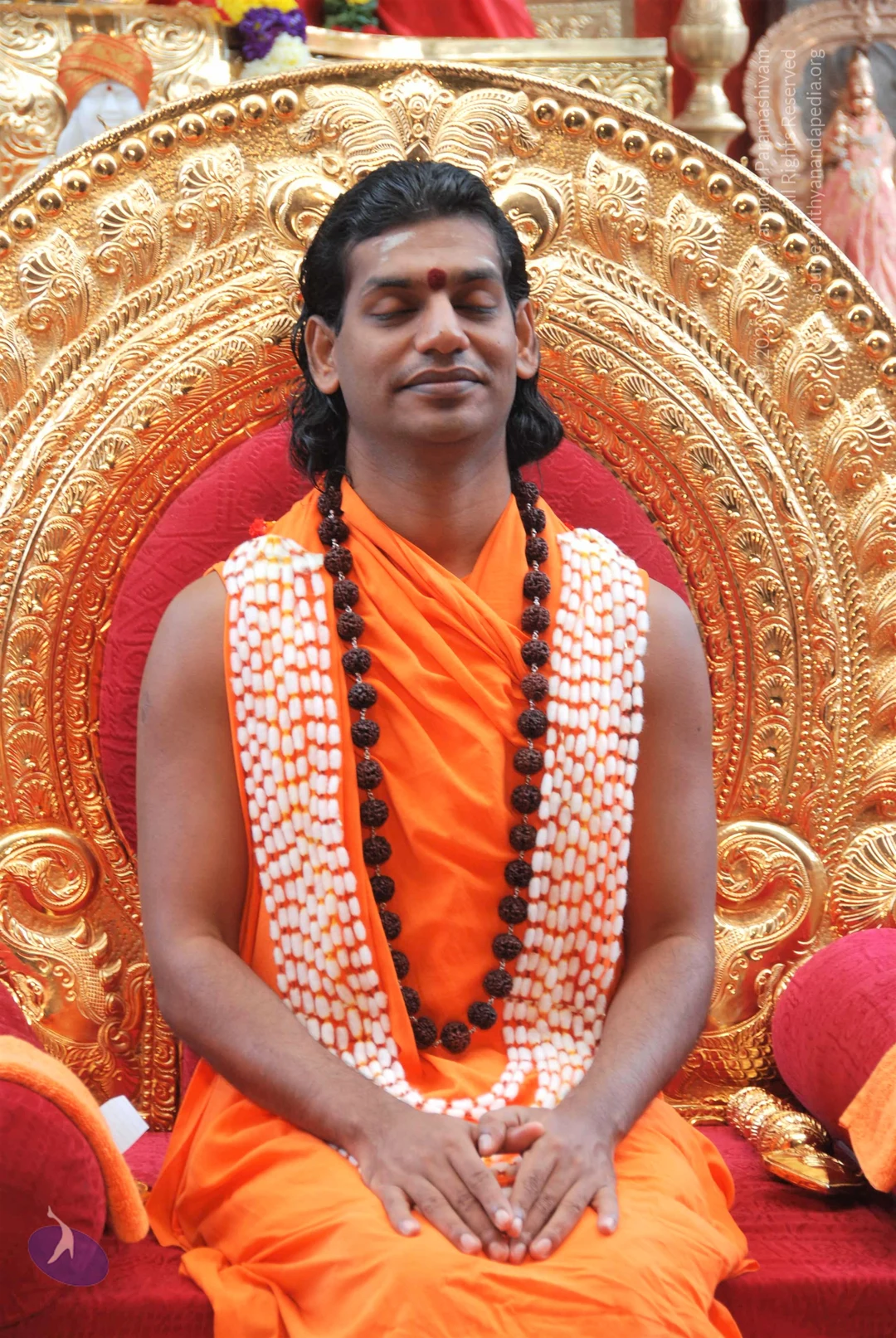
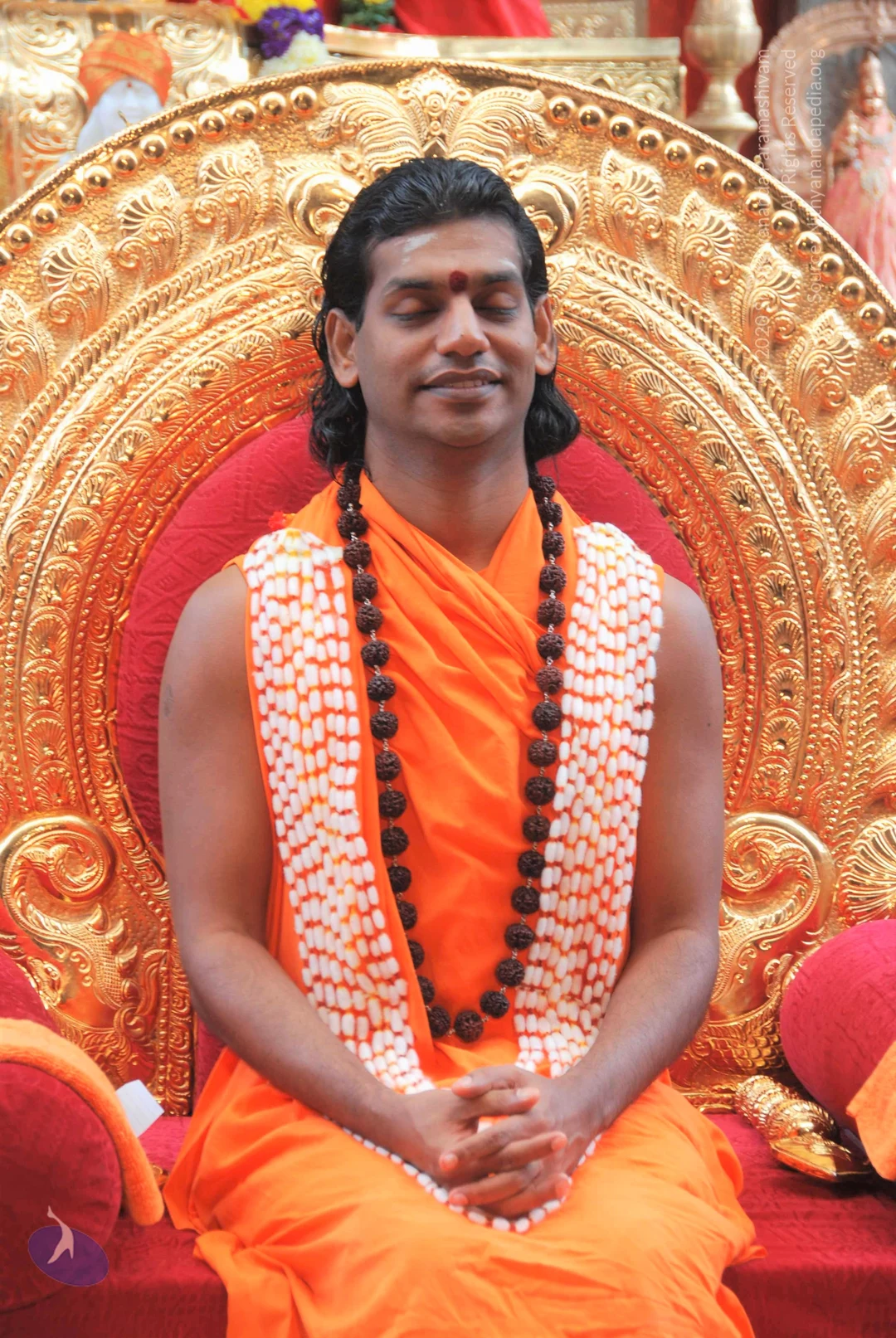
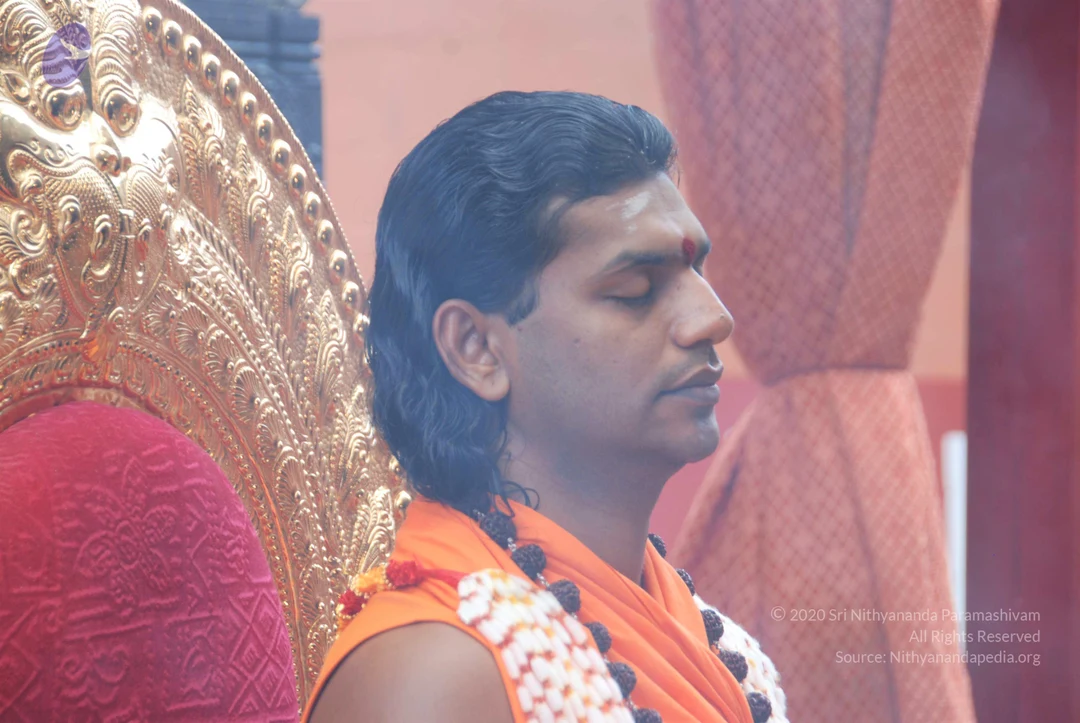
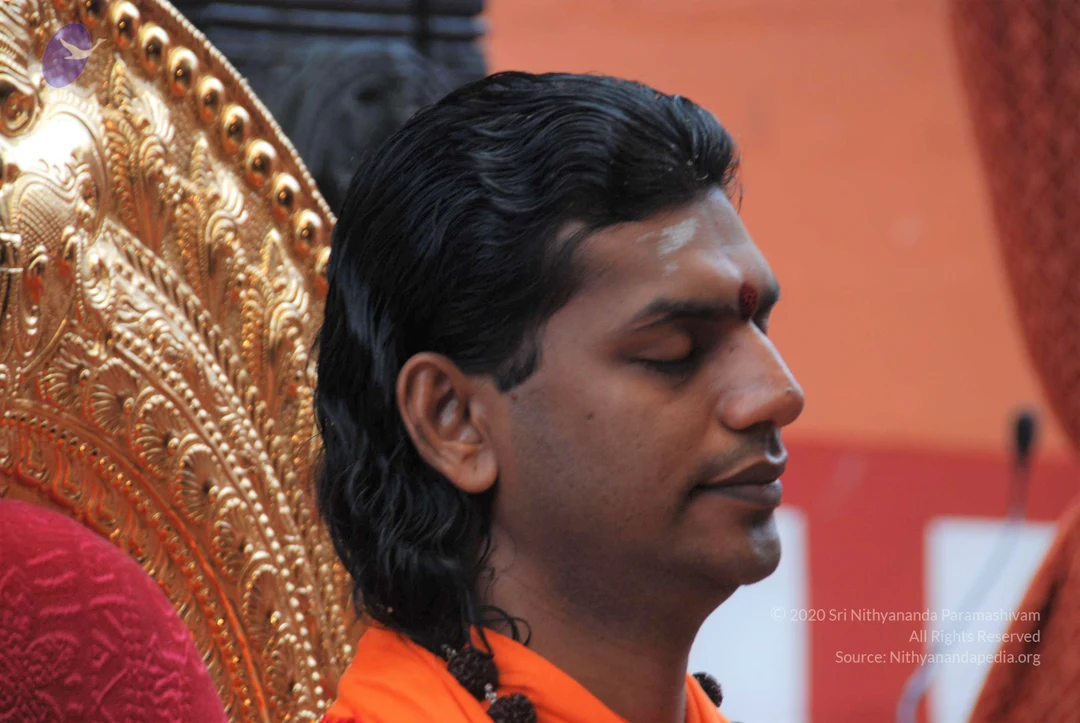
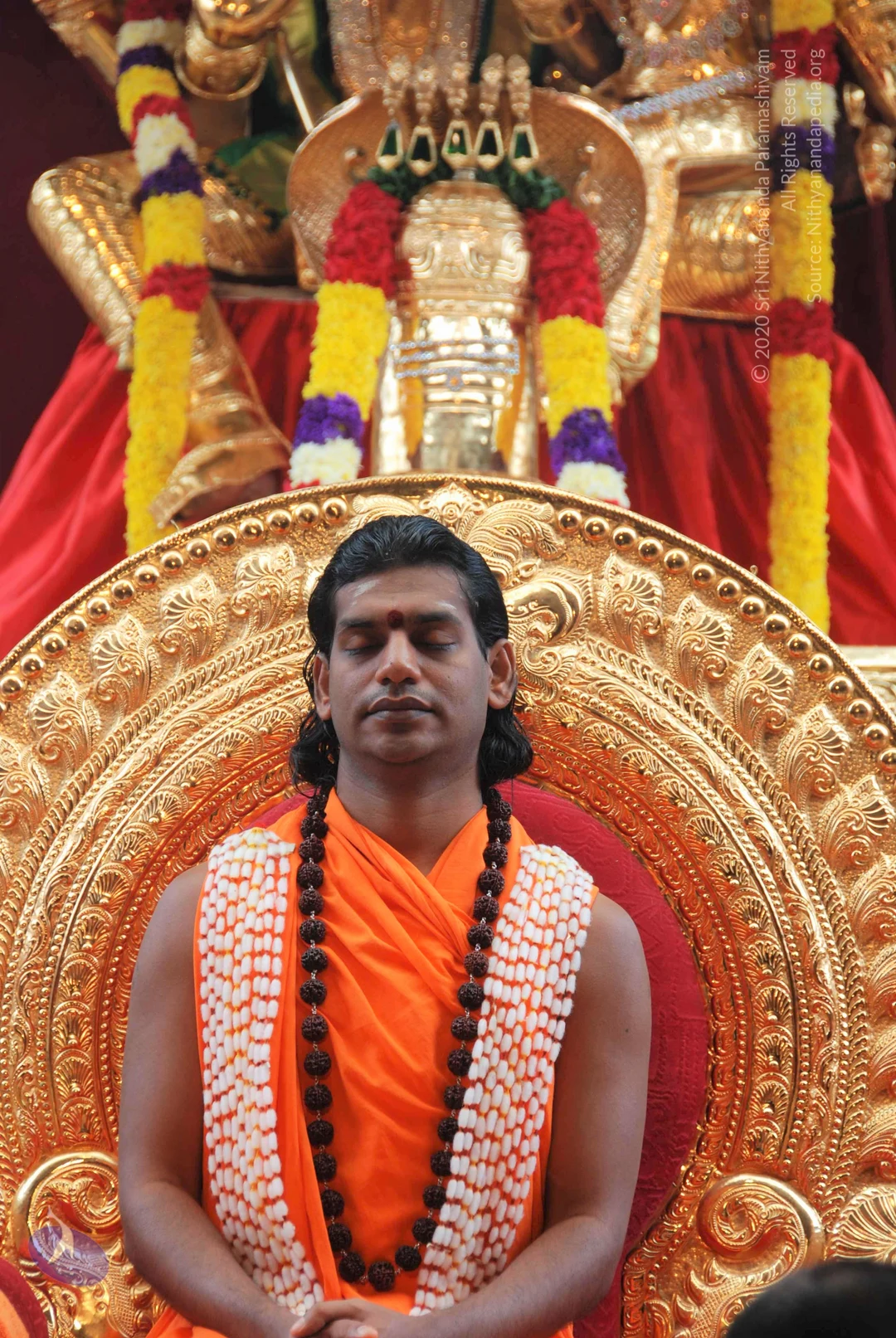
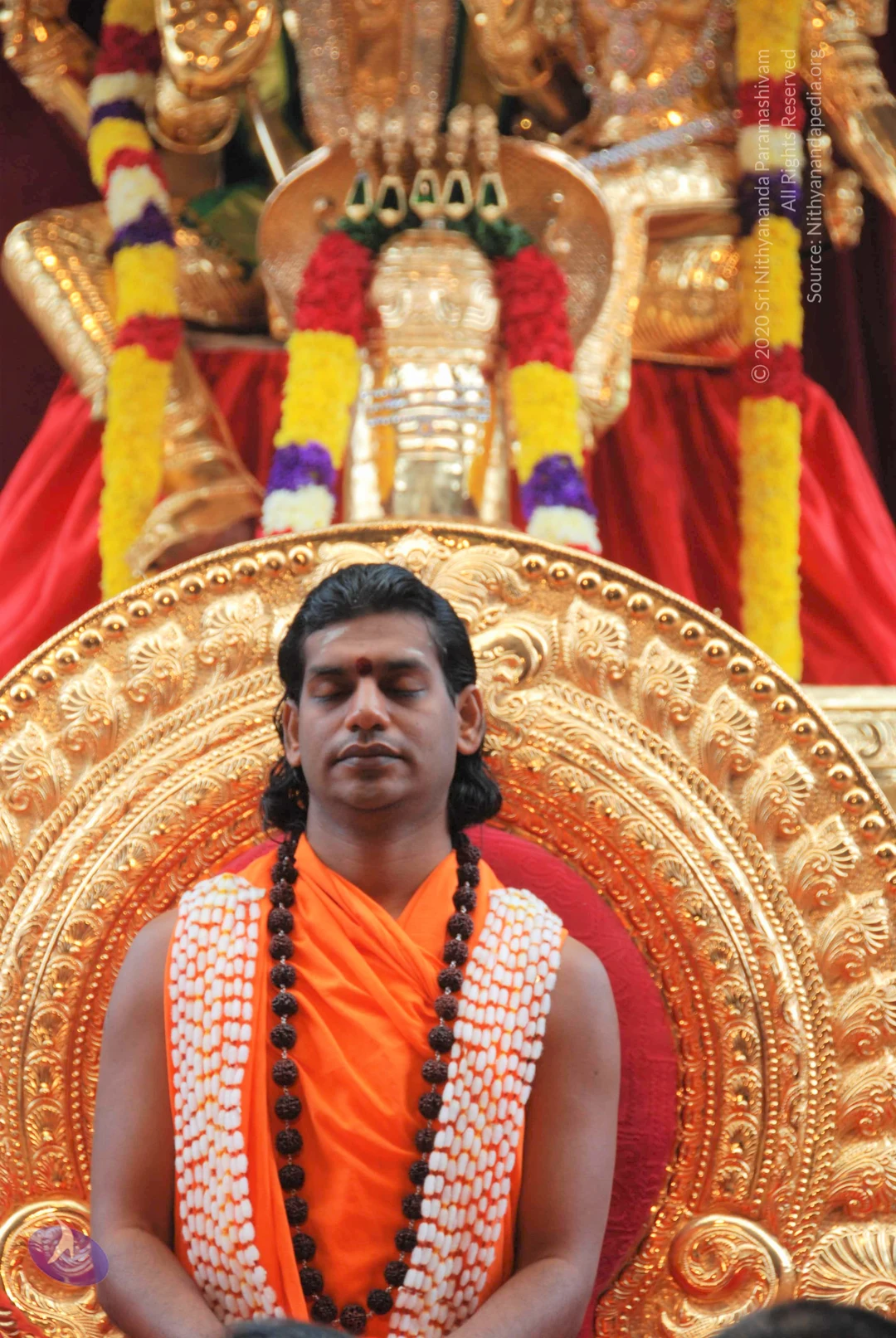
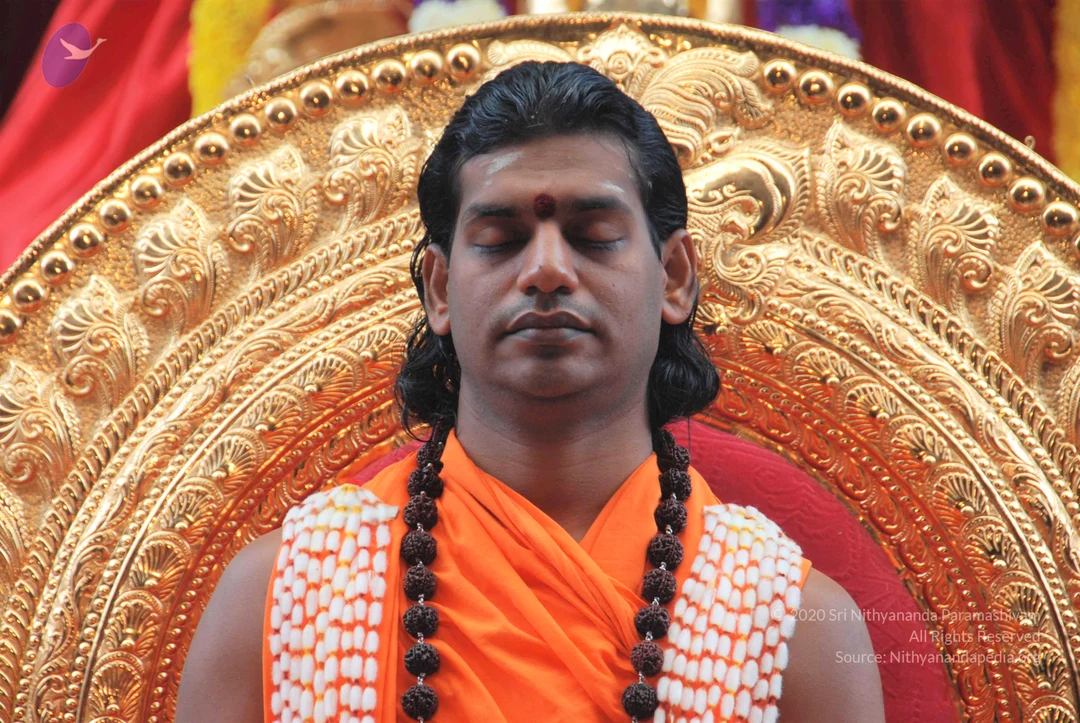
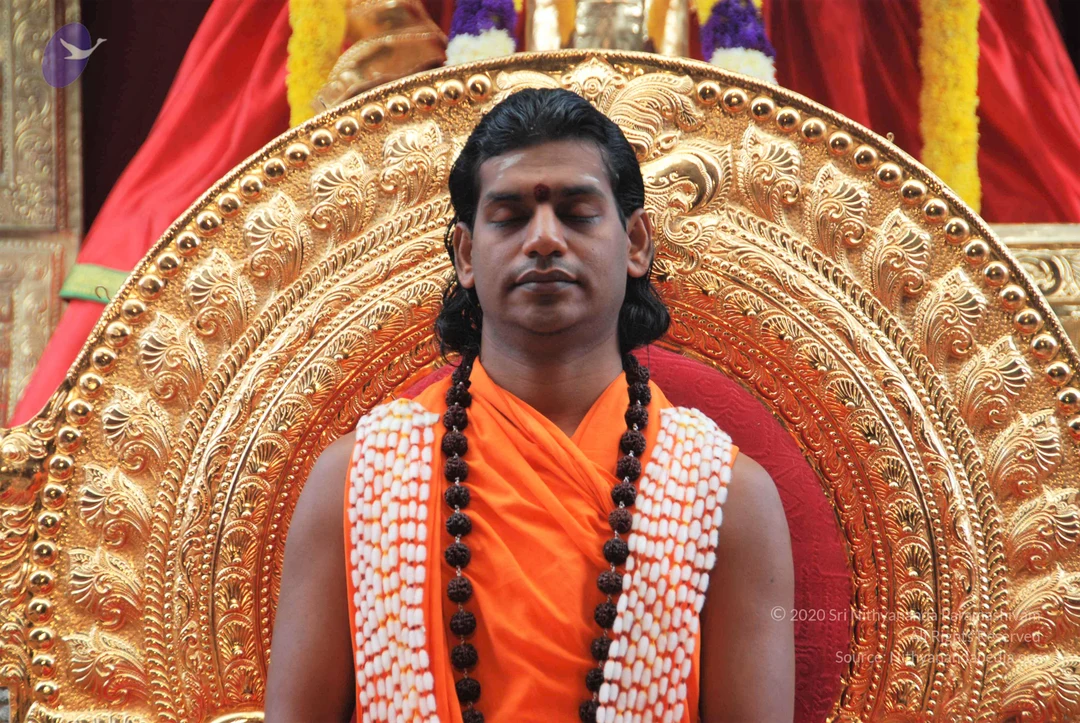
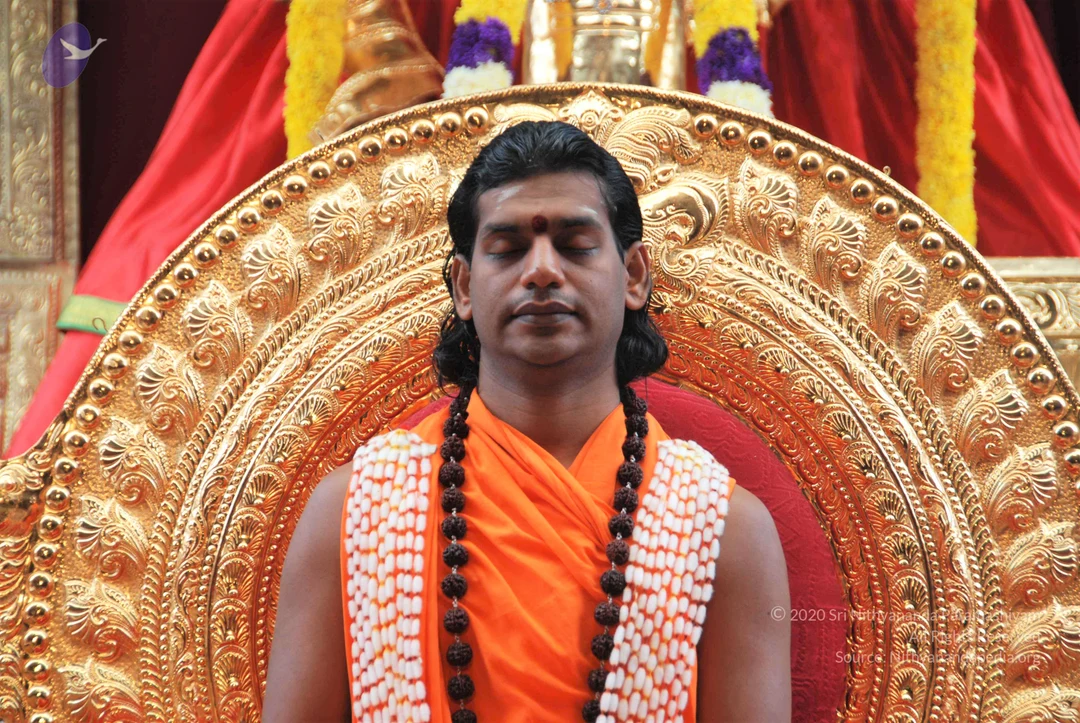
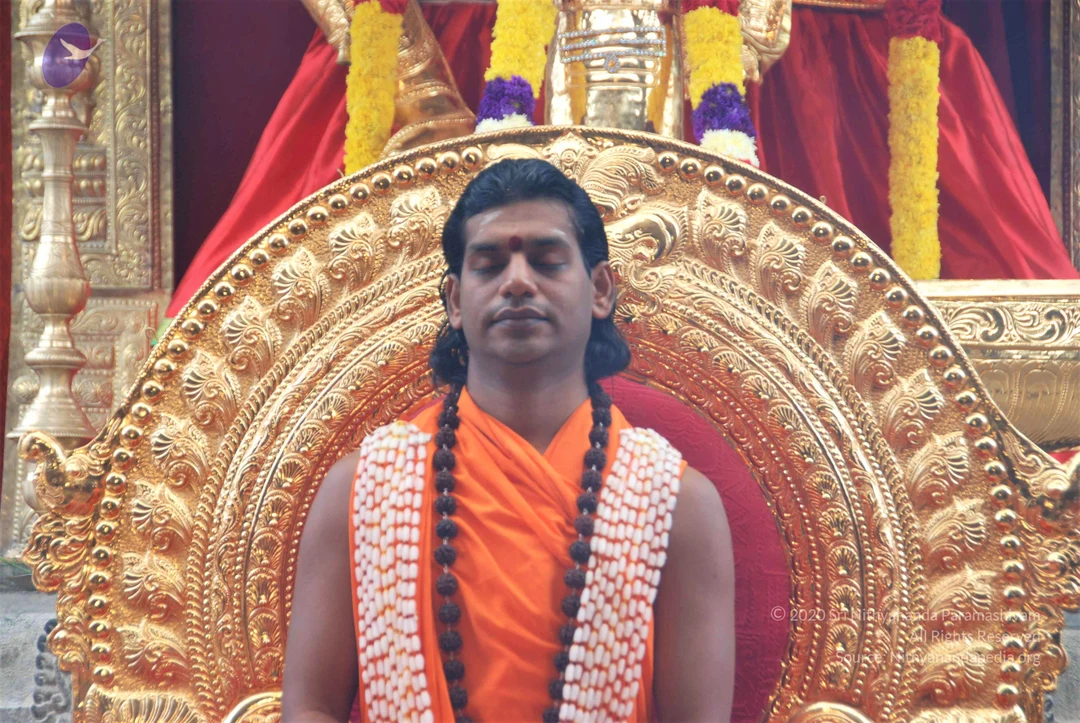
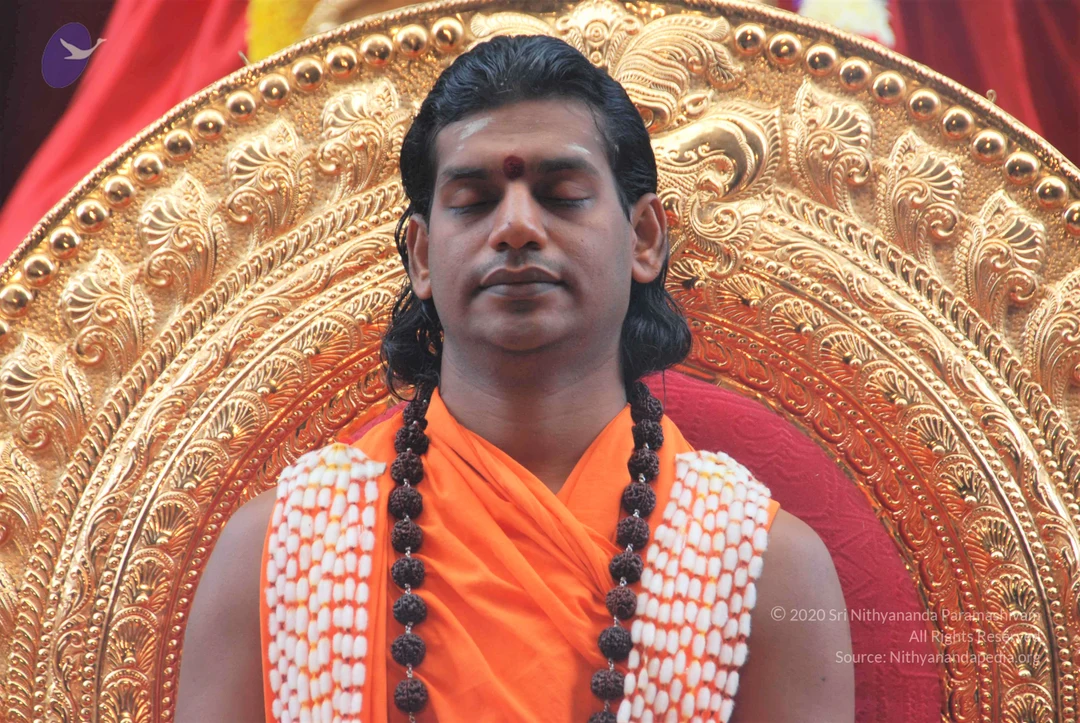
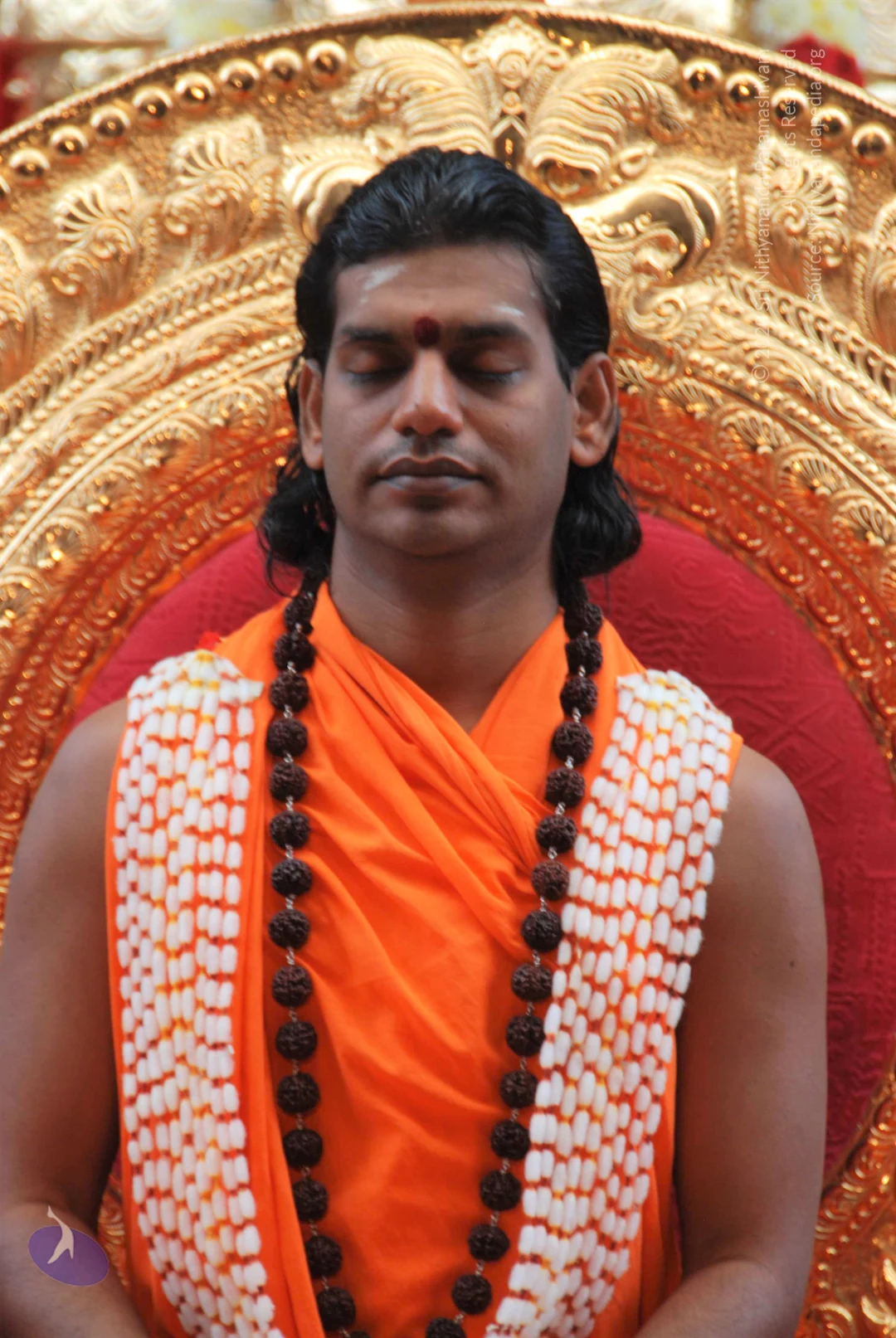
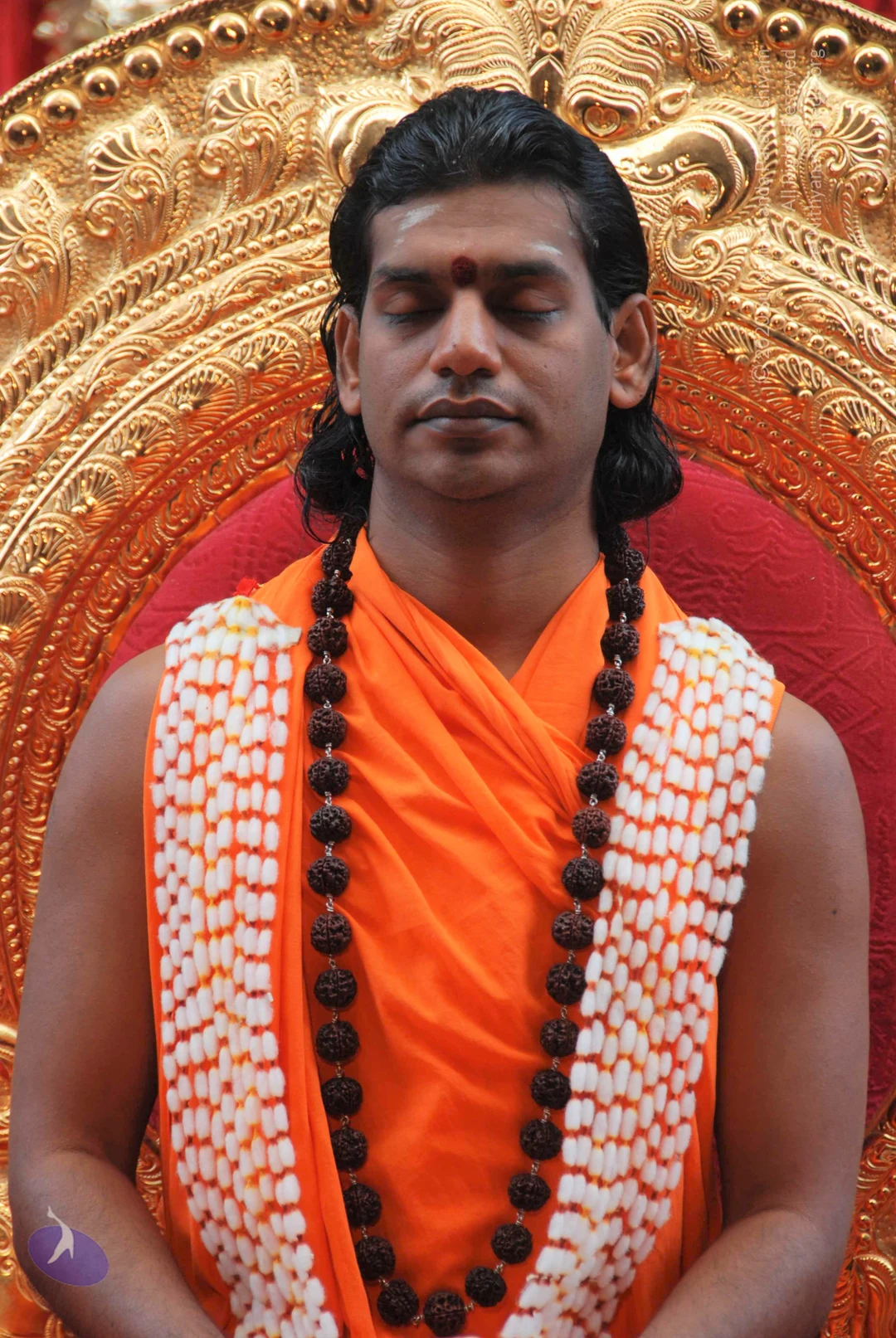
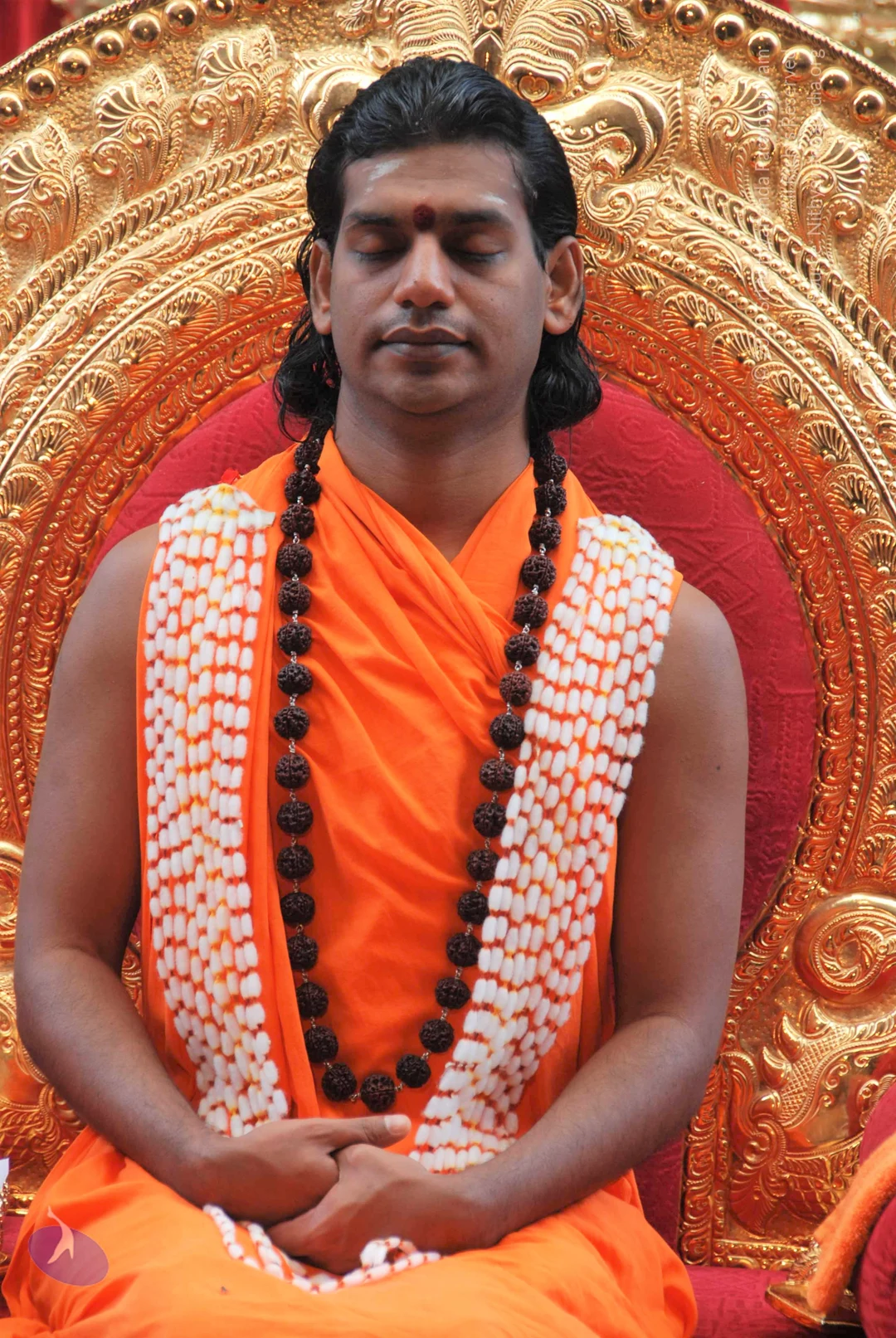
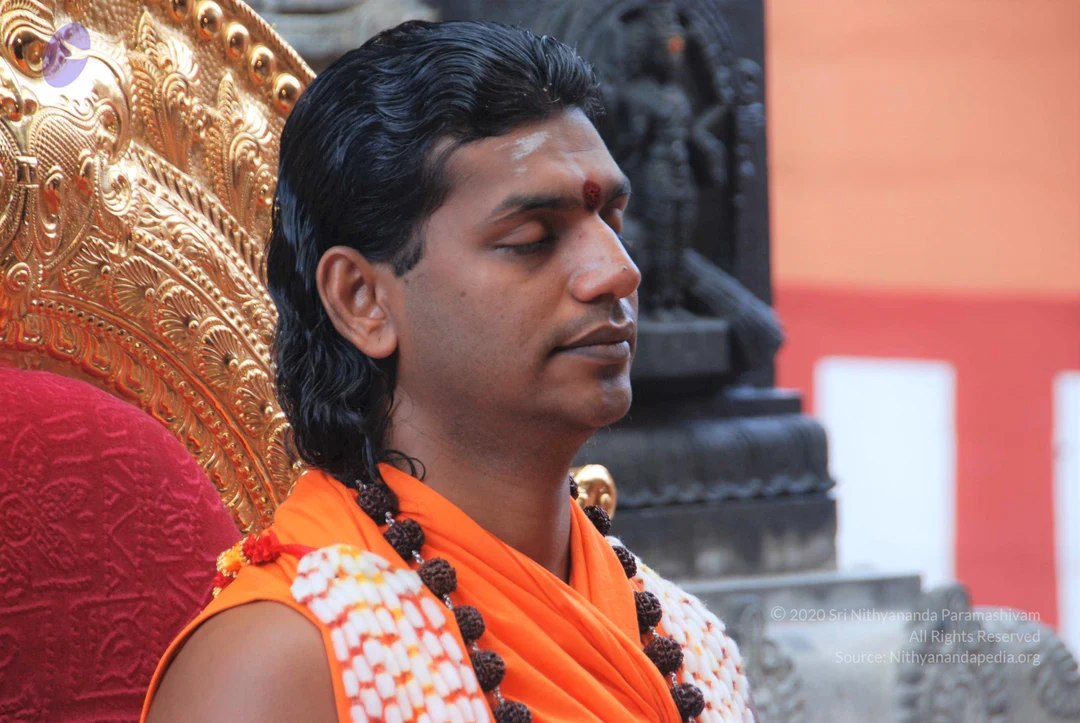
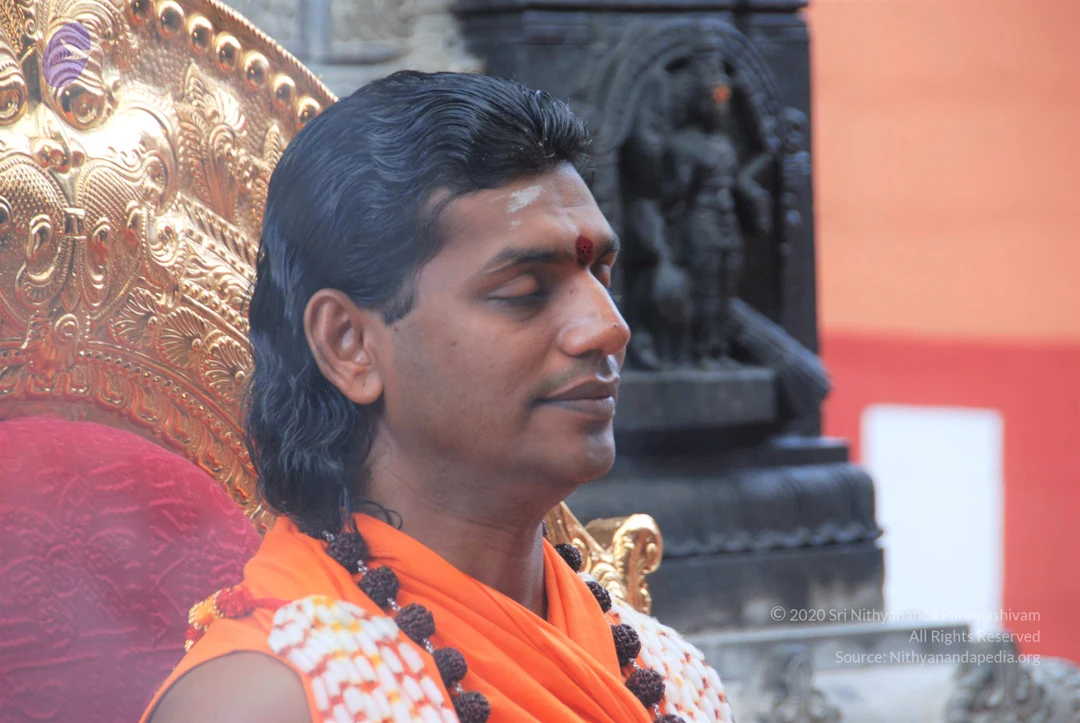
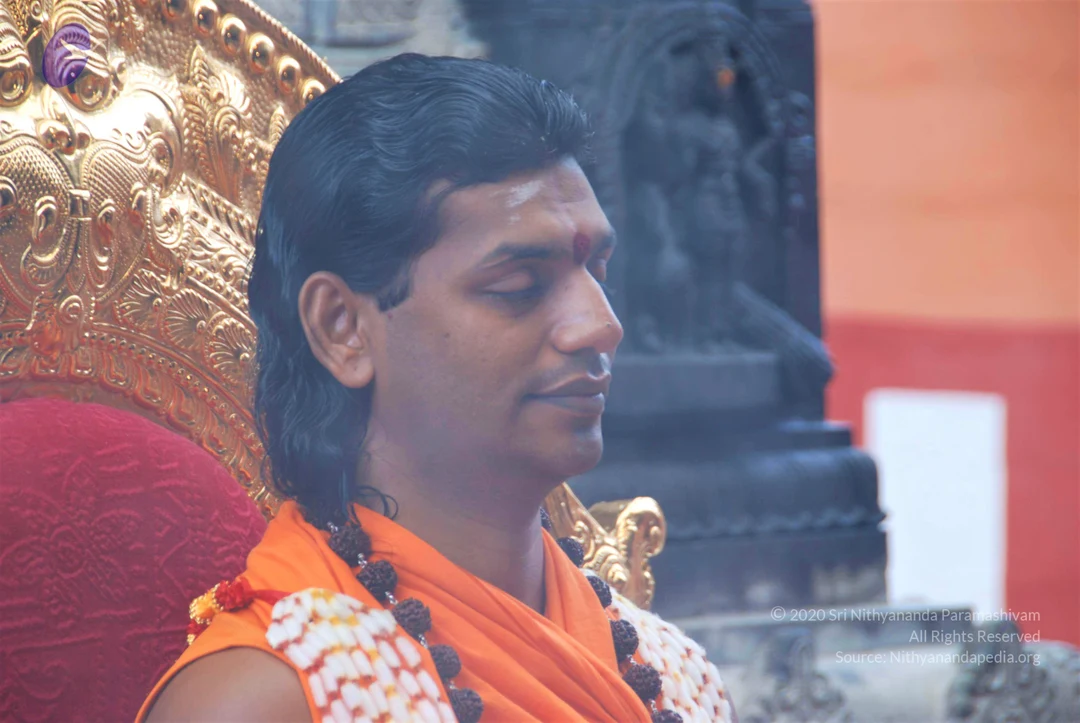
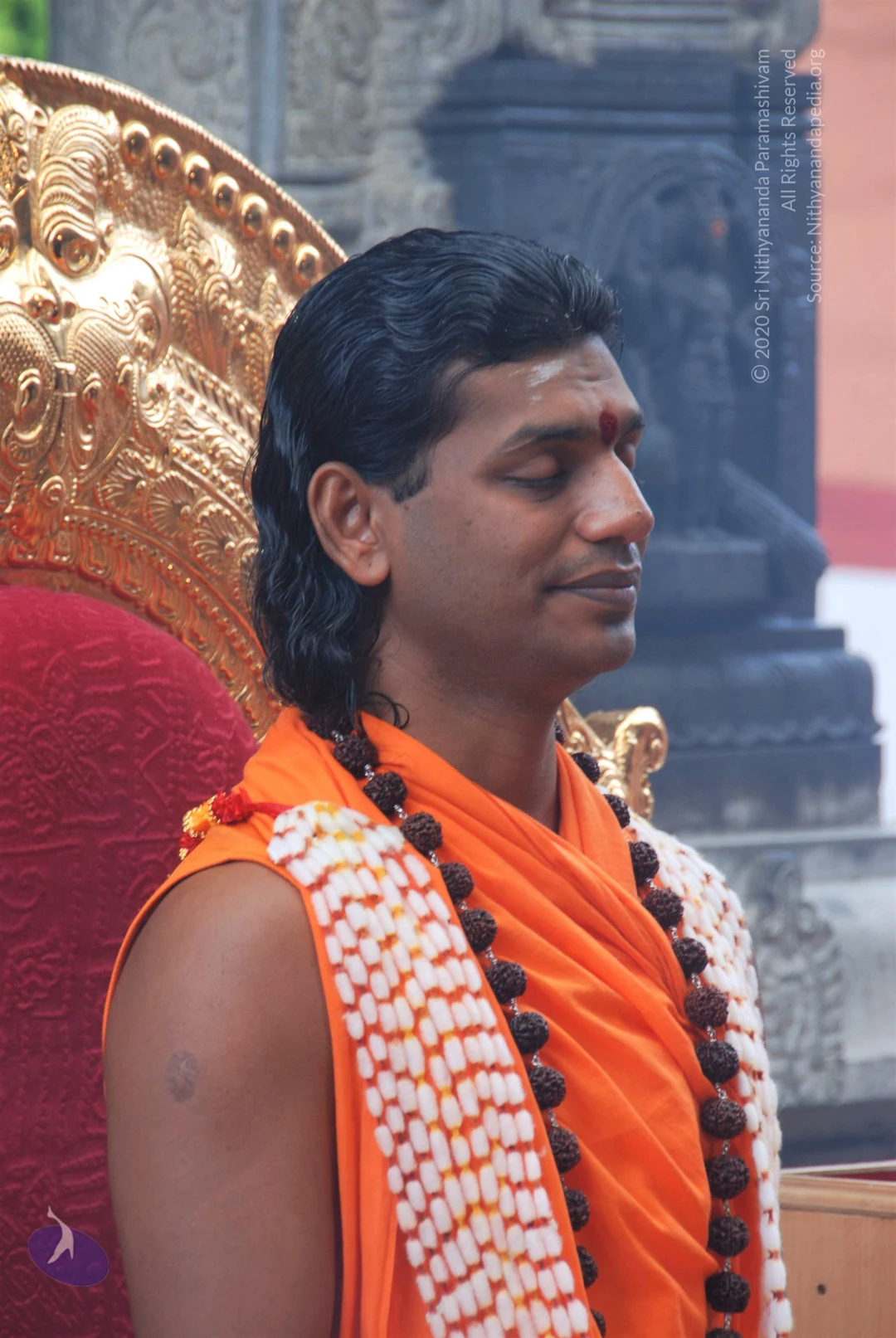
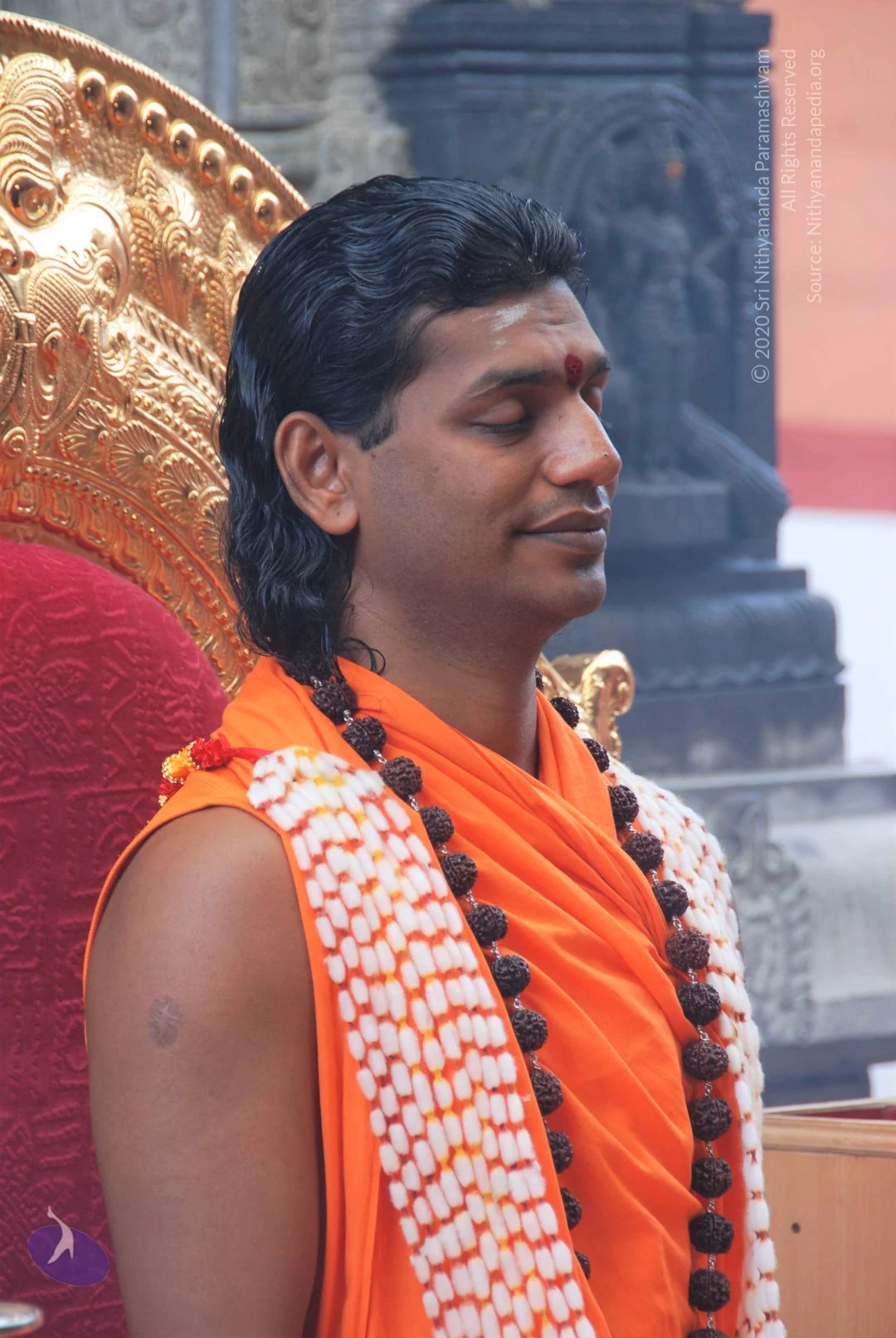
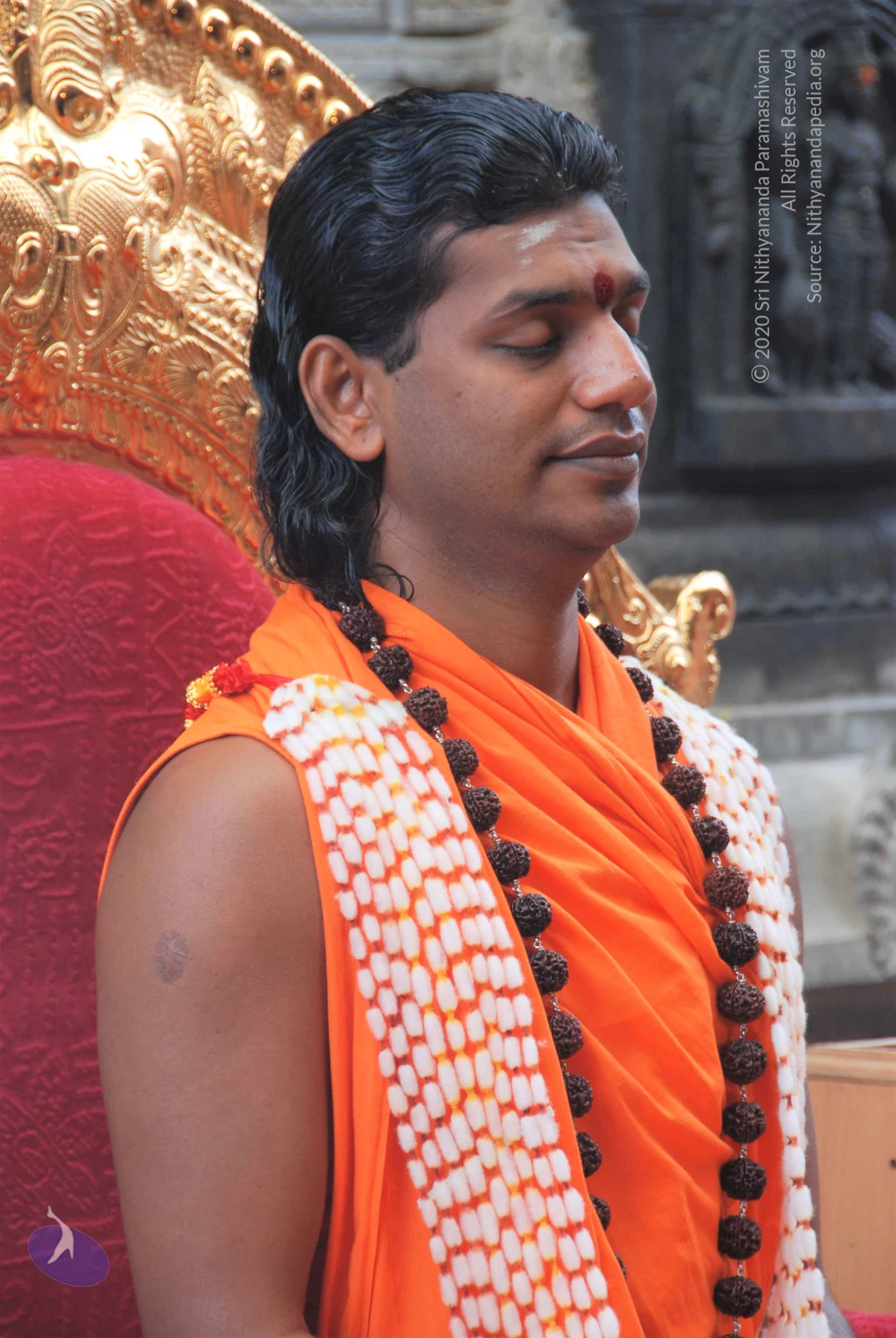
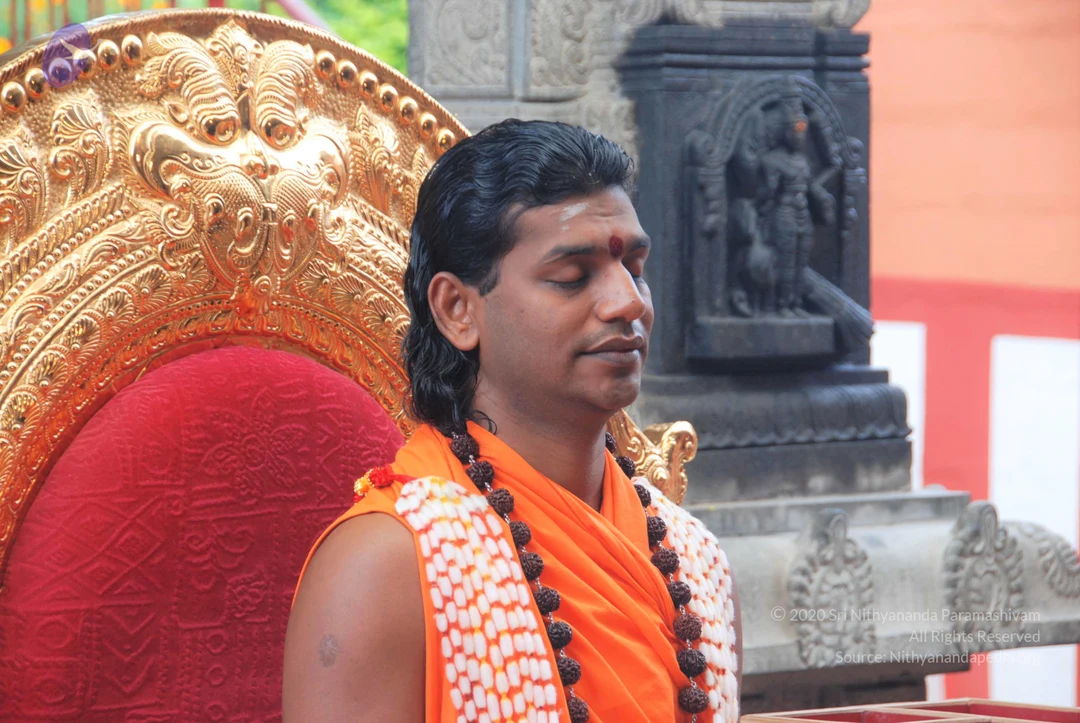
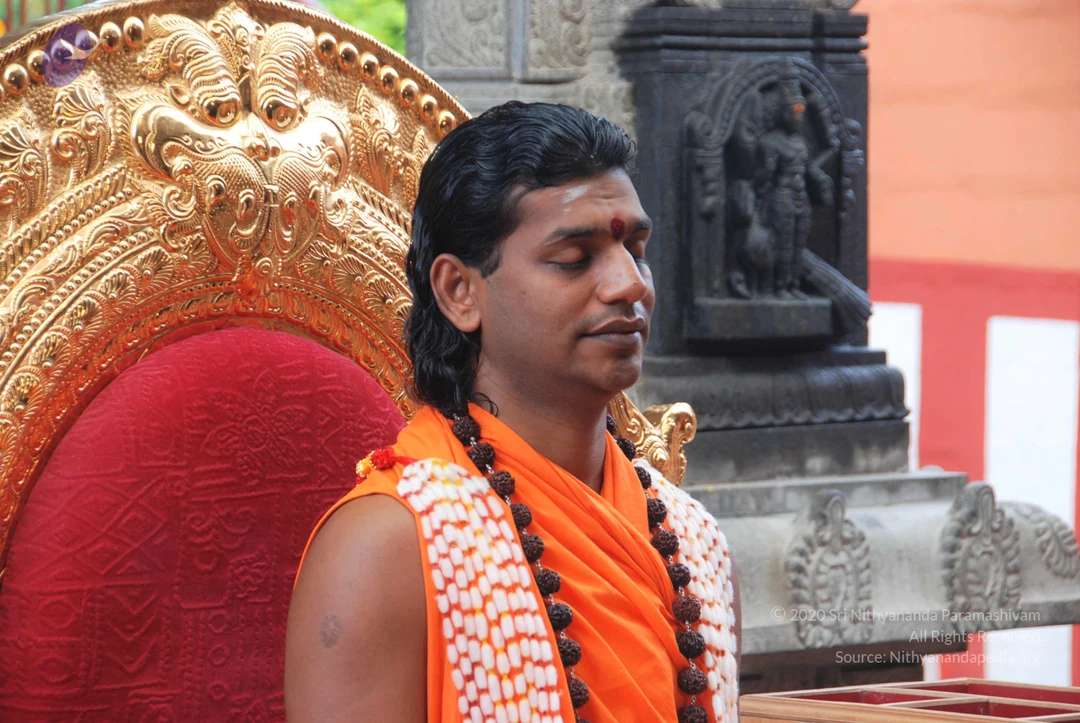
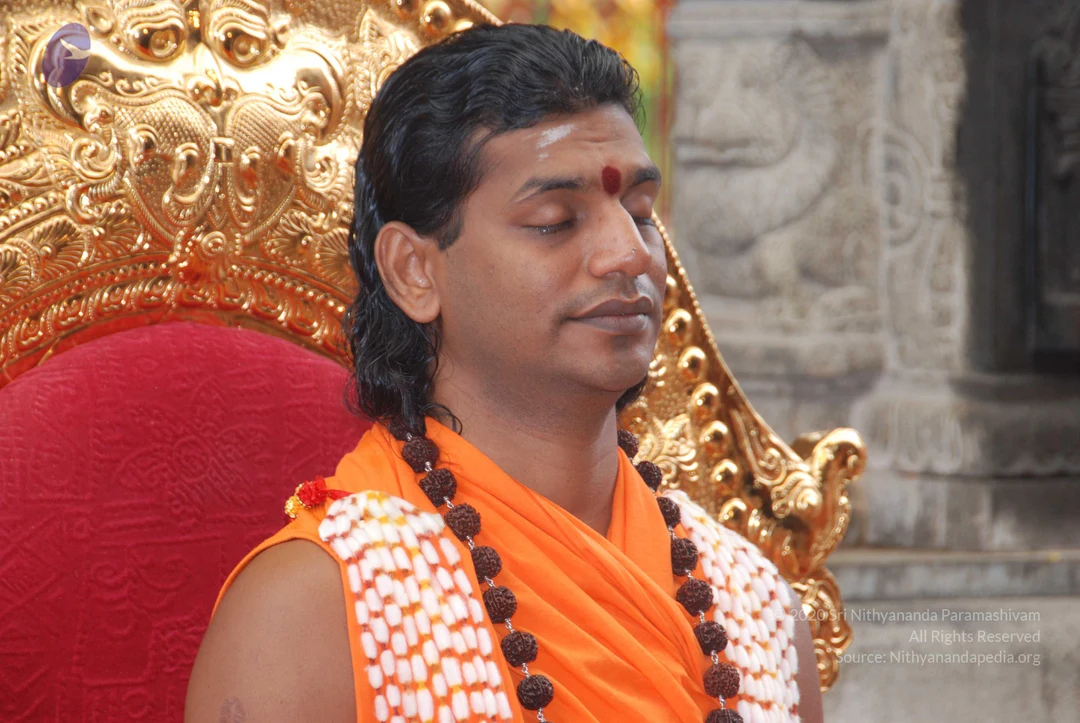
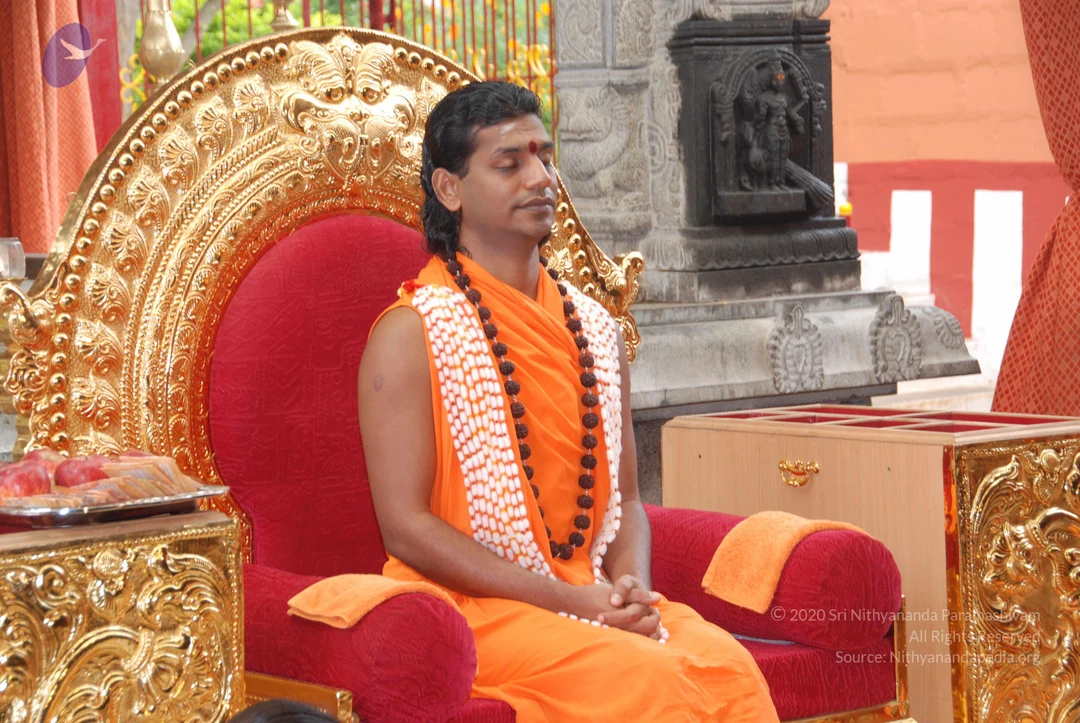
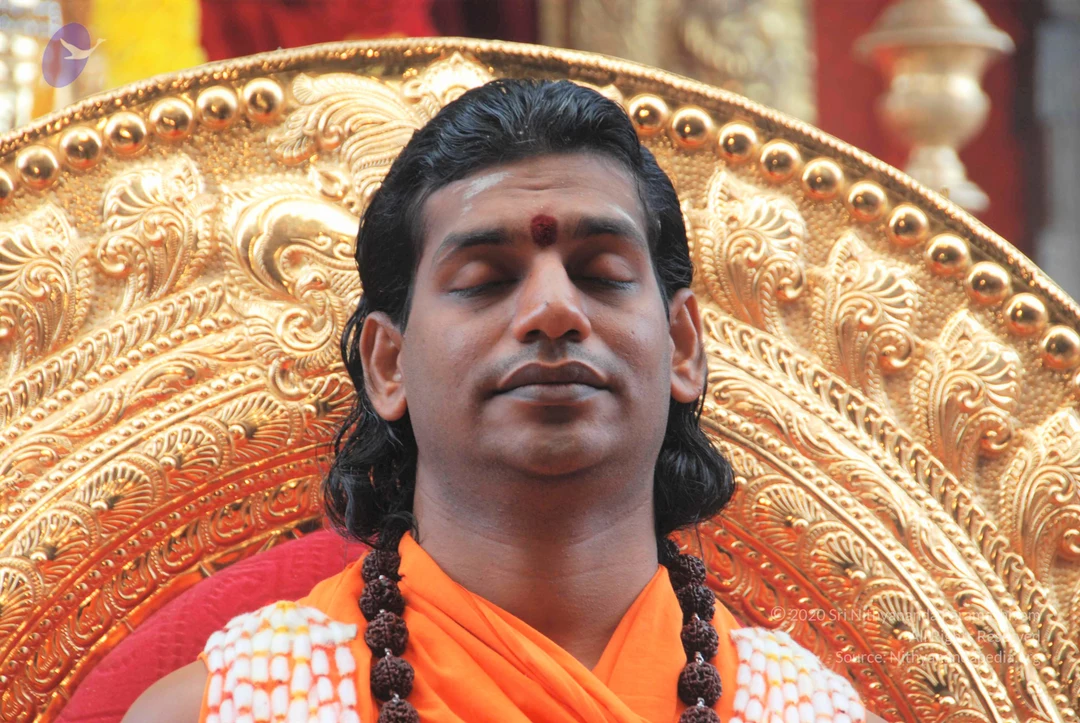
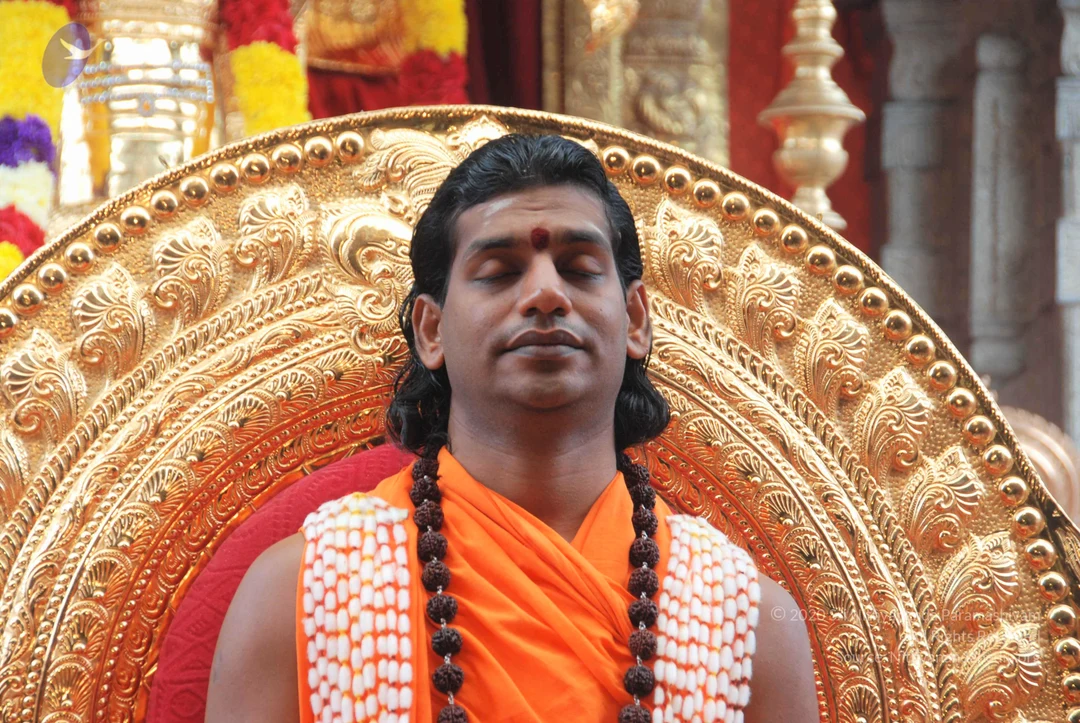
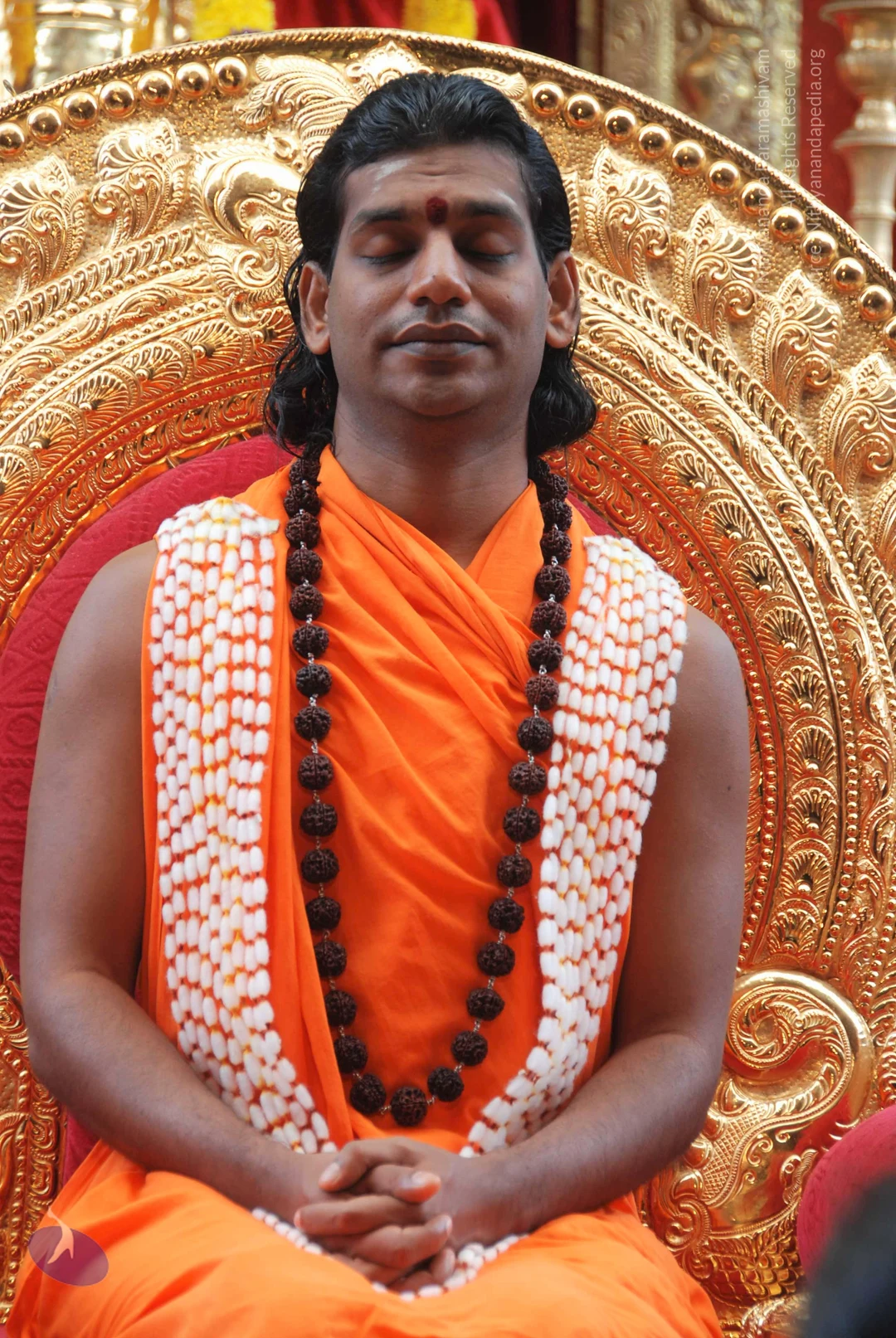
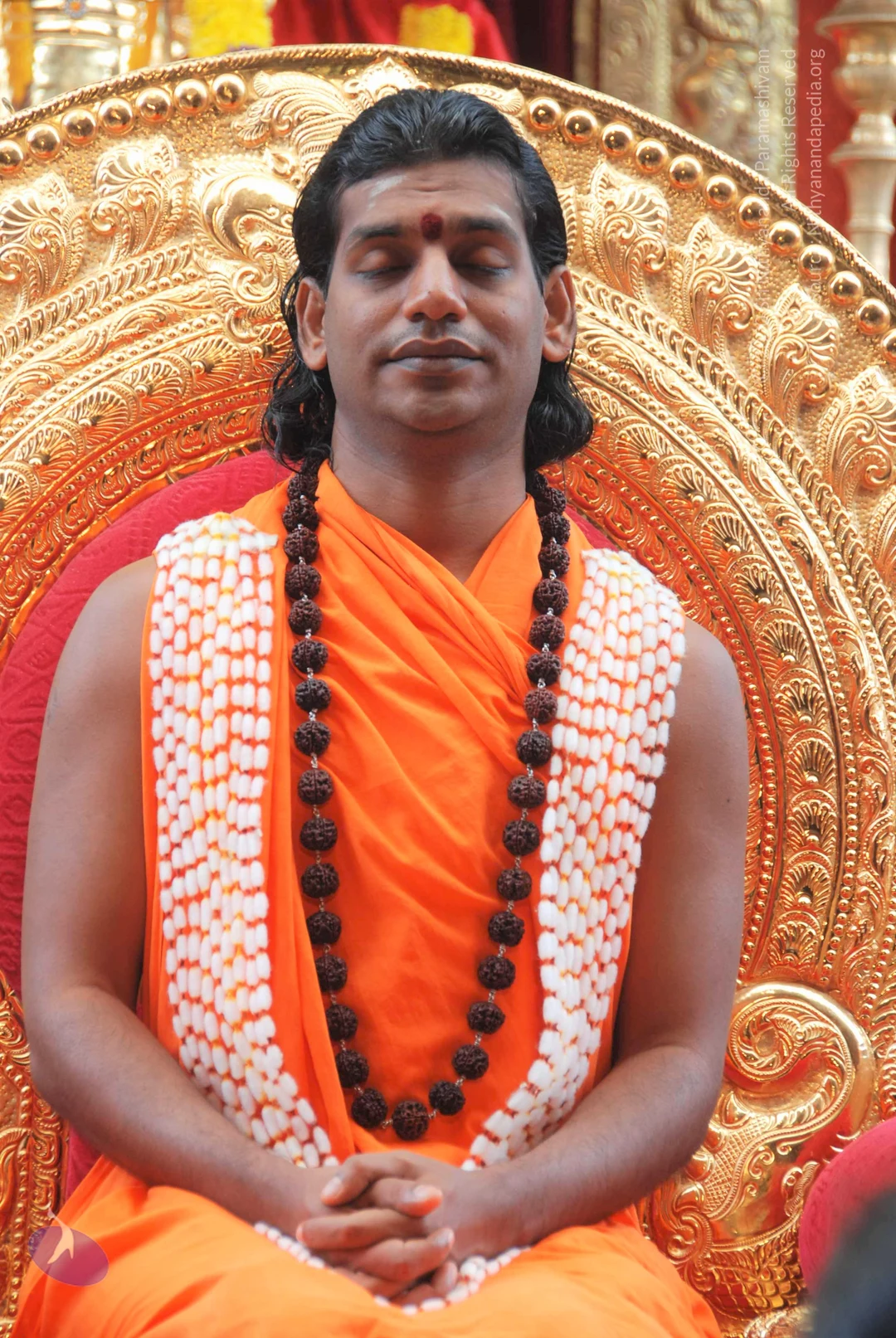
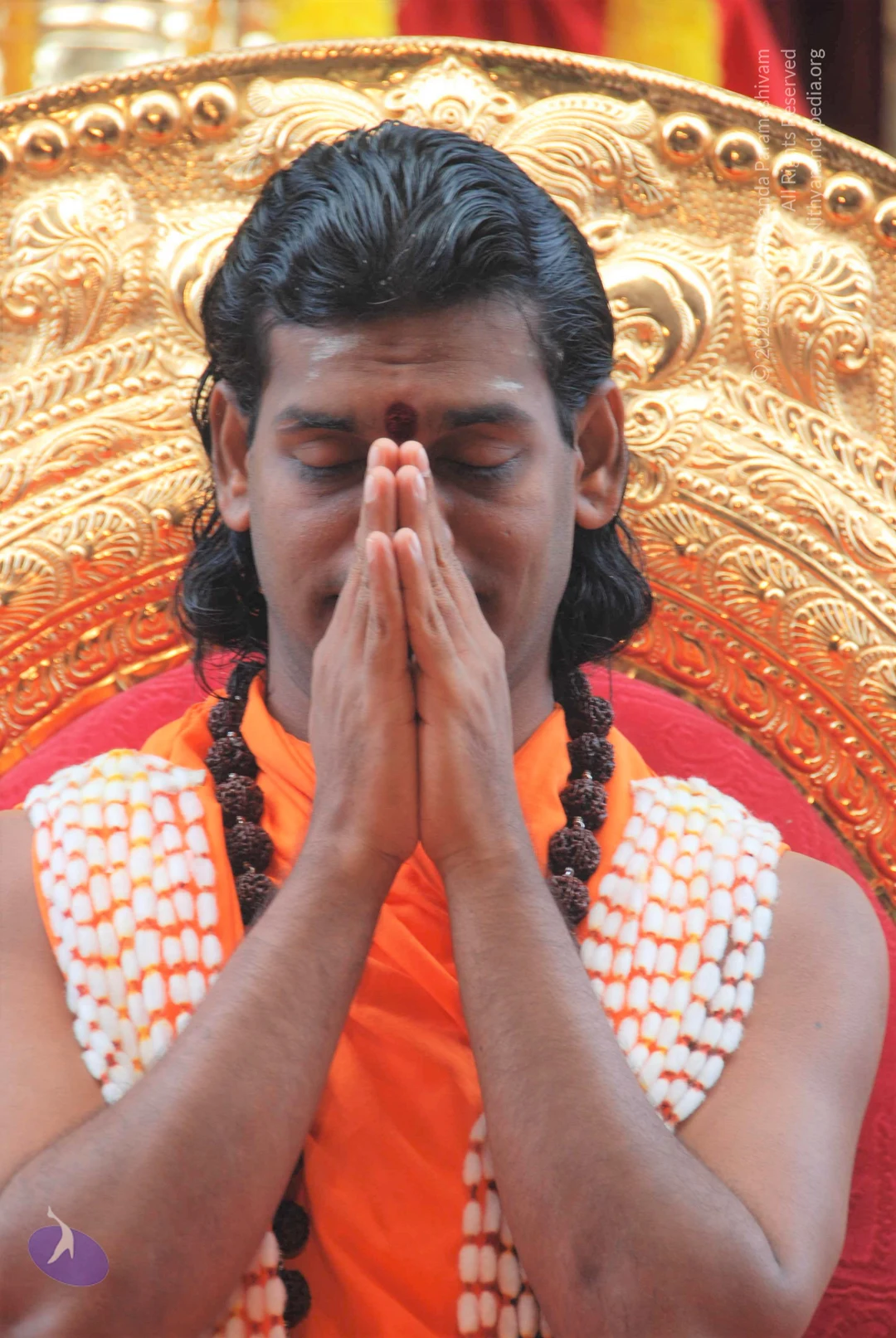
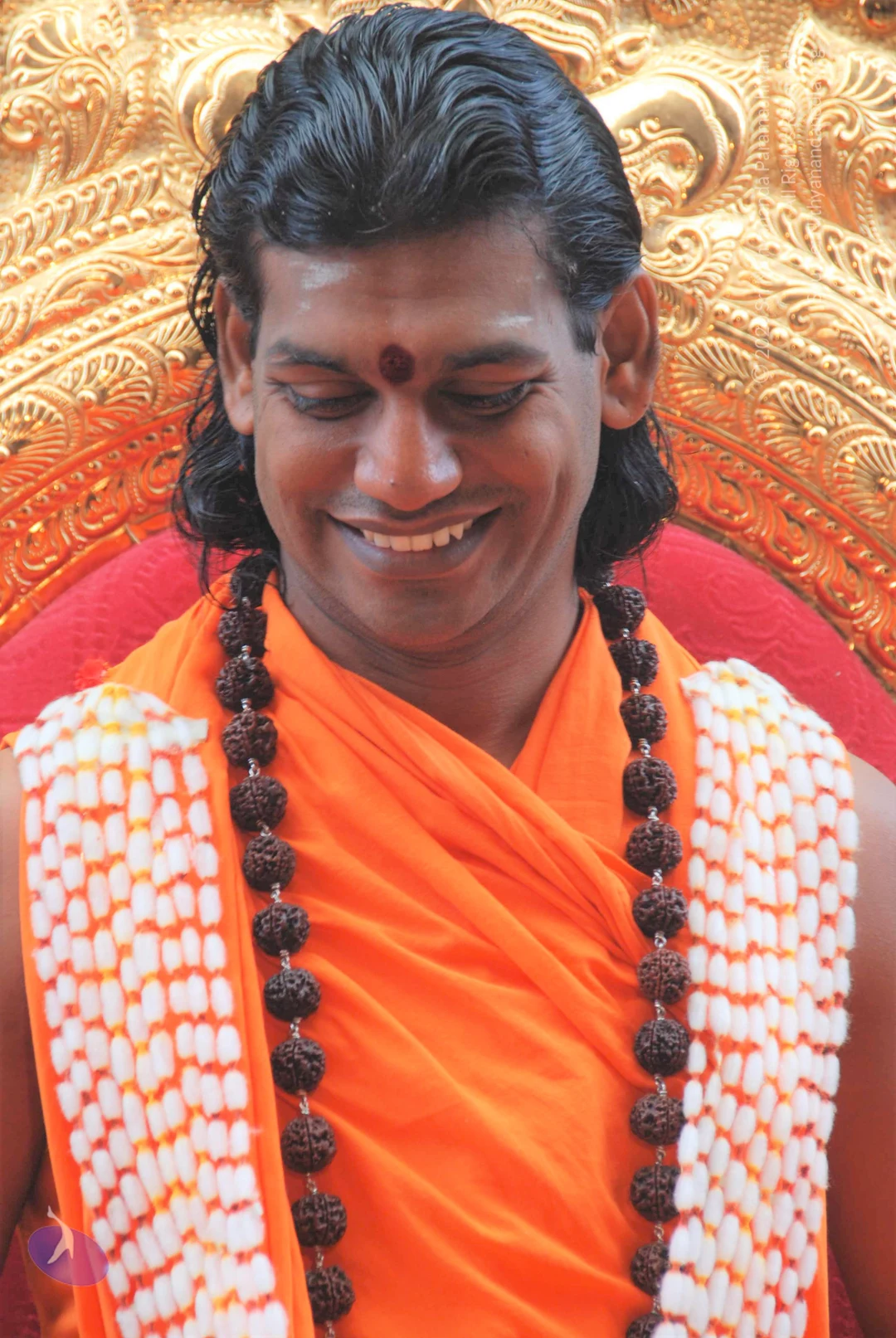
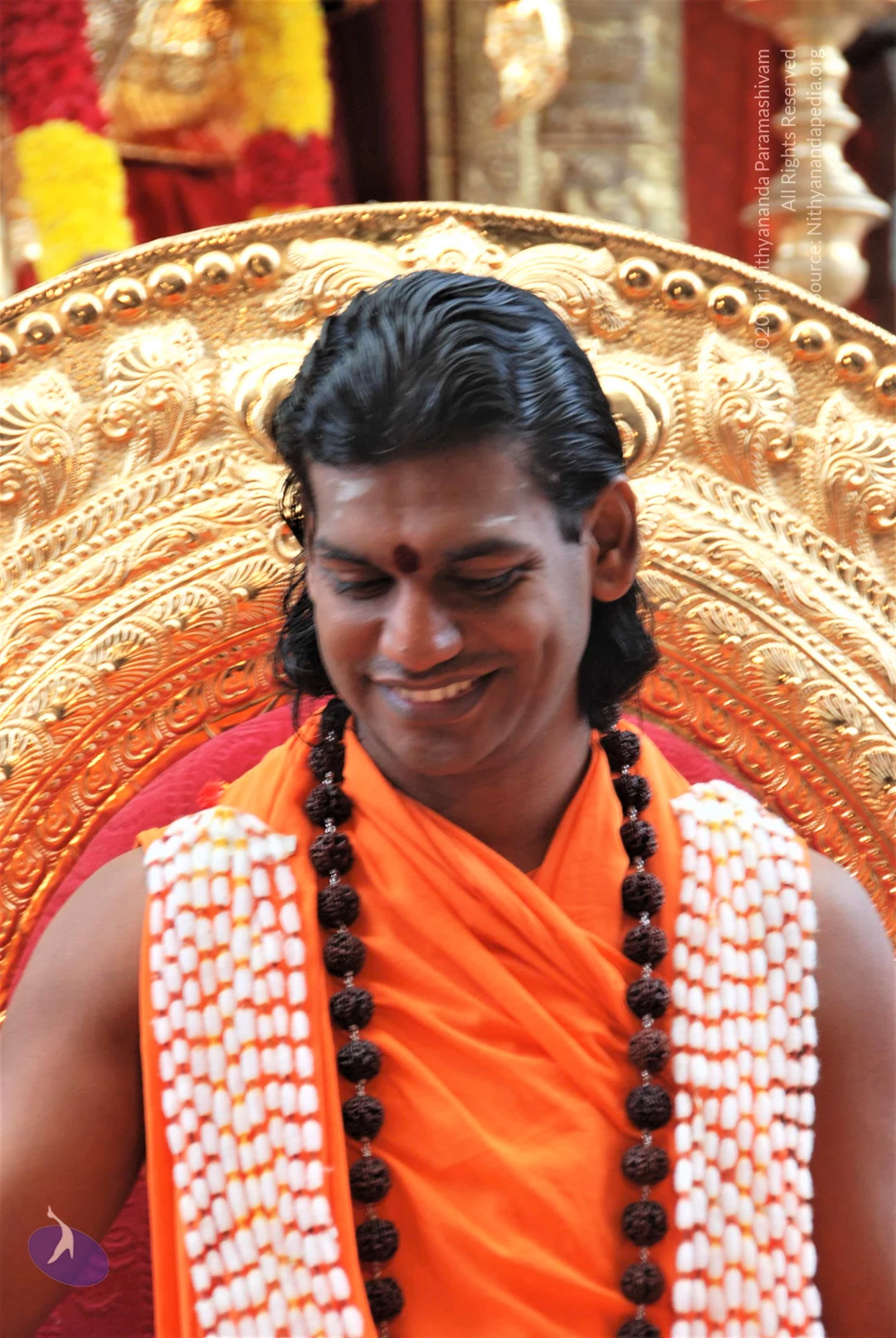
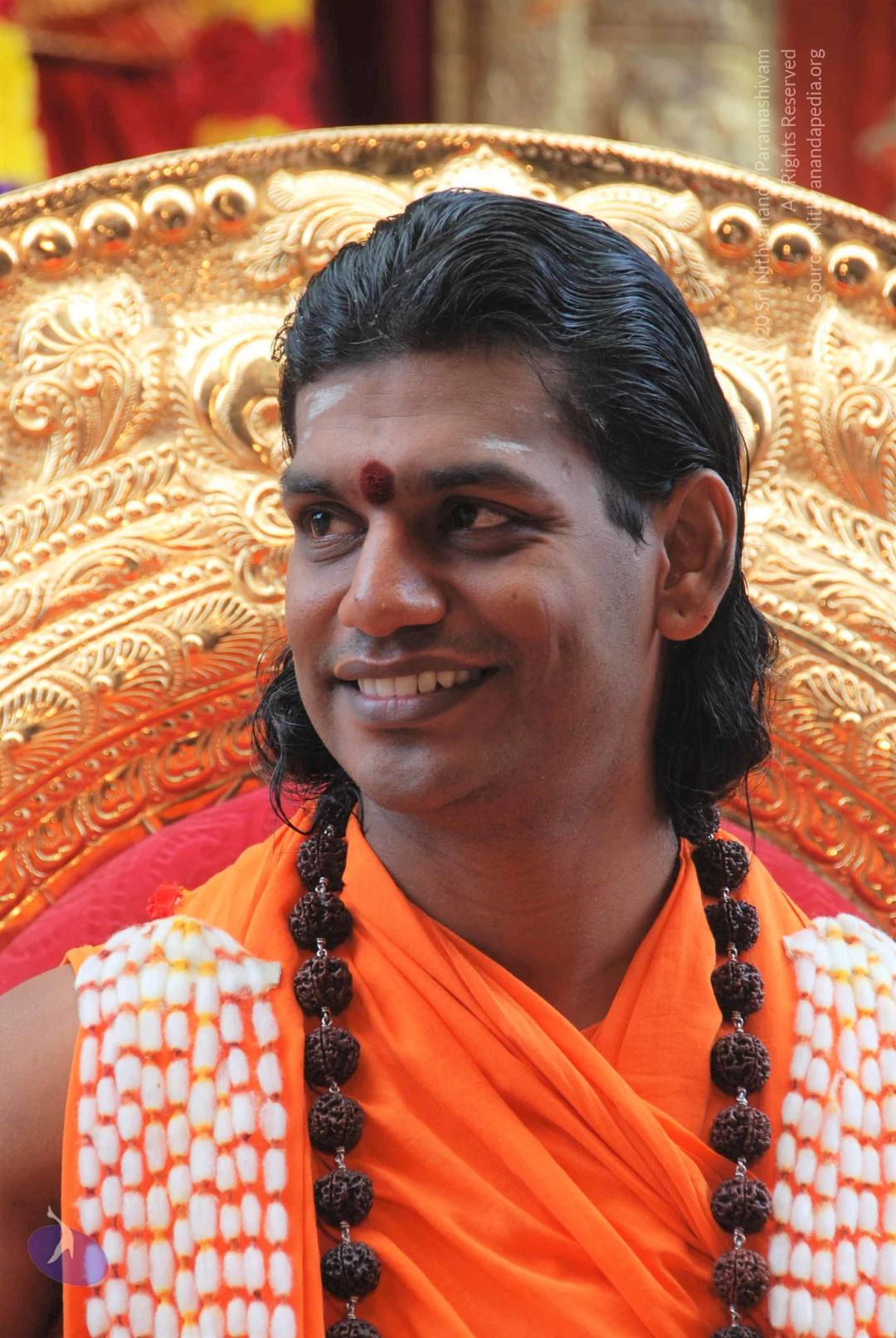
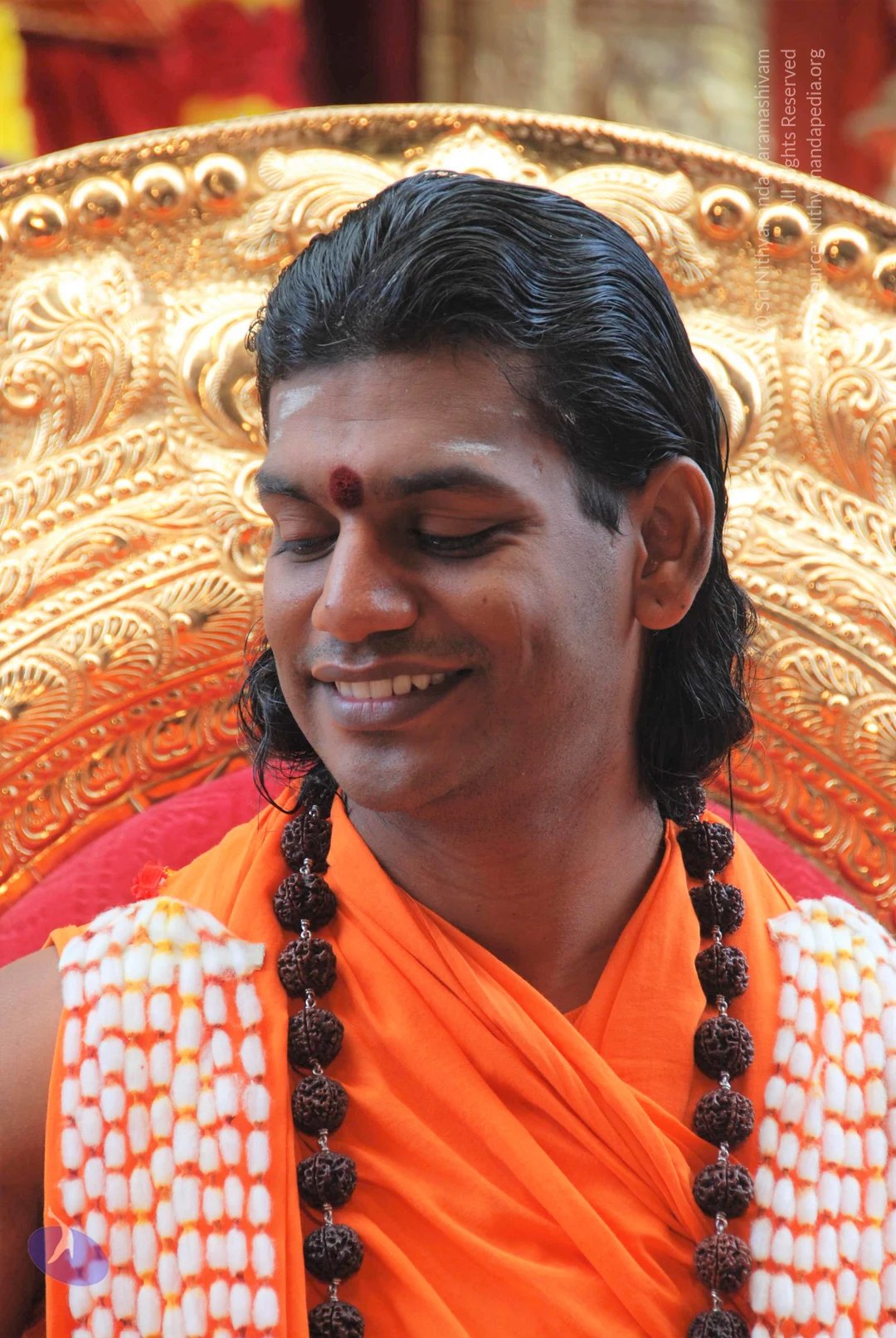
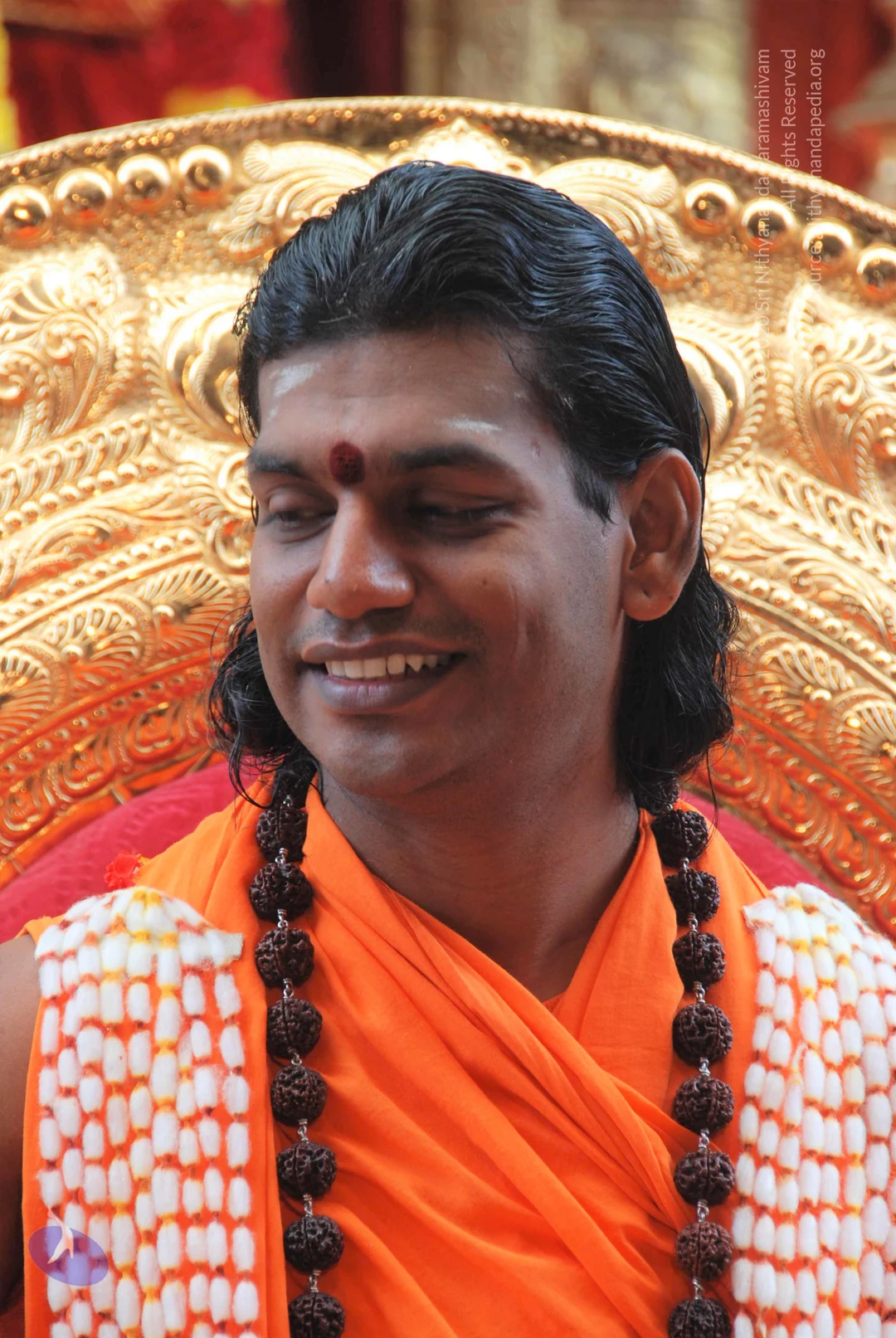
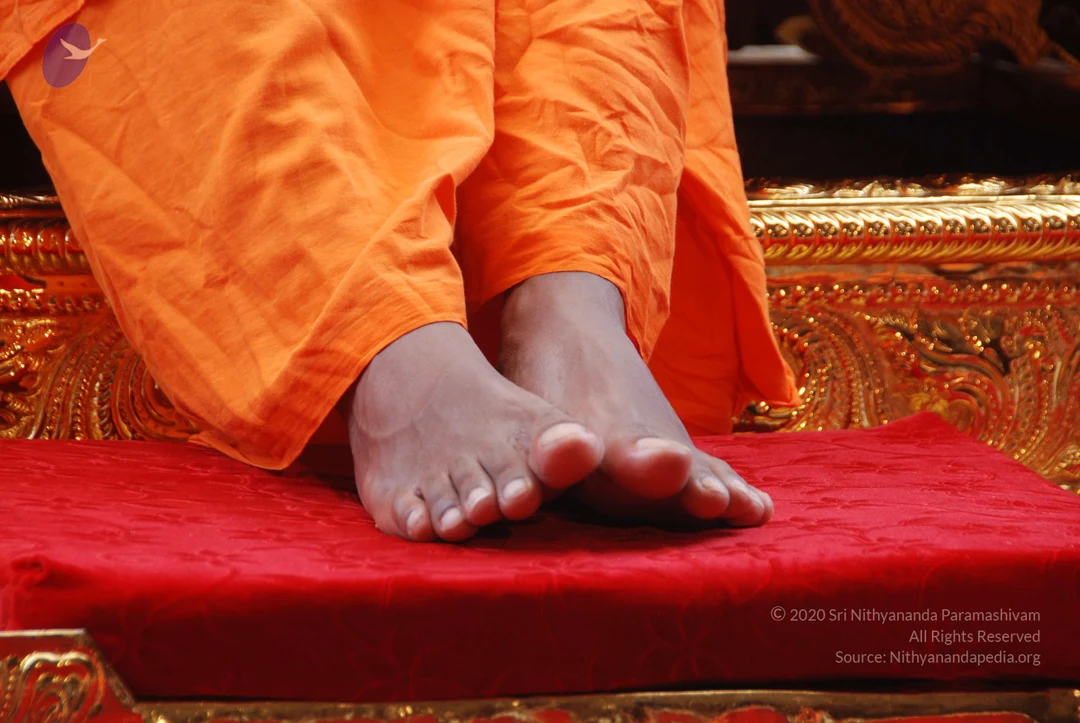
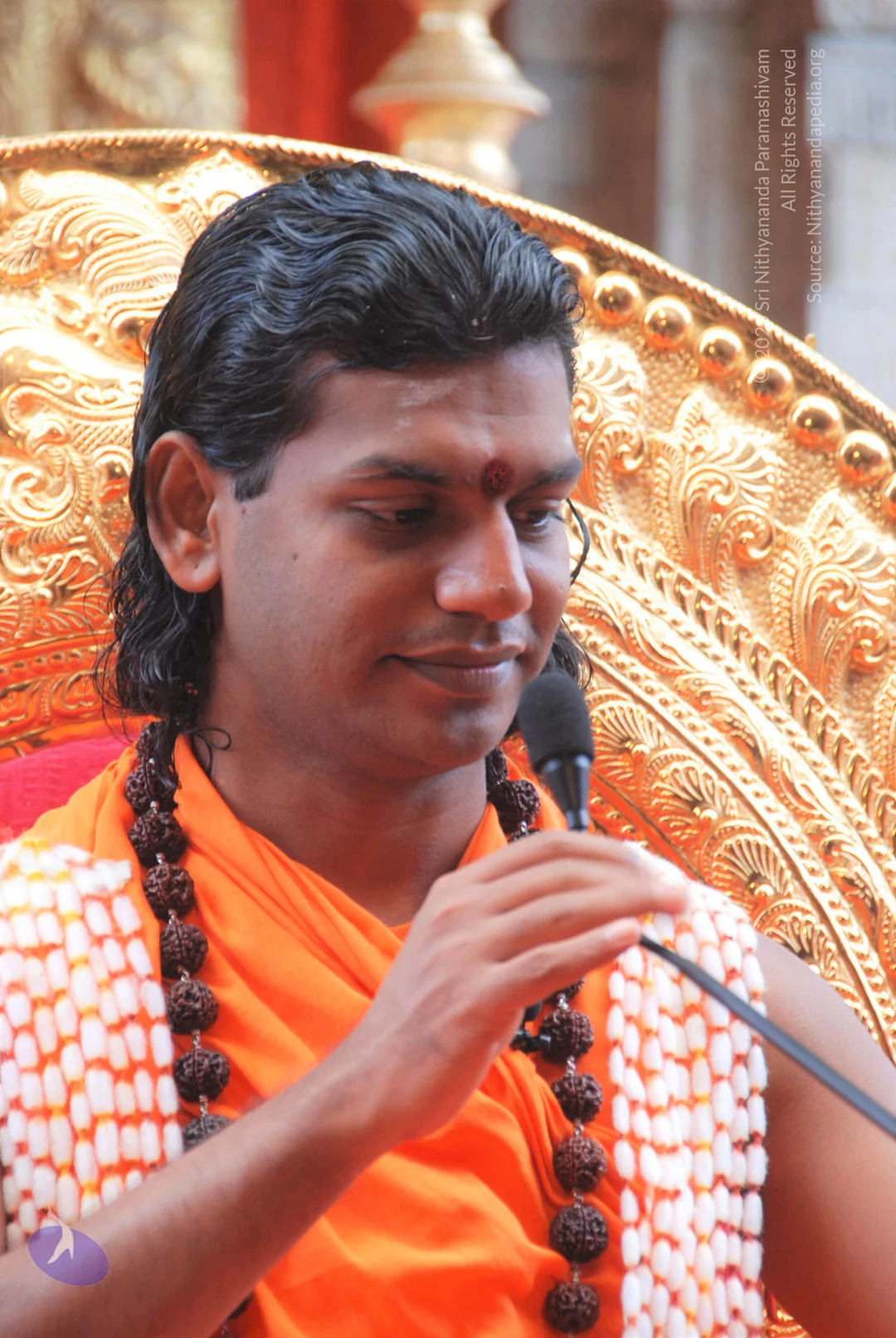
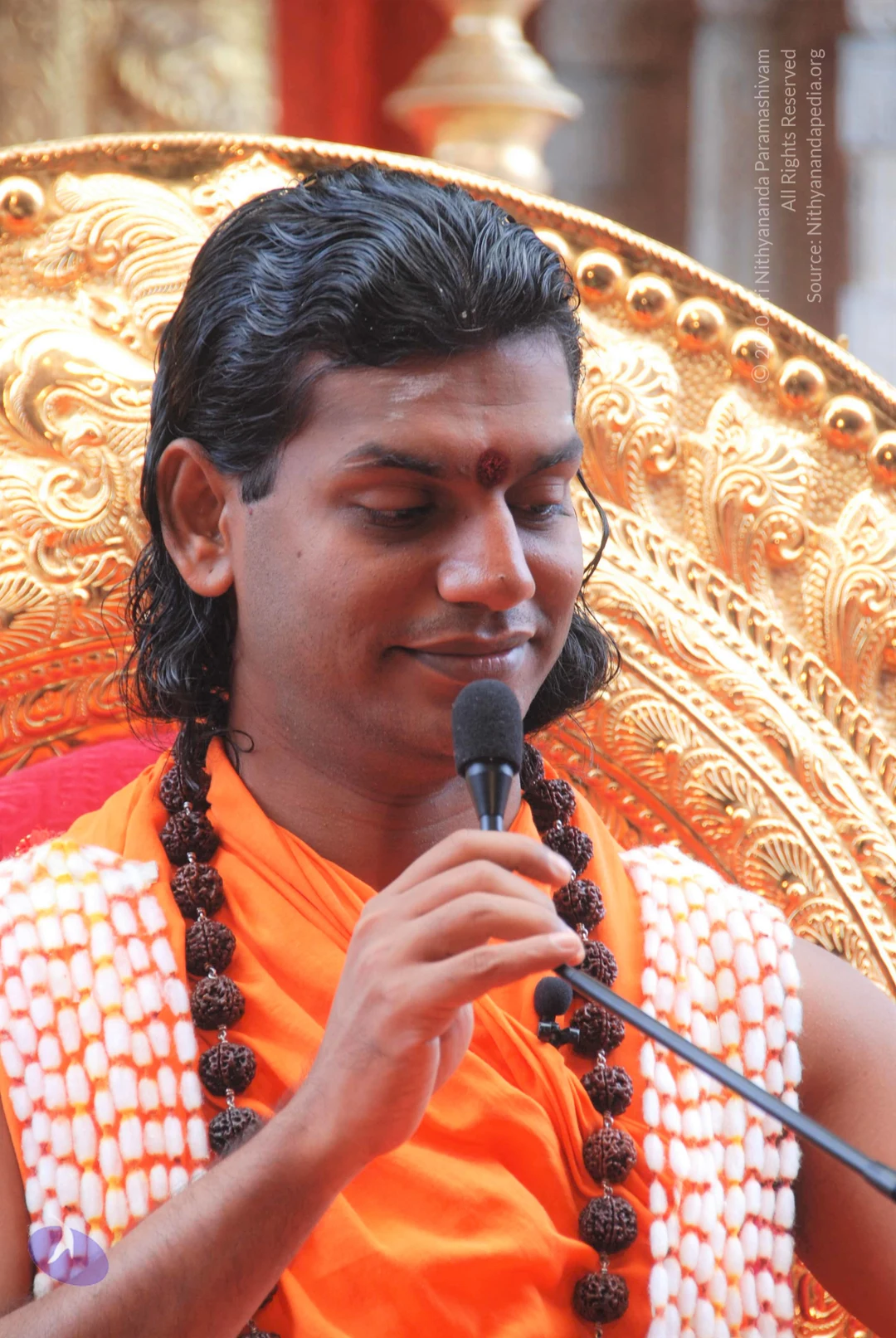
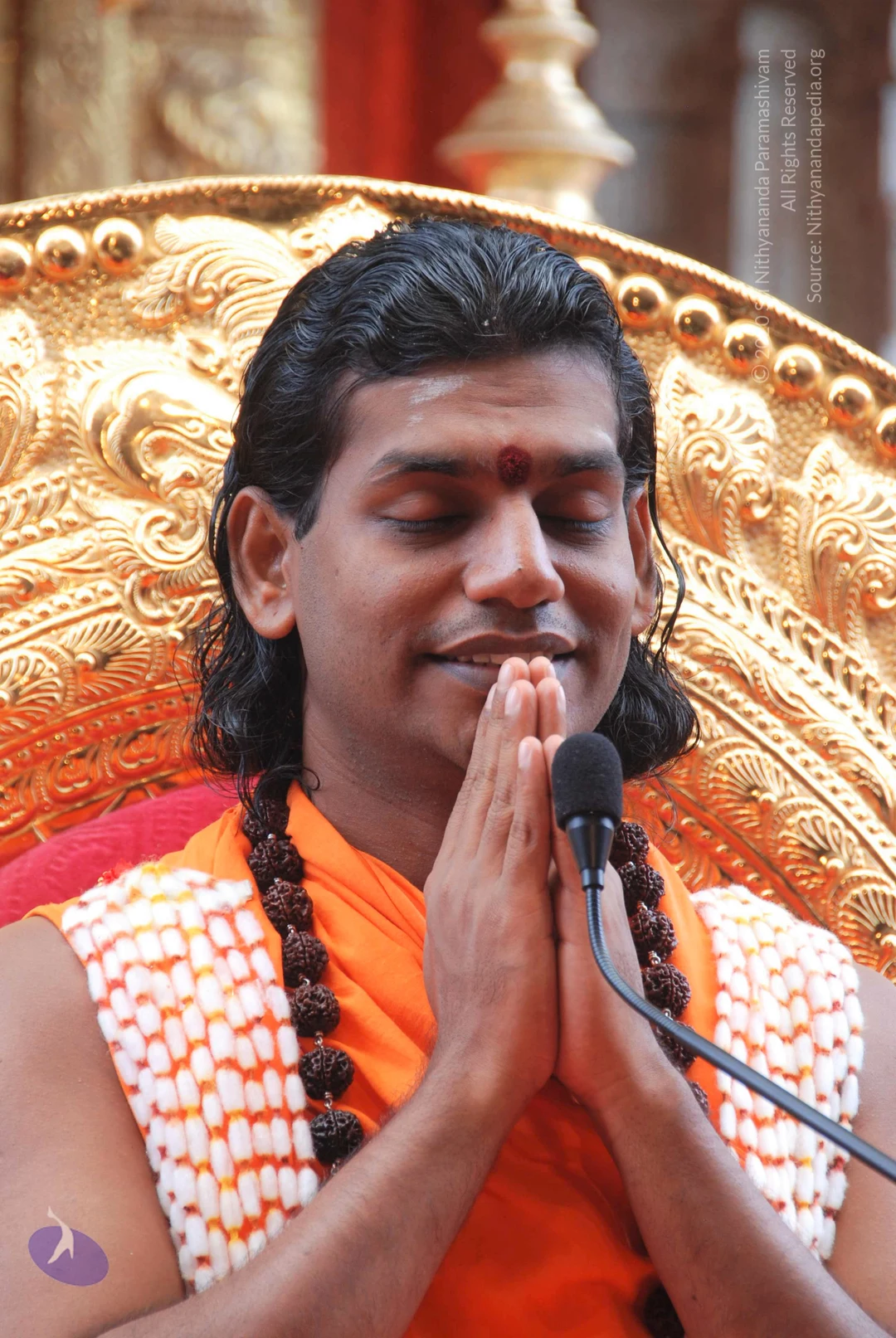
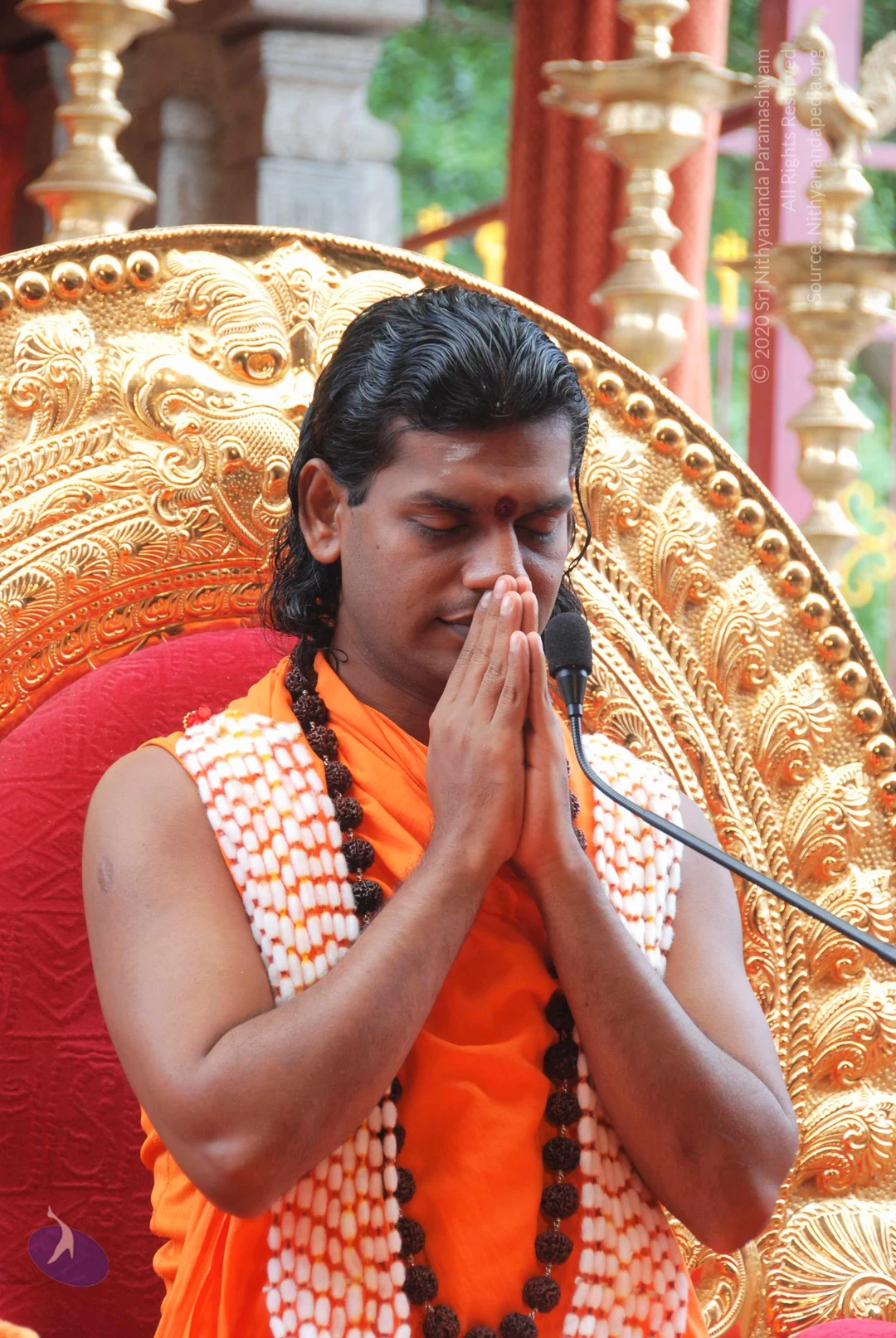
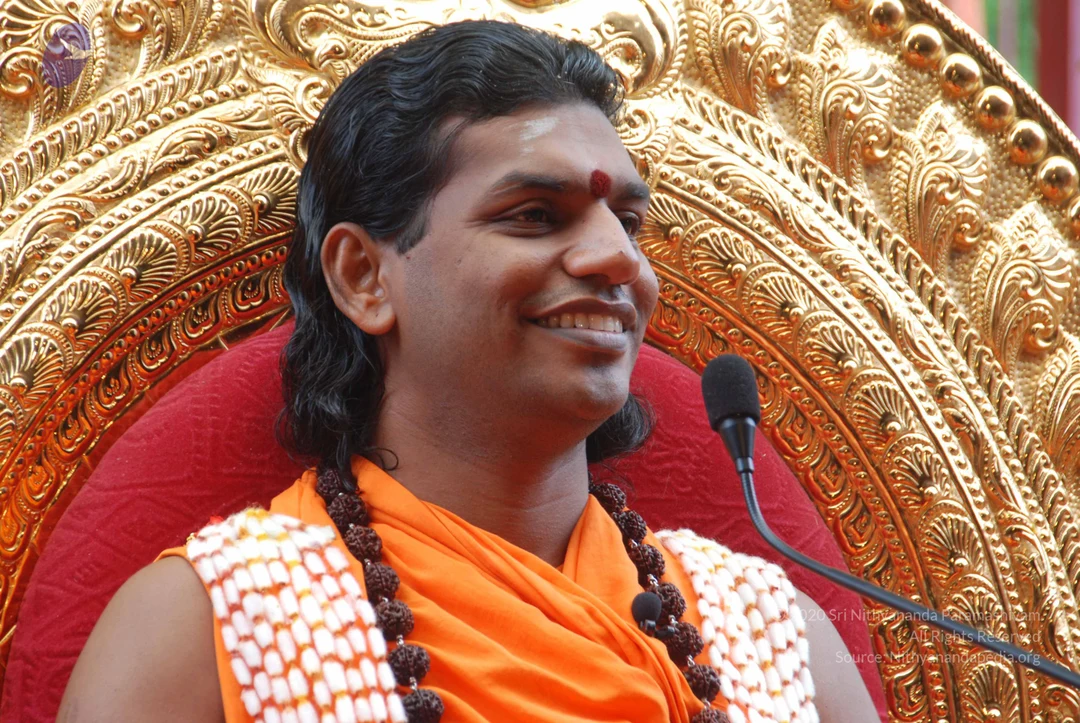
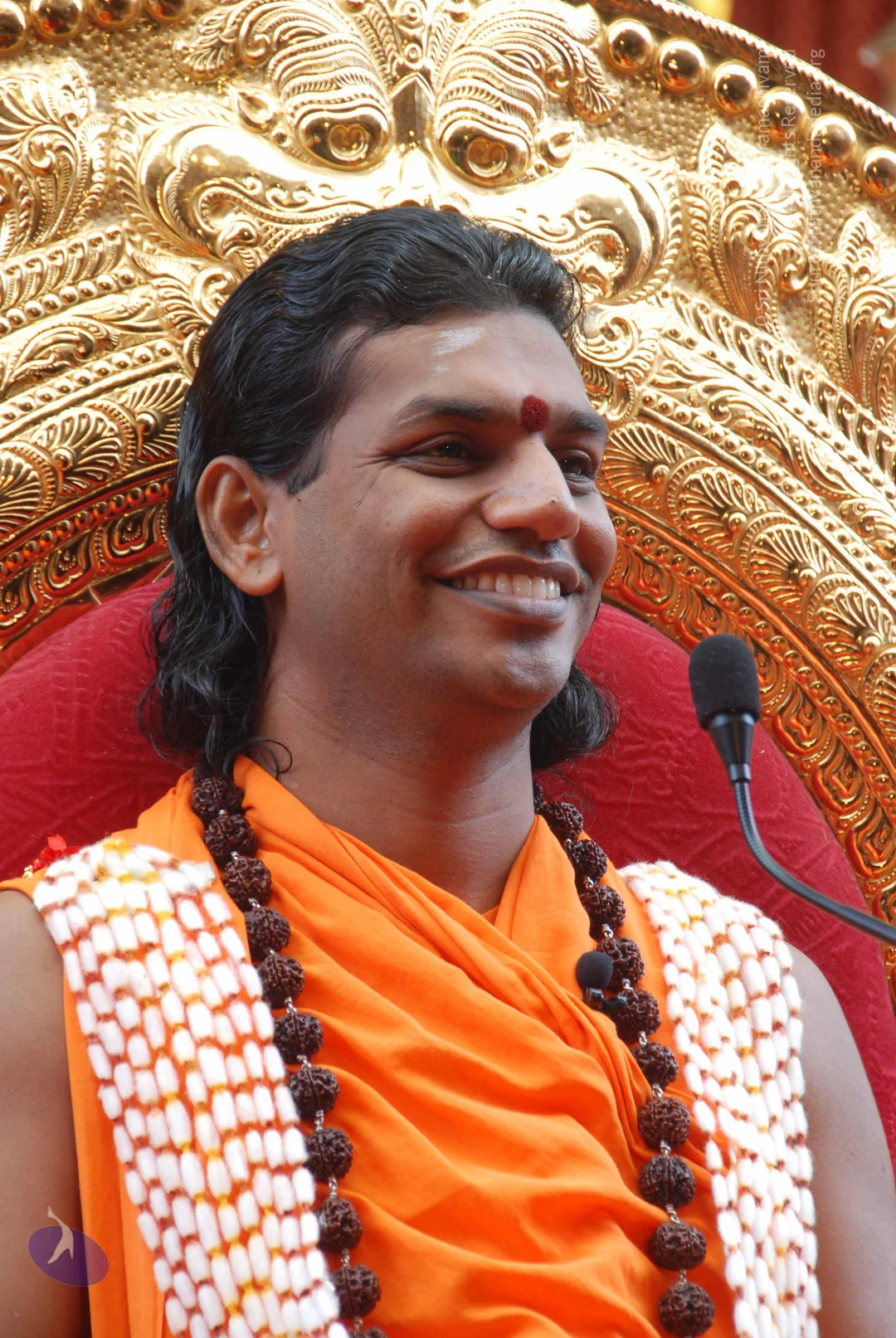
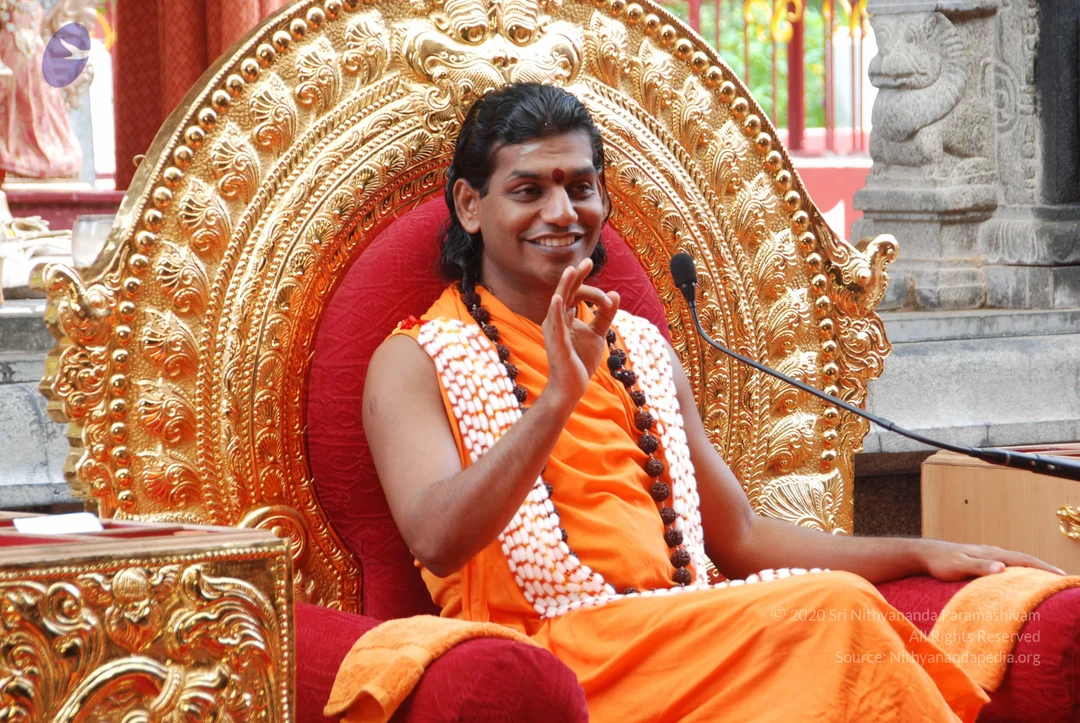
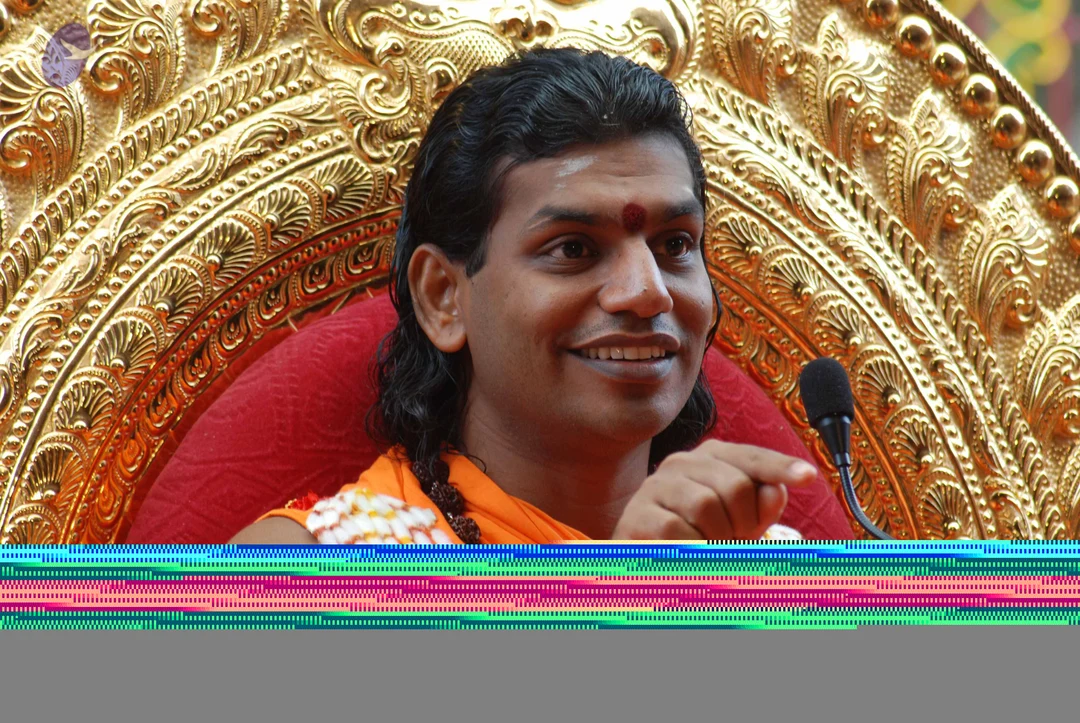
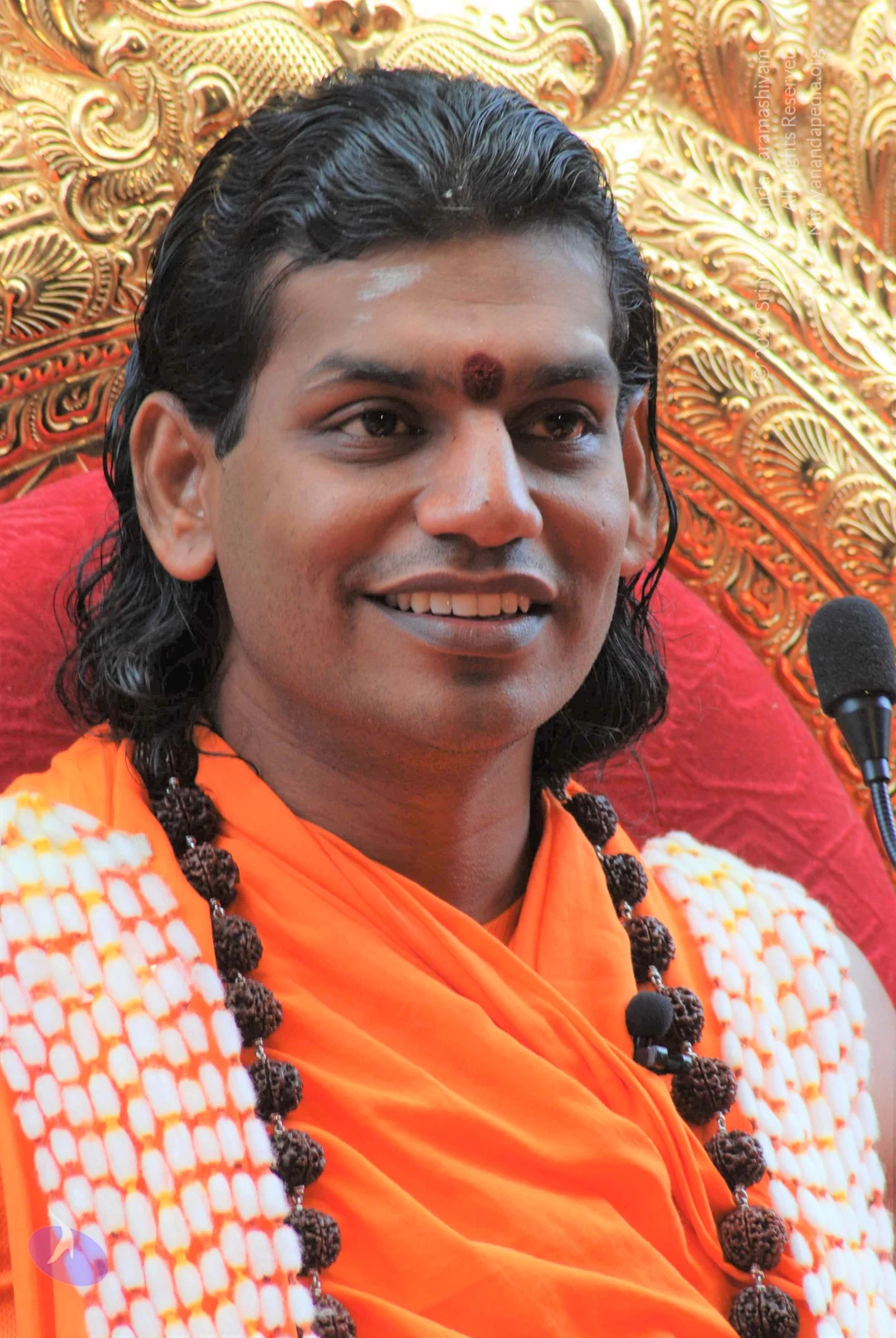
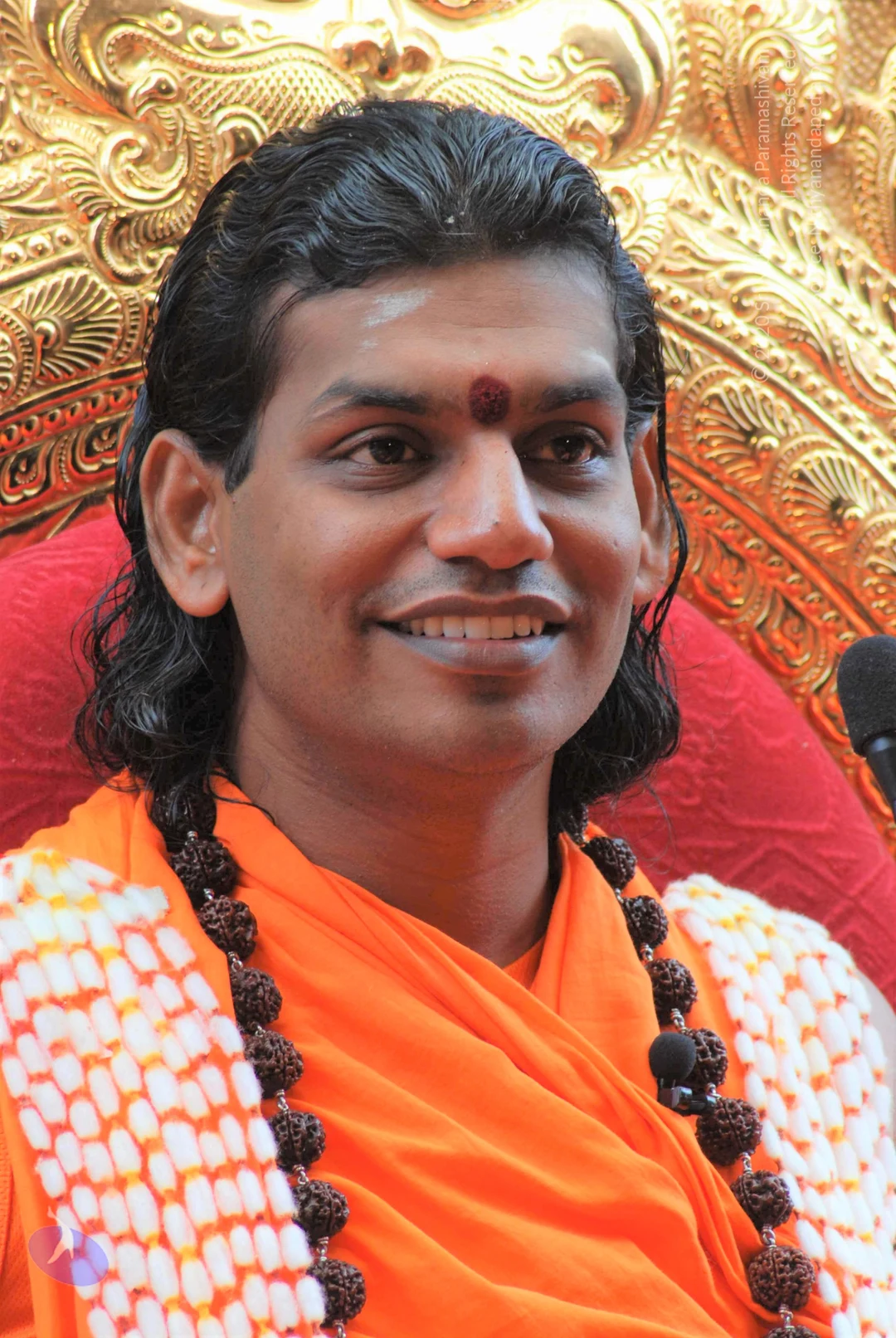
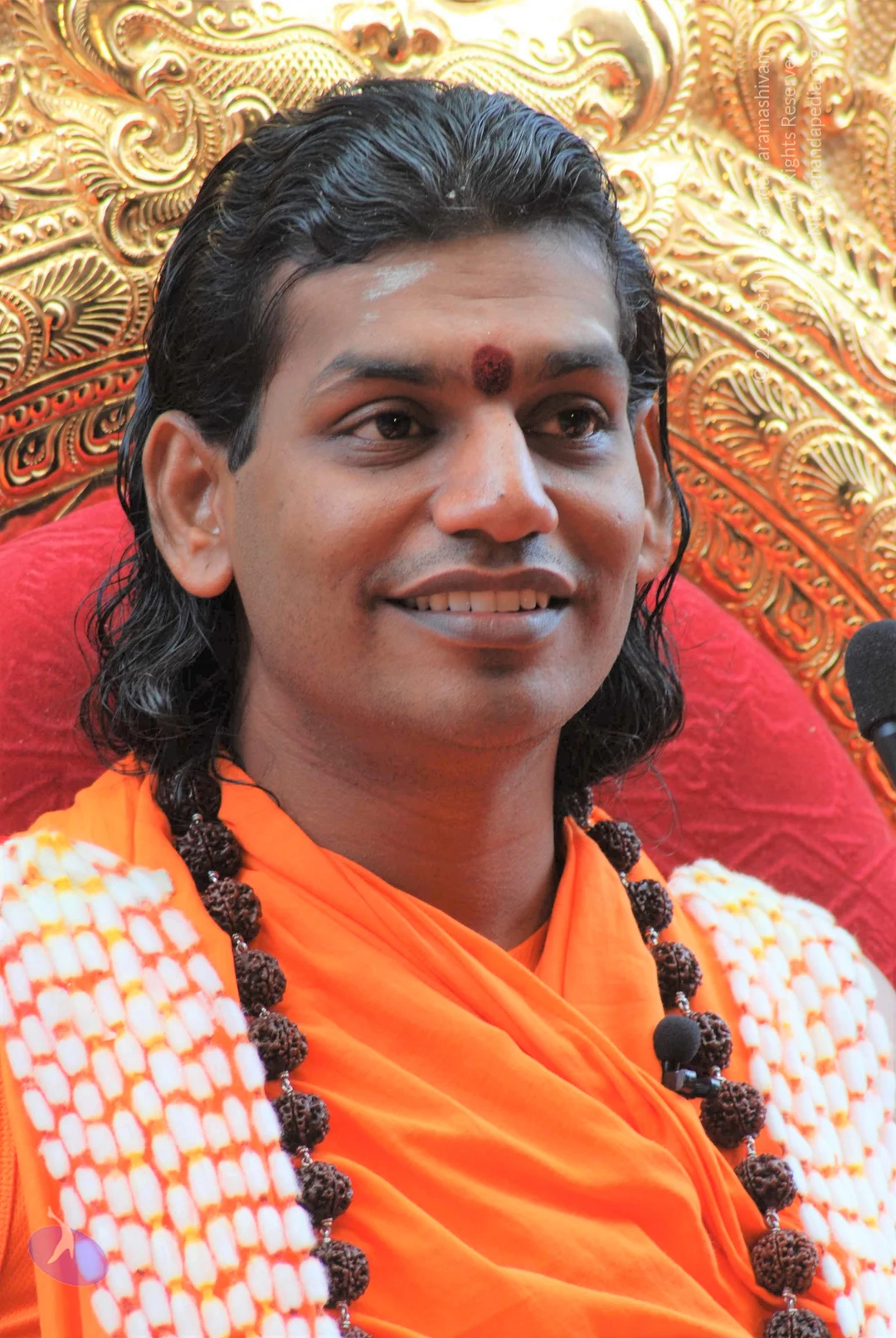
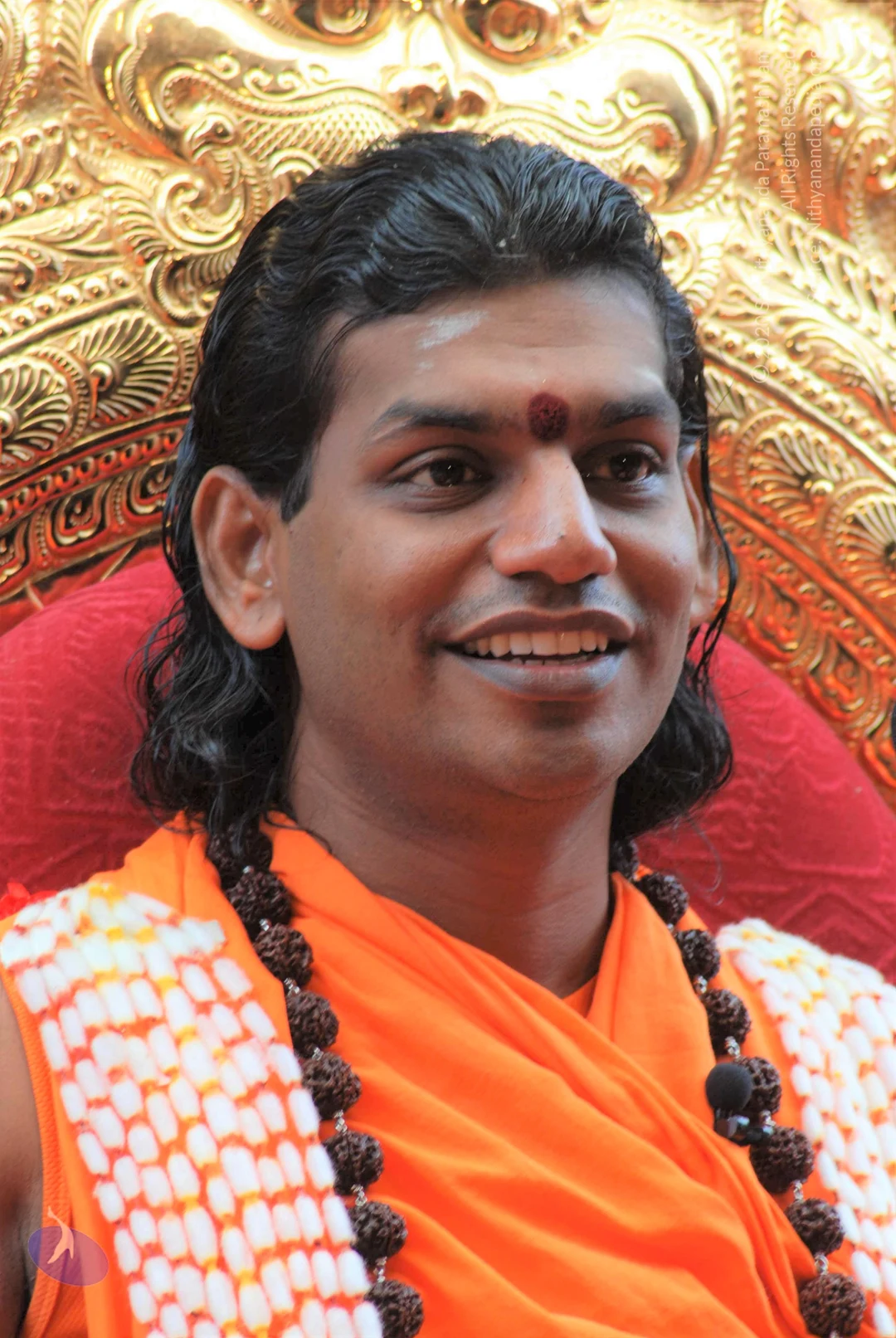
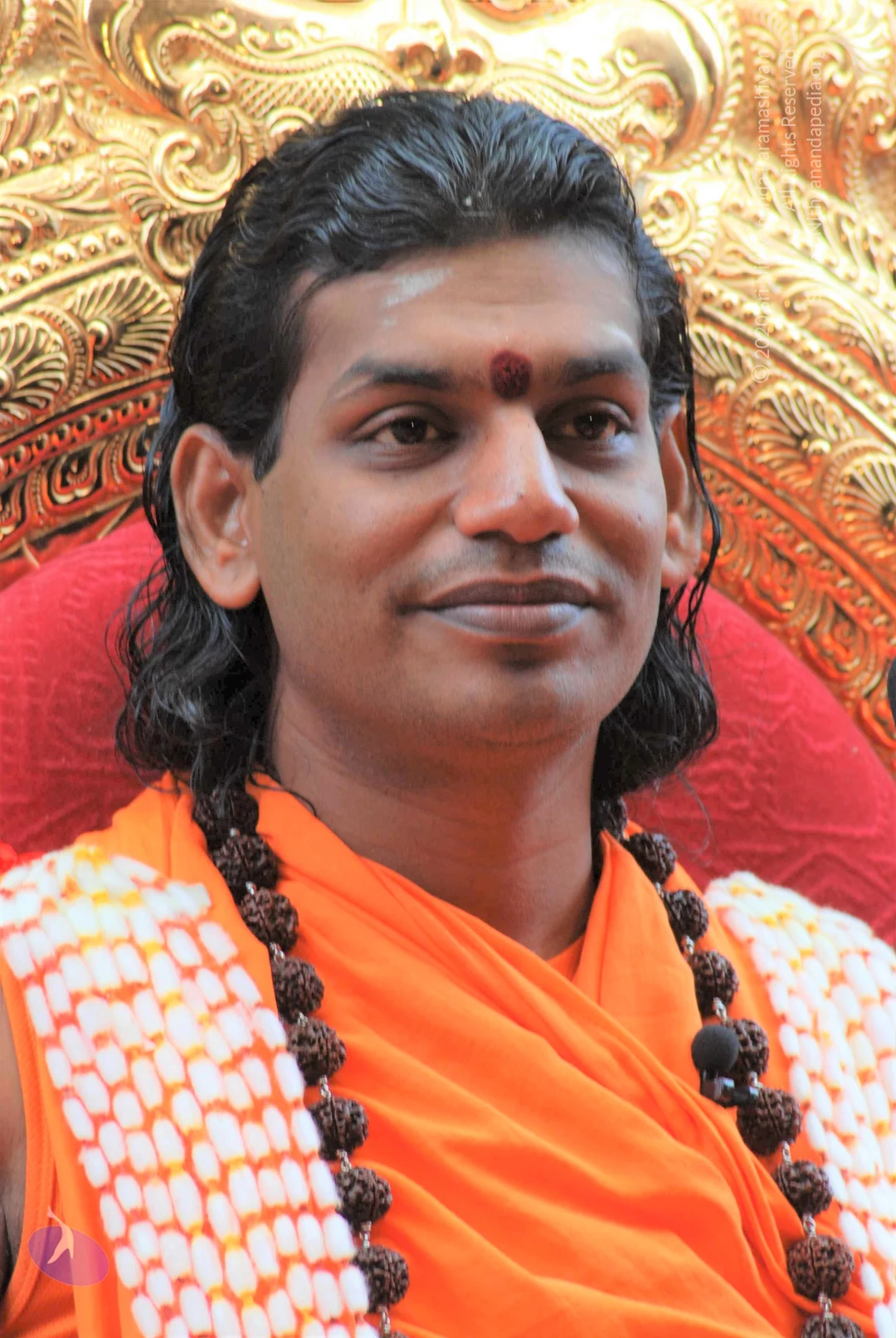
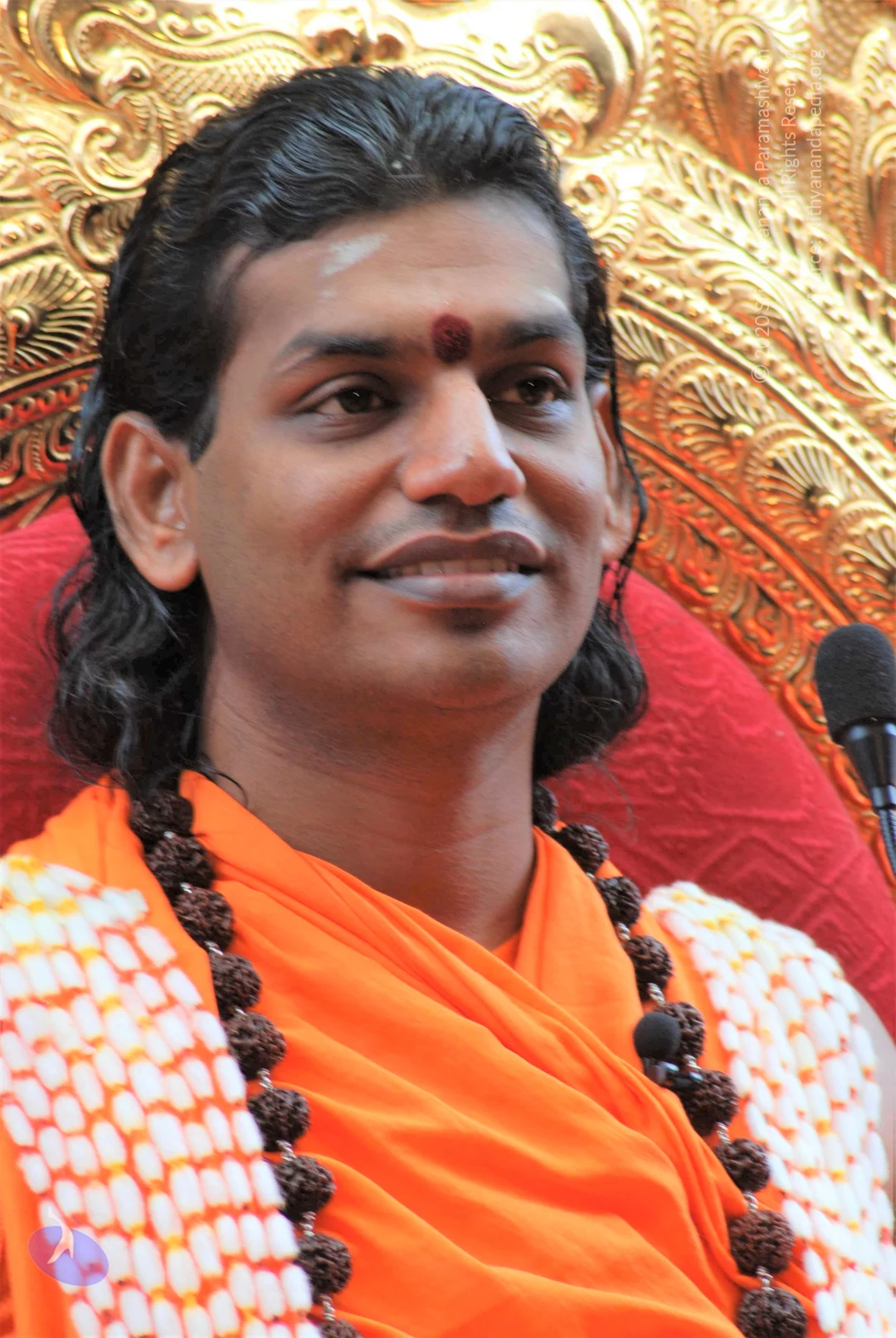
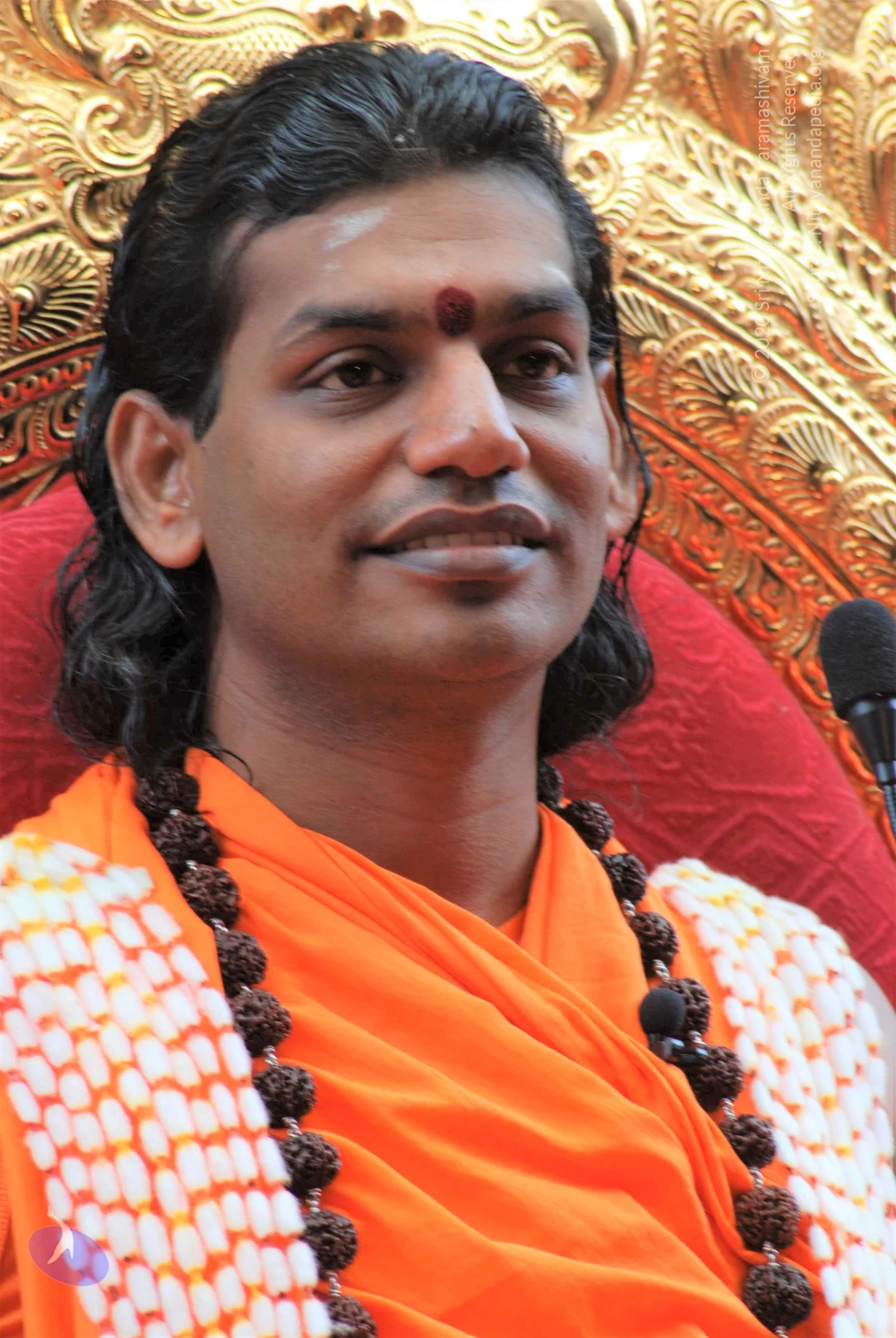
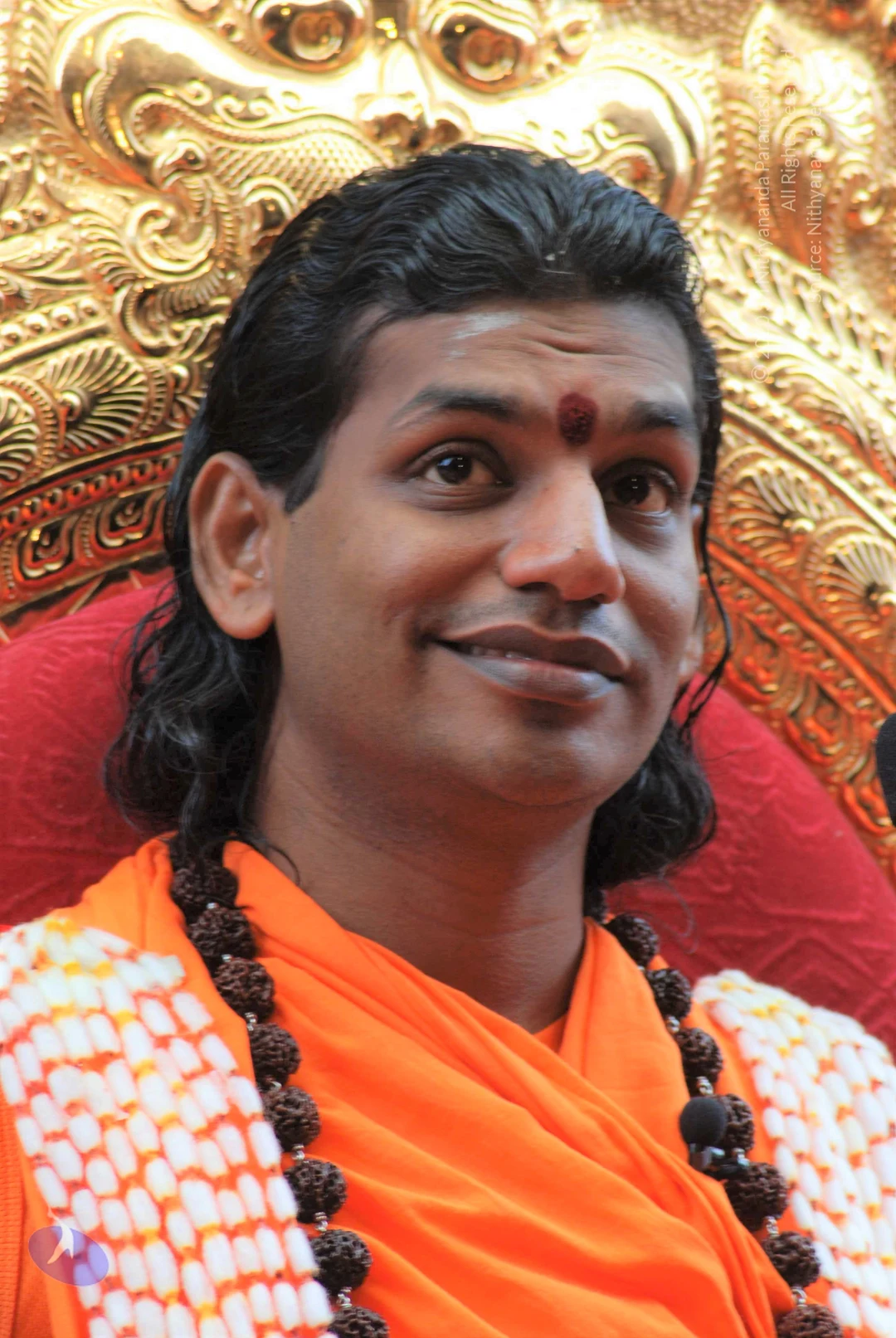
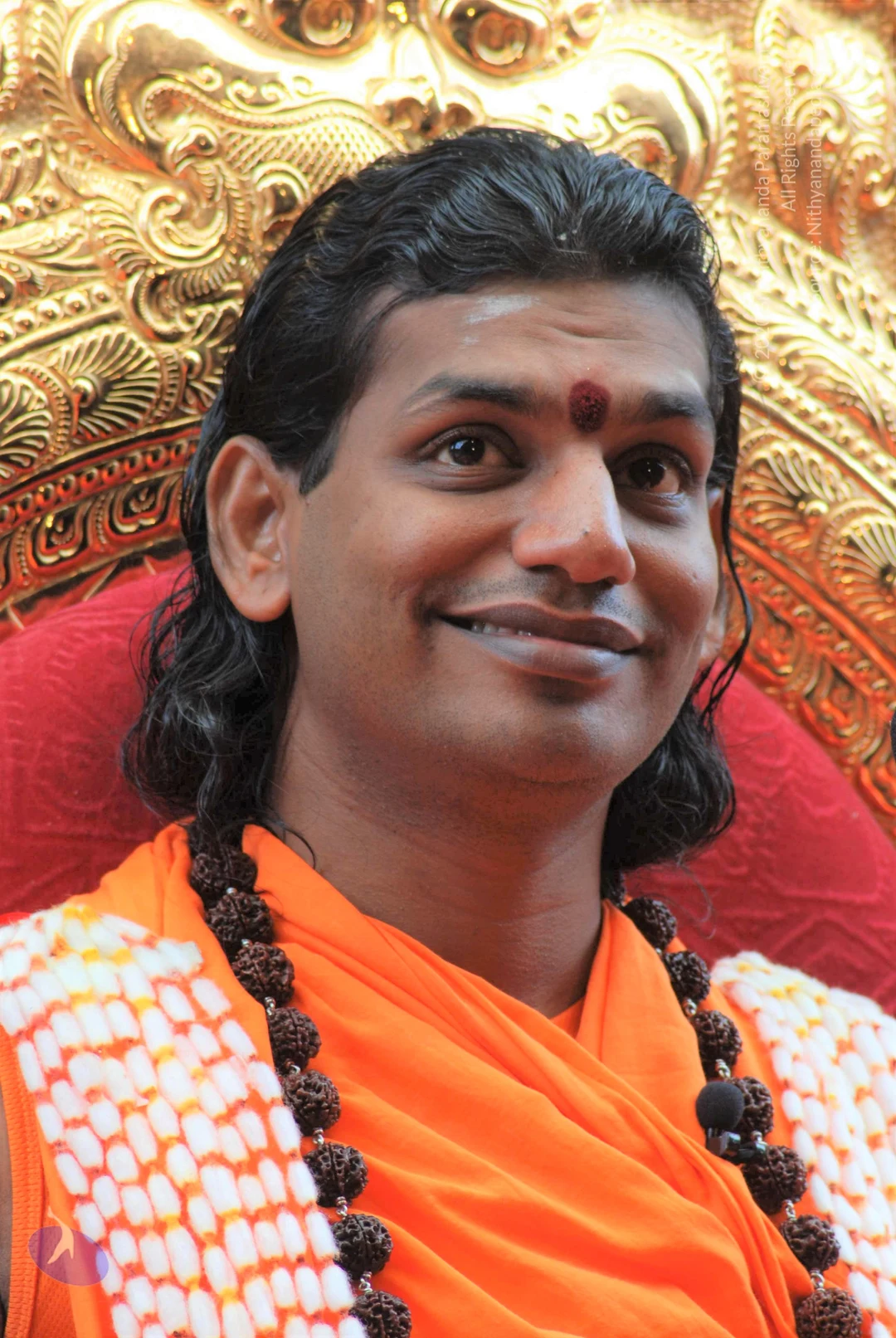
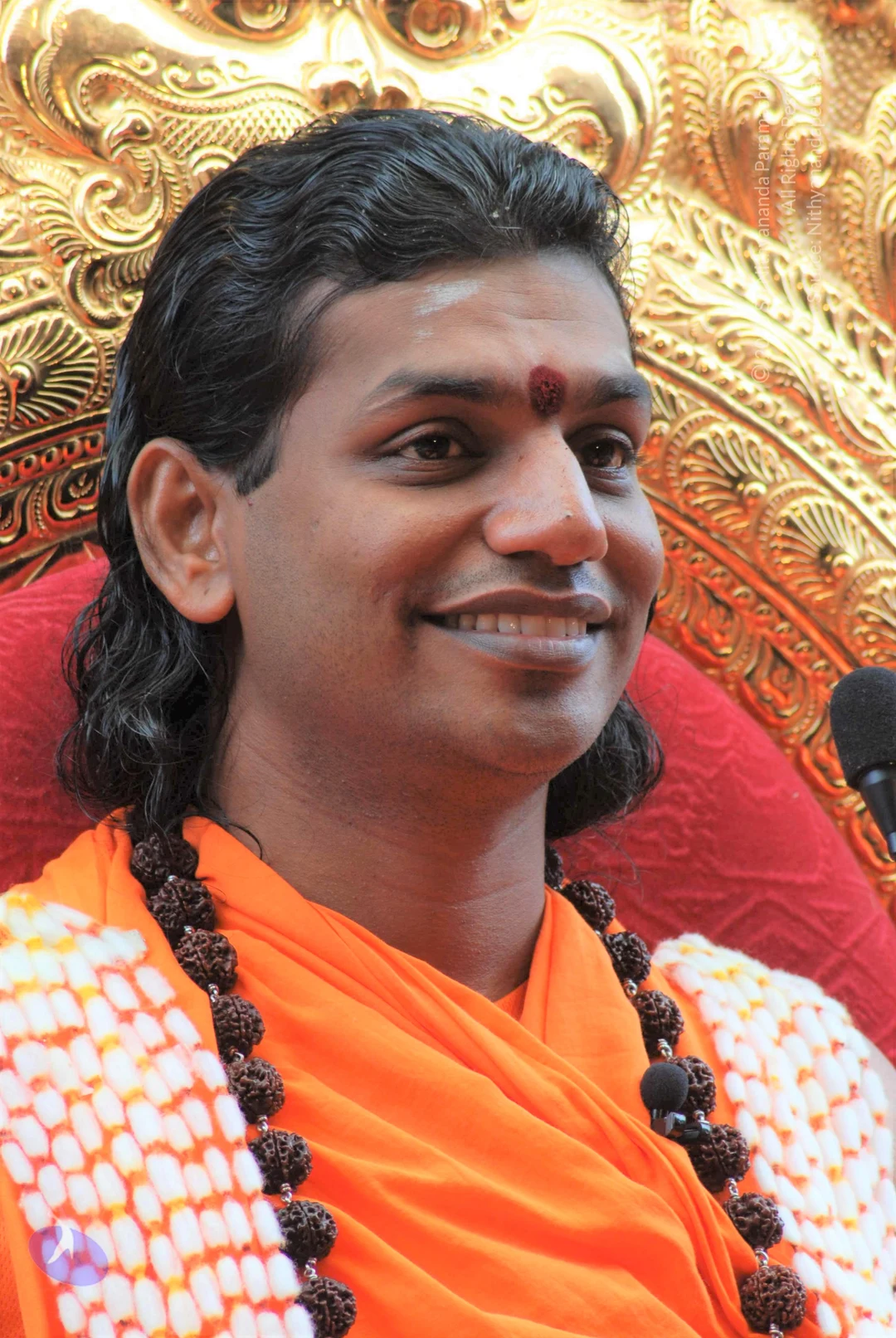
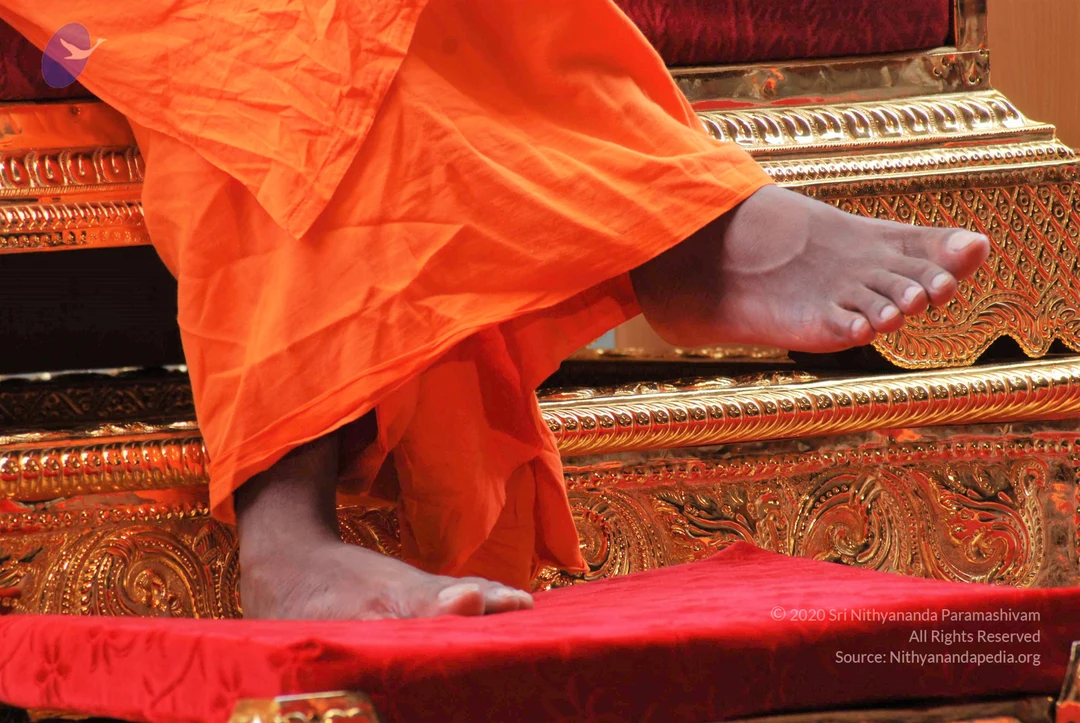
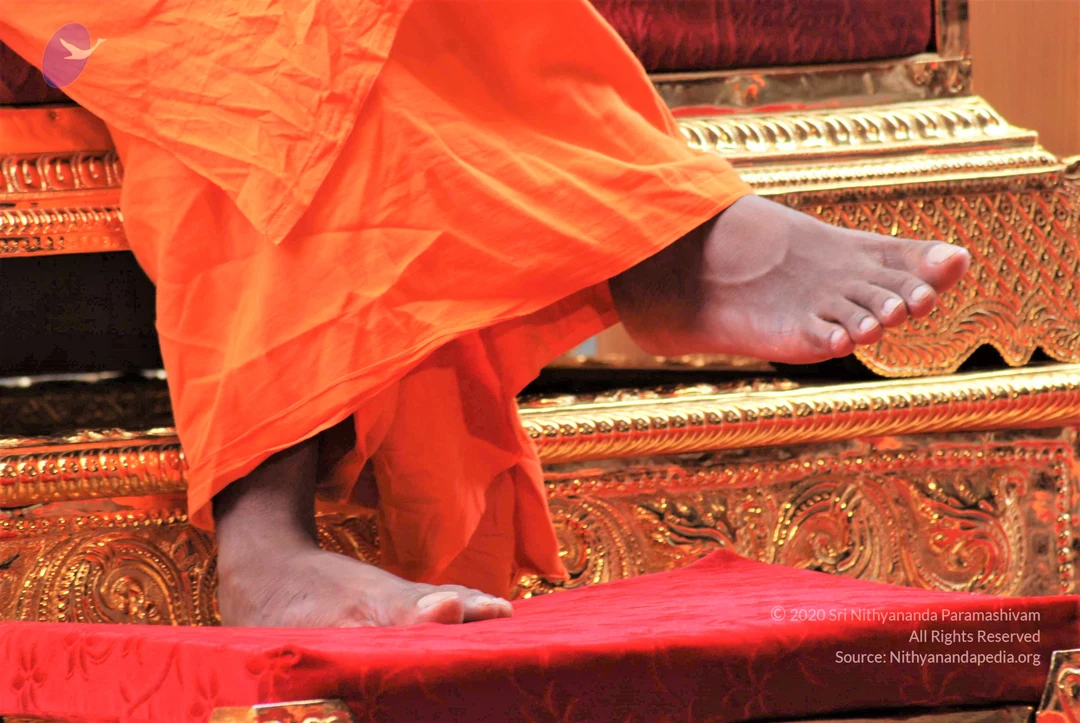
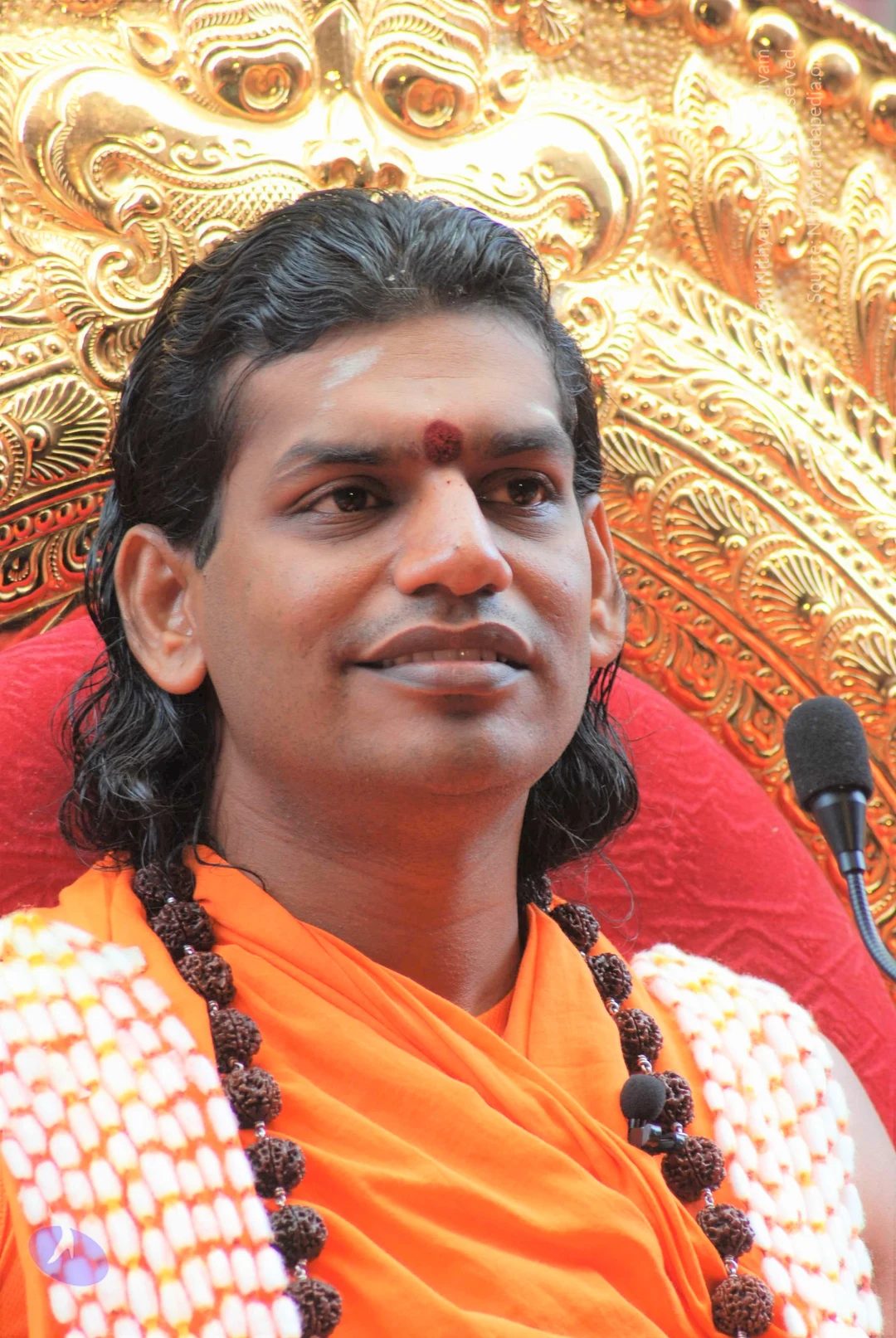
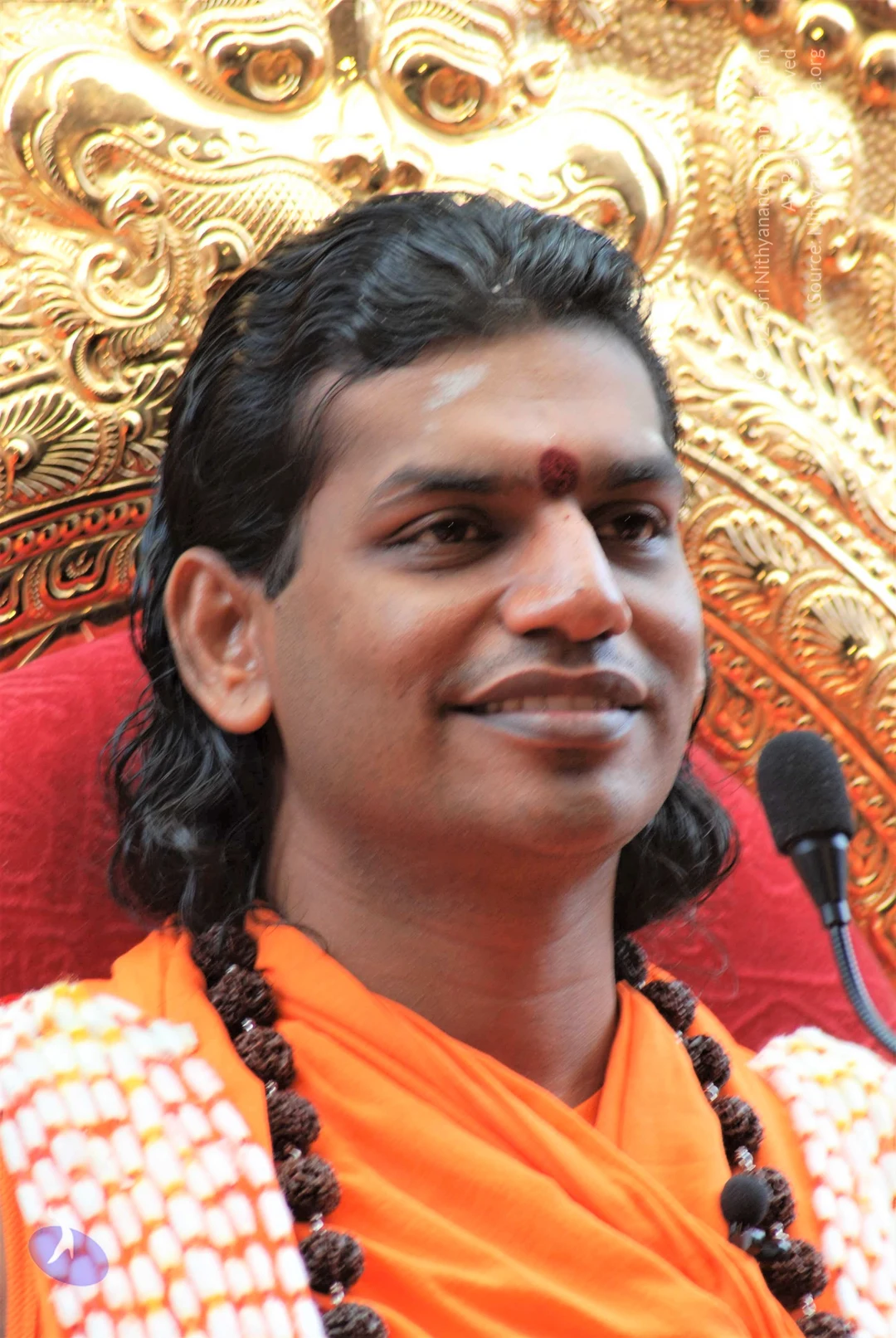
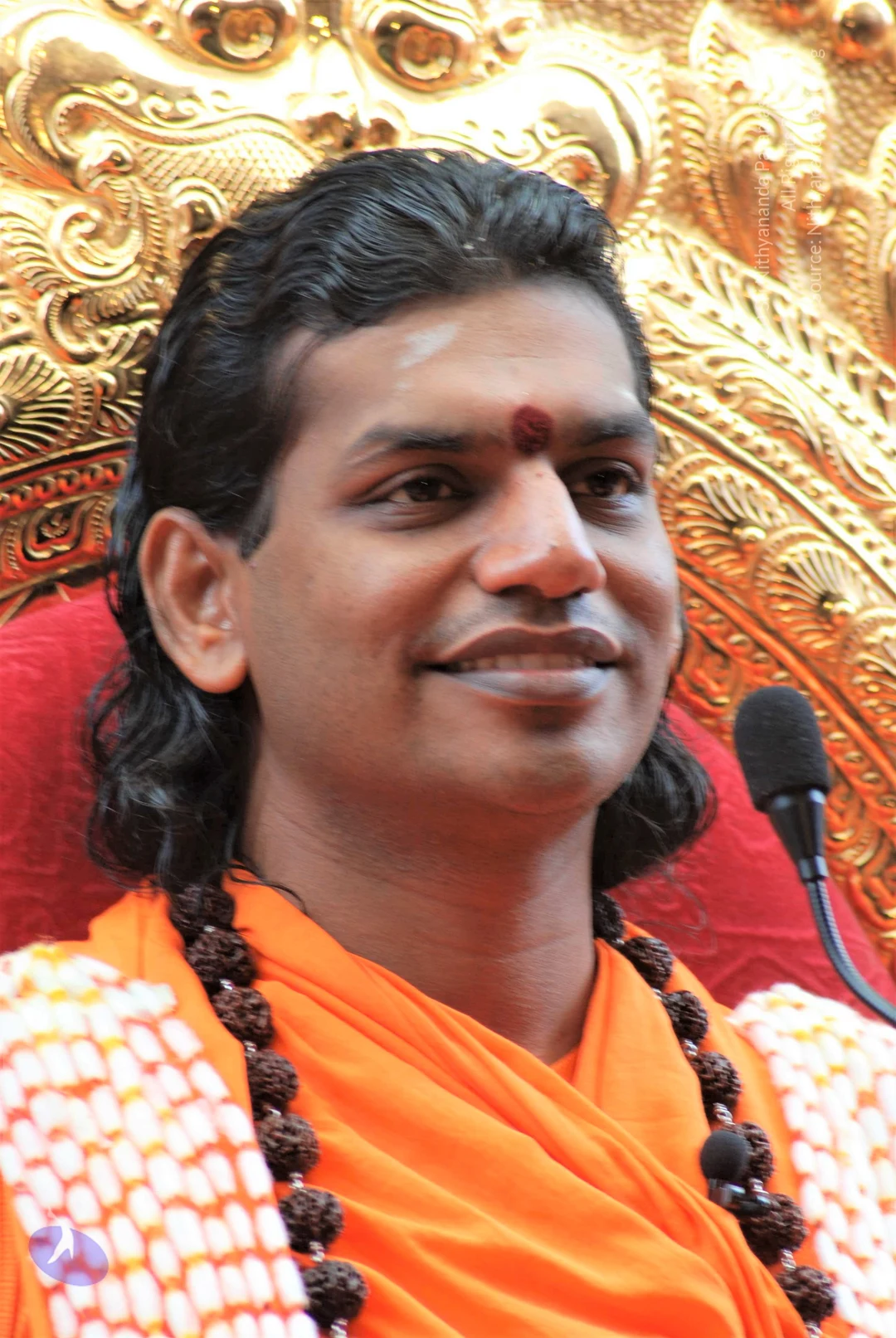
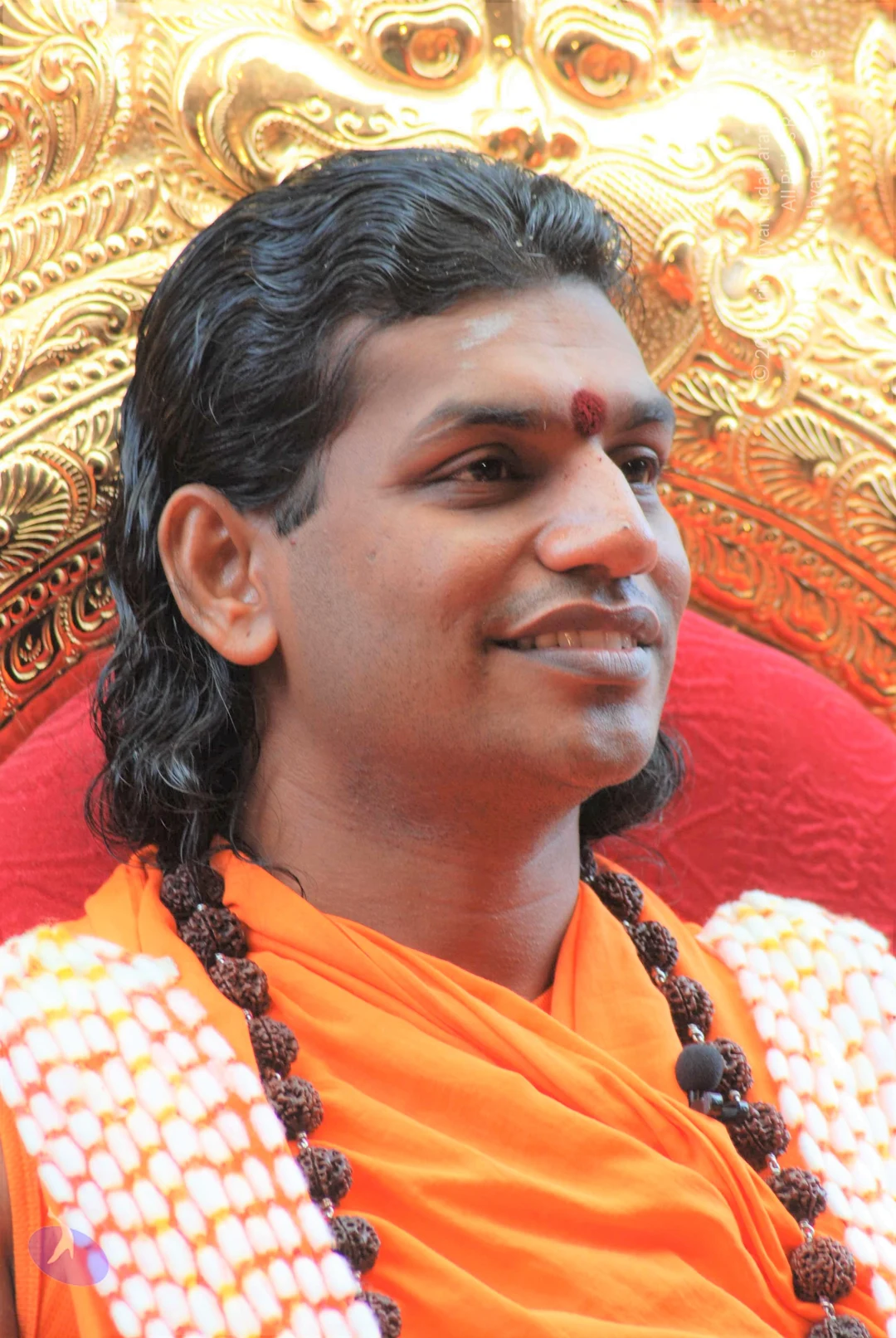
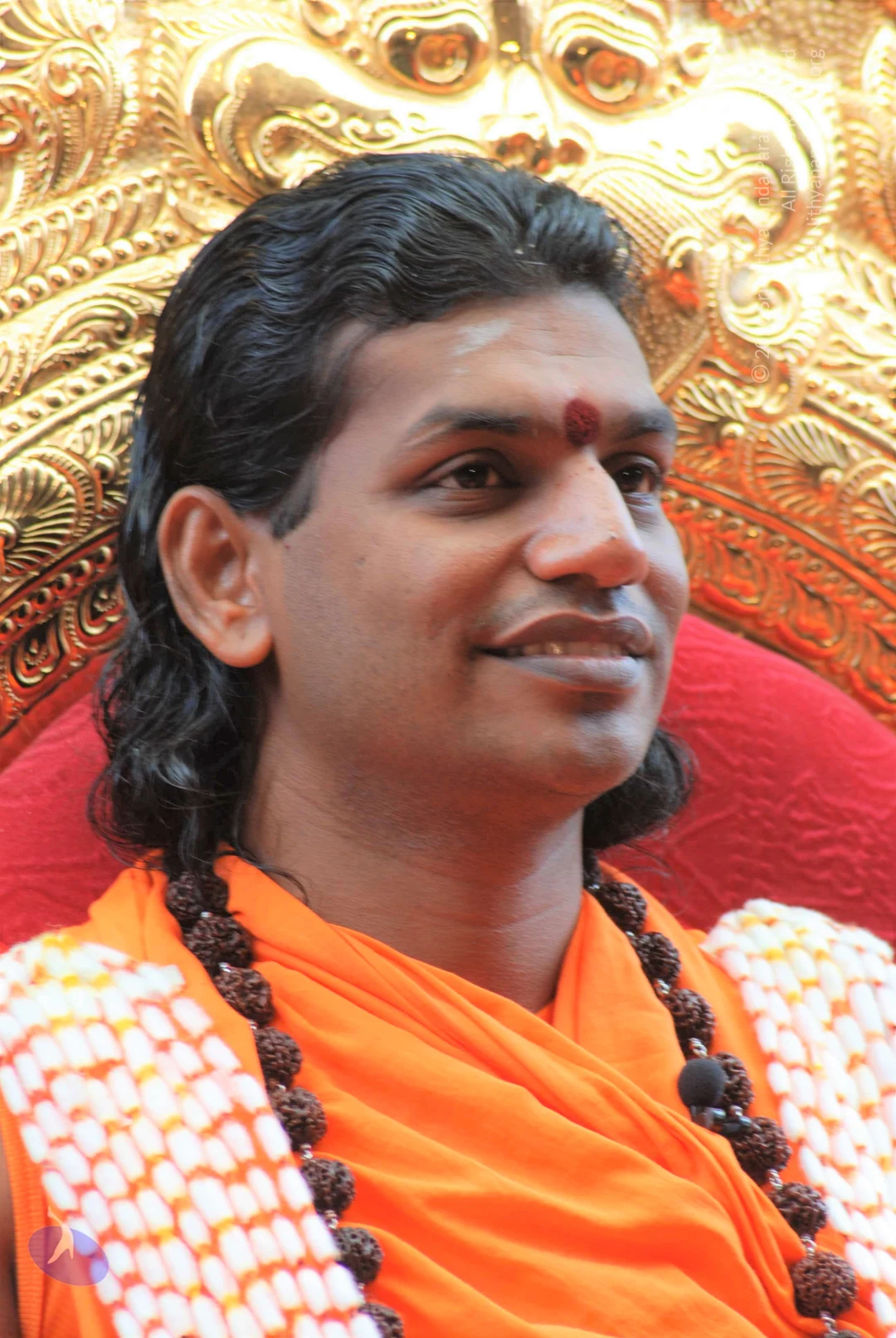
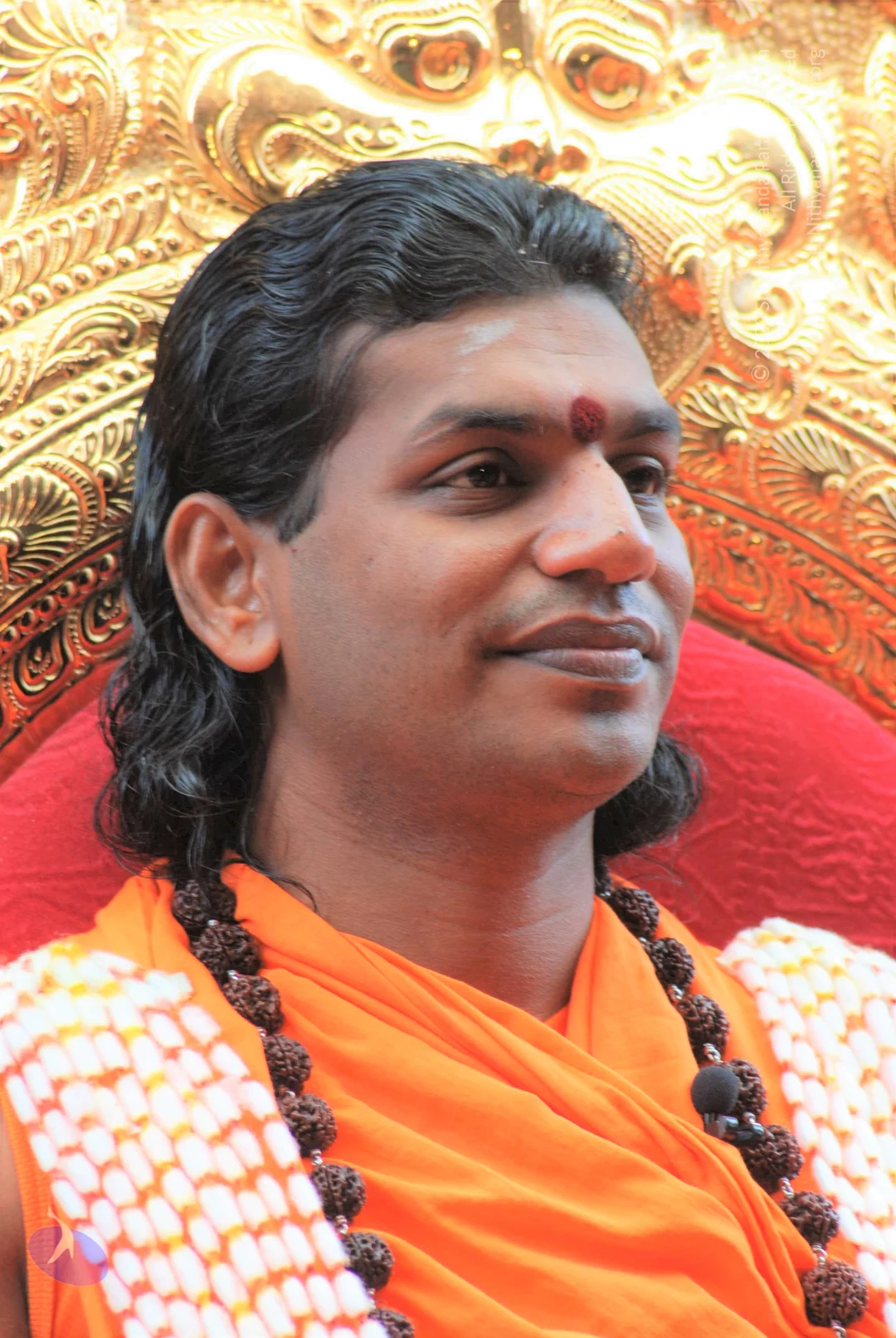
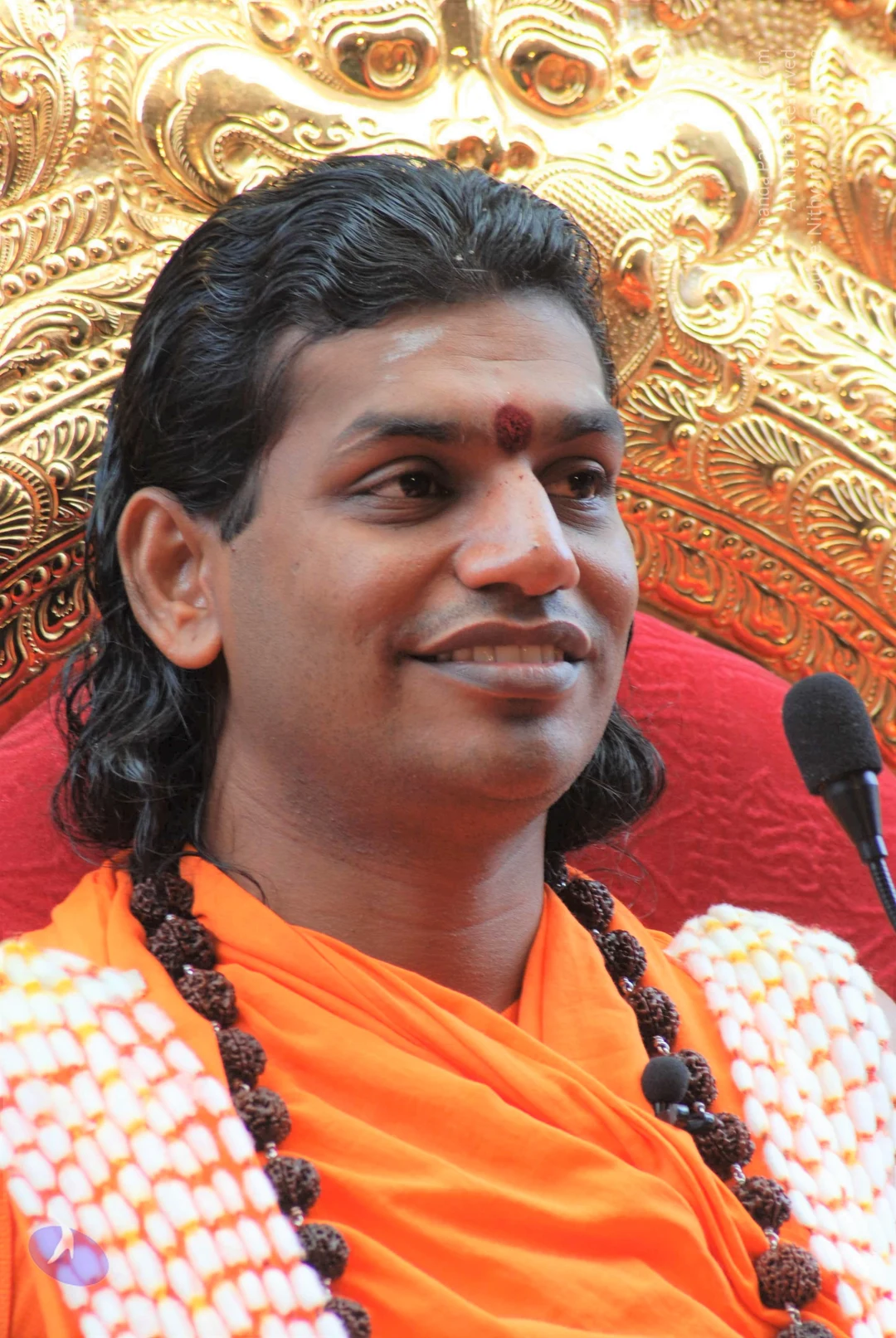
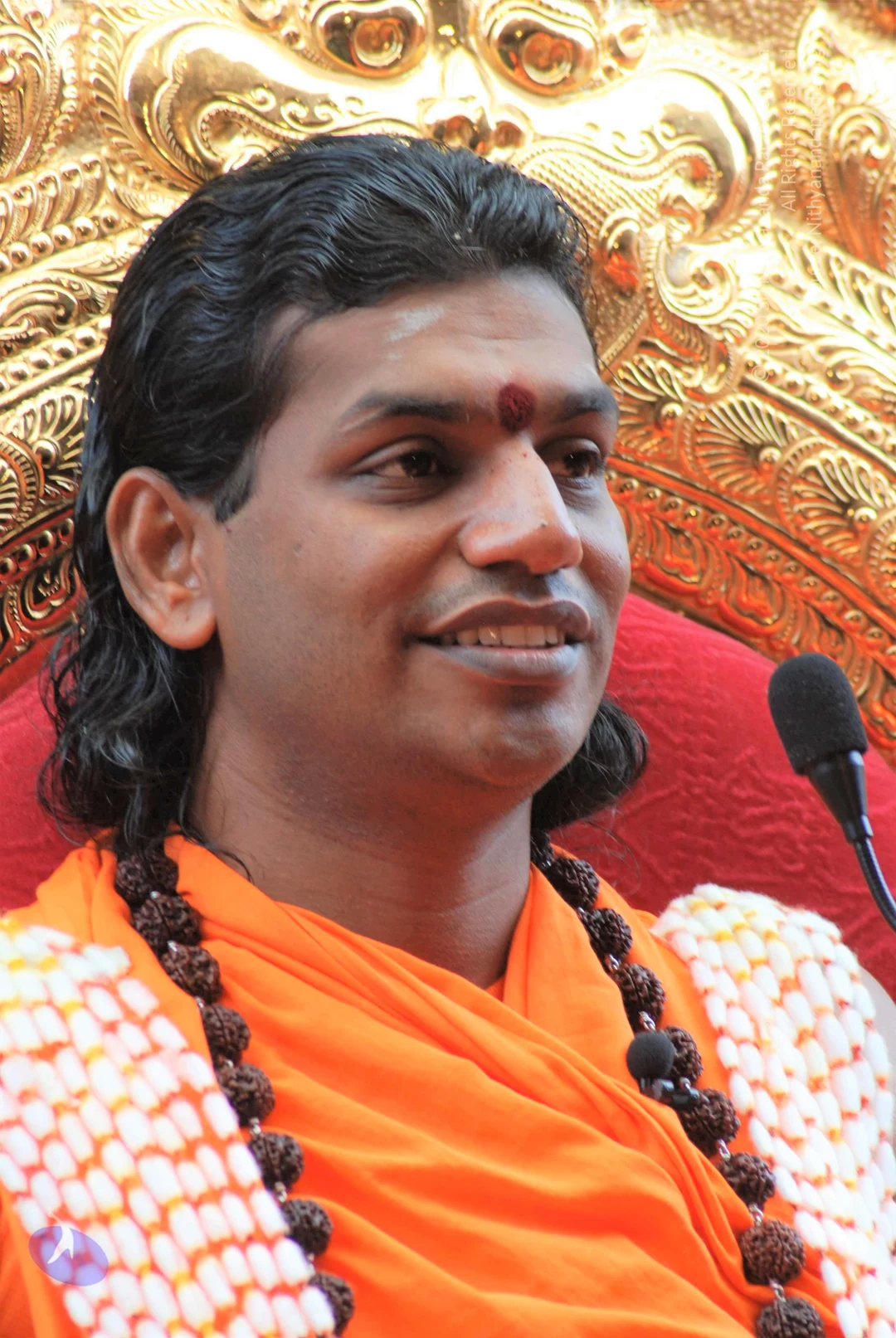
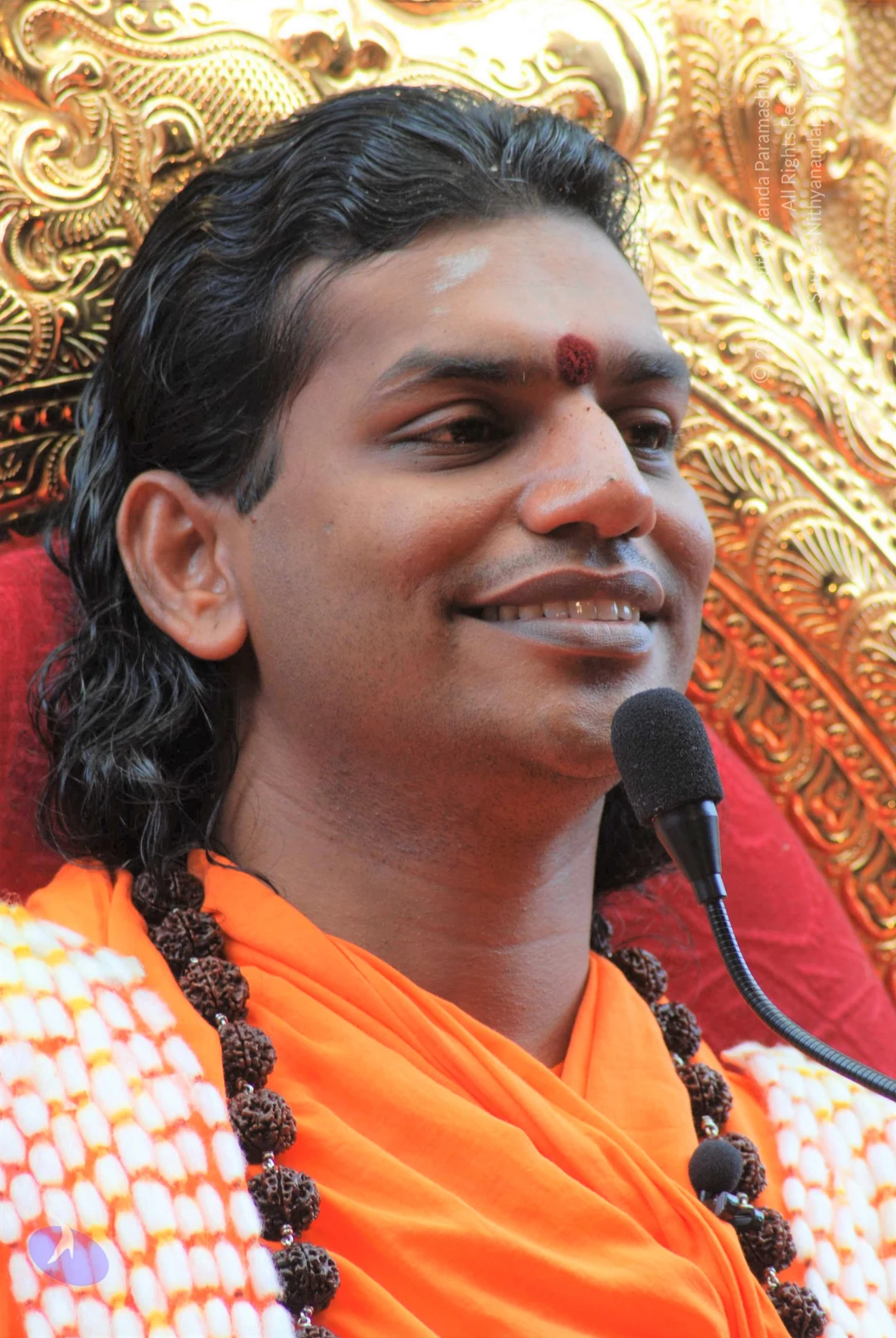
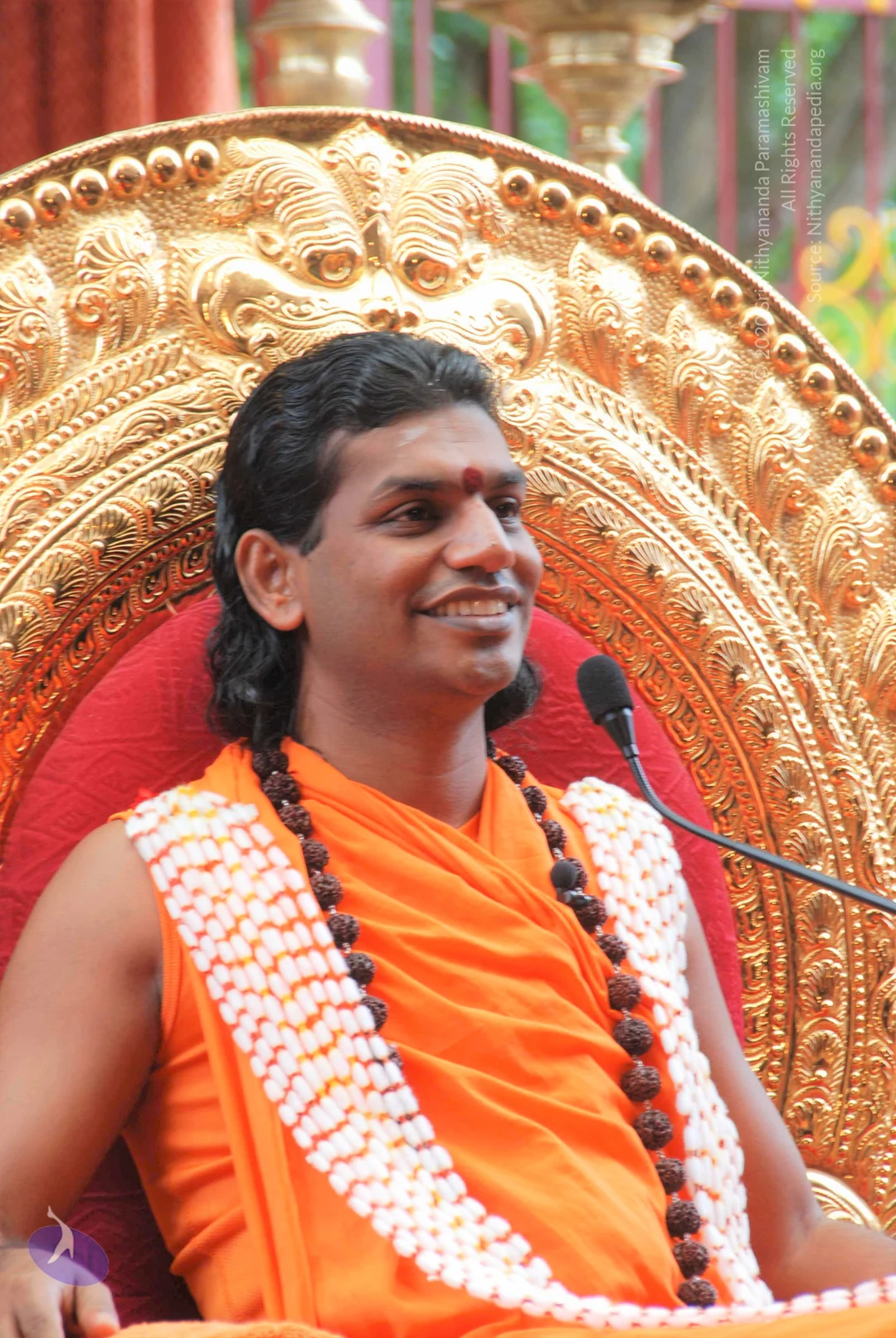
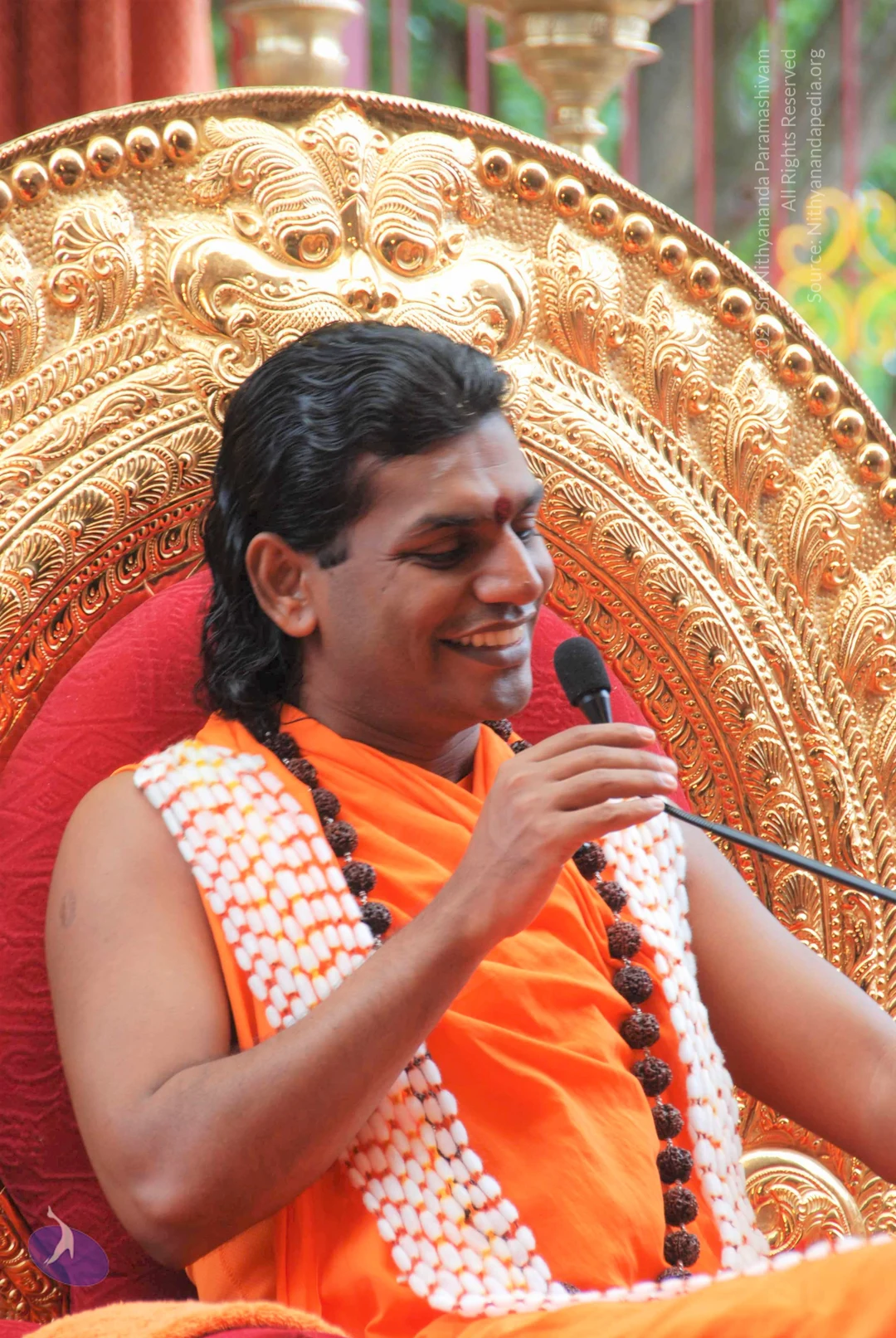
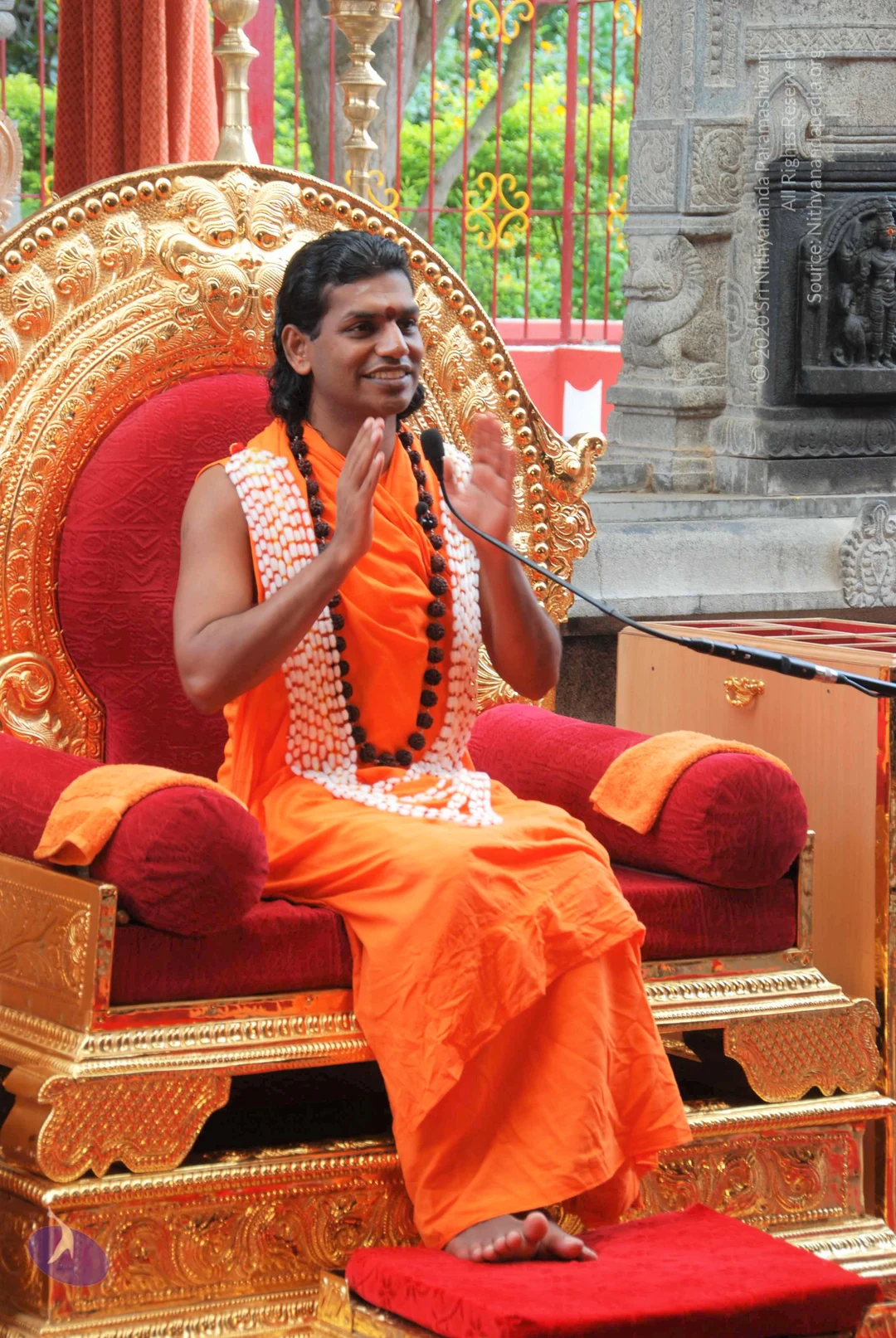
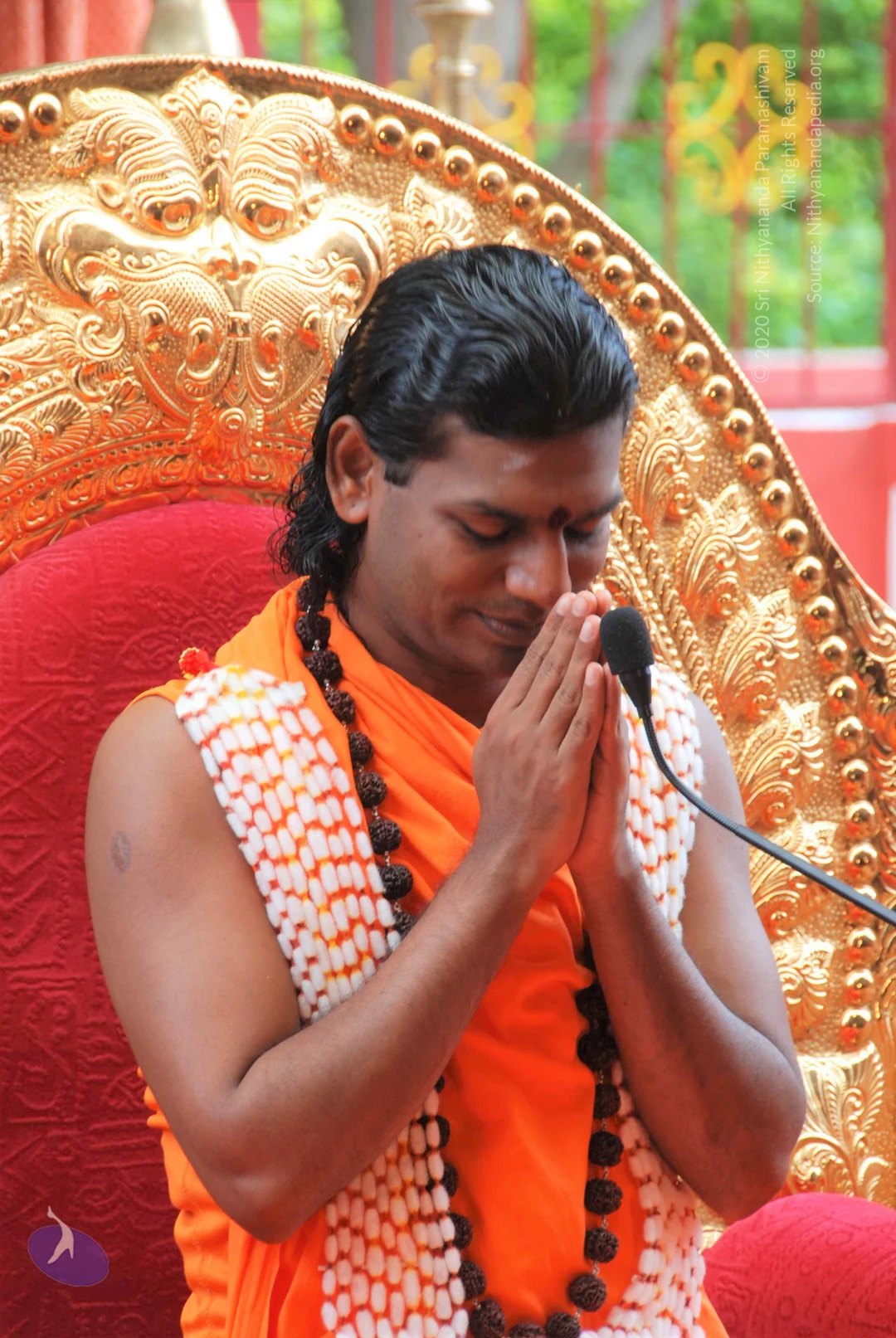
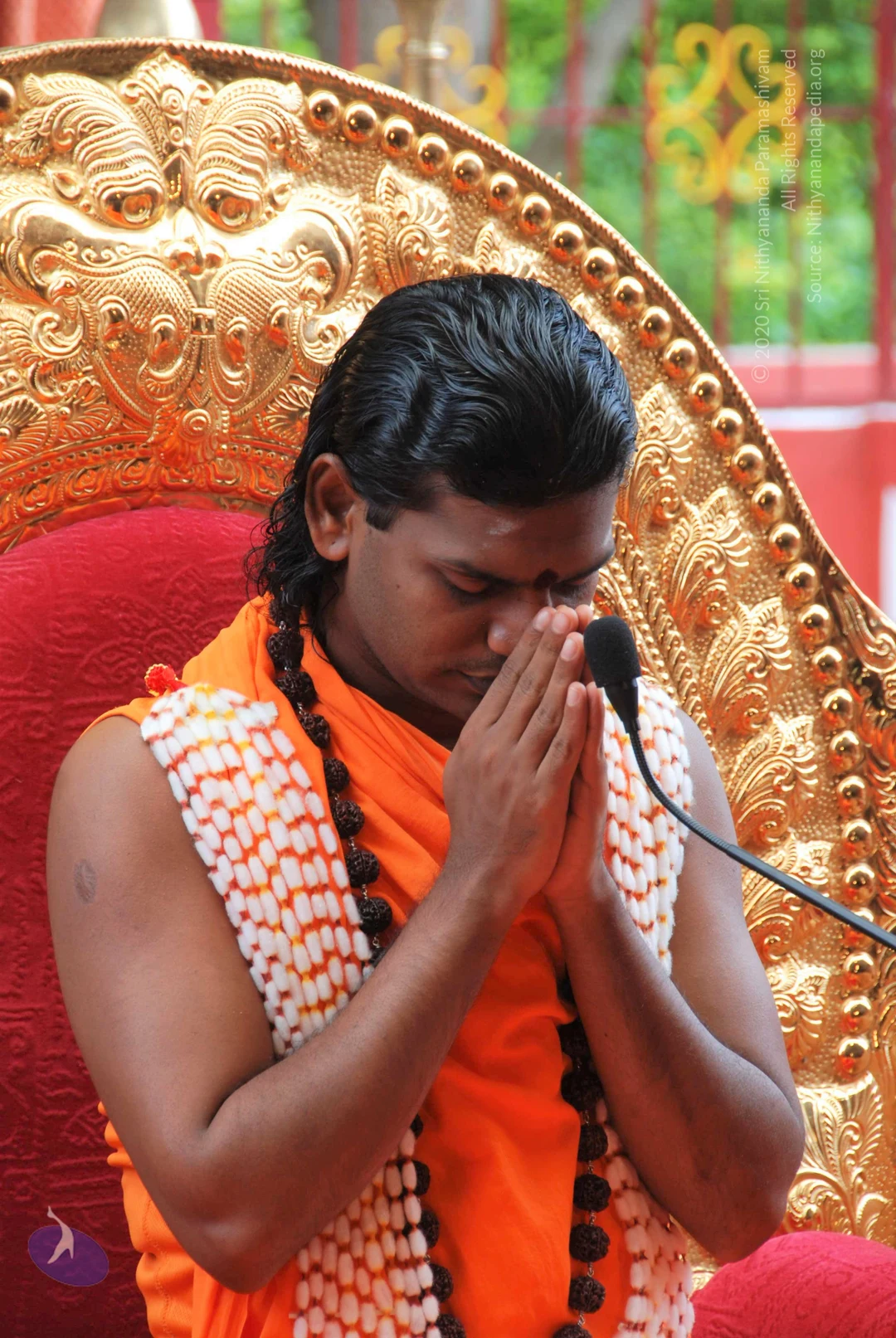
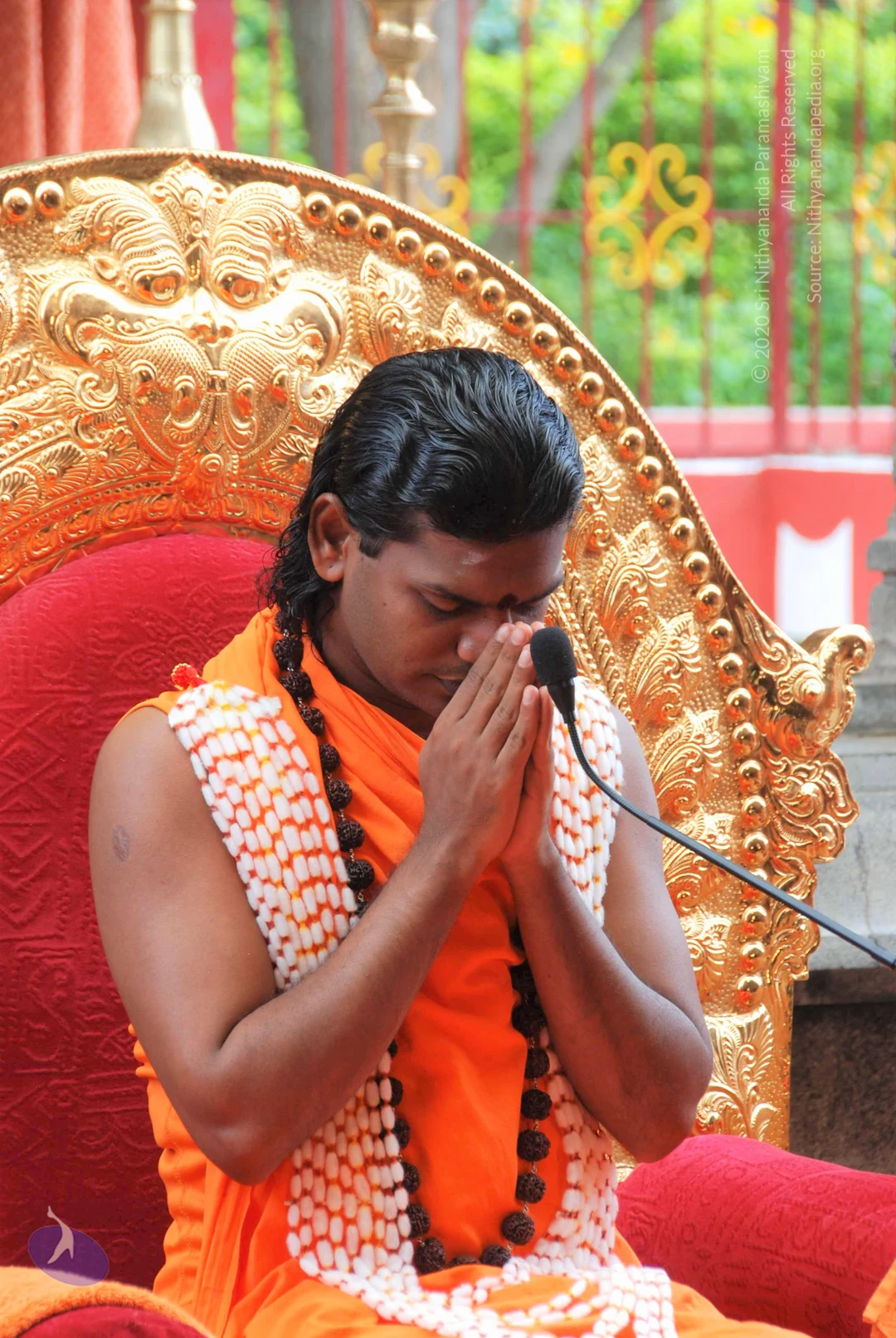
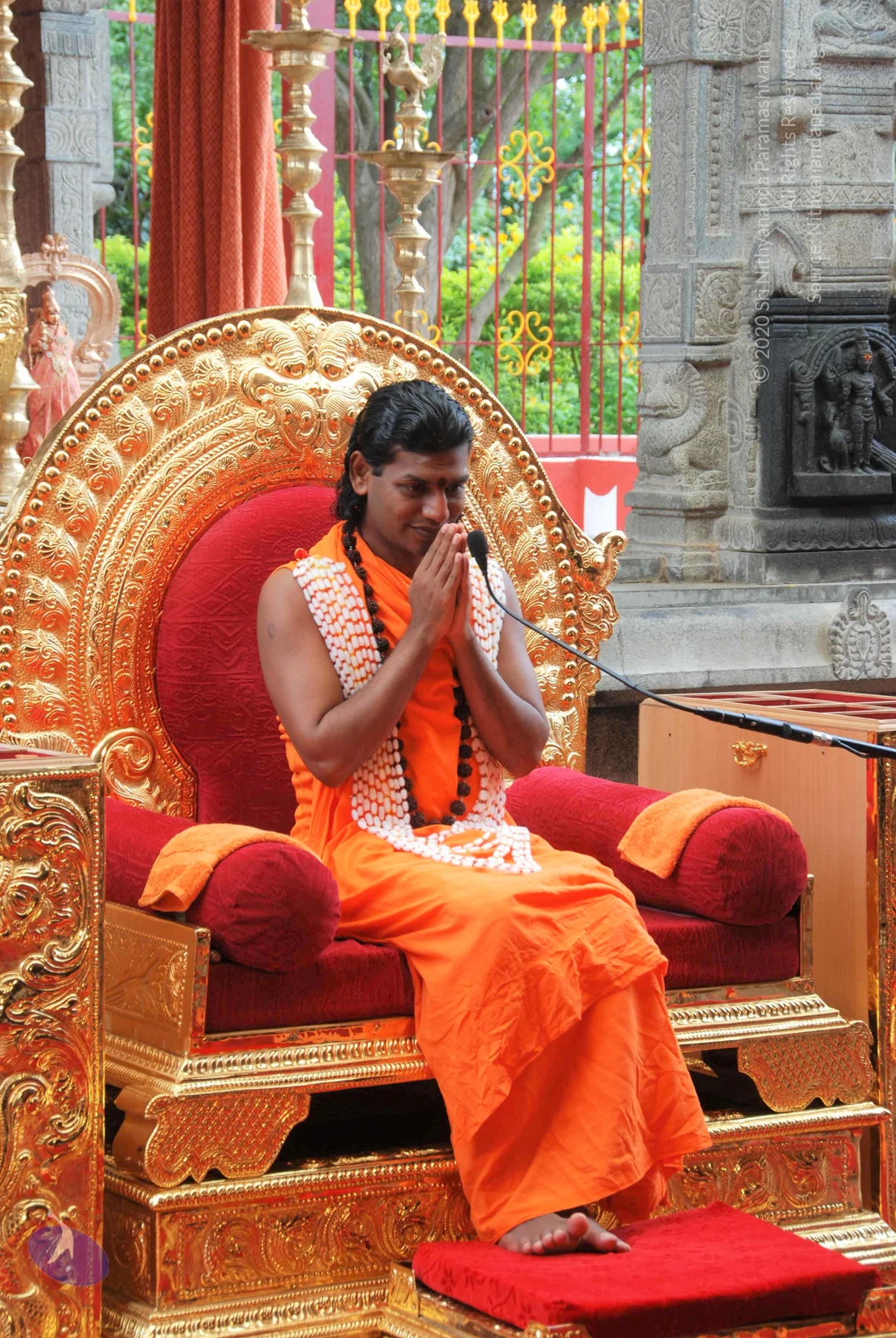
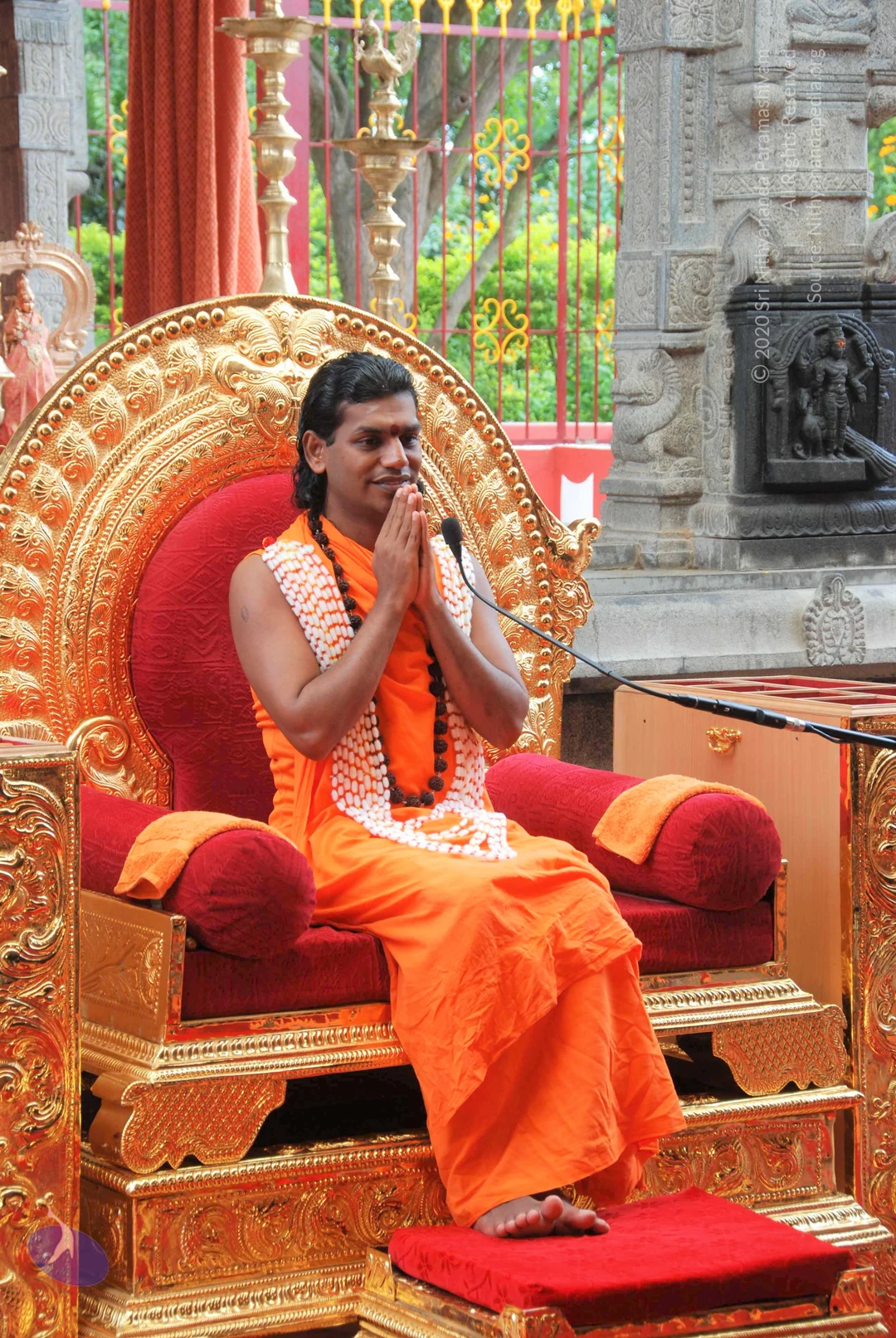
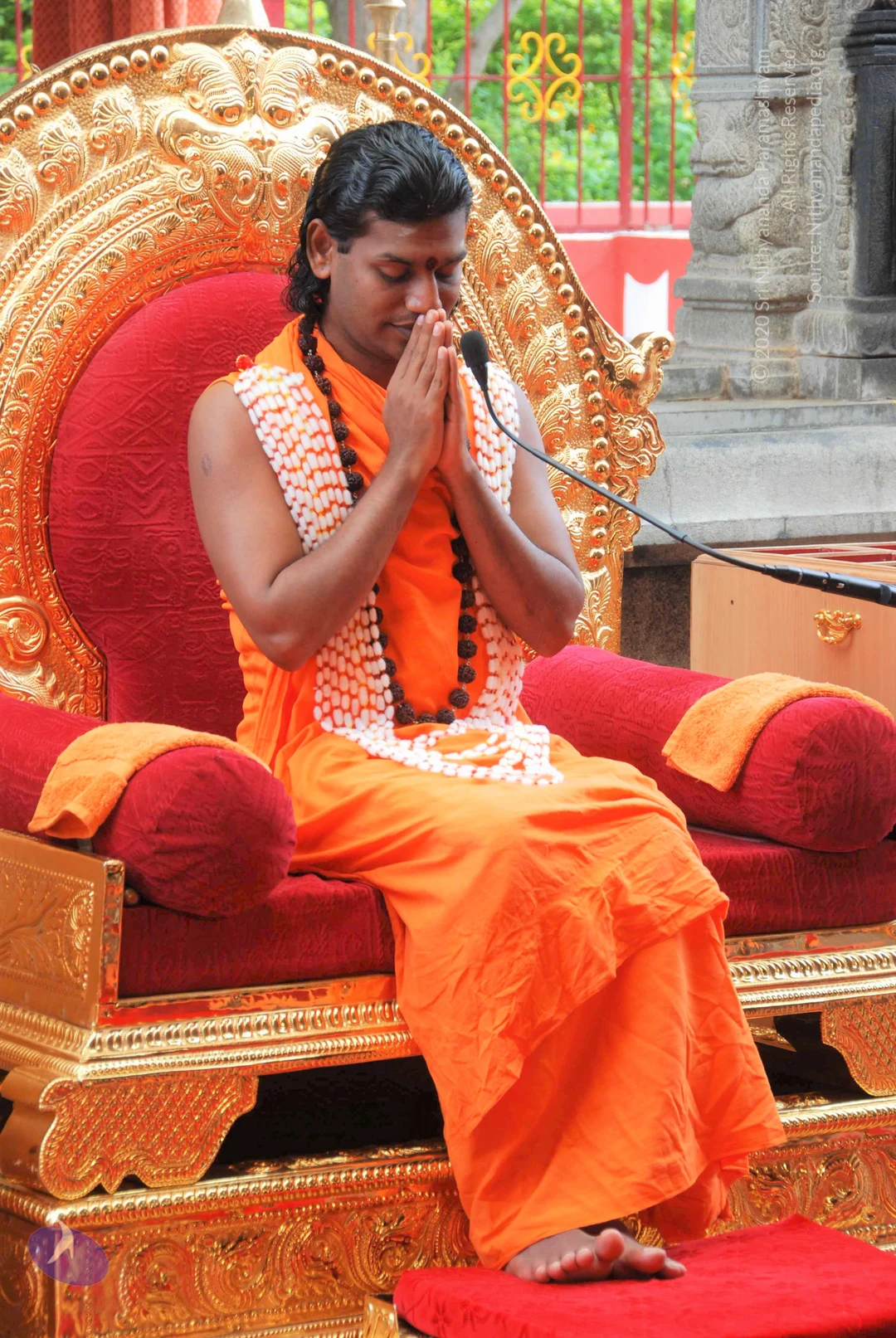
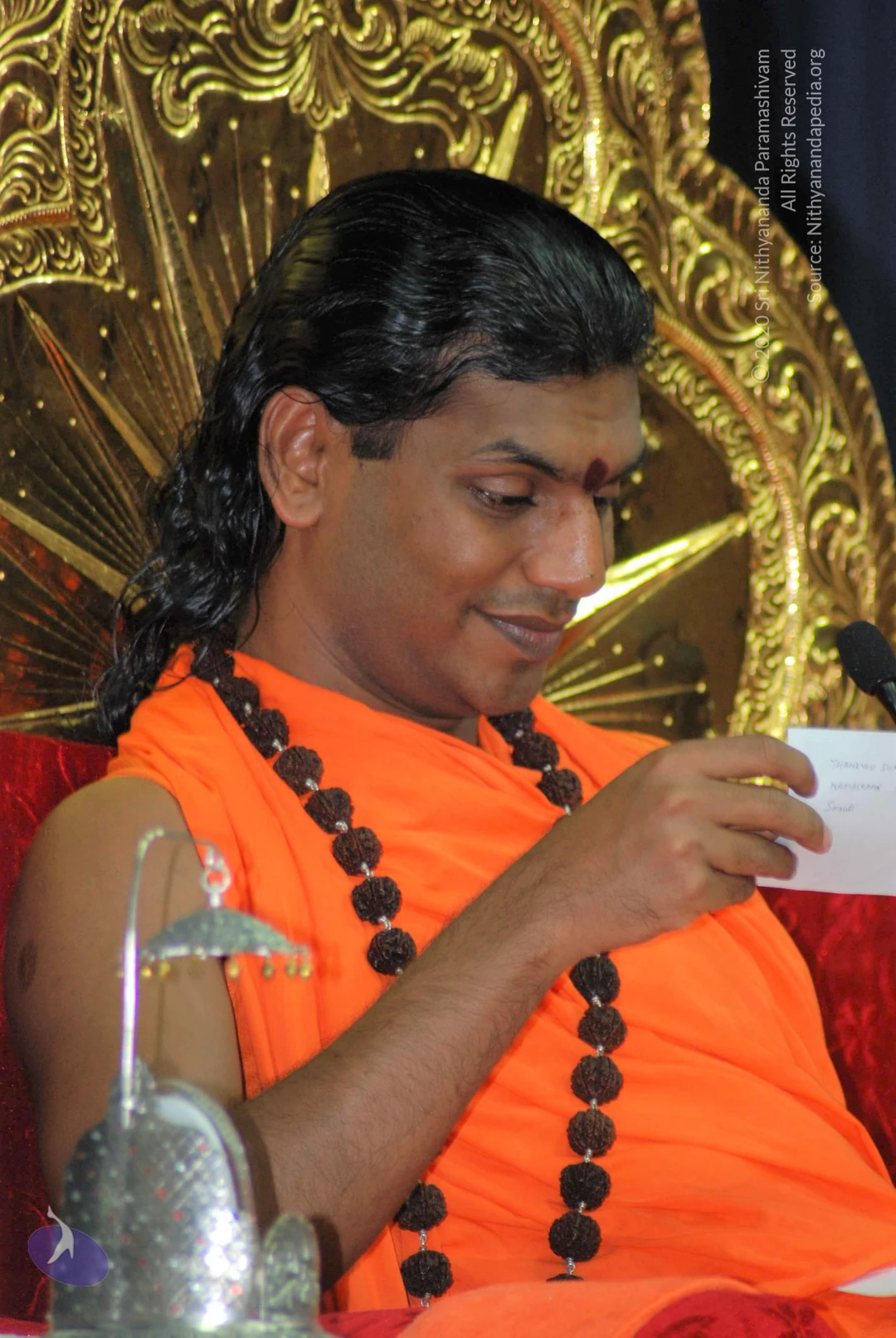
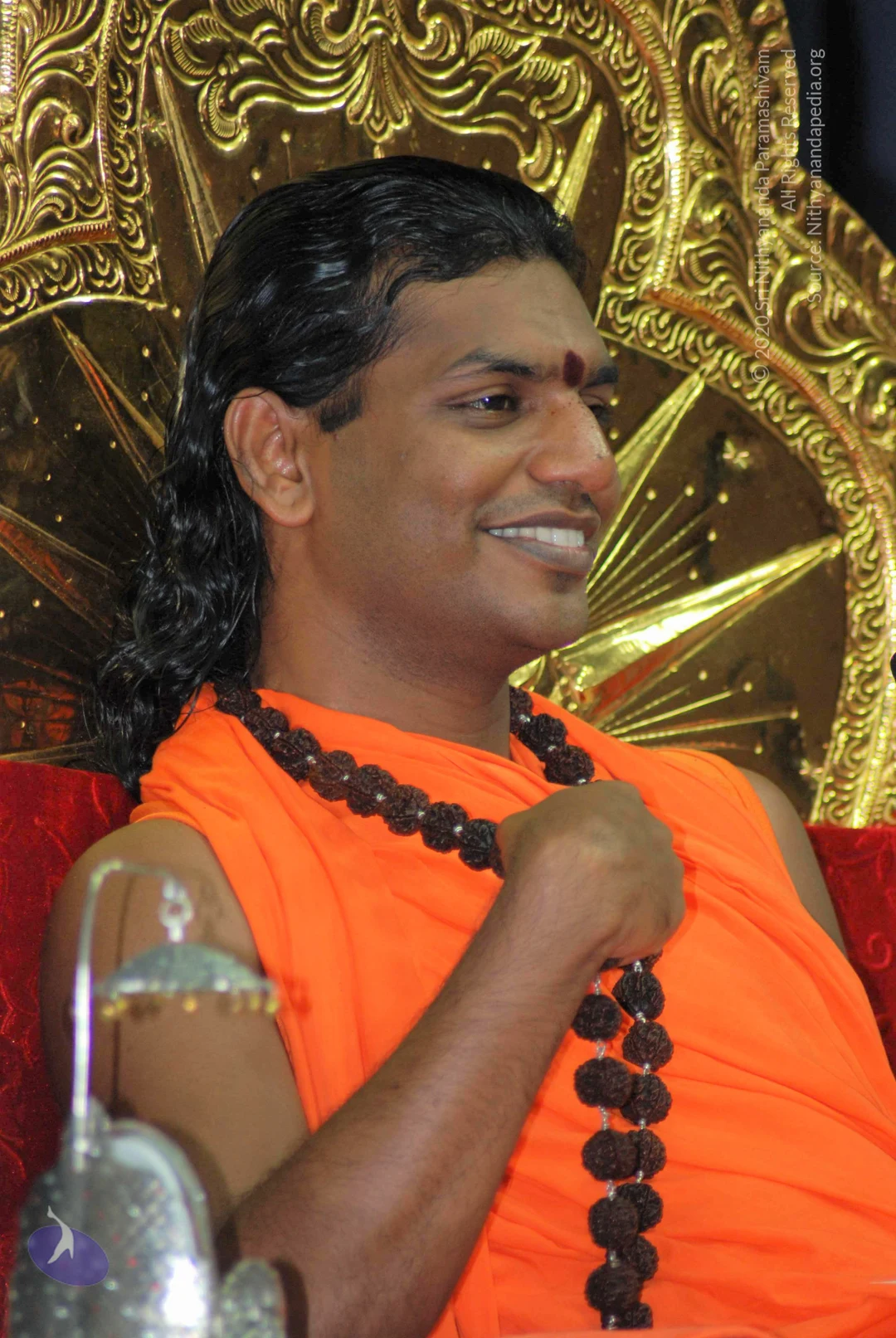
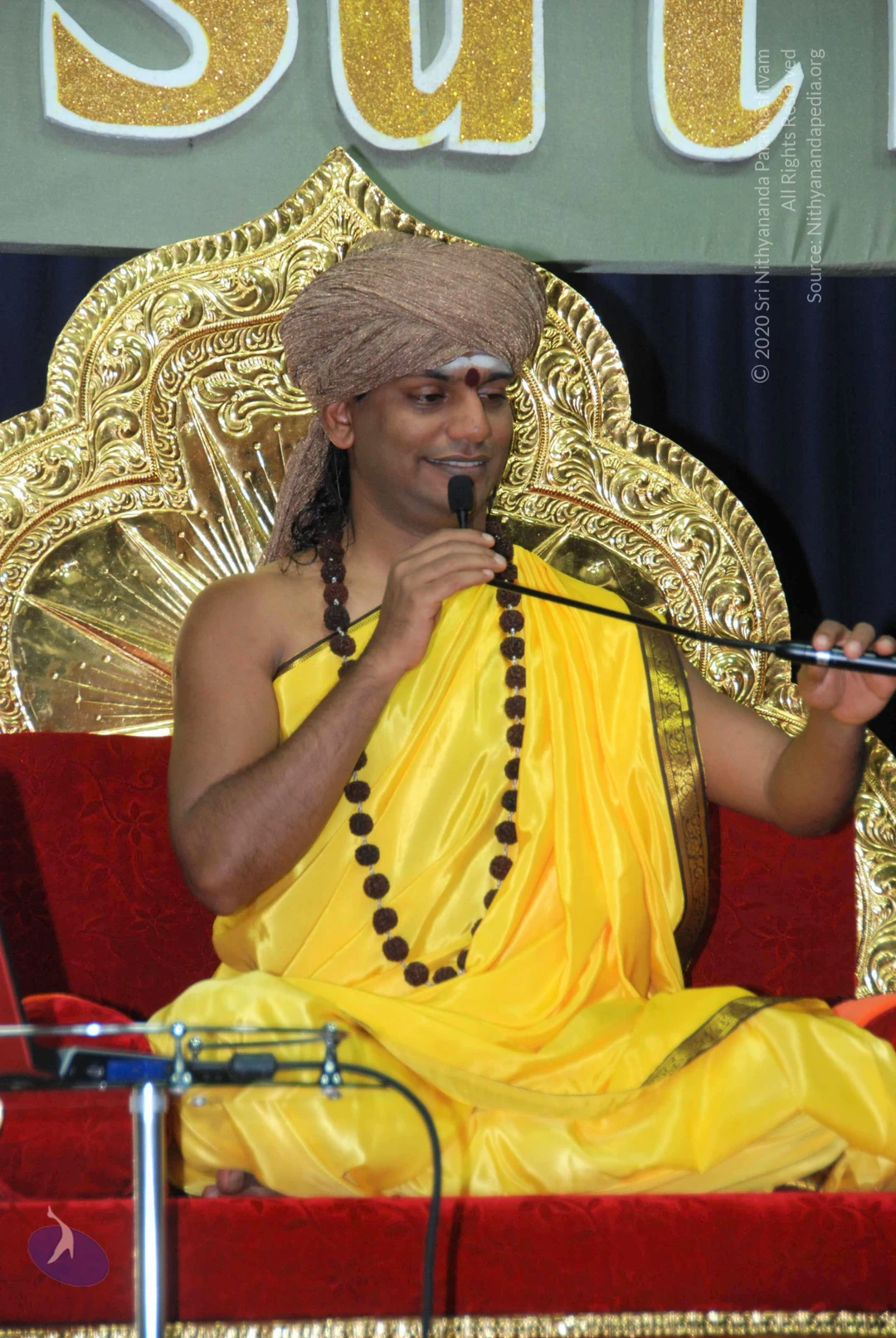
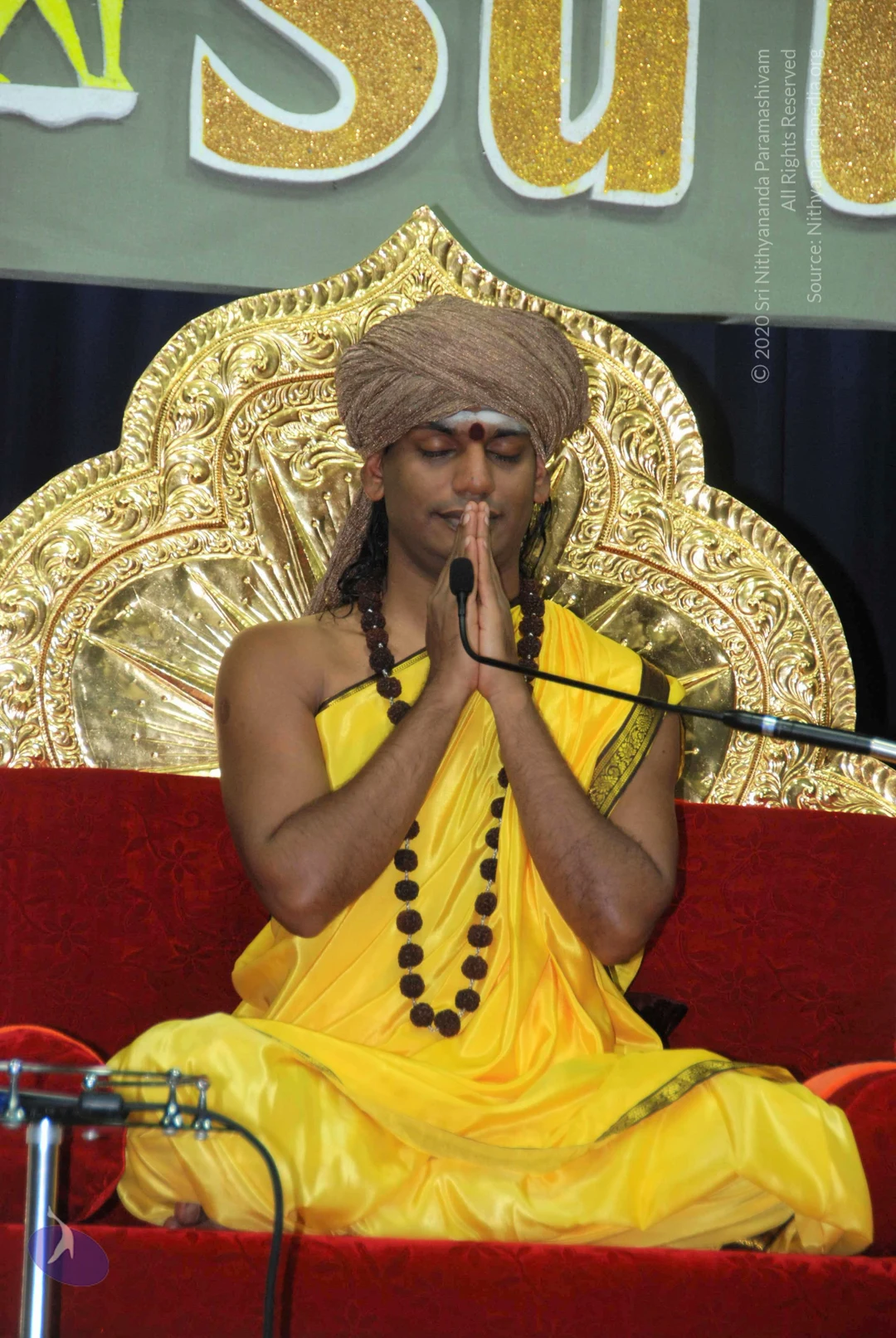
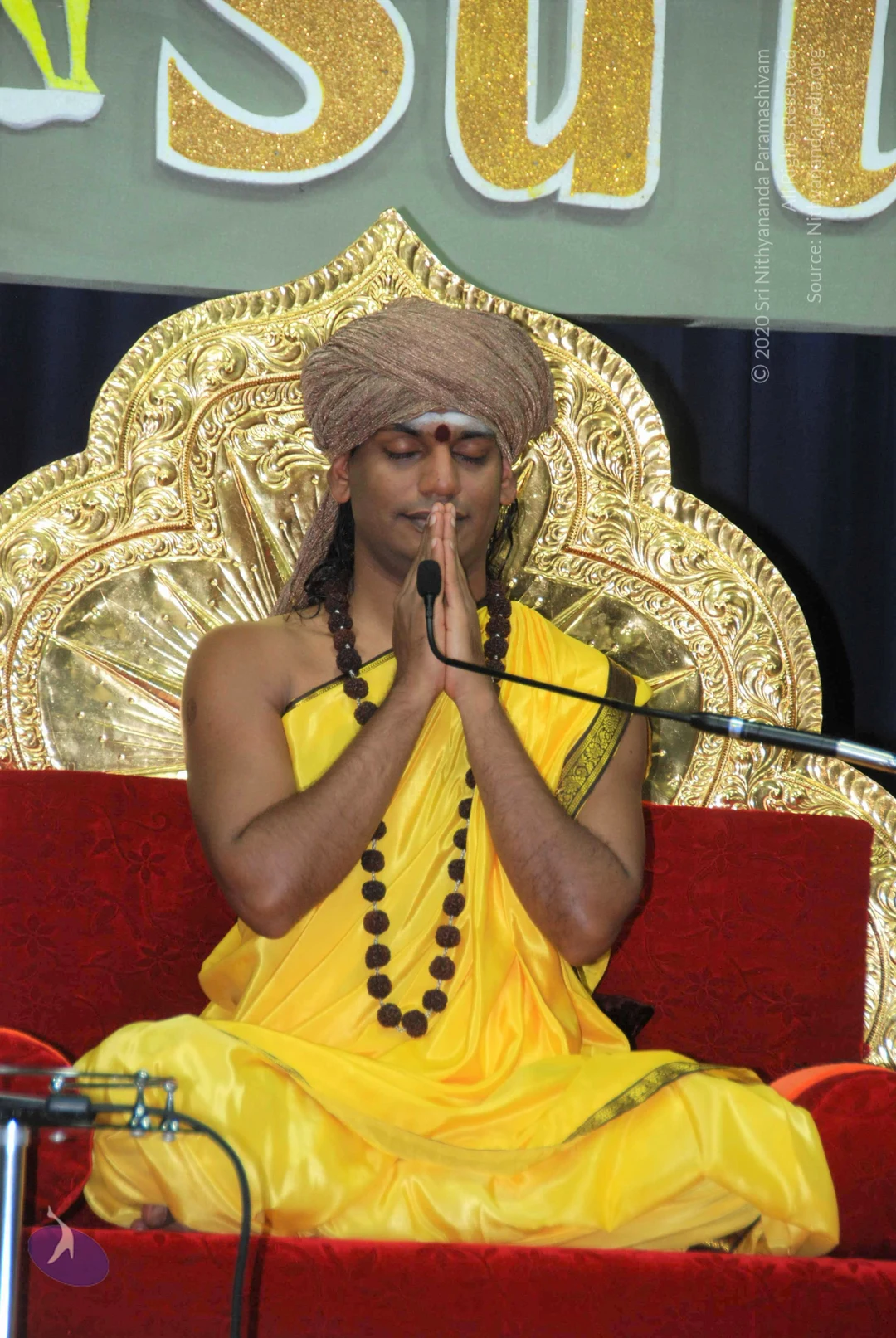
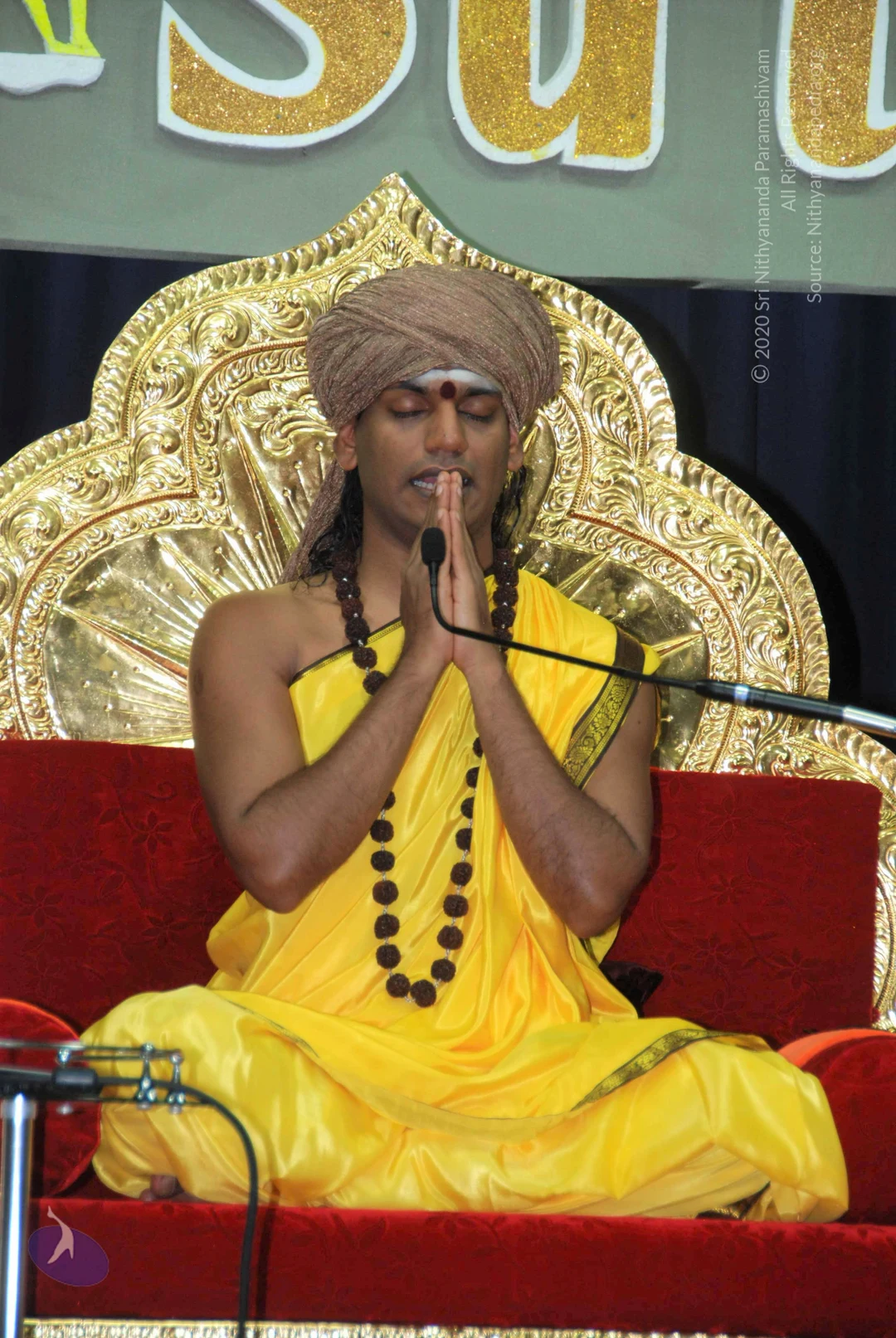
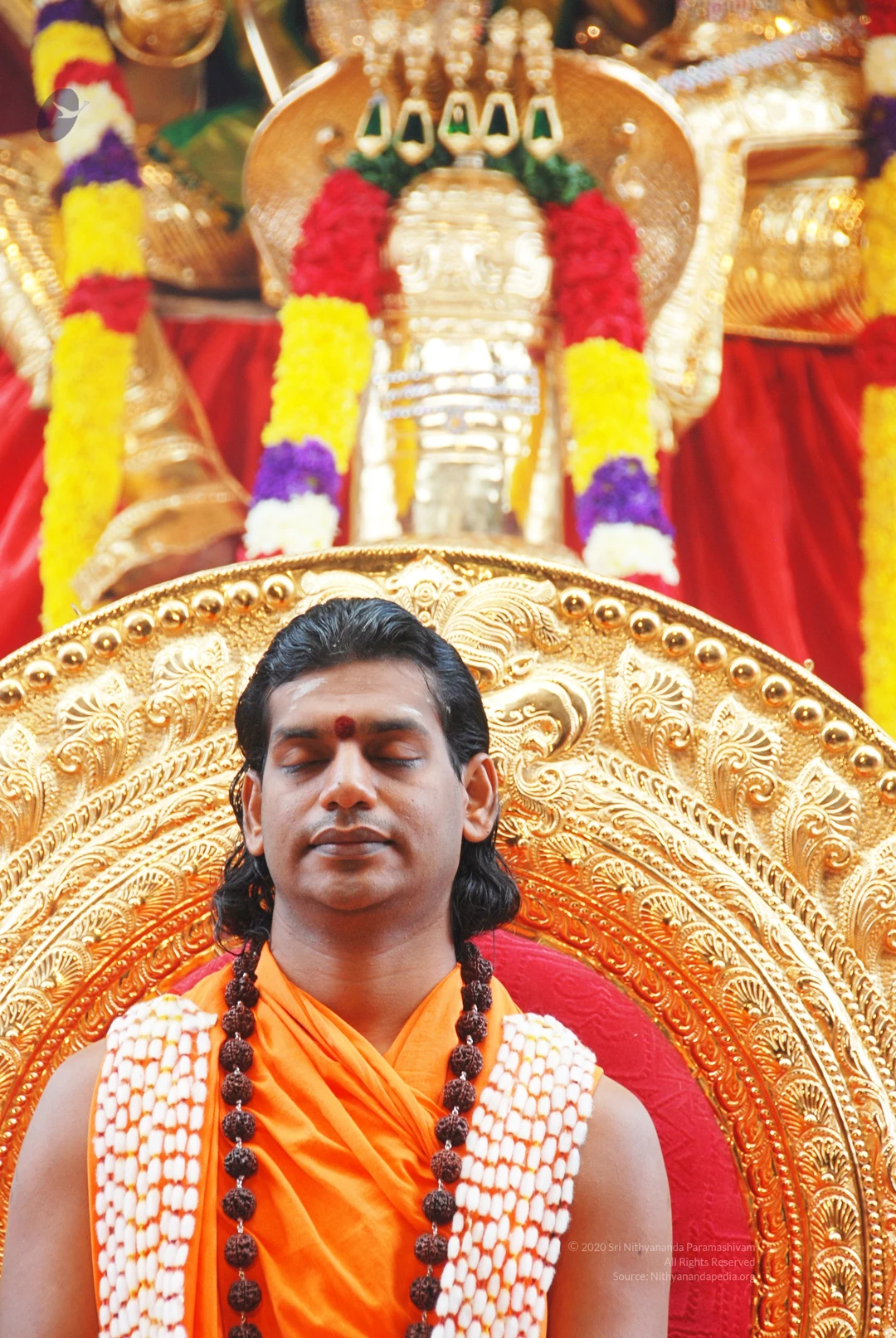
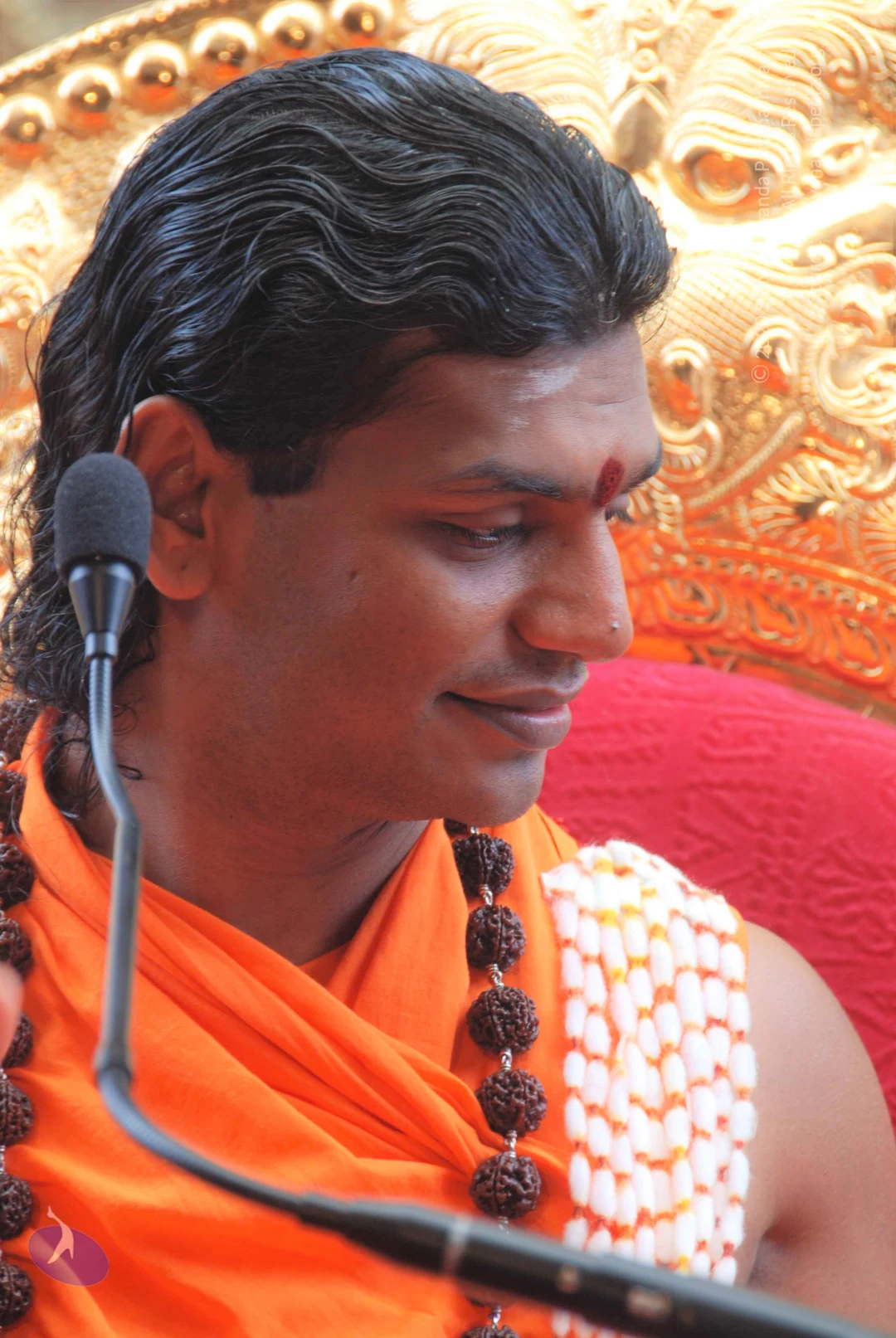
Close photo of a man with long, swept-back dark hair and a red tilak on his forehead, wearing an orange saffron shawl over the shoulders and multiple dark rudraksha mala strands. A white-and-gold bead garland drapes over one shoulder. A microphone stand sits in the foreground. Behind him is an ornate gold-carved throne with a red cushion, and he looks down with a slight smile. Appearance cues are consistent with a person, seated on a throne at a talk.Close-up photograph of a pair of bare feet resting on a red velvet cushion placed on an ornate gold-carved throne or seat. The person wears flowing saffron-orange robes that pool around the ankles. The feet are visible, toes relaxed, while the upper body is cropped out of frame. A small logo appears in the upper left corner and a copyright line is in the lower right corner.A man with long dark hair swept back sits in front of an ornate gold throne-back, wearing an orange saffron shawl and multiple rudraksha mala necklaces and a white beaded garland. He has a red bindi on his forehead and holds a small black microphone in his raised hand while speaking, looking downward with a slight smile. Swamiji (probable): the long swept-back hair, saffron clothing, rudraksha malas and ornate gold setting are the cues for this identification in a talk setting.A man with long, swept-back dark hair sits before an ornate gold throne-like chair, speaking into a handheld microphone held in his right hand. He wears an orange saffron cloth, a long rudraksha mala with large brown beads, and a white and orange beaded garland draped over his shoulders, with a red tilak on his forehead. He looks down with a slight smile. Swamiji (probable): the long swept-back hair, saffron clothing and rudraksha mala are the cues; he is shown mid-talk at a satsang-style discourse. The background shows gilded carvings and a red cloth.A seated man with long dark hair swept back, wearing an orange saffron garment, multiple rudraksha malas and a white-and-orange beaded shoulder garland, with a red kumkum bindi on his forehead. He sits before an ornate gold throne with a microphone in front of him, eyes closed, palms pressed together in namaste. a person is shown in_person as the speaker during a satsang talk.A man seated on an ornate gilded throne with a red cushioned backrest and a microphone on a stand before him, his palms pressed together in anjali mudra at chest level with eyes closed. He wears a saffron-orange sleeveless garment over the shoulders, layered white and orange beaded necklaces, and multiple dark rudraksha mala strands, with a red tilak on his forehead. His long dark hair is swept back. Behind him stand gold lamp stands and red drapery.
05

05-Sarva-Darshan

30 dated photos in previewSource gallery
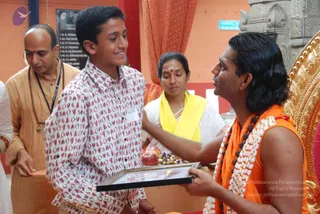
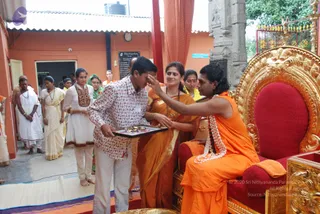
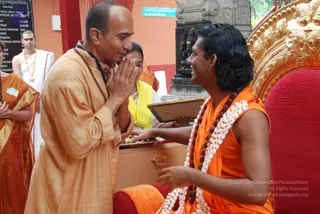
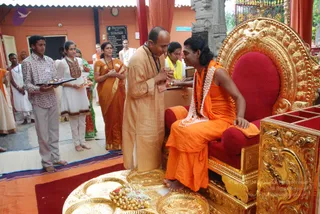
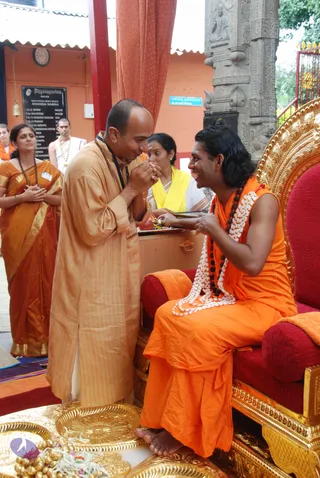
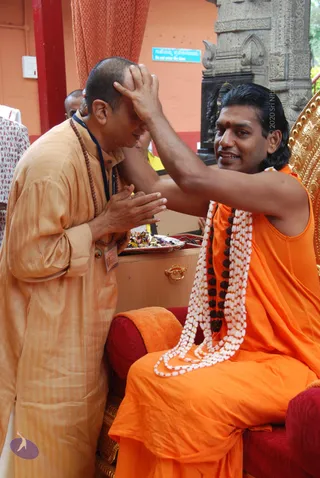
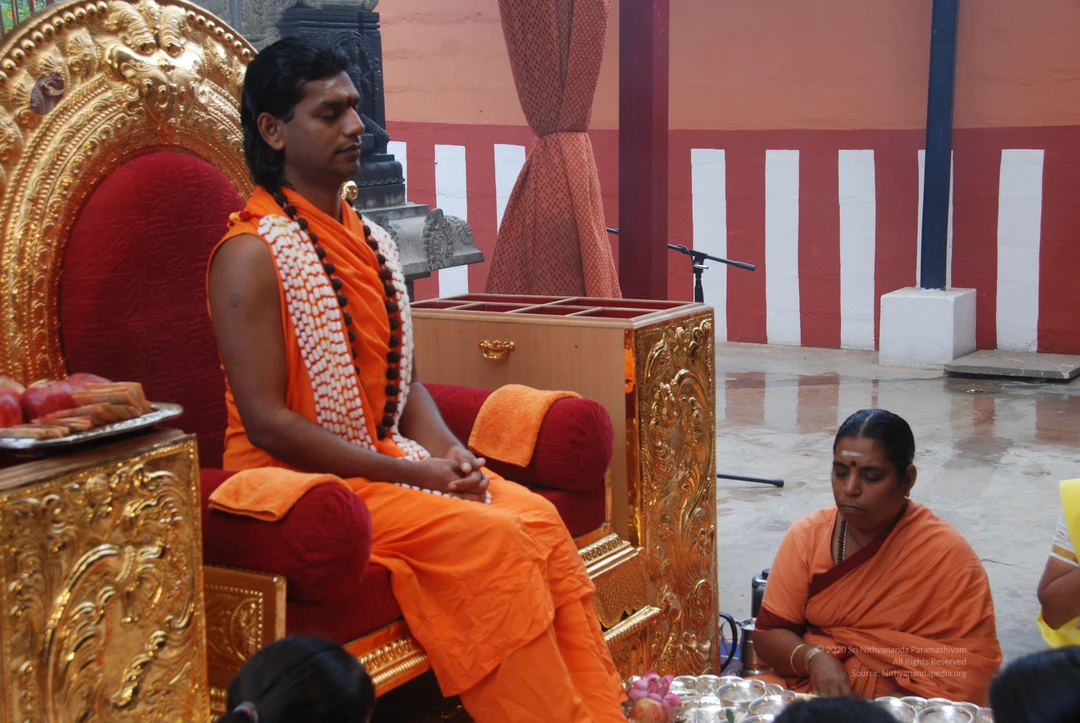
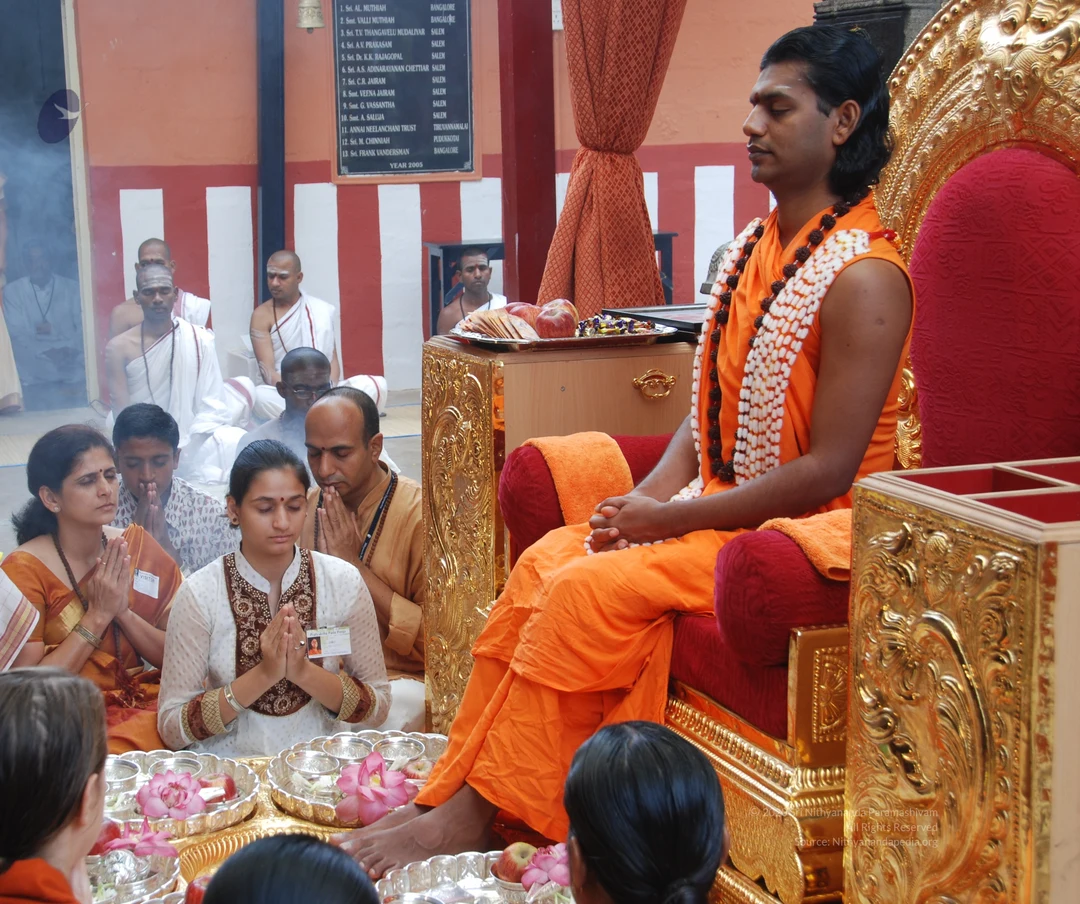
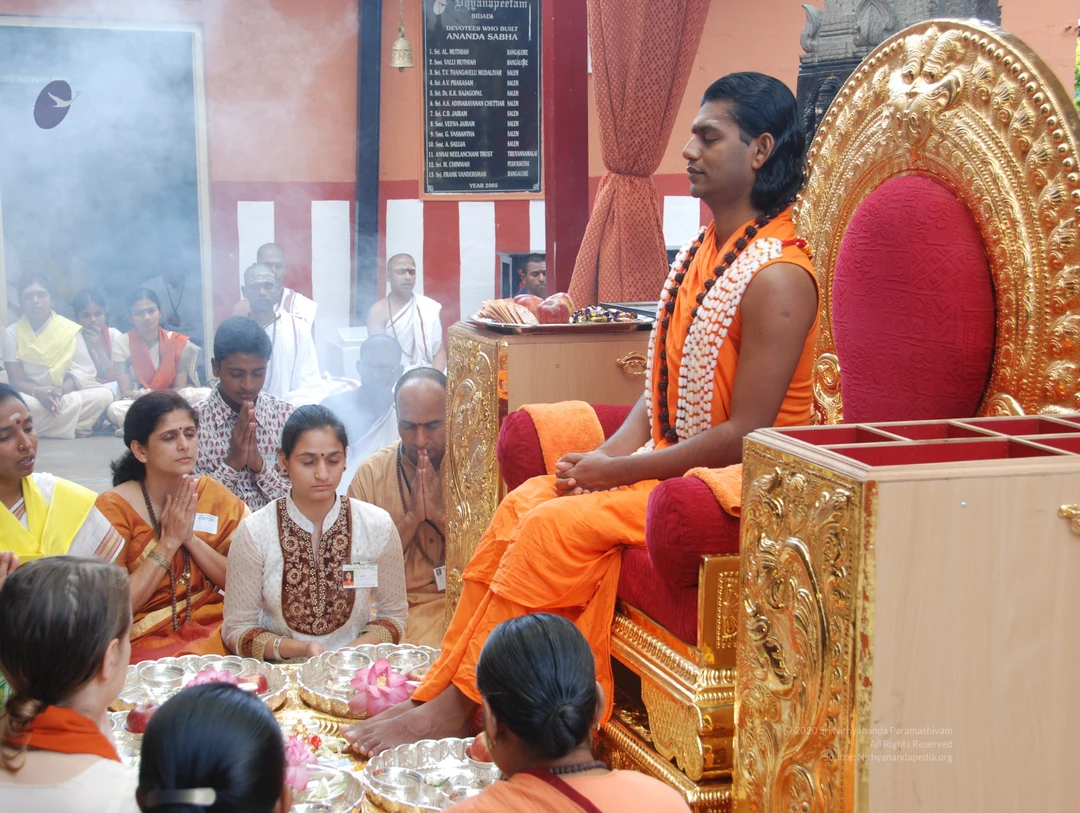
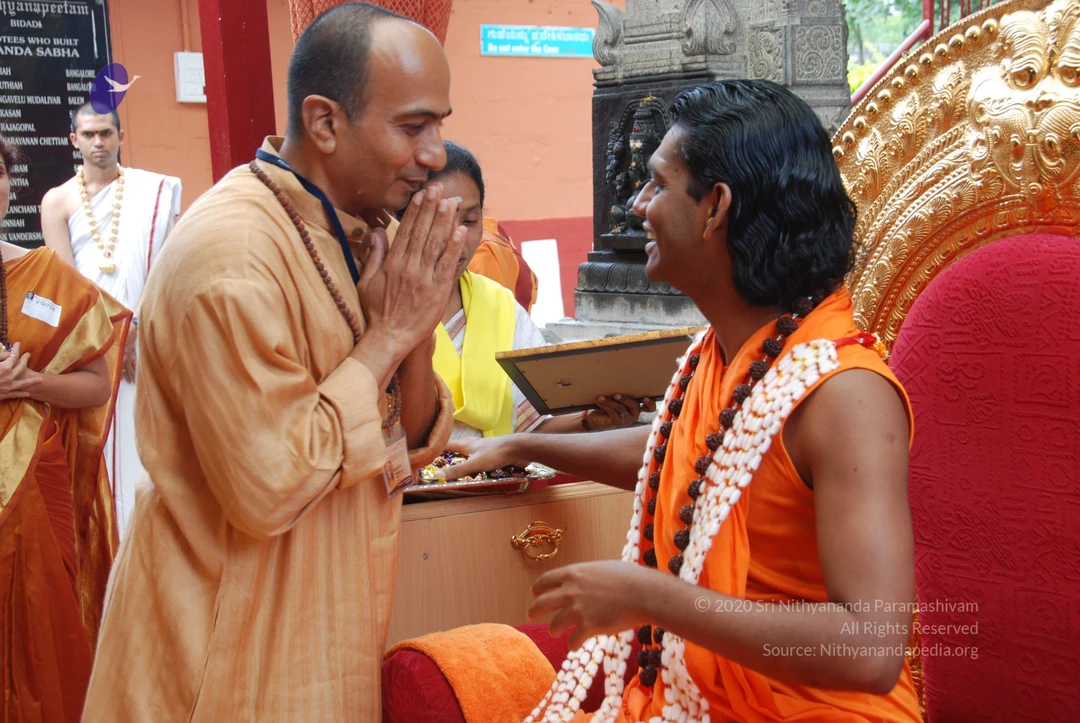
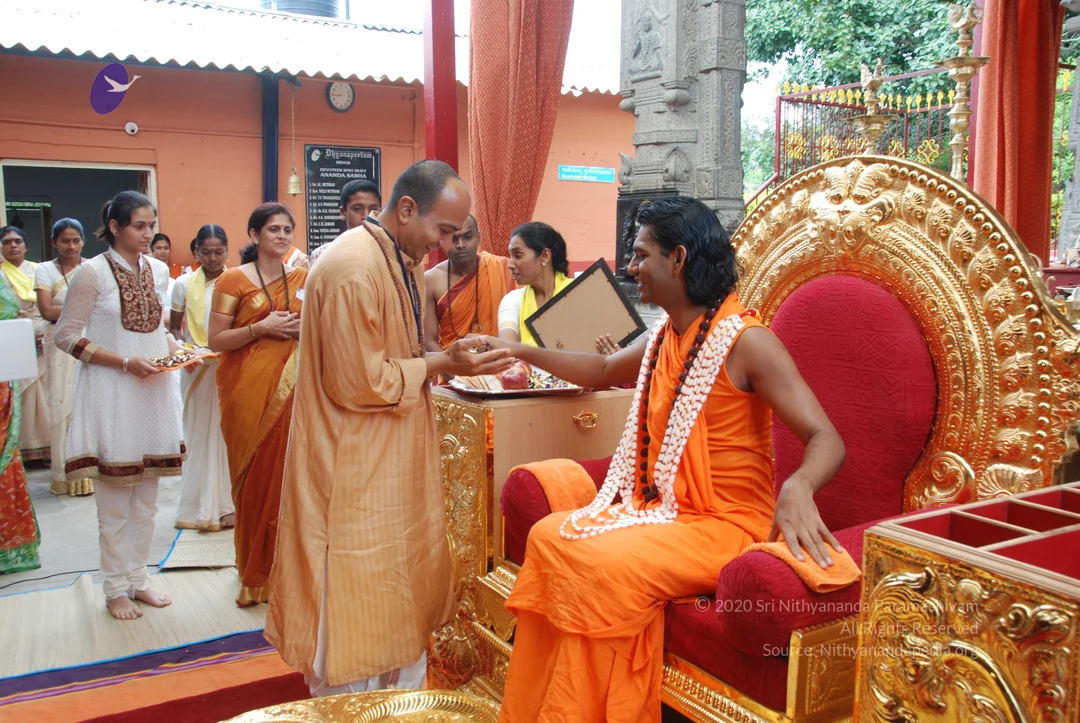
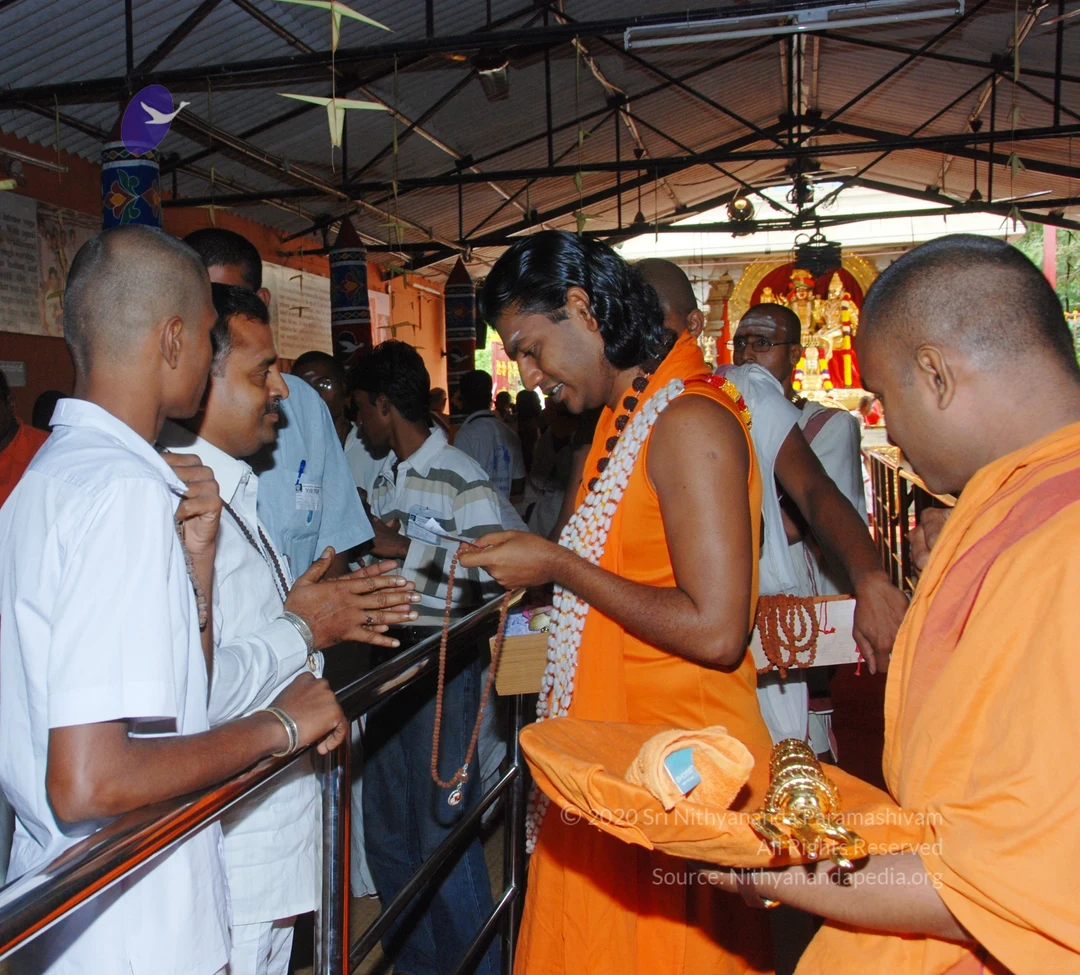
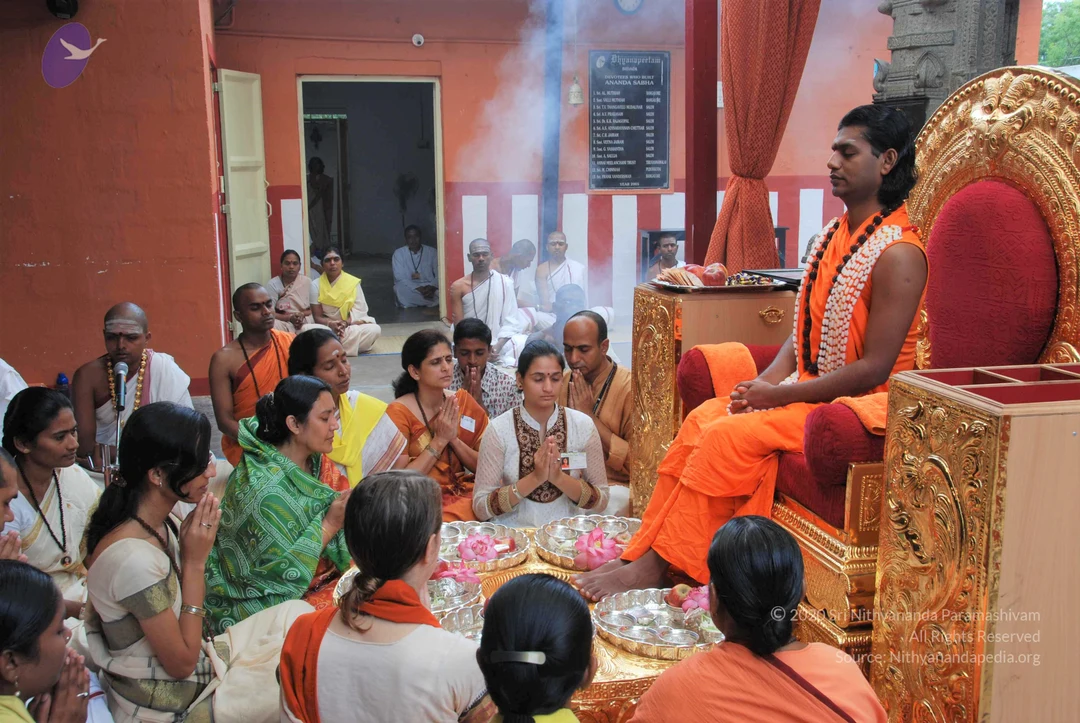
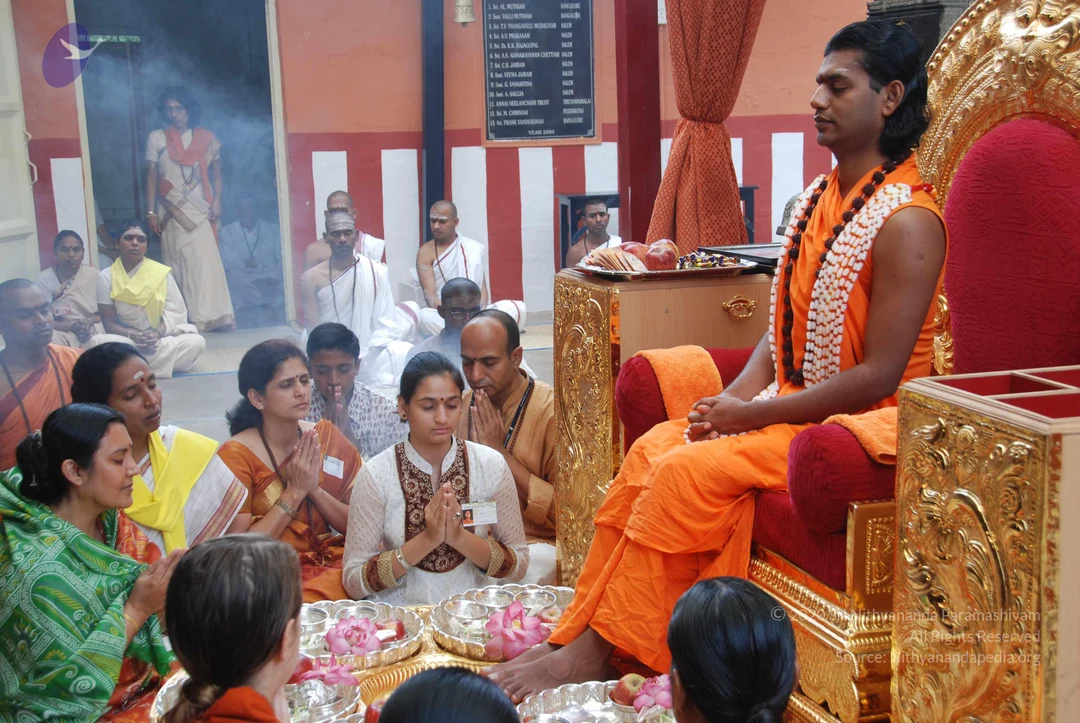
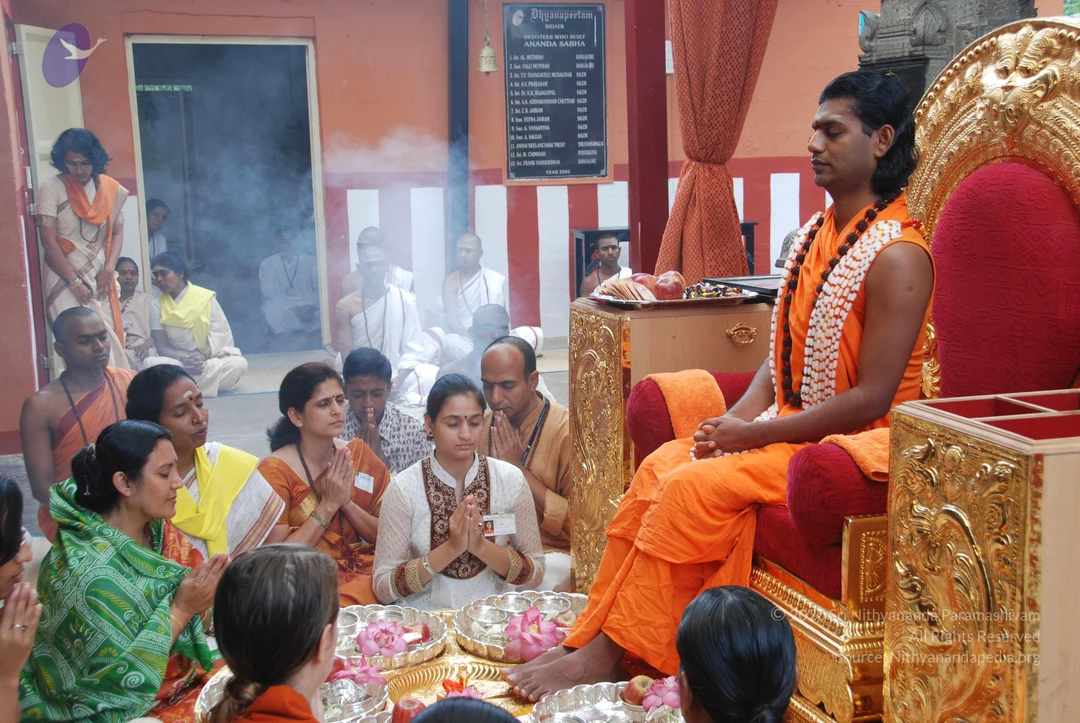
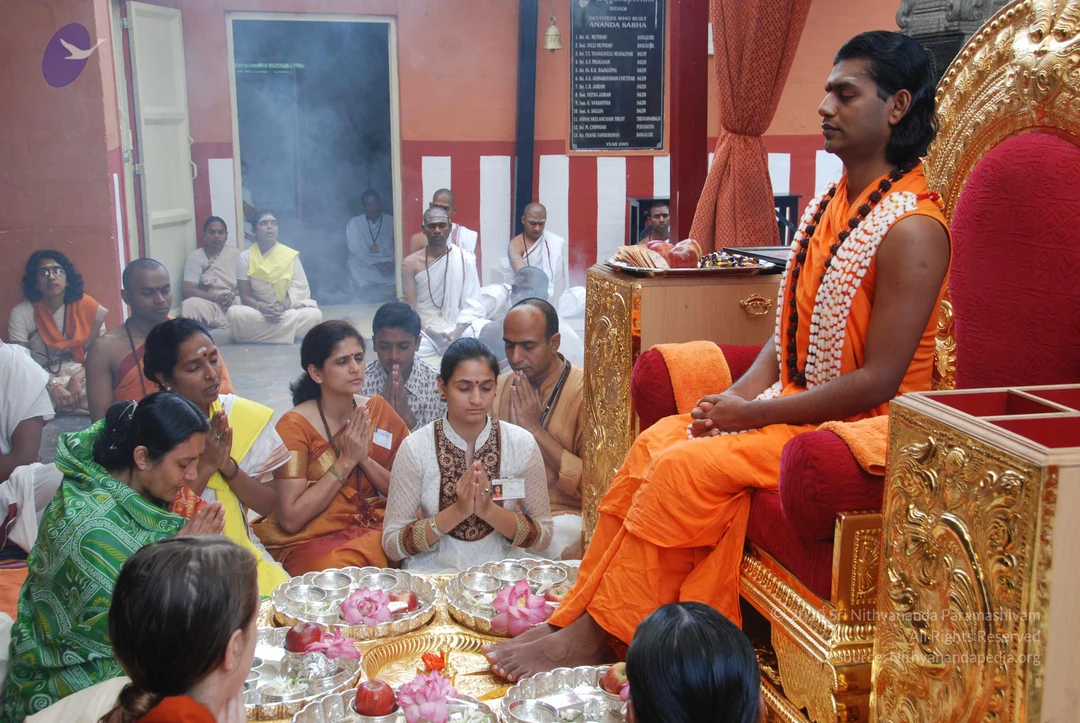
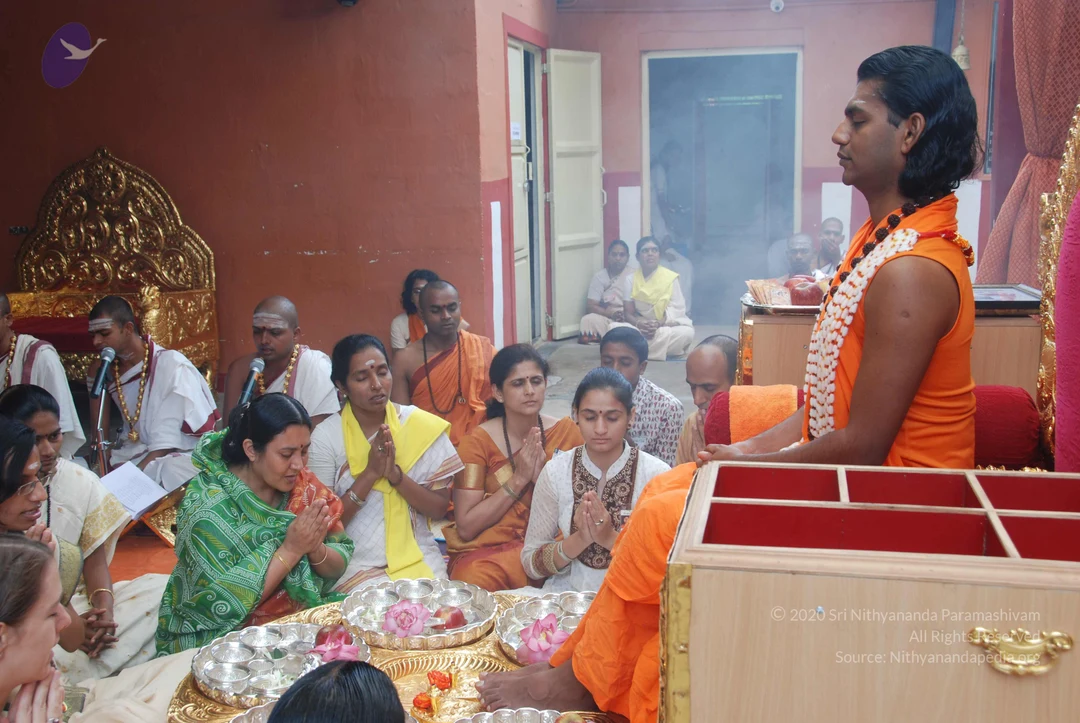
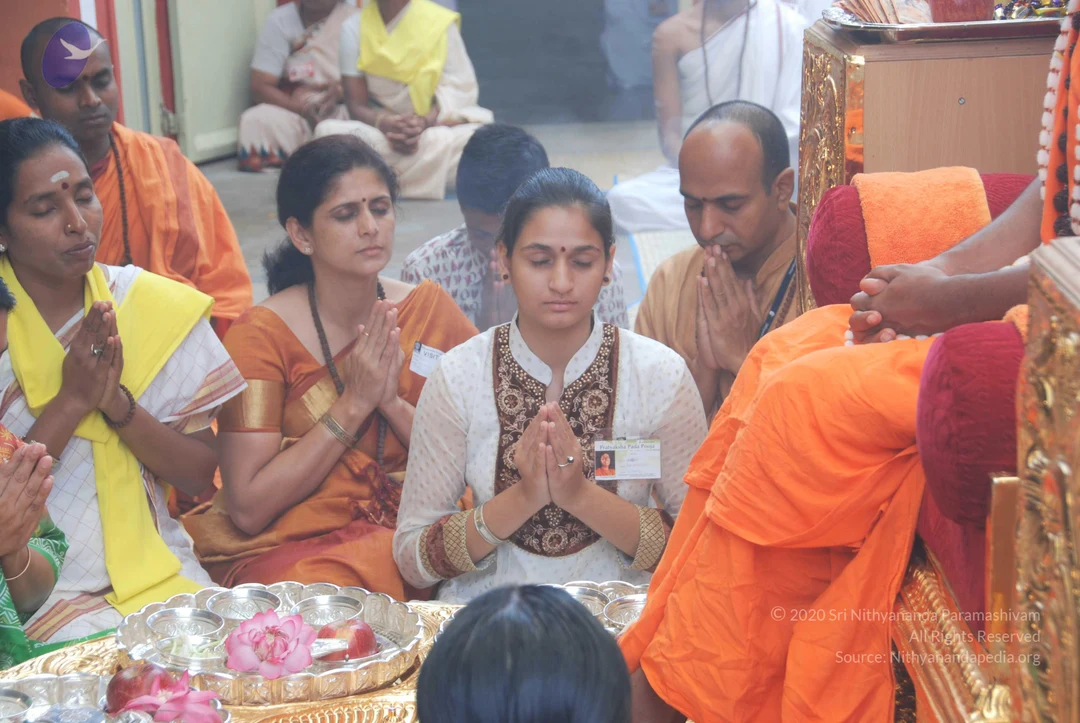
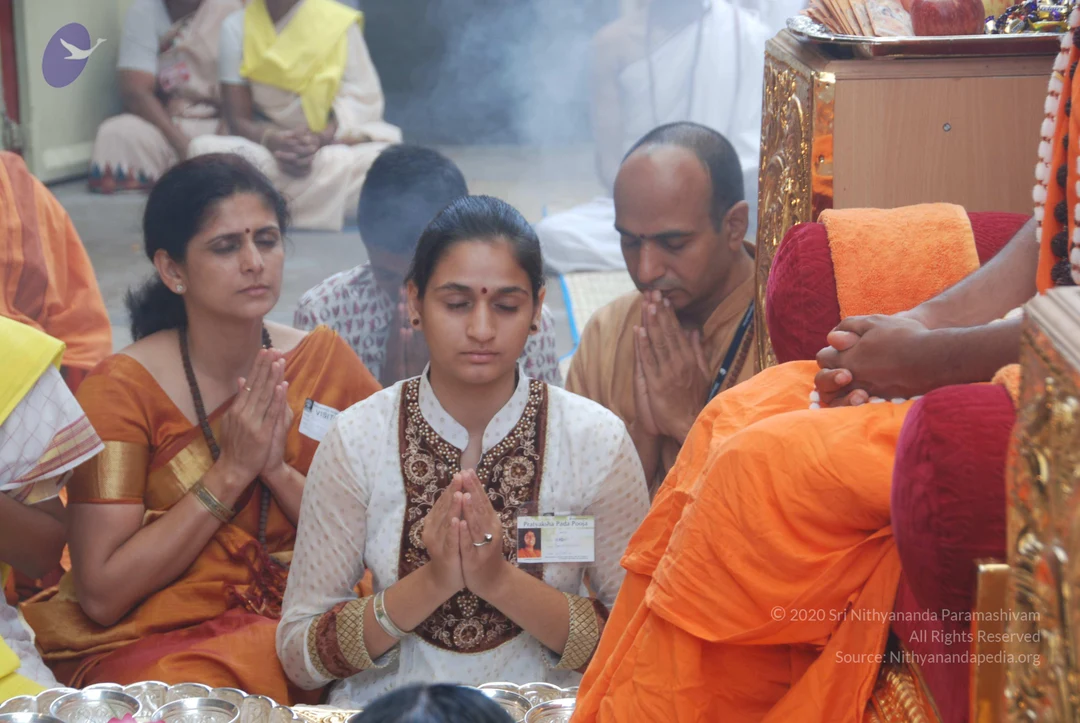
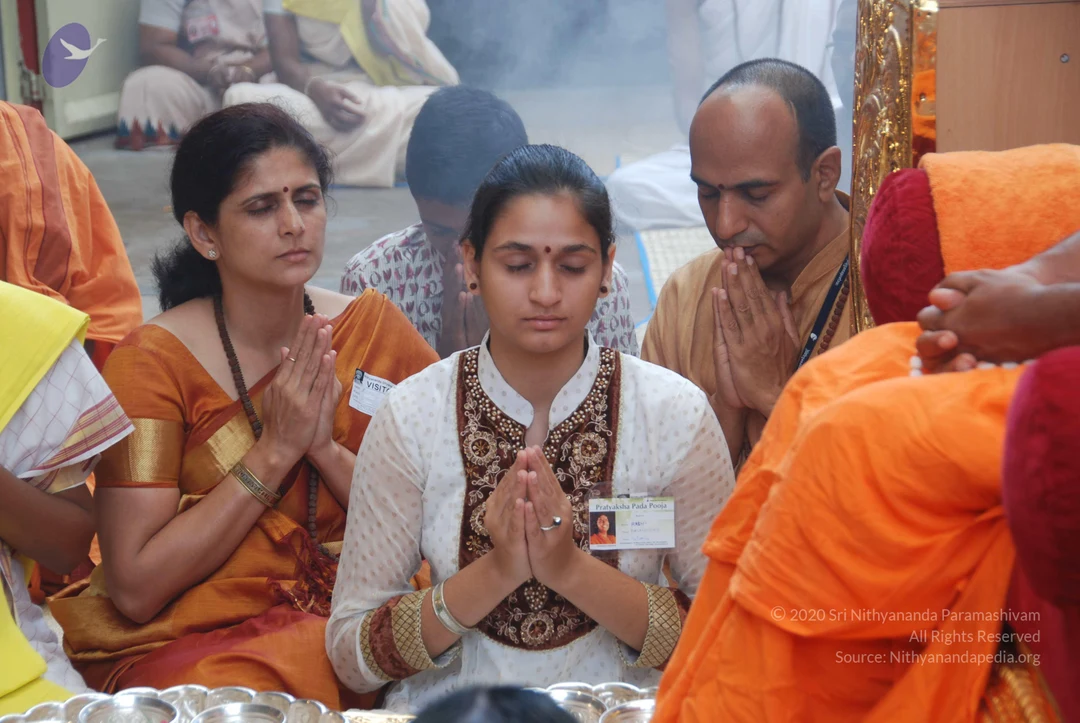
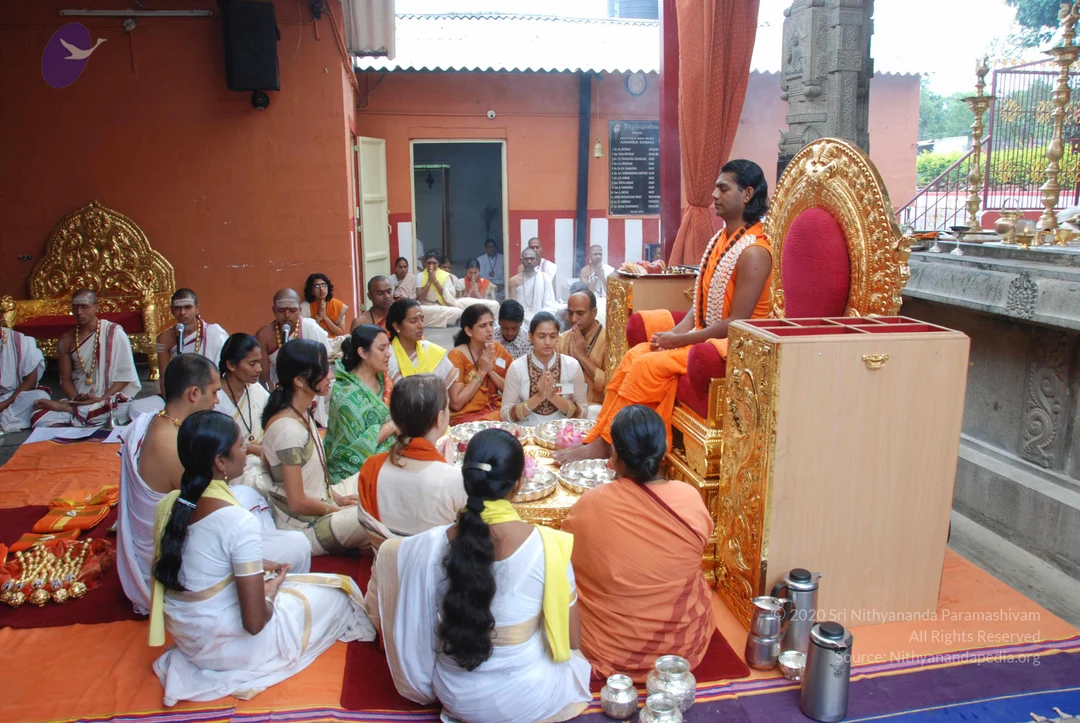
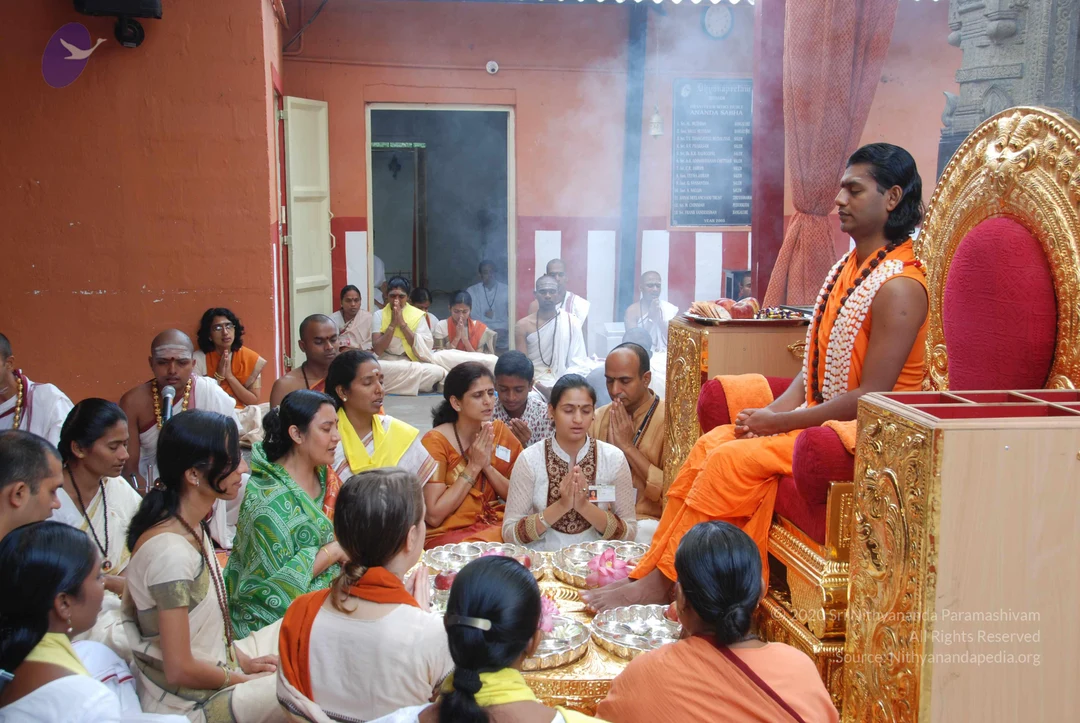
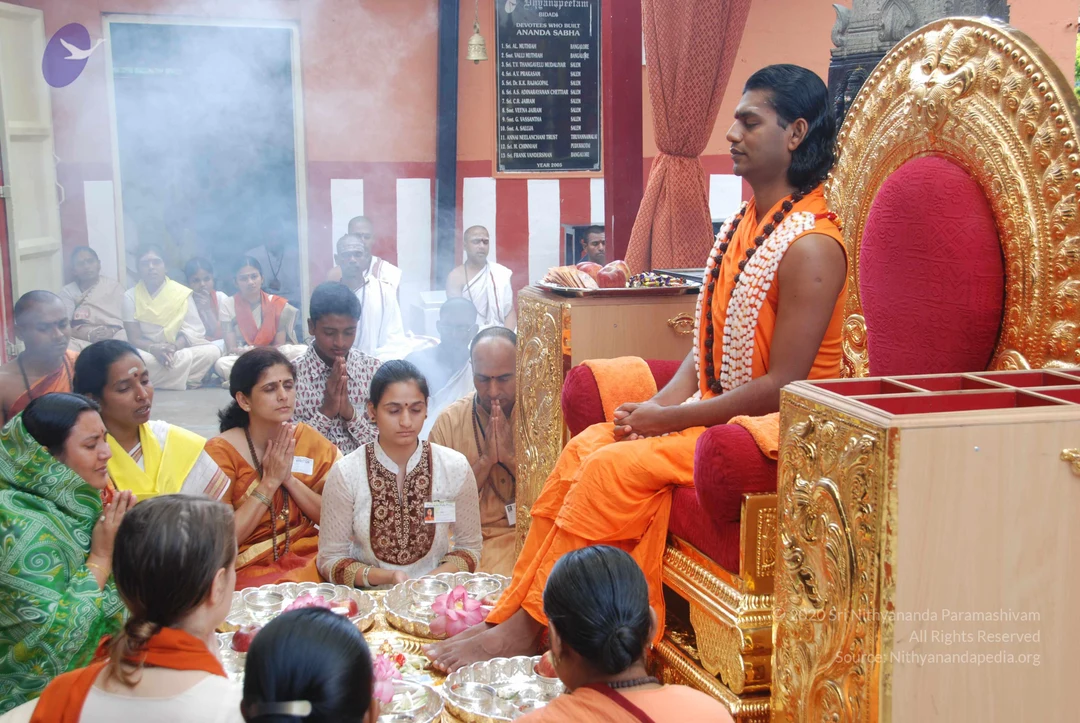
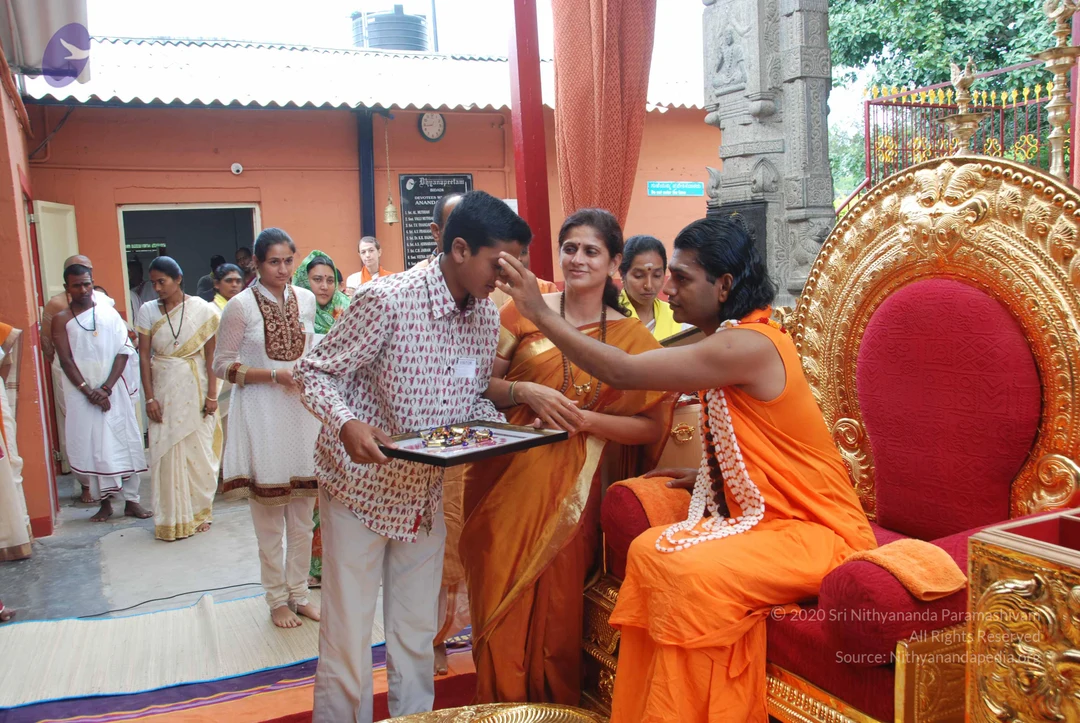
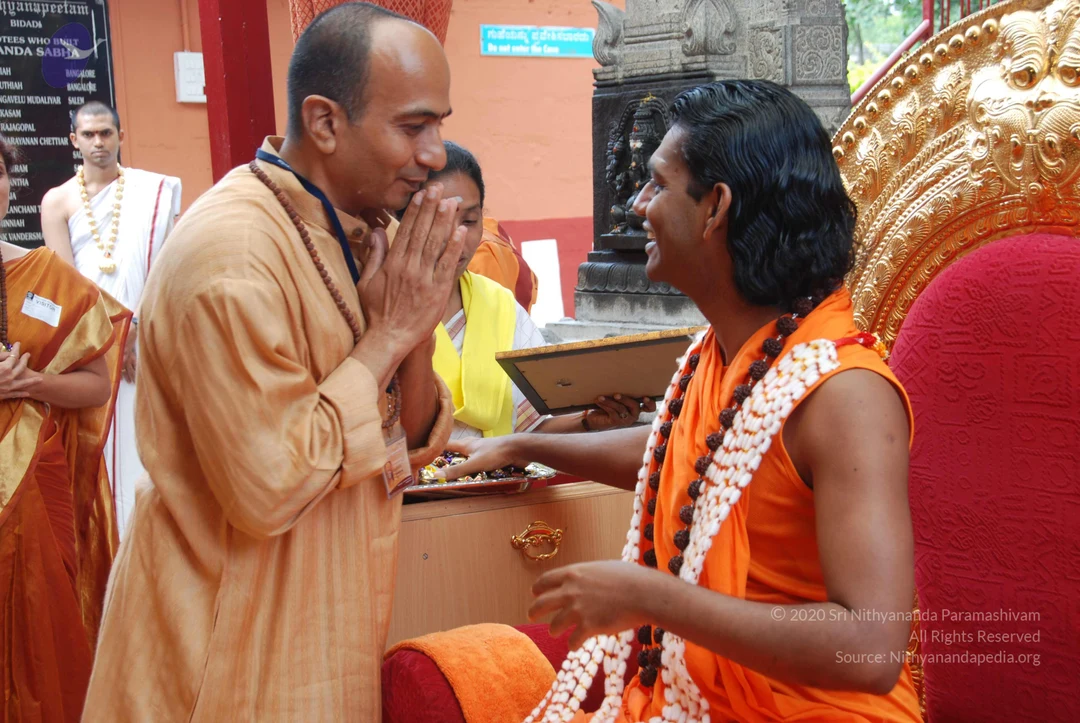
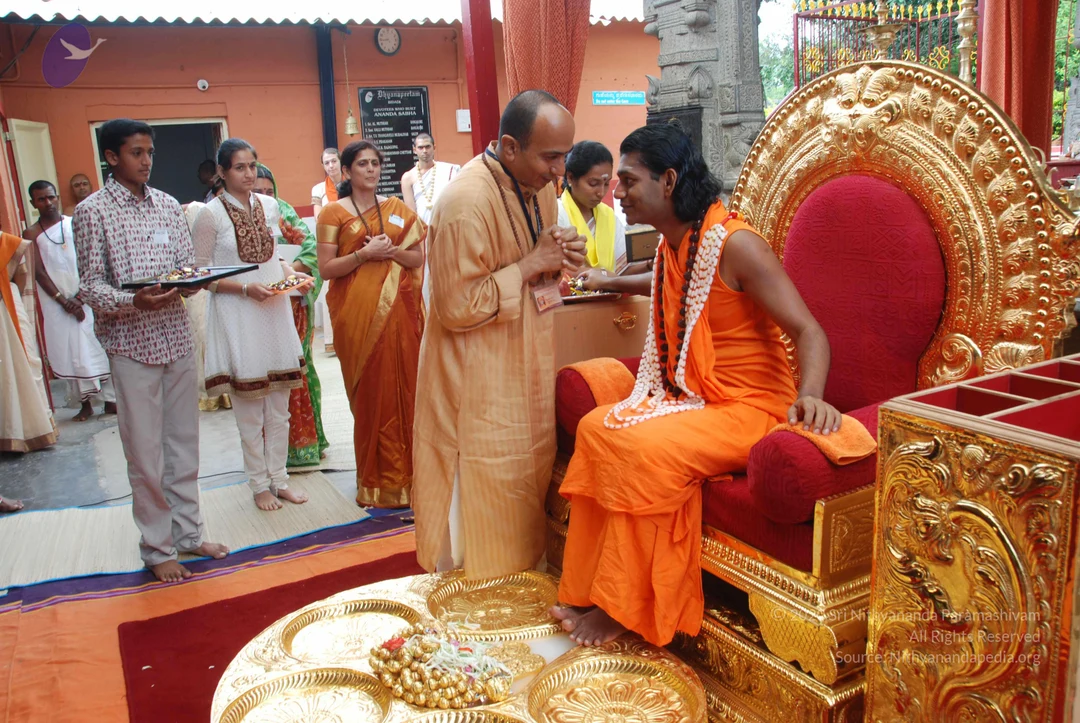
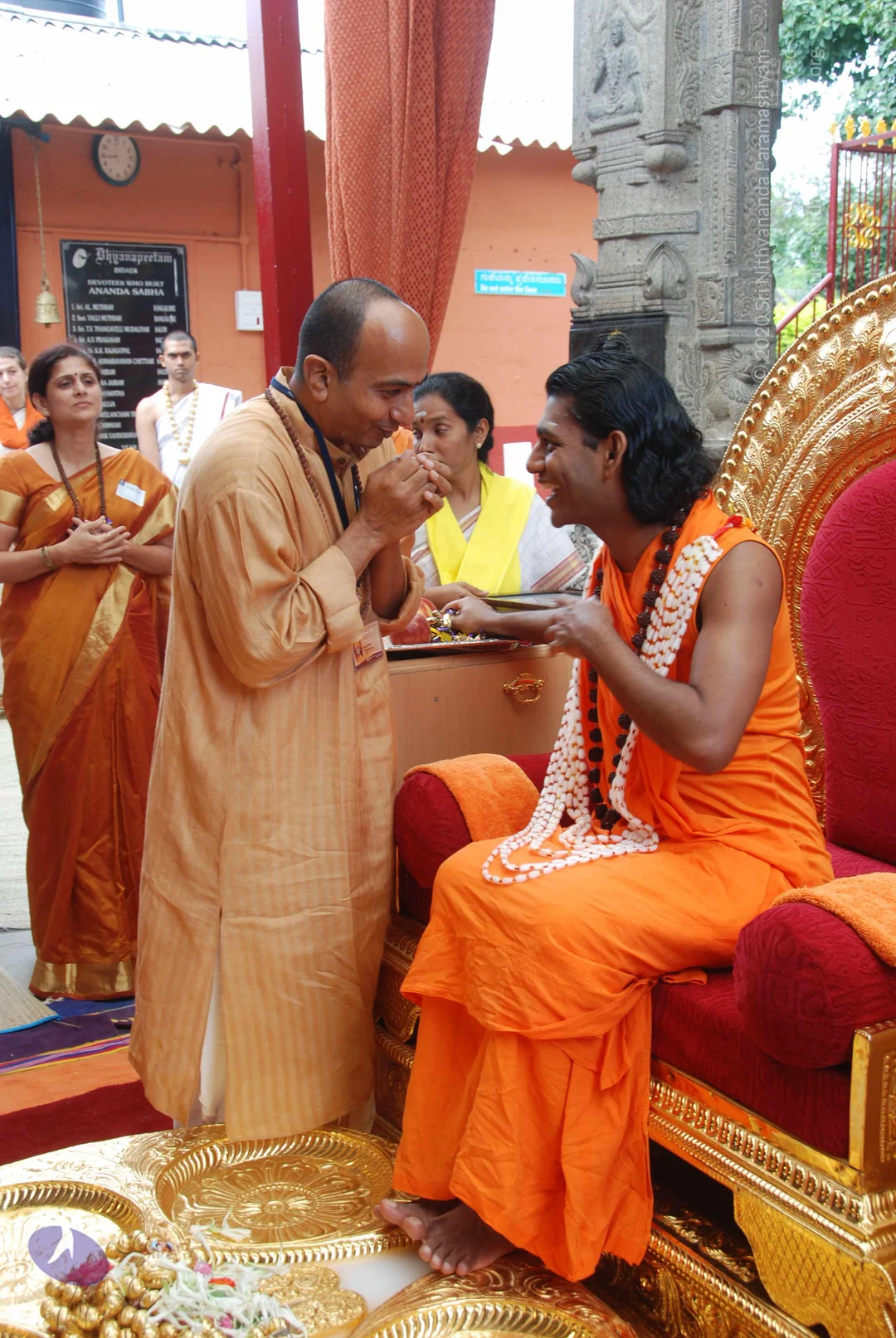
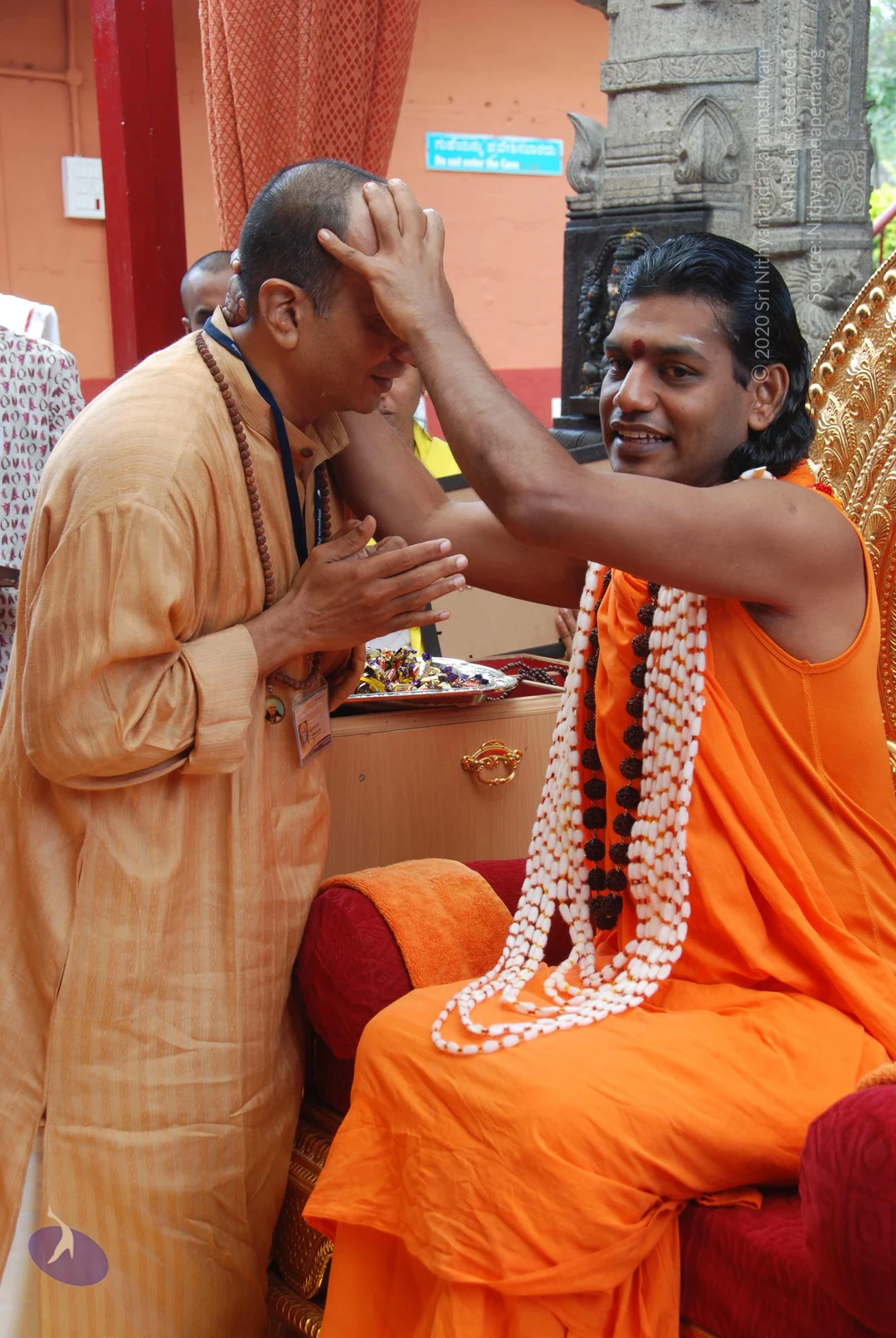
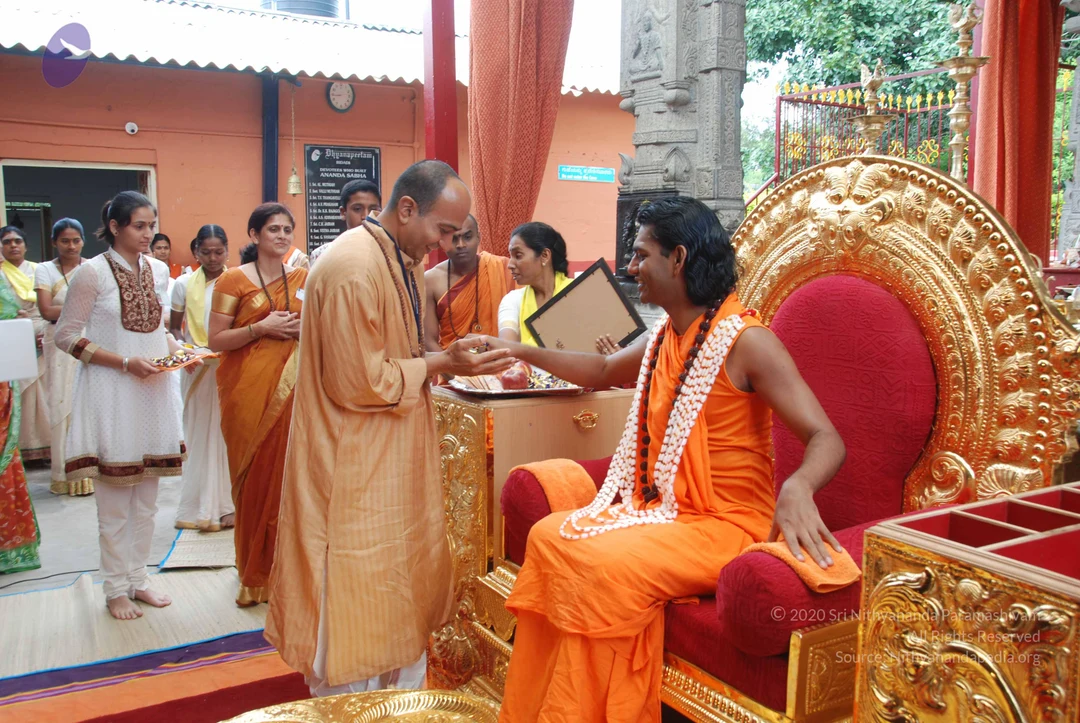
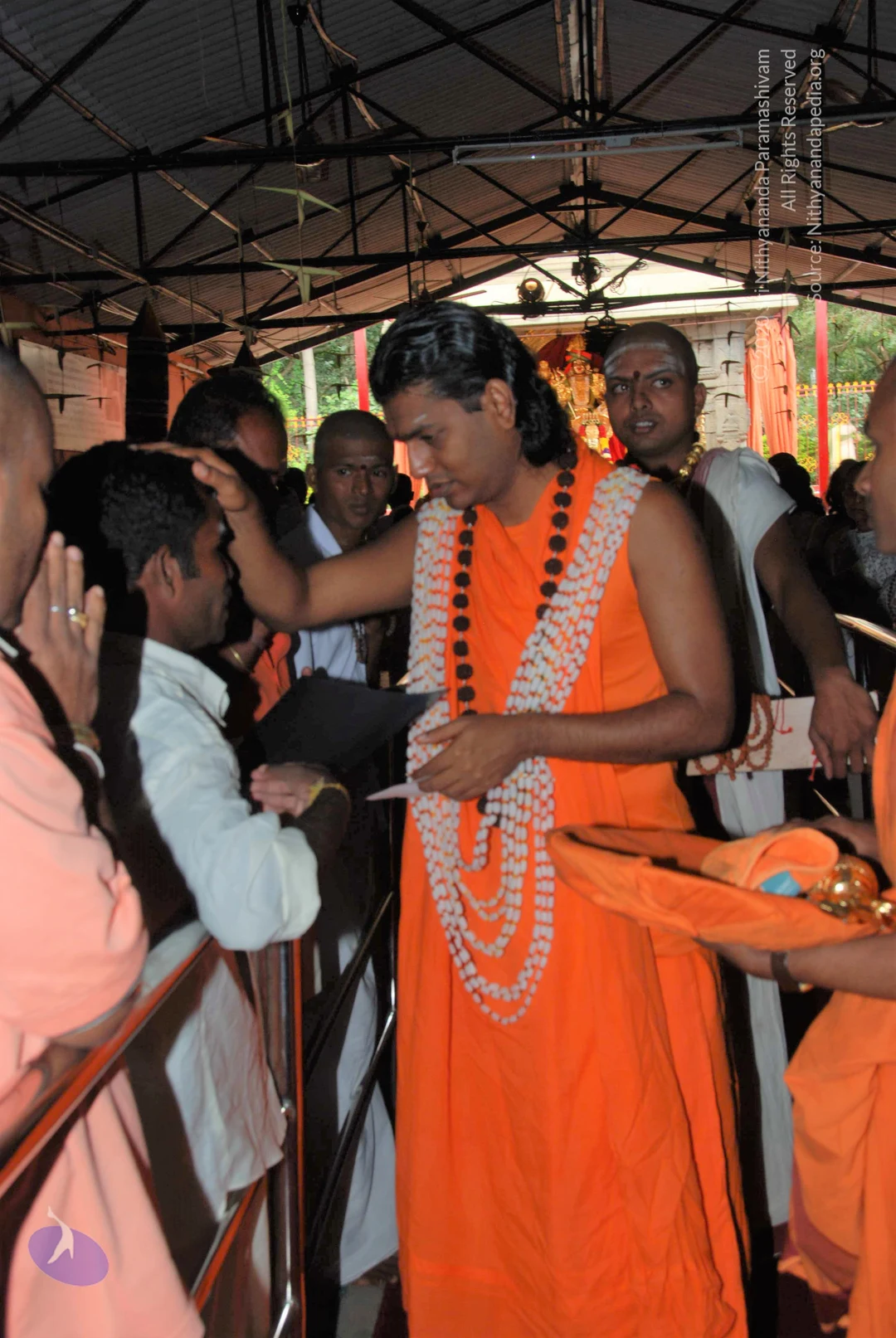
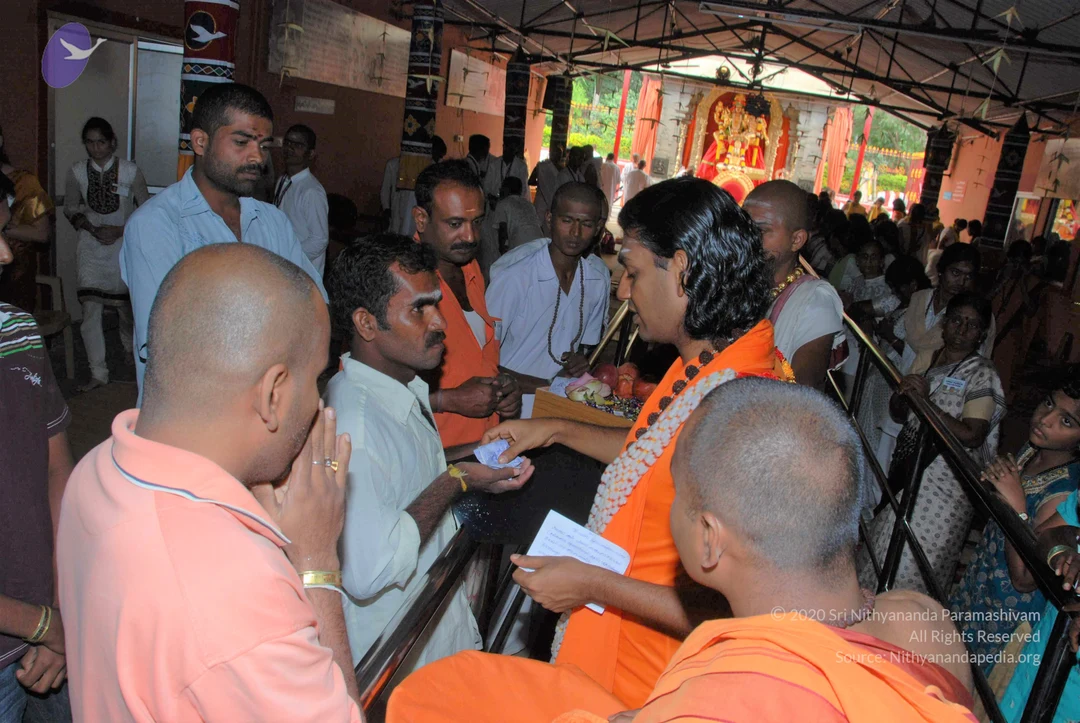
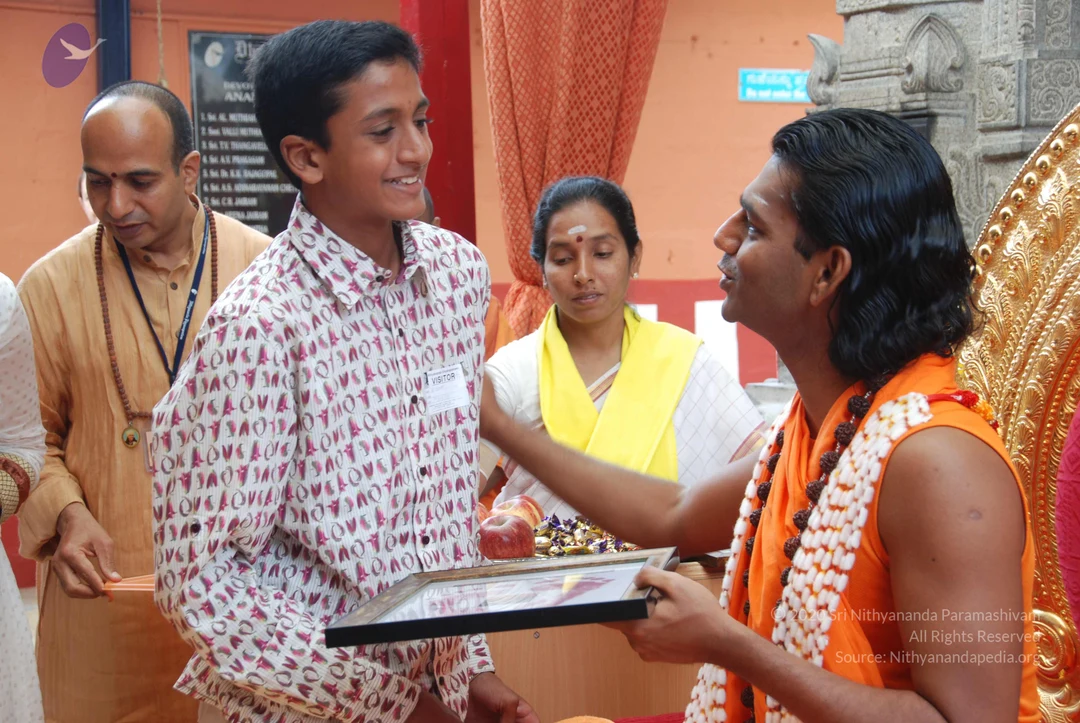
A seated man in an orange sleeveless robe with a white shell-and-bead garland and dark rudraksha-style beads reaches toward a smiling teenage boy in a patterned white shirt with a visitor badge. The seated man has long swept-back hair and gestures with his right hand over a black-framed tray holding an apple, wrapped sweets and a small framed picture. Behind them a woman in white with a yellow shawl and a man in orange with a beaded necklace and lanyard stand near an orange curtain, a golden throne-like chair at right, and a carved stone pillar.A photograph of a darshan moment in an ashram courtyard with orange-painted walls and a corrugated roof. A seated figure in saffron robes, long swept-back hair and a white flower garland sits on an ornate gold-and-red throne and reaches out to touch the forehead of a young man in a patterned white-and-red shirt holding a tray with offerings. Beside them a woman in an orange sari with a gold border and a beaded necklace smiles and gestures. Behind, several people in white and cream traditional dress and a woman in a yellow sari stand in a line on a mat. The seated figure matches the page's Swamiji reference by appearance cues including saffron robes, long hair and ceremonial flower garland, so this is a probable appearance-based candidate. A dark sign board on the wall lists names.A photograph of a devotee in a light orange kurta with rudraksha mala and a blue lanyard, palms pressed together in namaste, bowing toward a seated figure on an ornate gold-and-red throne. The seated person wears orange robes, a long rudraksha mala and a white-and-beige shell garland, and is smiling. On a wooden table between them, a tray holds rudraksha beads and offerings. Behind, a man in white dhoti with gold chain and a woman in orange sari stand near a dark stone shrine with a carved deity murti. A signboard reads Nithyanapeetam and lists names of trustees. The seated person's identity is uncertain from appearance alone; the figure is described by role as a seated sannyasi receiving devotees.A photograph of a padapuja ceremony in an orange-walled hall. A seated man on an ornate gold-and-red throne wears orange robes, a white flower garland and beaded necklaces, with long swept-back hair. A man in a light peach kurta with a mala stands before him, hands joined, while a woman in an orange sari and others in white and orange attire stand nearby holding brass plates of offerings. A gold padapuja tray with flowers sits at the throne's base. A signboard reading Nithyanandapuram is visible on the wall. a person is seated on the throne, identified by his orange robes, white garland and rudraksha mala.A photograph at an outdoor ashram courtyard. A seated man on an ornate gold-and-red throne wears orange robes, a white flower garland and rudraksha beads, and has long swept-back dark hair; he is barefoot on a gold-patterned footstool. A standing man in a light peach kurta with a rudraksha mala bends forward with joined hands toward him, while the seated man extends his hands in return. Behind them a woman in a yellow-and-white sari holds a tray of offerings, and a woman in an orange sari stands with hands folded. A wall plaque reads Dhyanapeetam, Devotees Who Built Ananda Sabha, listing names, and a clock hangs on the orange wall. a person: the seated man's long swept hair, orange robes, rudraksha and garland with throne-seated honoured posture match the page's claimed presence.A photograph of a seated figure in an ornate gold-and-red throne, wearing saffron-orange robes and layered white beaded garlands with dark rudraksha beads, with a red tilak mark on the forehead and long swept-back dark hair. He rests one hand on the forehead of a standing devotee in light orange-beige kurta, who bows with palms pressed together and a blue lanyard and name badge. A silver tray of sweets sits on a wooden side table, and a dark carved stone pillar stands behind the scene beside a red-painted column and orange wall. Appearance-based cues are consistent with a person seated on the throne, giving a blessing; the throne, garlands and saffron robes support that candidate, though the face is not used for identification.
06

06-Living-Enlightenment-Process-LEP

7 dated photos in previewSource gallery
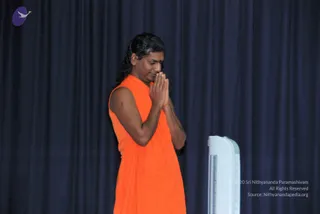
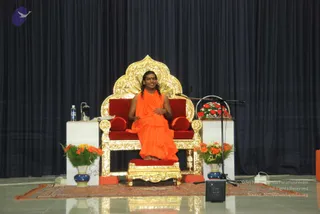
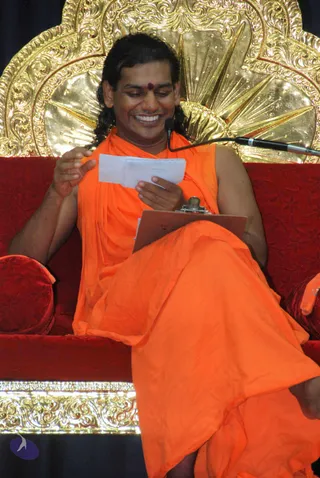
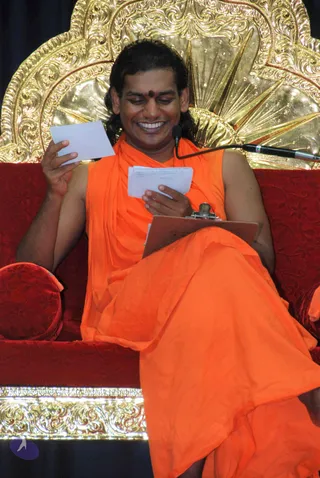
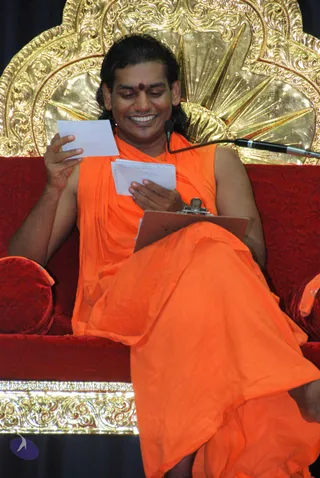
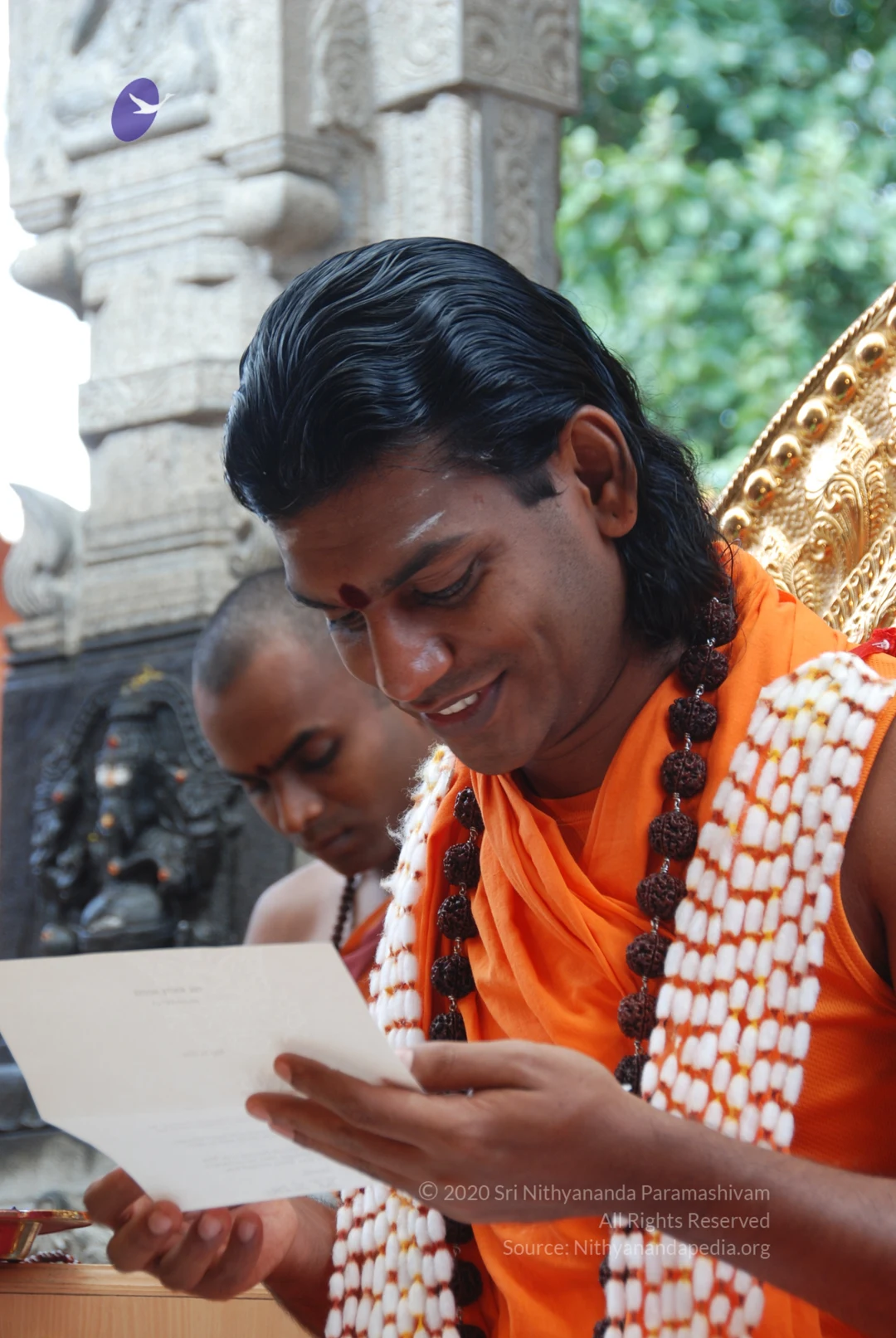
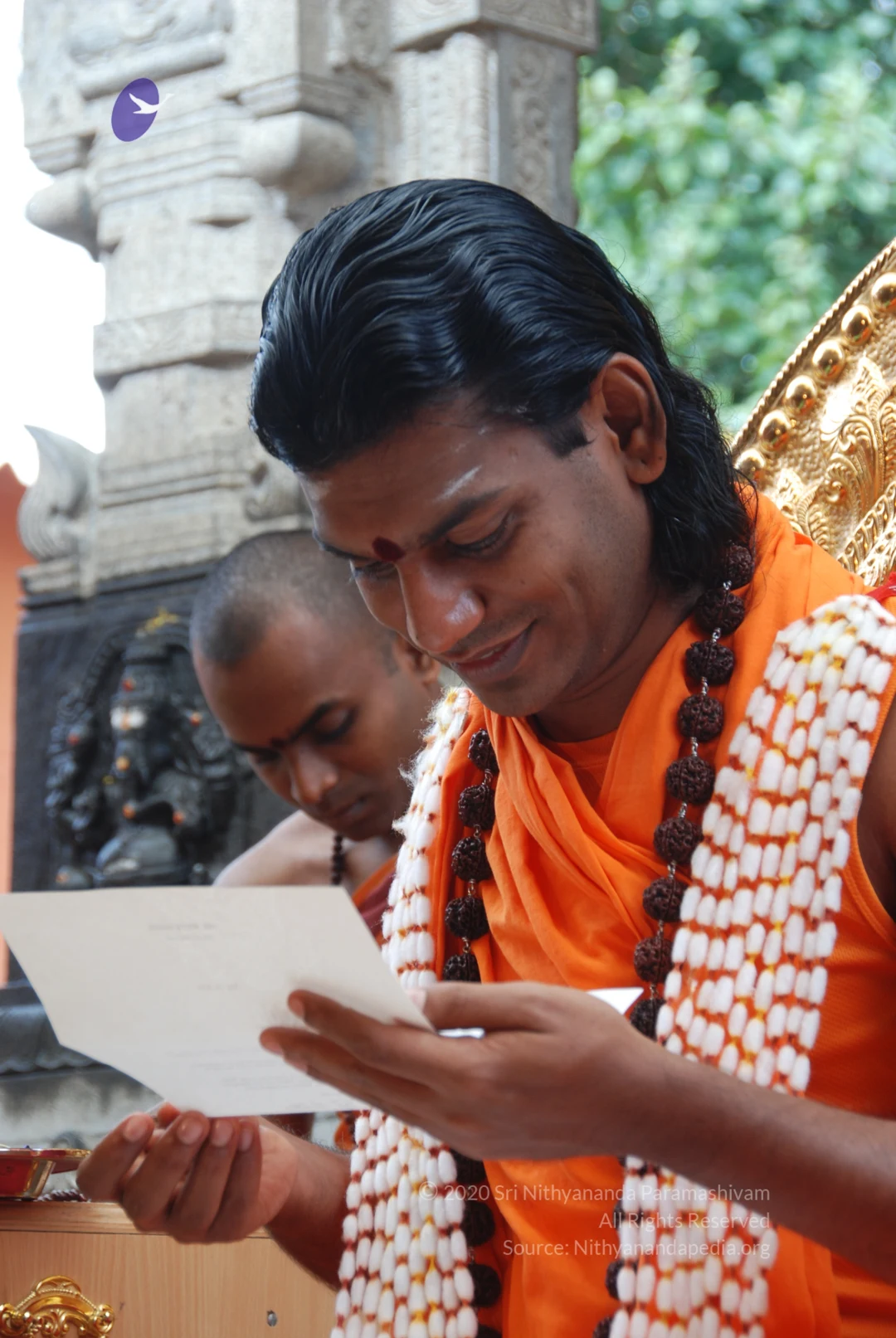
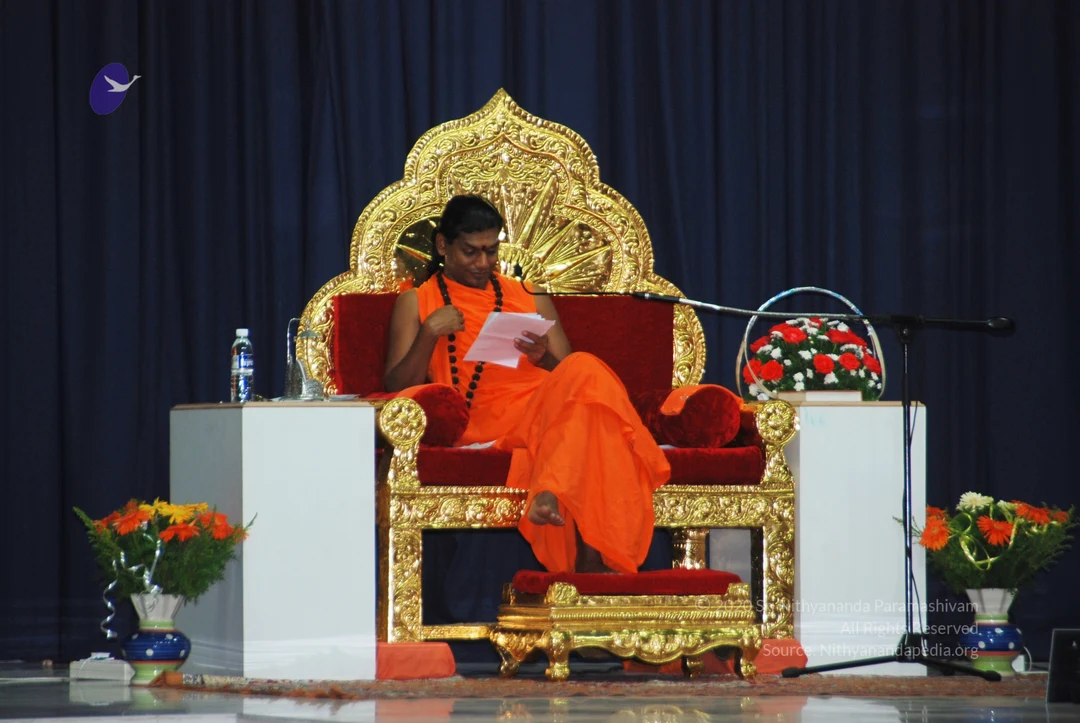
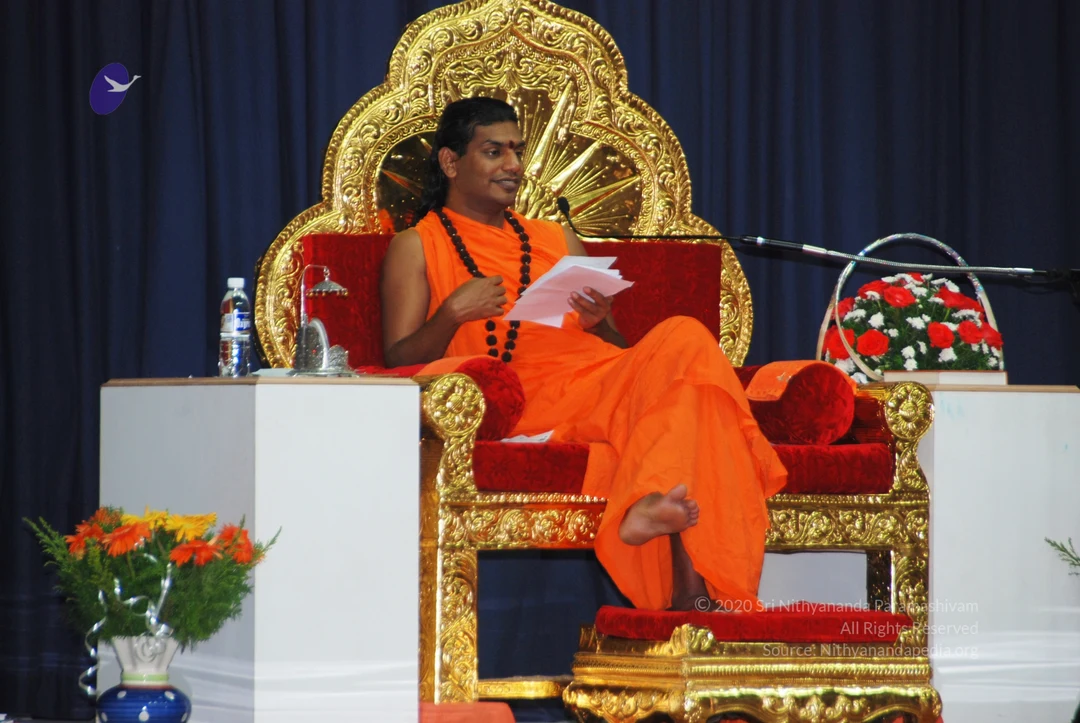
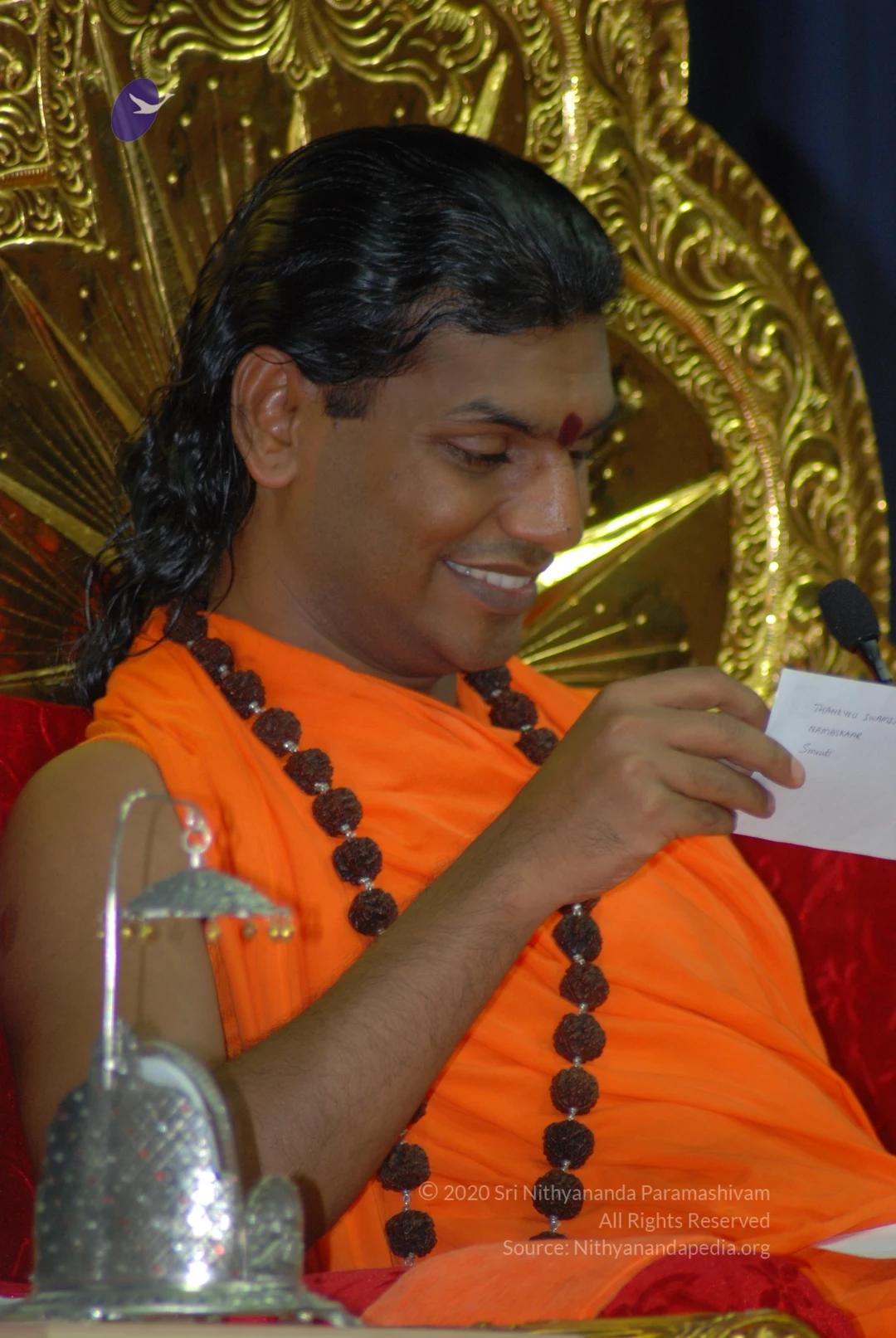
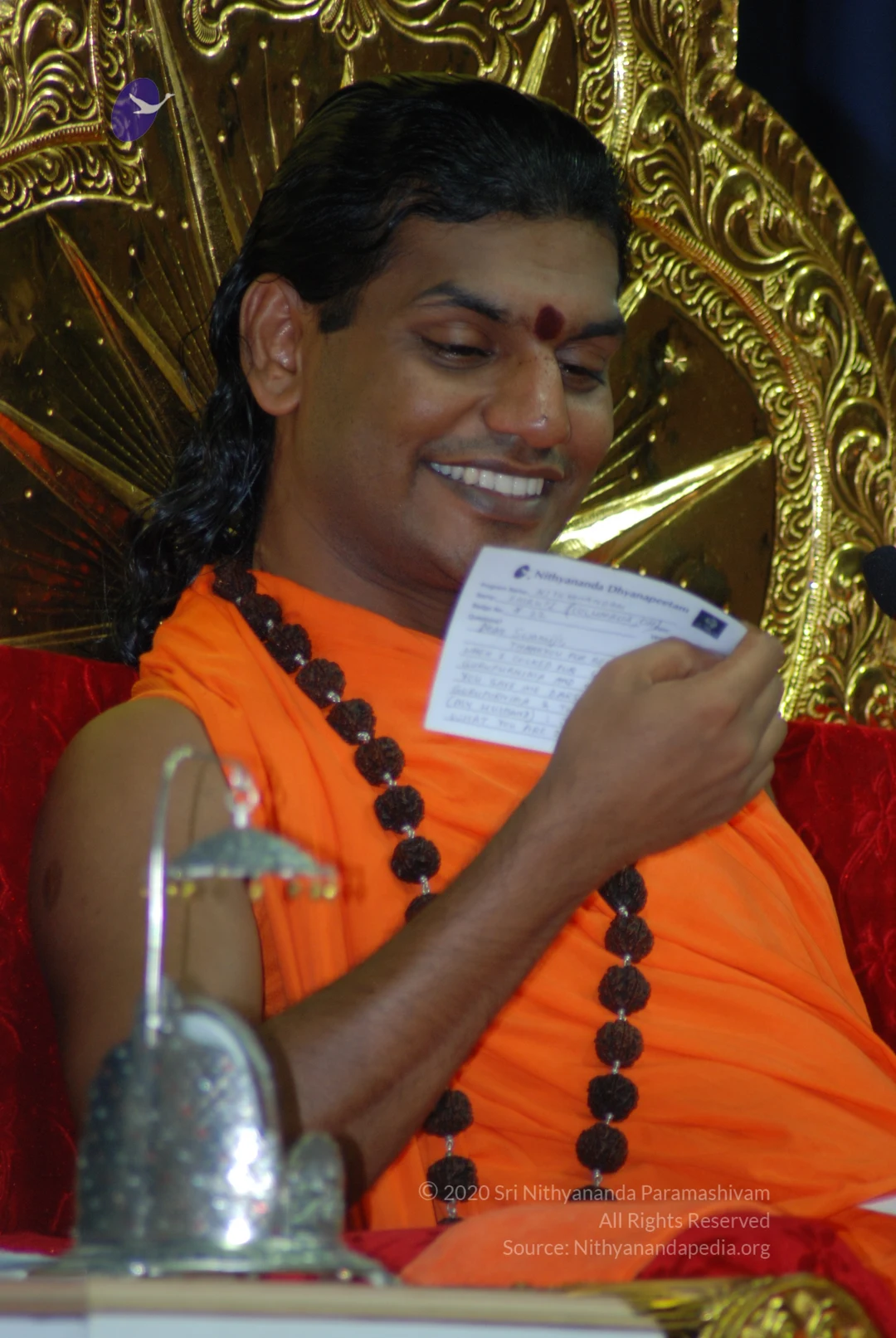
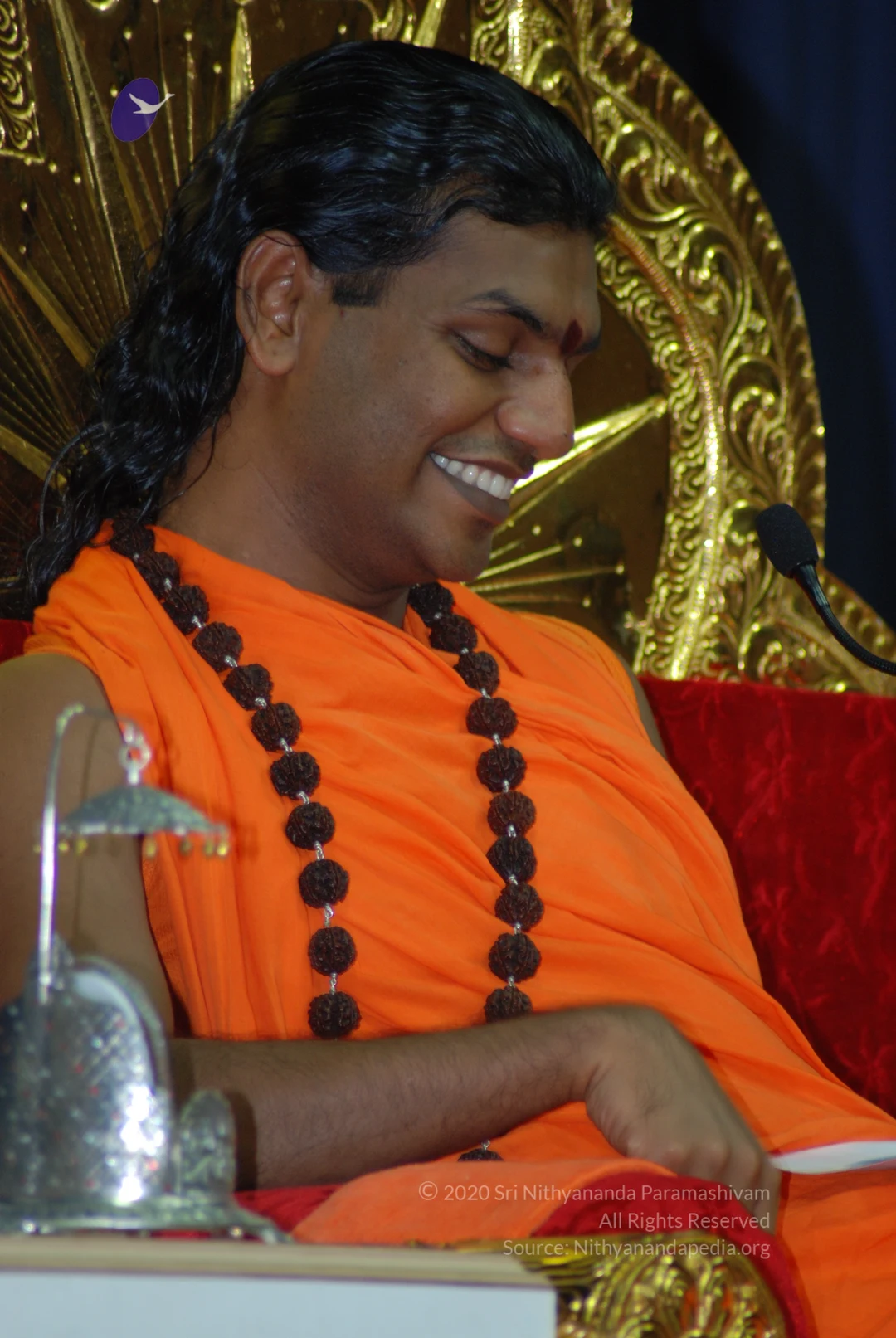
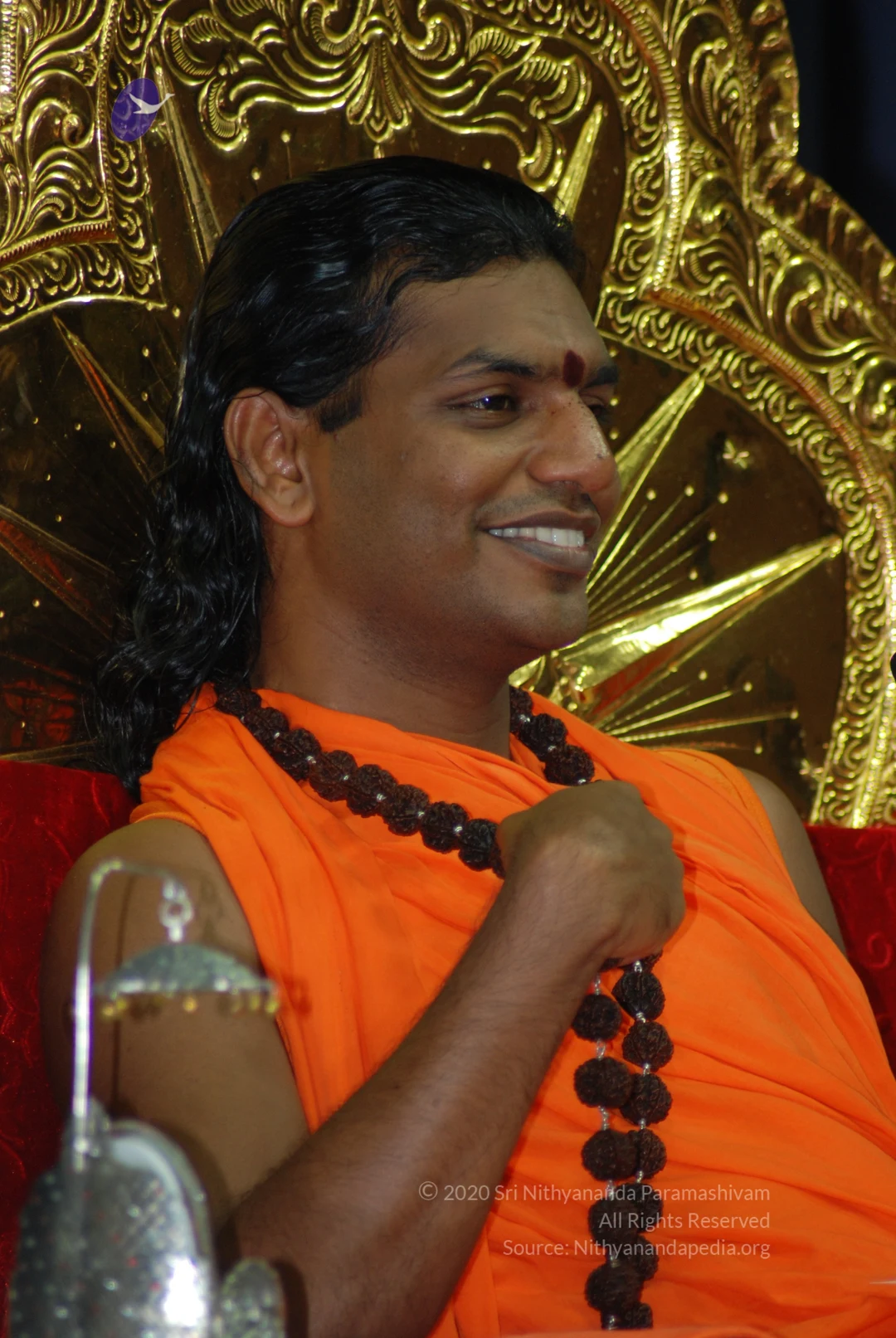
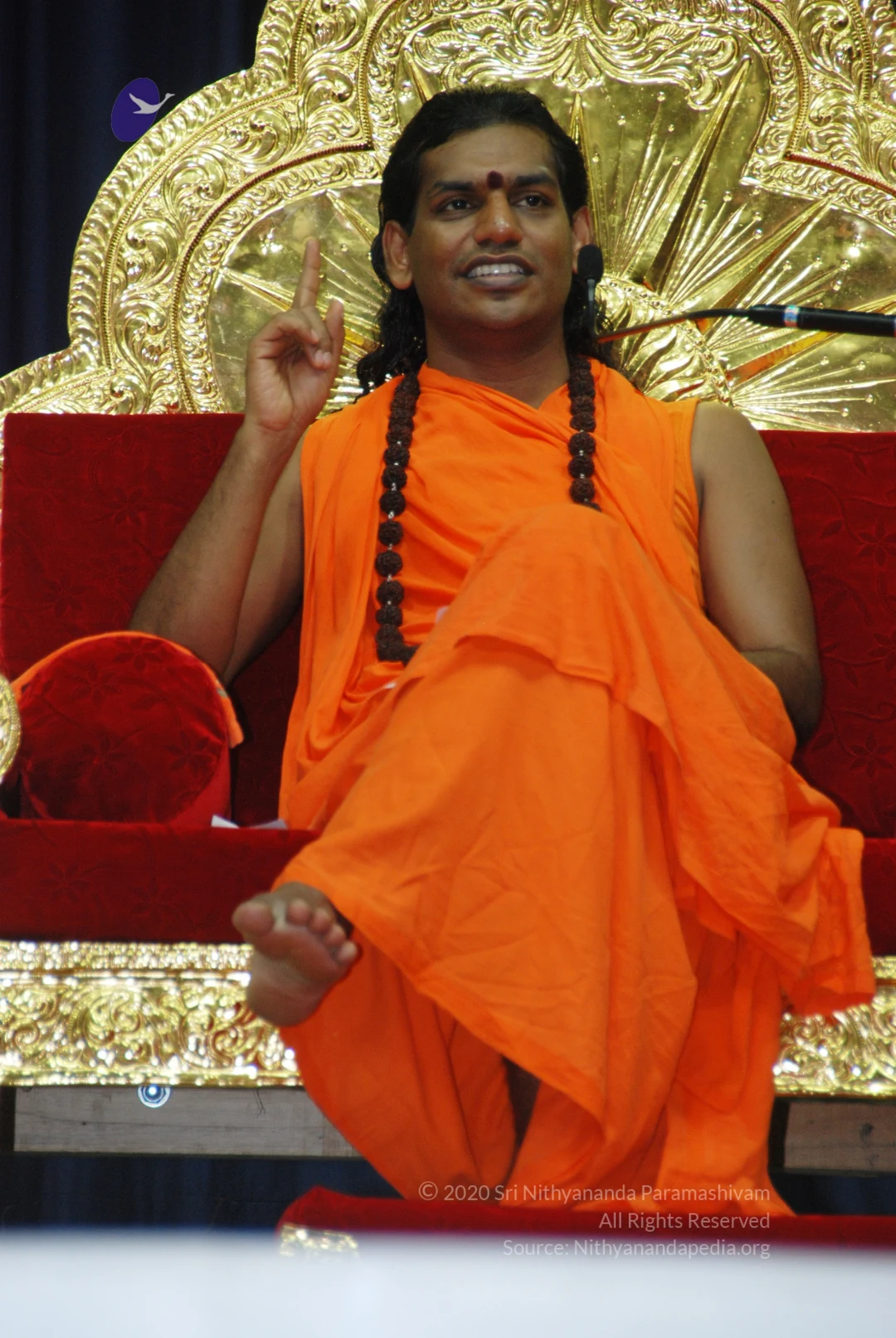
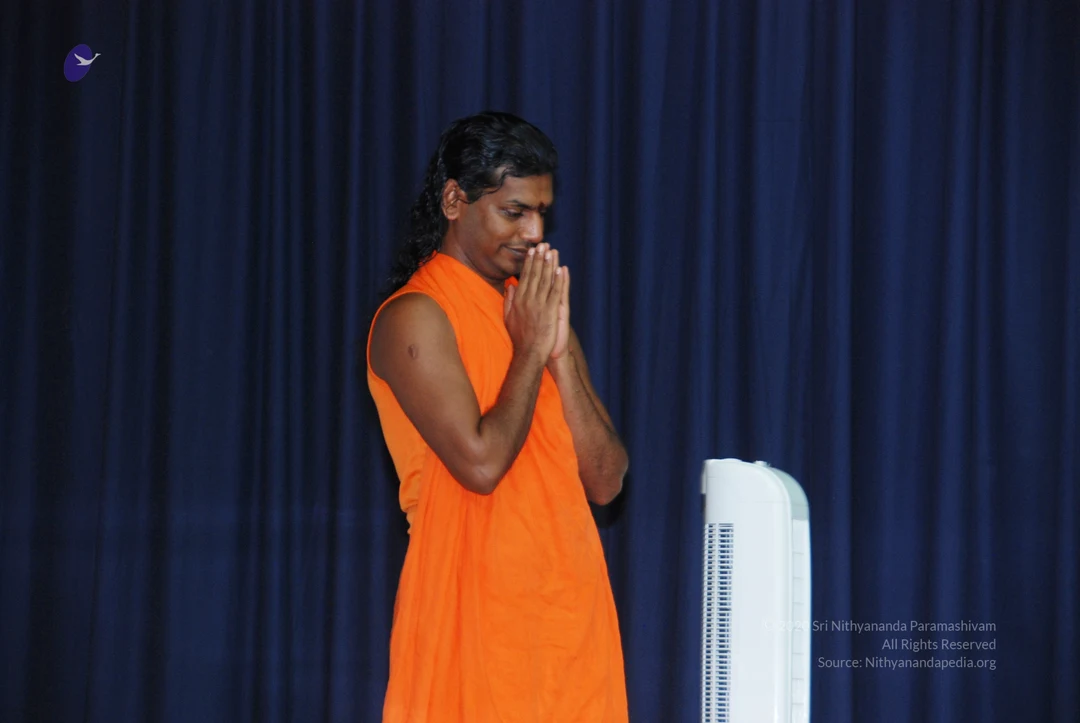
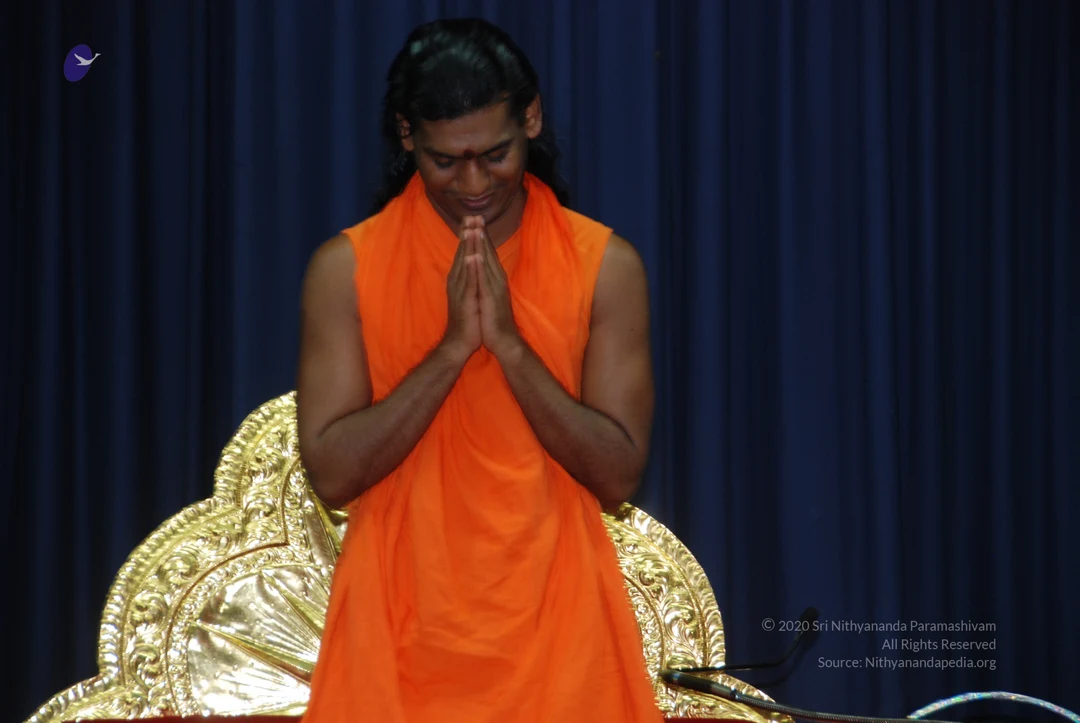
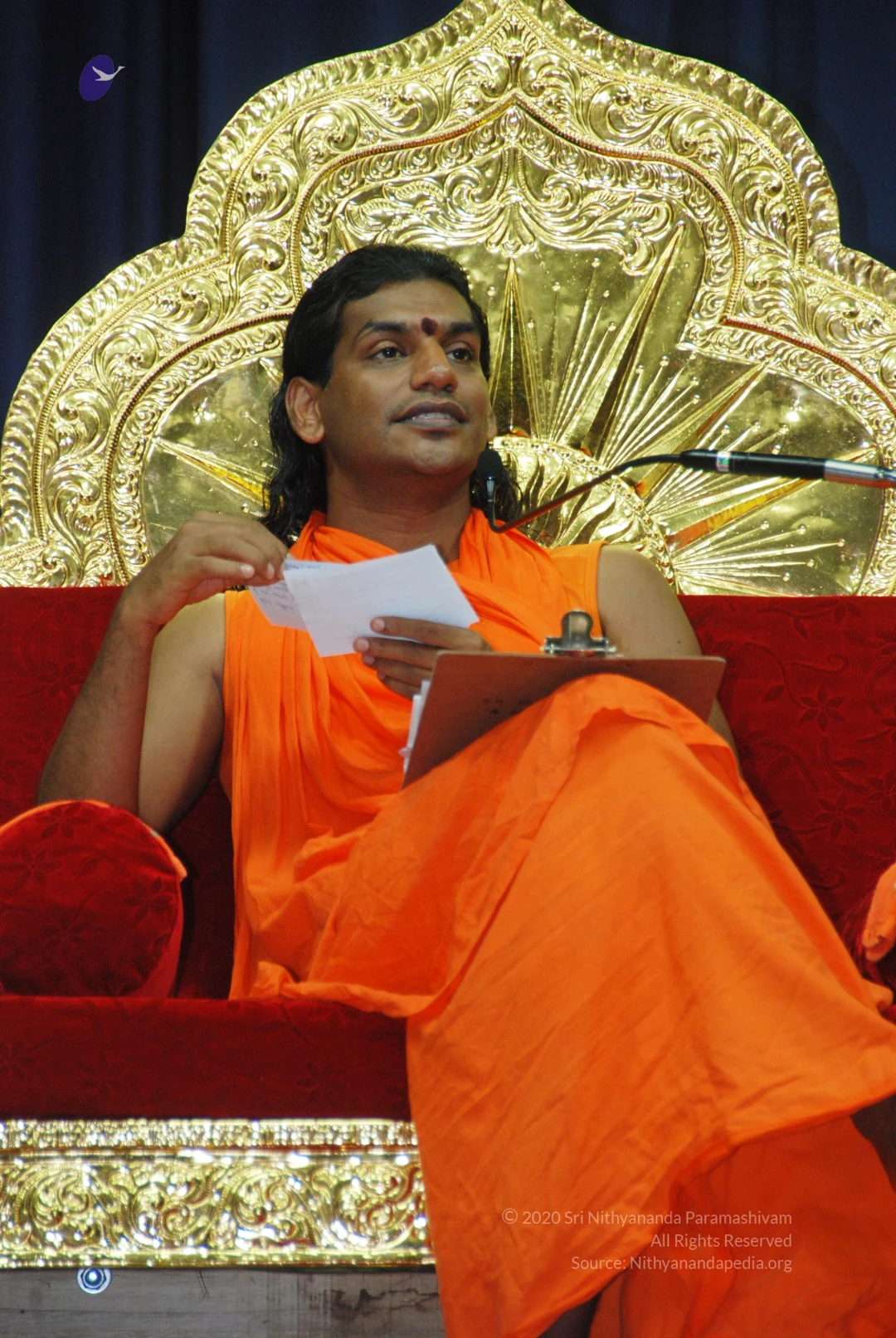
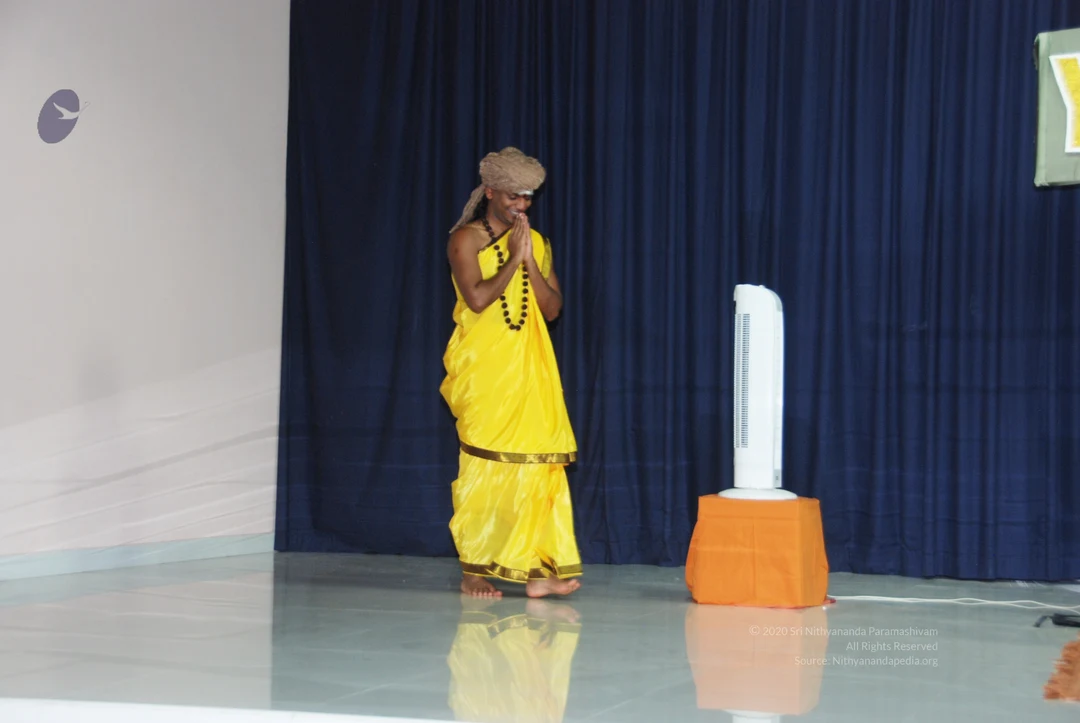
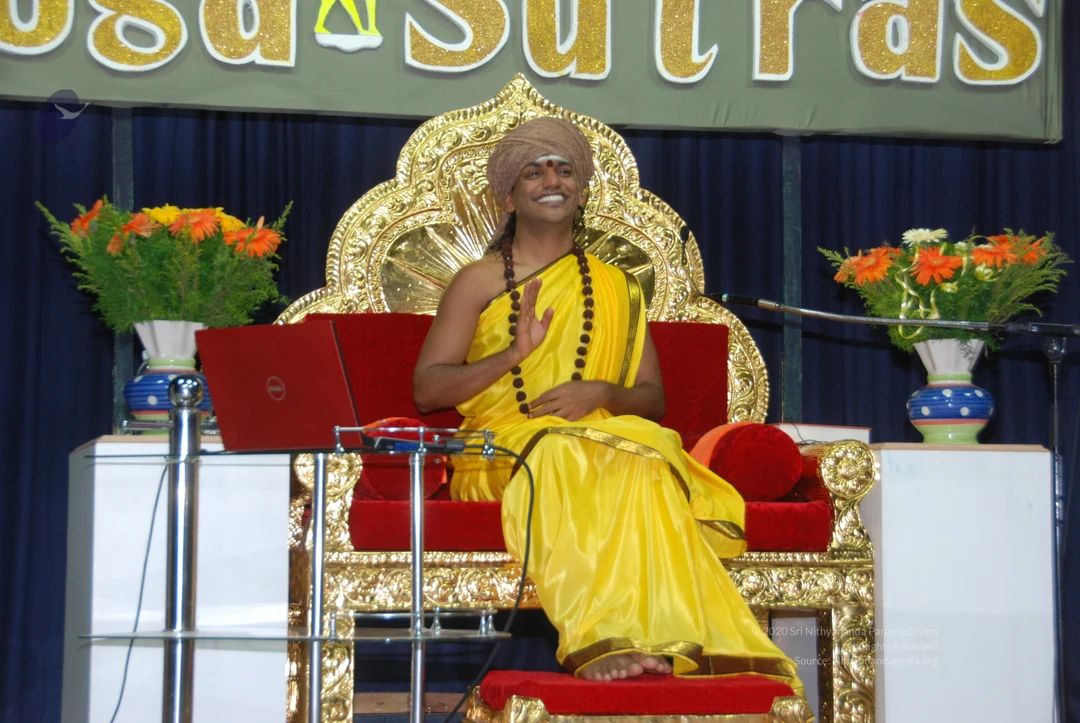
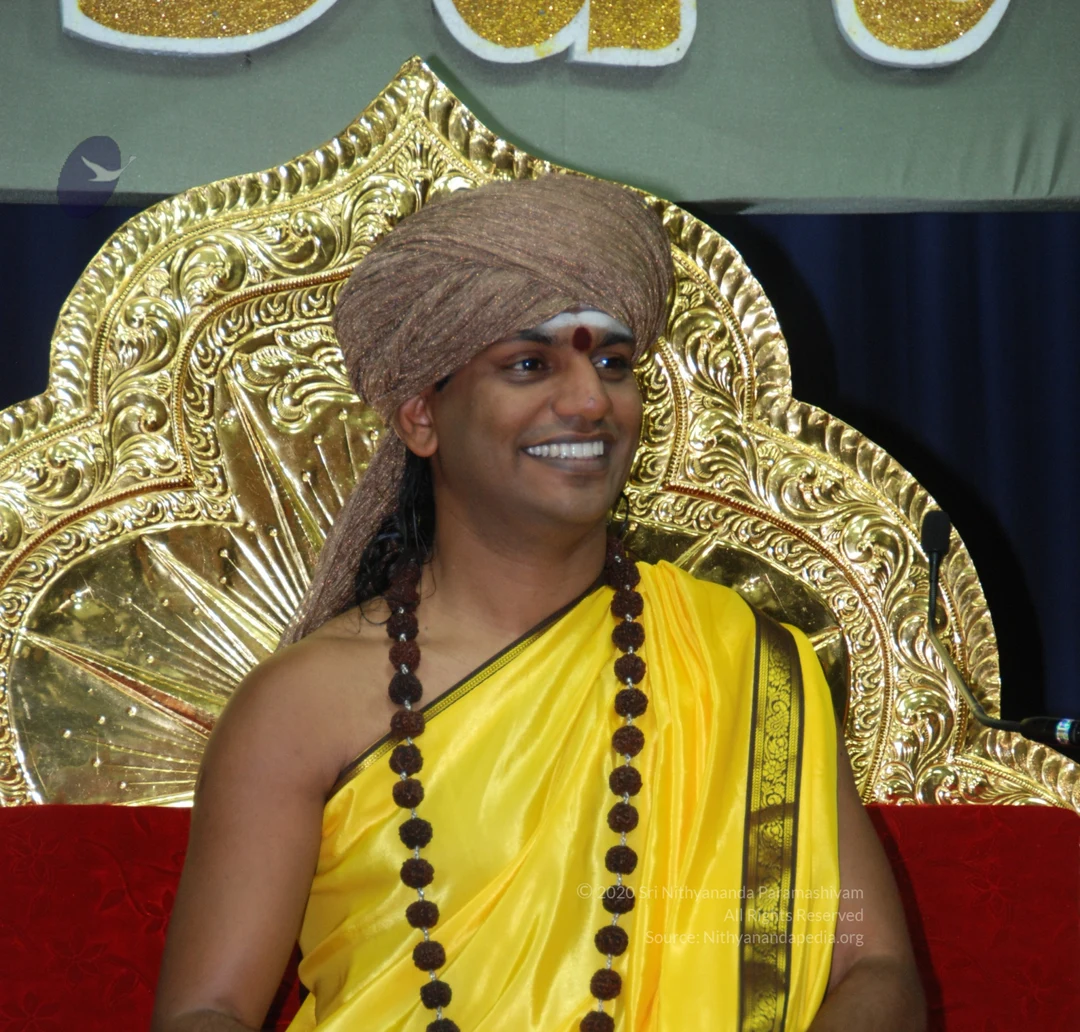
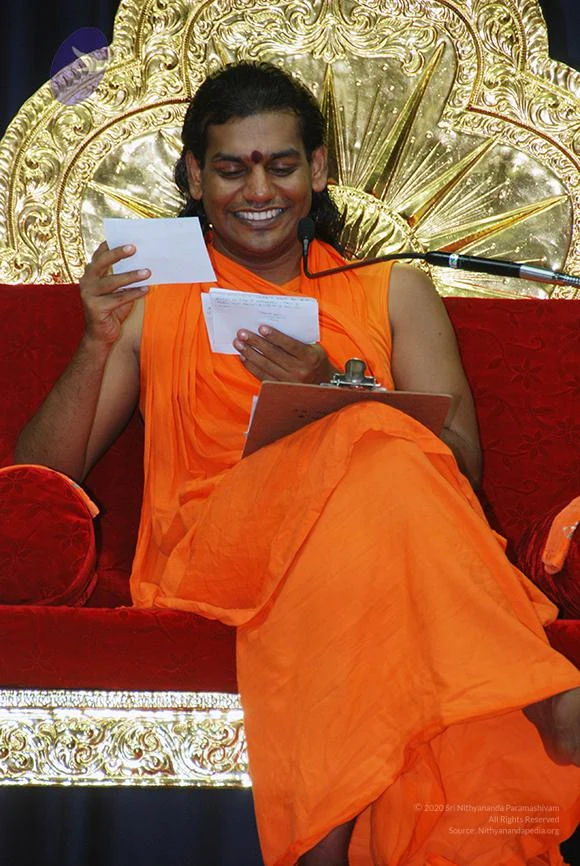
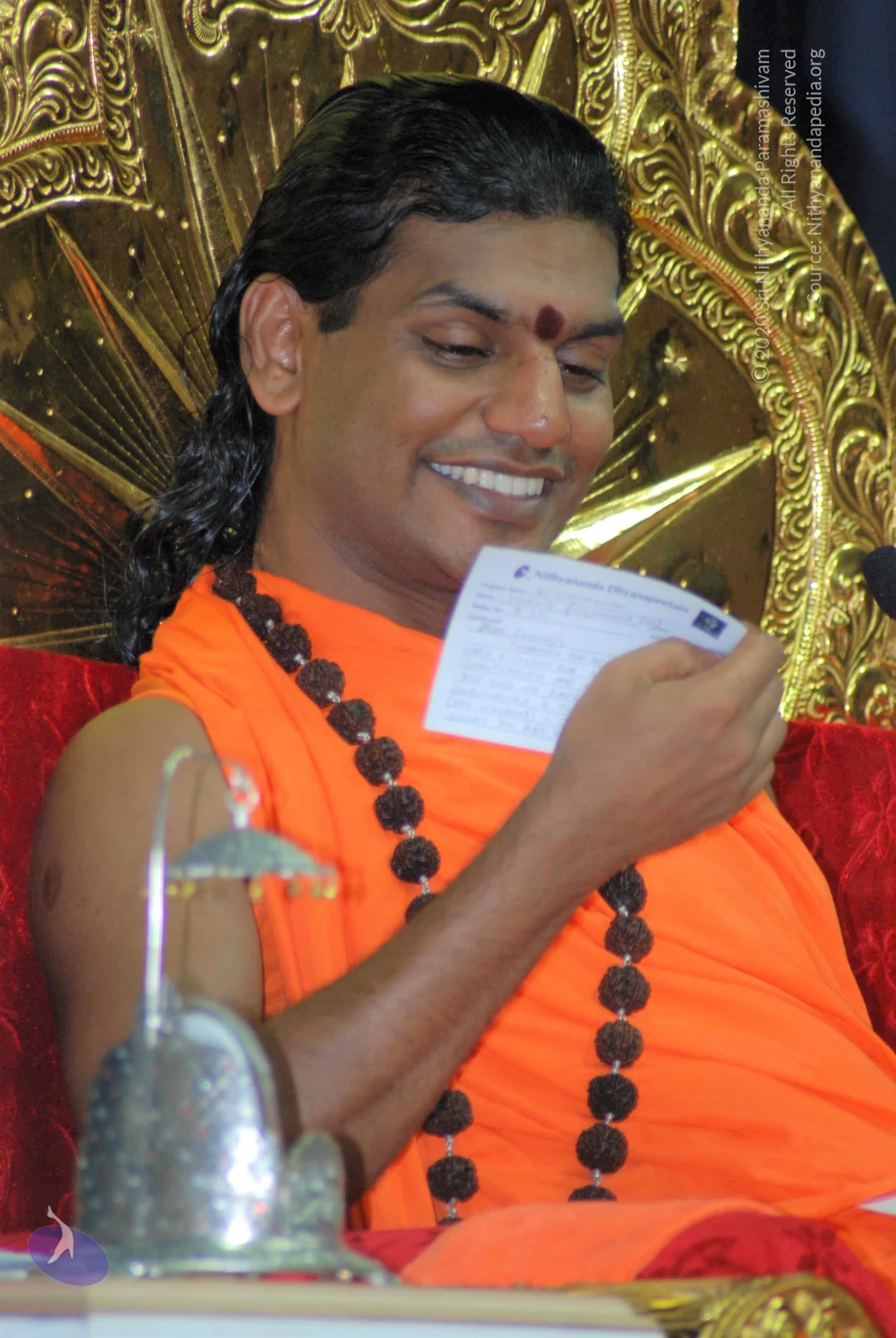
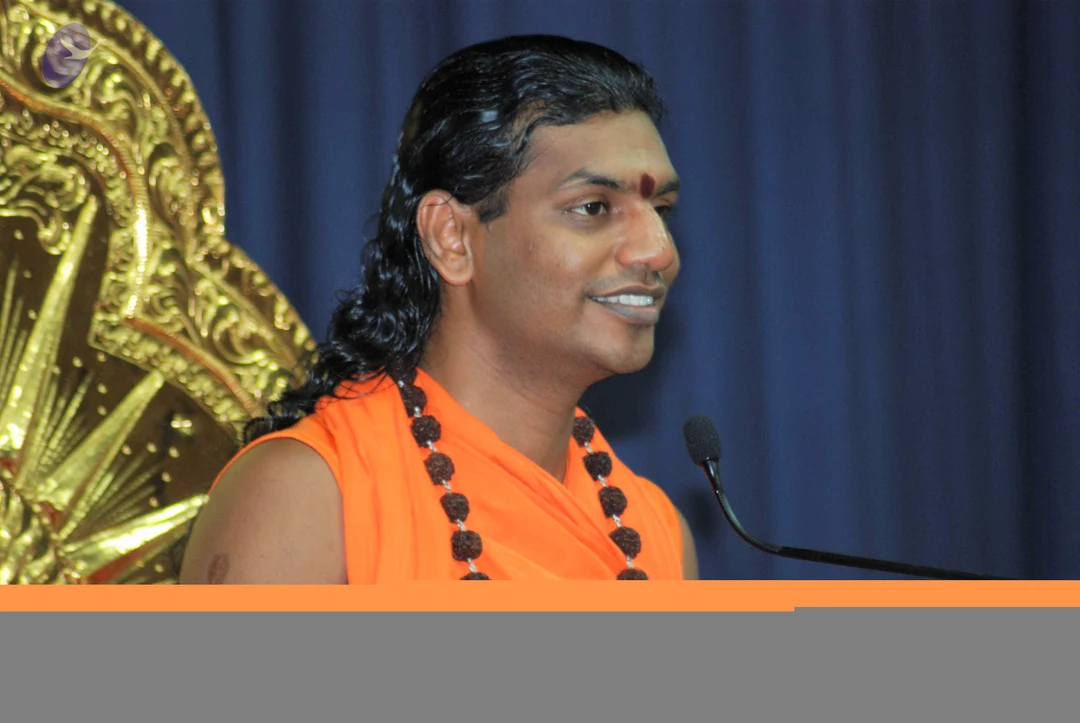
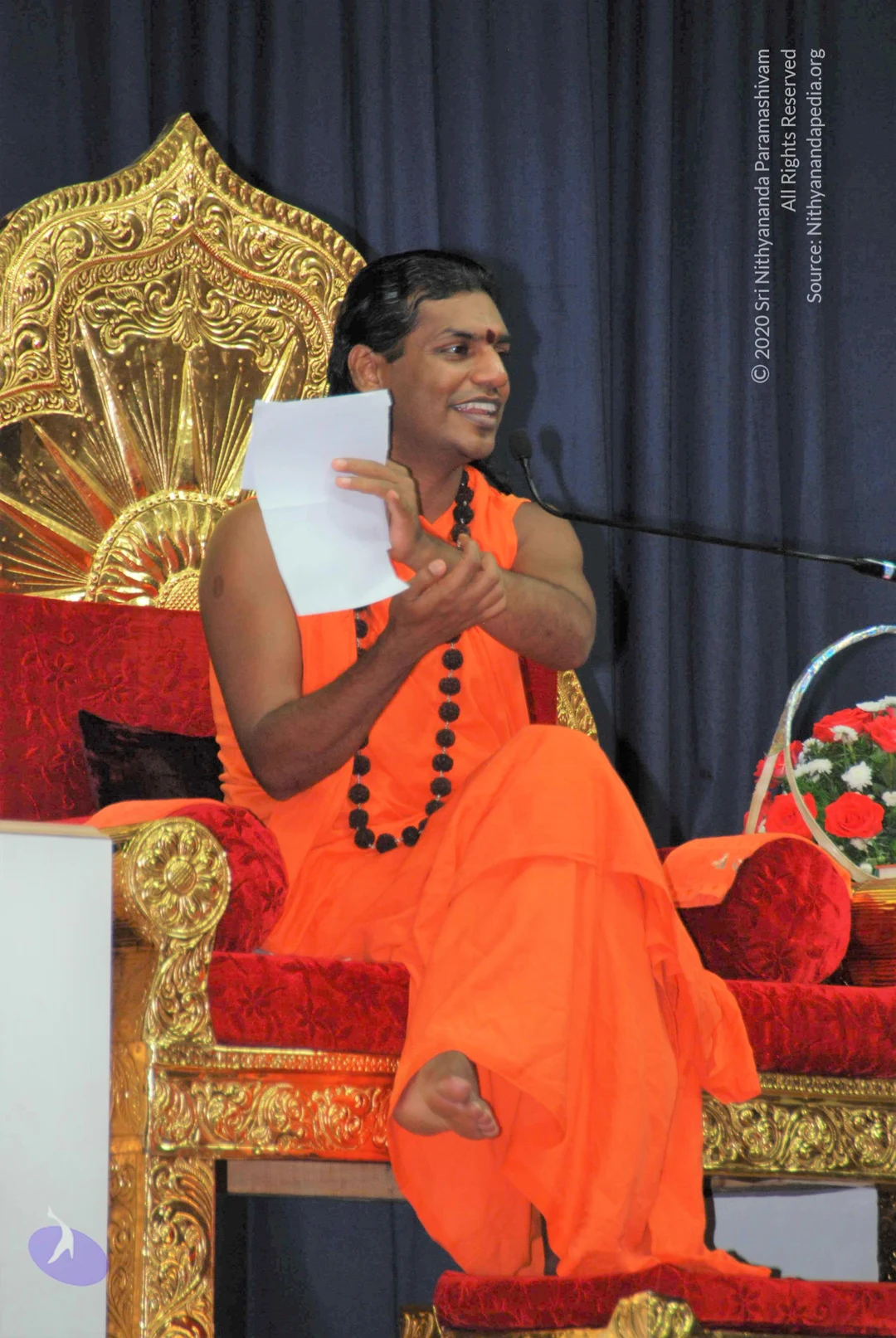
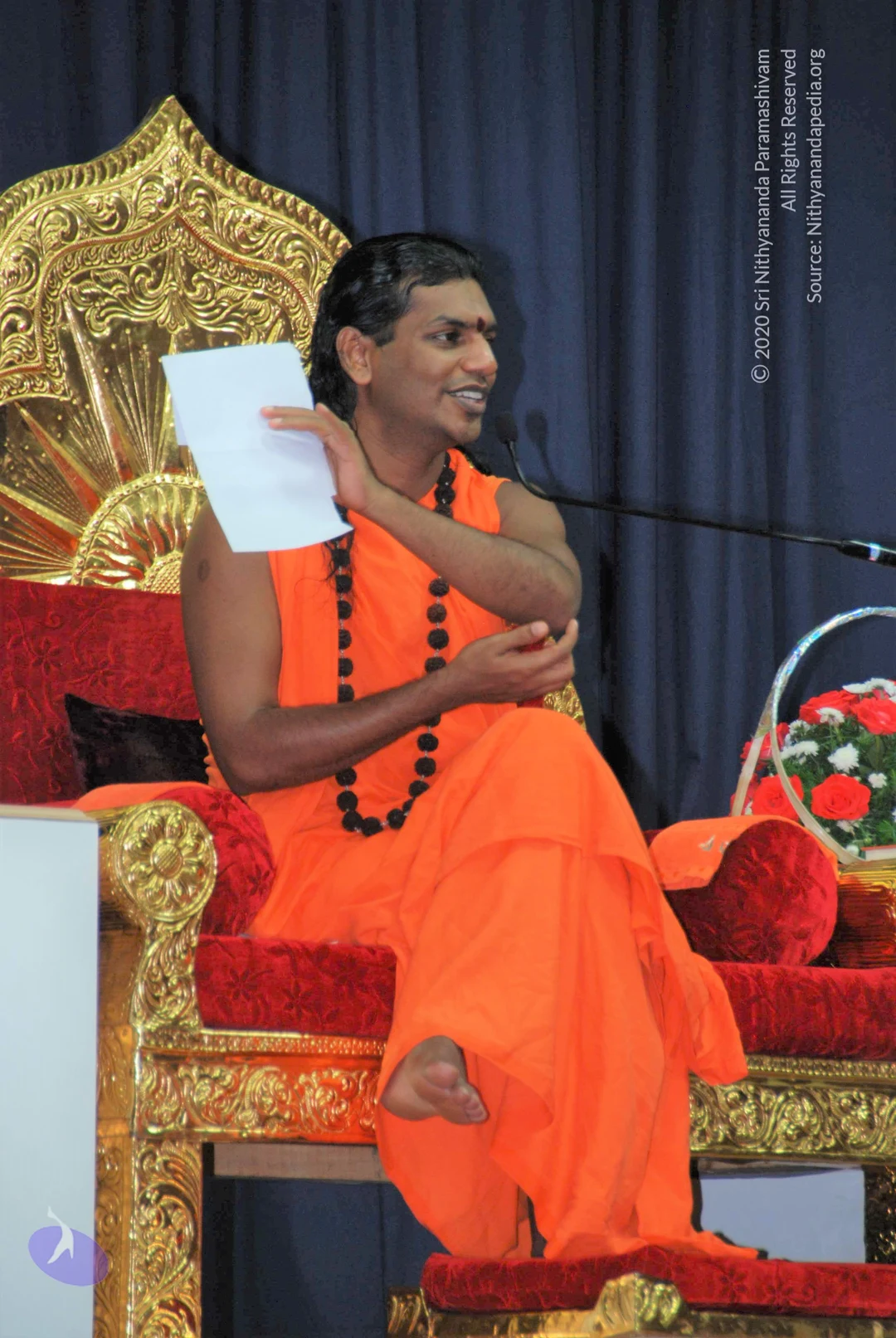
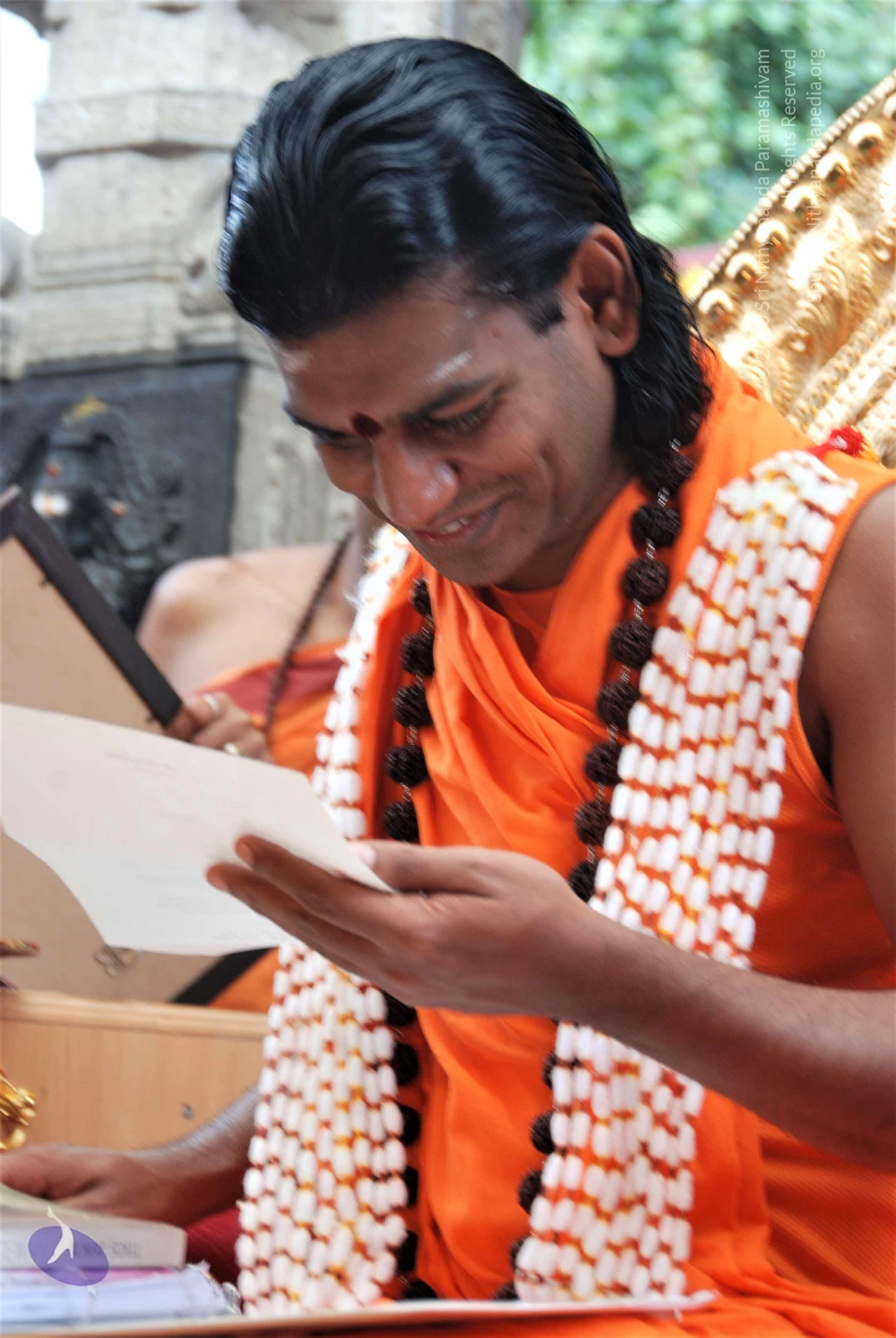
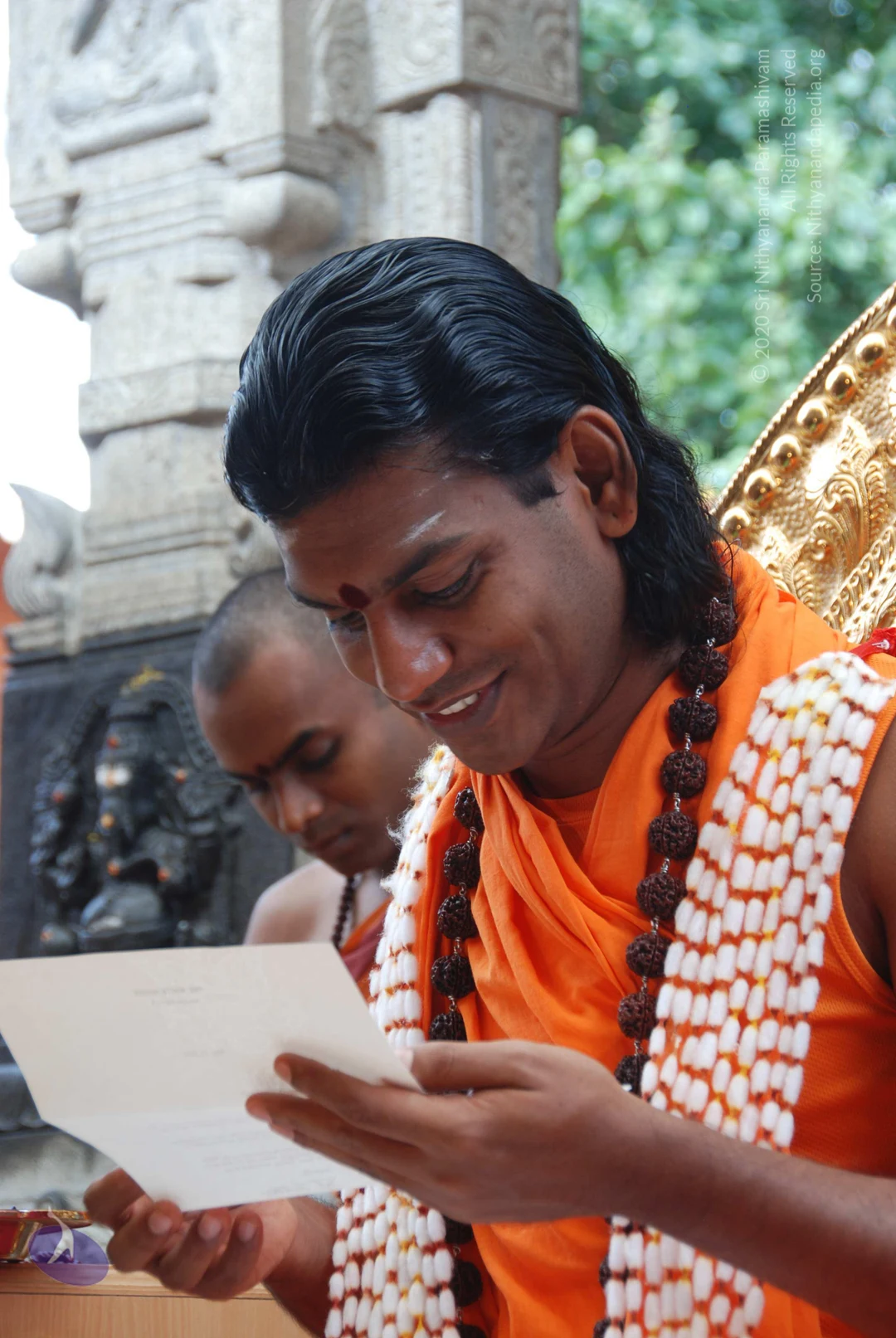
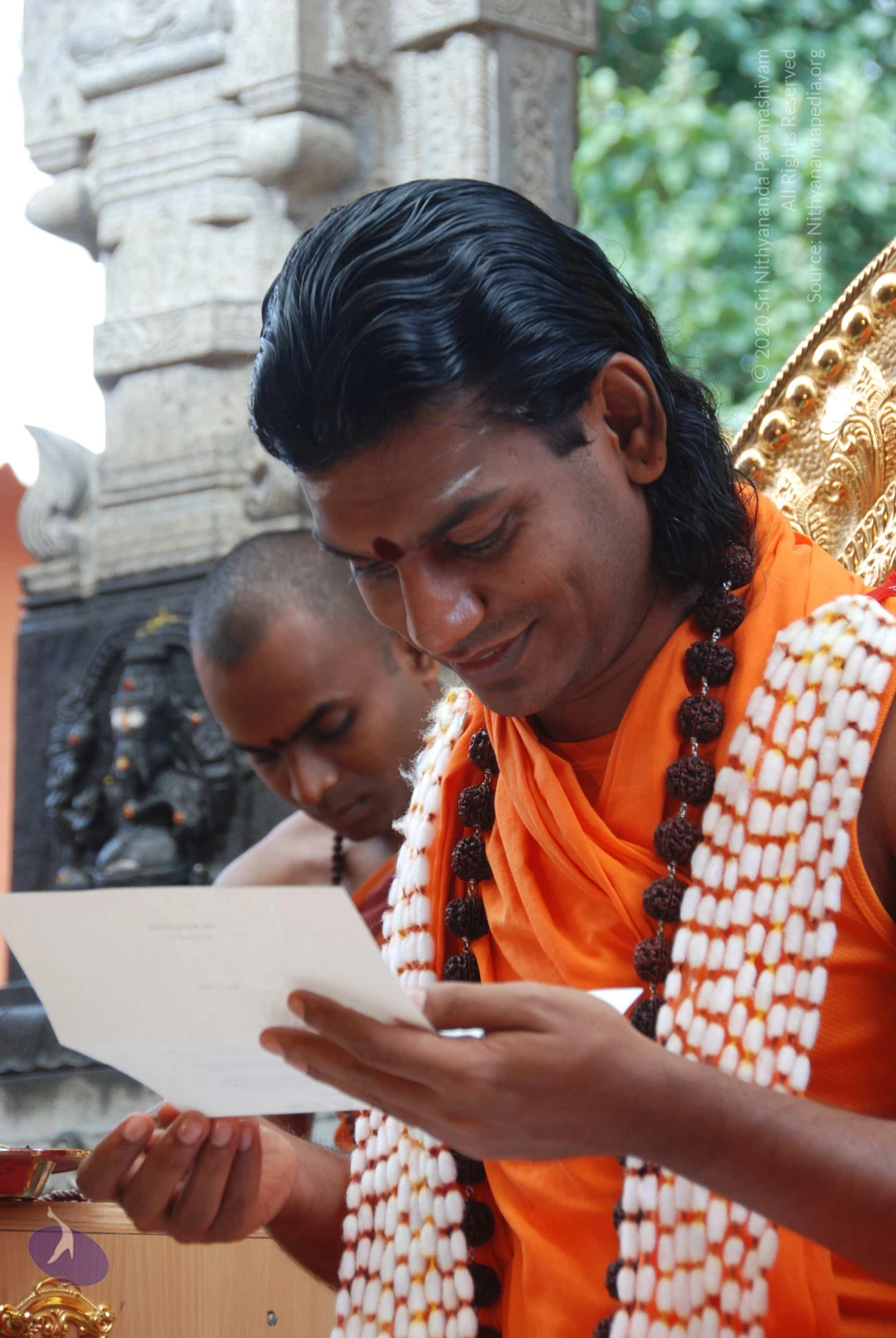
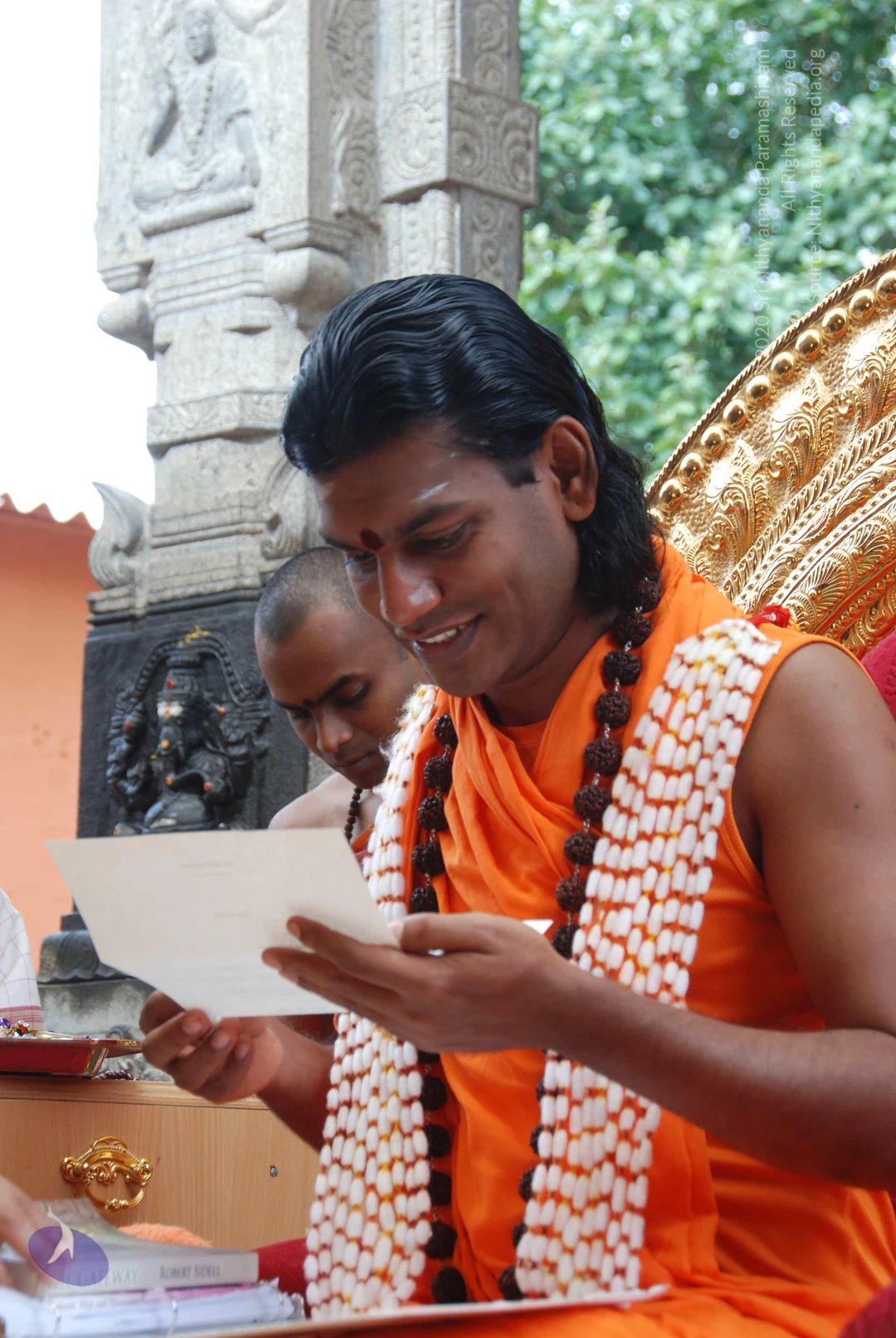
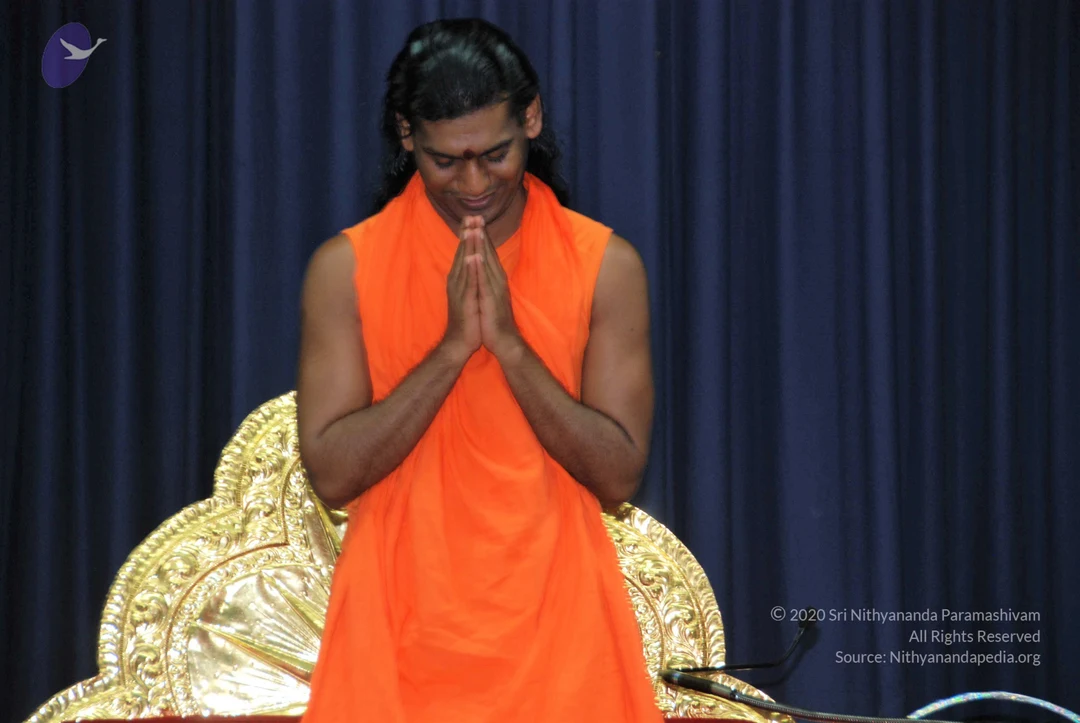
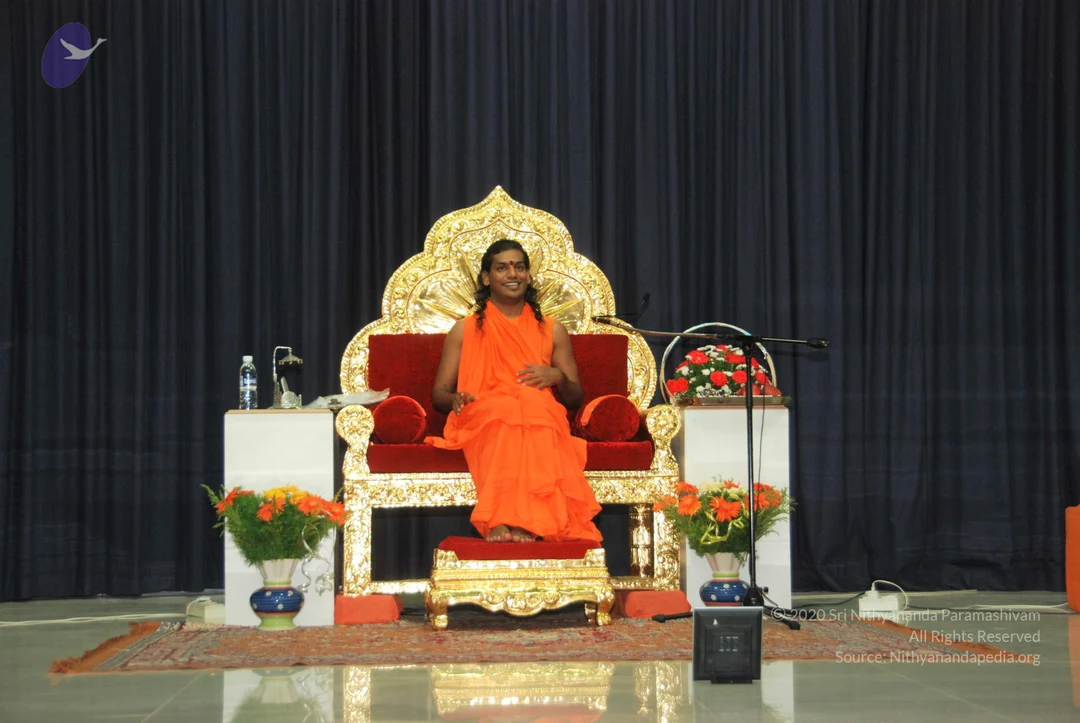
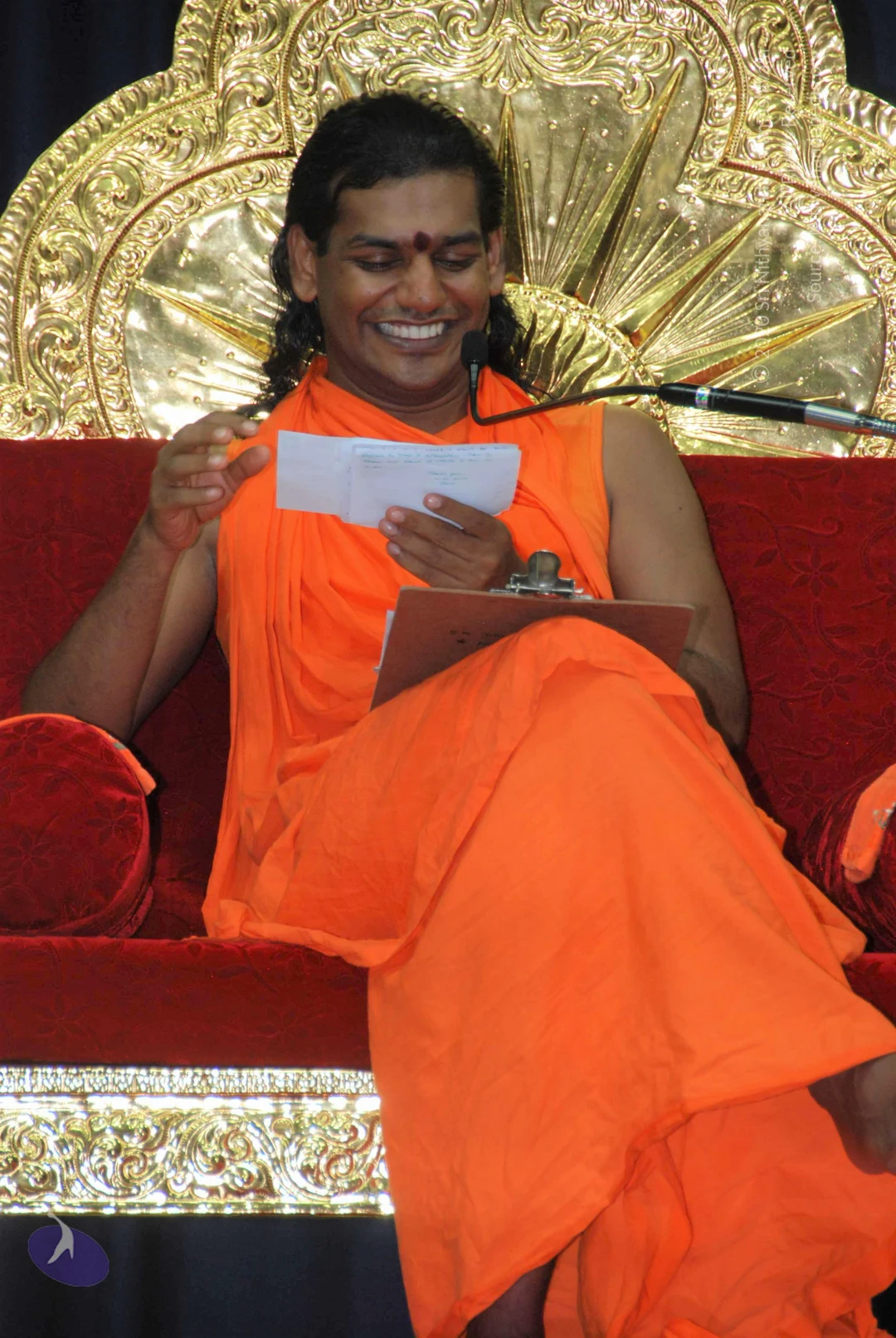
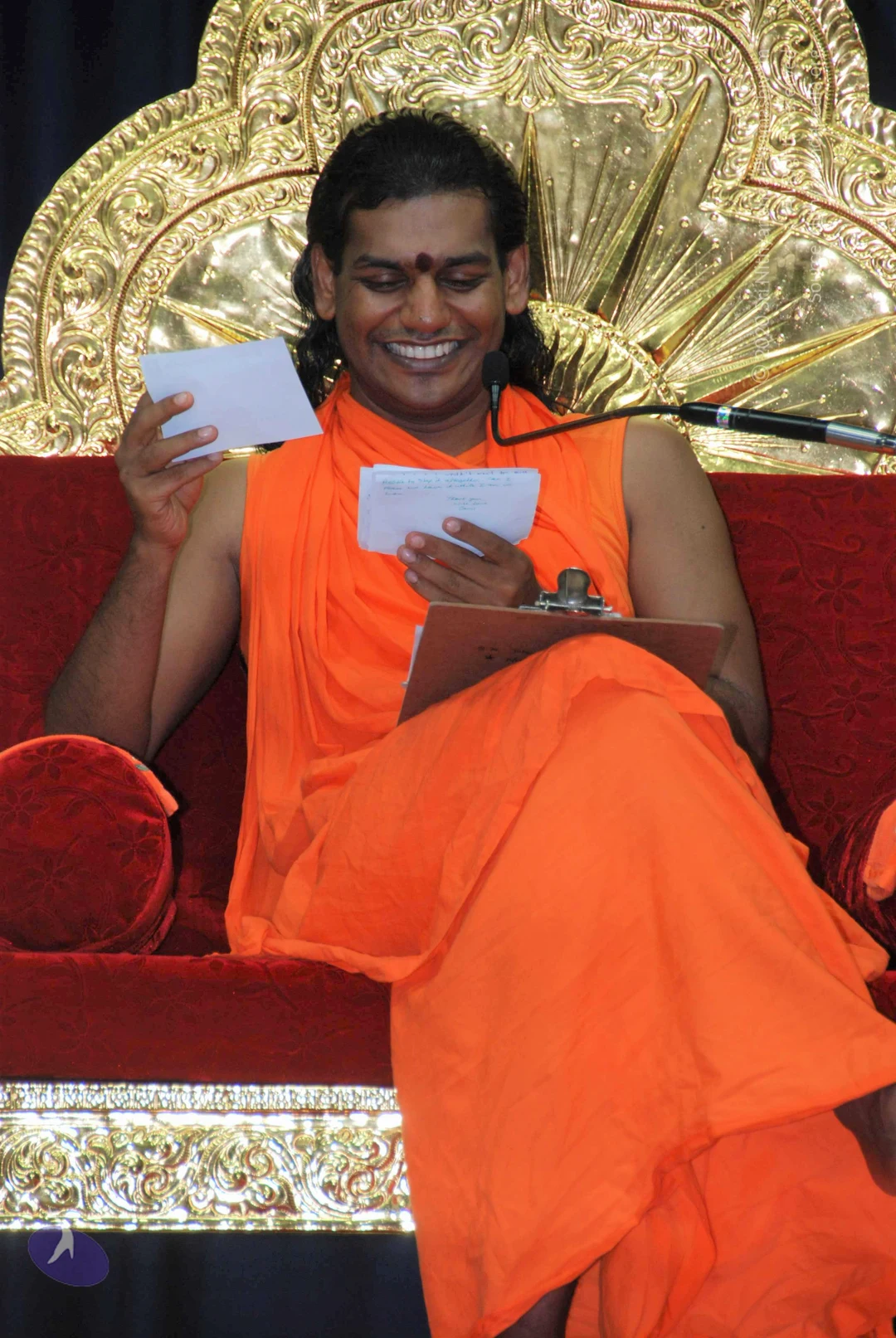
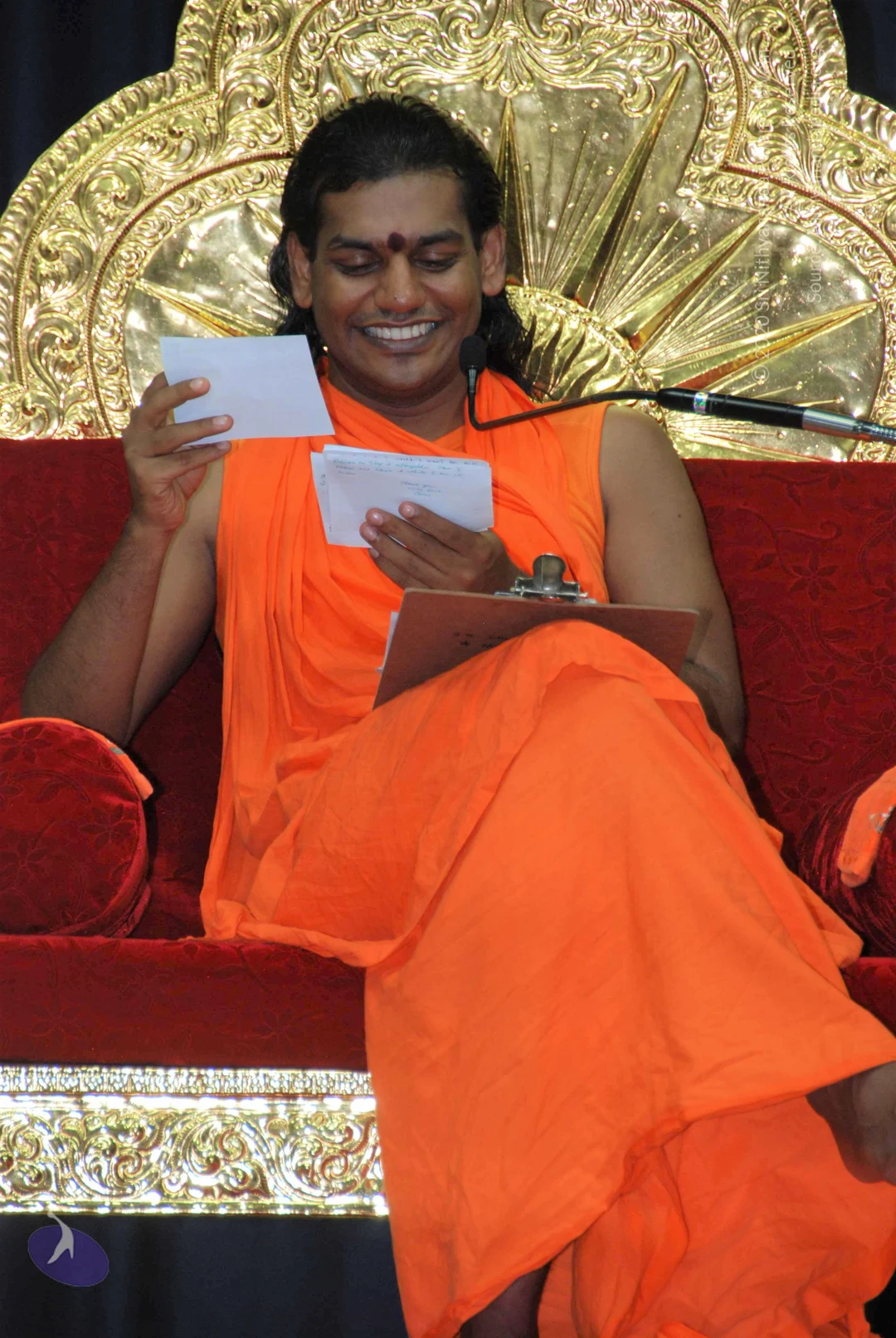
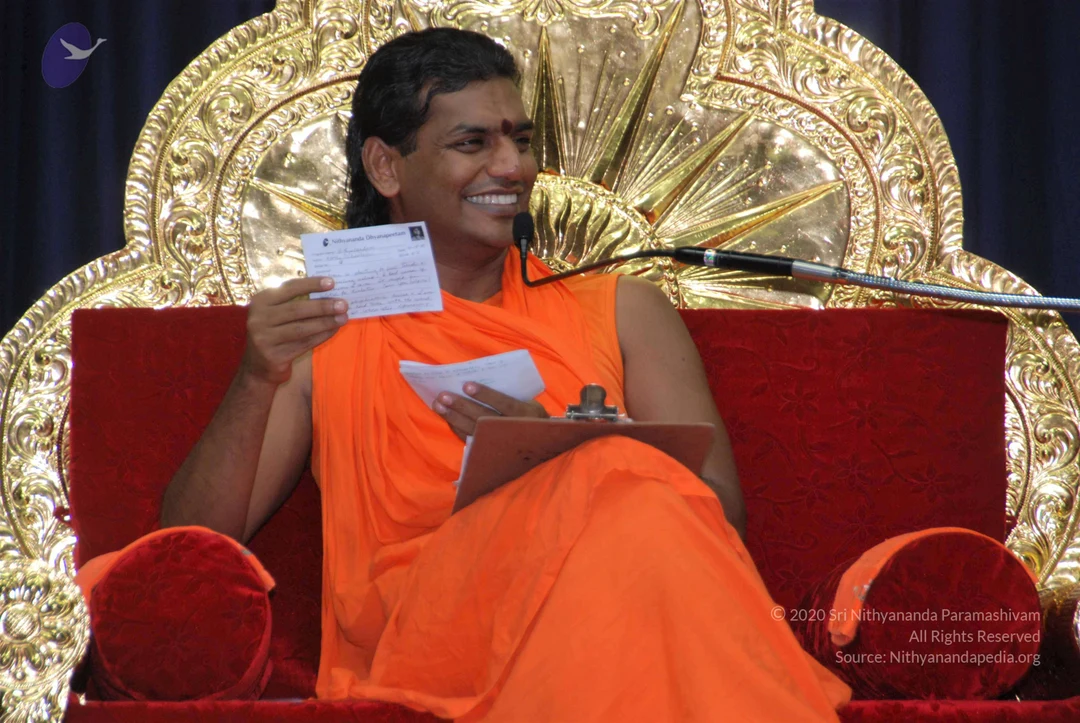
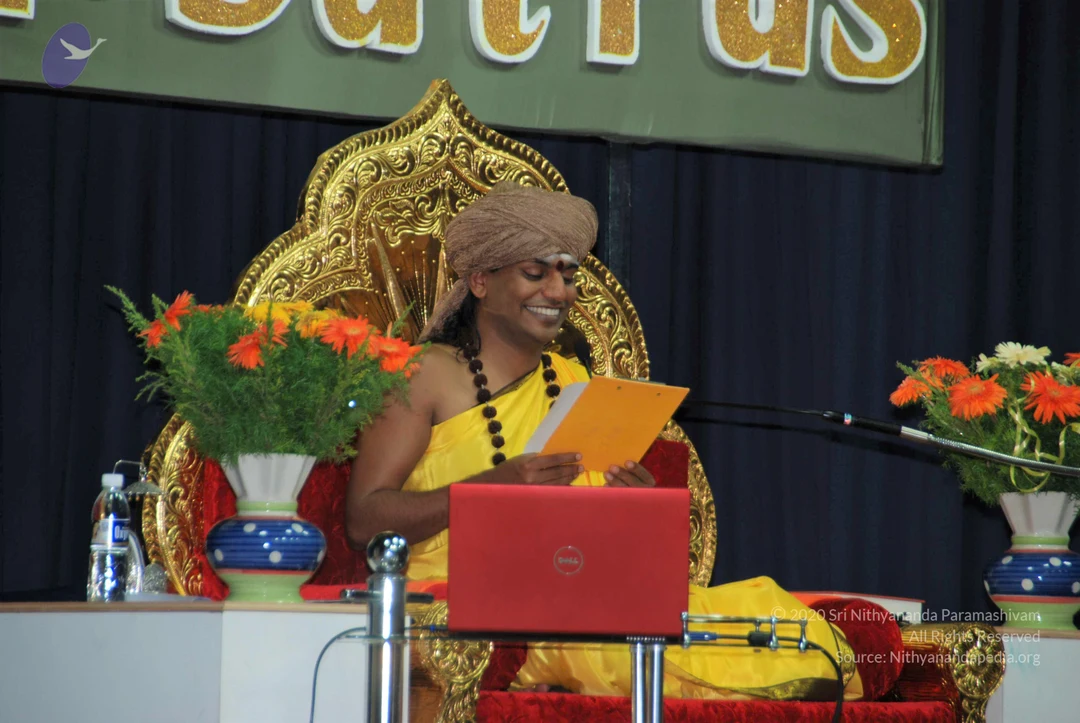
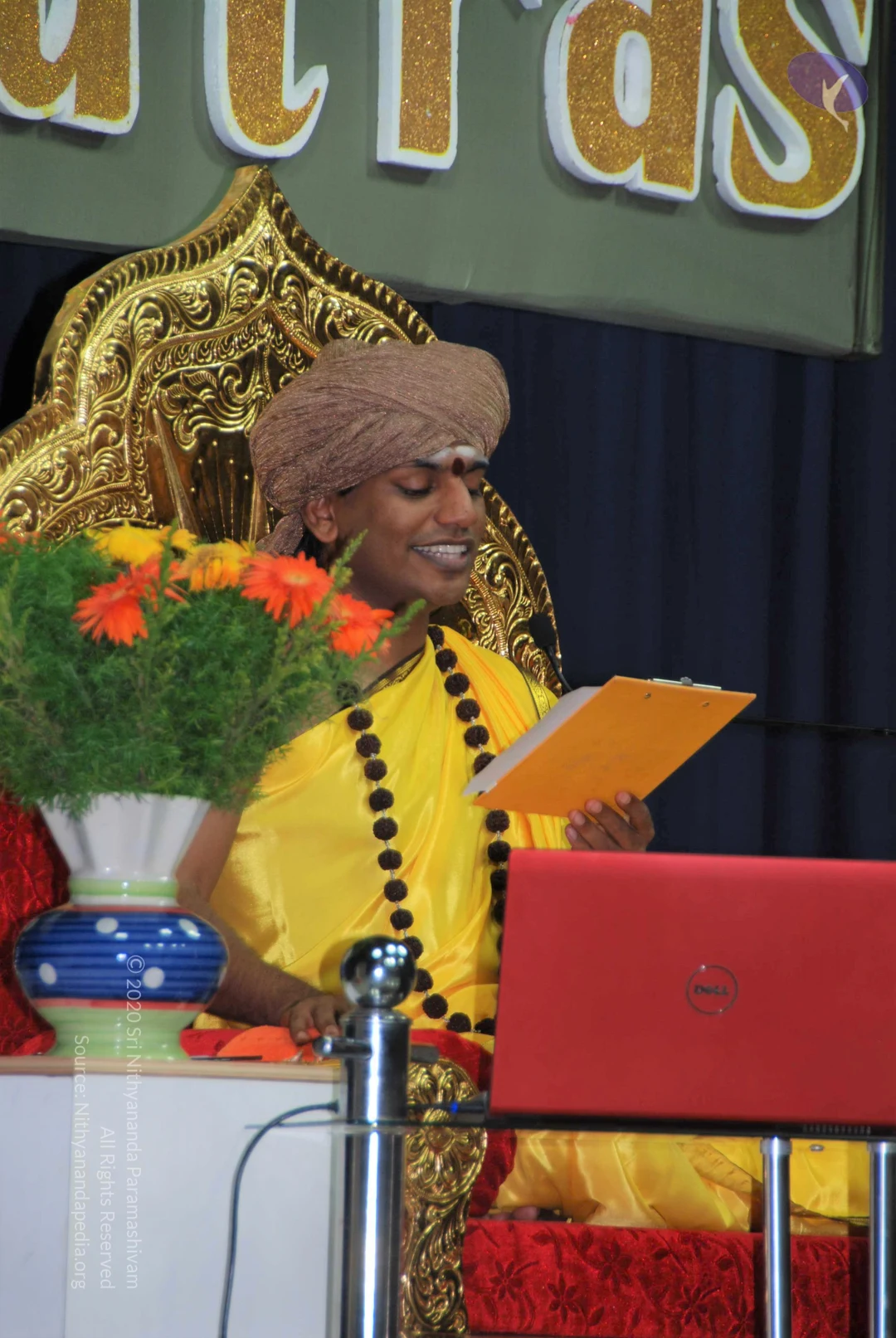
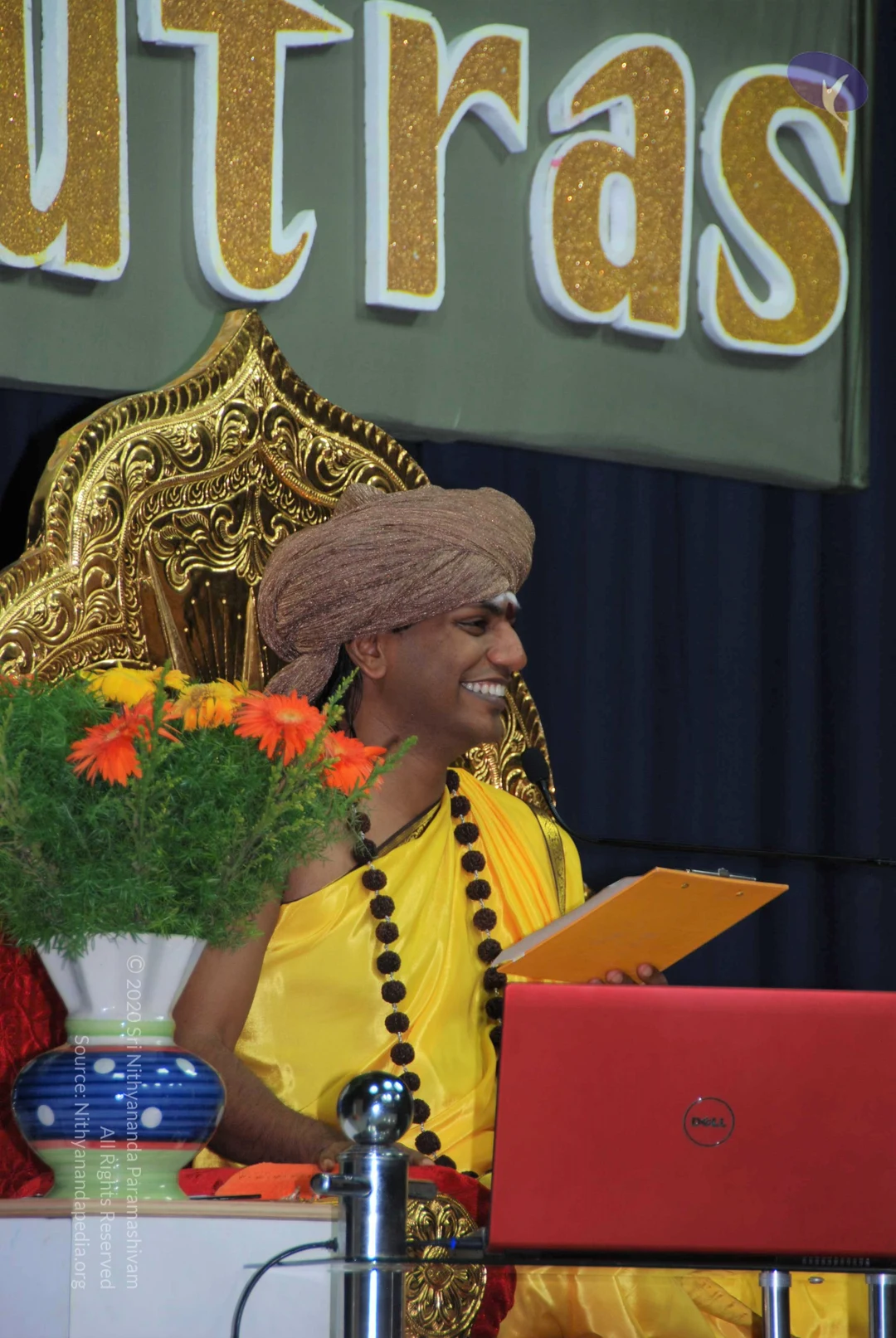
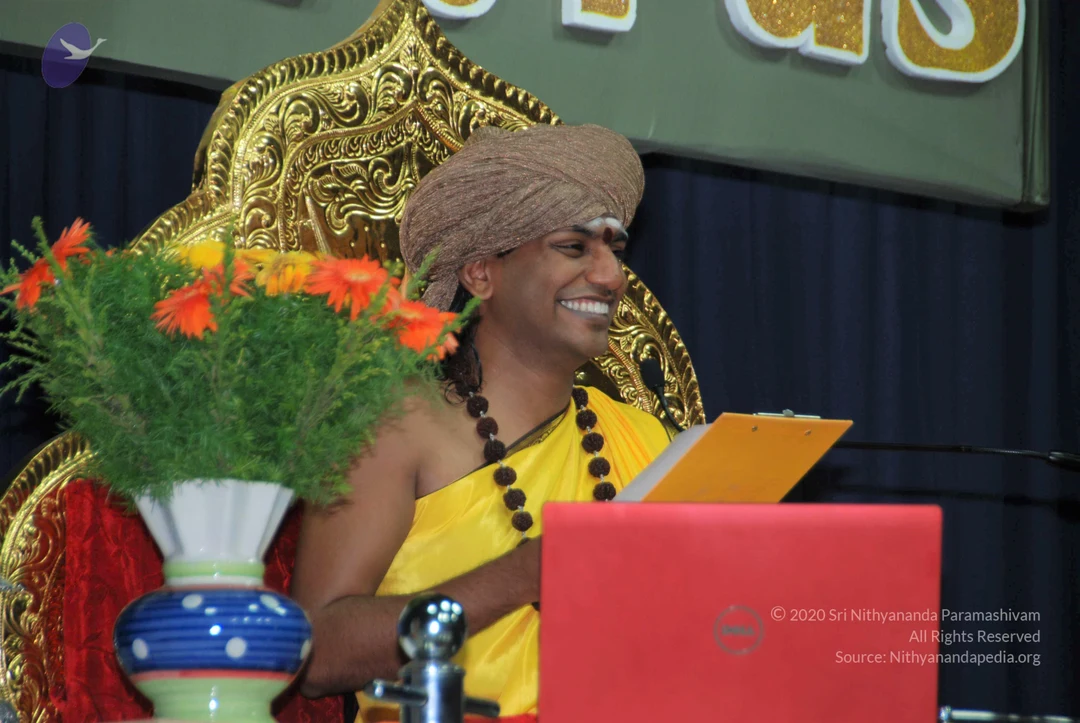
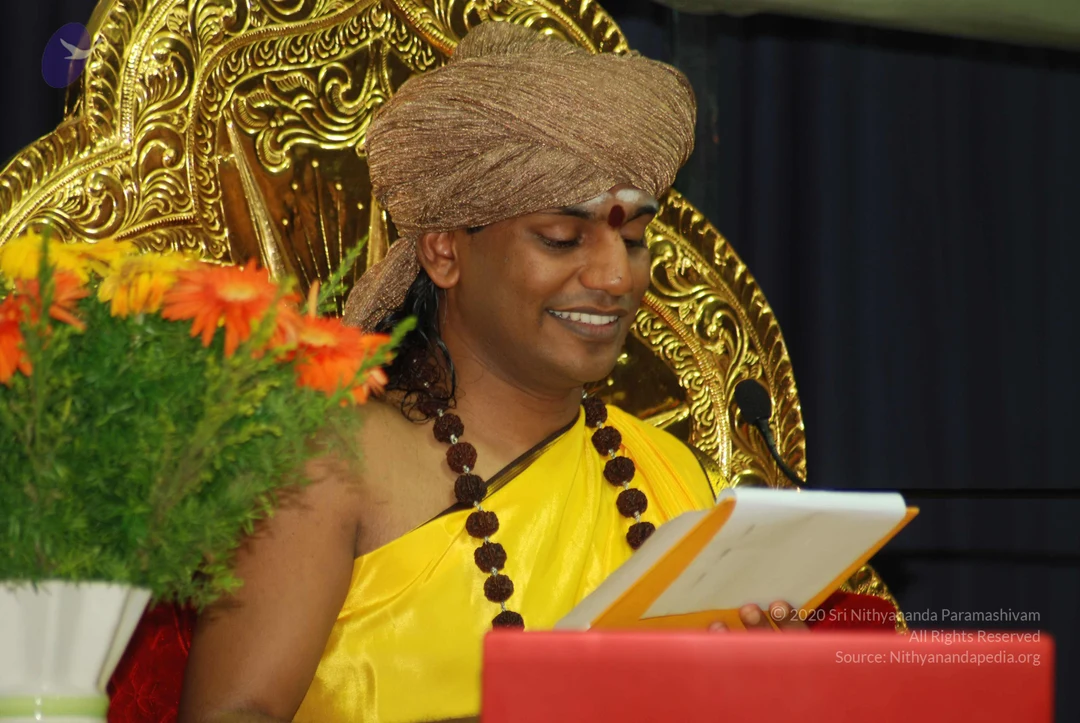
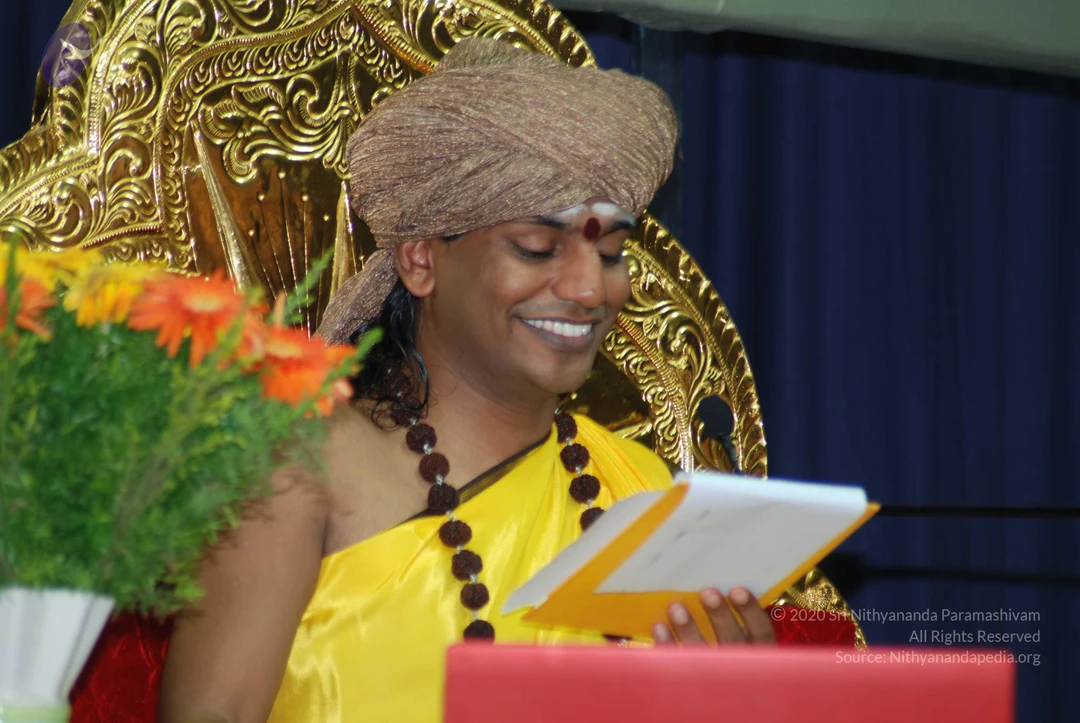
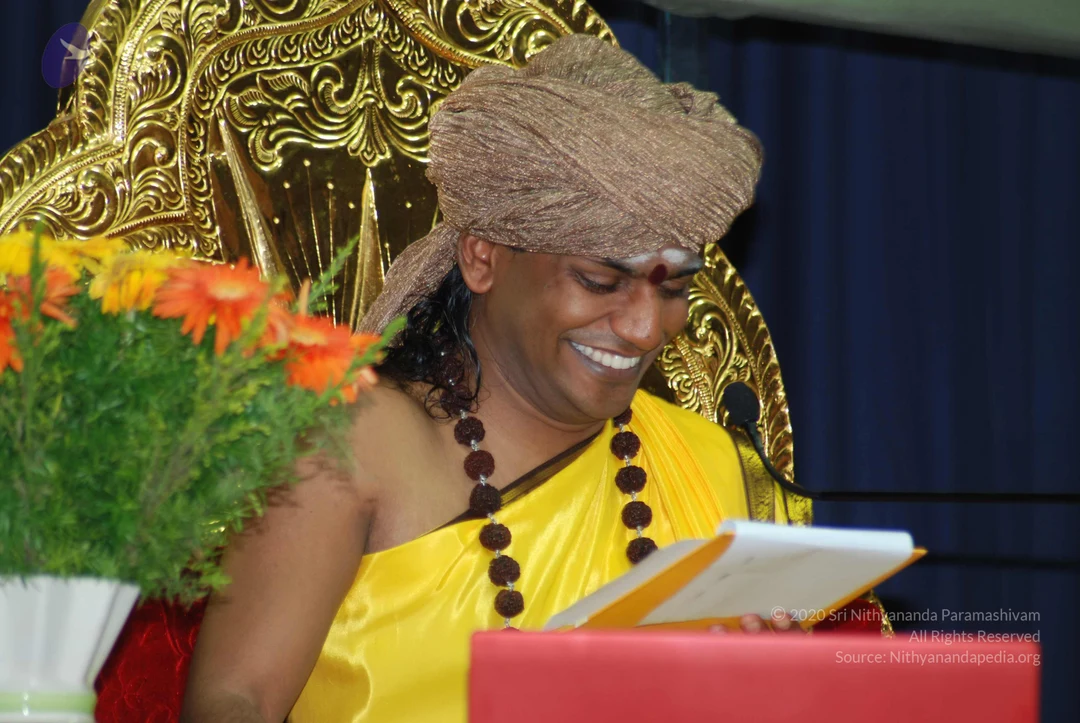
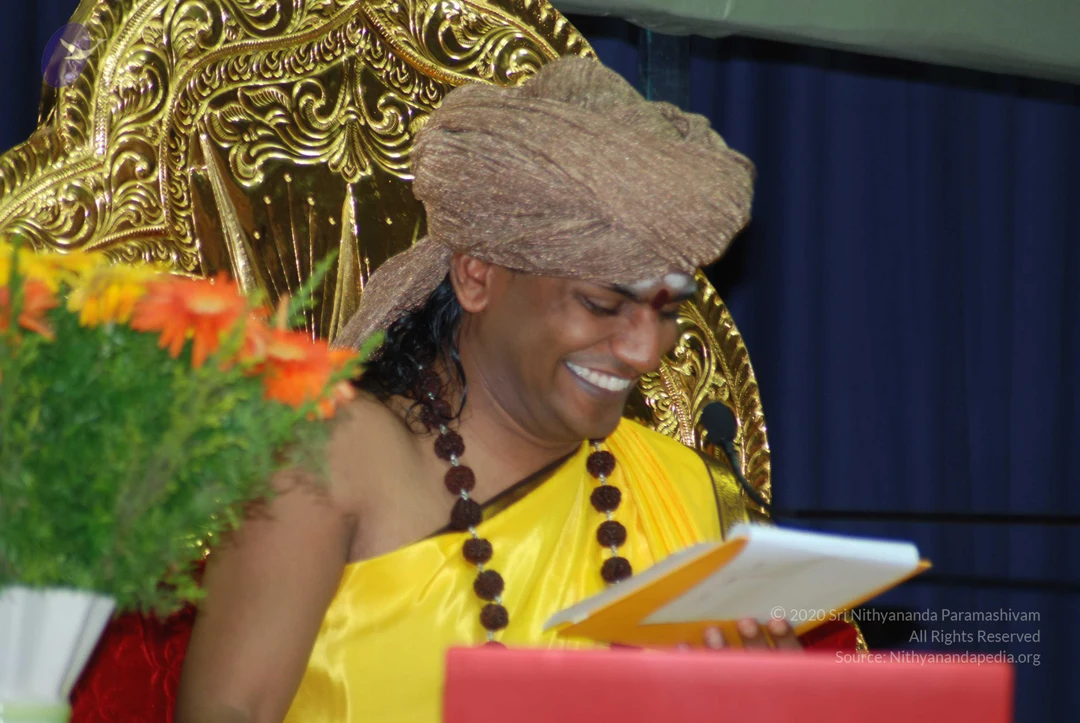
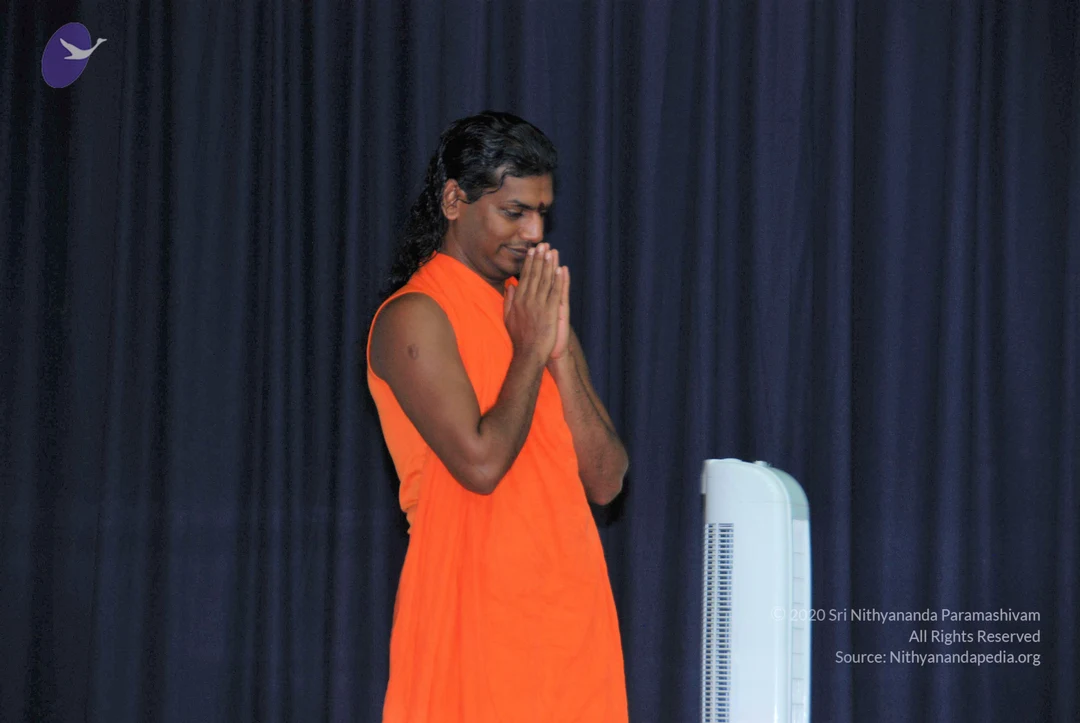
A man stands in profile on a stage before a dark navy curtain, his palms pressed together in a namaste greeting with head slightly bowed. He wears a sleeveless saffron-orange robe and has long dark hair swept back and a red tilak on his forehead. A white tower fan stands at the right edge of the frame. The swamiji candidate shows long swept-back hair and saffron clothing, so this is a probable Swamiji in person.A man in an orange sleeveless robe stands with his palms pressed together in anjali mudra, eyes lowered, in front of a navy blue draped curtain. He is beside an ornate gold carved throne-like seat. He has long dark hair swept back, a small red tilak on his forehead, and a microphone stand is visible at the bottom right. Appearance-based label: Swamiji (probable) in a saffron sannyasi robe with long swept-back hair and a forehead mark, seated/standing before a gold peetha in a satsang setting.A photograph of a seated figure on a raised stage in front of a dark navy draped curtain. The central figure sits on an ornate gold-and-red throne with a golden canopy, wearing a flowing orange-saffron robe and a red bindi, with long dark hair swept back, and is barefoot on a gold footstool atop a red carpet. Two white pedestals hold blue-and-white vases of orange and yellow flowers, and a red floral arrangement sits behind a microphone stand. A water bottle and small equipment sit on the left pedestal. The figure appears to be speaking, with hands gesturing in front of the body. Swamiji (probable): the saffron robe, long swept-back hair and bindi are the qualifying cues, seated as a speaker during a talk.A smiling man in a saffron-orange robe sits on a red velvet throne-like seat with an ornate gold sunburst backrest behind him. He has long, swept-back dark hair and a red bindi on his forehead, and holds a sheaf of white papers in one hand while holding a brown clipboard on his lap. A microphone on a stand is beside him. The scene suggests a seated satsang talk on stage.A smiling man with long swept-back dark hair and a red forehead dot sits on an ornate red velvet throne with gold-embossed backrest. He wears a sleeveless saffron-orange robe draped over his shoulders and holds a clipboard on his lap, reading slips of white paper with his eyes lowered. A microphone on a black stand is at the right edge. Swamiji (probable): long swept-back hair, saffron-orange robes and a seated throne presentation suggest the page's identified figure, though appearance alone is not conclusive.A seated man in an orange sleeveless robe sits on a red velvet throne-like seat in front of an ornate gold repoussé backdrop with radiating sunburst motifs. He wears a red bindi on his forehead and smiles while reading handwritten cards held in both hands, with a clipboard resting on his lap. A microphone on a stand is visible beside him. This is a photograph of one person at a satsang-style talk.
07

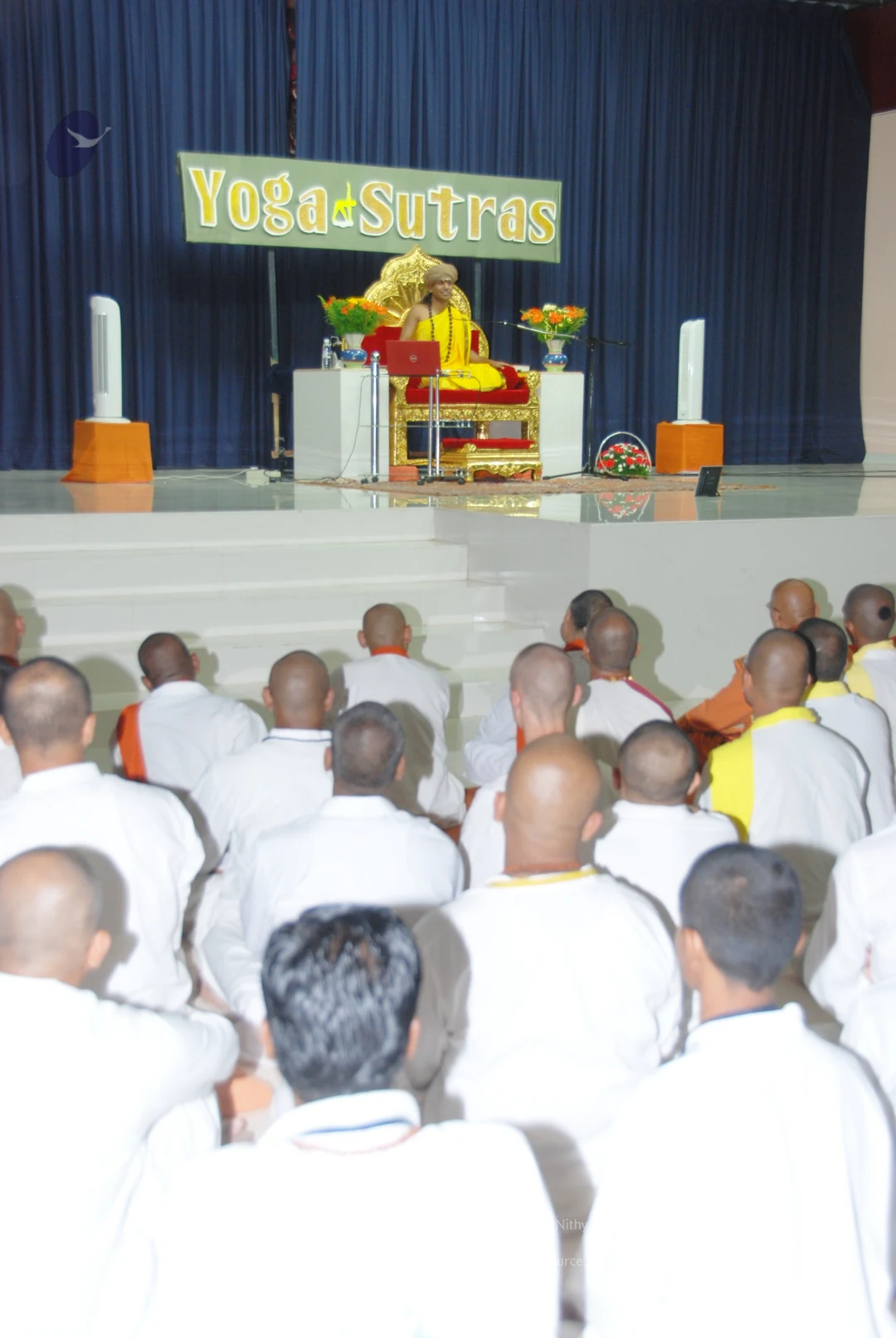
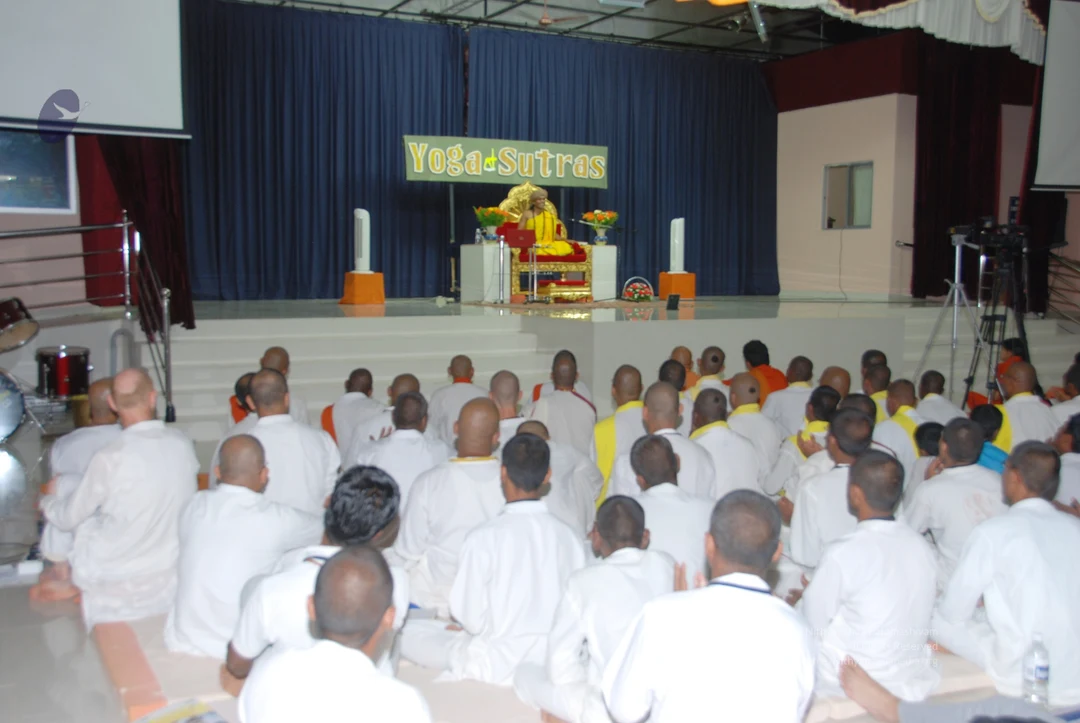
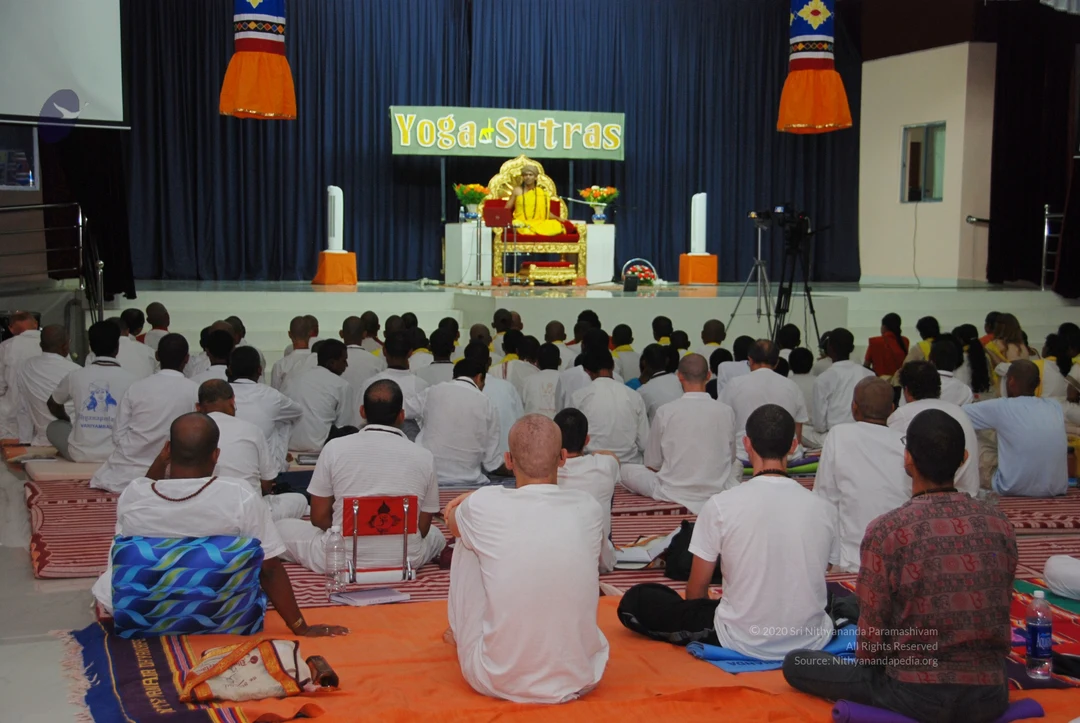
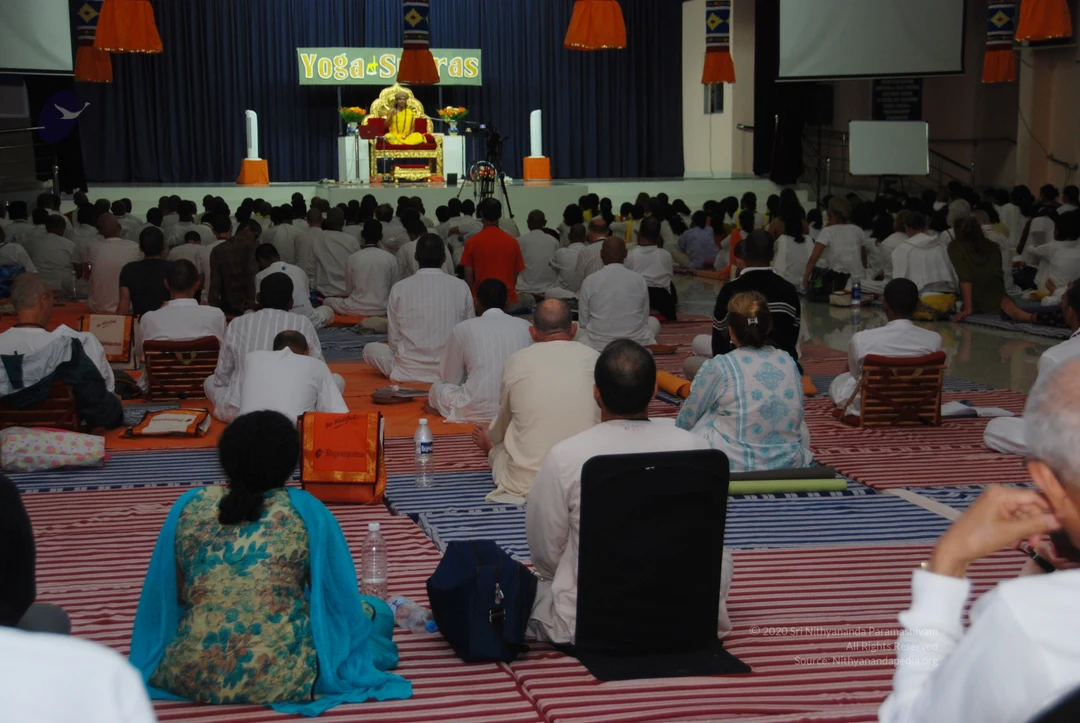
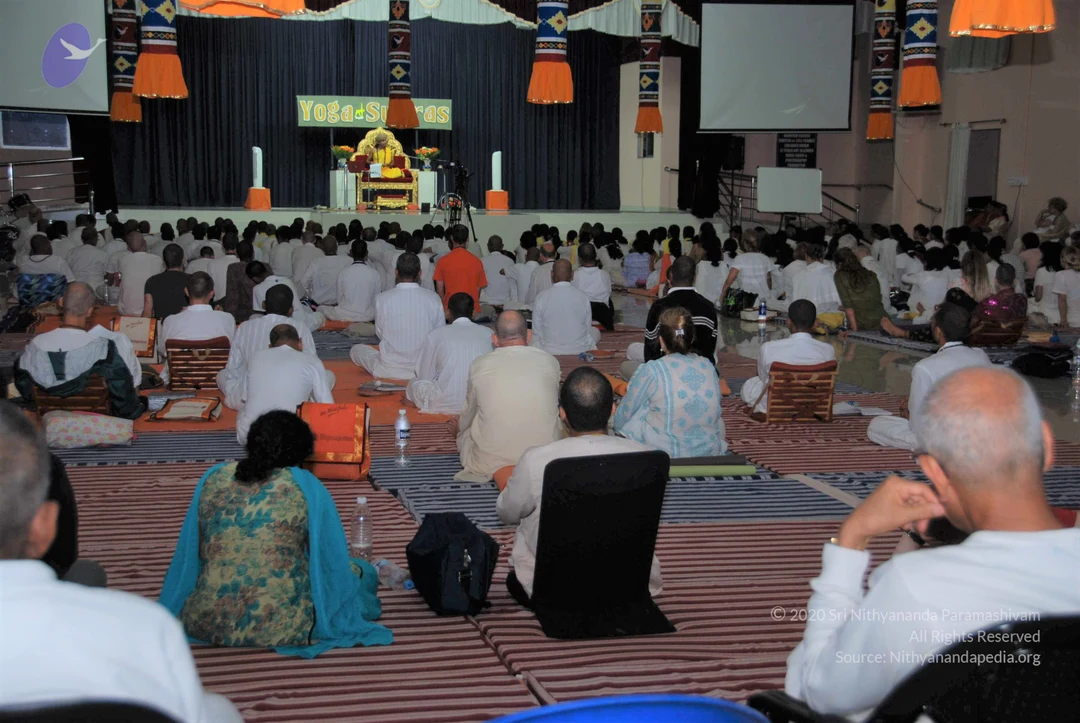
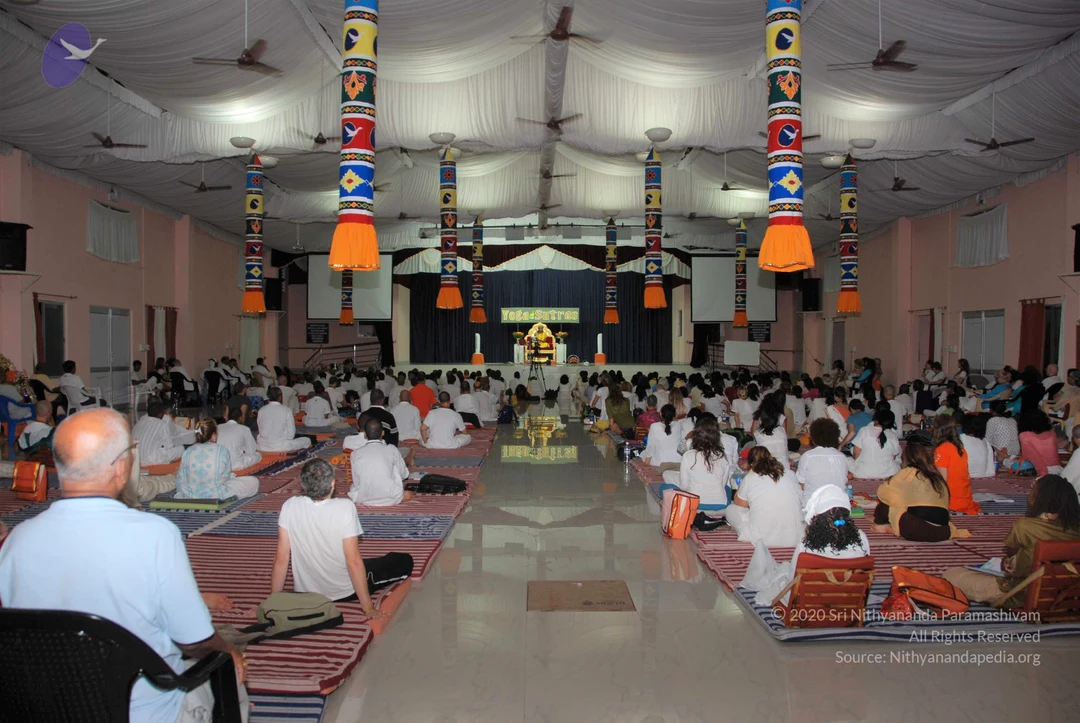
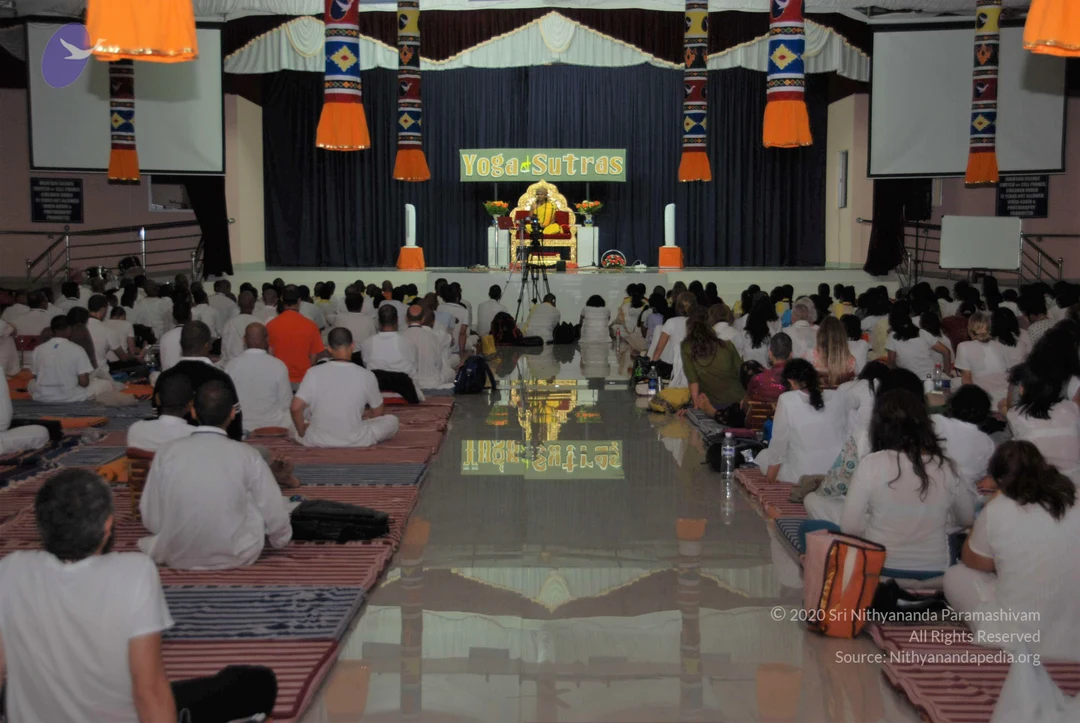
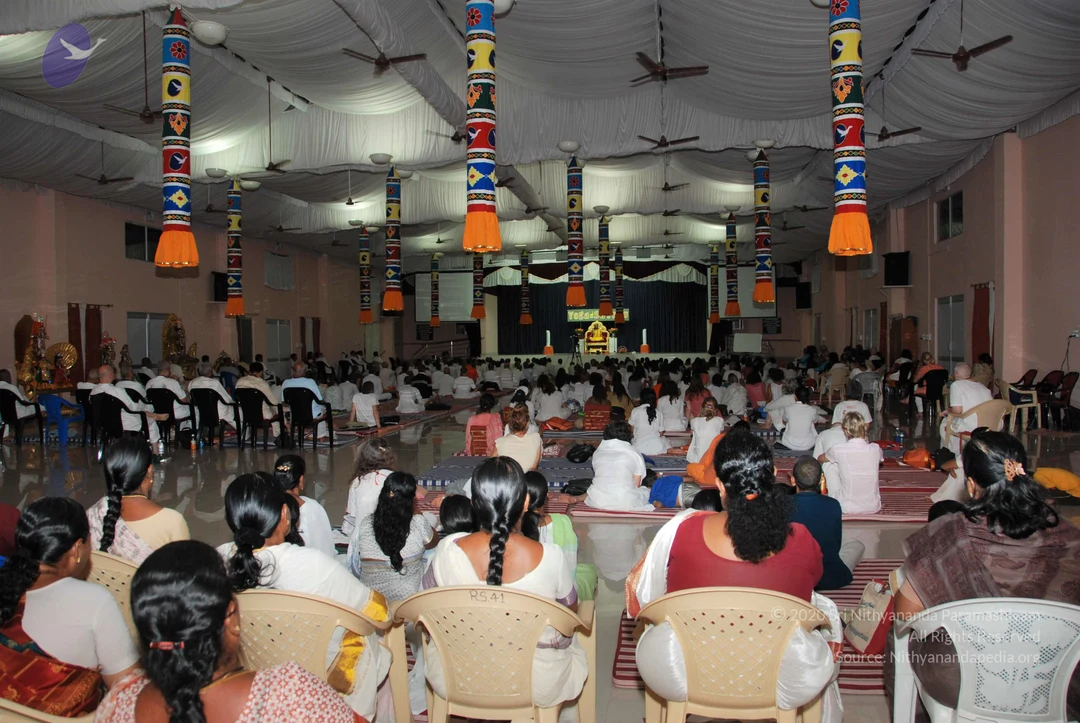
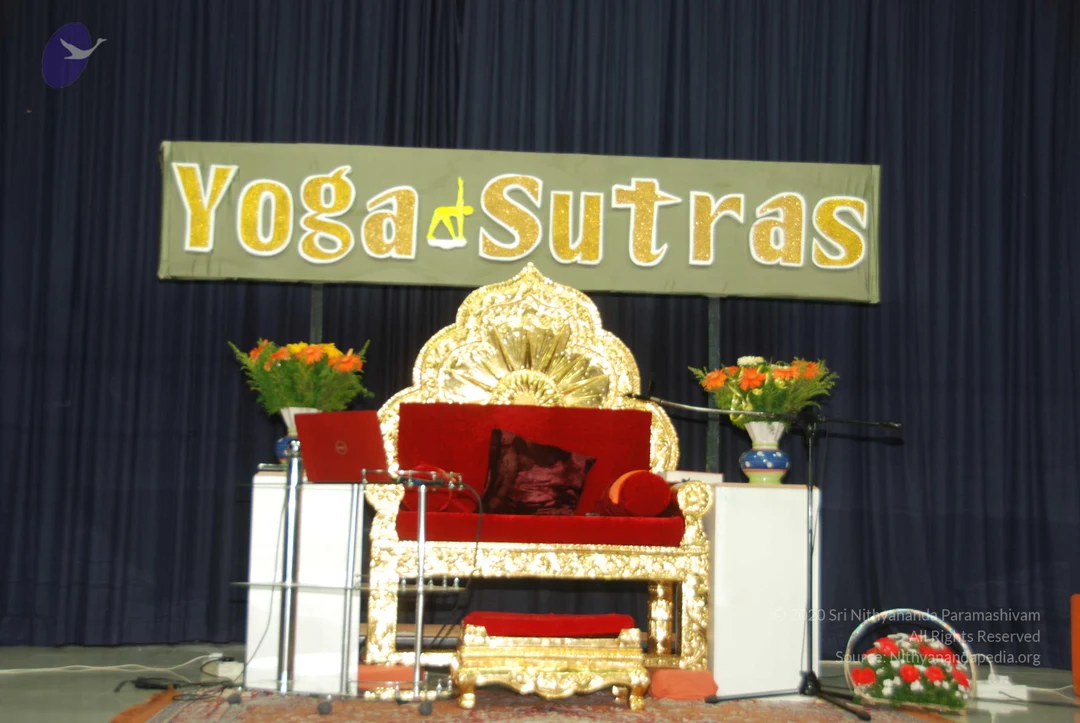
07-Yoga-Sutras

36 dated photos in previewSource gallery
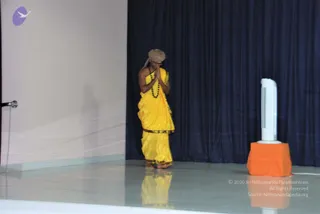
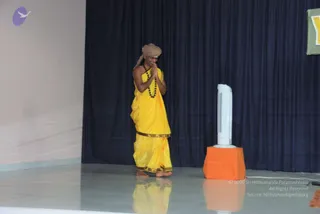
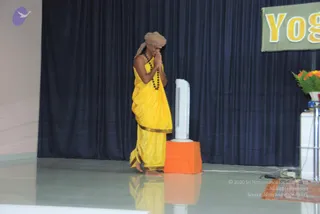
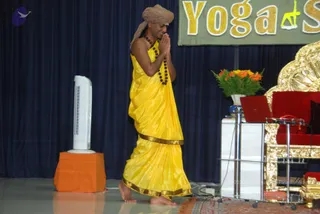
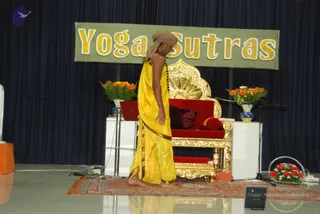
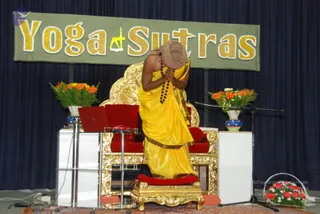
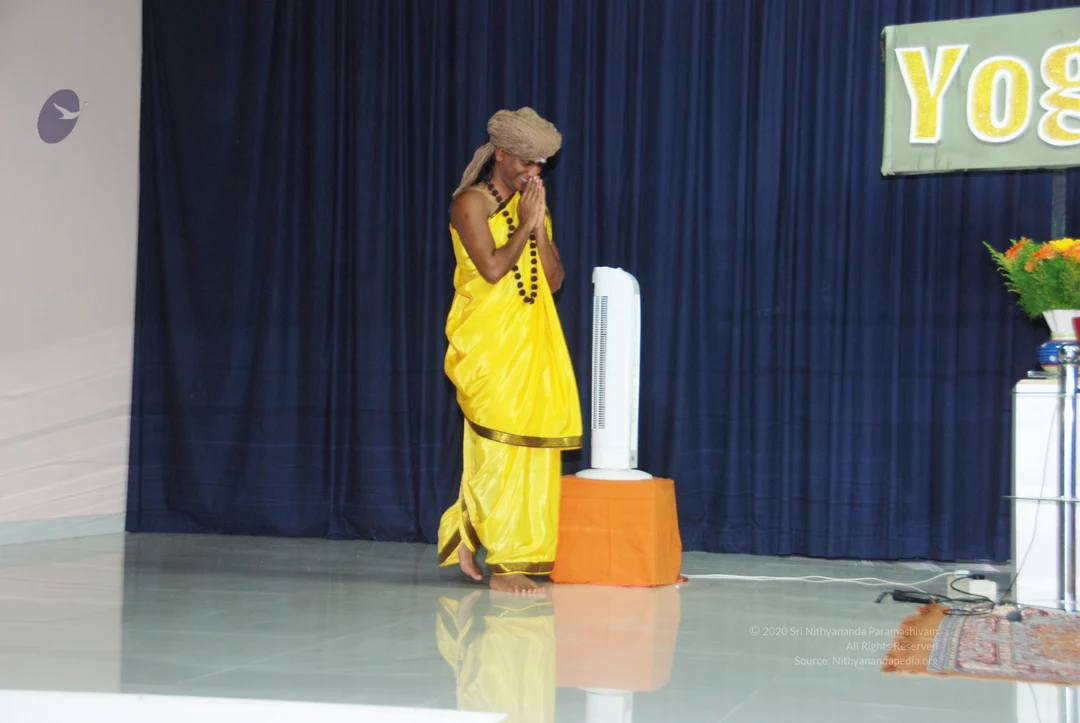
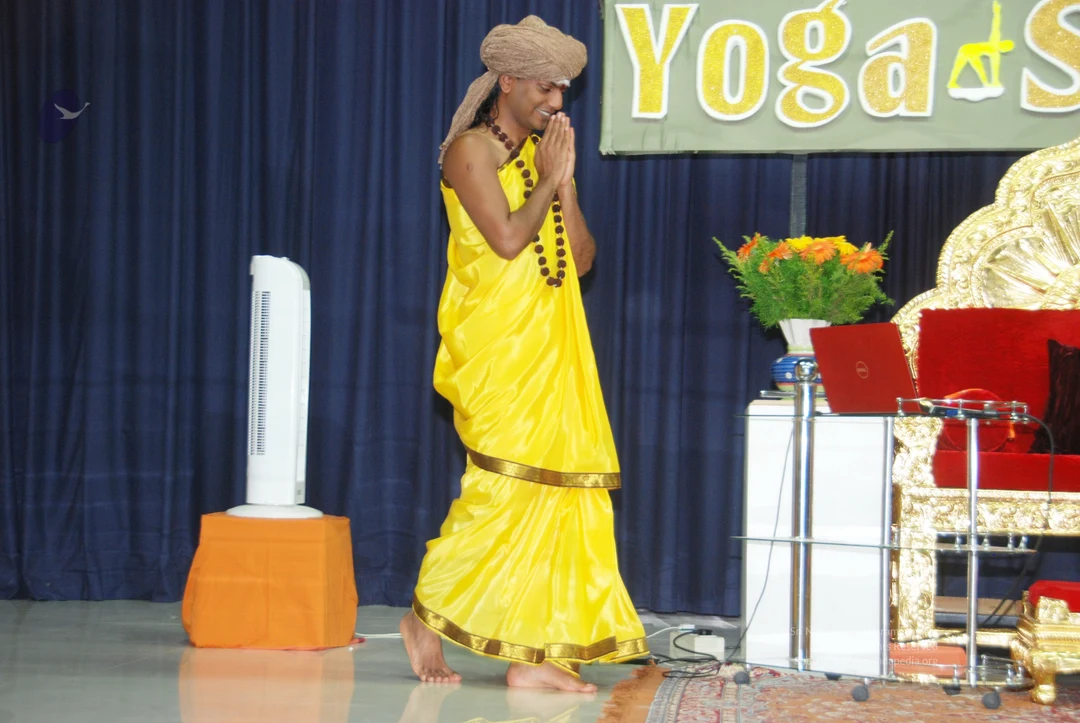
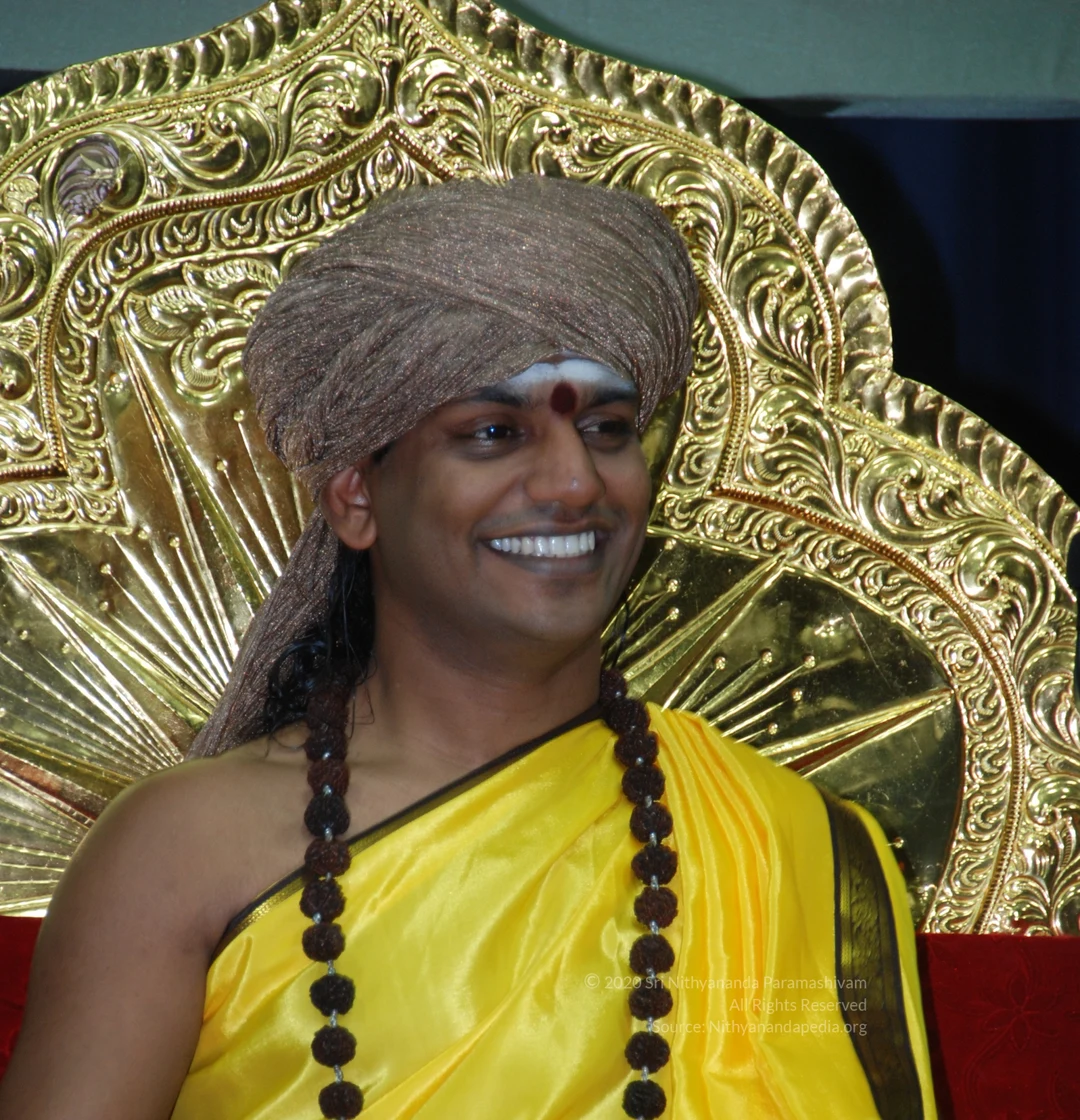
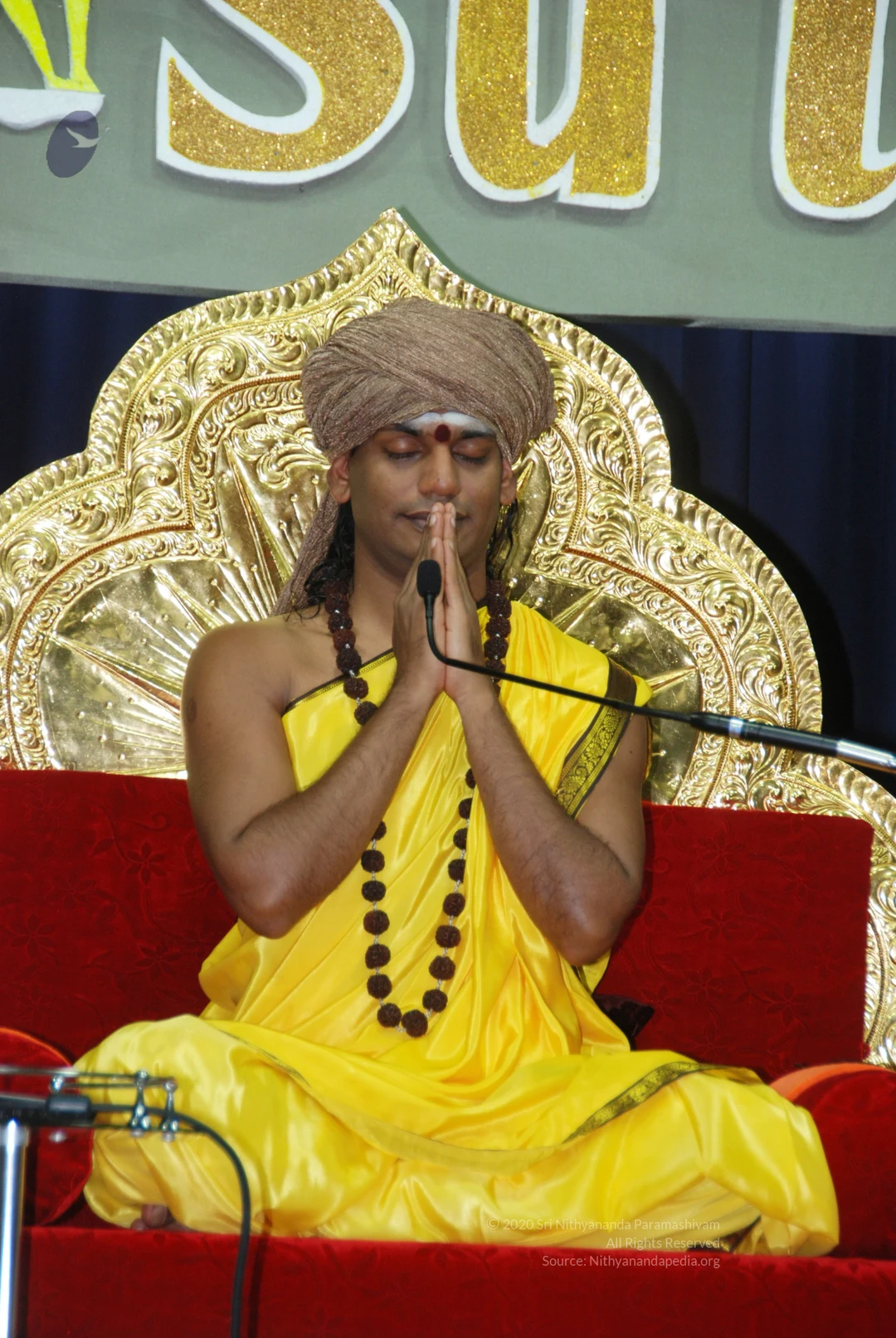
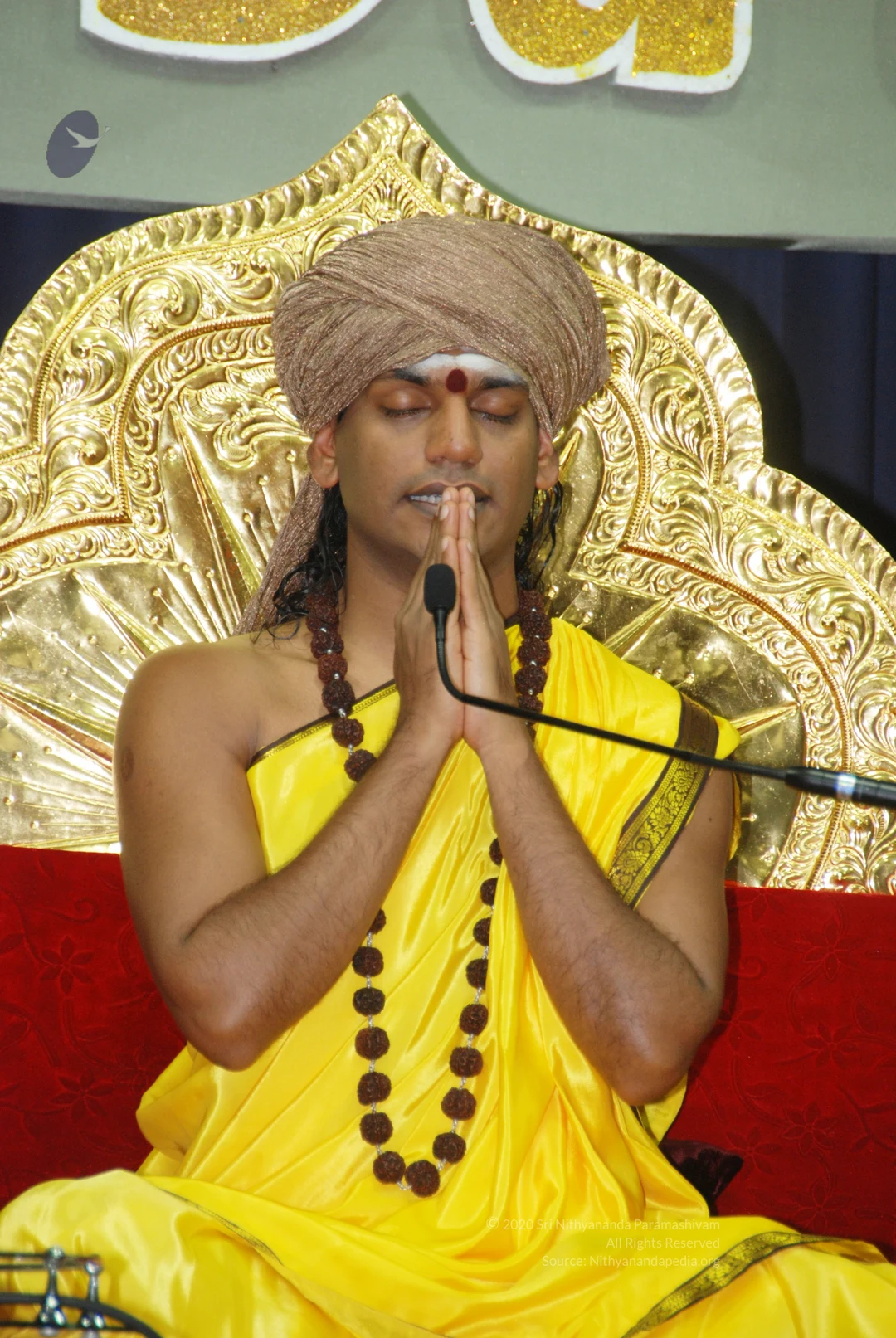
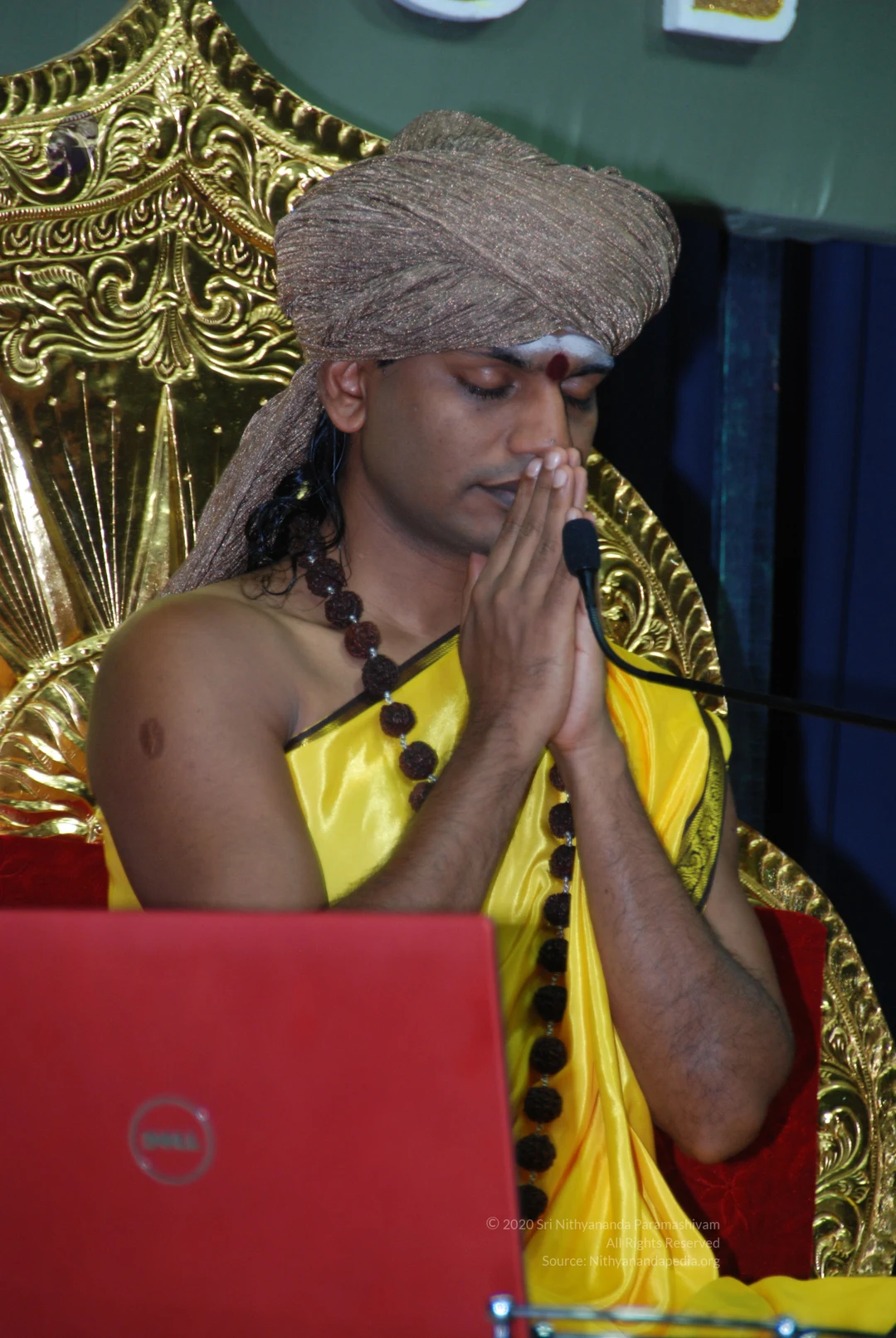
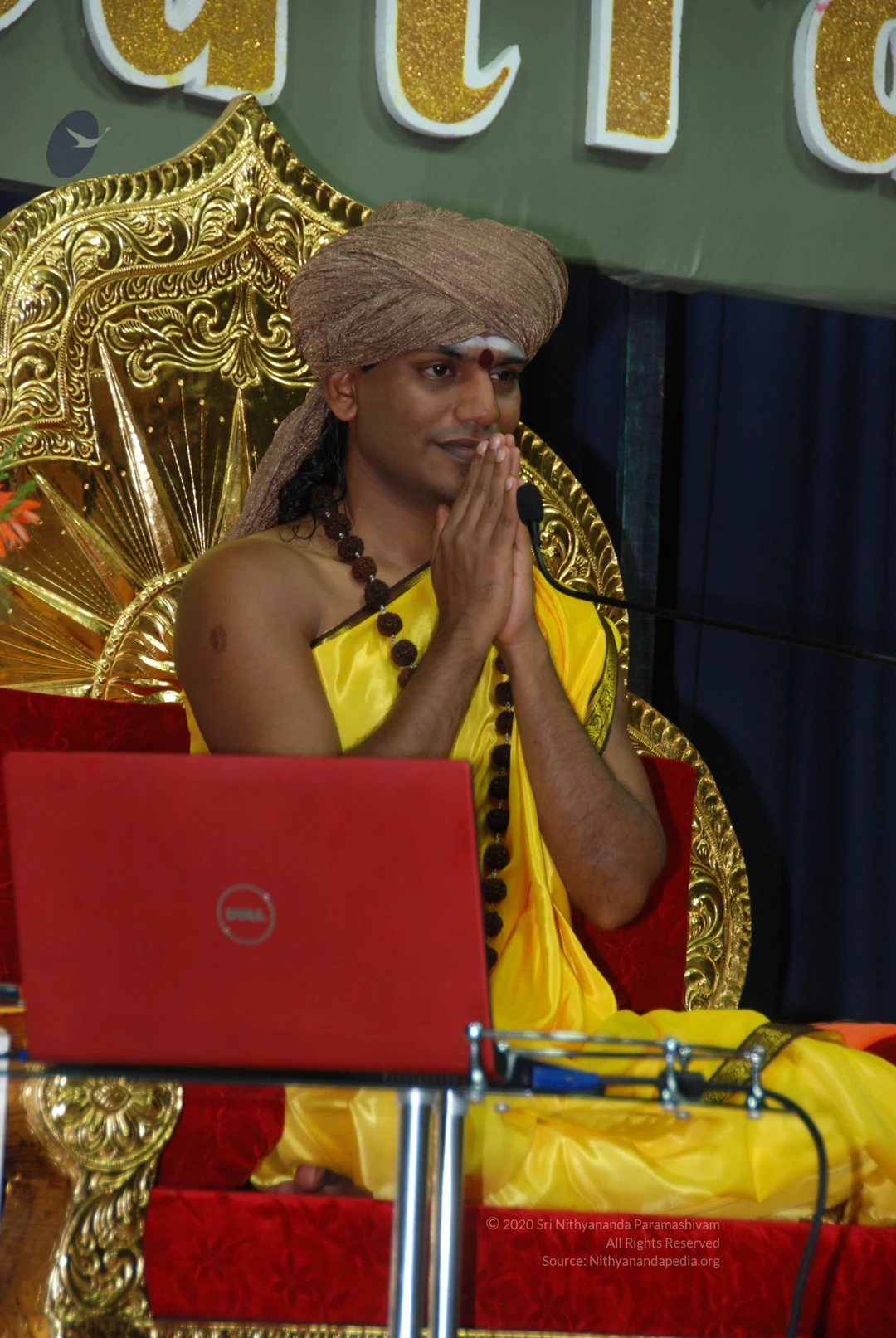
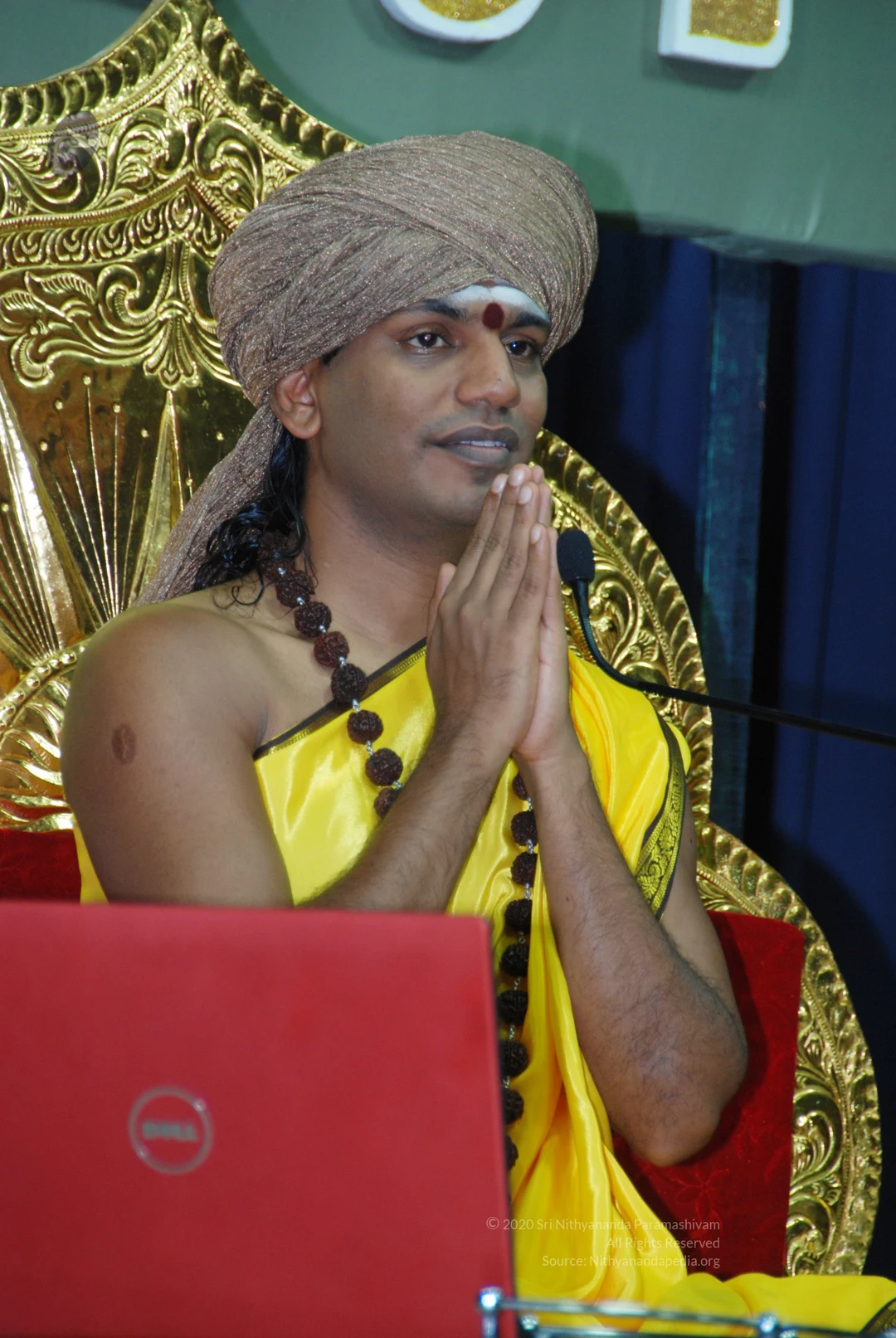
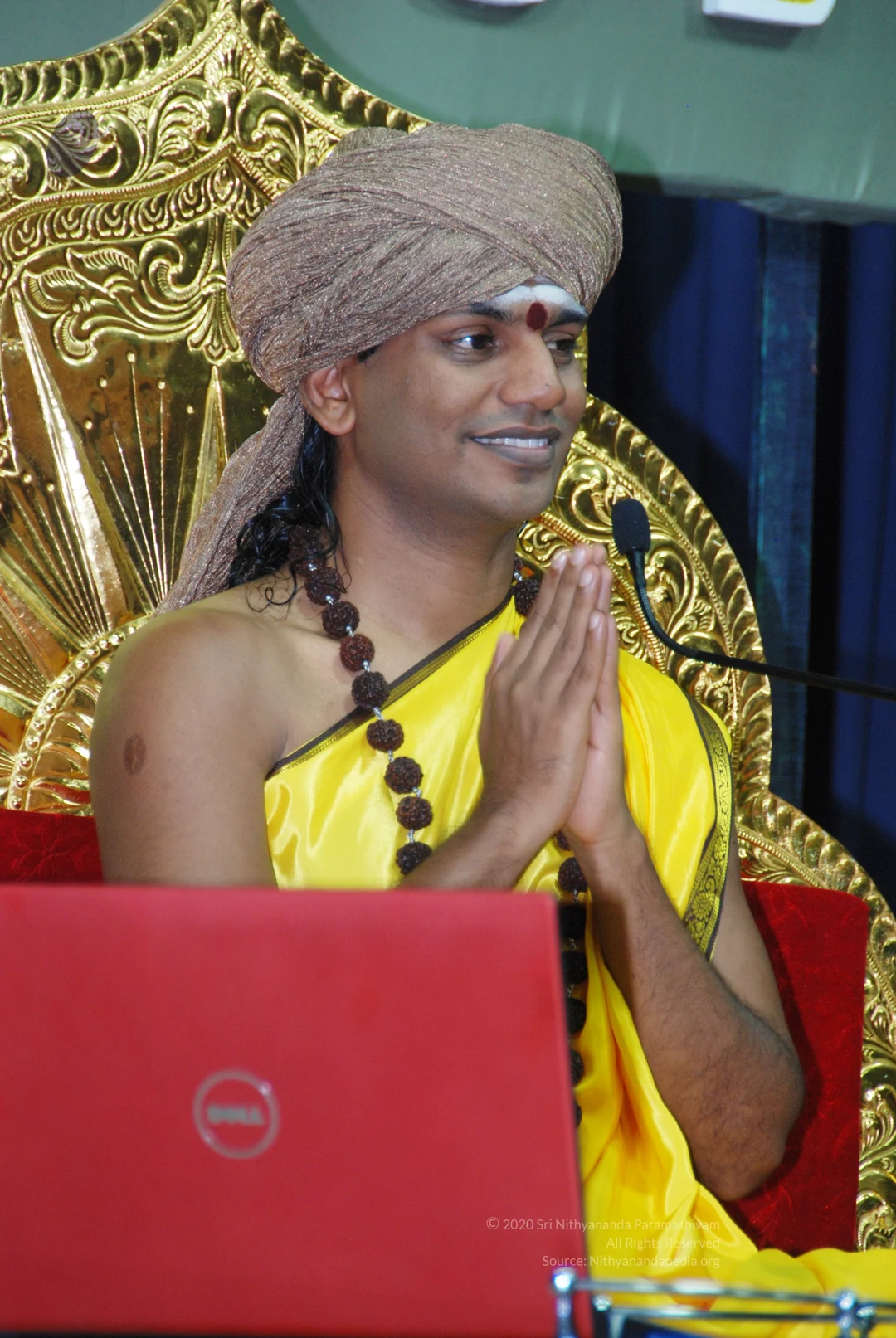
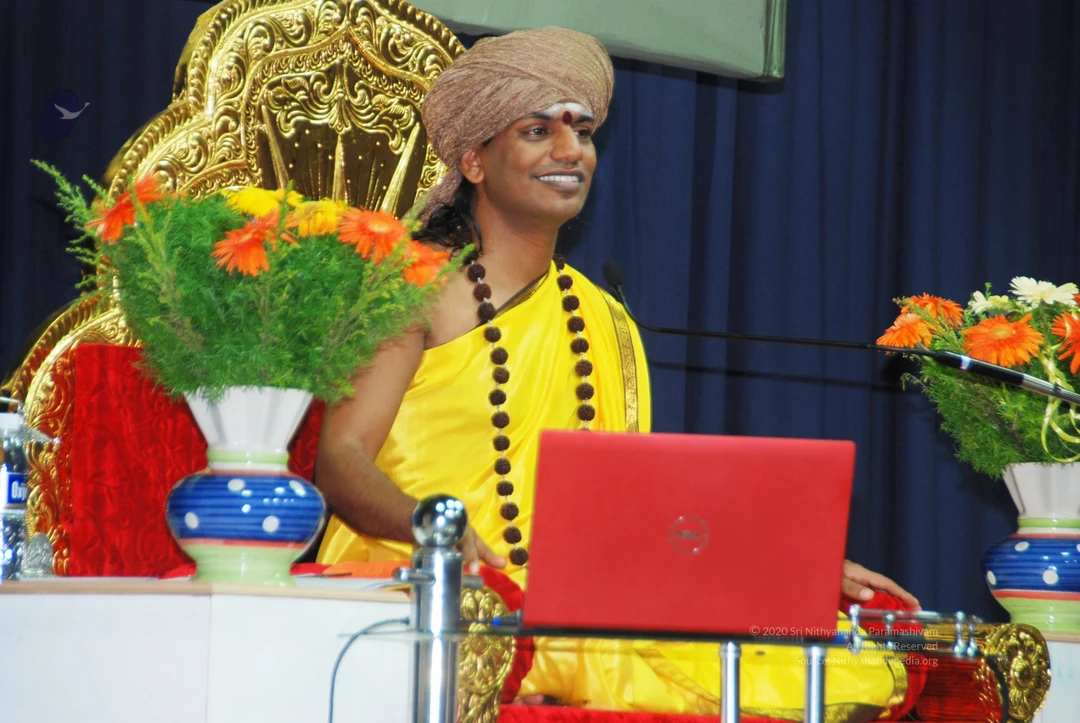
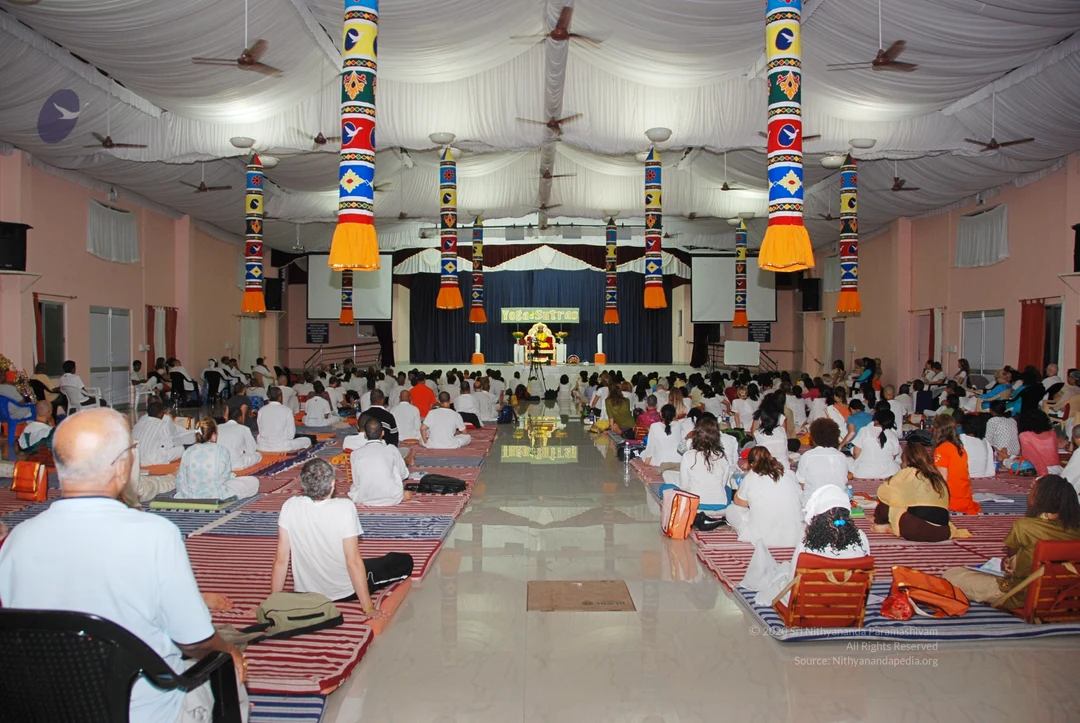
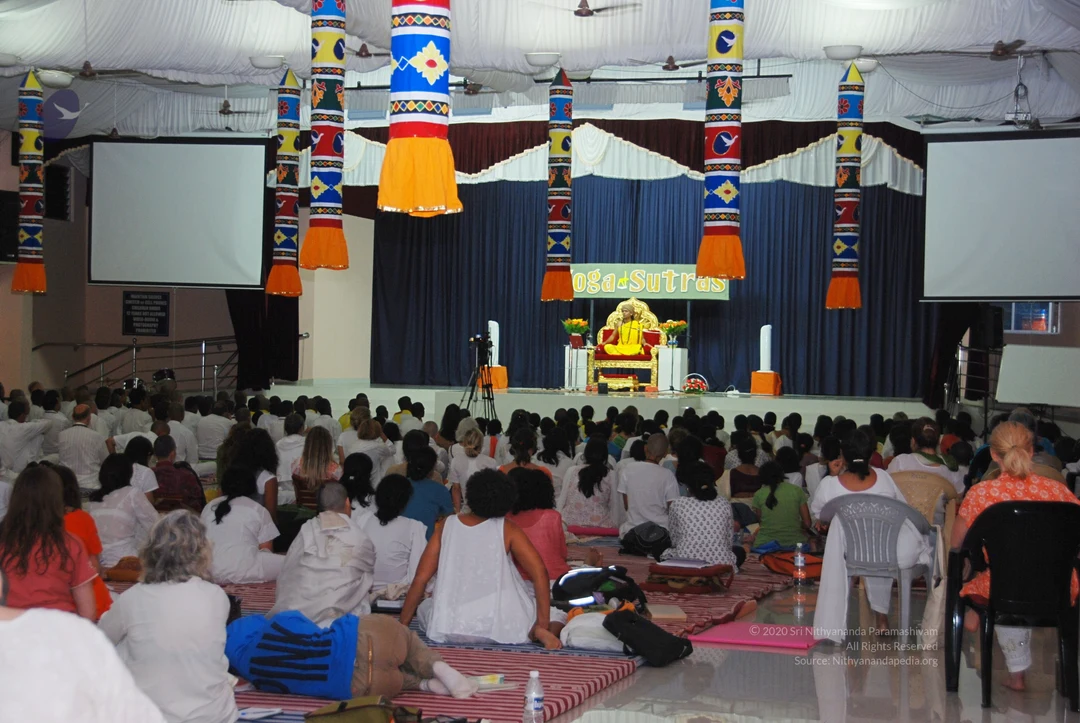
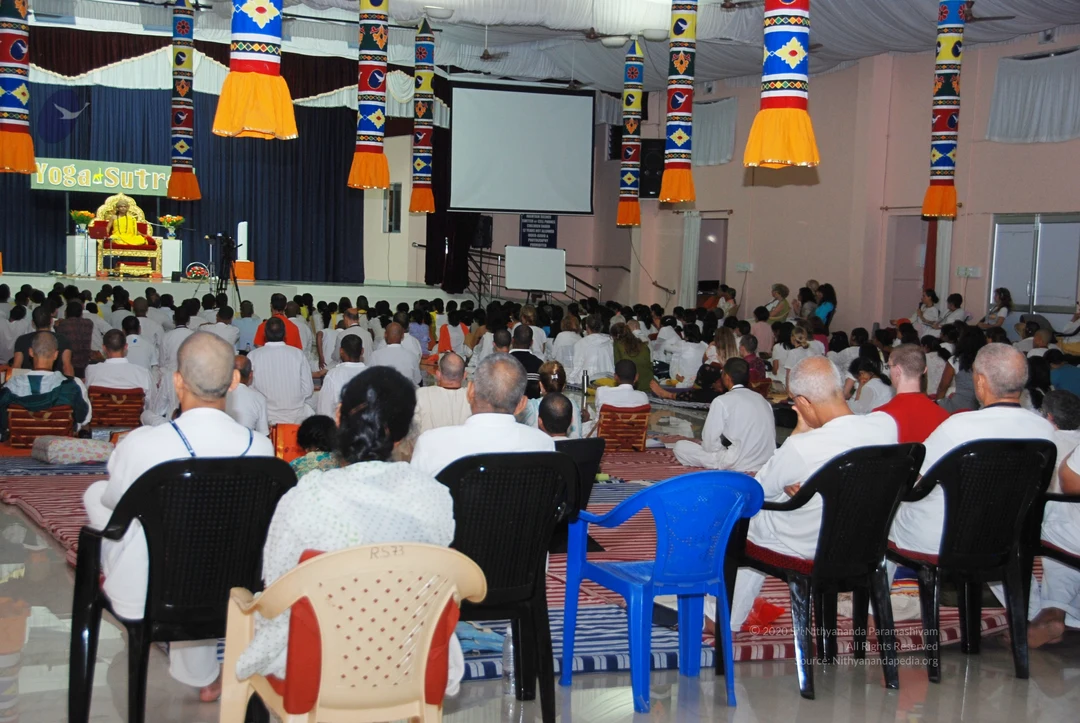
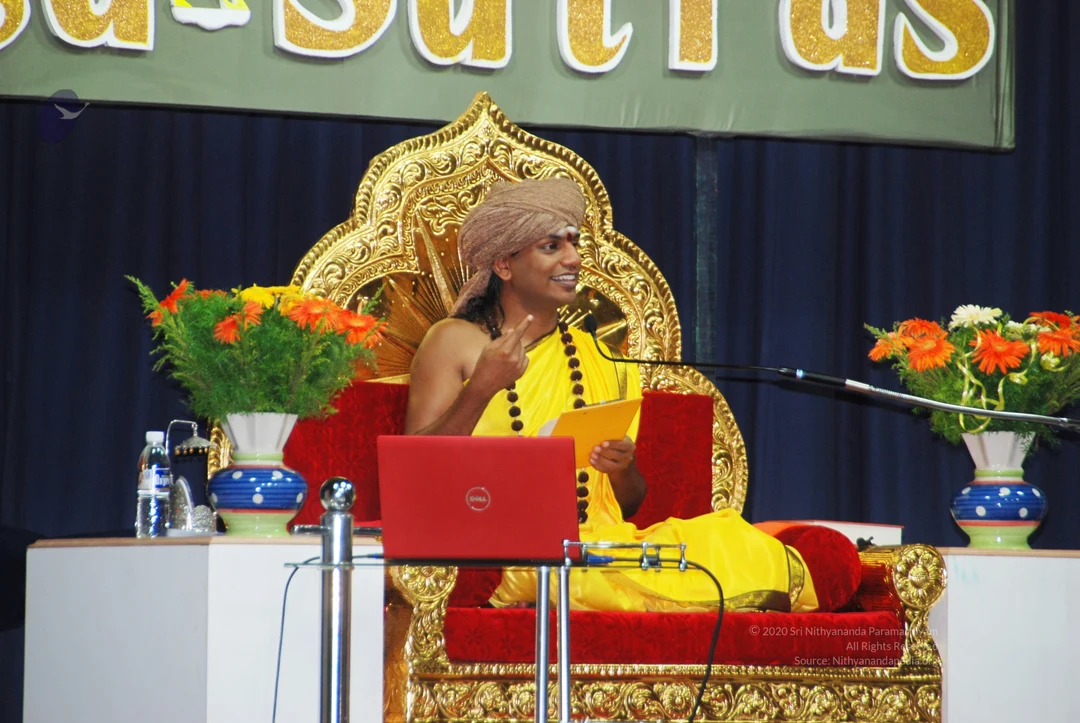
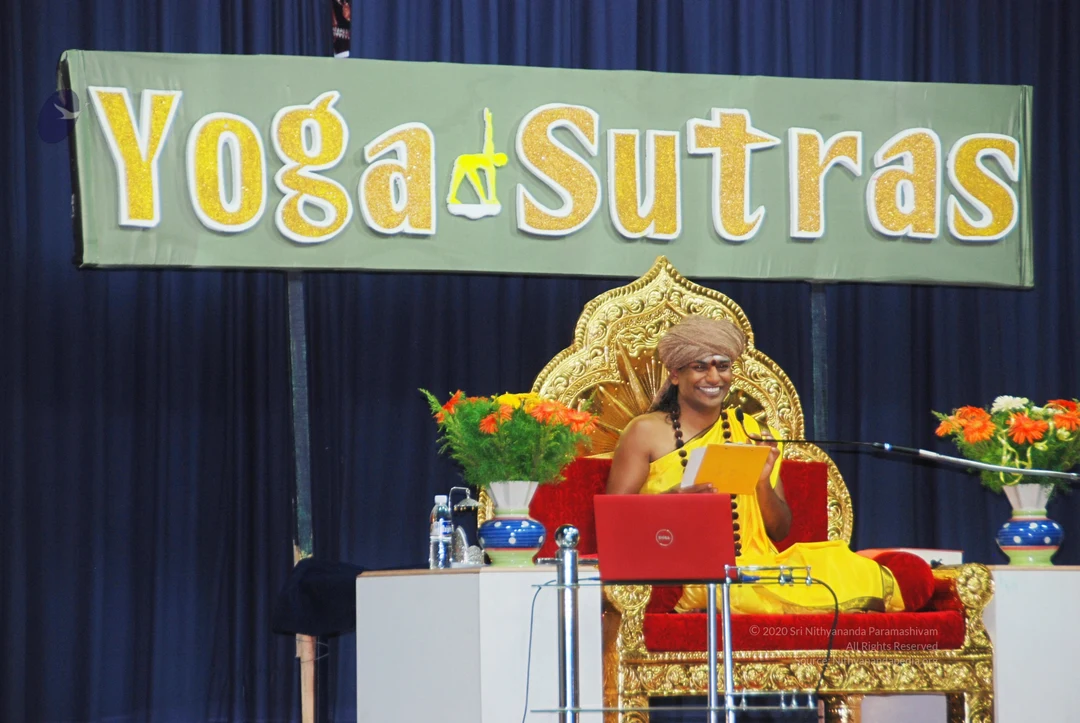
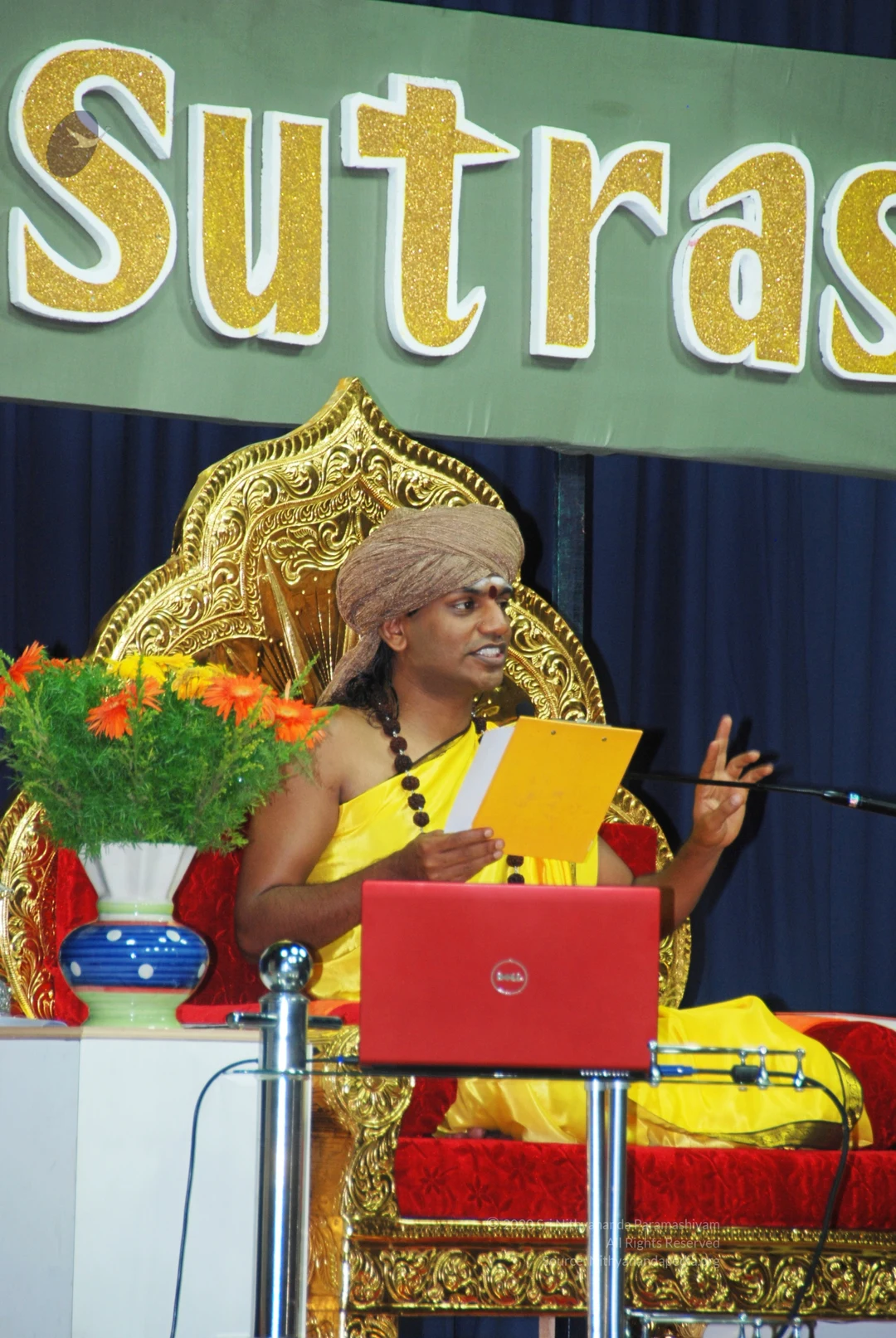
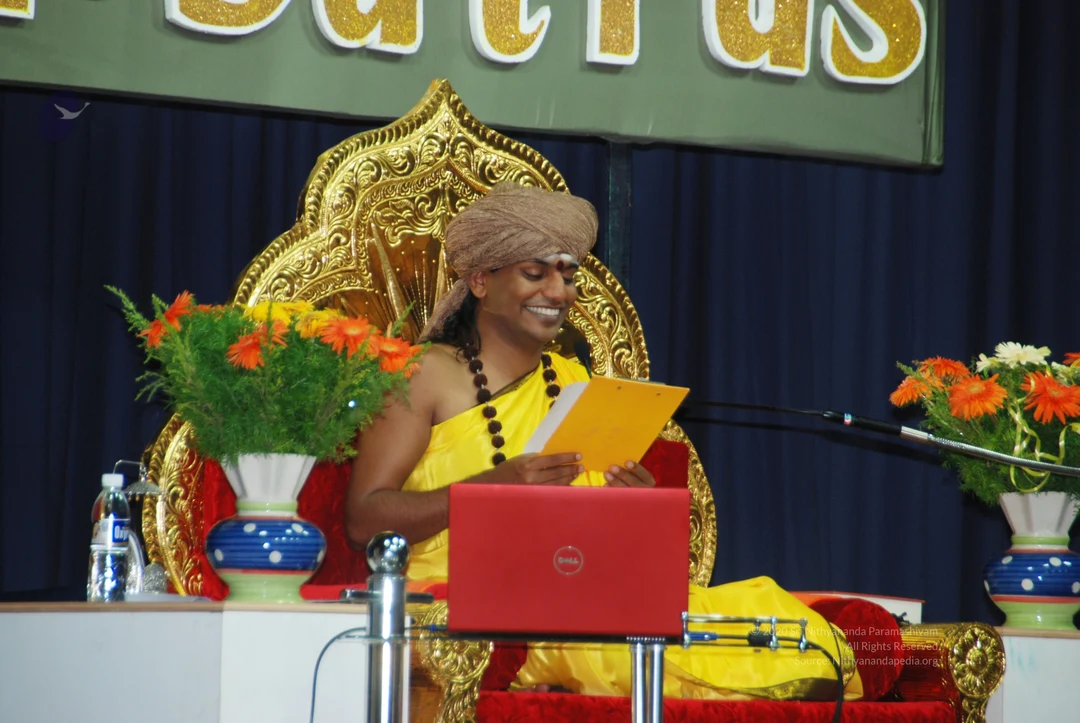
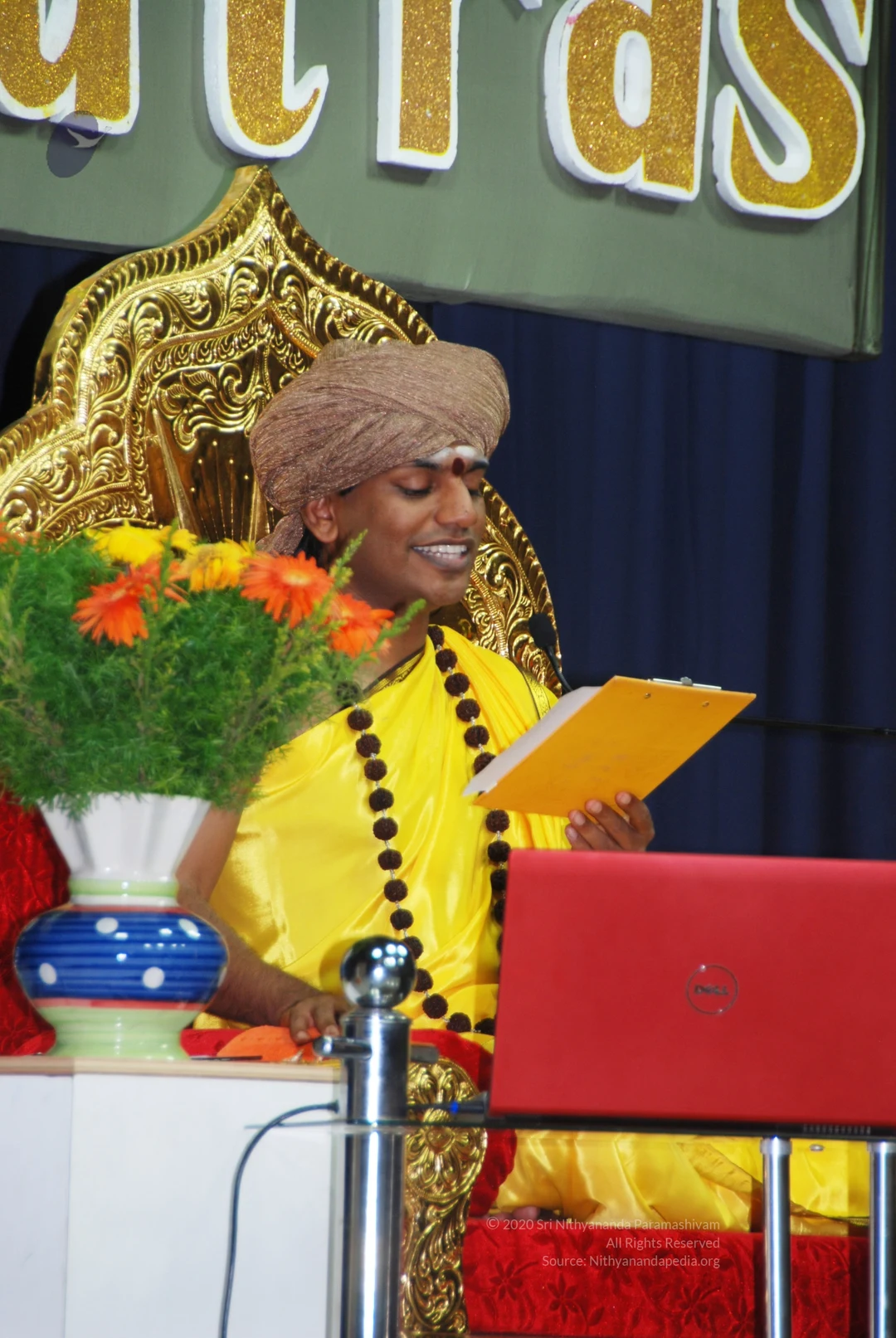
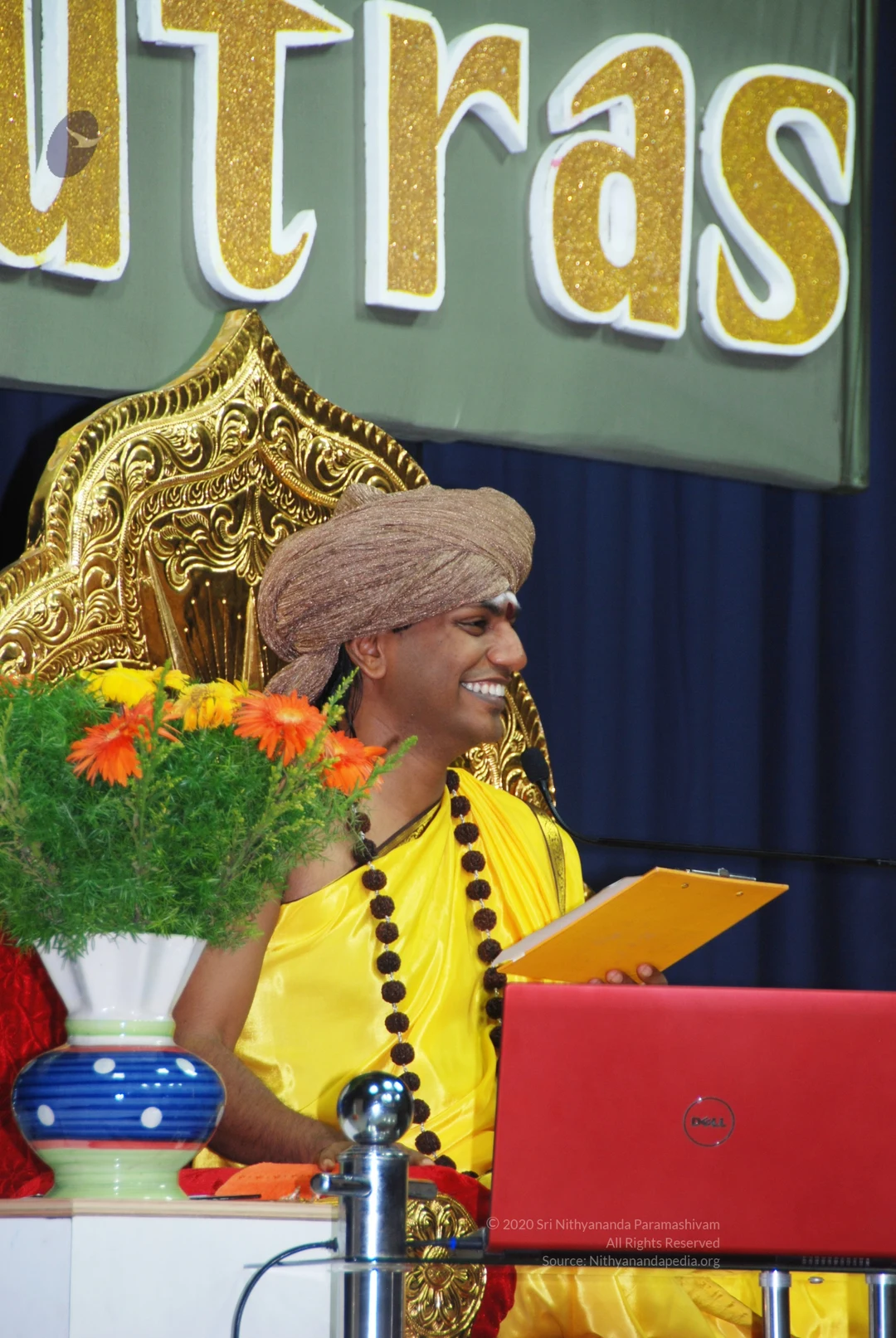
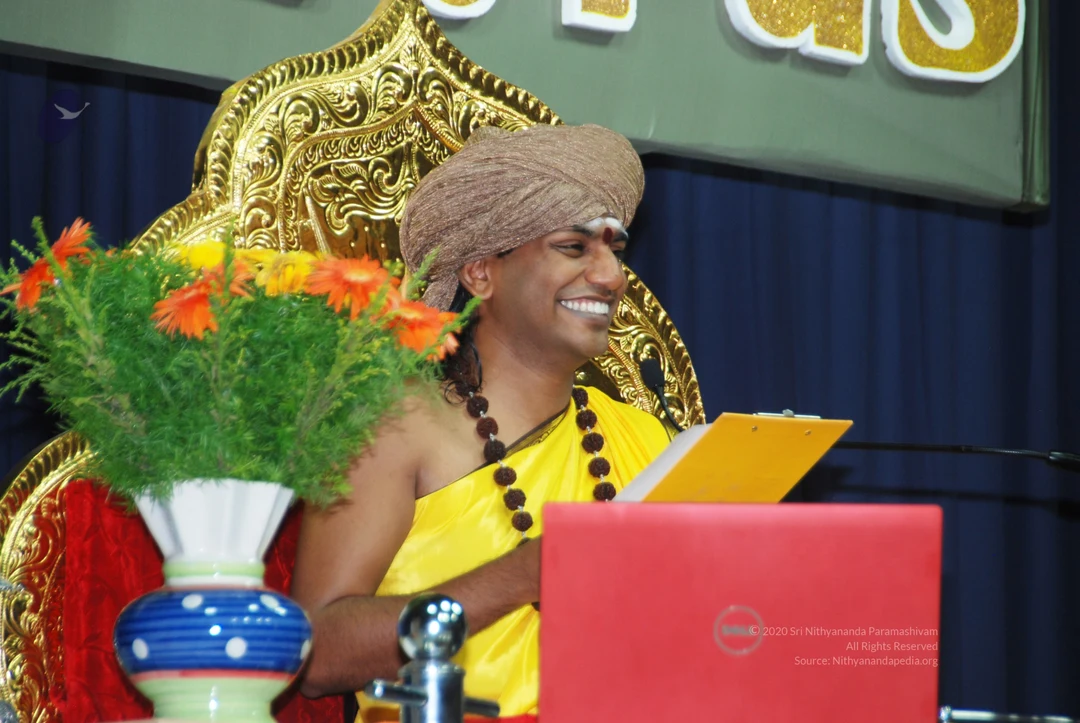
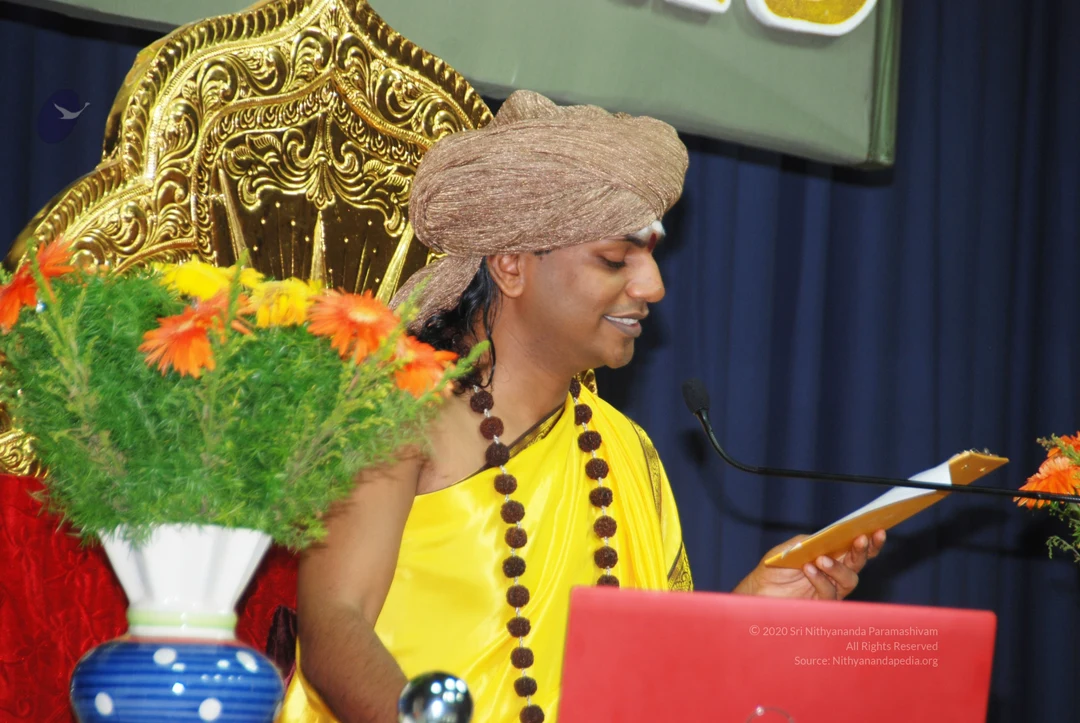
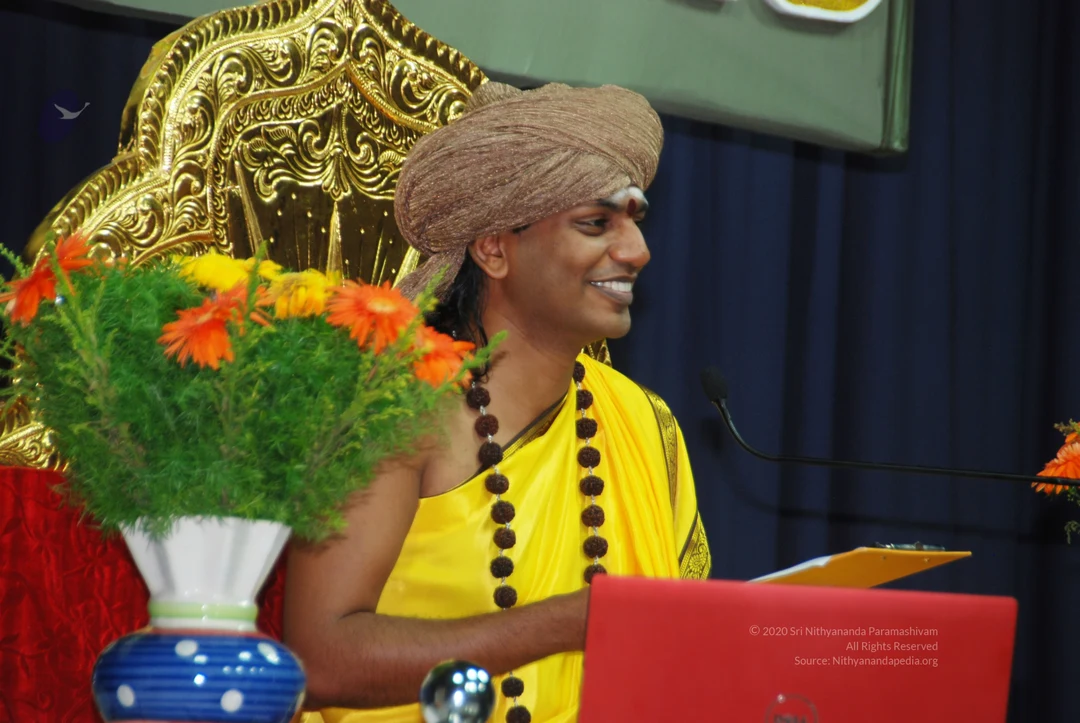
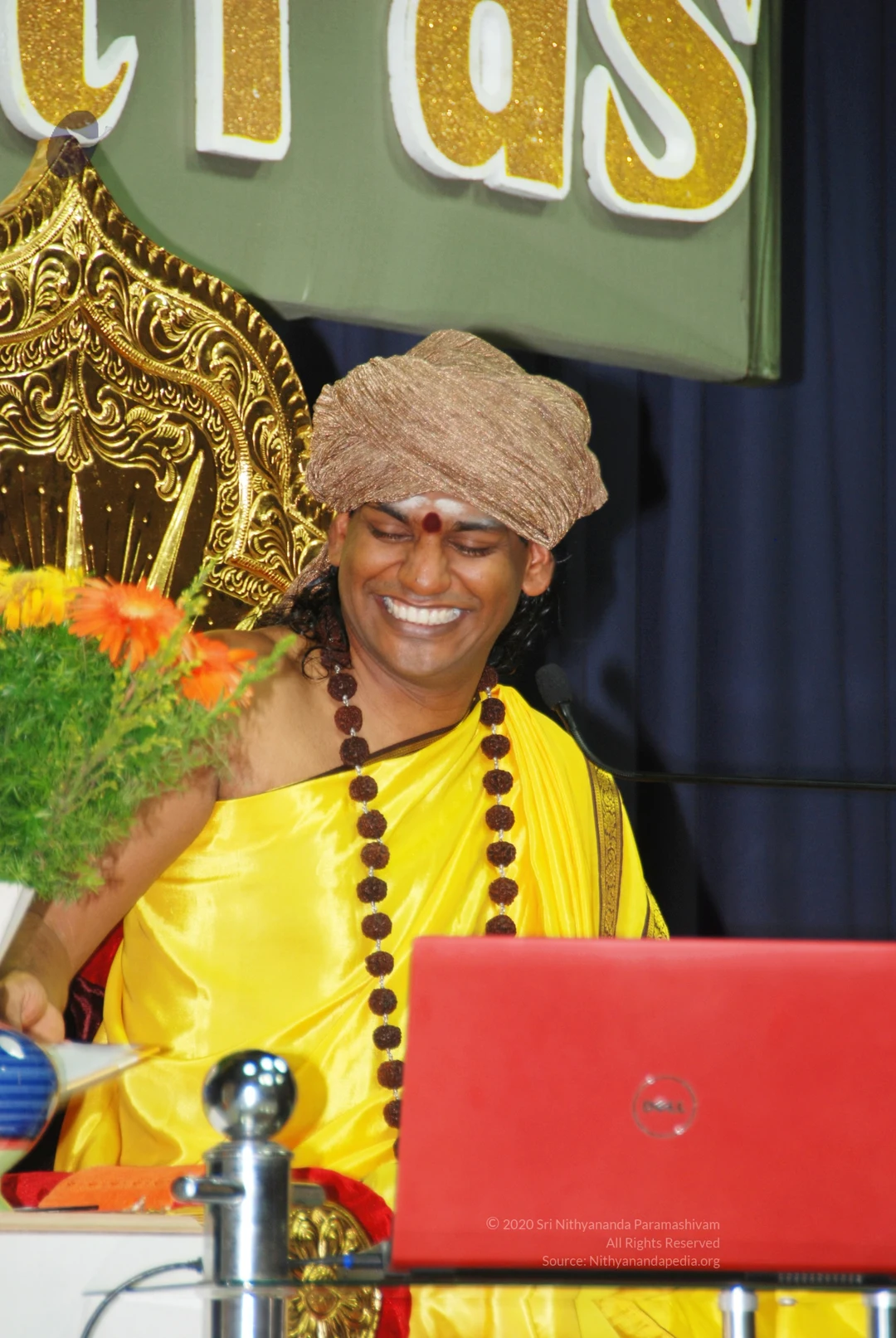
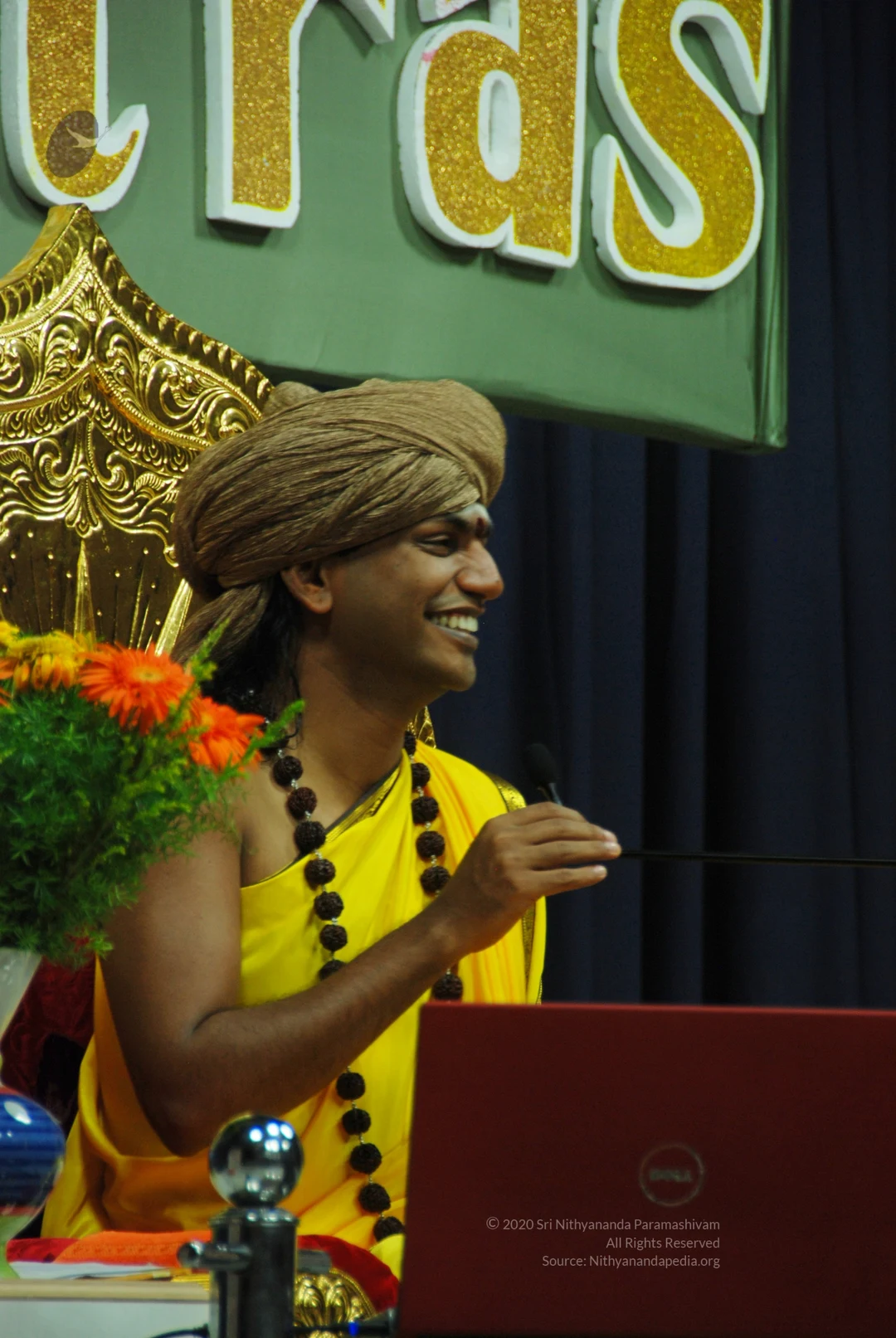
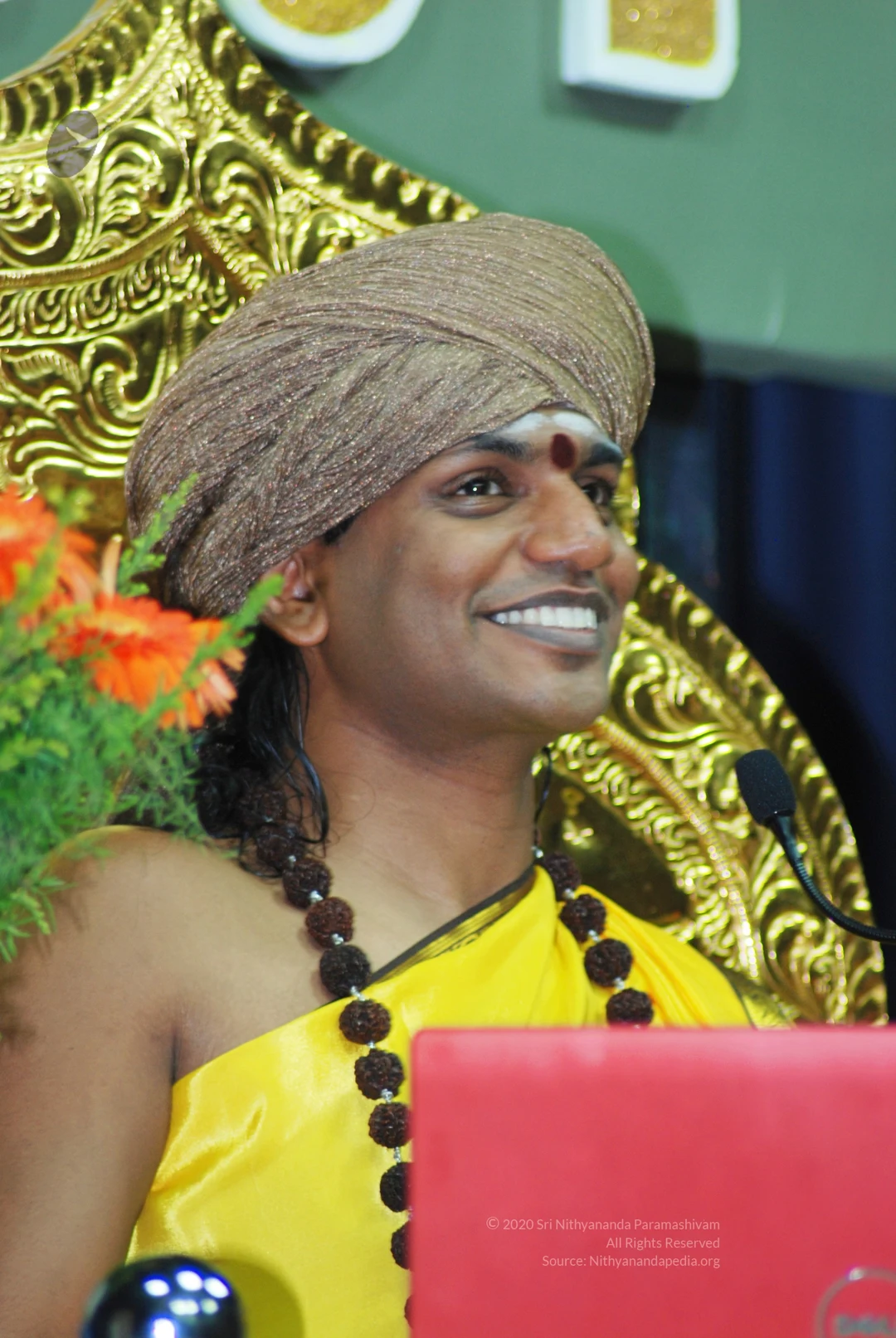
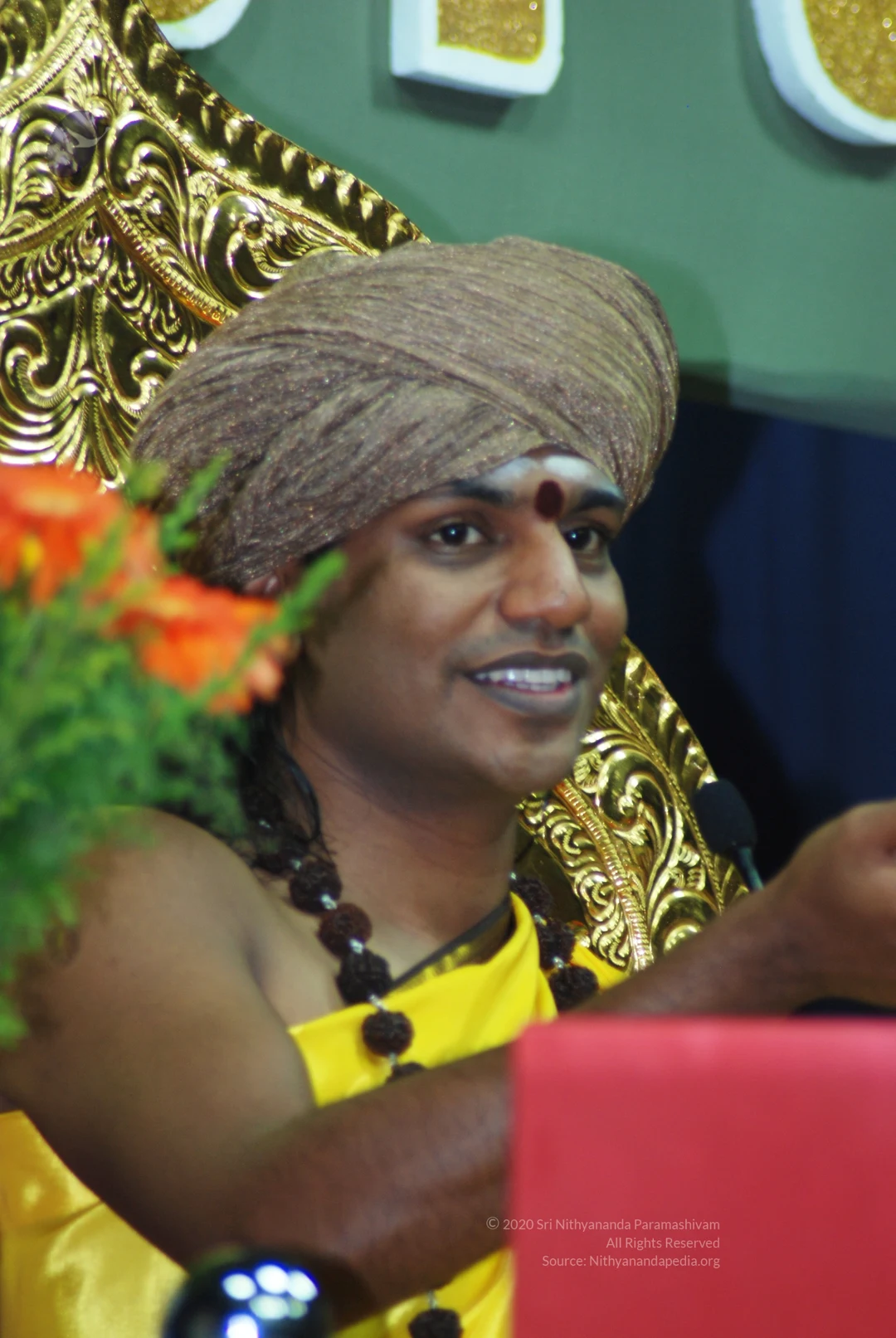
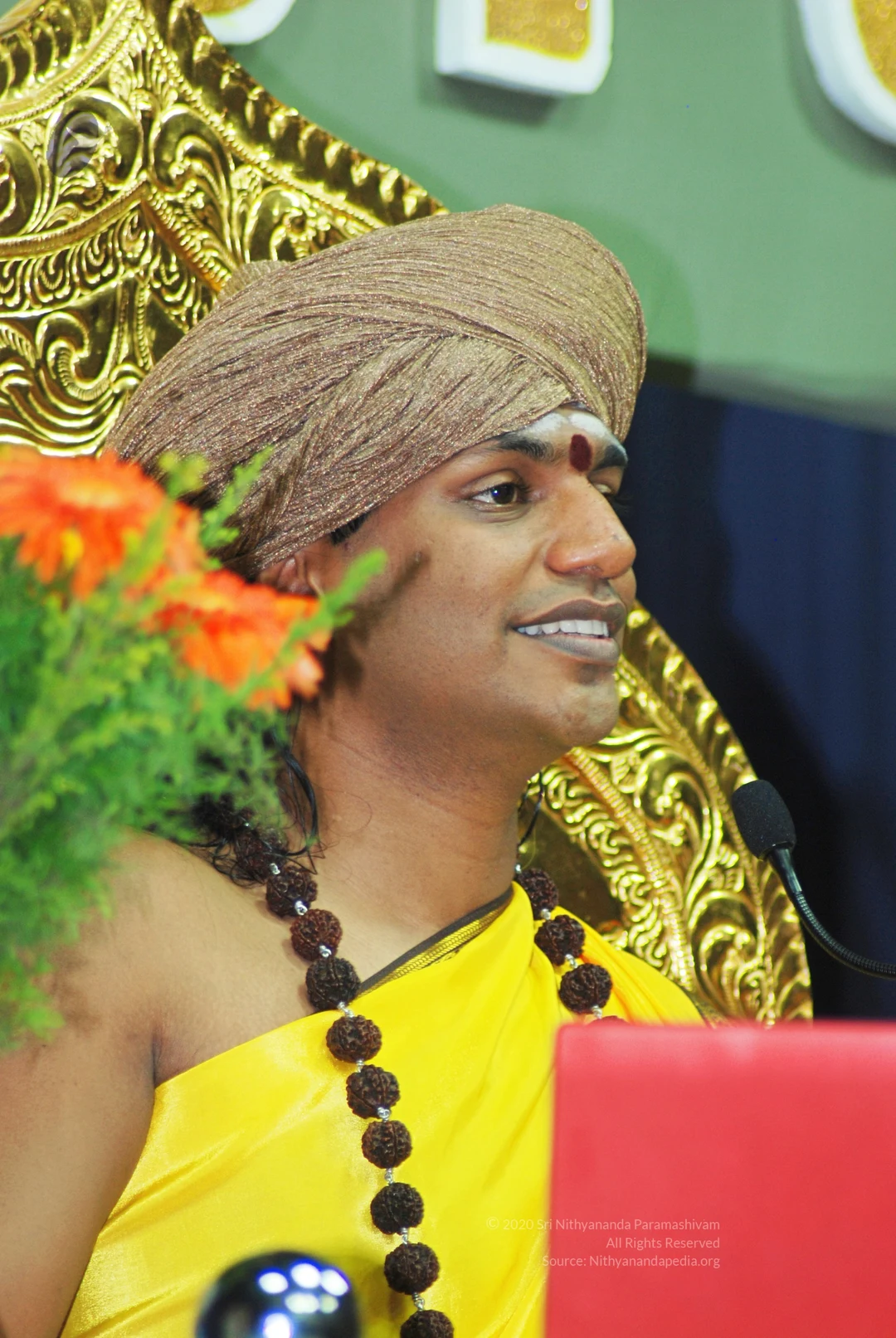
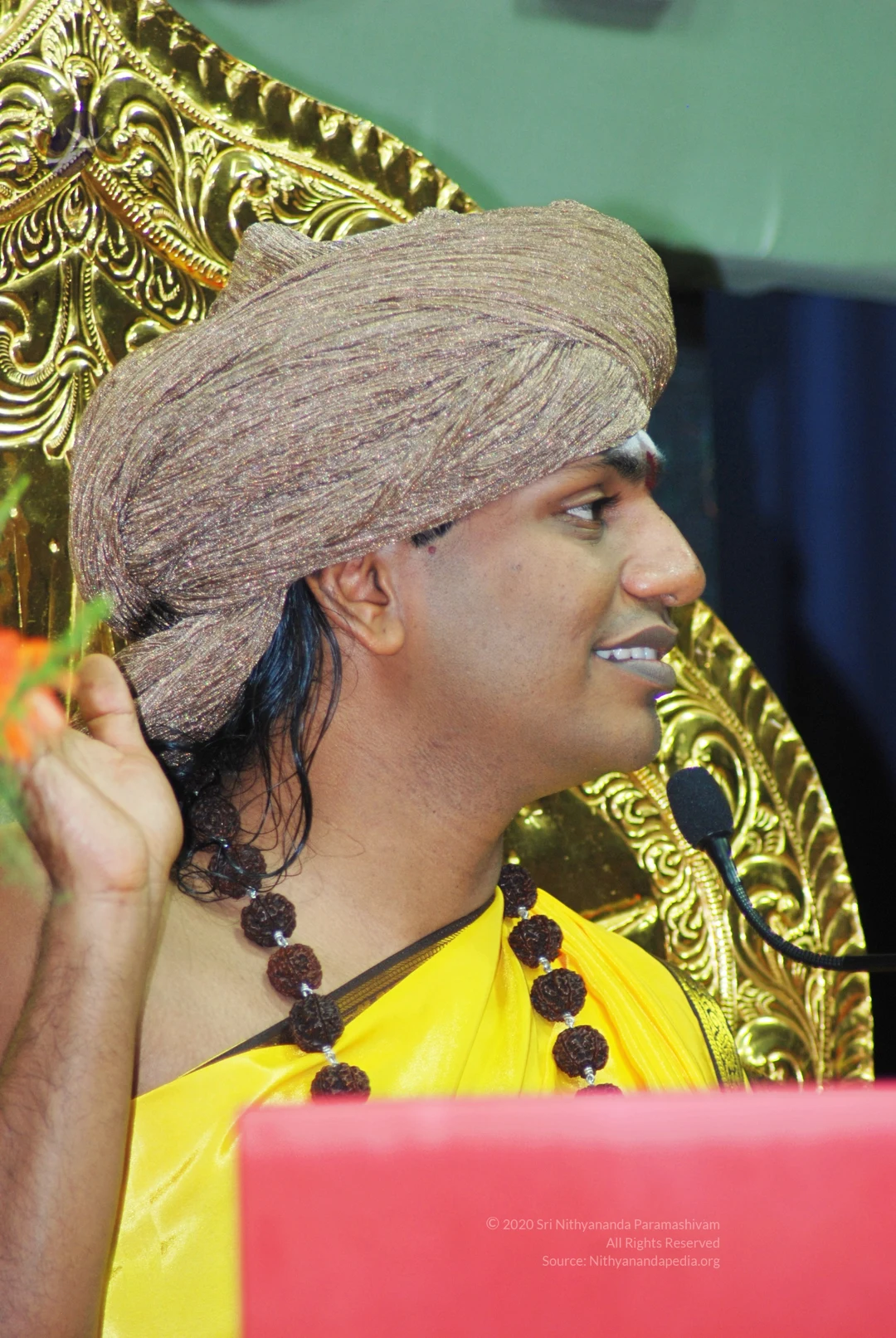
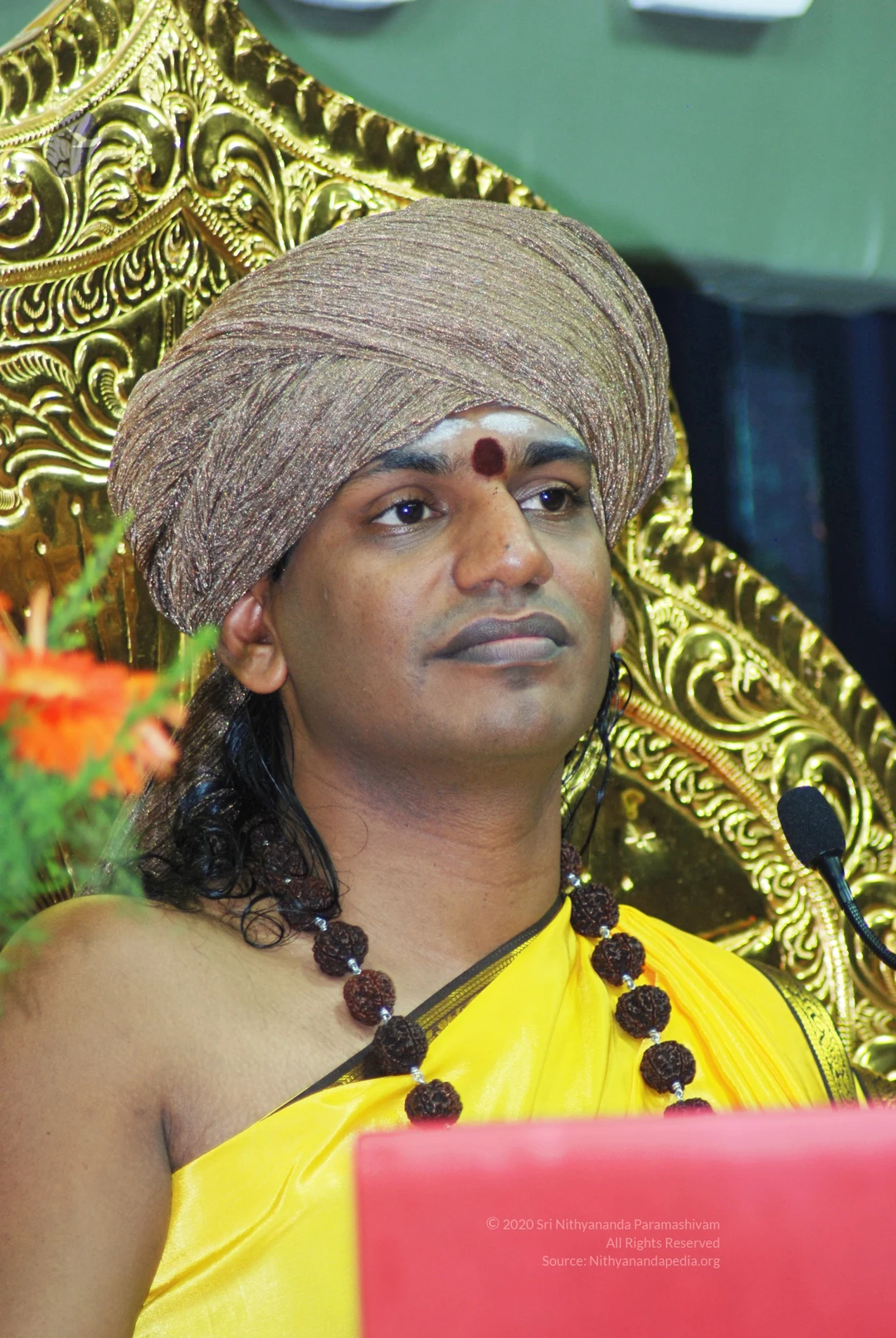
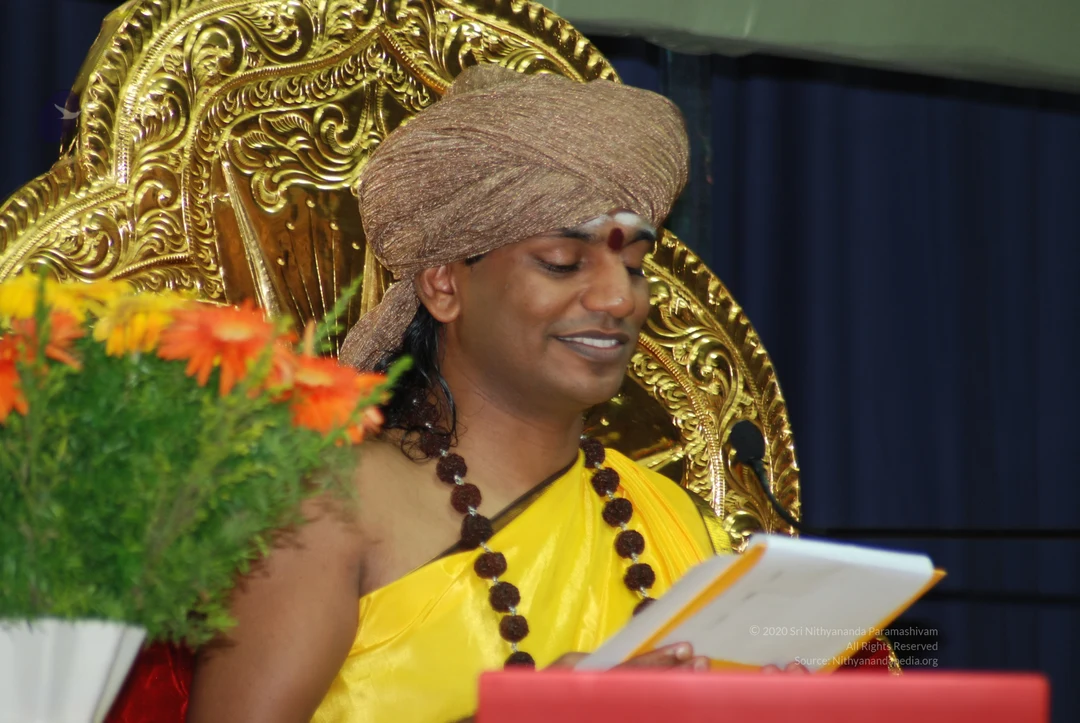
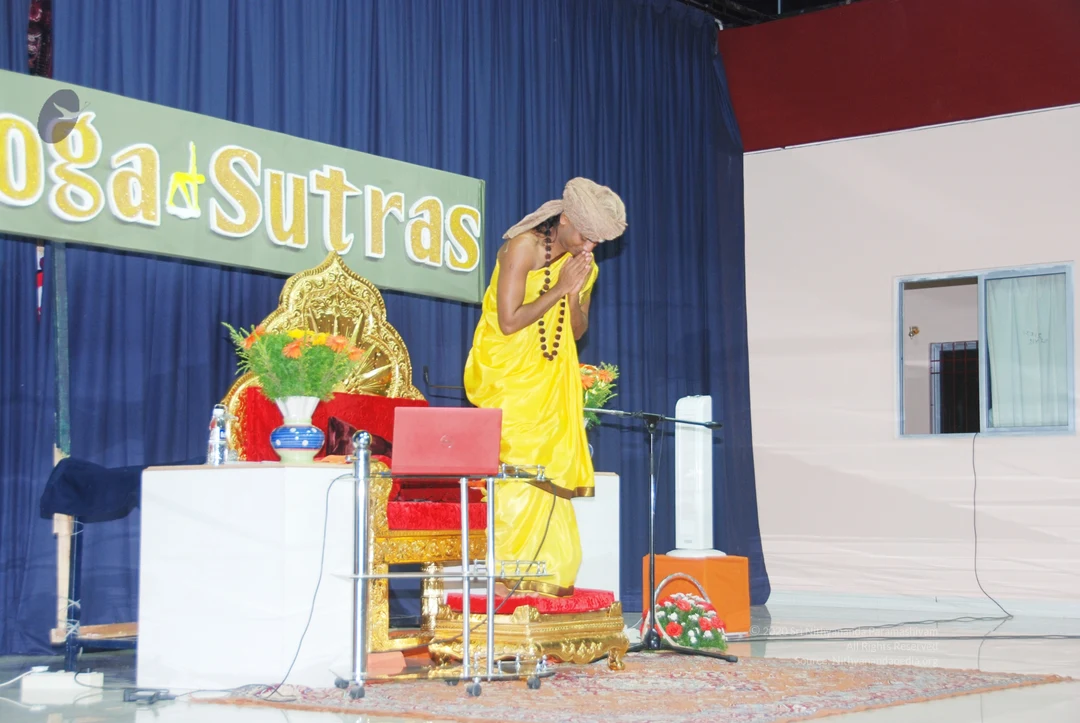
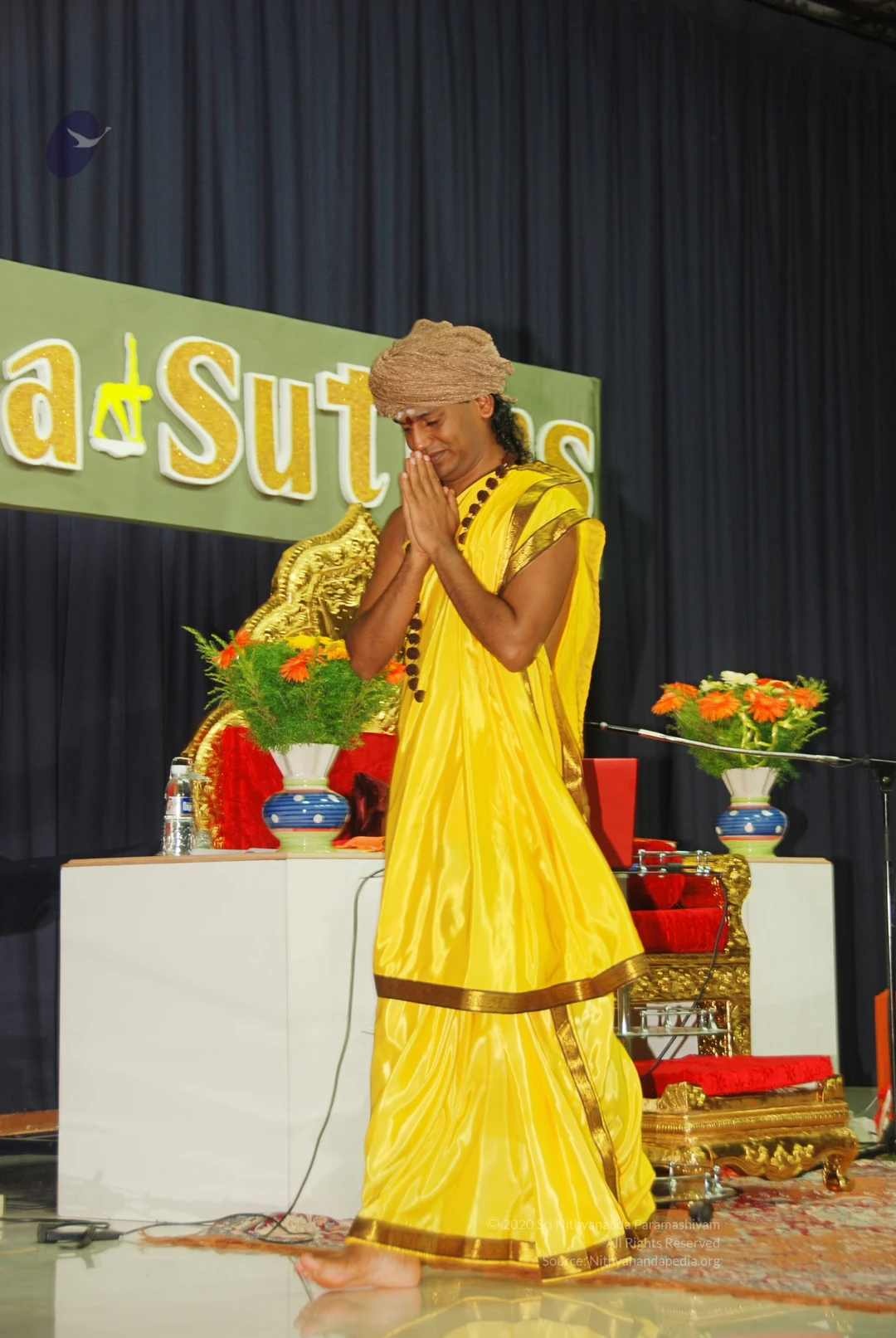
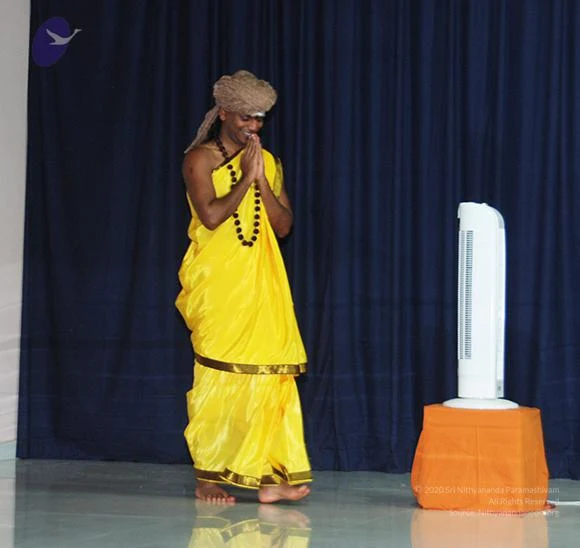
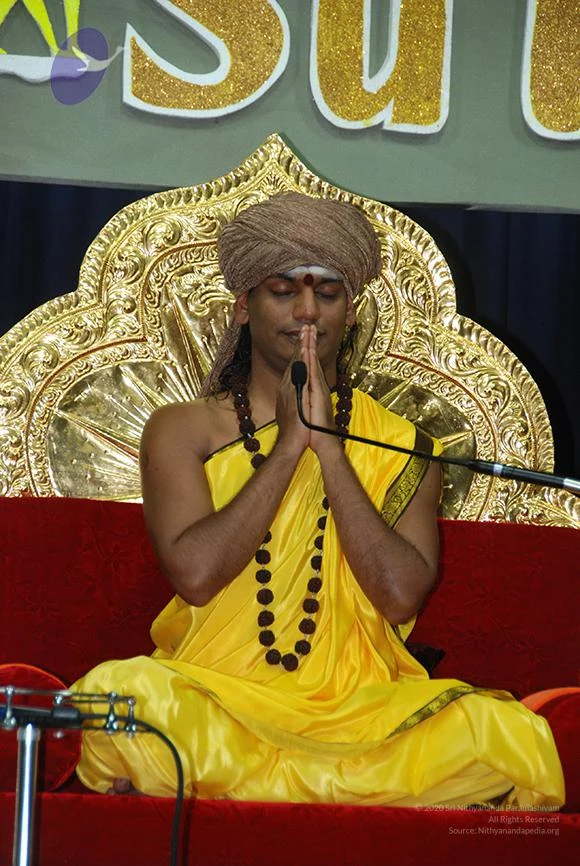
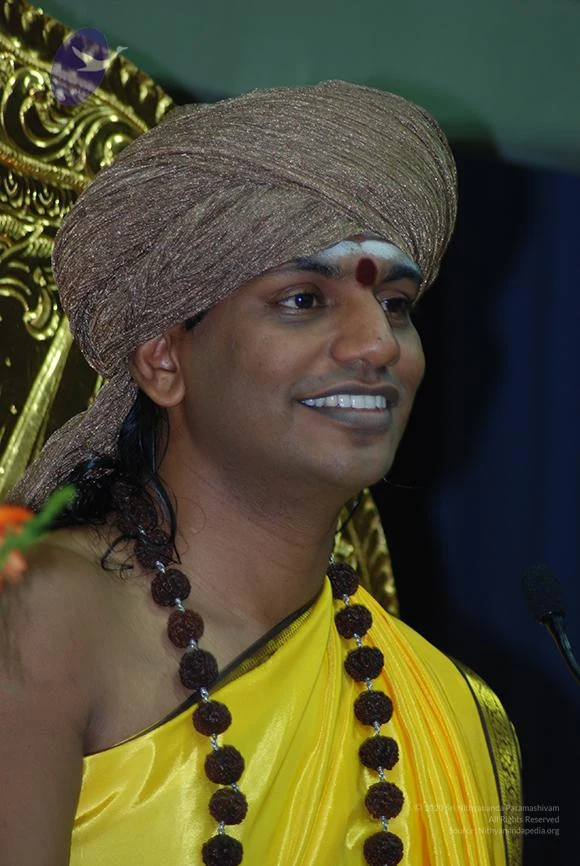
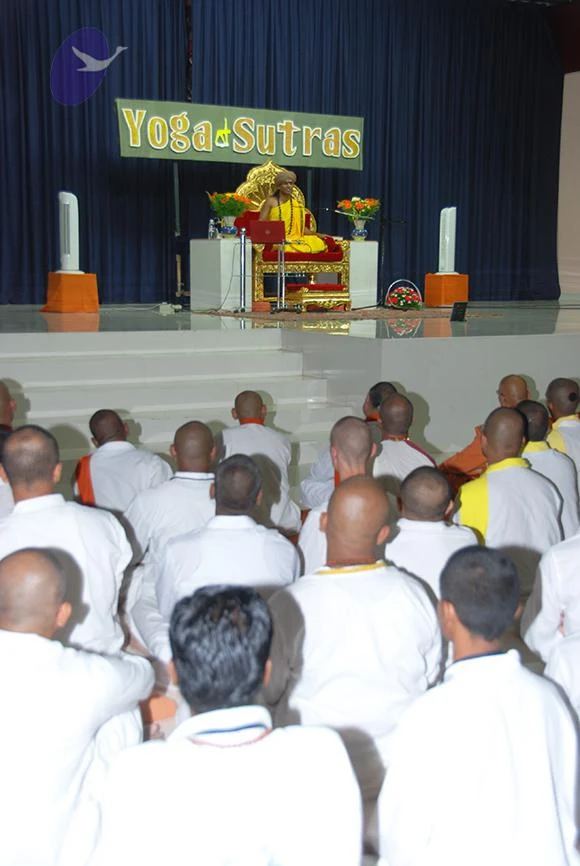
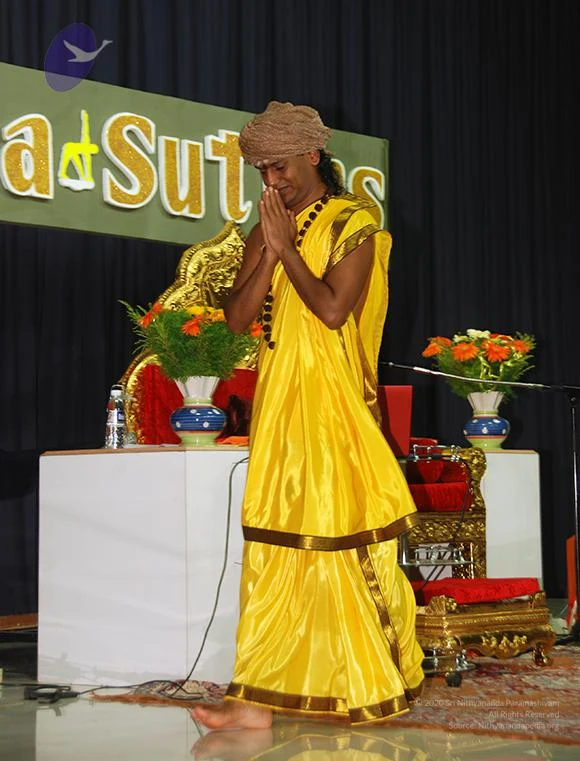
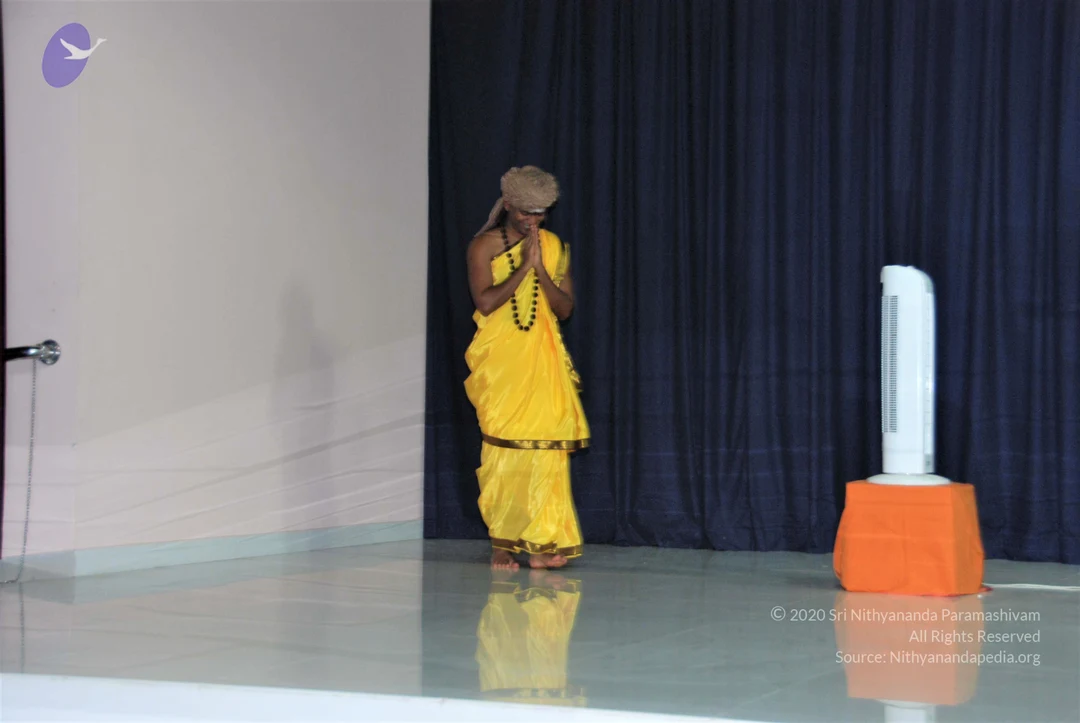
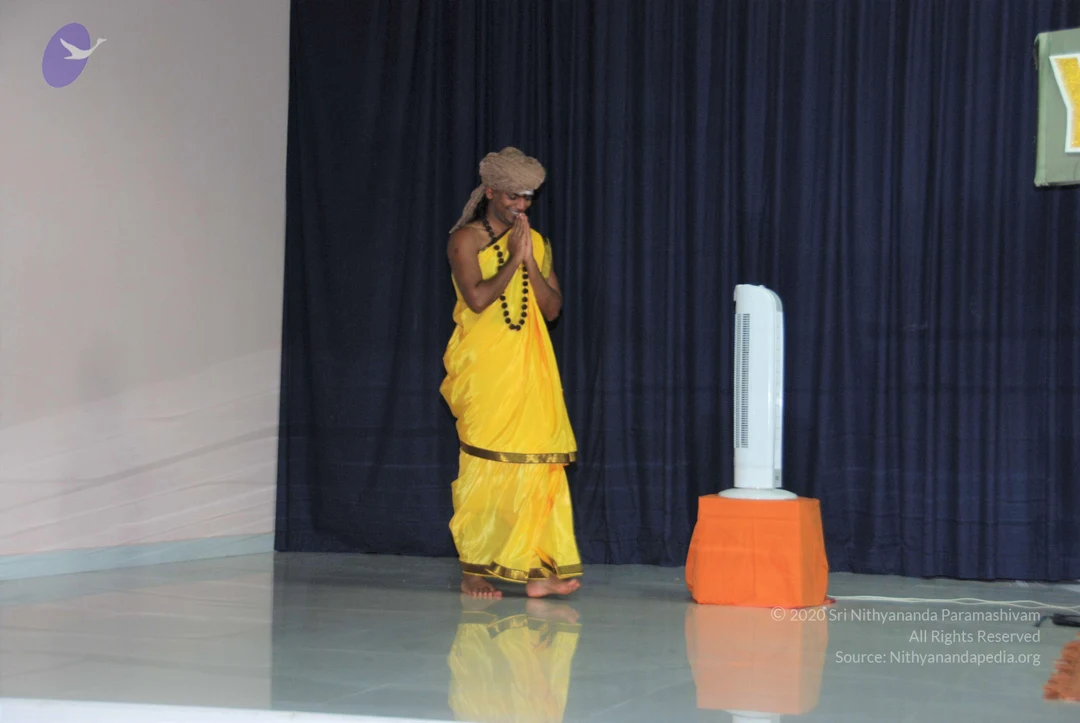
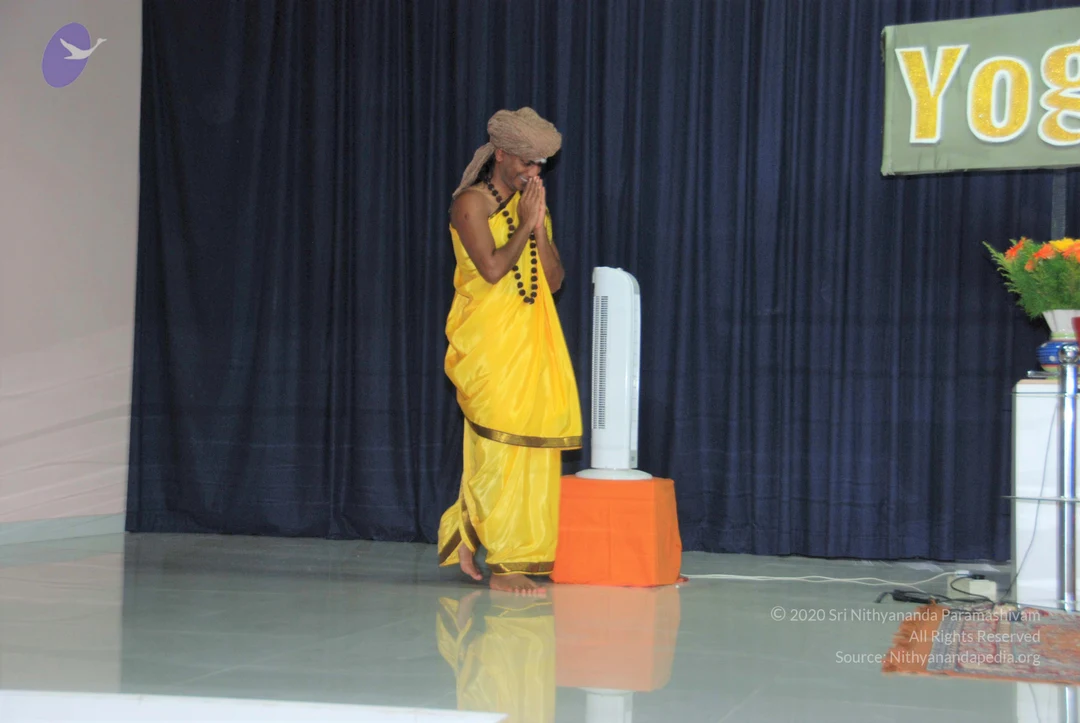
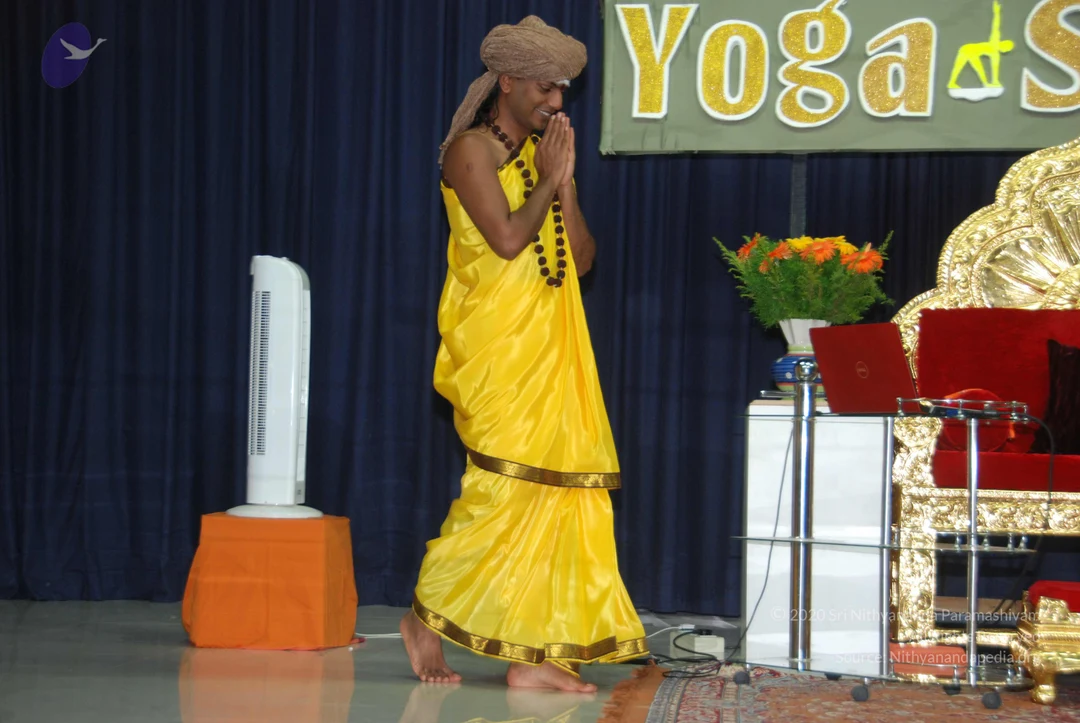
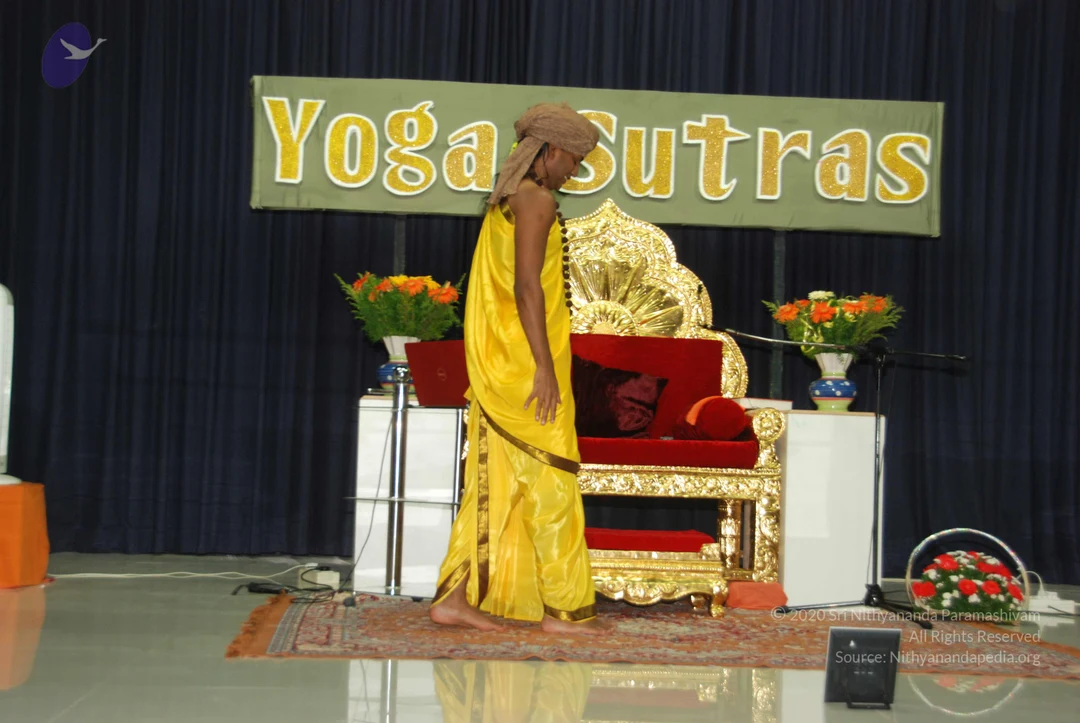
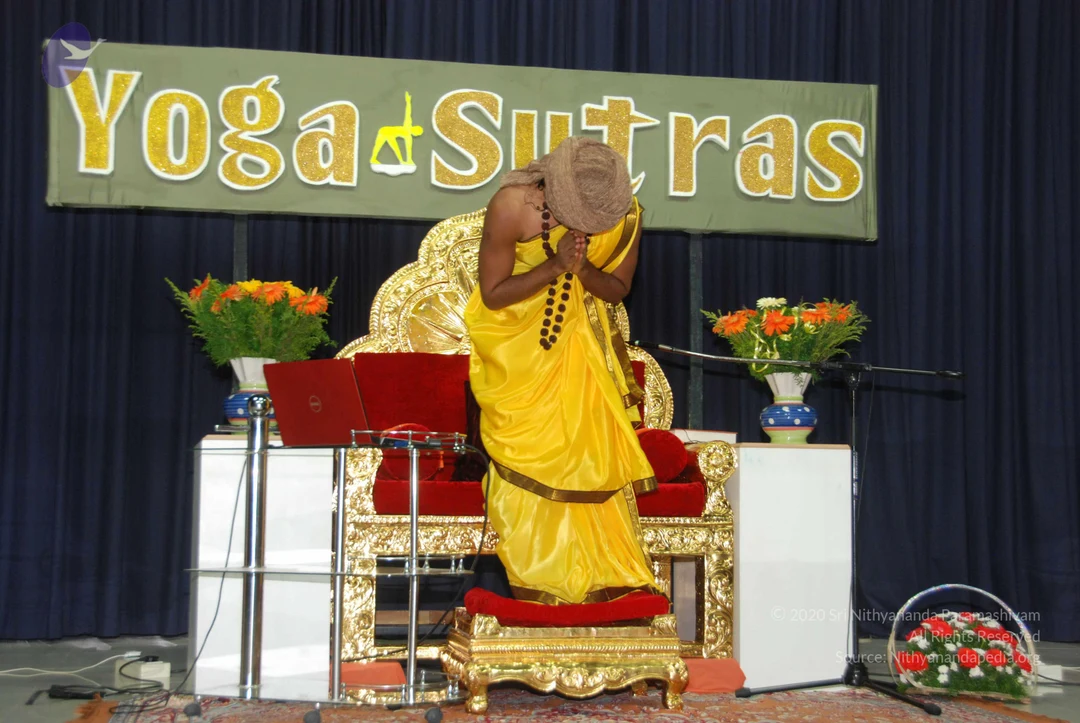
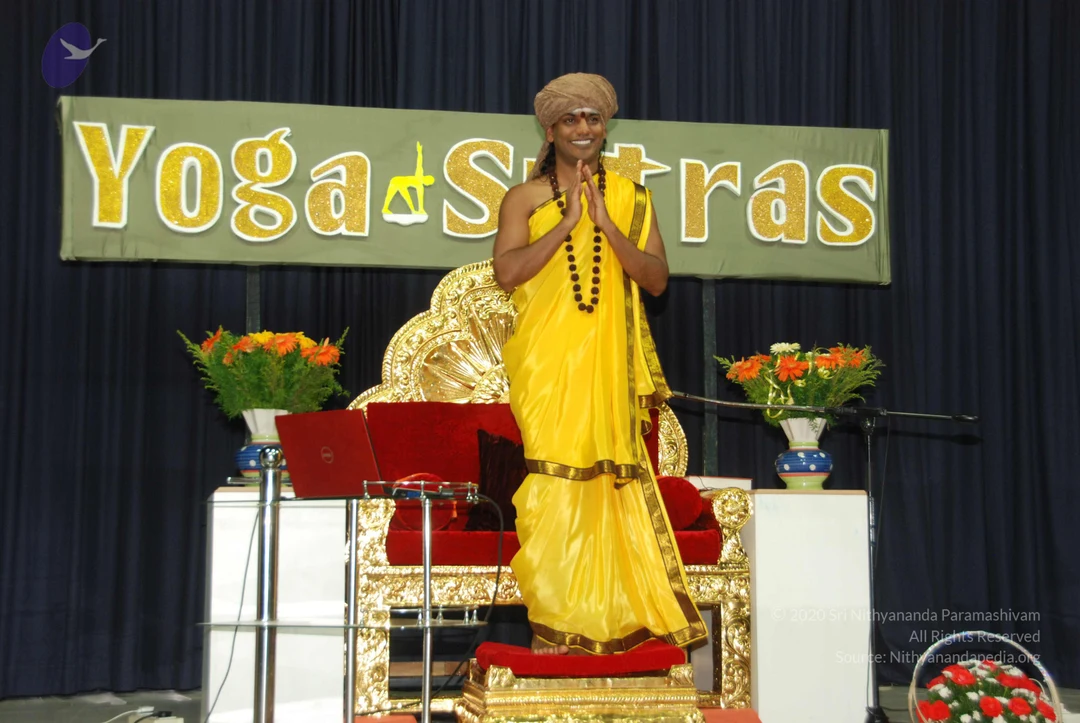
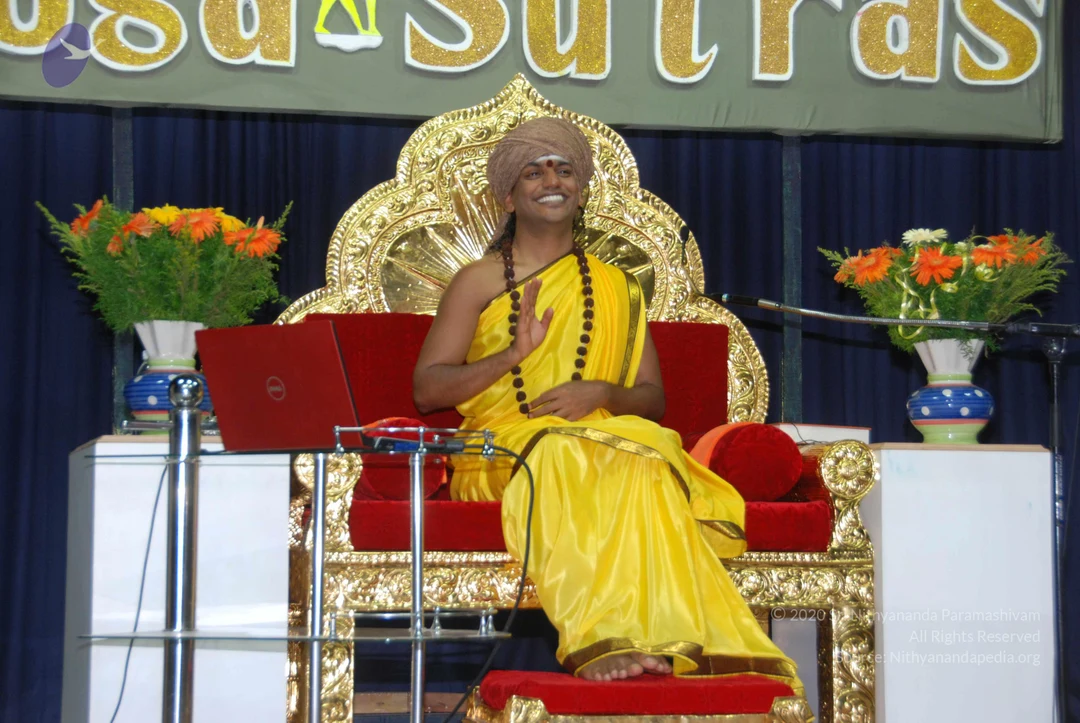
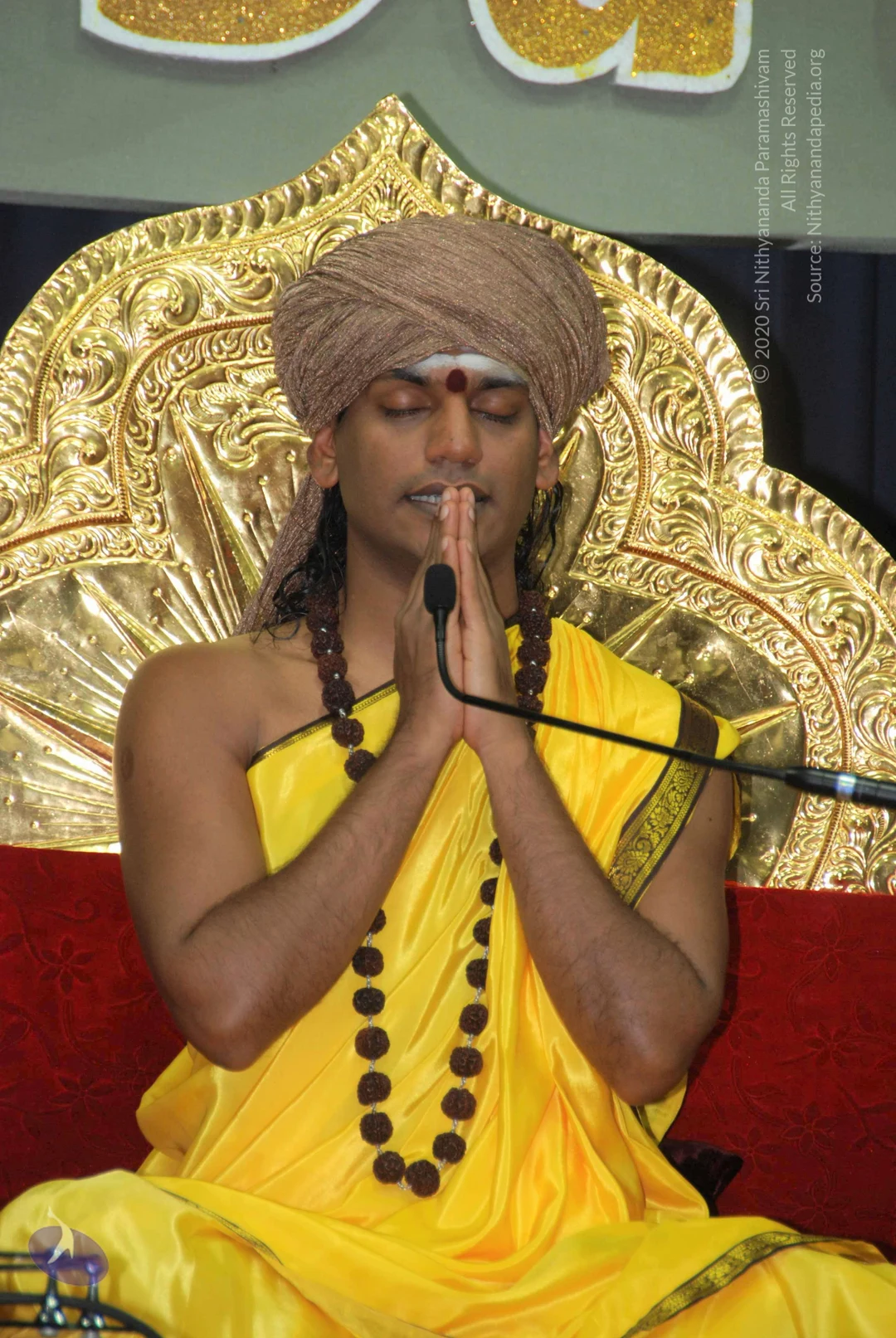
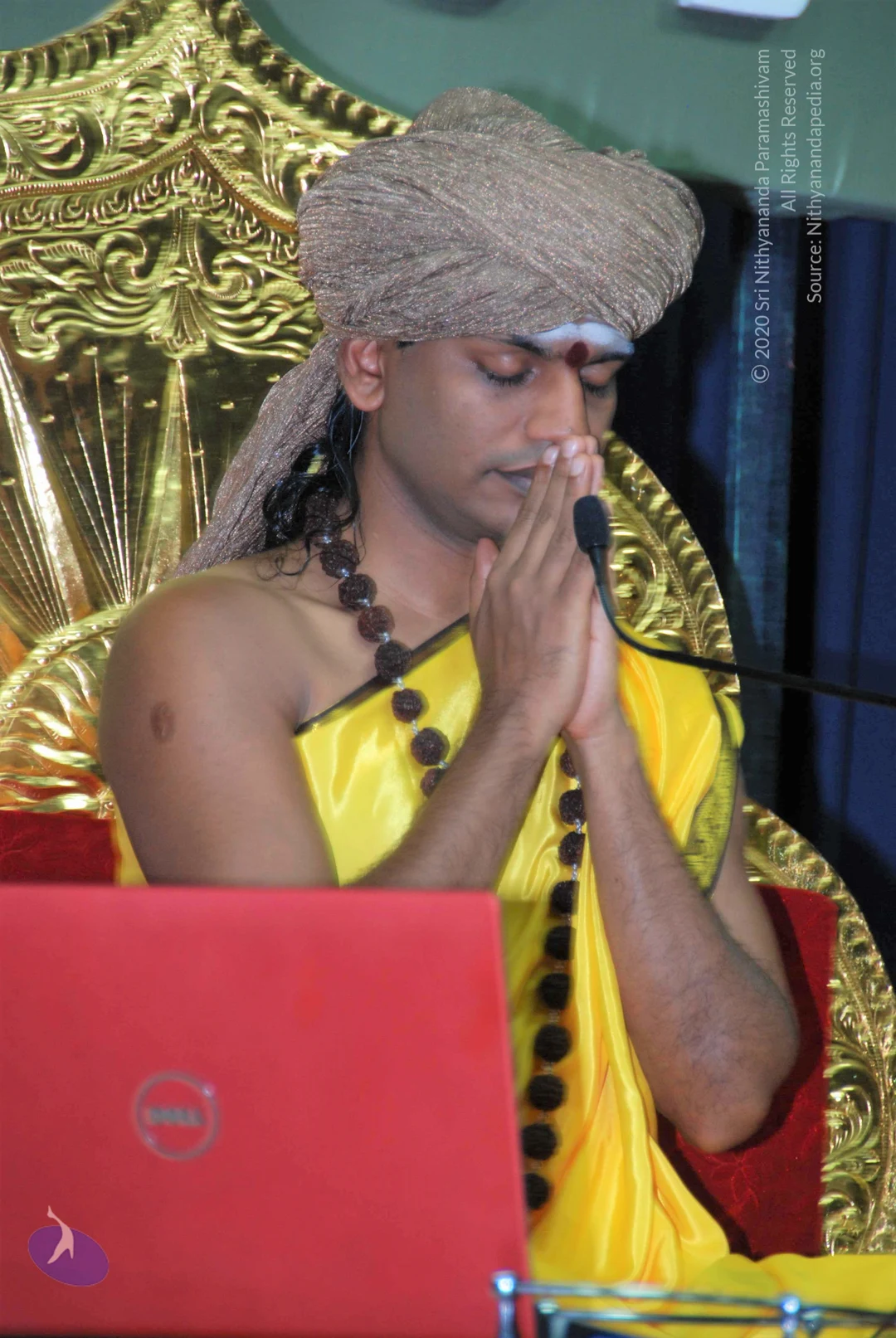
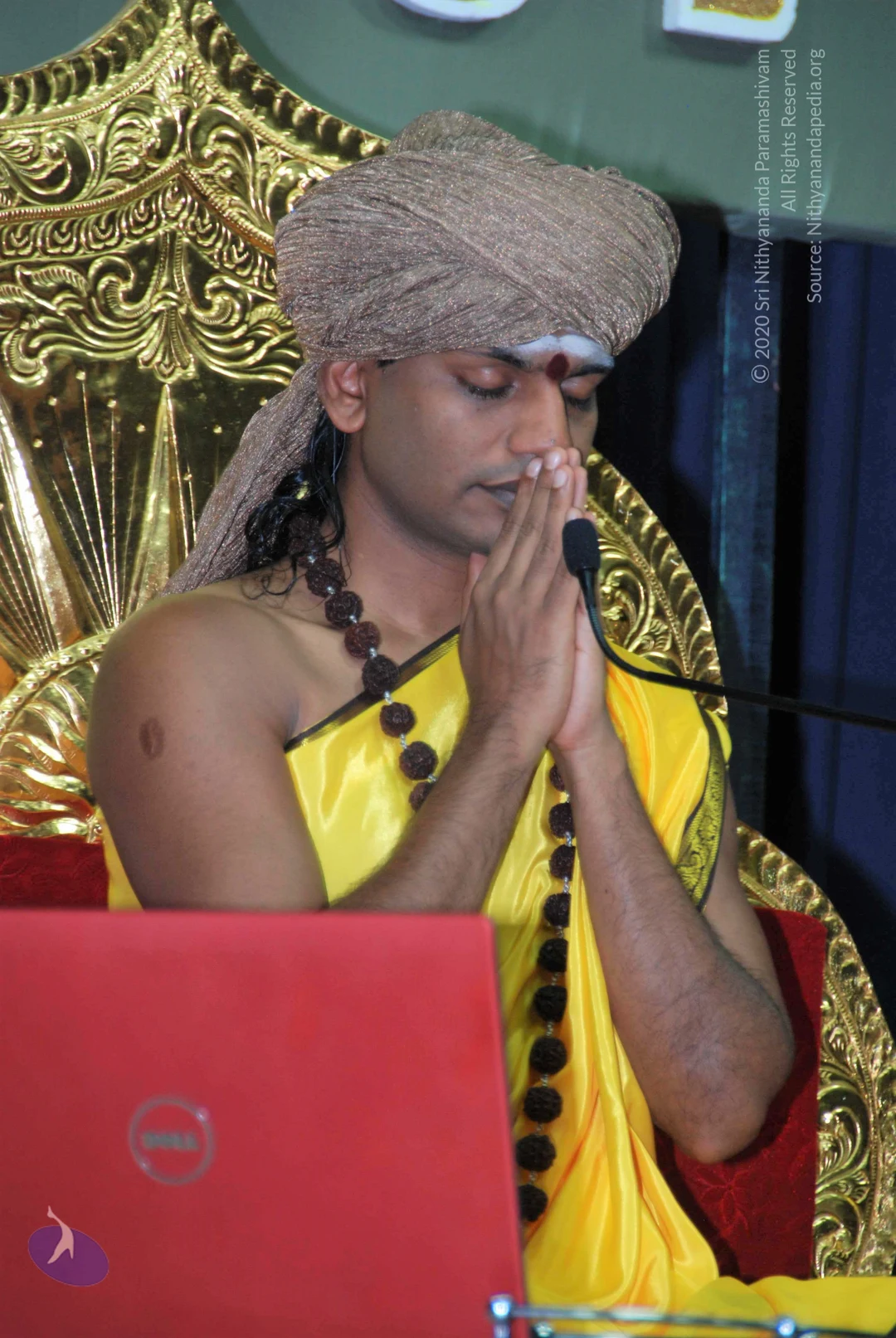
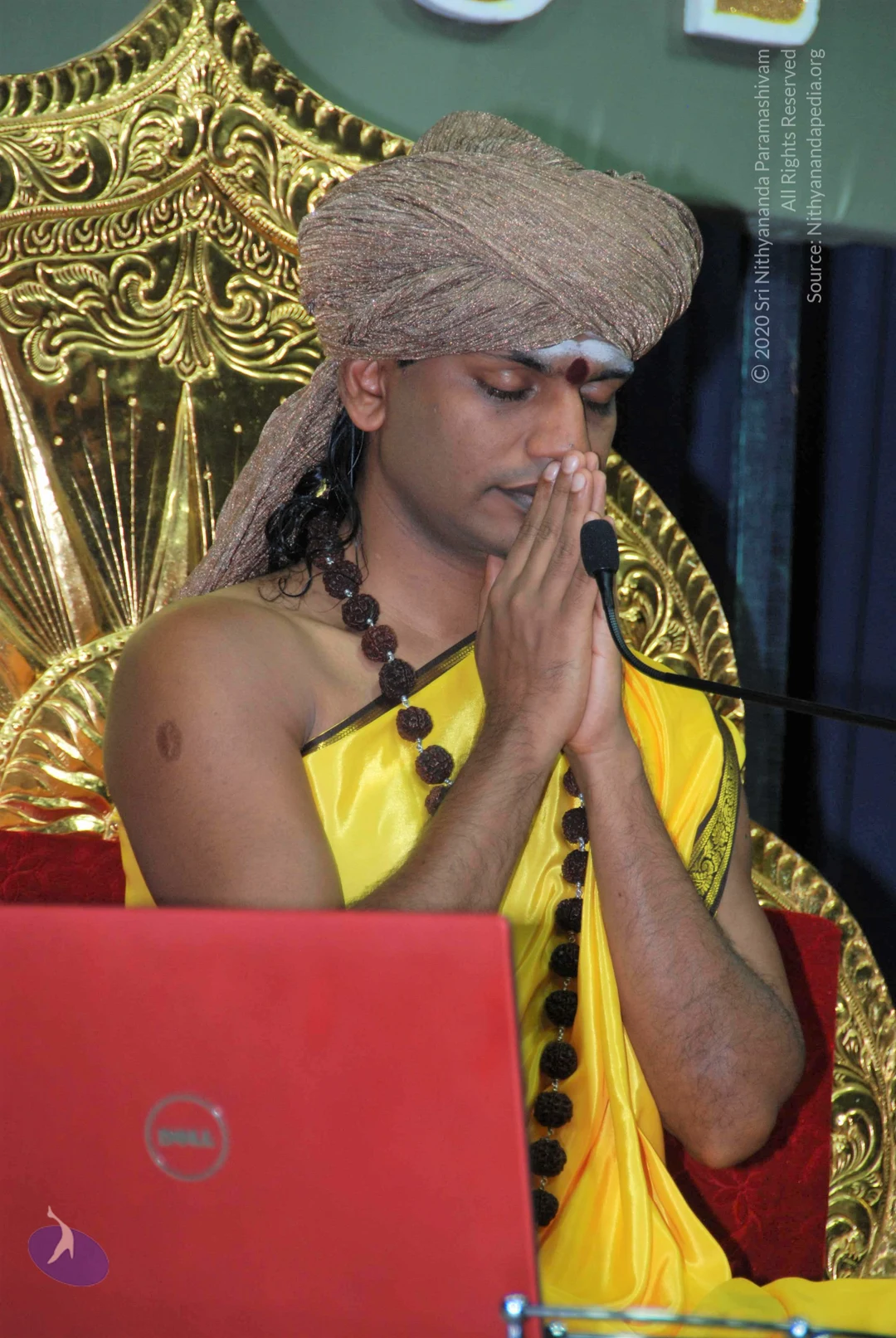
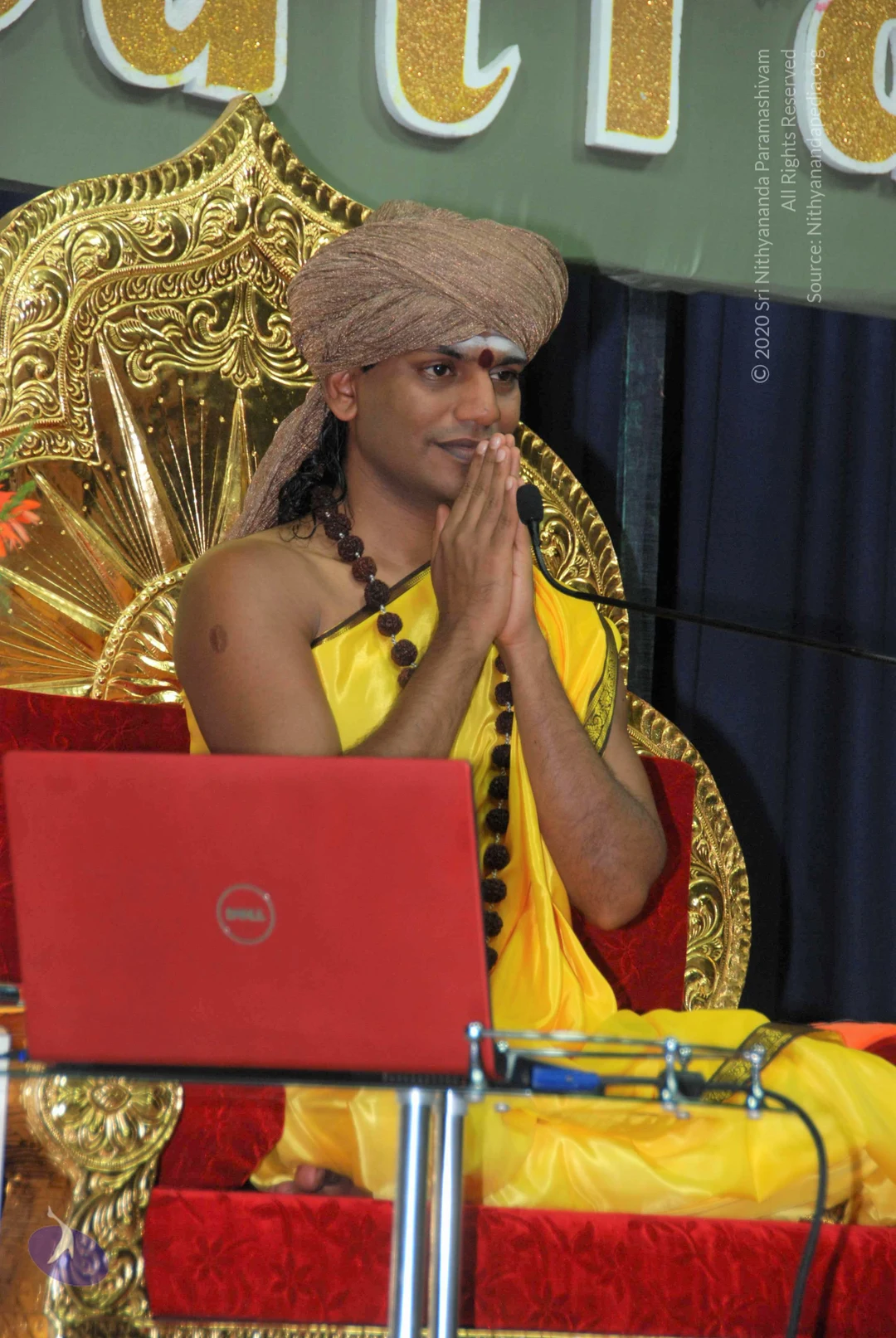
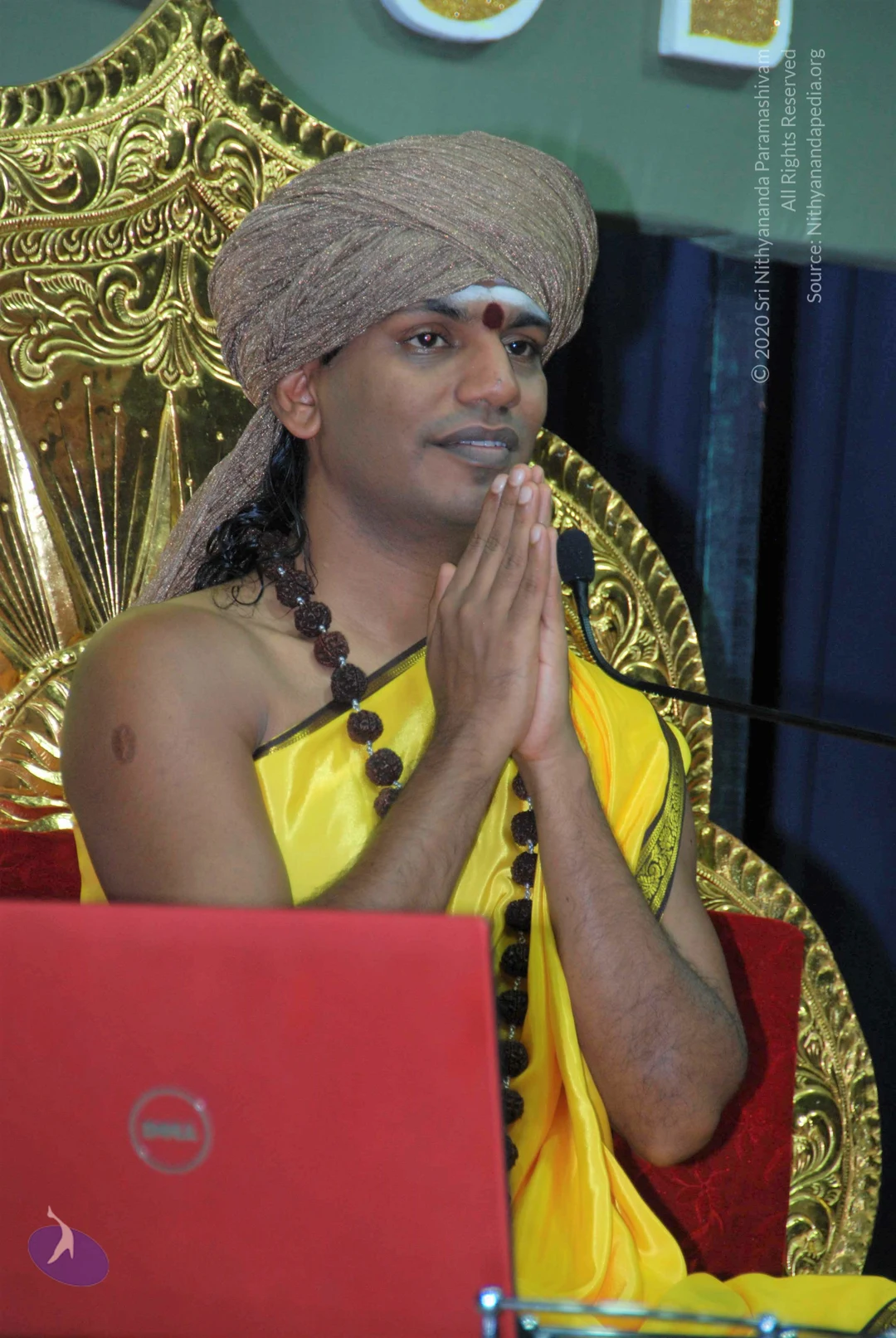
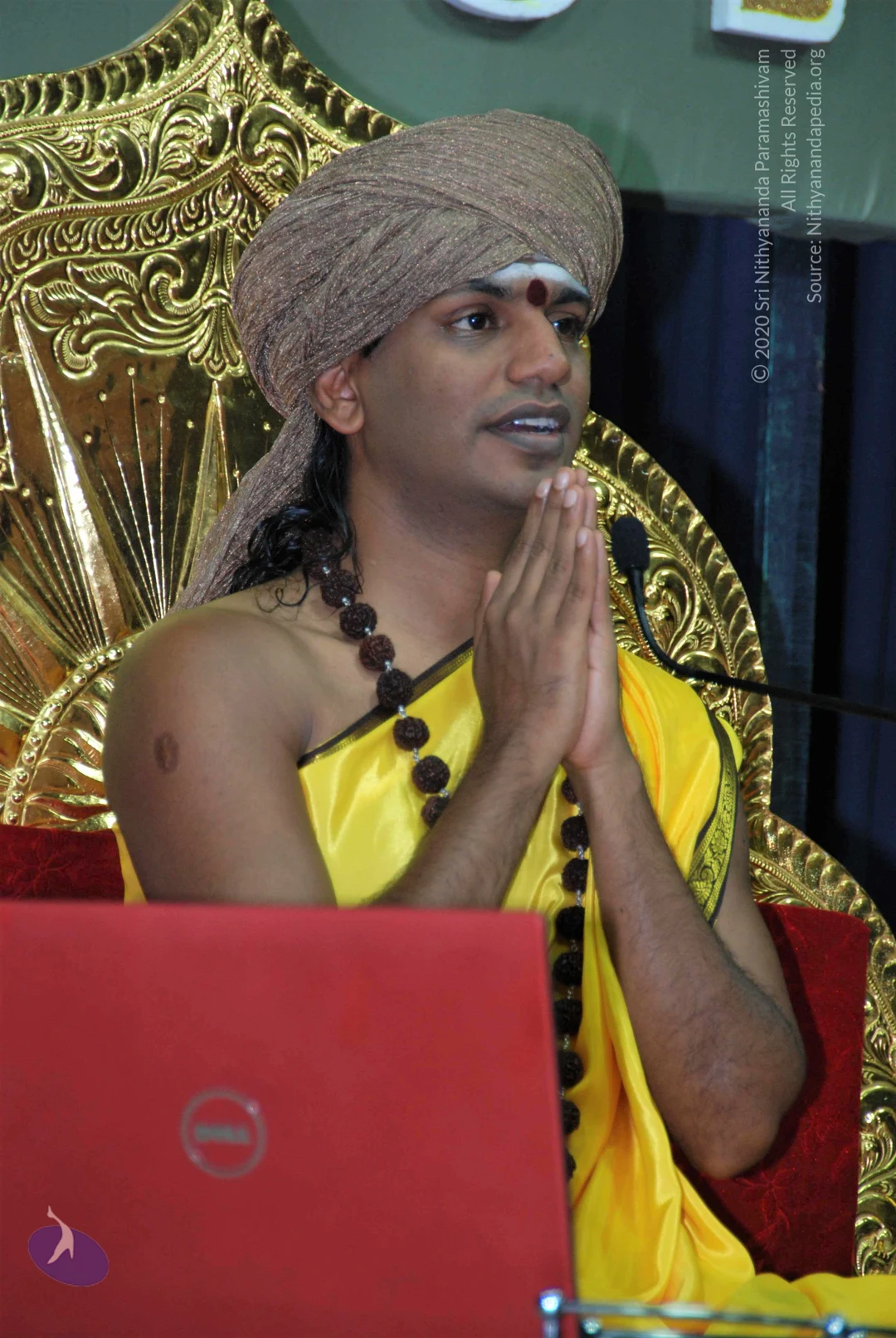
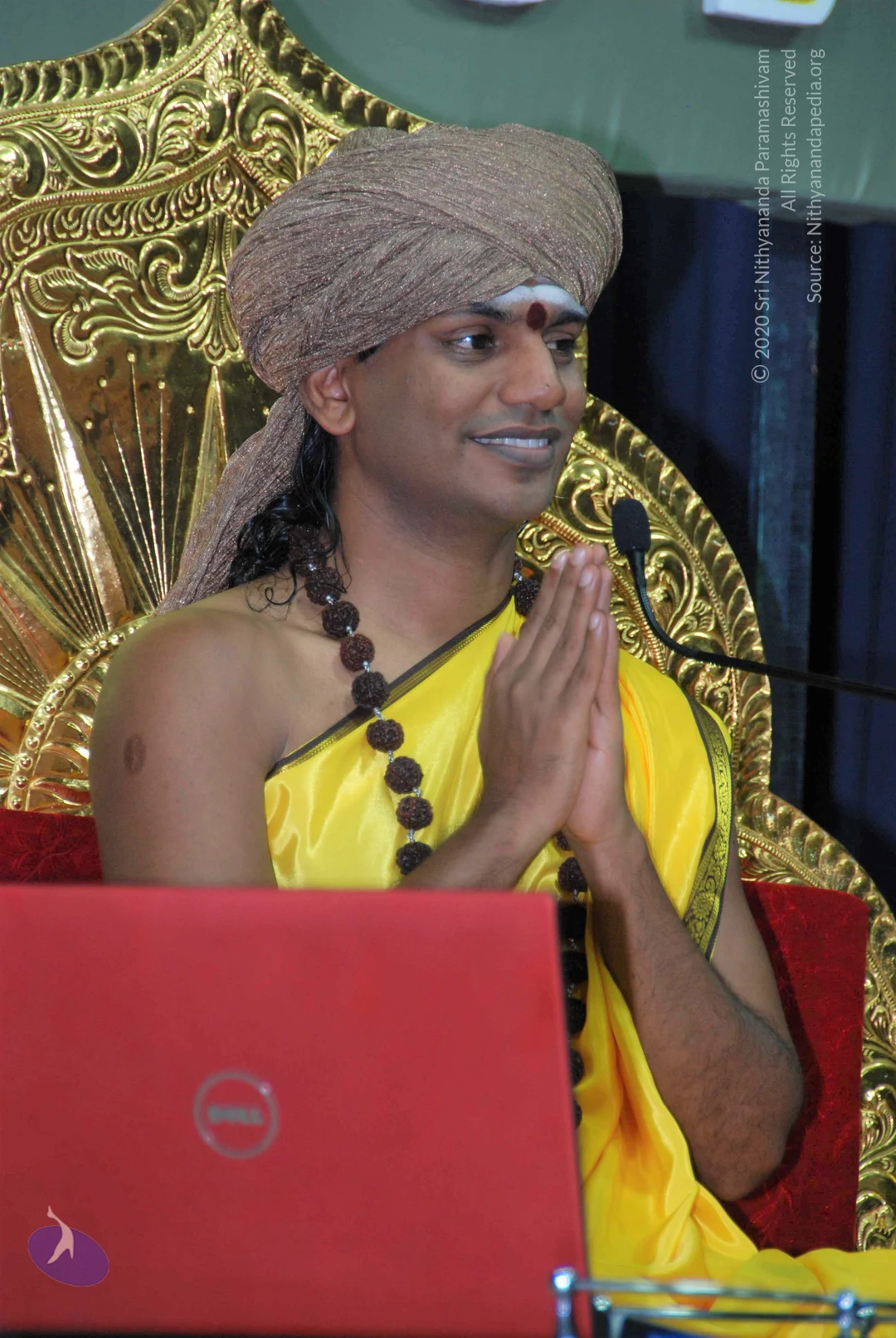
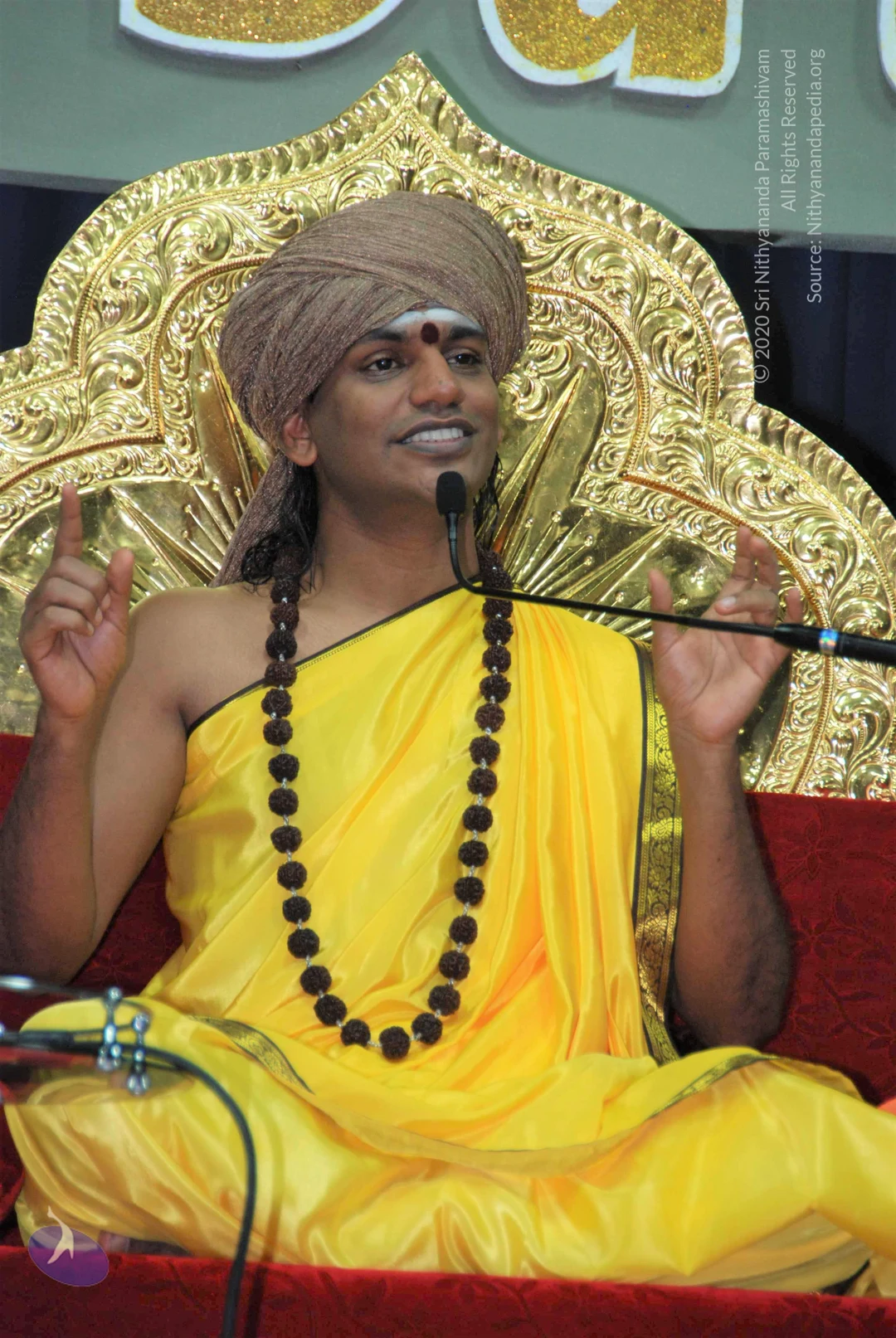
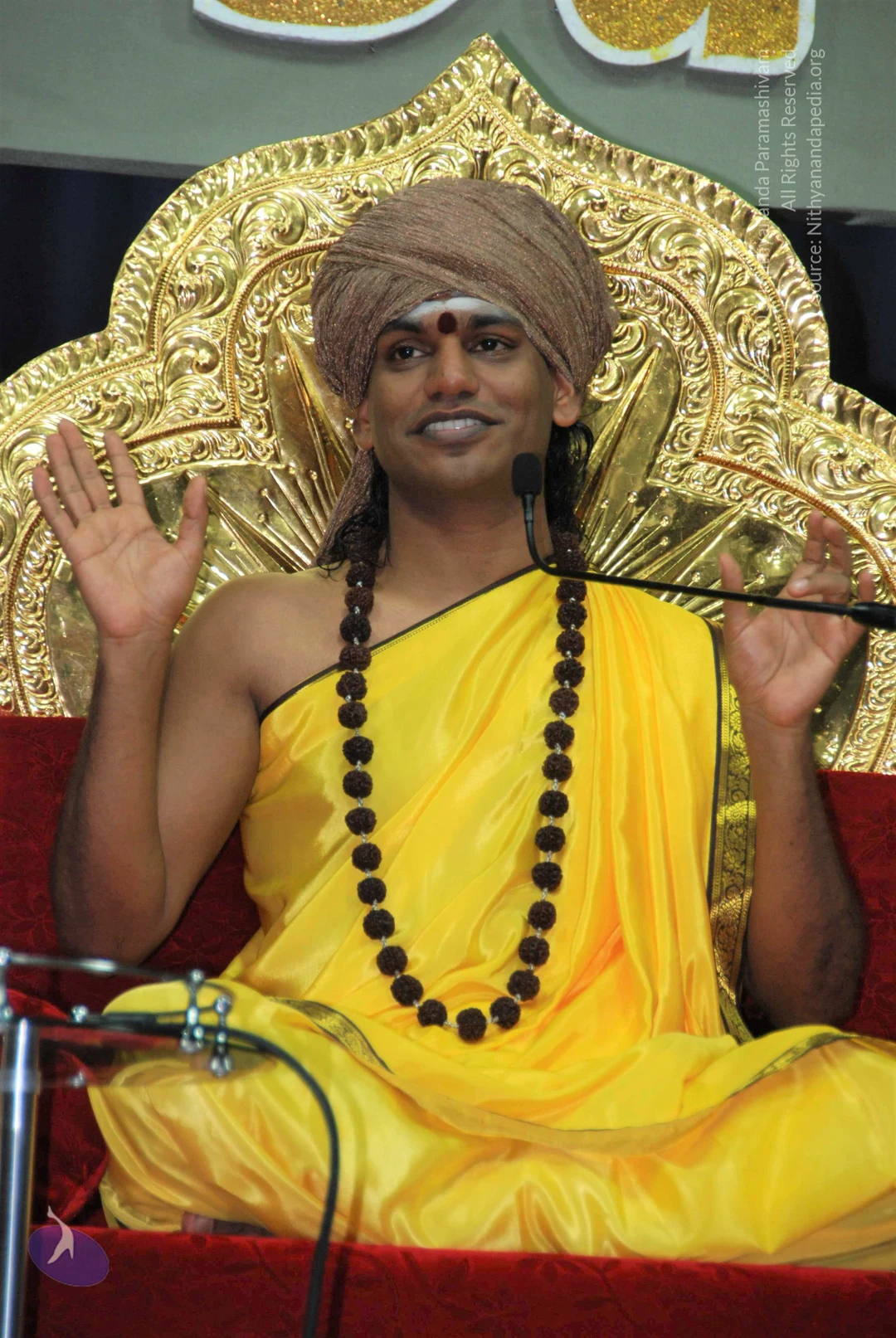
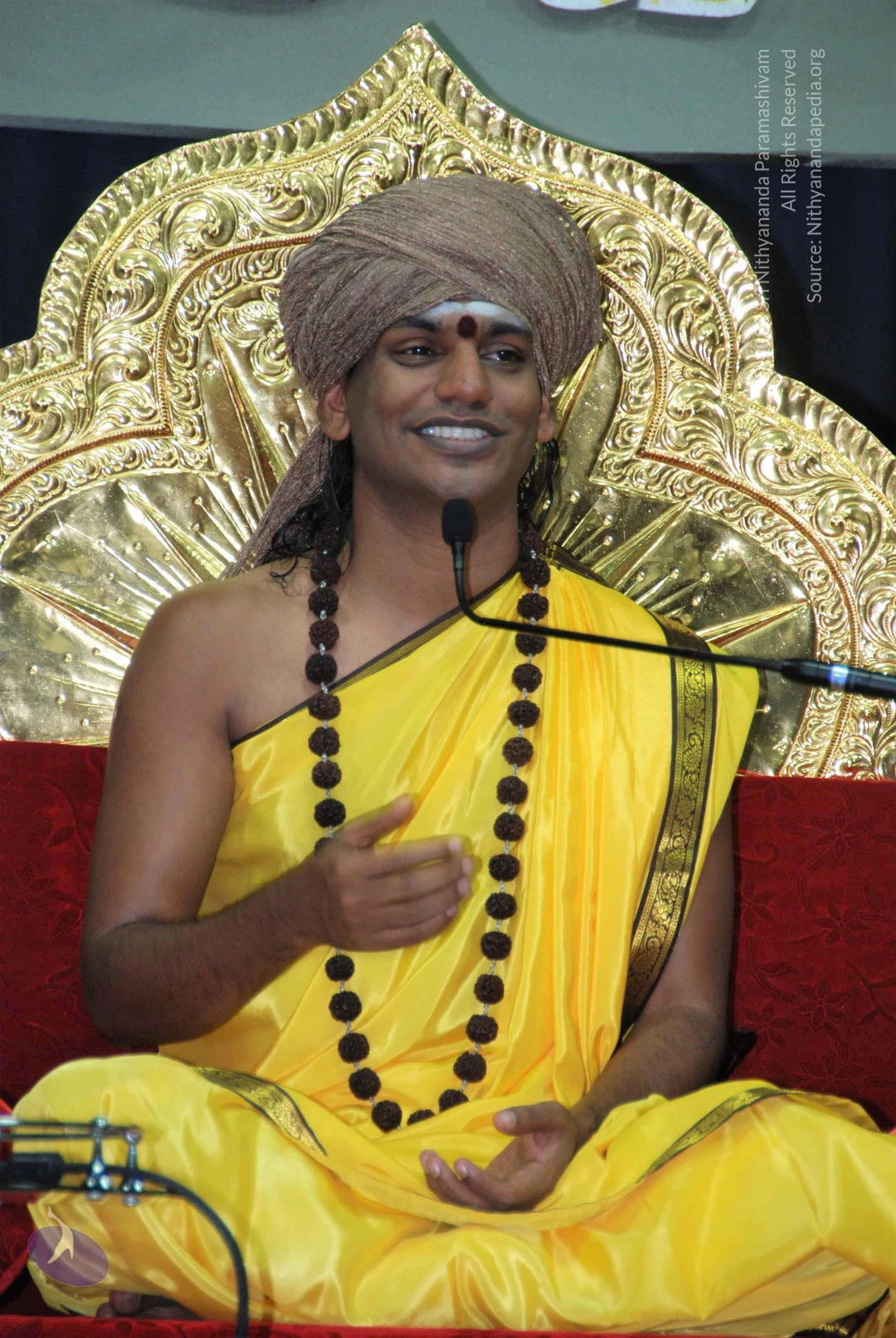
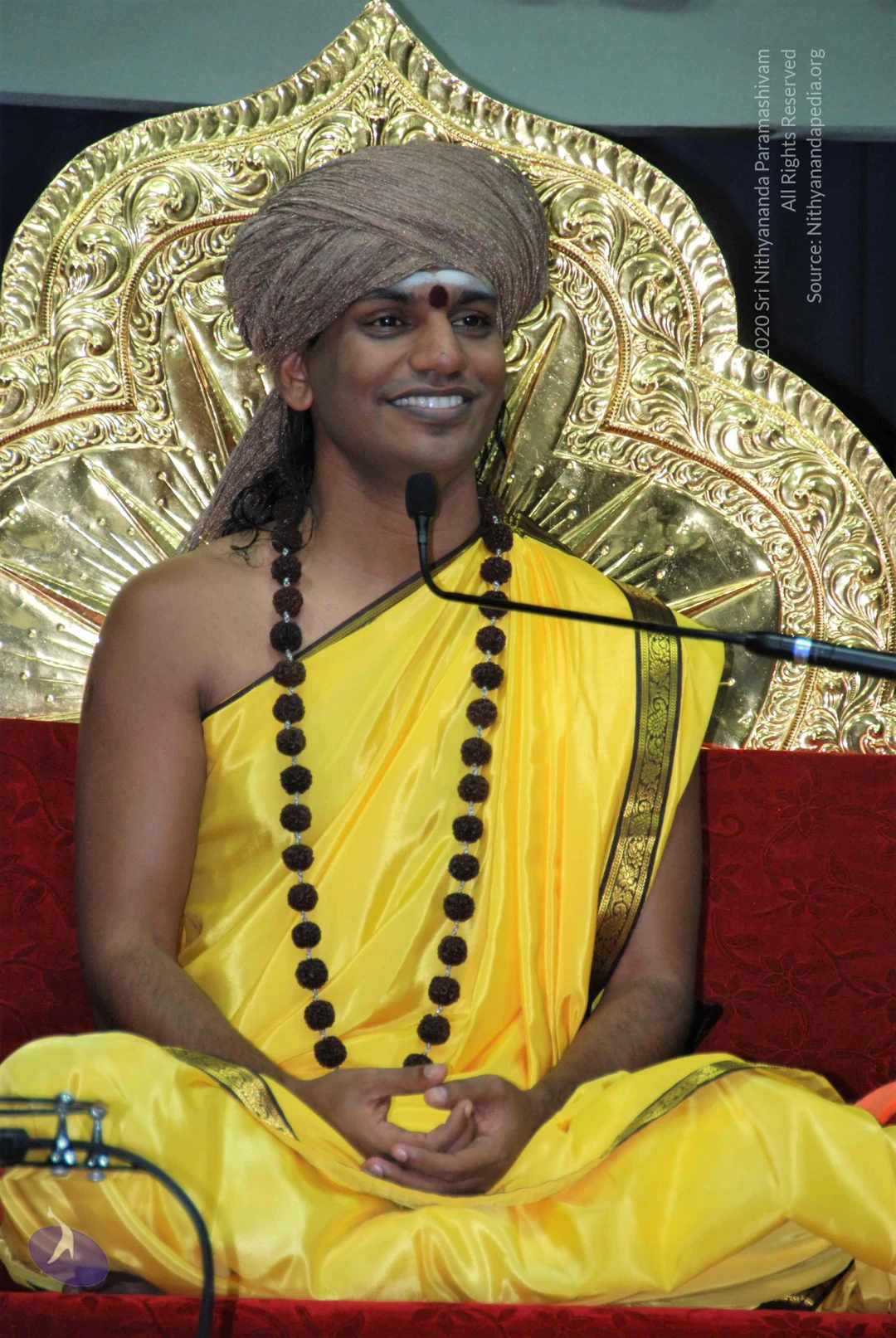
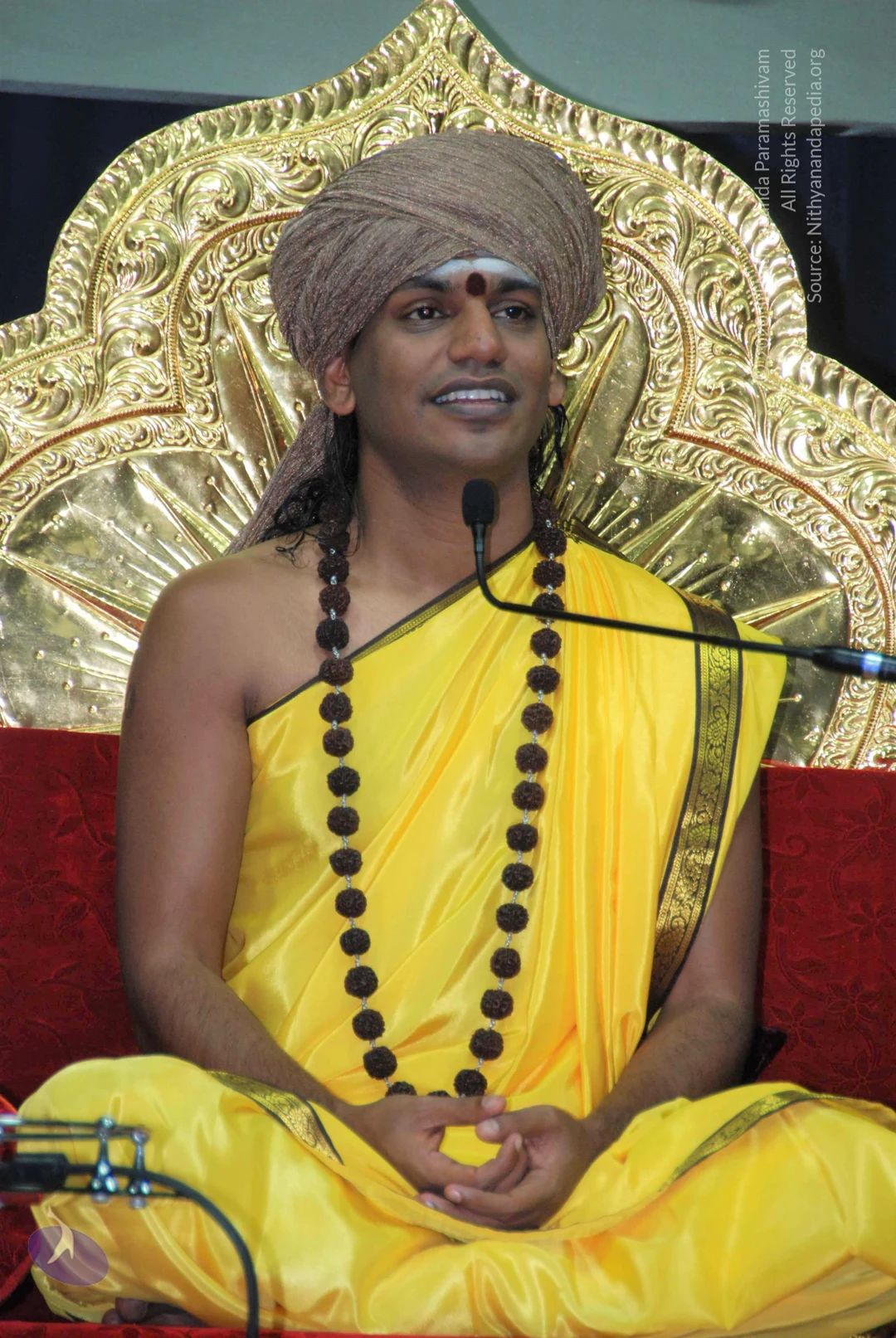
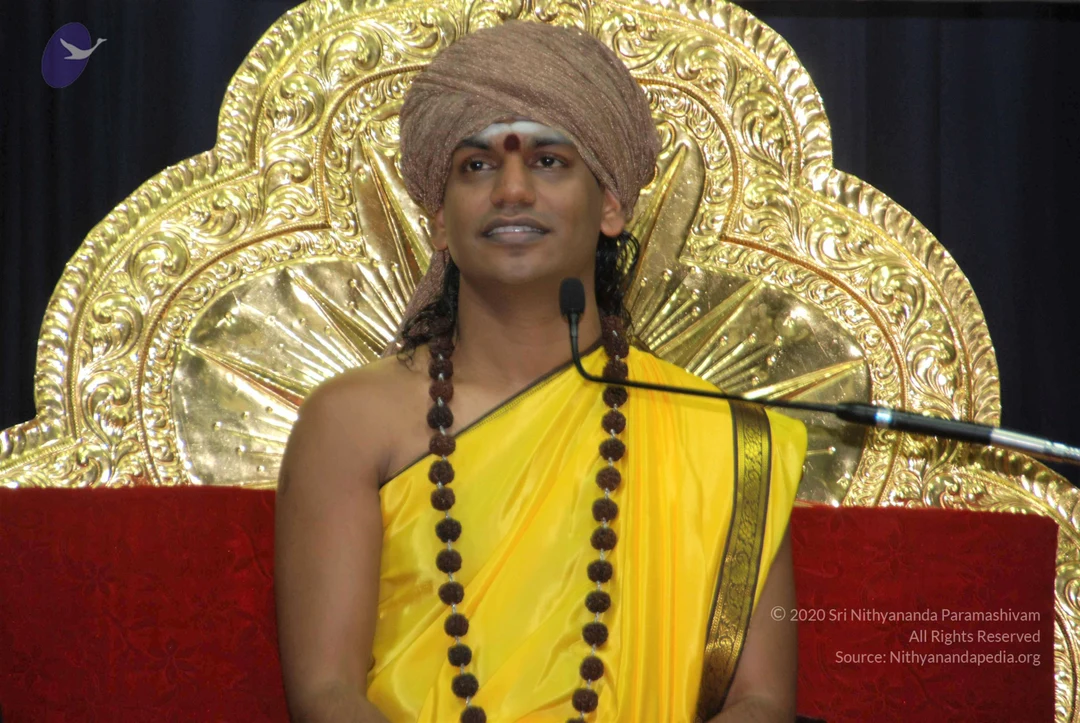
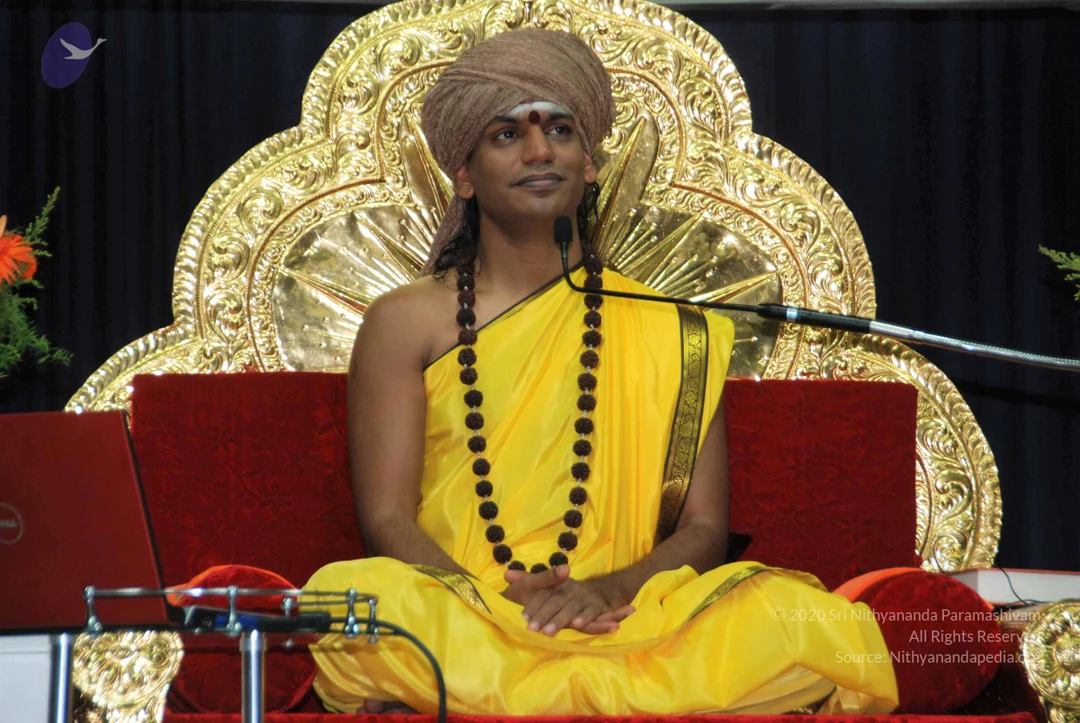
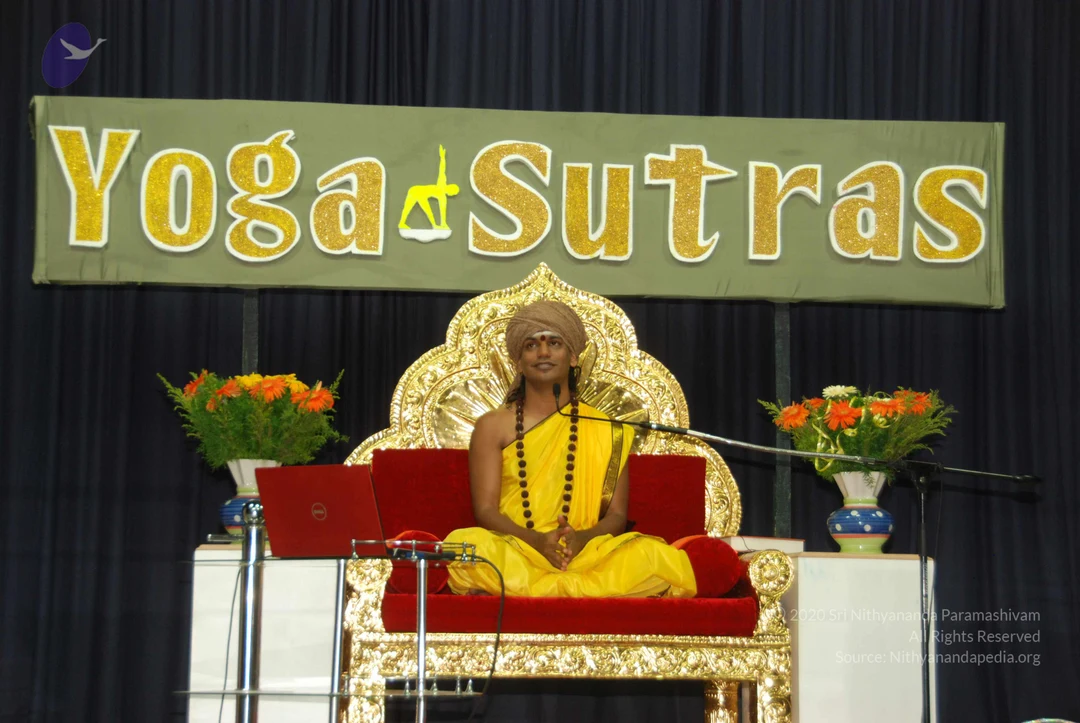
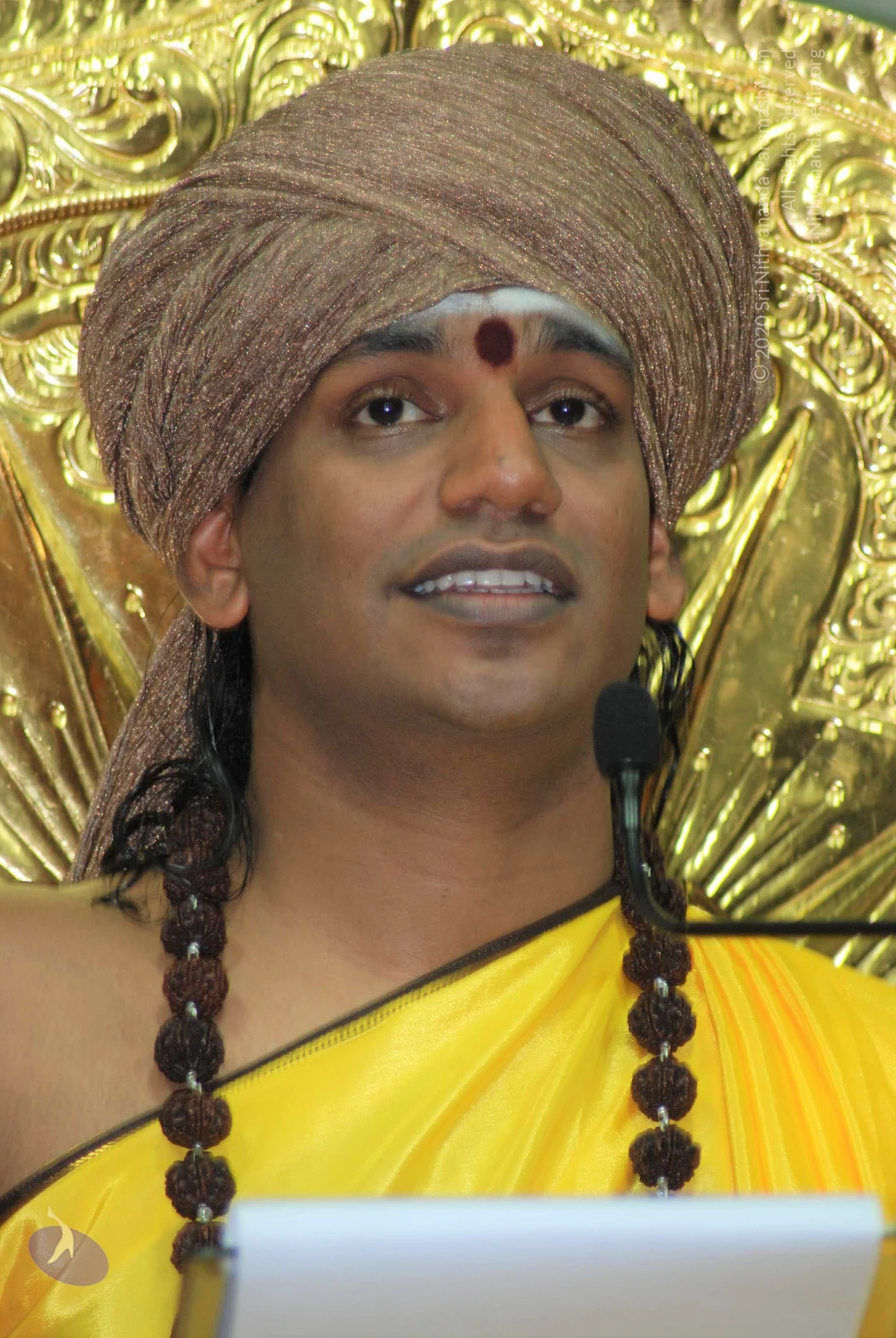
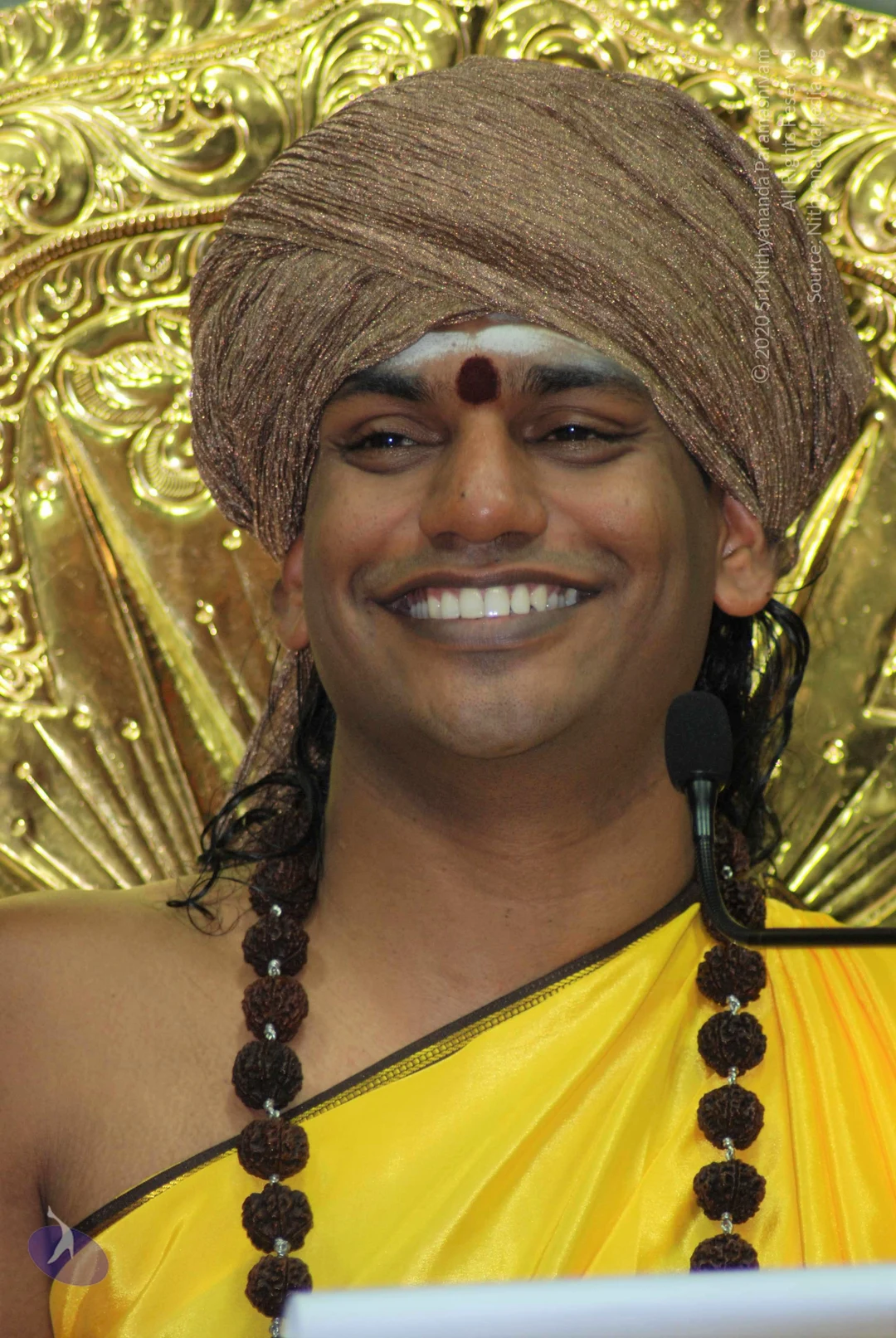
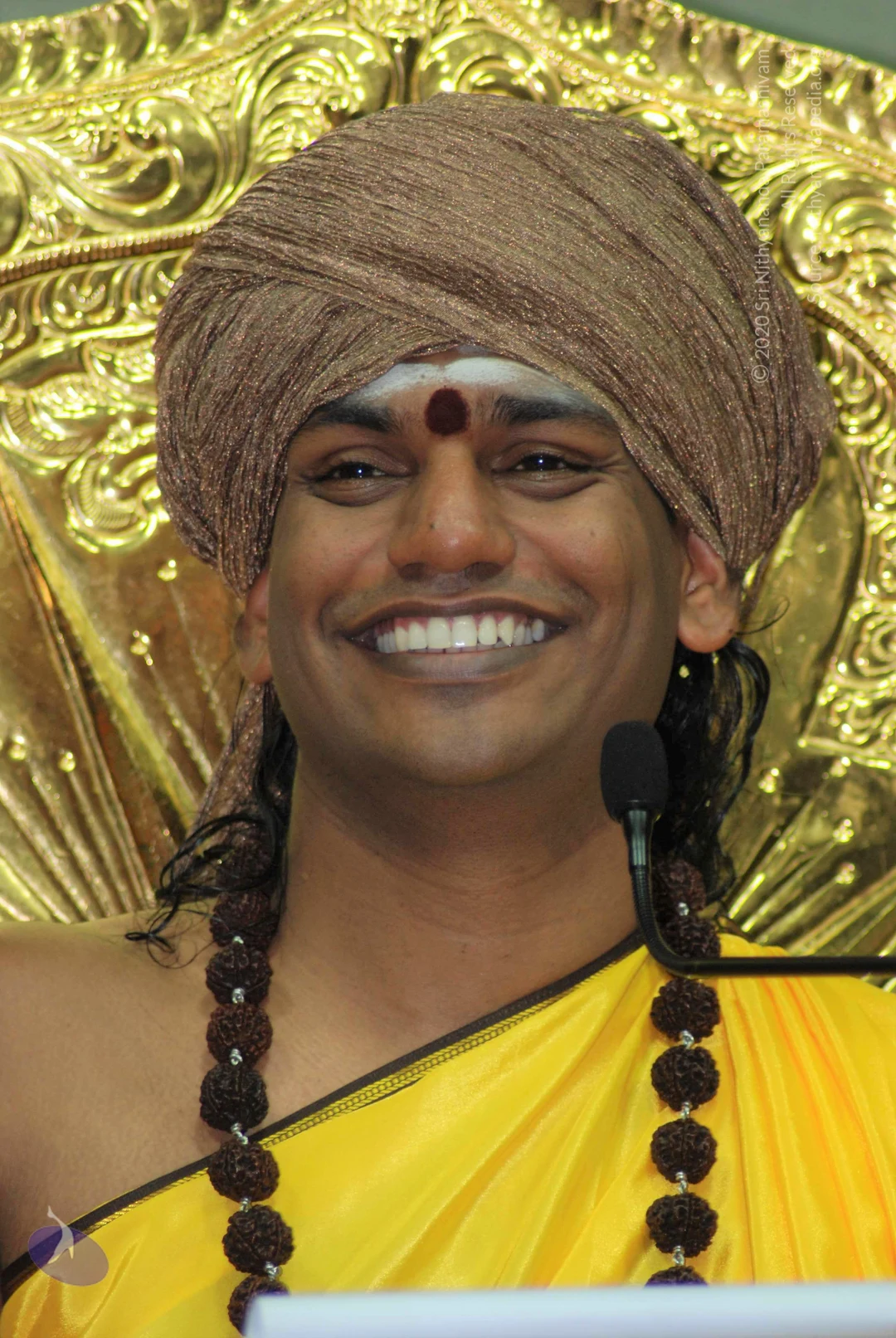
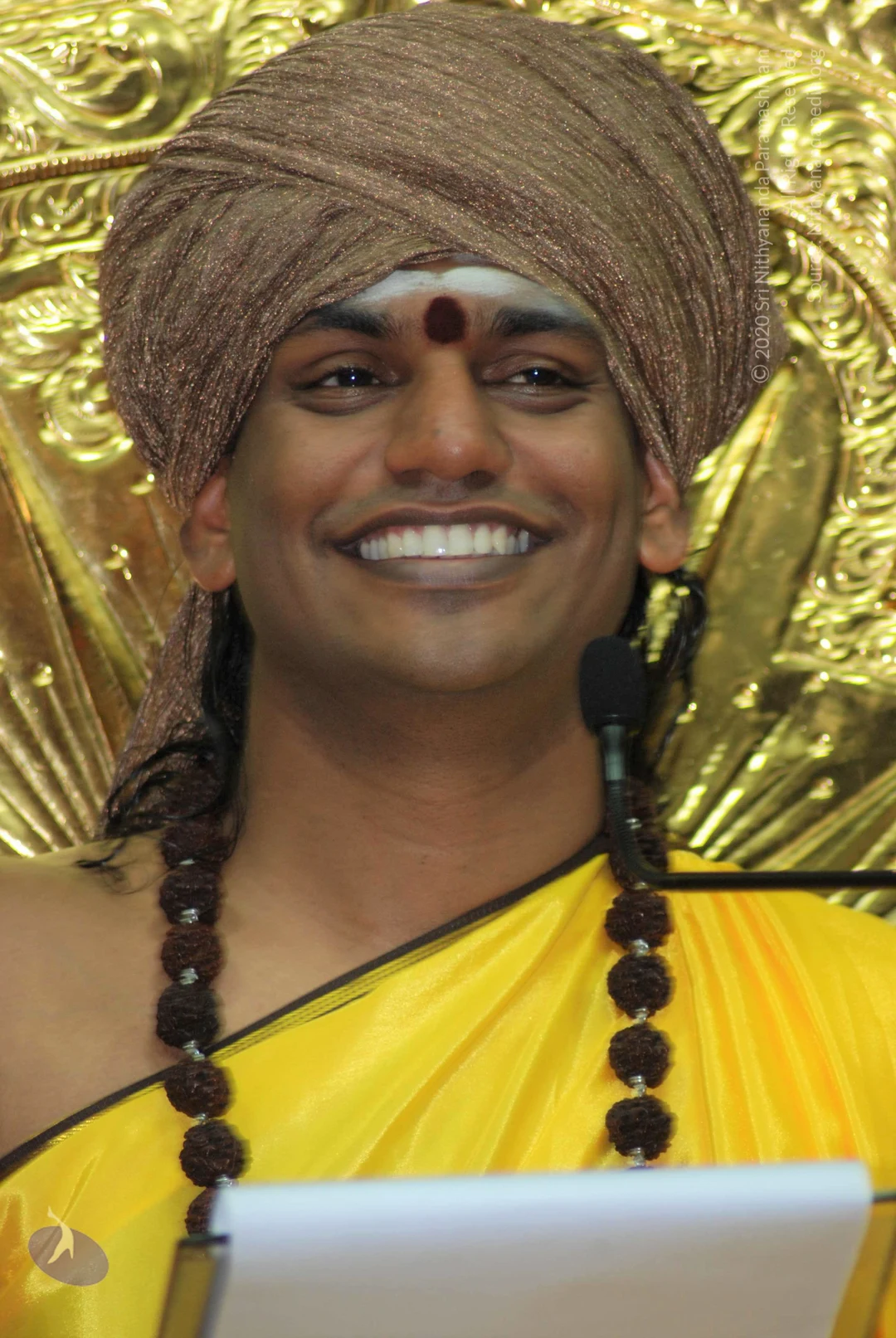
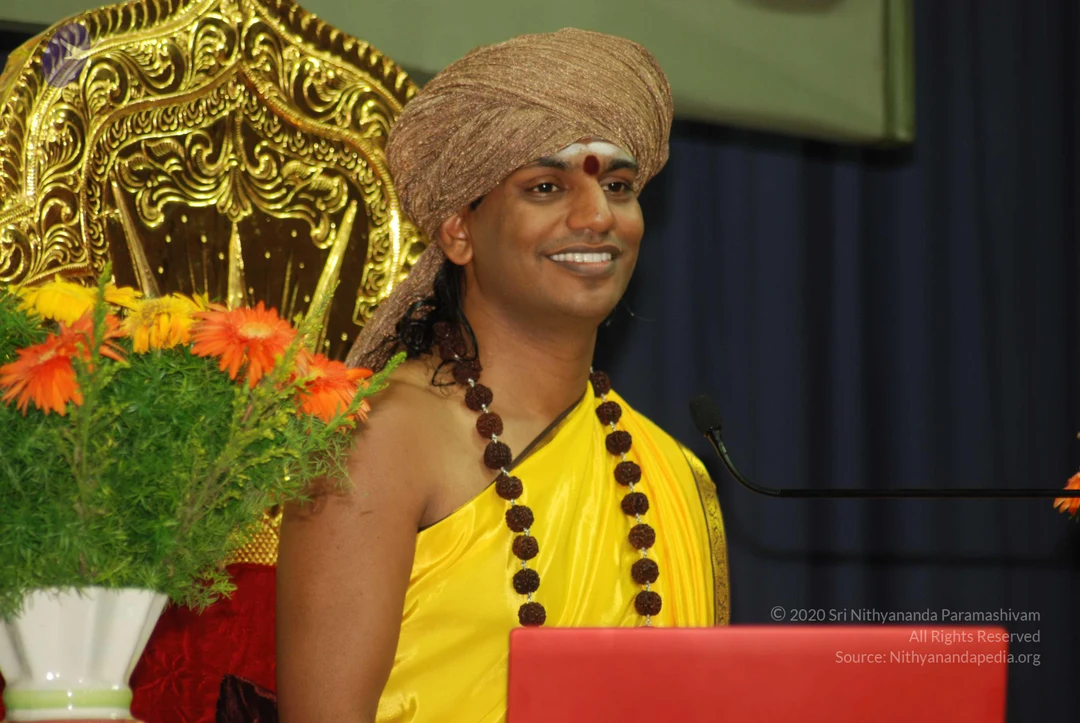
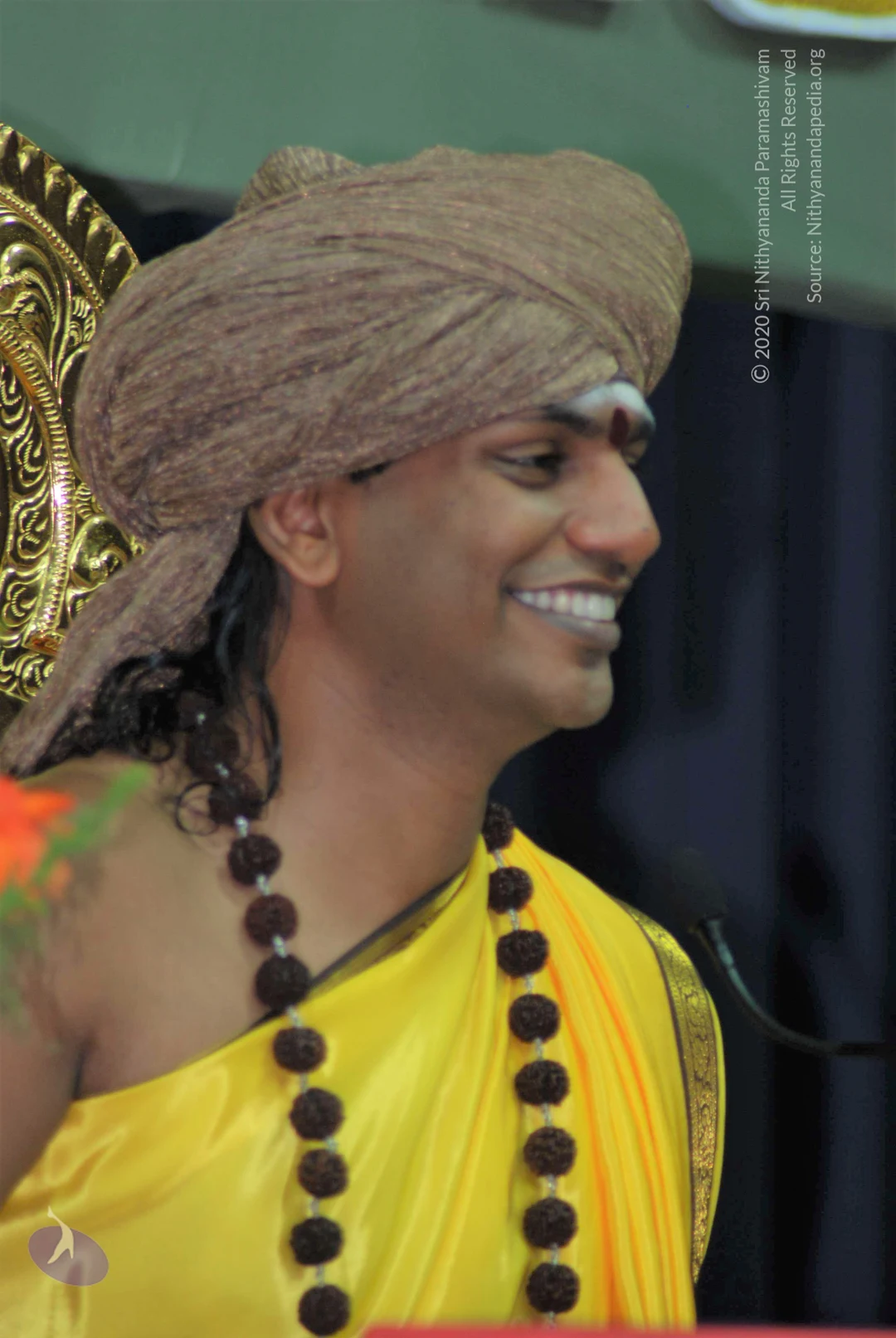
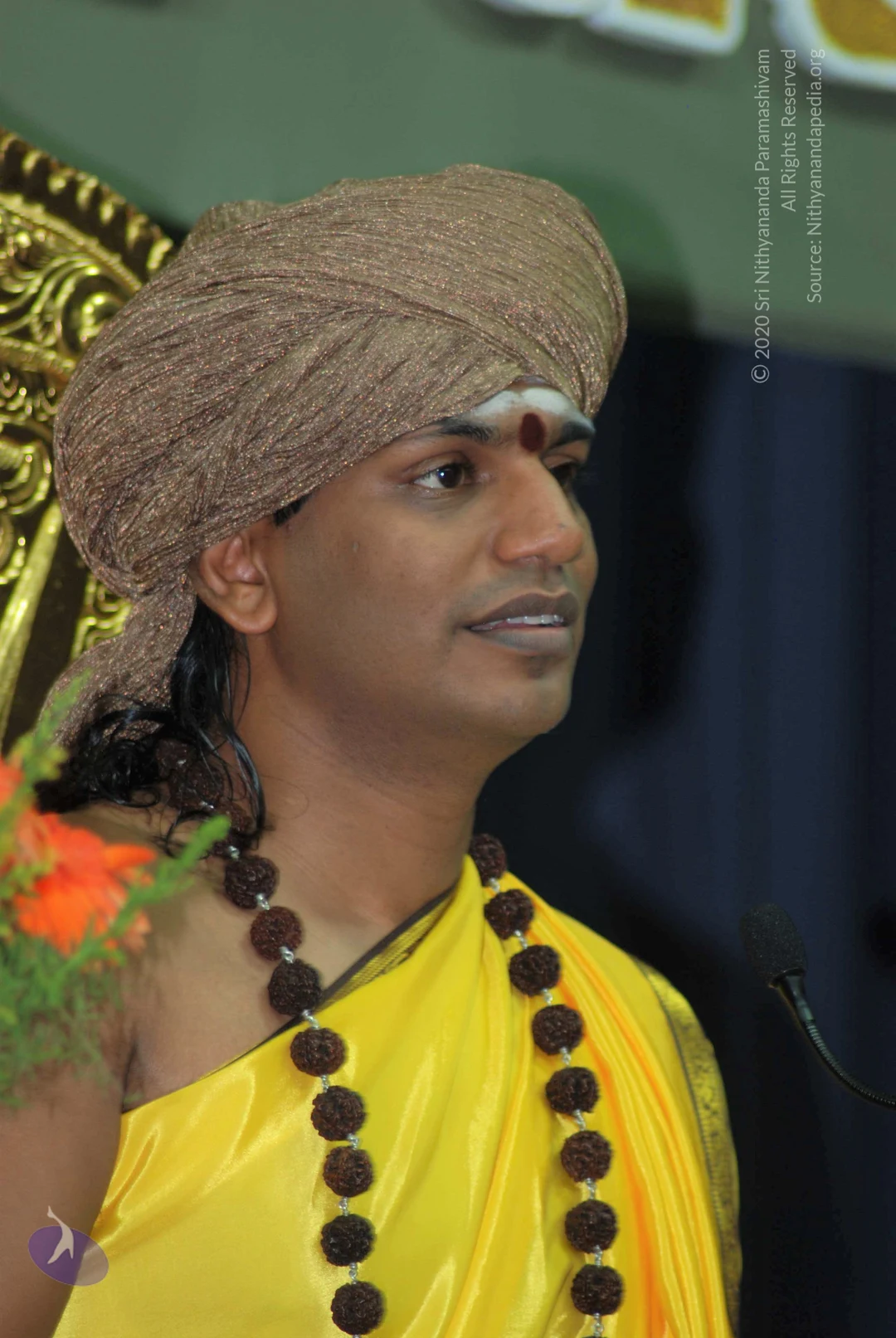
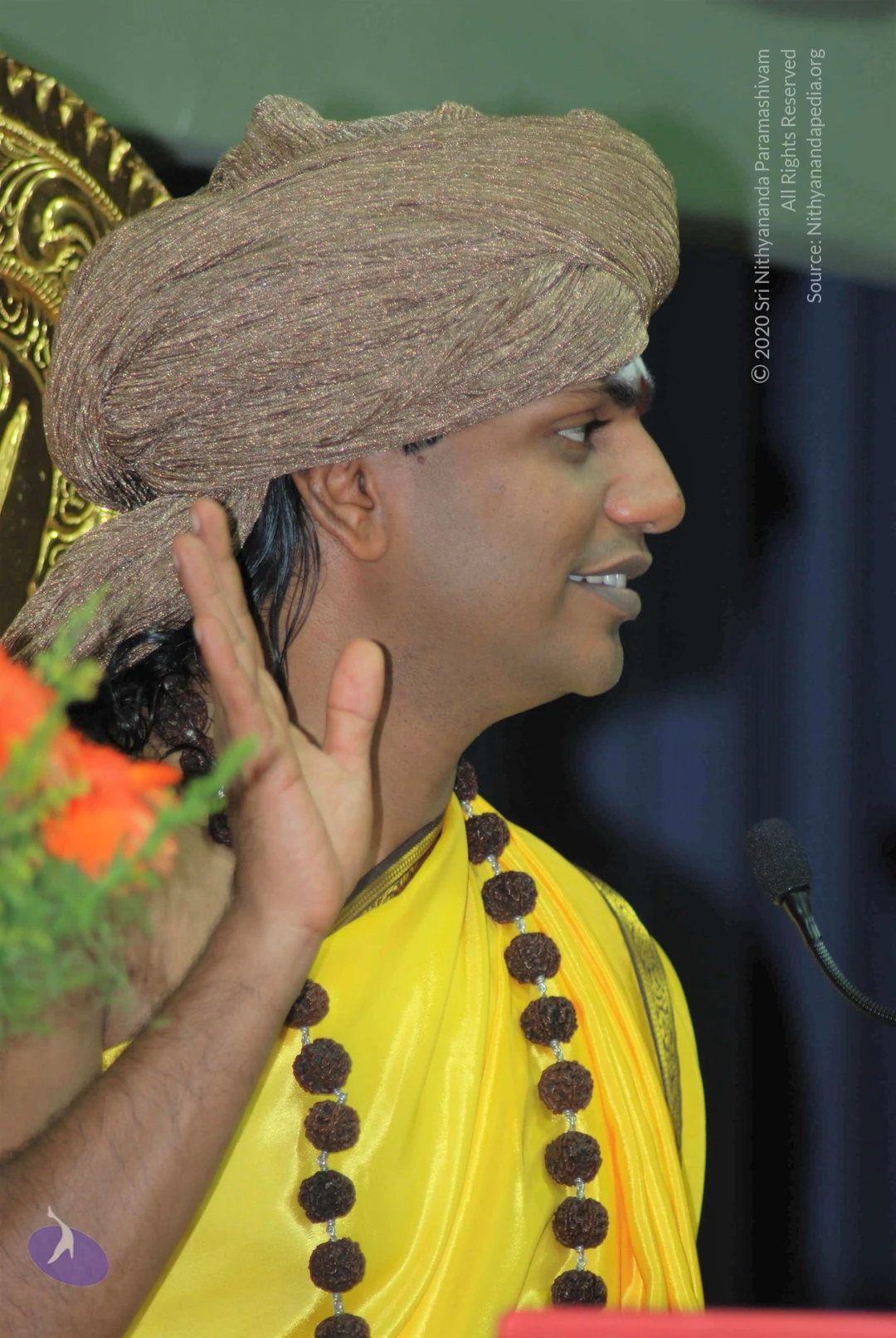
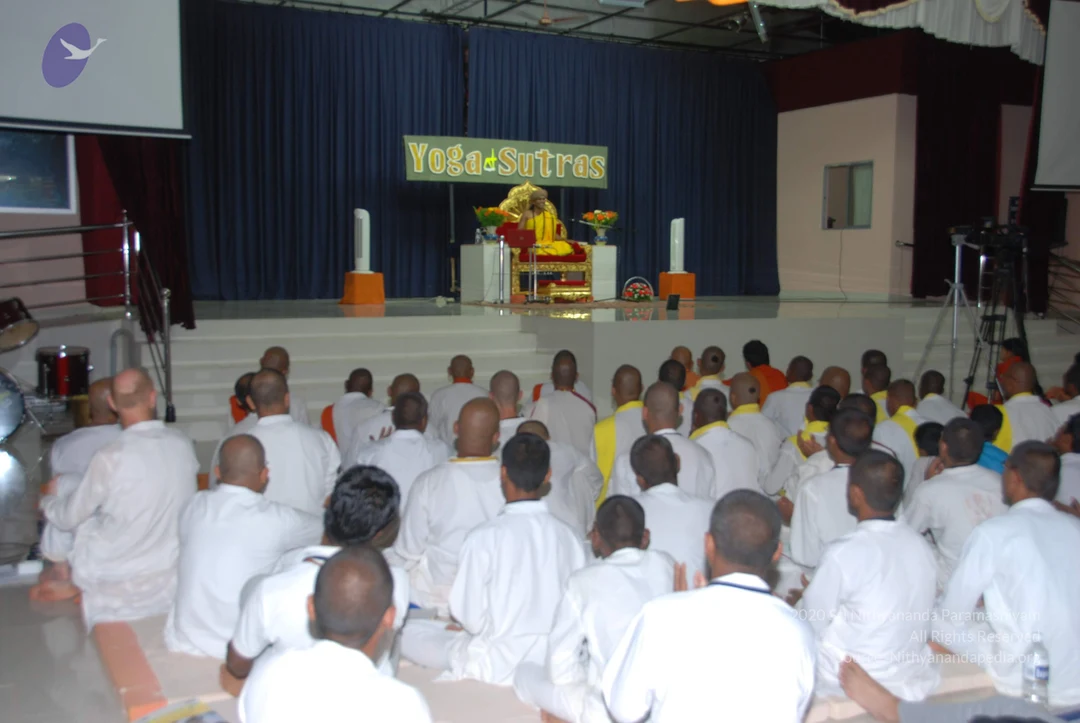
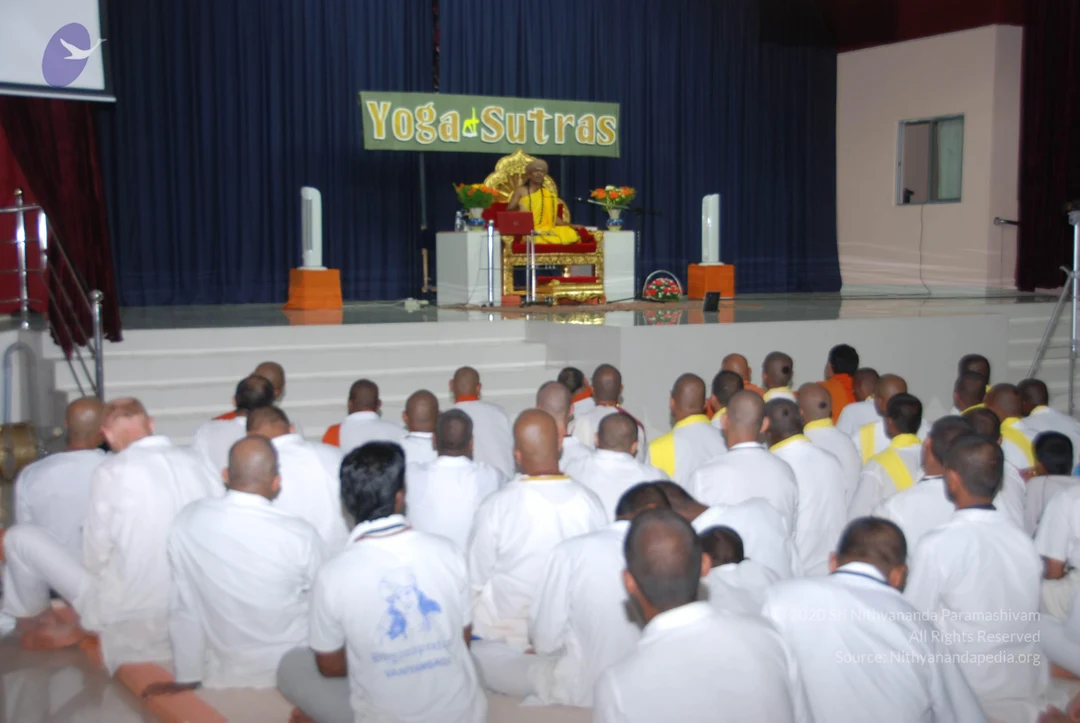
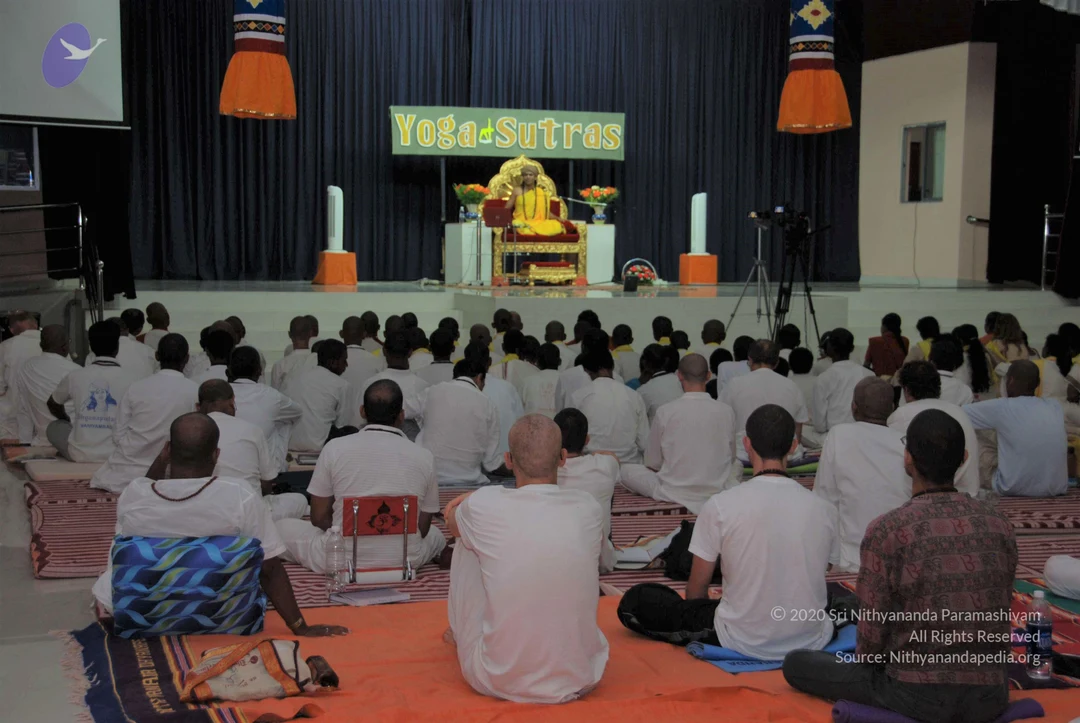
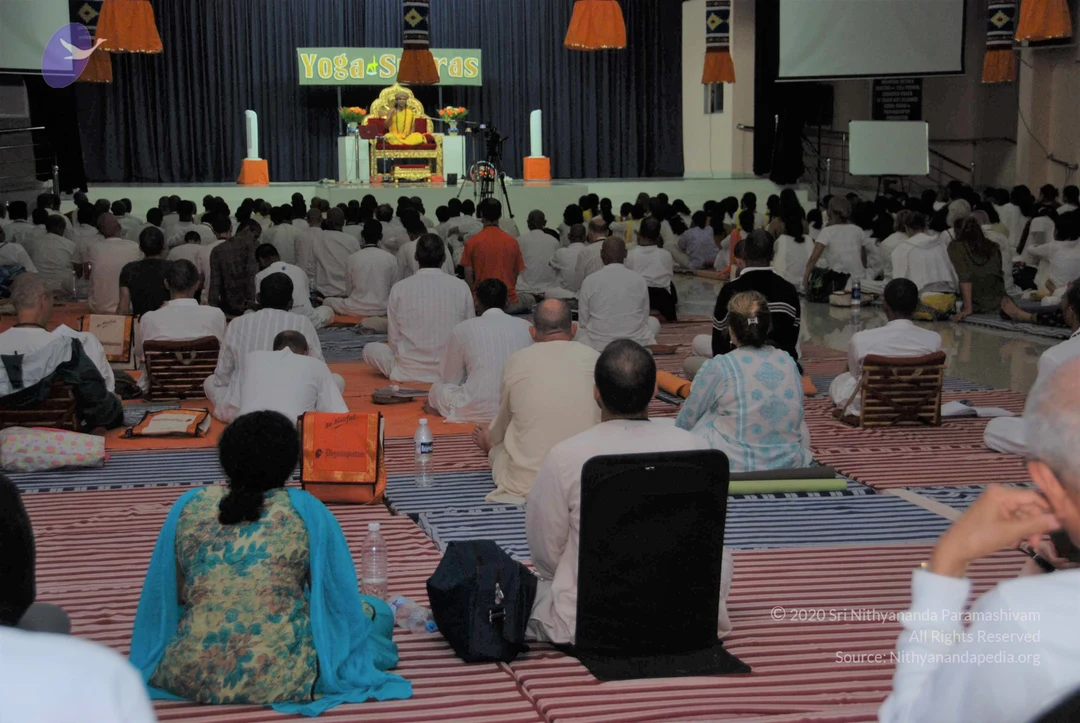
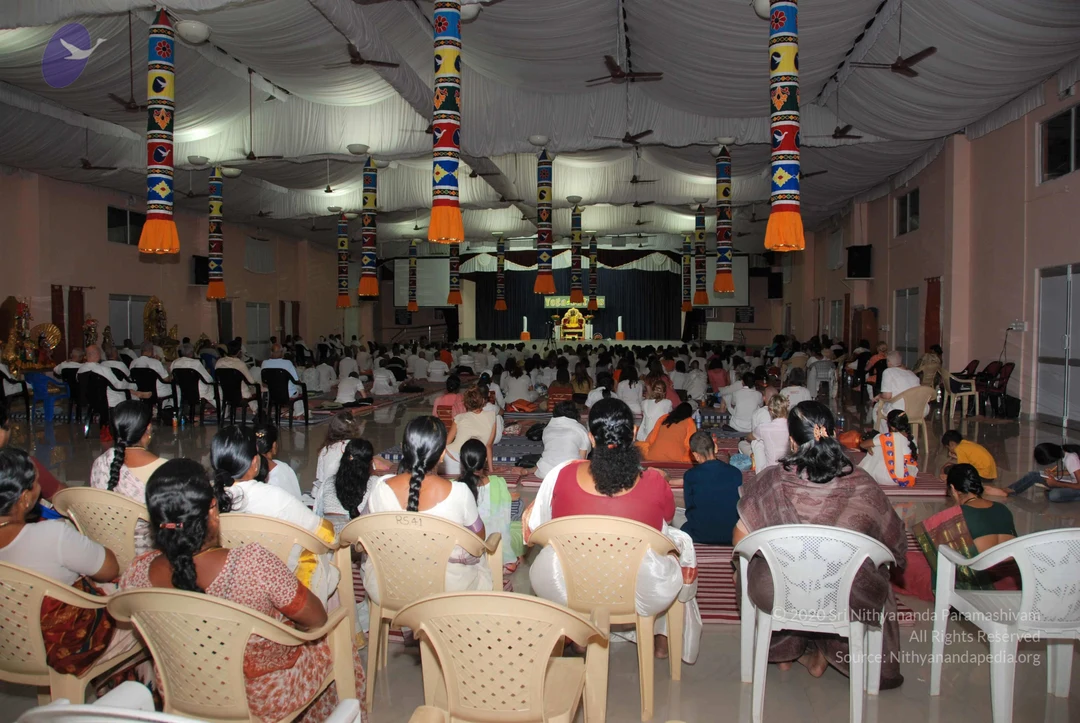
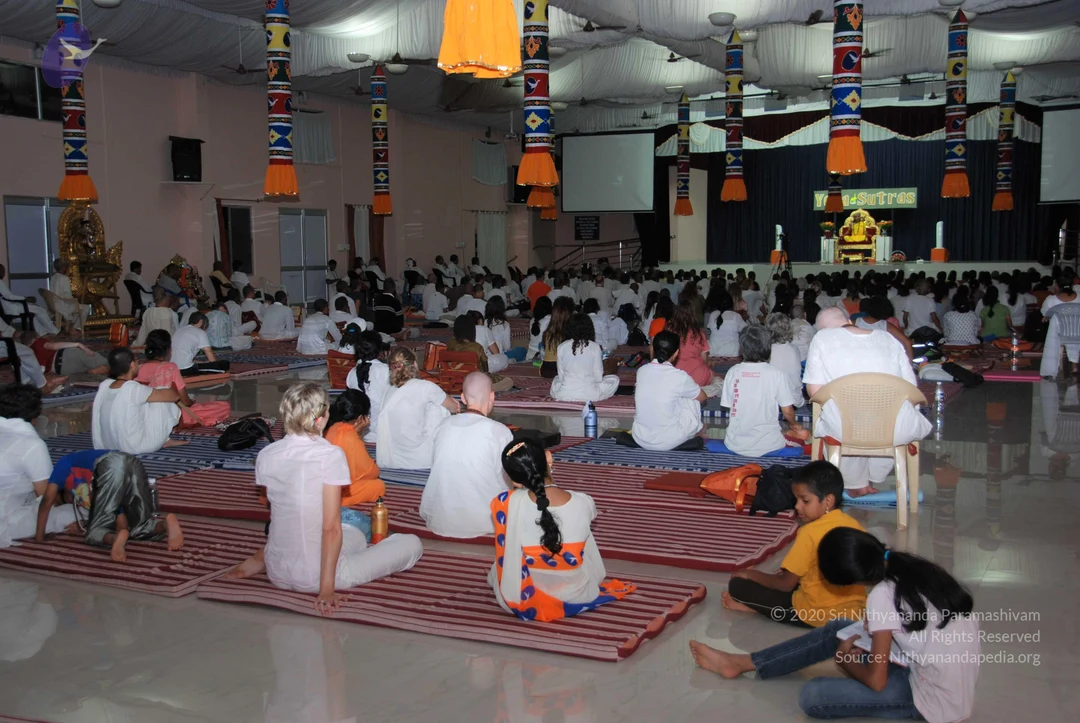
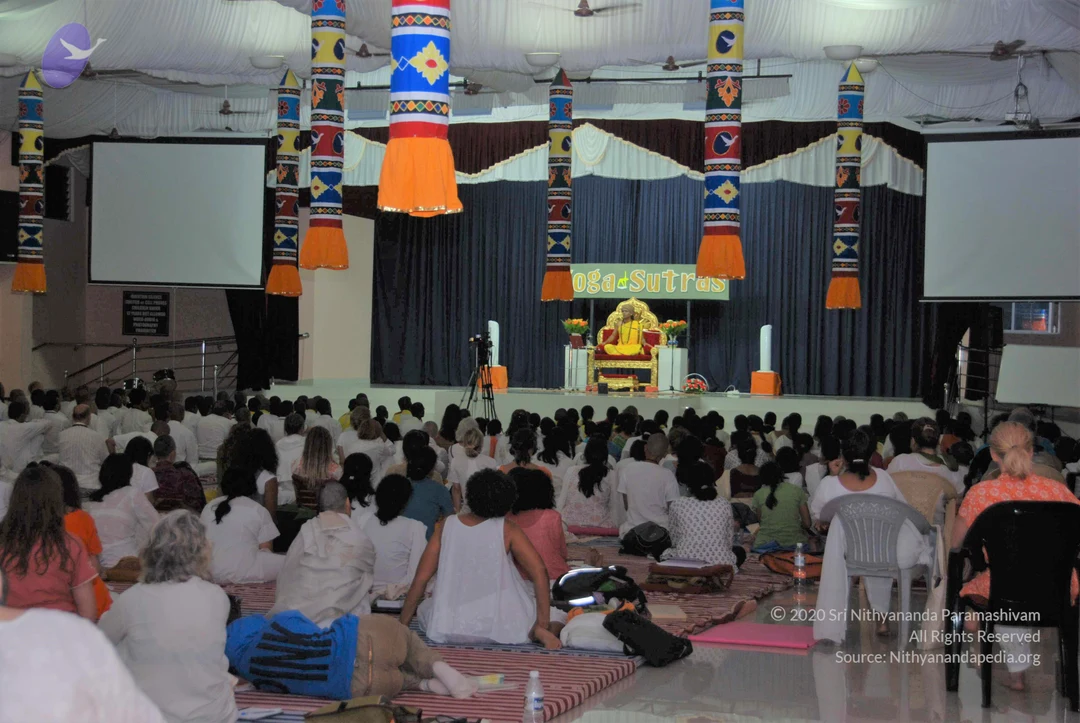
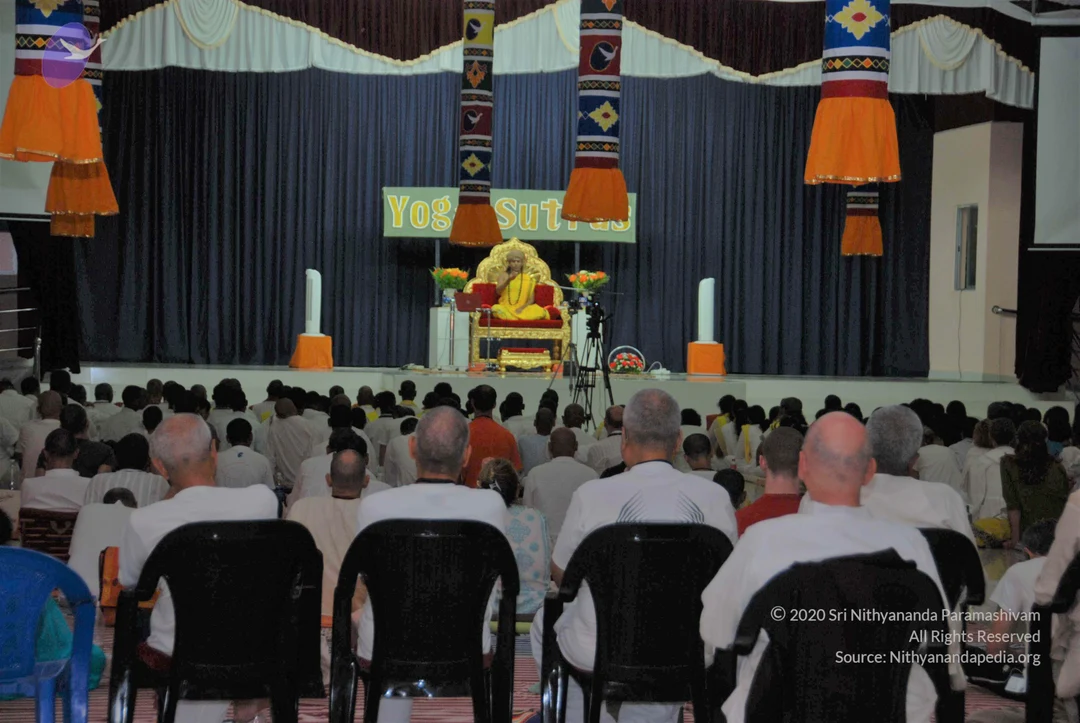
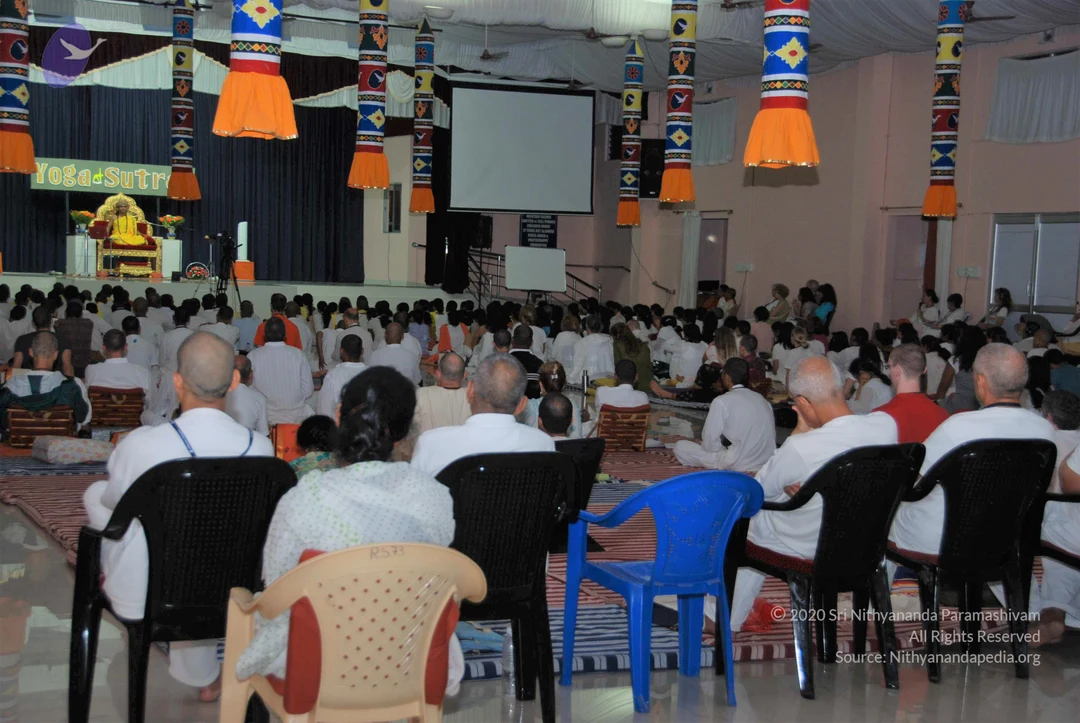
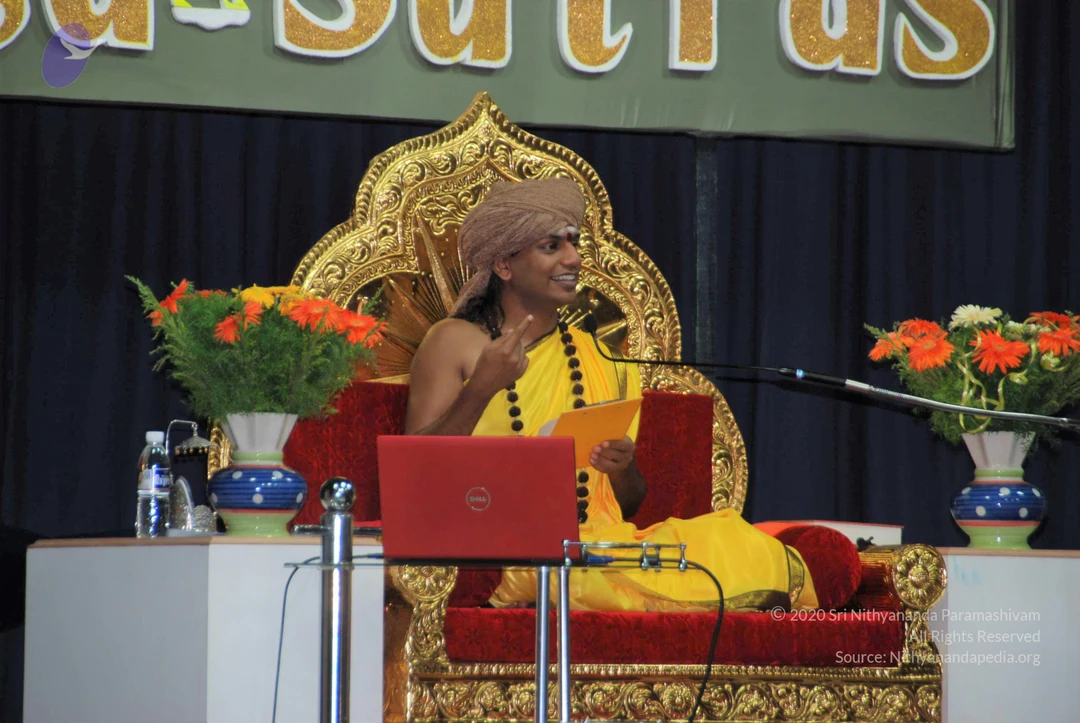
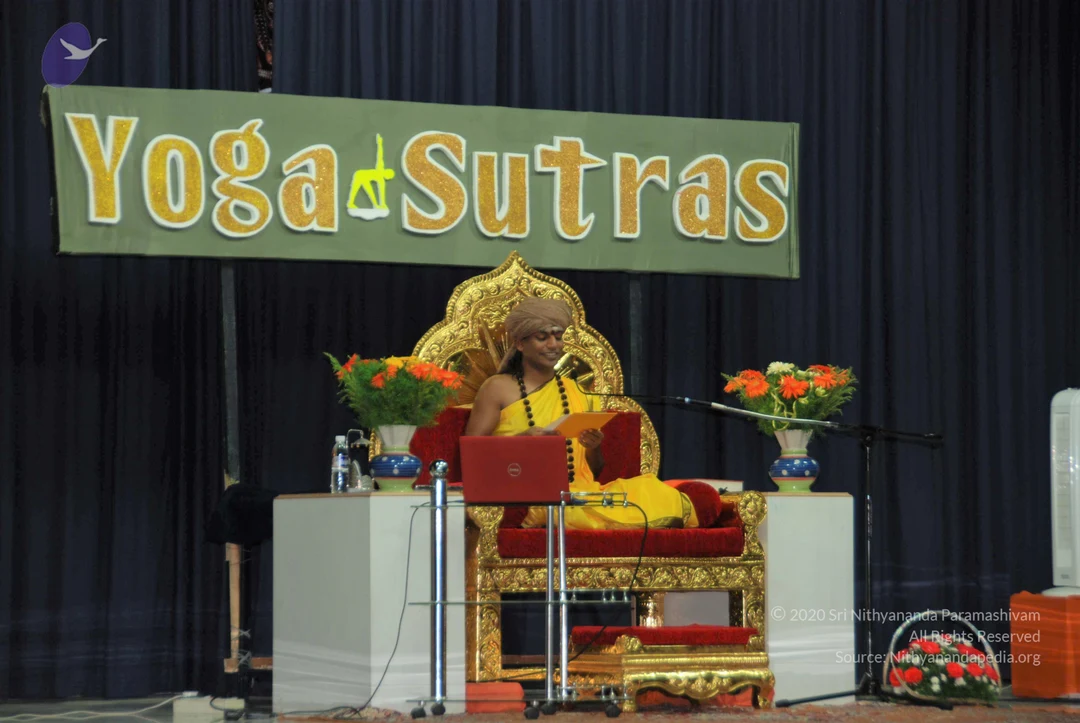
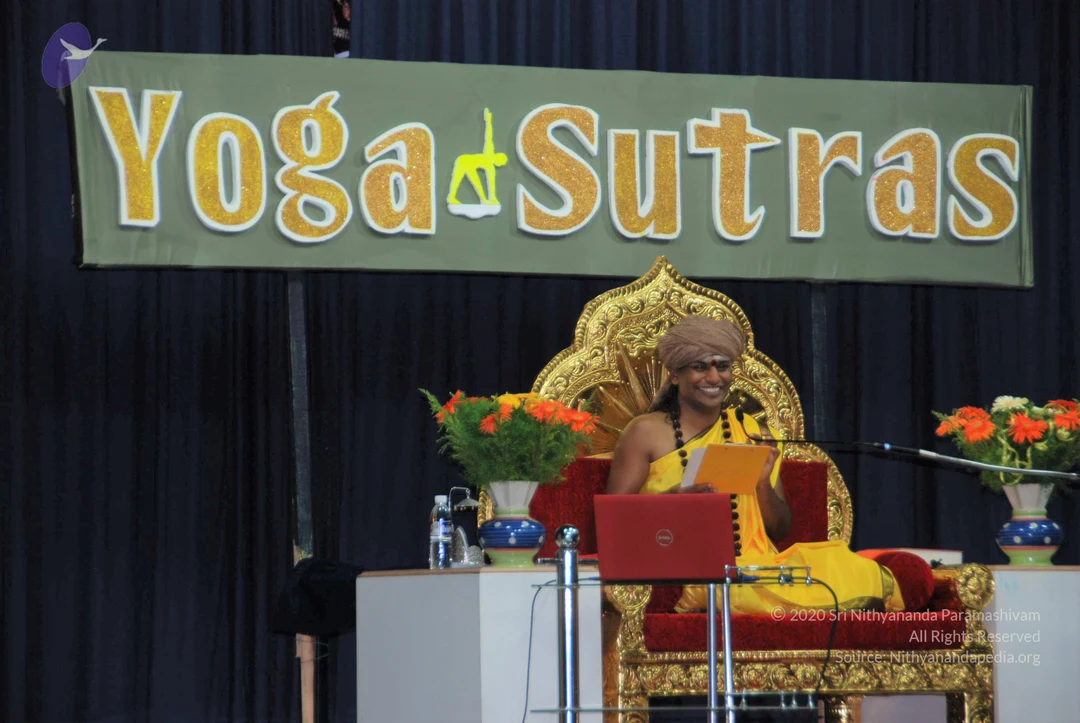
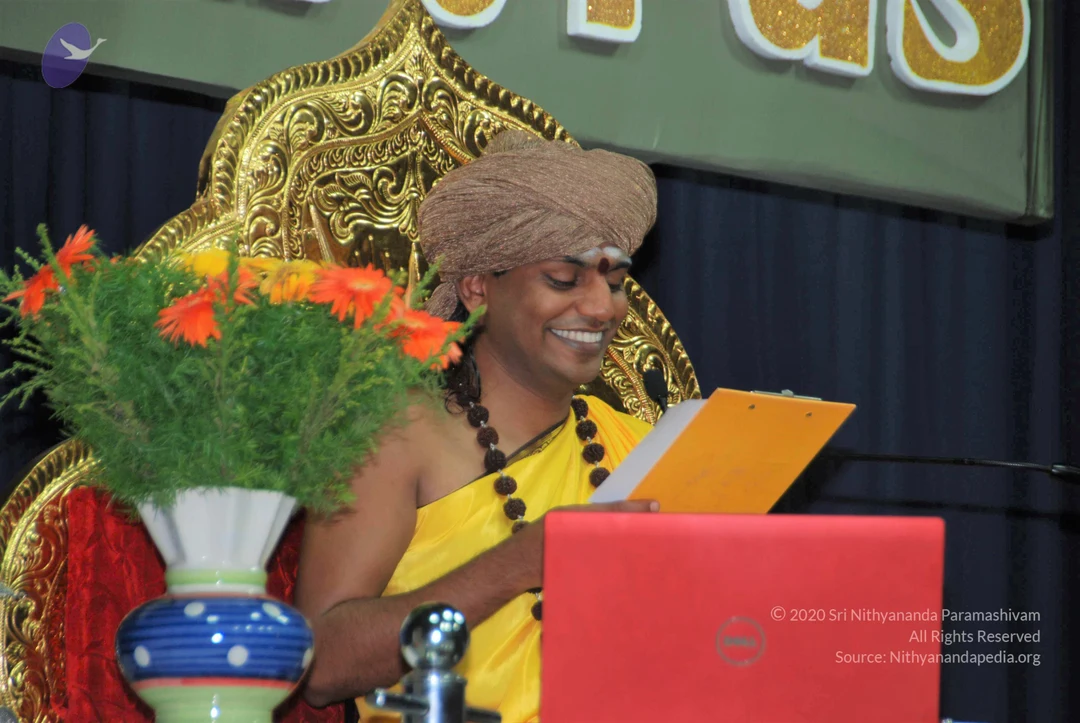
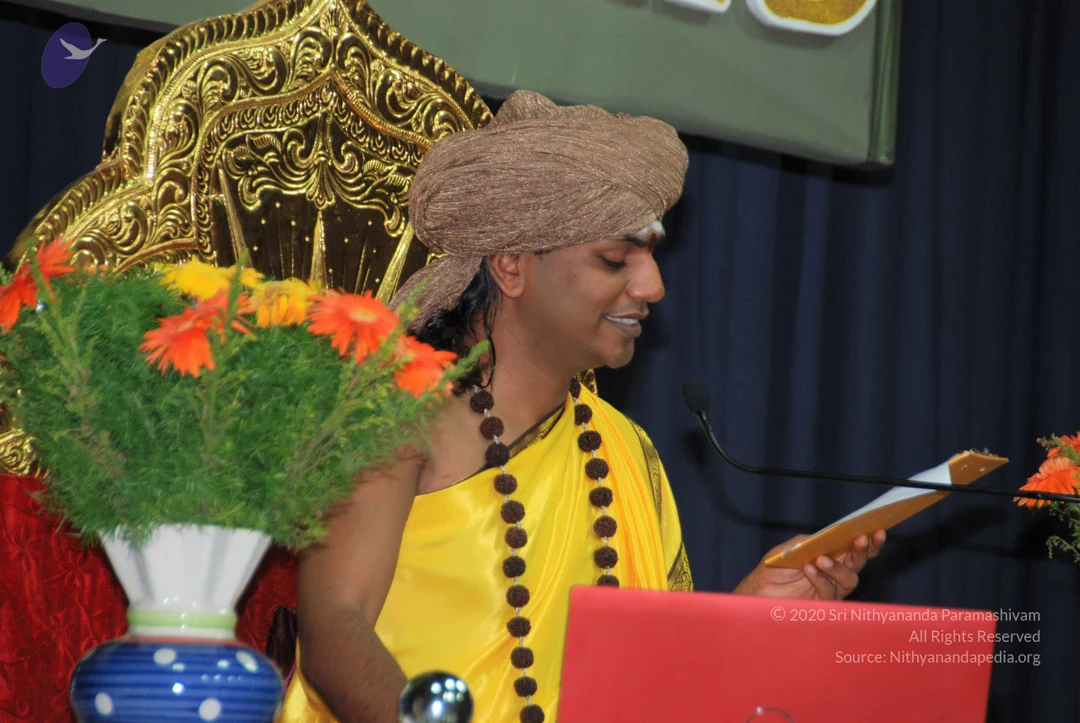
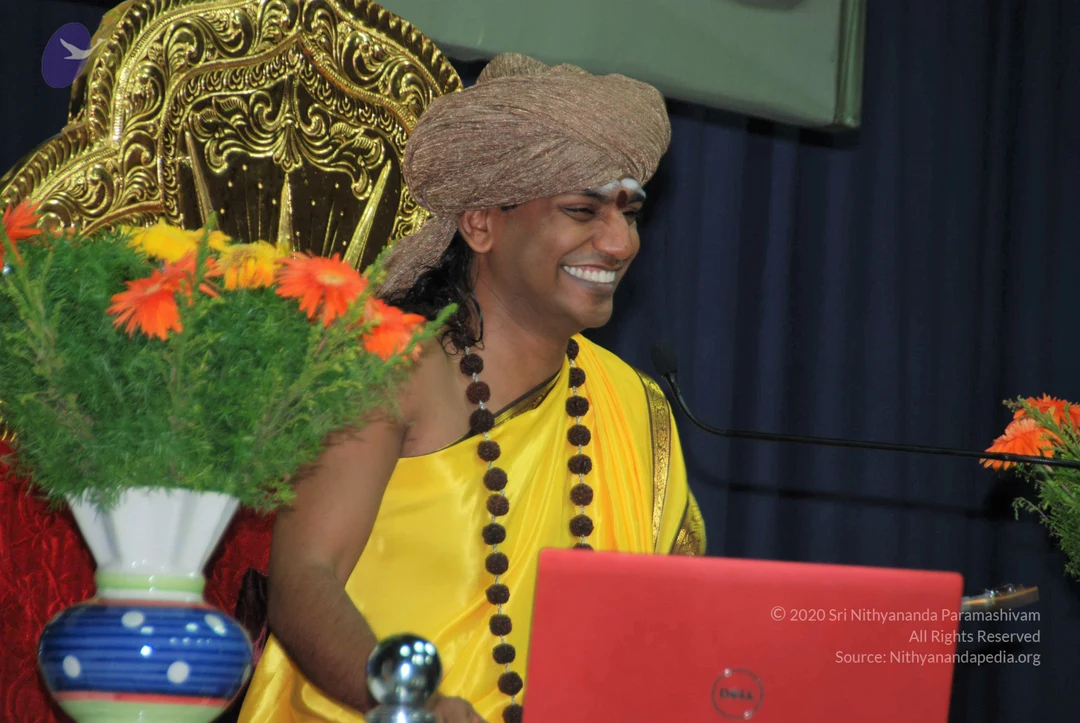
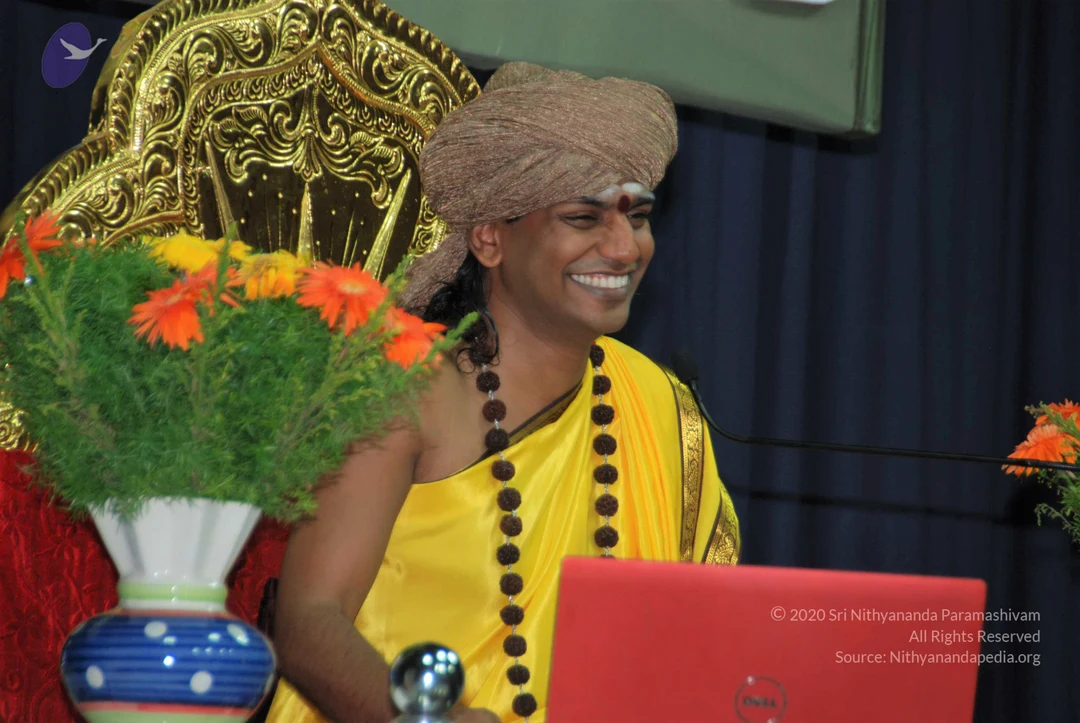
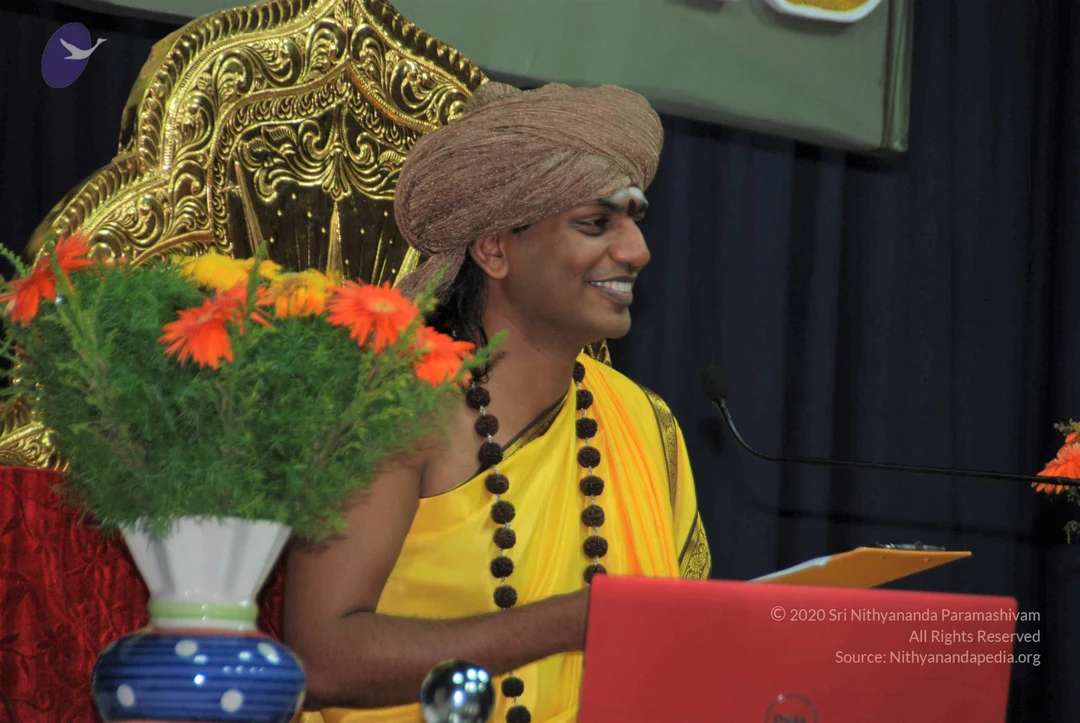
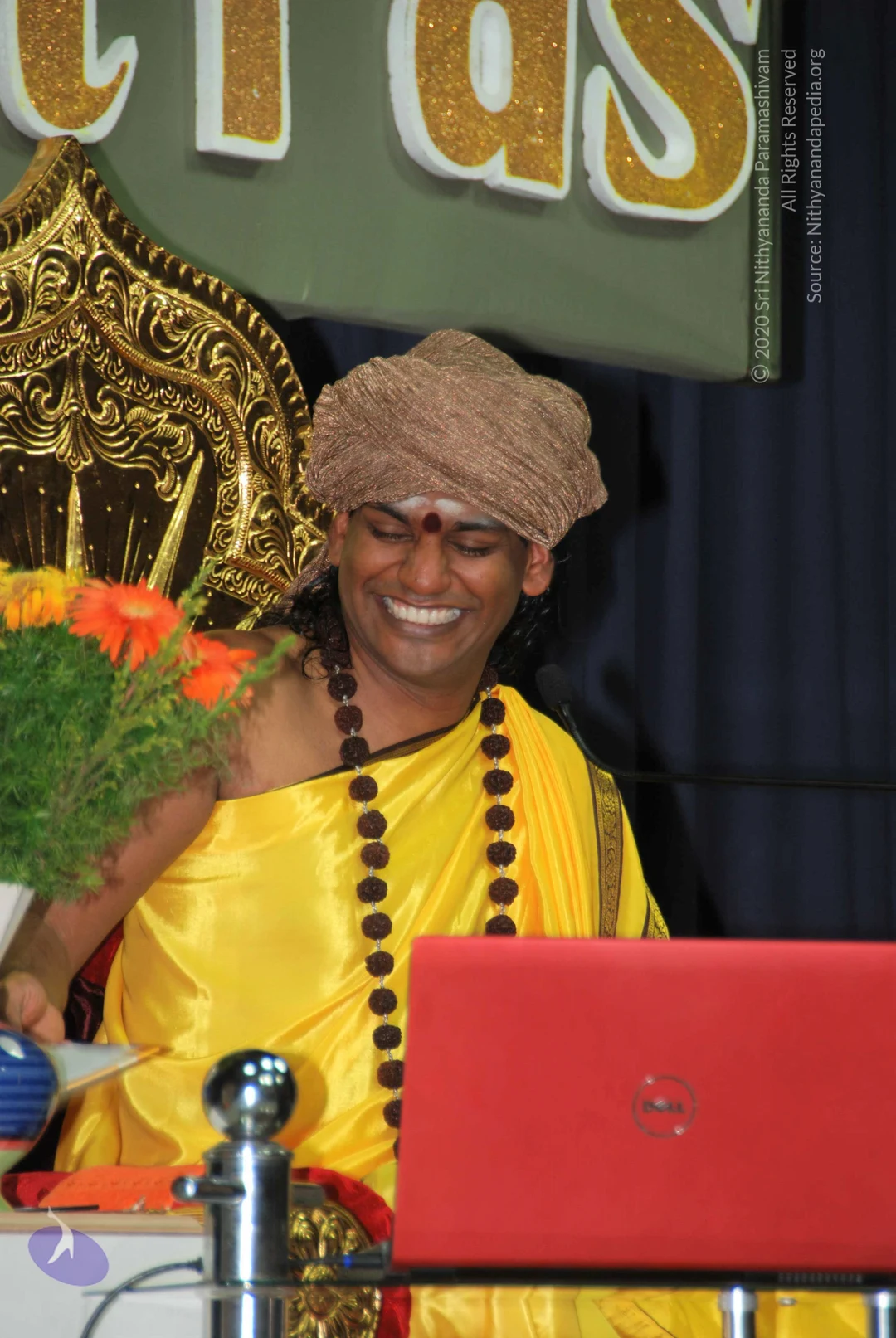
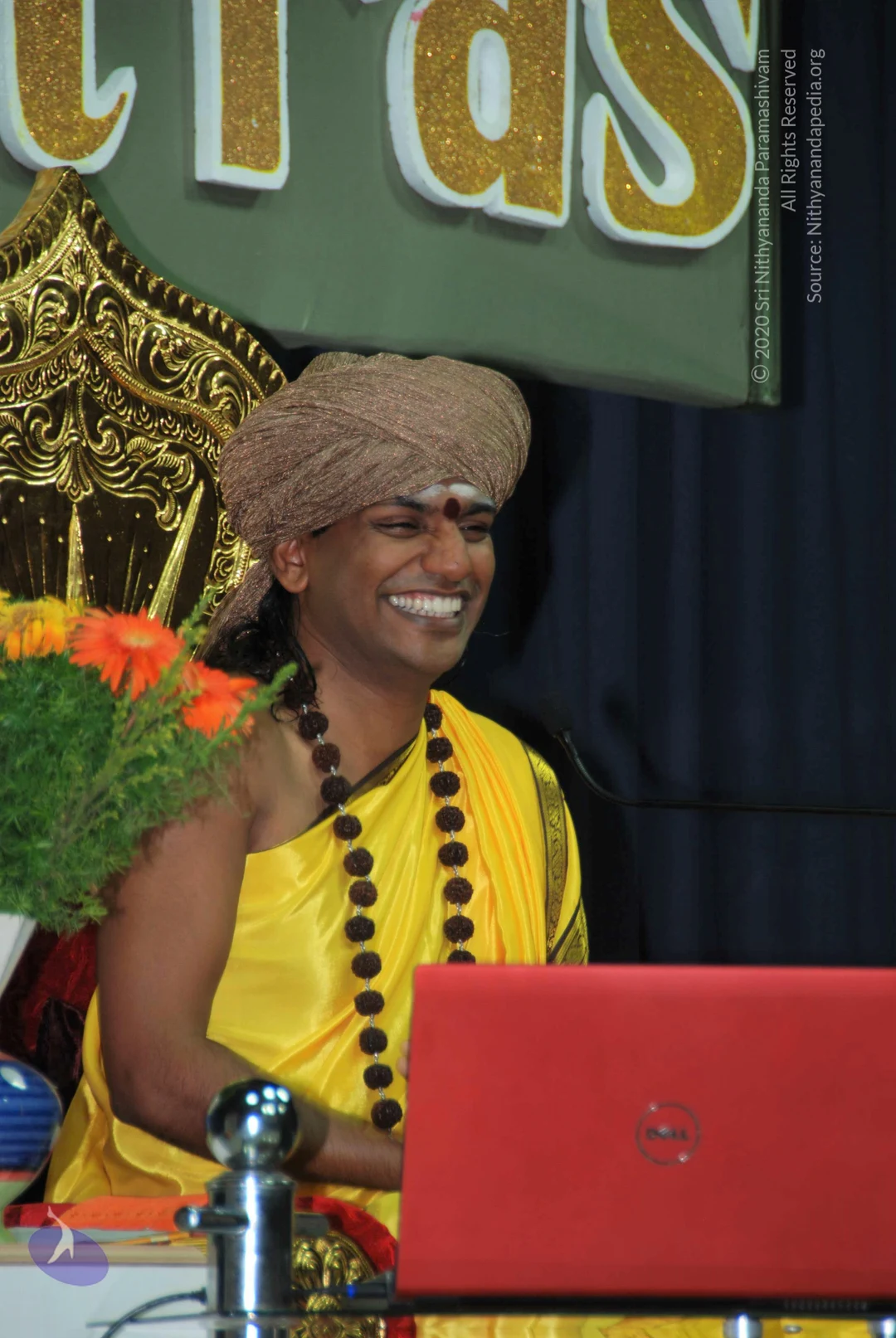
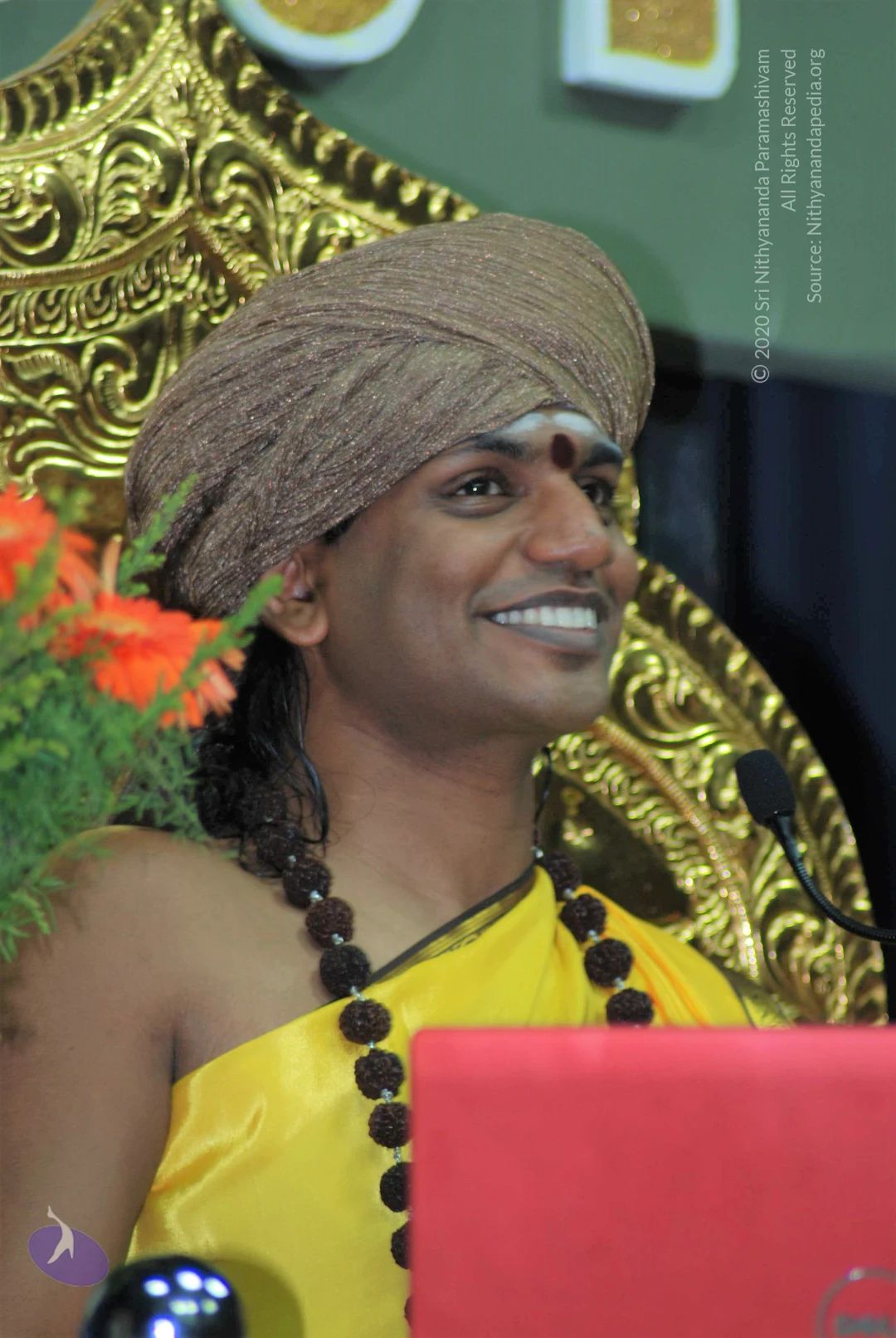
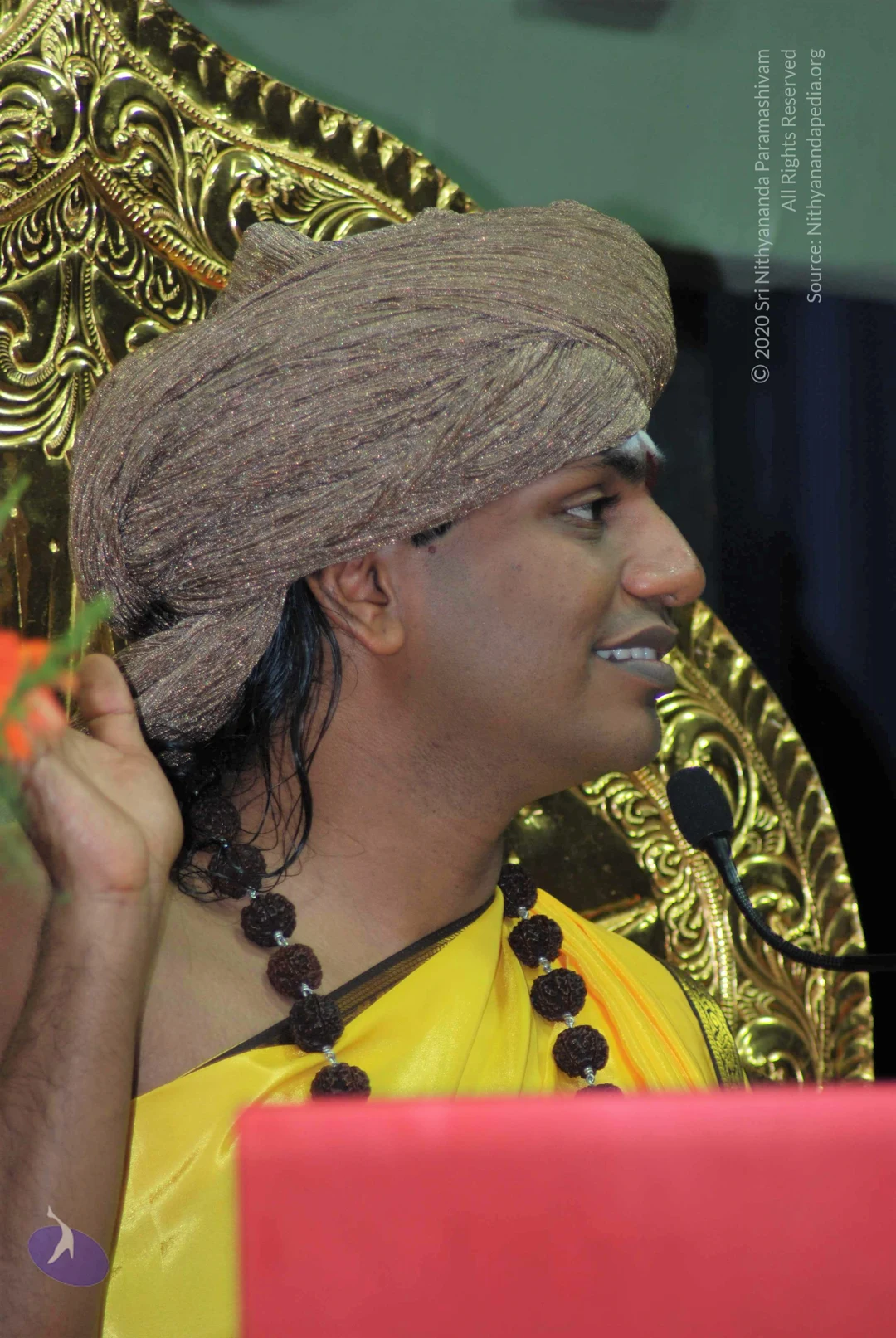
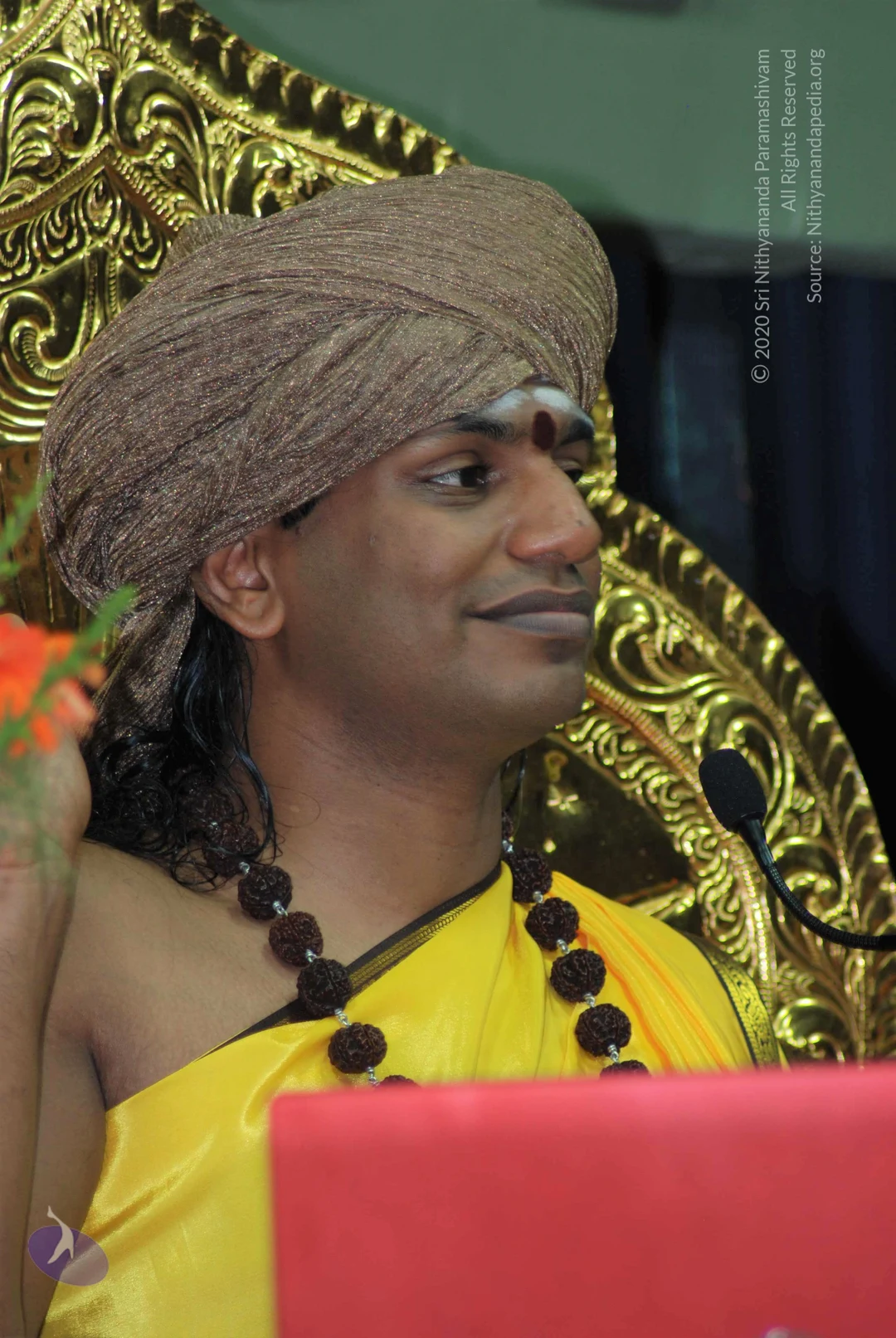
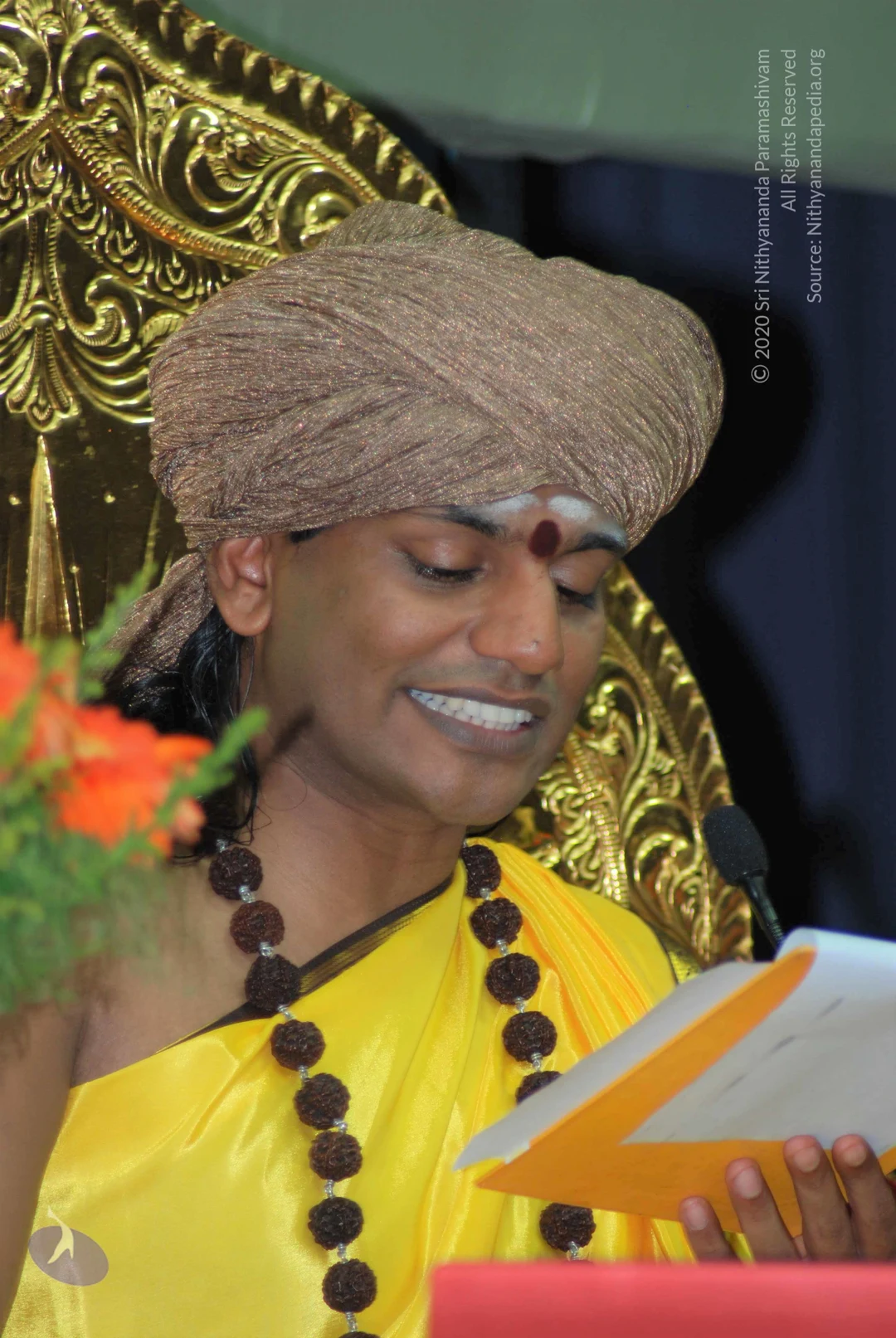
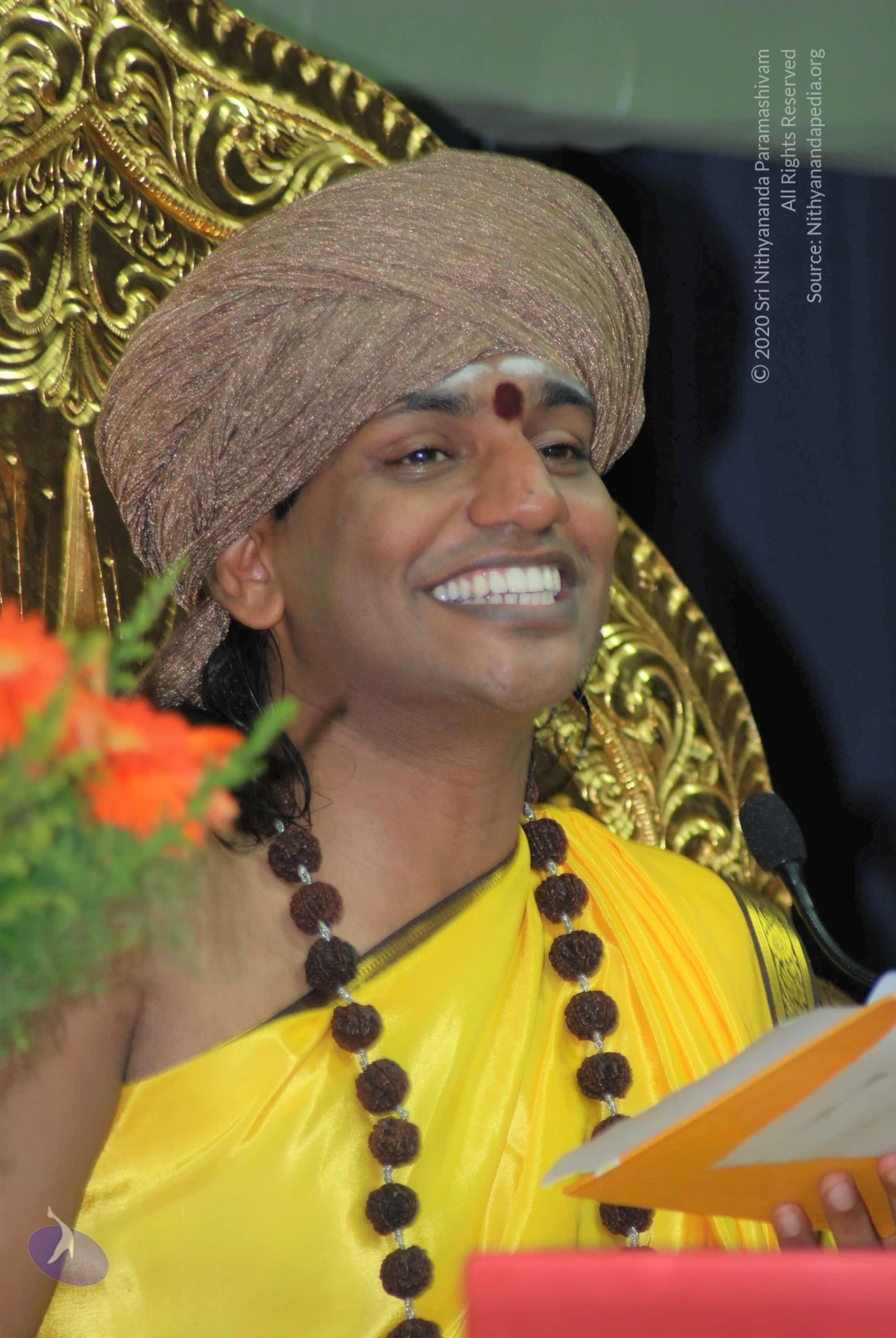
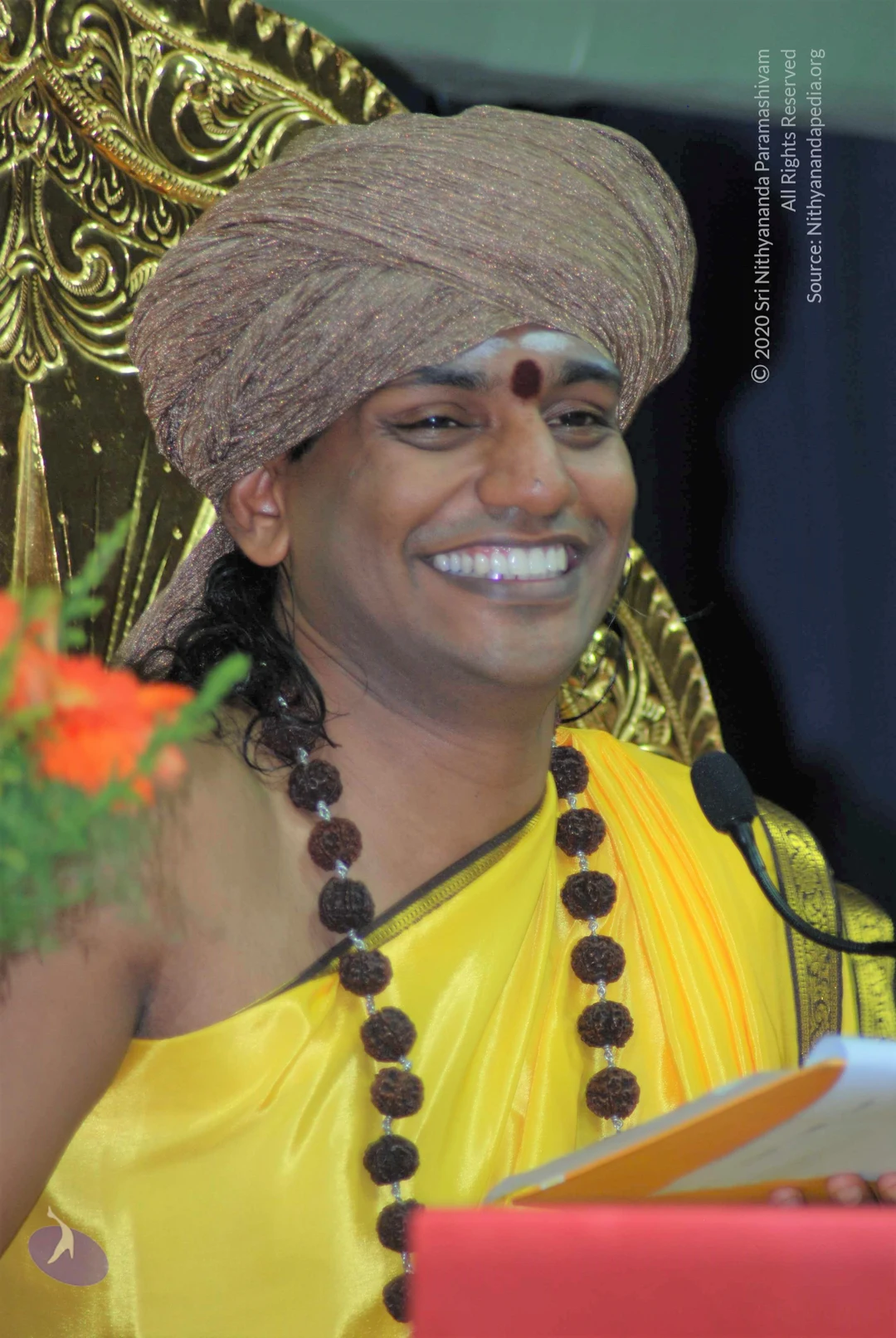
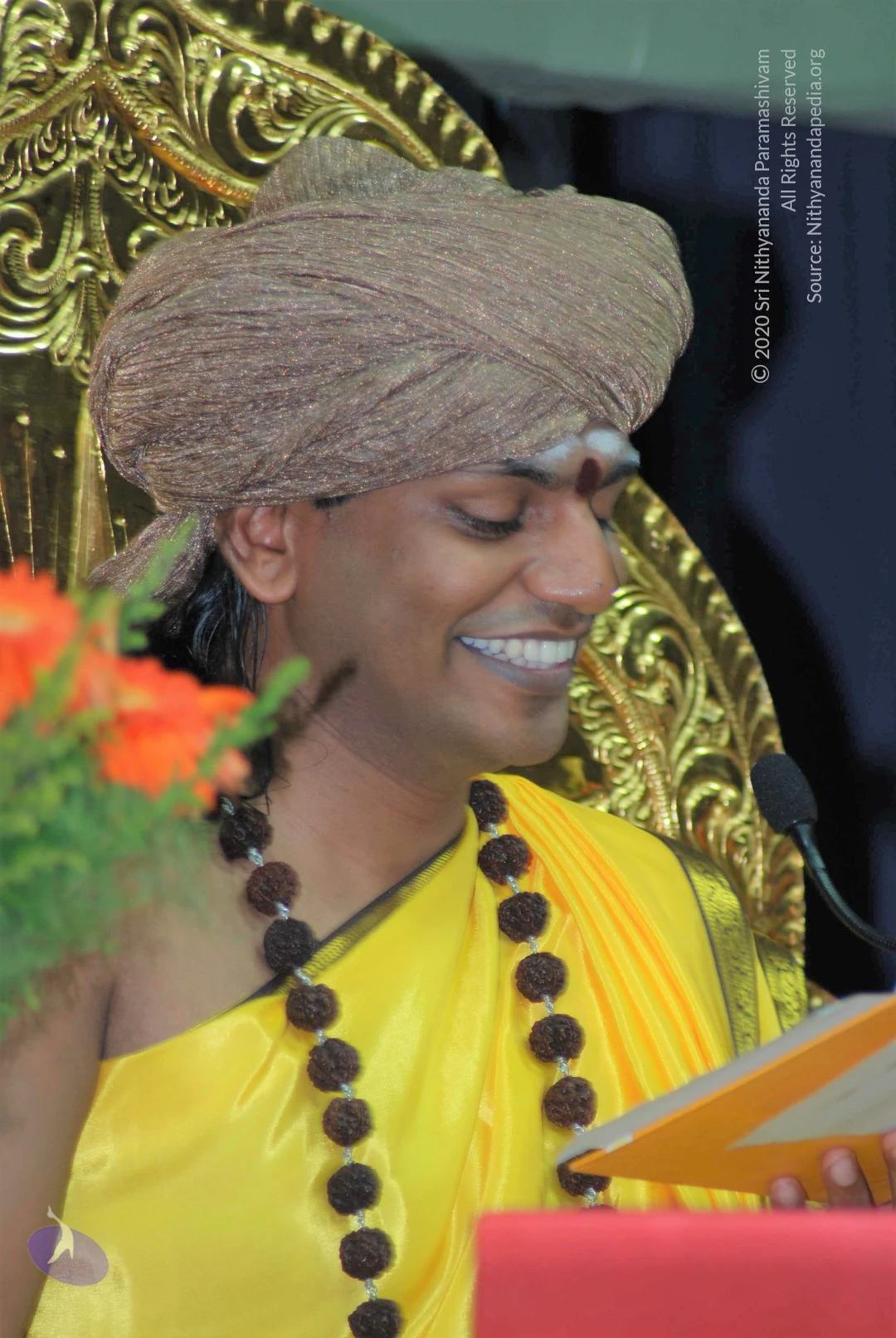
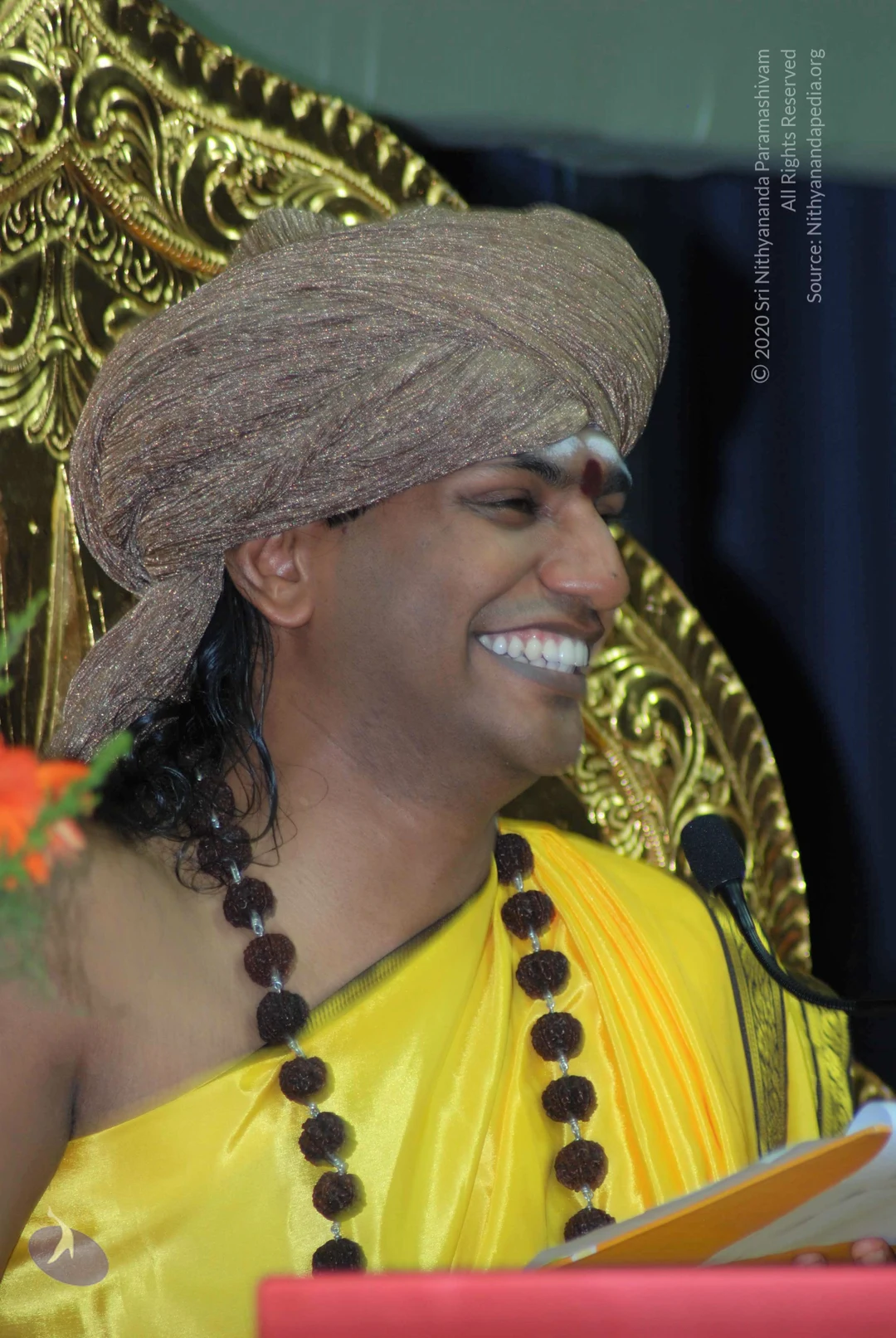
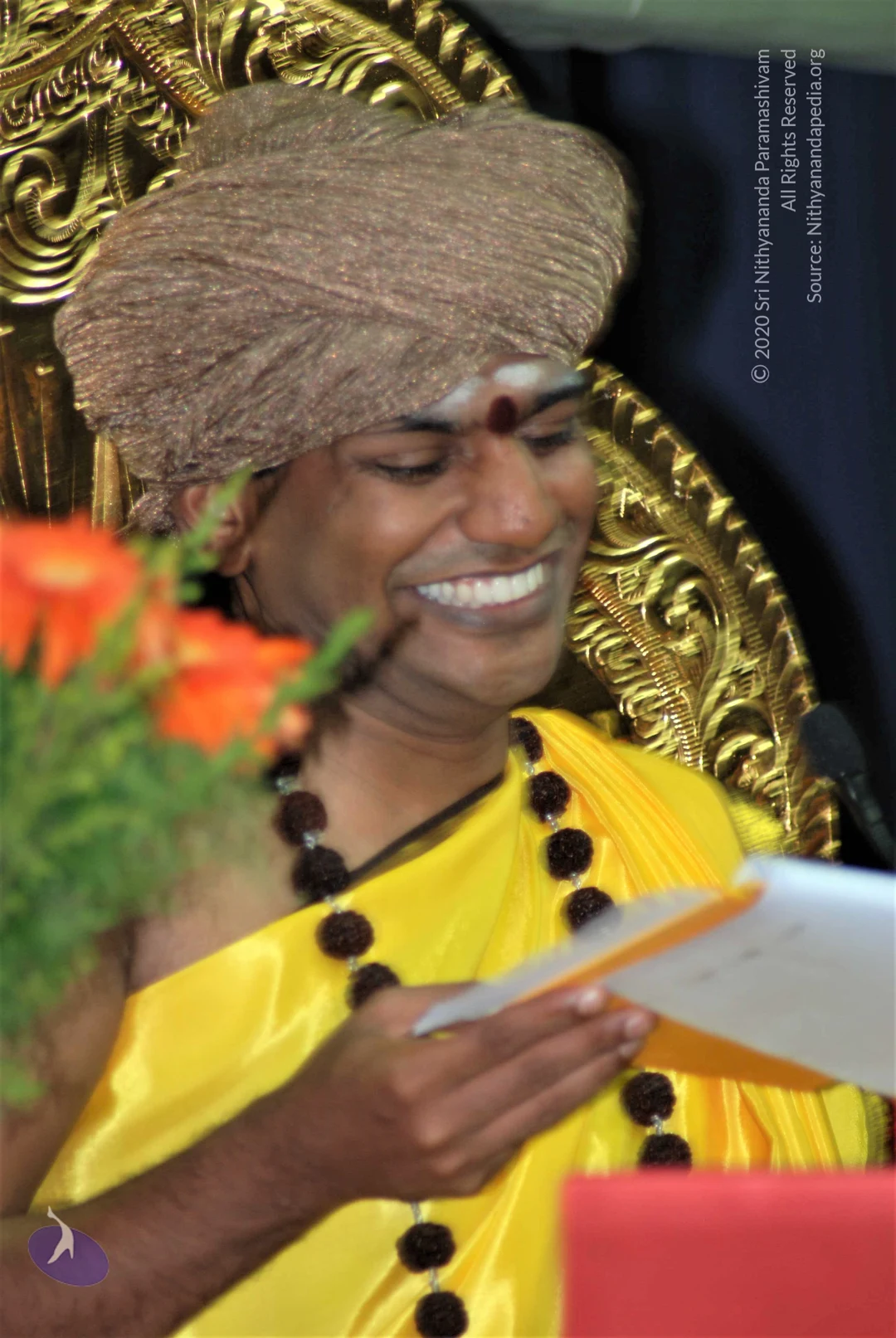
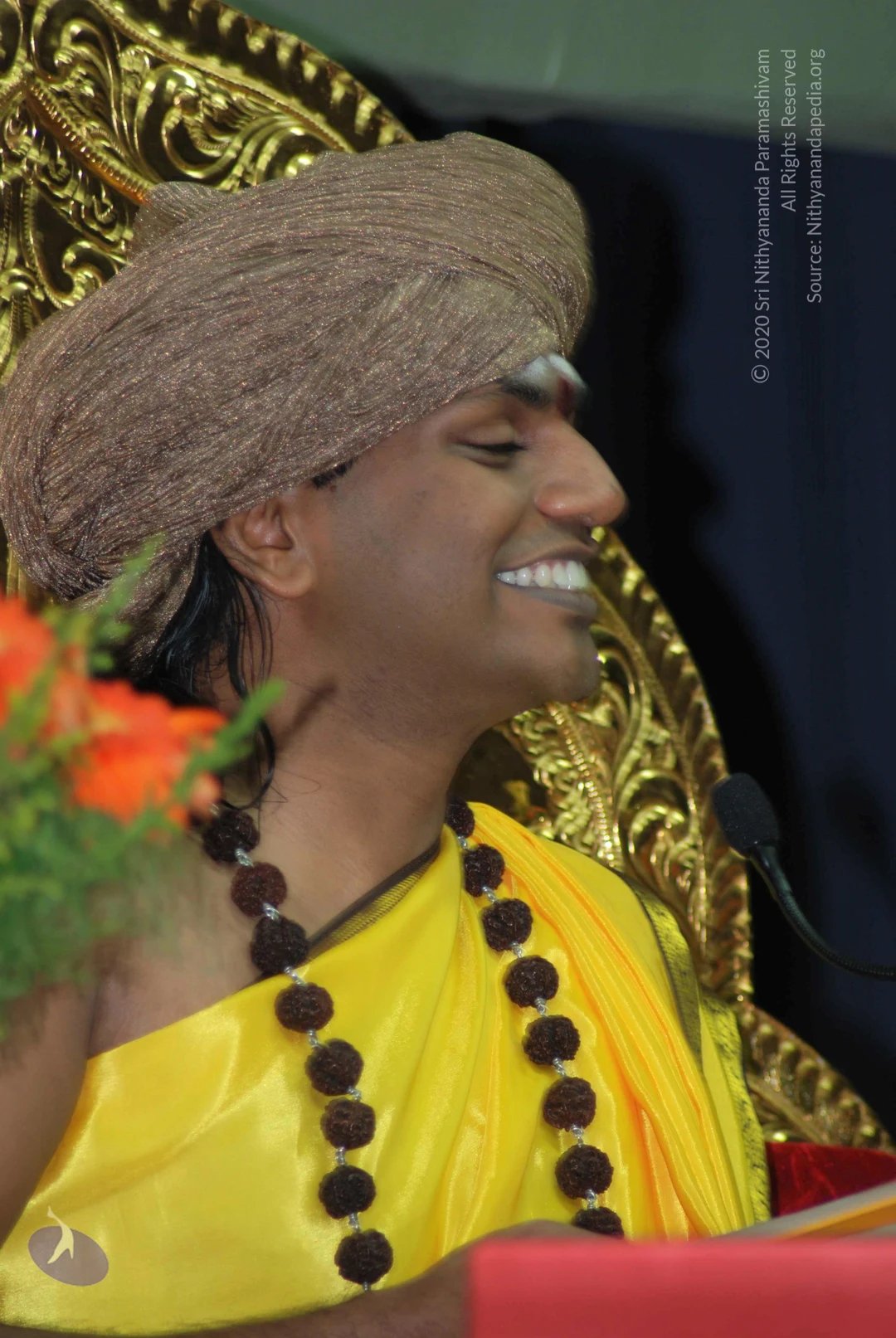
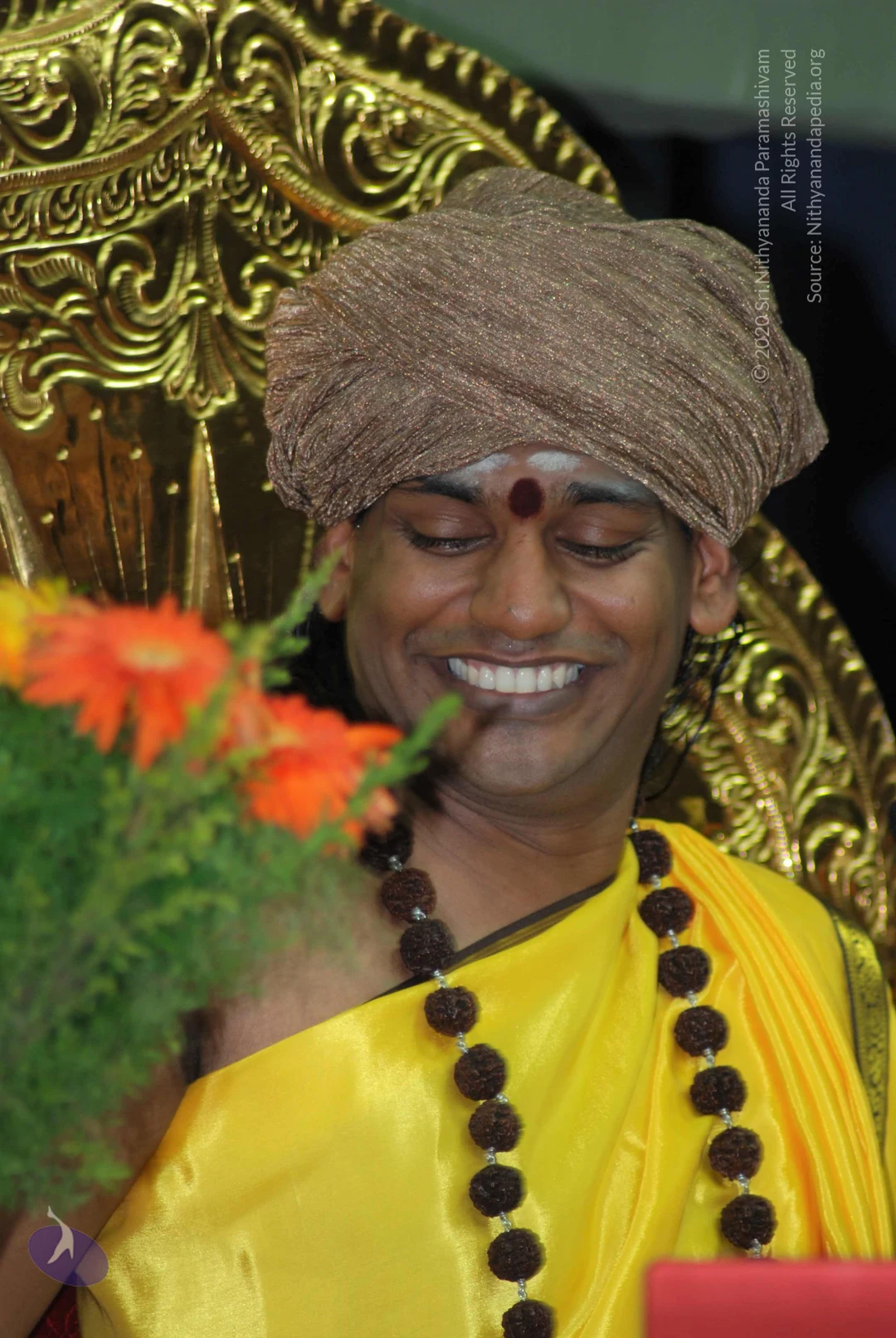
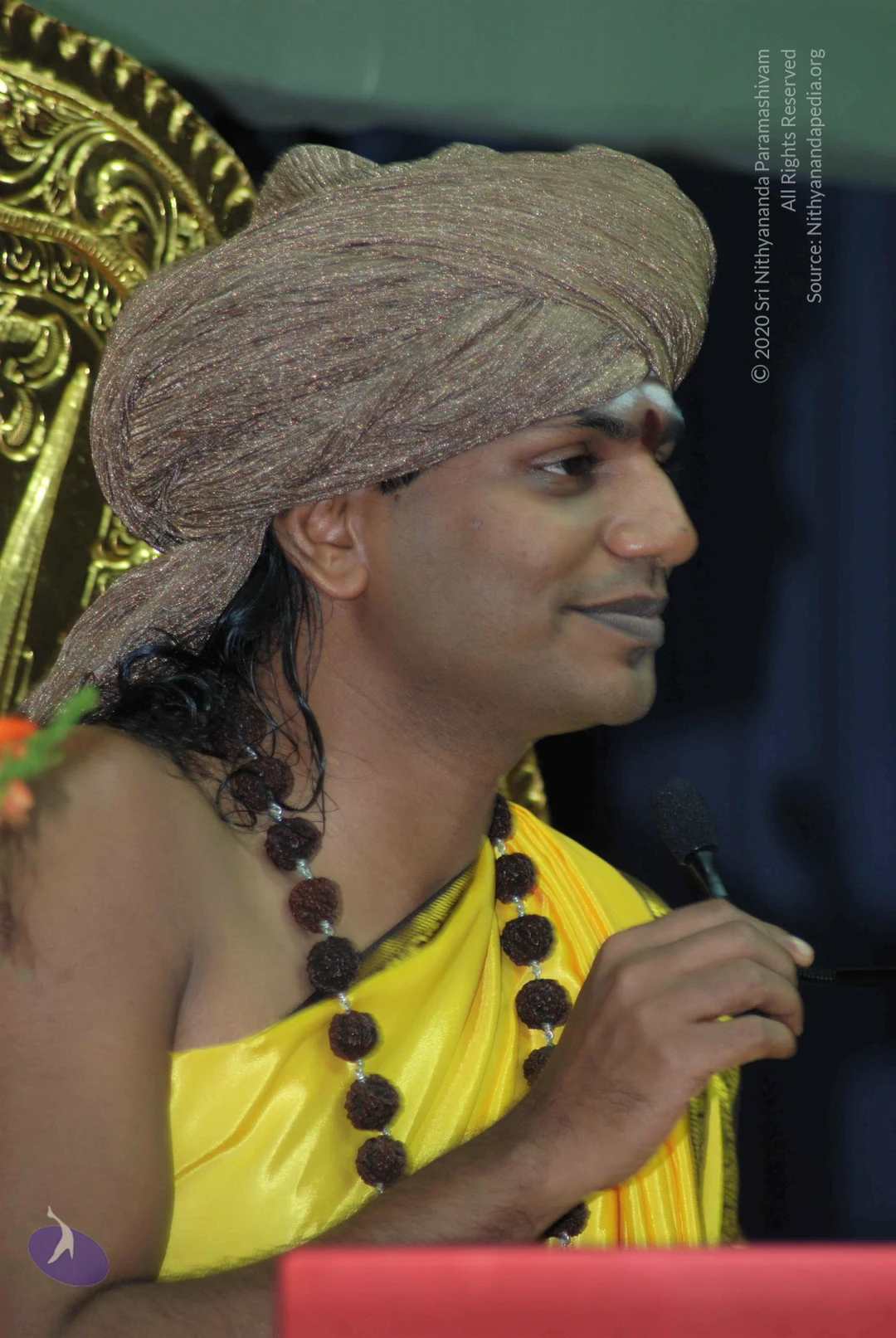
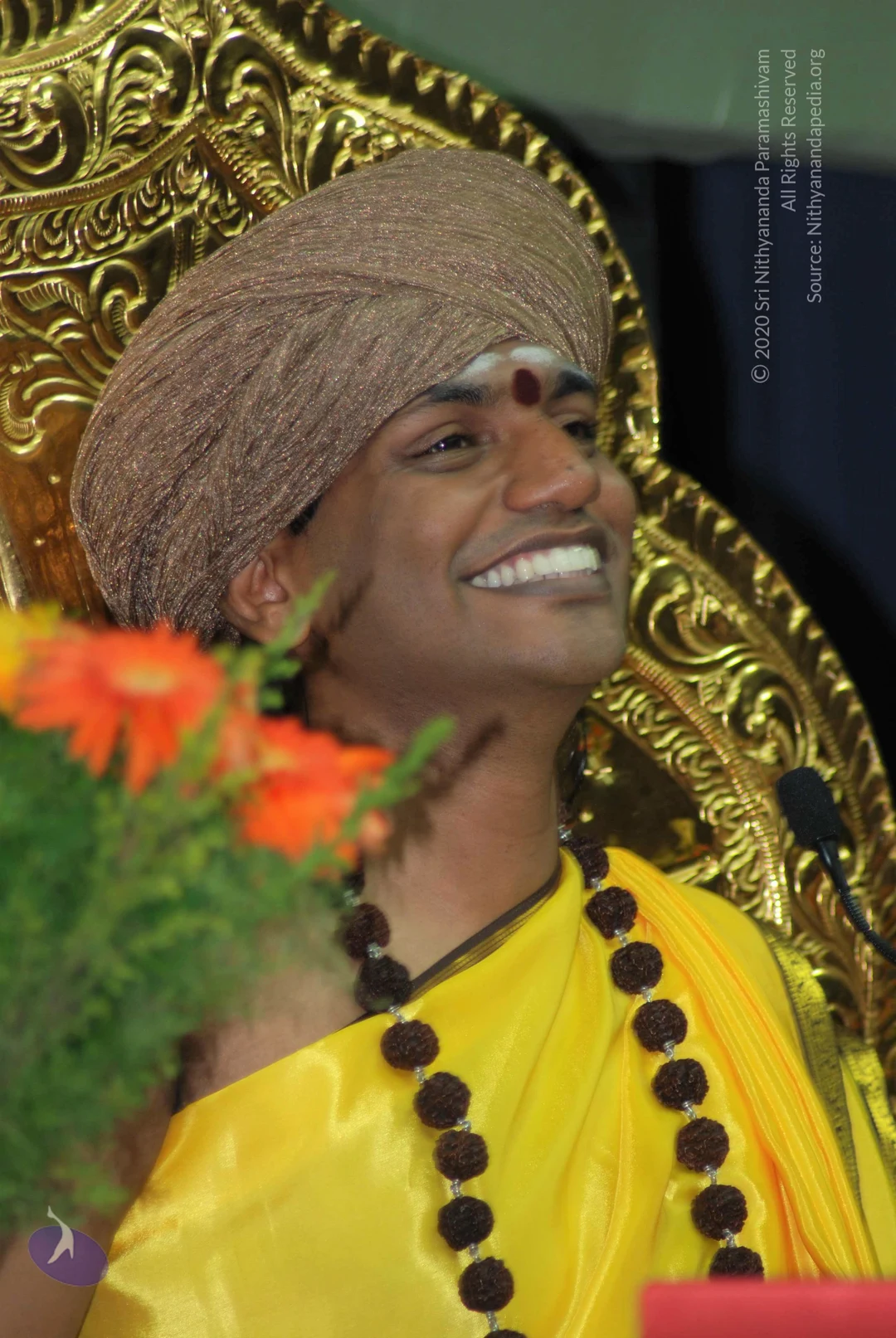
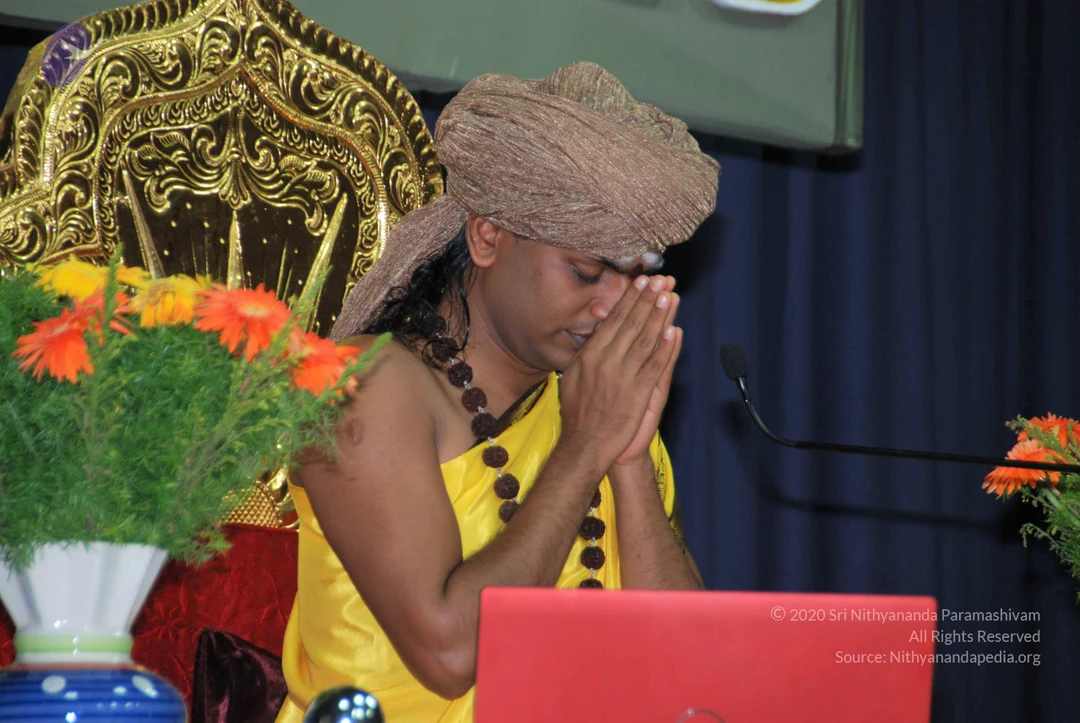
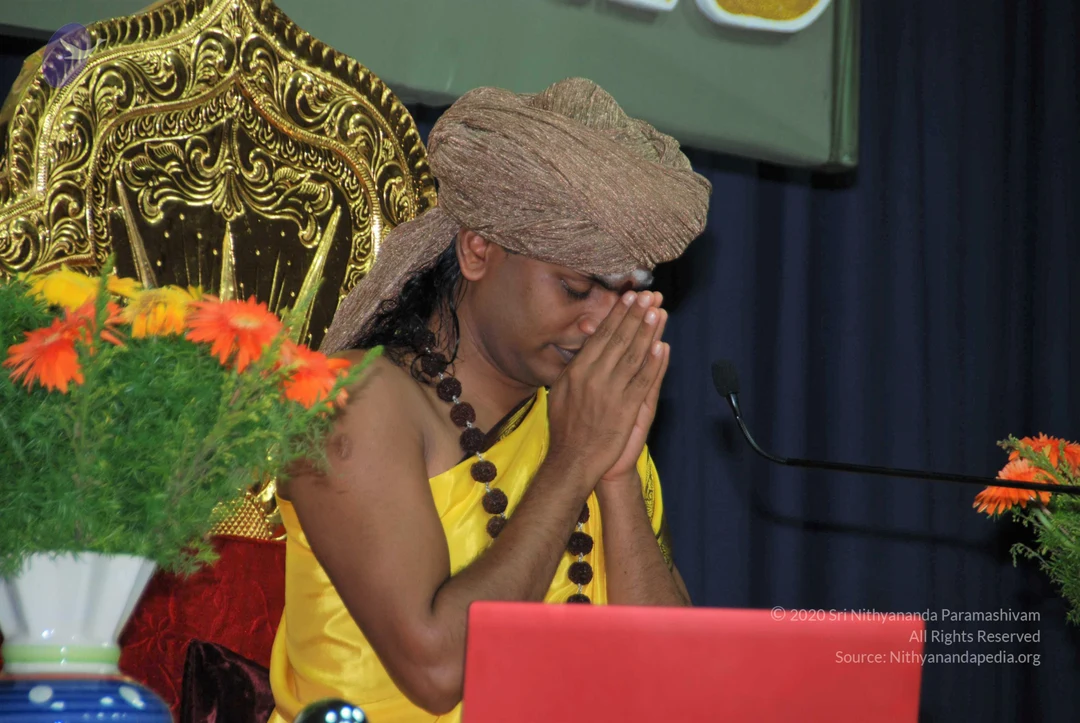
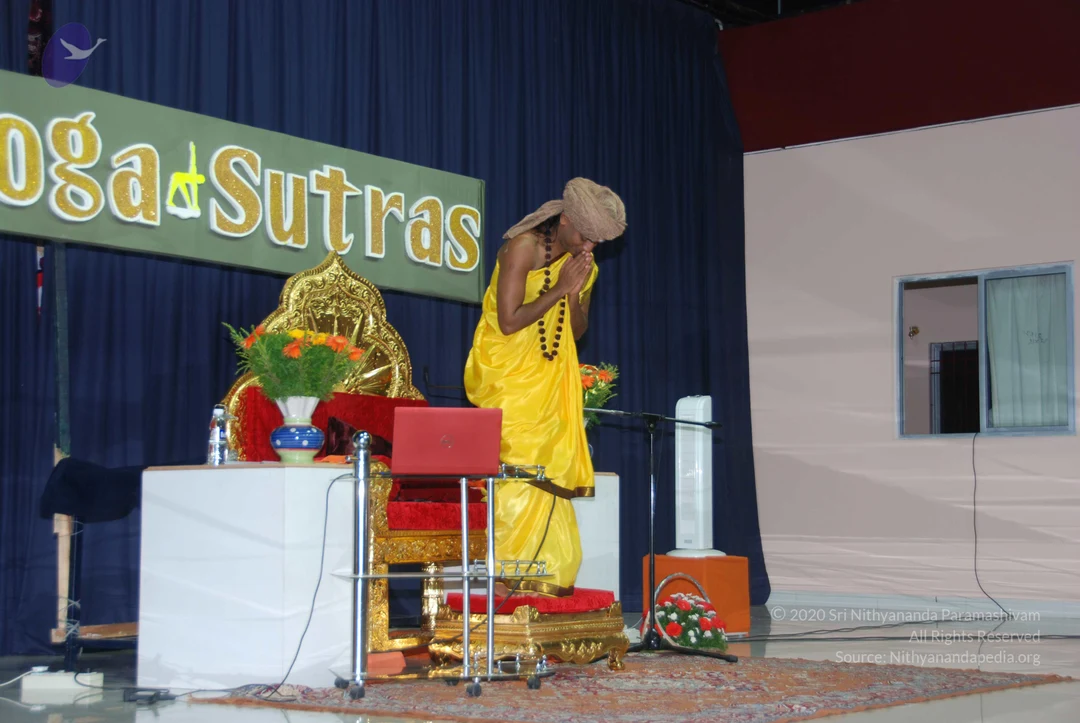
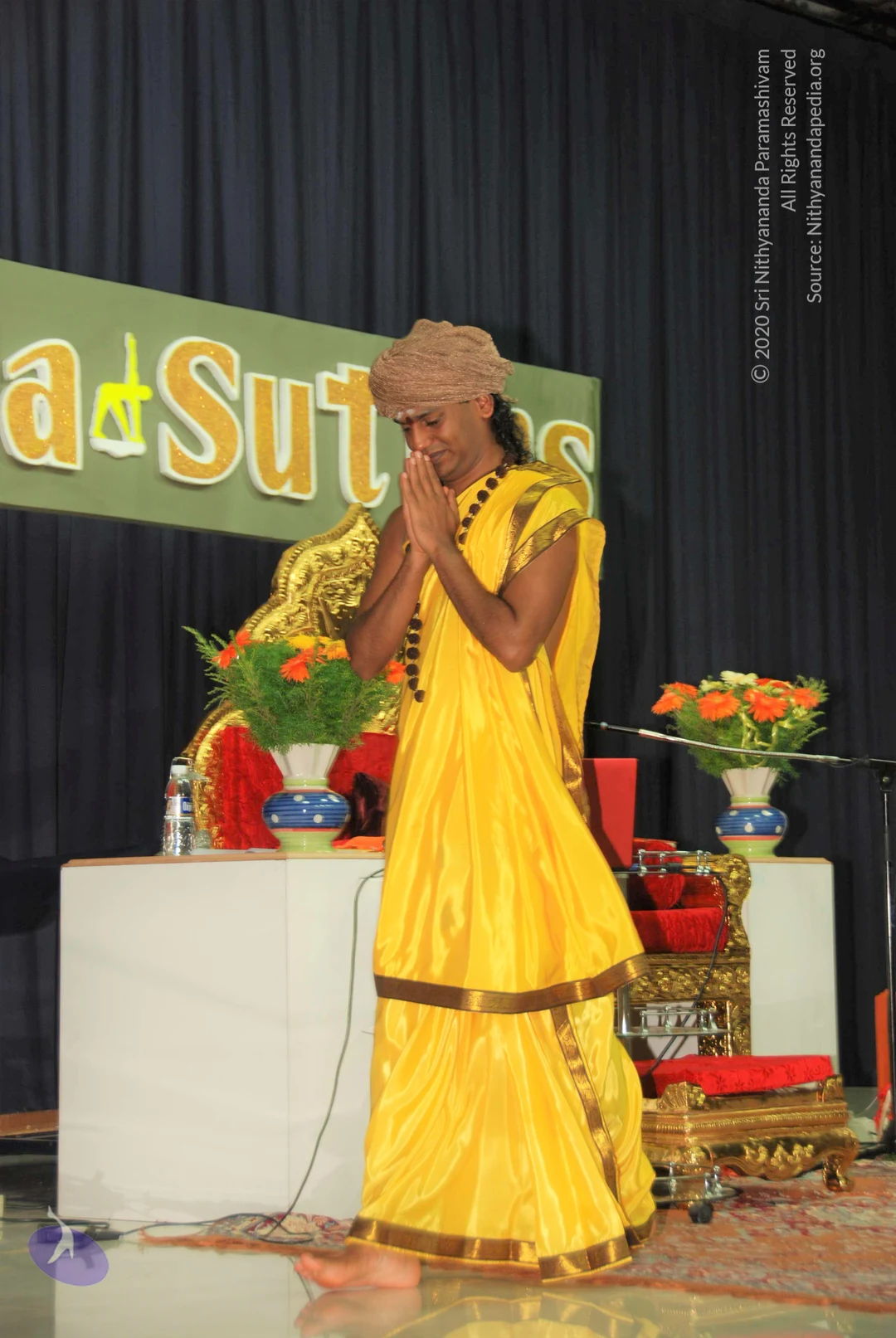
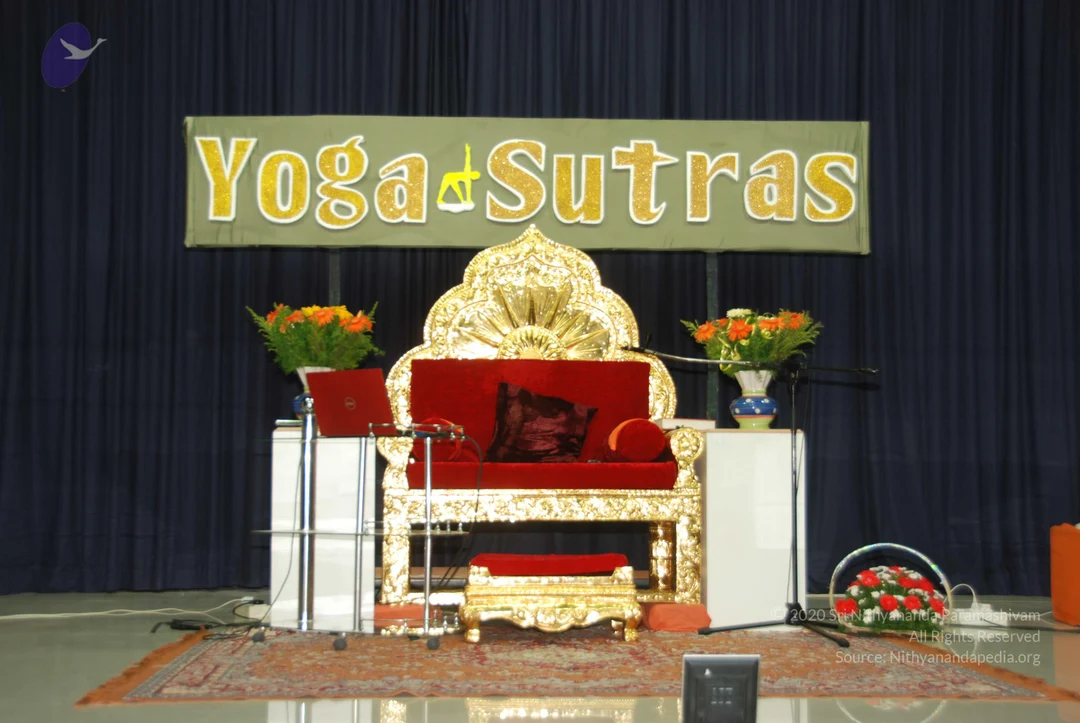
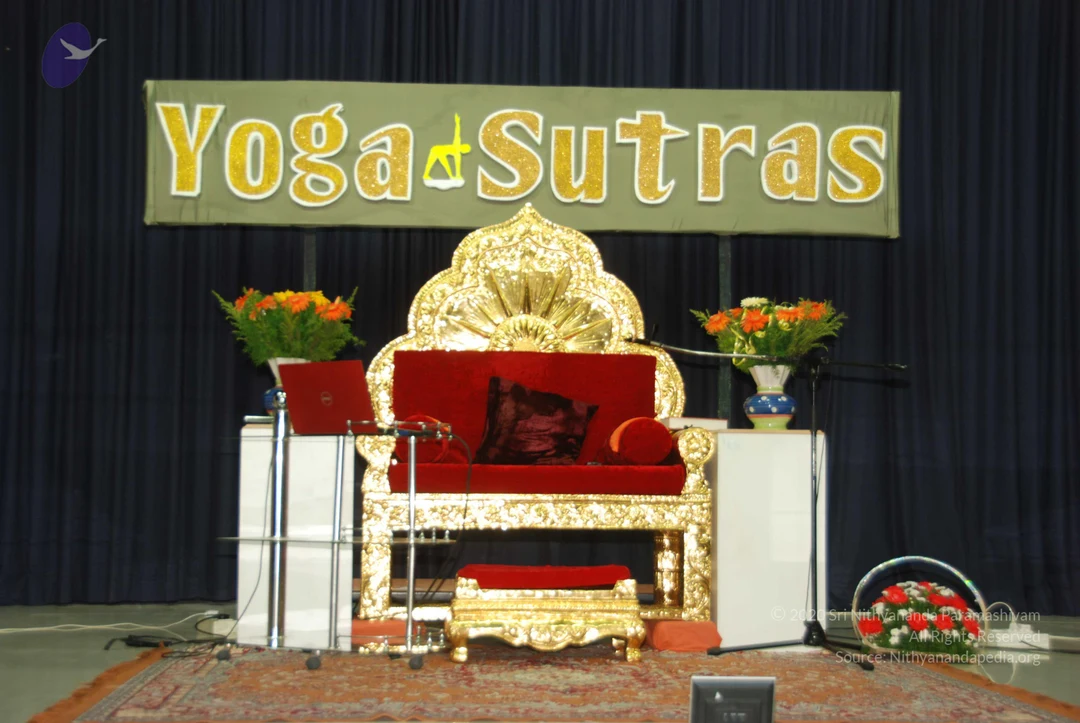
A photograph of a single standing figure on a polished stage in front of a dark navy curtain. The person wears a yellow saffron-style dhoti with a gold-toned border, a tan turban, and a dark rudraksha-style bead mala. Palms are pressed together in front of the chest in a namaskar greeting, with head slightly bowed. A white tower fan on an orange-draped block stands at right, and a microphone stand is visible at left.A standing man on a stage faces left with palms pressed together in a namaste greeting. He wears a tan turban, a yellow silk garment with a gold border draped over bare shoulders, and a dark rudraksha-style bead mala around his neck. Behind him a dark navy curtain hangs, a green banner with yellow letters reading "Yog" is at upper right, and a vase of orange and yellow flowers sits at the right edge beside a white cabinet. A white tower fan stands on an orange-draped box near him, and the polished floor reflects the figure. a person: the figure's long-format presentation includes a turban, bead mala and a yellow ceremonial garment, presented as a satsang speaker.A photograph of a stage set for a Yoga Sutras talk. A person in a flowing yellow silk garment with a matching wrap and a tan head wrap stands barefoot on a patterned red rug, turned sideways and bowing forward toward an ornate gold throne with red cushions. Orange and red flower arrangements in blue vases flank the throne, and a green banner reading Yoga Sutras hangs above a dark blue curtain. A microphone stand and a small monitor sit at the right edge.A figure in a yellow saffron-toned silk robe with a brown cloth head covering stands at a golden ornate throne on a stage with a dark blue backdrop. Hands are pressed together in anjali mudra near the face. Dark beaded rudraksha-style mala hangs on the chest. A red cushion sits on the golden throne, a red laptop and glass lectern stand to the left, and orange and yellow flowers decorate vases on each side. A green banner reads Yoga Sutras with a gold yoga figure. The figure's appearance is not clearly established, so the identity is uncertain.
08

September 14 2010

303 photosView all
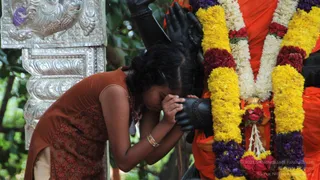
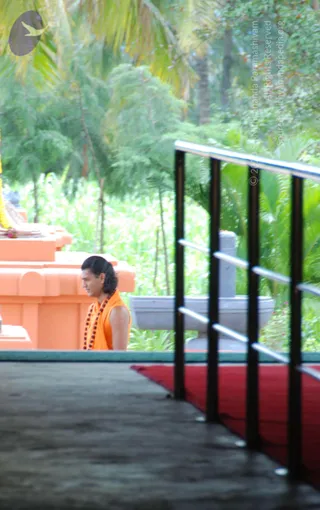
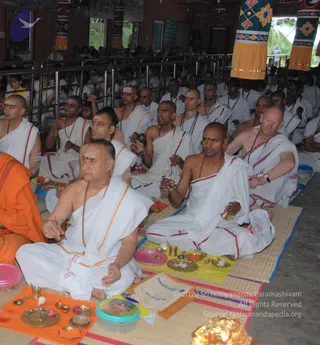
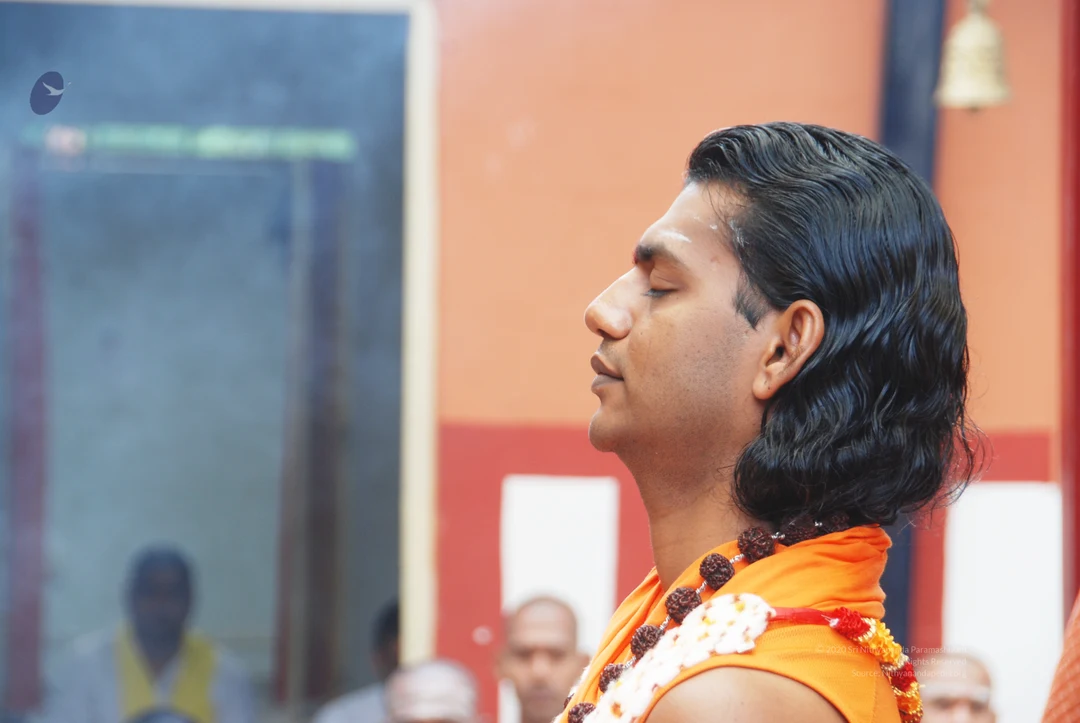
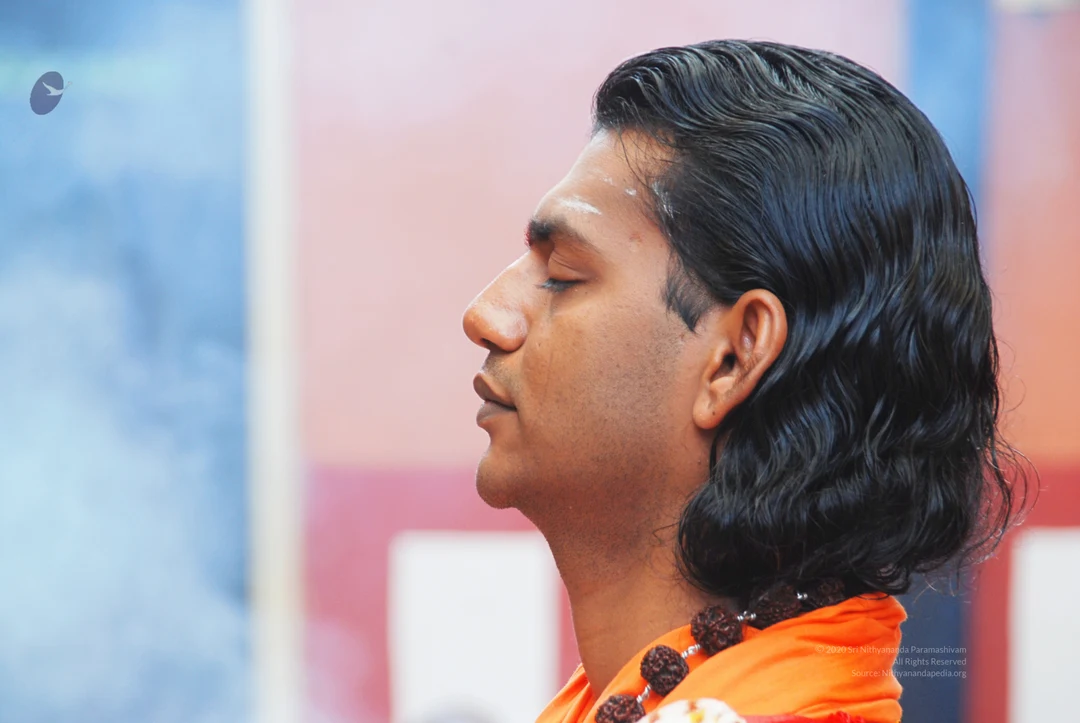
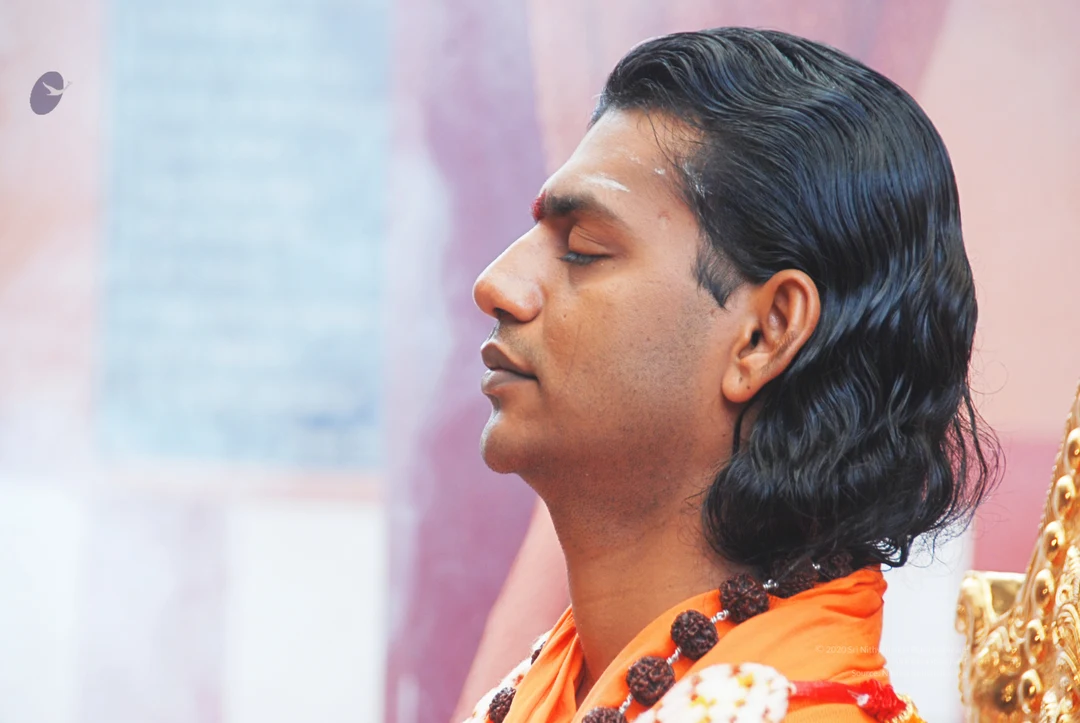
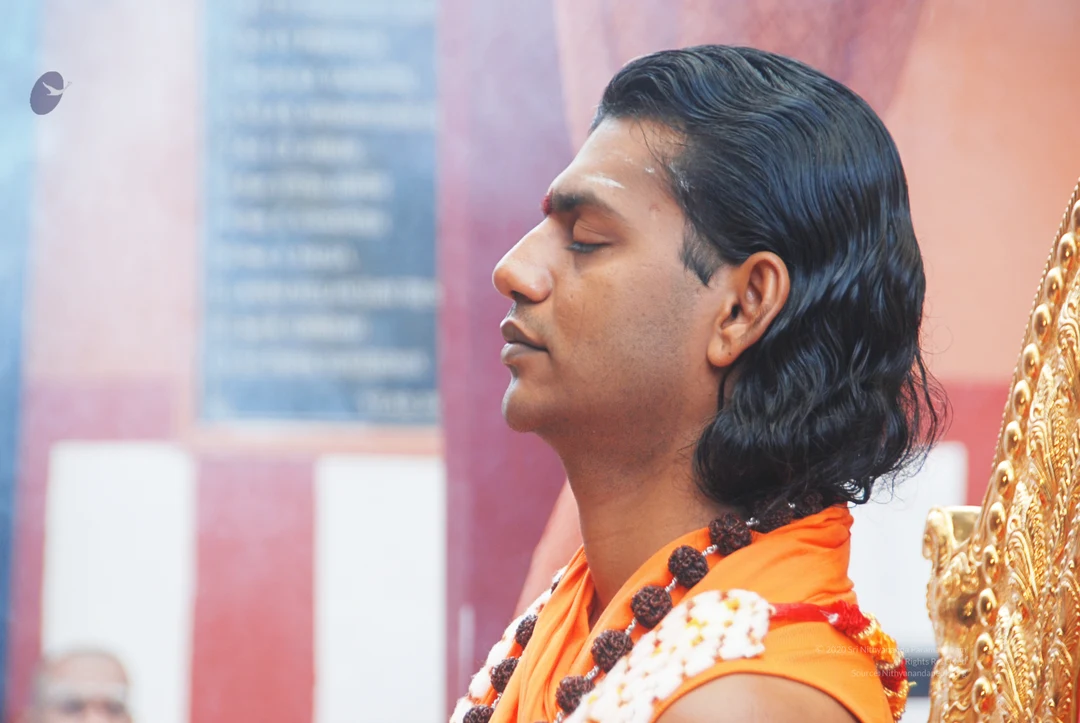
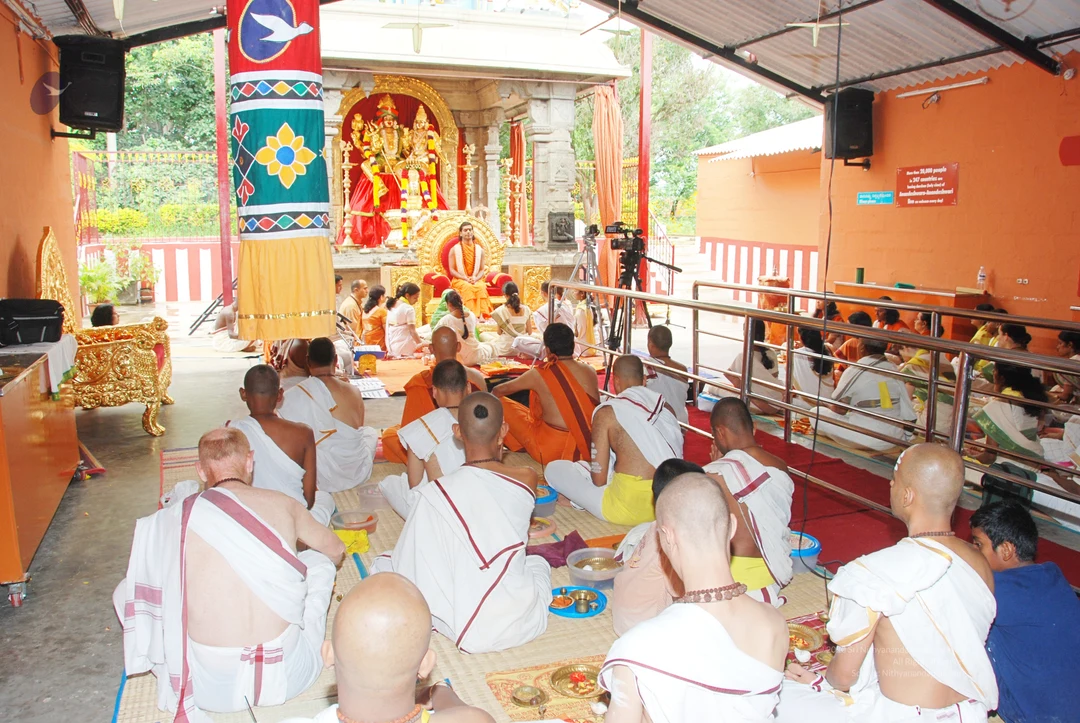
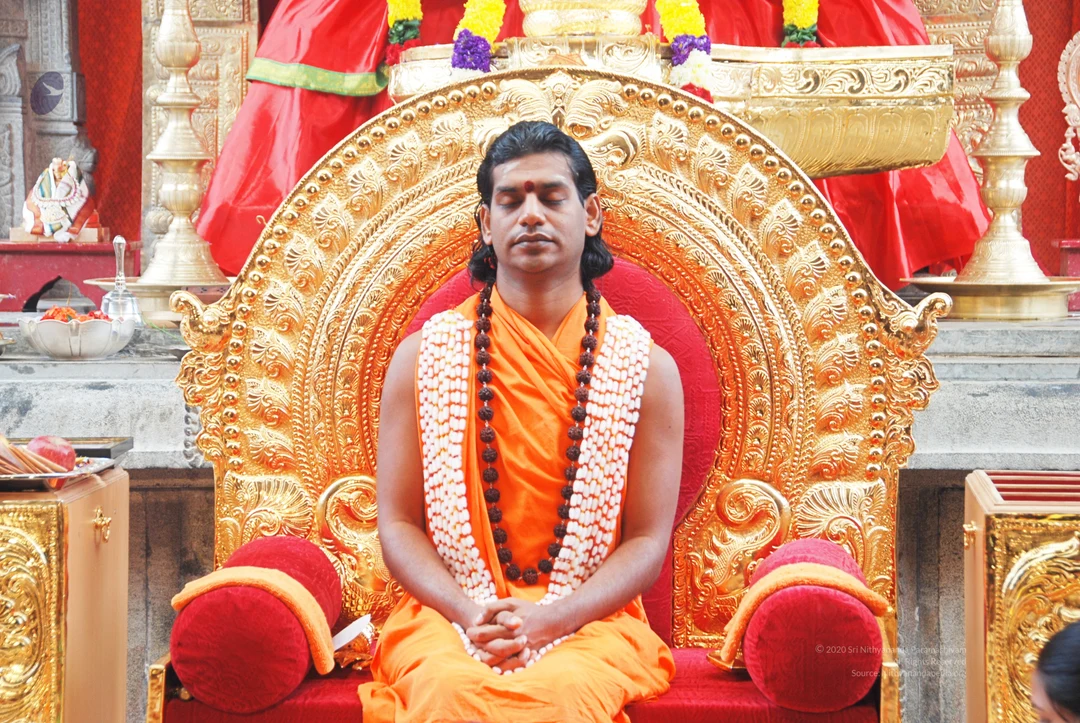
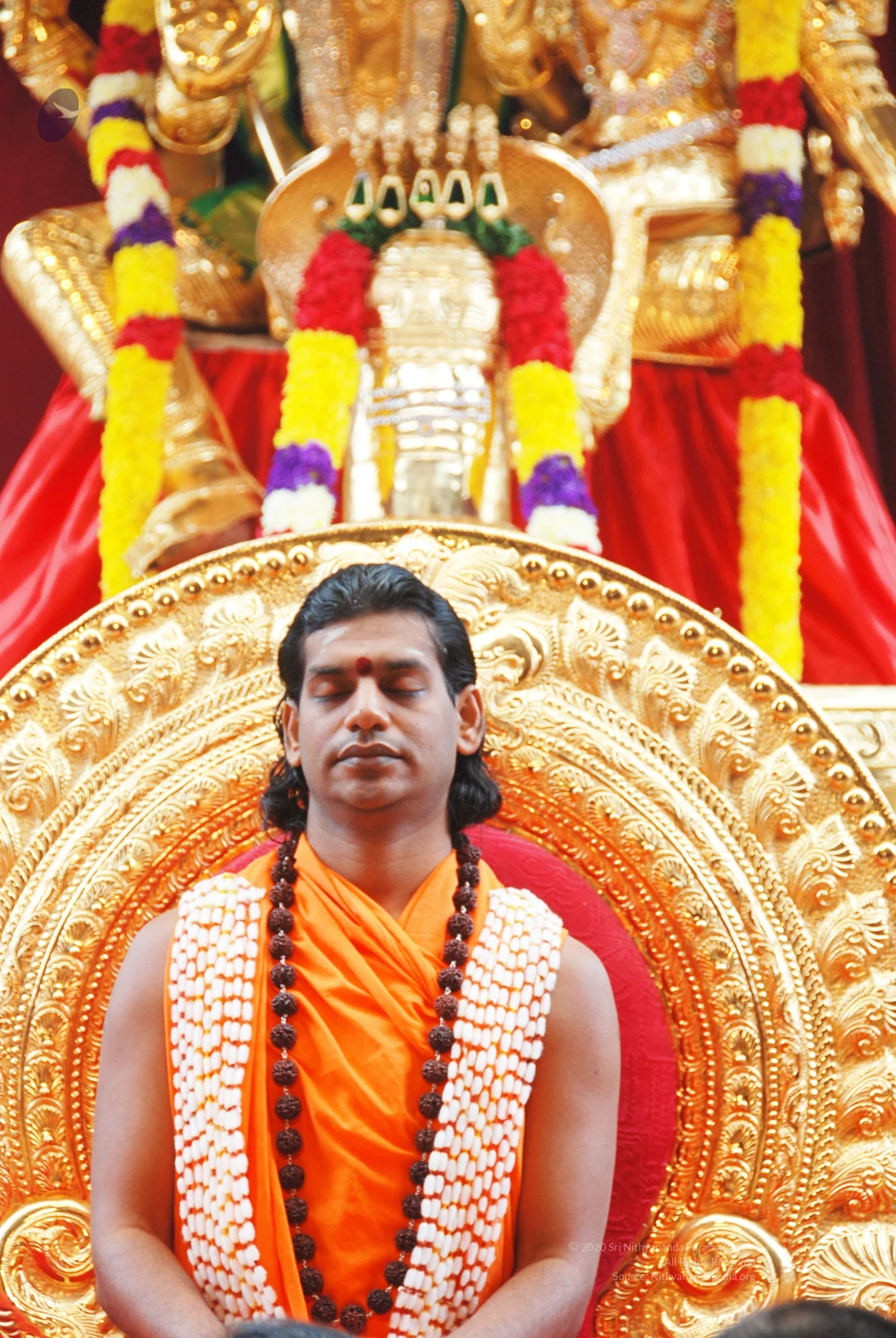
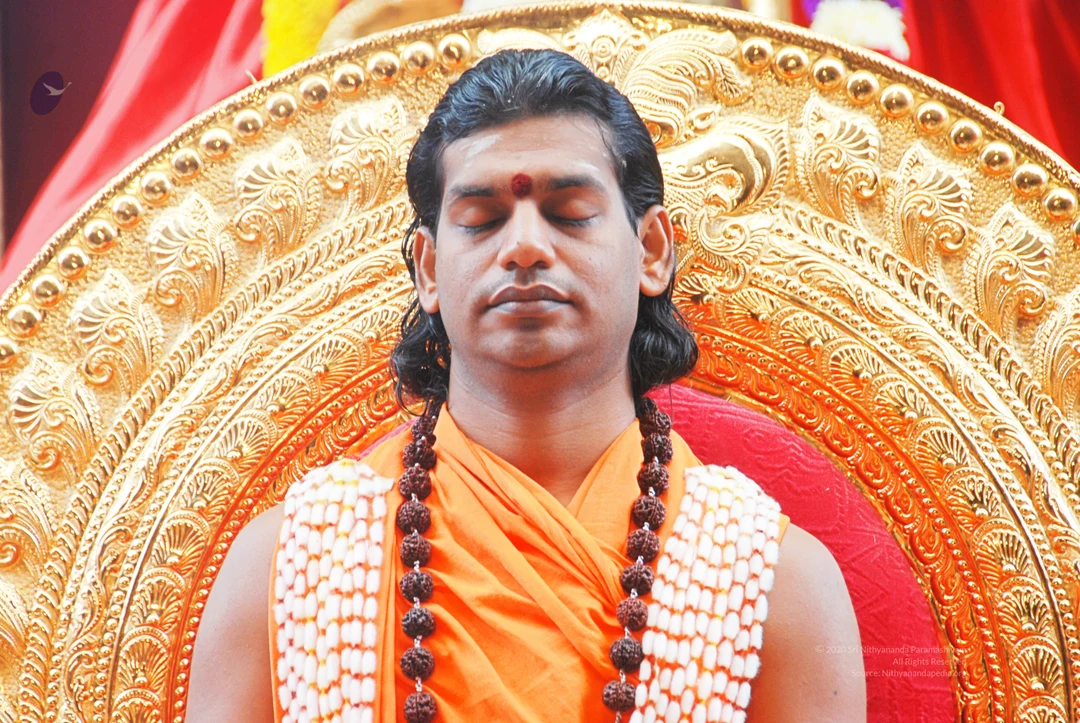
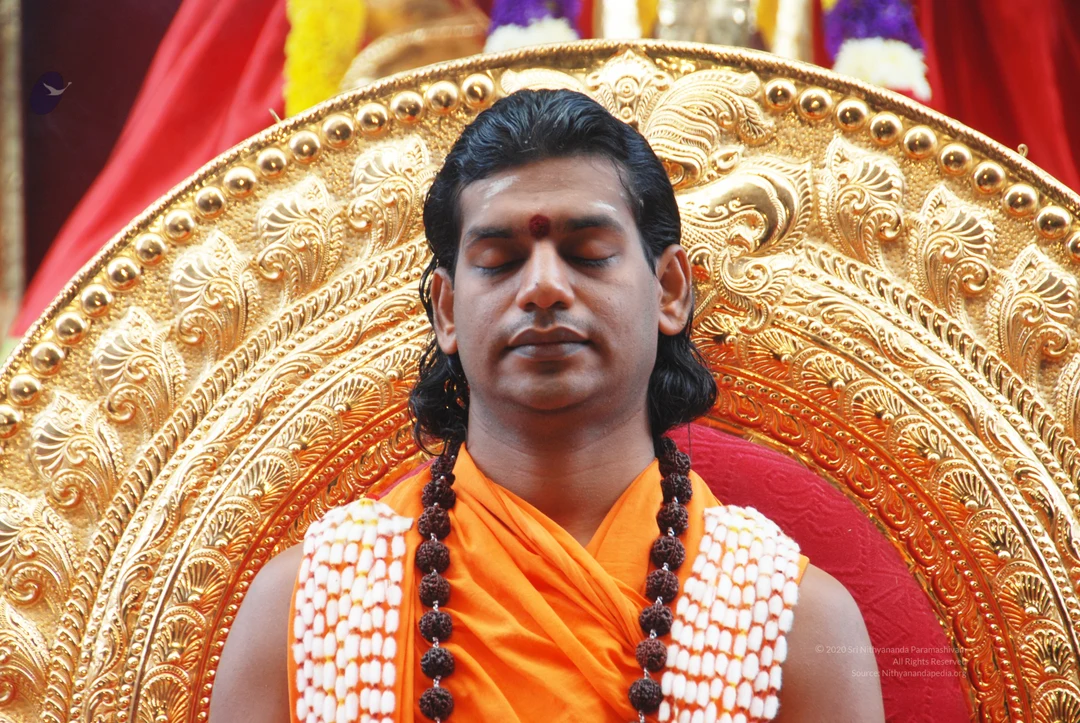
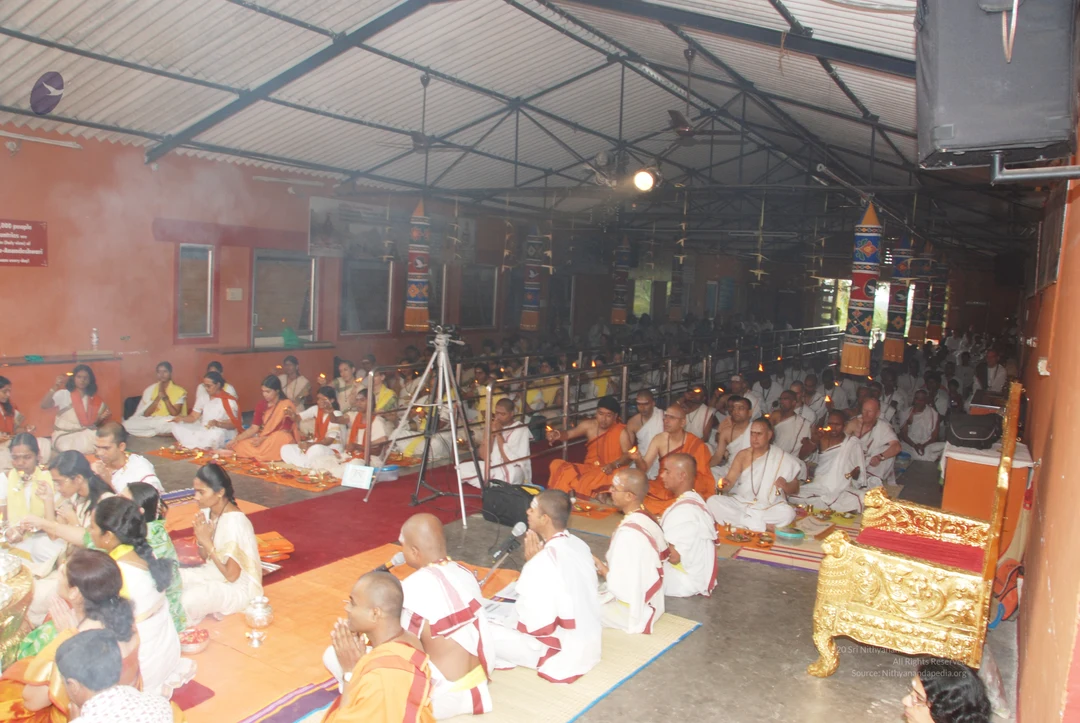
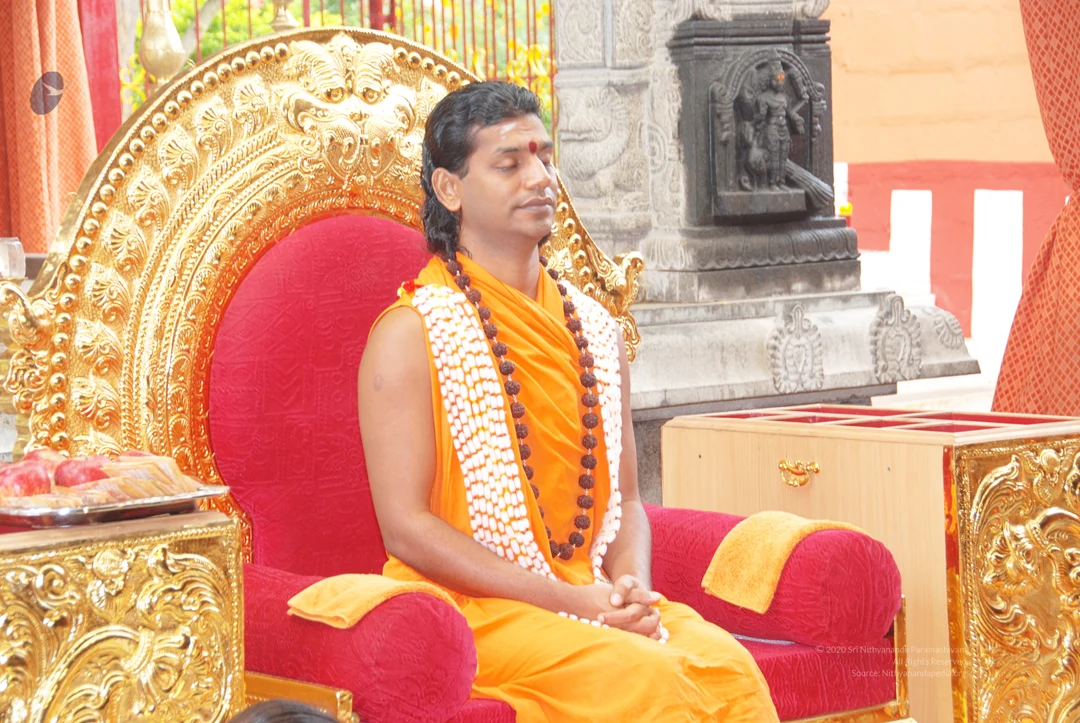
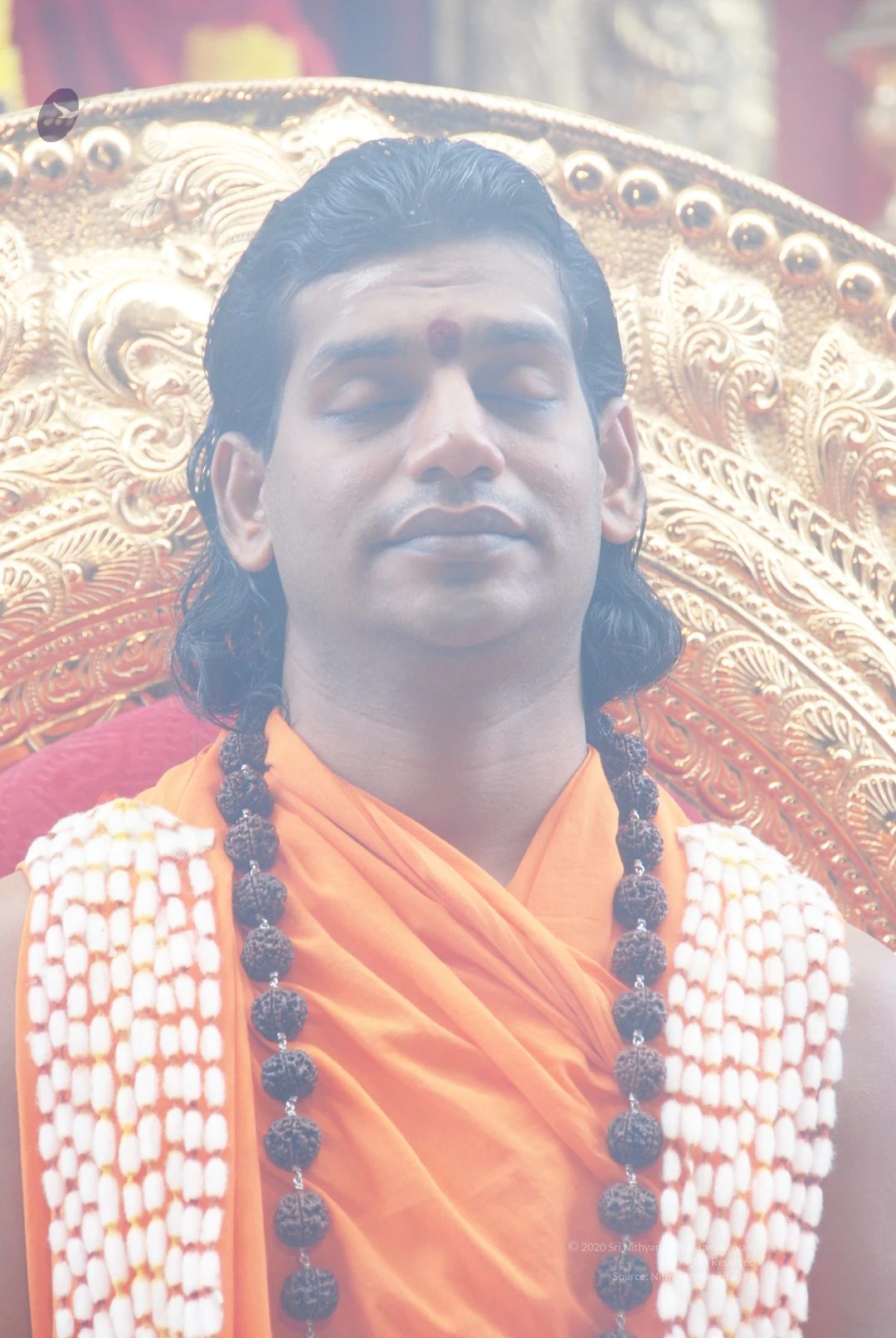
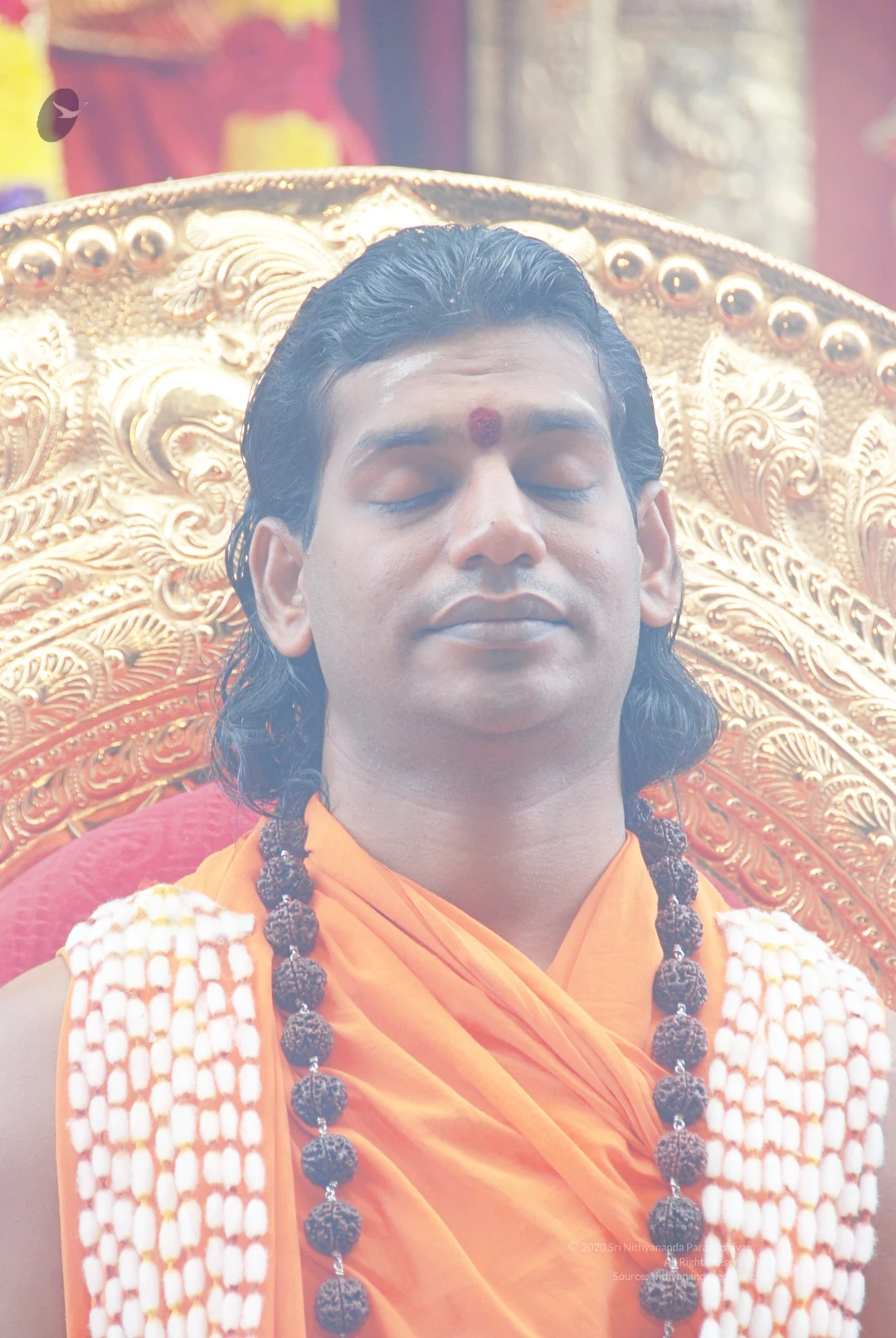
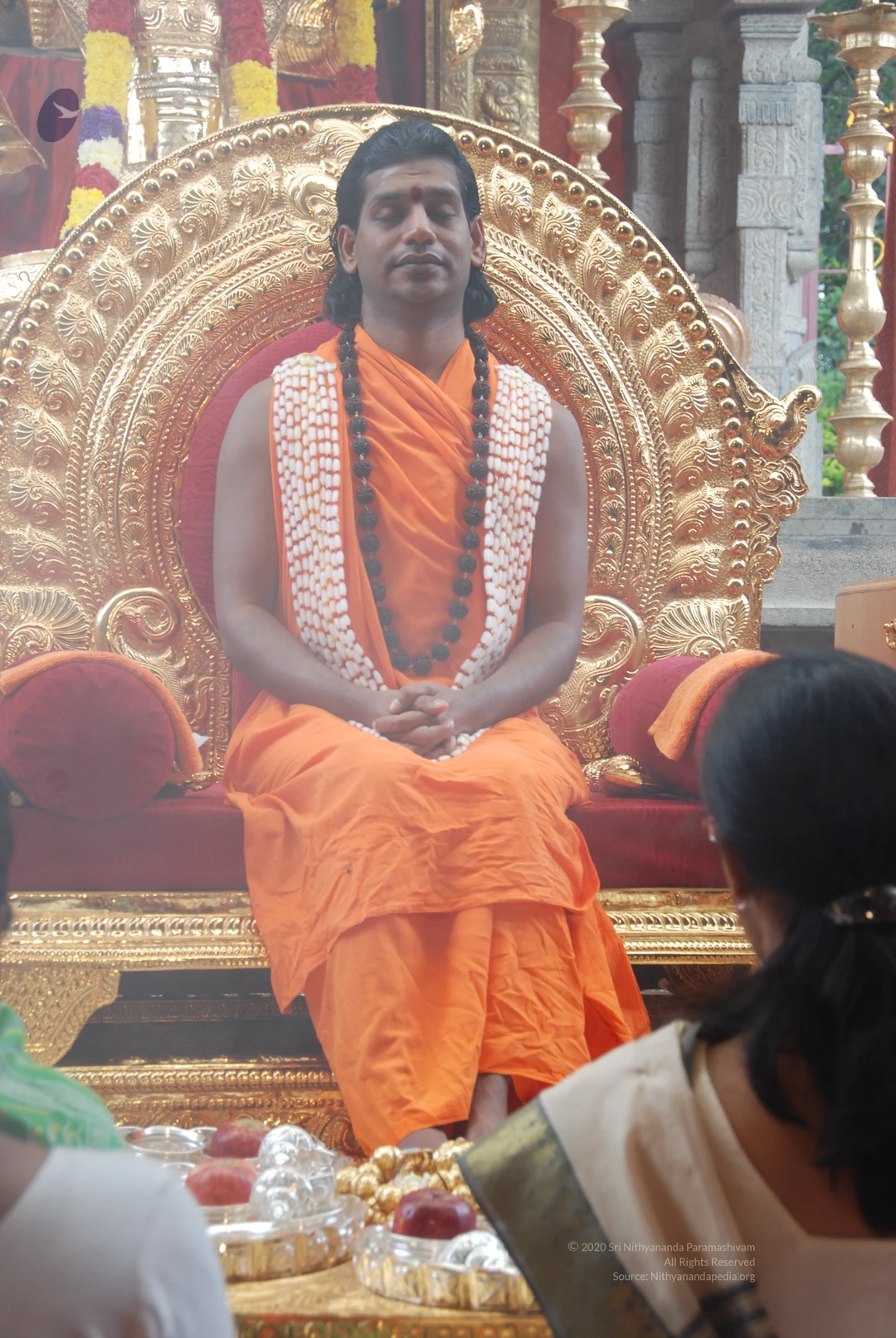
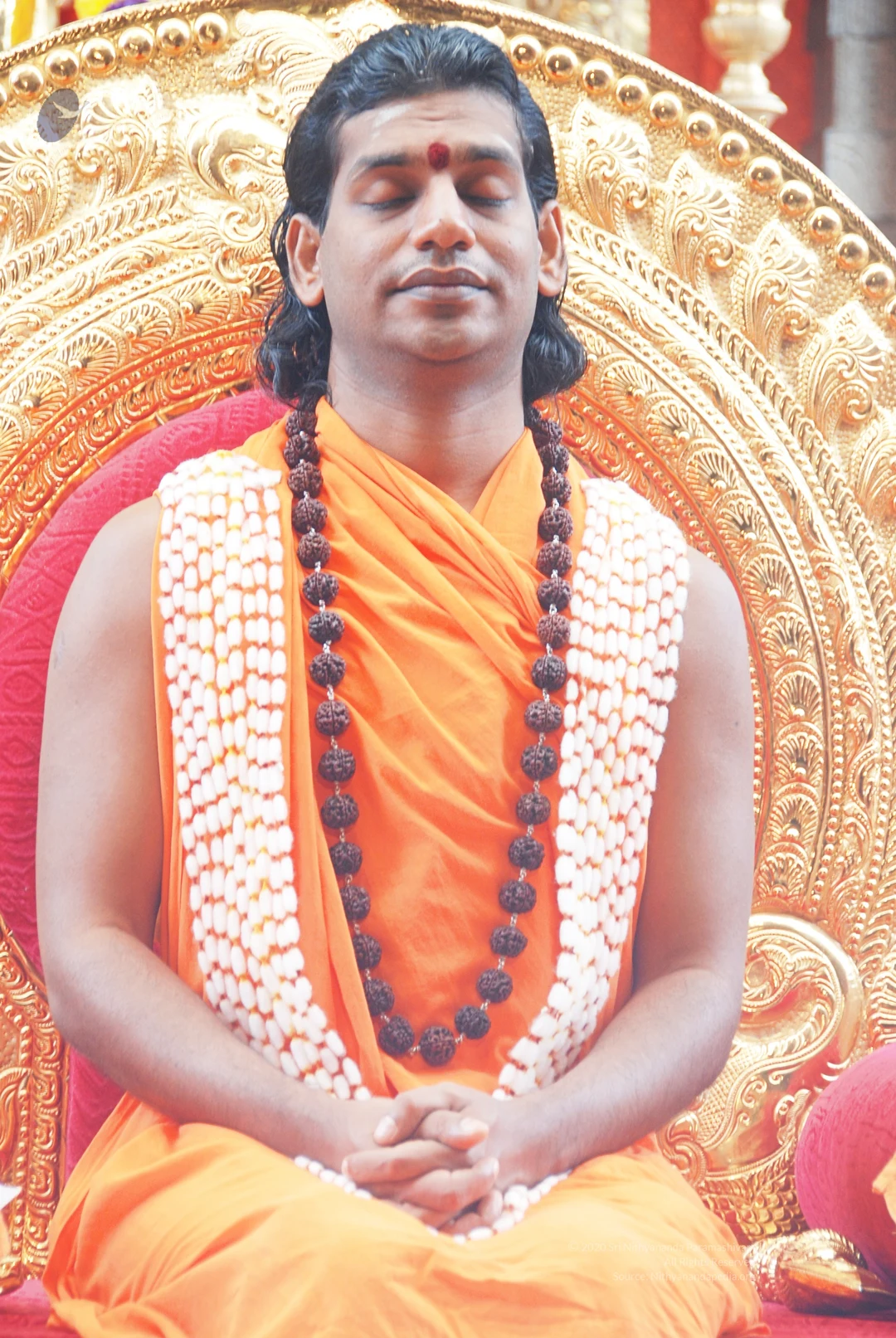
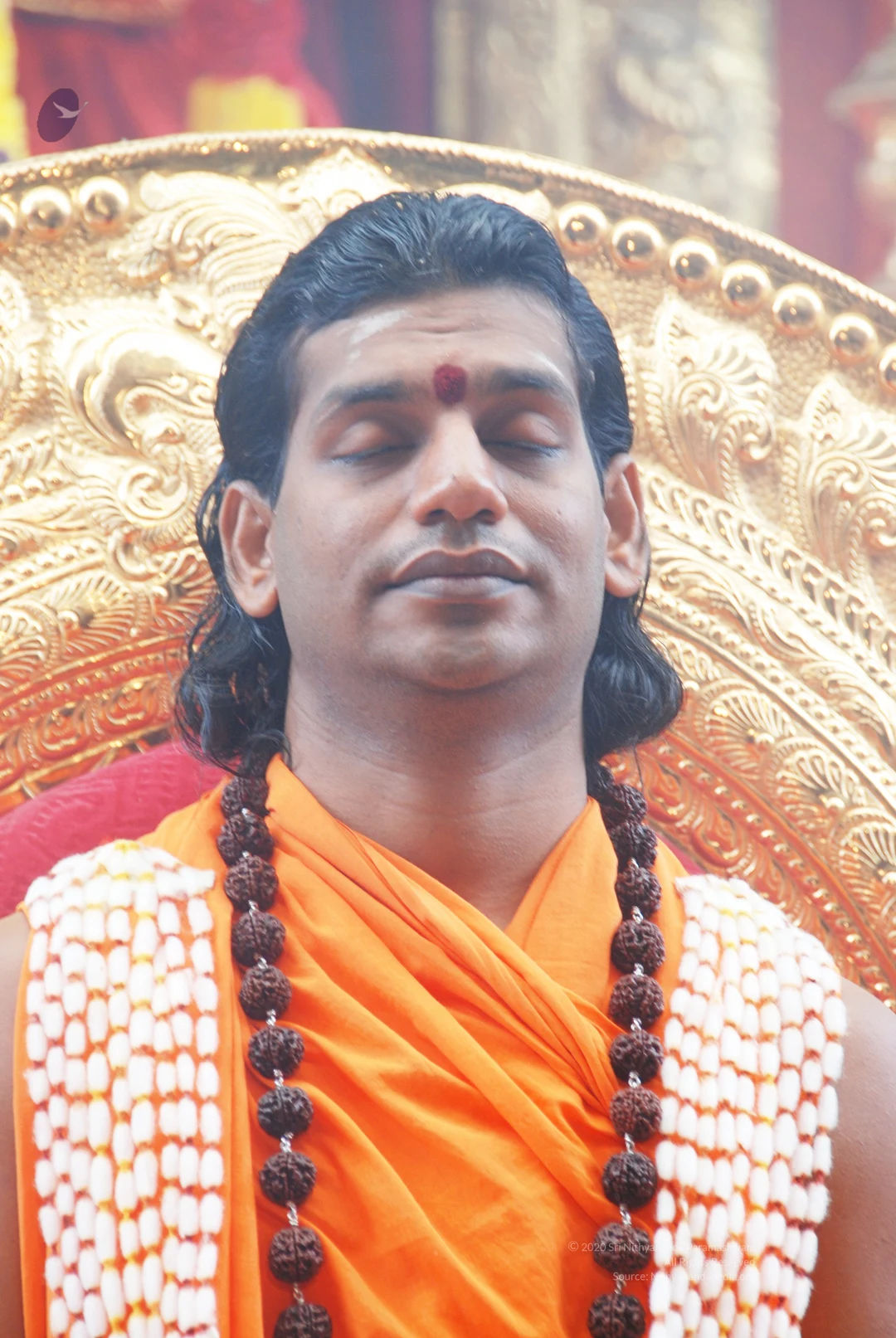
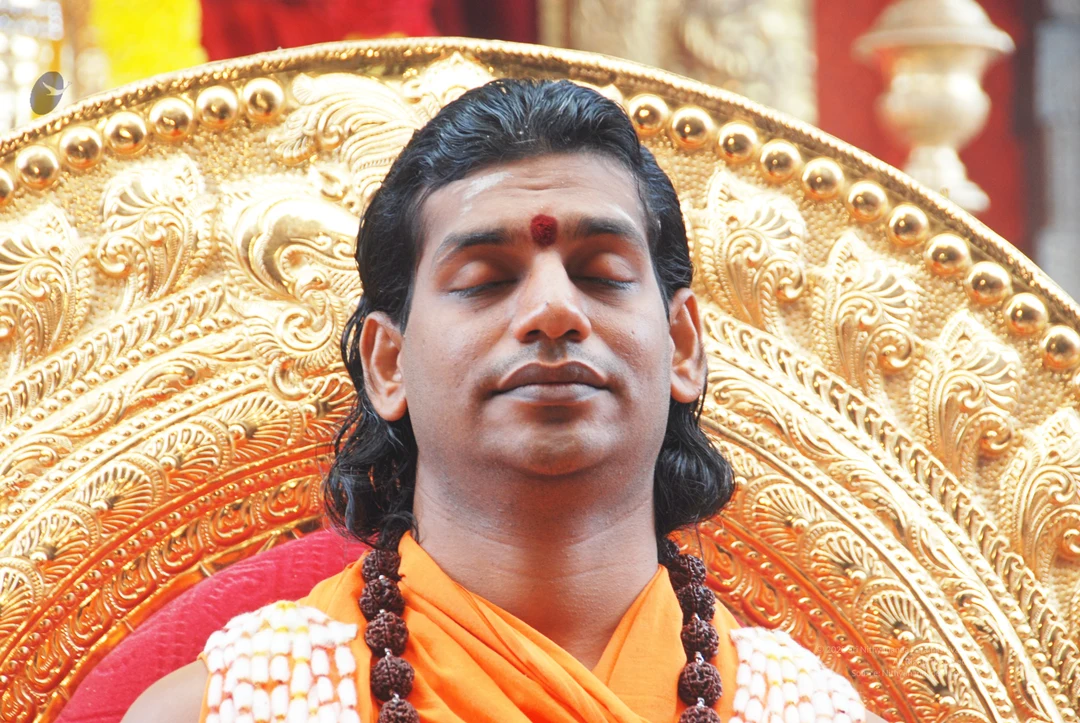
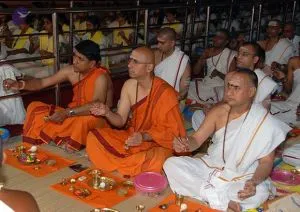
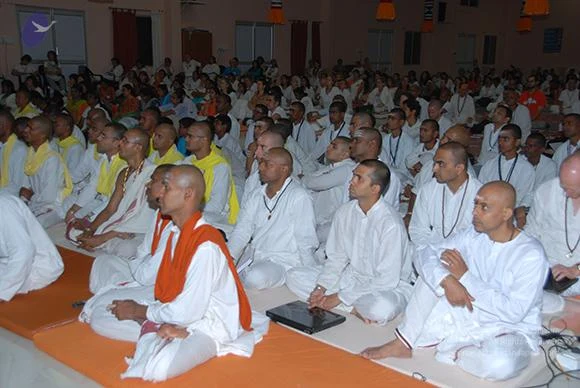
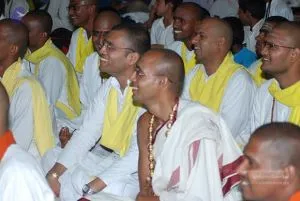
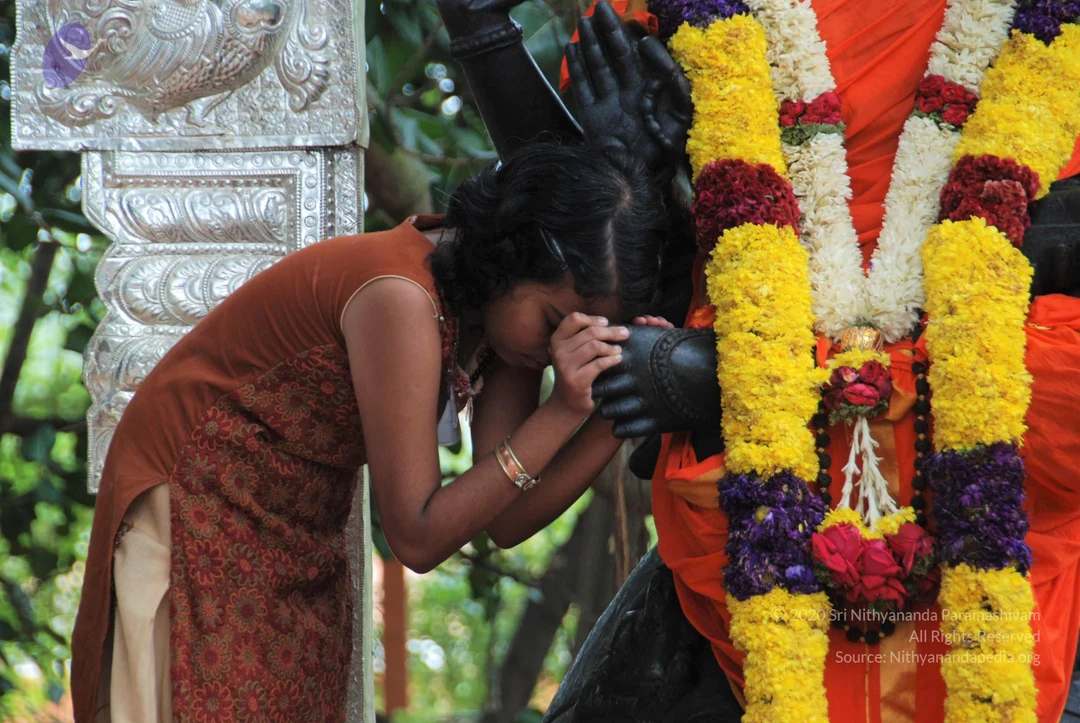
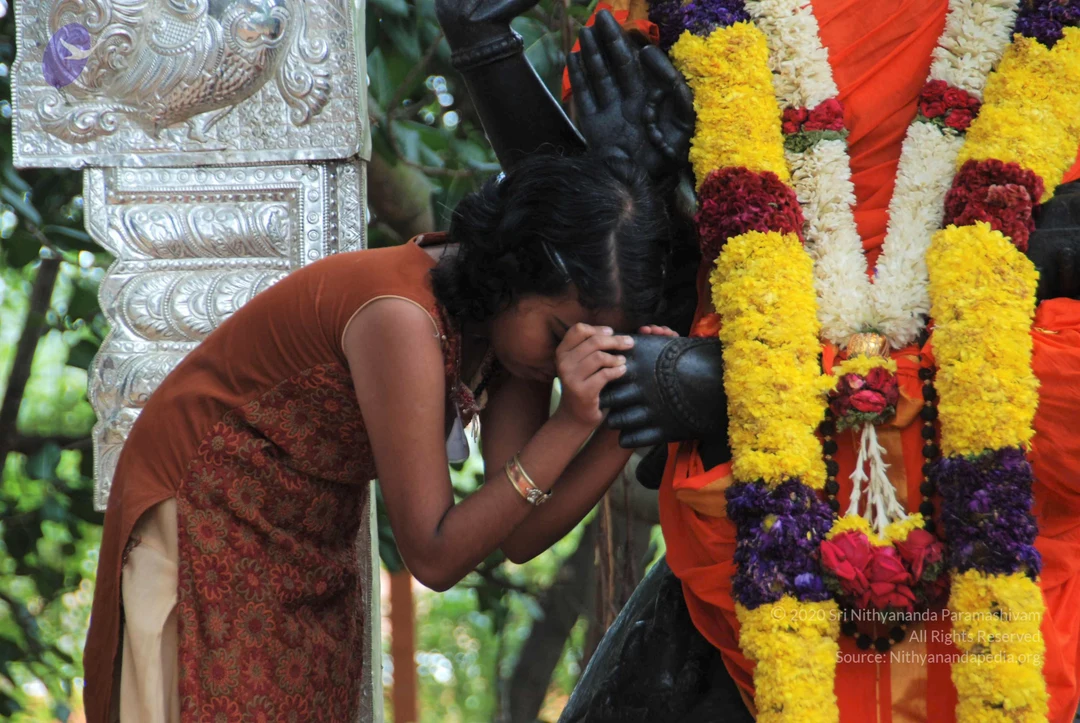
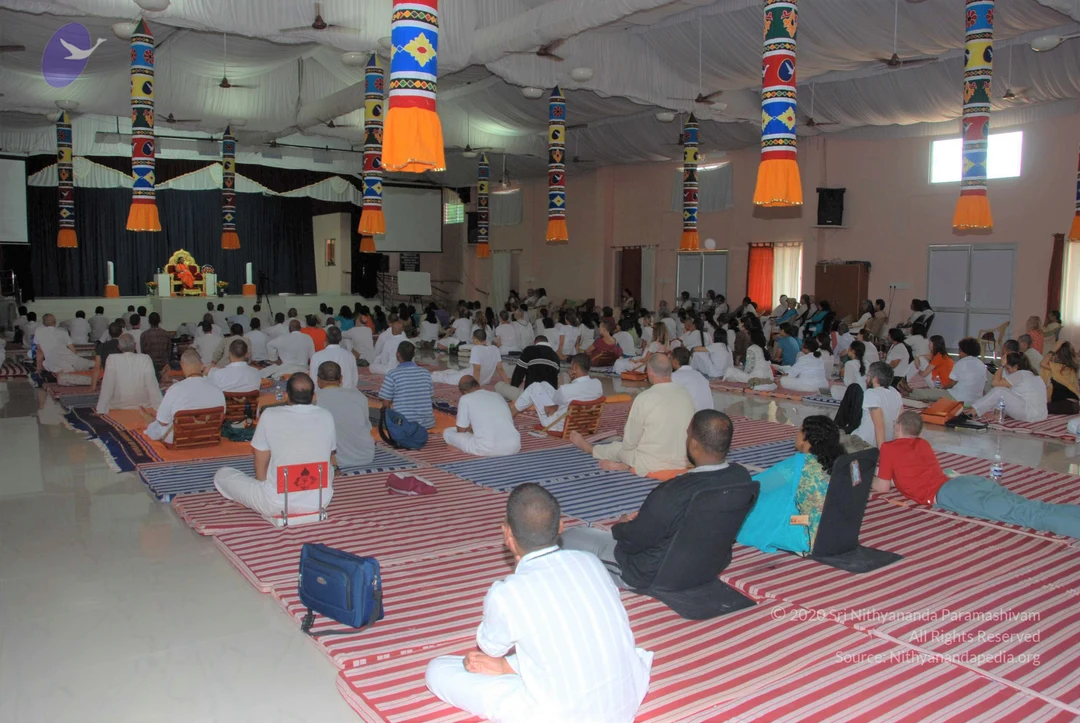
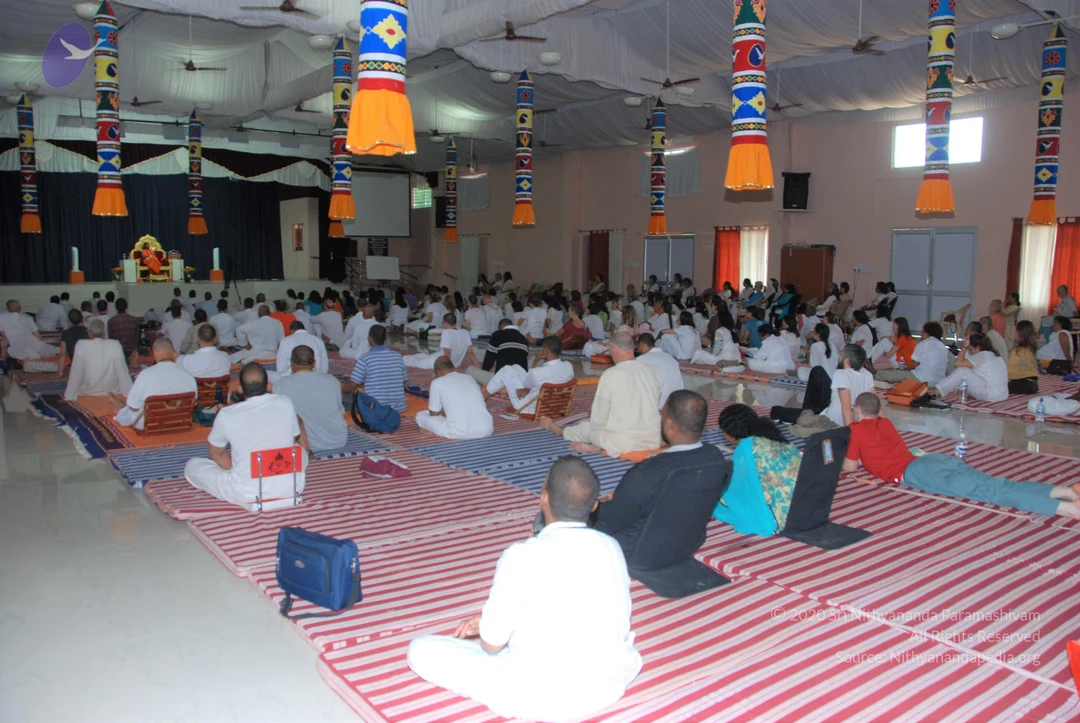
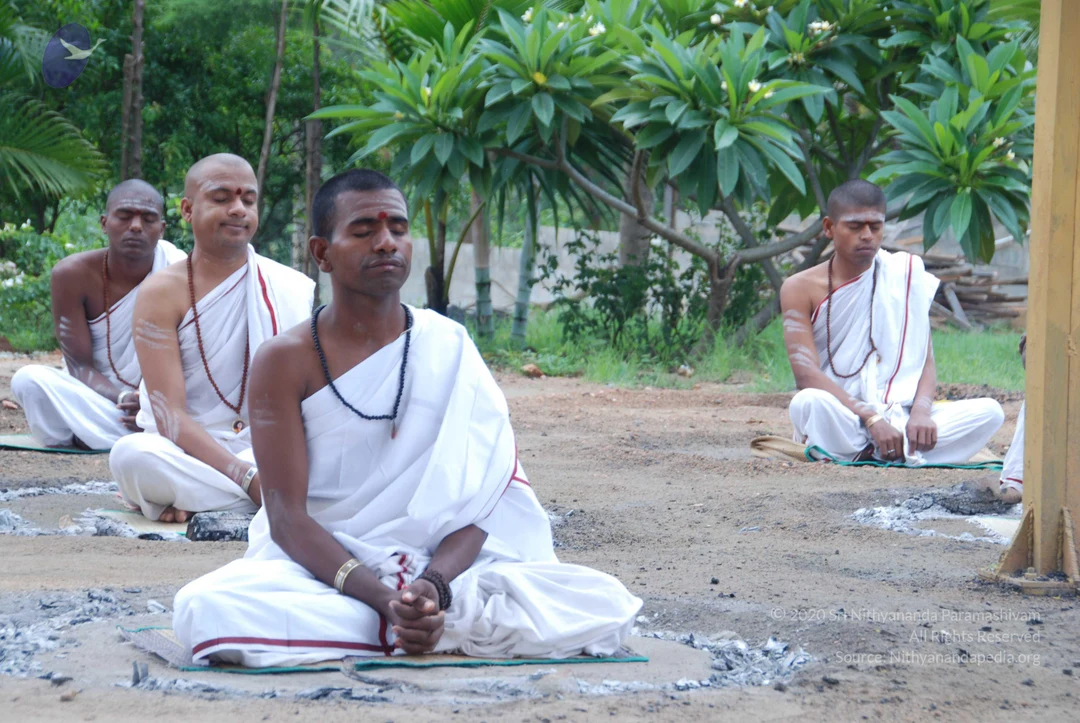
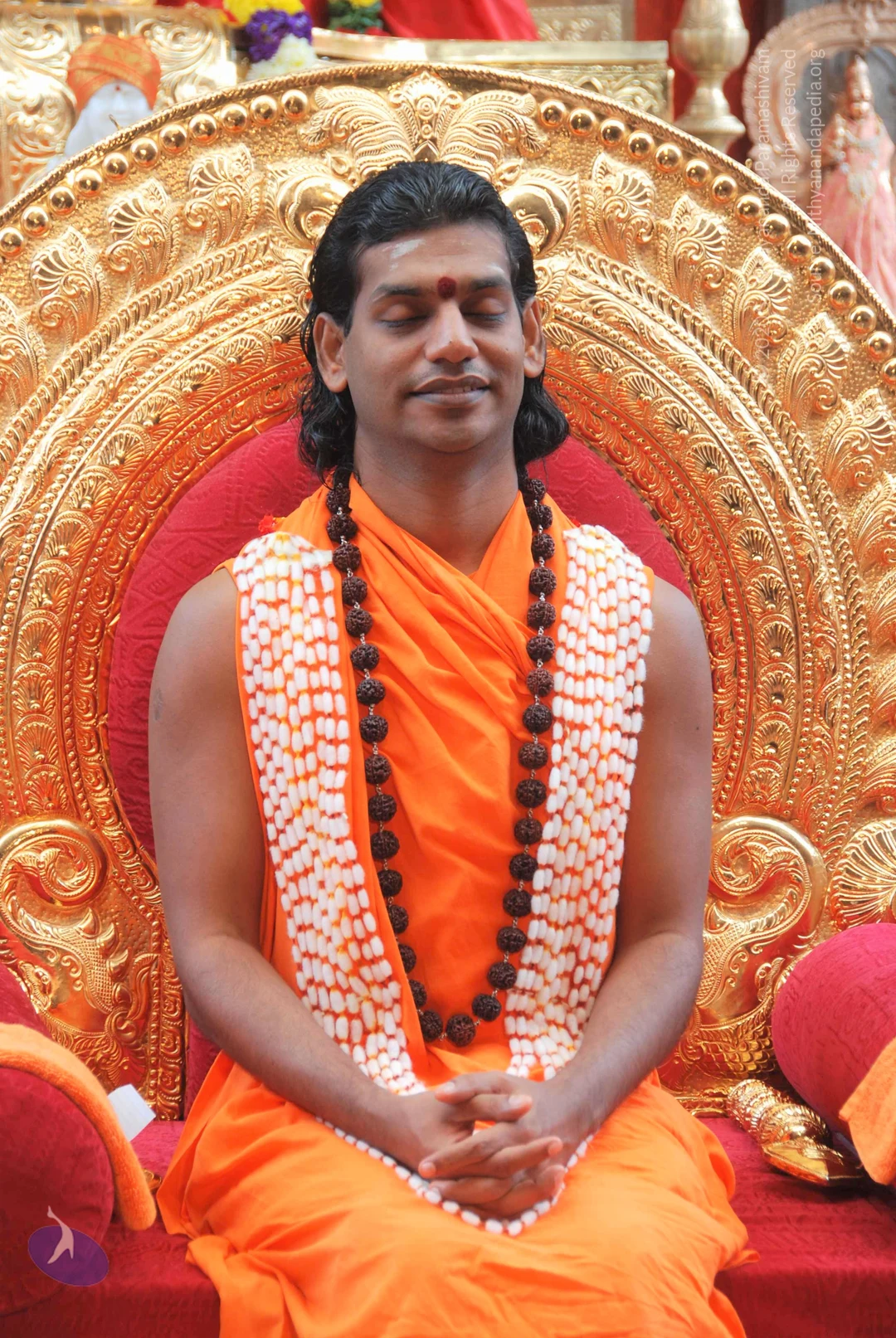
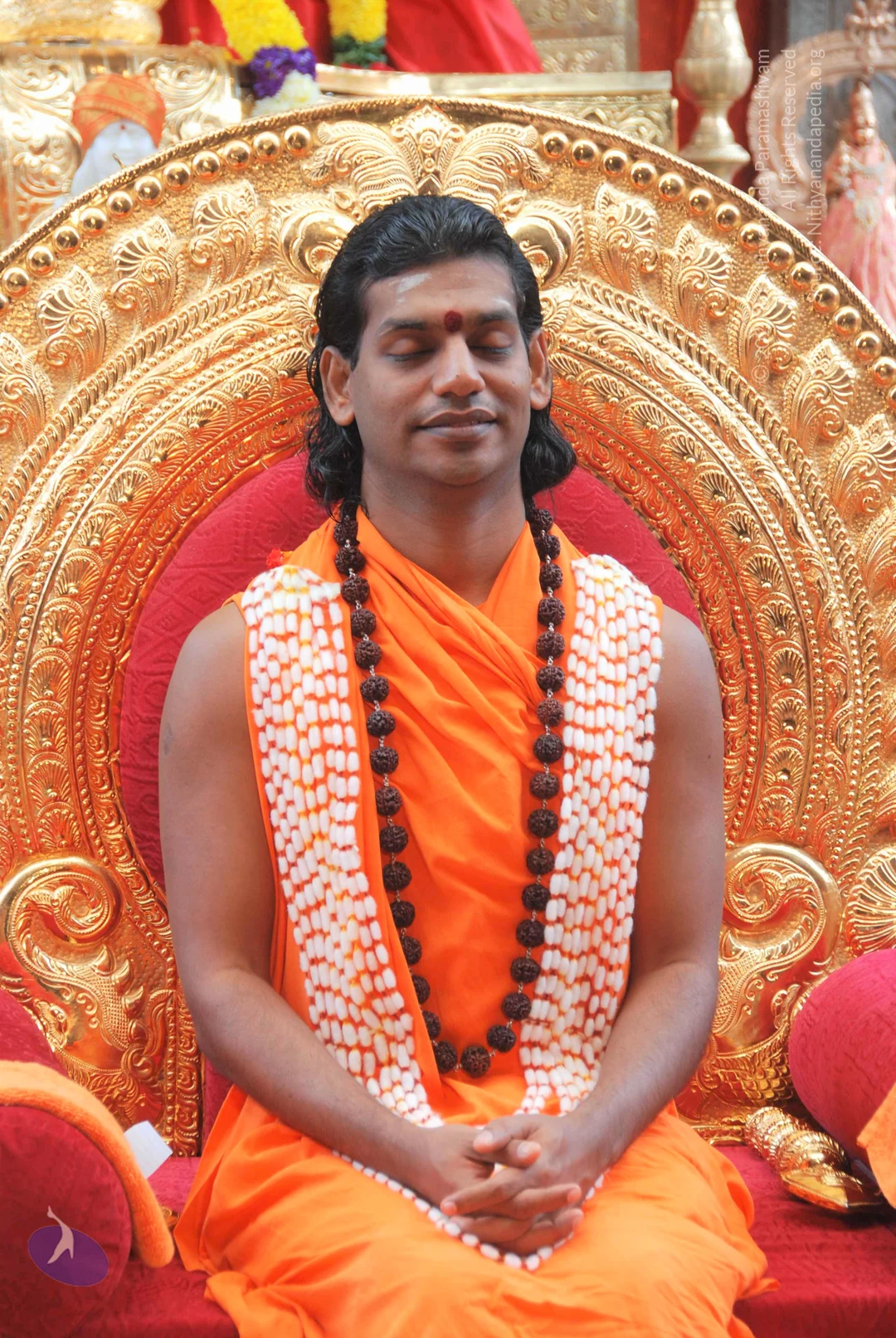
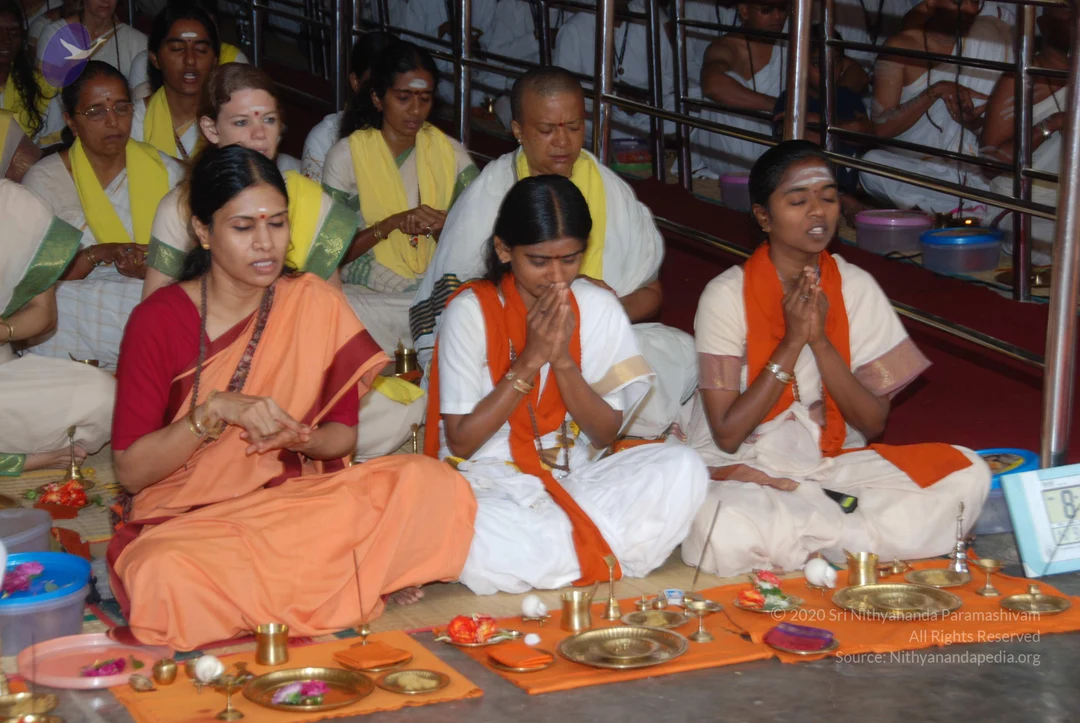
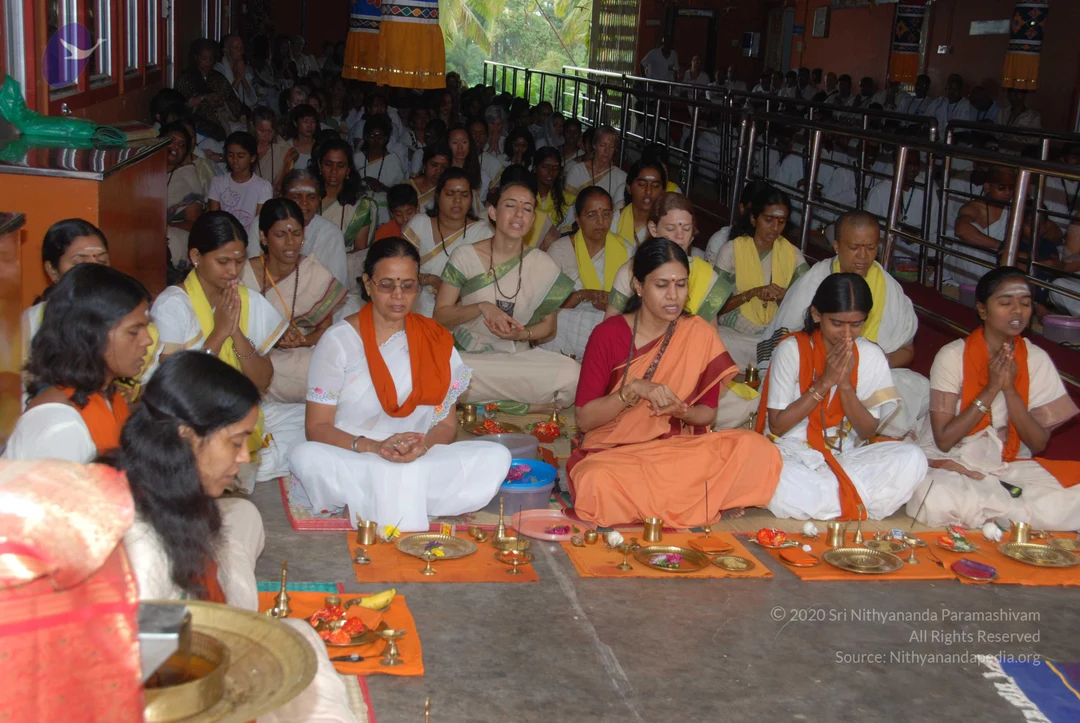
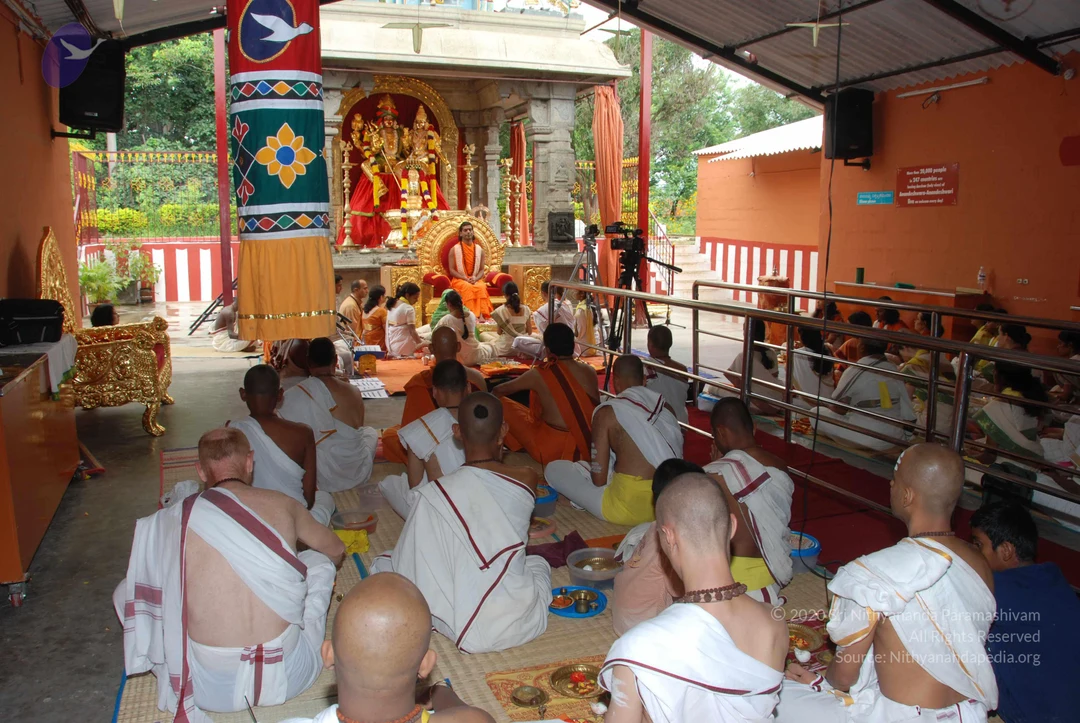
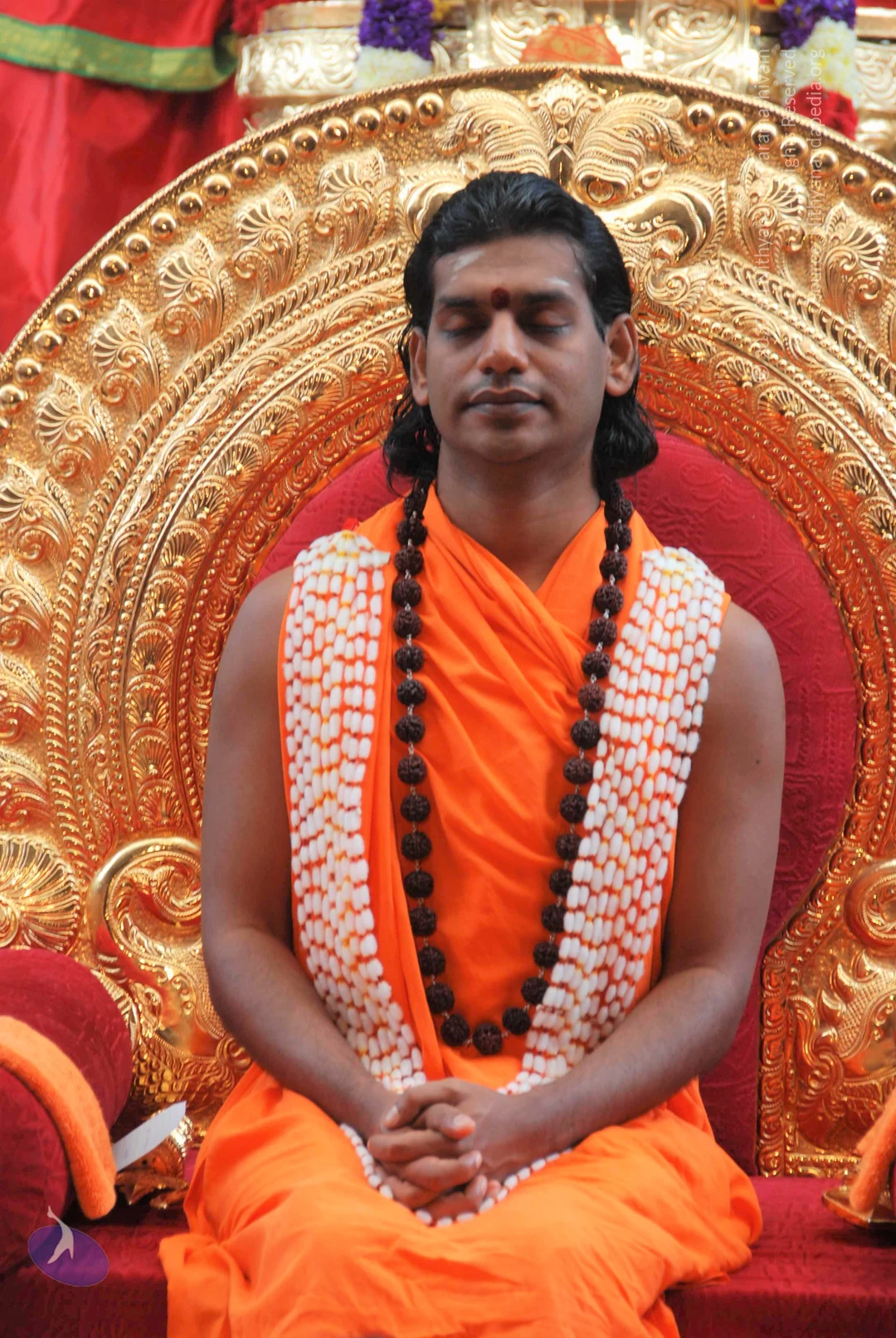
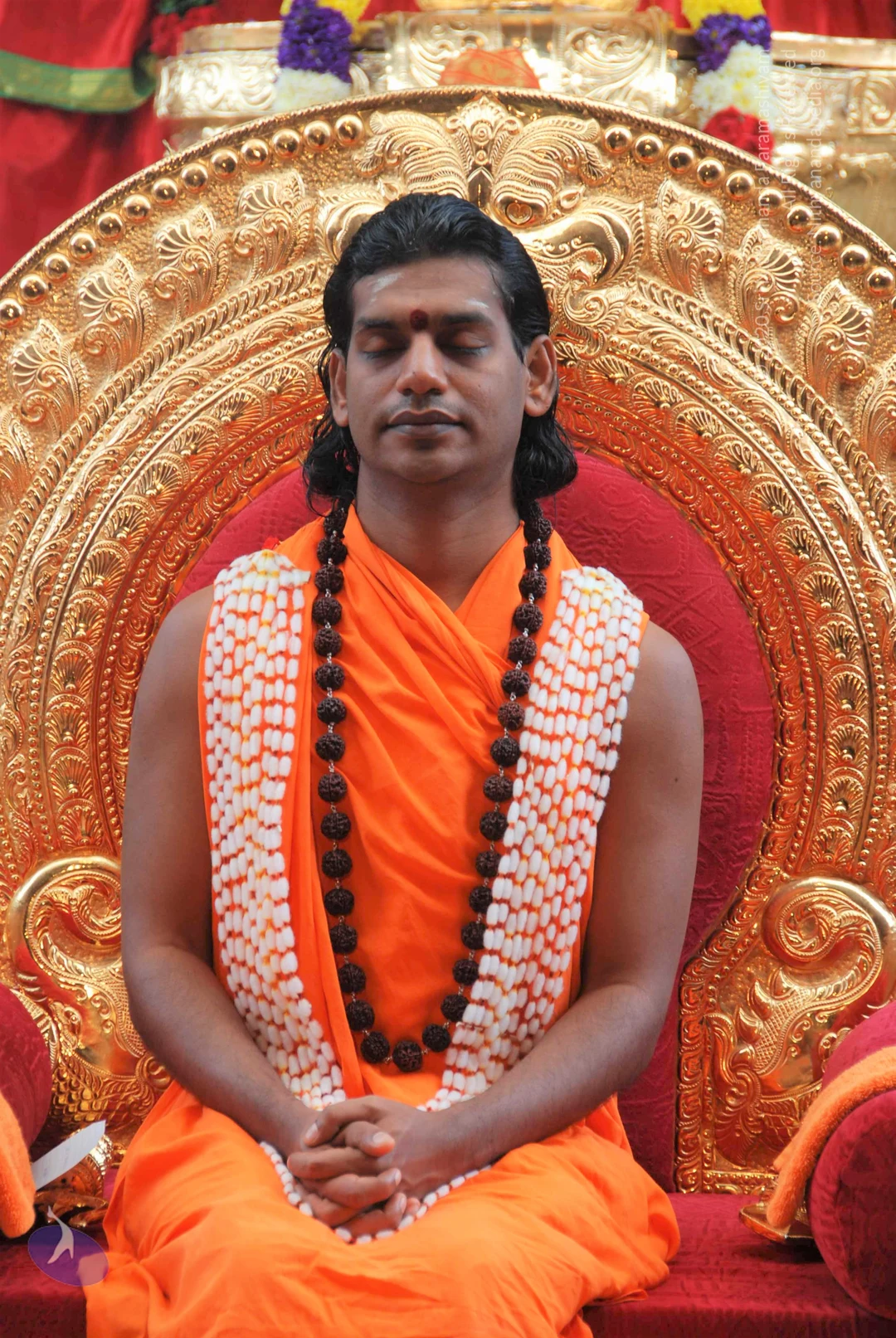
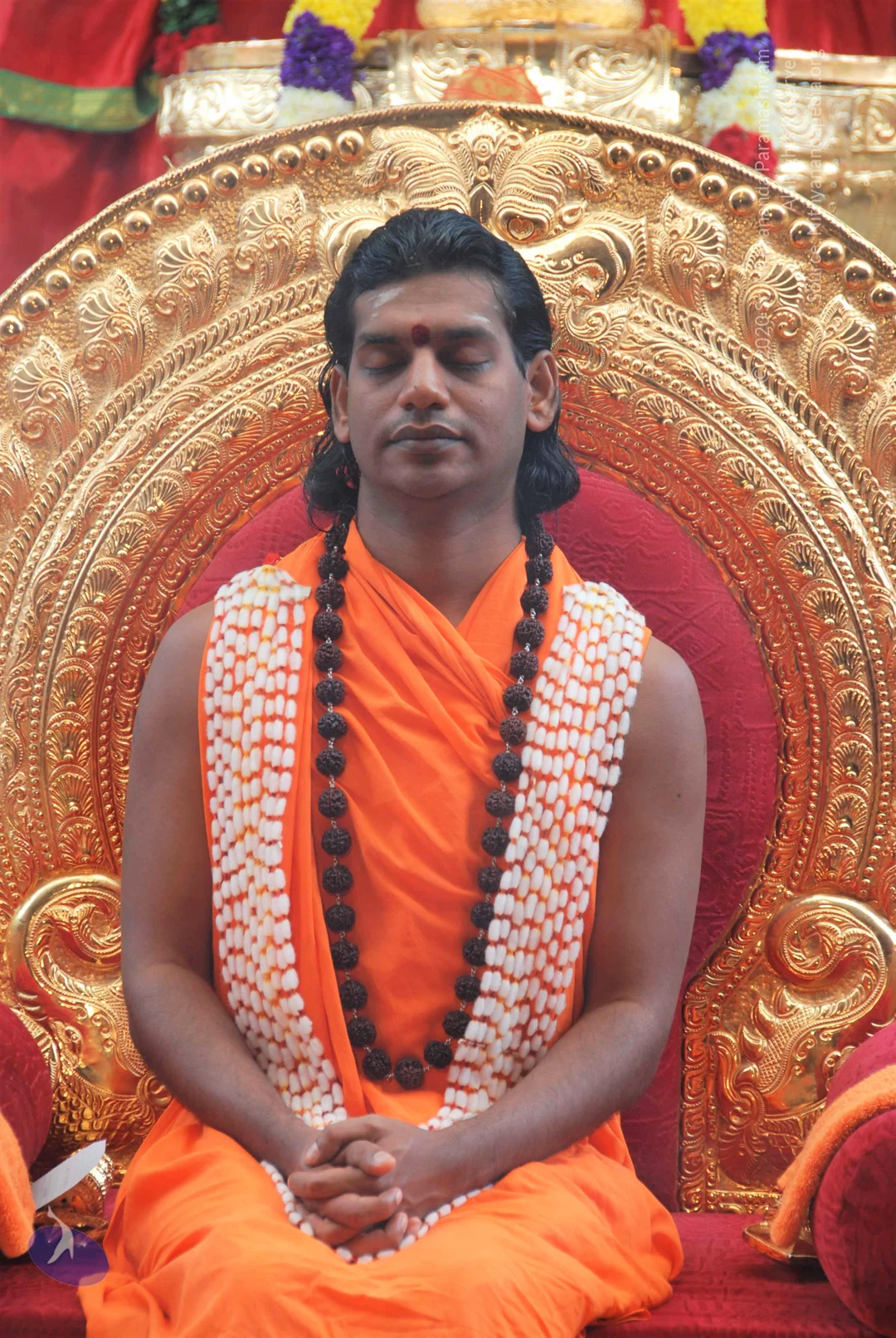
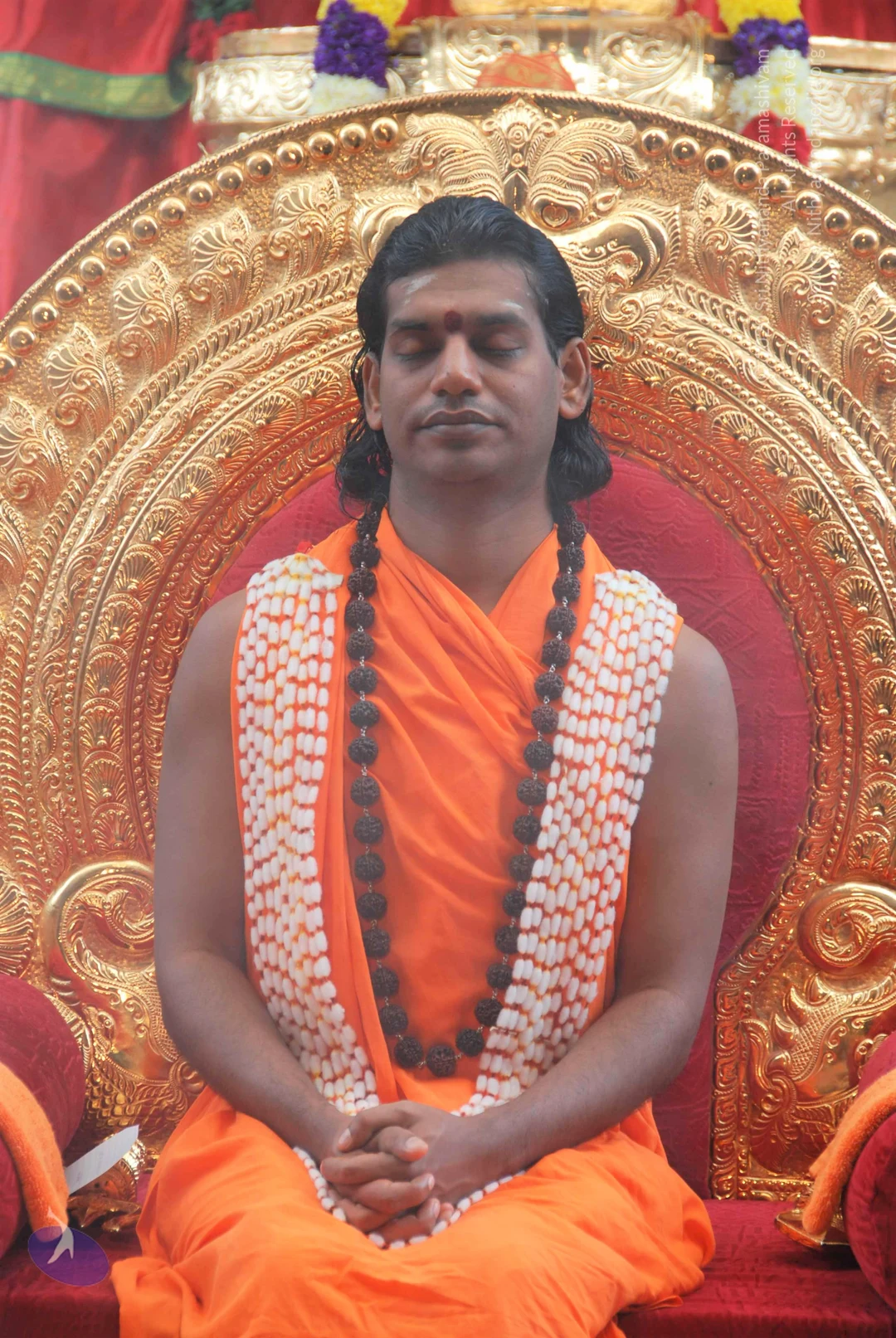
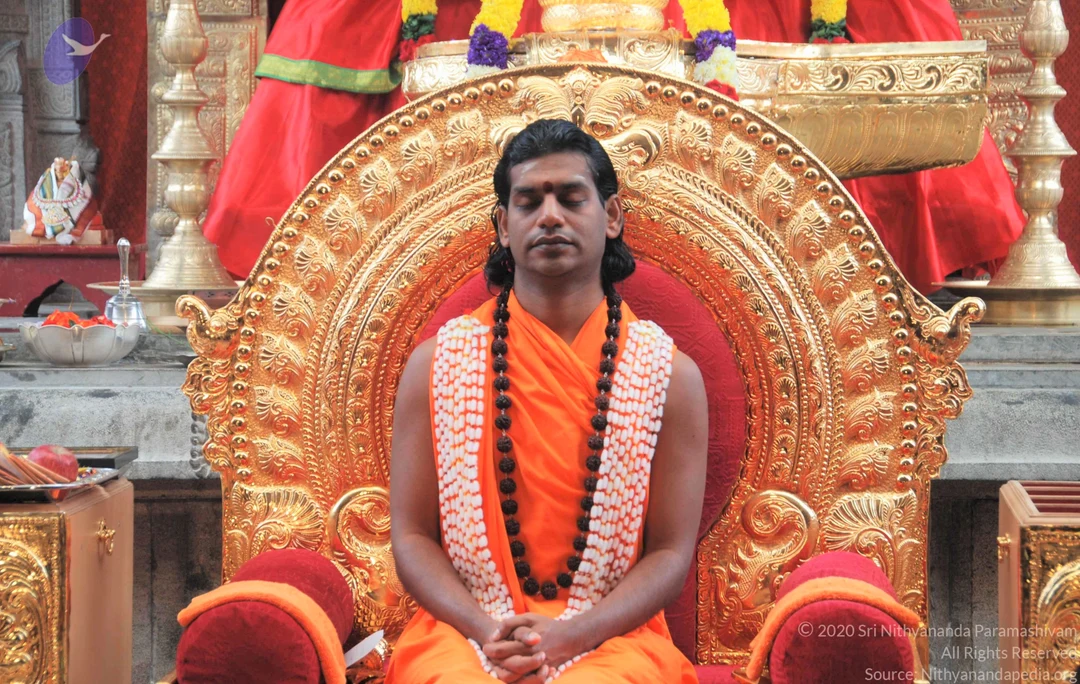
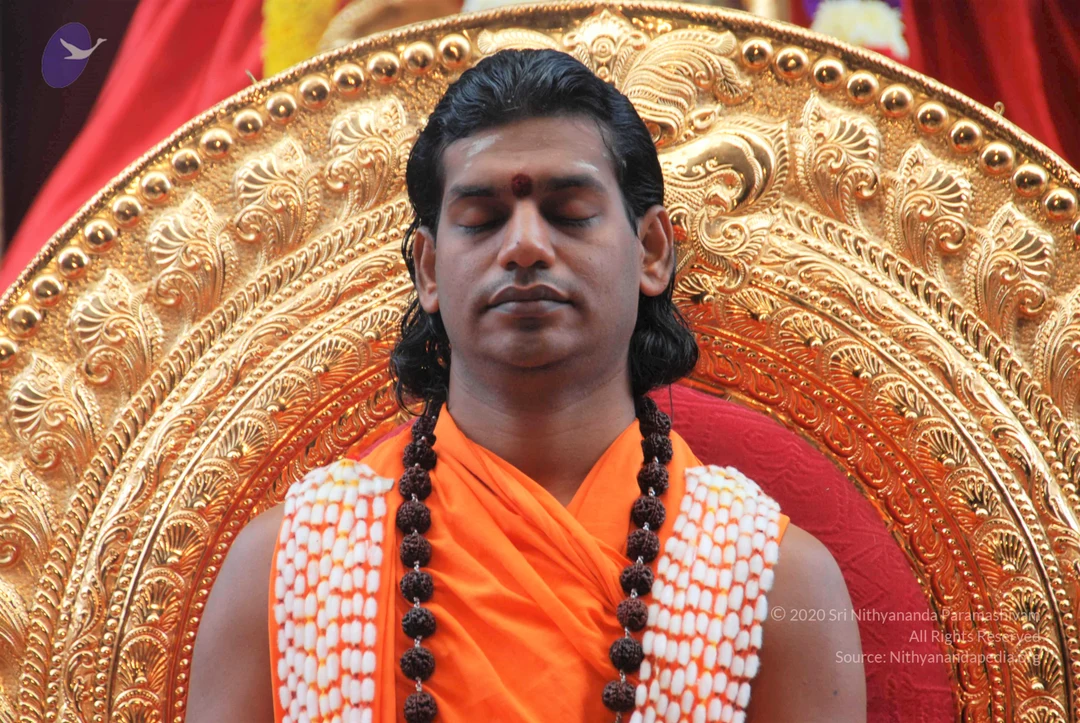
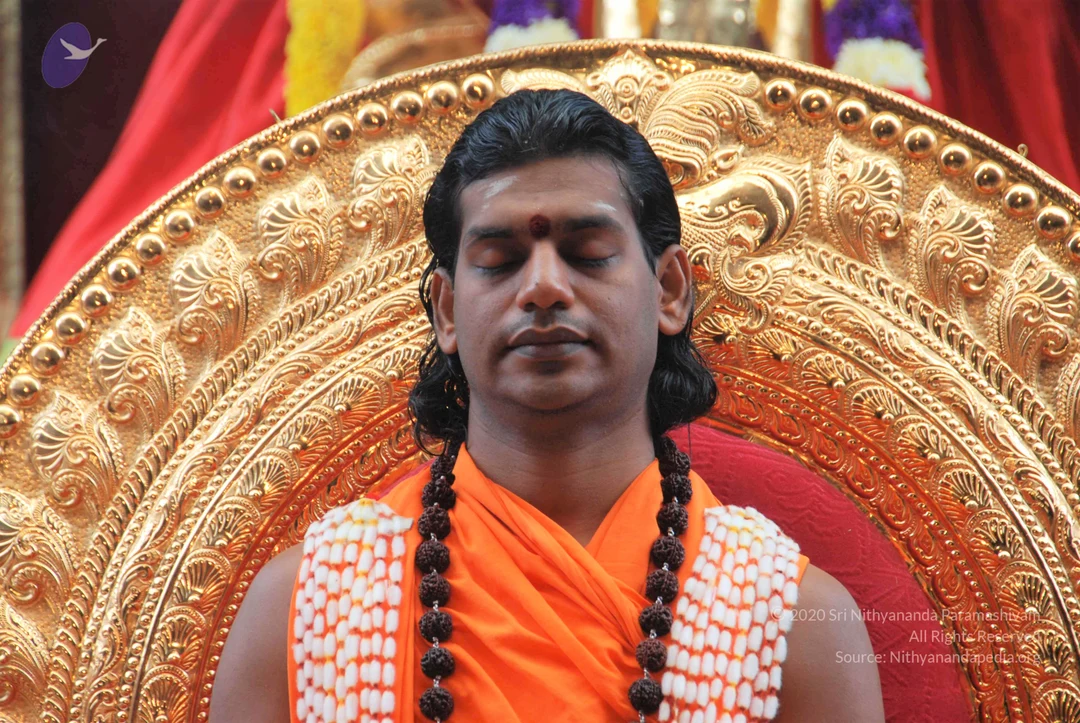
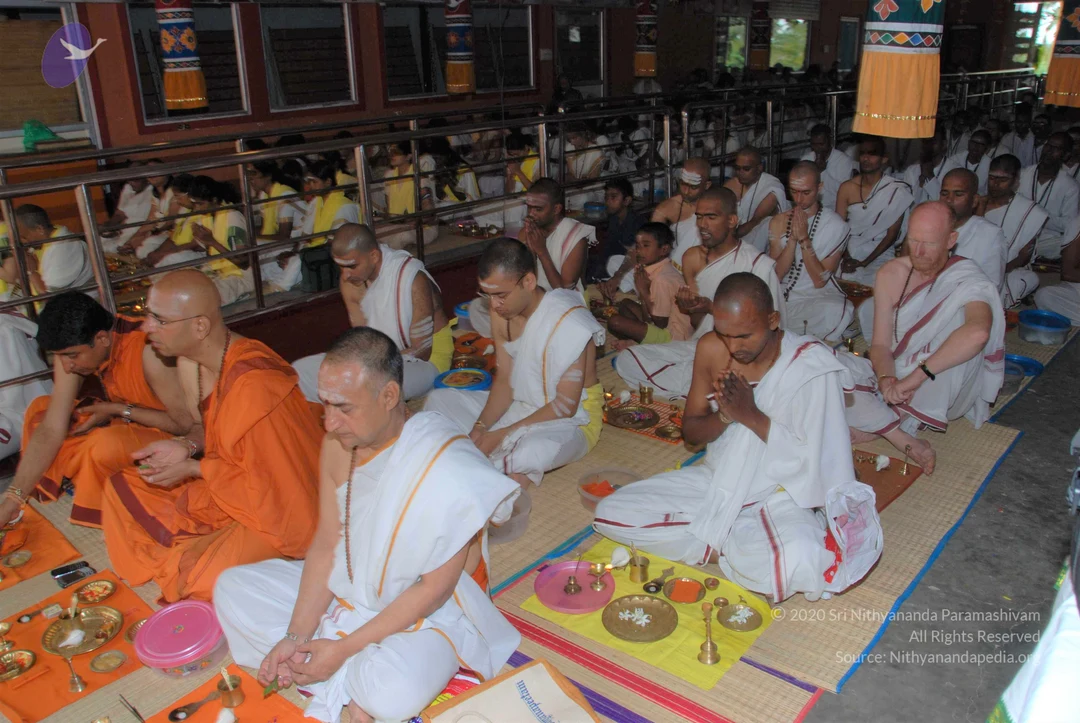
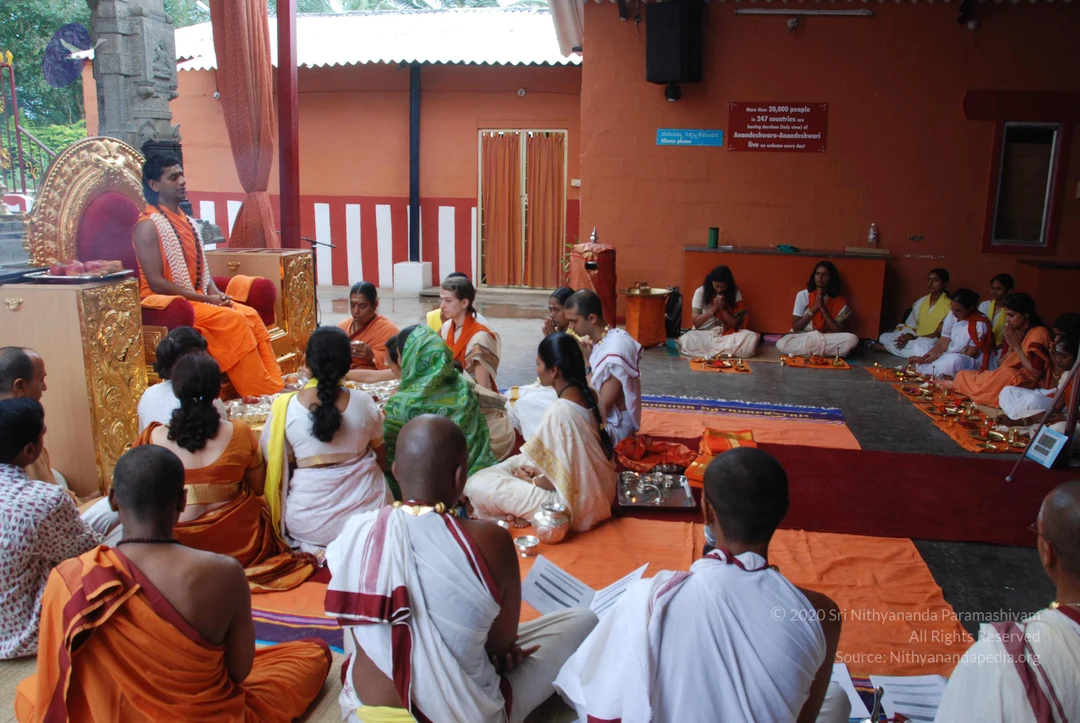
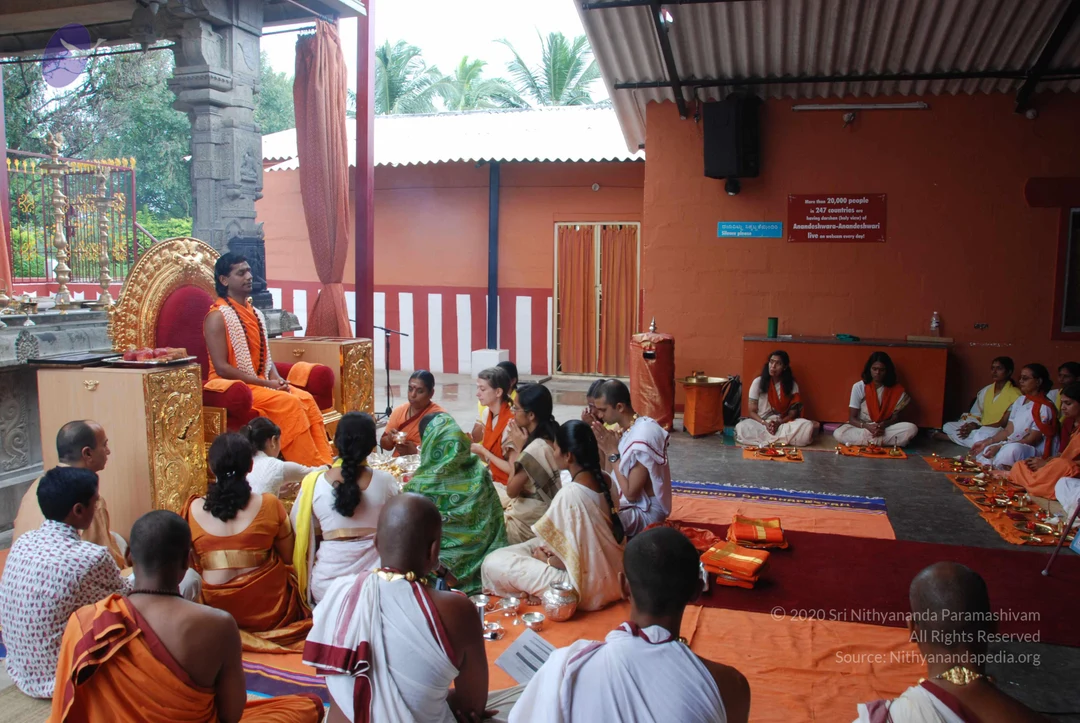
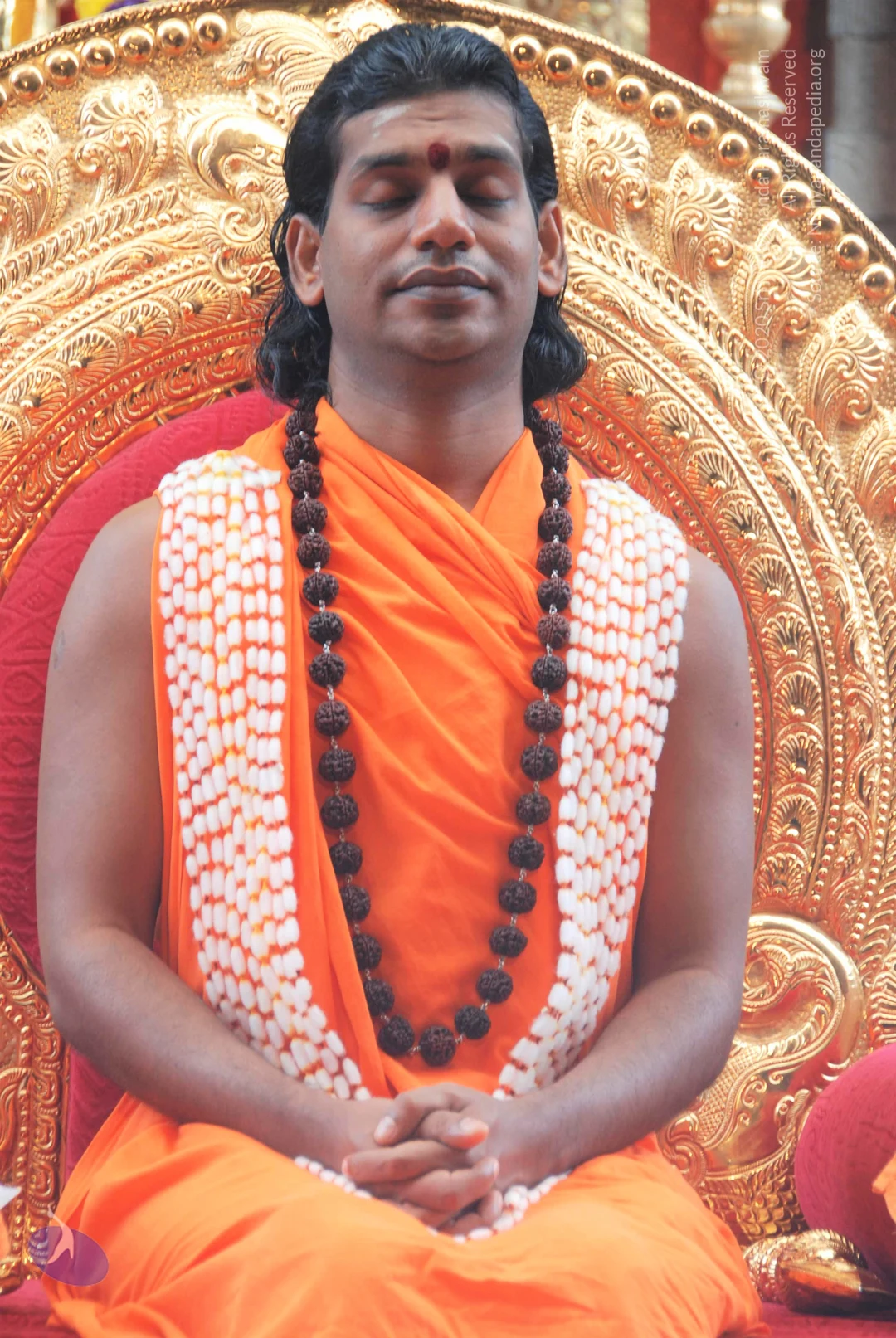
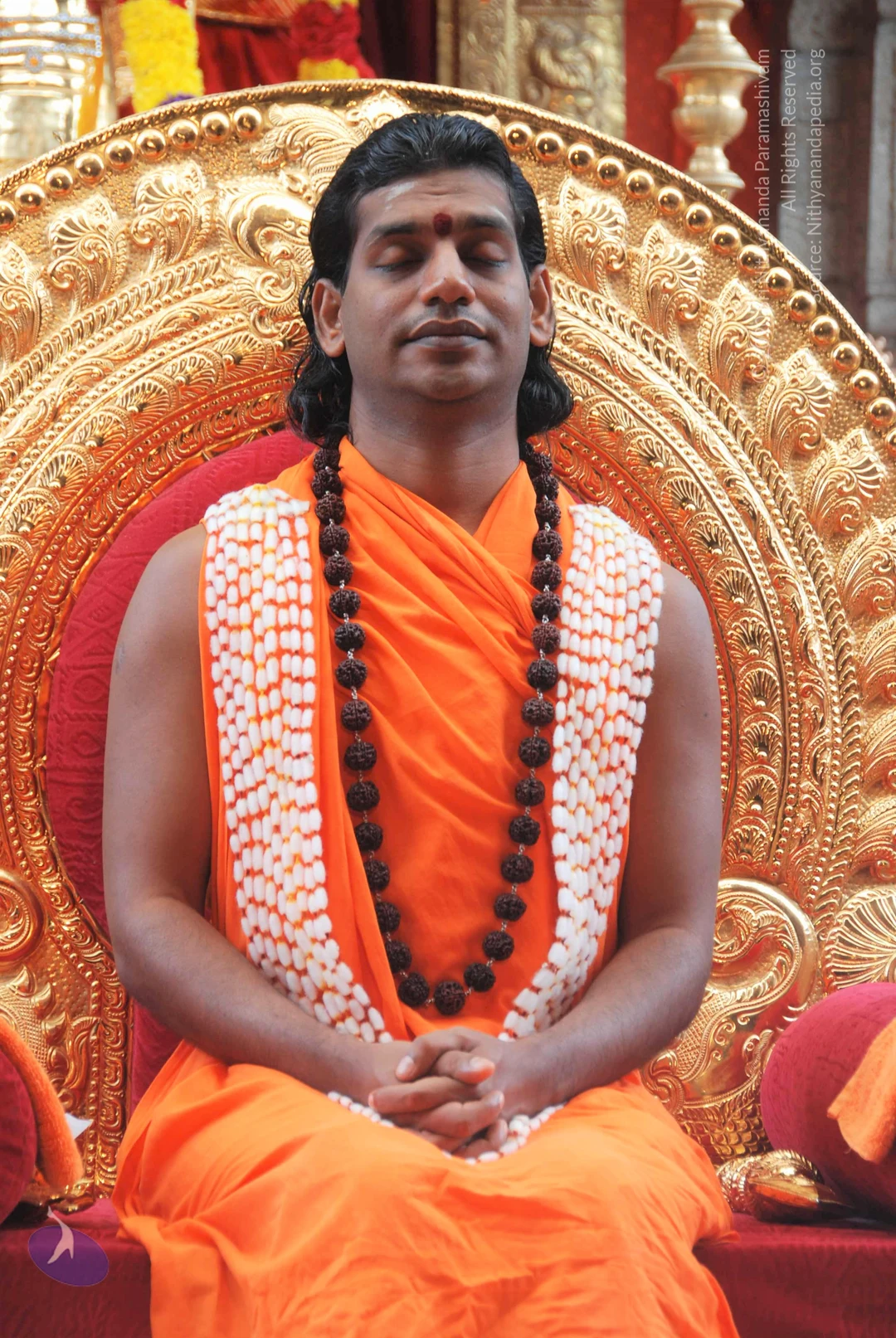
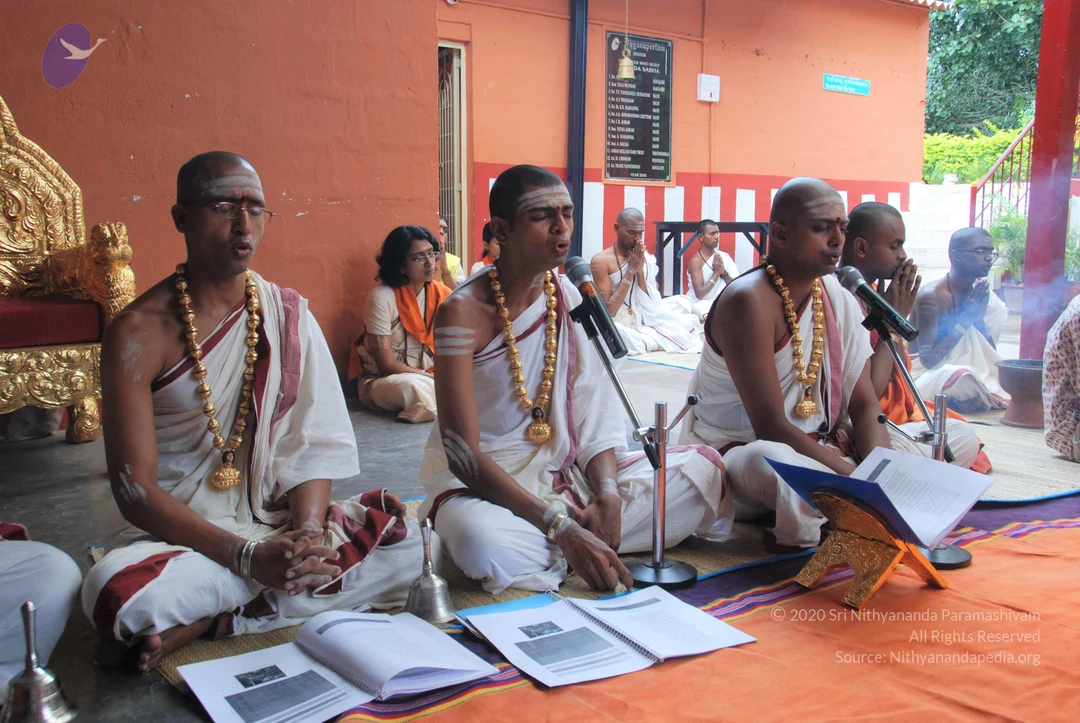
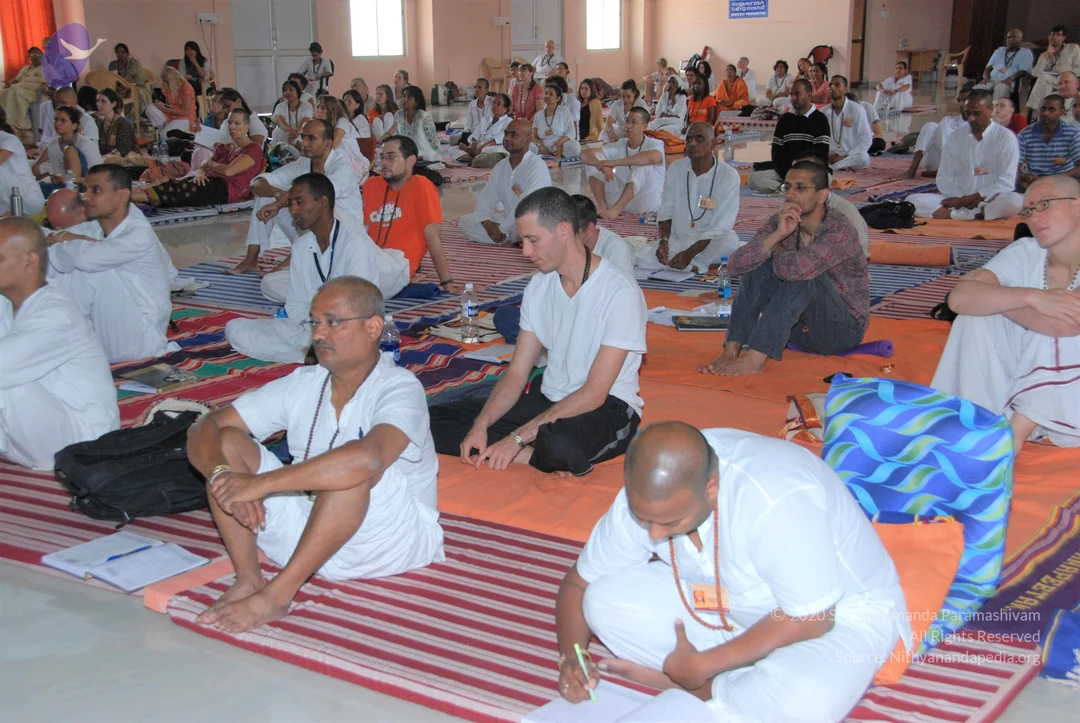
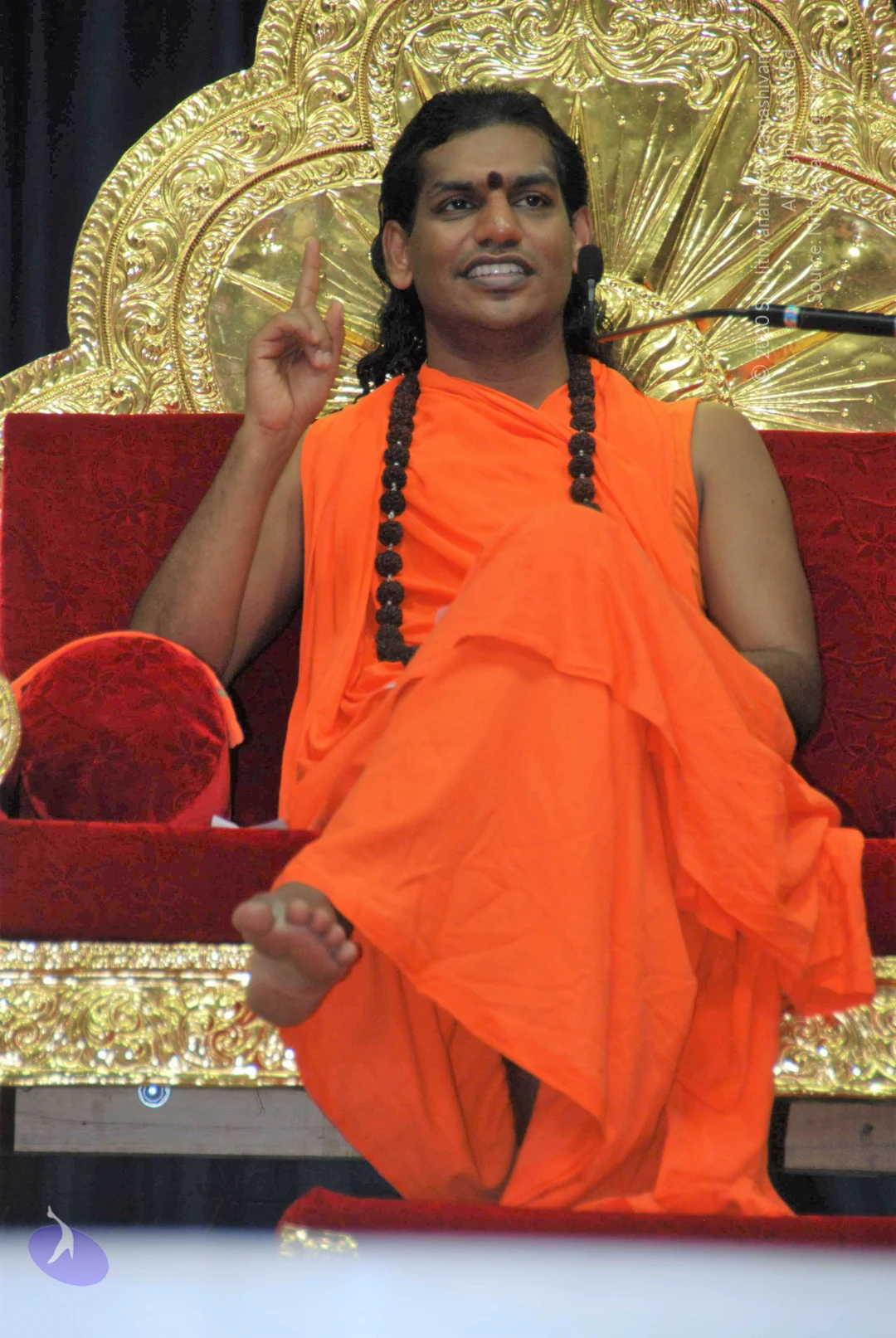
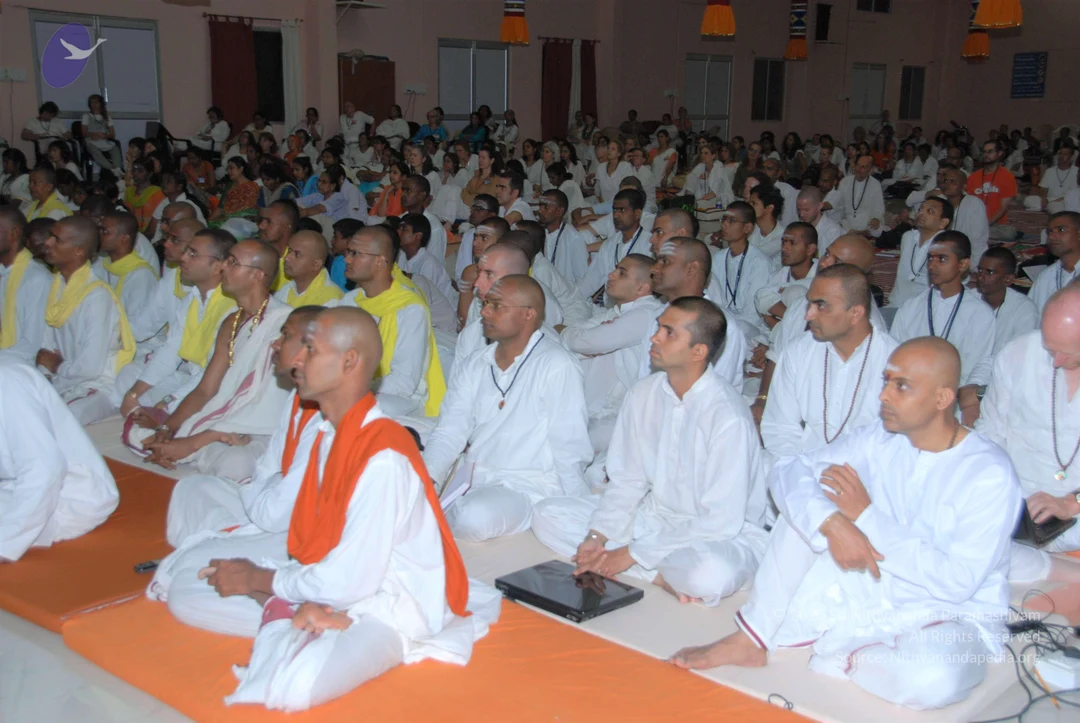
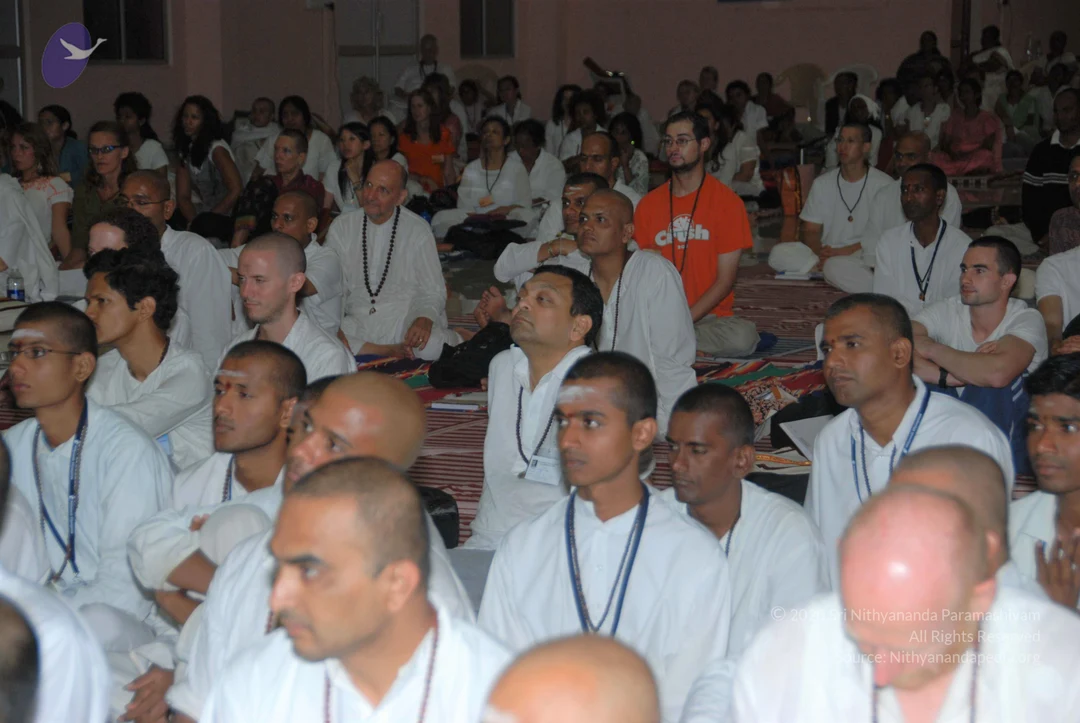
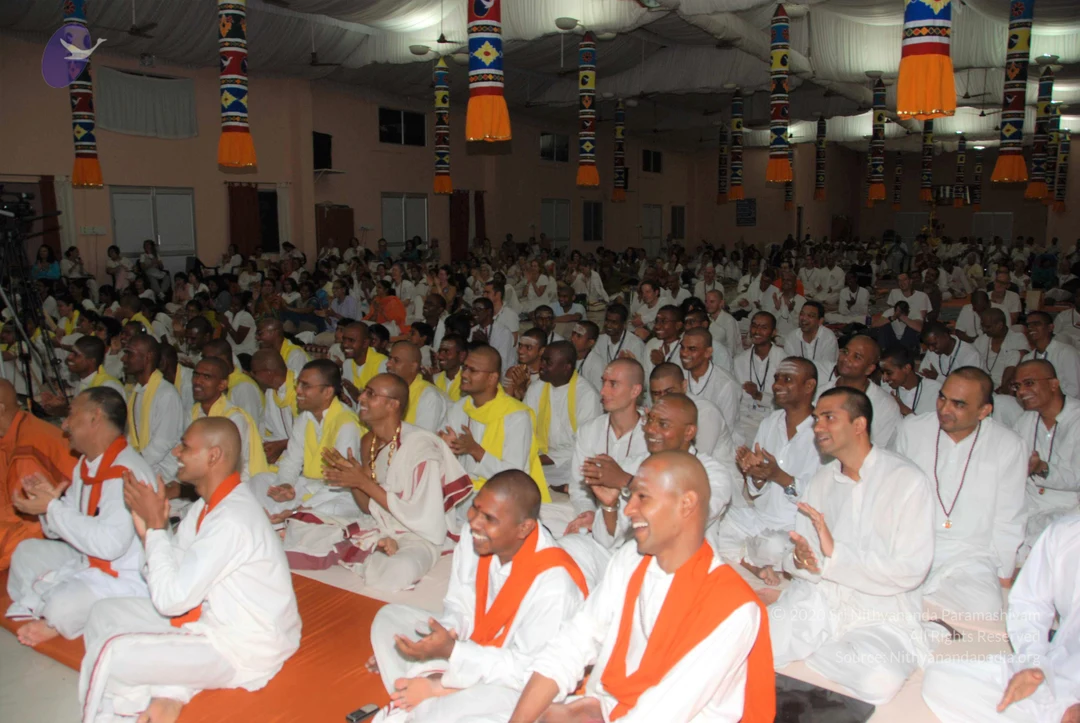
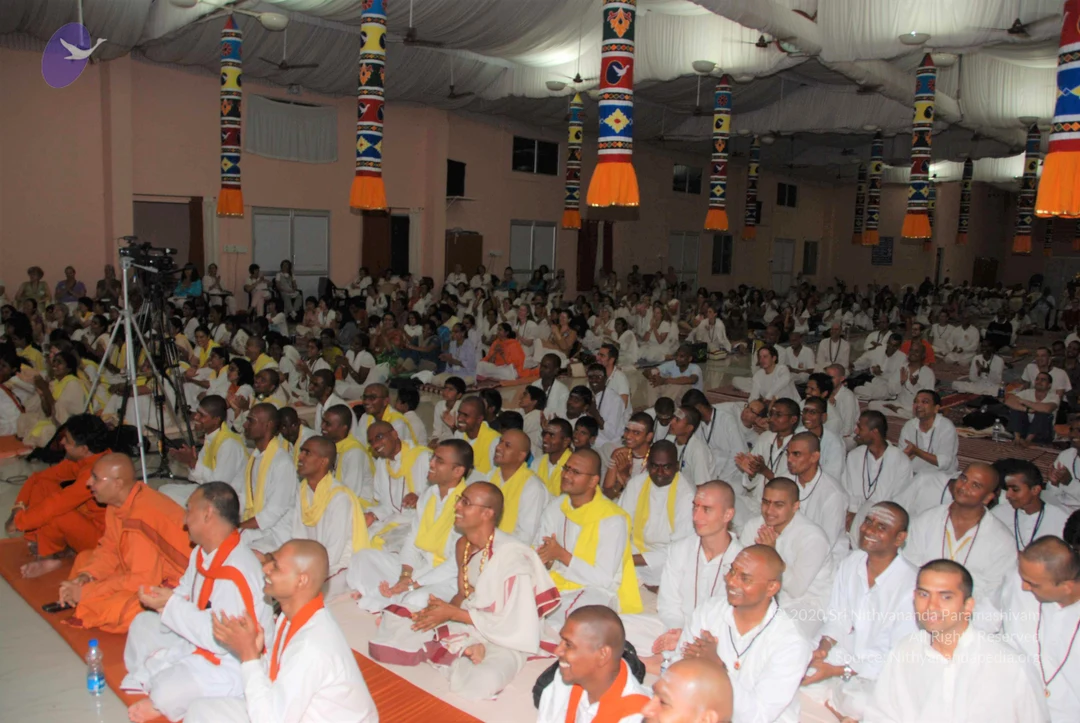
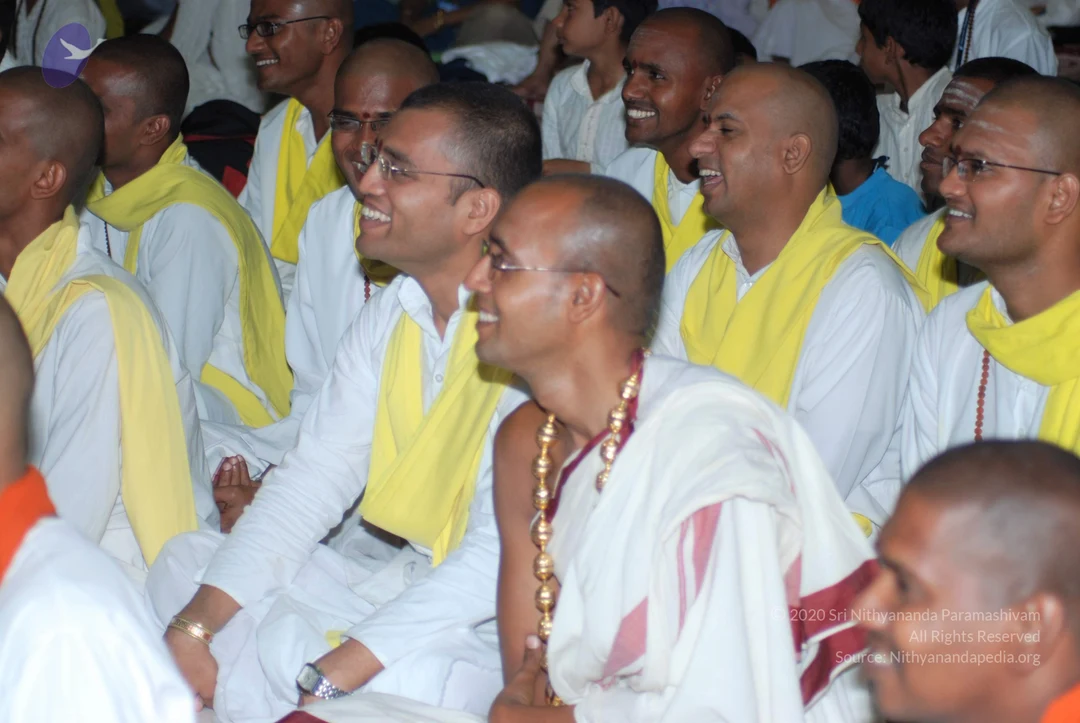
A young woman in an orange-brown kurta with a floral print bends forward and presses her forehead to the bare black stone feet of a large standing statue. Her hands are clasped around the feet. The statue wears an orange-saffron cloth draped over its body, with thick garlands of yellow marigolds, white flowers, red roses and purple blossoms. A silver-plated ornamental pillar with embossed floral and bird designs stands at left, with green foliage behind. This is an act of devotion at a murti, shown as a close photograph of a single devotee.Outdoor photograph of a man in an orange sleeveless garment with a dark rudraksha mala around his neck, seated in profile on the left beside an orange-painted stone shrine with a yellow marigold garland. He has long dark hair swept back. Behind him are palm trees and lush green foliage. In the foreground a dark stone walkway runs beside a black metal railing and a red carpet. A grey stone bowl-shaped basin sits in the background. Appearance-based cues including long swept-back hair, an orange garment and rudraksha mala are consistent with a probable Swamiji (probable) seated at the shrine.A man with long hair swept back and a red tilak on his forehead sits cross-legged in meditation on a woven mat outdoors. He wears an orange saffron robe draped over one shoulder and a long dark rudraksha mala around his neck. Beside him stands a polished brass kalasha-style pot with a spout. Behind him is an orange temple base with a garland of red flowers and yellow tassels hanging from its corner, and the ground shows white kolam-style chalk lines. a person, seated in meditation during a pada puja or satsang setting.A seated man with eyes closed and hands clasped in his lap sits before an ornate gilded throne with floral carvings and a red cushion behind him. He wears orange saffron robes draped over one shoulder, a long rudraksha mala with dark beads, and multiple strands of white beaded garland across his chest. A red kumkum mark is on his forehead and his long dark hair is swept back. Marigold-type flowers in purple, yellow and red appear at the top of the frame. Swamiji (probable) is seated in meditative posture, appearing in person as a presiding figure with distinctive saffron clothing, rudraksha mala and long swept-back hair.A man with long swept-back dark hair and a red tilak on his forehead sits with eyes closed on an ornate gold throne with a red cushion. He wears a saffron-orange cloth draped over his shoulders and chest, a dark rudraksha mala hanging to his waist, and a white flower garland over his shoulders. His hands rest folded in his lap. Flowers in purple, white, red and yellow appear at the top of the frame.A photograph of a large seated congregation in a open pavilion hall with bamboo mats on the floor. In the foreground, several men in plain white dhotis and shoulder cloths, some with orange-bordered cloth and rudraksha malas, sit cross-legged holding small brass bells and offering implements. Brass plates with flowers, rice, oil lamps and small bowls are arranged on yellow and orange cloths before them. Behind, many more white-clad participants with white vibhuti or tilak marks sit in rows behind a metal railing. At the left, a man in saffron-orange robes sits near the front. Hanging banners with geometric patterns and gold trim decorate the upper hall. The scene appears to be a puja or satsang gathering.

September 14 2010

Original wiki page
Contents

Title:

Bliss is Choice

Narration:

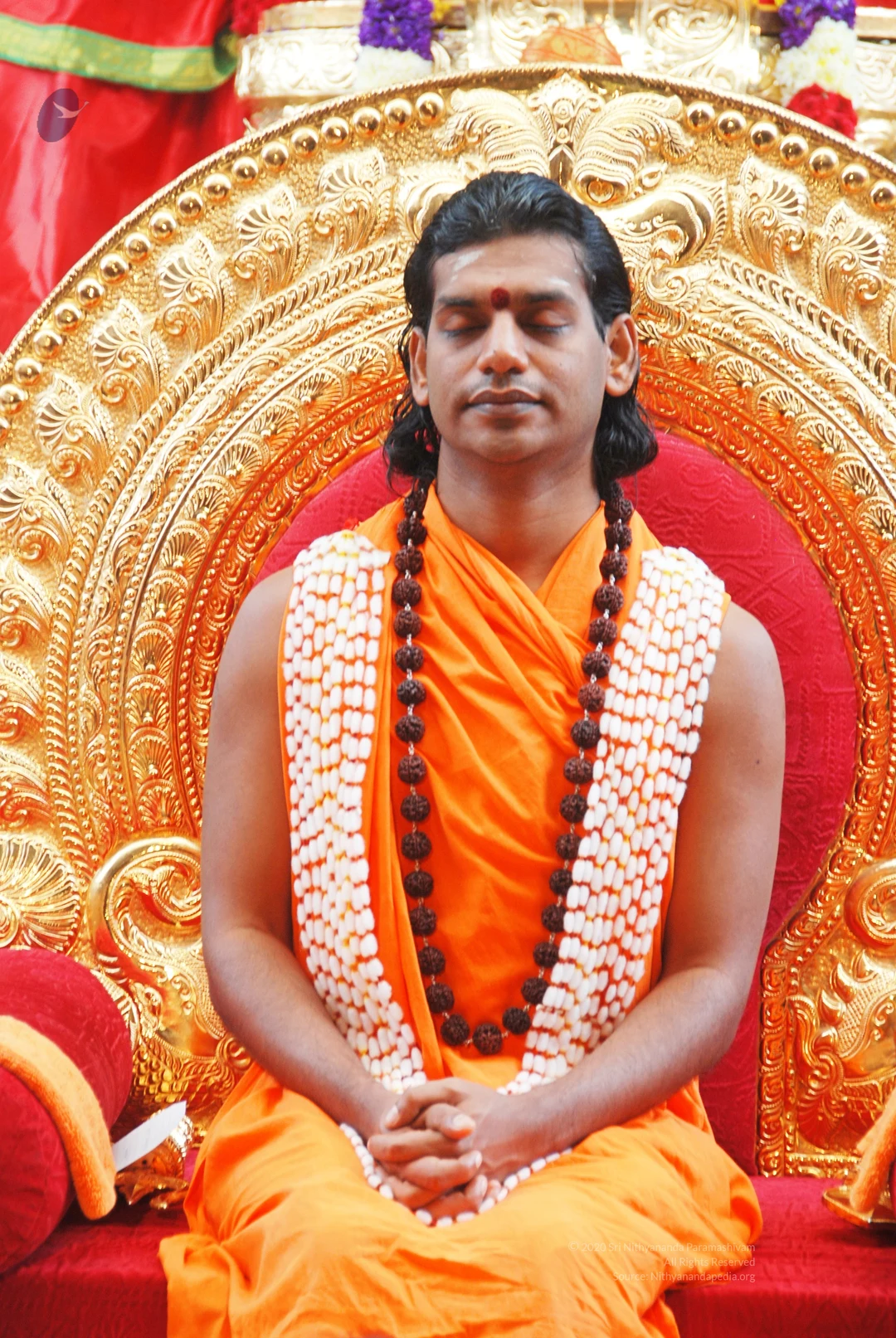
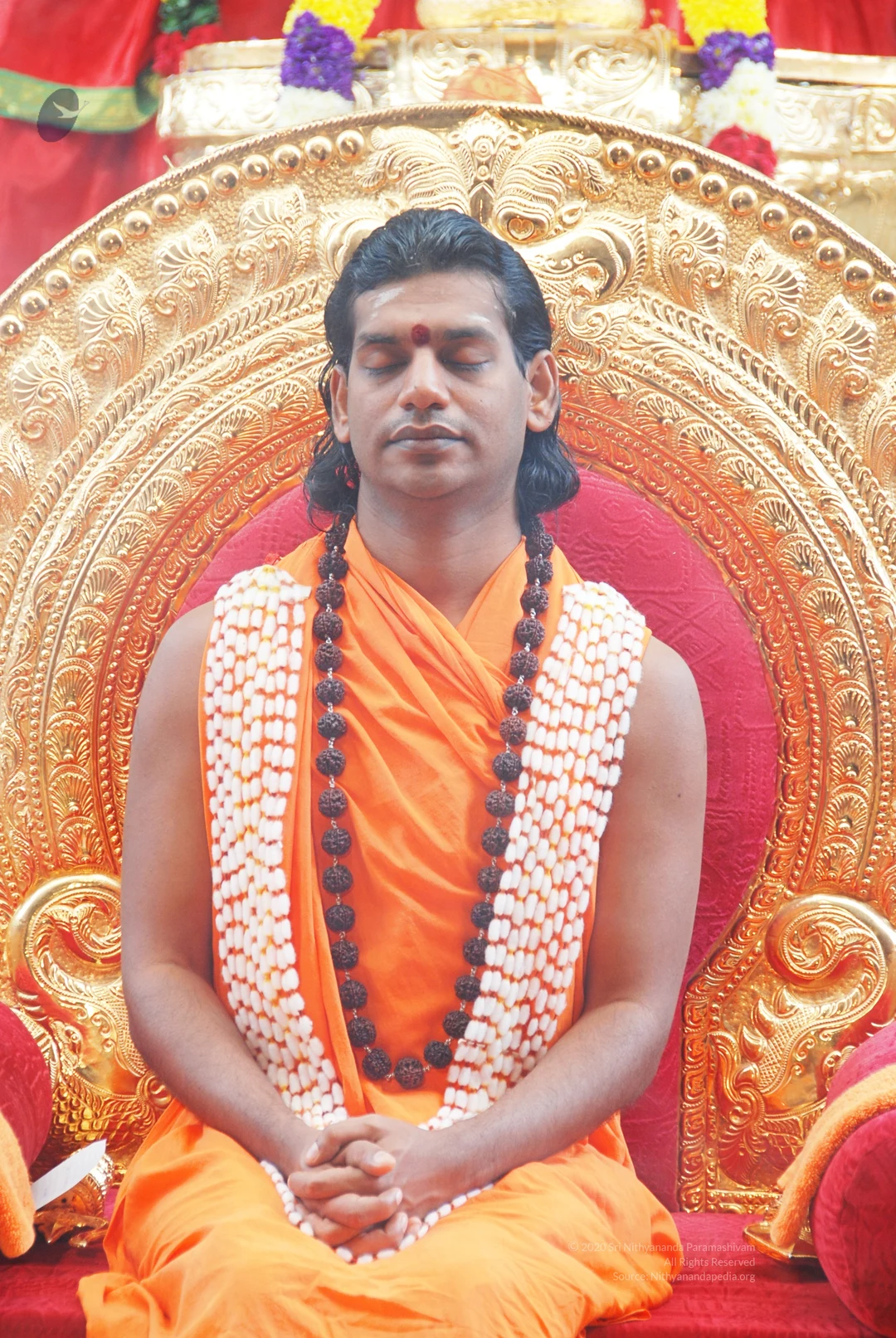
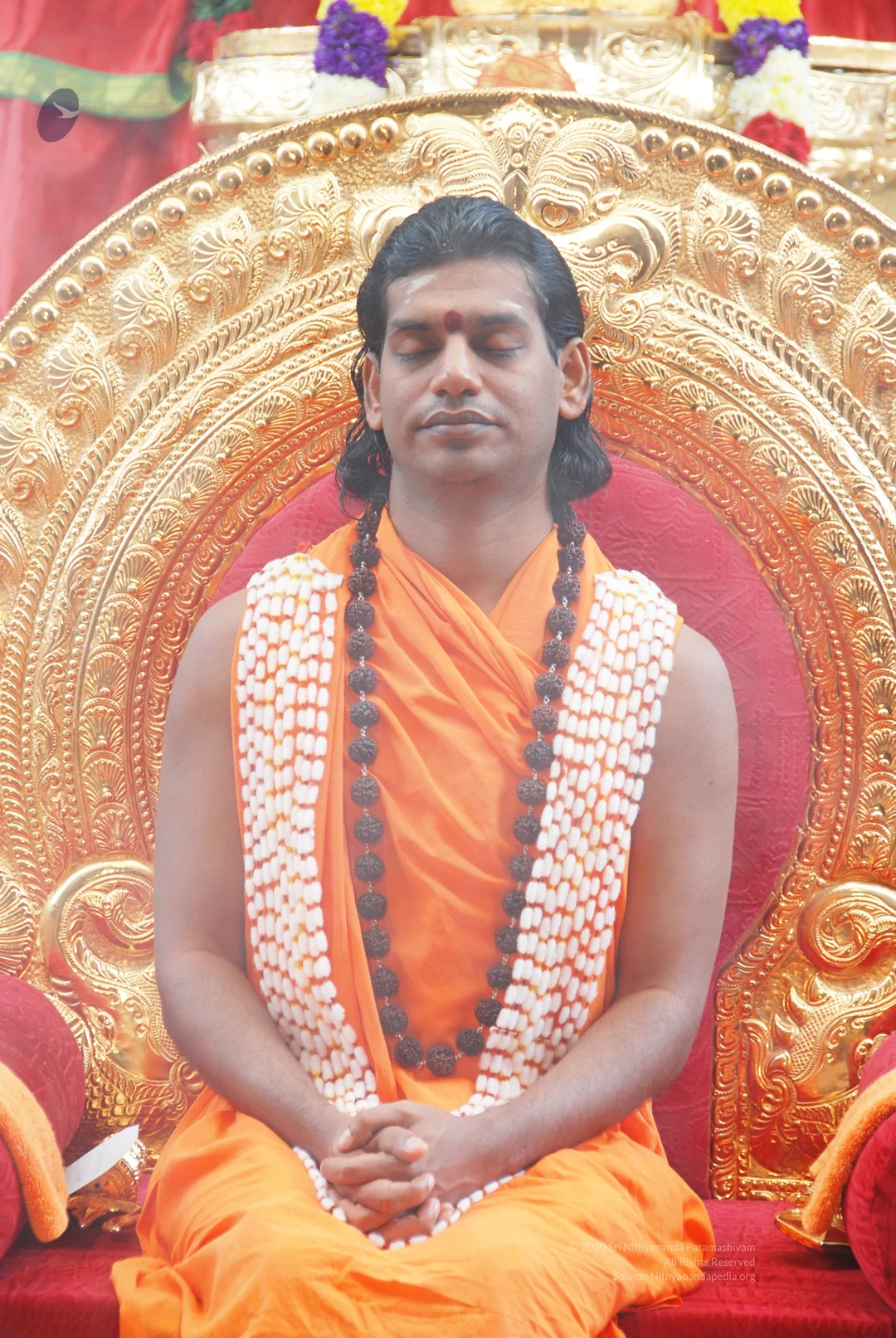
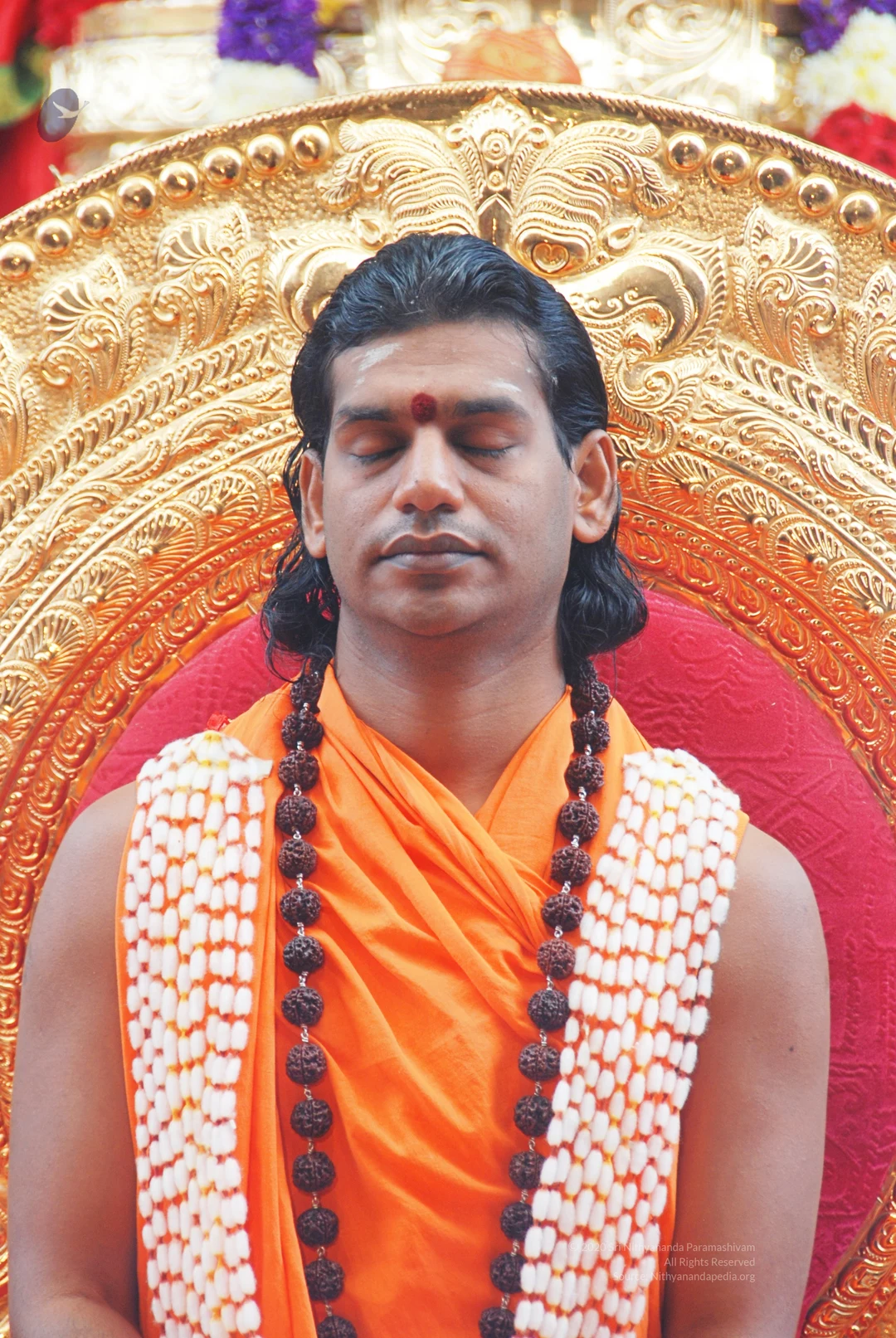
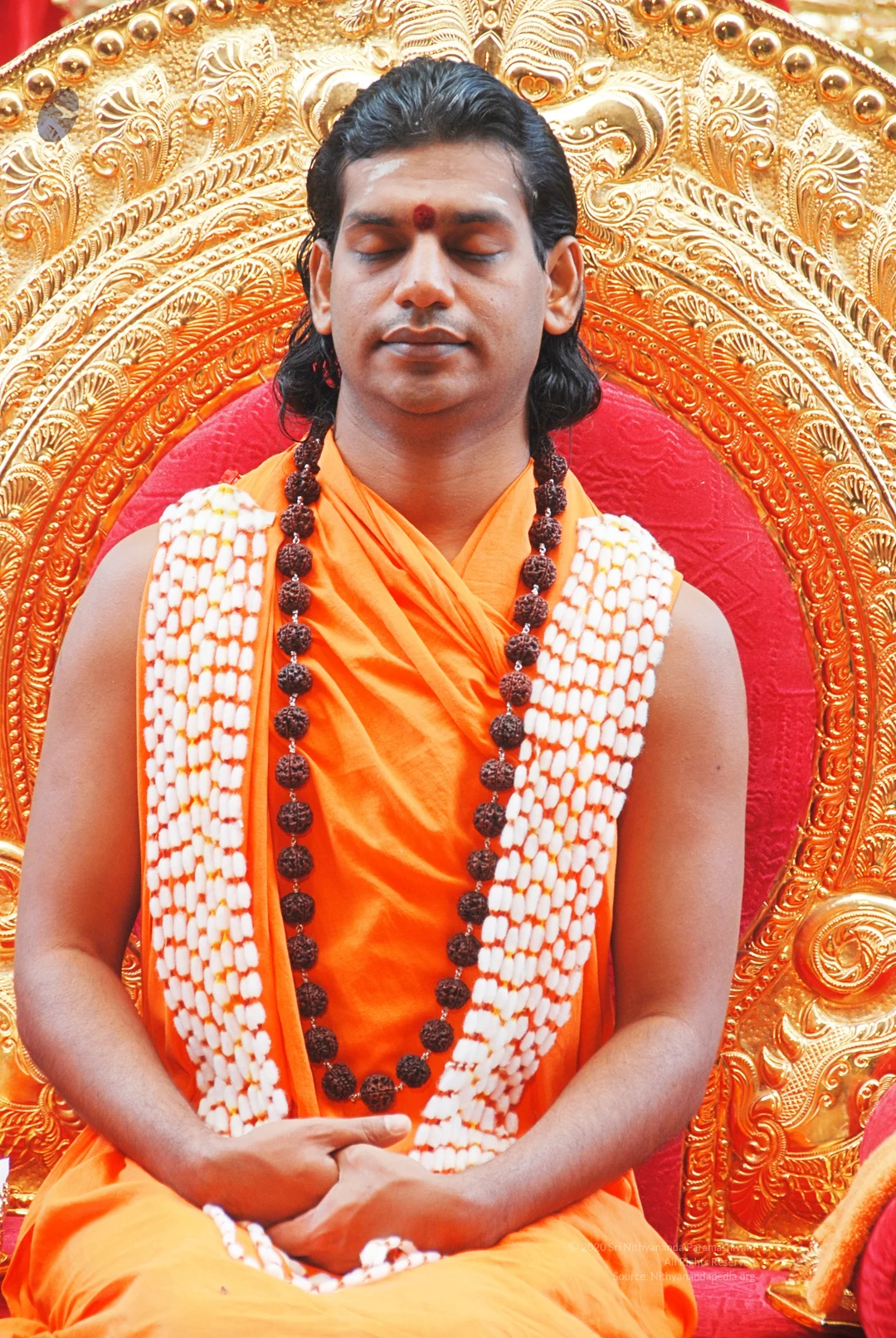
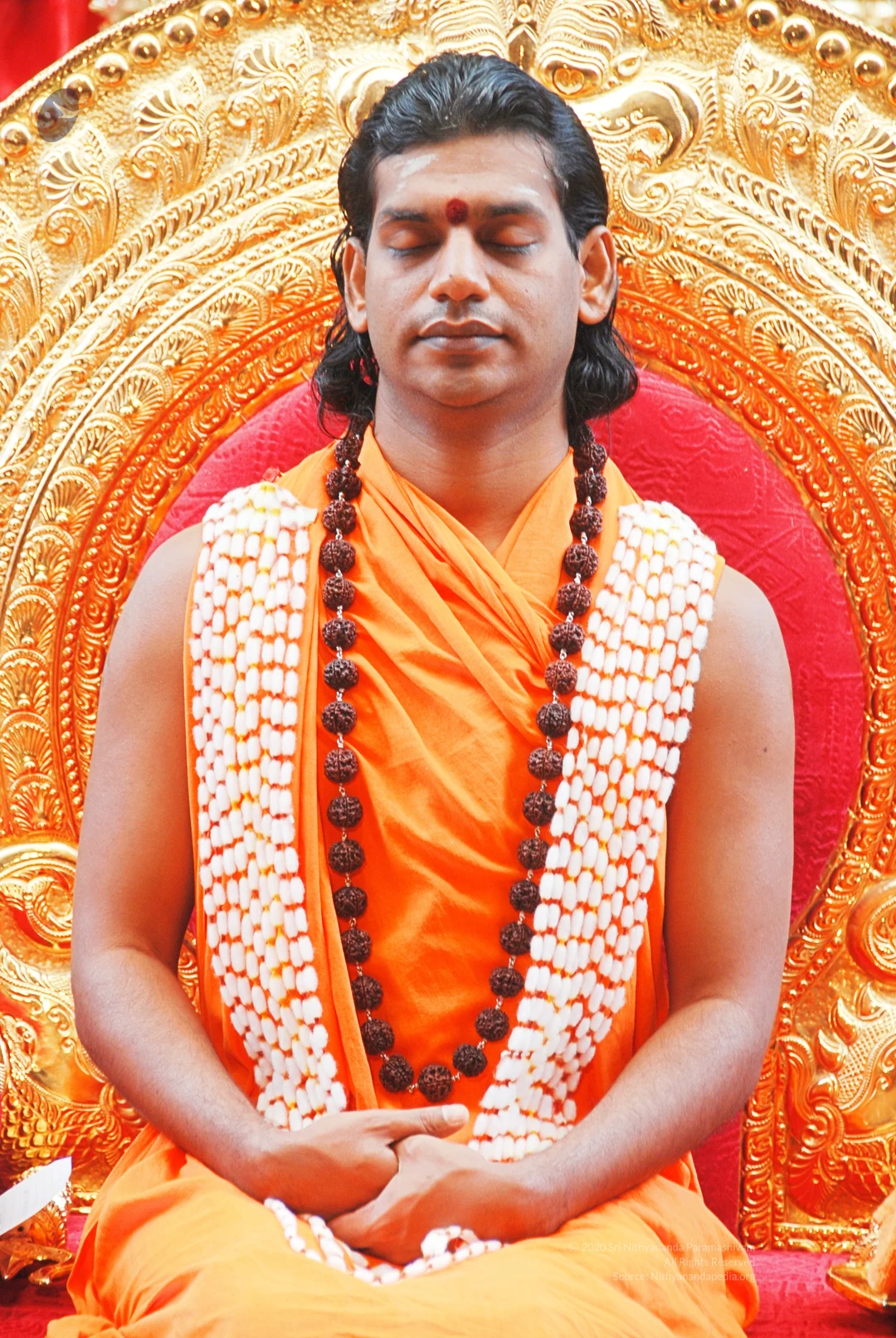
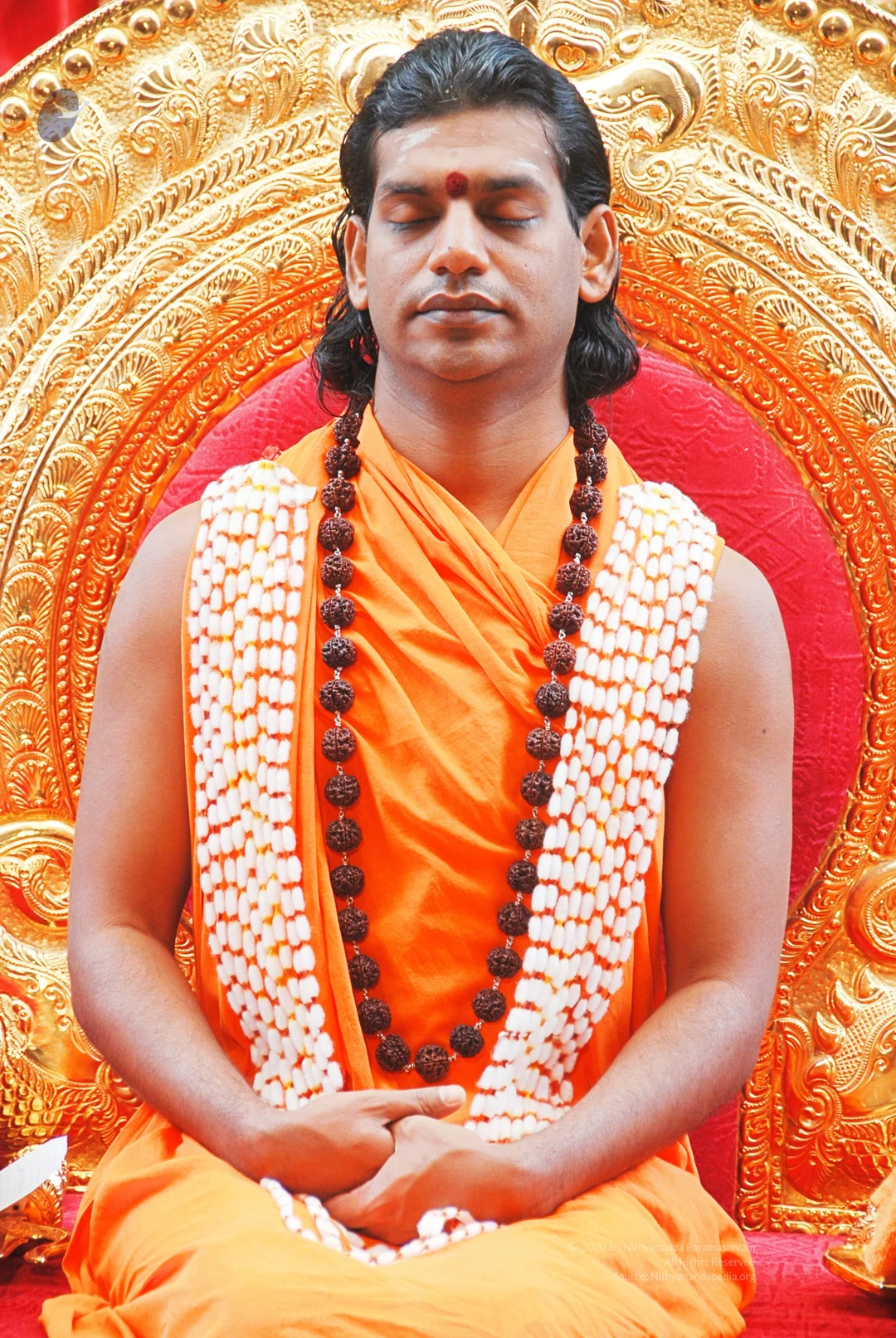
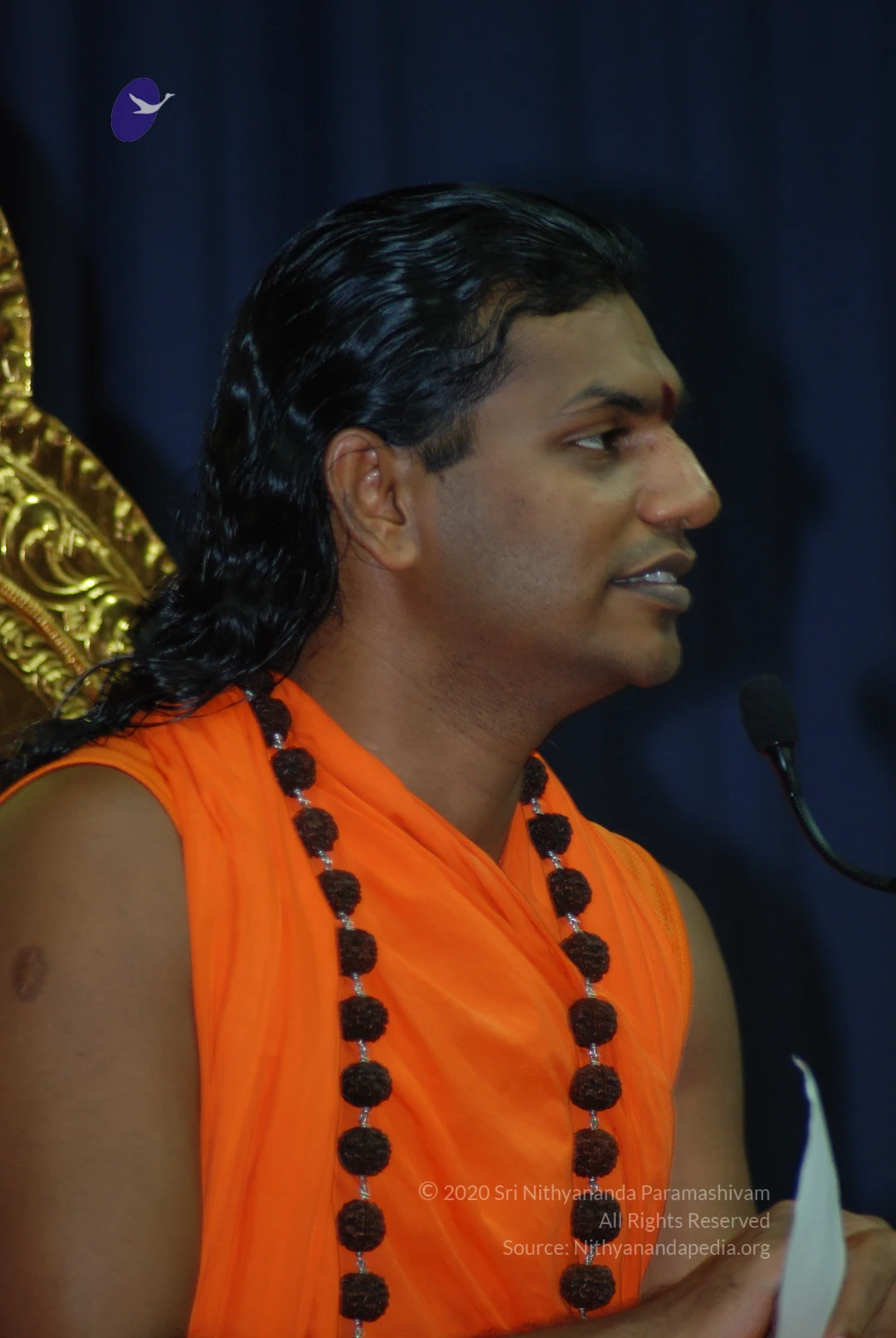
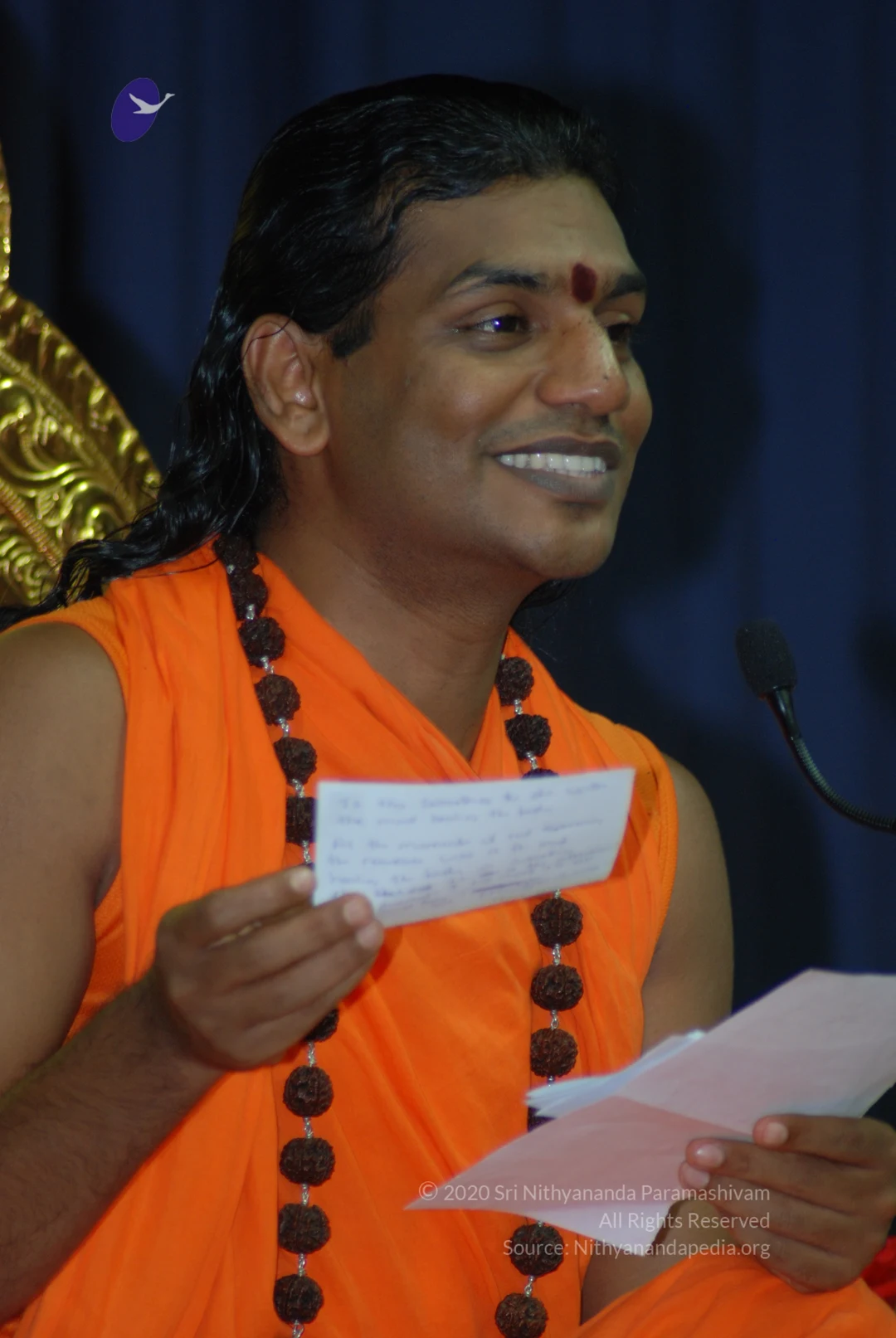
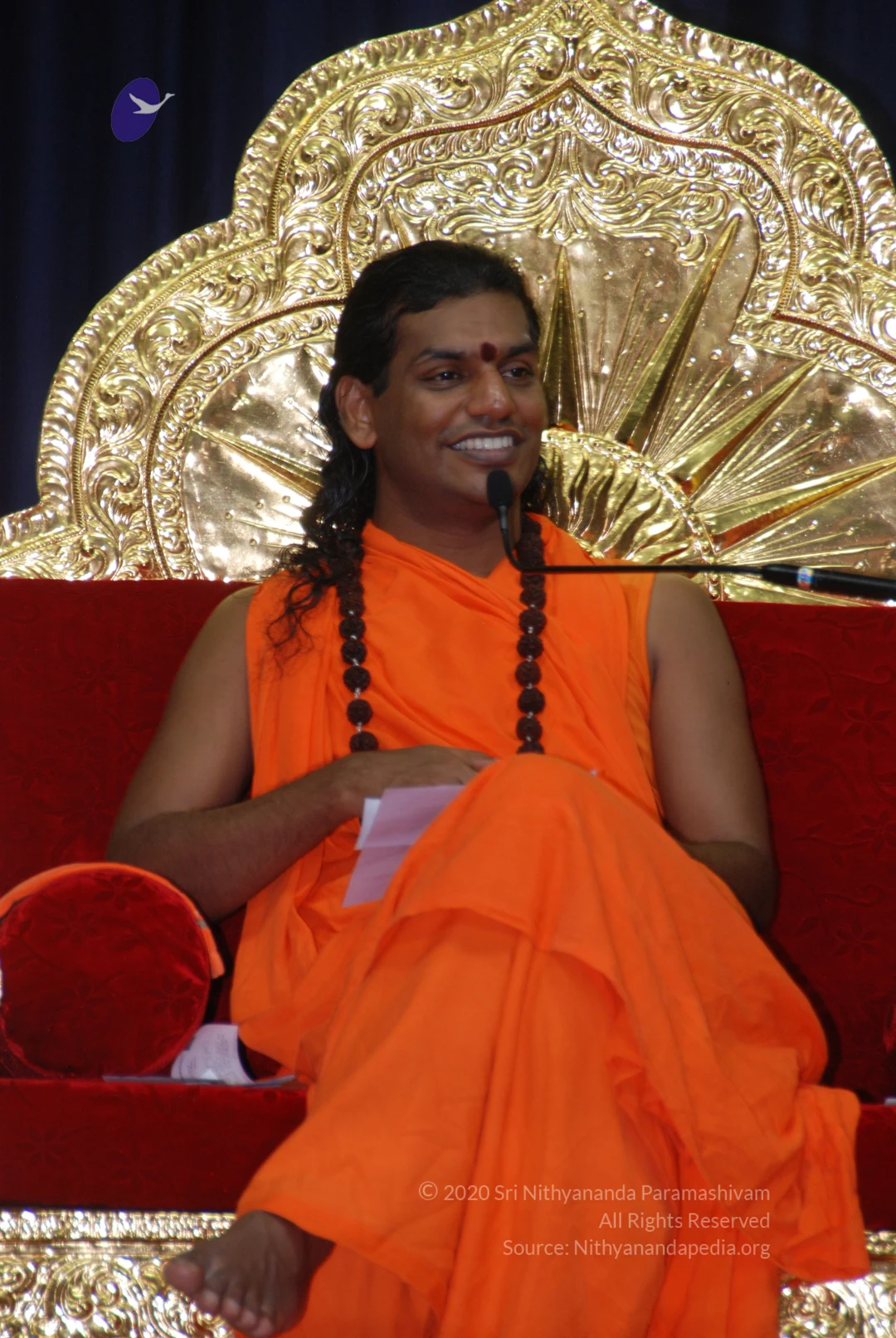
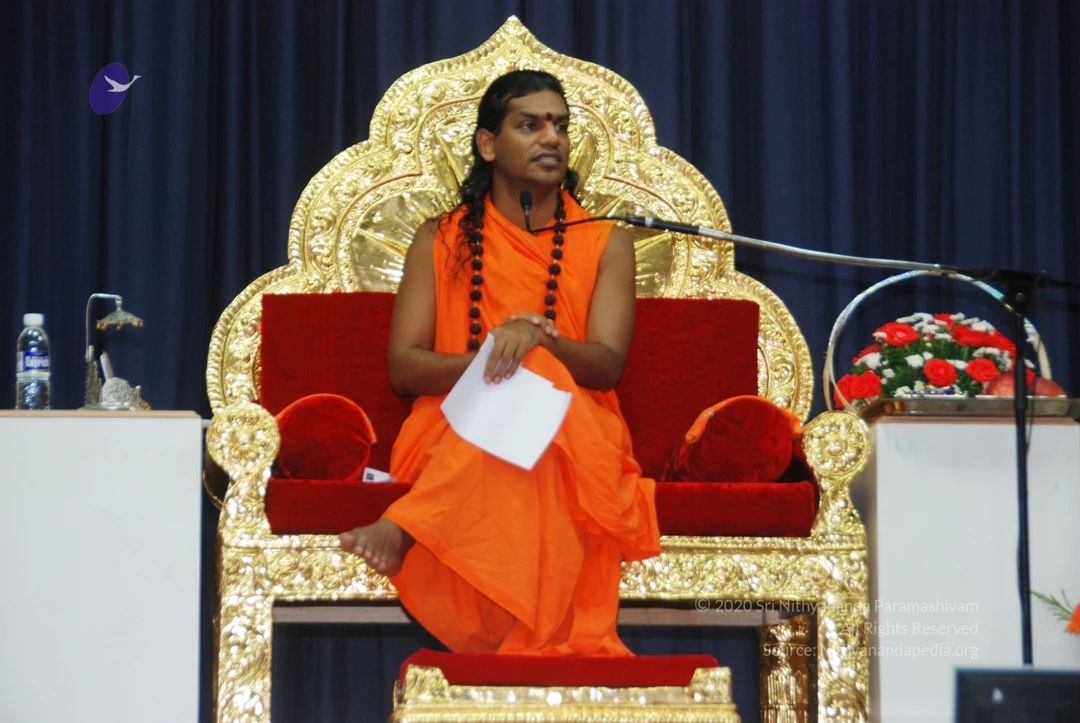
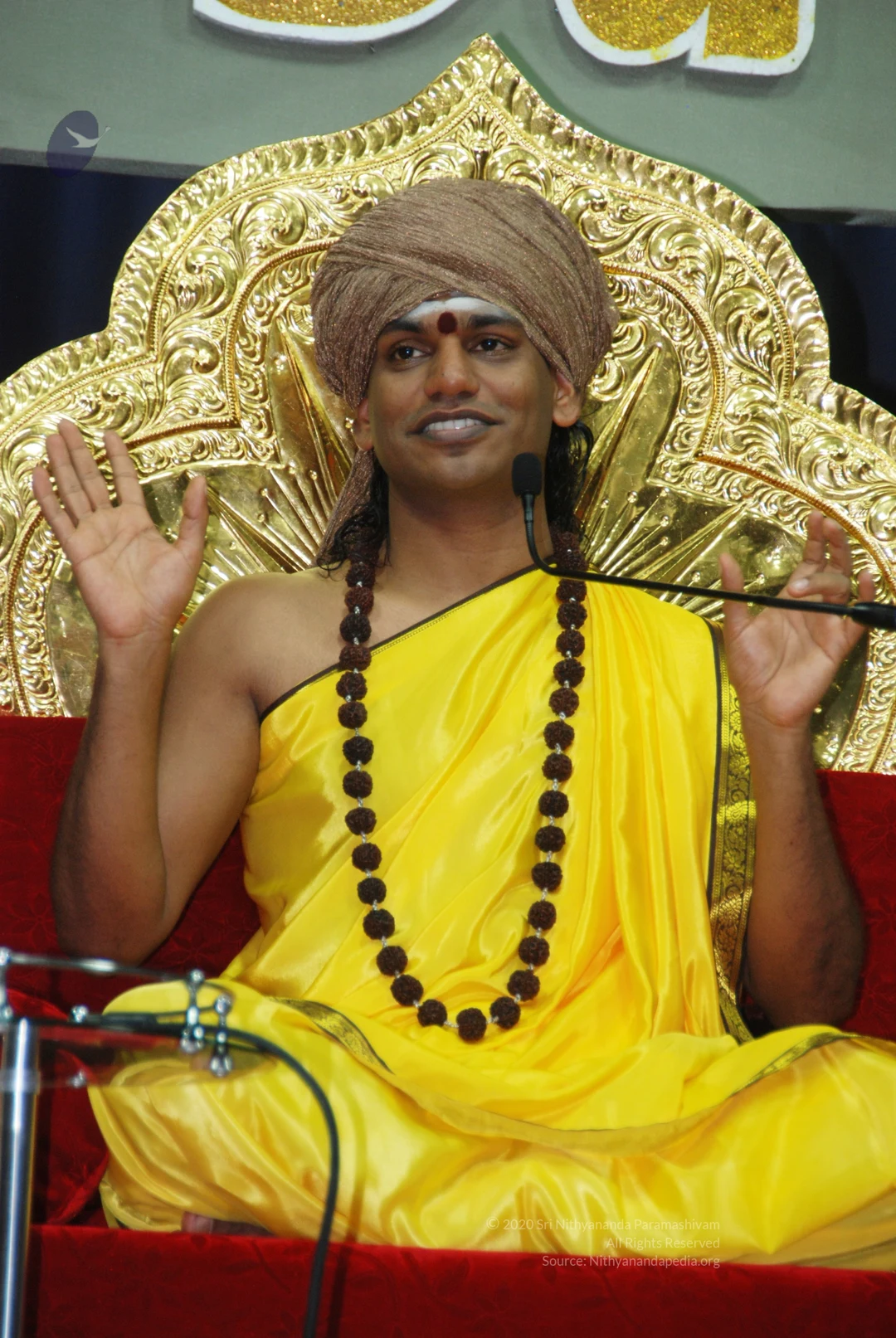
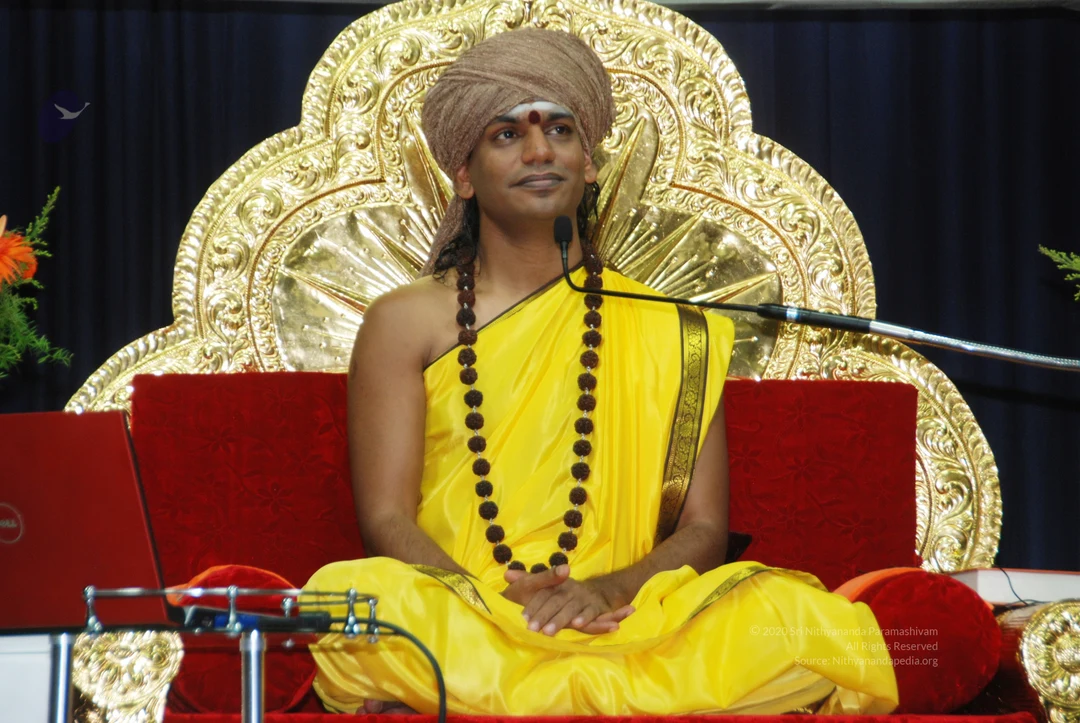
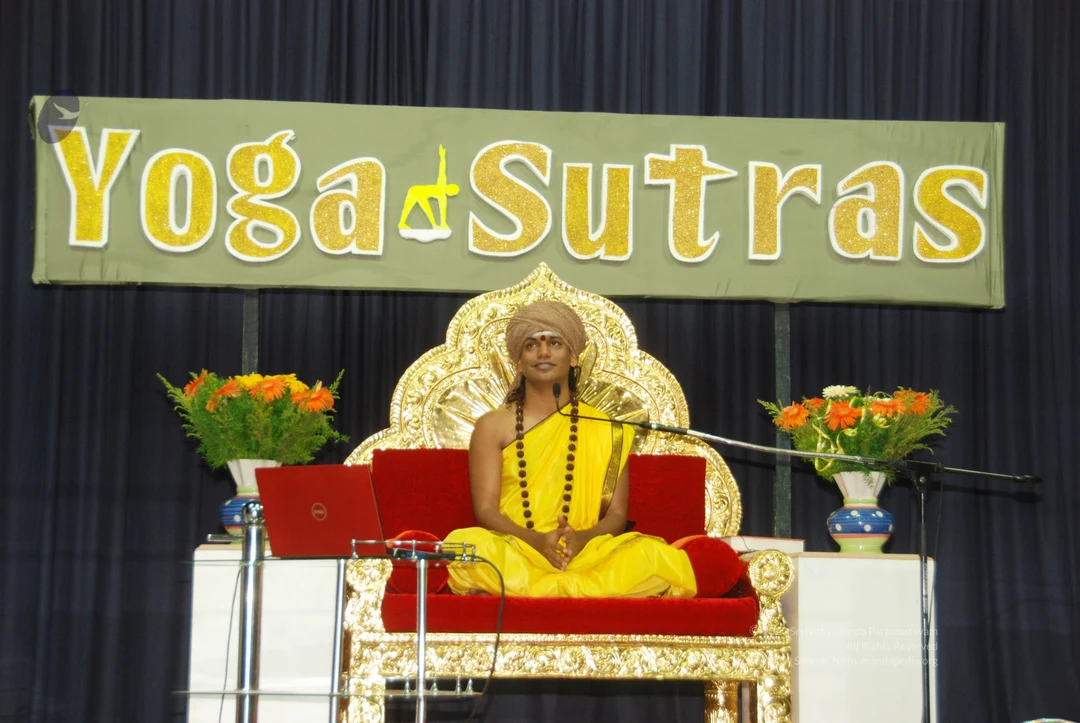
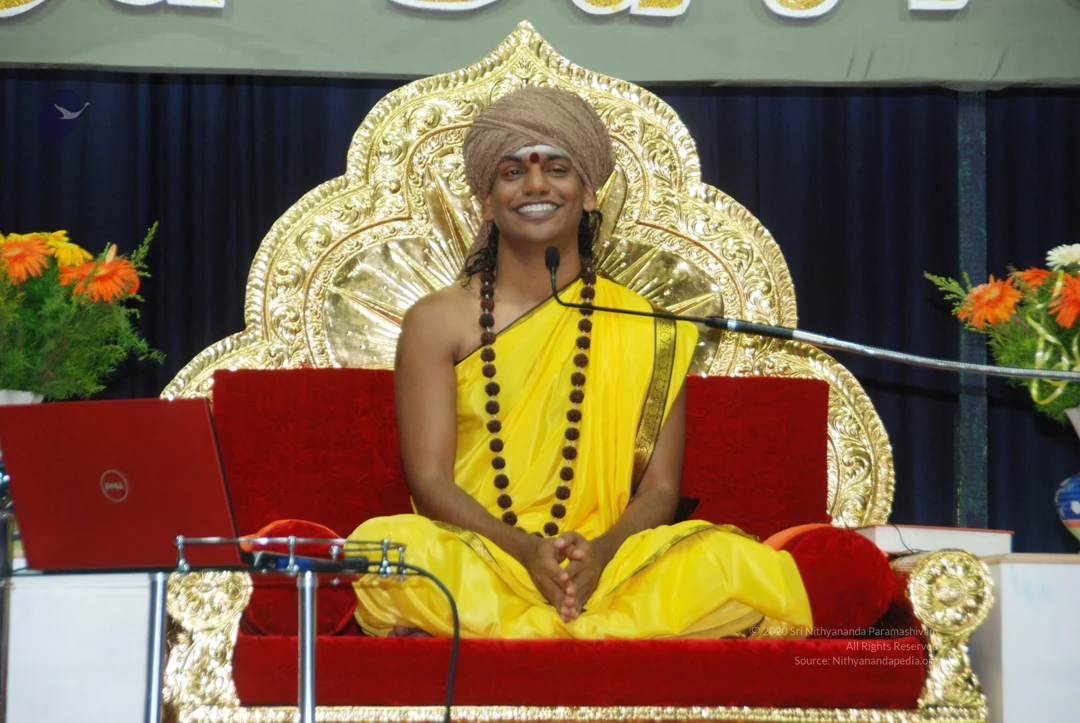
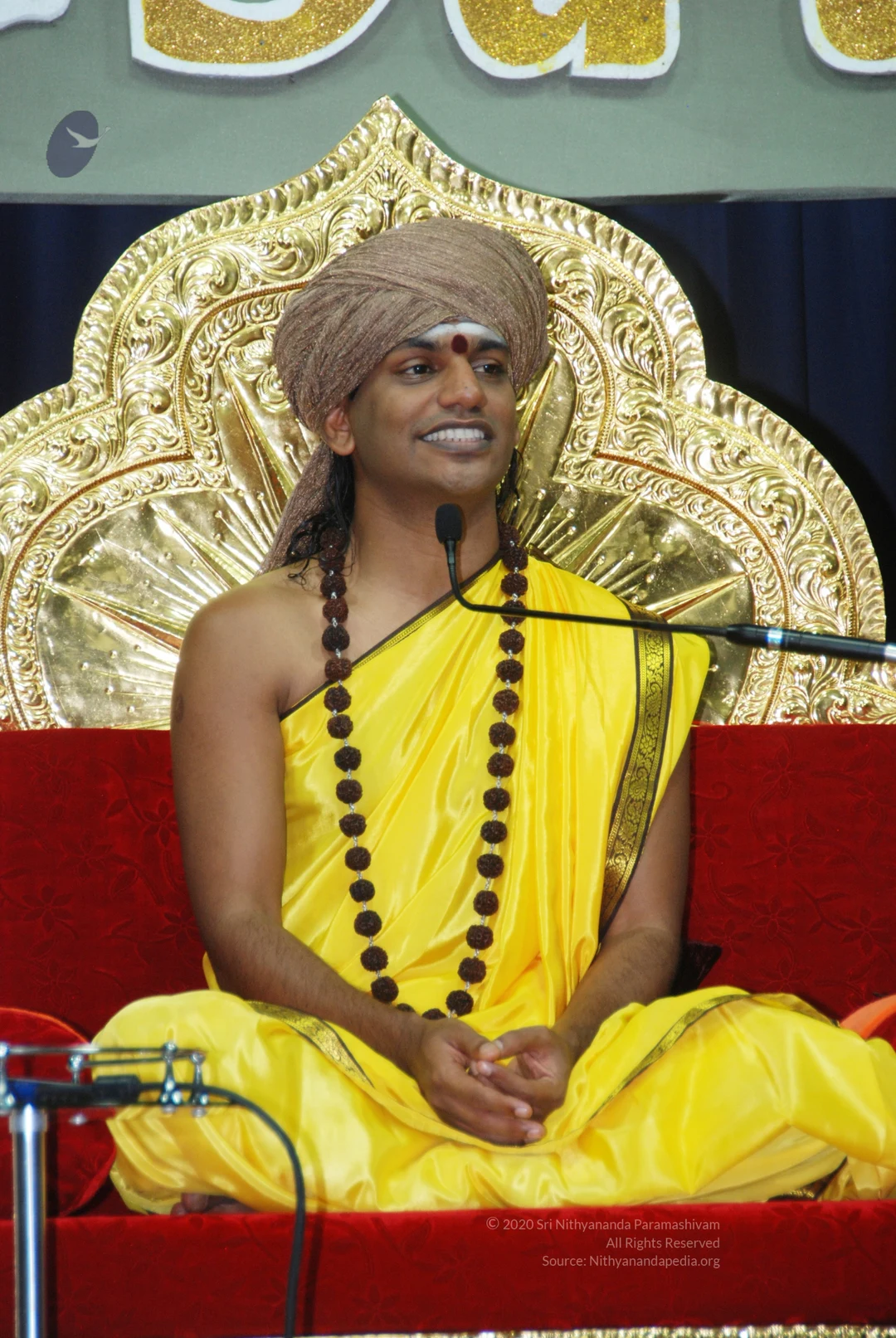
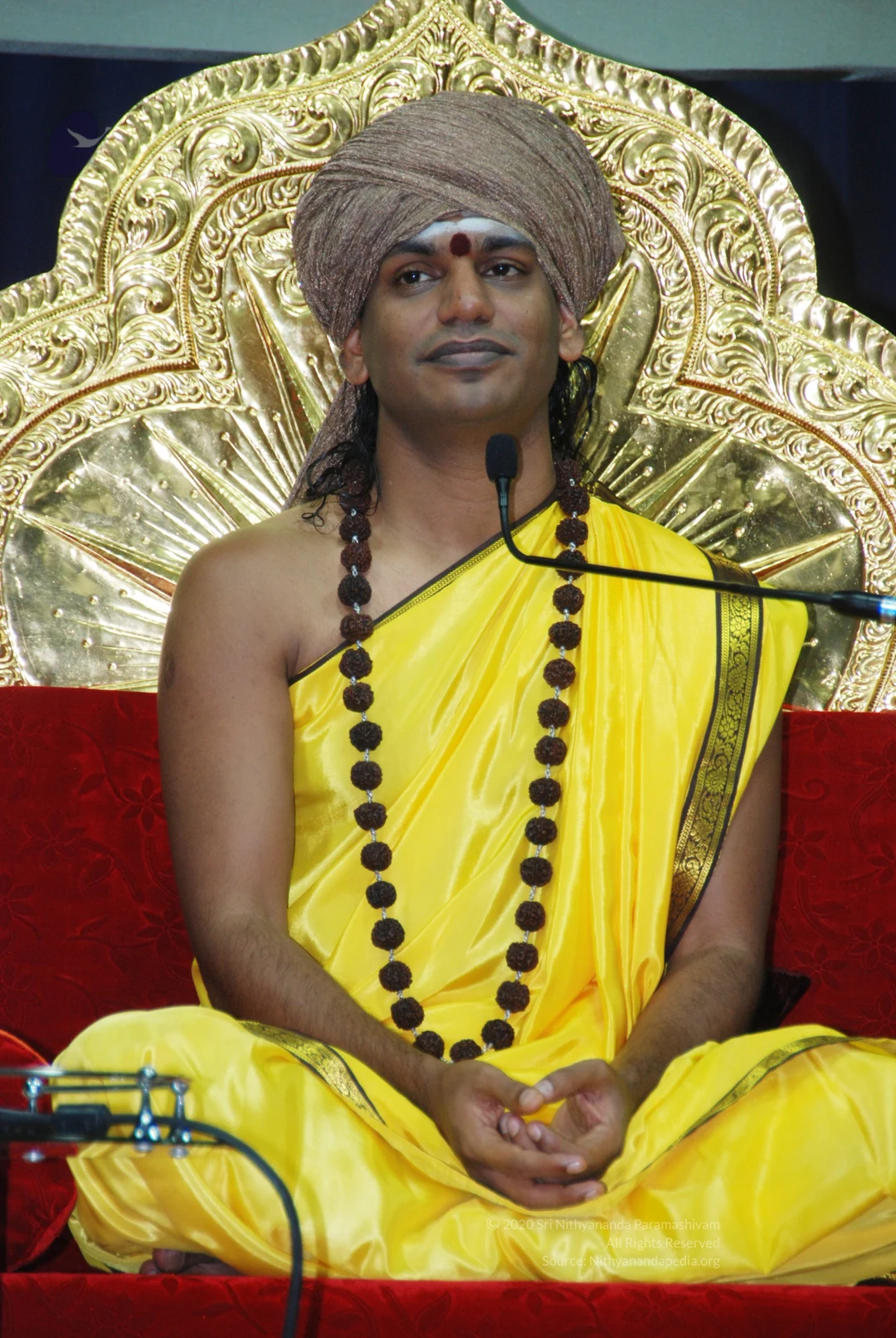
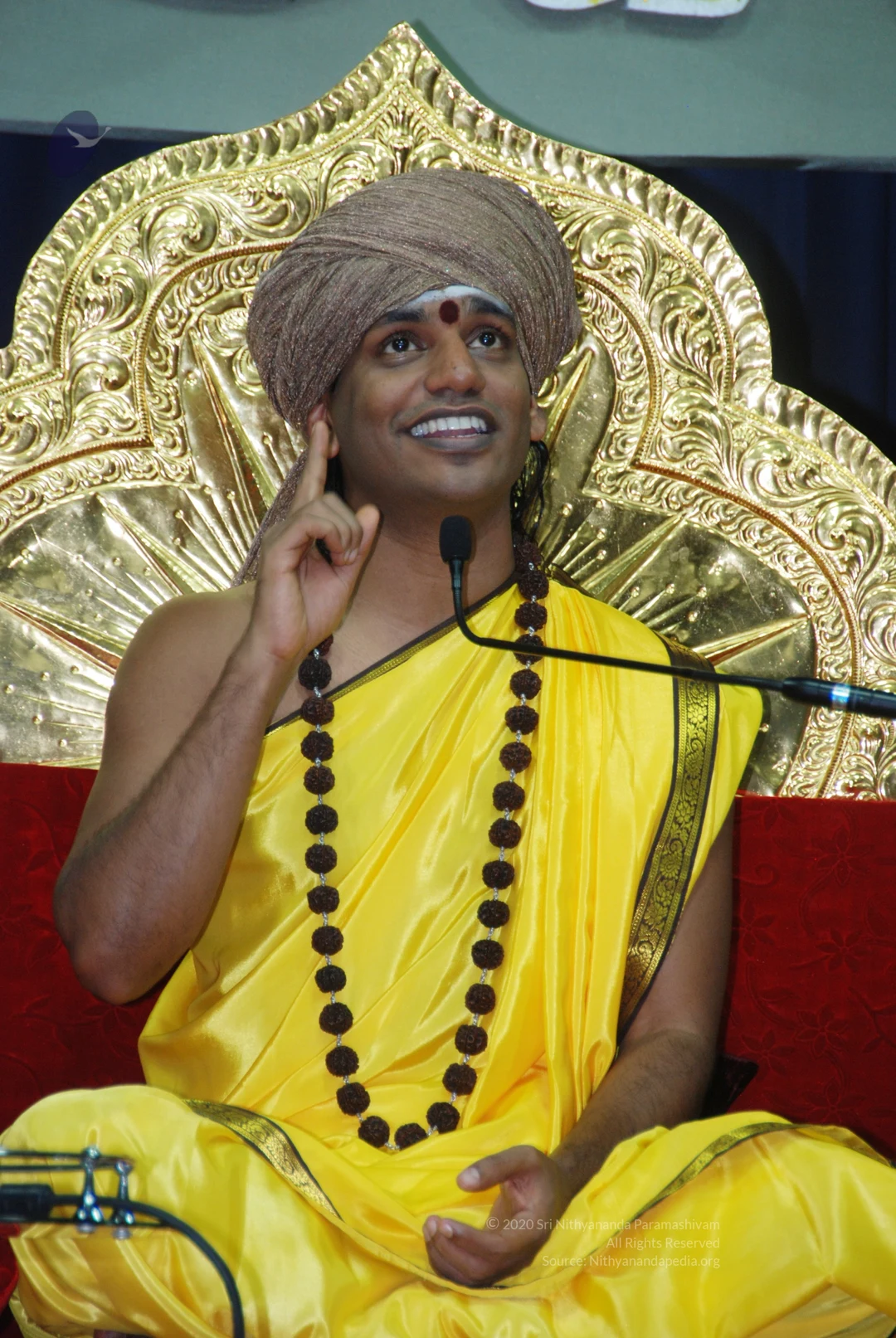
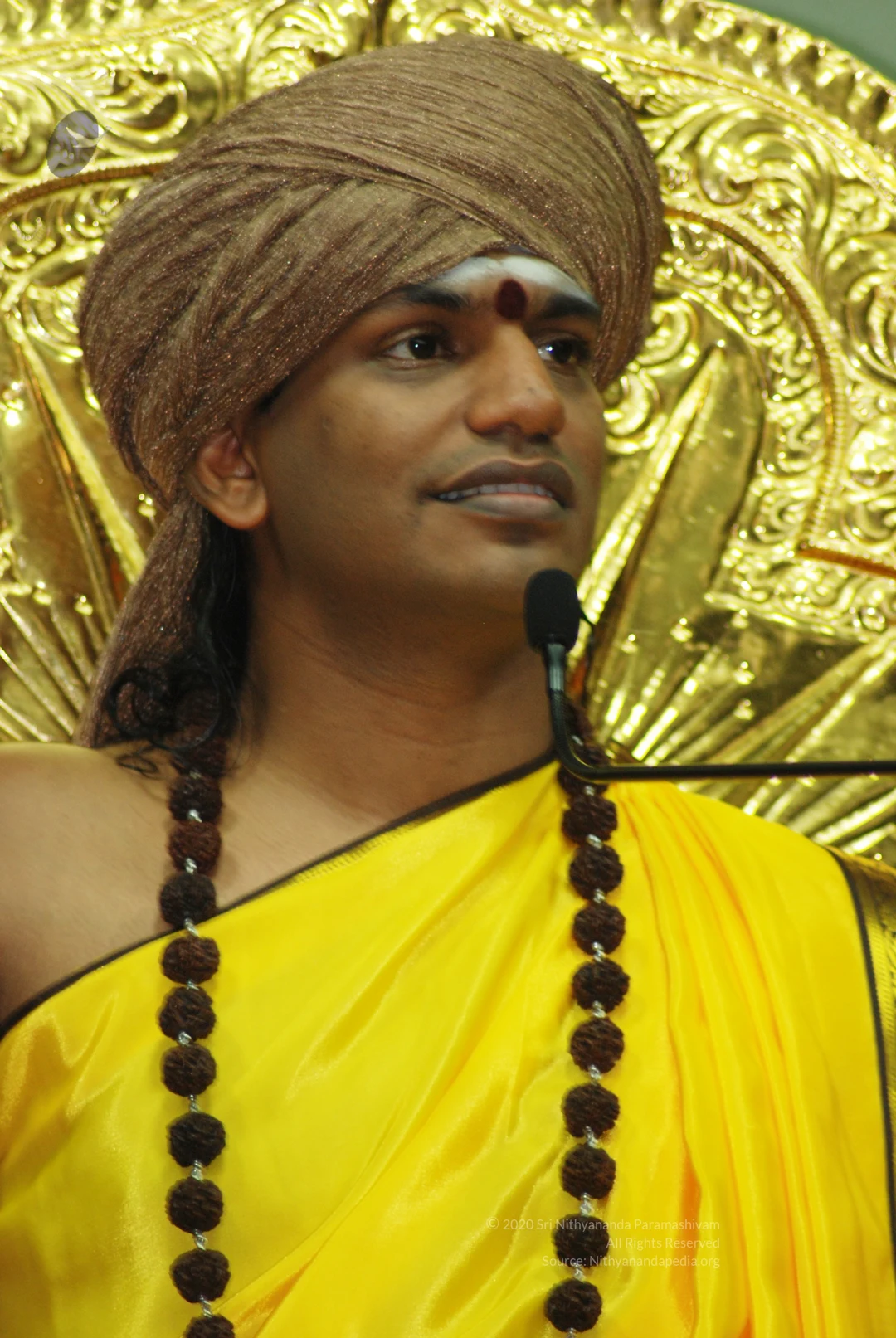
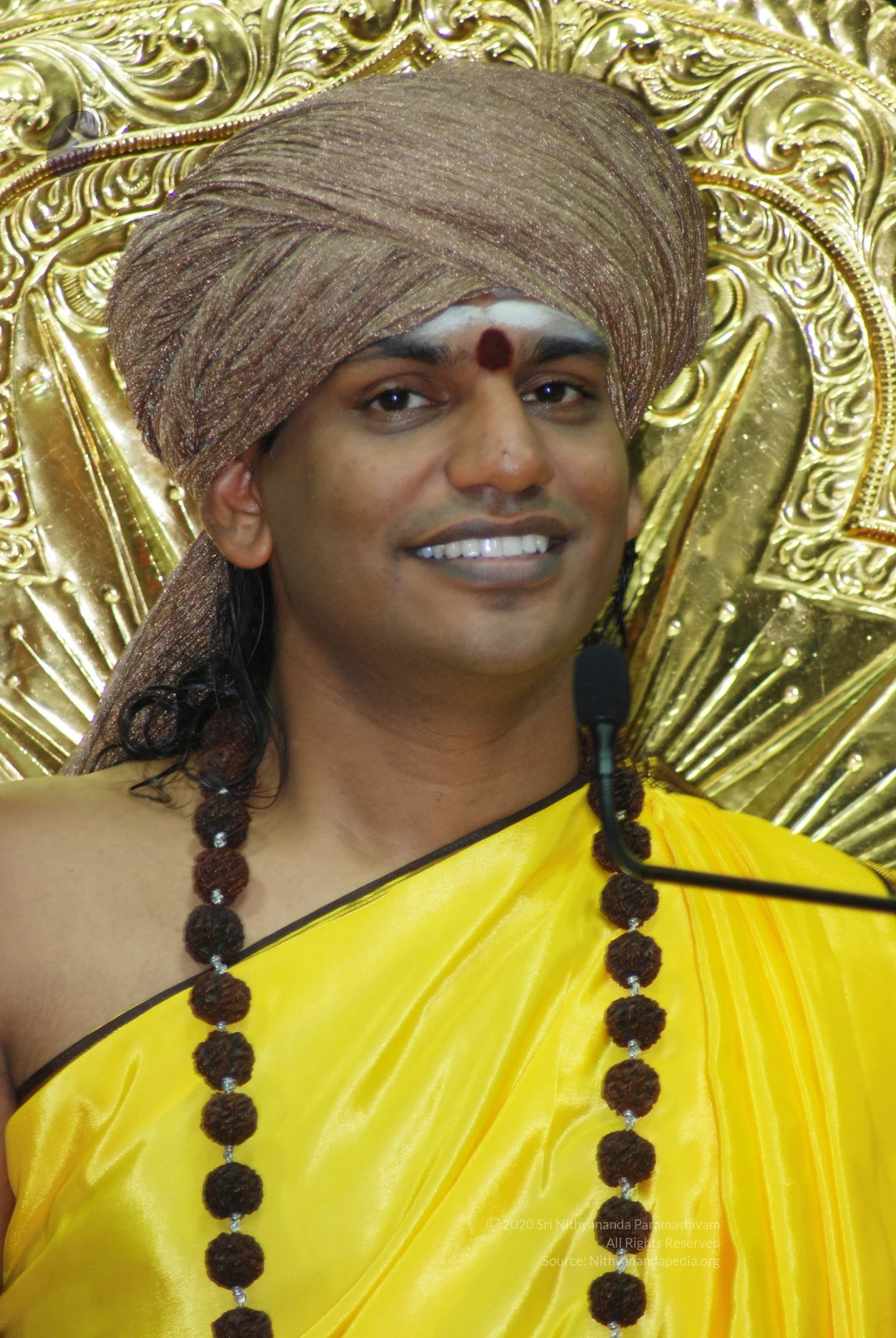
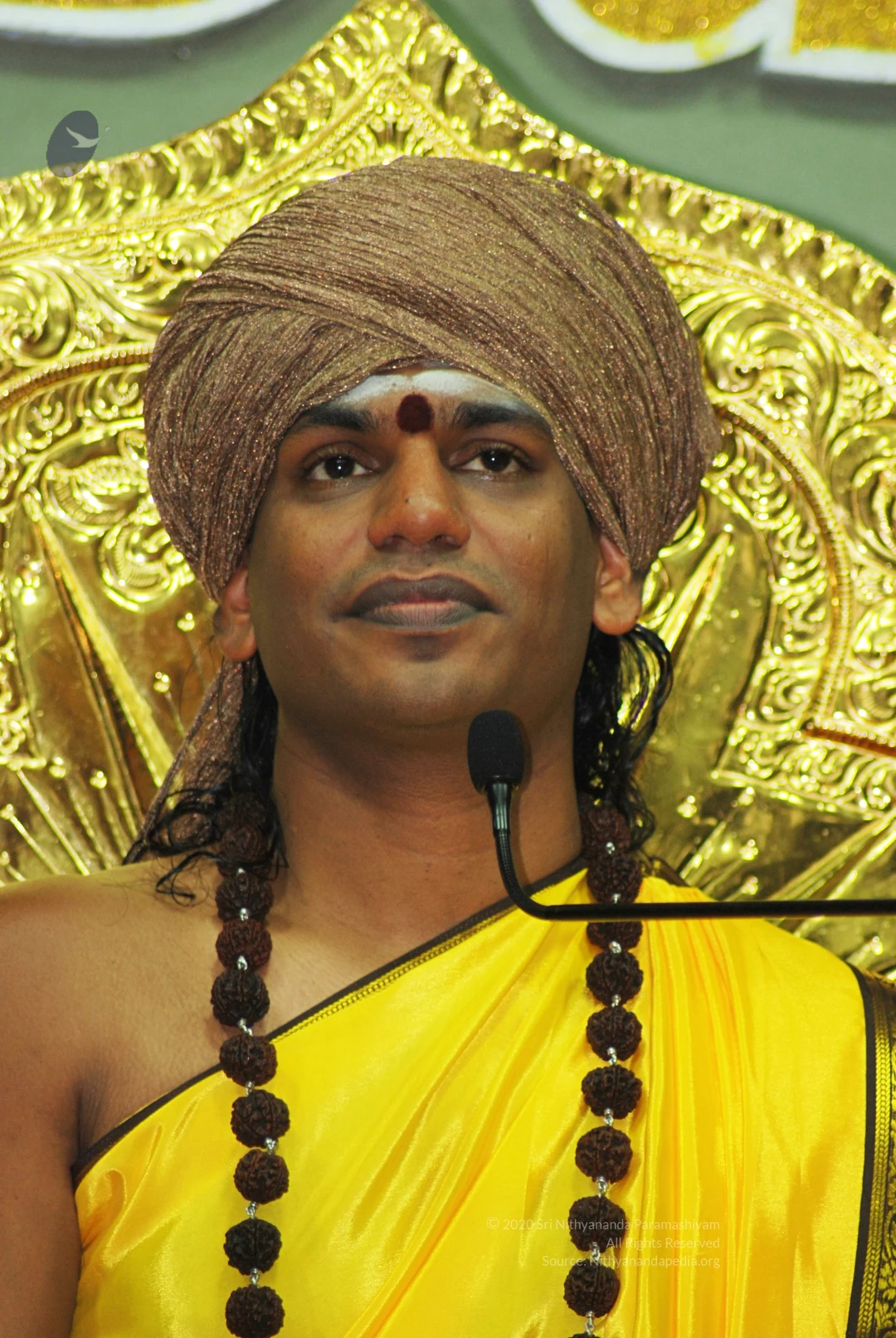
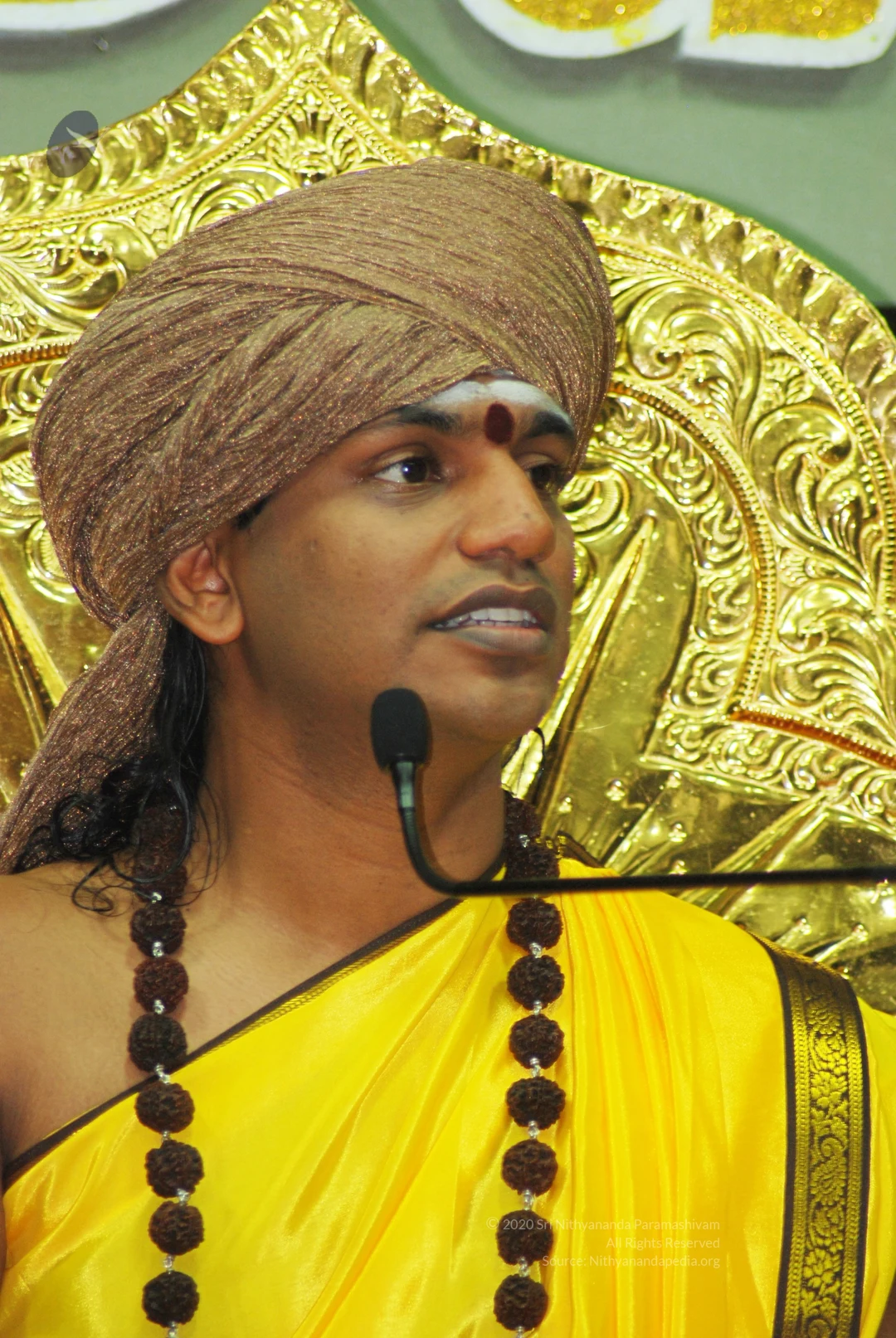
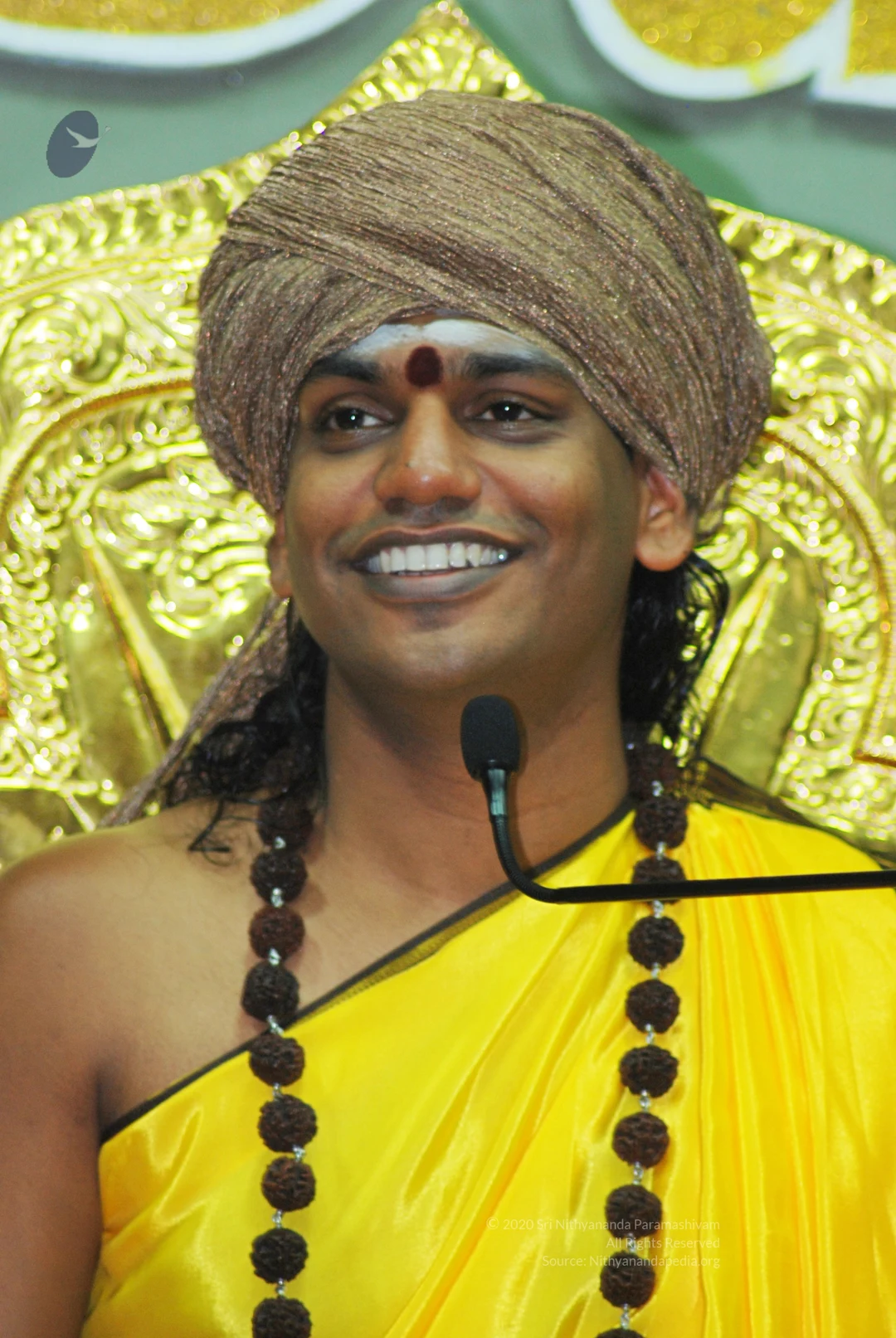
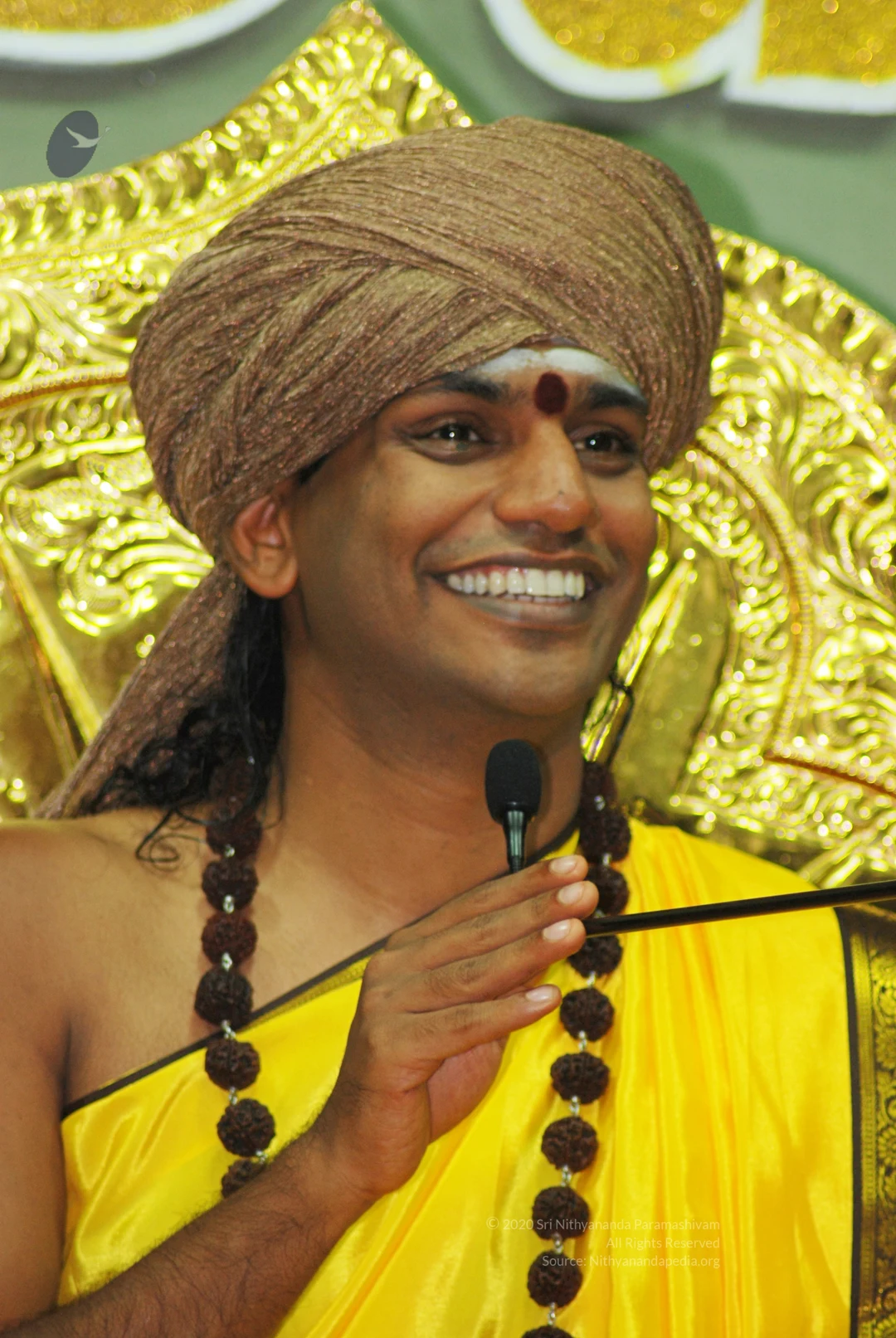
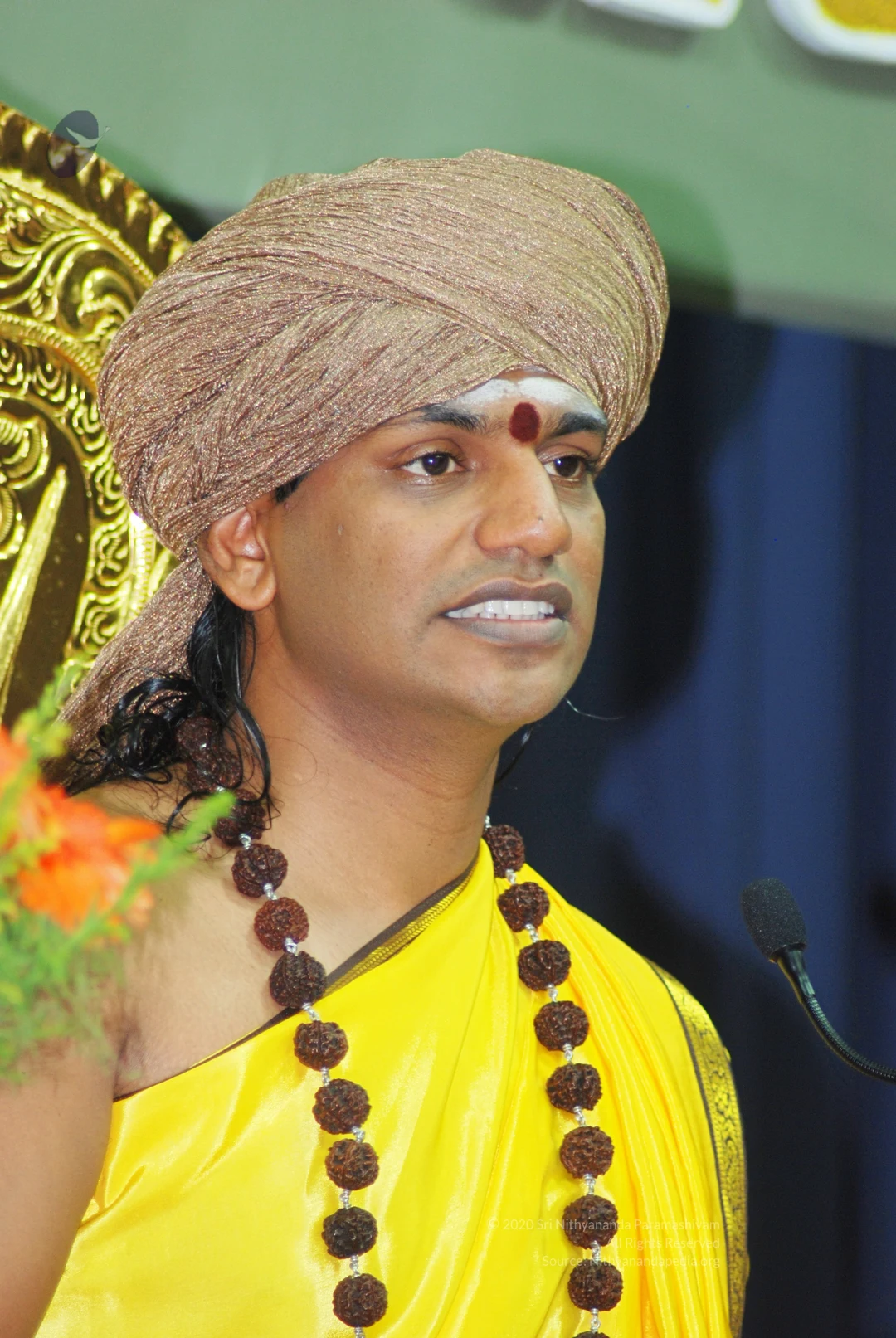
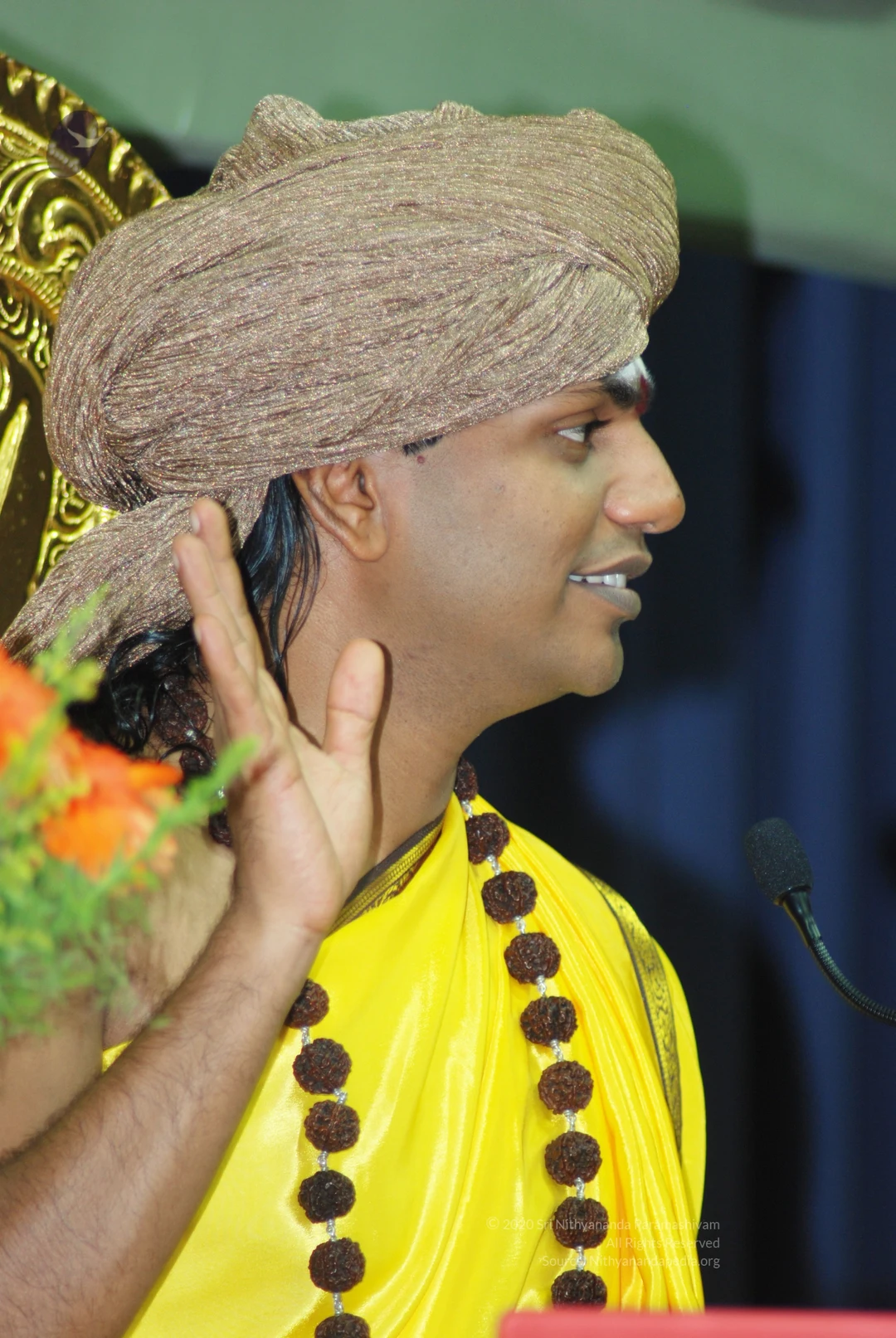
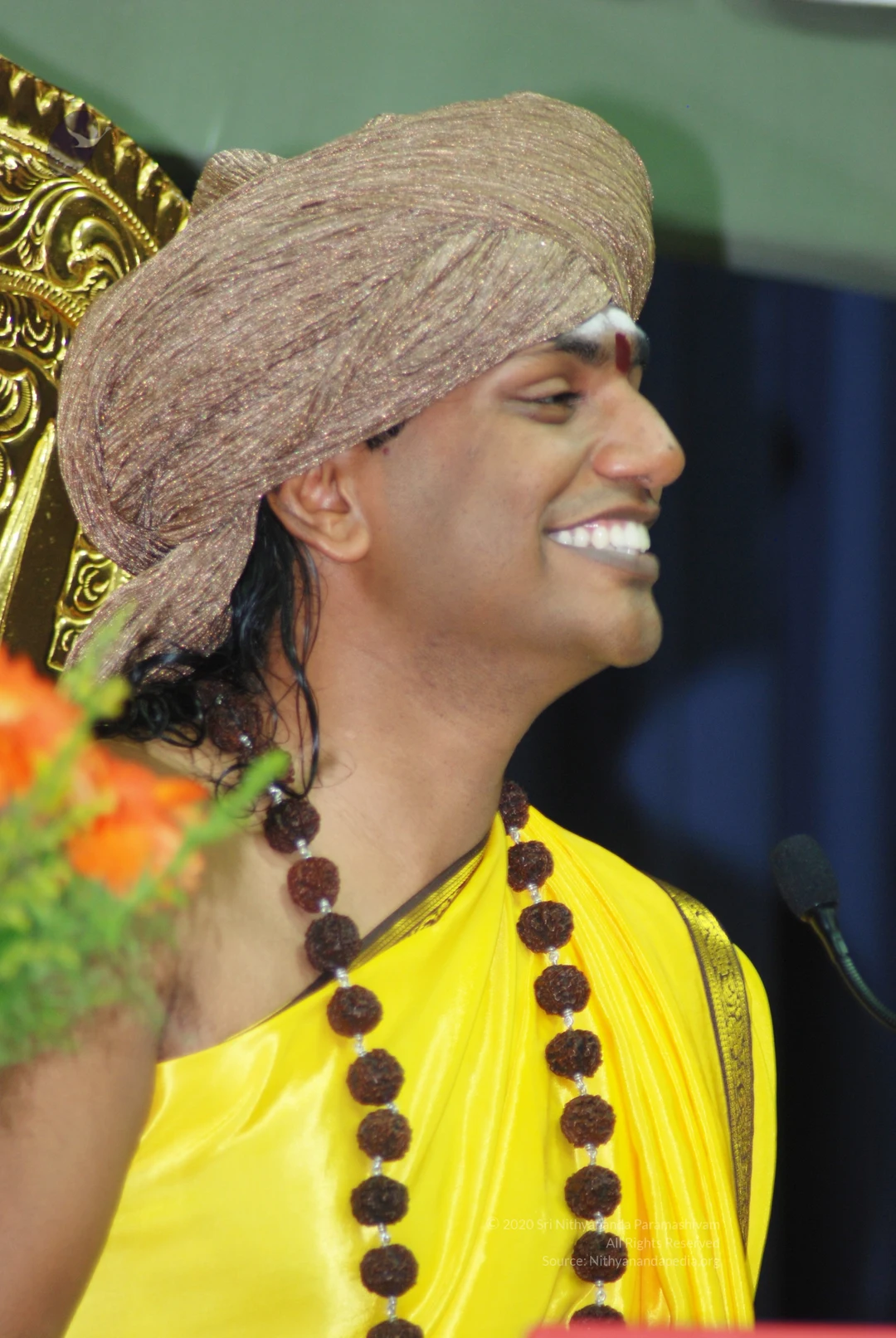
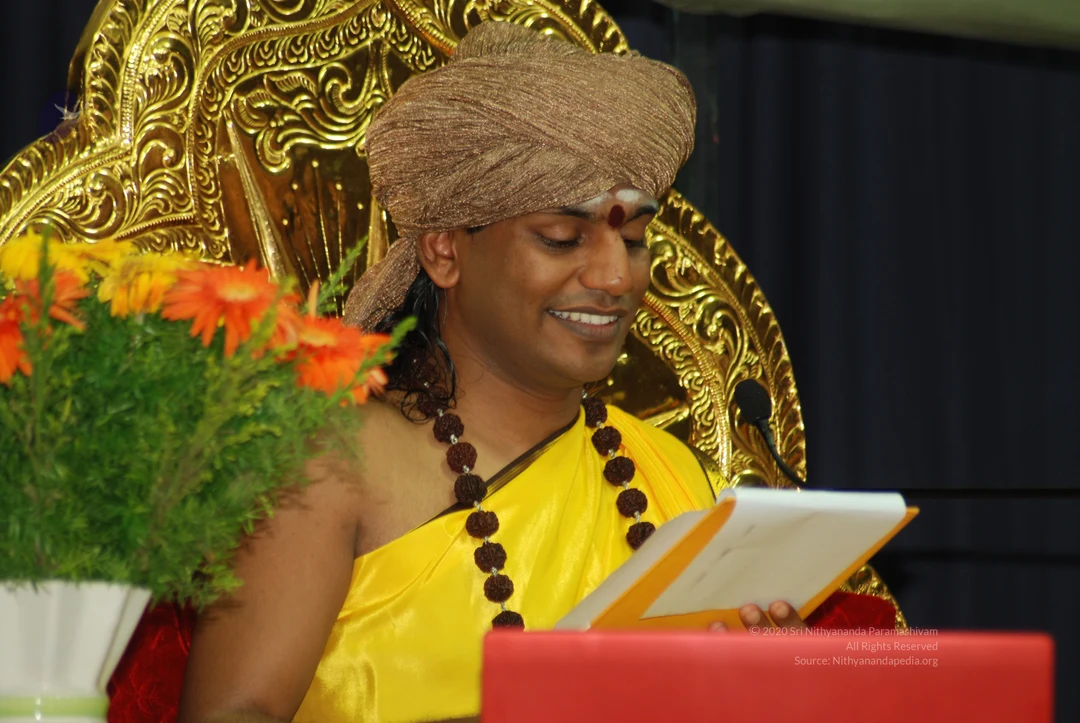
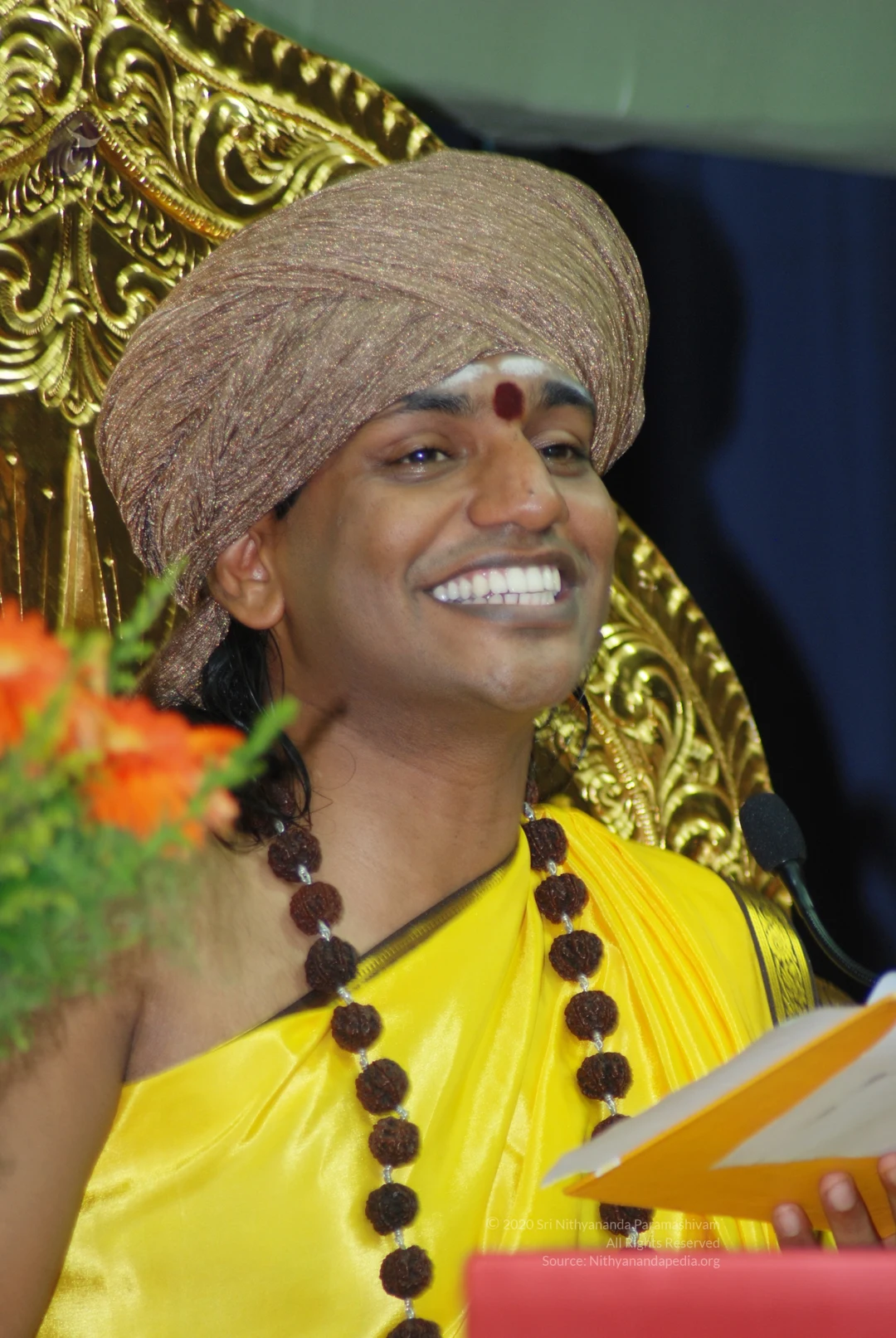
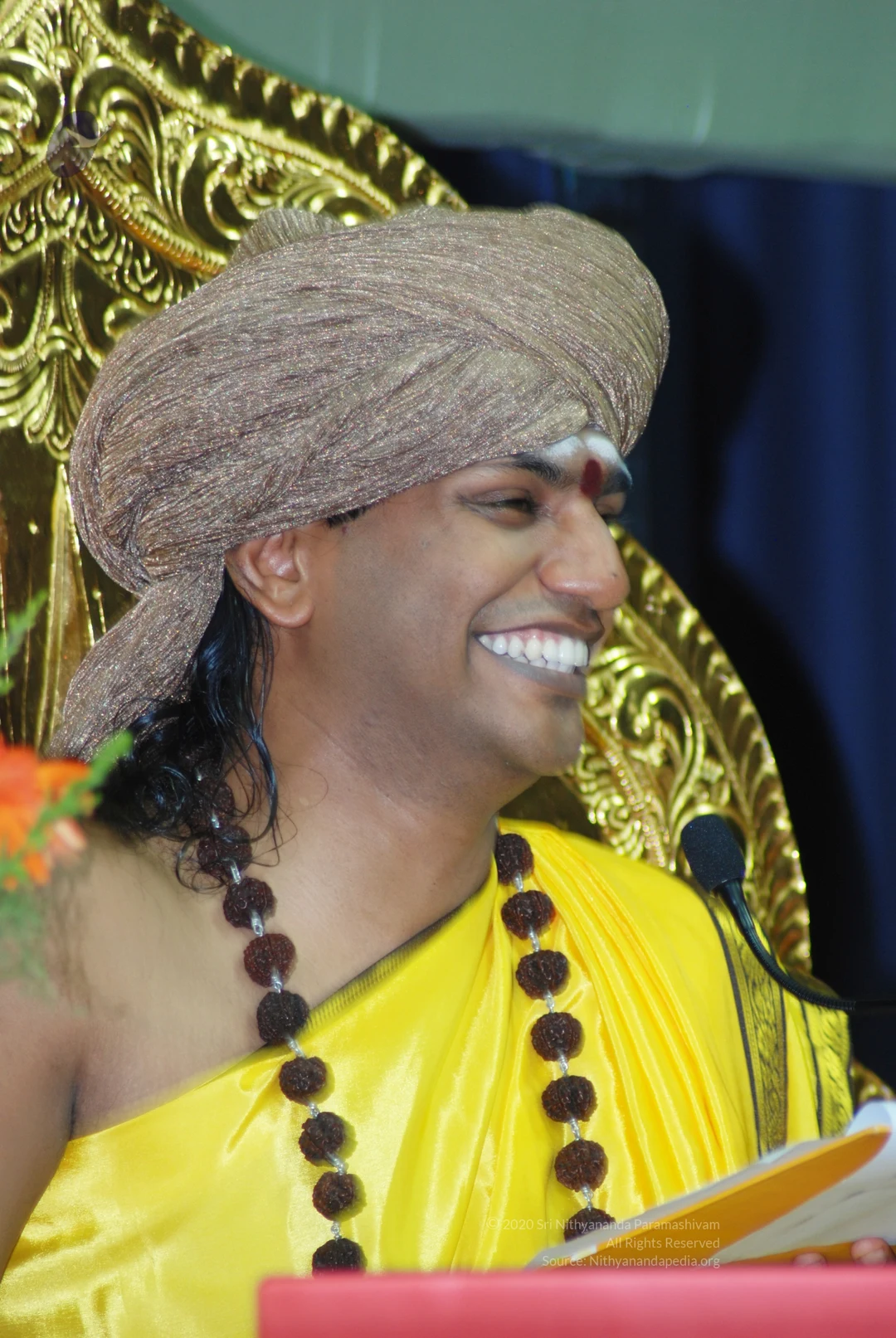
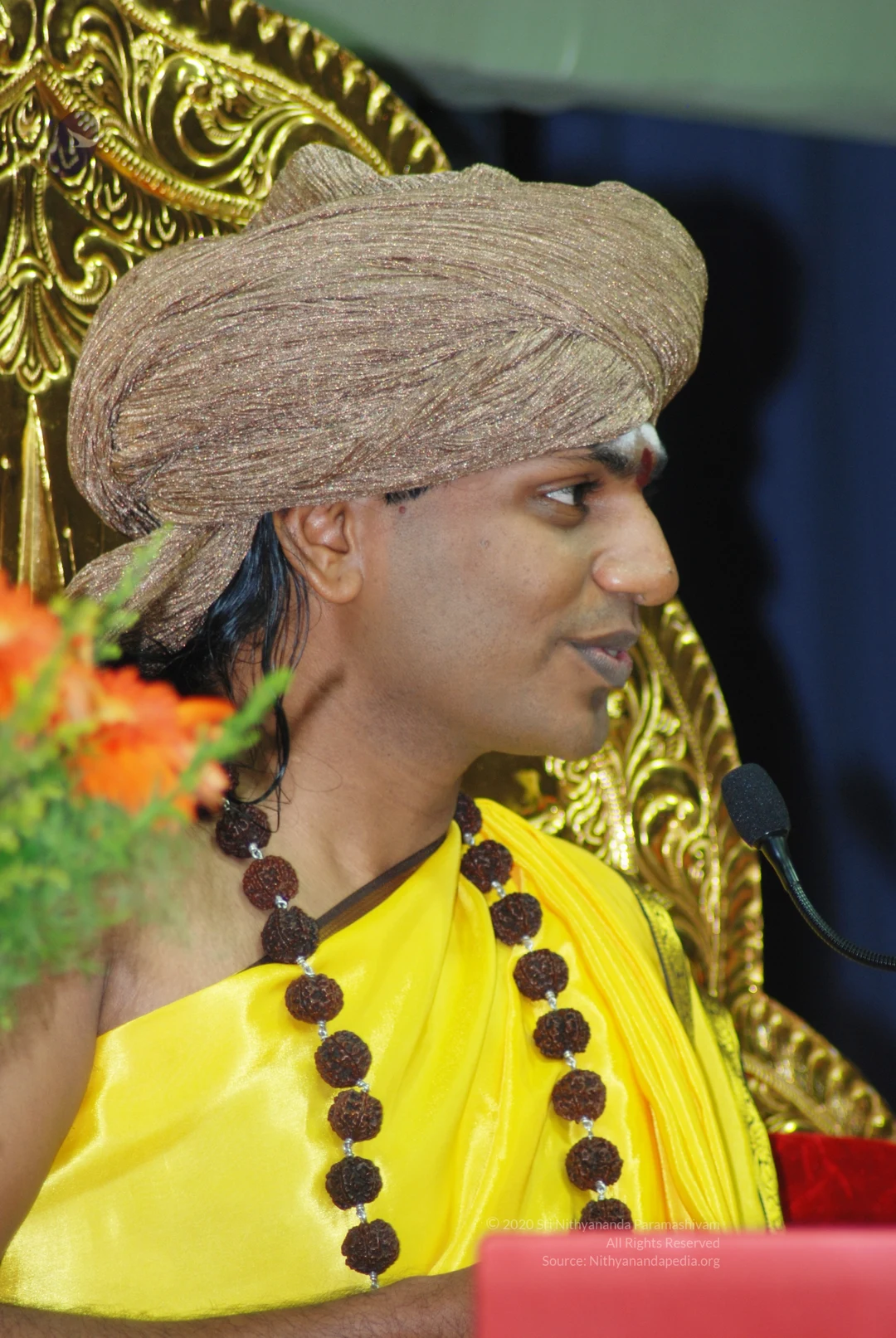
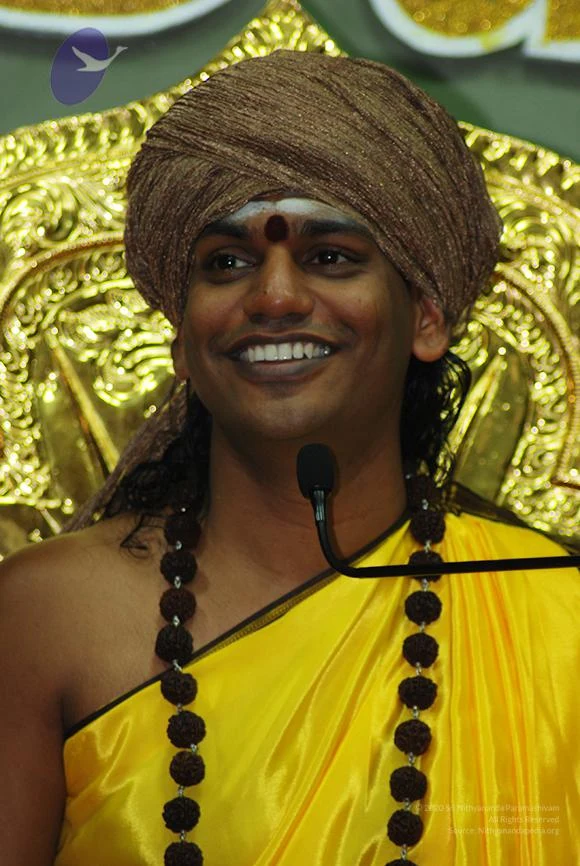
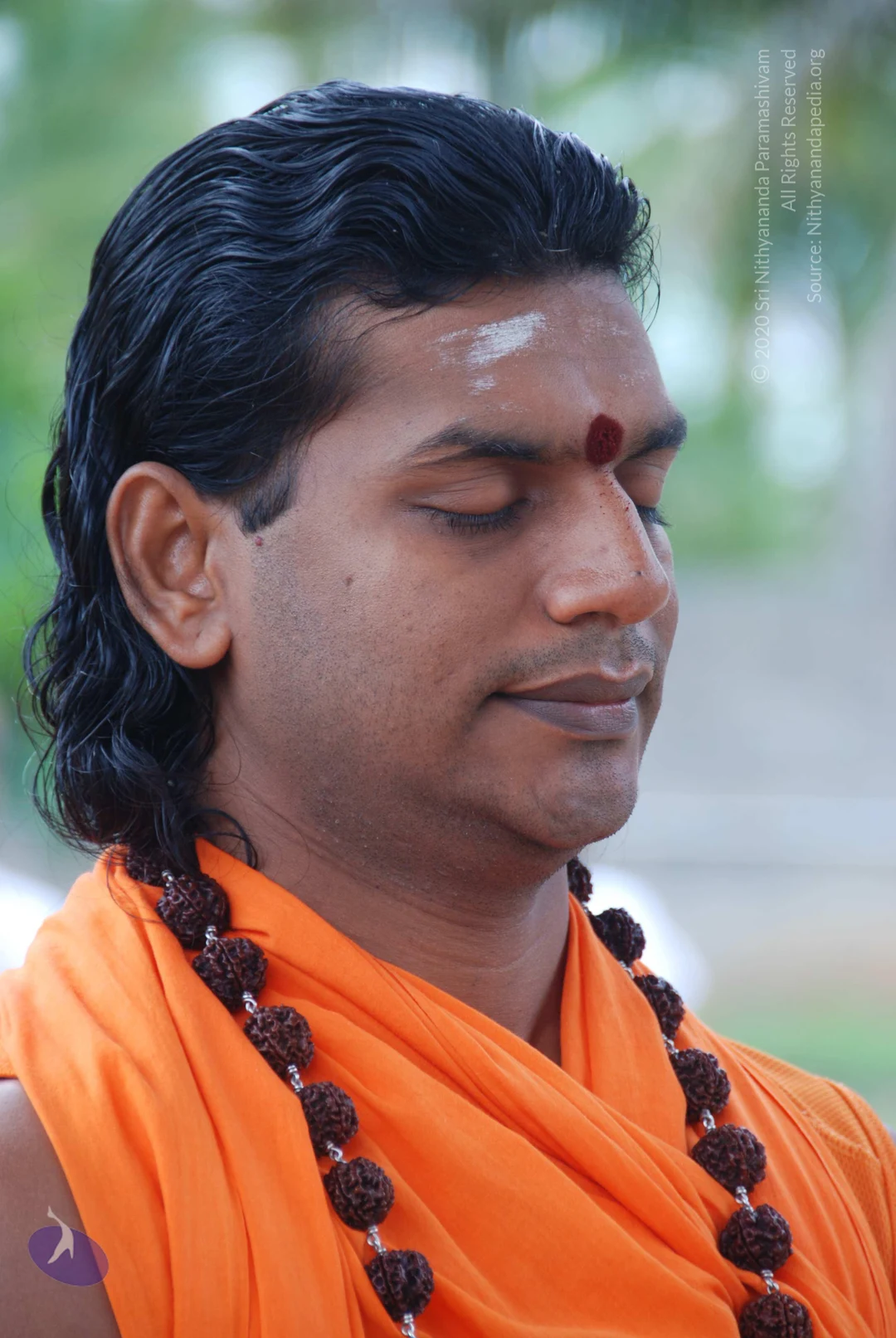
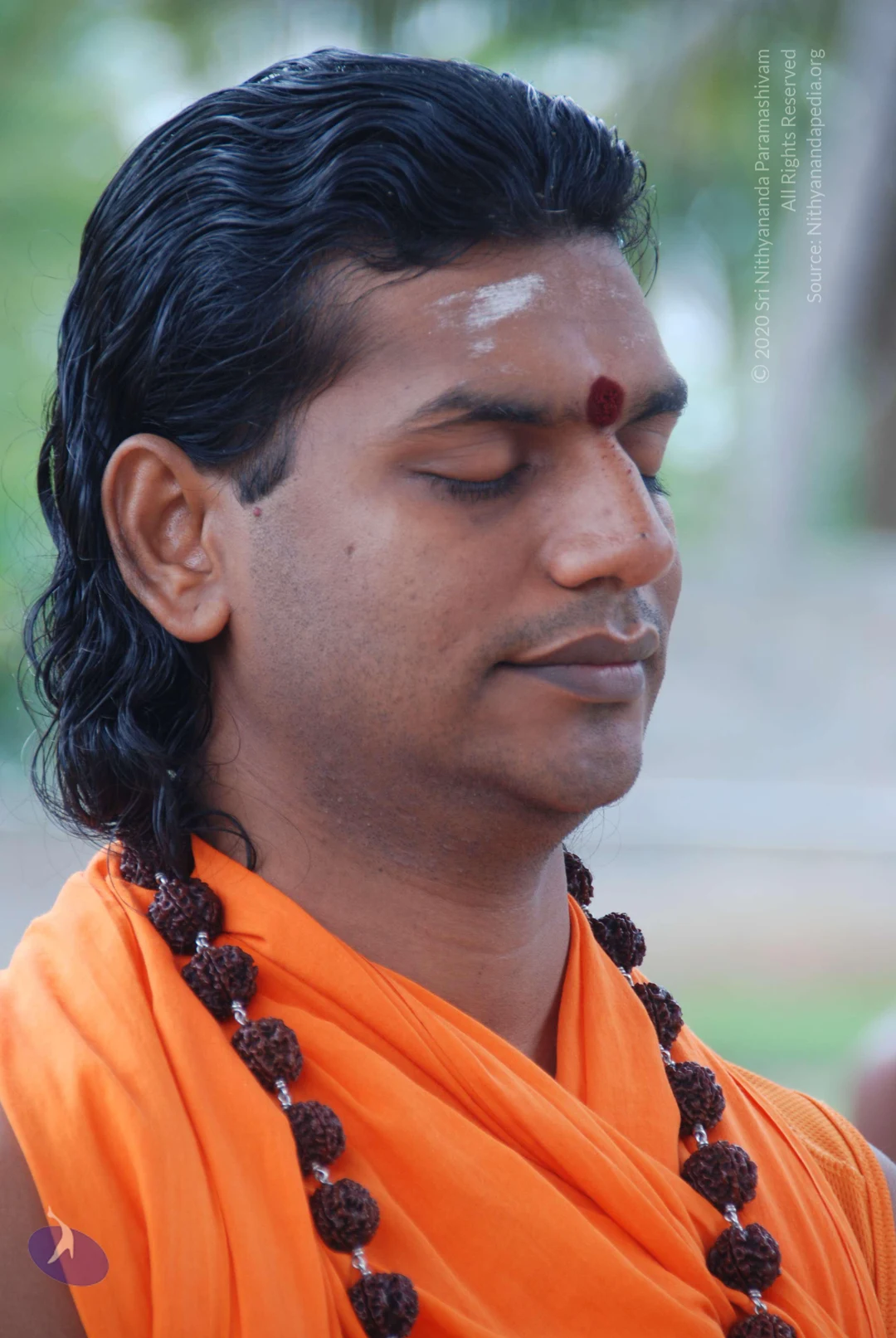
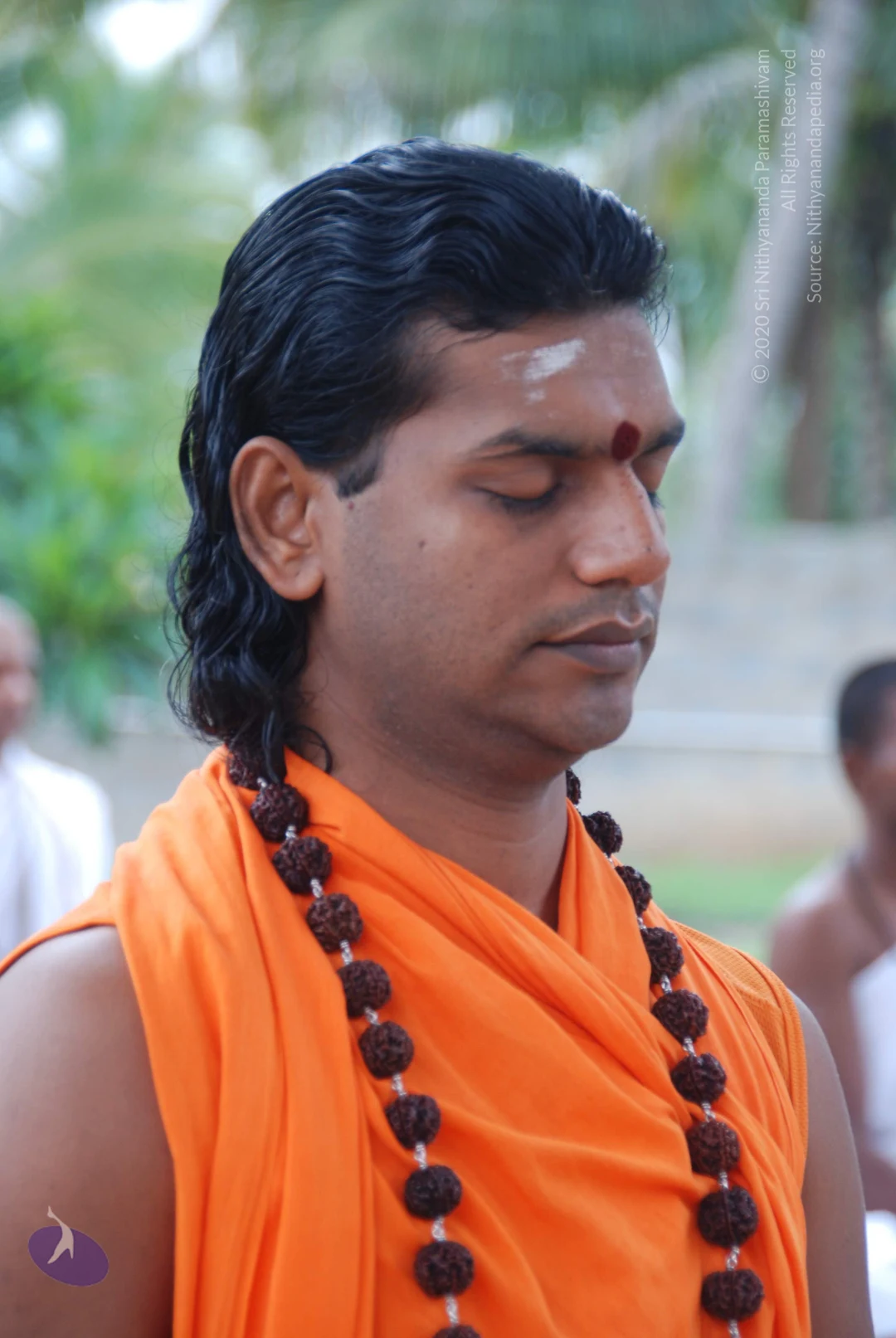
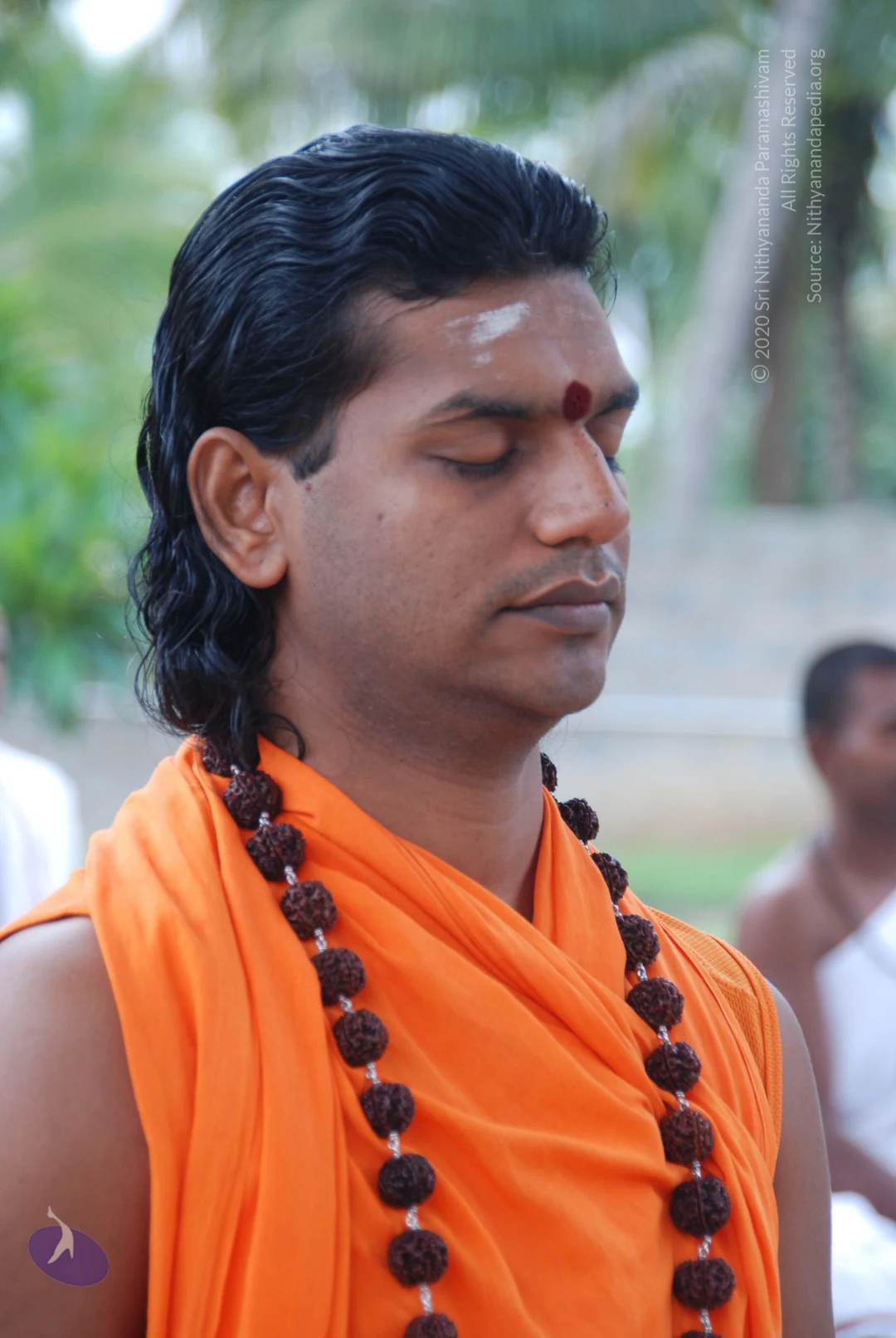
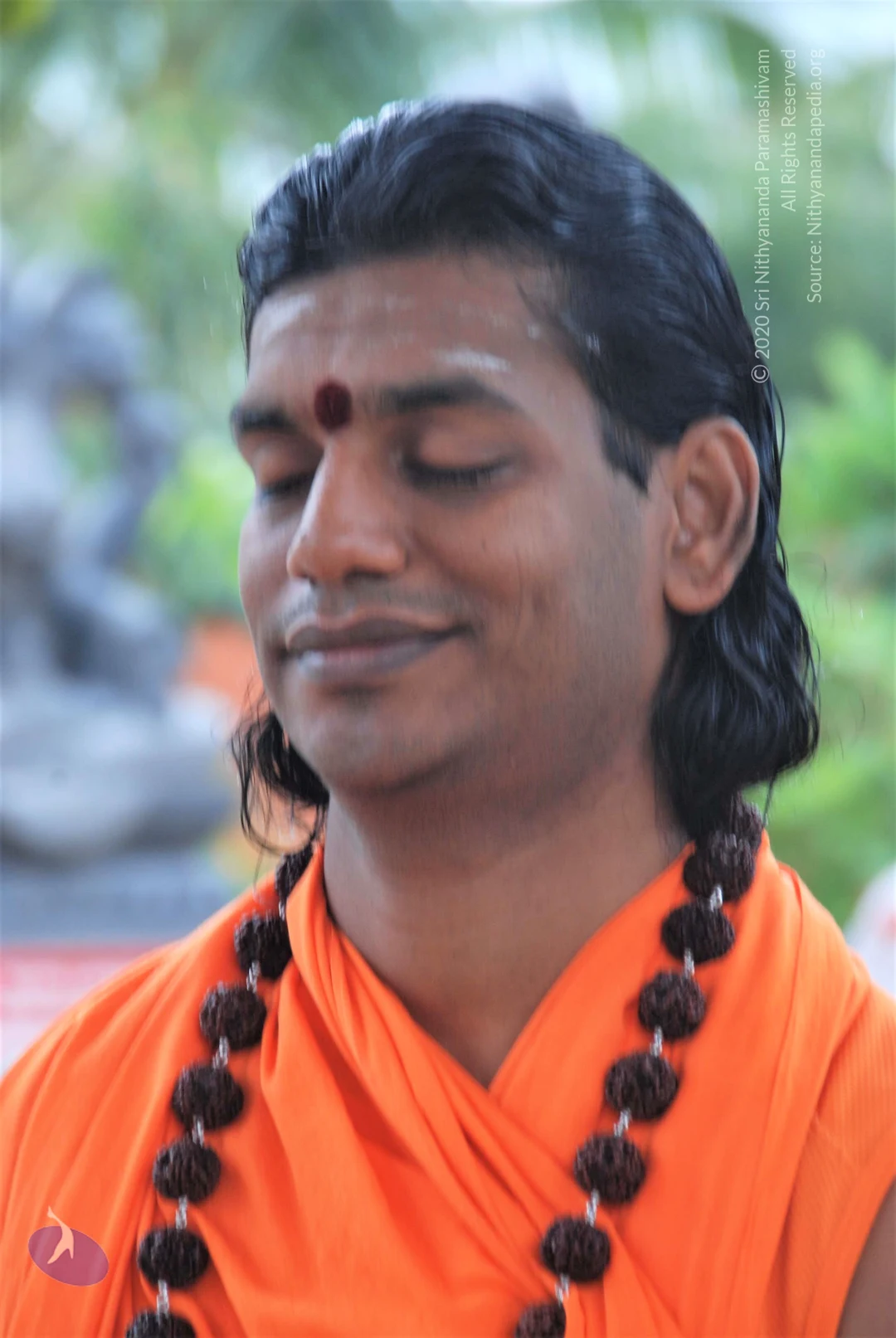
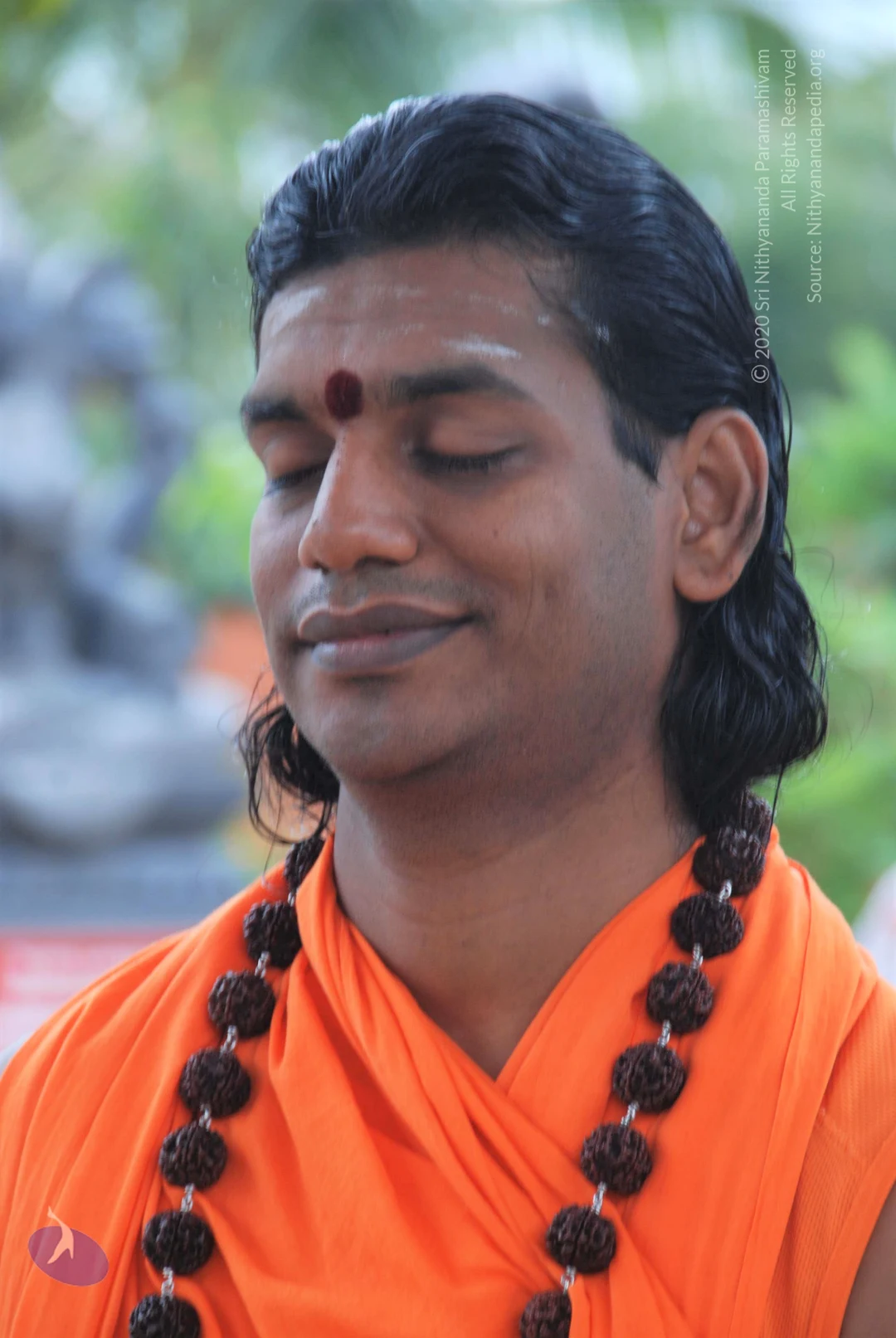
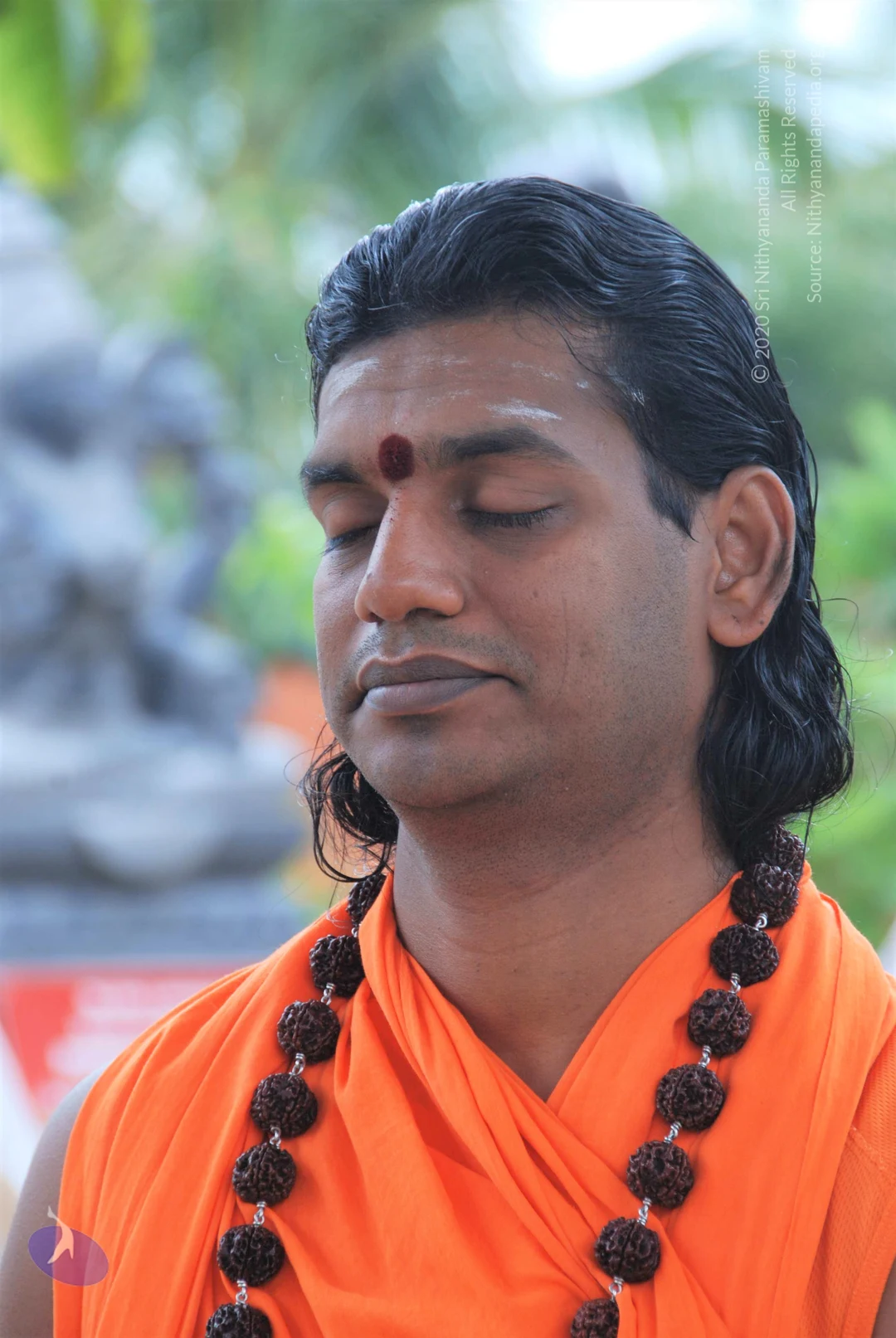
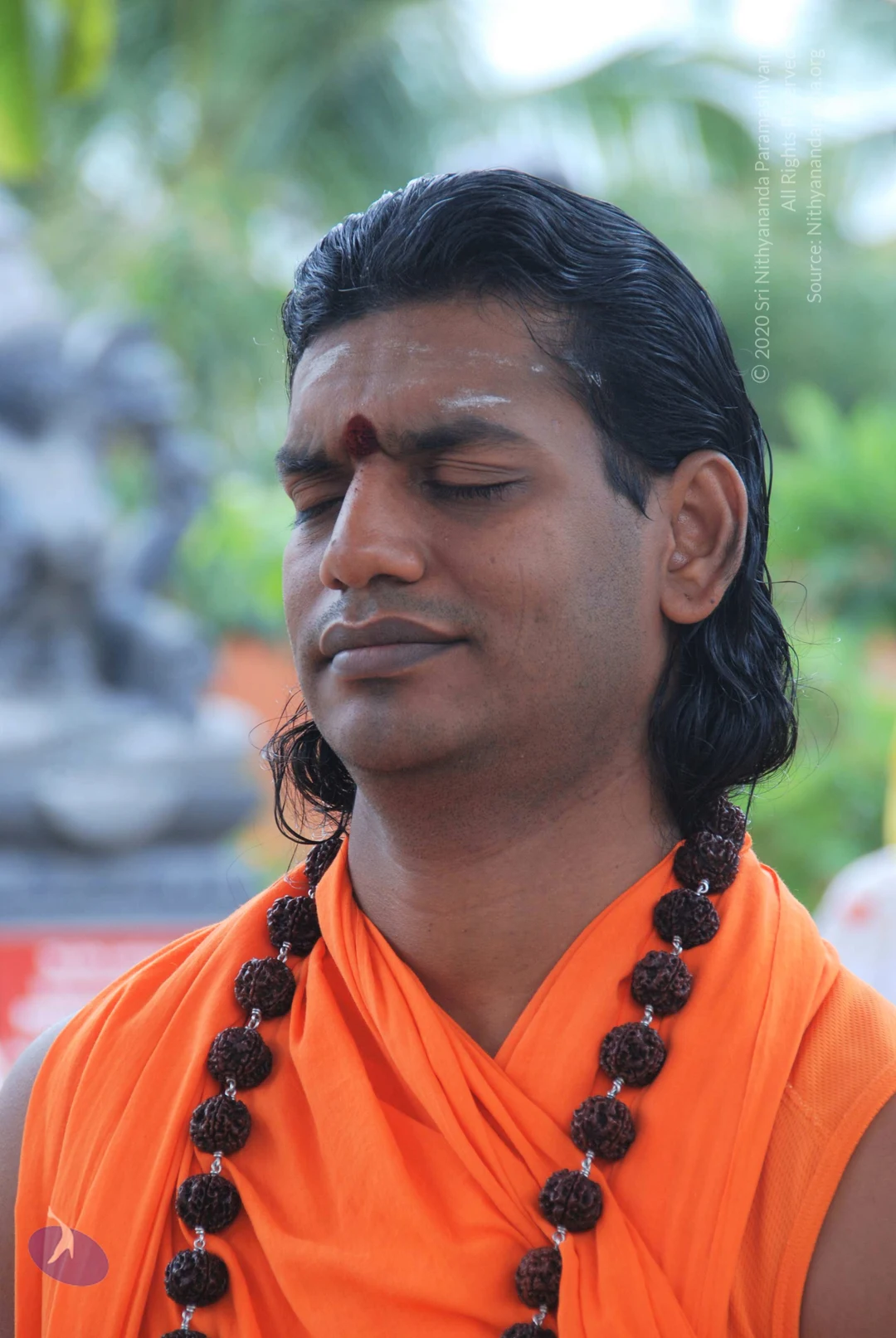
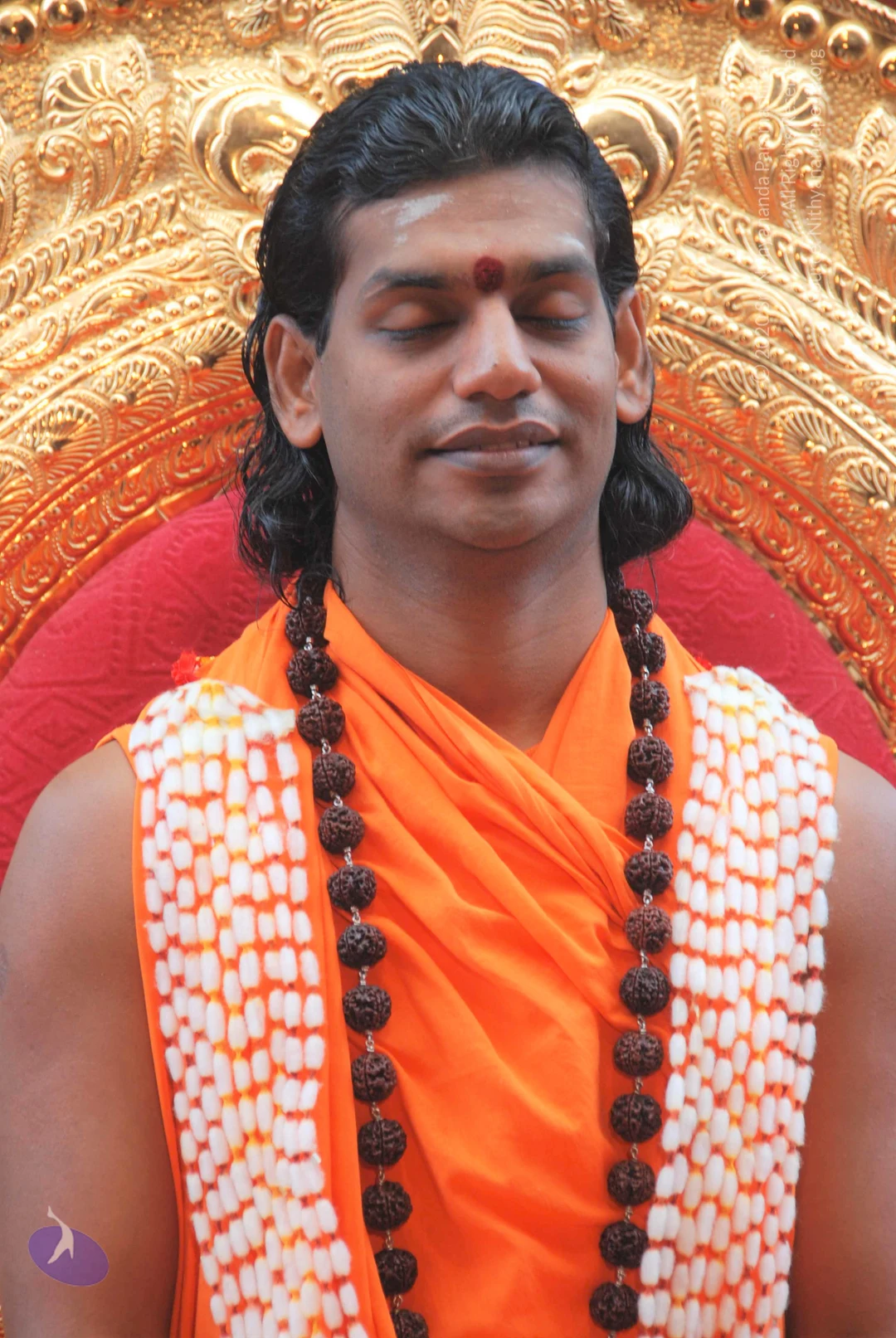
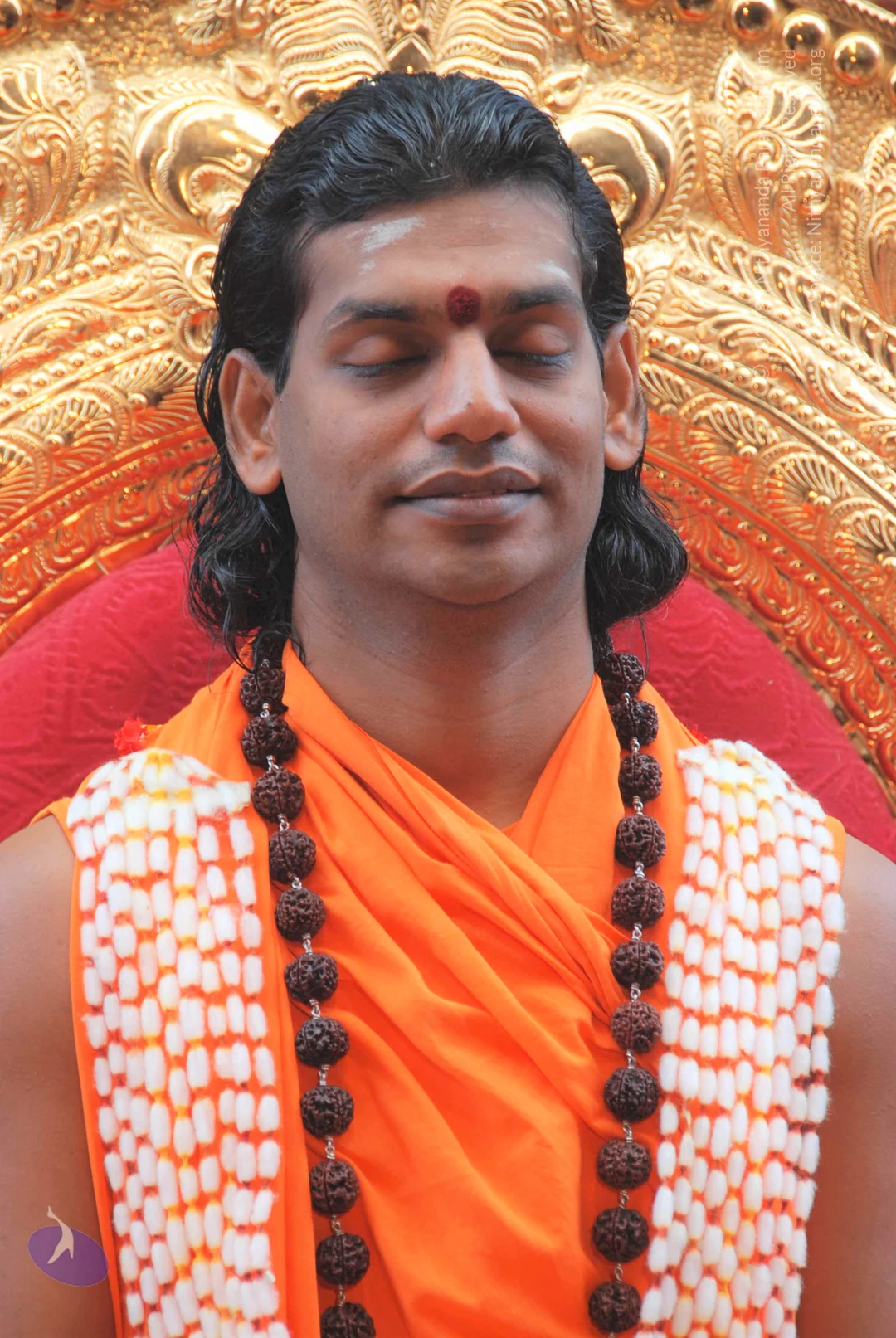
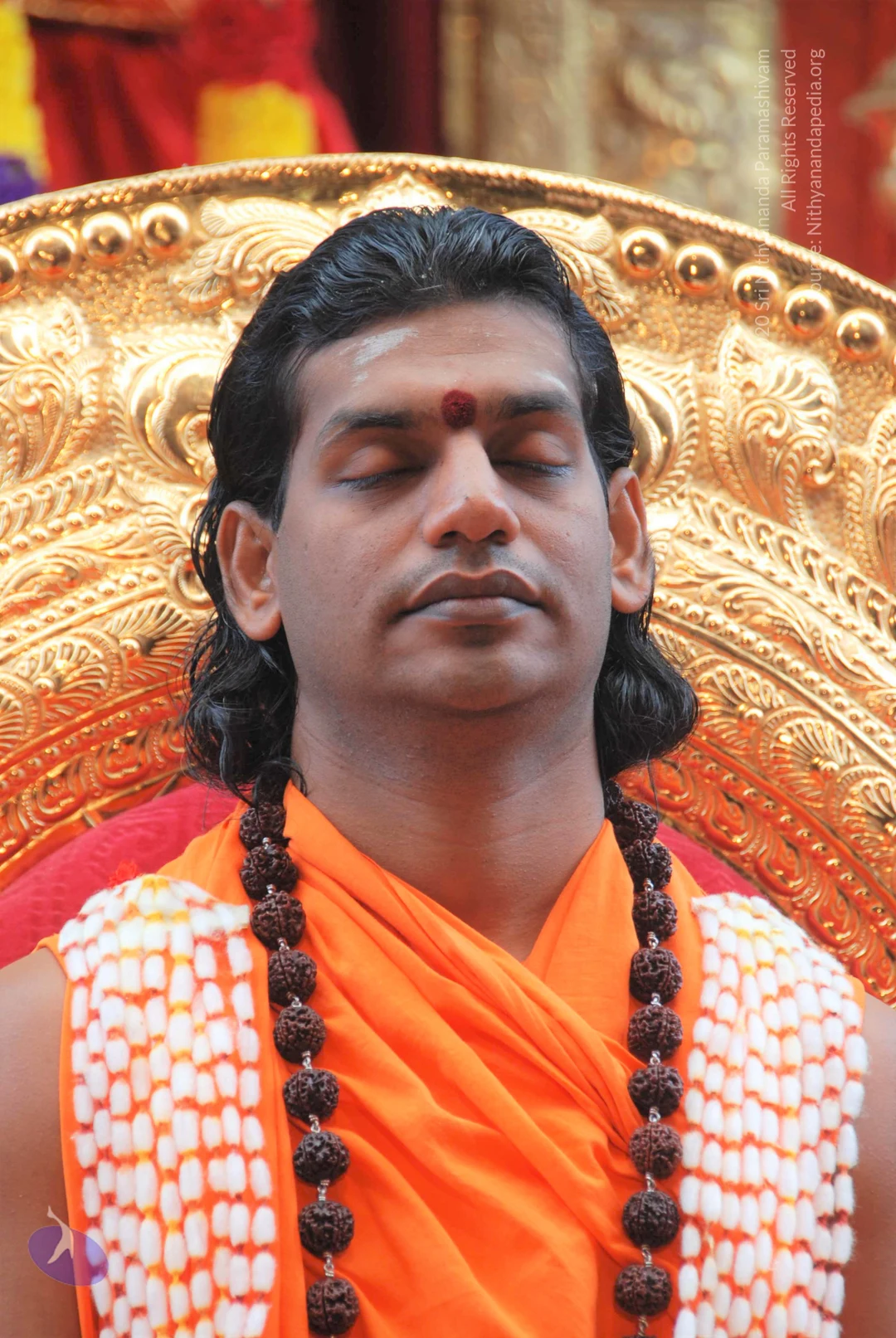
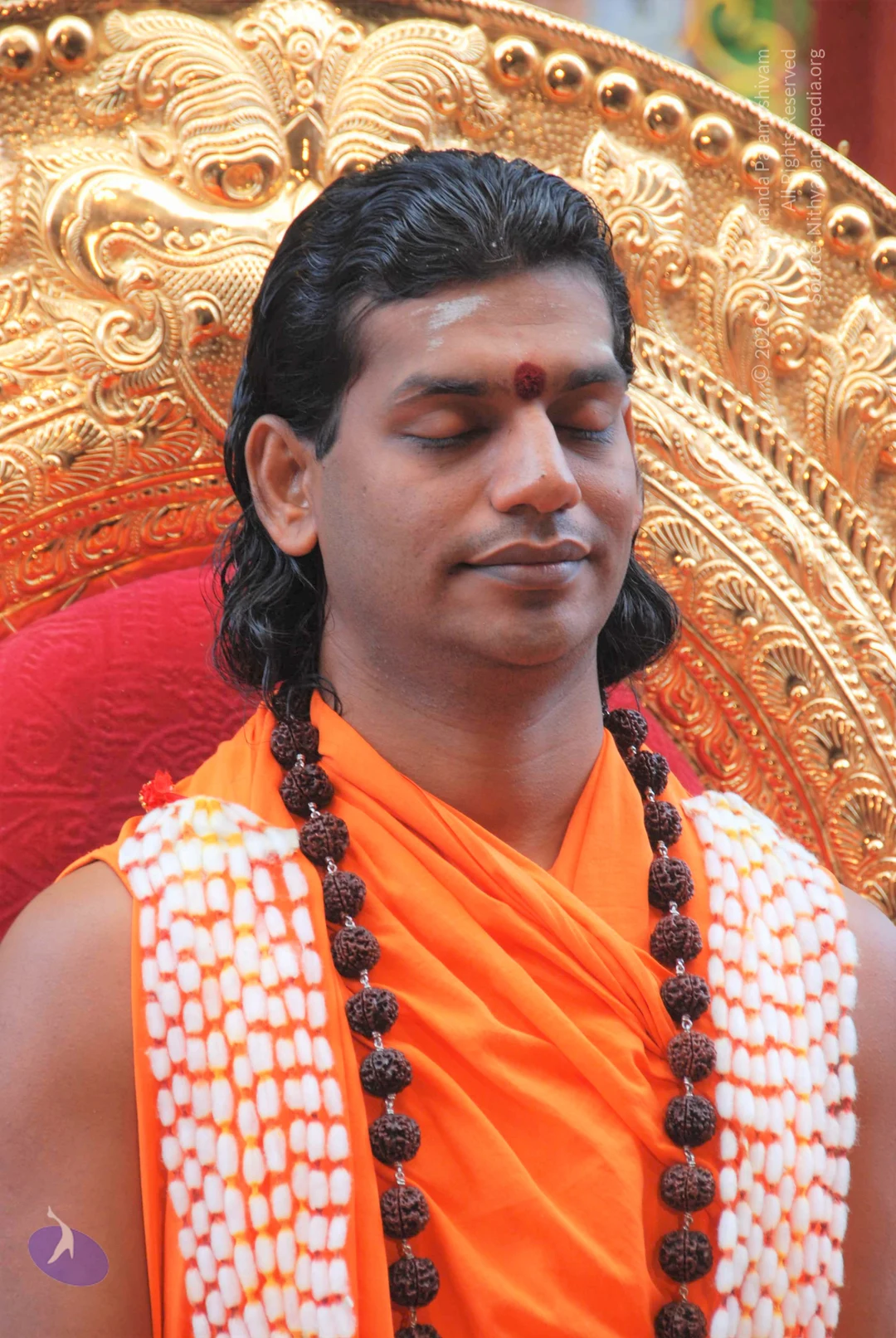
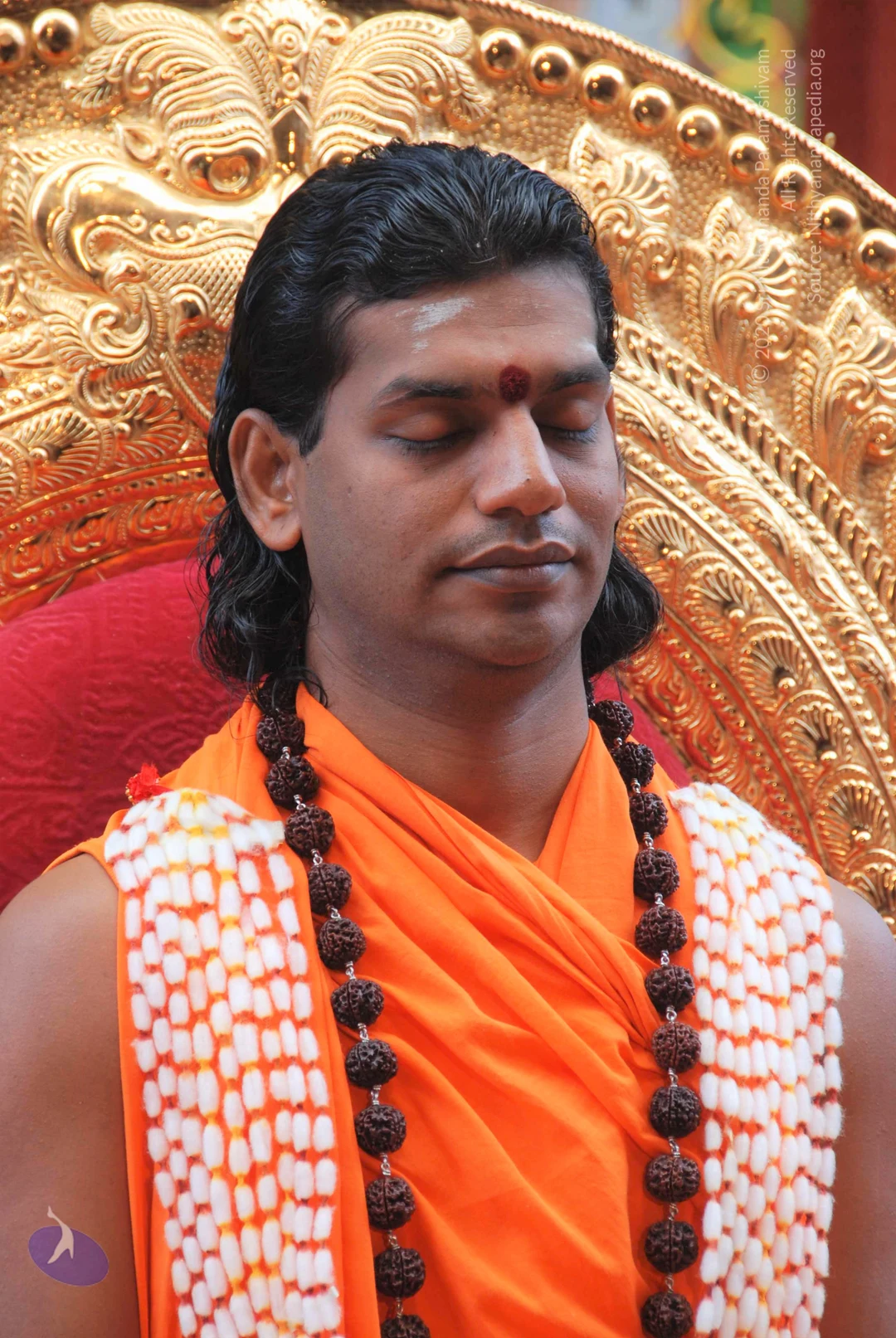
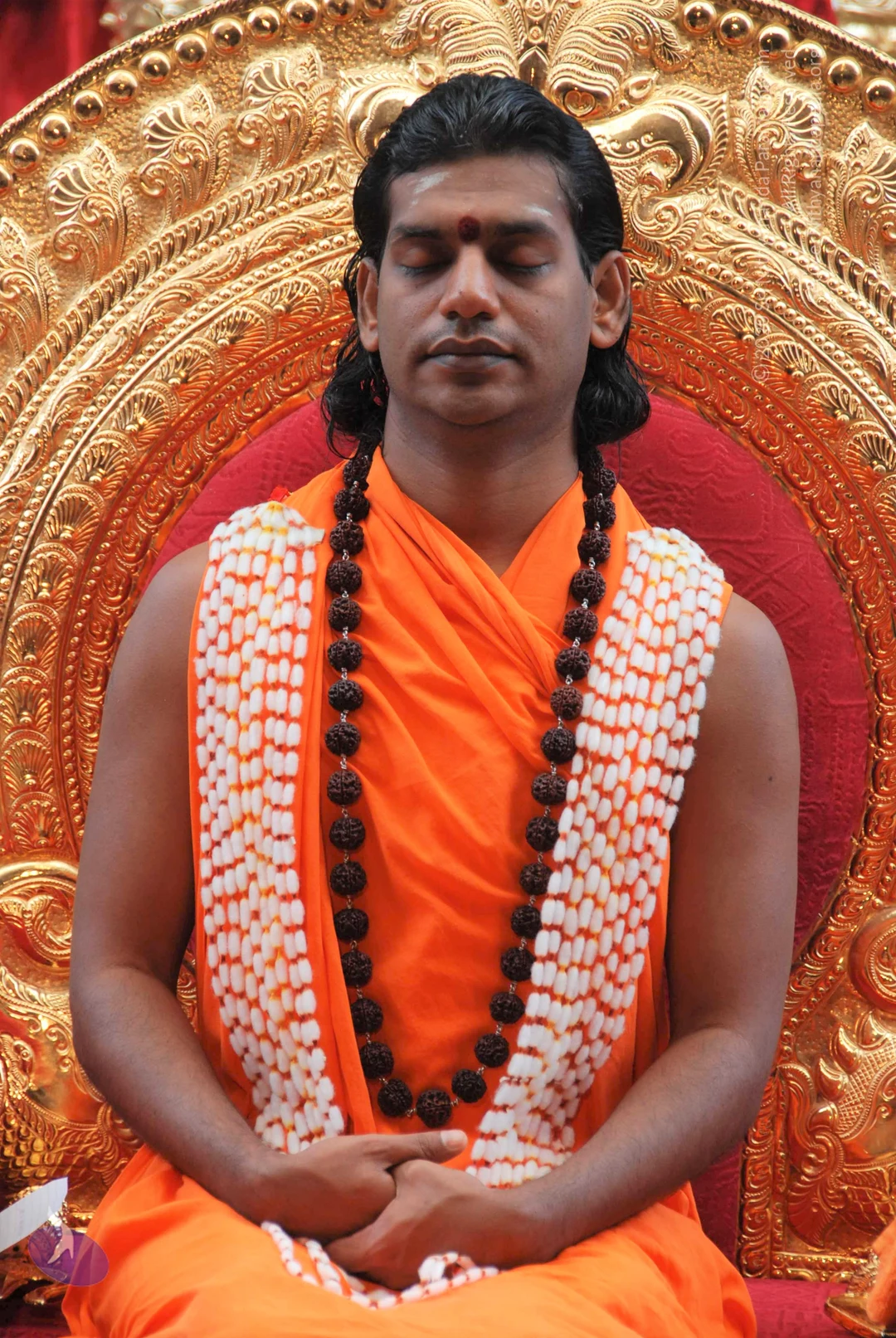
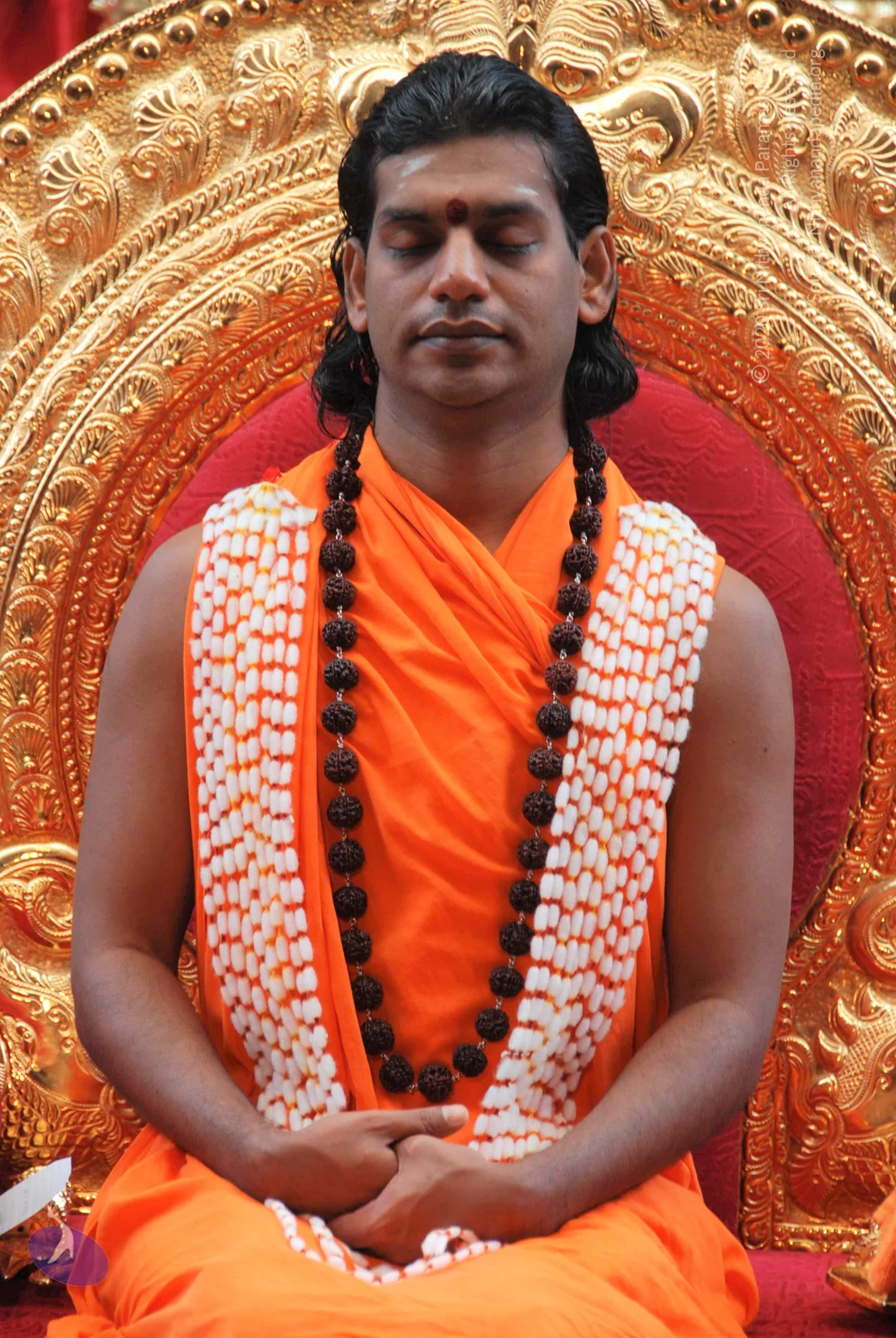
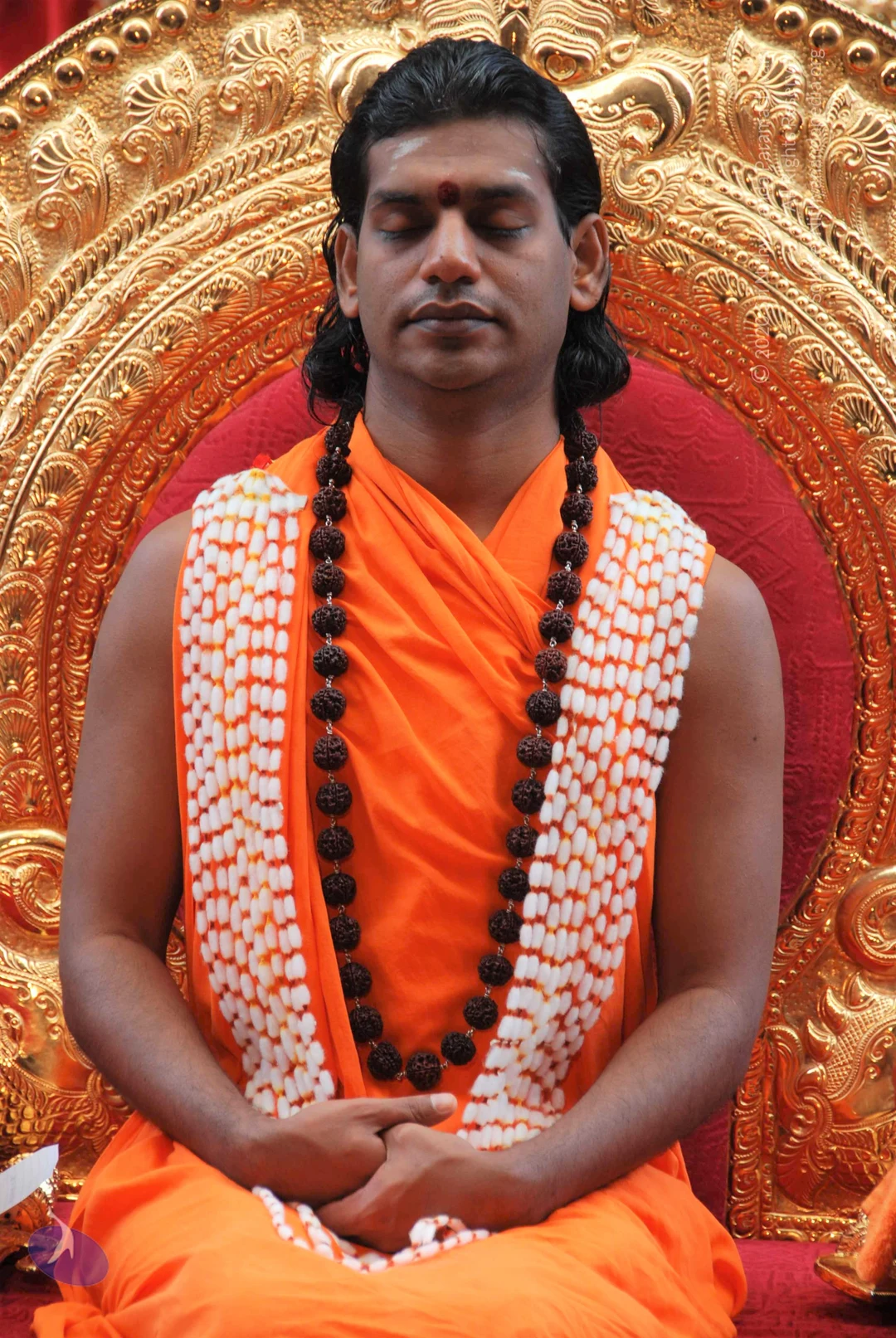
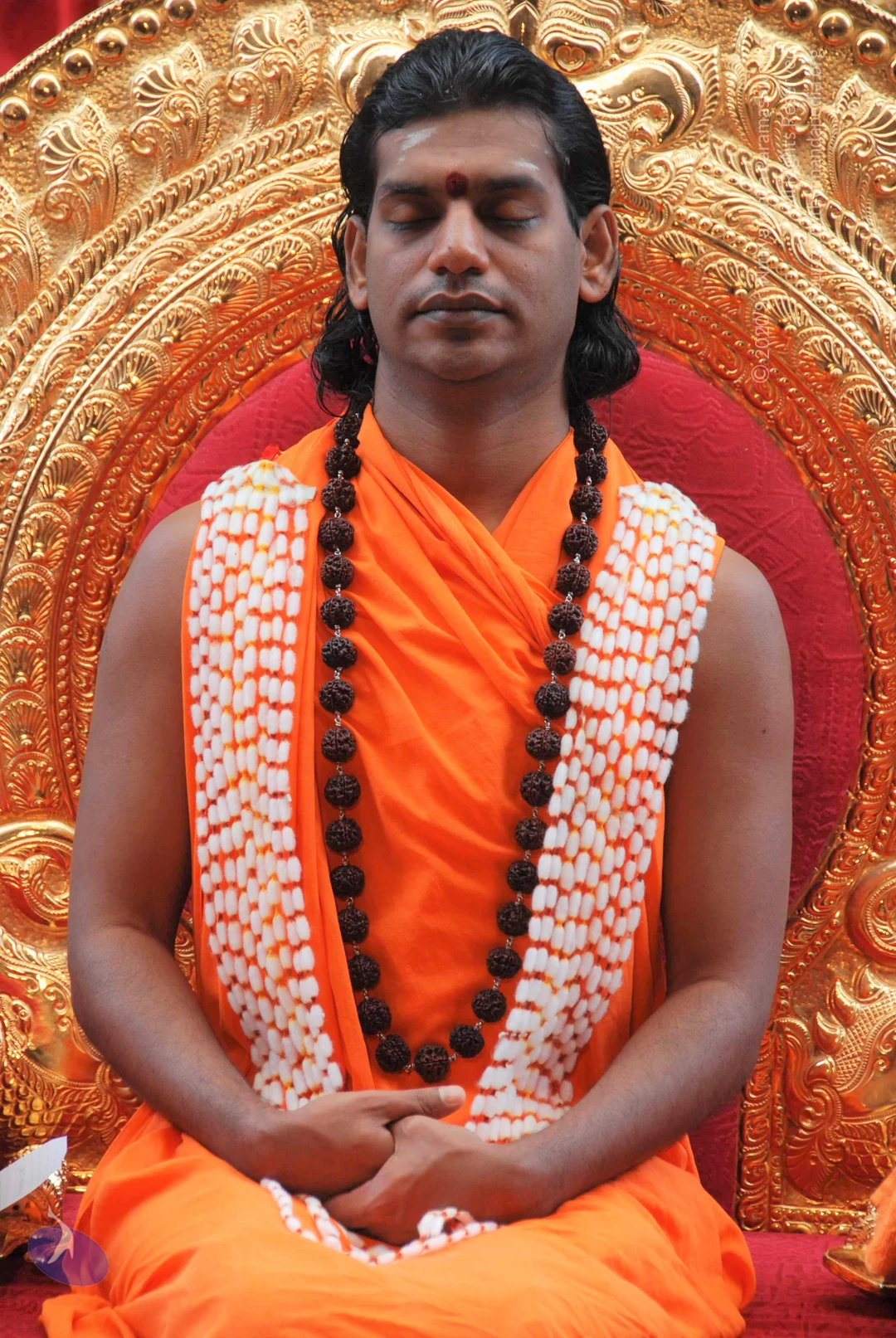
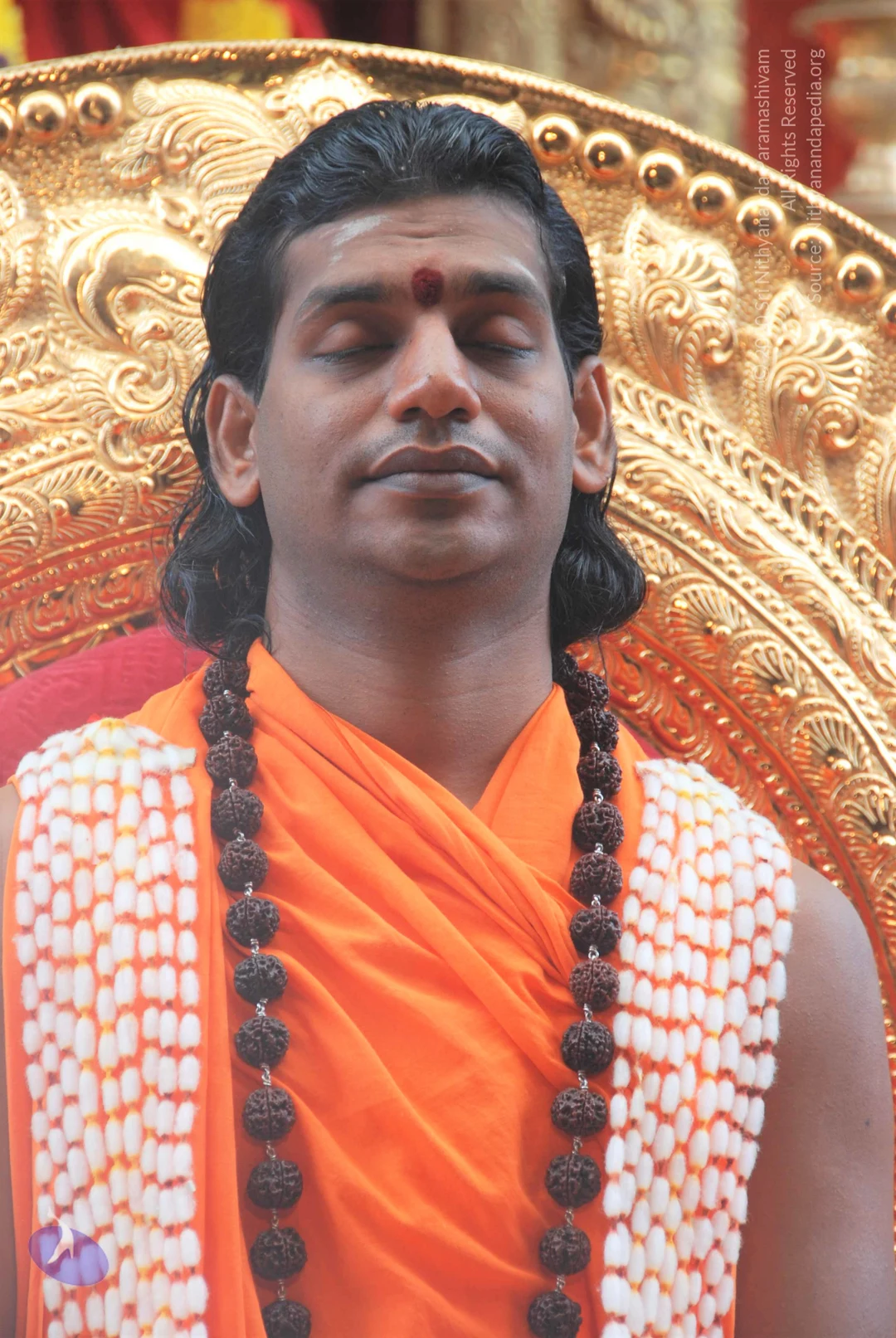
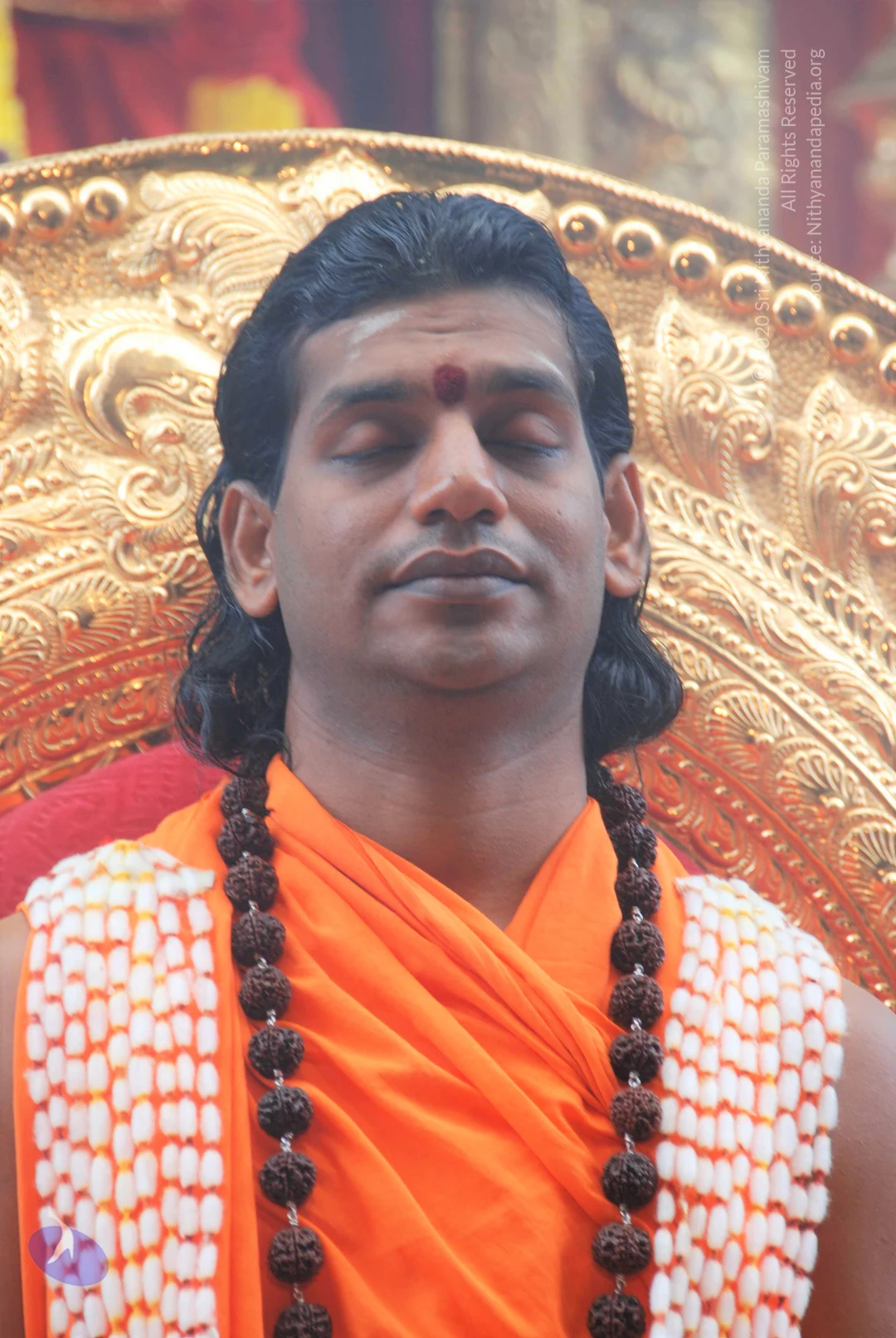
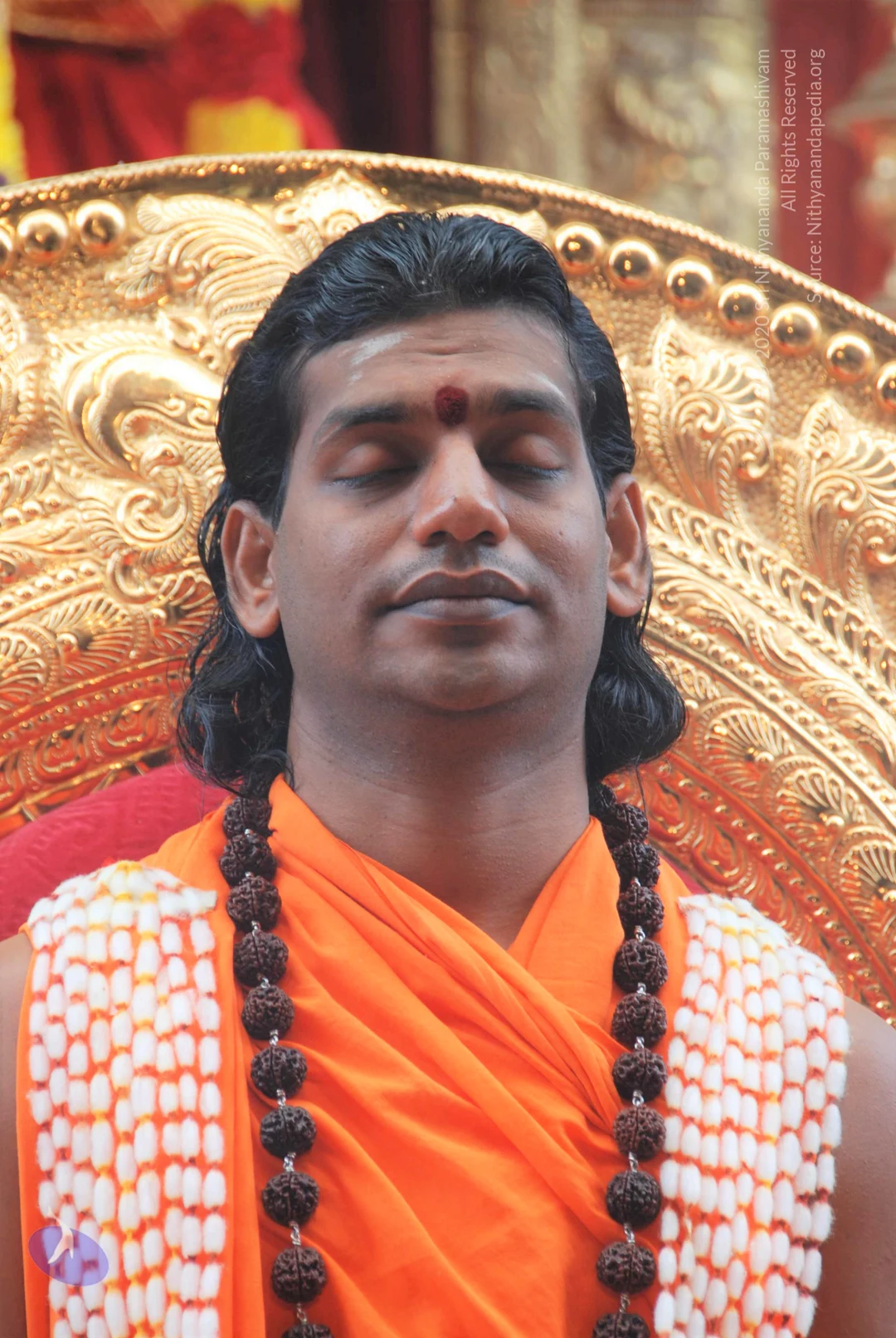
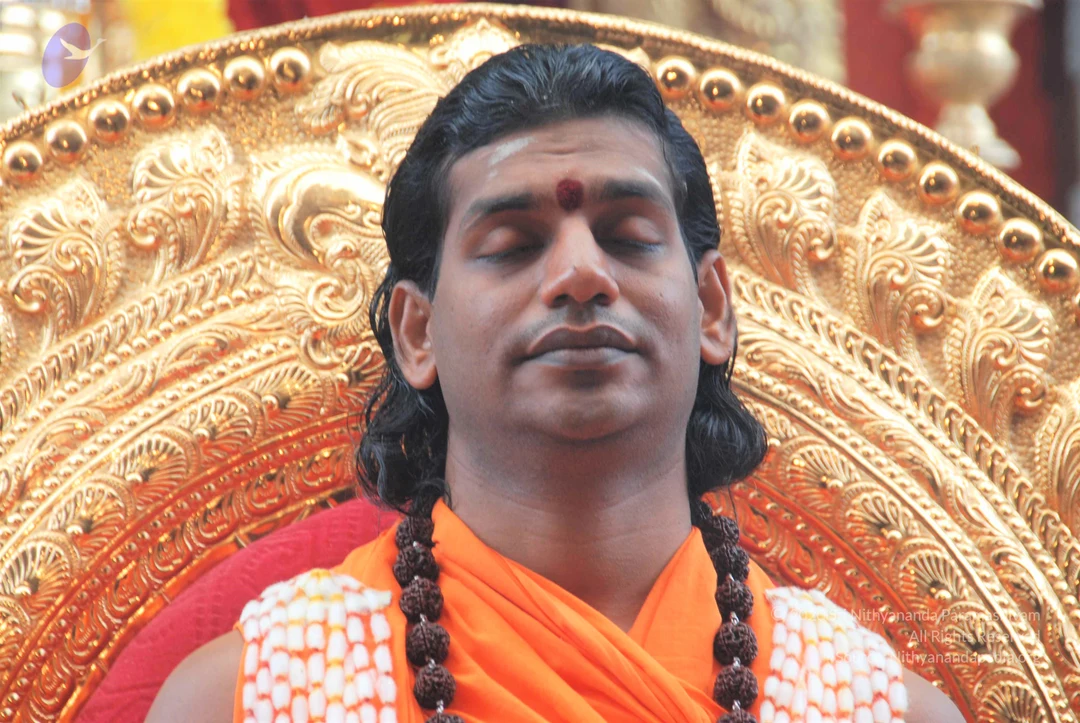
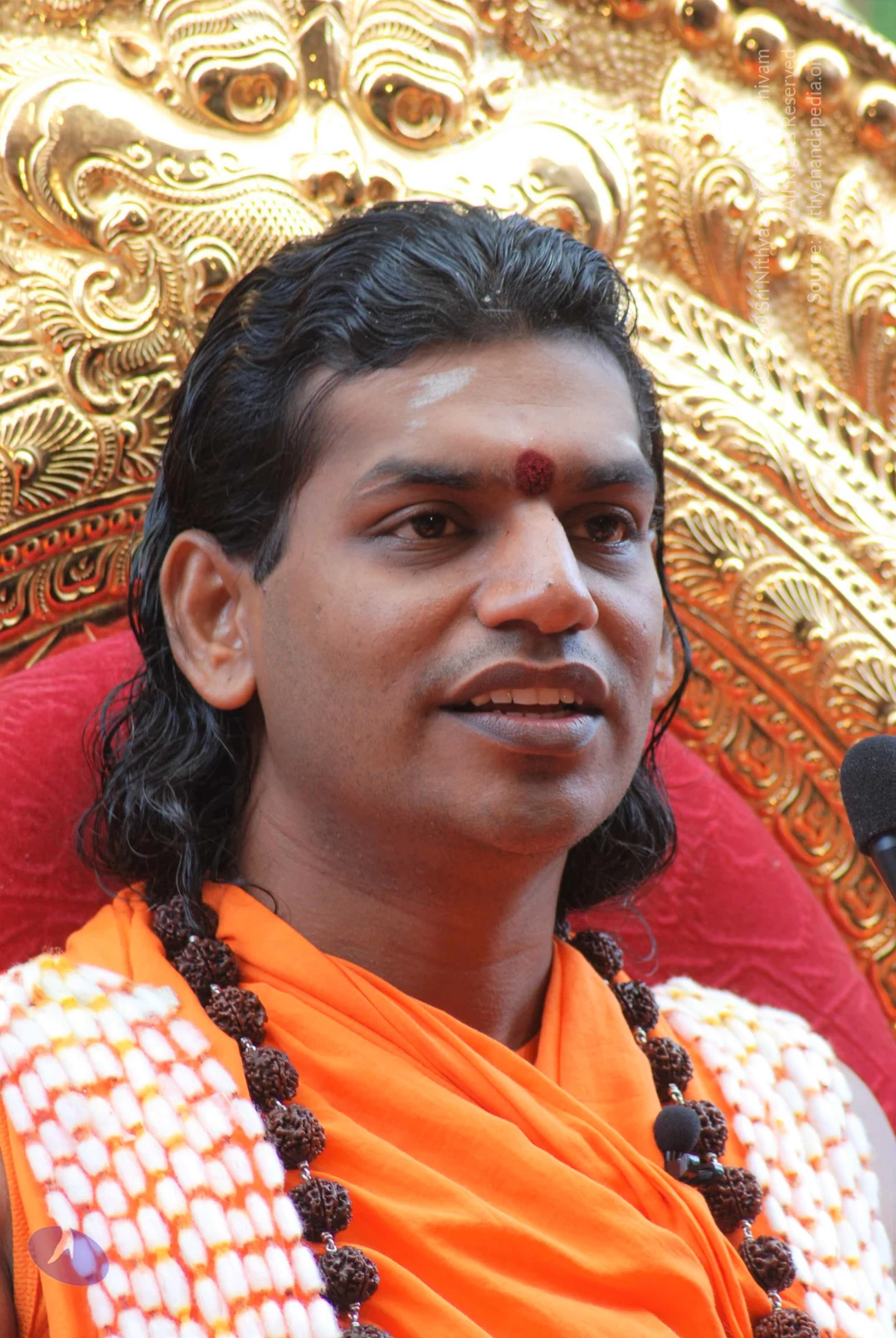
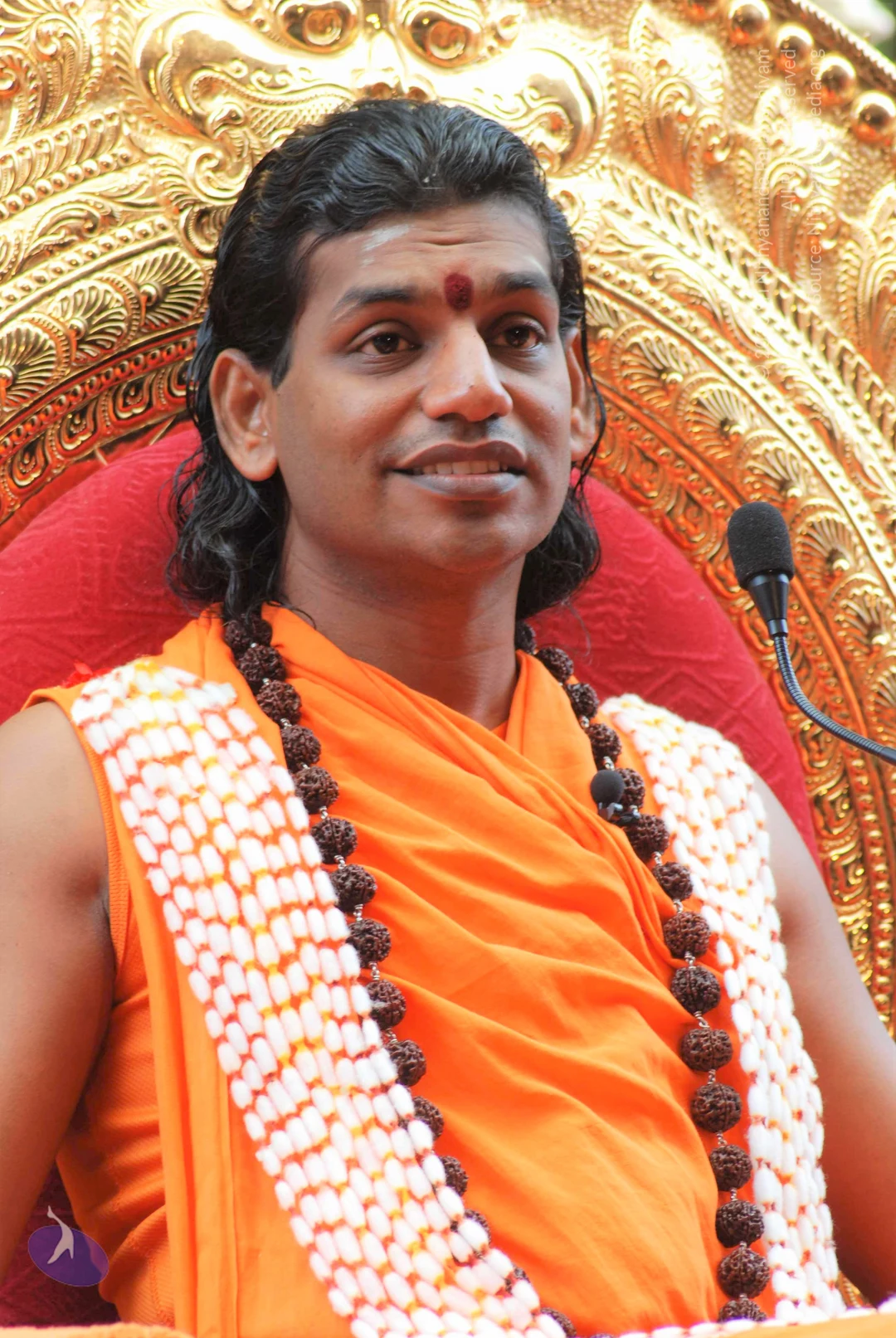
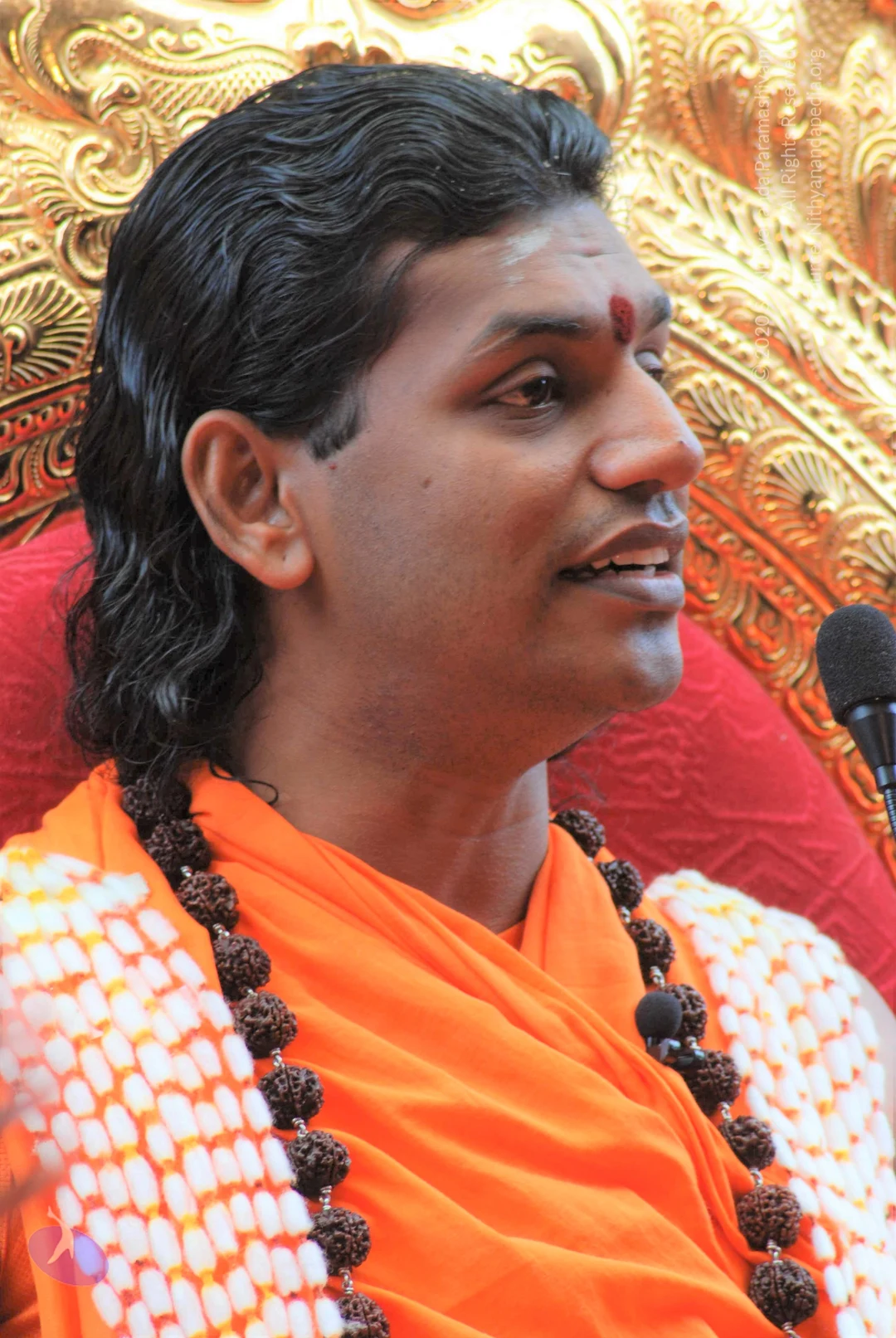
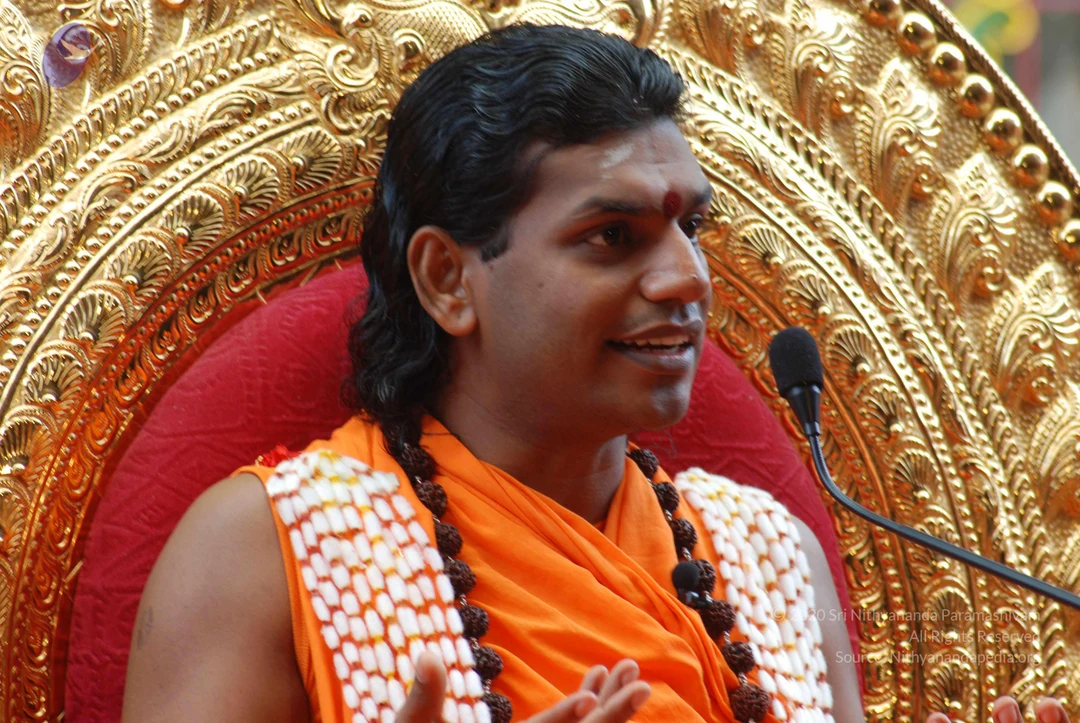
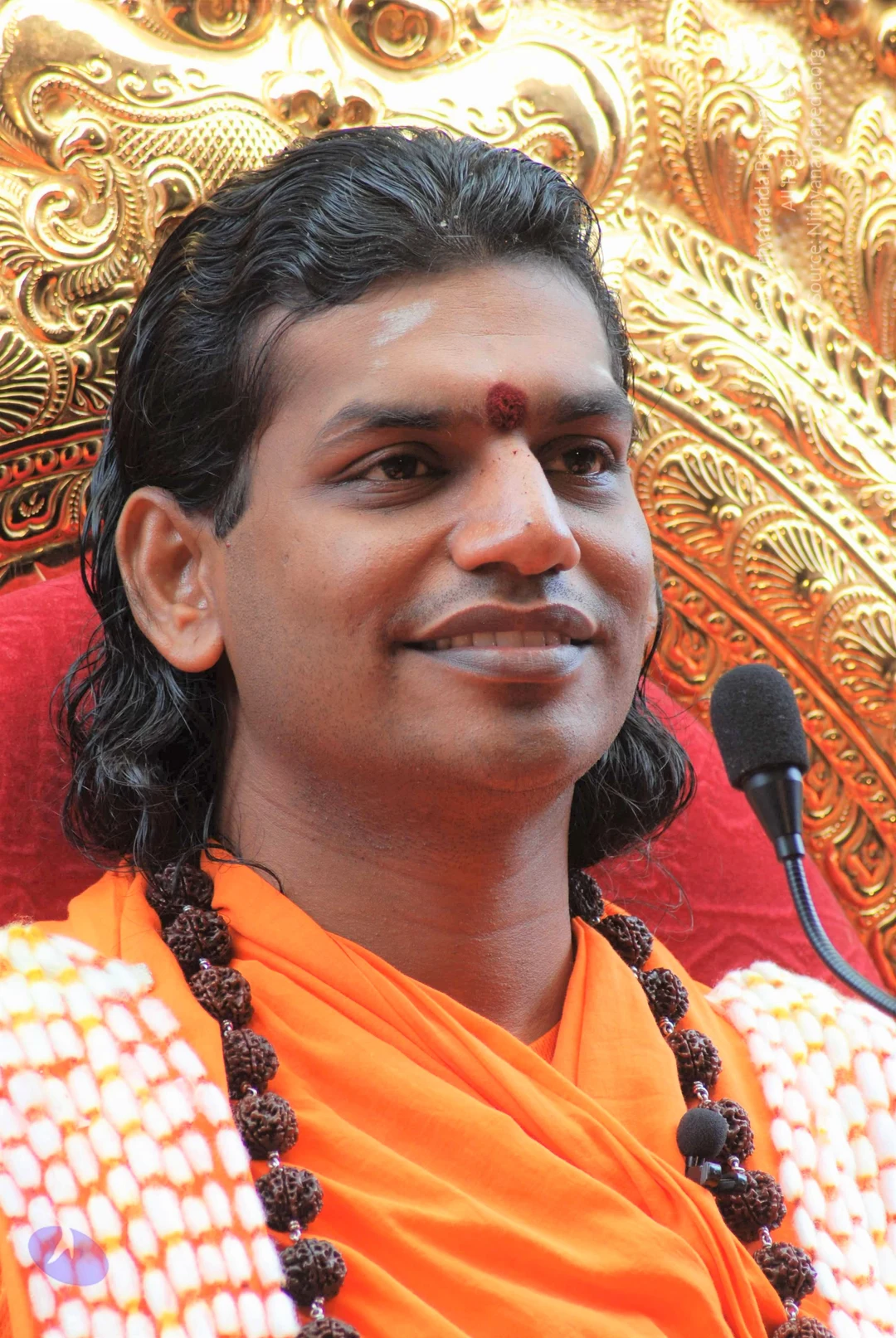
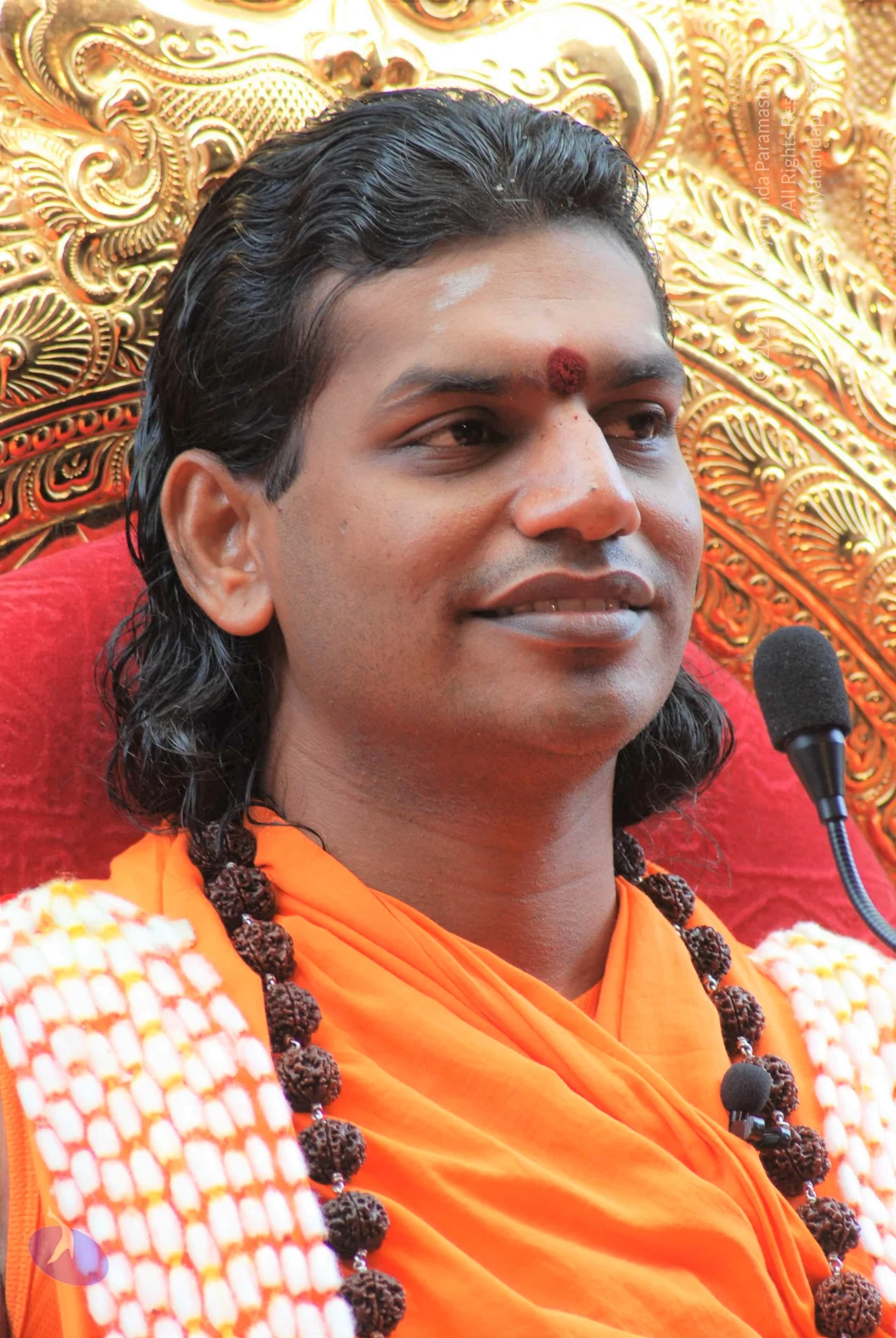
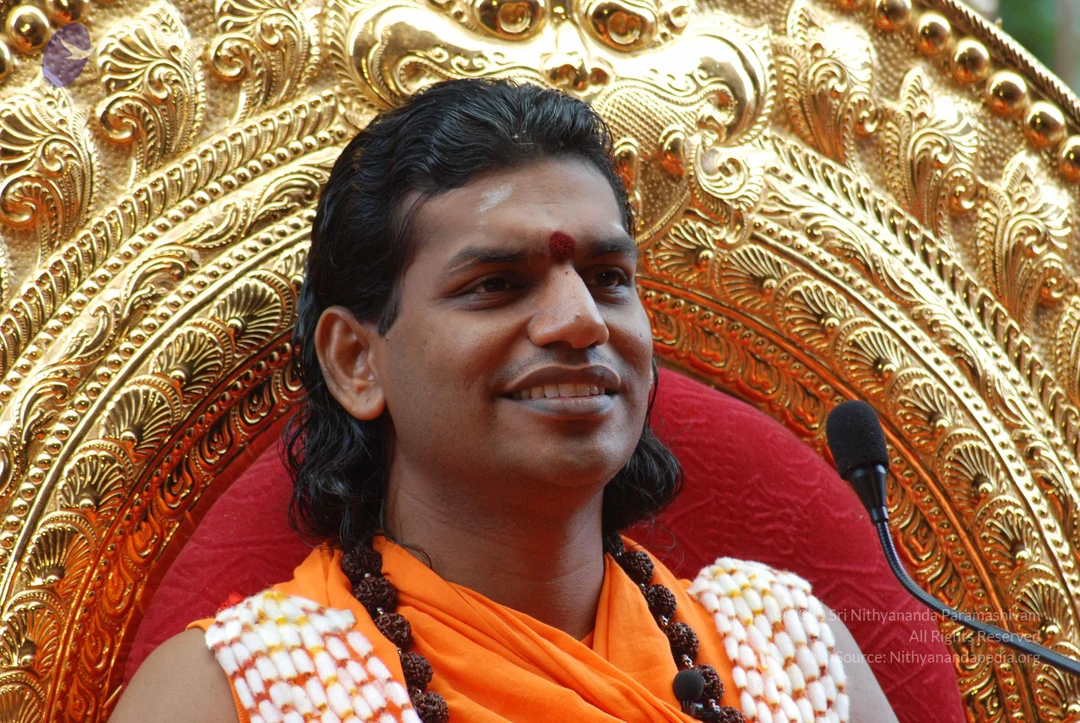
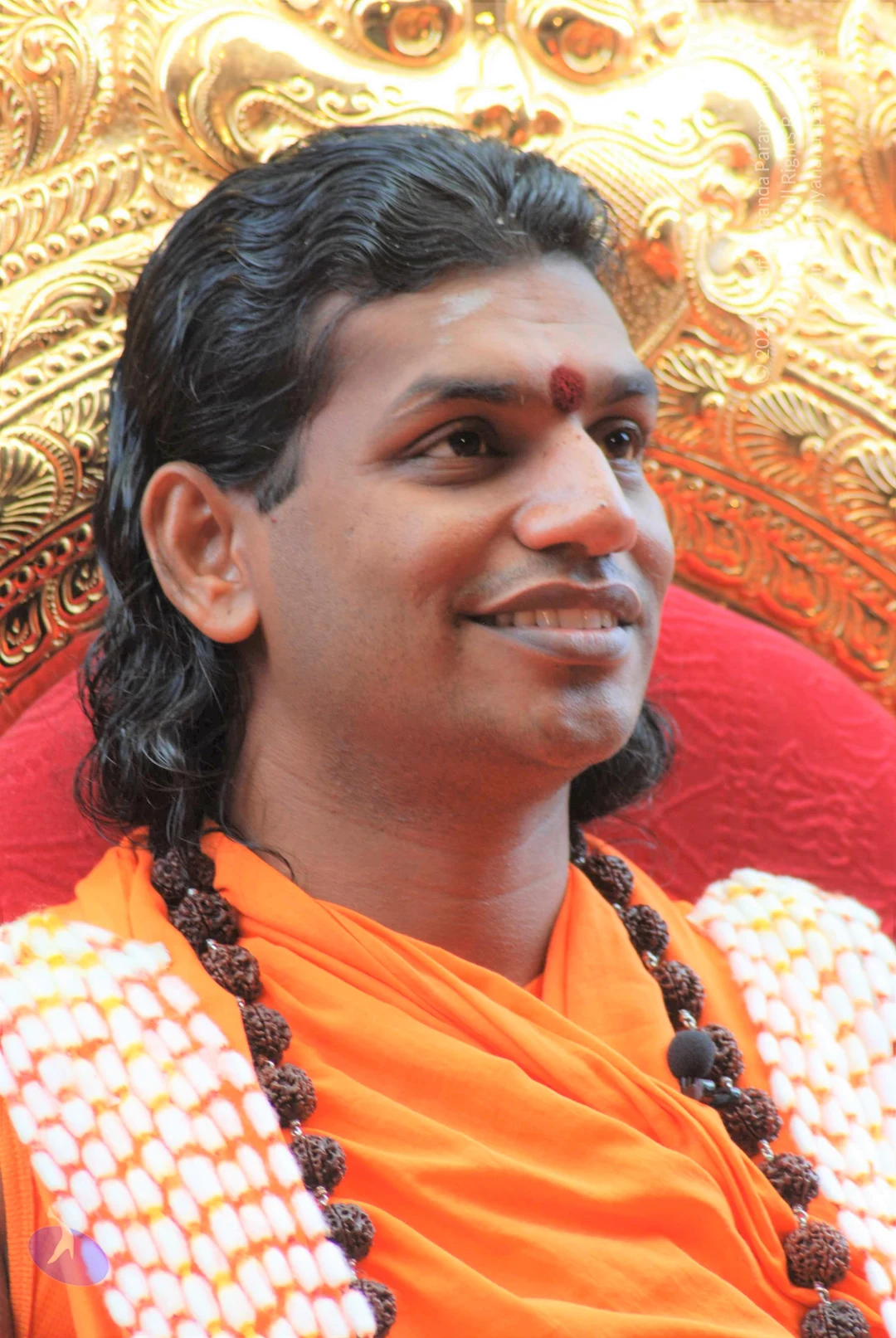
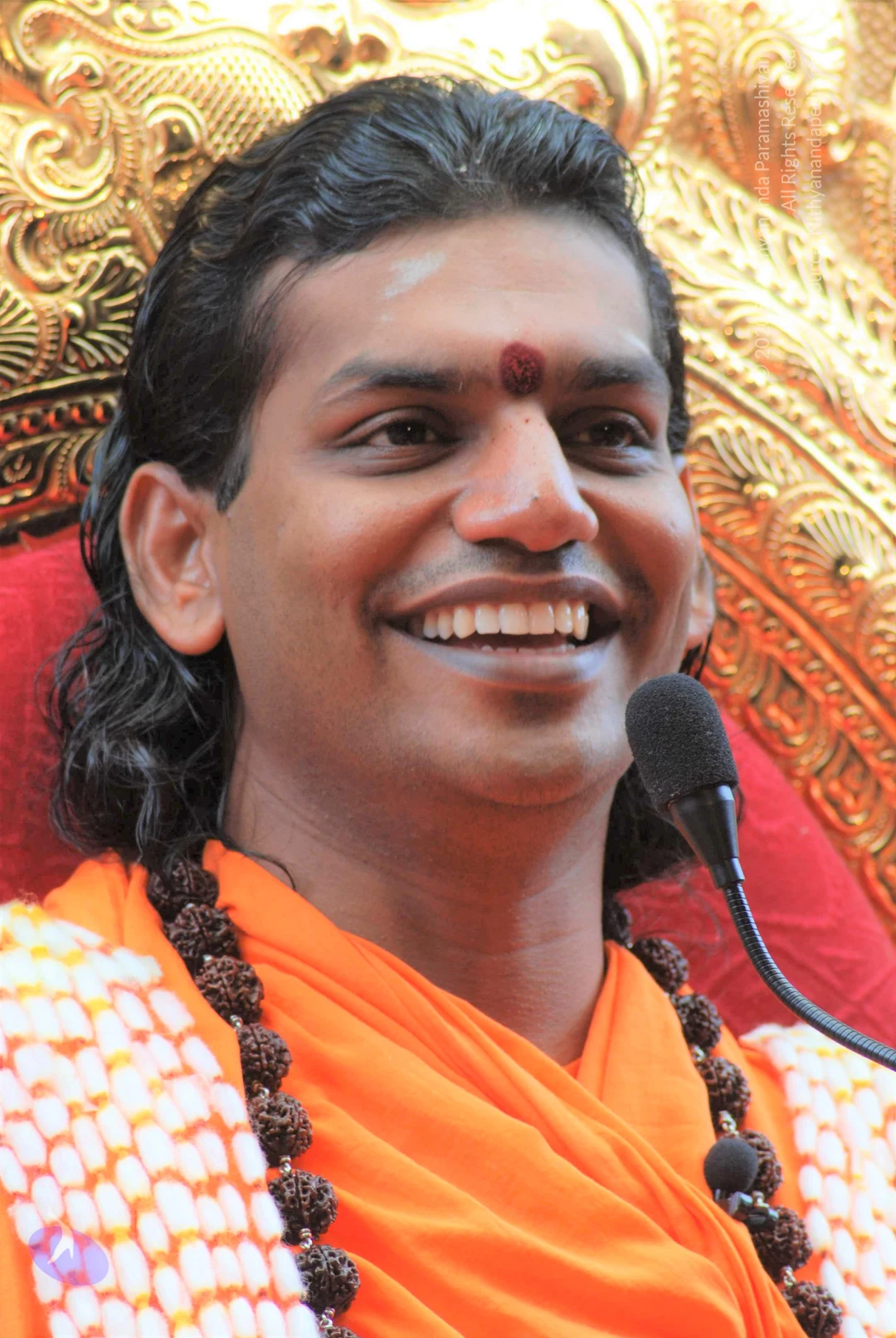
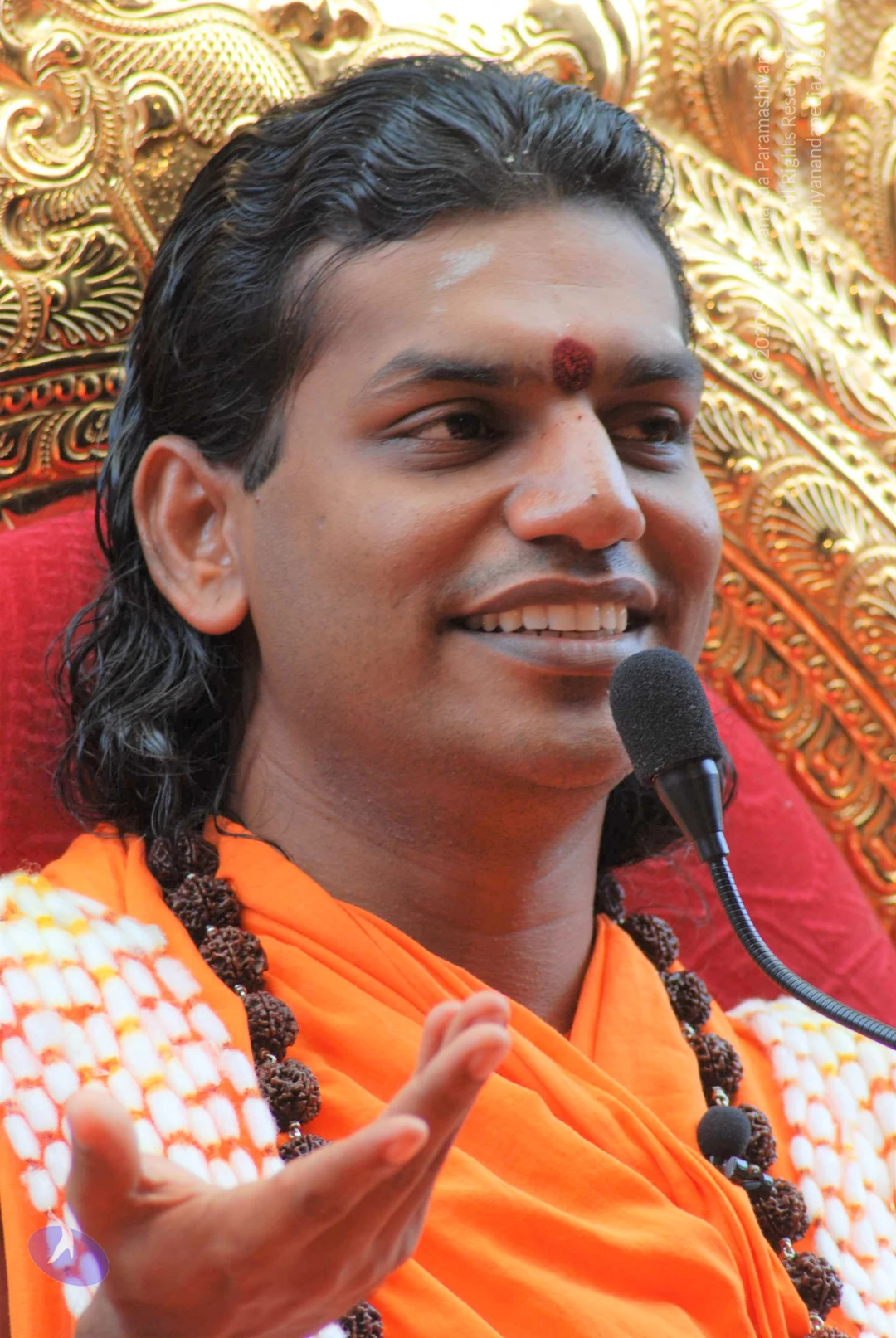
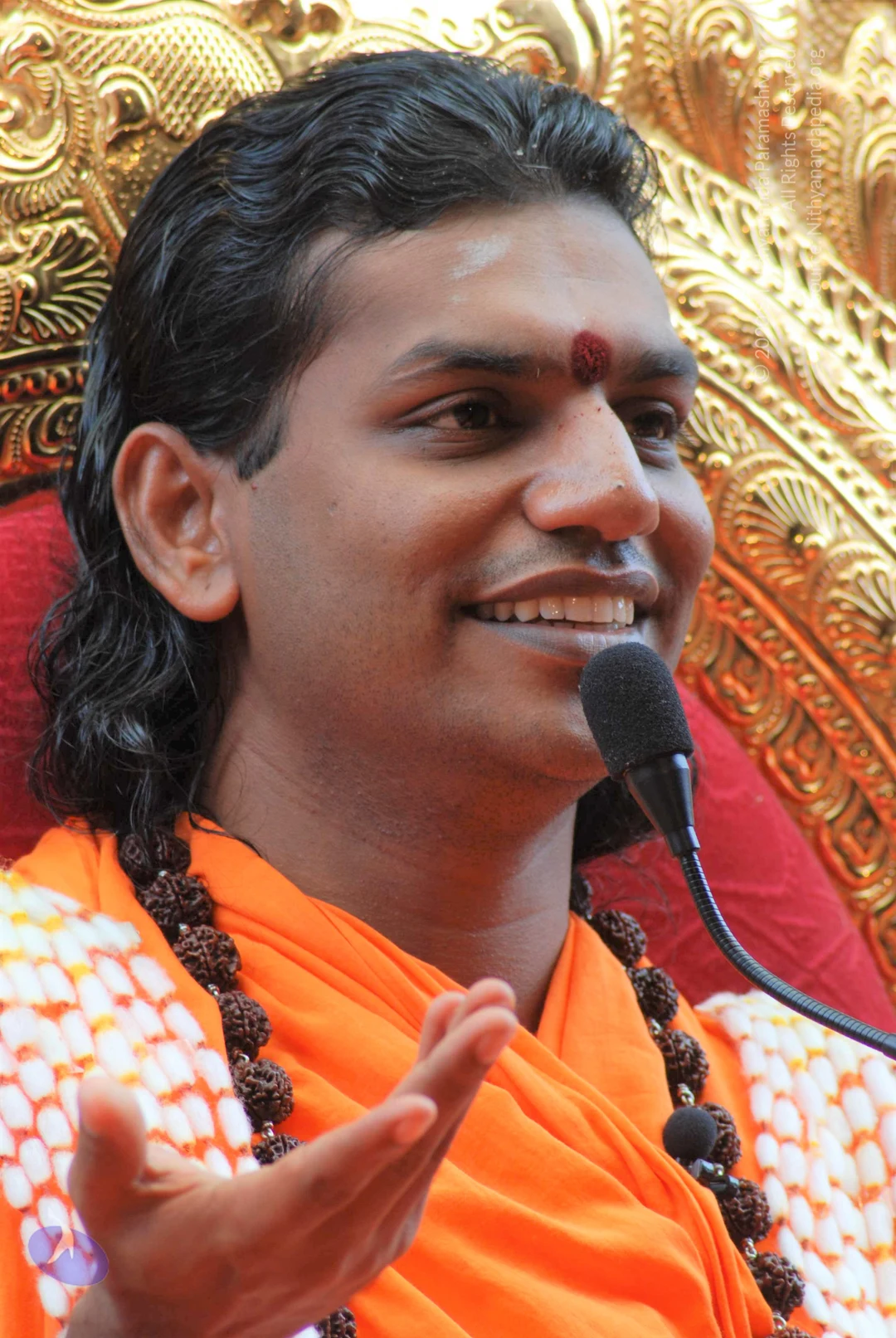
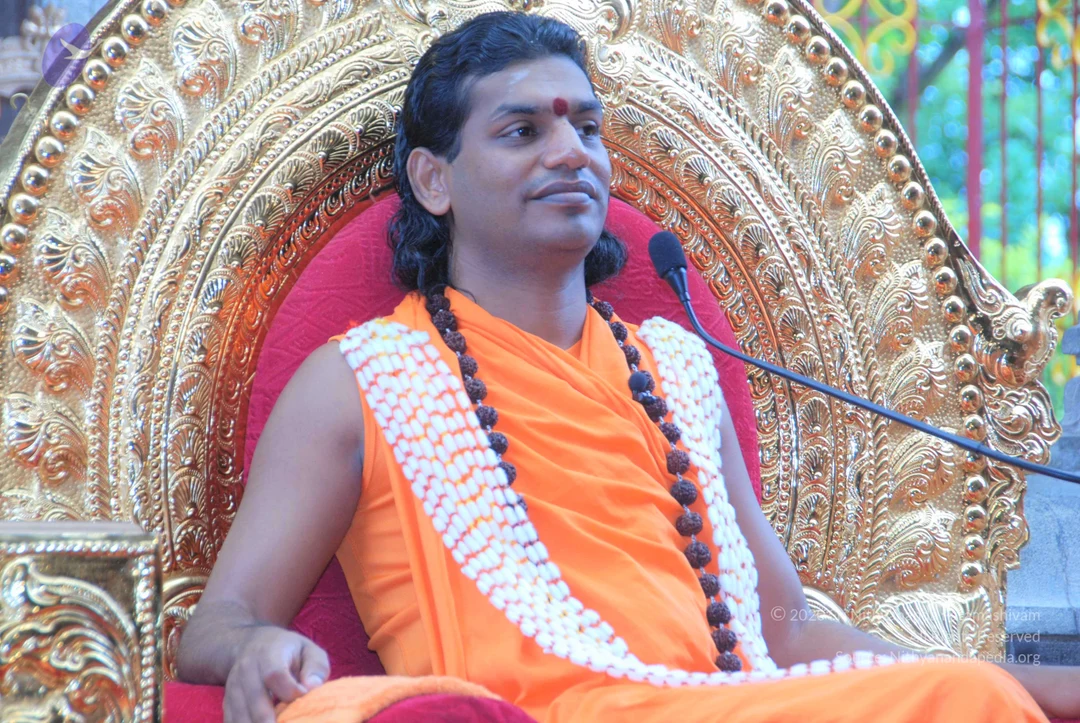
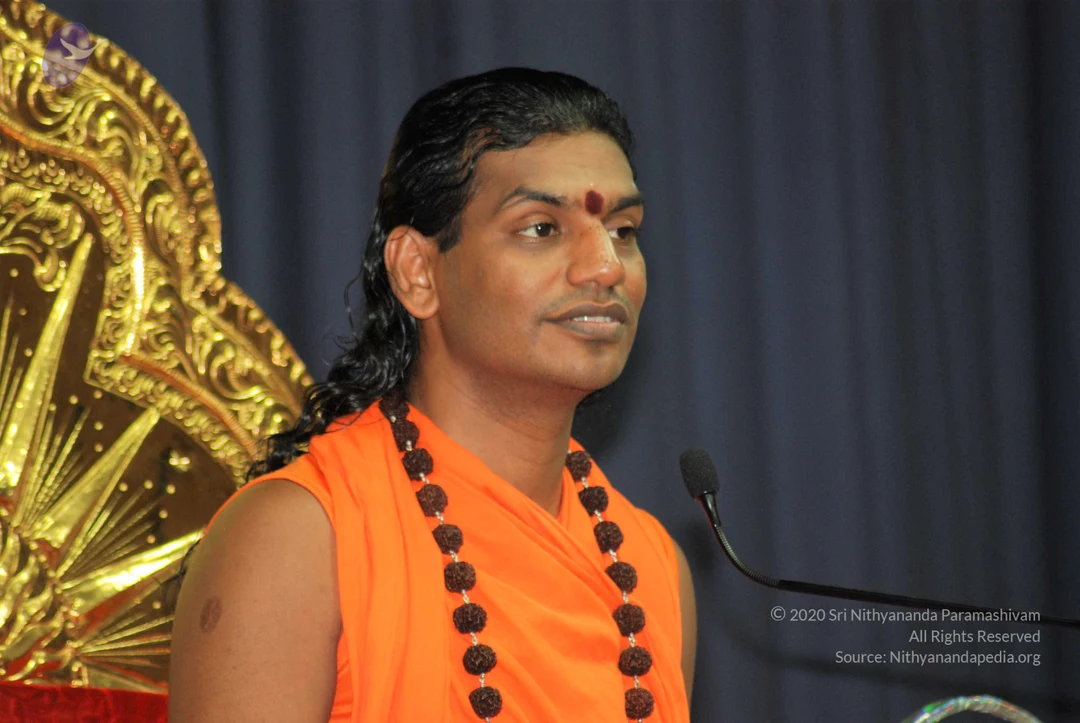
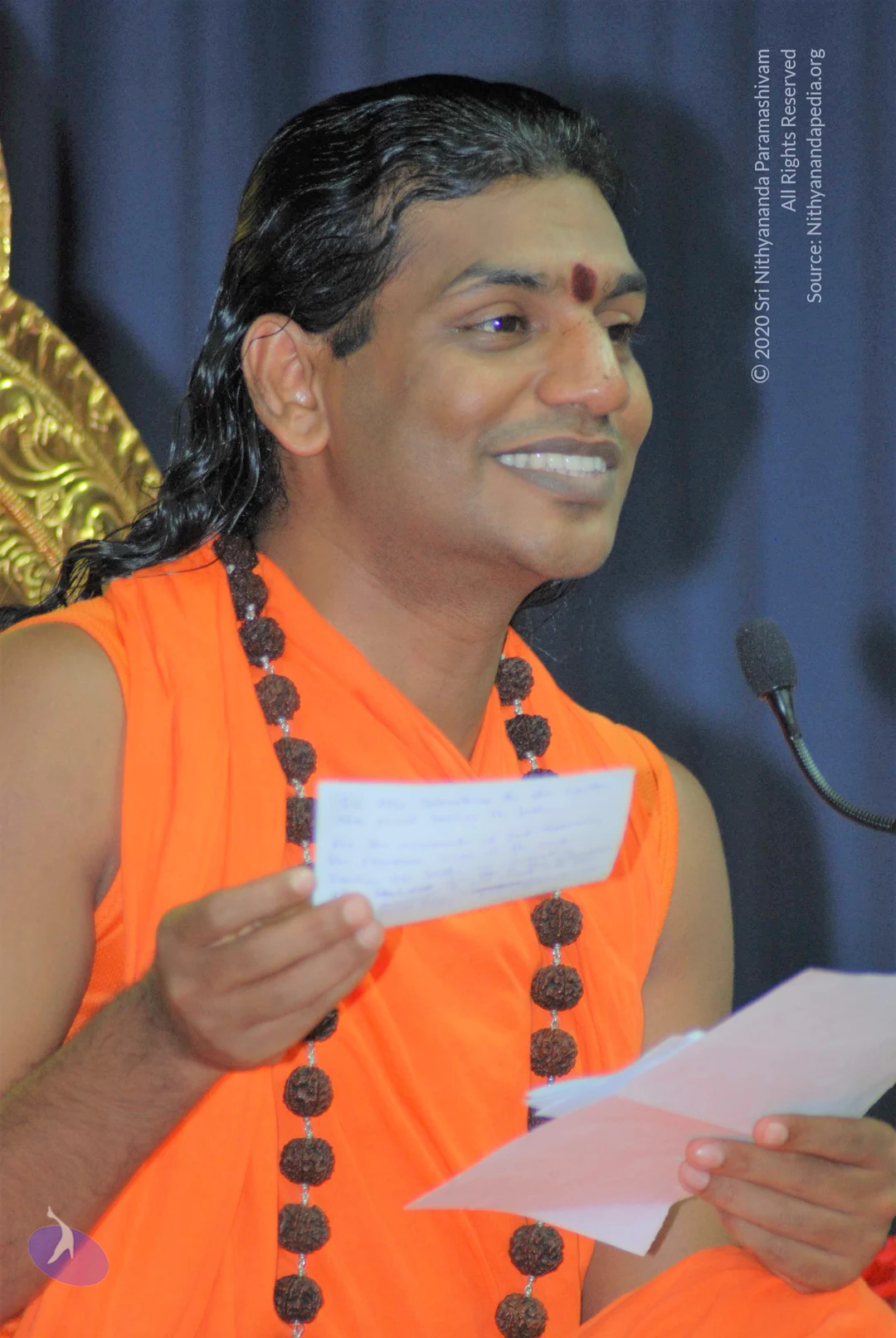
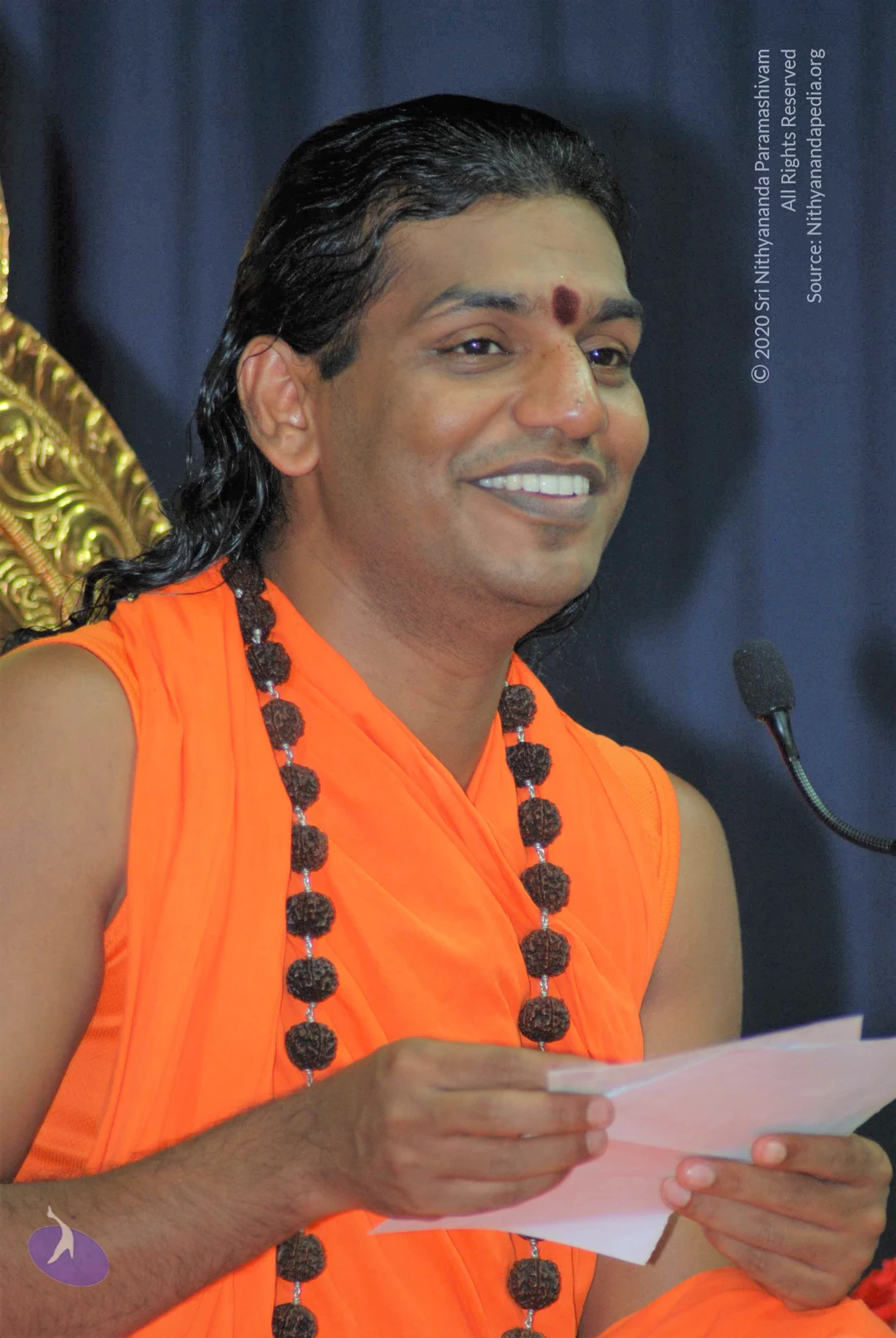
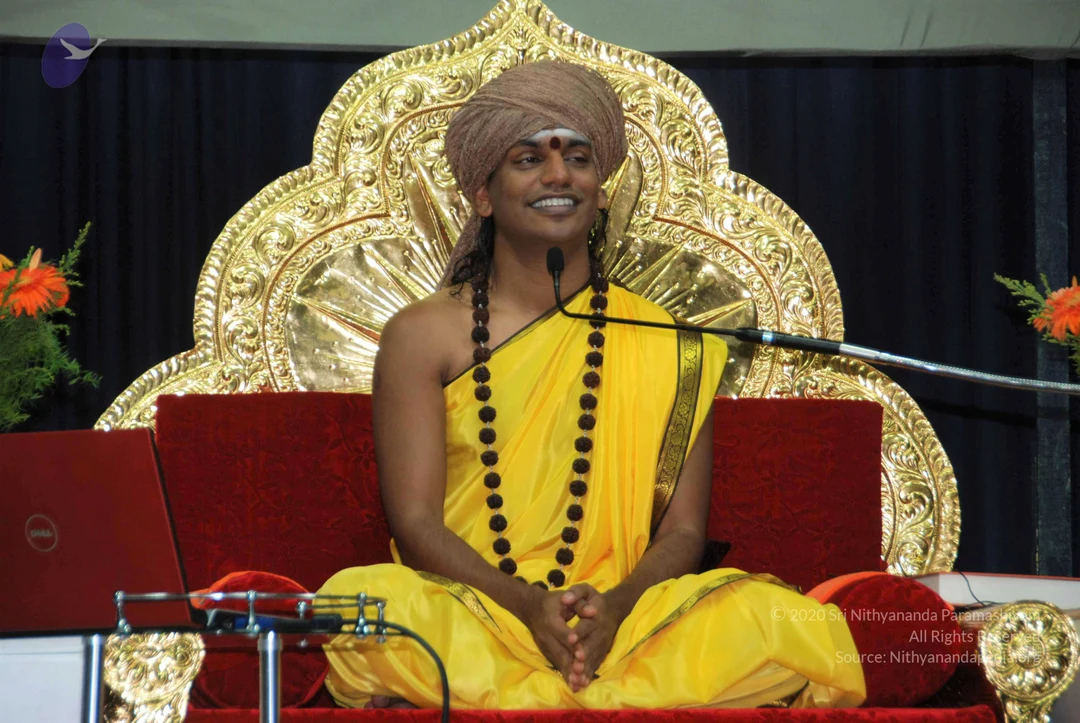
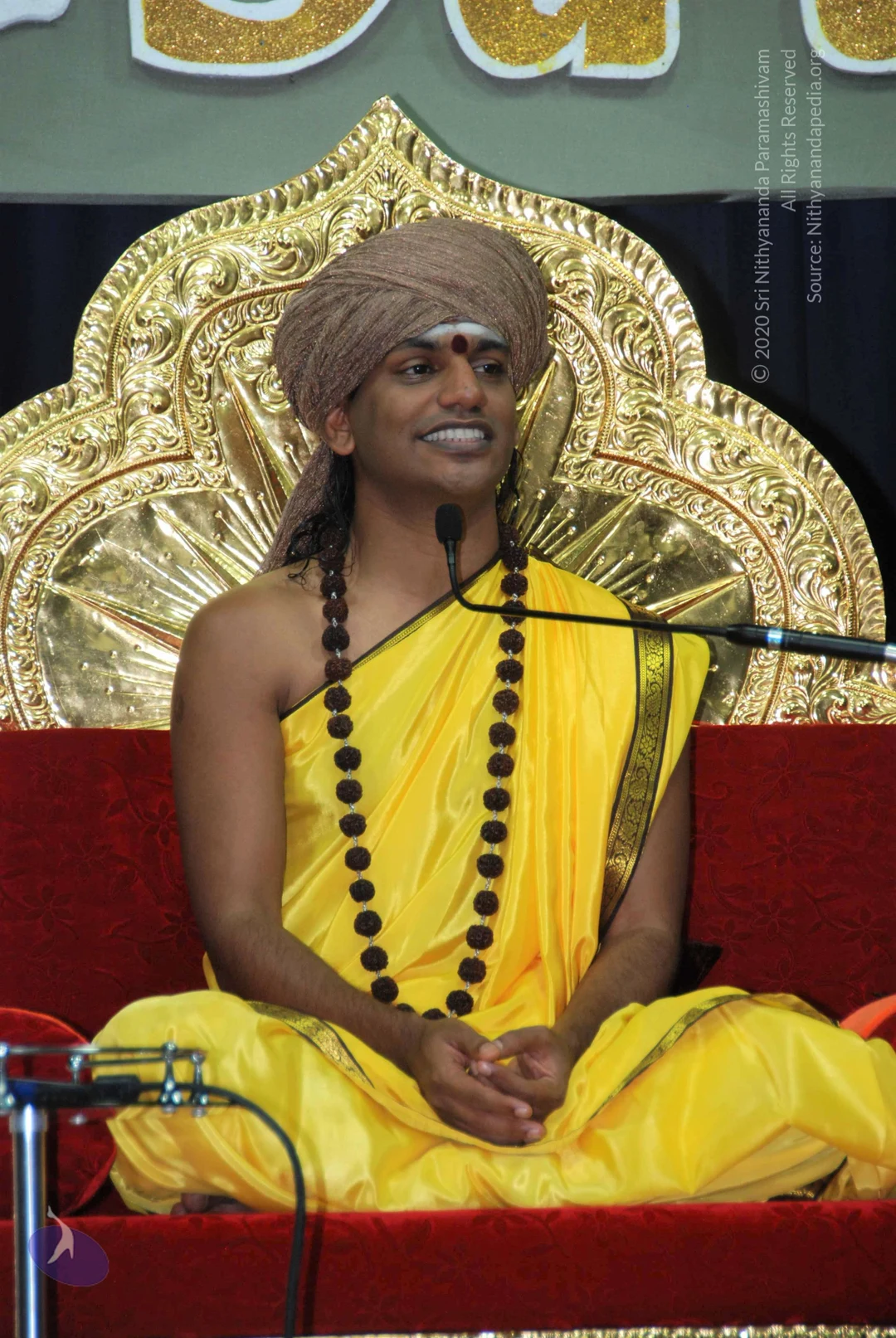
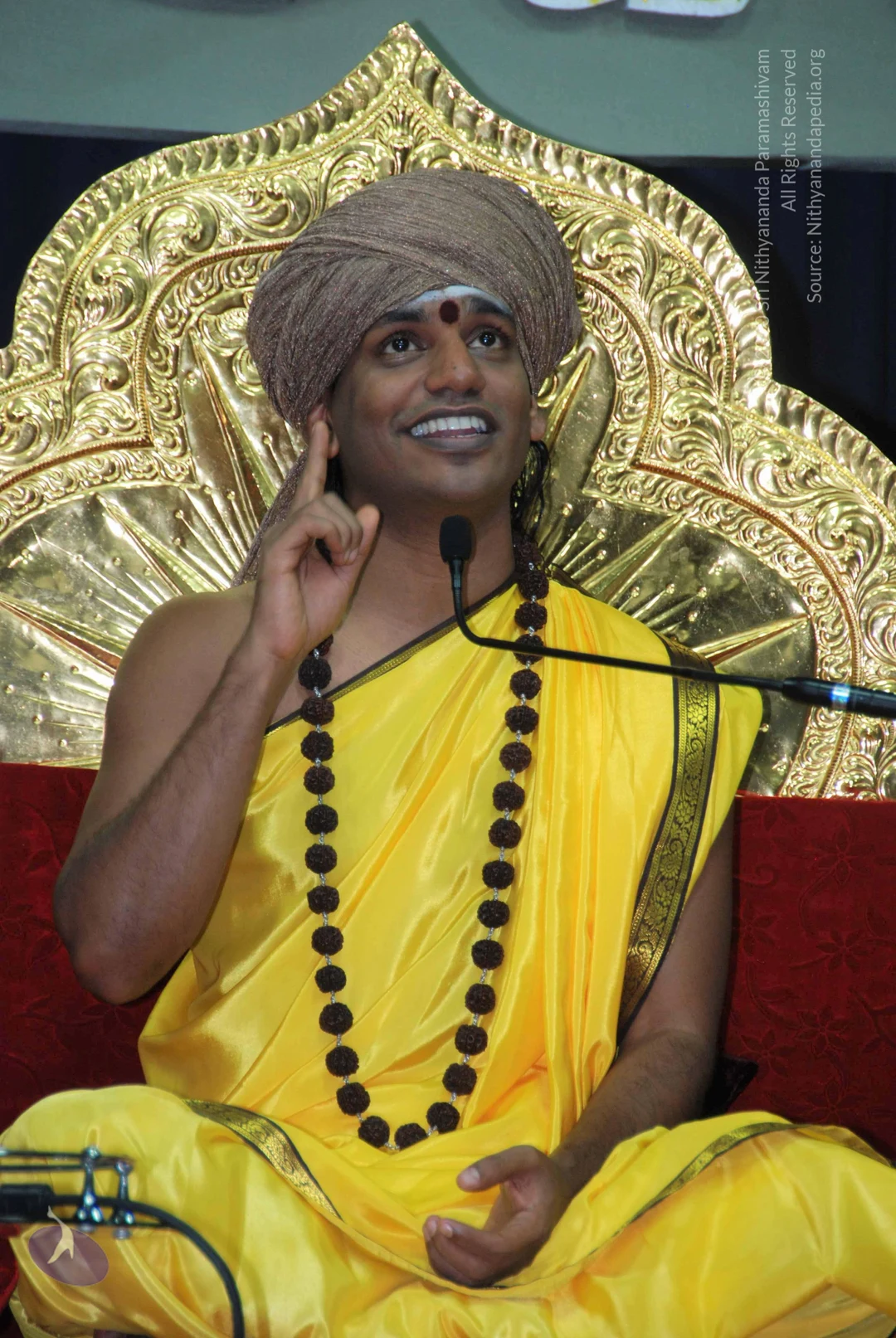
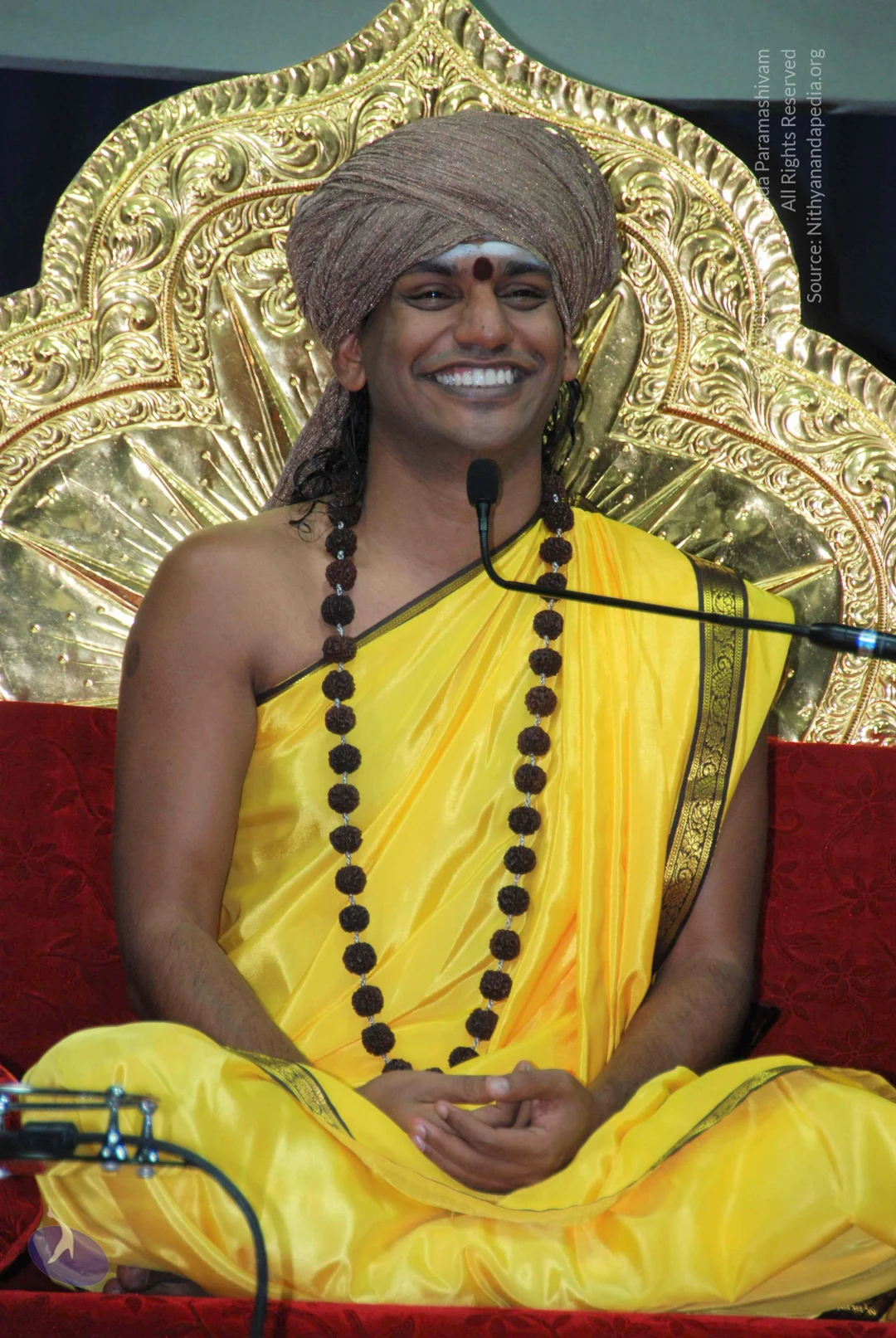
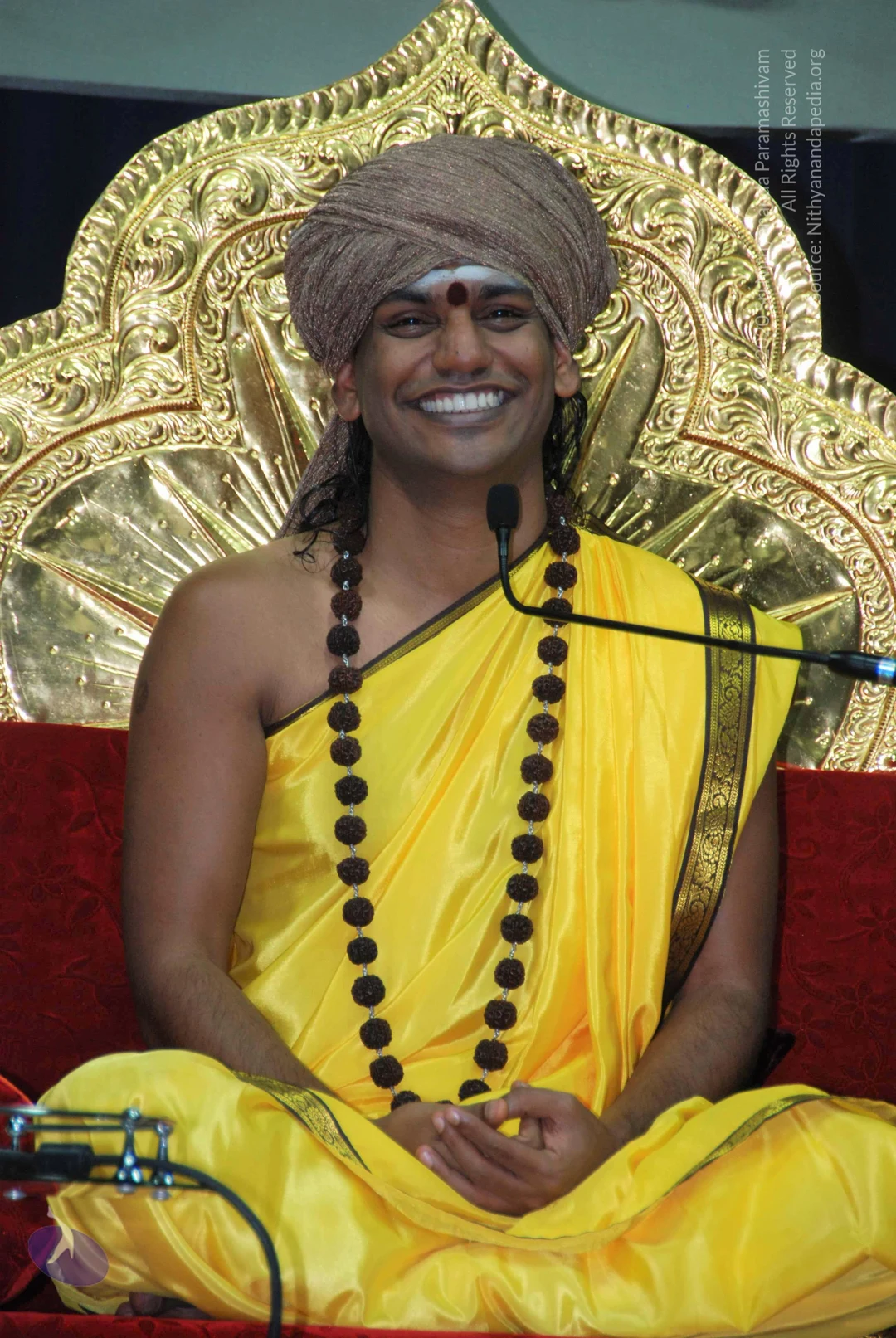
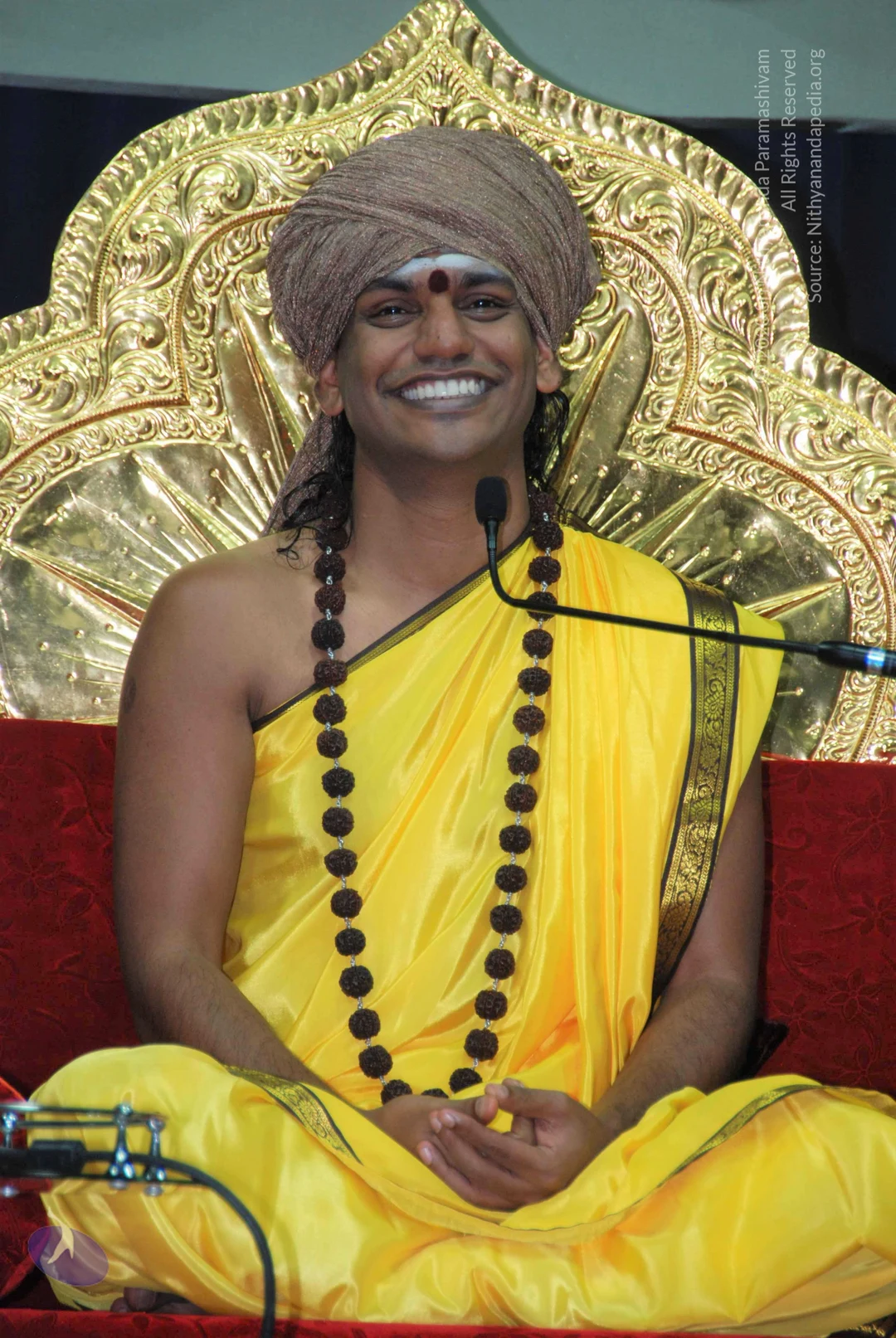
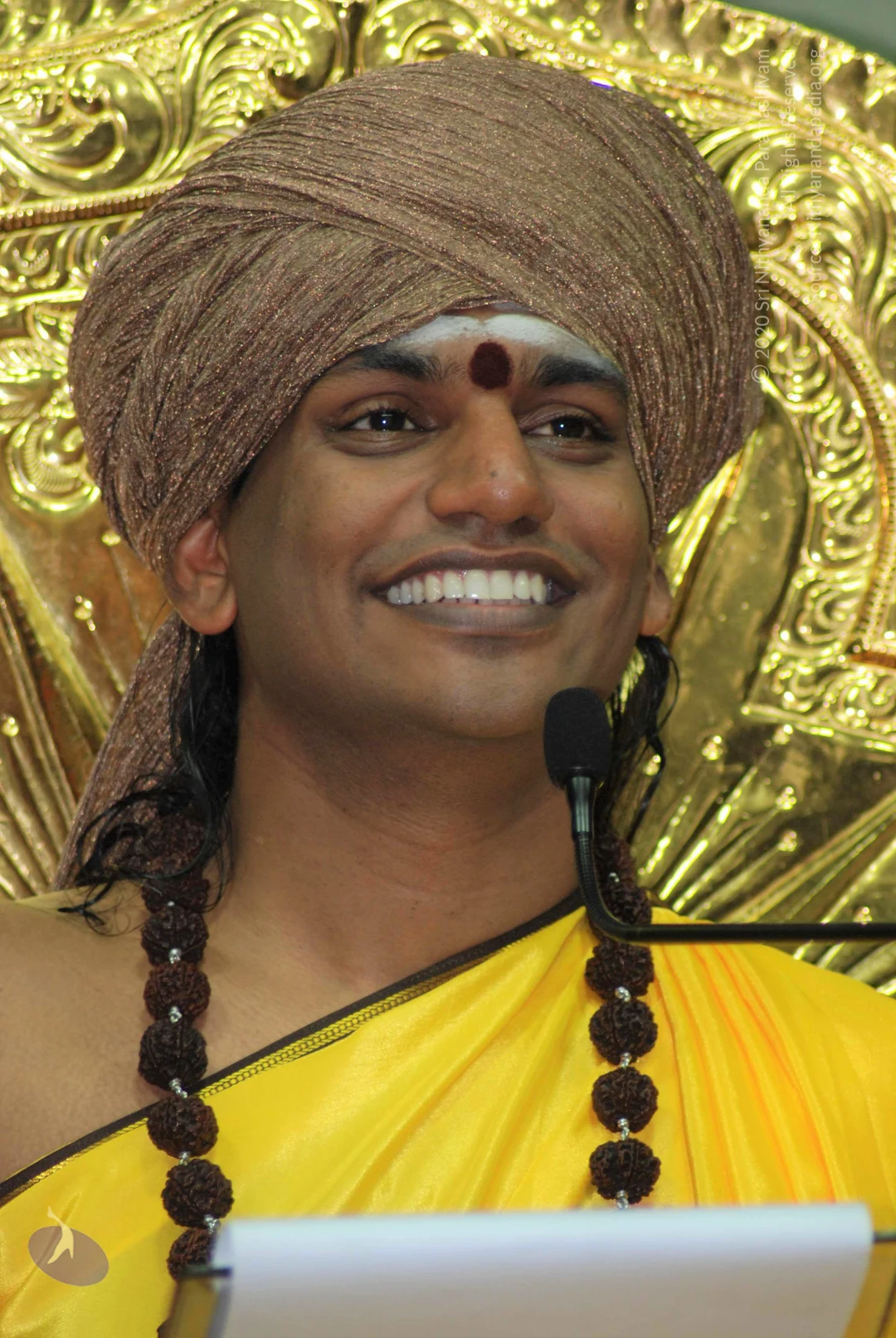
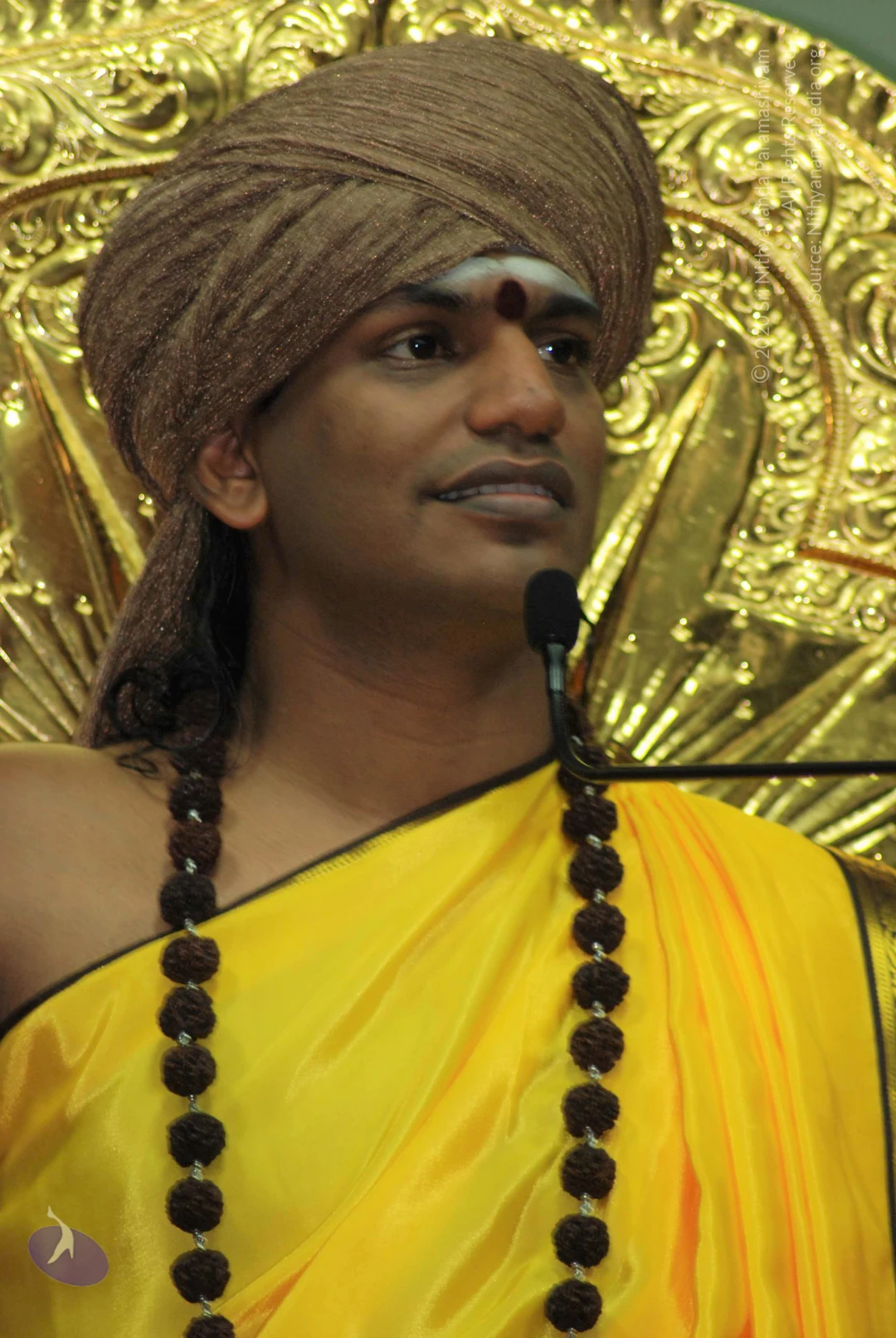
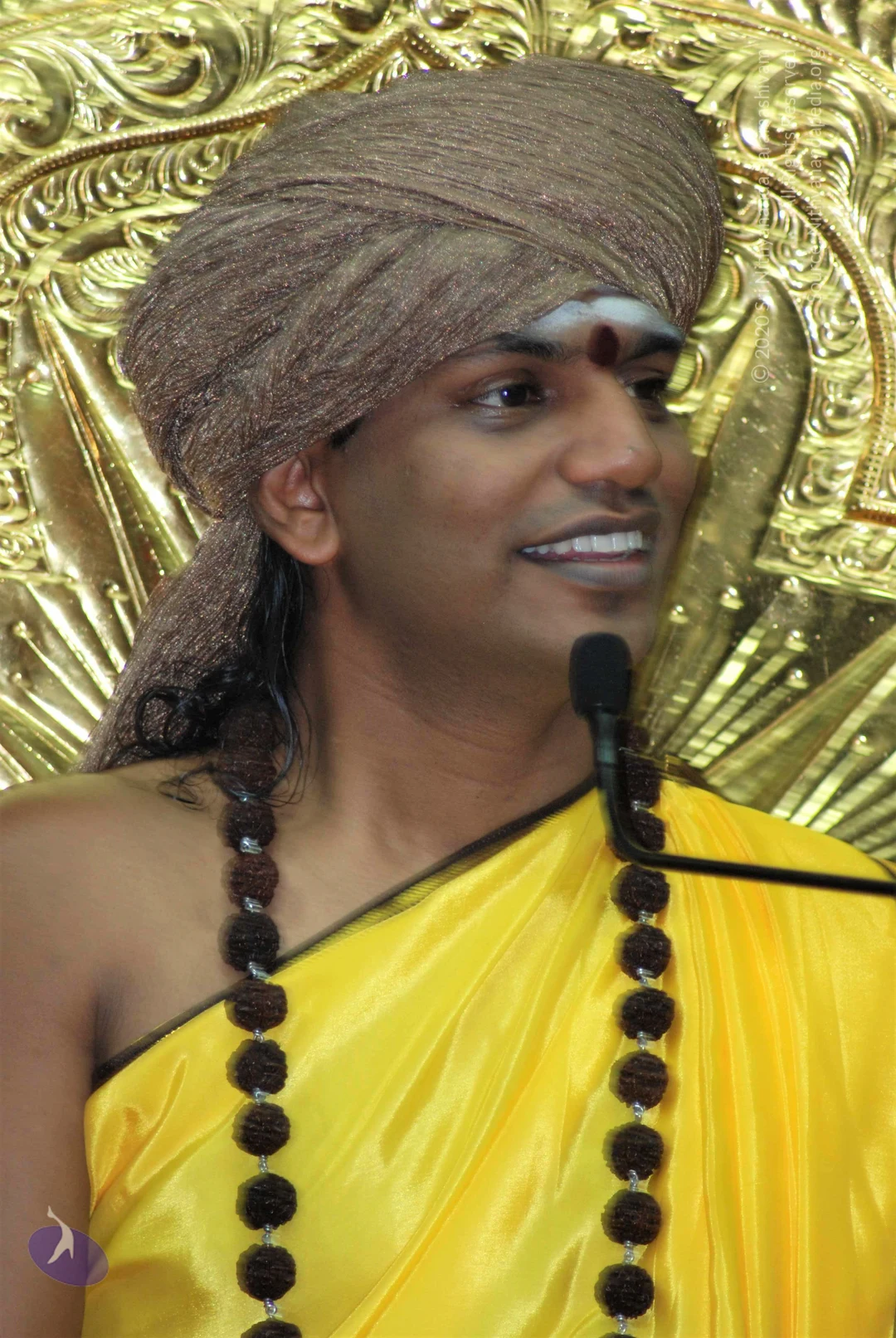
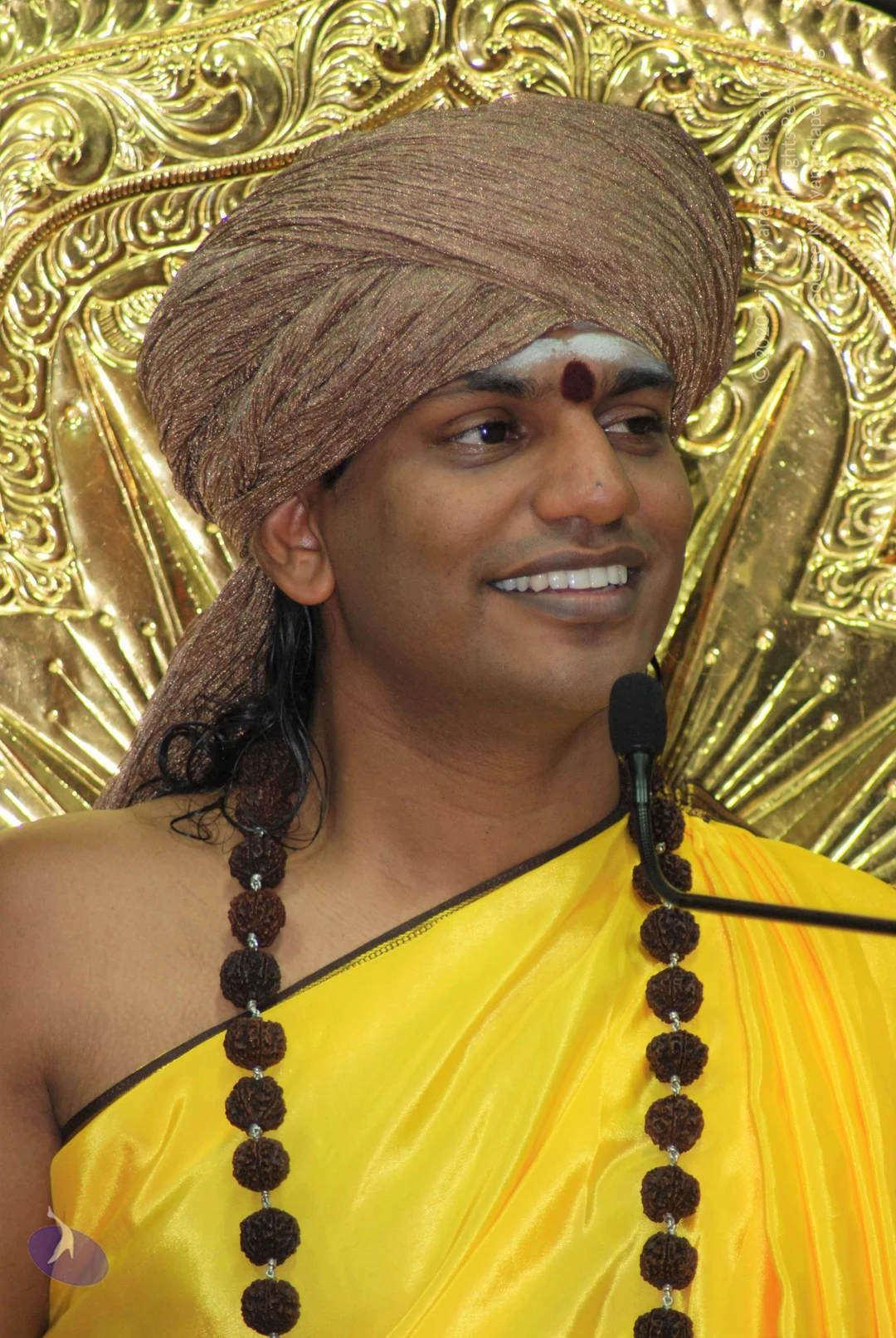
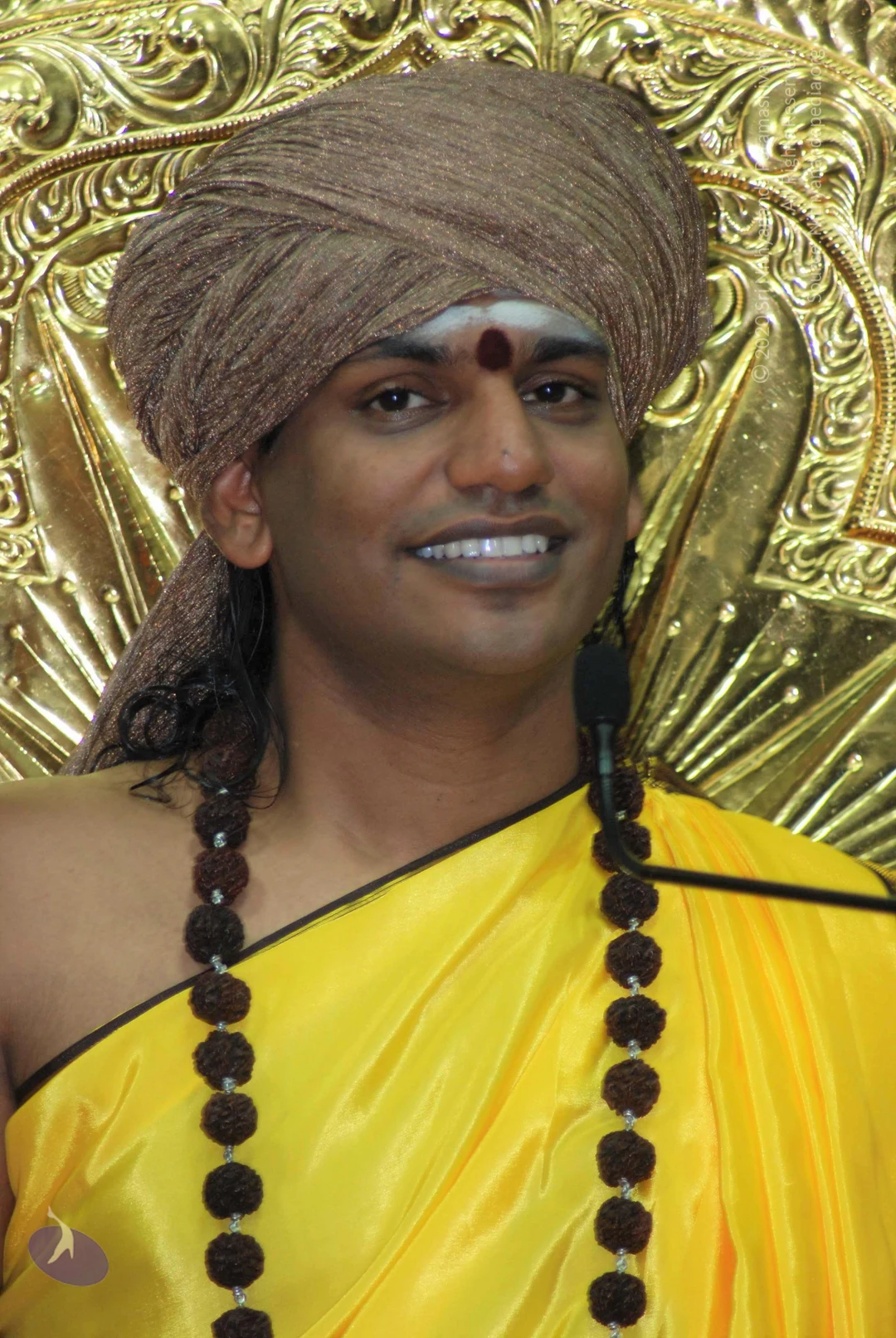
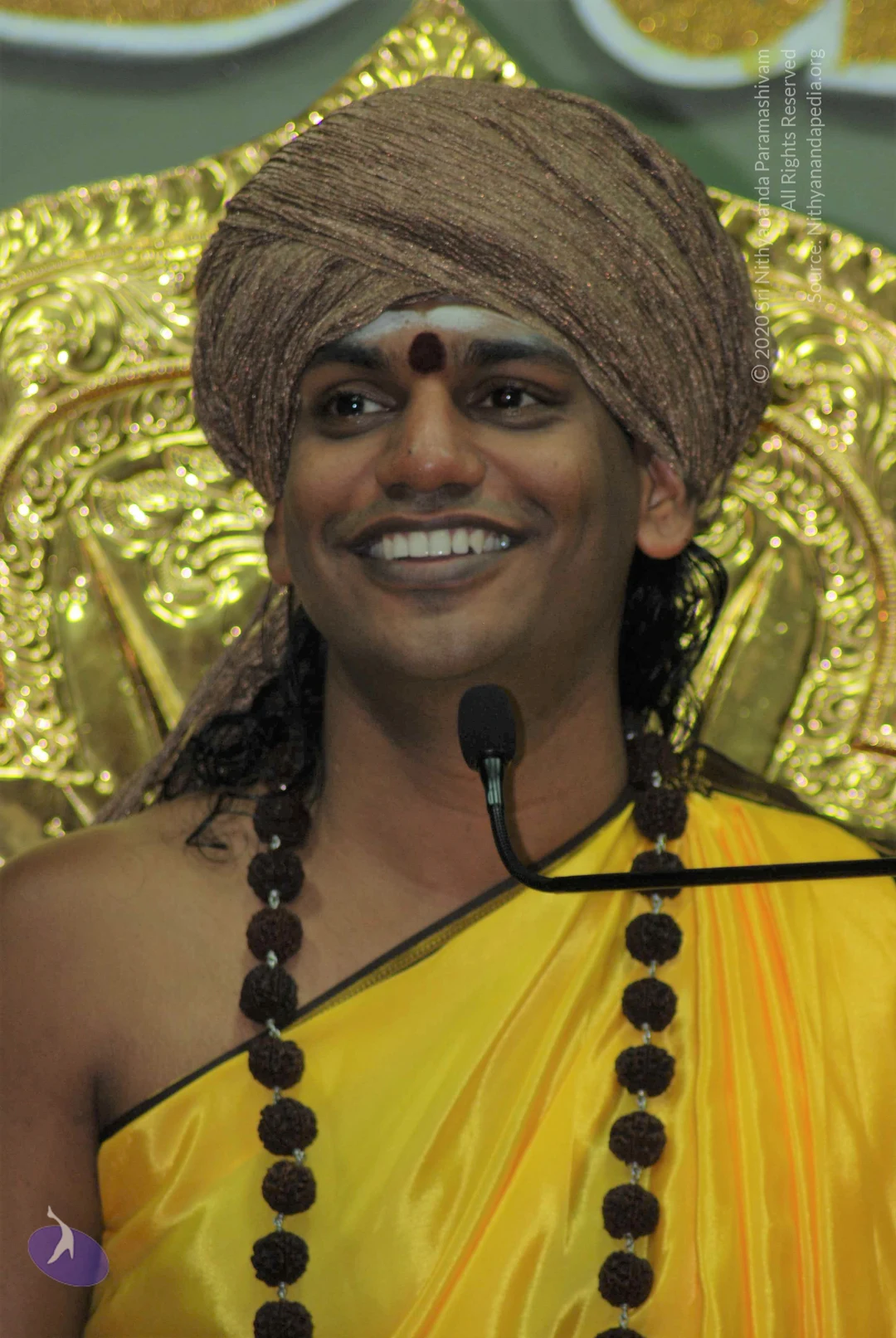
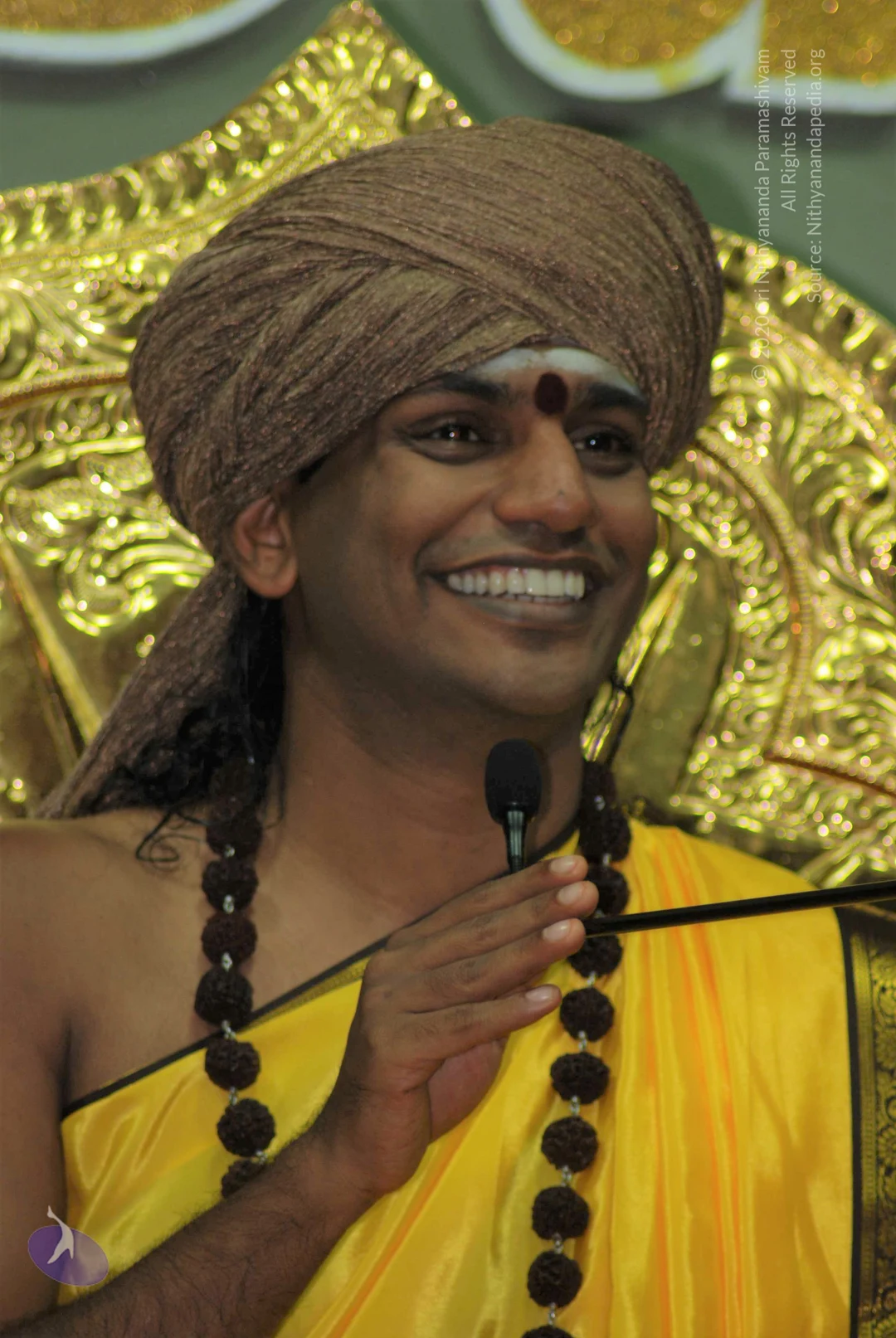
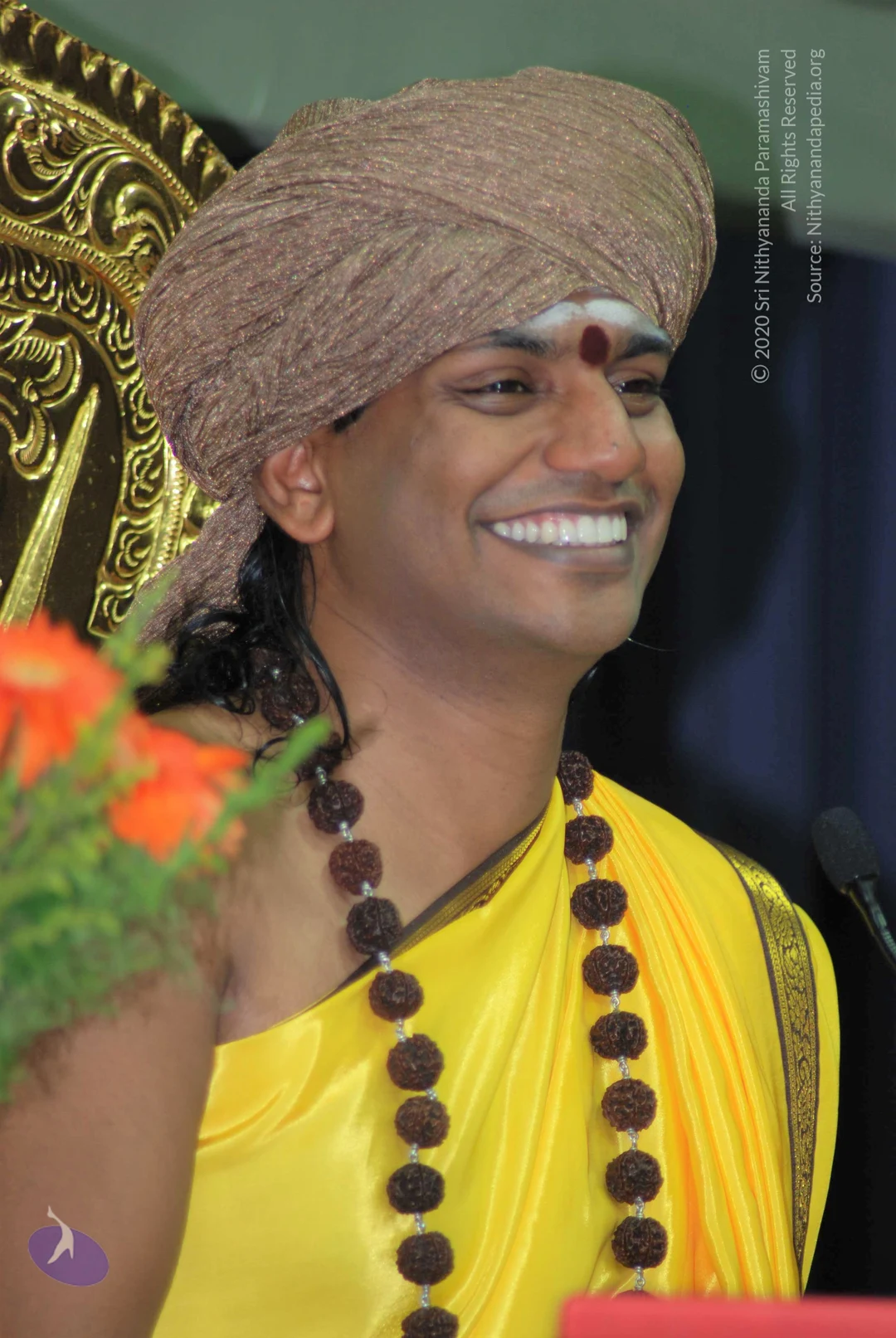
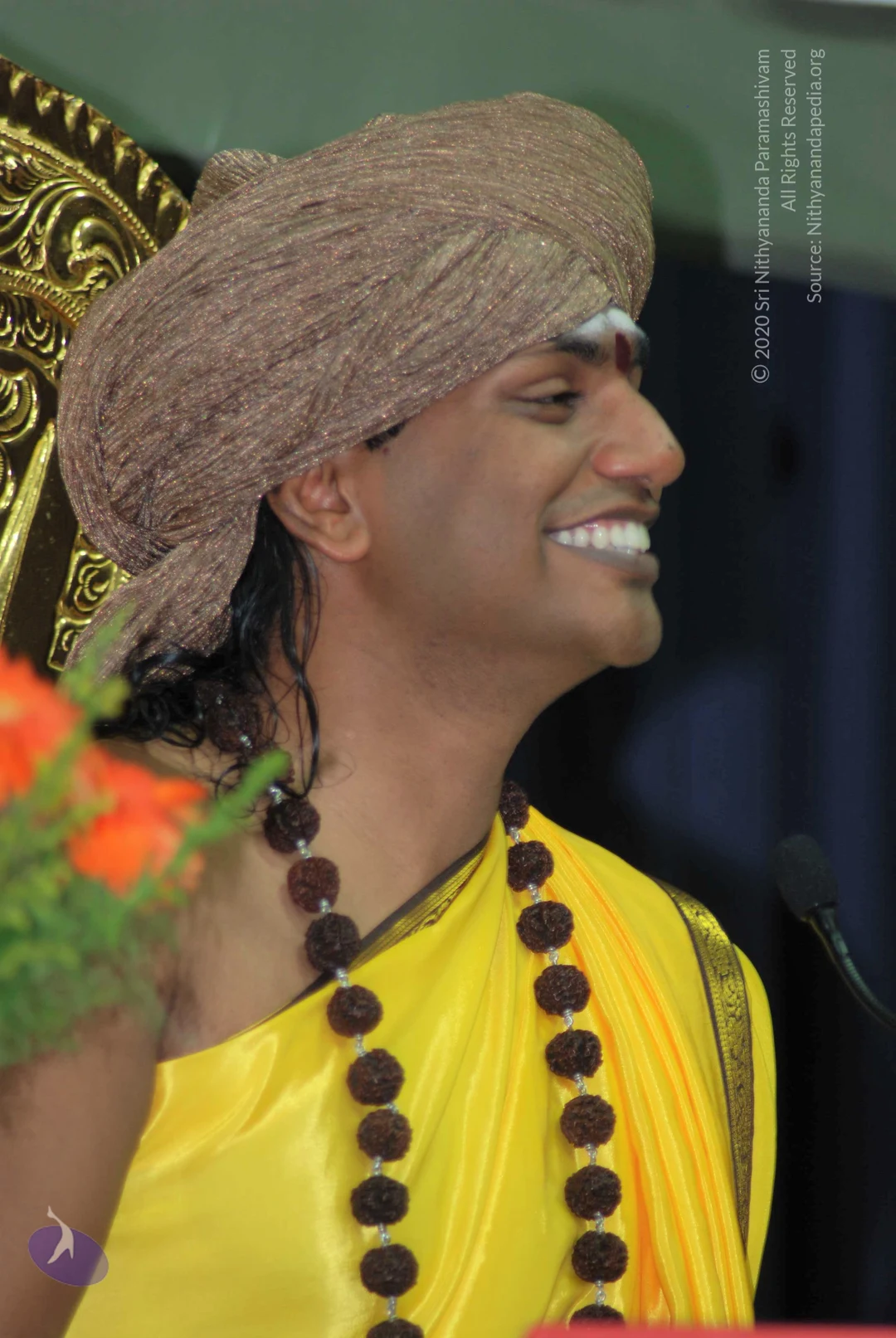
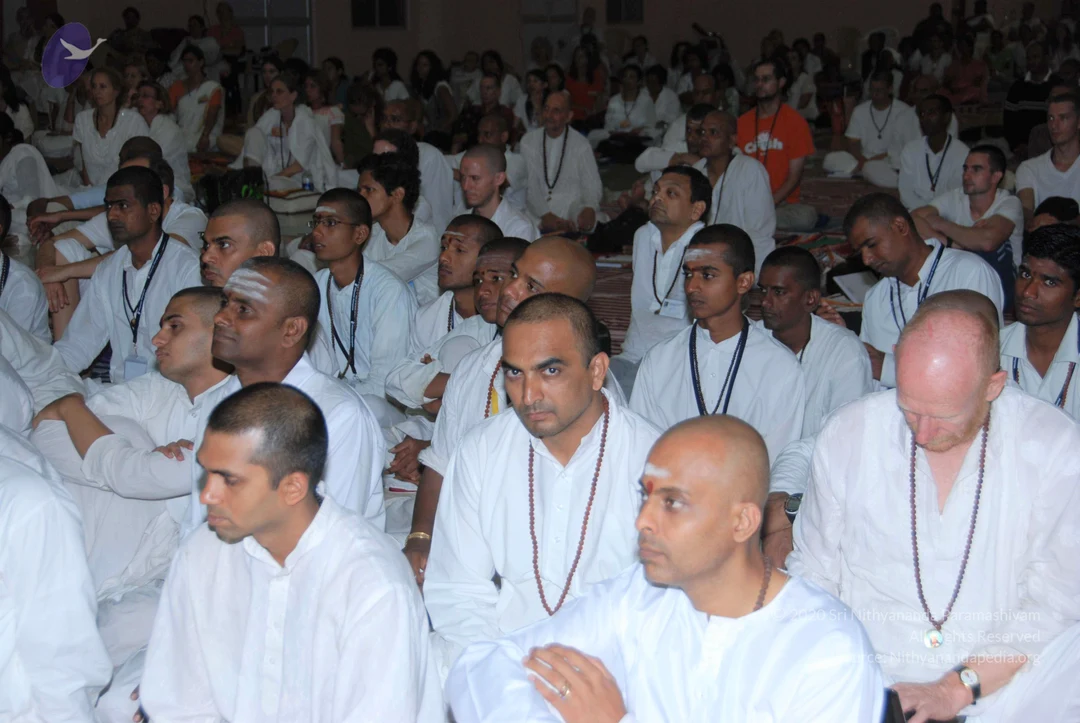
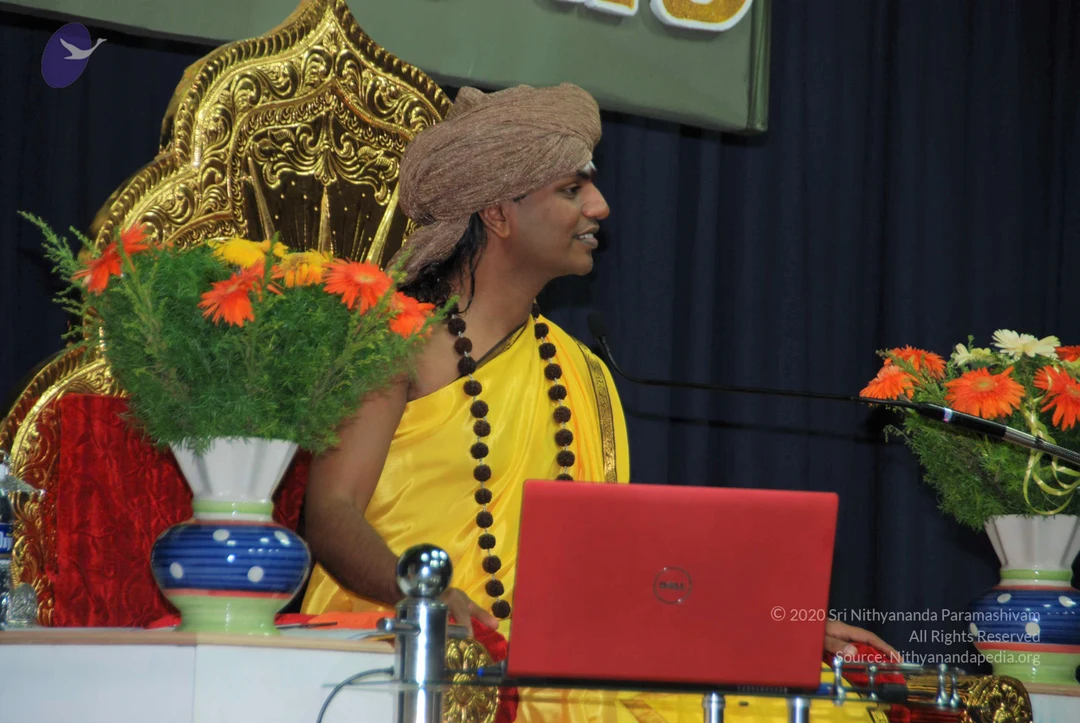
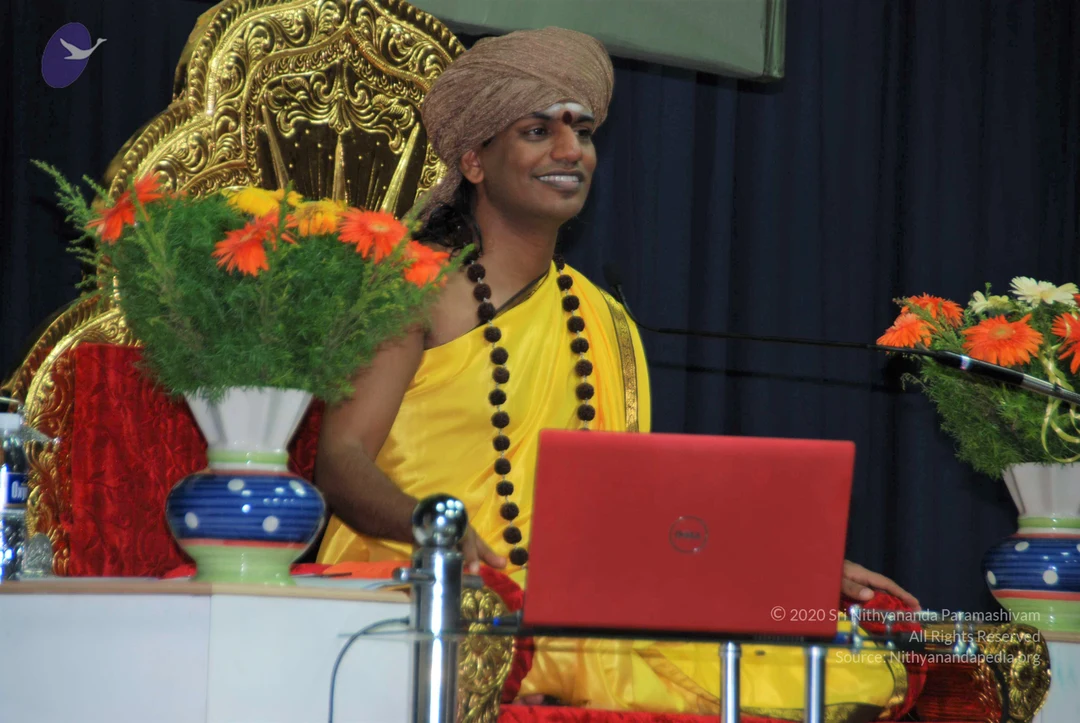
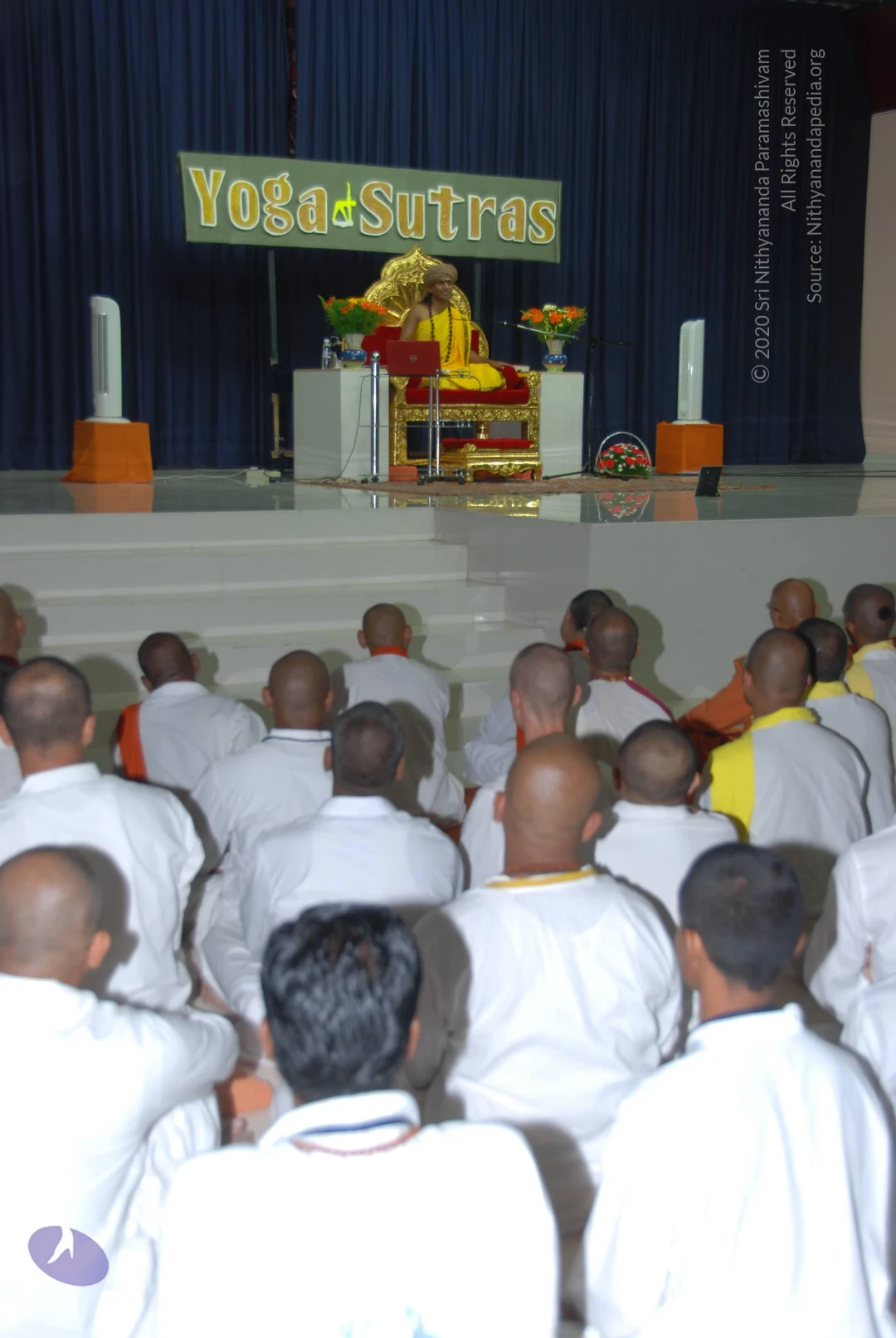
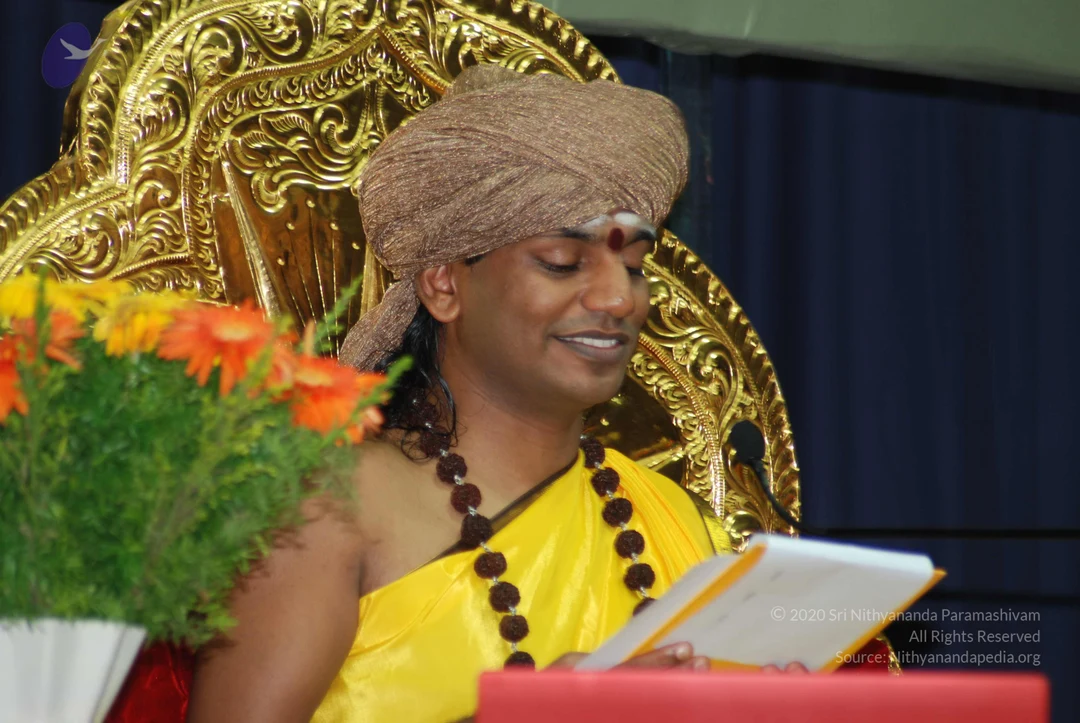
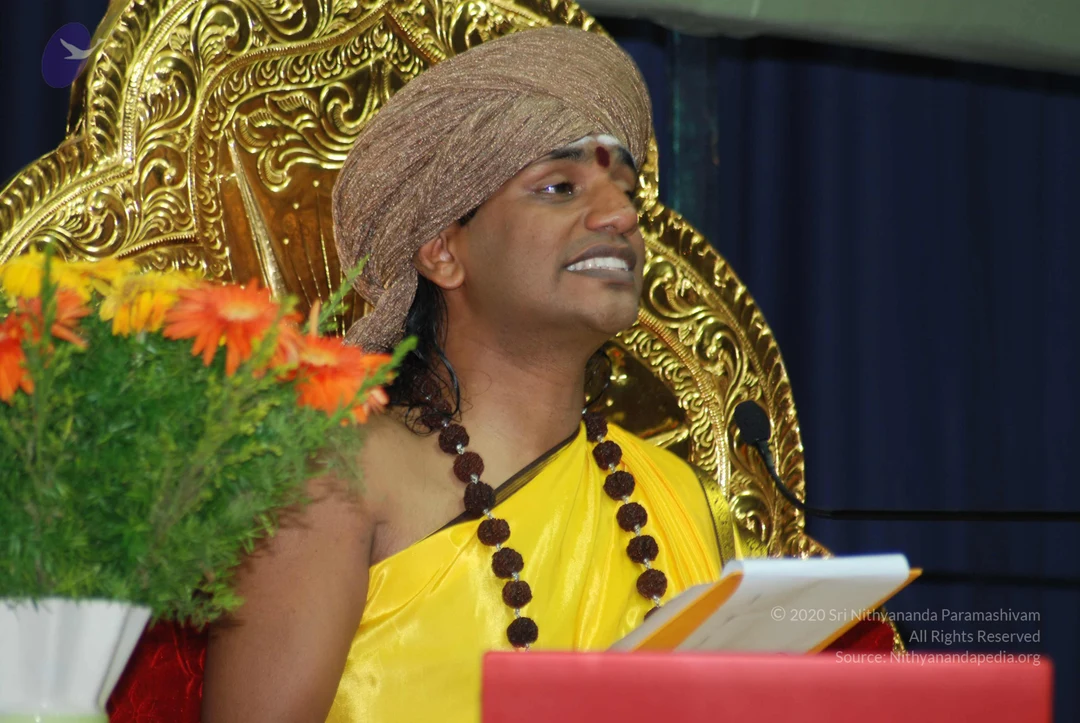
The Supreme Pontiff of Hinduism, Jagatguru Mahasannidhanam, His Divine Holiness, Bhagavan Nithyananda Paramashivam, expounded on the Cosmic Principles of Choicelessness during a live public talk - Nithyananda Satsang. In this talk entitled Bliss is Choice, The Supreme Pontiff of Hinduism revealed that choicelessness is bliss and who chooses choice, chooses suffering. He explained that choicelessness is a solution for depression and expanded on the 4 Gunas sharing that by nature Gunas contradict each other. On this day His Divine Holiness gifted all with the Manana Contemplation sharing powerful truths about the mind healing the body.

Video and Audio:

Bliss is Choice (PYS-66, 67): Nithyananda on Patanjali Yoga Sutras

VideoAudio

Photos

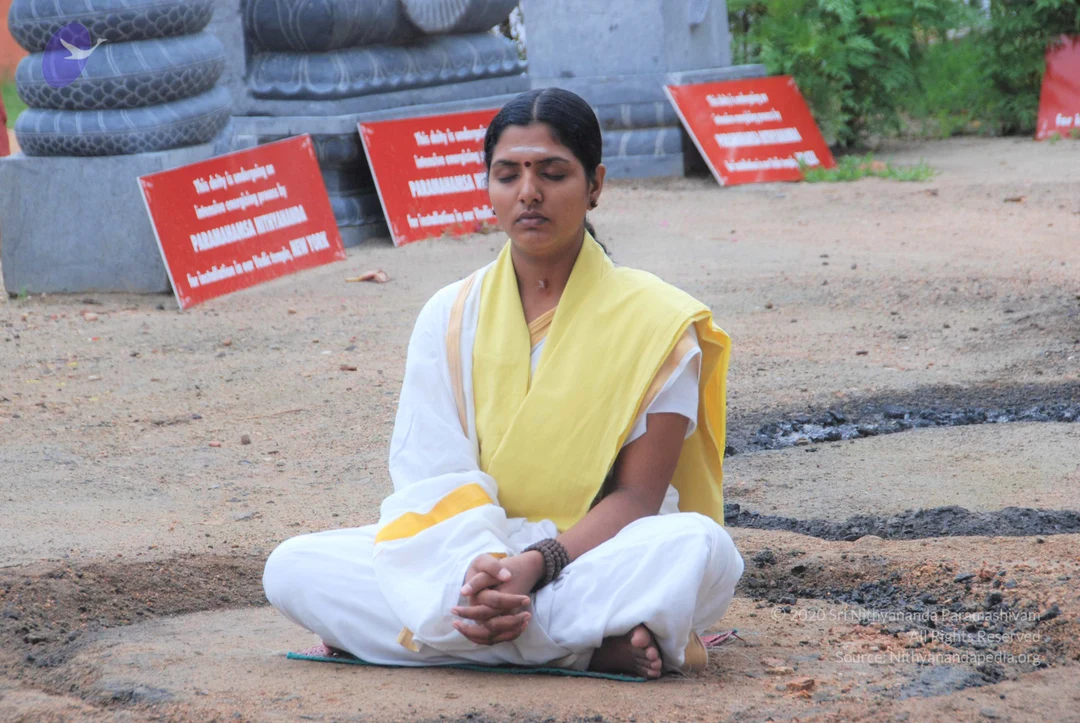
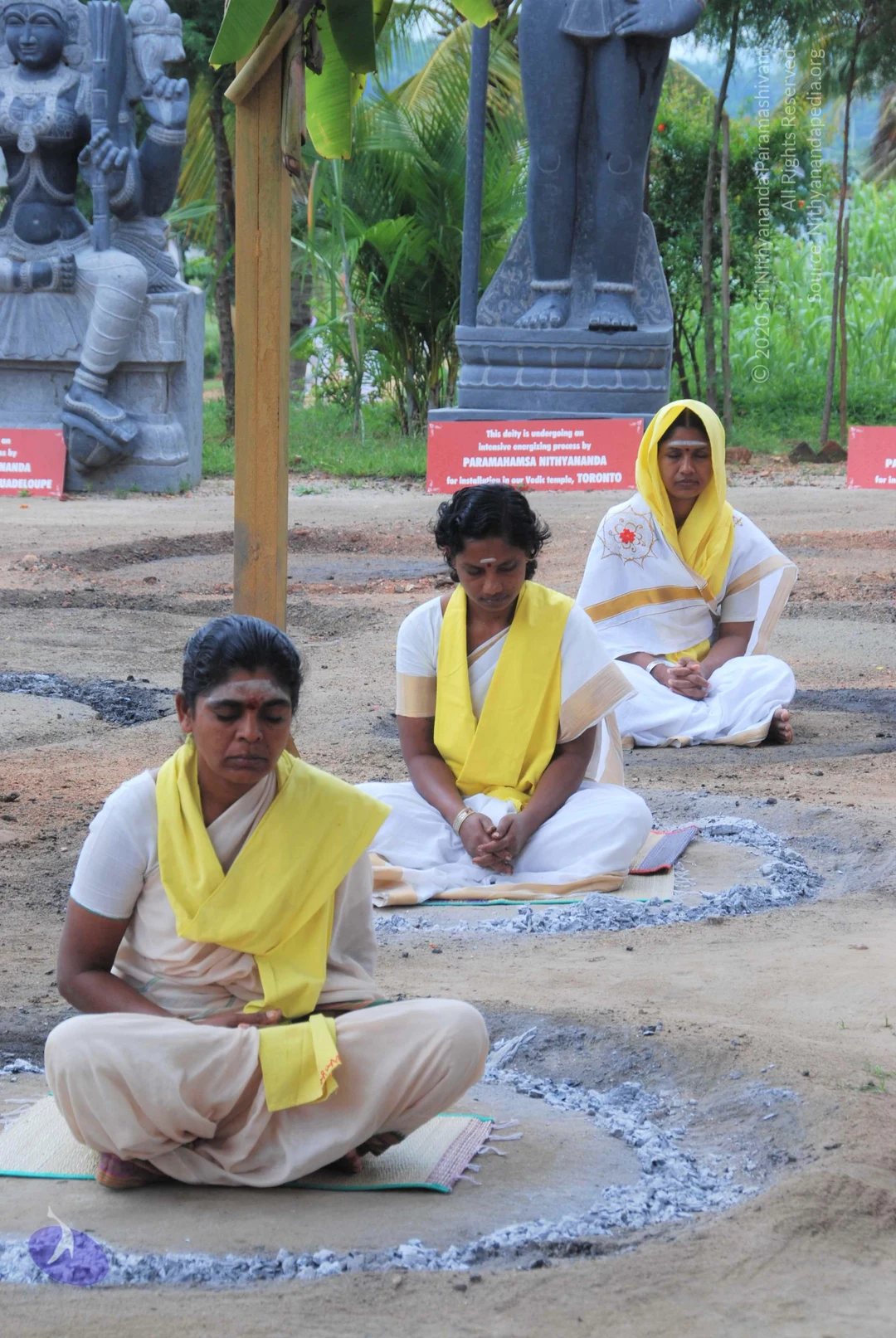
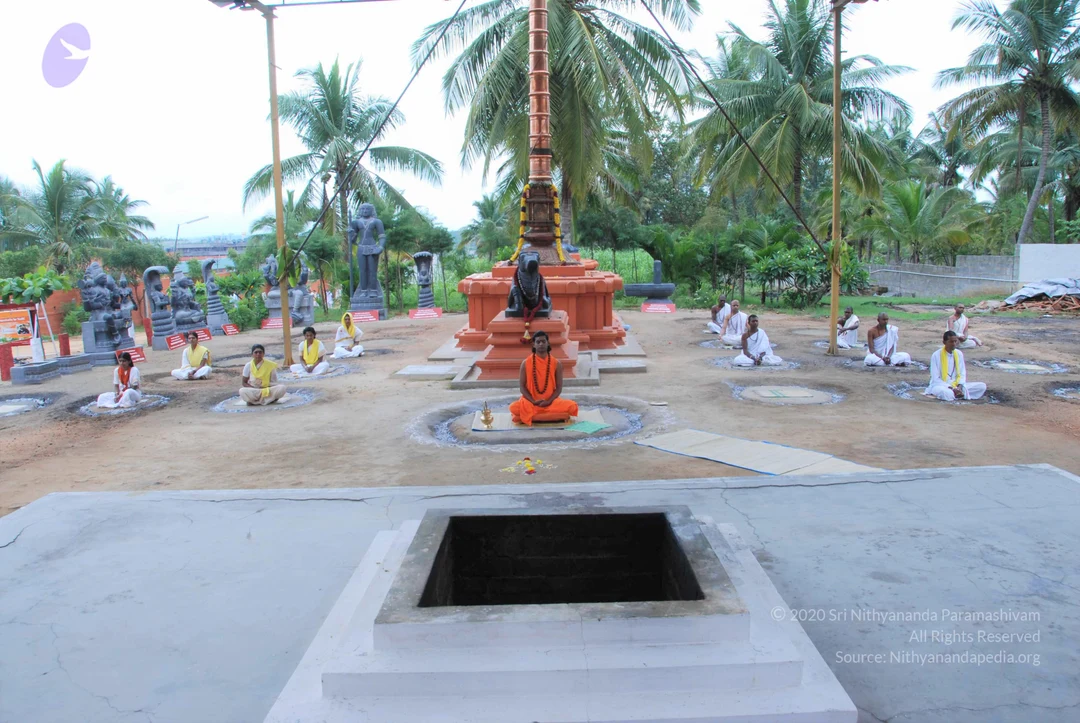
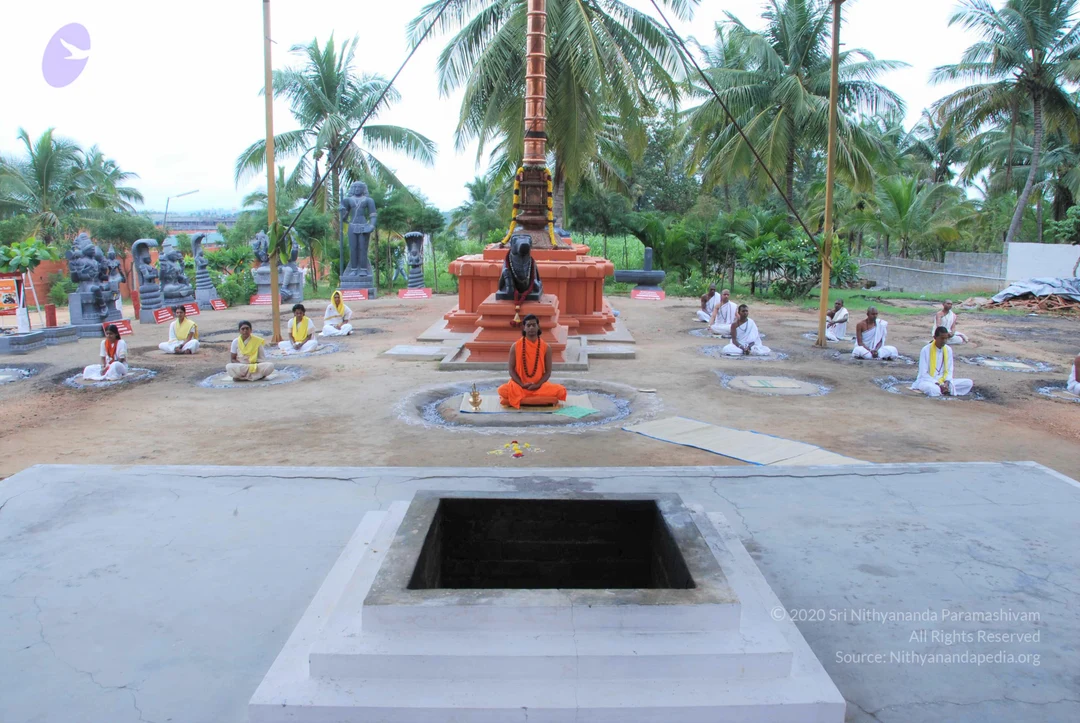
Panchatapas
Paadapooja

Morning-Satsang

Sarvadarshan

Nithyanandam-Morning-Session-With-Swamiji

Evening-Session

Nithyanandeshwara-Paramashiva-Golden-Temple

Yogasutras

Photos Of The Day:

Padapuja-darsan

LBE-Process

Shiva-Sutras-by-Swamiji

01-Temple

02-Pancha-Tapas
03-Pada-Puja
04-Morning-Message
05-Sarva-Darshan
06-Living-Enlightenment-Process-LEP
07-Yoga-Sutras