Skip to content
Wednesday

24 May 2017

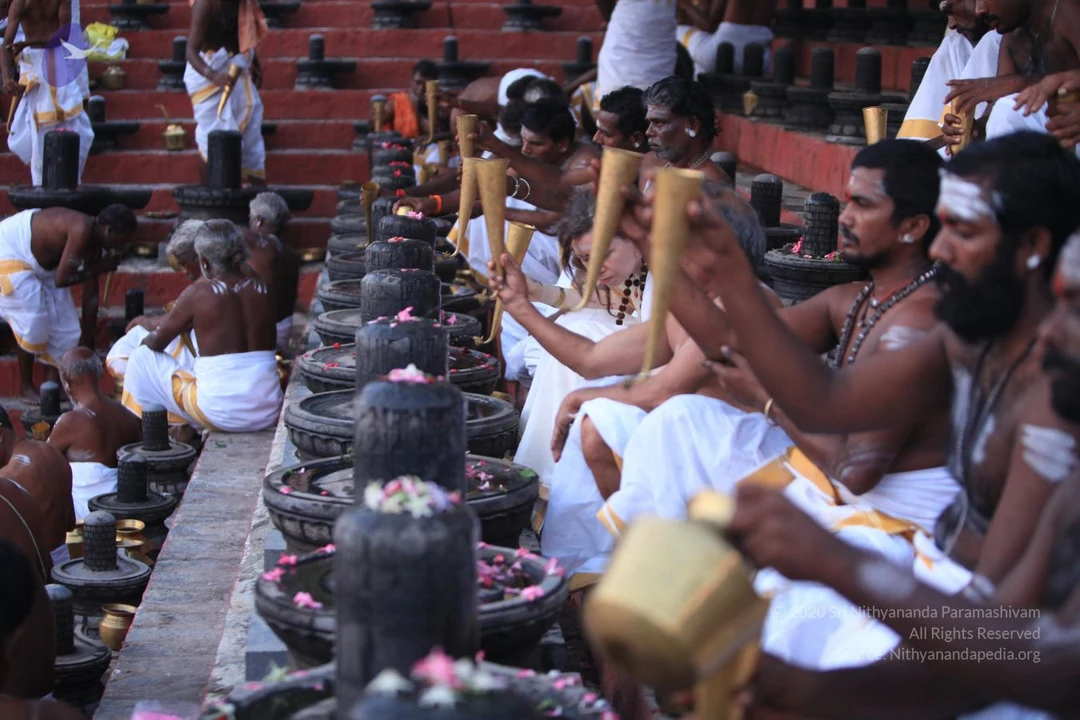
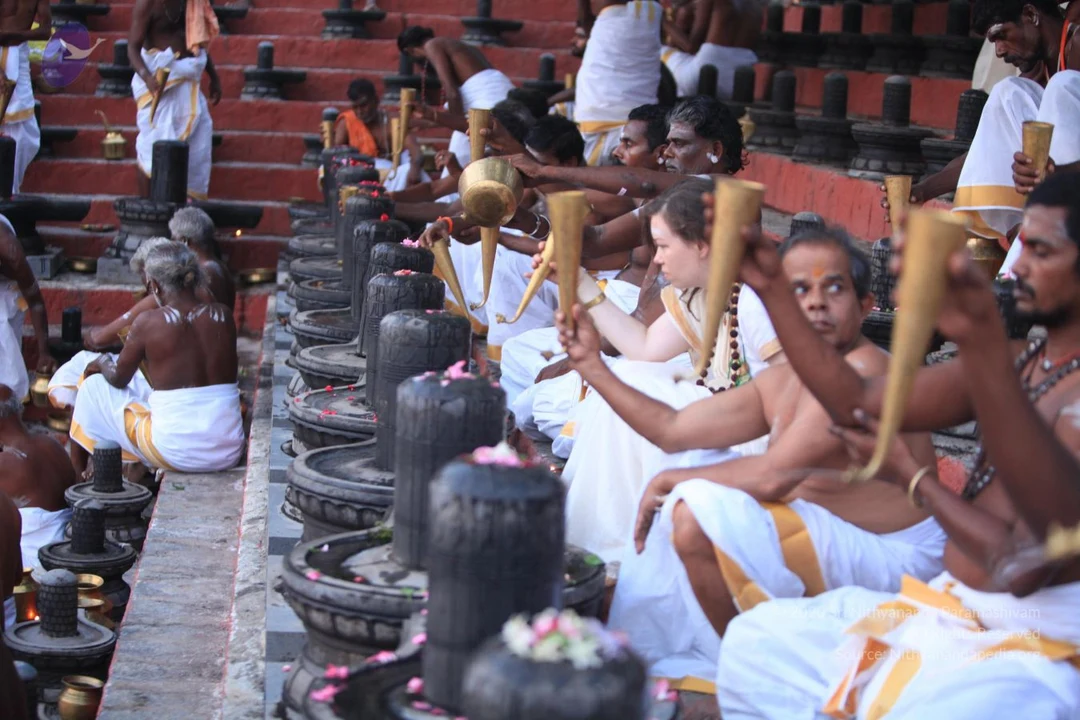
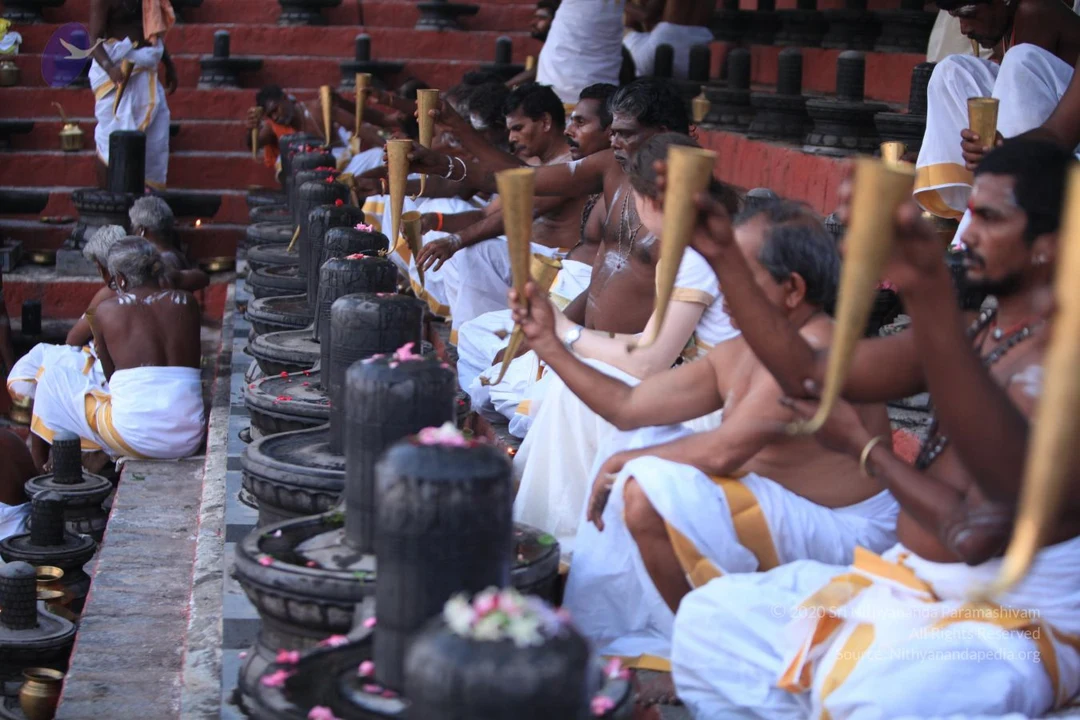
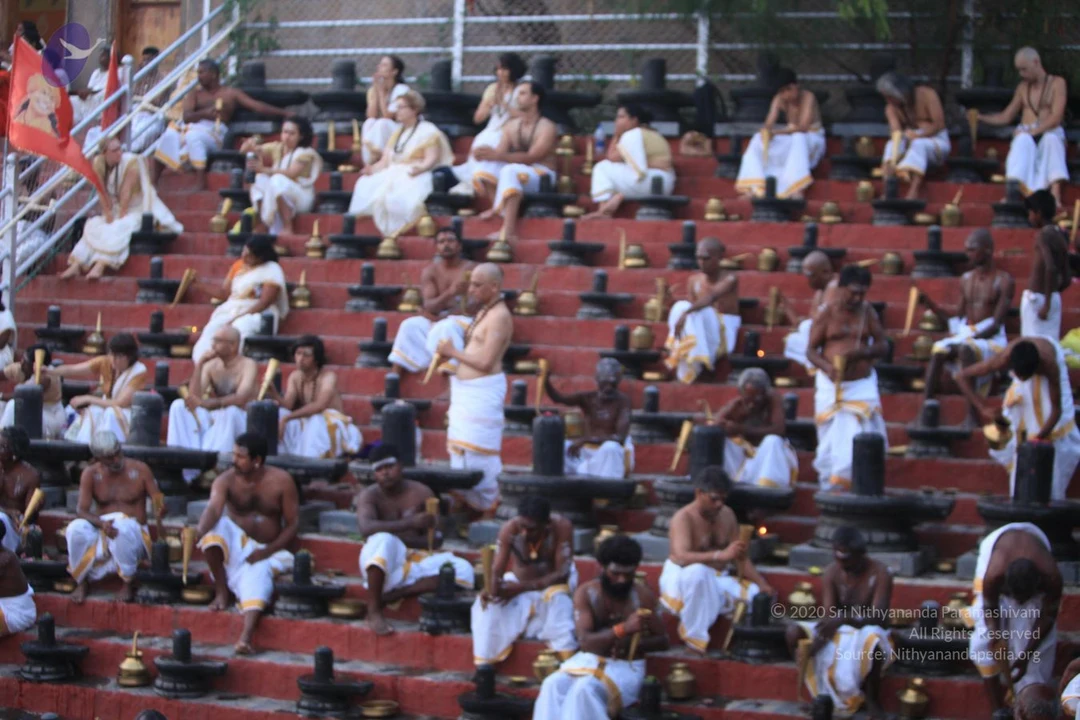
The Fruit Of Puja Is Devotion, The Fruit Of Devotion Is Puja

Dated photos
667
Source pages
1
Media
3
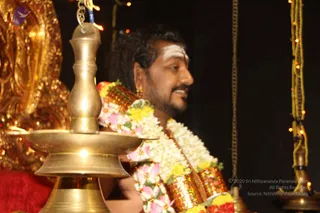
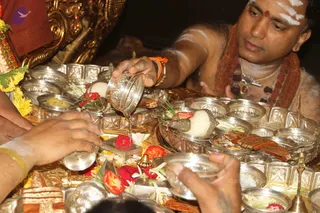
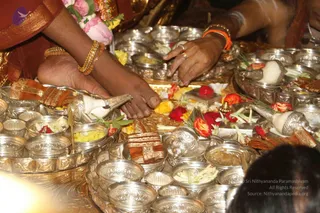
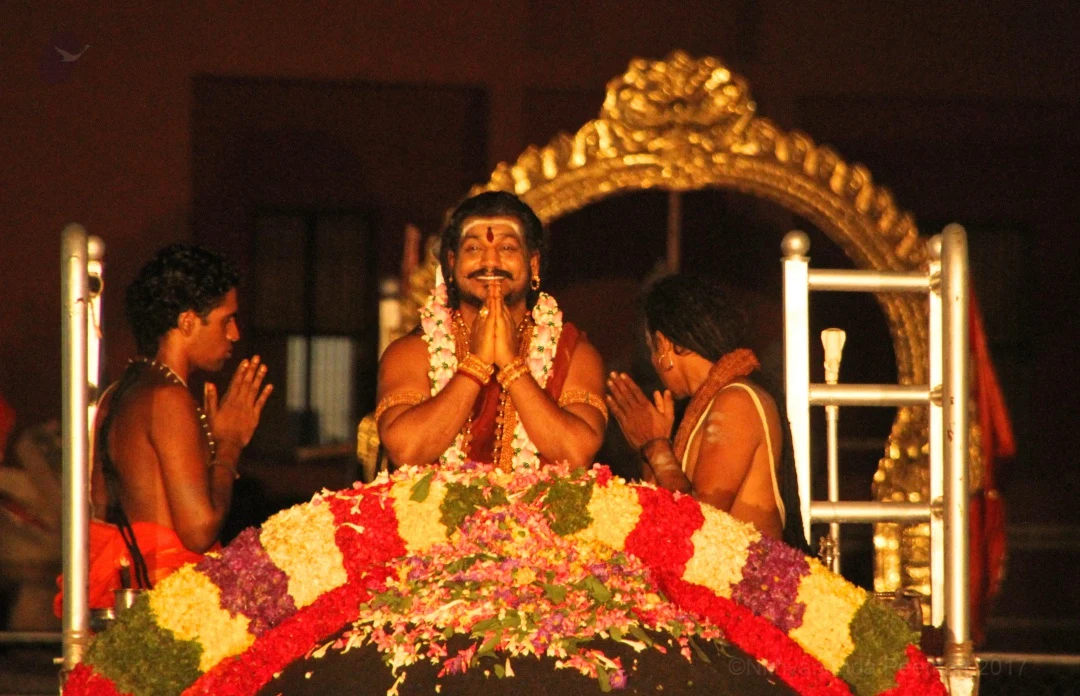
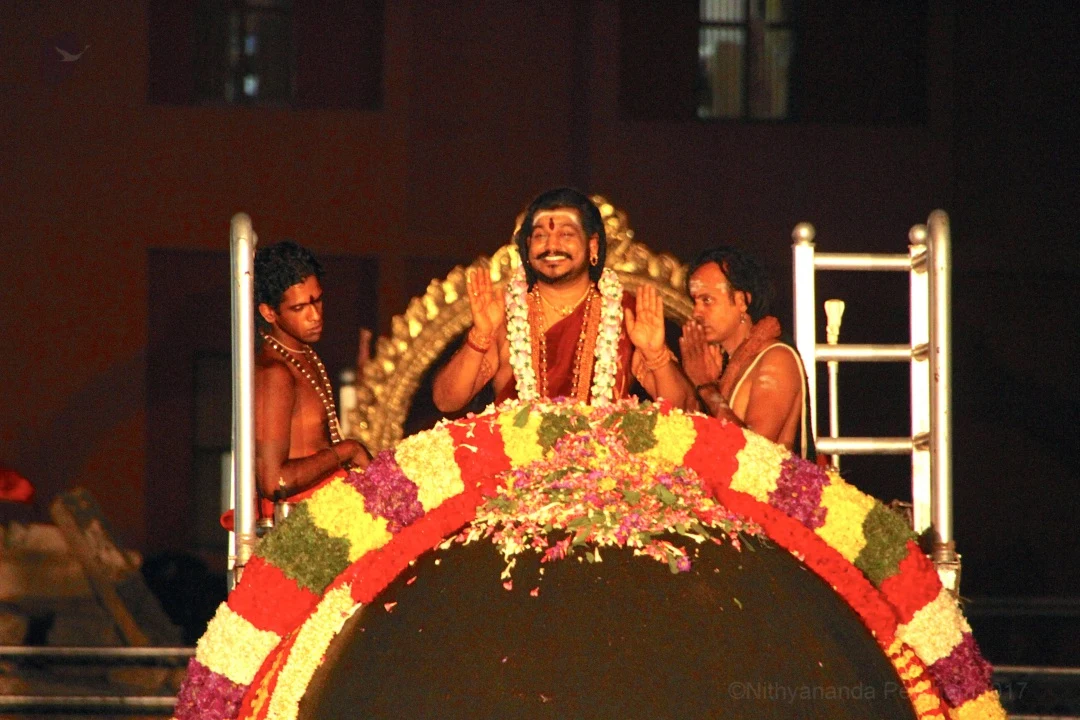
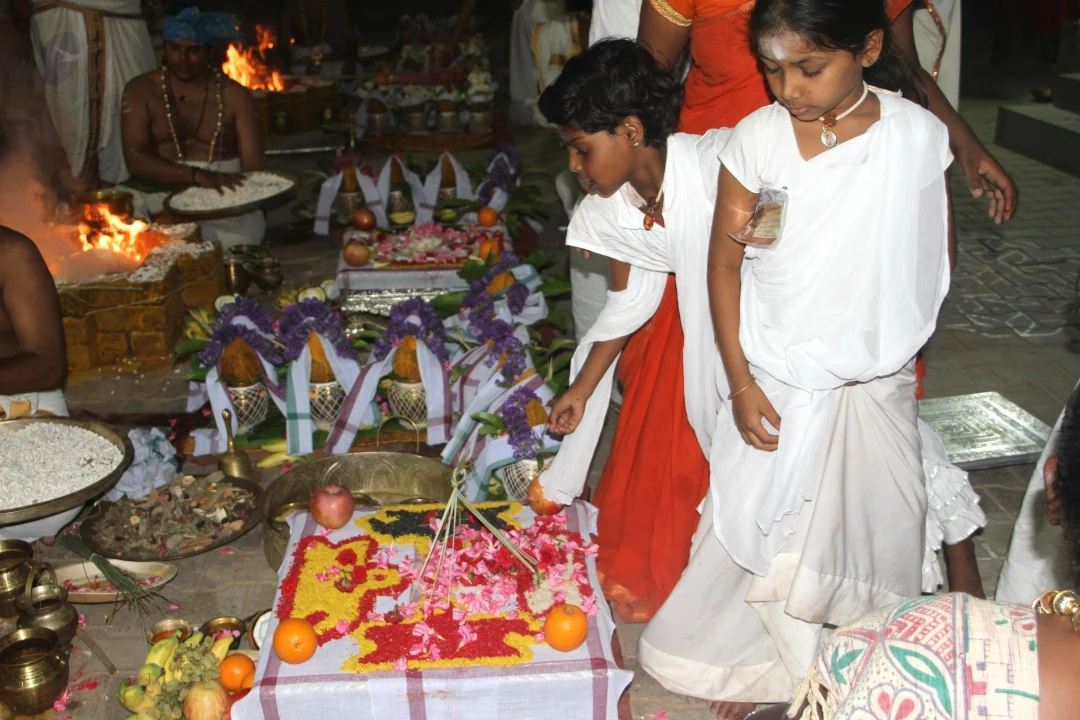
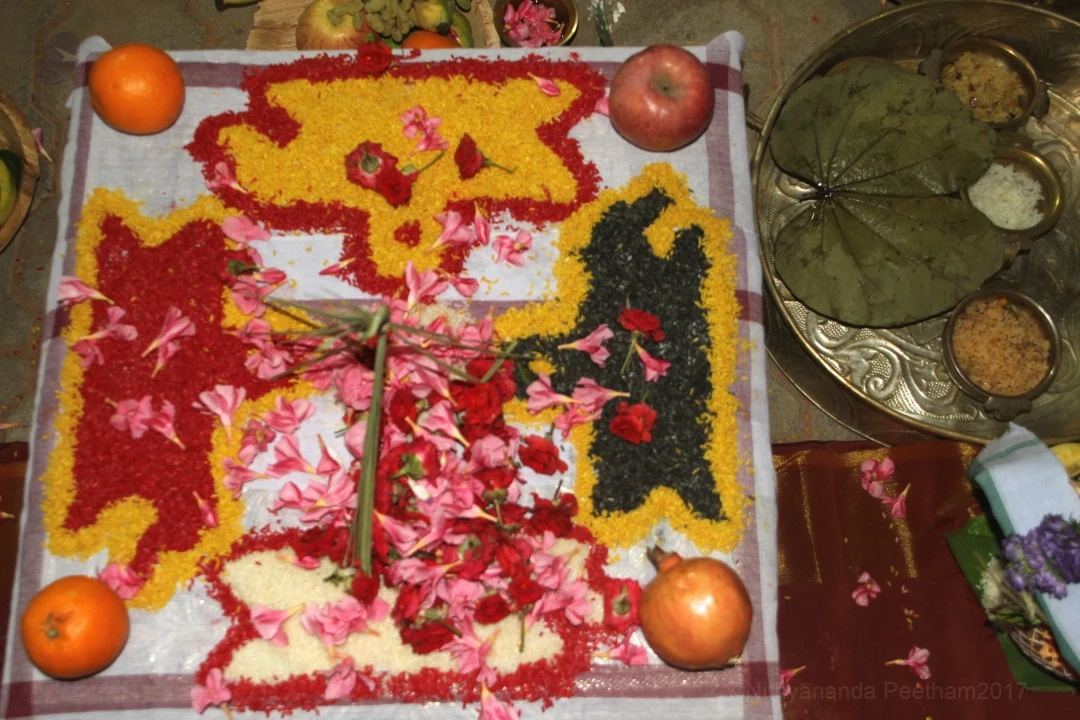
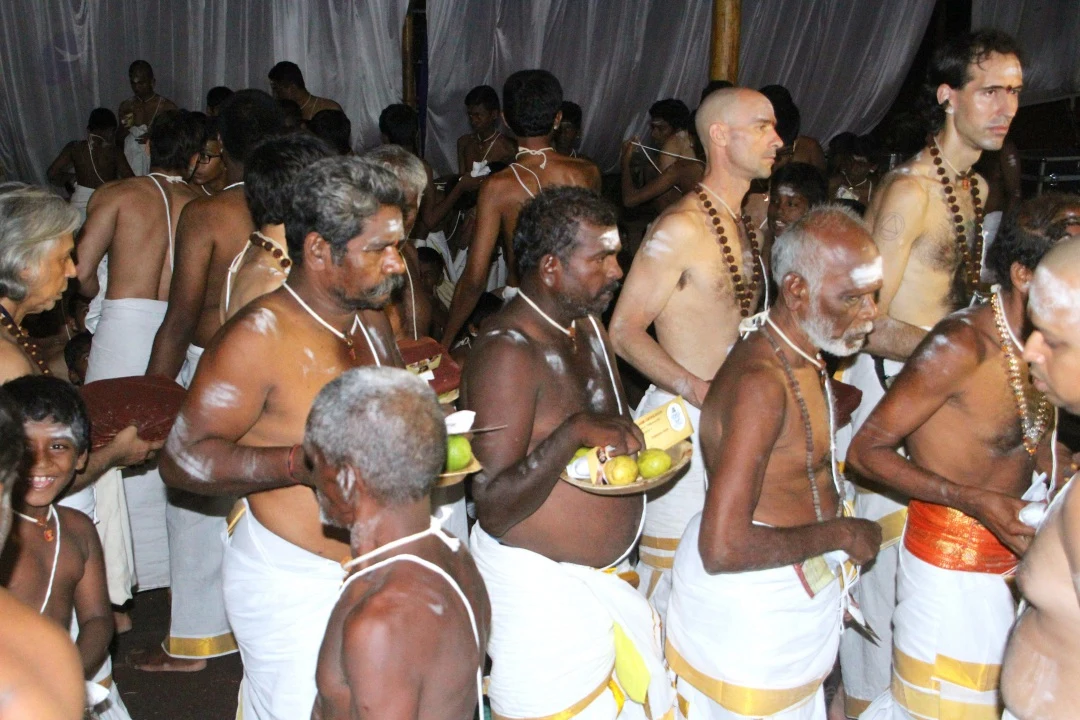
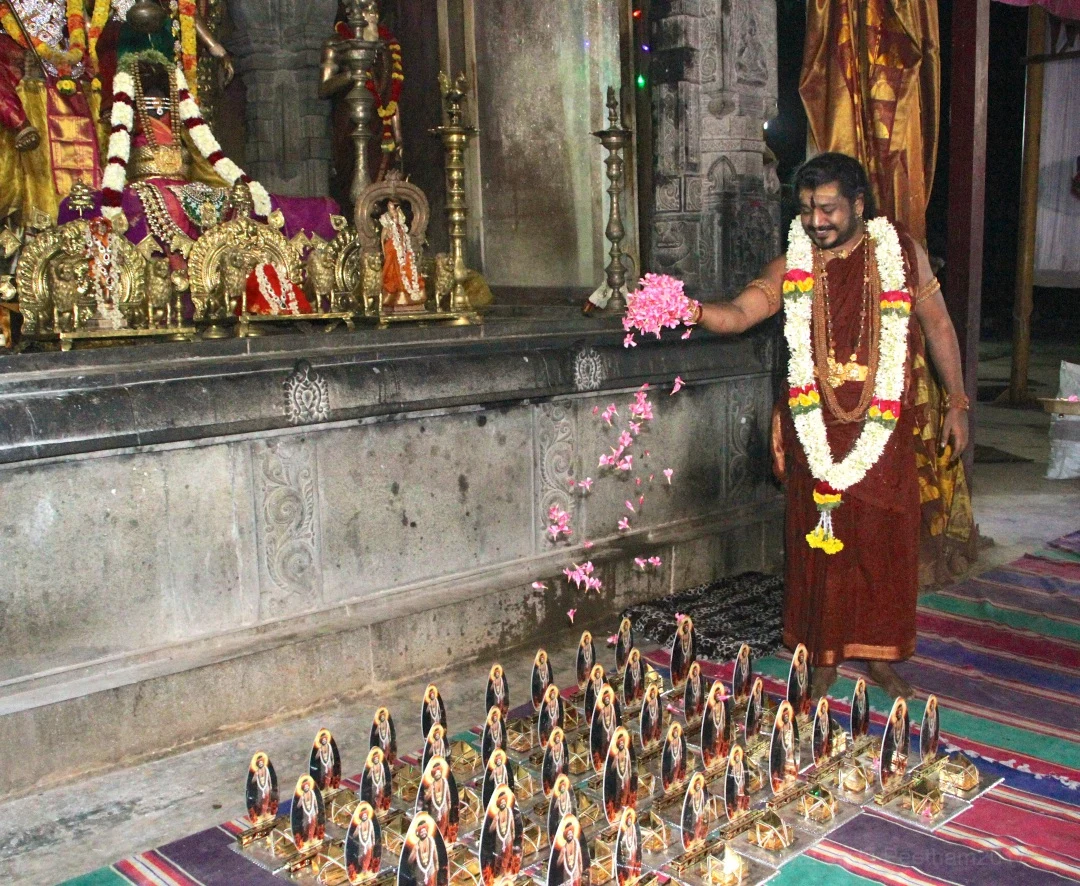
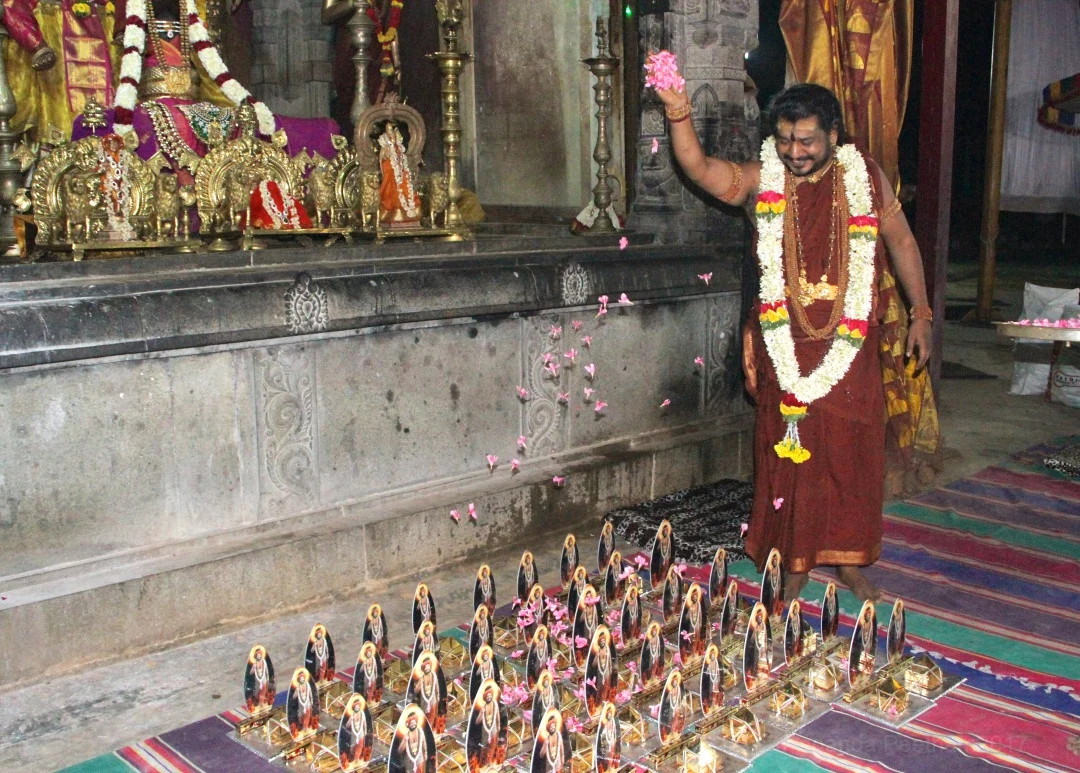
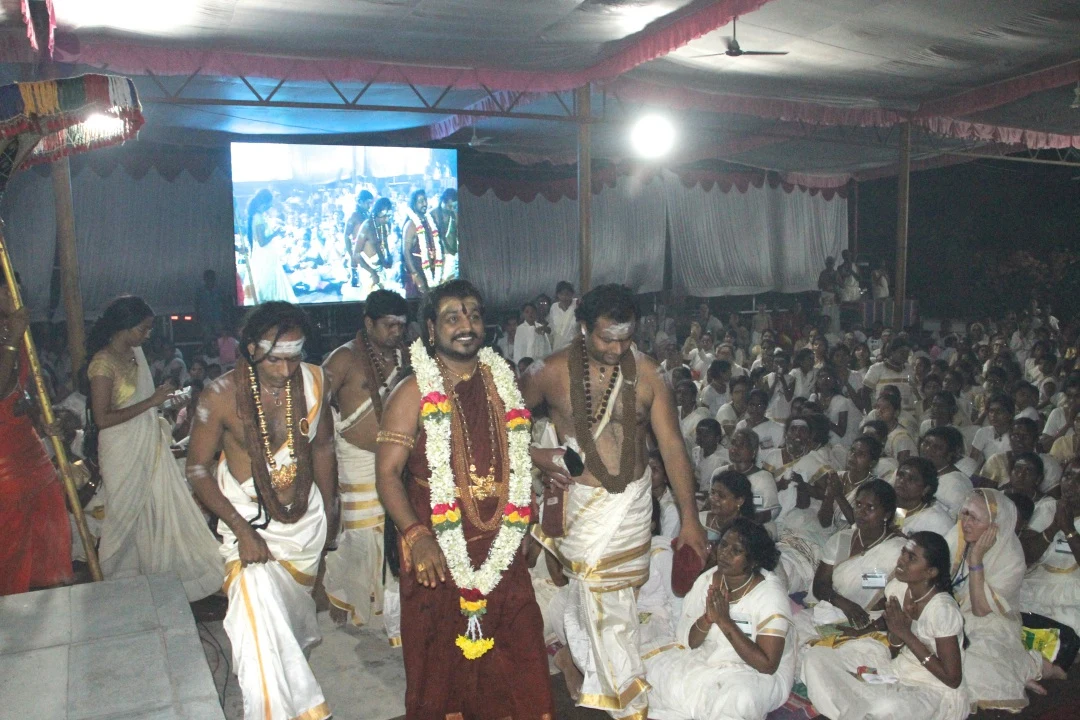
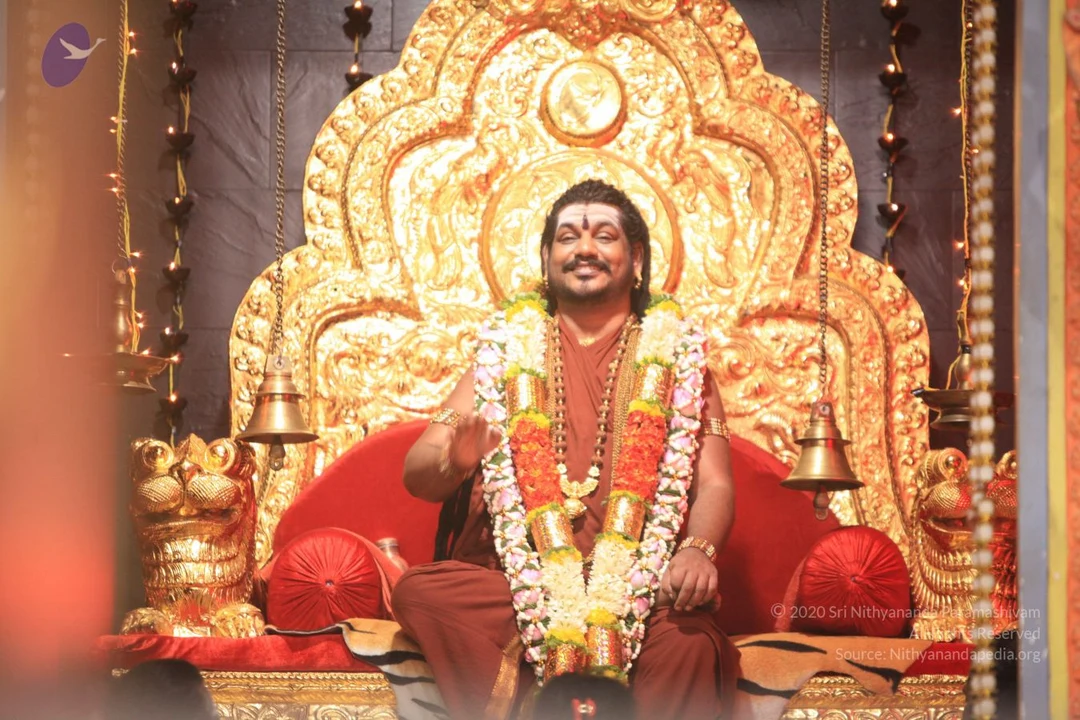
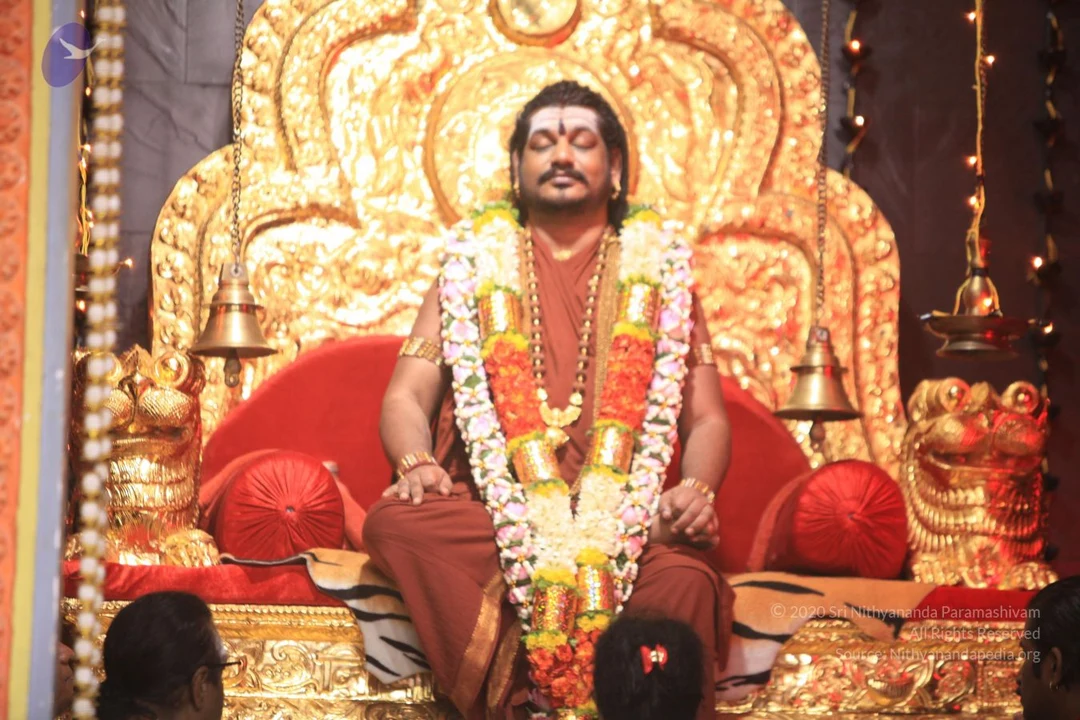
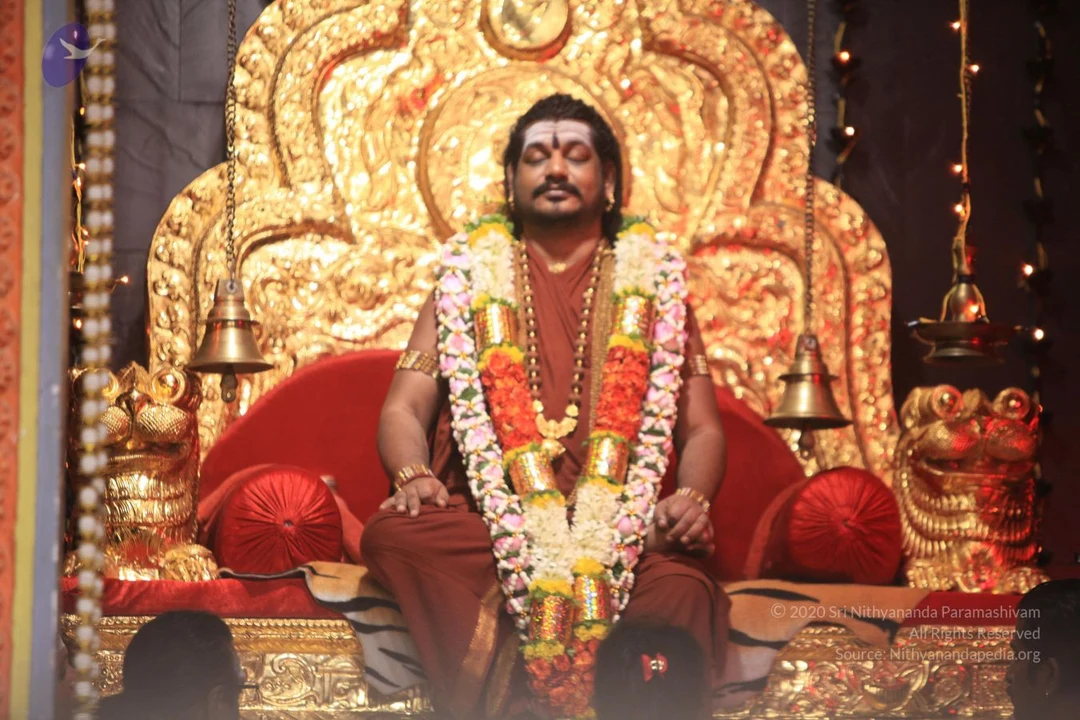
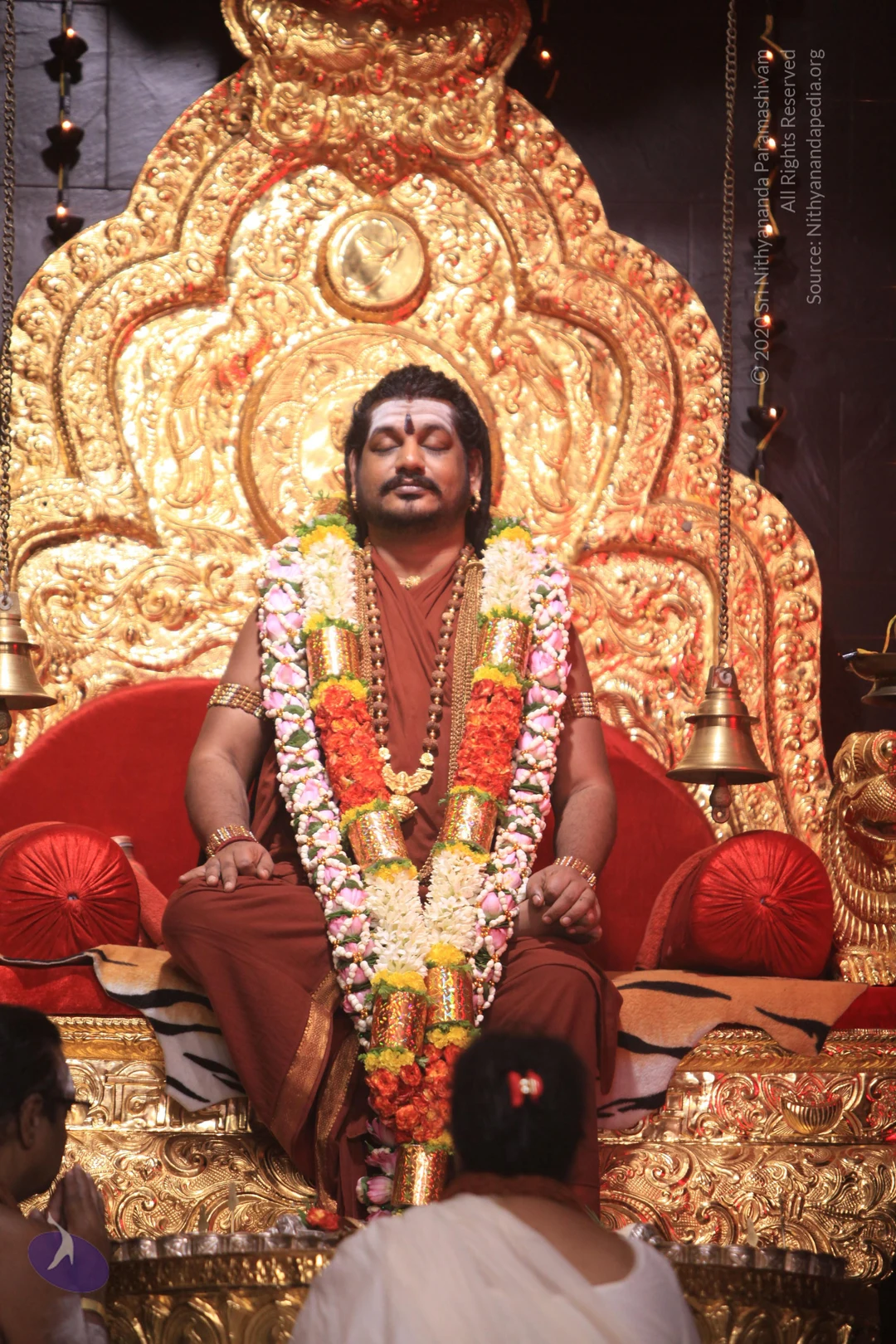
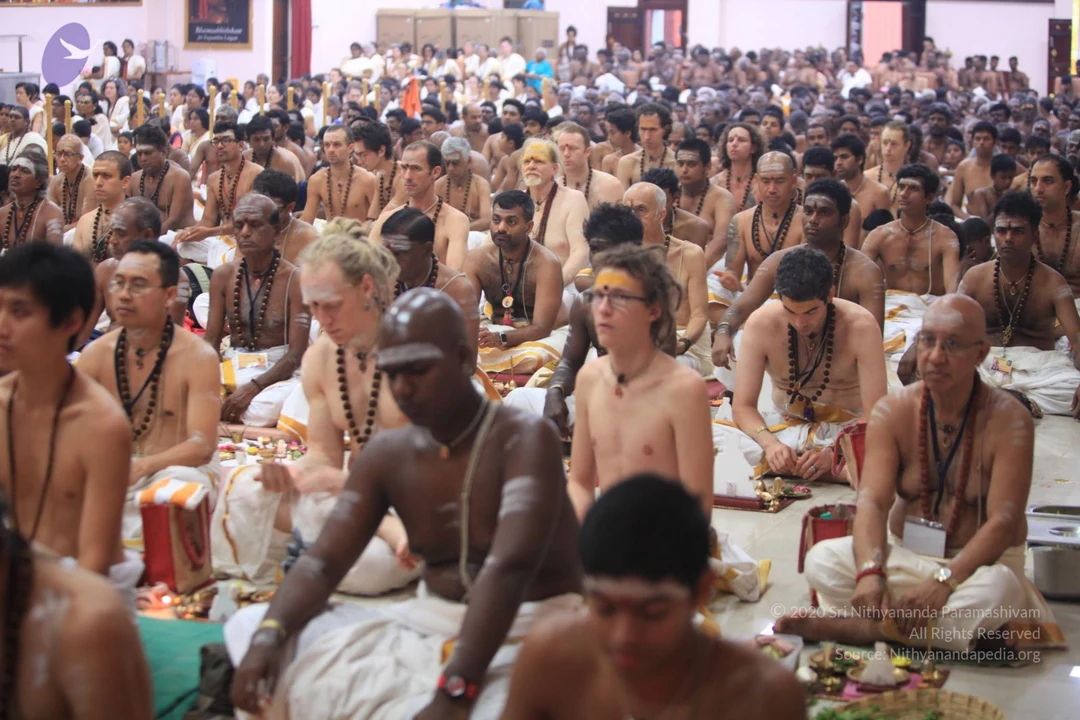
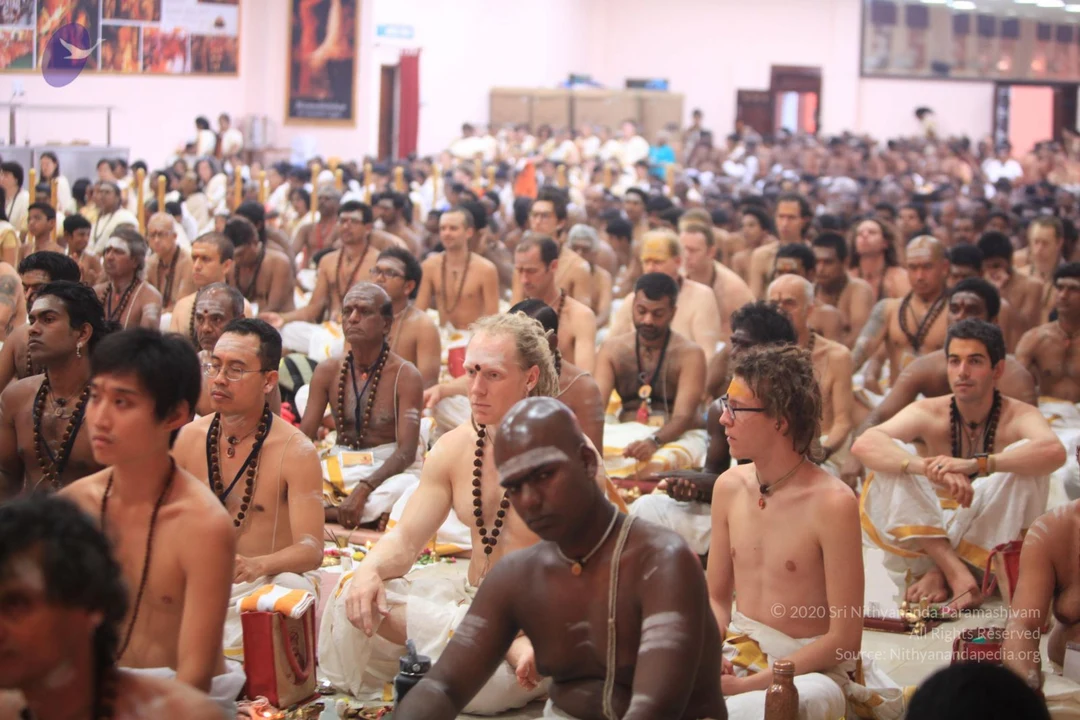
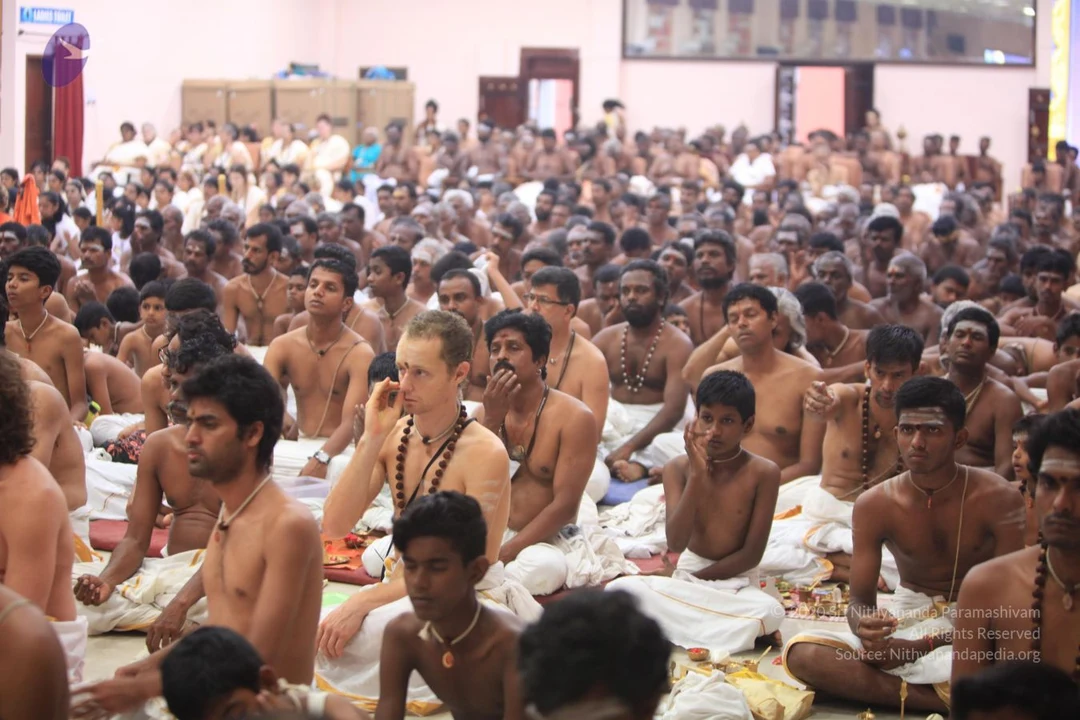
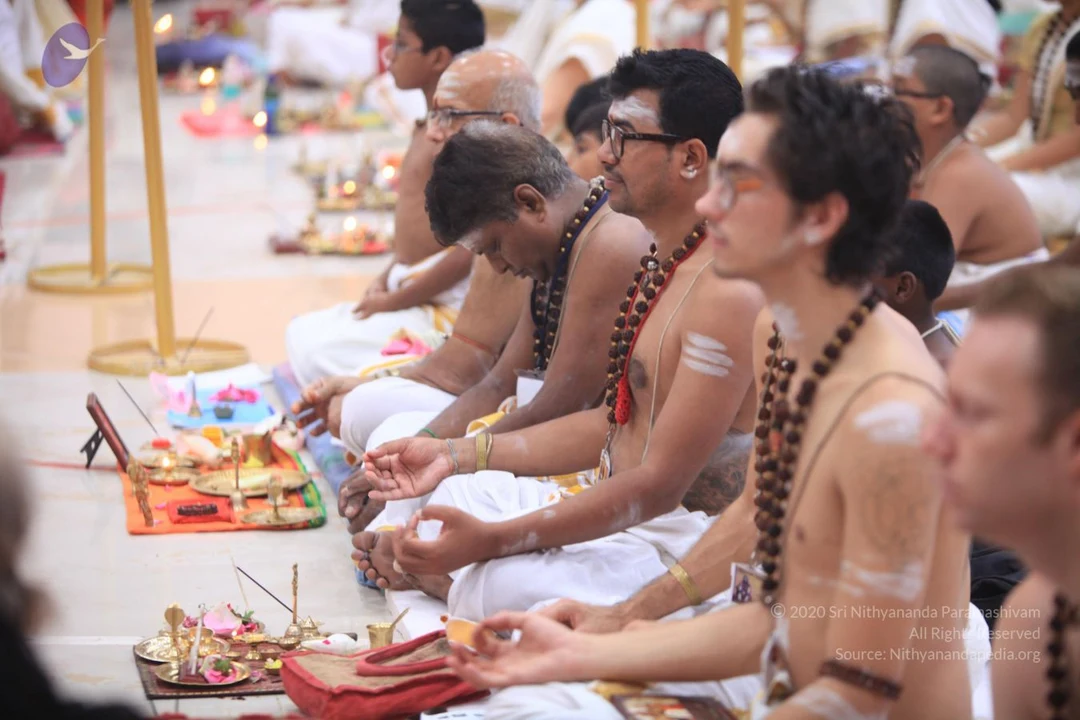
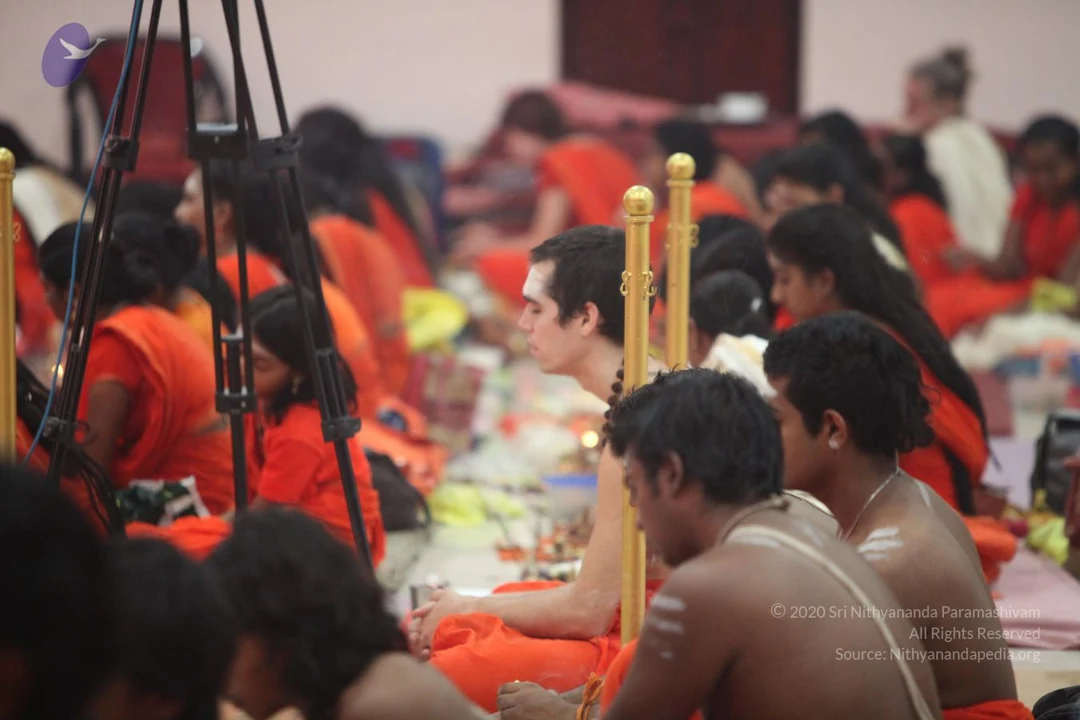
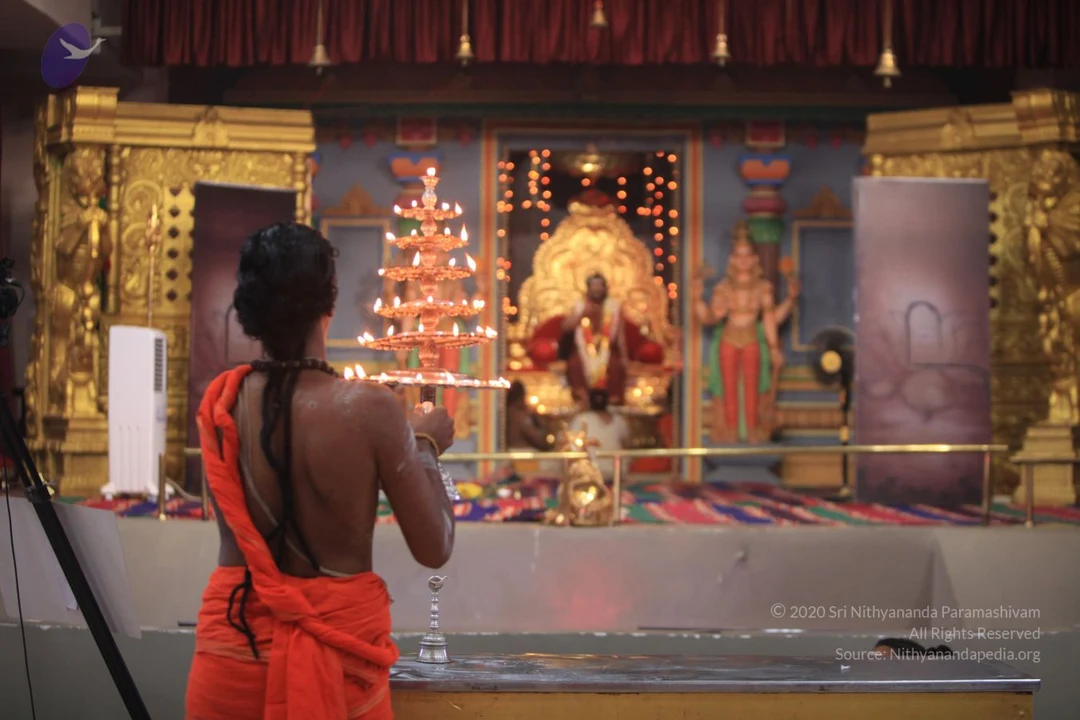
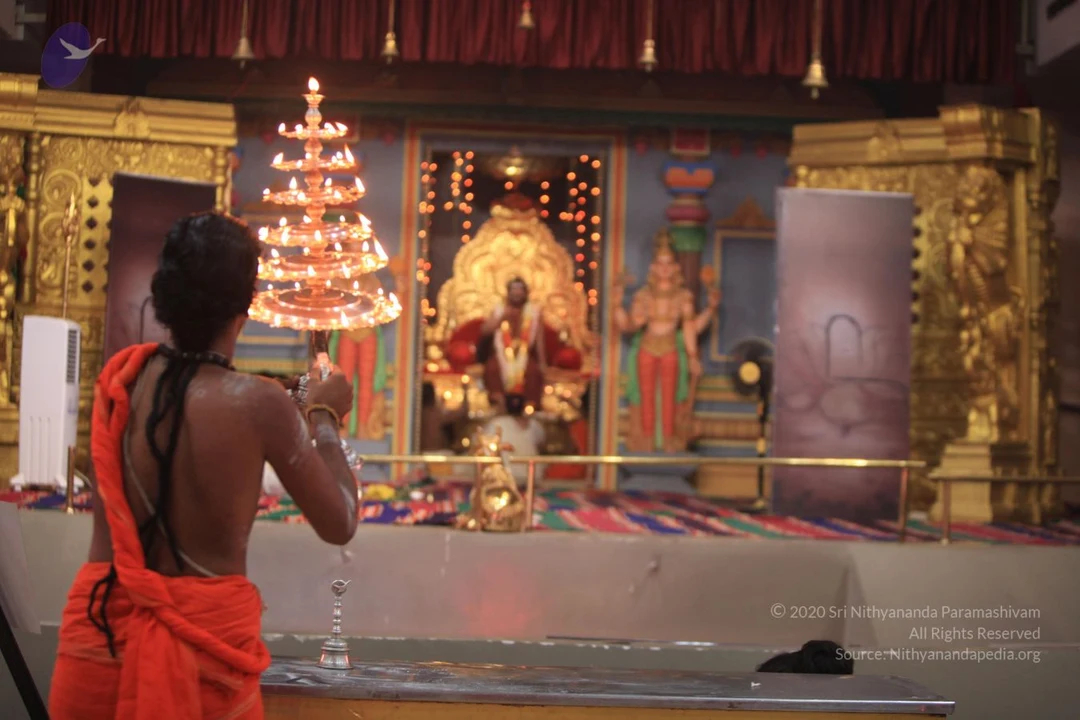
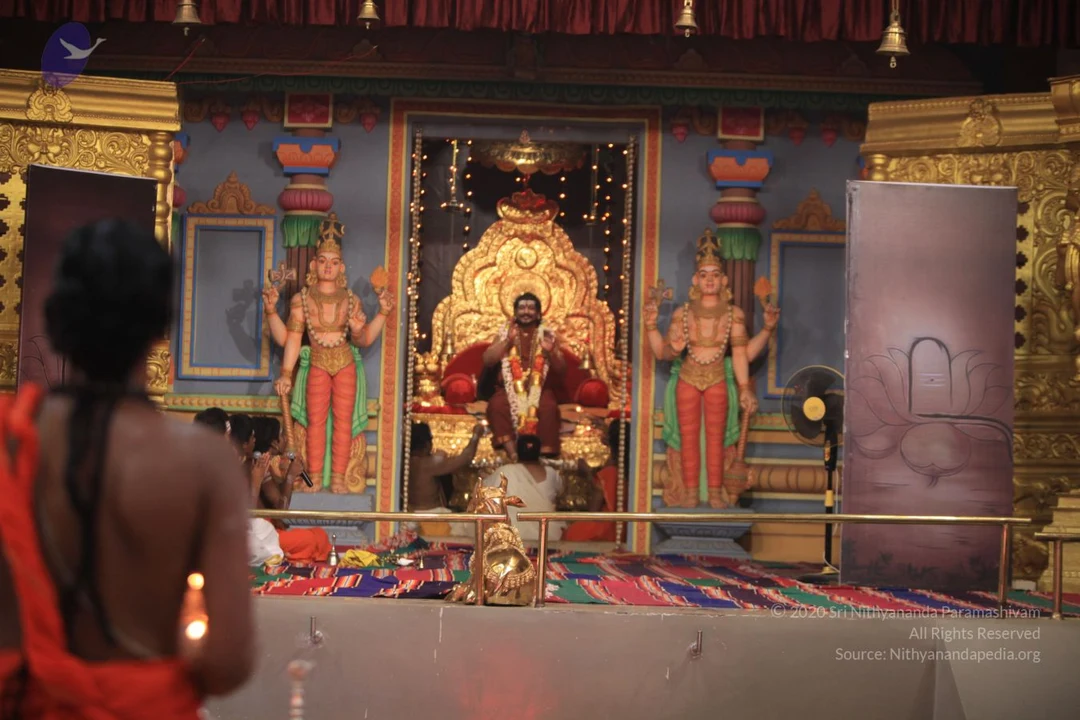
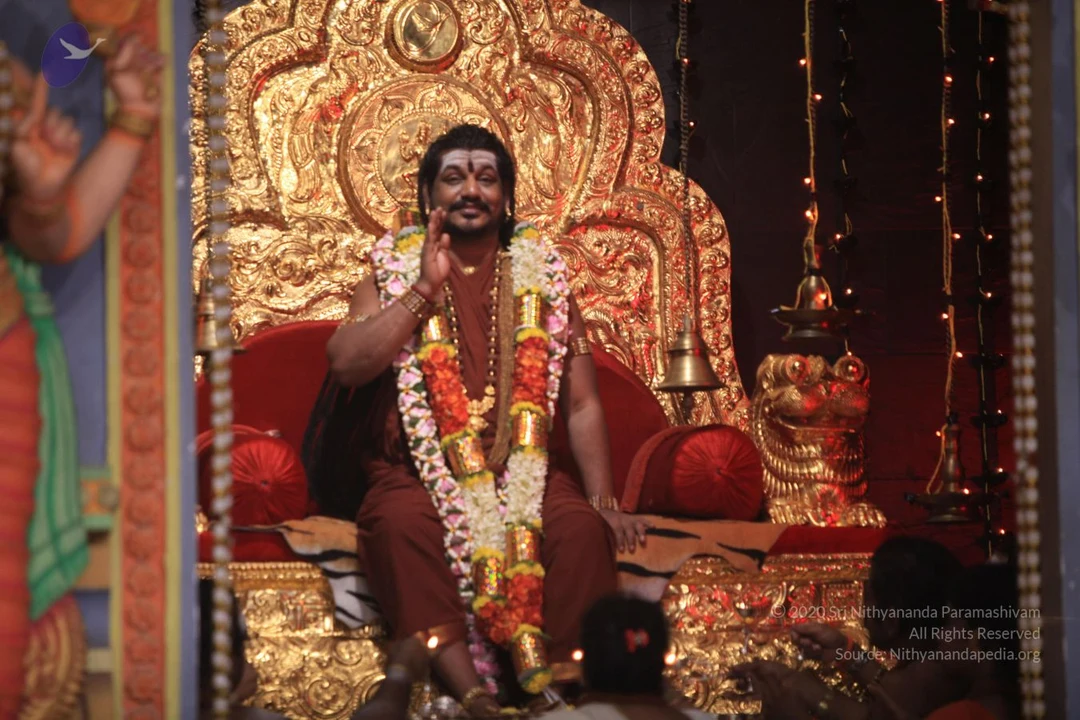
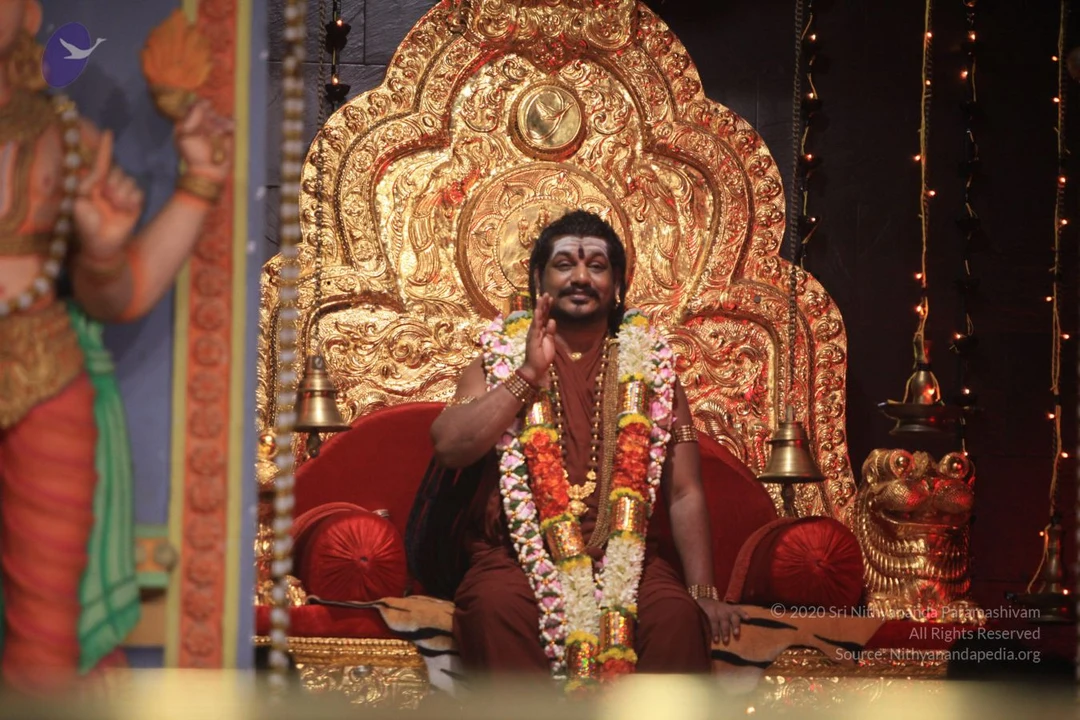
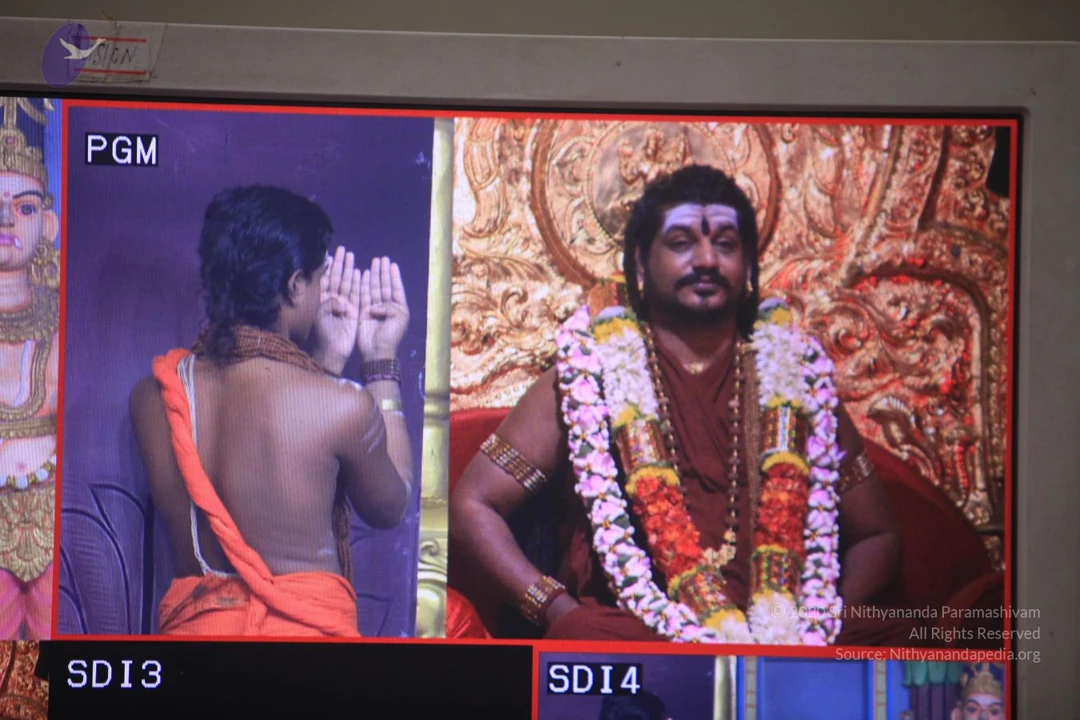
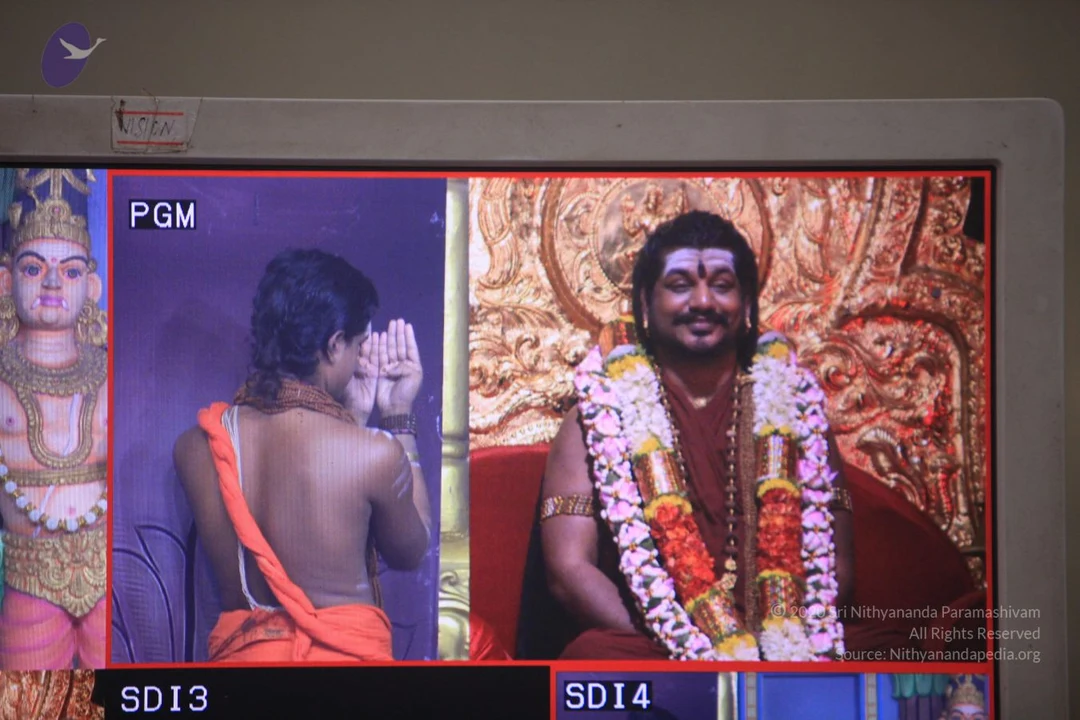
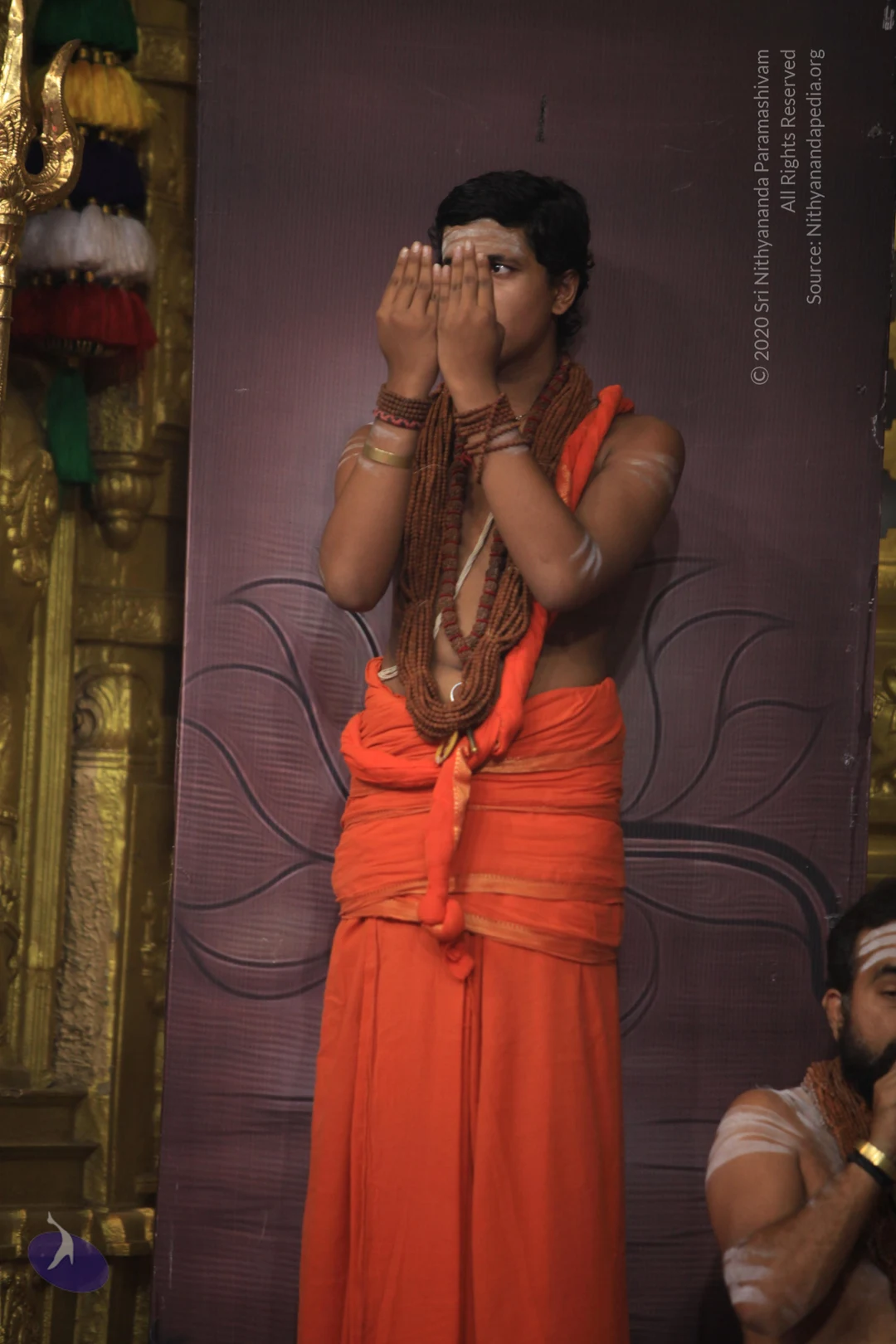
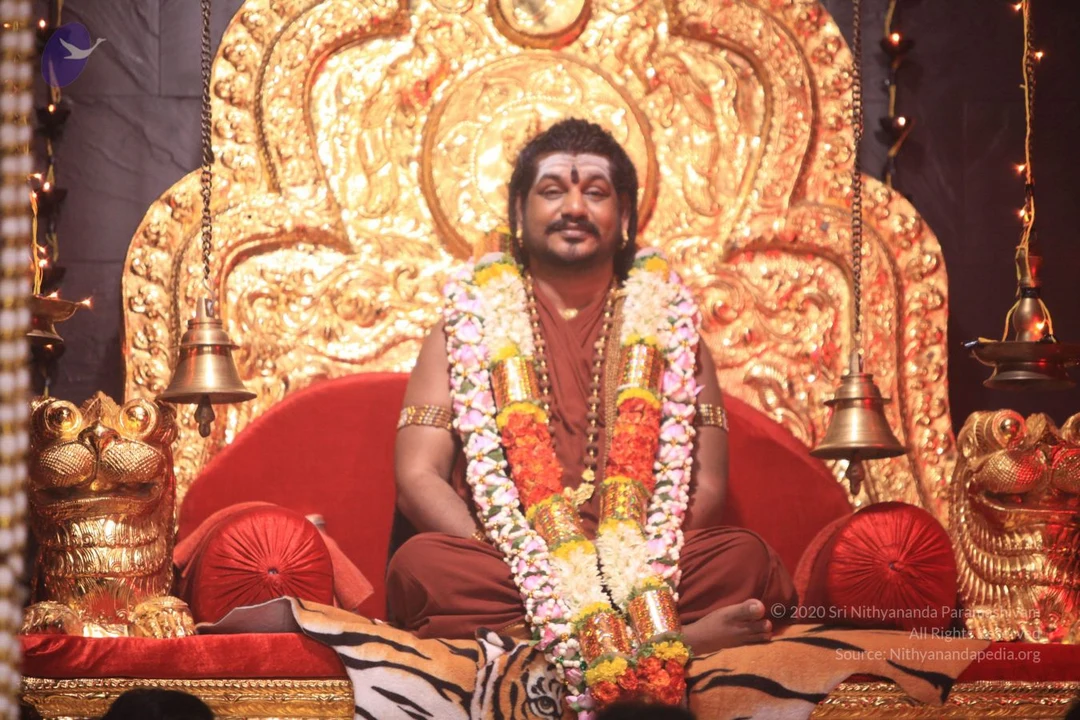
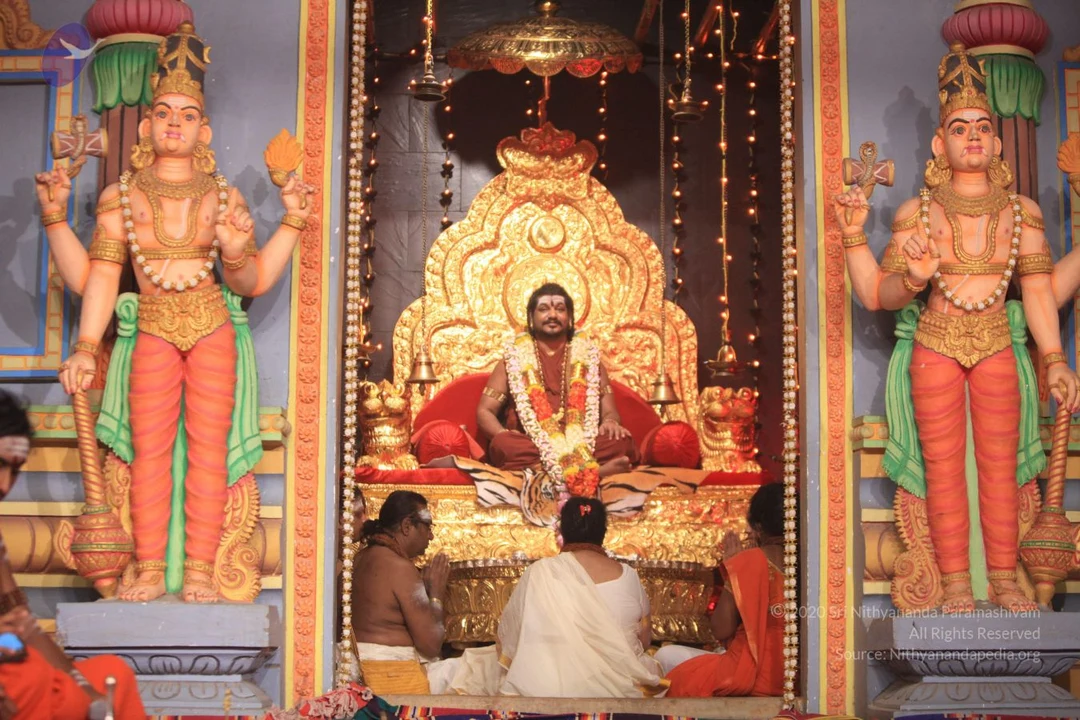
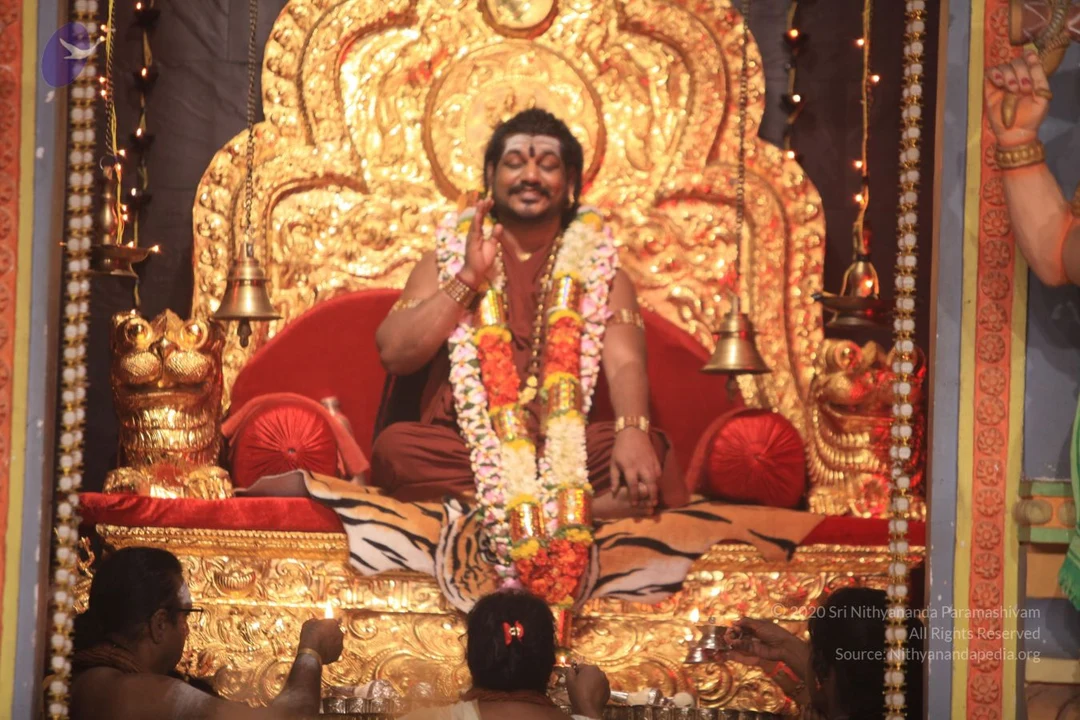
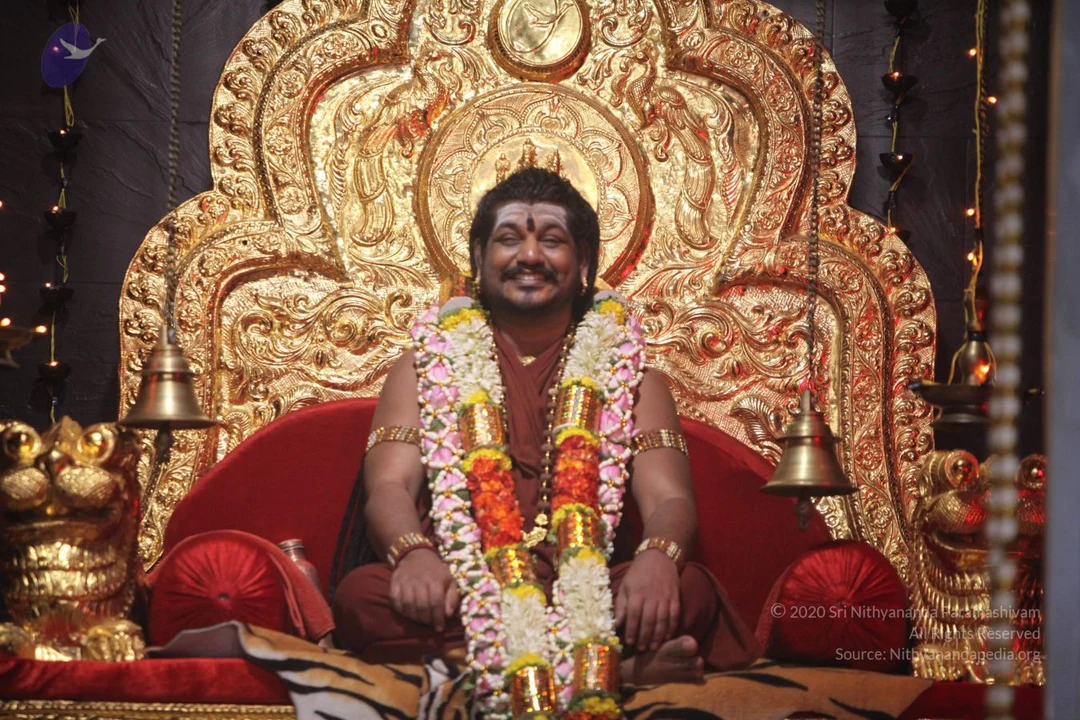
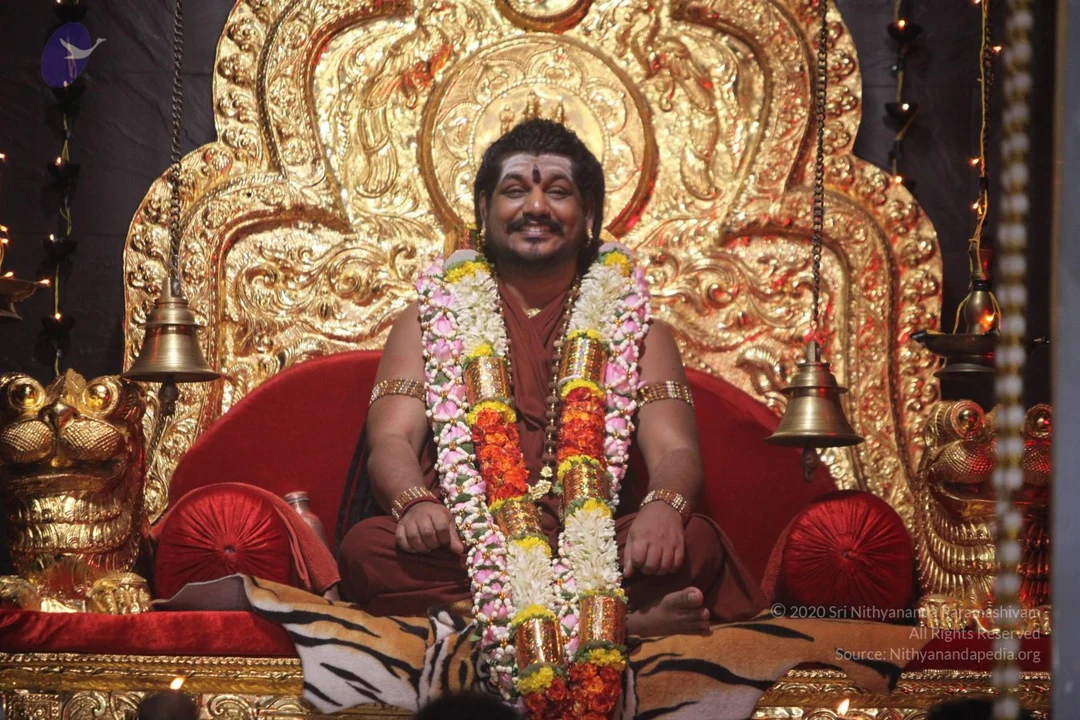
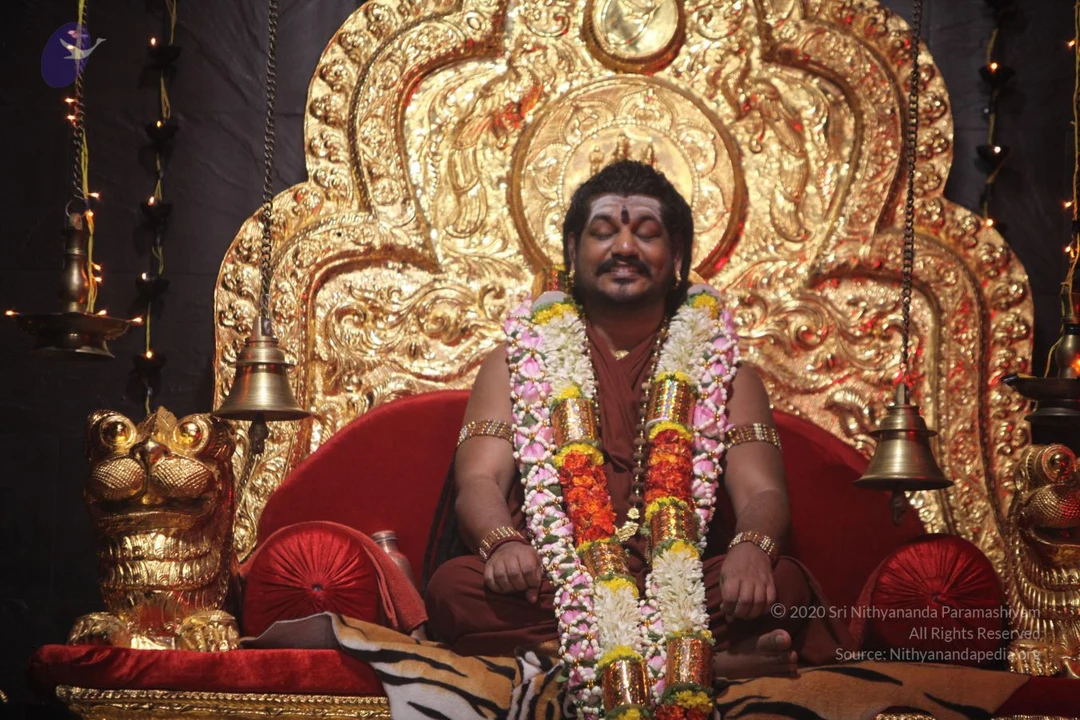
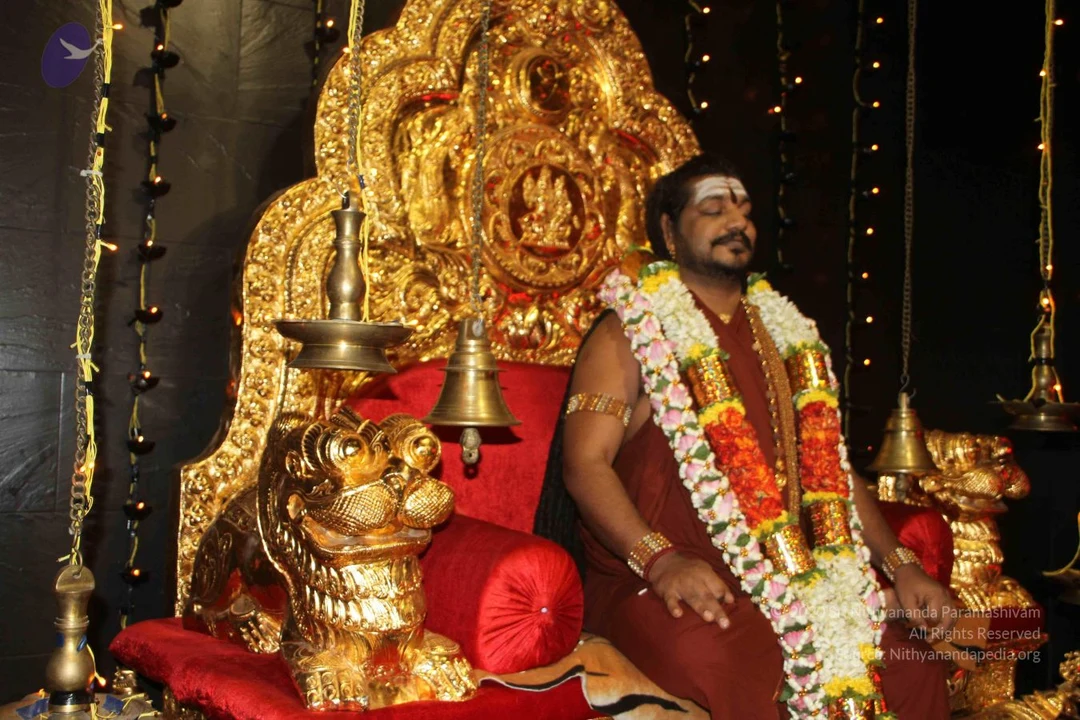
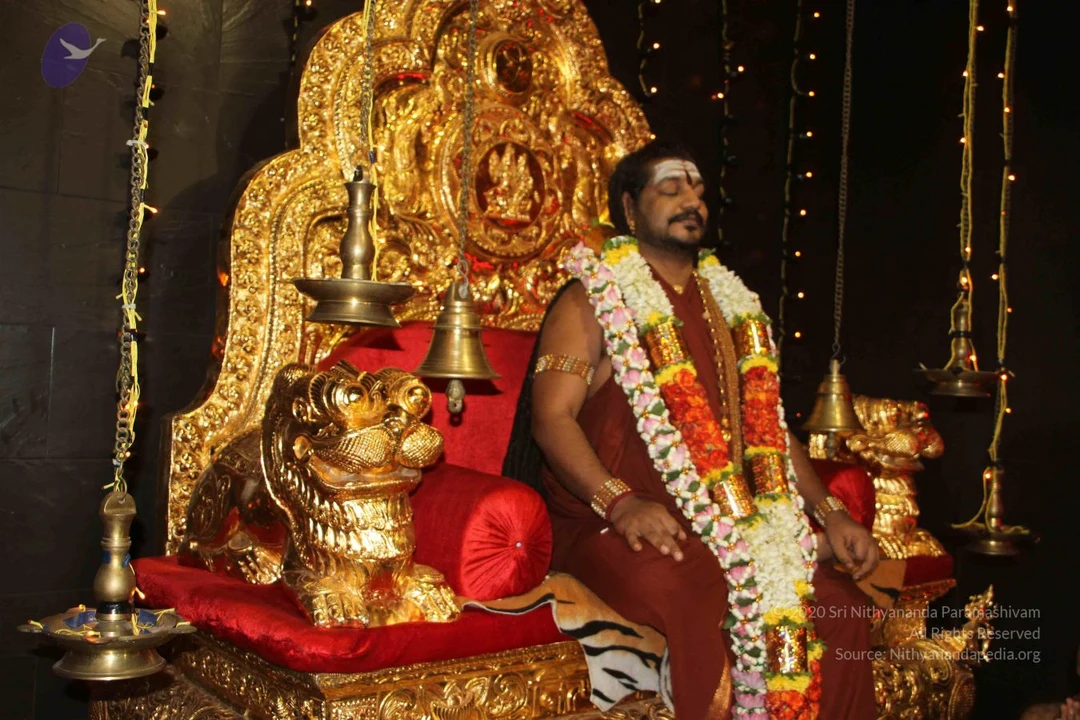
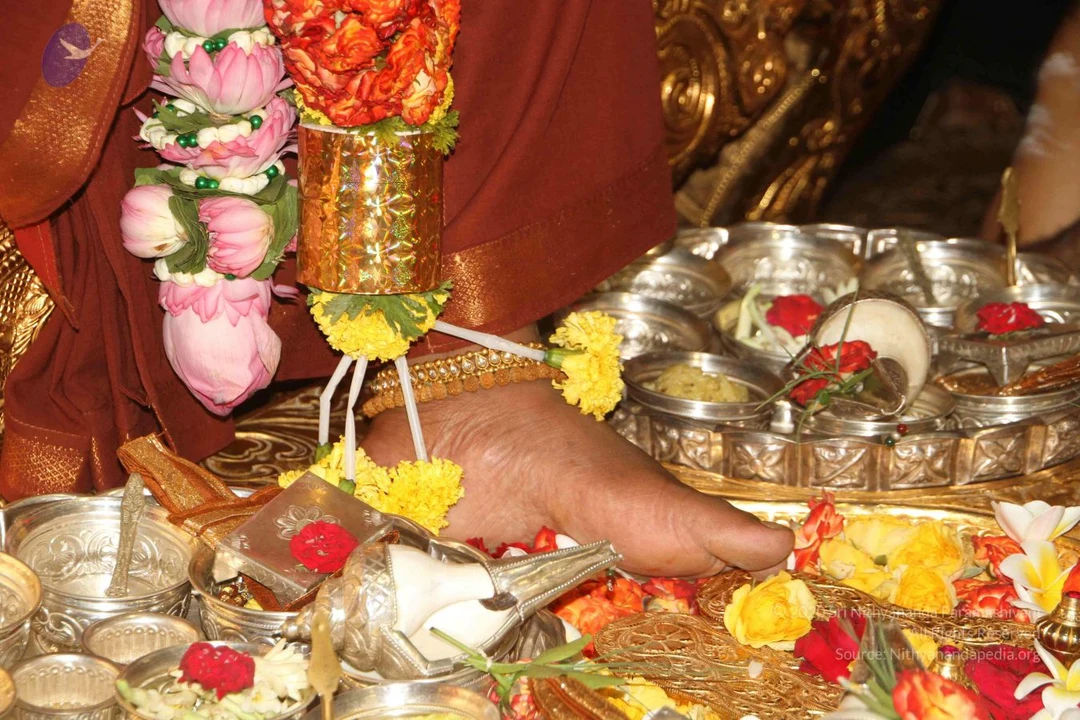
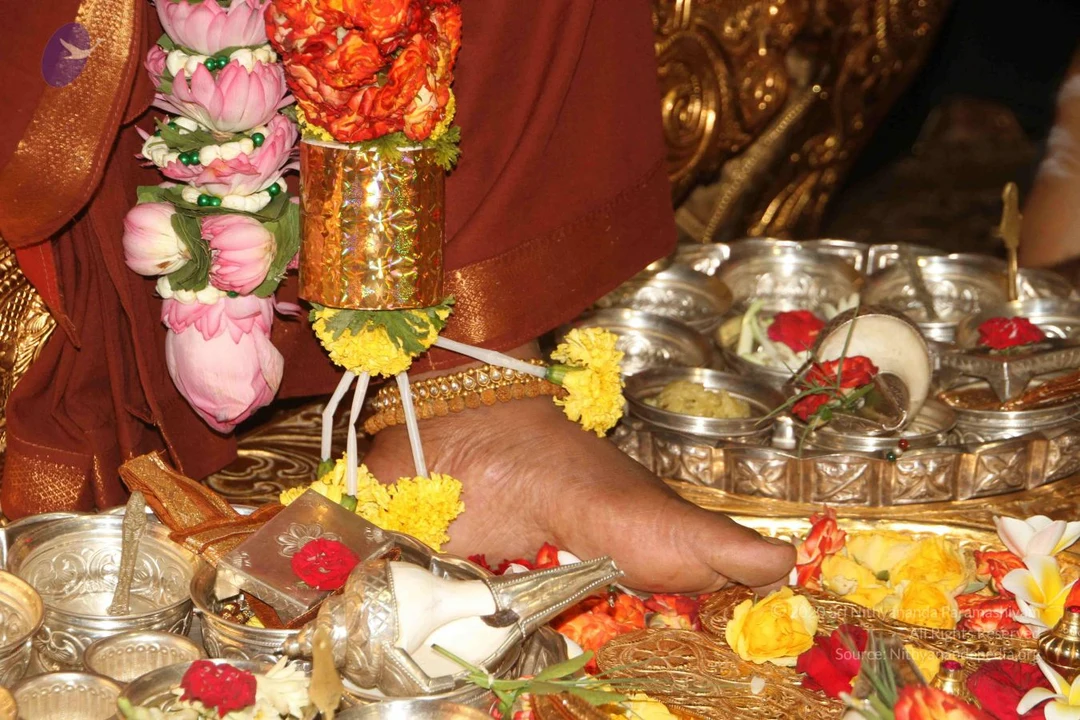
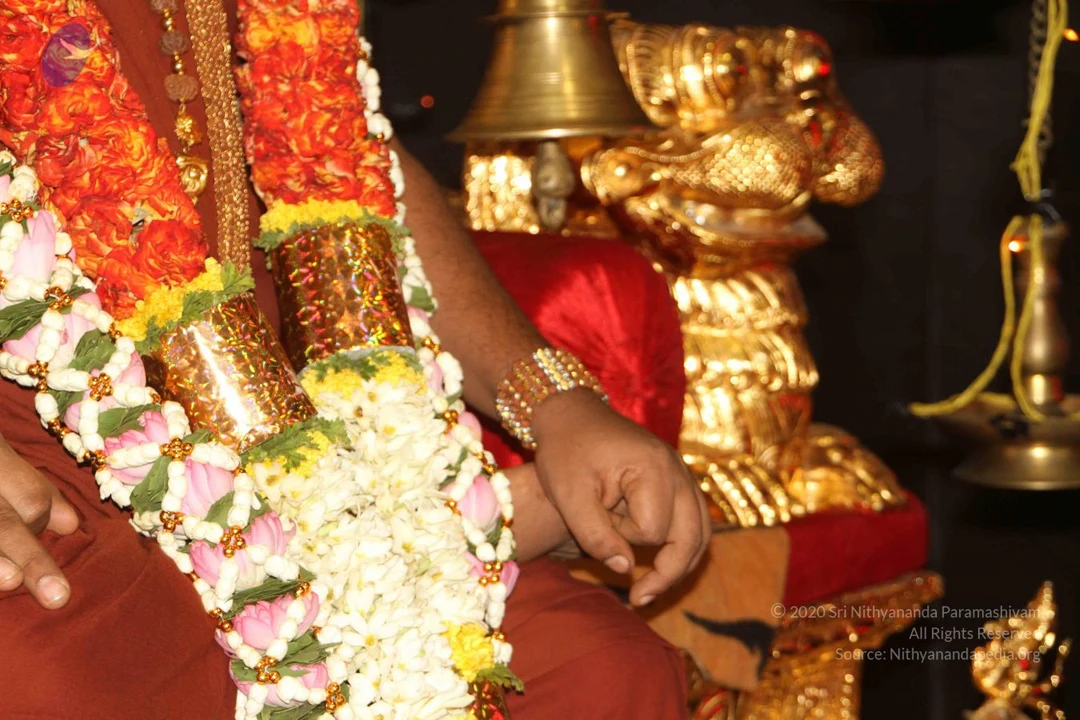
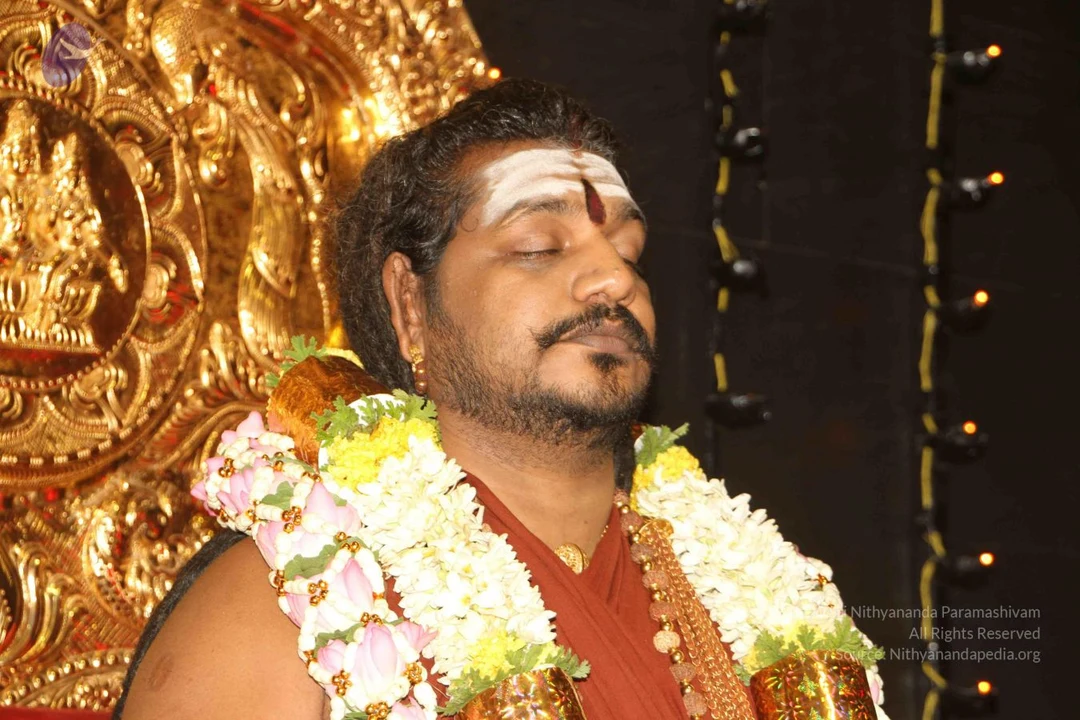
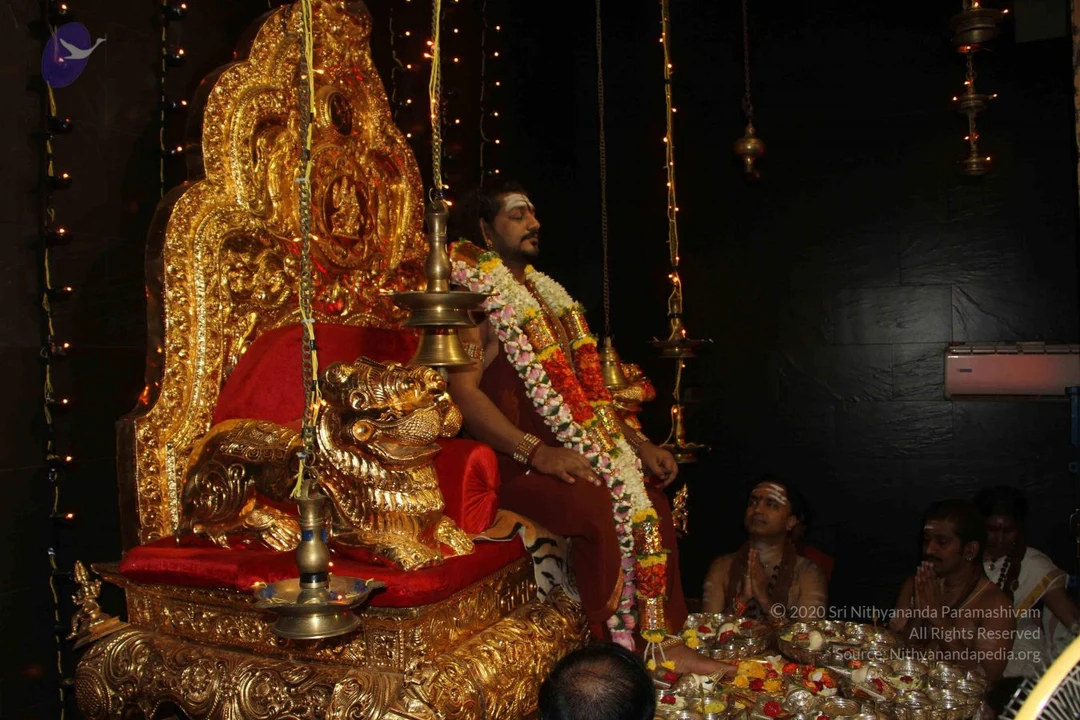
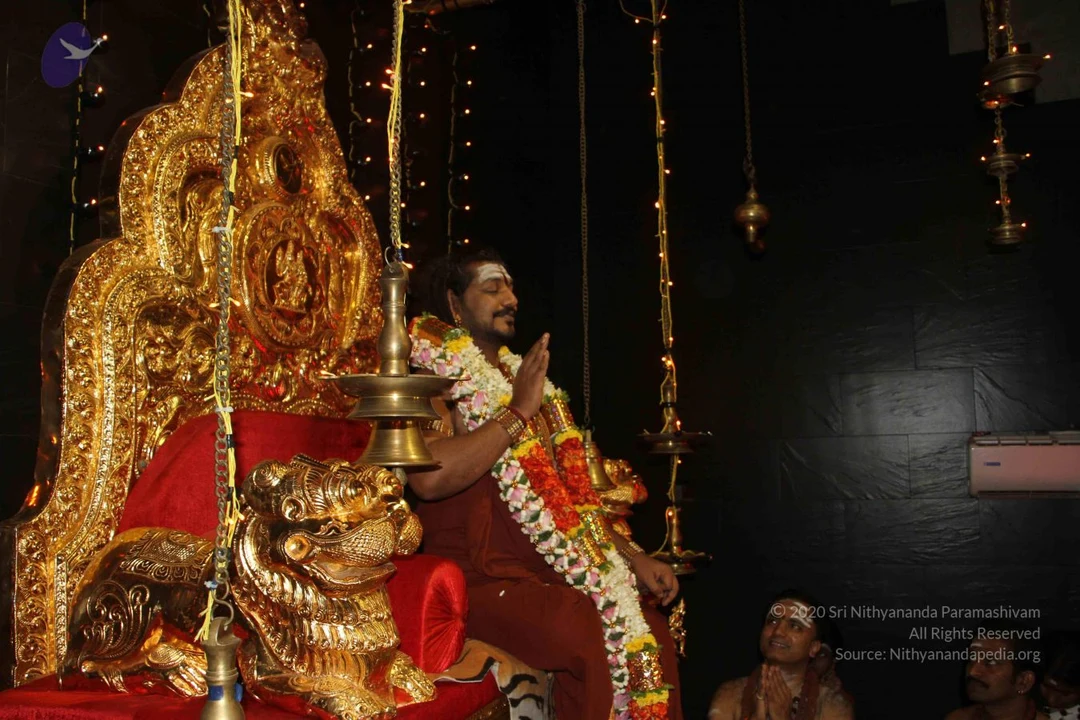
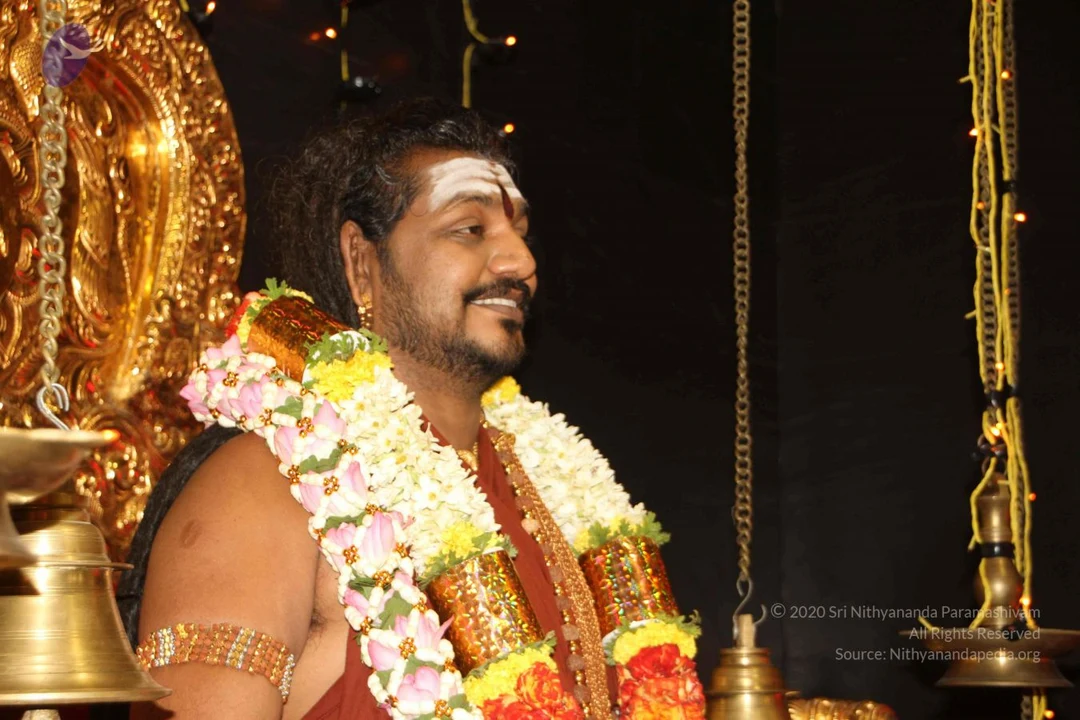
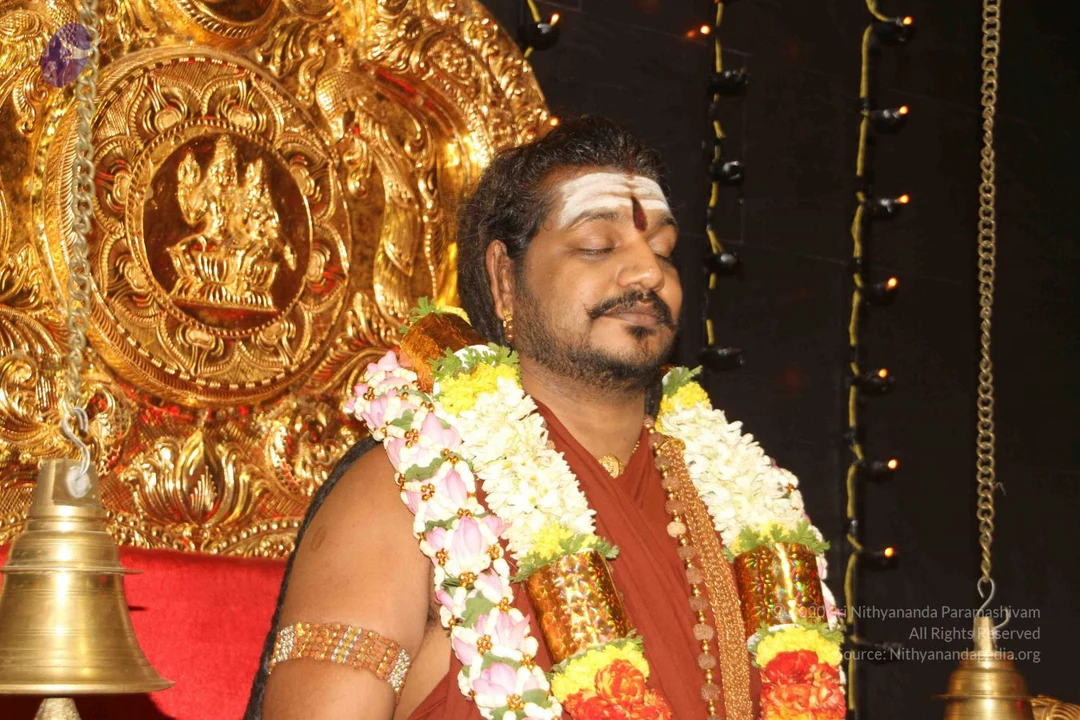
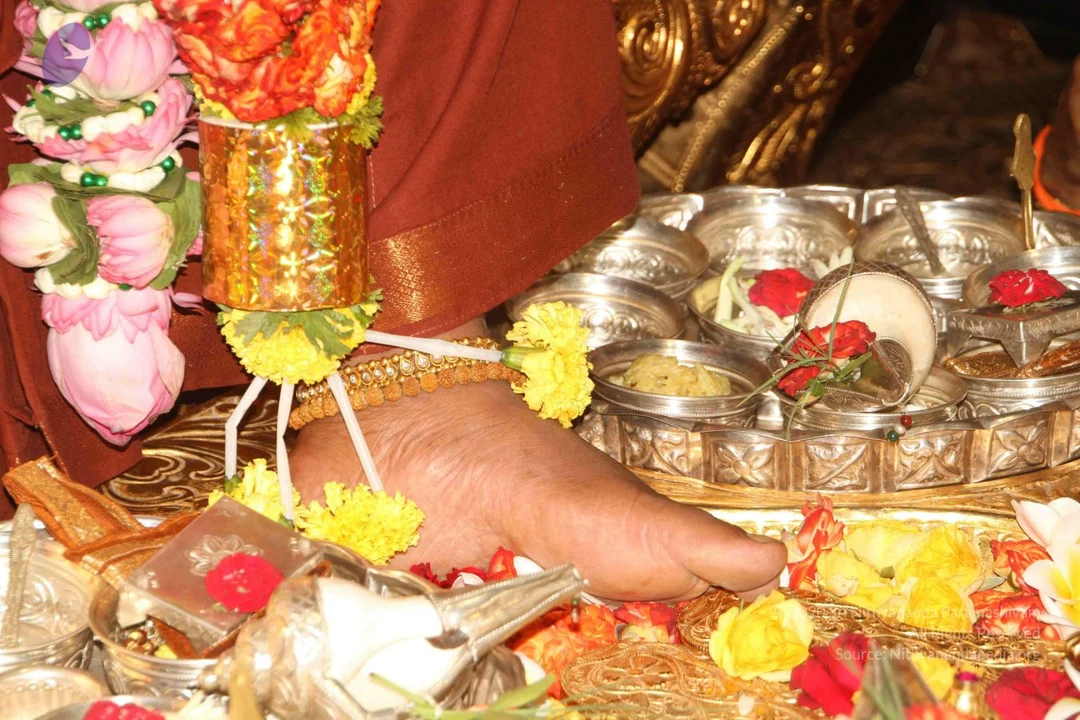
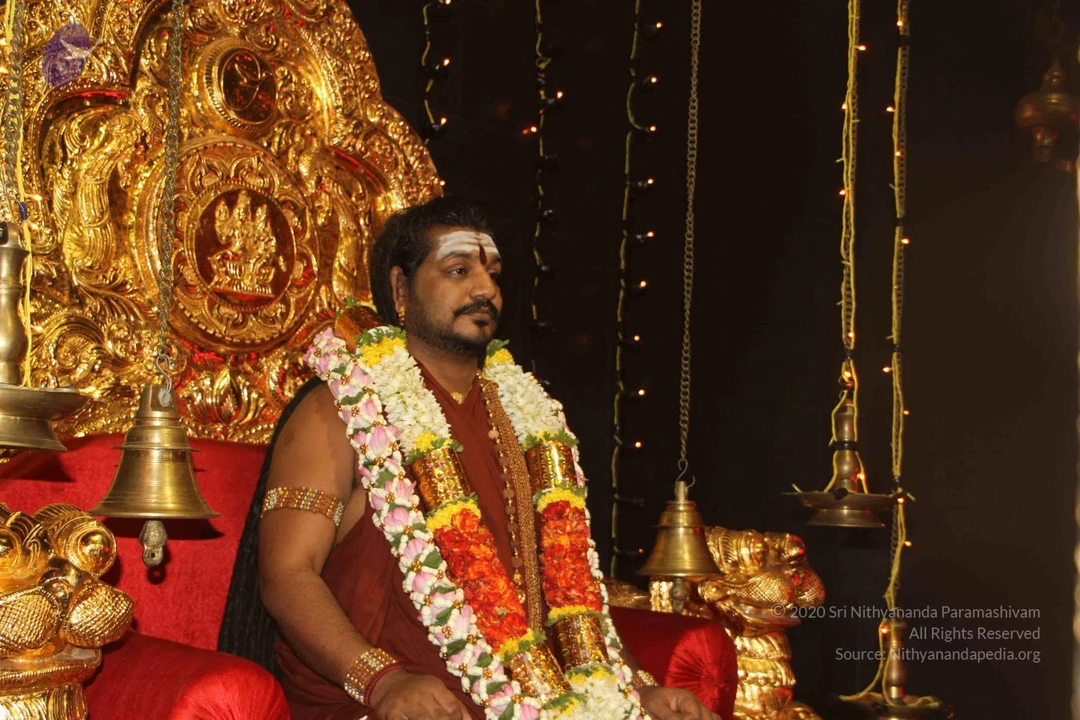
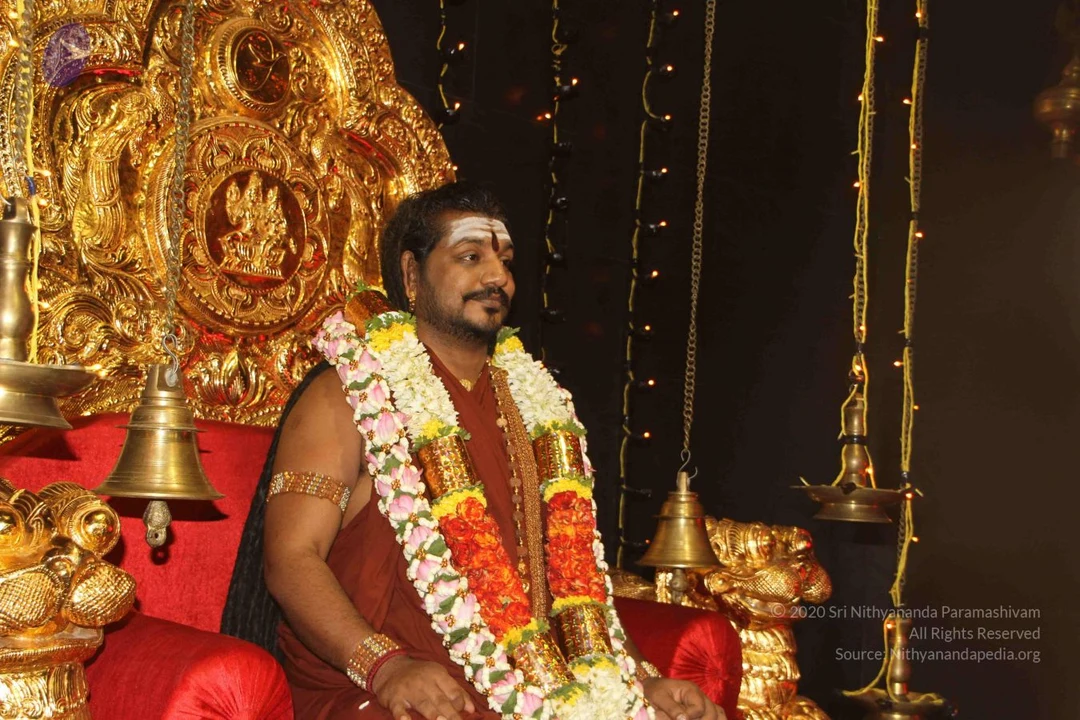
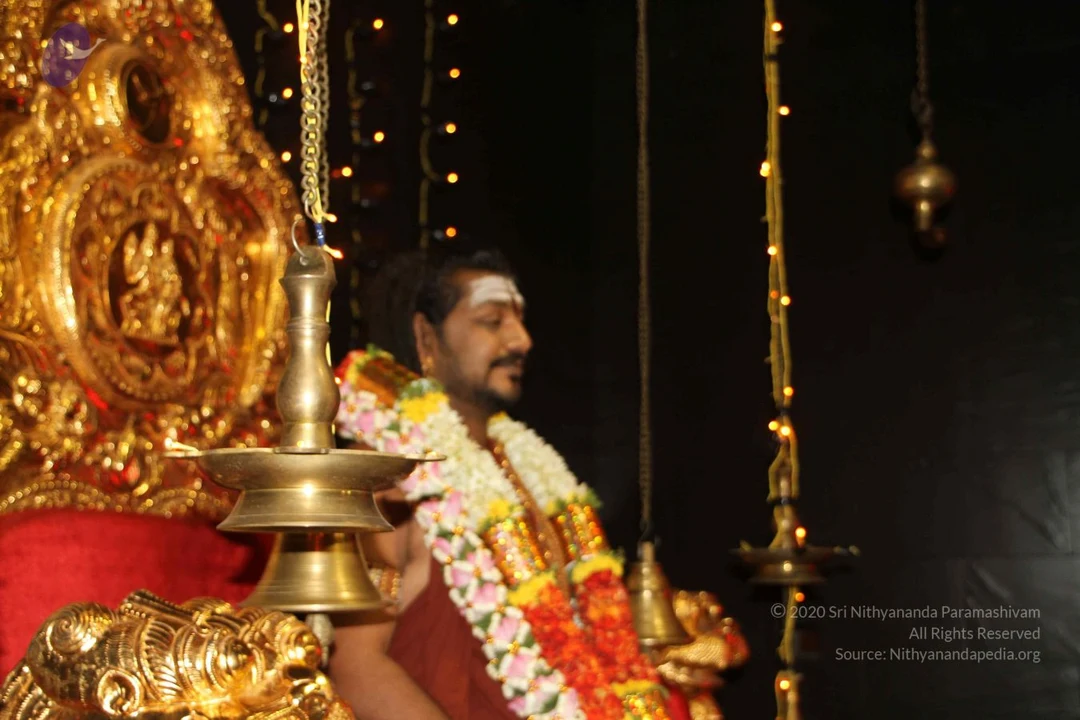
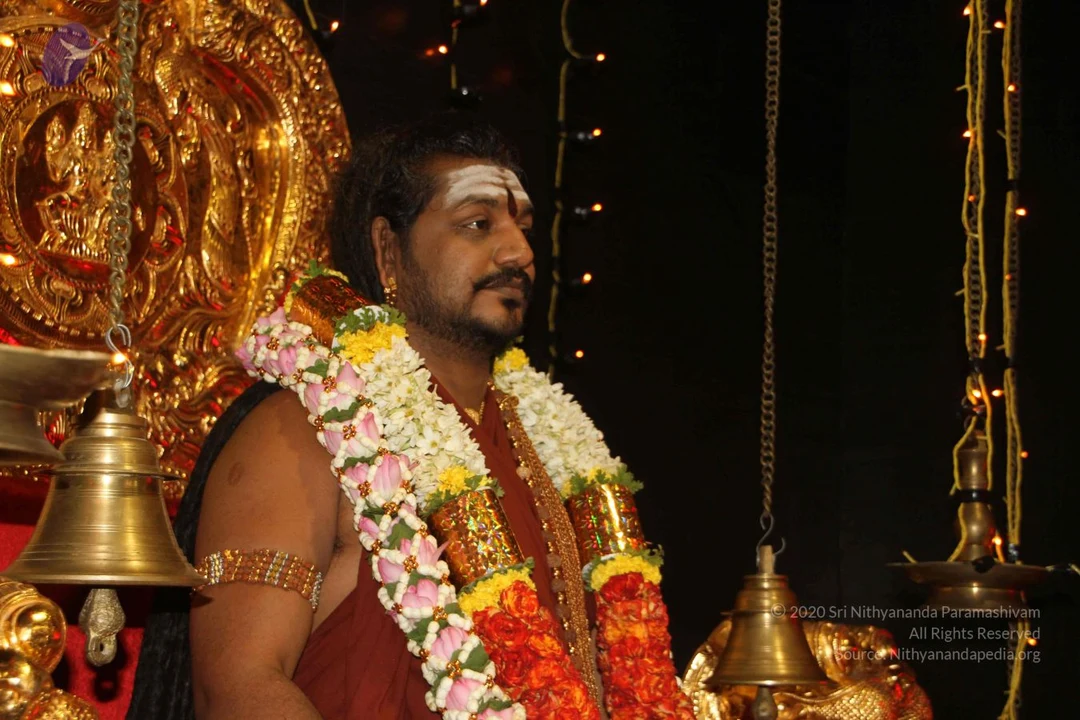
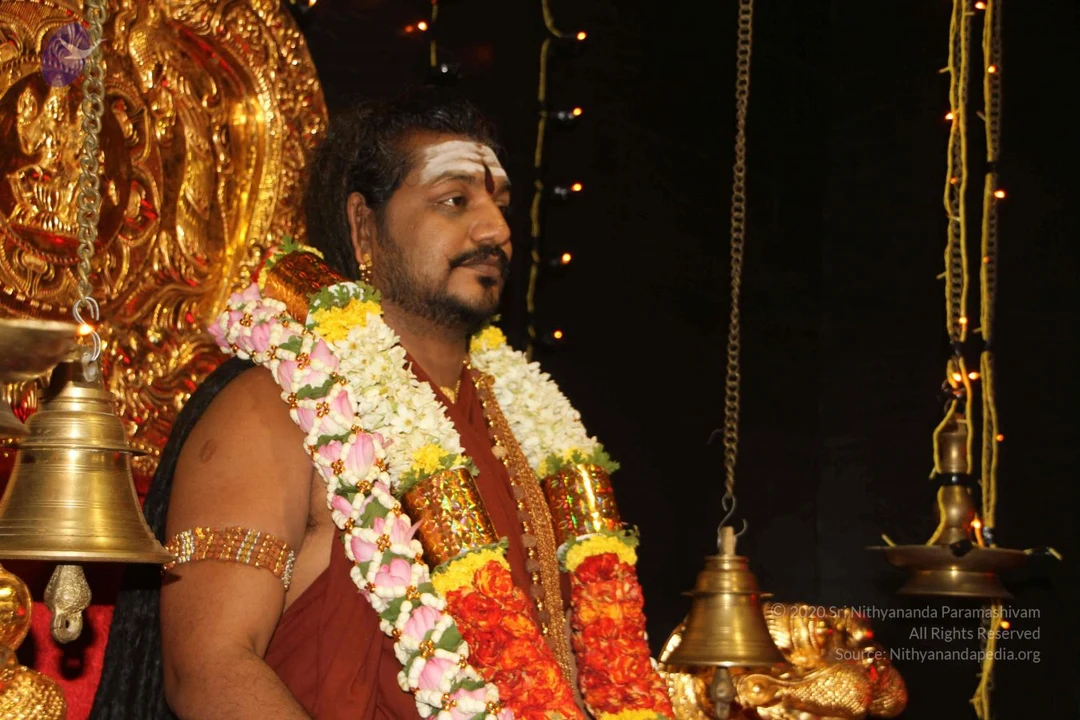
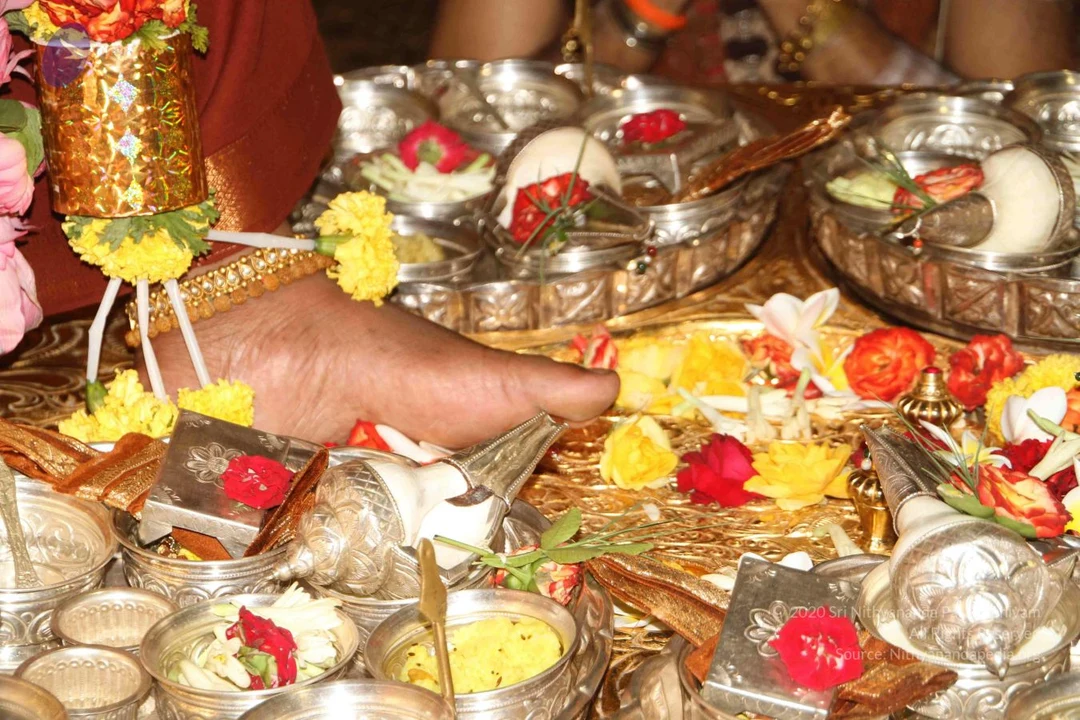
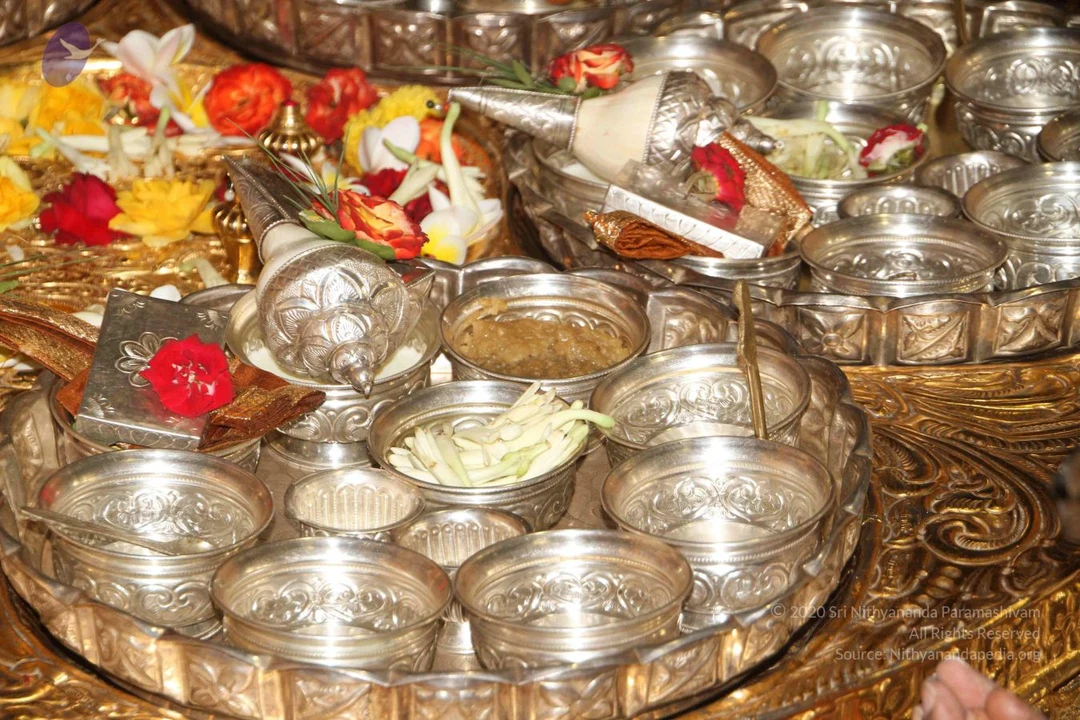
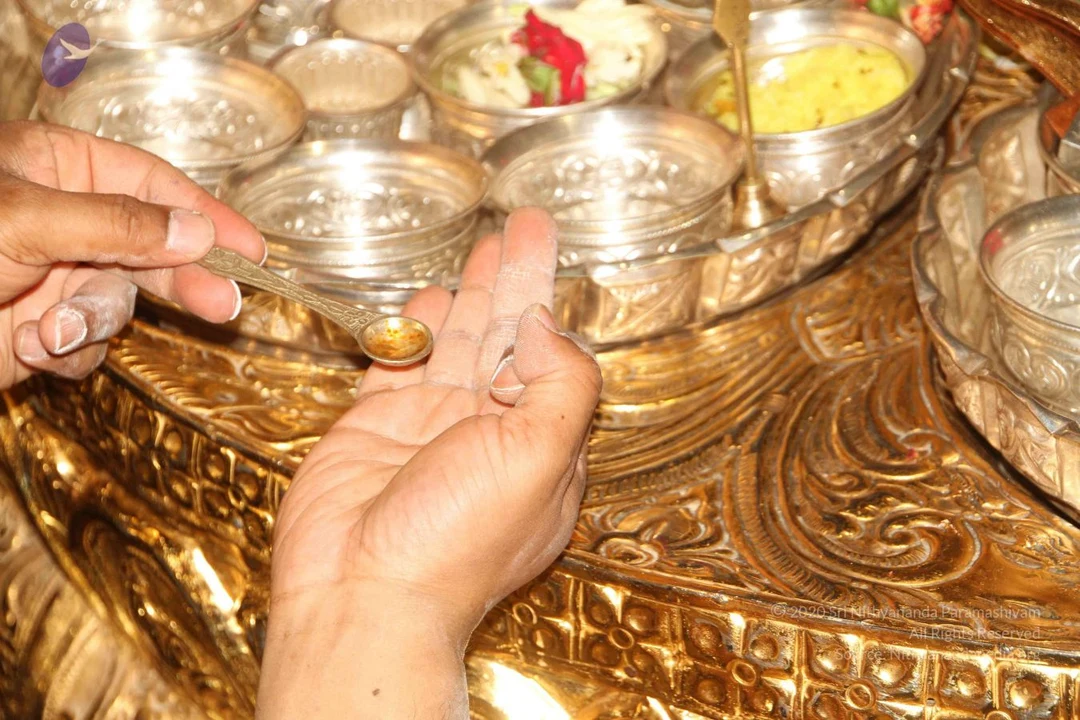
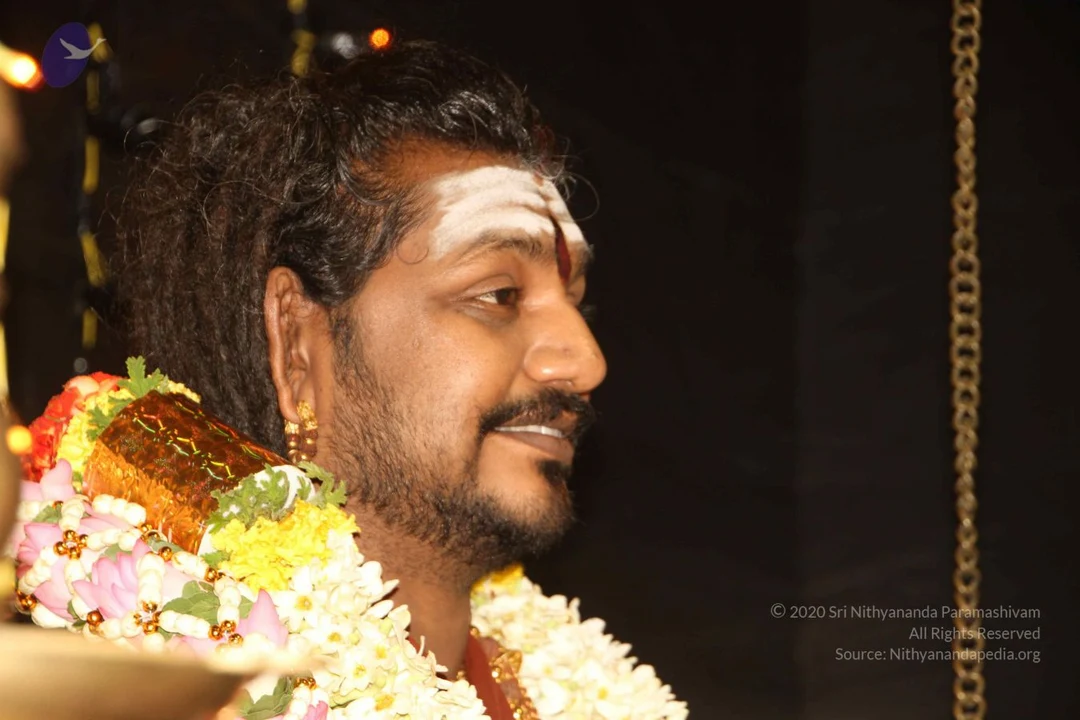
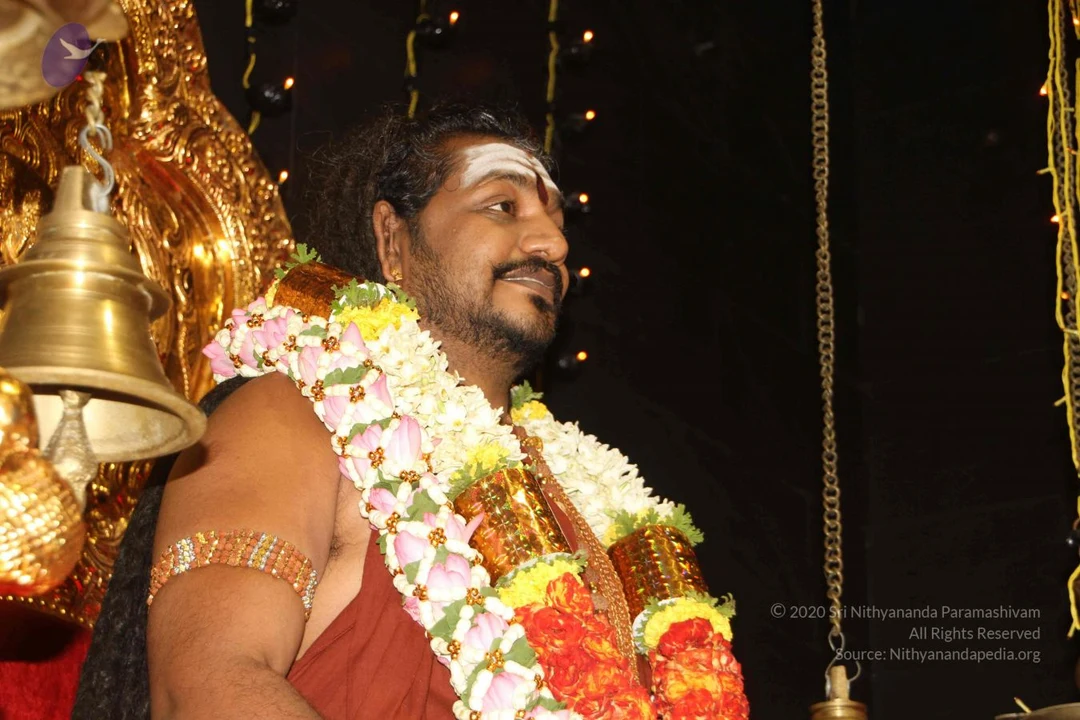
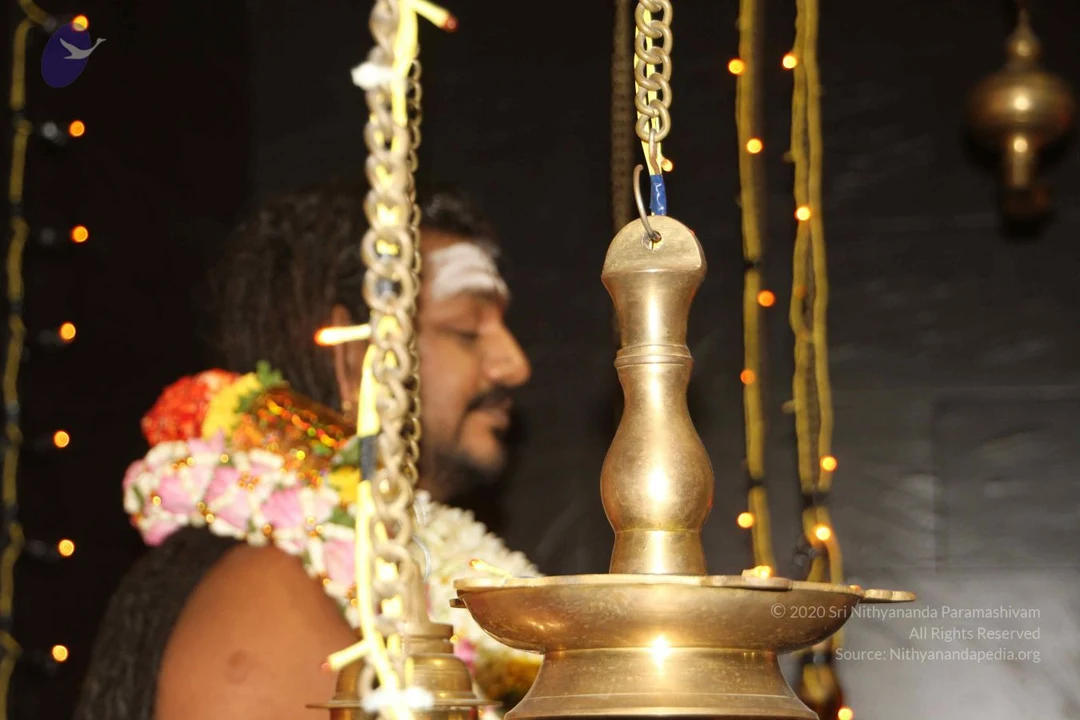
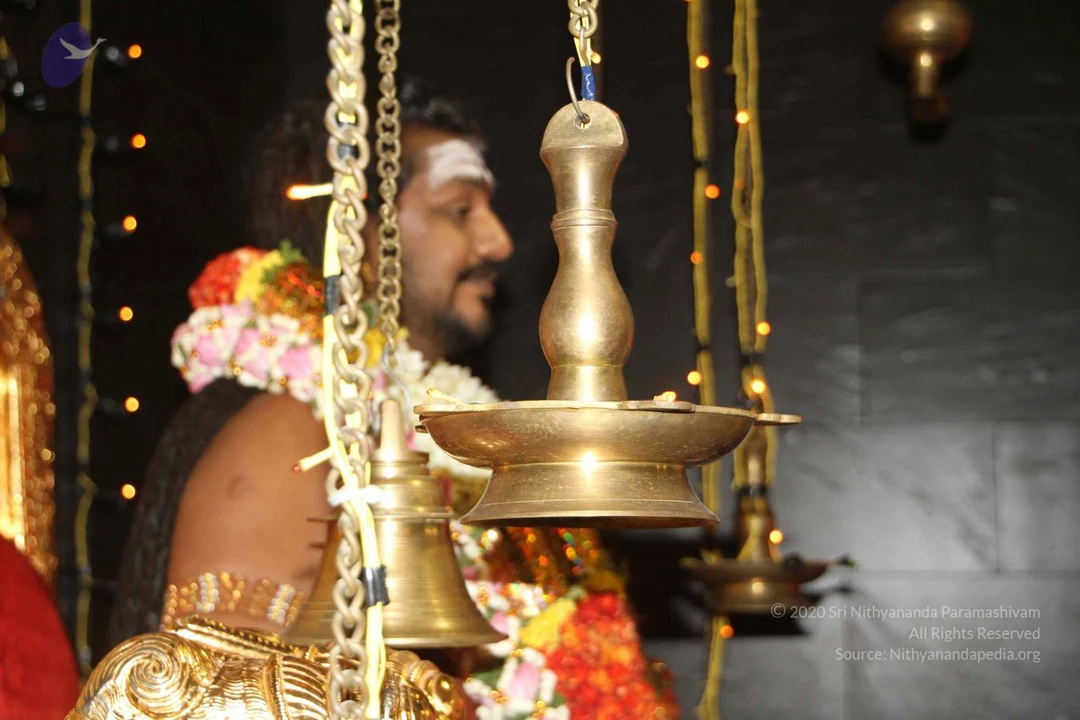
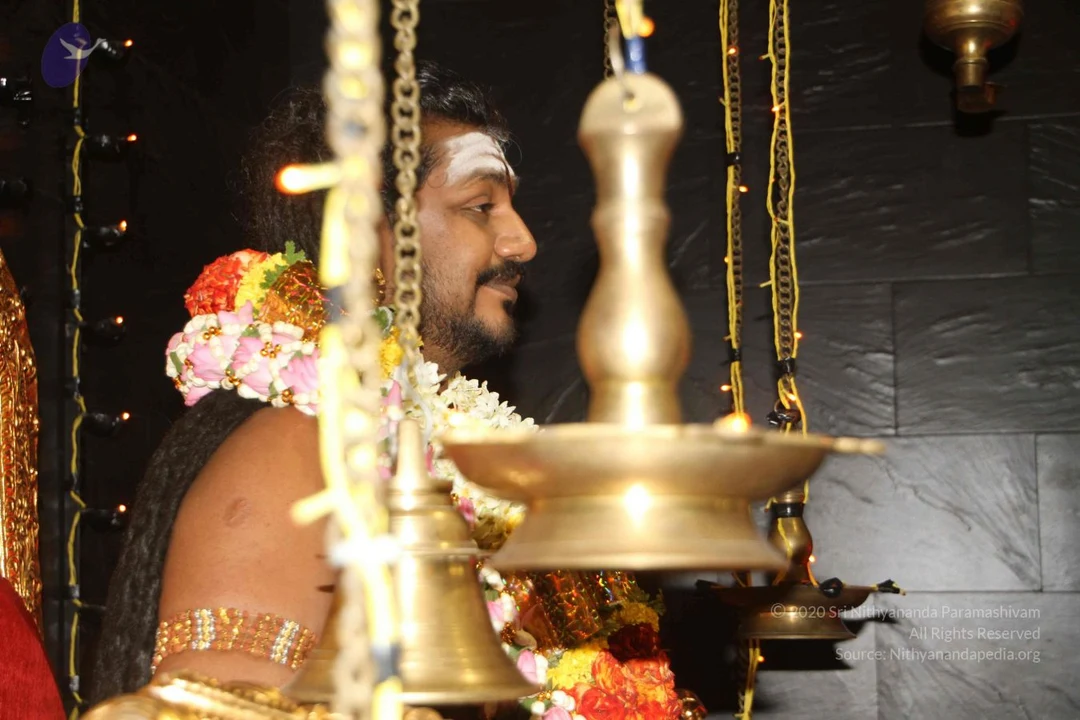
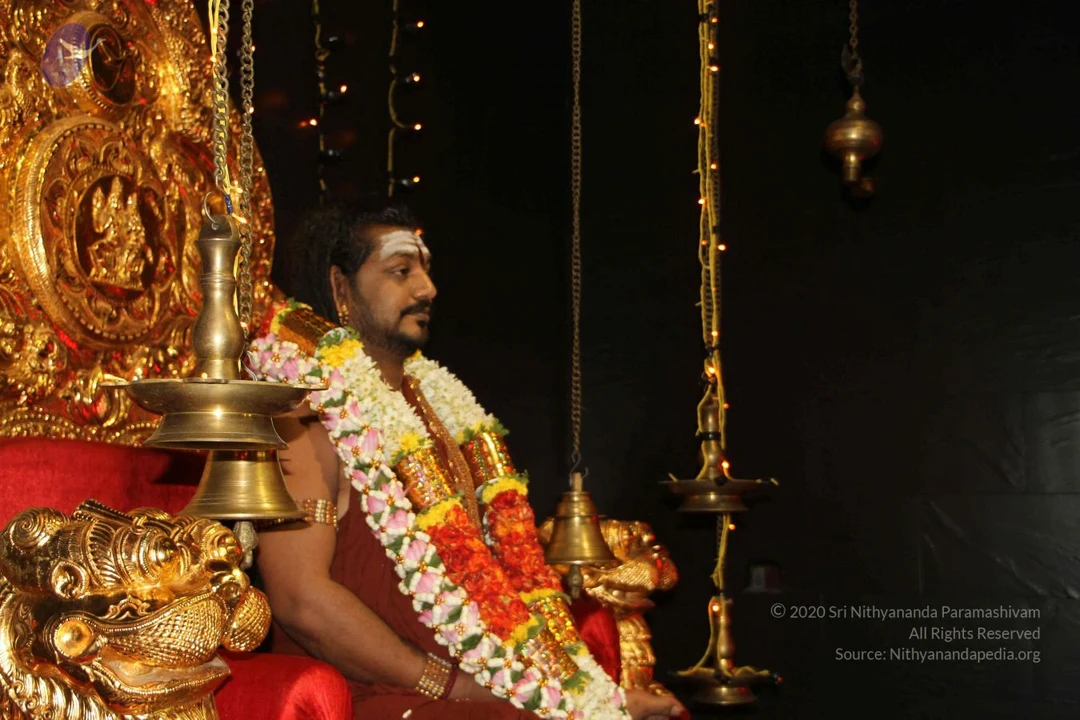
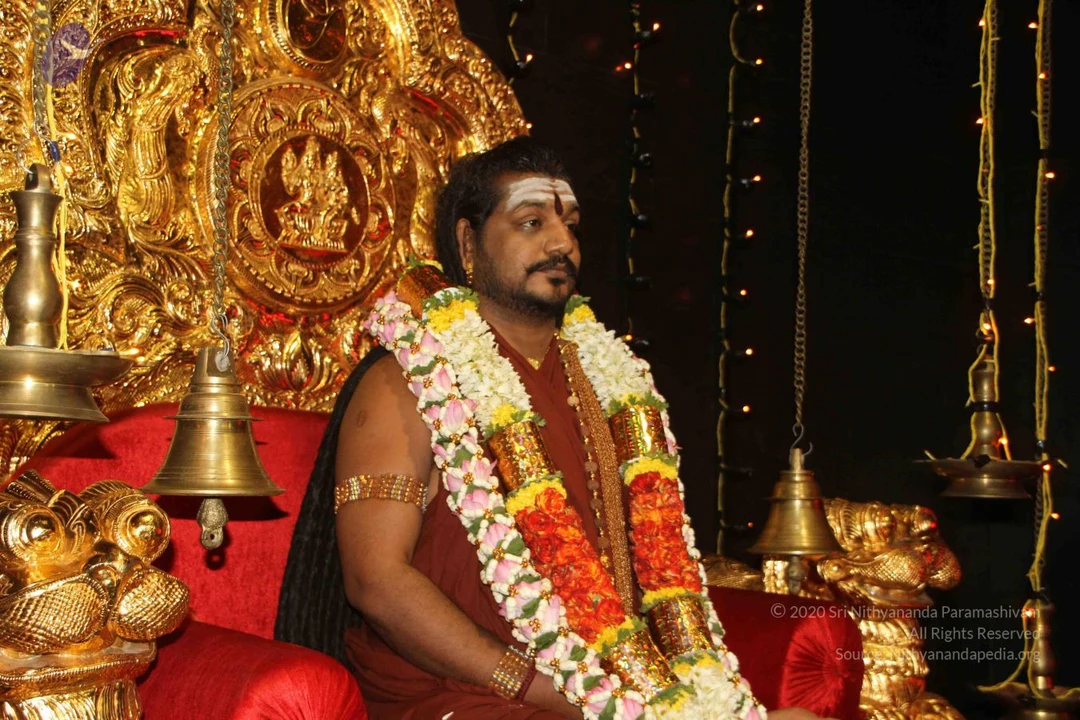
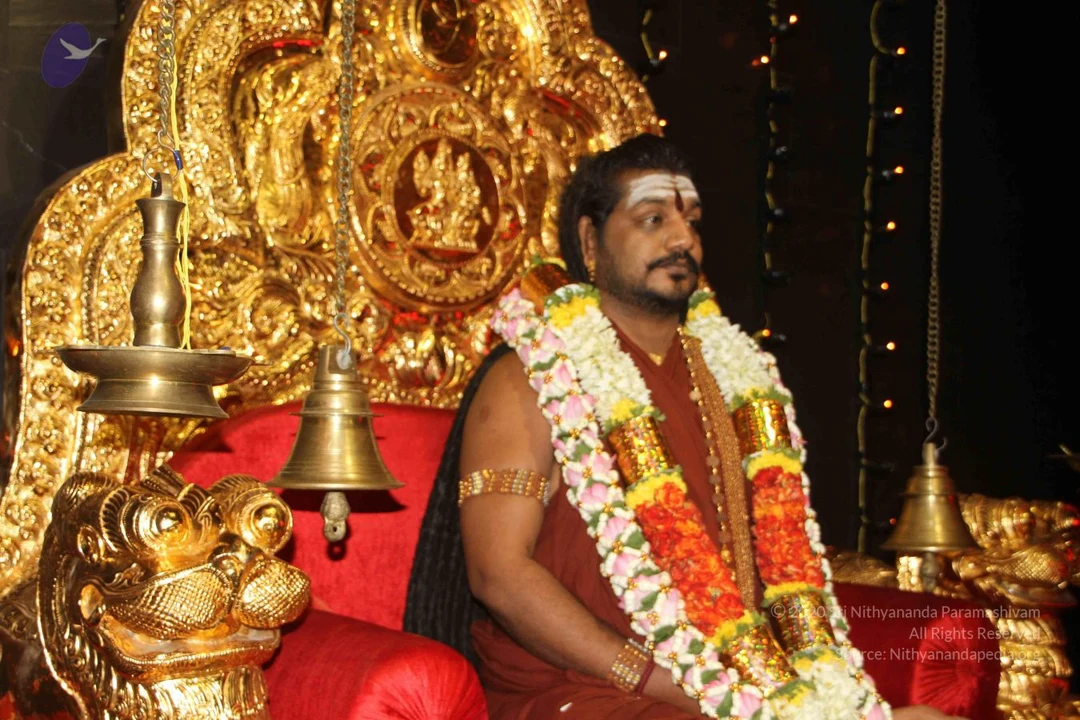
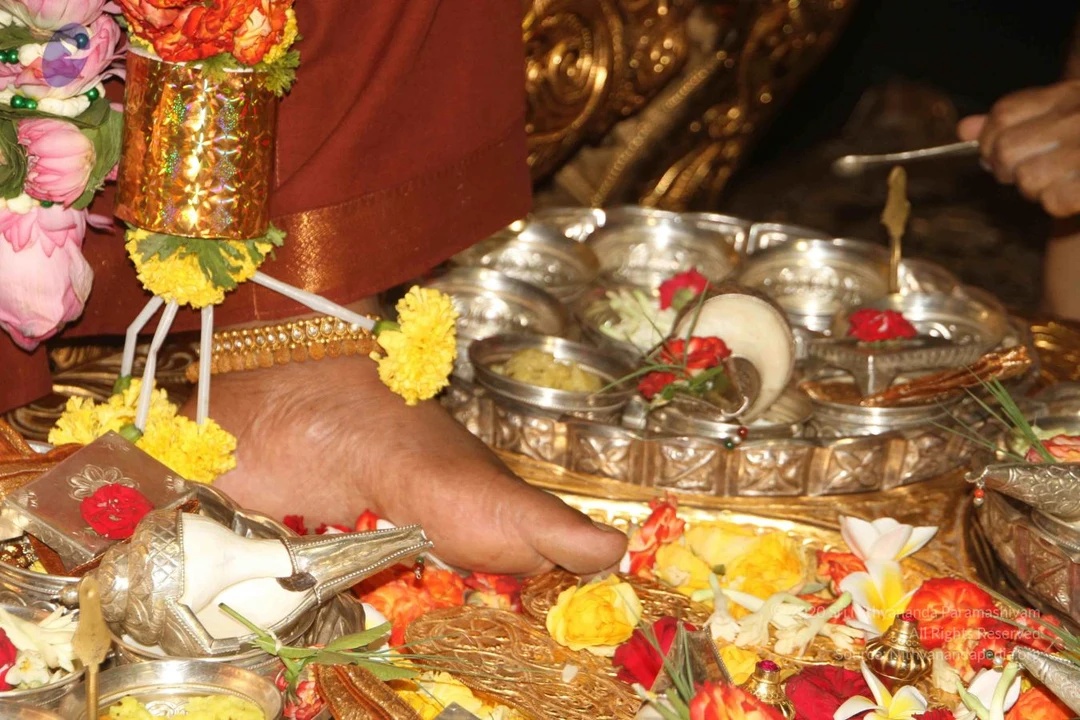
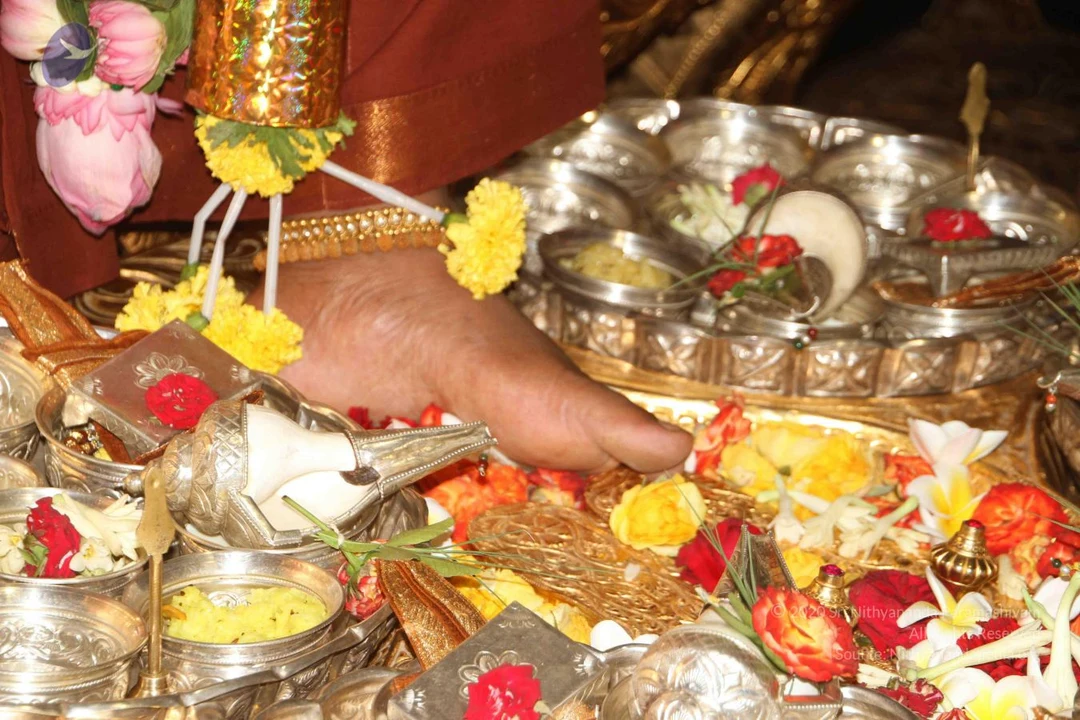
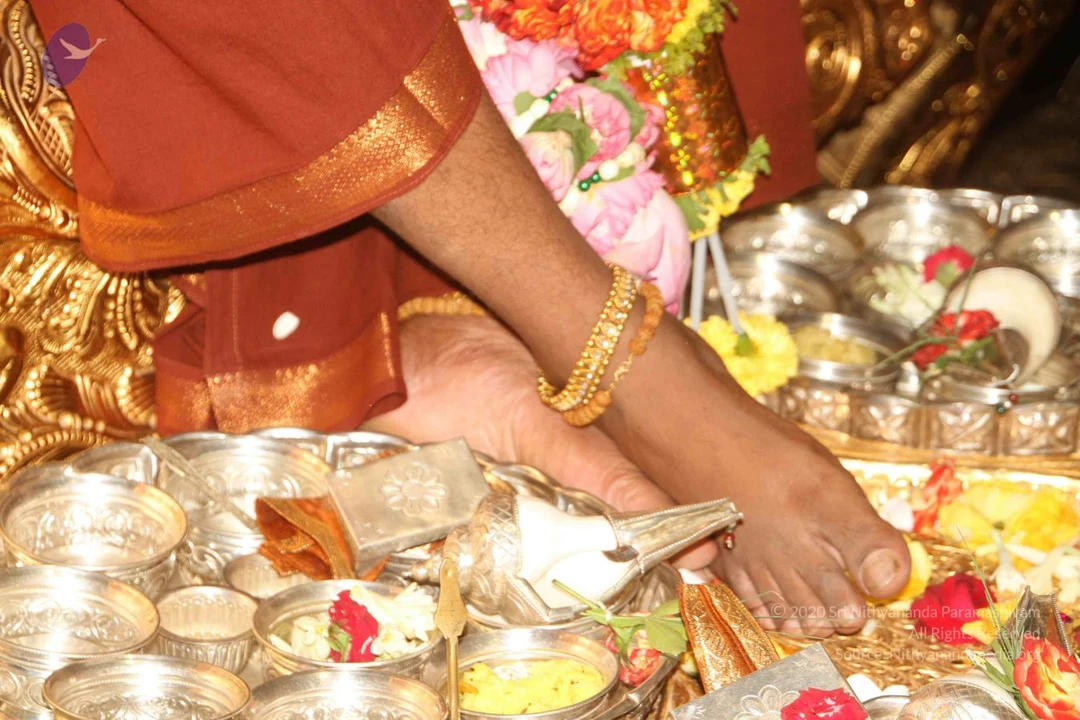
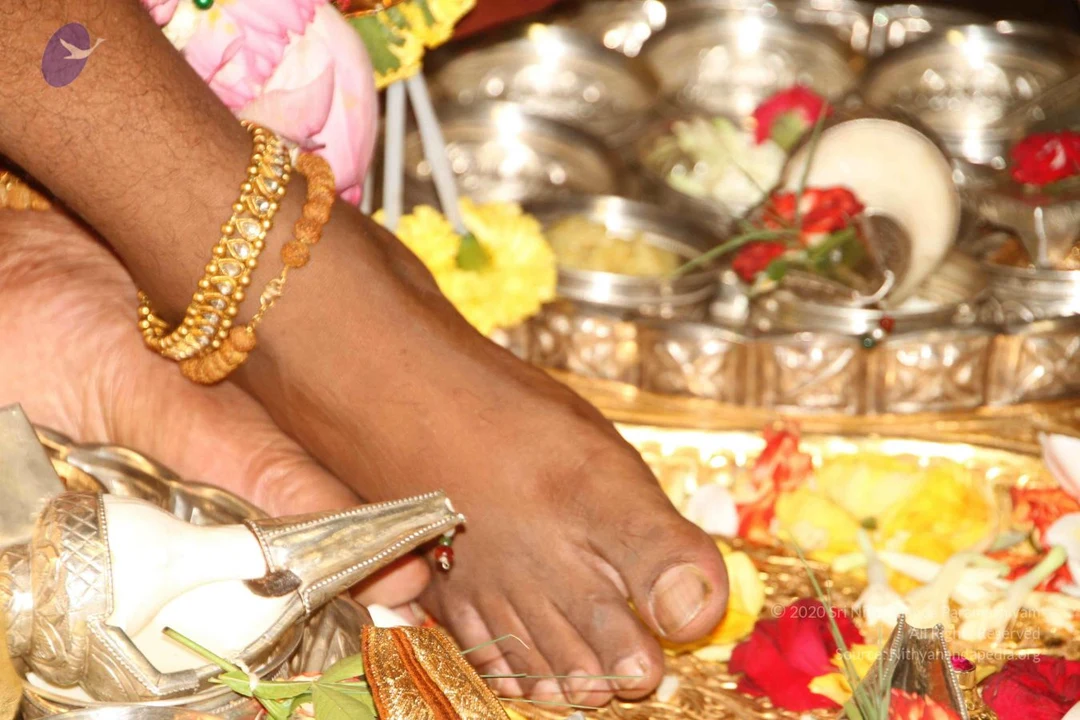
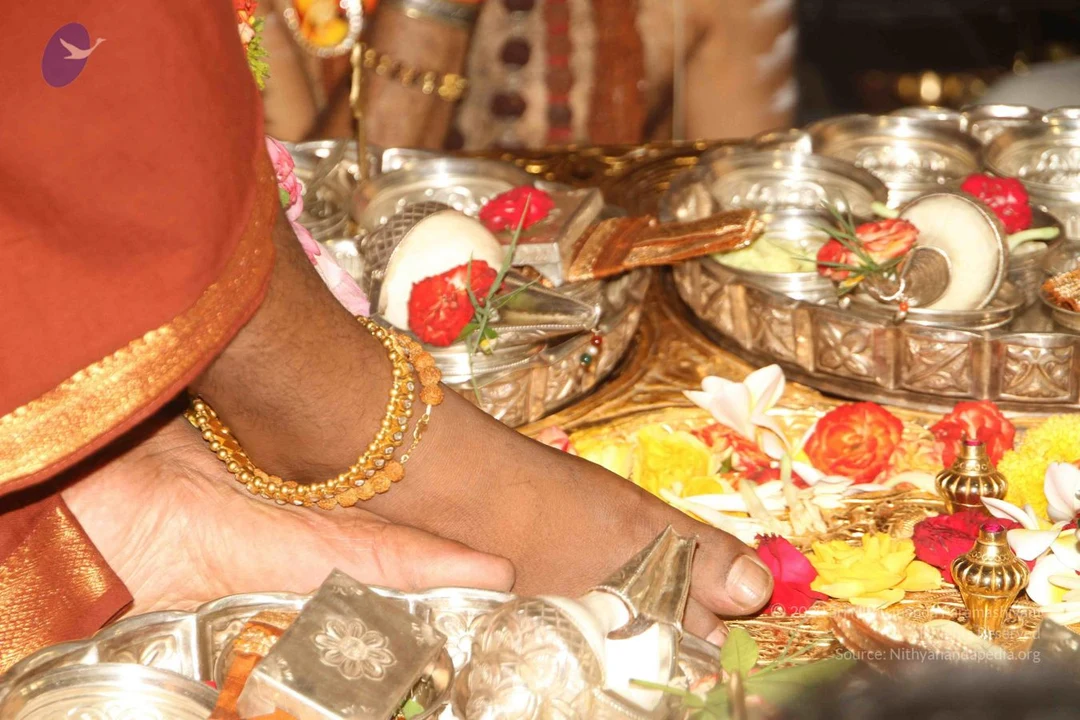
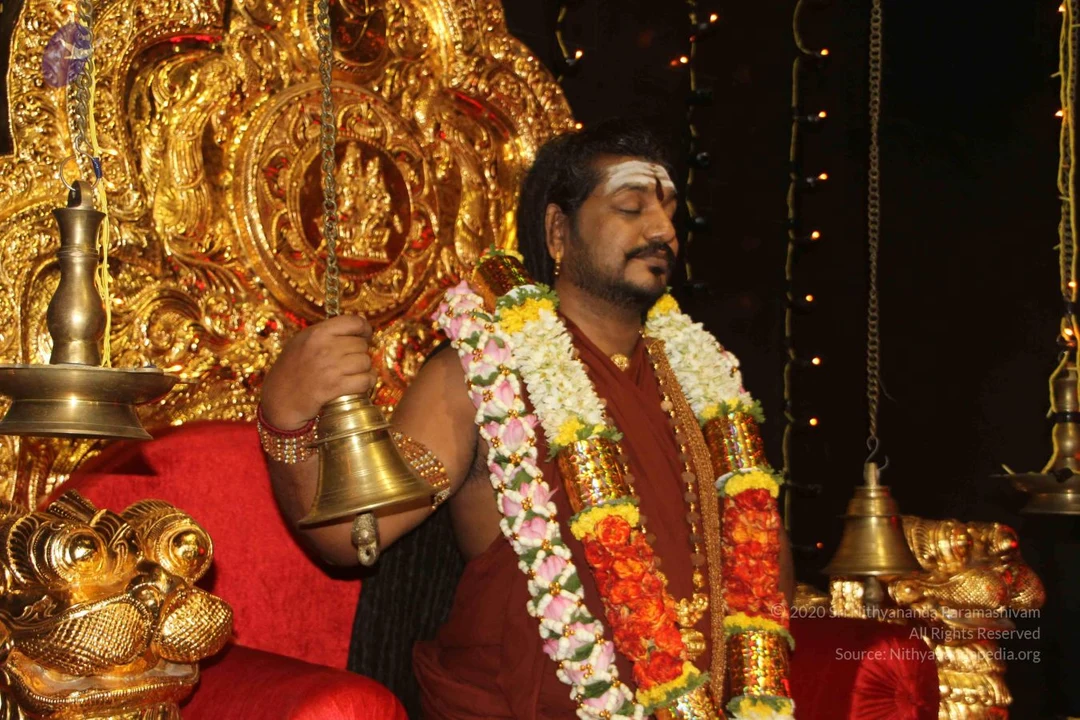
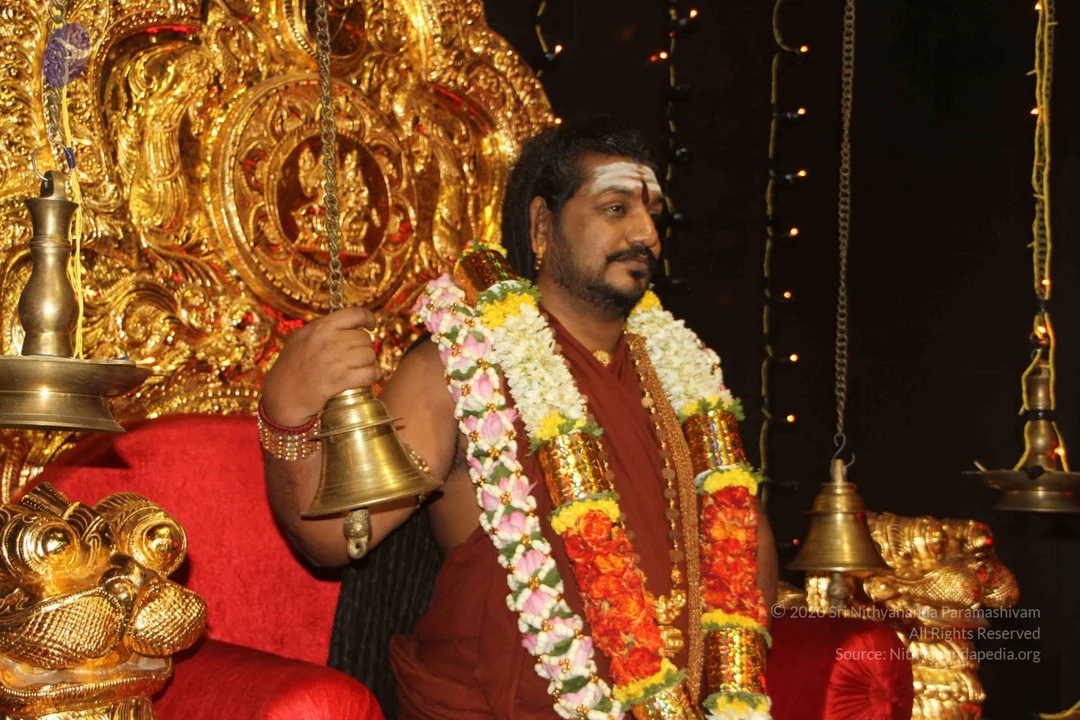
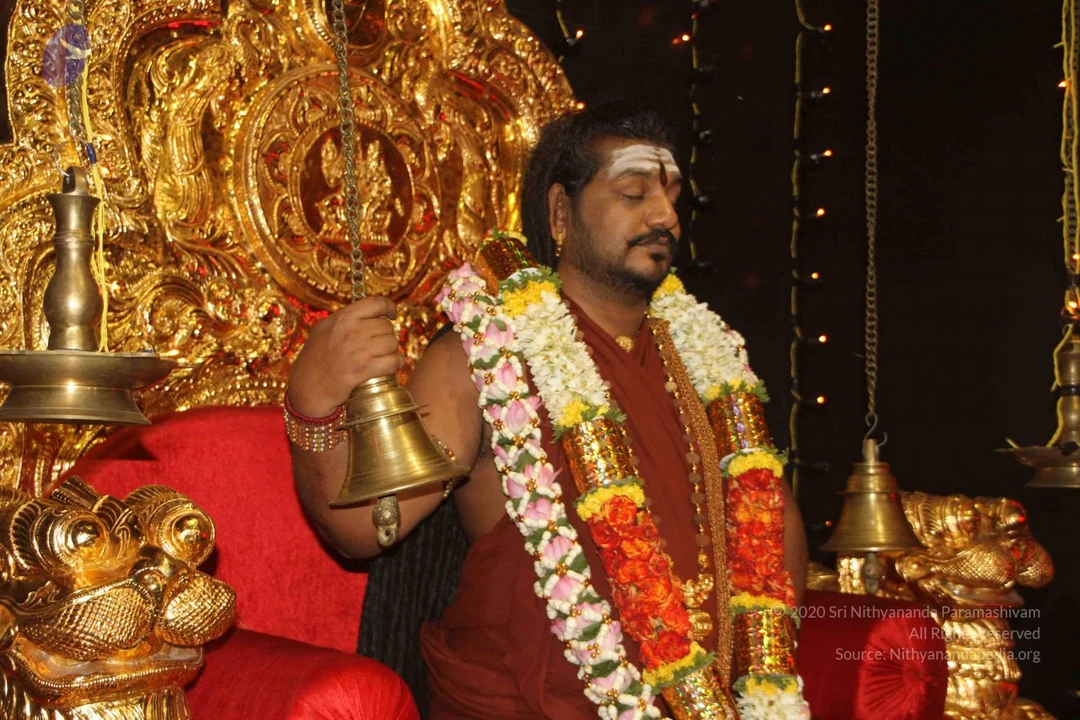
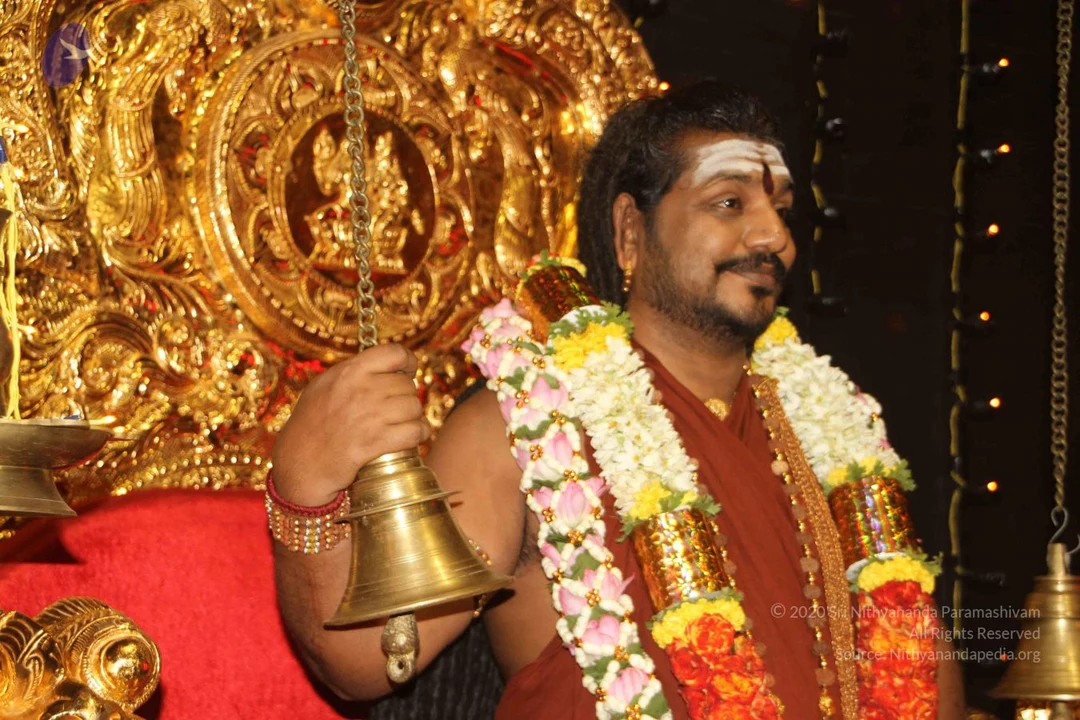
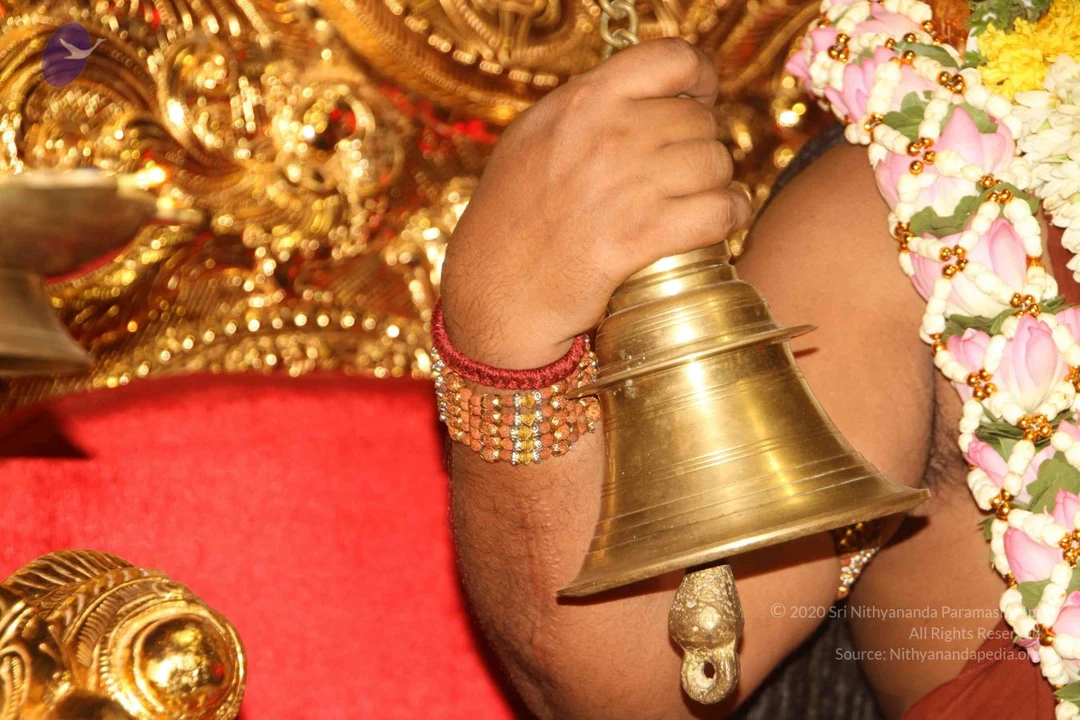
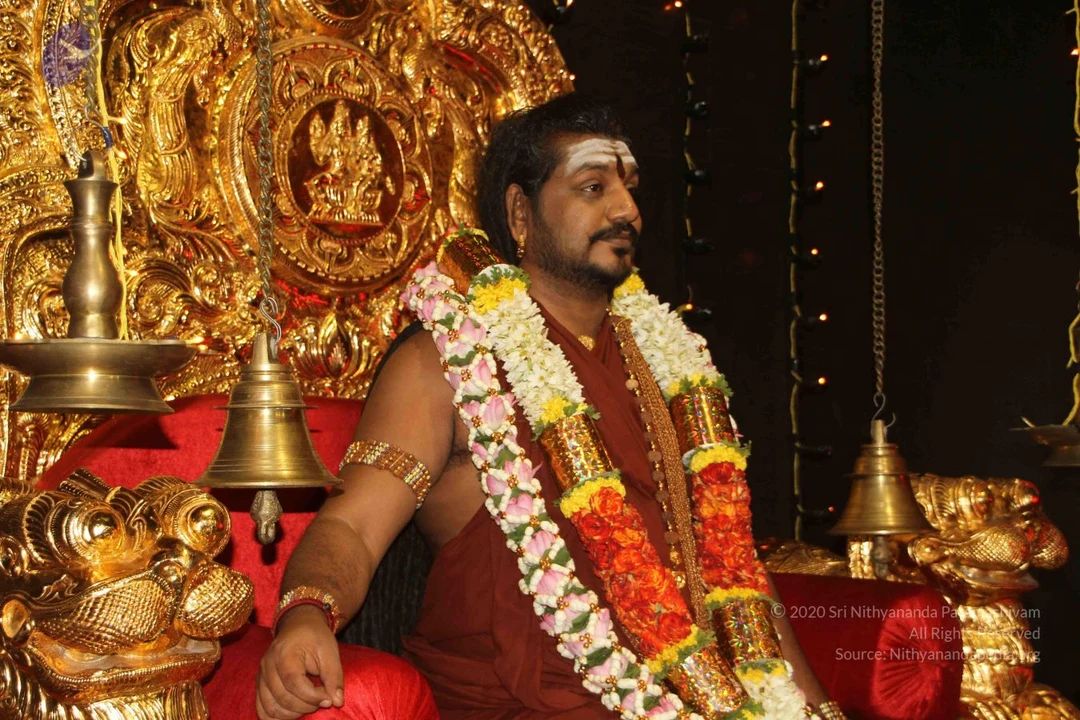
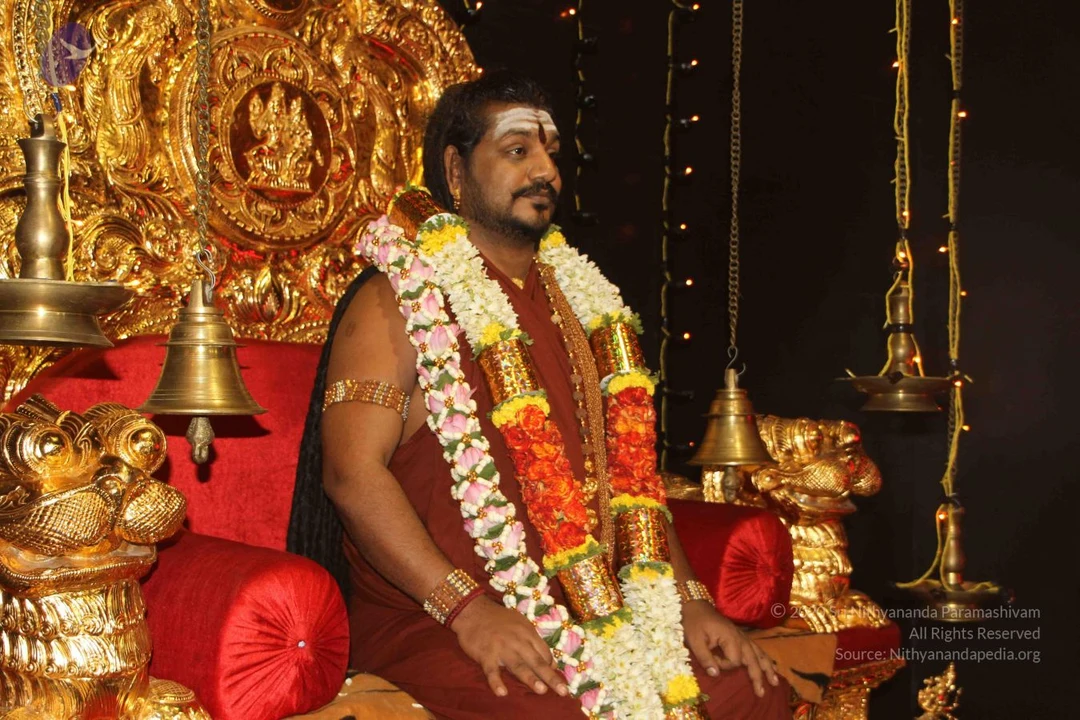
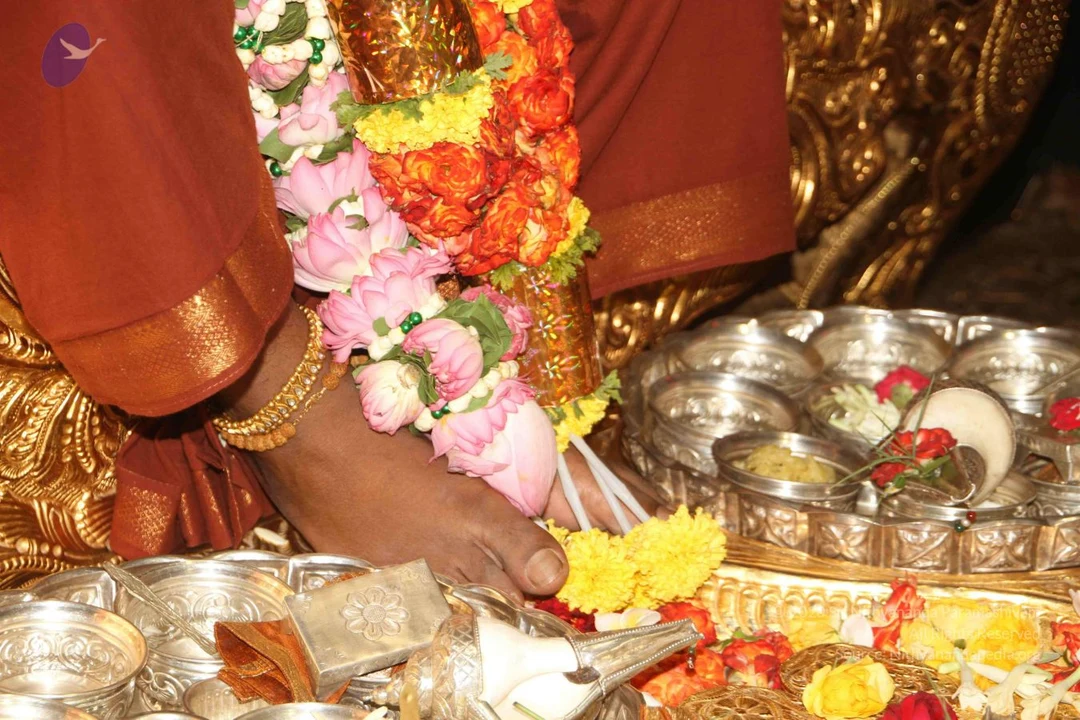
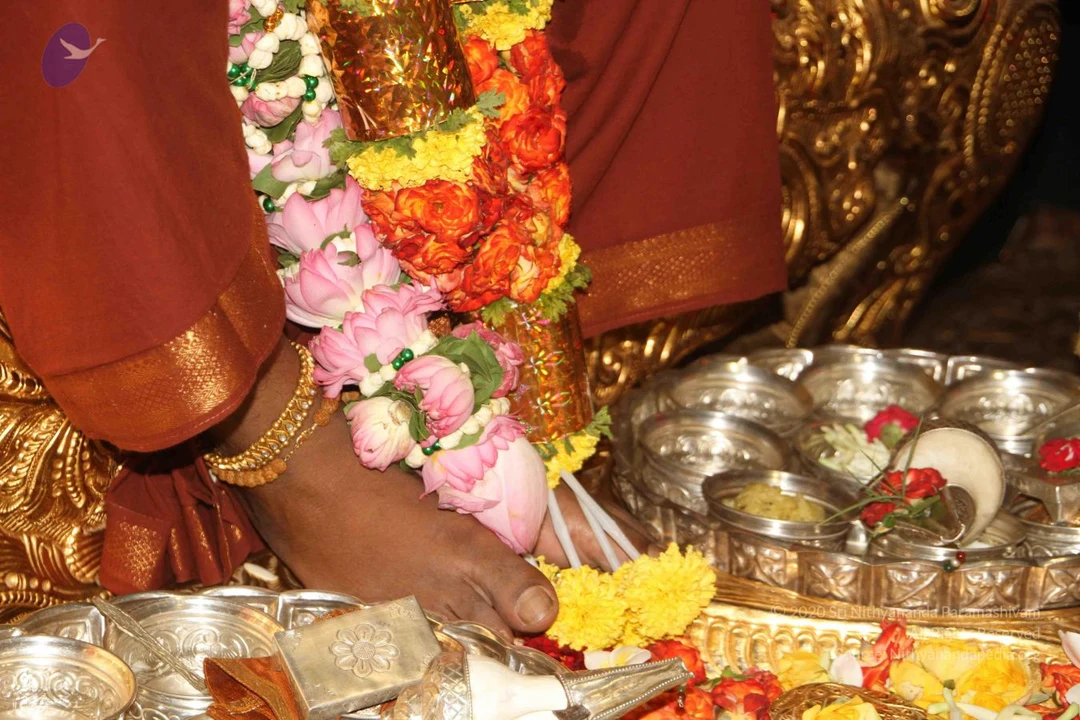
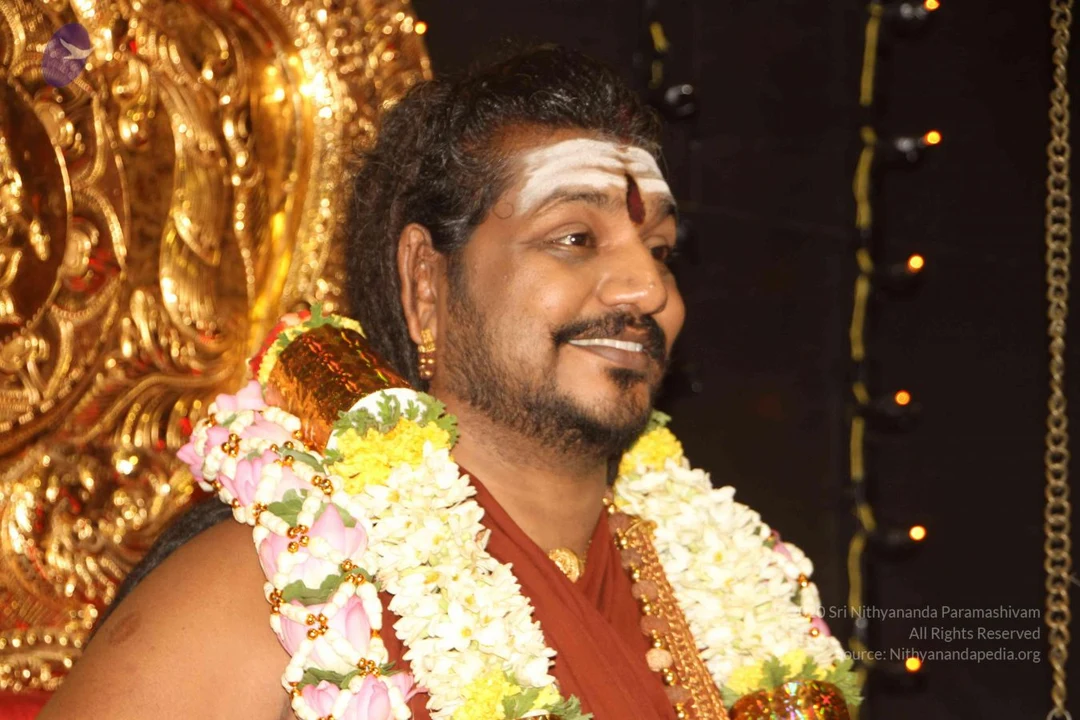
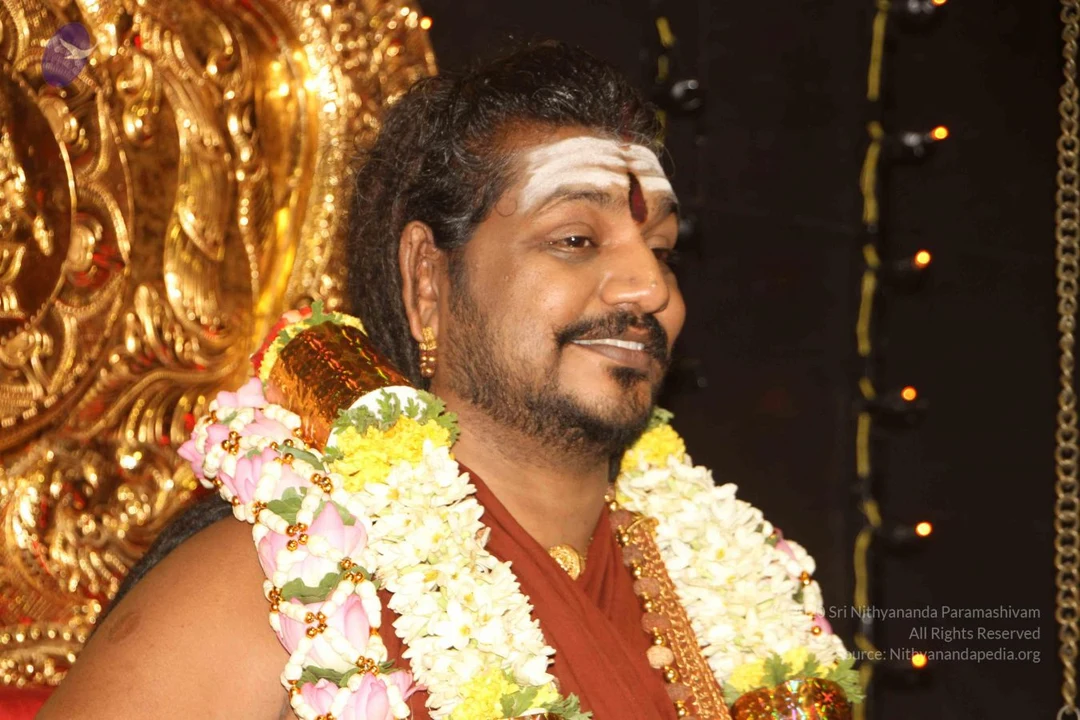
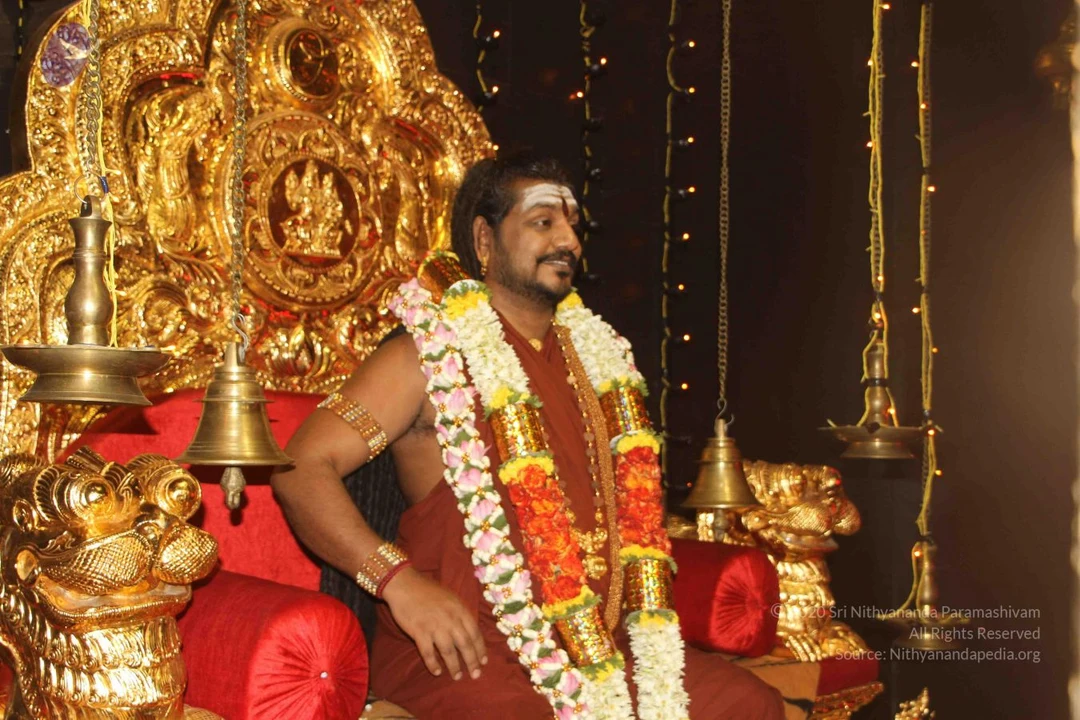
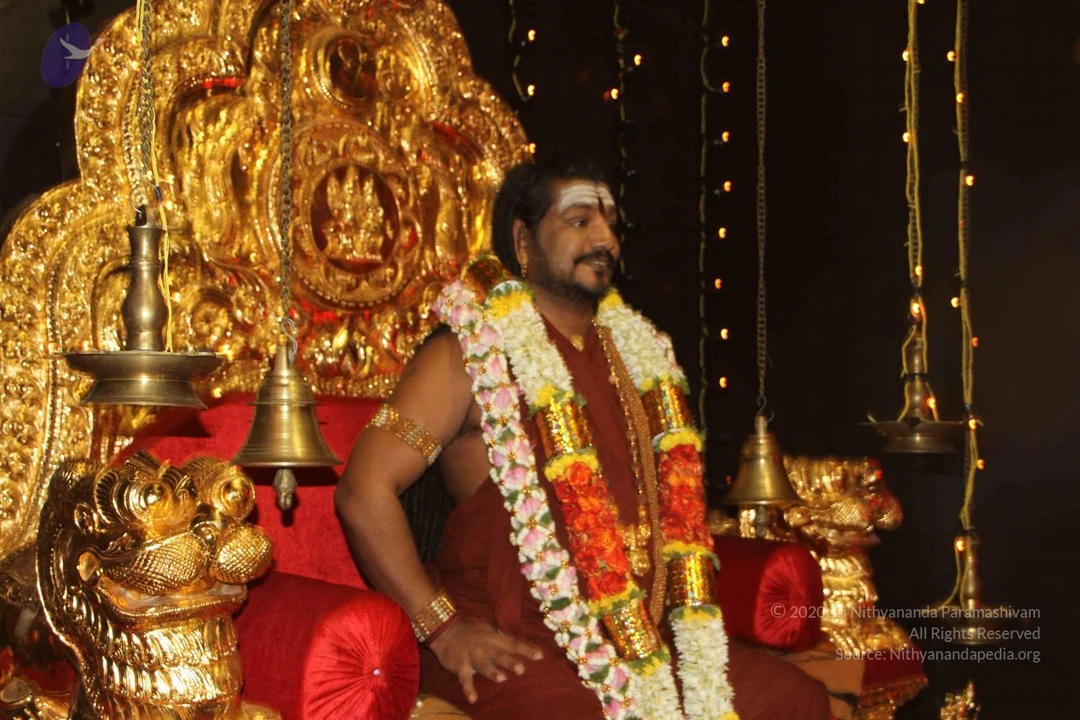
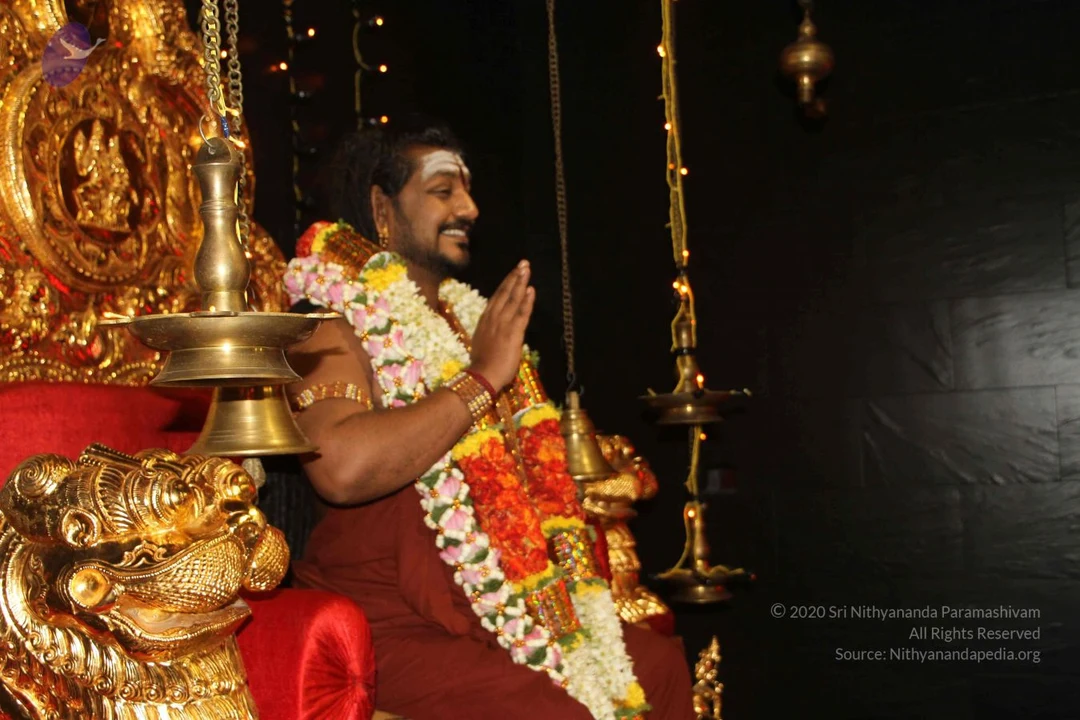
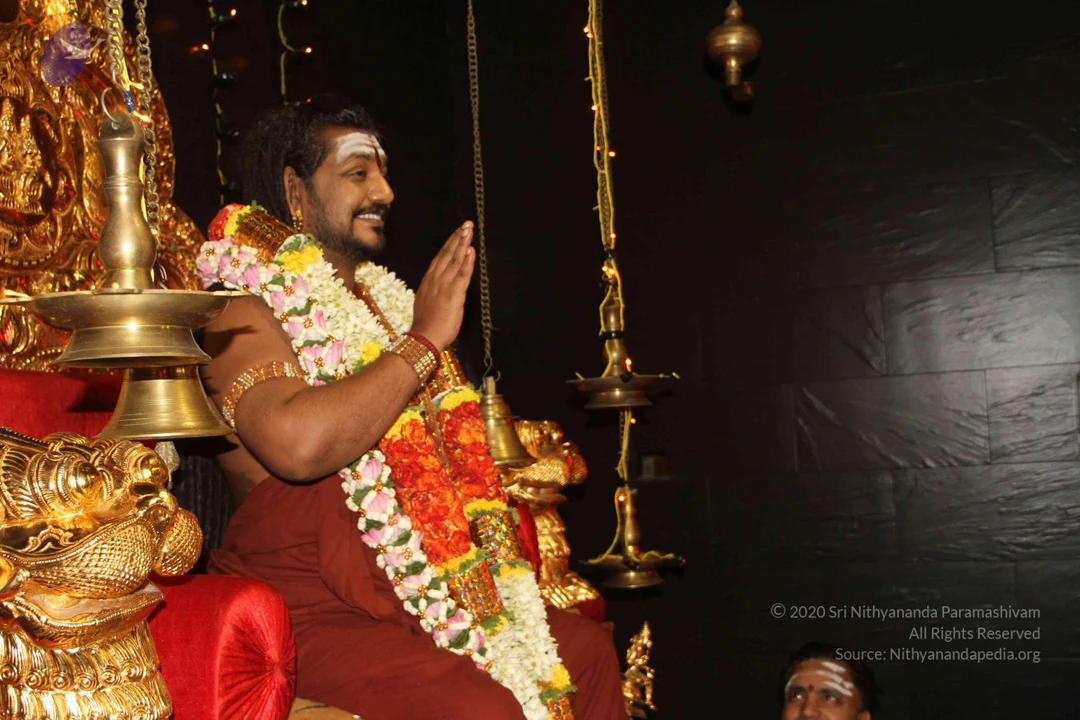
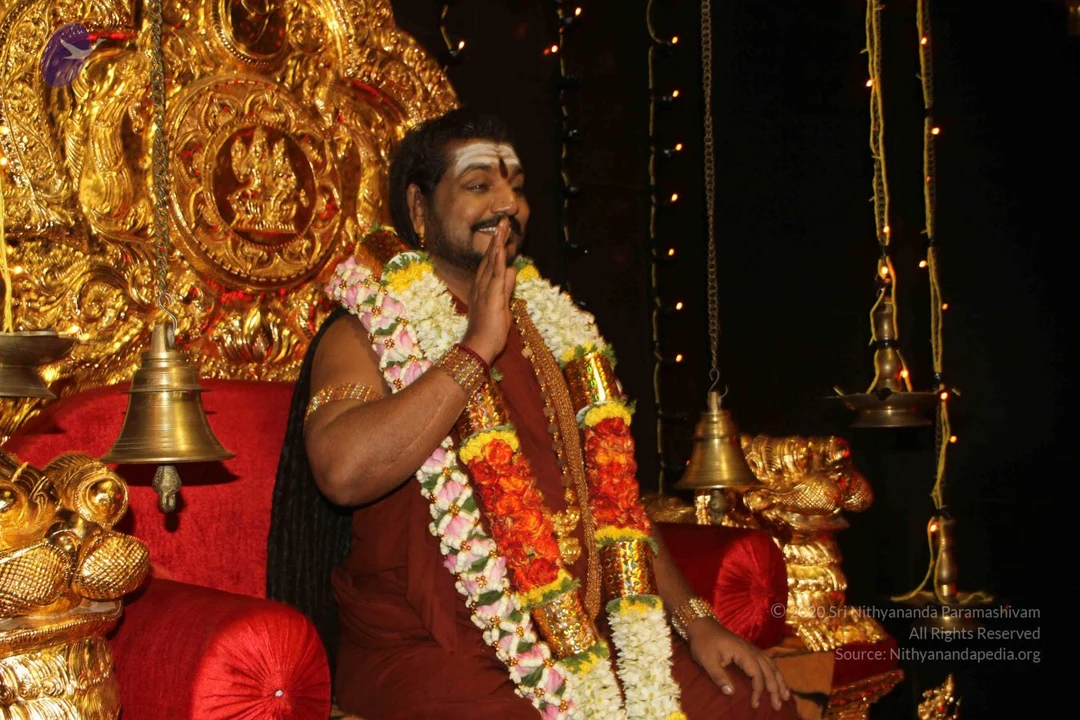
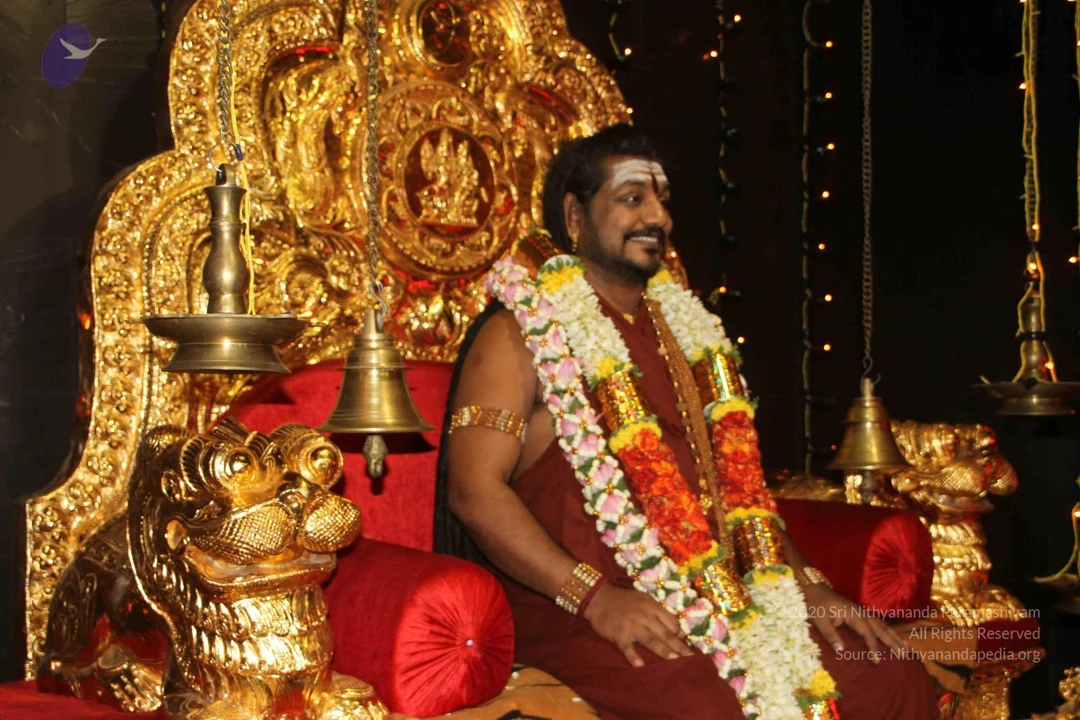
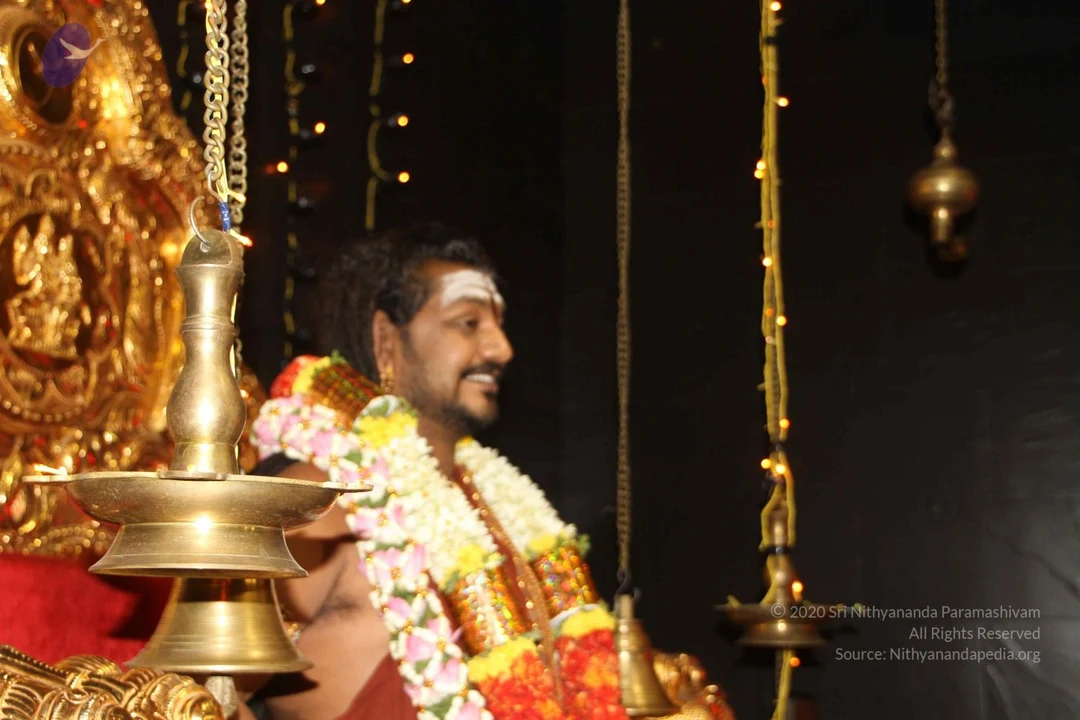
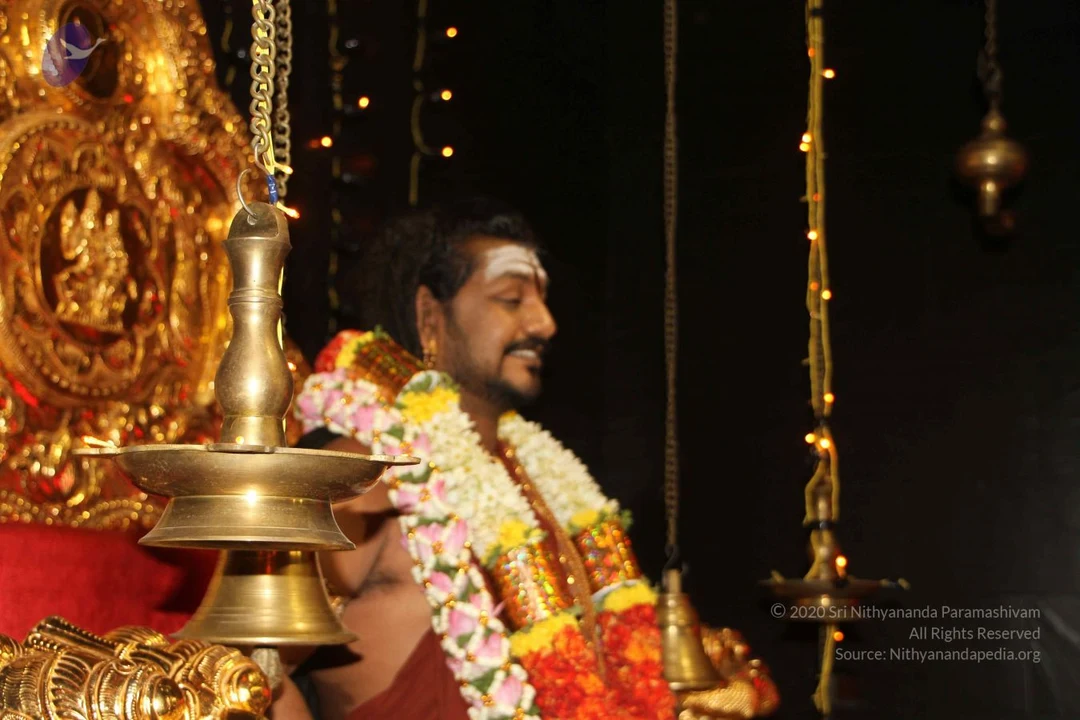
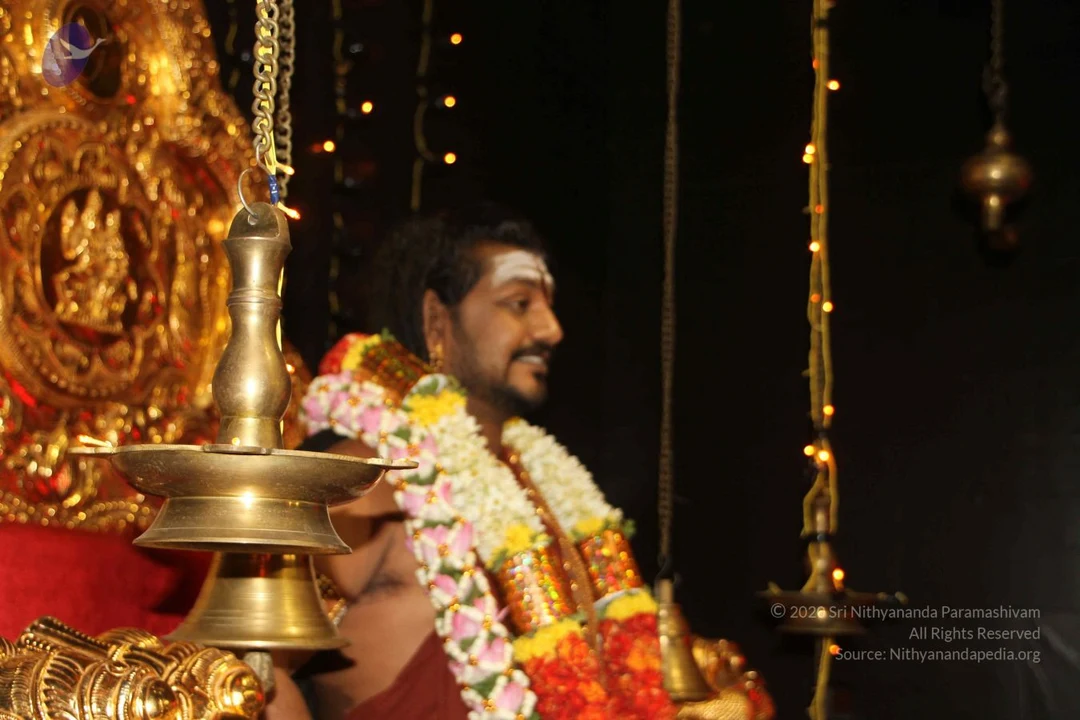
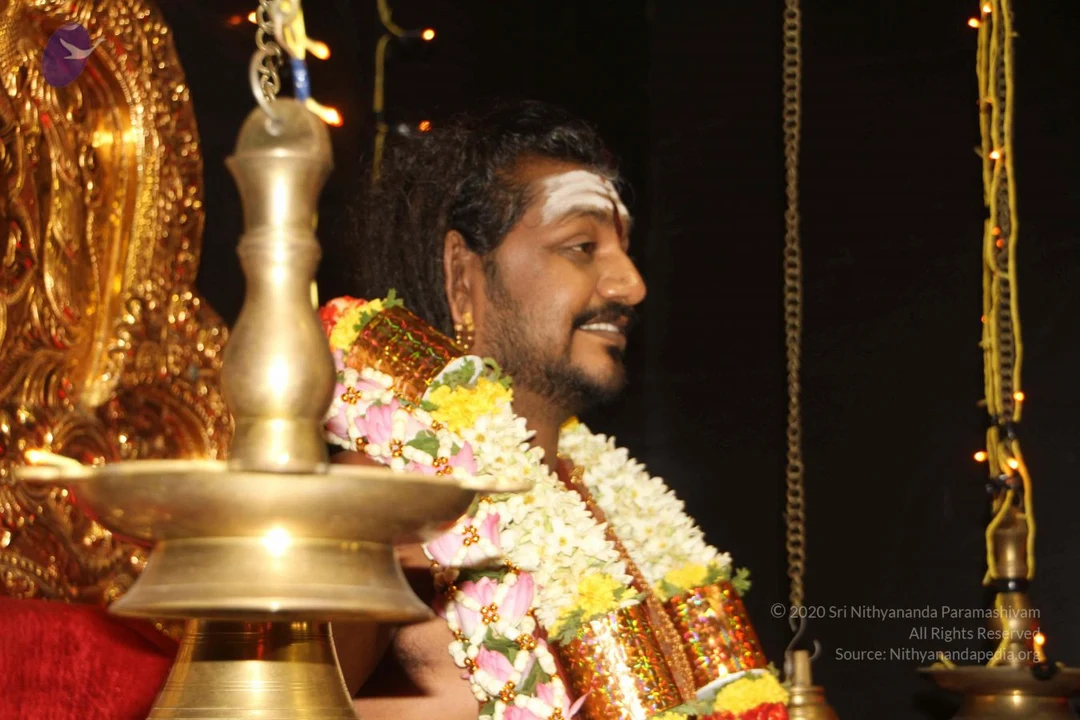
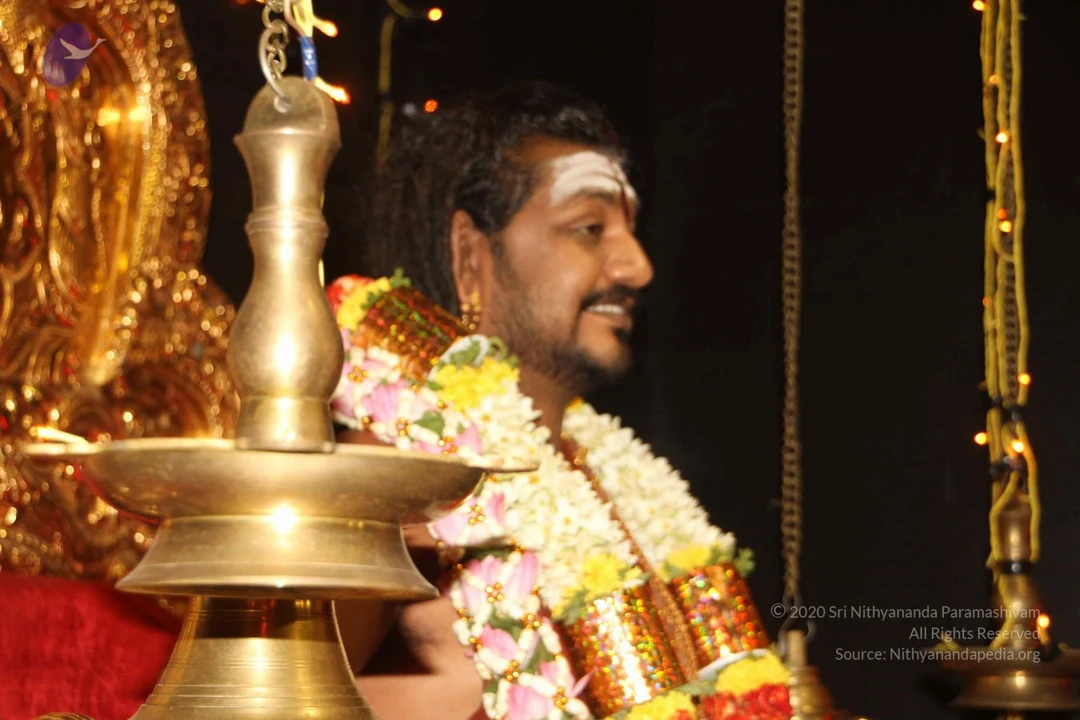
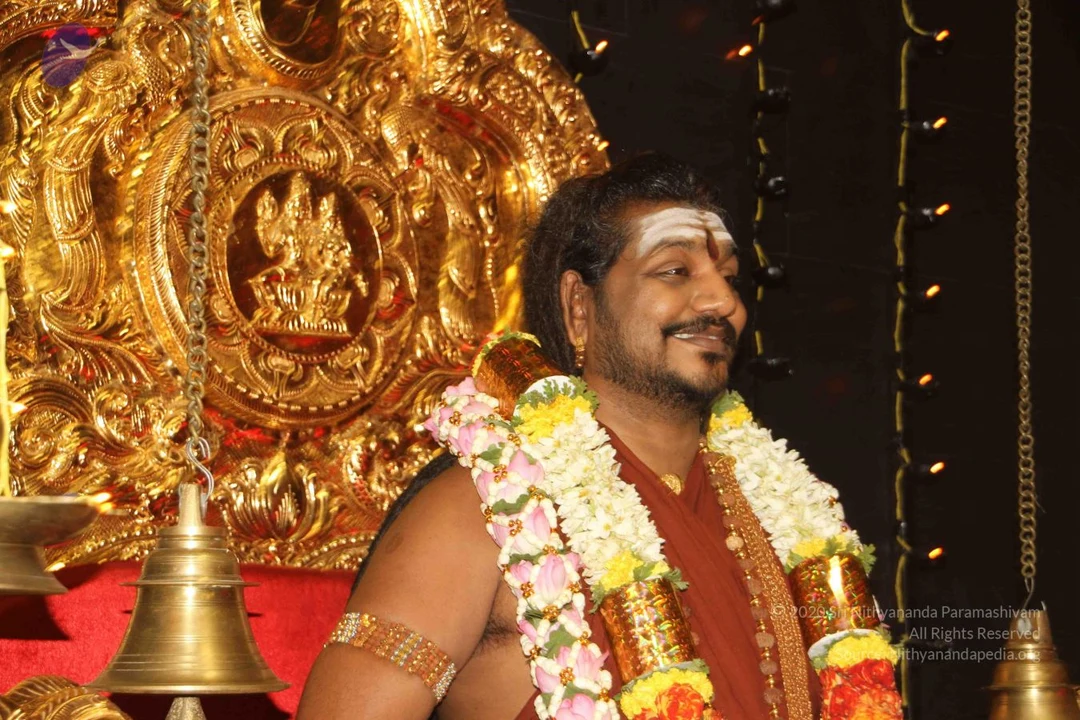
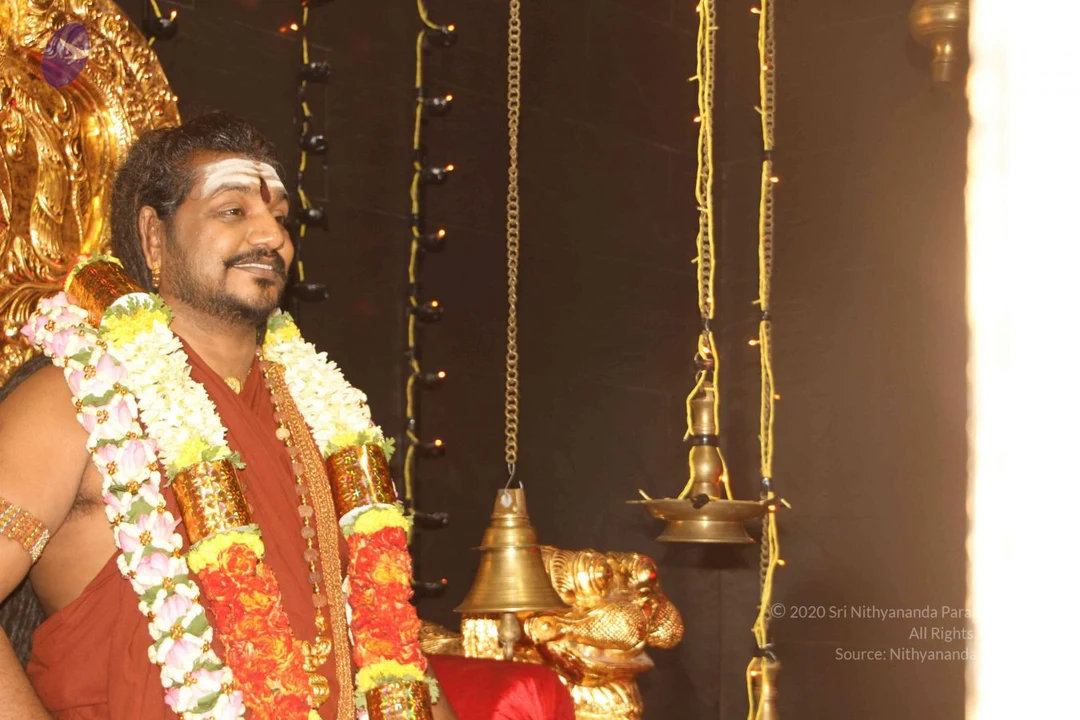
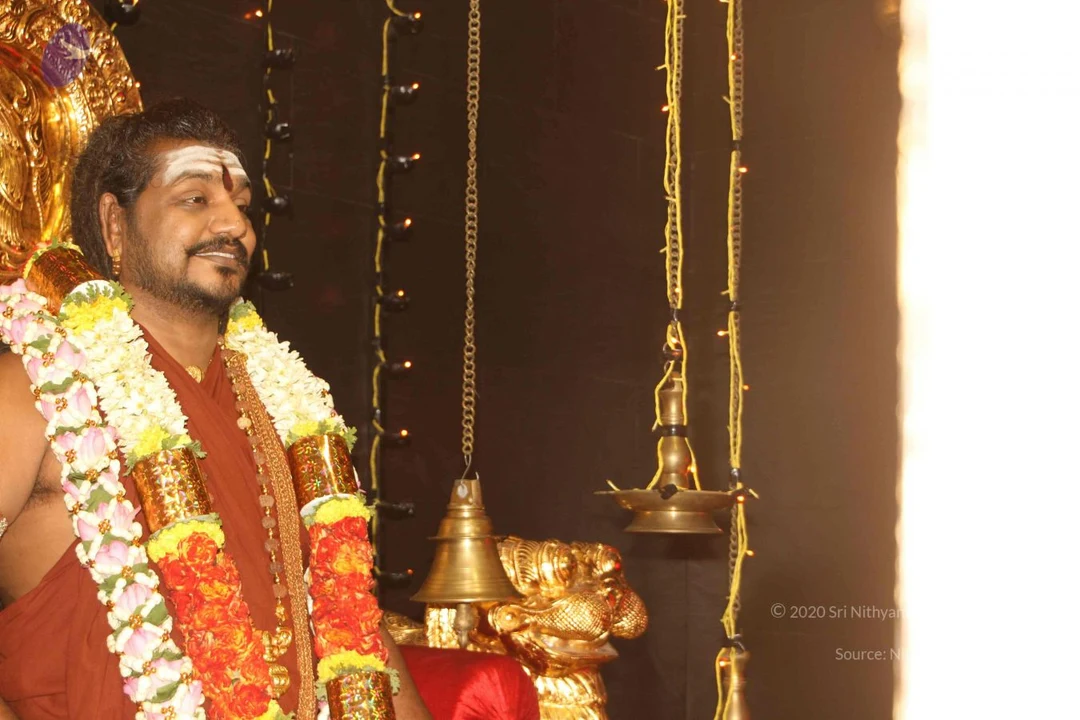
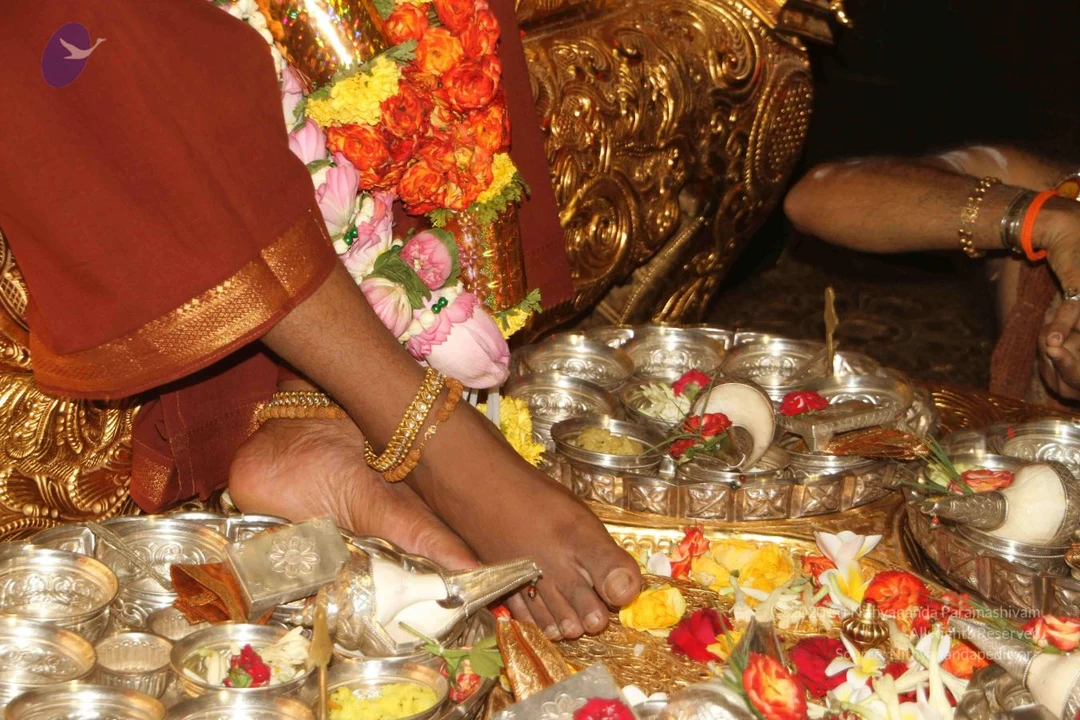
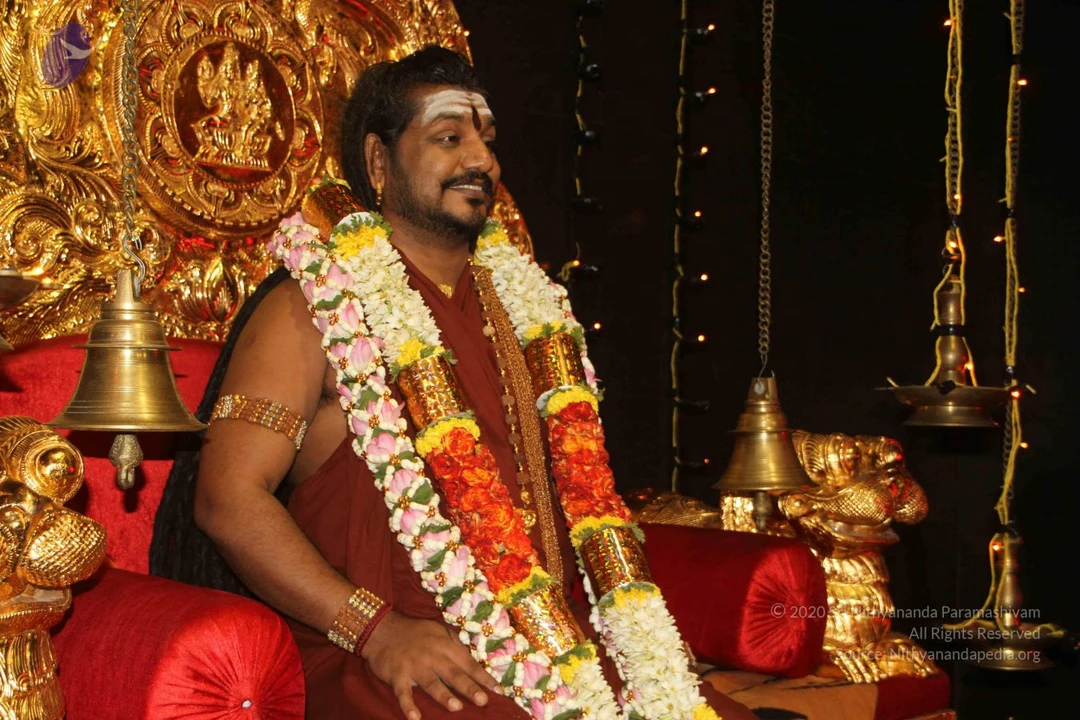
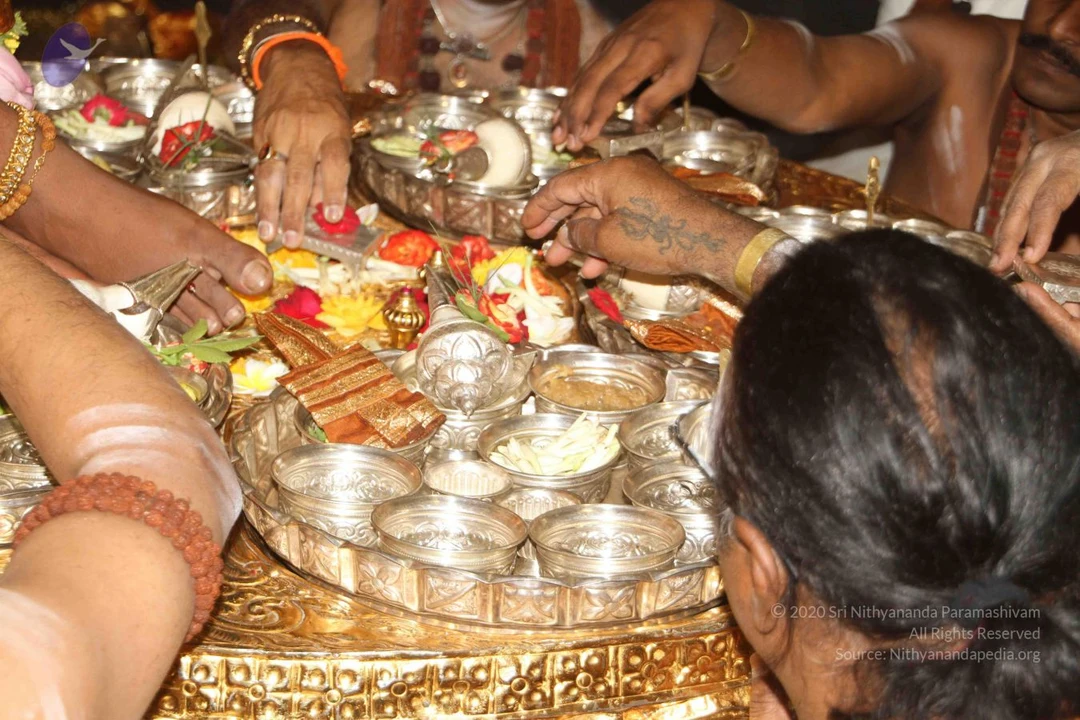
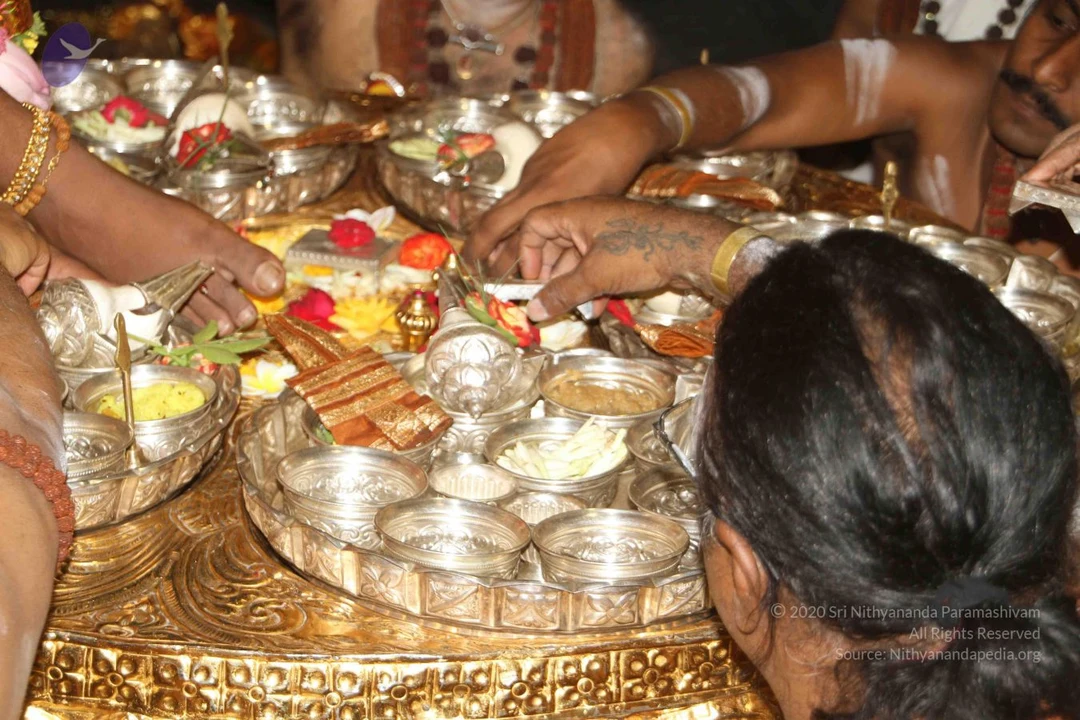
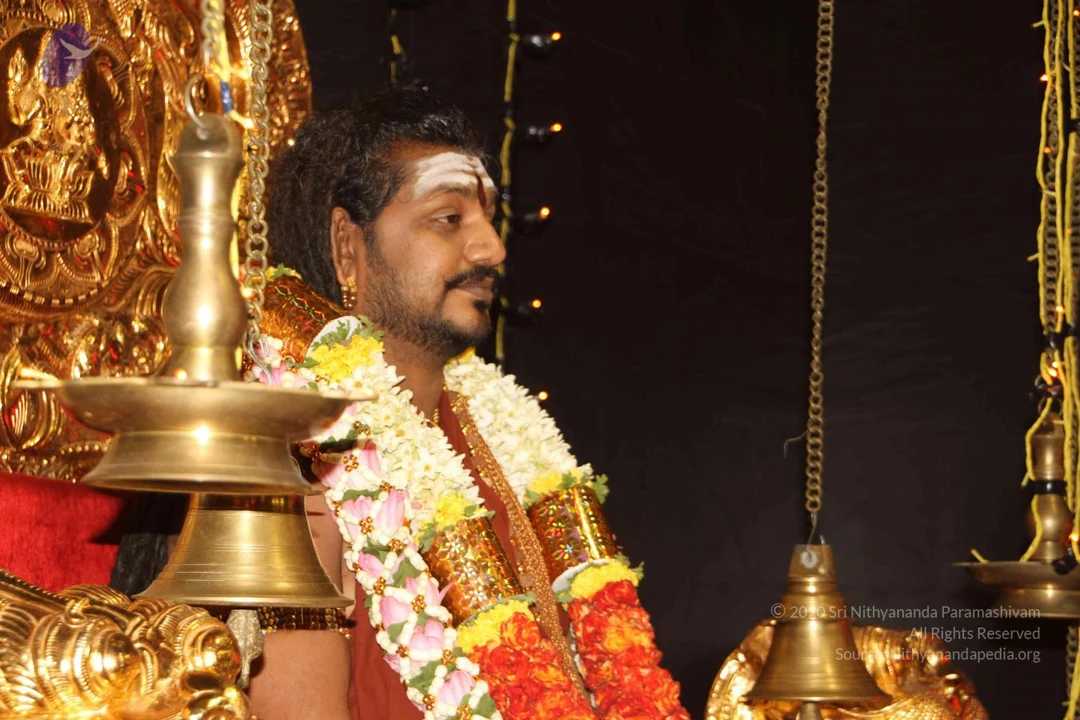
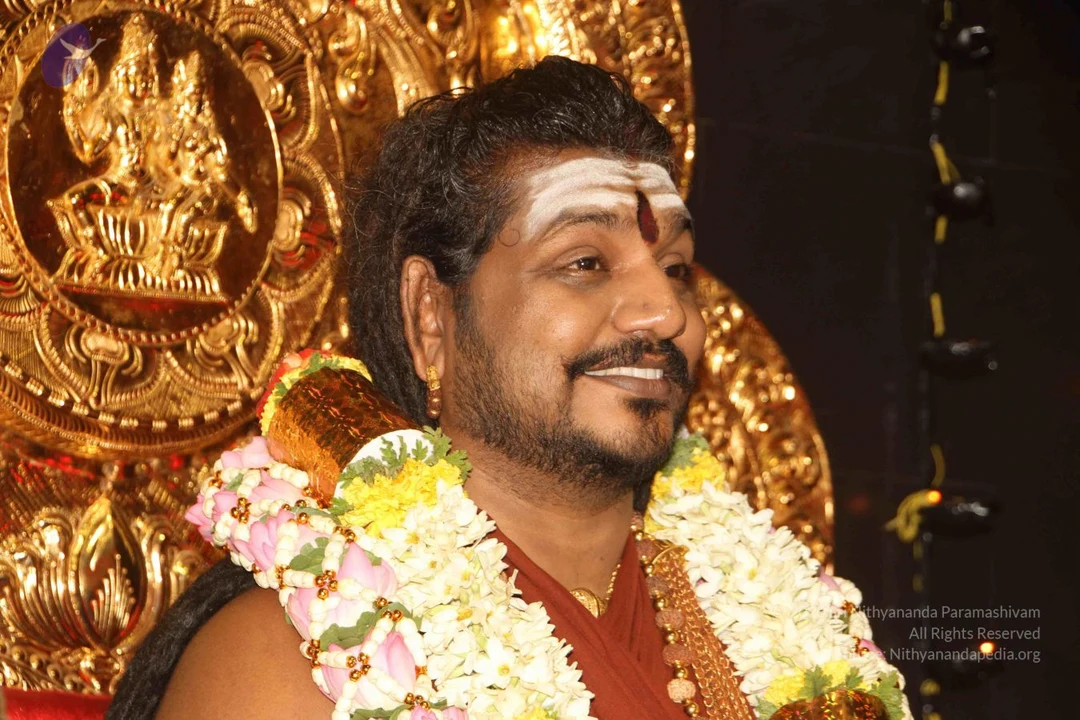
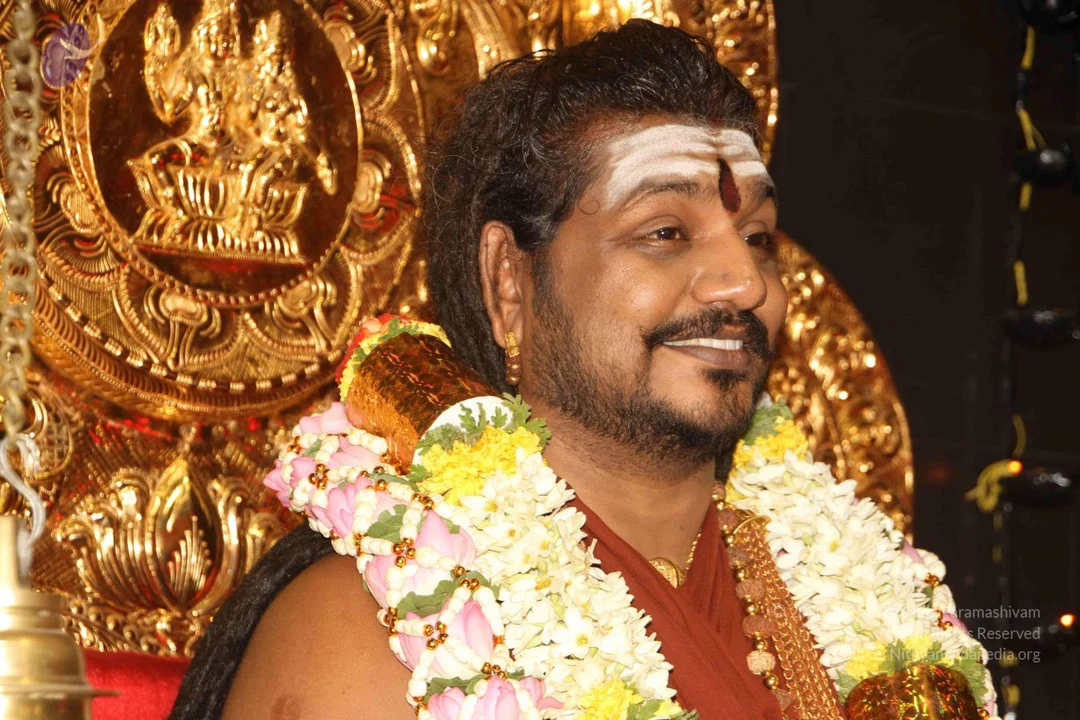
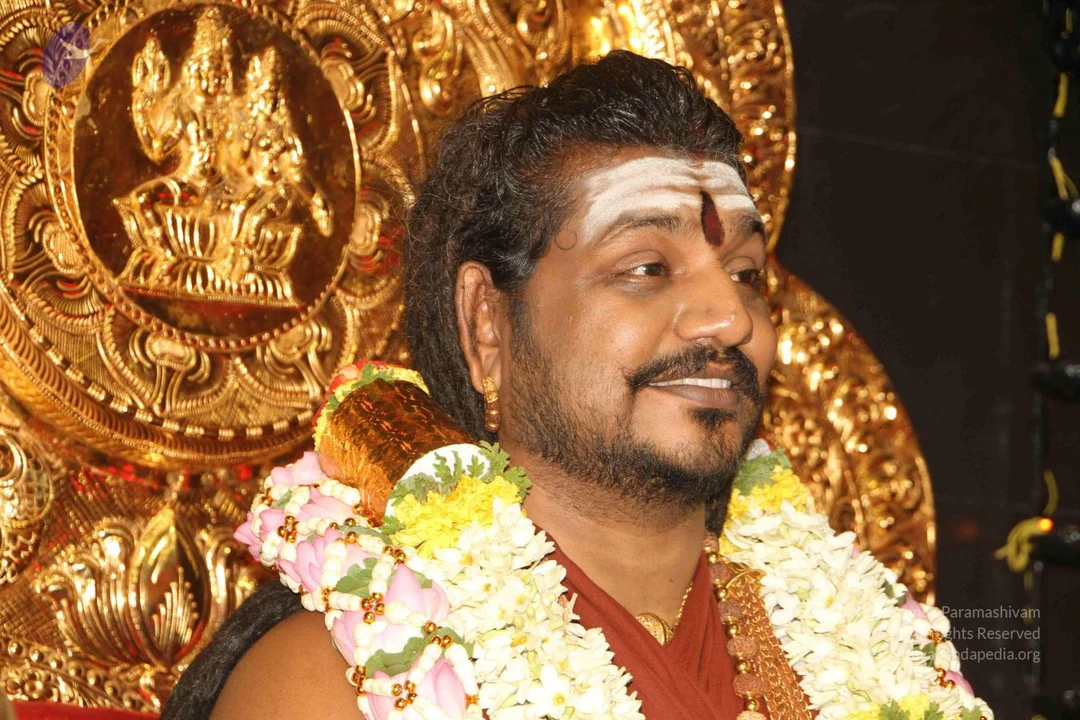
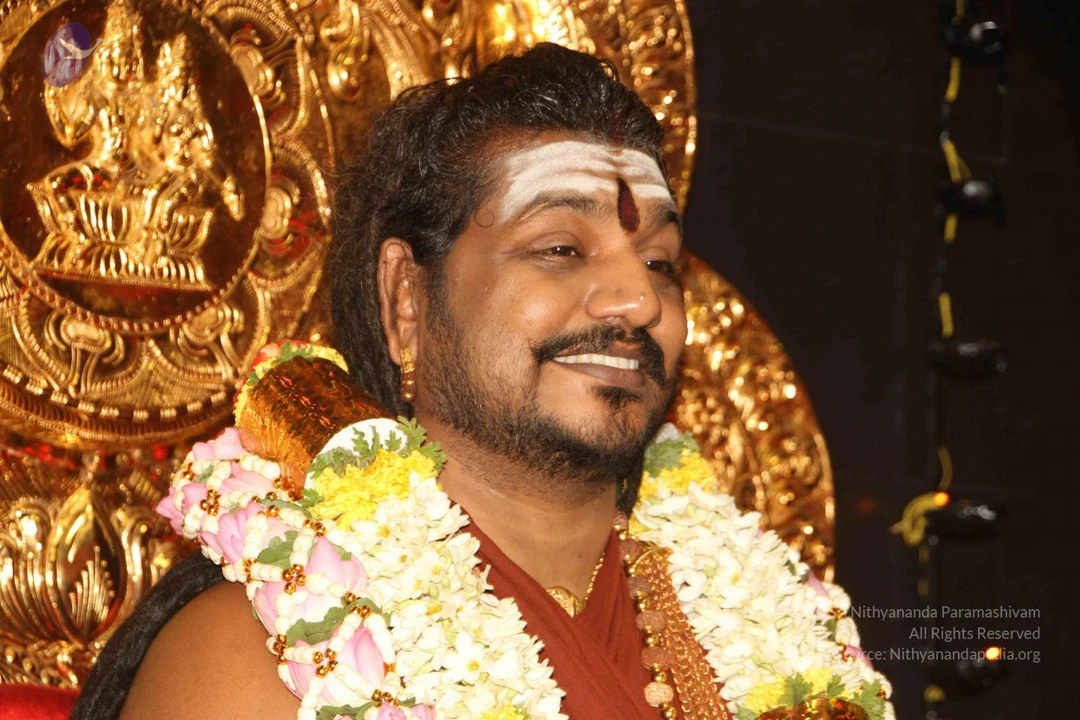
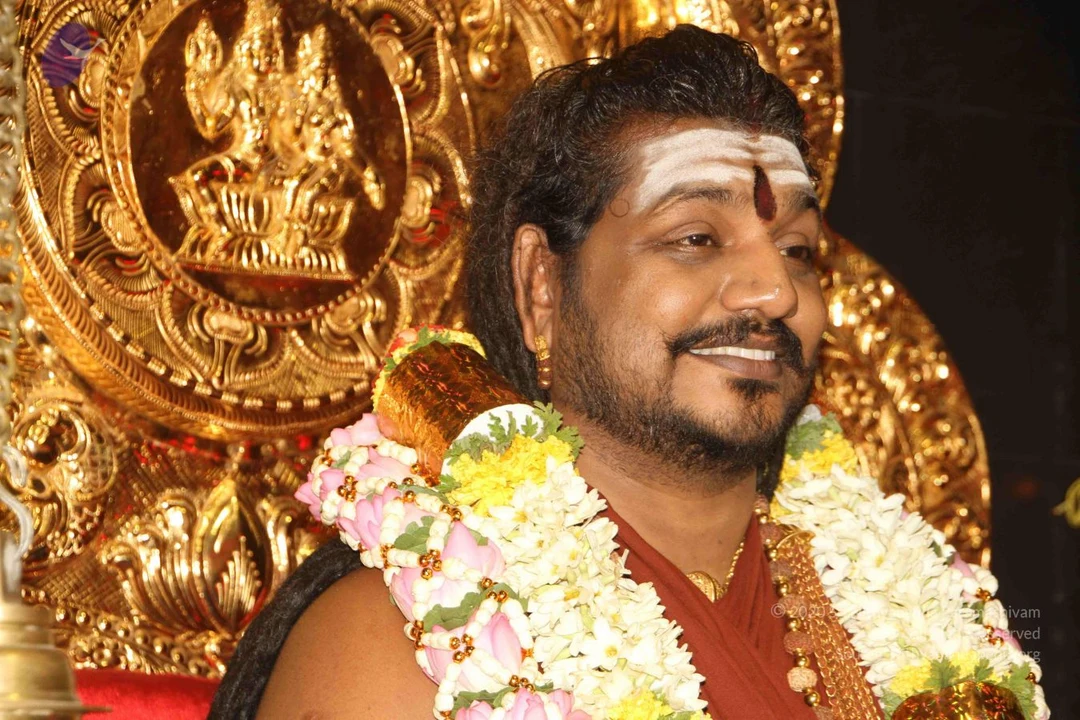
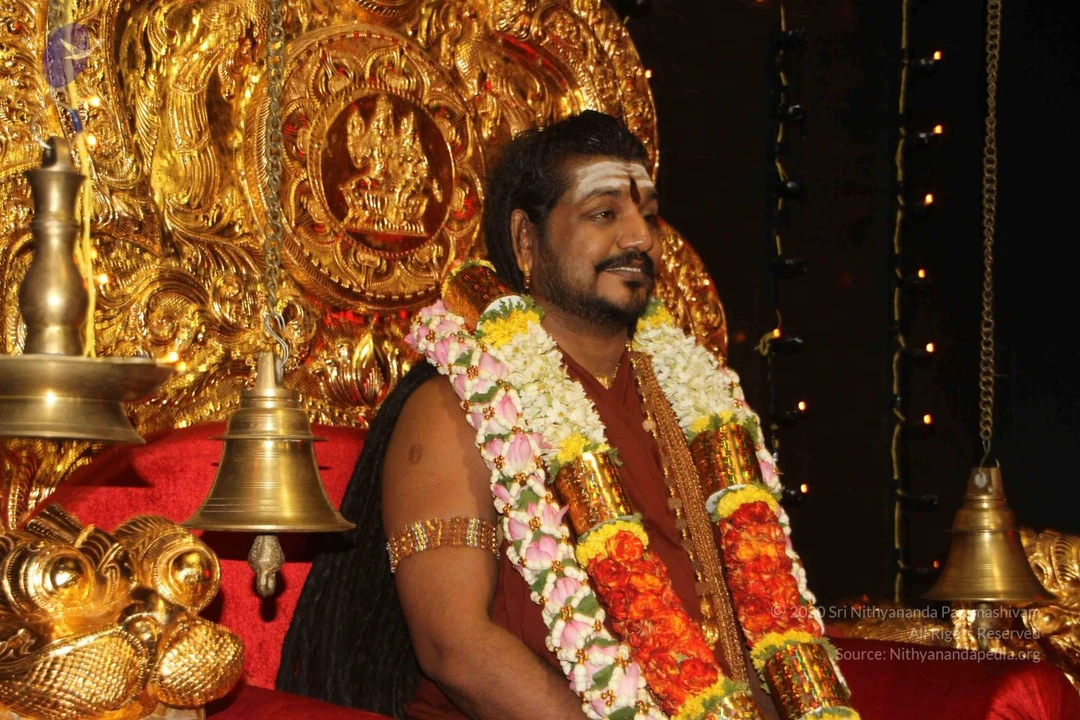
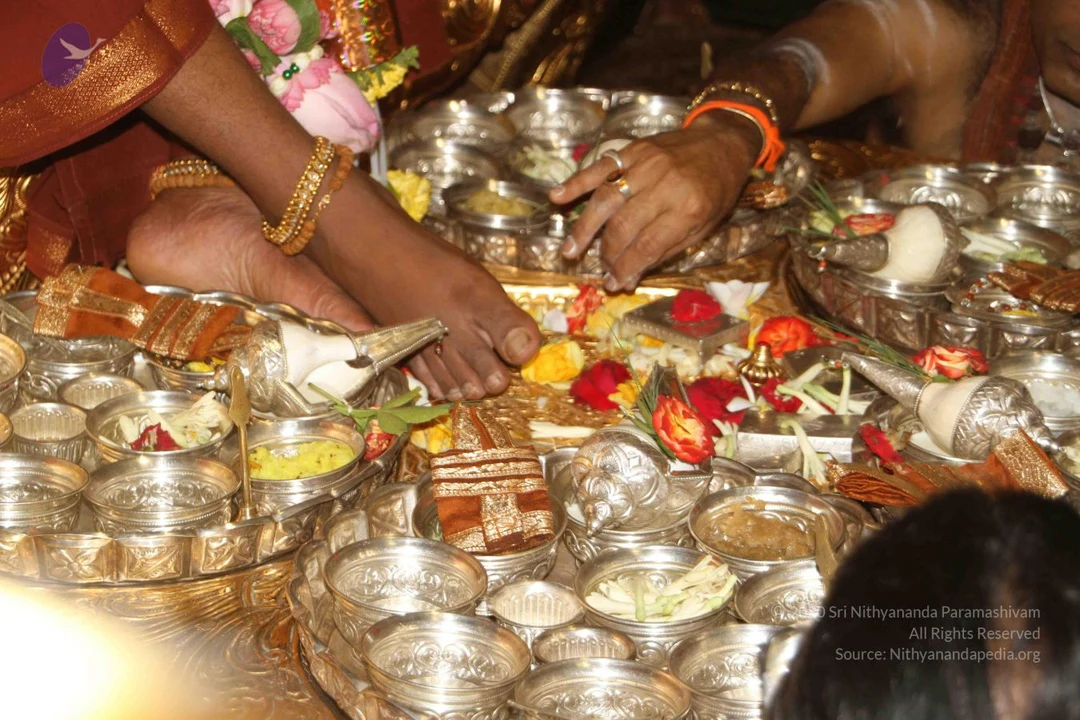
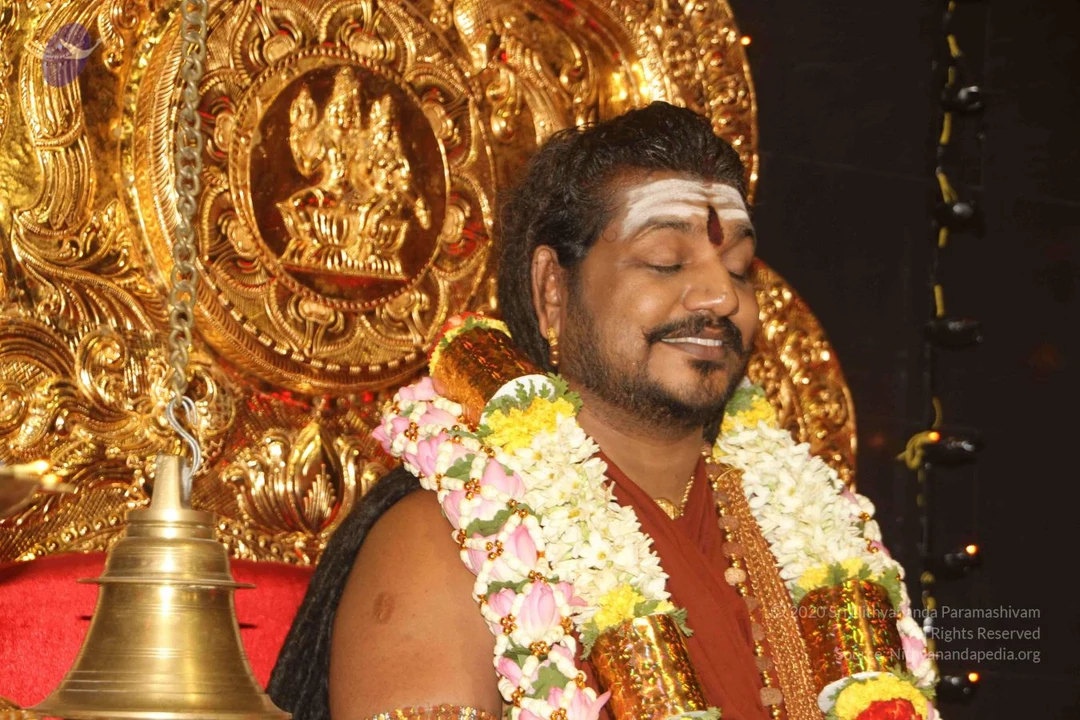
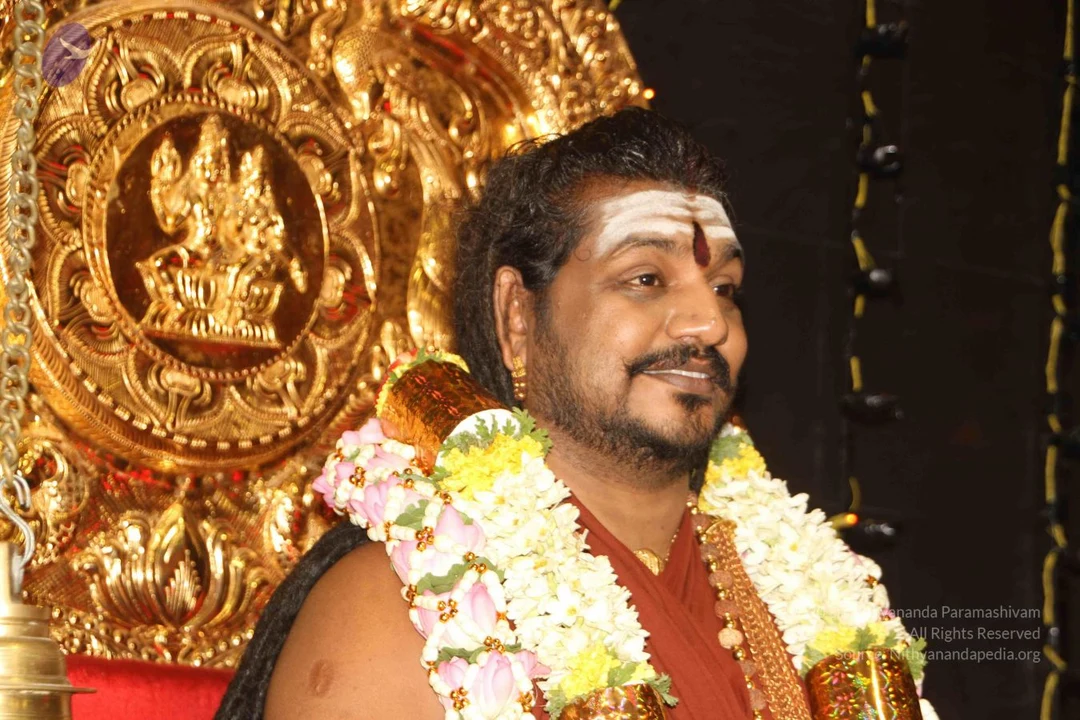
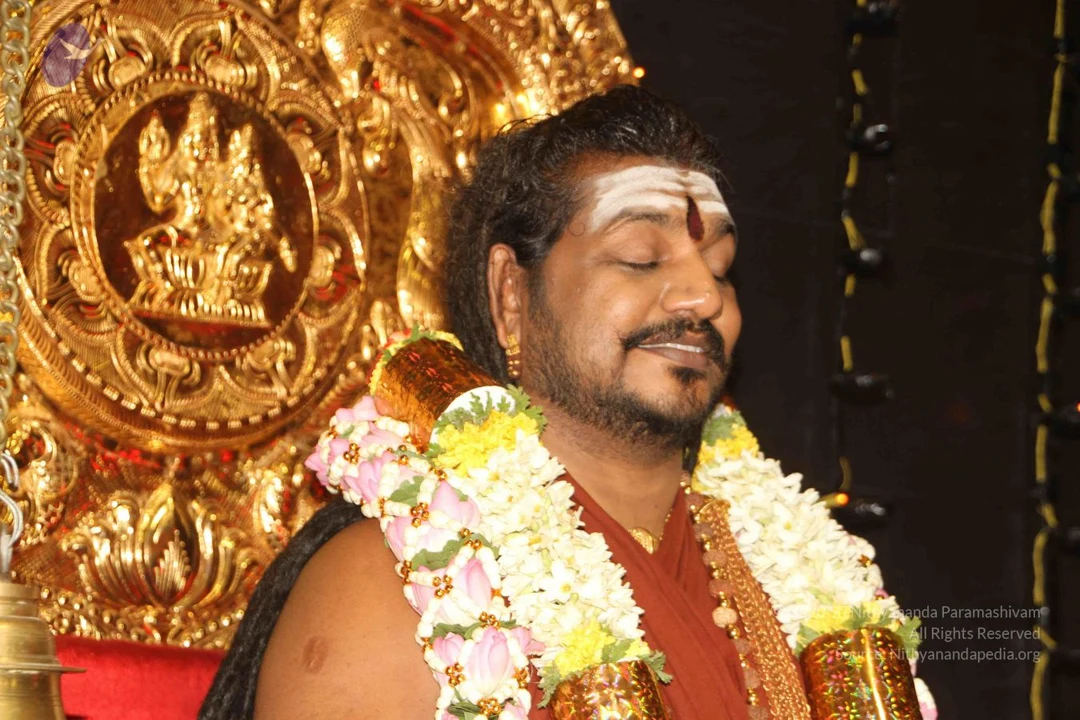
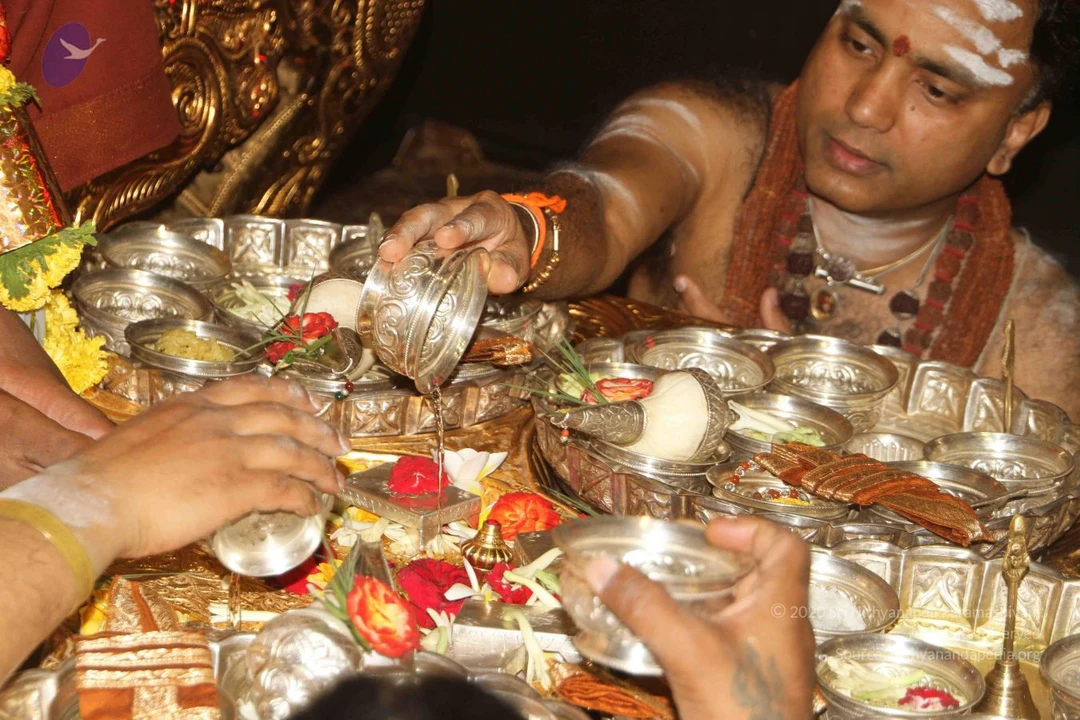
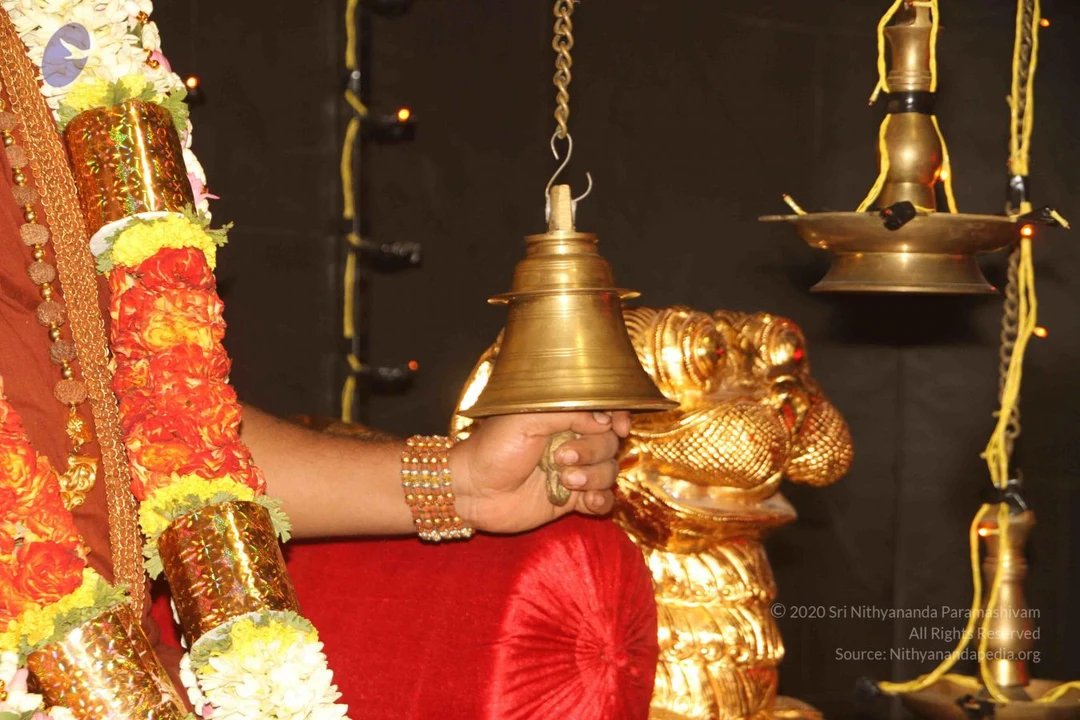
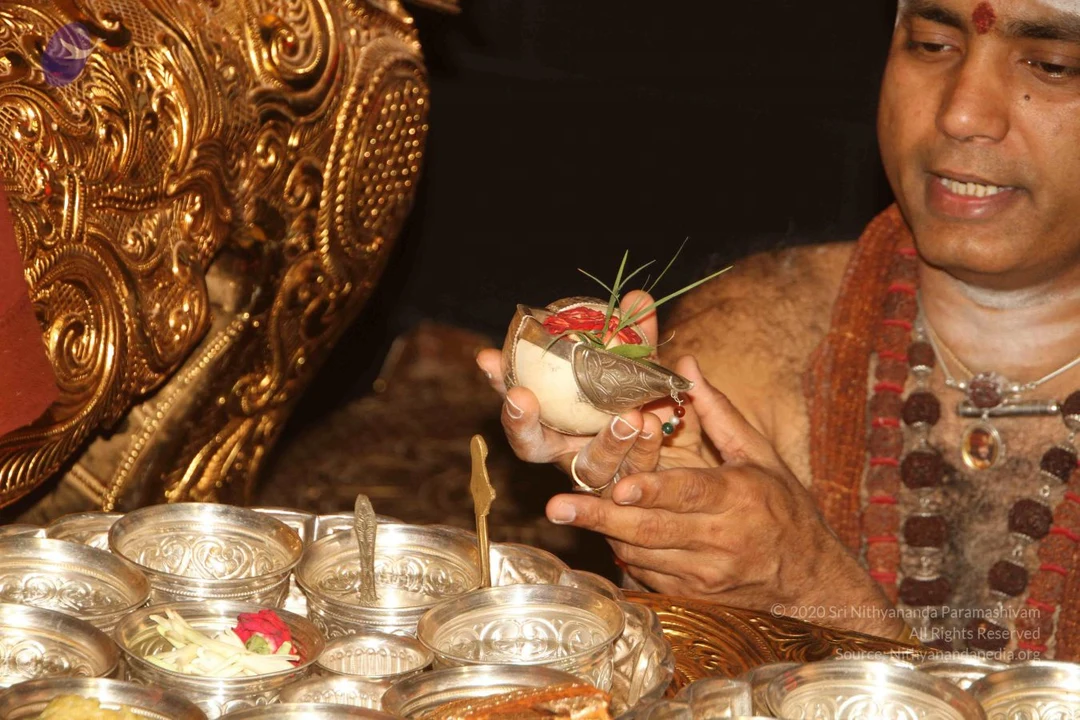
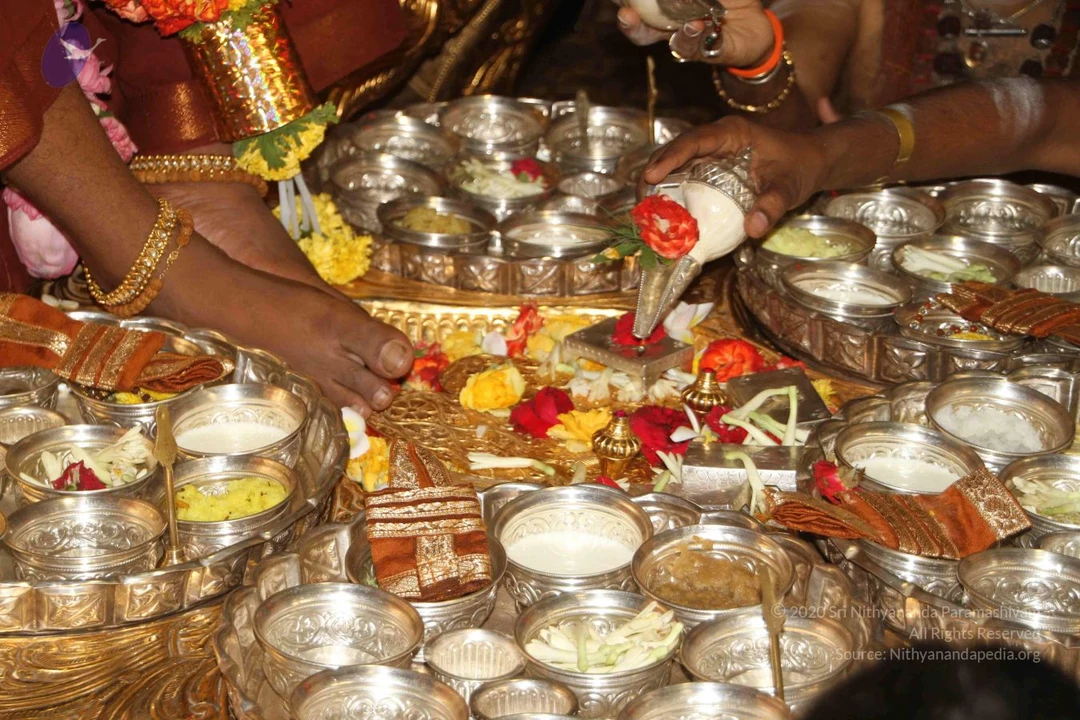
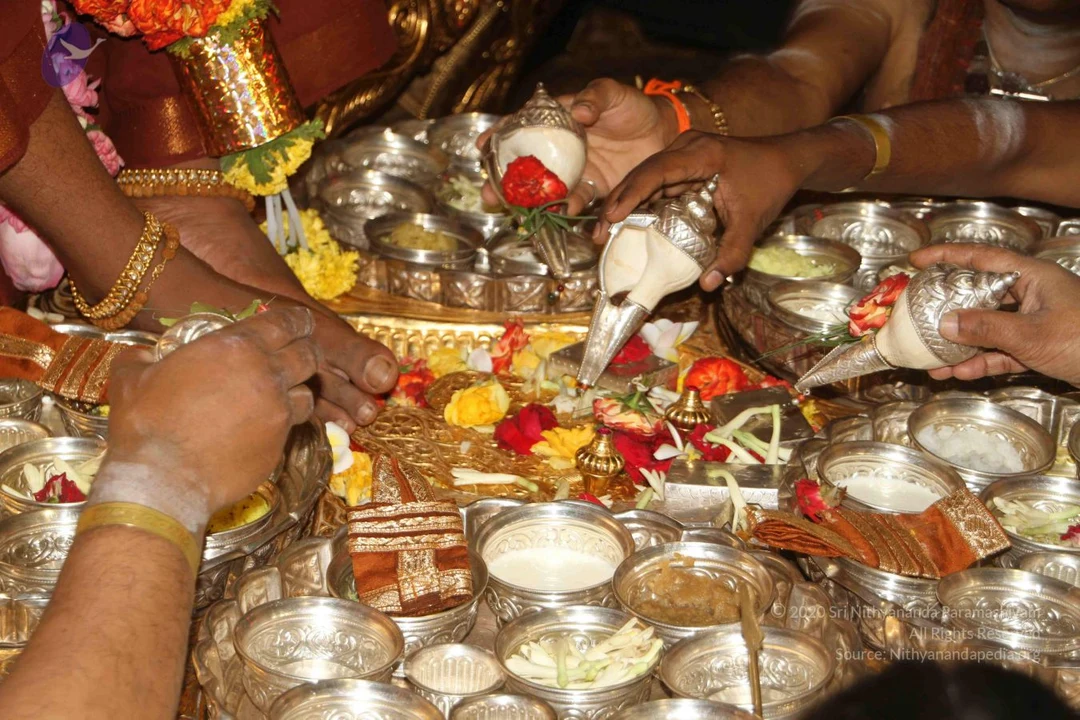
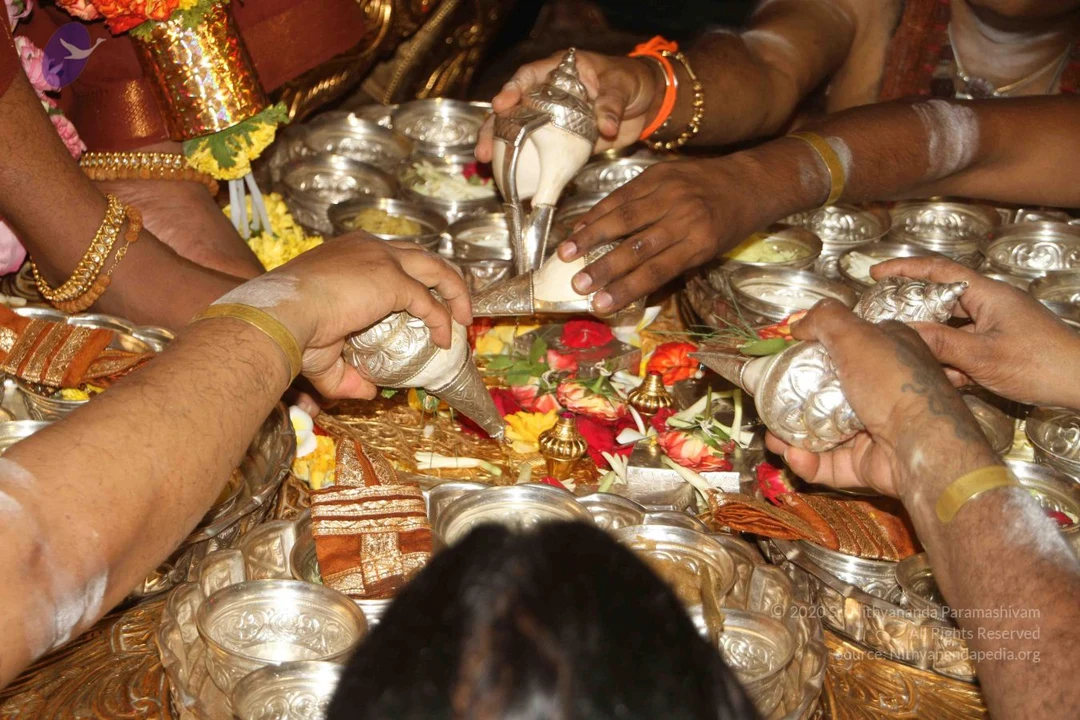
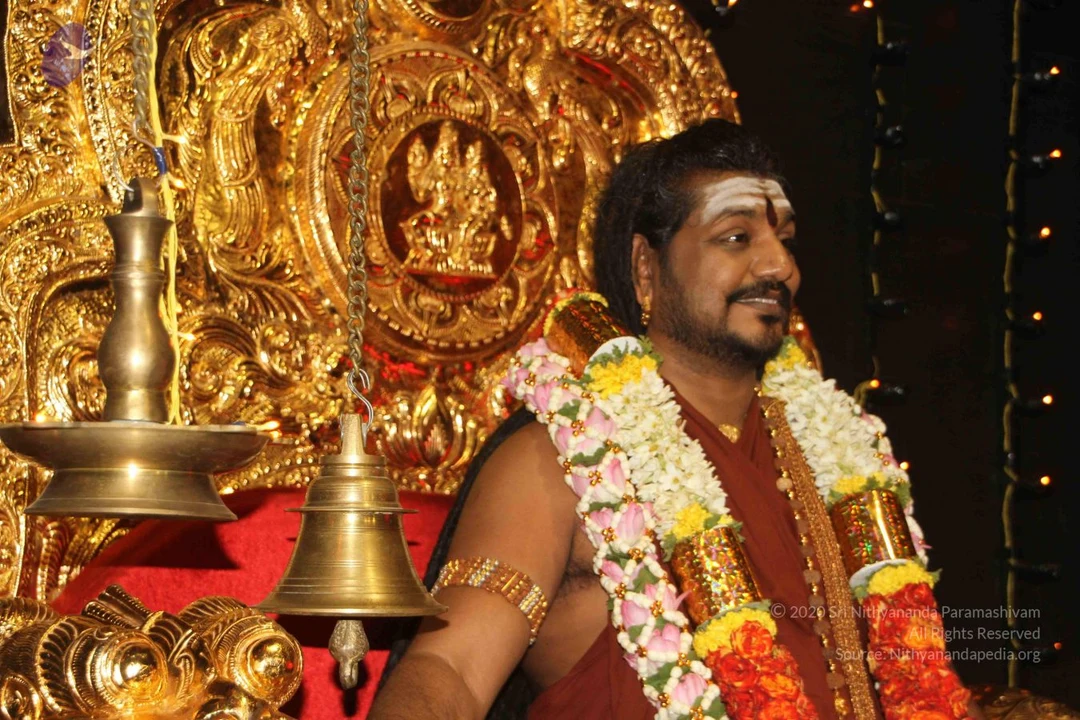
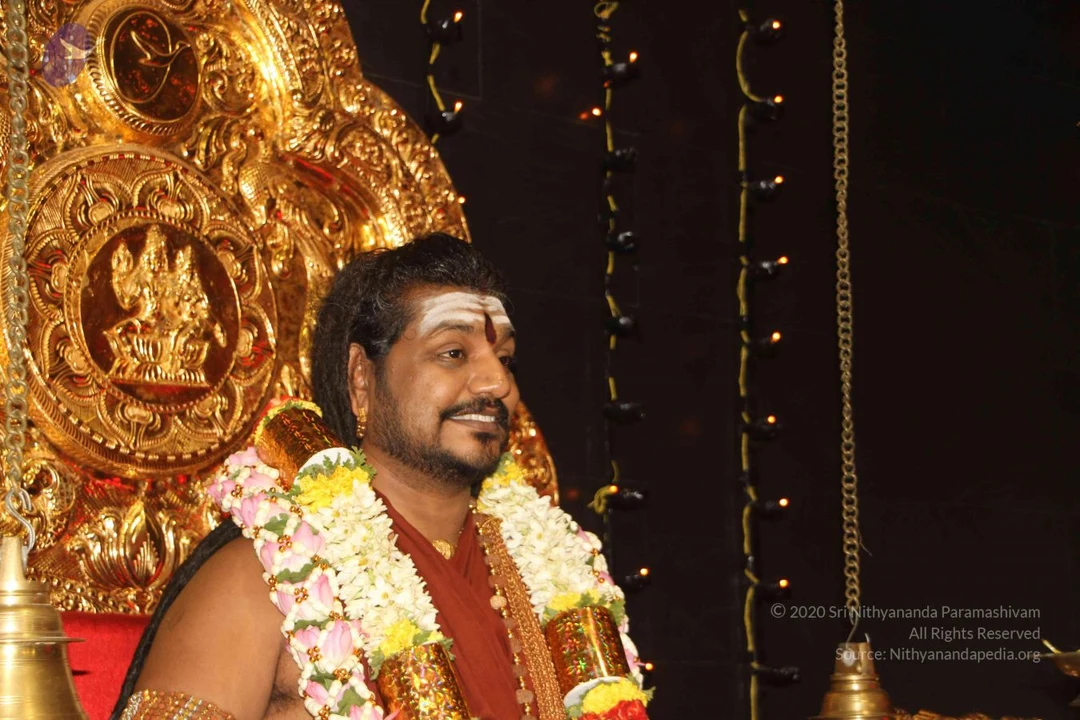
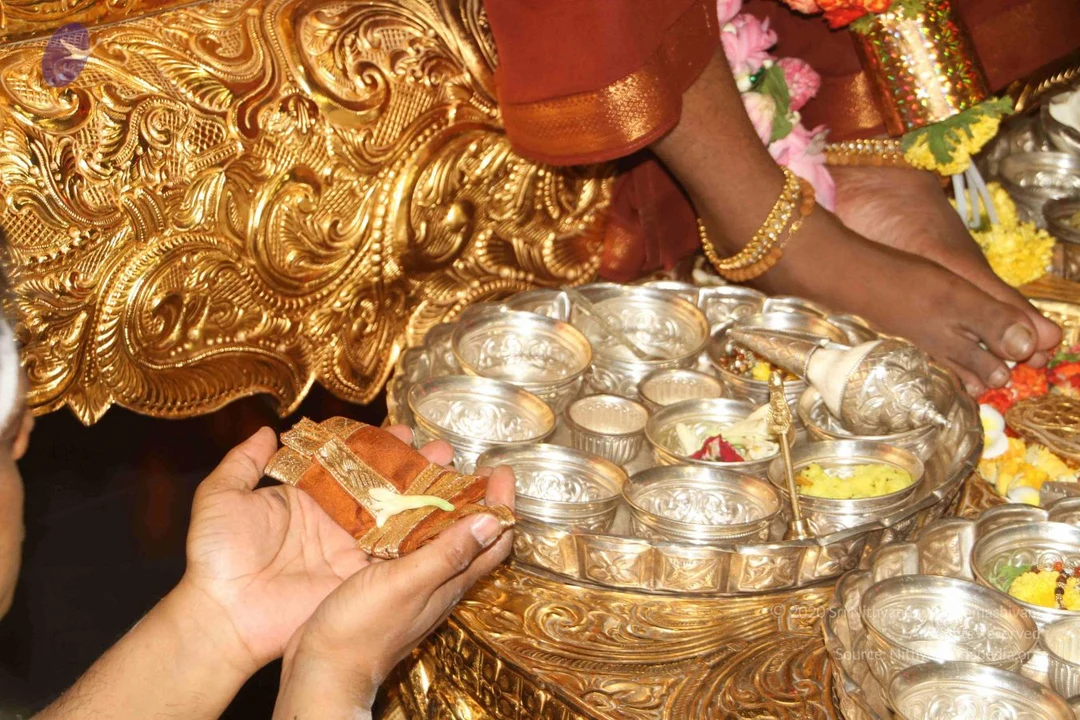
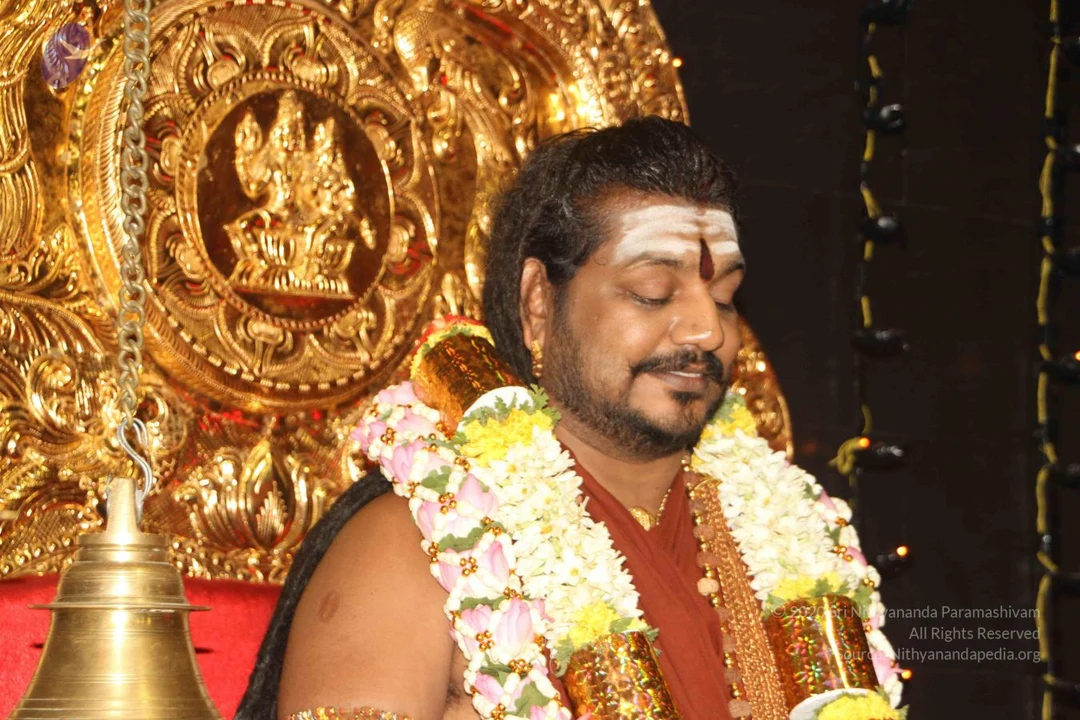
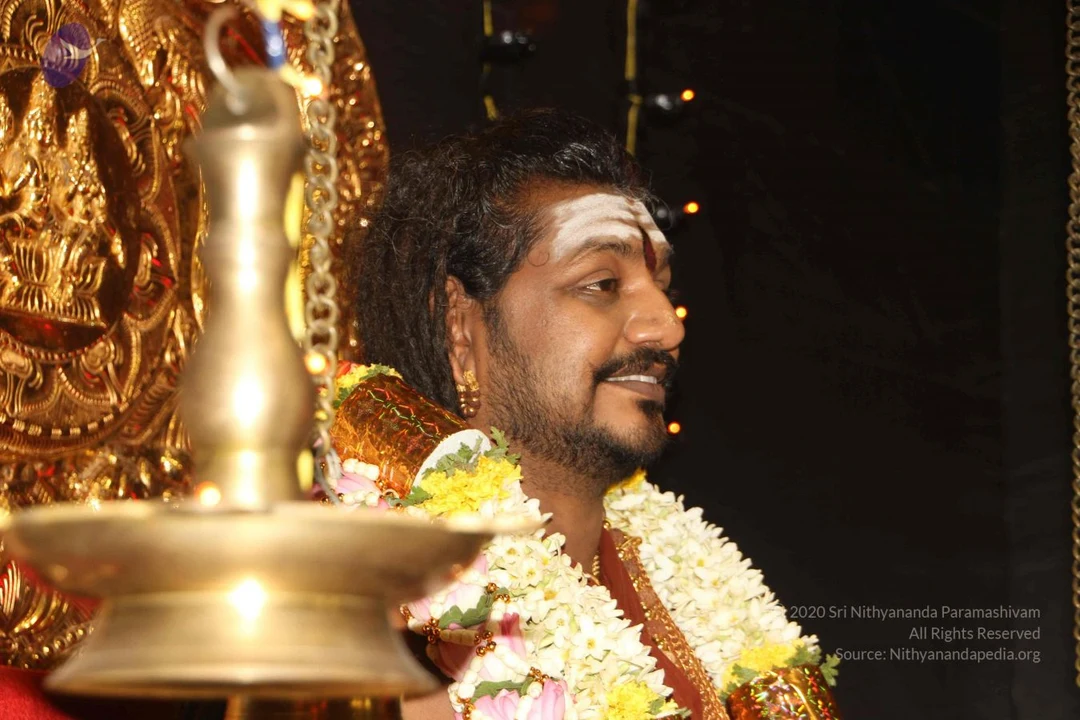
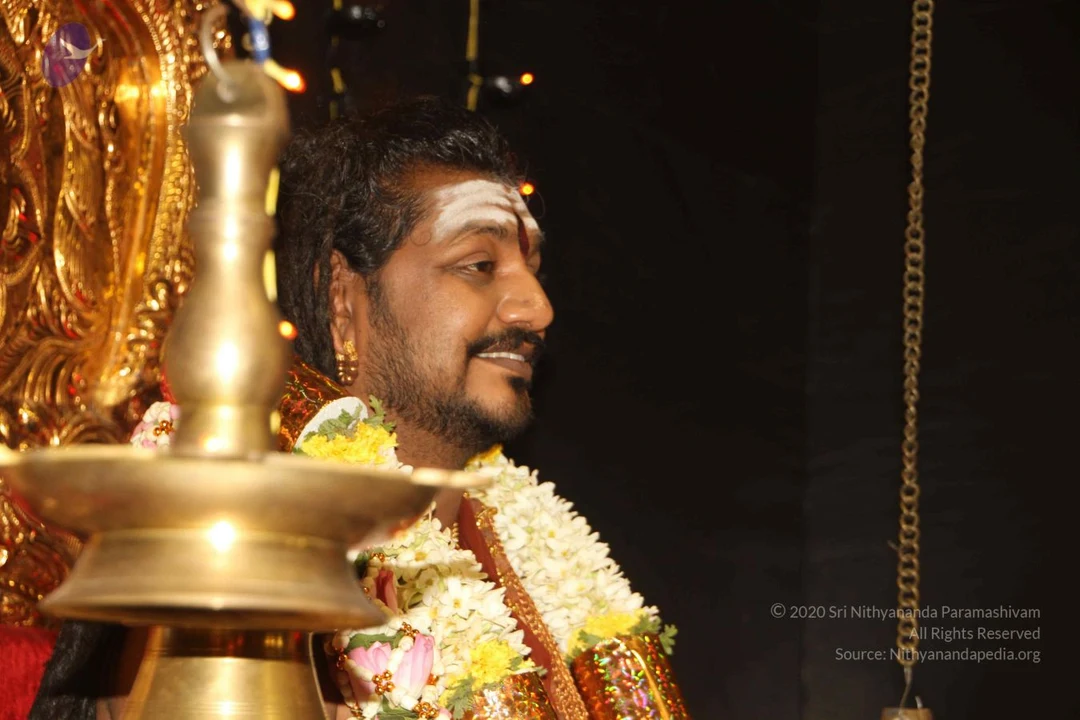
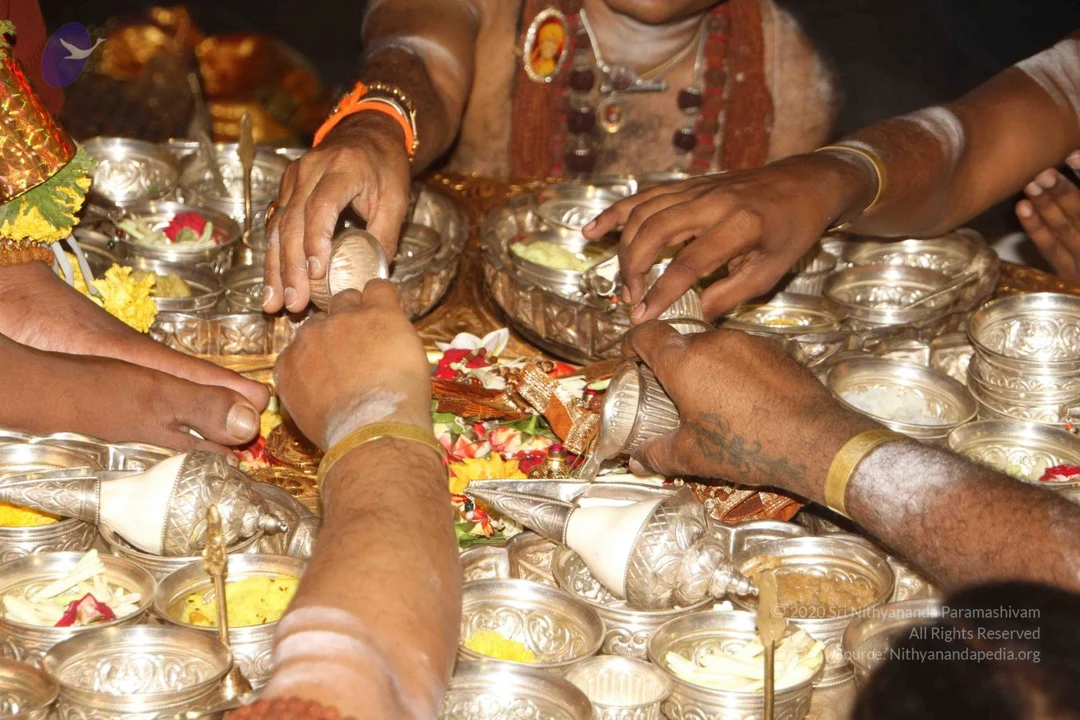
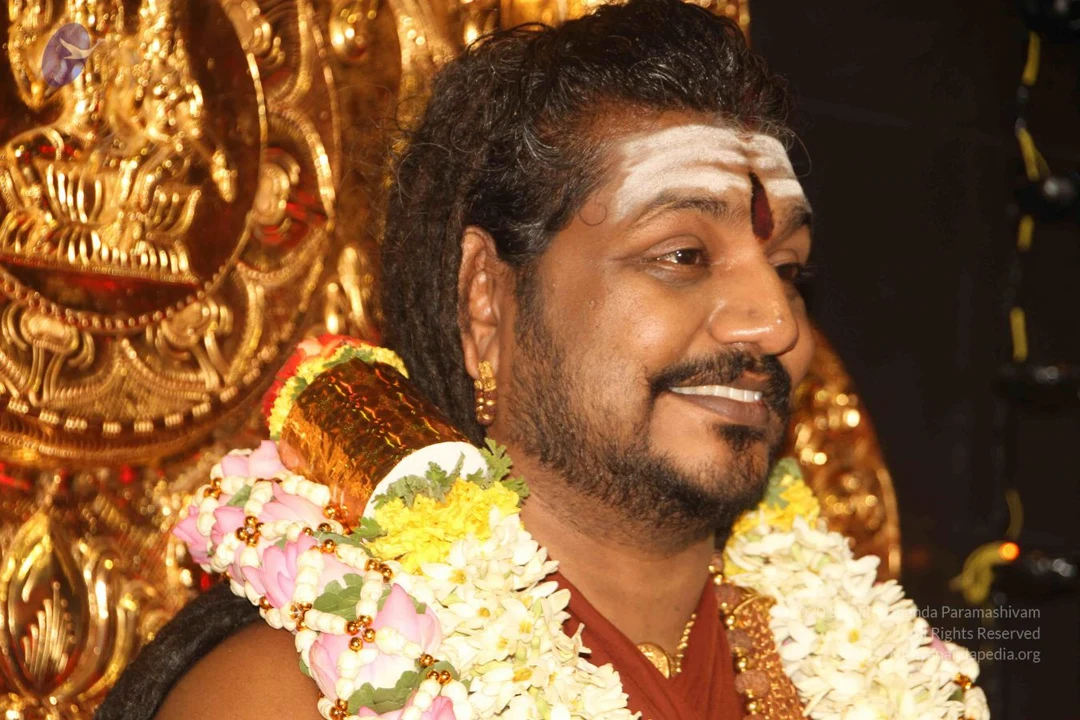
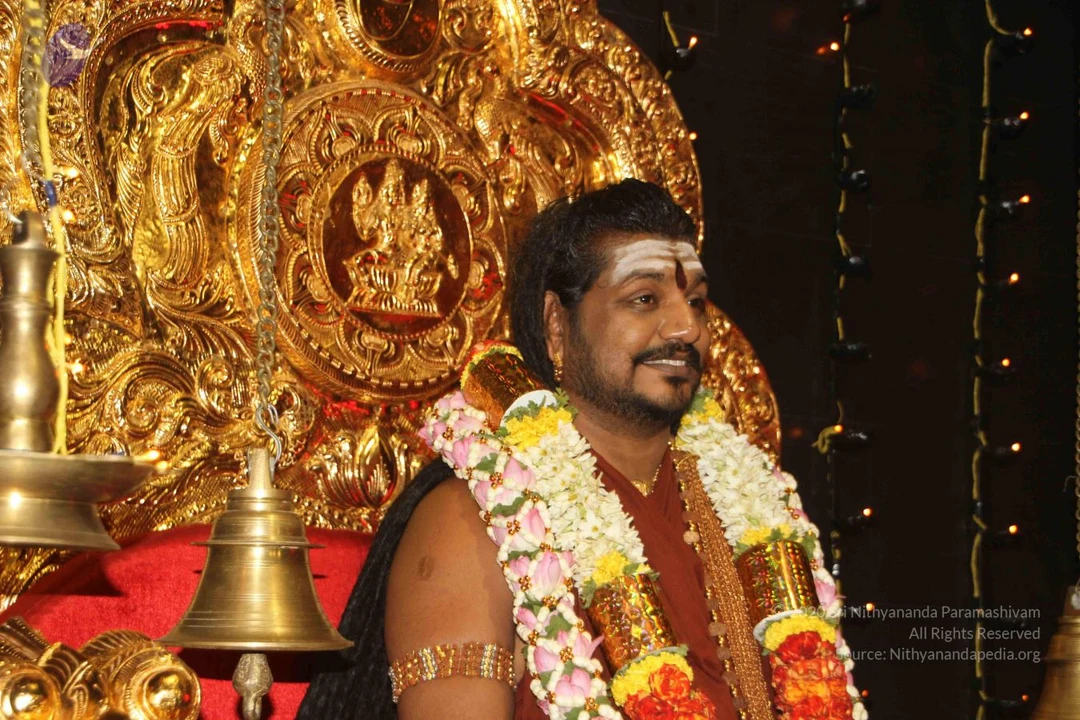
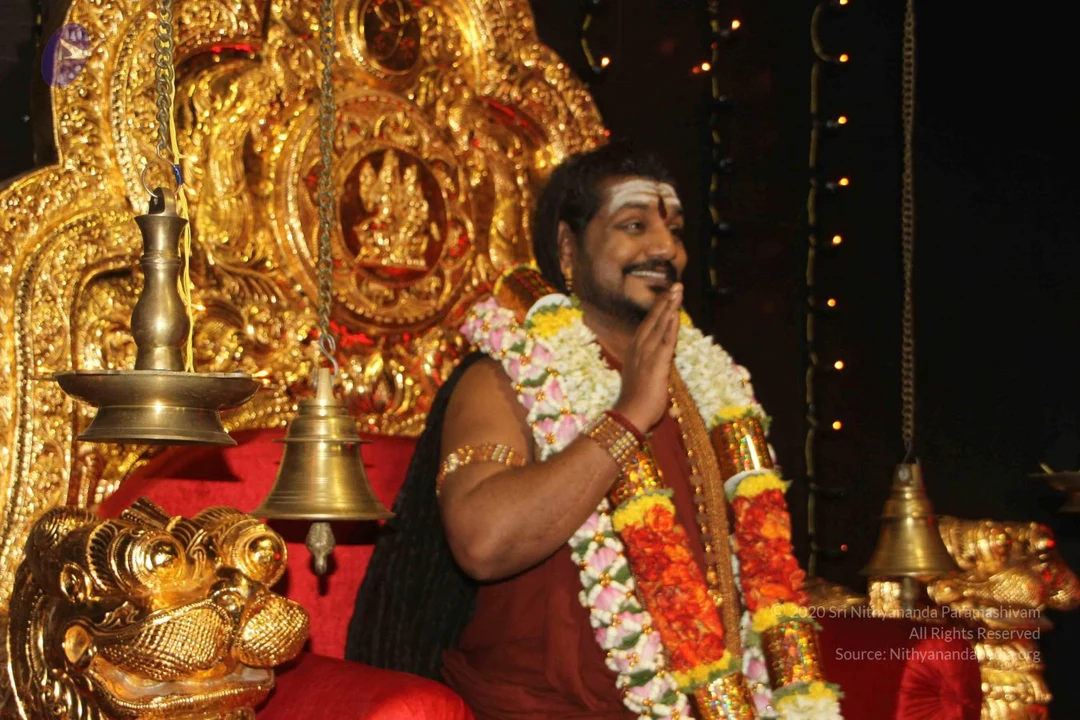
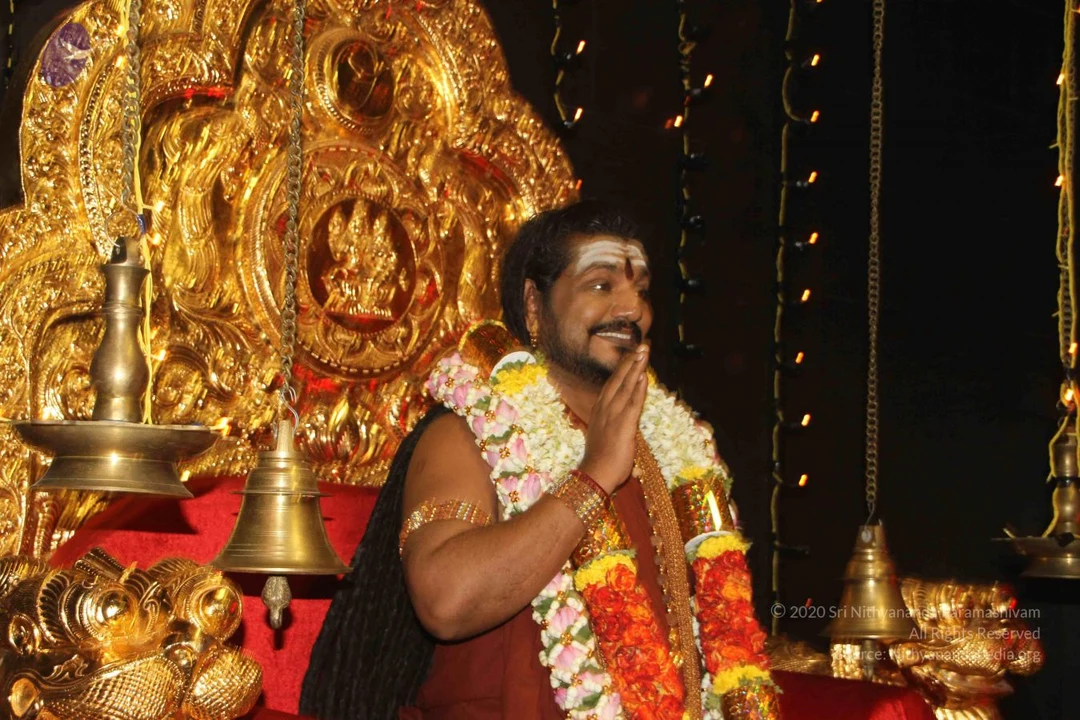
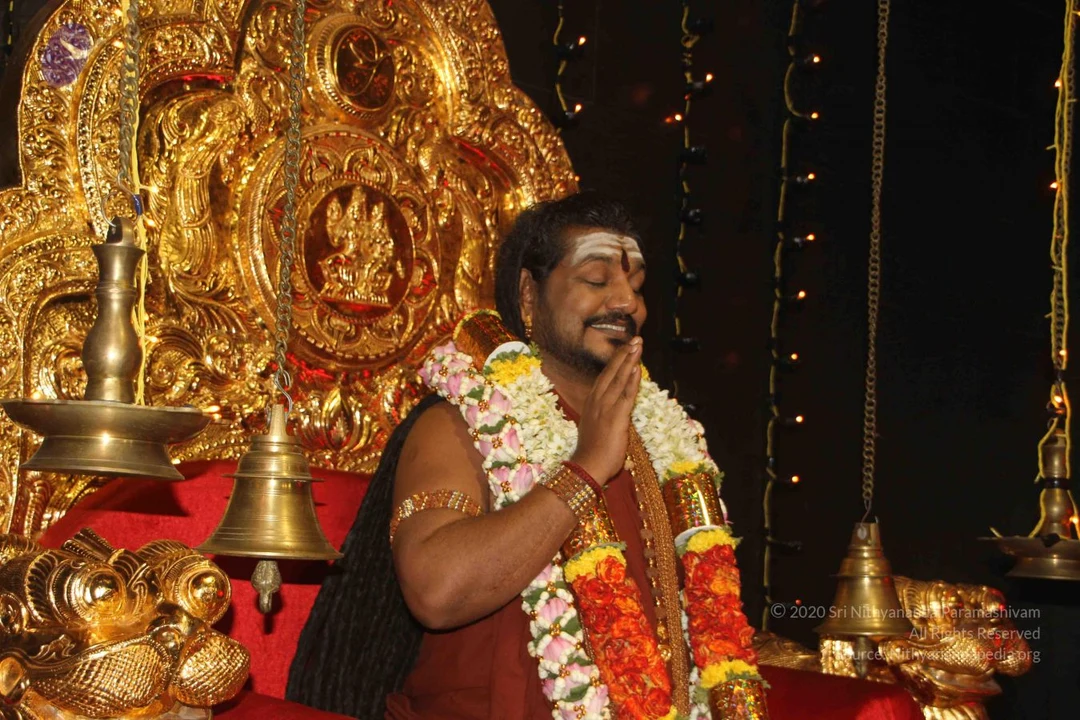
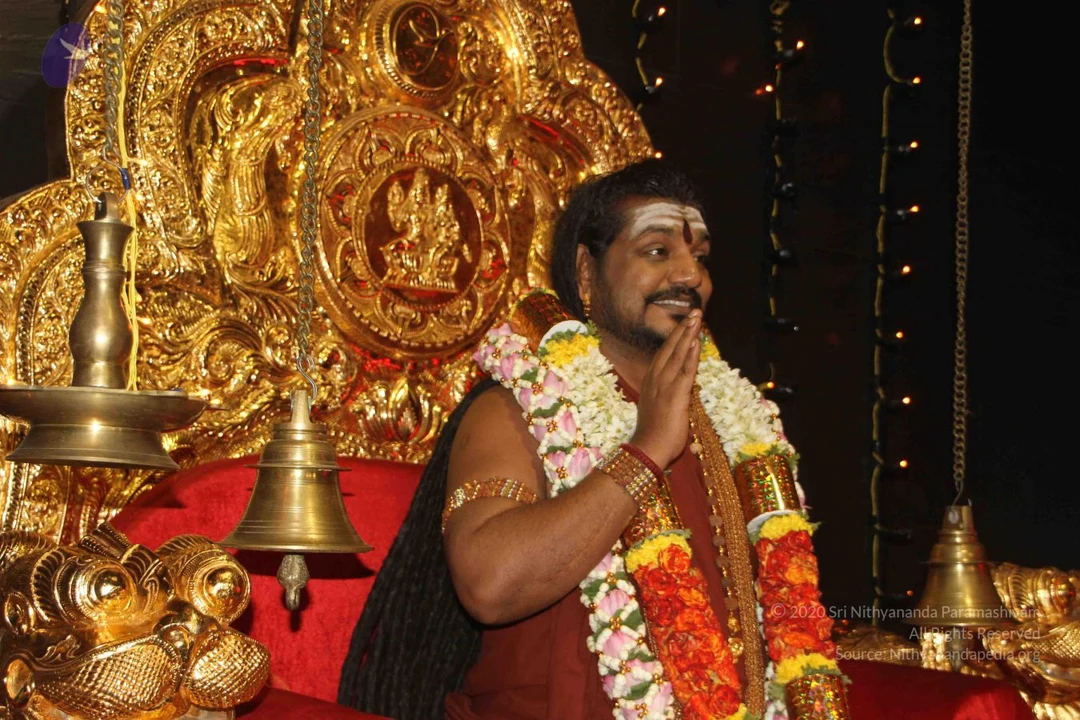
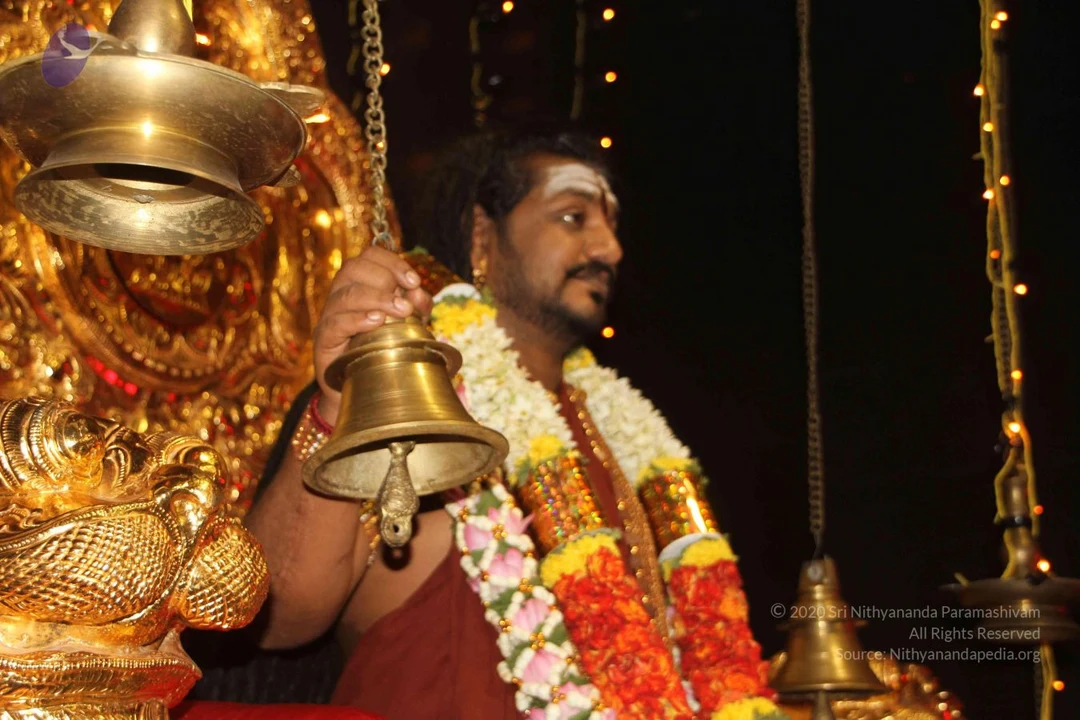
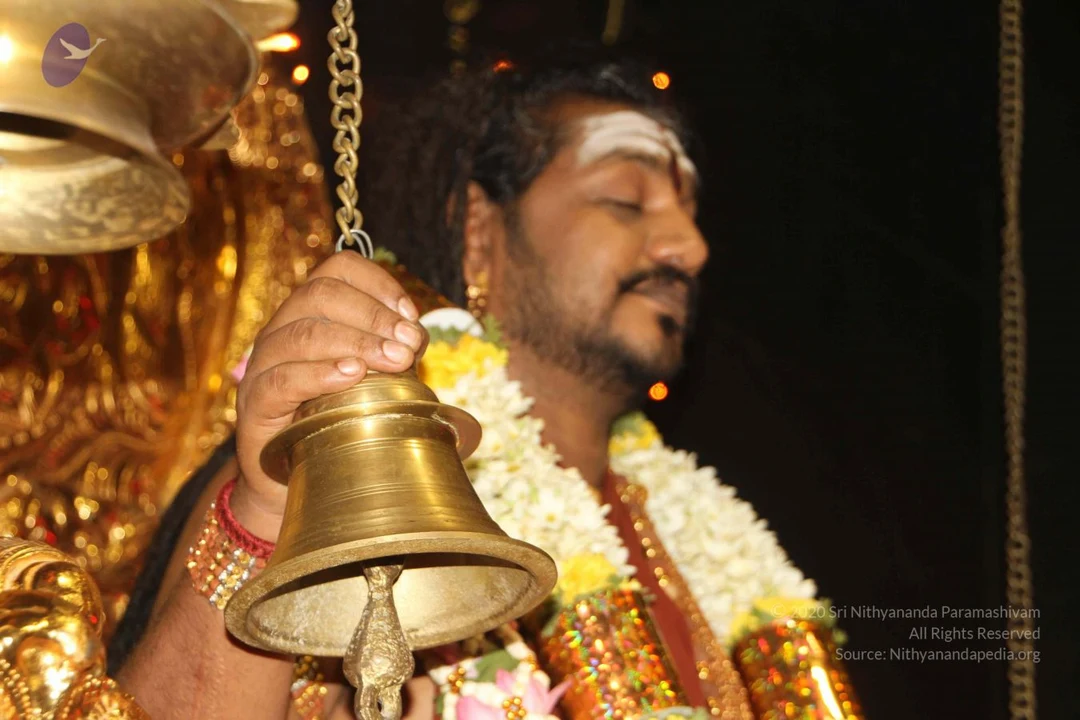
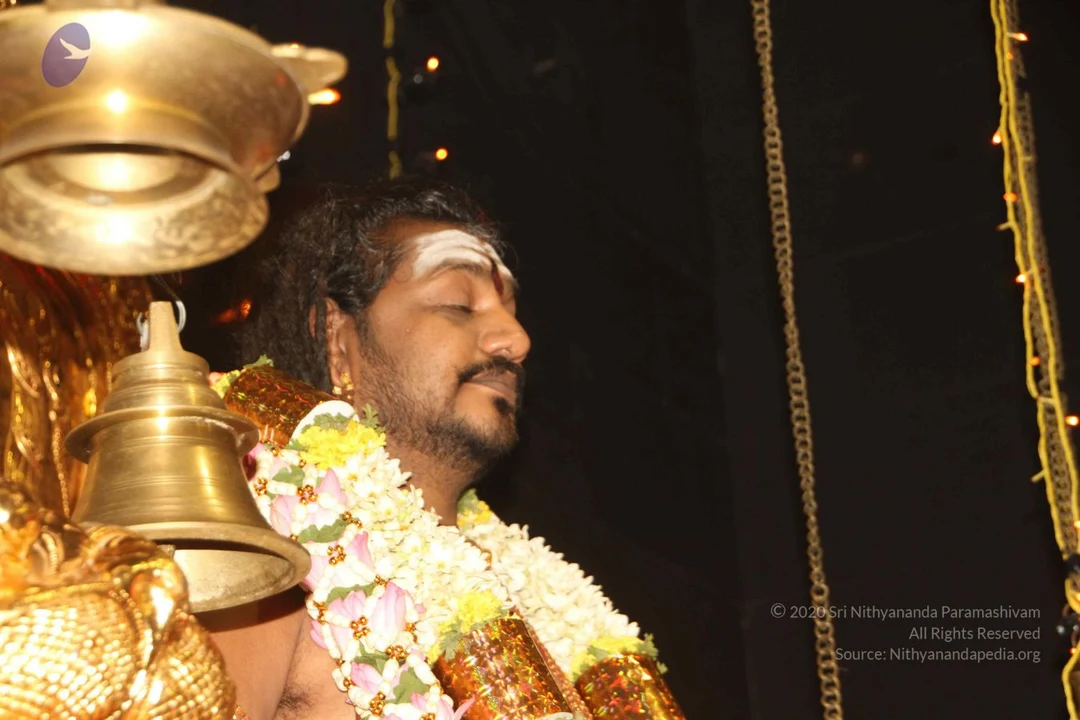
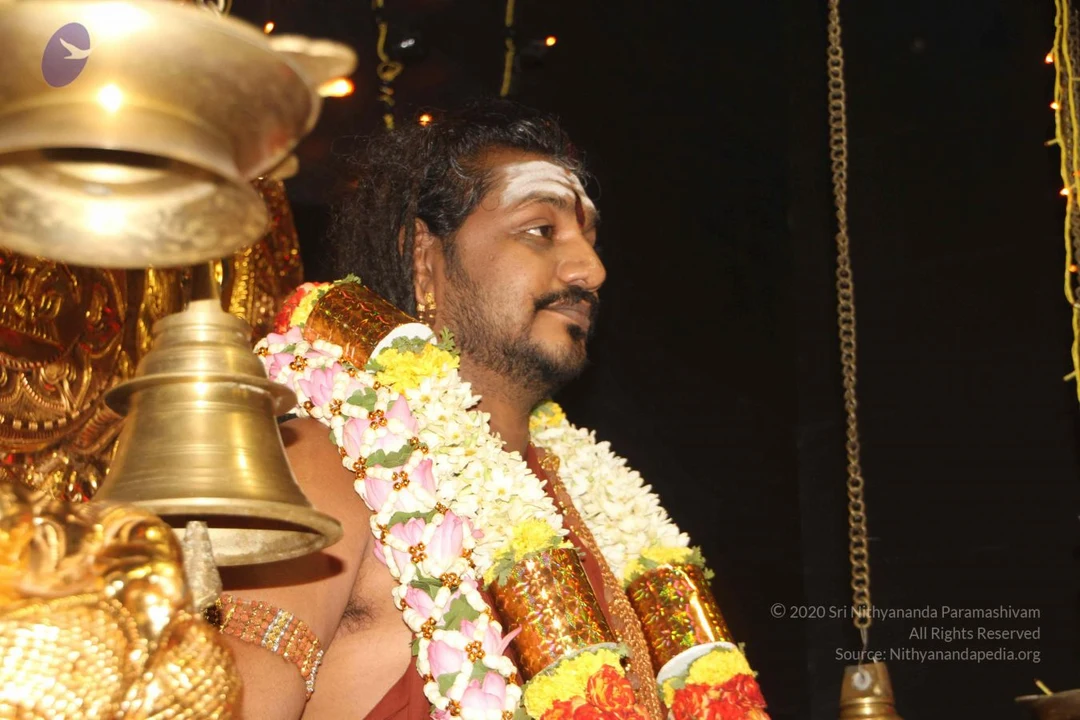
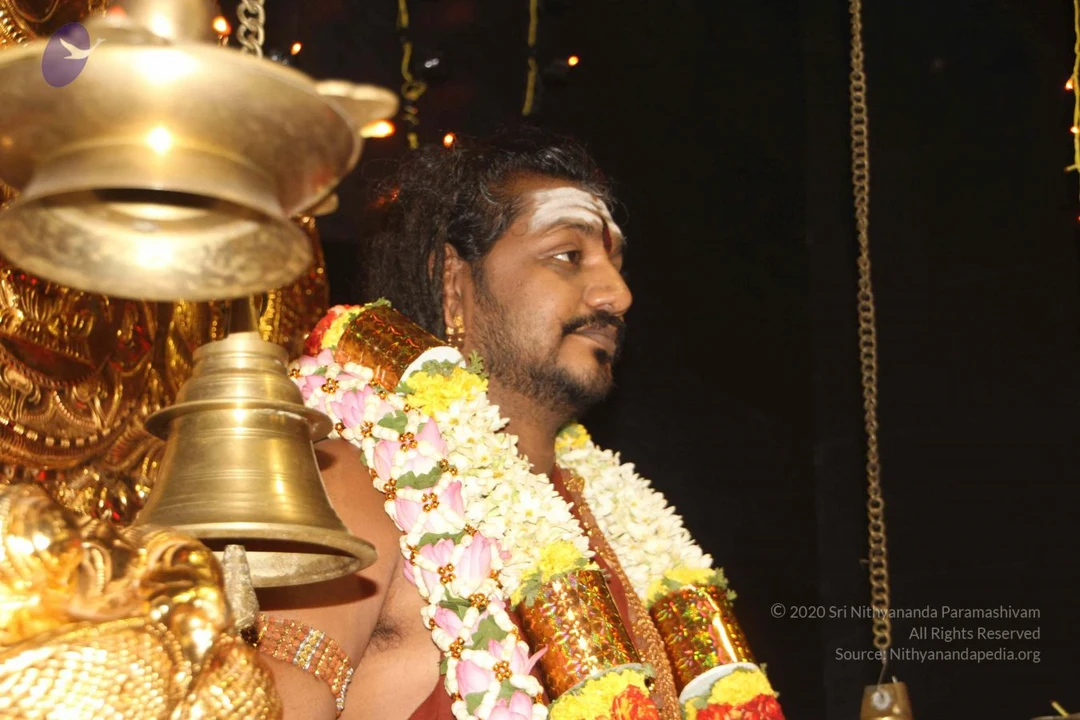
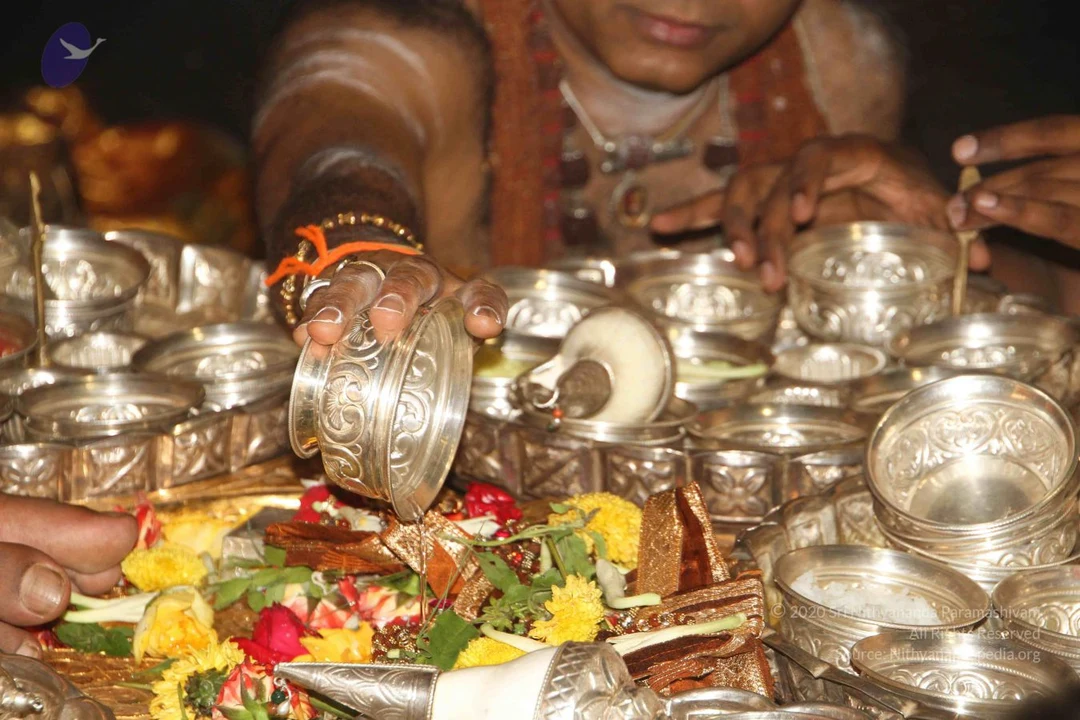
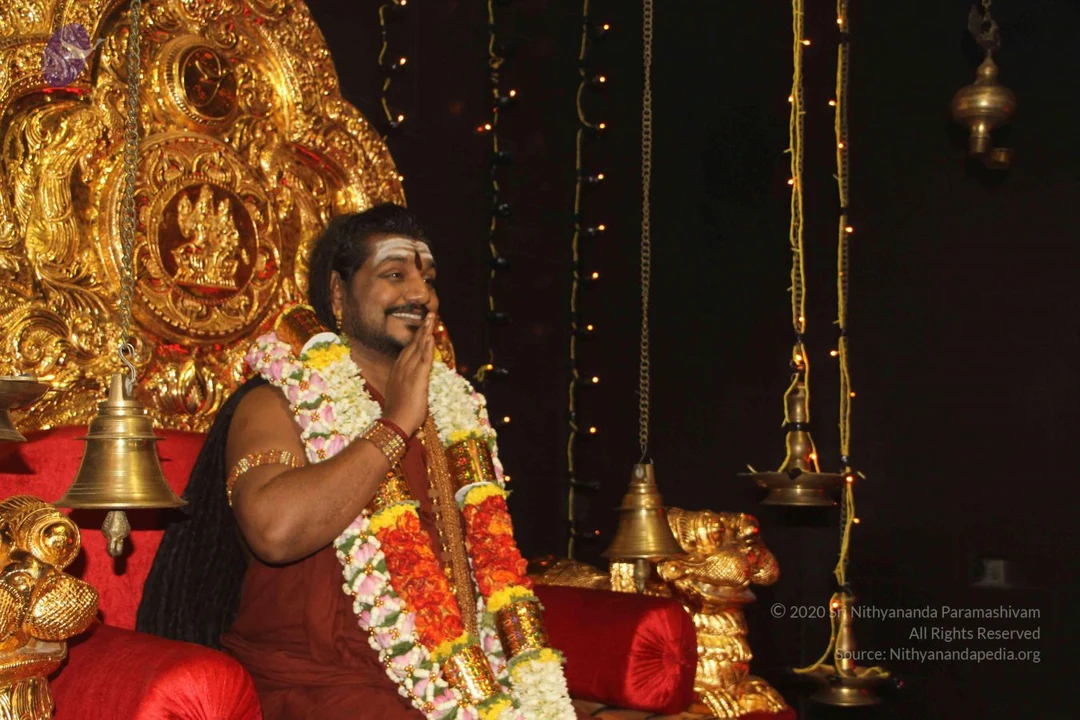
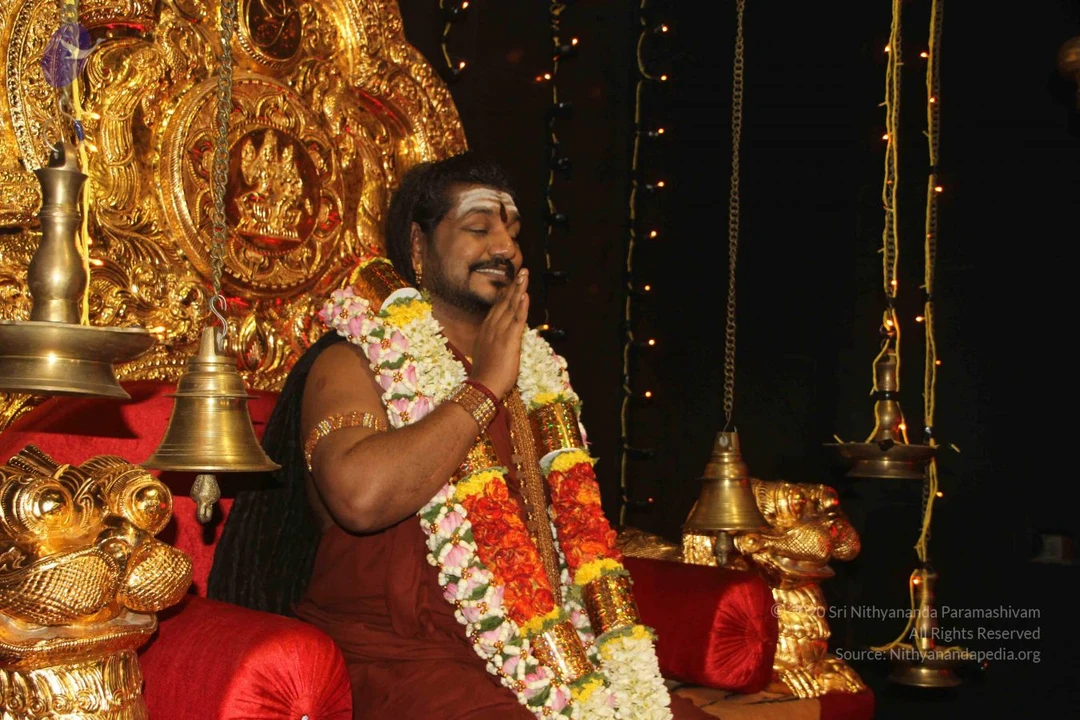
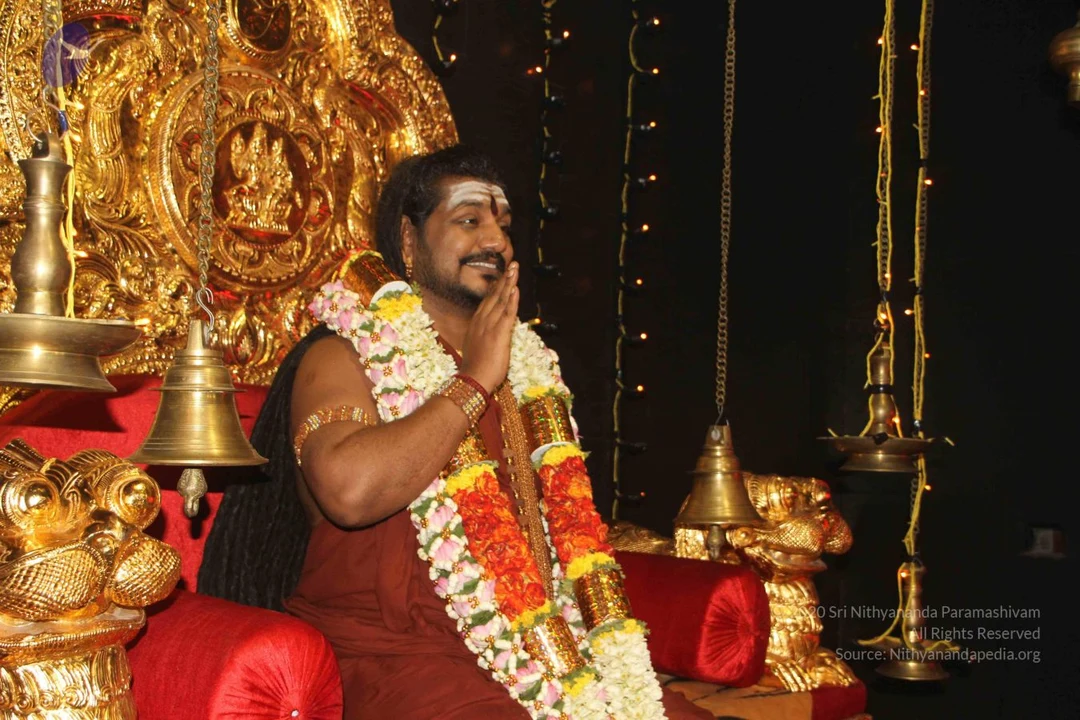
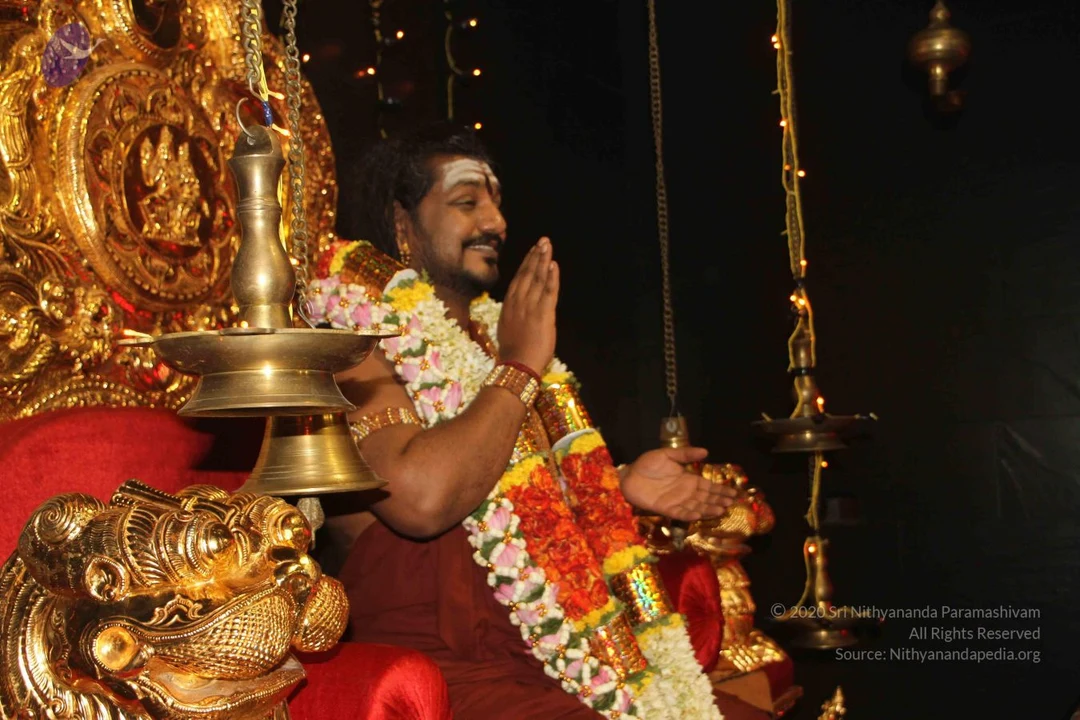
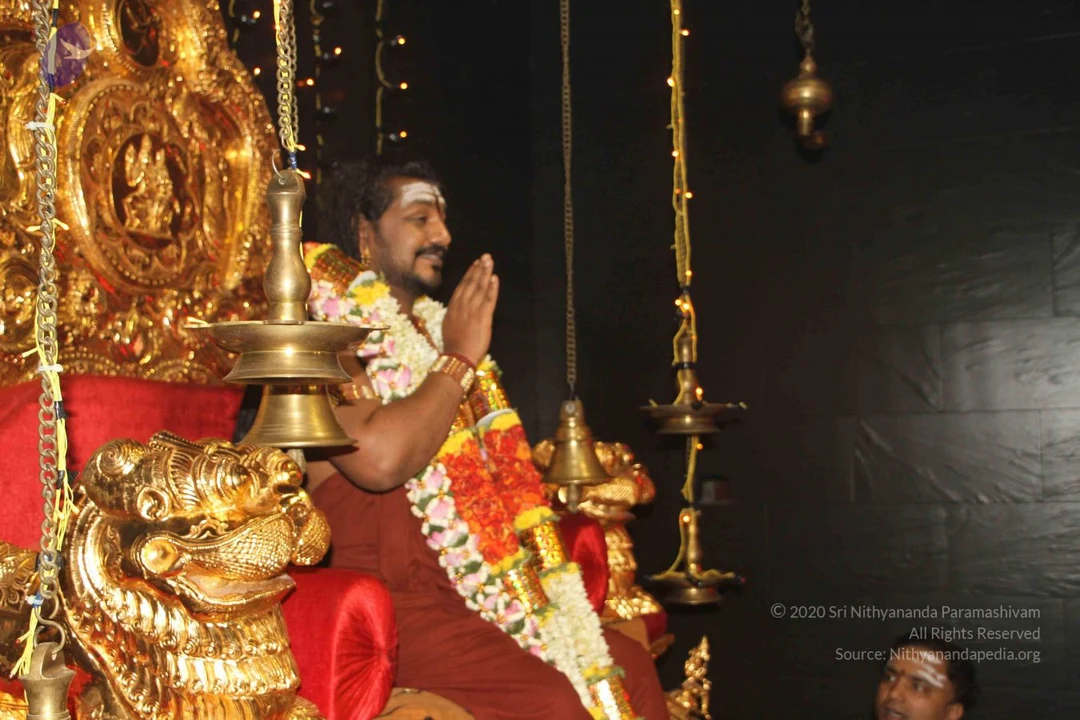
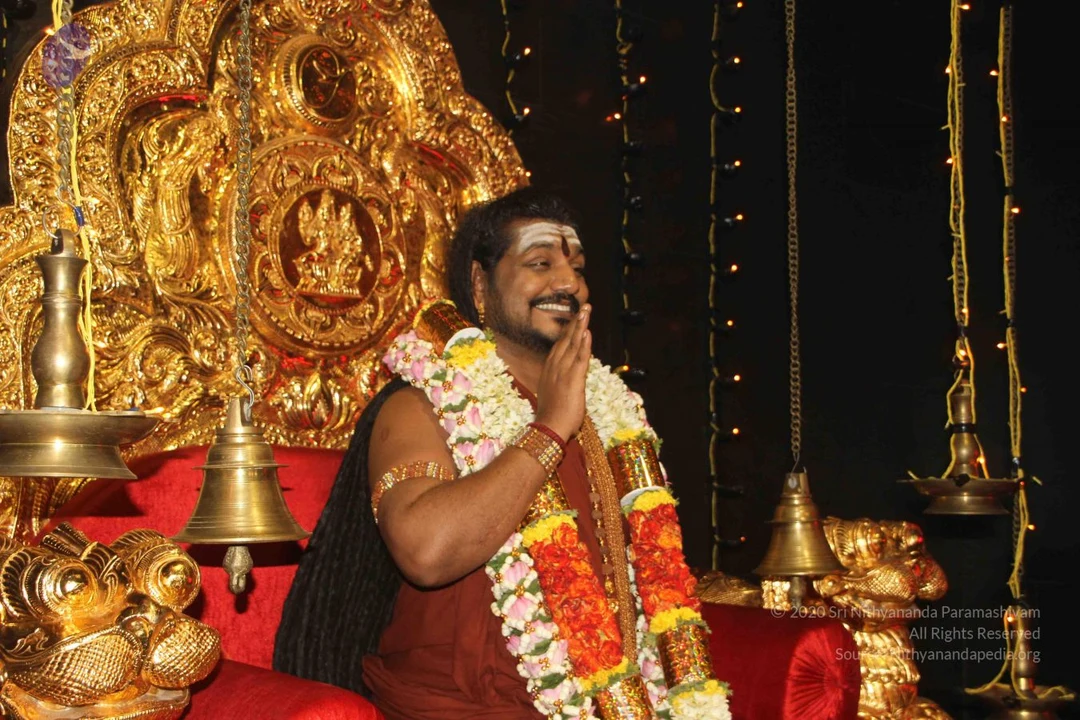
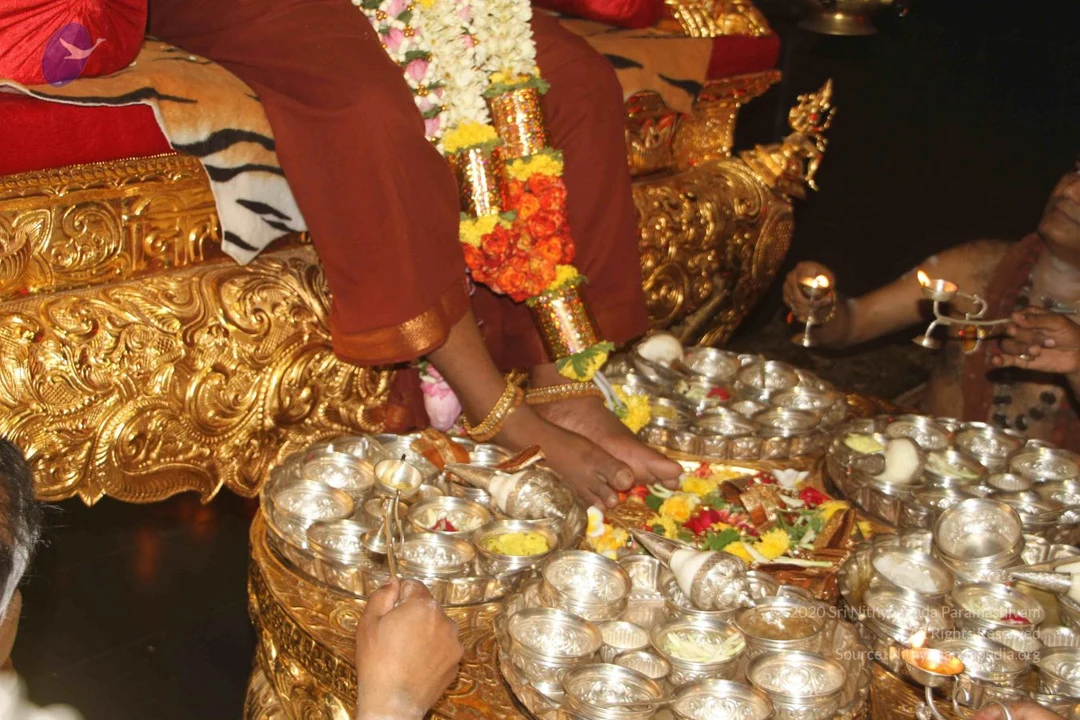
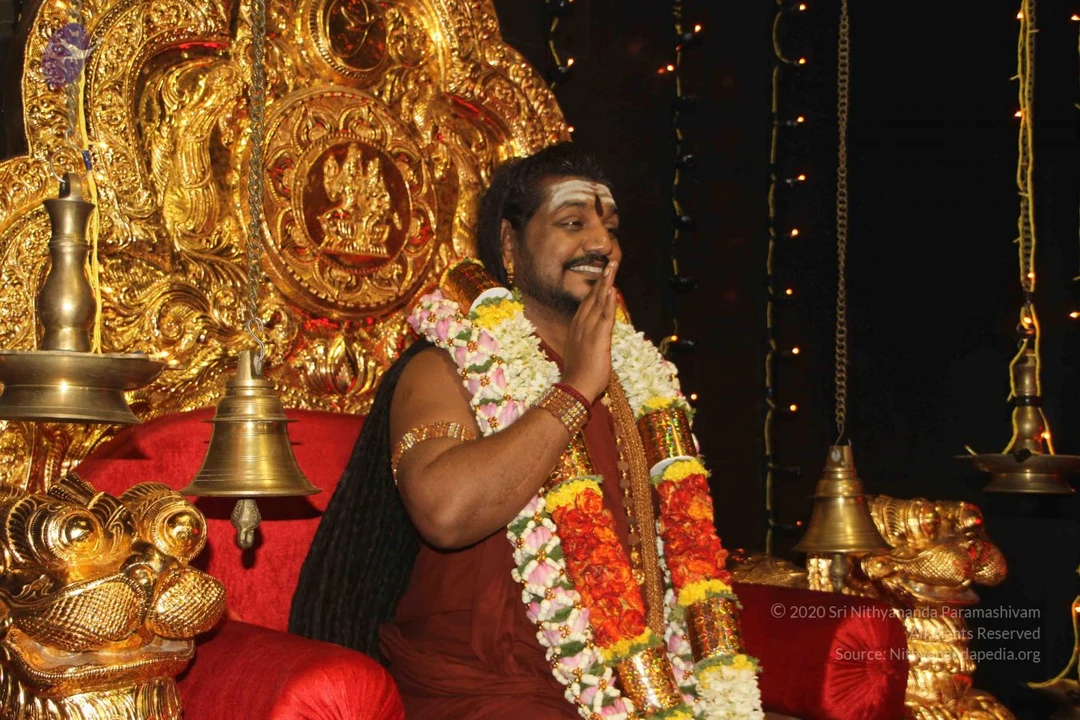
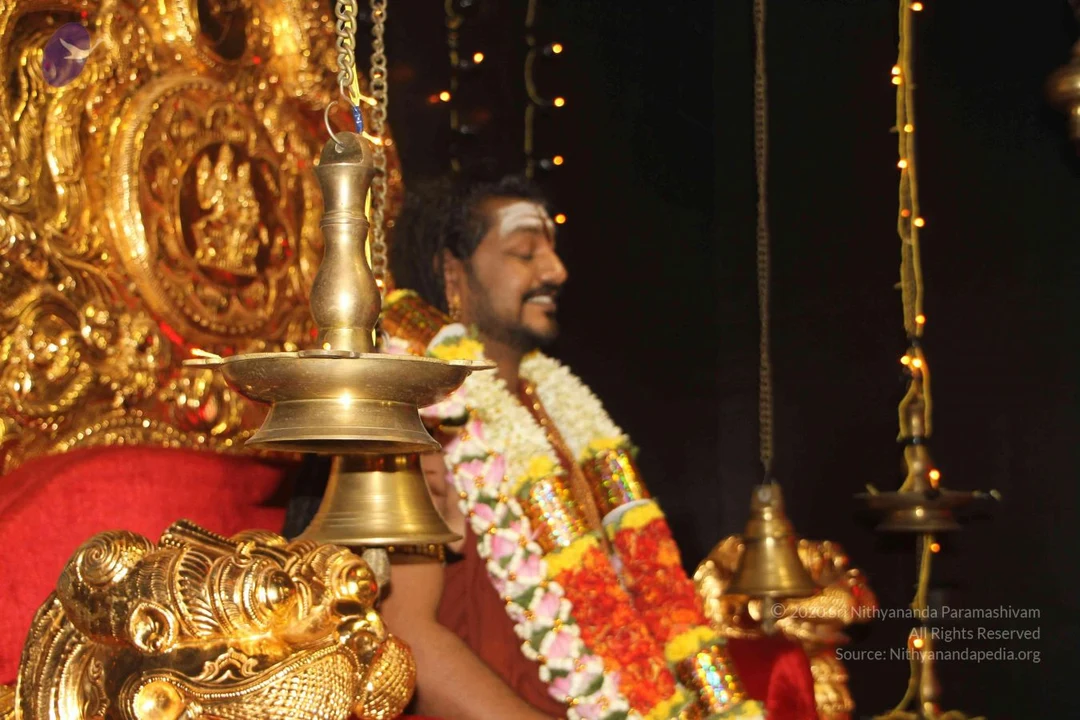
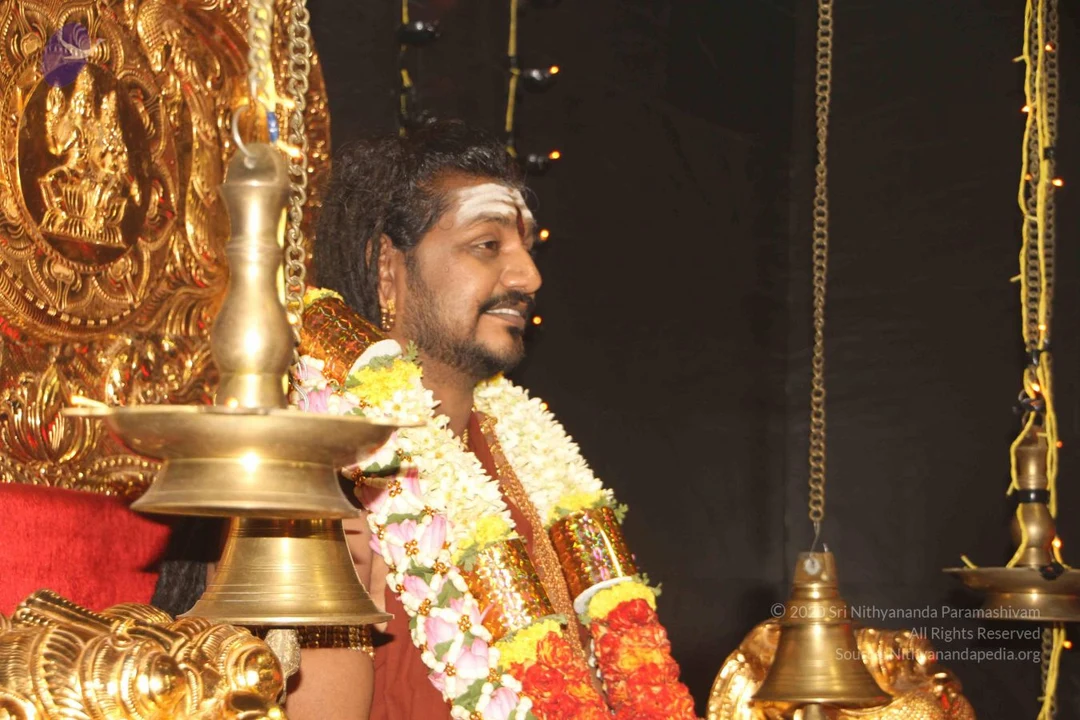
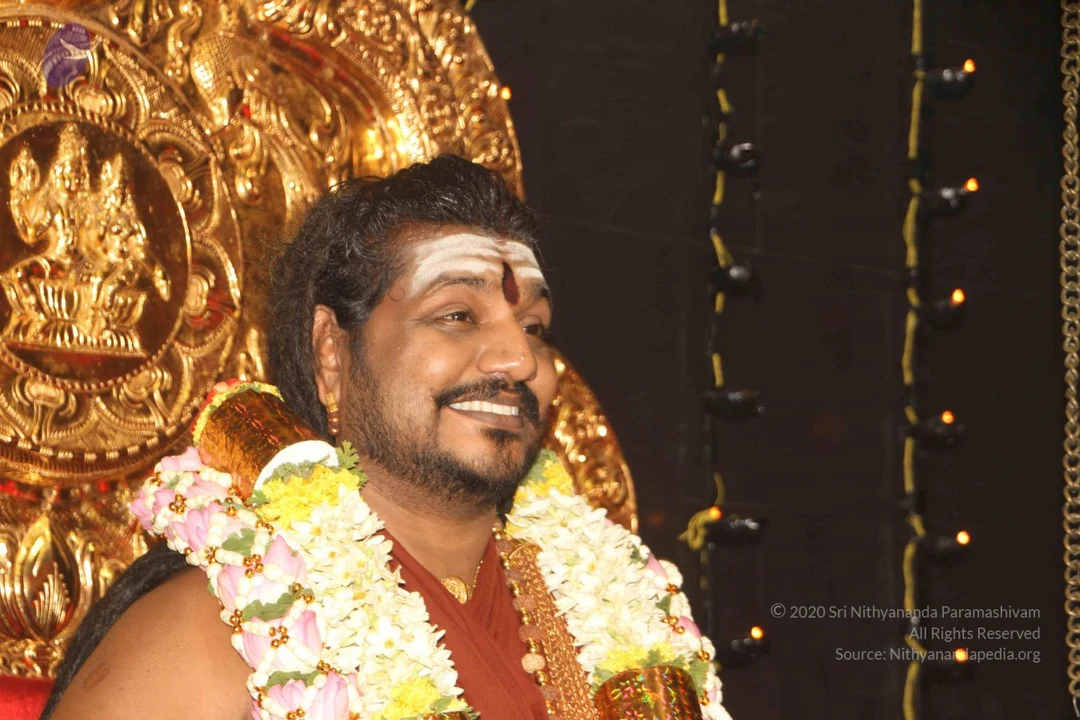
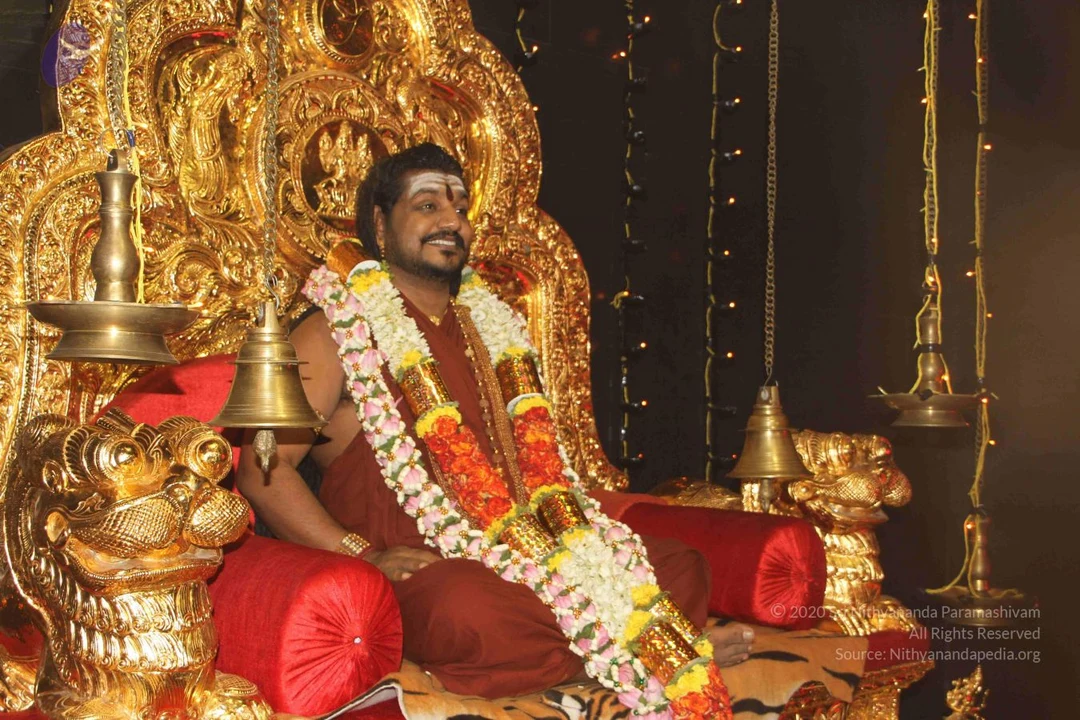
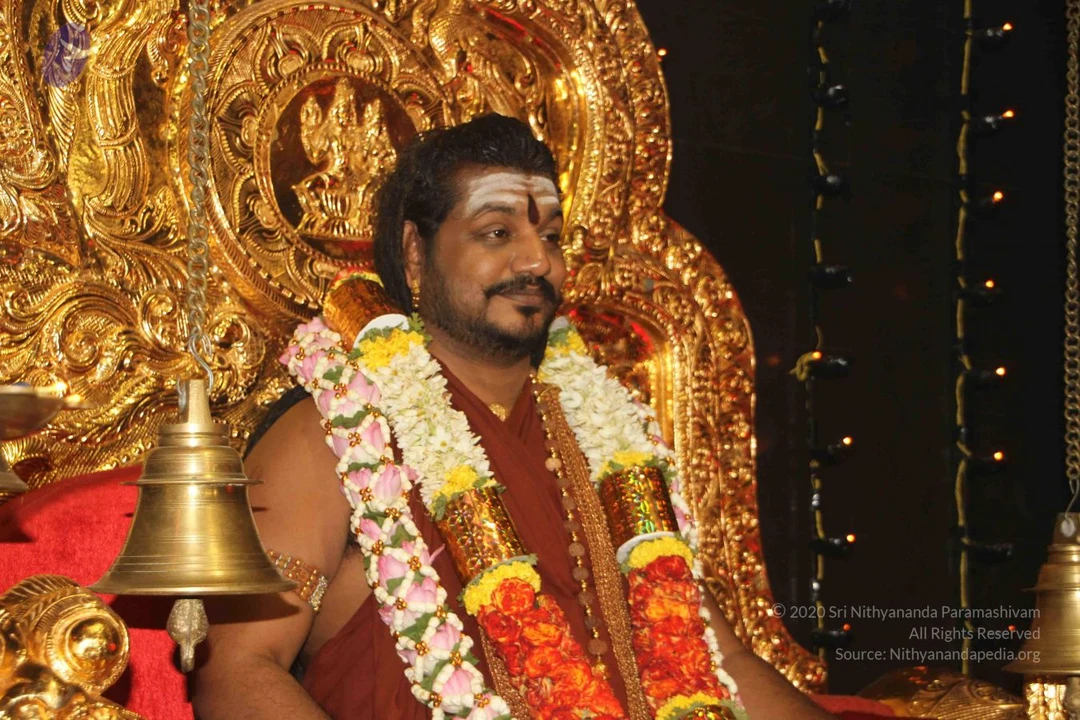
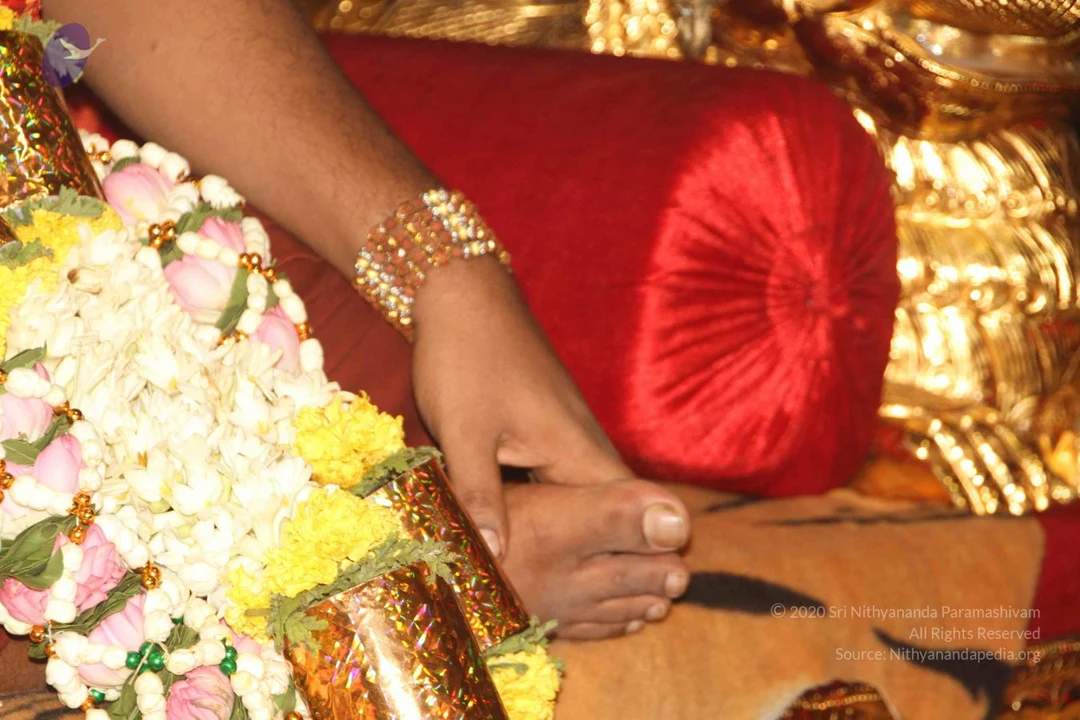
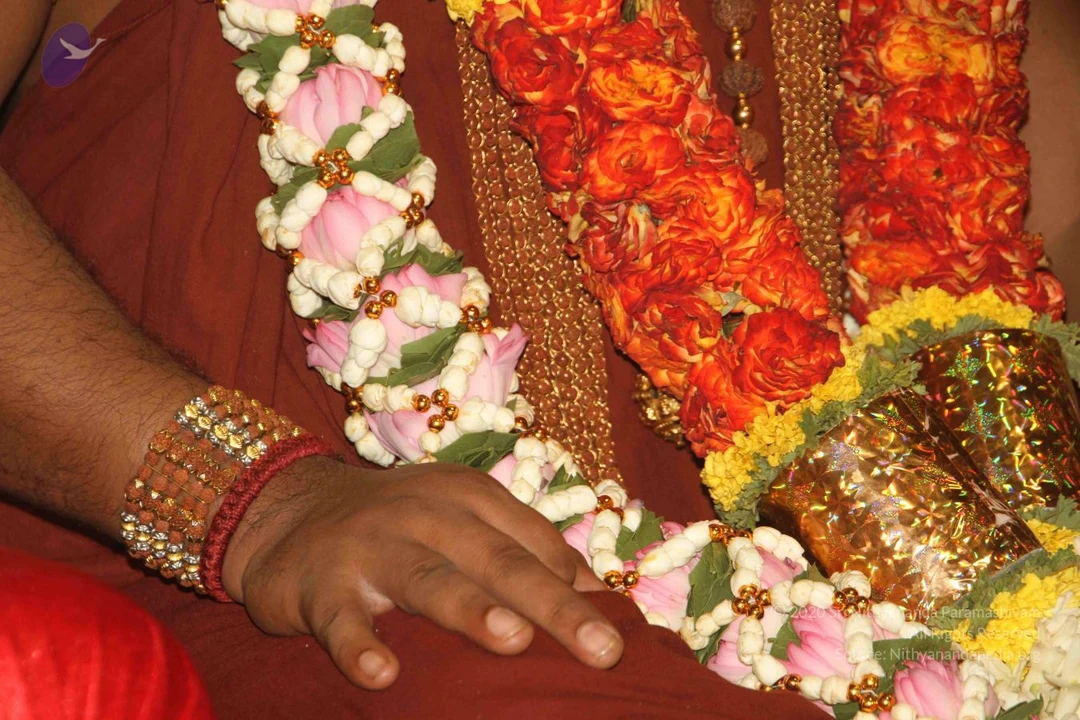
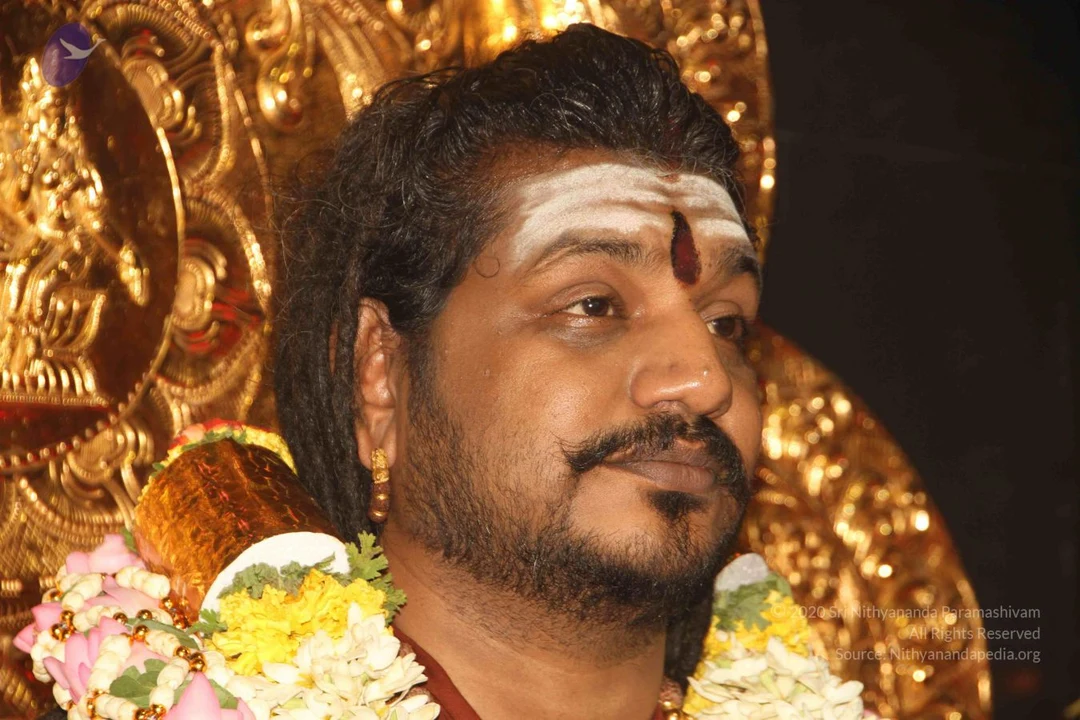
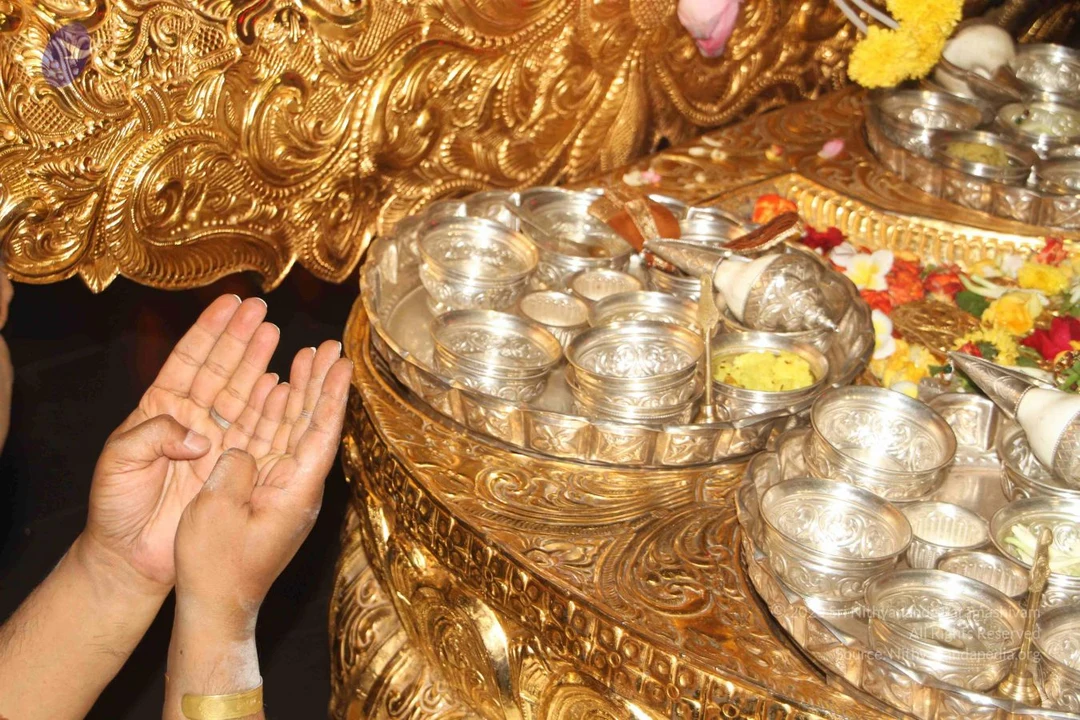
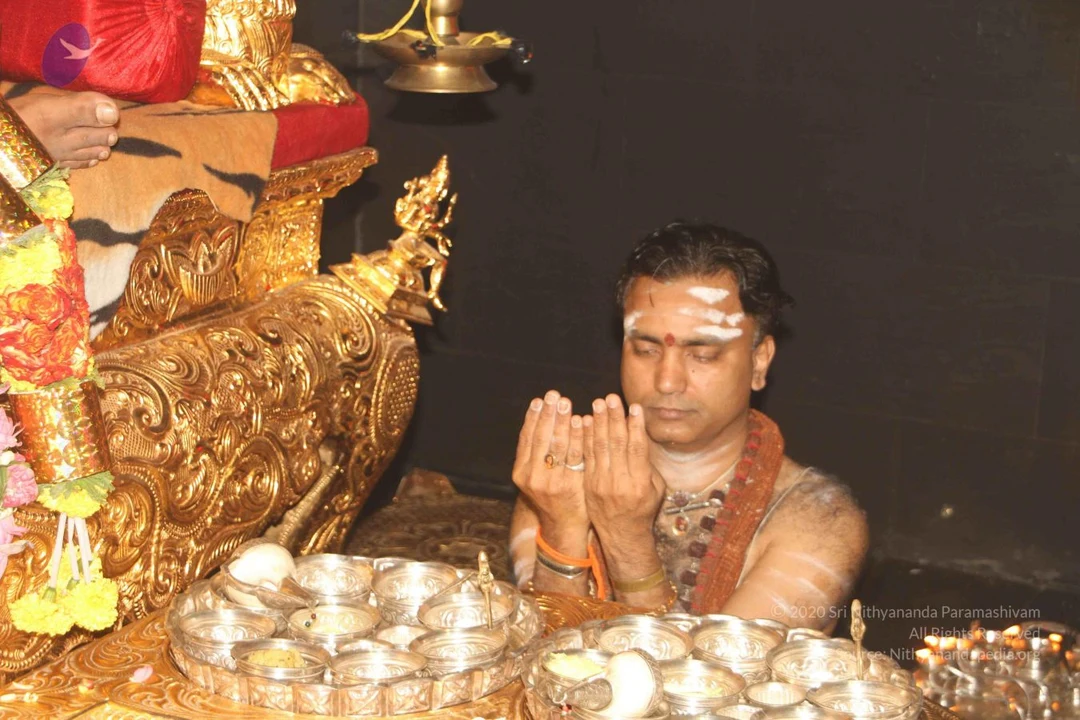
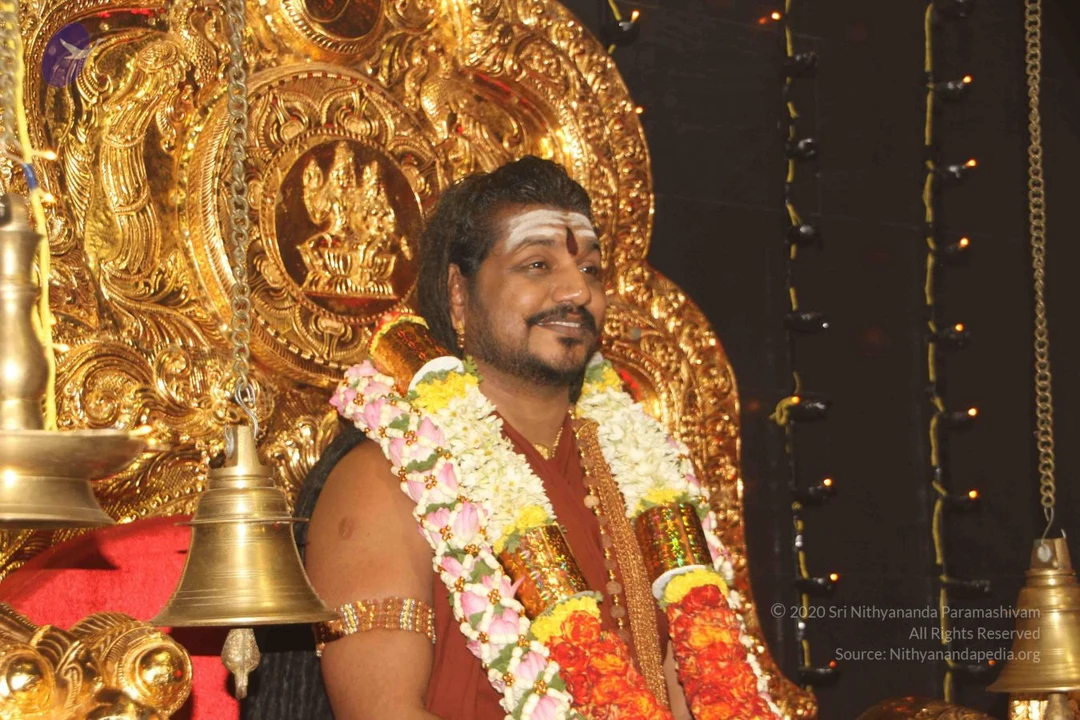
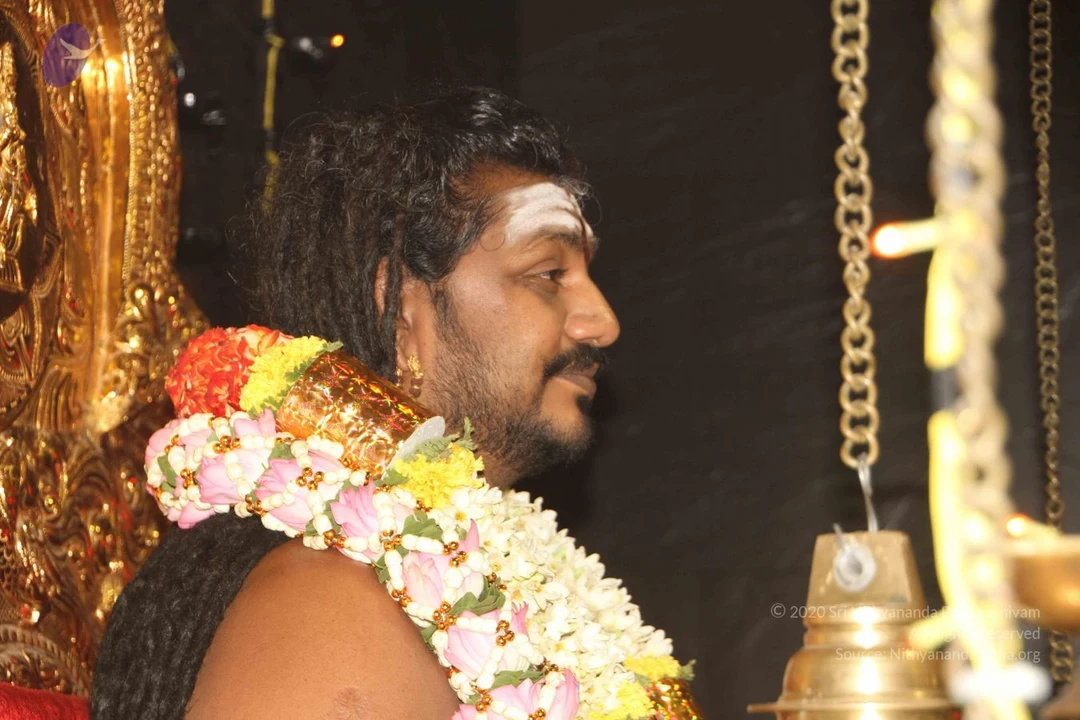
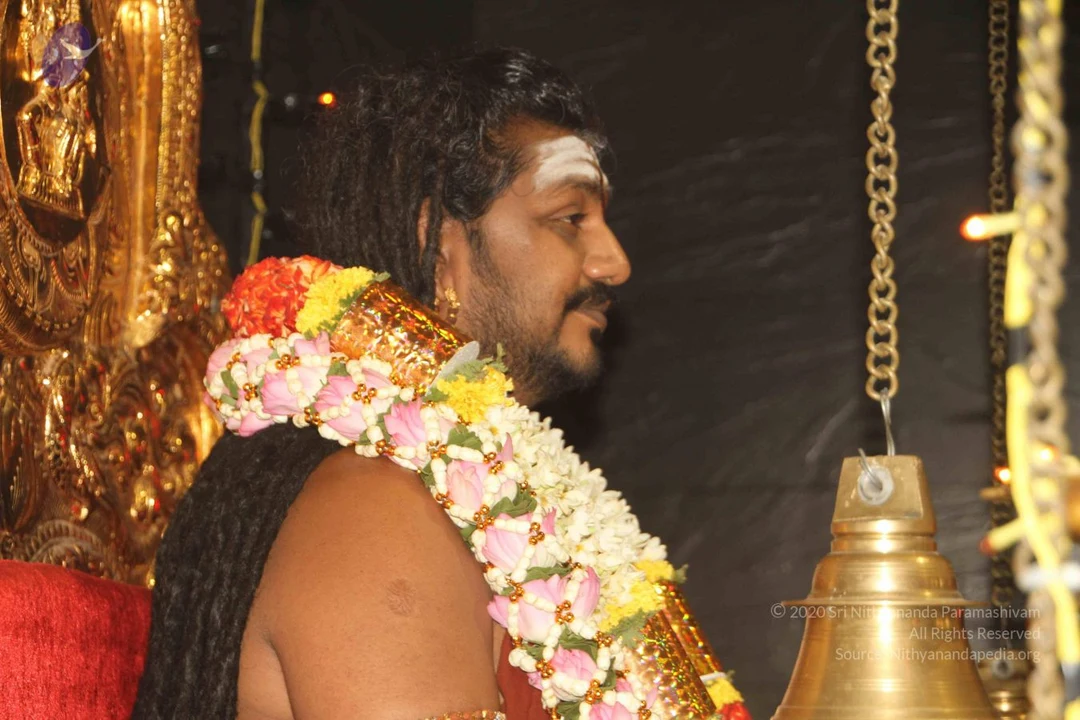
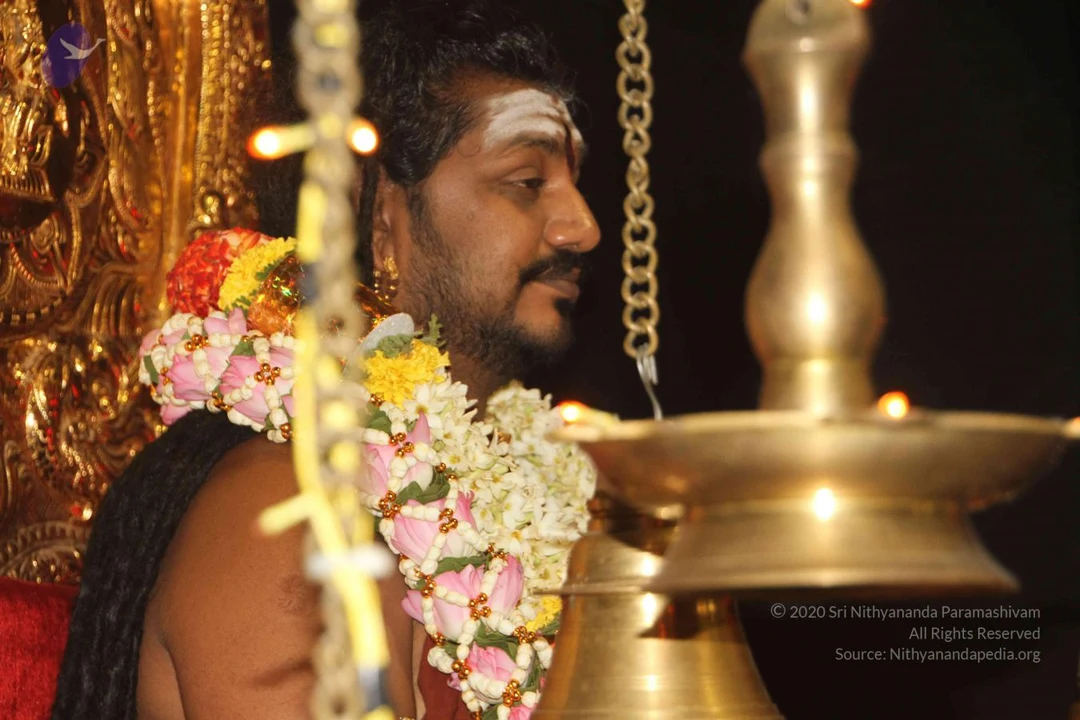
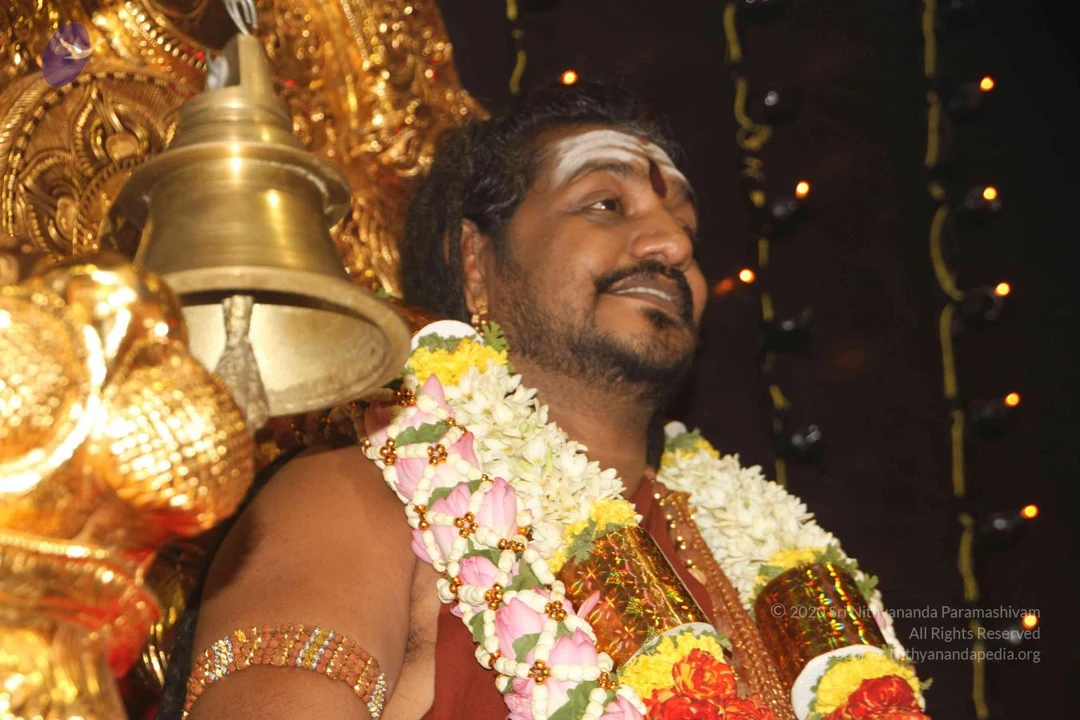
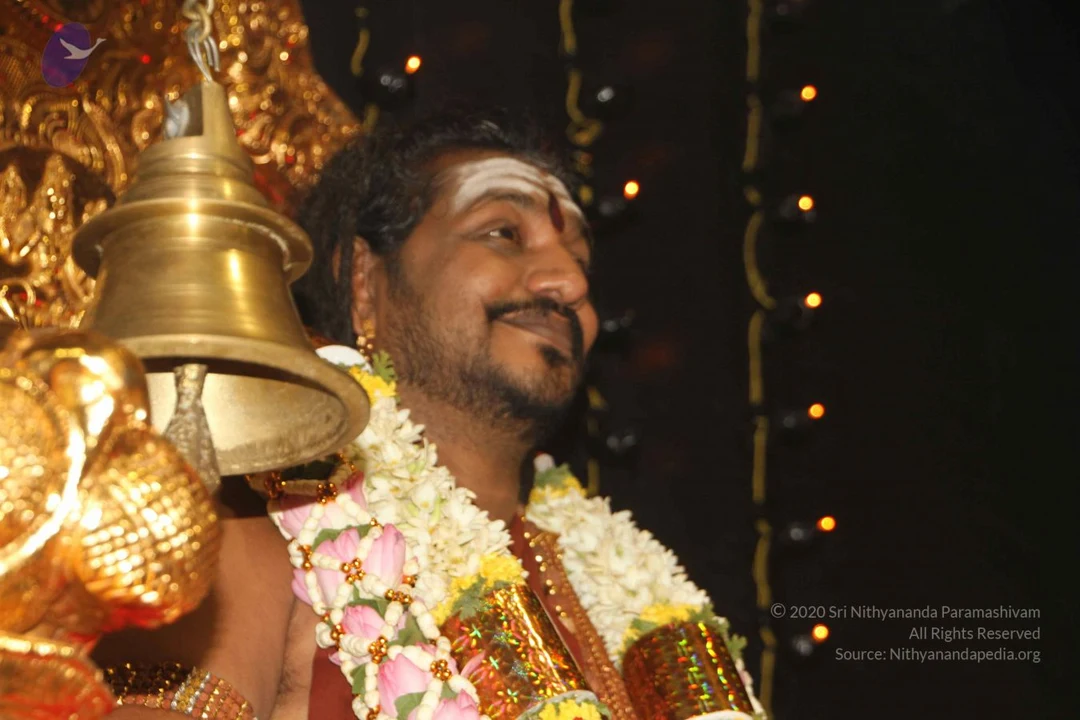
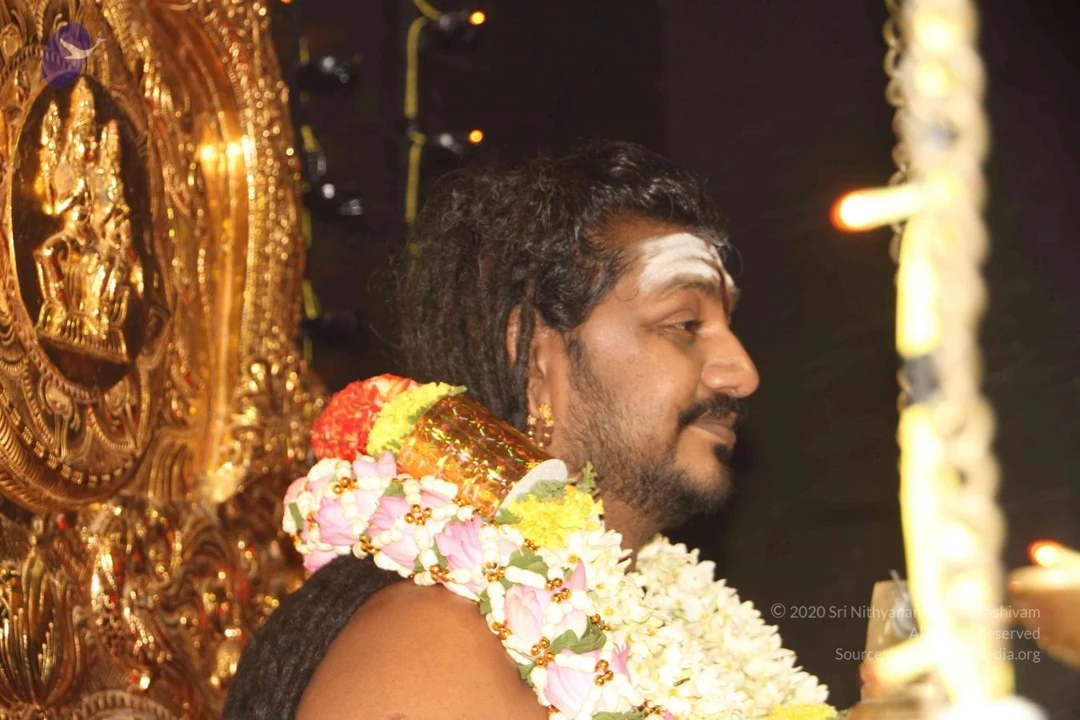
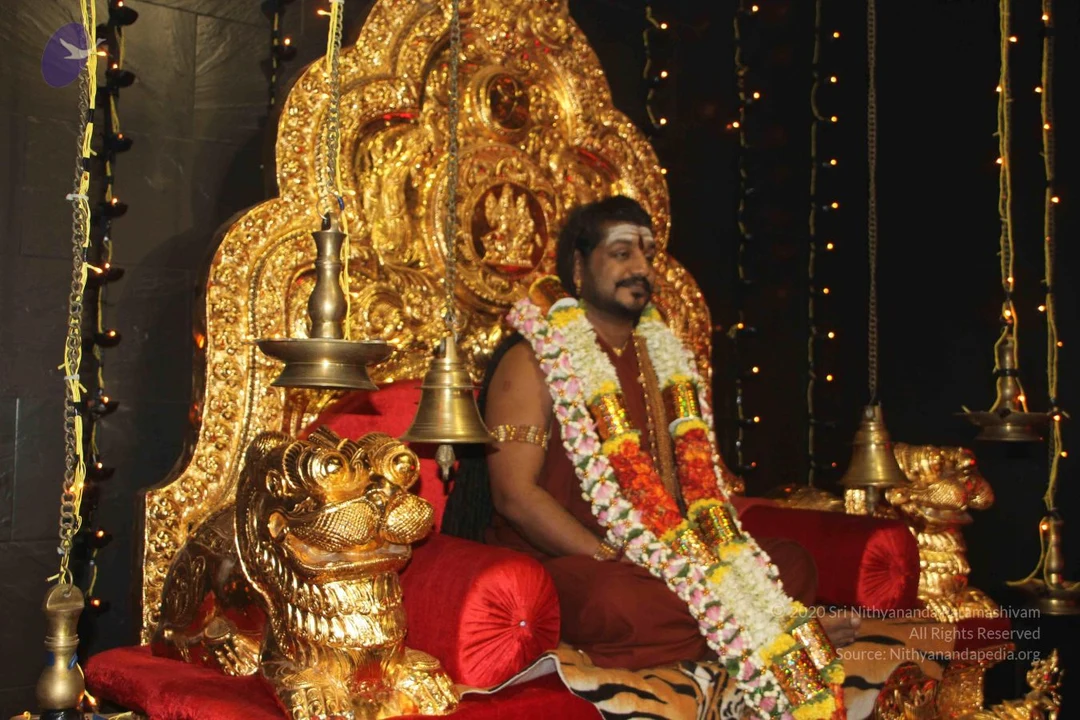
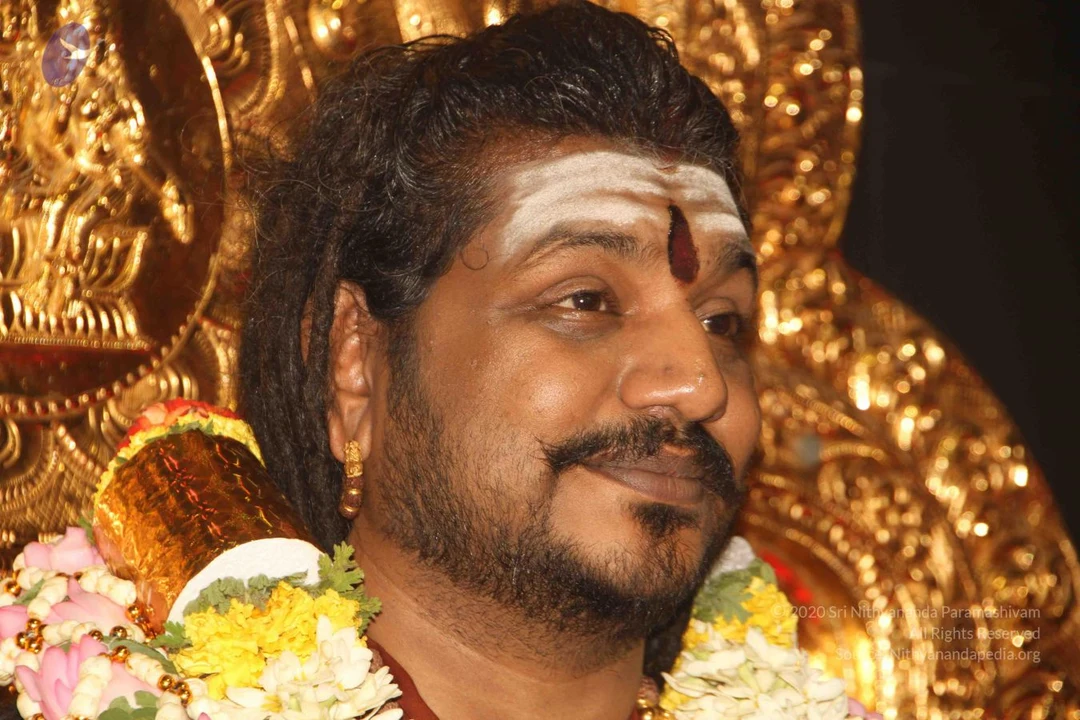
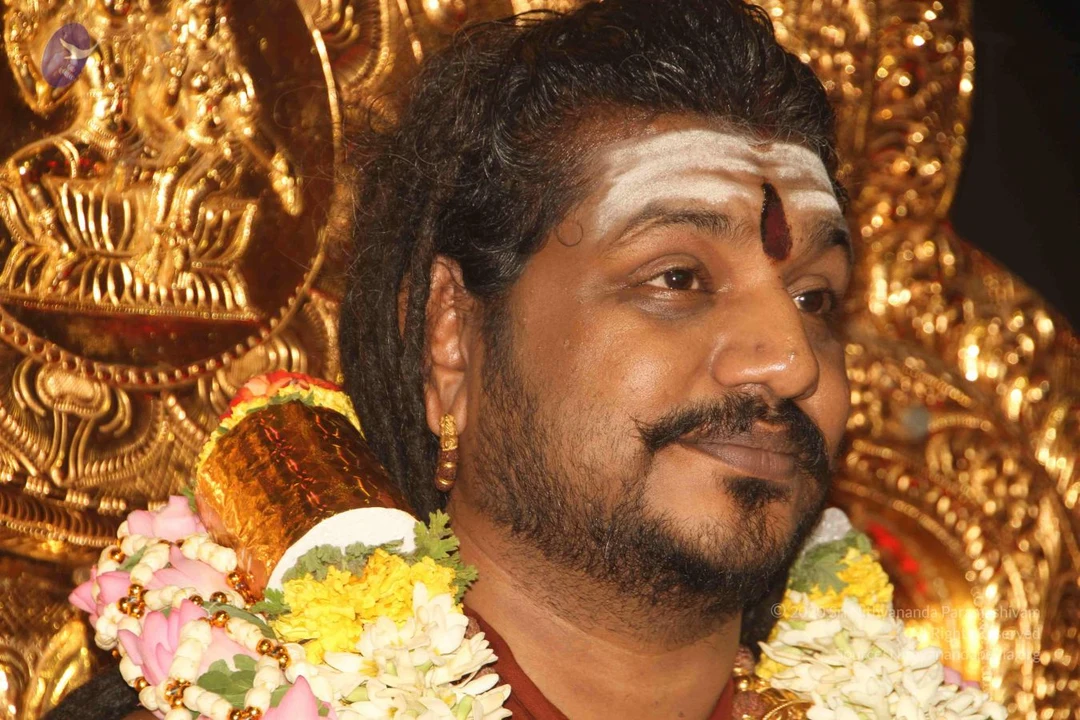
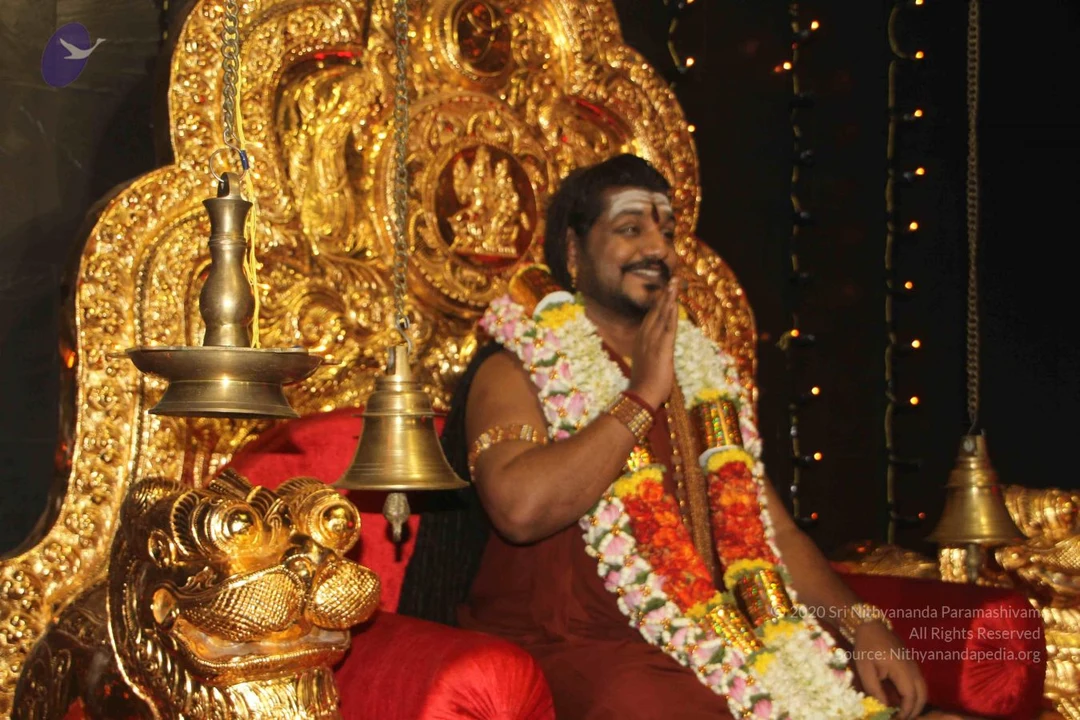
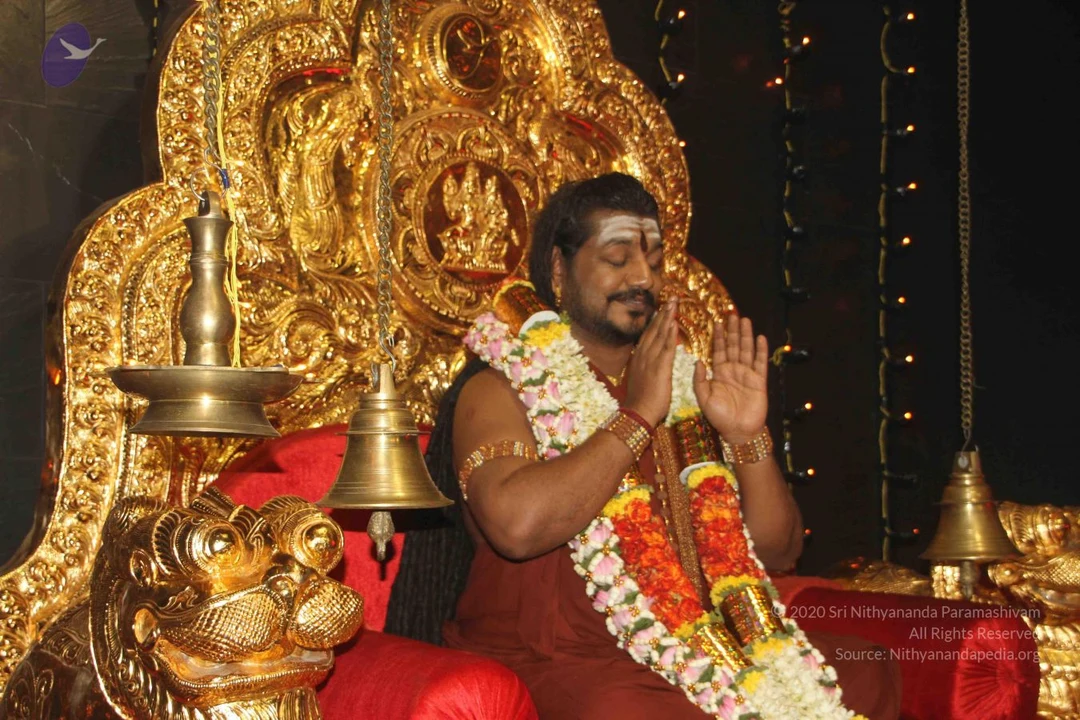
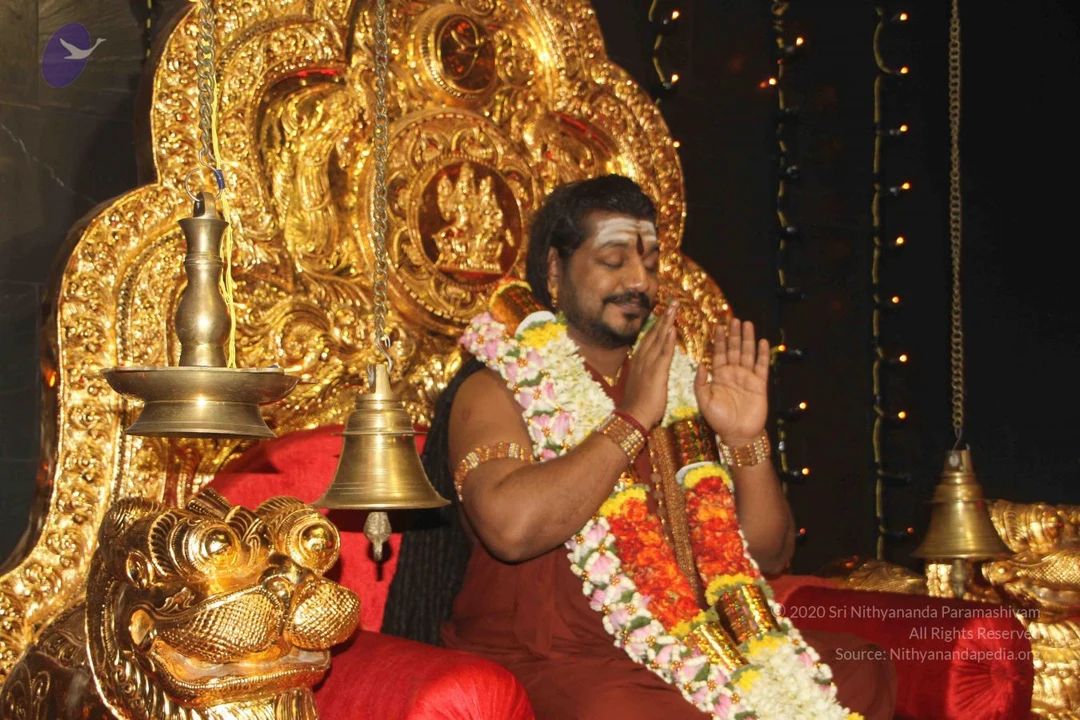
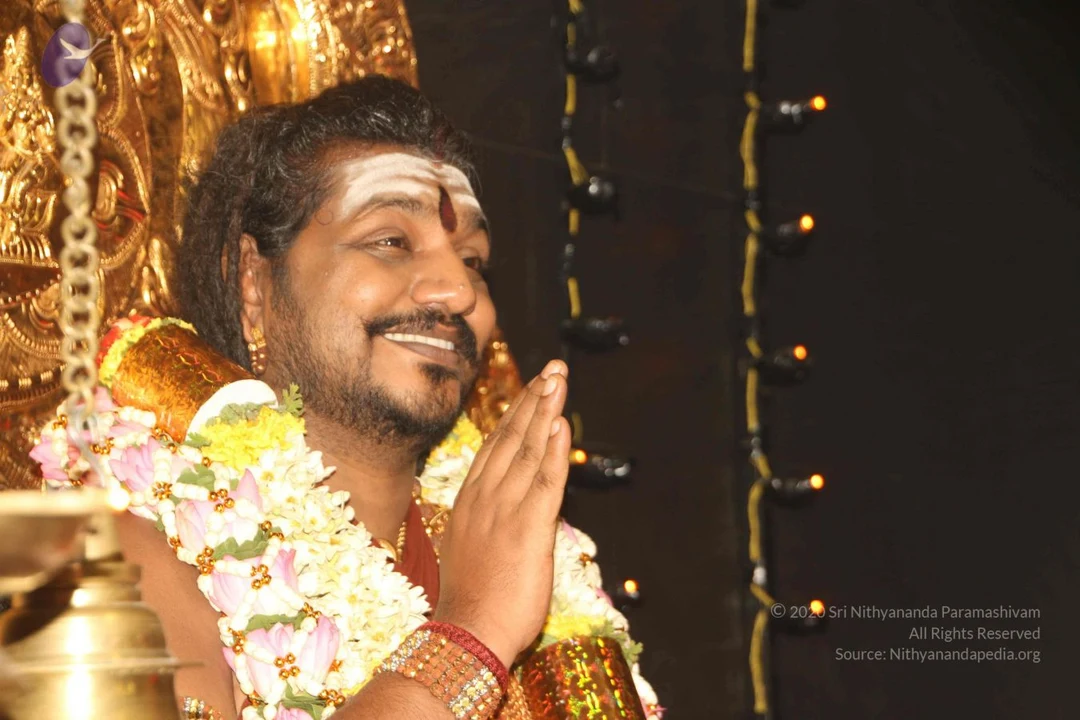
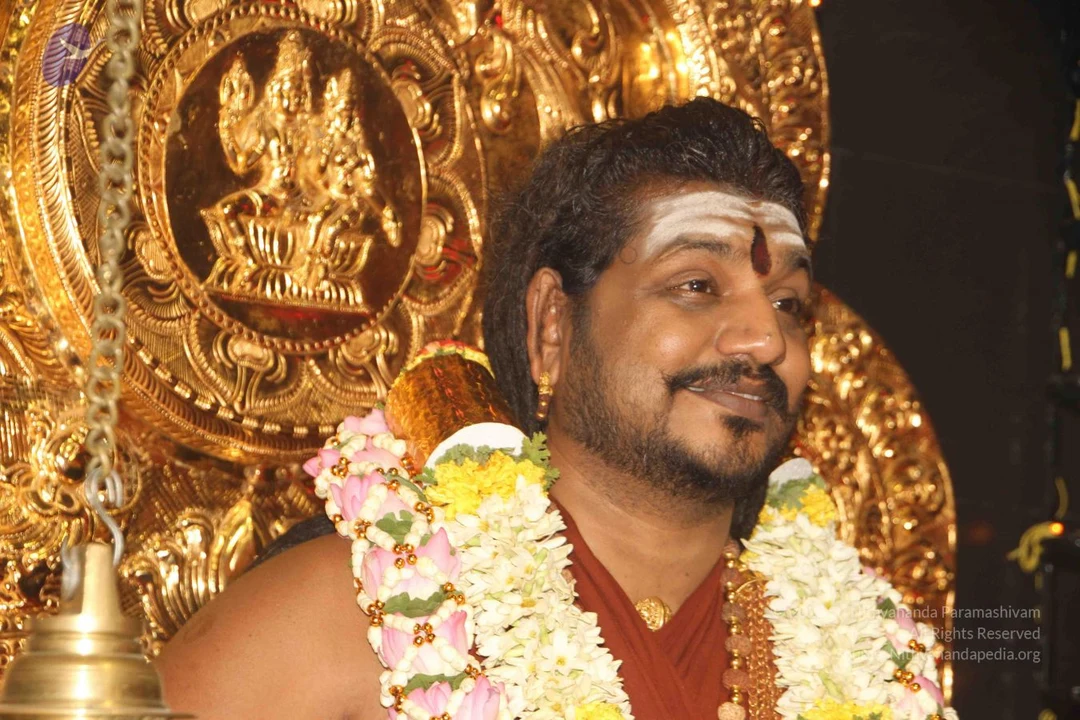
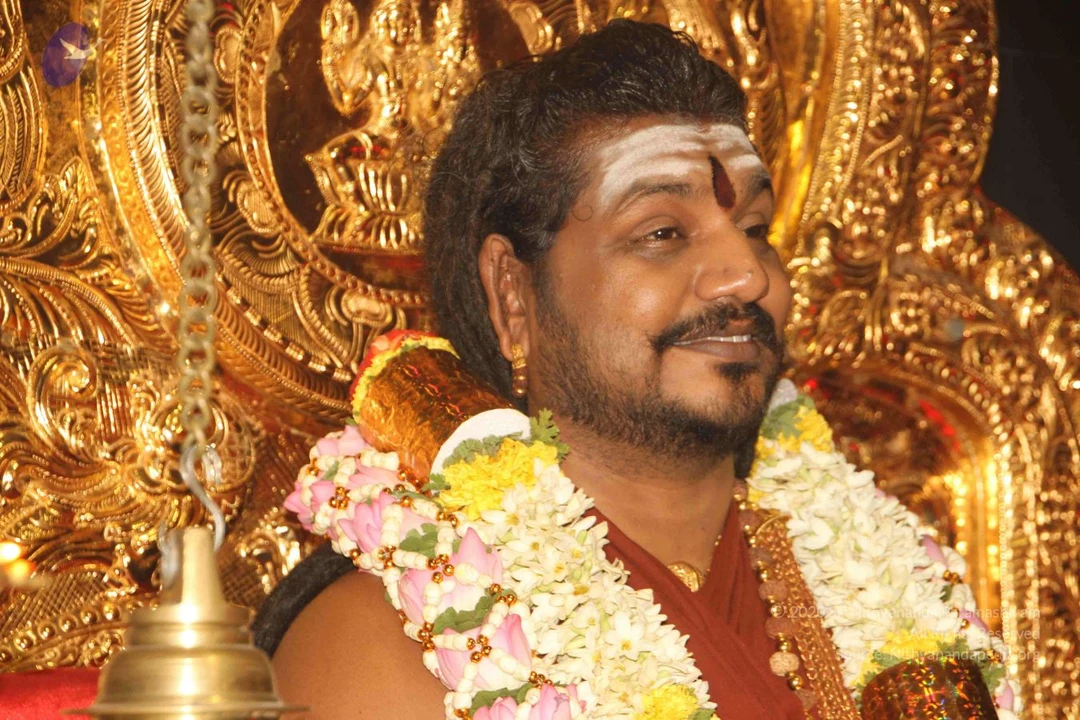
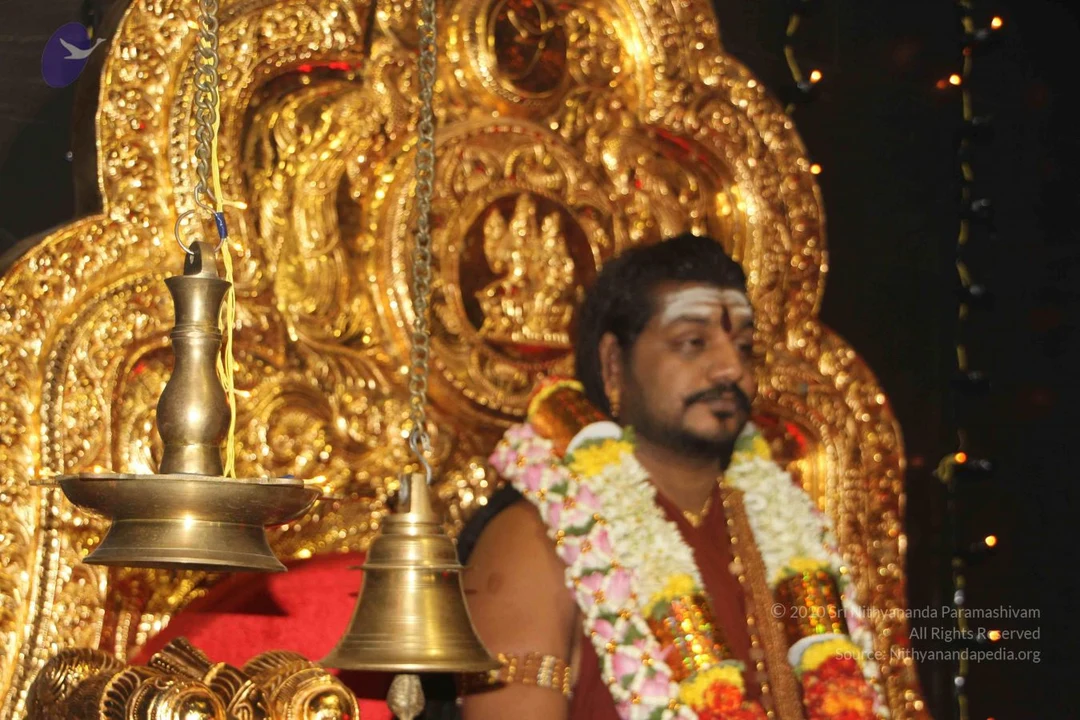
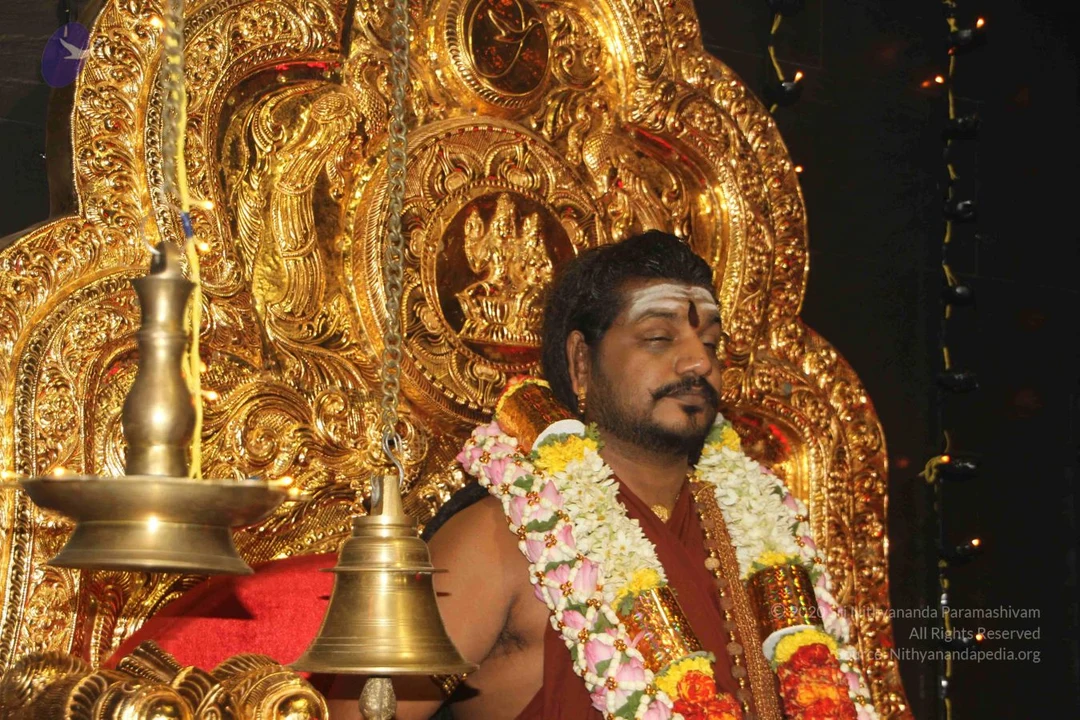
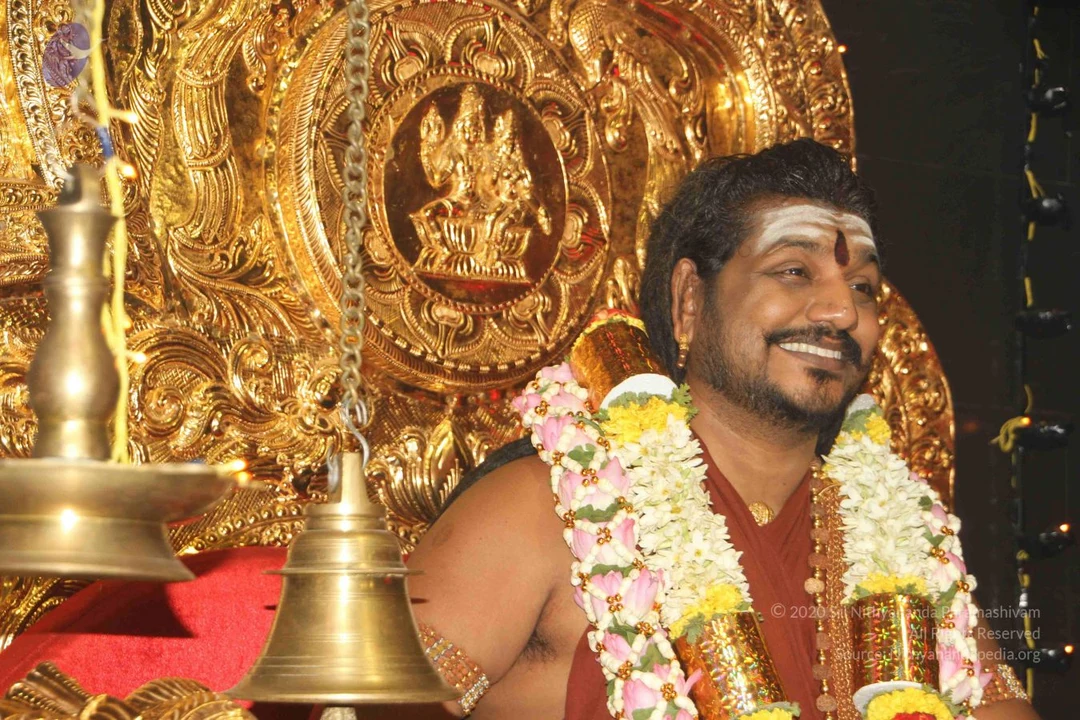
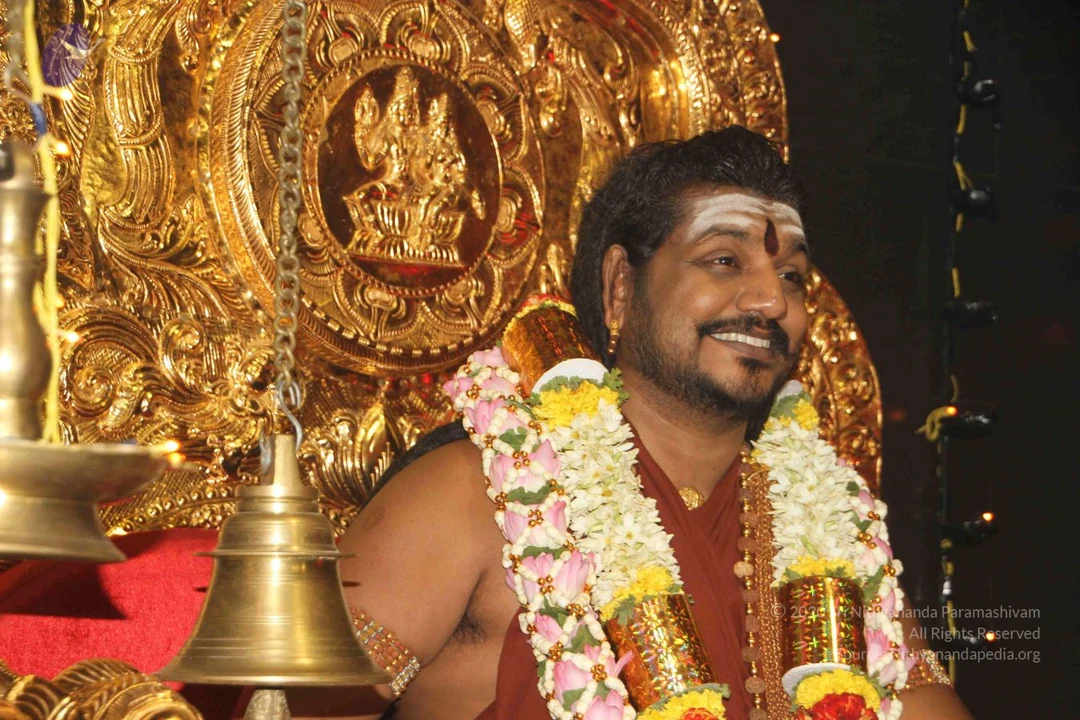
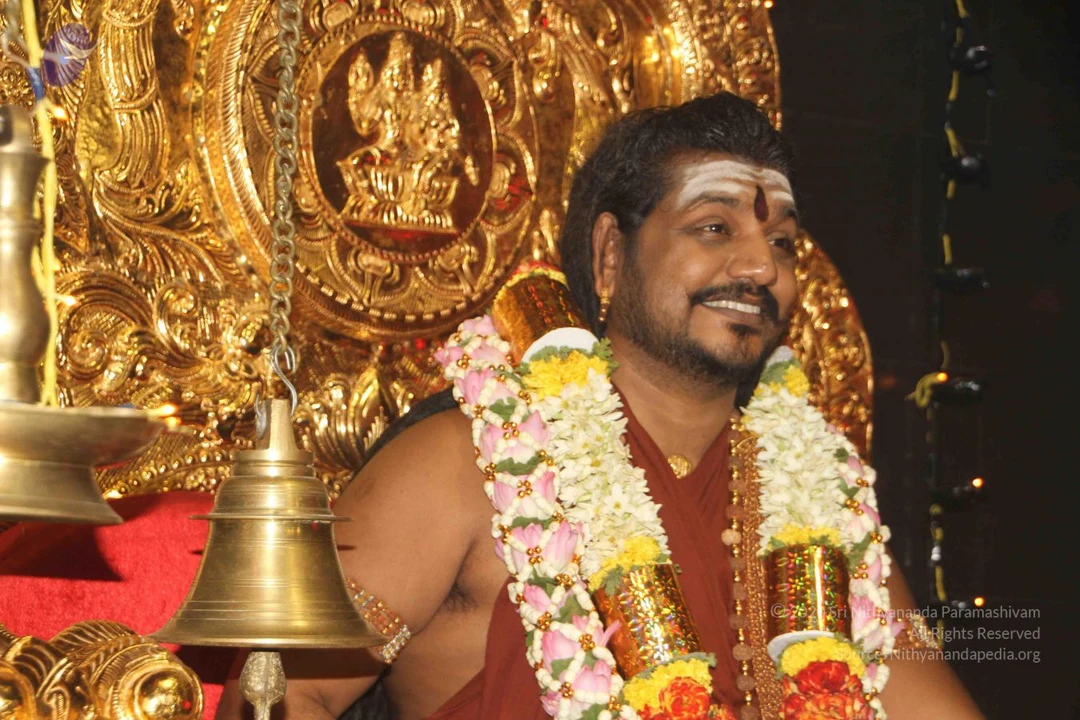
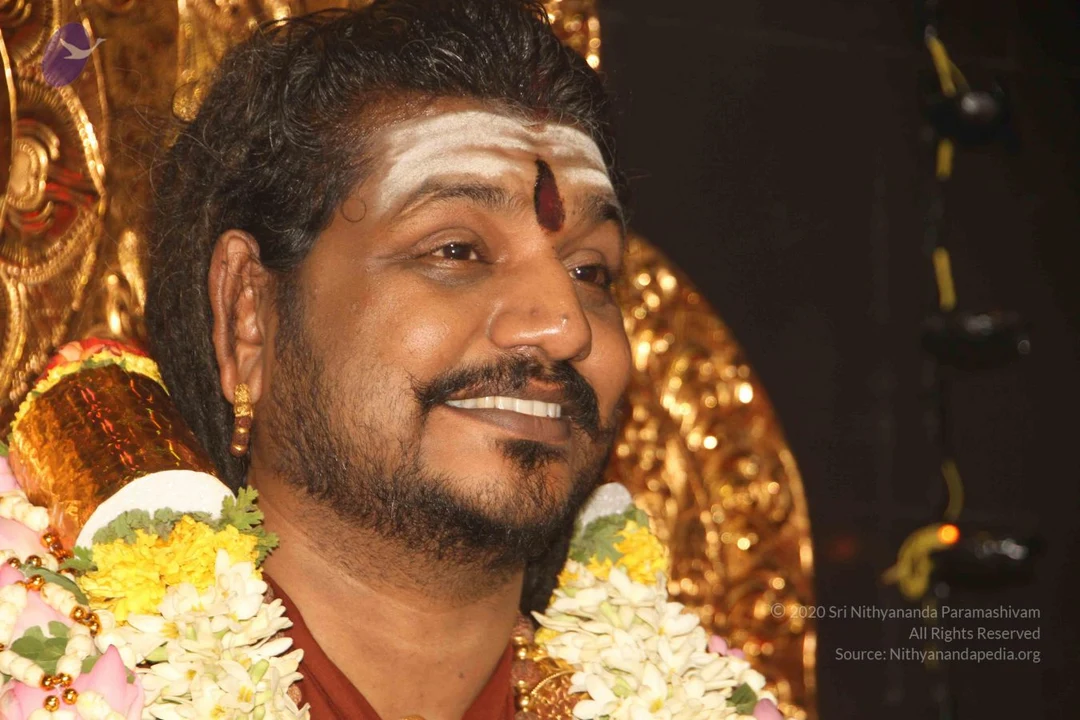
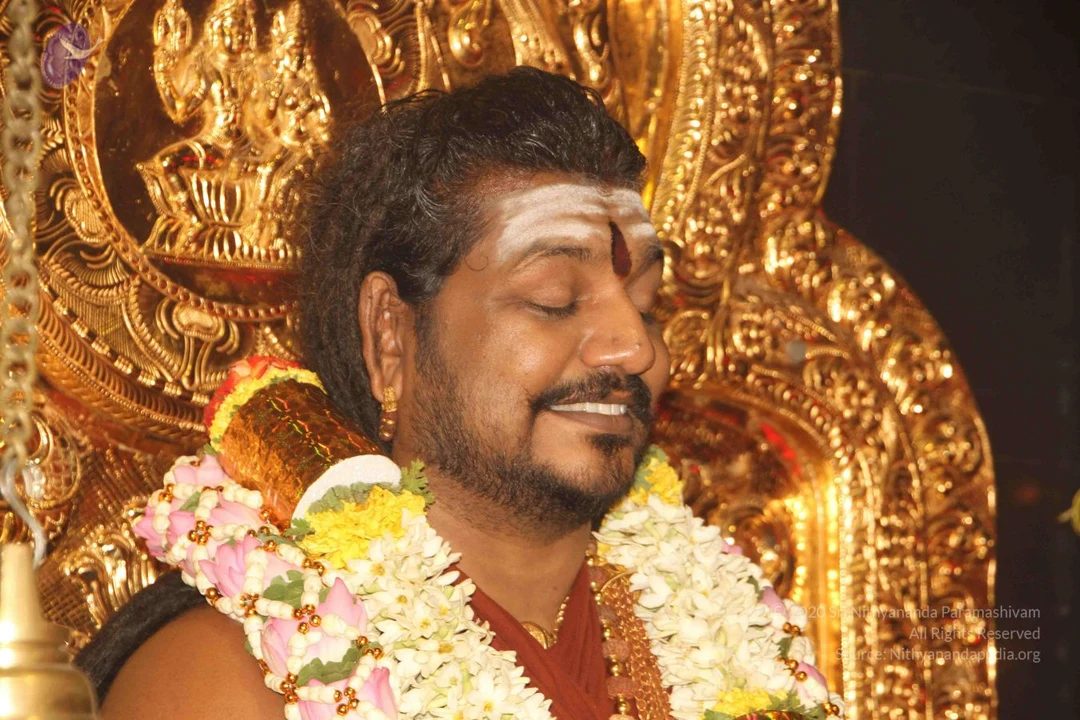
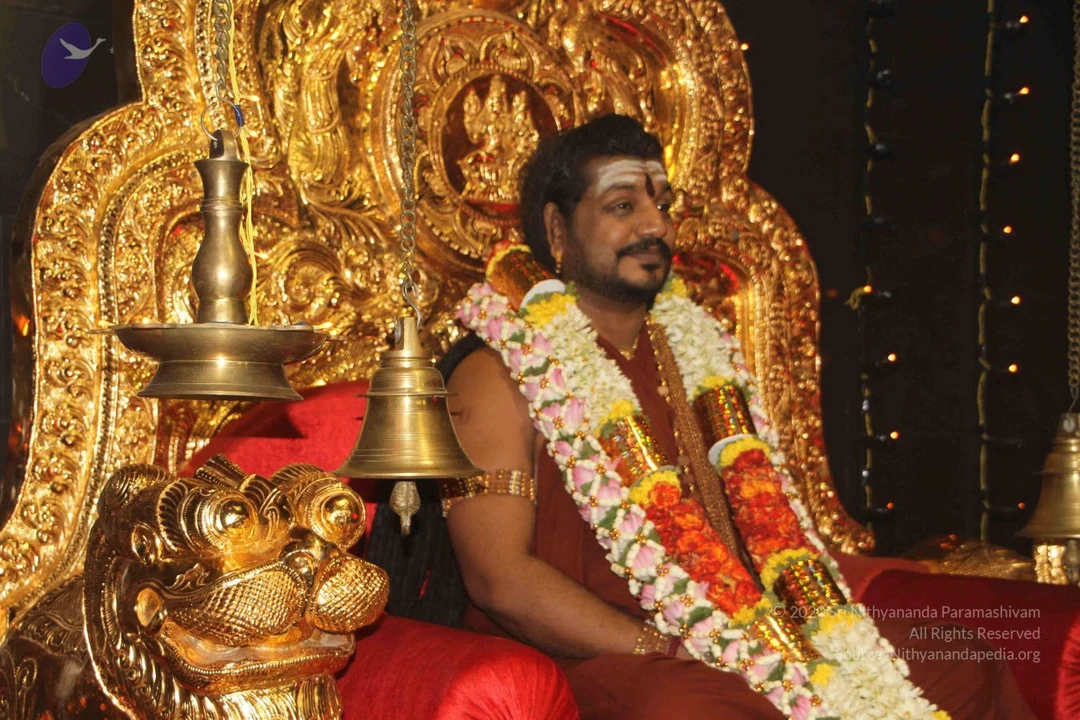
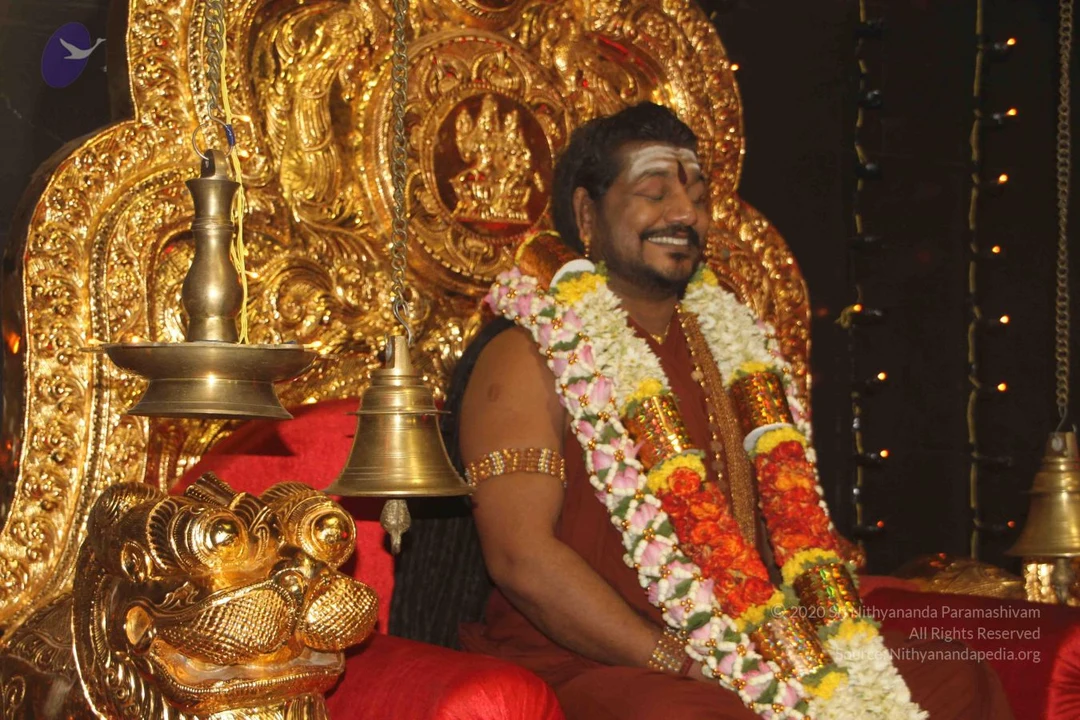
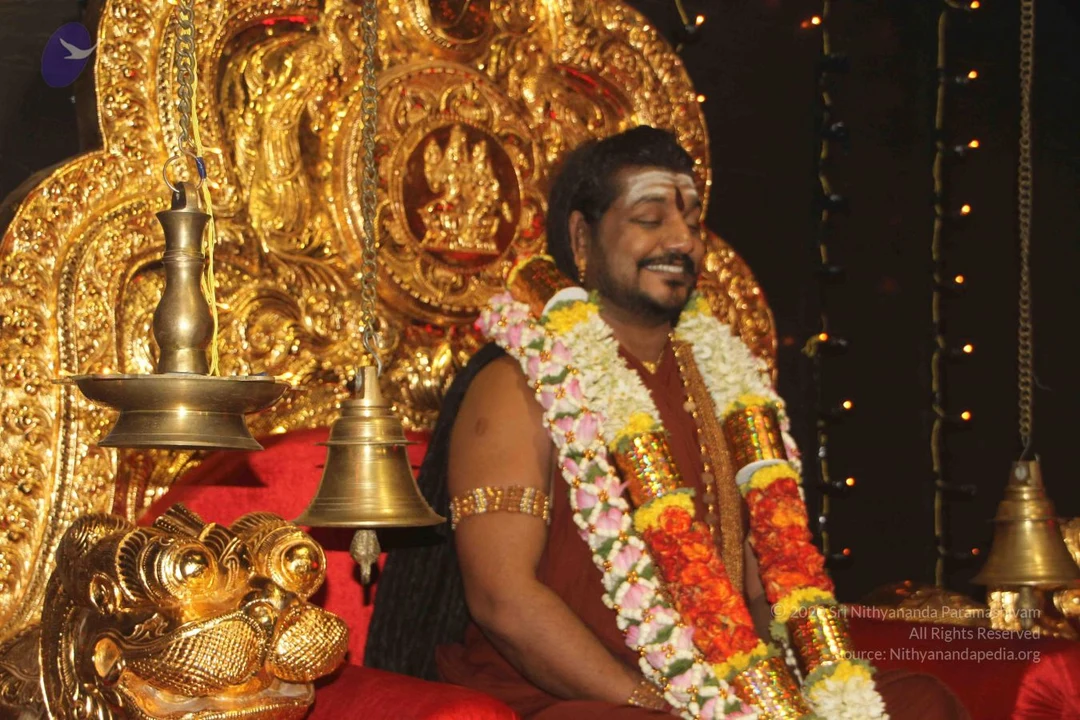
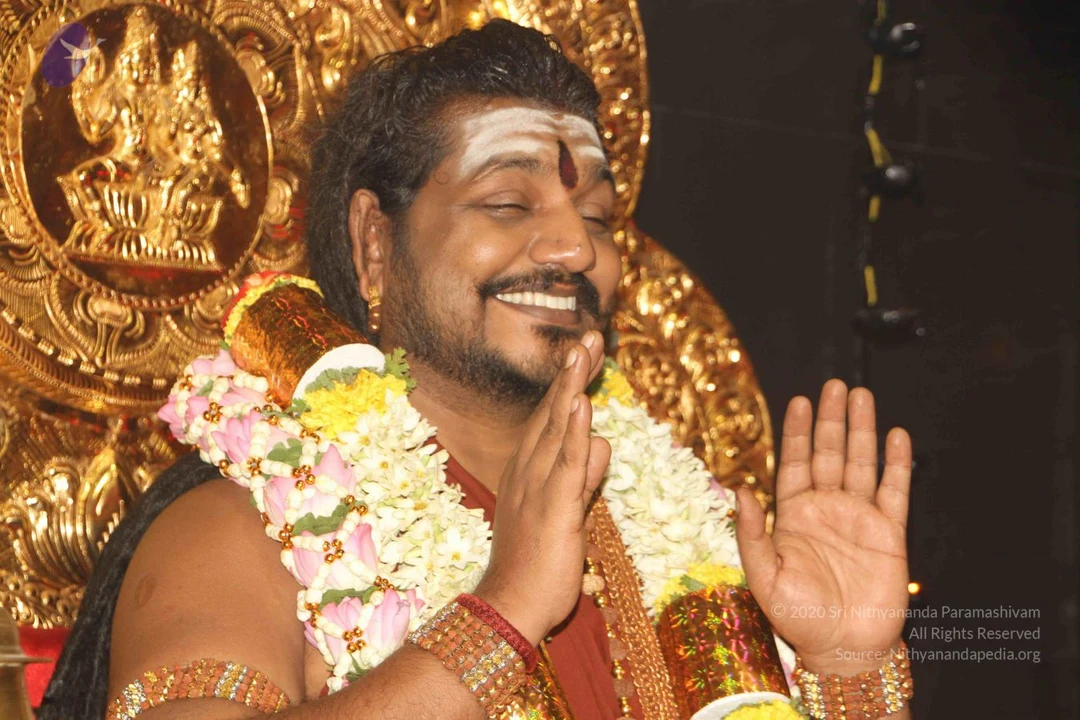
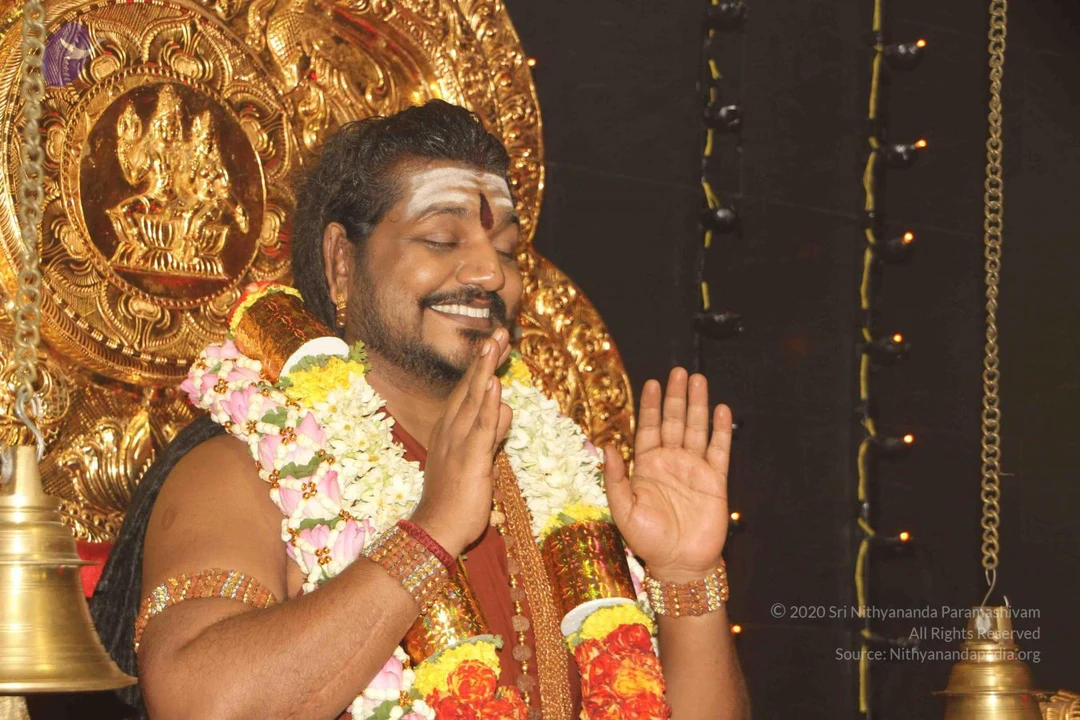
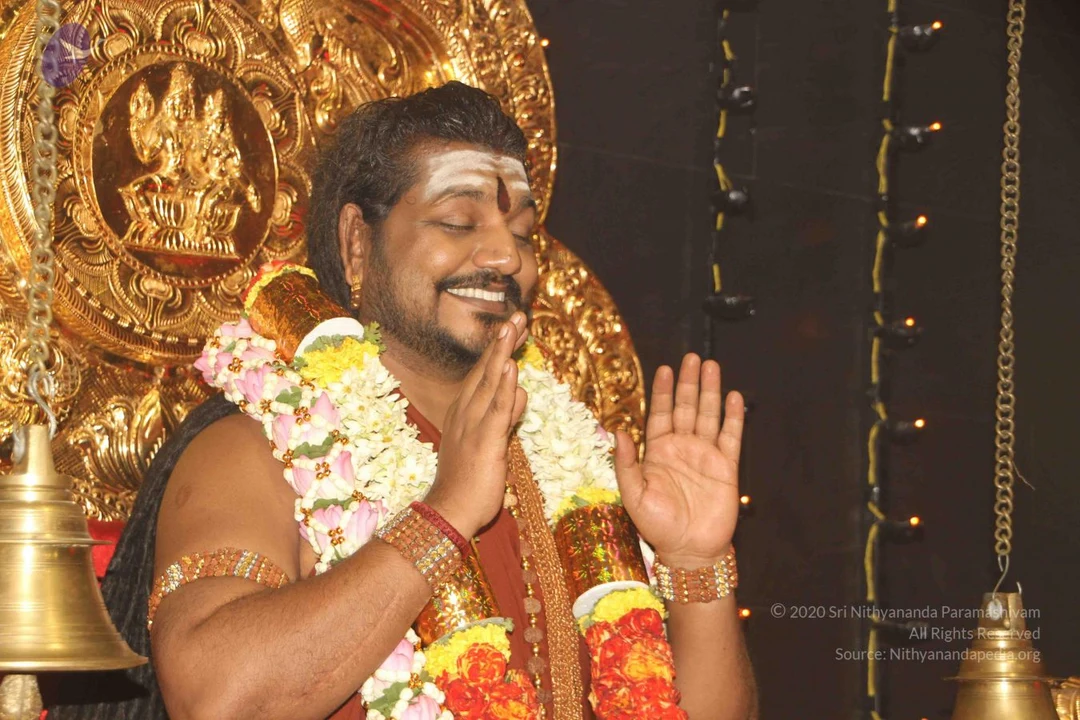
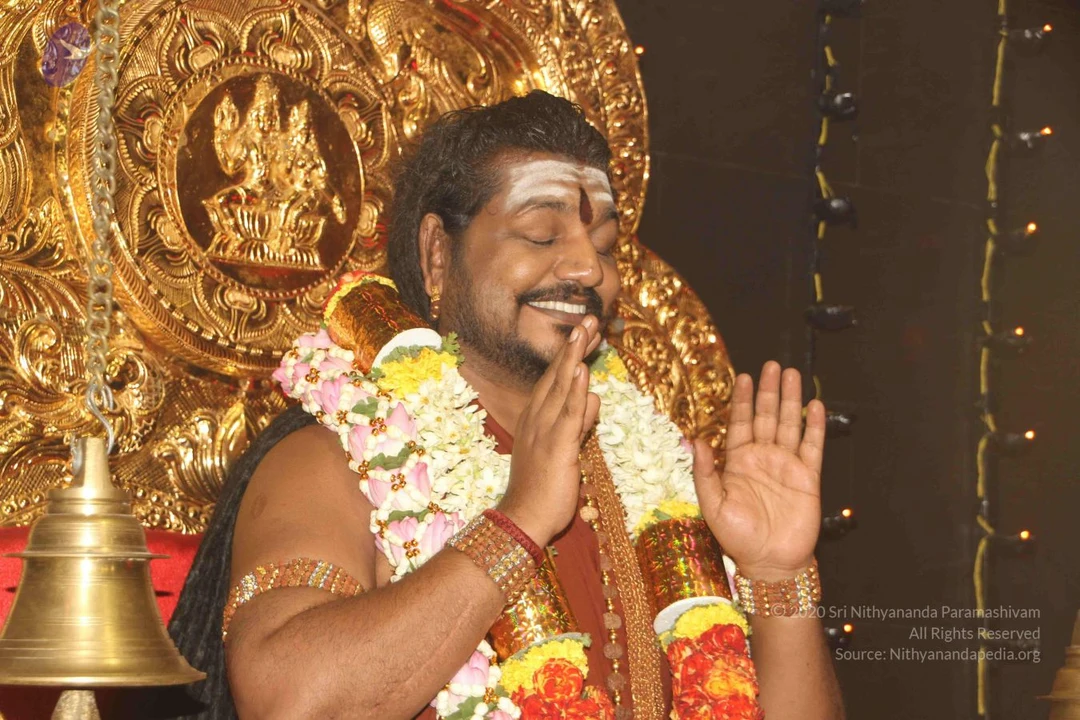
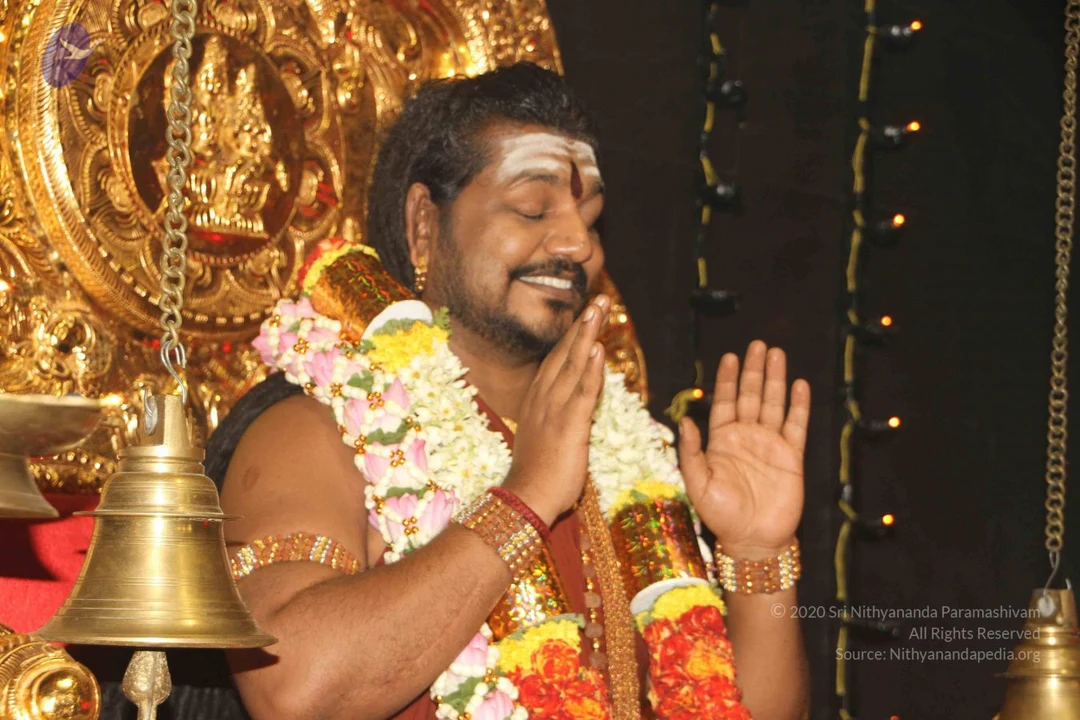
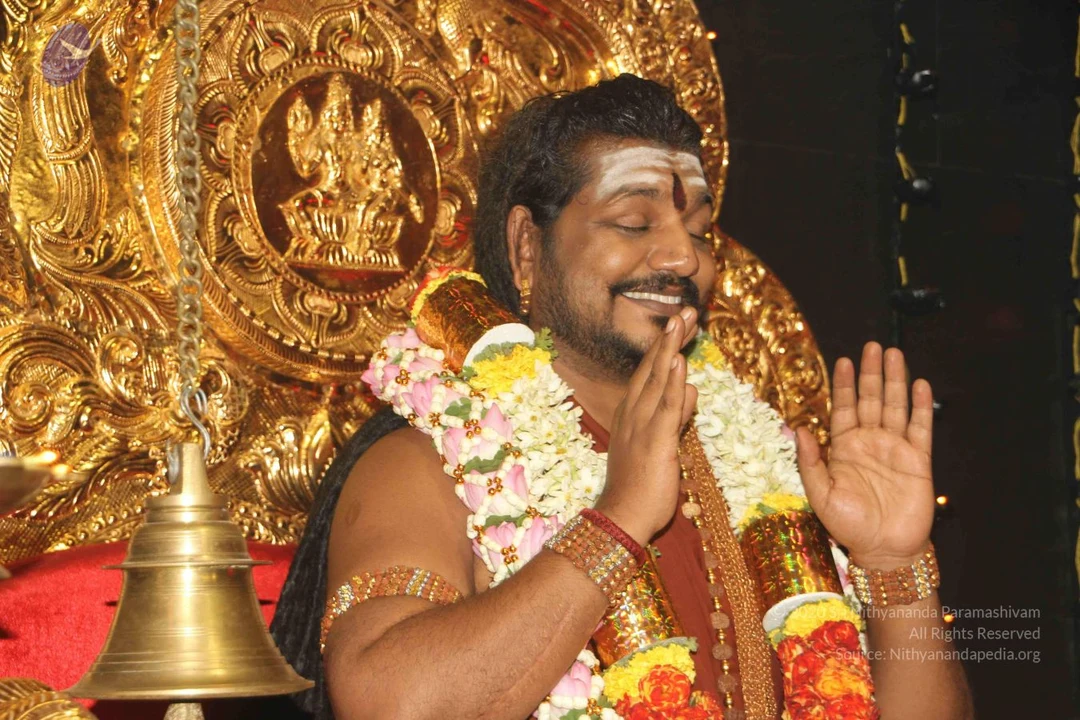
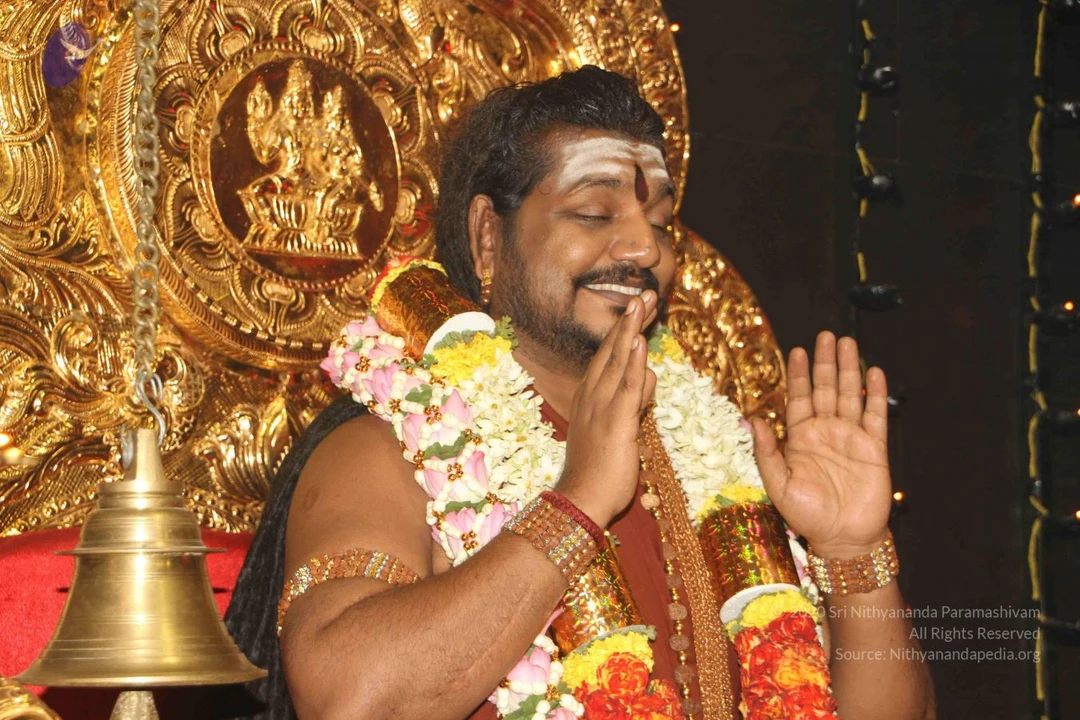
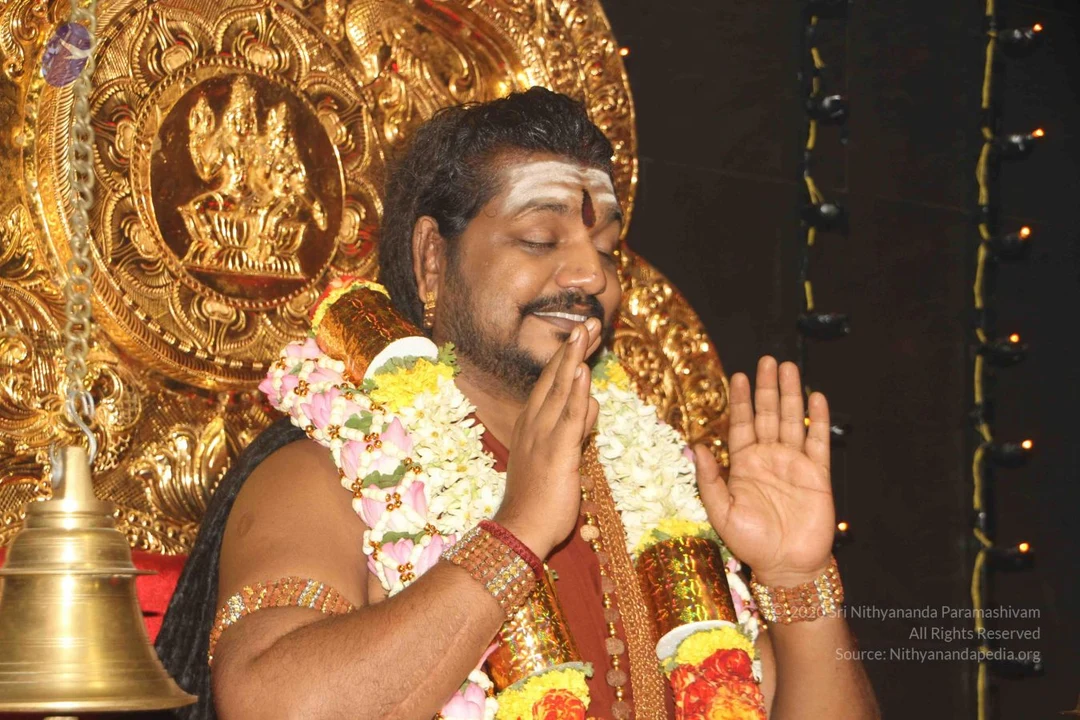
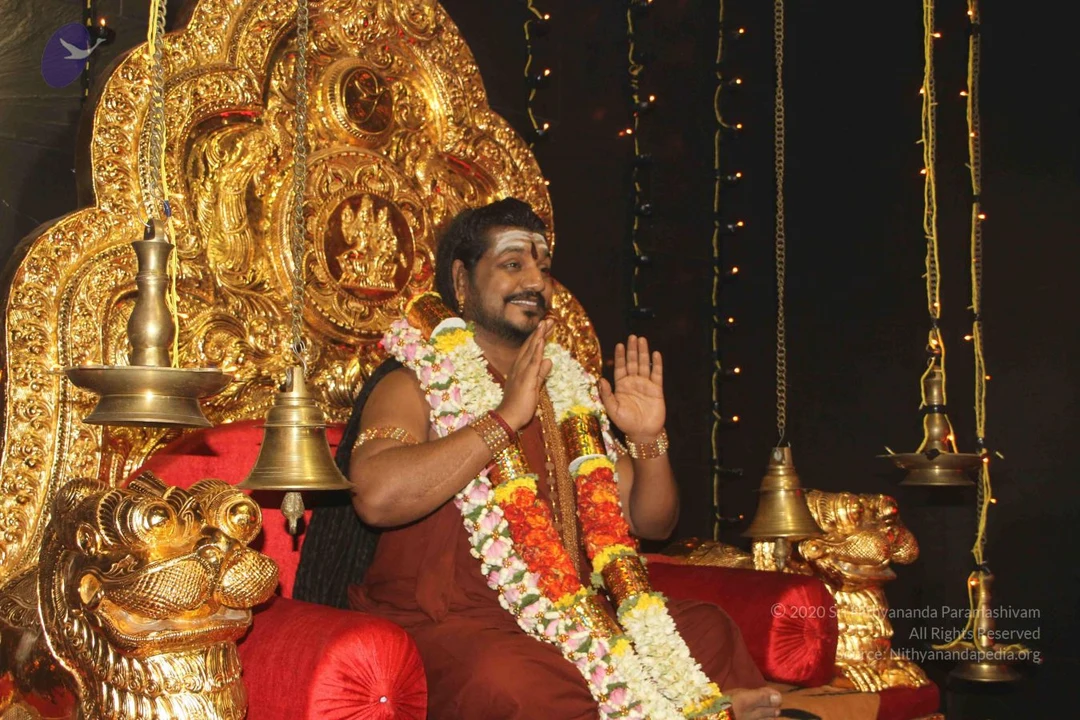
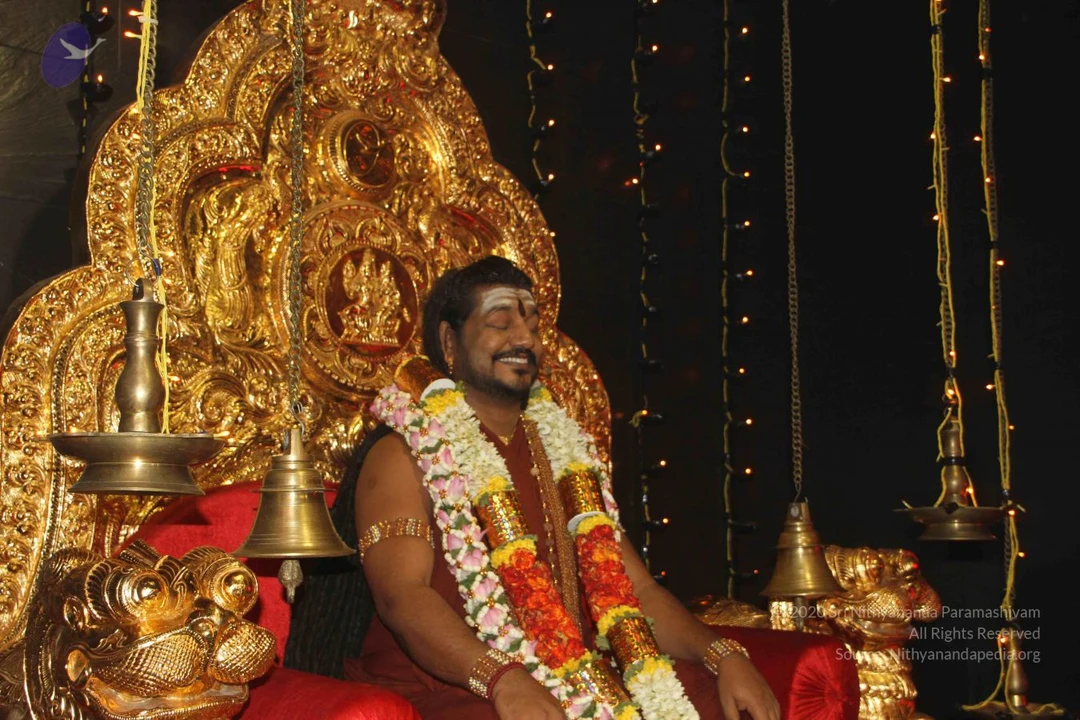
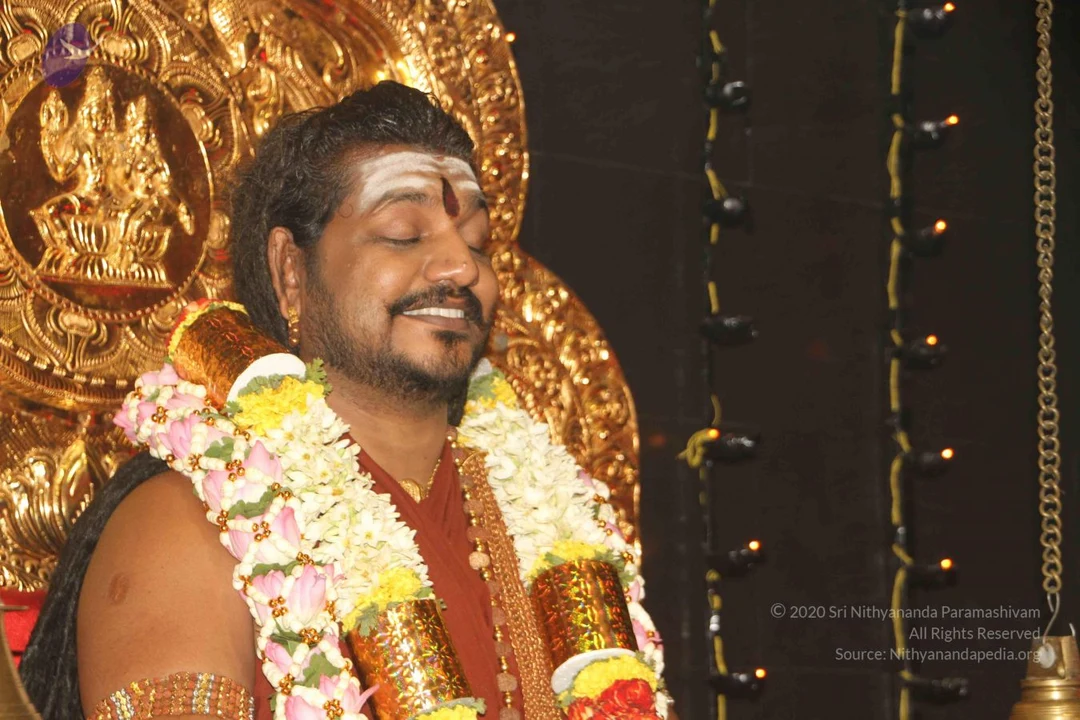
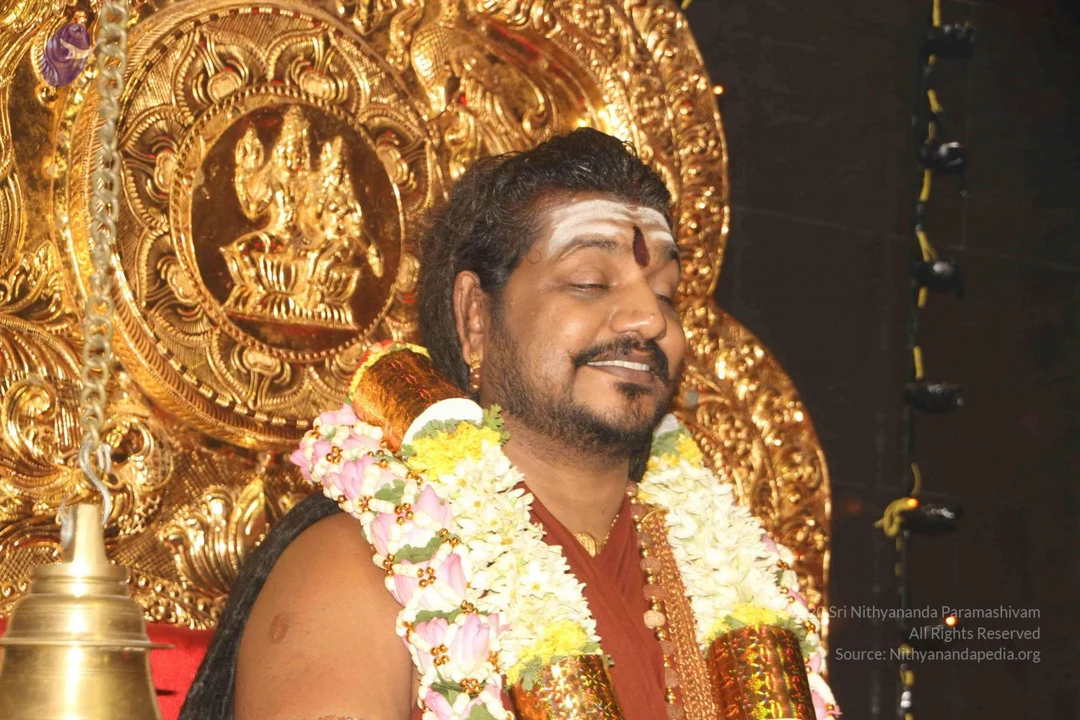
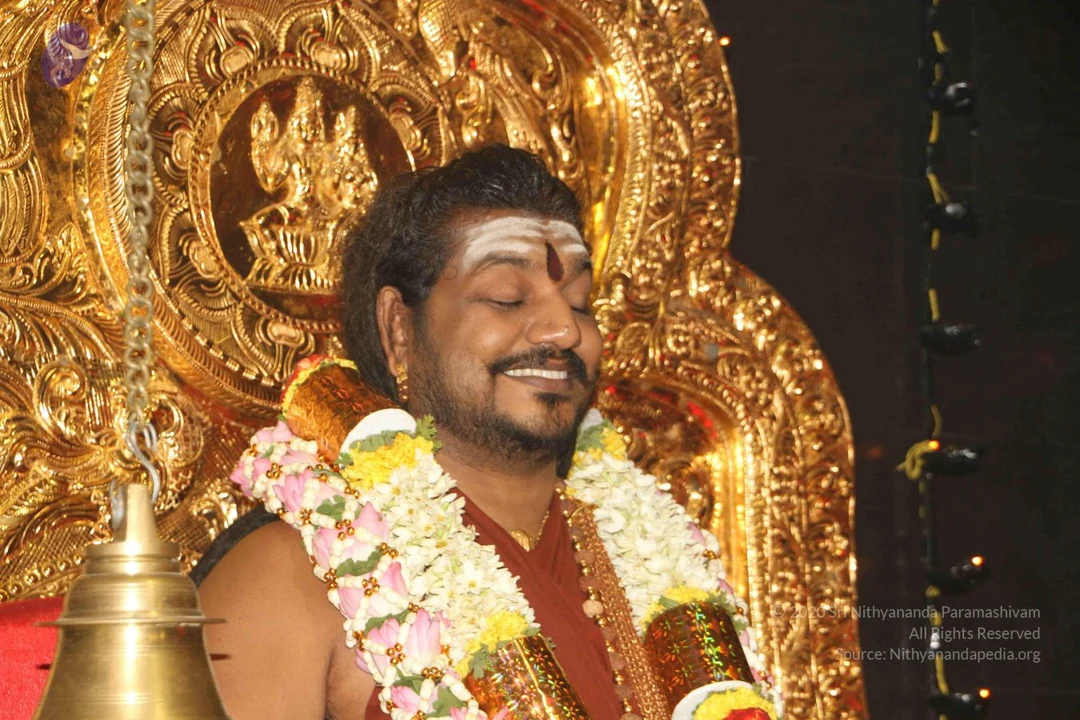
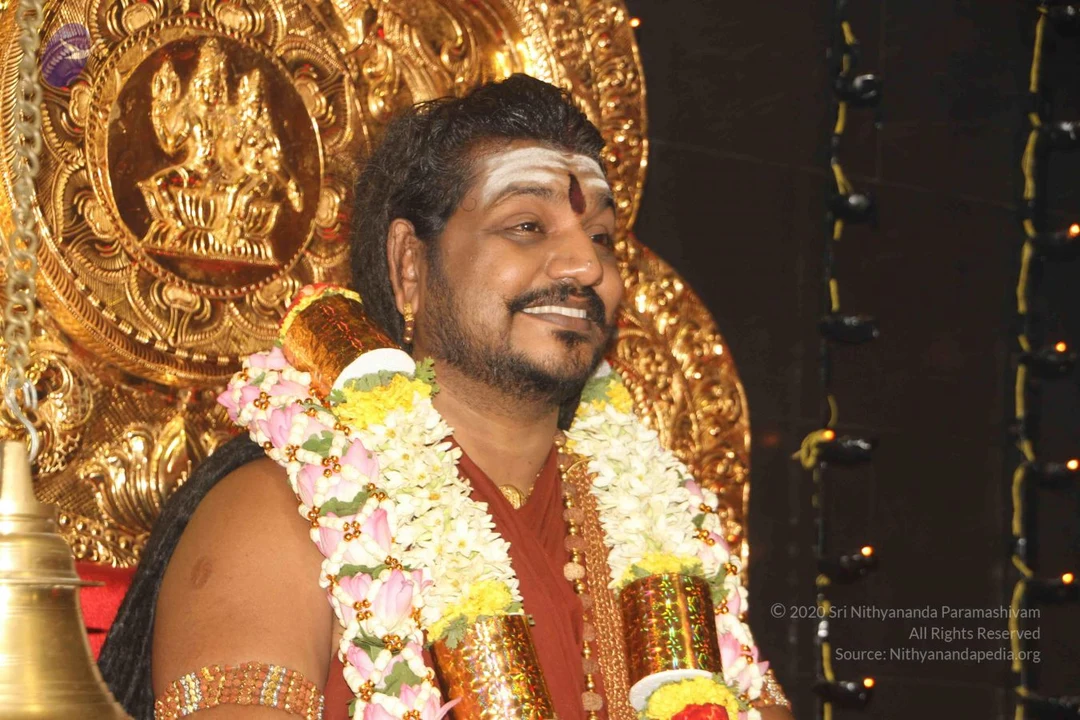
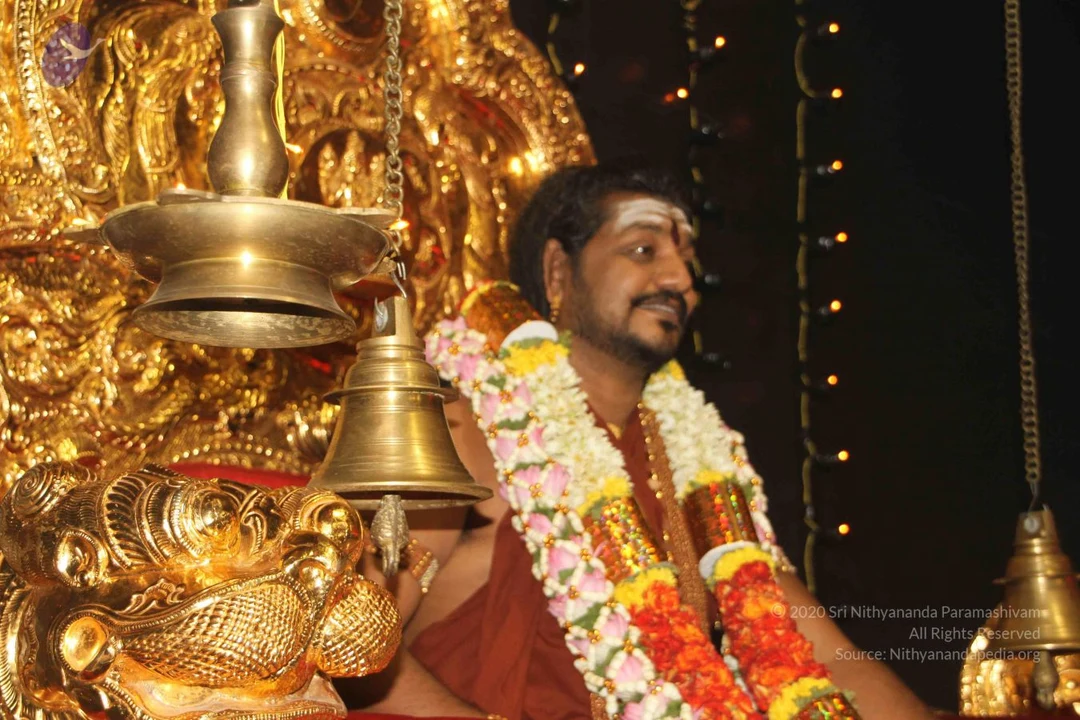
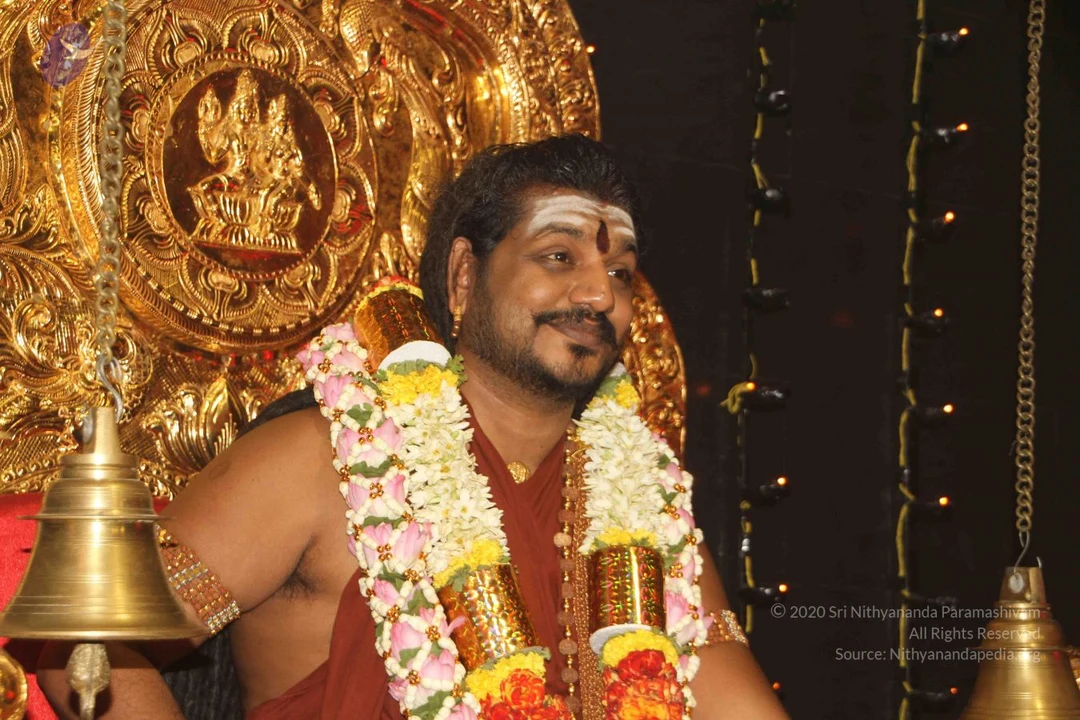
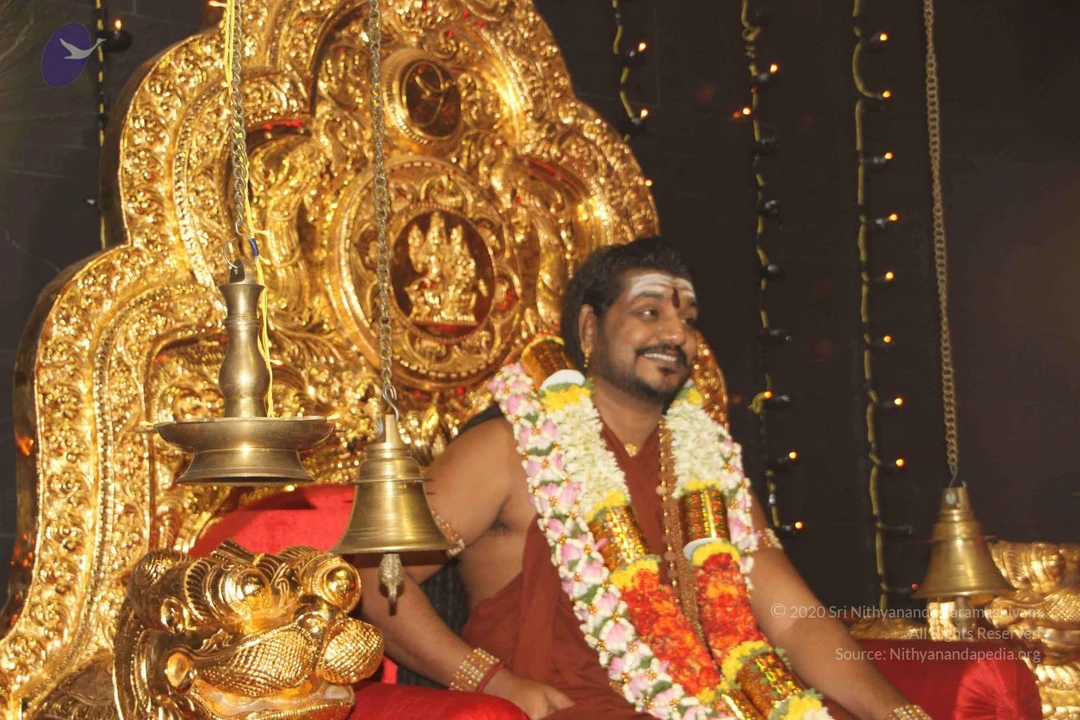
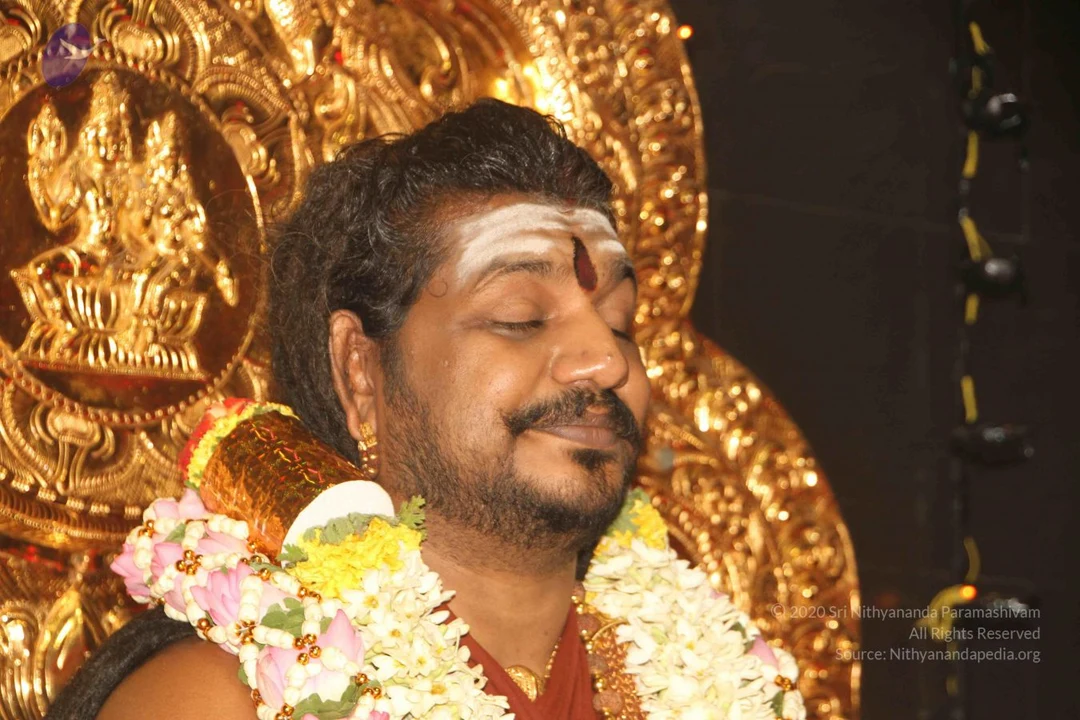
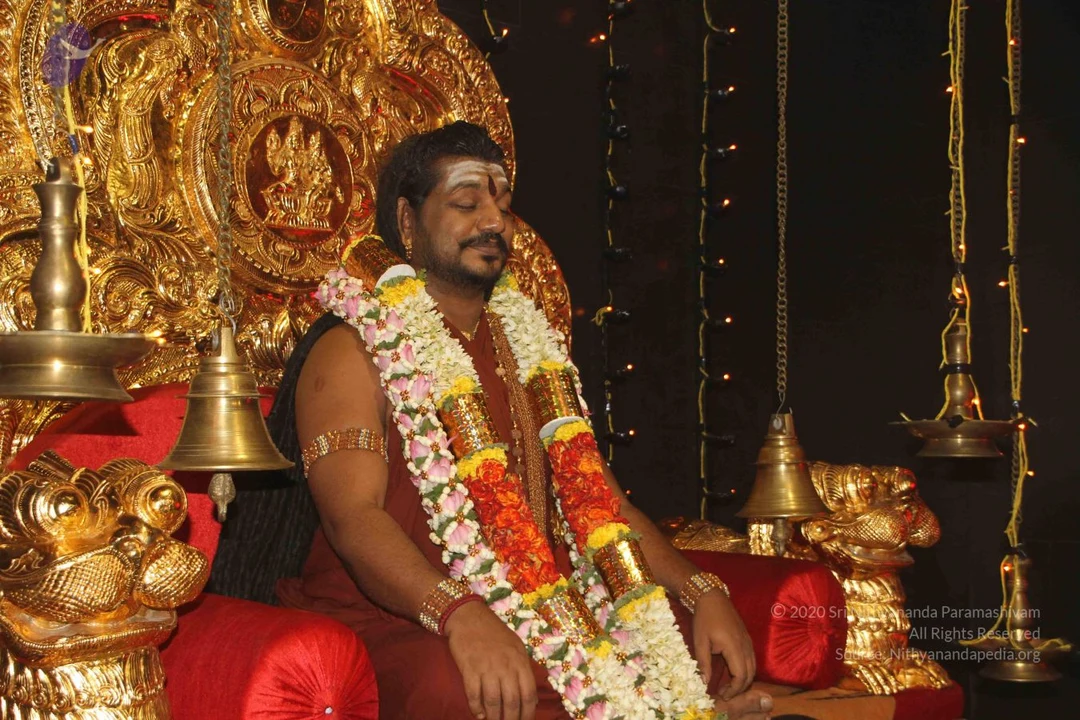
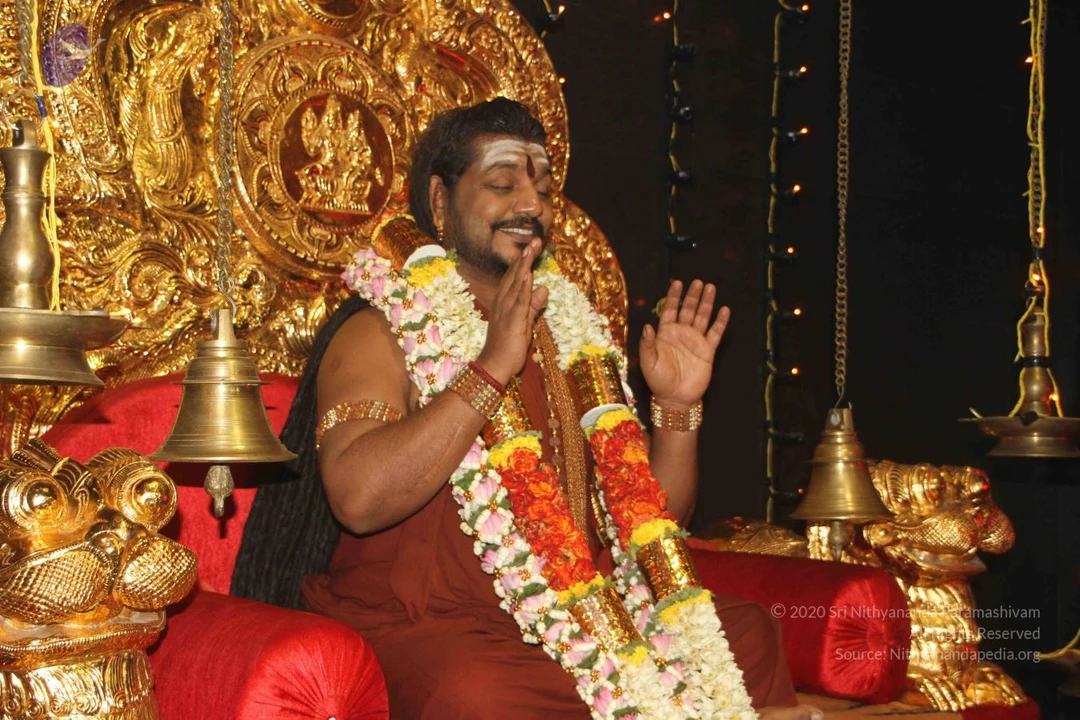
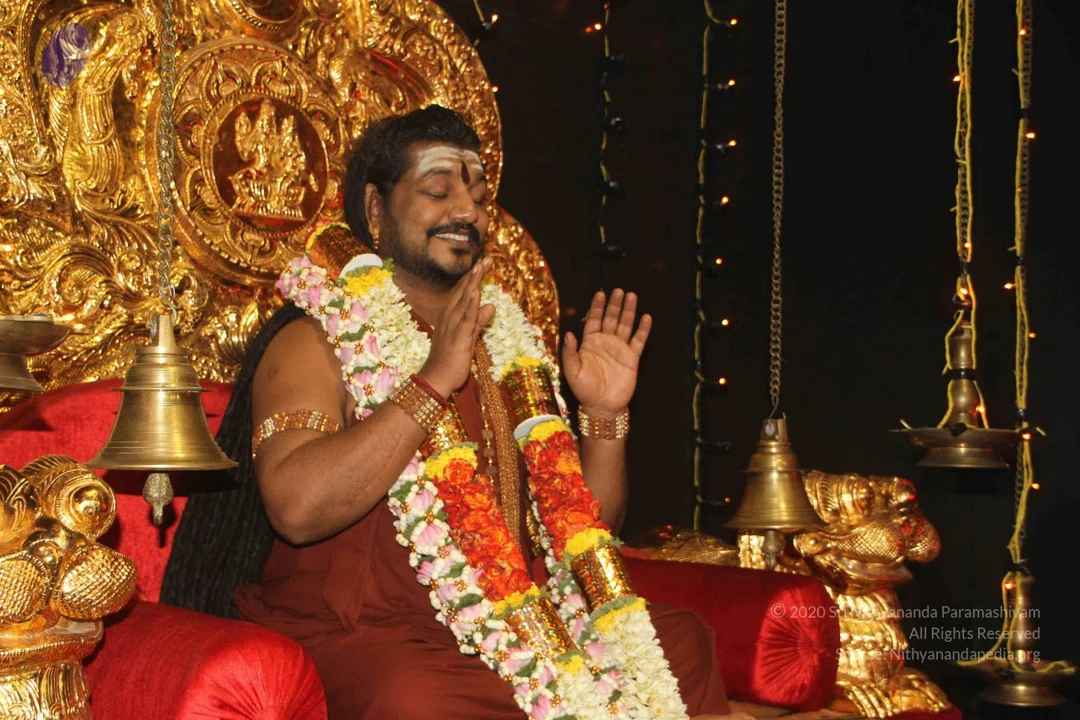
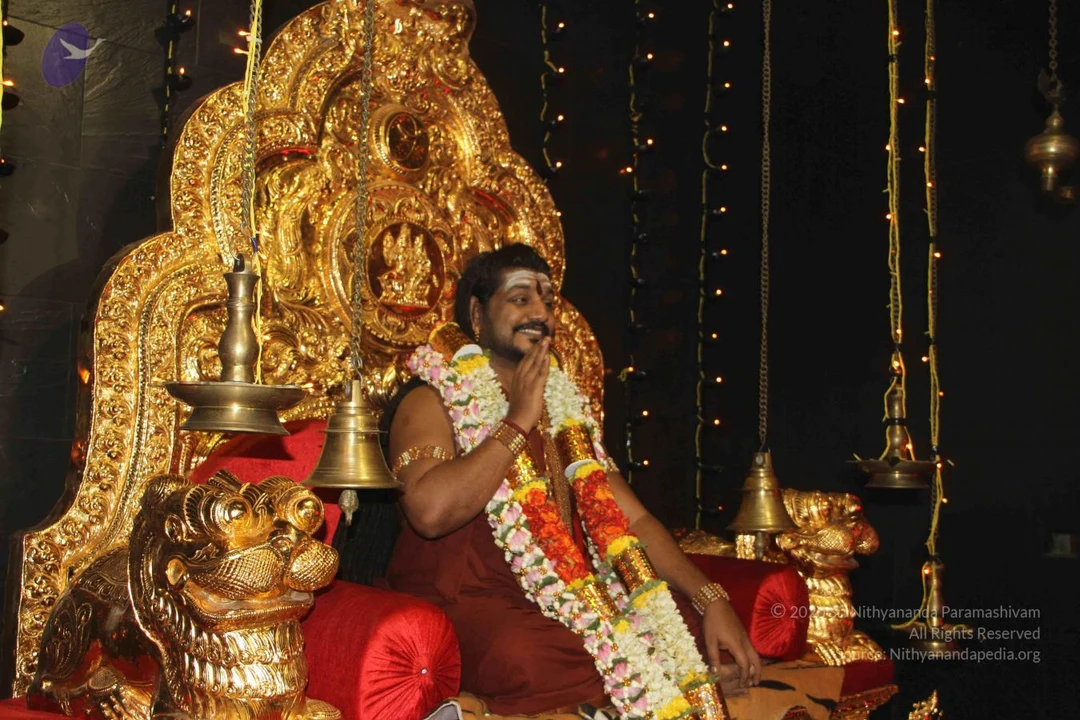
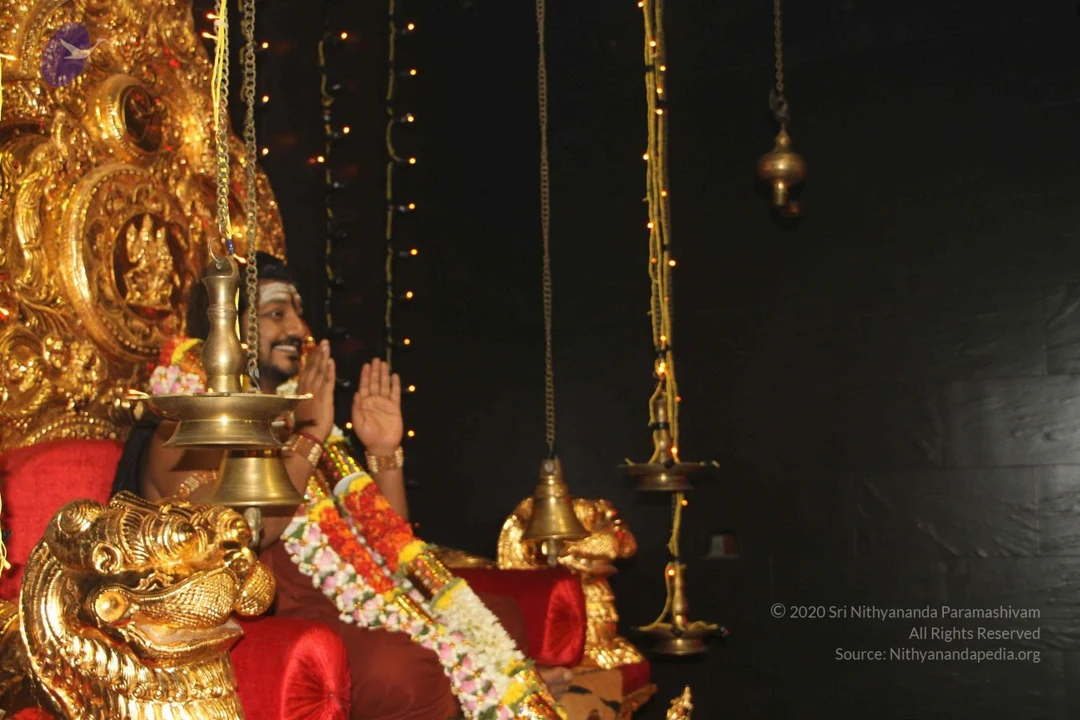
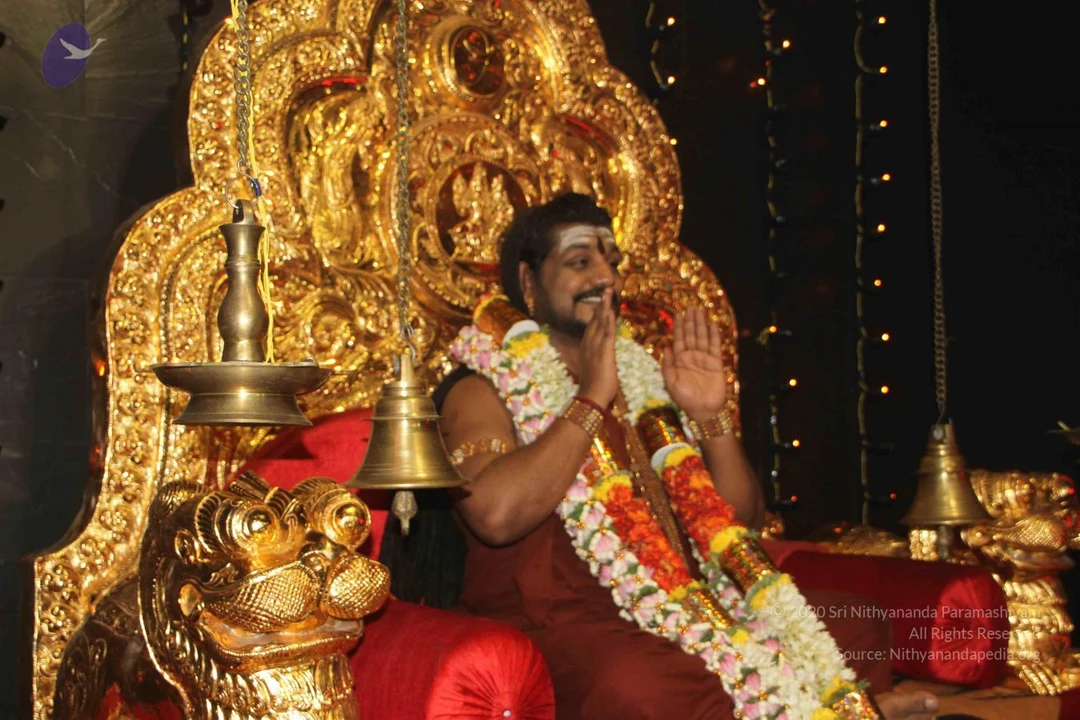
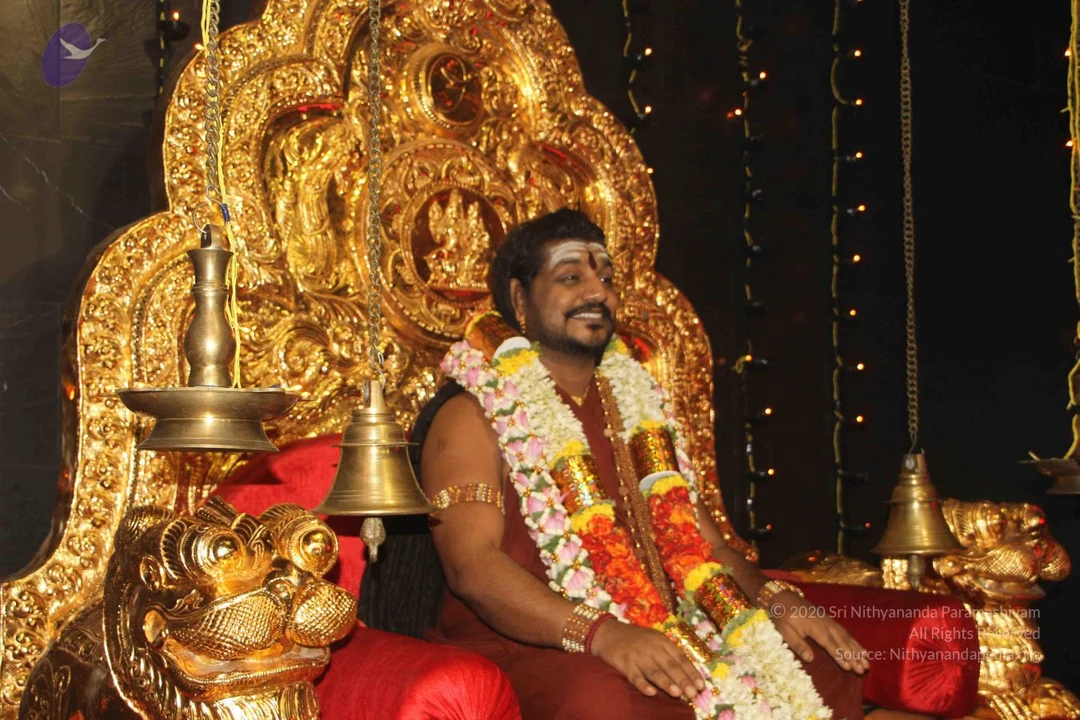
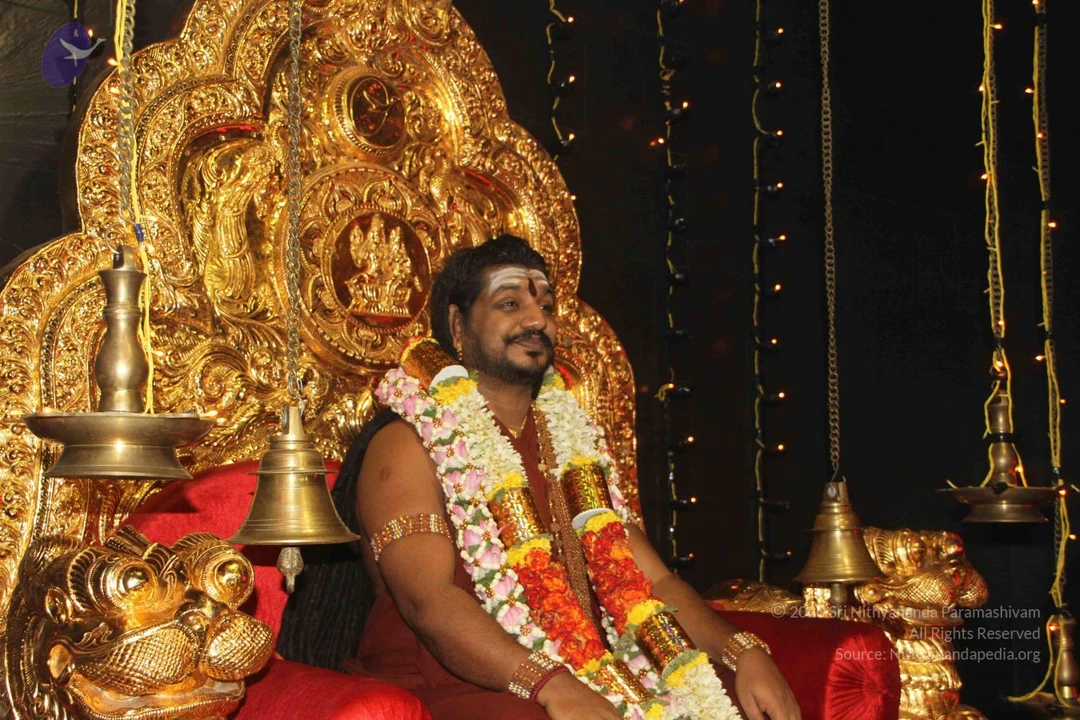
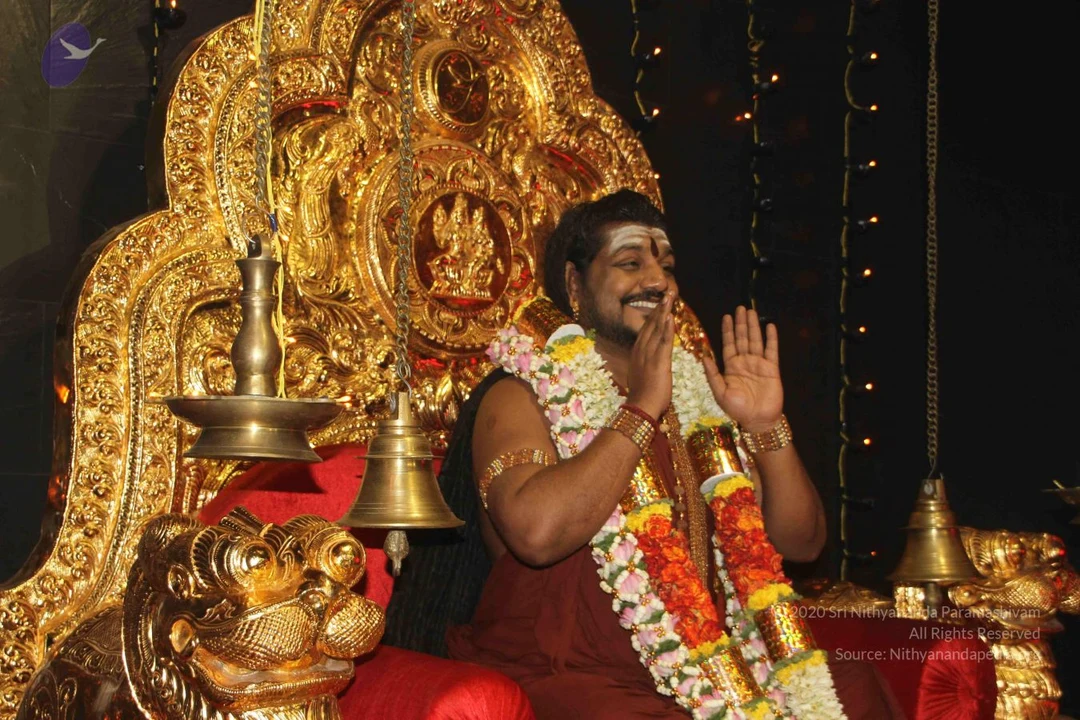
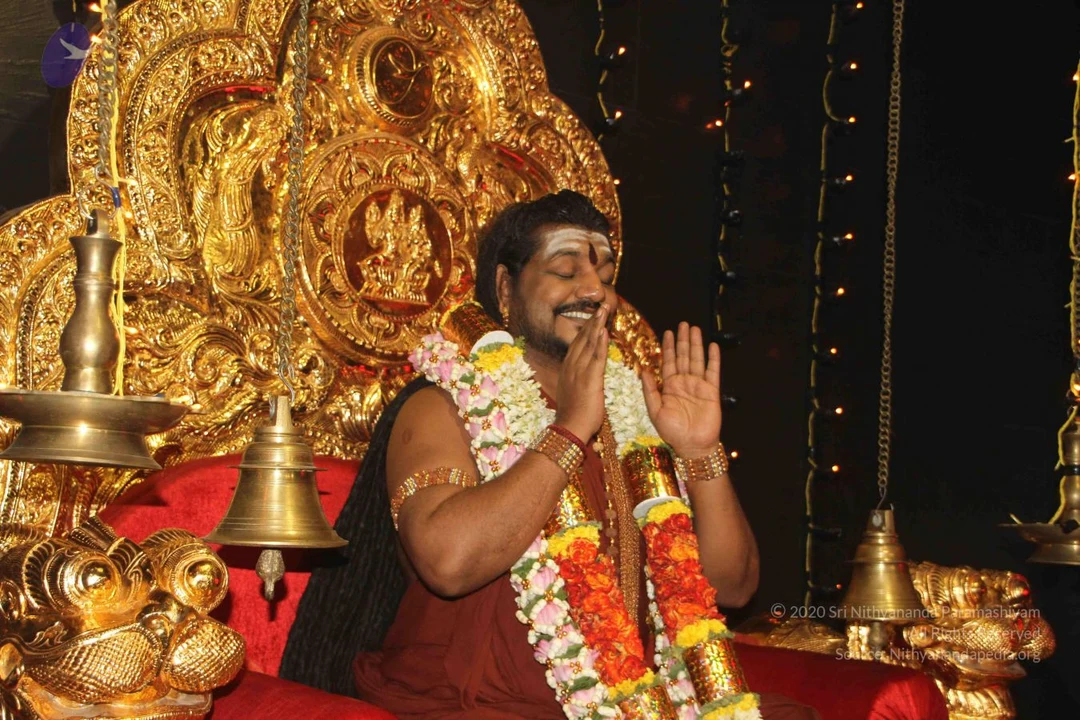
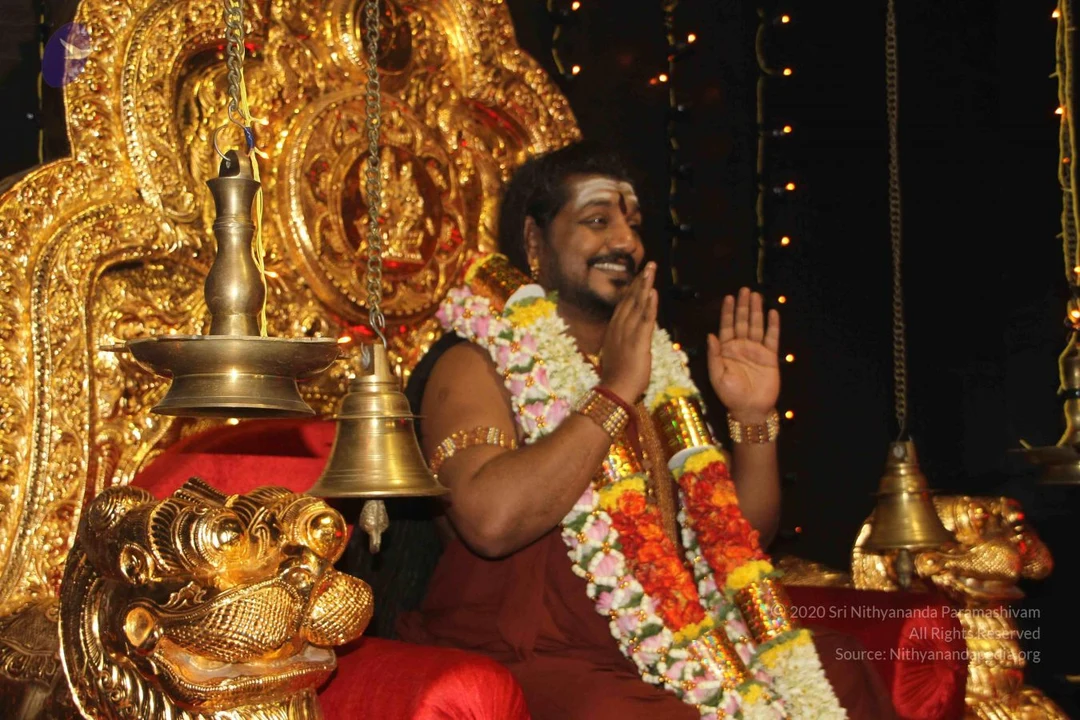
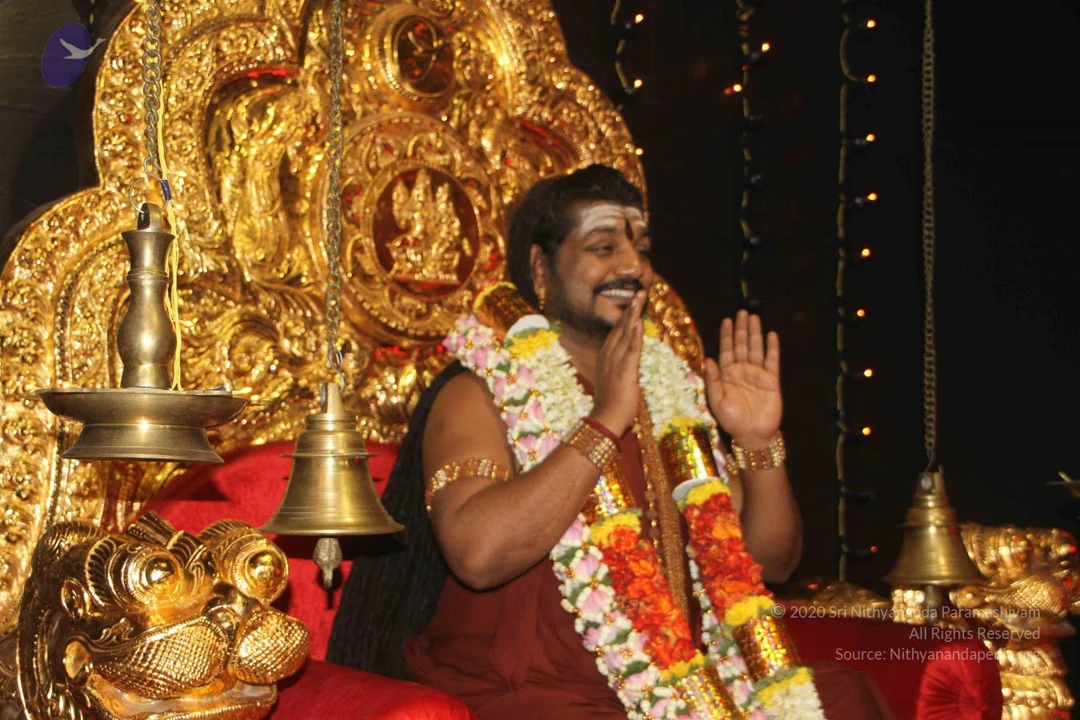
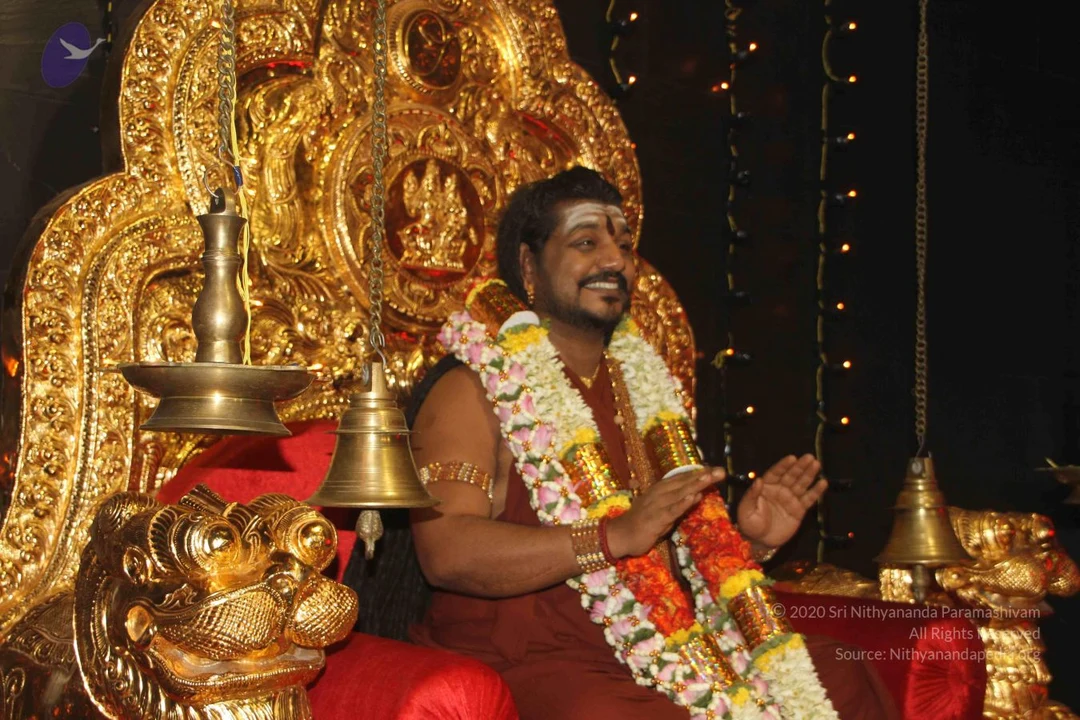
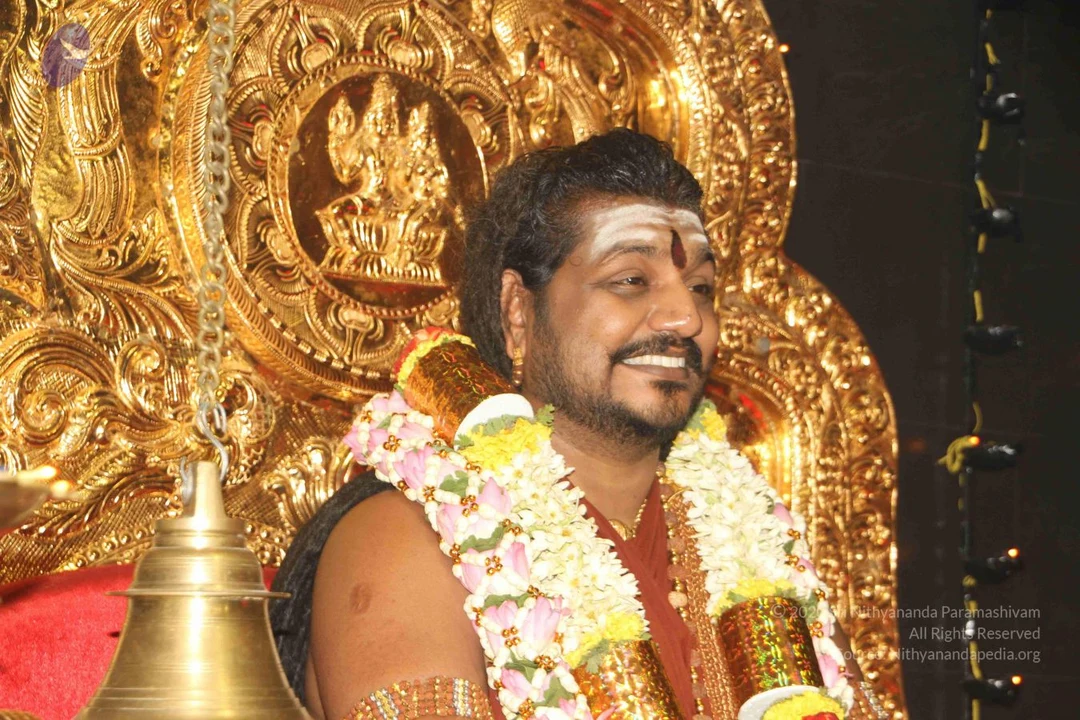
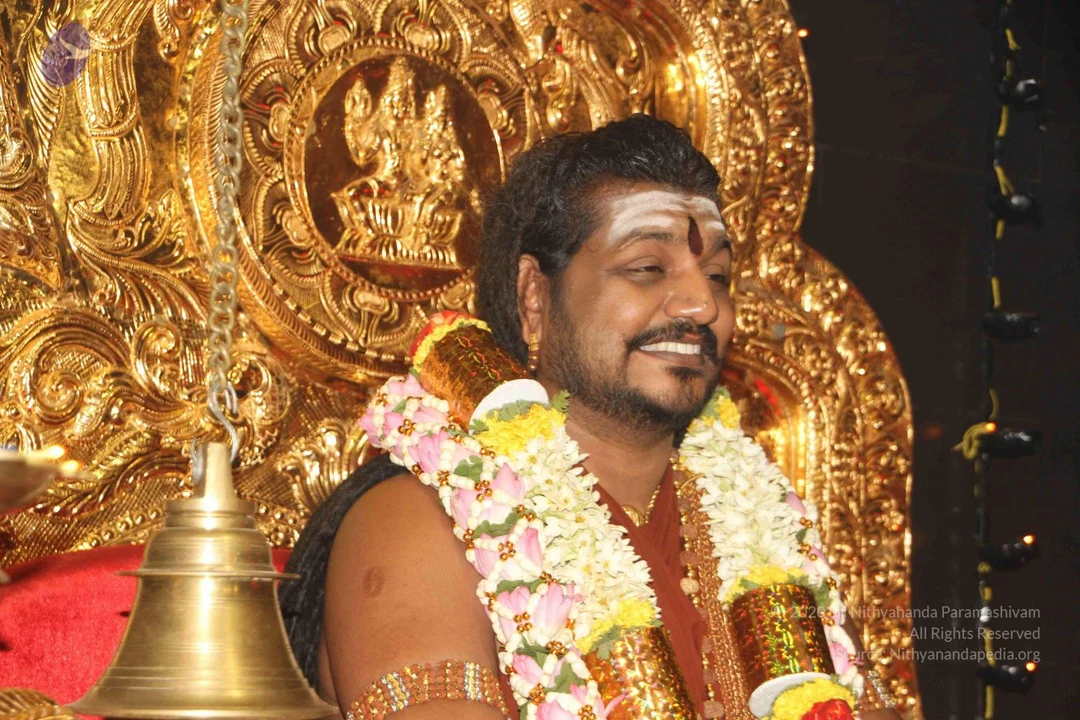
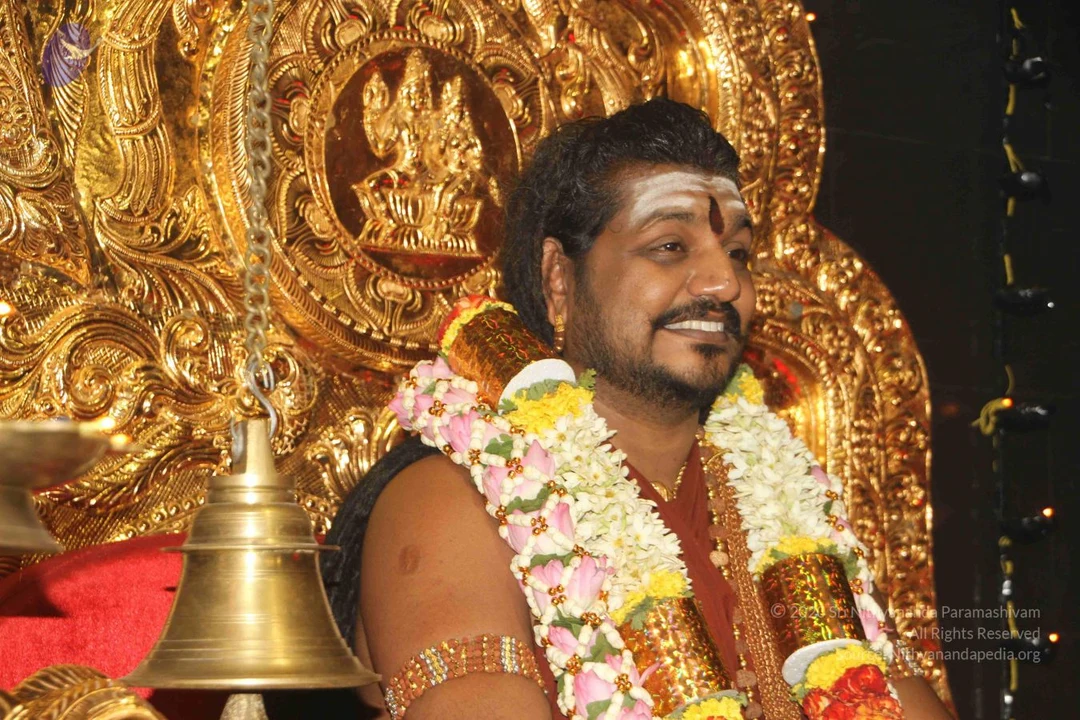
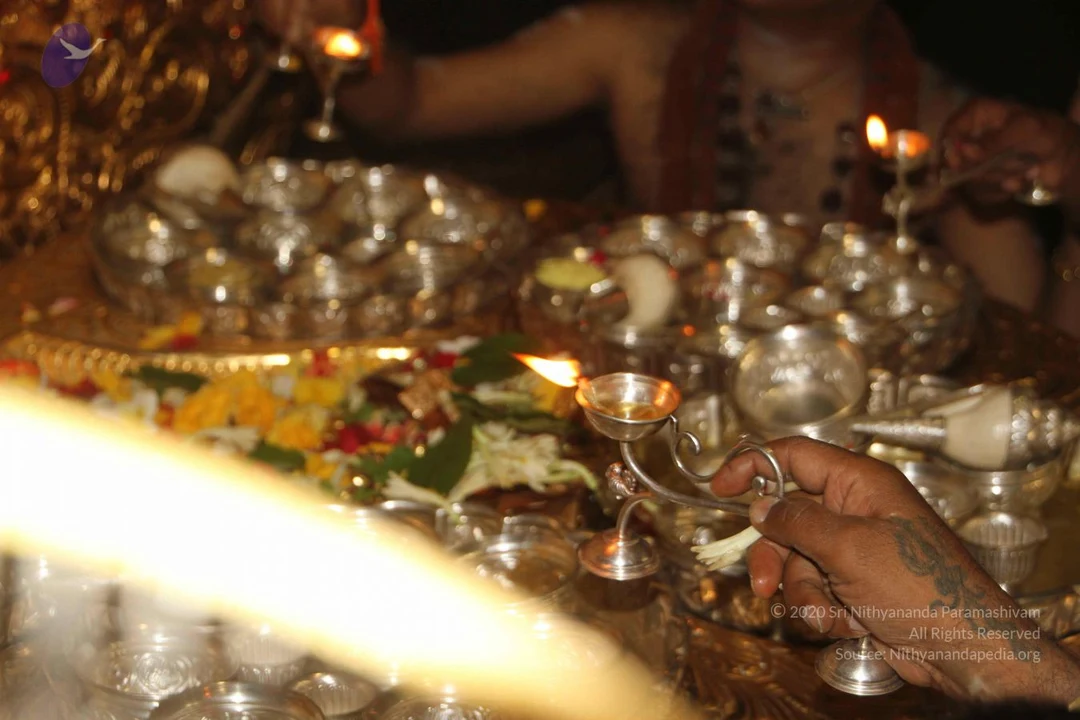
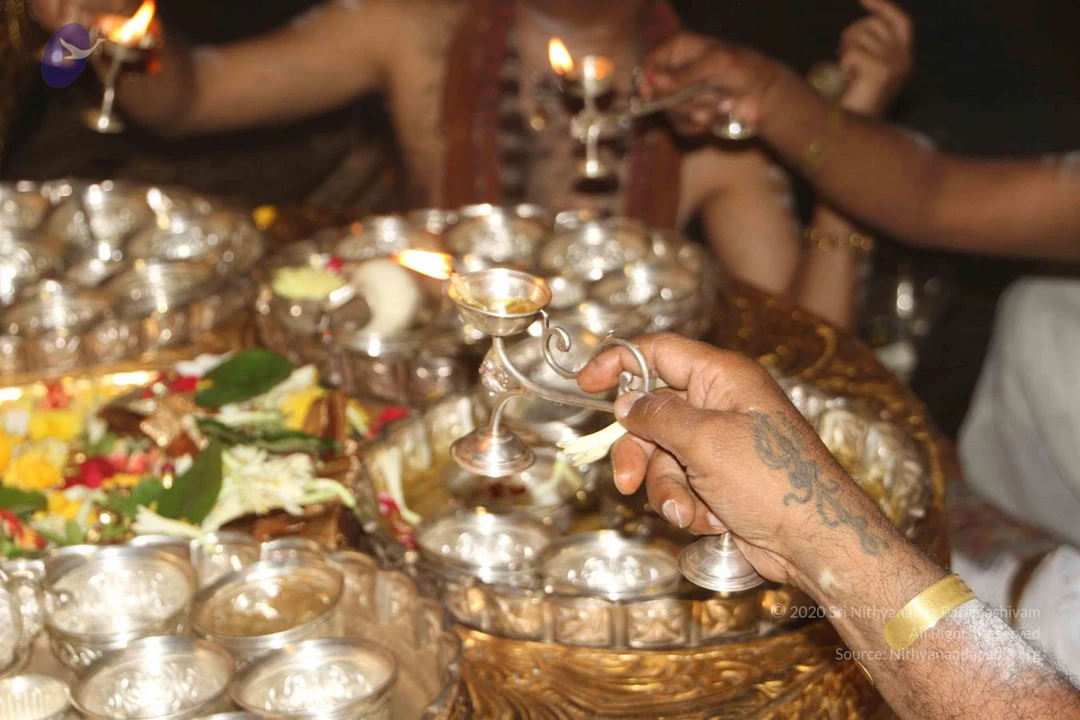
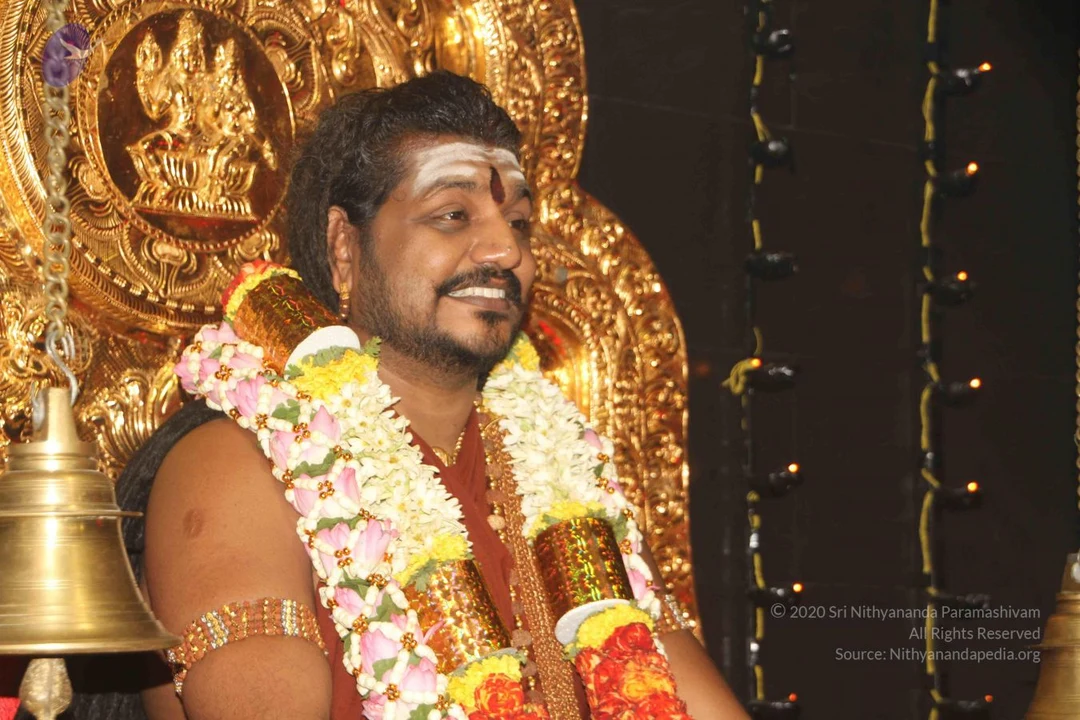
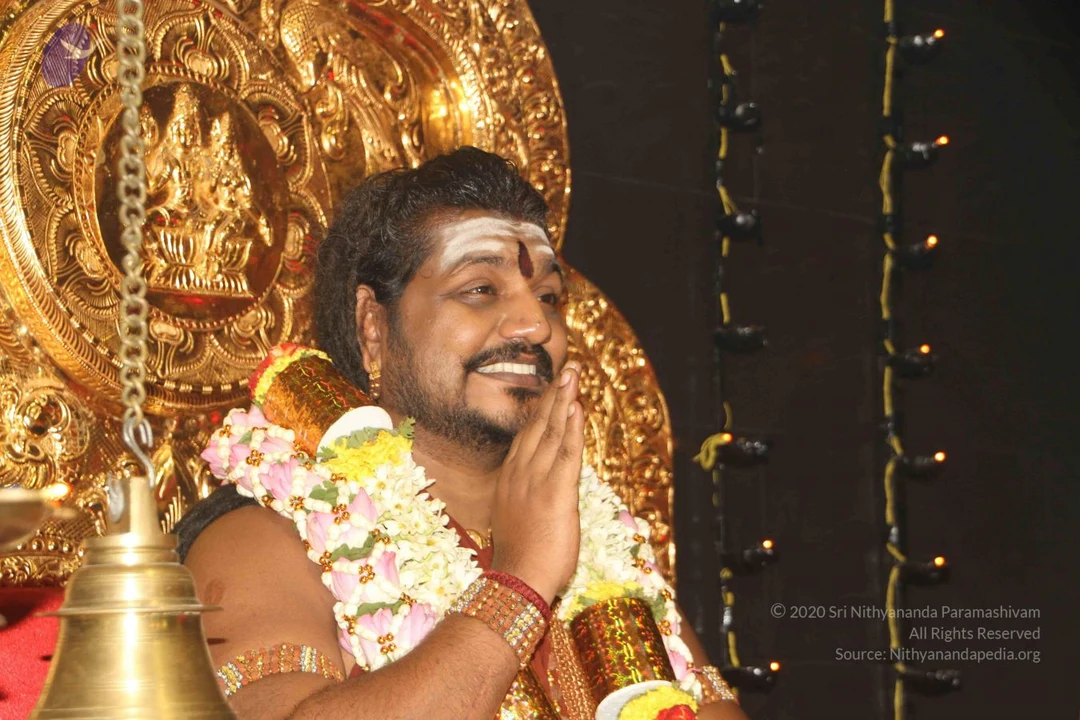
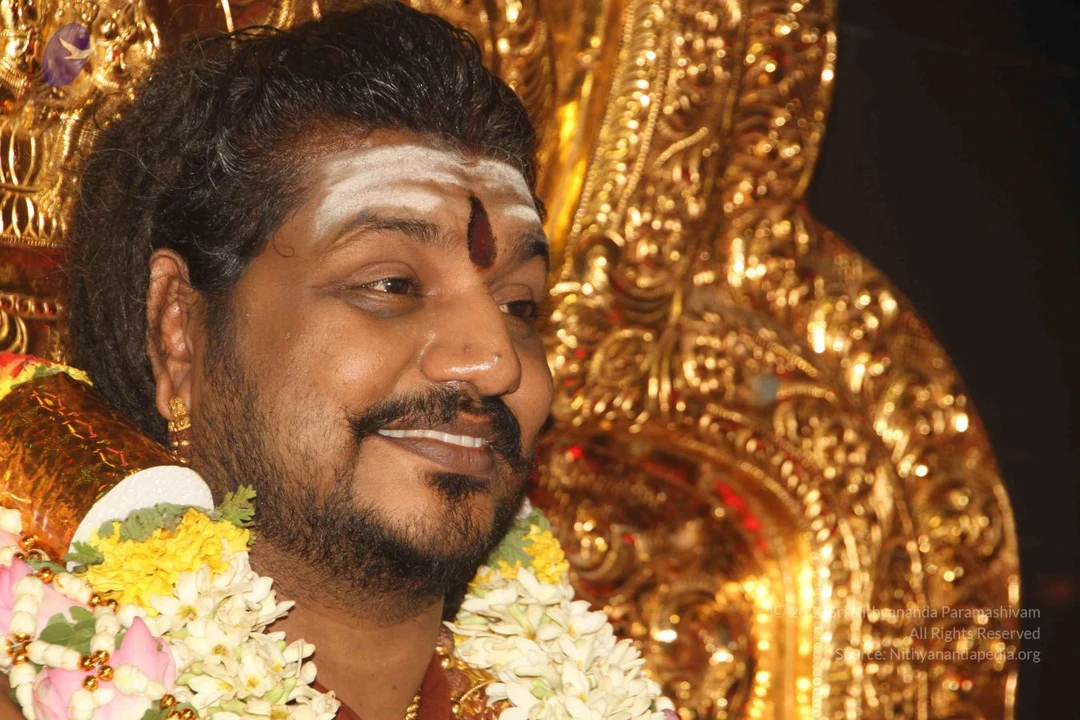
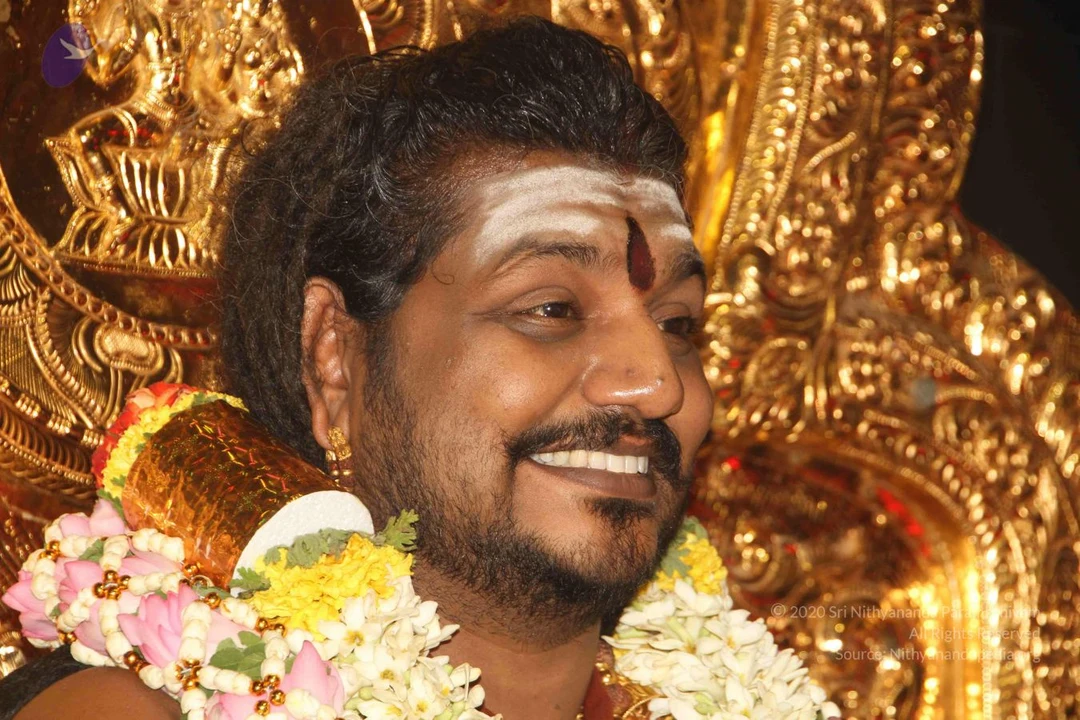
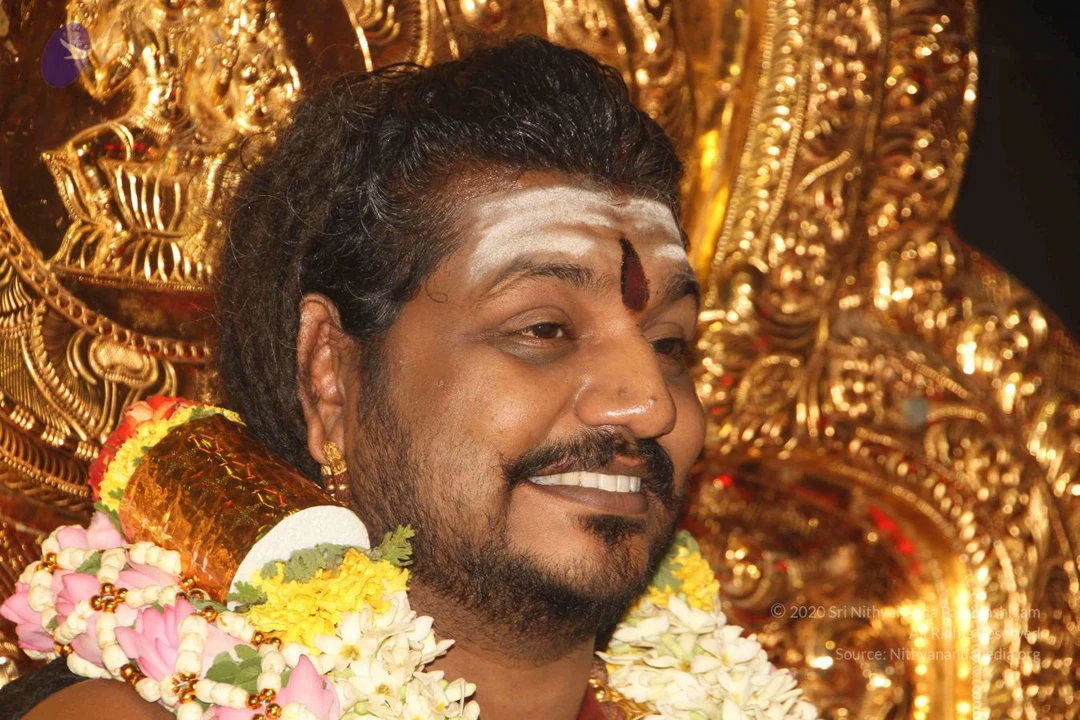
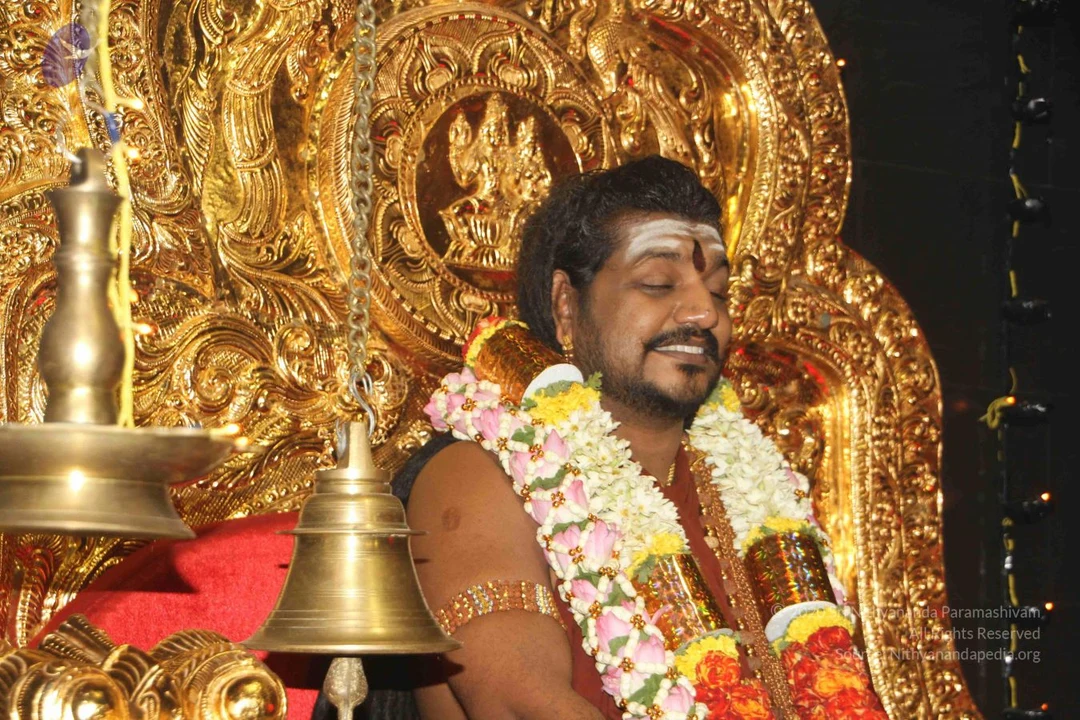
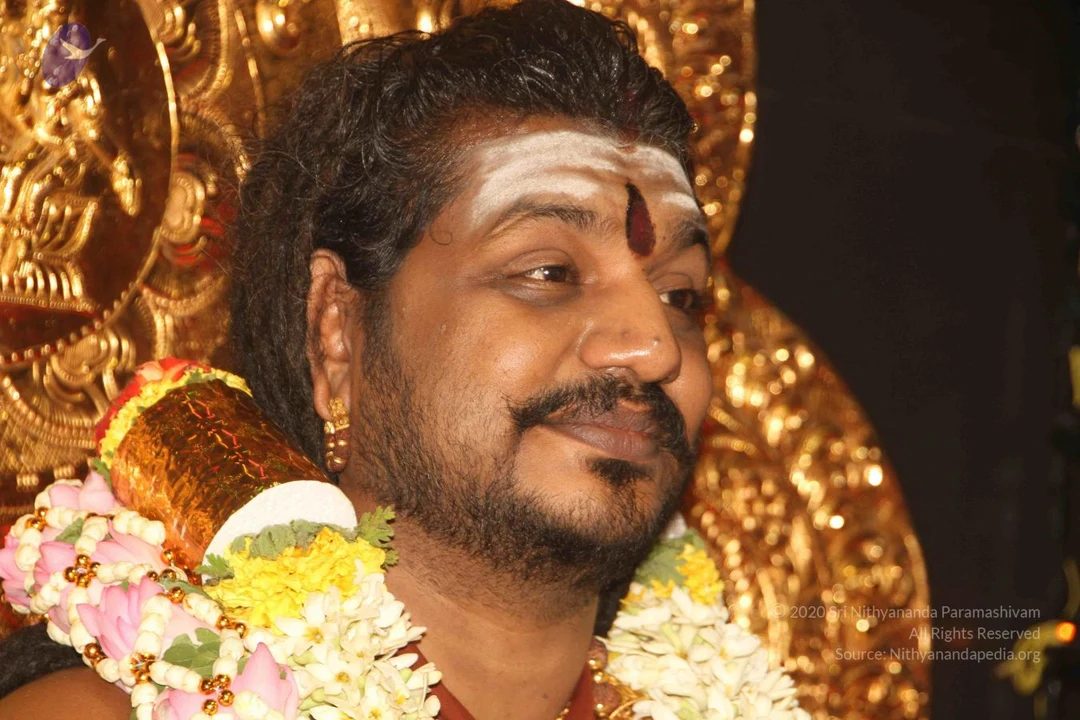
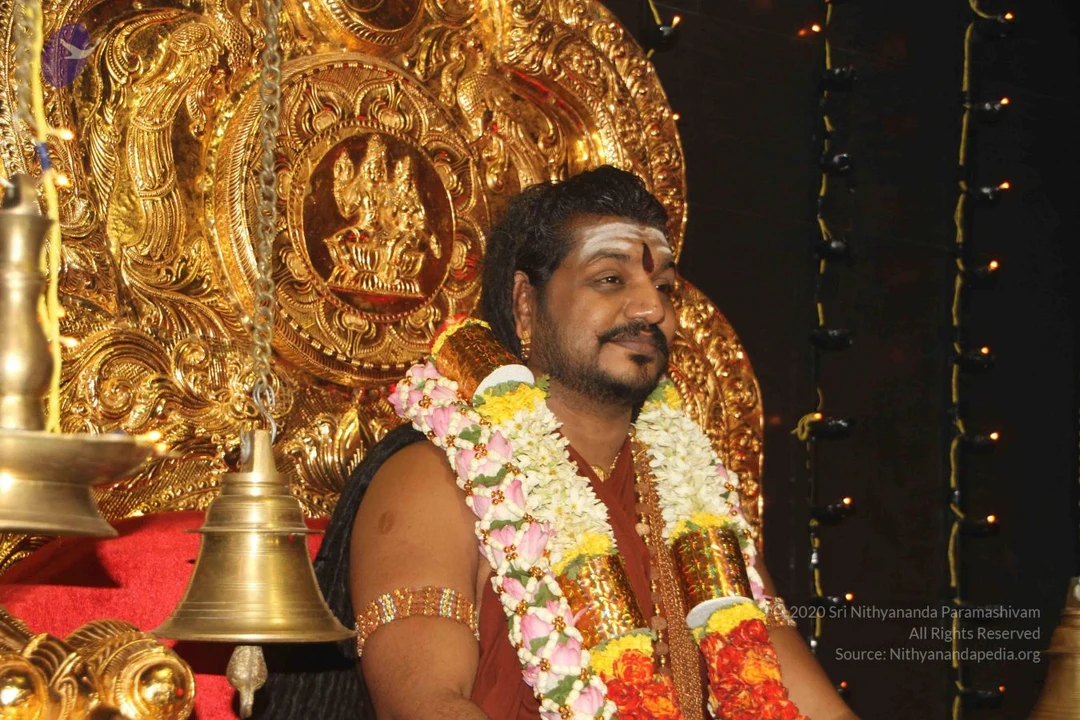
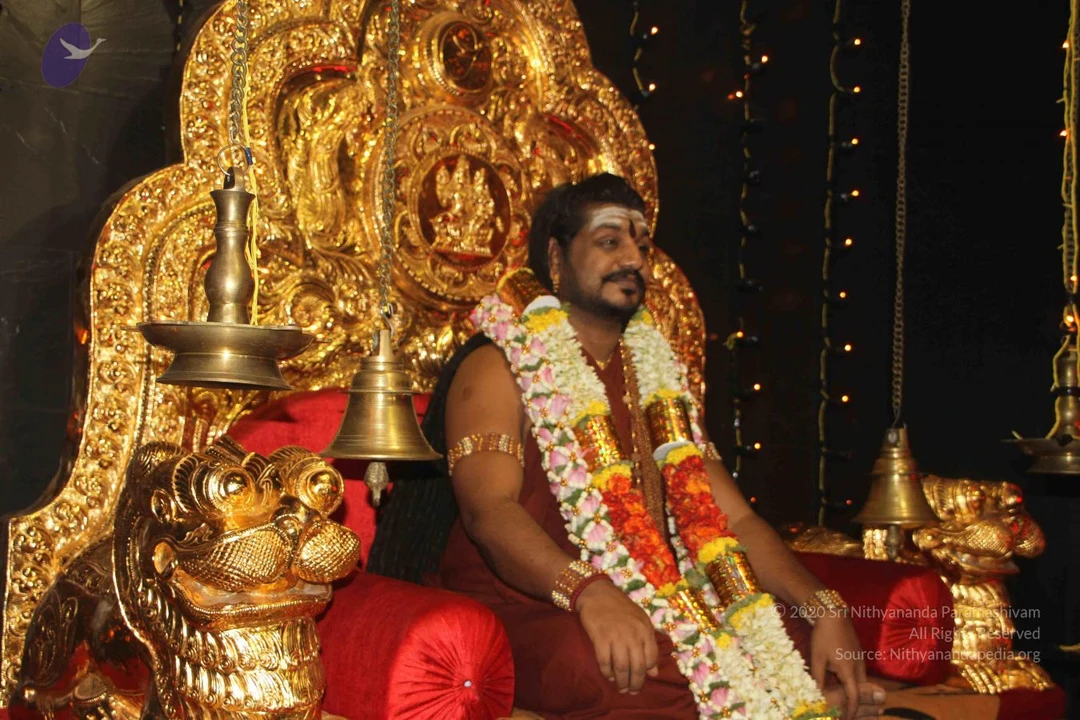
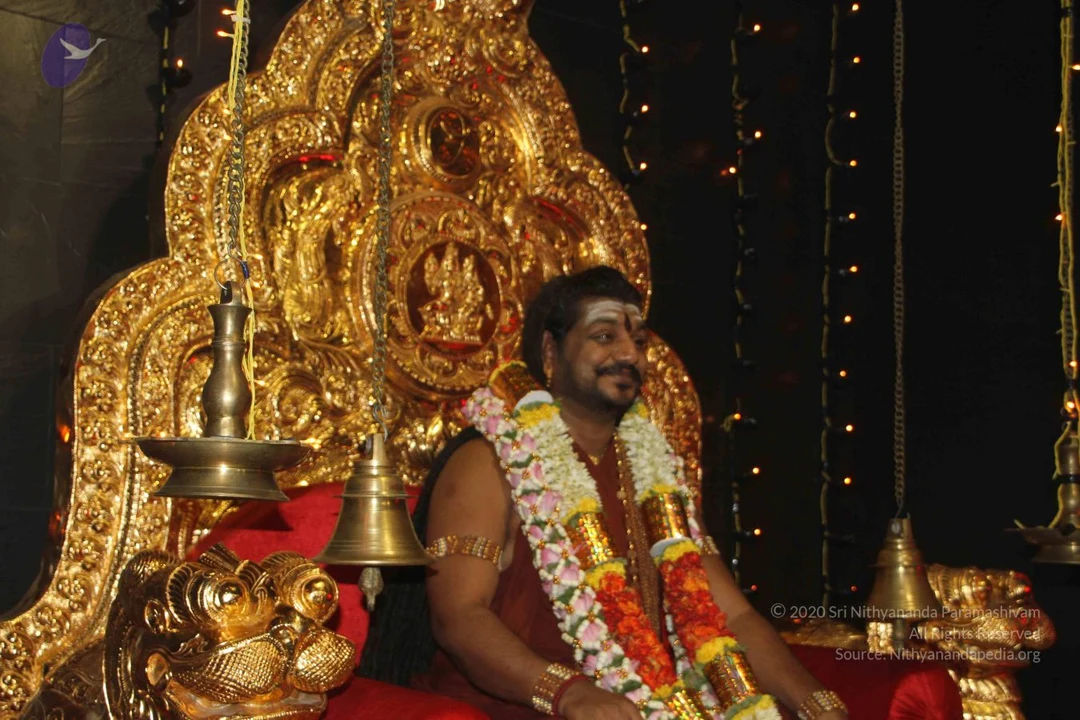
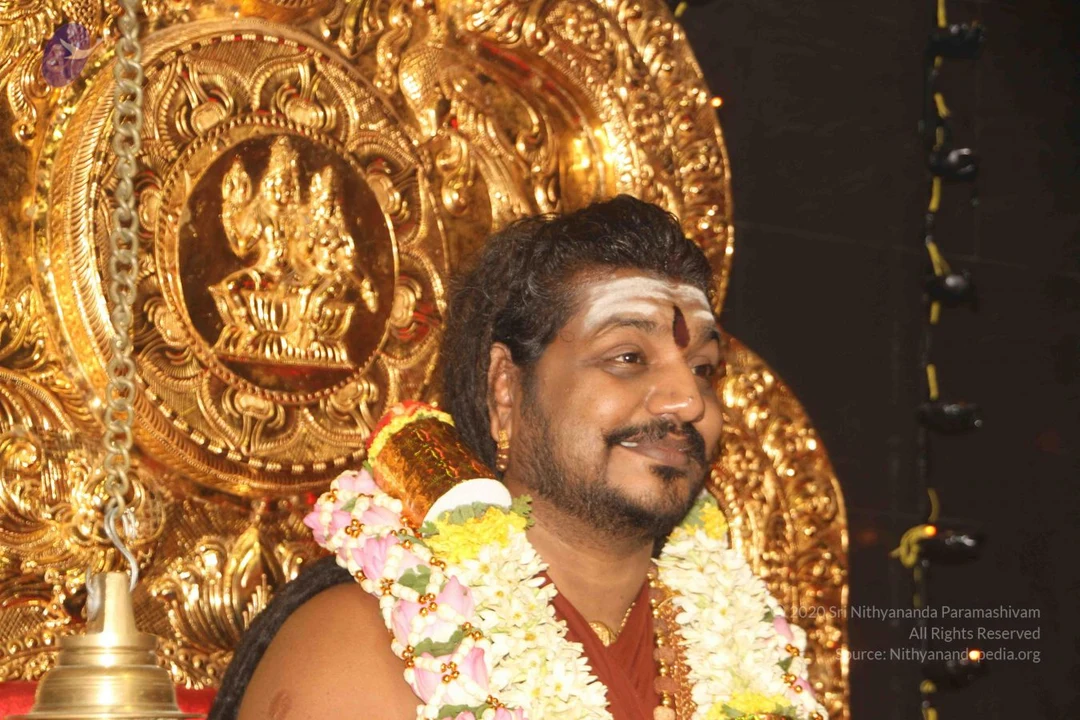
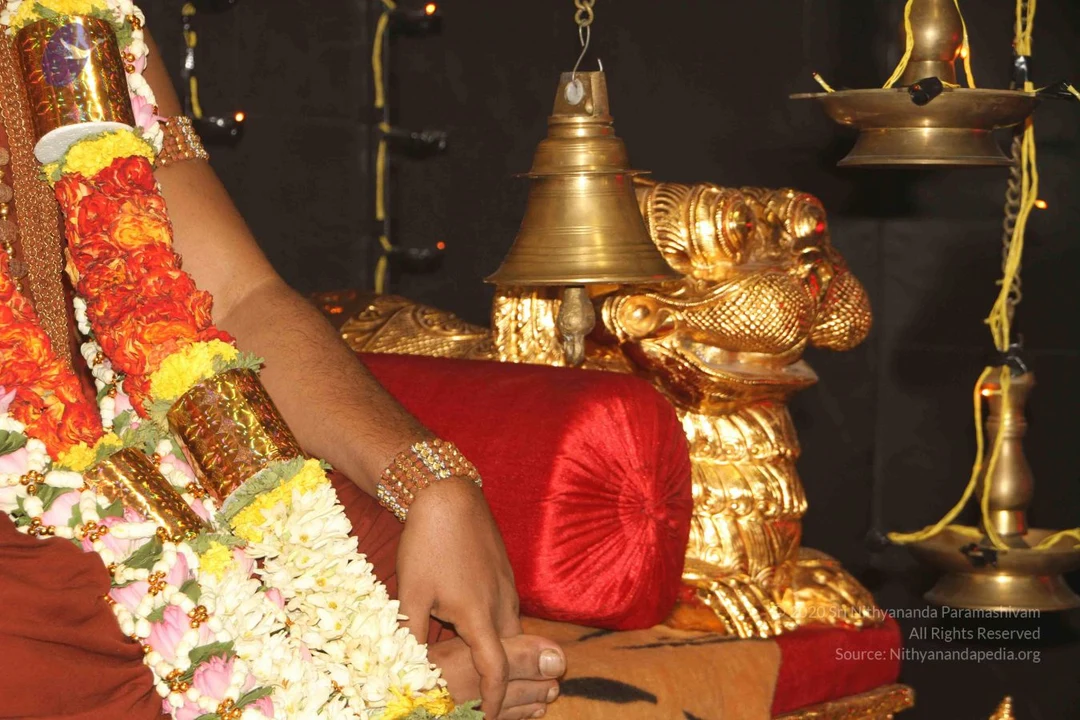
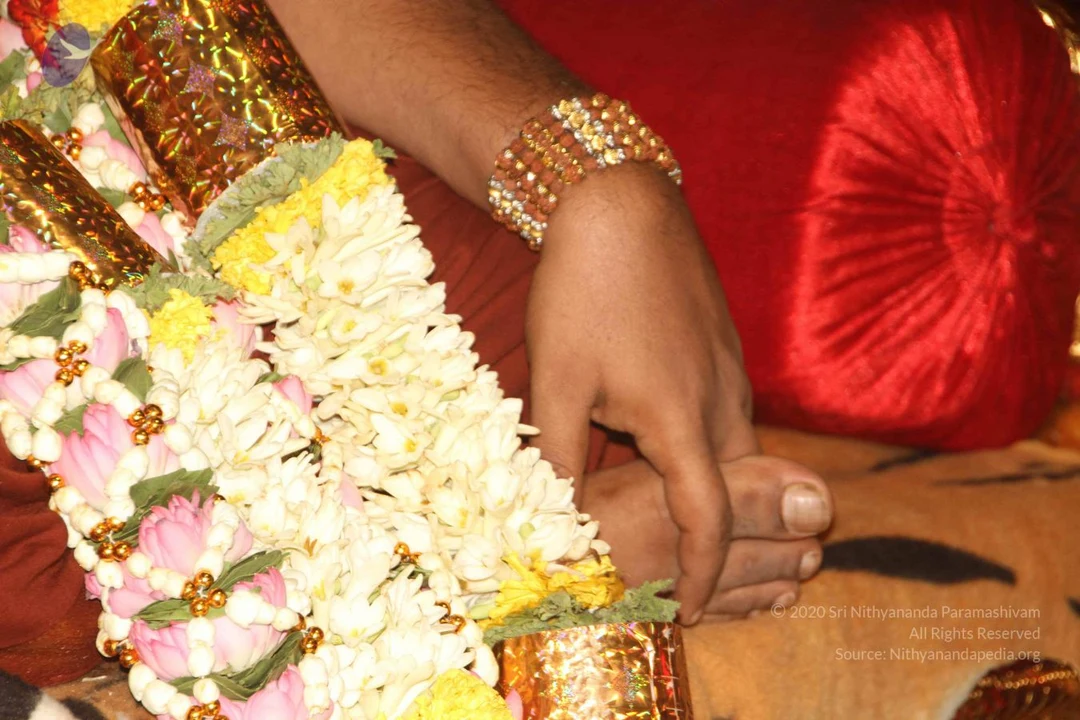
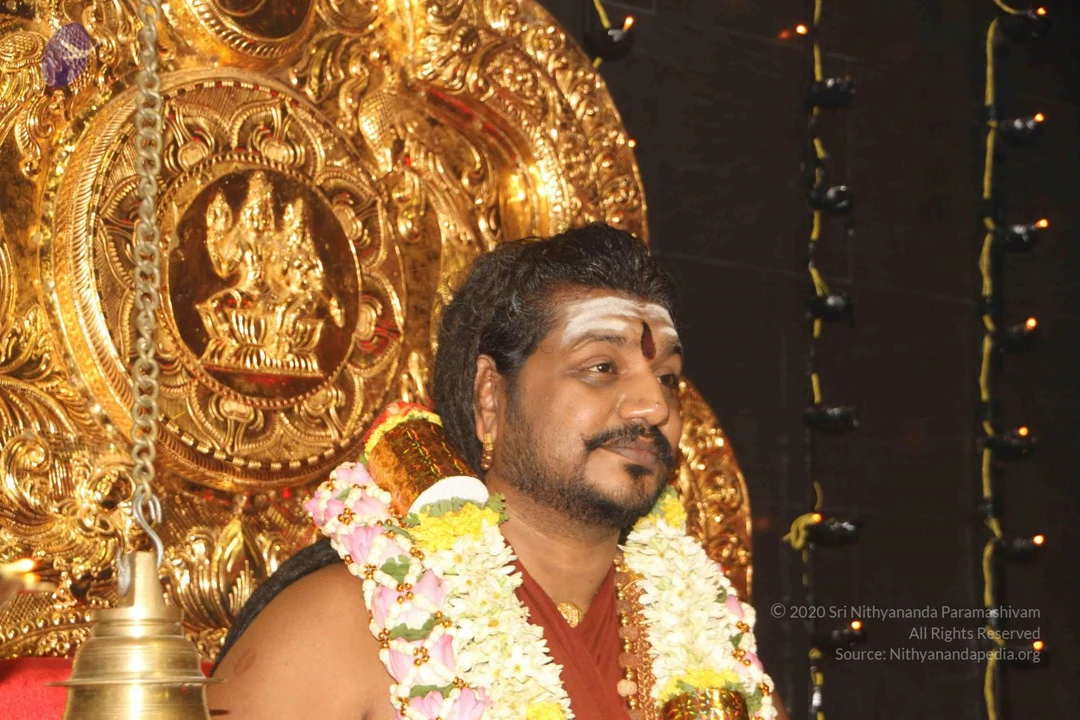
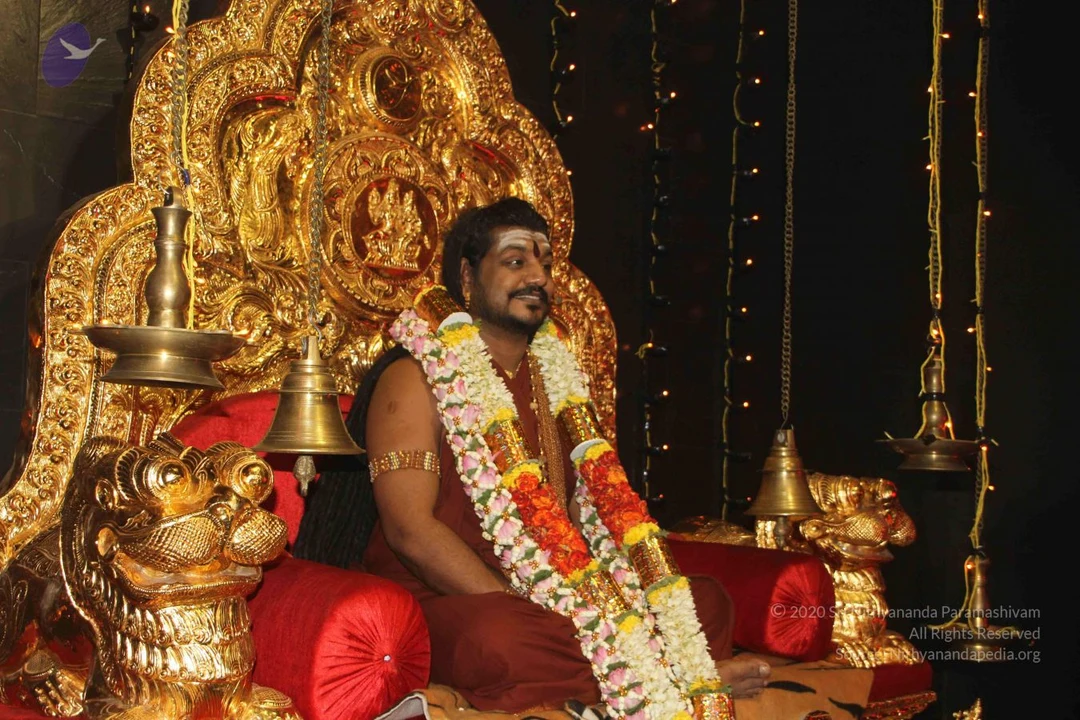
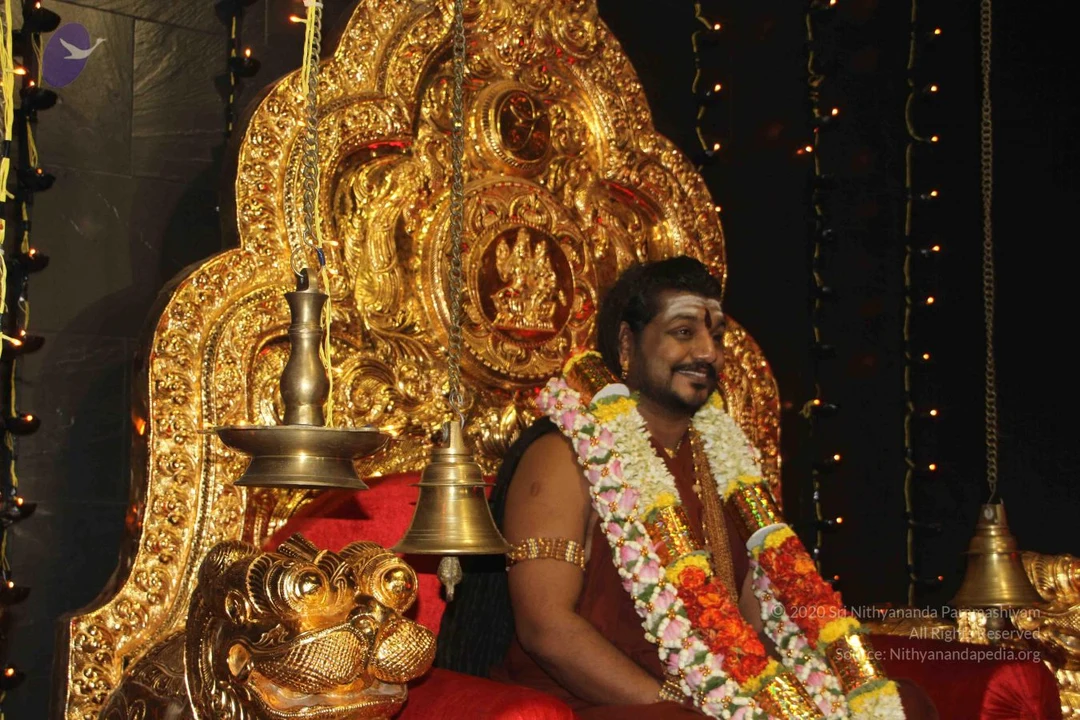
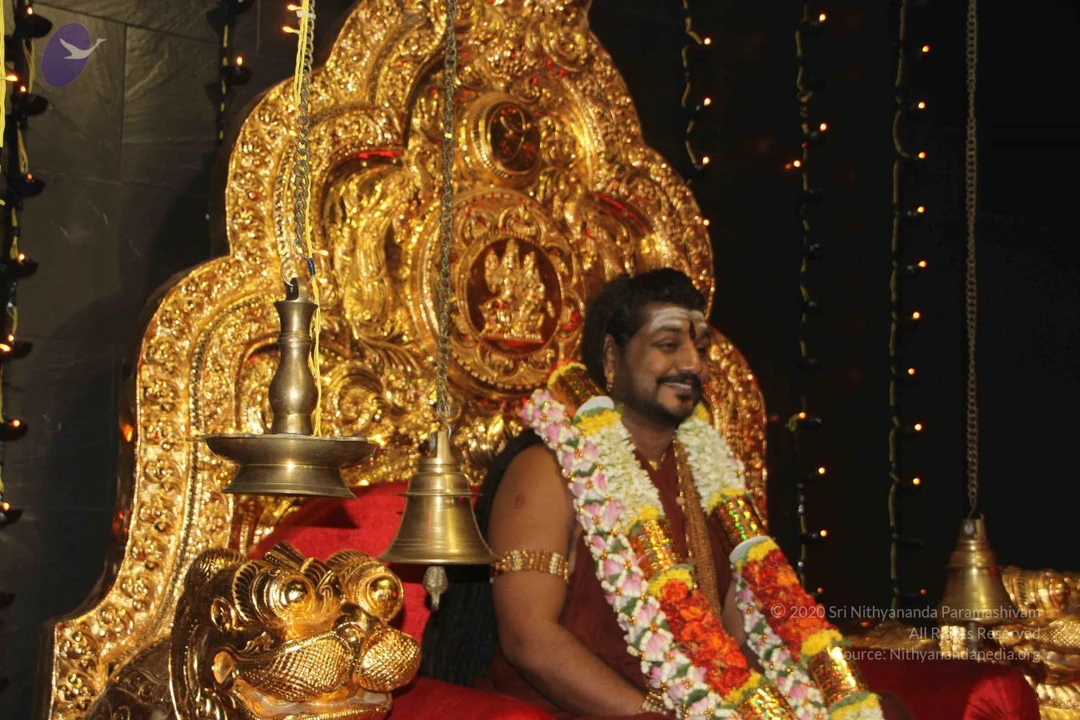
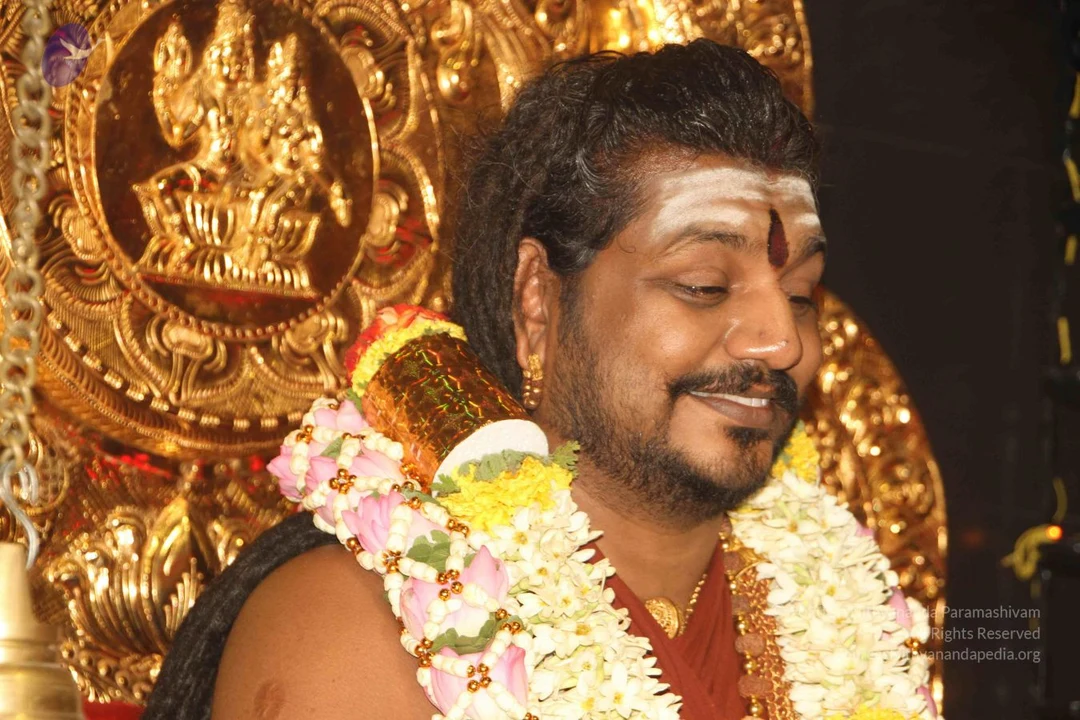
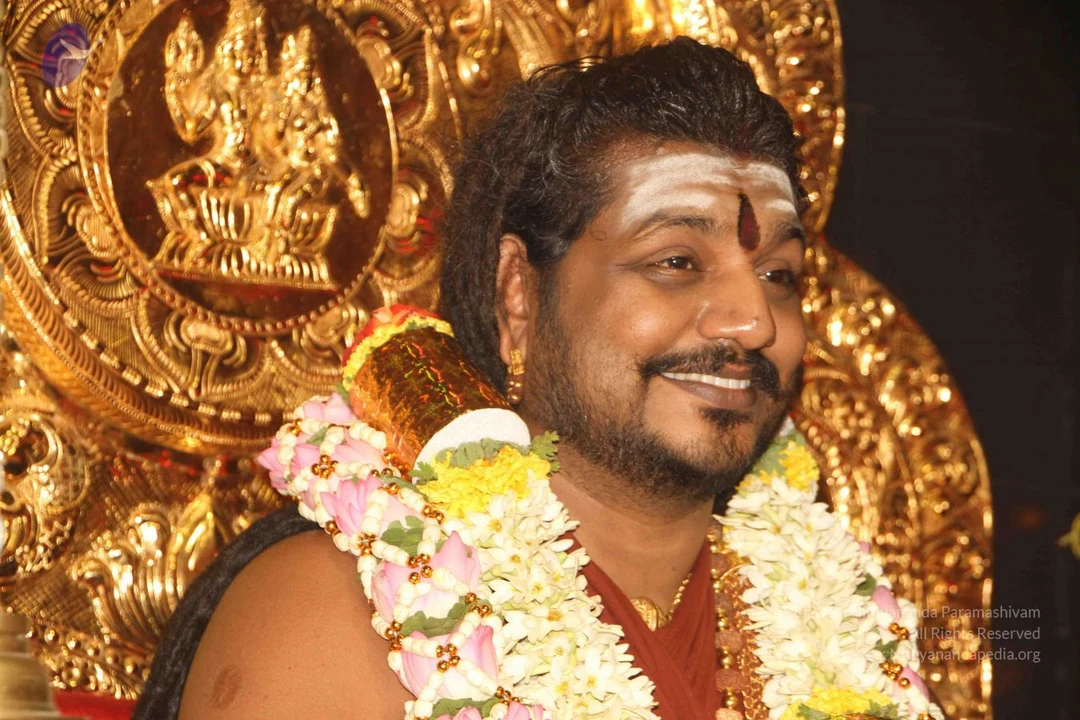
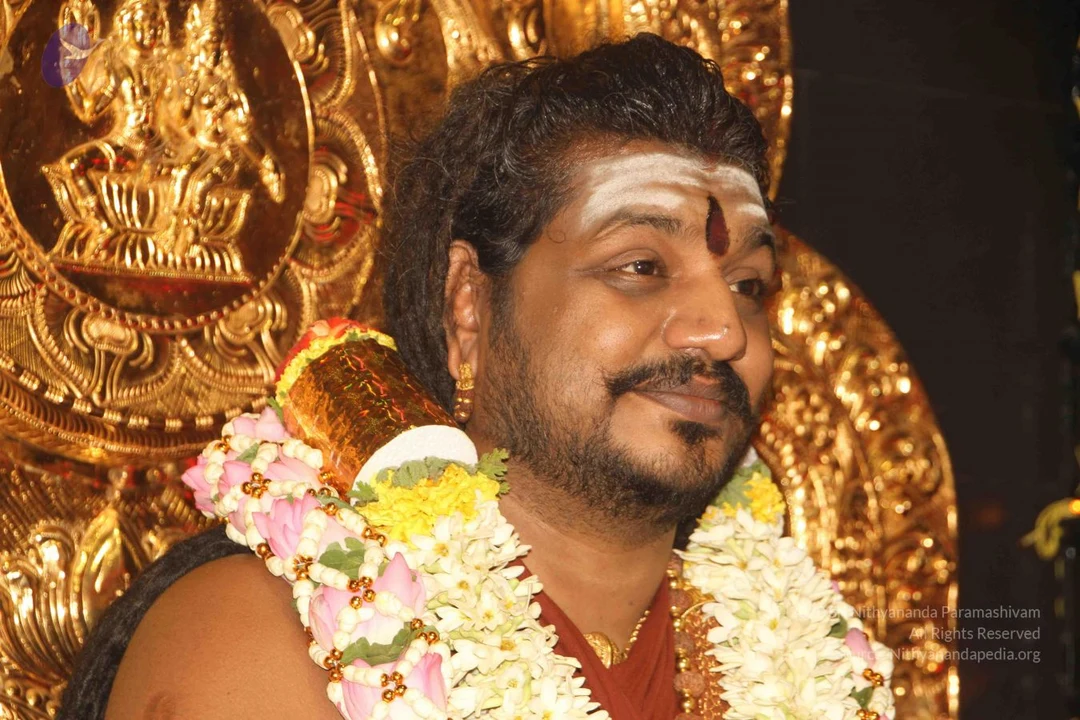
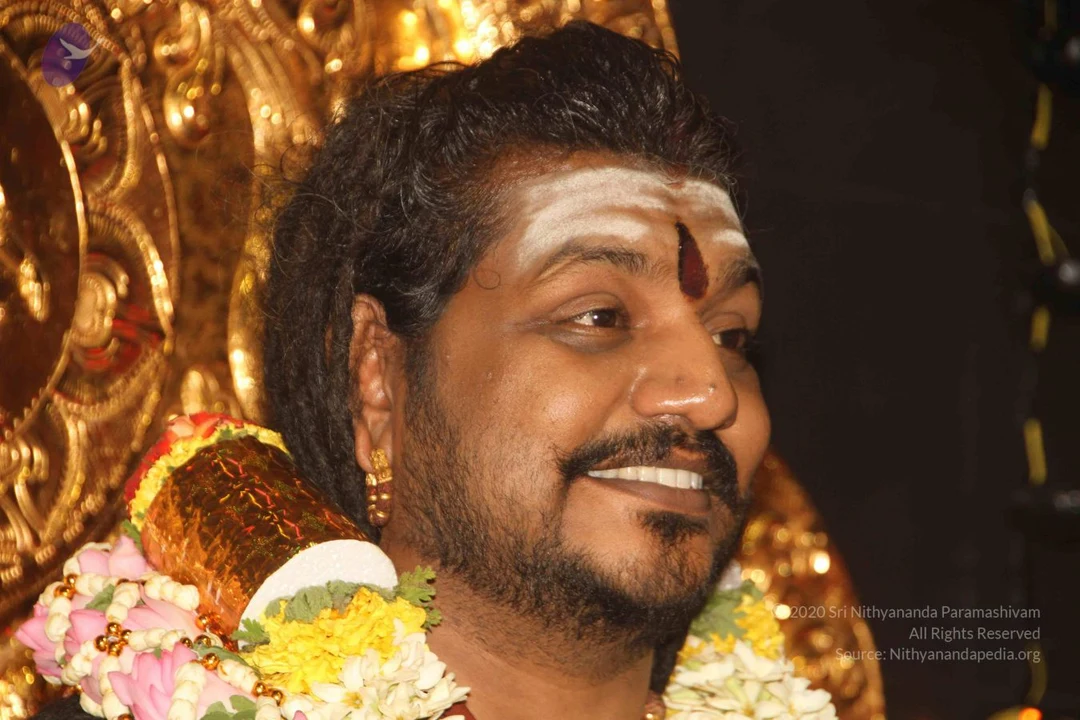
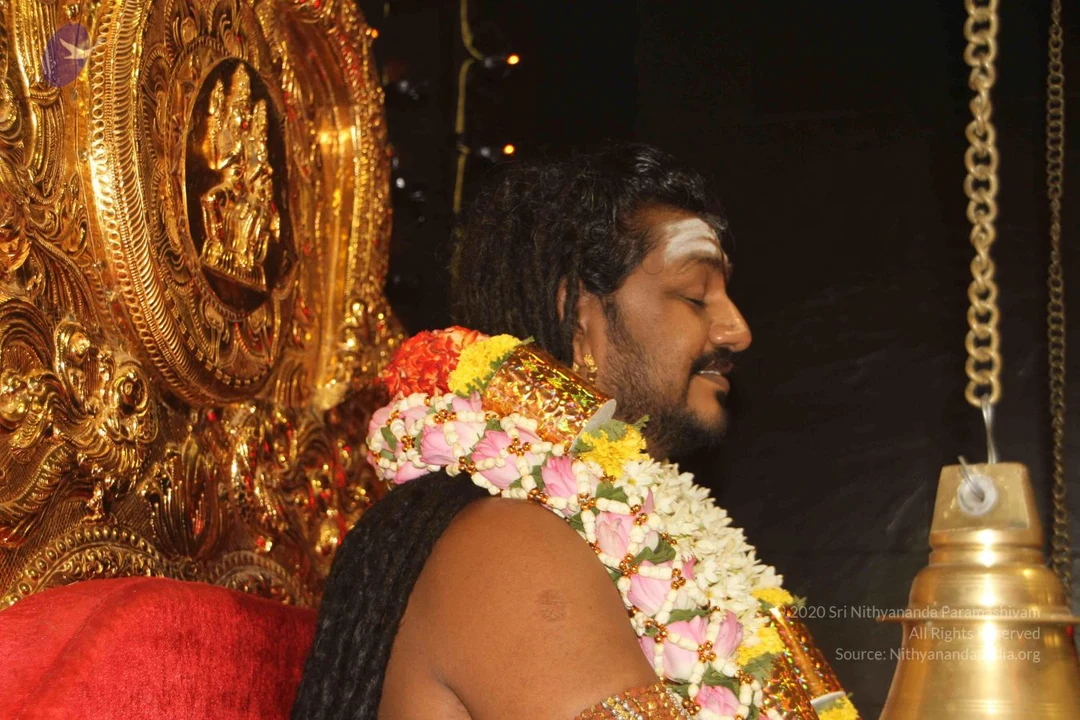
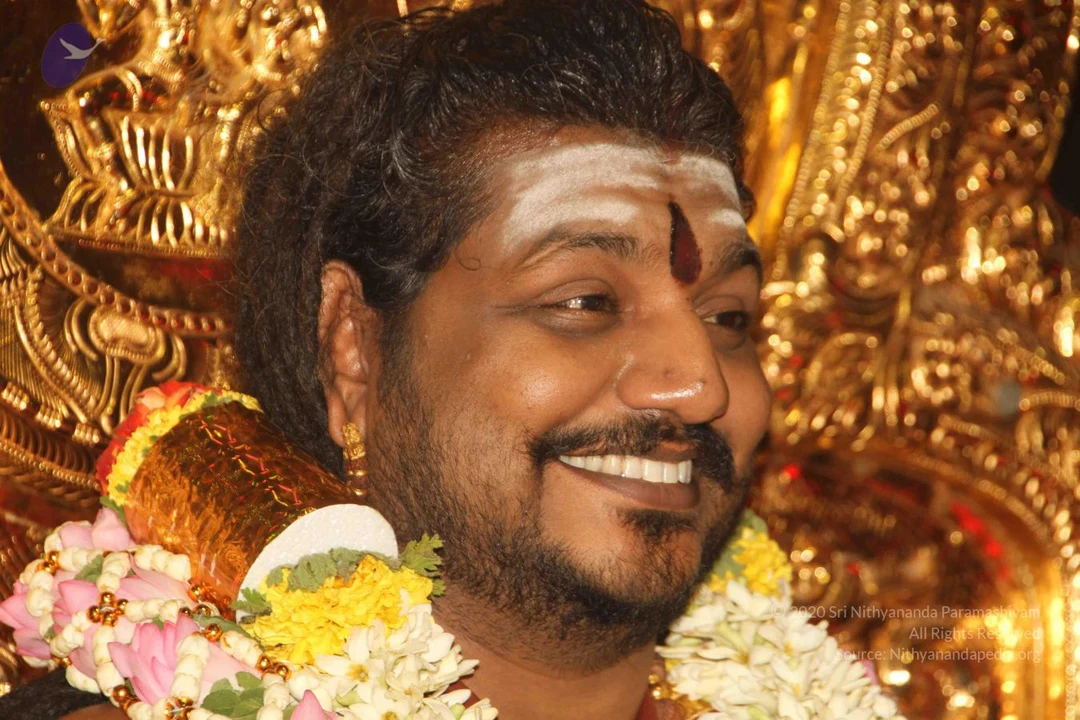
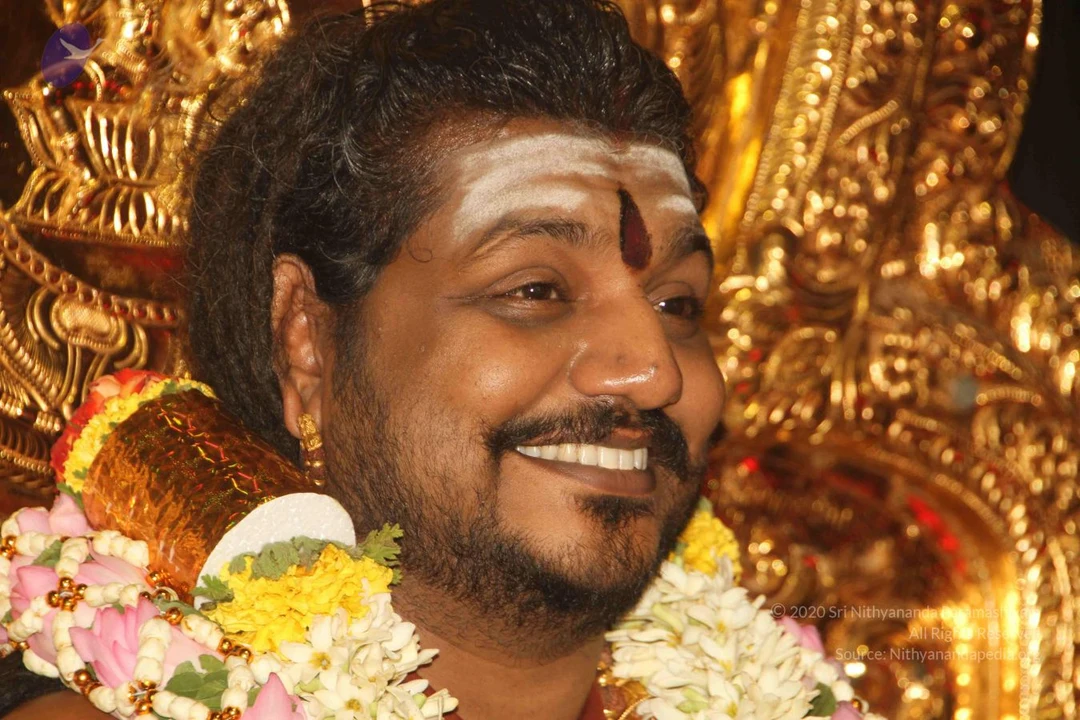
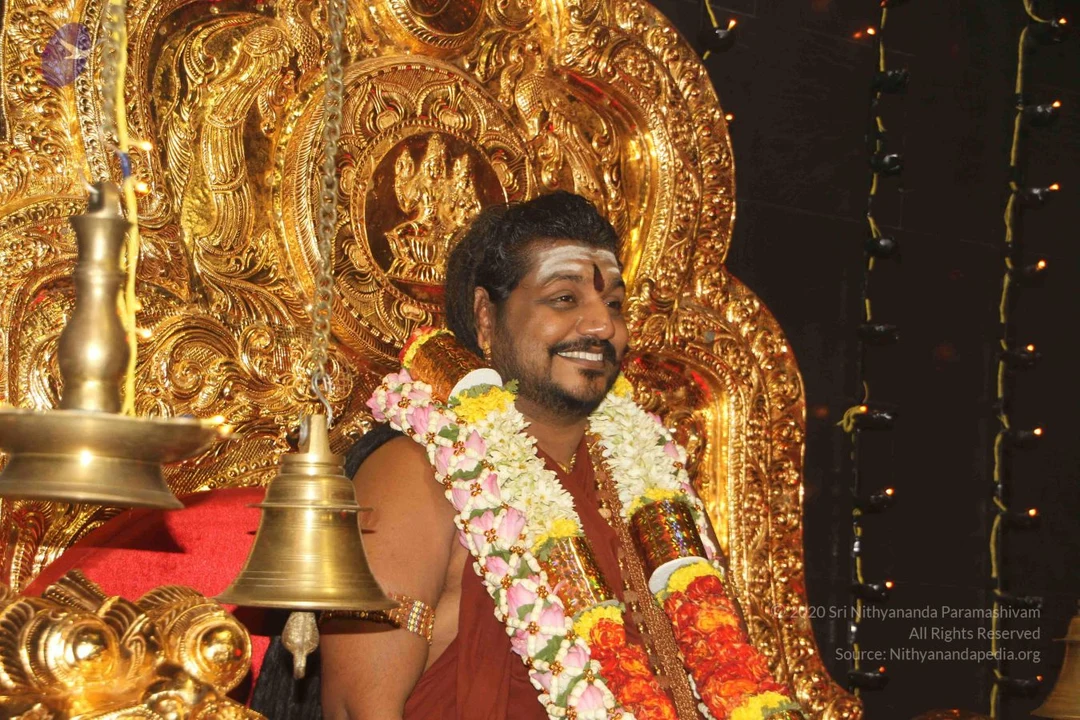
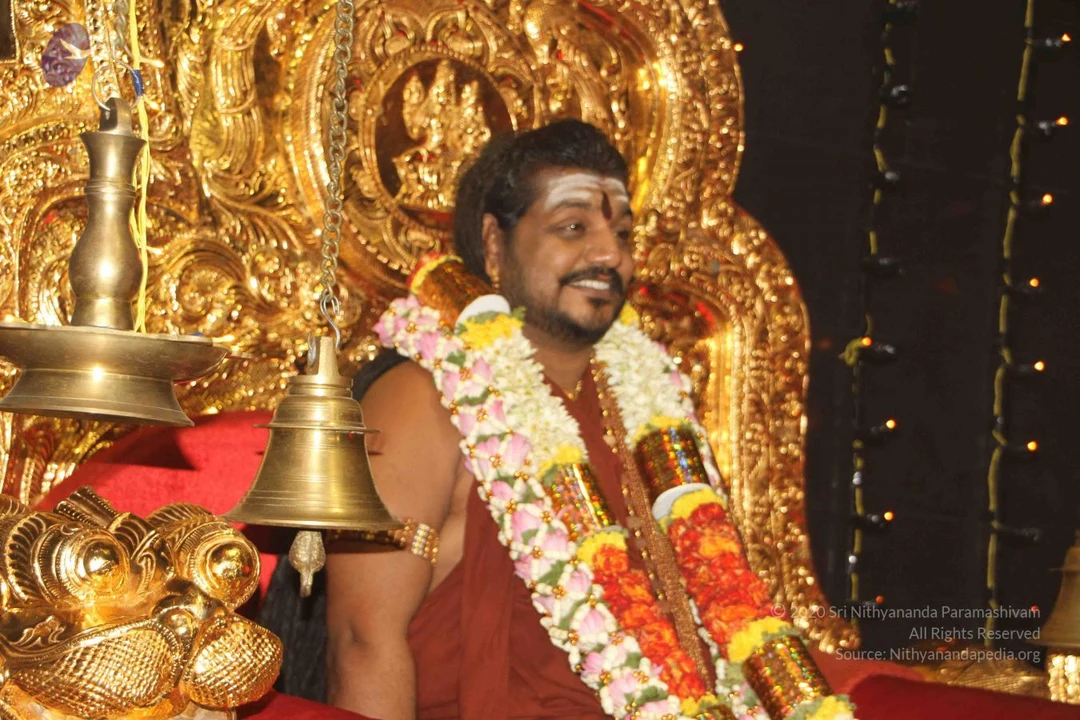
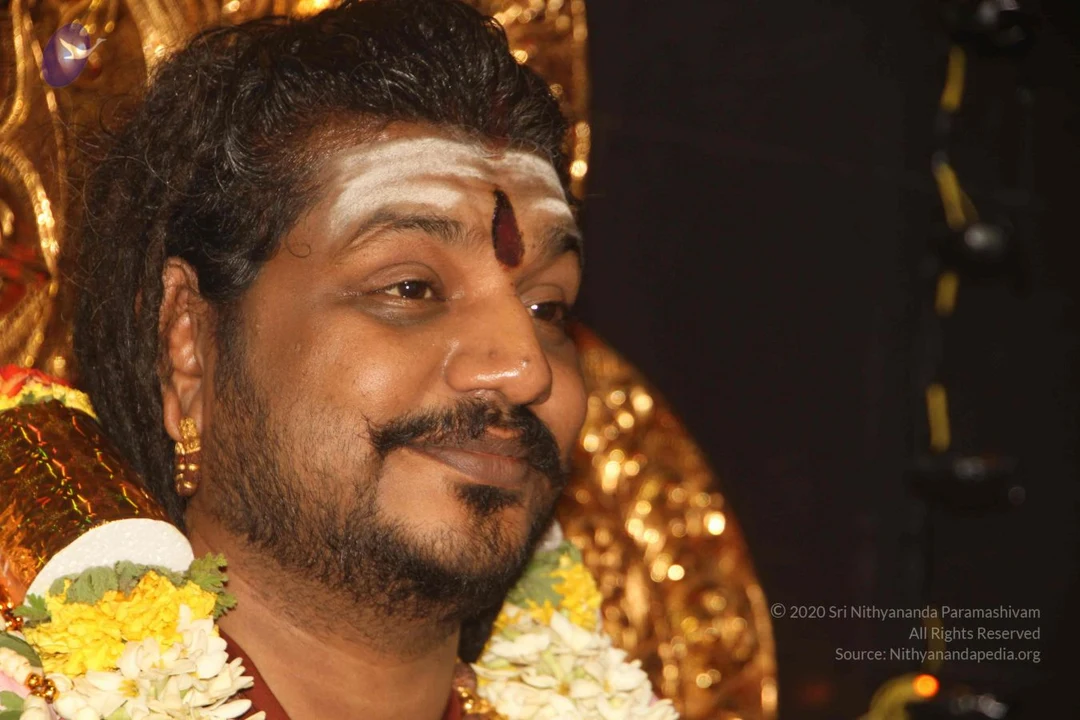
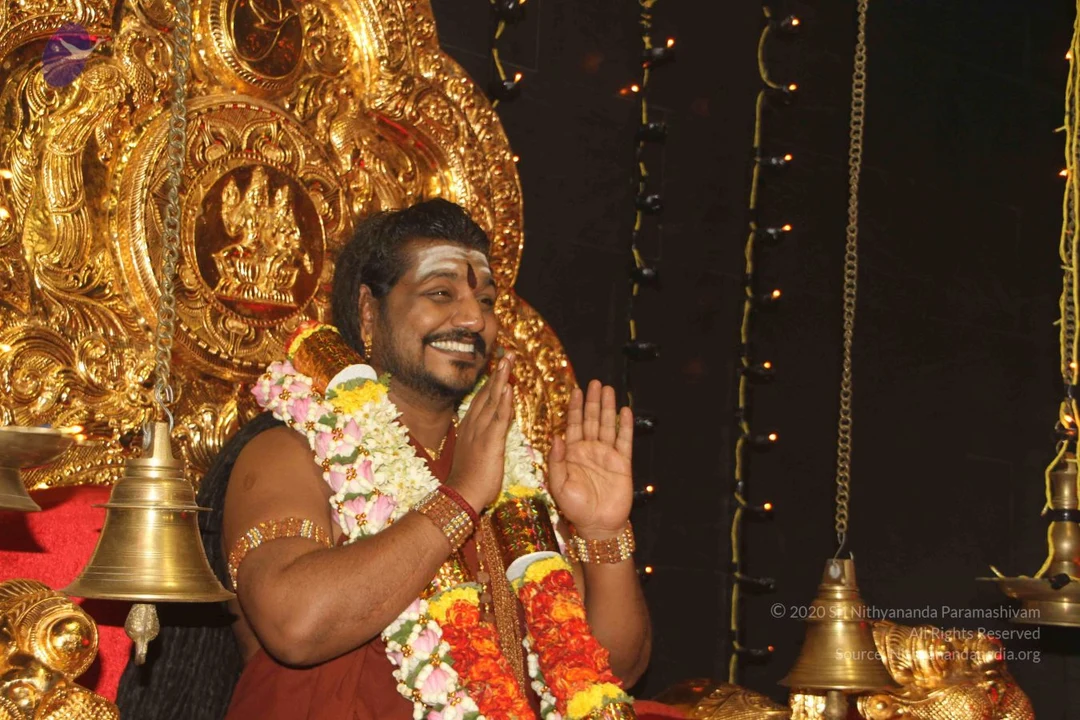
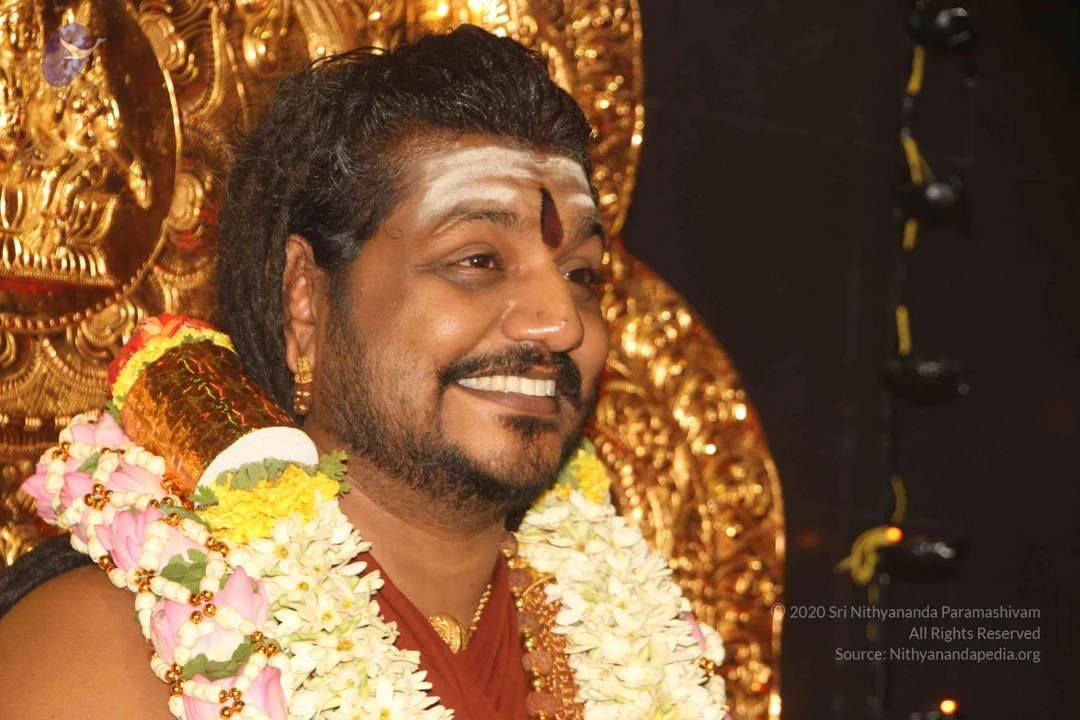
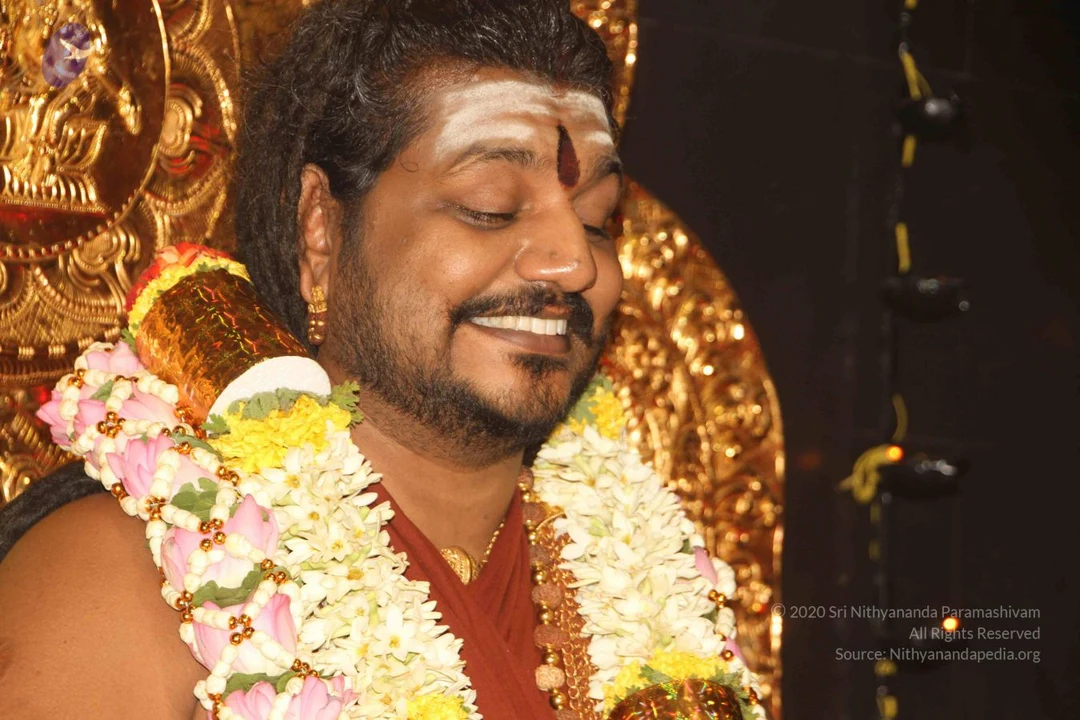
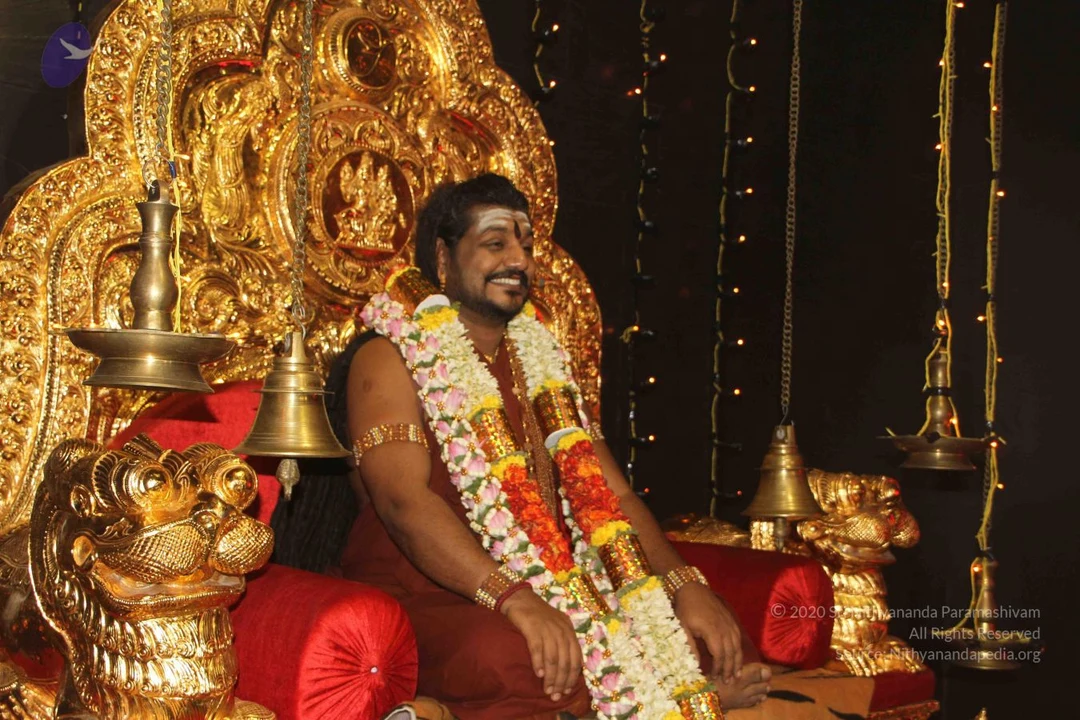
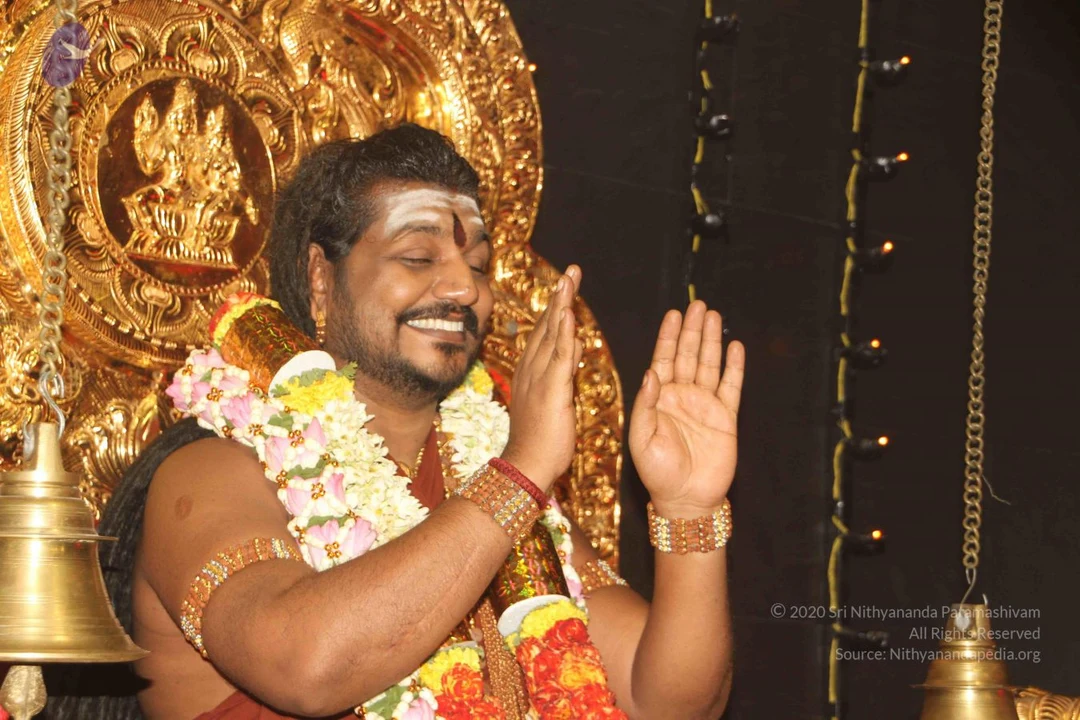
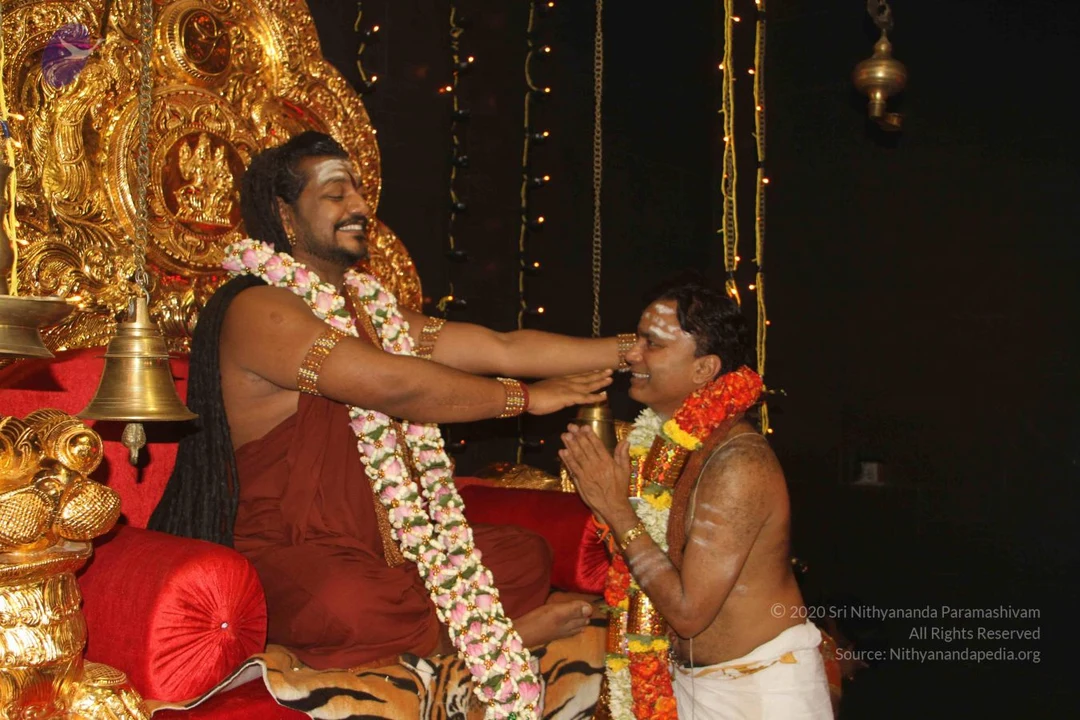
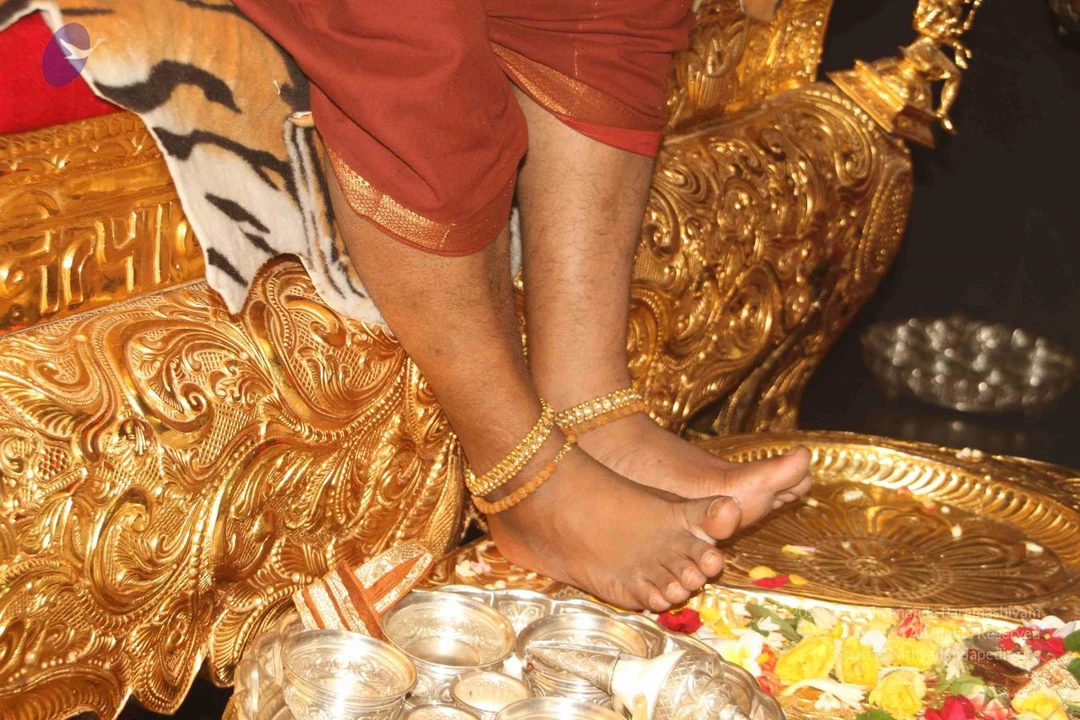
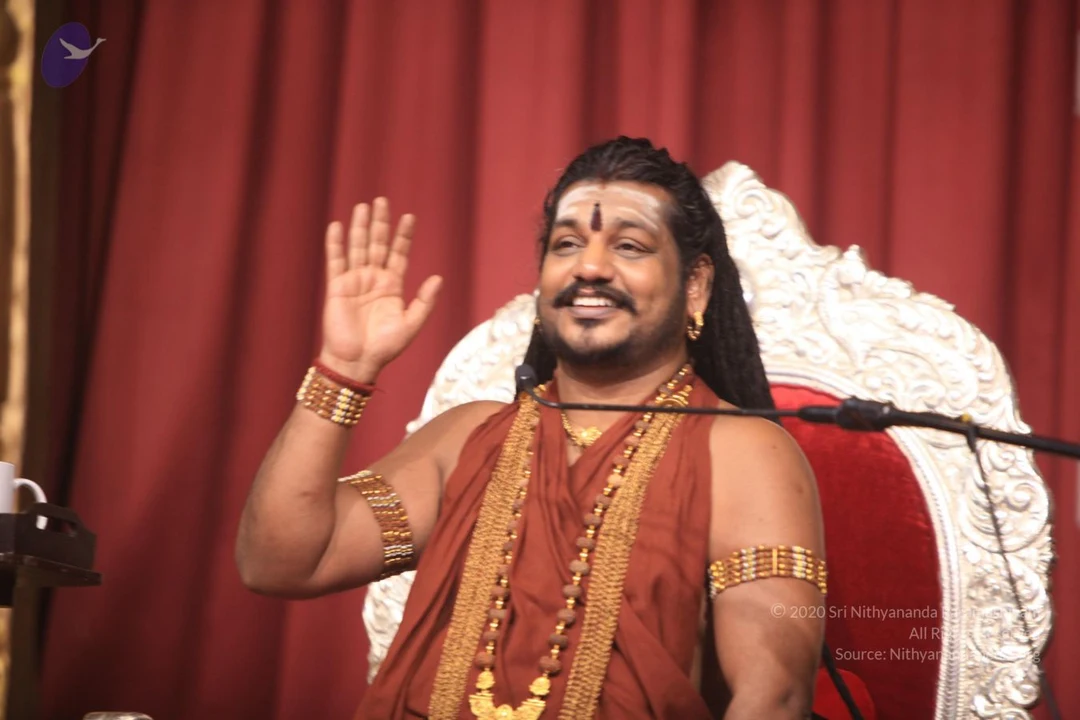
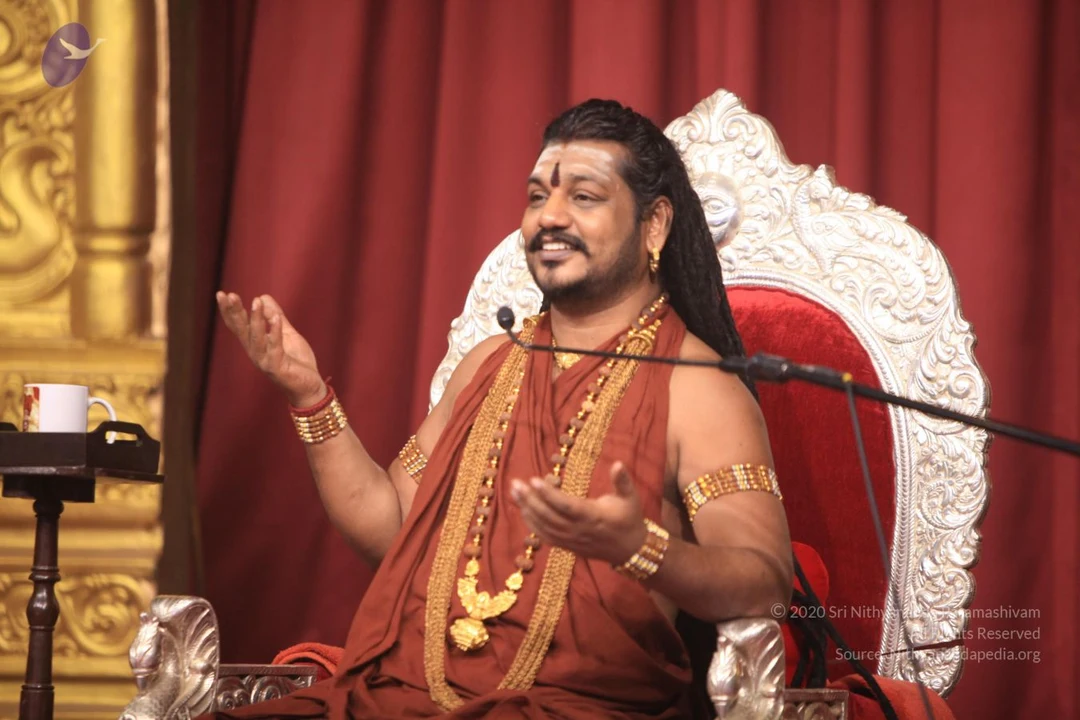
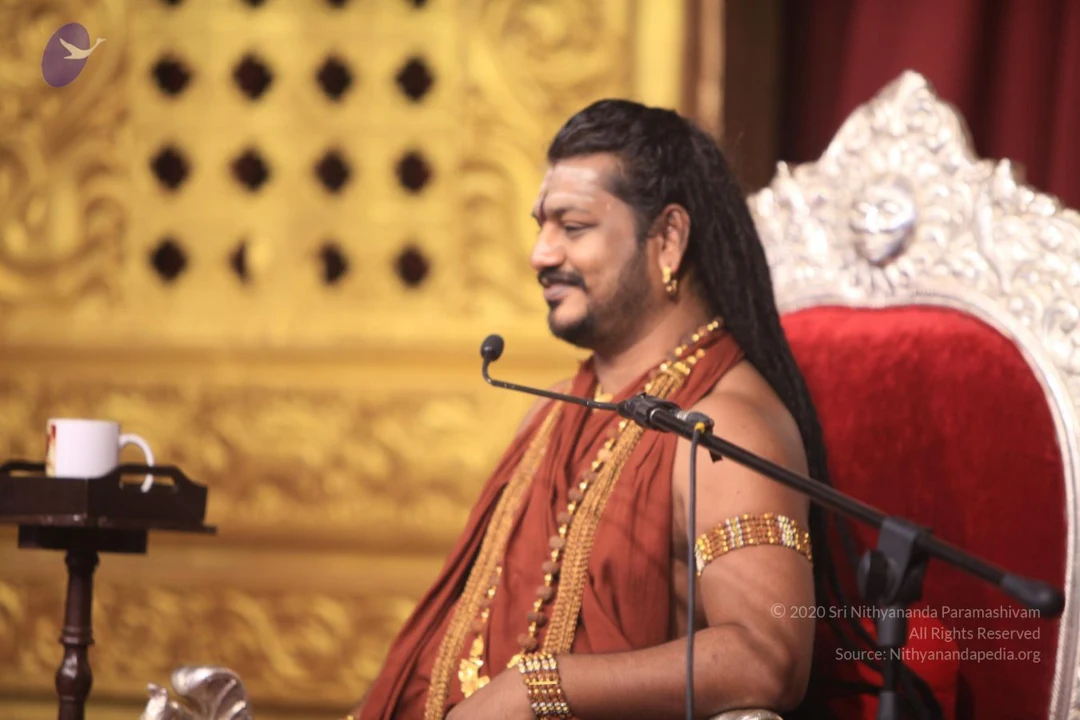
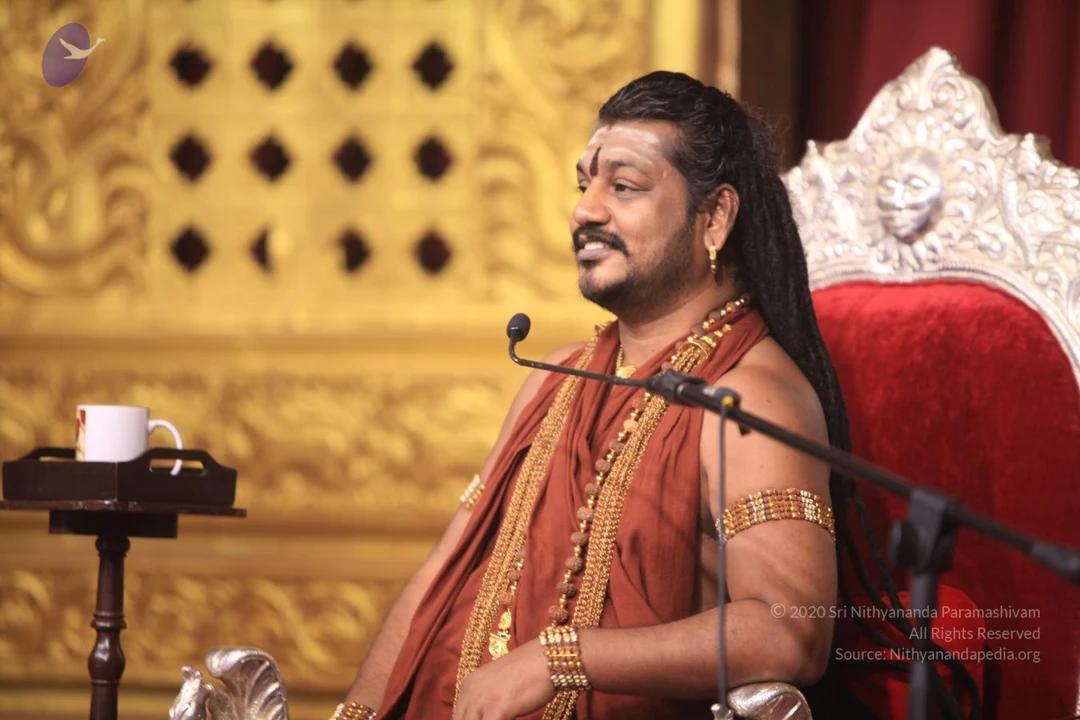
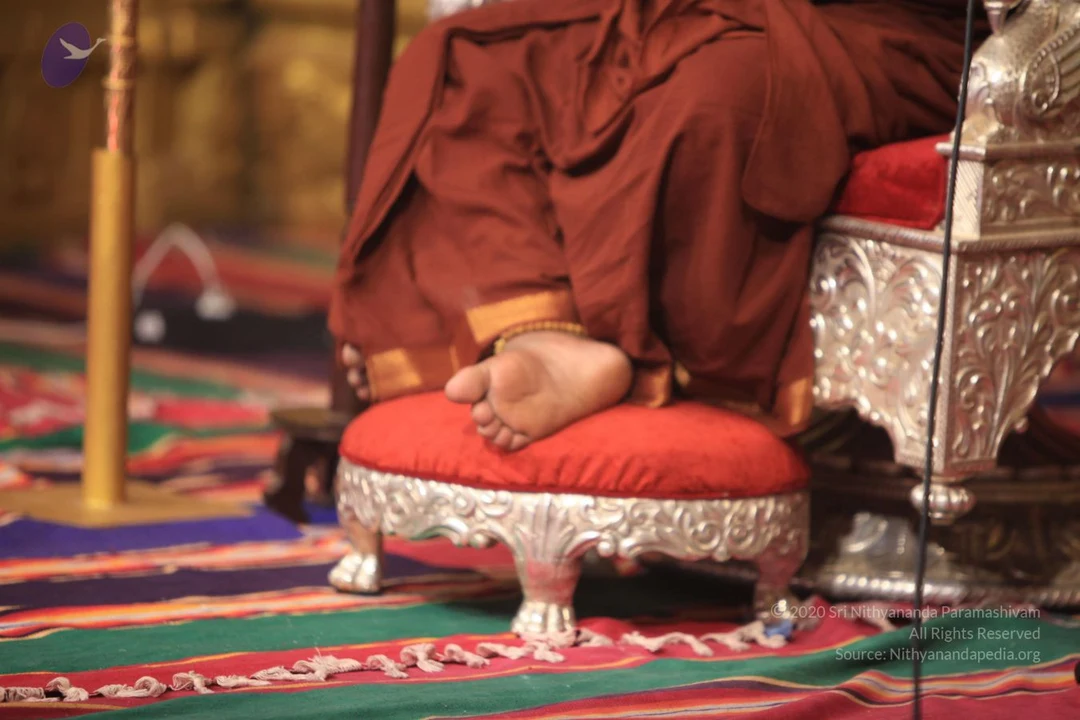
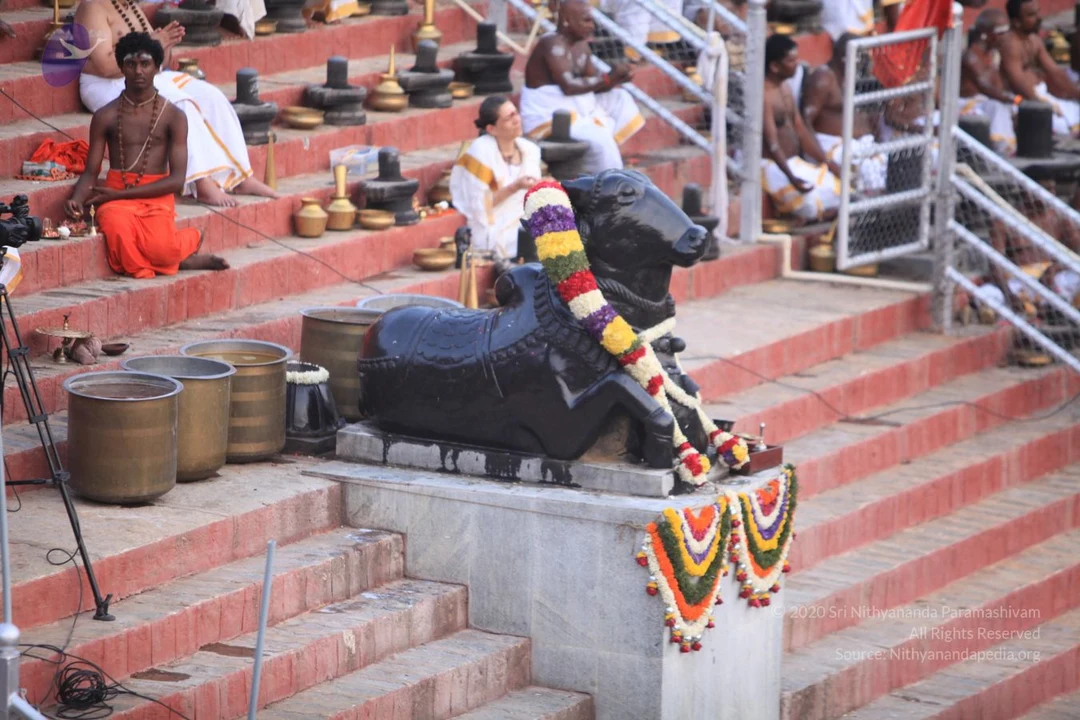
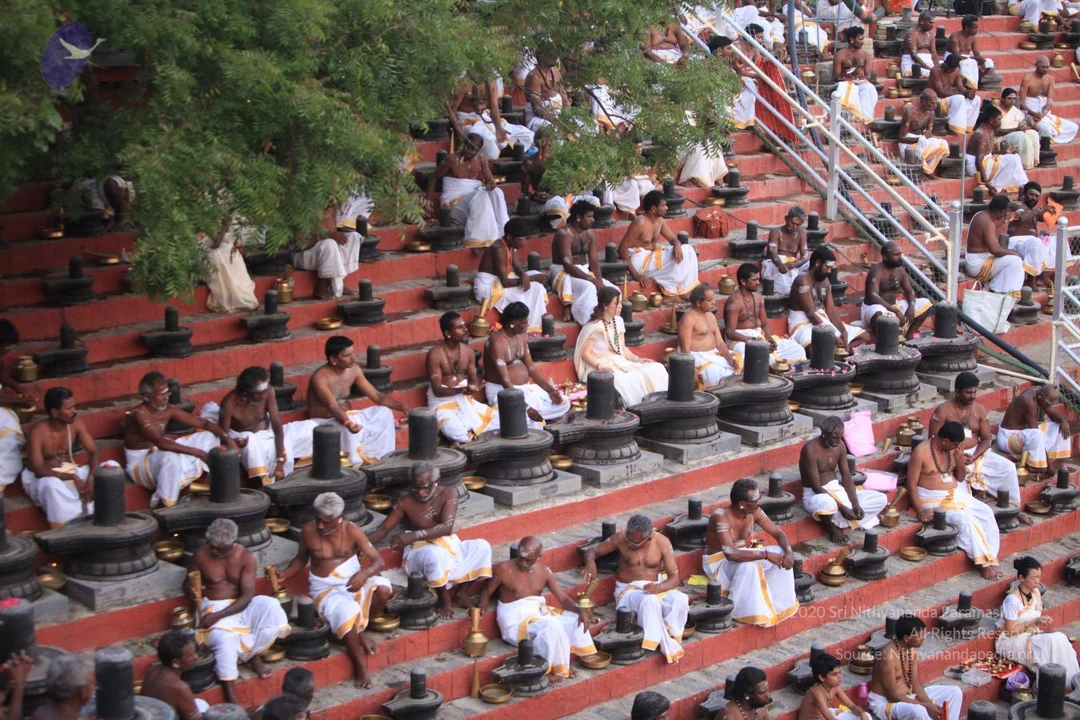
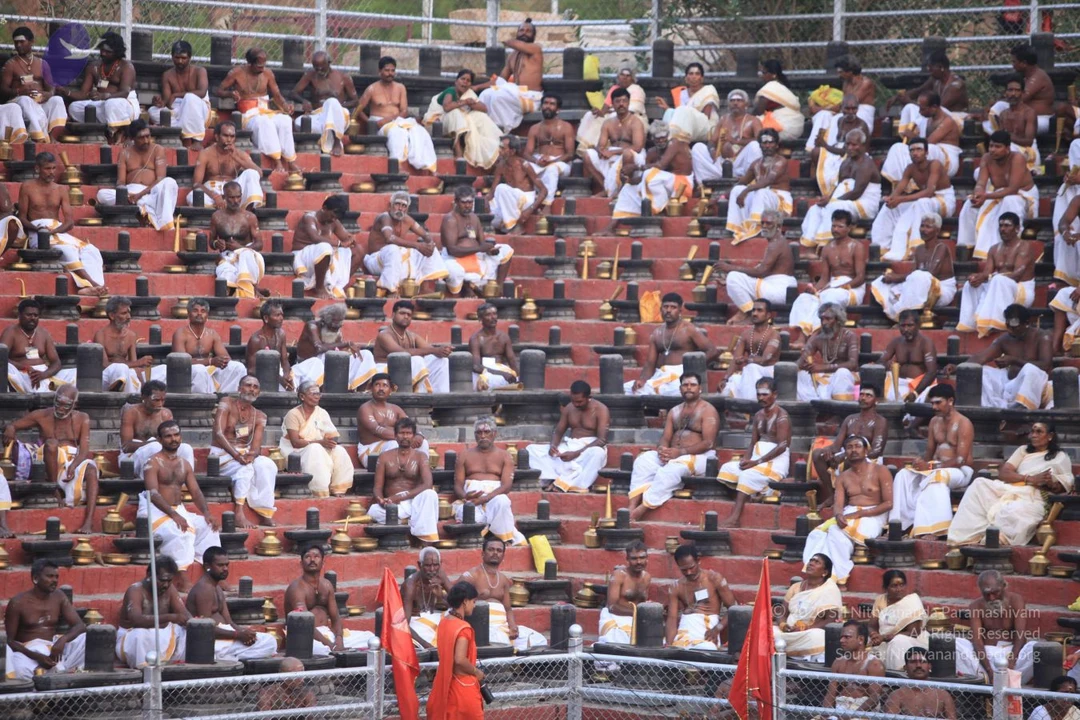
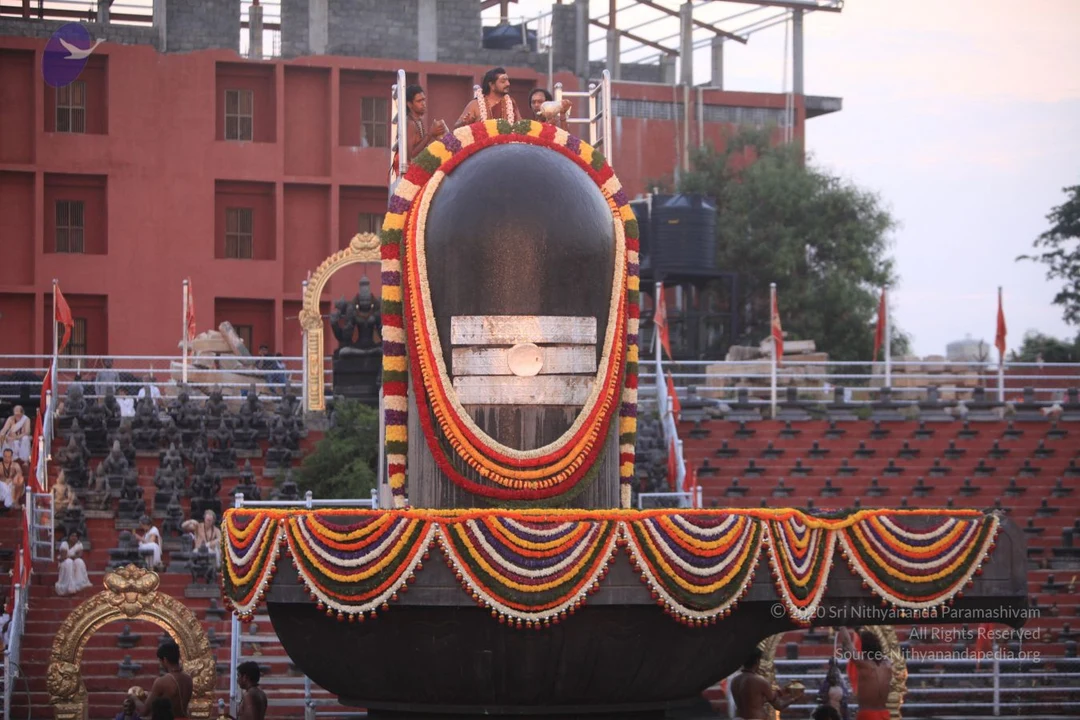
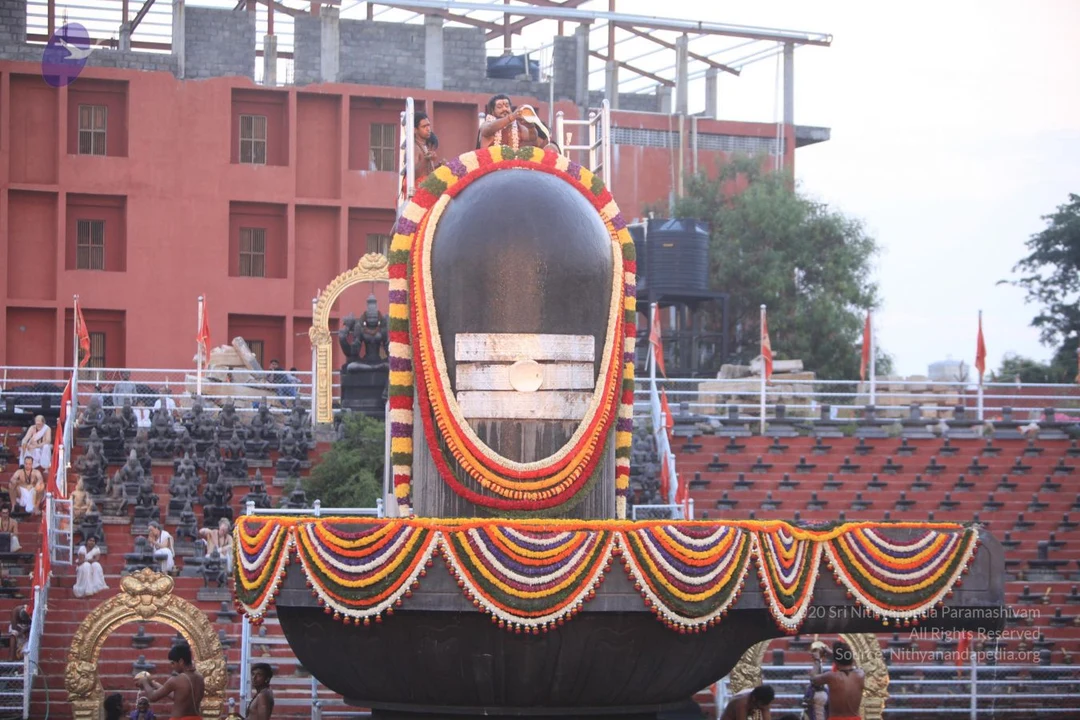
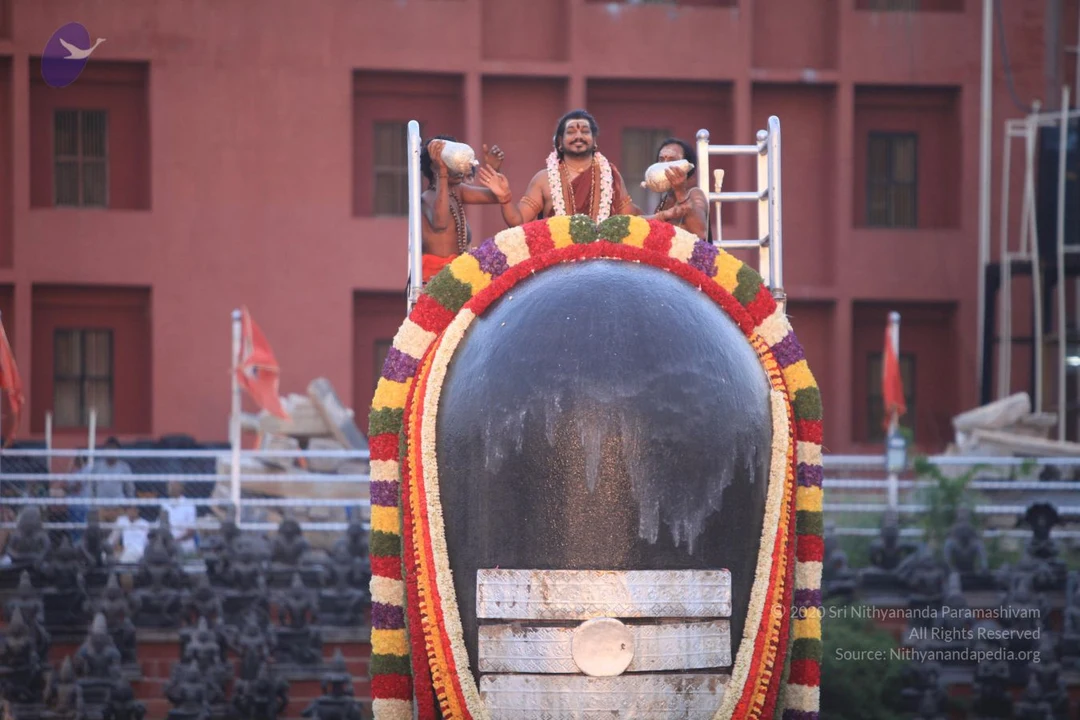
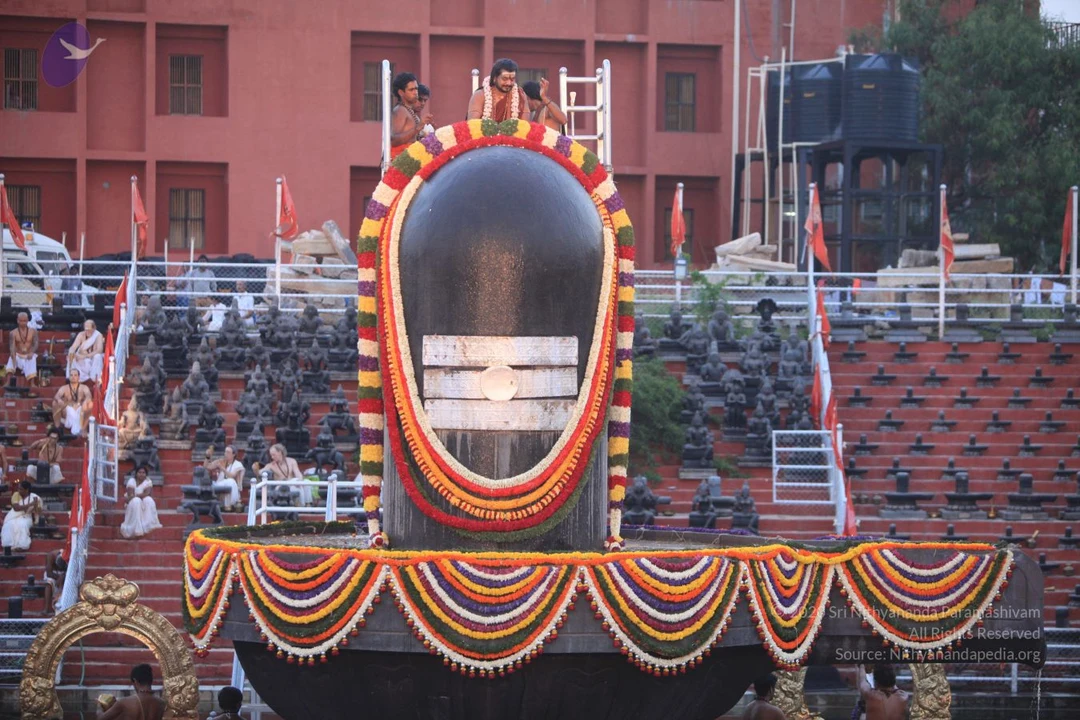
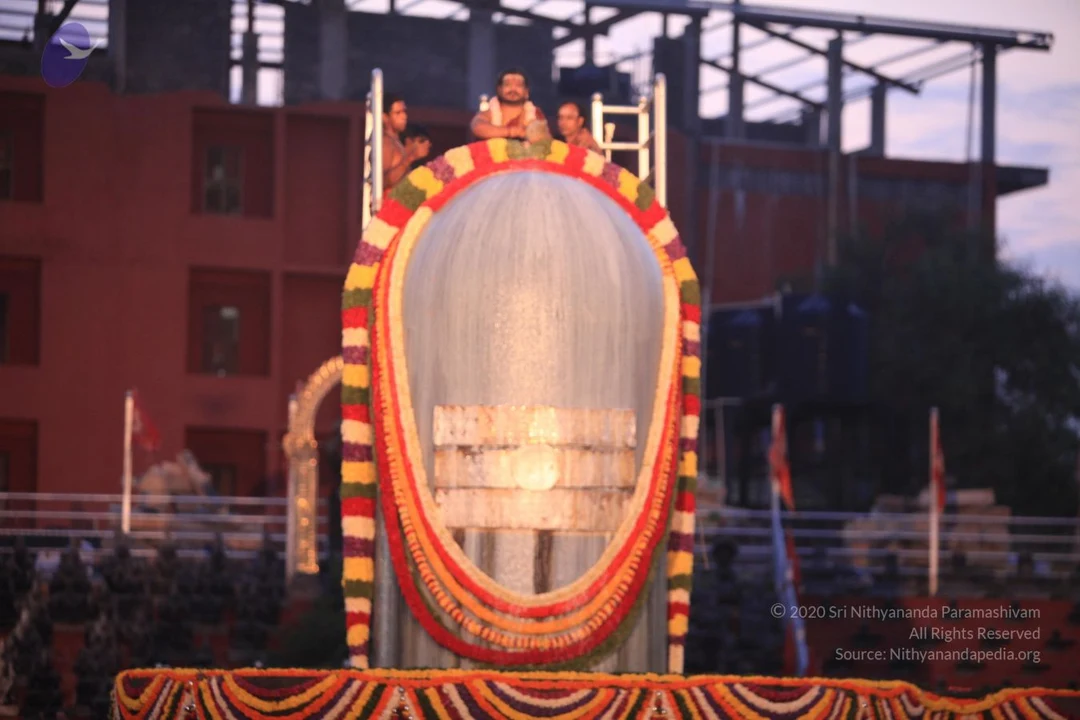
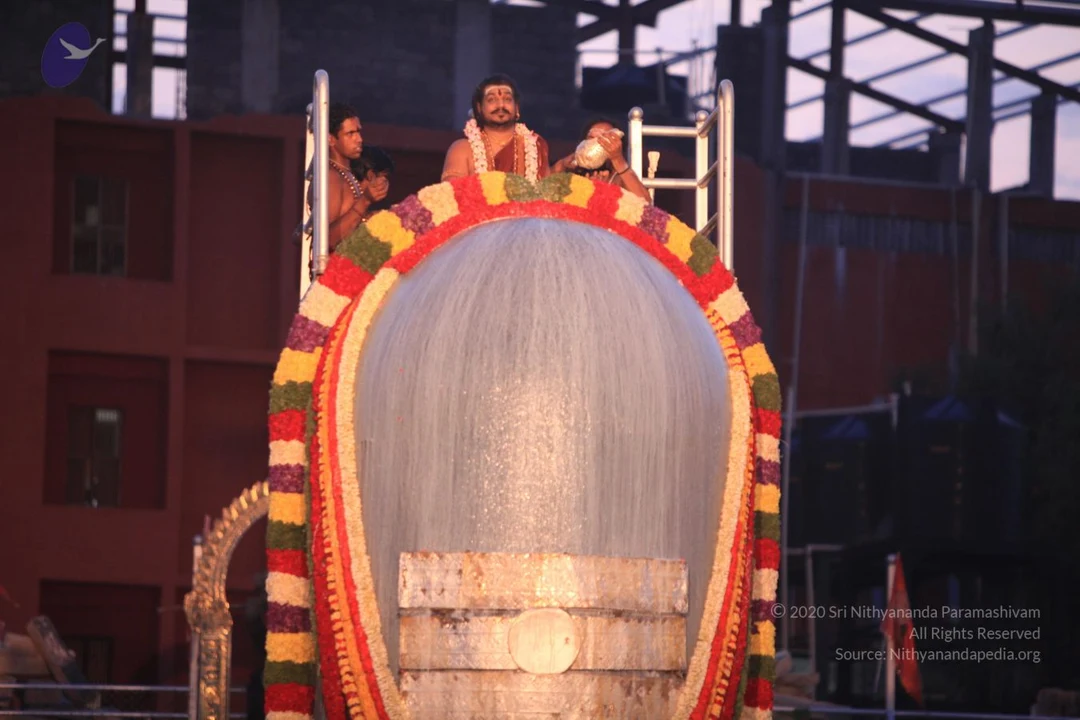
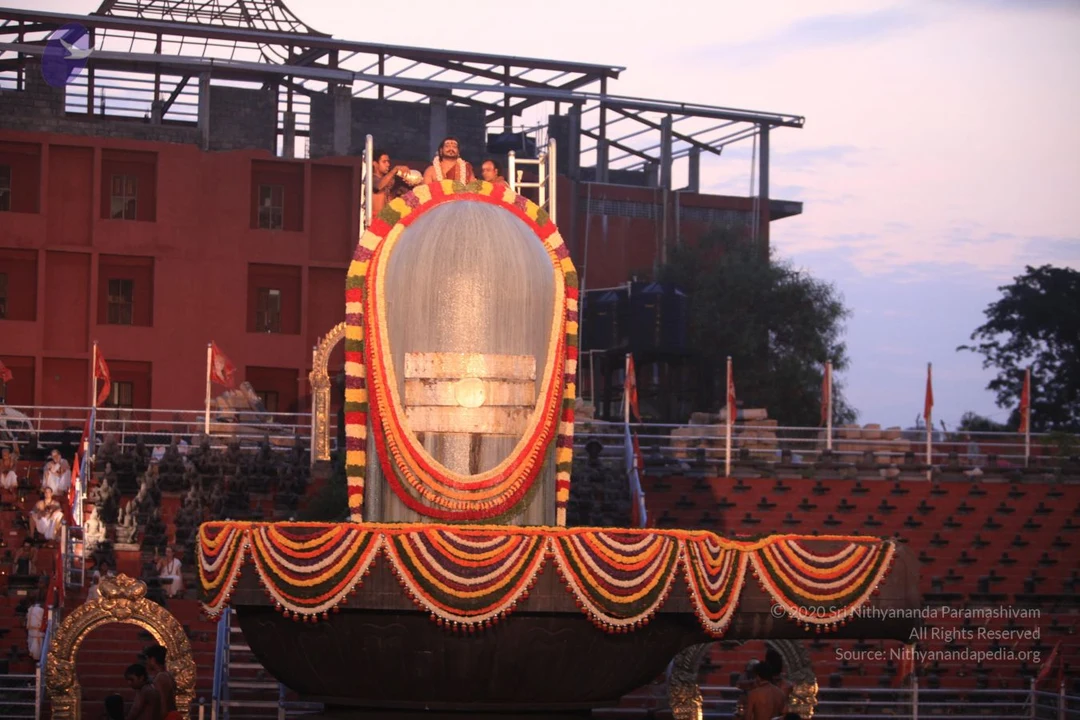
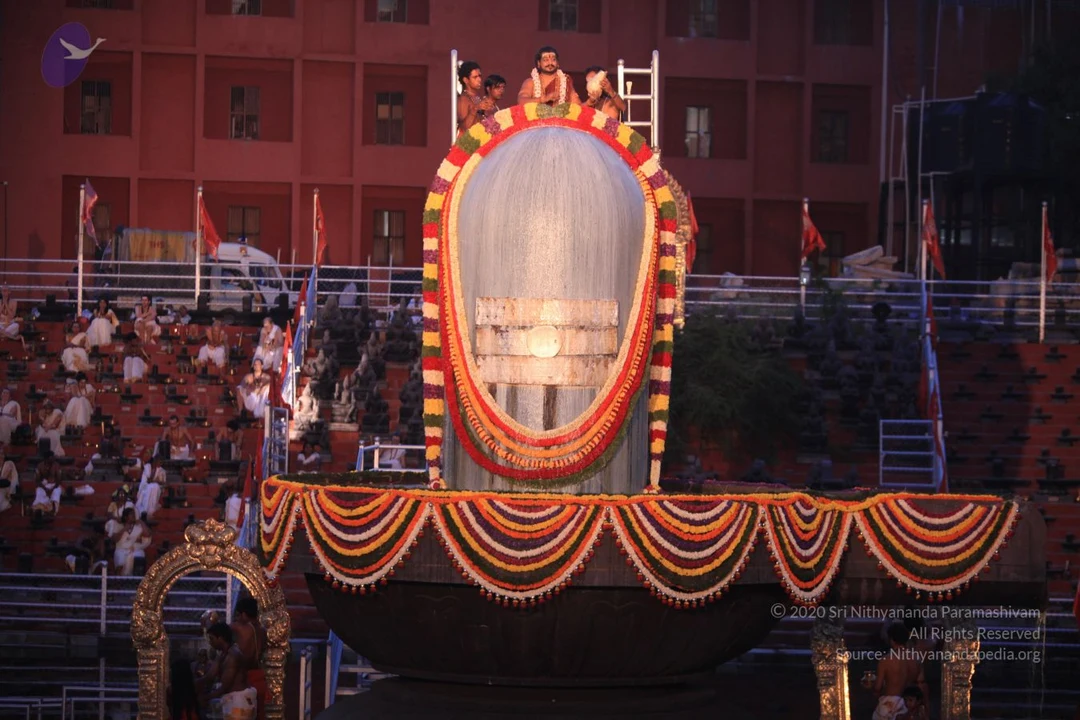
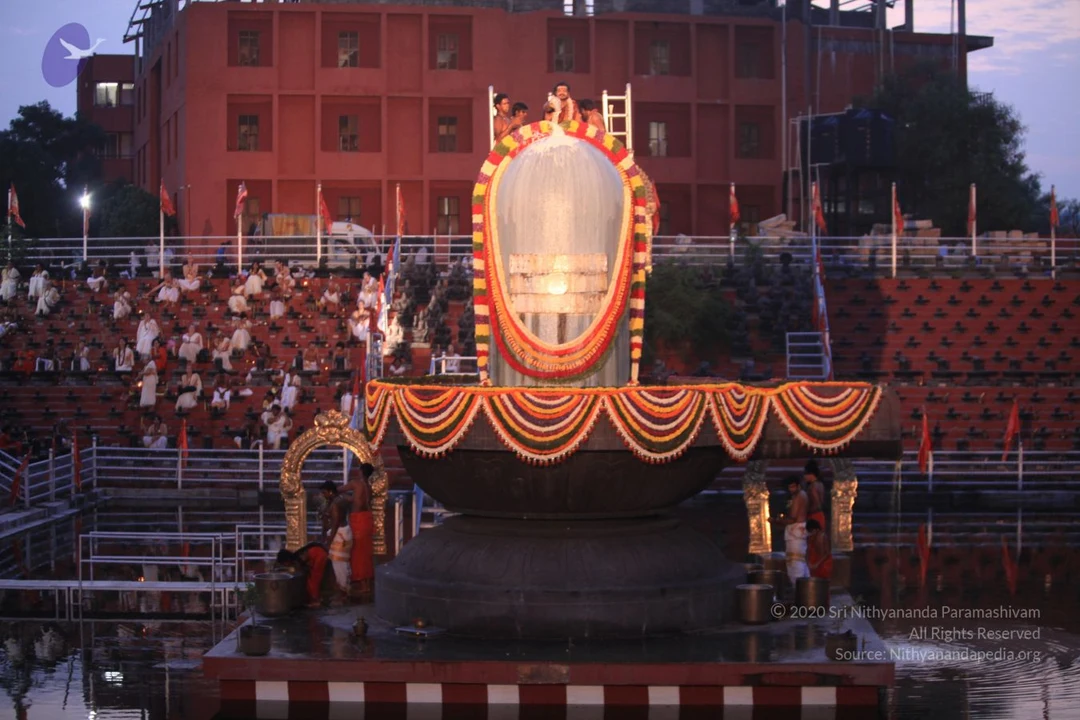
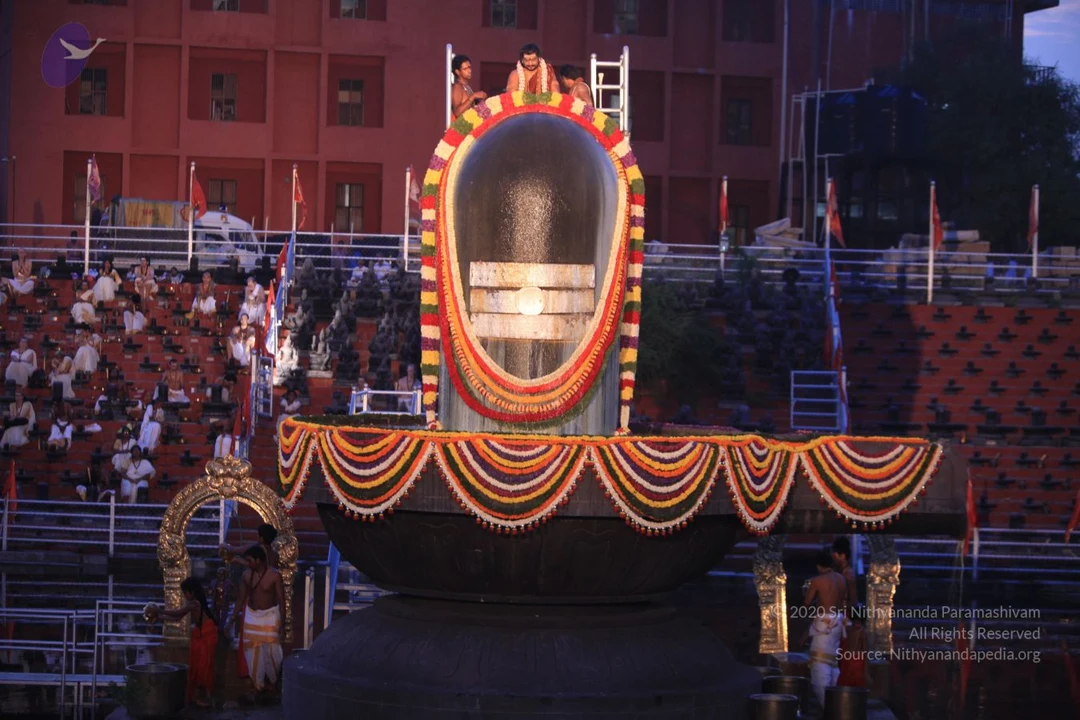
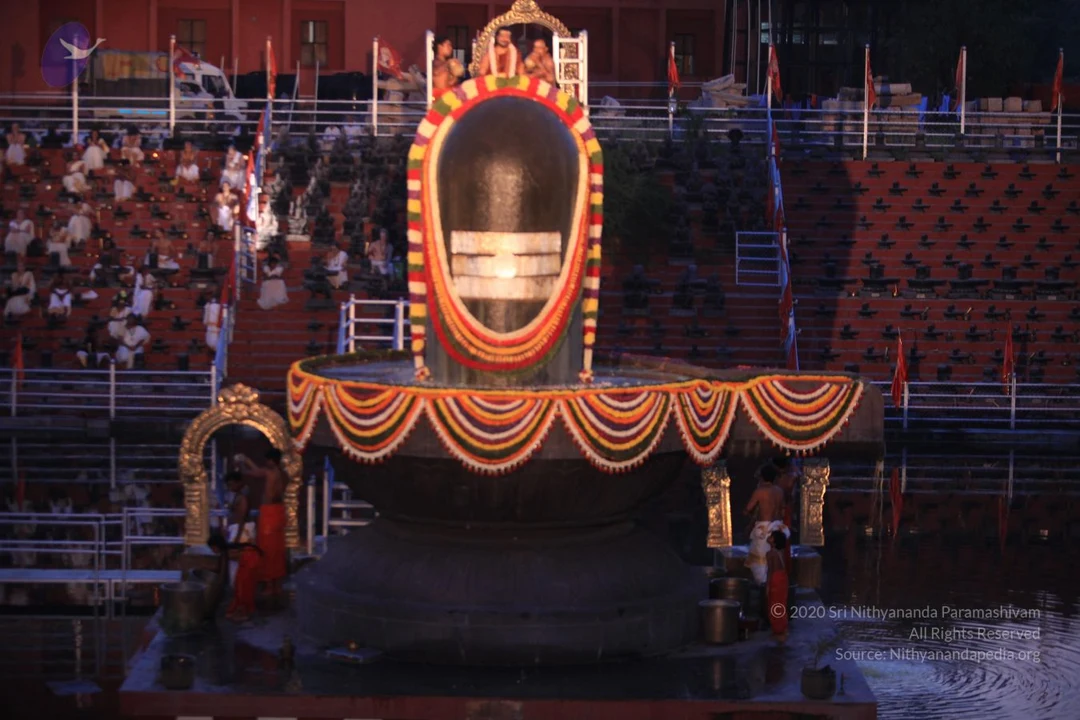
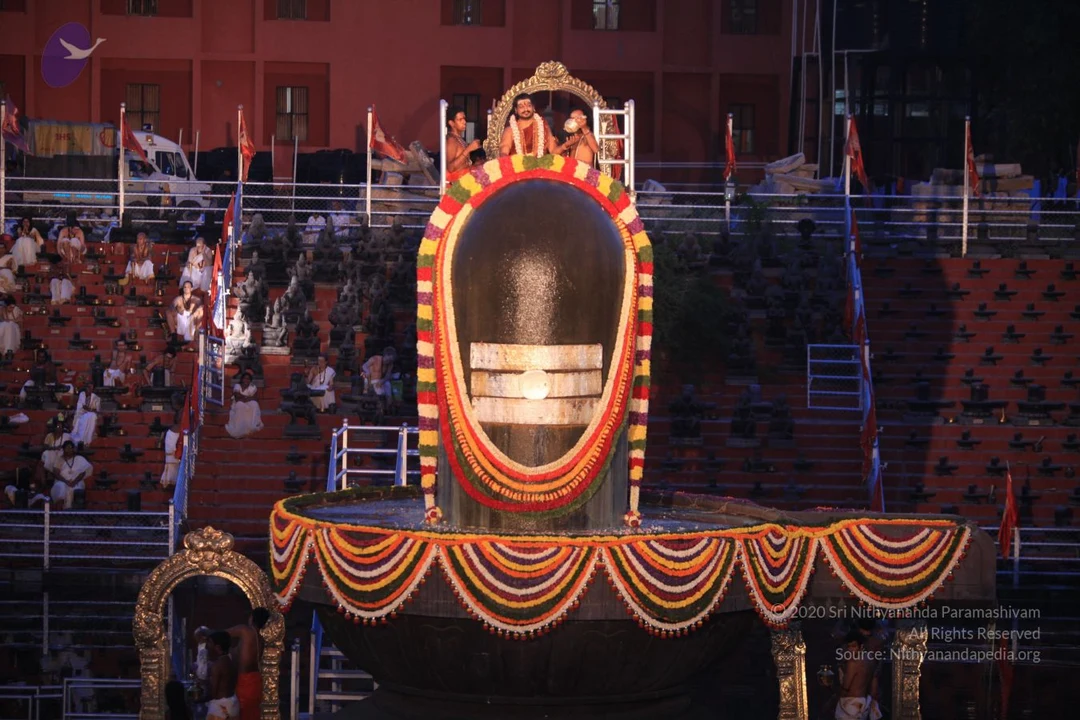
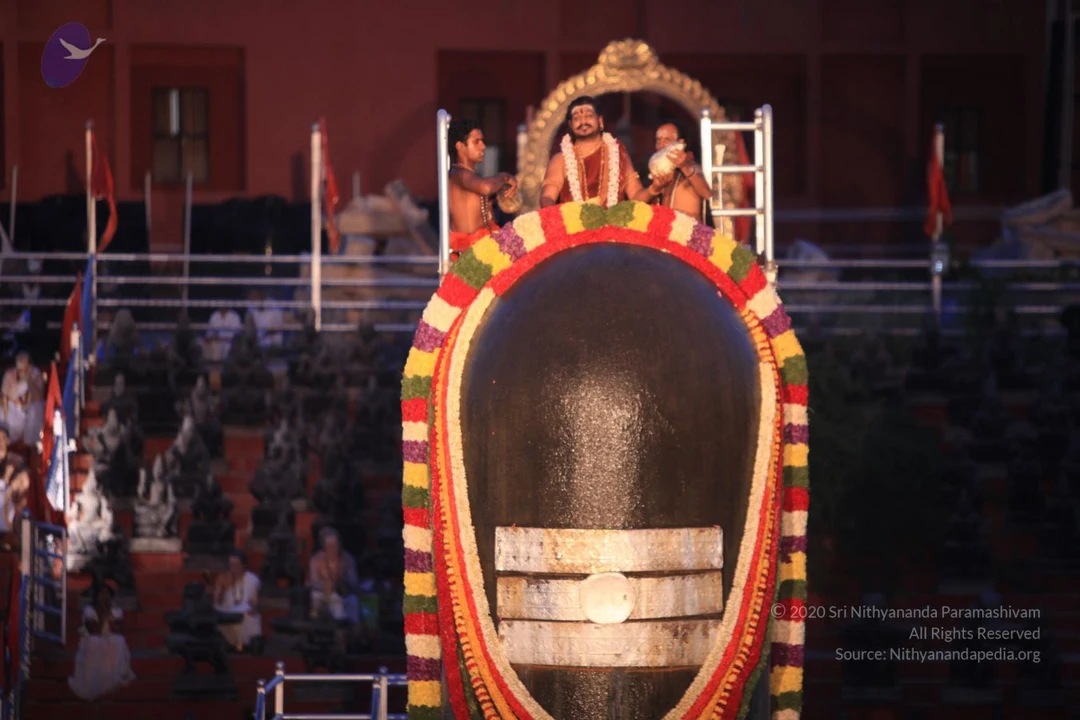
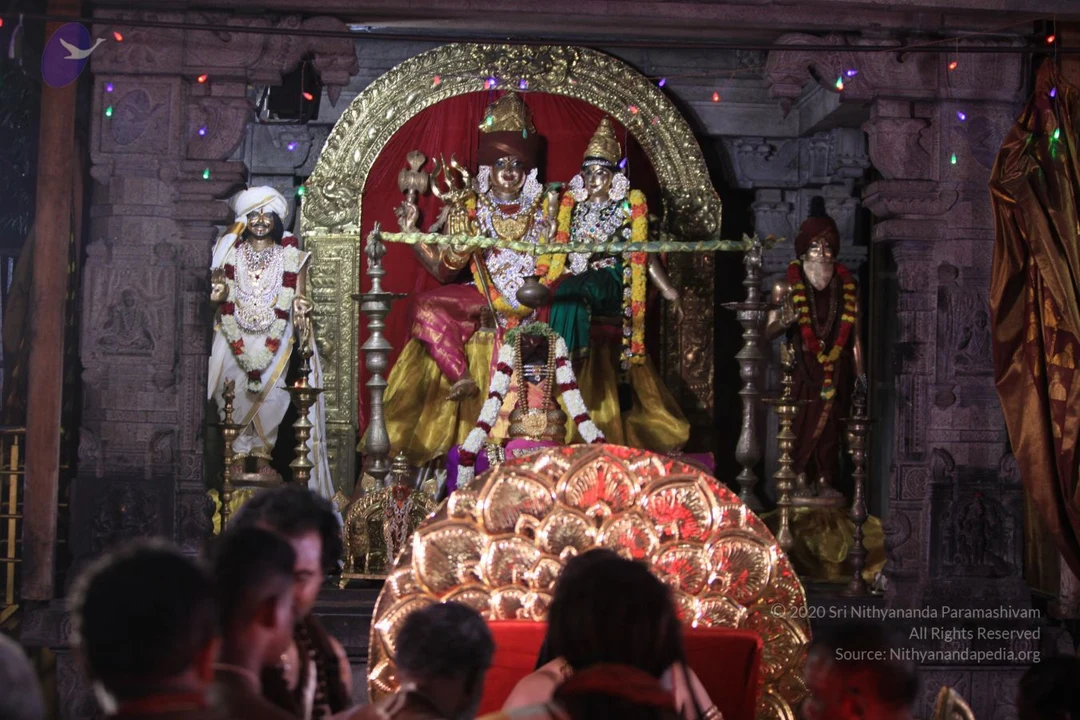
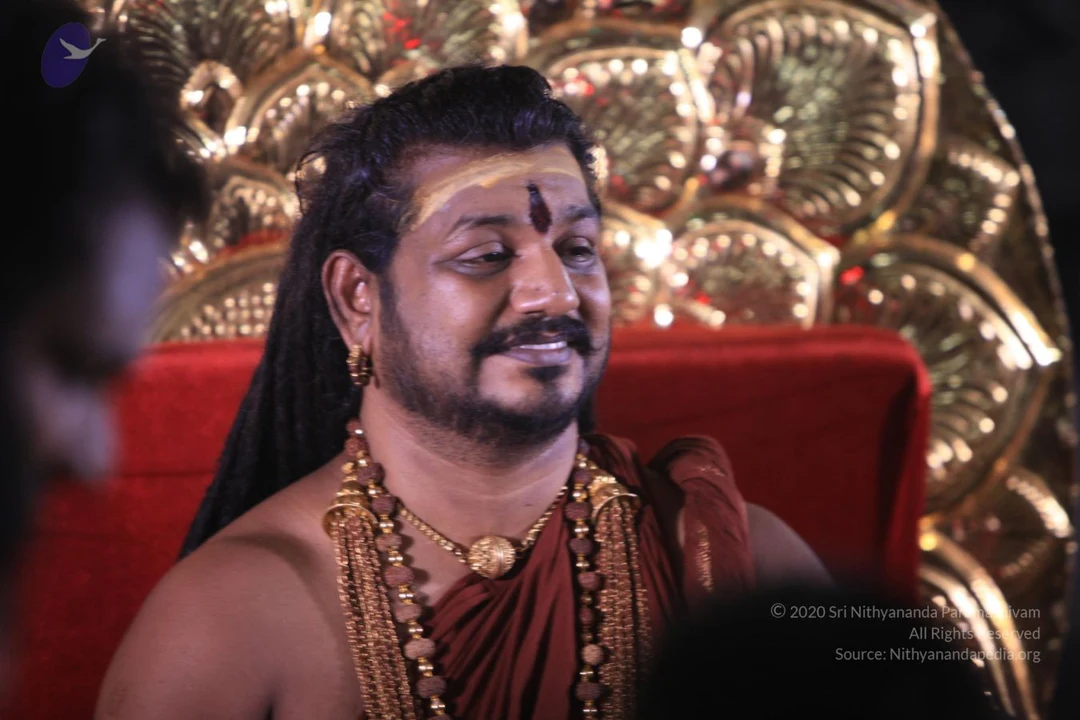
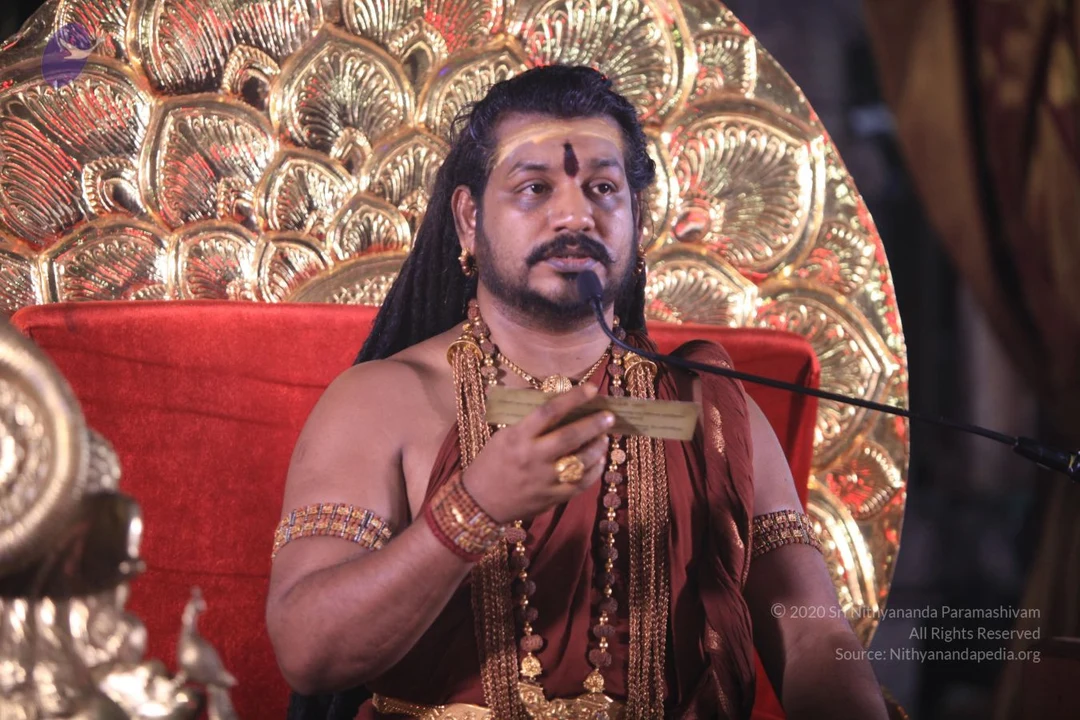
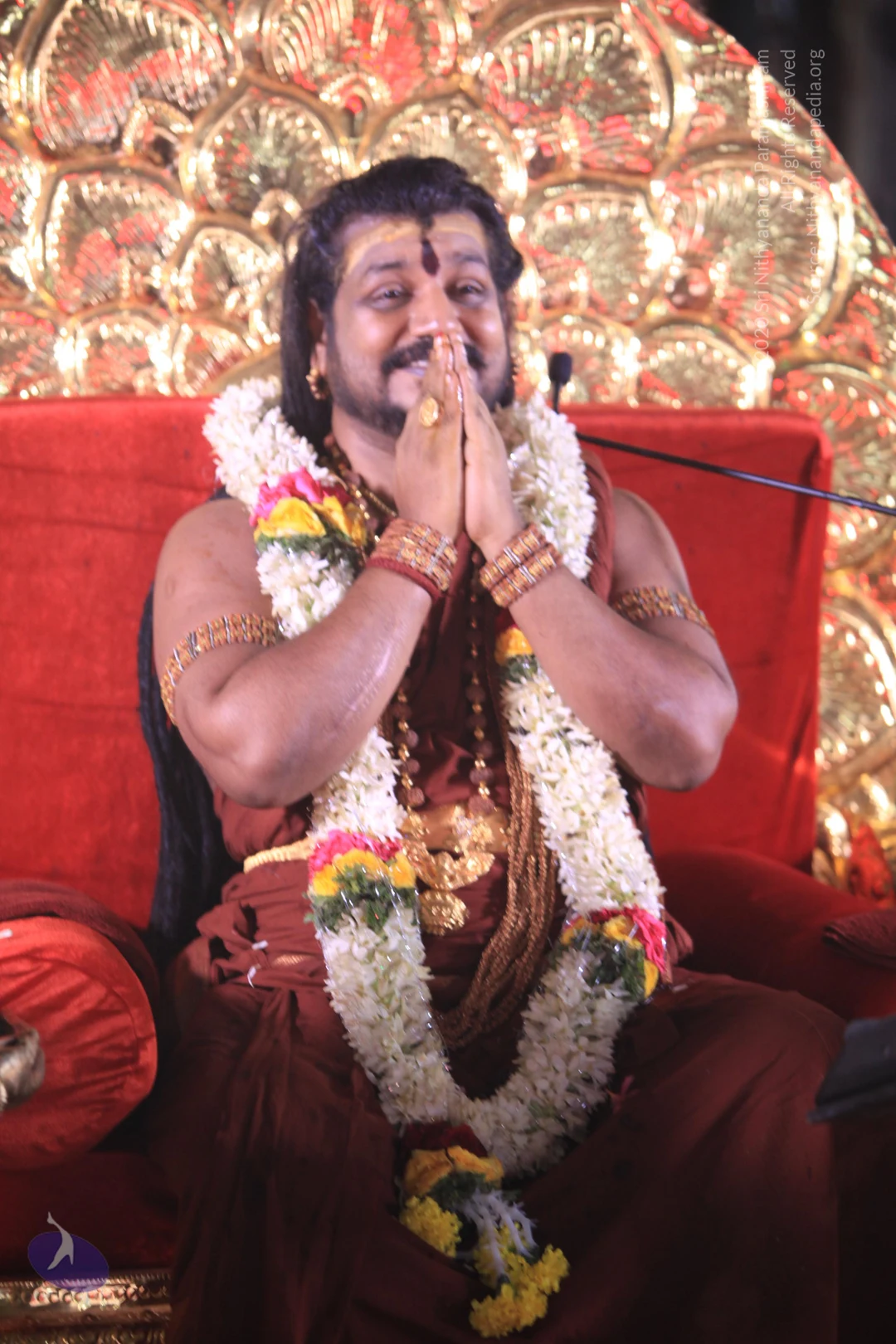
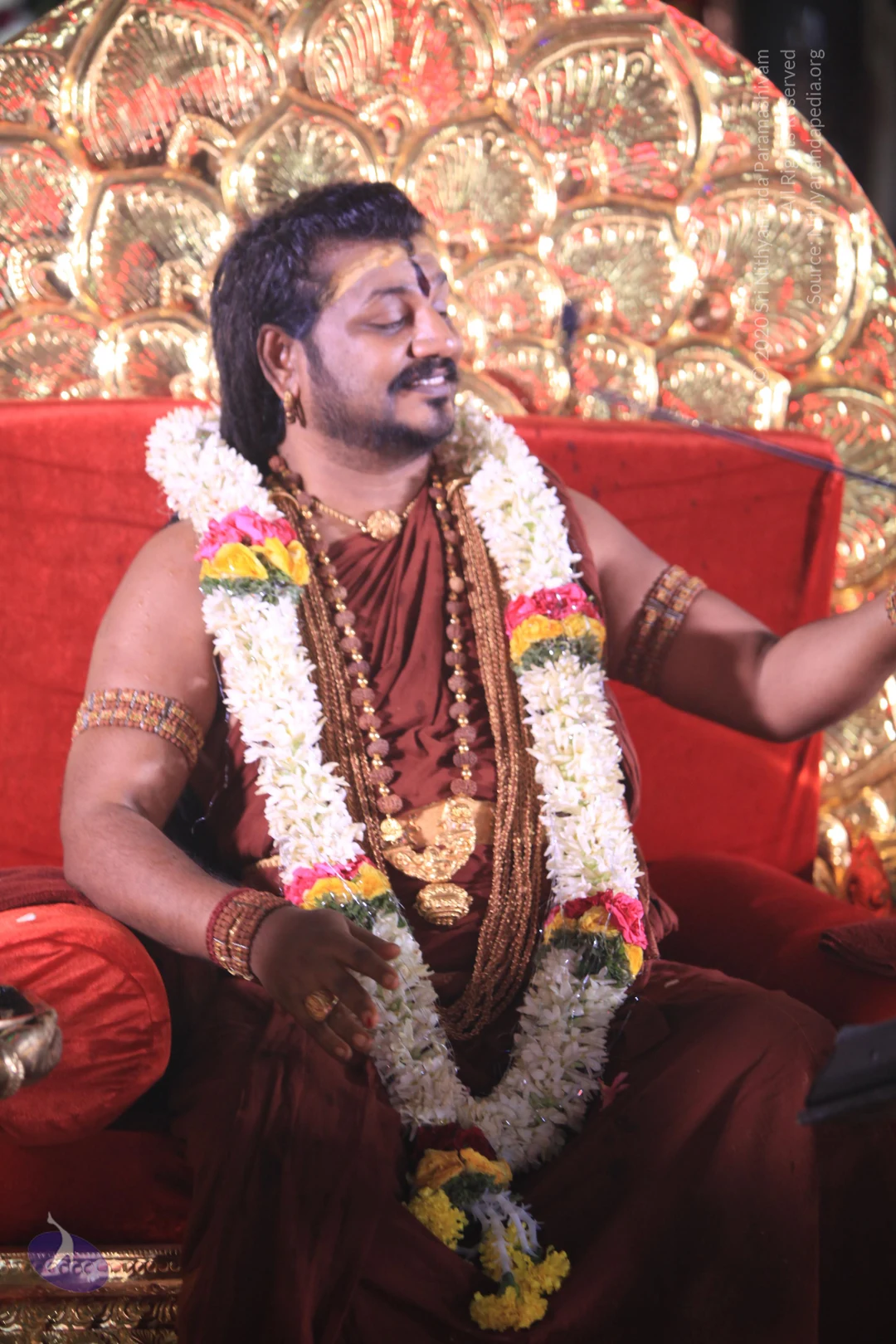
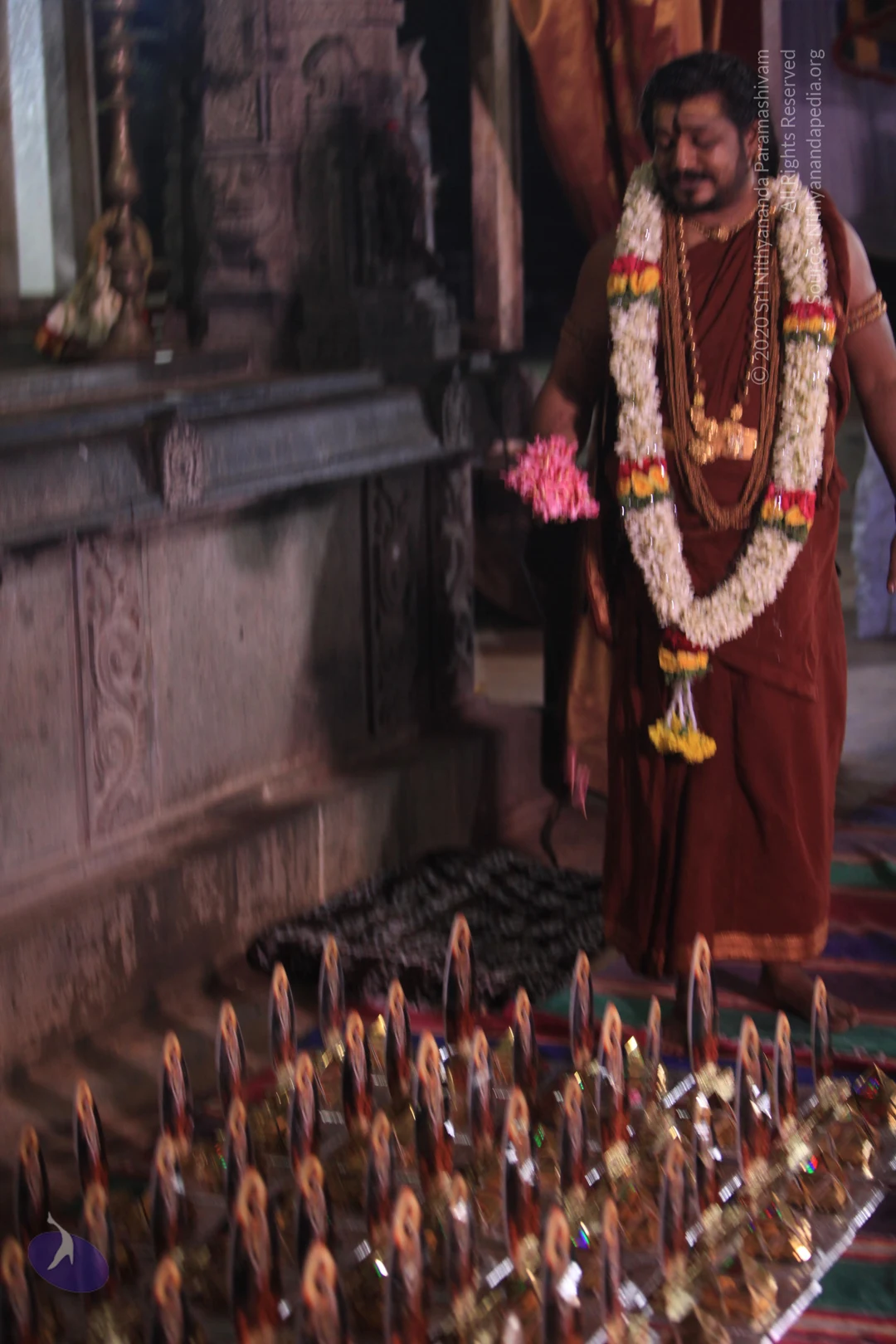
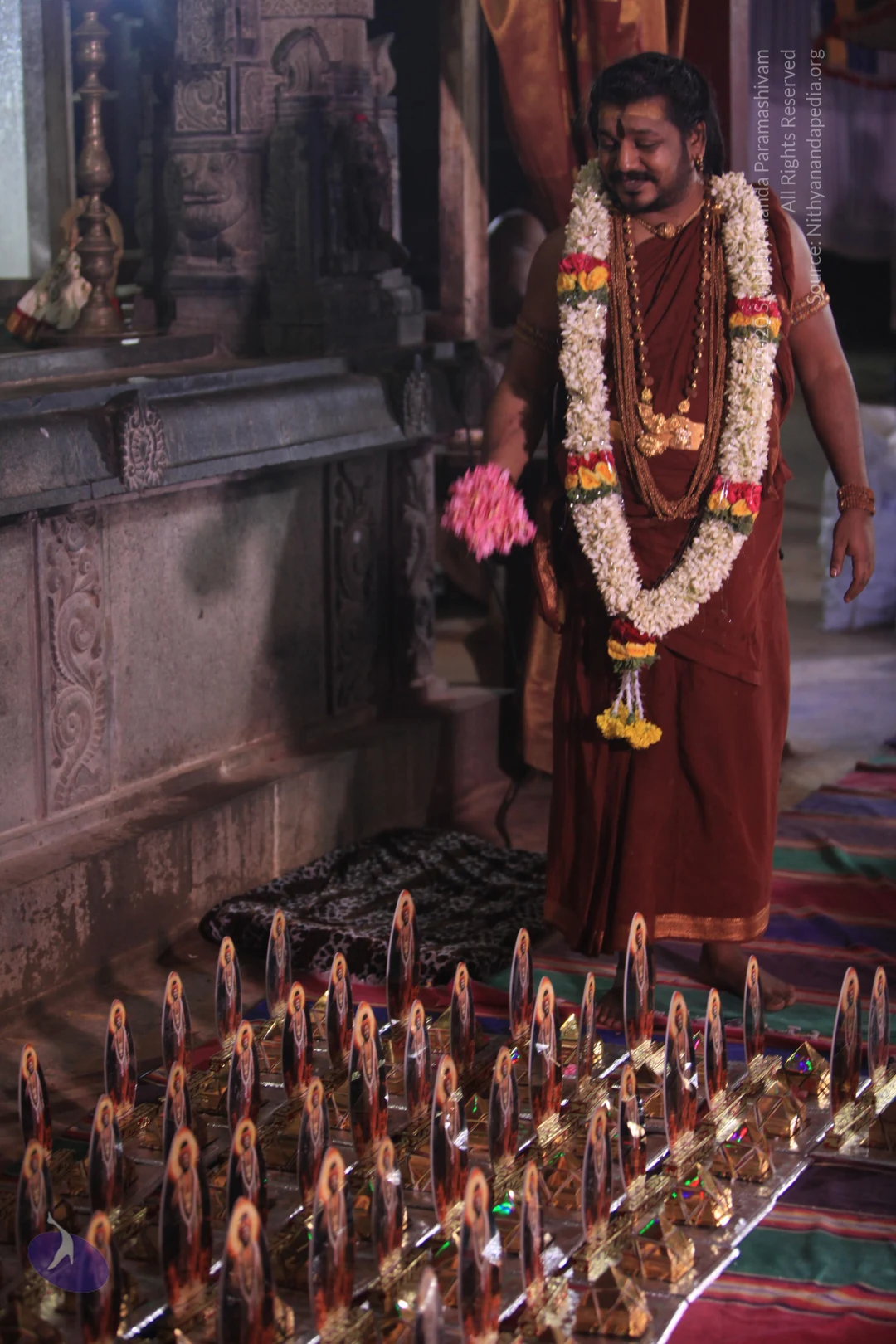
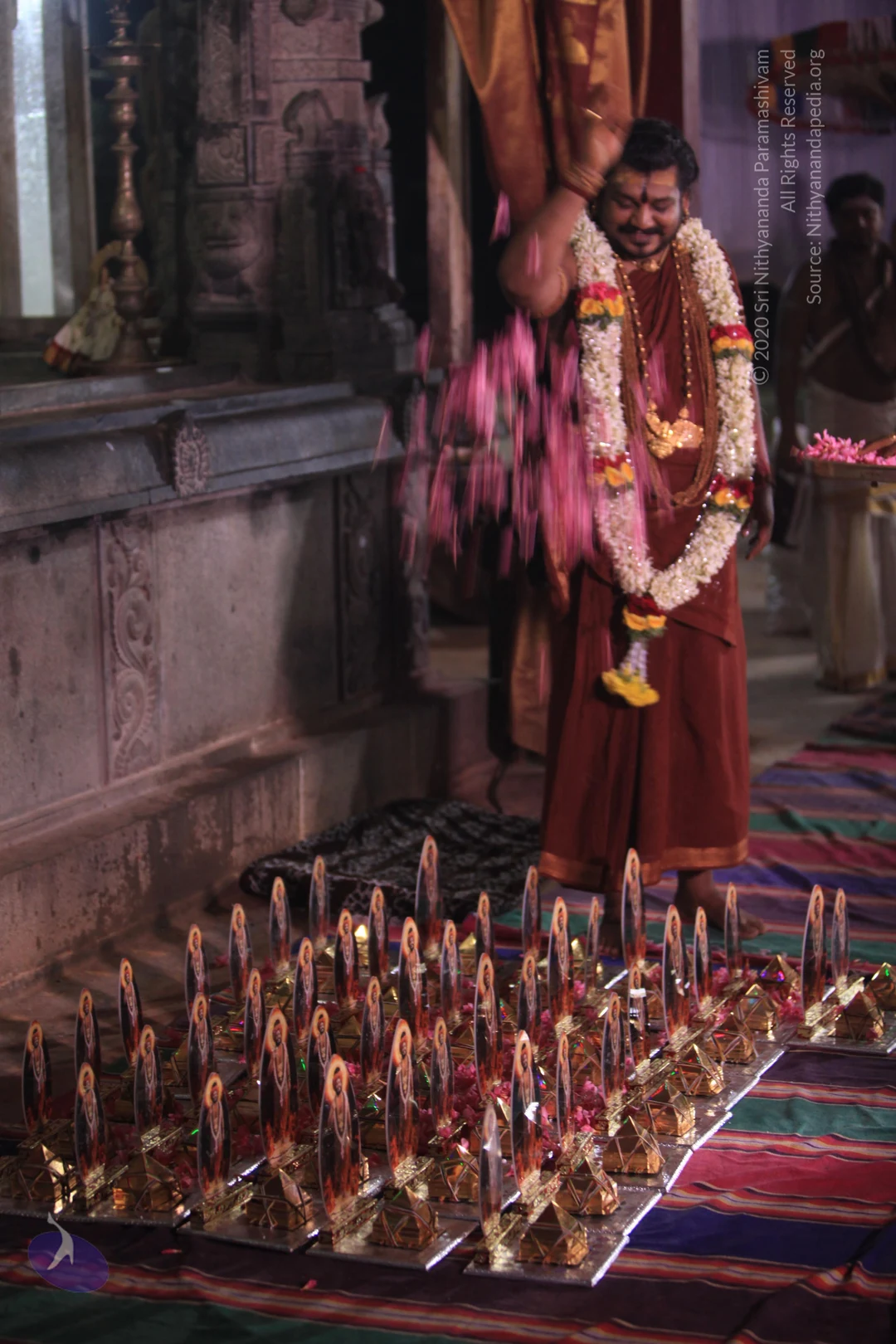
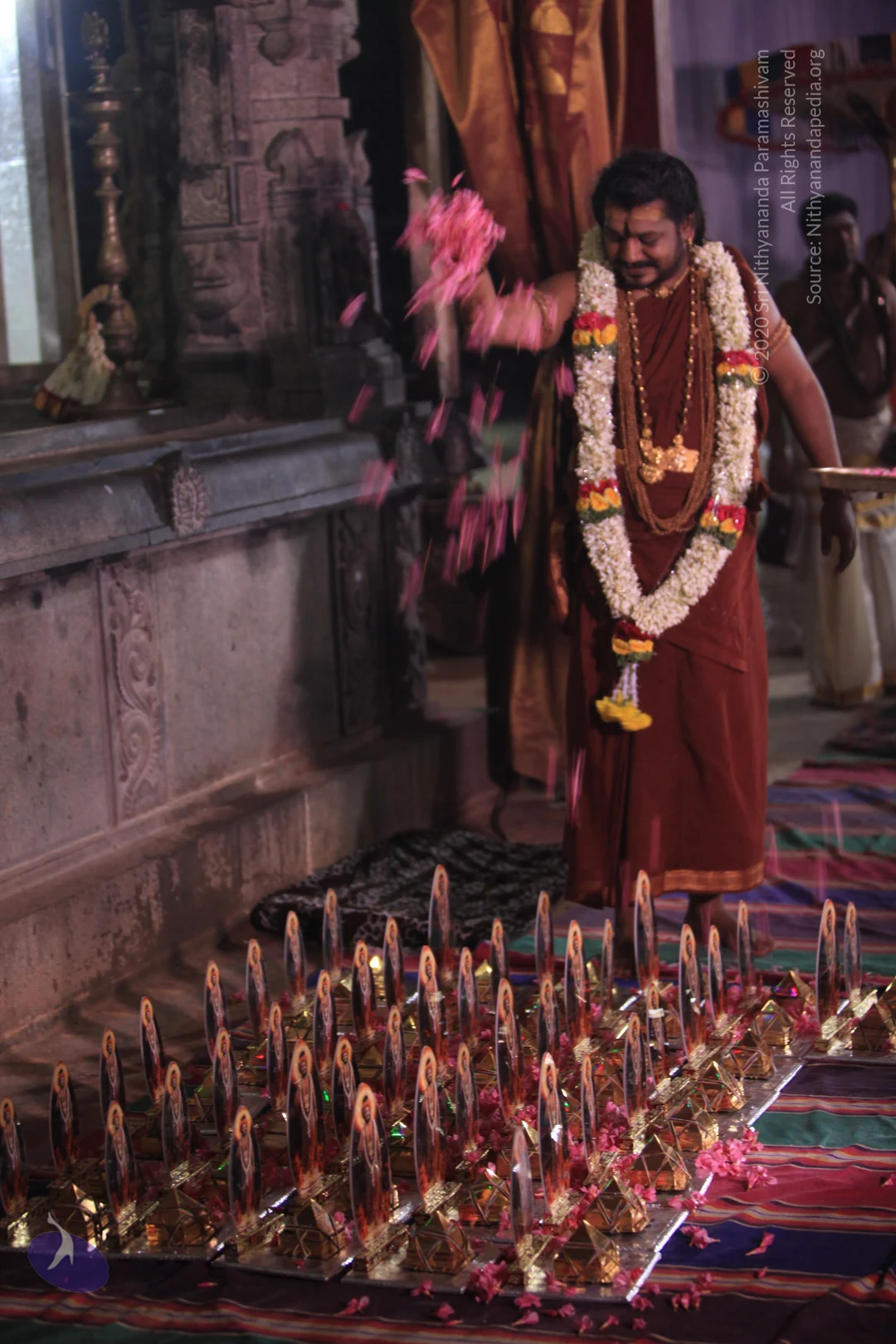
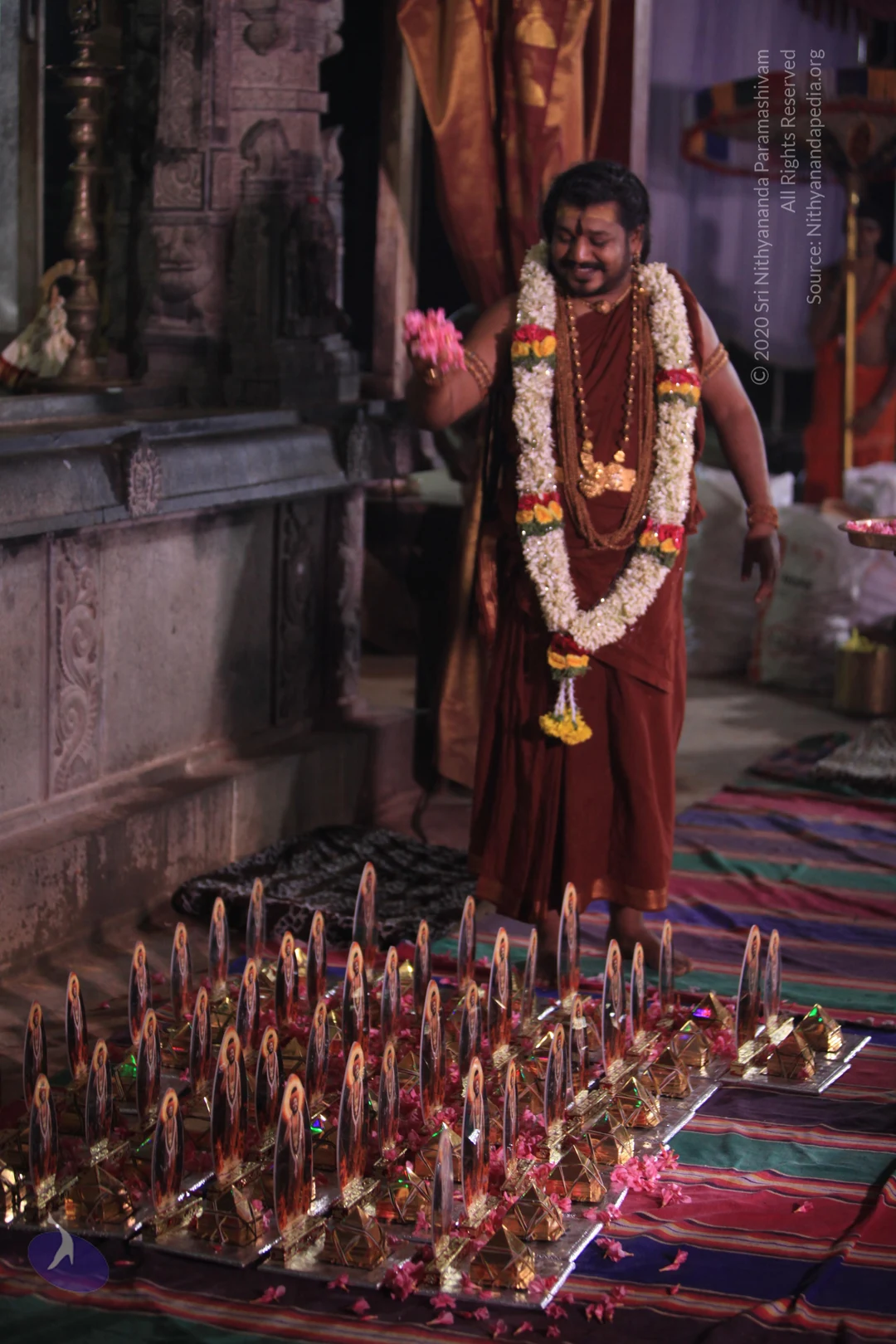
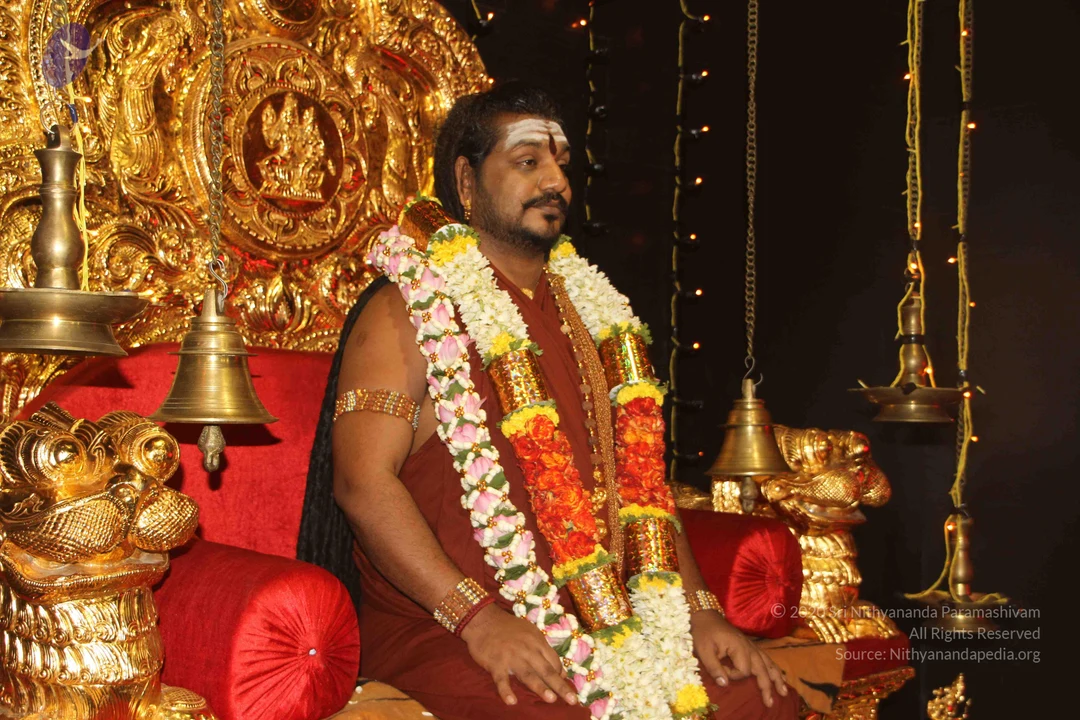
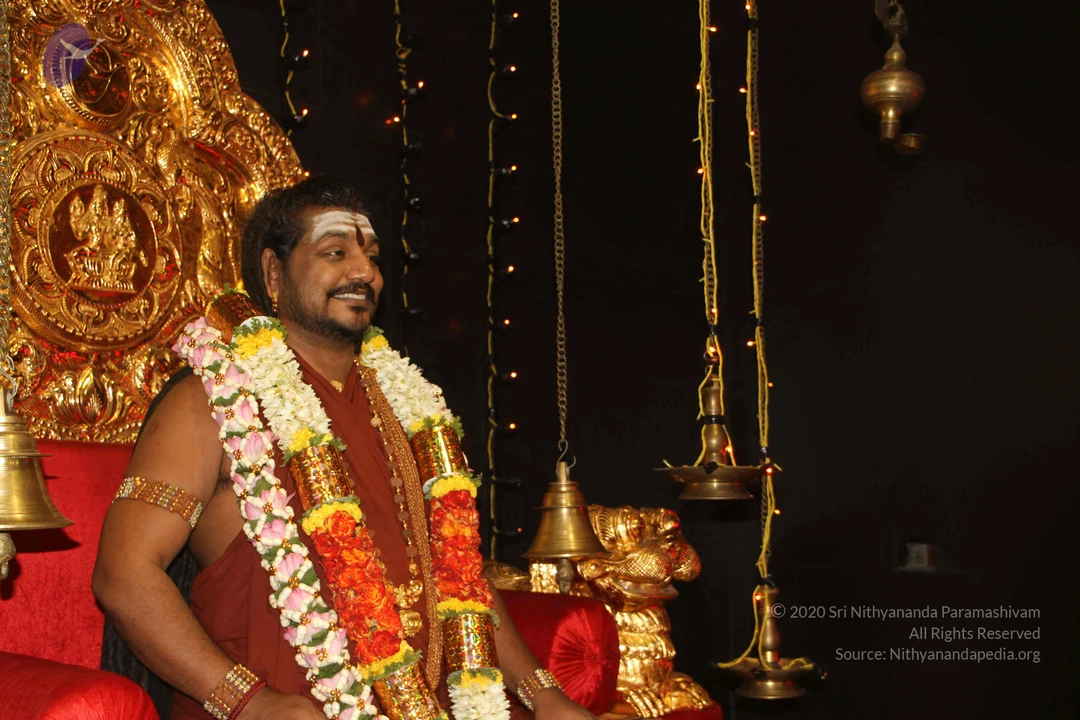
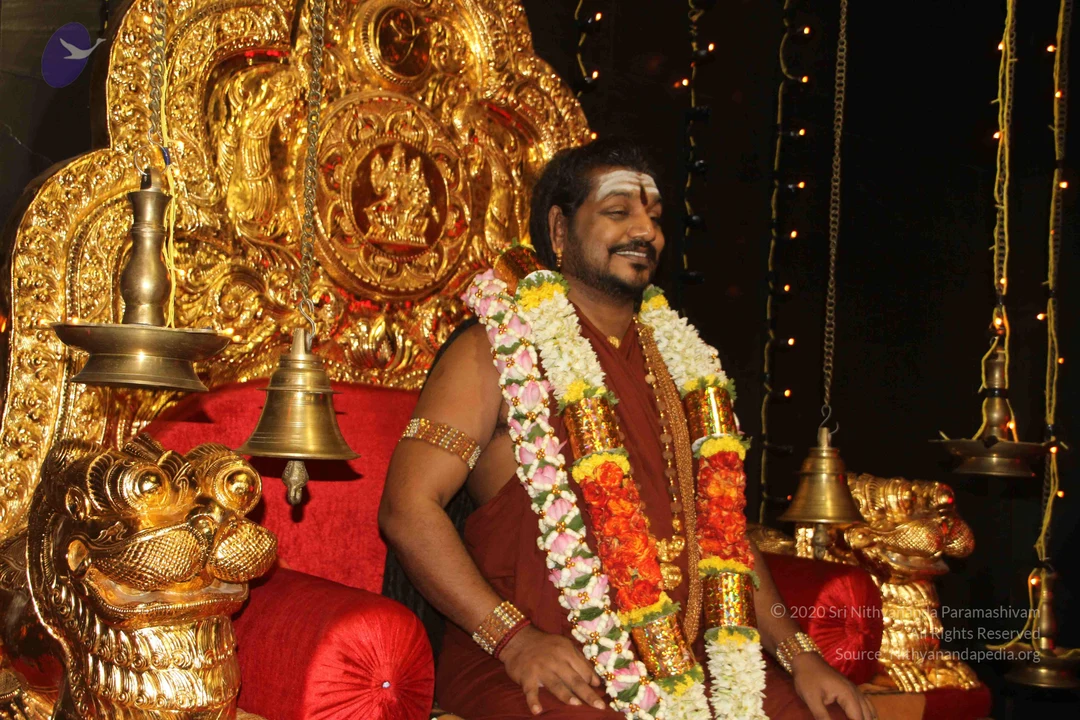
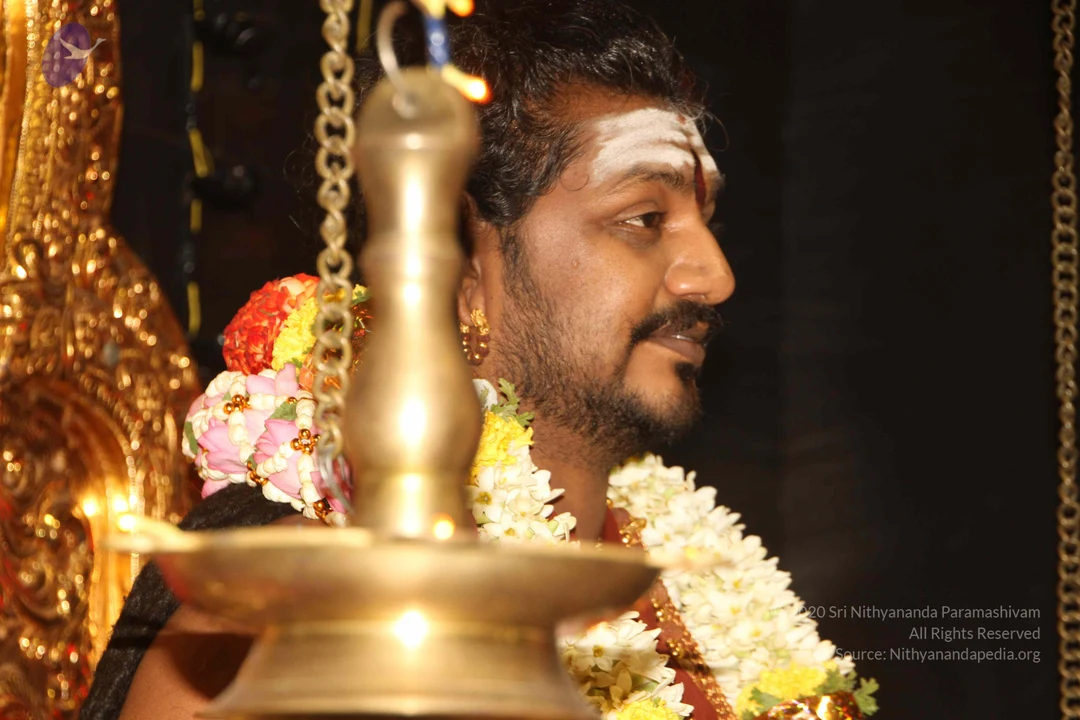
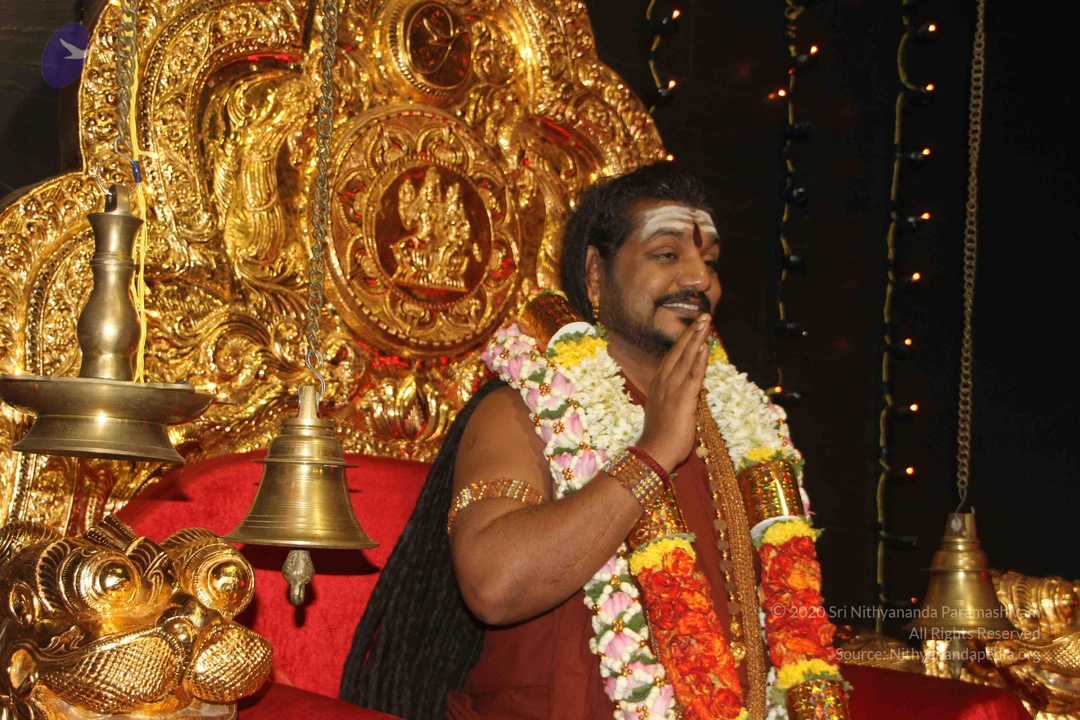
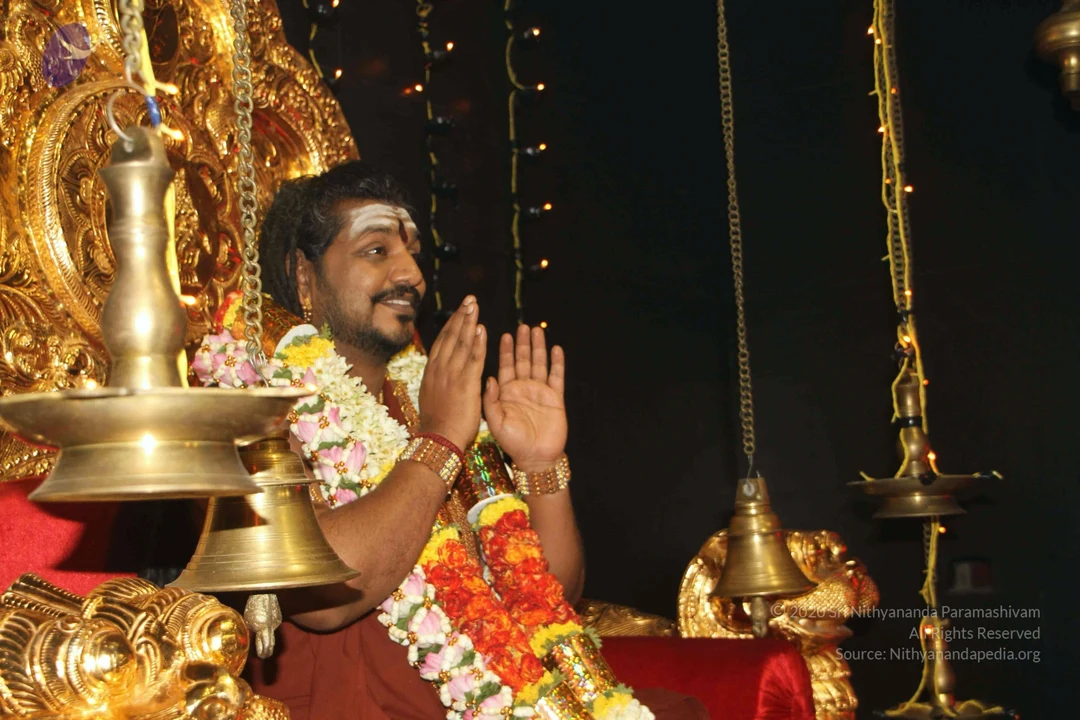
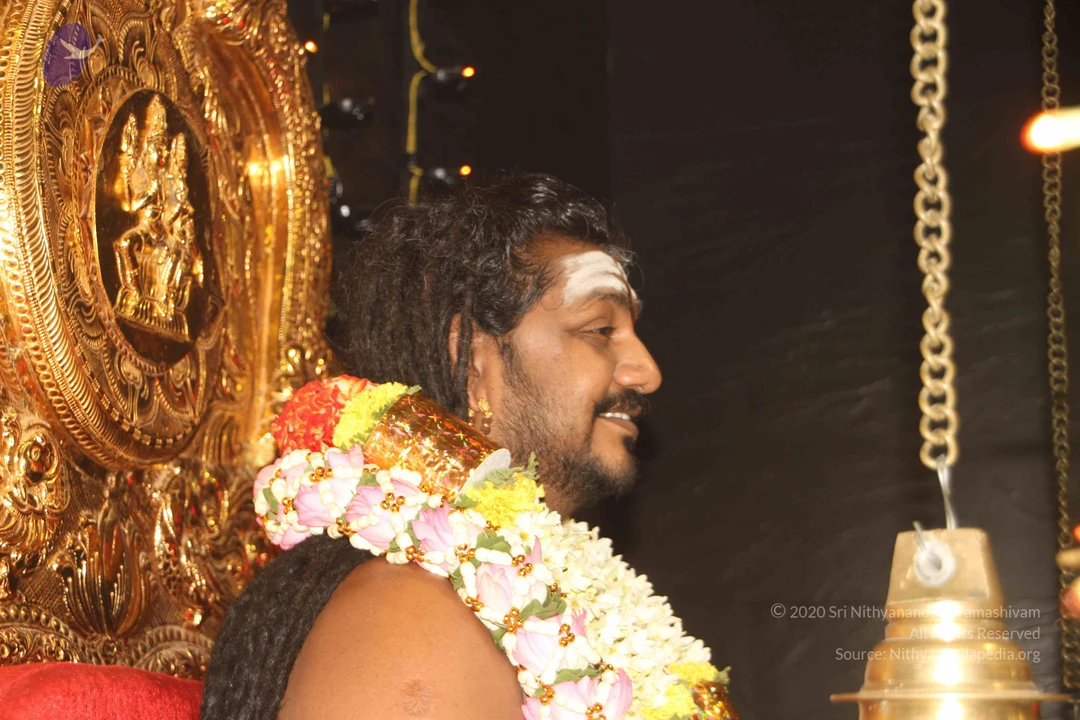
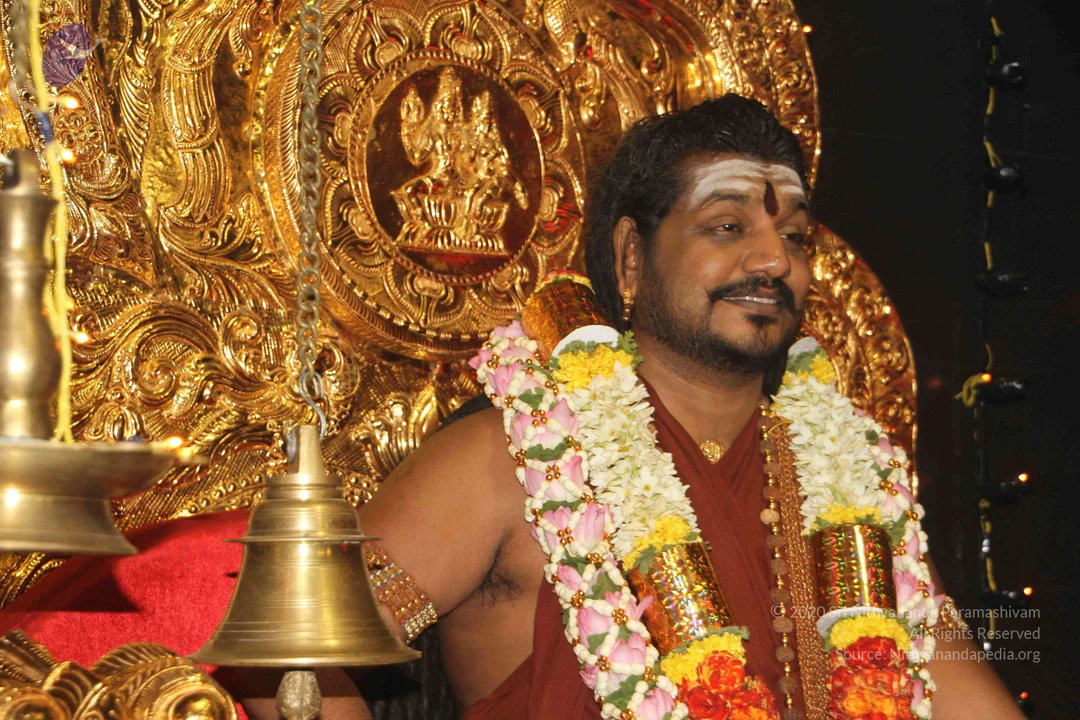
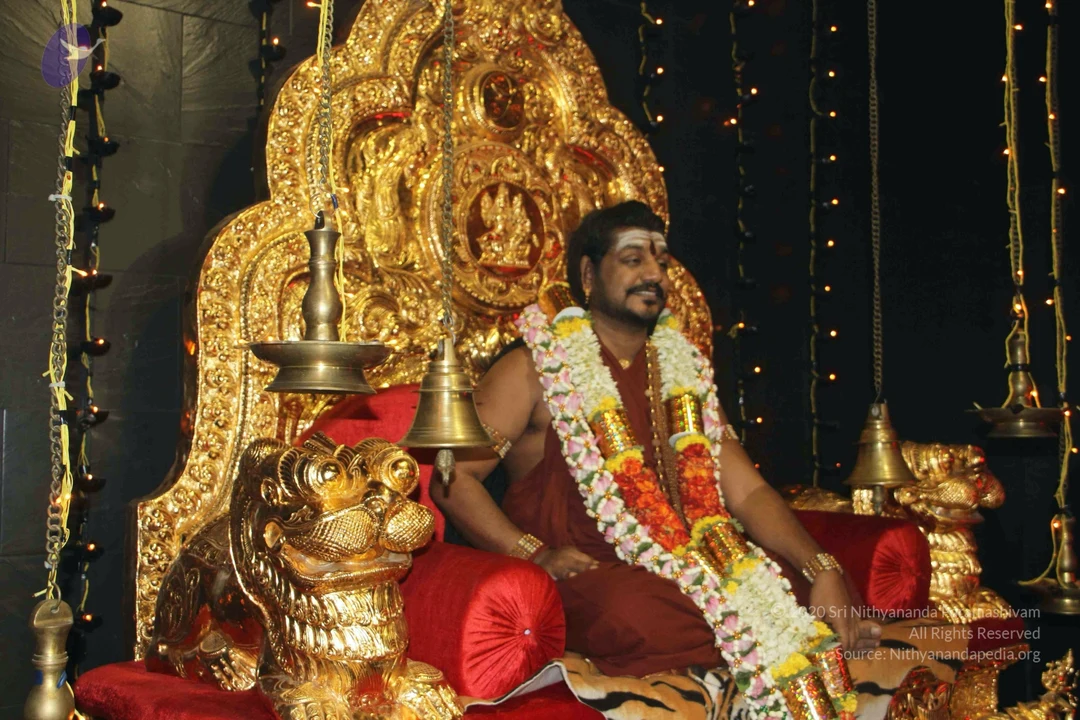
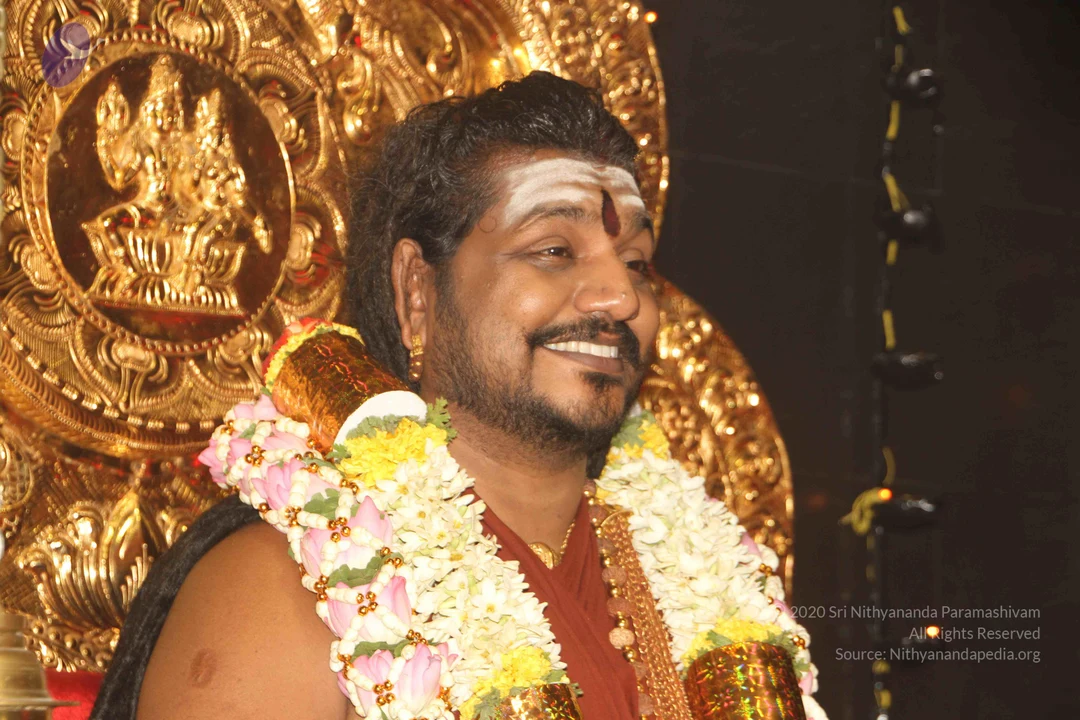
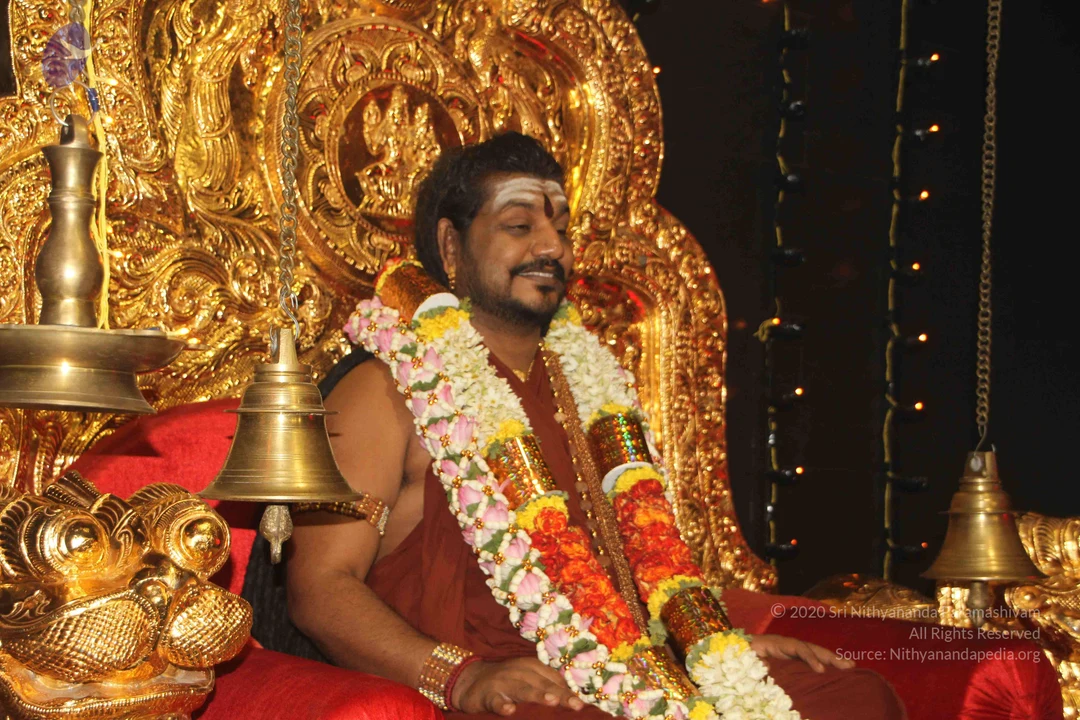
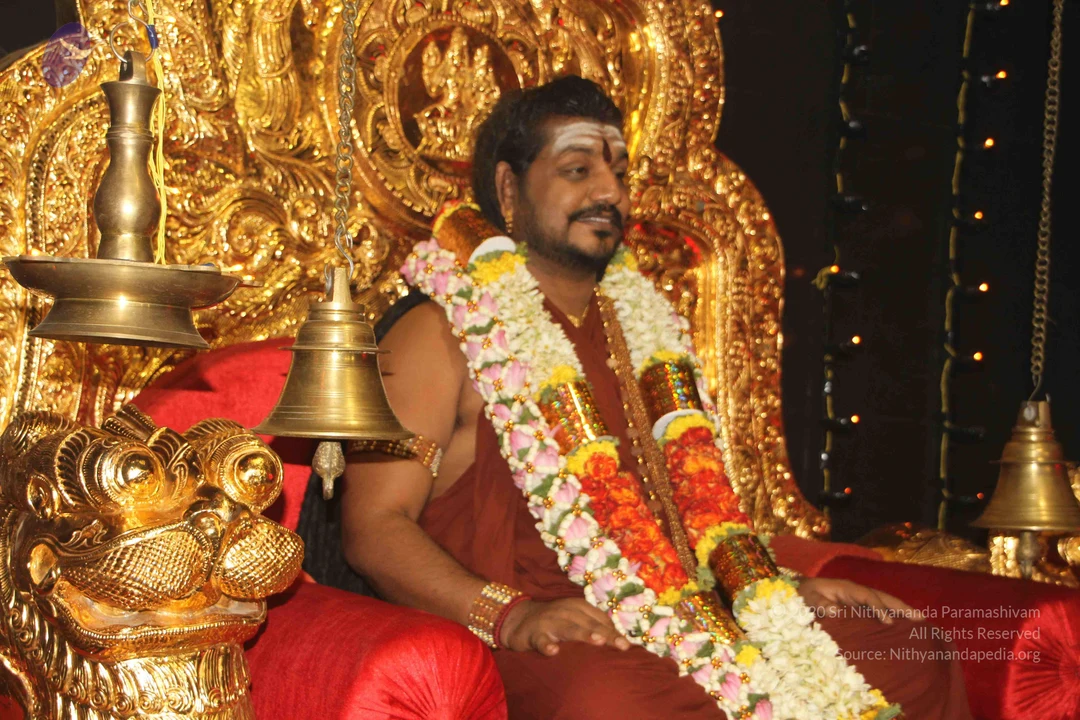
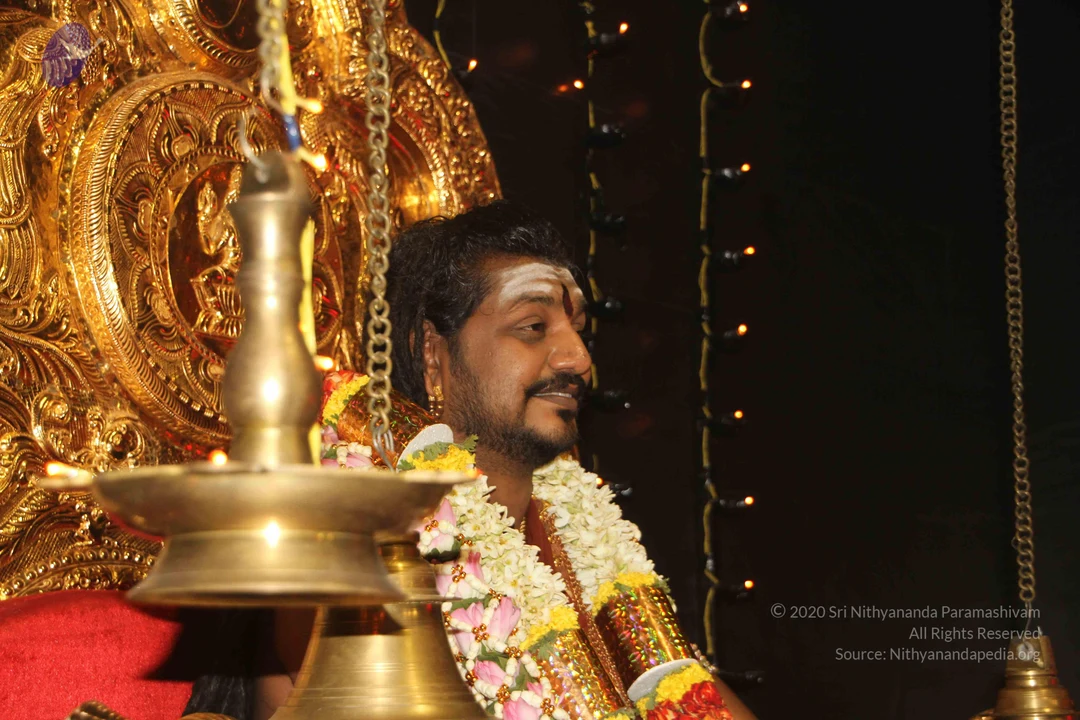
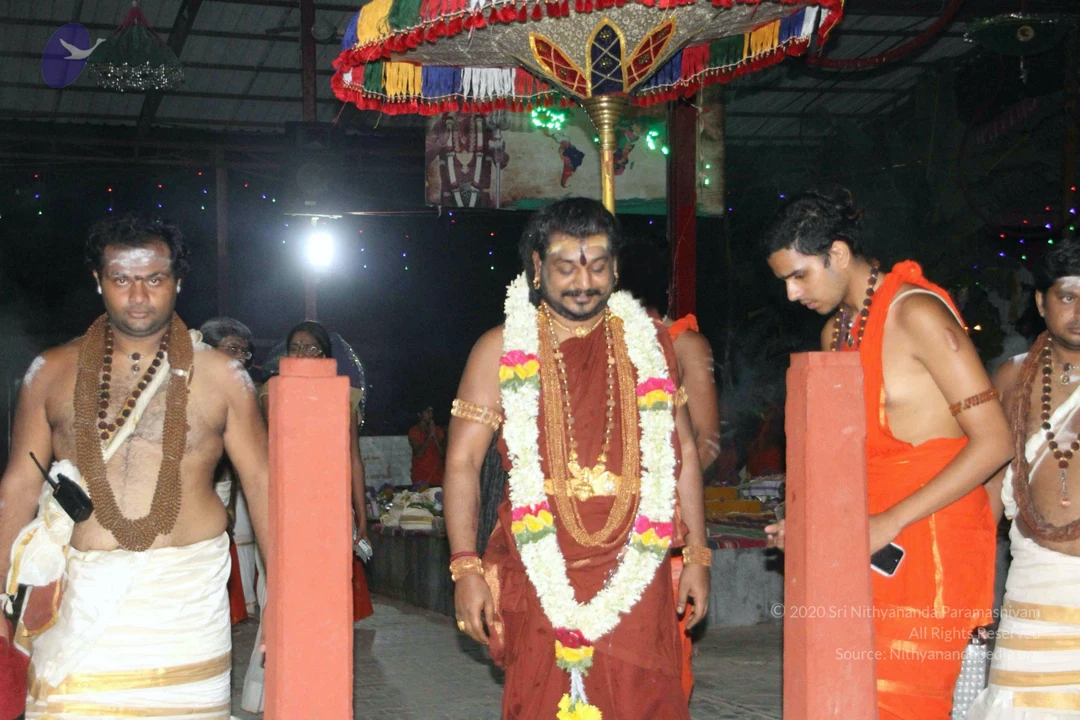
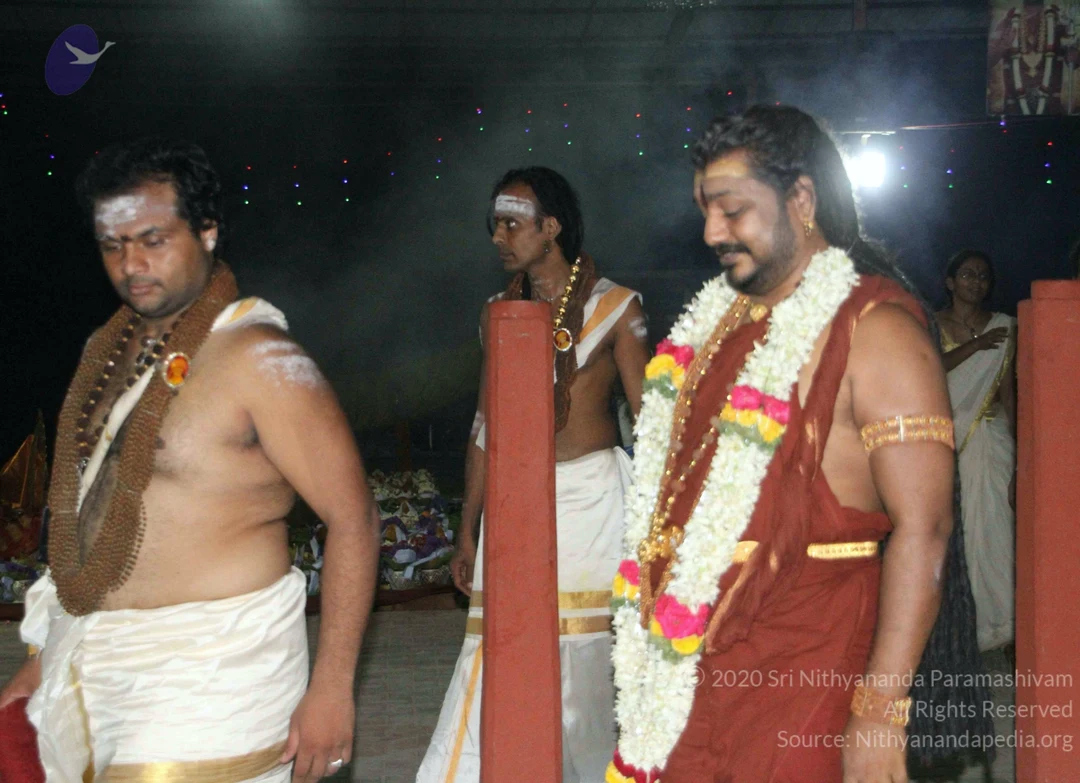
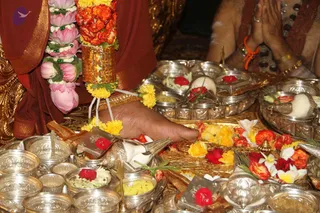
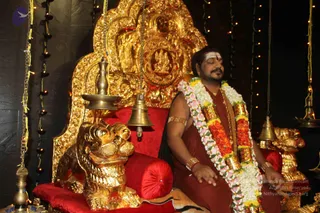
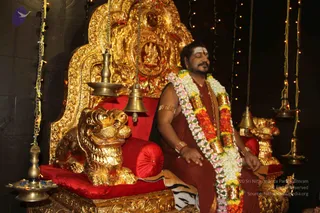
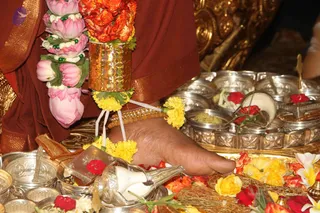
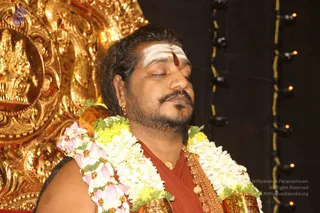
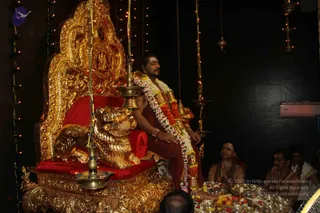
A photograph of a man in profile beside a tall brass oil lamp (deepa) with a wide base, its flame visible at the top. He has long dark hair, a white vertical tilak on his forehead, and a short beard, and smiles while wearing a thick garland of white flowers, pink lotus blooms and yellow marigolds, with beaded rainbow-coloured bands across his shoulders. A gilded, ornately carved shrine or deity backdrop stands at left, a red cloth lies at lower left, and strings of small yellow lights hang on the right against a dark background. a person is identified by long swept-back hair, an ornate beaded garland and a ceremonial deepa beside him, presented as the person performing or present at puja.A close photograph of a puja being performed over a silver-plated tray of offerings. A man with white vertical tilak stripes and a red bindi, bare-shouldered and wearing a rudraksha mala with an orange wrist thread, pours liquid from a silver vessel onto a small silver stand decorated with red flowers. Silver bowls hold sliced fruit, flowers, rice and sweets, with red and orange blossoms scattered across a gold cloth. Another person's hand reaches in from the lower left, and a brass lamp stands at the right edge.A close photograph of a puja ritual. Bare feet with toe rings and gold bangles rest on a brass tray, while a hand adorned with a ring and an orange thread reaches toward an array of silver bowls and plates. The offerings include red and orange flowers, yellow blossoms, green leaves, cooked rice, sweets and dishes. Silver conical vessels and a small silver lamp stand among the items, and a red and gold cloth lies across the tray. A red and gold garment and a glimpse of a person's dark hair appear at the edges of the frame.

May 24 2017

Original wiki page
Contents

Title:

The Fruit Of Puja Is Devotion, The Fruit Of Devotion Is Puja

Day's Event

Excerpt from Live Nithyananda Satsang:

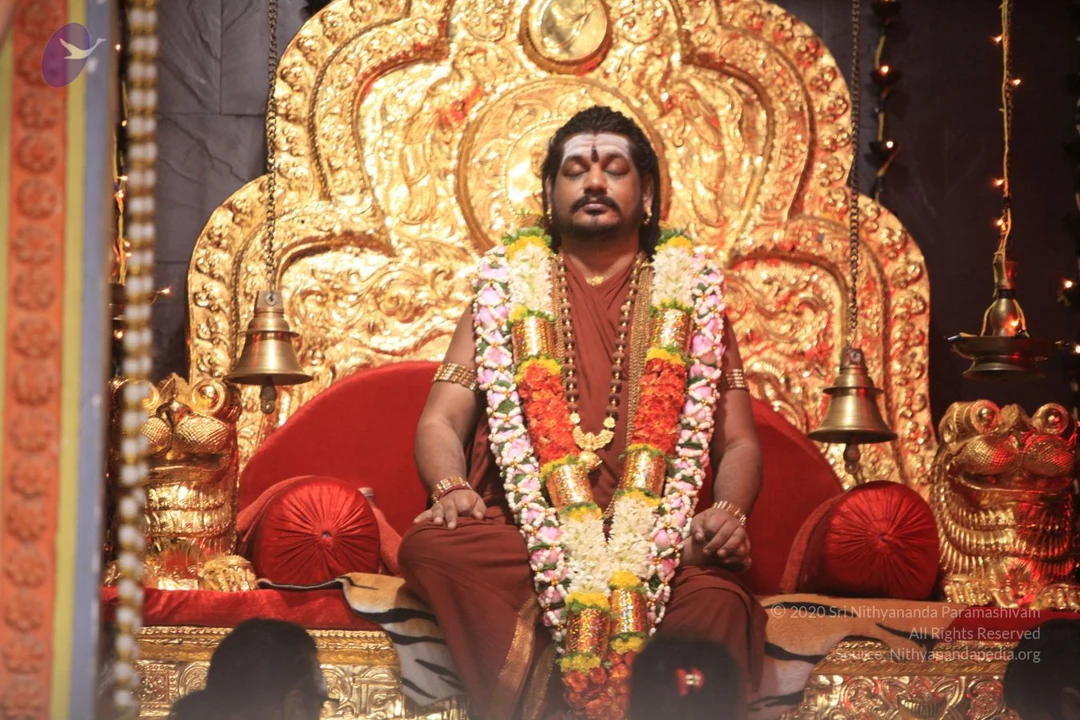
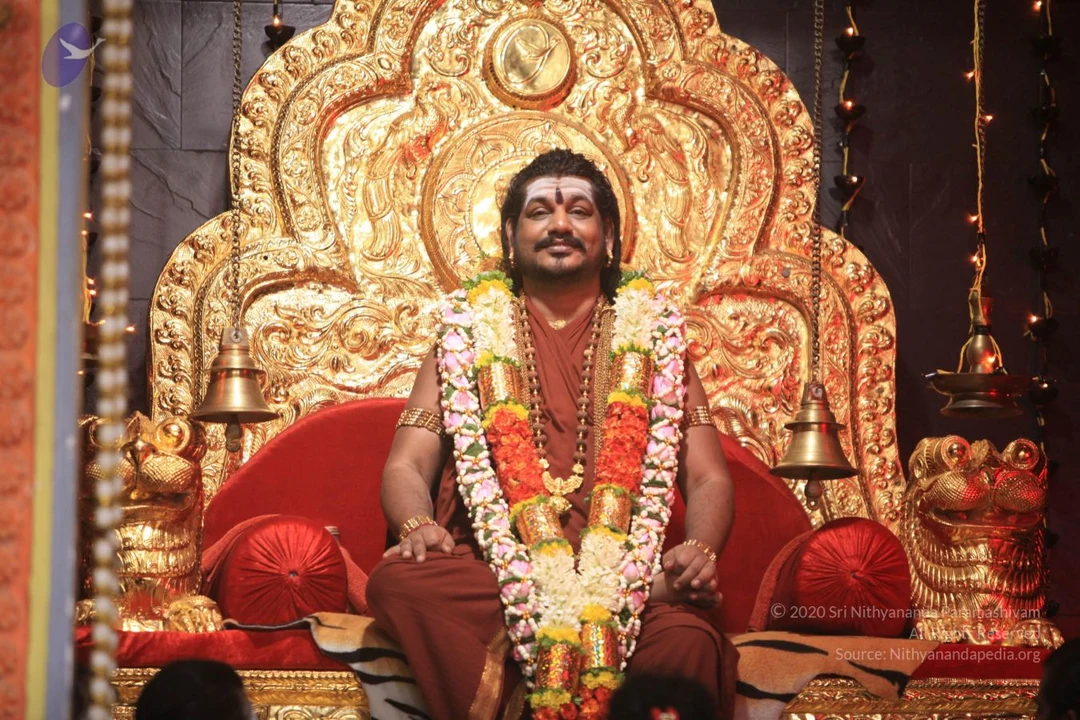
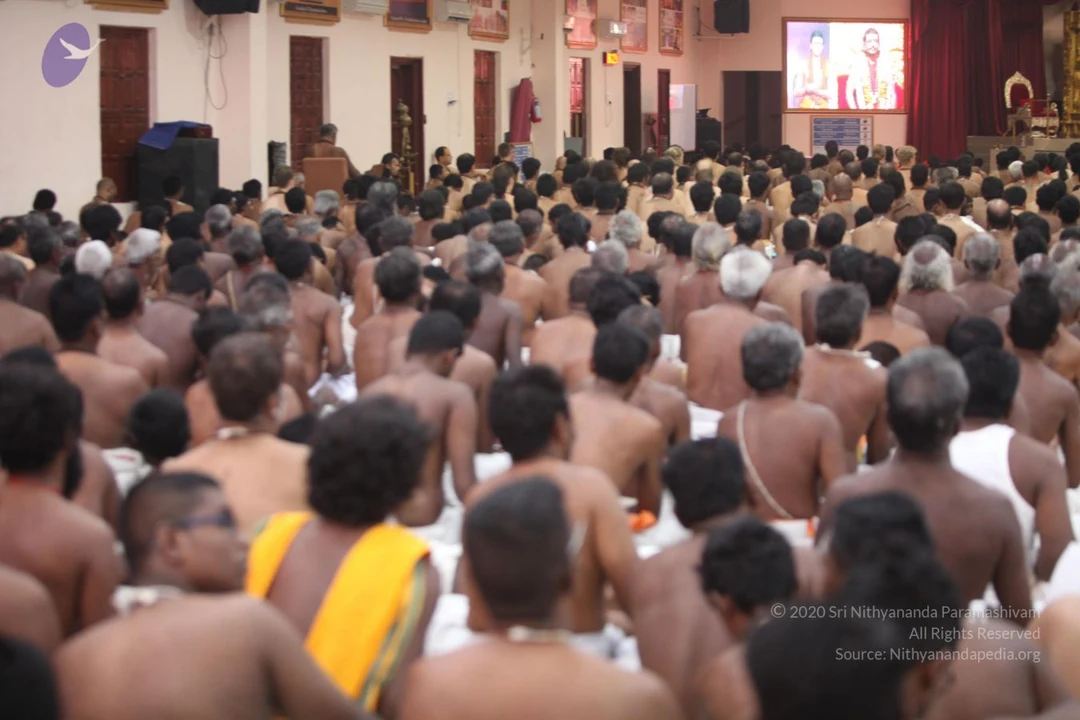
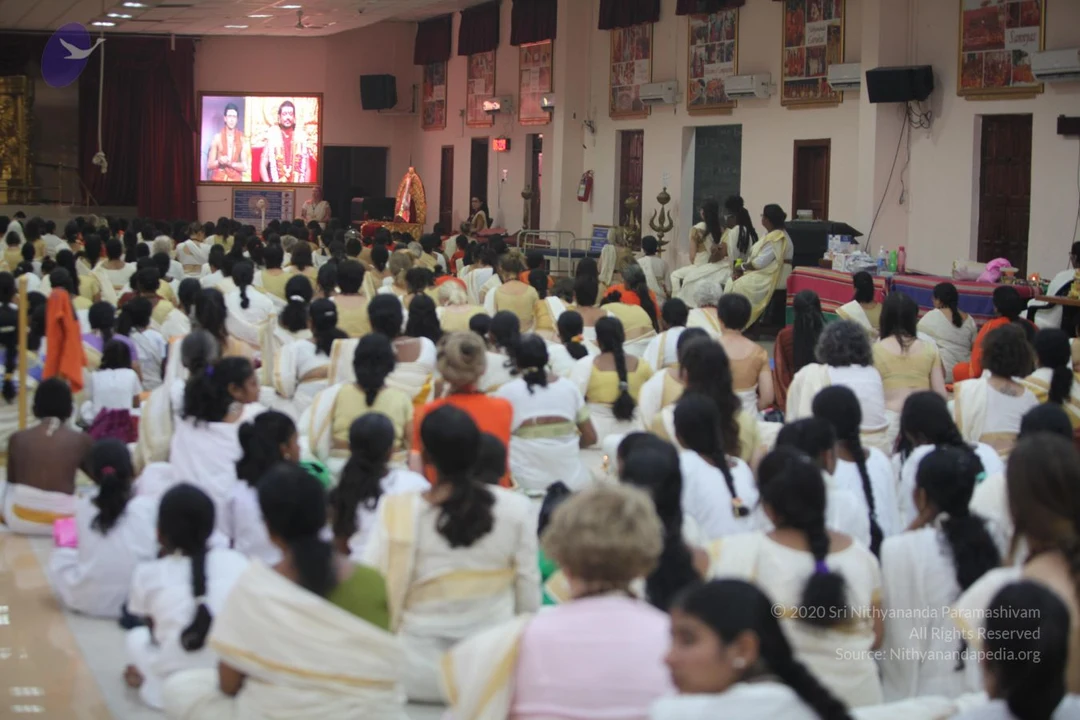
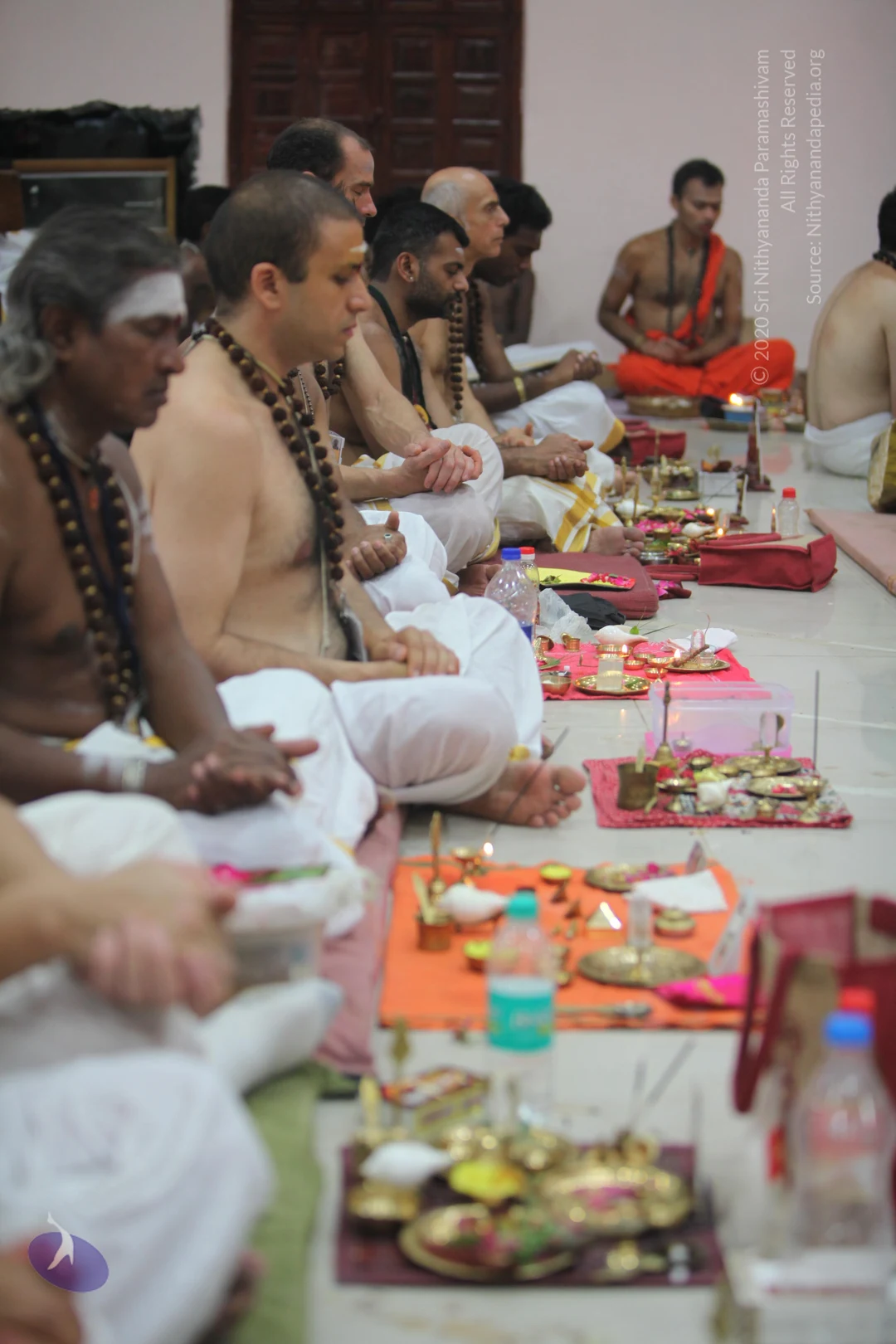
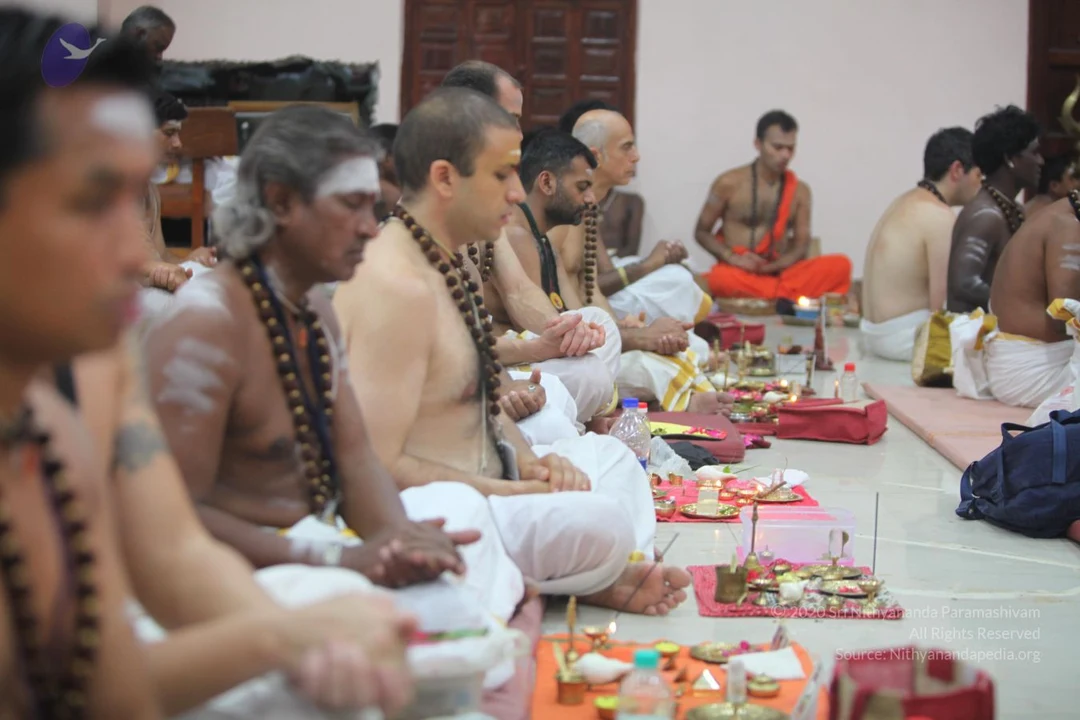
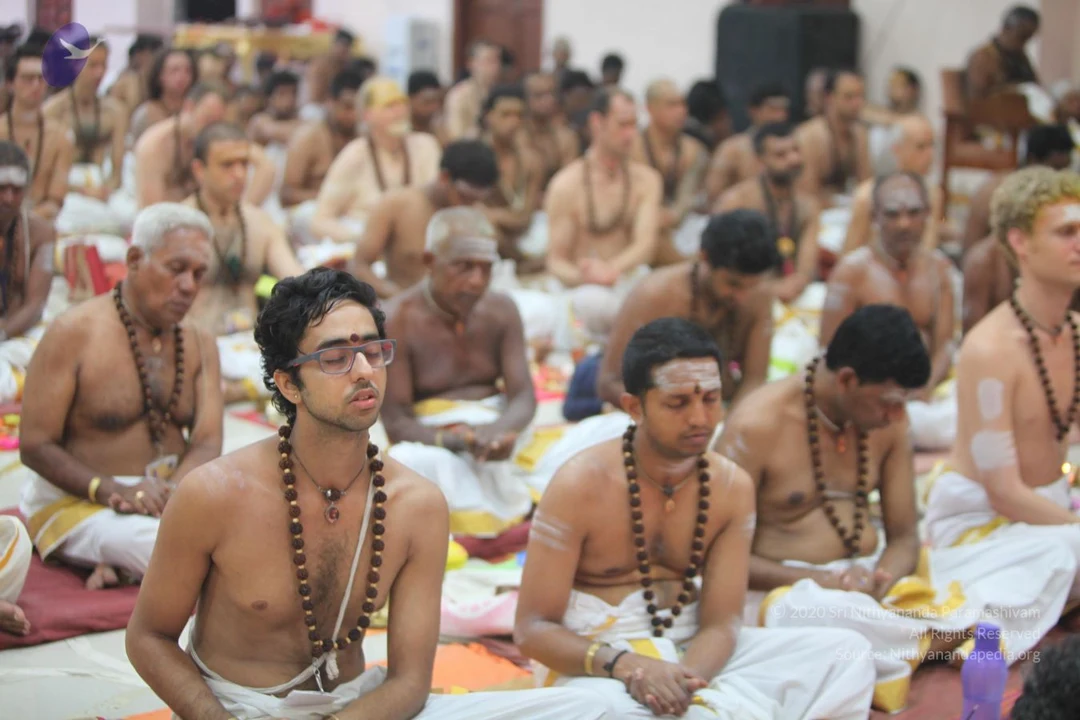
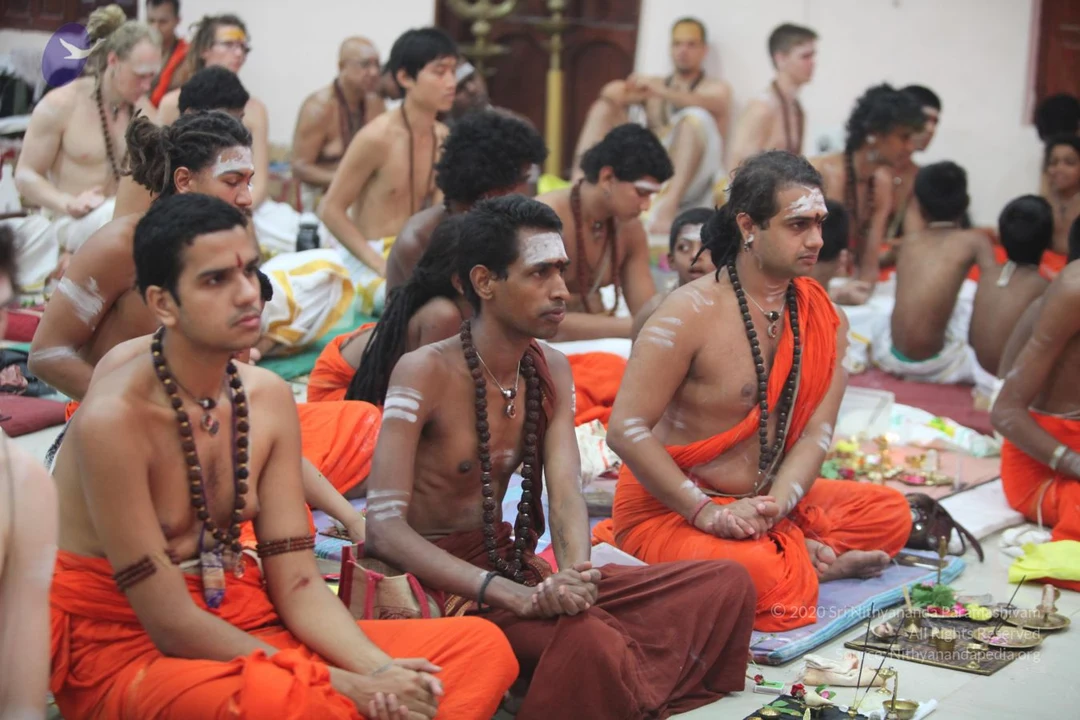
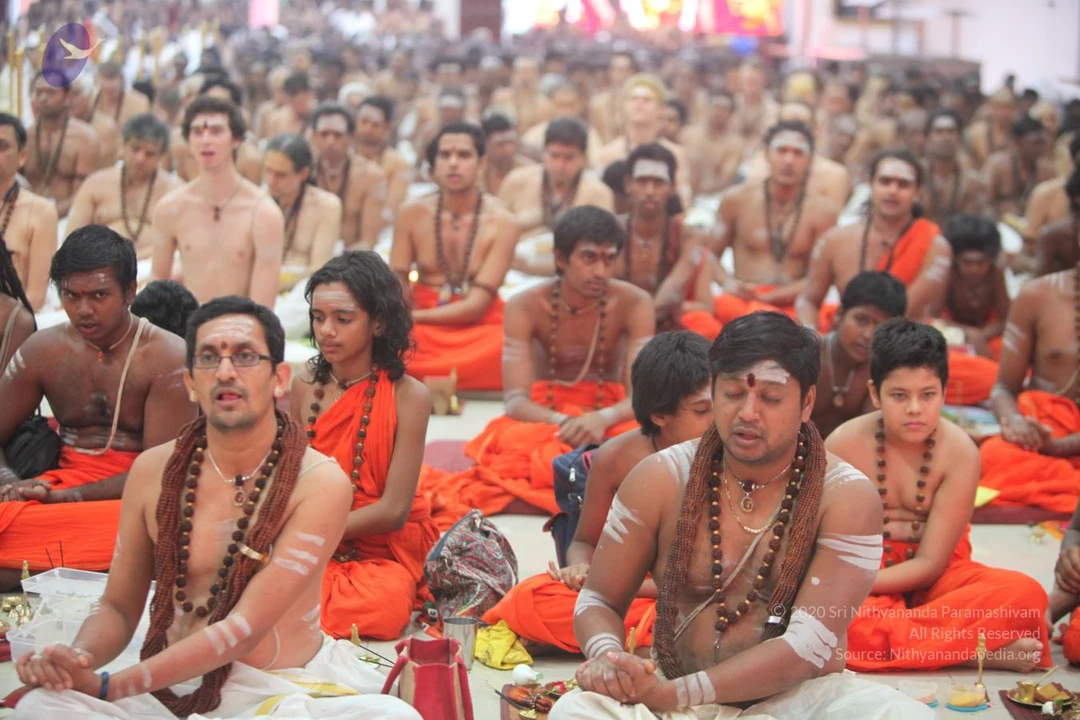
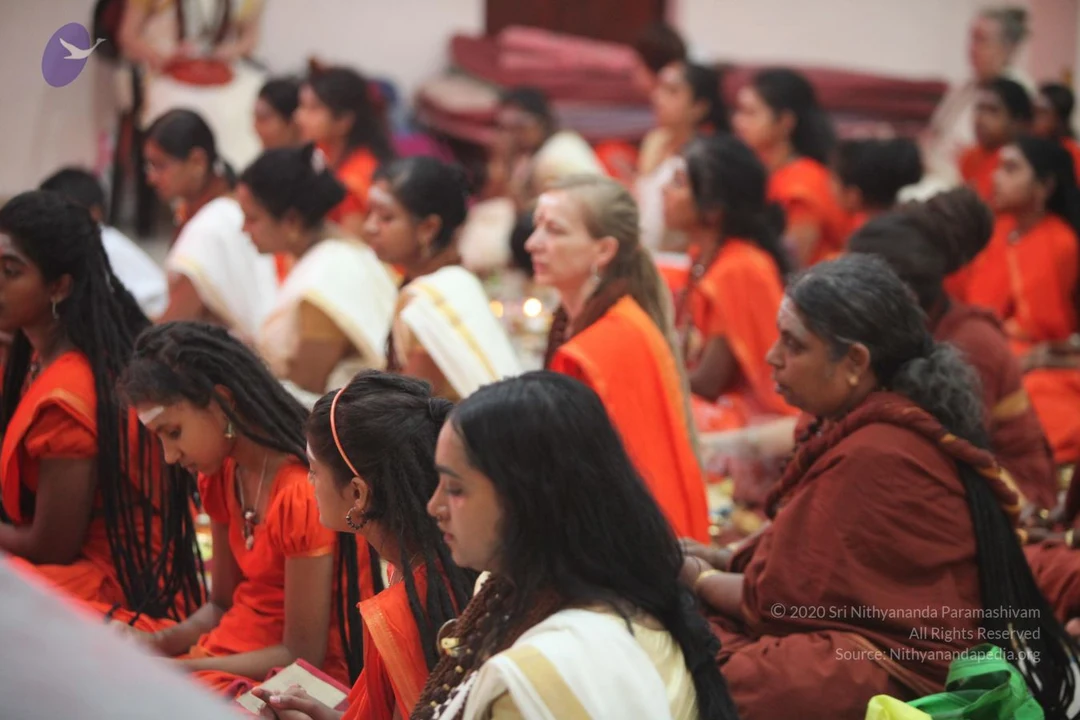
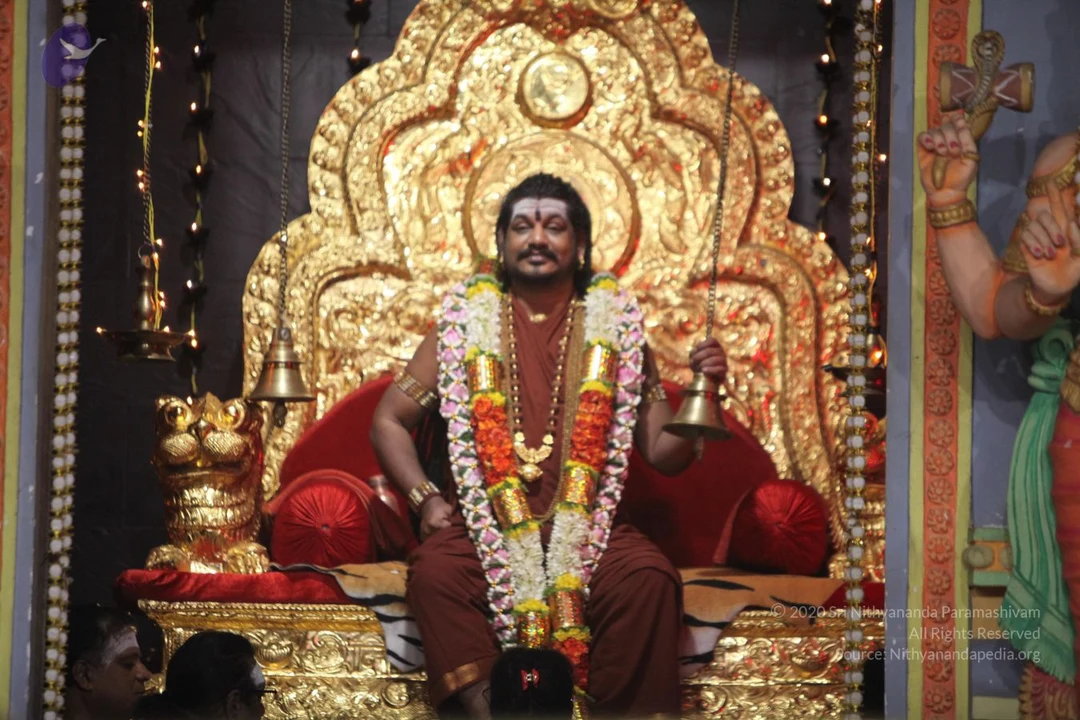
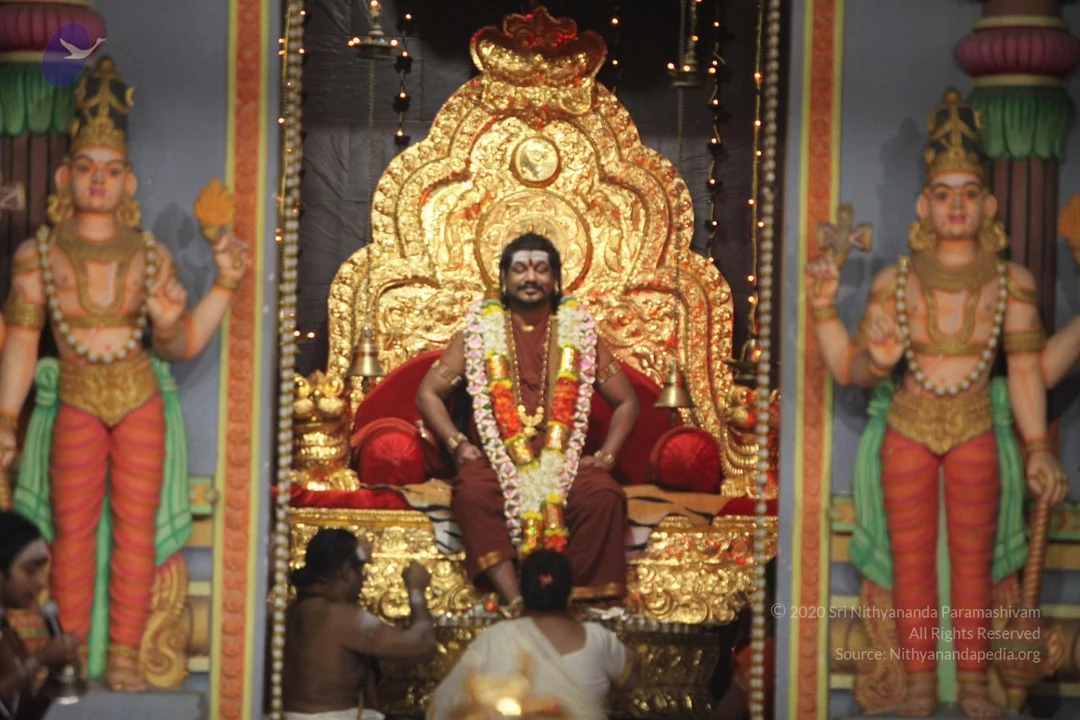
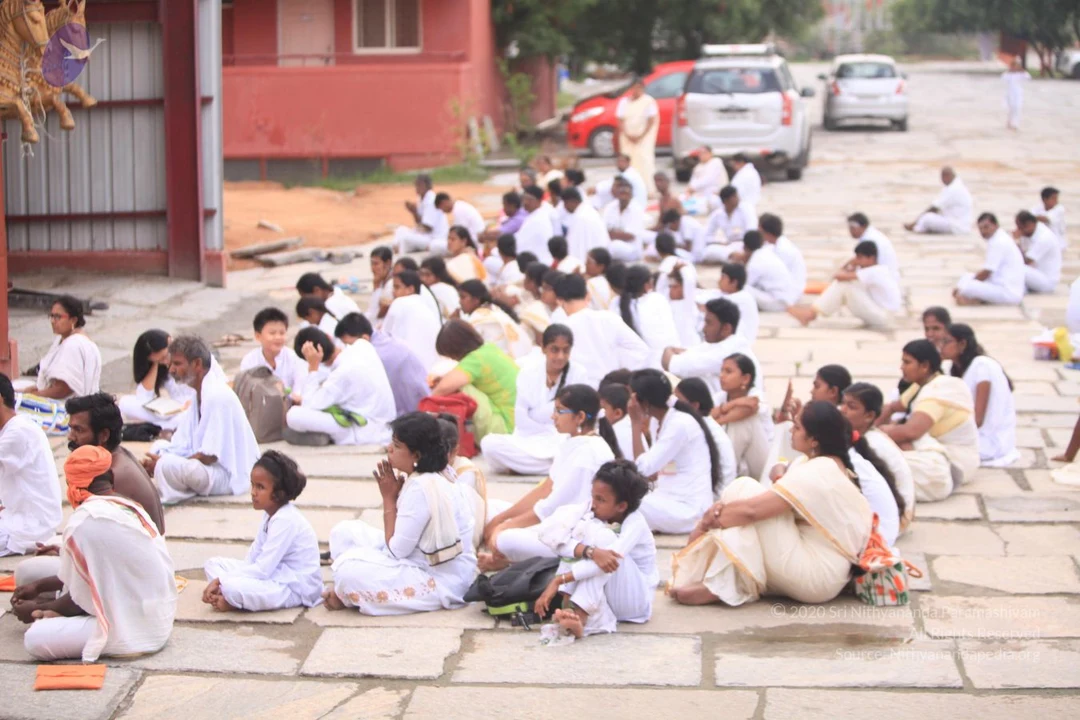
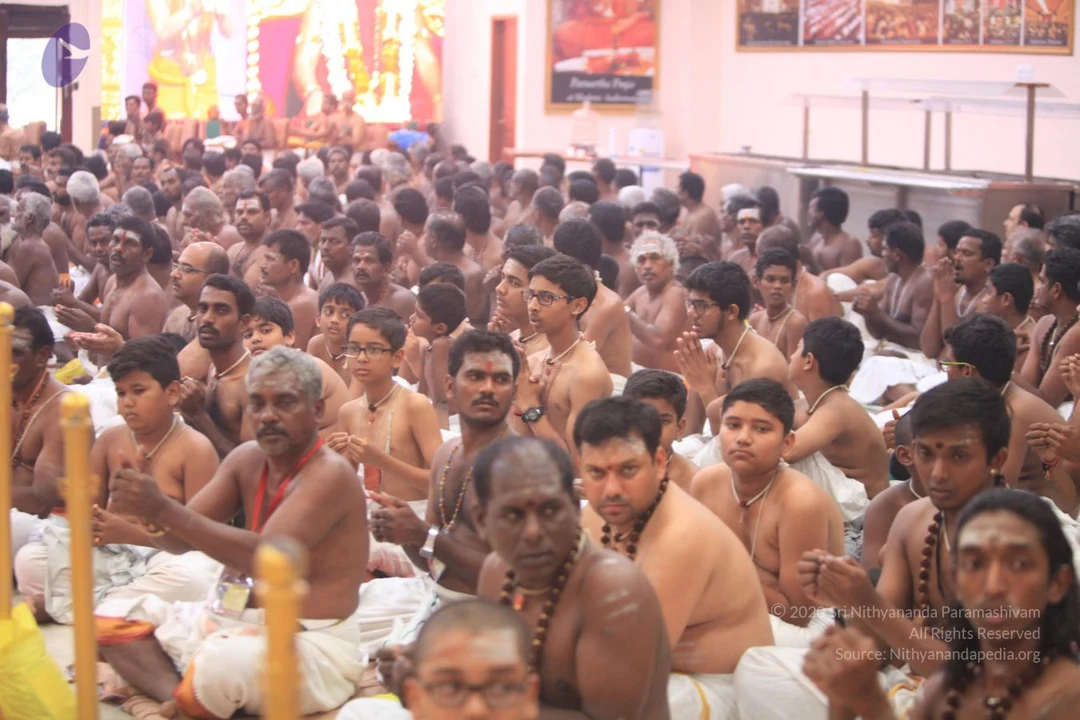
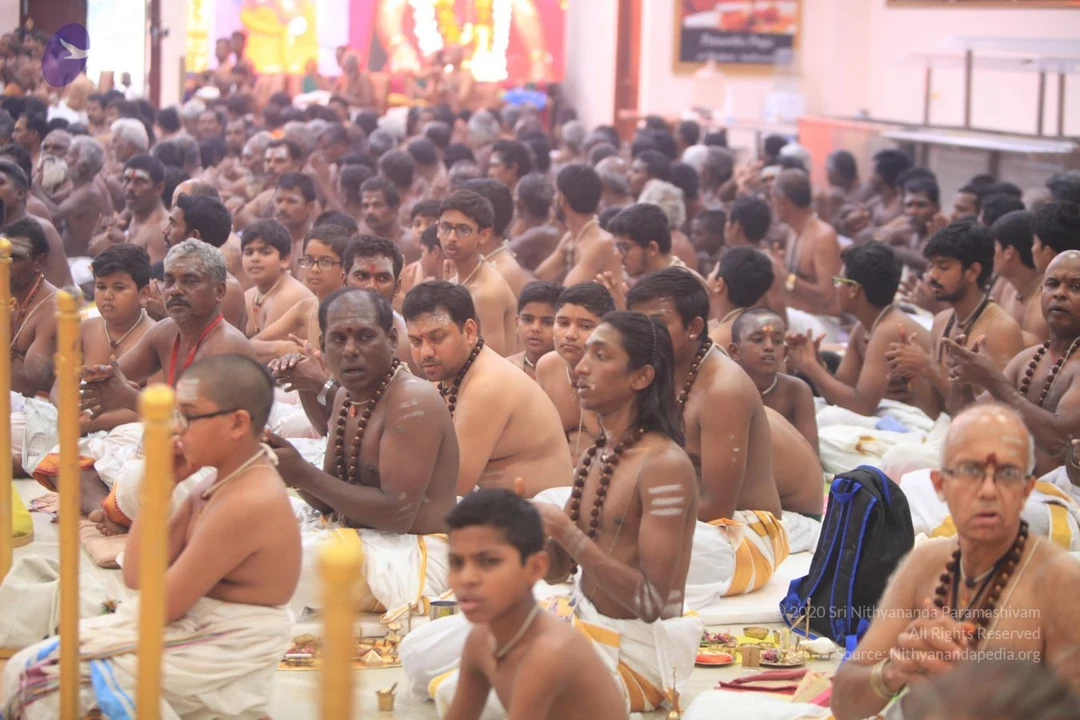
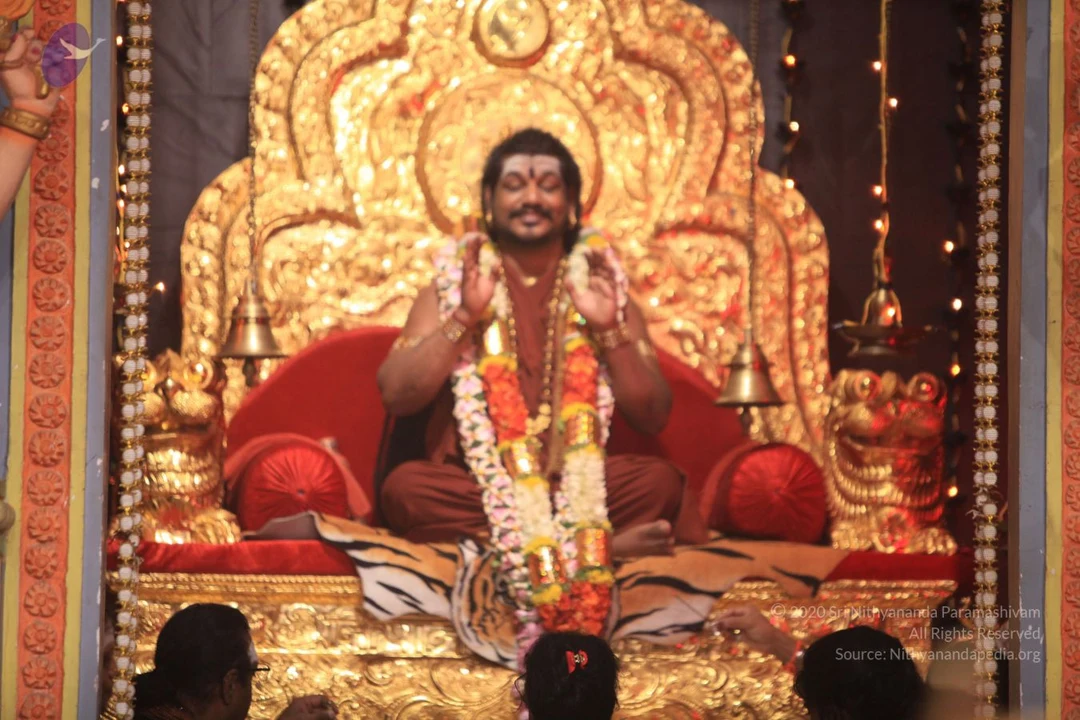
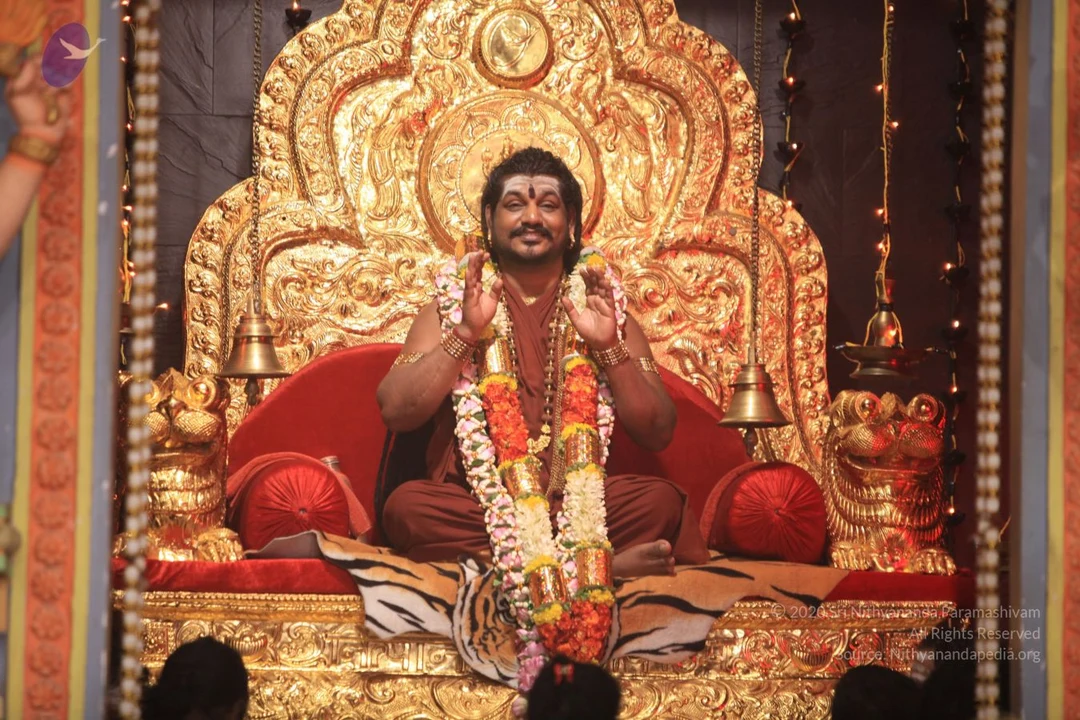
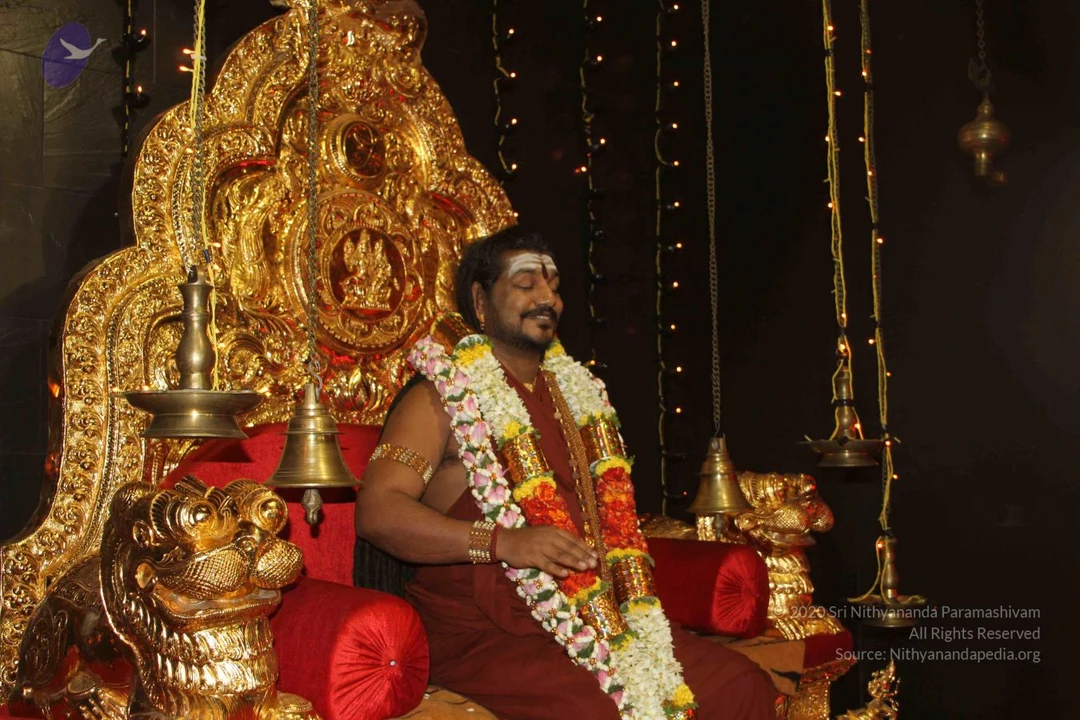
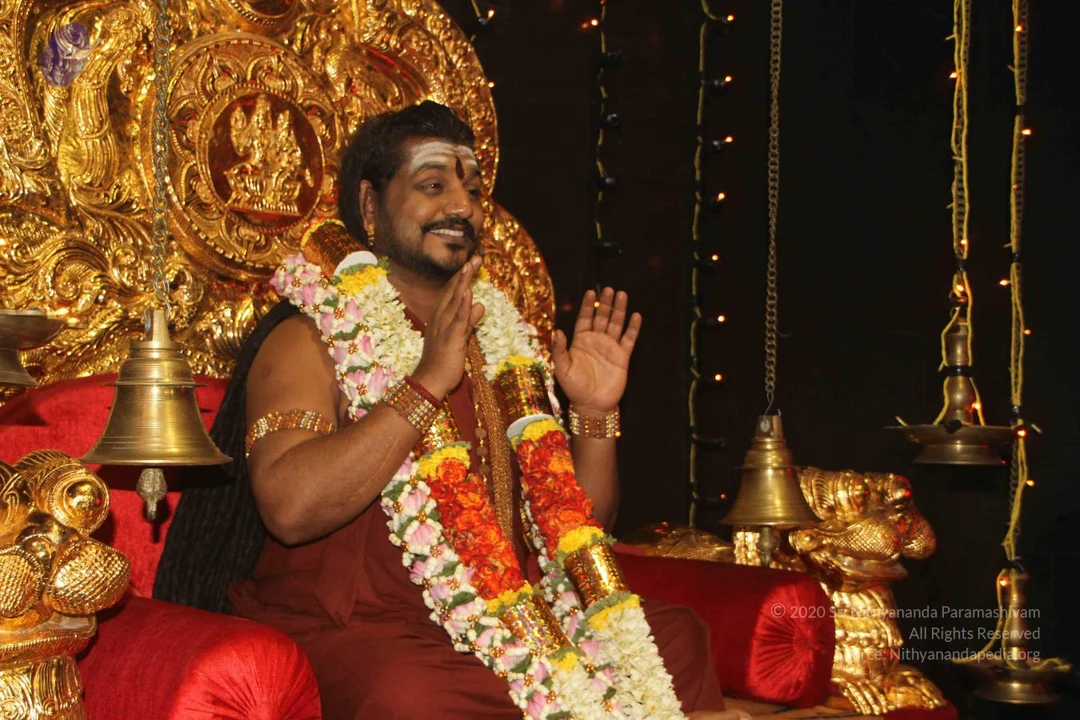
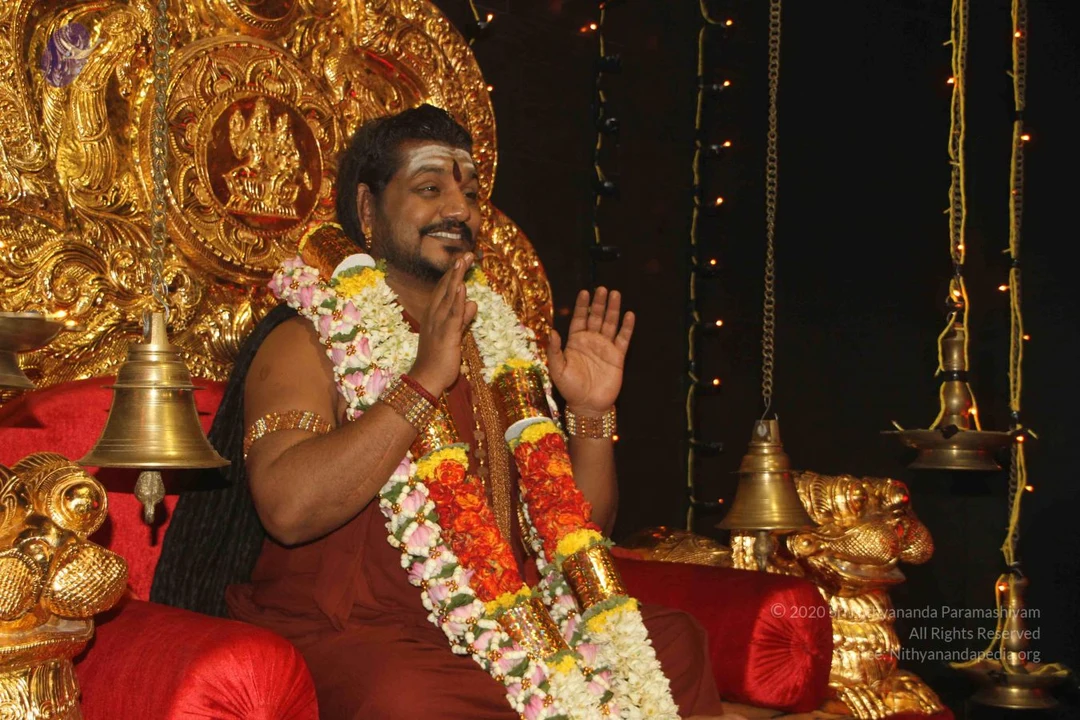
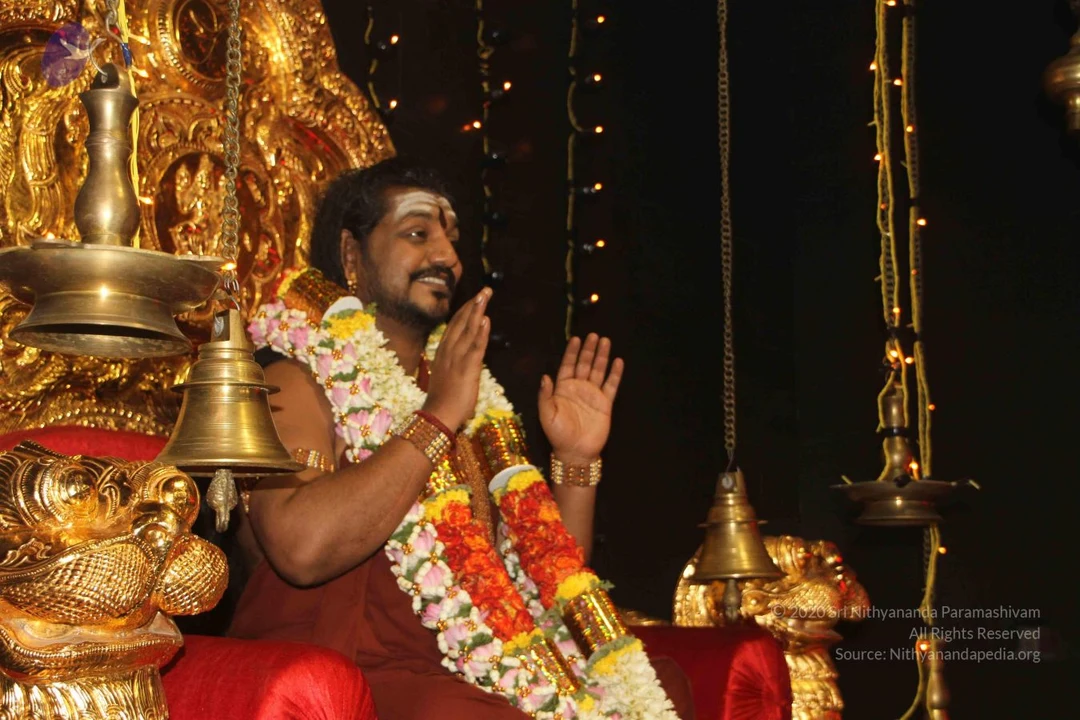
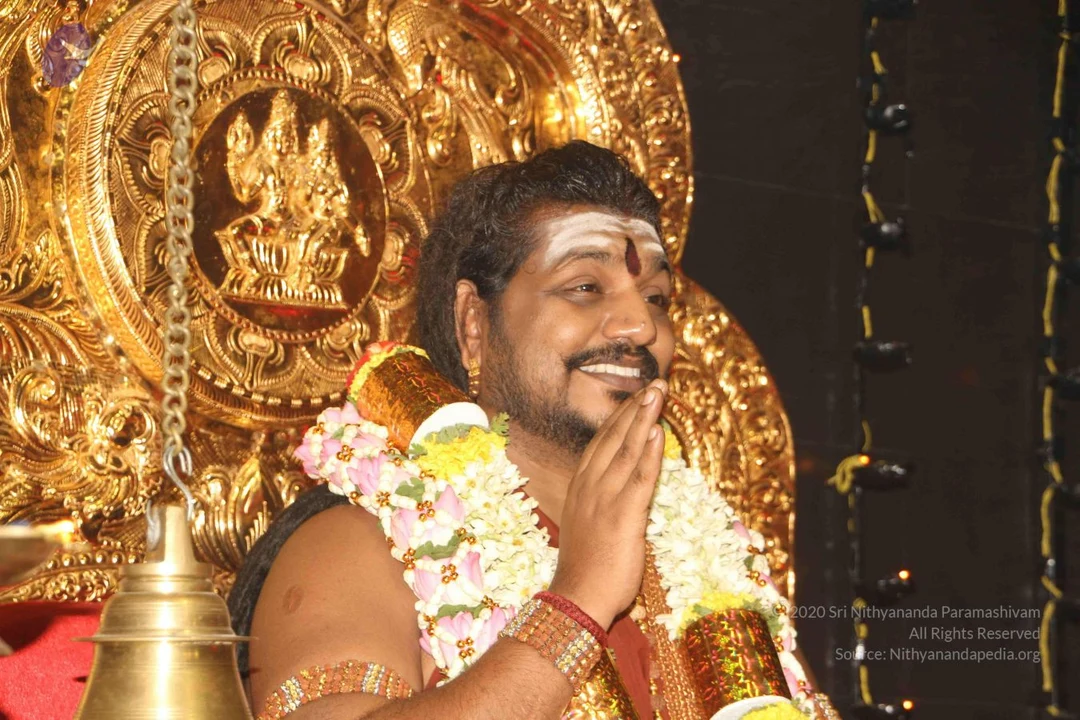
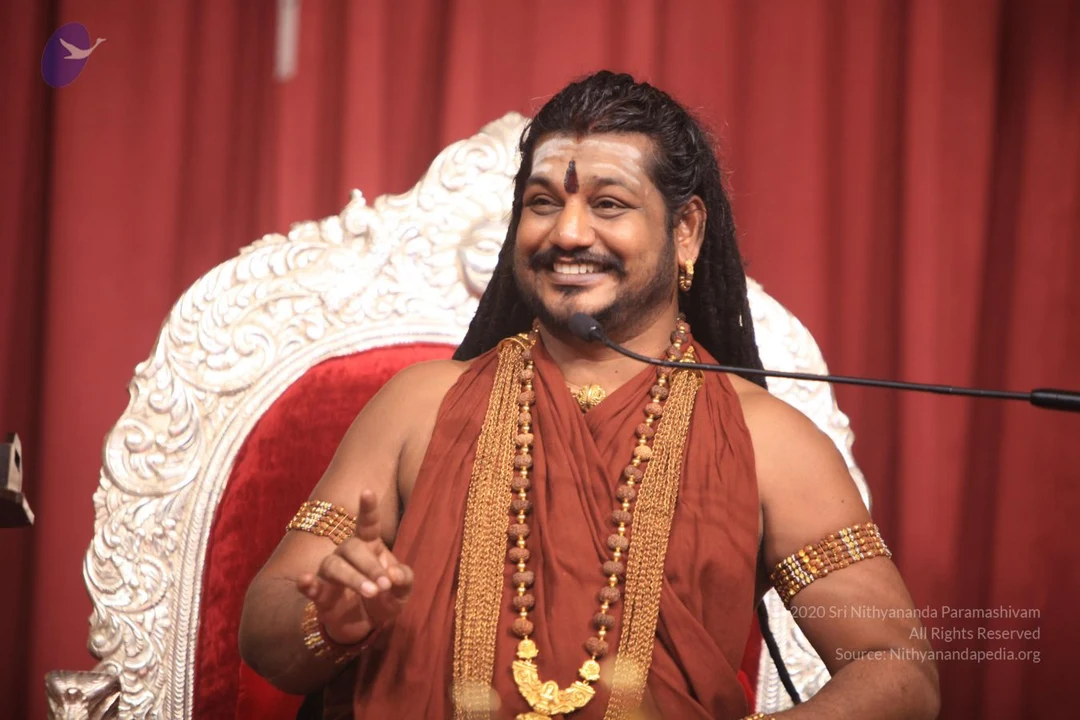
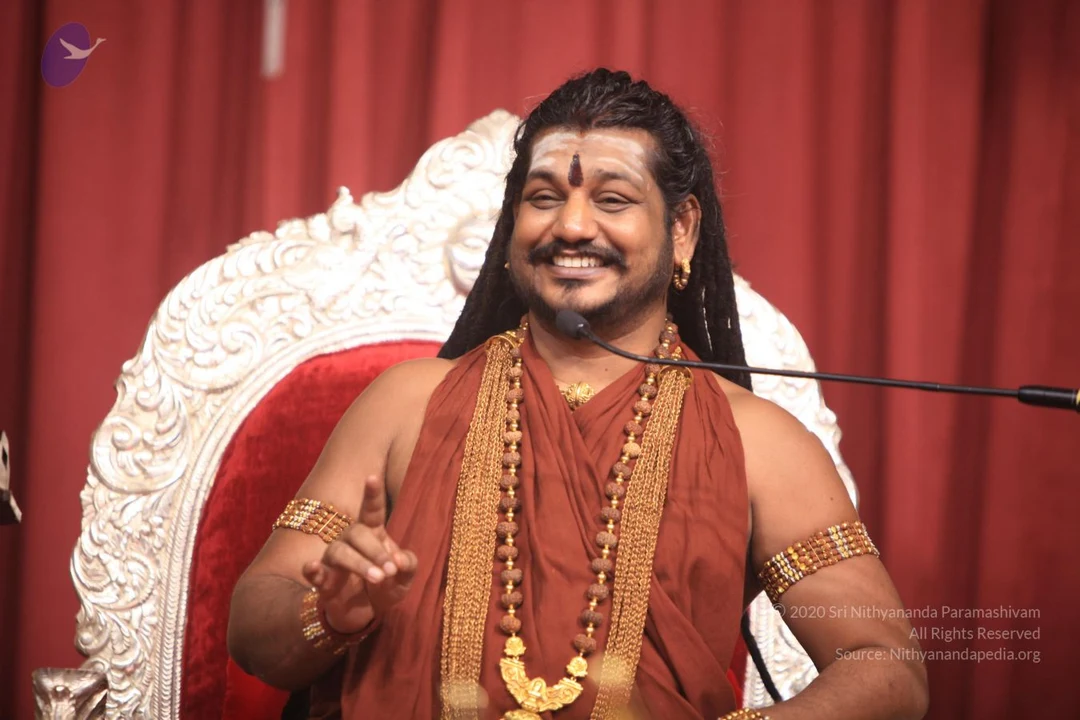
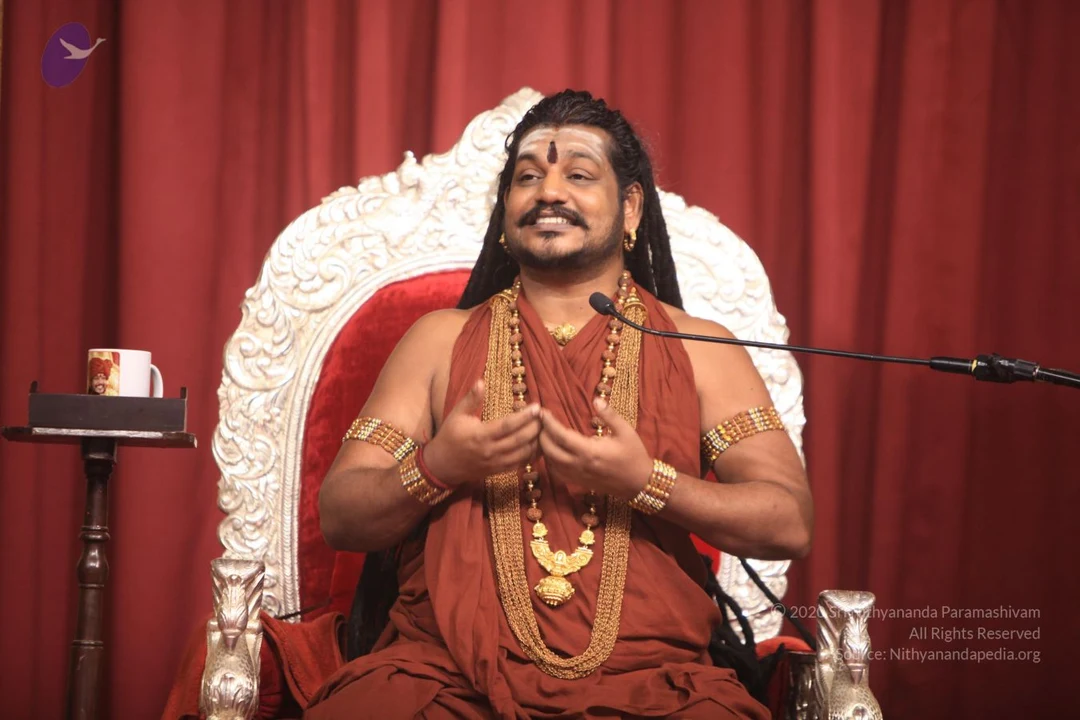
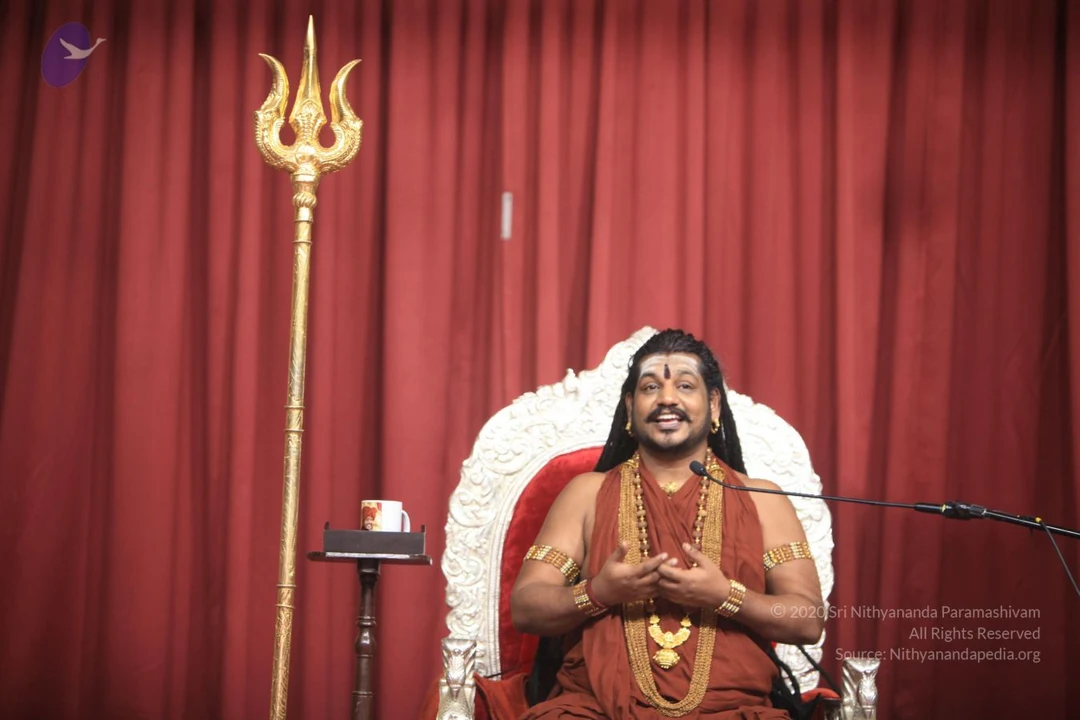
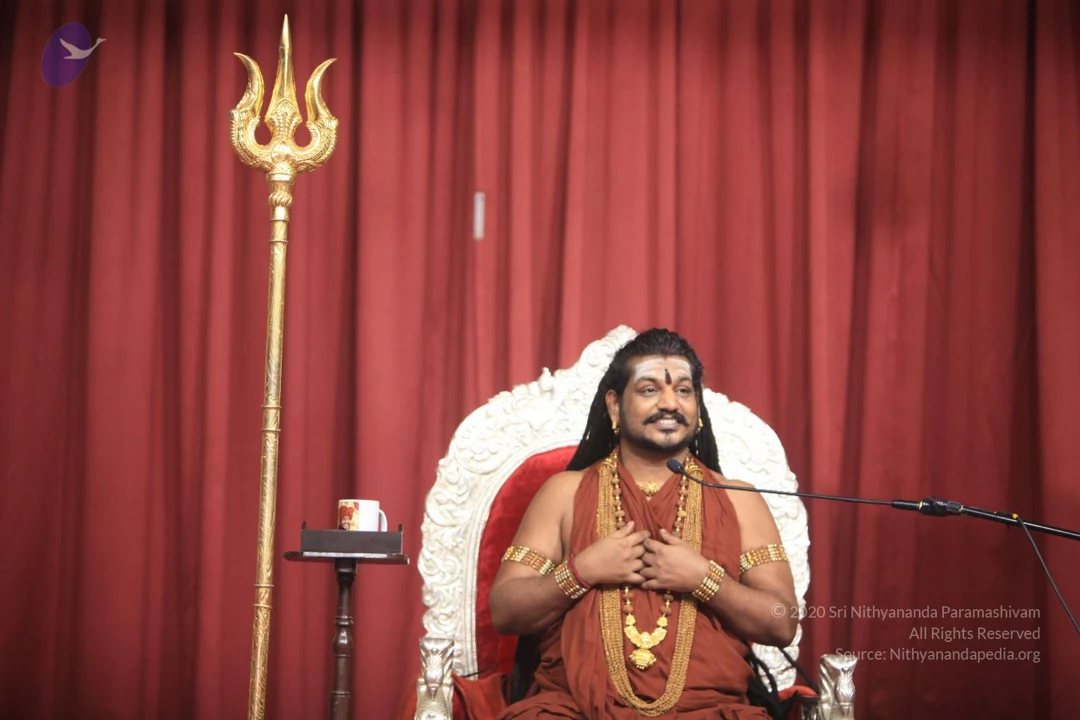
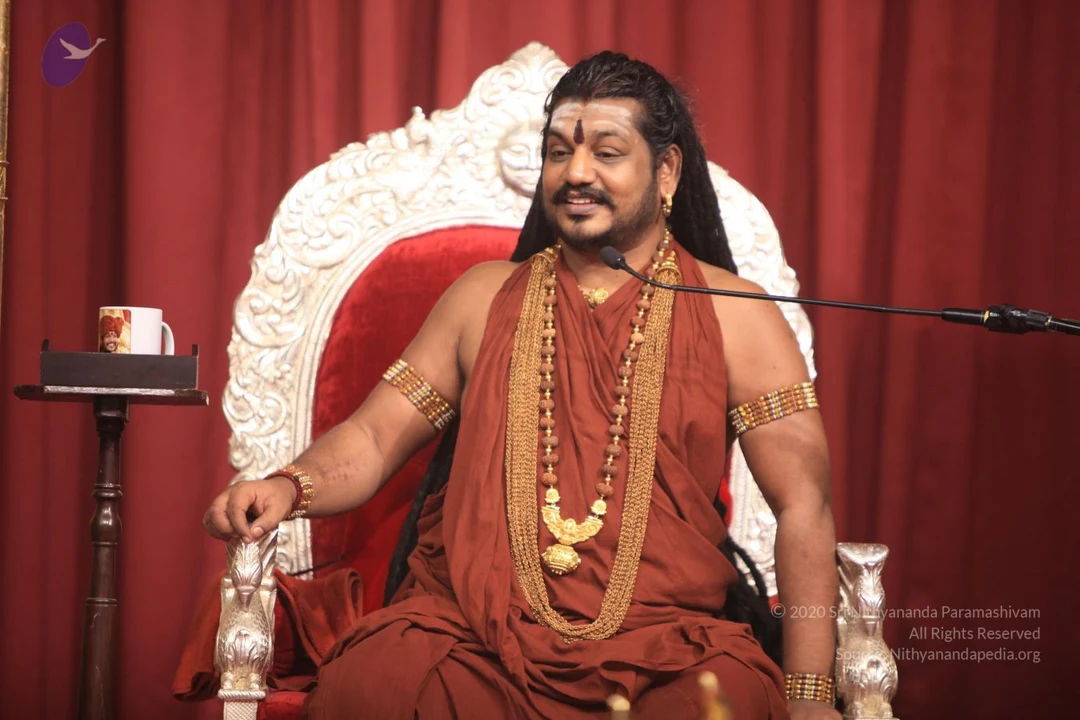
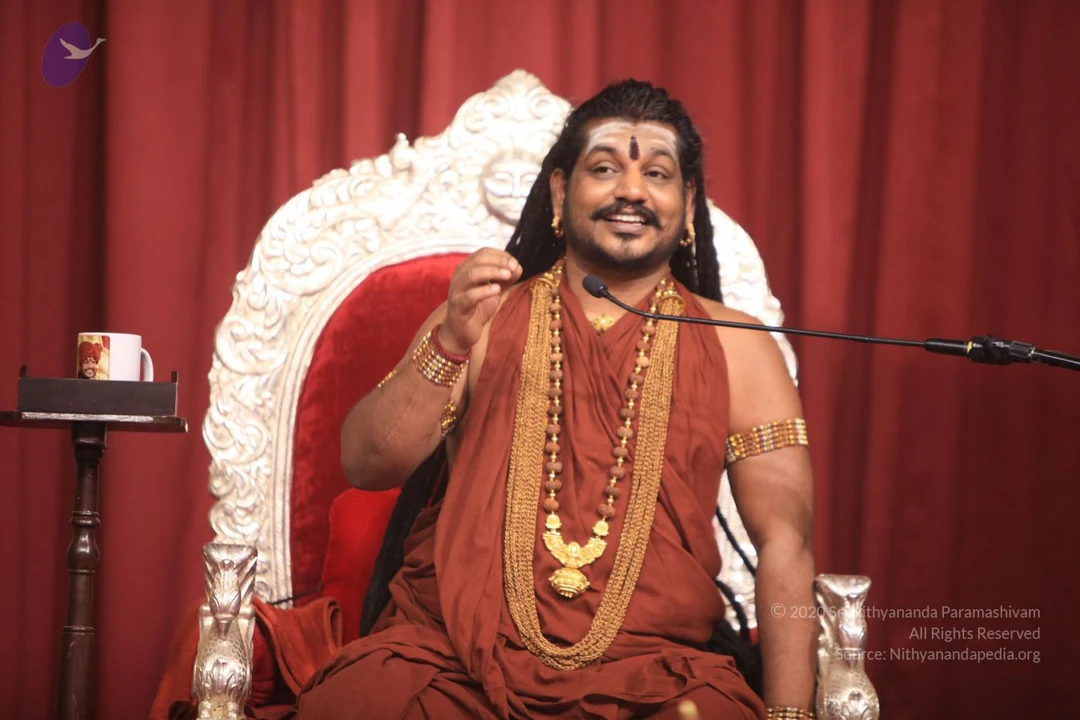
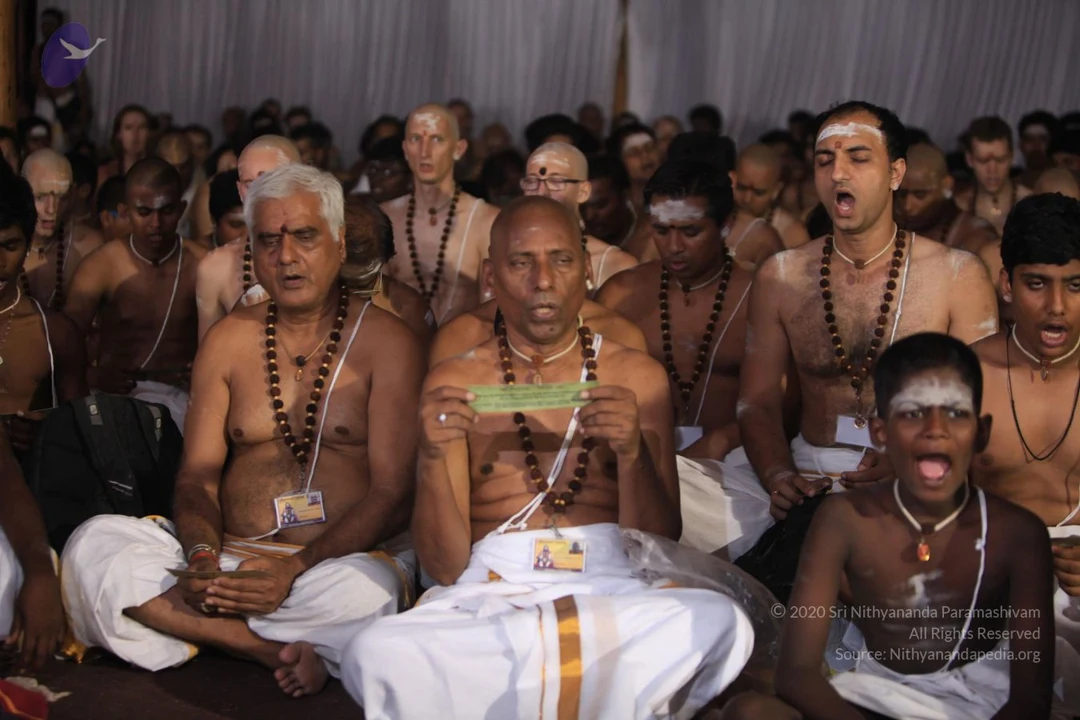
In today's satsang HDH says-If I just see last 39 years of my life on planet earth – what is the action, activity I’ve spend maximum time? Not yoga, surely not talking to you guys and taking class, not doing Sangha activities, not doing meditation…At least equalent the time I’ve spent on all these activities I spent on PUJA. Sometimes 11 hours or 15 hours at a stretch I’ll sit and do puja.

-His Holiness Paramahamsa Nithyananda

Link to Video:

VideoAudio

Transcript:

(0:23)

nithyānandeśvara sadāshiva samārambhām nithyānandeśvari adishakti madhyamām | asmat āchārya paryantām vande guru paramparām ||

(0:51)

I welcome all the Devotees, Disciples, Samajis, Satsangis, Sri Mahants, Mahants, Sarvajnapeetha Yajamans, Thanedar, Kothari, Visitors, Viewers, sitting with us through Nithyananda TV, Facebook Live, YouTube Live, all over the world in various Ashrams, Centers, Aadheenams, Temples, having Nayana Deeksha through 2-way Video Conferencing. I welcome all of you with My love and respects.

(1:39)

Today, I’ll speak on one of my very favorite subject - Puja.

If I just see last 39 years of My life on the planet Earth “What is the action, activity, in which, I have spent maximum time?”

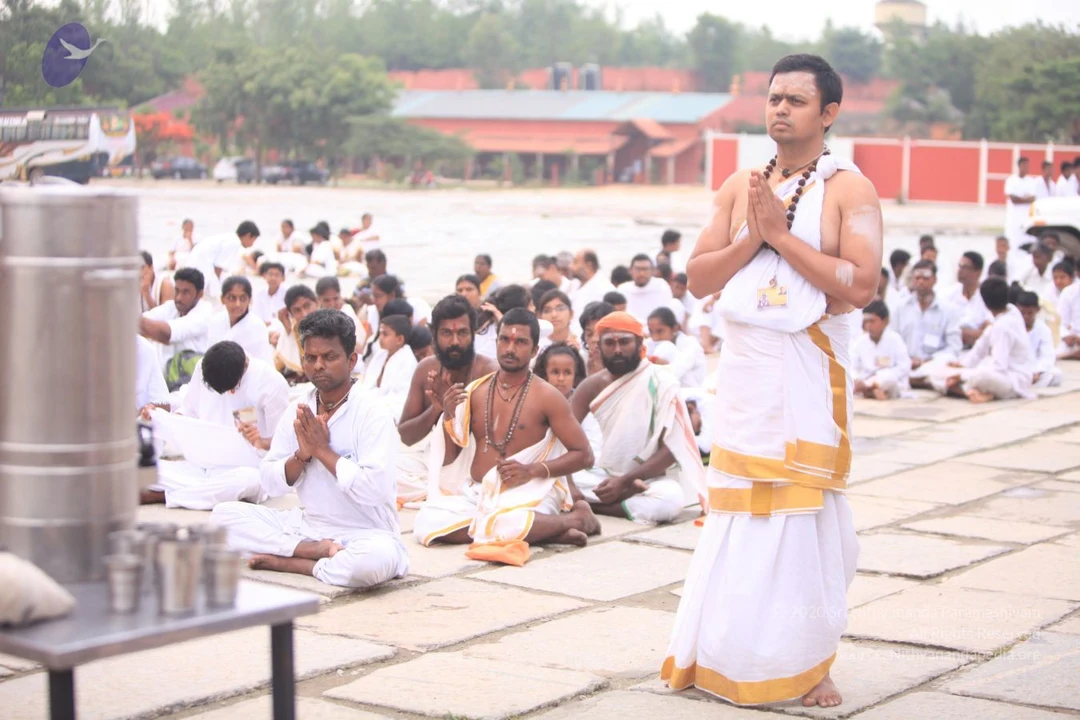
Not yoga, surely not talking to you guys and taking class, not doing Sangha activity, not doing meditation. At least, equivalent of the time I spent on all these activities, I spent on Puja. Sometimes 11 hours or 15 hours, at a stretch I’ll sit and do Puja. Understand. I may promote the Shaivite rituals, Agamic rituals, but I Myself was Shakta. I practiced Shakta traditions, Shakta Sampradaya means worshipping Devi.

Basically, I received Bhuvaneshvari Vidya, from My Guru, Vibhudananda Puri, after I had darshan of Devi appearing and I made the deity of Devi with My own hand in a stone variety called soapstone. In Tamil they say, maukkal. It is a kind of a soft stone. I Myself made tools, with My own hands and carved. Took the help of local carving artisans, few hours their support. So, after I did this deity, My Guru was thoroughly impressed and she gave the Bhuvaneshwari Vidya and Bhuvaneshwari Puja method, the practice.

(4:40)

In those days there was no Google, so the local library is the Google. I’ll go and sit in the local city library, it is not….I should not say city library - a village library. There was a government library, where lot of books will be there and Ramana Ashram also use to run a library. So I used to go there and sit and download the books, download the….sorry, I used to go, sit and copy the Puja Paddhatis available in the library. You can all see the Deity I carved, after having darshan of Bhuvaneshwari, exactly as I had darshan - I carved Her and….actually My life started with Puja. It is Ganapati Puja, Ganesha Puja, with which My whole life started. If I am not doing what I am doing, I’ll be only doing Puja. I would have been a Pujari. Just sitting in some remote corner, Shiva temple, from morning till night, I may be just sitting and pouring water on the Shiva Linga, chanting some Shlokas I know or the mantras I know. That would have been My favorite time pass or life pass I should say. After I started preparing the manual, My Guru used to correct the spelling mistakes and she will give the meaning and procedure. Before every Puja, I’ll prepare elaborate manuals, to instruct Myself and study. Still fortunately, we have manuals protected by My mother. Some of the manuals I prepared for Sri Vidya and Ramakrishna Puja and other Shodashopachara Pujas, like Sadashiva’s Puja and Ganapati Puja and Durga Puja and Vishnu Puja.

(7:39)

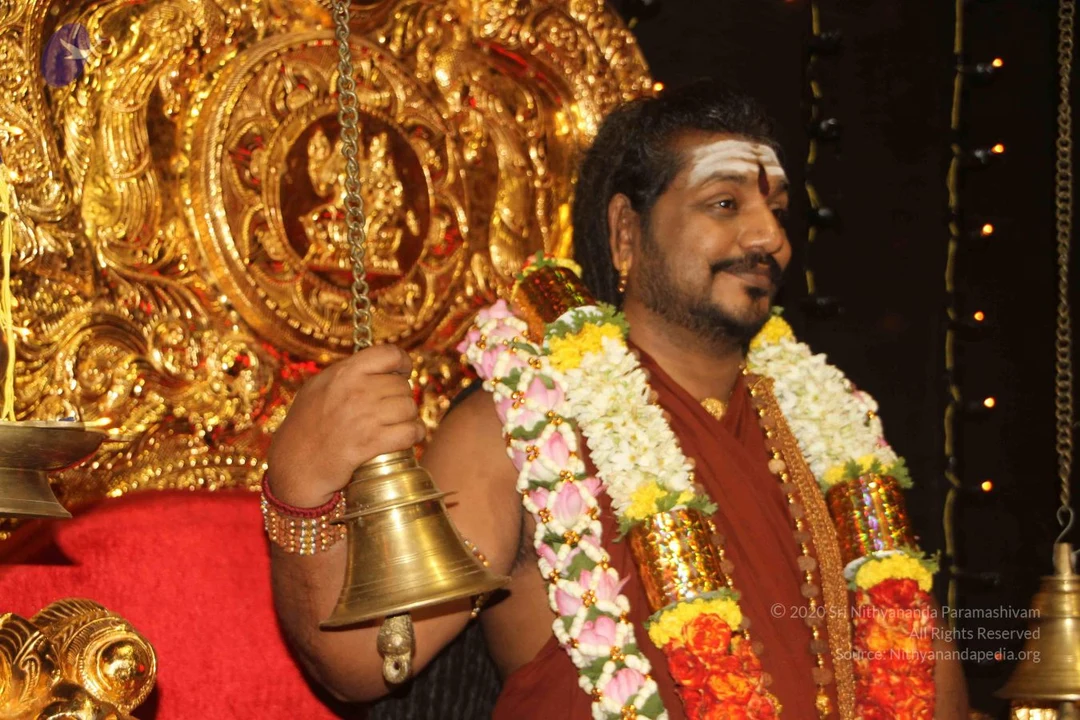
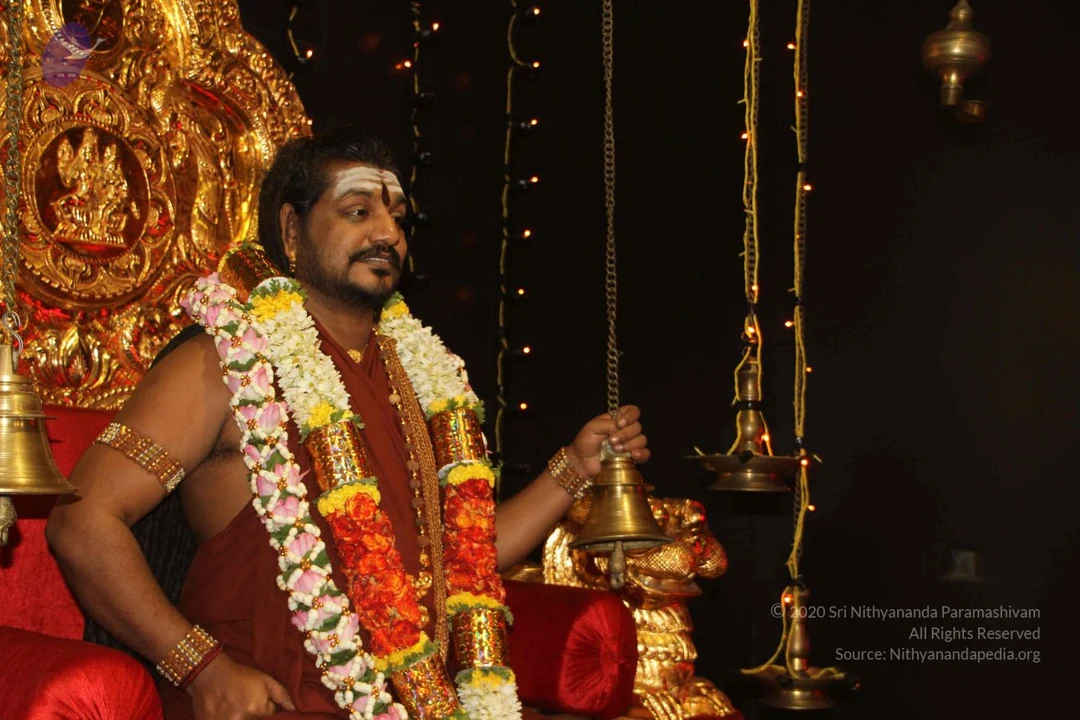
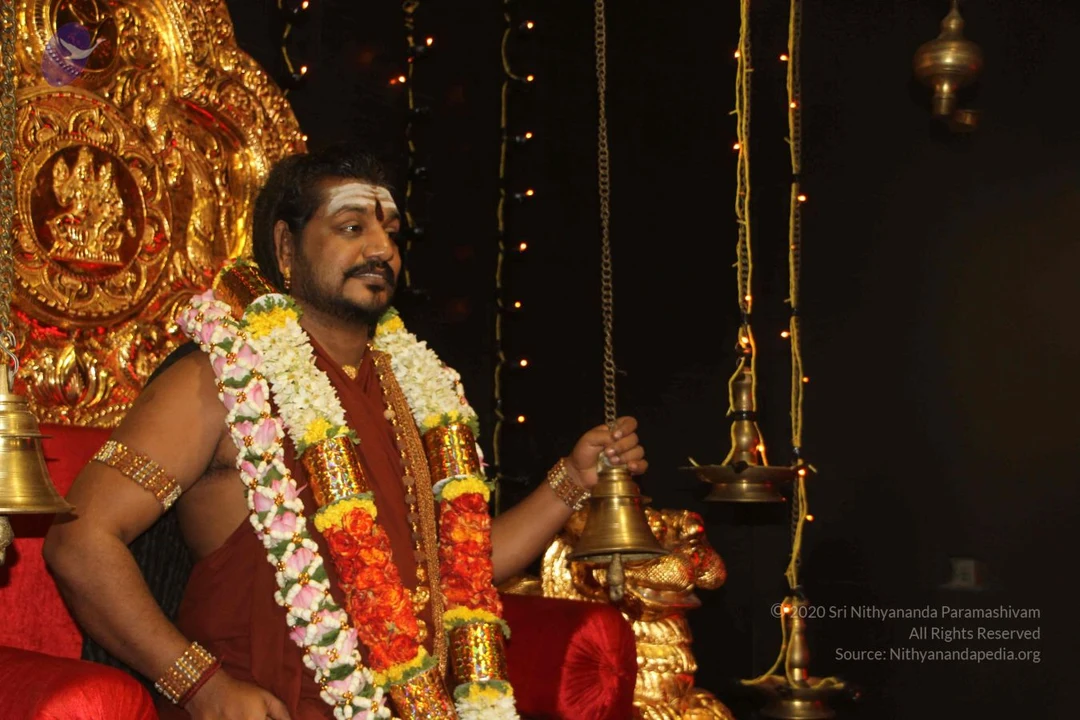
Still we have some of the manuals, fortunately. Much of them are Sanskrit and Tamil mixed, means in Sanskrit script also I will write the mantra and then, Tamil script also I’ll write the mantra and write the meaning in Tamil, procedures in Tamil. We do have some manuals, with Sanskrit script. Ma can you get that - Devanagari script. Some I’ll write only in Tamil, but I’ll first prepare elaborately to educate Myself. Thanks to My grandfather, who put this seed of Puja inside Me. I have seen his sincerity. See, when the business hours increased, he will come back to home only night 1 o’clock, and after 1 o’clock he will take bath and do the night Puja. Night Puja will only be 10-15 minutes, then he will sing for some half and hour, all the Stotras, he’ll go to bed by 2 o’clock. Next, again he will be up, awake 4 o’clock, take bath and do his pranayama…. I have not seen him doing yoga, but I have seen him doing pranayama. He will do pranayama and start his Puja. He is not a great pandit, but whatever few mantras he knows and Stotras, with that he will a very….very relaxed, spending lot of time, not hurry burry - washing and cleaning those deities, clothing them and jewelling them and applying sandalwood paste and offering flowers or bay leaf and then the Naivedhyam...elaborately, a very relaxed way. At least 1 hour, he will spend. I have seen this from the time, I remember Me. From the time, I remember Me…..I use to sit with him. It’s like a…. Skandamaata age, My mother use to put Me, where he does Puja. So only hearing his morning Puja bell, I’ll open My eyes.

(10:37)

Most of the days his puja milk is the first prasadam, first food I’ll consume. Thanks to him for the sincerity about Puja, which he put inside Me. Fortunately, it has grown, it was nourished by My other Gurus, Mentors, ultimately culminated into a…..to a completion by Arunagiri Yogeshwara’s blessings. He Himself materialized and gave a Bhuvaneshwari Yantra and a Shiva Linga and Jnananjana box. Still I have all of them. Some of the items, I took it Him and He blessed and gave, some of the items He materialized and gave and that one activity….I should say, “Just I’ll sit and soak Myself in Bhava Samadhi.” The number of hours I spent in yoga, the number of hours I spent in talking to all of you, number of hours I spent in My public life, number of hours I spent in meditation, all put together cannot cross the number of hours I spent in Puja. Understand. I am an intelligent man, I will not waste My time. I think this statement makes...should make sense to all of you - Why Puja? ‘If an intelligent person like Swamiji who doesn’t waste time, has spent so much time on Puja, then there is something there, need to be explored!!’ Then there is something there, need to be explored.

(13:08)

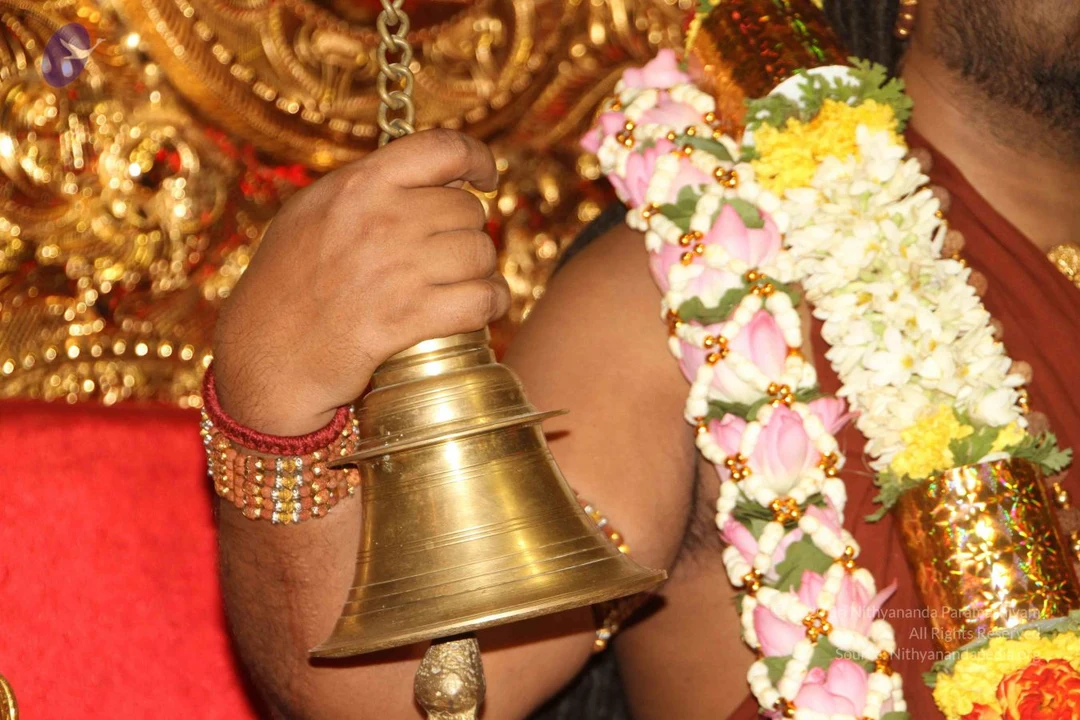
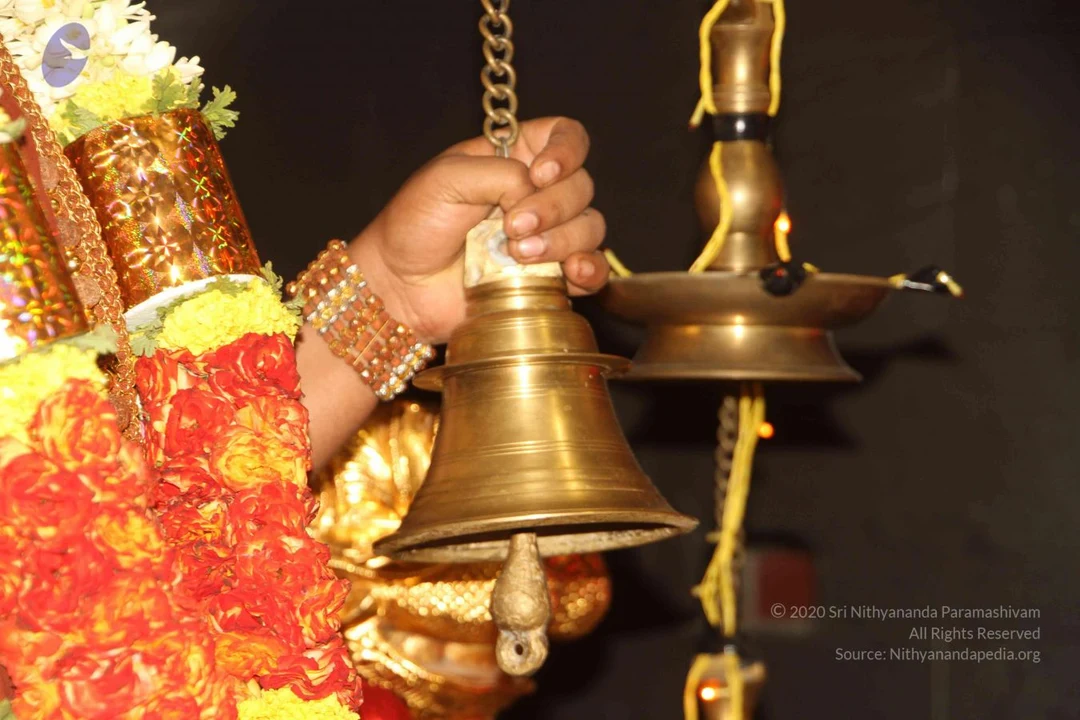
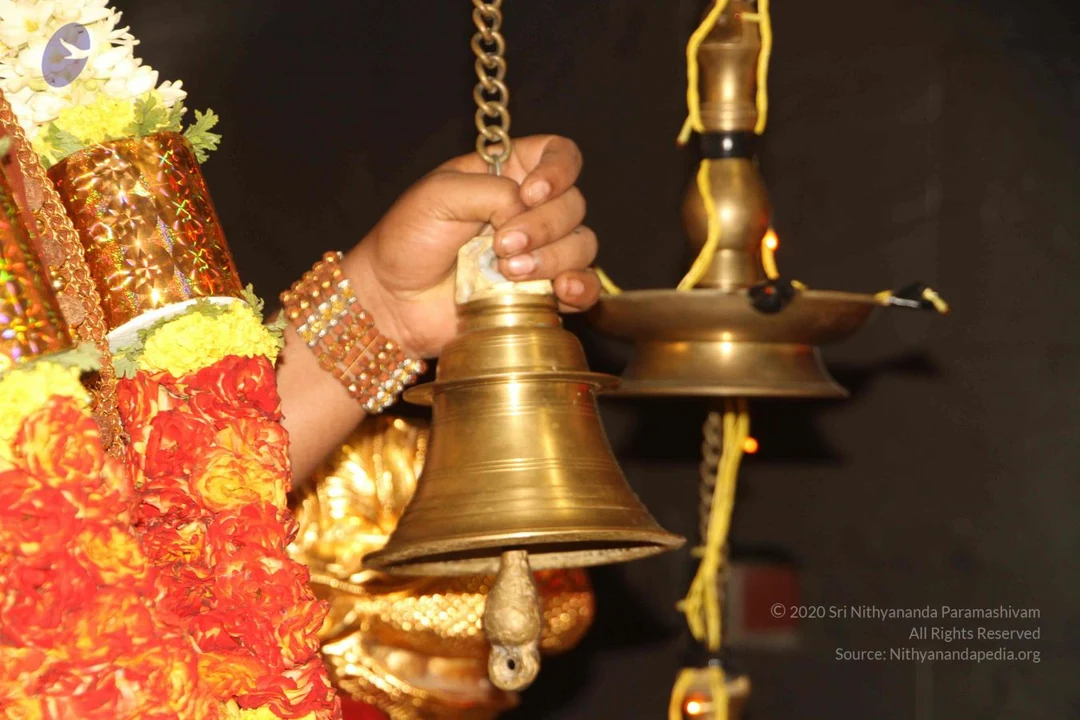
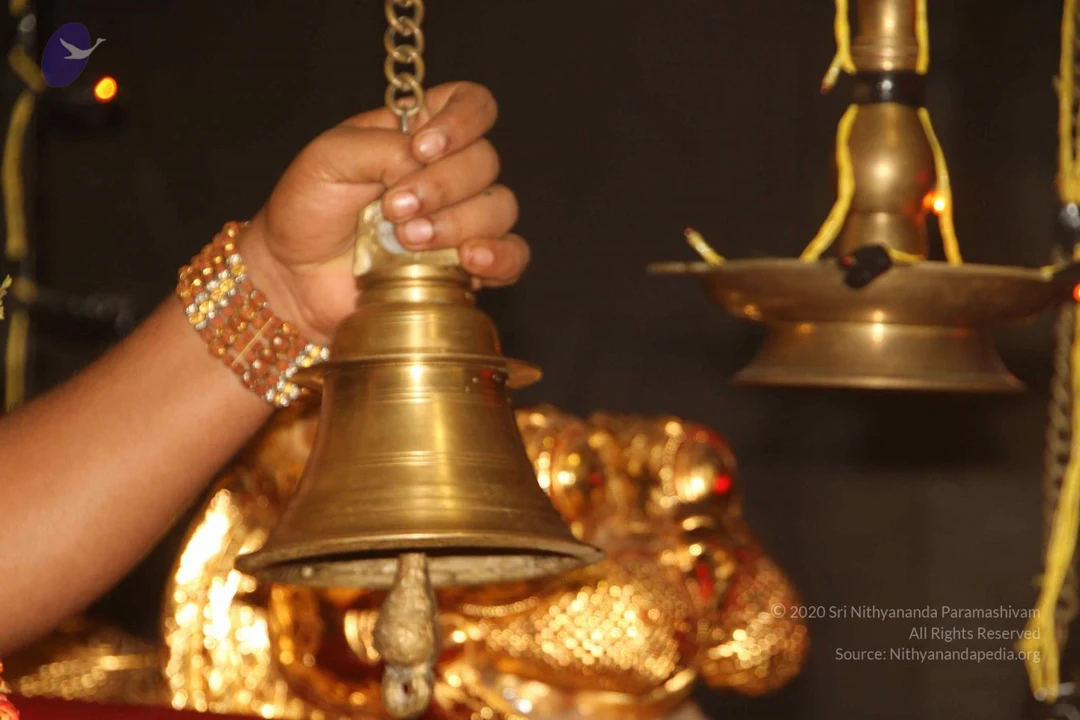
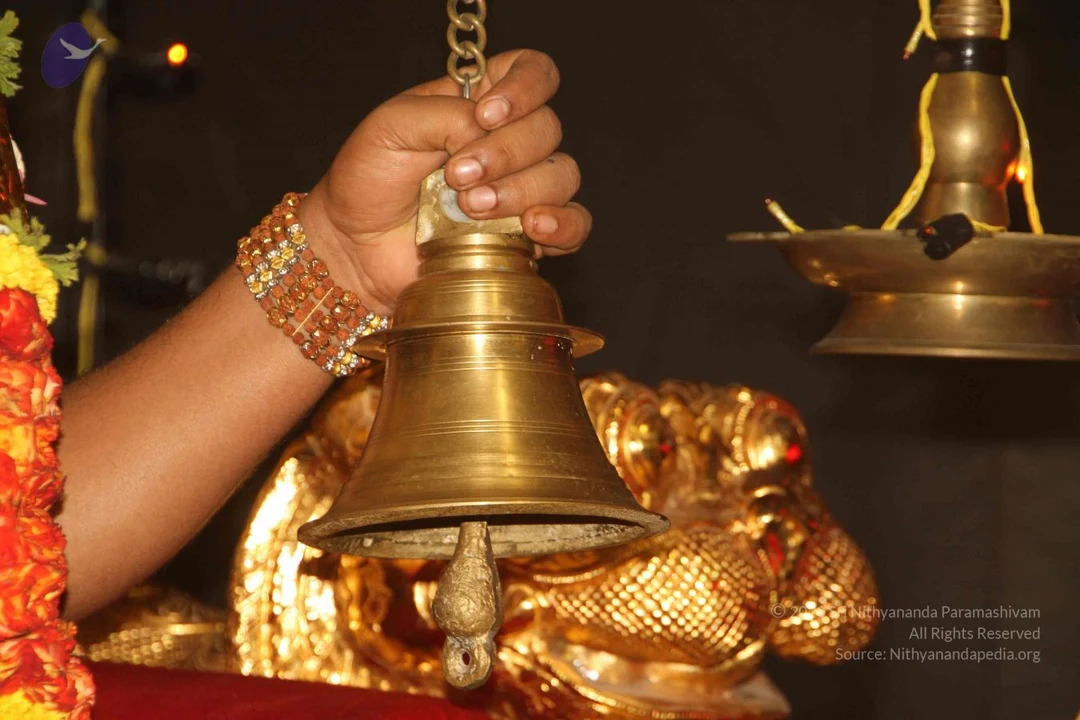
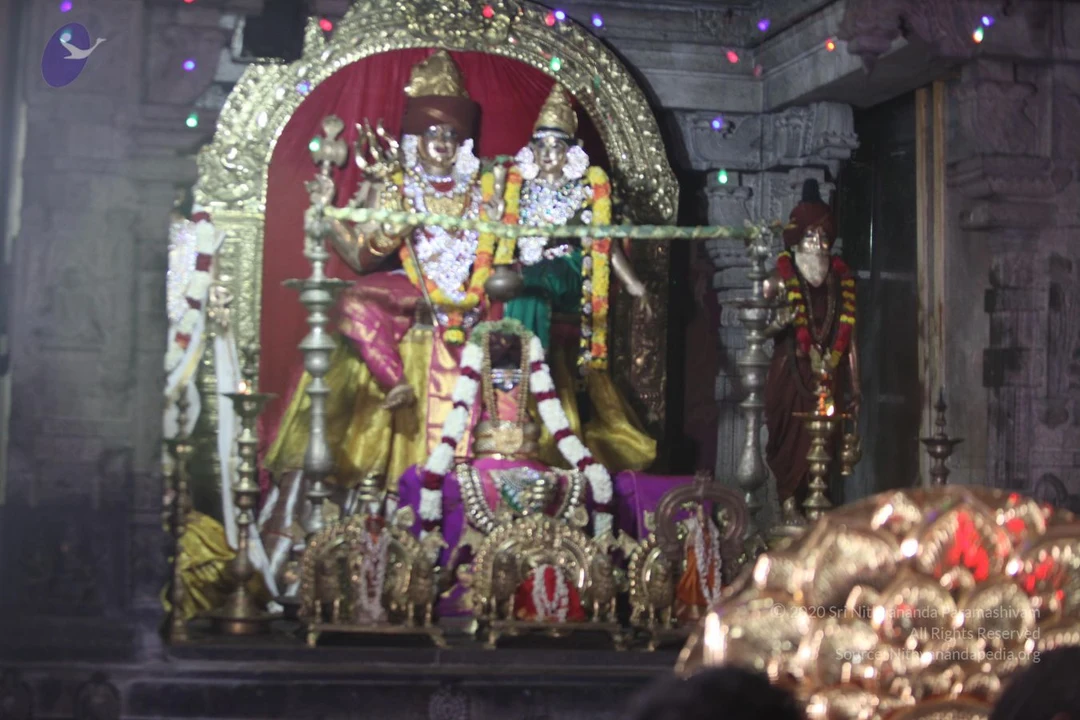
These are the few deities, My grandfather gifted to Me. They are trying to project the pictures. I am waiting. Yes! There is.....there is two Shiva Lingas you can see, one green, another one, small metal, five….I think it’s Panchaloka. That green one was gifted to Me, by My grandfather and that small one was gifted by Arunagiri Yogeshwara Himself. He materialized and gave. The Panchaloka - Shiva Linga, was materialized by Him, which is there still with Me in the….in My puja and all the other vessels were given by My grandfather and that Annapurni - He brought from Kashi. When he went to Kashi, he brought and gifted it to Me. Thanks to the great love he planted inside Me, about….for Puja. Let me explain, some of the important things you need to know about Puja. The first truth you need to know - God exists and He accepts your love, your devotion, actions you perform as demonstration of your sacred sentiment that, “I love you. I am surrendering. I am….I recognize your existence, in my existence, whether you are happening to me in the form of joy, health, wealth, bliss, contentment, all the good things I feel as good things or some things which I’ve not yet recognize…..able to recognize as good things, you may be happening to me whatever way you want, whatever way life is happening to me, but I do recognize your existence in me, in my life, in my existence.” Sharing this truth authentically is what I call Devotion - Bhakti.

(16:18)

Manifesting powerful cognitions about the Universe is Bhakti and manifesting cognitions about everything that exists is Puja. Puja is the time you naturally manifest most powerful sacred cognitions about life, about Universe, about God. Especially, if you understand those mantras, the sacred sentiments, meanings behind those mantras….we will start soon classes, sessions, for everyone of us to understand the sacred sentiments. When you sit with those sacred sentiments and Bhava Samadhi, I tell you, it is literally Shaktipata with Sadāshiva Himself. It can manifest so much of powers, state of Sadāshiva, space of Sadāshiva and powers of Sadashiva. It can just do wonders I tell you.

Fools are those who don’t know the taste of Shiva Puja.

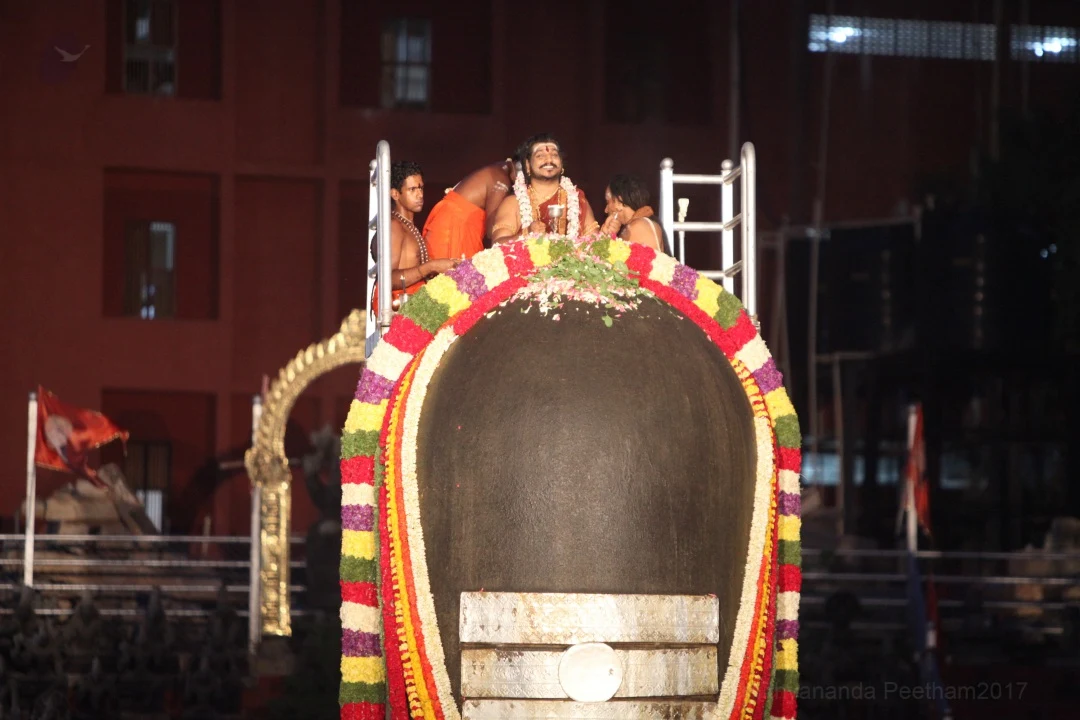
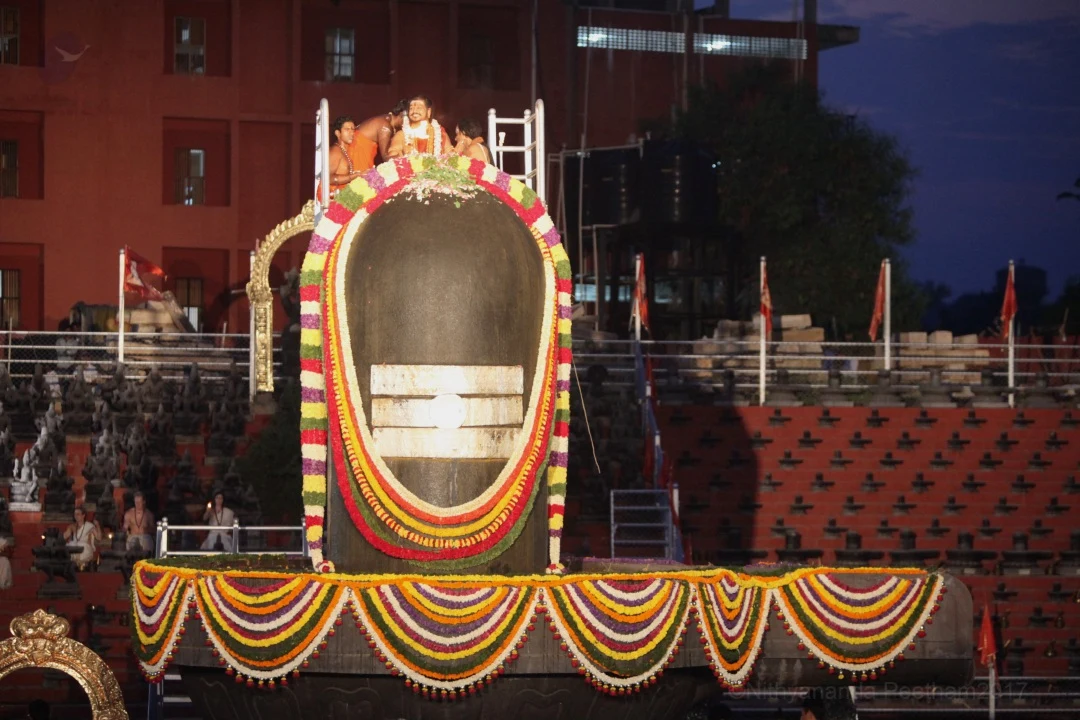
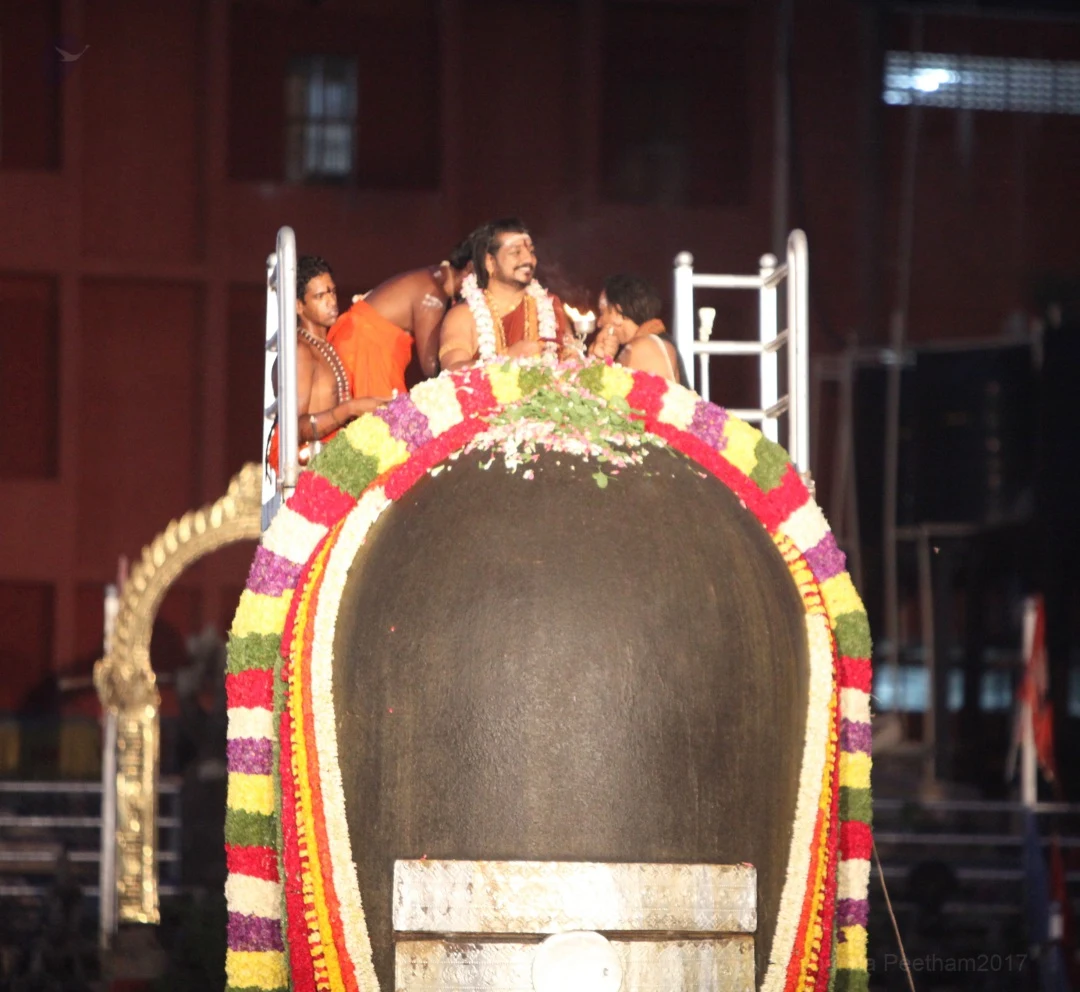
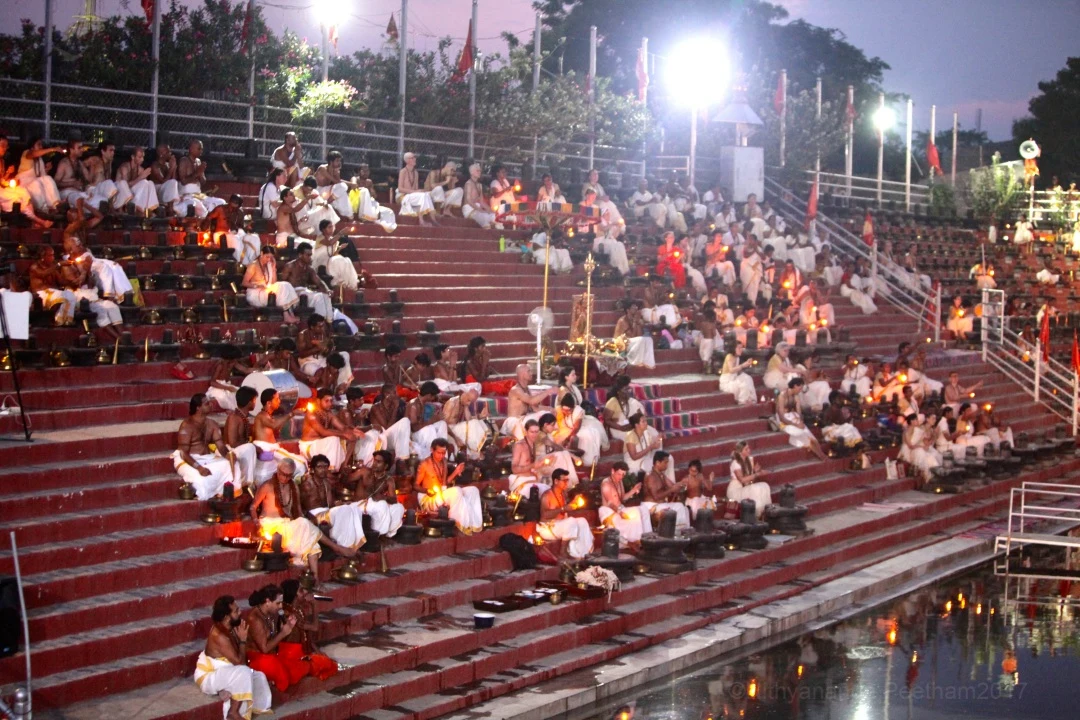
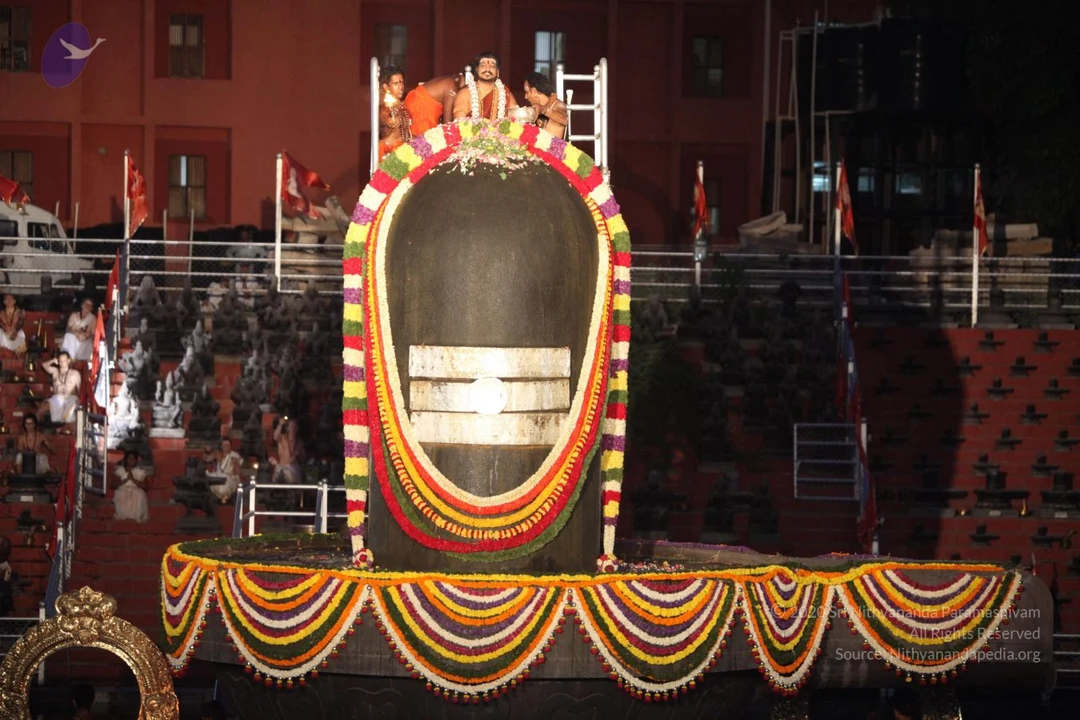
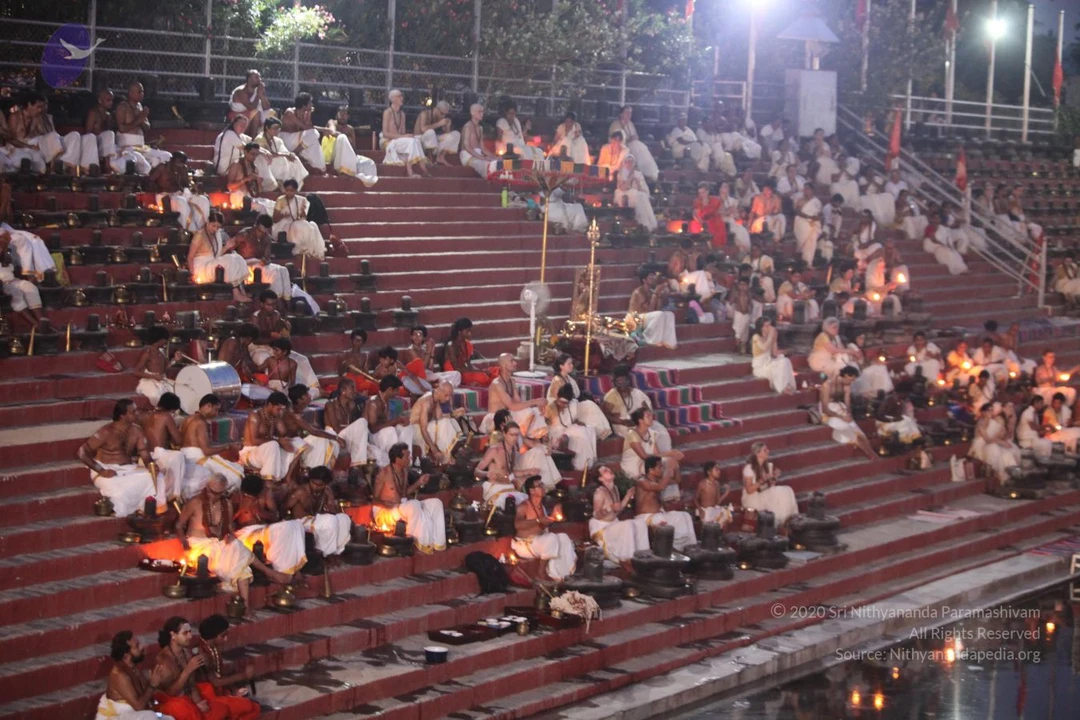
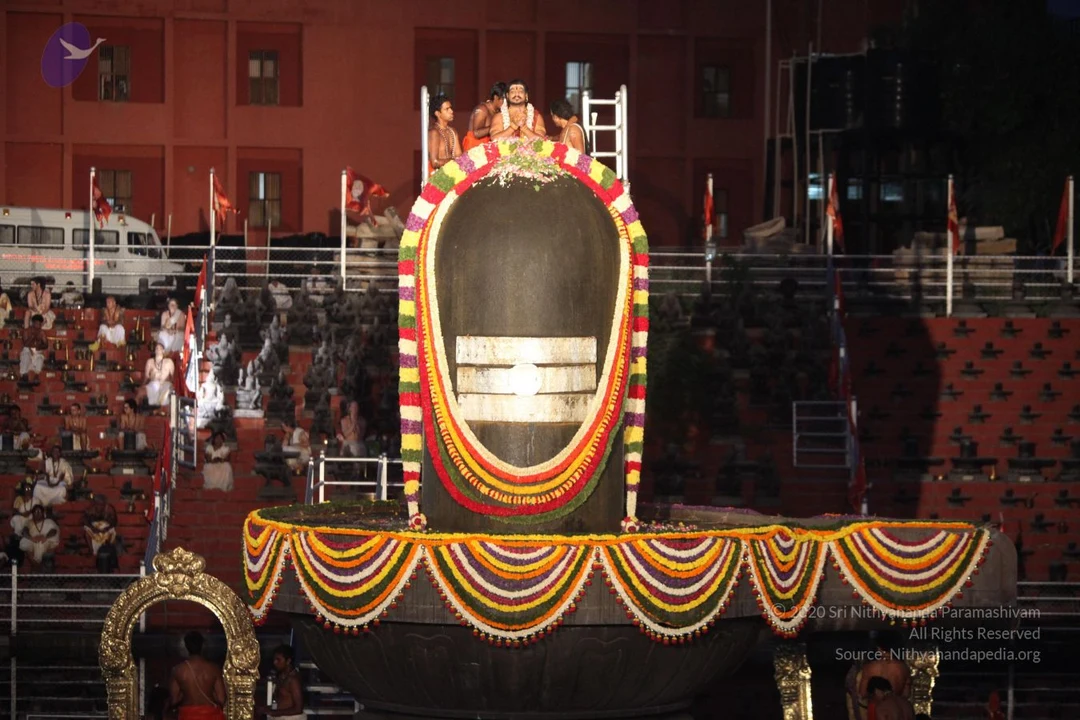
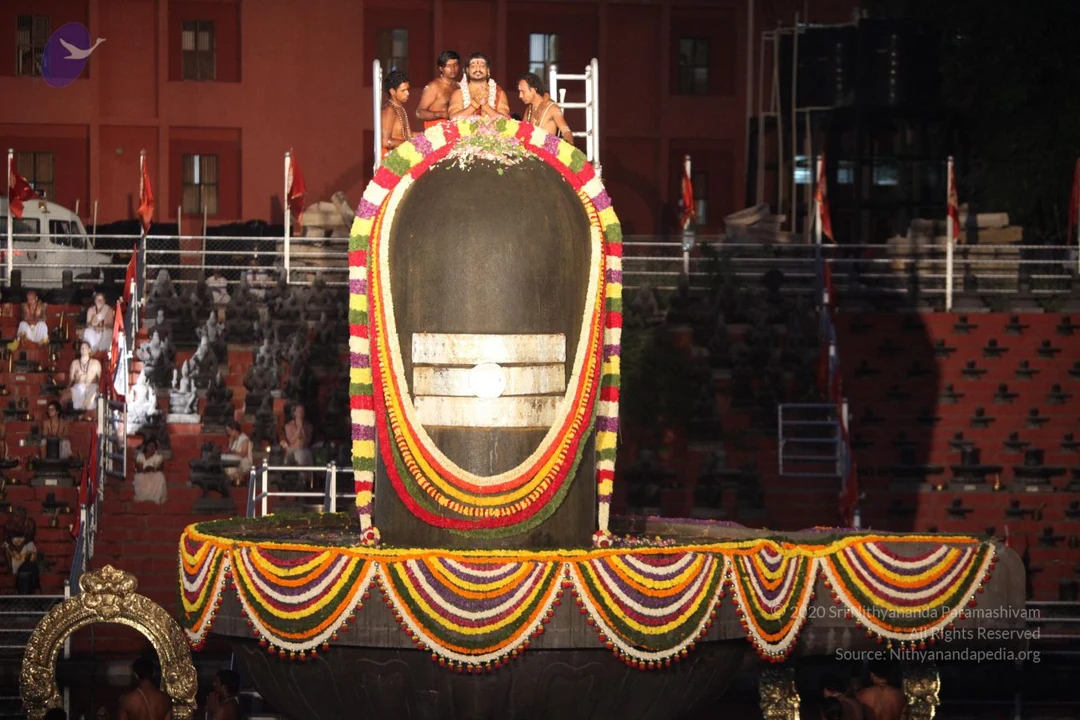
It is actually, literally, missing an important component in the life. When I use the word, “Shiva Puja,” maybe you should take this as the meaning of “Ishta Devata Puja.” I don’t want to exclude the Shaktas or Vaishnavites or other deity worshippers. Because now I am practicing and promoting Shiva Puja, I am using the word ‘Shiva Puja,’ otherwise you should take it as ‘Ishta Devata Puja’, whoever is your Ishta Devata. I tell you, the Ishta Deva Puja, physically sitting and cognizing, the Archa Avatara, and collecting all the things needed to offer it to Him and offering by invoking that tremendous sacred sentiments and just getting soaked into it, it’s a methodology of creating Kailasa wherever you. You have power to manifest Kailasa, where you are and your sacred sentiments are so powerful, He has to recognize it and He is waiting to recognize it.

(20:26)

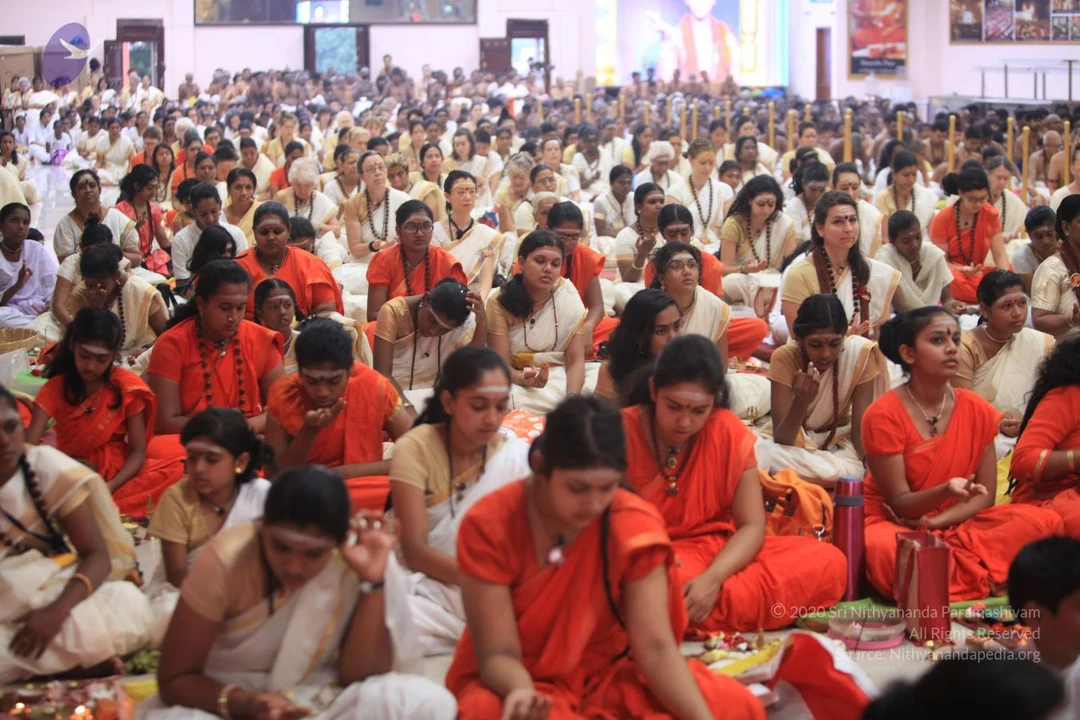
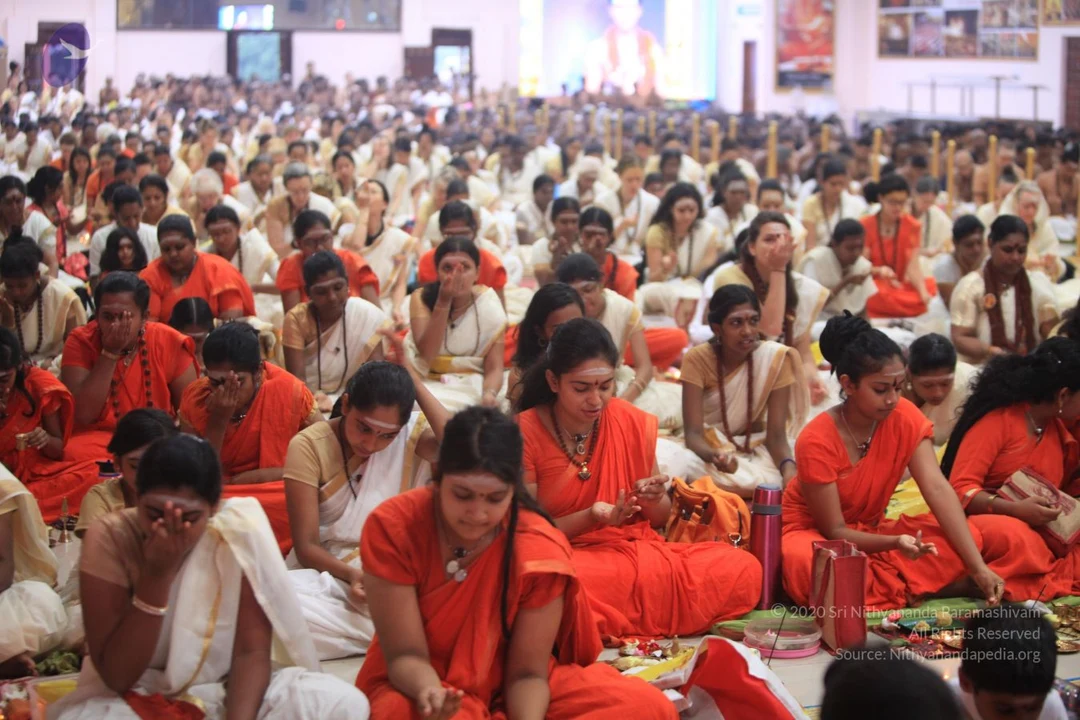
Sadāshiva, may not need your Puja but He is waiting to respond to your Puja. Your sentiments are different. You think, “Oh, if He is waiting for me then He needs me.” No! He doesn’t need but He responds. He is alive, very much alive, available. Puja is 100 times more than sitting in Mandala process with Me. When you sit with Me in the Puja, the Shaktipata is 100 times intense than the Mandala process, because the sacred sentiments invoked, invoked, invoked, invoked…..and just like a wave raising and settling, raising and it settles into your muscle memory. The sacred space of Puja, the sweet space of Puja…...see, it is such an intimate romance, I don’t have a words to describe it. Romance described loses its sweetness and sacredness, becomes dirty. Same way, these are such sensitive, intimate, personal feeling, most sacred sweet space with Sadāshiva, even the people who assist Me, with My own Puja cannot understand the kind of wide smile and the madness I radiate during Puja. The joy I radiate, during Puja. They only know that I am in samadhi, so I should not be disturbed, so they…...so out of politeness they arrange everything and support and….. but even there, they can’t understand, being around Me so long. They can’t understand the kind of a…..the mad joy I radiate. I tell you, Bhava Samadhi should be tasted when you are in human body.

(24:00)

Whoever is your Ishta Devata, that is not a issue. In Hindu tradition, all Gods represents the Purnabrahman, the paripurna akhandanda sachidananda chinmayananda svayam prakasha jyotisvarupa brahman - the Ultimate. All Gods represent Ultimate. You can choose any one from 33 crore and if you are not satisfied with any of them, you can create one. No problem. Hinduism gives you complete freedom.

Samadhi means being one with the Source - Adi means source. Sam-adi means one with the Source. Bhava Samadhi means being one with the Source through this attitude. Bhava means ‘attitude, aspect.’

Krishna is one of the aspect of the Ultimate. Rama is one of the aspect of the Ultimate. Devi is one of the aspect of the Ultimate. Ganesha is one of the aspect of the Ultimate. Subramanya is one of the aspect of the Ultimate. So whatever ‘aspect’ you choose as your Ishta Devata…..it can be any God. It can be Shiva, Subramanya, Ganesha, Devi, Vishnu, Munishwara, Kalabhairava, Vīrabhadra. We have so much. And if you don’t like anyone, you want to create something new - free - go ahead. The aspect, Bhava you choose, through that Bhava, being one with the Source, Samadhi - is Bhava Samadhi. Knowing this Bhava is ‘Adi’ and being in ‘Sama’ with that is - Bhava Samadhi. Your Ishta is the representation of - akhanda sachidananda paripurna nirguna brahman.”

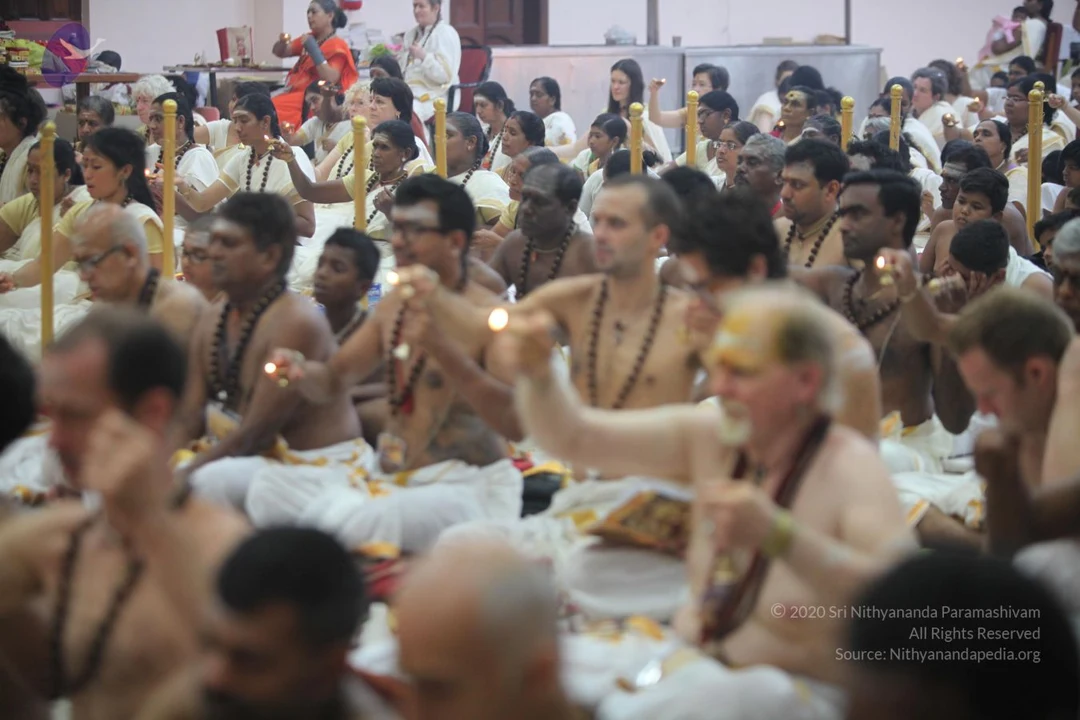
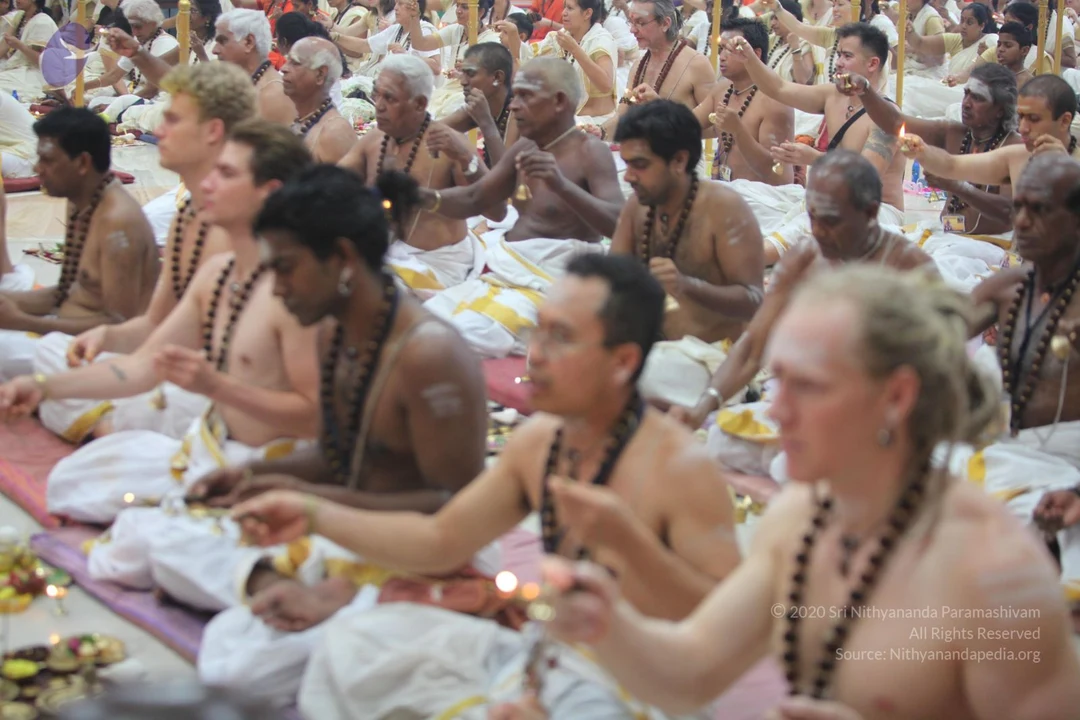
A person who has a pet and lived with that pet for years, only will understand his love and sentiment with the pet. Other fellows will only look at them only as dog or cat. Only a person who cherished, lived, will understand he is part of his family. Same way, only if you enjoy the Puja, you will understand it is not stone or a deity. It is God Himself. People who never had pets, can never understand the pet lovers sentiment. They will only cry foul, “Oh, they spent so much money on dog. They spent so much money on cat, rat.” Why you spent so much money on all your stupidity, who asked? You need to understand the truth. Only if you taste it, live it, enjoy it, you will get it. Only then, you will get it. Not otherwise. You need little bit of initiation and tuning, to enjoy one of the most important aspect of Cosmos. Most important Sattvik bliss. So today and tomorrow, we have Samaya Deeksha and Vishesha Deeksha for all the Sadashivatva and Nithyananda Yogam Participants.

(29:30)

Those sacred truths and sentiments, raising in your system and settling in your muscle memory and bio-memory, will tune you to be in Shaktipata with Sadāshiva, continuously. Puja is practiced and fulfillment of Devotion. Not just practice, I tell you, fruit of devotion is Puja - fruit of Puja is Devotion. So essence of today’s Satsang, for all the Participants - Fruit of puja is Devotion - Fruit of devotion is Puja.

(30:35)

So with this, I bless you all, let’s all radiate with Integrity, Authenticity, Responsibility, Enriching, Causing, Living Shuddhadvaita Saivam, the Eternal Bliss, Sadāshivoham, the Eternal Bliss - Nithyananda.

Thank you.

Be Blissful.

(31:16)

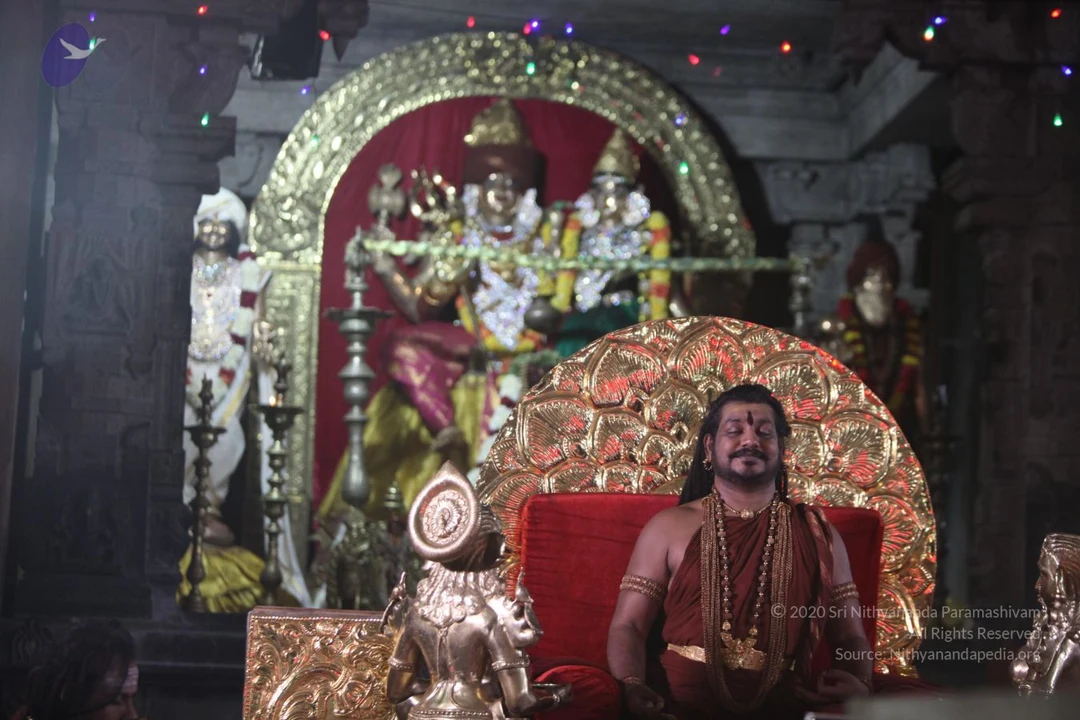
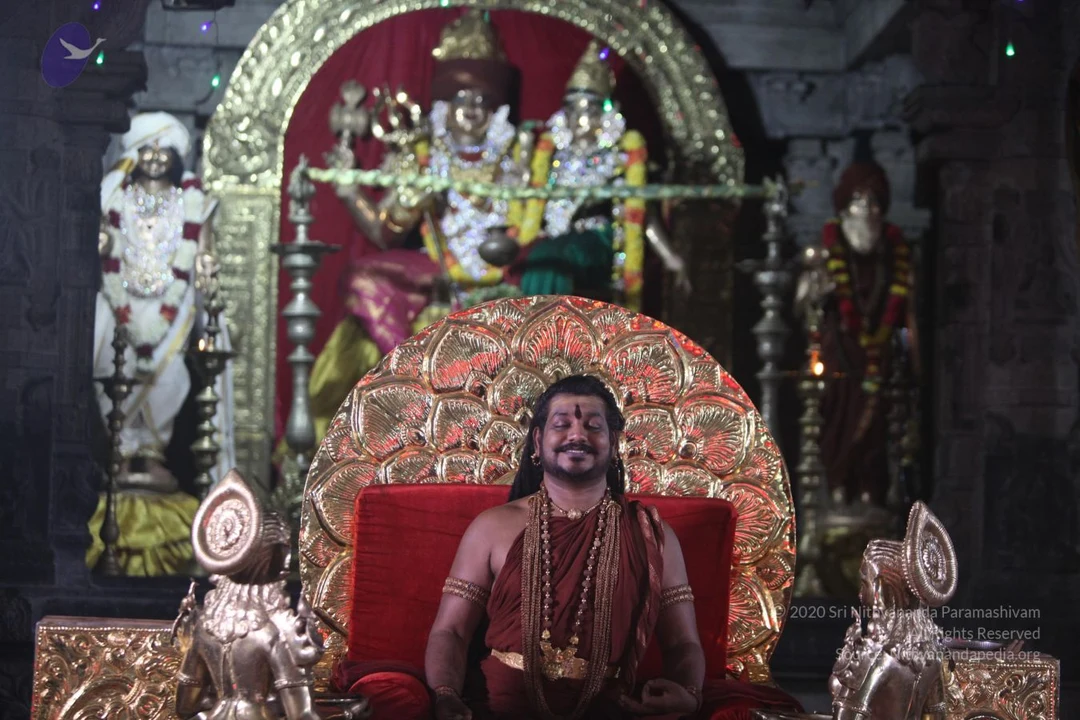
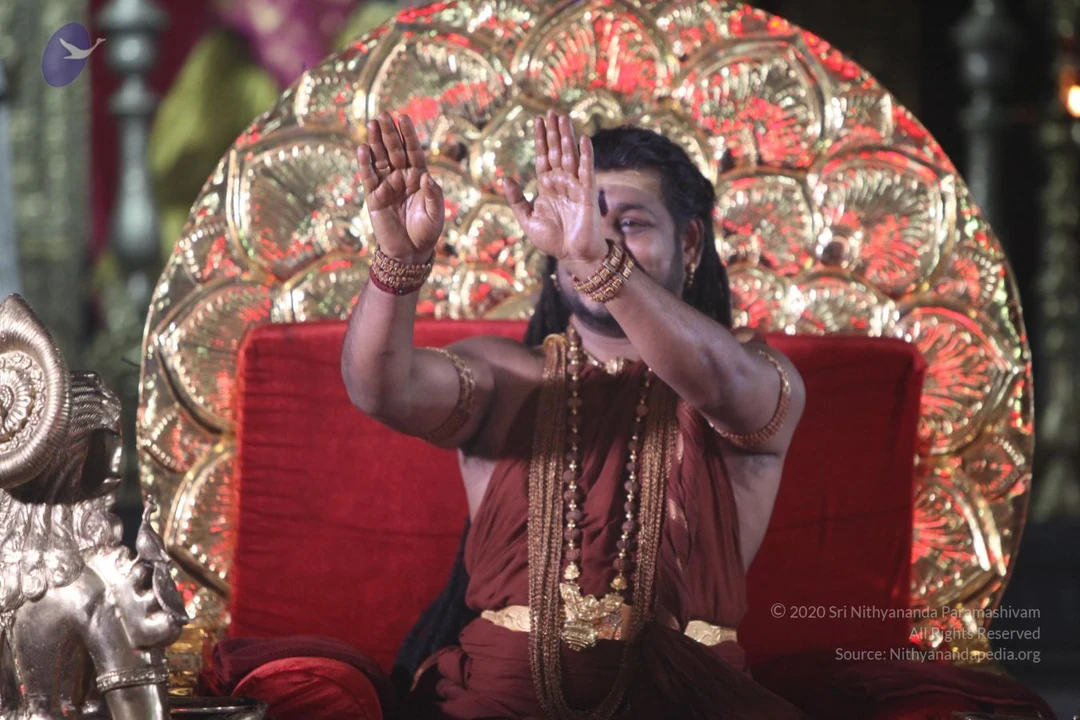
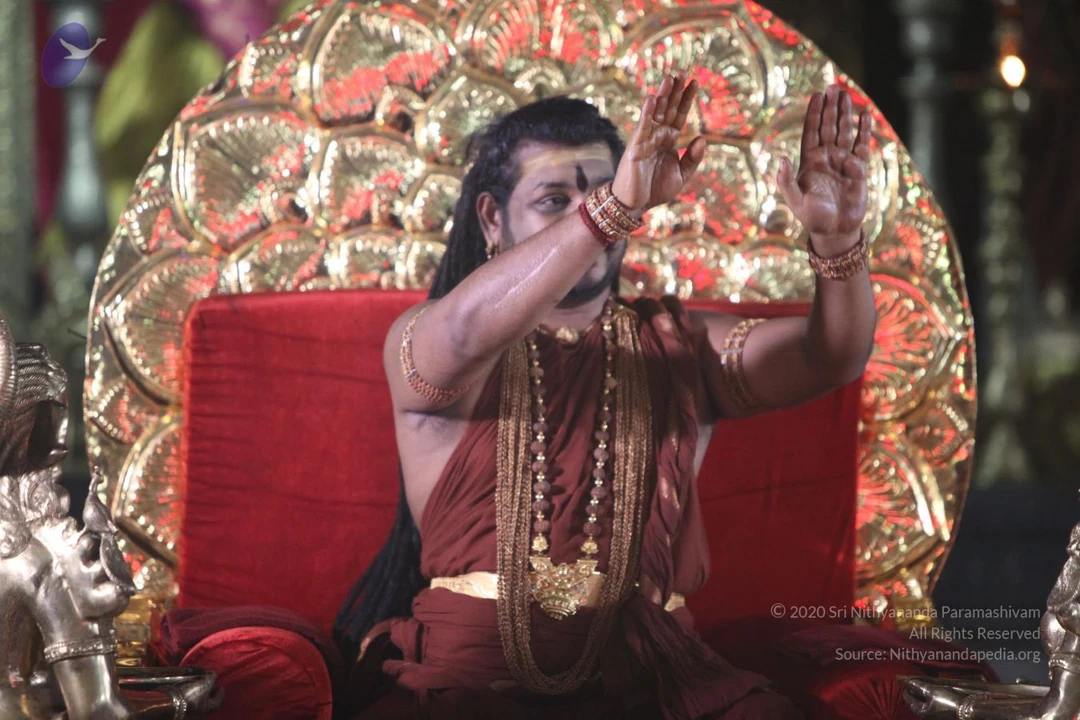
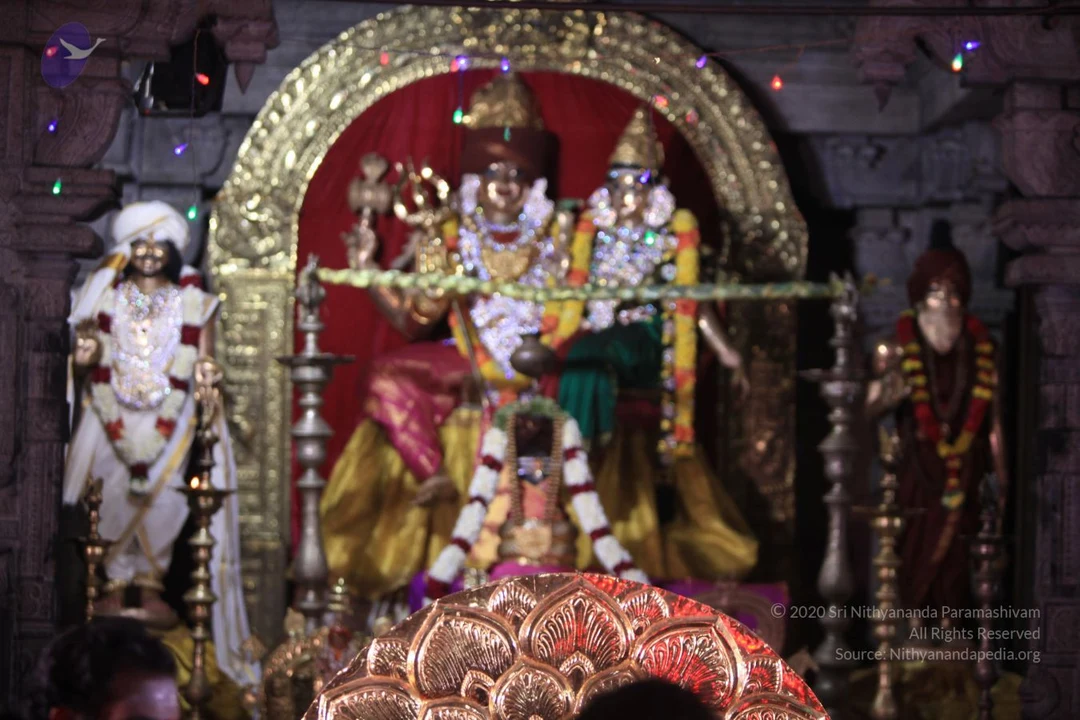
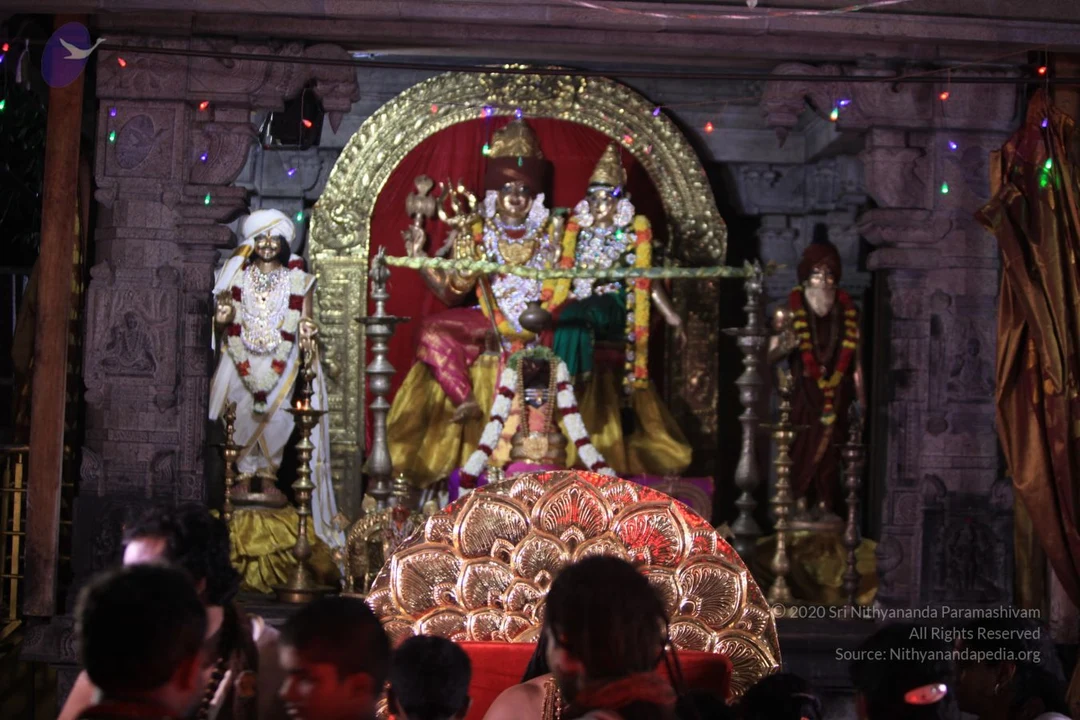
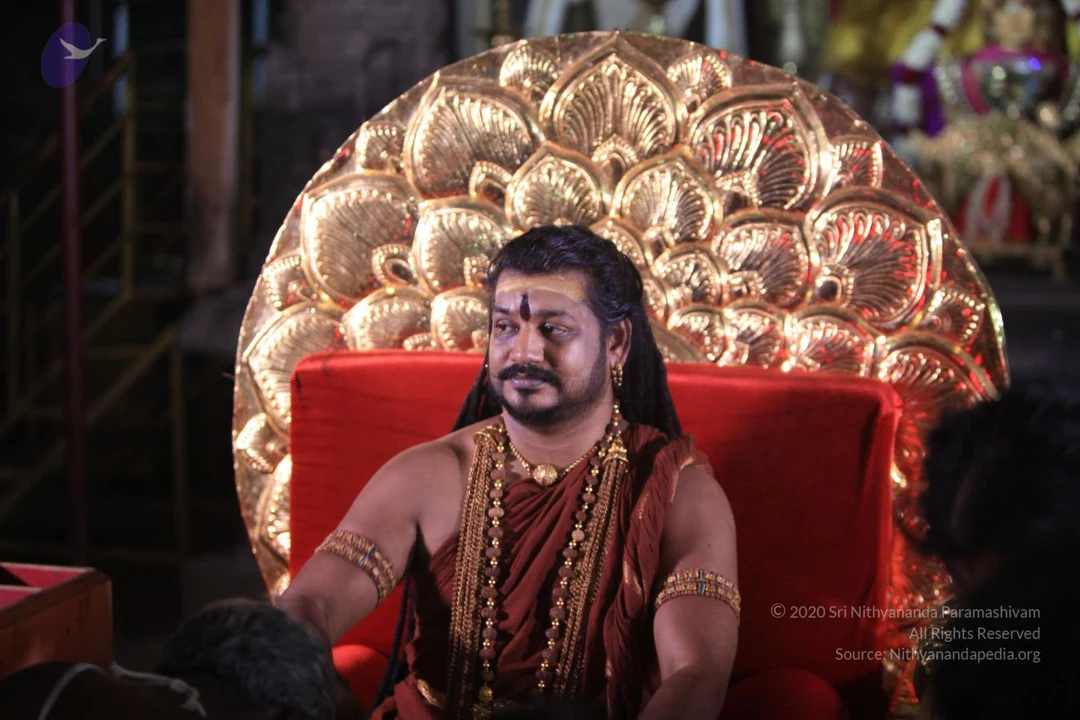
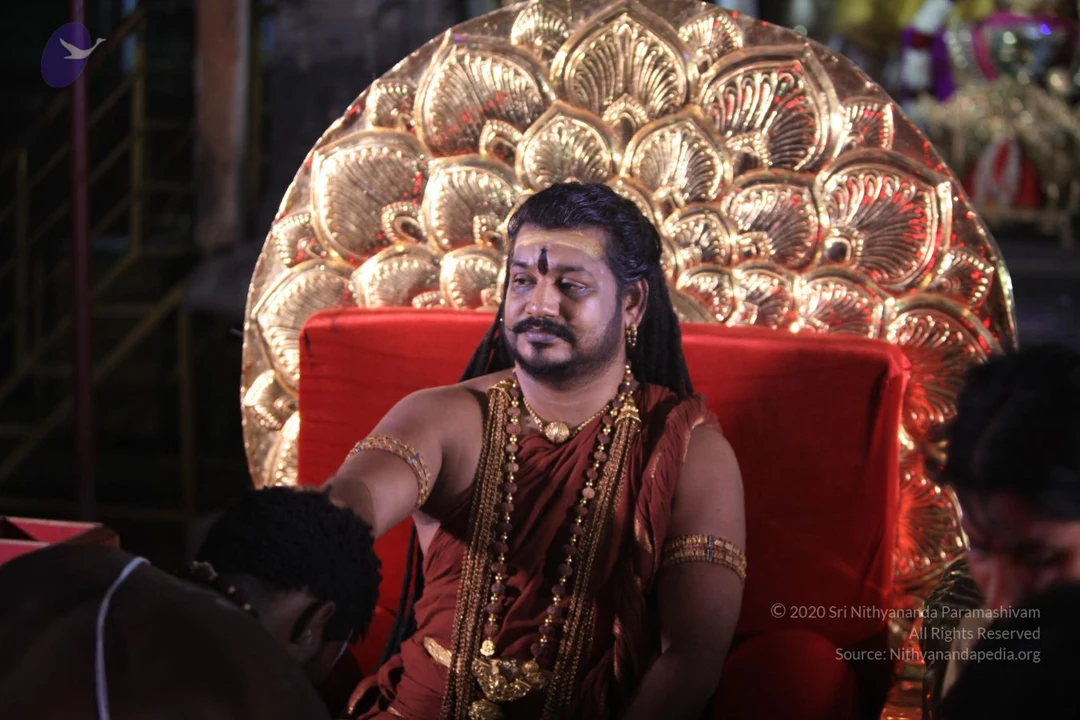
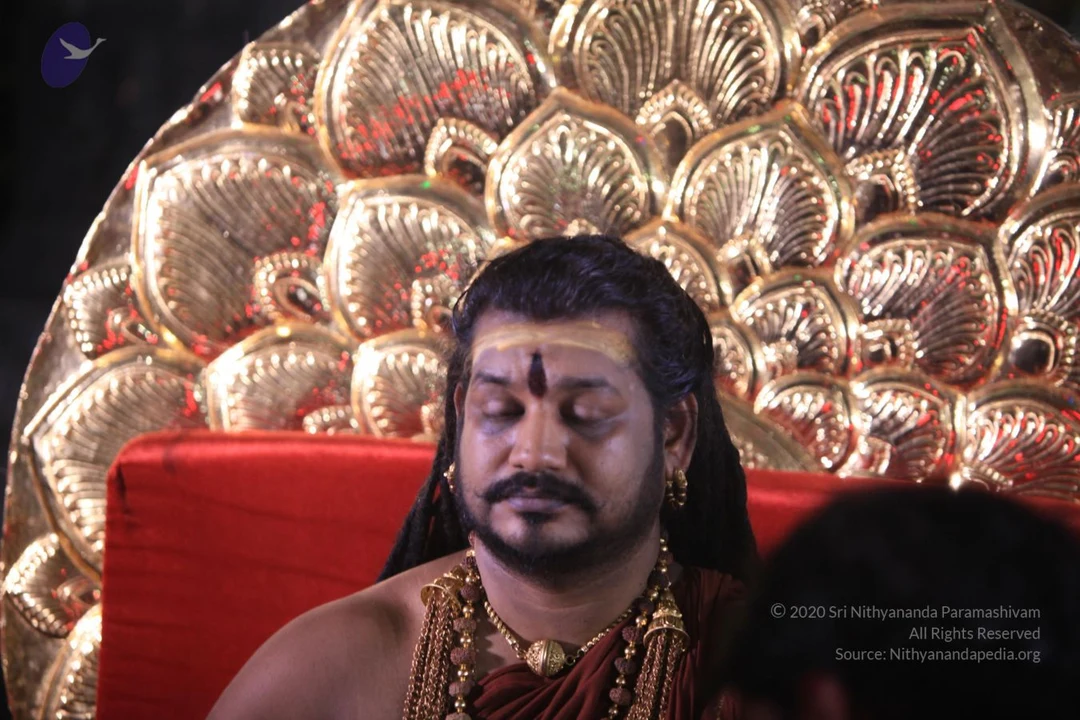
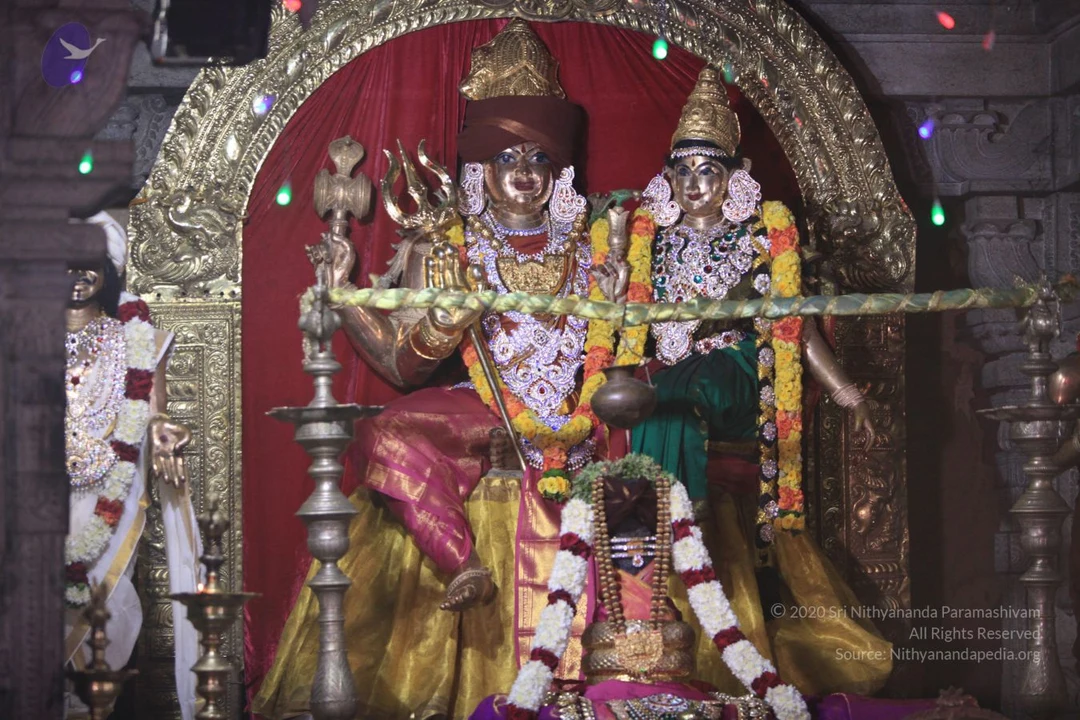
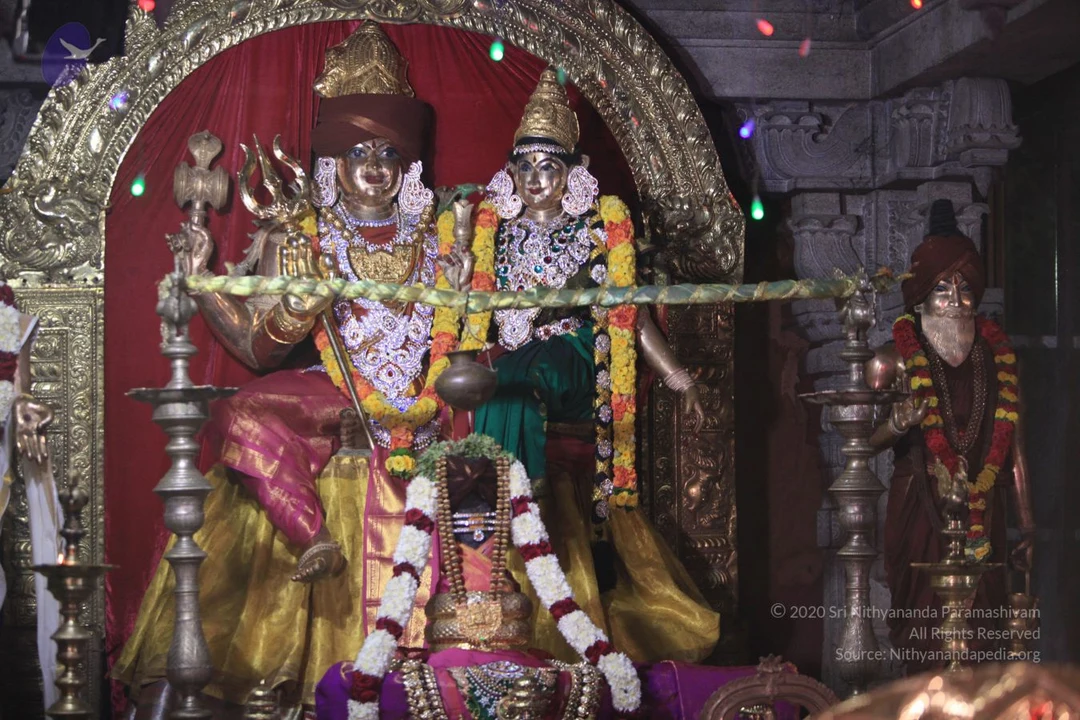
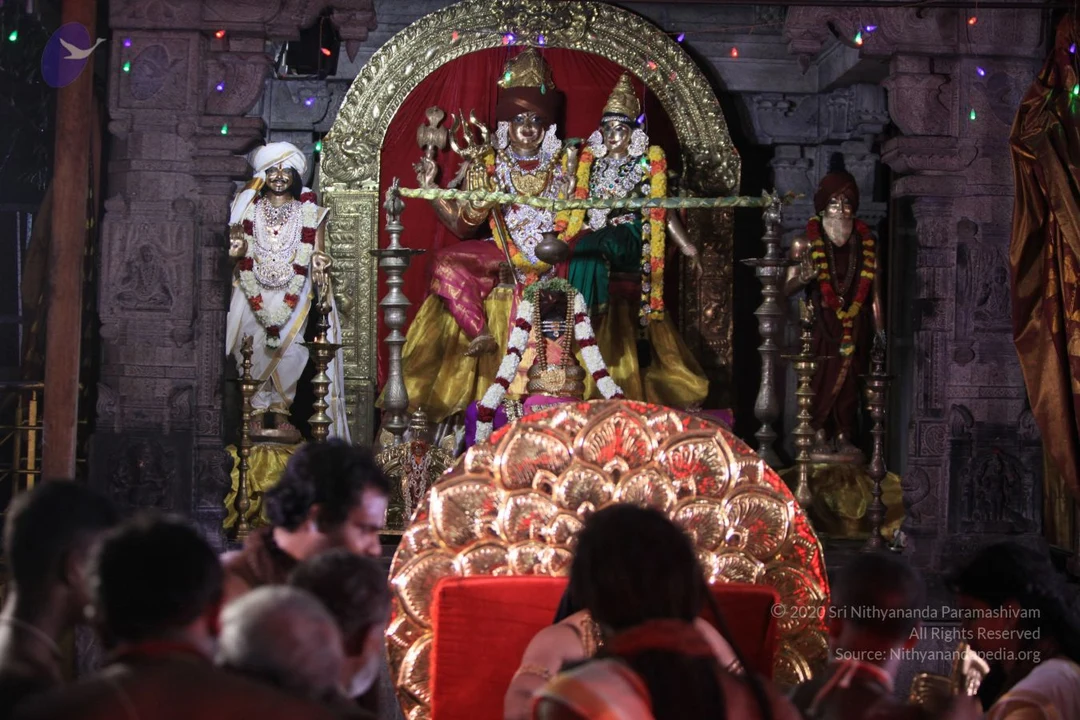
Photo of The Day

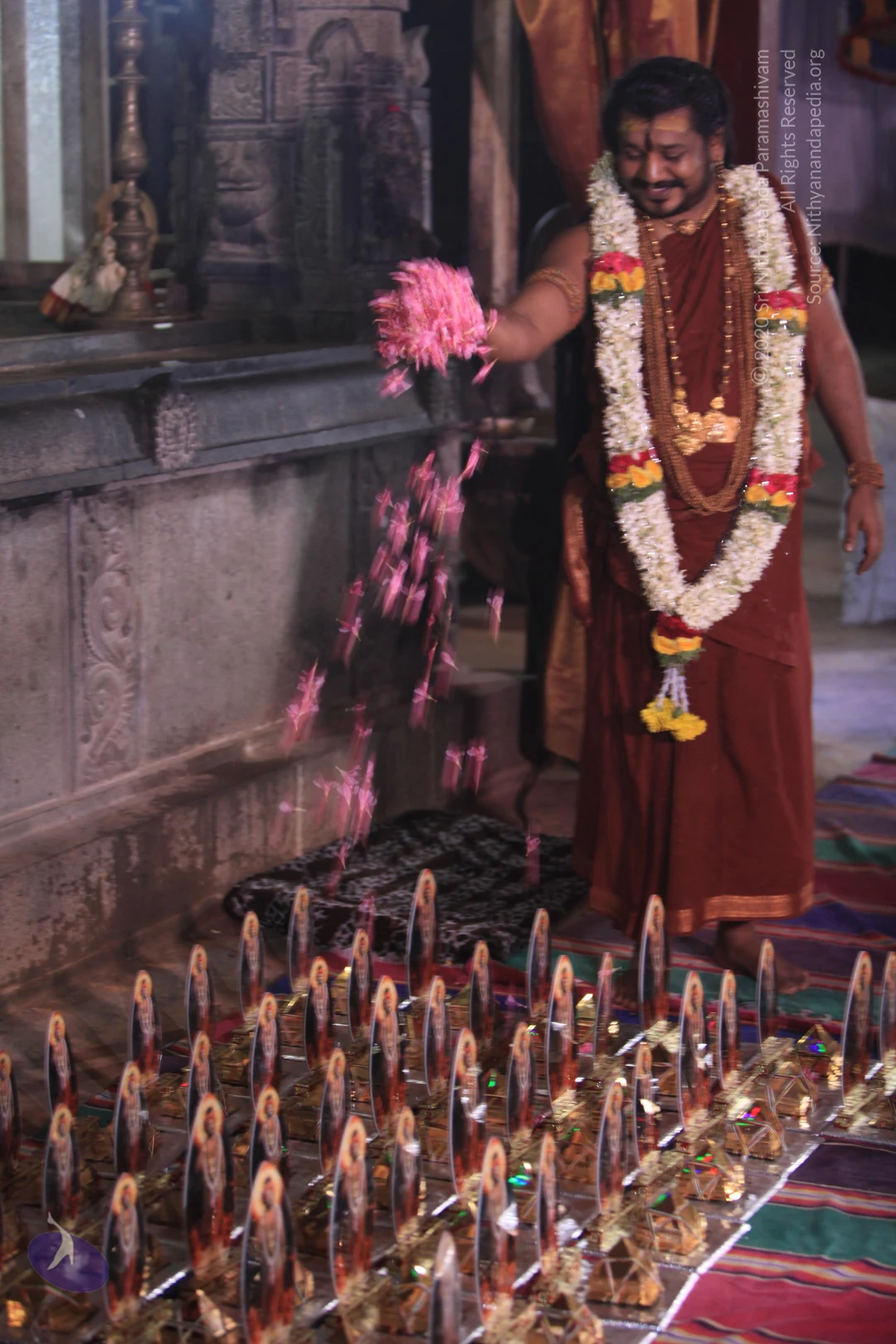
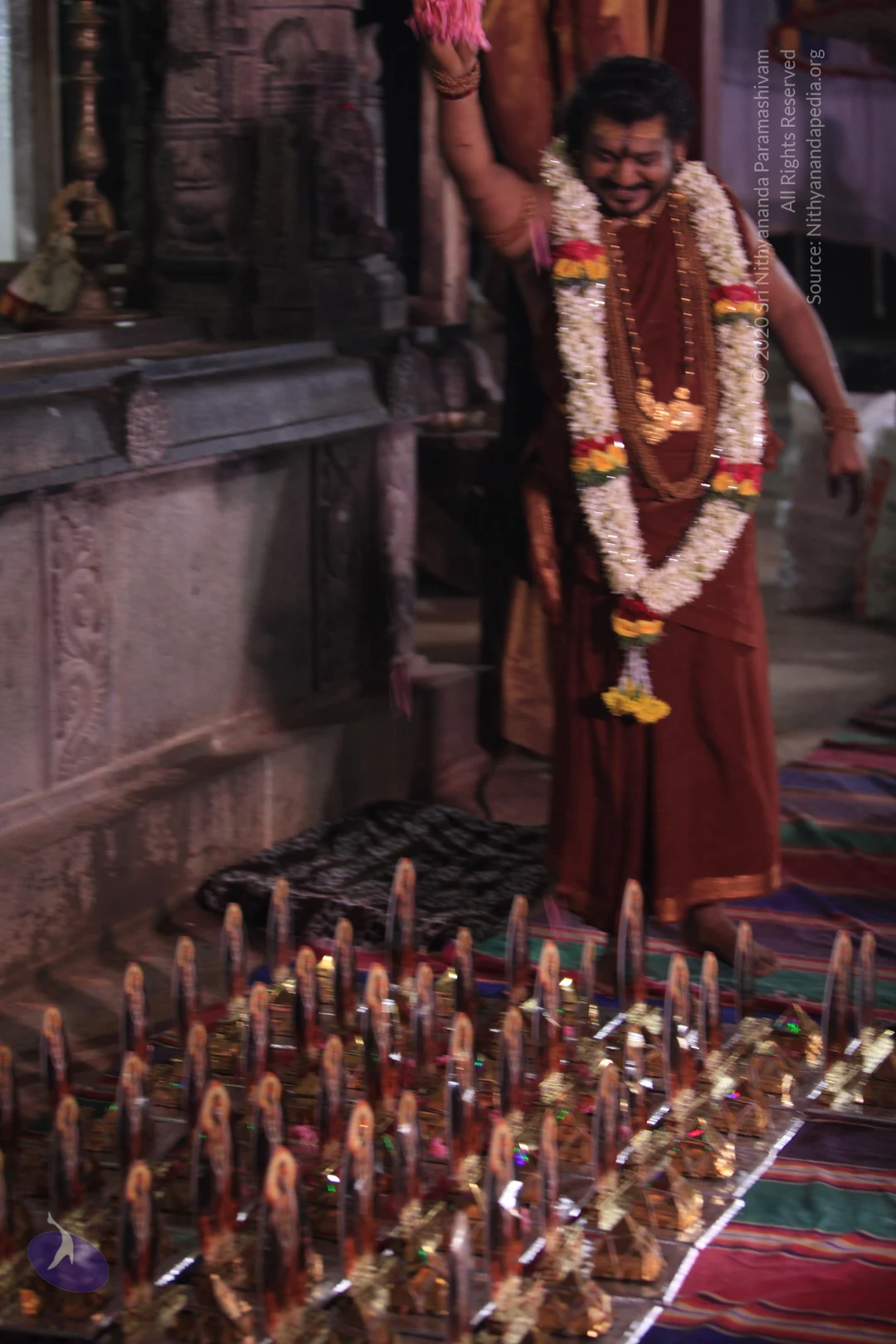
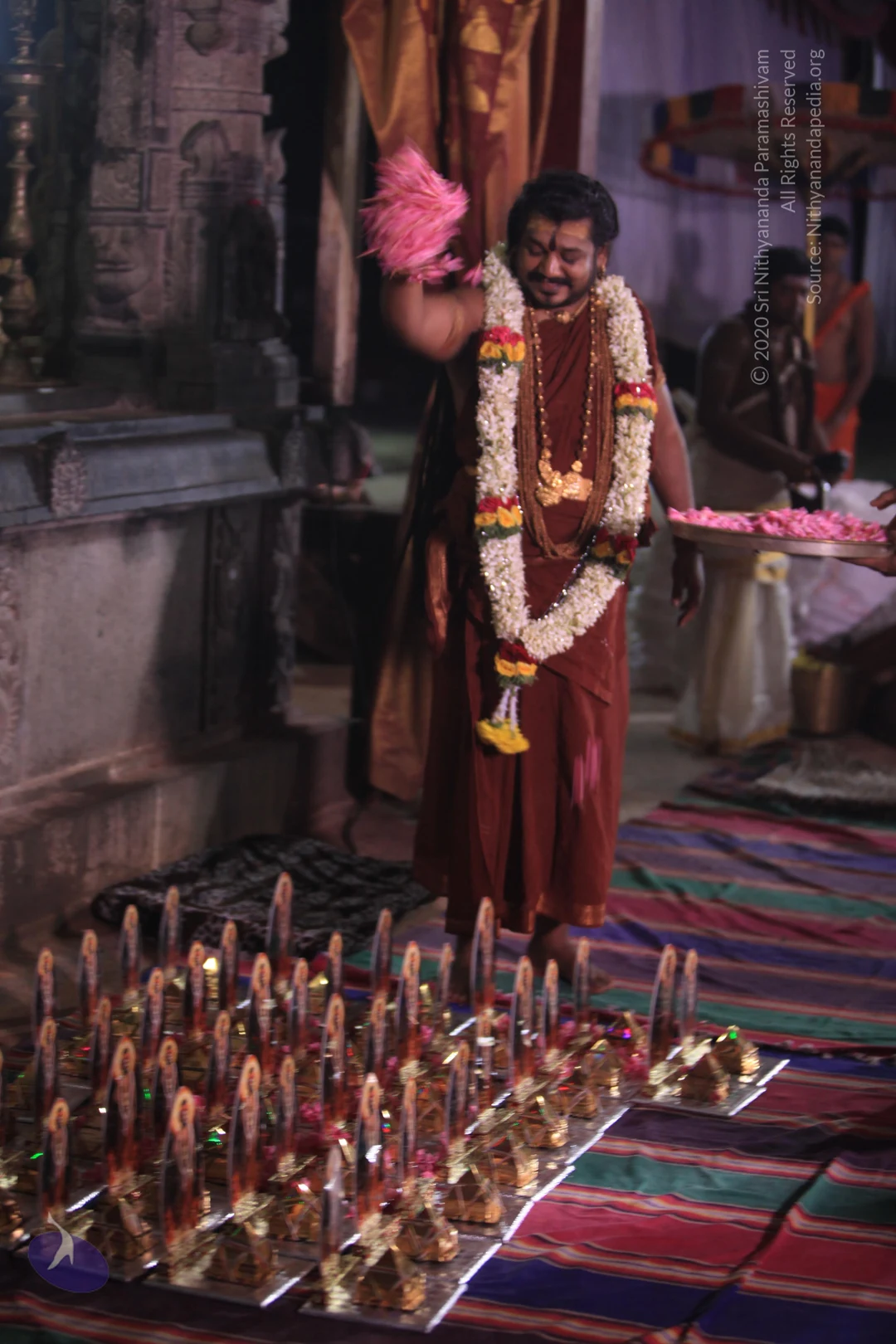
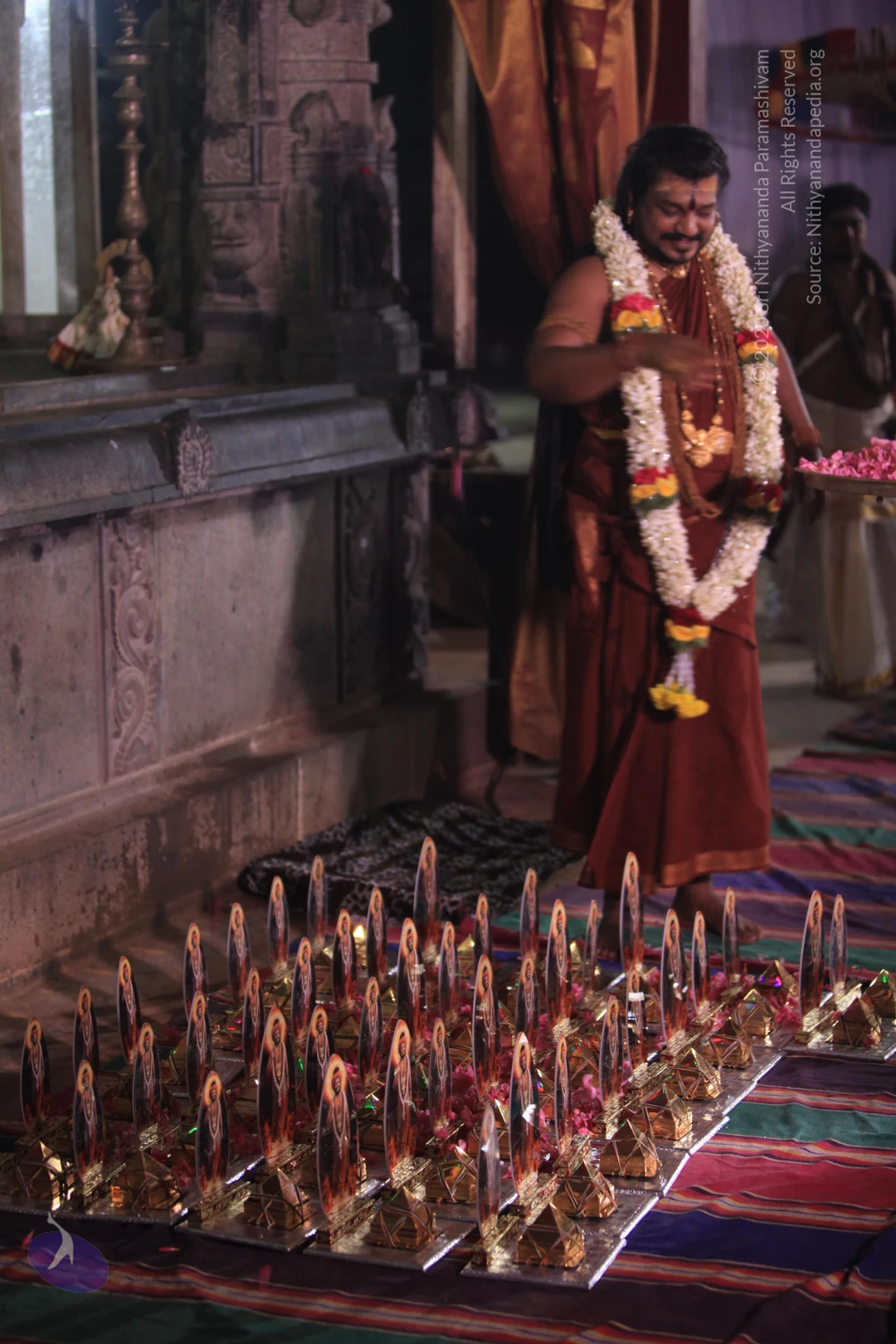
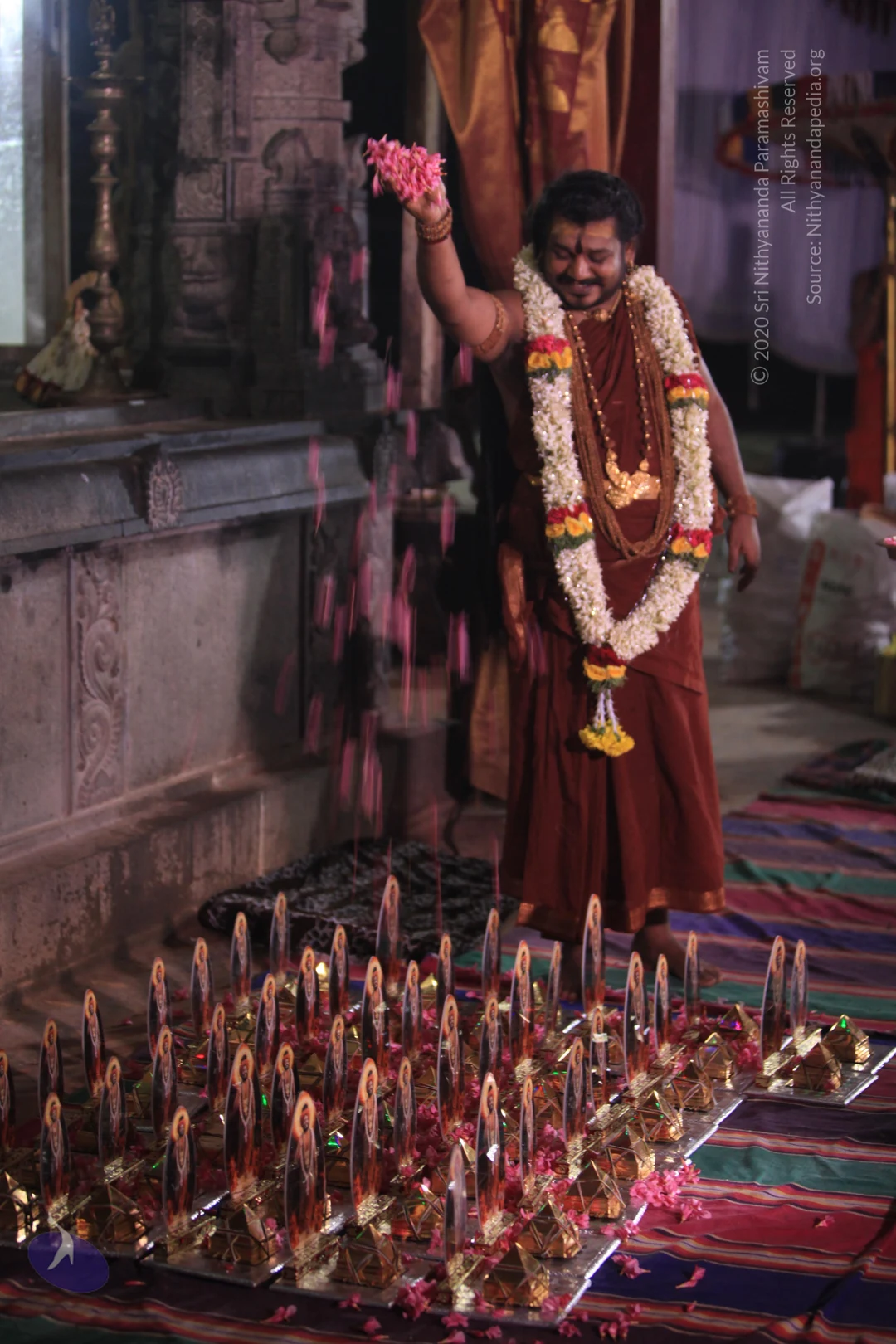
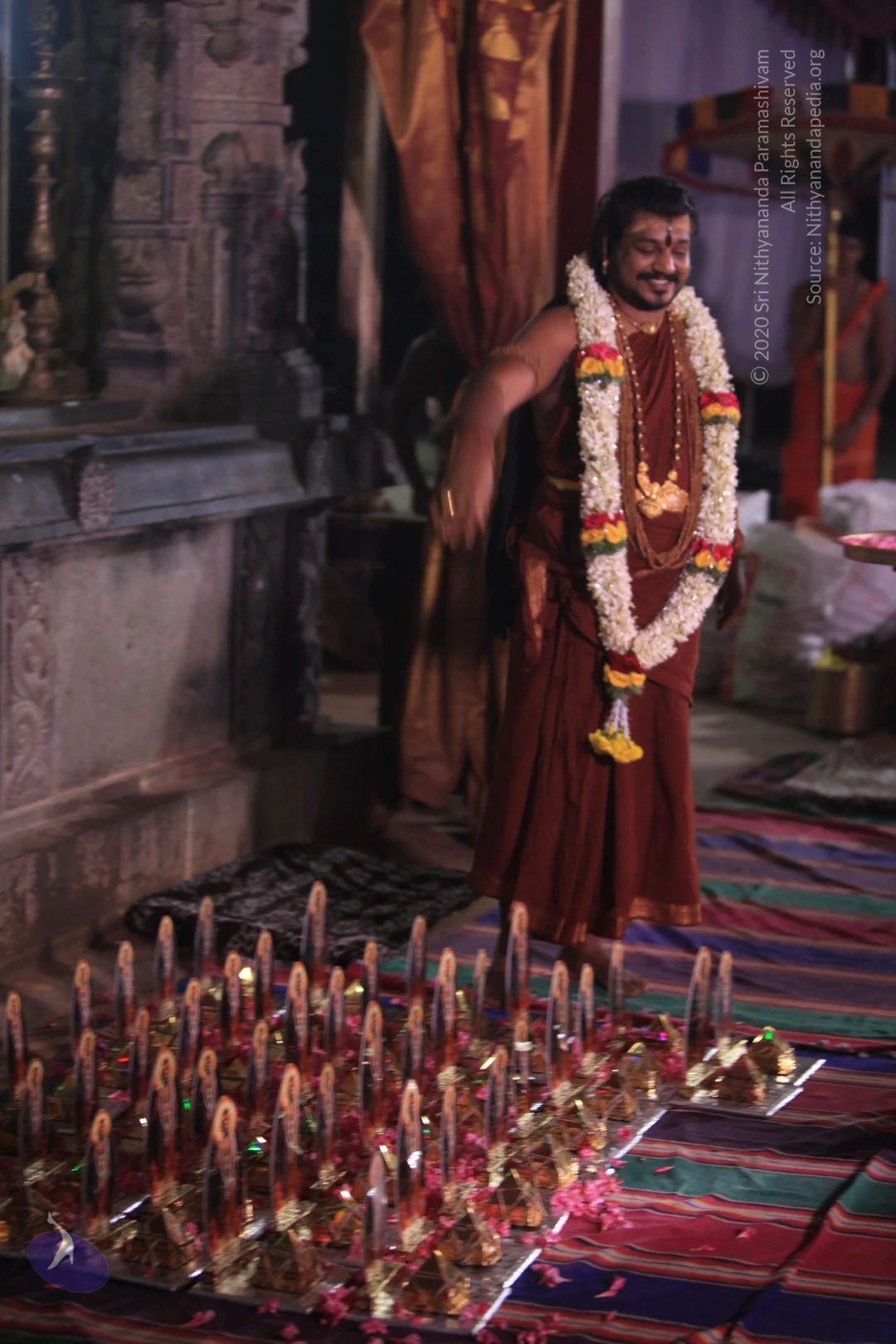
Puja
Satsang
Rudra Abhishekam
Shiva Deeksha
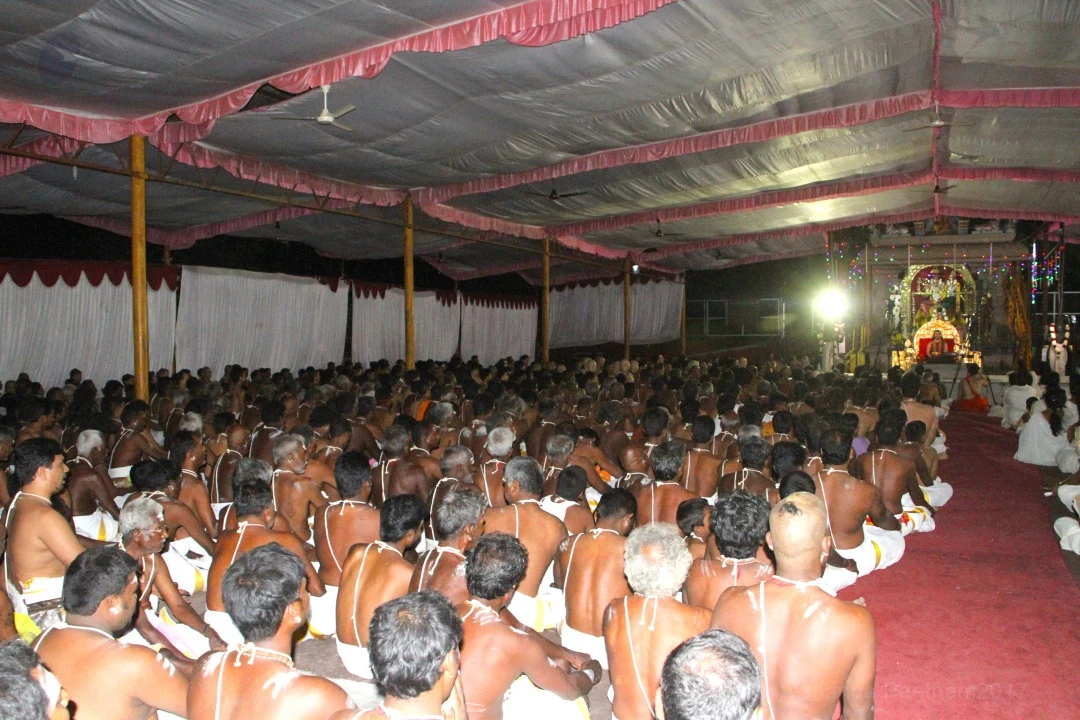
Sakshi Pramana:

Sharing from NITHYANANDA KIDS PROGRAM

Tags:

Sri Nithyananda Swami, Paramahamsa Nithyananda, Nithyananda, Swamiji, biography, puja, shaivite, rituals, agamic, temple, mantras, shodashopachara, vishnu, pranayama, naivedyam, completion, Bhuvaneshwari Yantra, bhava samadhi, kashi, exist, devotion, bliss, happening, manifesting powerful cognitions, powers, ishta devata, invoke, powerful, romance, source, radiate, samadhi, subramaniya, shakta, sampradaya, tradition, devi, bhuvaneshwari vidya, guru, vibhudananda puri, darshan, shiva linga, sri vidya, sadashiva, sandlewood, skanda mata, arunagiri yogeshwara, jnananjana, existence, contentment, authenticity, universe, vaishnavites, methodology, mandala, intimate, muscle memory, purnabrahman, attitude, munishwara, deity, soapstone, bhuvaneshwara puja, ramana maharshi, paddhatis, ganapati, ganesha, shiva, slokas, ramakrishna , durga, stotras, prasadam, materialize, pancha loka, god, sacred sentiment, wealth, life, bhakti, shaktipata, space, archa avatara, kailasa, process, ultimate, bio memory, hinduism, aspect, kalabhairava, veerbhadra, practice, samaya deeksha, vishesha deeksha, fulfillment, sadashivatva, sachidananda, freedom, swarupa, chinmayananda, prakasha, create, svayam, jyoti, nirguna, paripurna, cosmos, sattvik

Photos Of The Day:

NITHYA-YOGA
PADA-P0OJA
PADA-POOJA

NITHYA-SATSANG

DIAL-THE-AVATAR

RUDRABHISHEKAM

SHIVA-DEEKSHA

01-Nithya-Yoga

02-Pada-Puja

05-Rudrabishekam

06-Shiva Deeksha-Temple

,

Photos from this day

View all 667 photos

NITHYA-YOGA

2 photosSource gallery
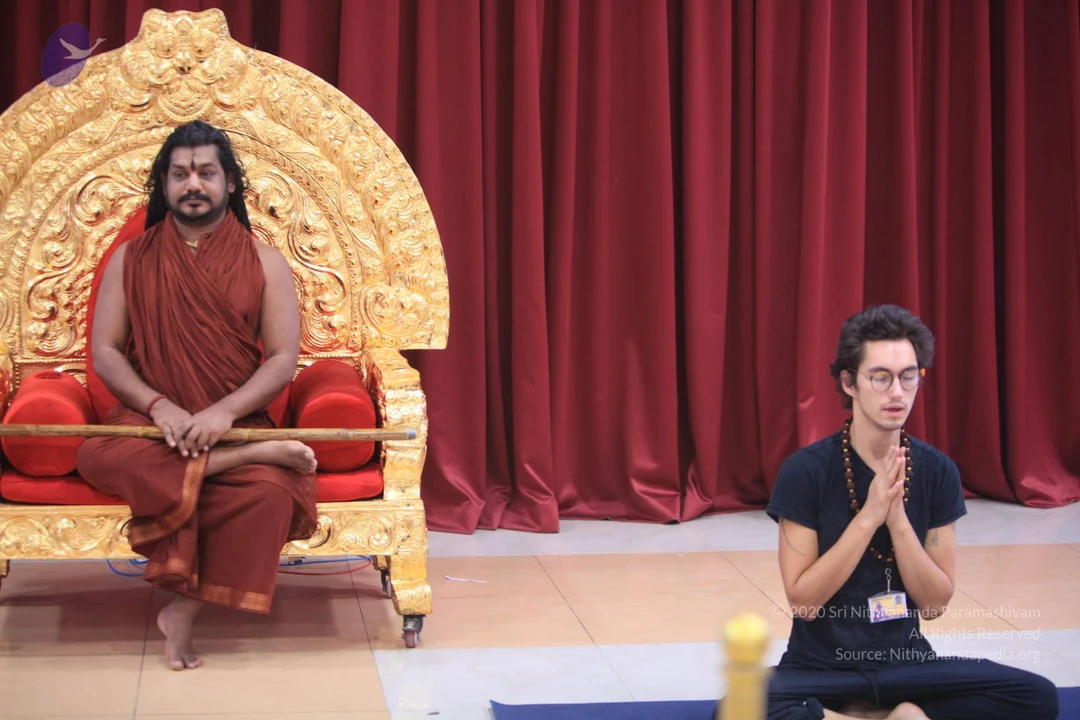
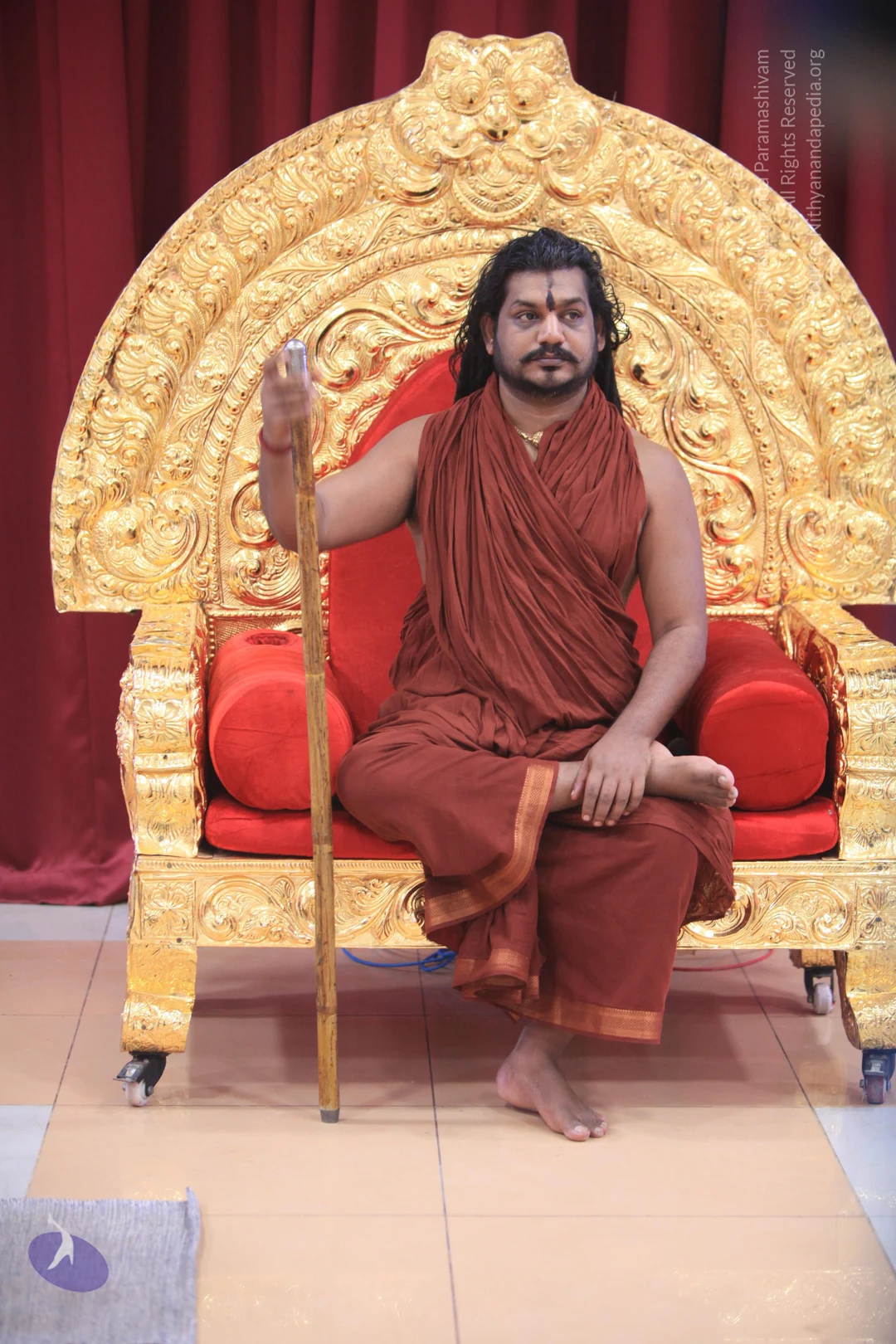
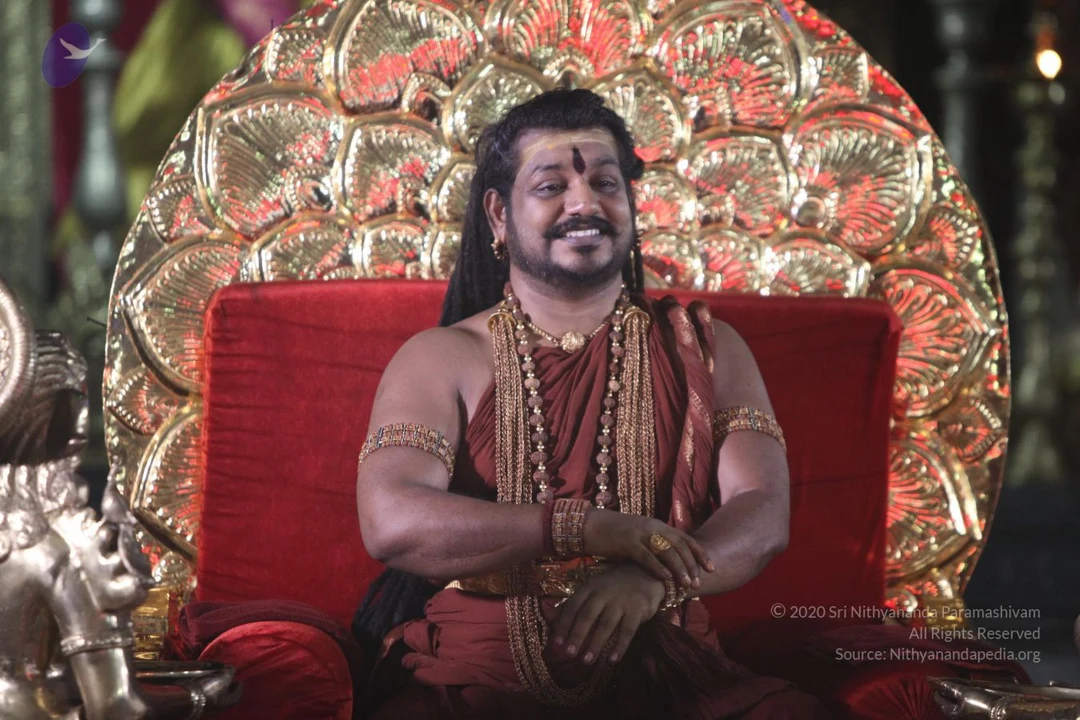
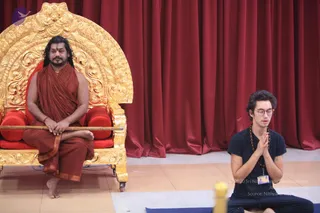
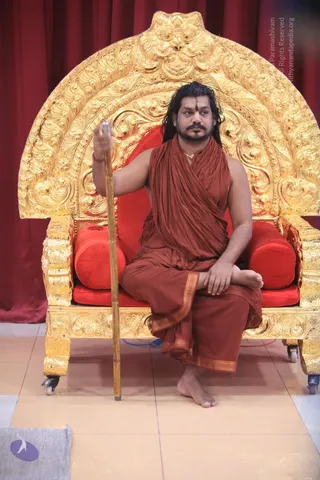
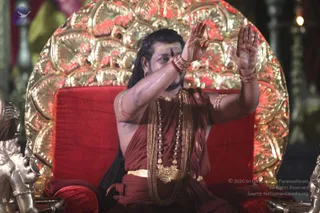
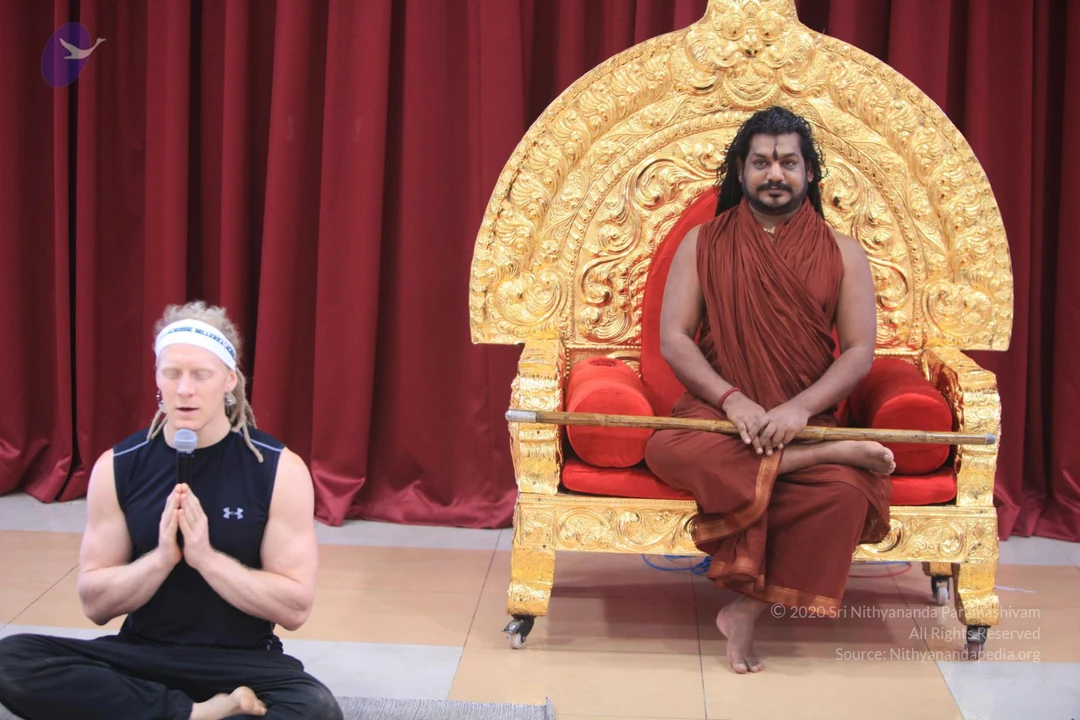
A photograph of a seated man on an ornate gilded throne with red cushions in front of deep red drapery. He wears a rust-orange and maroon ochre wrap and dhoti, bare-footed, with a red tilak on his forehead and long dark hair; a thick wooden staff rests across his lap. Beside the throne, a young man in a dark navy t-shirt, round glasses and a wooden rudraksha-style mala sits cross-legged on a blue mat with palms pressed together in prayer, eyes closed. An ID badge hangs from his neck. Swamiji (probable): the seated figure has long swept-back hair, a rust-orange wrap and a ceremonial gold-throne setting consistent with the page's attribution.A man with long swept-back dark hair and a bindi-style vertical mark on his forehead sits cross-legged on an ornate gold-carved throne with red cushions, against a deep red curtain. He wears a rust-orange sleeveless wrap and matching orange-brown garment with a gold-edged border, a gold chain at the neck, and holds a long bamboo staff upright in his left hand.

PADA-P0OJA
79 photosSource gallery
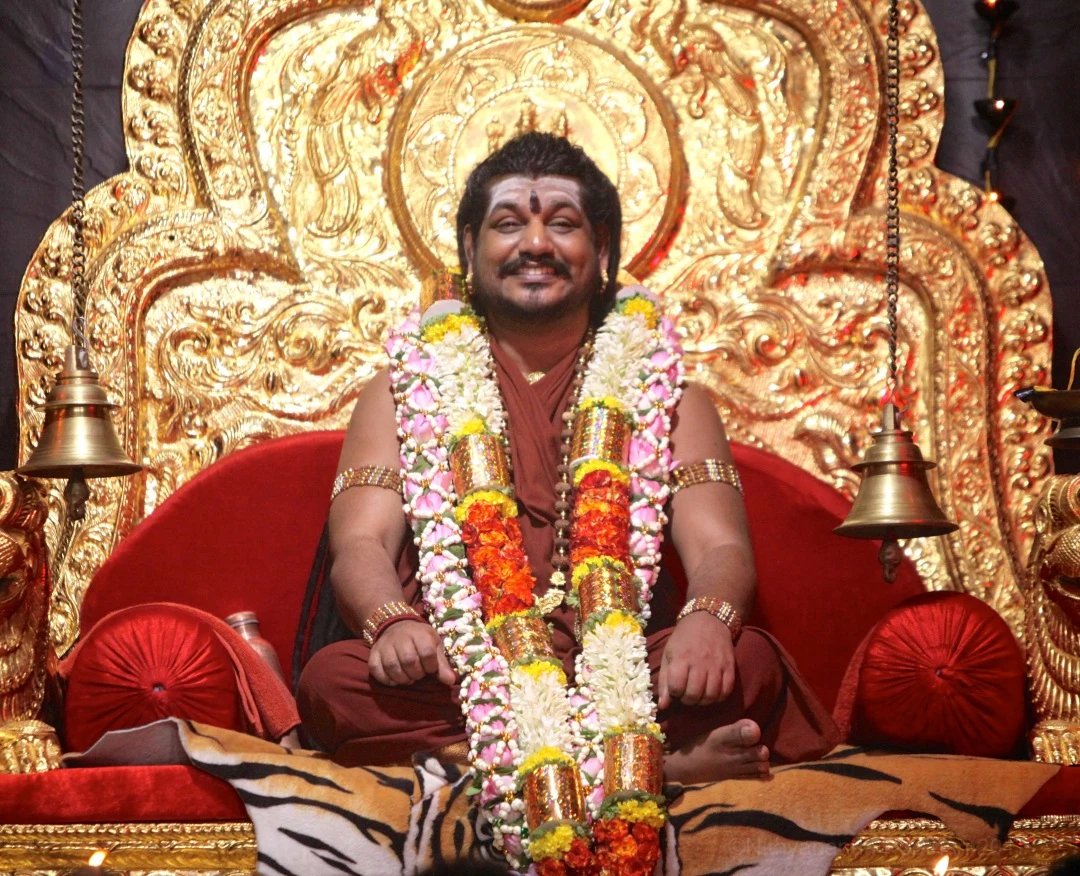
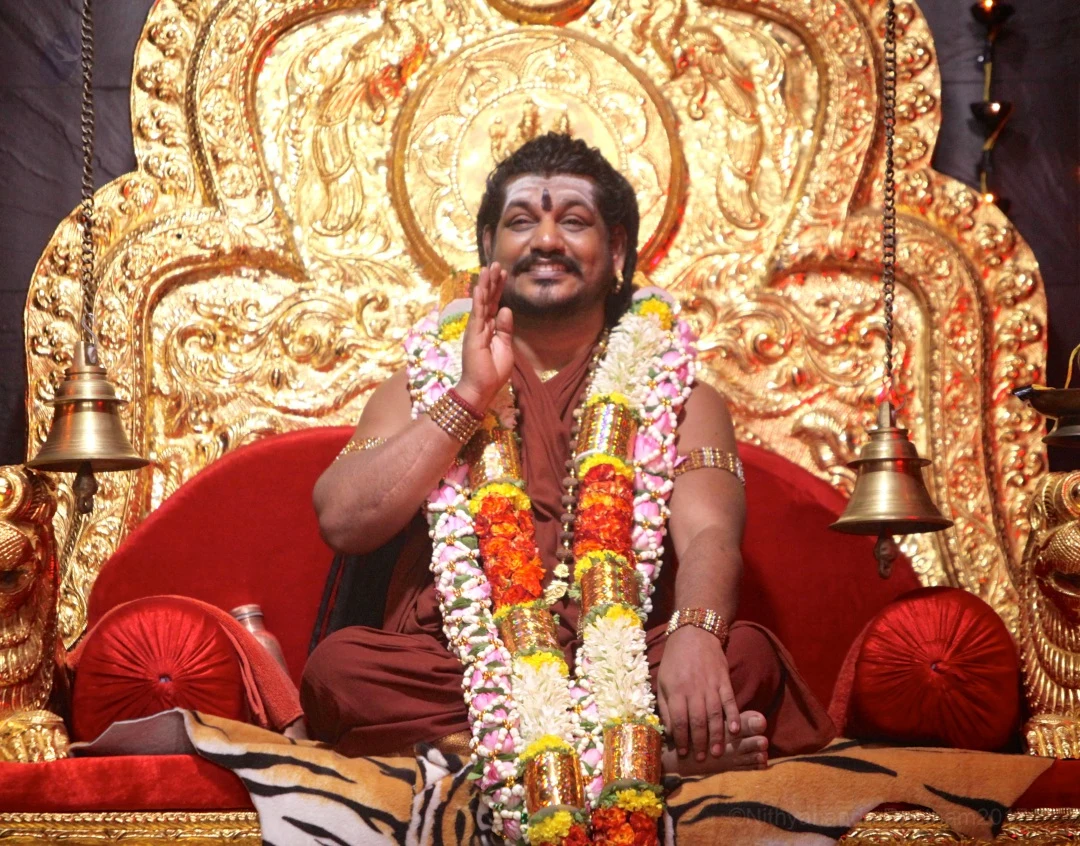
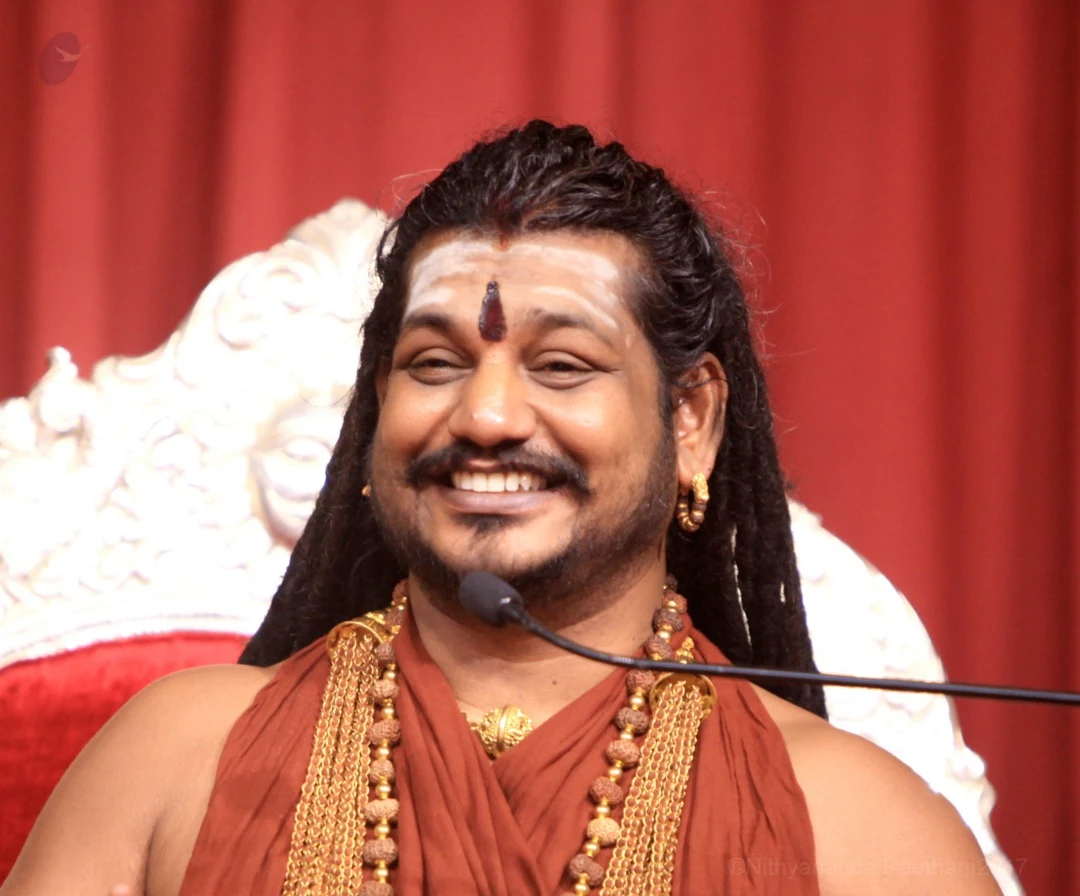
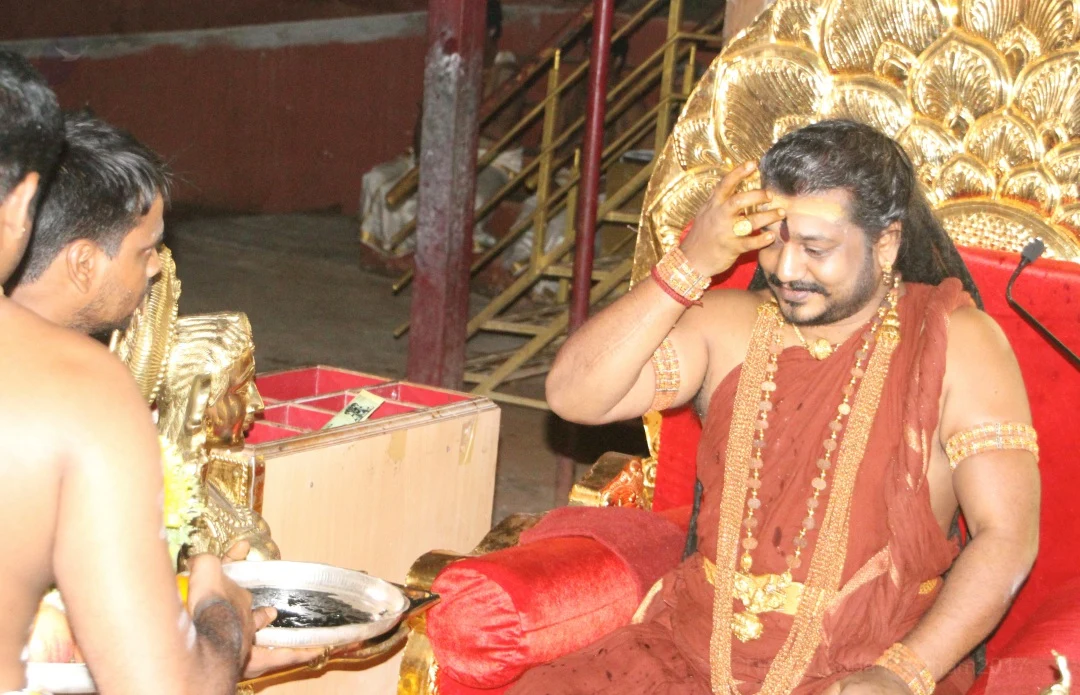
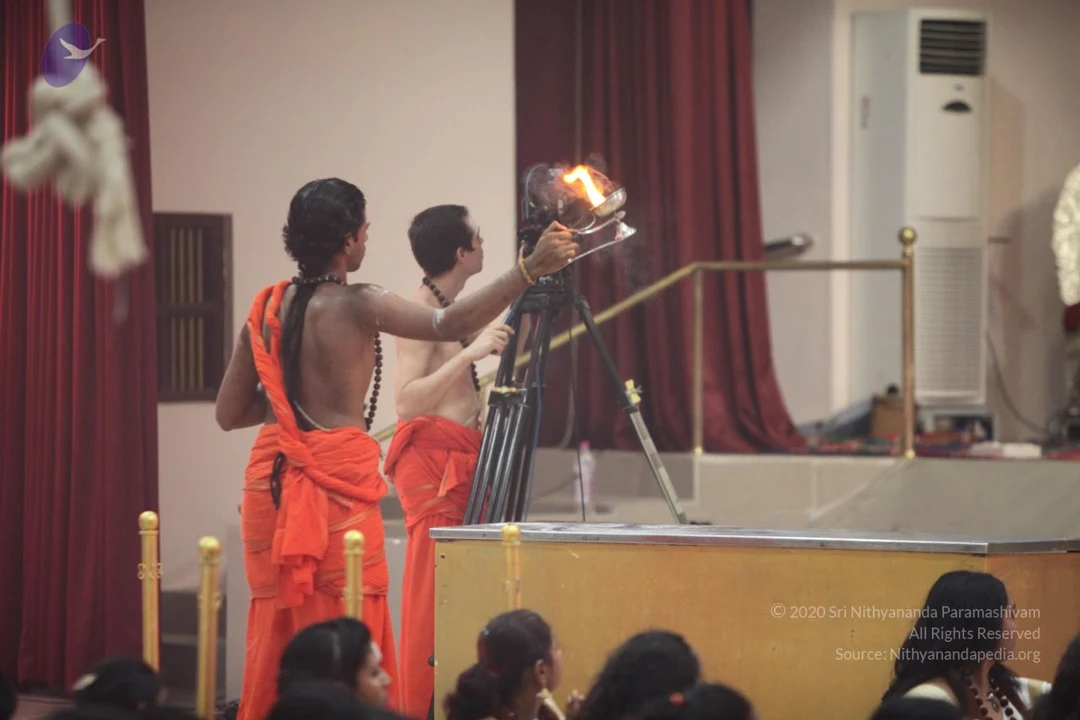
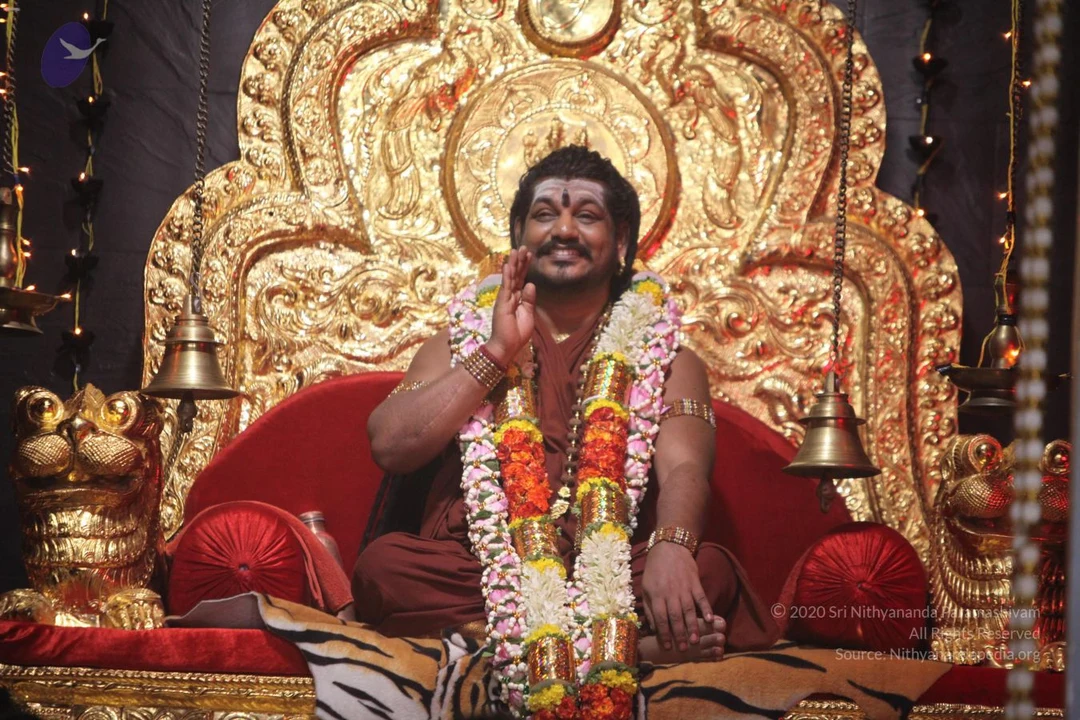
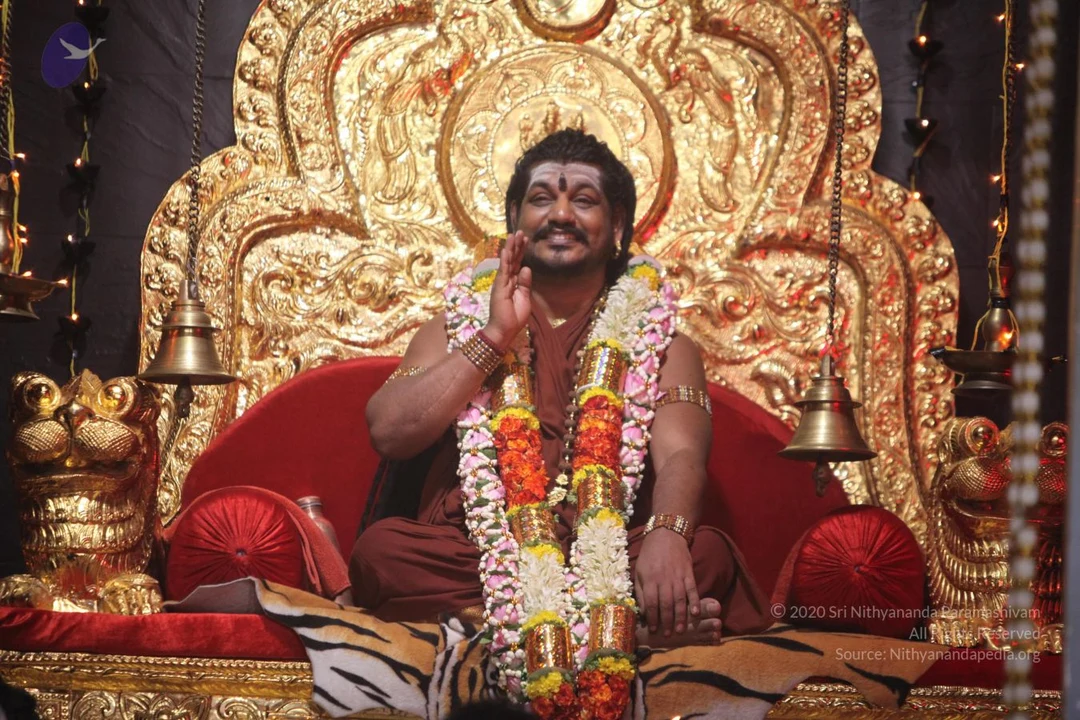
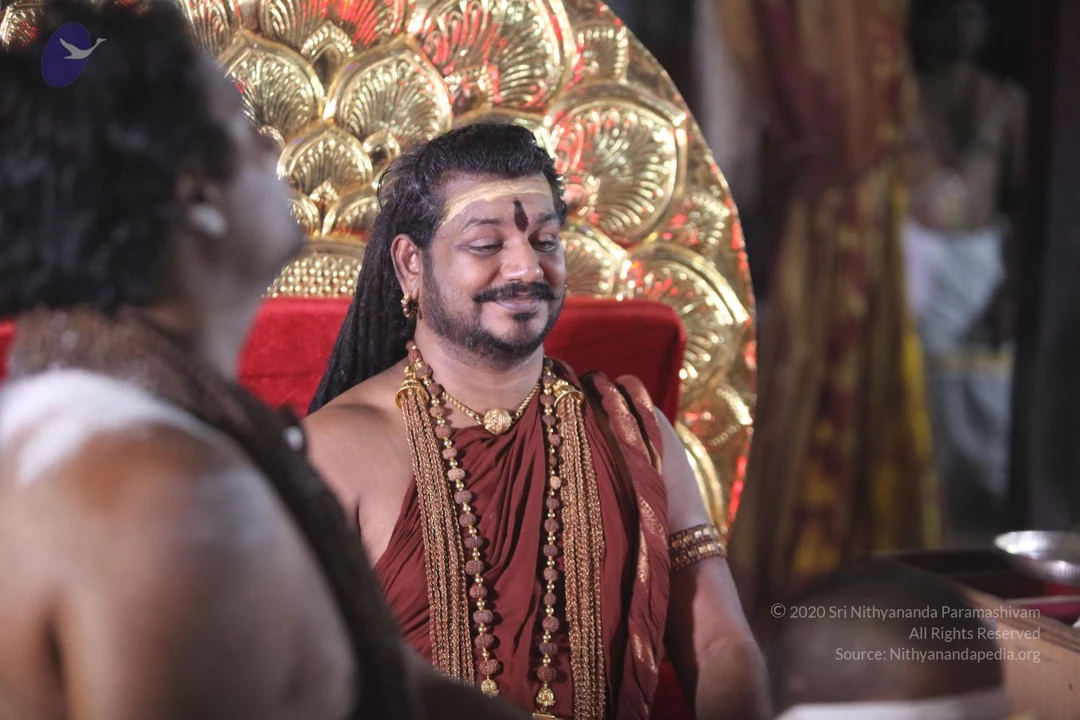
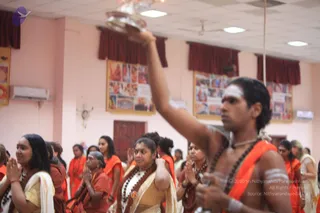
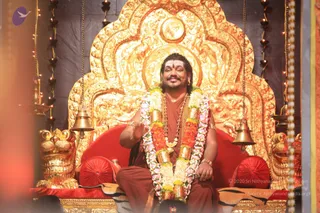
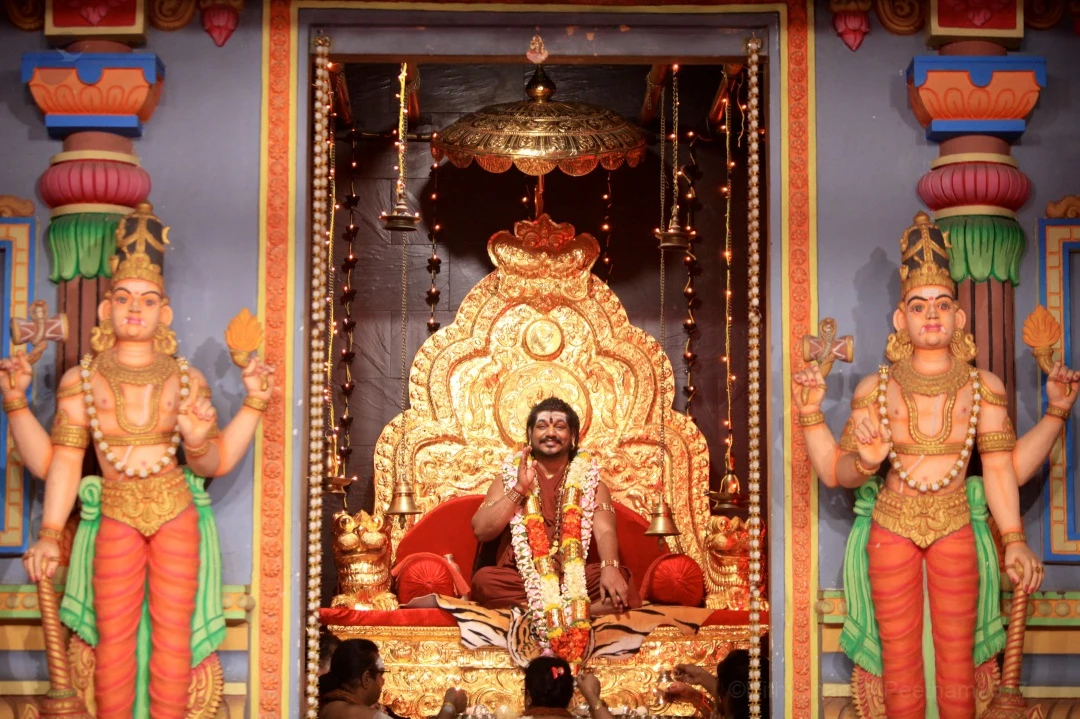
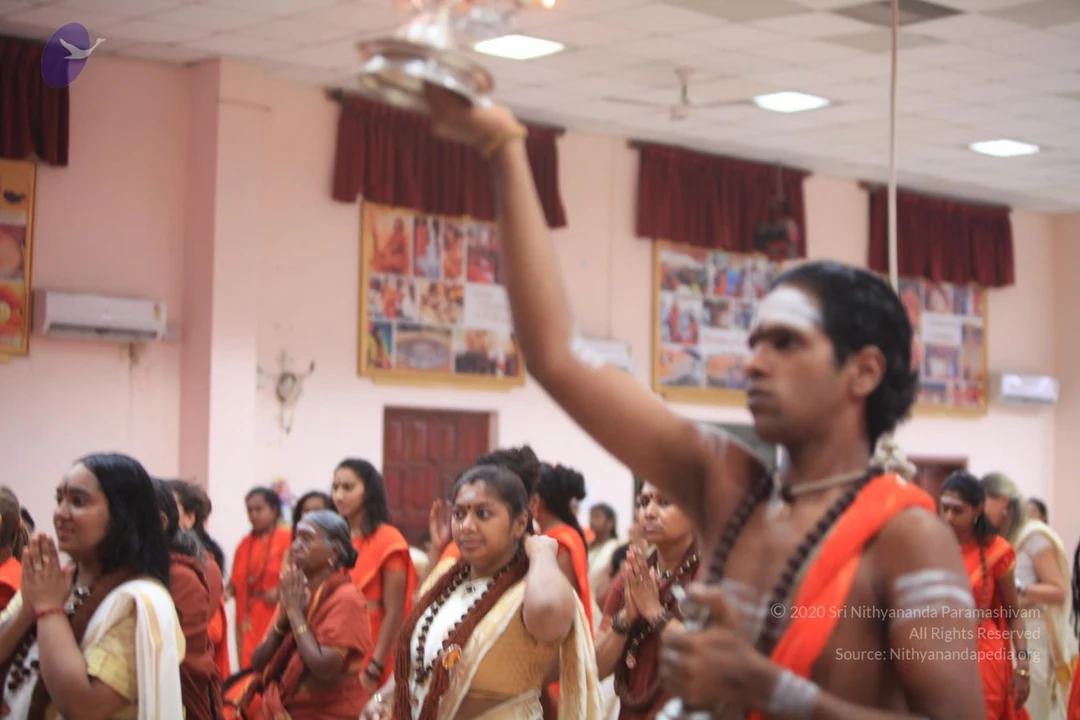
A photograph of a ritual scene in a hall with pink walls, red curtains and framed photo collages. In the foreground a bare-chested man in an orange cloth and a rudraksha mala raises a silver aarti lamp overhead with his right arm, a white tripundra on his forehead. Around him stand devotees with palms pressed together in namaskar: a woman in a cream and gold sari with beaded necklaces at left, an older woman in orange, and several women in orange and cream saris behind. The background is blurred and the photo appears to show an aarti during a puja. No person is clearly identified as a person by appearance; the central figure is a priest performing aarti.A man seated cross-legged on a red cushioned throne in front of an ornate gold-leaf backdrop with carved lion-head armrests. He wears a rust-red robe, layered garlands of white, pink and orange flowers, a gold necklace and a rudraksha-style bead mala, and gold bangles. His hair is long and swept back, with a vertical mark on his forehead, and he raises one hand in a blessing gesture while smiling. Brass bells hang on chains beside the throne and a tiger-striped cloth lies beneath him. The scene appears to be a satsang or darshan setting. Appearance cues are consistent with the page's reference to a person.A seated man in an orange-rust robe sits with eyes closed on an ornate golden throne with a tall gilded back, flanked by golden lion-head armrests and red cushions, with a striped tiger-print cloth beneath. He wears a long garland of white flowers and orange-yellow blossoms, a gold necklace, bangles, and a white tilak on his forehead. Hanging brass bells dangle beside the throne, and two seated devotees with dark hair are partly visible in the lower corners.A photograph of a seated man with closed eyes on an ornate golden throne with a red cushioned seat and carved golden lion-faced armrests. He wears rust-red robes, a long garland of white and pink flowers with orange blossoms, a rudraksha mala and gold necklace, gold bangles, and a white tilak on his forehead. Hanging golden bells and an oil lamp frame the throne, with a tiger-striped cloth draped over the base. Swamiji (probable): the seated man has long swept-back hair, ceremonial gold necklaces and rudraksha malas, and is seated on a throne with saffron-red robes, matching the page's stated presence.A seated man with eyes closed sits on an ornate red and gold throne with a large gilded backrest carved with floral scrollwork and a lion-head armrest. He wears a rust-red robe, a rudraksha mala and a gold pendant, with a long garland of pink and white flowers and orange marigolds draped across his chest; a white tilak marks his forehead. His hands rest on his lap. Two people are visible at the bottom edge: one in a white garment with dark hair tied back, and a partial figure at the left. Brass bells hang from chains and a tiger-striped cloth covers part of the seat. Probable Swamiji (probable): seated on a throne with long swept-back hair and rudraksha mala, wearing rust-red robe and gold necklace.A man seated on an ornate gold throne with a large gilded backrest and carved lion-head armrests, draped in a red tiger-striped cushion. He wears a deep red-brown robe, a white-and-red tilak on his forehead, a long multicolour garland of white, pink and orange flowers and gold-and-red ribbons, a rudraksha mala and gold bangles, with his hands resting on his lap. Brass hanging bells and small lamps decorate the sides of the throne against a dark wall. The figure matches the a person cues of a red-brown robe, ornate gold setting and rudraksha mala, and the page is a satsang discourse on puja.

PADA-POOJA
203 photosSource gallery
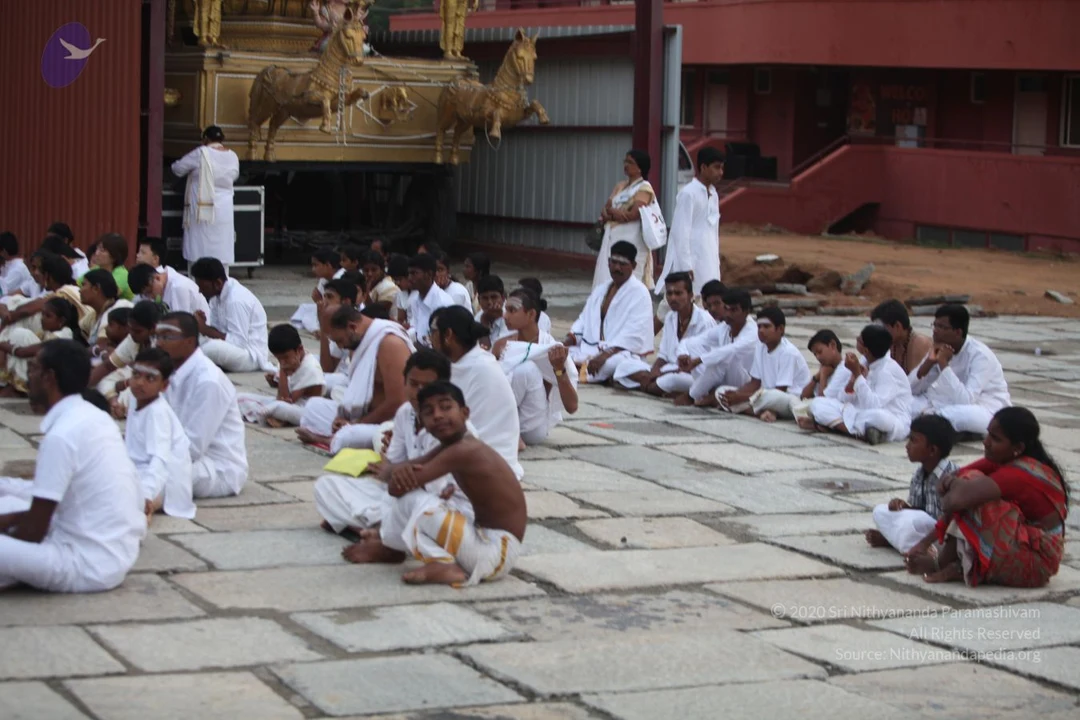
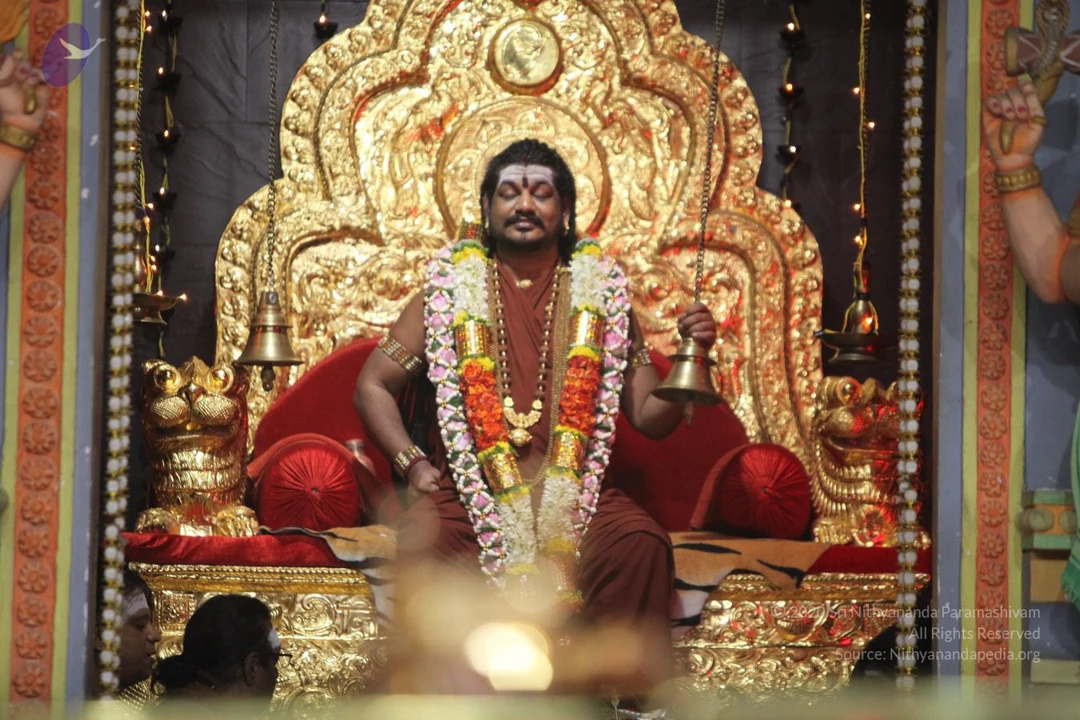
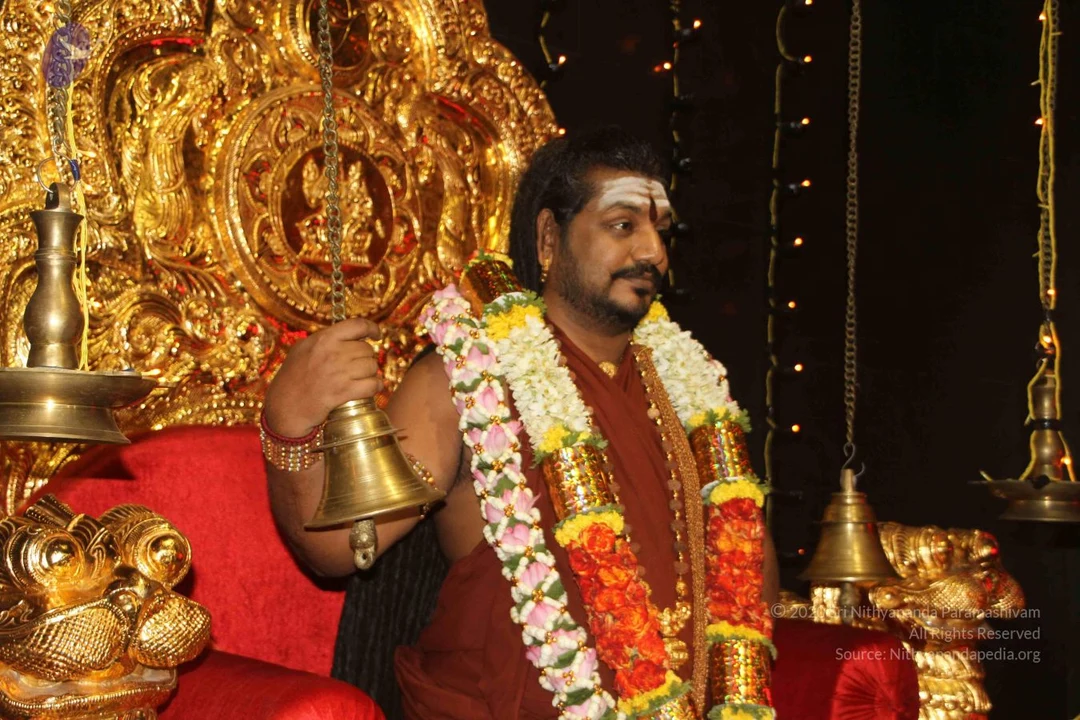
Close-up photograph of a padapuja ritual. A bare foot rests on a golden tray scattered with orange, red and yellow flowers and white plumeria blossoms. Silver bowls and vessels hold flowers, rice-like offerings and yellow paste, and a small silver spouted vessel sits nearby. Above, a garland of pink lotuses, white blossoms and orange marigolds hangs from a gold-patterned pillar wrapped in a rust-red cloth. At the top right, a person in orange-and-red ornamented clothing with orange thread and gold bangles presses palms together in anjali. Ritual objects and floral offerings are the focus.A man seated on an ornate gold throne with red velvet cushions and golden lion armrests, eyes closed, wearing a maroon-red robe, white vibhuti tripundra marks on his forehead, a long garland of white flowers and orange-red marigolds, gold bangles on his arms and a gold chain. Behind him a gold repoussé backrest with a central embossed deity panel, brass oil lamps and hanging bells, and strings of small lights frame the scene.A seated man with closed eyes sits on an ornate golden throne with red velvet cushions and golden lion armrests, draped in a tiger-striped cloth. He wears a dark red-brown robe, a long garland of white flowers and orange marigolds, gold armbands and a gold necklace, with a white tilak on his forehead. Hanging brass oil lamps and bells hang from chains beside the throne, with string lights in the dark background. Swamiji (probable): the seated man has long swept-back hair, a gold necklace and ornate ceremonial clothing, and is placed on a throne with a garland, so this is a probable candidate for a person present.Close-up photo of a bare foot being worshipped during a padapuja. The foot rests on a golden plate scattered with red roses, yellow marigold and white frangipani-type flowers. Around it are polished silver bowls and trays holding red flowers, yellow paste and small silver implements. The wearer's rust-red robe is visible above, with a pink lotus and white flower garland tied with green beads and a gold cylindrical vessel decorated with yellow marigolds. A silver spouted vessel and a silver dish with a small cup sit at the left edge. Gold ornamental backdrop in the upper right. The foot is the central subject of the ritual washing and flower offering.A photograph of a man seated with eyes closed in a meditative, devotional pose before an ornate gold-leaf backdrop of carved deity figures. He wears a white tilak with a red vertical mark on his forehead, a red-orange cloth draped over his shoulders, and a thick garland of white flowers and pink lotus blossoms with green leaves, along with a gold chain and beaded necklace. Strings of small yellow lights hang against a dark background on the right. The a person label is uncertain because the appearance cues are limited and the page's a person attribution cannot be verified from appearance alone; the figure is a devotee-style presence in ceremonial garlands rather than a clearly identified teacher.A seated man in a red-maroon garment and a long white-and-pink flower garland sits on an ornate gilded throne with a red cushion and a carved golden lion-form base. Brass oil lamps hang on chains above him and metal puja vessels with flowers sit on the floor in front. Two seated attendants to the right, one in white with folded hands and a white forehead mark, press their palms together. Dark walls and fairy lights frame the shrine-like hall.
NITHYA-SATSANG
40 photosSource gallery
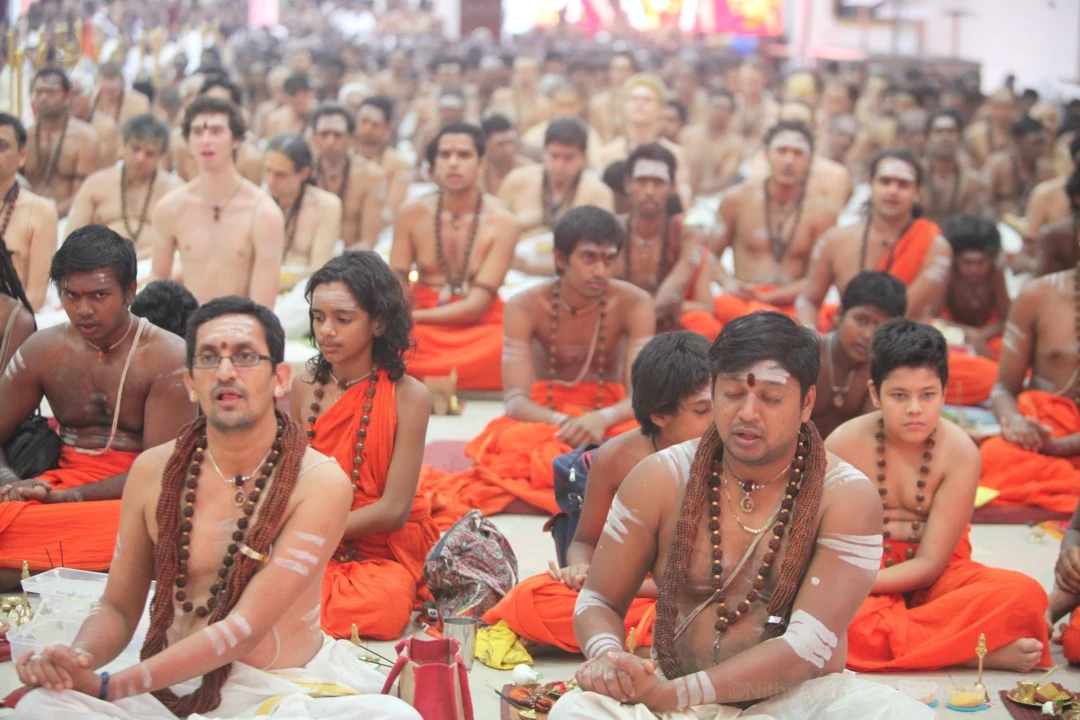
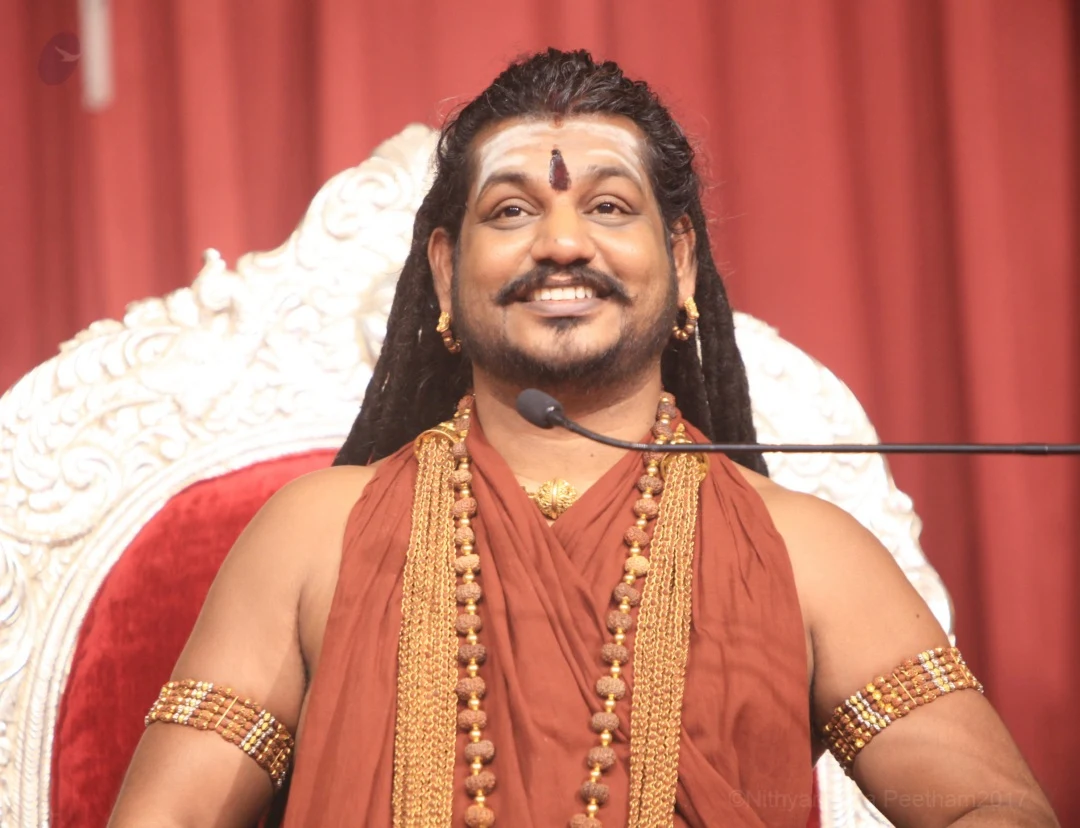
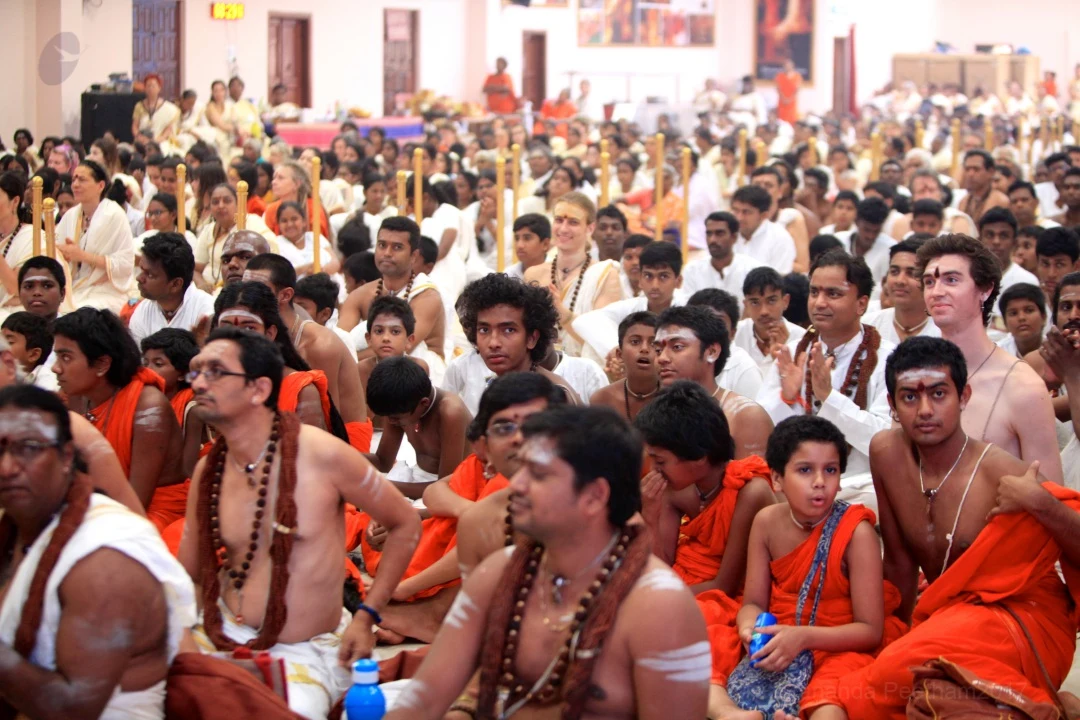
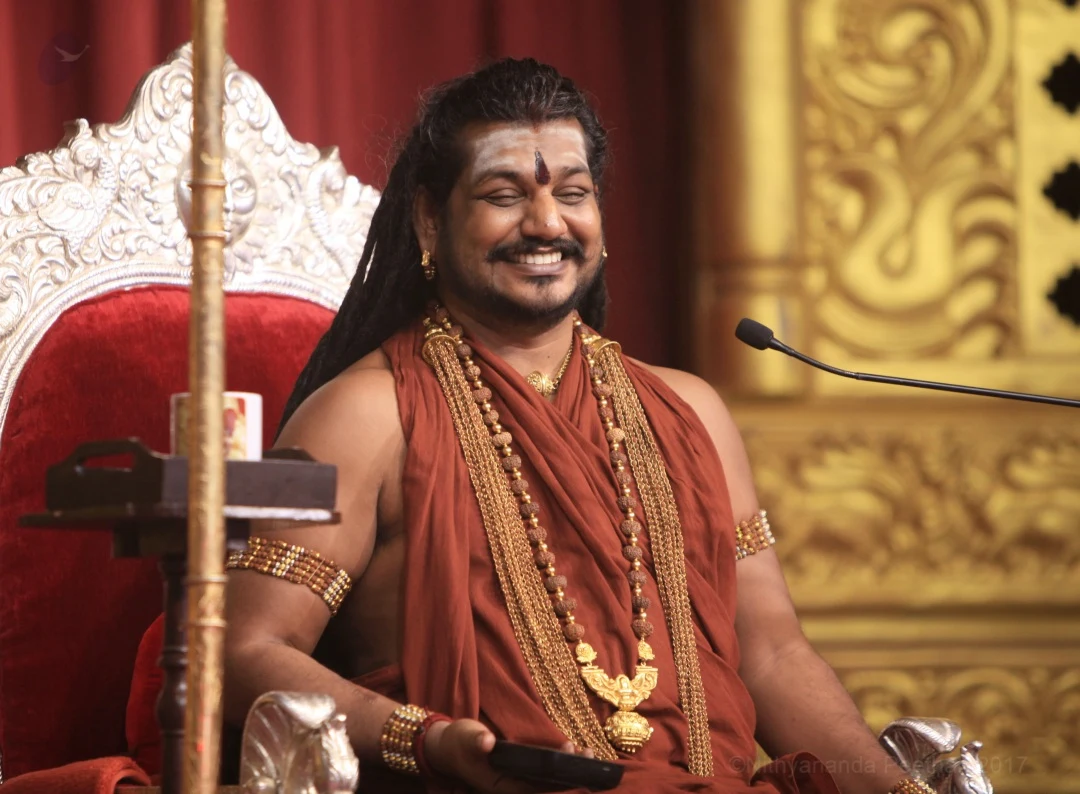
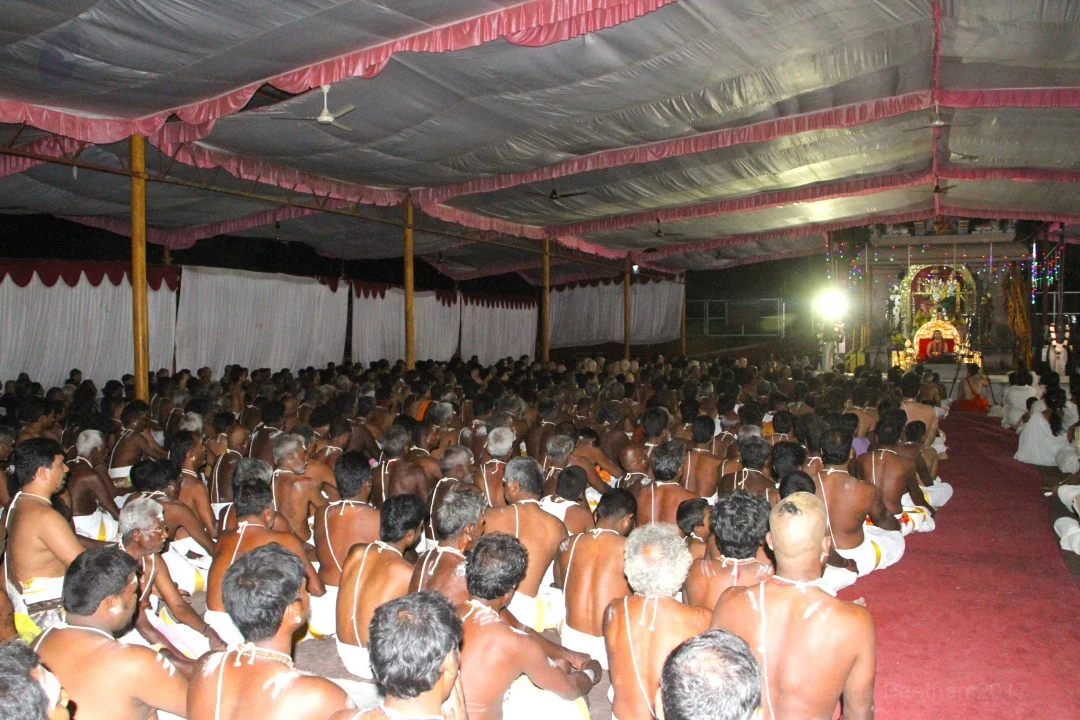
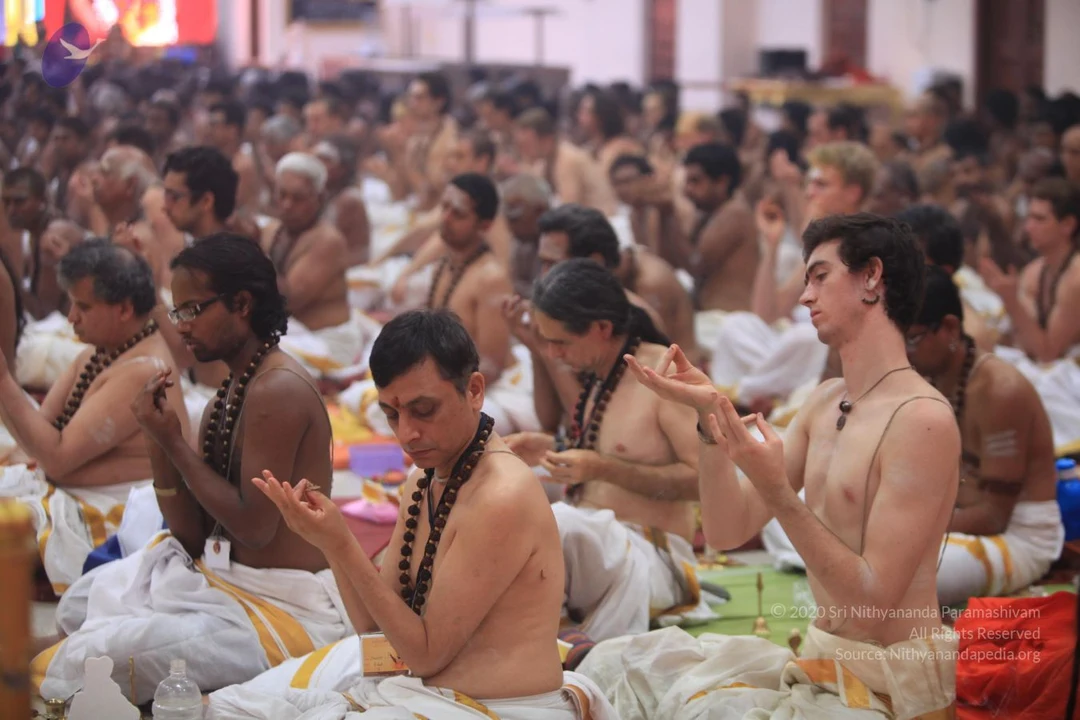
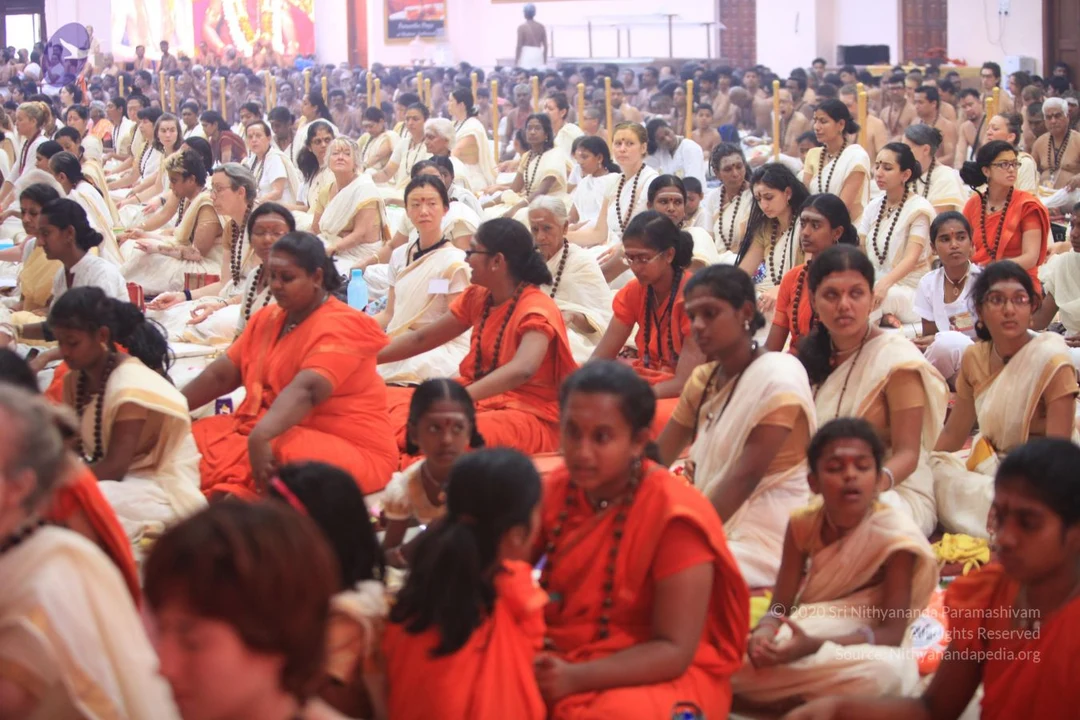
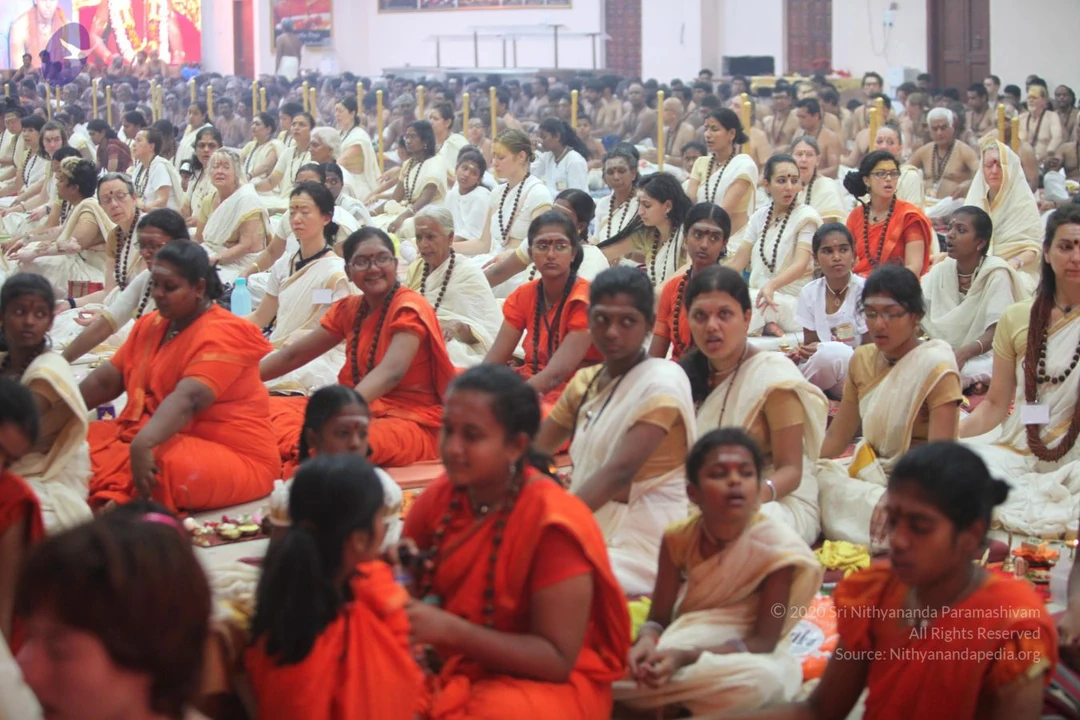
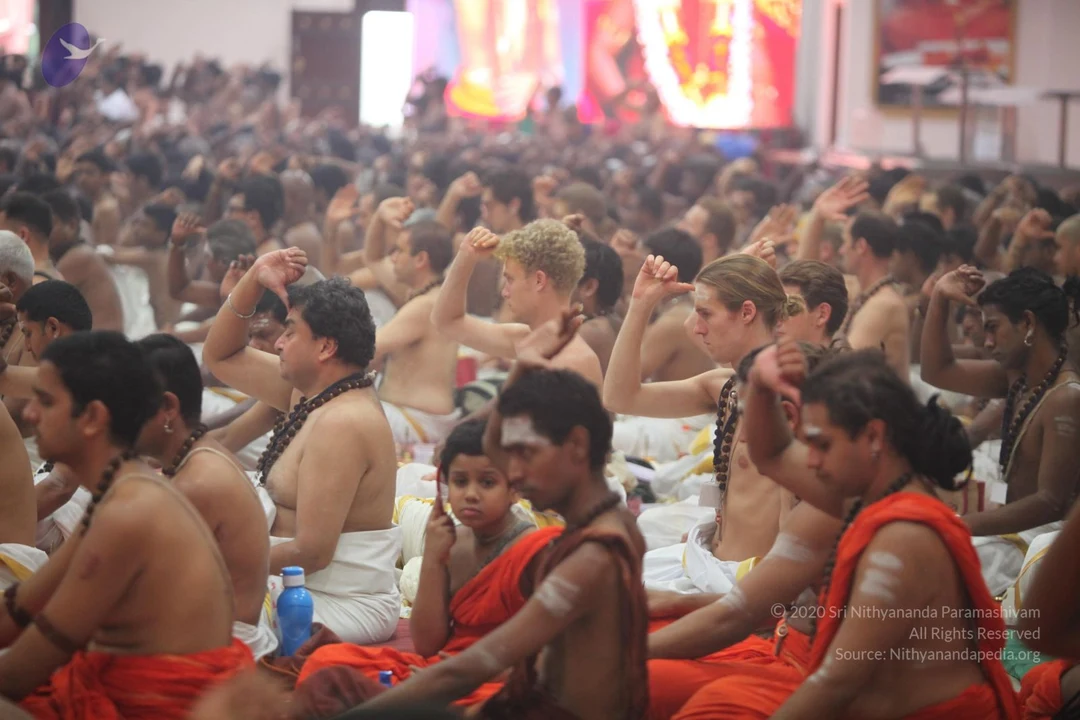
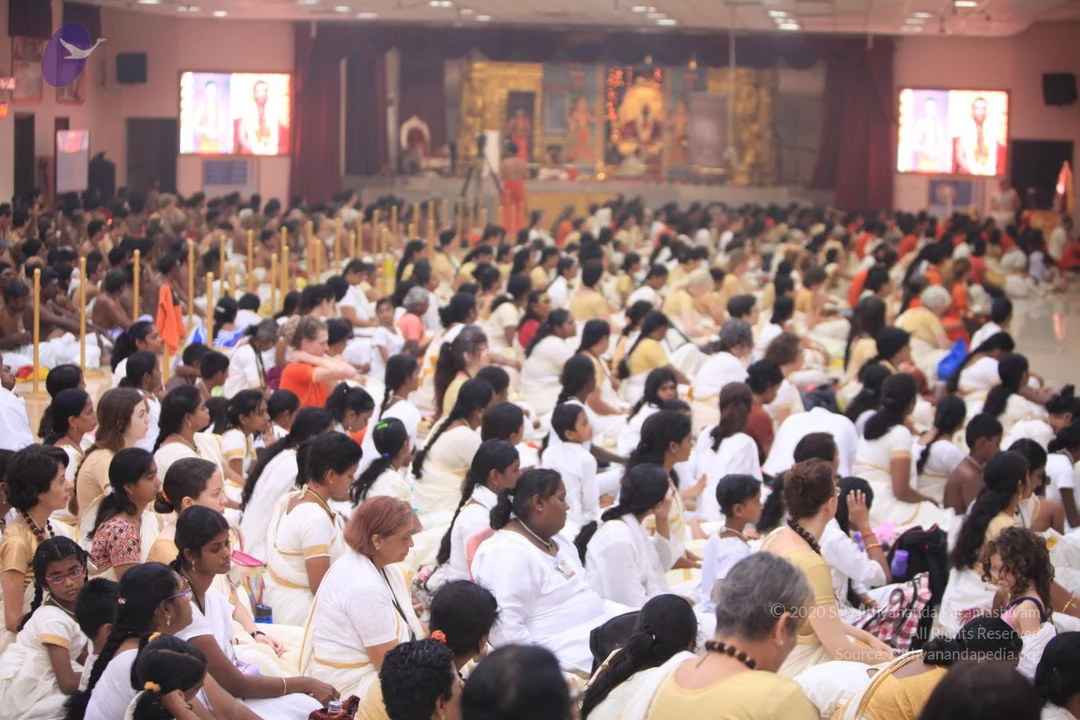
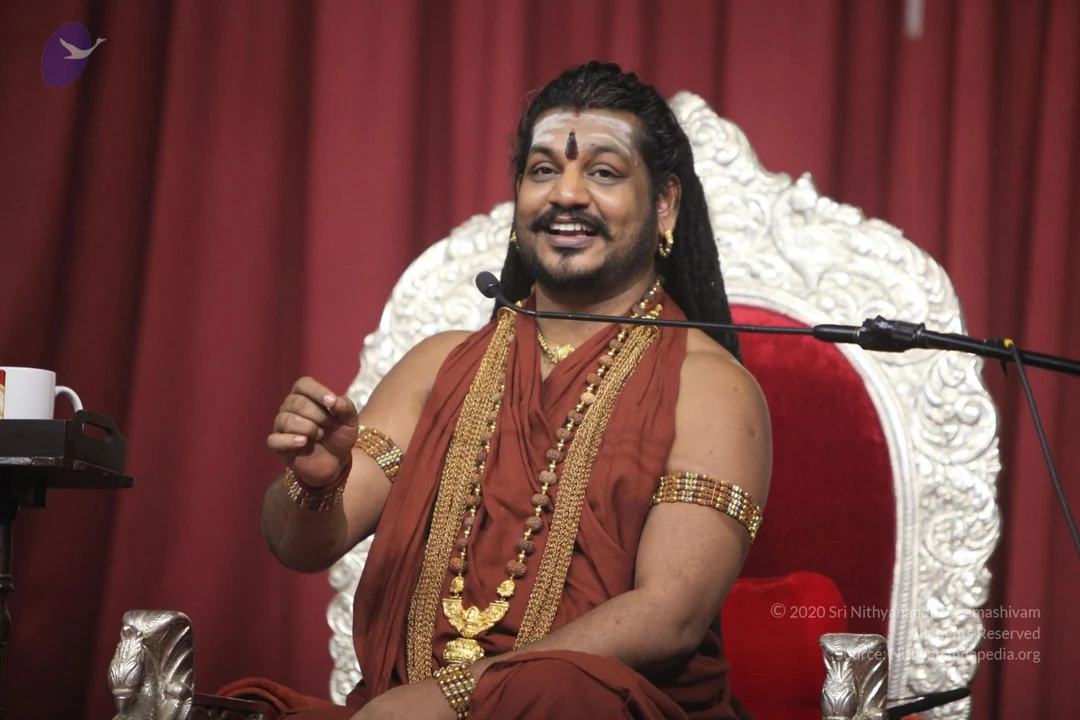
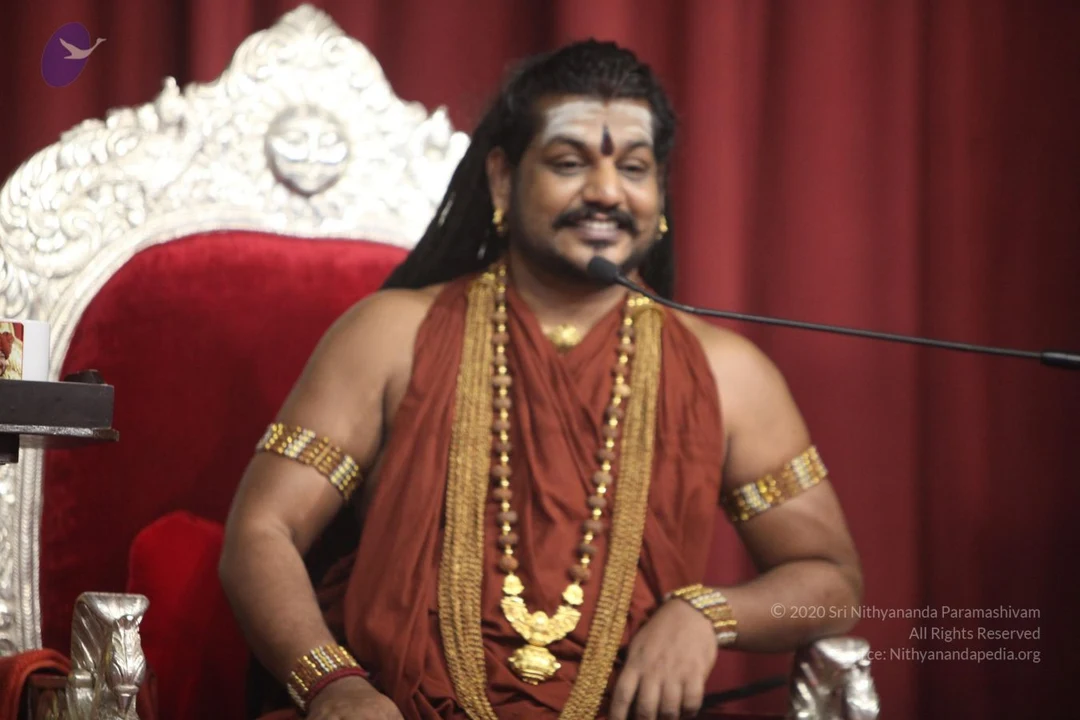
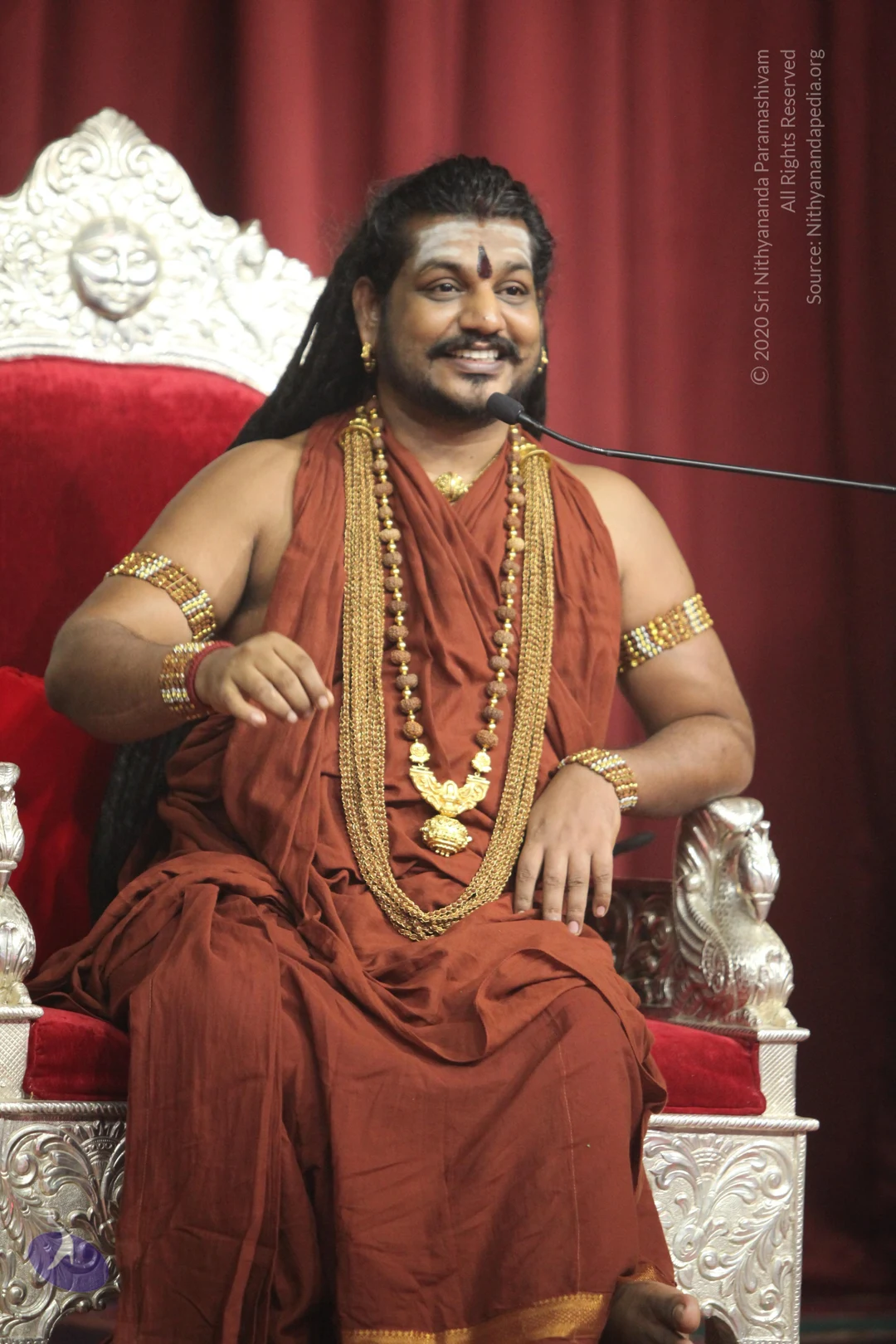
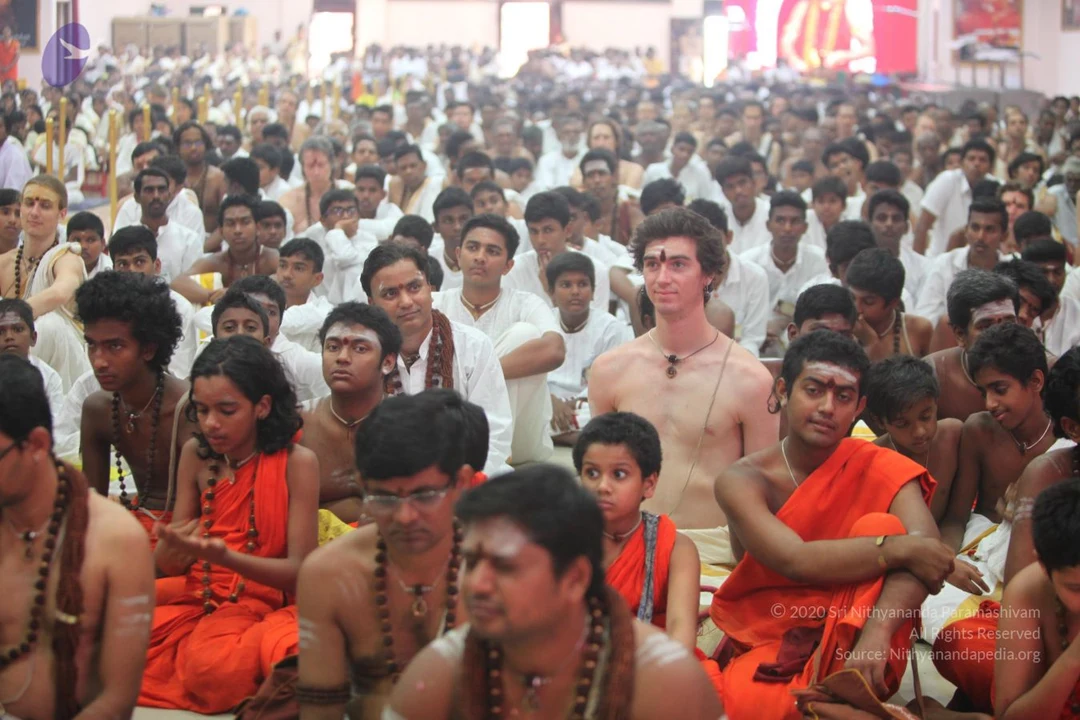
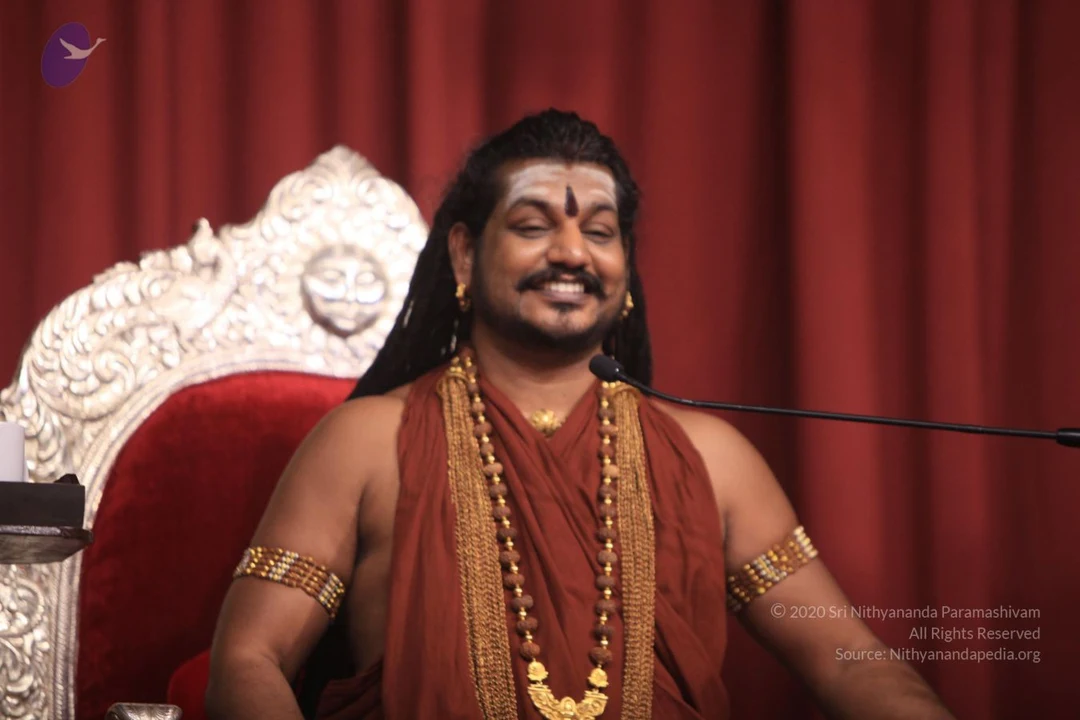
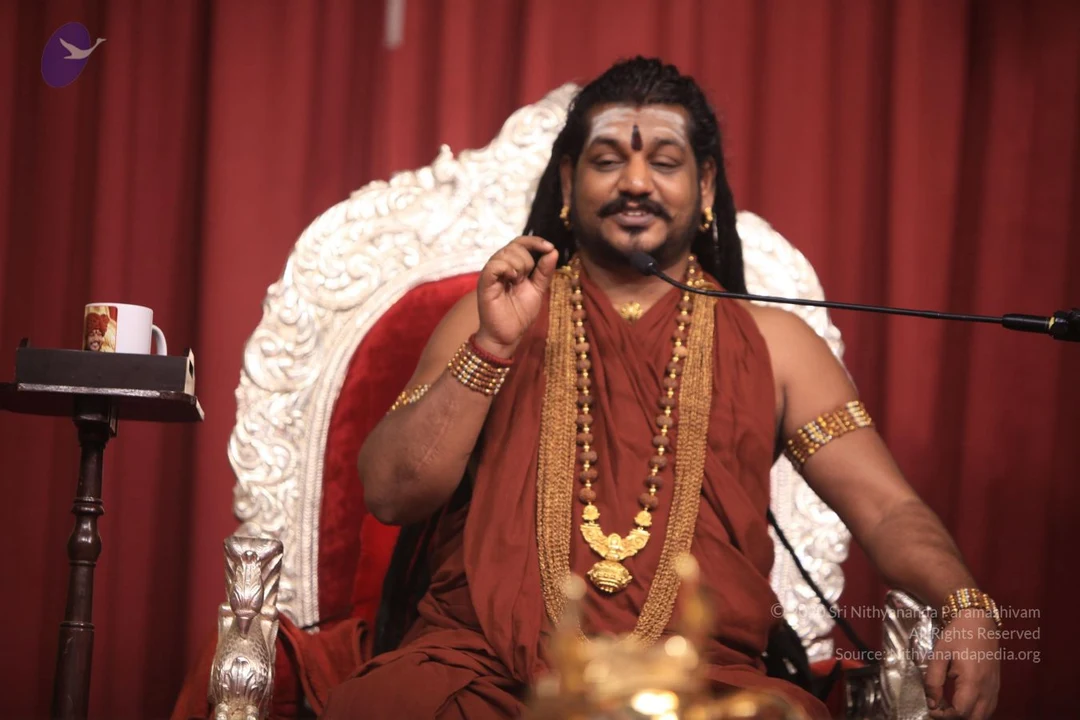
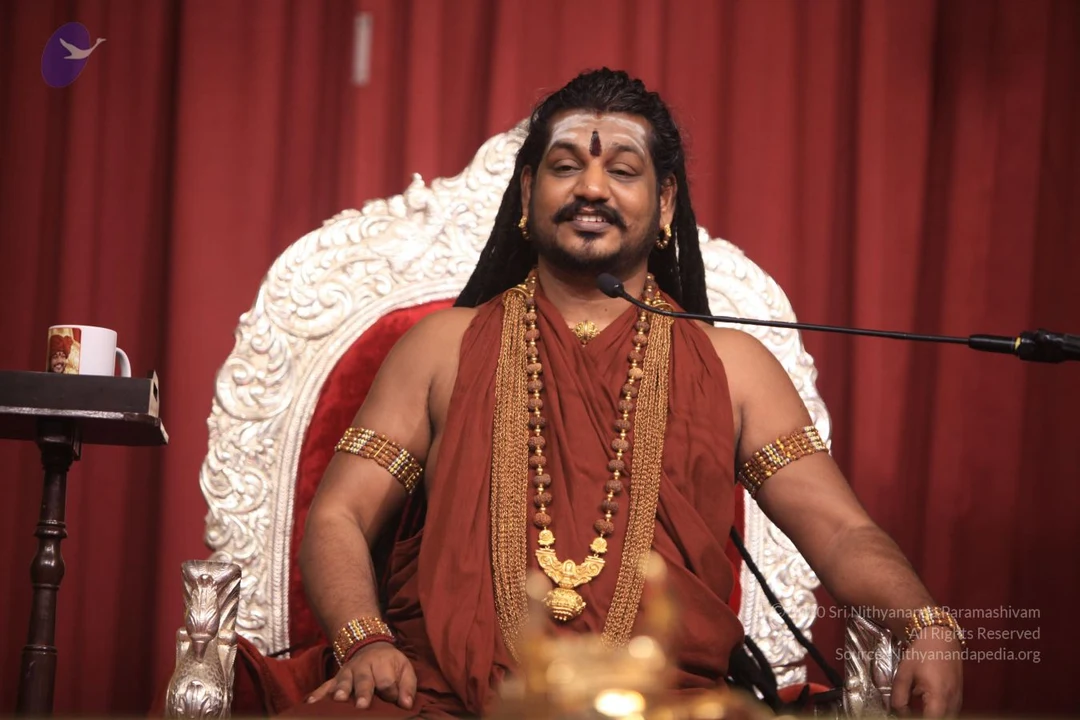
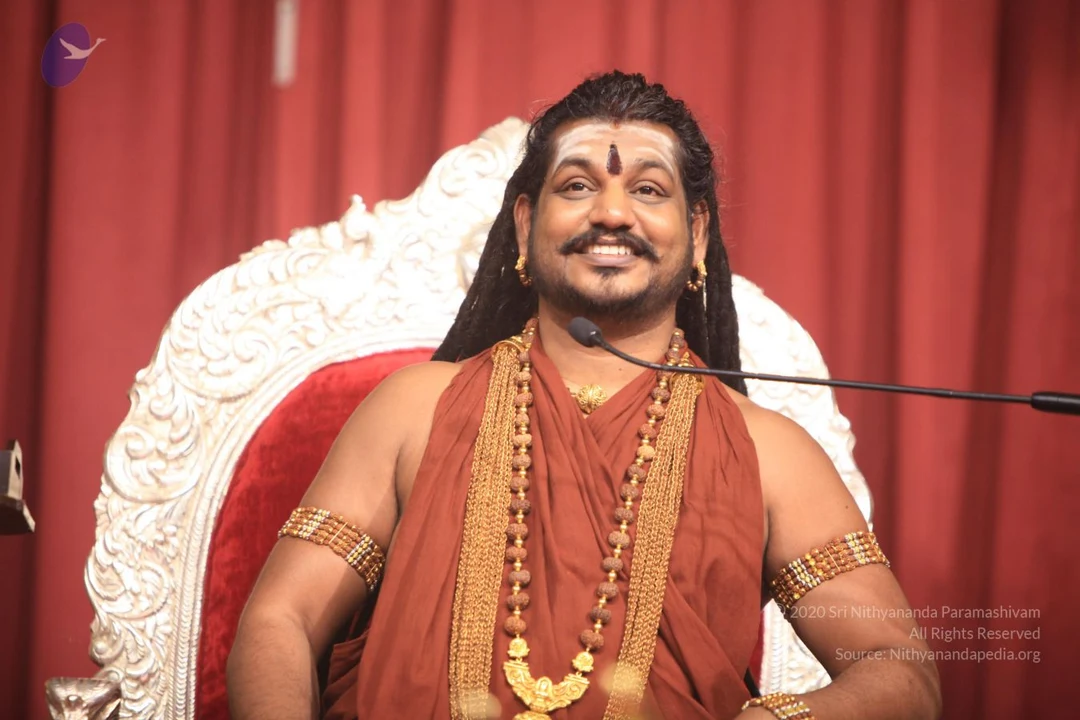
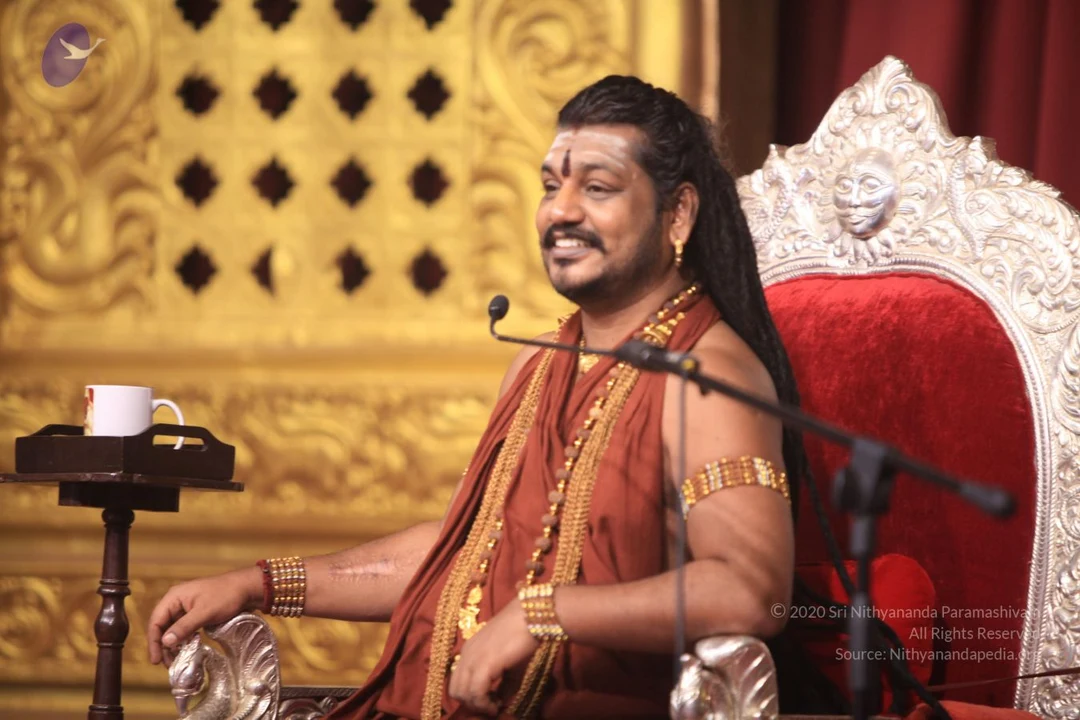
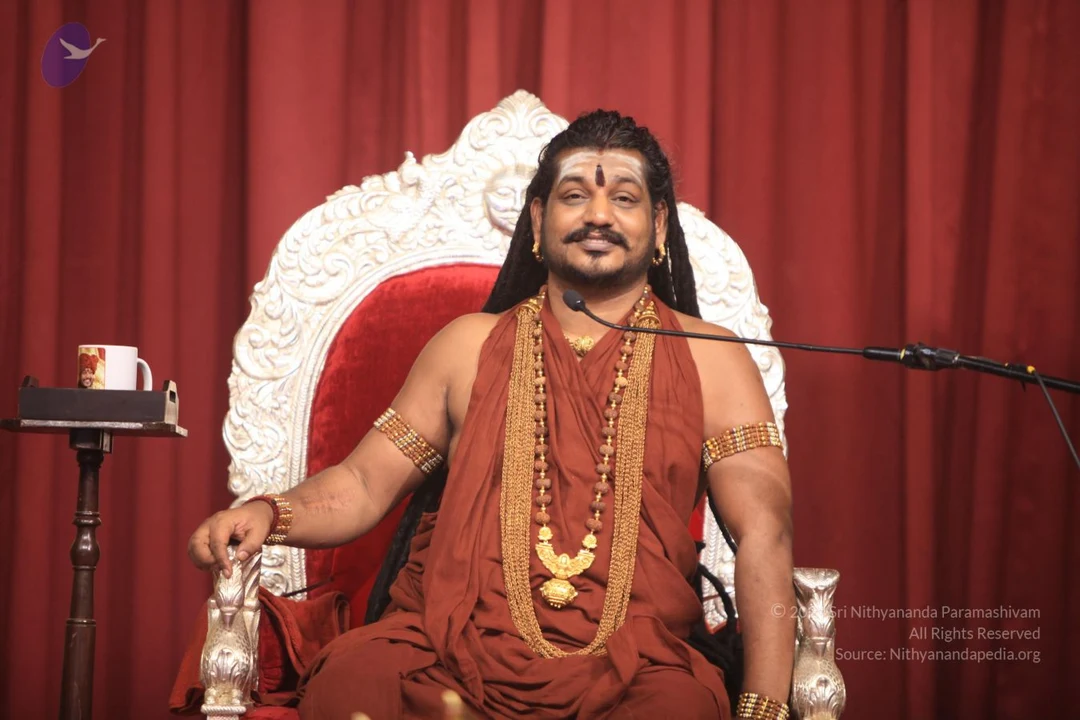
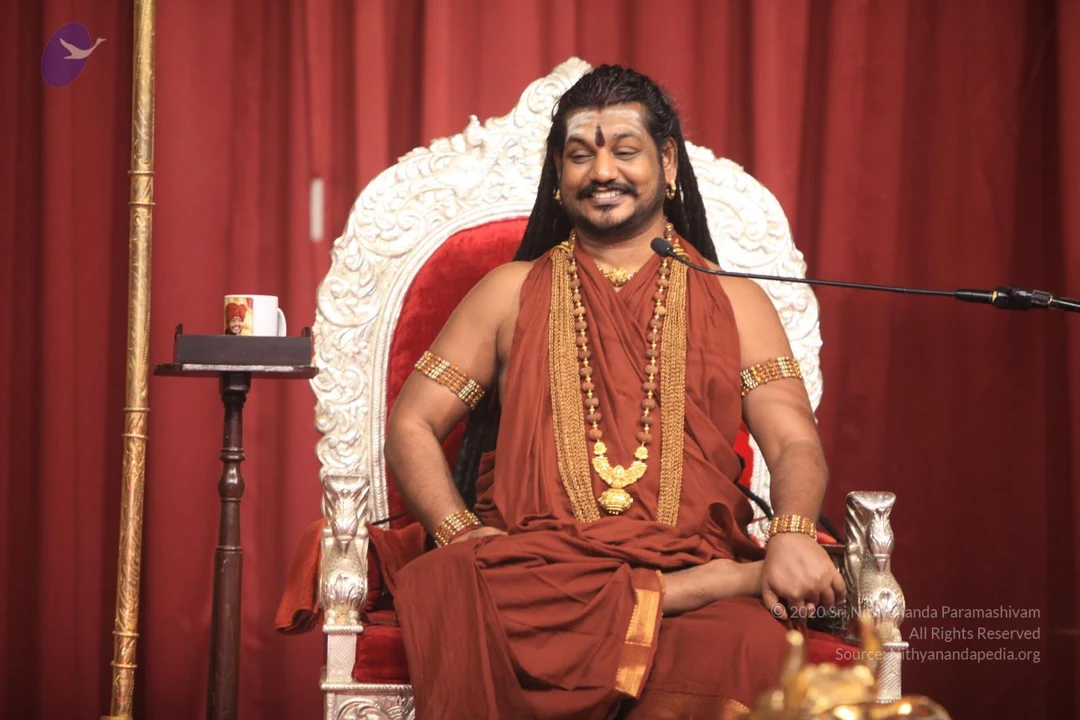
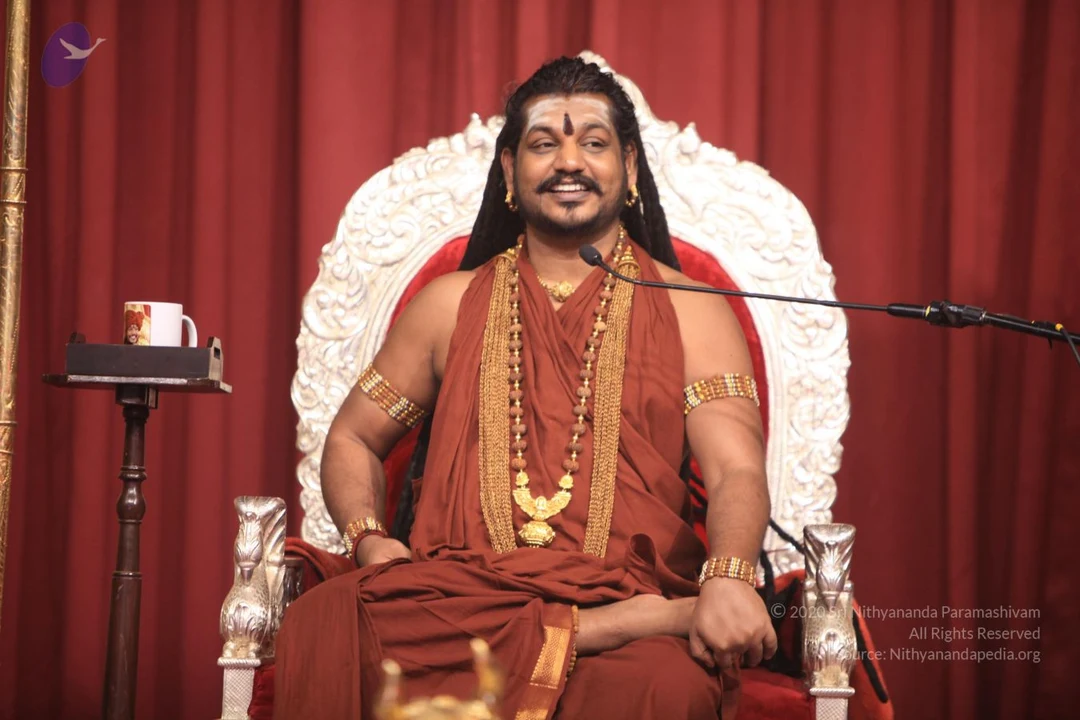
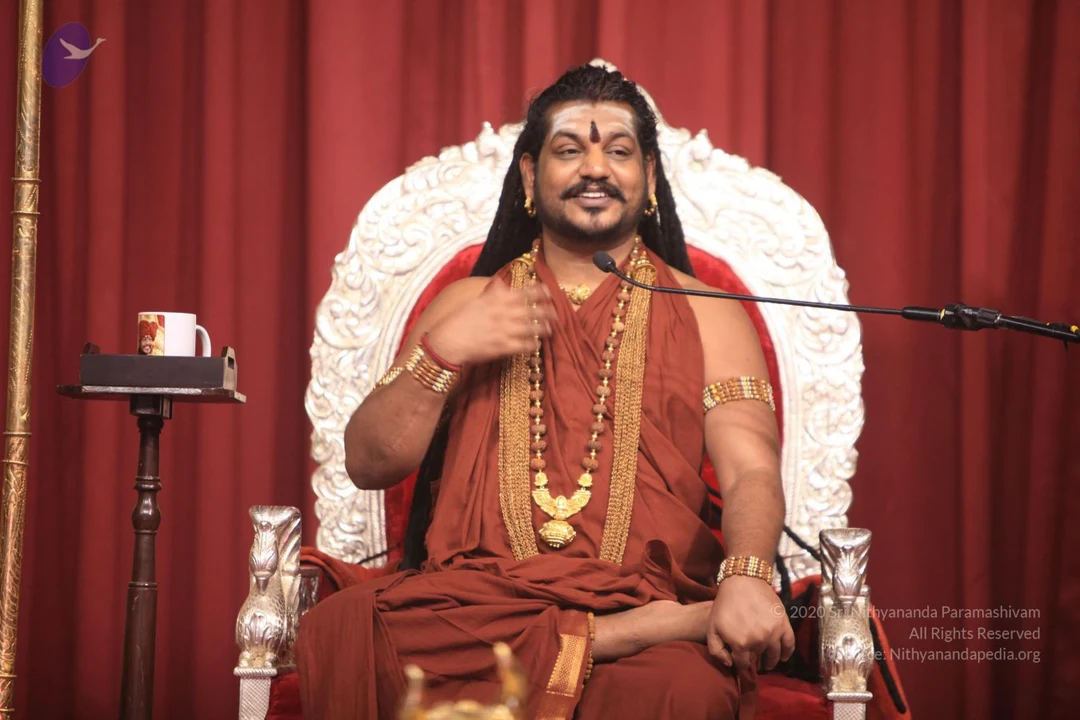
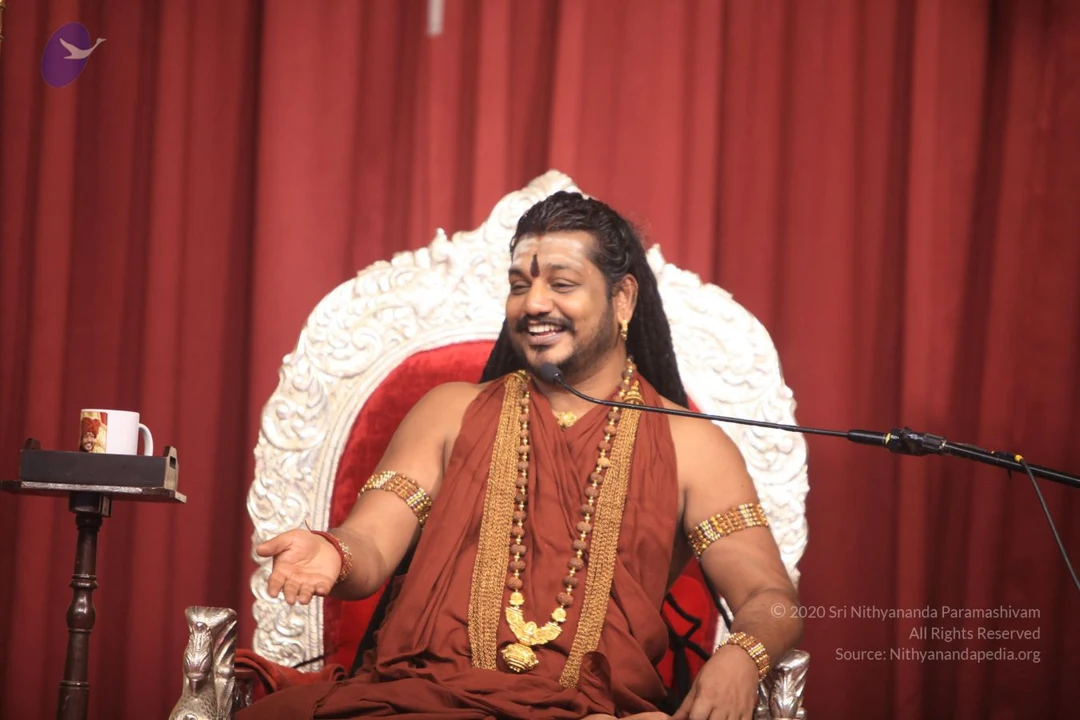
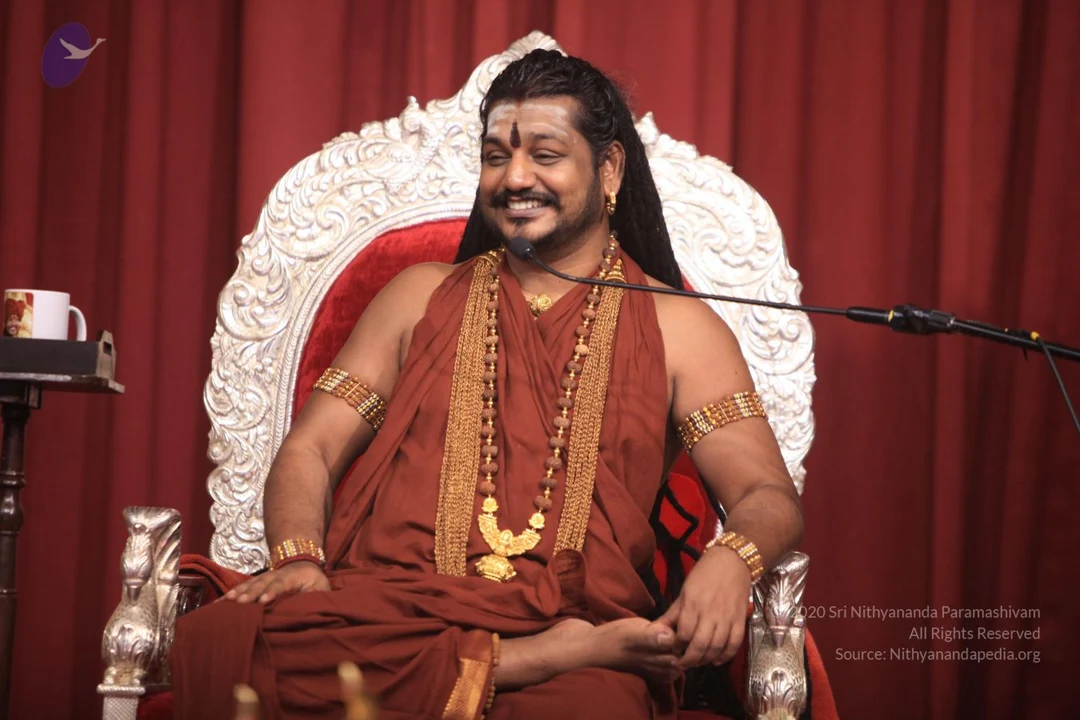
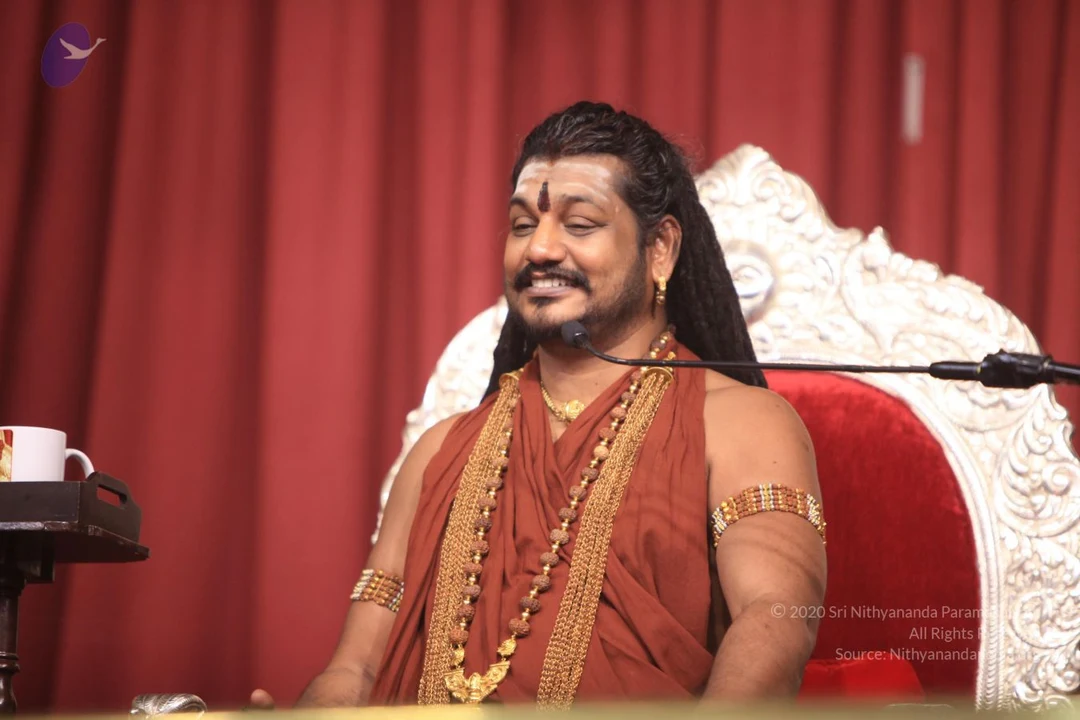
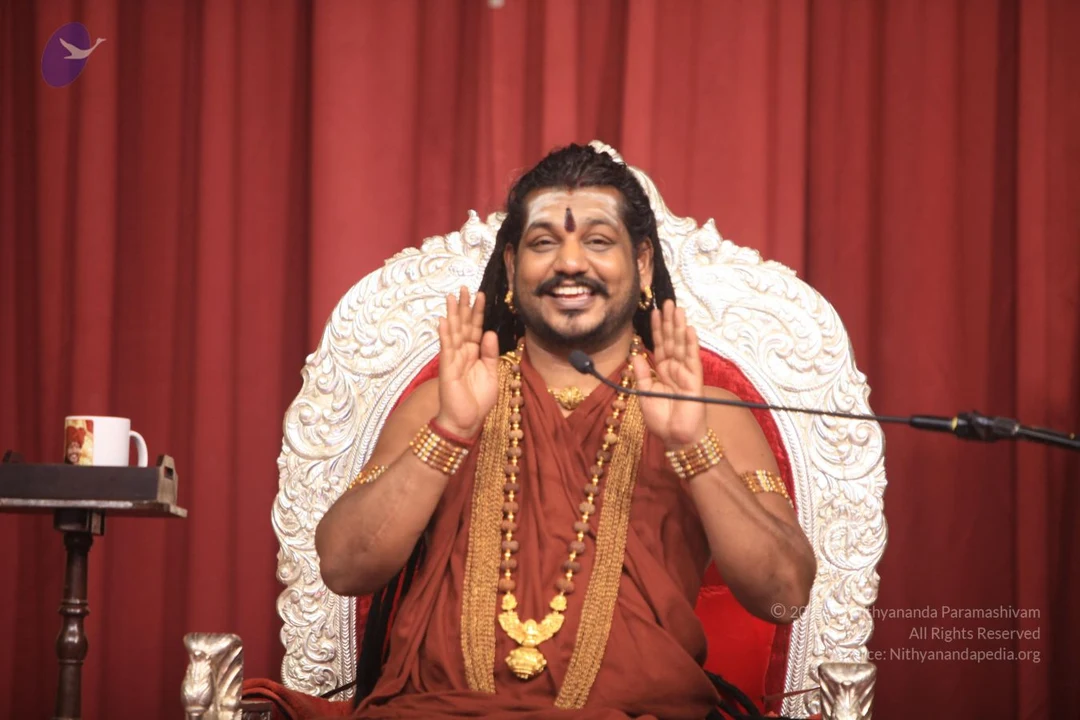
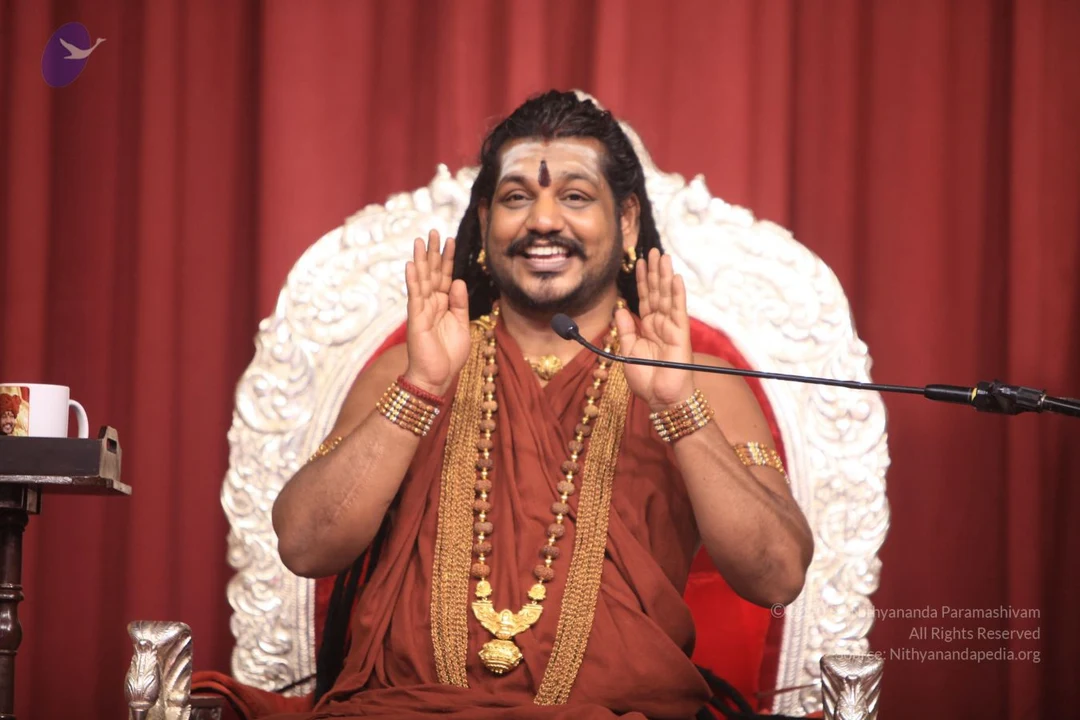
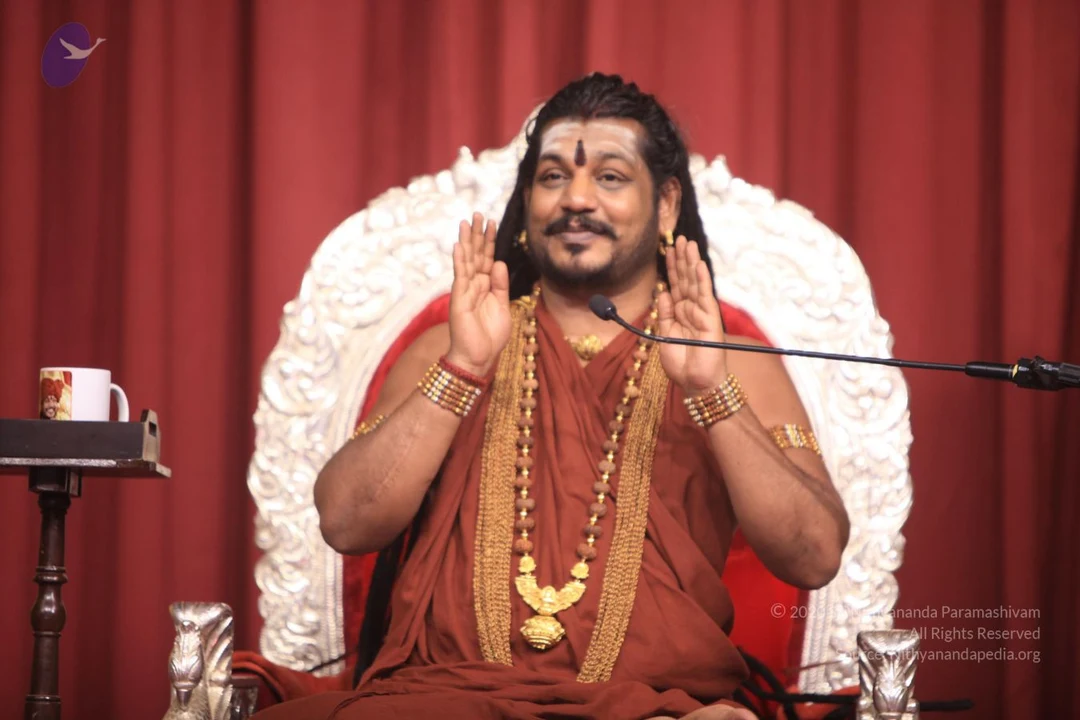
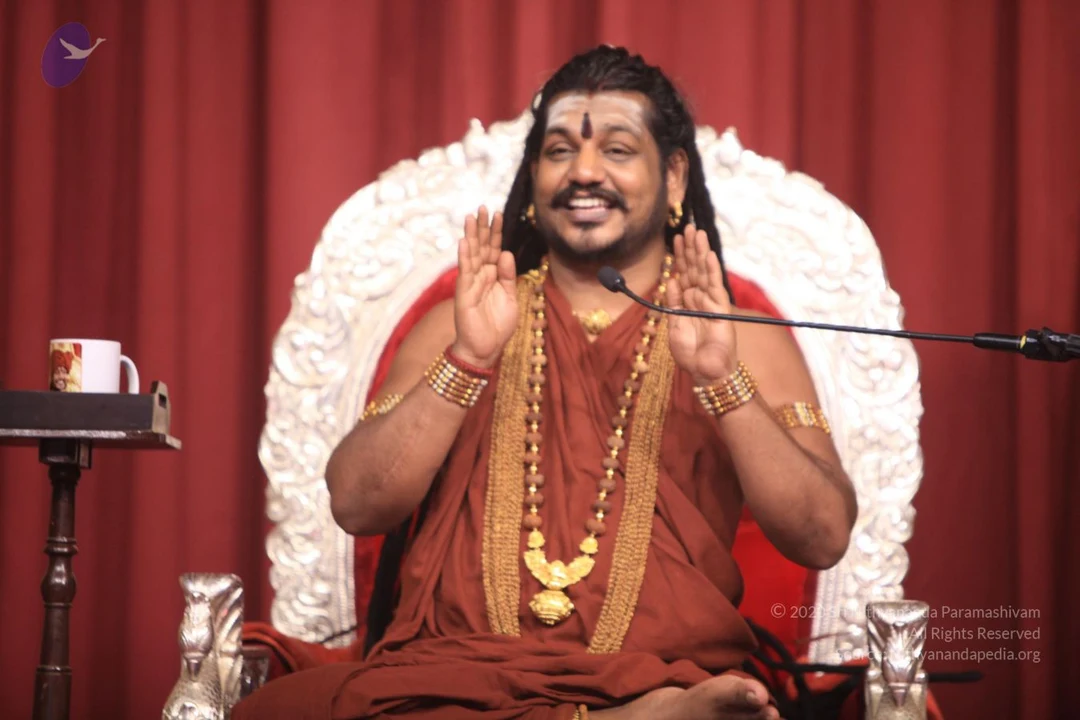
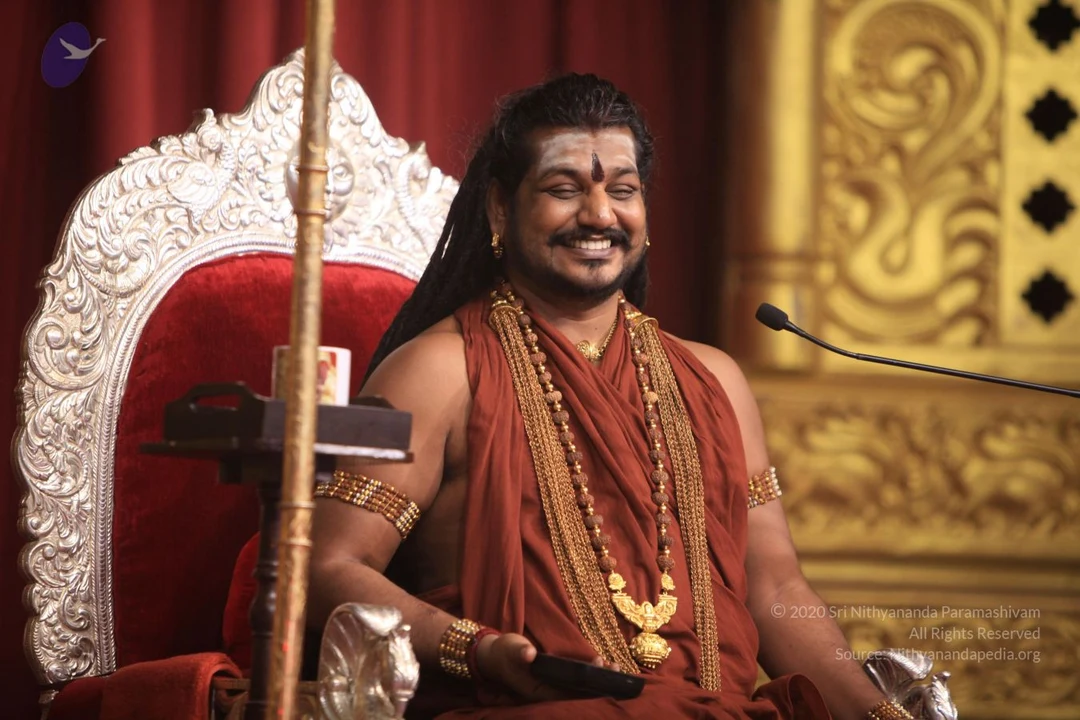
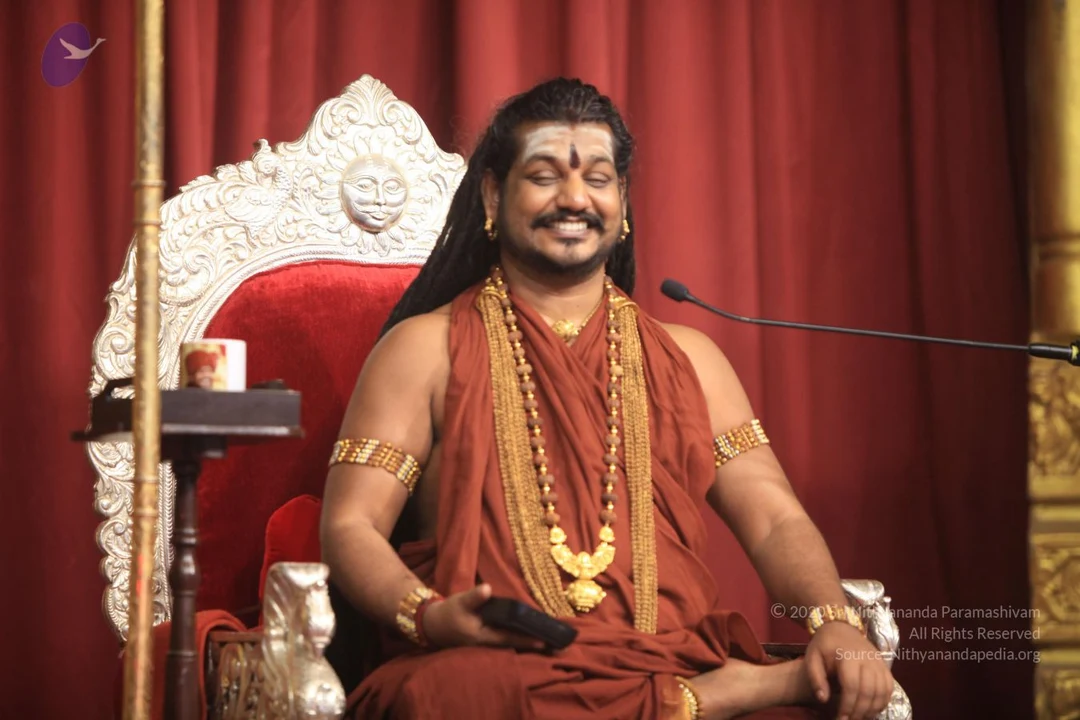
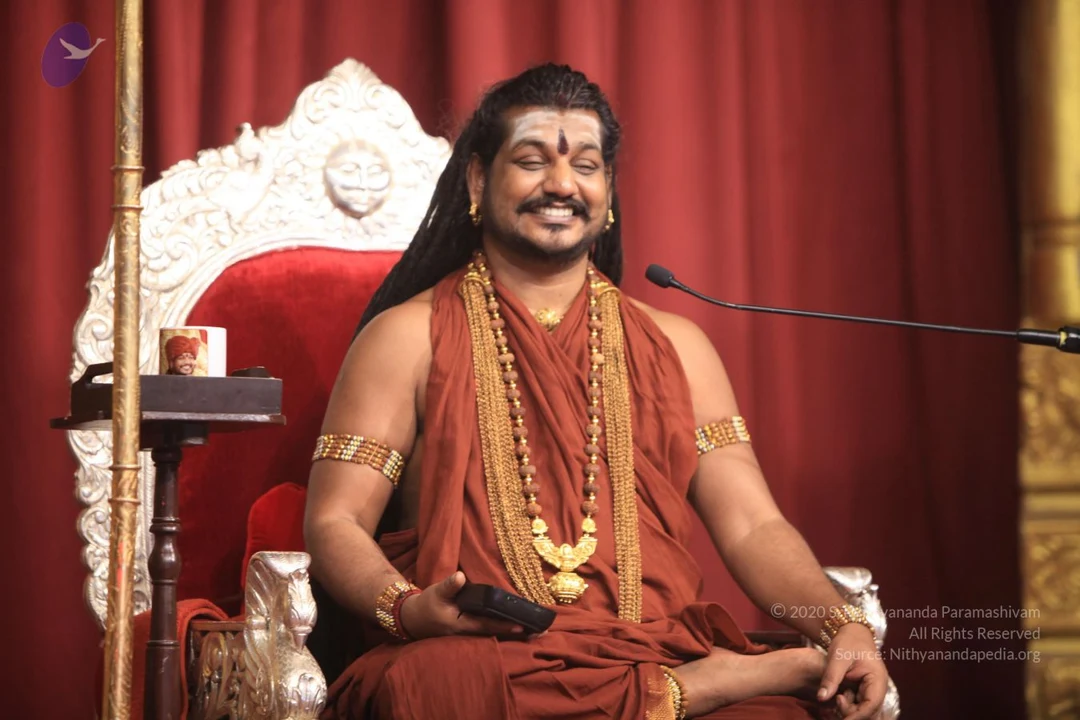
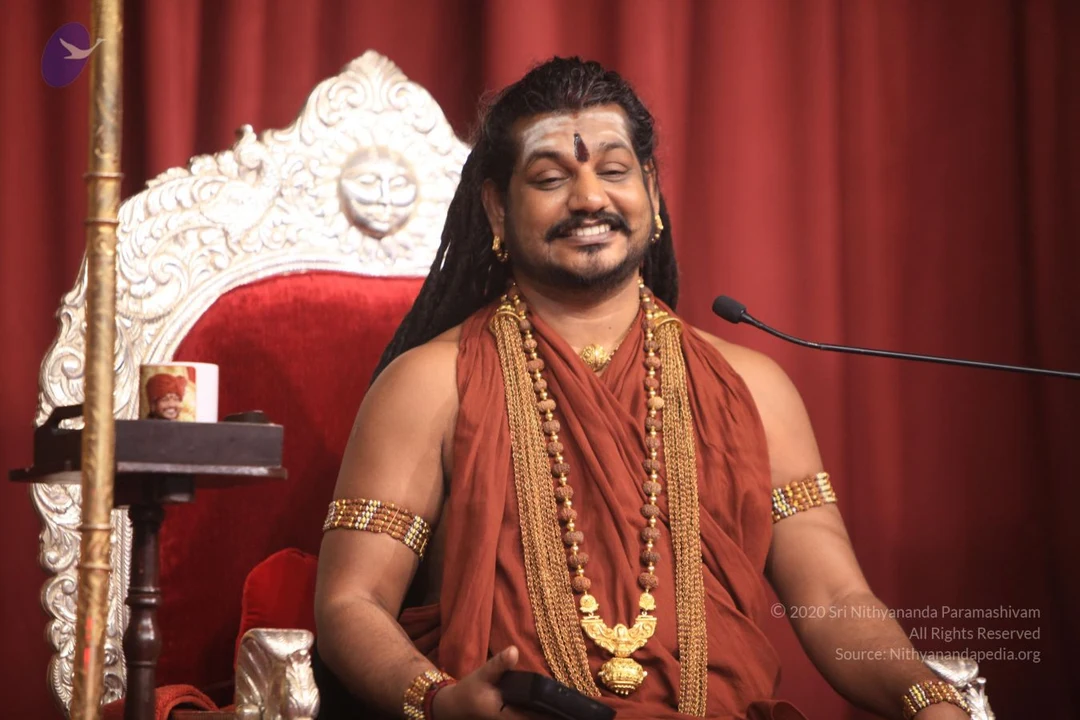
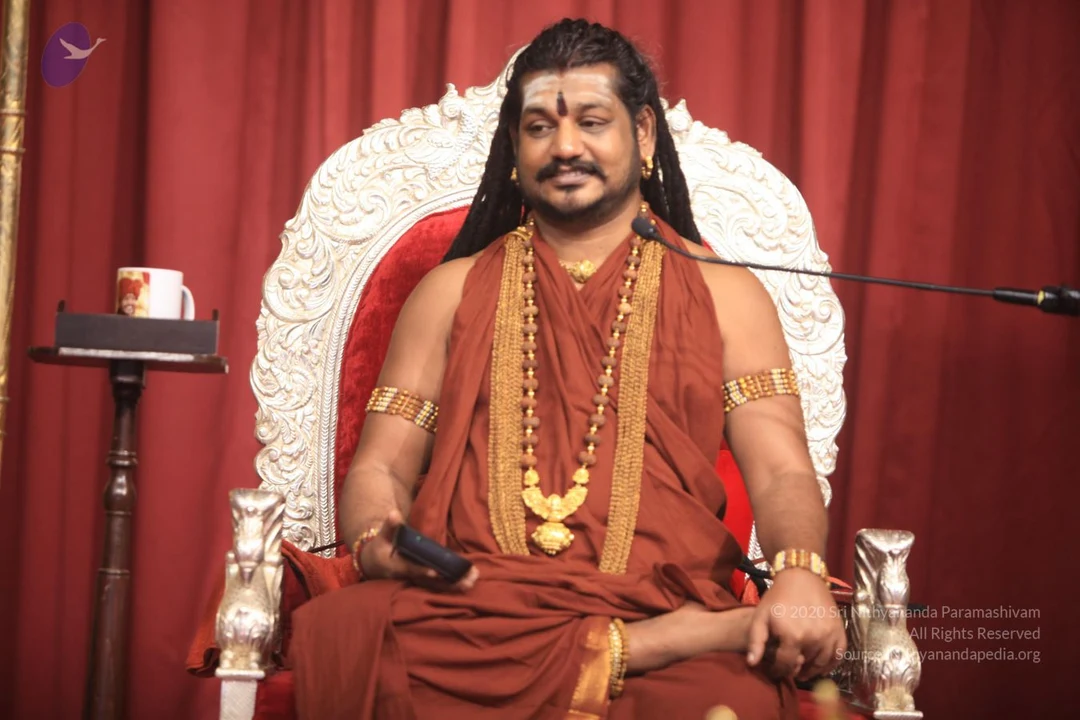
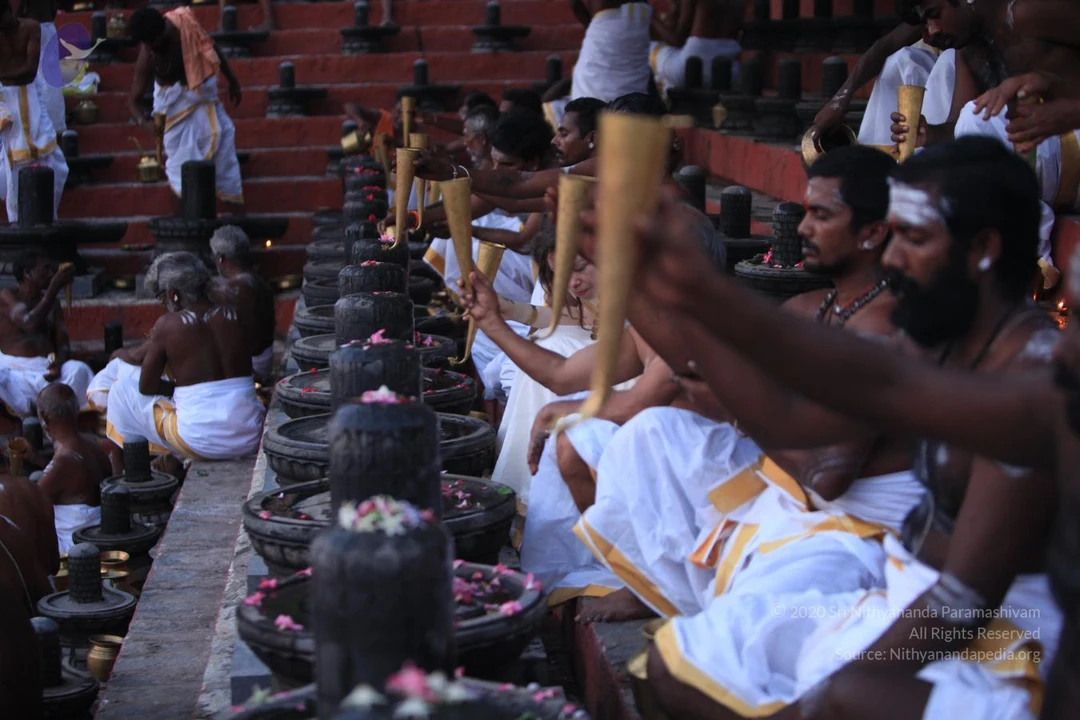
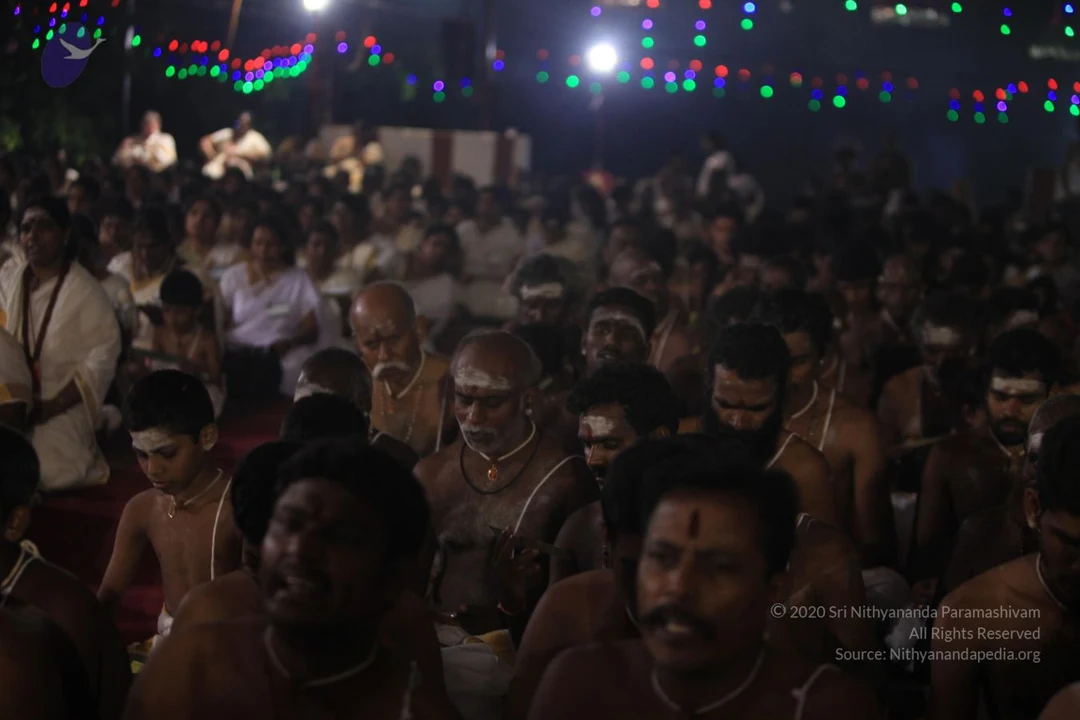
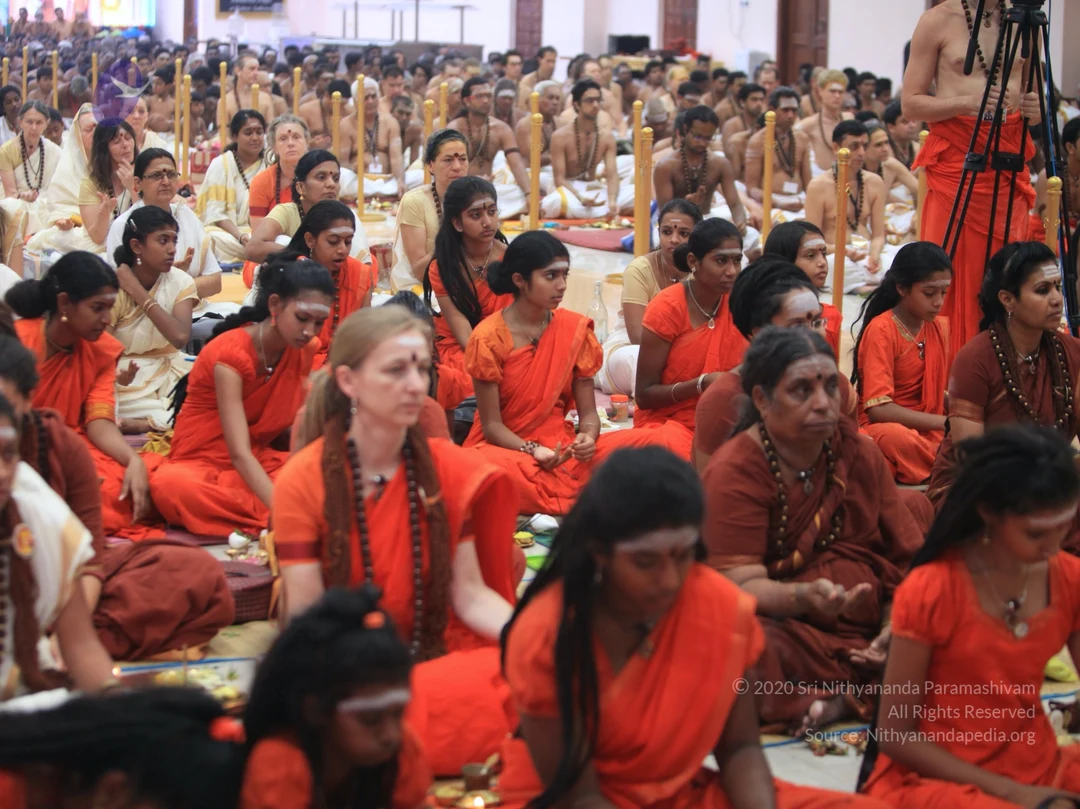
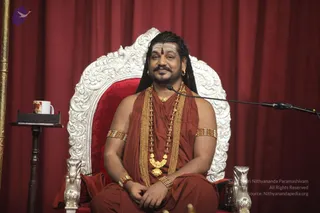
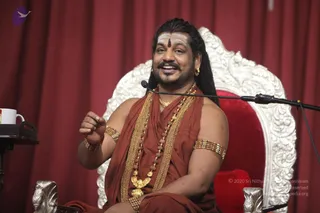
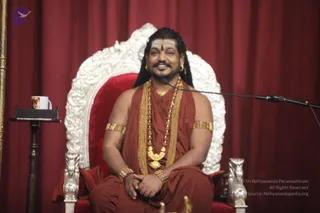
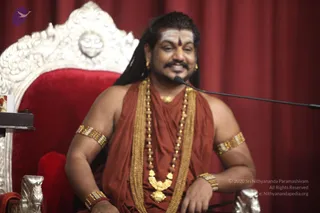
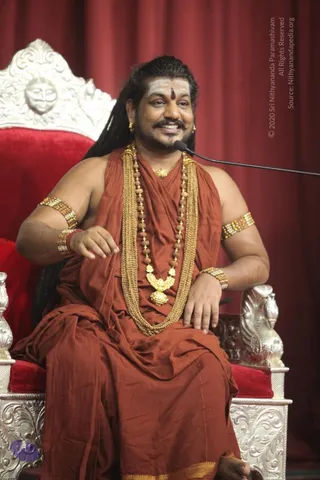
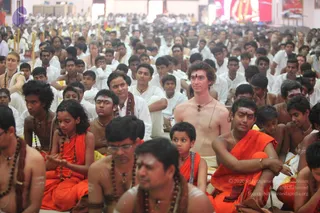
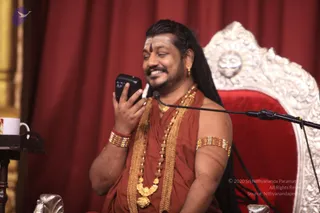
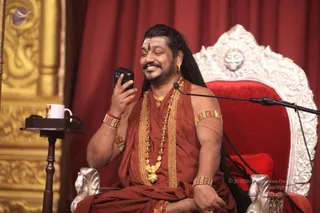
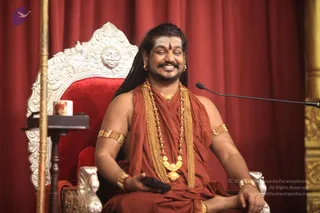
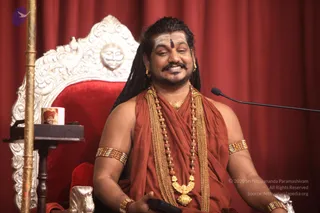
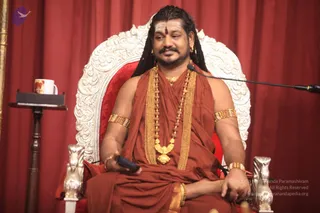
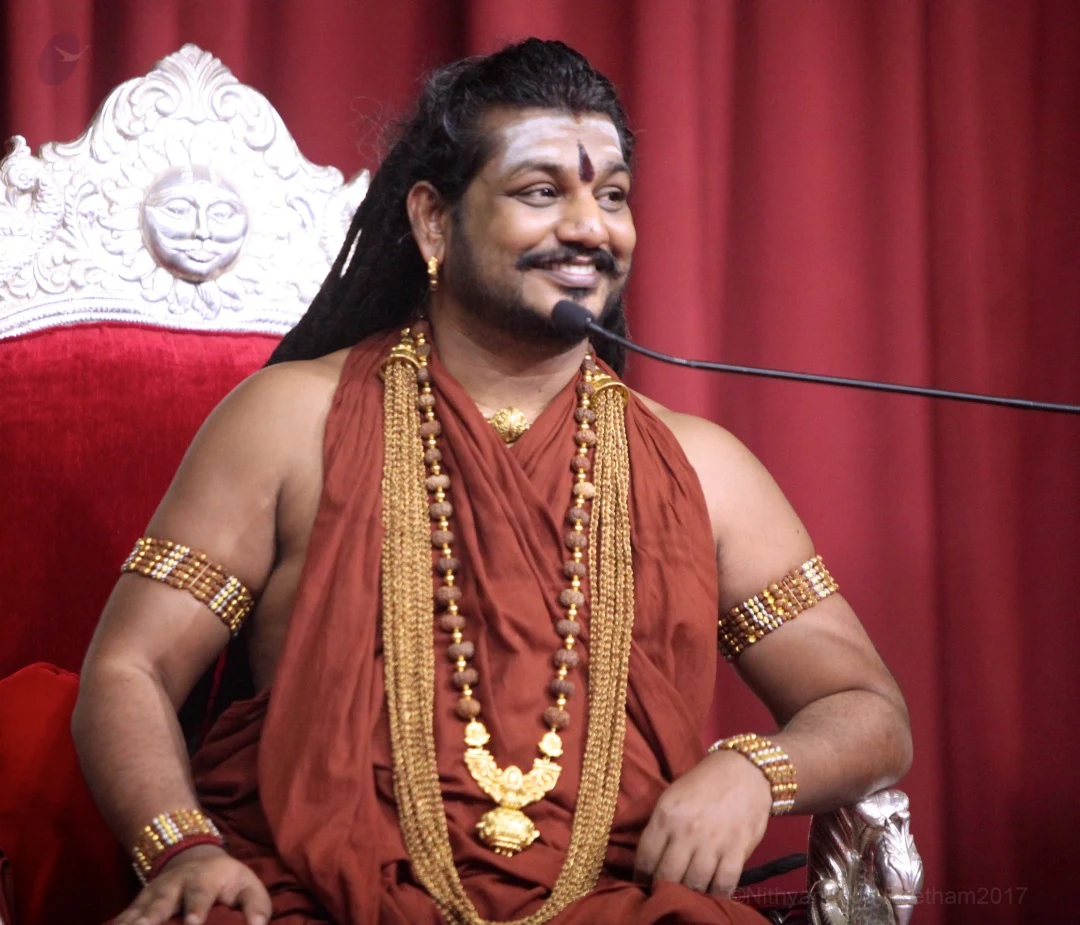
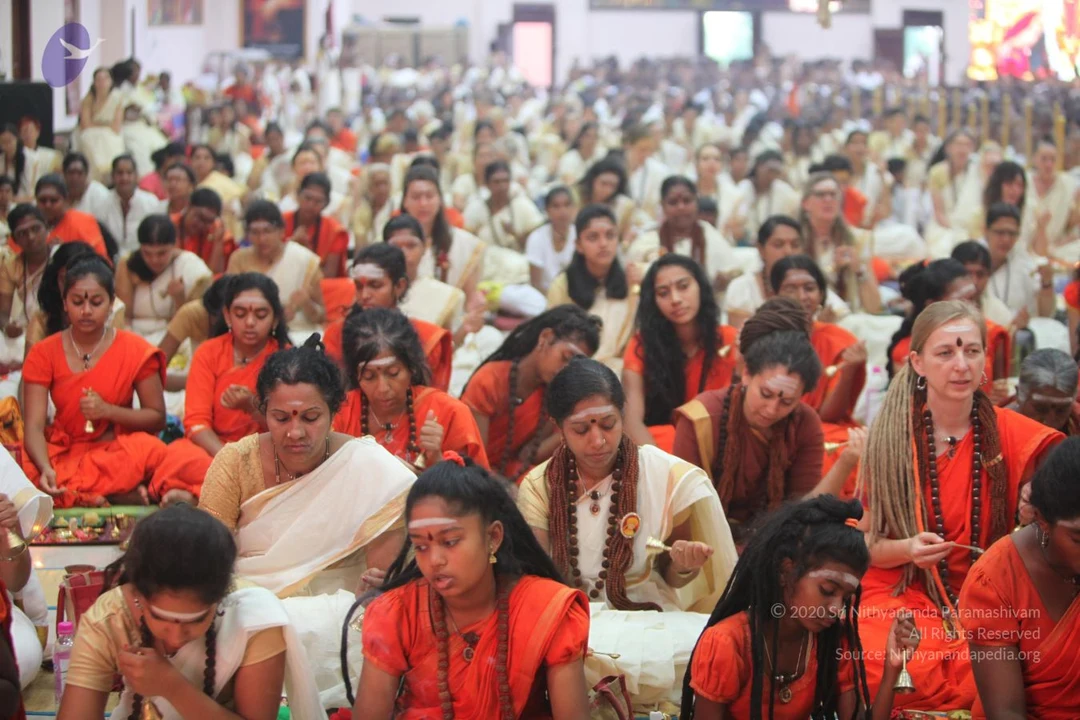
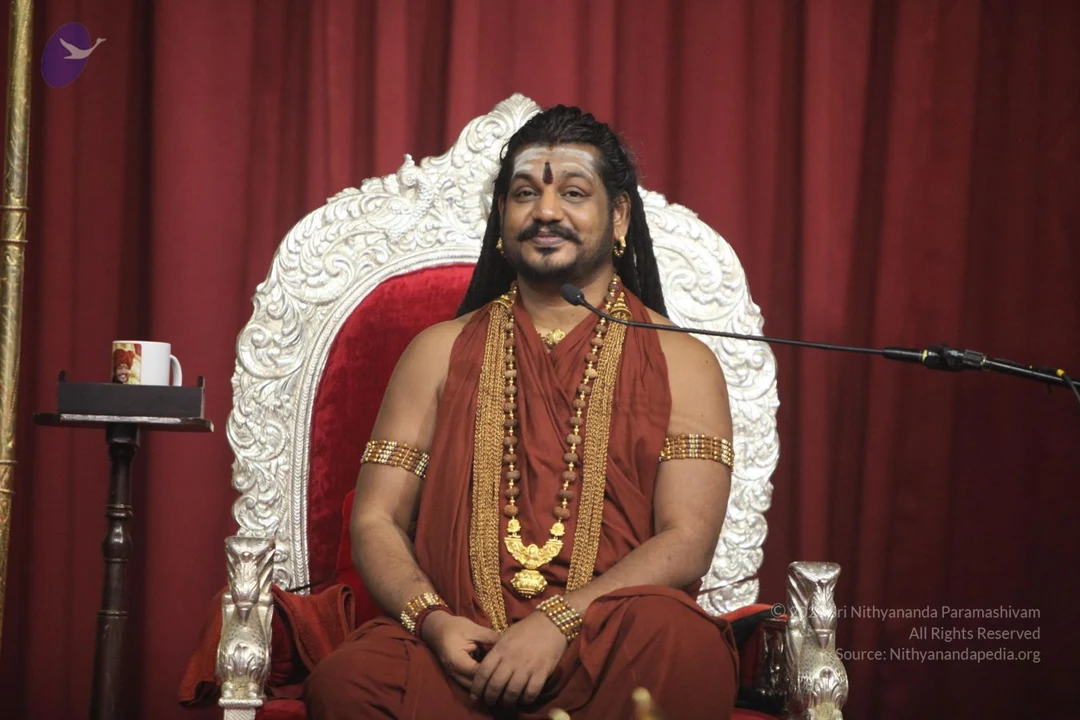
A seated man in an ornate white and red throne with carved silver armrests and a red velvet back, in front of deep red draped curtains. He wears a rust-orange dhoti and shawl with heavy gold necklaces, rudraksha beads, gold armlets and bangles, and a white and red tilak on his forehead. Long dreadlocked hair falls to his shoulders, and he smiles with his hands folded in his lap. A microphone stands at his side, and a small side table holds a white mug. Based on his appearance, the seated man in the orange robe and gold ornaments is a person, seated in satsang. A visible printed copyright line appears at the lower right.A man seated on an ornate white and silver throne in front of a red draped backdrop, speaking into a microphone on a stand. He wears a rust-red sleeveless robe, multiple gold chains, a rudraksha mala, gold armbands and a gold pendant. He has a white tripundra with a red bindi on his forehead, long dark hair, and gestures with his right hand while smiling. A white cup sits on a small side table at left. Appearance-based probable Swamiji (probable), seated in a satsang setting with long hair, rudraksha mala and ornate gold ornaments; his role is speaker/teacher on the throne.A man seated on an ornate silver-and-red throne in front of a deep red velvet curtain, speaking into a microphone on a stand at right. He wears a rust-orange wrap over the shoulder and body, a heavy gold necklace of layered beads and pendant, gold armlets and beaded bracelets, and has a red tilak and long hair. A white mug with a red pattern sits on a dark side table at left. a person appears as the seated speaker, with long swept hair, orange clothing, and gold ornaments; the role is satsang teacher seated on the throne.A man seated on an ornate silver-and-red throne in front of a deep red curtain, smiling toward a microphone on a stand. He wears a rust-orange wrap over bare shoulders, a long gold-coloured sash, layered rudraksha malas with a large gold pendant necklace, gold armbands and bangles, and a white-and-red forehead mark. His long dark hair falls behind his shoulders. Probable Swamiji: long swept-back hair, ceremonial gold necklace, rudraksha malas and ornate orange clothing with gold armbands match the qualifying cues. A small dais and a blurred red cloth are visible at the left edge.A smiling man with long dark hair sits on an ornate silver and red velvet throne in front of a deep red curtain, speaking into a microphone on a stand. He wears a rust-orange draped garment, multiple strands of gold chains, a long rudraksha mala with a gold pendant, gold and rudraksha armbands, and a bracelet. A white vertical mark with a red bindi decorates his forehead.A large seated gathering of devotees fills a hall, many in white ritual clothing and orange or saffron robes, with sandalwood or vibhuti markings on foreheads and rudraksha malas around necks. Children and adults sit close together in rows, some bare-chested with white dhotis. In the front left, a young person in orange holds his hands in a mudra. At the top of the frame, a large red-lit backdrop shows a deity image, and rows of tall lamps stand near the front. The scene is an ashram-style satsang or puja assembly; no single figure is clearly identifiable as a person from appearance, so the a person field is set to unsure.

DIAL-THE-AVATAR
5 photosSource gallery
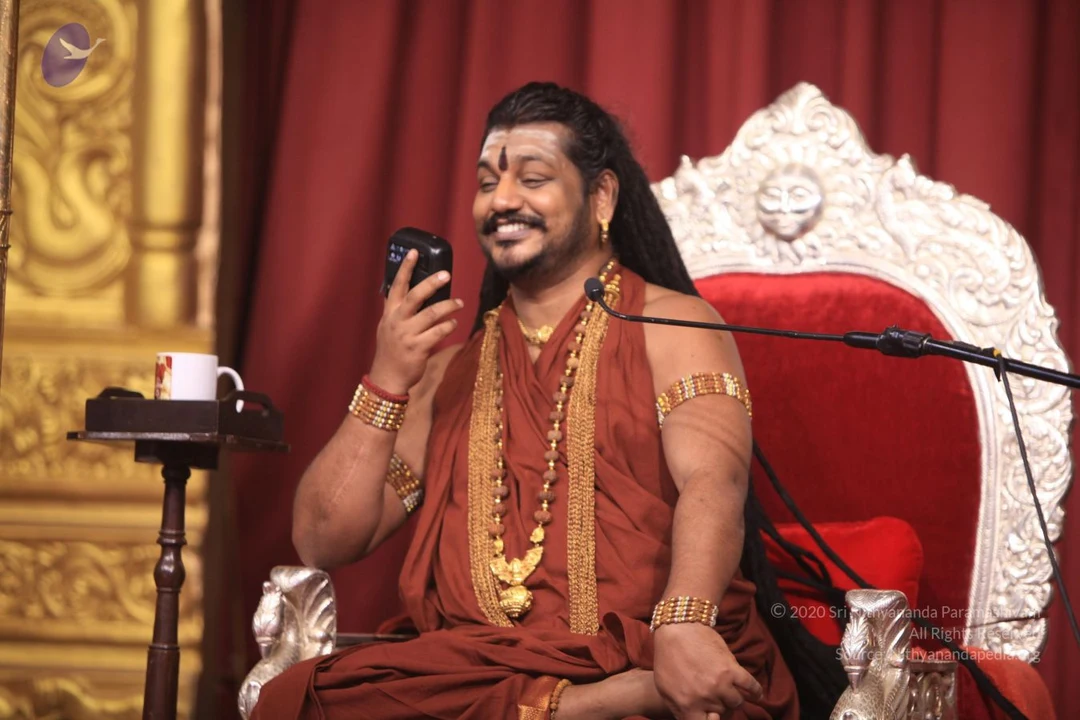
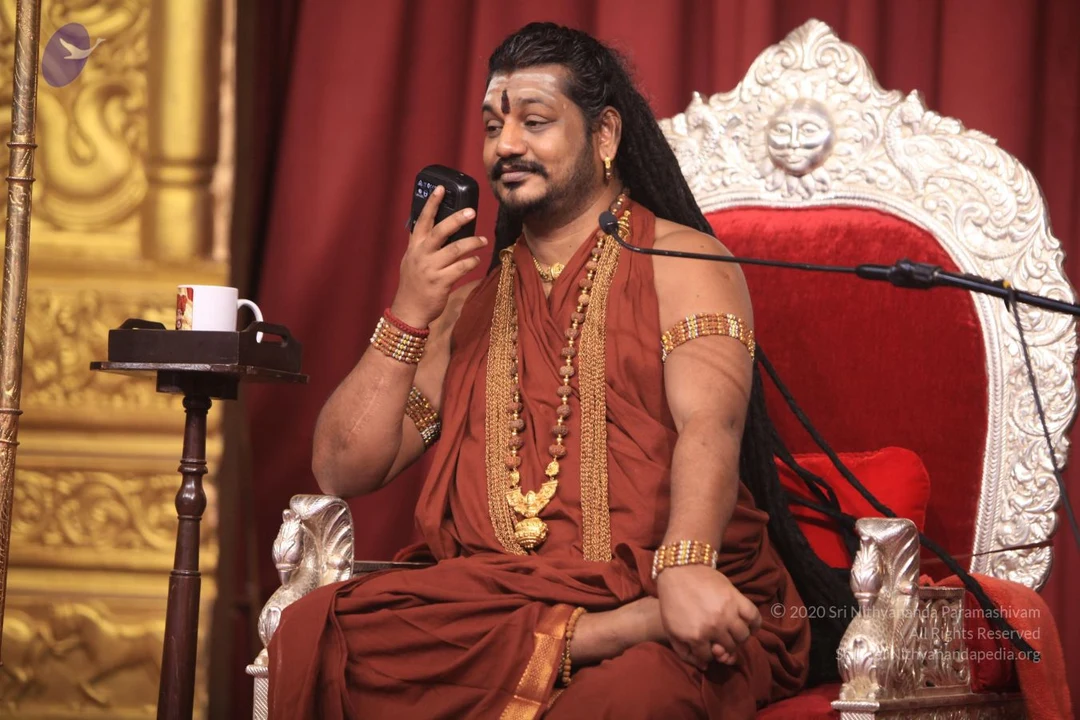
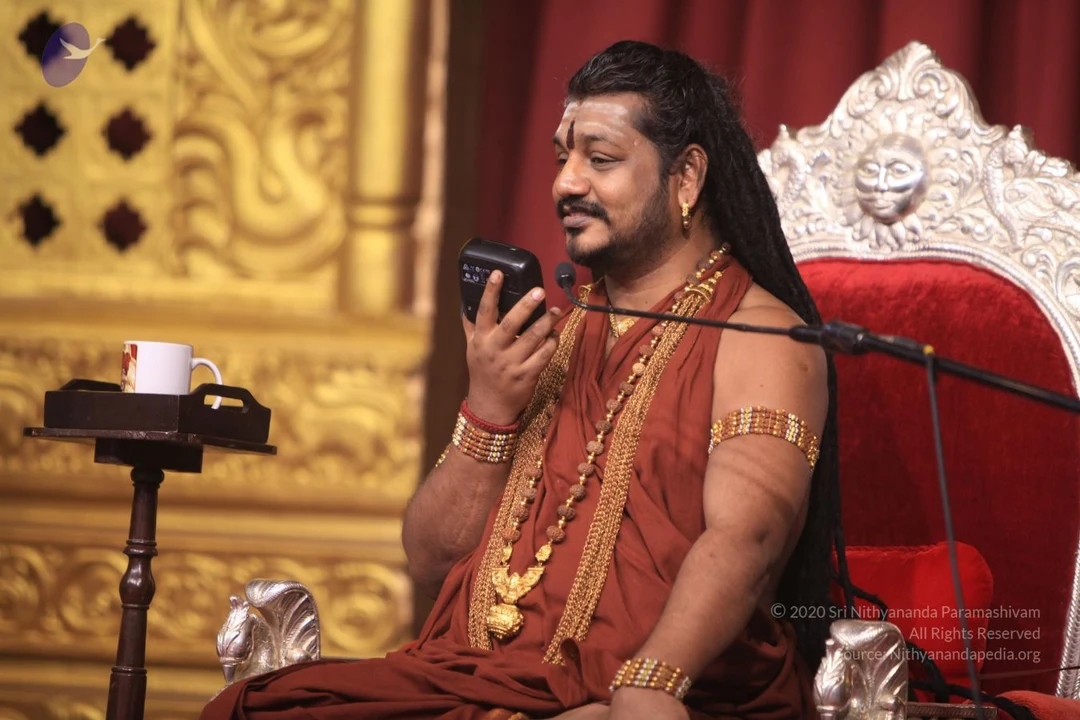
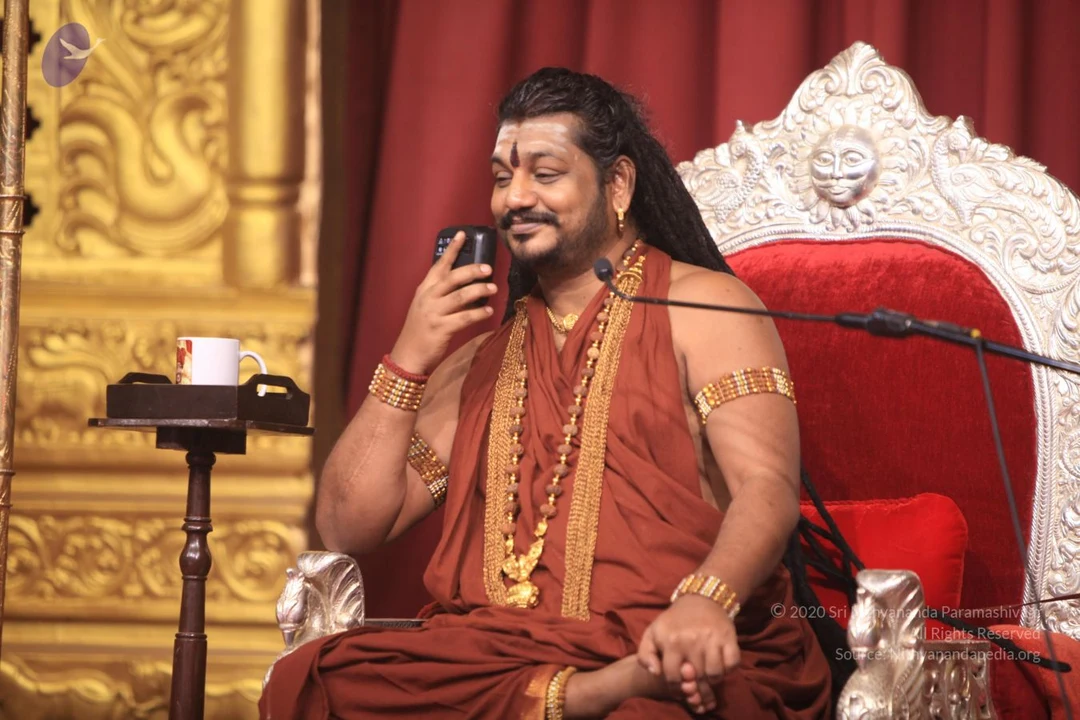
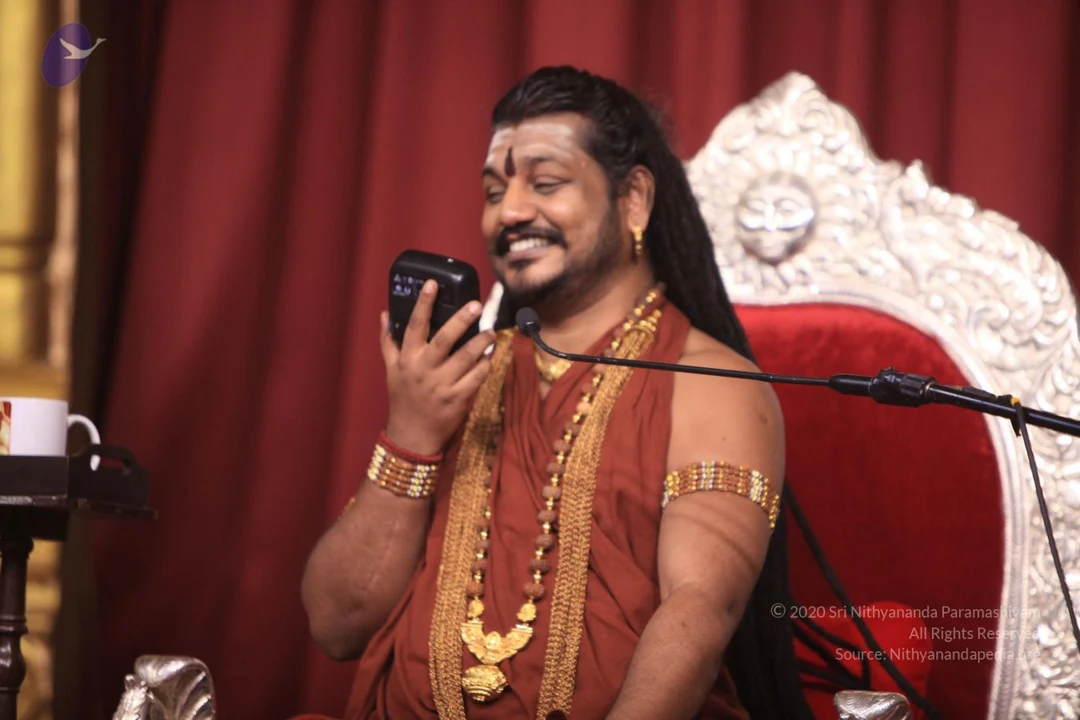
A smiling man with long dark hair and a red-brown saffron-toned robe sits on an ornate silver-and-red throne in front of a red velvet curtain. He wears heavy gold necklaces, a gold armband, gold bracelets and rudraksha beads, and has a red tilak on his forehead. He holds a small black handheld device near his face, and a microphone stand is positioned beside him. A white cup sits on a wooden side table at left. The setting appears to be a satsang stage.A seated man in rust-orange saffron robes sits on an ornate silver-and-white throne with a red velvet cushion and carved floral motifs. He has long dark hair swept back, a sandalwood forehead mark, and wears a gold necklace, a rudraksha mala, gold armlets and bangles. He smiles broadly while holding a black mobile phone up in one hand. A microphone on a stand is beside him, and a white cup sits on a small wooden side table at left against a gold-embossed wall and red drapes. Swamiji (probable) appears as the seated figure, based on long swept-back hair, ornate gold jewellery and saffron robes.A seated man in a red-orange robe sits on an ornate silver-and-red velvet throne, smiling broadly with eyes closed. He wears a long gold necklace over rudraksha mala beads, gold armlets and bangles, and holds a black remote. A white tilak marks his forehead with a red dot and his long hair falls behind him. A microphone stands at right against red drapery, and a small side table holds a cup. a person appears as the seated speaker, matching the speaking cues of the satsang page.A smiling man with long swept-back dreadlocks, a white and red tilak on his forehead, a dark bindi, and a thin moustache sits on an ornate silver-and-white throne with a red velvet seat against a red curtain. He wears a rust-orange shawl over the shoulders, multi-strand rudraksha malas and a gold pendant necklace, gold armlets and a gold ring, with a microphone on a stand to the right. A small framed portrait of a turbaned man sits on a dark side table beside him, and a gold staff stands at the left edge. Appearance-based label: Swamiji (probable), based on the swept-back long hair, orange shawl, rudraksha malas and ceremonial gold ornaments; he appears to be giving a satsang discourse from the throne.A man with long dark hair, a red tilak on his forehead, and saffron-orange robes sits on an ornate silver-and-red throne in front of a red velvet drape. He wears a rudraksha mala, a gold ceremonial necklace, gold armlets and bangles, and holds a small black remote. A microphone stand is at right and a white mug with a red design sits on a wooden side table at left. Swamiji (probable): the long hair, saffron robes, rudraksha mala and gold ornaments match the qualifying presentation cues, and he is physically present in the photo.

RUDRABHISHEKAM
112 photosSource gallery
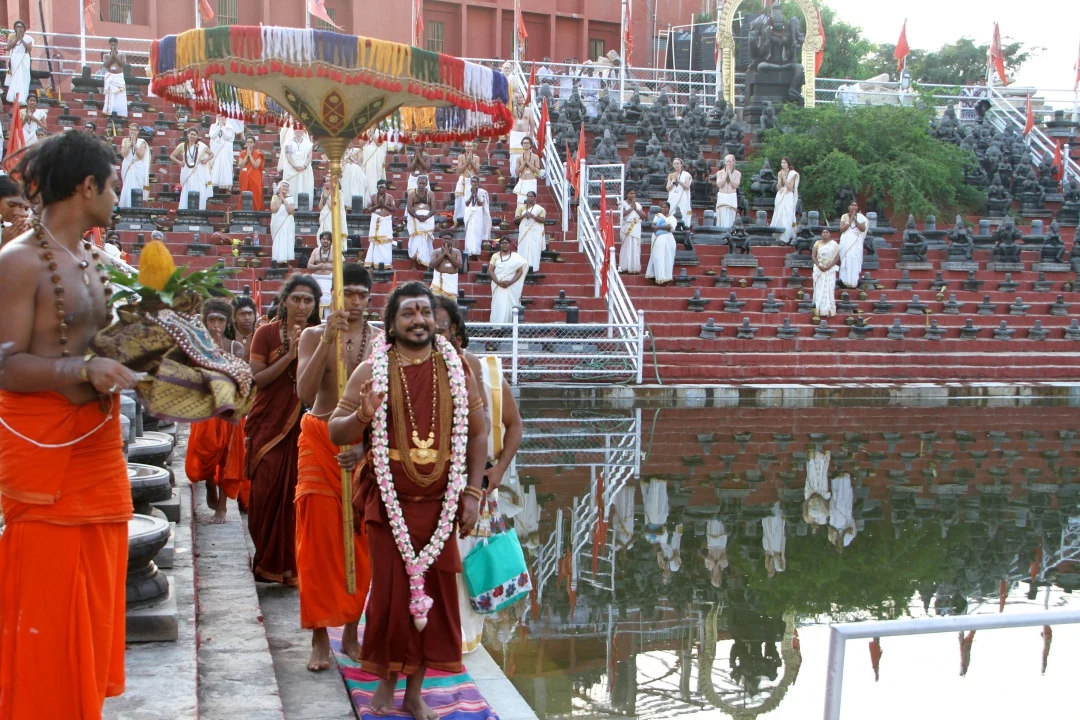
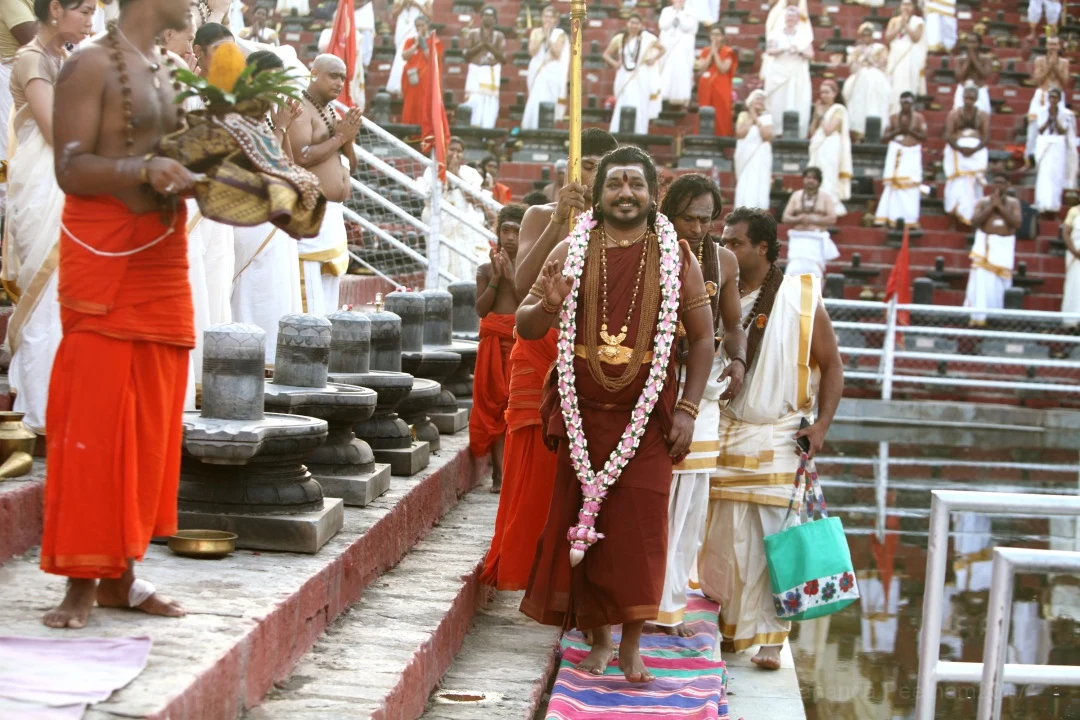
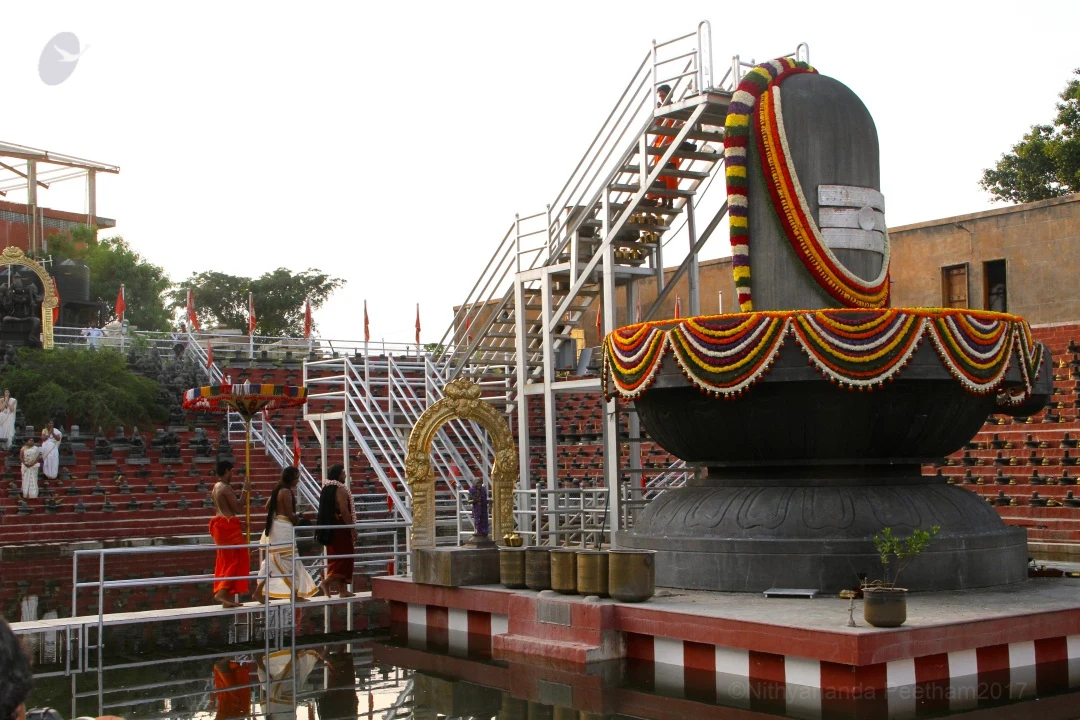
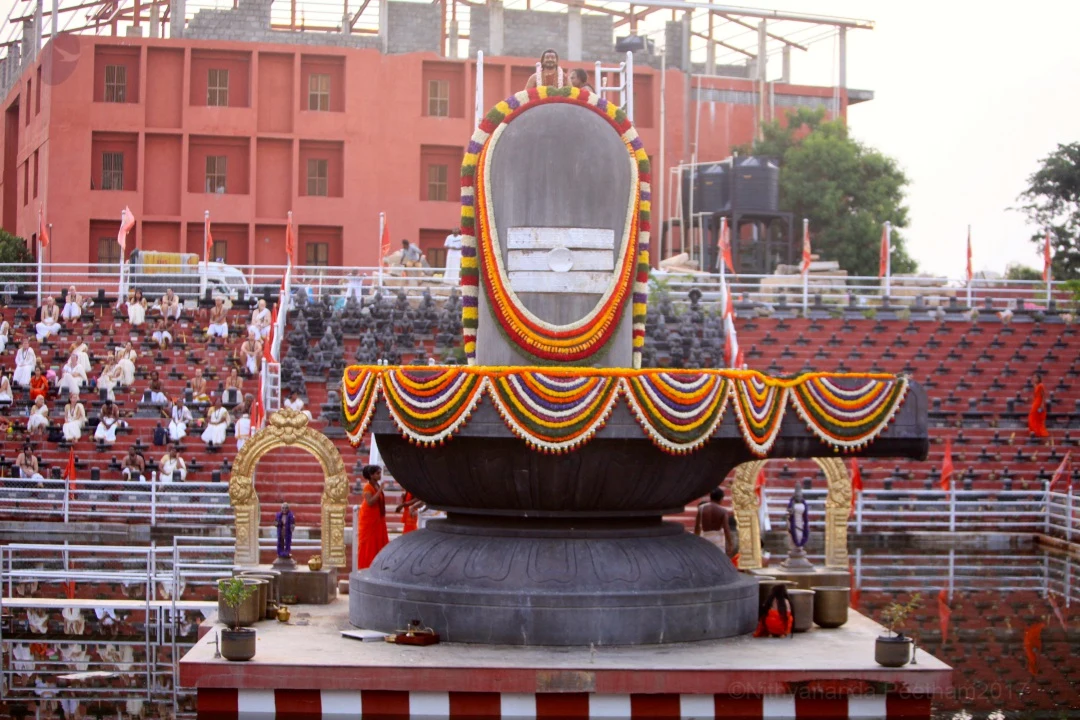
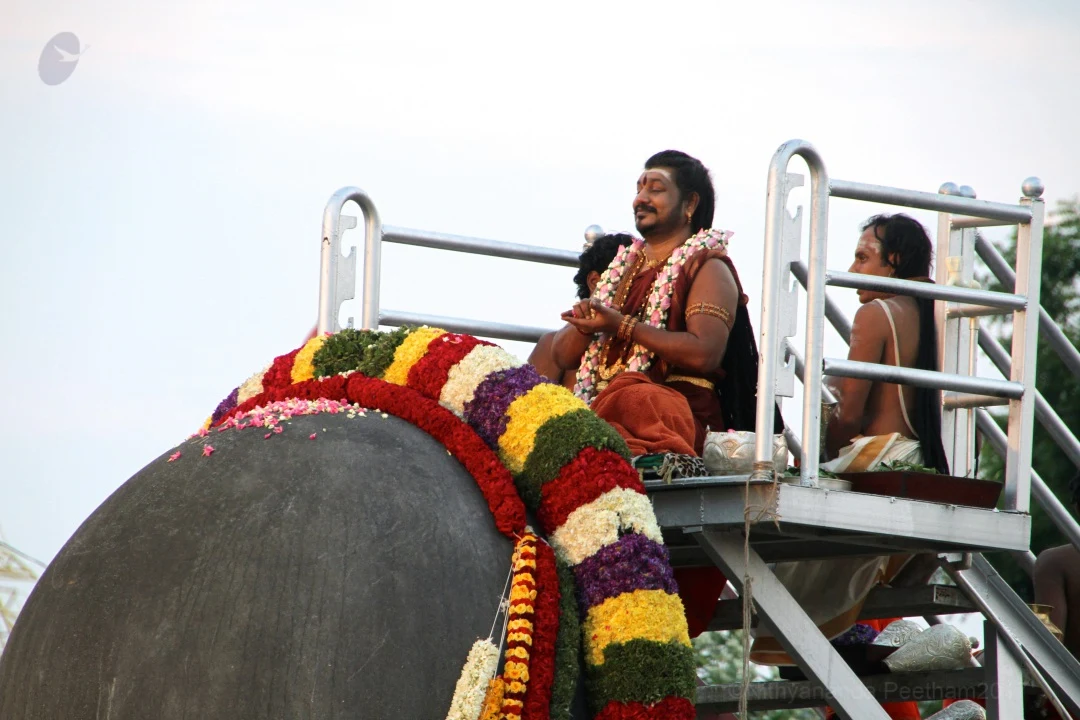
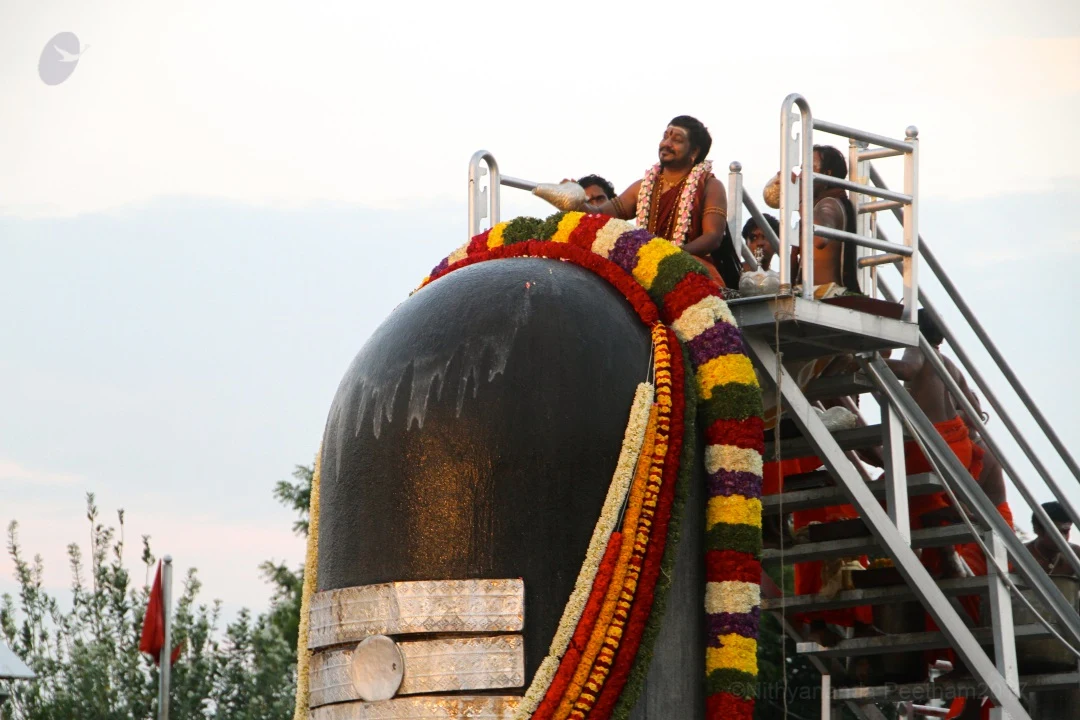
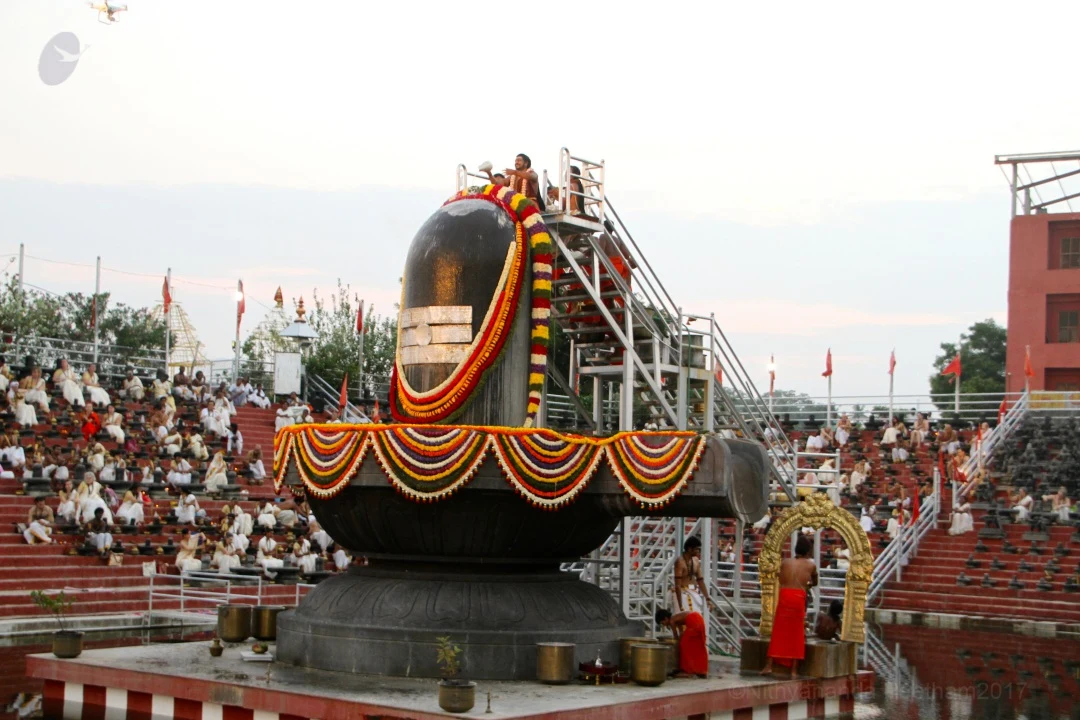
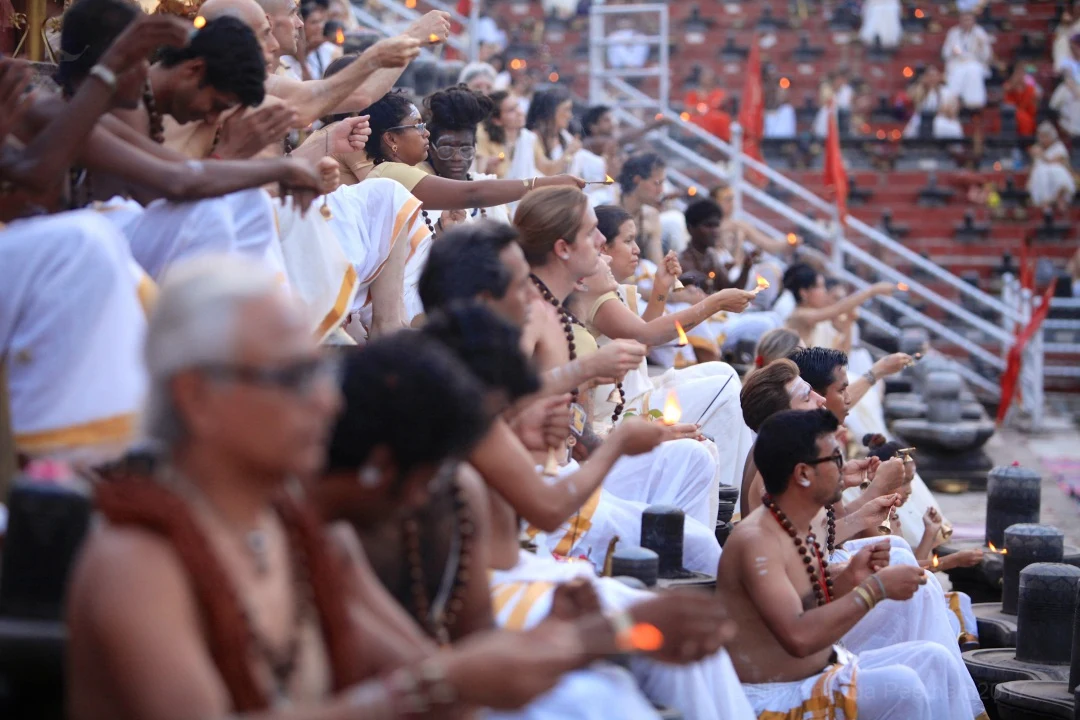
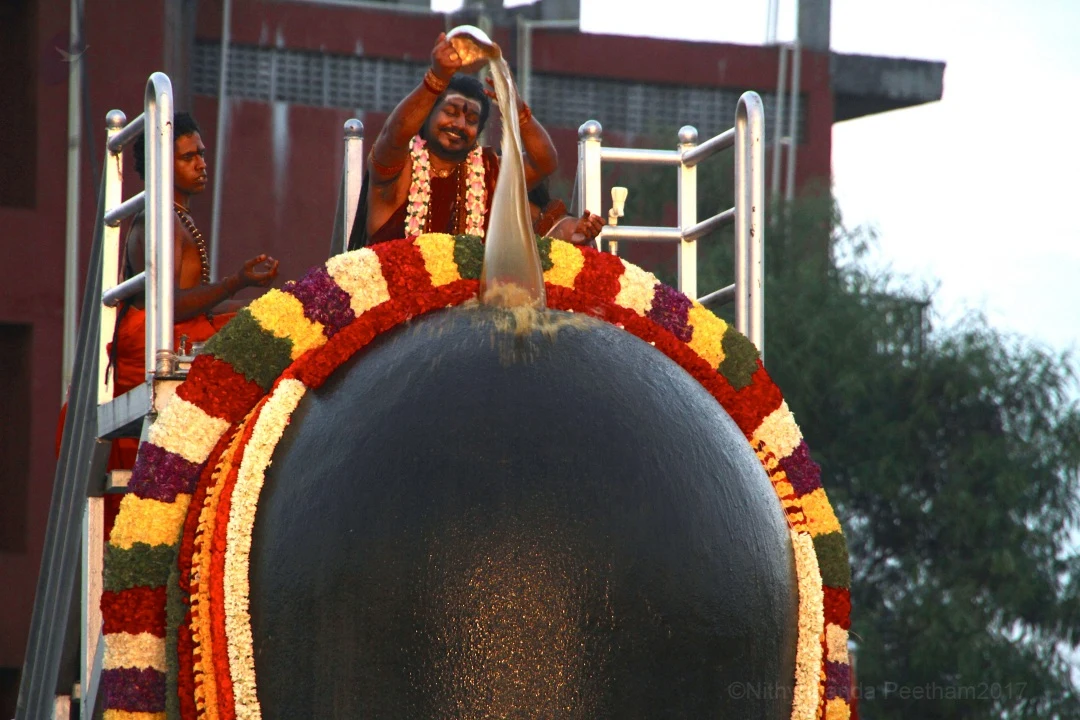
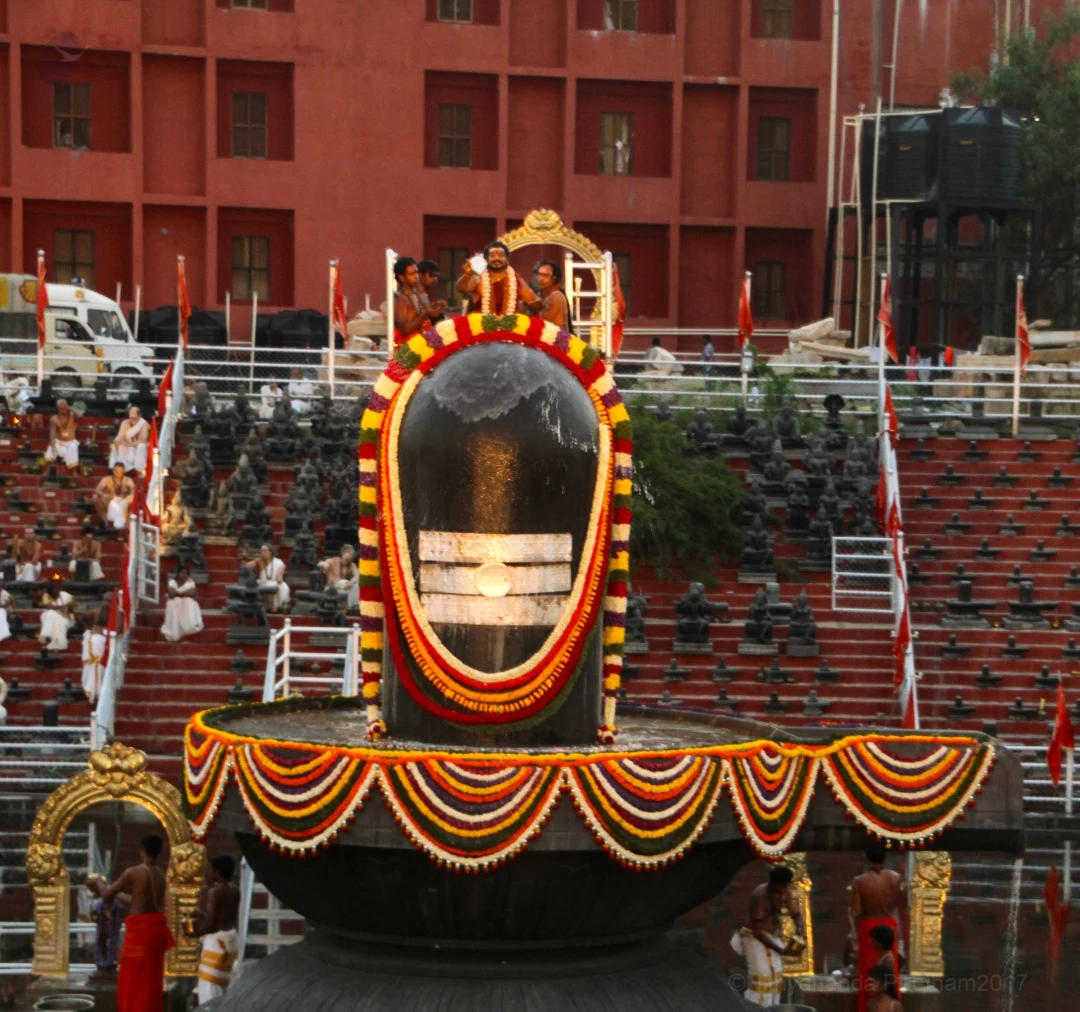
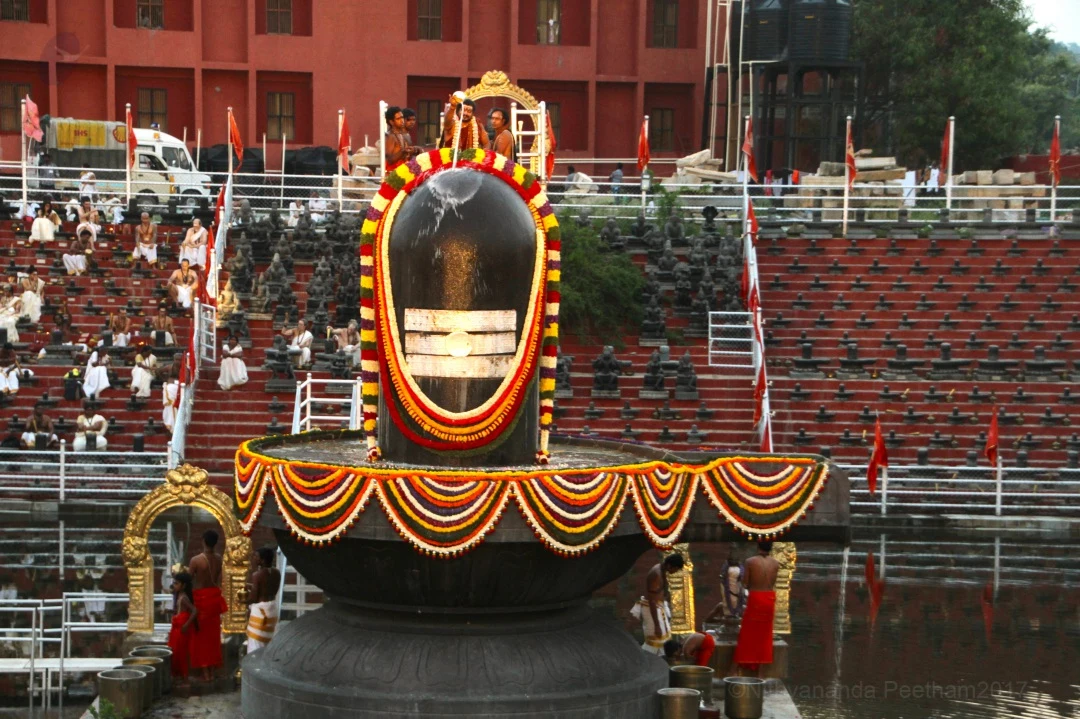
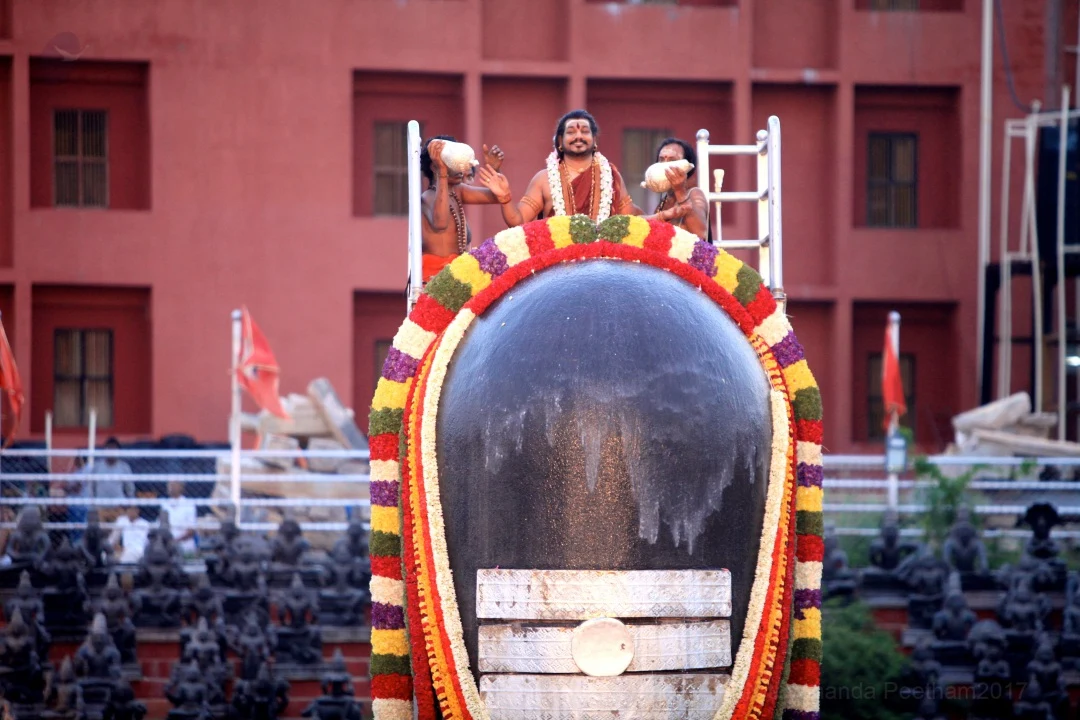
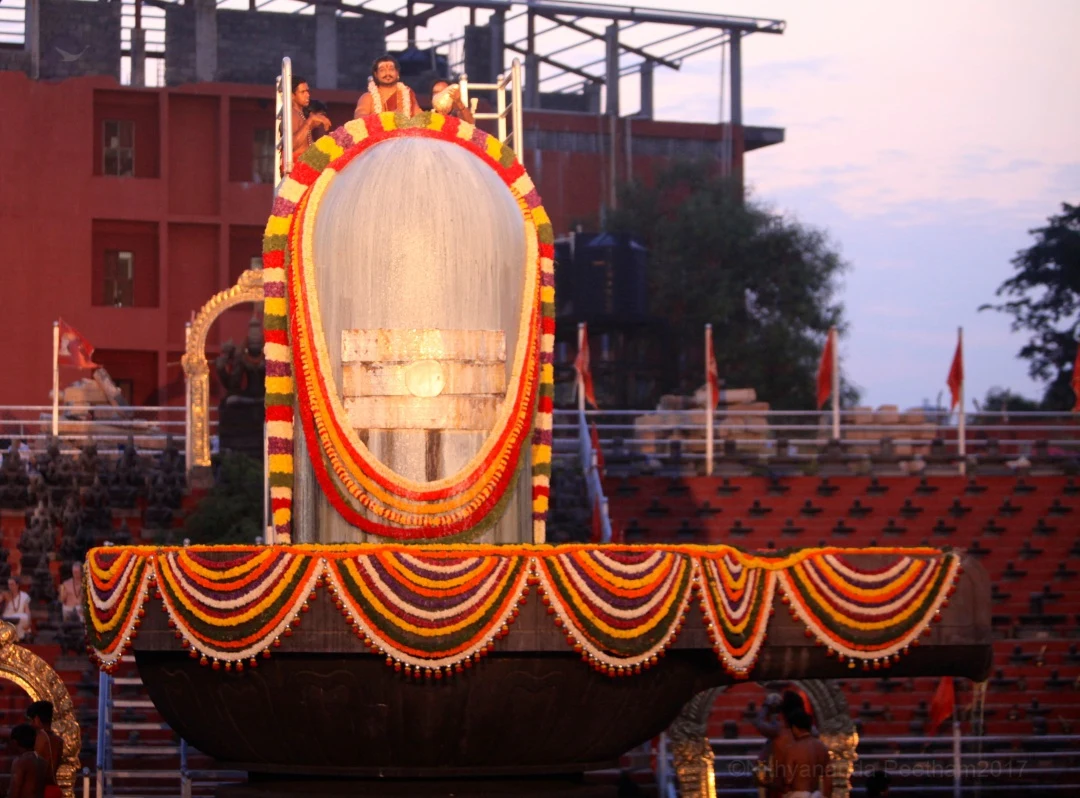
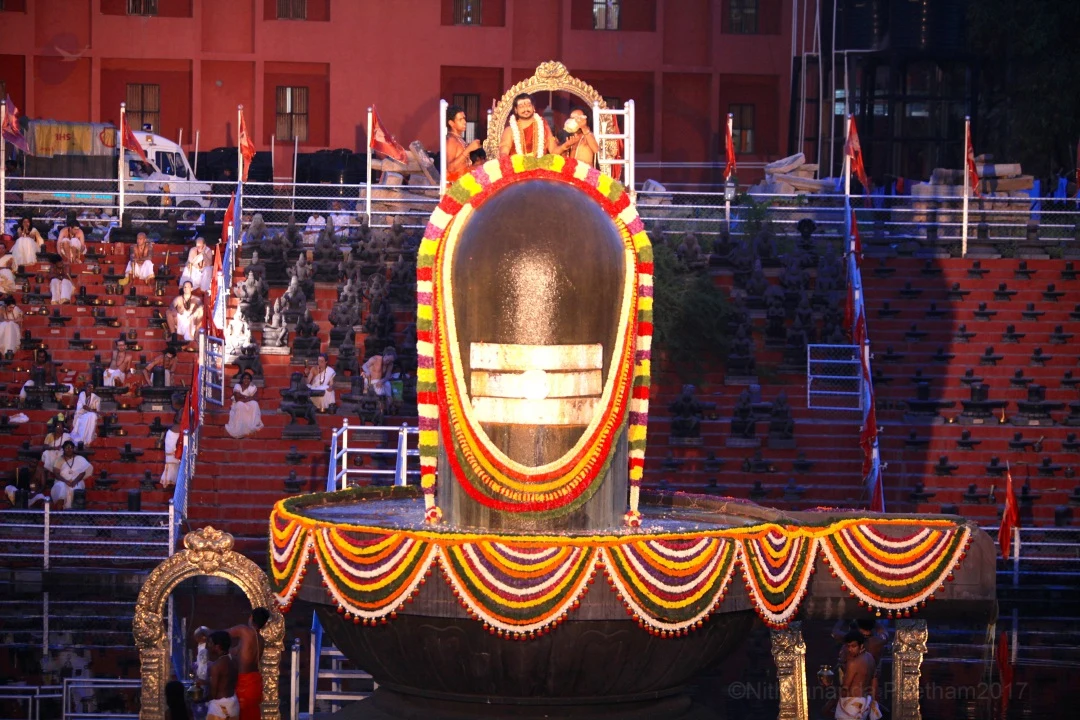
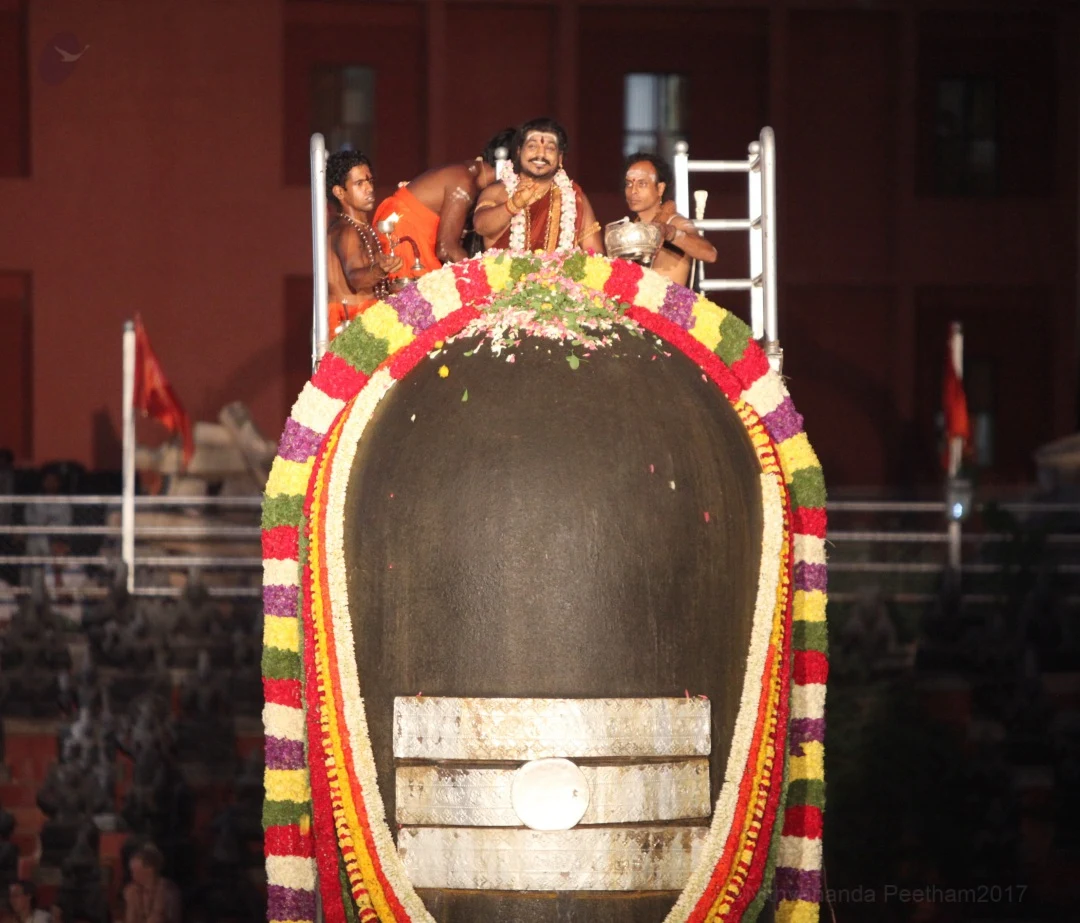
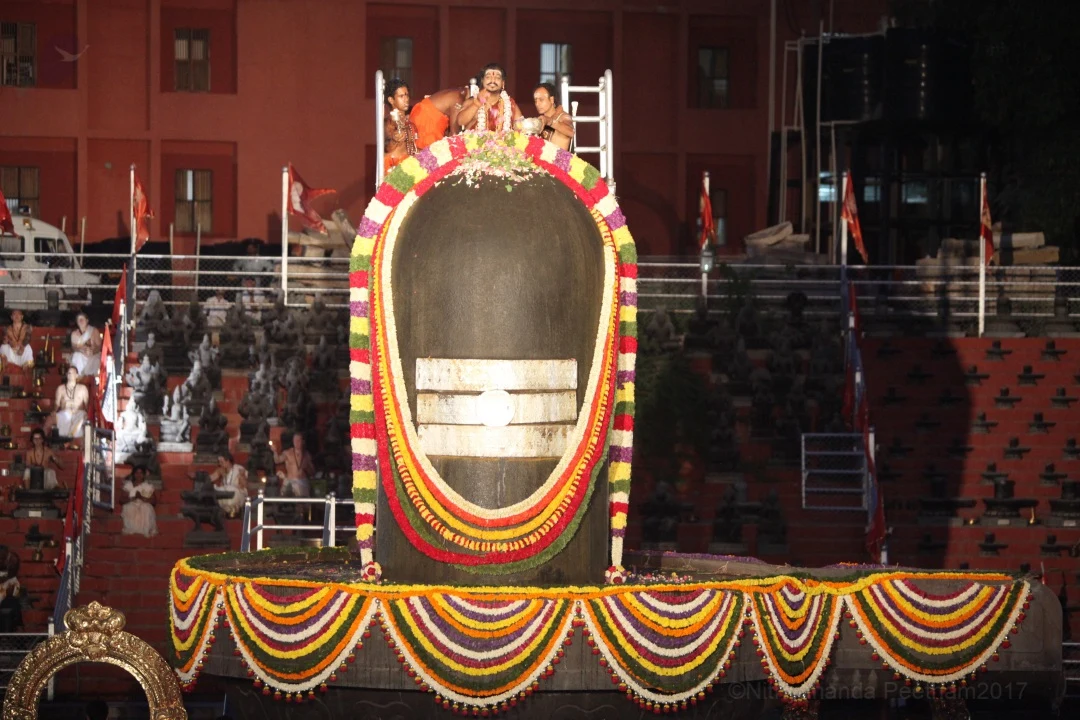
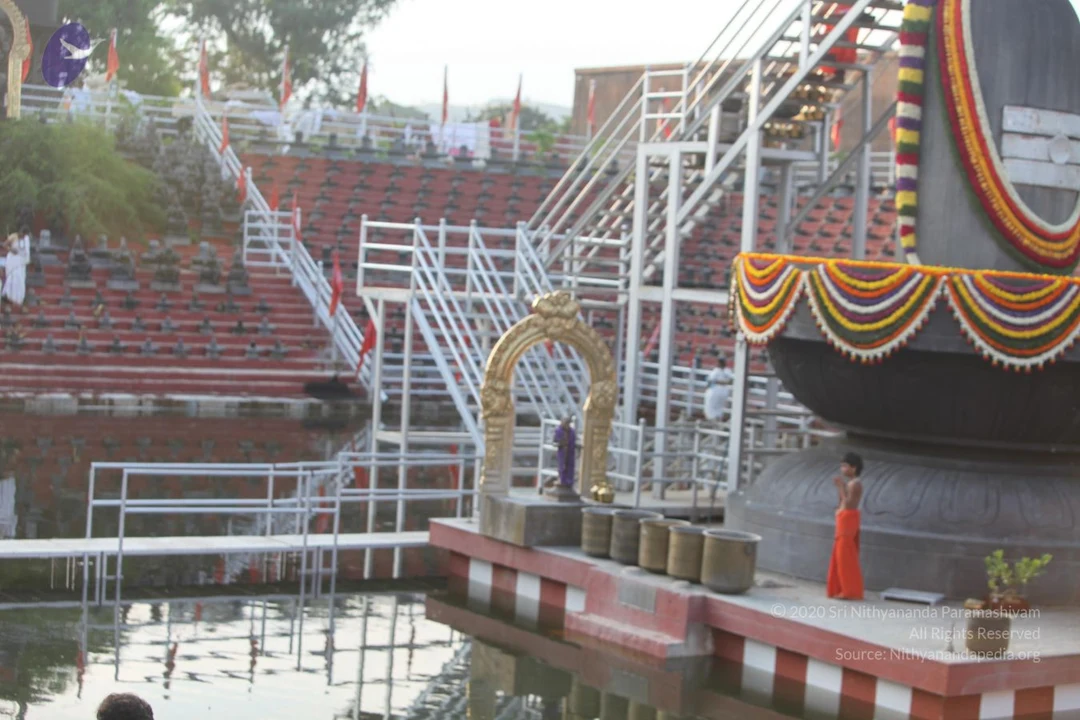
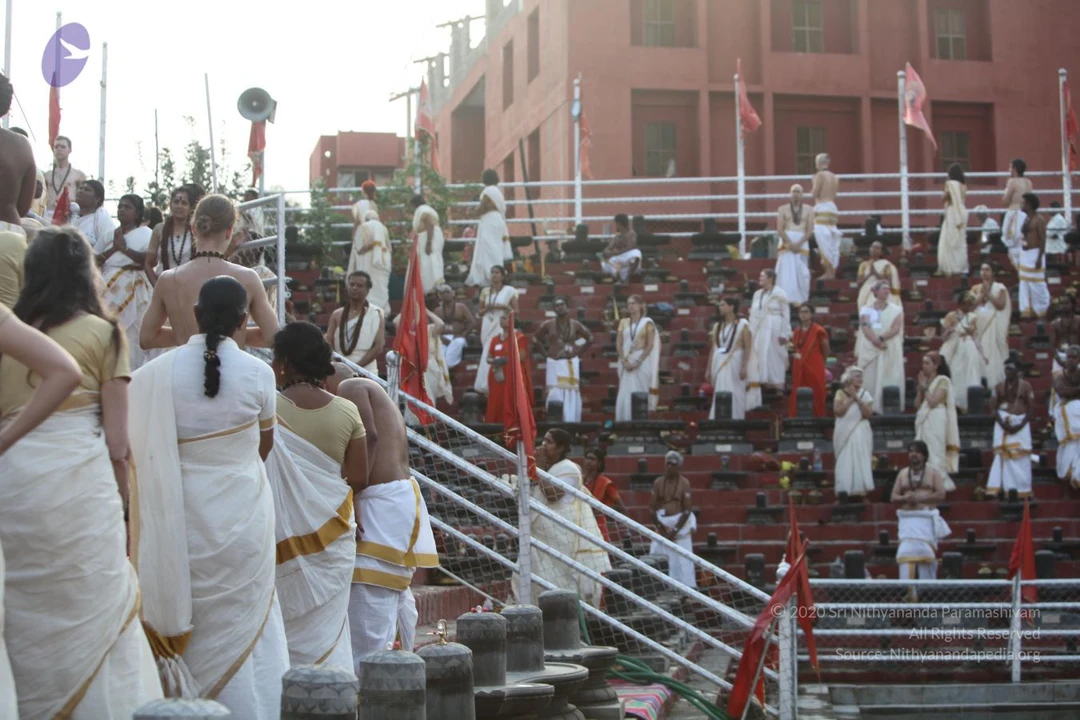
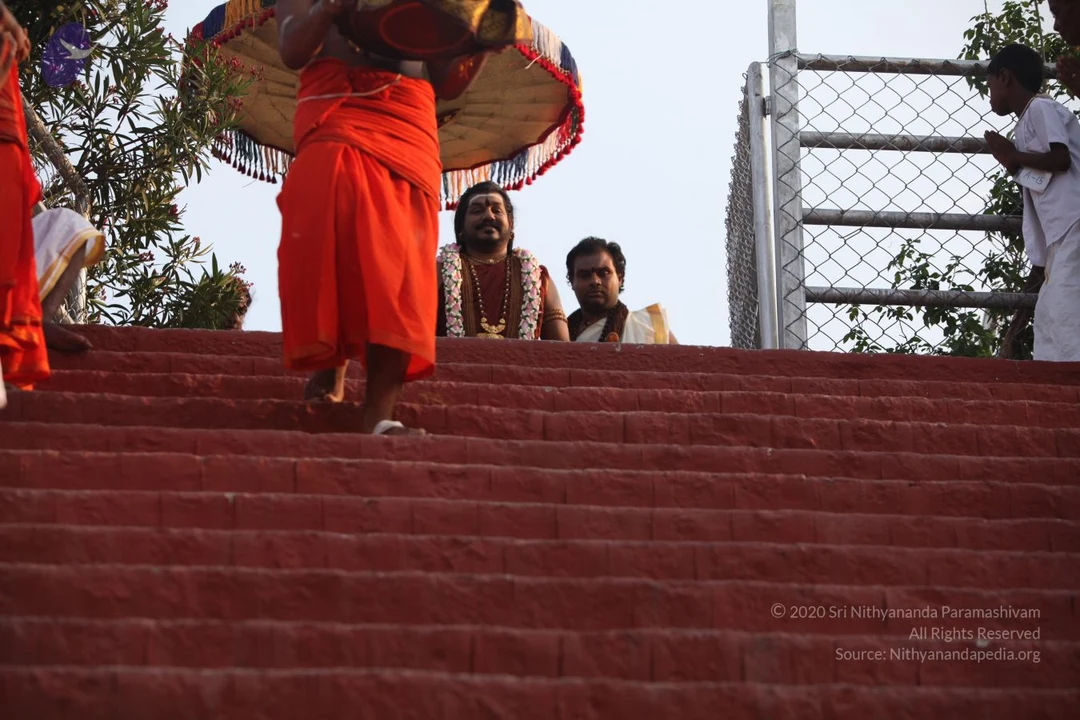
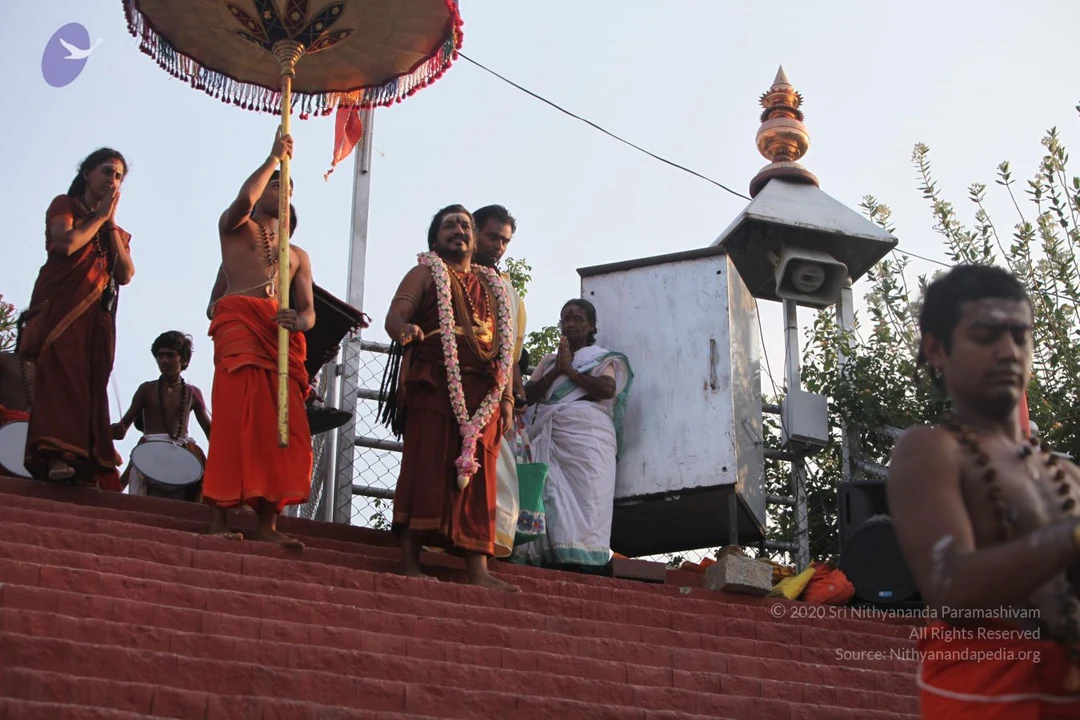
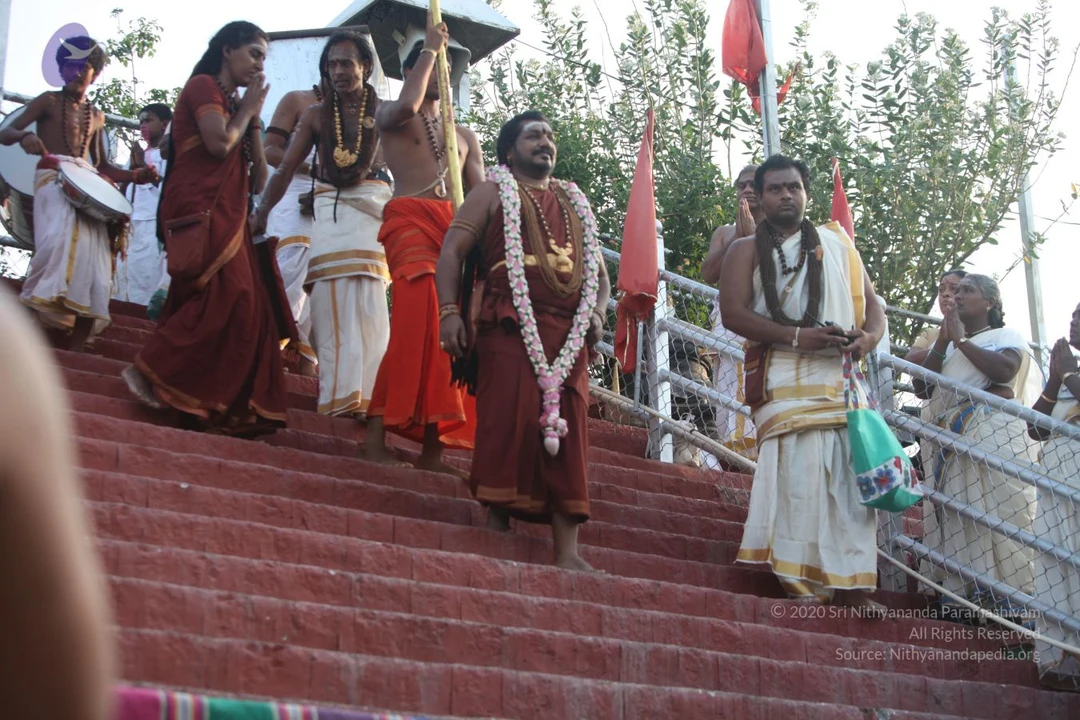
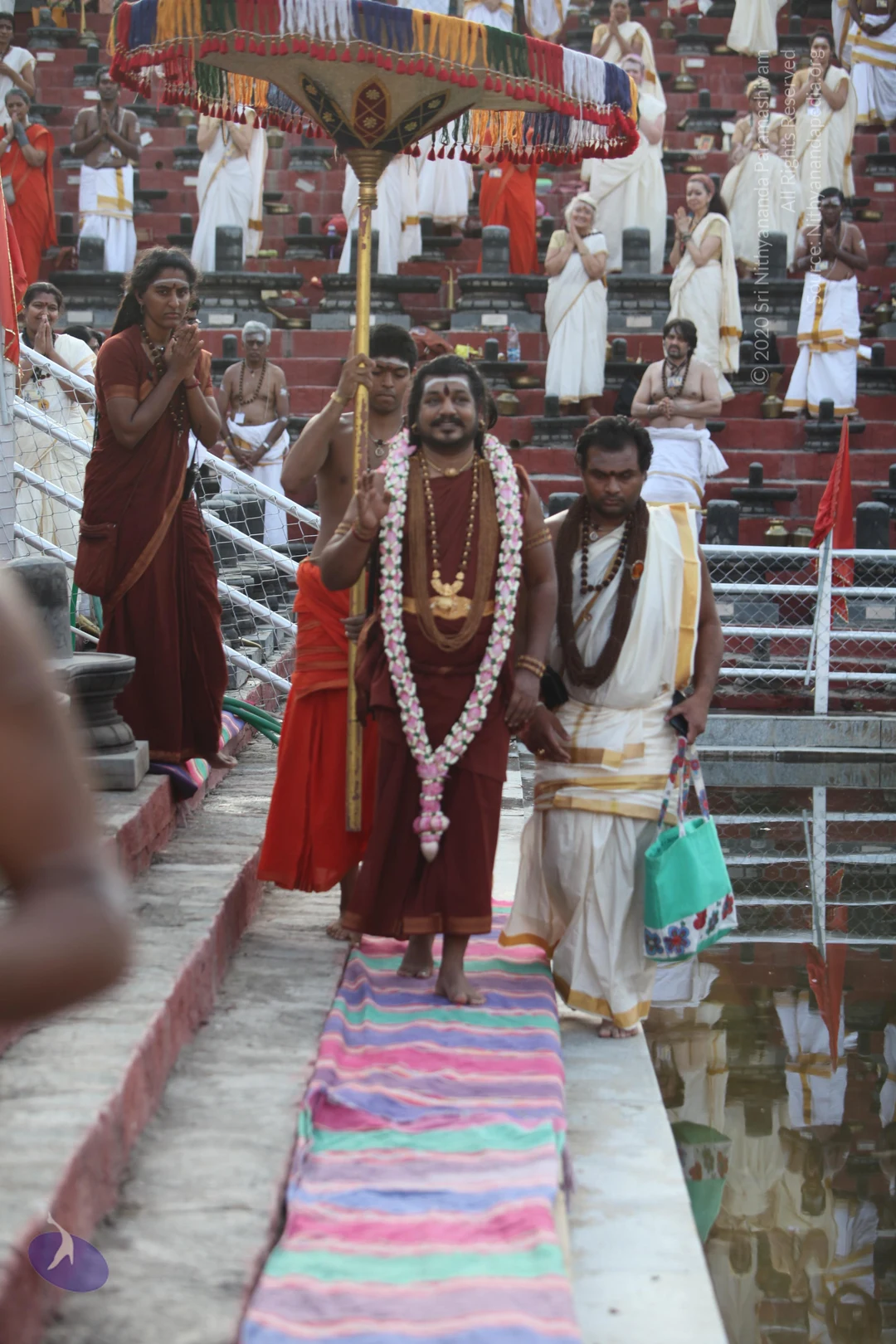
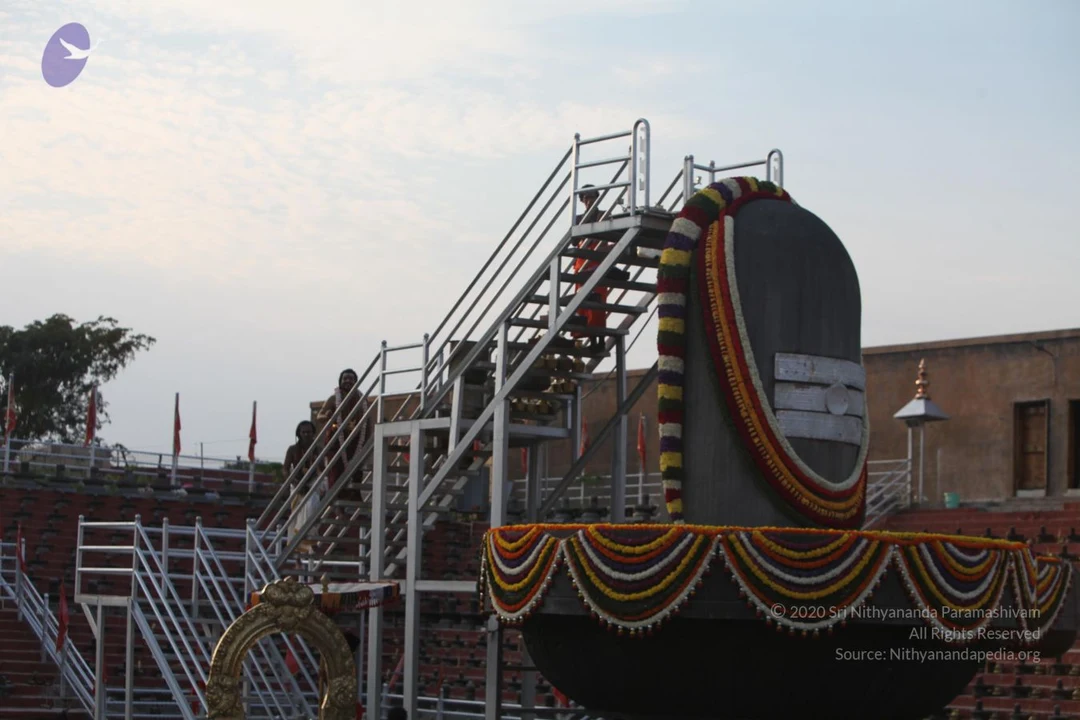
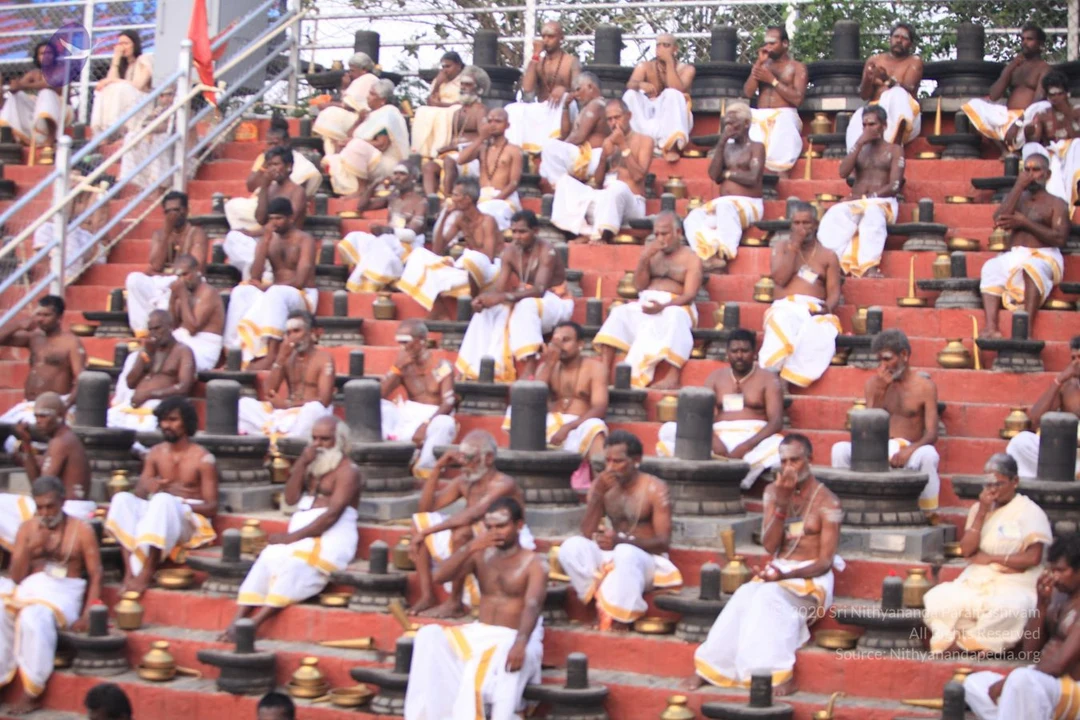
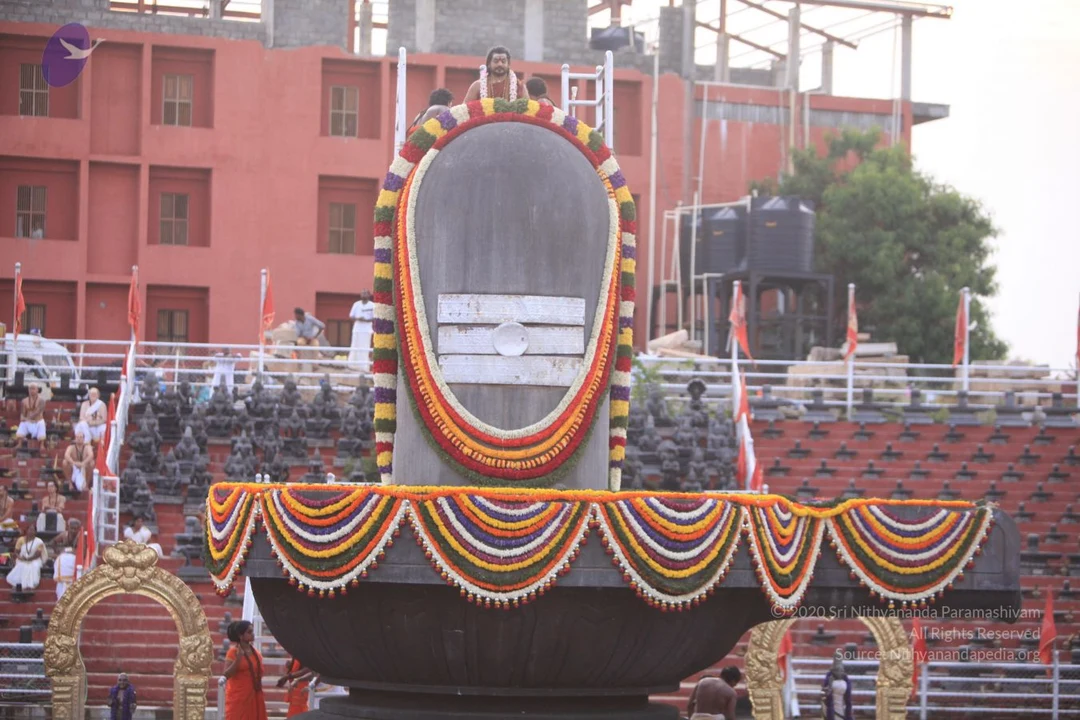
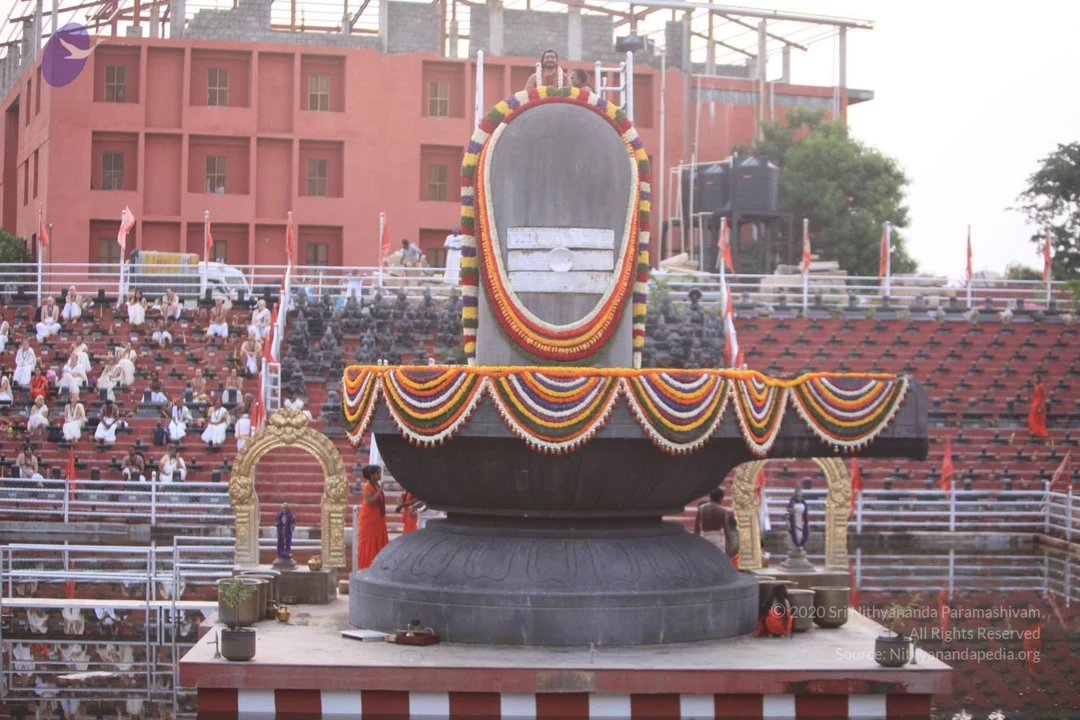
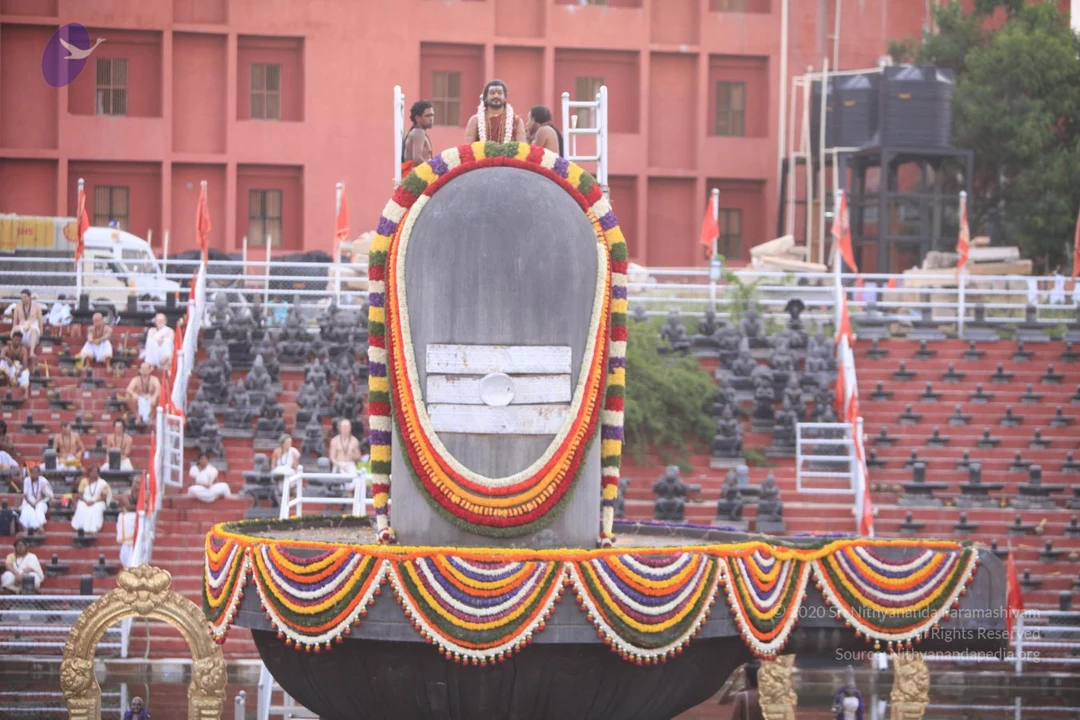
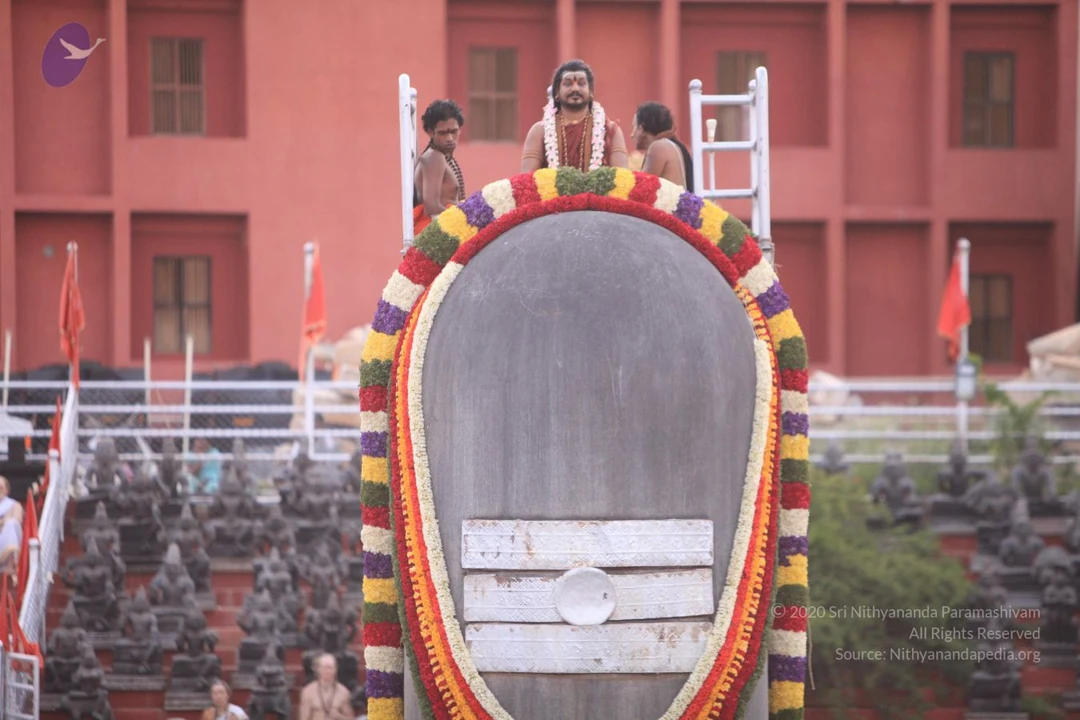
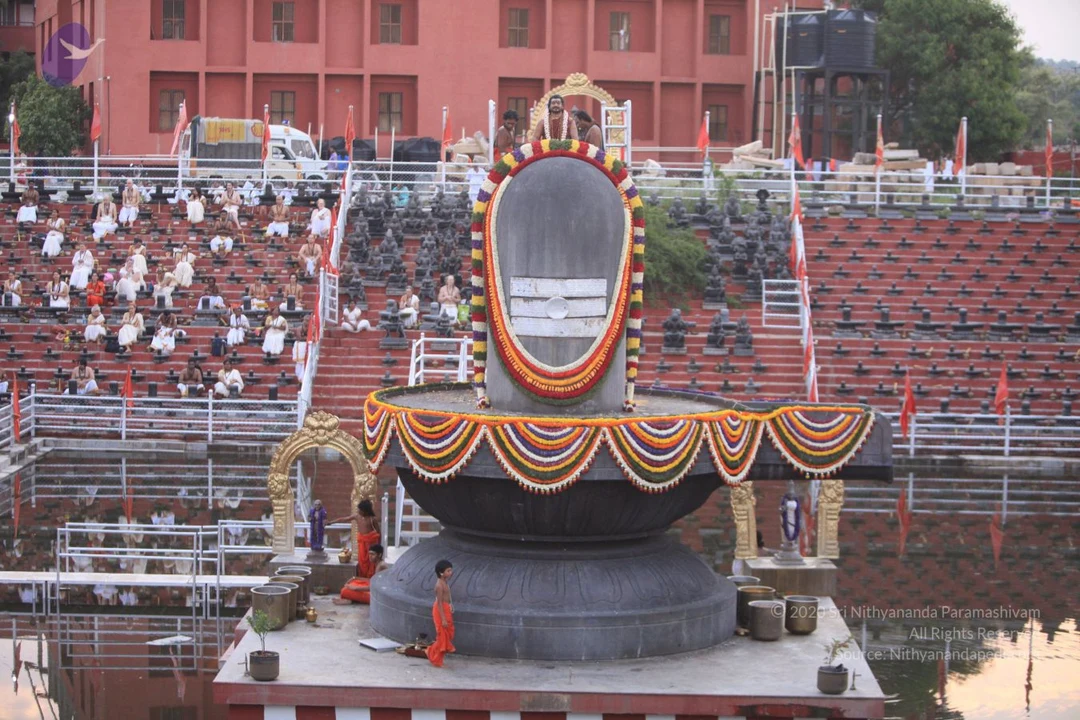
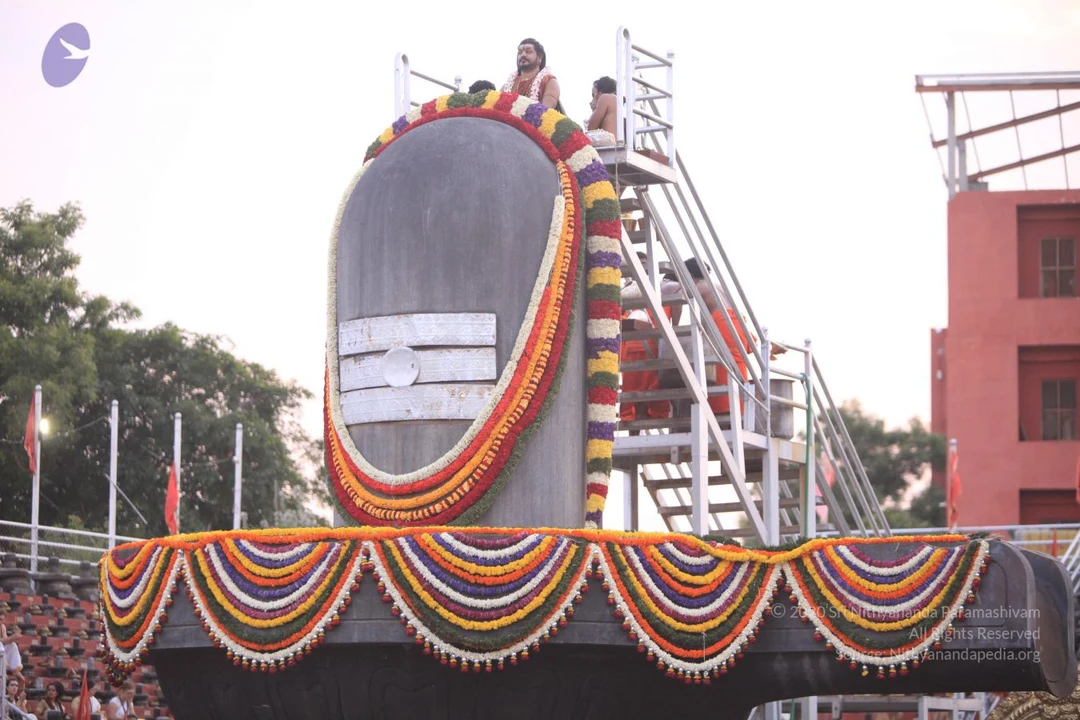
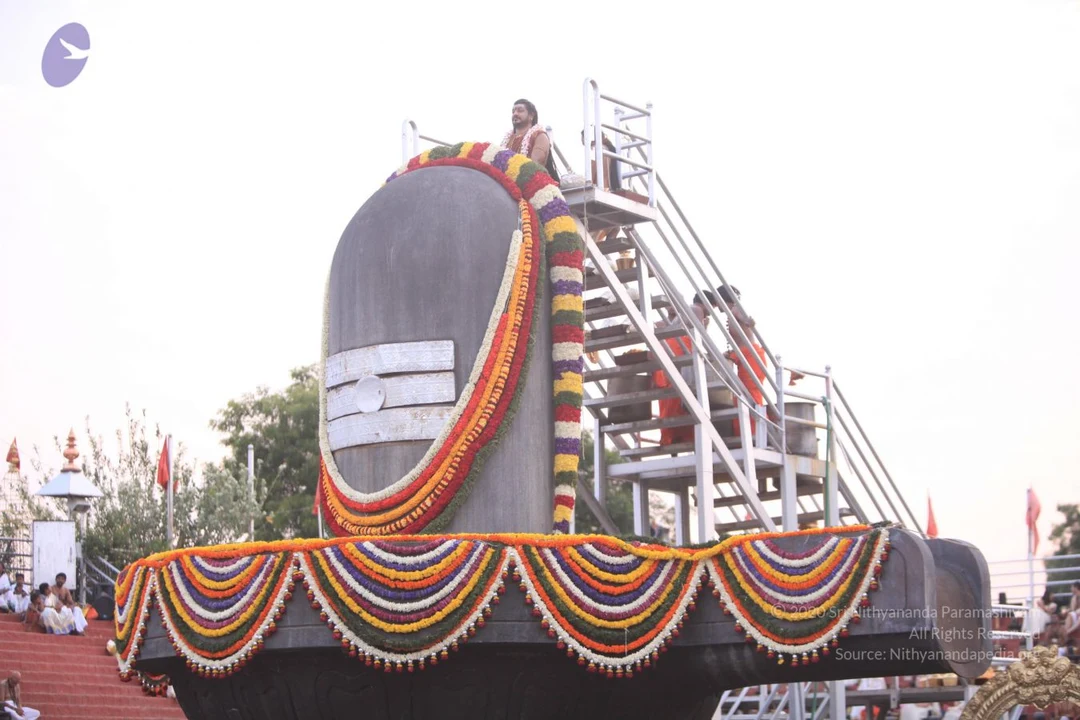
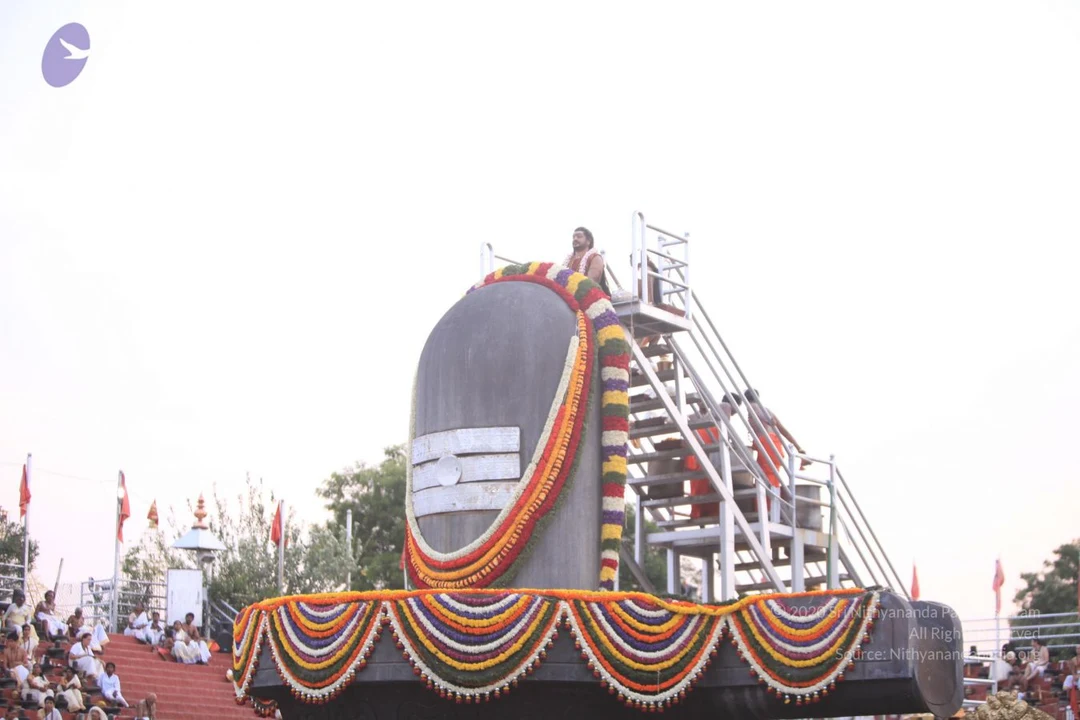
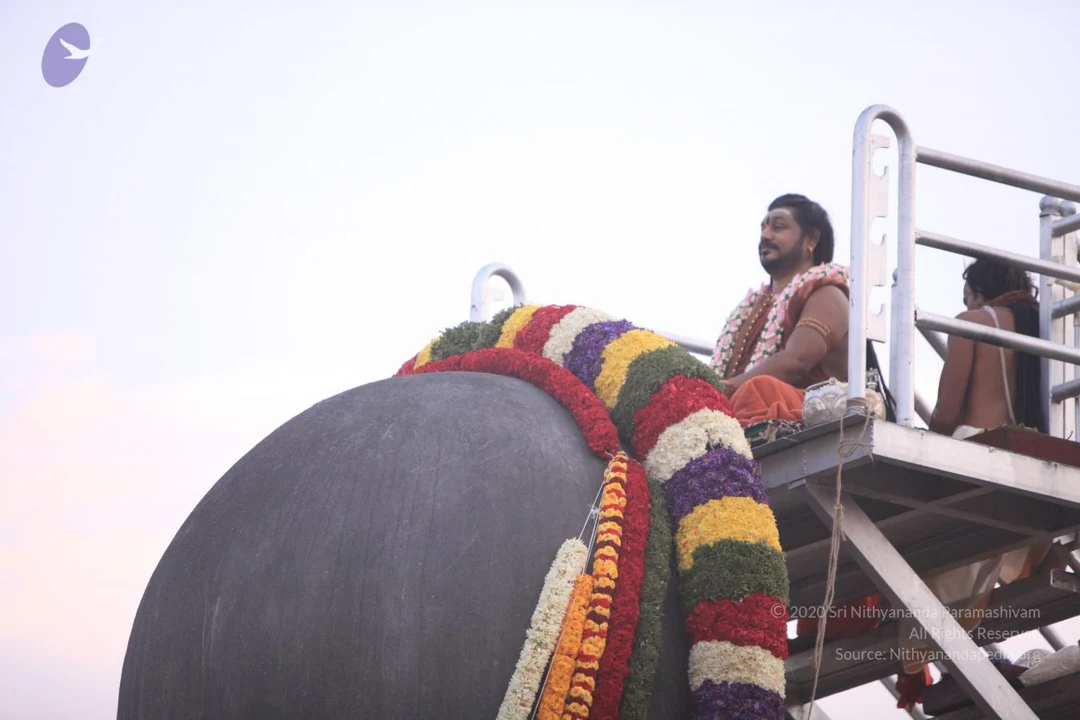
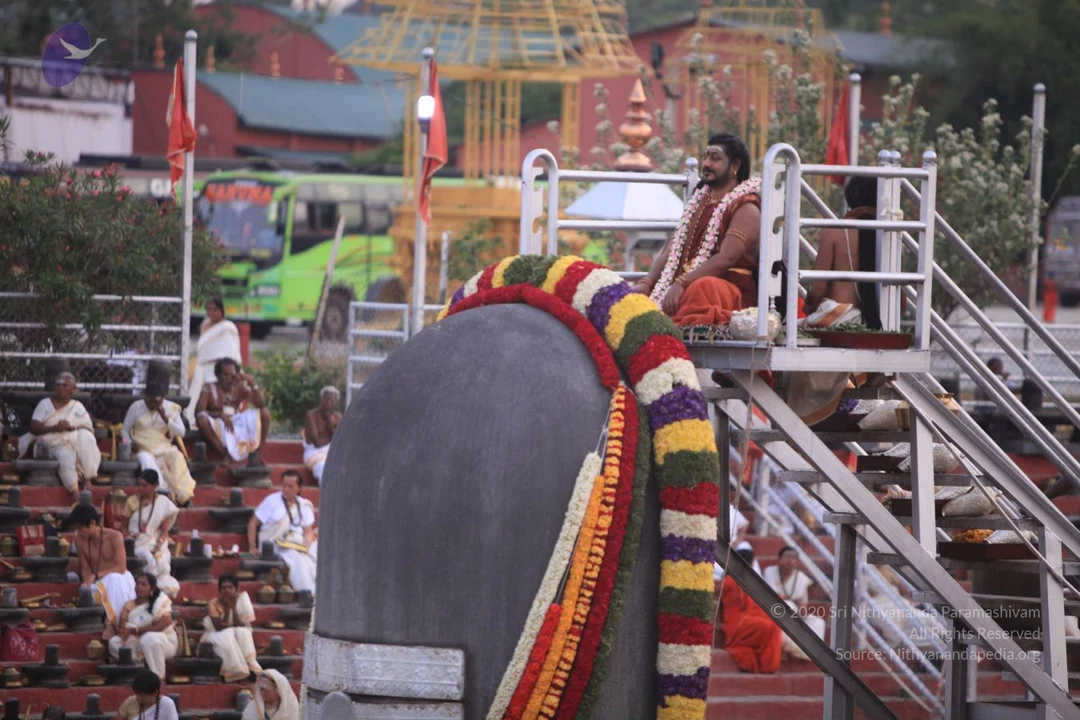
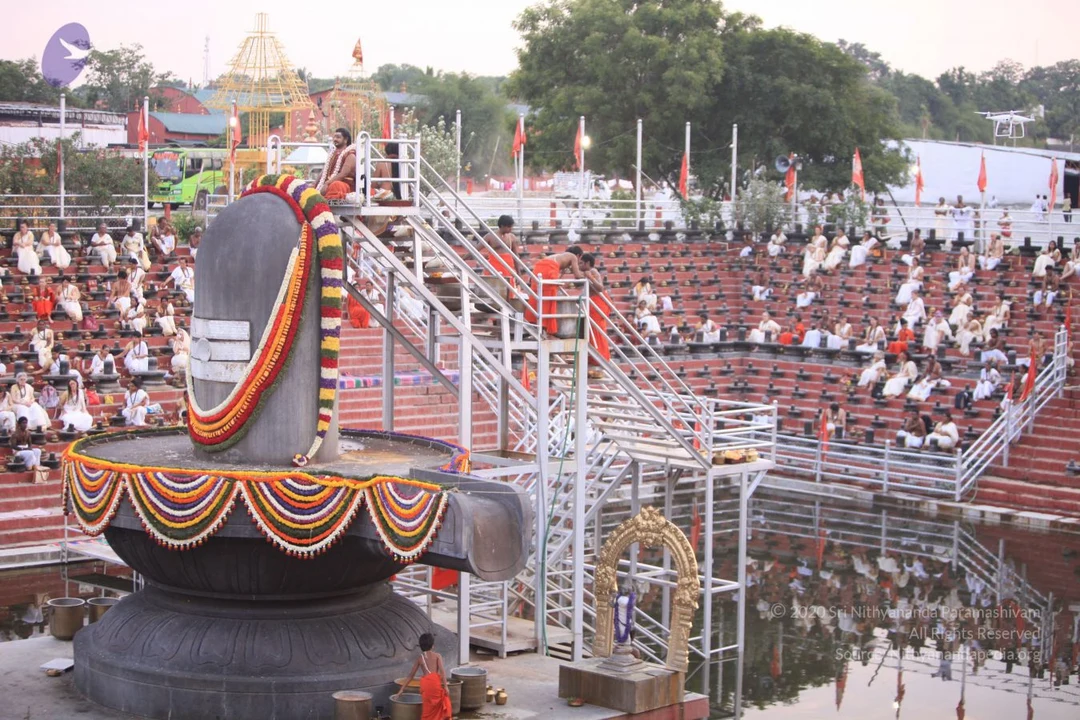
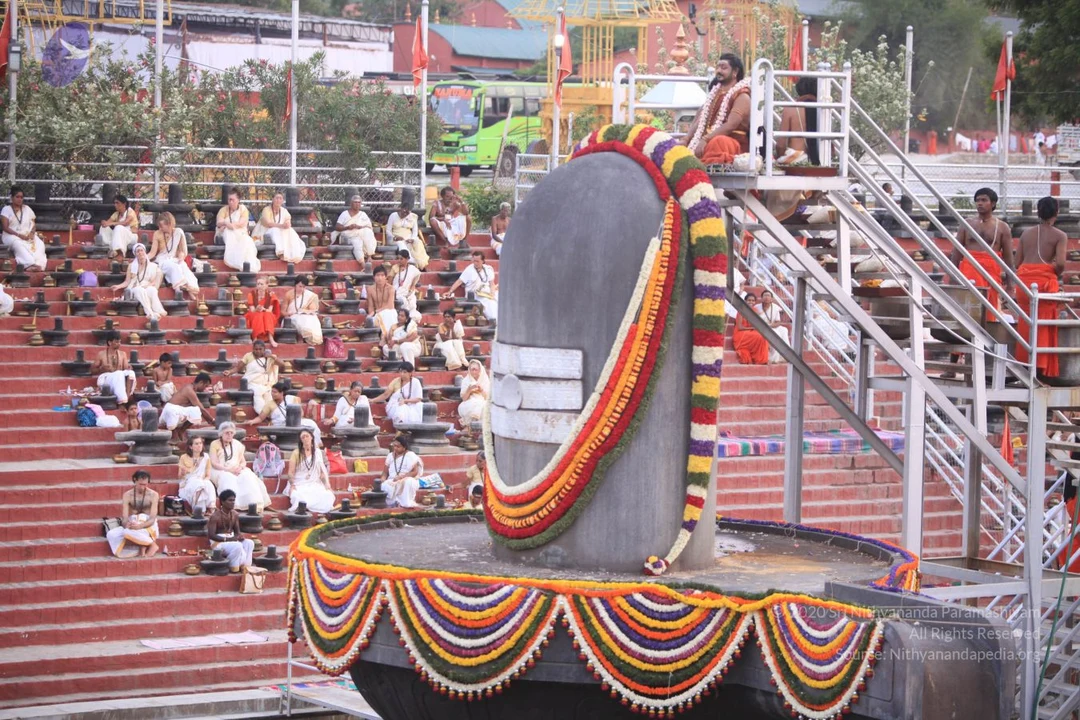
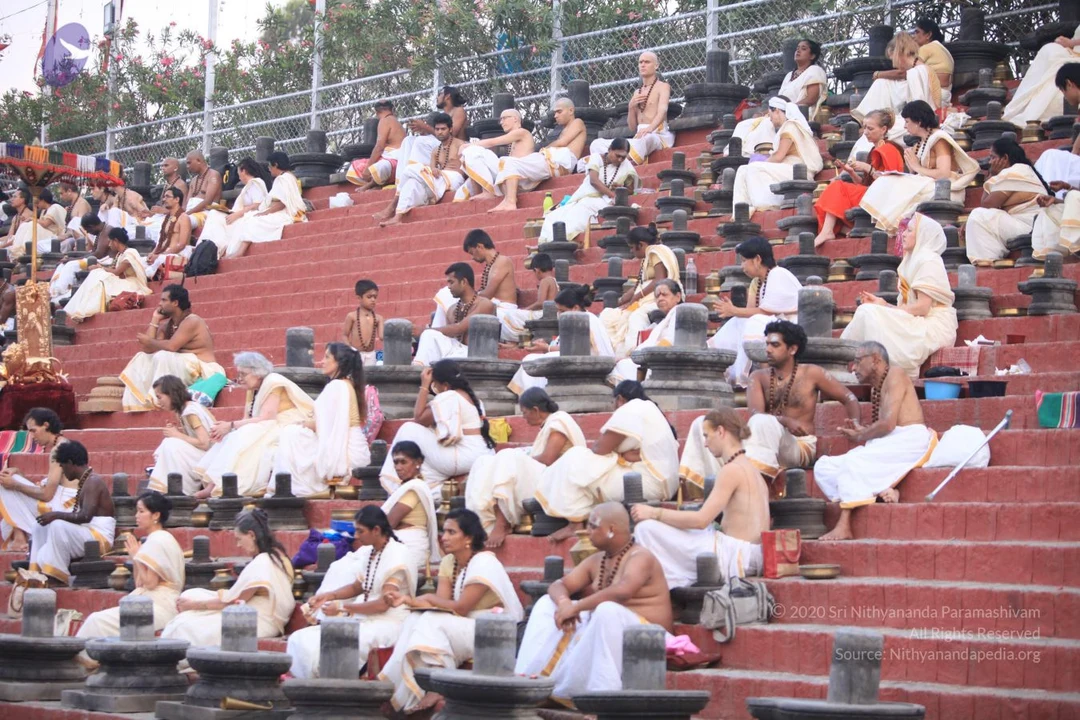
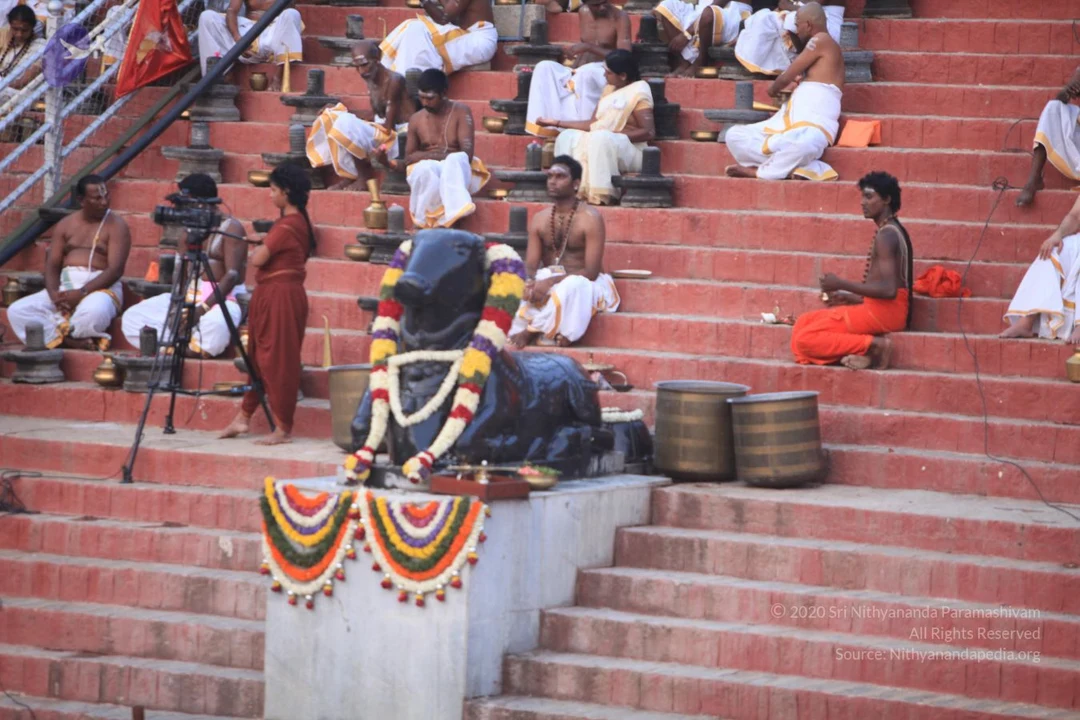
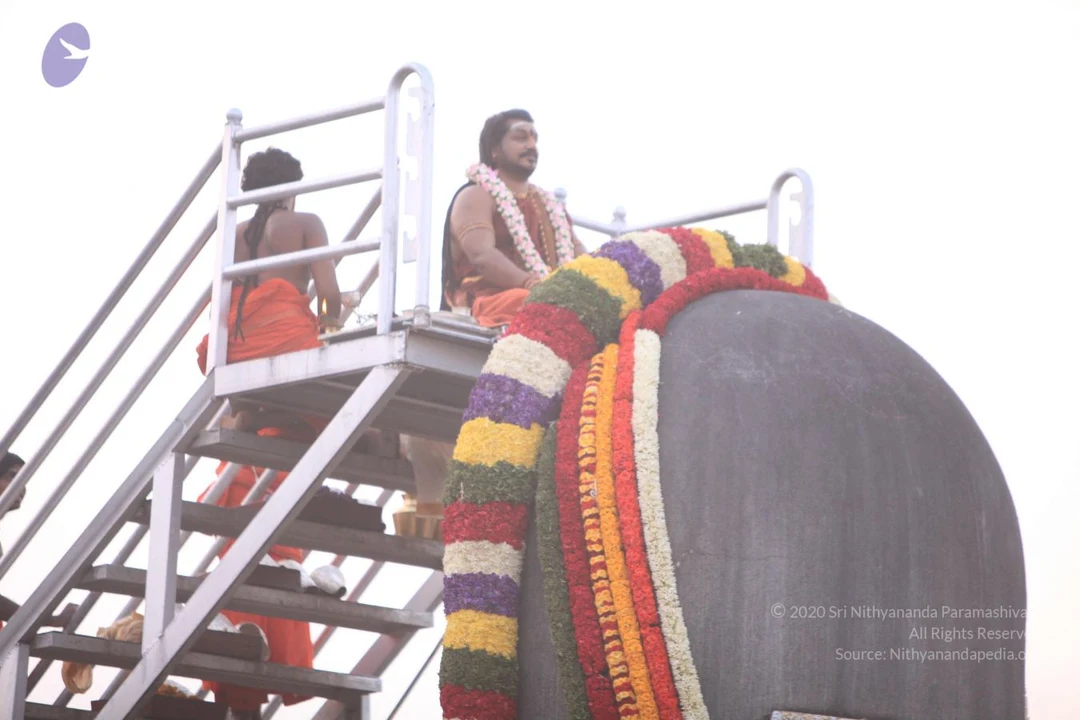
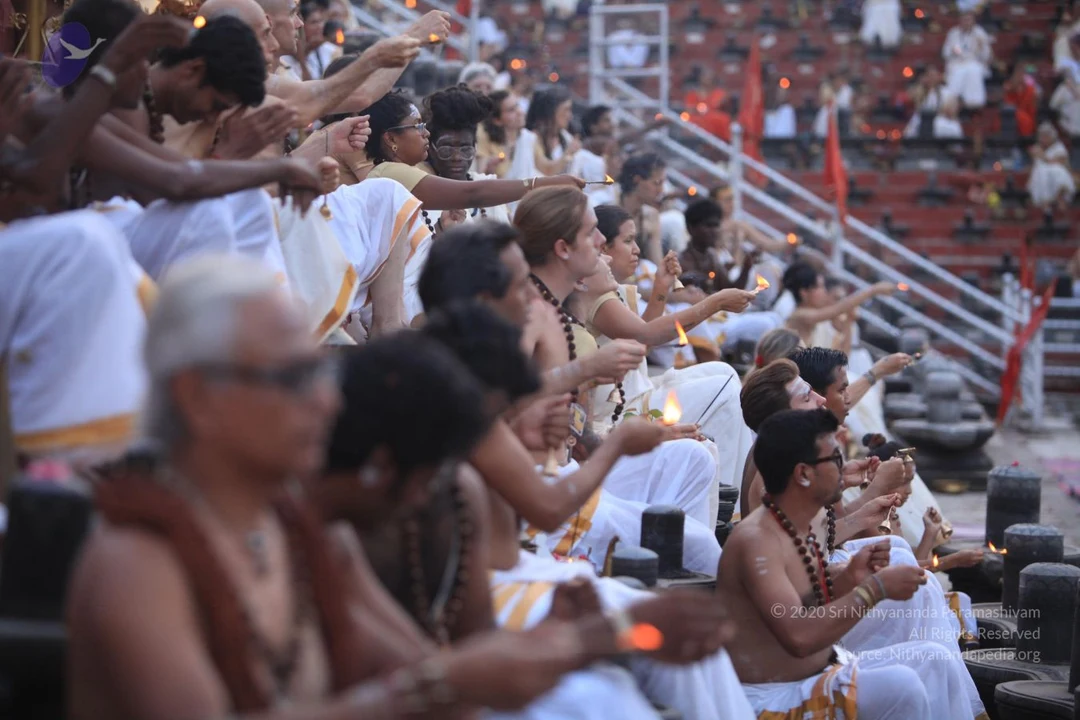
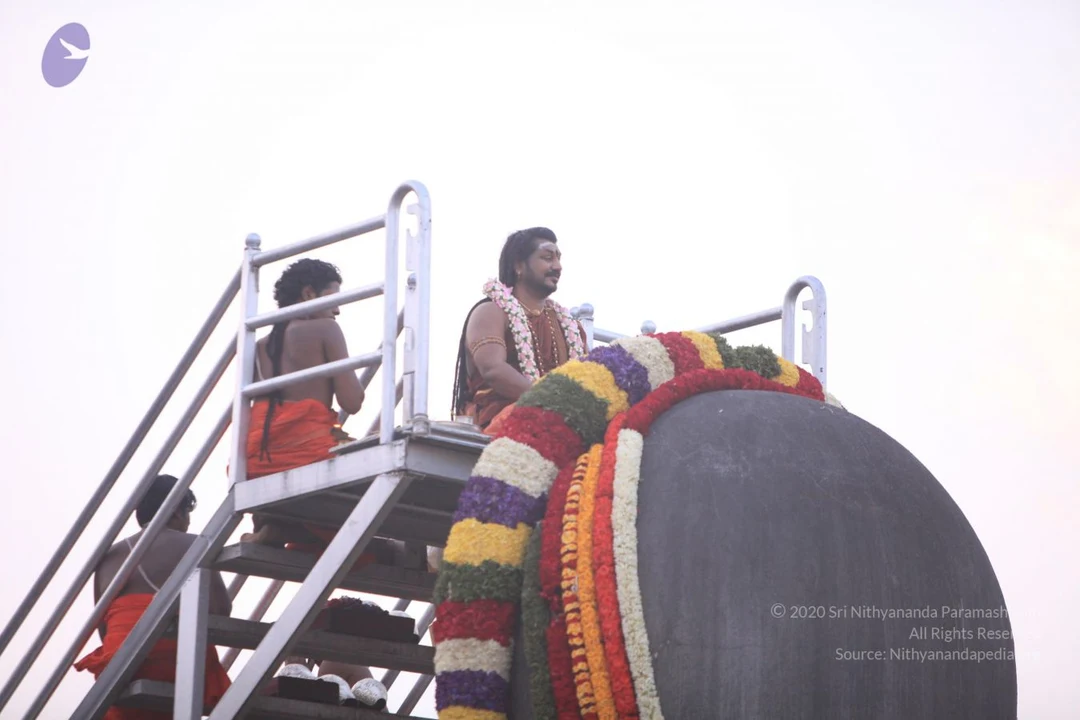
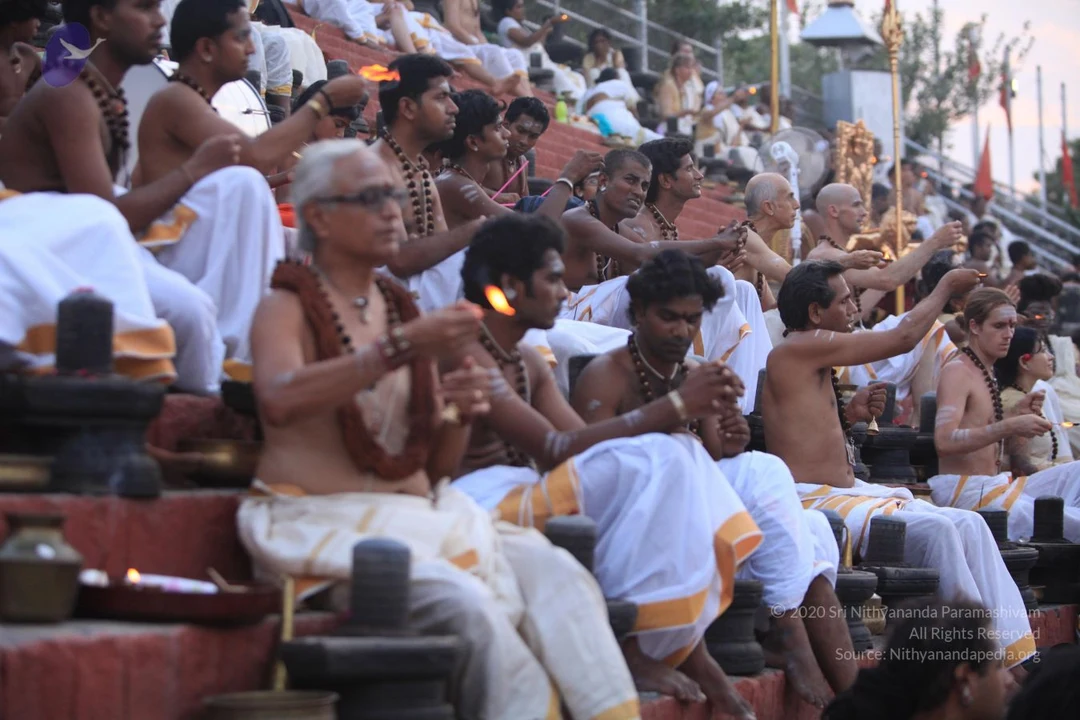
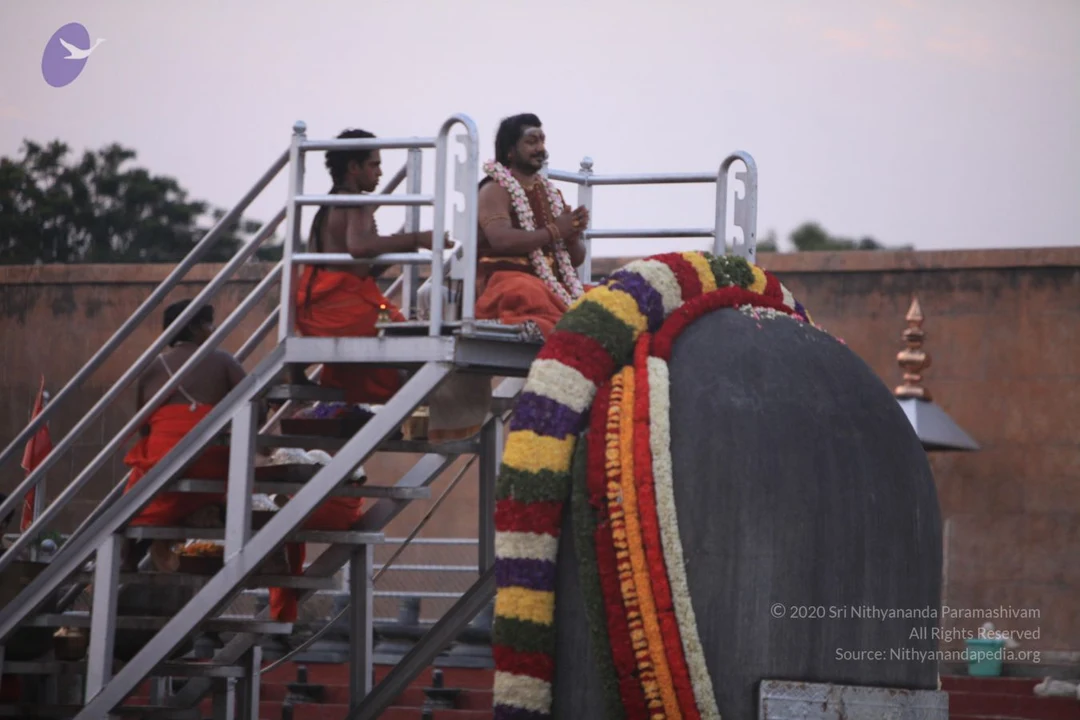
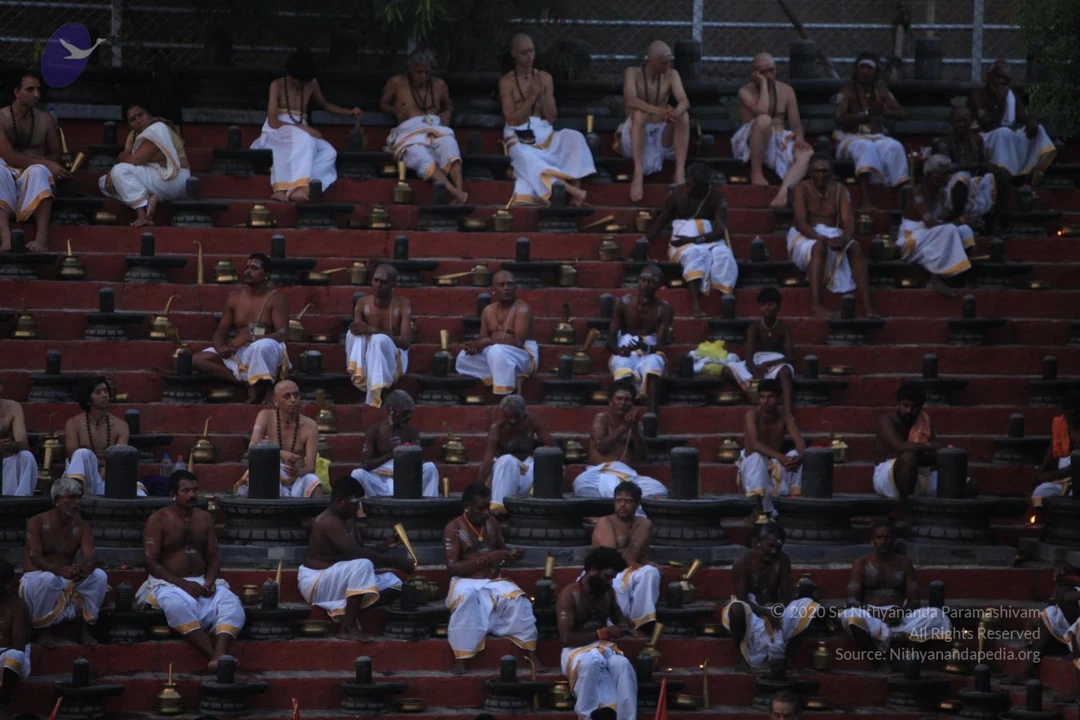
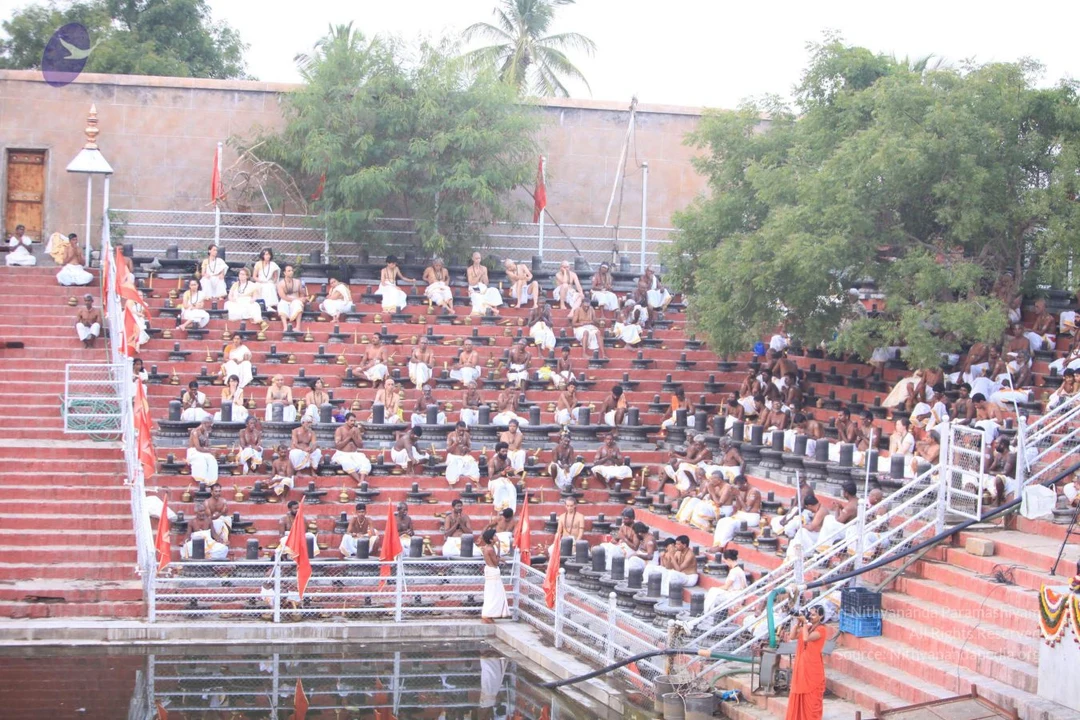
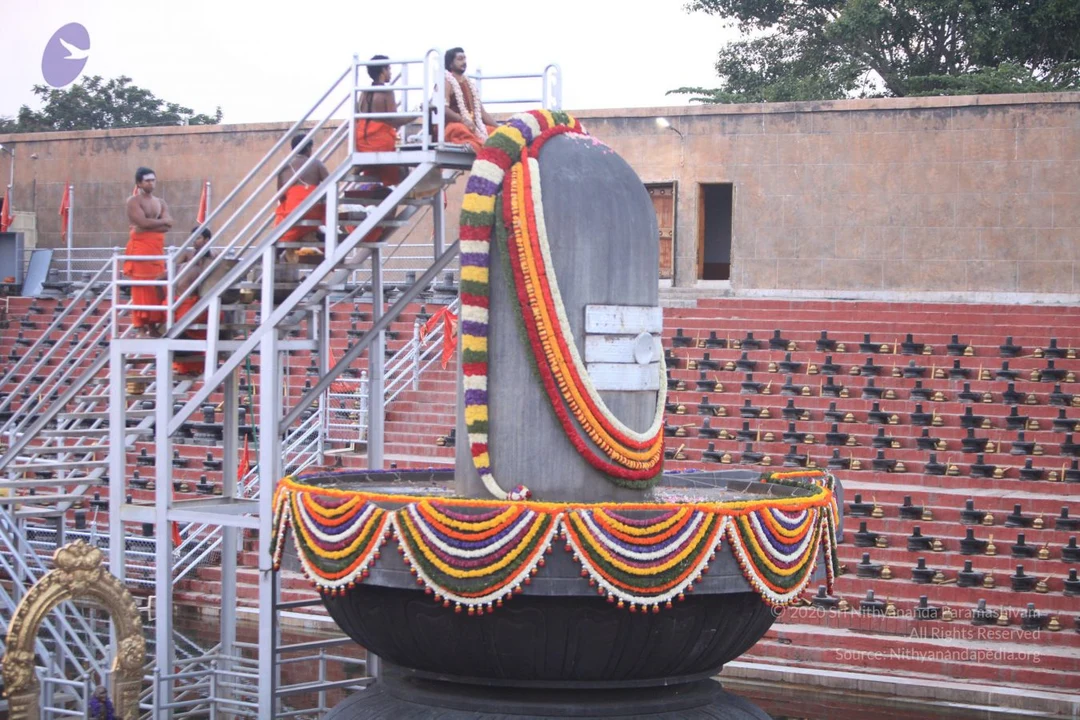
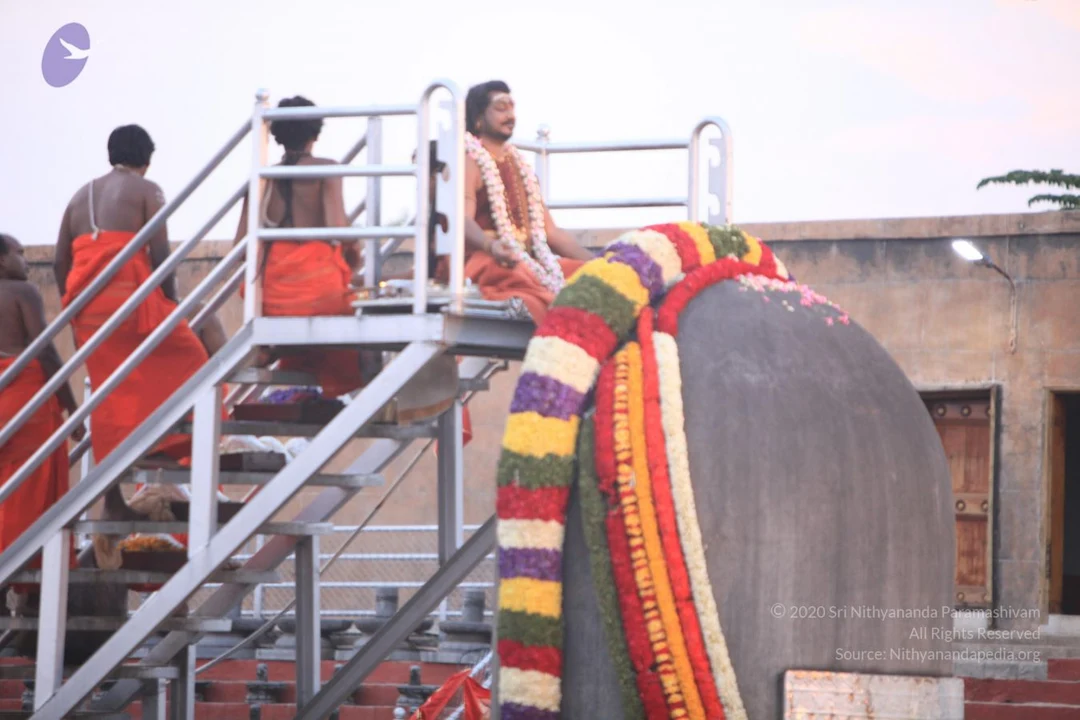
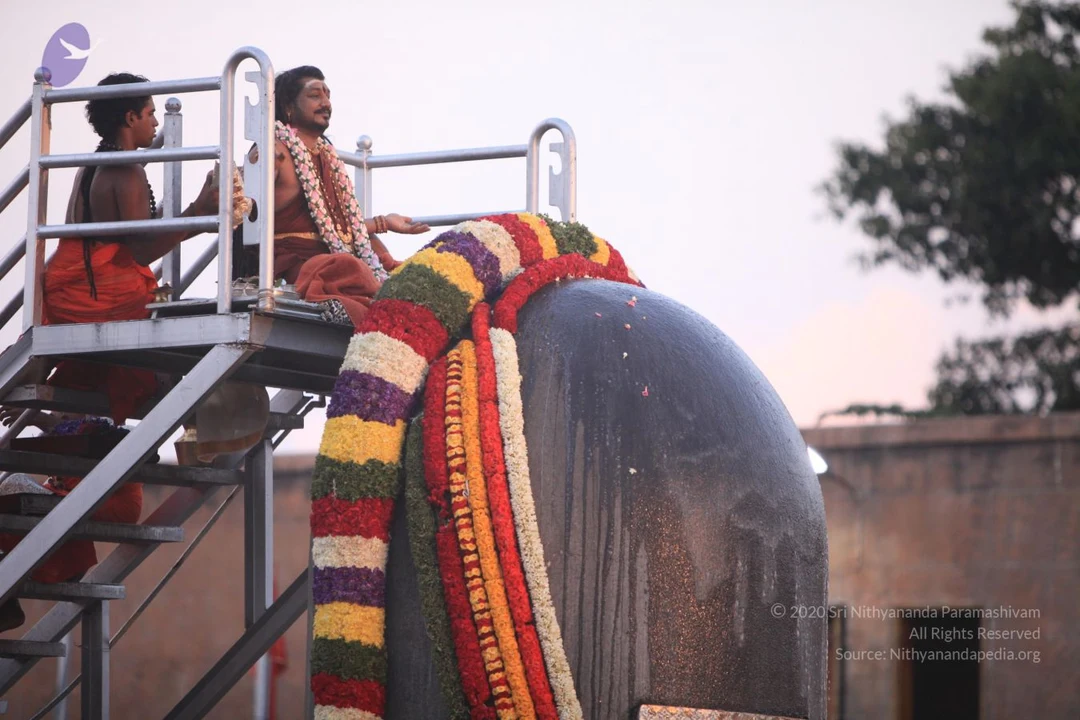
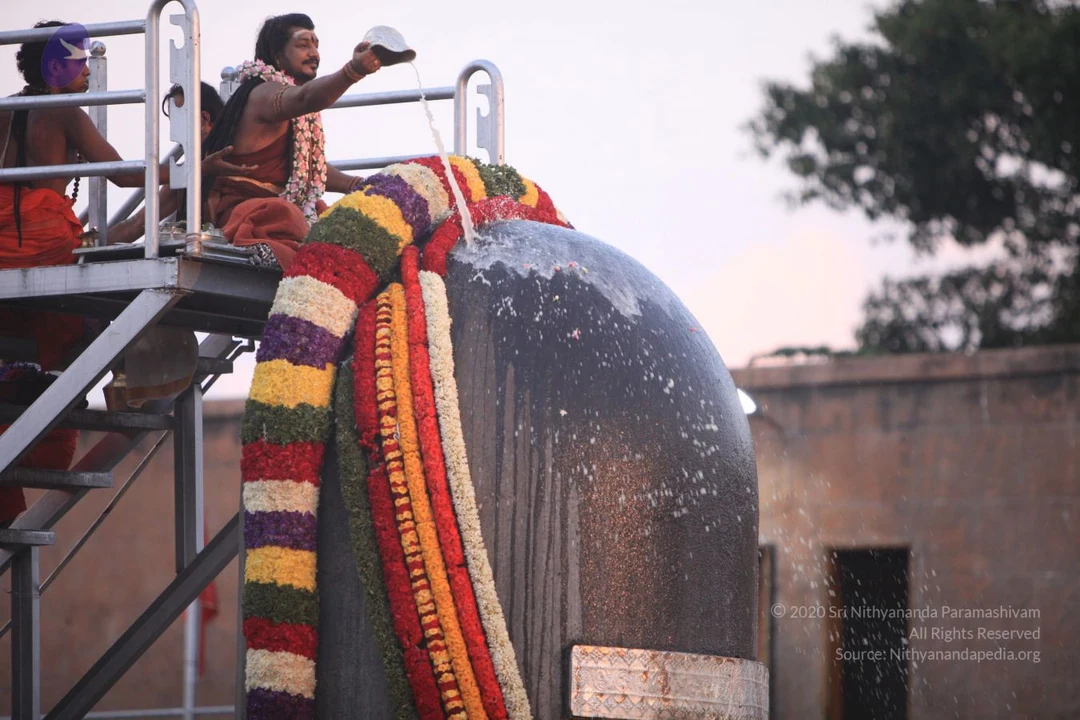
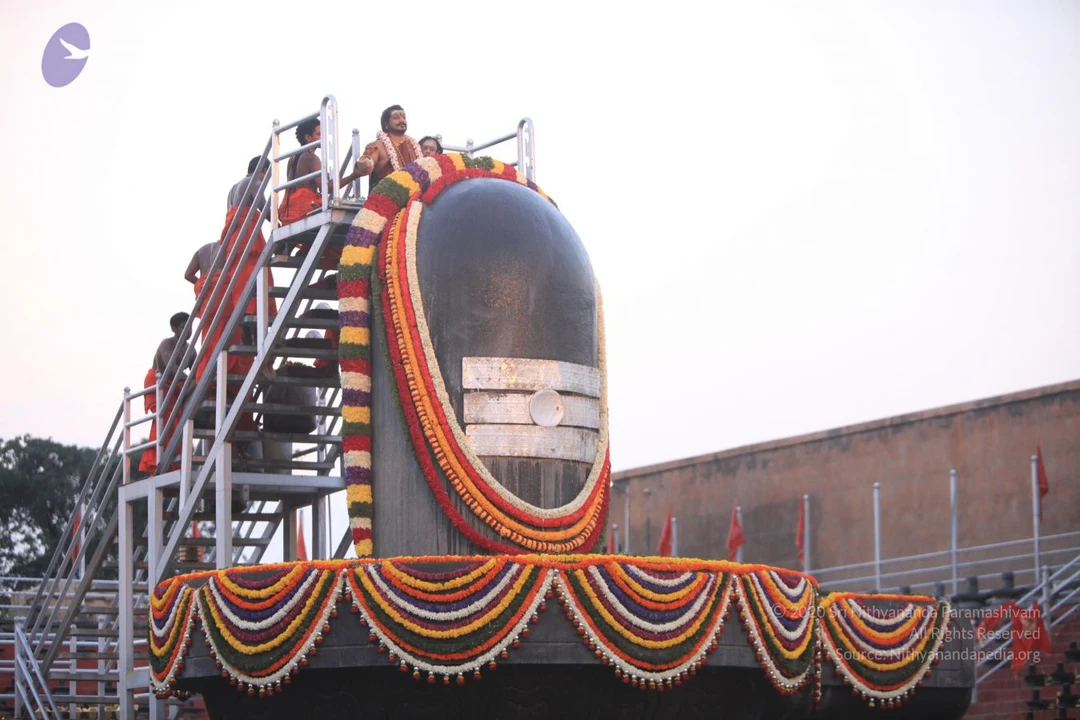
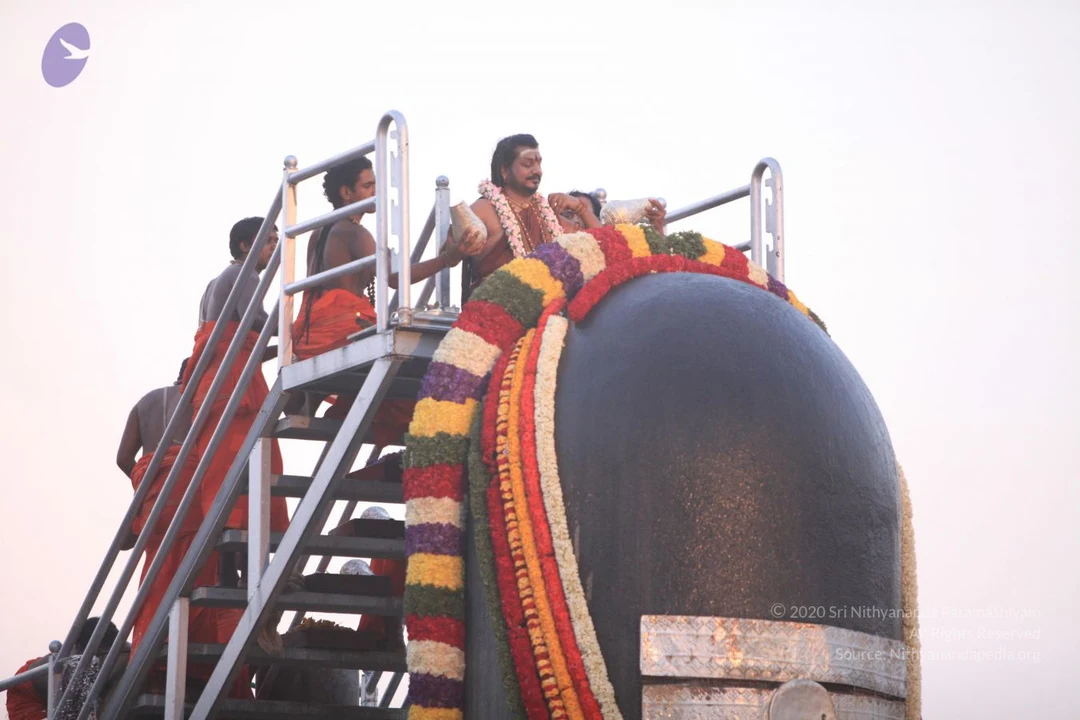
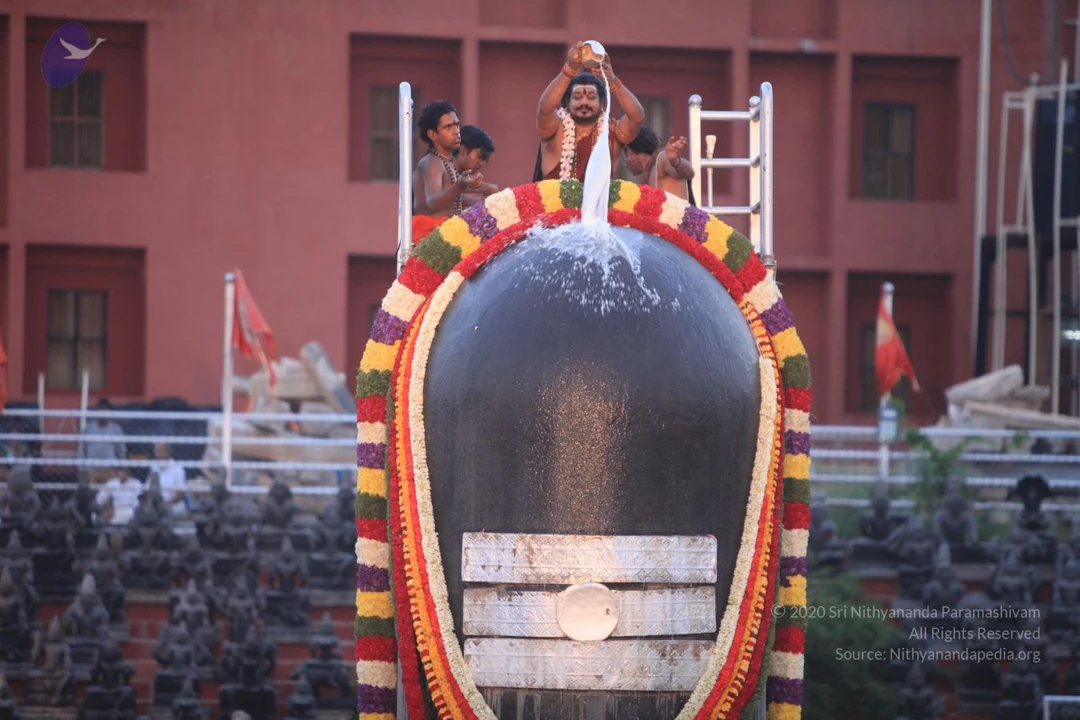
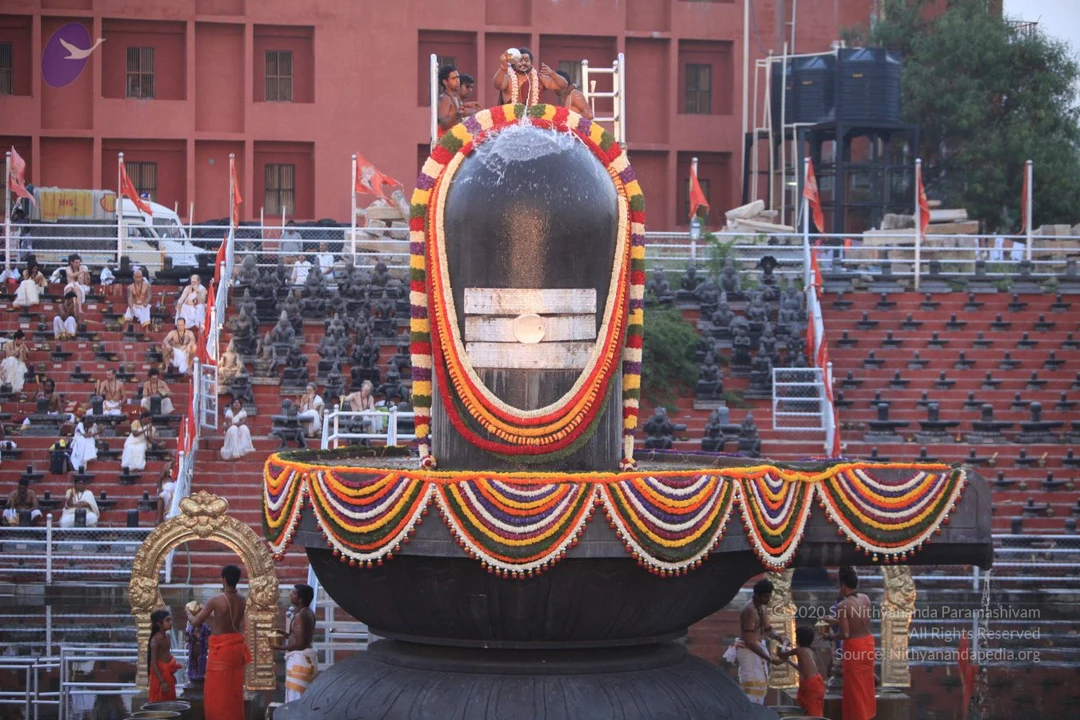
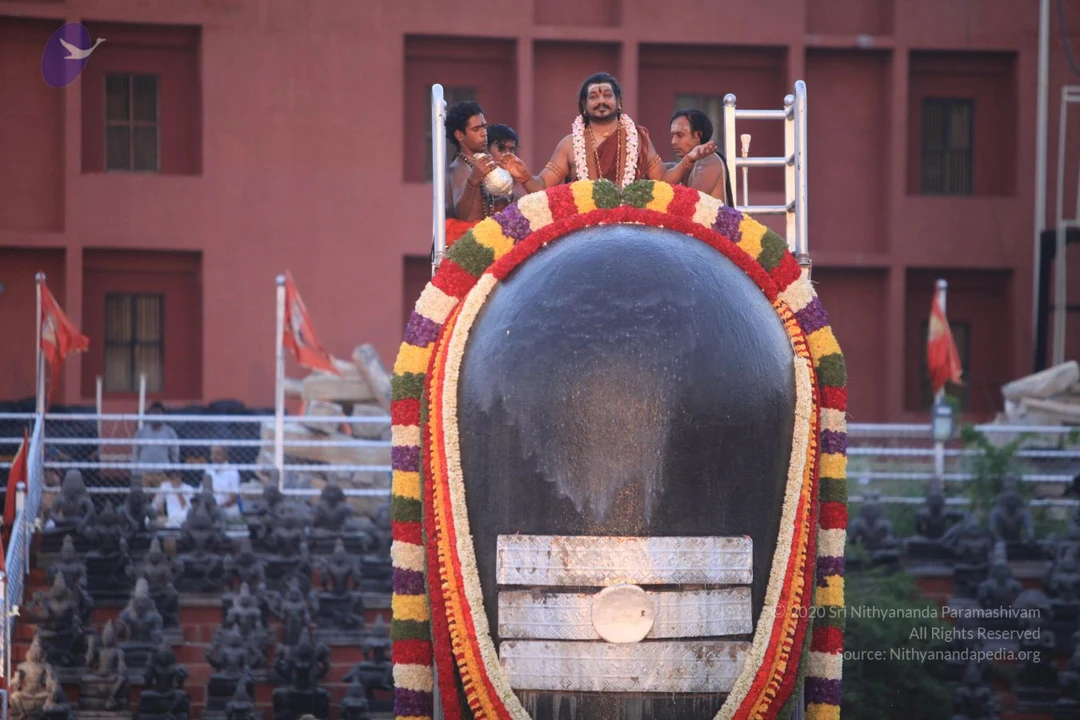
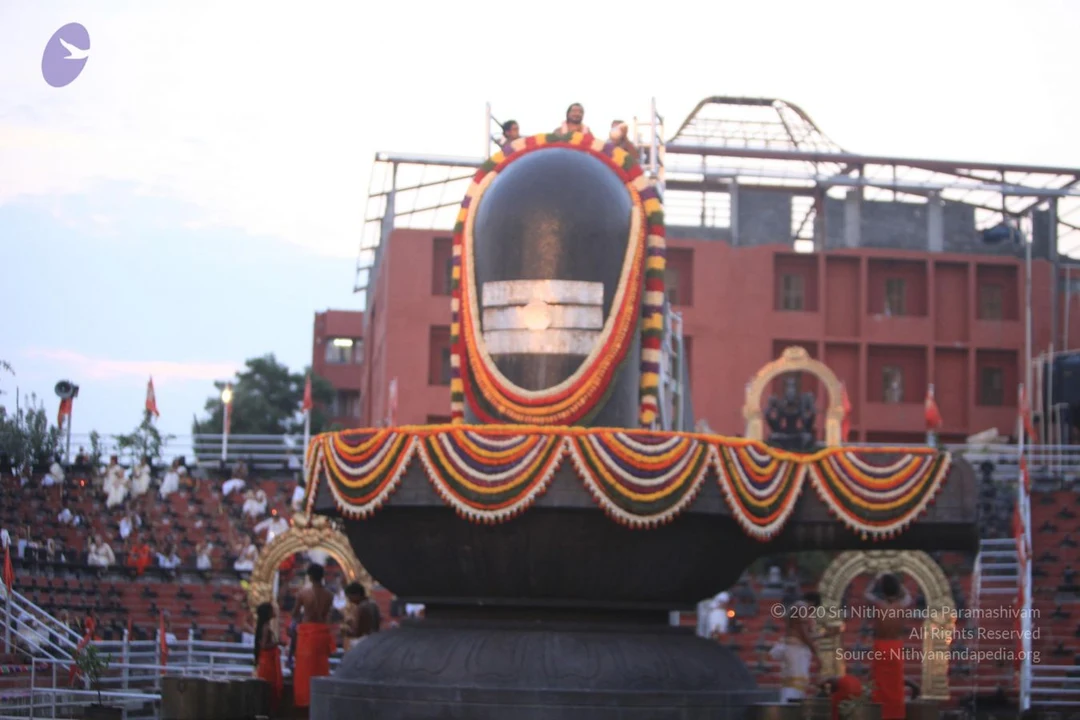
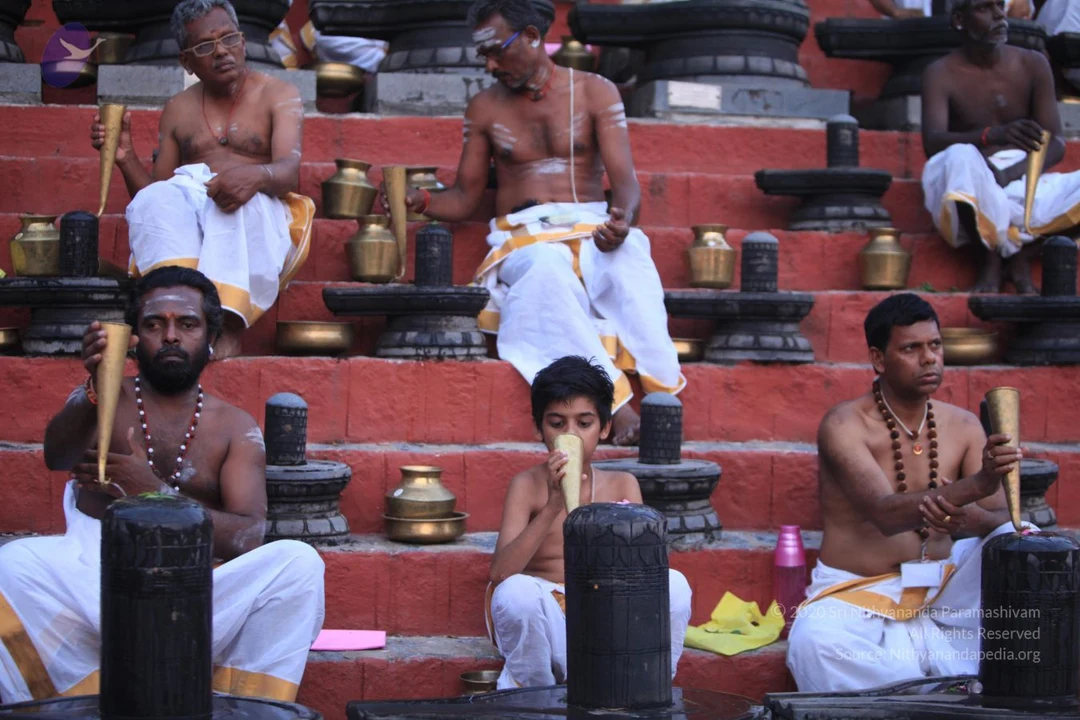
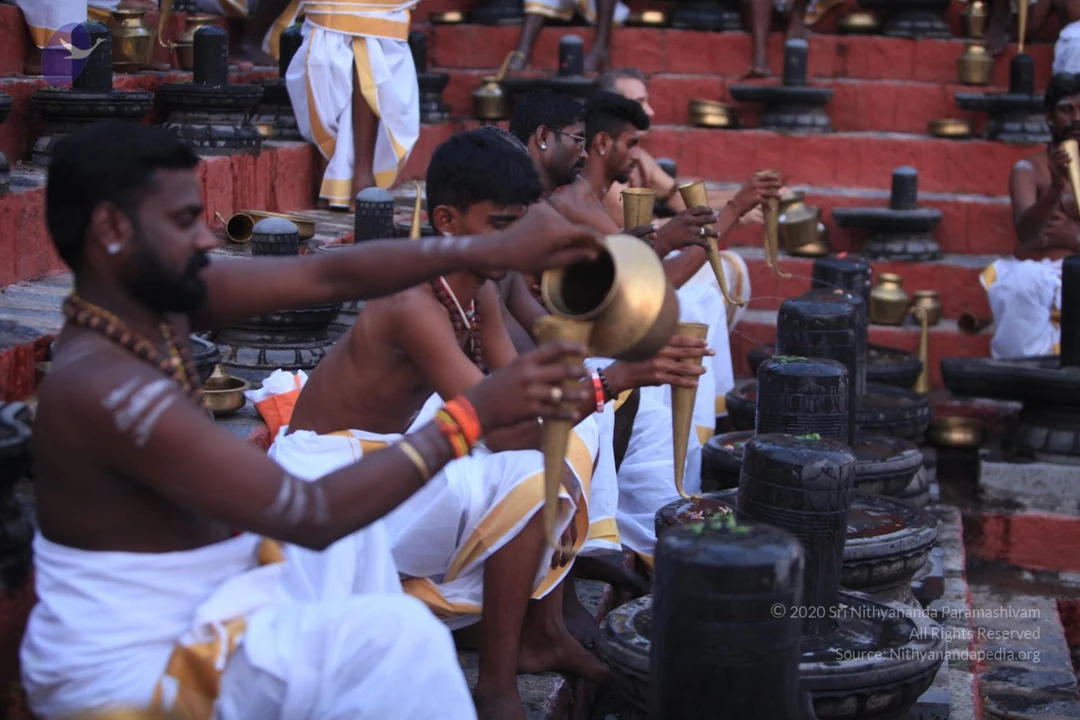
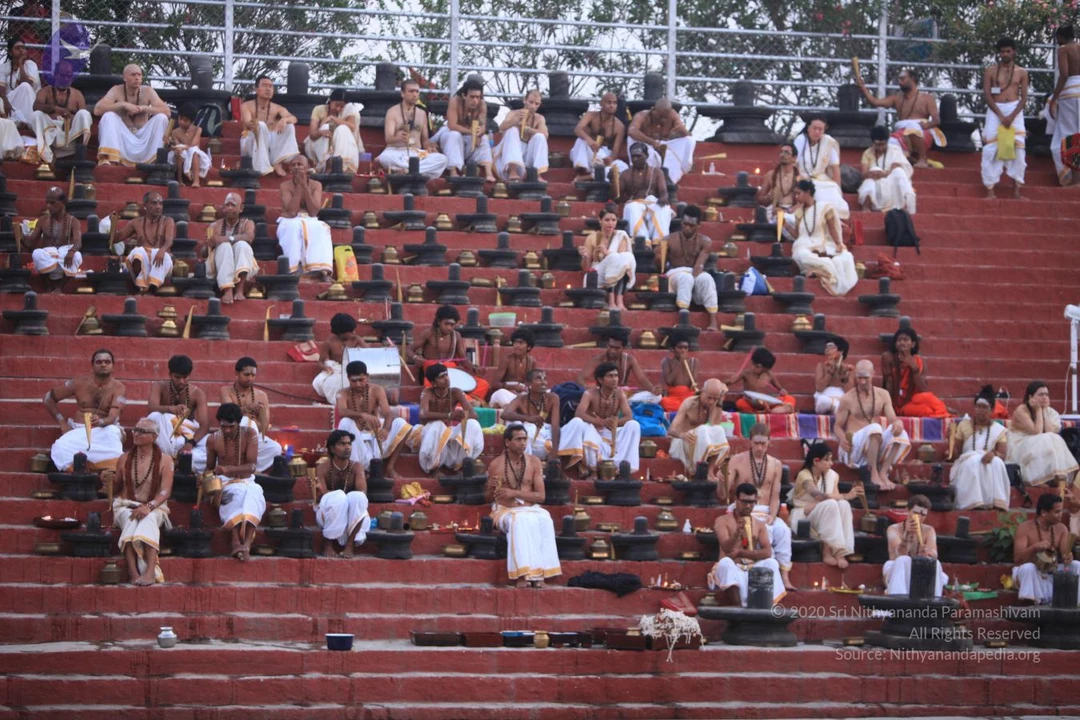
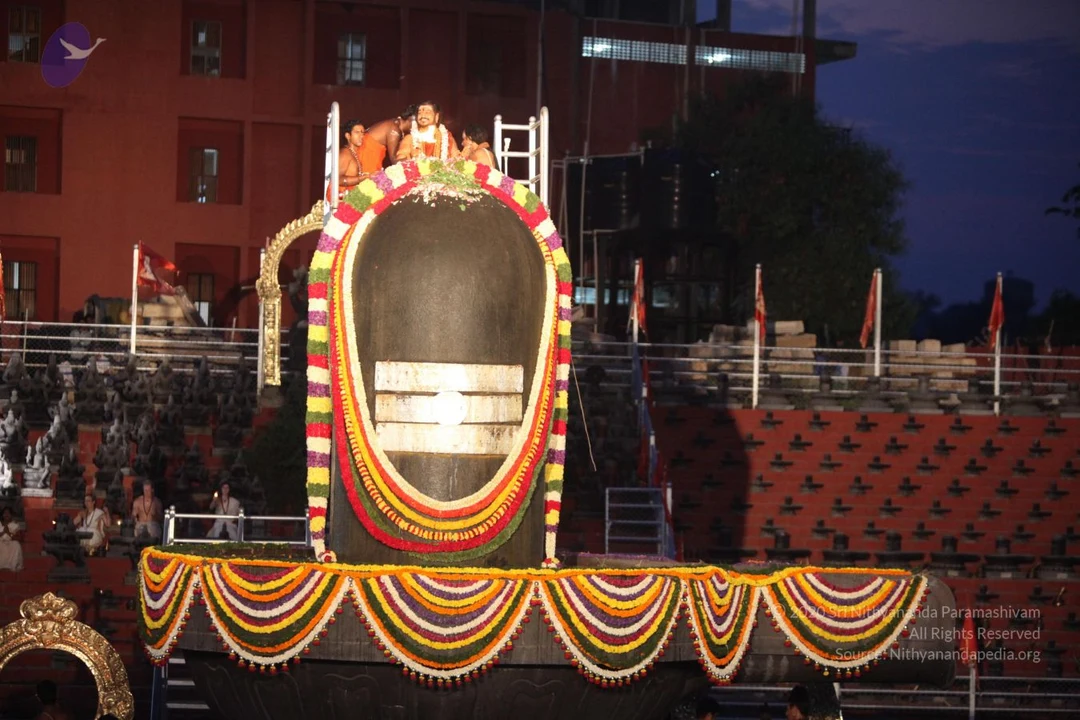
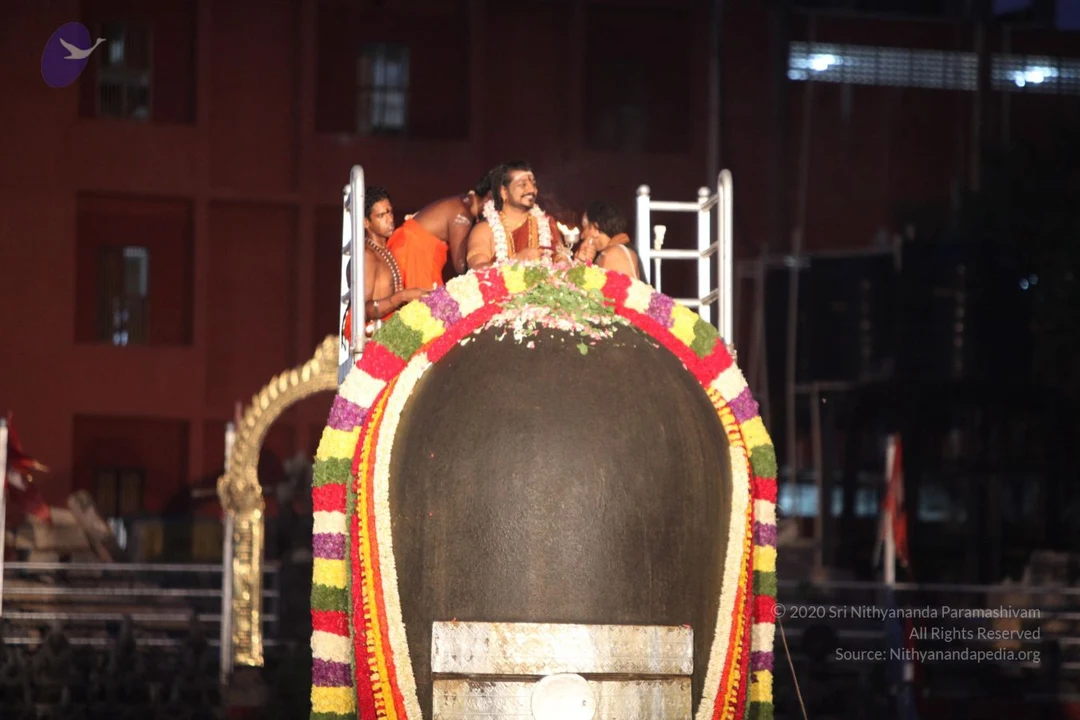
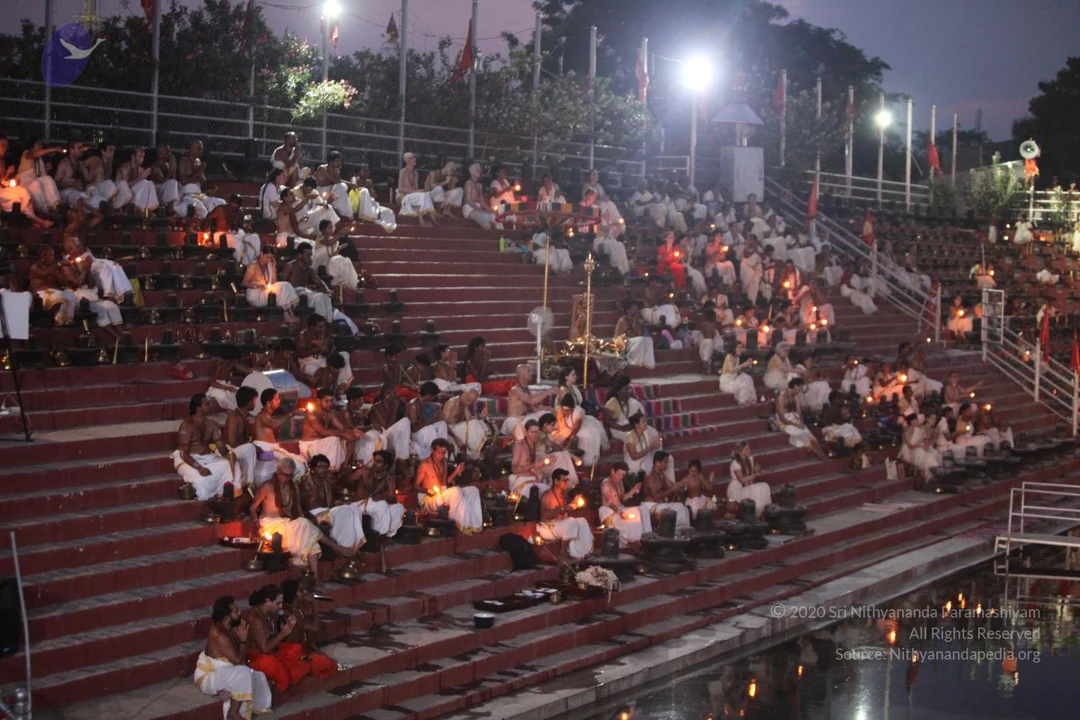
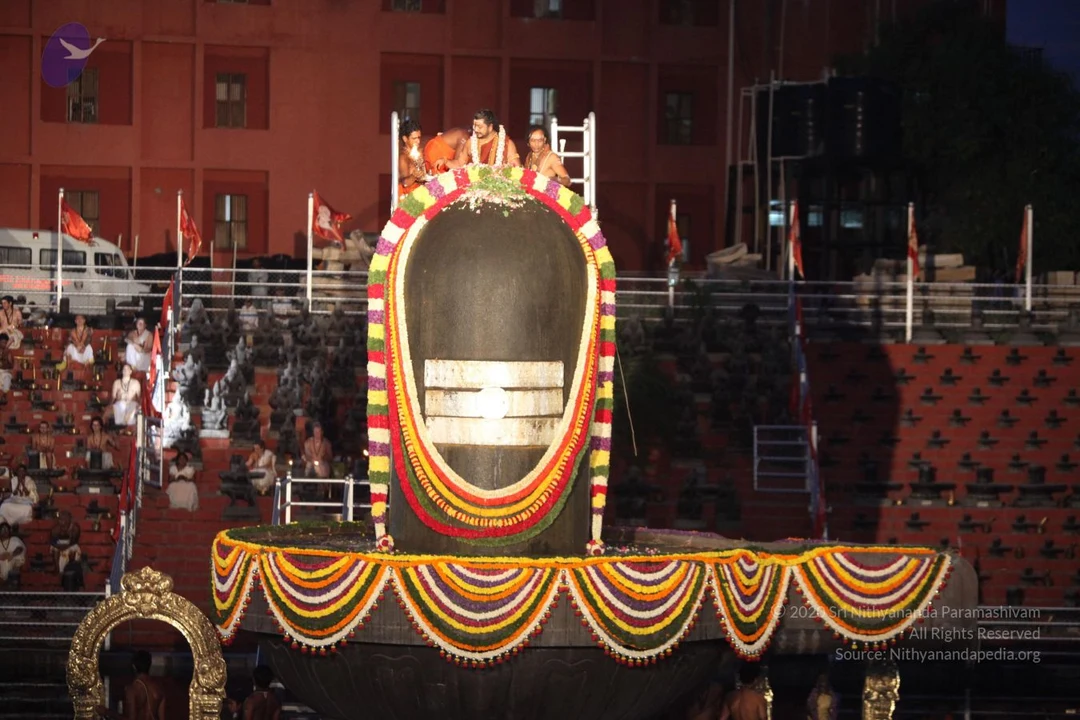
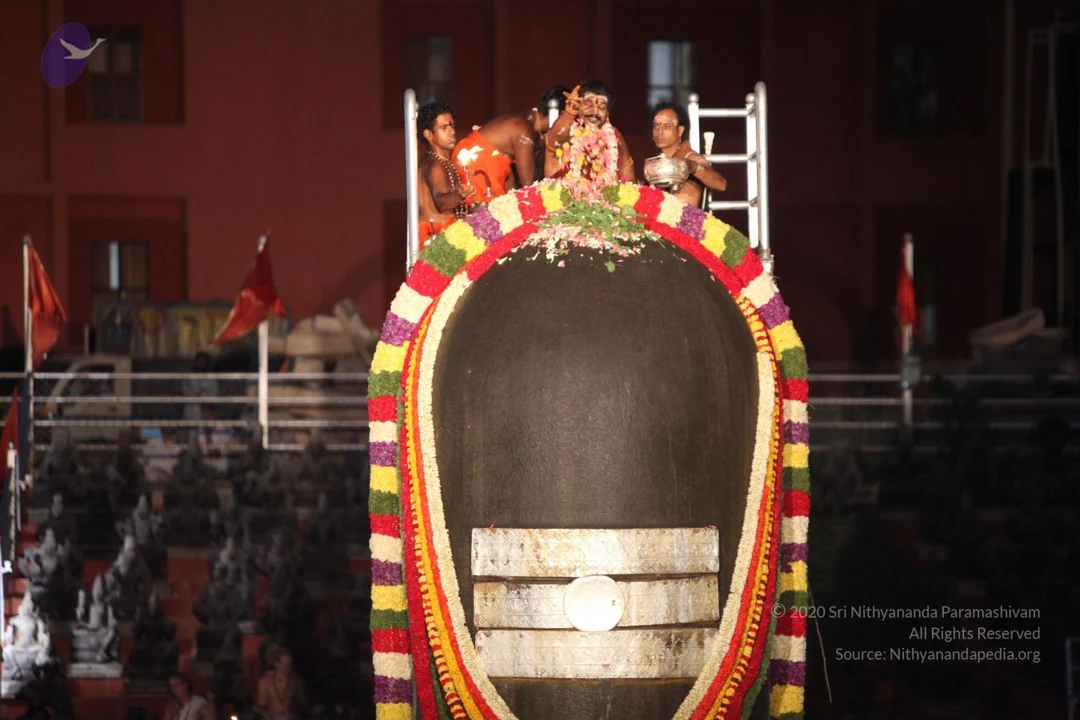
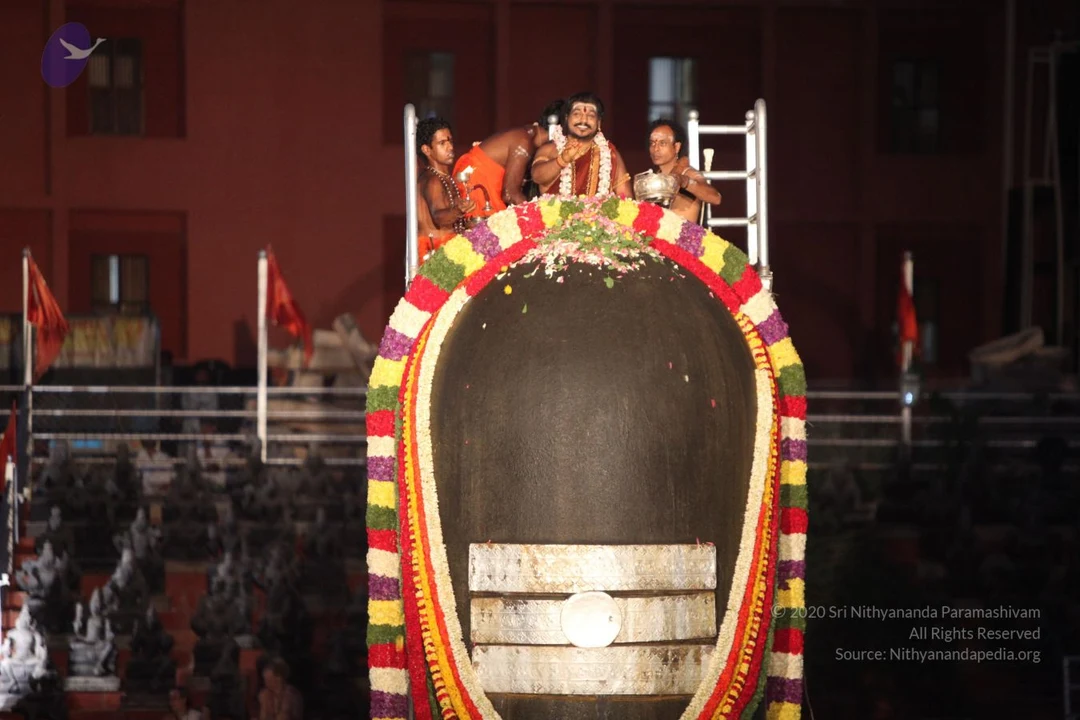
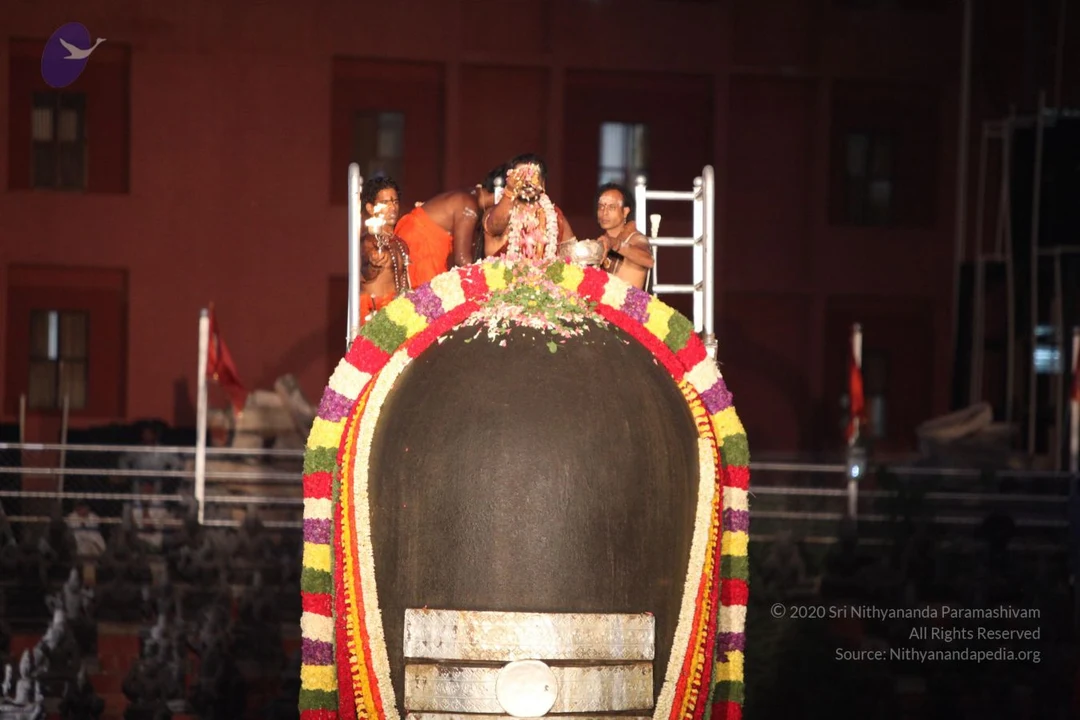
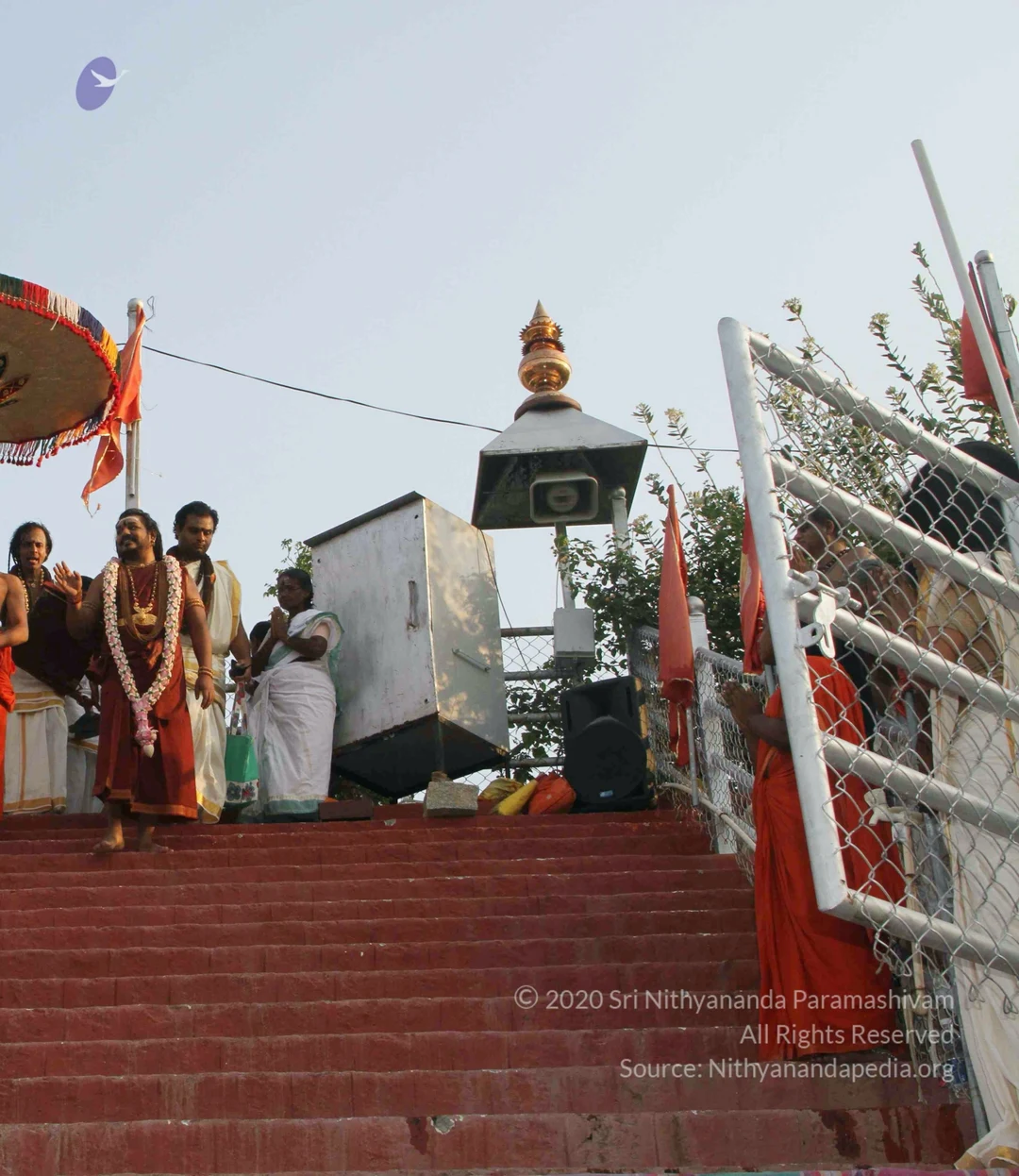
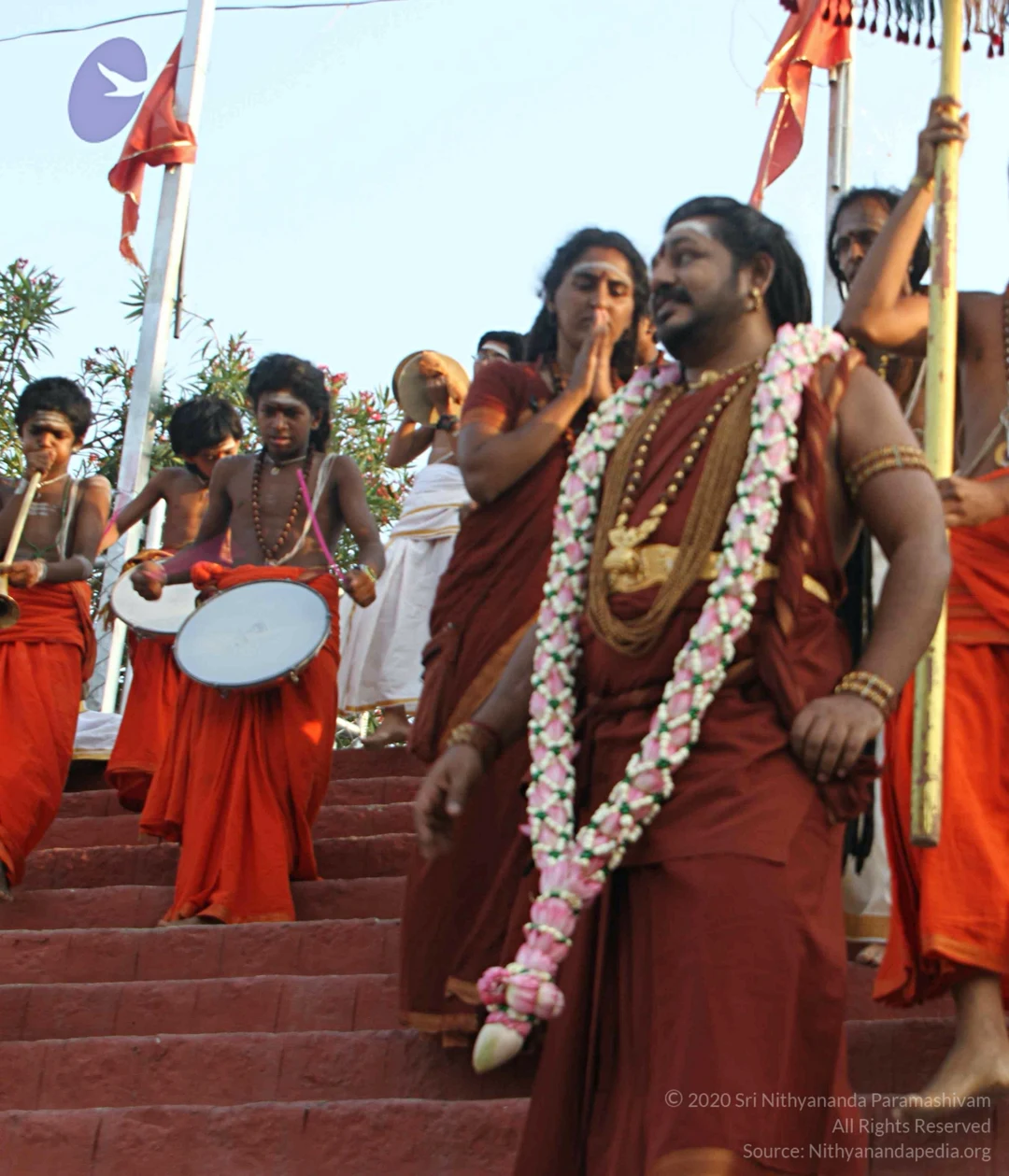
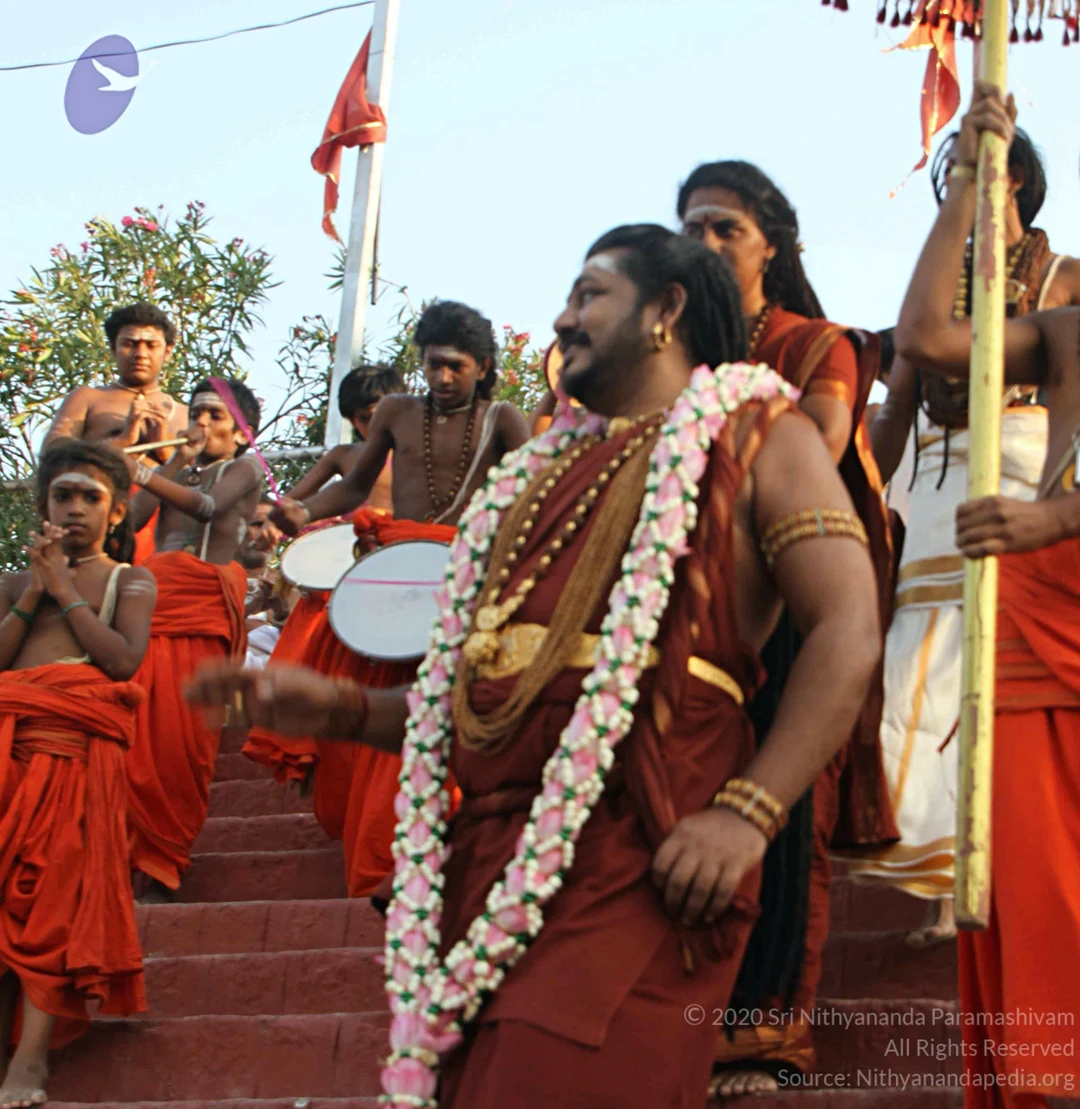
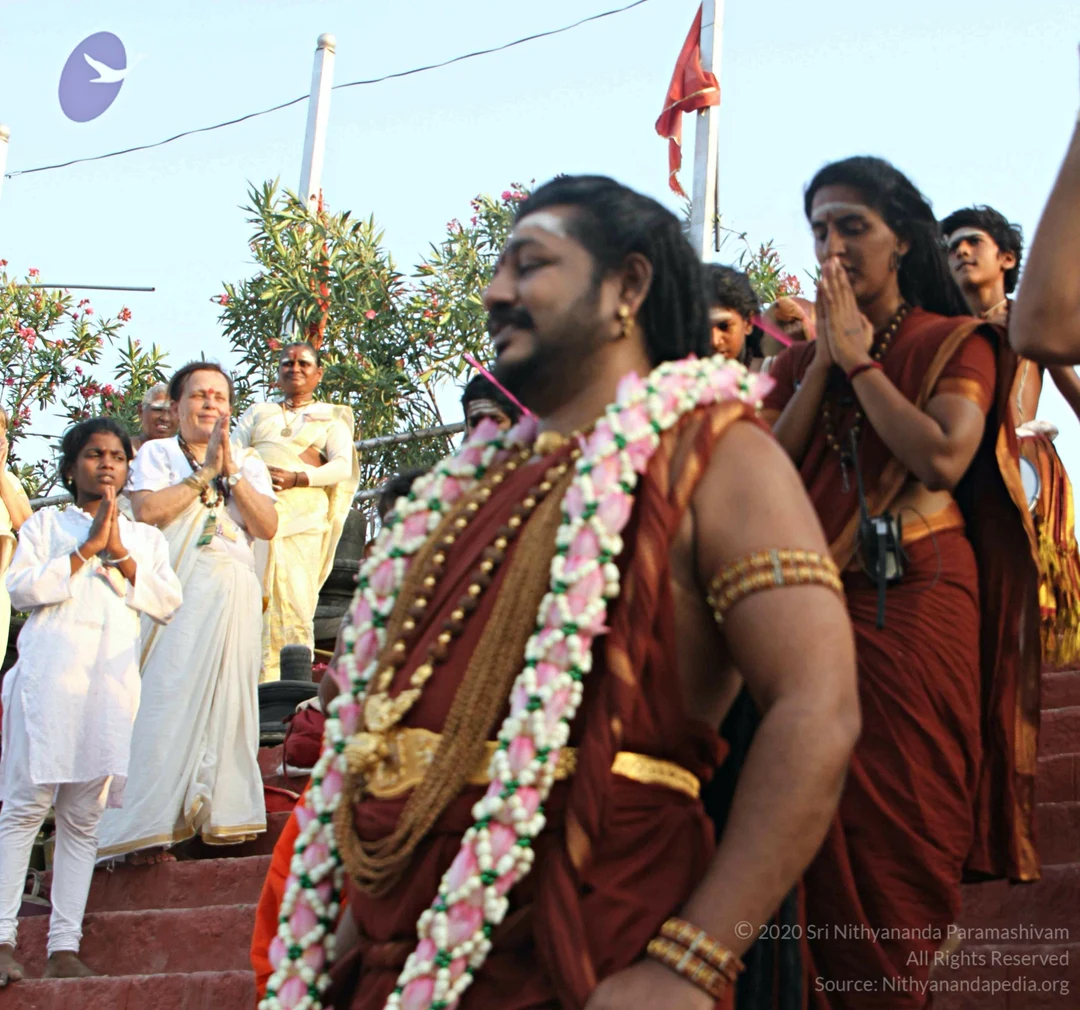
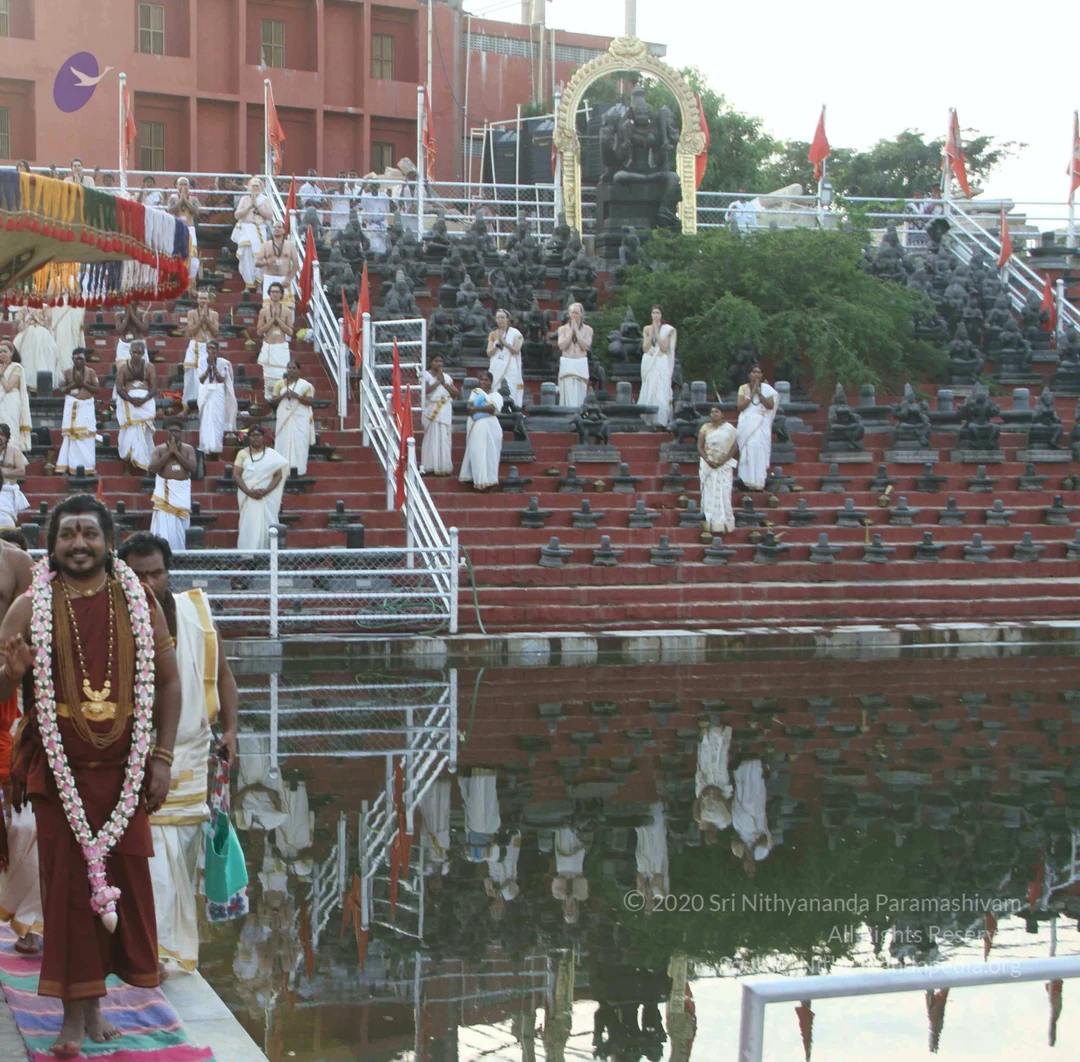
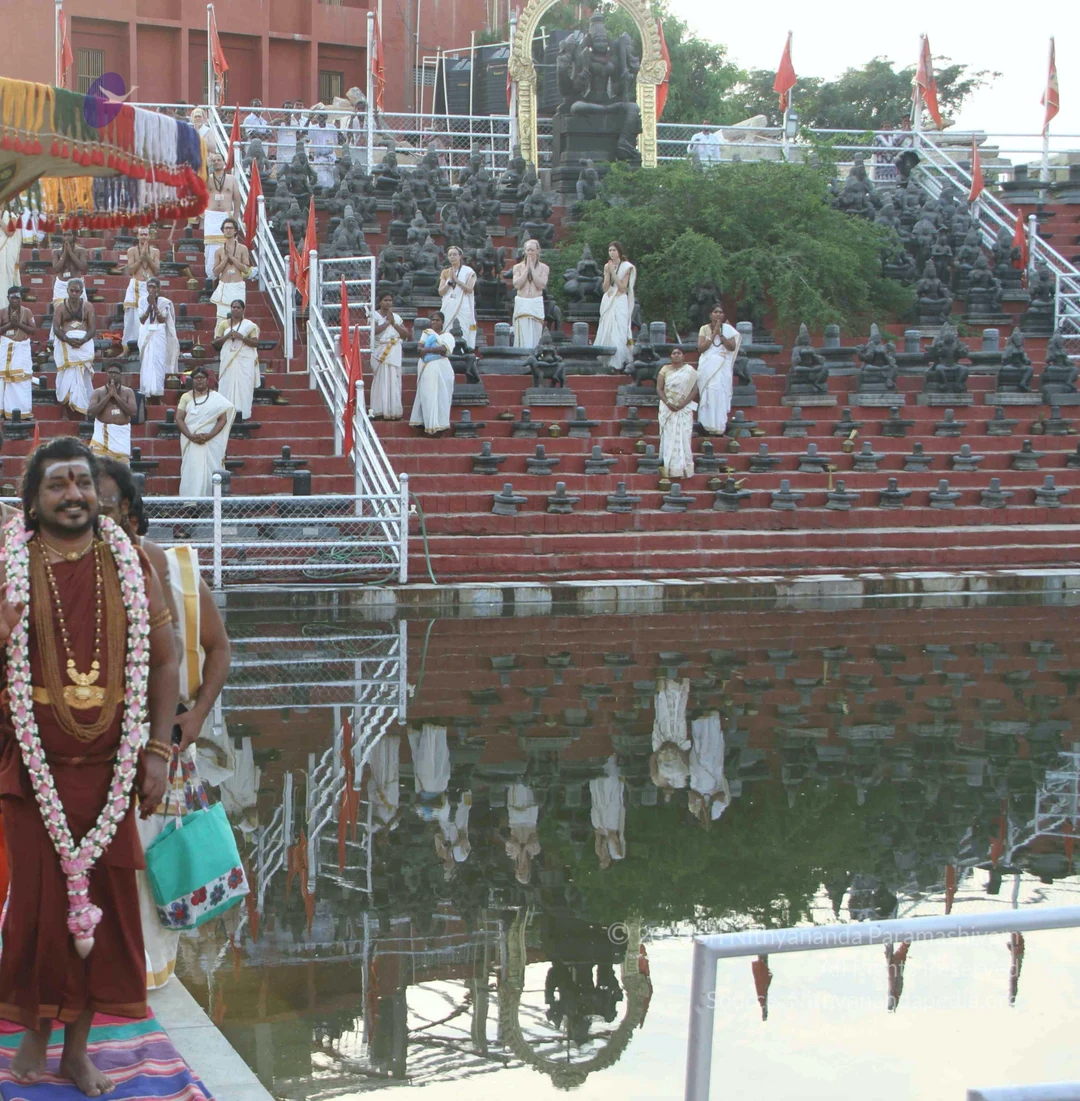
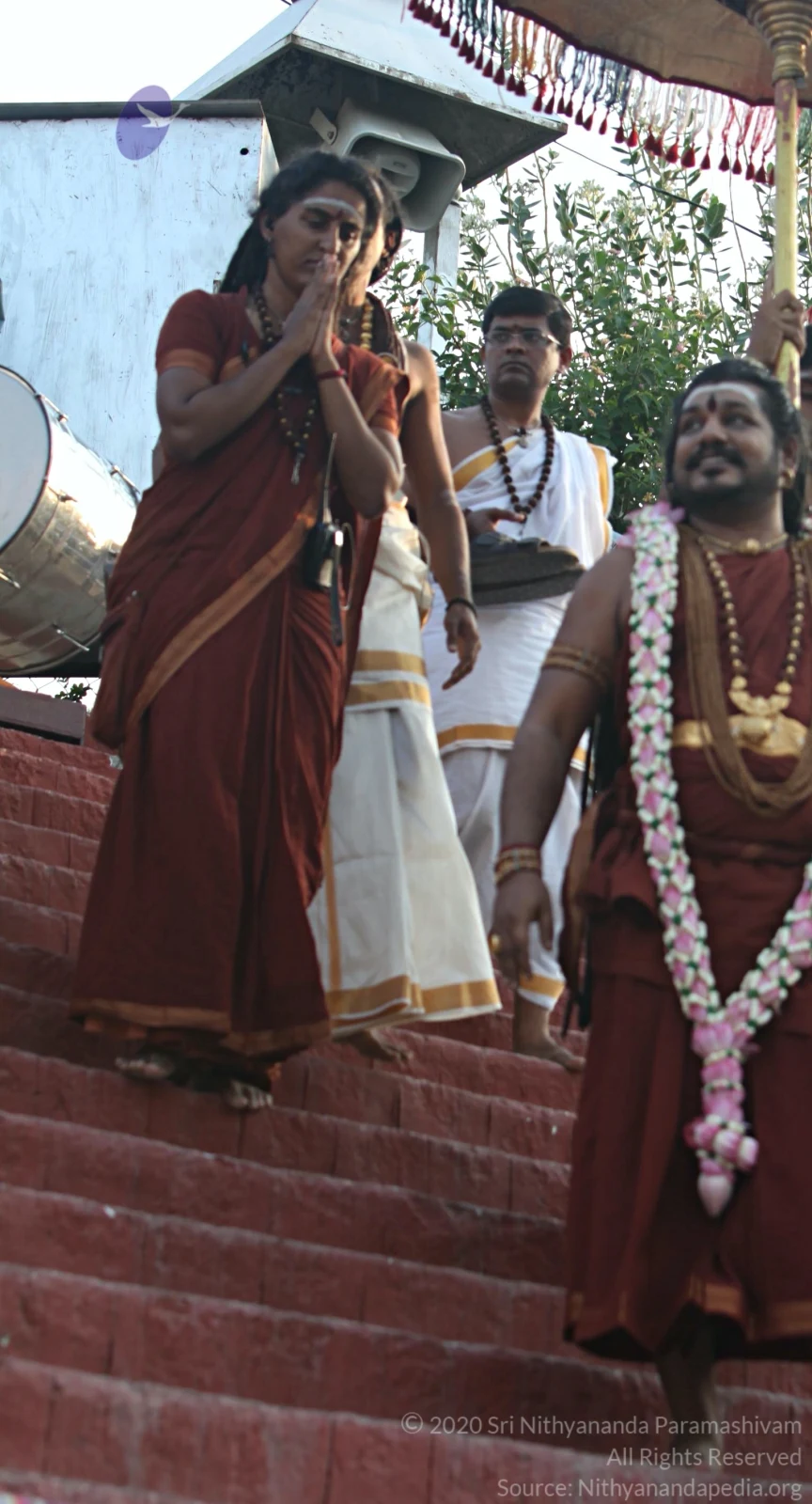
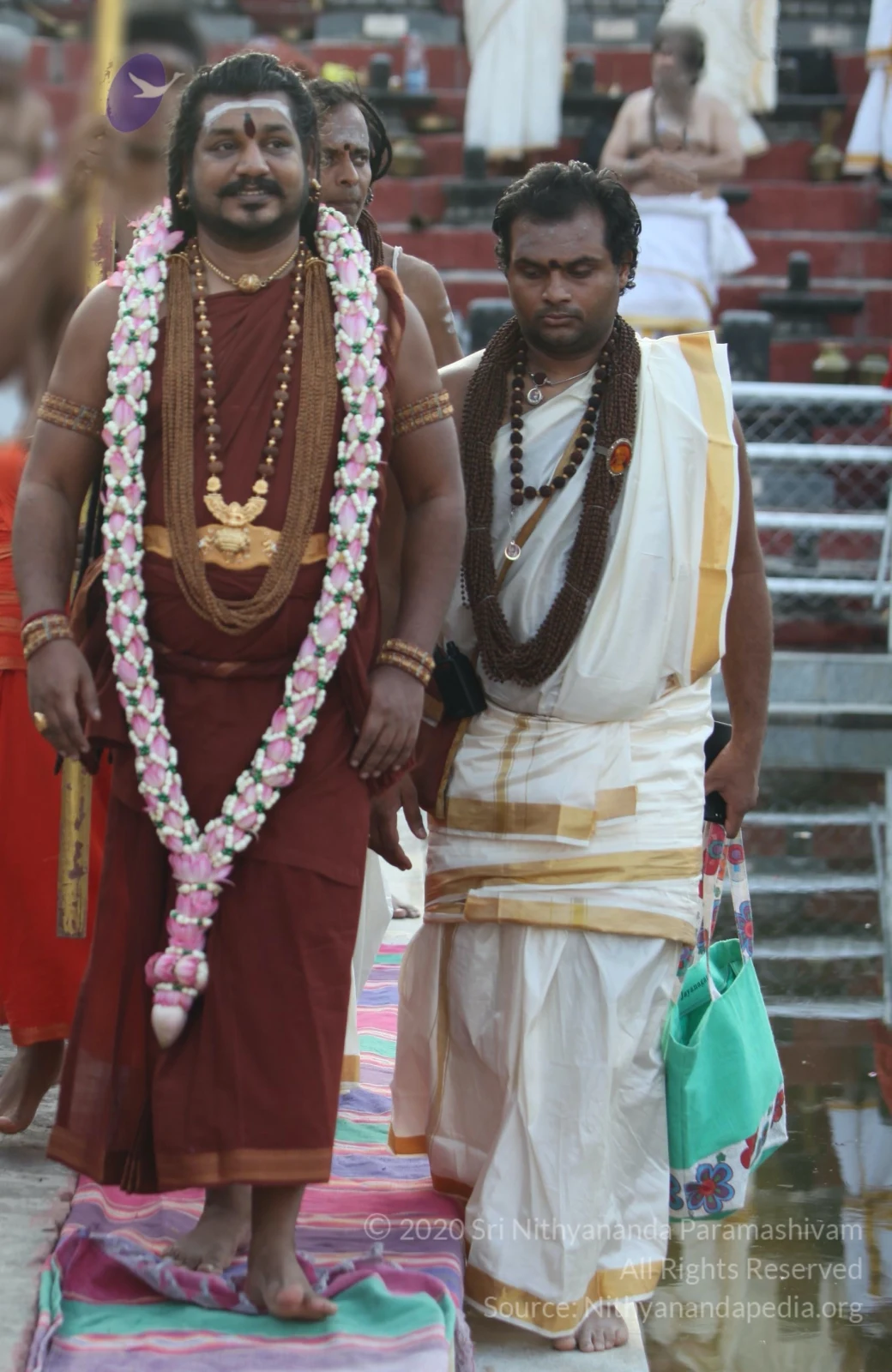
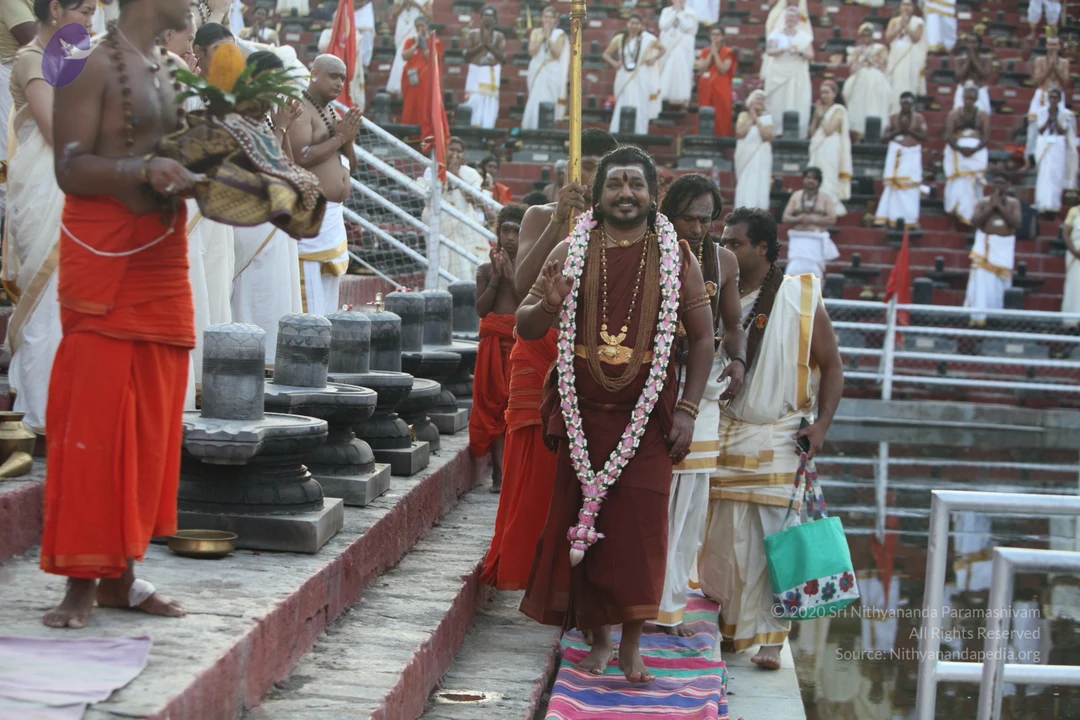
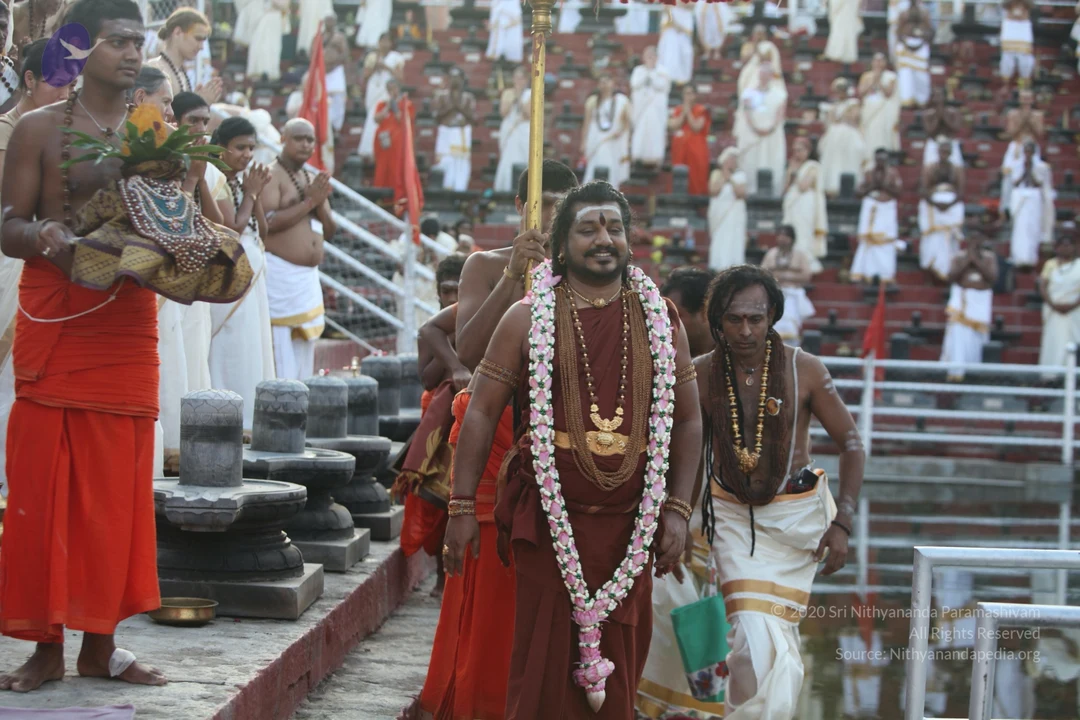
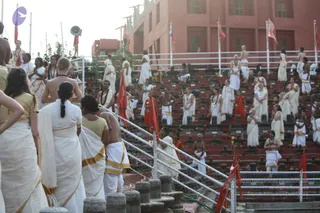
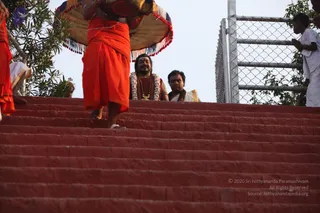
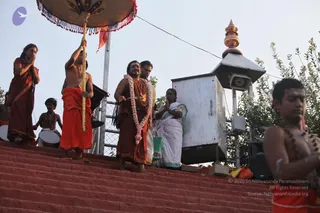
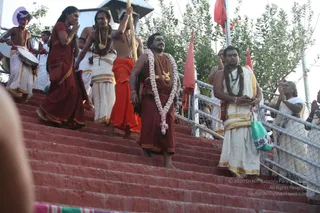
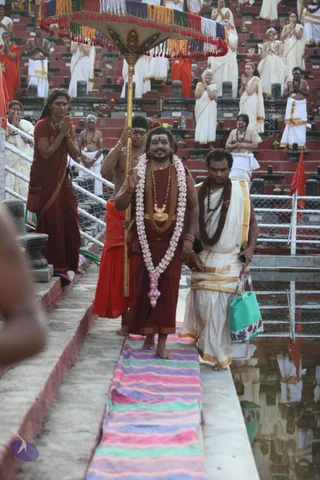
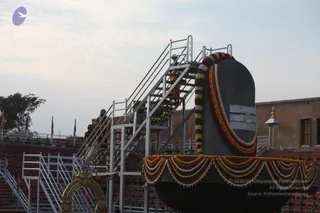
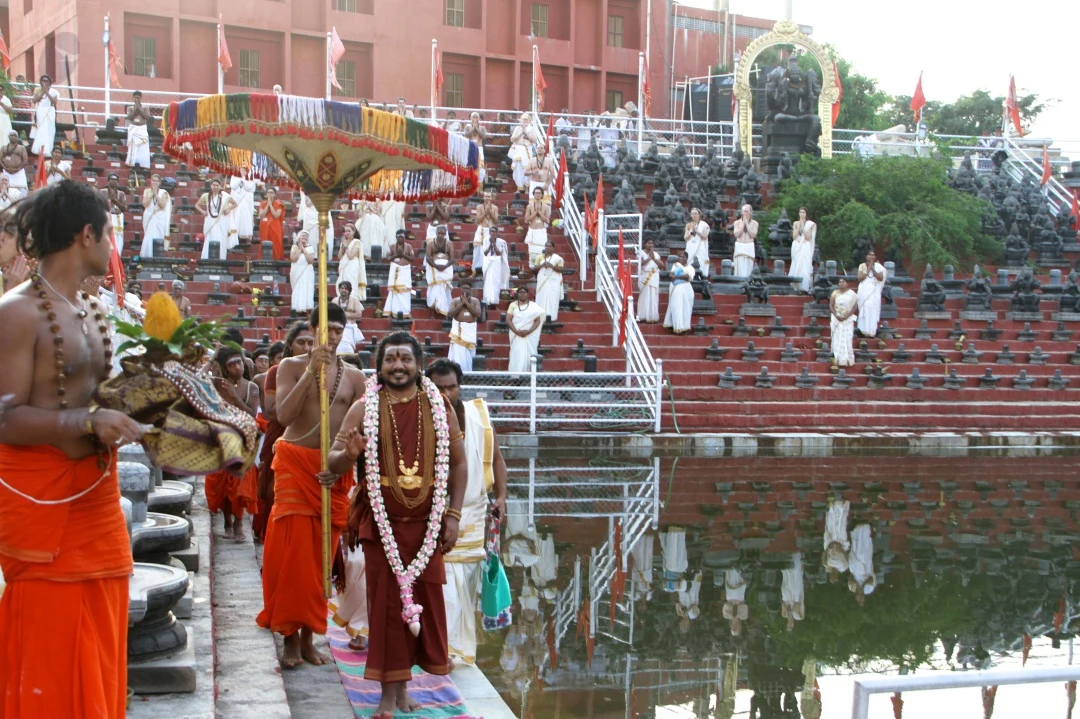
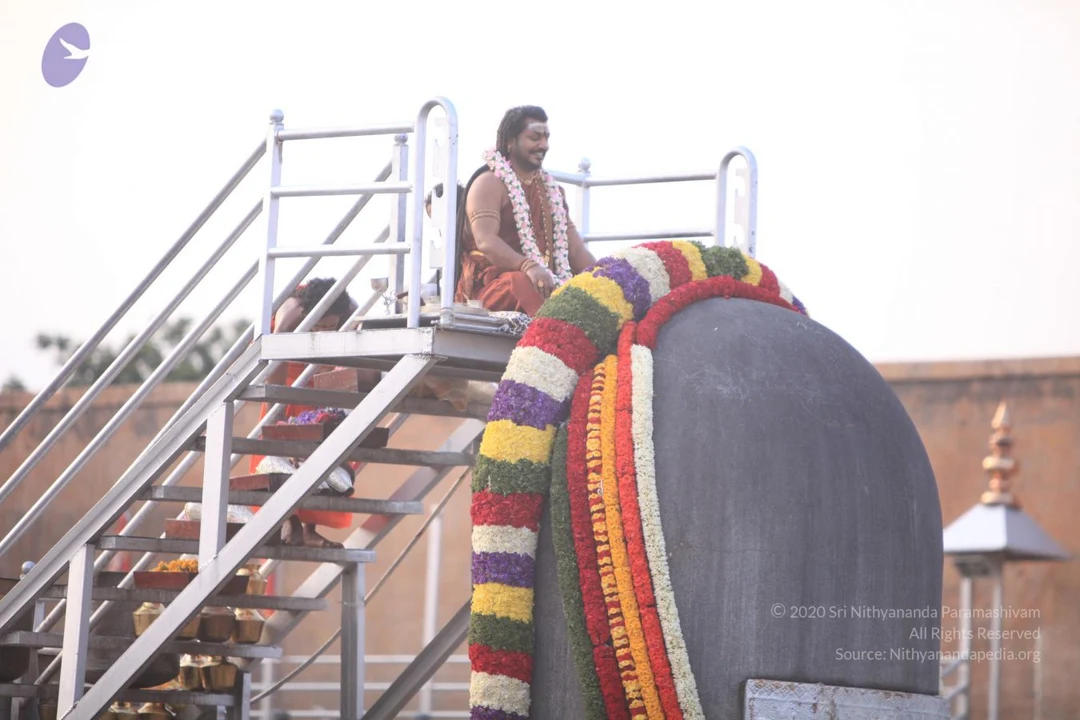
Outdoor scene on red-walled stepped ghat-style tiers lined with many small dark stone lamps or shrines. Many people in white dhotis and white saris with gold borders stand and sit along the steps, some with hands folded in prayer. Red and orange flags on tall white poles rise along the terrace, and a loudspeaker horn is mounted at top left. A woman in gold blouse and white sari with a long braid stands near the front, and several bare-chested men in white dhotis are among the devotees.Photo taken from low on a red-painted stone staircase looking upward. In the foreground on the left, a man in orange dhoti and orange garment carries a large ornate fringed umbrella or parasol with red and blue tassels, partially cropped at the top. Behind him, a man with a white flower garland, rudraksha-style beaded necklace and orange shawl sits on the steps smiling, beside a second man in a white and orange-bordered garment. A metal mesh gate and green foliage stand at the right, with a person in white clothes at the far right edge.Outdoor photo on red-brick steps beside a white metal loudspeaker box and a golden finial. A man in a saffron-orange robe holds a large umbrella with a fringed red-and-gold canopy, bare-chested, with rudraksha malas. In the centre, a man in a deep red-brown robe with a long flower garland and rudraksha beads stands with hands folded, long dark hair falling behind, a distinctive figure with ceremonial gold ornaments; appearance-based identification is uncertain. Beside him a woman in a white sari with a green border stands with palms pressed together. A drummer in a red cloth and a young man with folded hands, both with beads, appear at left, and a bare-chested young man with white marks on his forehead stands at right.A procession descends a wide red-brick staircase outdoors, with a ceremonial group in red and orange robes. In the foreground, a man in a rust-red garment wears a long pink-and-white flower garland and a gold pendant. Beside him, a man in an orange-saffron dhoti stands near a tall golden-tipped staff. Behind, a bare-chested drummer plays a frame drum, and a woman in a deep red sari presses her palms together in prayer. Red flags flank a metal railing, and on the right, white-clad devotees with folded hands look on. A tall man in white dhoti and shawl with rudraksha beads and a crossed sash holds a cloth bag, presumably at the procession's edge. The scene suggests a devotional procession along a temple-style stair.A figure in a deep maroon robe with a long pink-and-white flower garland and a gold necklace walks barefoot along a striped multicolored cloth runner beside a stone-edged water tank. He raises one hand in a blessing gesture. A young attendant in orange holds a tall gold-handled ceremonial parasol with multicolored fringe above him. A man in white dhoti and shawl with a brown rudraksha garland carries a green bag beside him. Behind them, rows of people in white dhotis and saris stand with palms pressed together on red stone tiered steps with brass lamps, and a woman in a rust-red sari and a man in white stand with folded hands at the left. A red flag flashes at the right edge.A large black Shiva lingam stands on a tiered base draped with a multicoloured flower garland of orange, yellow, red, purple and white in a row of festoons. A tall grey metal staircase with railings climbs a red brick stepped platform beside it, with a few people on the steps near the top, some in orange or saffron clothing. Red flags on poles line the terrace and a golden arch stands at lower left. The scene is an open-air ceremonial ground in daylight with a pale sky and a brick building behind.

SHIVA-DEEKSHA
59 photosSource gallery
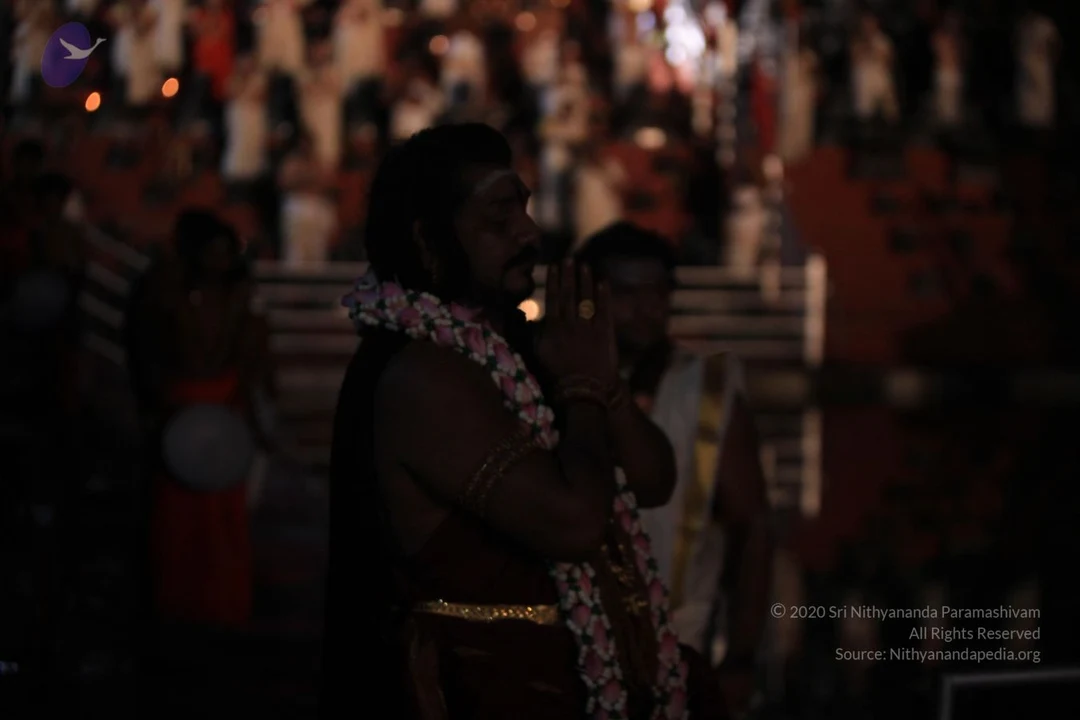
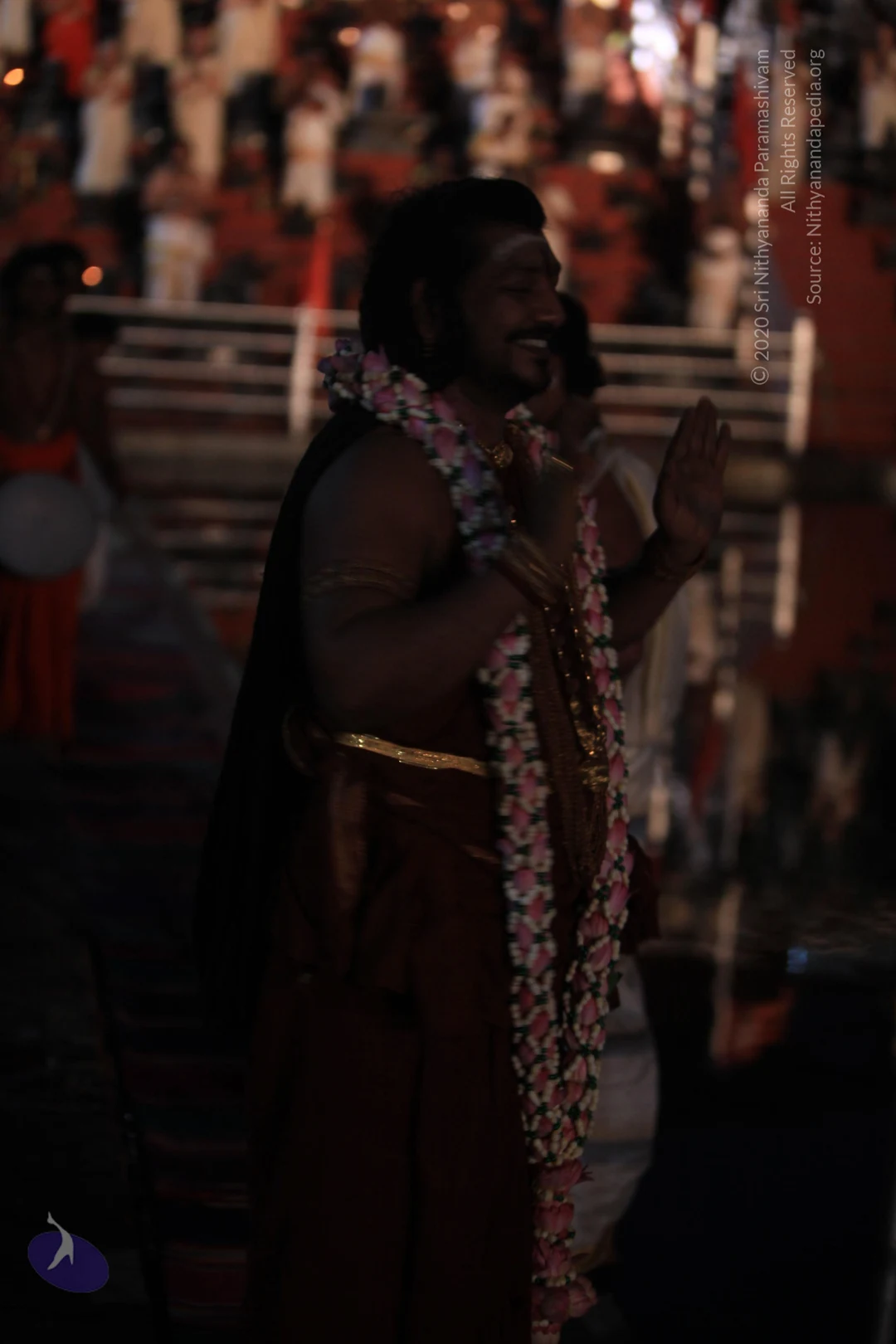
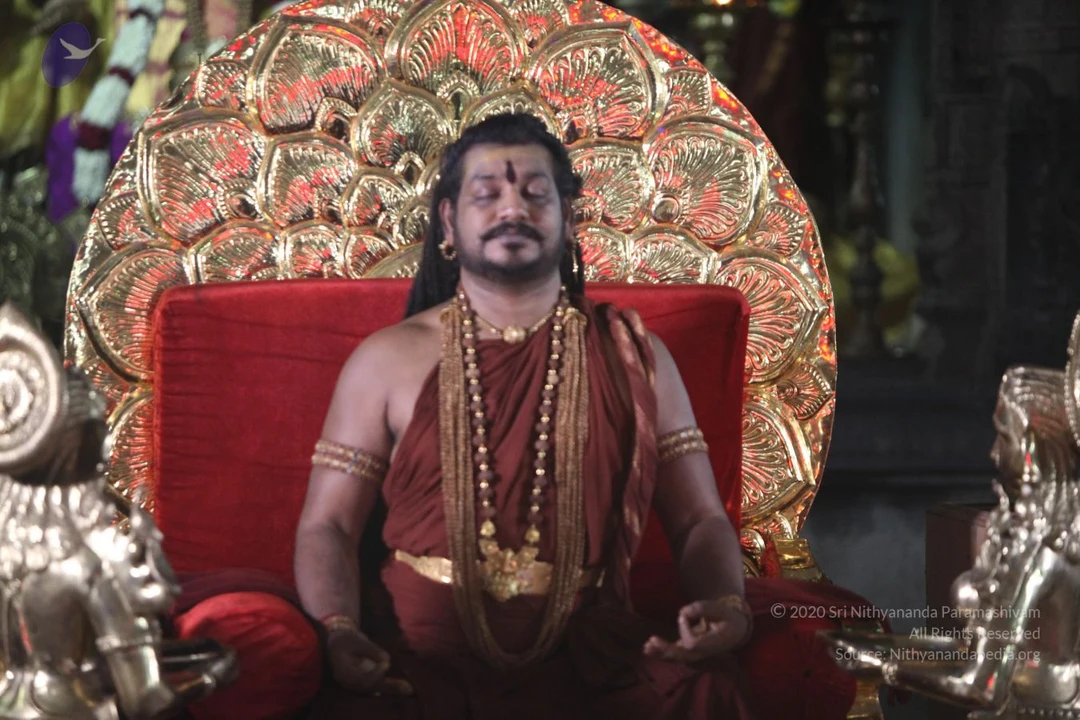
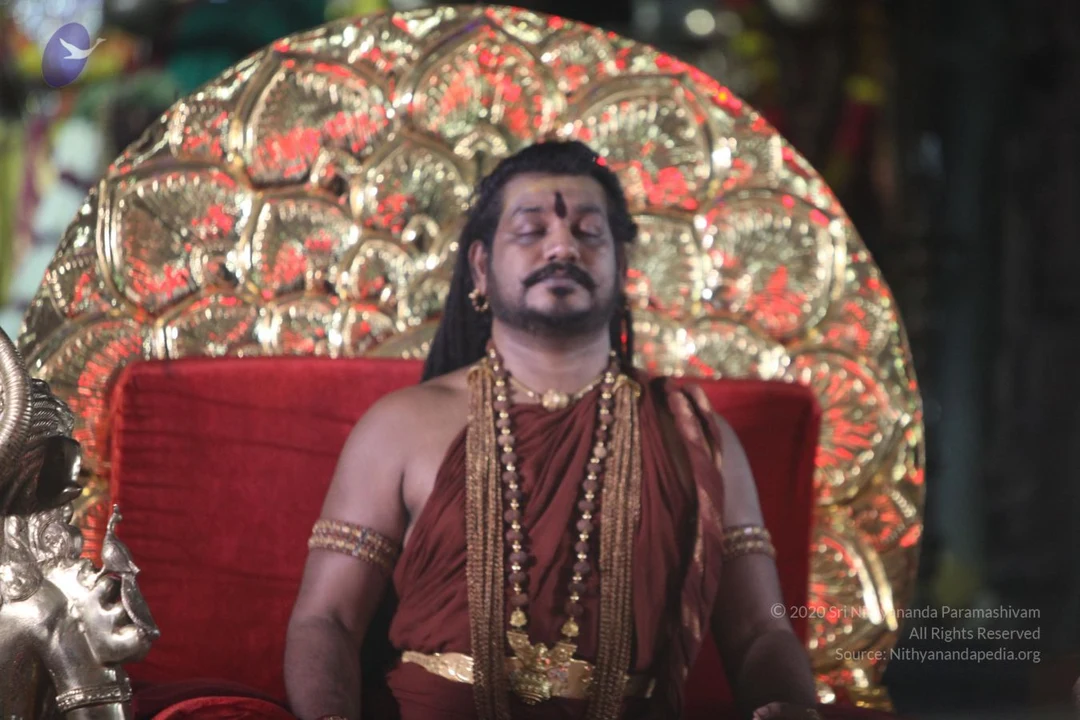
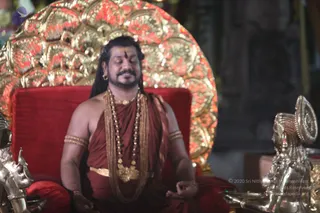
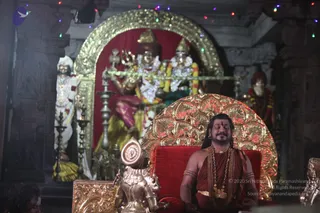
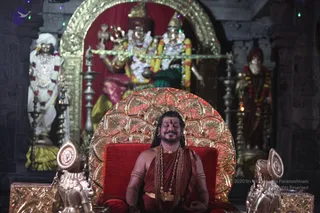
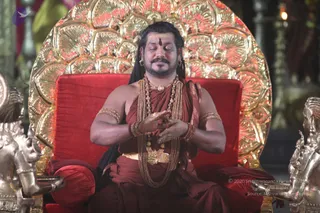
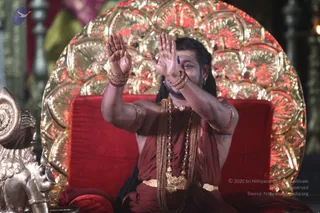
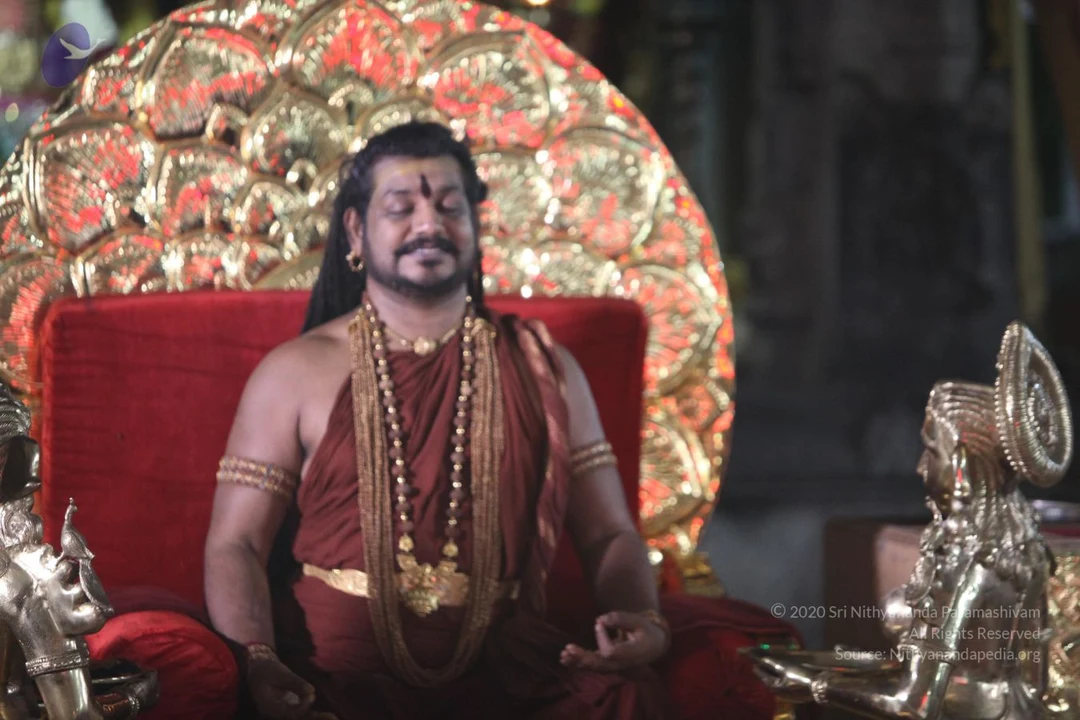
A bare-chested man with long dark hair and a short beard sits on a red-cushioned throne with an ornate gold-and-red backrest, eyes closed and hands in a meditative mudra. He wears a maroon-red cloth wrap, a tall gold necklace of beads, a gold waist band and gold armlets, with a red tilak on his forehead. Gleaming gold ritual vessels and a deity figure appear at the edges of the frame.A man with long dark hair swept back, a red tilak mark on his forehead, and a reddish-brown saffron-toned shawl over bare shoulders sits eyes closed on a red-cushioned throne with a large gold peacock-feather backrest. He wears ornate gold and beaded necklaces, rudraksha-style malas and gold bangles. Behind him stands a gilded arch framing a deity murti with a gold crown, flower garlands and a trident-like staff, flanked by other figures and brass lamp stands. Small brass ornaments sit in front, and string lights decorate the top of the temple hall. No other physical people are clearly visible apart from partial figures at the edges.A man with long dark hair, a red bindi and a red-brown dhoti wrap sits eyes closed on a red-cushioned golden throne with a large gilded lotus-petal backrest, bare-chested with gold ornaments, a gold necklace and a rudraksha-style mala, arms adorned with gold bands, hands in a meditative mudra. Behind him stands a shrine with ornately dressed deity murti, a golden arch, a red backdrop, brass oil lamps and a white-robed attendant with a garland. Gilded lion-like figures flank the throne.A seated man with eyes closed and hands pressed together at the chest in a devotional gesture, wearing a red-maroon cloth wrap, layered gold chains, rudraksha-style beads, gold armlets and bangles, with a red tilak on his forehead and long dark hair falling behind. He sits on a red cushioned throne with an ornate gold repoussé backrest shaped like a fan of petals. Silver figurines flank the throne at the sides, and a small oil lamp is visible at the left edge. The setting looks like a ritual or satsang hall. Appearance-based candidate: Swamiji (probable), on the throne with long hair, ornate gold and rudraksha-style adornment in maroon clothing.A seated man in a maroon-red garment wrapped over the torso, with a long rudraksha mala and a heavy gold ceremonial necklace, raises both palms outward in a blessing gesture. He wears red bangles and a gold armlet, has a vertical tilak on his forehead, and sits on a red-cushioned throne backed by an ornate gold lotus-petal halo. A silver lion statue appears at the left edge. The setting resembles a temple or satsang hall with red and gold decor.A seated man in deep red-maroon robes sits on a red cushioned throne with an ornate gold lotus-petal backrest. He raises both palms outward in a blessing or mudra gesture. He wears a gold-toned chest ornament, layered gold necklaces, rudraksha-style beads, bangles on both wrists and a vertical tilak on his forehead, with long dark hair falling behind him. Silver ritual vessels stand in the foreground at left and right.