Skip to content
Thursday

25 May 2017

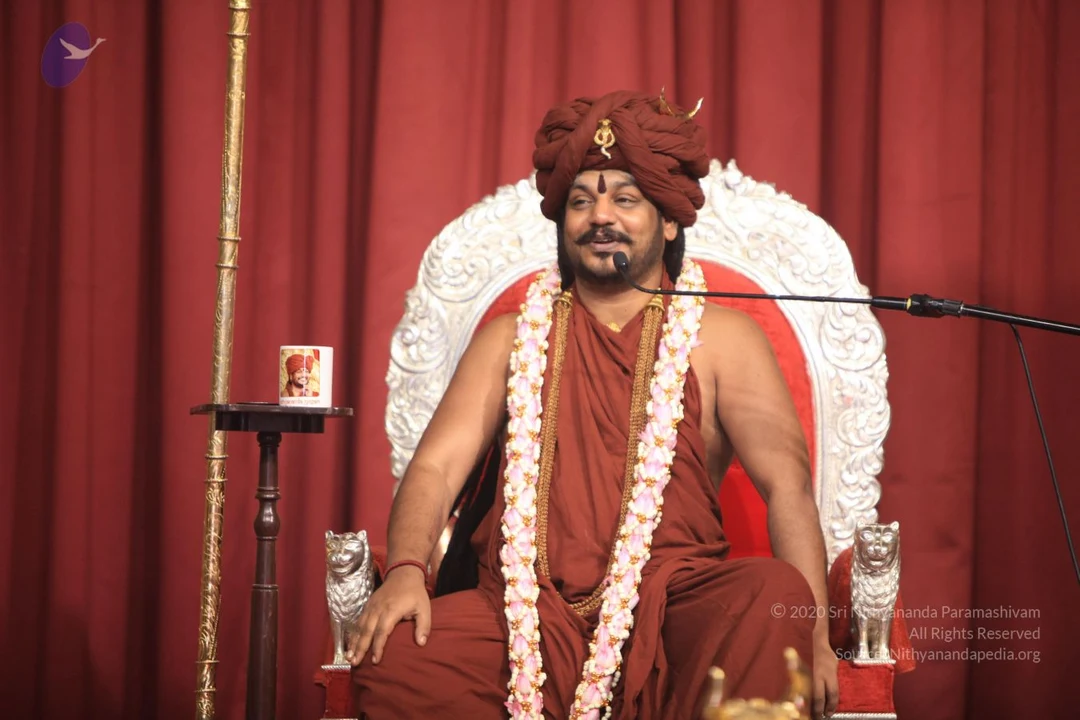
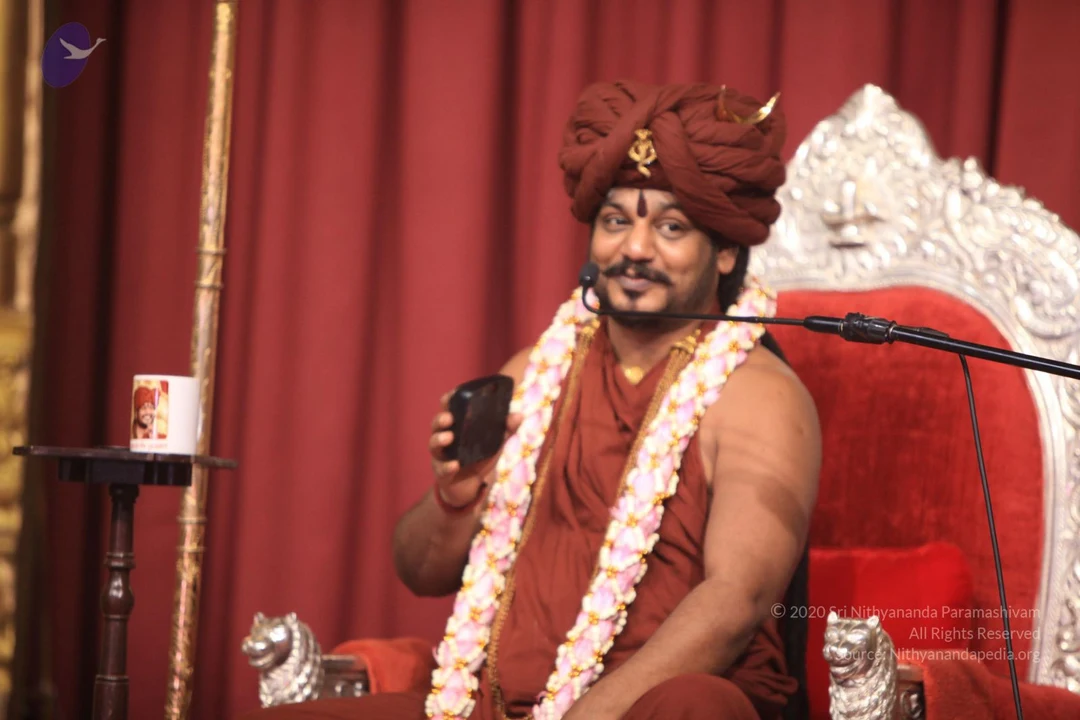
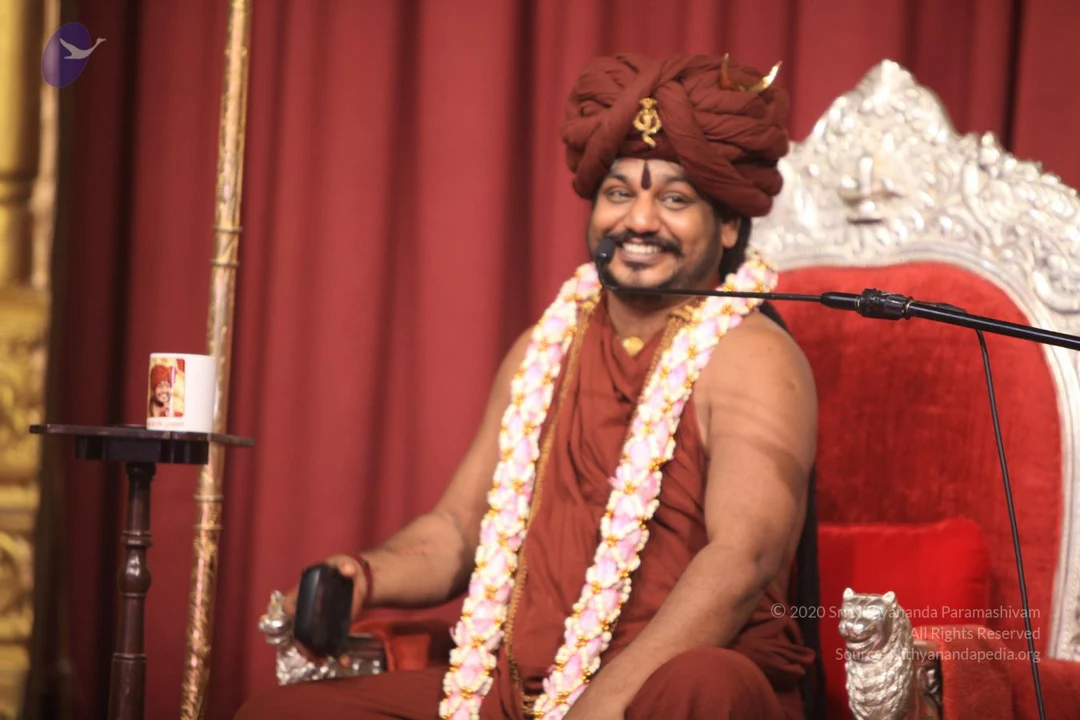
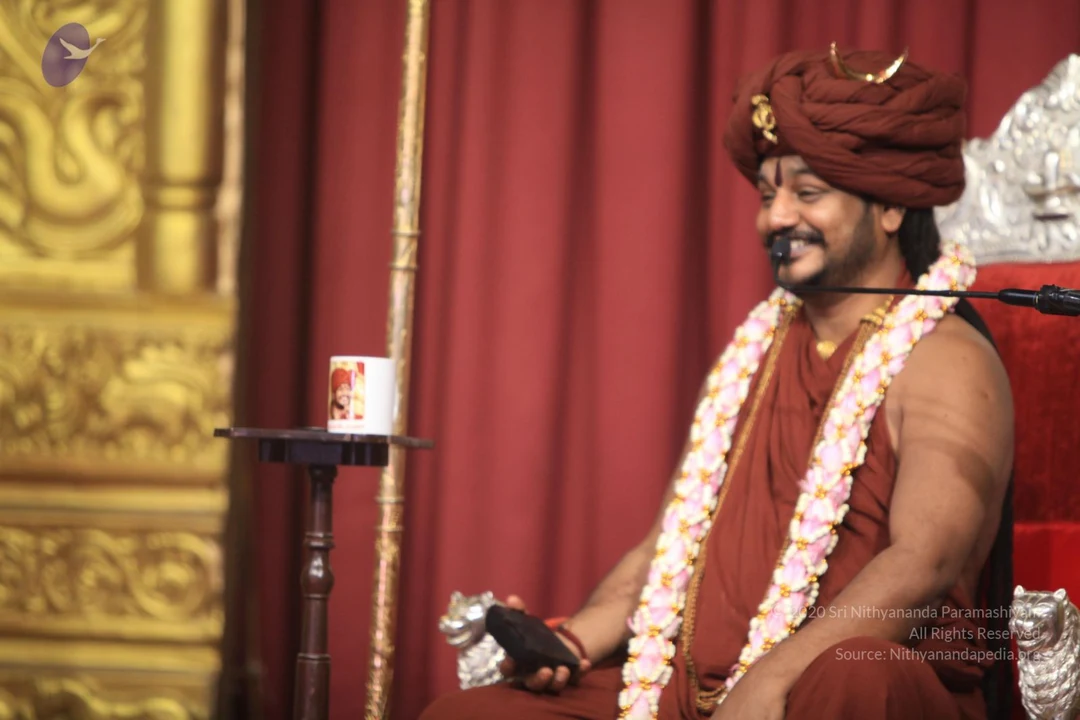
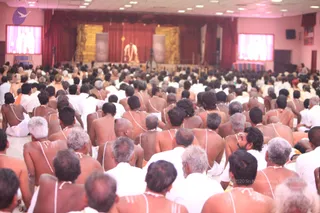
Nithyananda Satsang and Vishesa Deeksha by the SUpreme Pontiff of Hinduism HDH Bhagavan Sri Nithyananda Paramashivam in Bengaluru Adheenam.

Dated photos
290
Source pages
1
Media
1
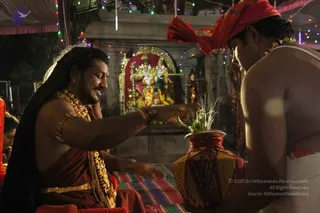
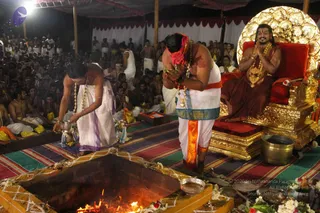
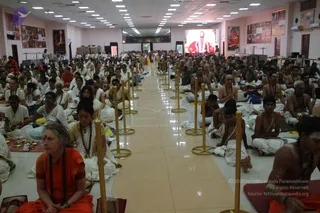
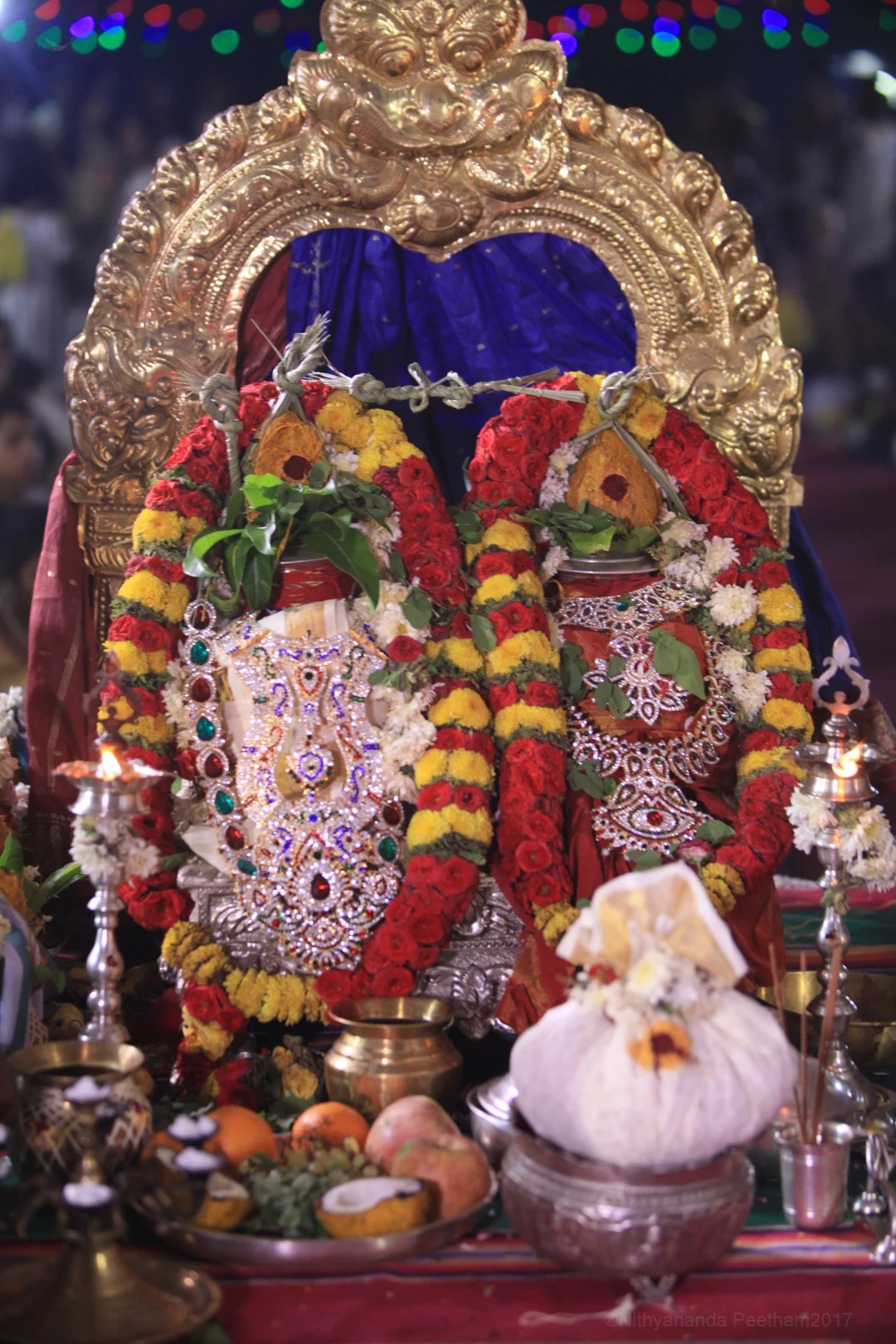
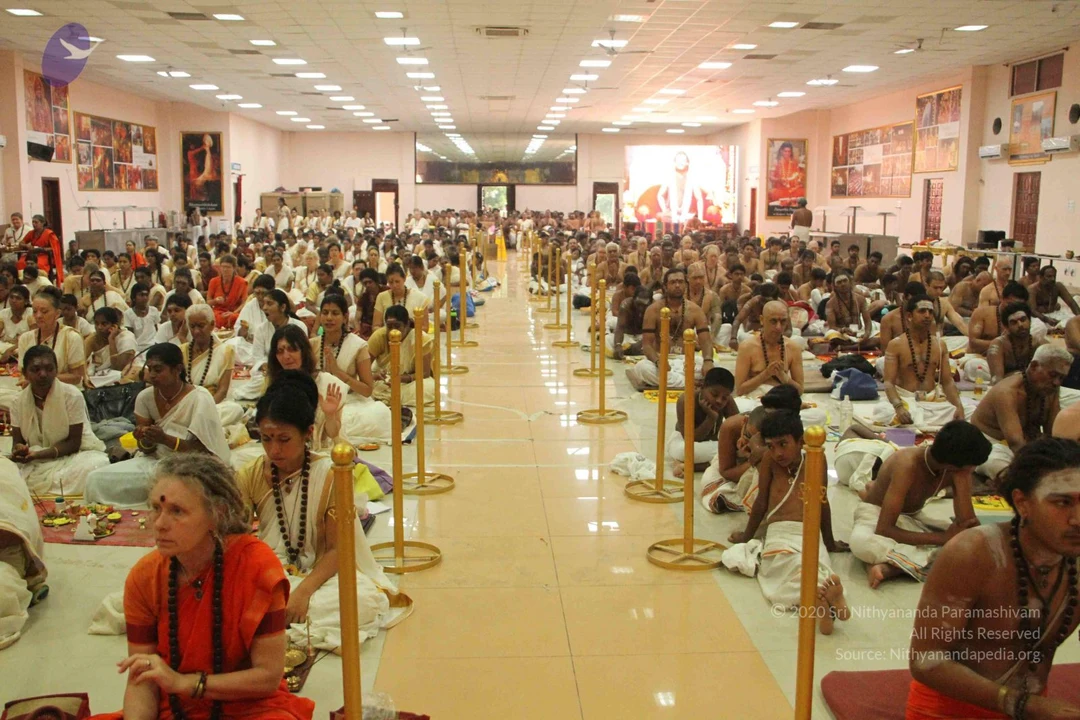
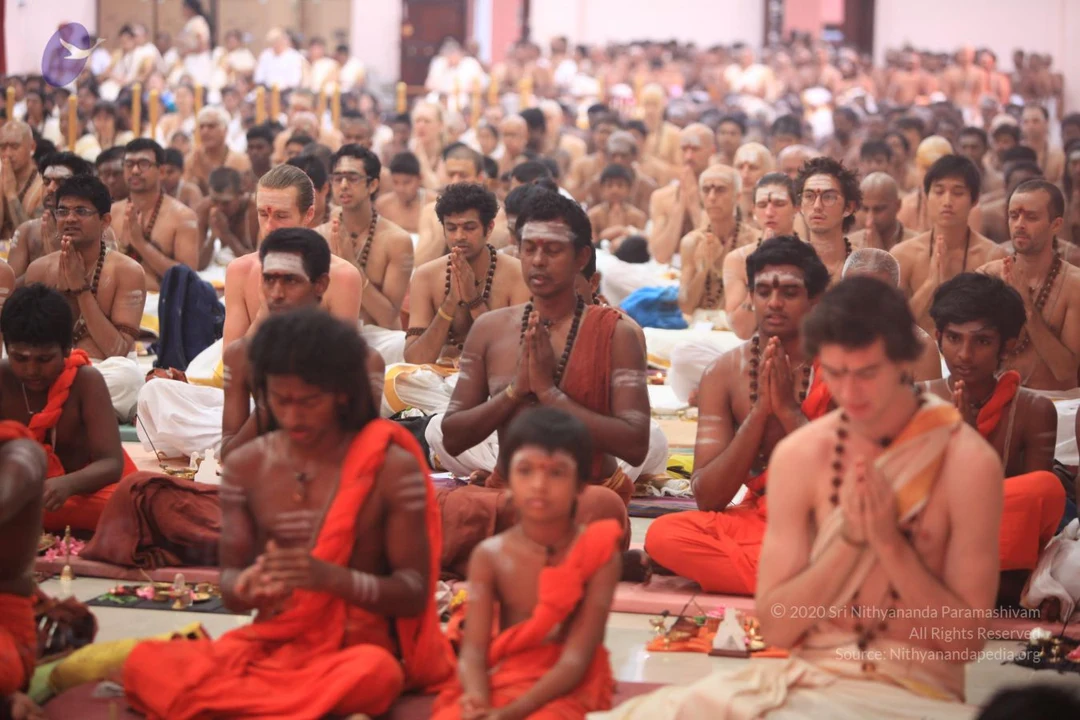
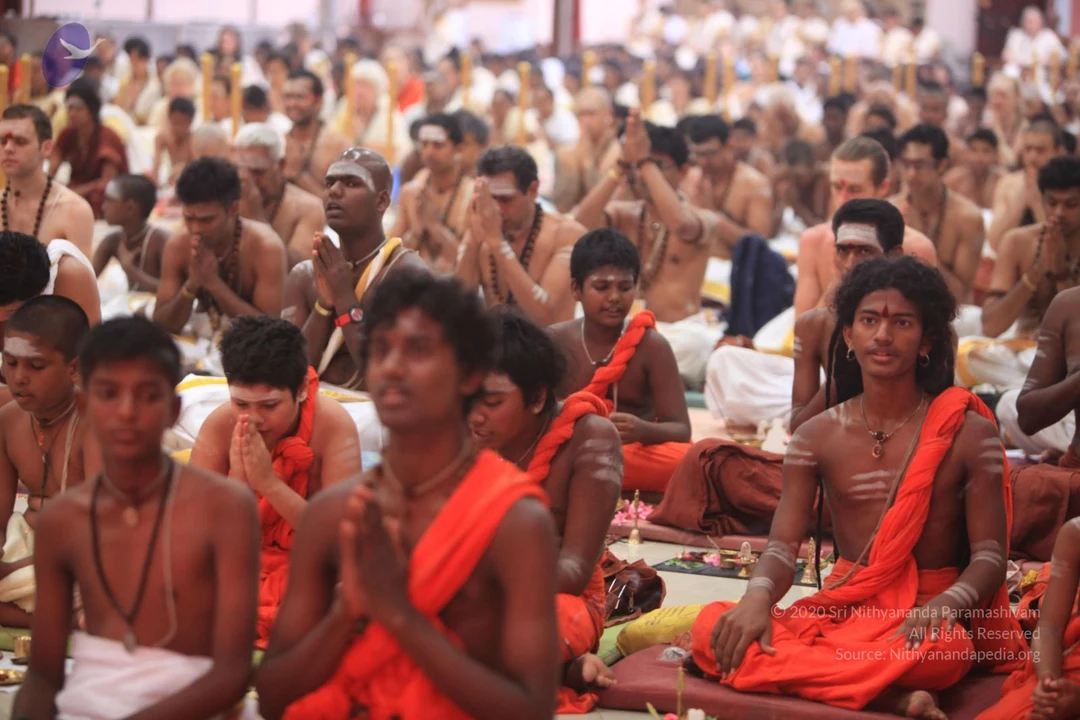
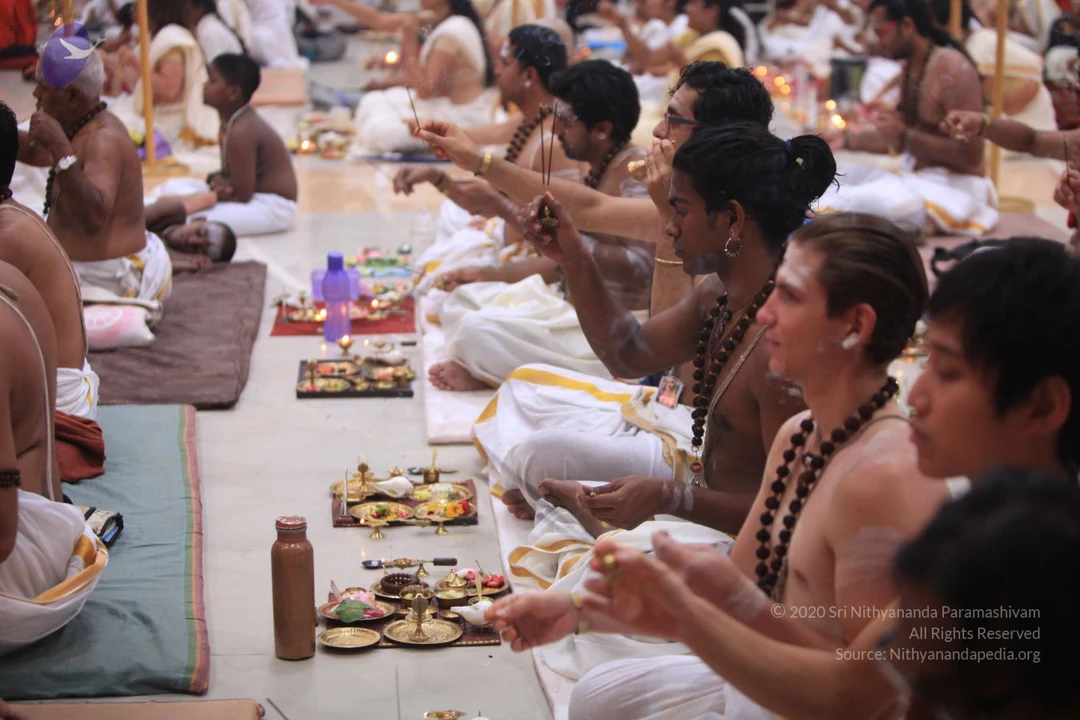
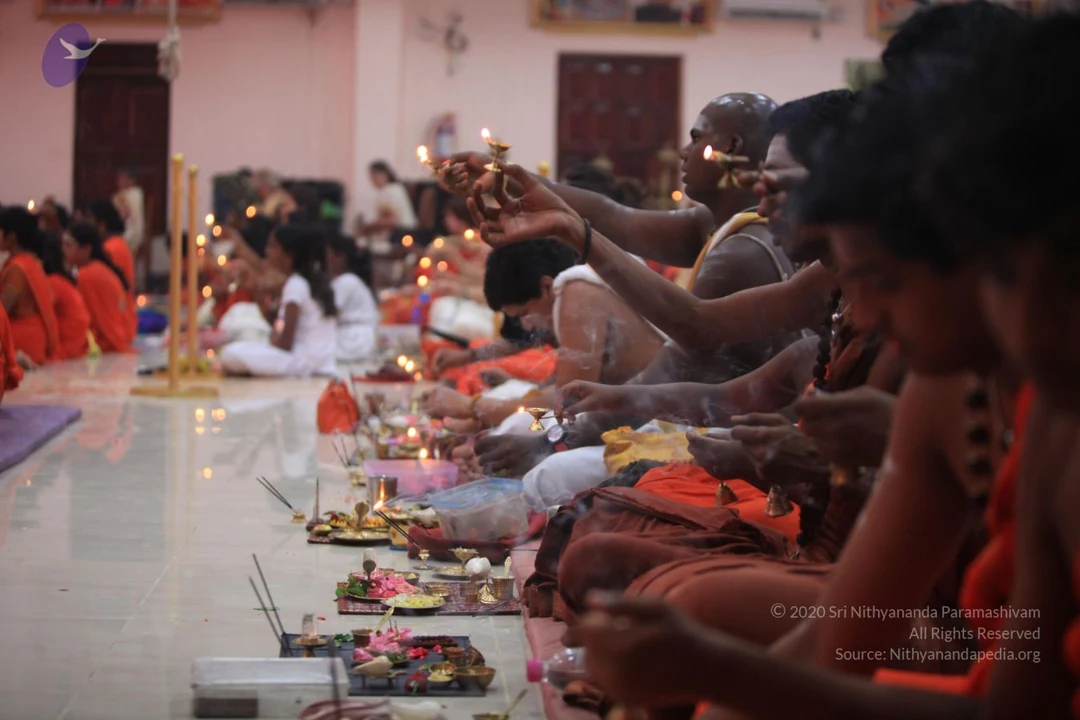
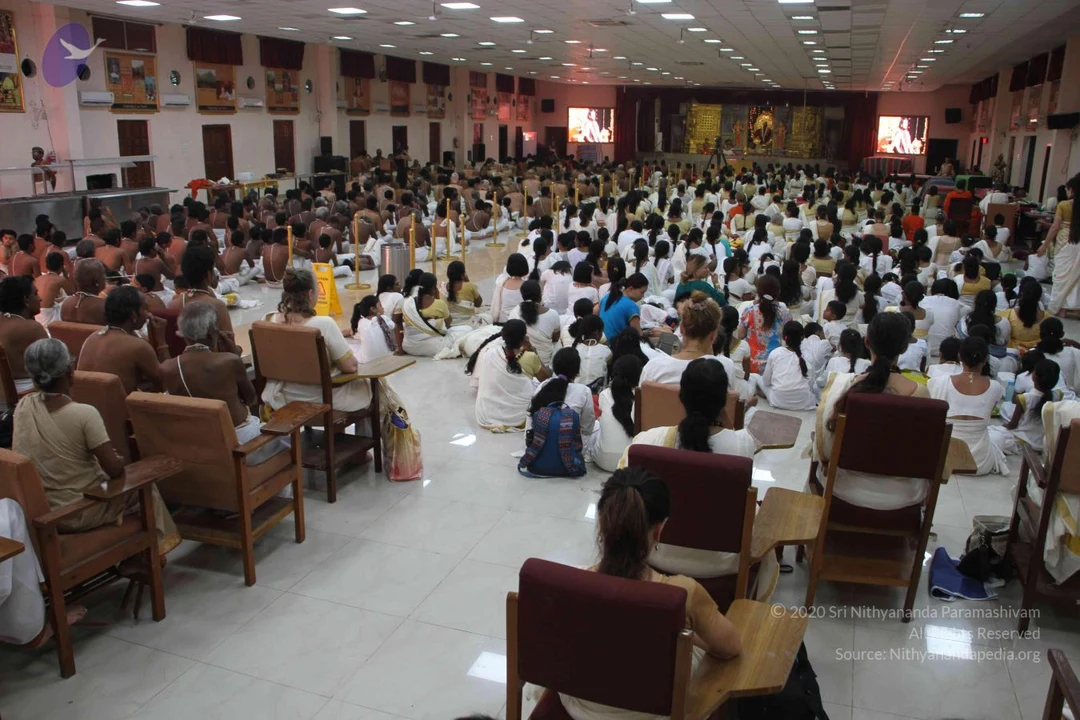
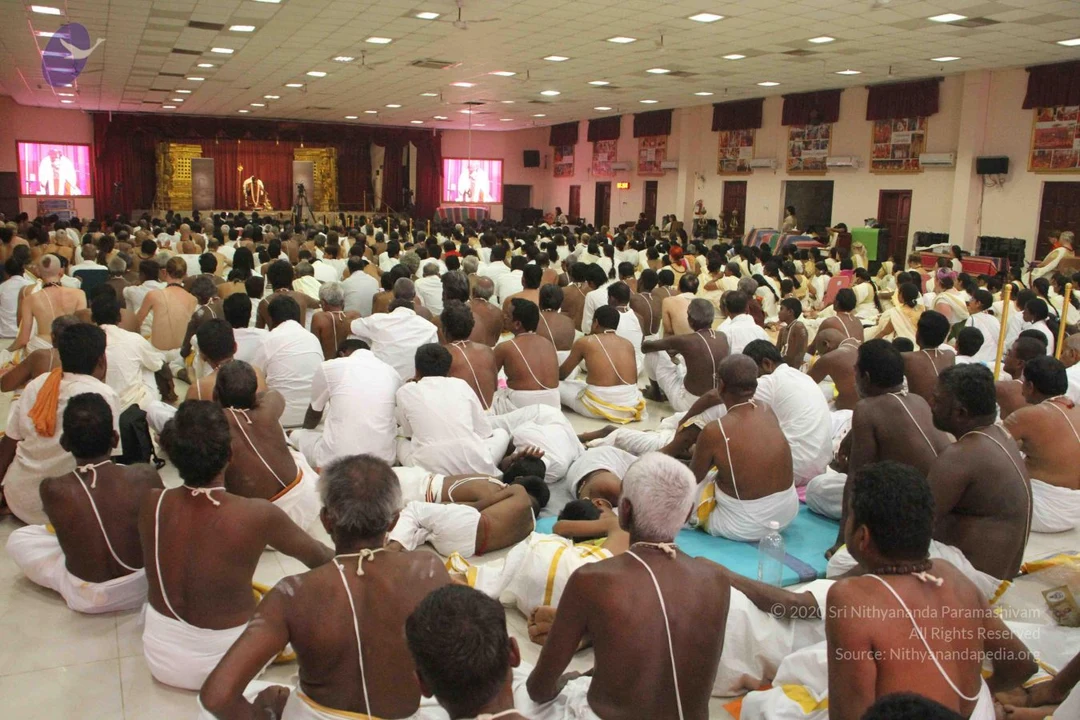
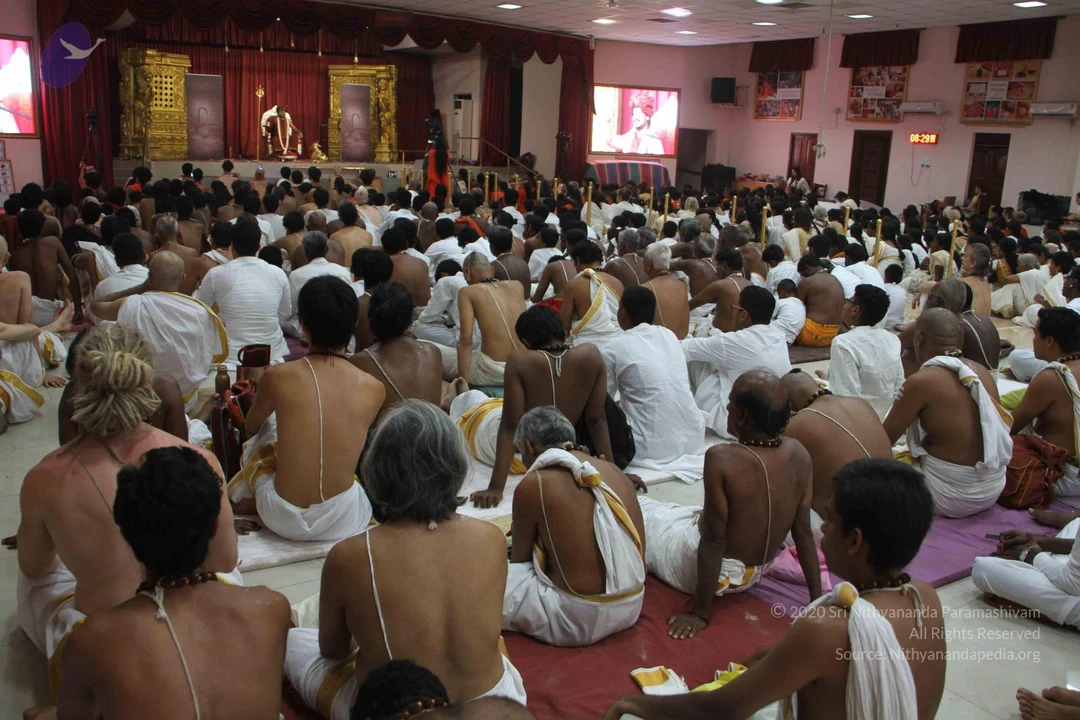
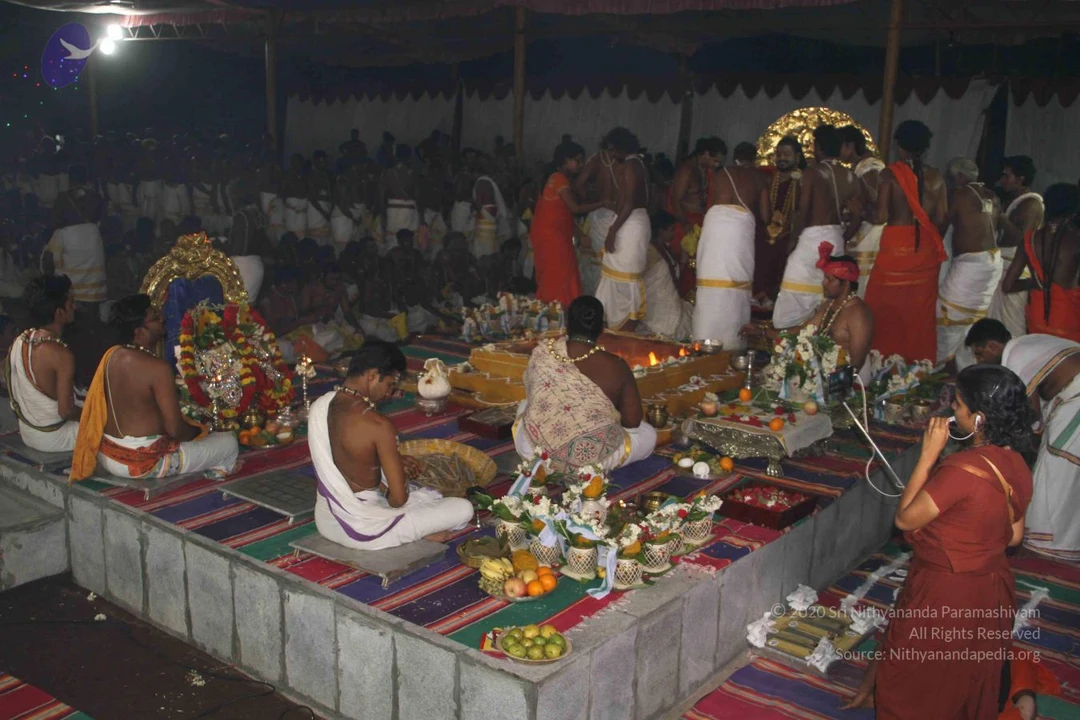
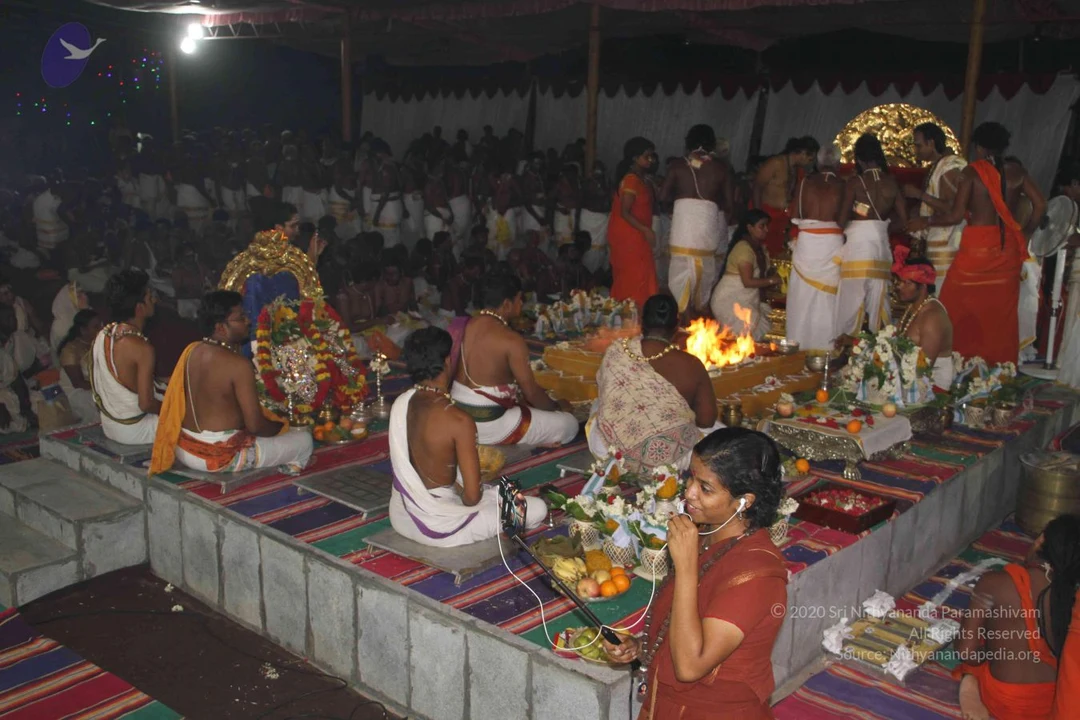
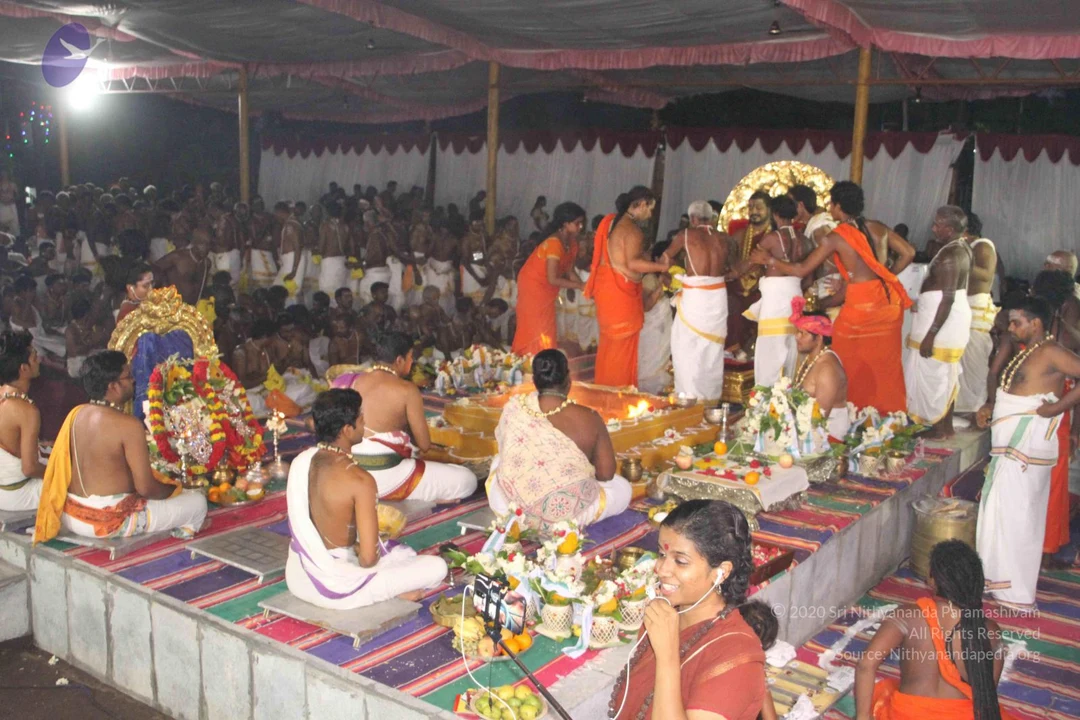
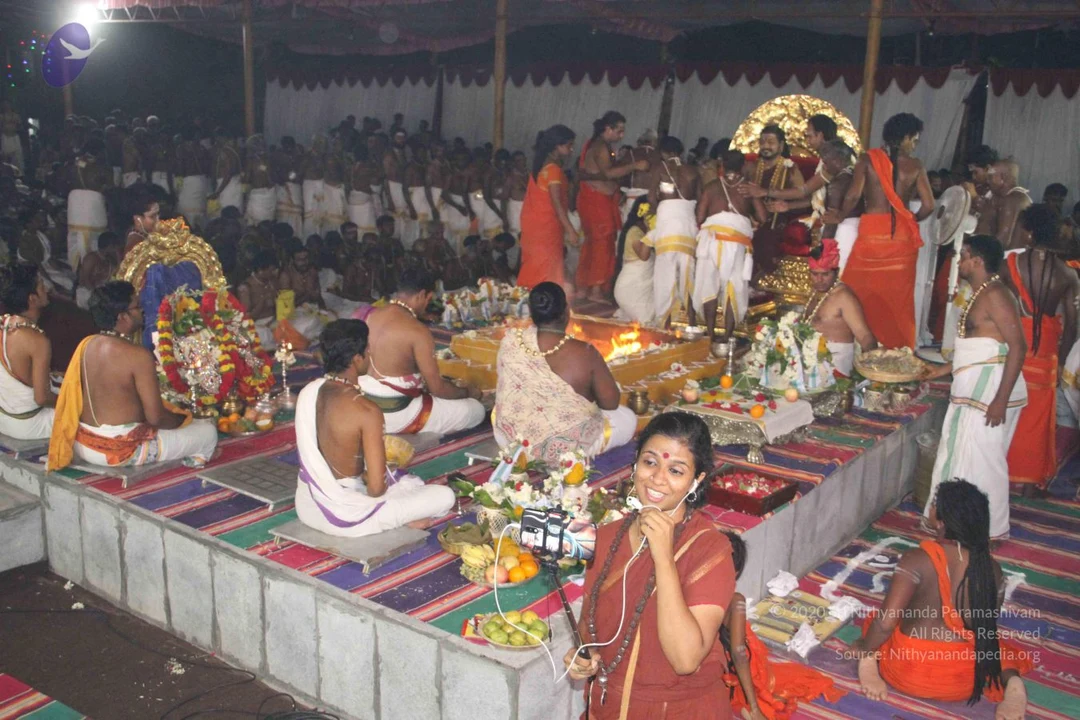
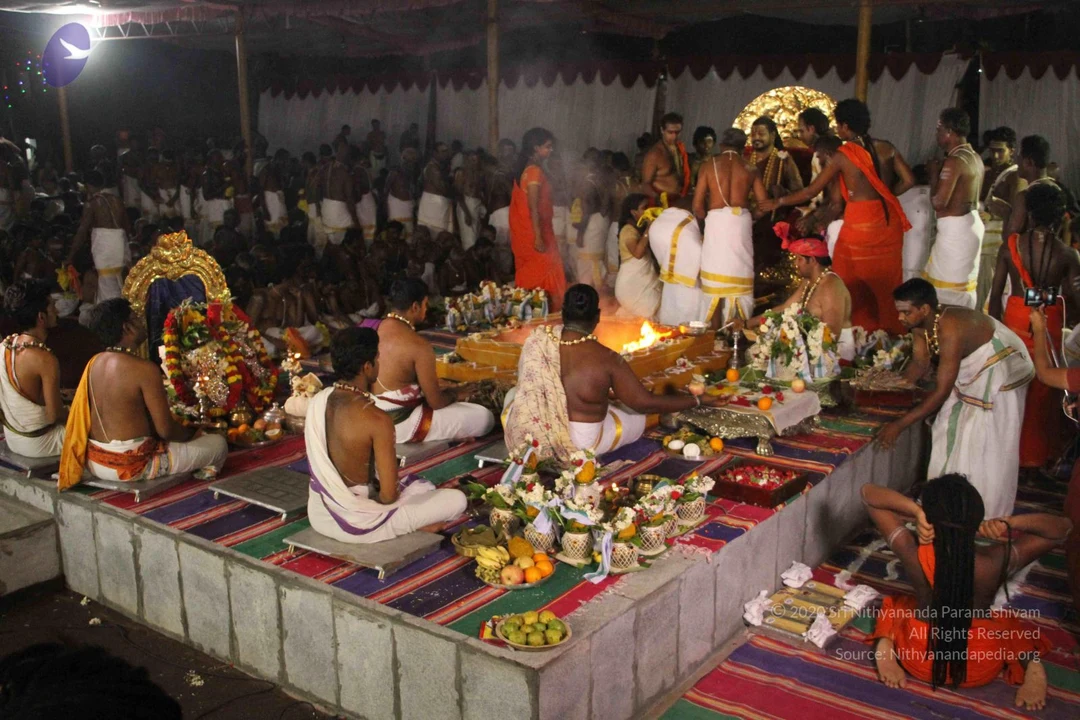
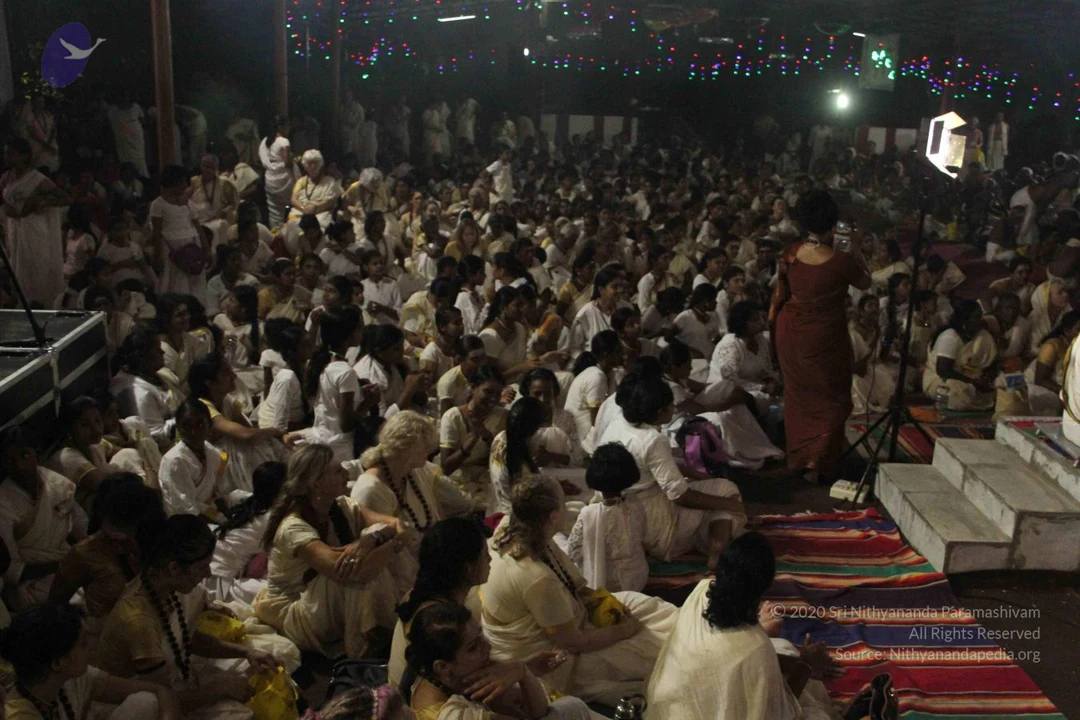
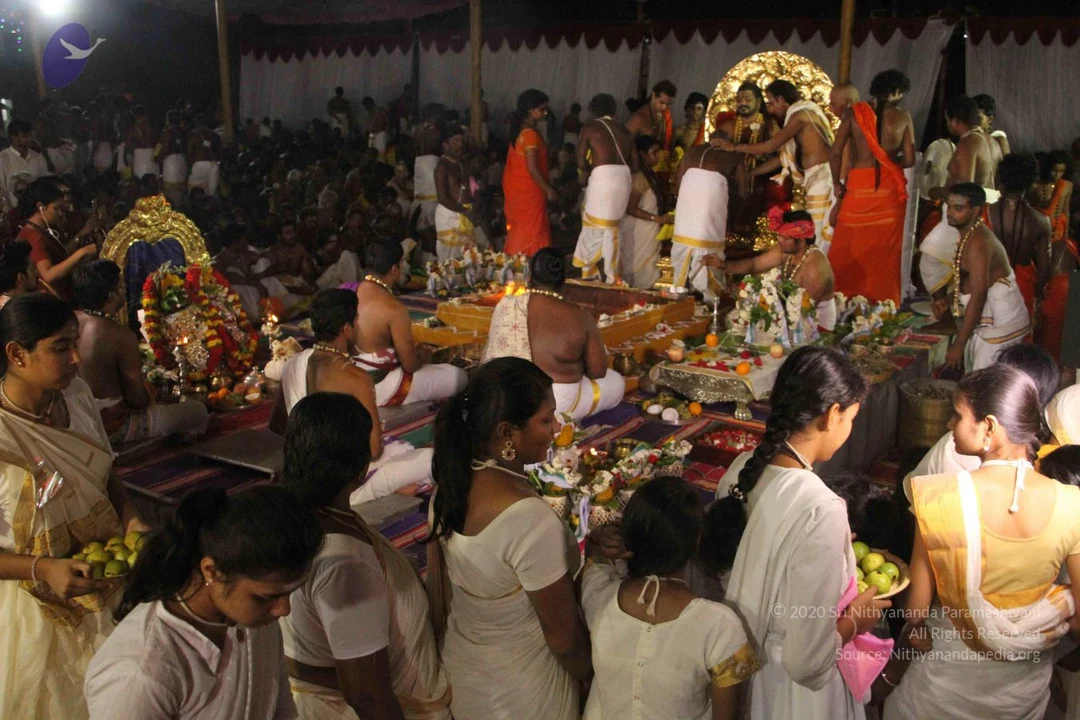
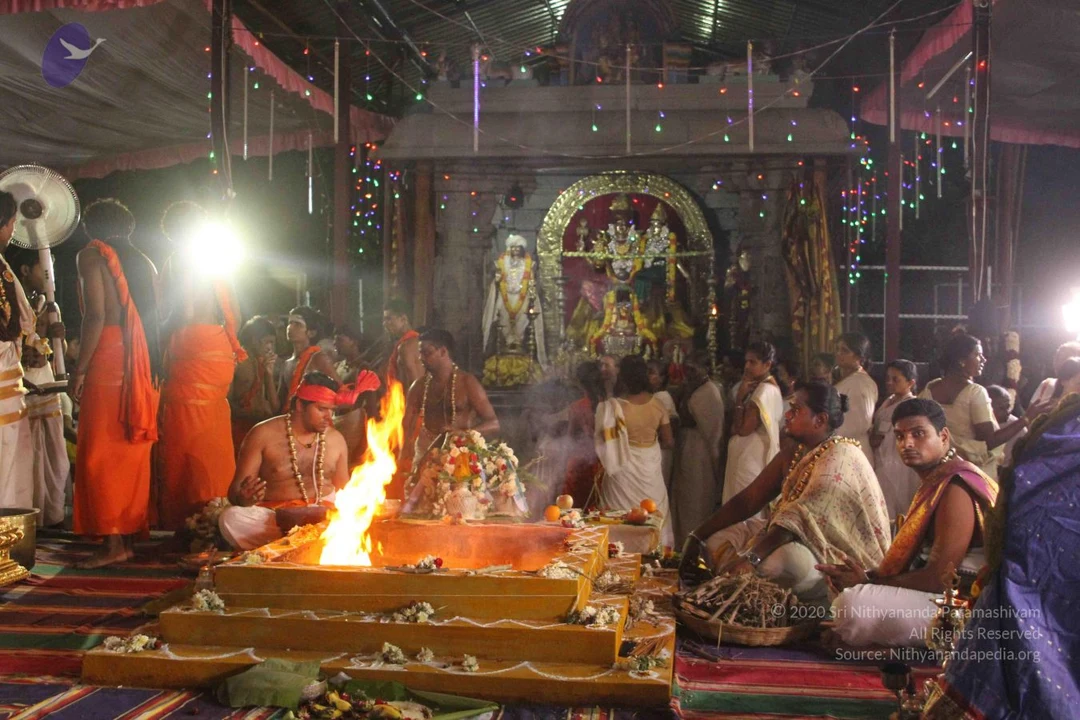
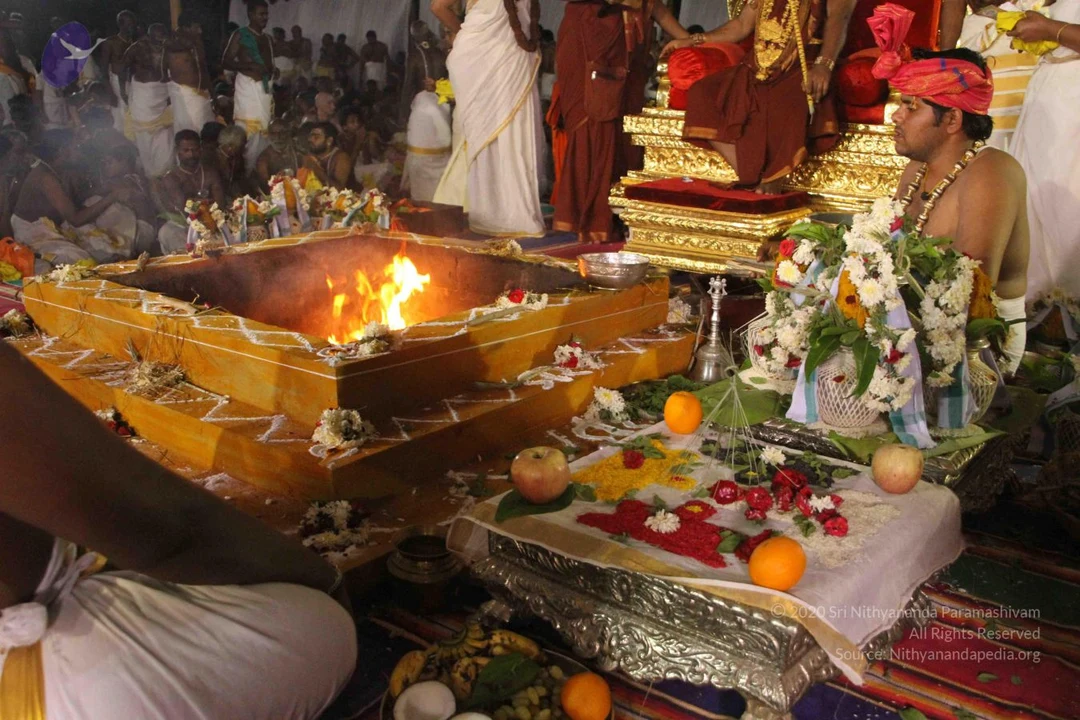
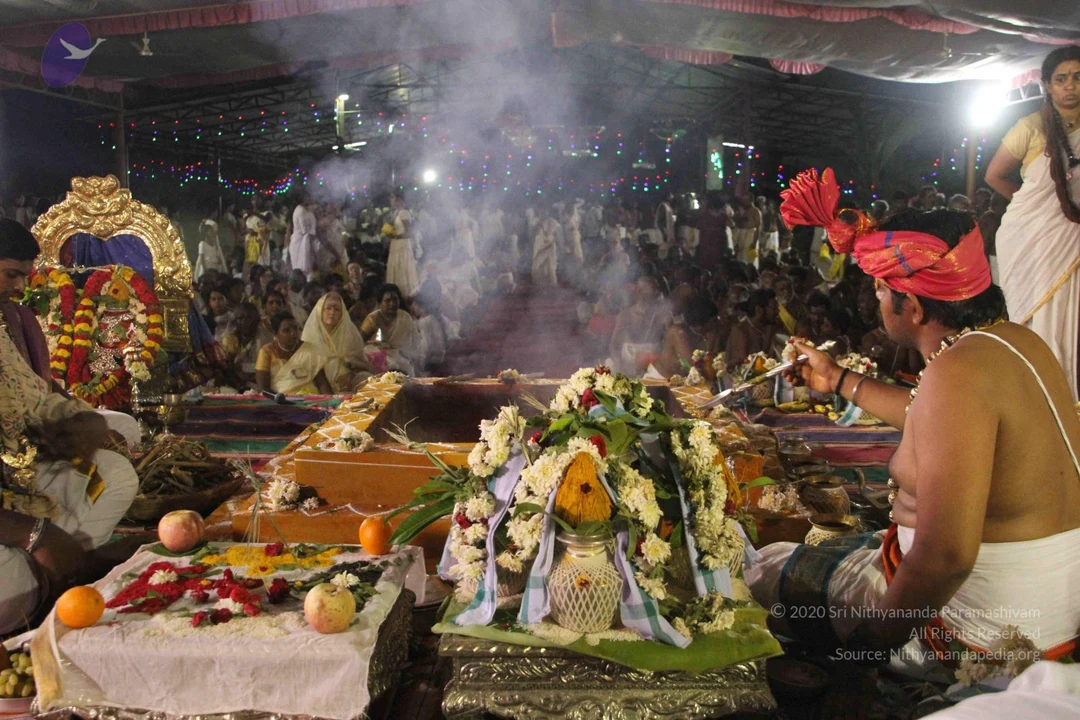
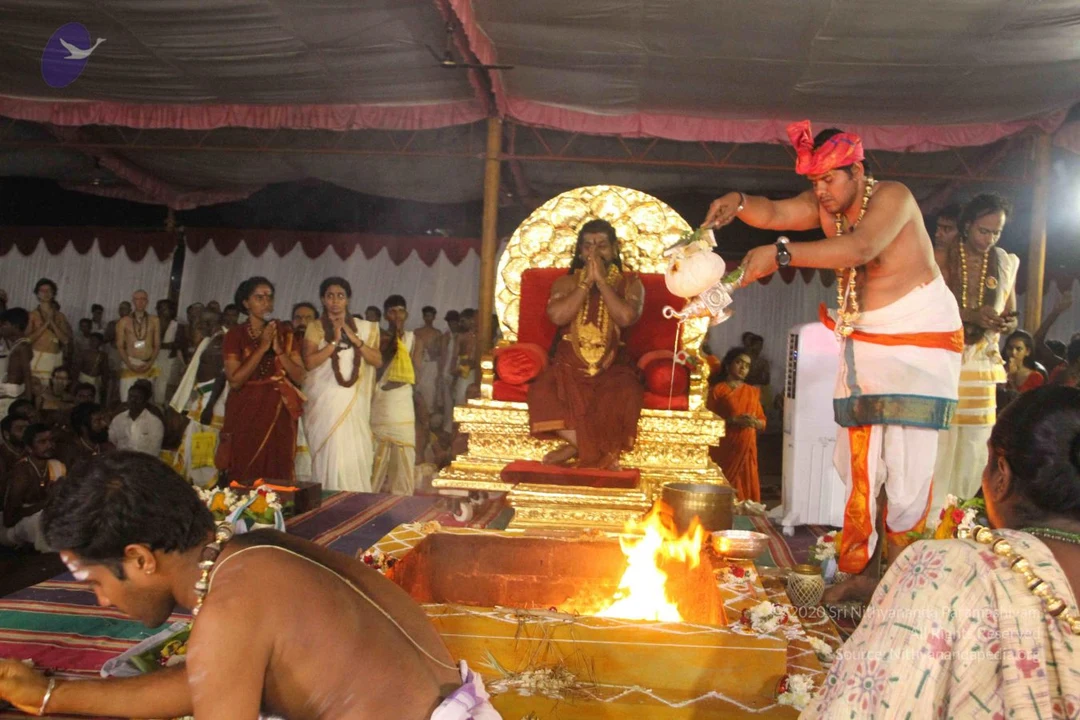
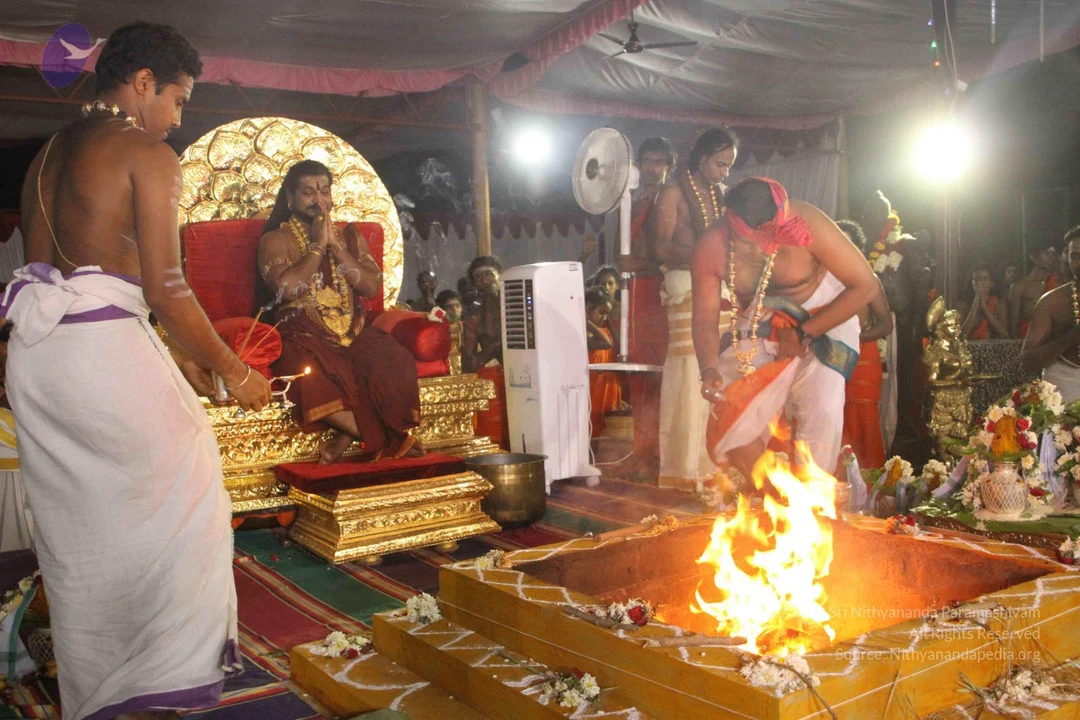
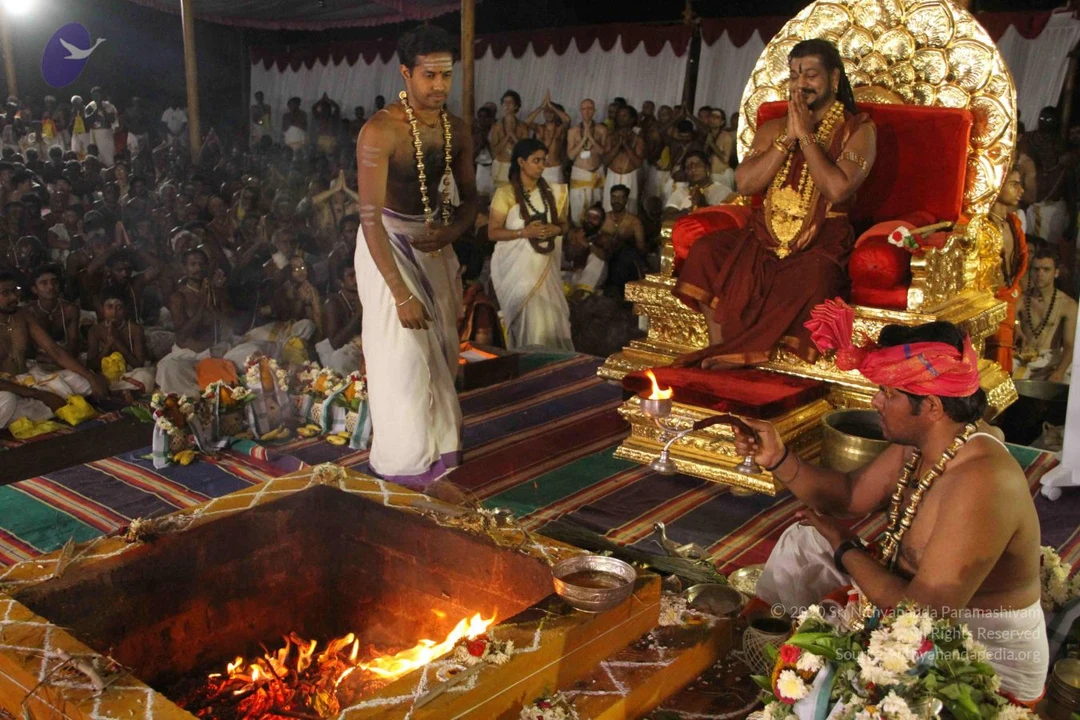
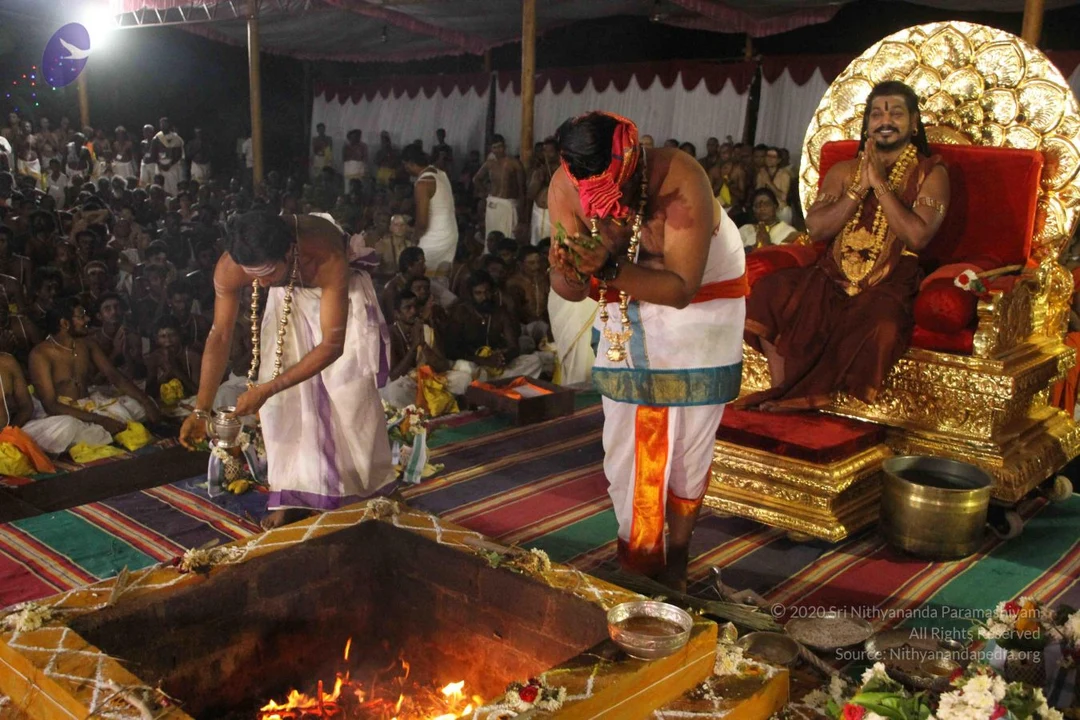
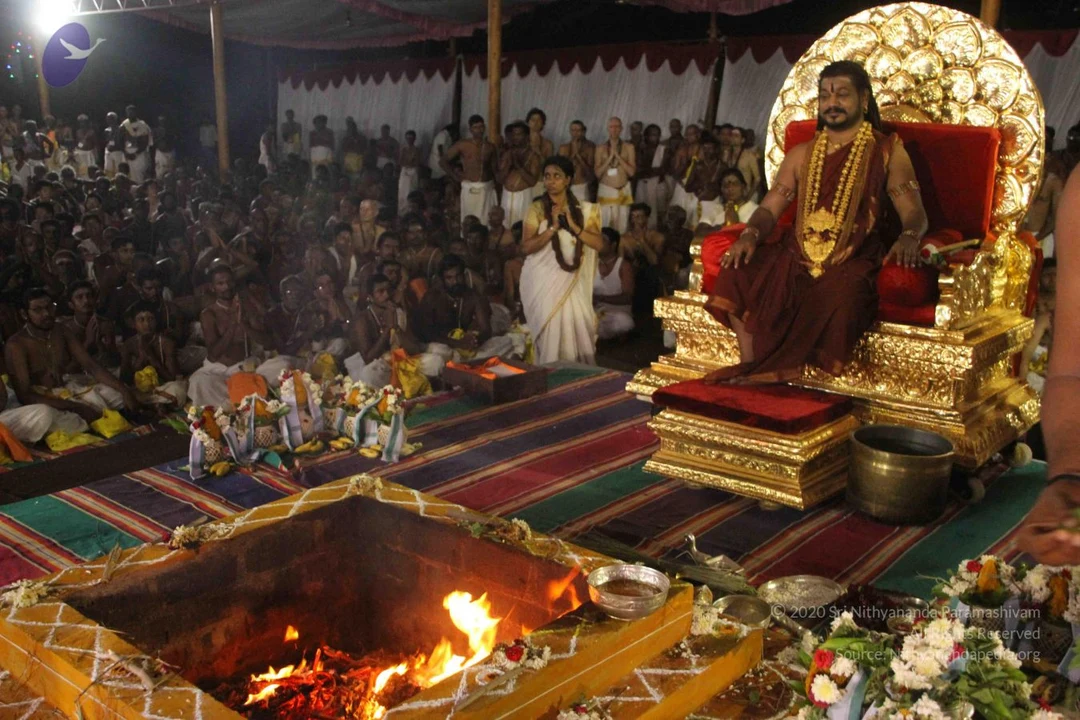
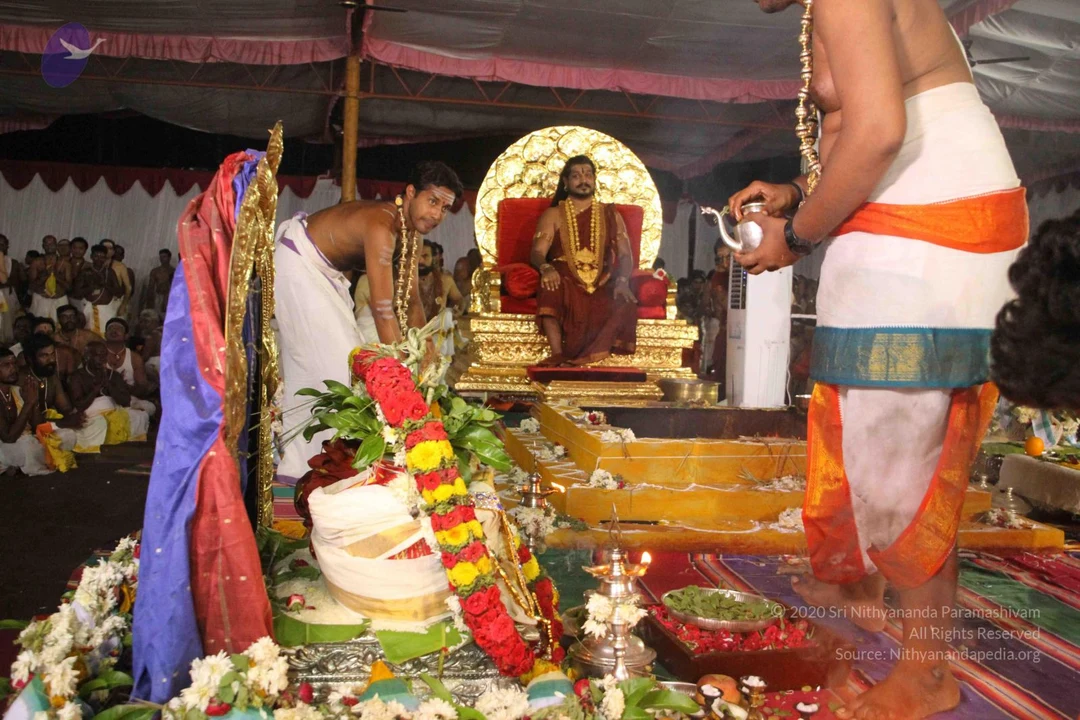
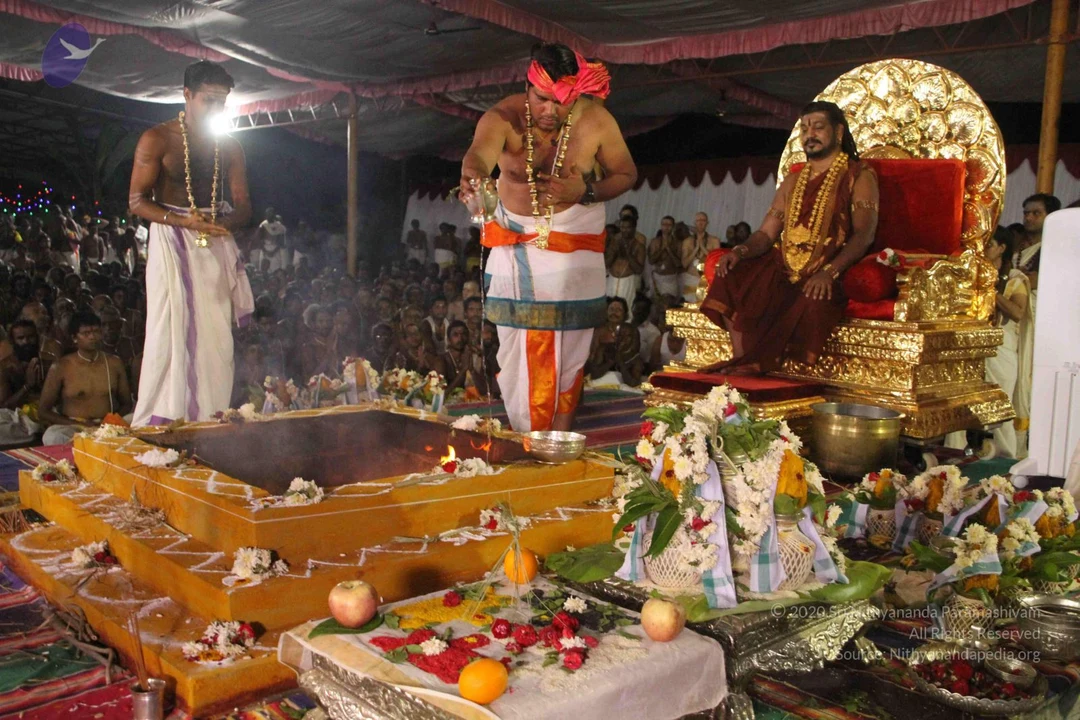
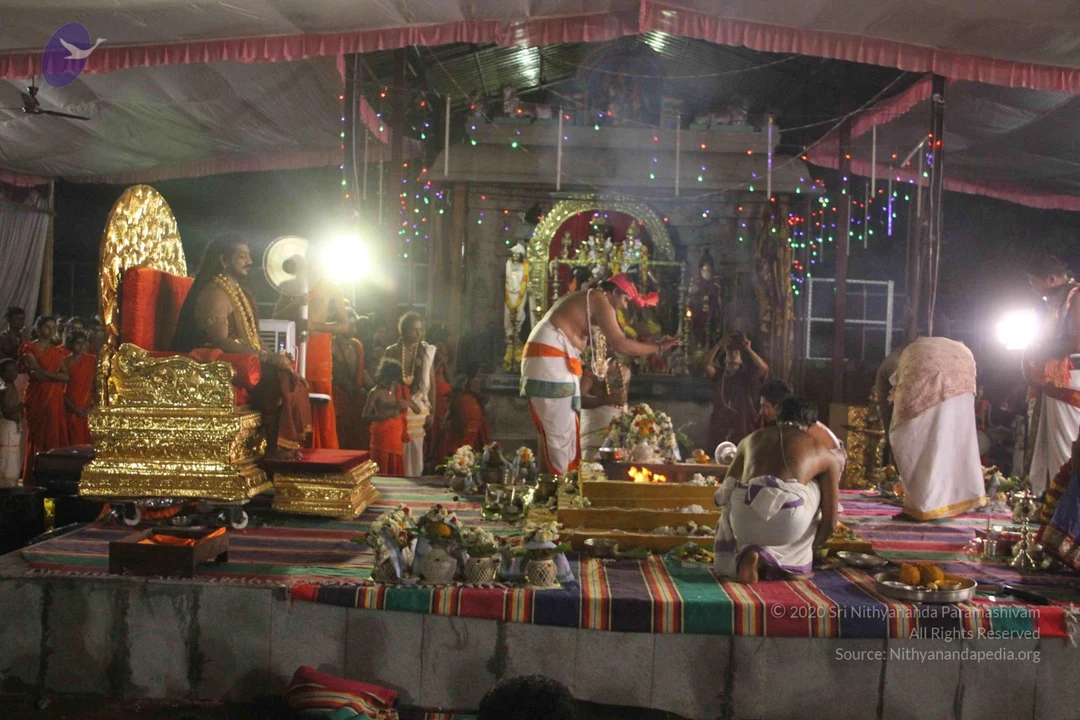
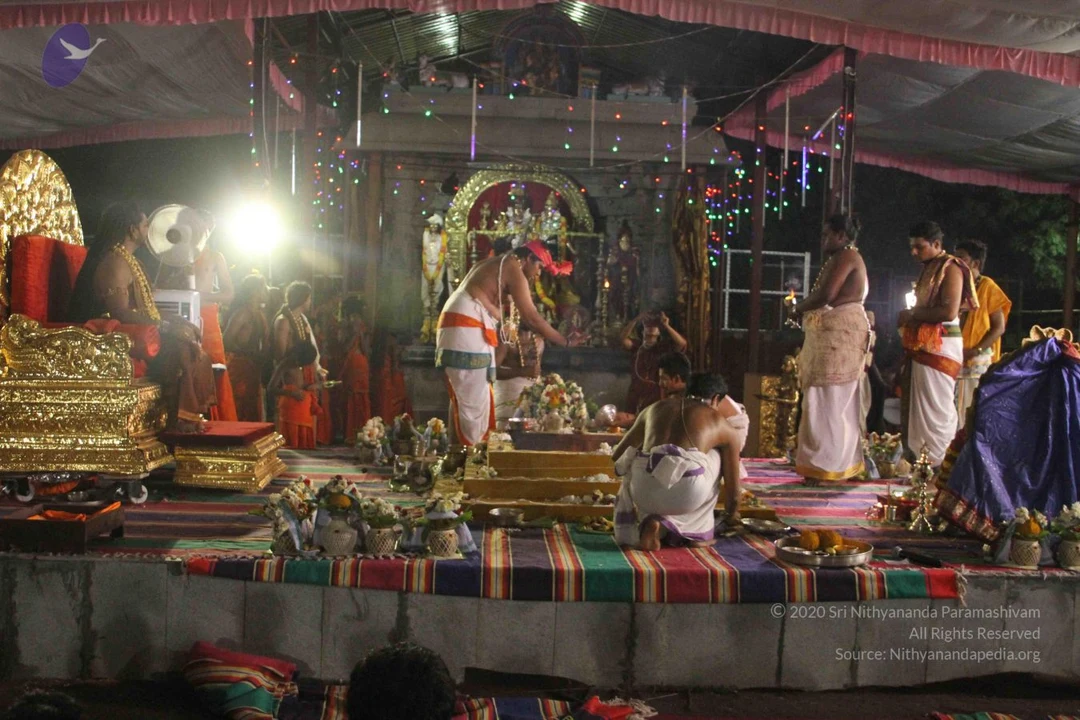
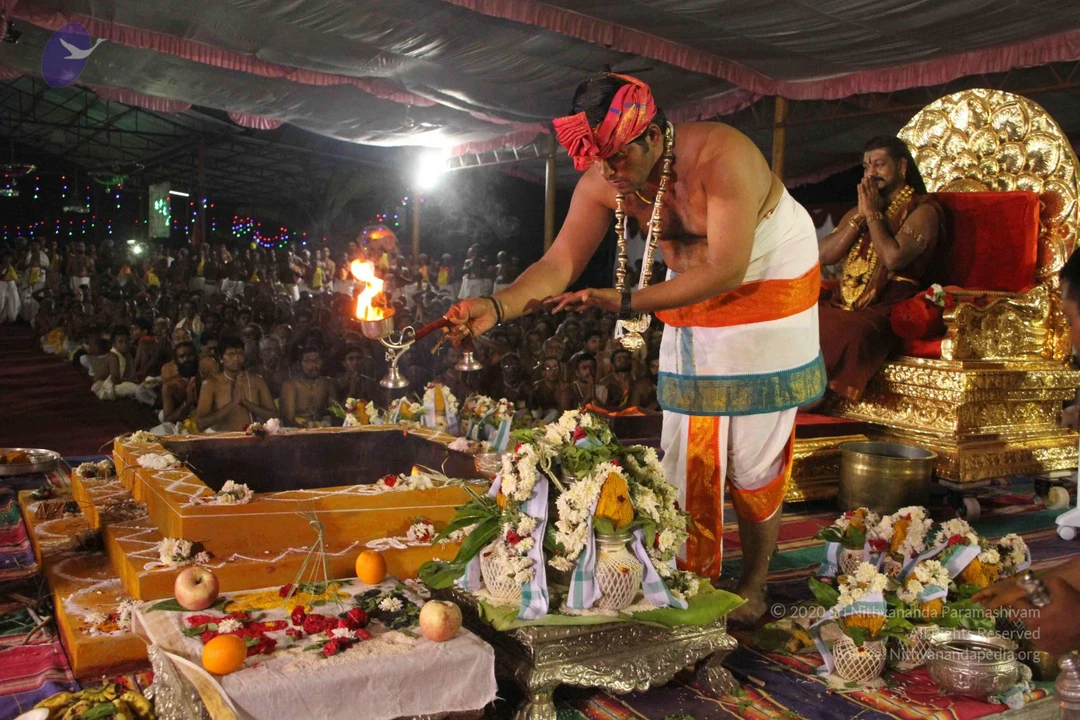
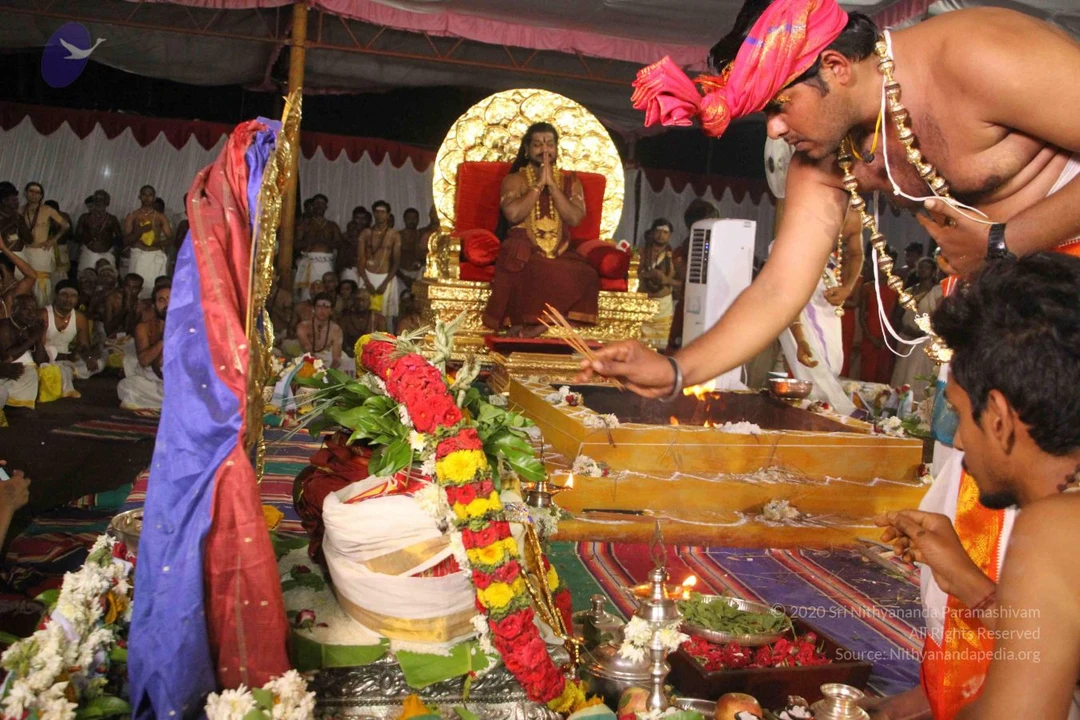
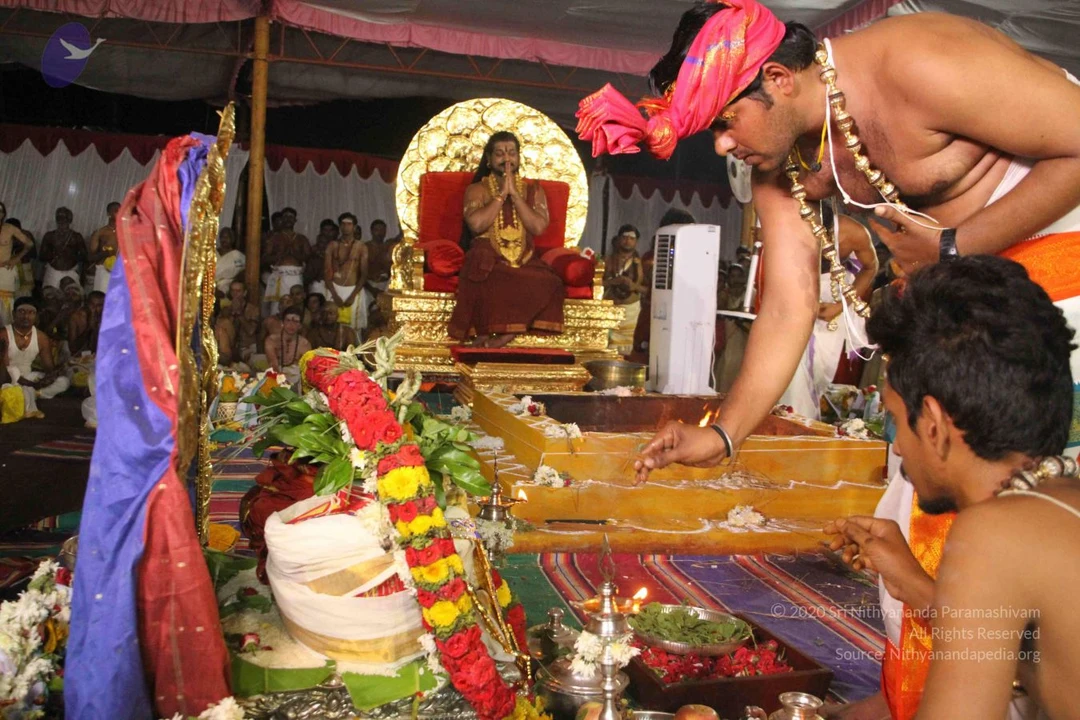
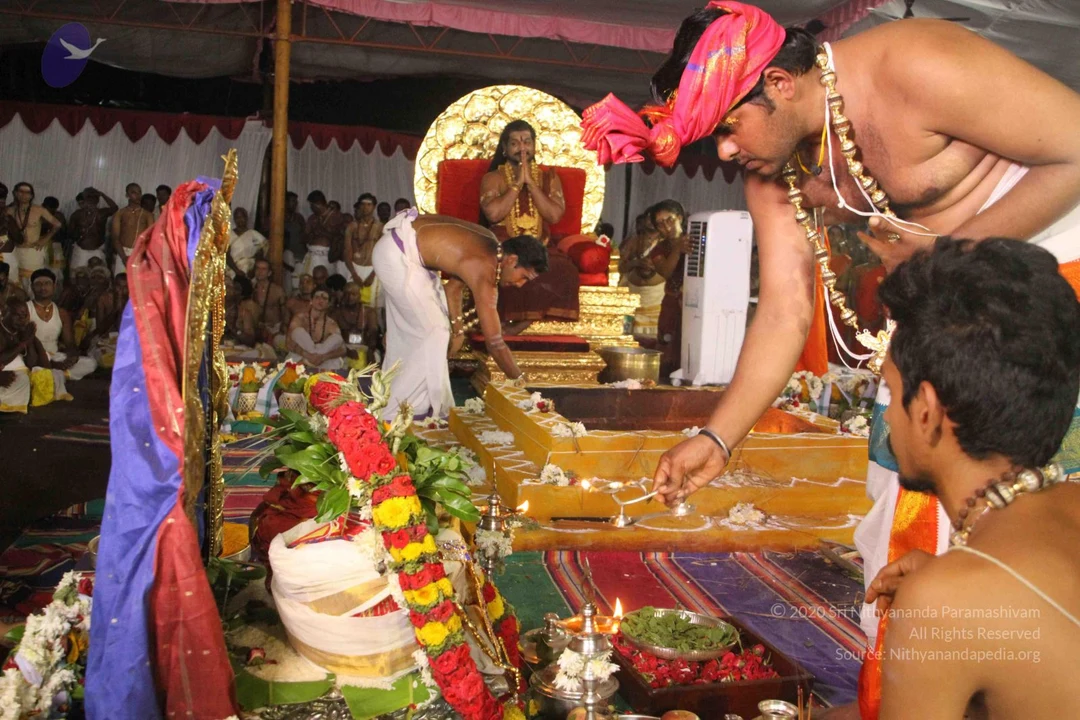
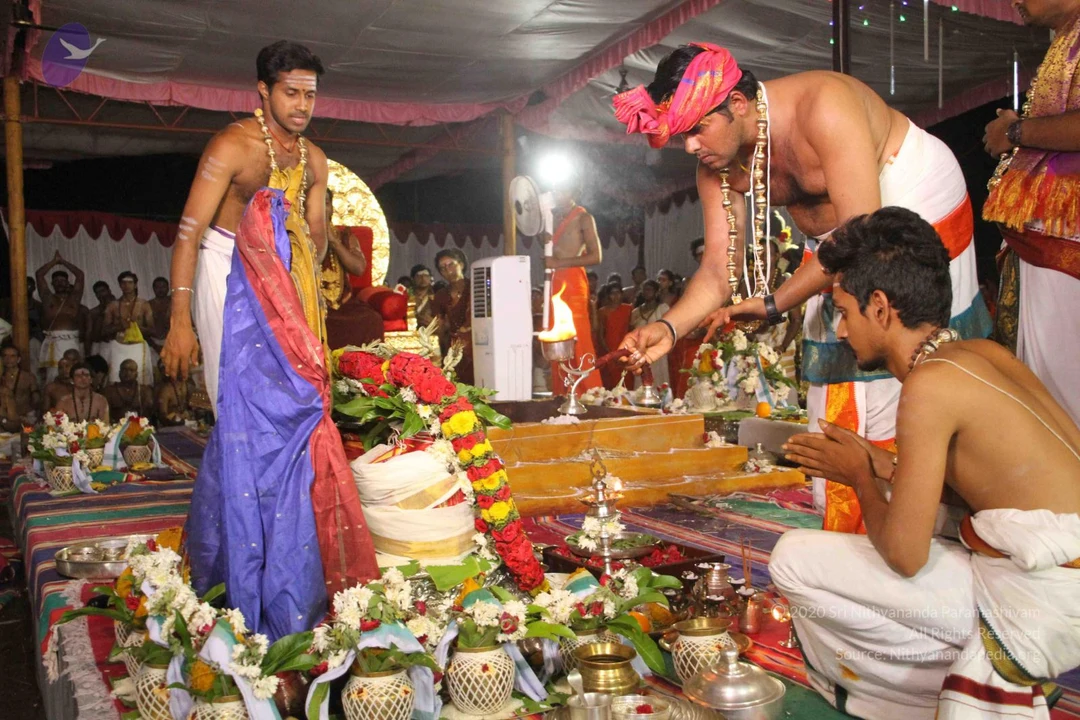
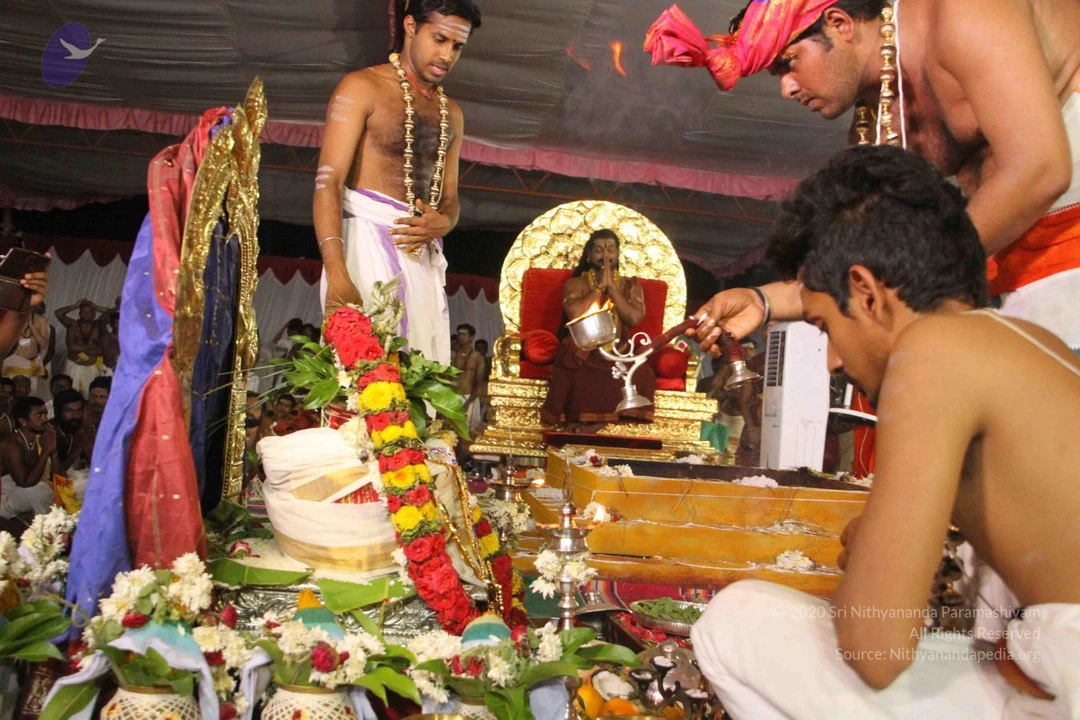
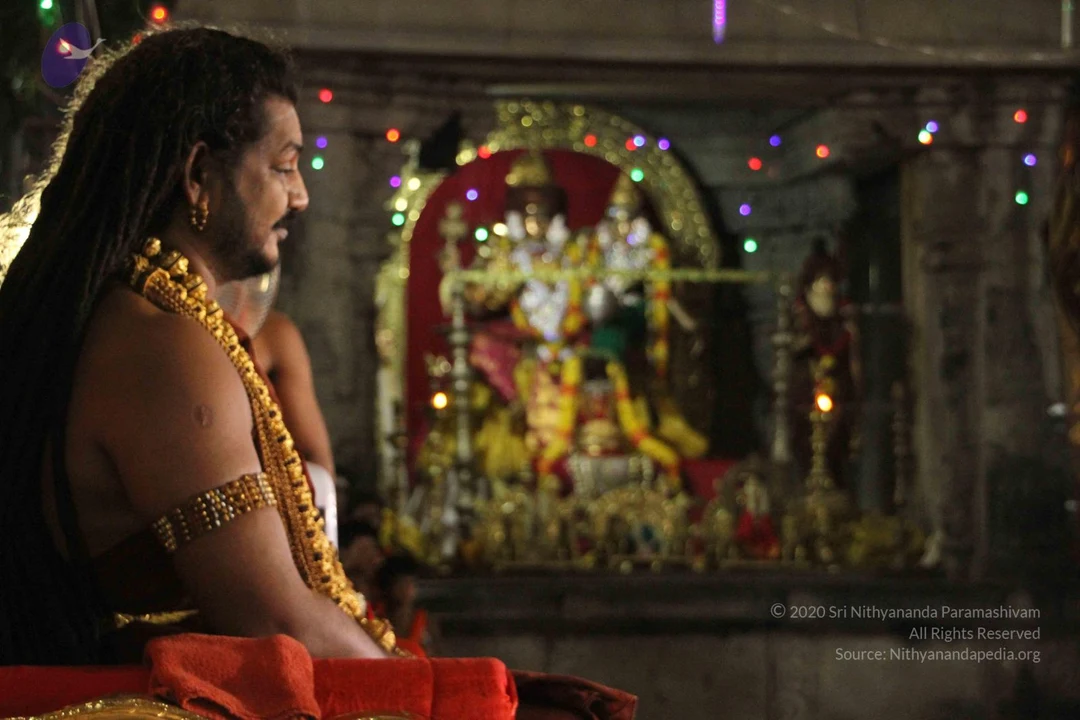
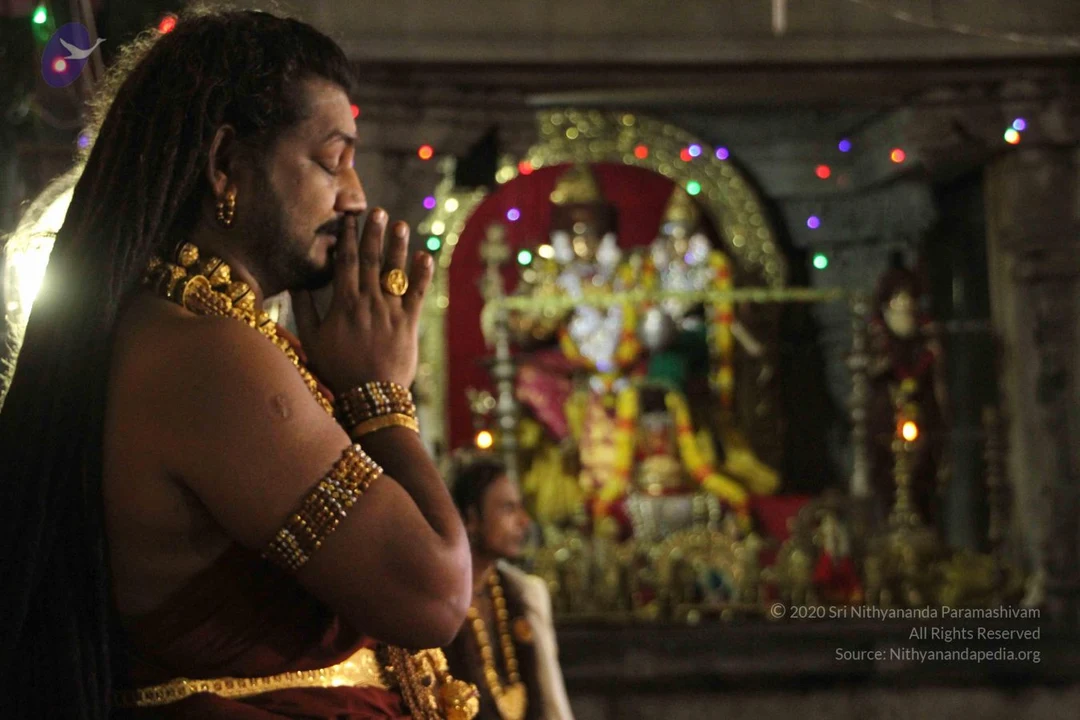
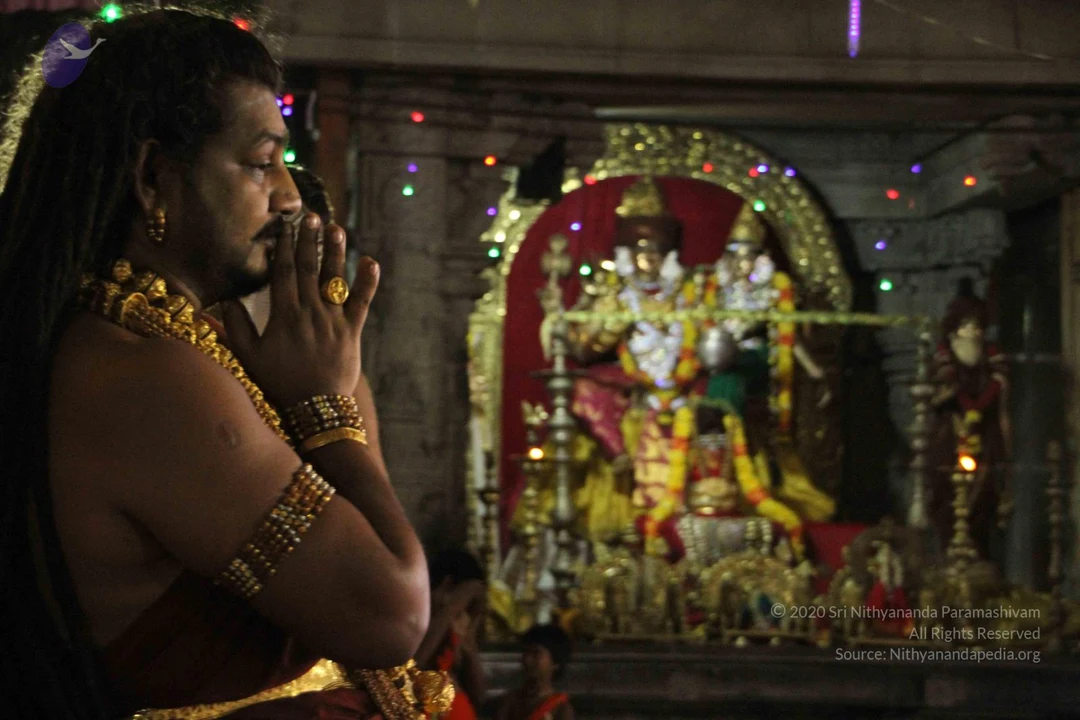
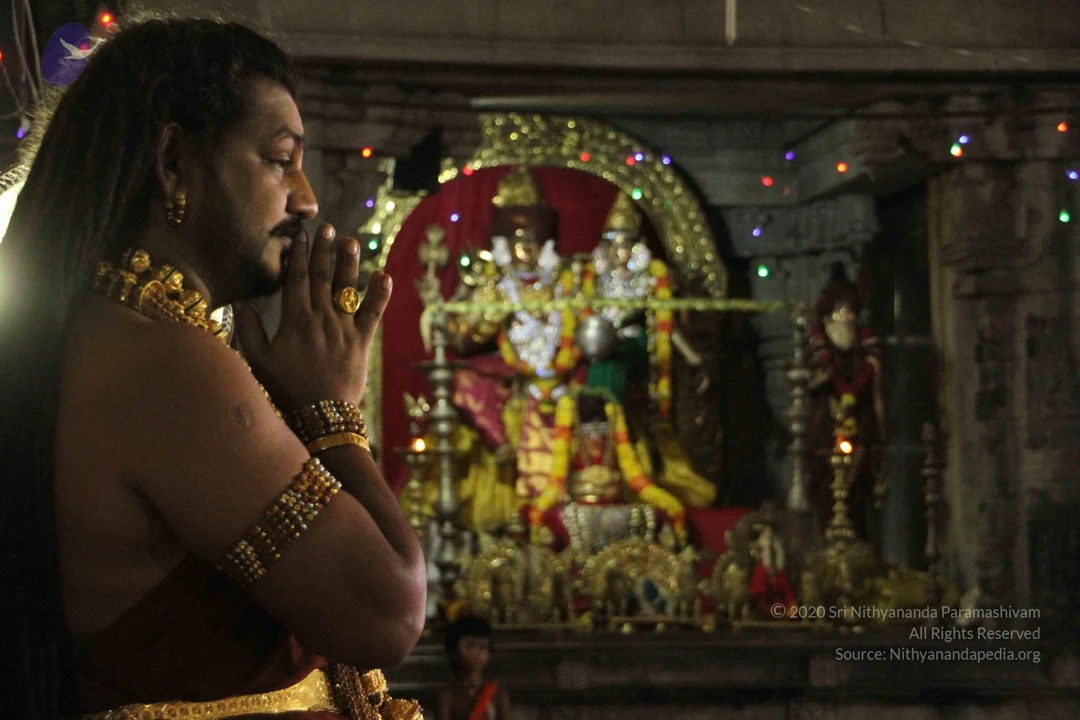
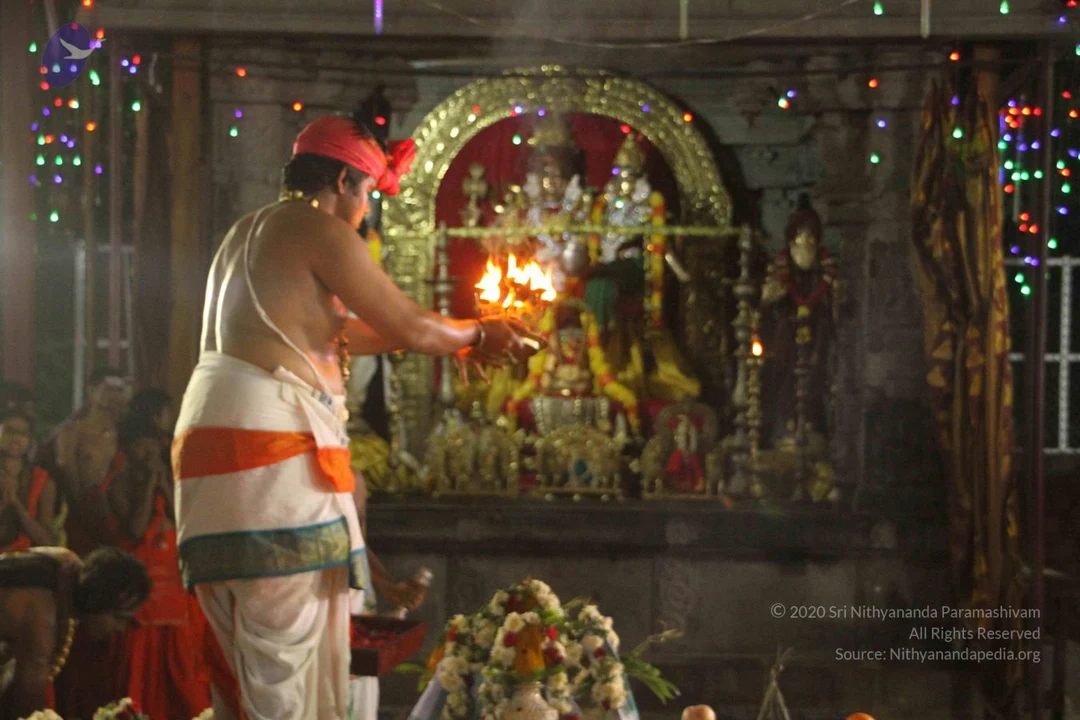
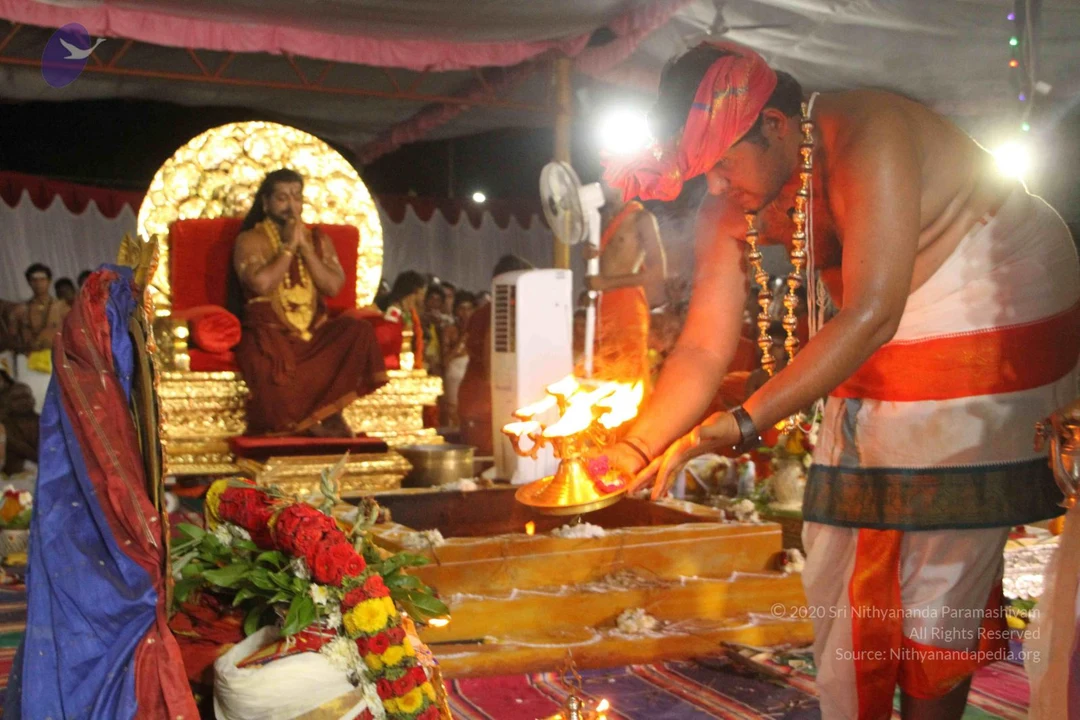
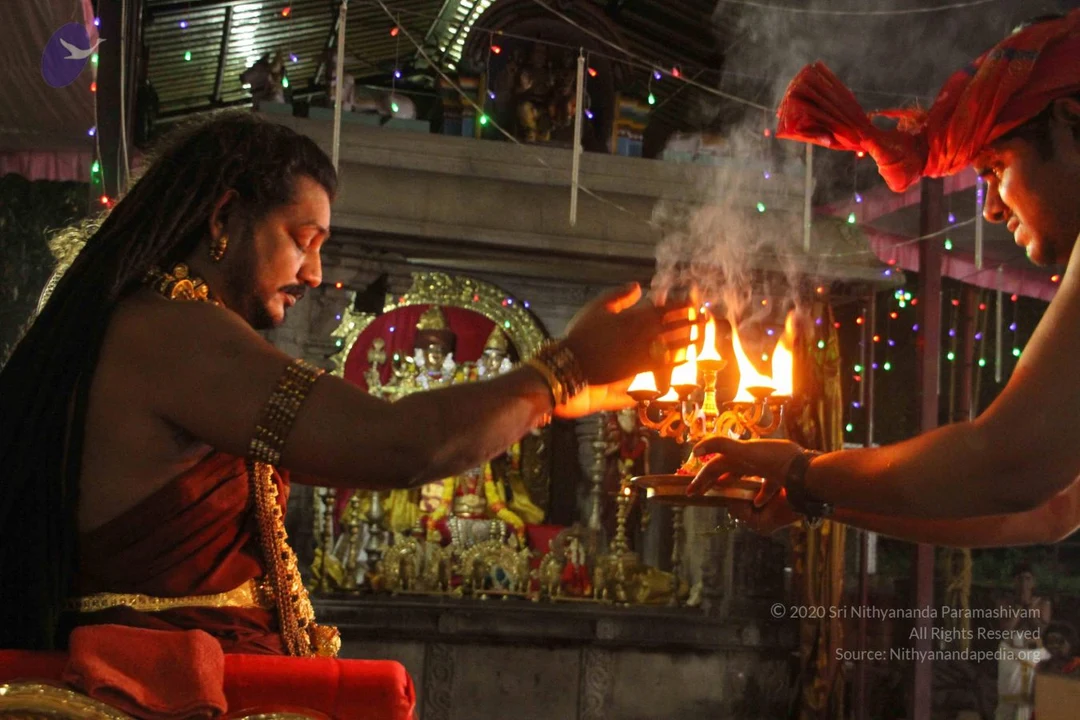
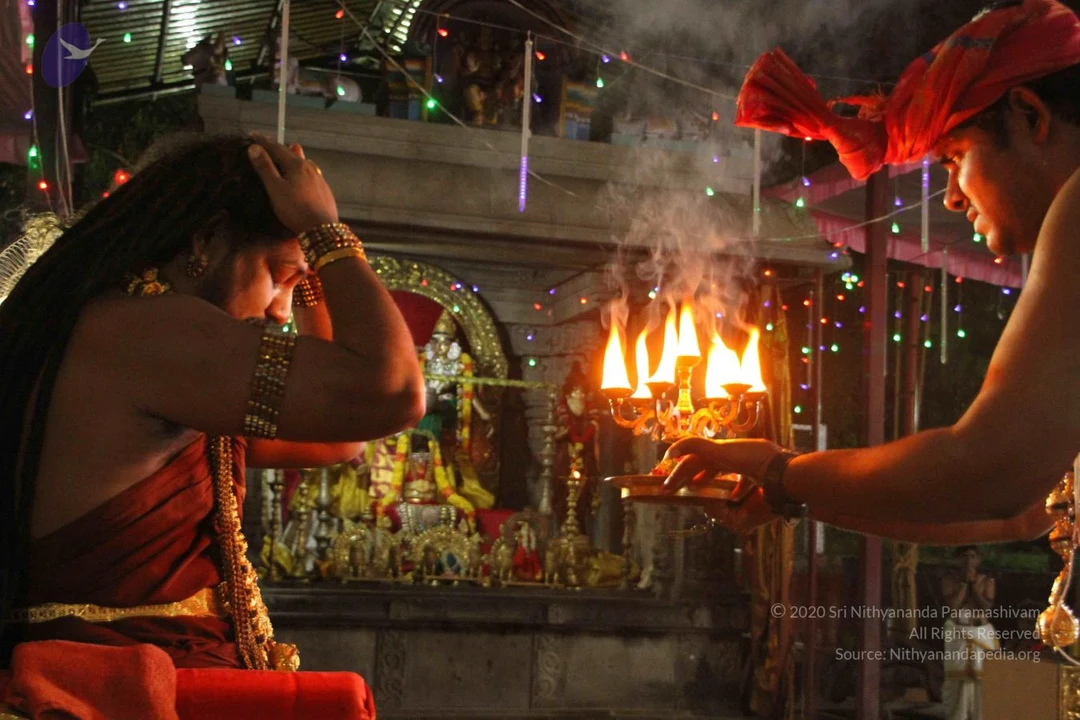
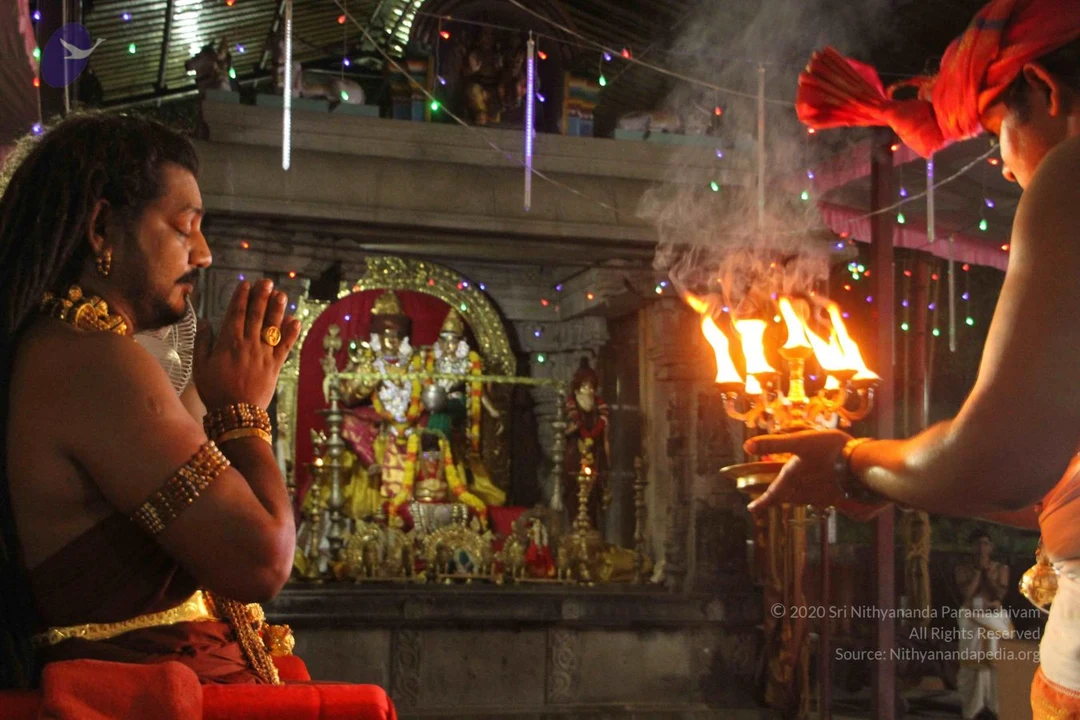
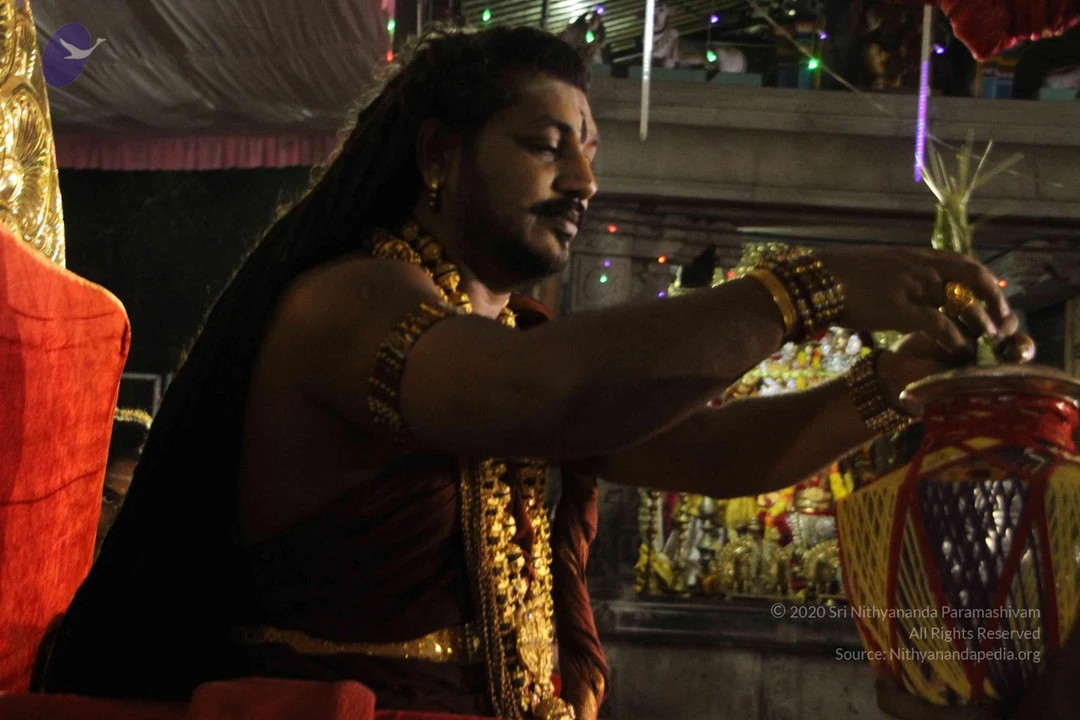
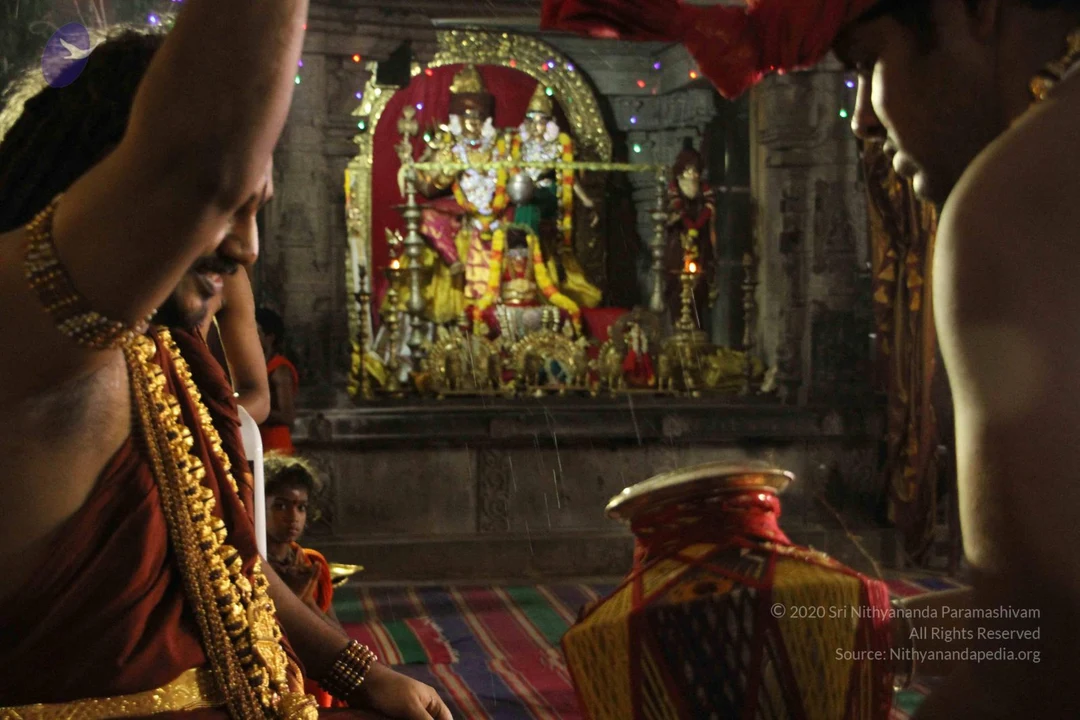
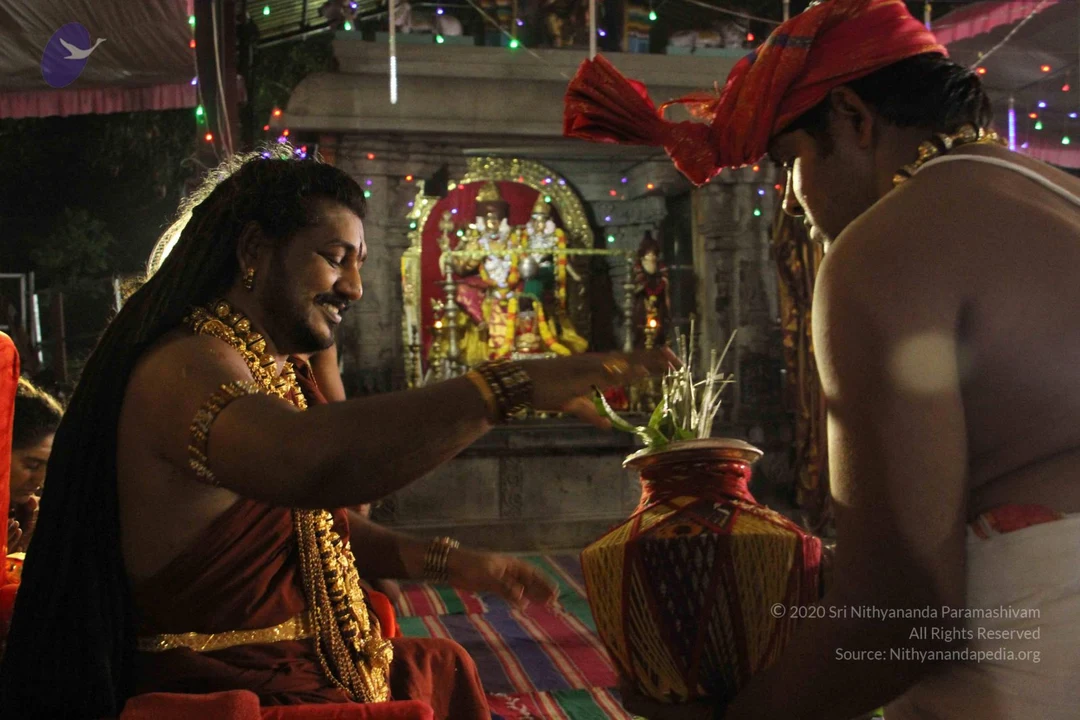
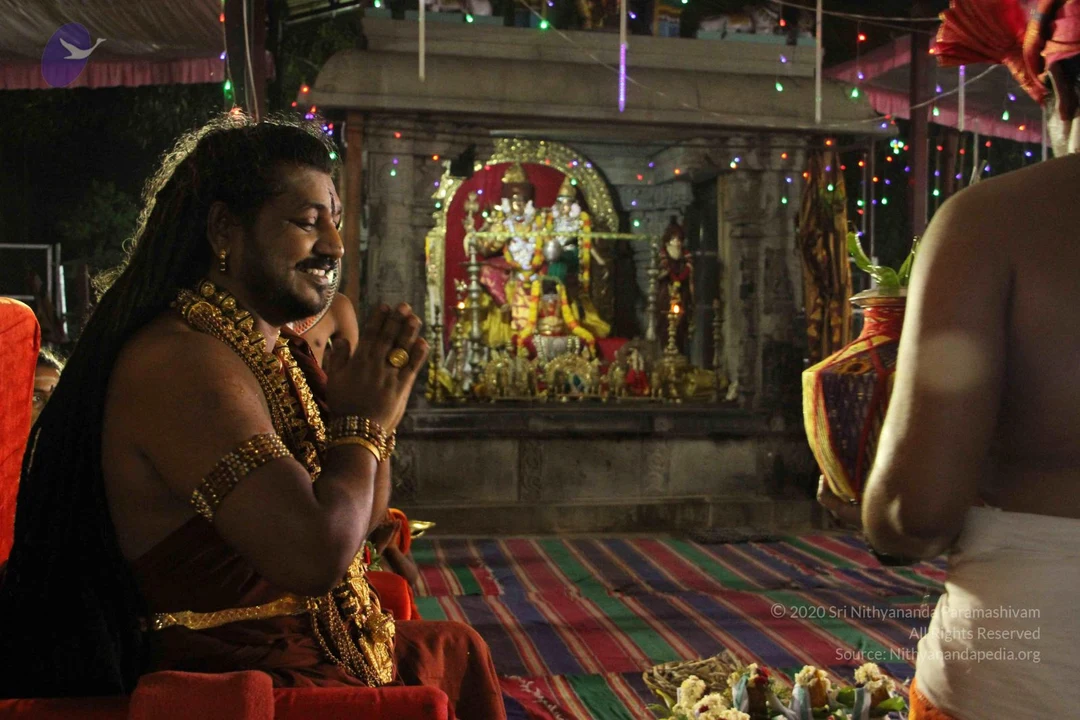
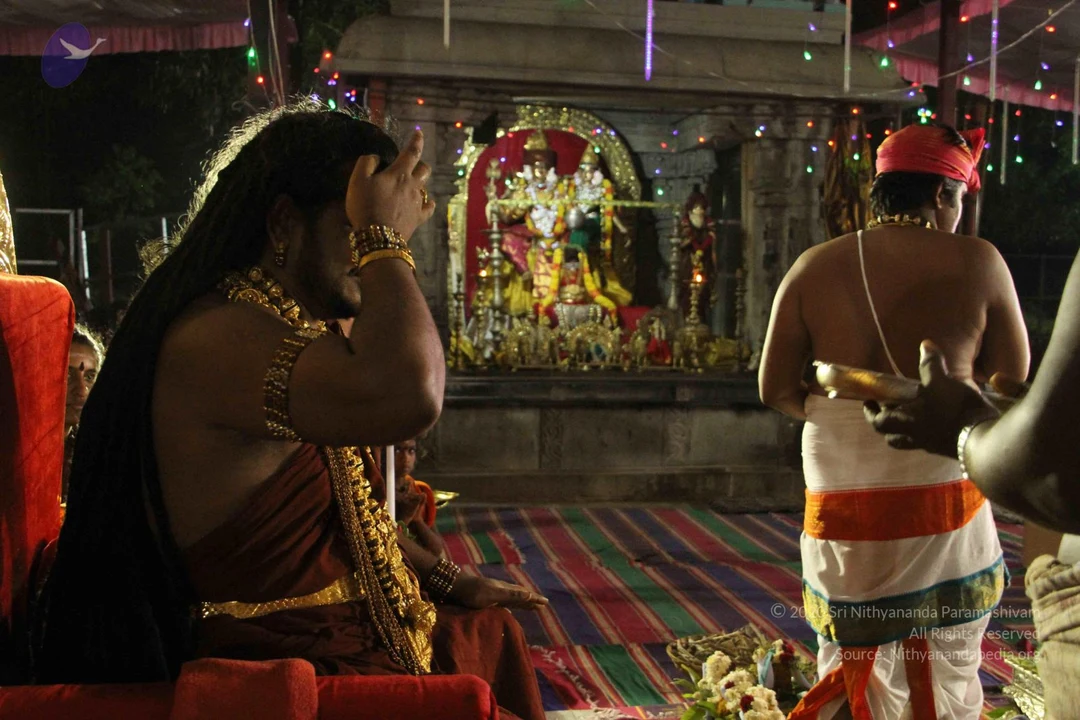
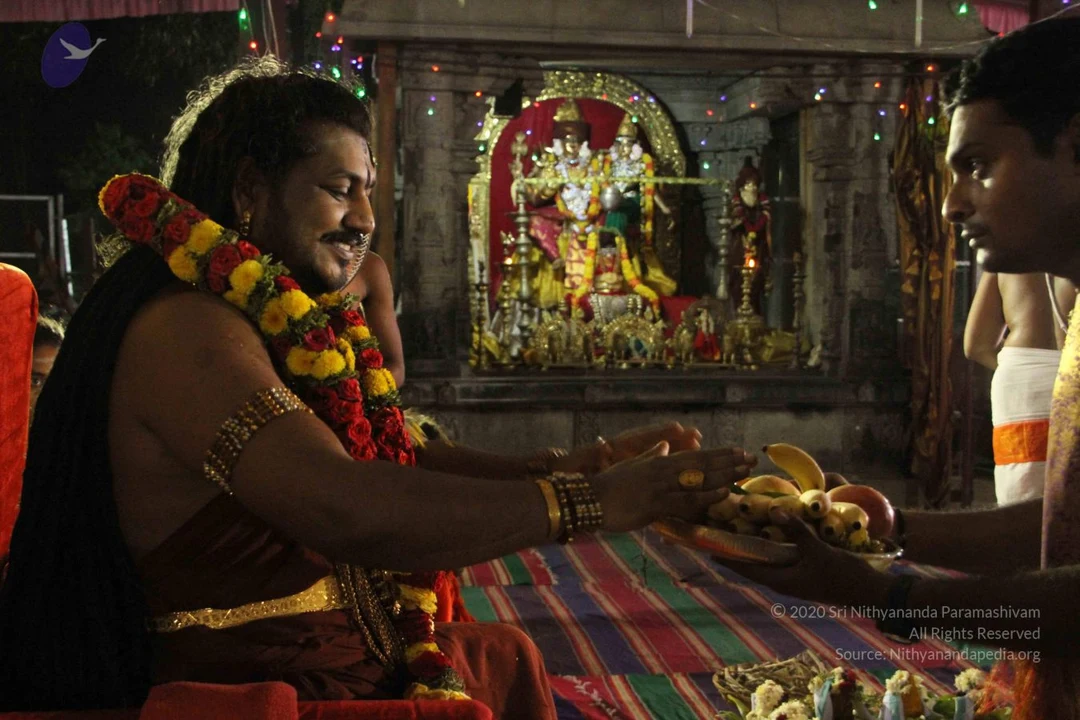
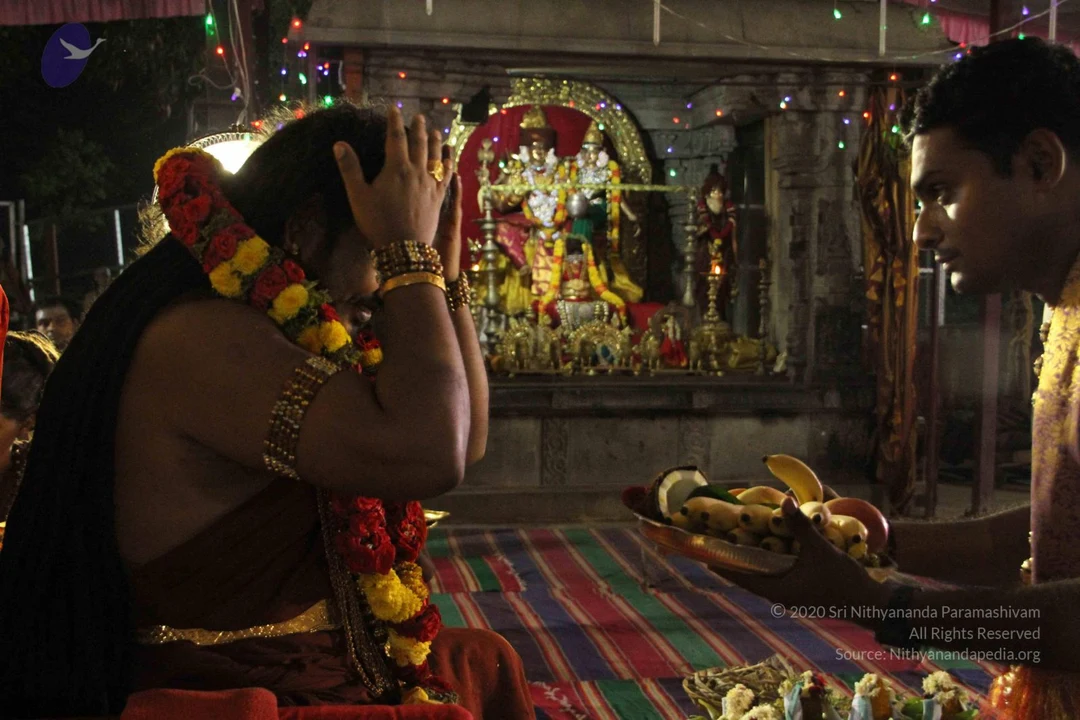
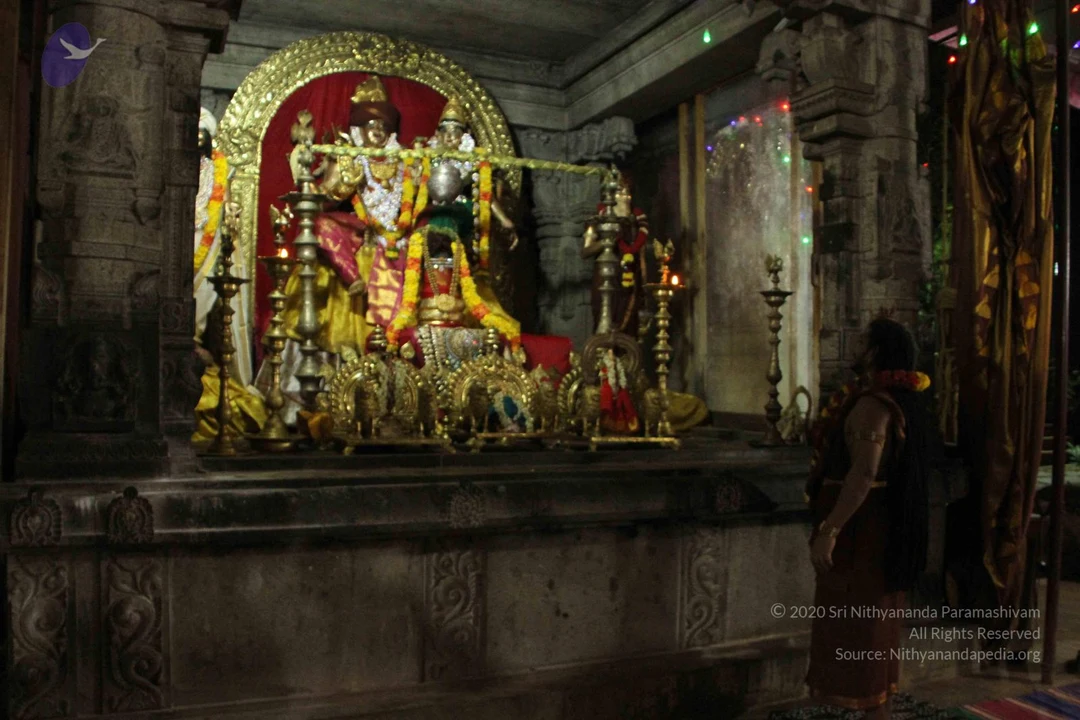
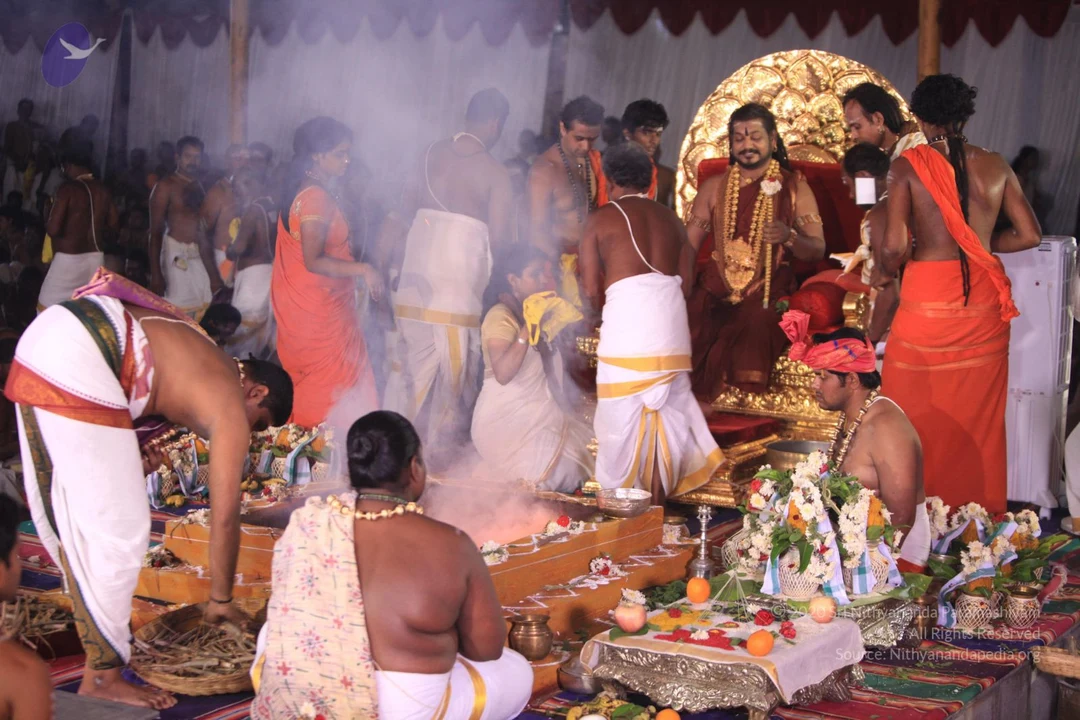
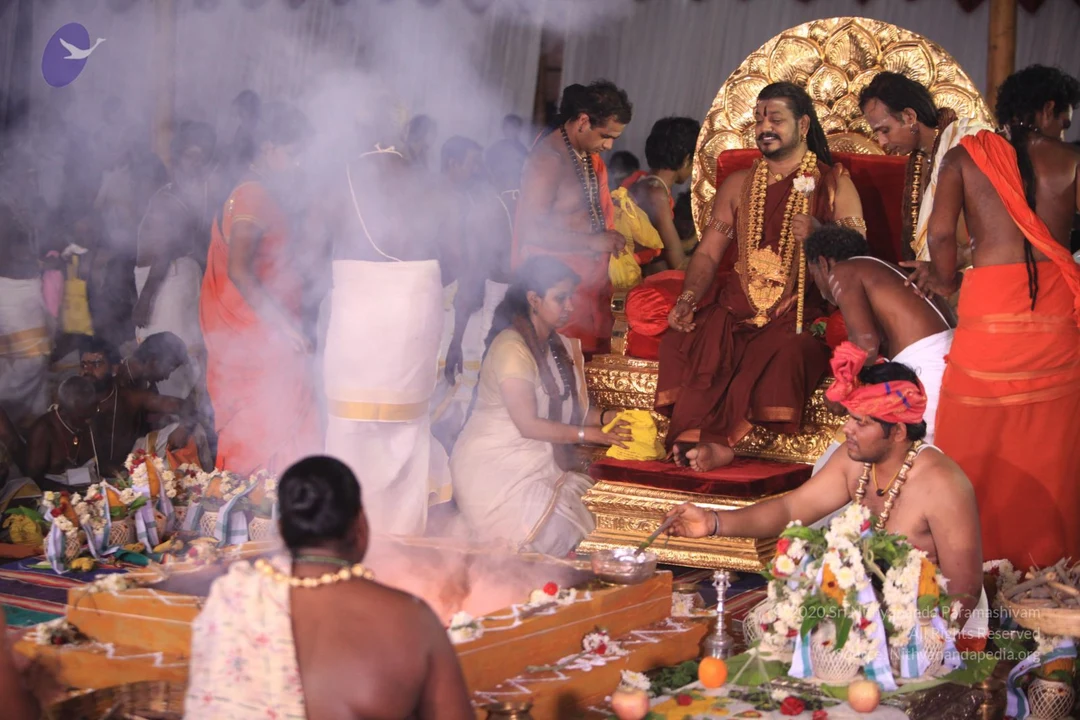
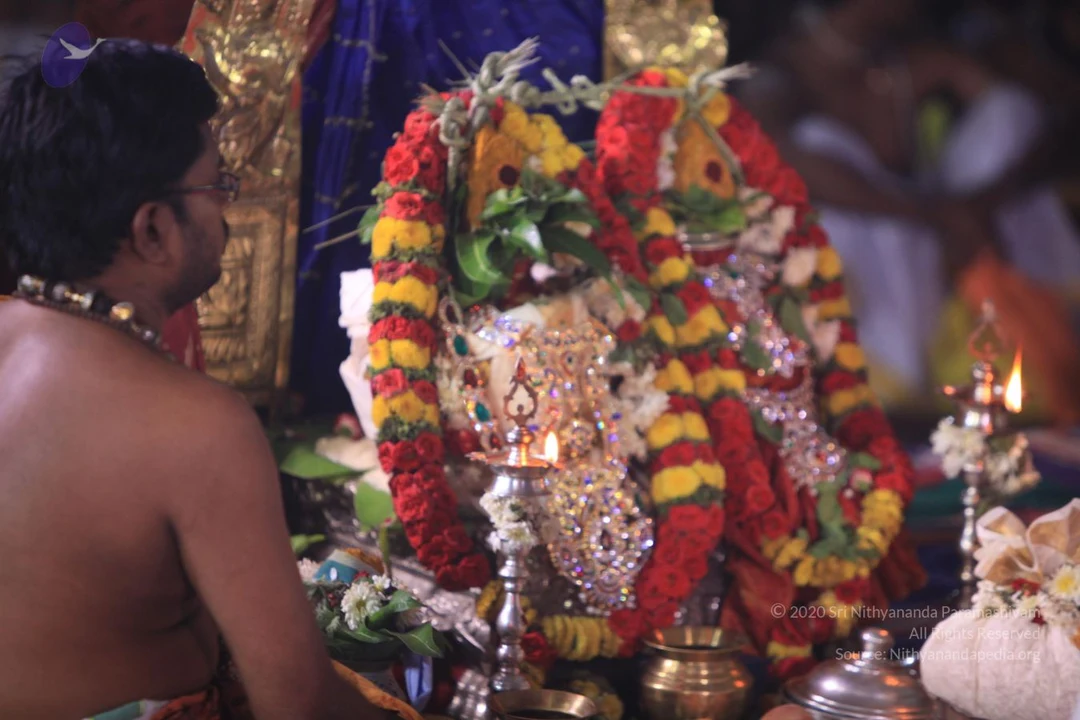
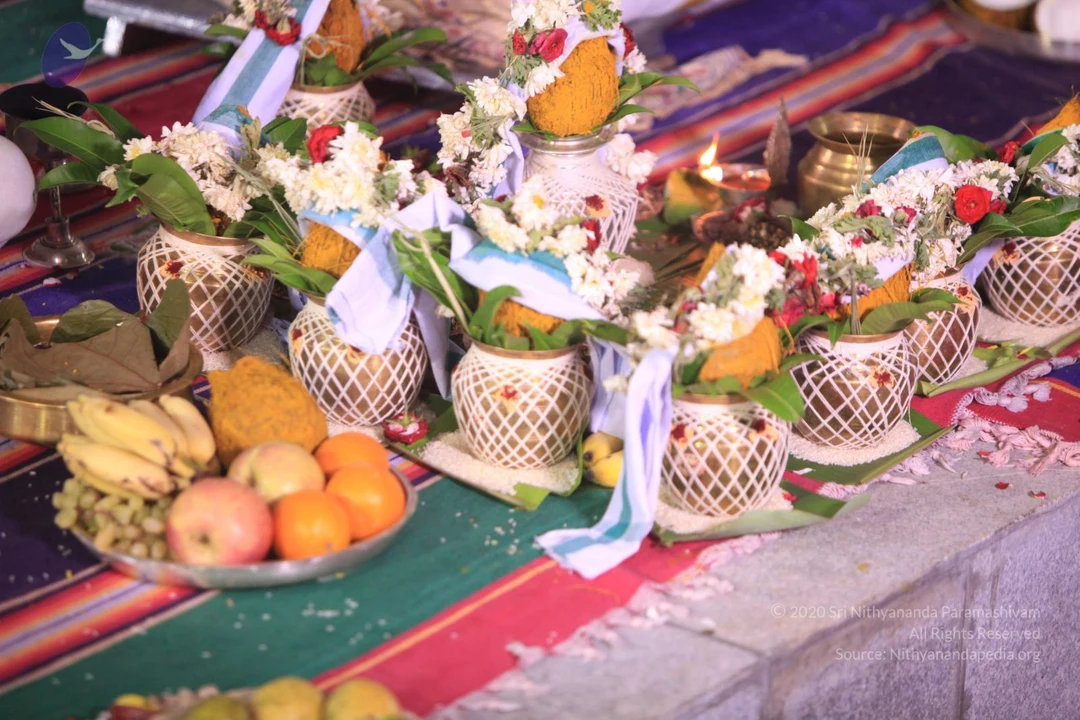
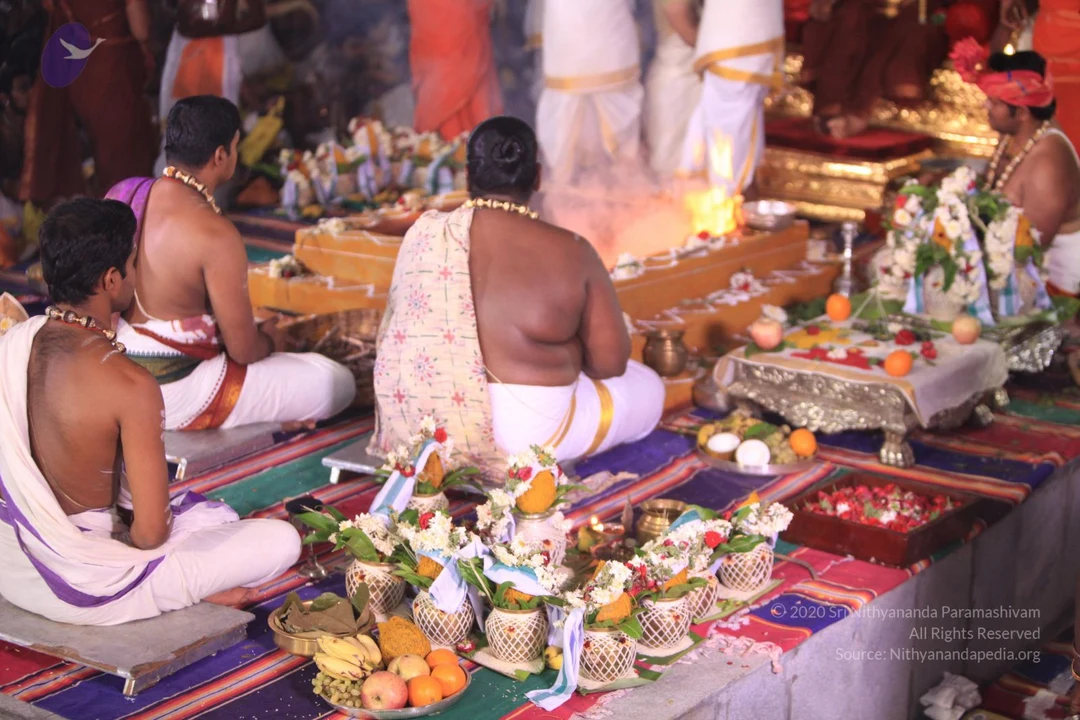
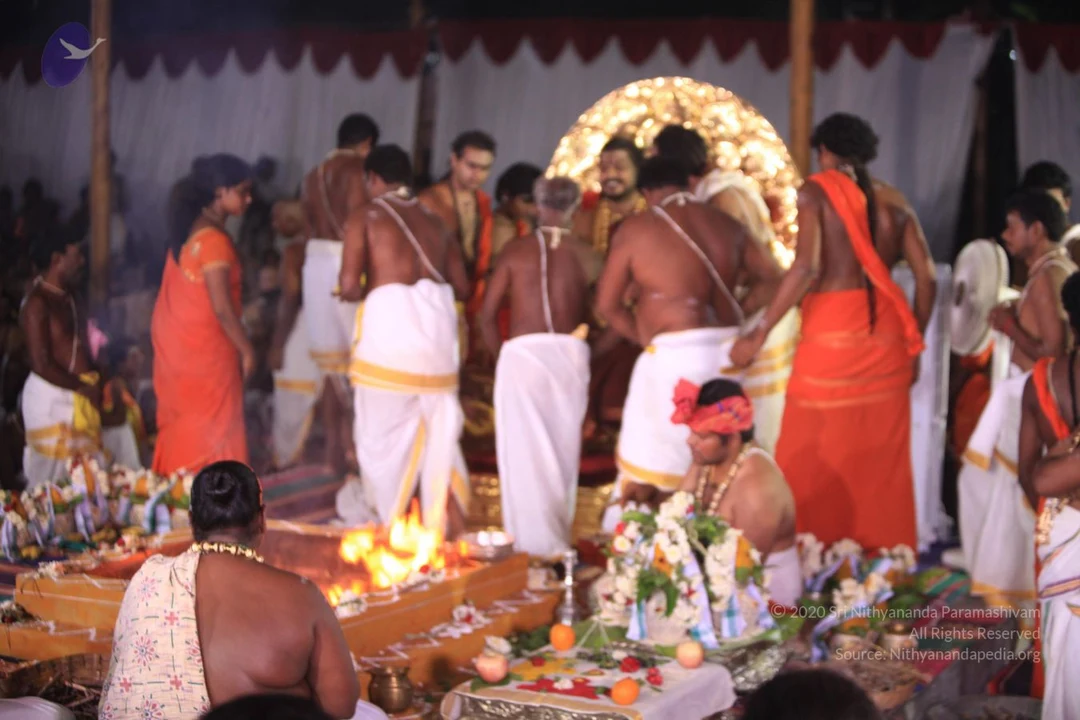
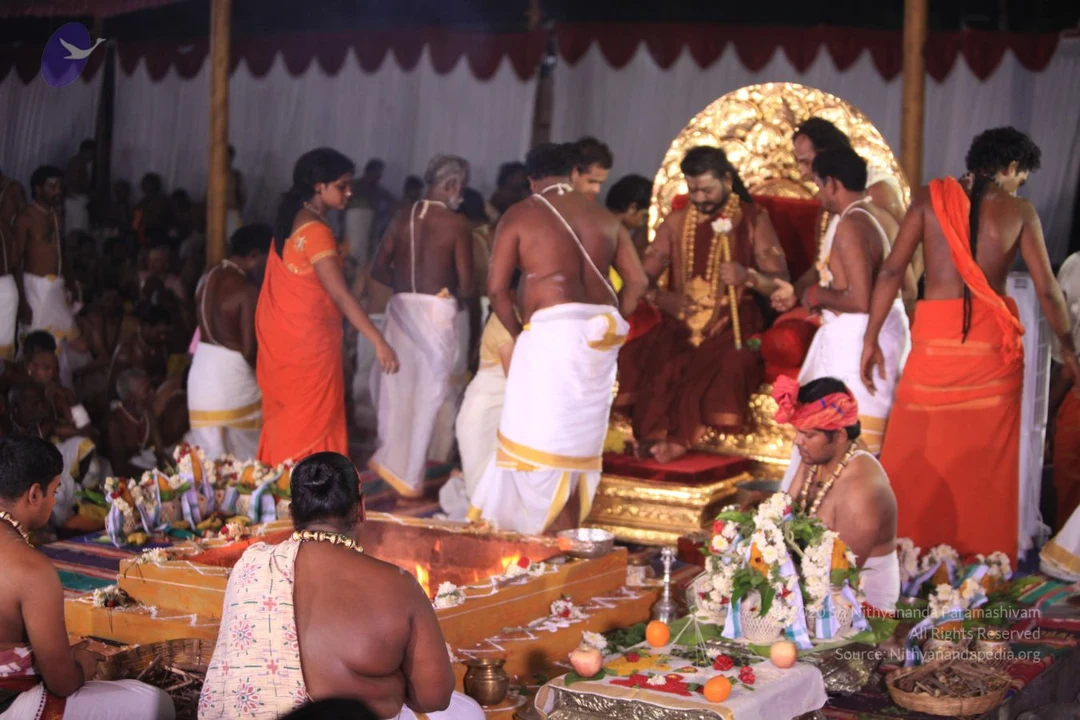
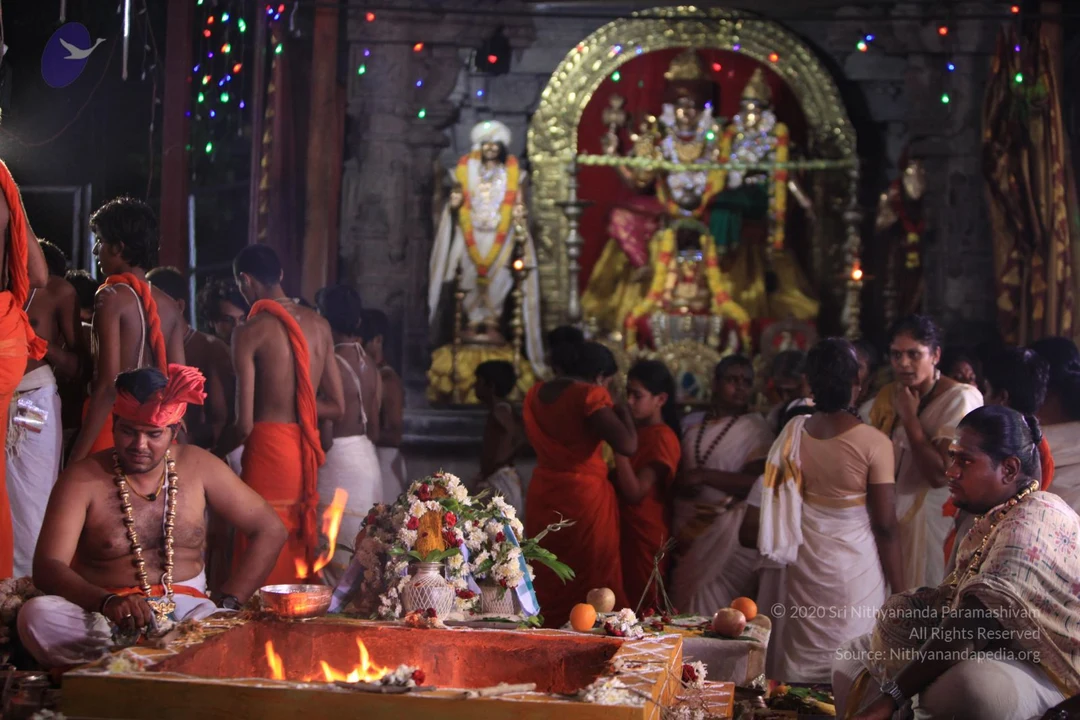
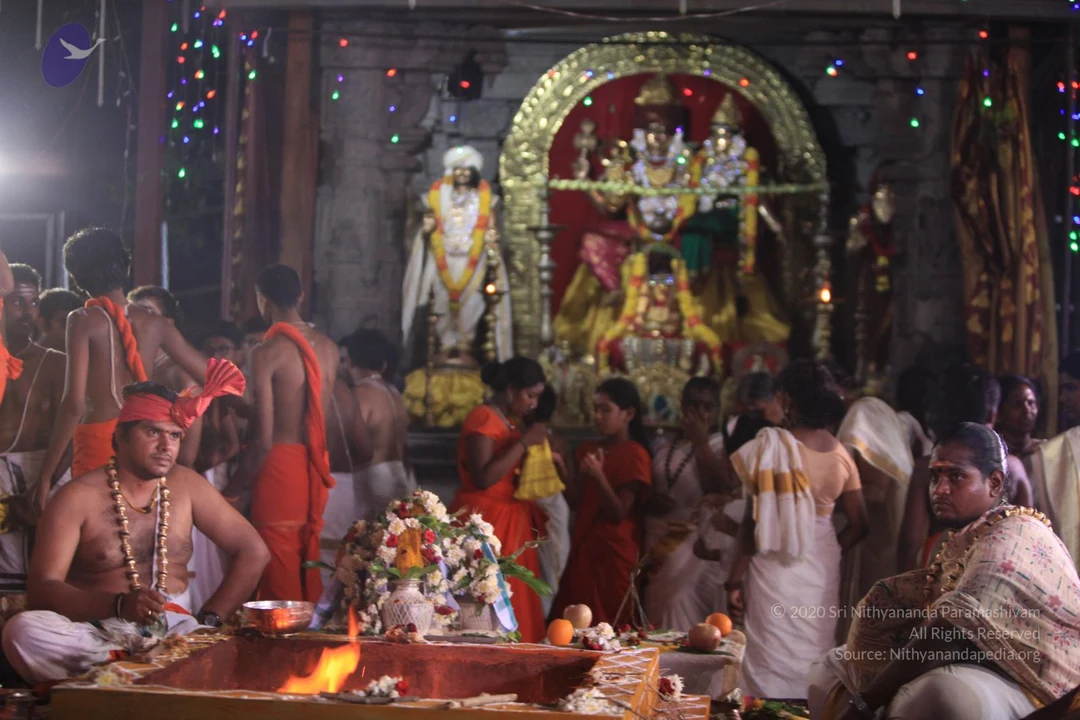
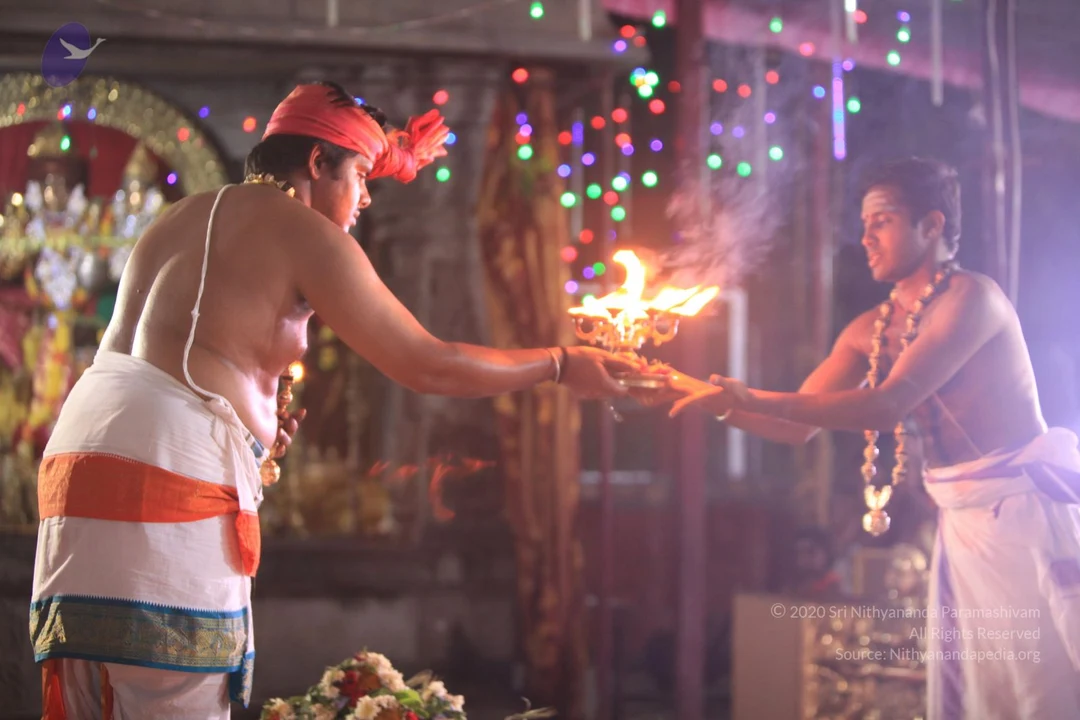
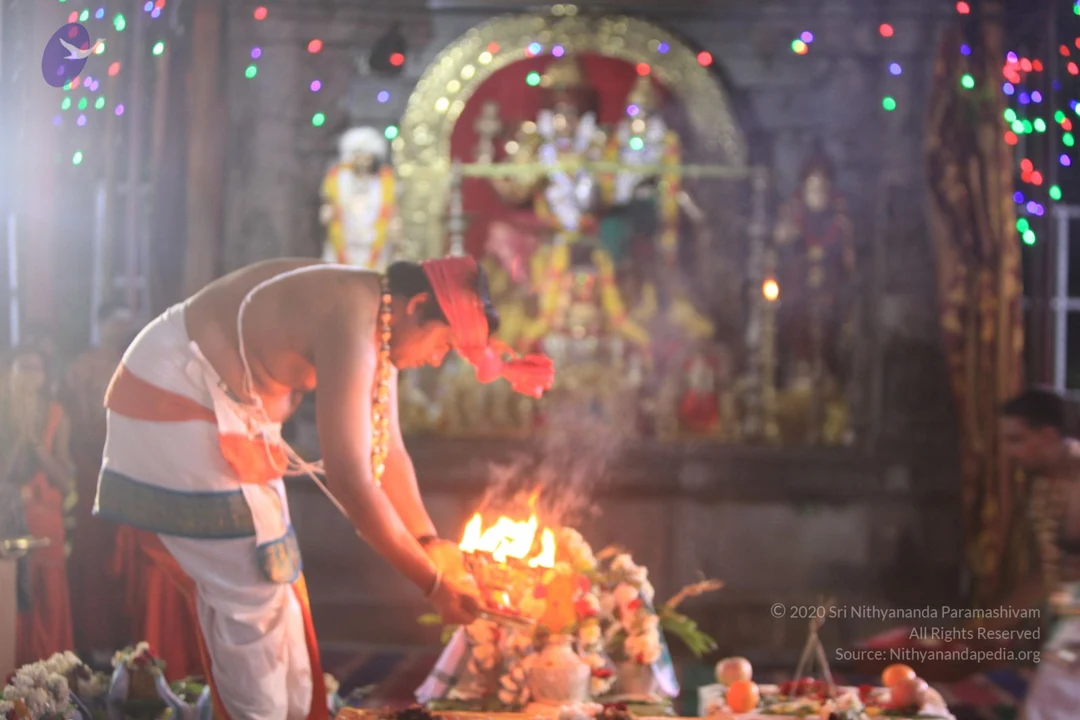
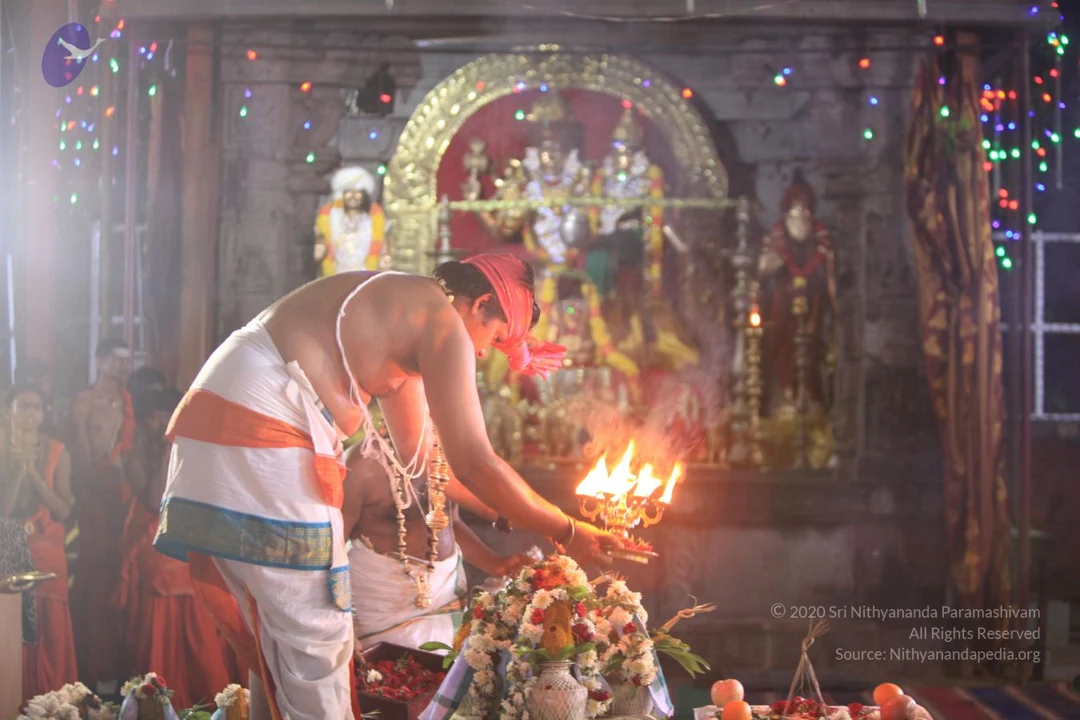
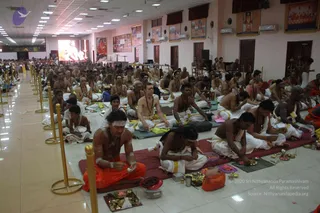
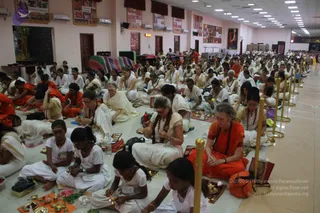
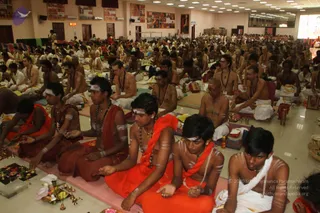
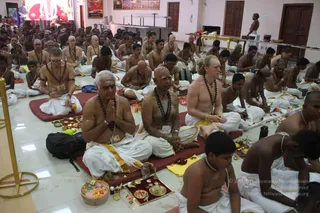
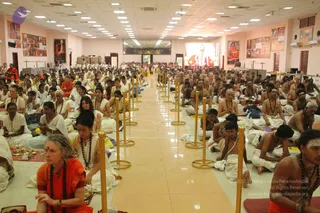
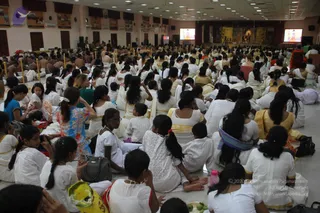
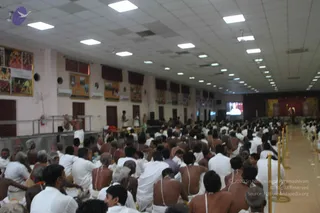
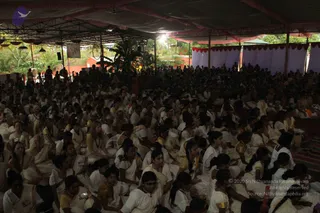
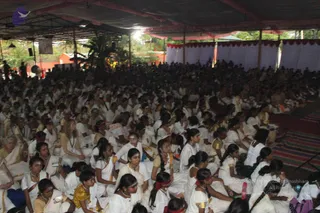
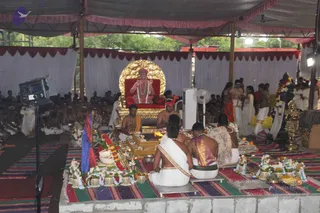
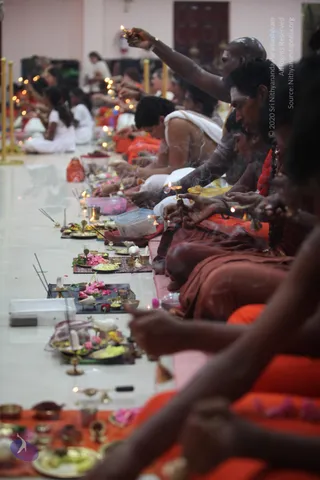
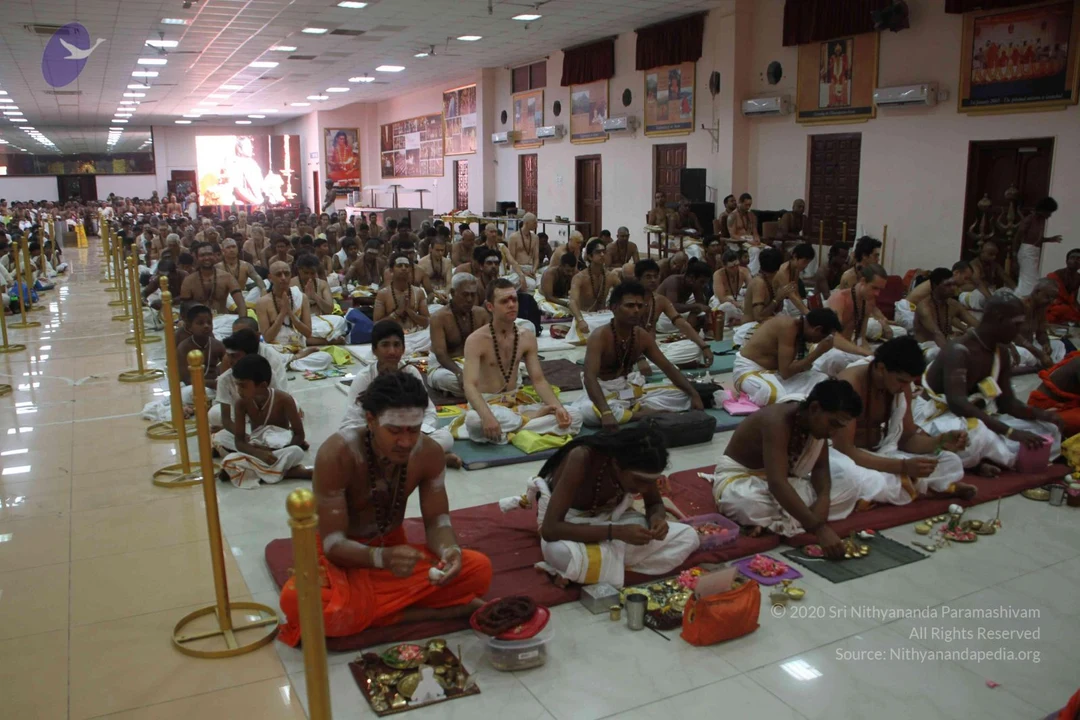
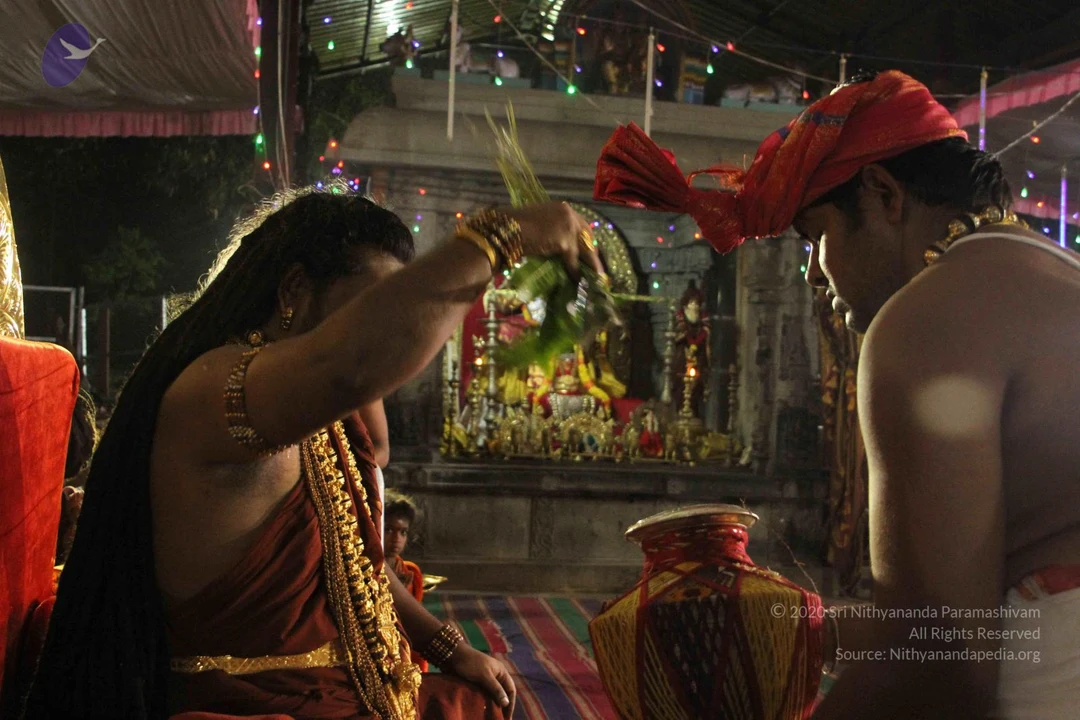
Night-time ritual photograph in a temple courtyard strung with coloured fairy lights. A man with long dark hair, a gold crown-like headpiece, a rust-red shawl and heavy gold necklaces sits on a red cushioned seat and reaches toward a brass kalasha pot decorated with green leaves and a woven yellow-and-red cloth. Facing him, a bare-chested priest wearing a red headcloth and white dhoti holds the pot. Behind them, a shrine with a decorated deity murti in red and gold draperies and lit oil lamps. A striped cloth covers the floor.Night ritual photograph under a pink-and-white canopy with string lights. In the foreground, a fire pit with a flame and offerings of flowers and a bowl sits on a striped mat. A priest in white dhoti with a purple-bordered shawl, bare-chested with gold necklaces, pours or offers from a metal vessel beside the pit. A second priest in white dhoti with orange border bows with folded hands and a red-and-white cloth on his head. Behind them, a seated man in a saffron-brown robe with a gold necklace and red-trimmed cushion sits on an ornate gold throne, hands folded, smiling. A large crowd of seated devotees, many bare-chested in white and yellow cloth, fills the background.A large indoor hall filled with many seated devotees on the floor in rows, most dressed in white ritual clothes and some in saffron, with rudraksha malas around their necks. A woman in the foreground wears an orange sari-style garment and a rudraksha mala, seated in front of an offering plate with flowers and lamps. Tall golden stanchions line a central aisle. On the back wall, a large screen shows a figure in red and saffron clothing seated on a raised seat, and framed religious artwork hangs on the walls. Many people are present.

May 25 2017

Original wiki page
Contents

Title

Nithyananda Satsang and Vishesa Deeksha by the SUpreme Pontiff of Hinduism HDH Bhagavan Sri Nithyananda Paramashivam in Bengaluru Adheenam.

Day's Event

Excerpt from Live Nithyananda Satsang:

Superconsciousness intensely electrocuting your existence and raising you to the frequency of its existence is Deeksha. It can happen through Guru, through the deity, through even a tree, through a river, through a hill. With whoever deeksha is happened for you, that is your Ishta Devata. Deeksha means superconscious electrocuting you. It will always be electrocuting. It can never be mild 120V, not even 240V; it will always be 10,000 volts!

-His Holiness Paramahamsa Nithyananda

Photos

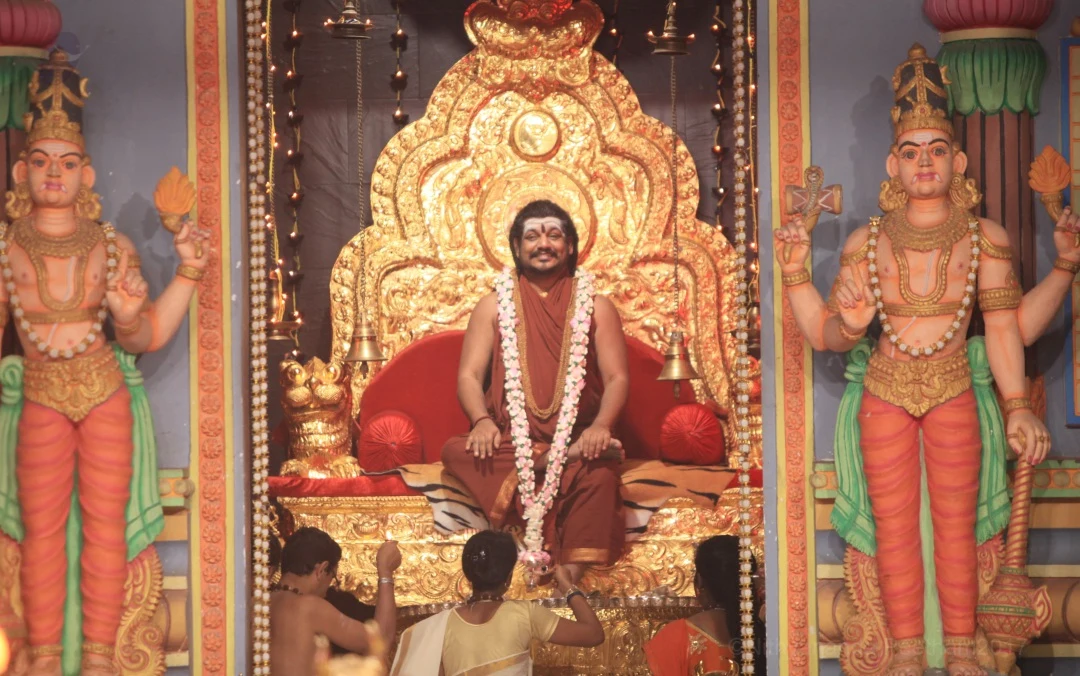
Puja
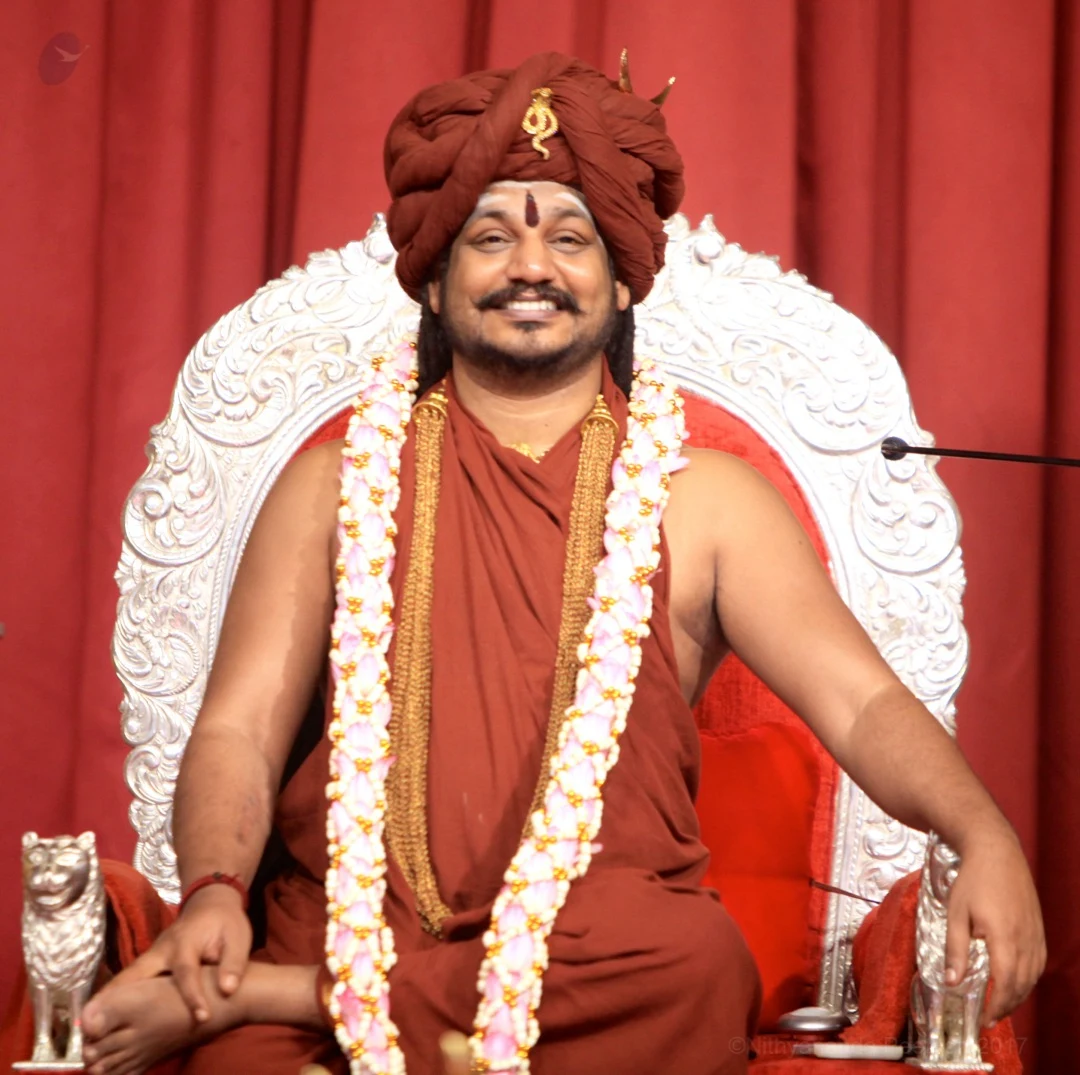
Satsang
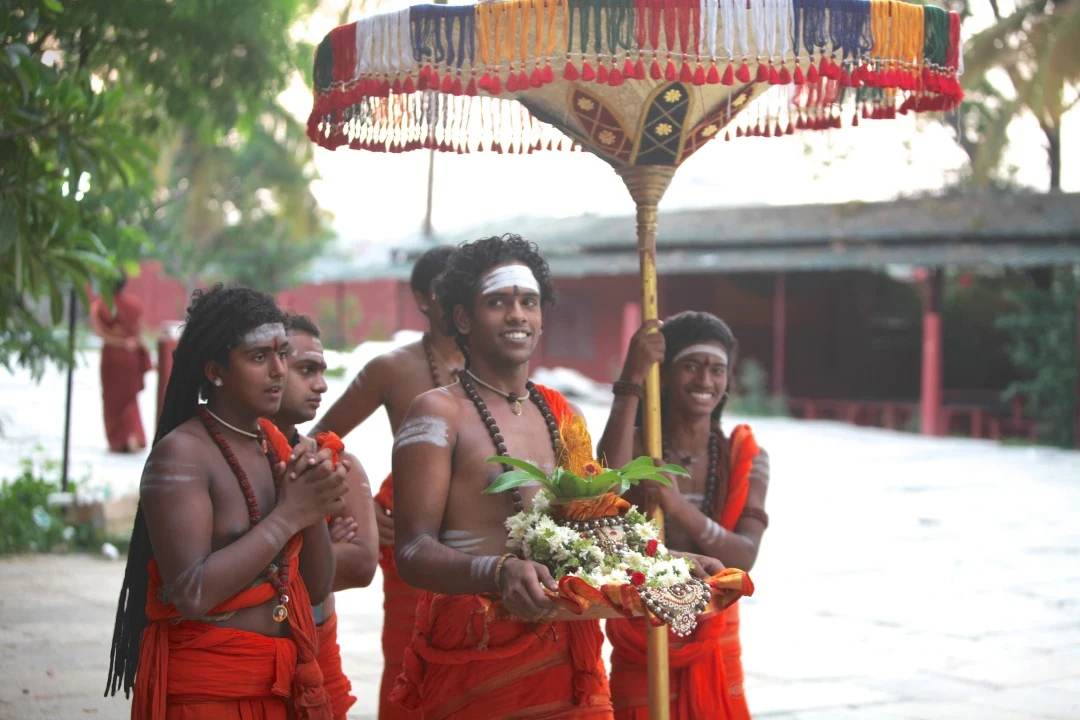
Vishesha Deeksha
Sakshi Pramana:

Sharing from COMPLETION

Photos Of The Day:

Padapuja
Nithya-Satsang
Photos Of The Day:

Vishesha-Deeksha

Vishesha-Deeksha

01-PADA-PUJA

02-SATSANG

,

Photos from this day

View all 290 photos

Puja

9 photosSource gallery
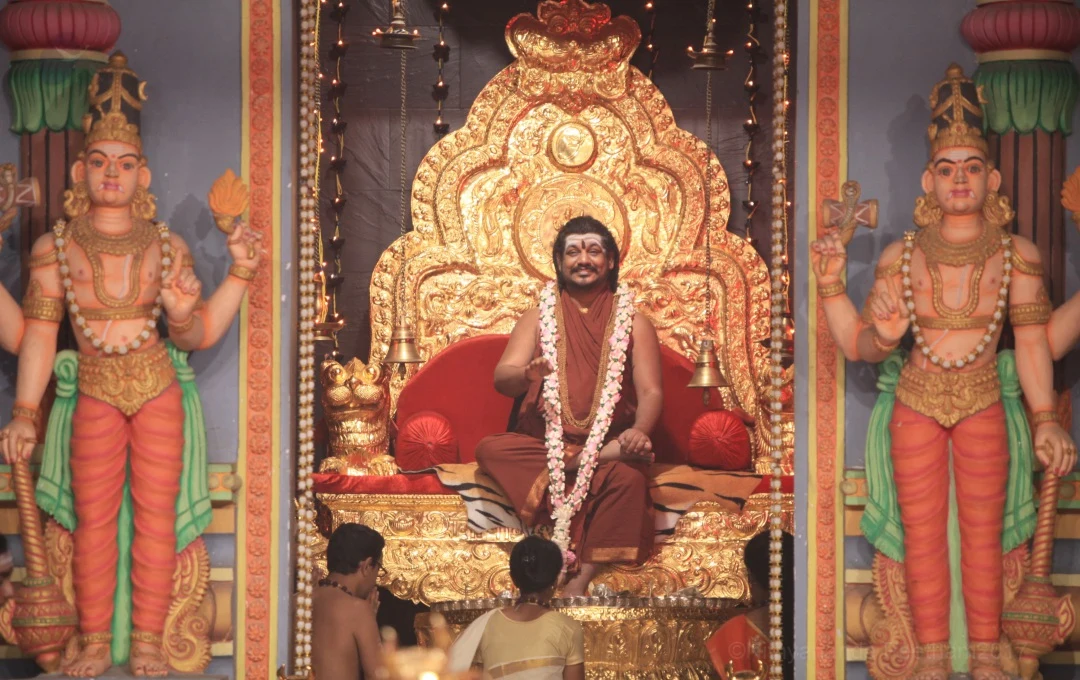
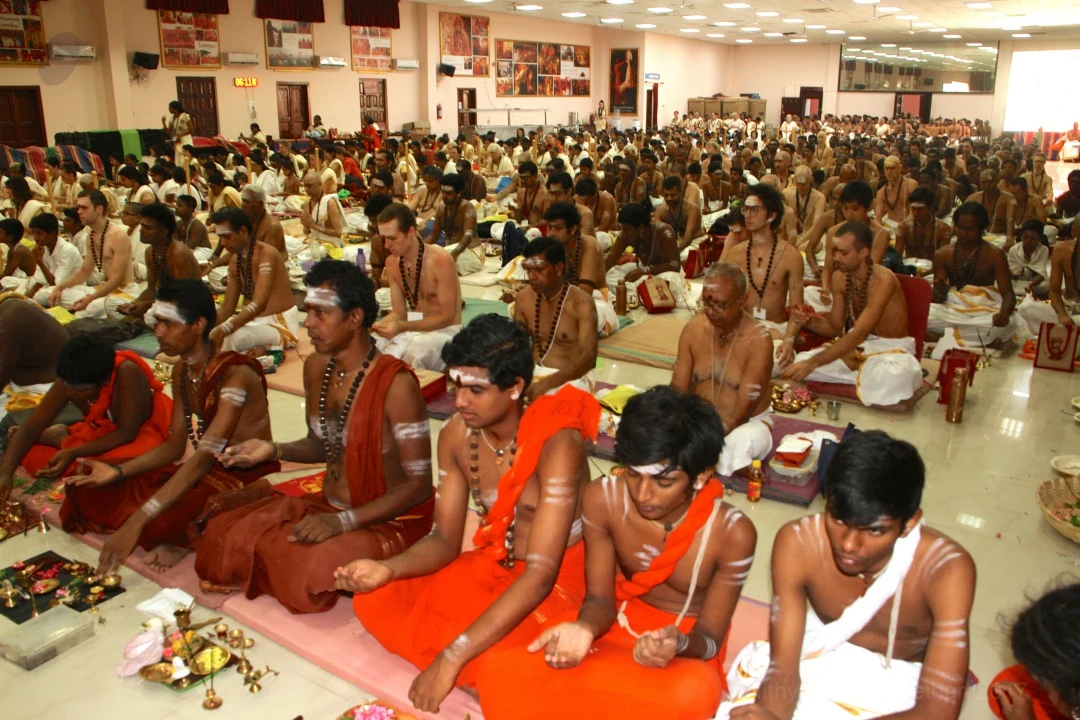
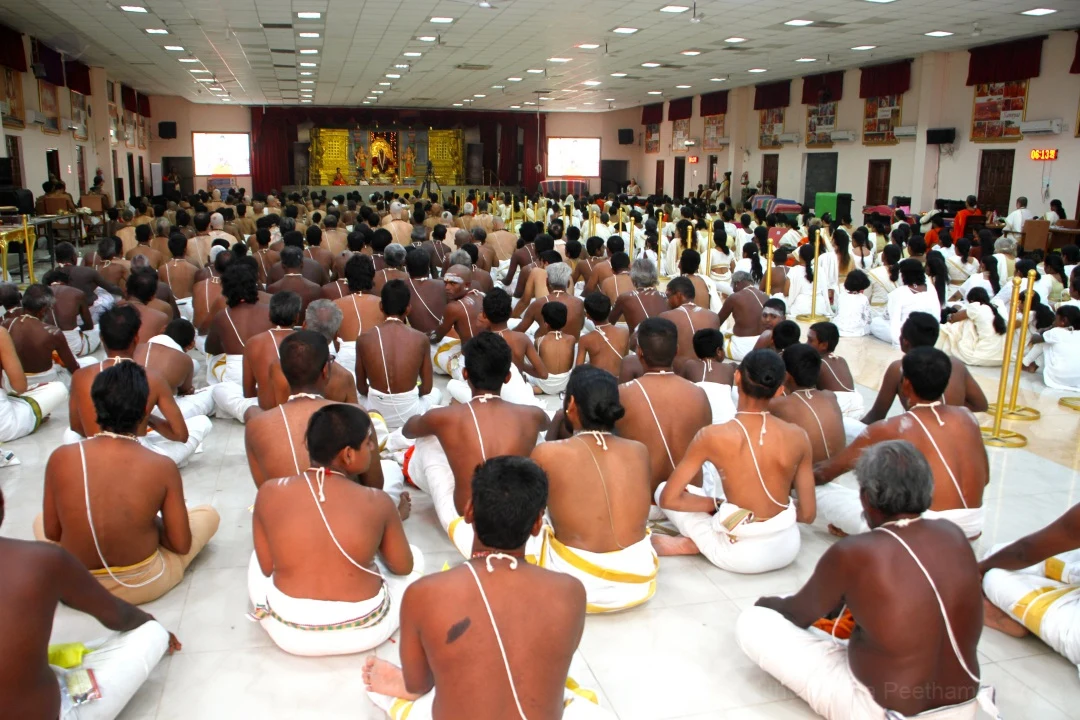
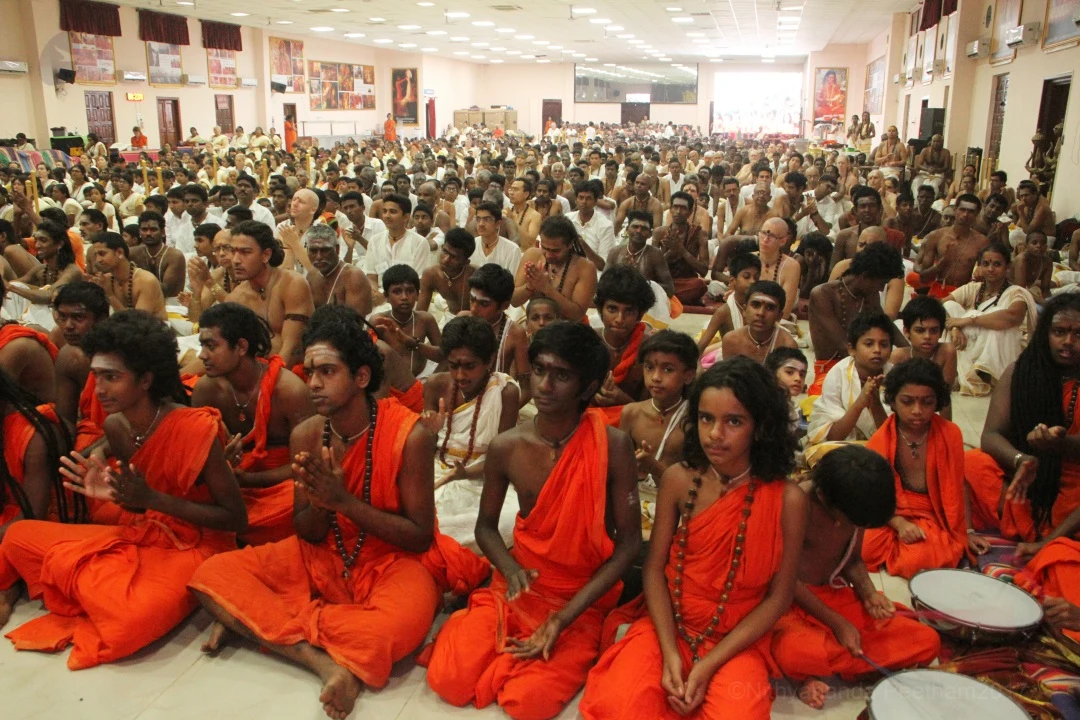
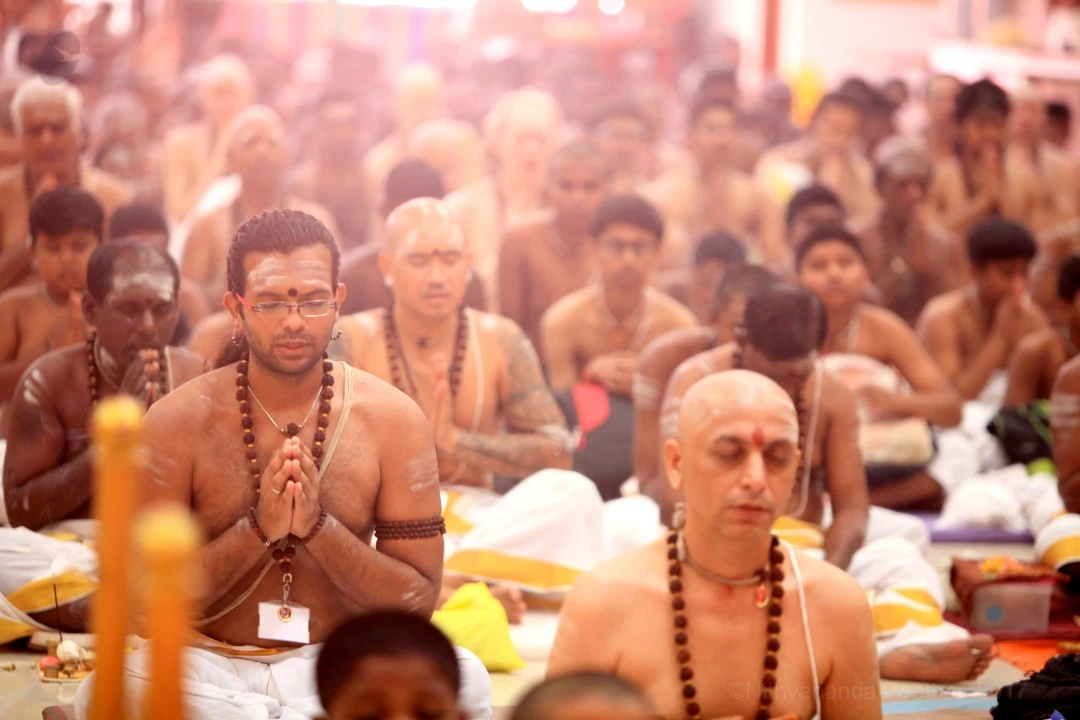
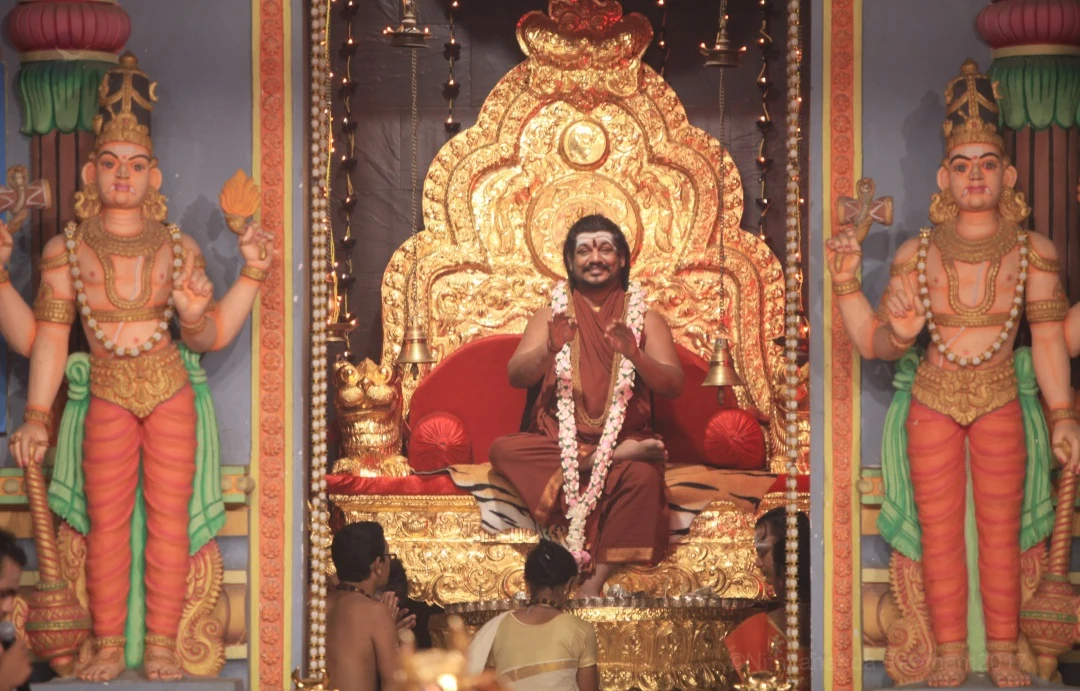
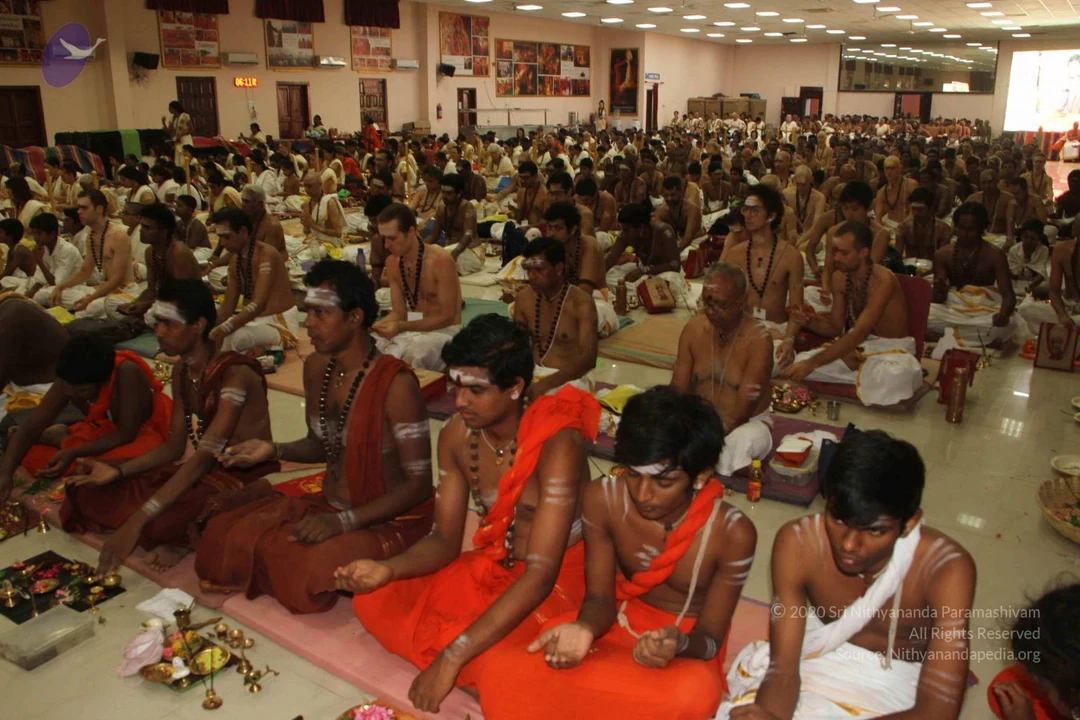
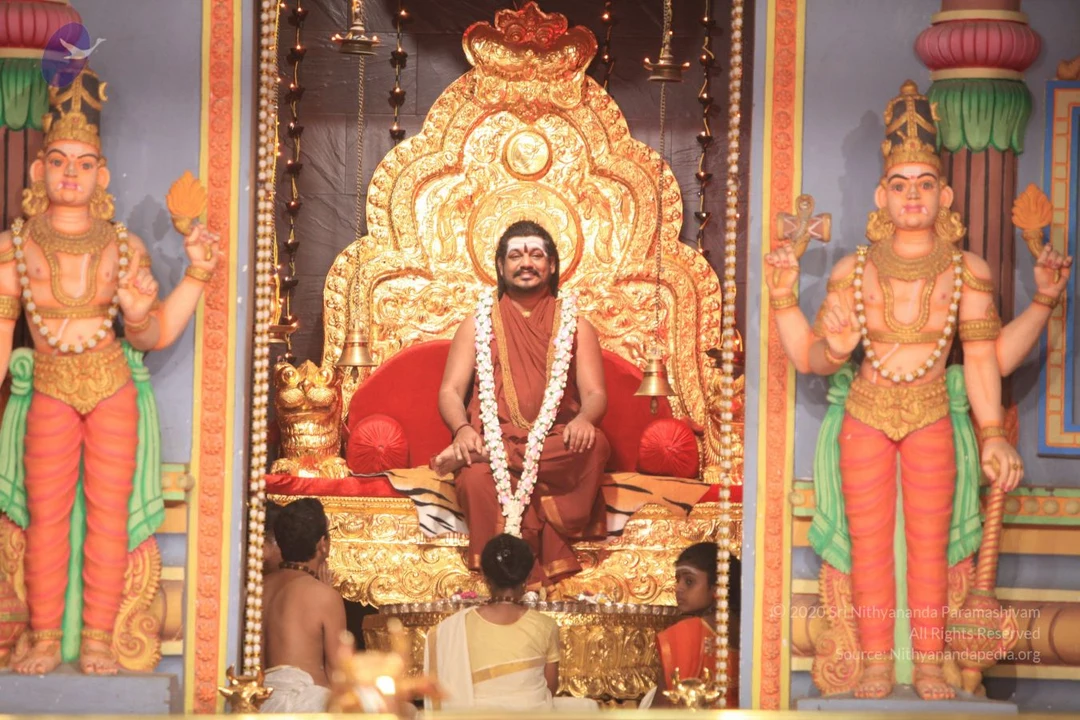
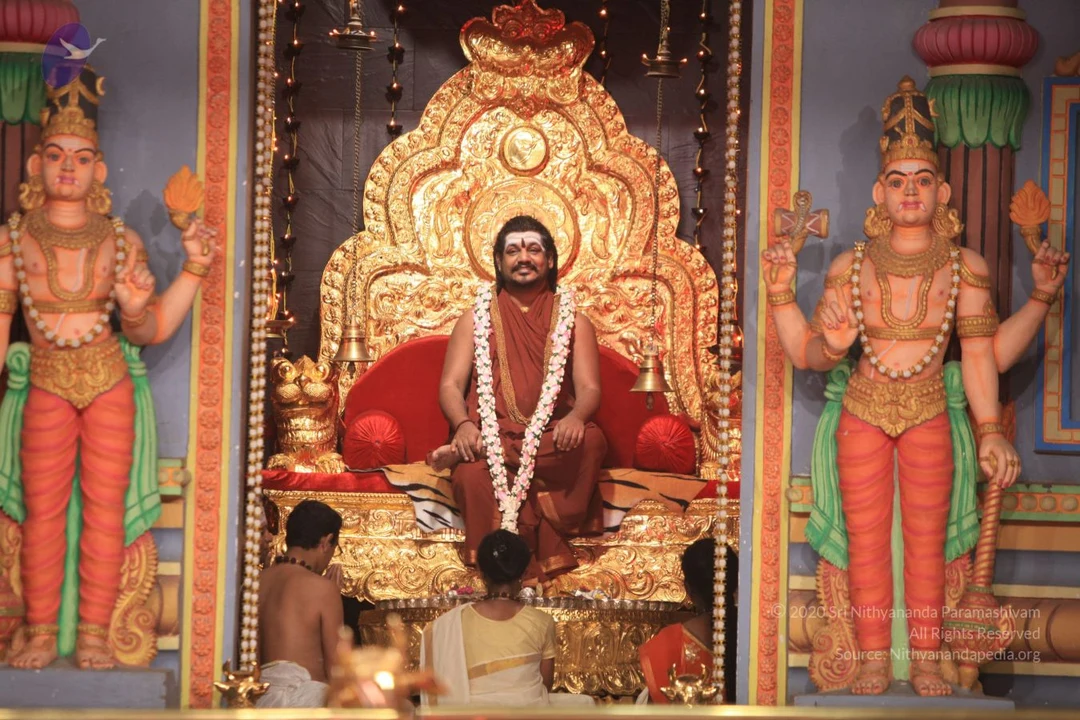
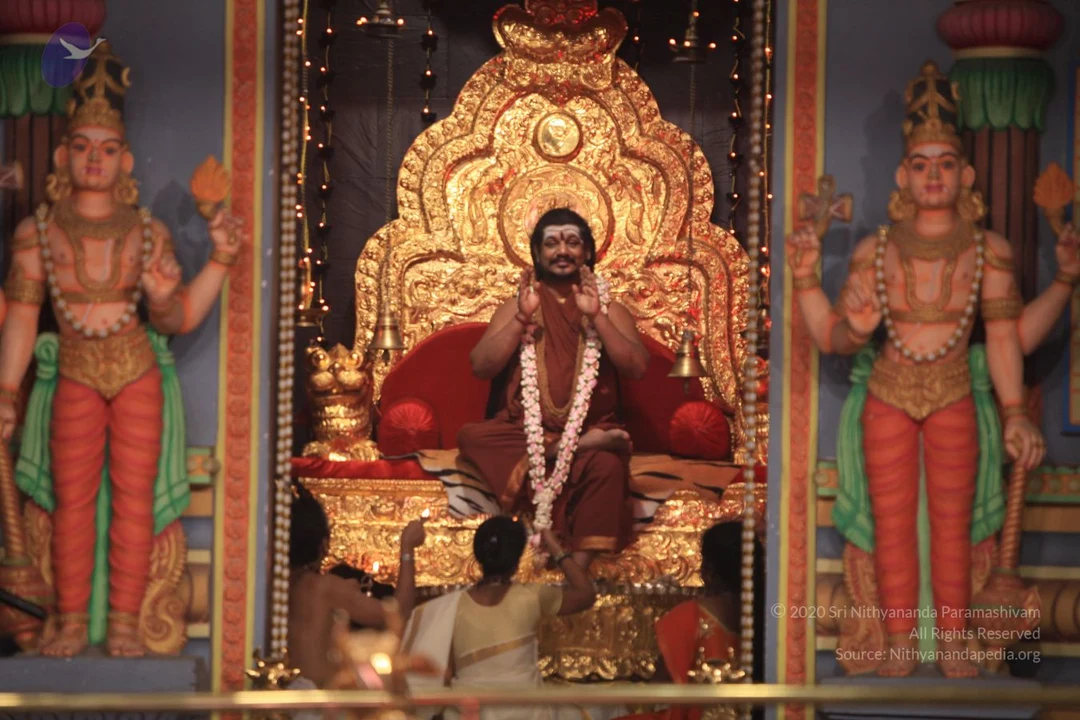
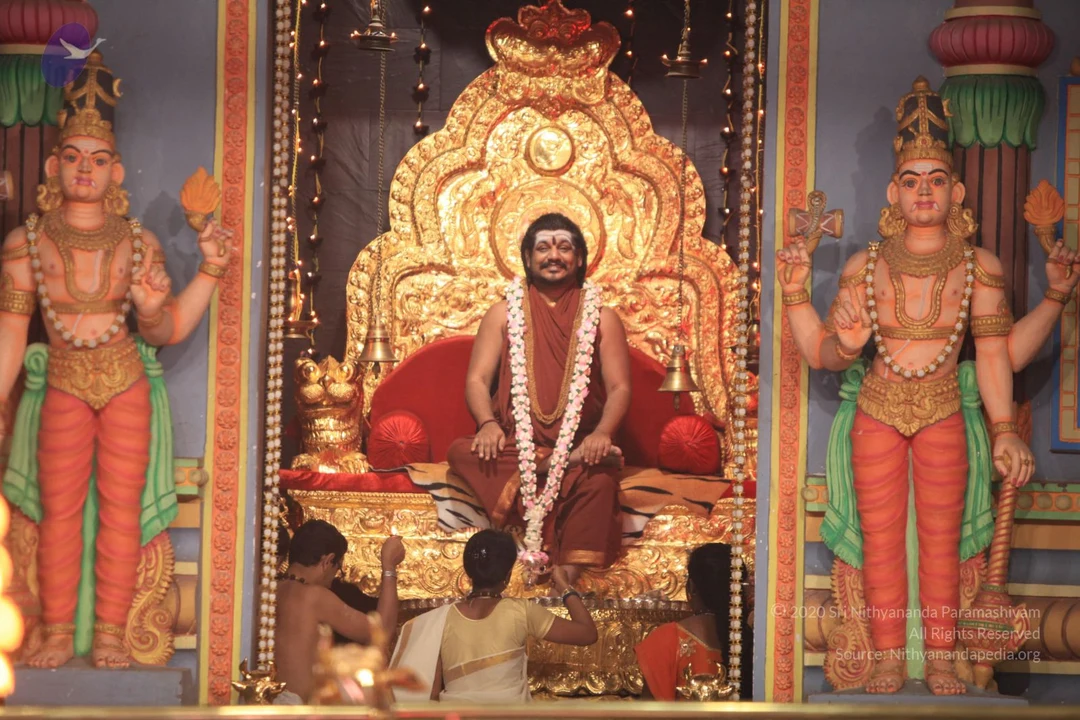
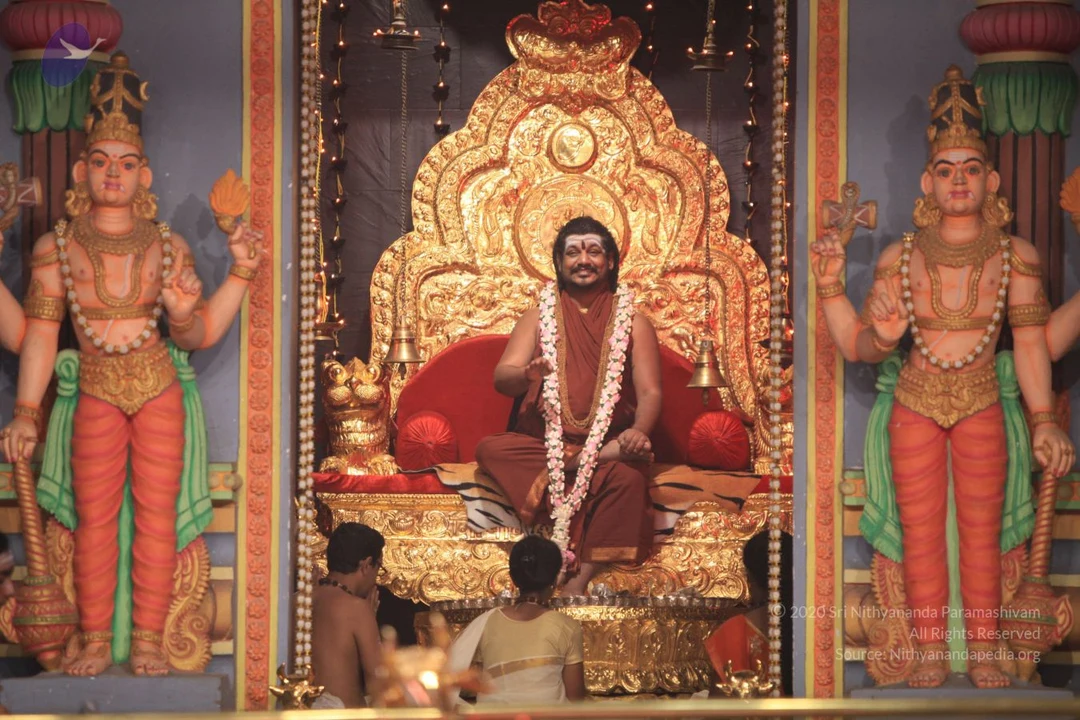
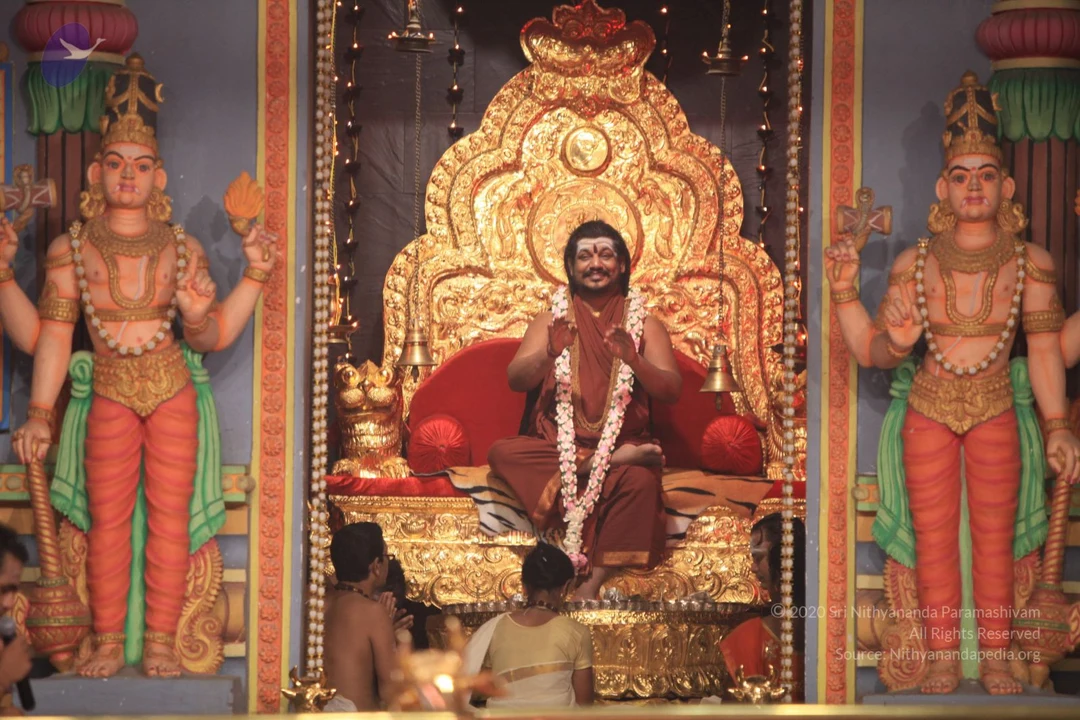
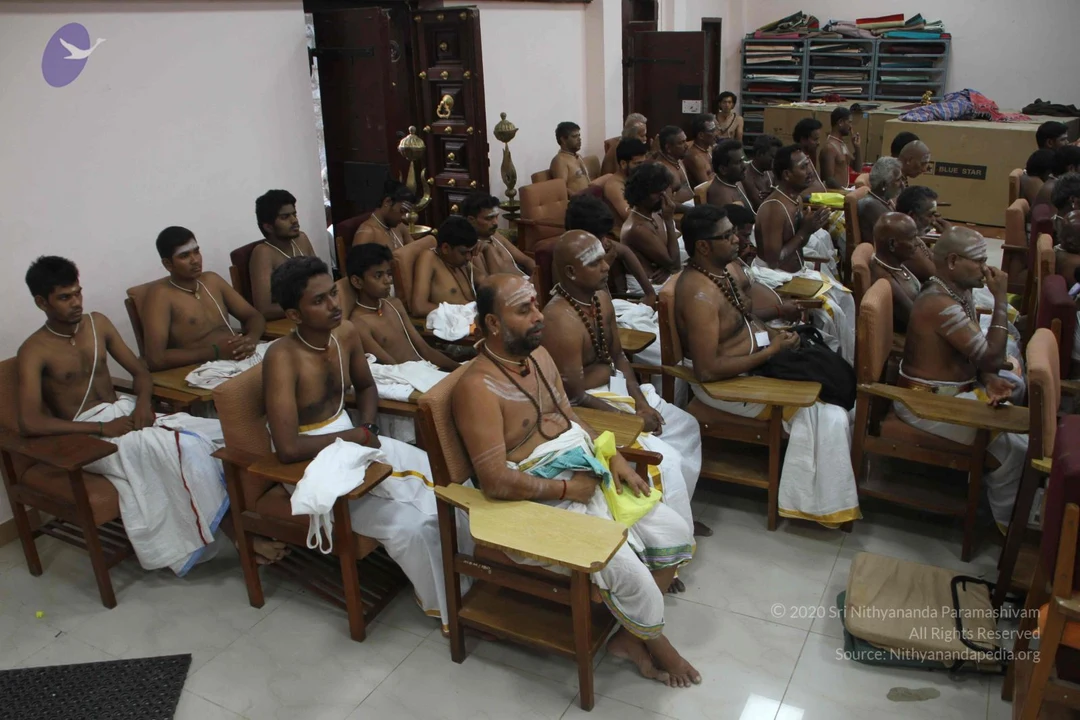
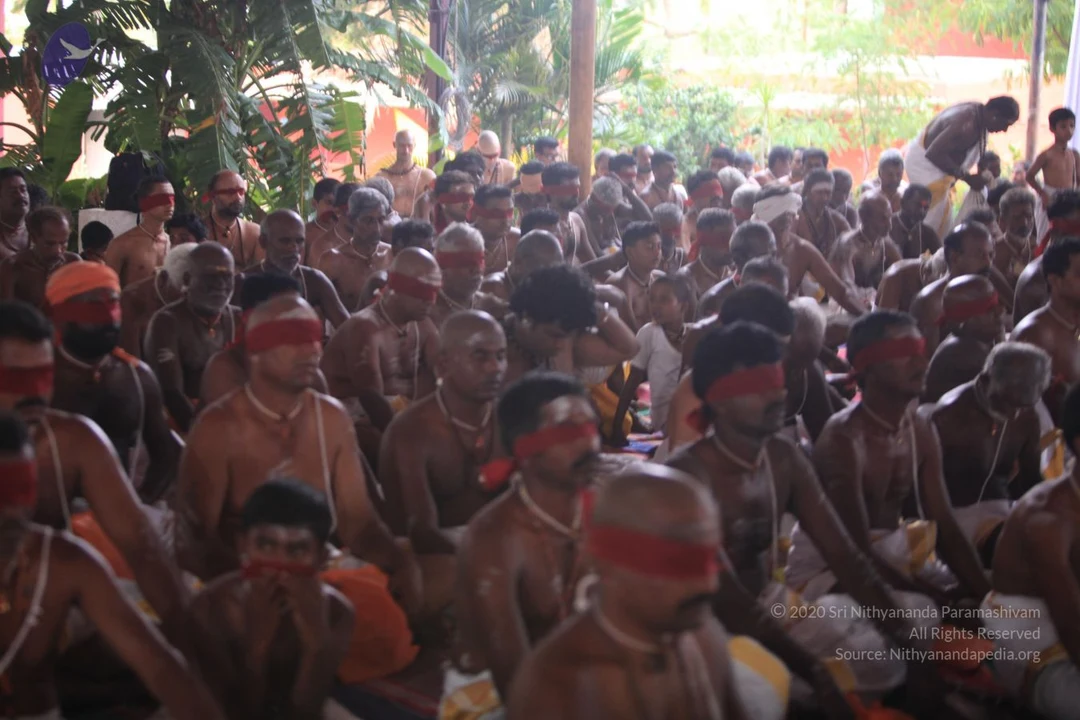
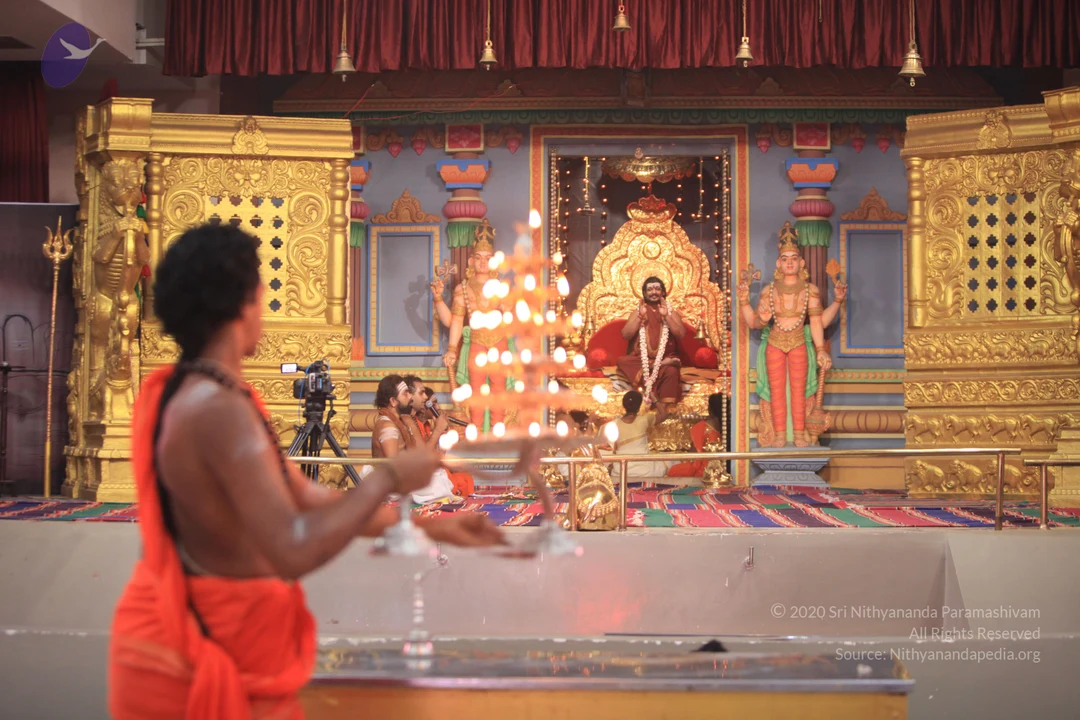
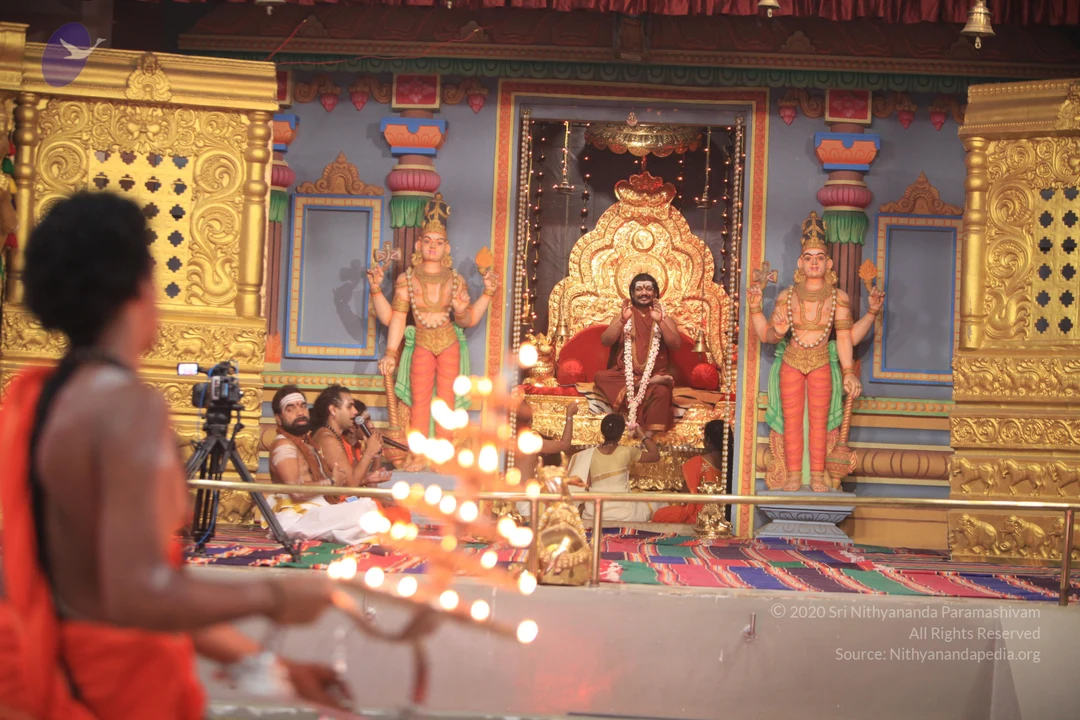
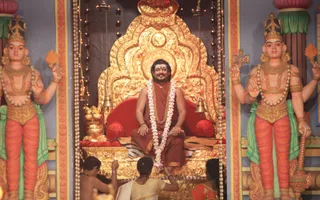
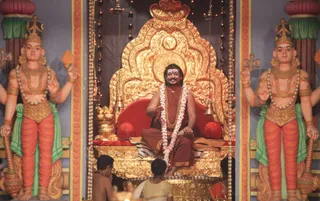
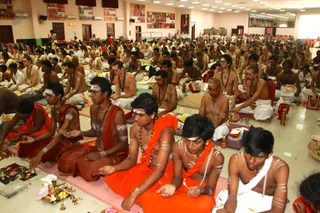
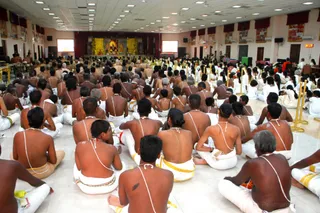
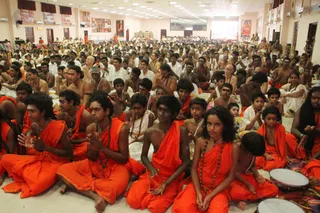
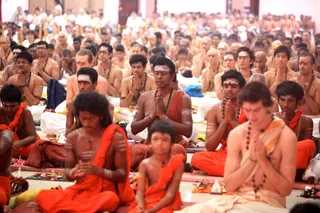
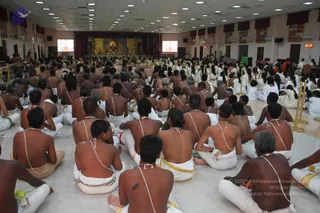
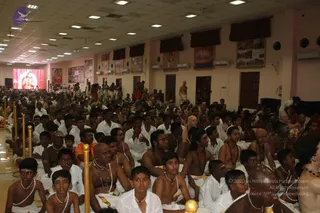
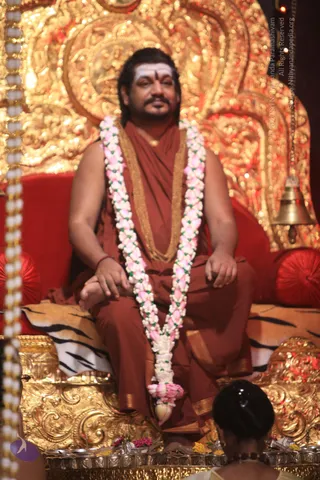
A seated man in a saffron-orange robe sits on an ornate gold throne with a red cushioned seat and a tiger-striped cloth draped over the base. He wears a white and pink flower garland and a gold necklace, with a red tilak on his forehead. Two painted standing deity statues with multiple arms flank the throne, one at each side, in orange dhotis and green shawls with gold jewellery. Brass bells hang above, and in front a woman in a cream sari with a green border and a man bare-chested at the lower left are performing a padapuja offering at the feet of the seated figure. A woman in orange sits at the lower right. The seated figure is described as a person based on the saffron robe, gold throne and garland; the appearance cues are a saffron robe, rudraksha-style gold necklace and a garland.A photograph of a seated man on an ornate gilded throne with a deep red cushion, wearing a saffron-orange robe and a white-and-pink flower garland, with a red vibhuti or kumkum mark on his forehead. Two painted attendant statues flank the throne, each with a crown, multiple arms, a jewelled necklace and orange-red dhoti. Two people in the foreground perform a padapuja, one a shirtless man and one a woman in a cream sari, with brass oil lamps and a kalasha-like vessel before them. a person: a seated figure on a throne with saffron robe and garland, receiving puja. Hanging bells and a brass lamp frame the altar.A large hall filled with rows of seated devotees during a puja gathering. In the foreground, young men wear saffron-orange cloths and rudraksha malas, with white horizontal ash marks on their foreheads and arms, sitting cross-legged on pink and orange mats. Behind them, men in white dhotis and bare upper bodies with malas sit in meditation. Brass oil lamps, a small tray of offerings and fruit sit at lower left. Wall posters and framed images line the back of the hall. No single figure is clearly identifiable as a person.A large hall filled with seated devotees facing a stage at the far end, where golden ornate shrine panels and deity murtis are displayed. Many men in foreground sit bare-chested wearing white dhotis with gold borders and sacred threads (yajnopavita) across their backs, while others in white clothing sit in rows. Gold-colored railing posts with cord ropes separate the rows. Two large screens flank the stage showing images, and ceiling lights illuminate the space. The scene suggests a satsang or puja gathering, with a few people standing near the side. Roughly a hundred or more people are visible.A large satsang hall filled with seated devotees during the Vishesha Deeksha event at Bengaluru Adheenam. In the foreground, young boys and adolescents sit cross-legged in saffron-orange dhotis and wraps, many wearing rudraksha malas, with hands pressed together in namaste. Some are bare-chested, and a few play small hand drums. Behind them, rows of devotees in white and orange clothing fill the hall. Framed pictures line the walls and a large screen hangs at the far end. The photo is from a darshan of a person at the front, seated on a raised dais in orange robes; a figure in white stands near the stage.A large group of devotees sits cross-legged on mats in a hall during a Vishesha Deeksha satsang, many with palms pressed together in anjali and eyes closed. Most men are bare-chested, wearing saffron or orange cloths and rudraksha malas, with white or sandalwood-paste markings on their foreheads and bodies. Some wear white dhotis. Oil lamps stand along the front and small puja plates with flowers sit before the seated rows. In the foreground, a young man in an orange cloth and a boy in orange sit with hands folded, and a young man in white dhoti and mala sits at right. Several dozen to a hundred or so people are visible, with no single leader clearly in frame.

Satsang

9 photosSource gallery
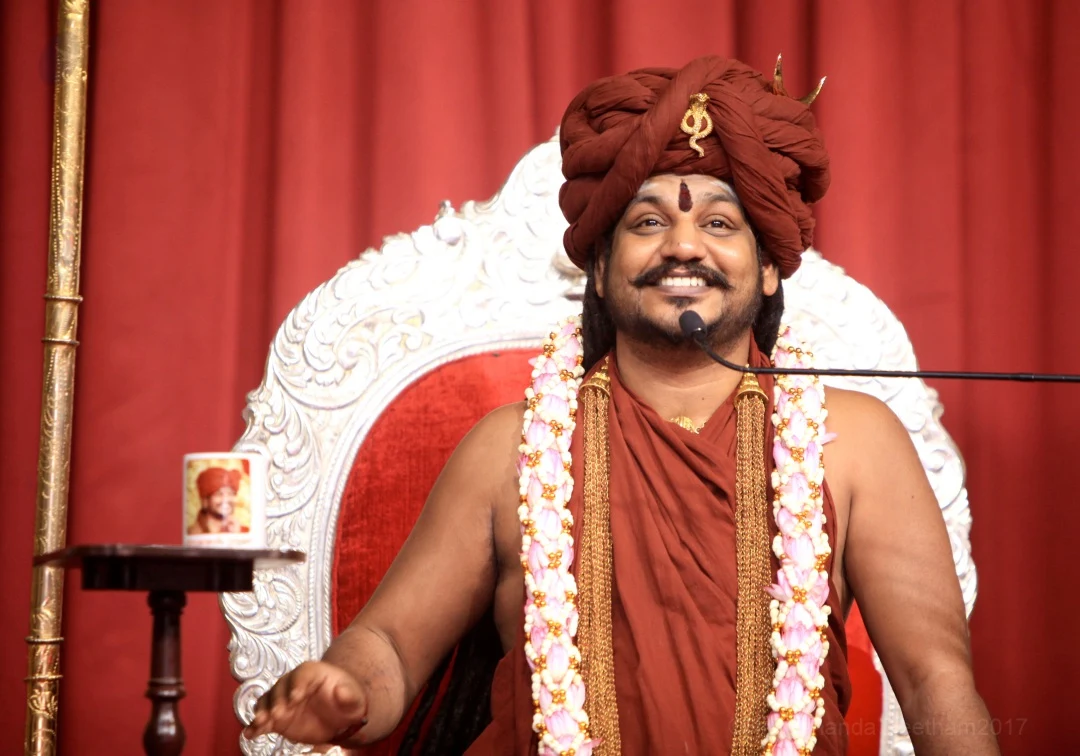
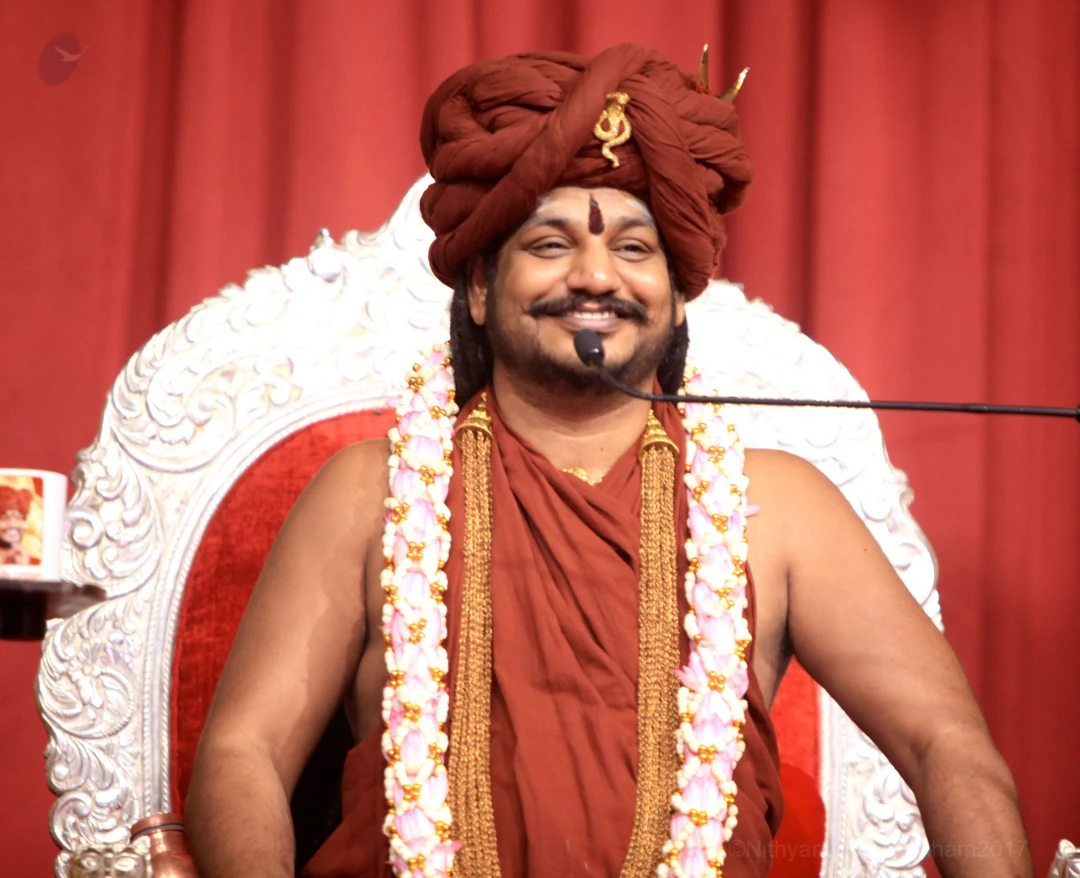
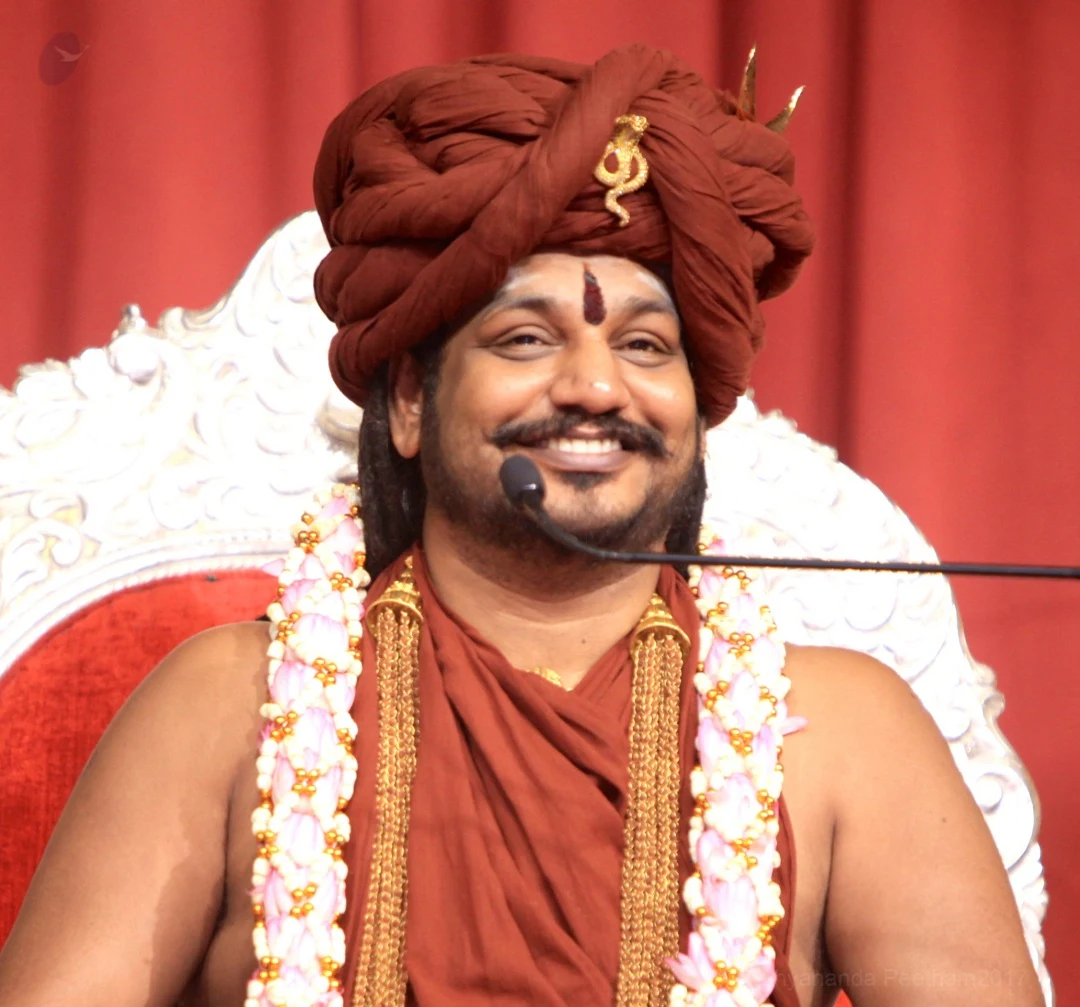
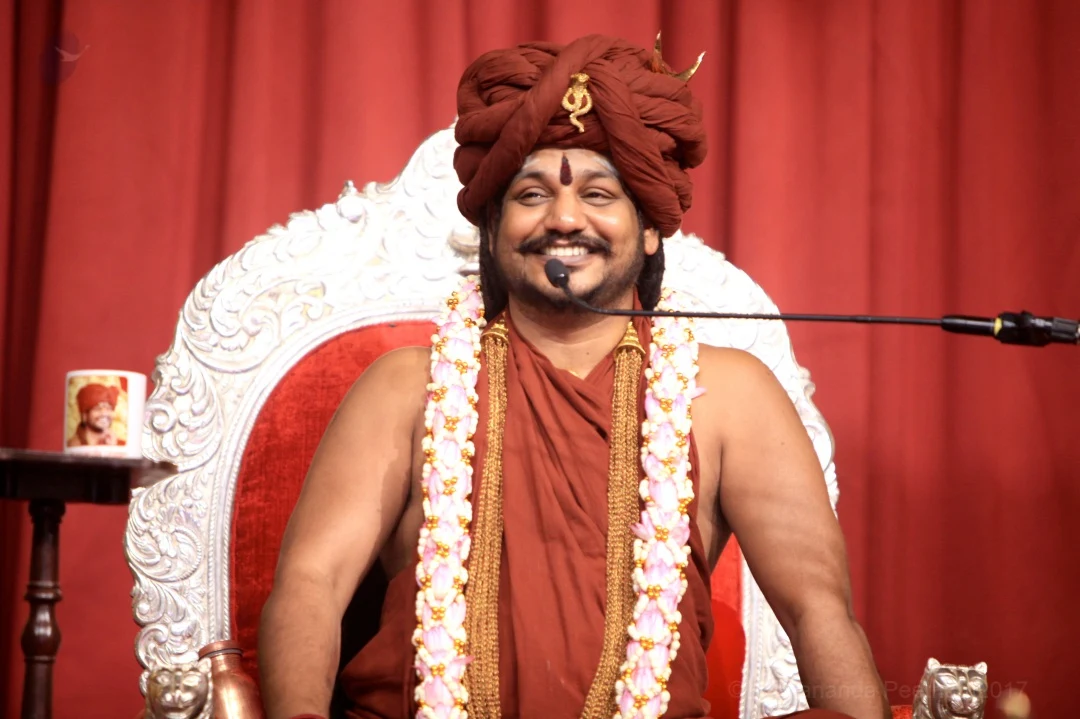
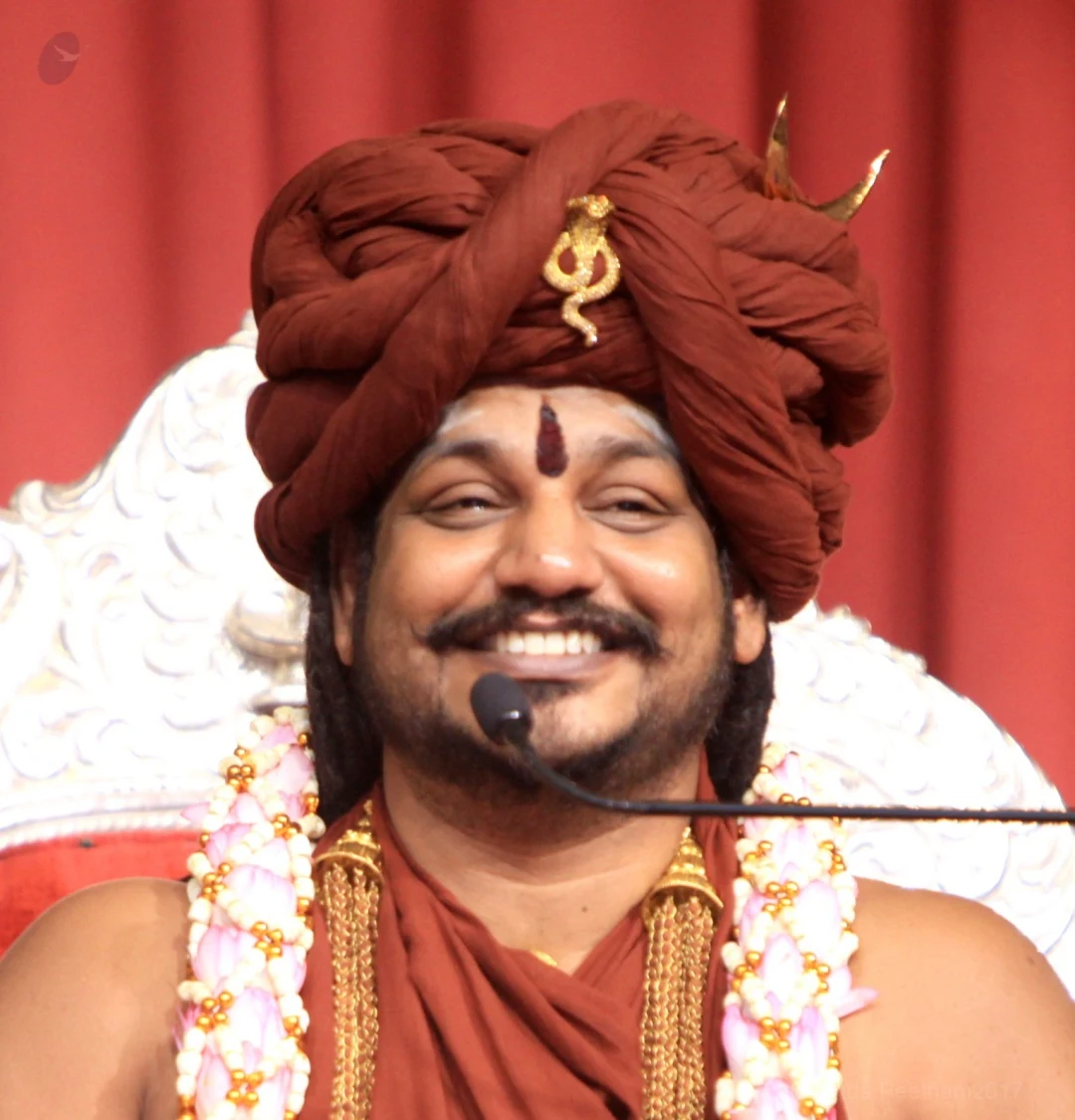
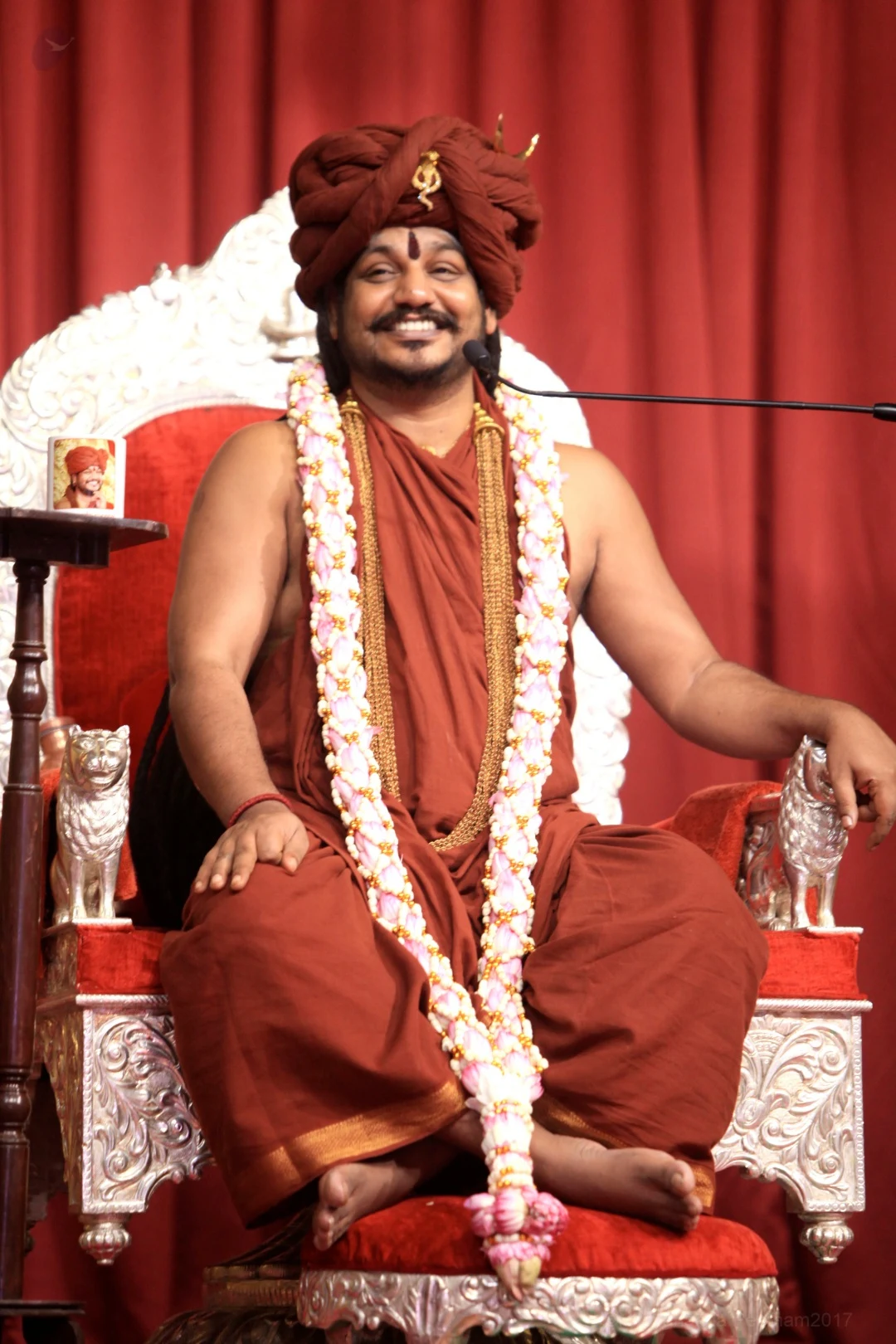
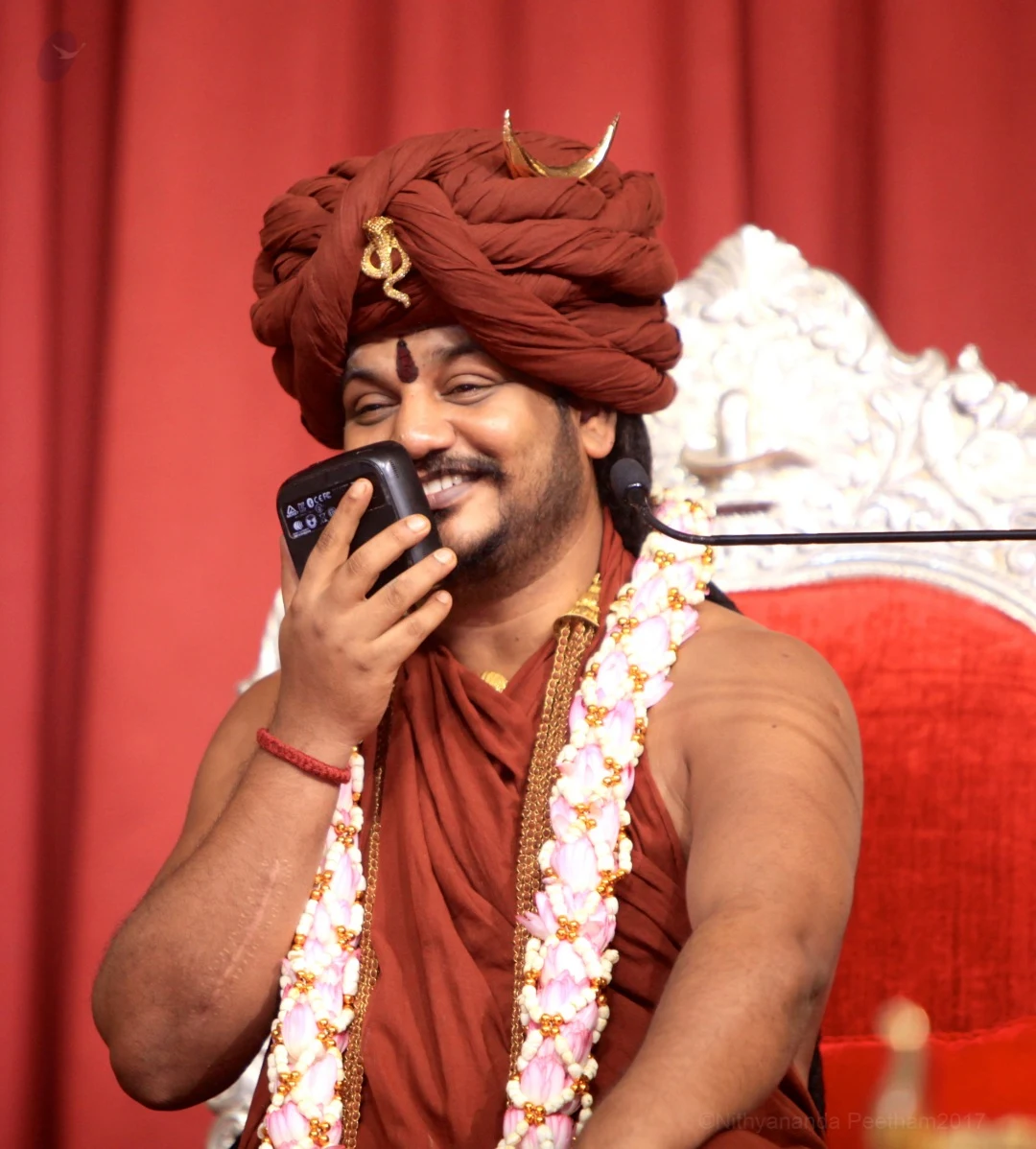
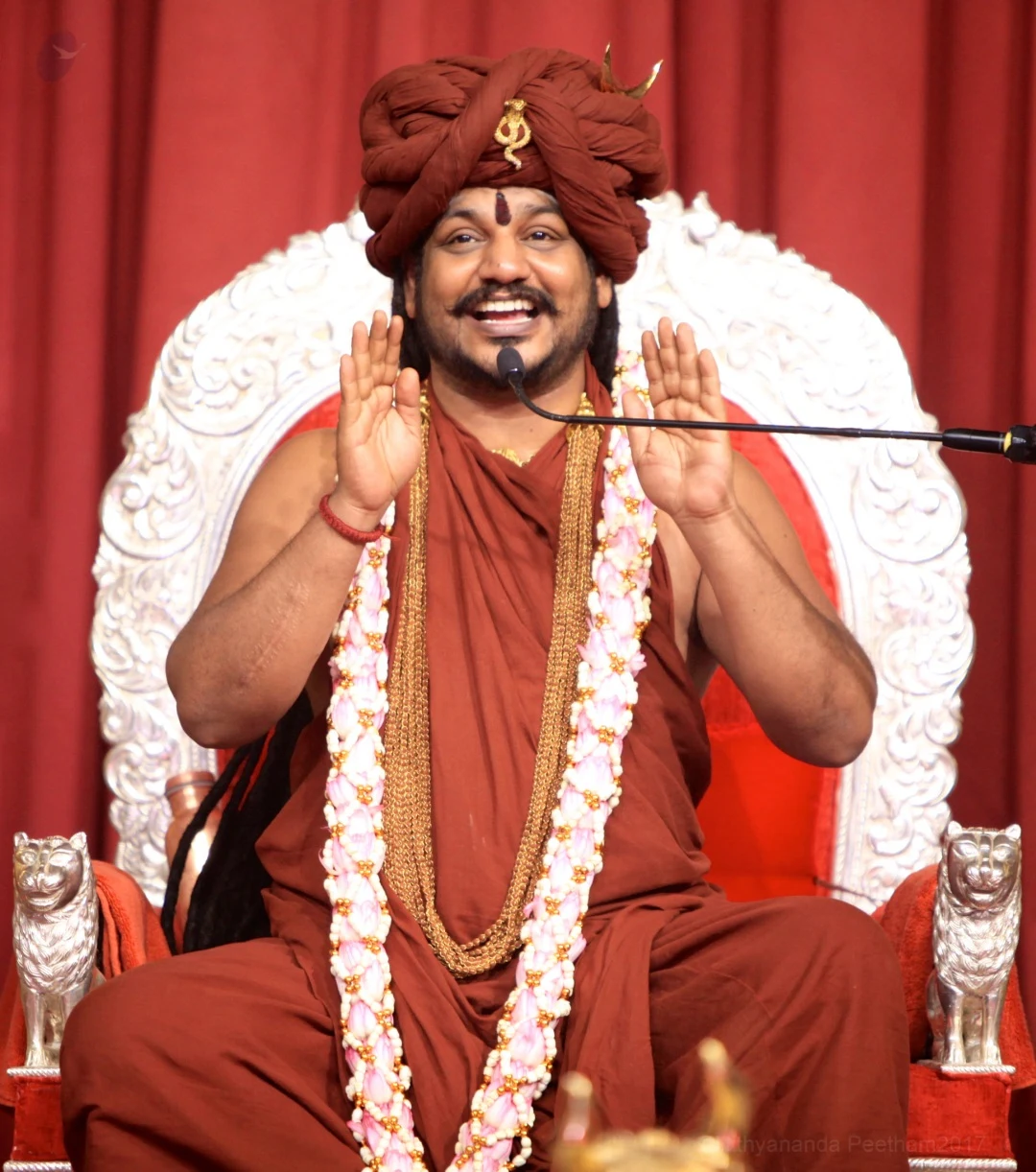
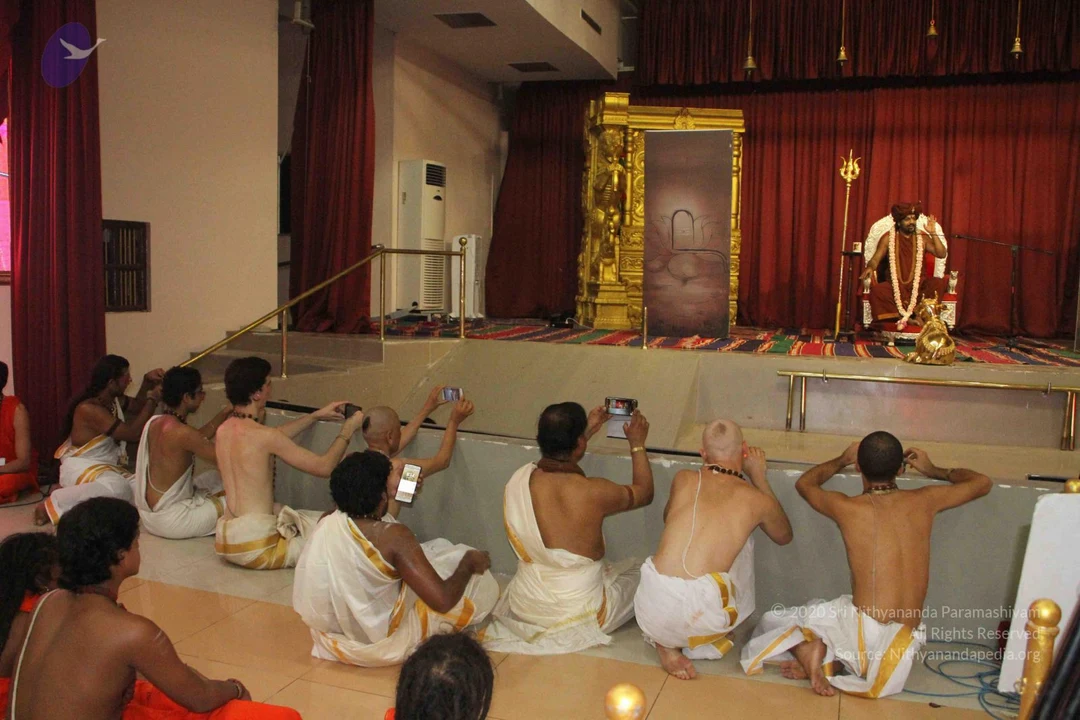
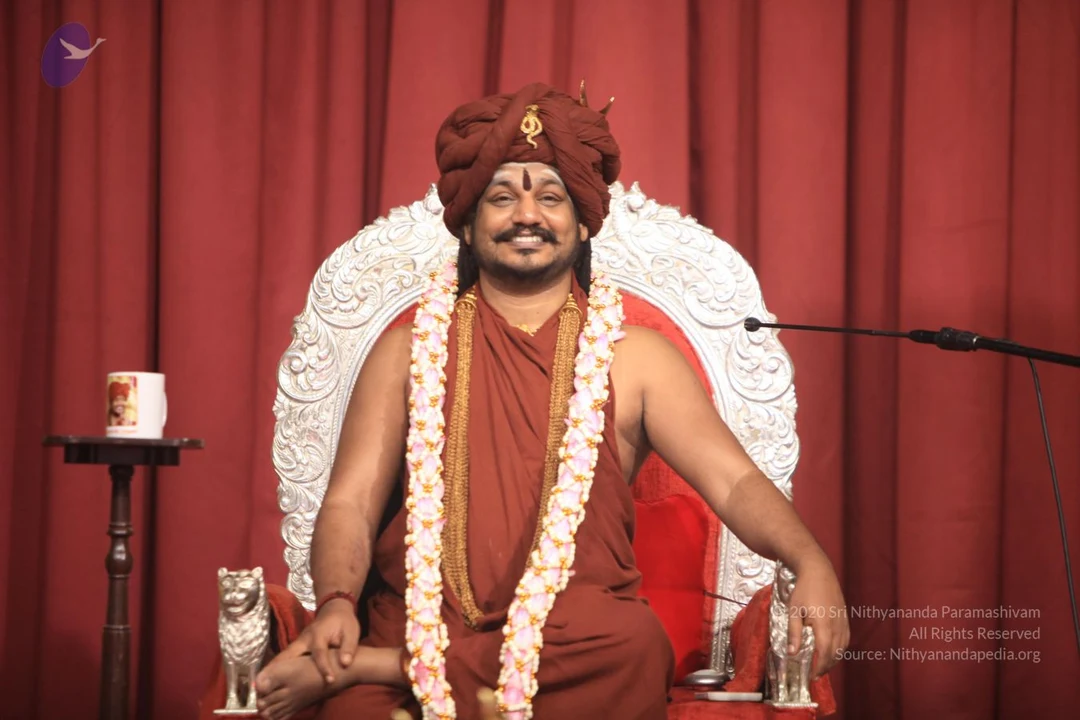
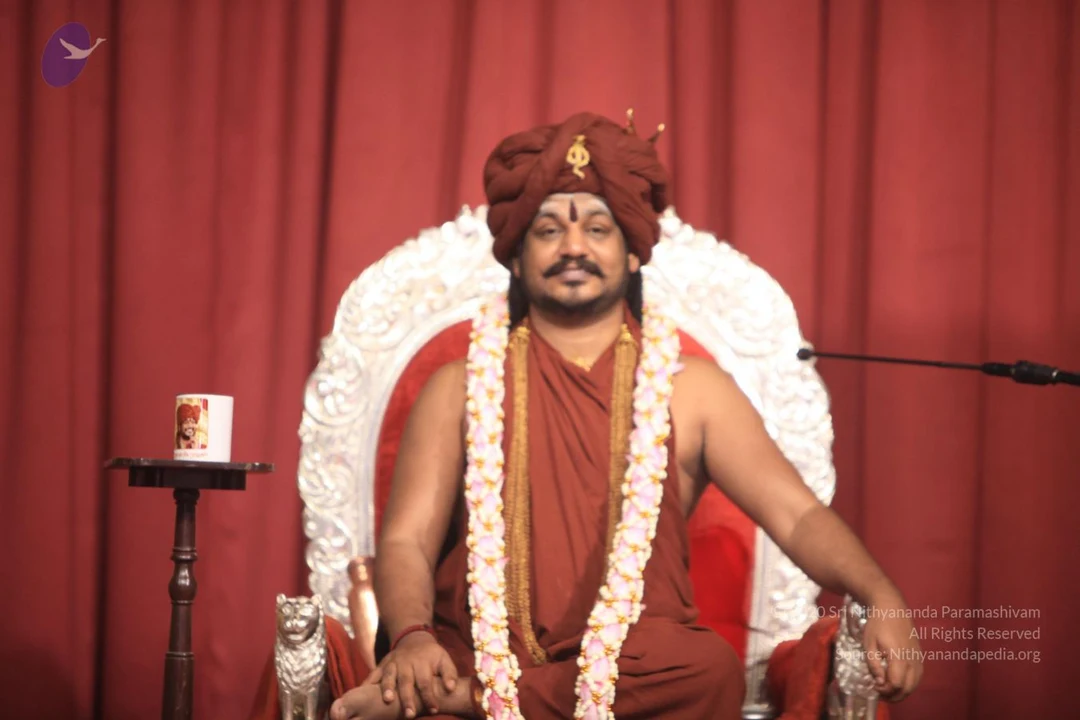
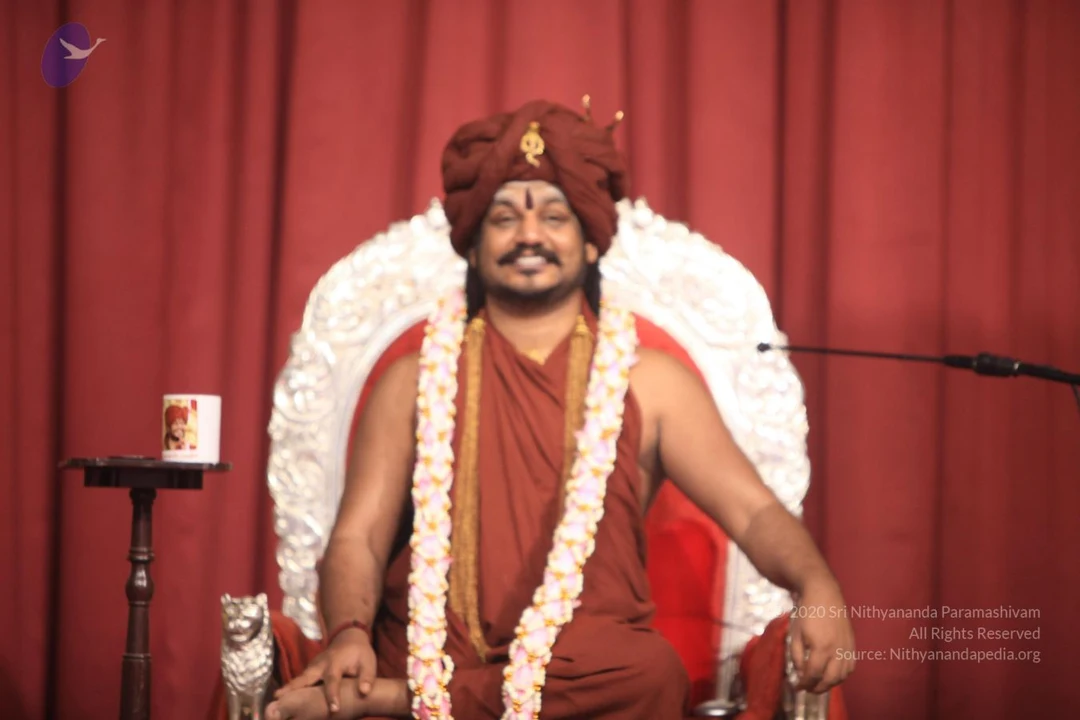
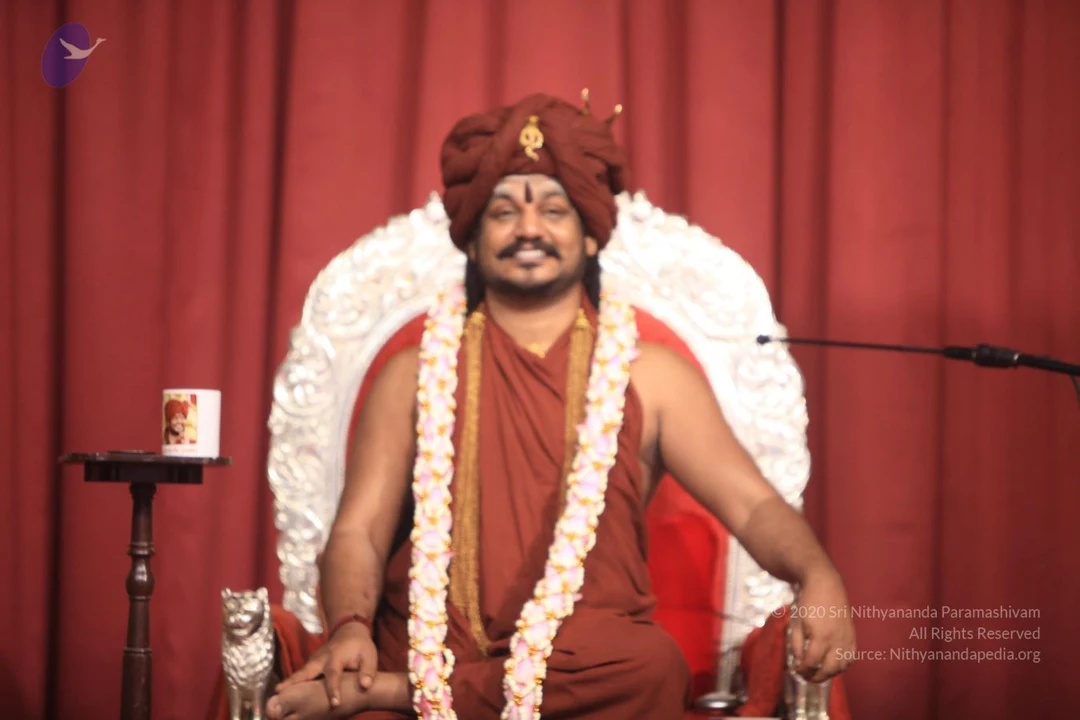
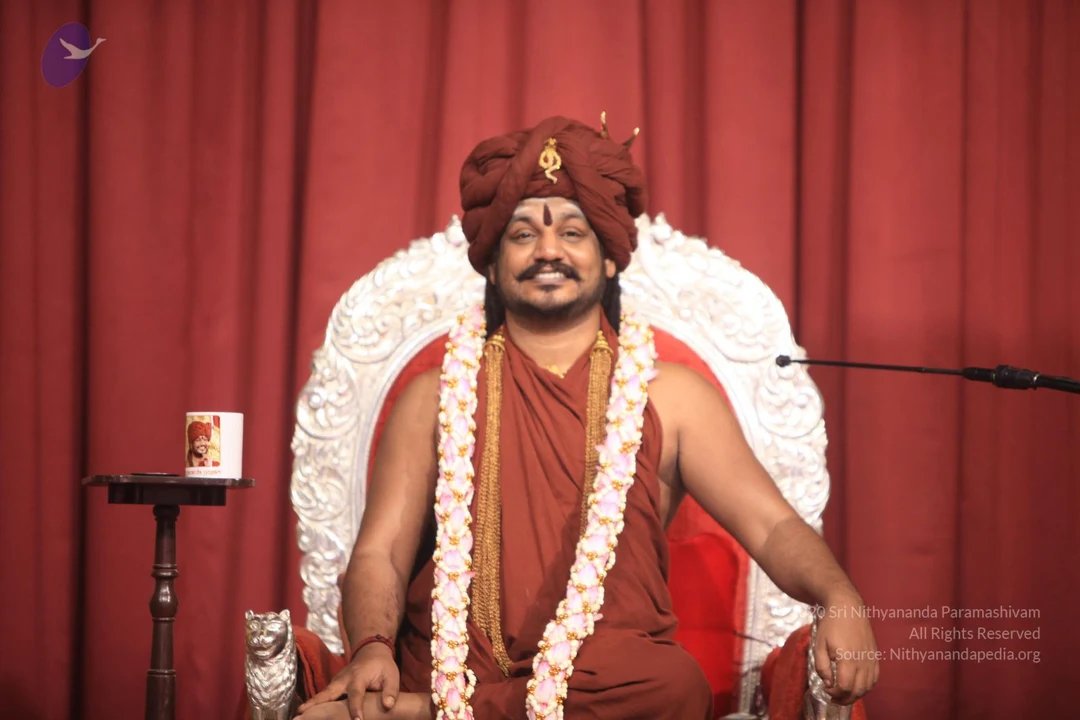
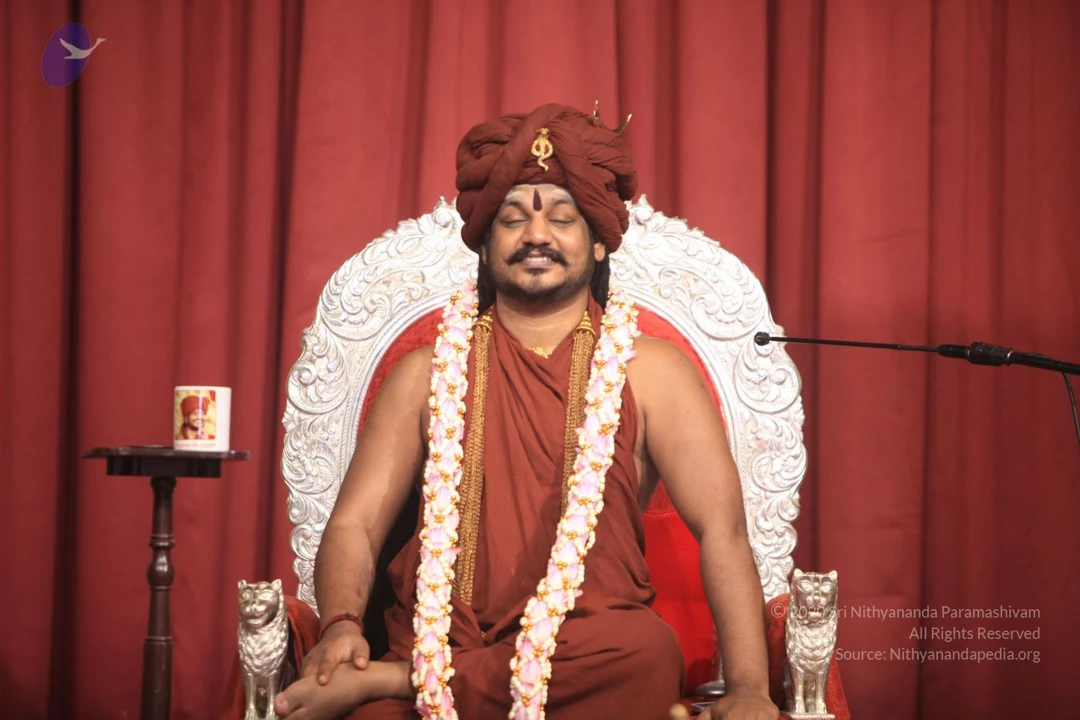
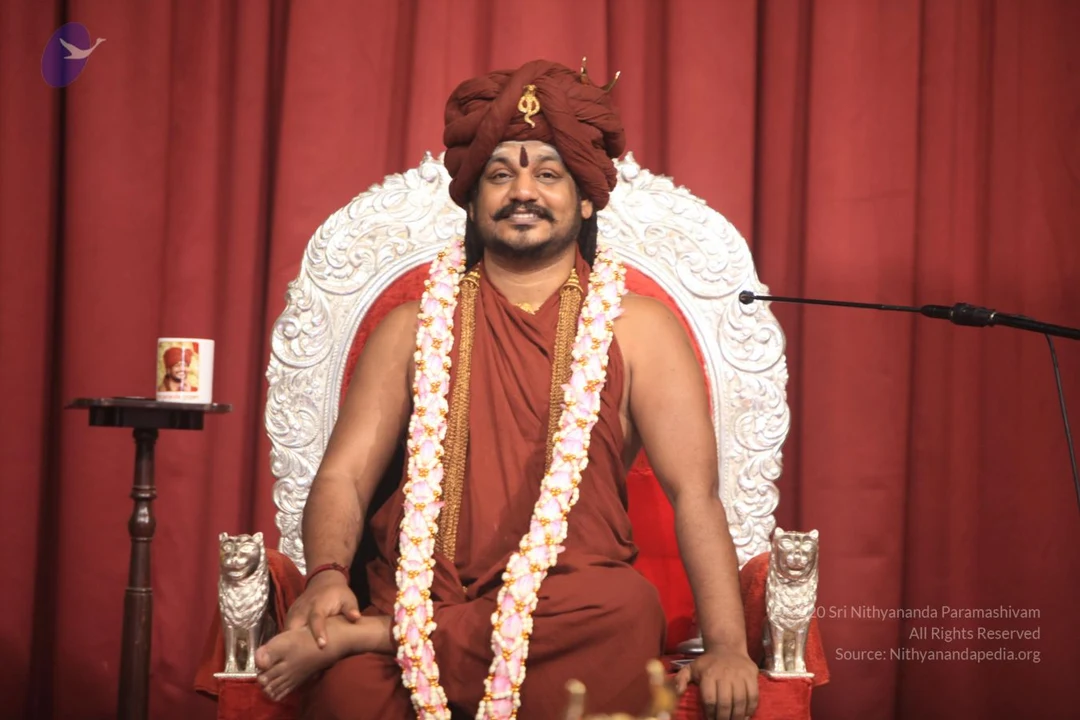
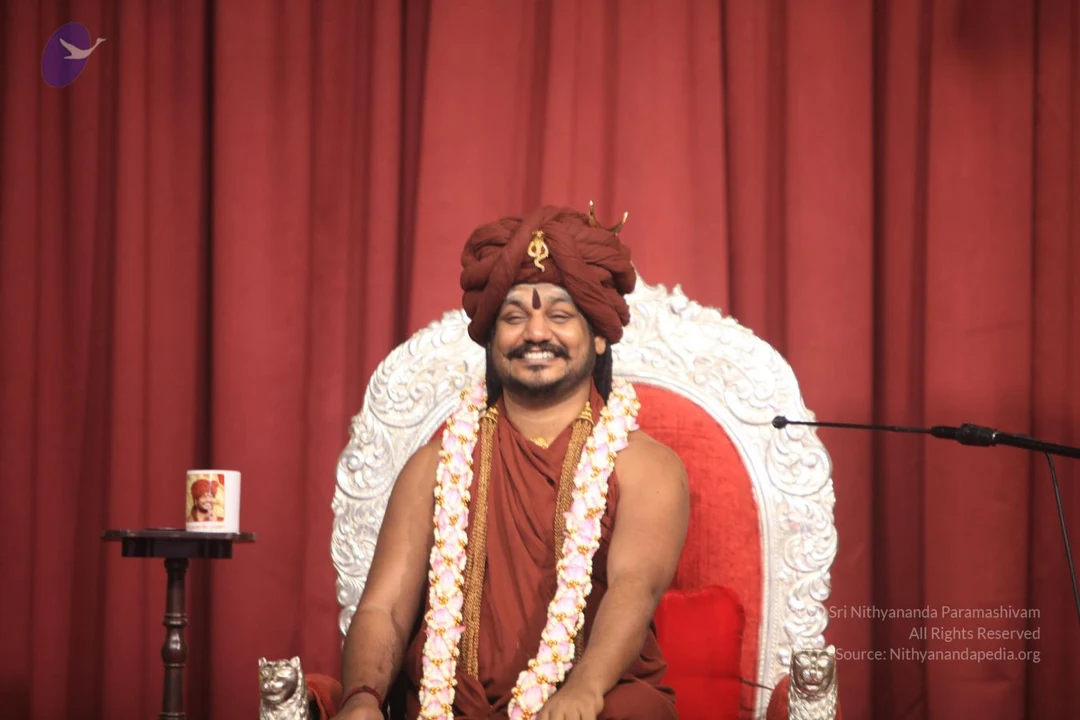
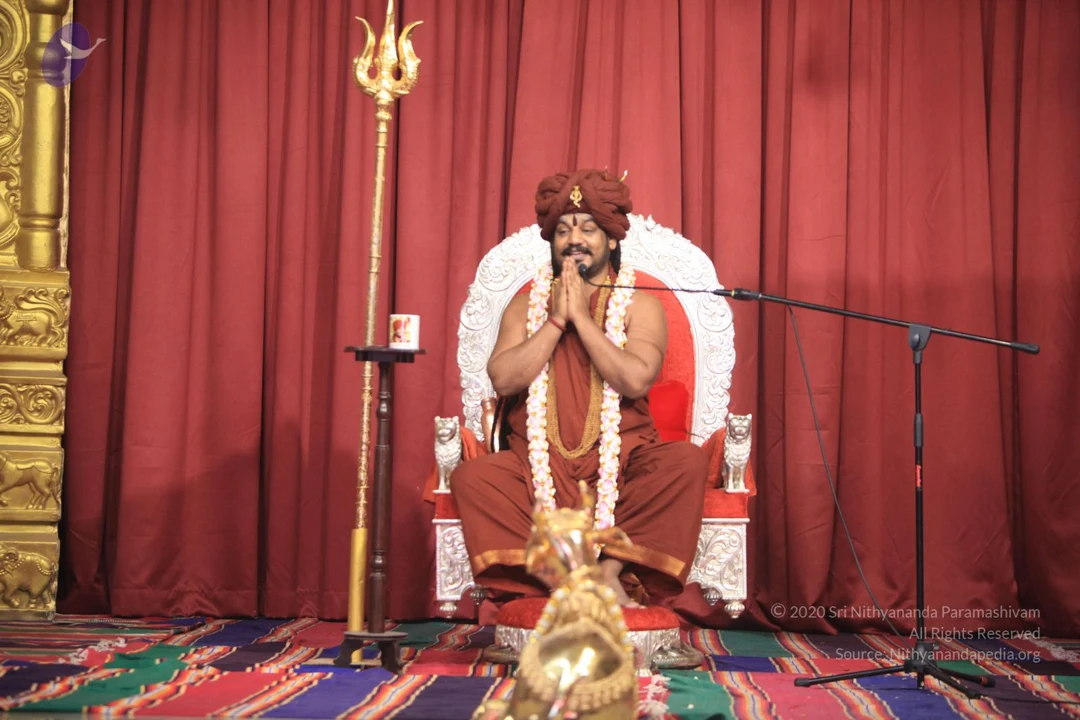
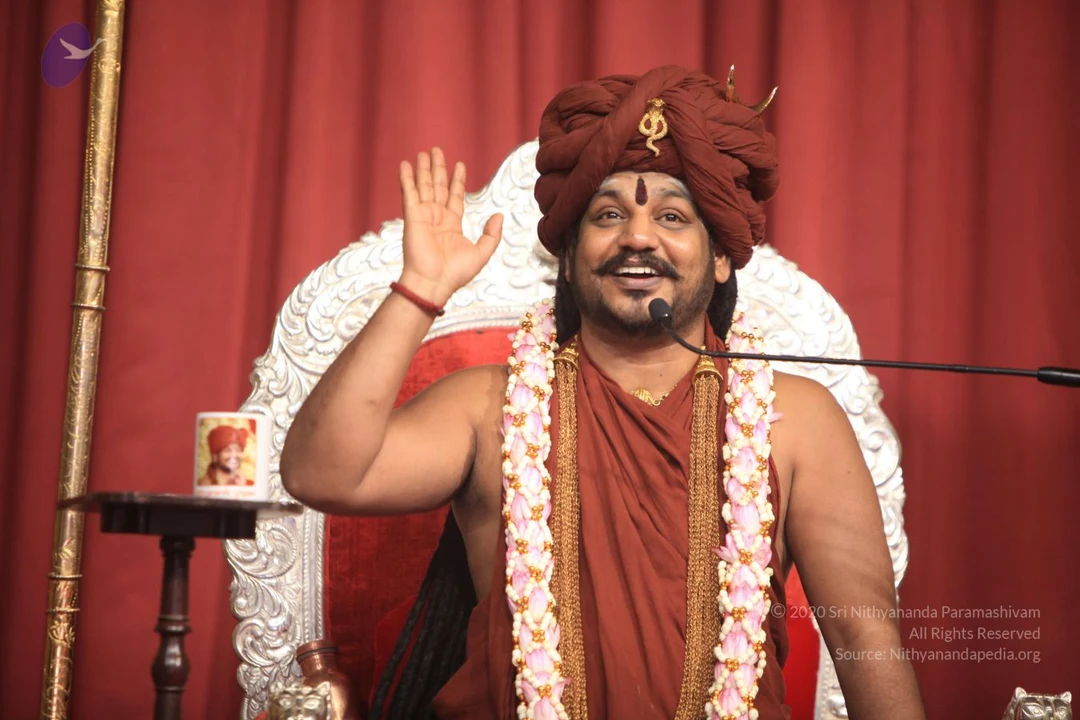
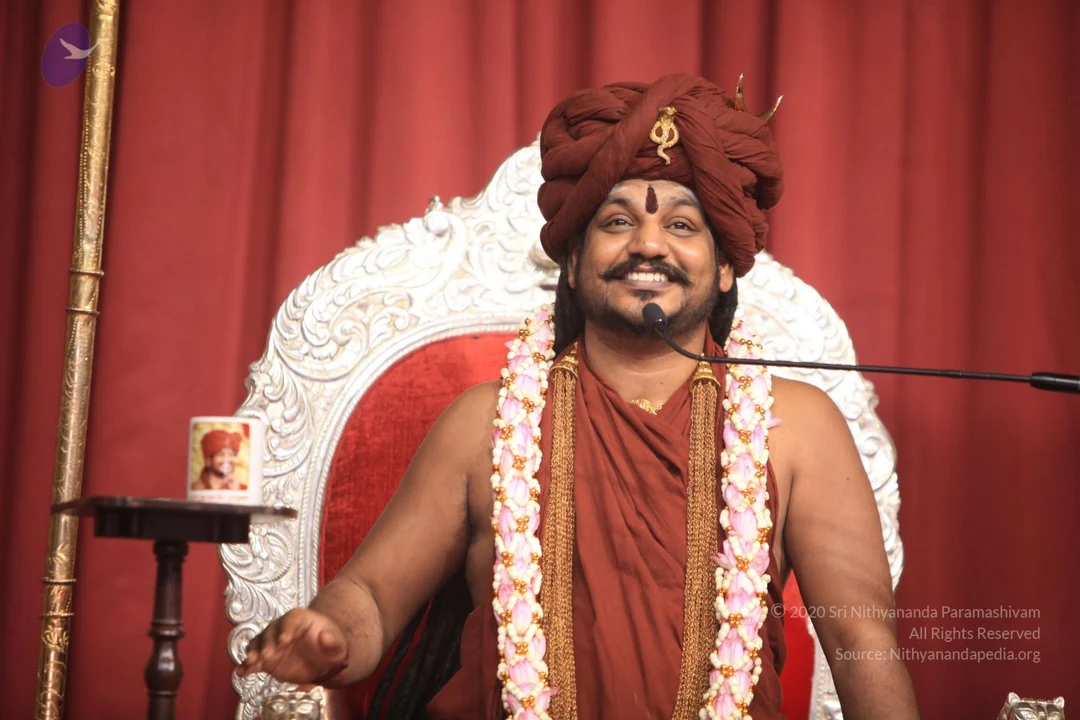
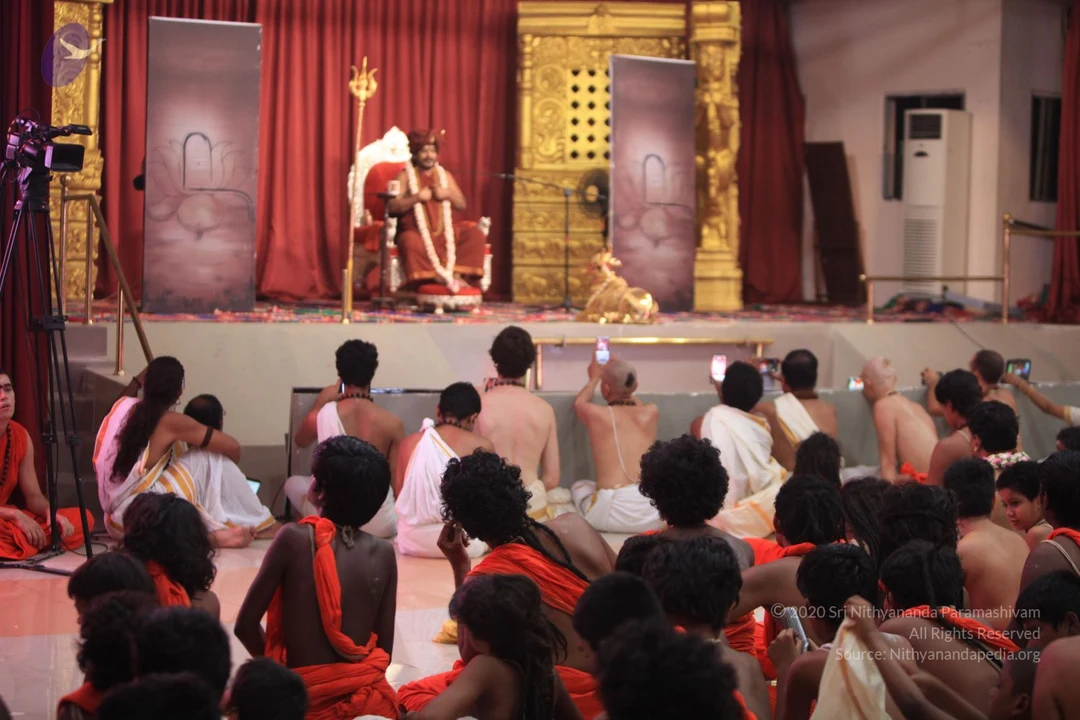
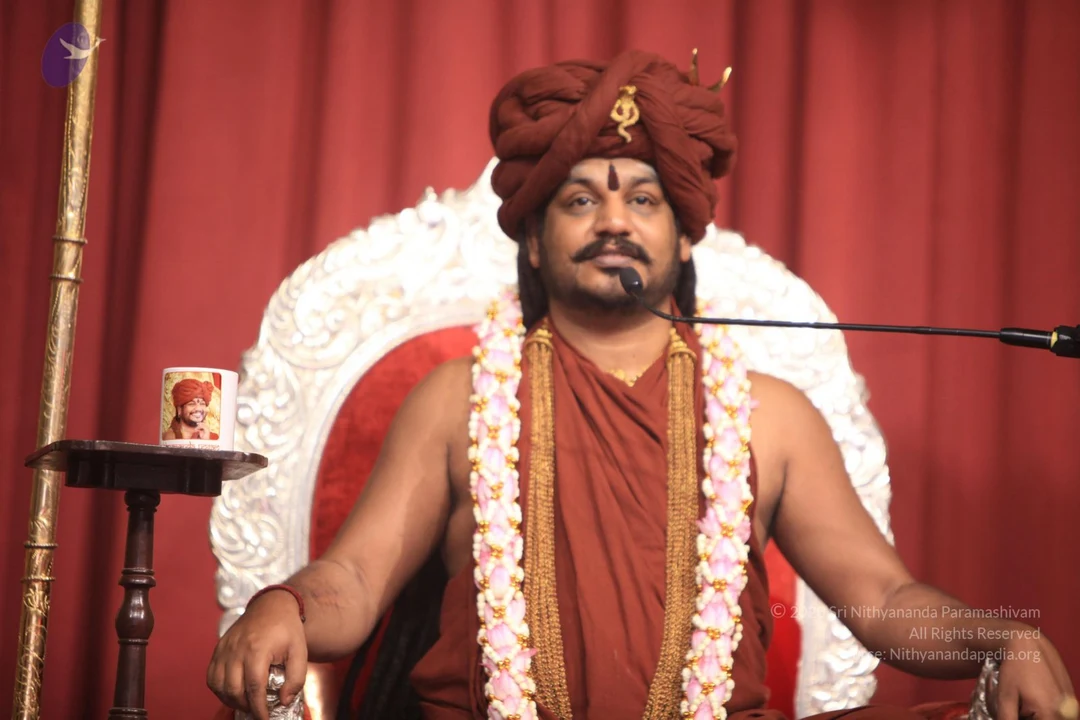
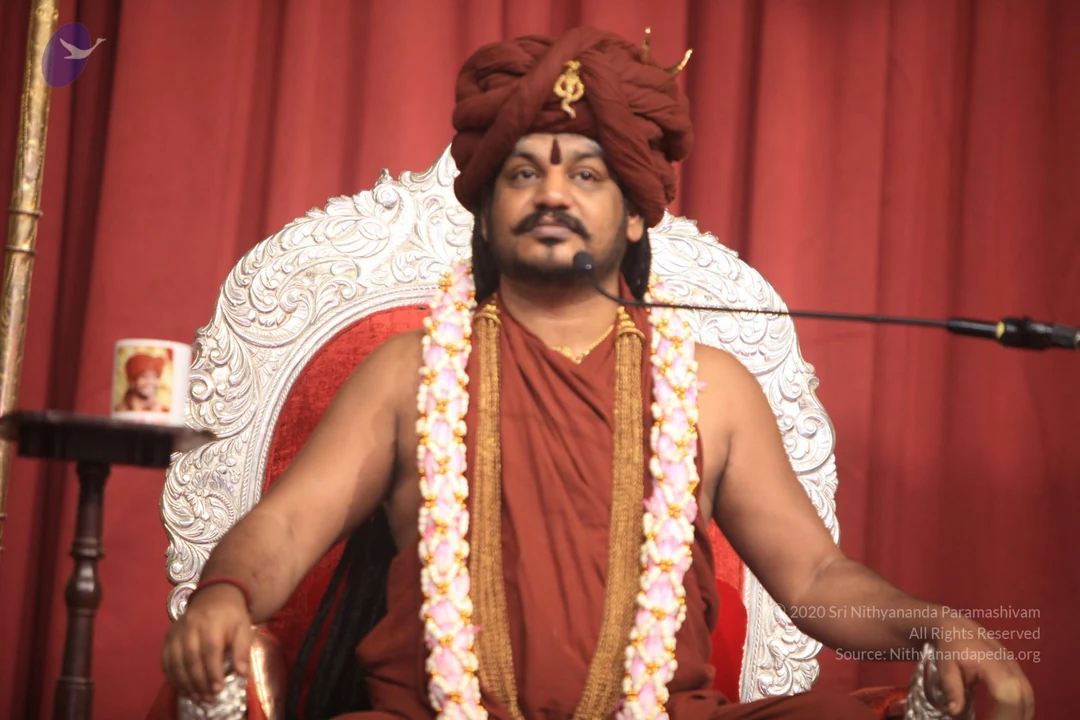
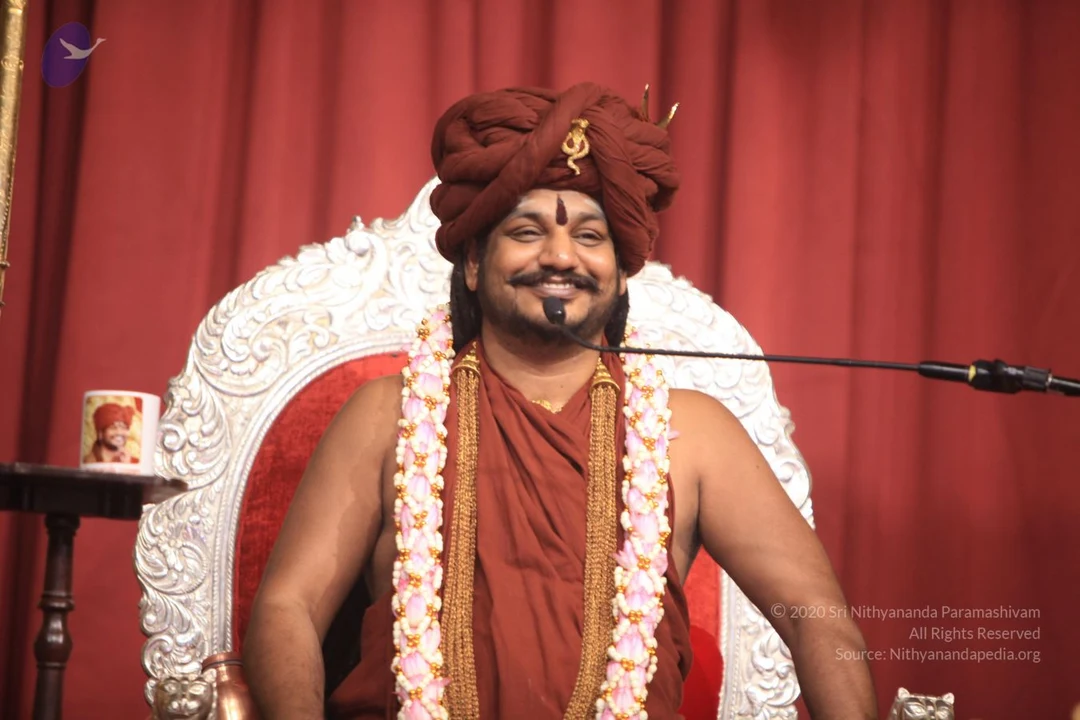
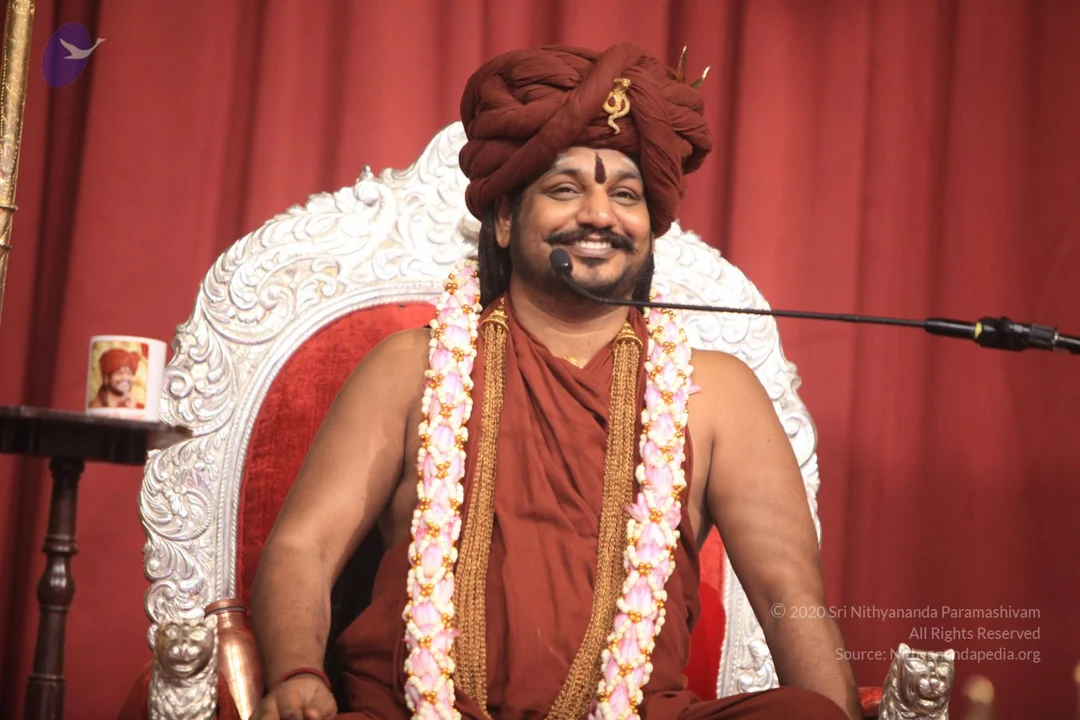
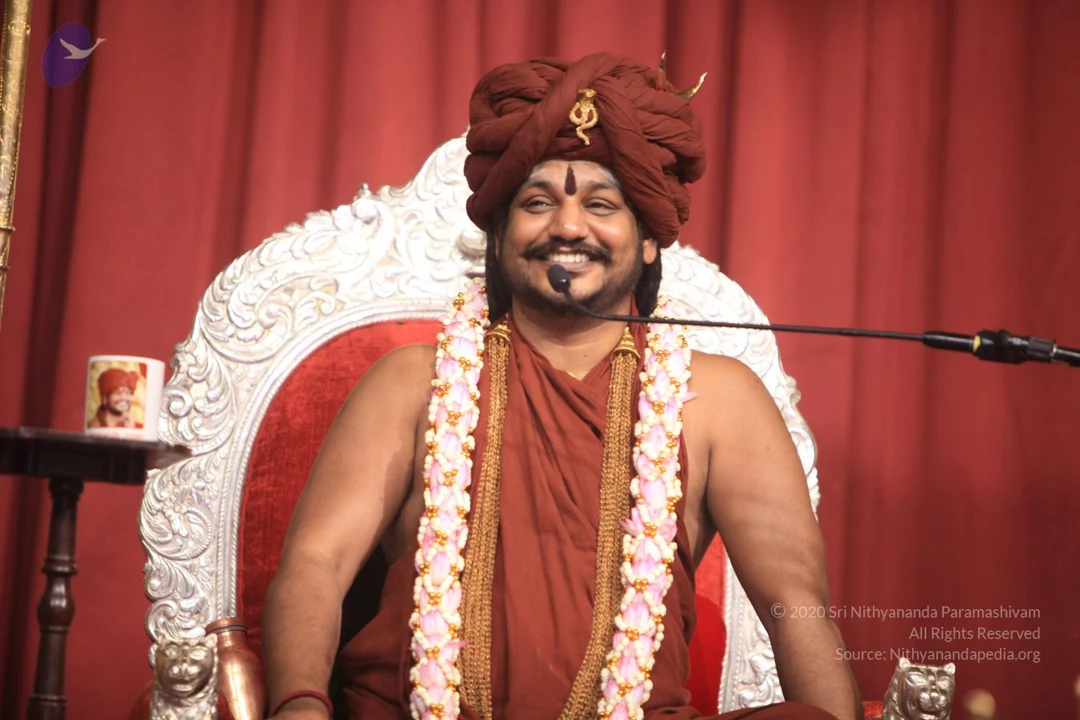
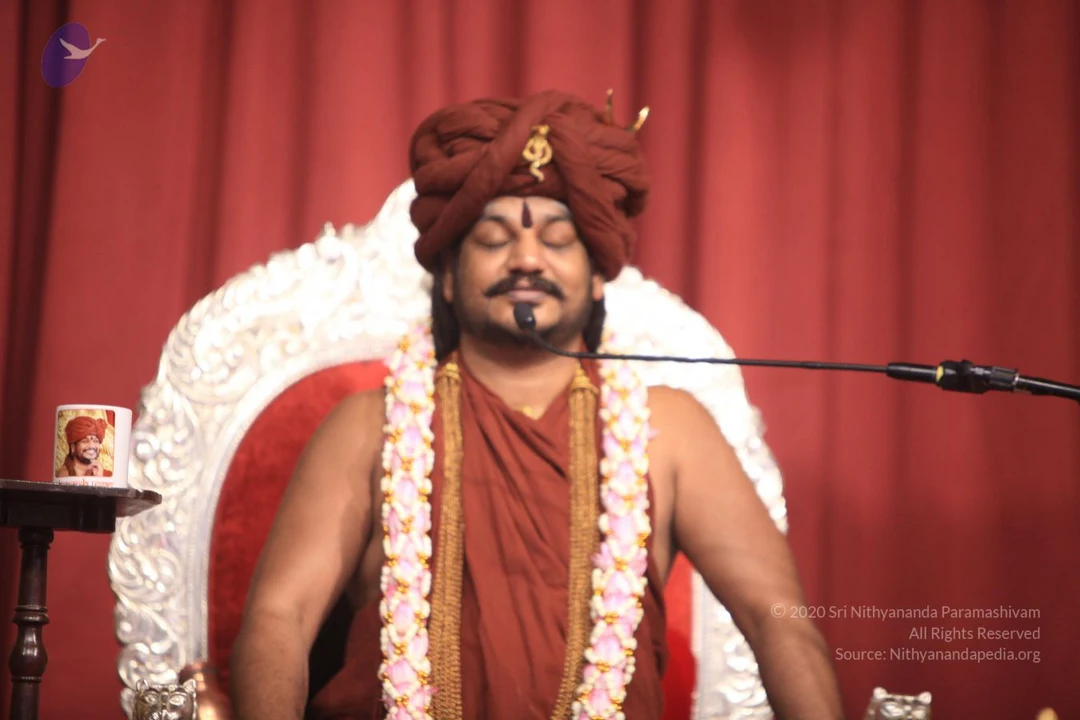
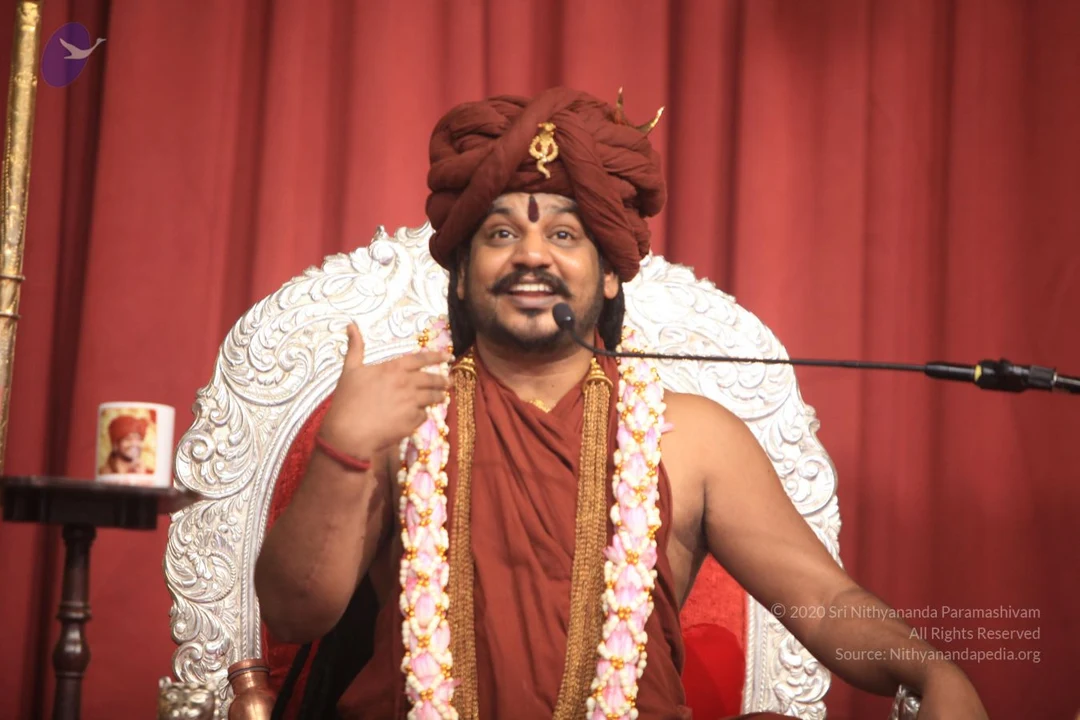
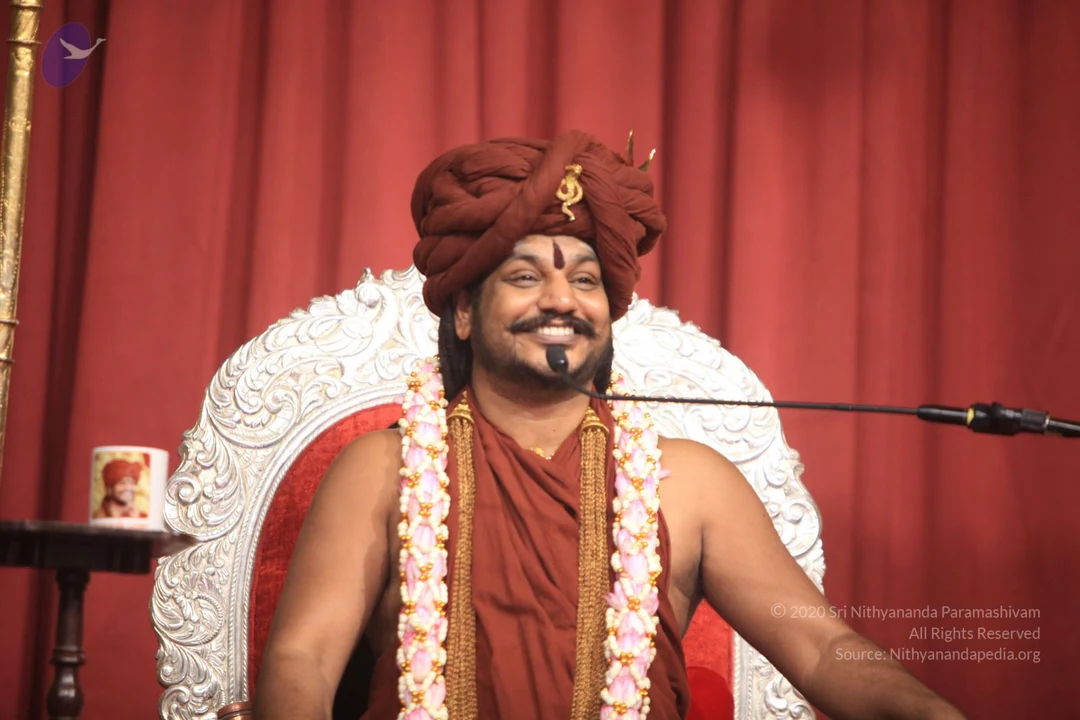
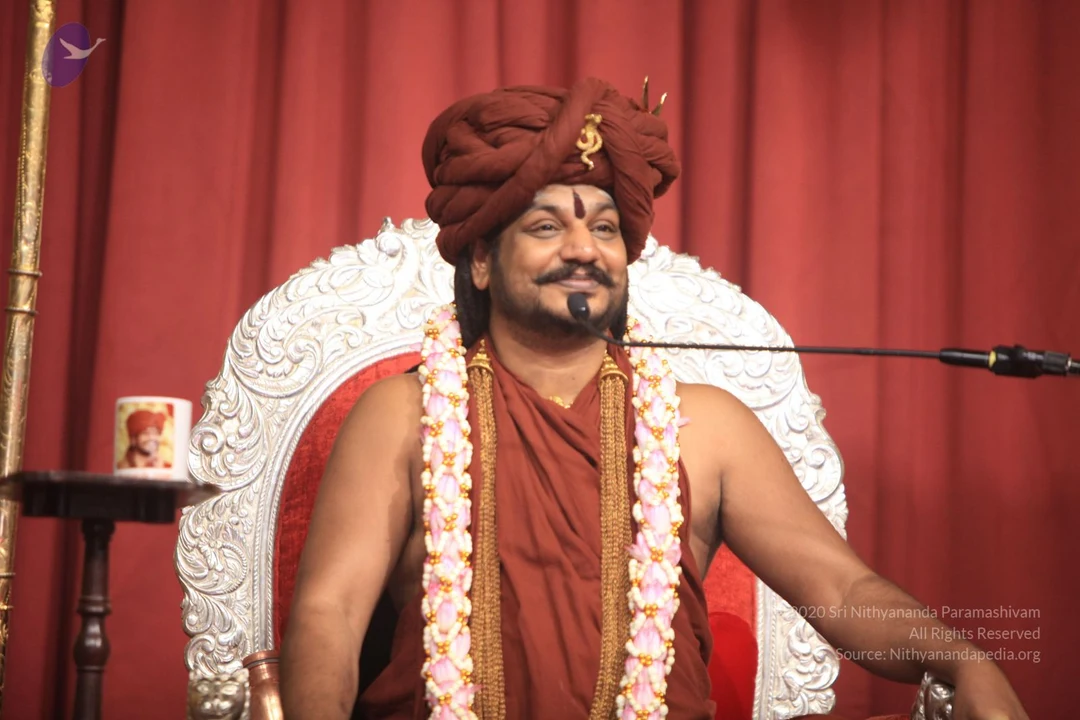
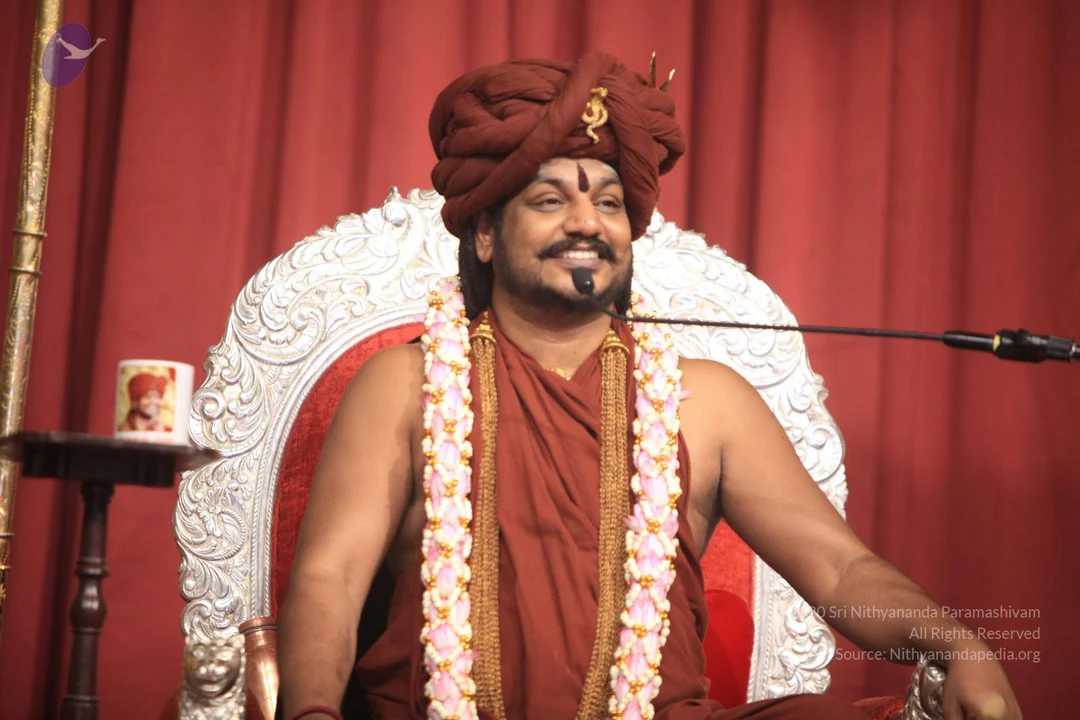
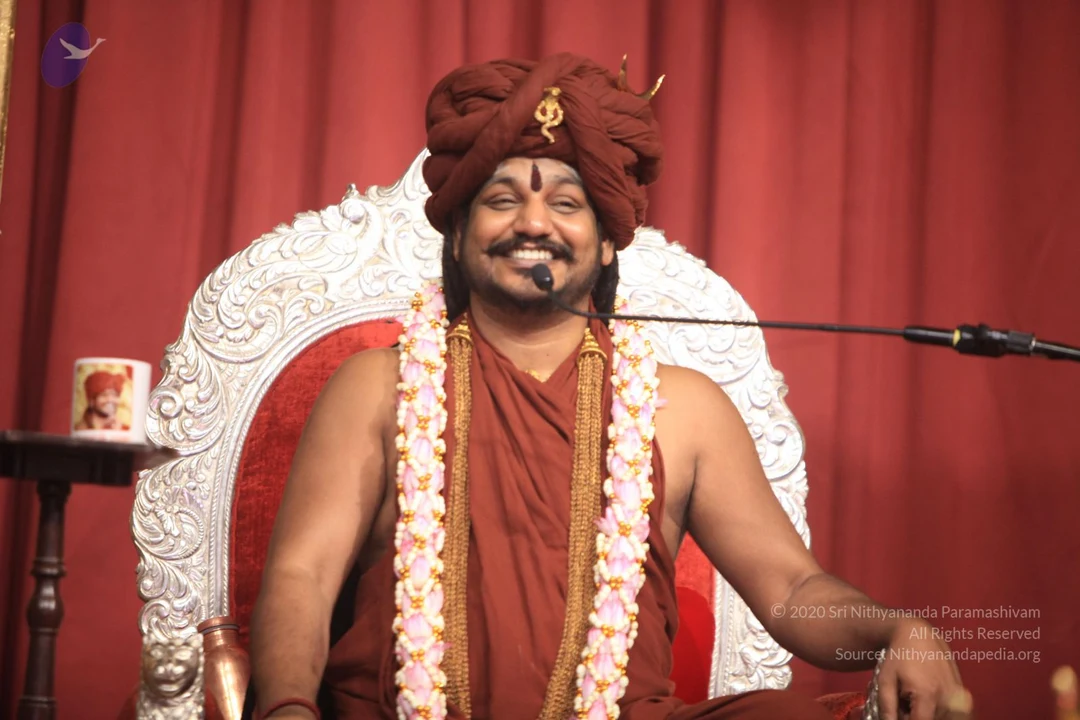
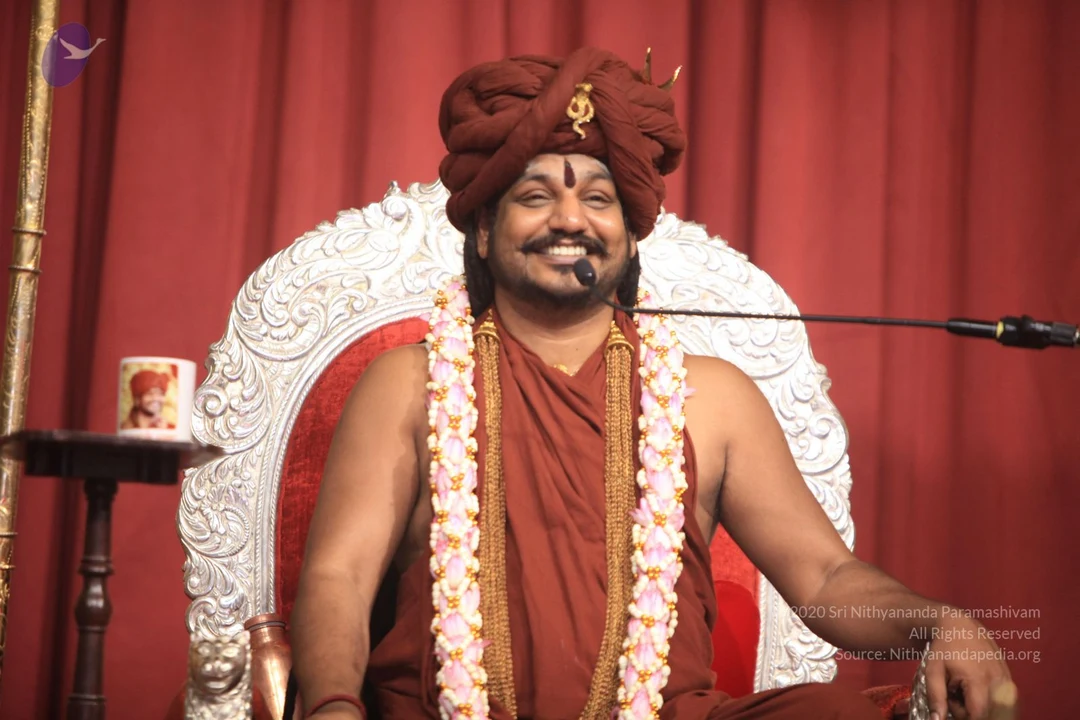
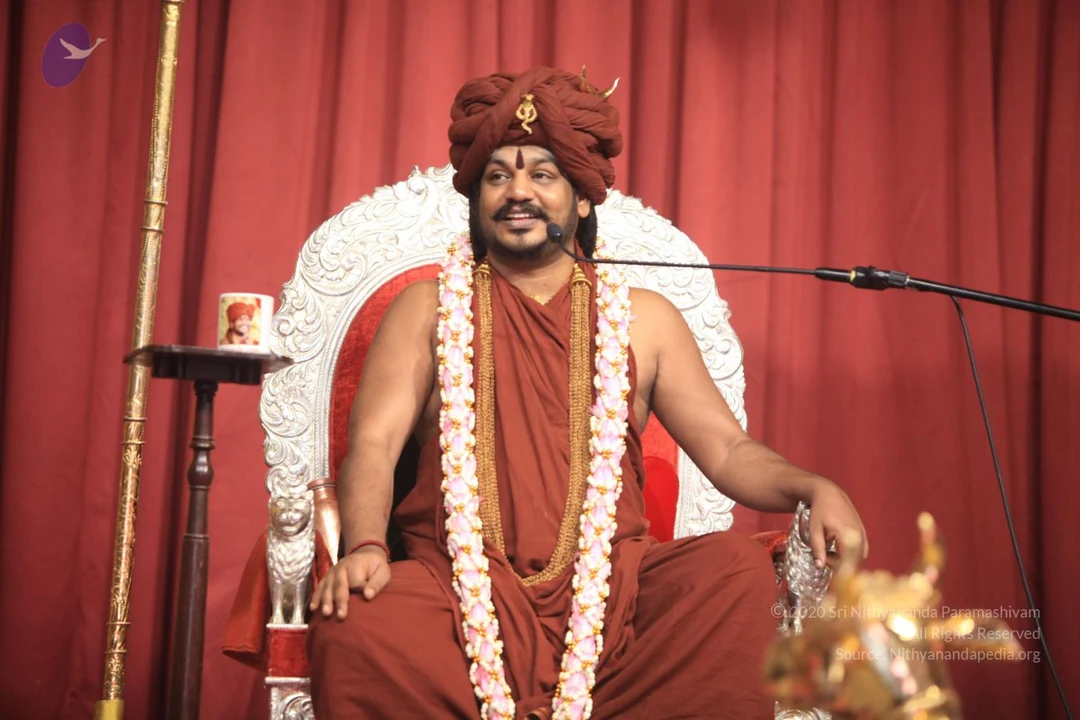
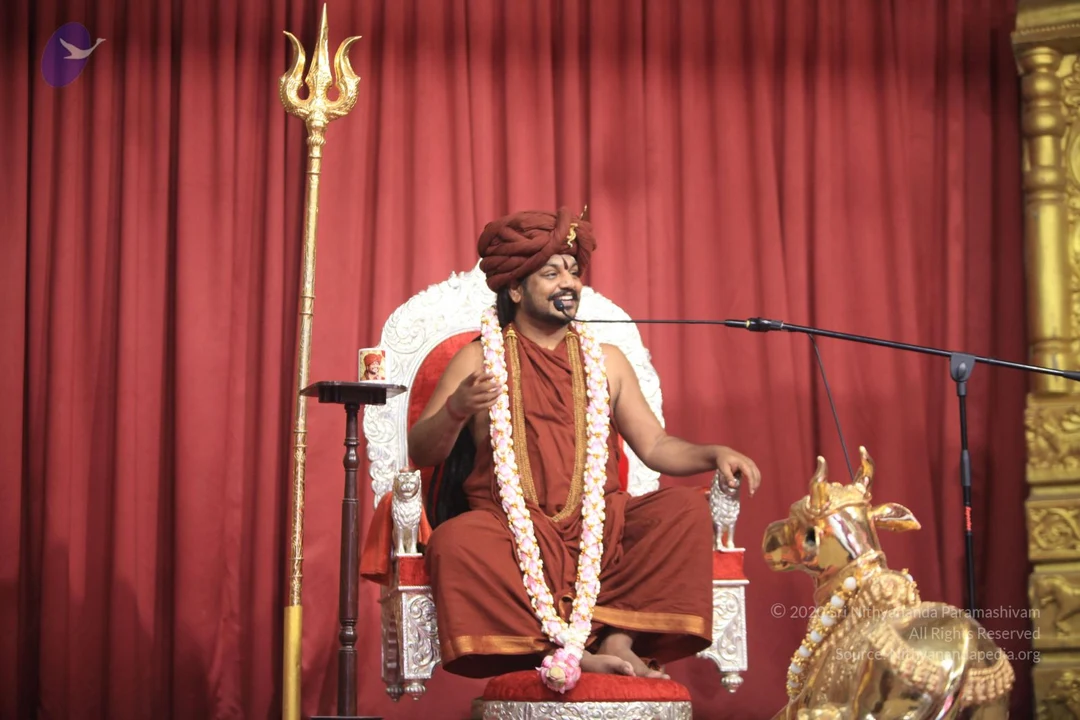
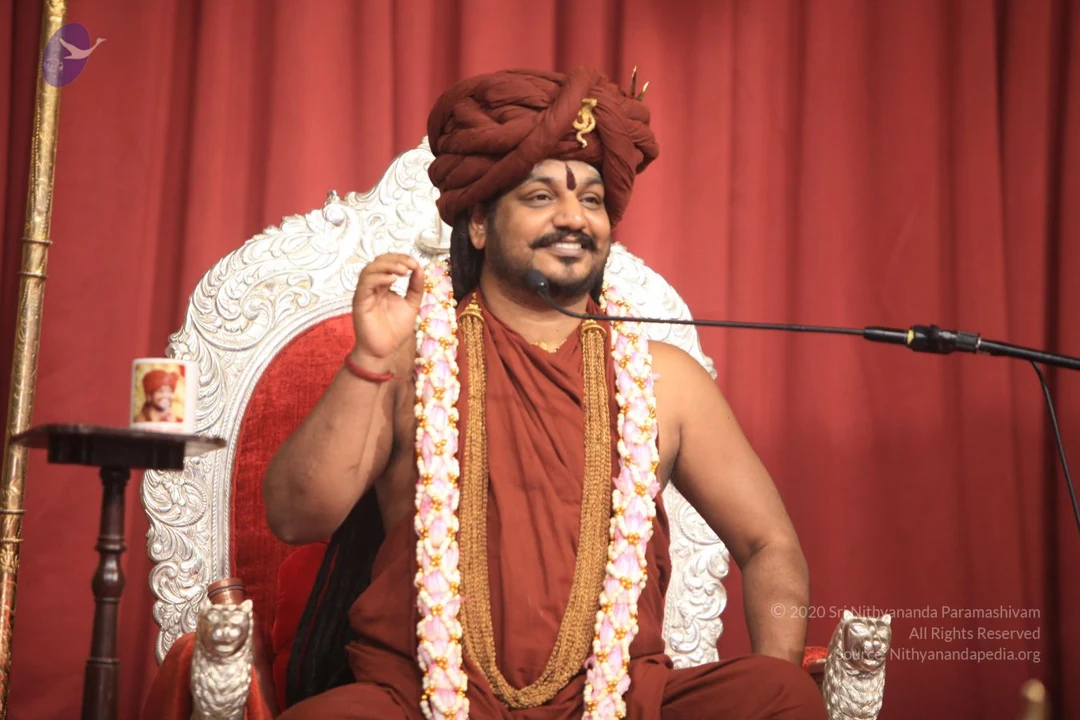
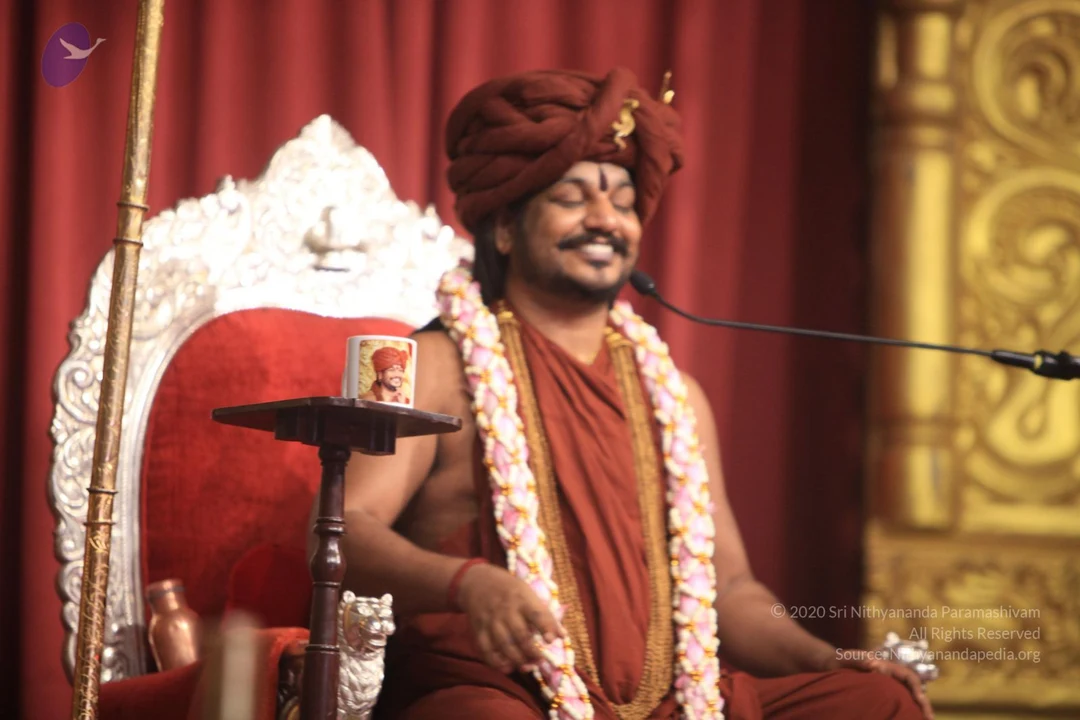
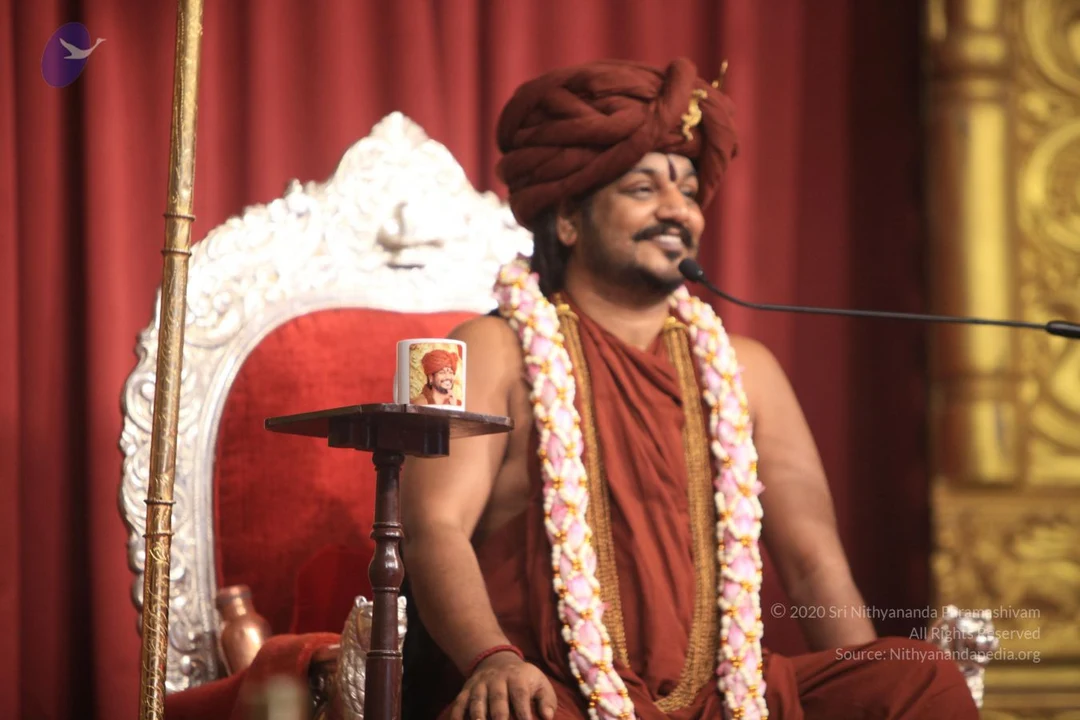
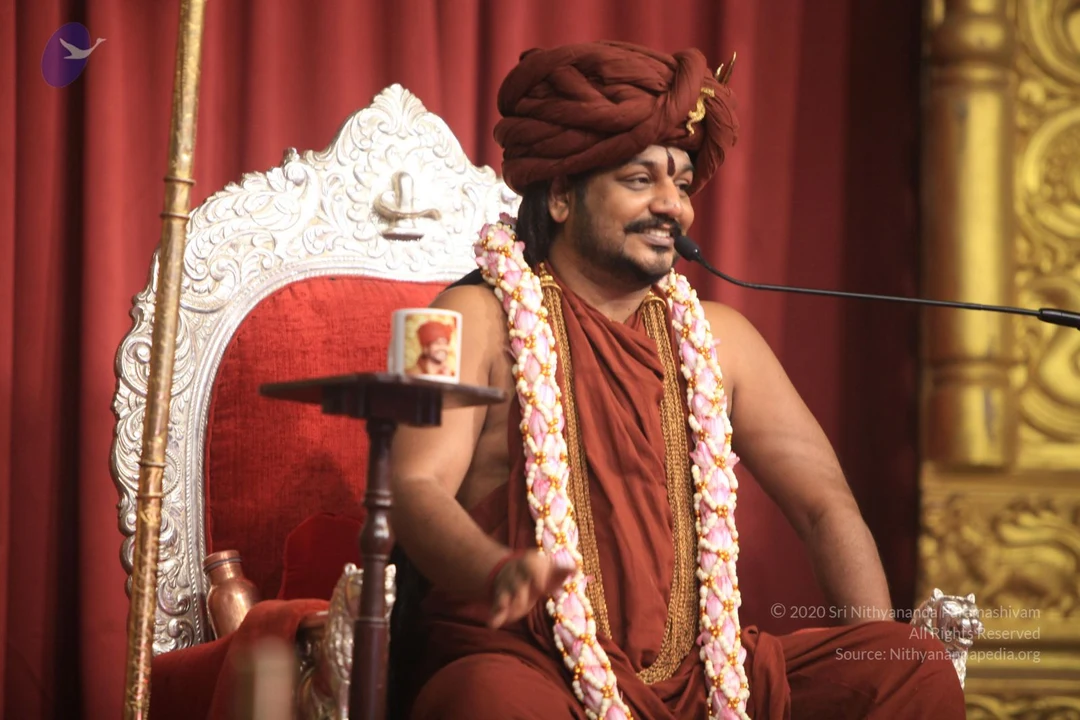
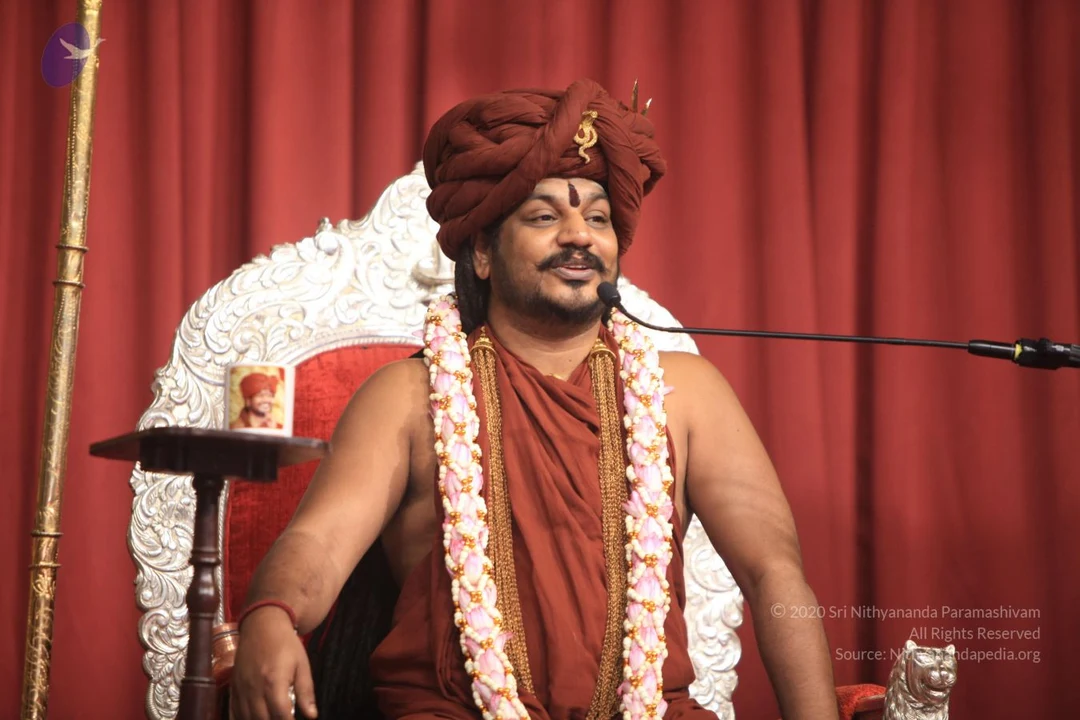
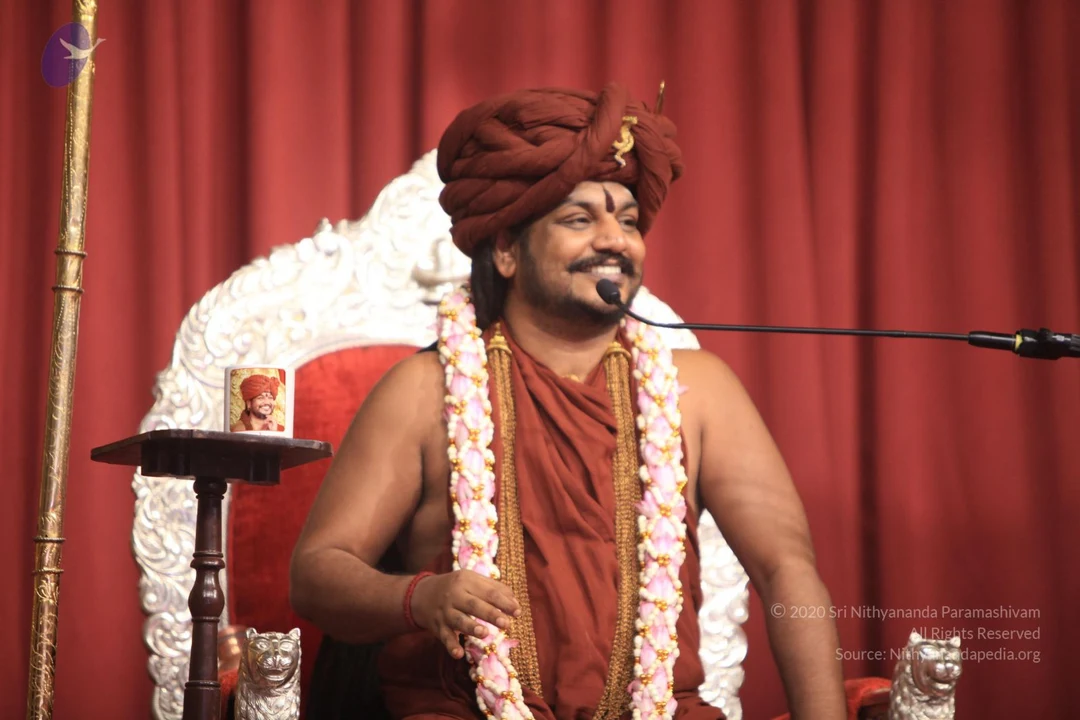
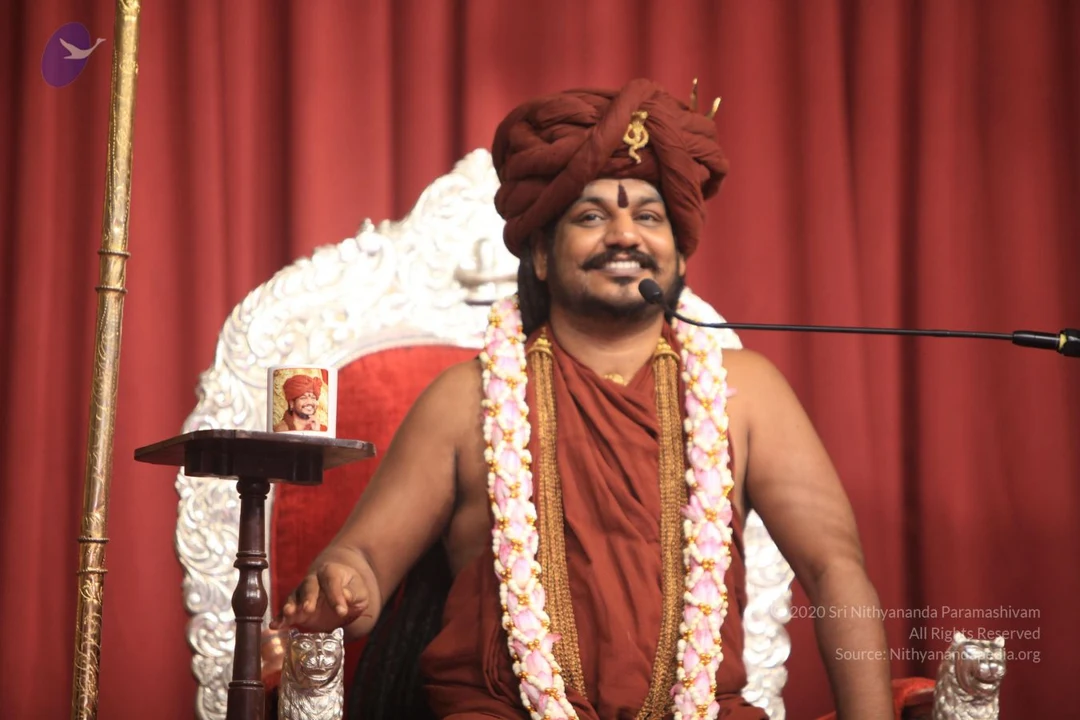
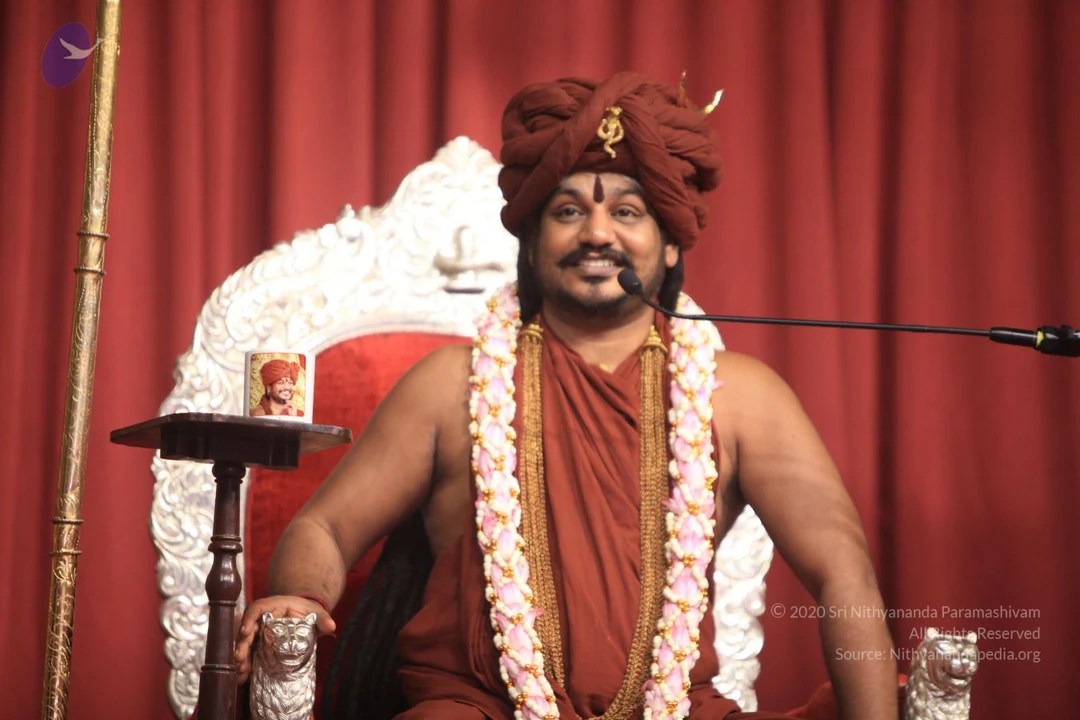
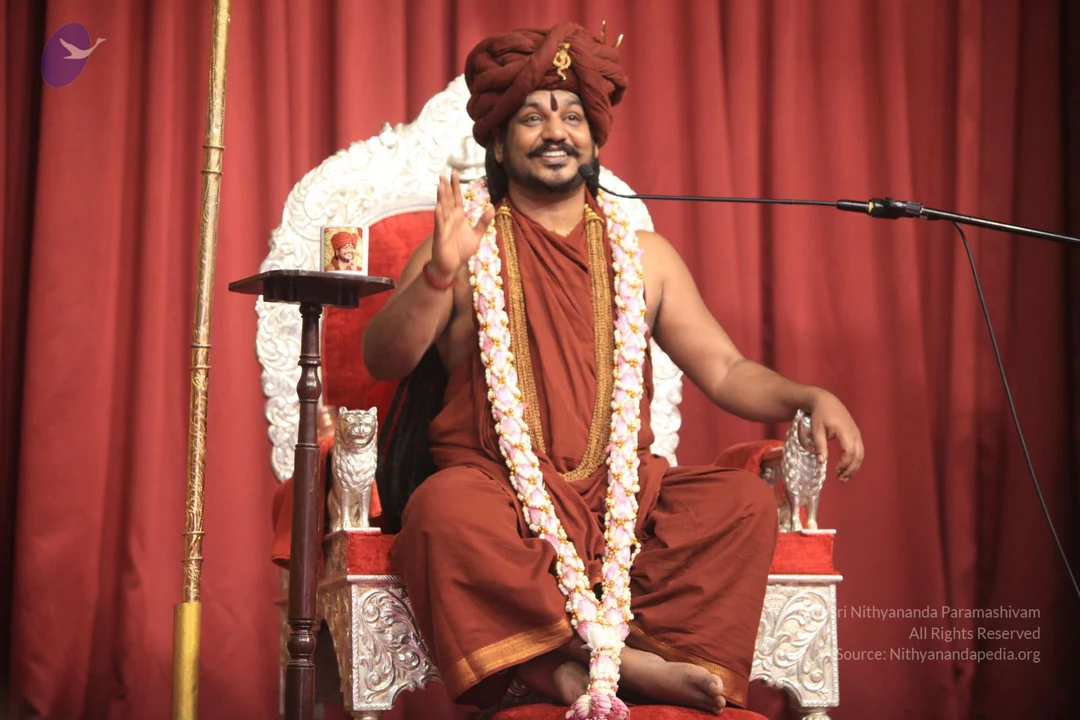
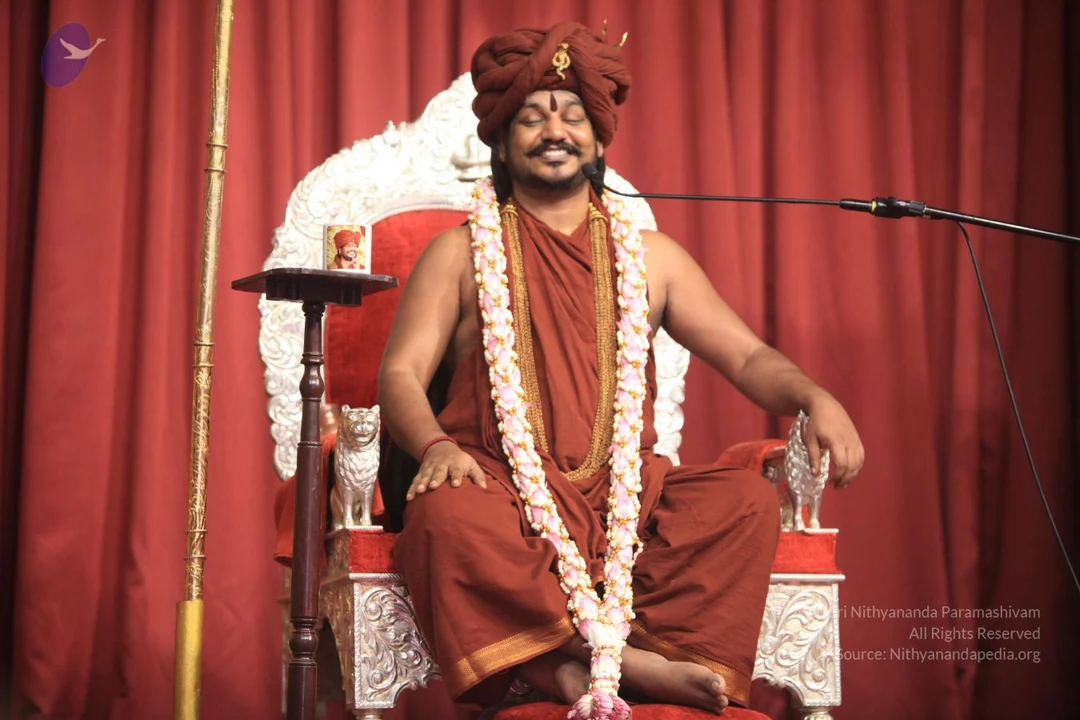
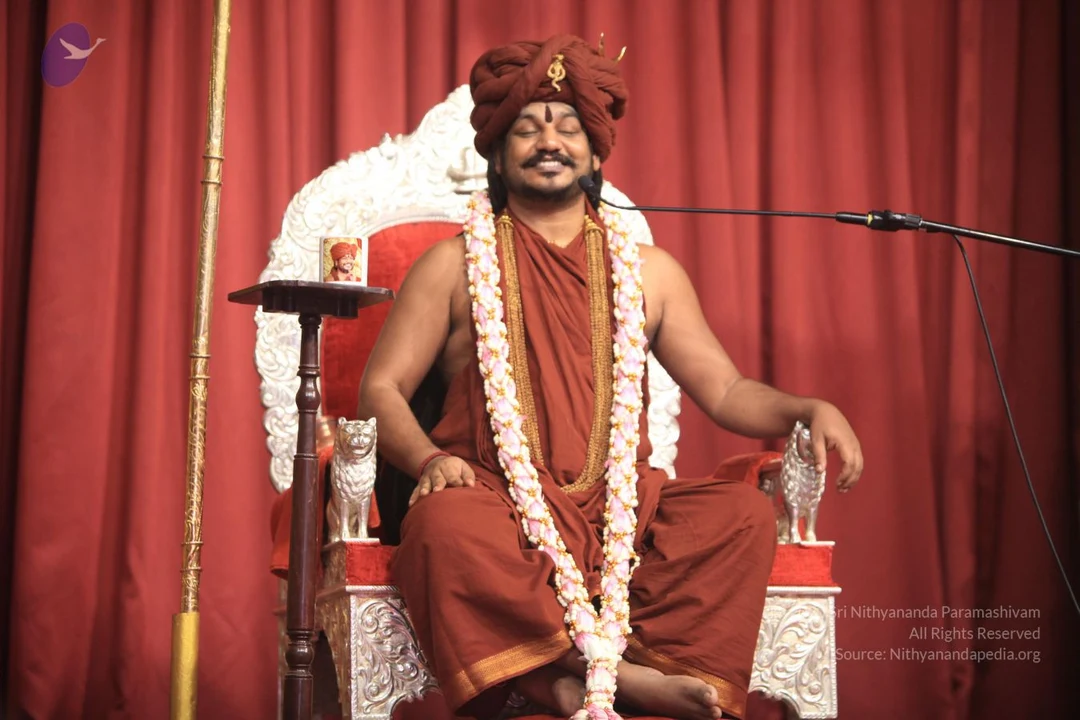
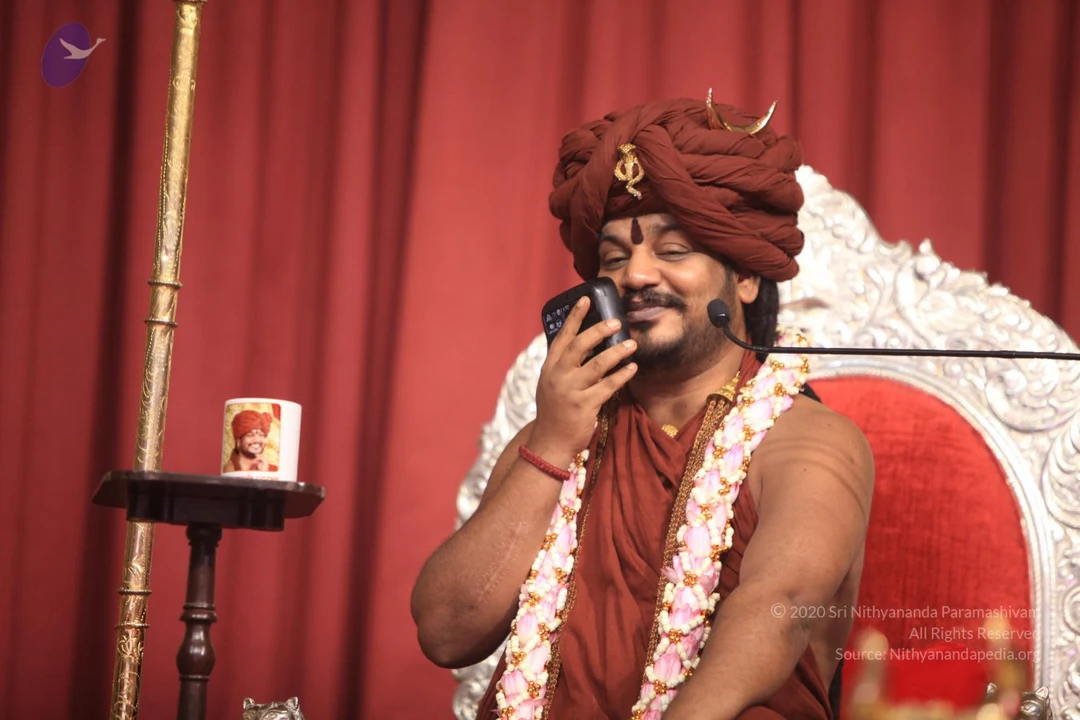
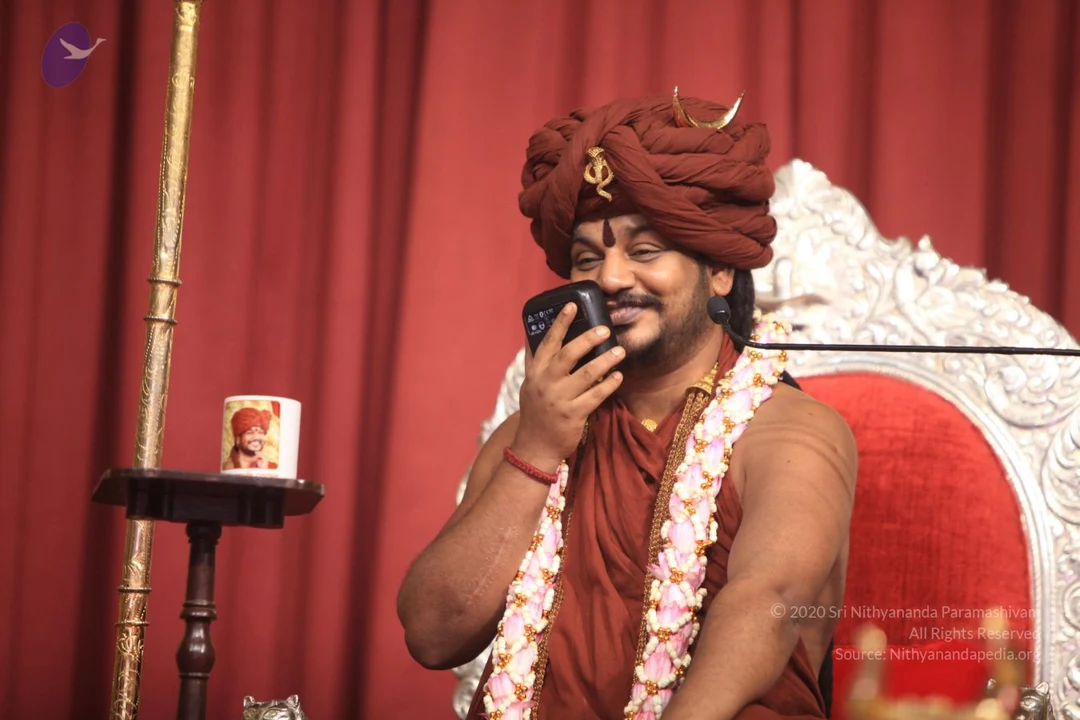
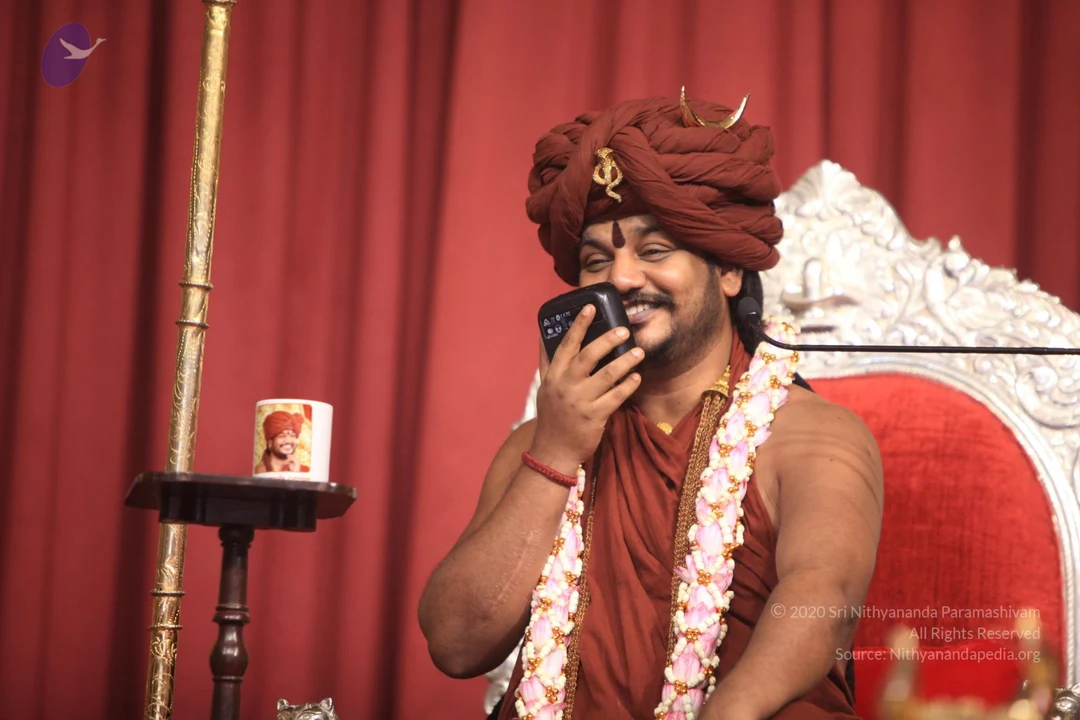
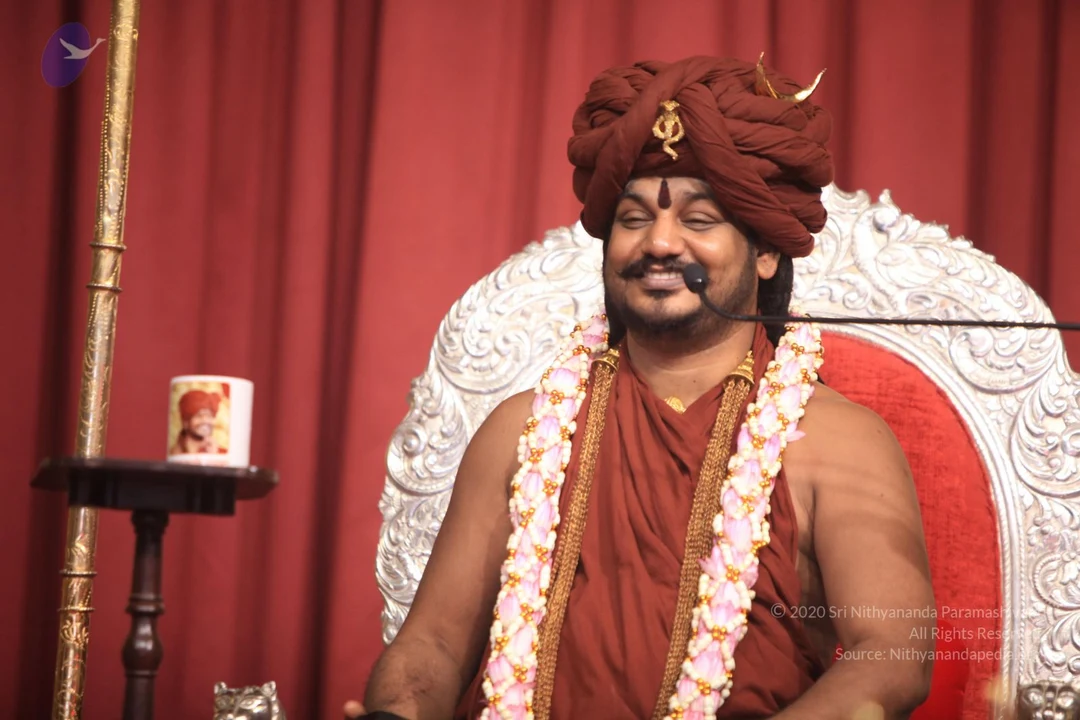
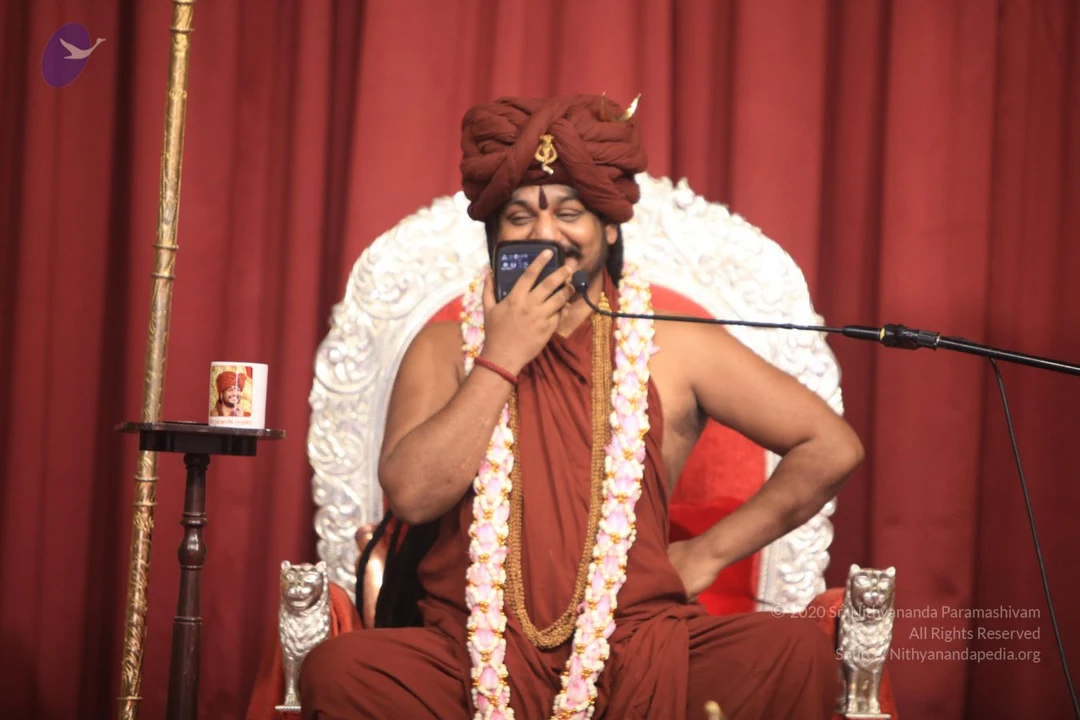
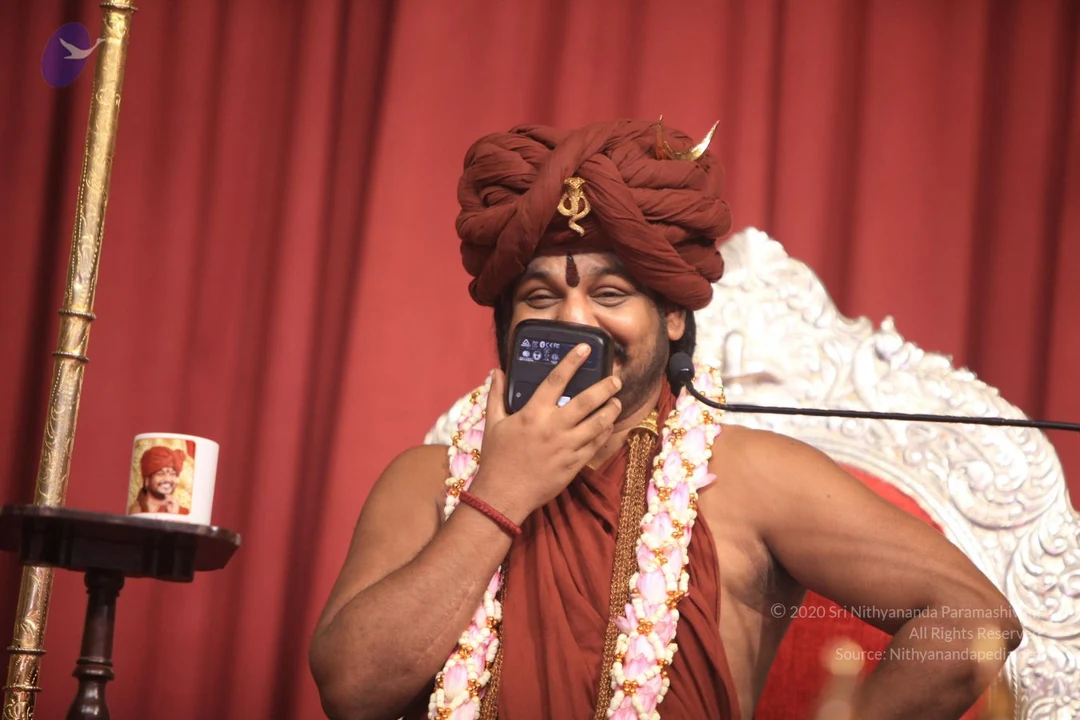
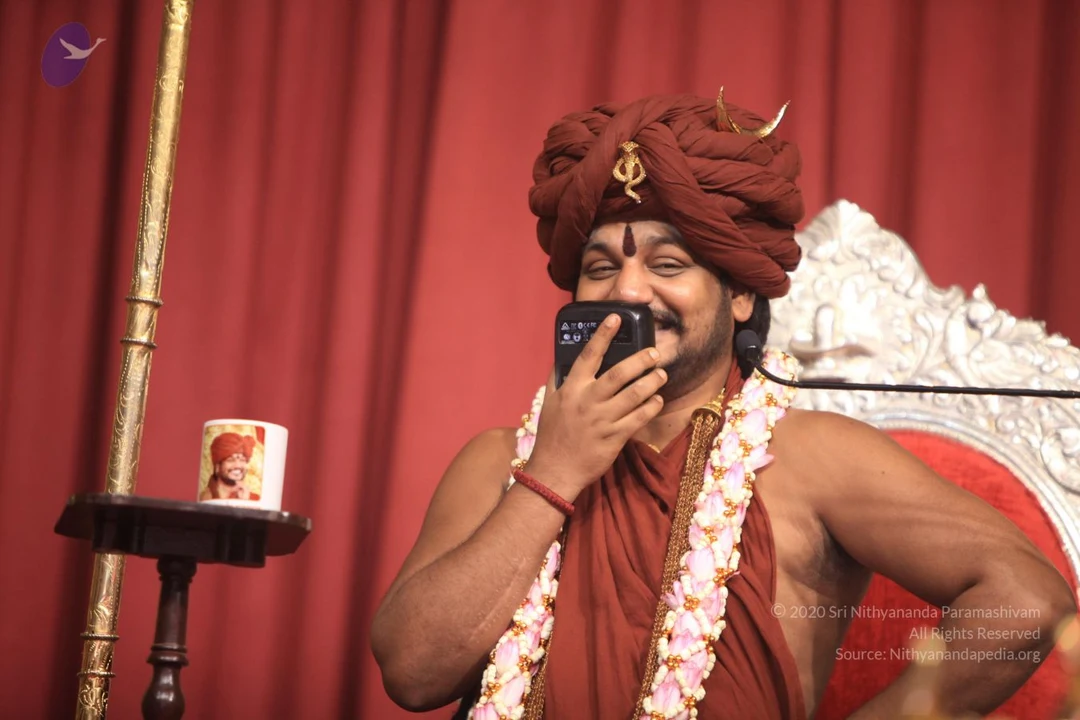
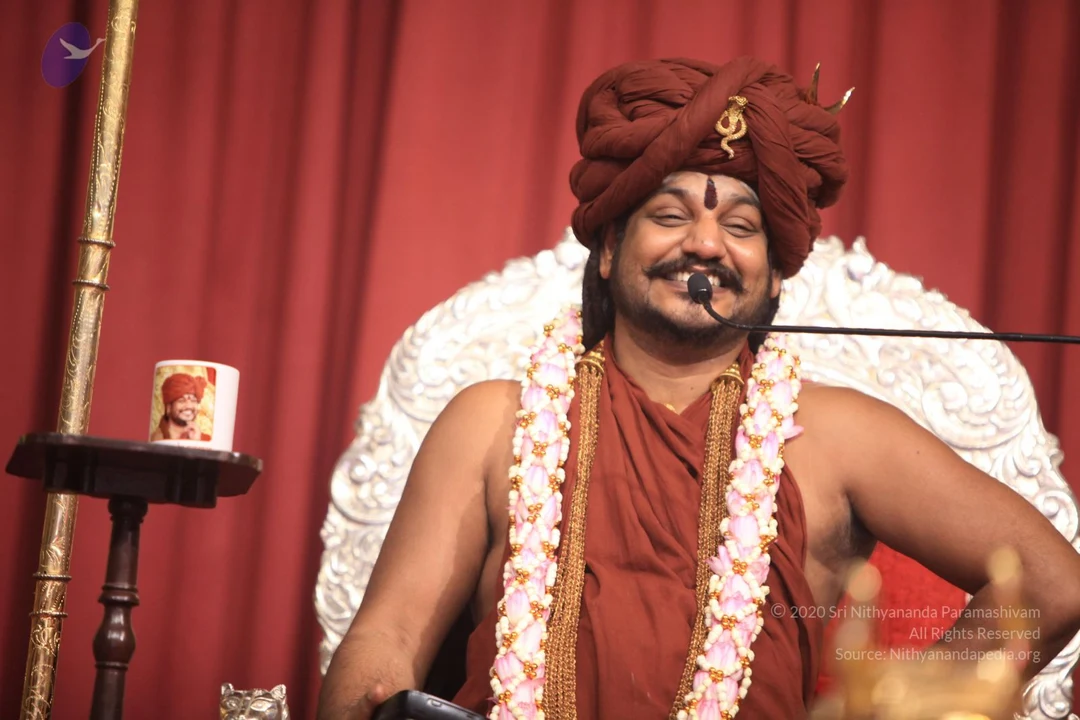
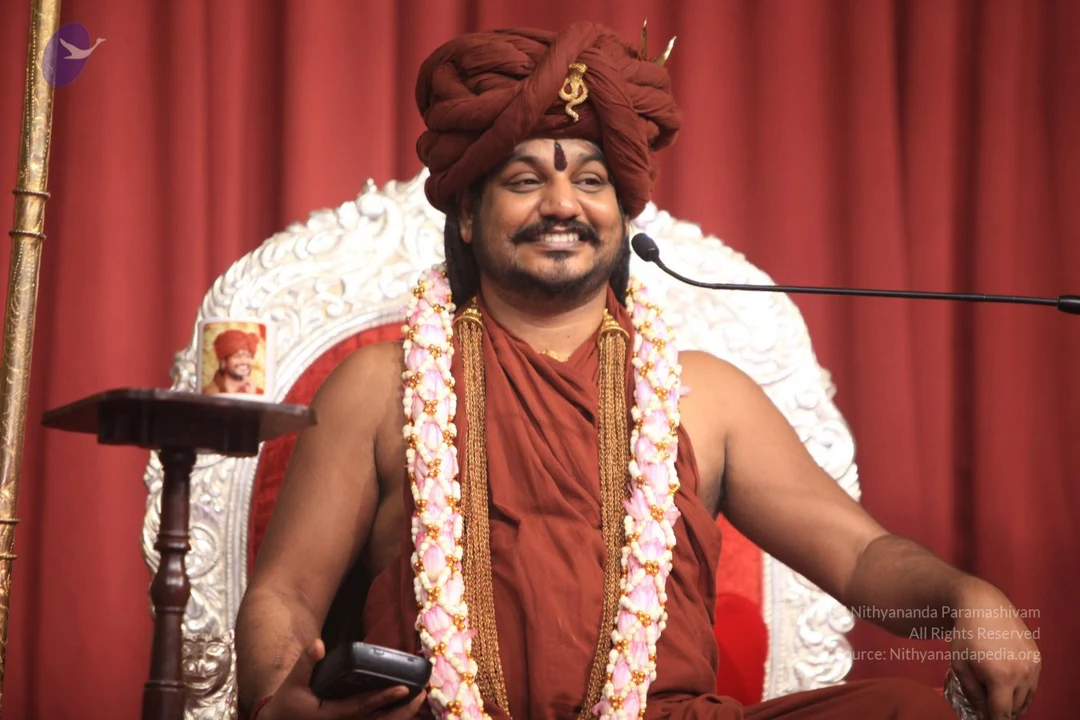
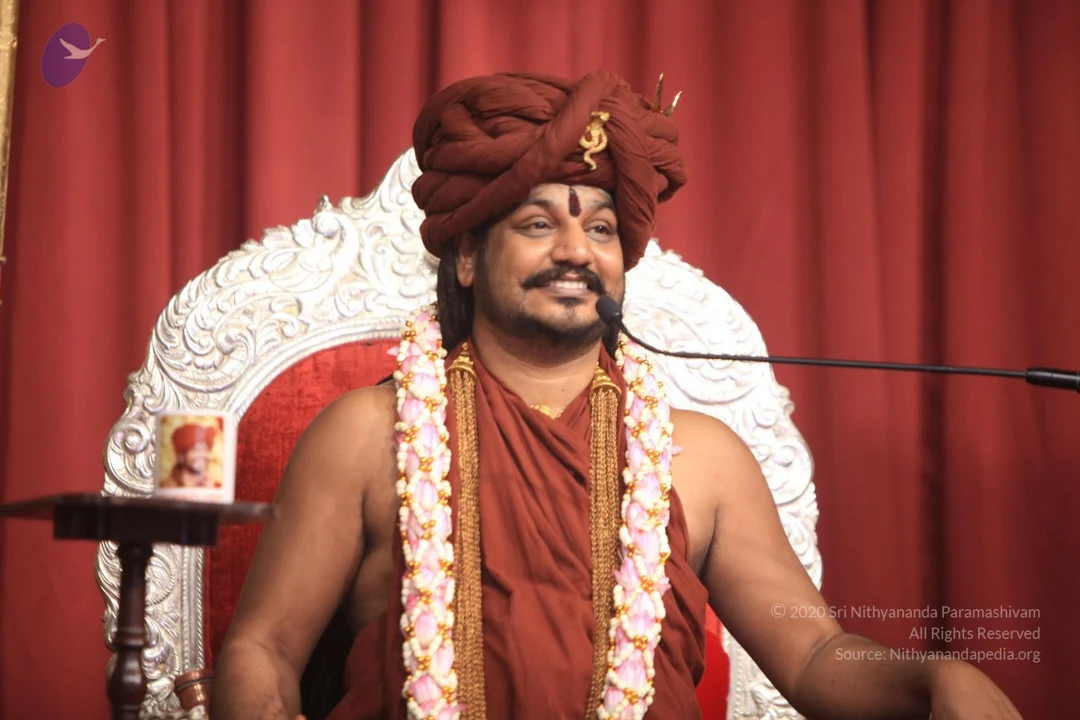
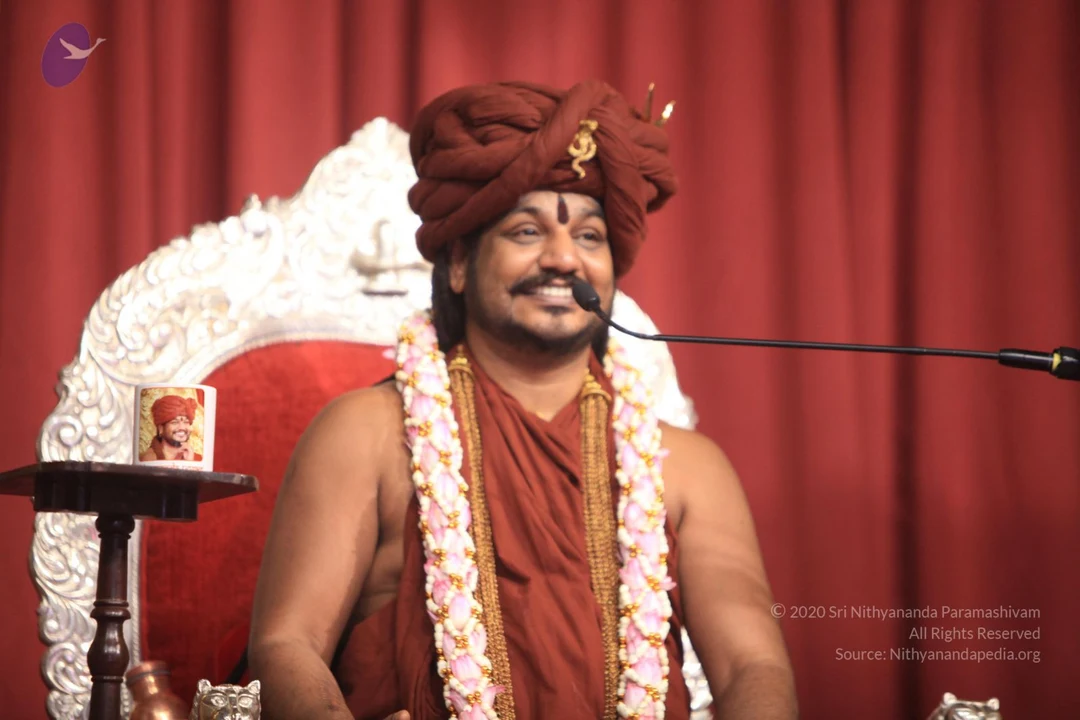
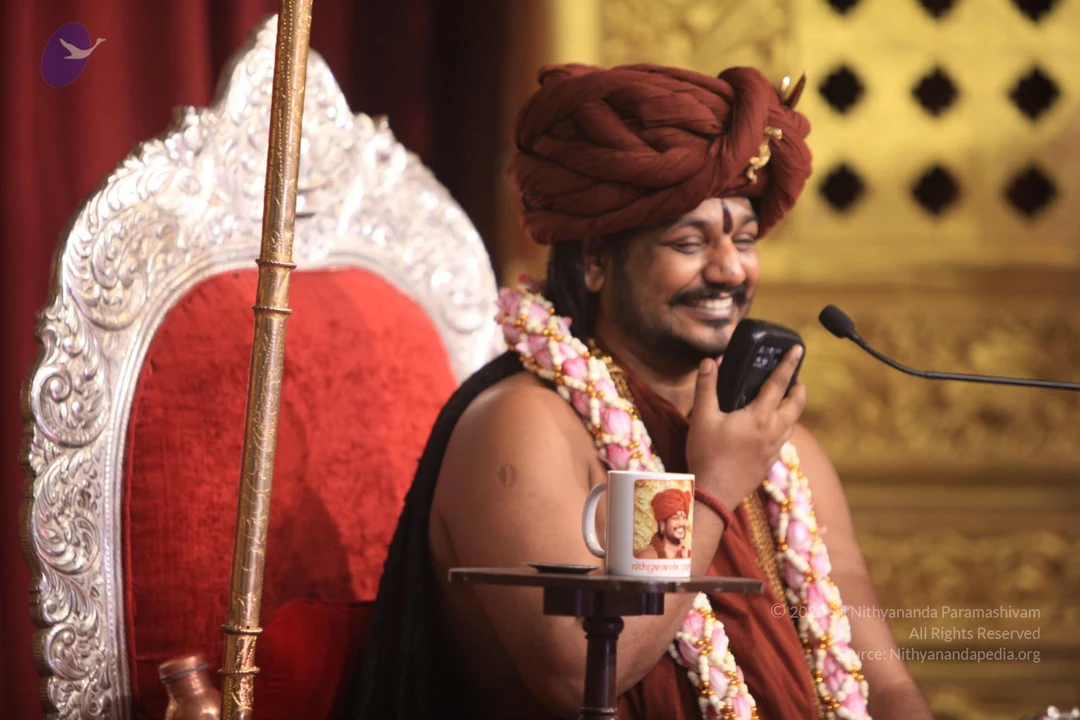
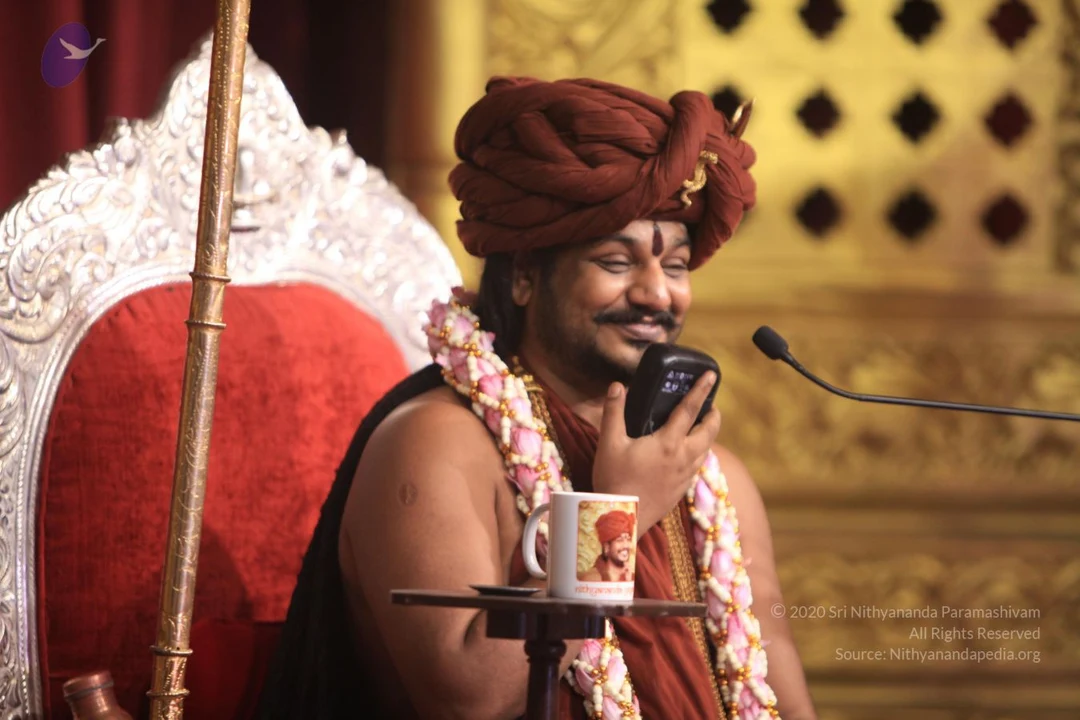
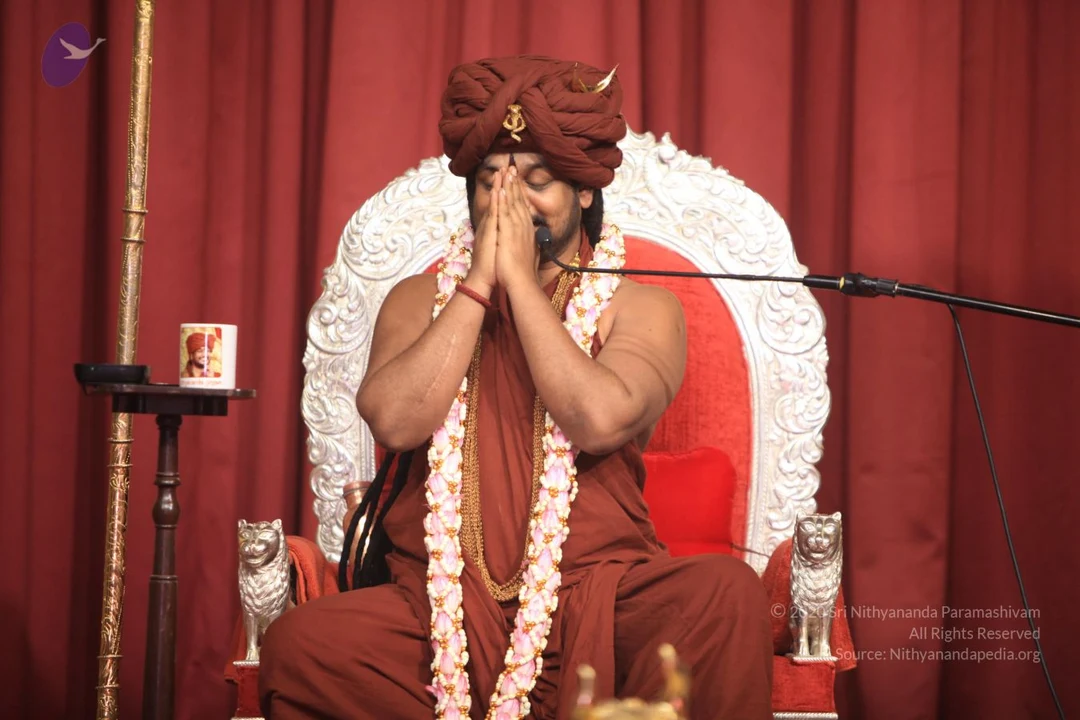
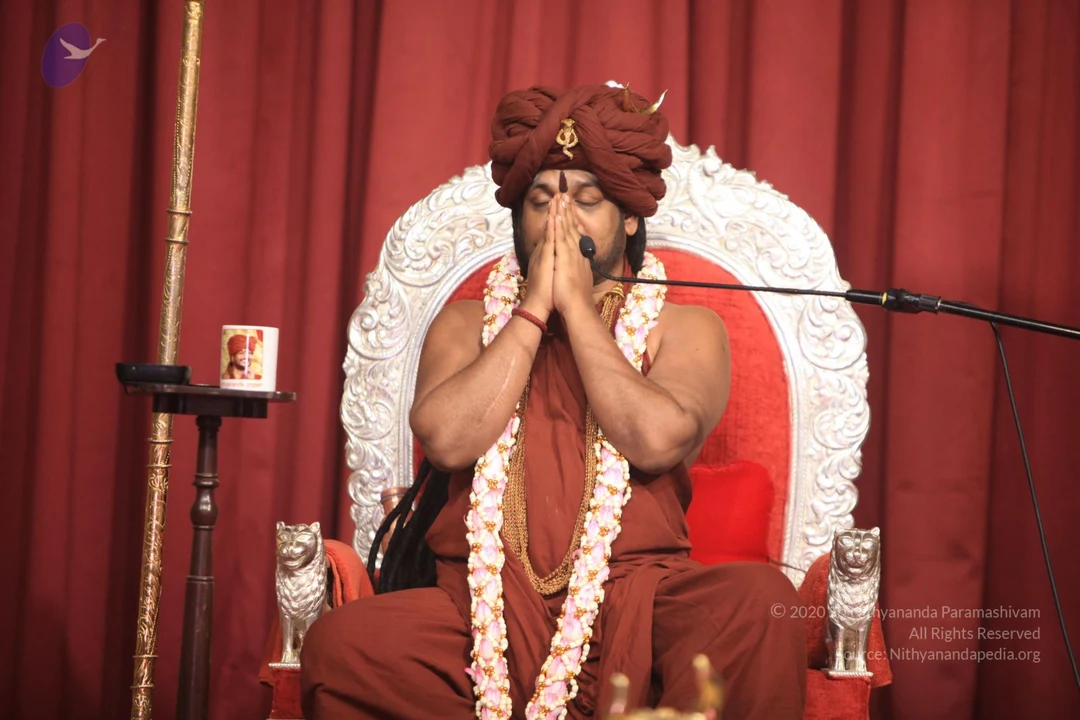
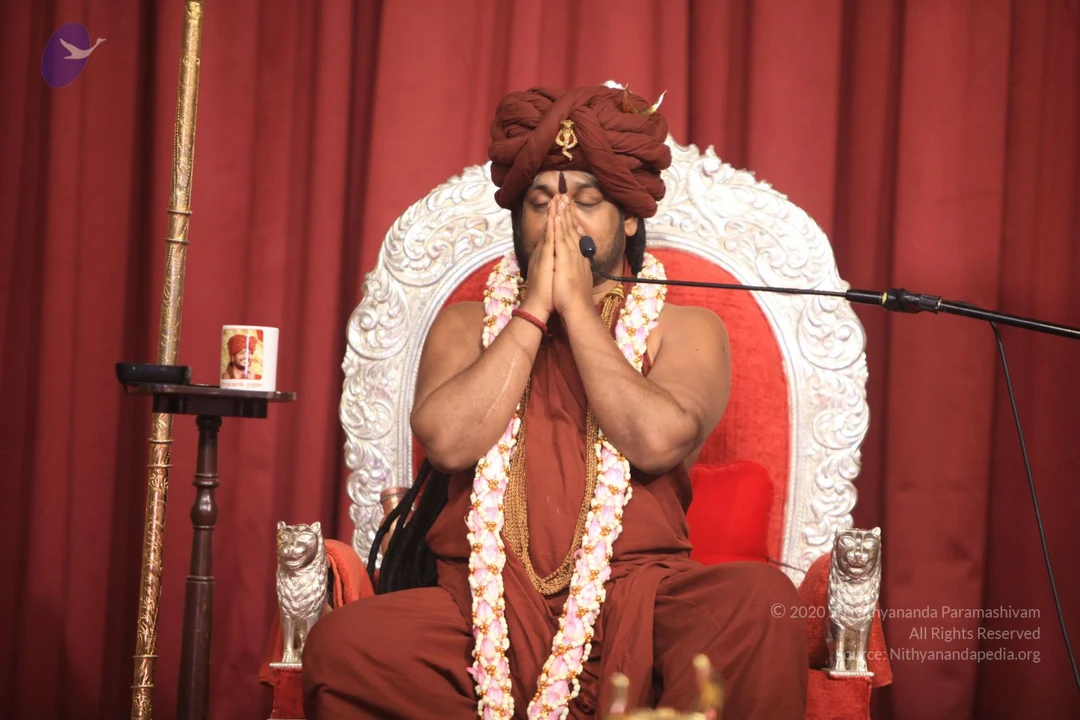
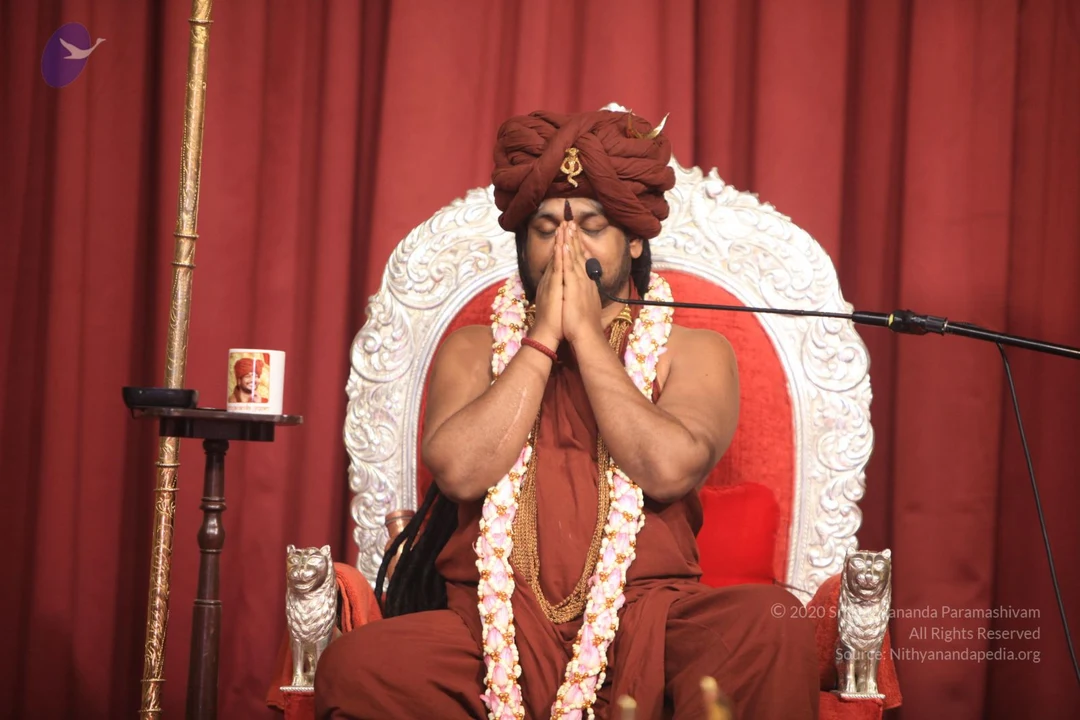
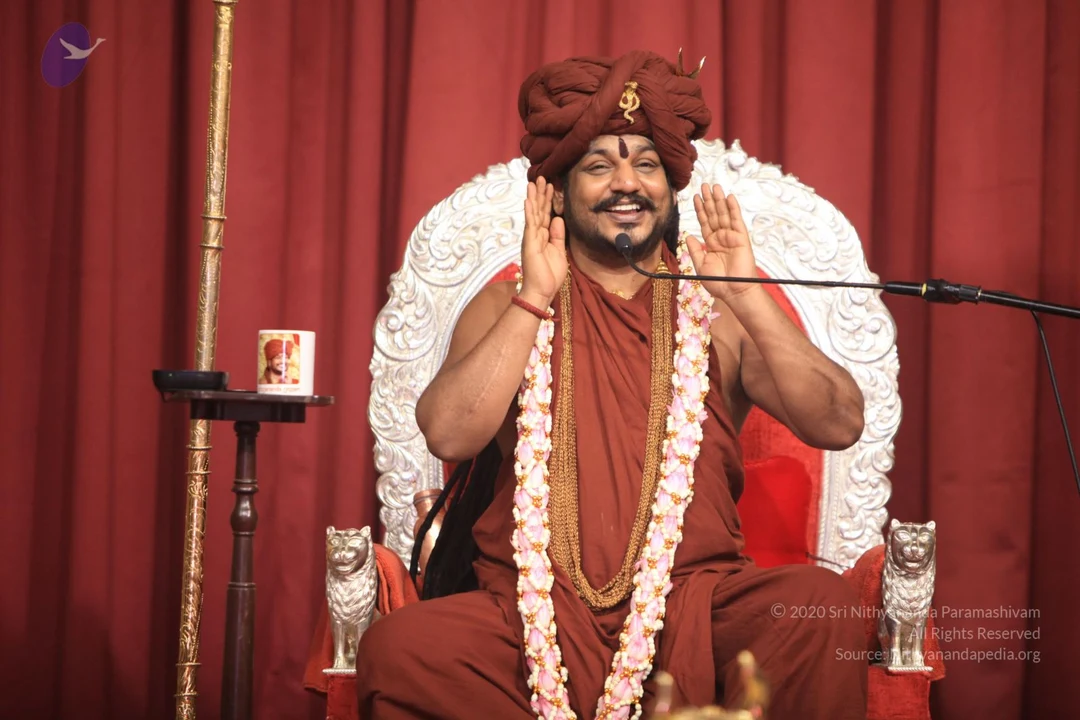
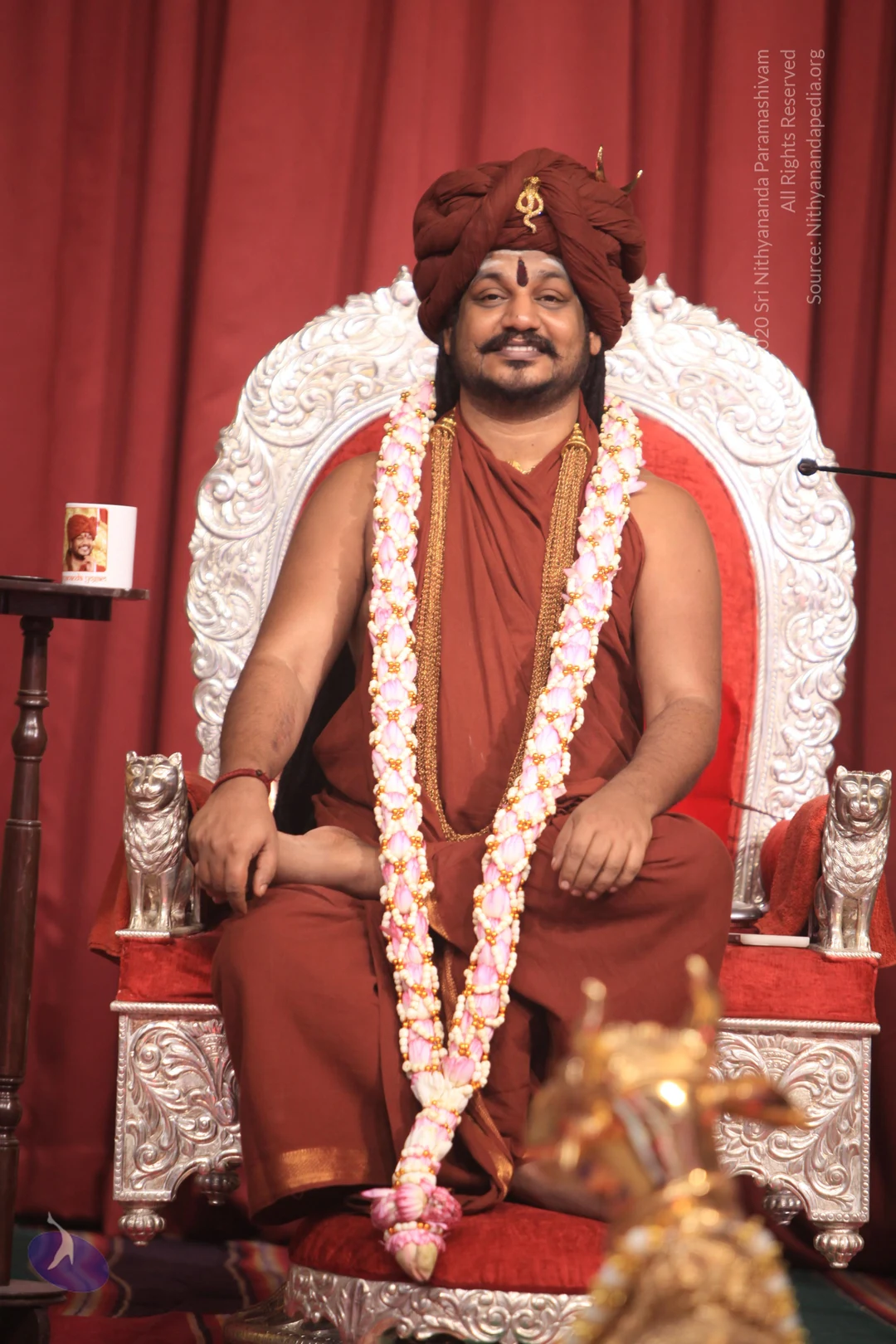
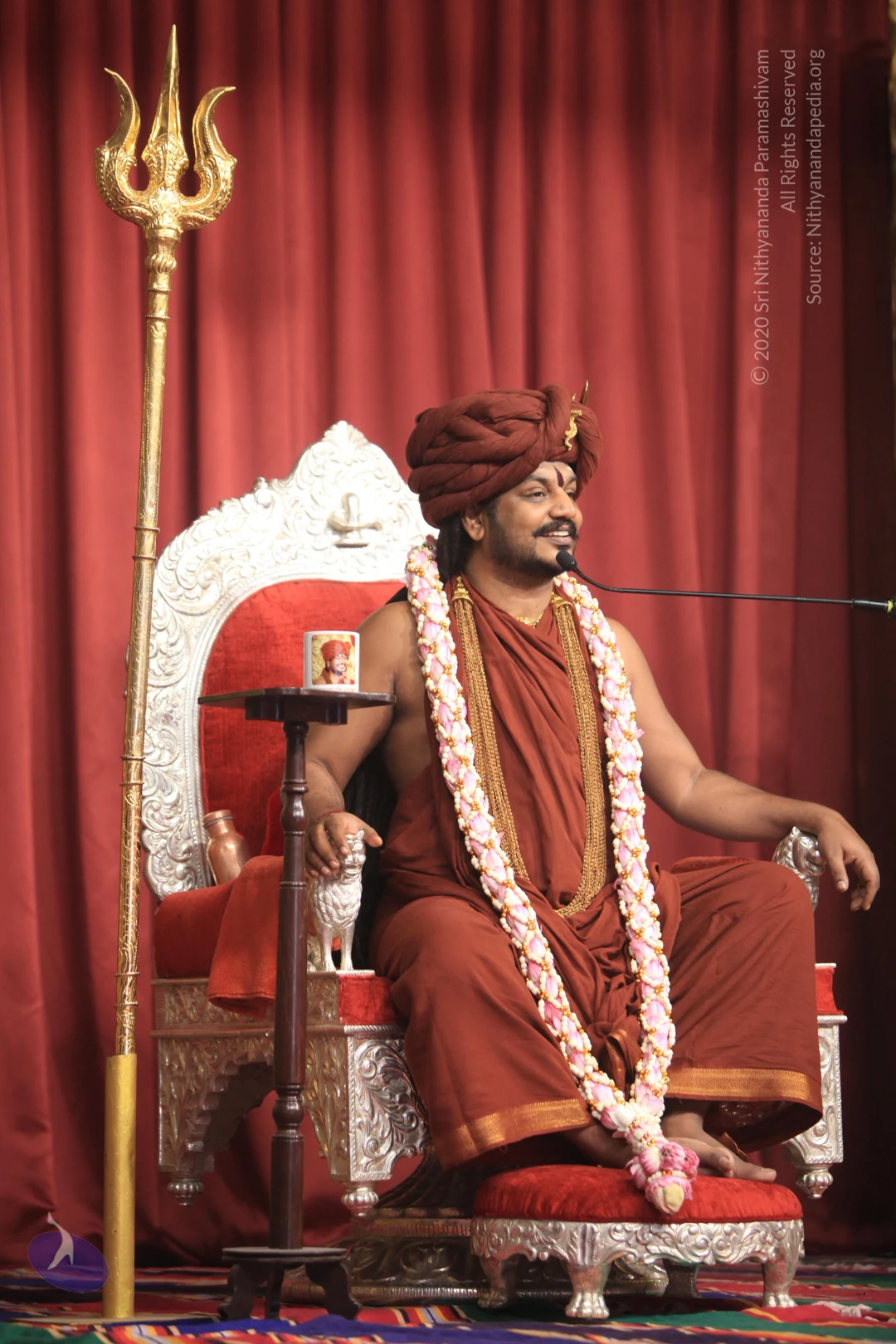
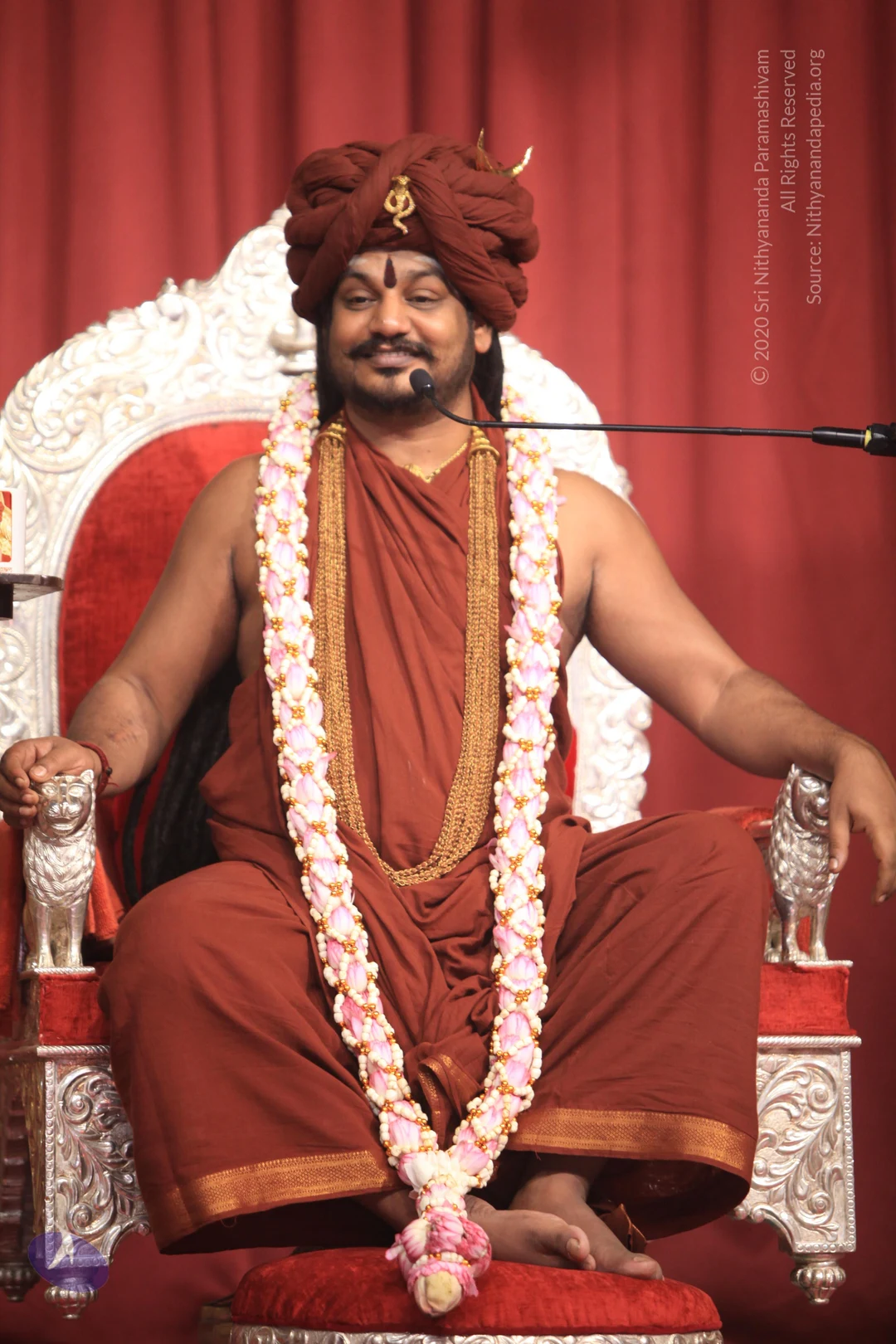
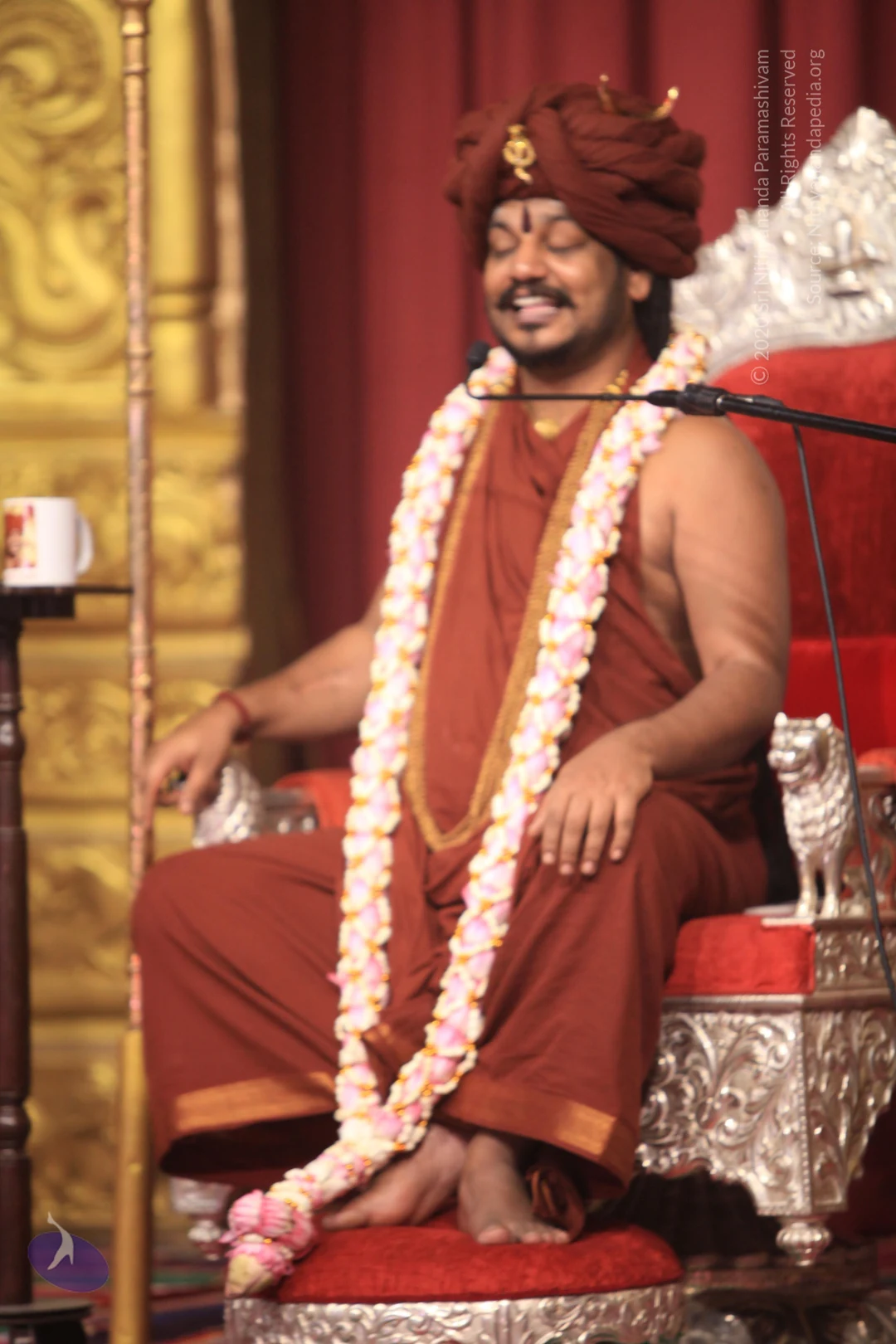
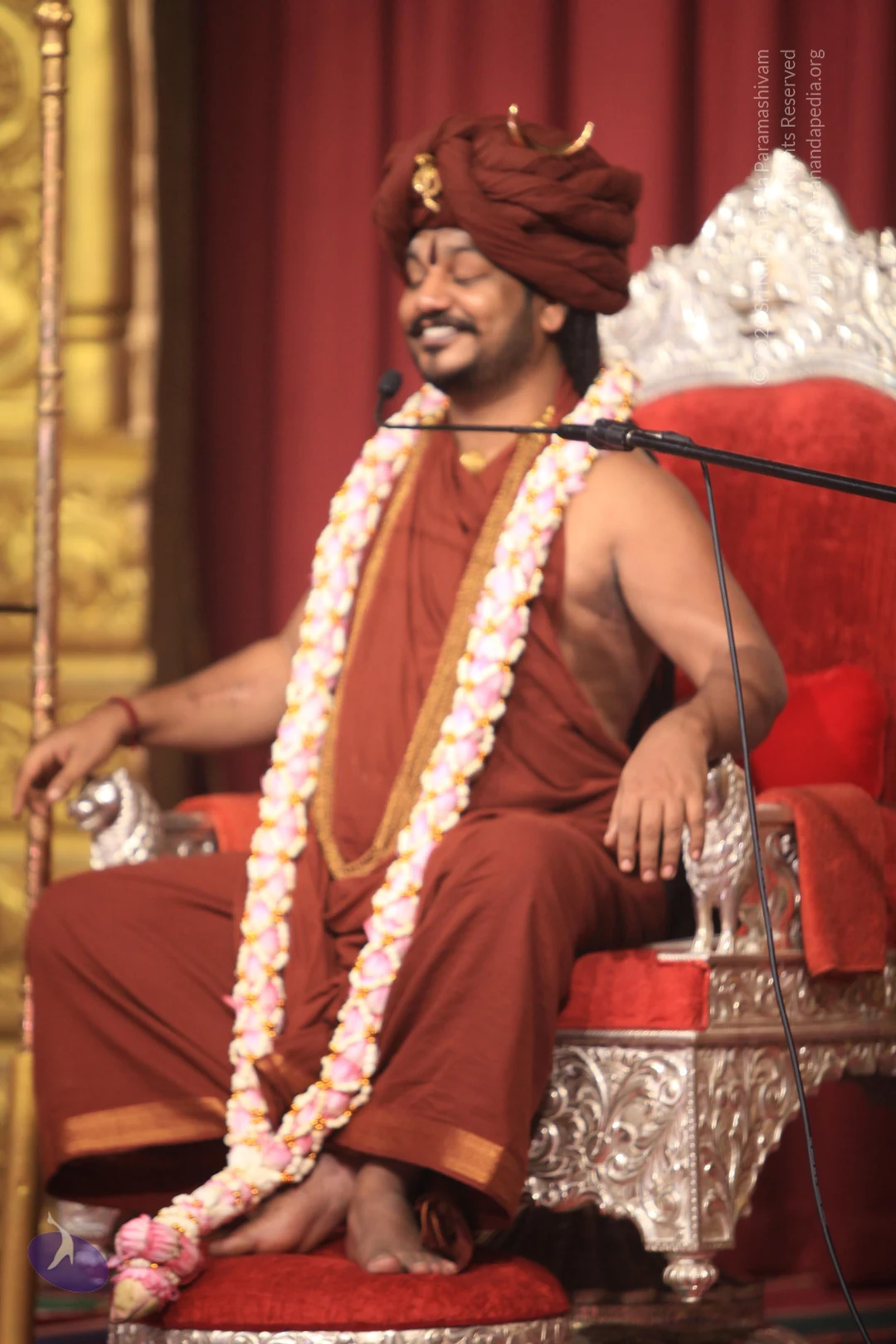
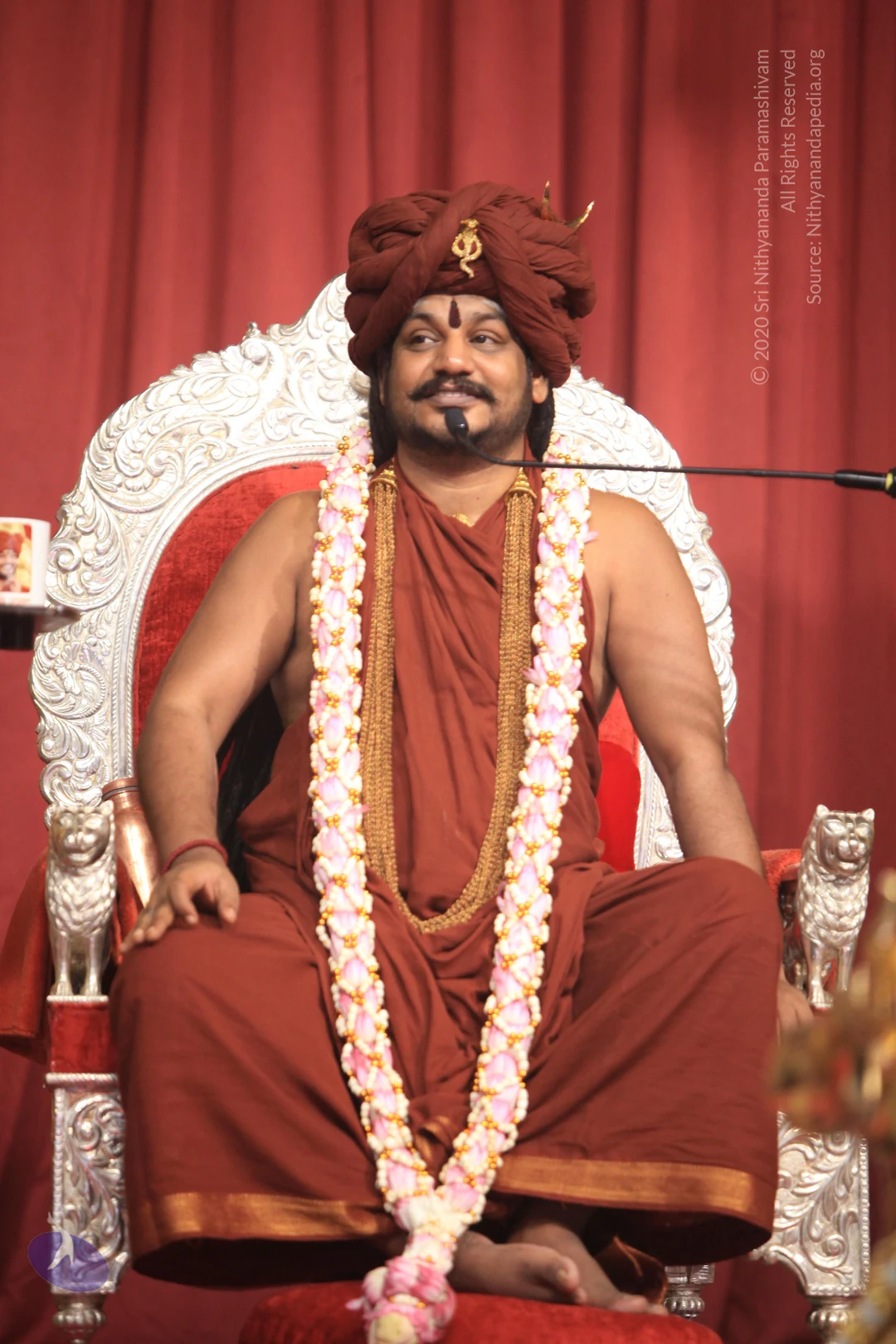
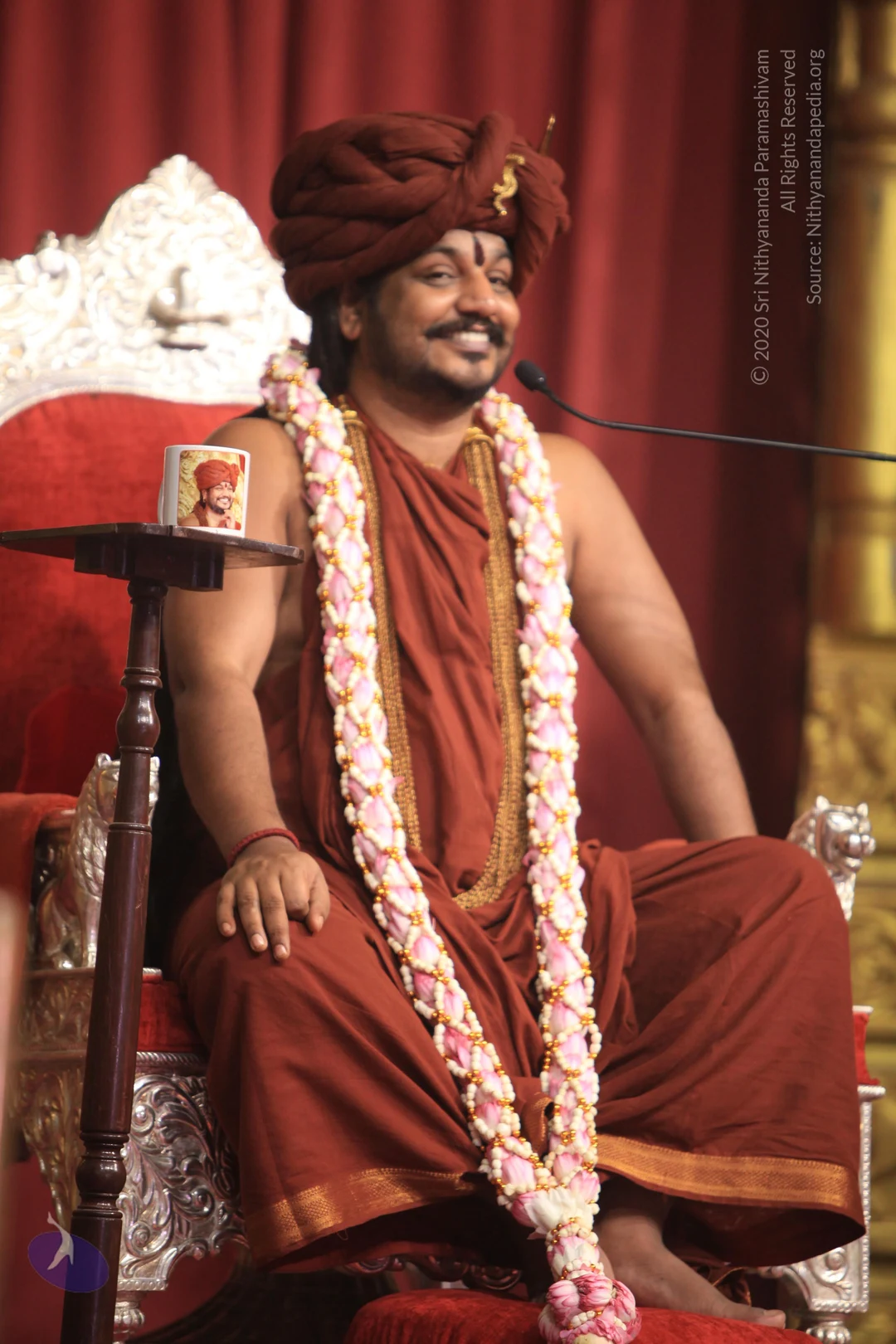
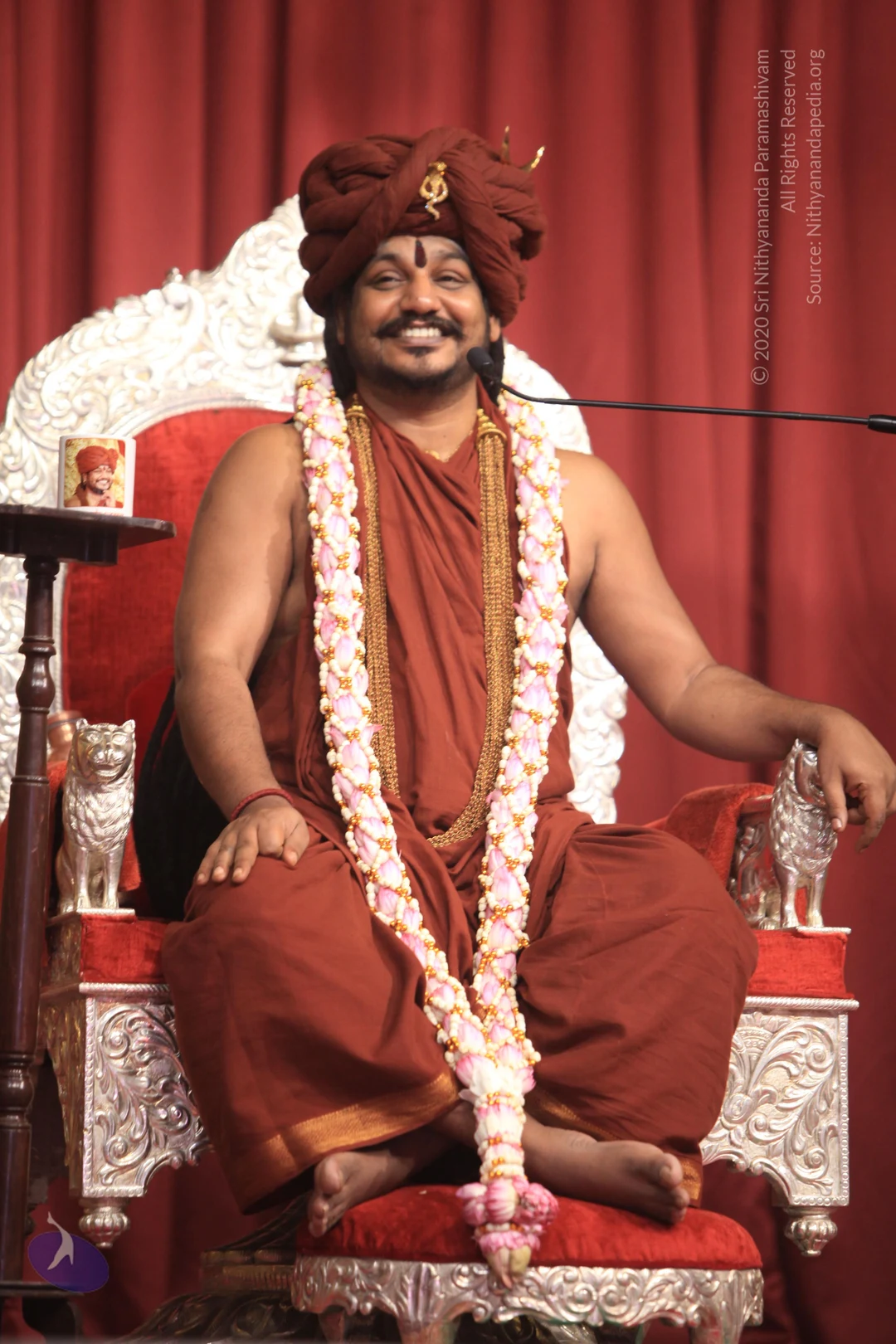
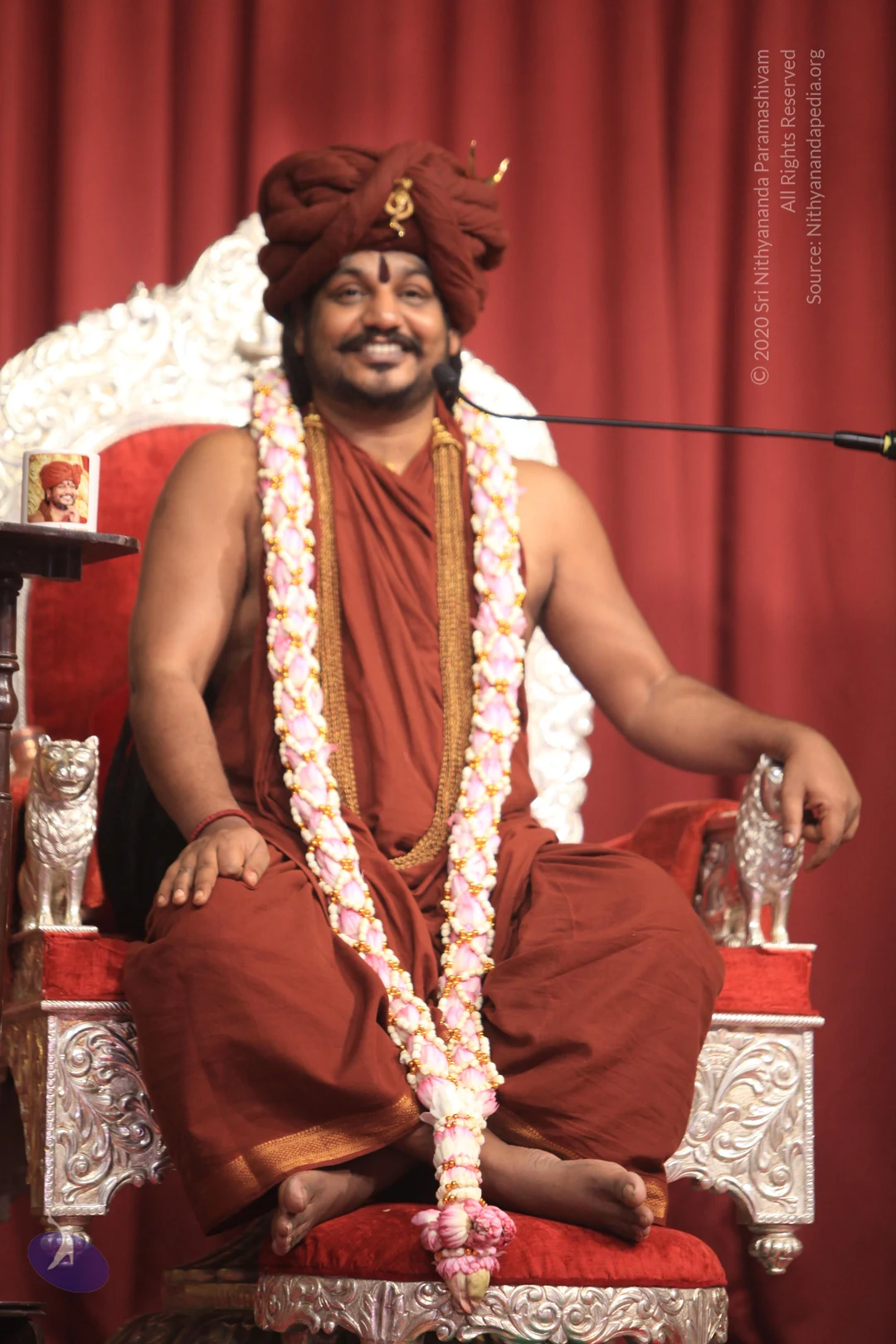
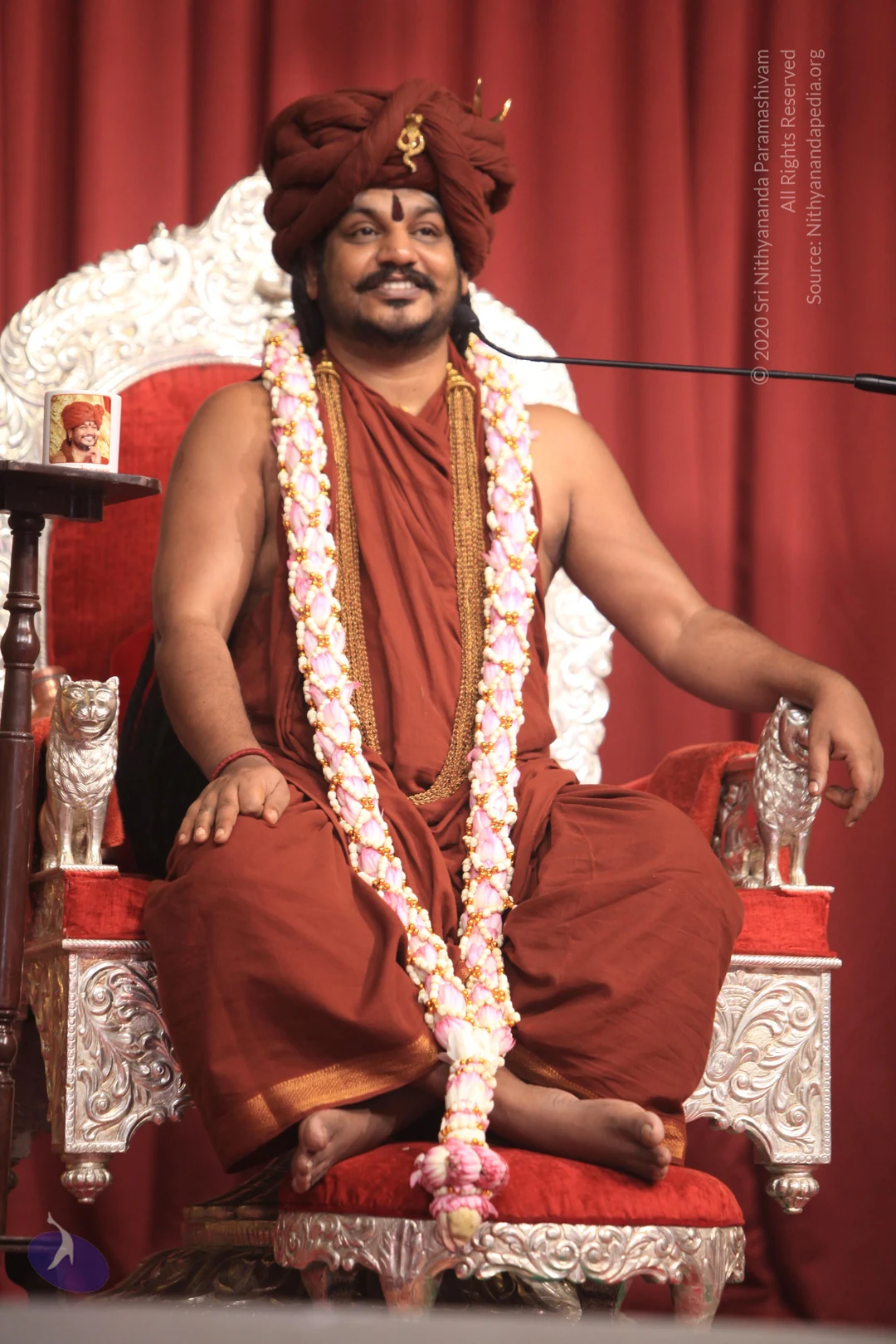
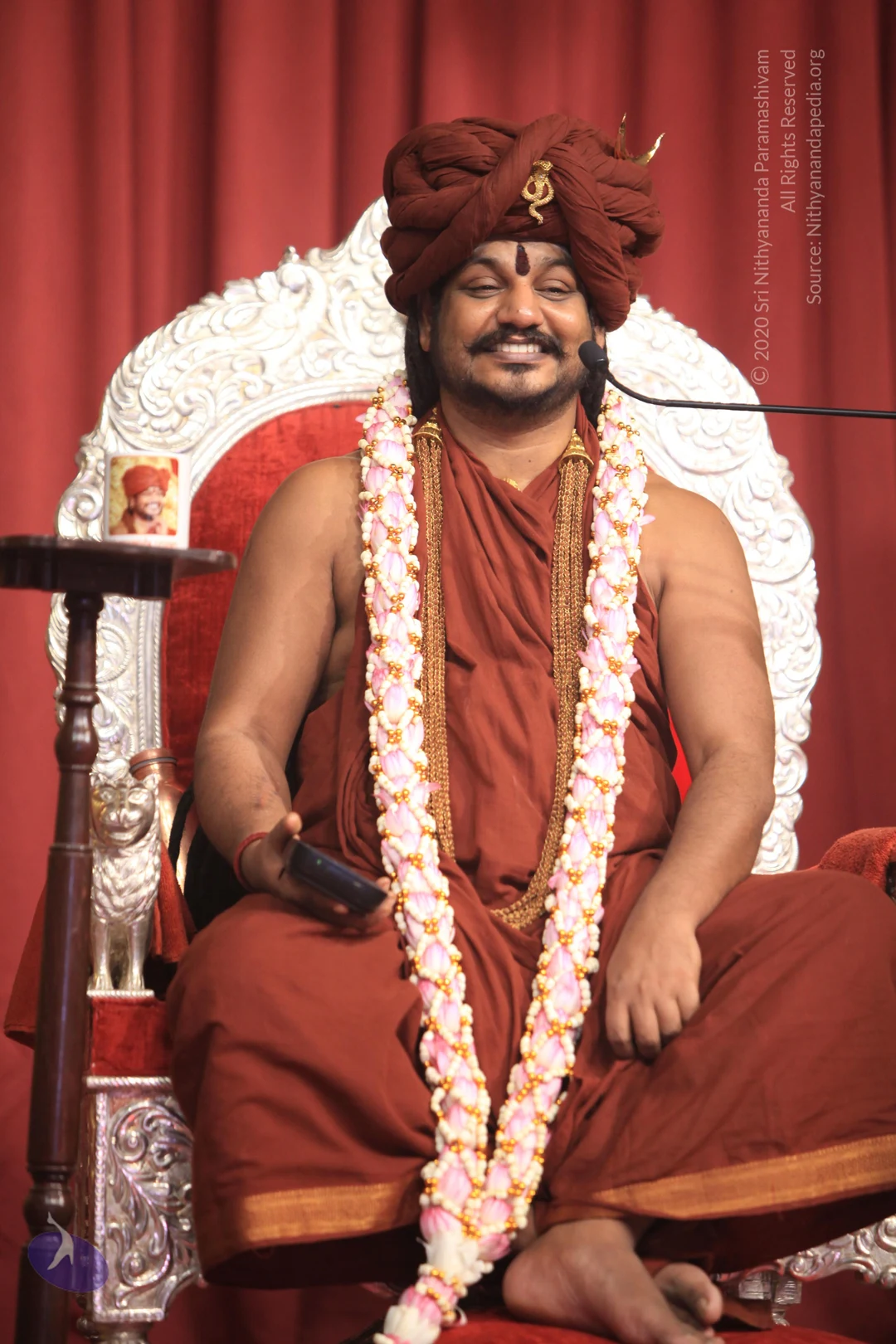
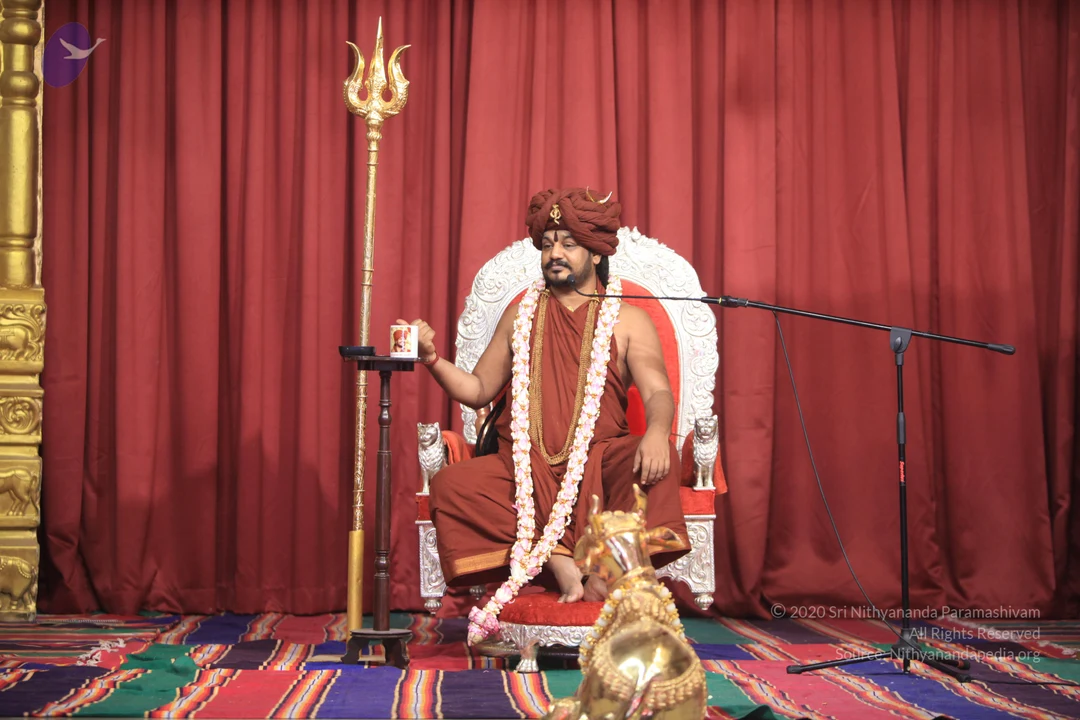
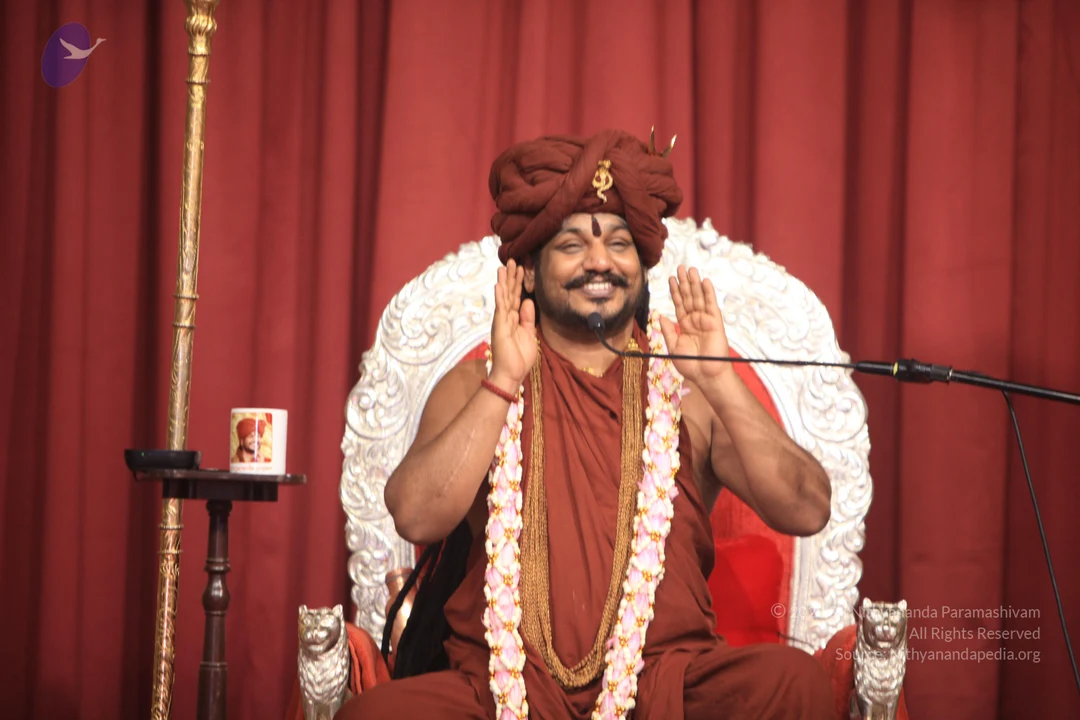
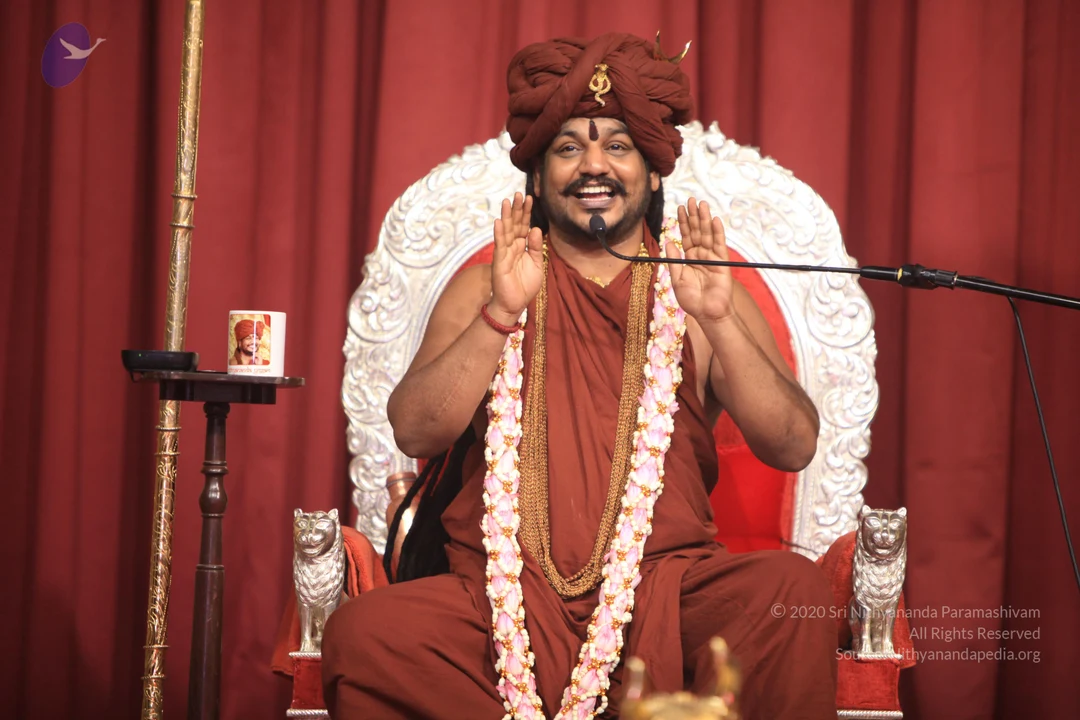
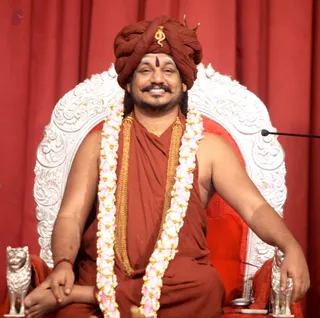
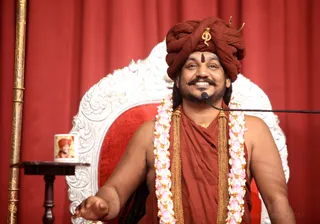
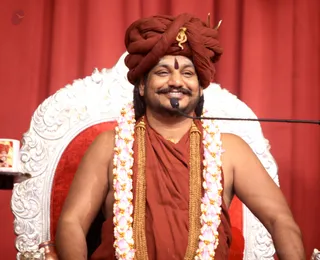
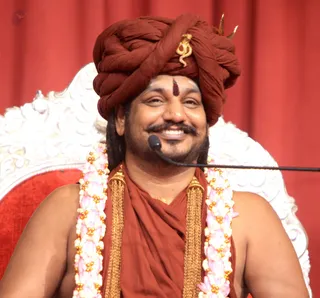
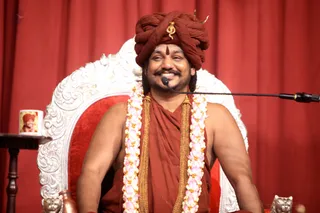
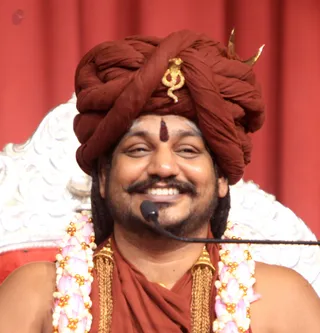
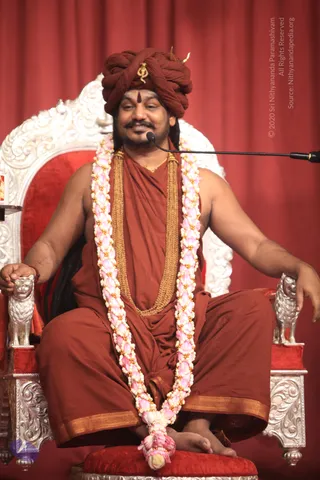
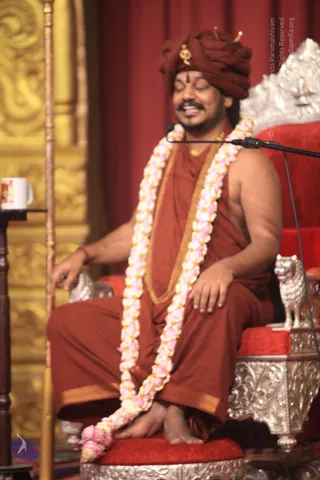
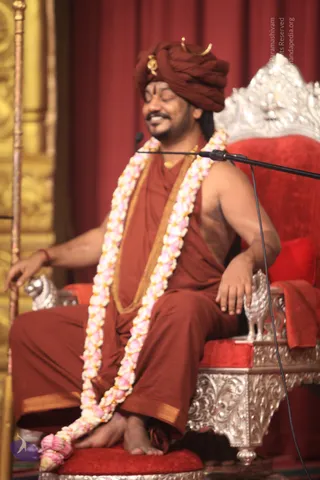
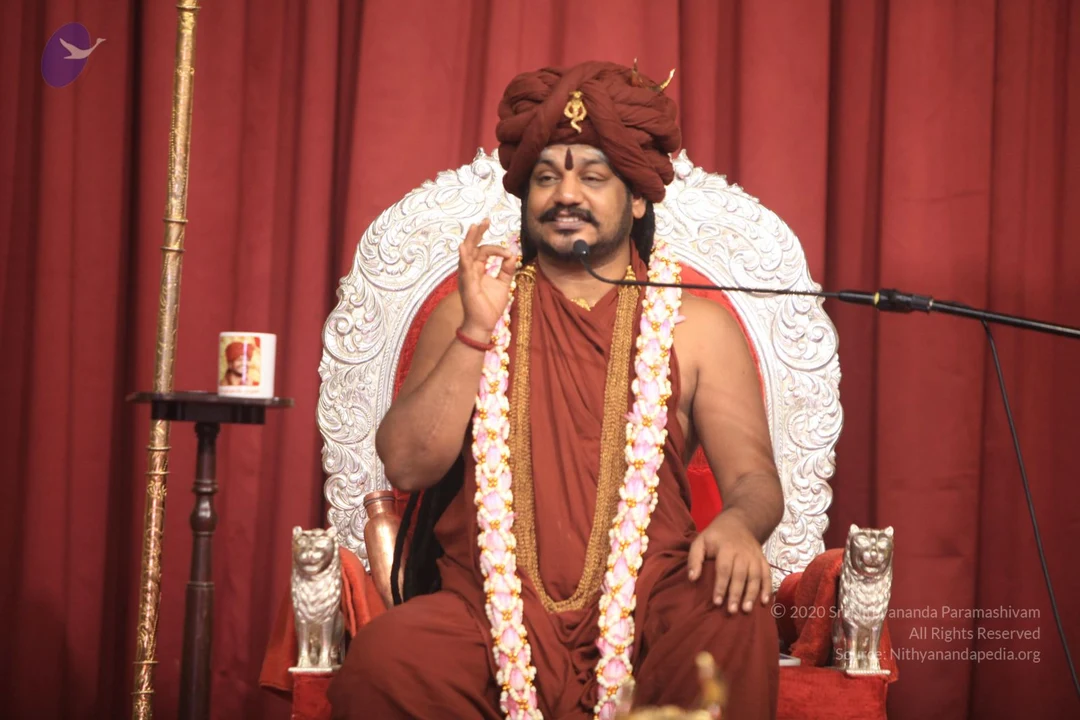
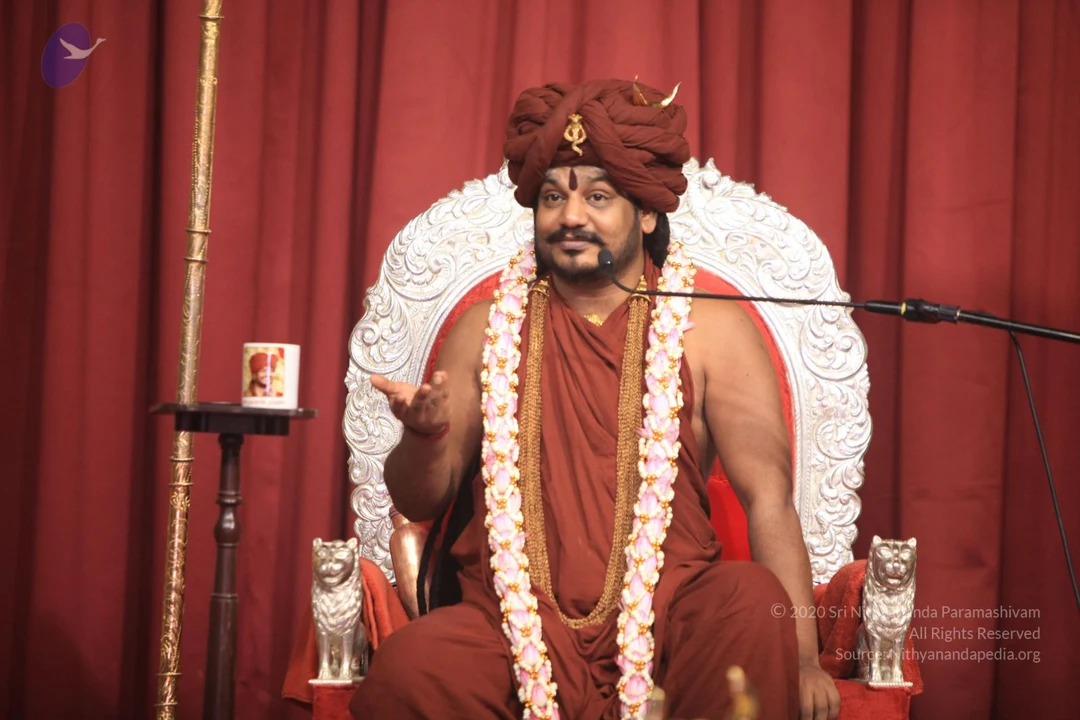
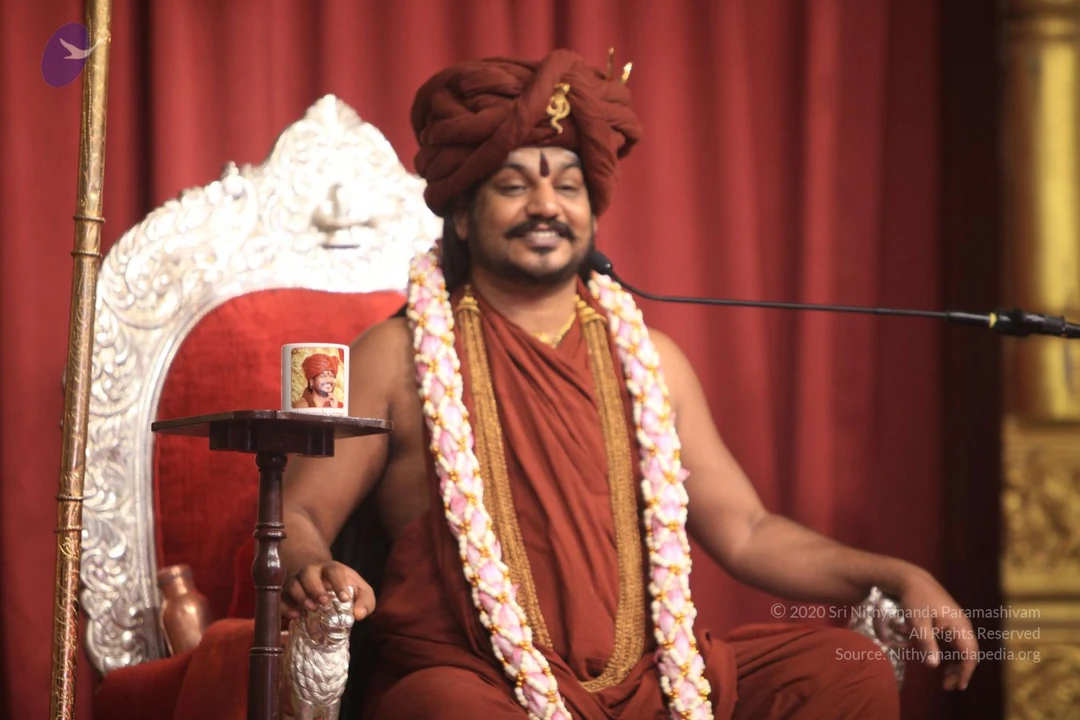
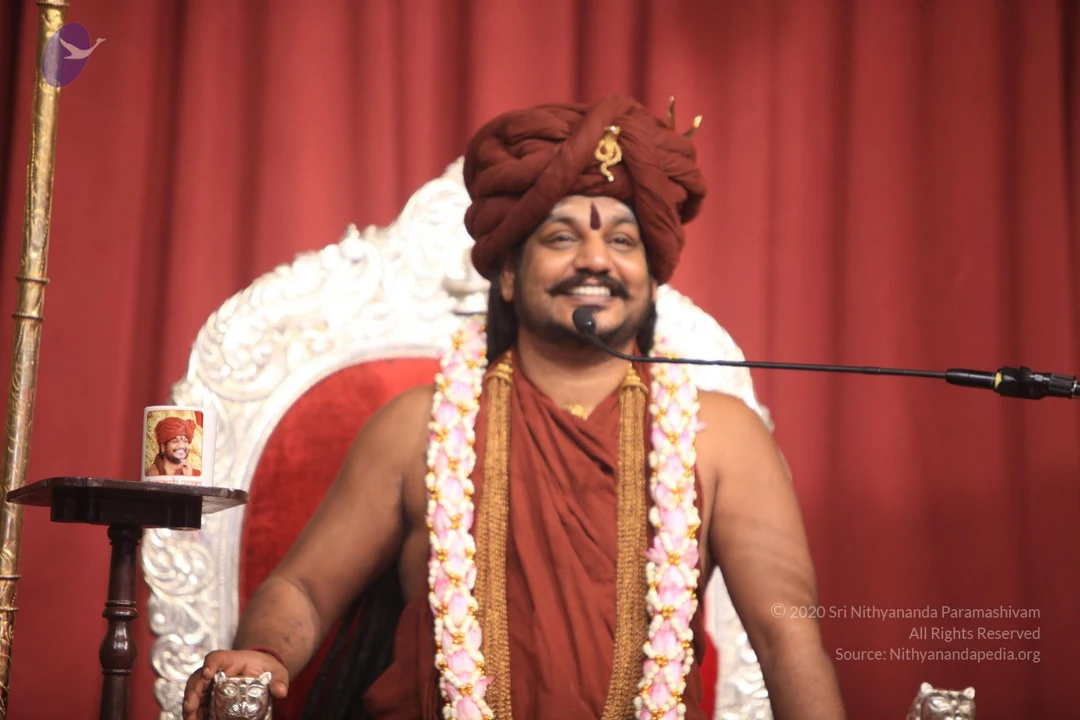
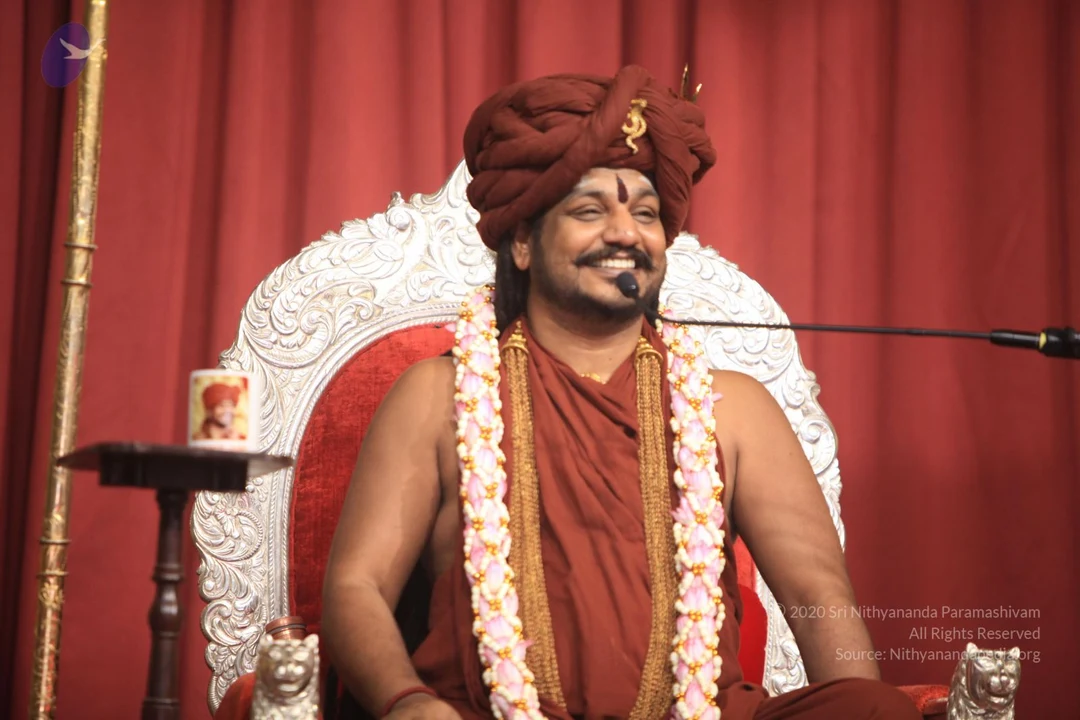
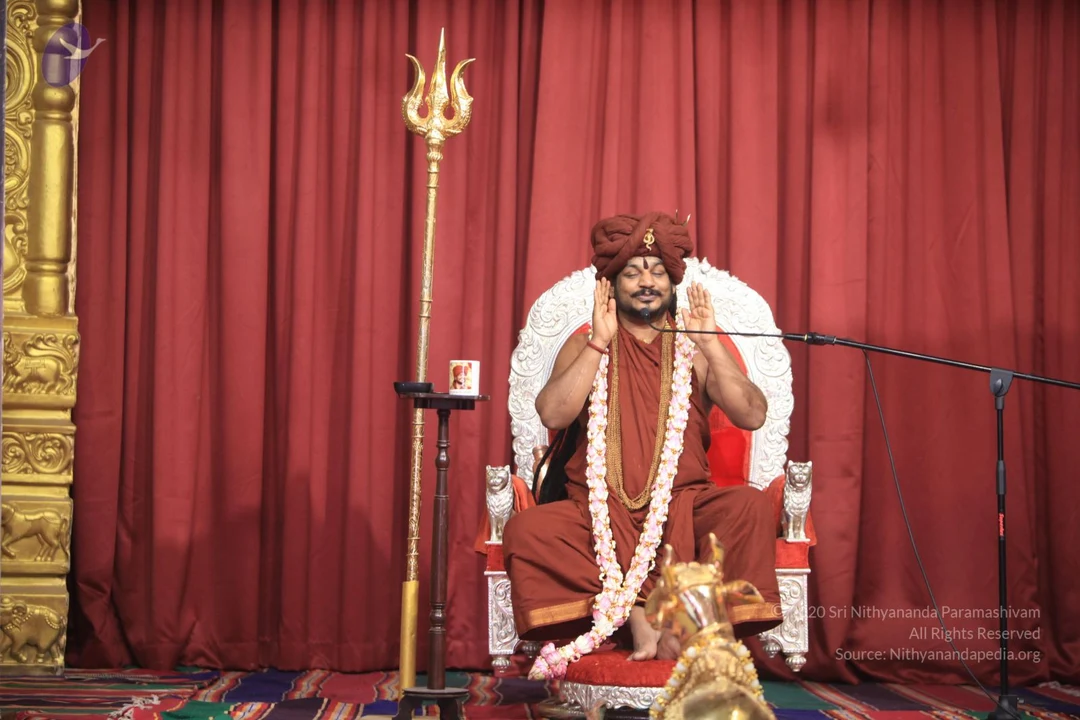
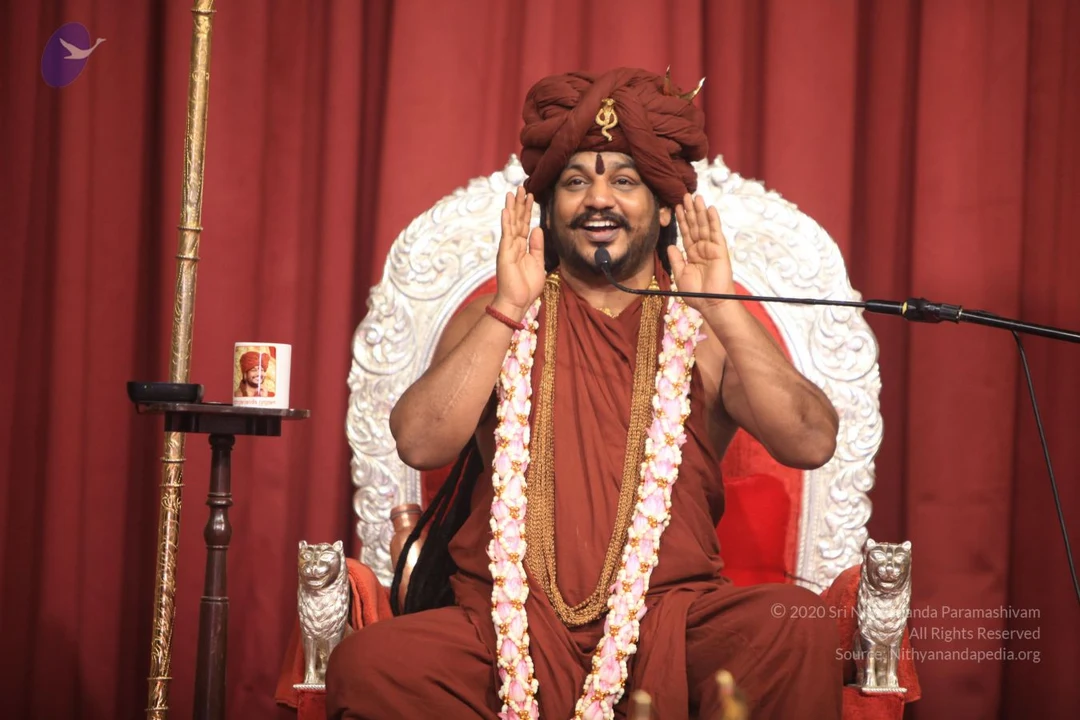
A smiling man sits on an ornate silver throne with carved scrollwork and silver lion-head armrests in front of a red drape. He wears a rust-red turban with a gold emblem, red-orange robes, a gold necklace and a long garland of pink and white flowers. A vertical red-brown tilak marks his forehead and a red thread is tied on his wrist. A microphone stand is at the right edge. Appearance cues include the turban, swept-back hair and ornate ceremonial dress, consistent with Swamiji (probable) seated for satsang; the page notes an event at Bengaluru Adheenam.A smiling man in a rust-red turban with a gold ornament and a small red tilak mark sits on a white ornate carved throne against a red curtain. He wears a rust-red shawl over his bare chest, with pink-and-white flower garlands and gold-coloured tassels draped around his neck. He extends one hand toward the viewer while speaking into a microphone on a stand. A small side table holds a framed photo of a similarly turbaned man. A tall gold staff stands at the left. Swamiji (probable): the seated man wears a rust-red turban and shawl with ornate gold adornments and garlands, and is shown in a satsang-style seated discourse.A smiling man in a dark red turban with a gold ornament at the front sits on an ornate white and silver carved throne against a red curtain. He wears a red-brown saffron-toned robe, a long gold-braided sash, and a garland of white and pink flowers with gold beads. A red tilak mark is on his forehead and a microphone stands in front of him. Swamiji (probable): the turban, ornate ceremonial garland and robe match the page's description of a presiding teacher.A smiling man in a rust-red turban decorated with a gold snake ornament sits on an ornate white-and-red throne-style chair before a red curtain. He wears a red-brown wrap over the shoulders, a gold chain necklace, and long garlands of pale pink and white flowers with gold beads. A microphone stand is in front of him, and a small red bindi-like mark is on his forehead. Swamiji (probable): the turban, rust-red robe, gold ornaments, flower garlands and throne seating are the qualifying cues, and he appears to be giving a satsang.A smiling man in a rust-red turban with a gold ornament and a small red tilak sits on an ornate white-and-silver throne with red cushions against a red drape. He wears a rust-red shawl over bare shoulders, with long gold-beaded necklaces and pink-and-white flower garlands. A microphone on a stand is in front of him, and a small framed portrait mug sits on a side table to his left. Swamiji (probable): the turban, shawl, gold necklaces and garlands on a throne match the page's description of a satsang event. Lion-head carved armrests and a copper pot are visible at the edges.Close-up photograph of a smiling man in a rust-red turban with a gold snake ornament and a gold trident-like crest at the top. He wears a red-brown shawl draped over the shoulders, multiple long gold ceremonial chains, and layered garlands of pink and white flowers with gold beads. A red tilak mark is on his forehead, and a microphone stand is in front of him. Behind him is a white ornate carved chair against a red curtain. a person: the turban with gold ornaments, the rust-red shawl and ceremonial gold chains are visible cues, but the appearance is not conclusive enough for a firm identification. Single seated person, in person.

Vishesha Deeksha

10 photosSource gallery
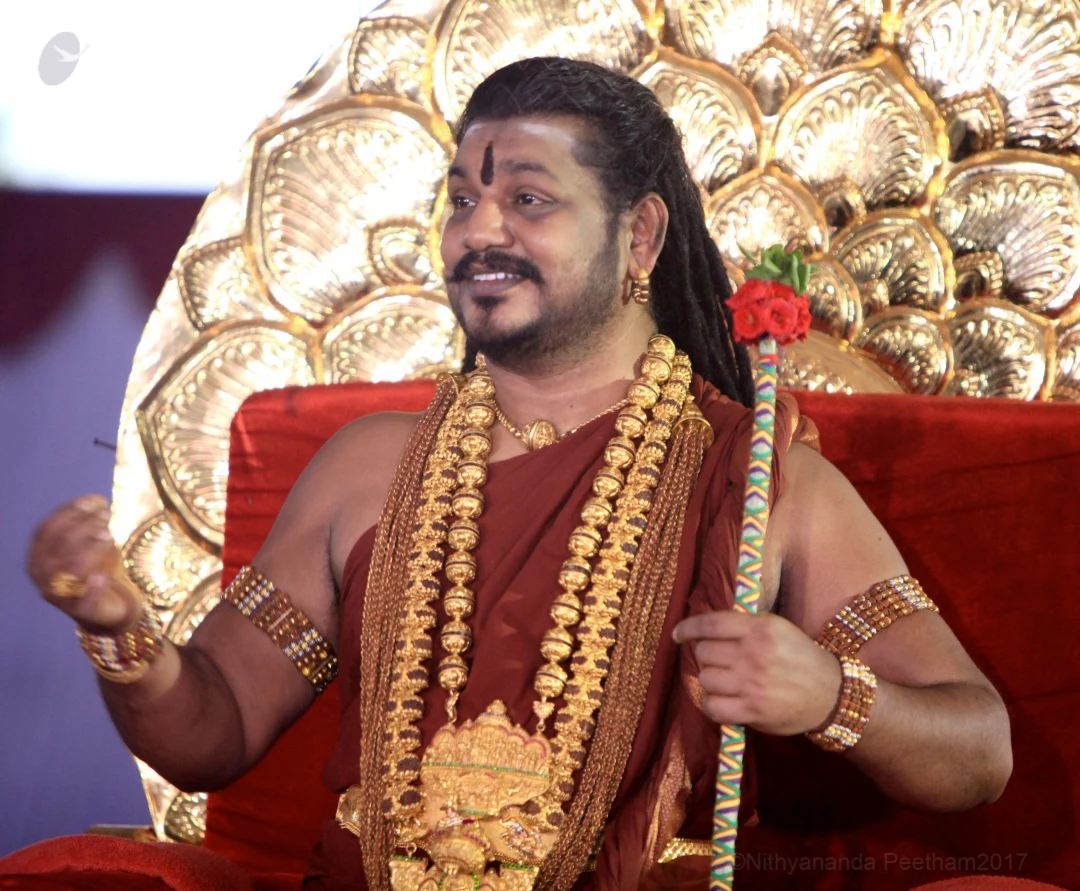
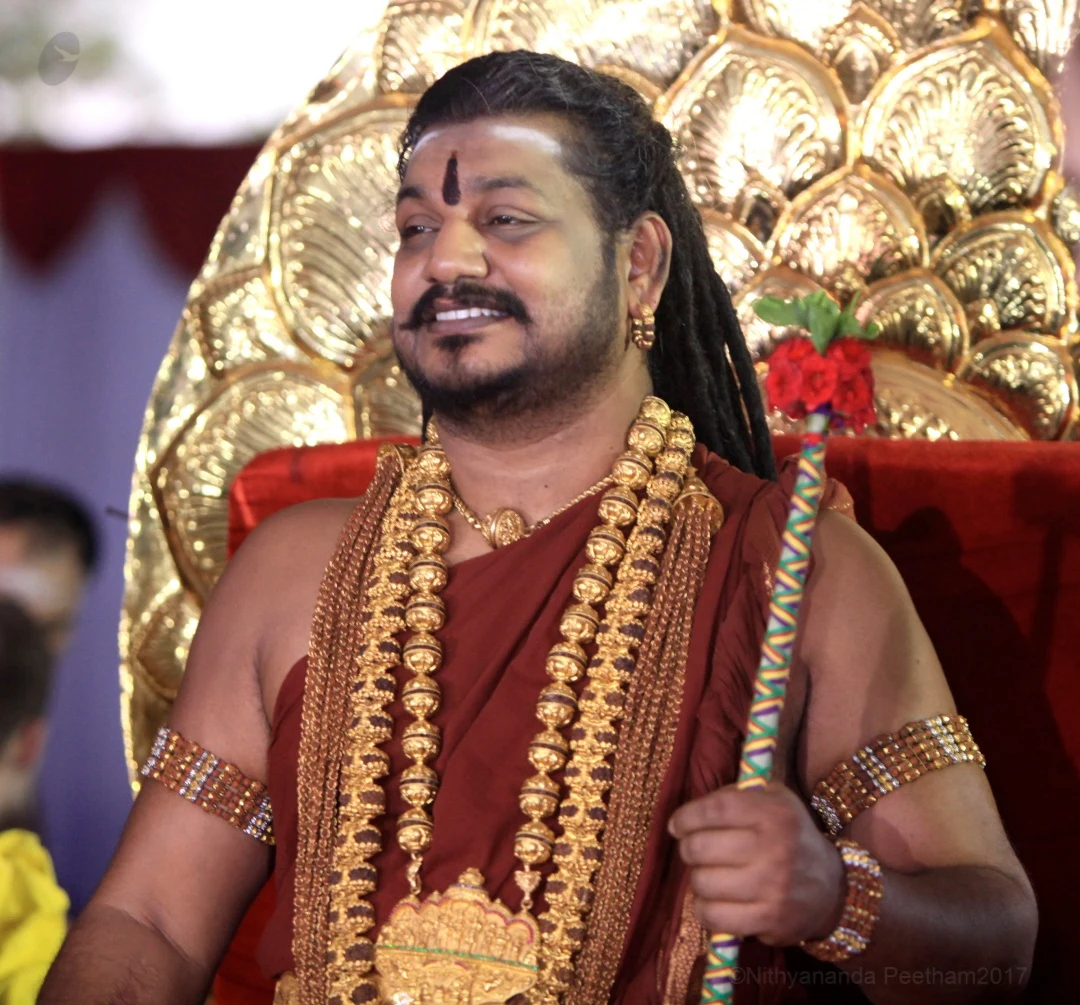
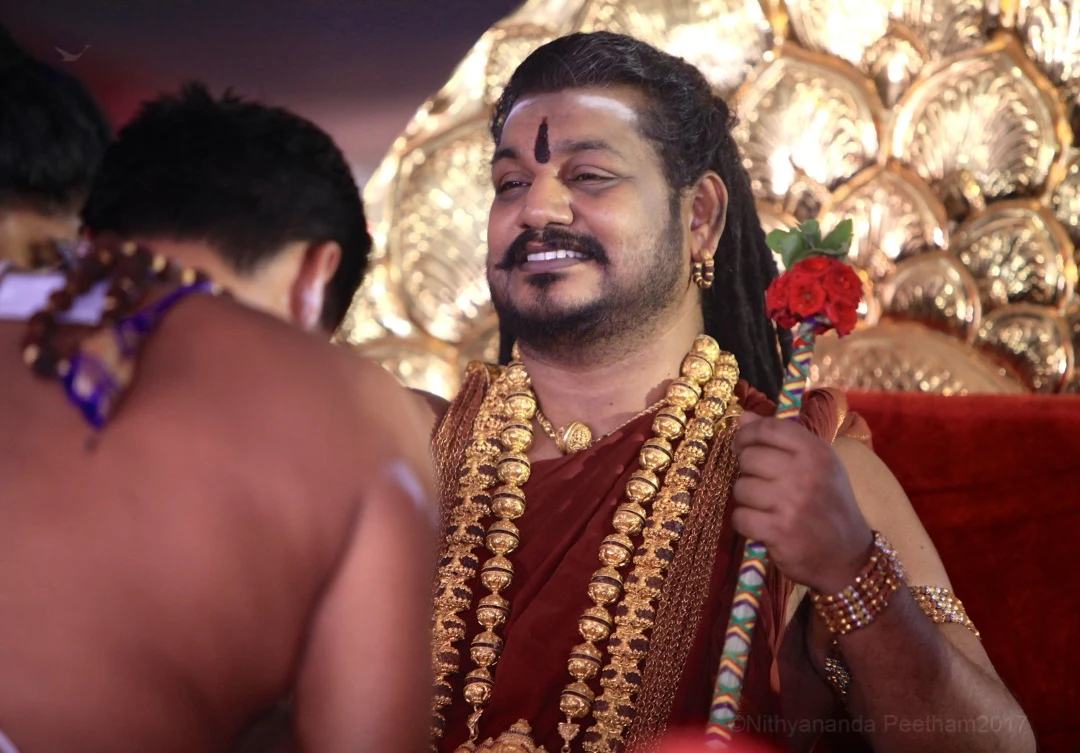
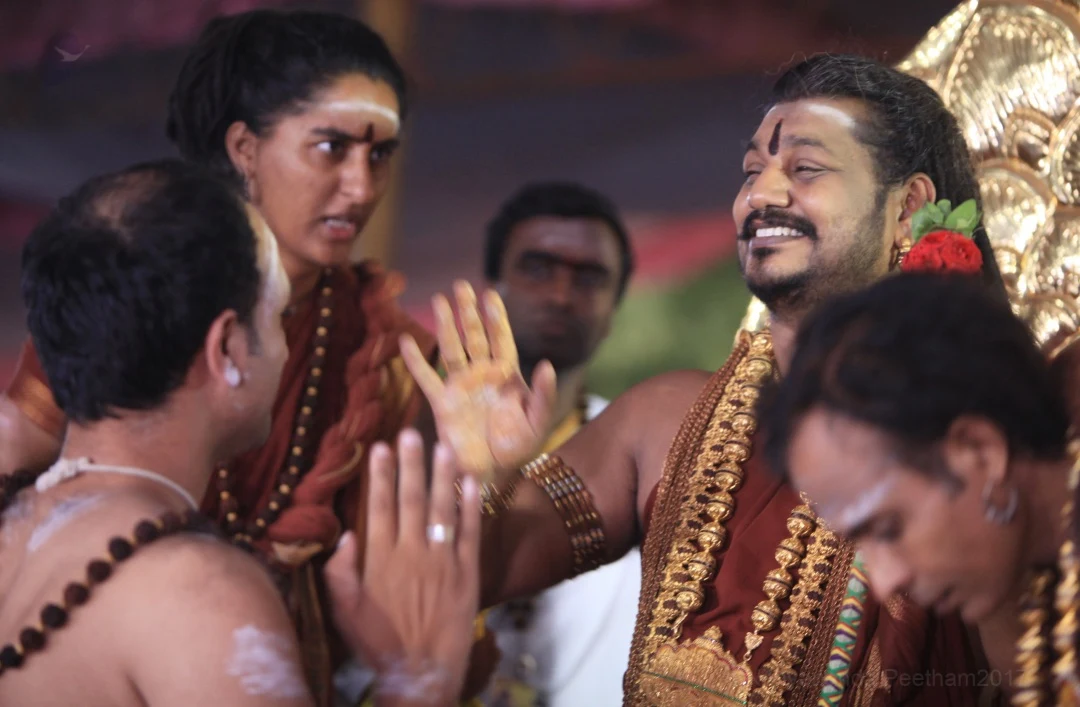
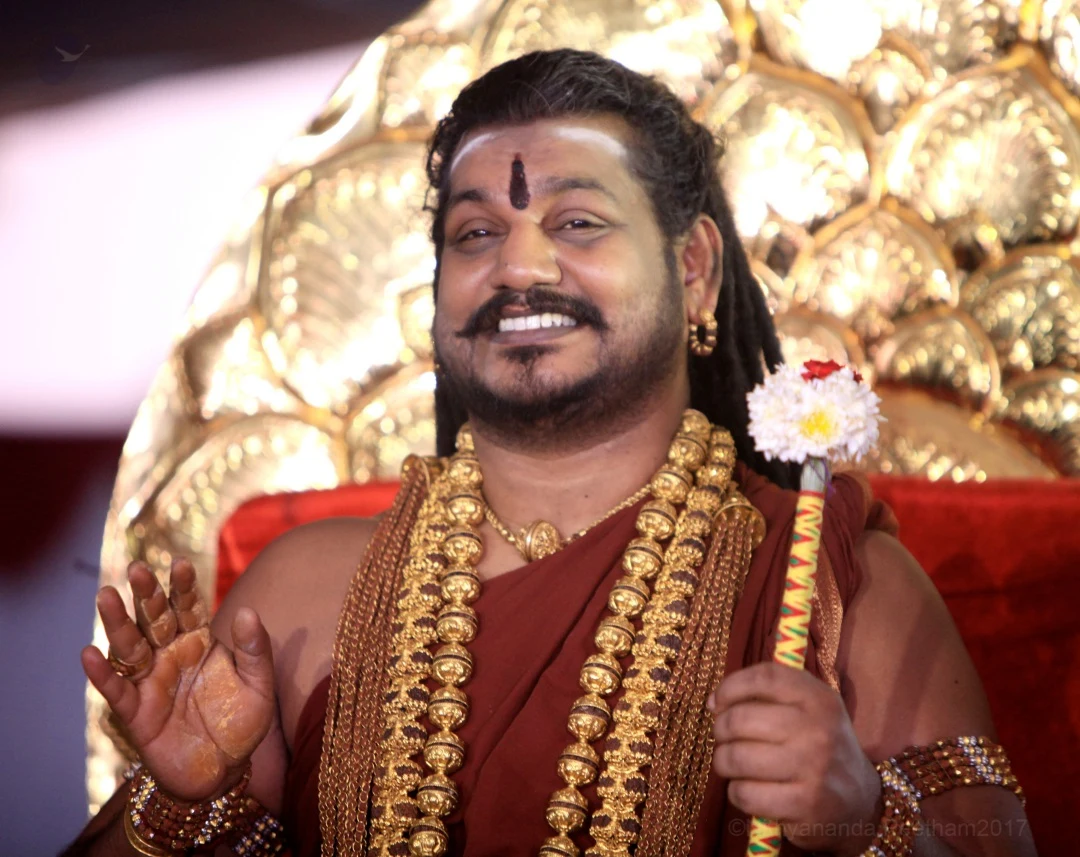
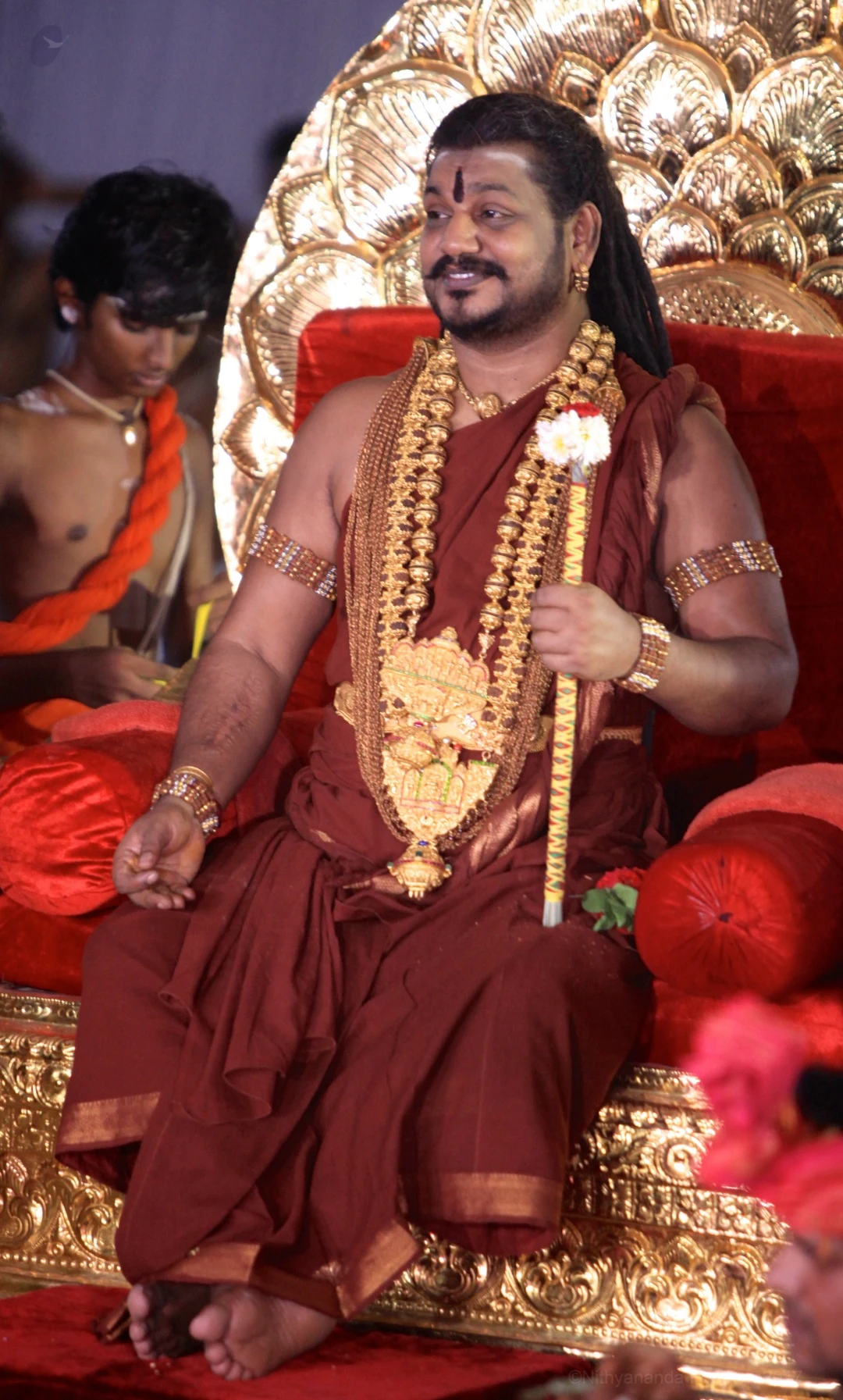
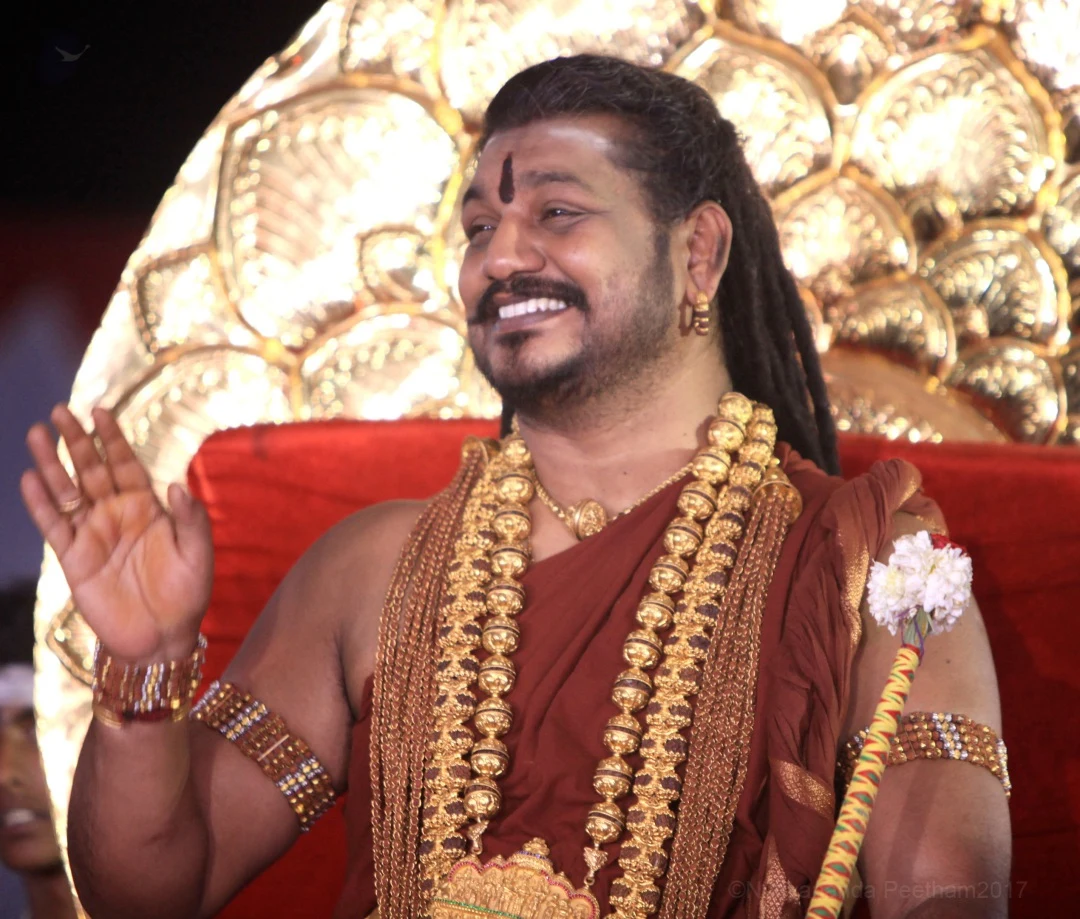
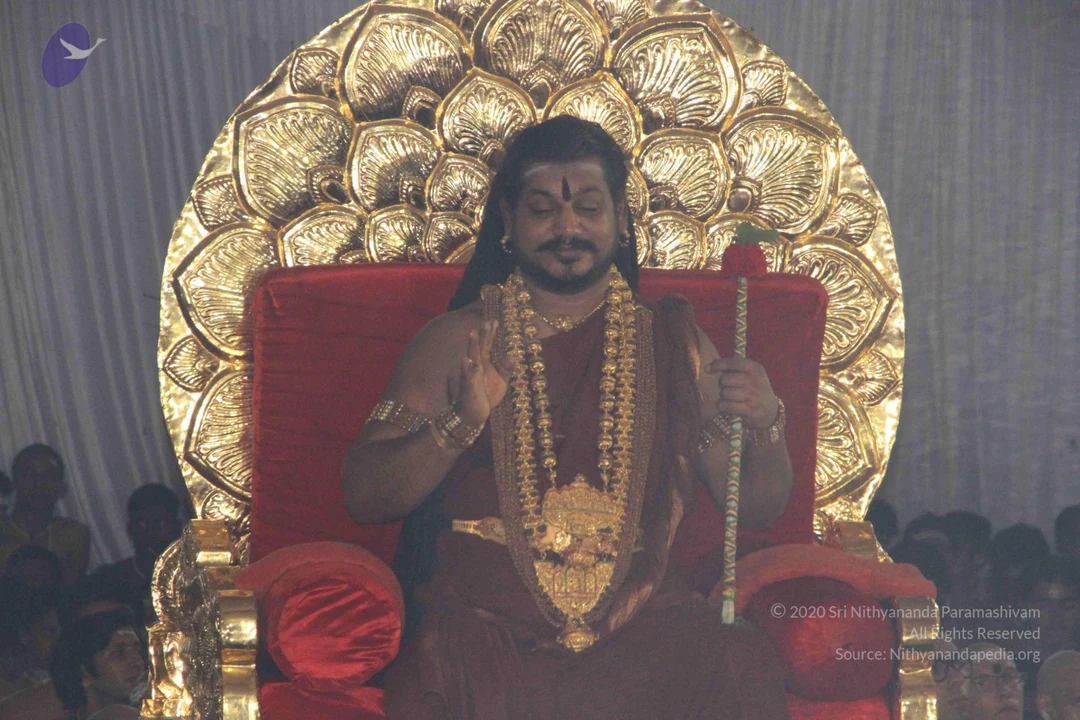
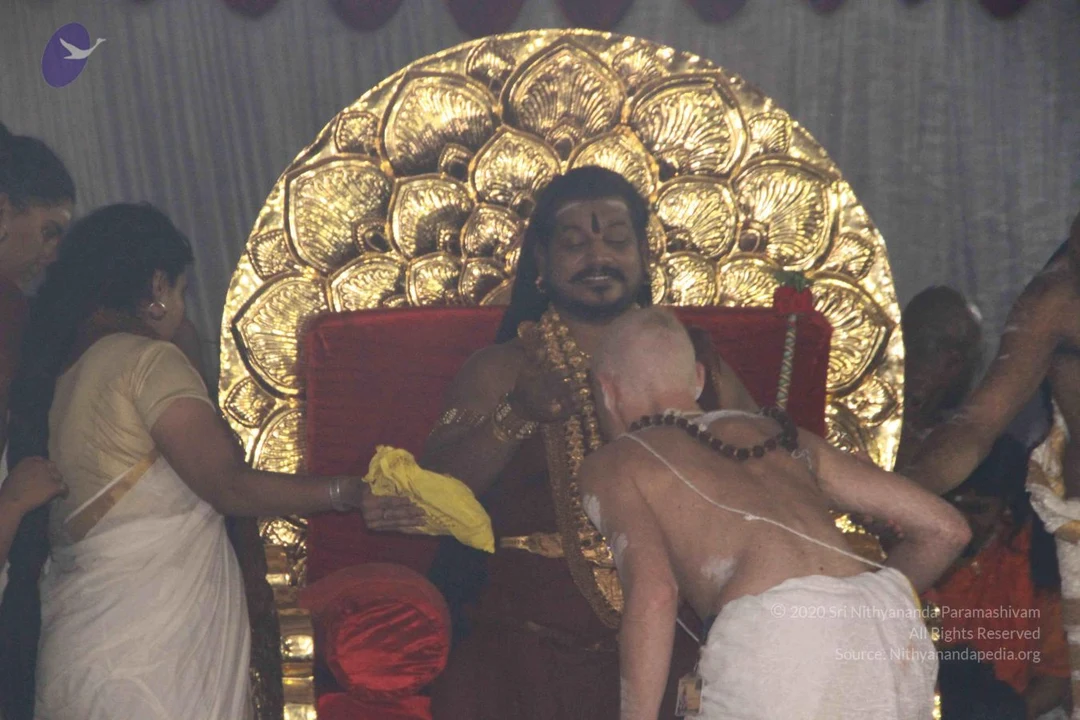
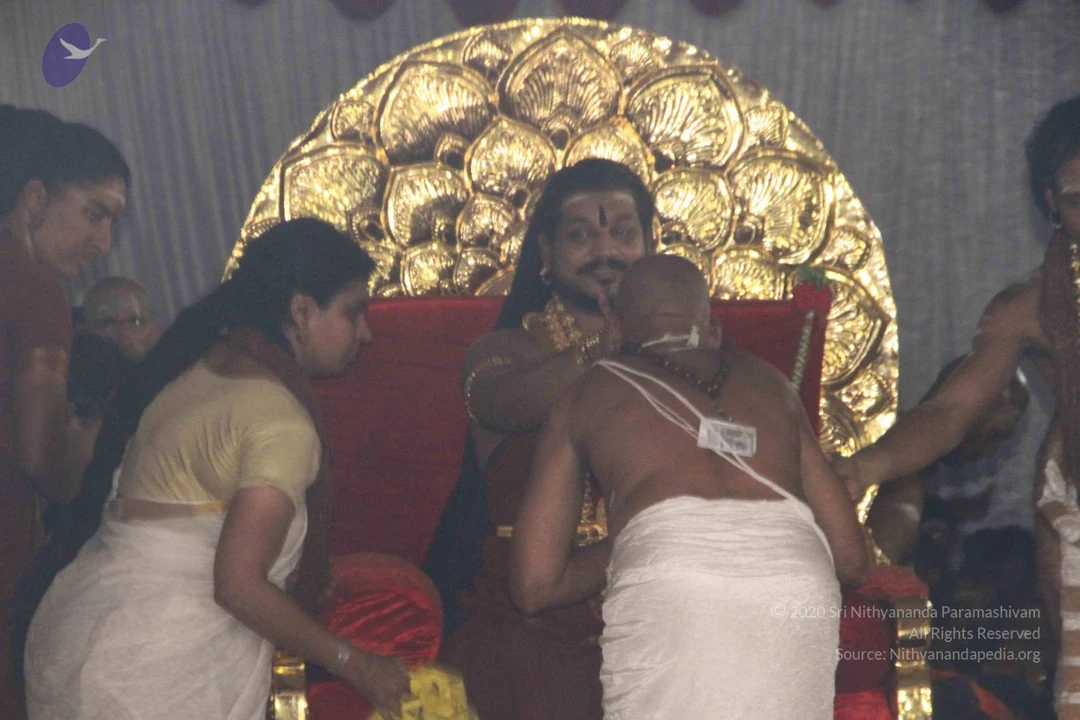
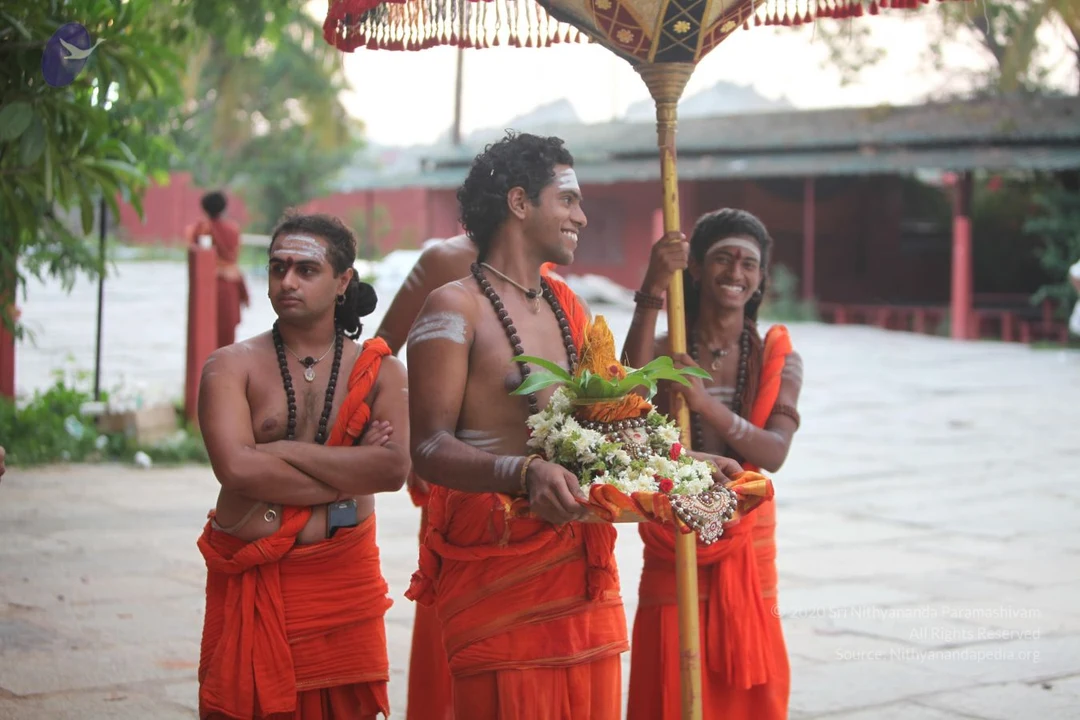
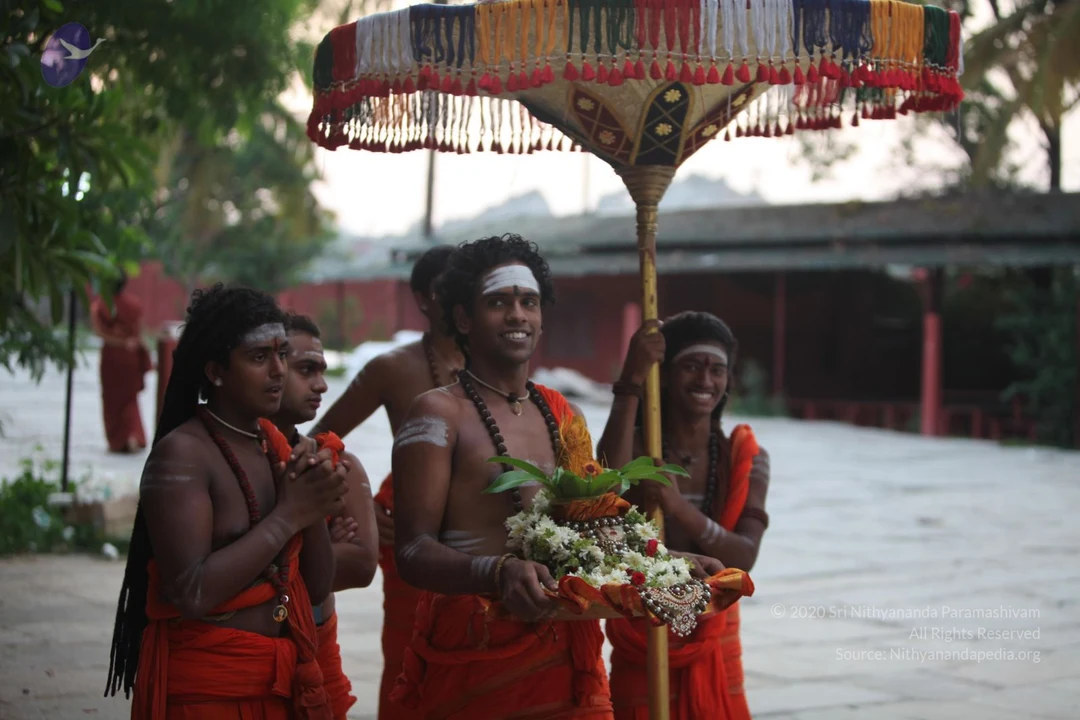
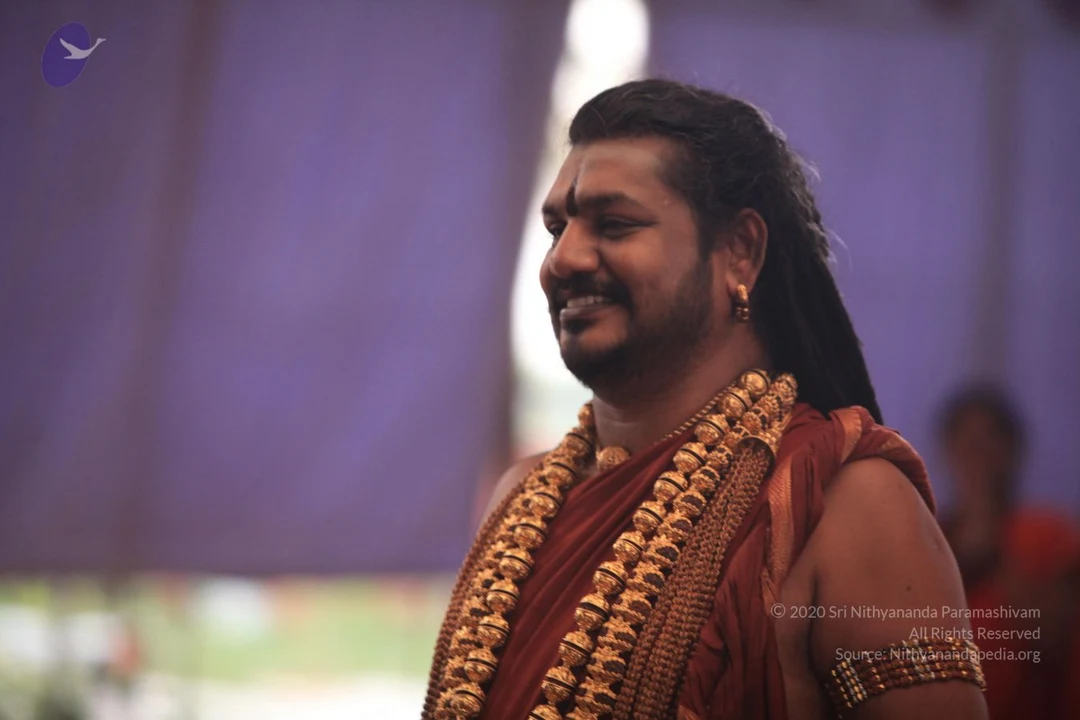
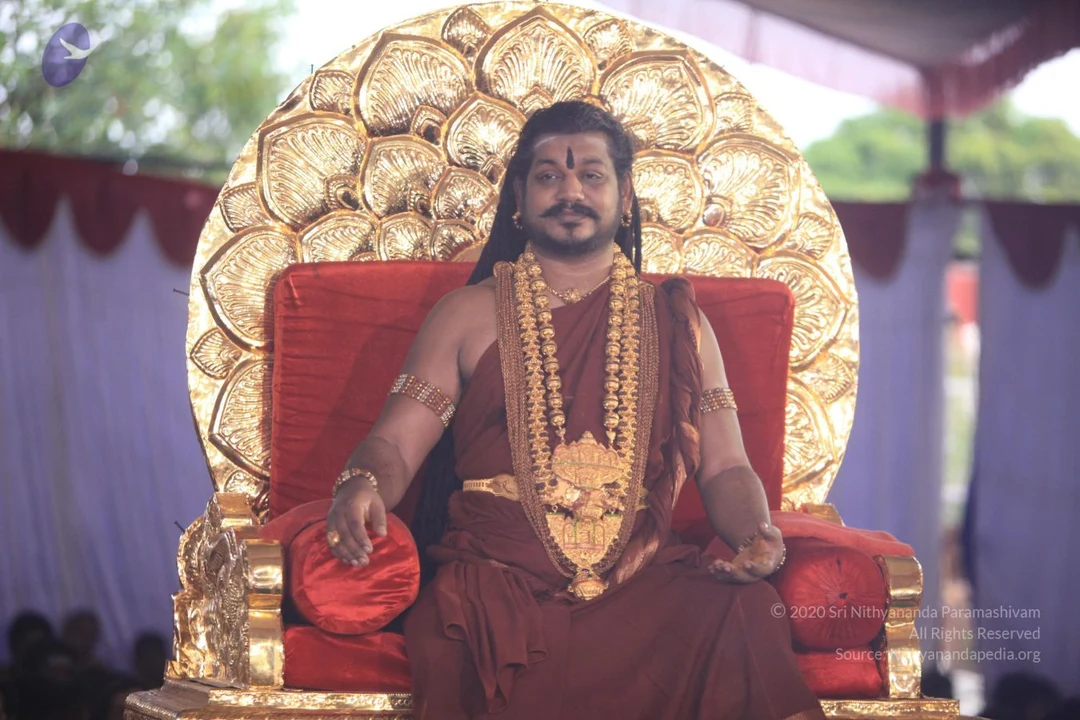
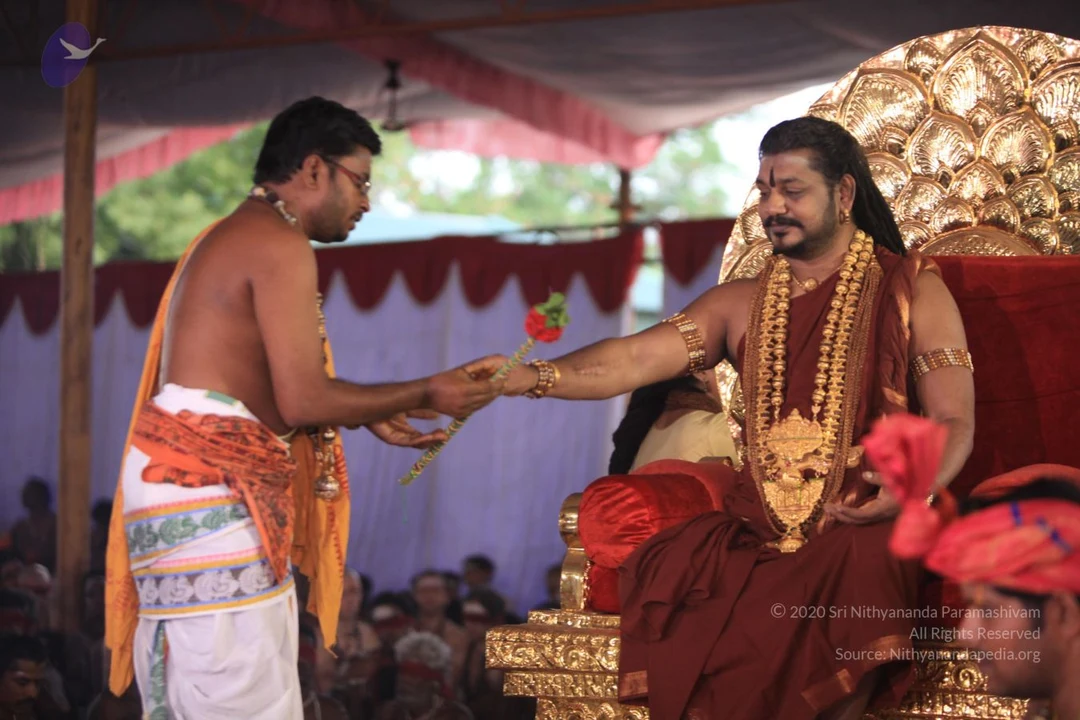
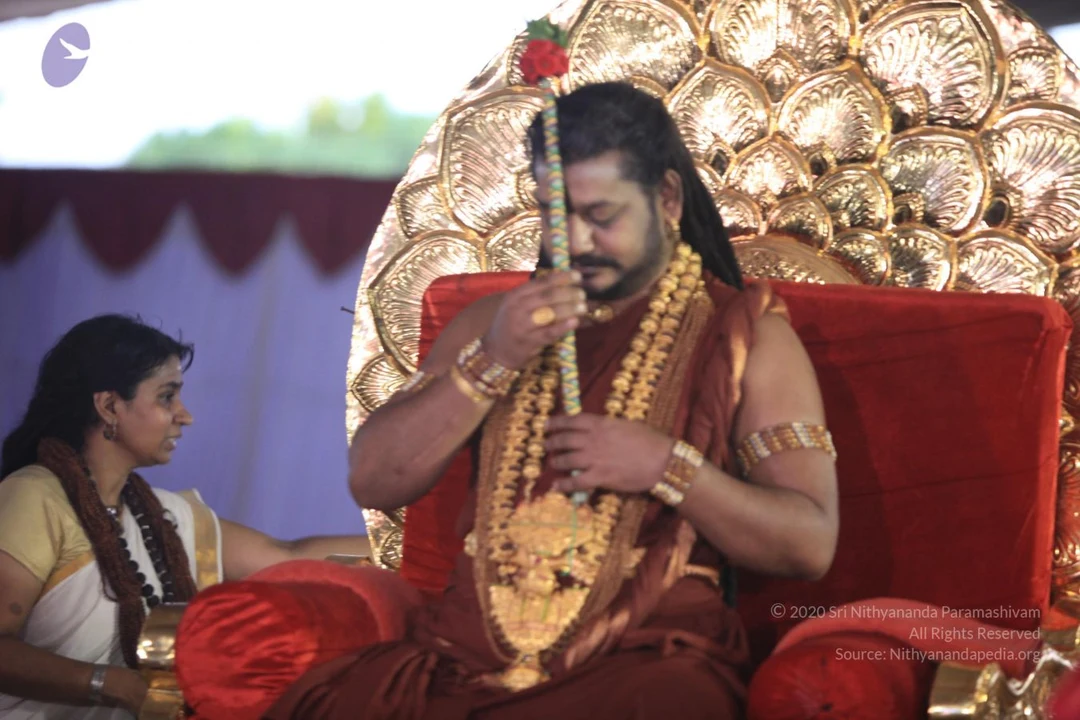
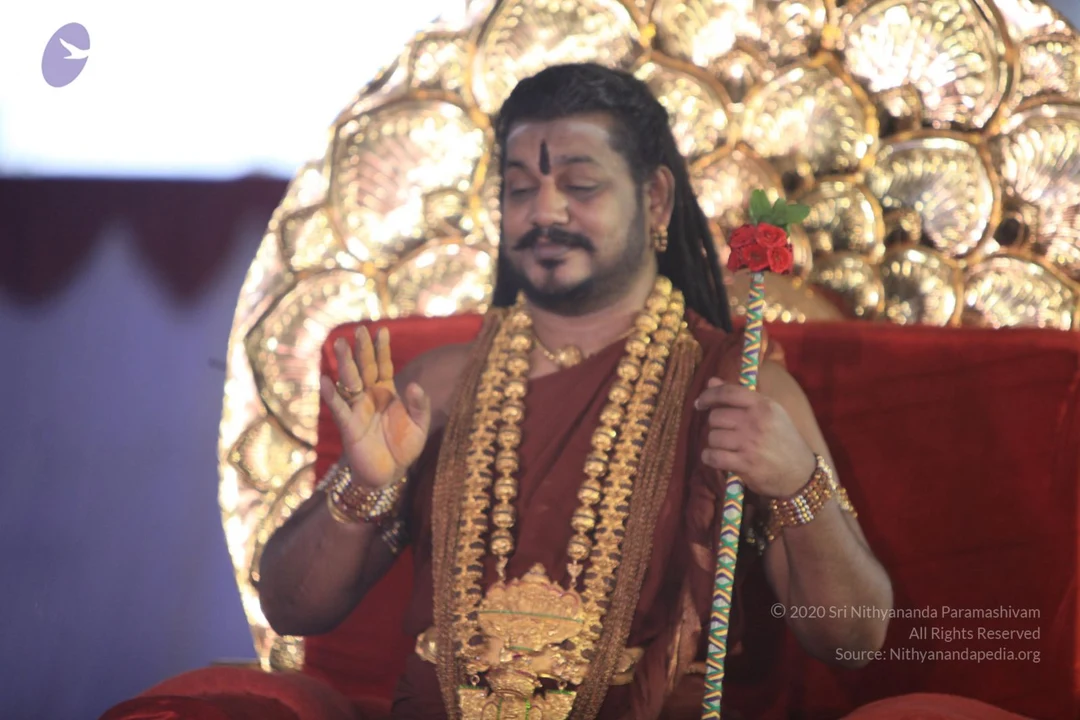
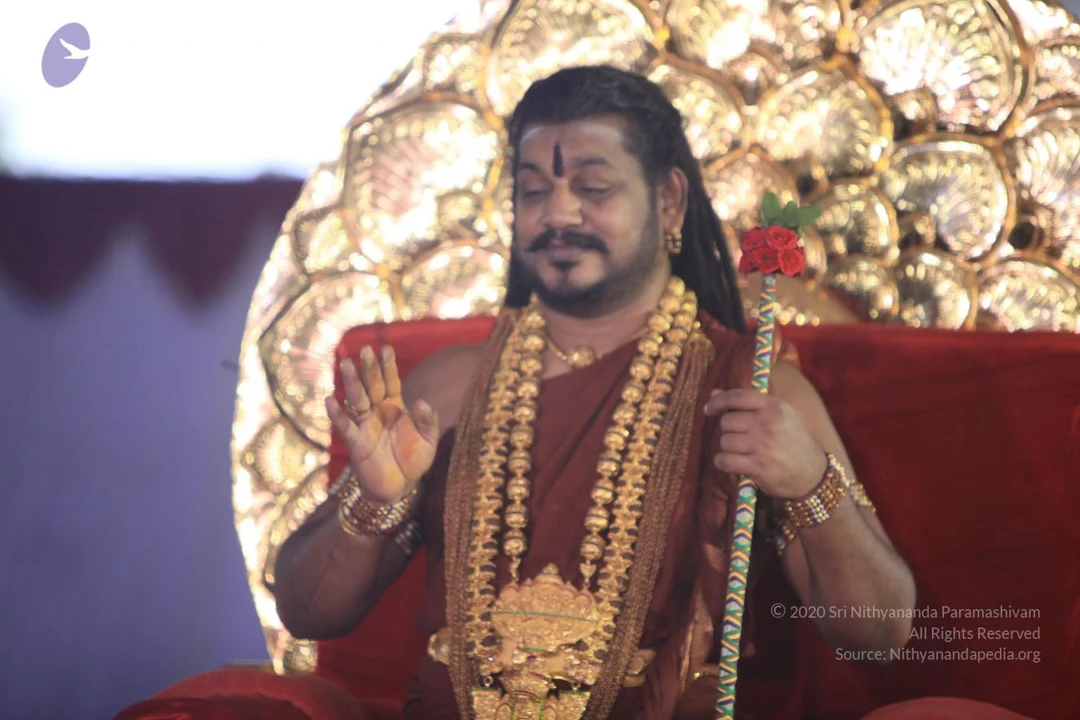
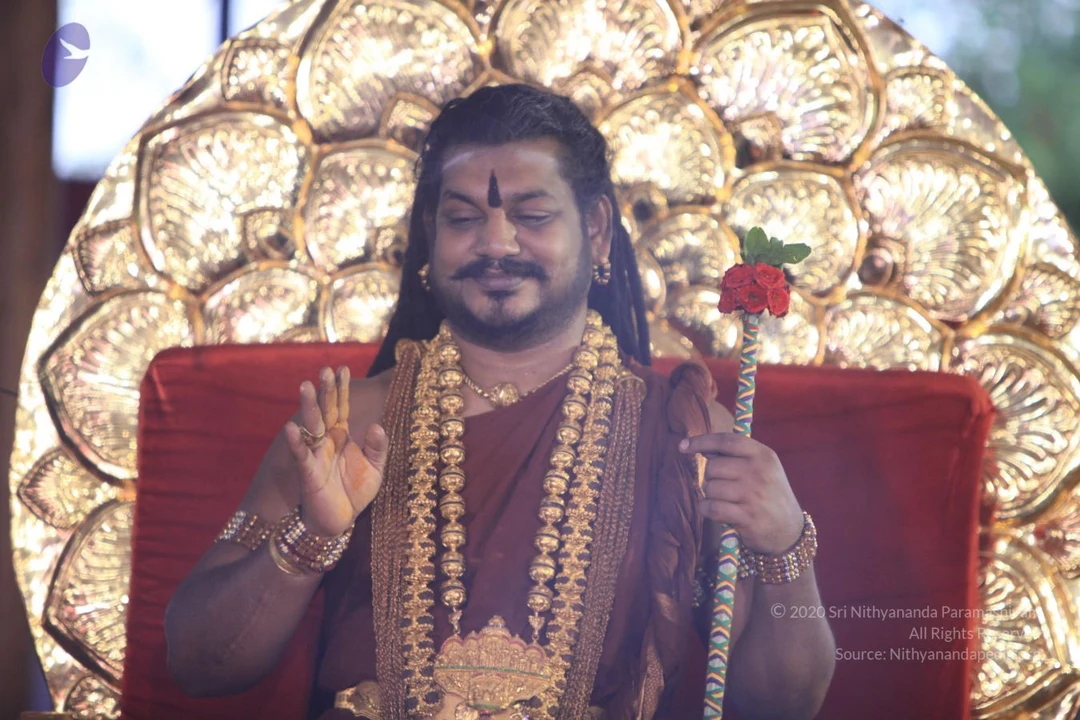
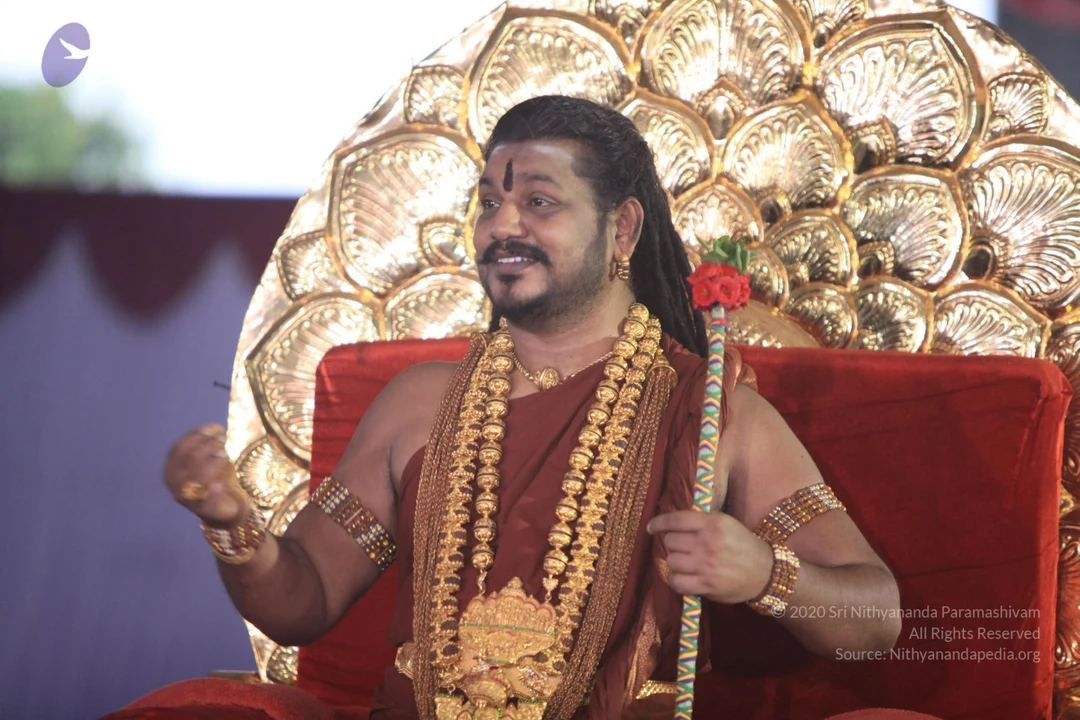
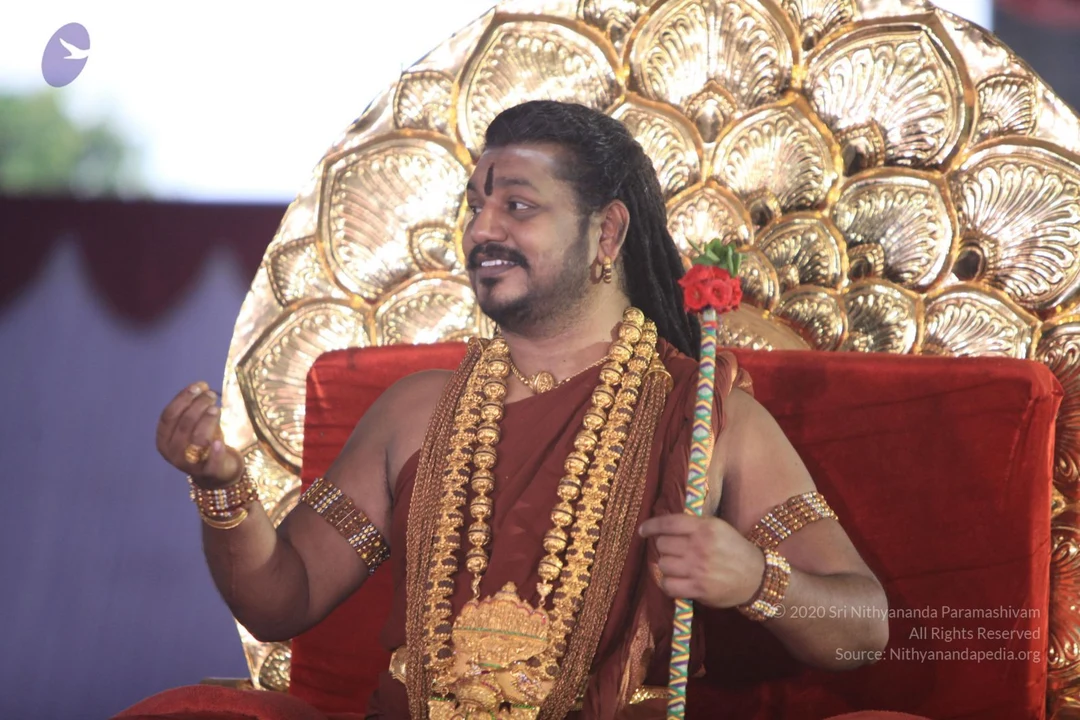
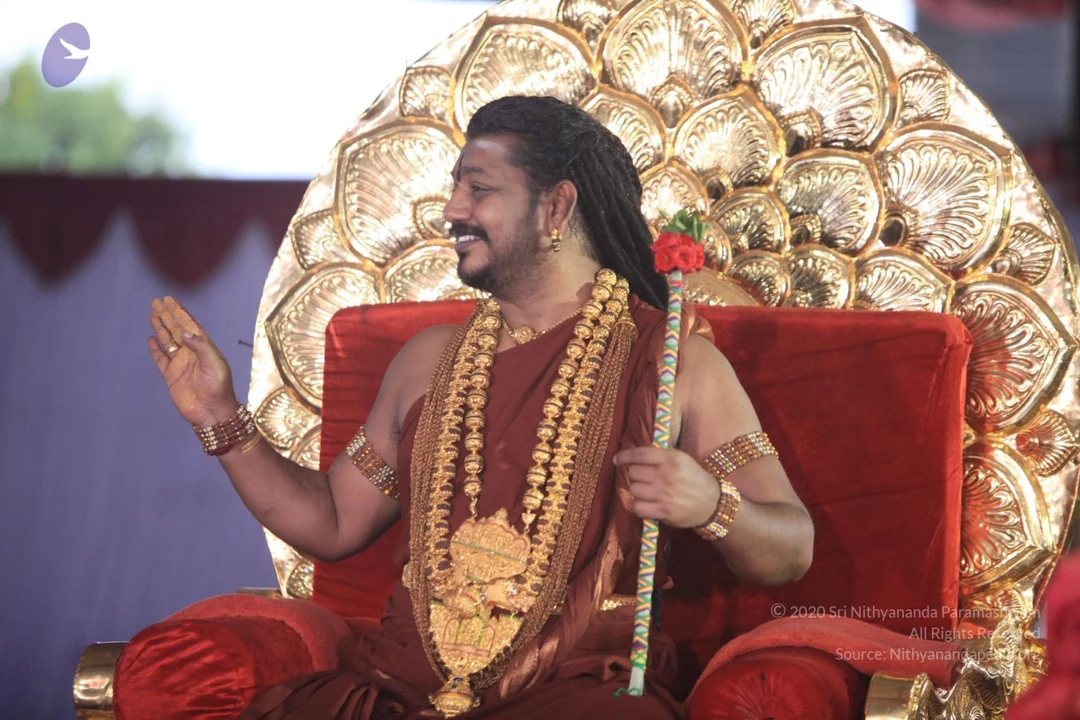
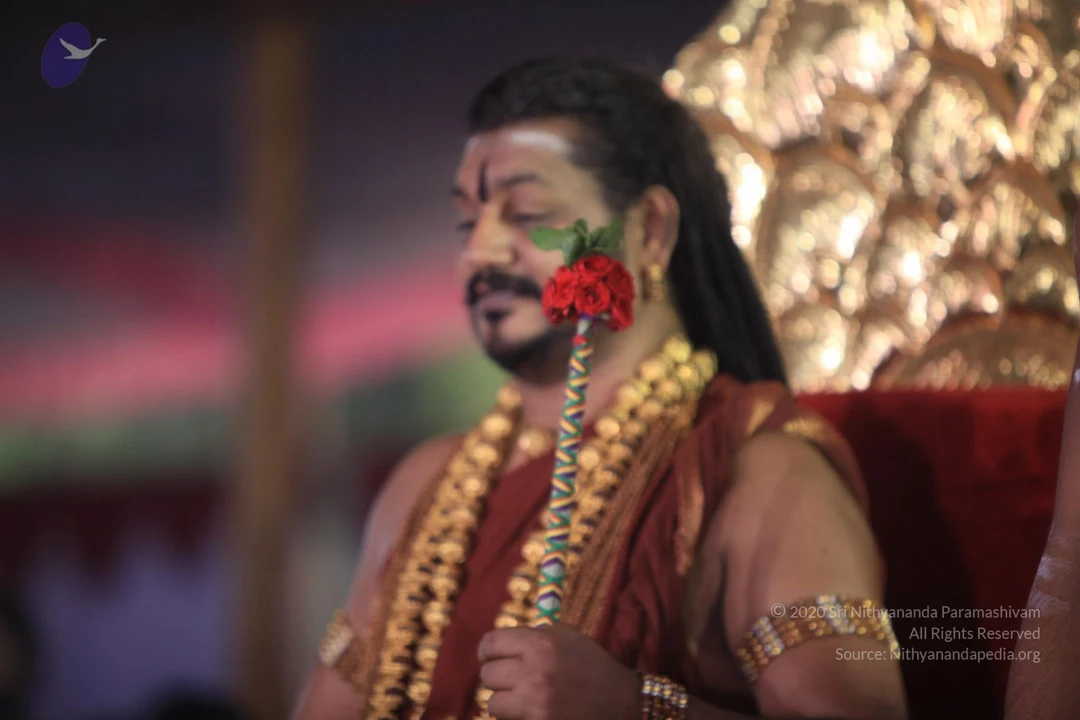
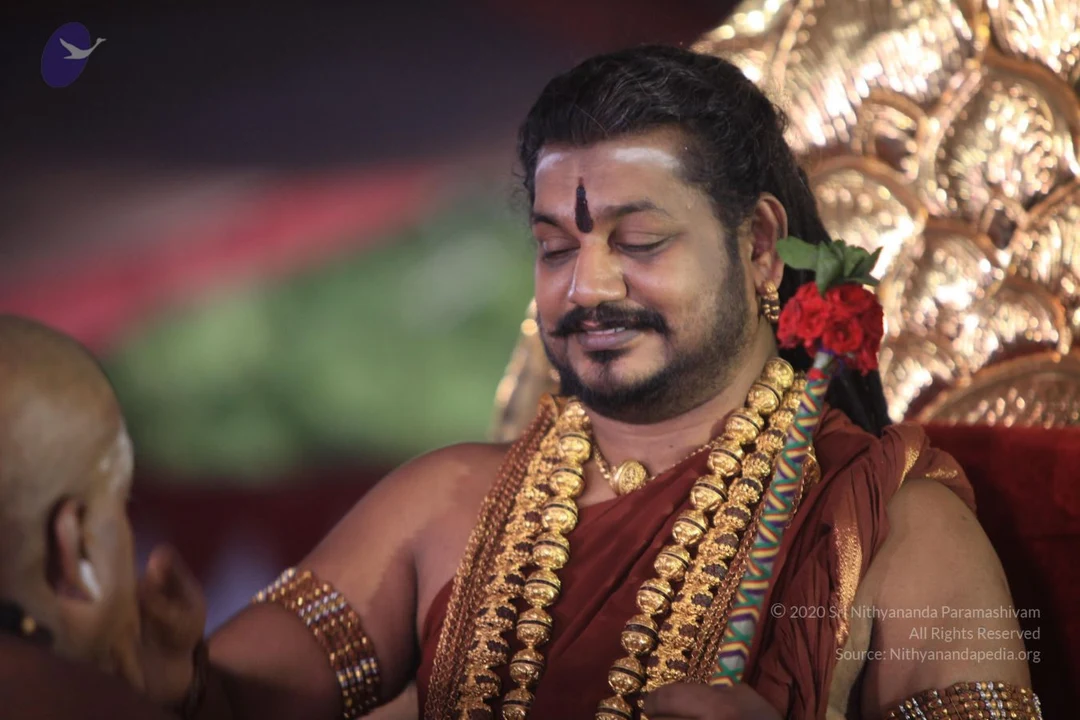
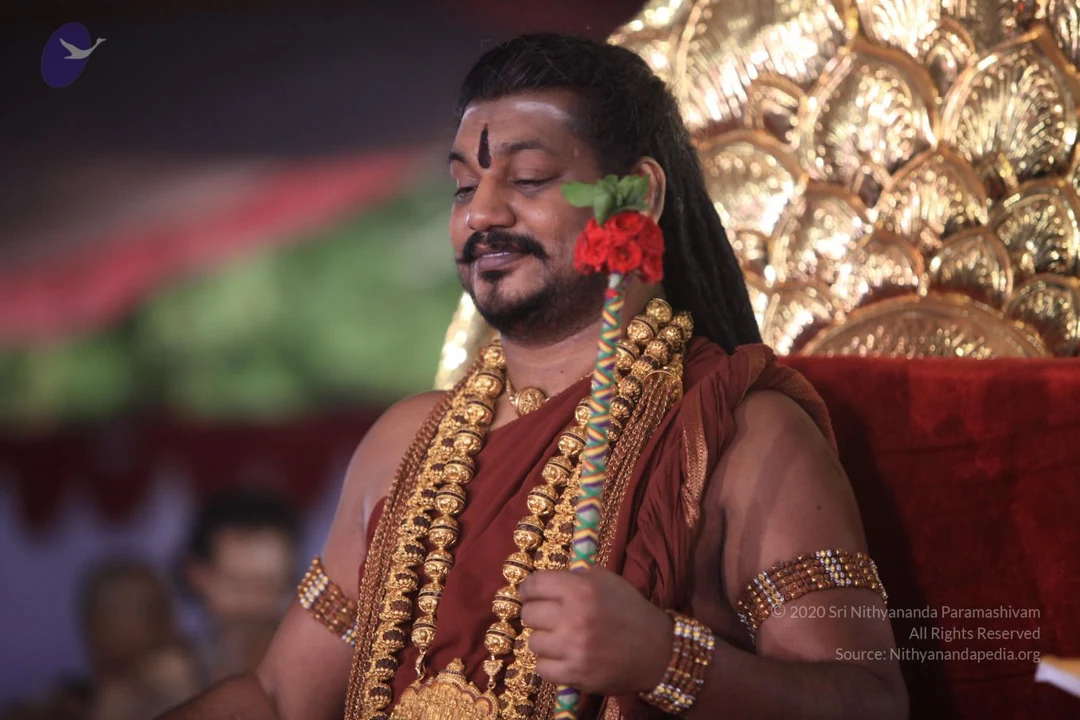
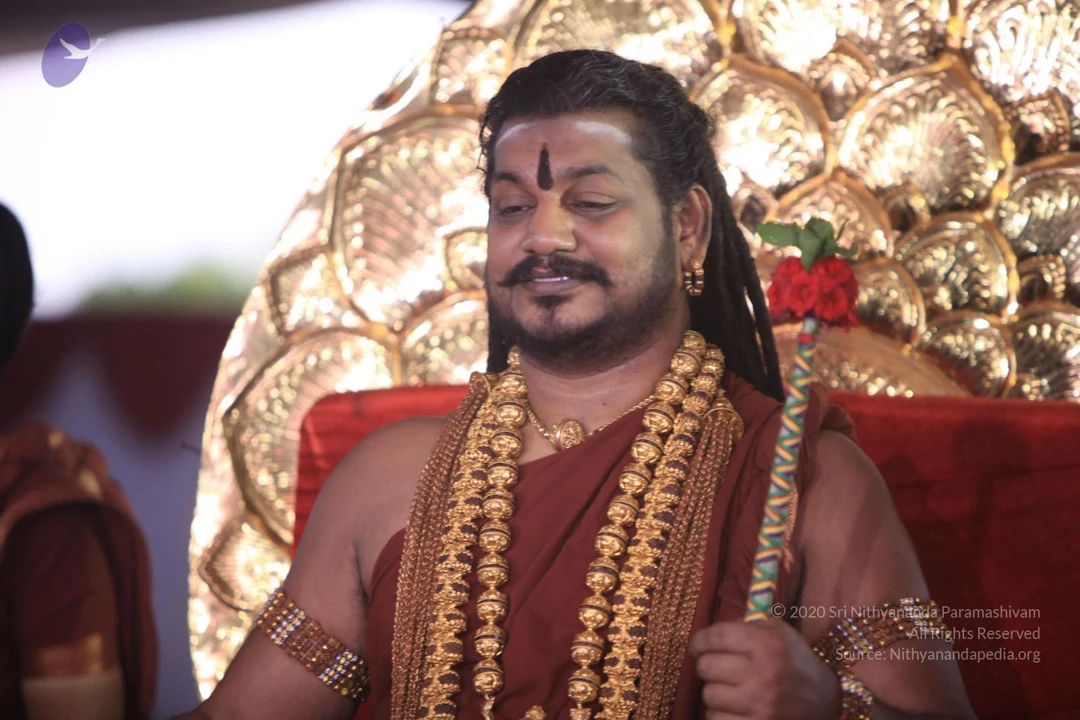
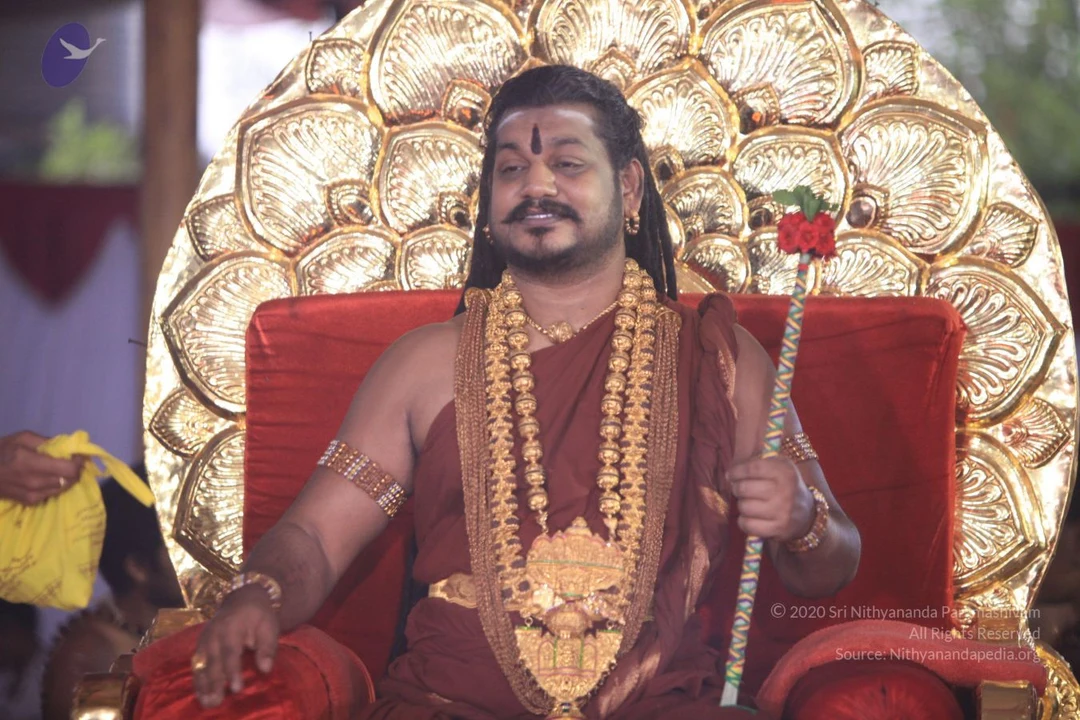
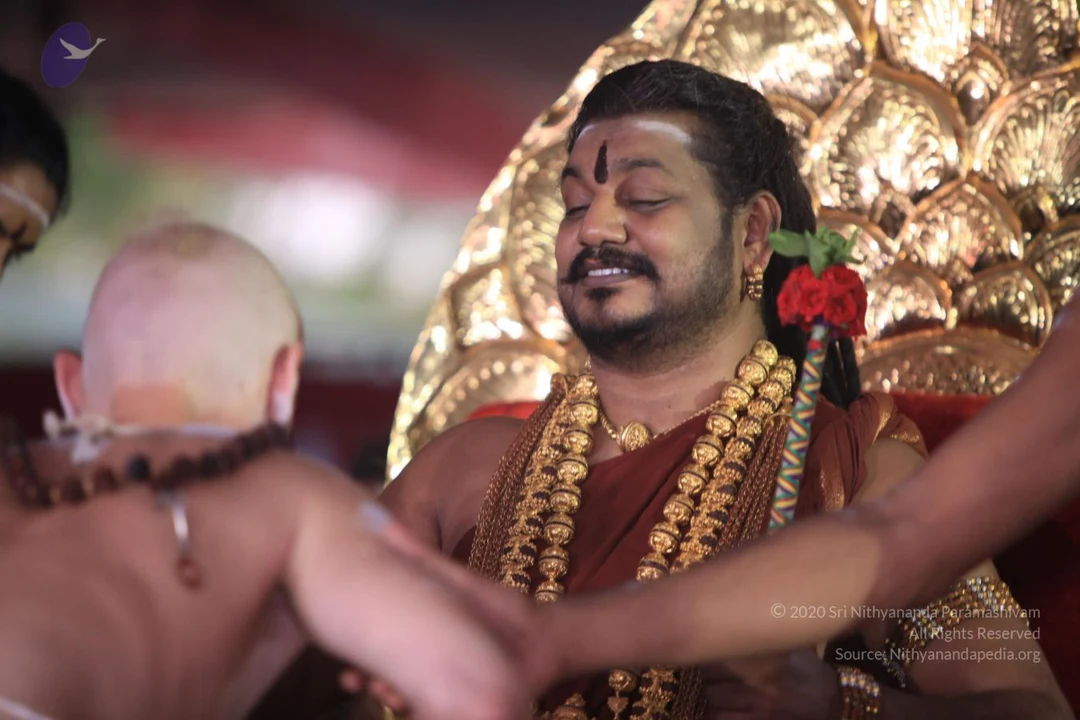
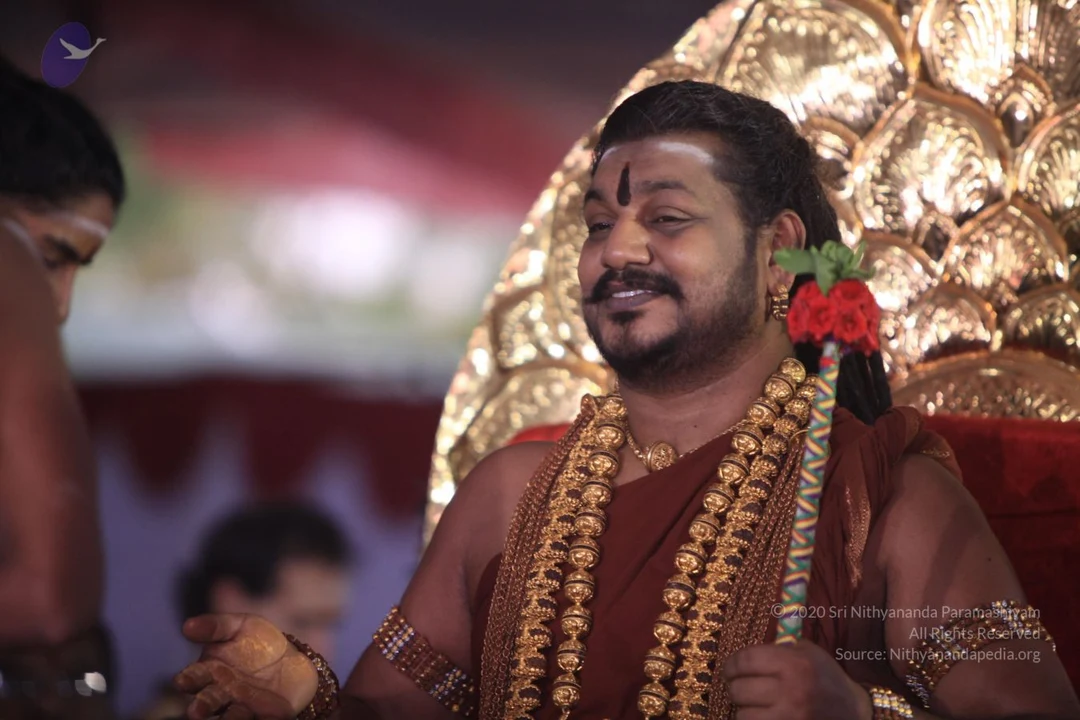
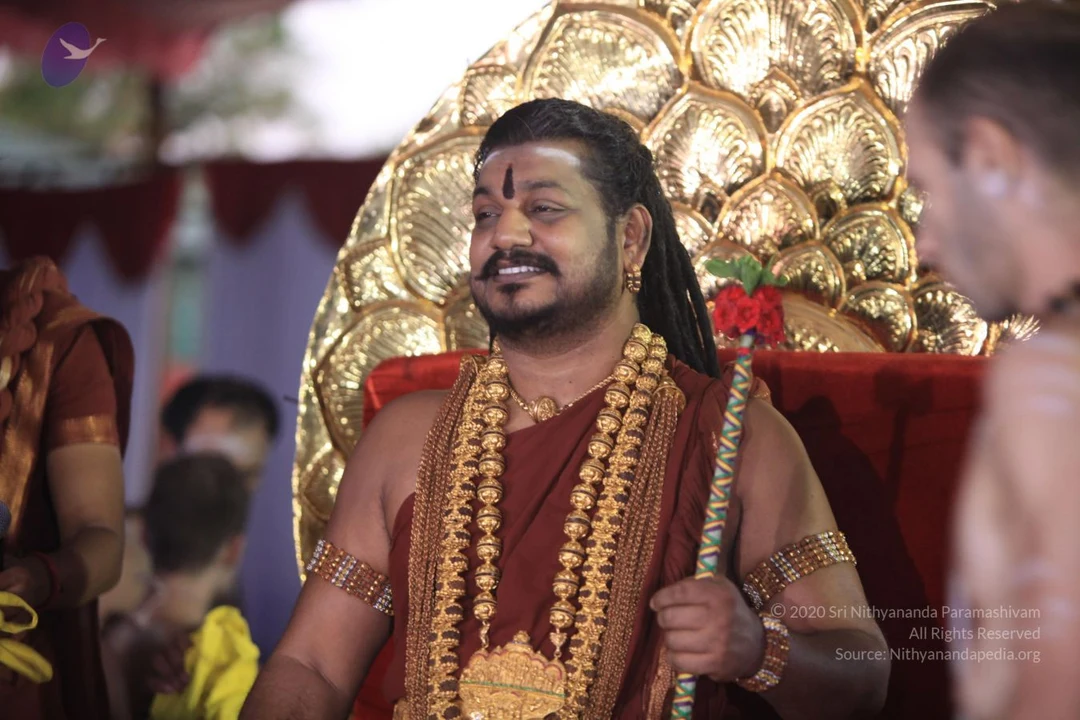
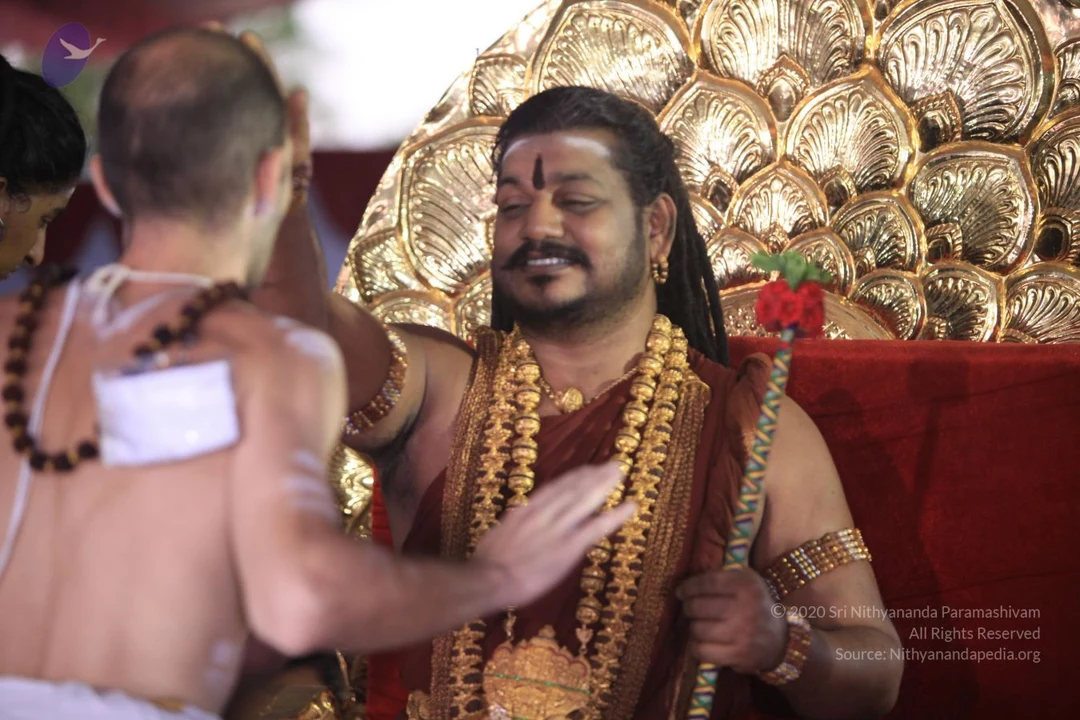
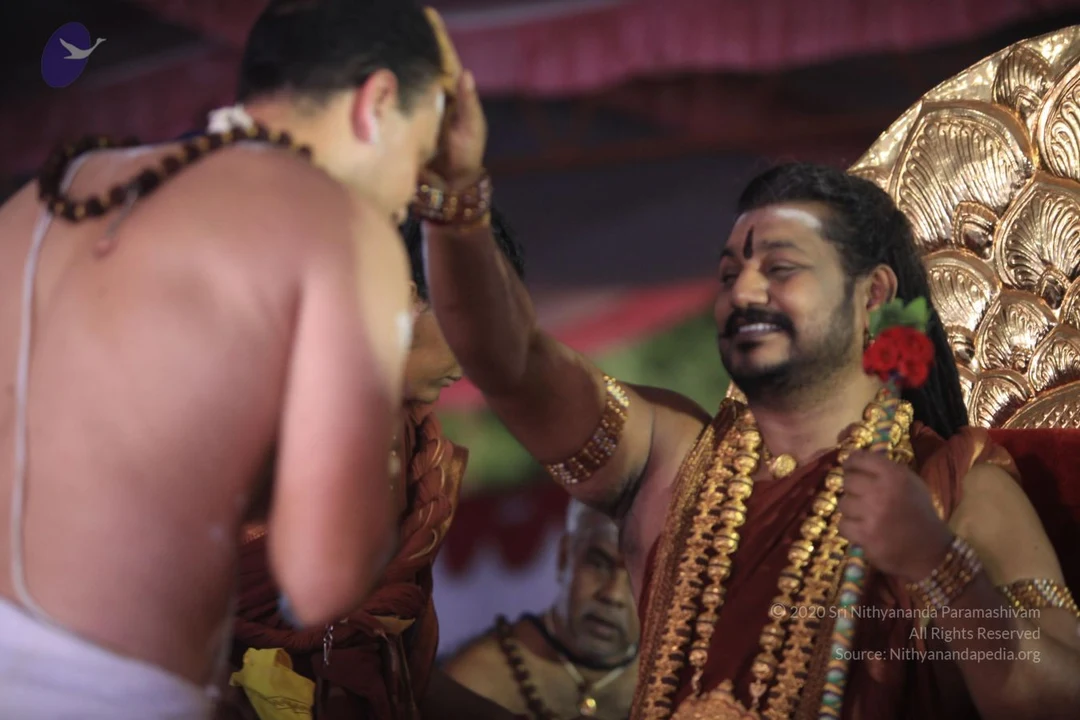
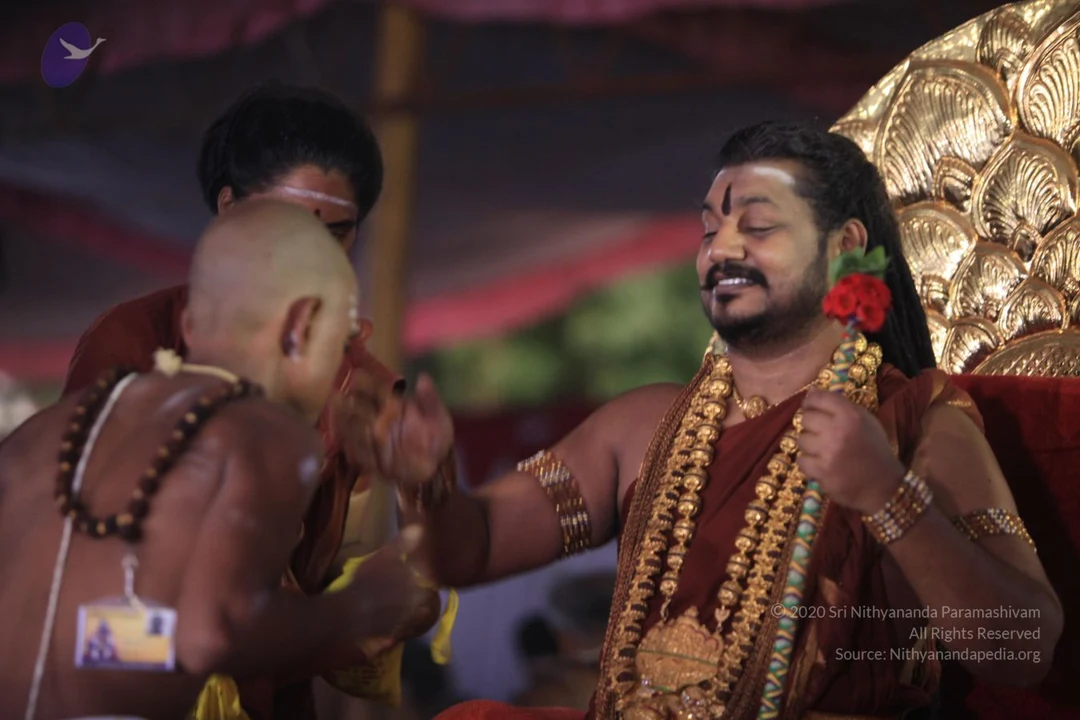
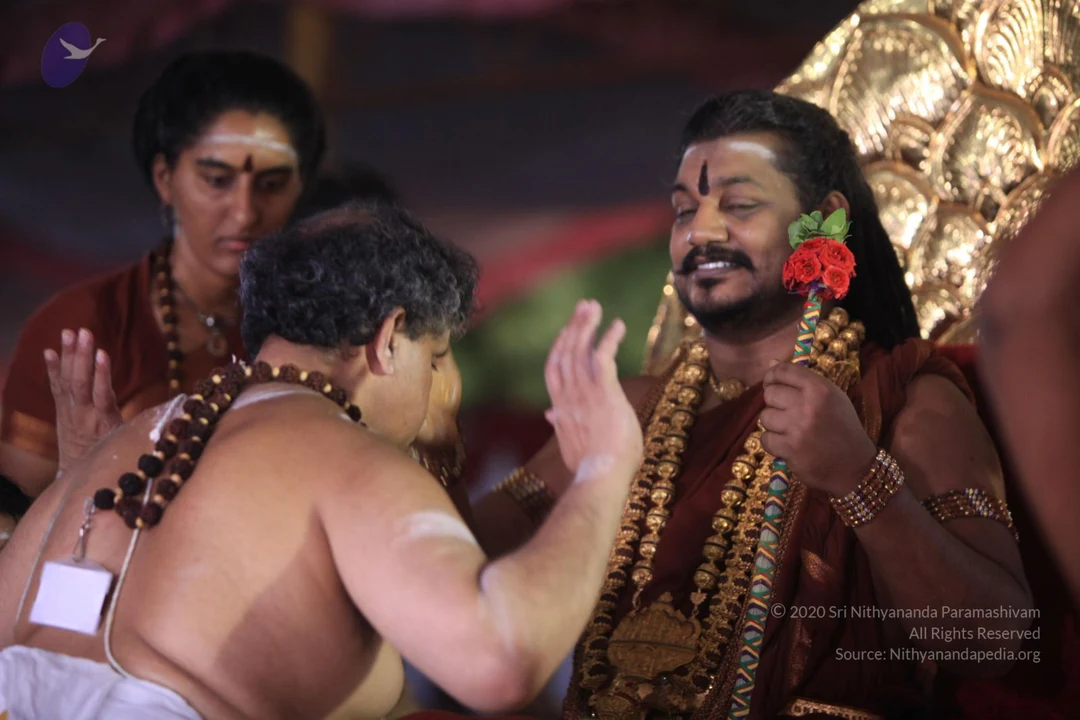
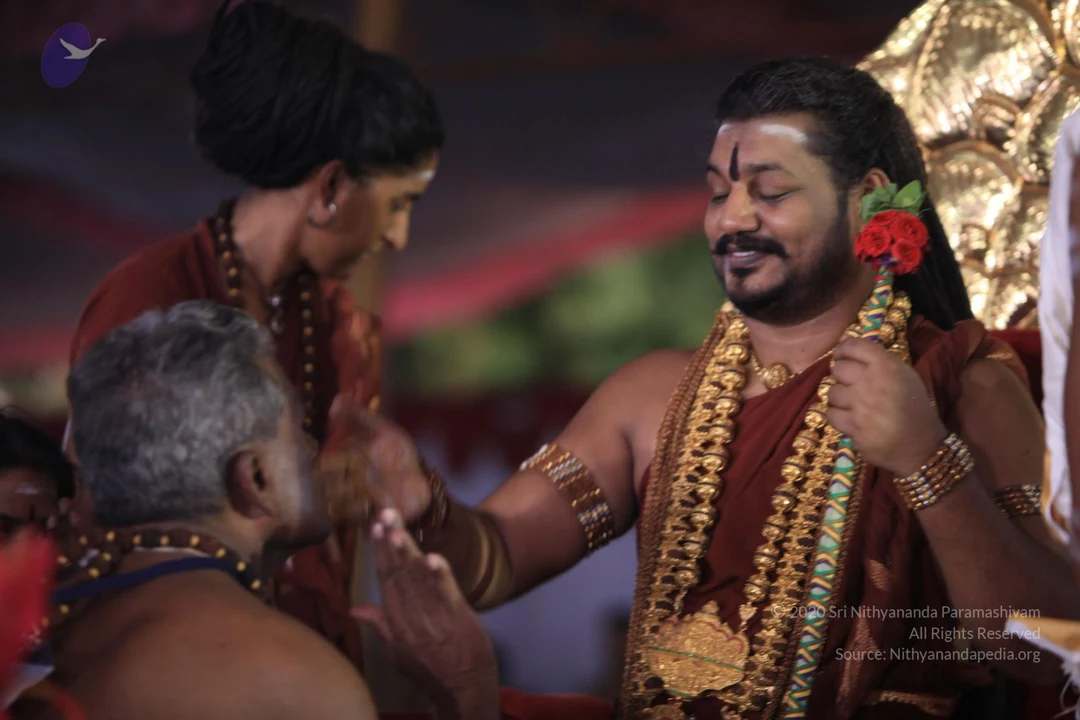
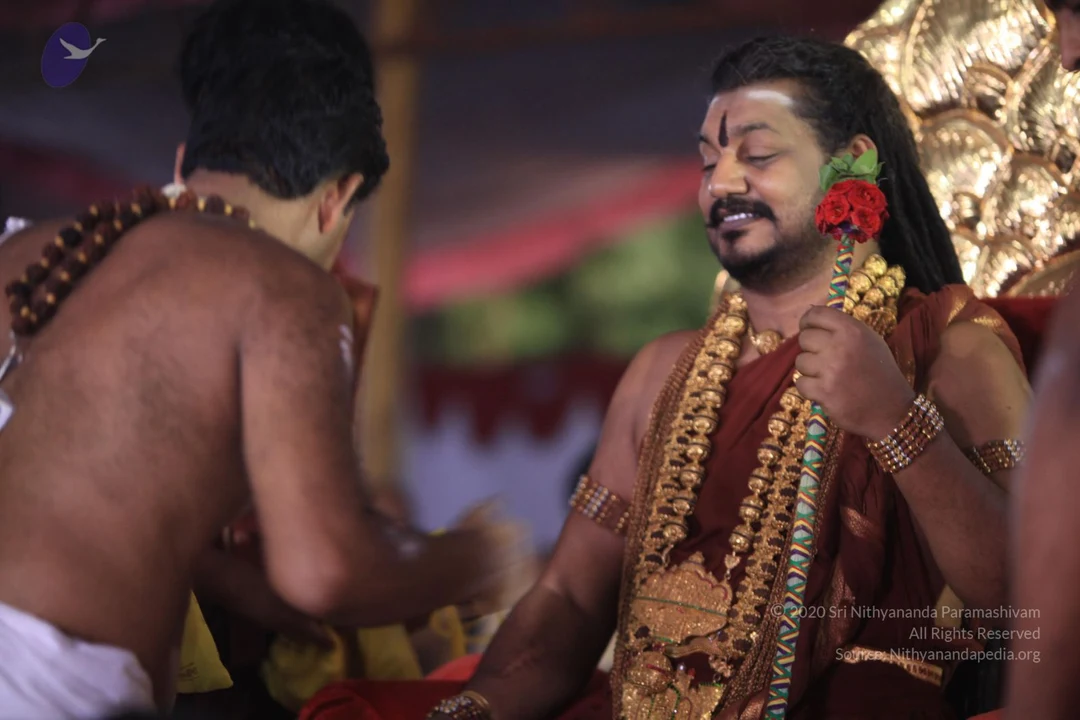
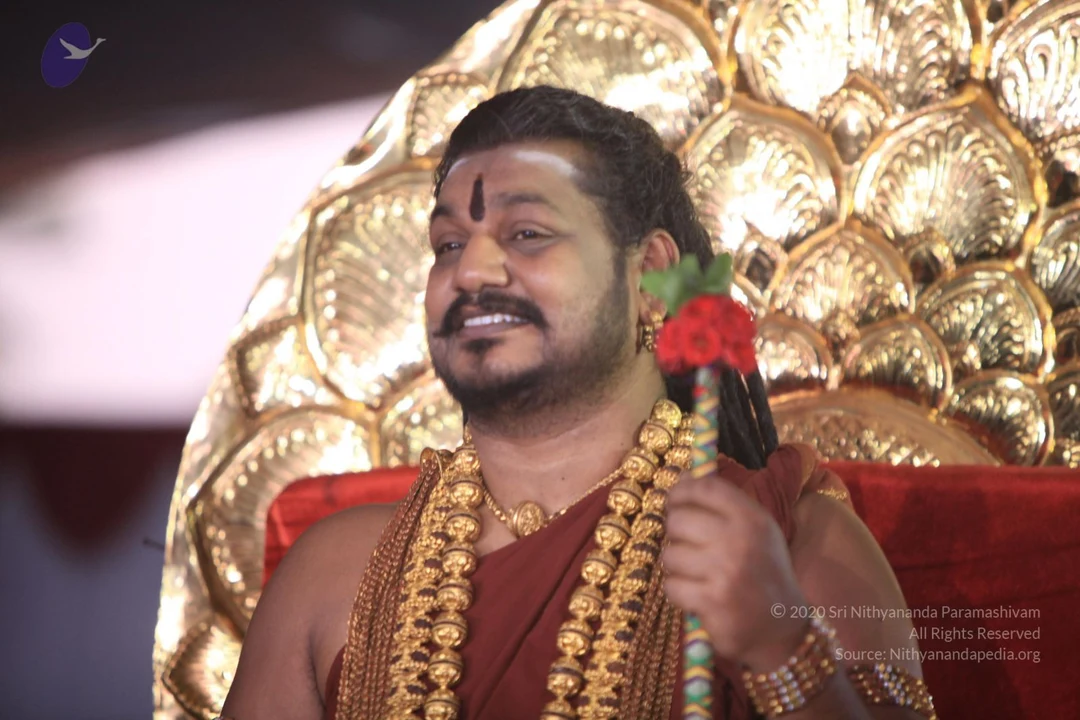
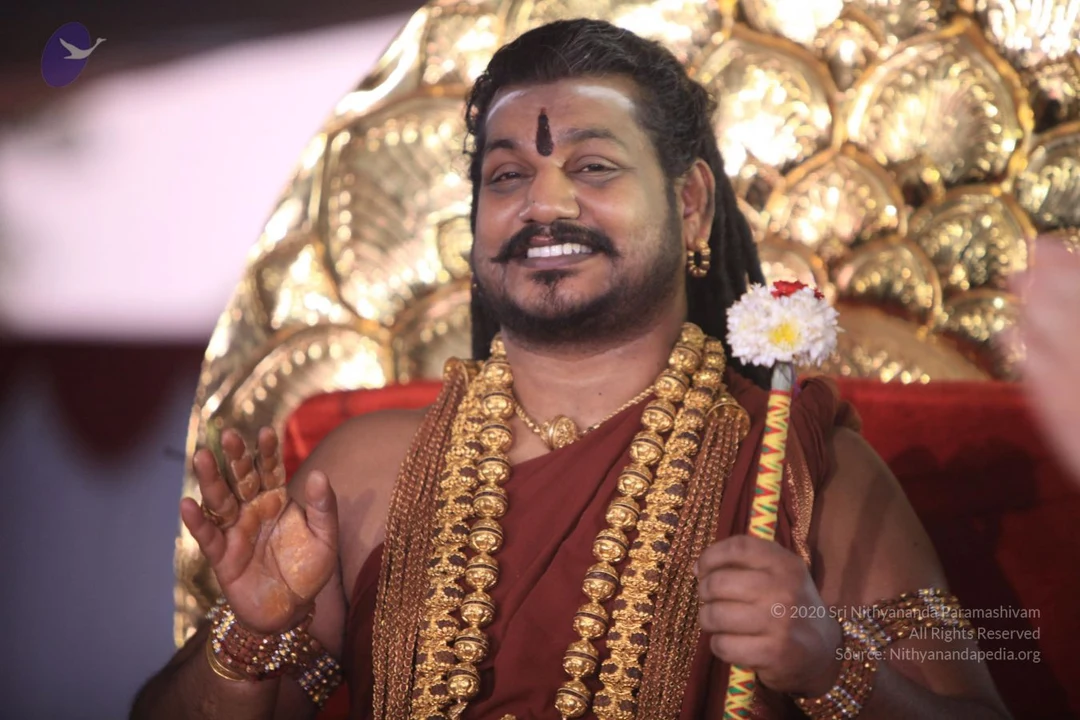
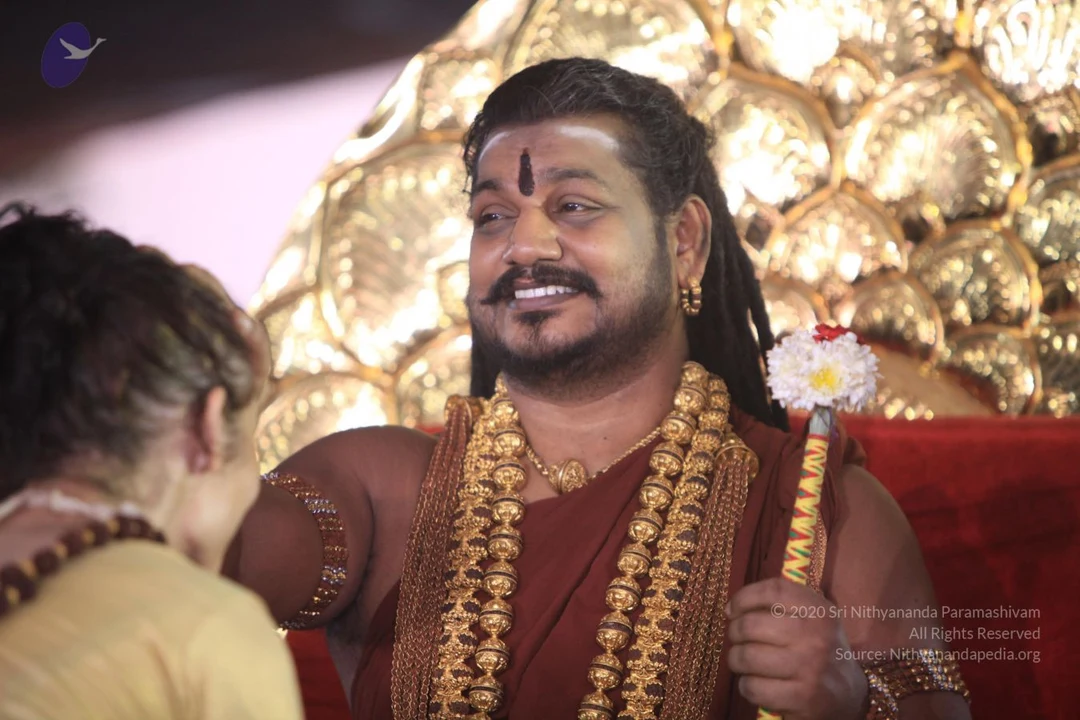
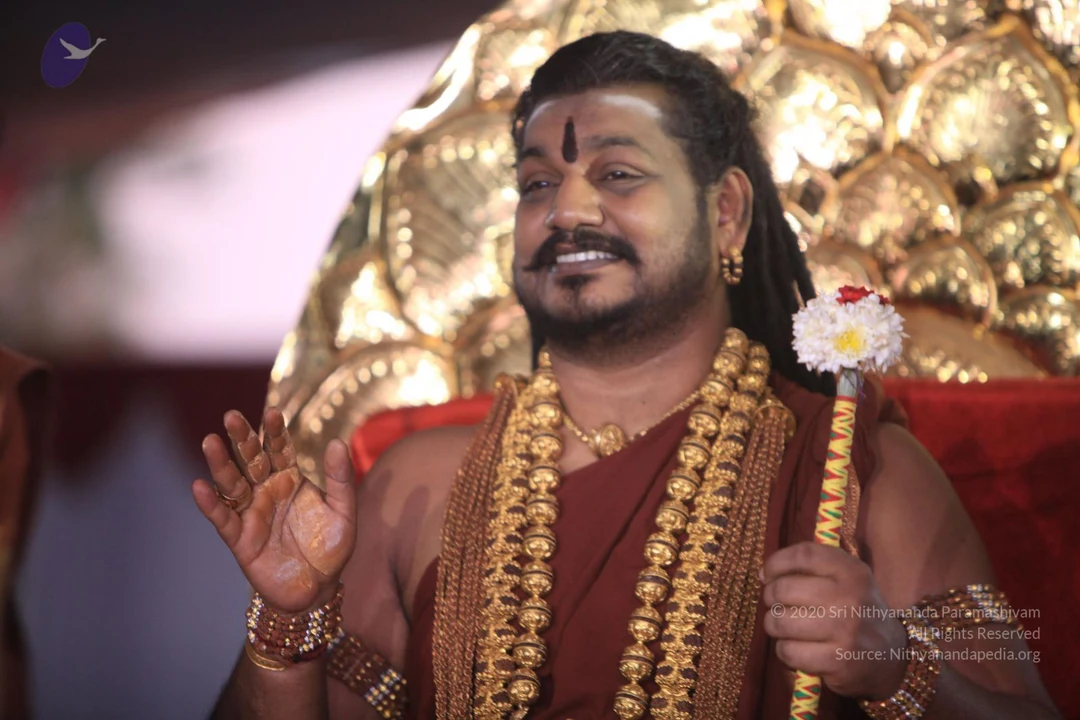
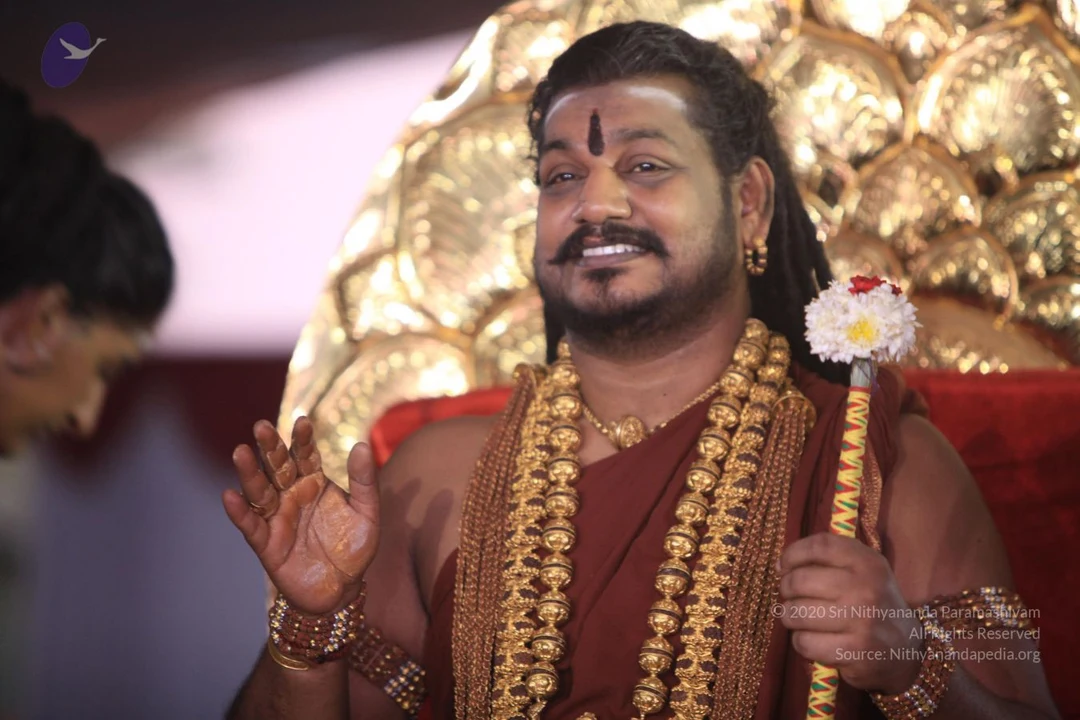
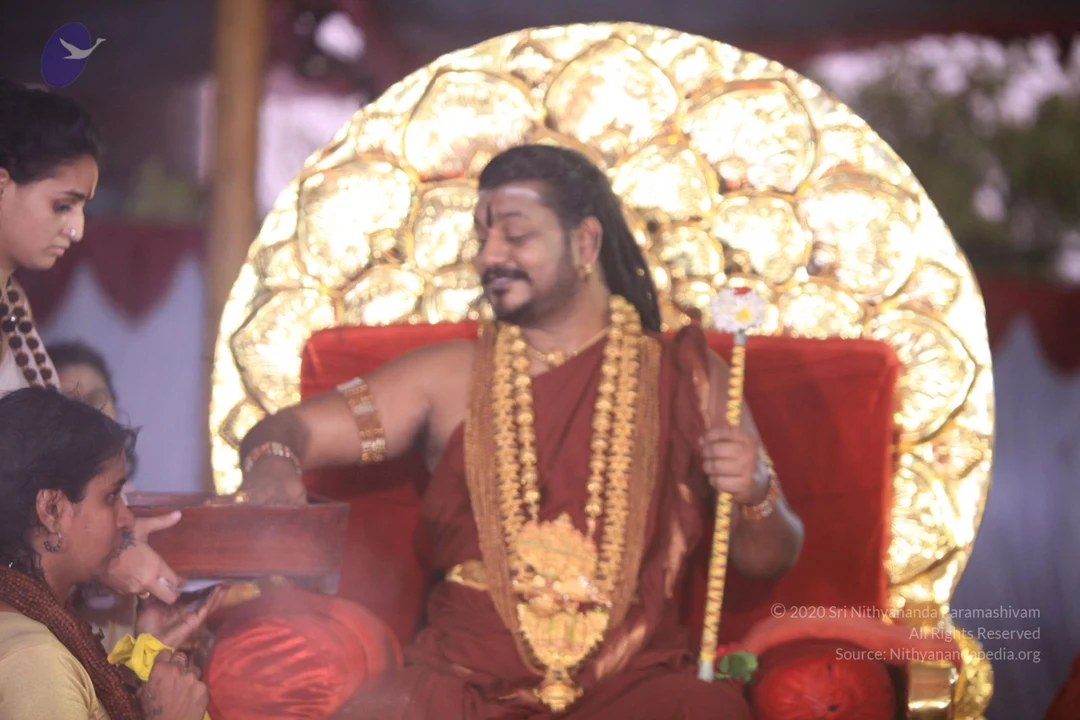
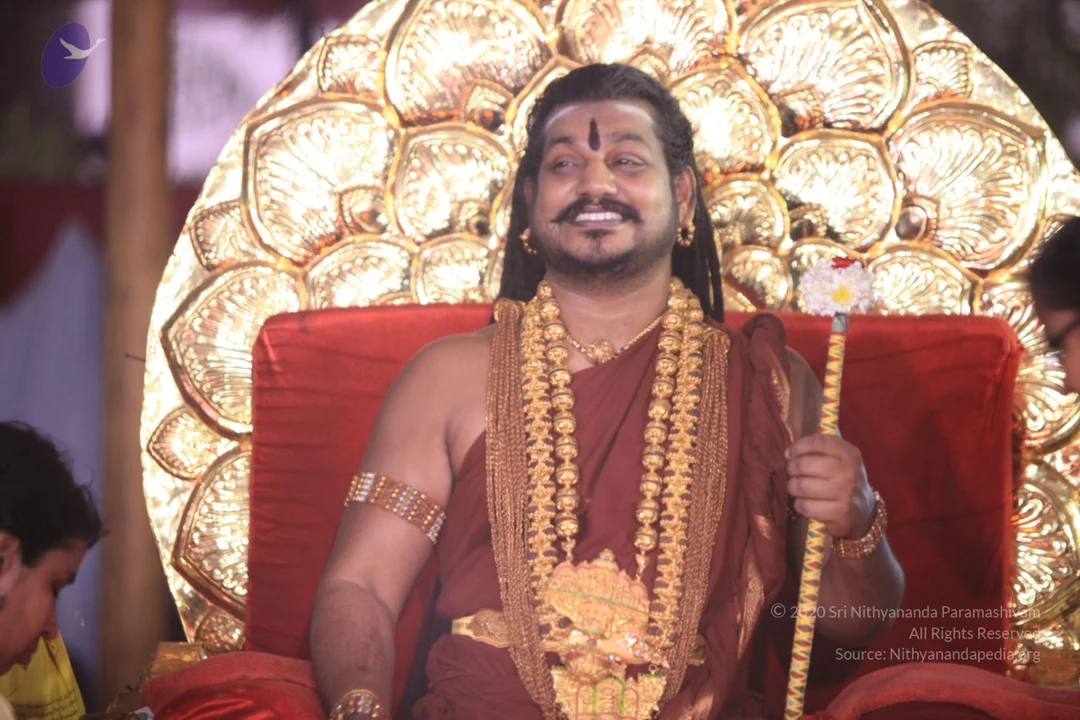
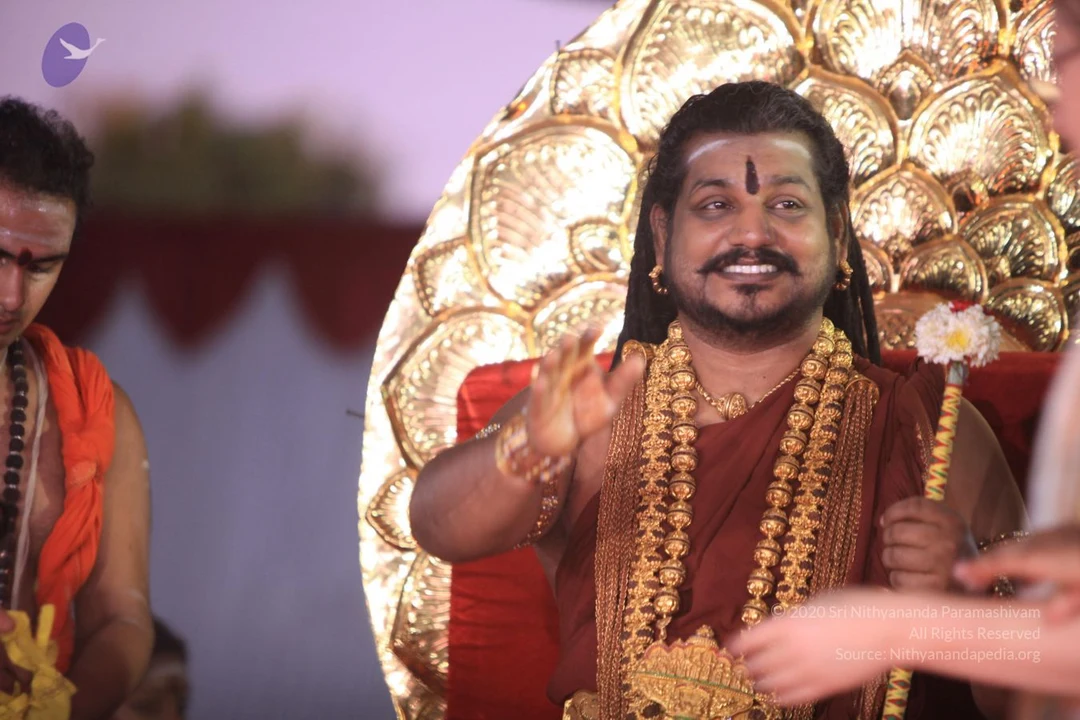
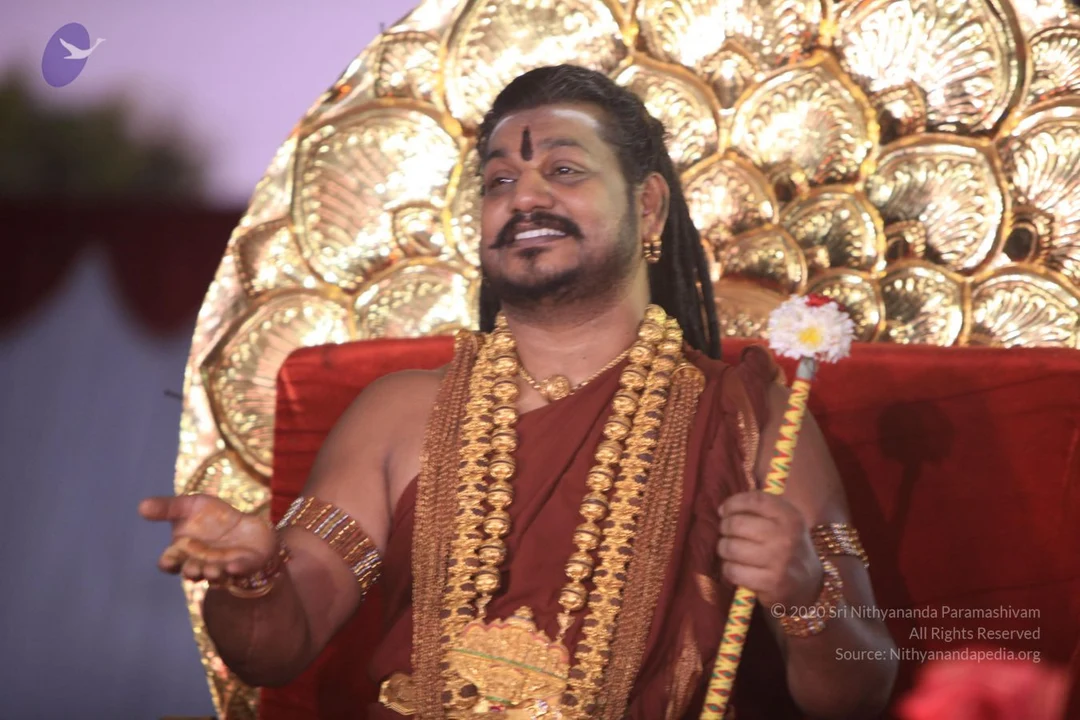
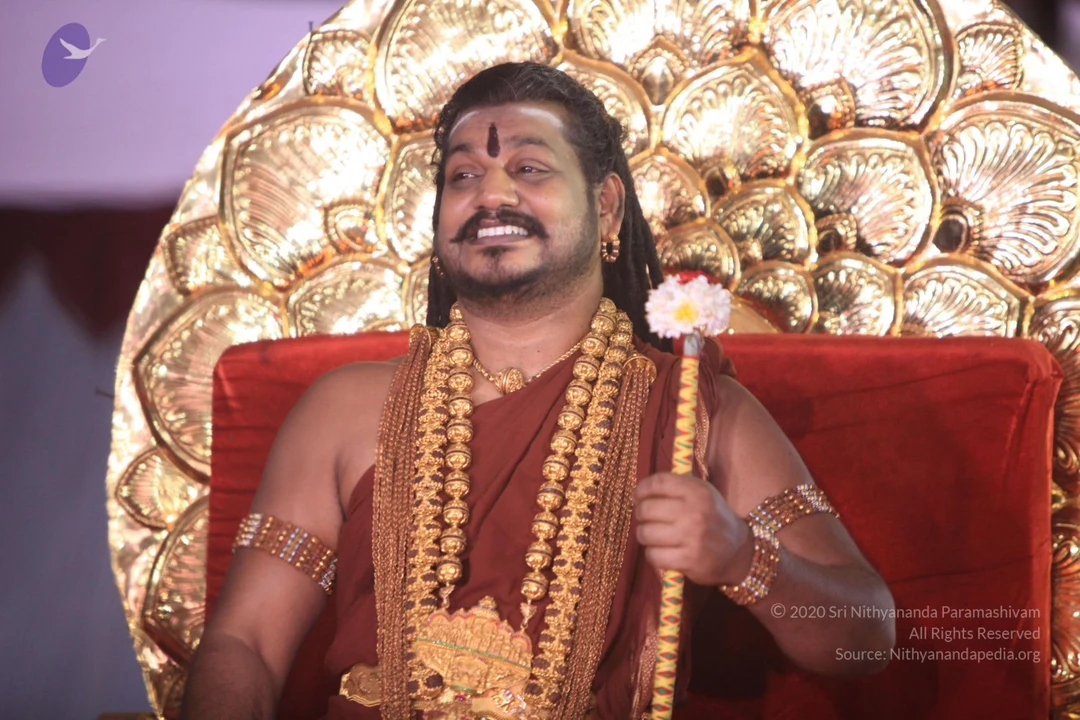
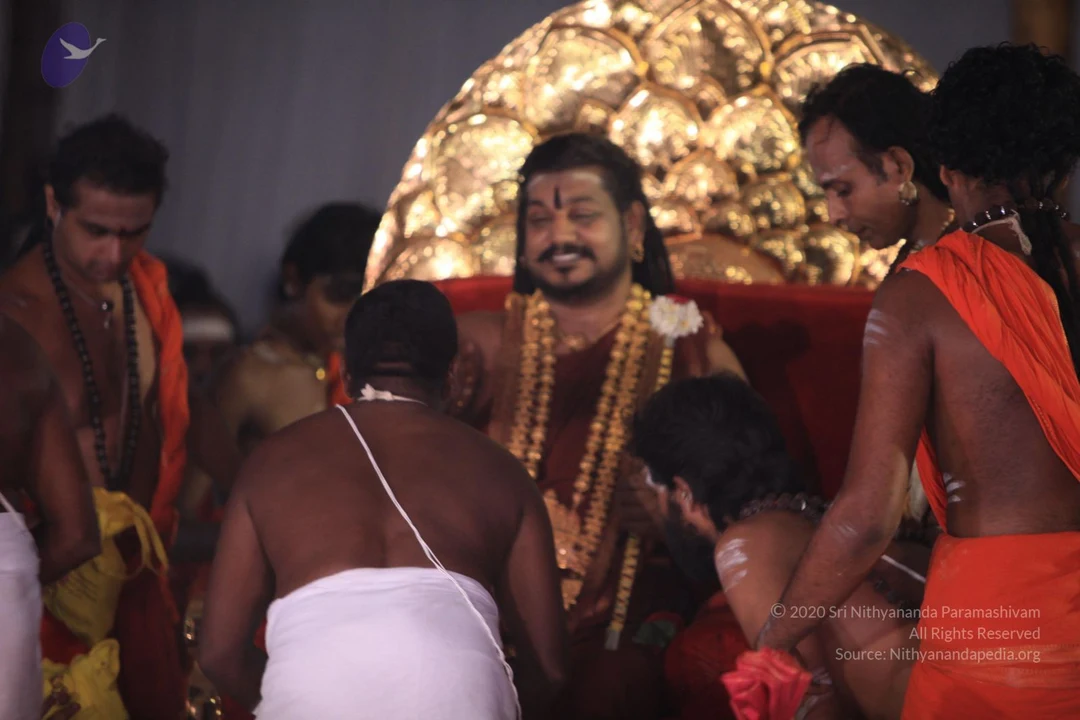
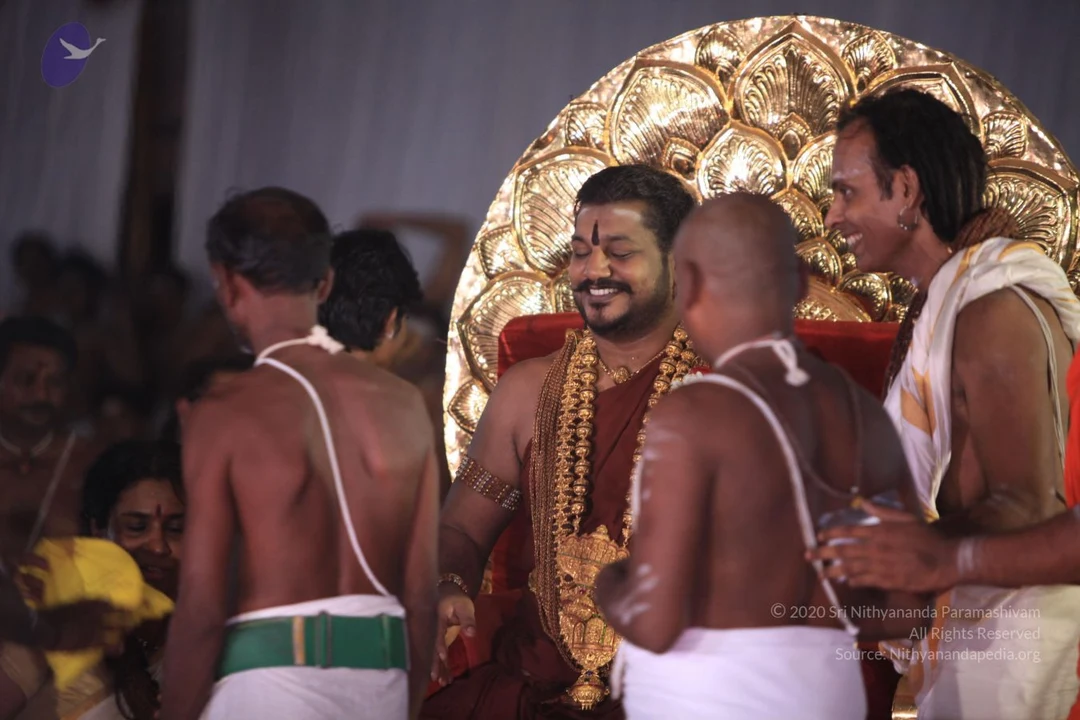
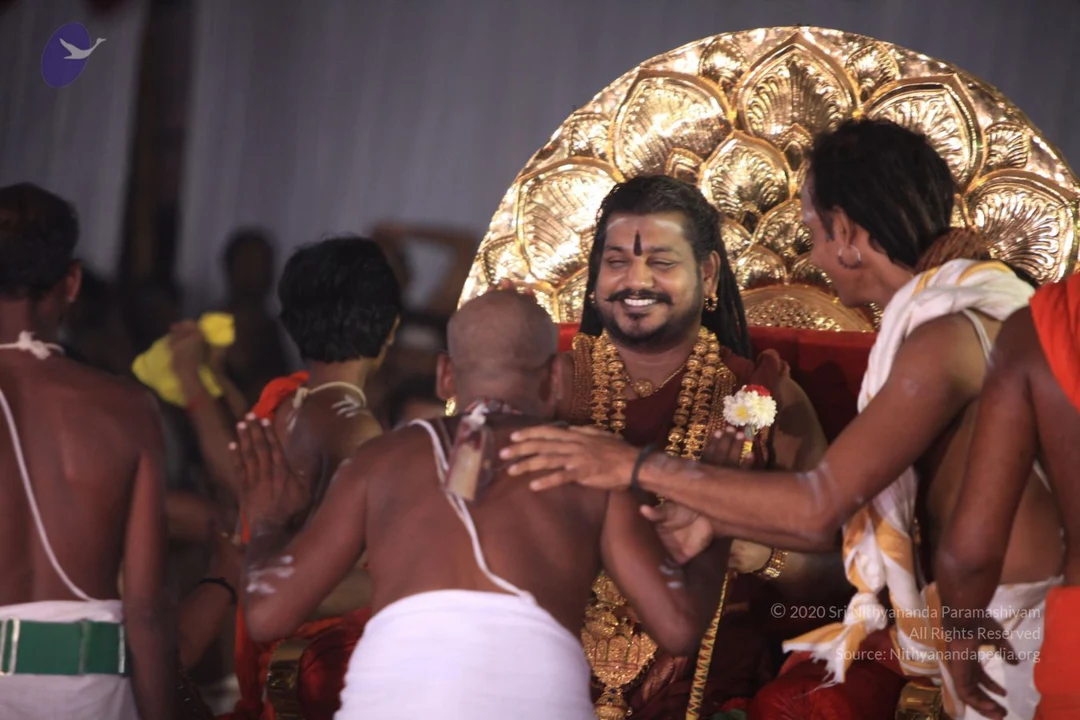
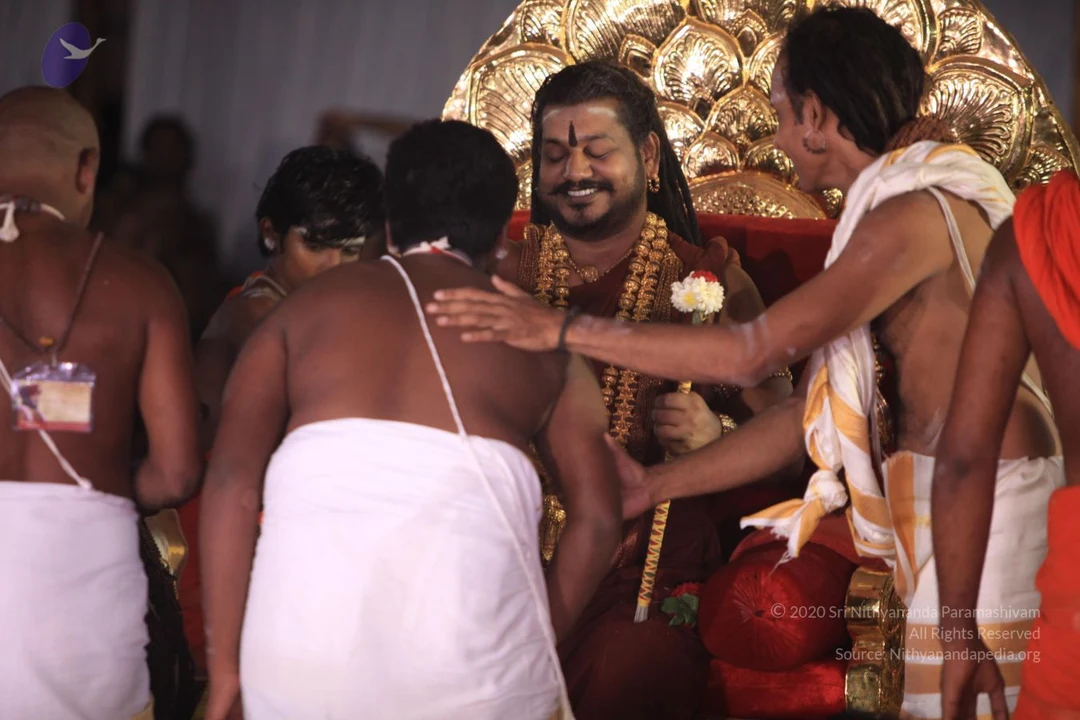
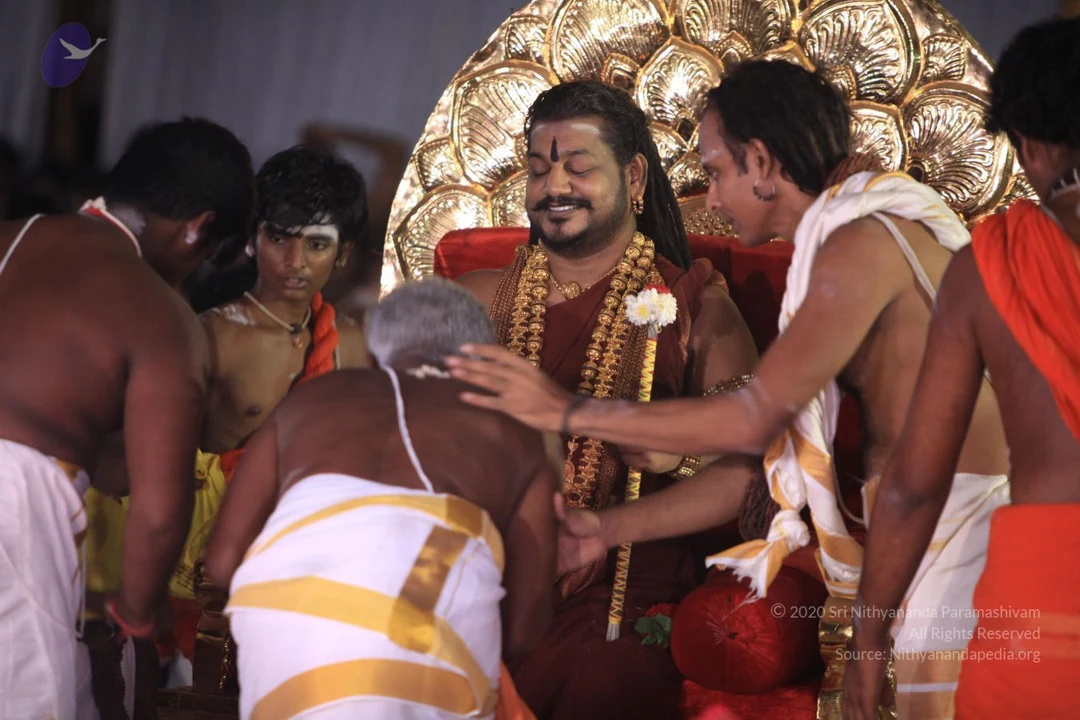
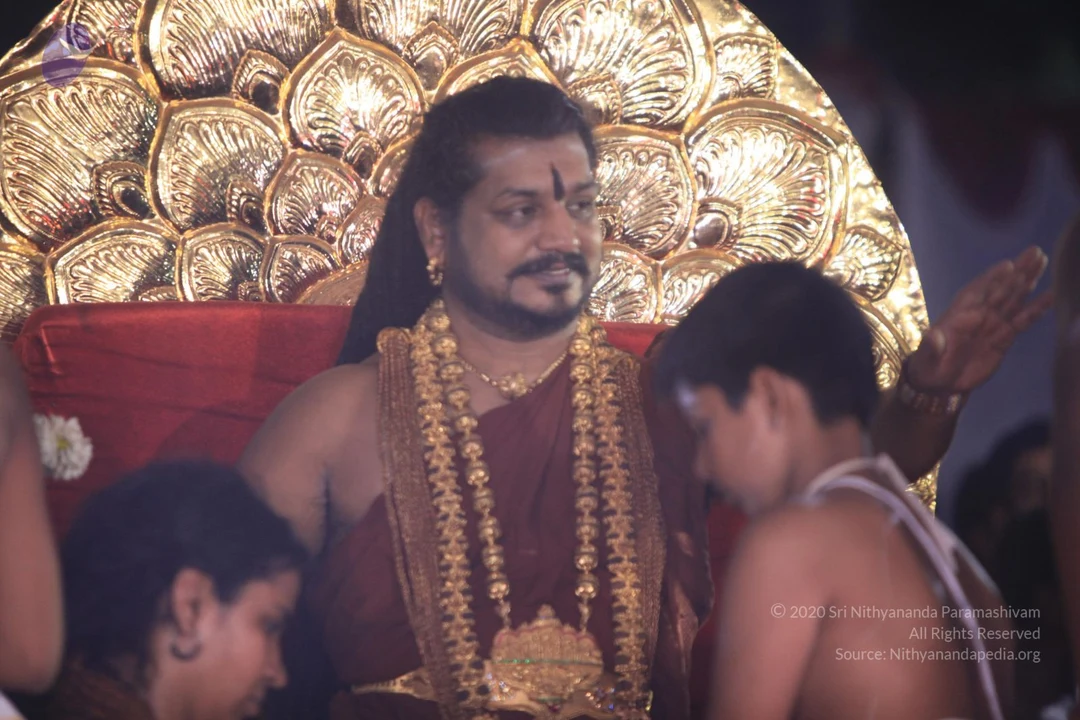
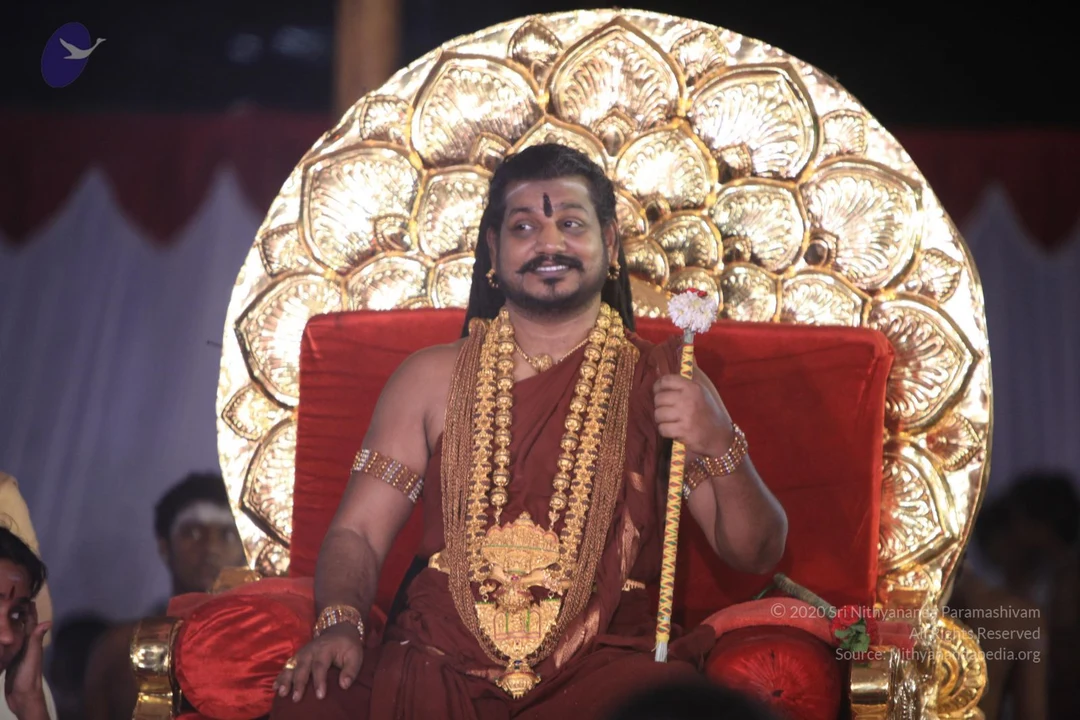
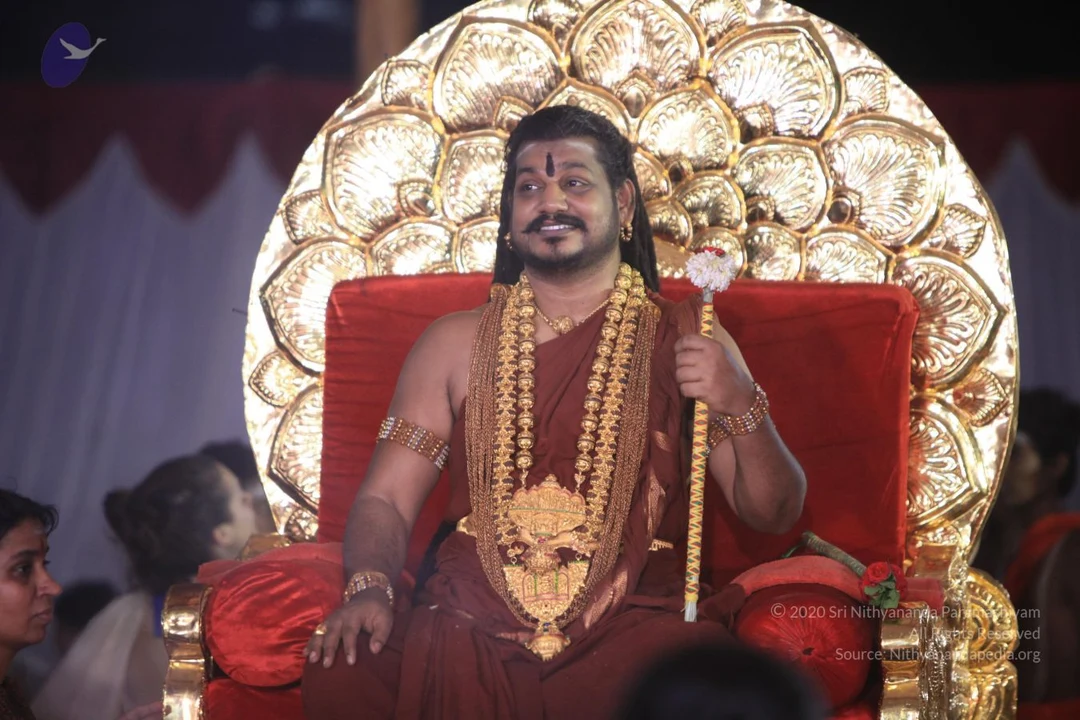
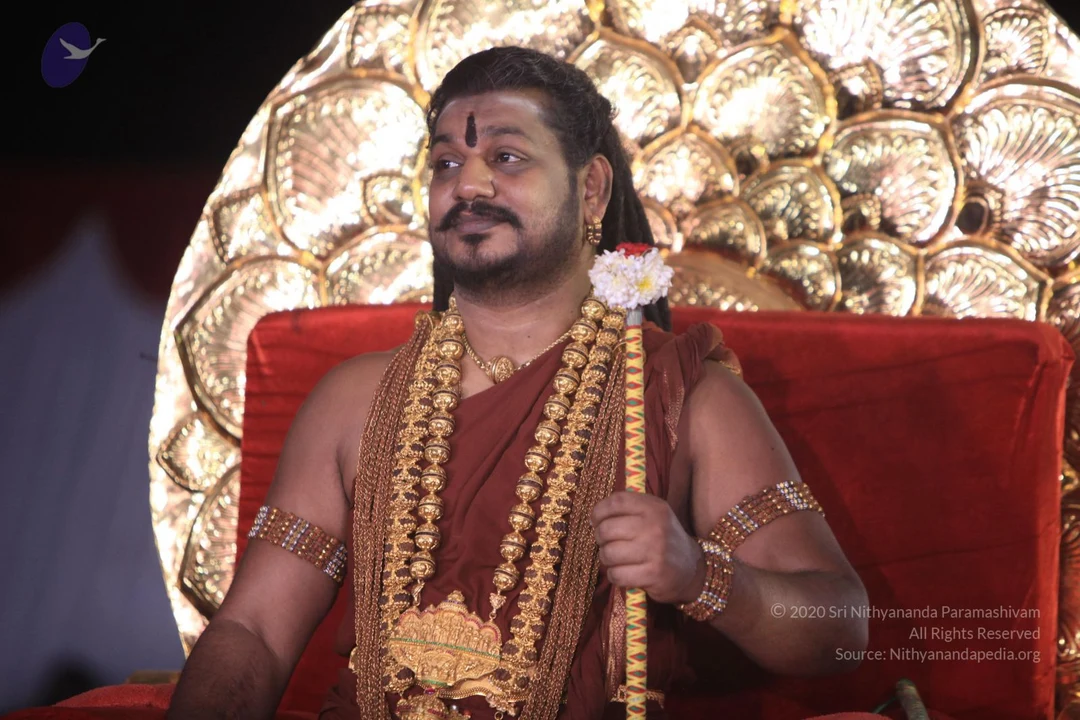
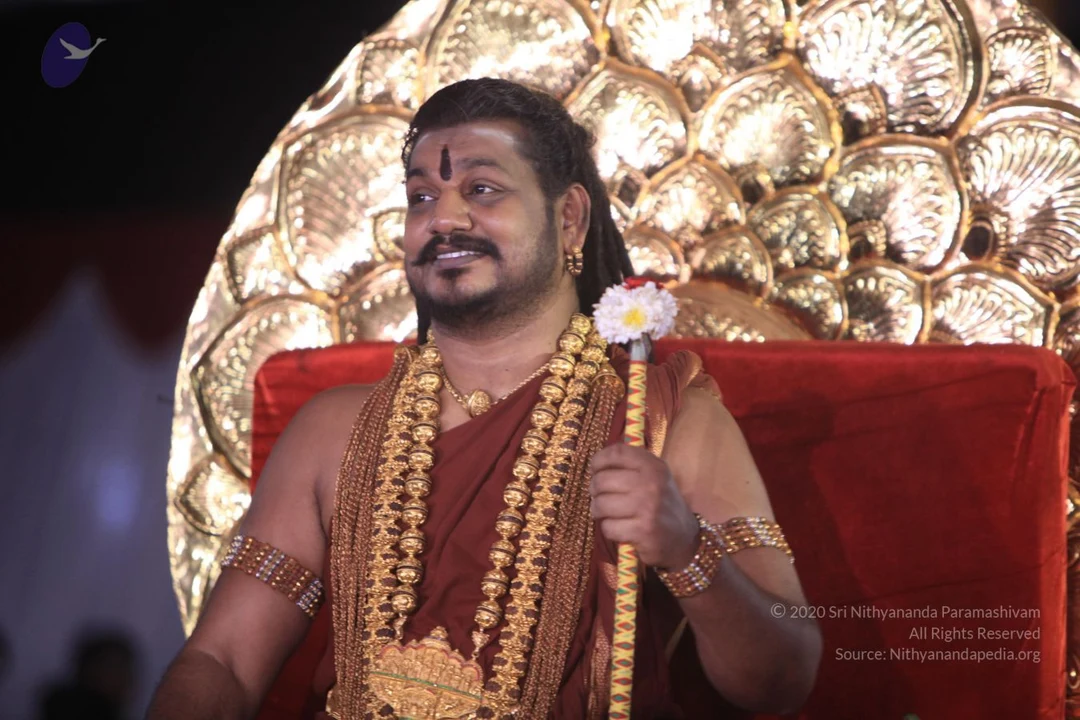
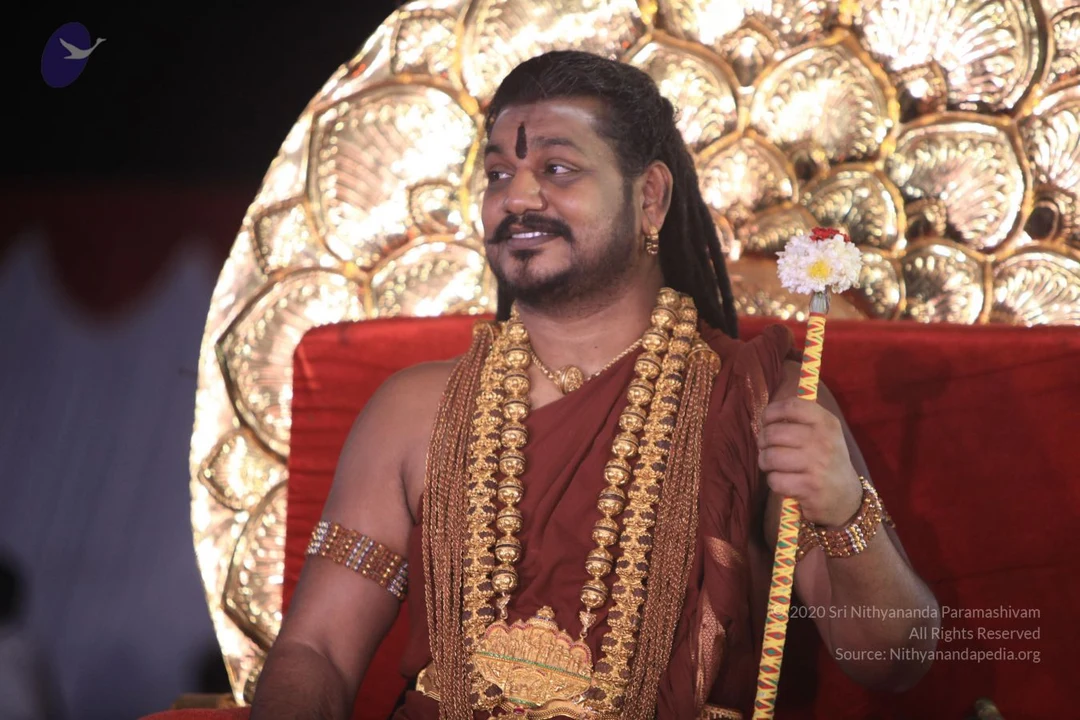
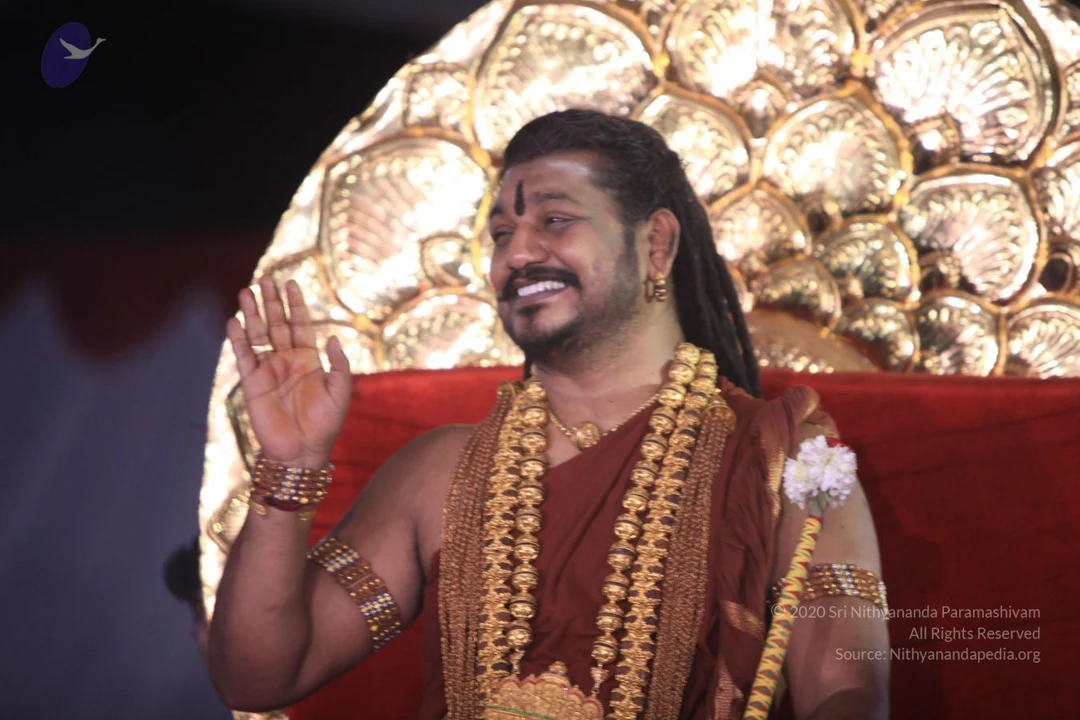
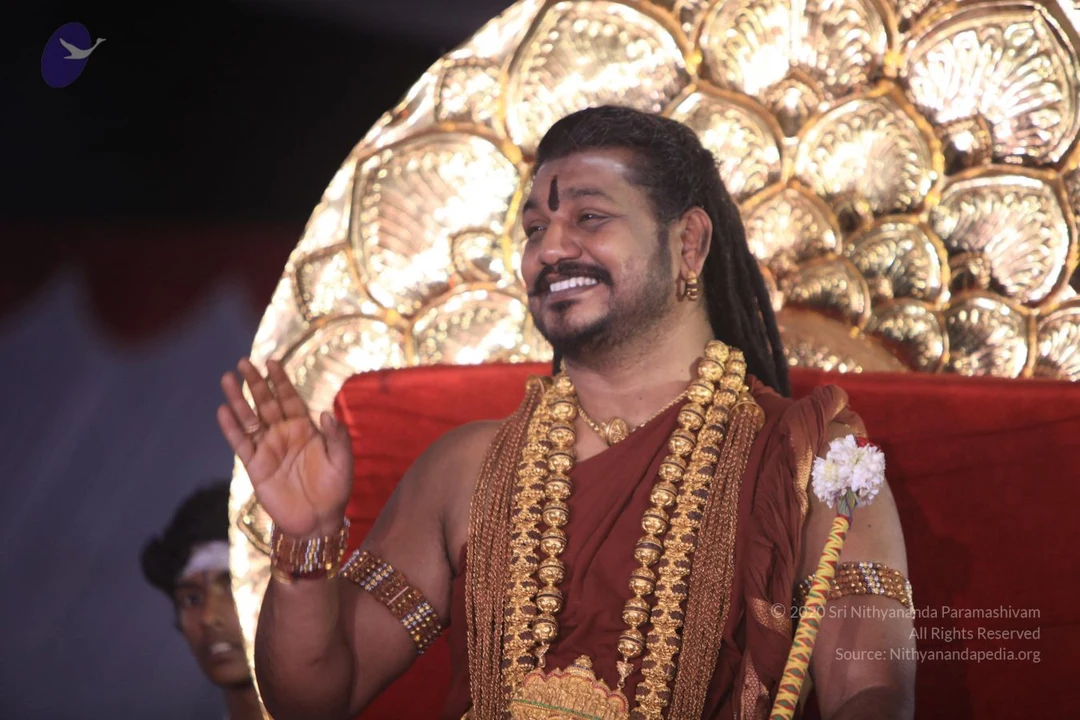
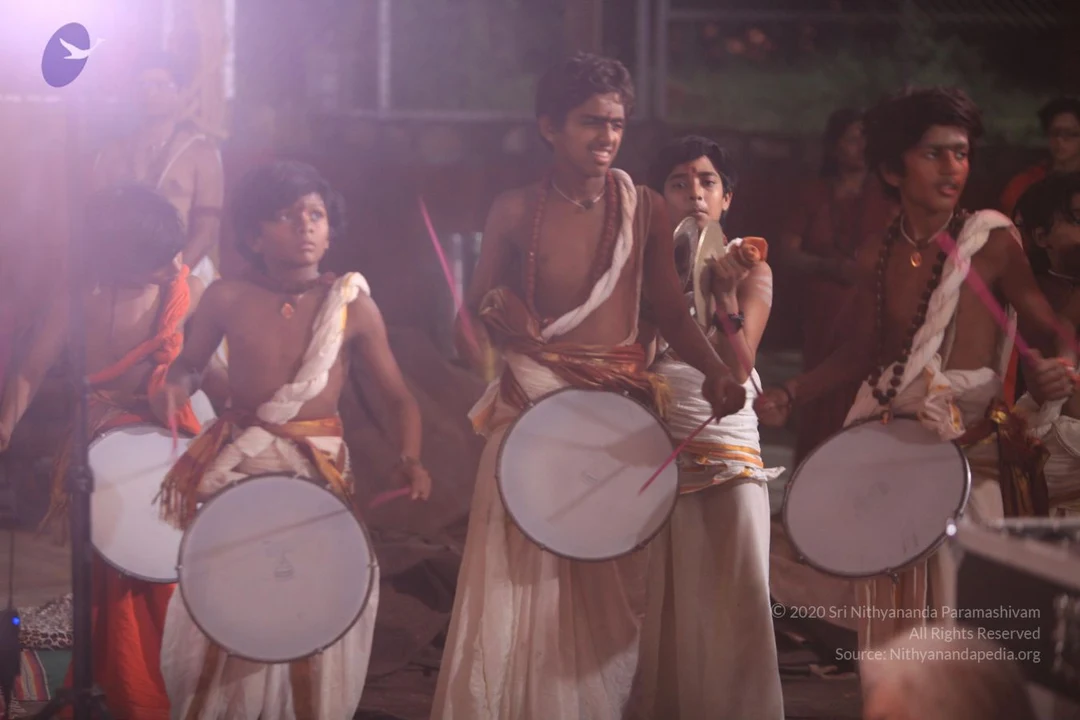
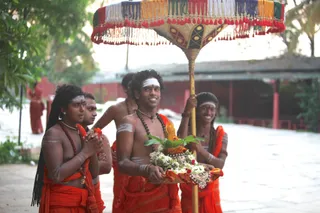
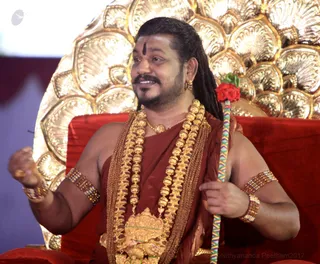
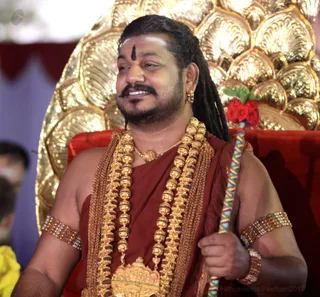
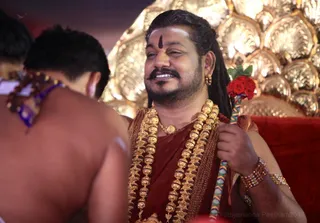
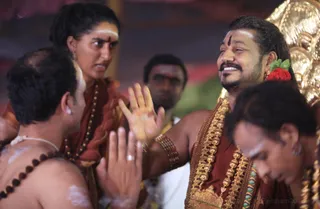
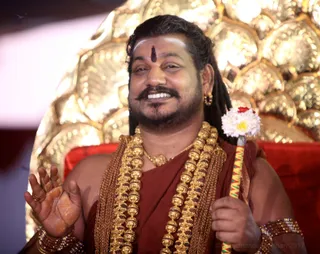
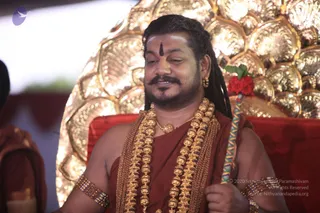
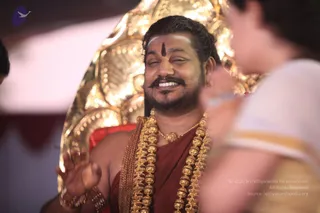
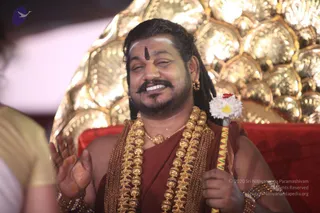
Outdoor procession of young men in saffron-orange dhoti-style cloths with bare upper bodies, sacred ash lines on foreheads and arms, and rudraksha malas. The central man carries a decorated brass-and-flower offering tray with white jasmine garlands, red flowers and green leaves. Behind him a man holds a multicolored fringed canopy on a long wooden pole, and a man at left presses his palms together in greeting. Other saffron-clad figures stand in the background near a red-pillared building and green trees.A seated man speaks animatedly on an ornate golden throne with a red velvet cushion, against a large gold shell-patterned backdrop. He has long dreadlocked hair, a vertical tilak on his forehead, and wears a rust-red wrap with heavy gold multi-strand necklaces, a gold pendant, gold armbands and bangles. He holds a staff topped with red flowers and green leaves in one hand while gesturing with the other. a person: the dreadlocks, ornate gold jewellery and red wrap are distinctive visible cues of the presiding teacher seated on the throne.Close photo of a bearded man with long dreadlocks falling behind his shoulders, a dark vertical tilak on his forehead and a white band beneath it. He wears a rust-red bare-shouldered wrap, multiple thick gold bead necklaces and a gold pendant, gold armlets and bangles, and holds a striped green-and-yellow staff topped with red flowers. Behind him is an ornate gold repoussé backdrop with a red velvet cloth. One person is visible. Appearance-based cues (long hair, ornate gold adornments, saffron-toned clothing) suggest a person, though the face-based identity is unconfirmed.A photograph of a smiling man seated on a red cushioned throne in front of an ornate golden shell-patterned backdrop. He wears a maroon-red saffron-toned shawl and layered gold ceremonial necklaces with large gold beads, plus gold bangles and a gold pendant, and holds a red-rose-tipped striped staff. He has long swept-back hair, a sandalwood tilak on his forehead and a moustache, with a gold earring. In the foreground on the left, the bare back and shoulders of another person are visible, along with a rudraksha-style mala around that person's neck. The scene suggests a seated ritual or devotional gathering.Photograph of a ceremonial deeksha gathering at an ashram. A smiling man with a swept-back hairstyle, a red flower tucked above his ear, a bindi-like mark, and an ornate gold-and-rust garment with a gold-beaded necklace sits at the center, raising his palm toward a bare-chested devotee in the foreground who wears rudraksha beads and white ash marks. A woman with white markings on her forehead and a rudraksha mala stands behind him, and a man in glasses appears in the background. Gold ornamentation is visible behind them. Probable Swamiji (probable) is seated centrally, with his distinctive long swept-back hair, gold necklaces and ornate saffron-toned clothing. The people visible total five.Close photograph of a smiling man seated on a gold scaled throne against a red backdrop, wearing a rust-red ochre robe draped over his shoulders, heavy gold bead necklaces and a gold pendant, multiple bangles and a red-and-white flower held in one hand while the other hand is raised in a gesture. Long dreadlocked hair and a dark tilak mark on his forehead.

Padapuja

26 photosSource gallery
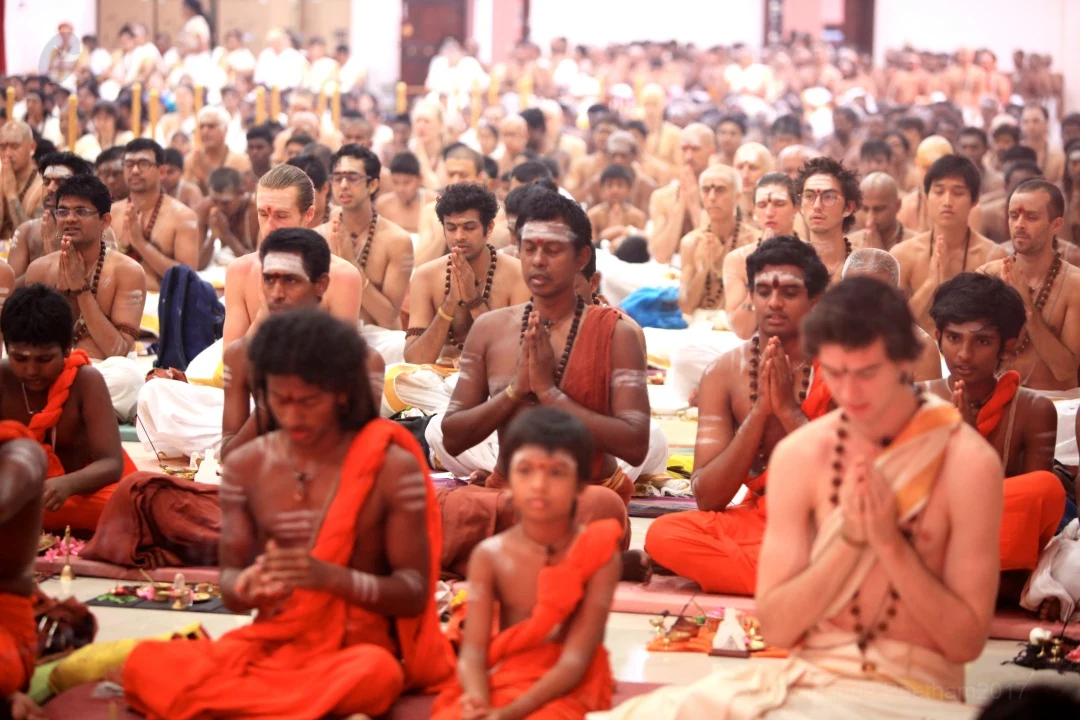
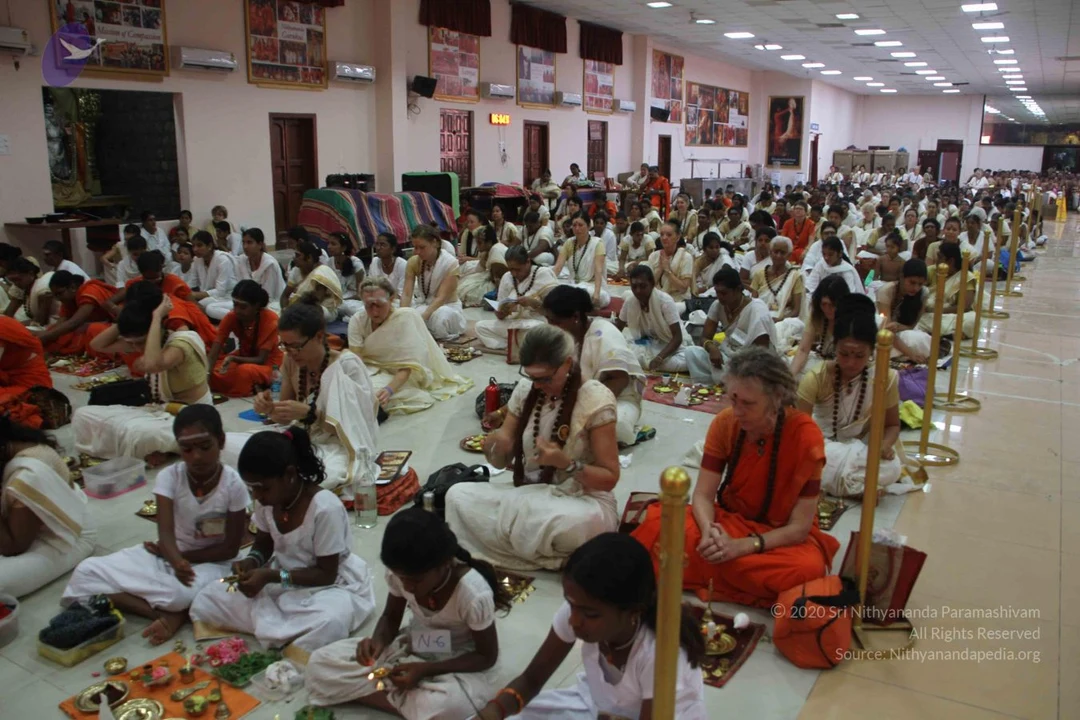
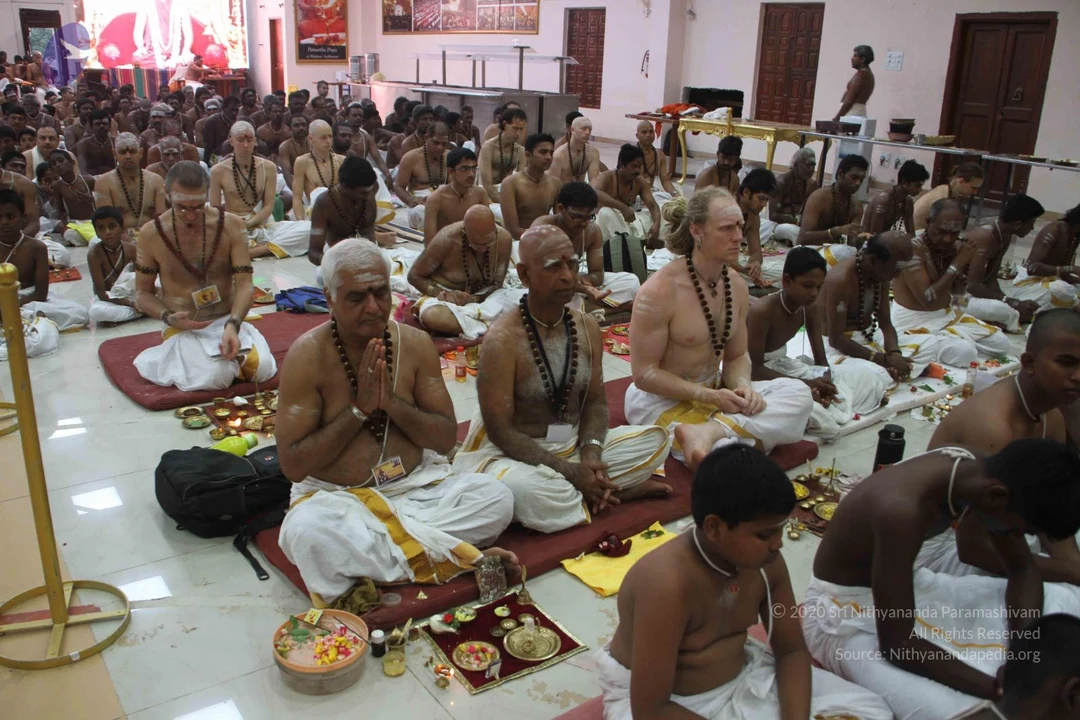
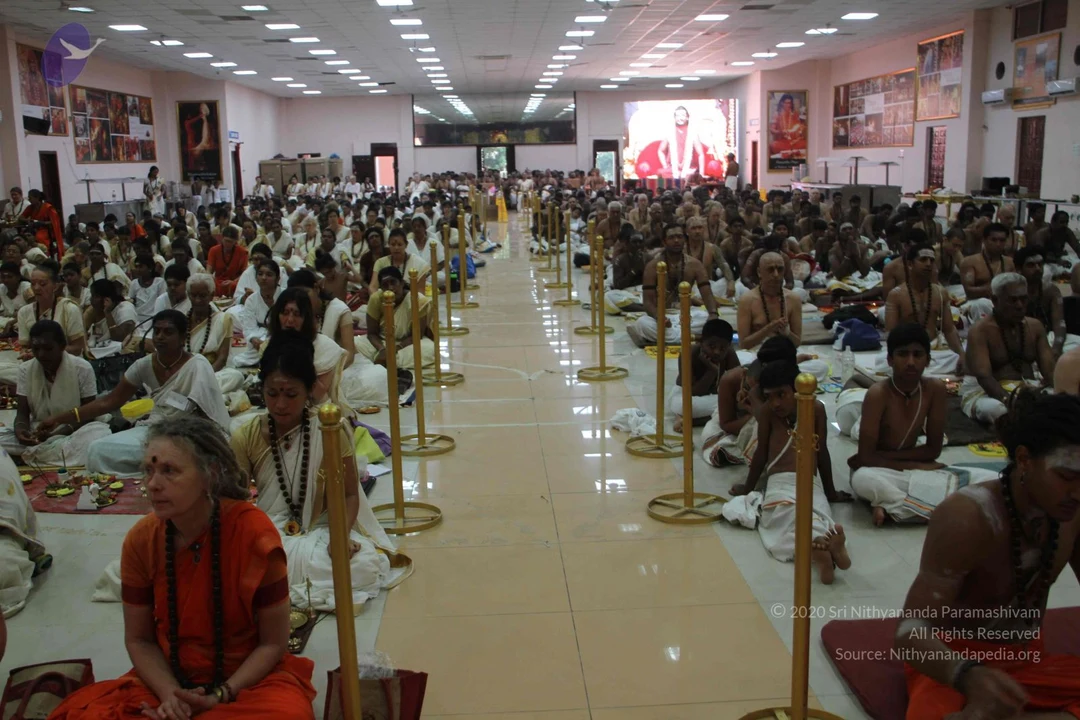
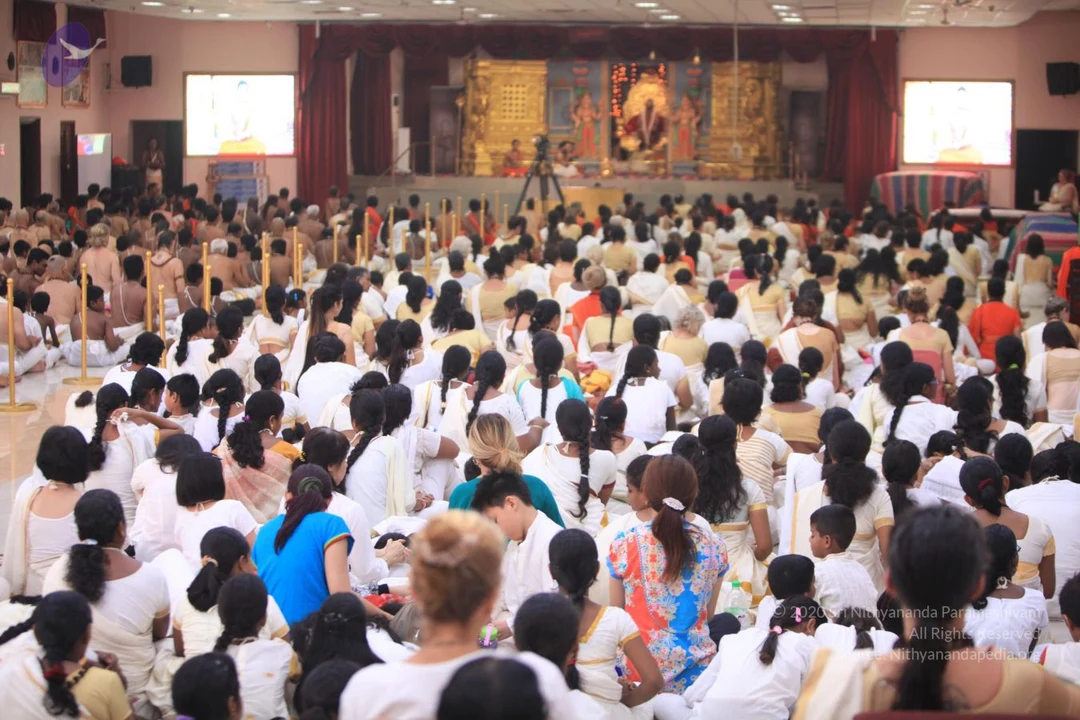
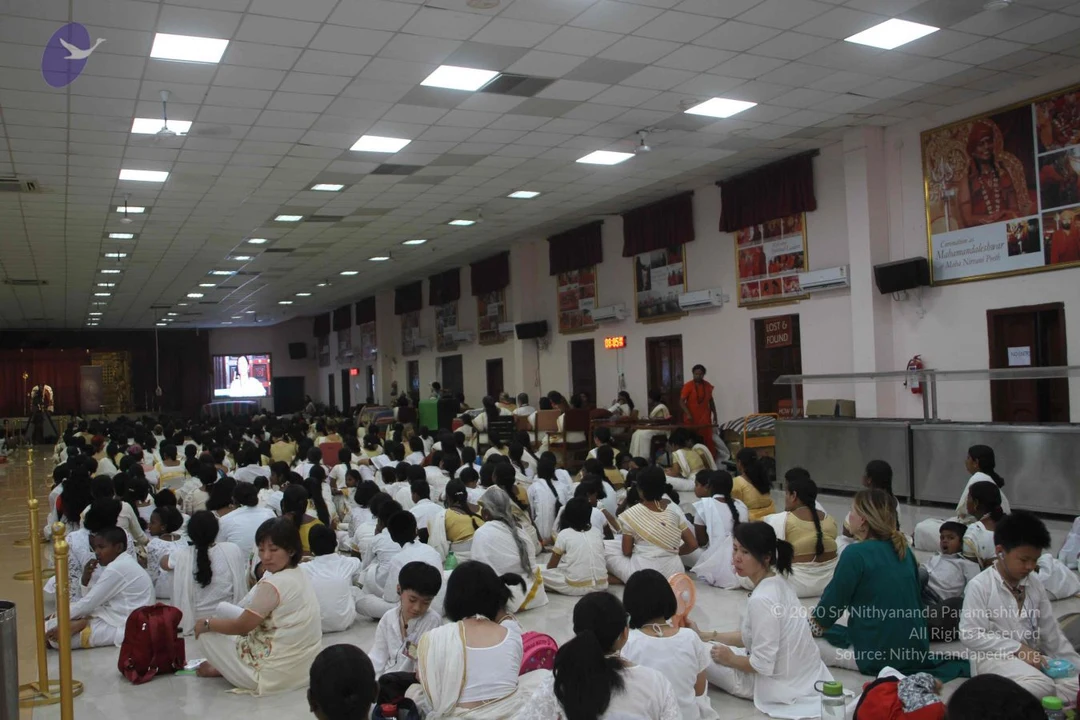
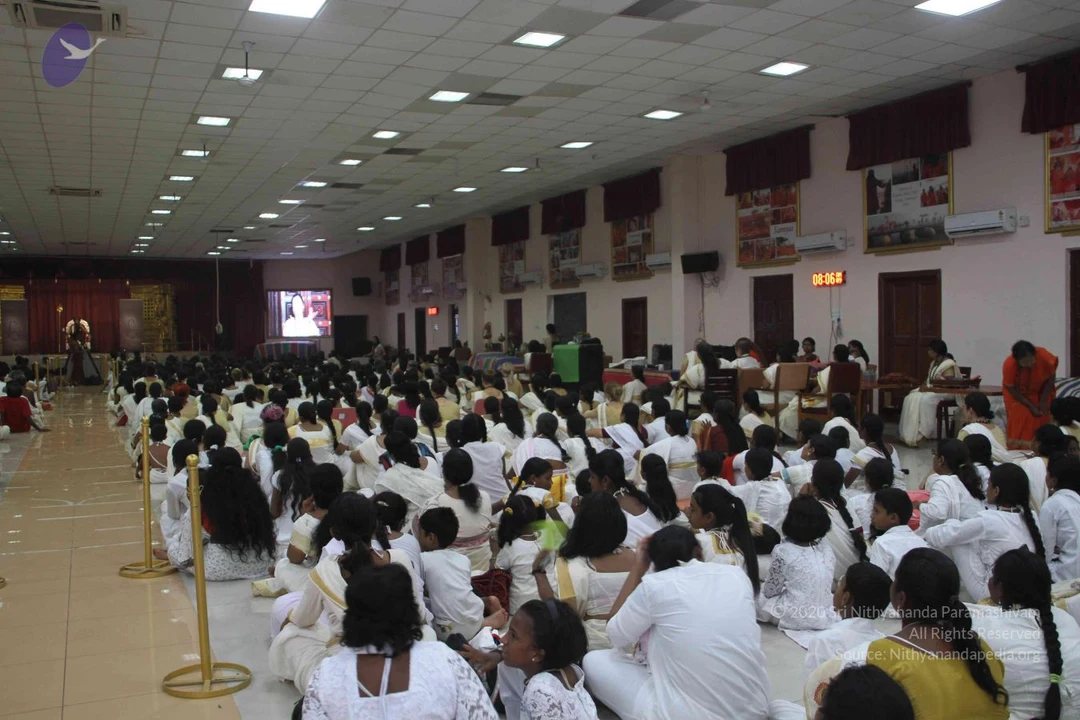
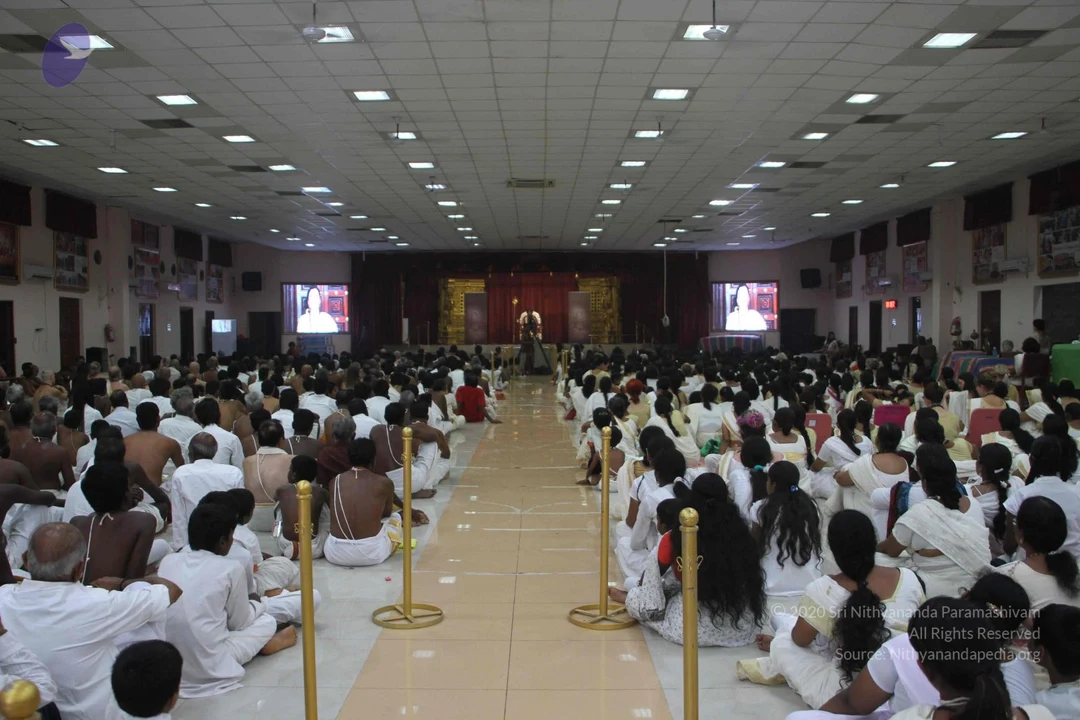
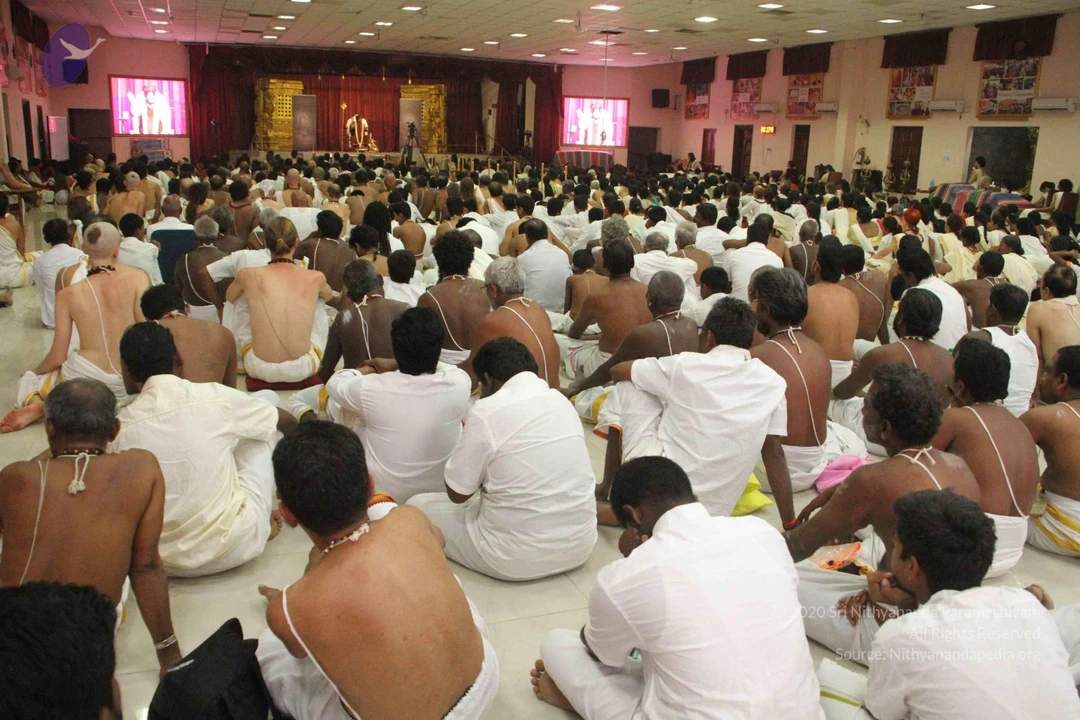
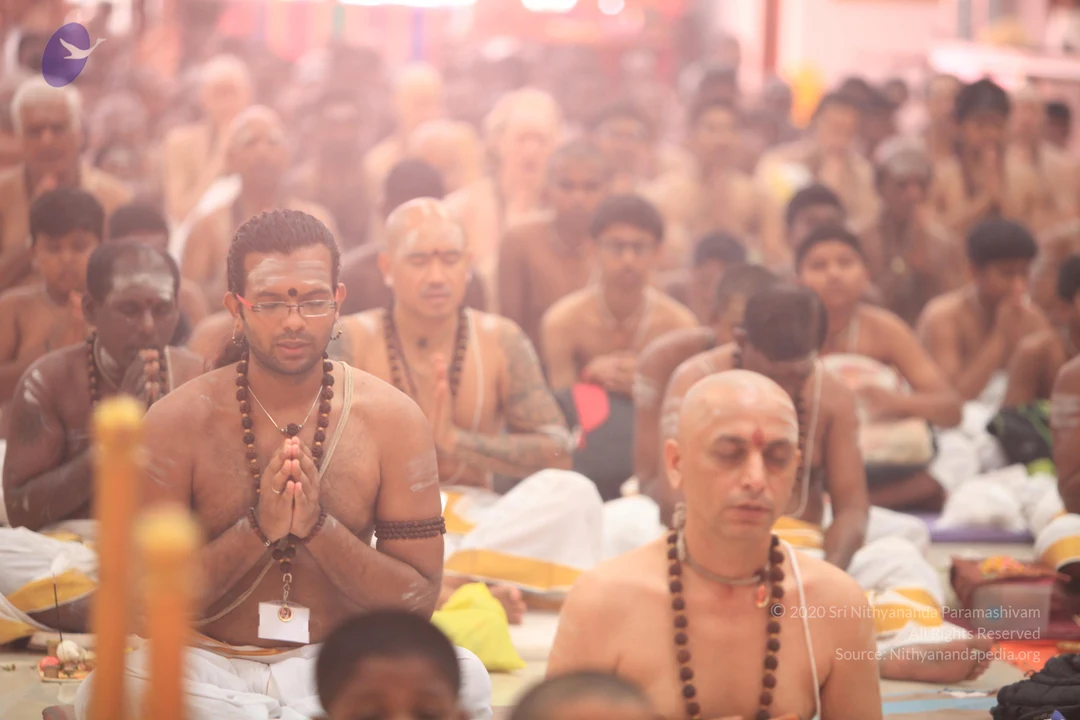
A large hall filled with seated devotees during a Vishesha Deeksha event at the Bengaluru Adheenam. Rows of men sit on mats and maroon cushions wearing white dhotis and bare upper bodies, many with sacred ash marks and rudraksha malas. In the foreground, a man in saffron-orange cloth sits cross-legged with a small plate of offerings, and a man in white dhoti holds a brass plate and puja items. Golden stanchions line the aisle, and a large screen at the far end shows a projected image of a figure. Framed religious pictures hang on the walls. Brass puja plates, flowers and a metal vessel sit on the floor.A large hall photograph of a Vishesha Deeksha pada puja session with many people seated on the floor in rows. Most wear white ritual clothes and rudraksha malas; several women in saffron or orange sannyasa-style robes sit among them. Small brass plates with oil lamps, flowers and offerings sit in front of each seated person. Girls in white with a tilak mark sit near the front, and gold posts line the aisle. A decorated seat and a striped cloth stand at the far end of the room, with framed banners on the pale walls and a portrait at the right. No individual figure is clearly identifiable as a person from appearance here.Large hall filled with hundreds of seated devotees during a group puja. Most men are bare-chested with white sacred marks painted on their arms, chests and foreheads, wearing rudraksha malas and white or saffron dhotis. Several sit on pink and red mats in front of brass puja plates, oil lamps, flower offerings and small silver vessels. A standing attendant in white moves along the back. Ceiling lights, framed wall pictures and a large screen at upper right complete the scene.A large indoor hall packed with seated male devotees in white dhotis and bare upper bodies, many wearing rudraksha malas, sitting on red mats before brass plates, flower-filled trays, oil lamps and small offering bowls. Foreground figures press palms together or lower their heads in prayer. A man in front with white hair and a sandalwood-marked forehead folds his hands, while a bald devotee beside him sits cross-legged. A bare-chested figure stands at the far right near a gold-trimmed table, and a large red-and-gold deity image hangs on the back wall. Some younger boys in white dhotis sit among the group, reading or meditating. Pink walls and a wooden door frame the room.A large hall filled with seated devotees in white dhotis and saris, many wearing rudraksha malas, sitting on mats in rows divided by gold stanchions along a polished central aisle. In the front left a woman in an orange sari with a red bindi and grey hair sits with palms together, and a shaved-headed man in an orange cloth sits nearby. At the far end a large screen shows a figure seated on a red throne with a crown-like headpiece, with a flowered backdrop and pink walls decorated with framed deity paintings. Brass pujas and offering trays are placed before some seated devotees.A large indoor hall filled with many seated devotees on the floor in rows, most dressed in white ritual clothes and some in saffron, with rudraksha malas around their necks. A woman in the foreground wears an orange sari-style garment and a rudraksha mala, seated in front of an offering plate with flowers and lamps. Tall golden stanchions line a central aisle. On the back wall, a large screen shows a figure in red and saffron clothing seated on a raised seat, and framed religious artwork hangs on the walls. Many people are present.

Nithya-Satsang
93 photosSource gallery
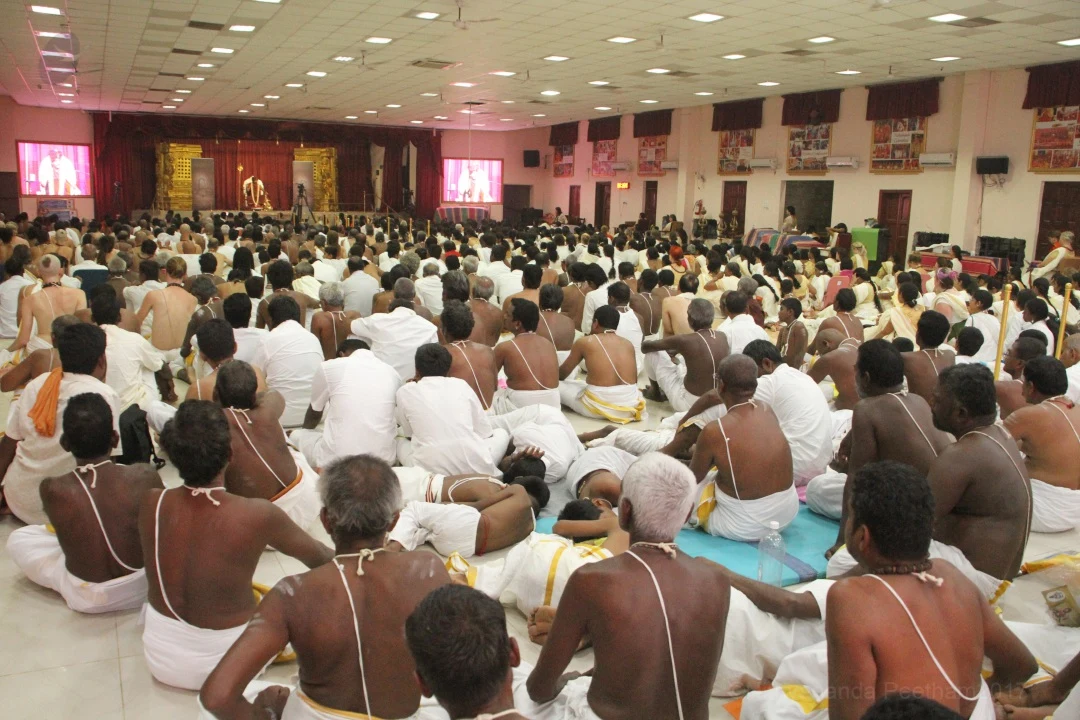
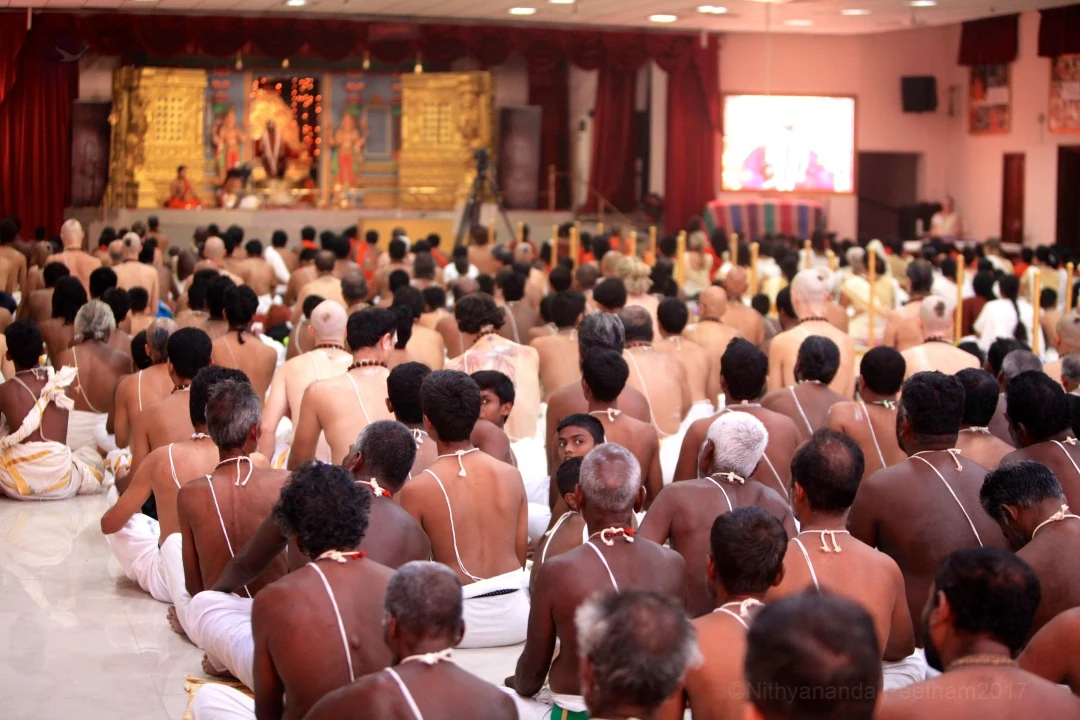
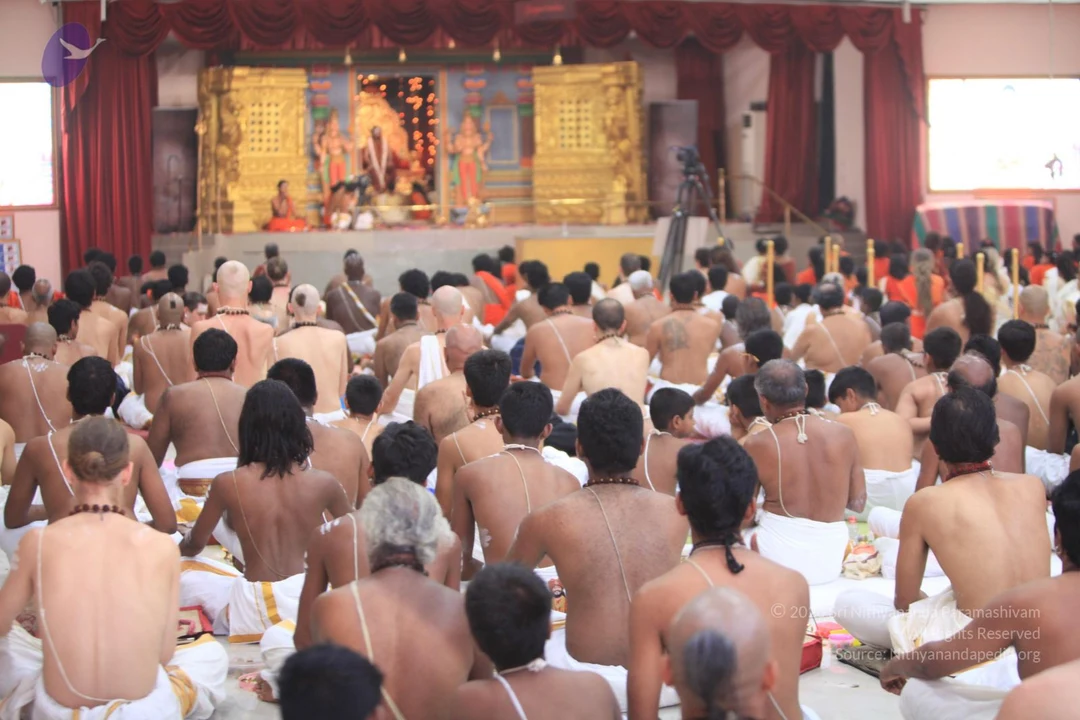
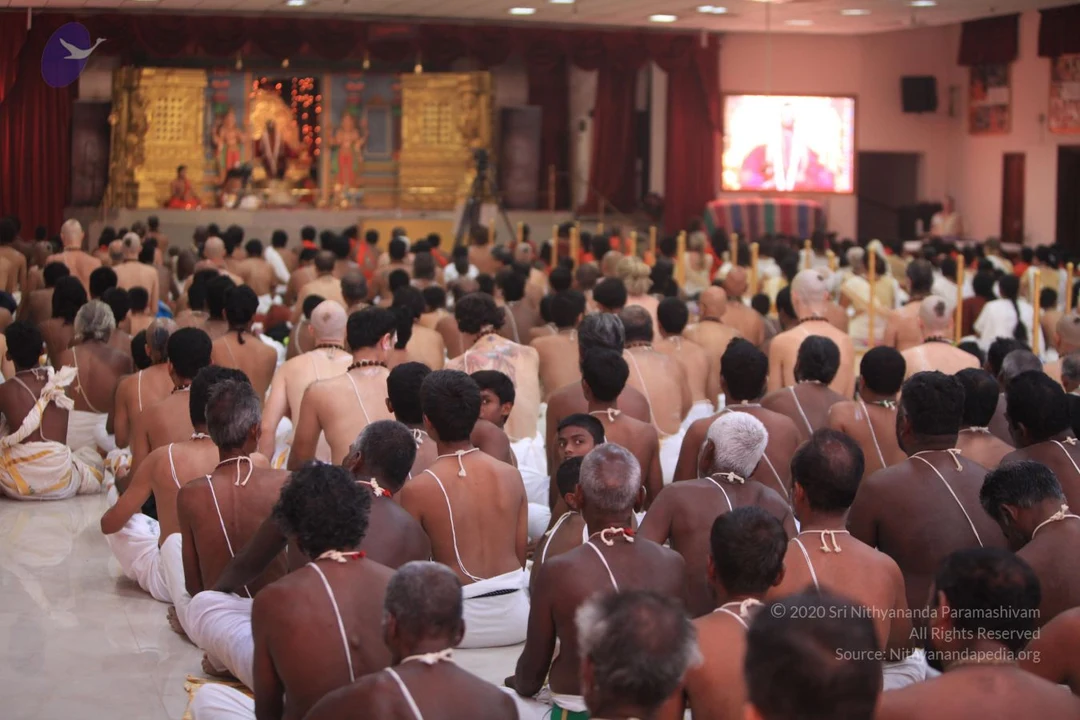
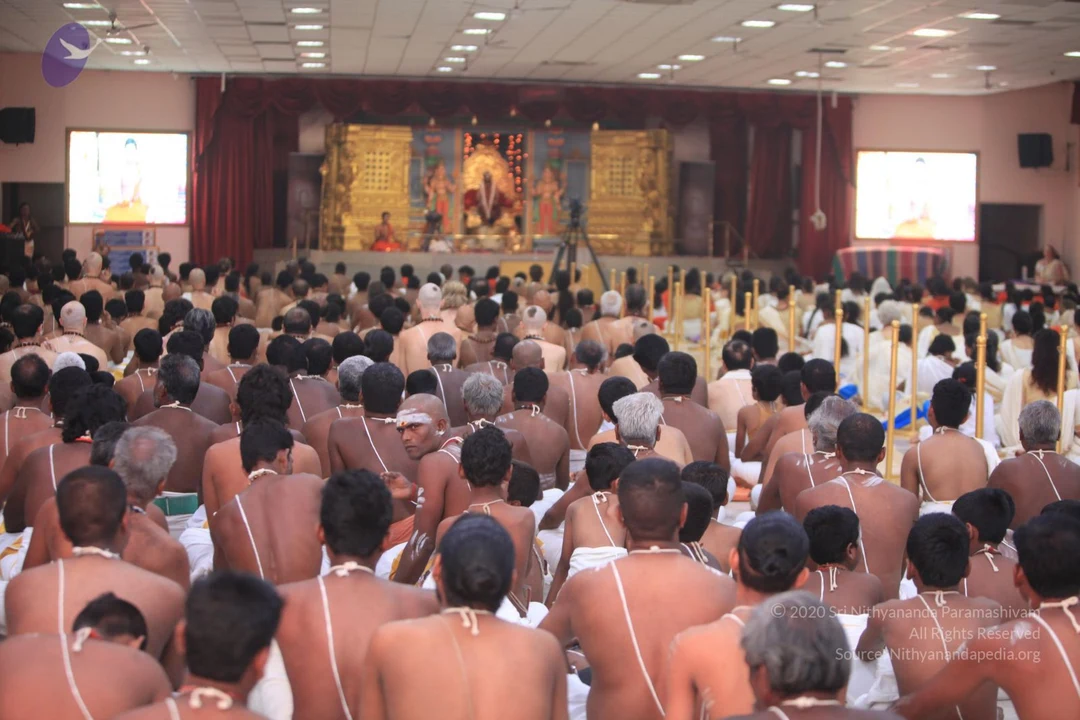
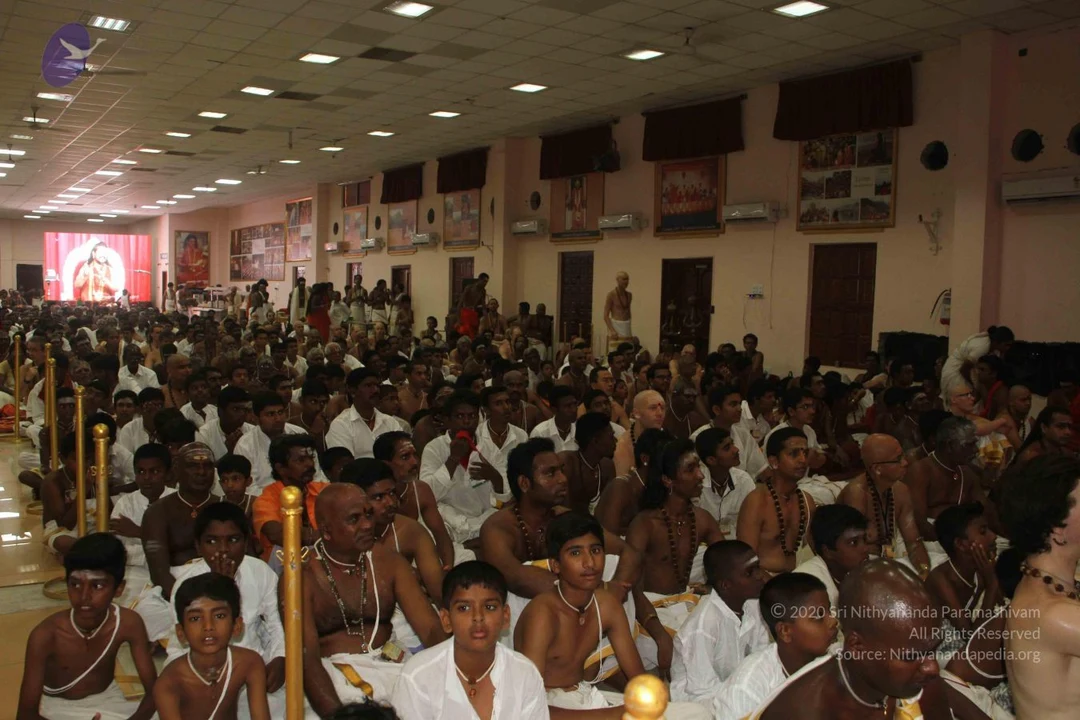
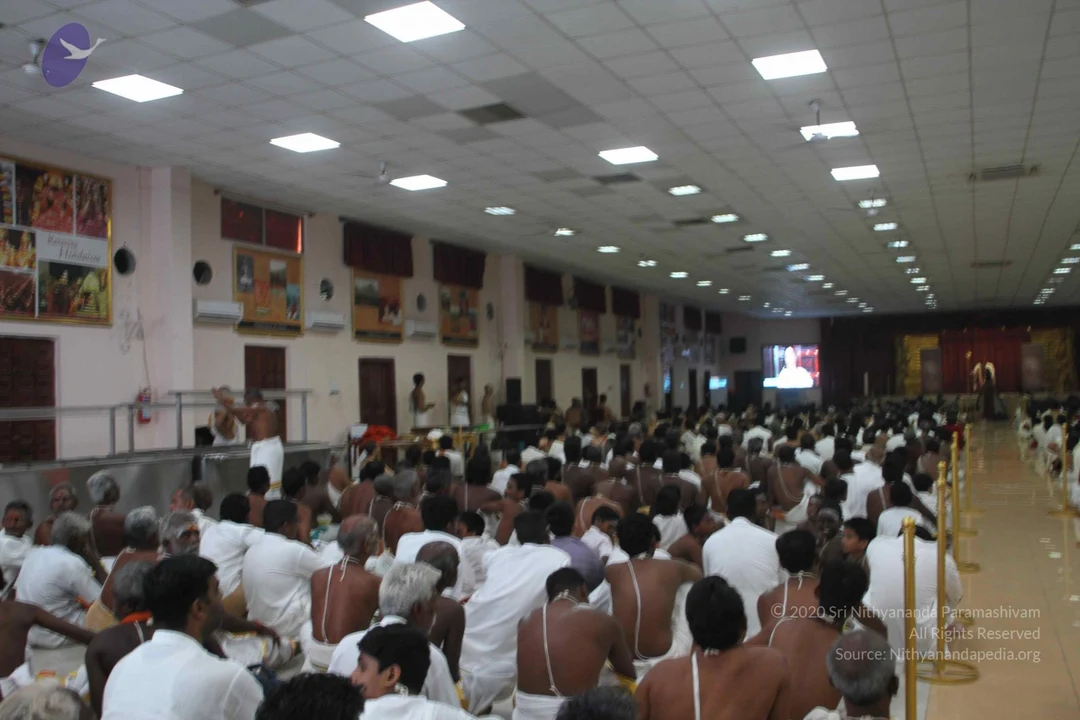
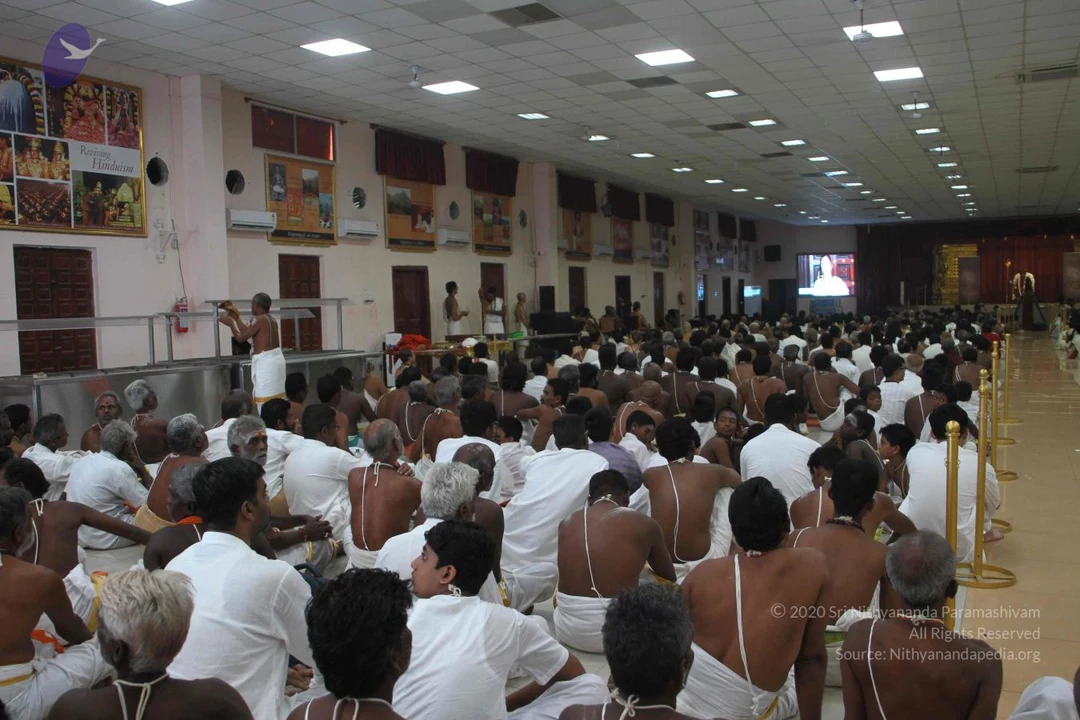
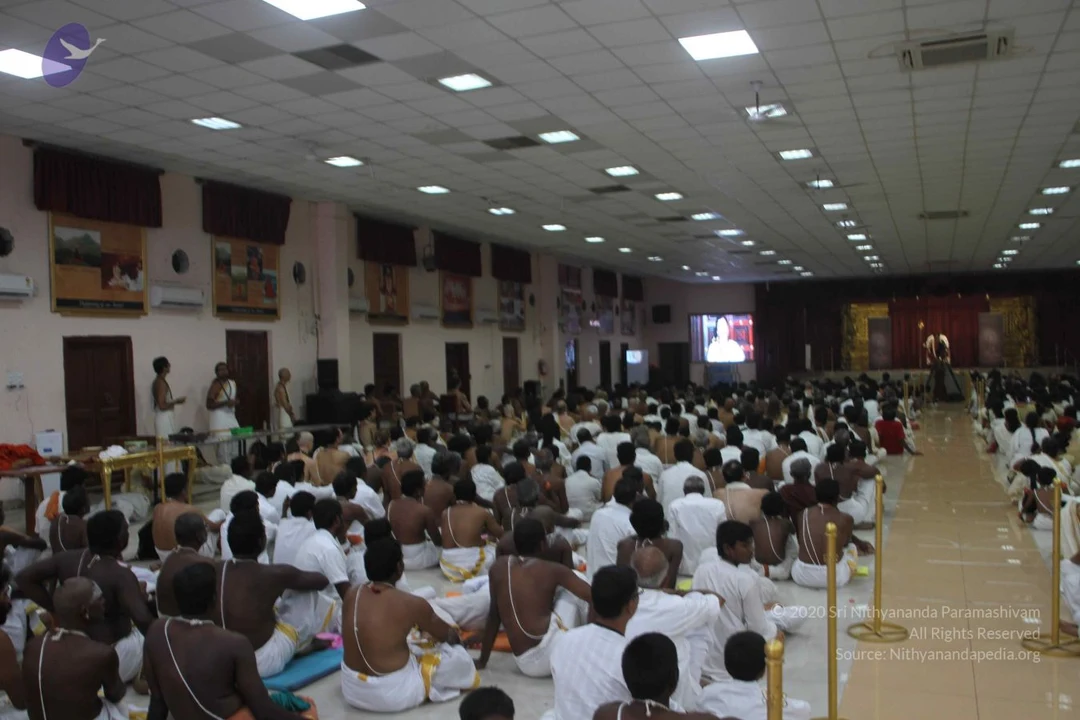
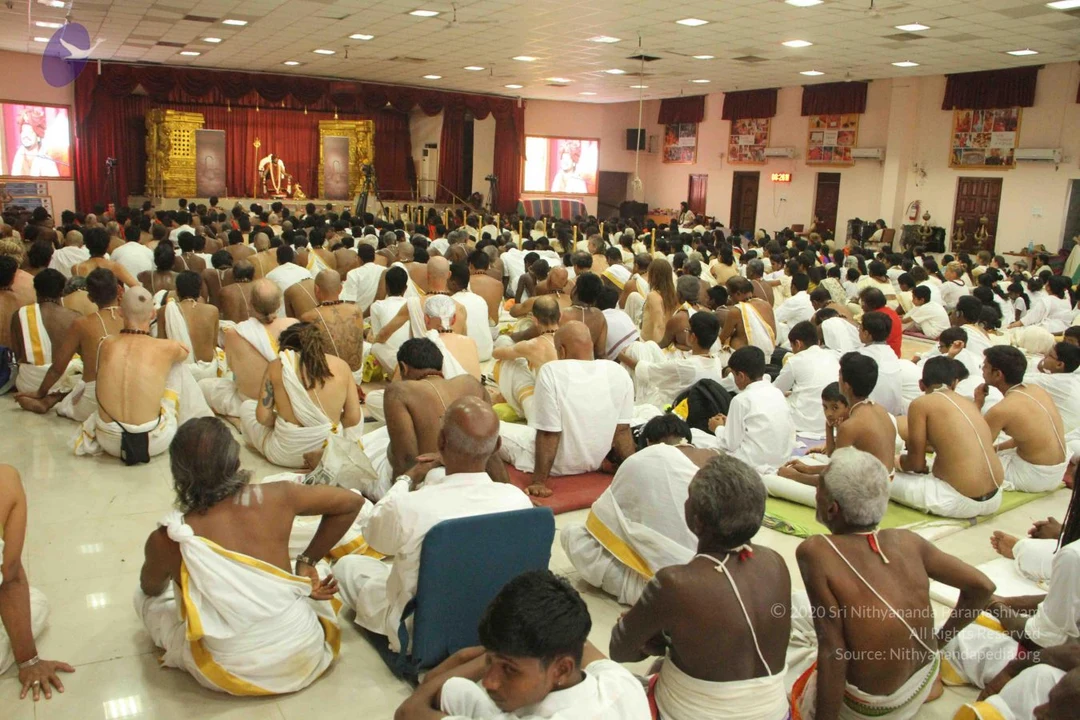
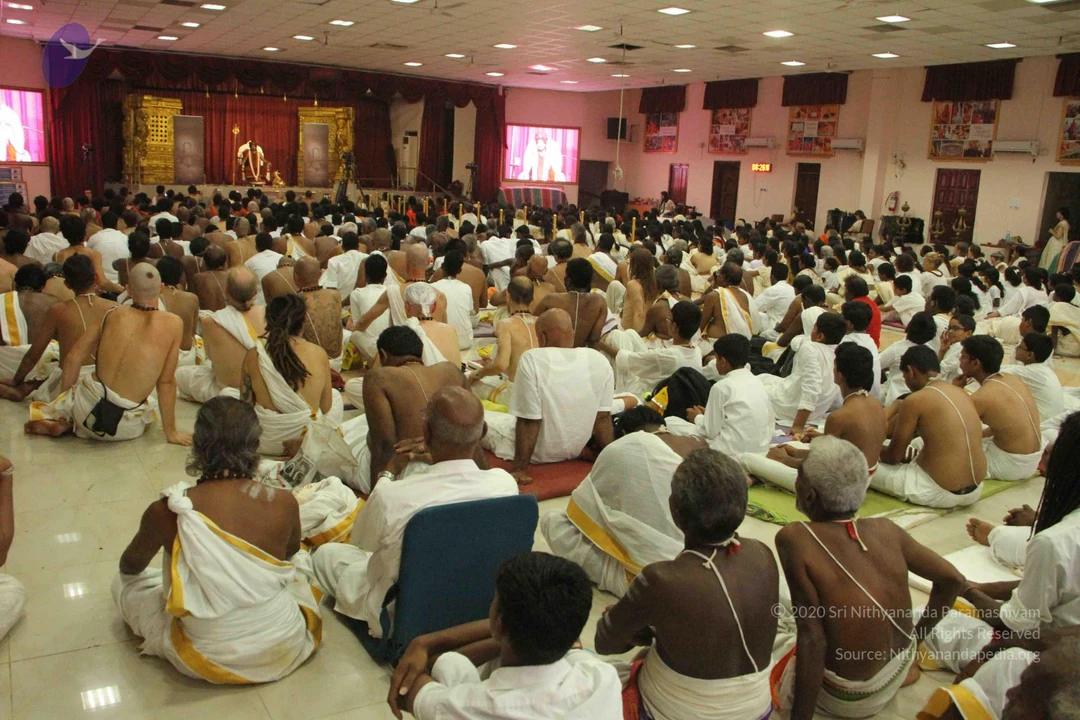
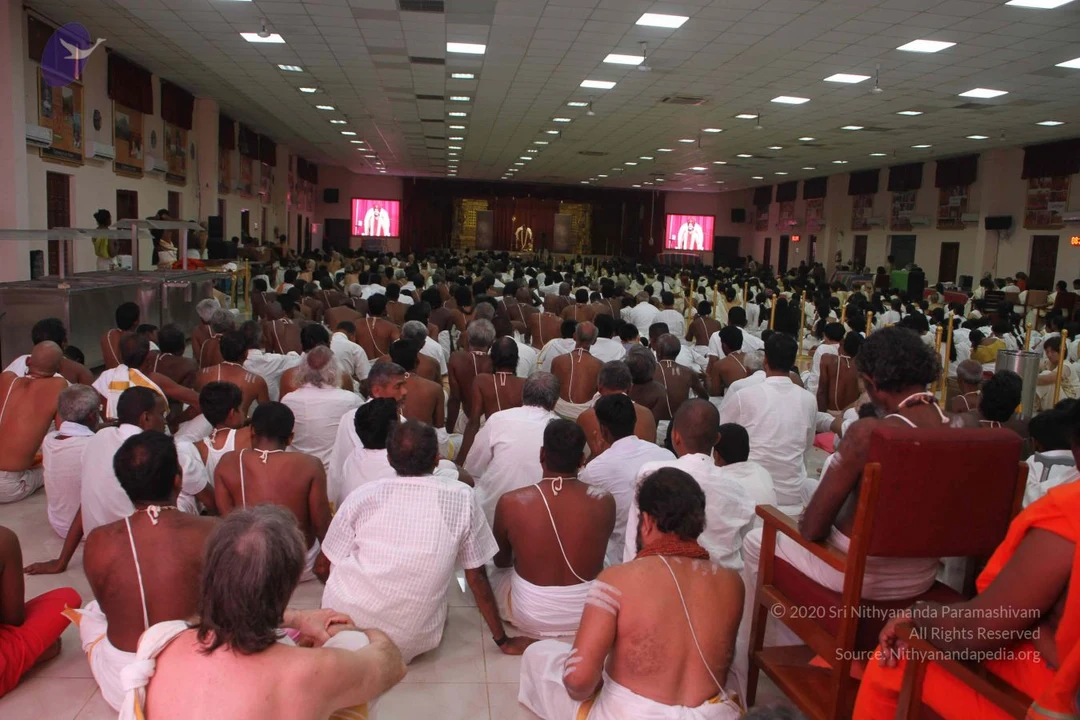
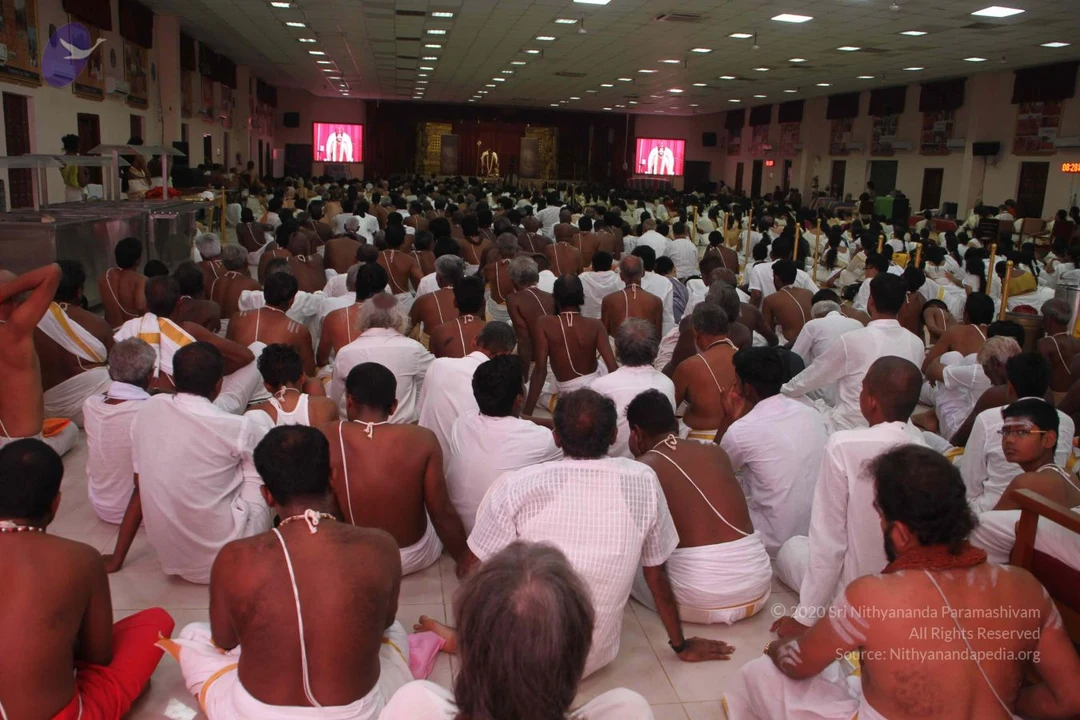
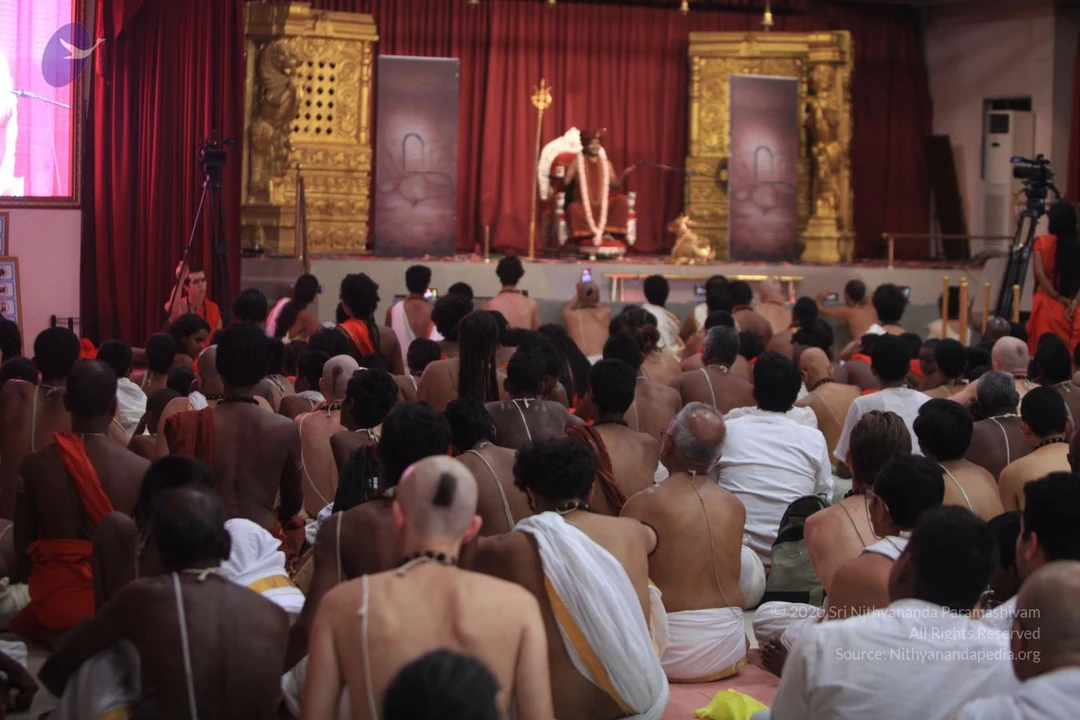
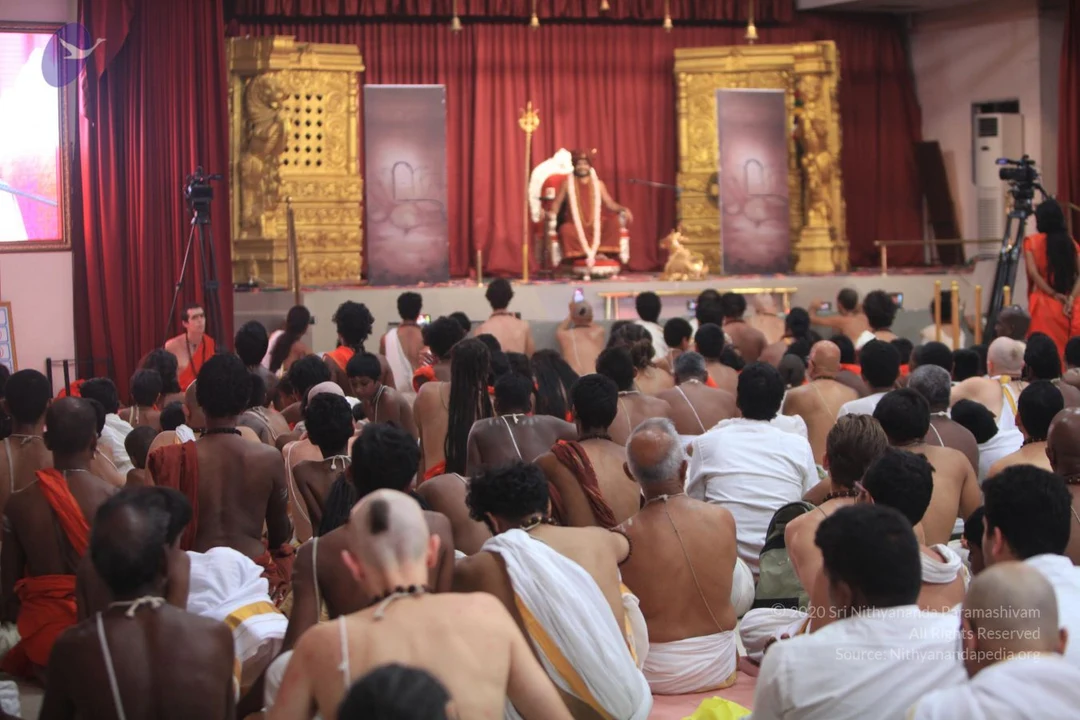
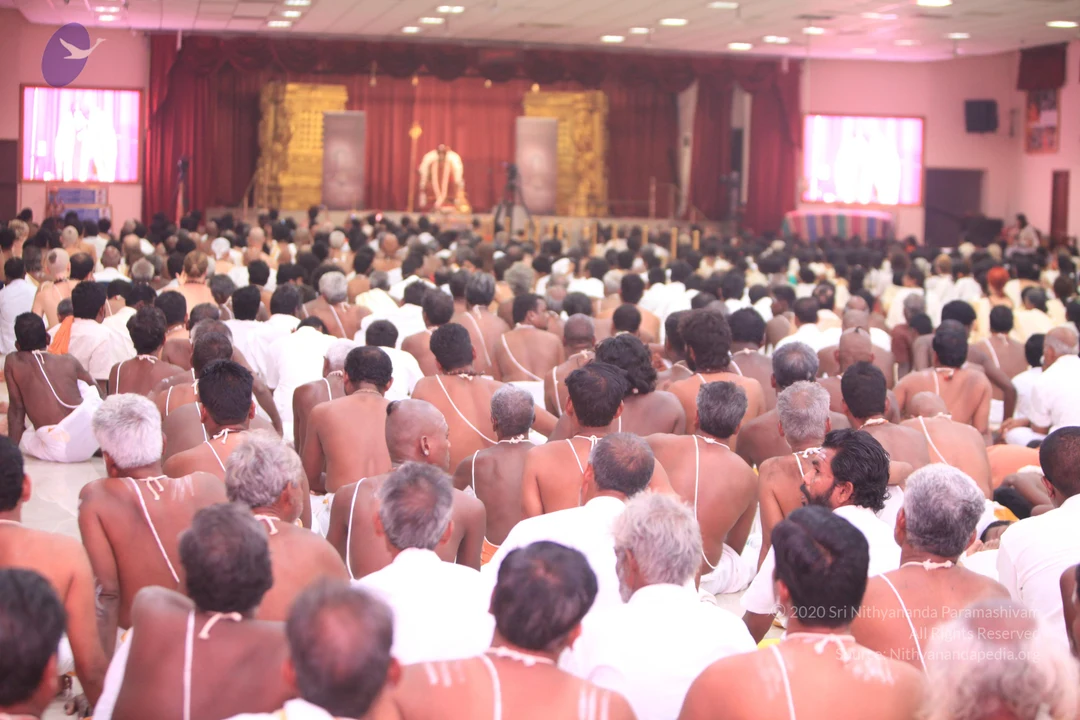
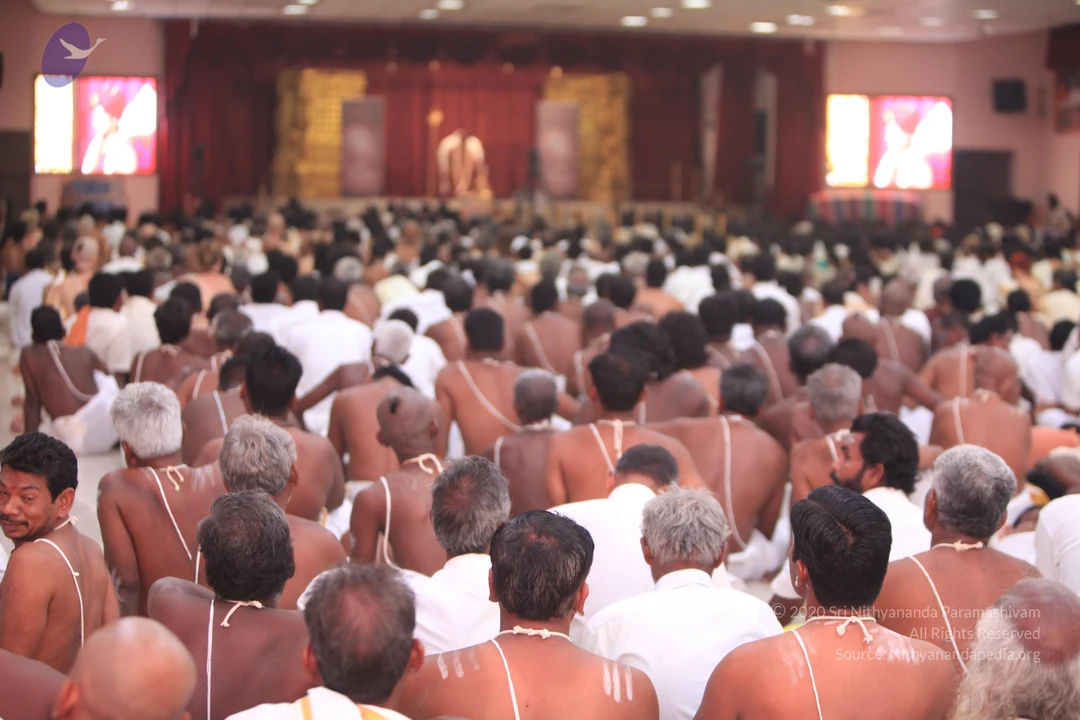
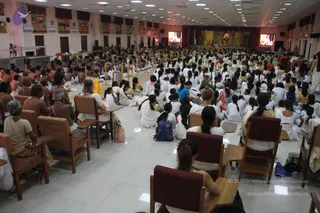
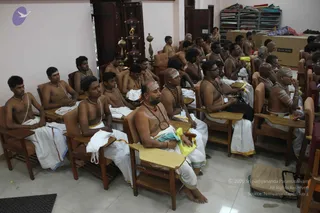
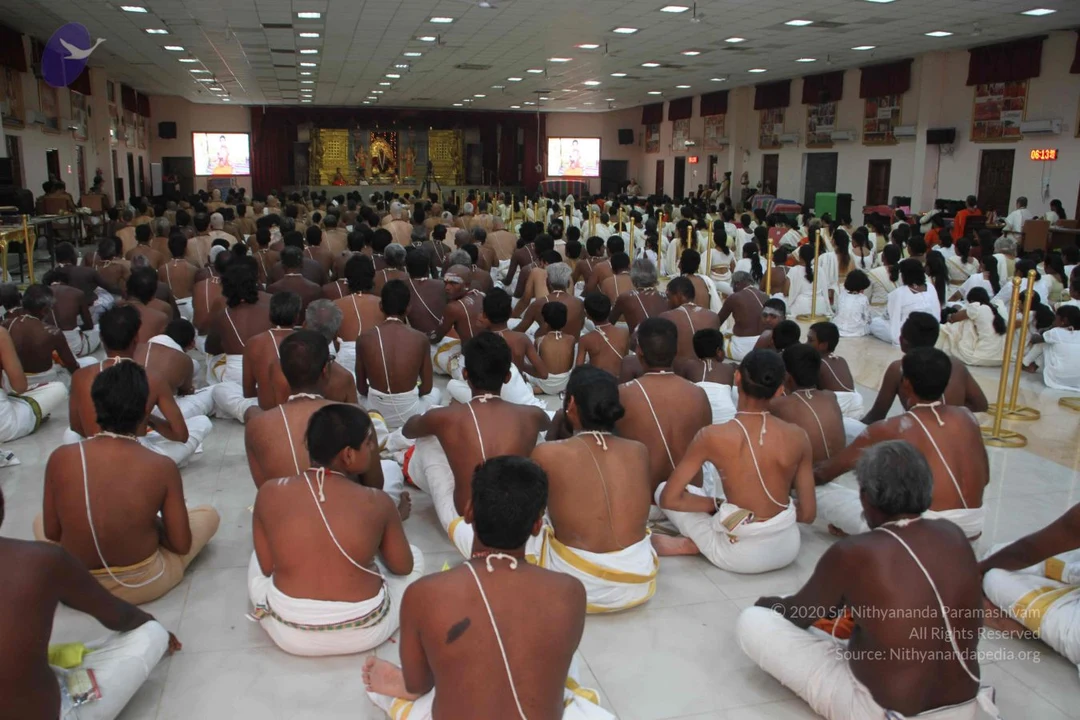
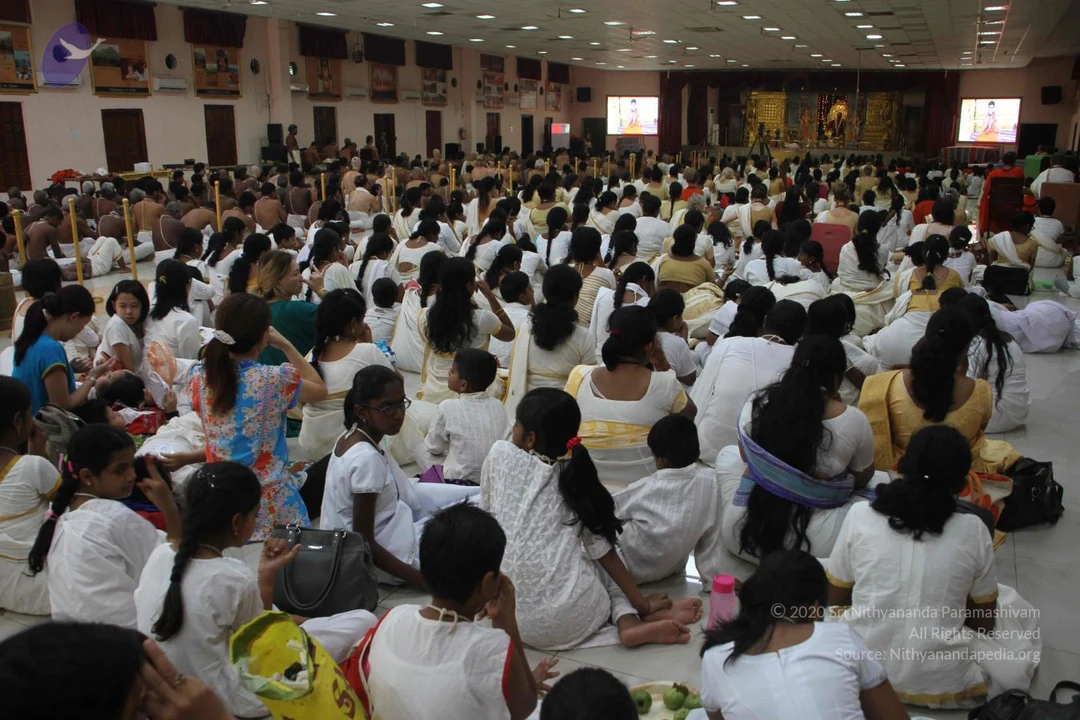
A large hall of seated devotees viewed from behind, most of them bare-chested men in white dhotis with sacred threads across their shoulders, with a few women in white saris toward the right. The crowd faces a distant stage with a golden shrine backdrop and a deity murti, and two screens show a figure in saffron. Ceiling lights, gold stanchions and wall banners frame the scene.A large hall filled with seated devotees in white and cream clothing, many women in white saris with gold borders and children in white kurtas, sitting on the floor in rows. Several bare-chested men sit near the front left, some with white cloths. At the far end a golden altar stands with ornate decorations, flanked by two screens showing a live feed of a seated figure. Plates of fruit sit on the floor near the front.Wide view of a large hall during a seated satsang gathering. Hundreds of devotees sit on the white tiled floor in white clothes, with many wooden chairs and small desks in the foreground for those seated on chairs; some wear white dhotis and shawls, others saris and white dresses. Many attendees have long hair tied back. Rows of brass oil lamps (kuthuvilakku-style) with yellow bases line the aisle. On the far stage, a golden ornate altar and a central deity murti are visible, flanked by two large screens showing close-up images of a robed figure. Wall paintings and framed pictures line the side walls. Crowd size is in the hundreds, but only the visible people are counted here.A photo of a seated group of men in a plain tiled hall attending a satsang session. Most wear bare upper bodies with white dhotis bordered in gold, sacred thread and sandalwood or ash markings on their foreheads and arms. They sit on wooden chairs with attached writing trays, facing forward; several hold small notebooks or papers. A wooden door, shelving and stacked boxes are visible in the background, along with a brass lamp on the left side.A large hall packed with seated devotees in white dhotis and shirts, many wearing rudraksha malas and beaded necklaces, some bare-chested with sacred ash marks. Rows of young boys sit in front with hands folded or resting on their knees. Gold-topped brass poles line the floor edge. On the wall at left, a large screen shows a figure in red and white, and framed religious pictures hang along the cream walls beneath air conditioners and ceiling lights. A standing statue near the right wall shows a bare-chested figure. The scene looks like a satsang gathering.A large hall filled with hundreds of seated devotees, mostly men, wearing white dhotis and white shawls, many bare-chested, sitting on the floor in rows facing the far end. Overhead rectangular ceiling lights illuminate the room. On the right, a large video screen shows a figure in white, and a golden-curtained stage with a deity murti appears at the far end. Along the walls hang framed religious posters and a banner reading part of a Hindu-themed display. Near the left wall, a few figures stand near a raised railing. The setting suggests a satsang or deeksha gathering in an ashram hall.
Vishesha-Deeksha

107 photosSource gallery
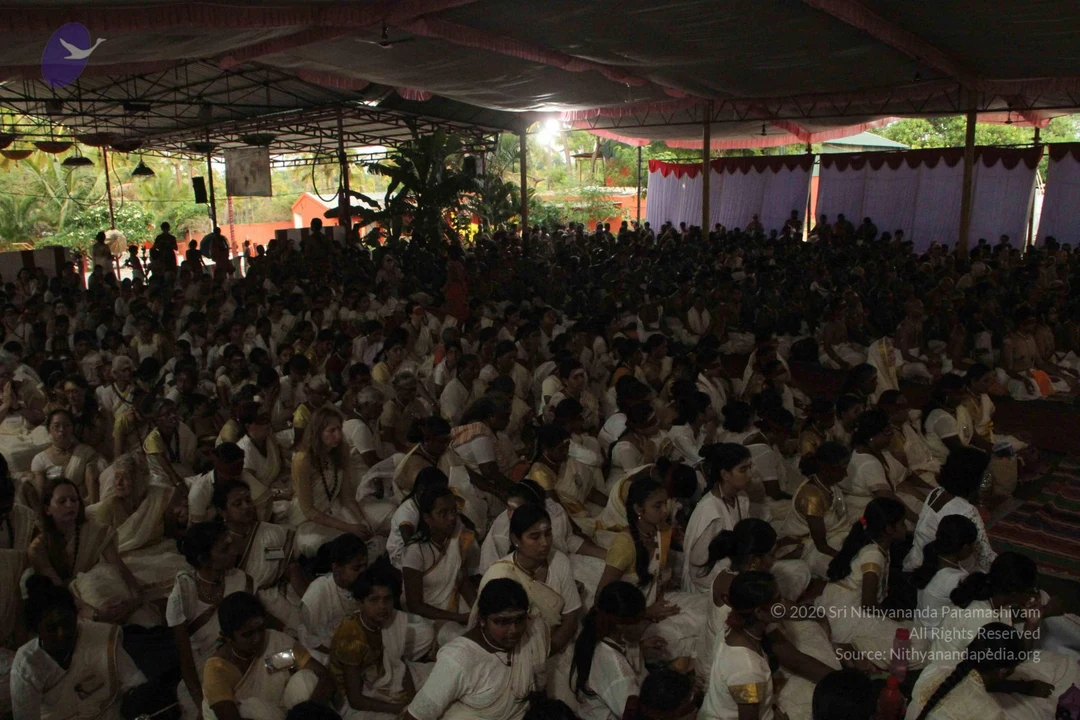
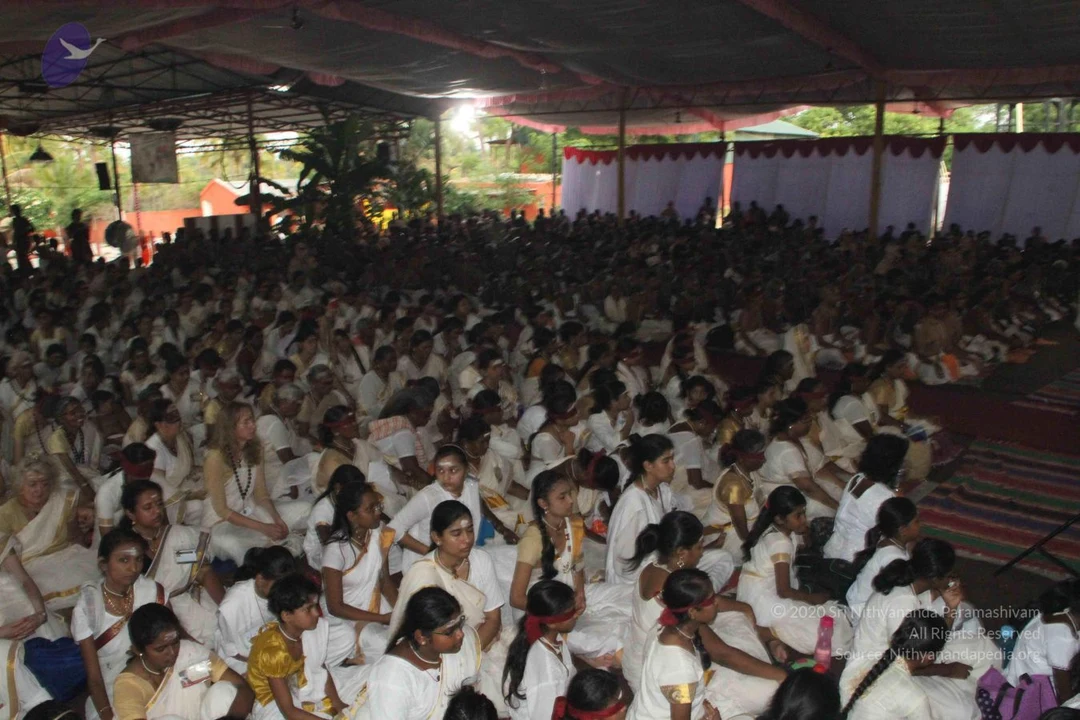
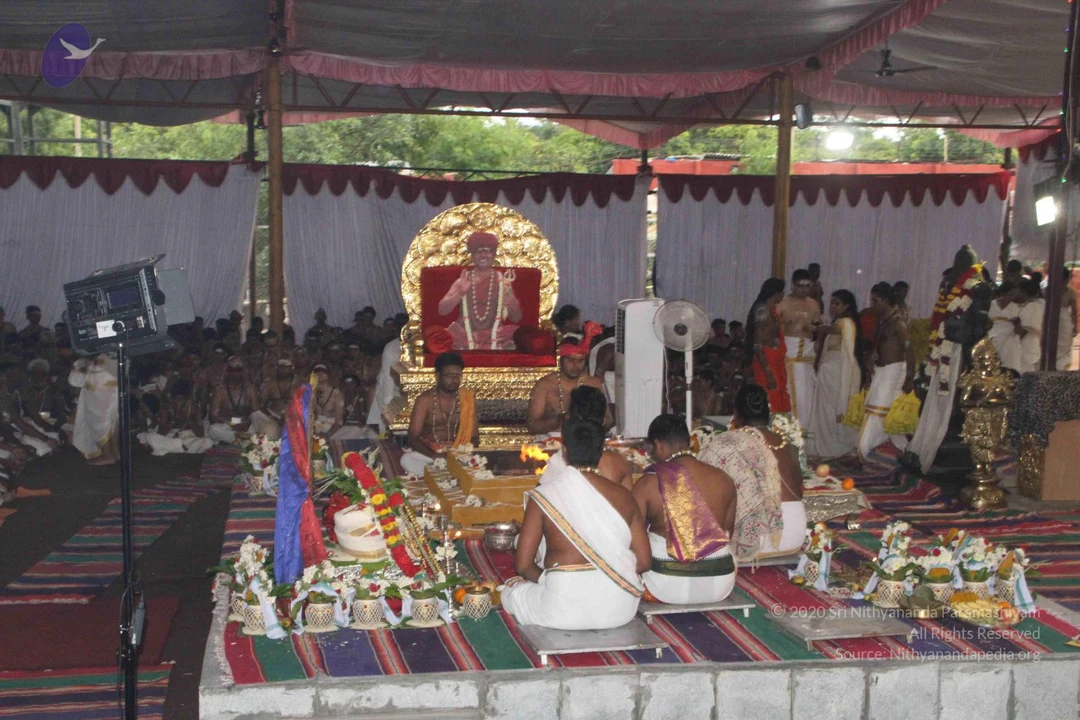
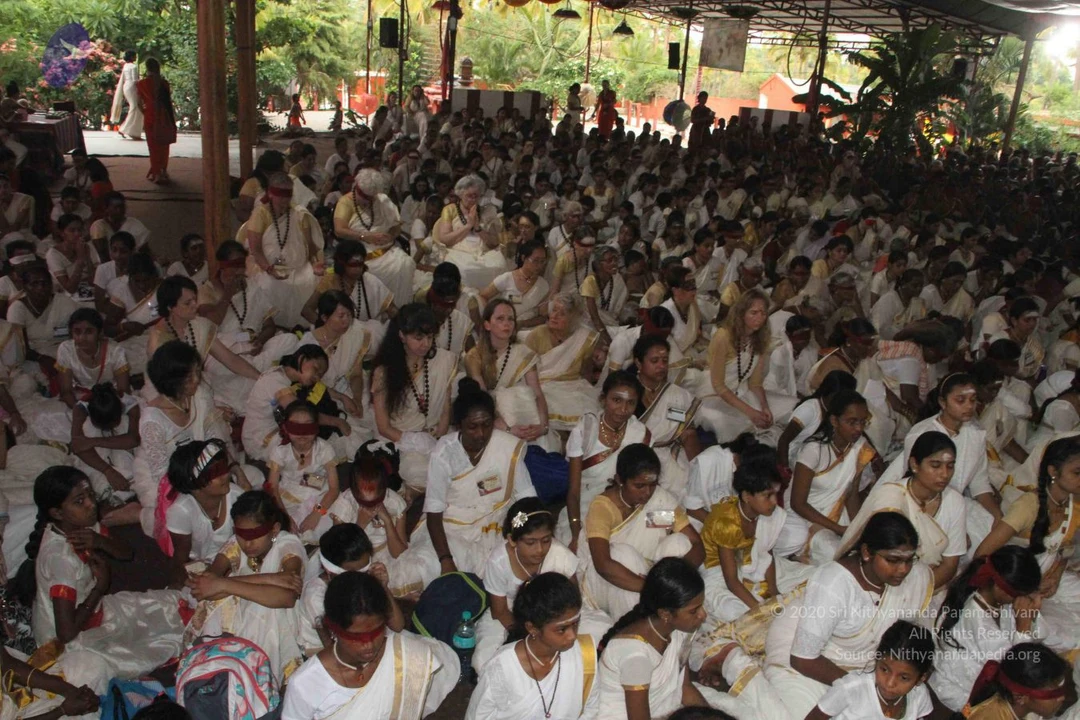
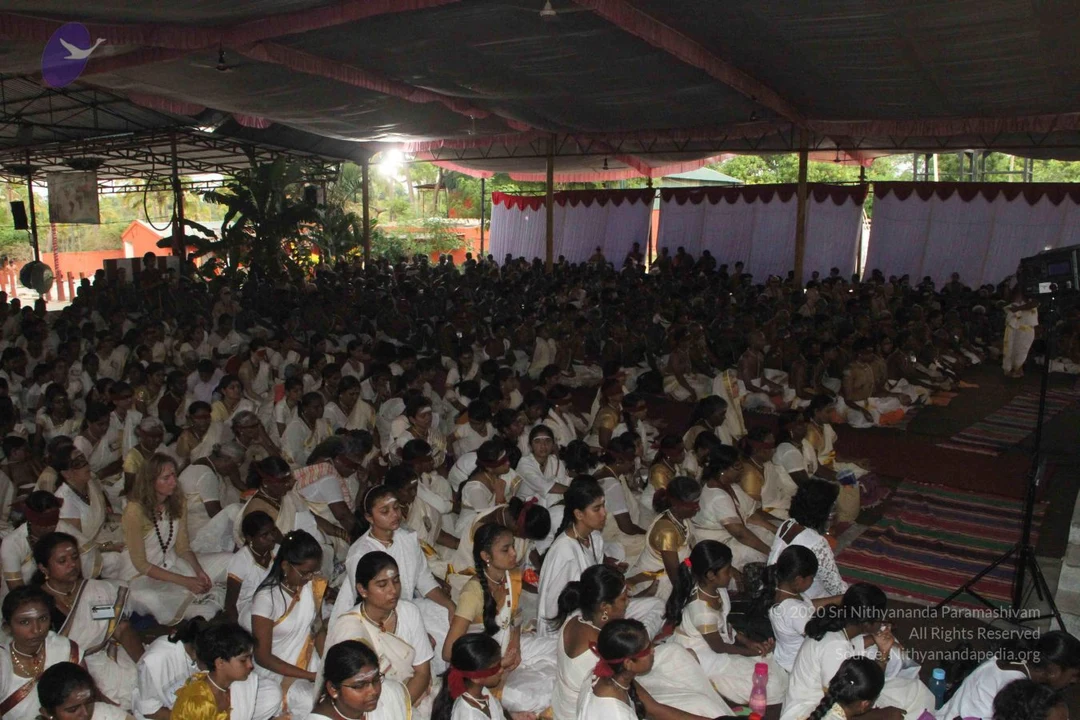
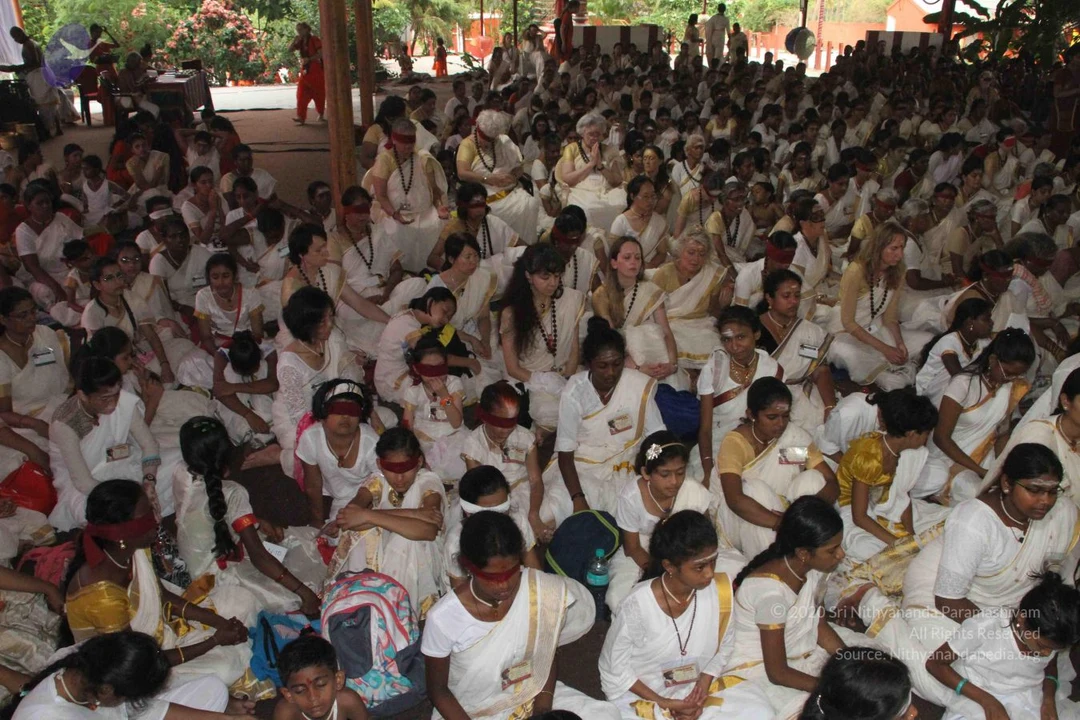
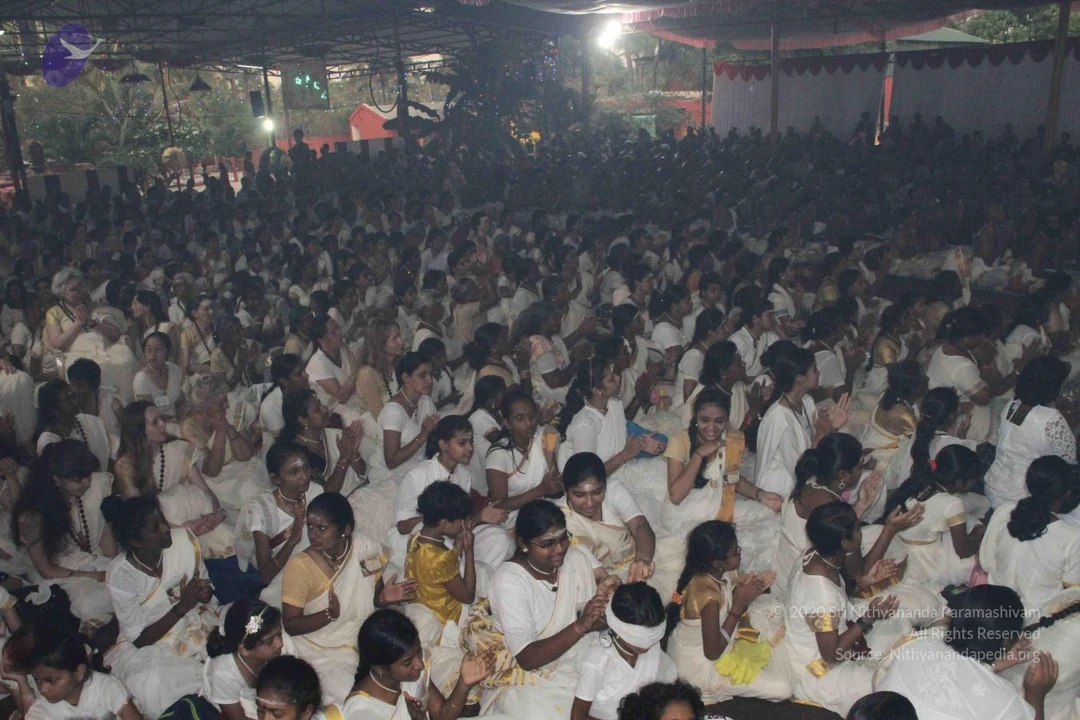
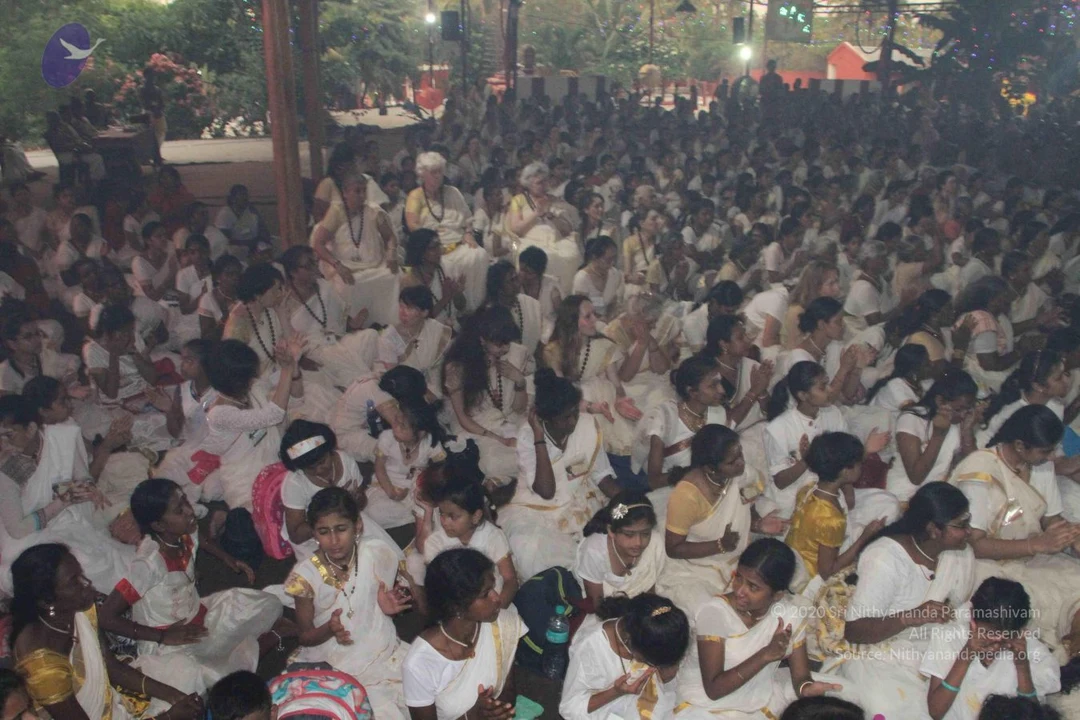
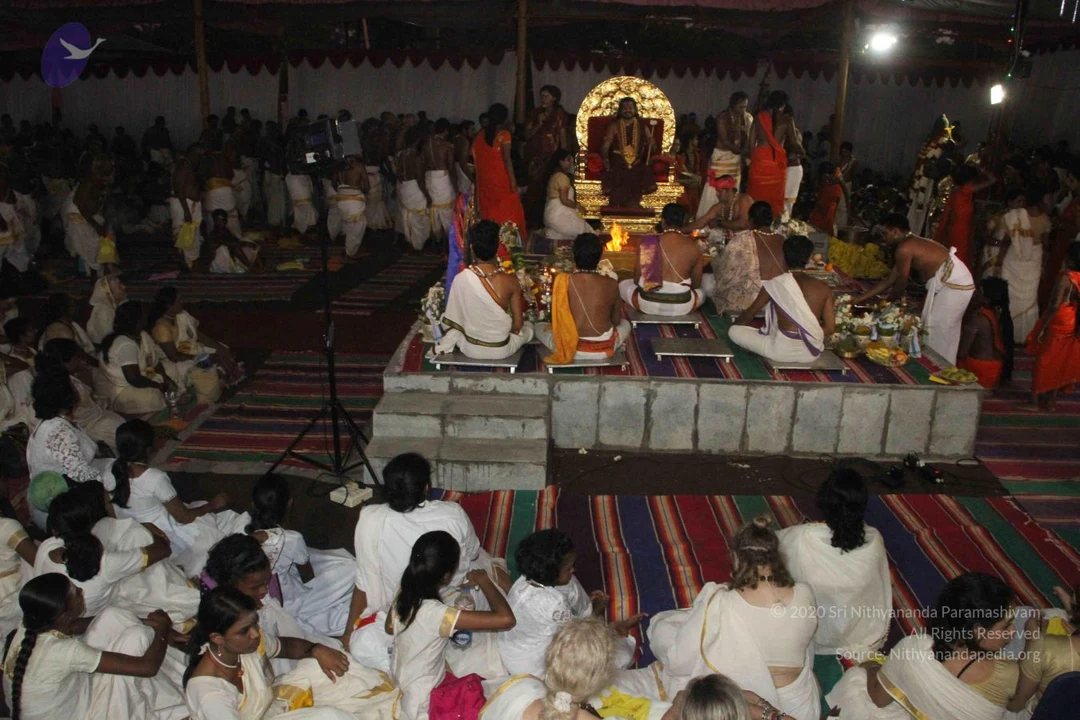
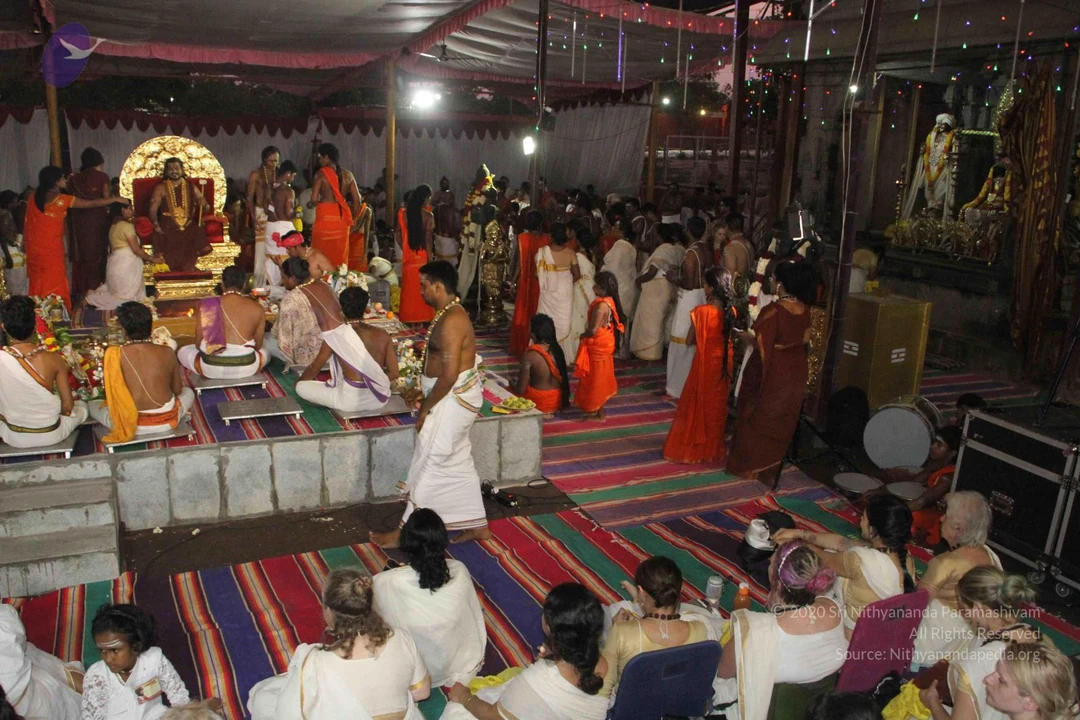
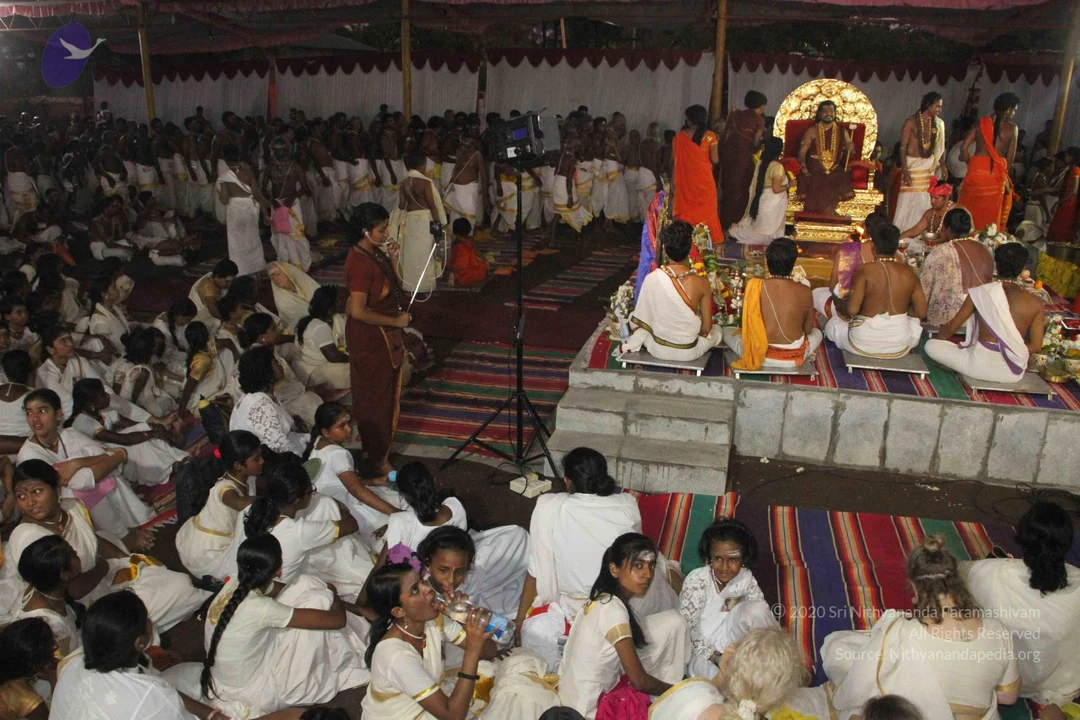
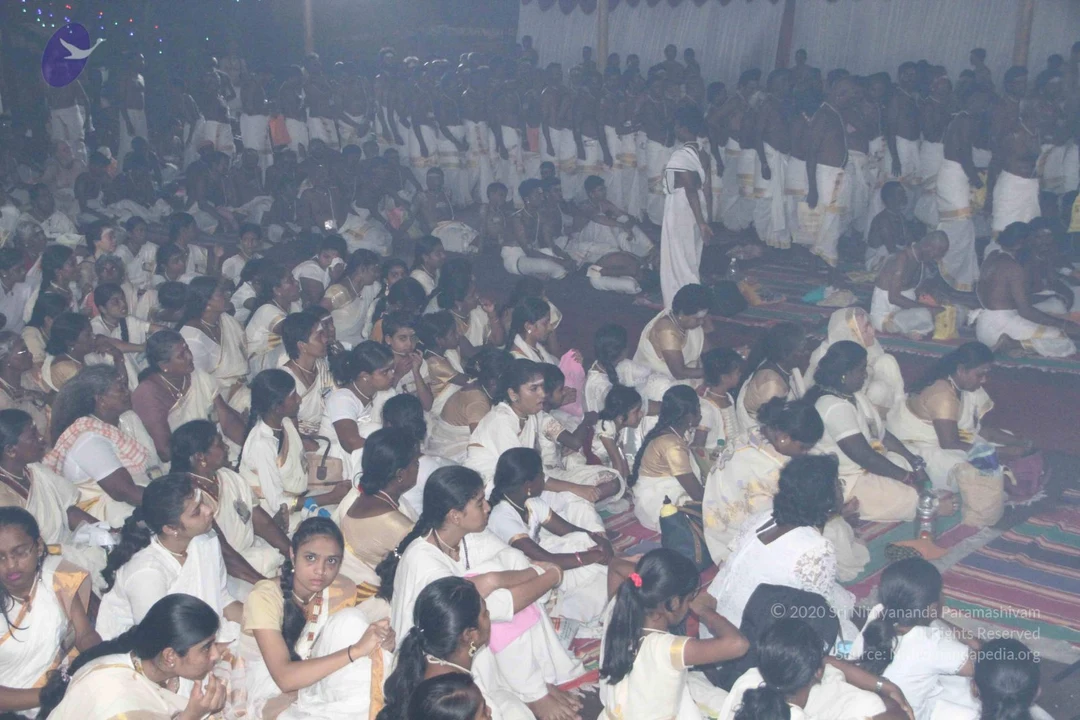
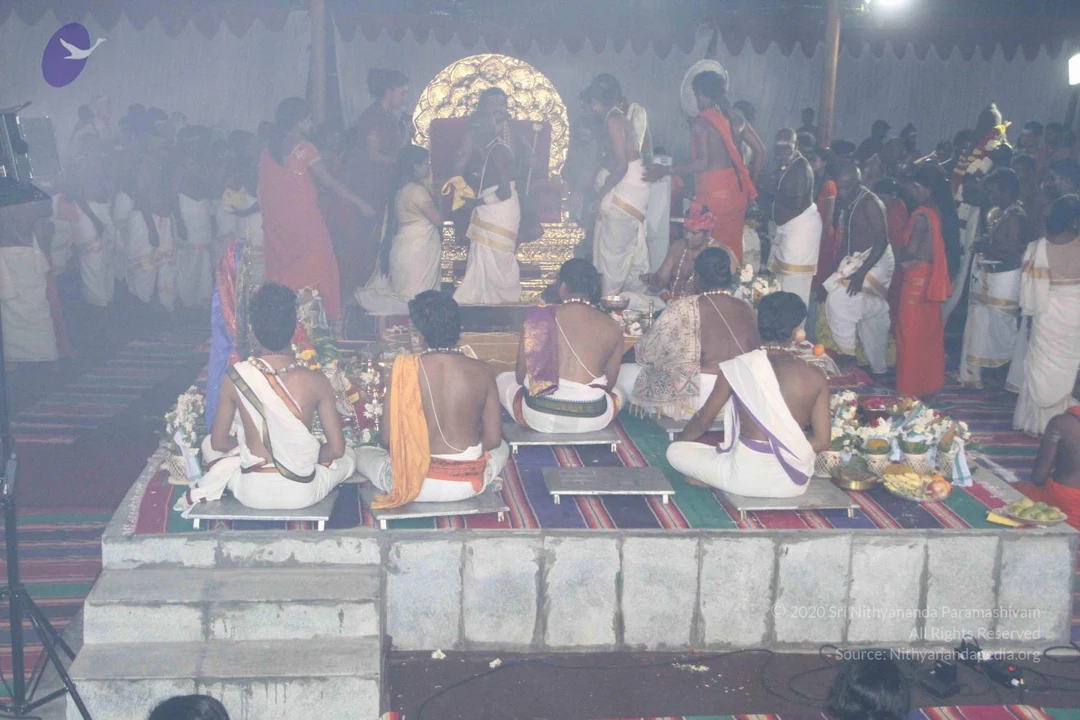
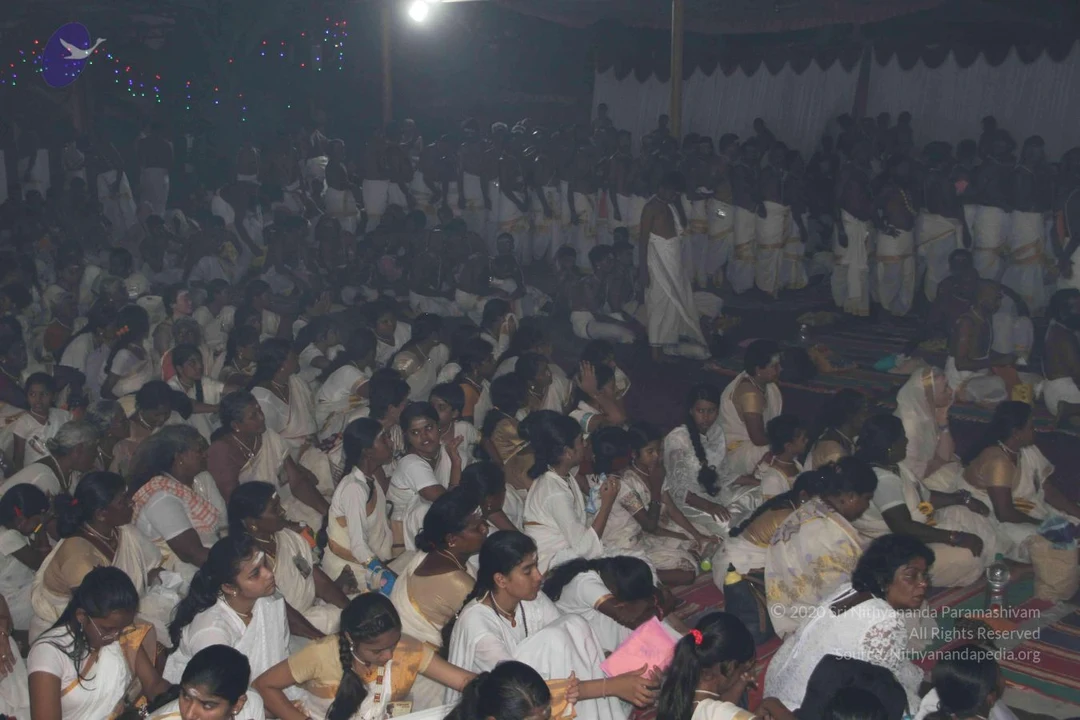
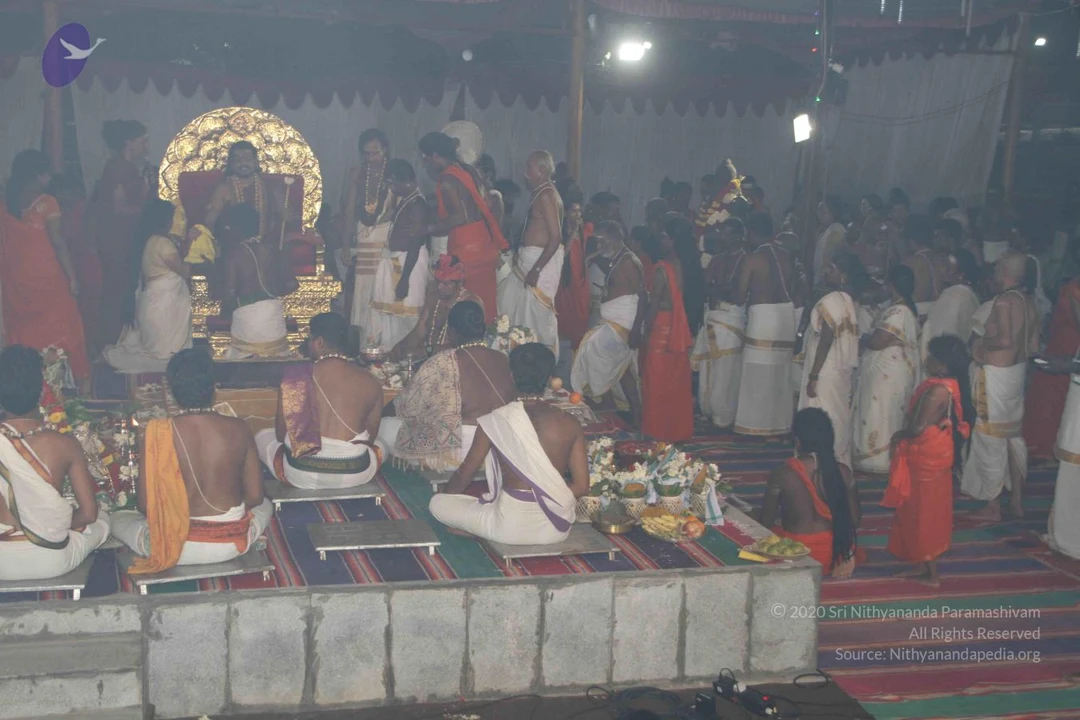
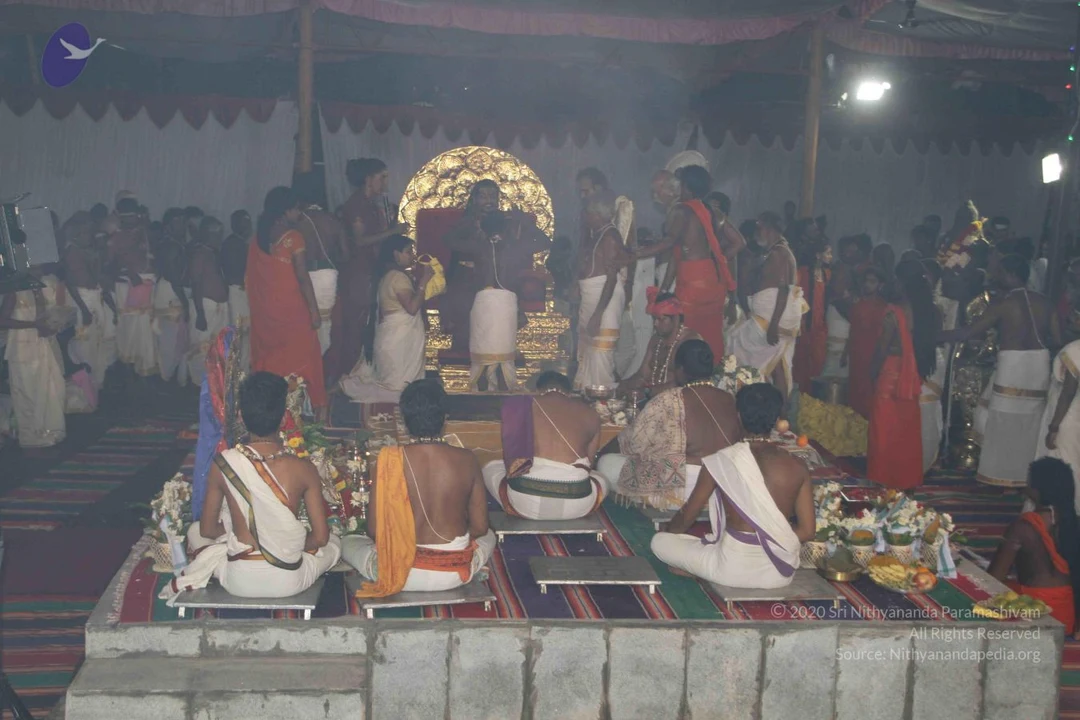
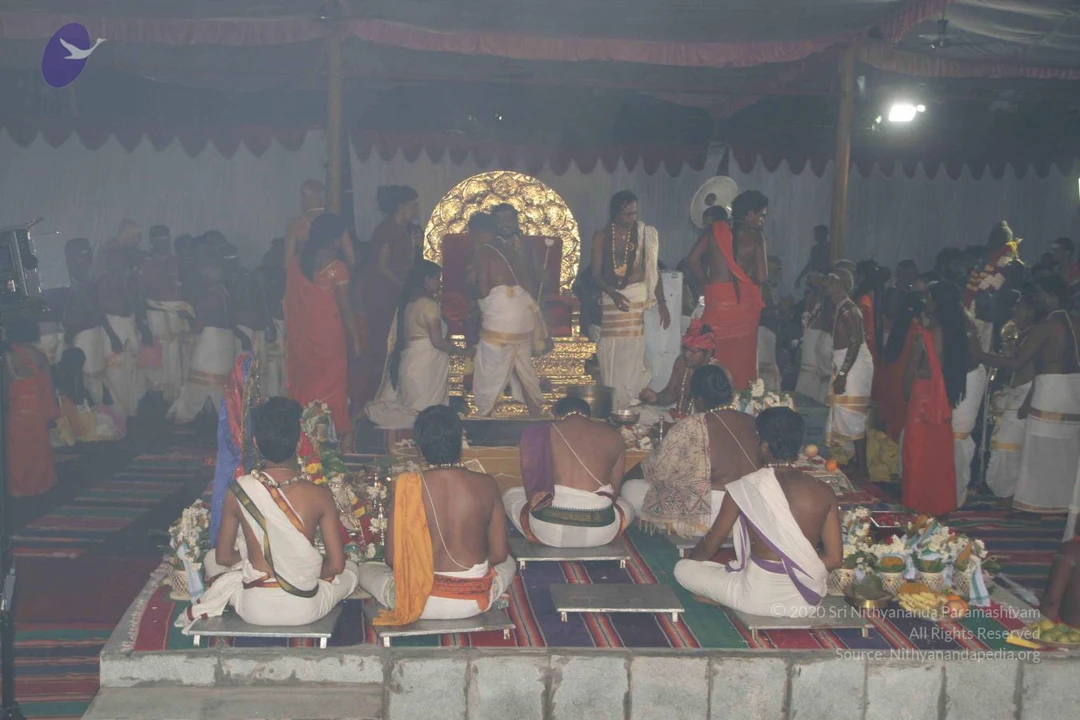
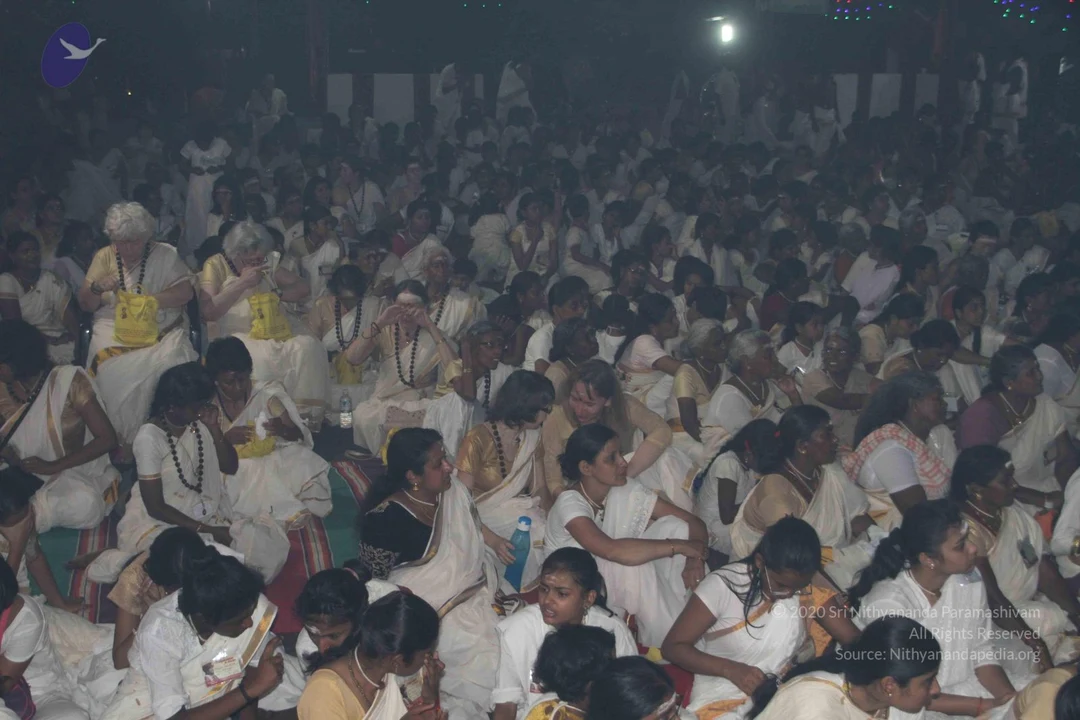
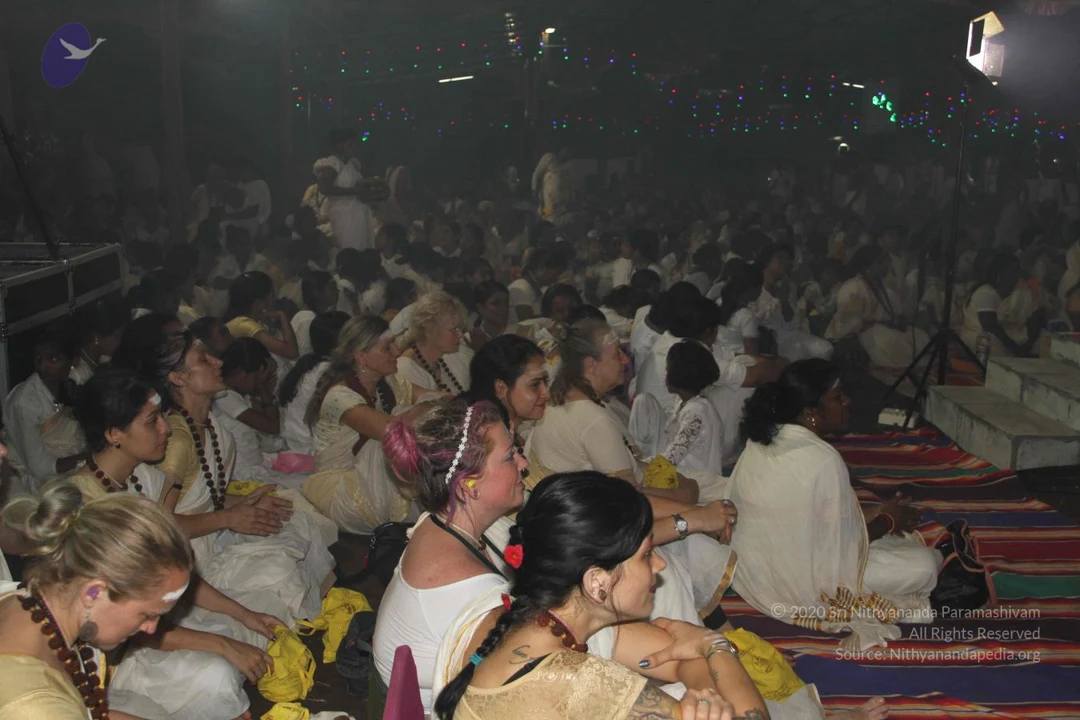
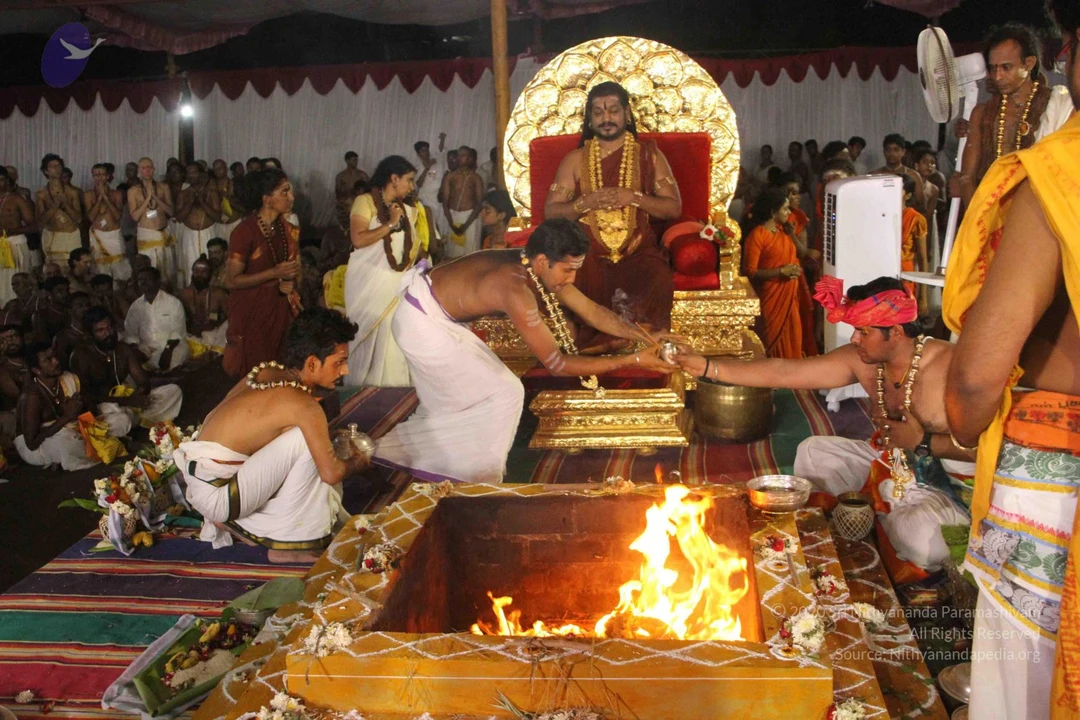
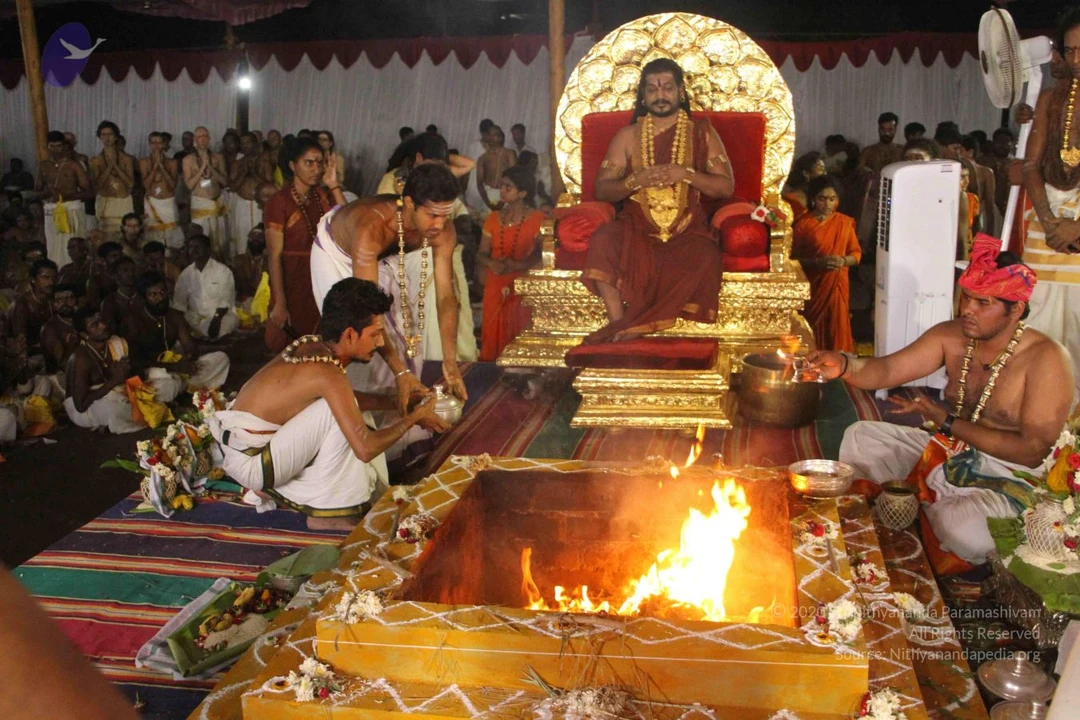
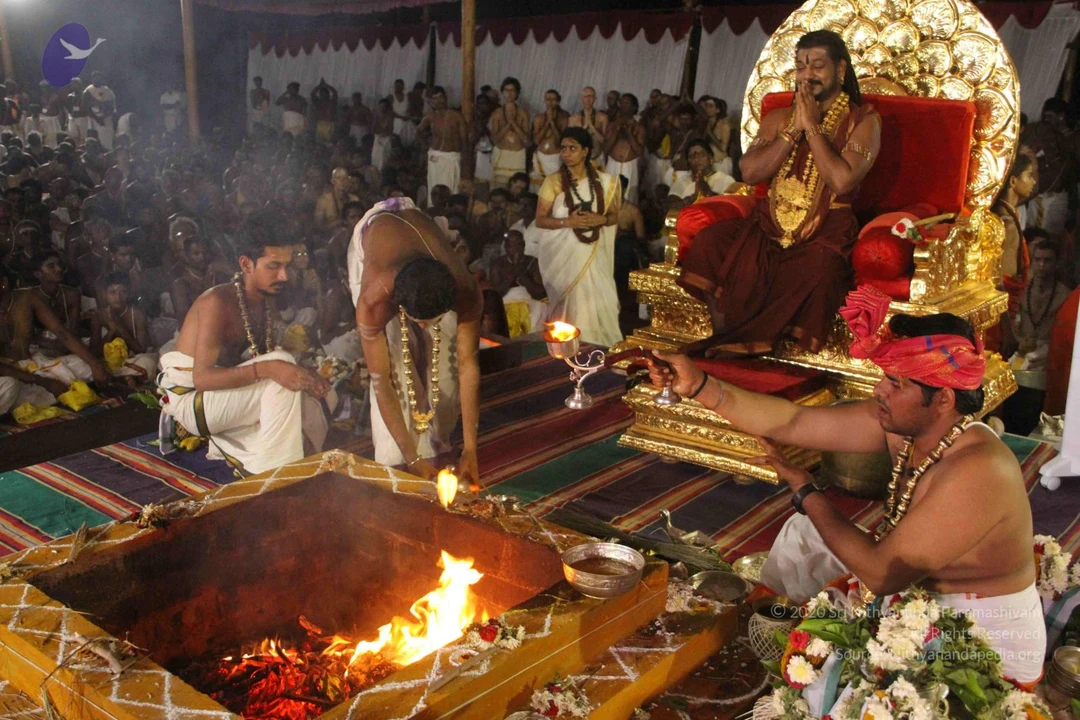
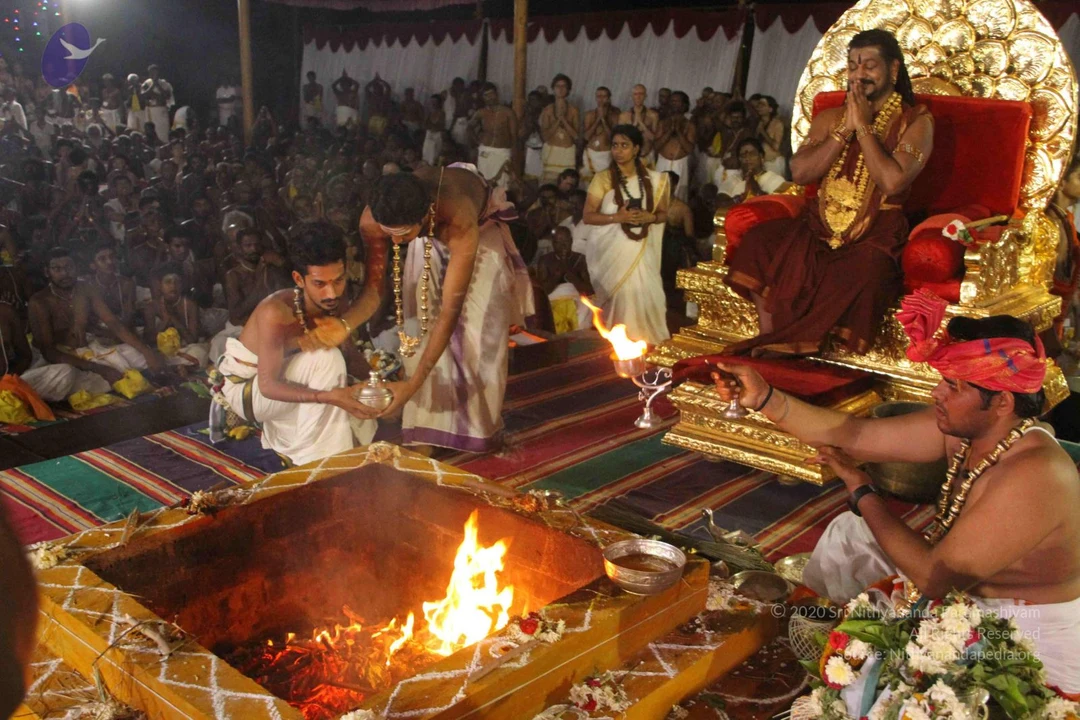
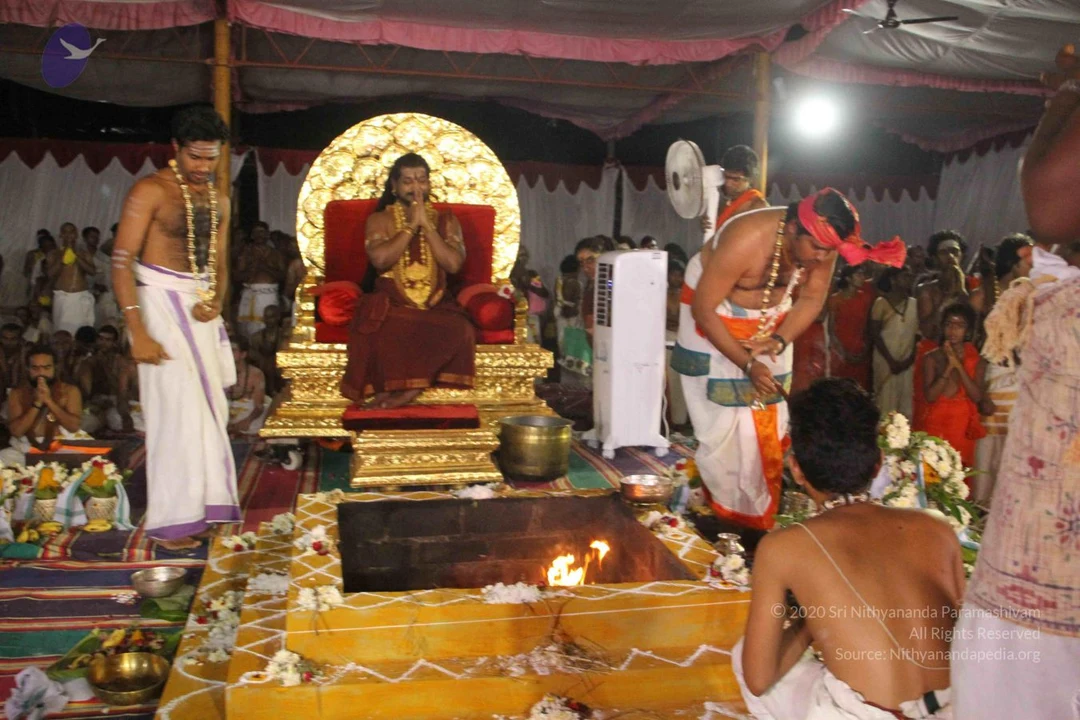
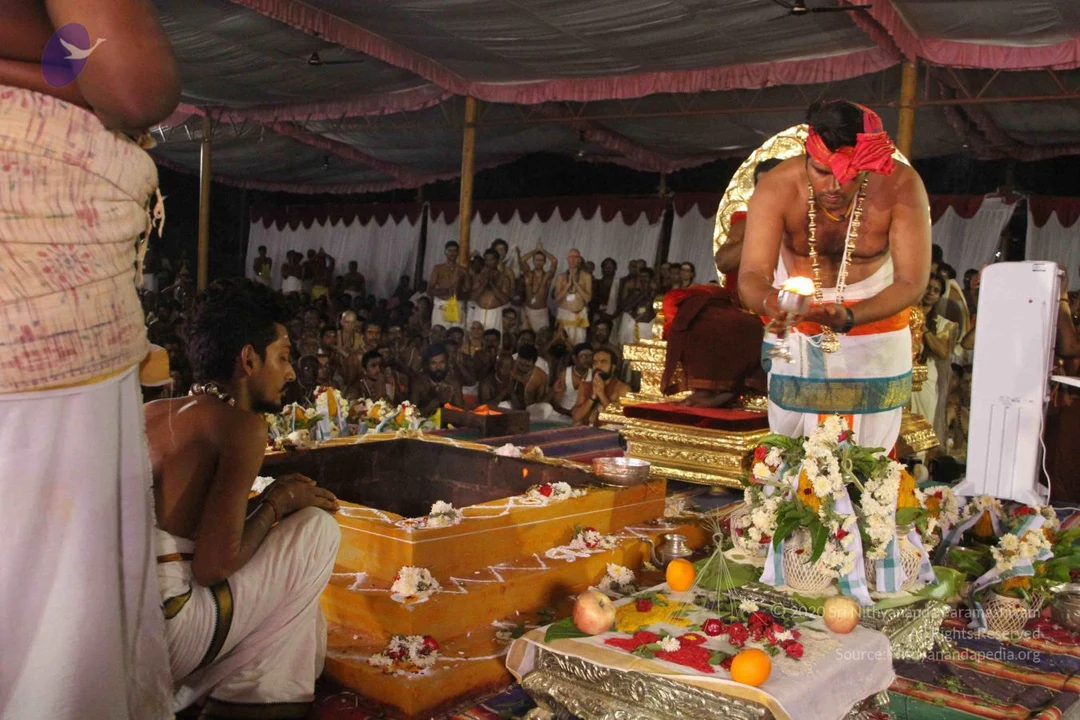
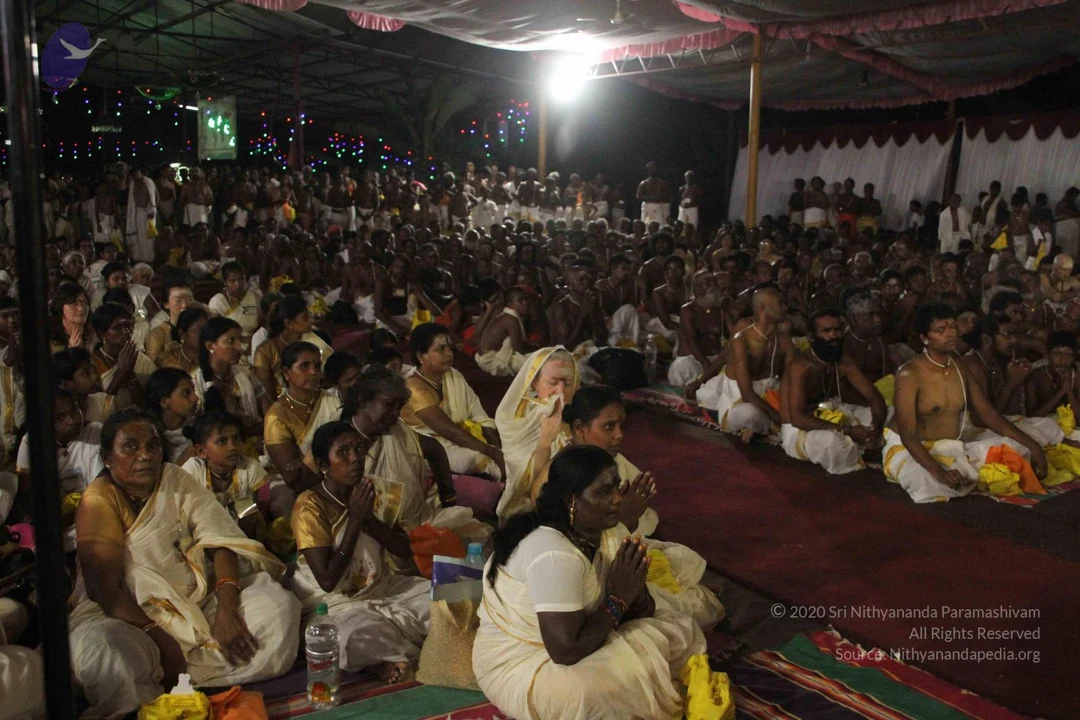
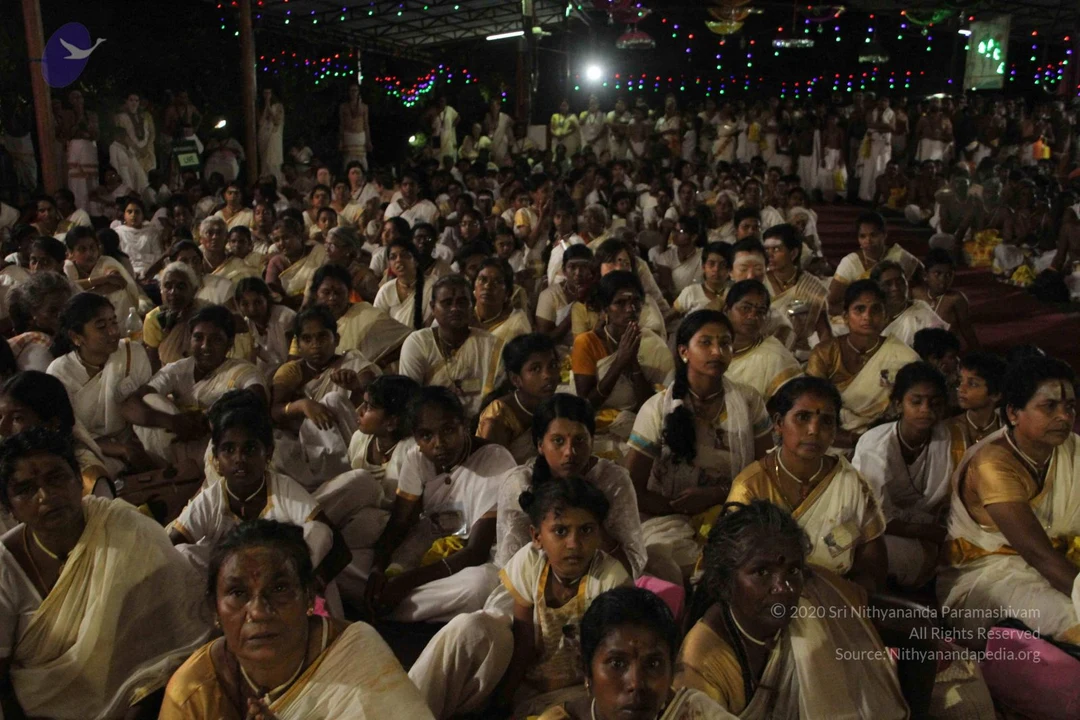
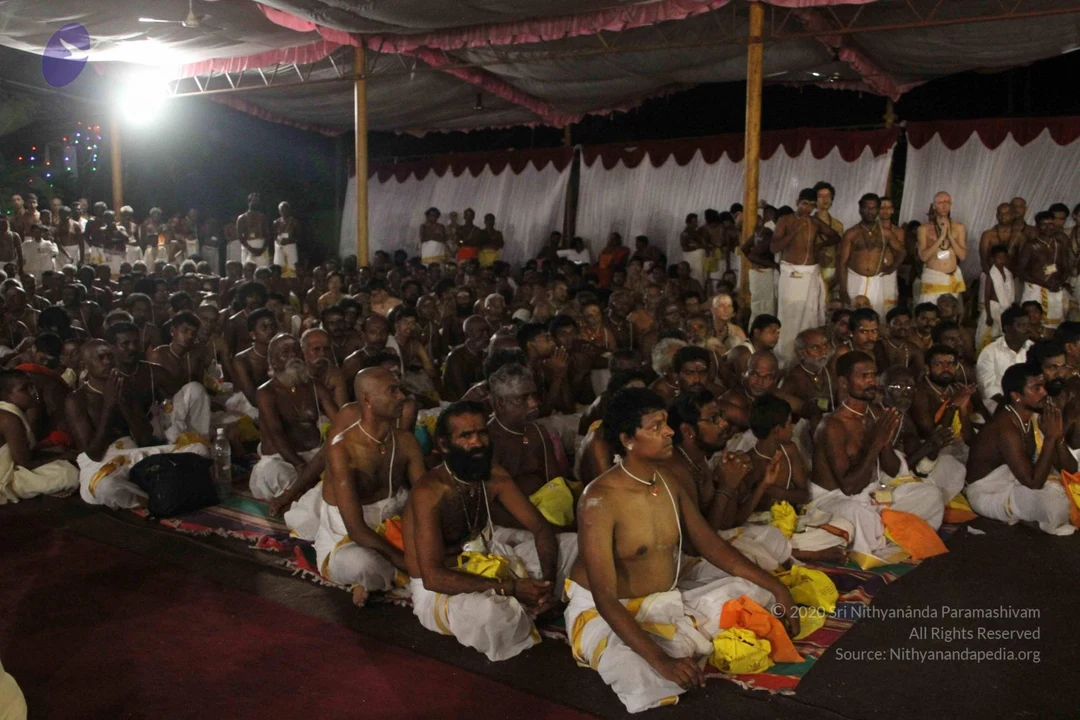
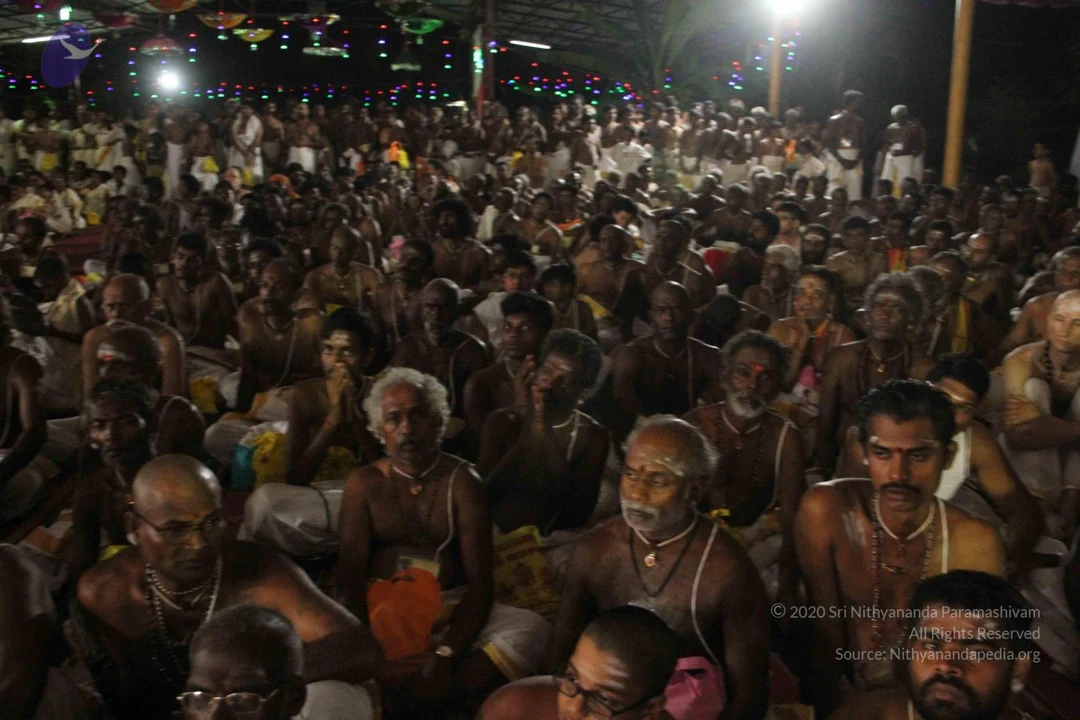
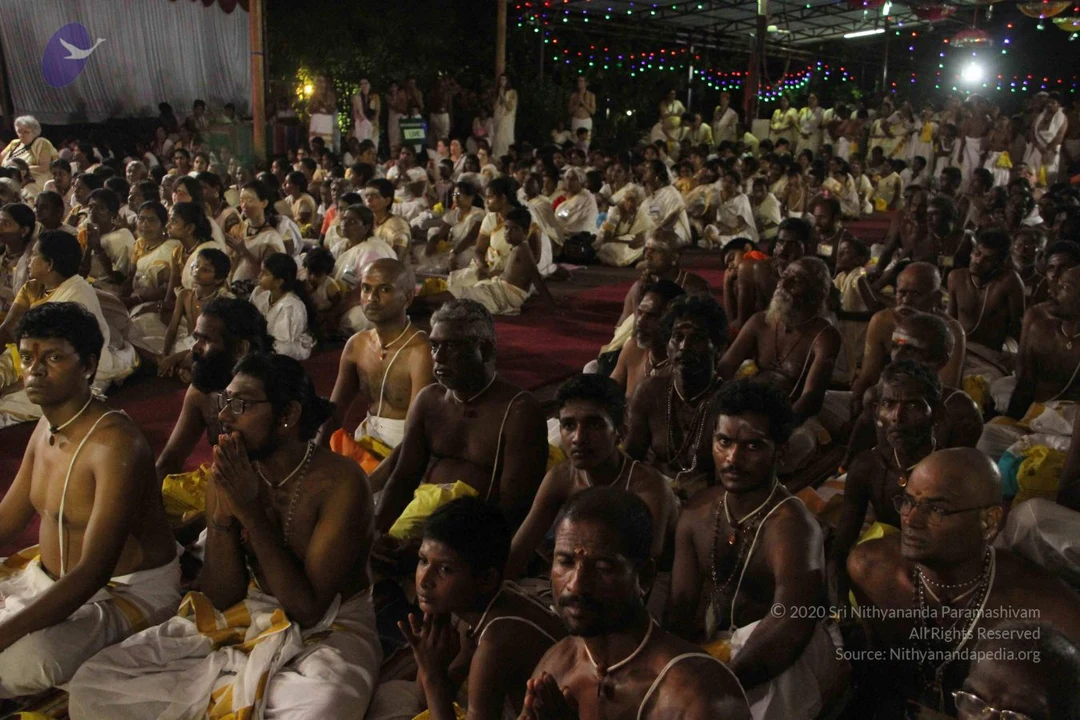
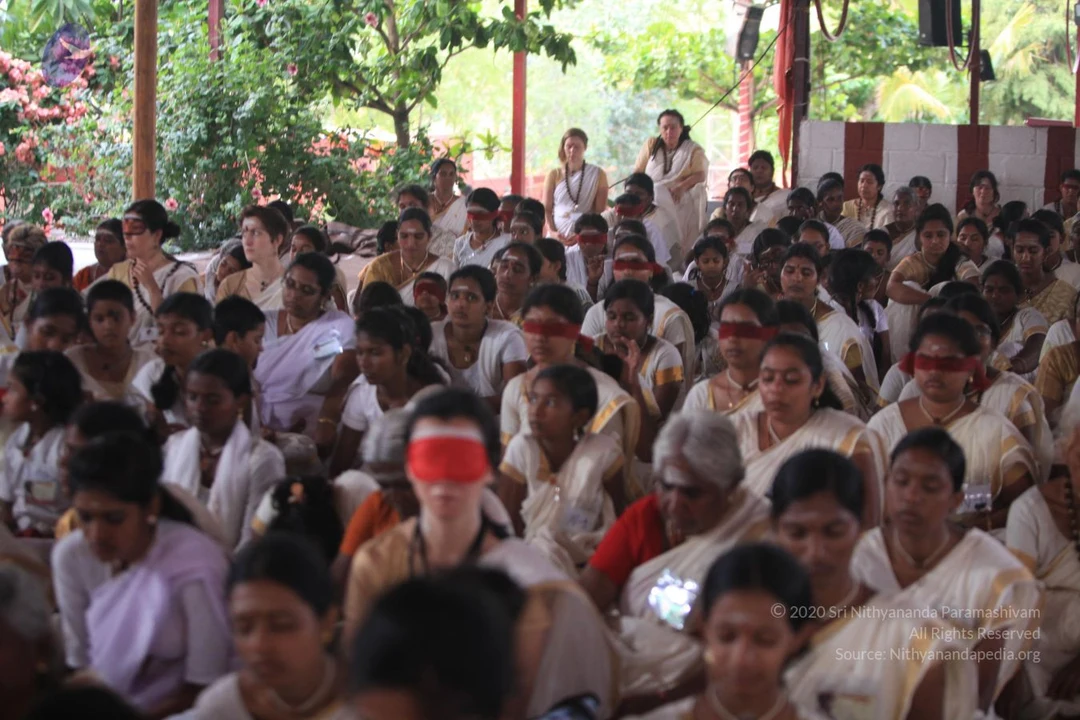
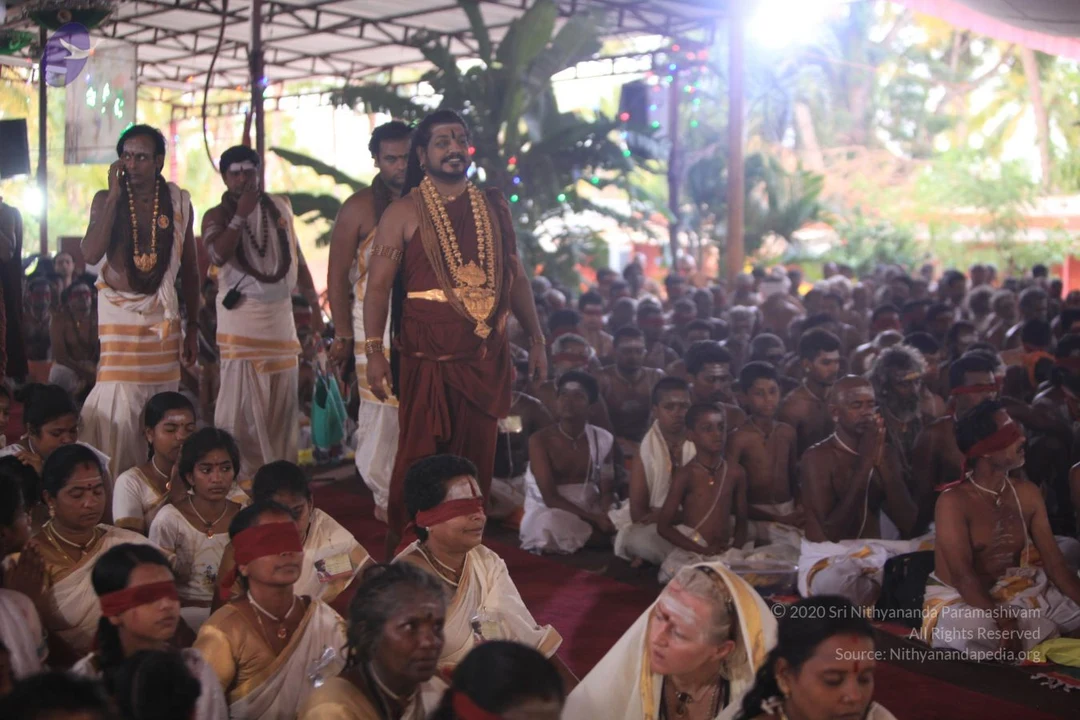
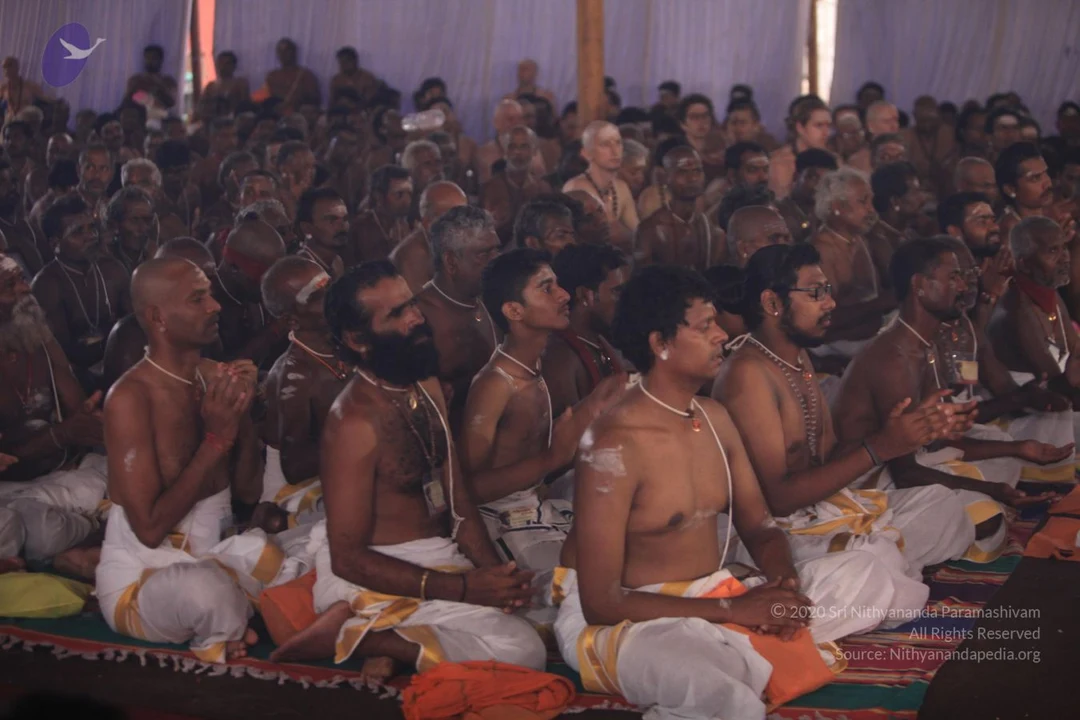
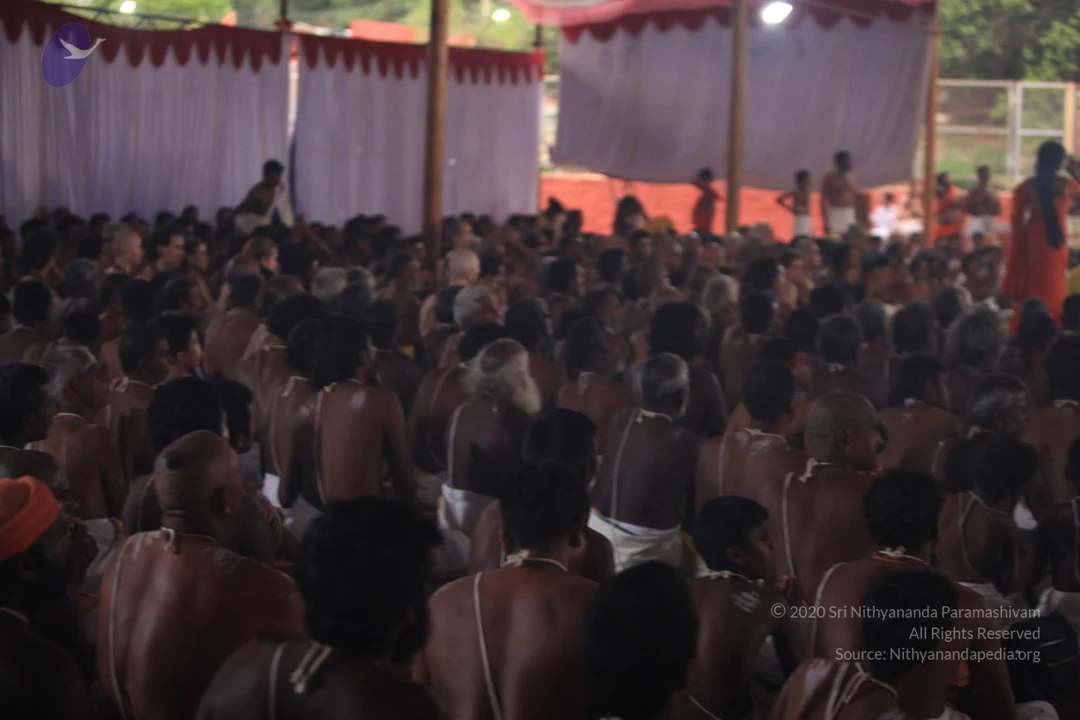
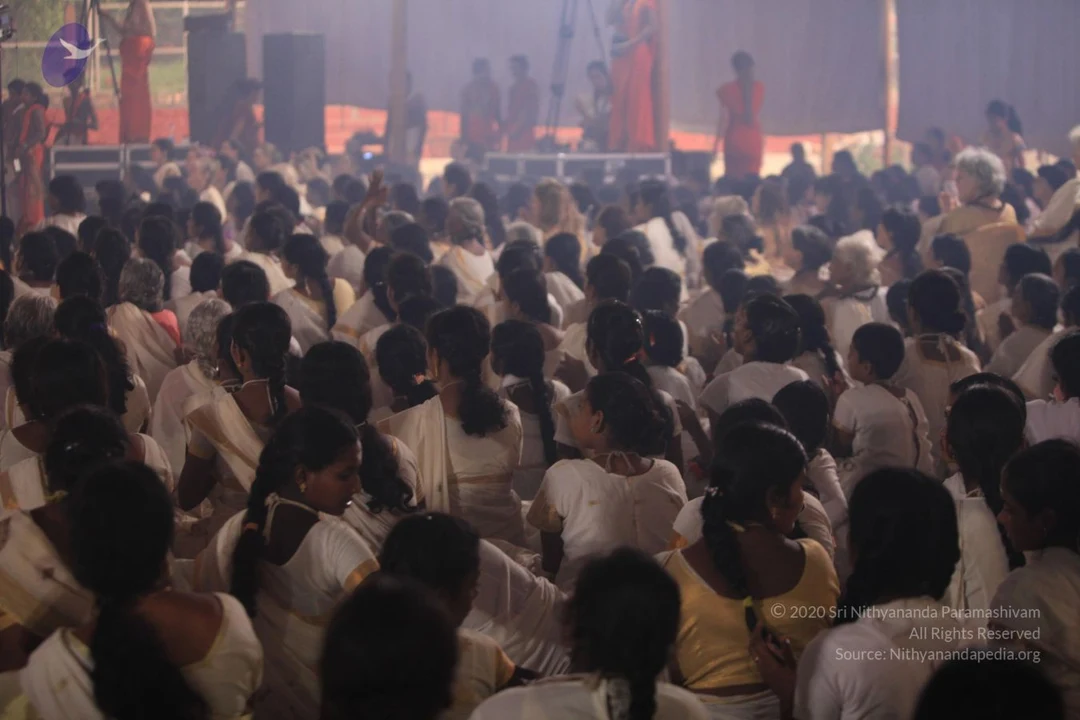
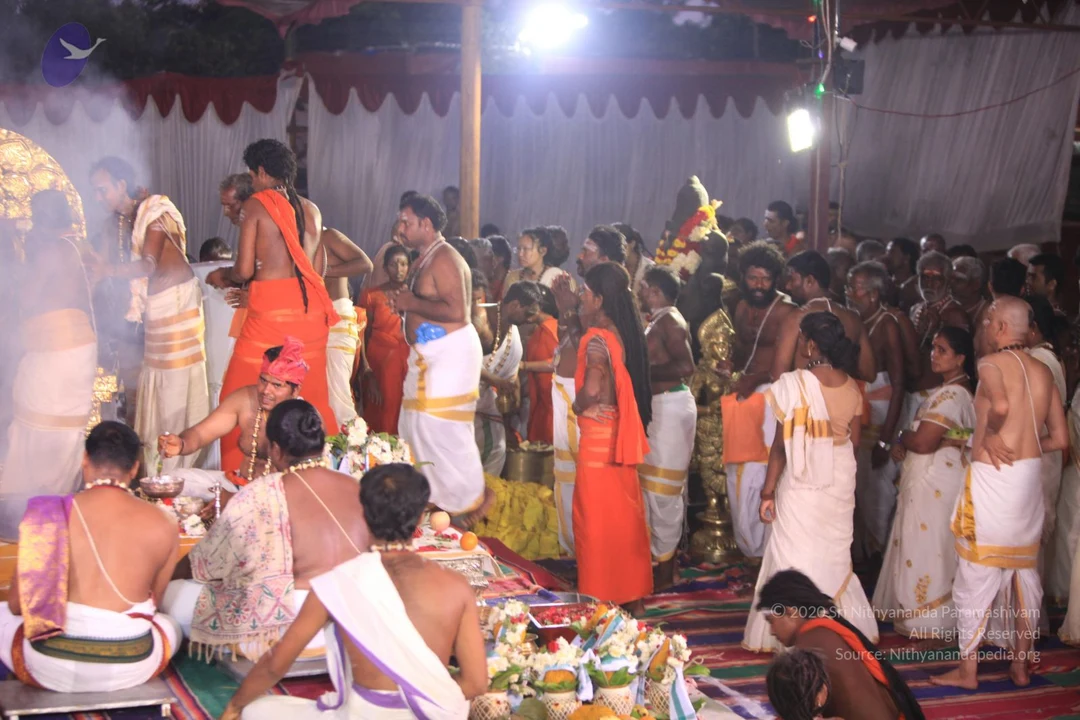
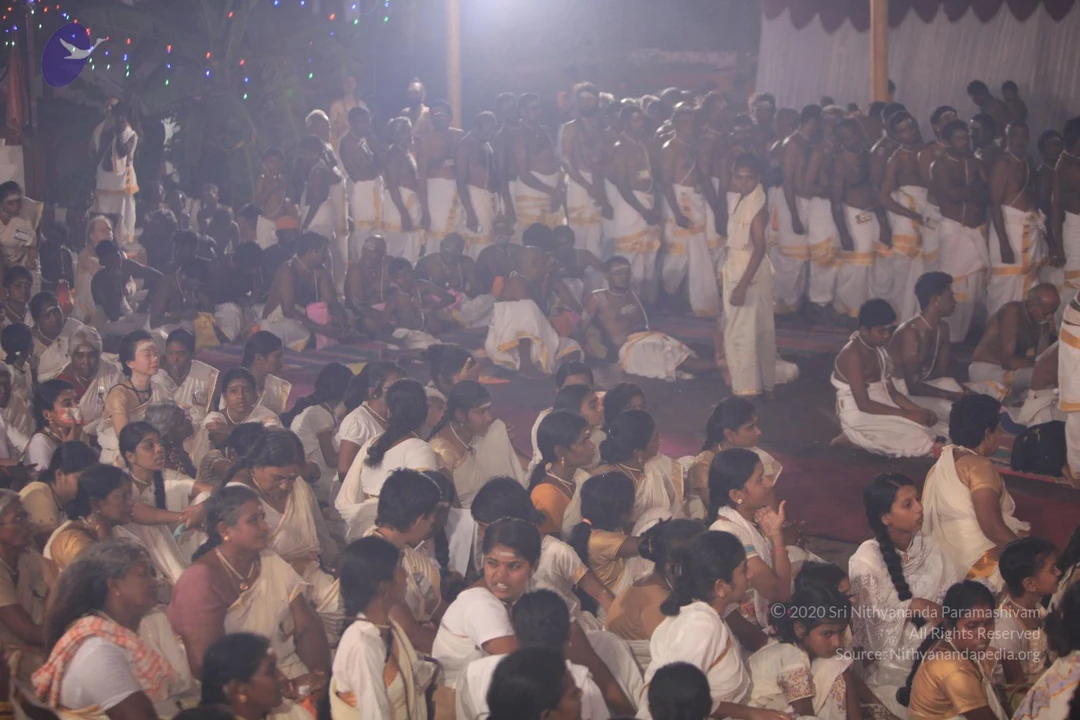
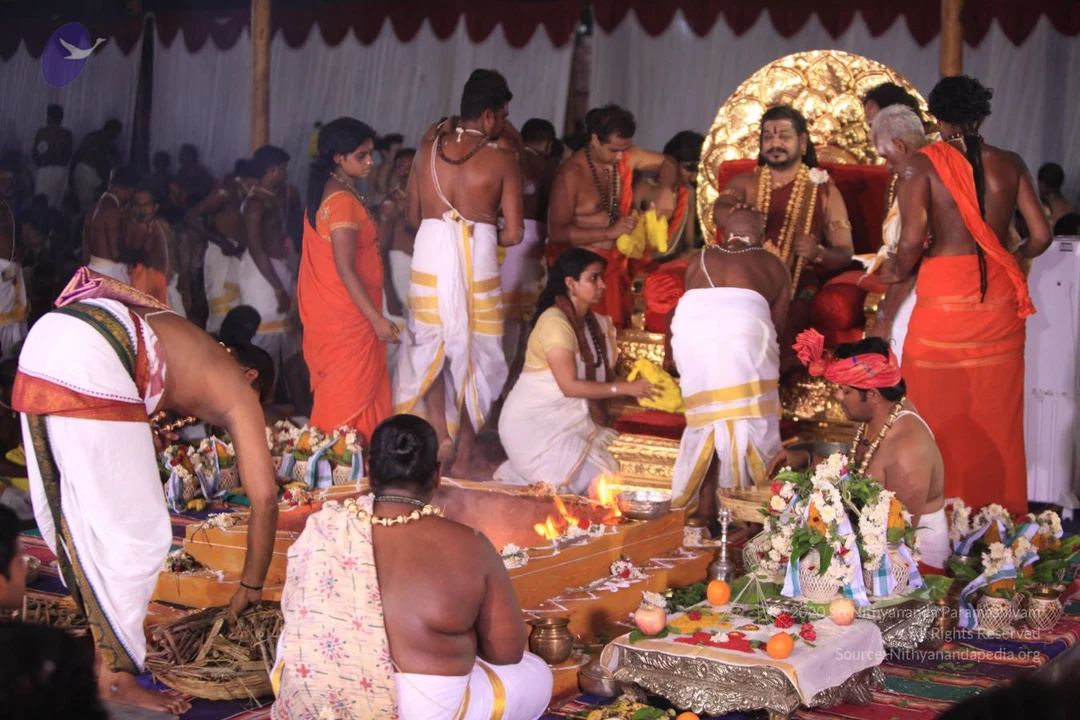
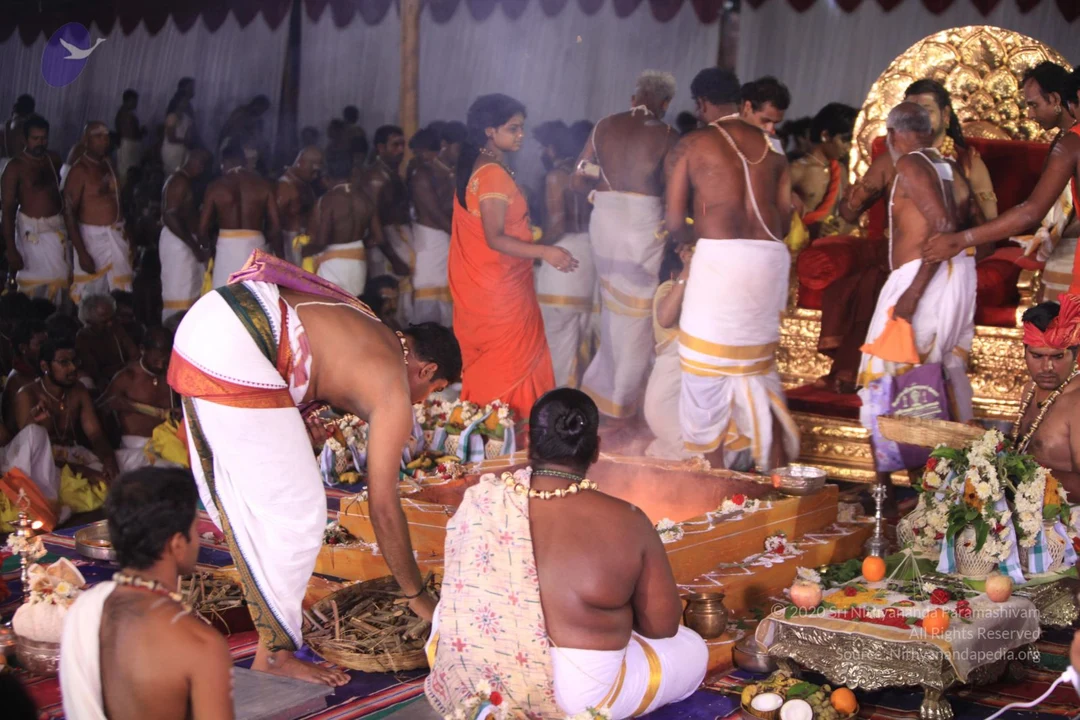
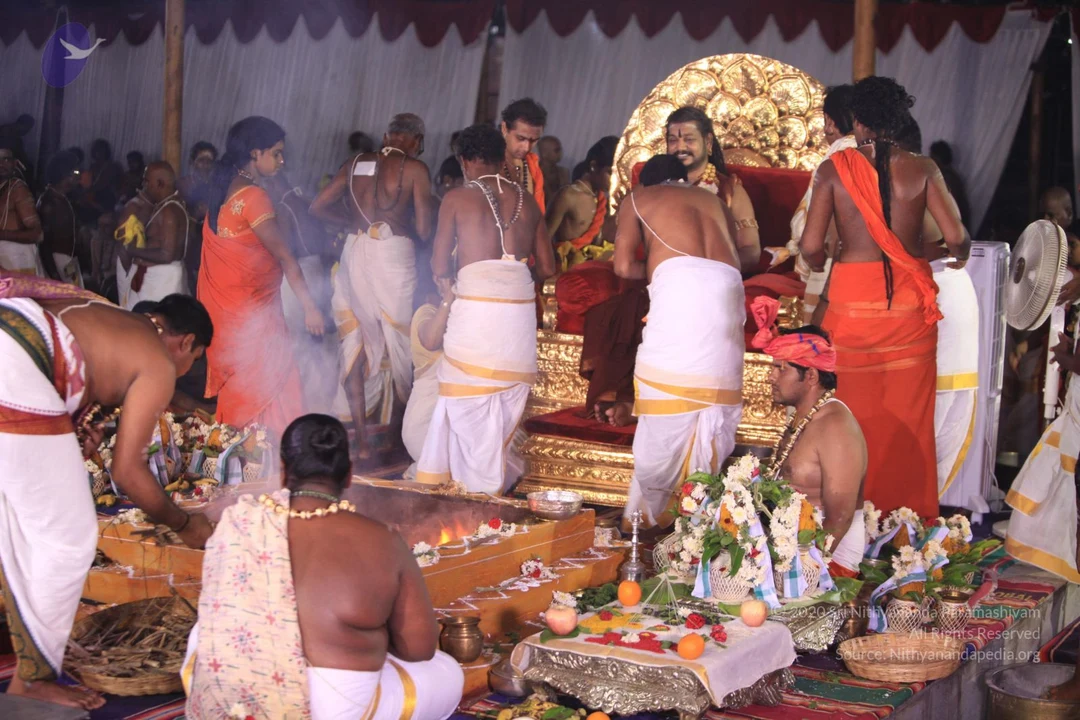
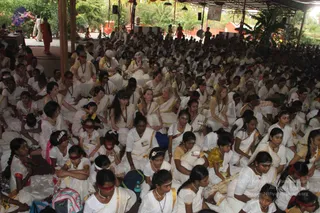
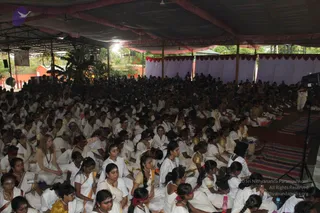
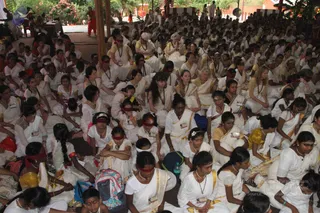
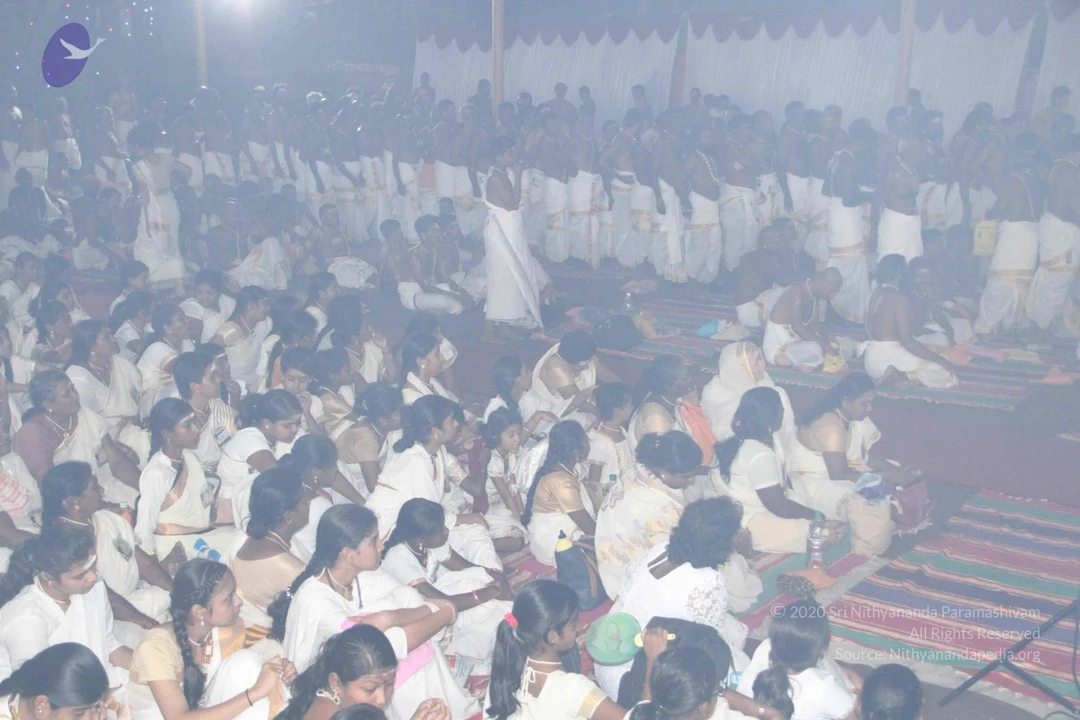
A large seated congregation fills a covered outdoor pavilion with a striped tarpaulin roof and swagged red-and-white drapes along the back. Hundreds of devotees sit closely packed on the floor, most dressed in white garments with gold-bordered yellow or cream cloths, many women with braided hair and some with garlands. Strings of lights hang from the roof poles, and a framed picture is mounted on a pole near the back. Figures stand in the far distance near the stage area, and palm trees and a red building are visible beyond the open sides of the tent. Satsang-style sitting congregation with padapuja and vishesha deeksha context from the page, though no individual speaker is clearly identifiable.A large outdoor gathering under a white tent canopy with red valances, where hundreds of devotees sit cross-legged on striped mats in a dense crowd. Most wear white traditional clothing with gold borders, and many have white and yellow kumkum or vibhuti marks on their foreheads and red headbands. Some women wear beaded necklaces and gold ornaments. Palm trees and a red building are visible beyond the tent edges. Given the printed event context, this is a satsang gathering, though no speaker is visible in this frame.A photograph of an outdoor puja under a tent with grey and maroon draping. A seated figure in a red cushioned throne with a gold-and-red ornate backrest wears a red turban, rudraksha-style beaded necklaces and an orange shawl, with hands raised in blessing. Two priests in white dhotis sit before a low wooden platform with a lit oil lamp and a fire pot, while a bare-chested assistant in orange cloth sits nearby. Floral garlands, banana-leaf style trays and flower-decorated kalasha pots fill the striped mat floor. Audience members sit on the left, and attendants in white stand at the right near a gold lamp stand.A large crowd of devotees, mostly women and girls, sits closely packed on the ground under an open-sided pavilion with a corrugated roof and palm trees behind it. Nearly all wear white or cream traditional garments with gold-bordered edges, rudraksha-style beaded necklaces, and red forehead markings, and many have red cloth bands tied over their eyes. Some sit with hands folded or eyes closed. At the back, a stage area holds a few standing figures in white and red garments, a flower-decorated backdrop and a table. The scene is a outdoor ashram gathering with the crowd filling the foreground.A large seated congregation fills a covered outdoor pavilion with a dark tarpaulin roof and pink-trimmed edges. Hundreds of devotees sit cross-legged on mats in rows, most wearing white or cream clothing with gold borders, and many wear red or white headbands, bindis and necklaces. Some women have long braided hair with flowers. Striped rugs lie on the floor near the front, and white draped cloth panels line the back. A lone figure in white stands at the far right near a stand-mounted camera, and a small shrine-like arrangement with lamps and greenery appears at the upper left. Palm trees and a red wall show through the open sides.A large photograph of a seated congregation of hundreds of devotees on an open pavilion floor, most dressed in white with gold-bordered saris and dhotis, many wearing rudraksha malas. Many women wear red or red-and-white eye bands across their foreheads or eyes, and some children sit among them. Several people in the front rows have hands folded in prayer. At the top left, a figure in orange-red clothing stands near a draped table and a large blue-and-white decorative fan. The setting appears to be a covered outdoor hall with greenery and red structures behind it. No clearly visible a person candidate is identifiable here.
Vishesha-Deeksha
10 photosSource gallery
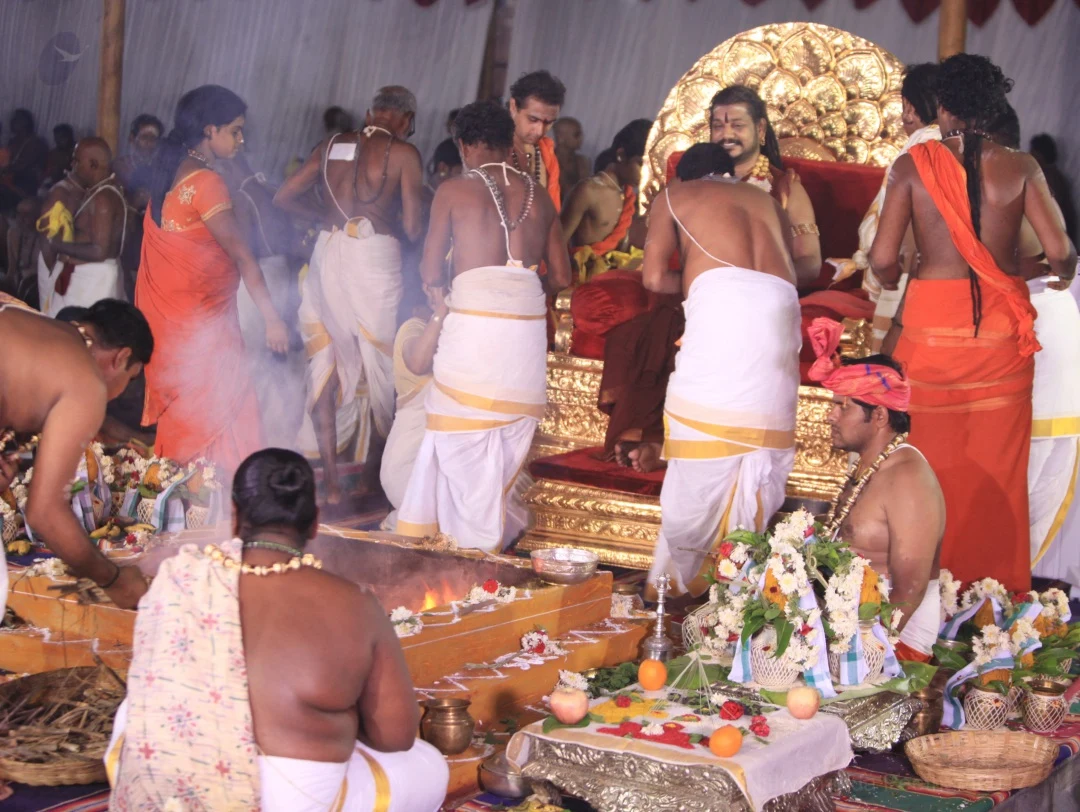
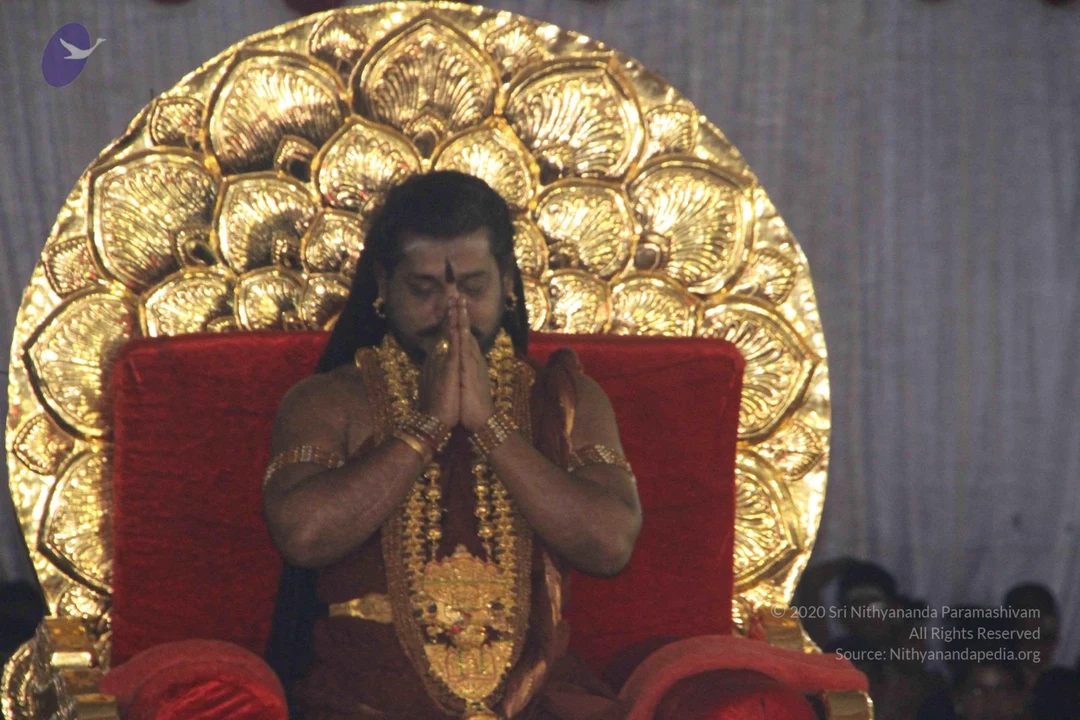
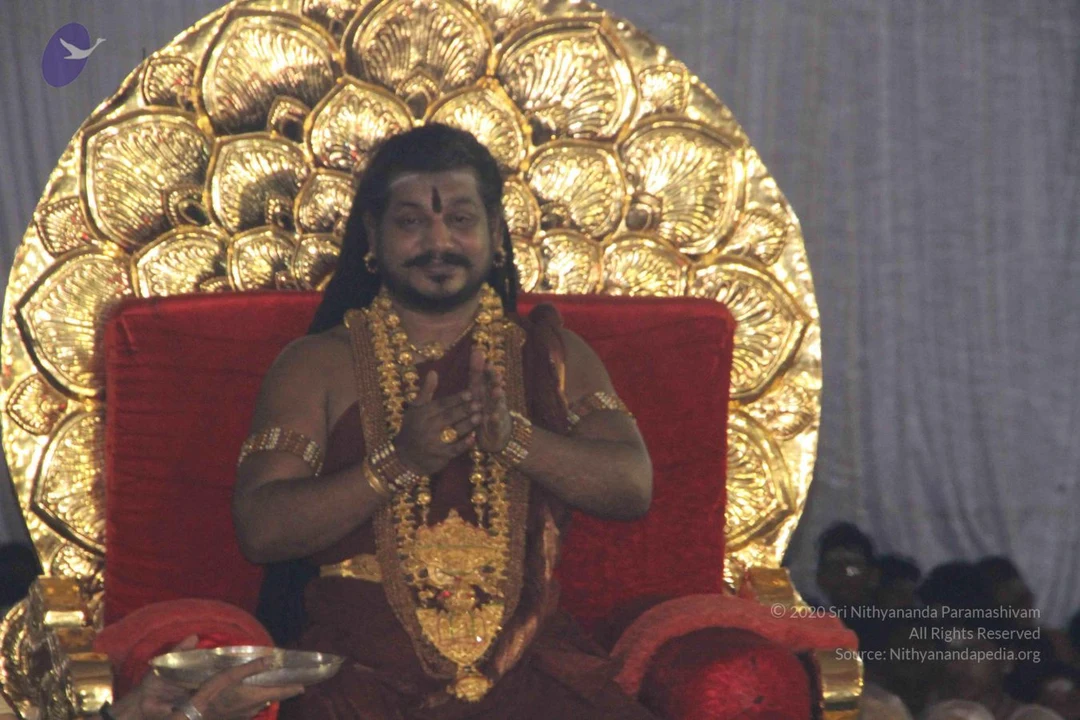
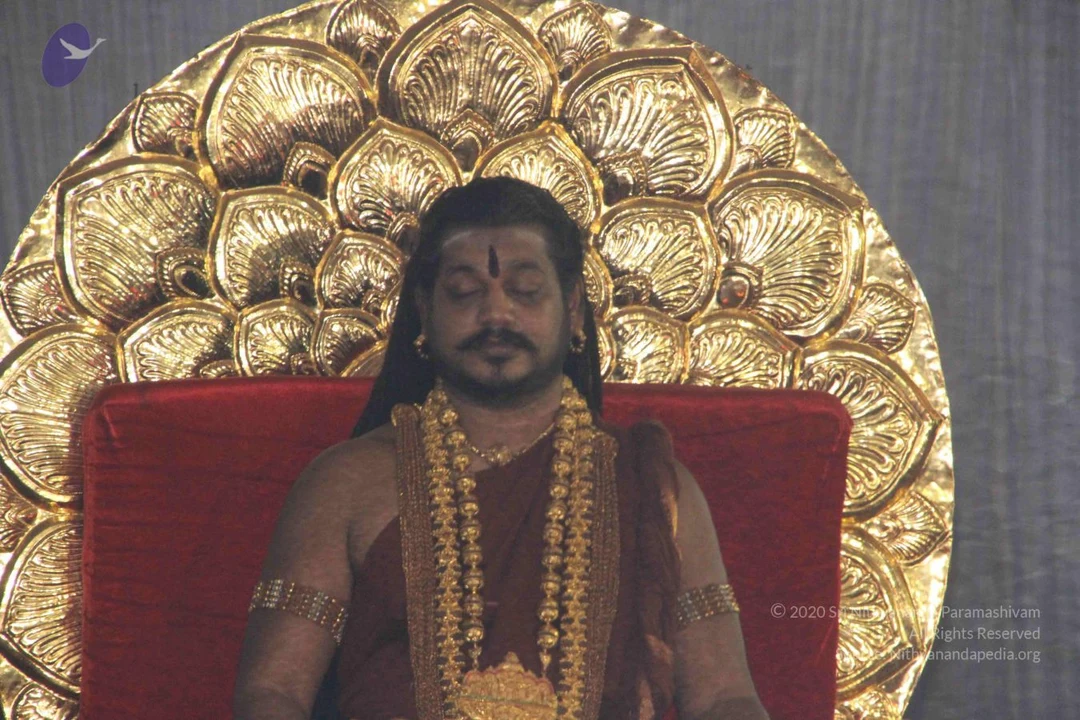
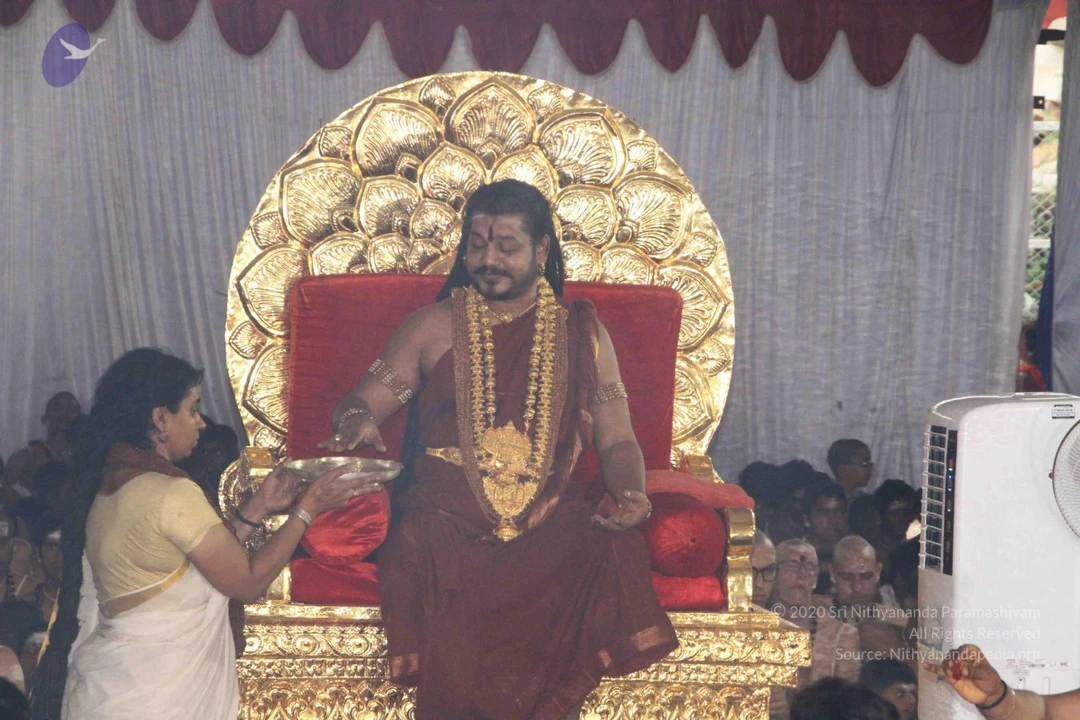
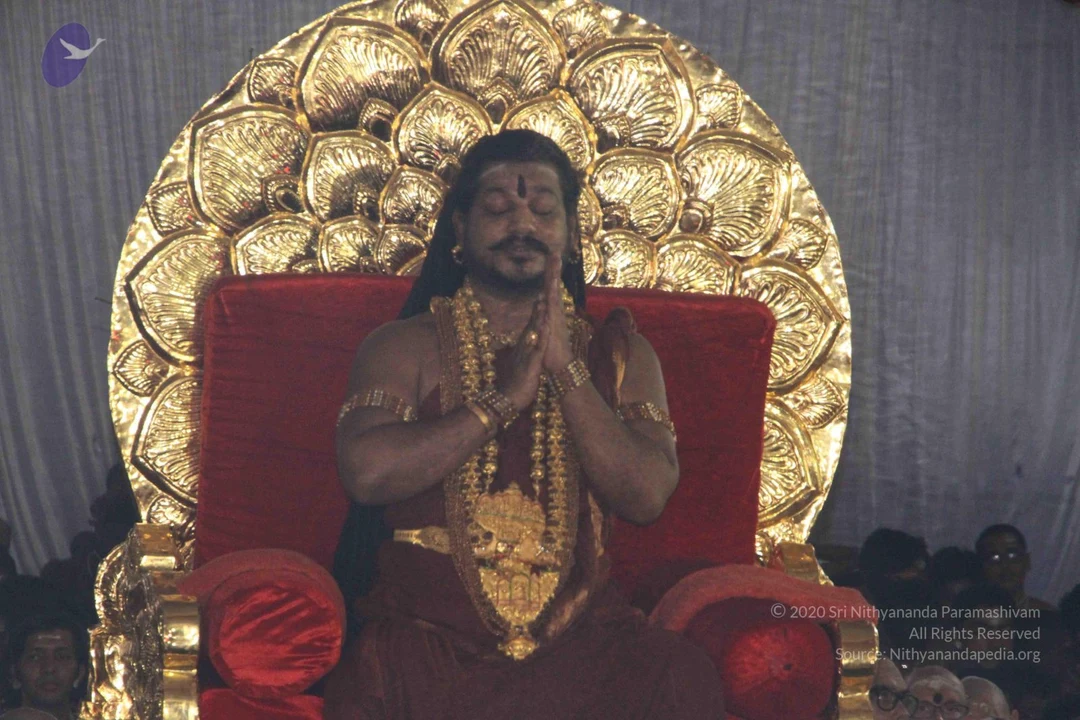
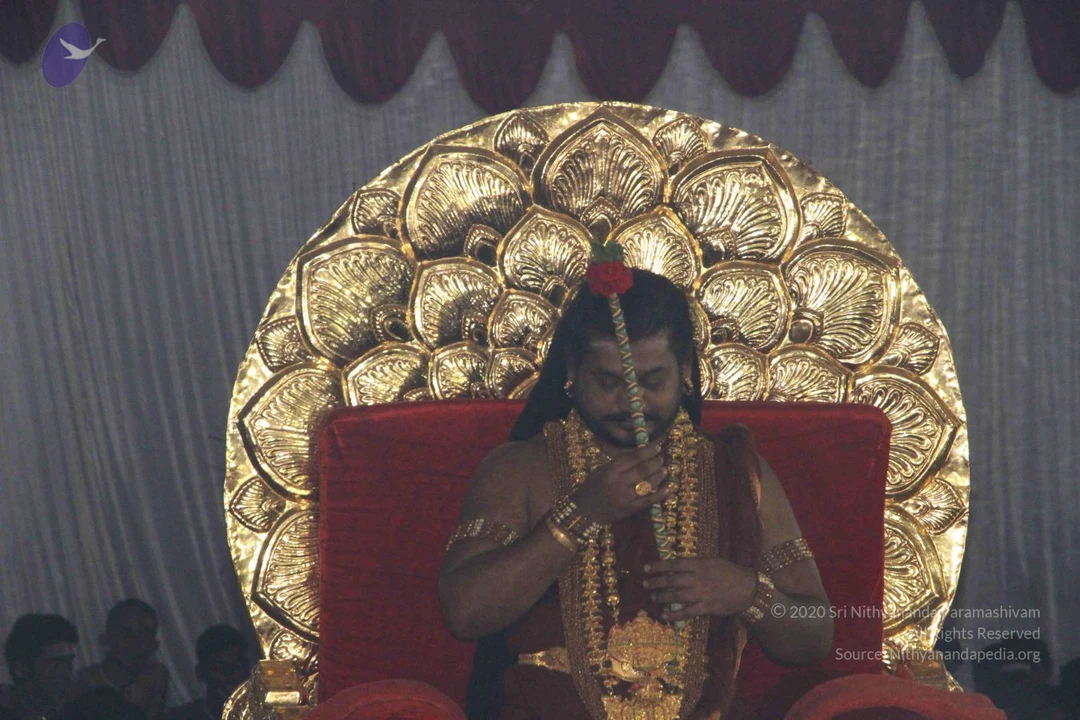
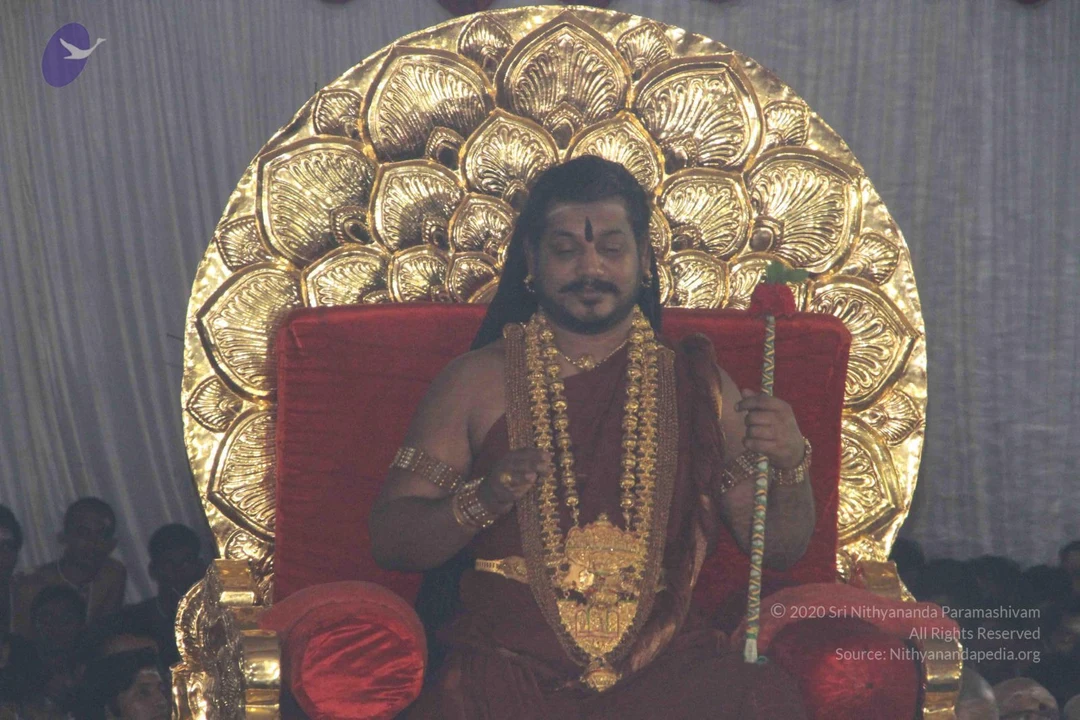
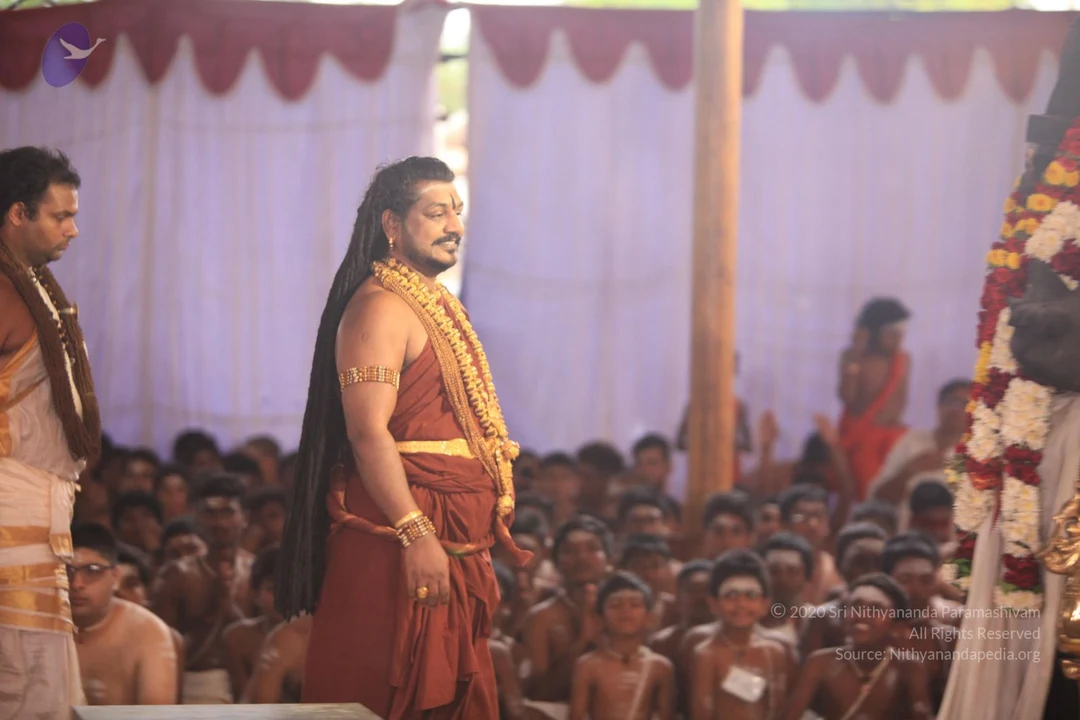
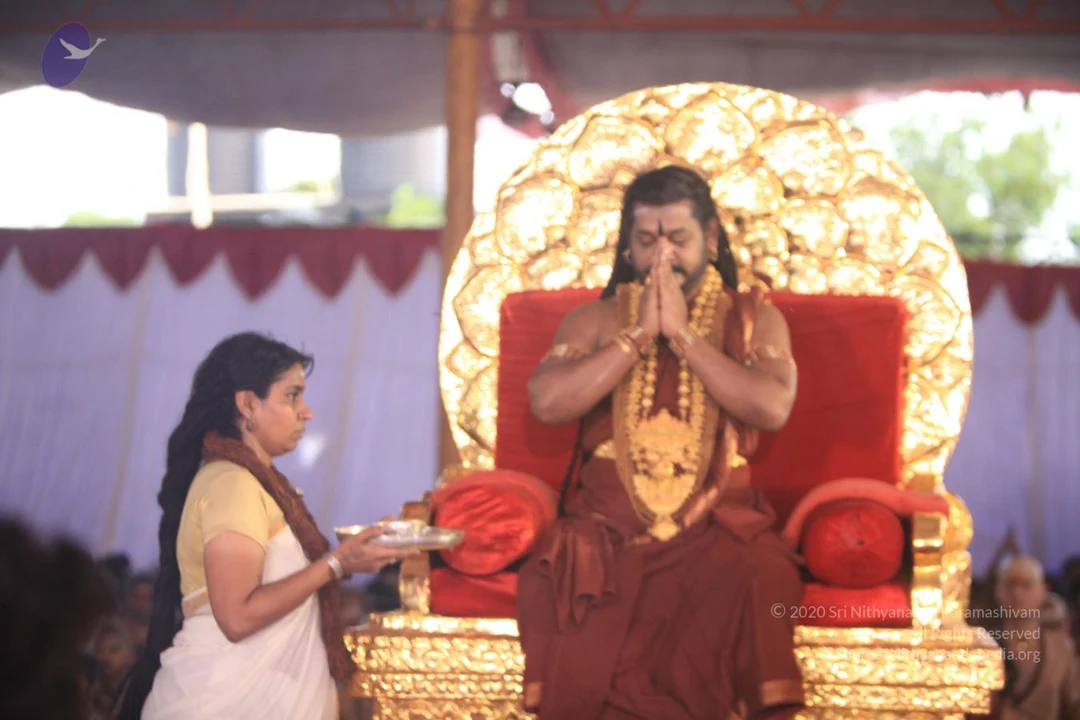
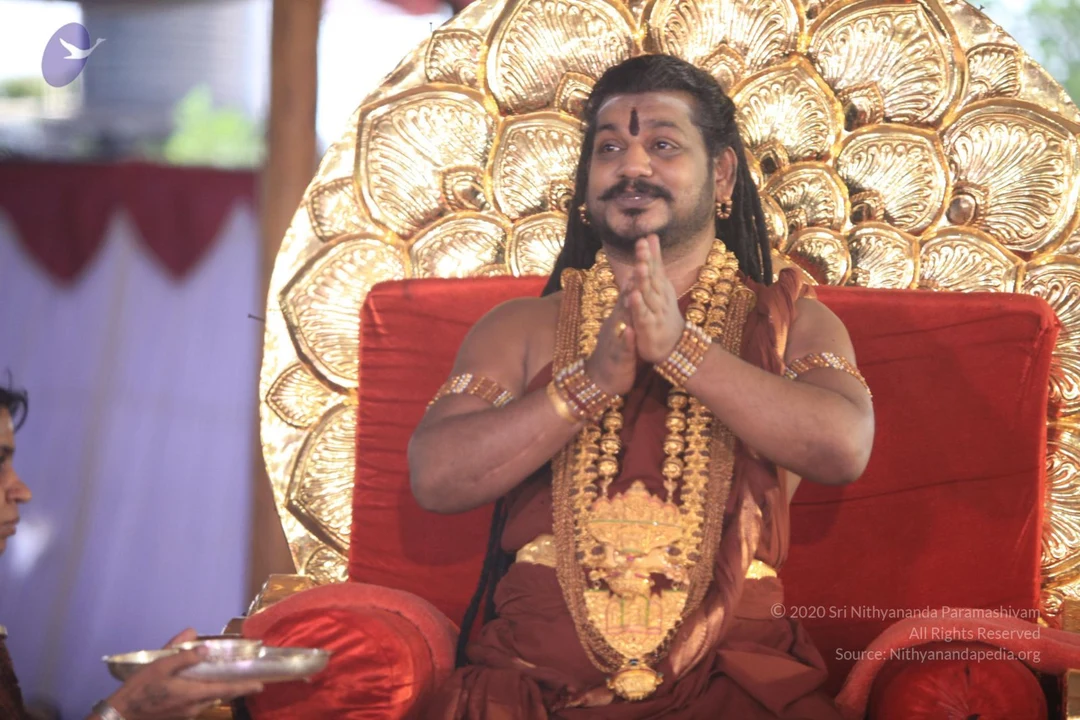
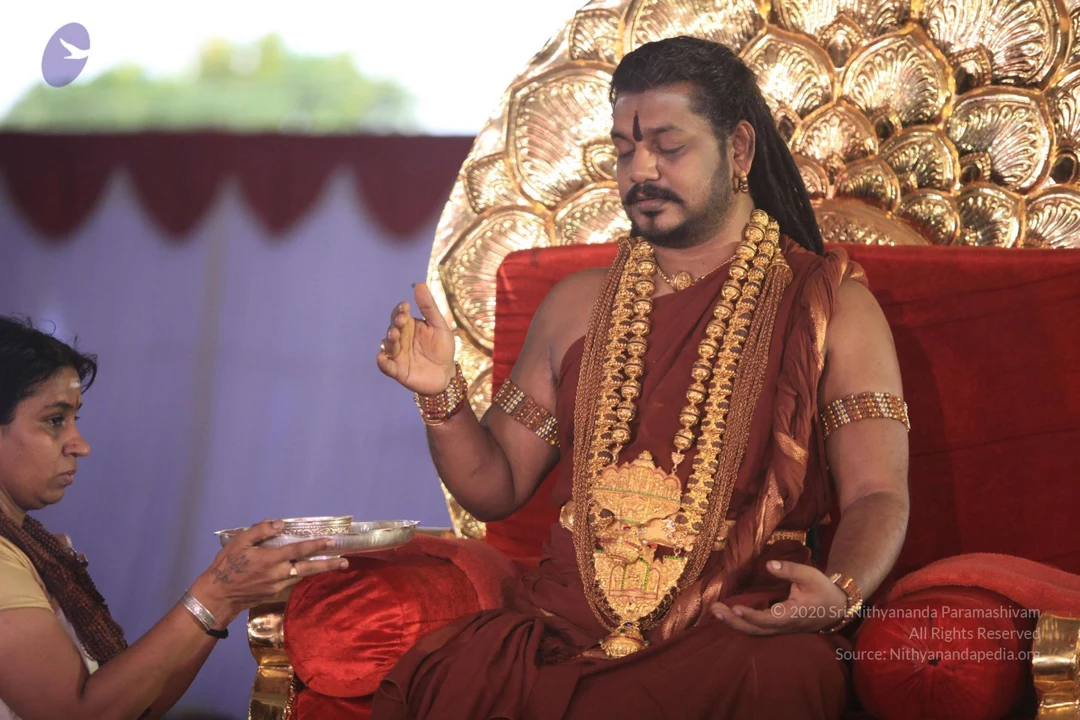
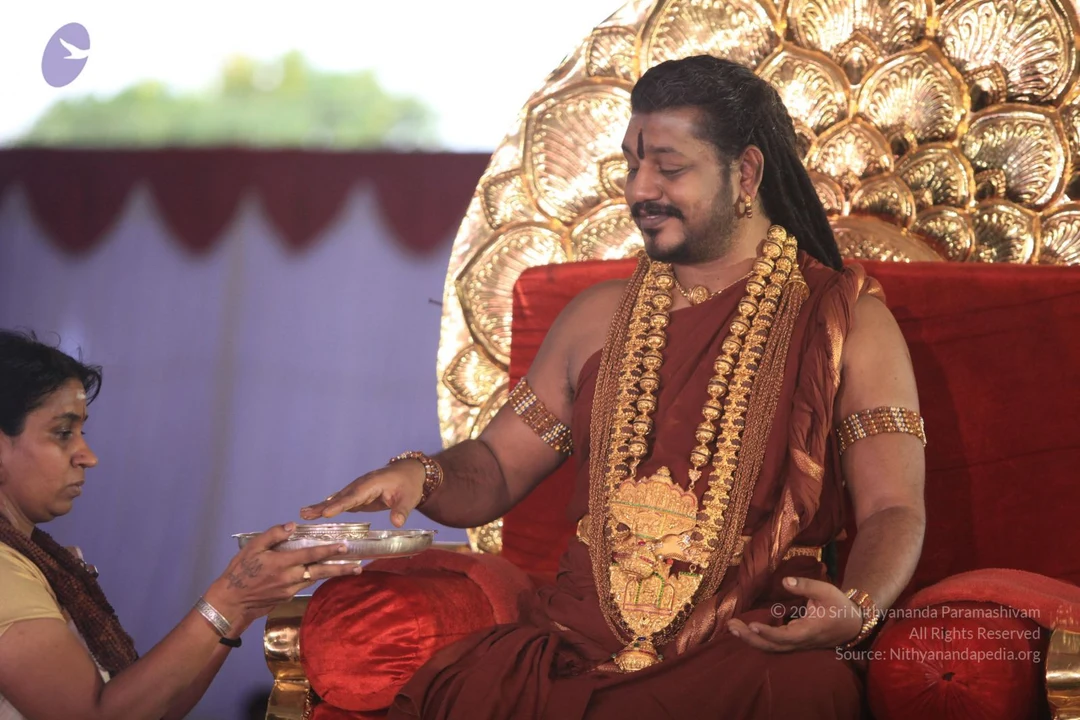
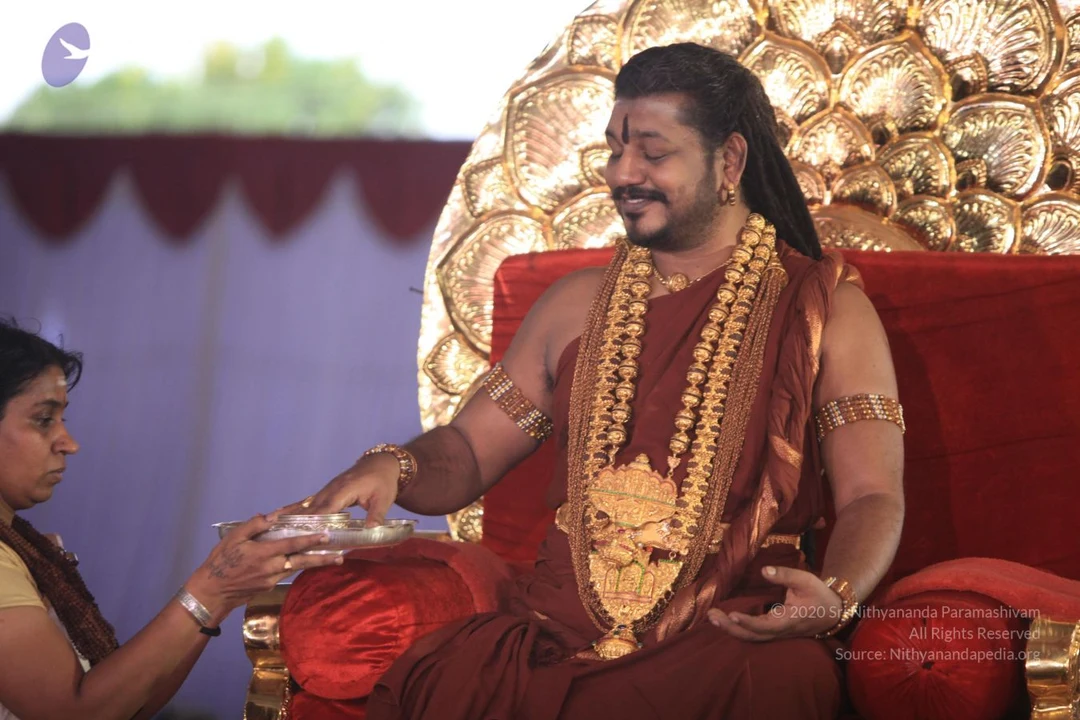
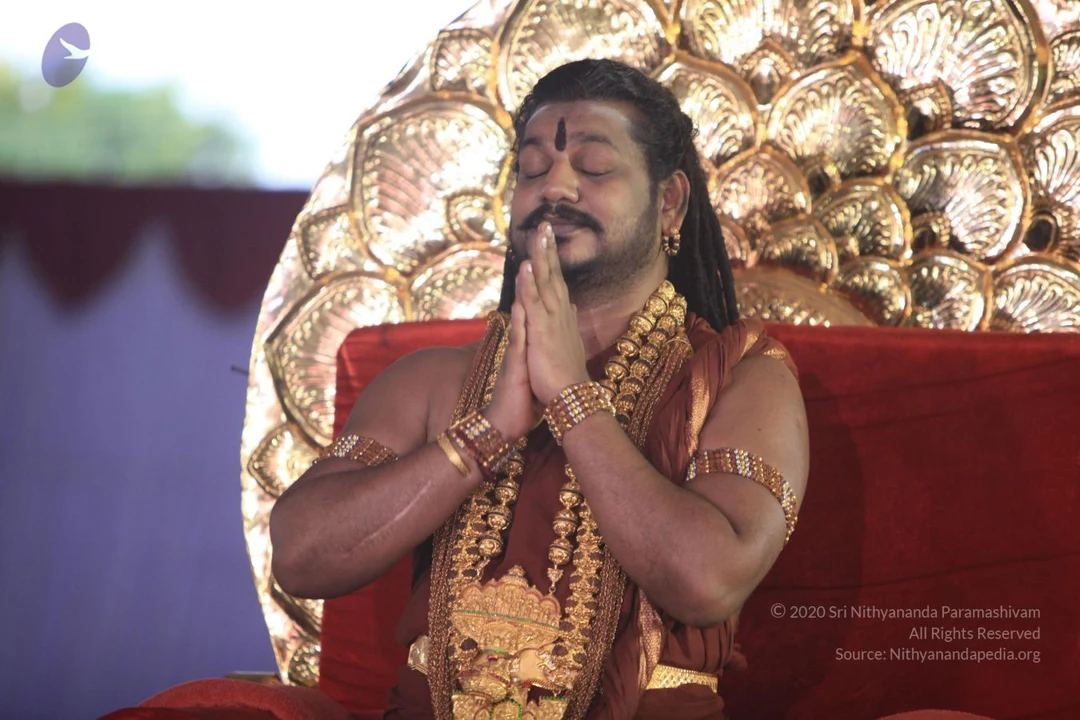
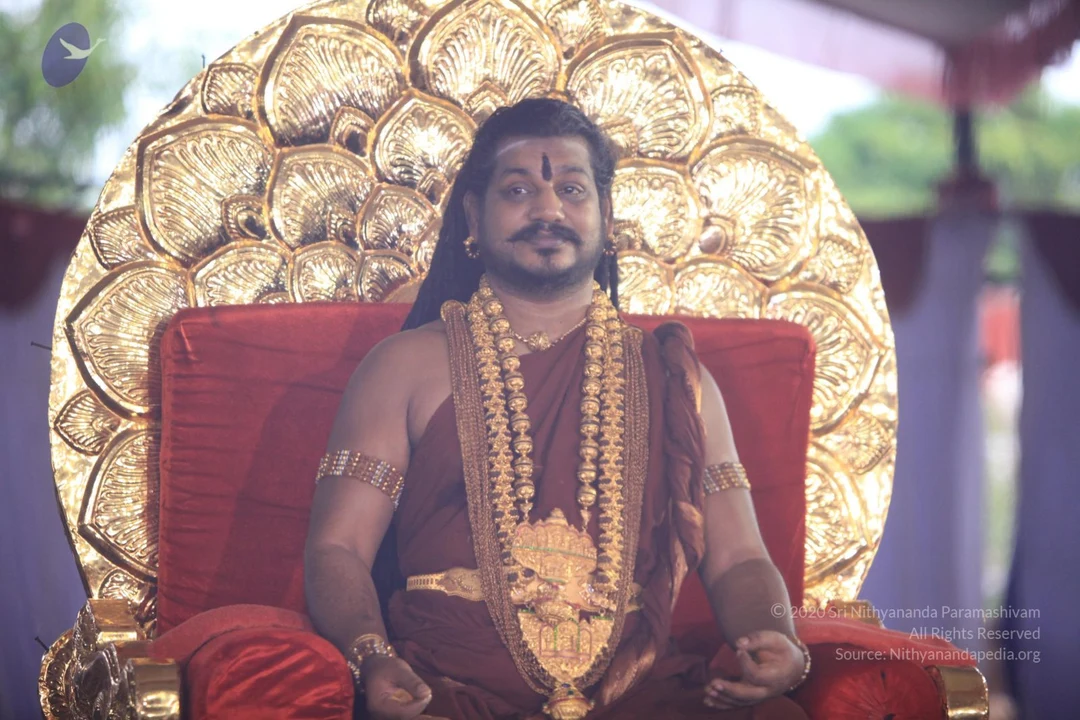
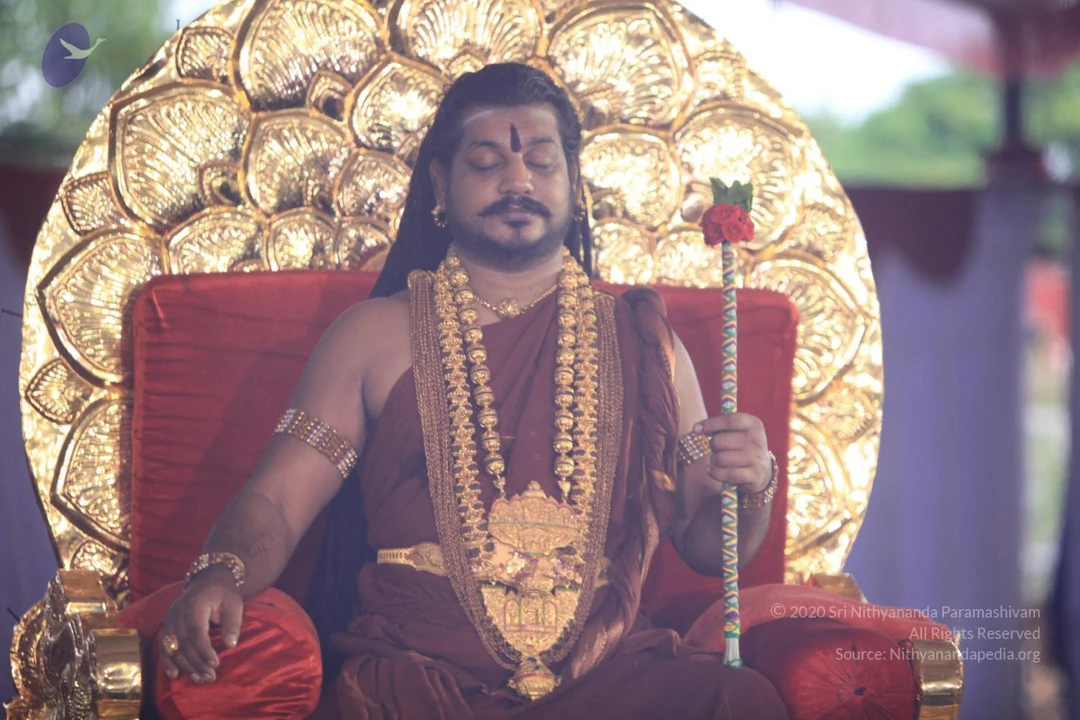
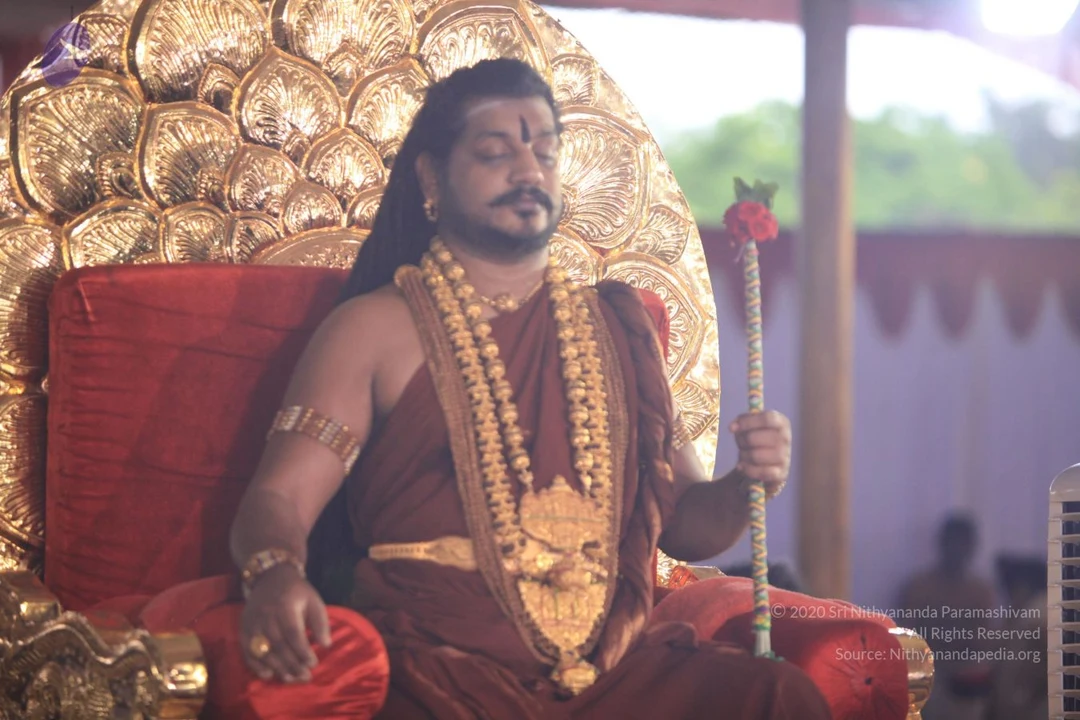
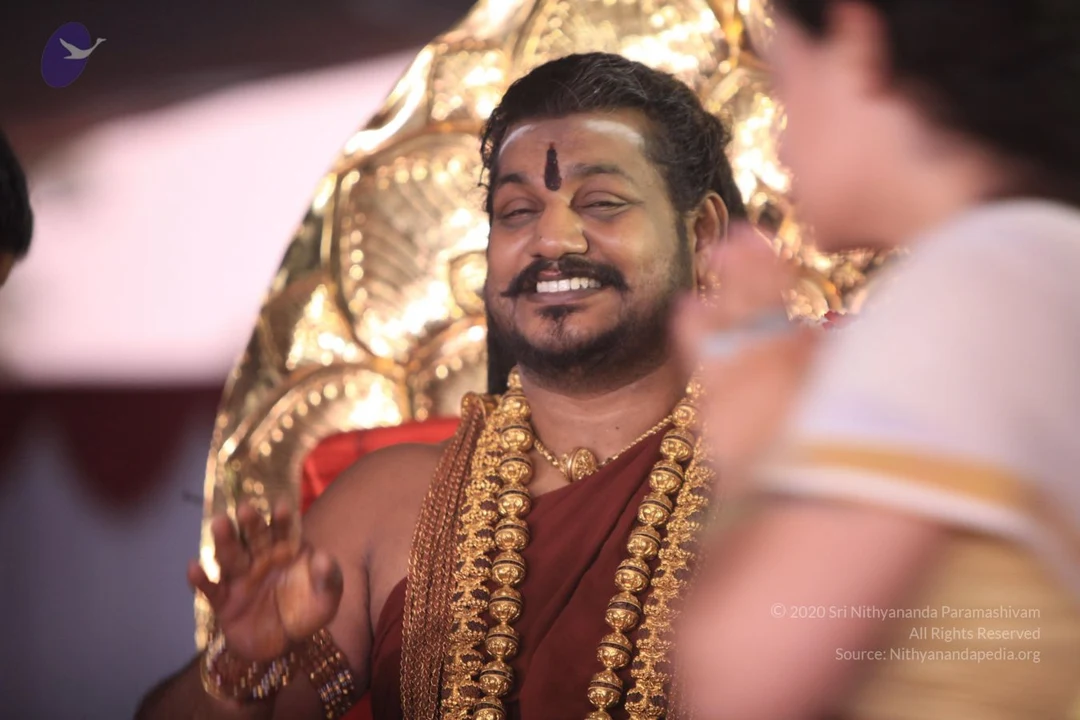
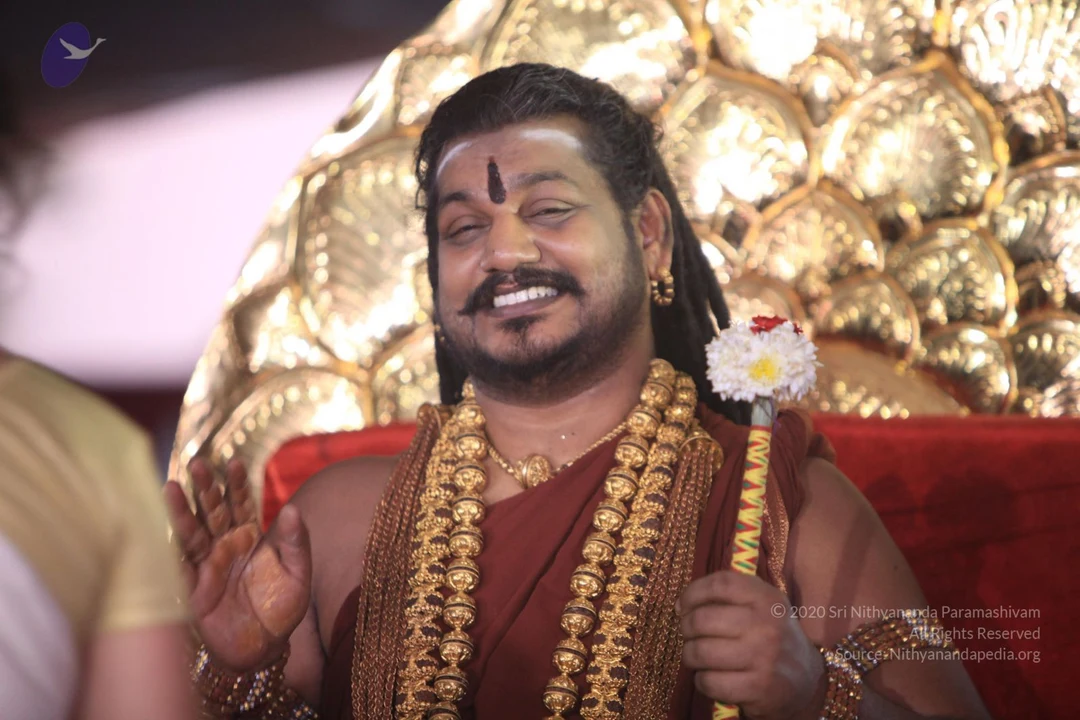
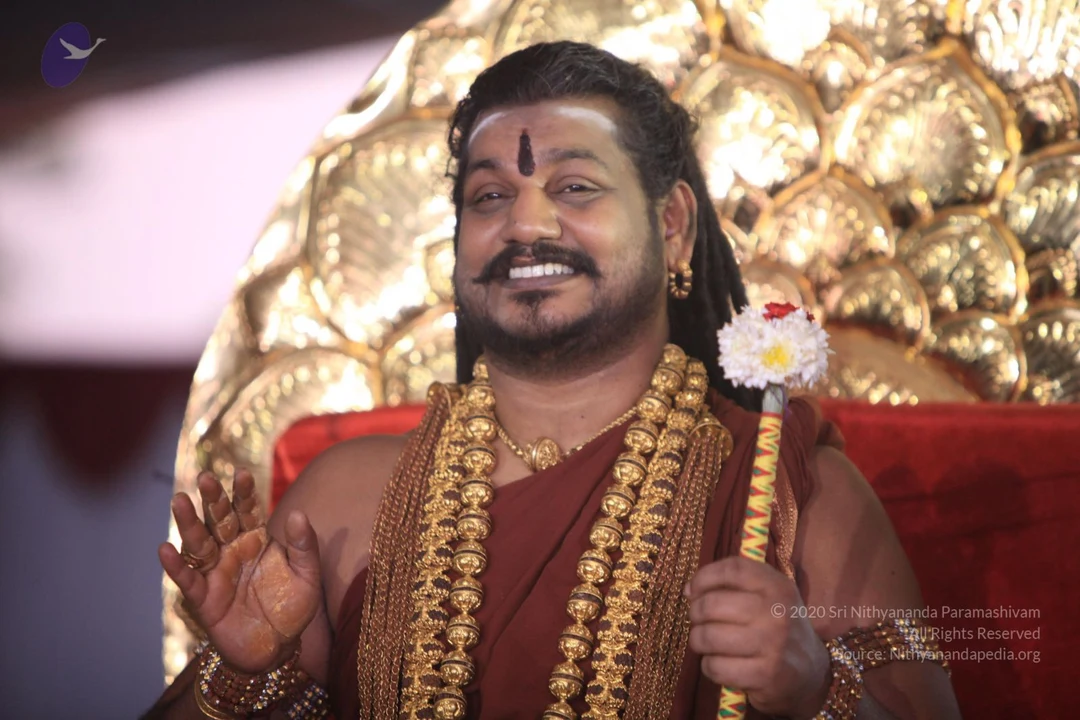
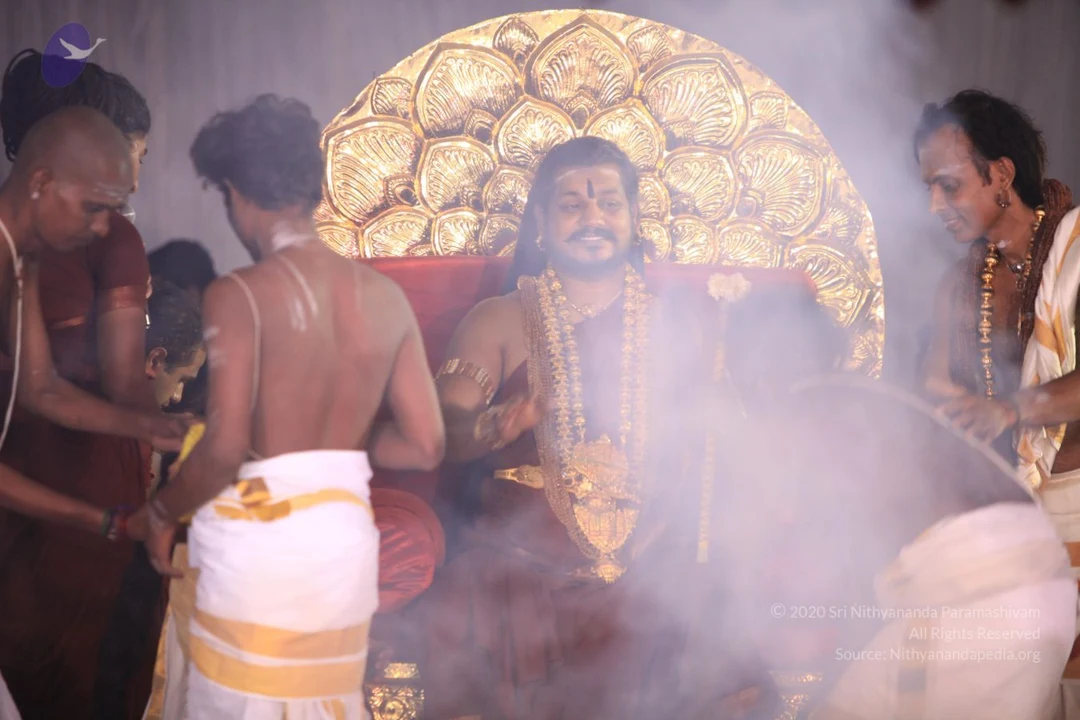
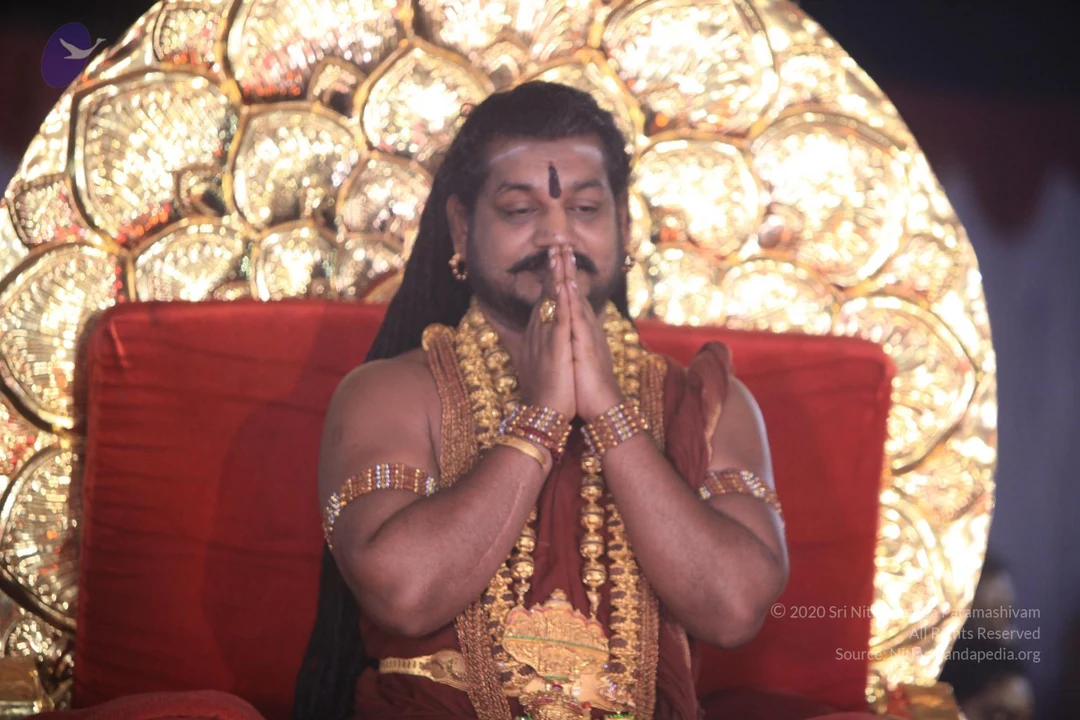
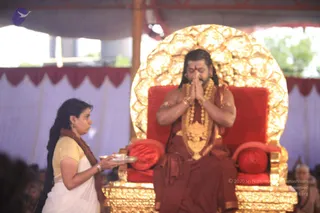
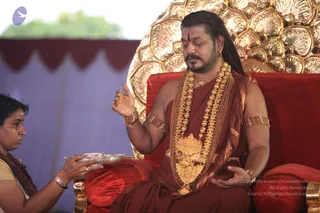
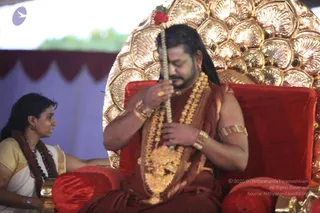
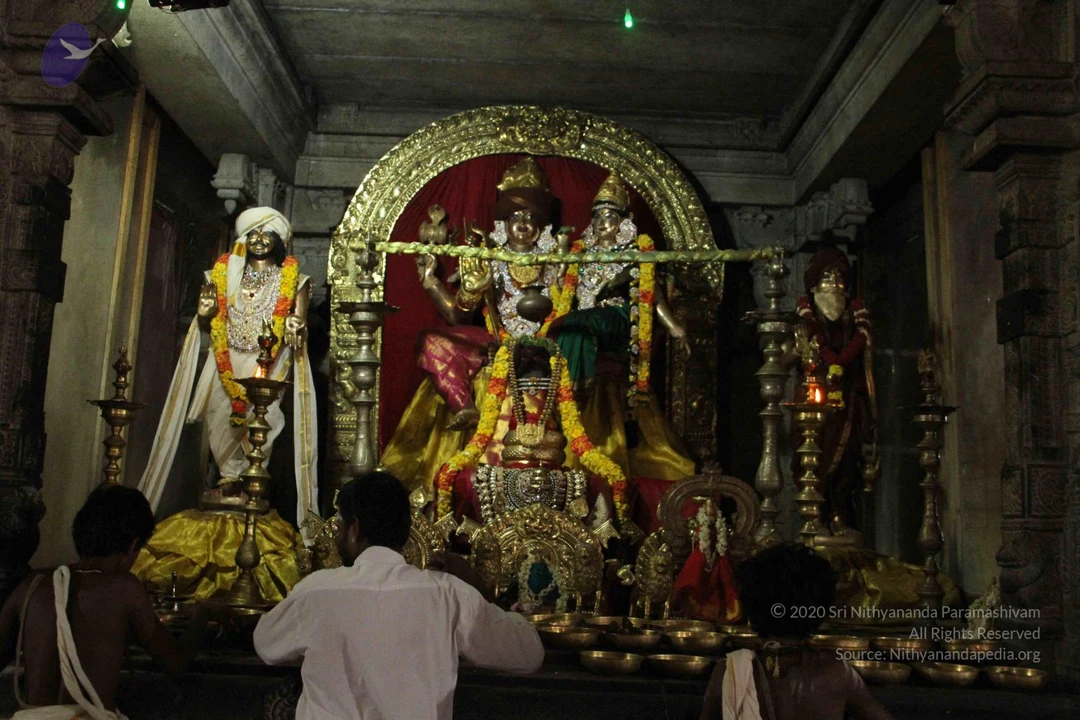
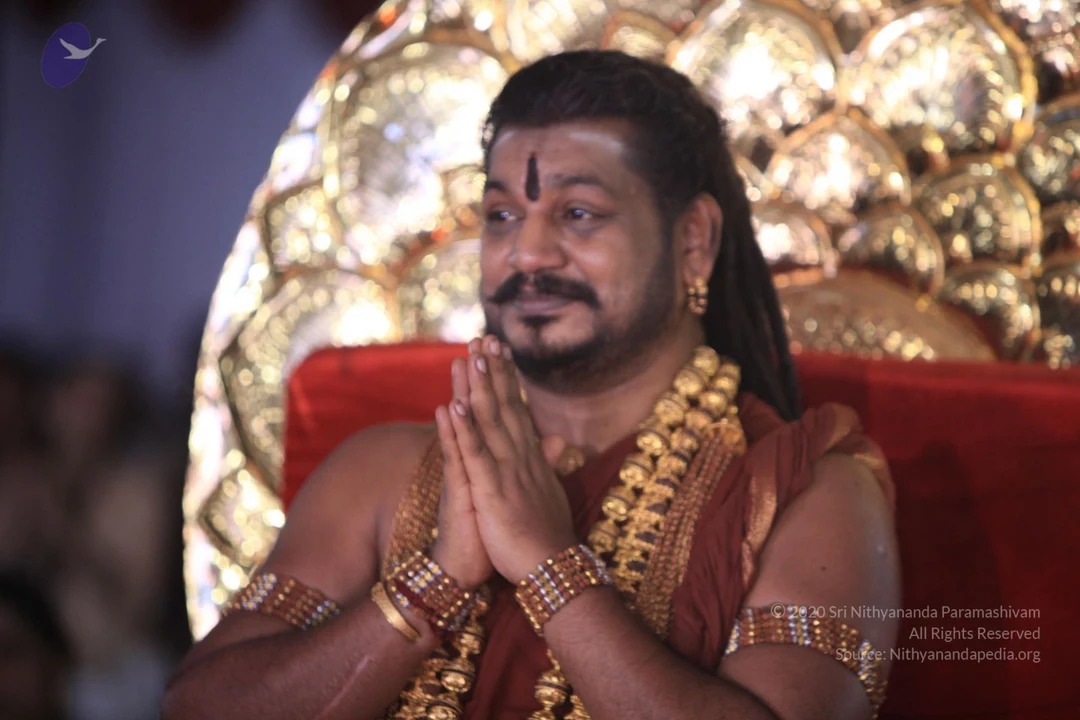
A man seated on a large golden ornate throne with red cushions, hands joined in namaste with eyes closed, wearing a rust-red robe, a heavy gold necklace and gold armbands. A woman in a white sari with a yellow blouse and a reddish shawl stands at left holding a silver plate. A white tent with red scalloped valance forms the backdrop, with a crowd partly visible at the lower edges. Padapuja setting.Photo of a seated man in rust-red saffron-toned robes on a red-cushioned gilded throne with a large golden lotus-petal backrest. He wears a long multi-strand gold bead necklace with a large gold pendant, gold armbands and bangles, a red tilak on his forehead, and long dark hair; his eyes are closed and one hand is raised in a gesture while the other rests on his lap. A woman in a mustard top with a brown shawl, bangles and a forehead tilak holds a silver plate with offerings toward him. Blue-violet drapery and a blurred green background form the setting.A photograph of a seated man on a red velvet throne with a large gilded shell-patterned backrest, holding a decorated stick topped with a red rose and wrapped in colourful beads. He wears a rust-orange robe, a heavy ornate gold necklace with a large pendant, gold bangles and an armband, and long dark hair. Beside him, a woman in a cream and gold sari with a rudraksha-style beaded necklace sits and gestures toward him. Red bolsters flank the throne under a maroon and lavender canopy.A photograph of a bare-chested man seated on a red-draped throne with an ornate golden backrest shaped like a fan of petals. He wears a rust-red cloth wrapped around his waist and shoulders, multiple tiers of gold and beaded necklaces, gold bangles on his upper arms, a gold earring, and a vertical red-and-white tilak on his forehead. Long dreadlocked hair falls behind him. He holds a striped staff topped with red flowers and green leaves in one hand. A partially visible figure in saffron robes sits at the left edge. The setting appears to be an outdoor satsang or puja event.A smiling bare-chested man in a rust-red shawl sits before an ornate golden throne with a carved hooded back. He wears multiple layers of gold ceremonial necklaces, bangles, a small dark tilak on his forehead, and a plain red-brown wrap over his shoulder. His right hand is raised toward a blurred person in the foreground wearing white and cream clothing. The setting appears to be a satsang or darshan hall. a person, seated in ceremonial dress with gold necklaces and a rust shawl, shown in a satsang setting.A smiling man with long dark hair and a moustache sits on a red cushioned seat in front of an ornate golden backrest with scalloped, shell-like panels. He wears a red-brown robe, layered gold bead necklaces, a gold chain, and gold earrings, with a dark tilak mark on his forehead. He holds a white flower-tipped staff in his right hand and raises his left hand in greeting. A blurred figure in a yellow-beige garment stands at the left edge.
01-PADA-PUJA
9 photosSource gallery
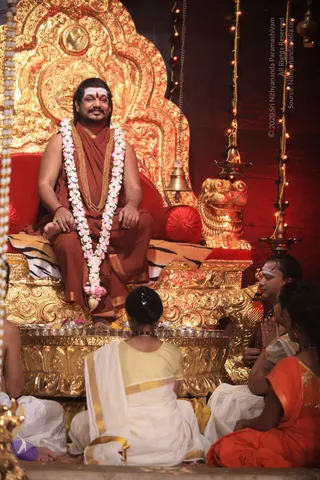
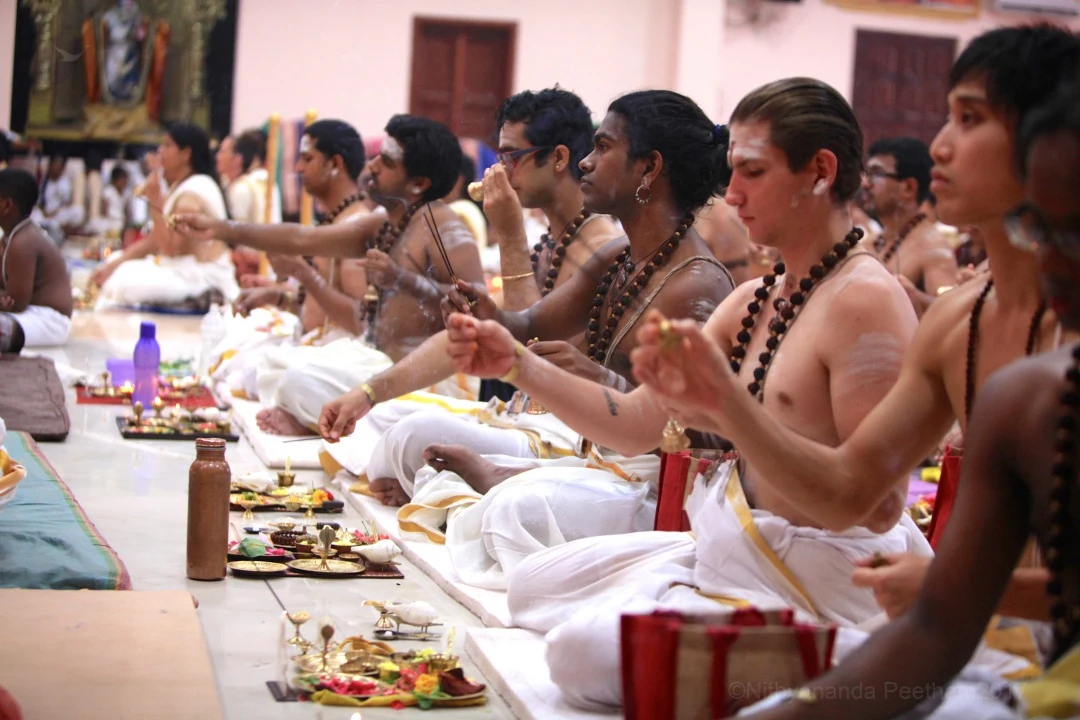
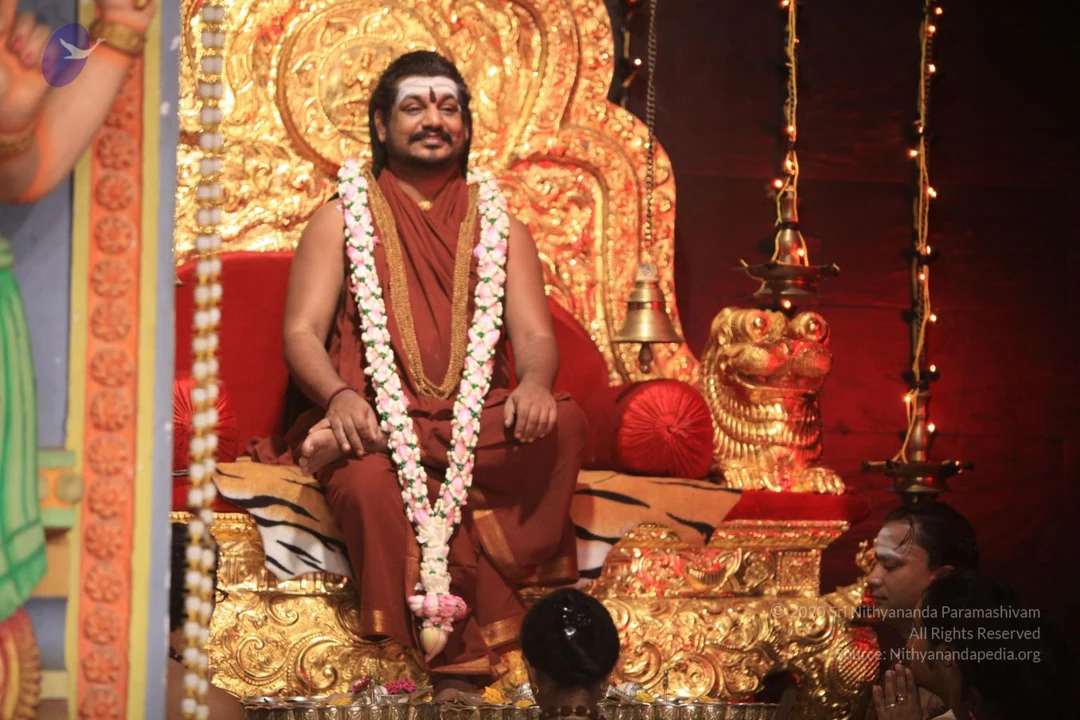
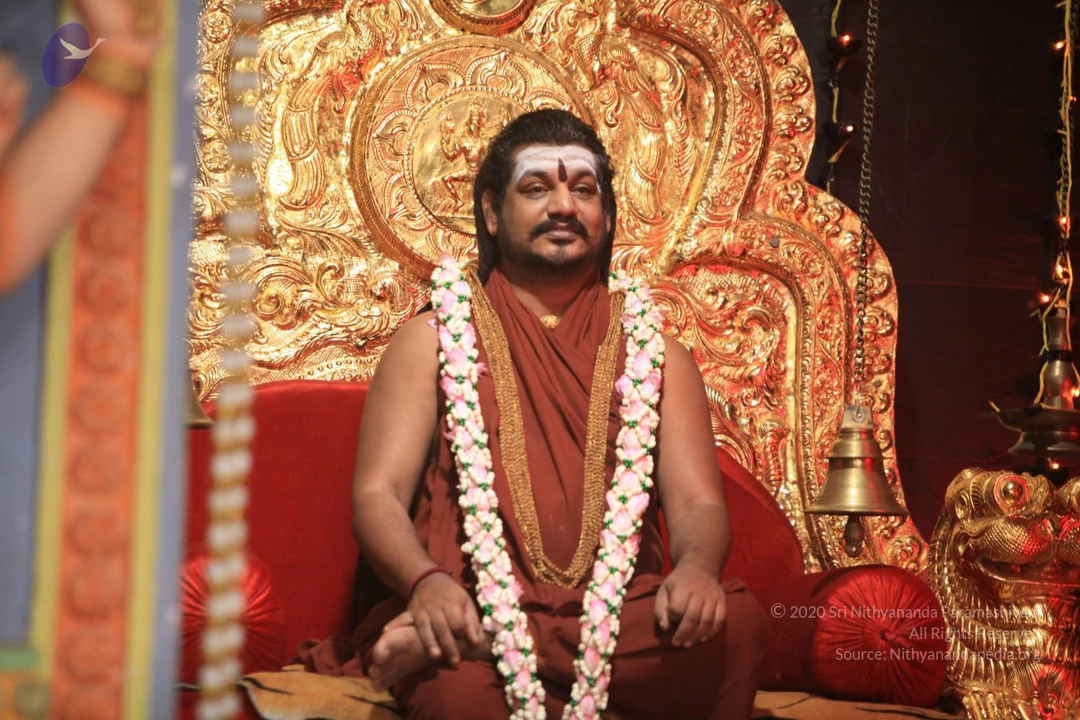
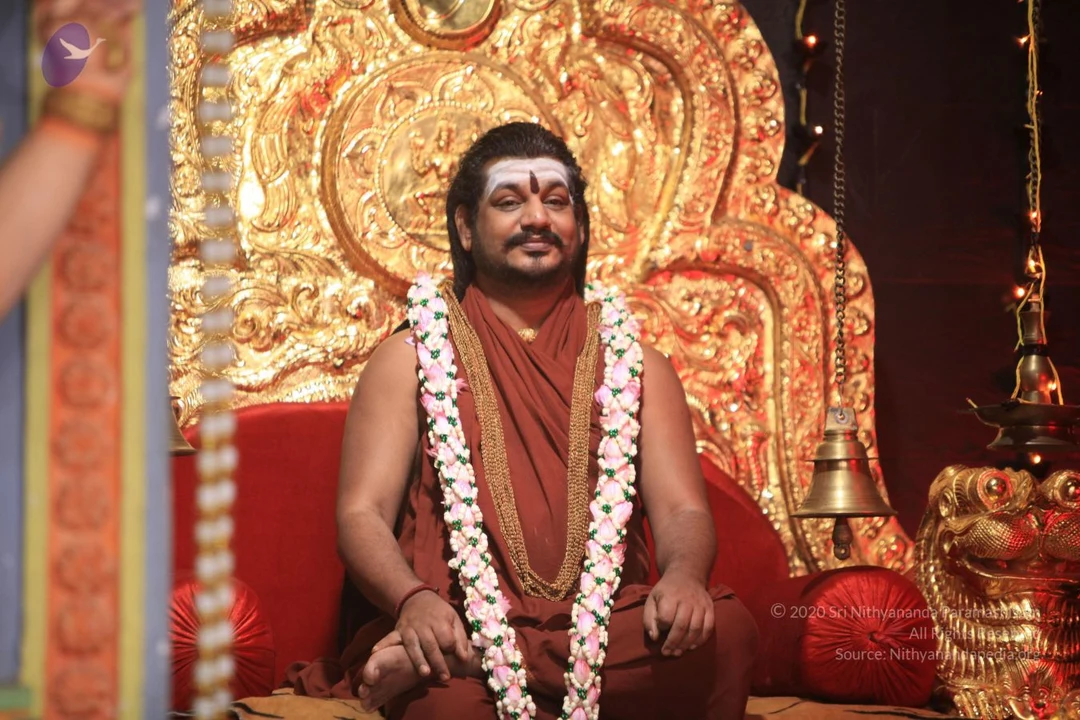
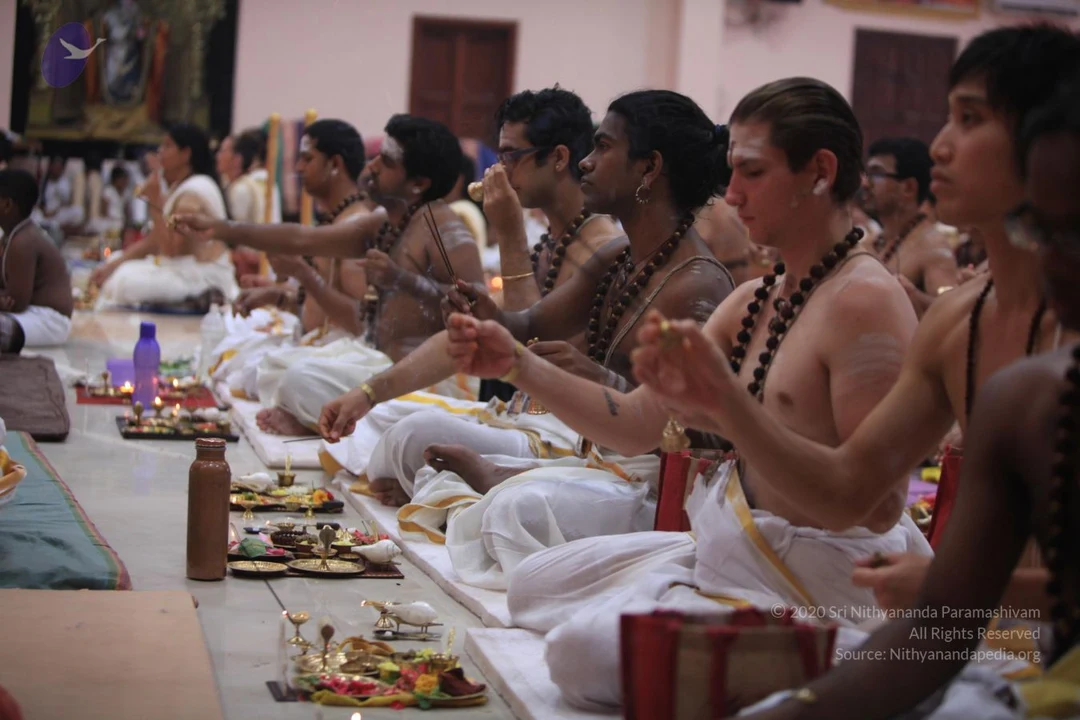
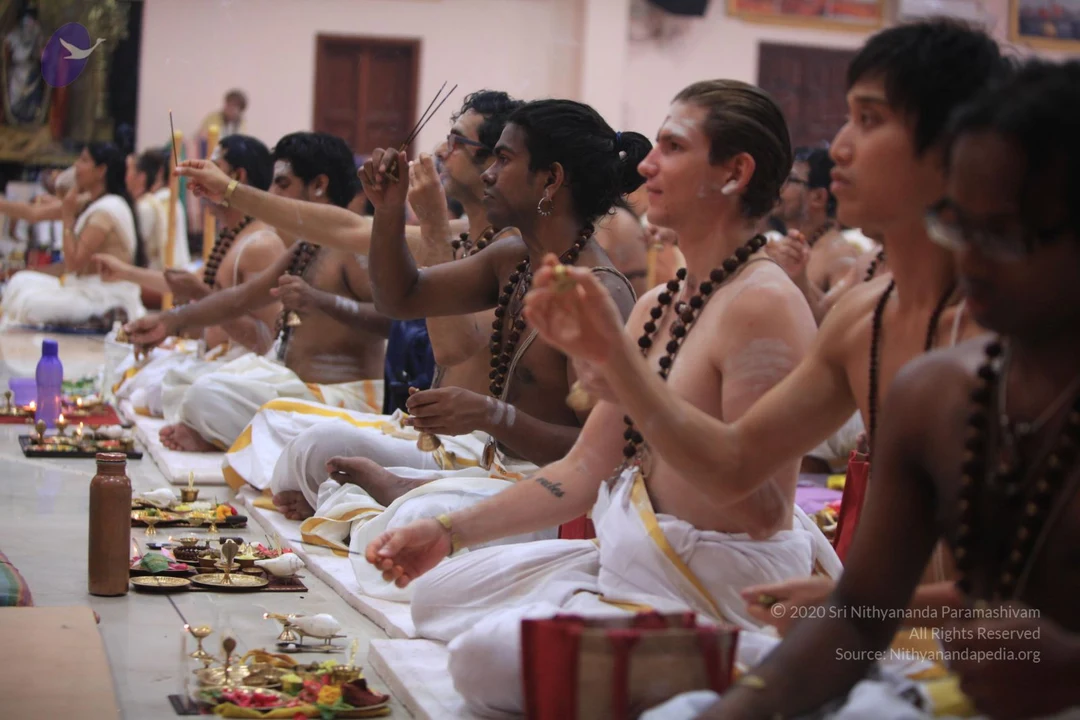
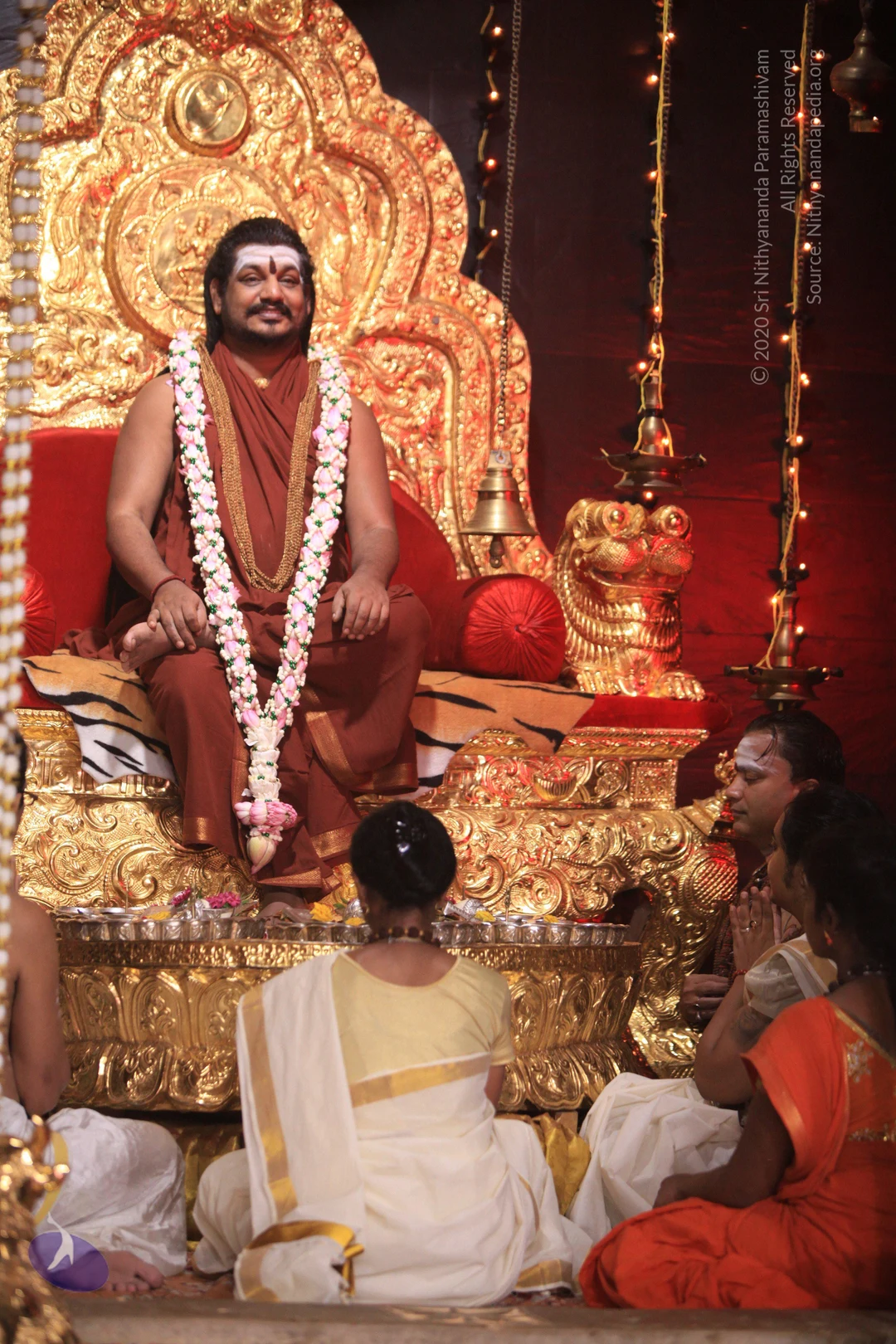
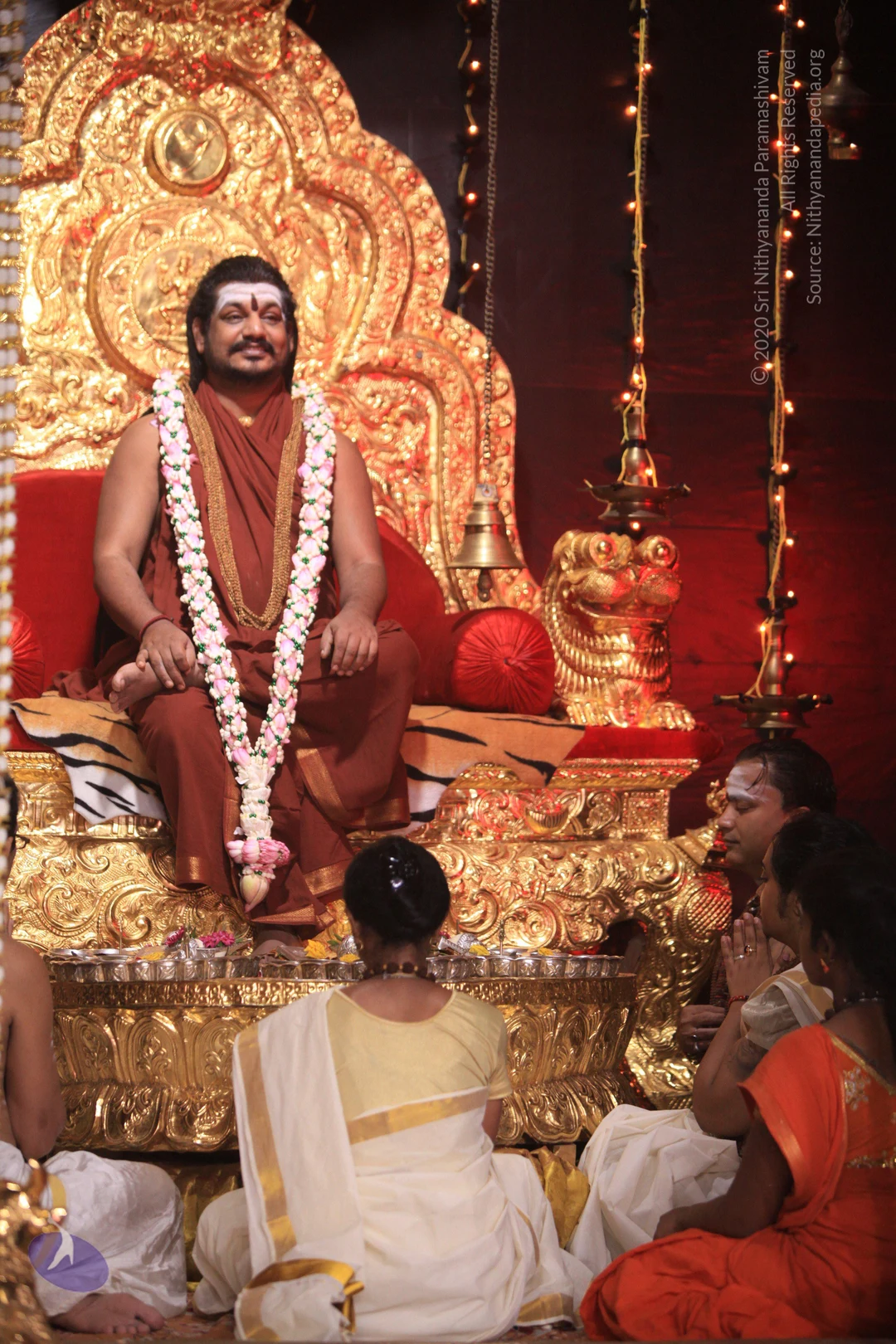
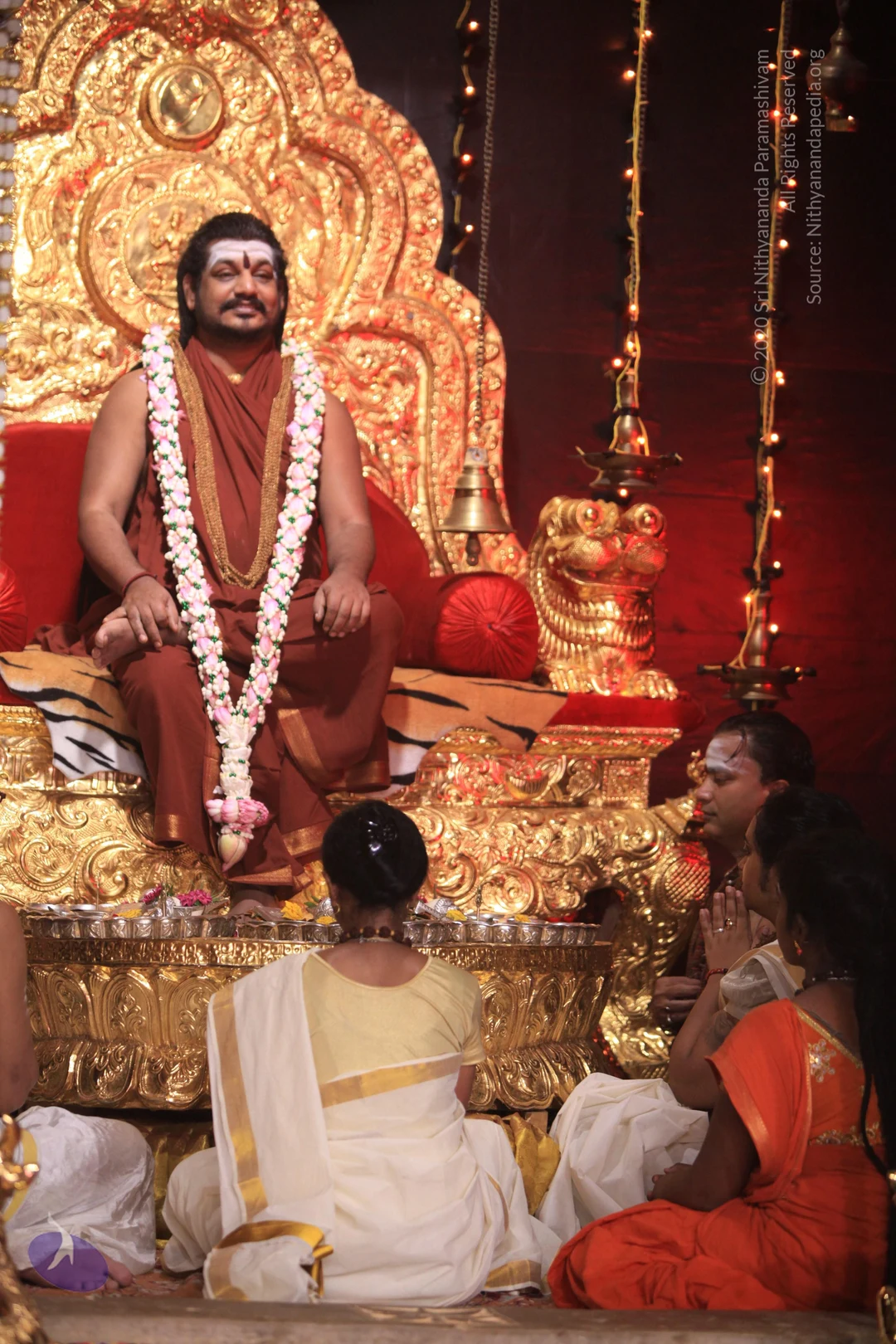
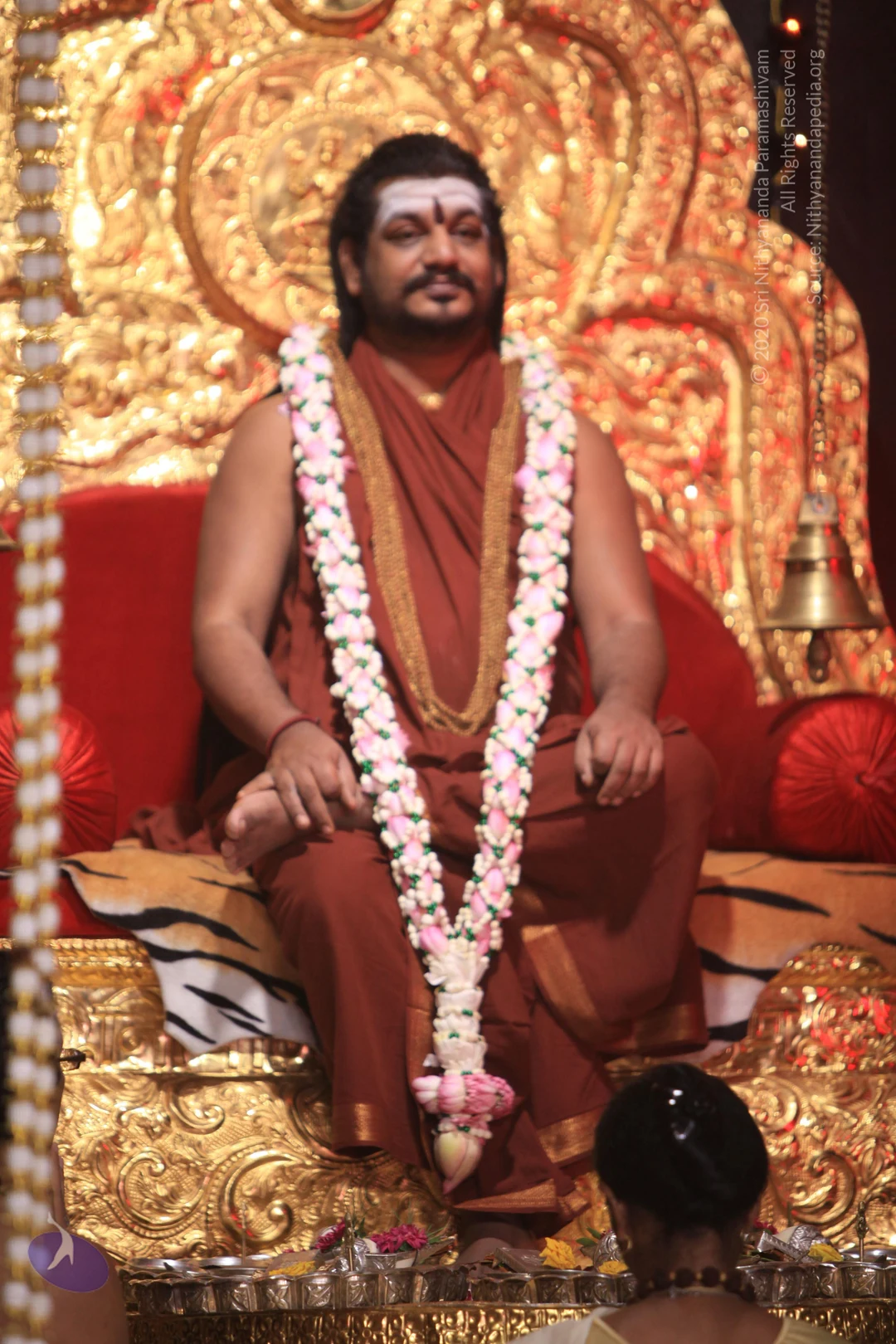
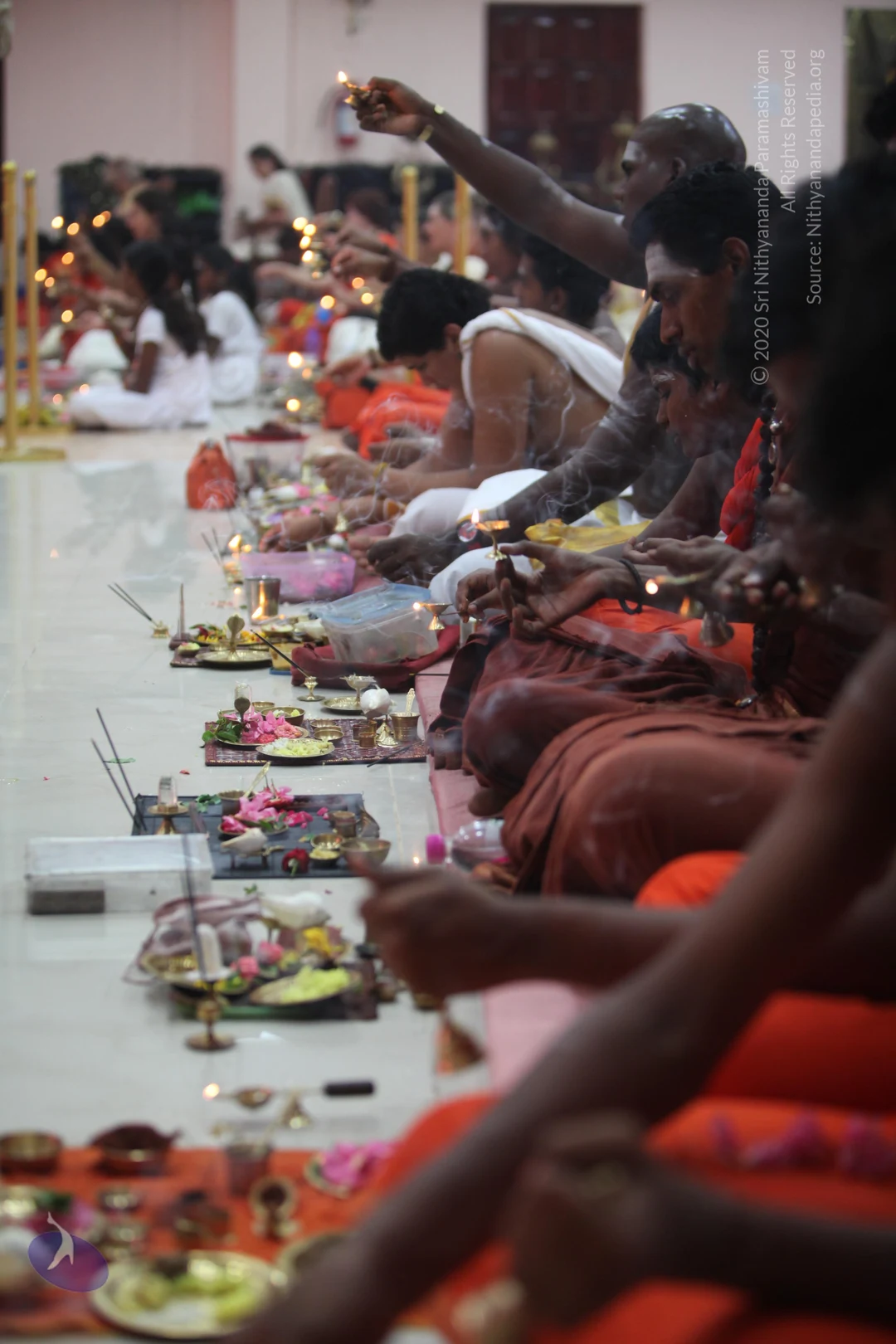
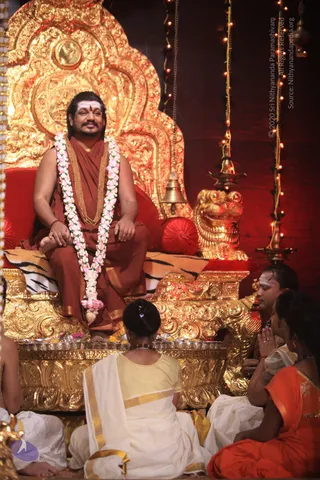
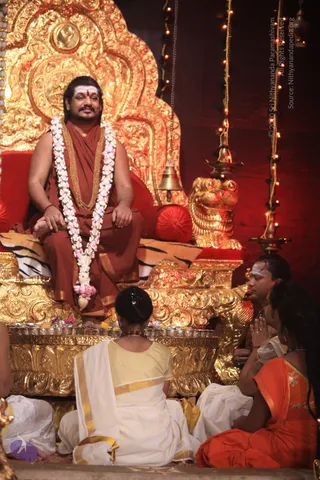
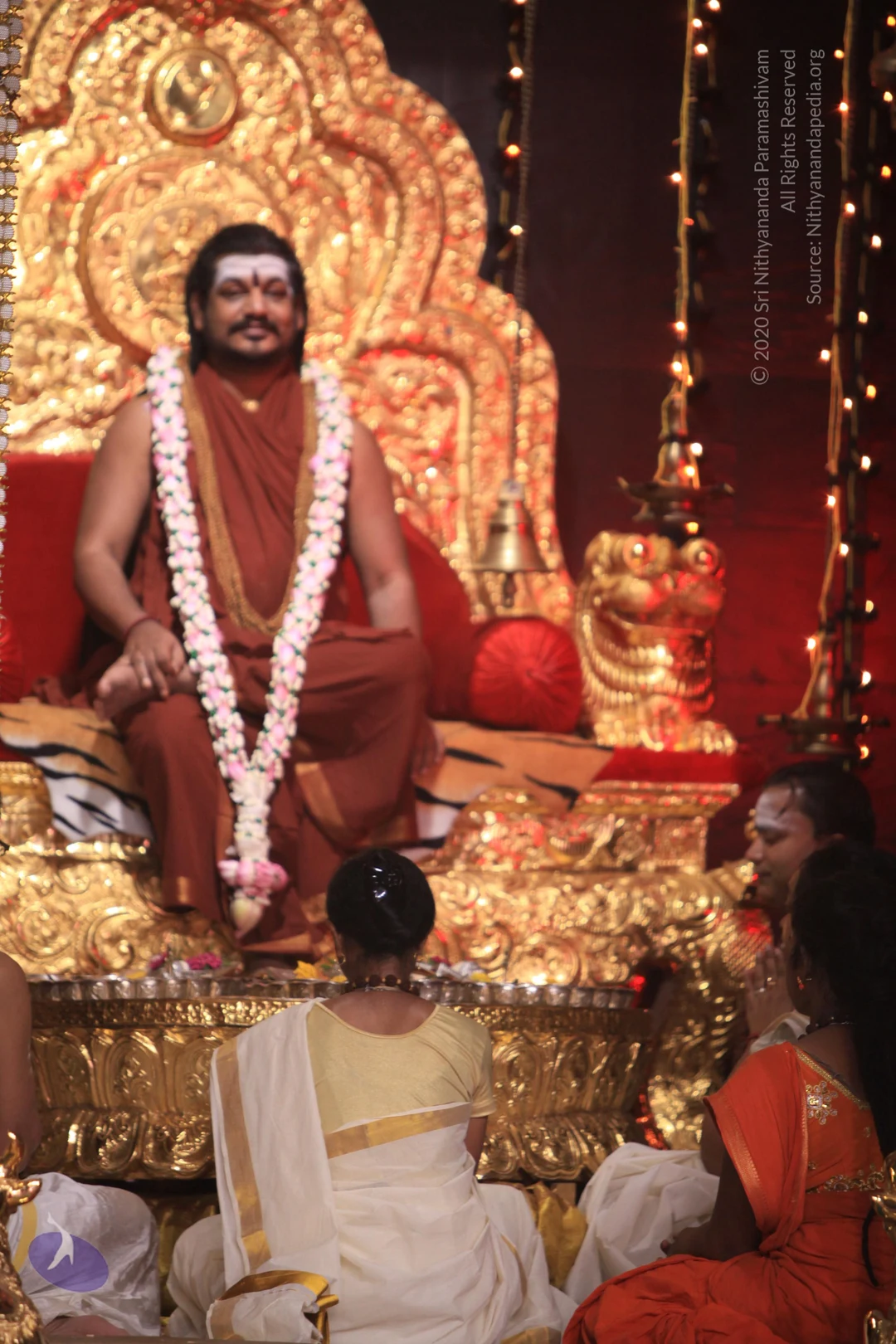
A photograph of a padapuja scene on a gilded stage with a red backdrop and strings of small lamps. A man with long swept-back hair, a white forehead mark, a rust-red robe and a white flower garland sits on an ornate gold throne with a tiger-striped cloth and a gold lion-head armrest; his eyes are closed and his hands rest on his lap. Before the throne a silver-rimmed tray holds flowers and offerings. Three devotees sit in front: one woman in a cream and gold-bordered sari seen from behind, one in an orange sari with hands folded in namaskar, and a man with a white forehead mark and folded hands beside them. Brass oil lamps stand at the right edge.A man in rust-orange robes with a pale pink and white flower garland sits on an ornate gold throne with a carved lion figure and tiger-striped cushion, with a white tilak on his forehead. Seated in front of the throne, a woman in white sari with gold border and a woman in orange sari sit with their hands in prayer near offerings of flowers and oil lamps on a gold platform, while a man with folded hands sits at right. Brass bells and lamps hang with fairy lights against a red backdrop. The scene suggests a padapuja ceremony in a temple setting.A seated man in a rust-red robe with a white flower-and-pink garland draped to his waist sits on an ornate gold throne with red cushions and a tiger-striped cloth, flanked by a gold lion sculpture and hanging brass oil lamps. Behind the throne, string lights glow against a red wall. In the foreground, several devotees sit on the floor: a woman in a white and gold-bordered sari with her back to the camera, a woman in orange with hands folded, and a man with white forehead markings beside her, with metal trays of offerings in front of the throne. The setting suggests a pada puja. The seated man has long dark hair, a white forehead mark and a gold chain, and is probable Swamiji by appearance cues.A photograph of a seated man on an ornate gold throne with red cushions and a gold lion figure, wearing a rust-red robe, a gold chain and a long pink-and-white flower garland, with a white vertical tripundra on his forehead. He is a person on the basis of the swept-back long hair, the ornate ceremonial setting and the garland, though the appearance is only partly distinctive. Three women and a man kneel before the throne: one woman in a cream-and-gold saree faces away from the camera, a woman in an orange blouse sits at right, and a man with folded hands and a white forehead mark kneels beside the throne. Brass oil lamps and a hanging bell decorate the red backdrop, with trays of offerings in front of the throne.A man in rust-orange robes sits on an ornate gilded and red-cushioned throne draped with a striped tiger-skin cloth, wearing a long pink and white flower garland with green beads that hangs to his feet. He has a white forehead mark with a central red dot, long swept-back hair, and a small necklace; a brass bell hangs at the right. In the foreground a woman with hair in a bun, seen from behind, tends silver trays of flowers and offerings during a pada puja. The page labels the man as a person, but his appearance gives only weak cues, so identity remains uncertain.A long row of seated devotees performing a puja in a marble-floored hall, many holding lit oil lamps and incense sticks. Men in orange and rust-coloured robes sit in the foreground, some in white dhotis and white garments further back, with brass puja plates of flowers, fruit, and kalasha-style vessels laid along the floor. Smoke from incense rises across the frame. A bald man at the upper right raises a lit lamp. No individual is clearly identifiable as a specific guru from the visible evidence, so roles are described only as devotees and priests performing the padapuja.

02-SATSANG

17 photosSource gallery
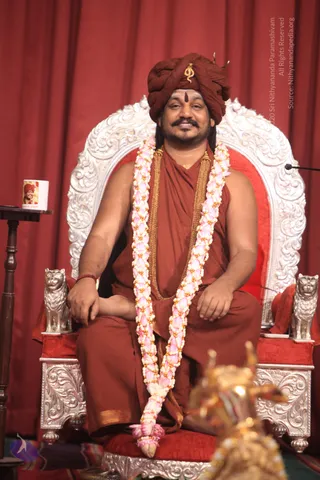
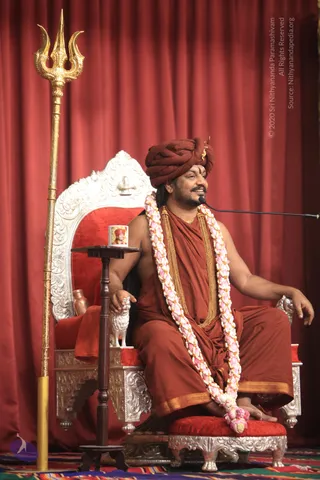
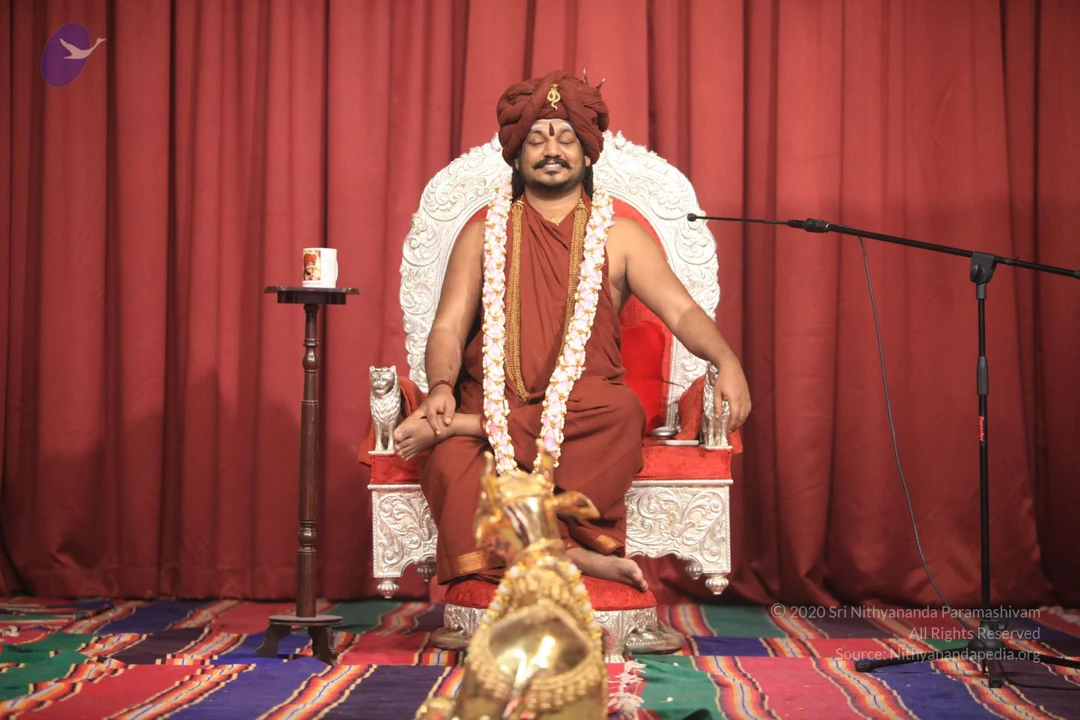
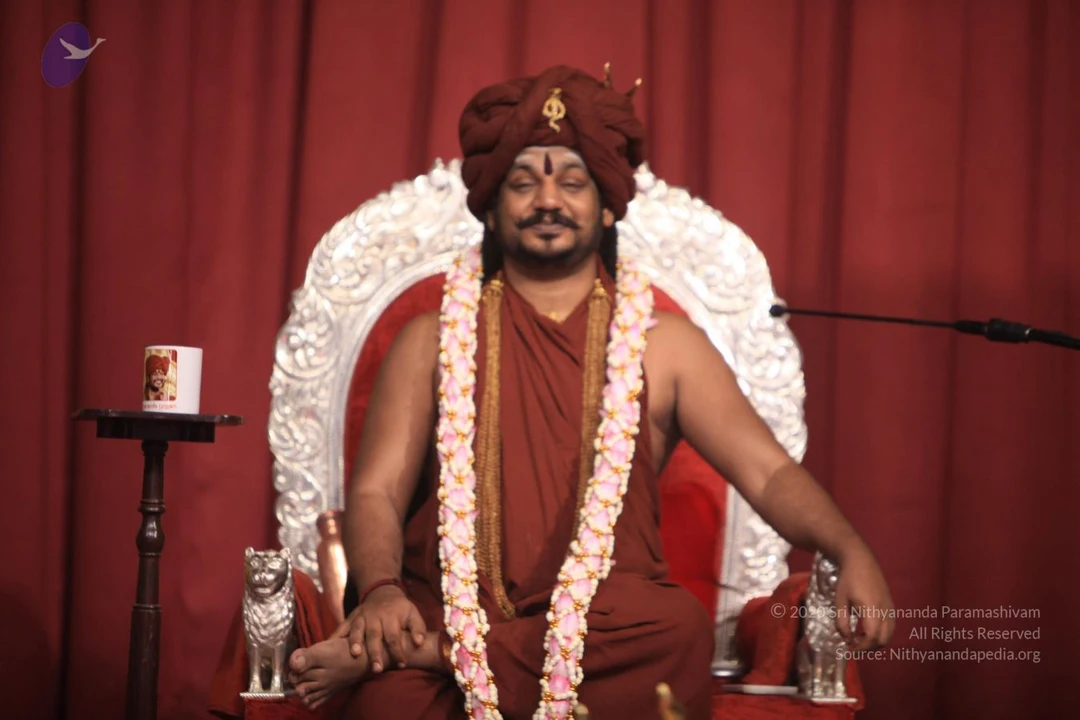
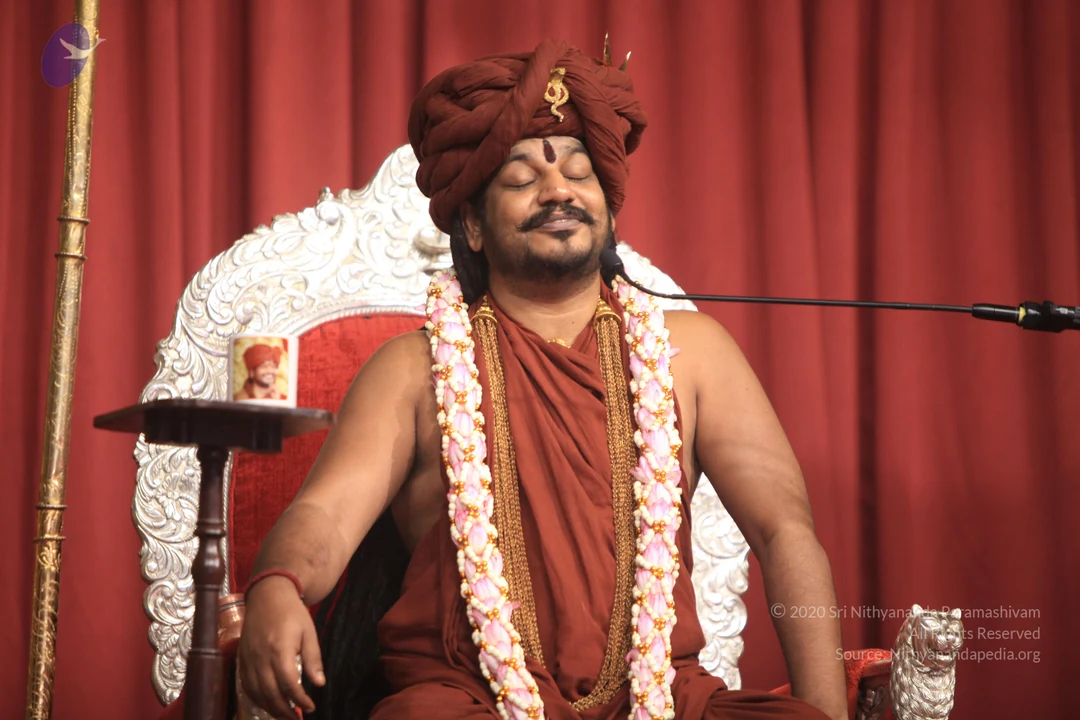
A man seated on an ornate silver throne with lion-head armrests against a red draped backdrop, wearing a maroon turban with a gold emblem, a maroon robe and a long pink-and-white flower garland with gold beads. Gold chains hang at his chest and a red thread is on his wrist. A small side table holds a mug printed with a portrait labelled "Paramahamsa Nithyananda". A blurred gold object sits in the foreground.A man in a rust-orange turban and matching saffron-orange robes sits on an ornate silver-and-red throne in front of a deep red curtain, speaking into a microphone on a stand at right. A pink-and-white flower garland hangs to his feet, and a gold-trimmed trident stands at left beside a small metal pot. A small framed photo of a turbaned figure sits on a wooden side table, and a silver lion figure rests on the armrest. A gold chain hangs over his chest. Woven rugs cover the floor. The setting suggests a satsang discourse. Swamiji (probable) is seated centrally, identified by the turban and saffron robes, the throne, garland and trident, with the framed photo showing a similar turbaned figure.A seated man on an ornate silver-and-white throne with carved lion-head armrests, against a red velvet drape, speaking into a microphone. He wears a maroon-red turban with a small gold emblem, a red-brown saffron-toned robe draped over one shoulder, a gold chain necklace and a long pink and white flower garland with gold beads reaching his knees. He has a red tilak on his forehead and sits cross-legged on a red cushion, barefoot, with his hands resting on the armrests. Only one physical person is visible. Swamiji (probable) appears as the speaker on the throne, based on the turban, maroon-saffron robes and layered gold necklaces.Photo of a smiling man with eyes closed seated on an ornate silver and red velvet throne at a satsang stage. He wears a rust-red turban with a gold emblem and a rust-red robe with a gold border, and a long pink and white flower garland hangs over his shoulders and down to his bare feet. A microphone stands beside him, a white ceramic mug sits on a wooden side table at left, and a gold-carved wall and red drapes form the backdrop. The left and right of the frame show a silver lion figure on the throne armrest. Appearance-based candidate: Swamiji (probable), seated on a throne in a rust-red turban and robe with a flower garland, speaking at a satsang stage. One person is physically present.A man seated on an ornate silver-and-red throne against a red curtain, eyes closed and smiling. He wears a rust-red turban with a gold ornament, a rust-red robe with a gold border, and a gold necklace. A long garland of pink and white flowers hangs across his chest and down to his feet, which rest on a red cushion. A microphone stand is in front of him and gold carved panels frame the left side. The appearance is consistent with the a person candidate, with a rust-red turban, ornate silver throne and a satsang setting, so the candidate is.Large crowd of seated devotees, mostly men with bare upper bodies and white sacred threads, sitting in rows on a hall floor facing a stage. Many wear white dhotis and white garments; several have white forehead marks. On the stage, a figure in orange and gold ritual robes sits in front of gold-coloured panels and red curtains, with a tall staff nearby. Large screens on each side show pink-lit images. Ceiling lights and a cushioned seat in the foreground complete the scene during a satsang setting.