Skip to content
Friday

24 May 2013

Inner Awakening Day 17 Q & A by Paramahamsa Nithyananda 24-May-2013

Dated photos
385
Source pages
1
Media
3
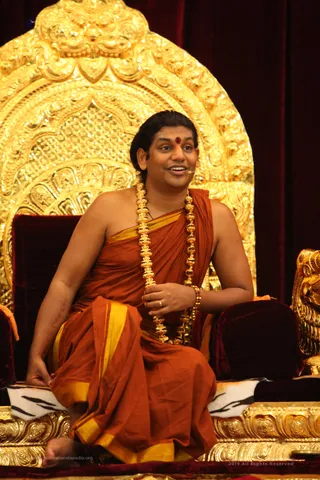
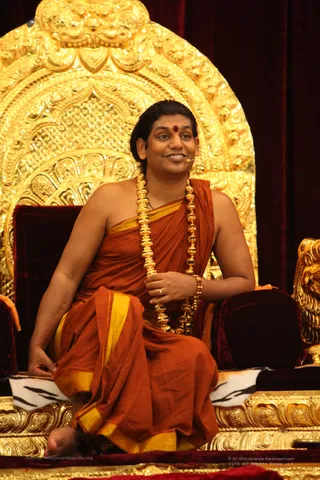
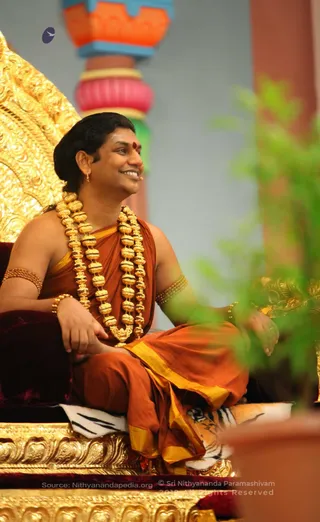
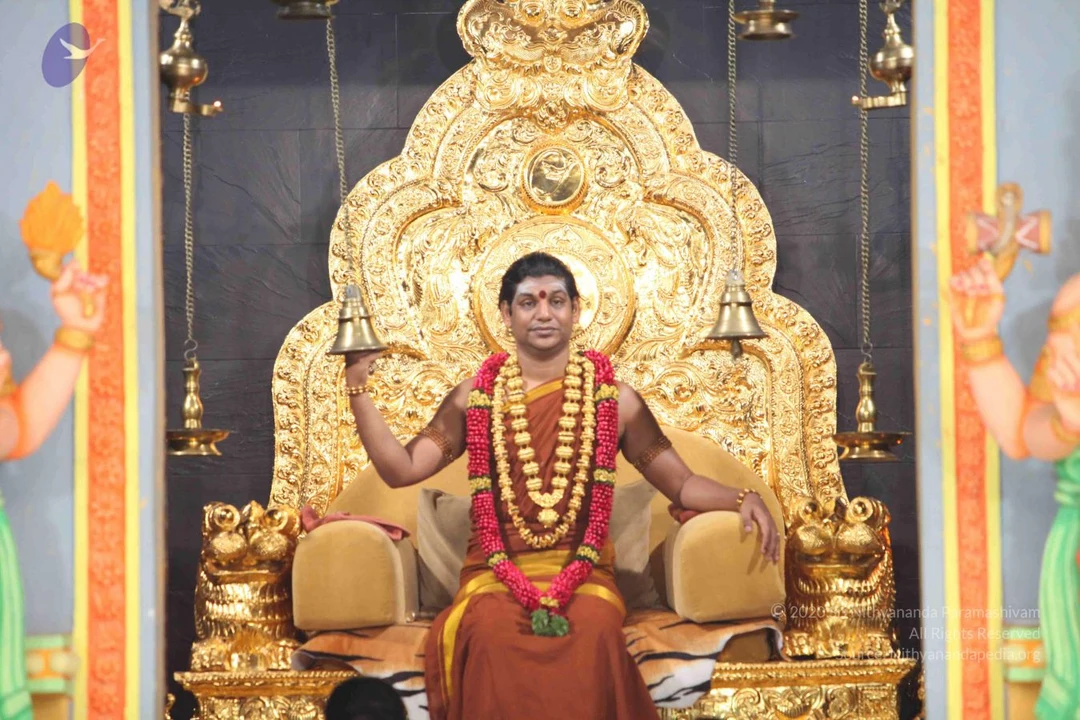
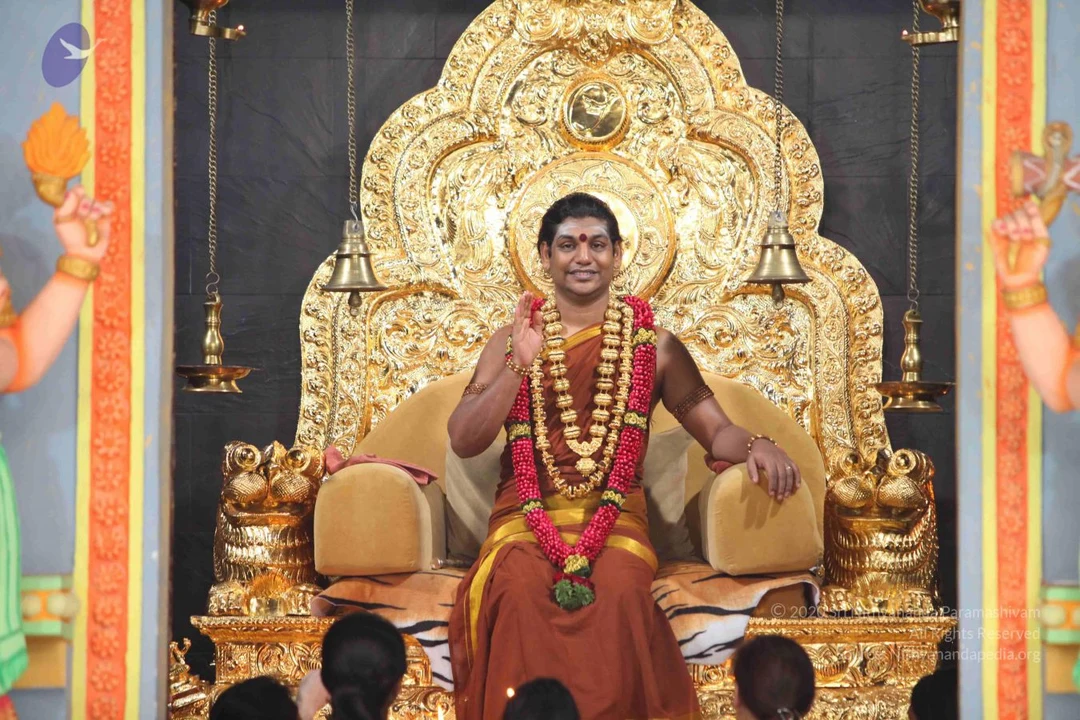
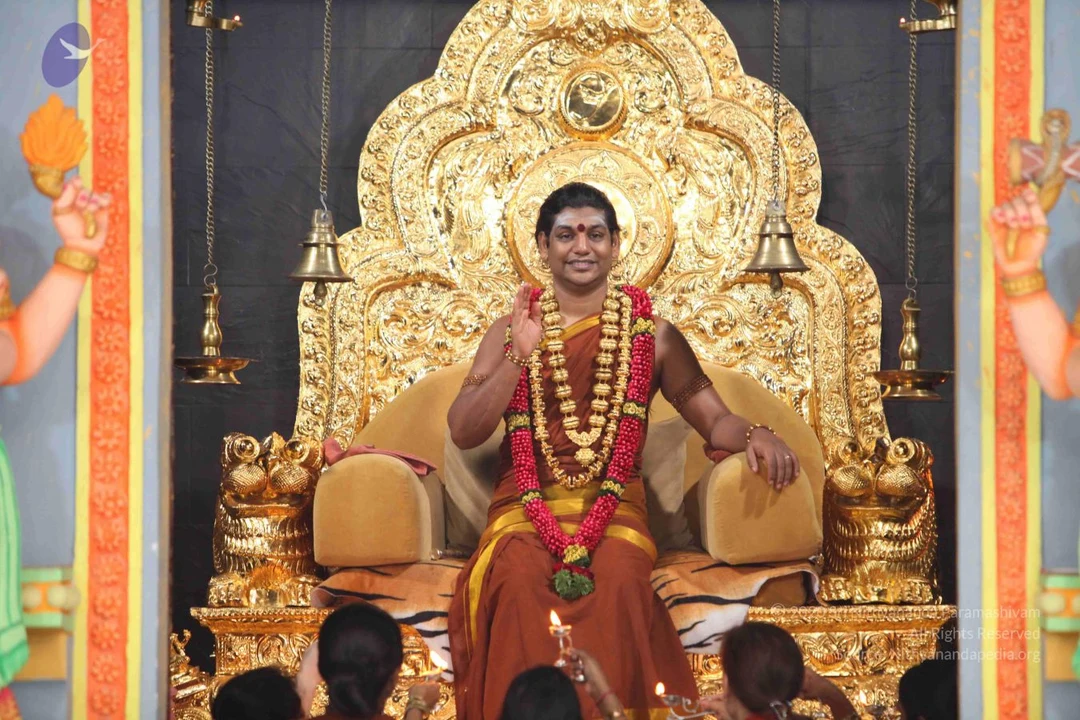
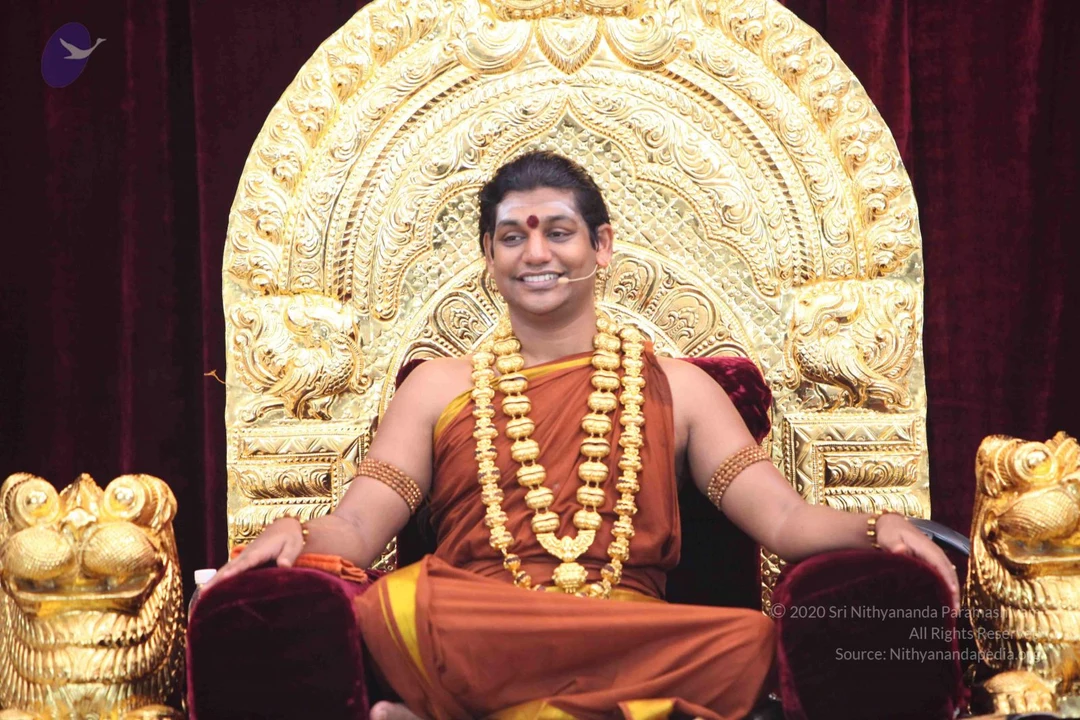
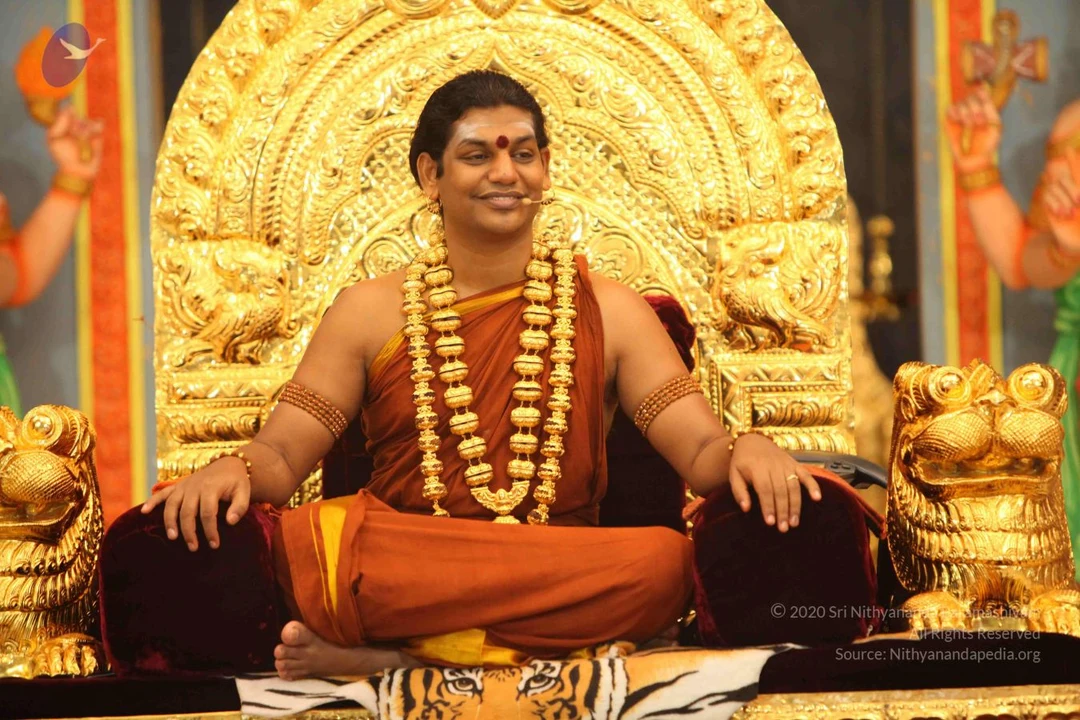
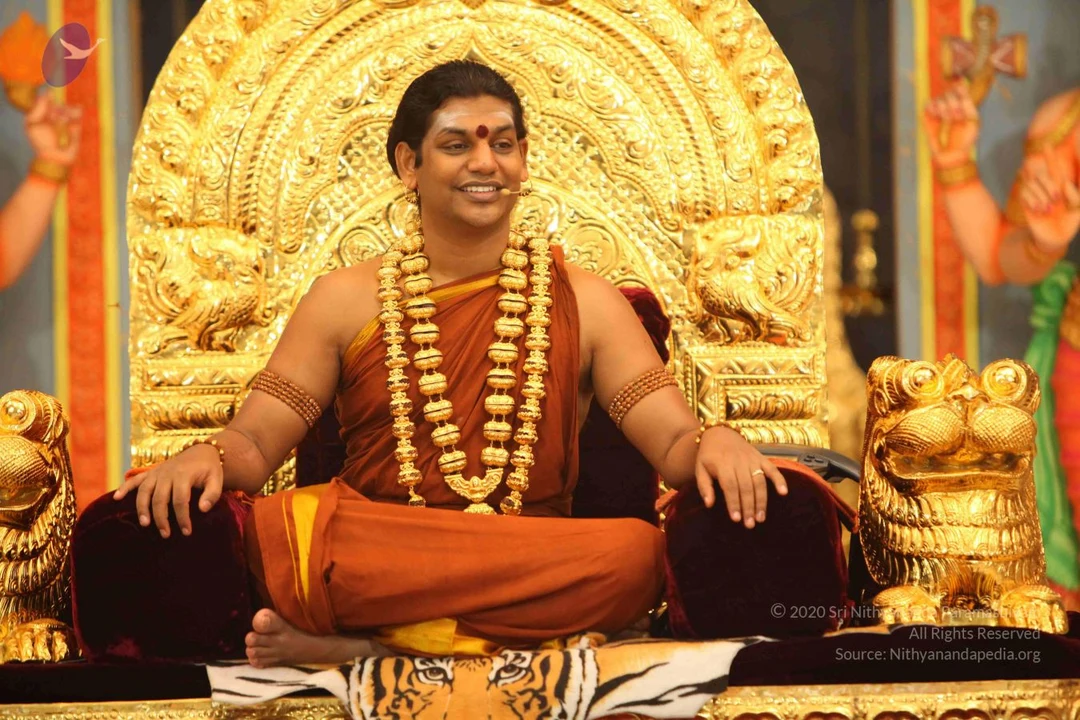
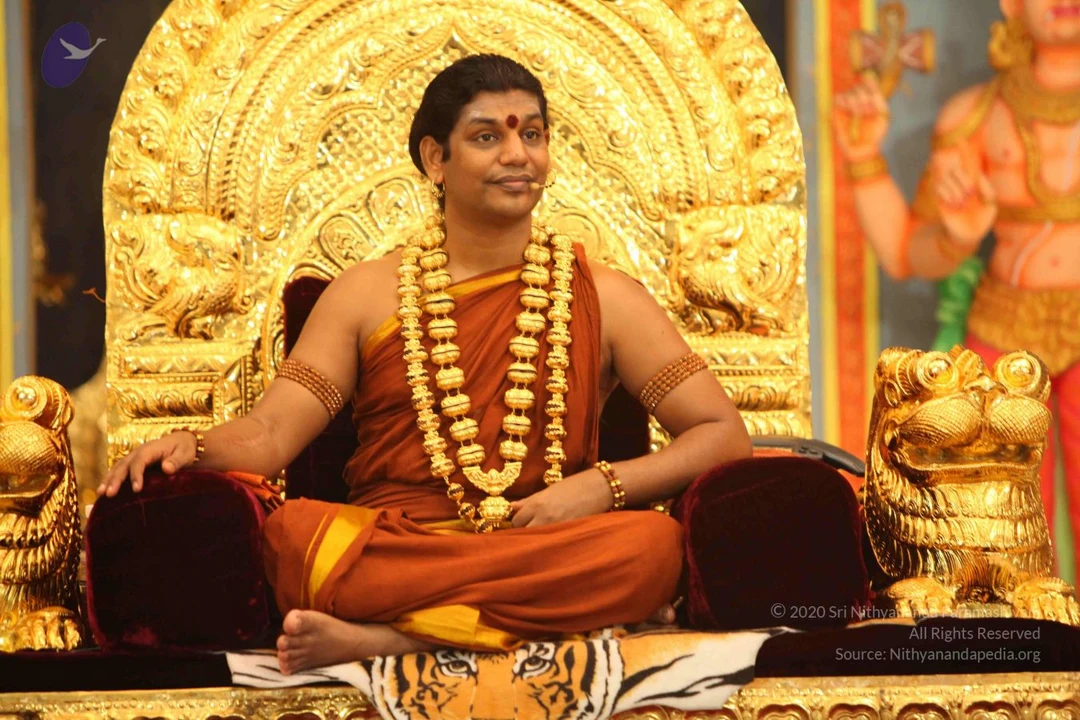
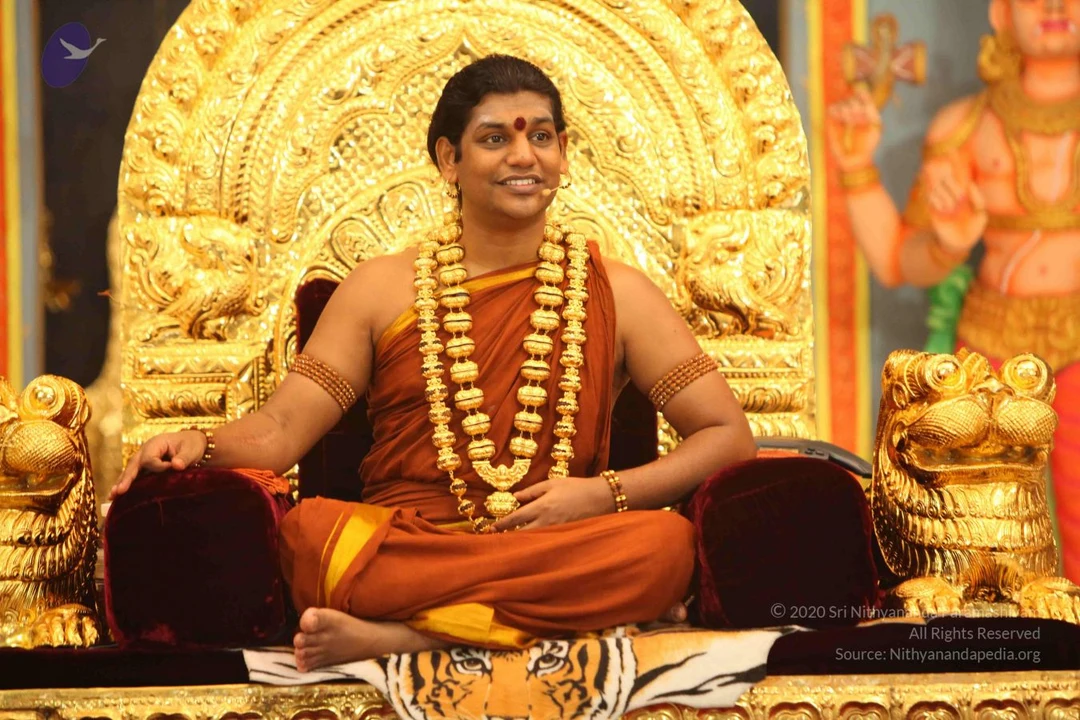
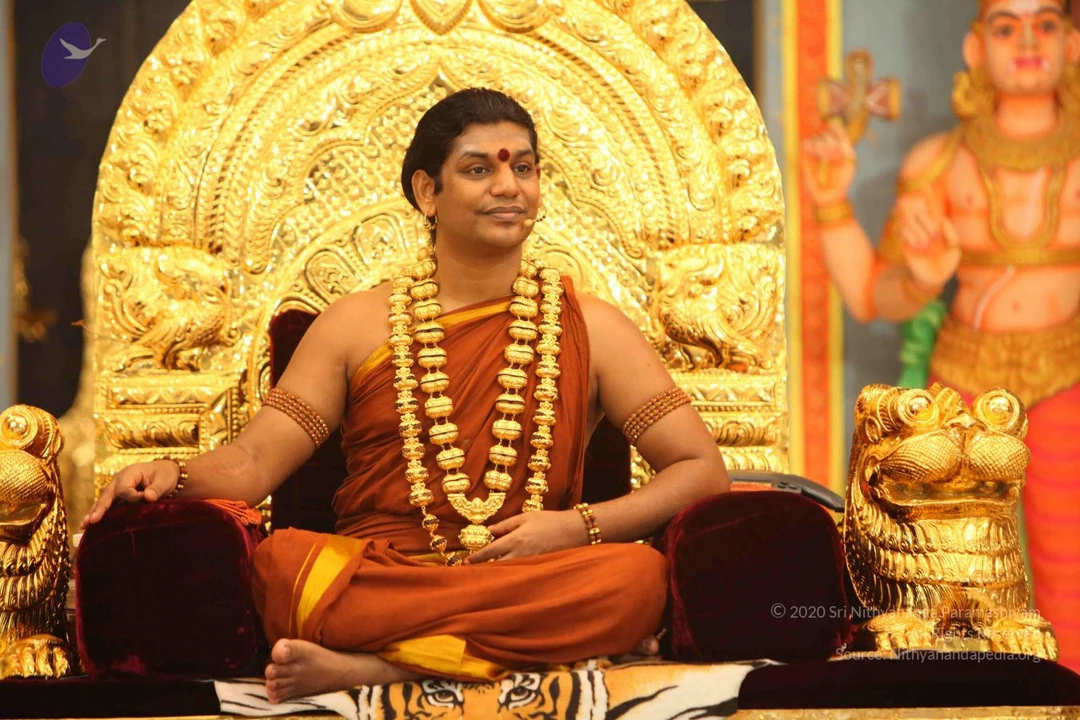
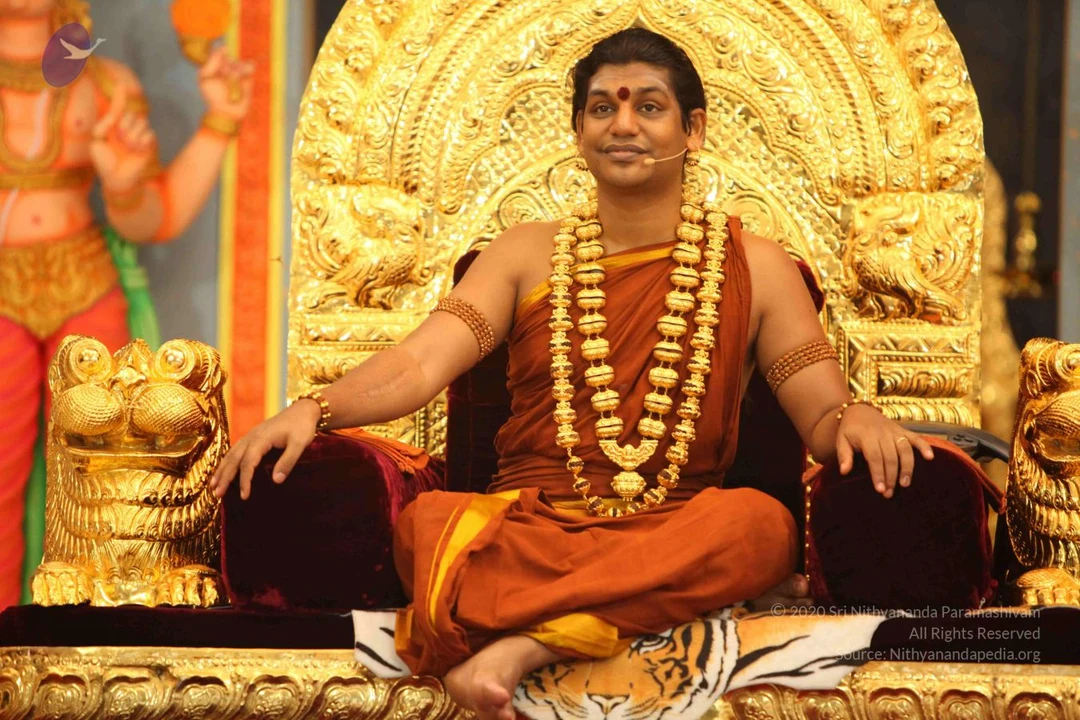
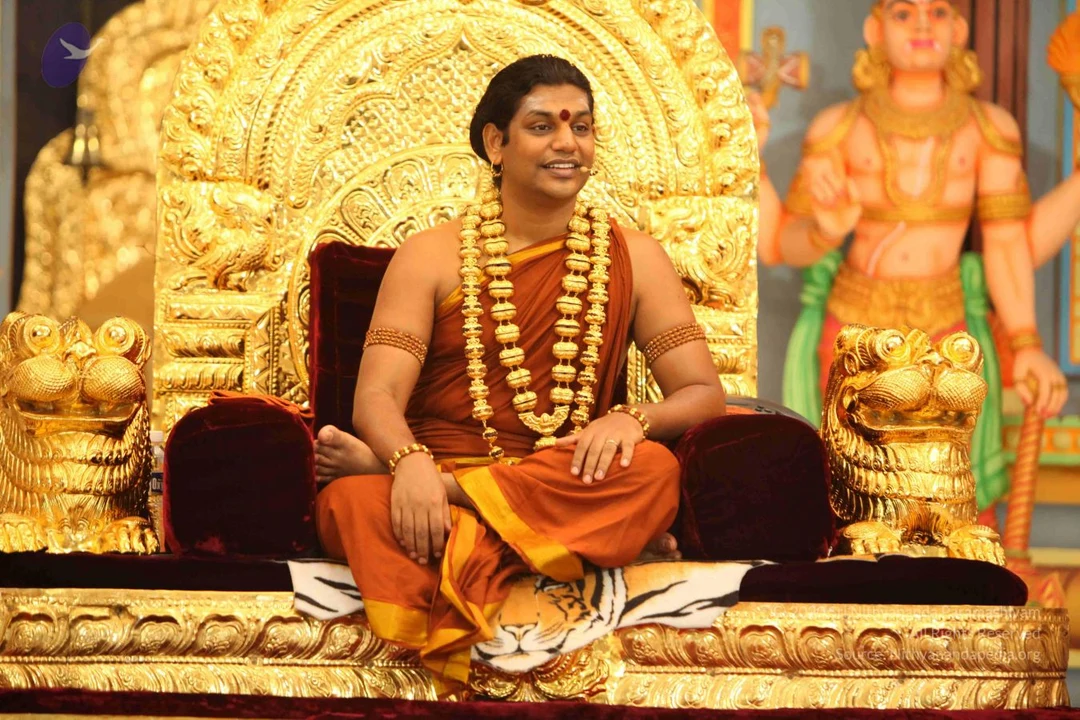
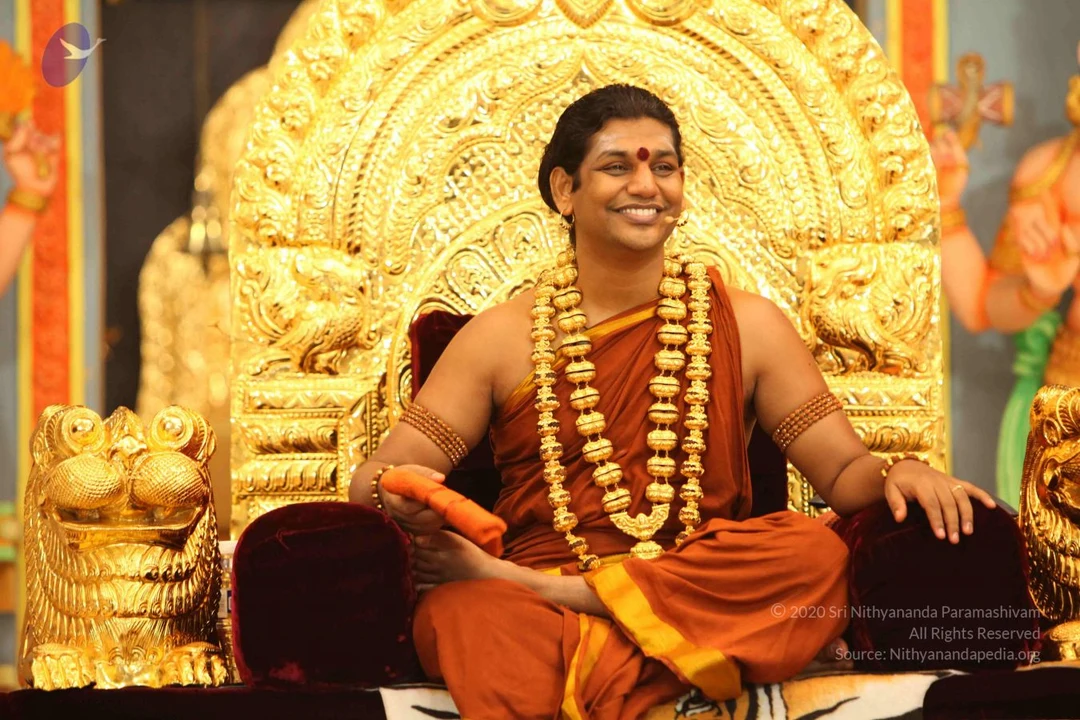
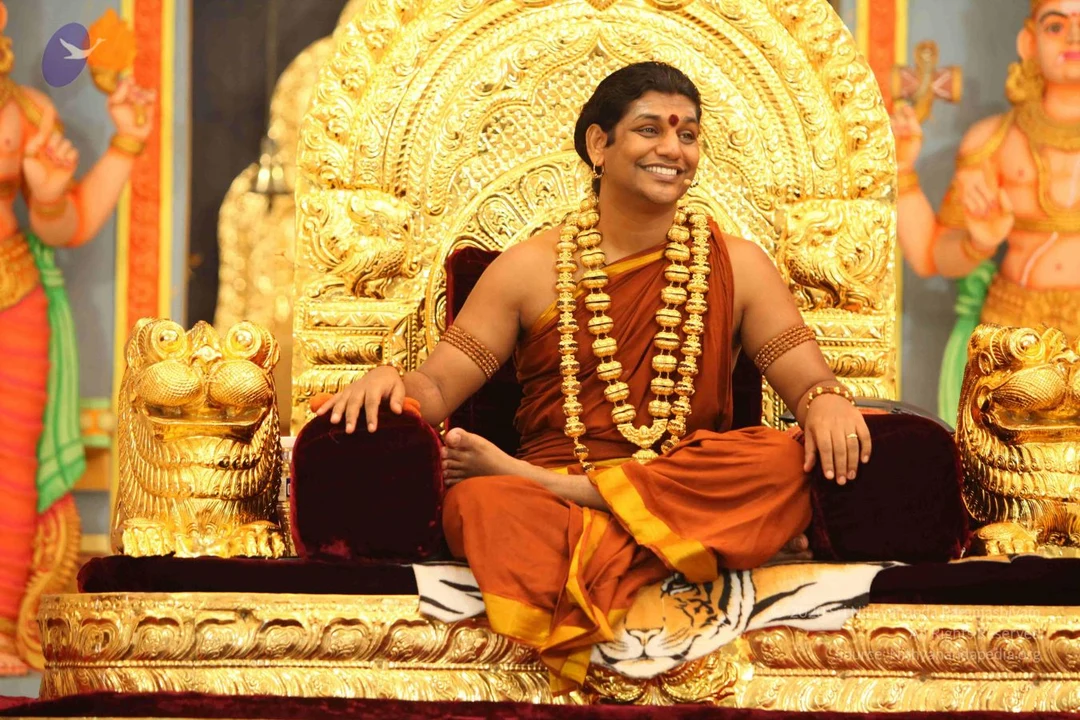
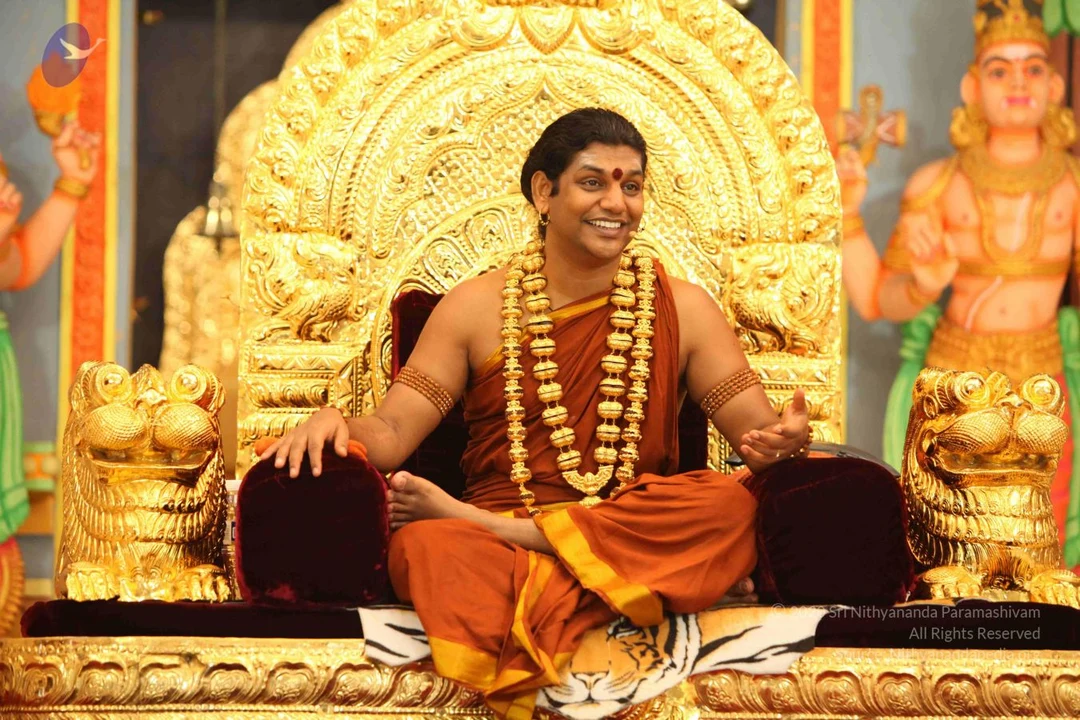
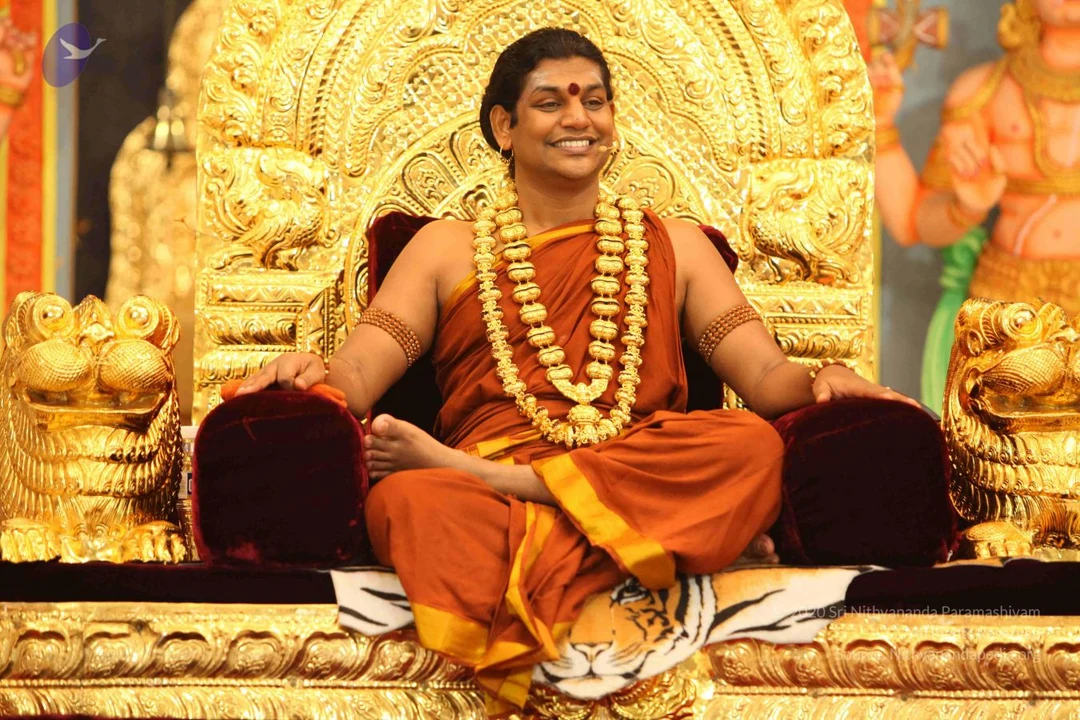
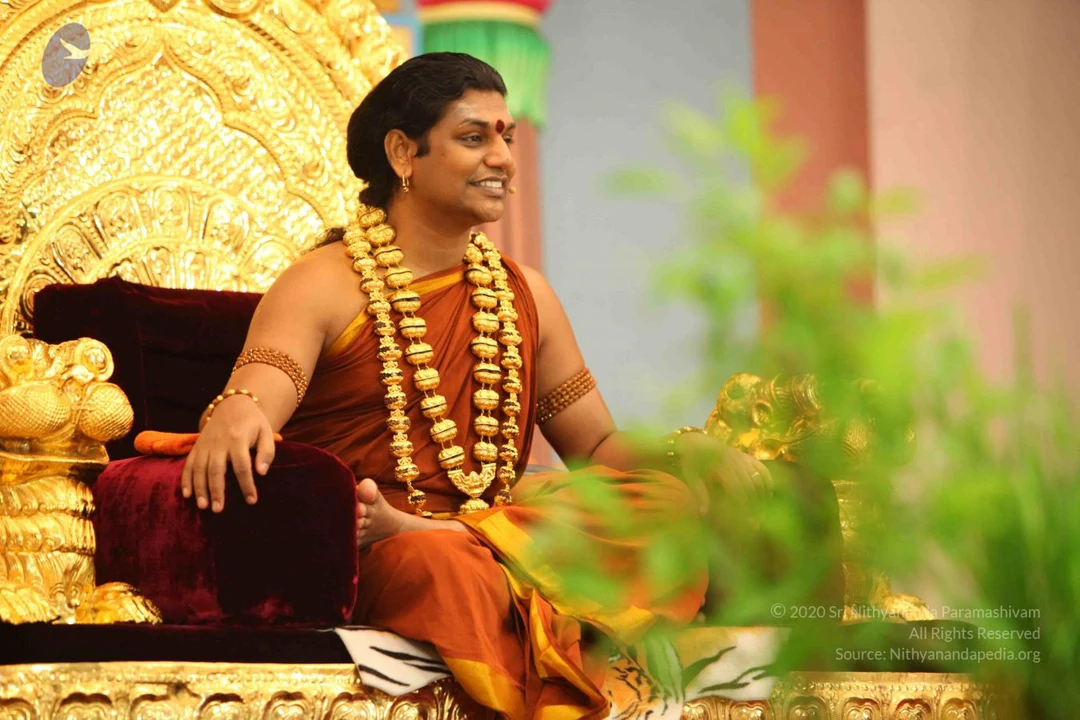
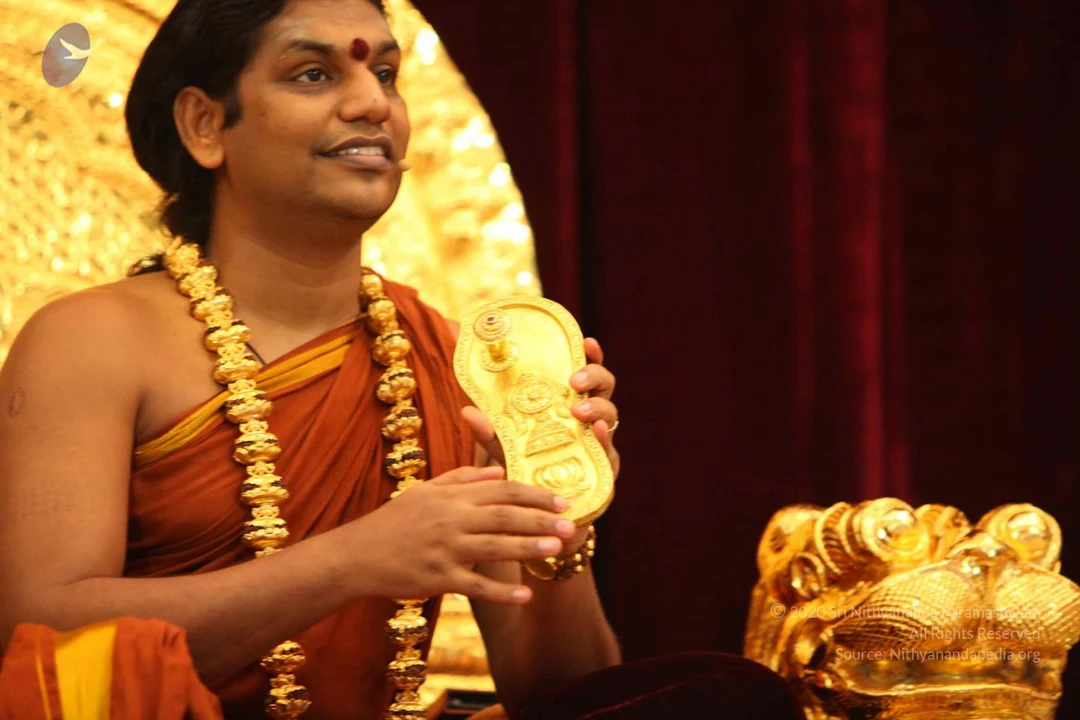
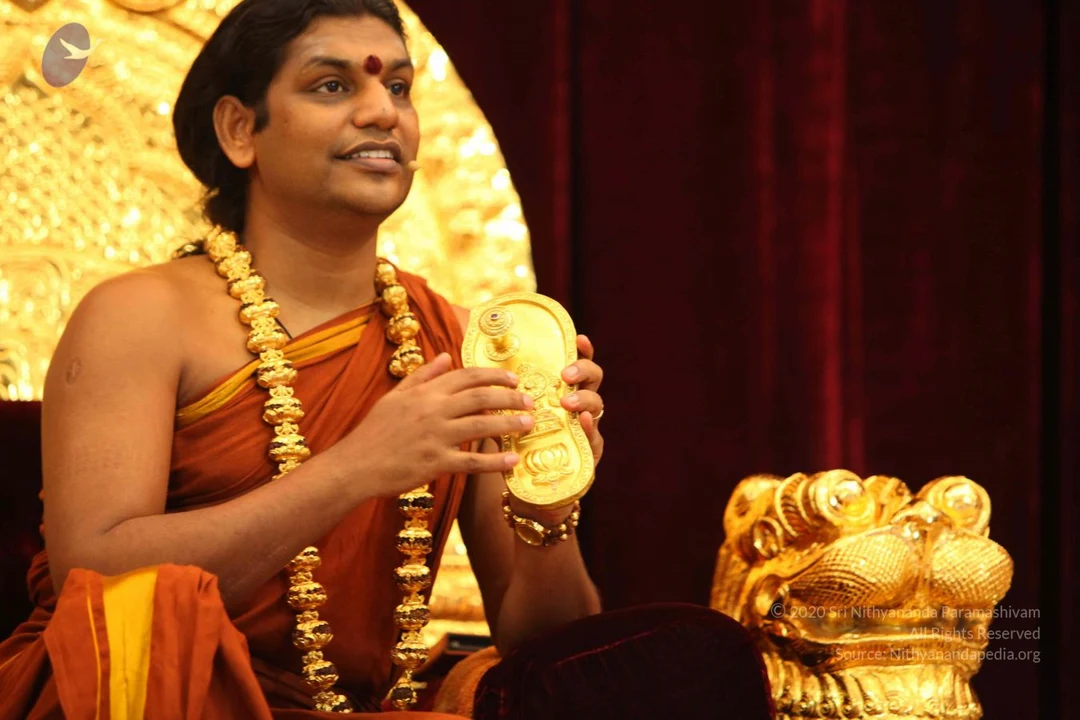
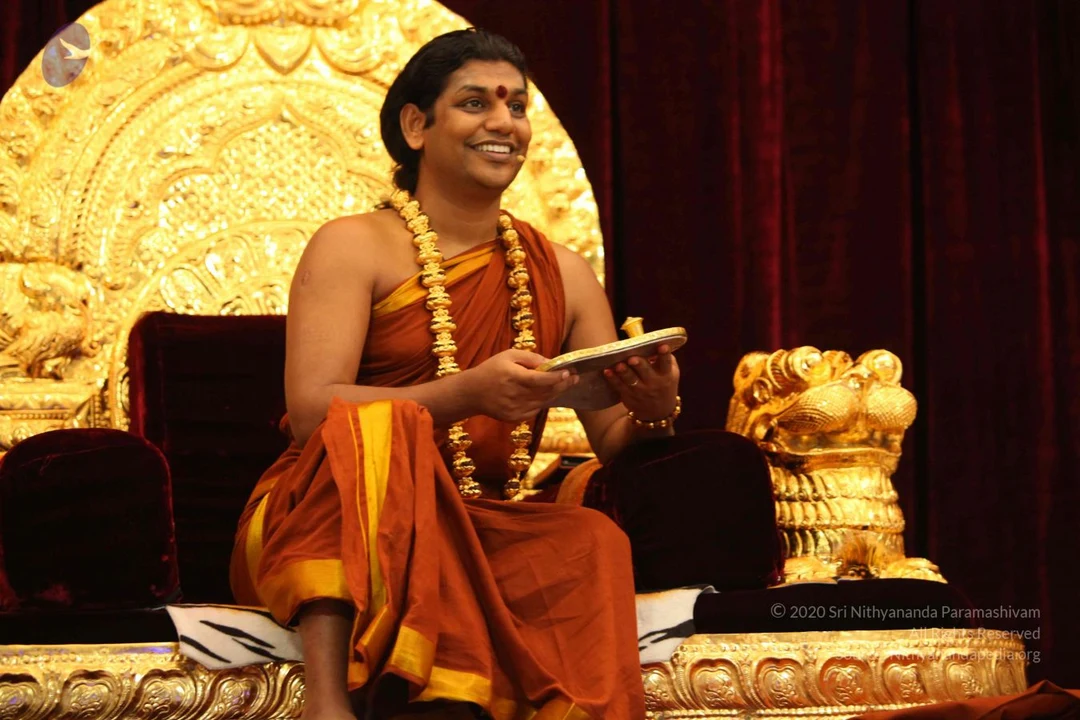
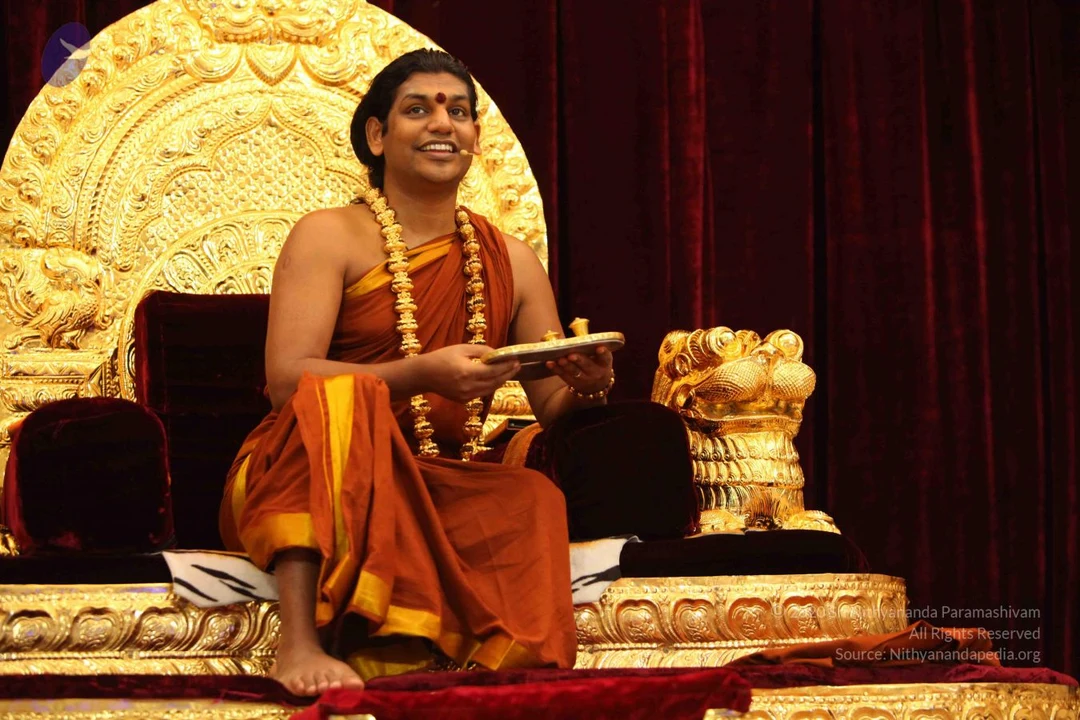
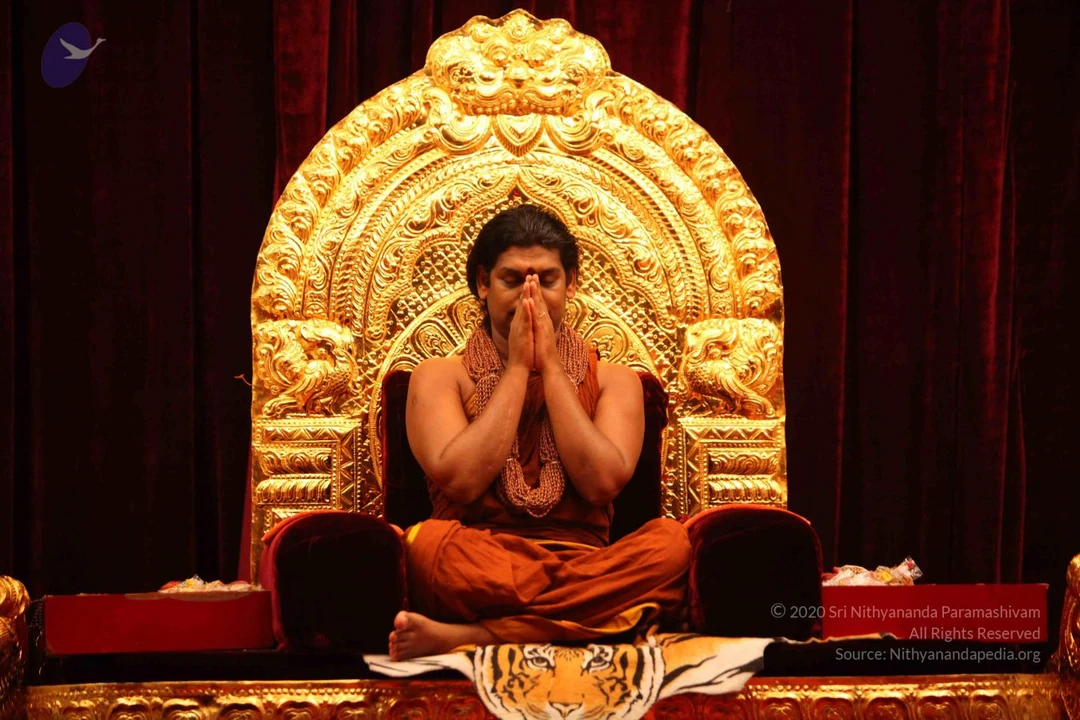
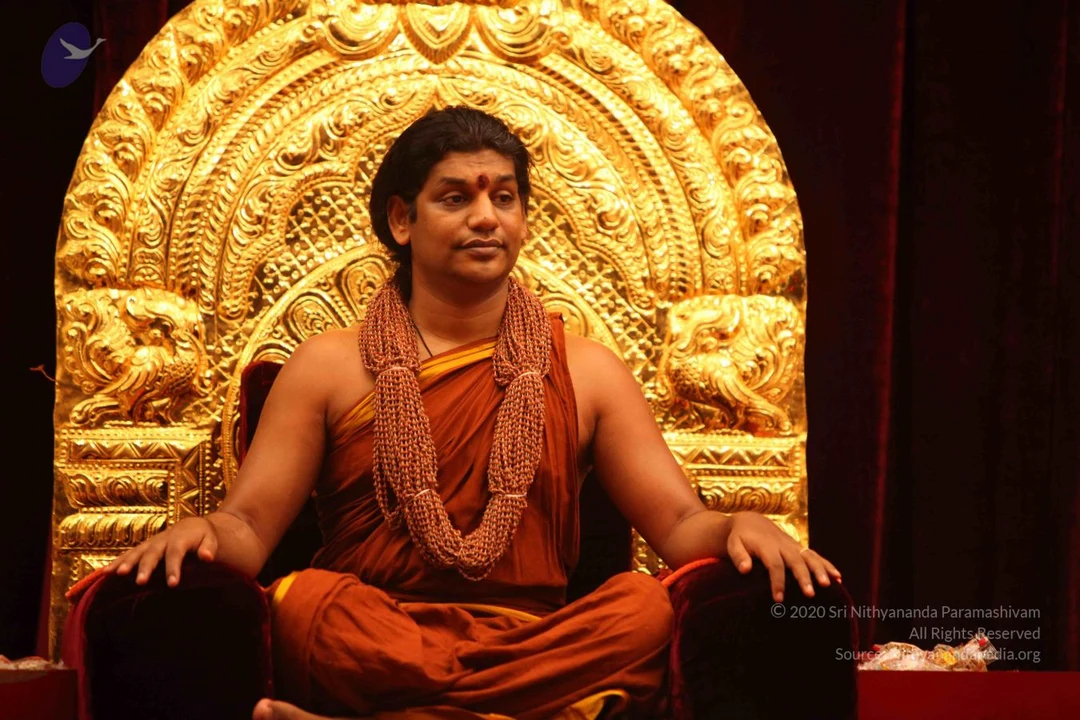
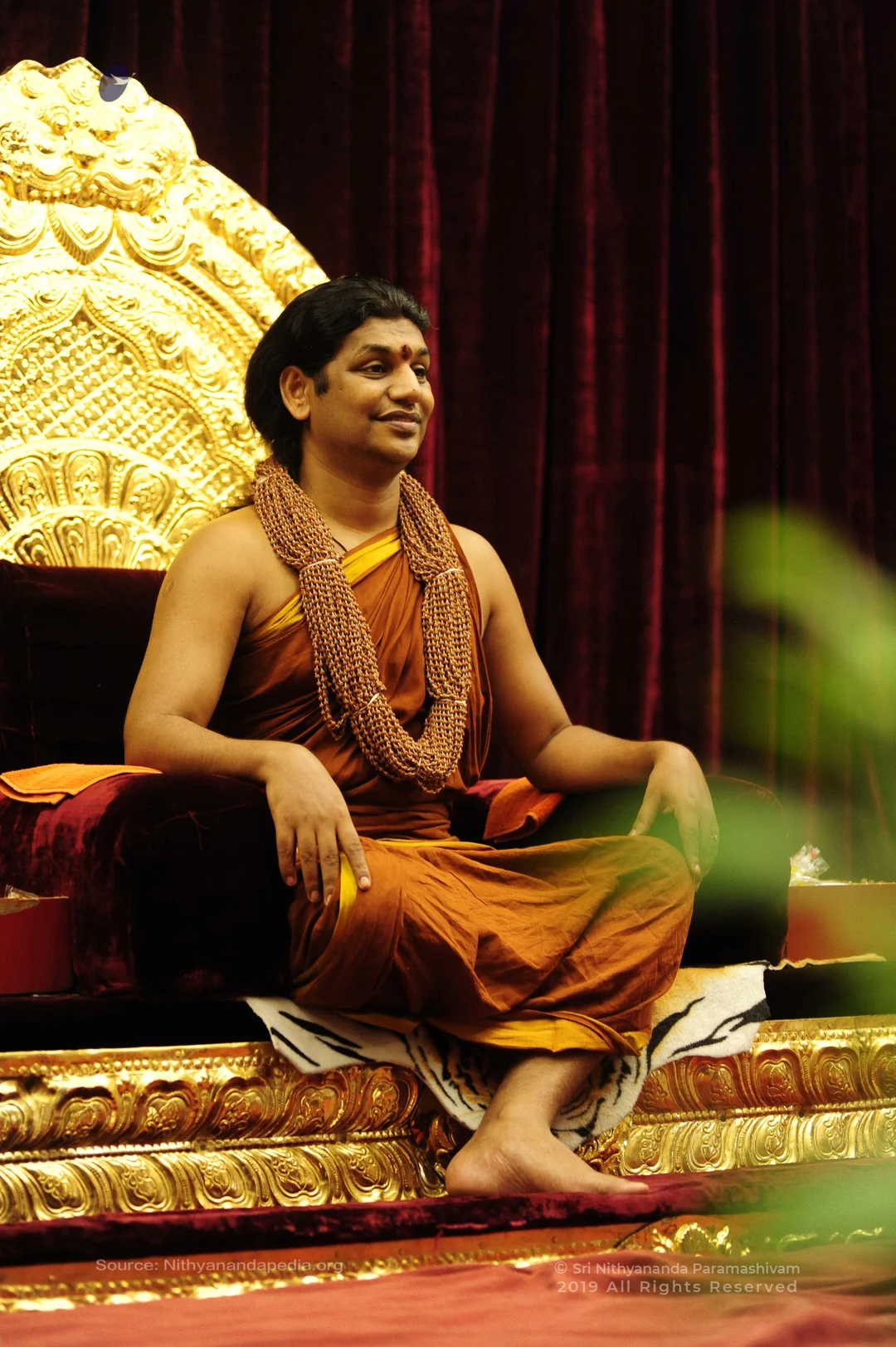
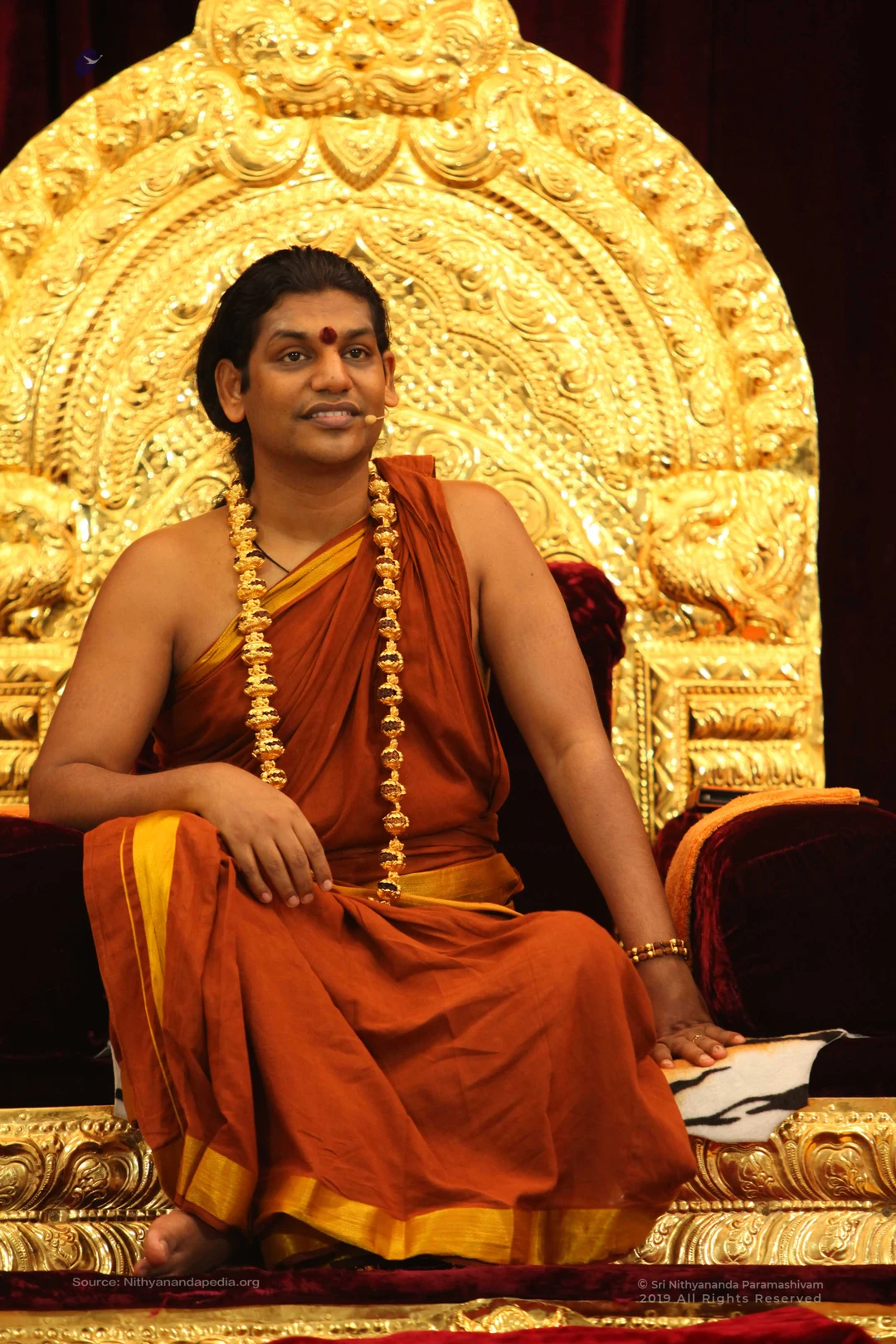
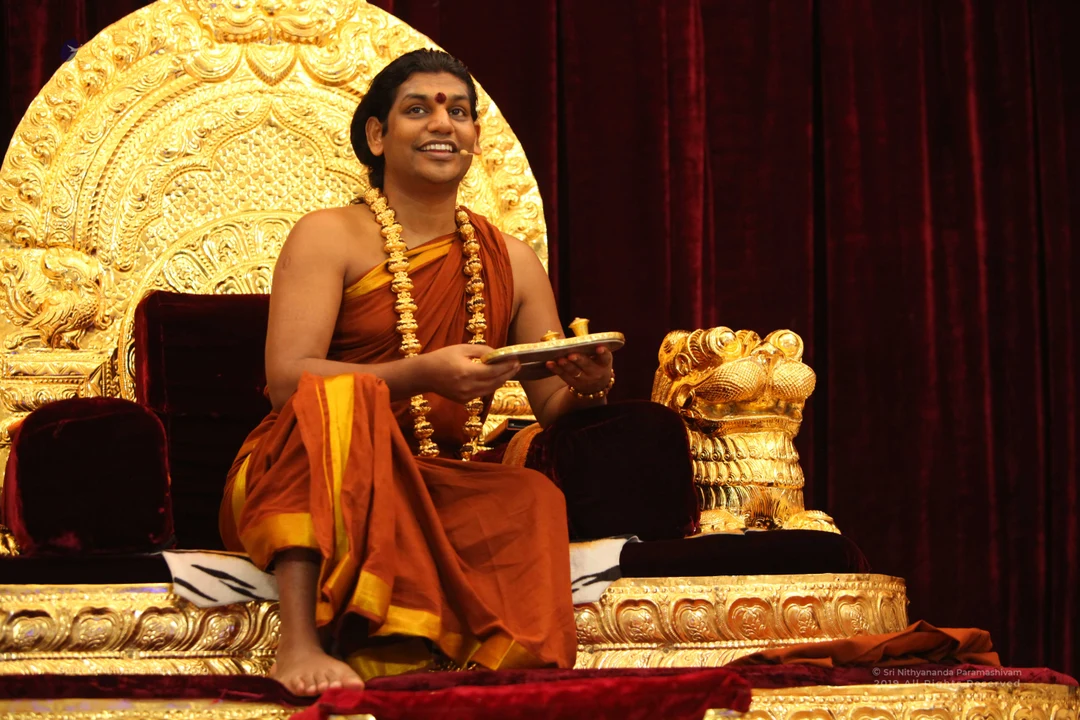
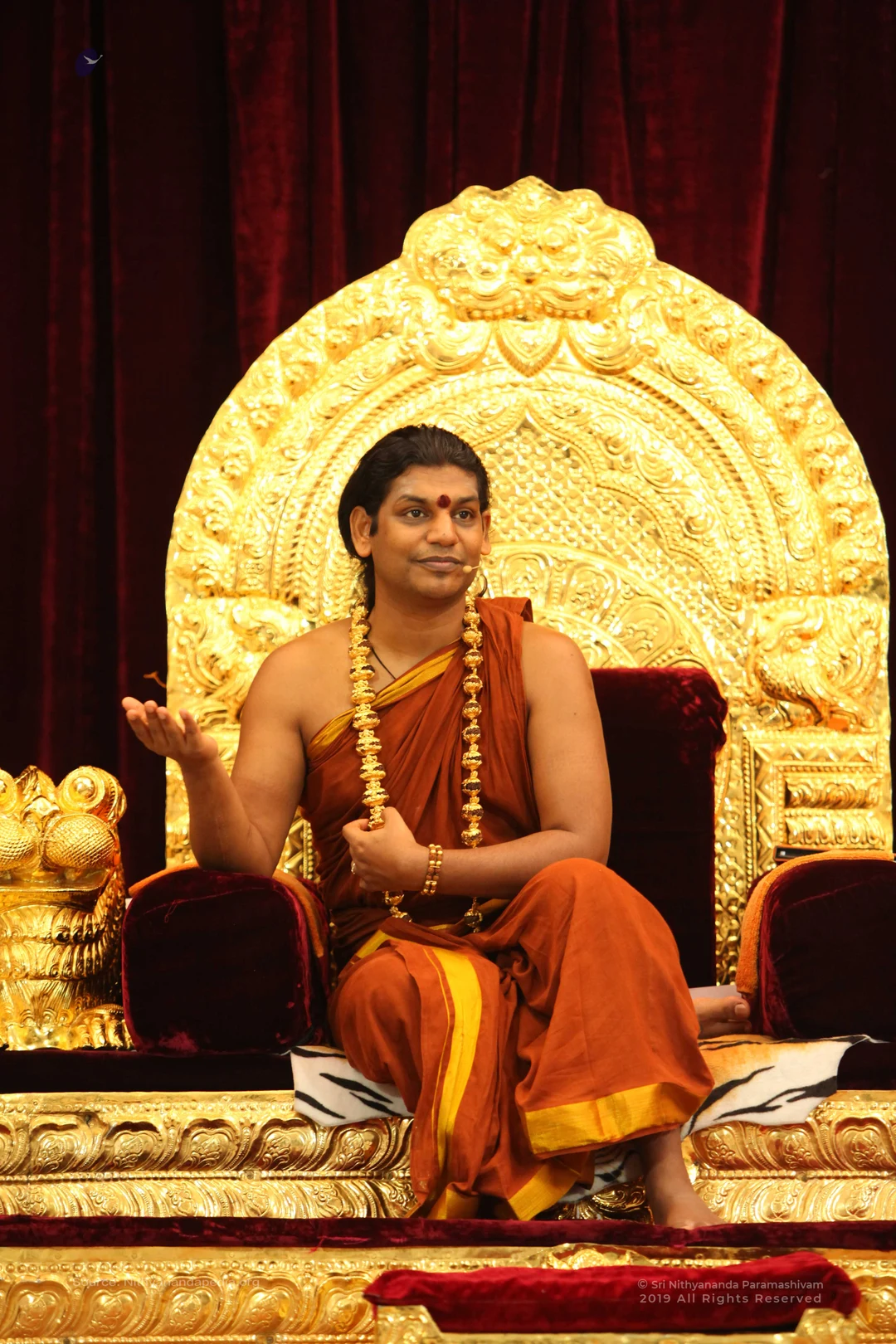
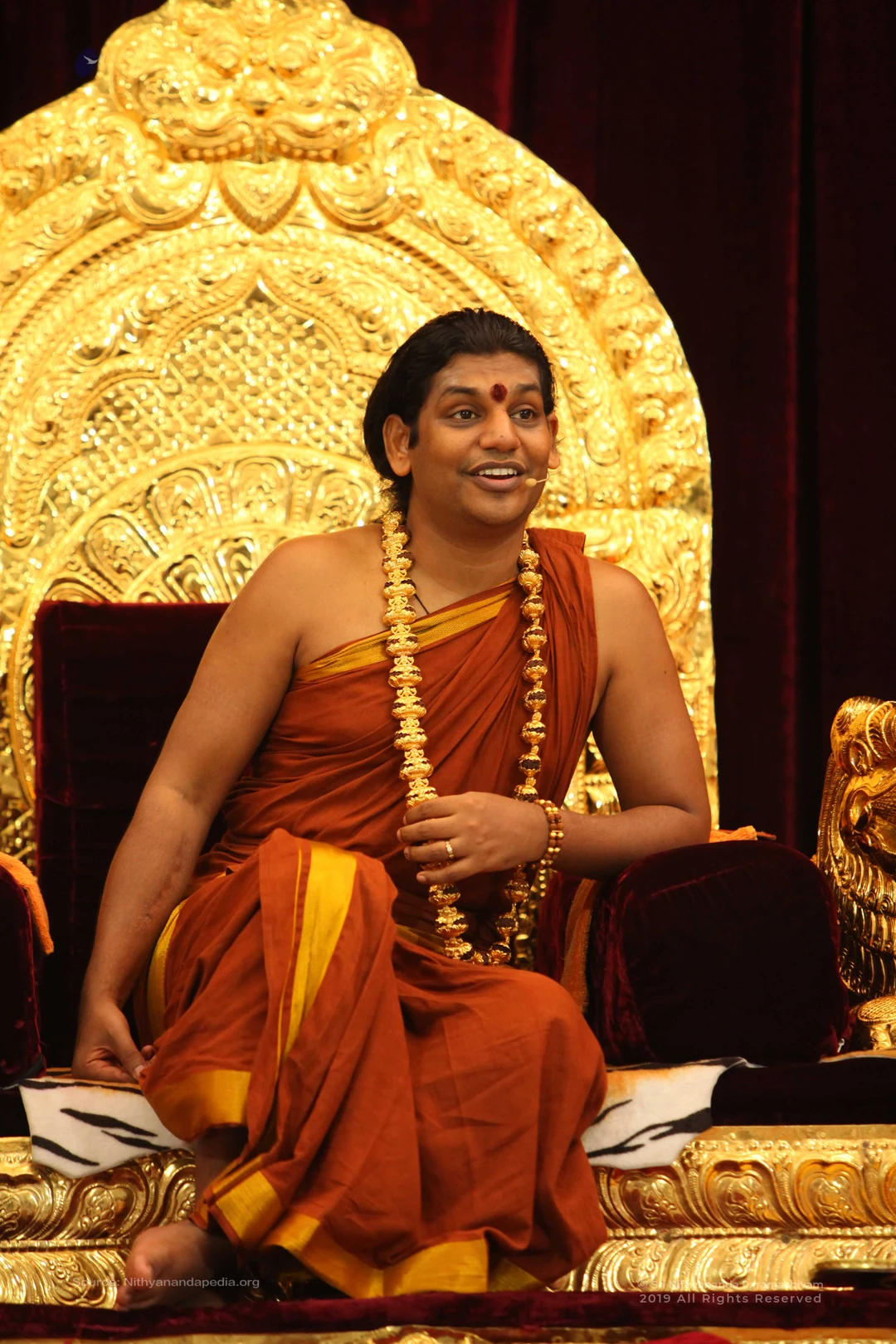
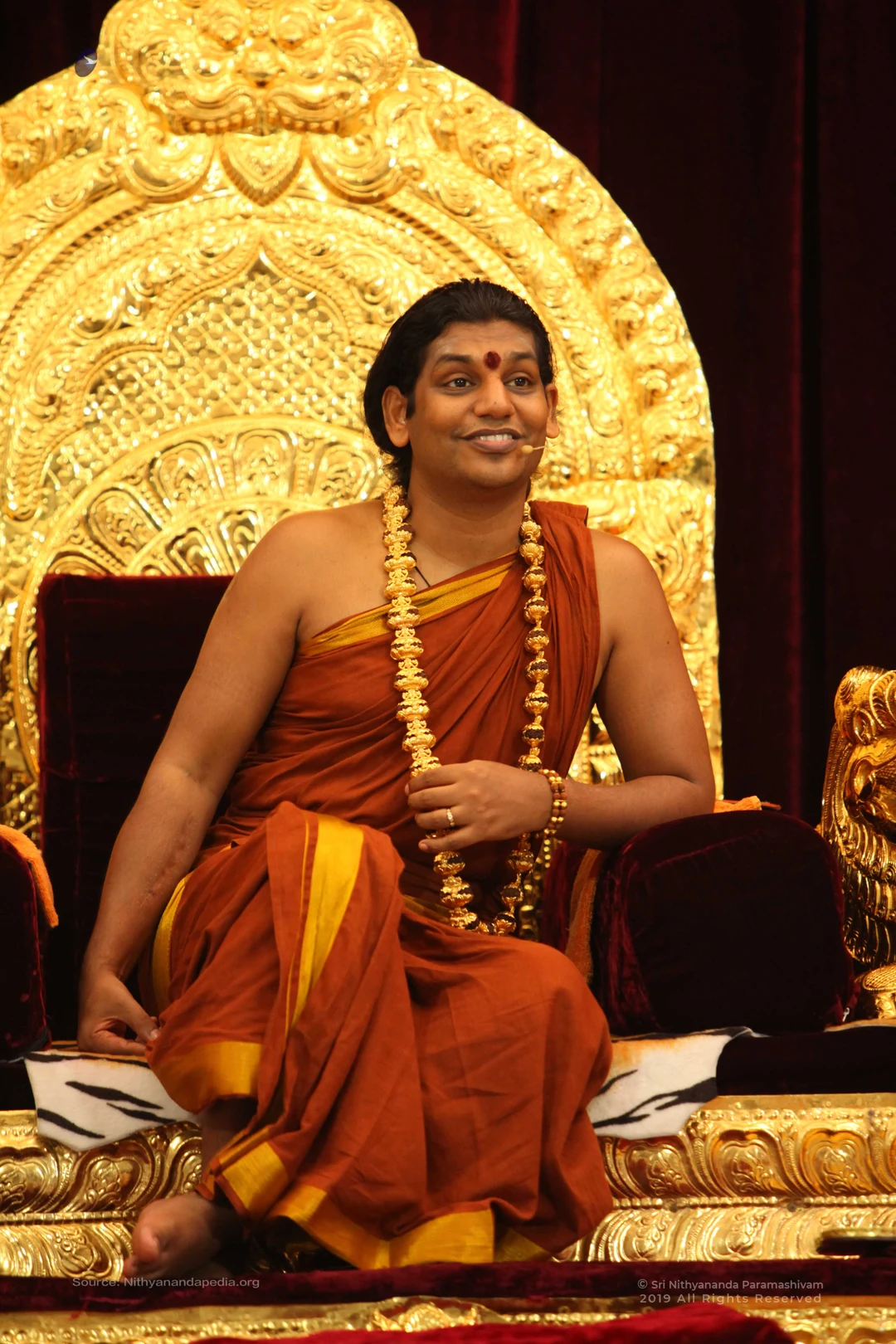
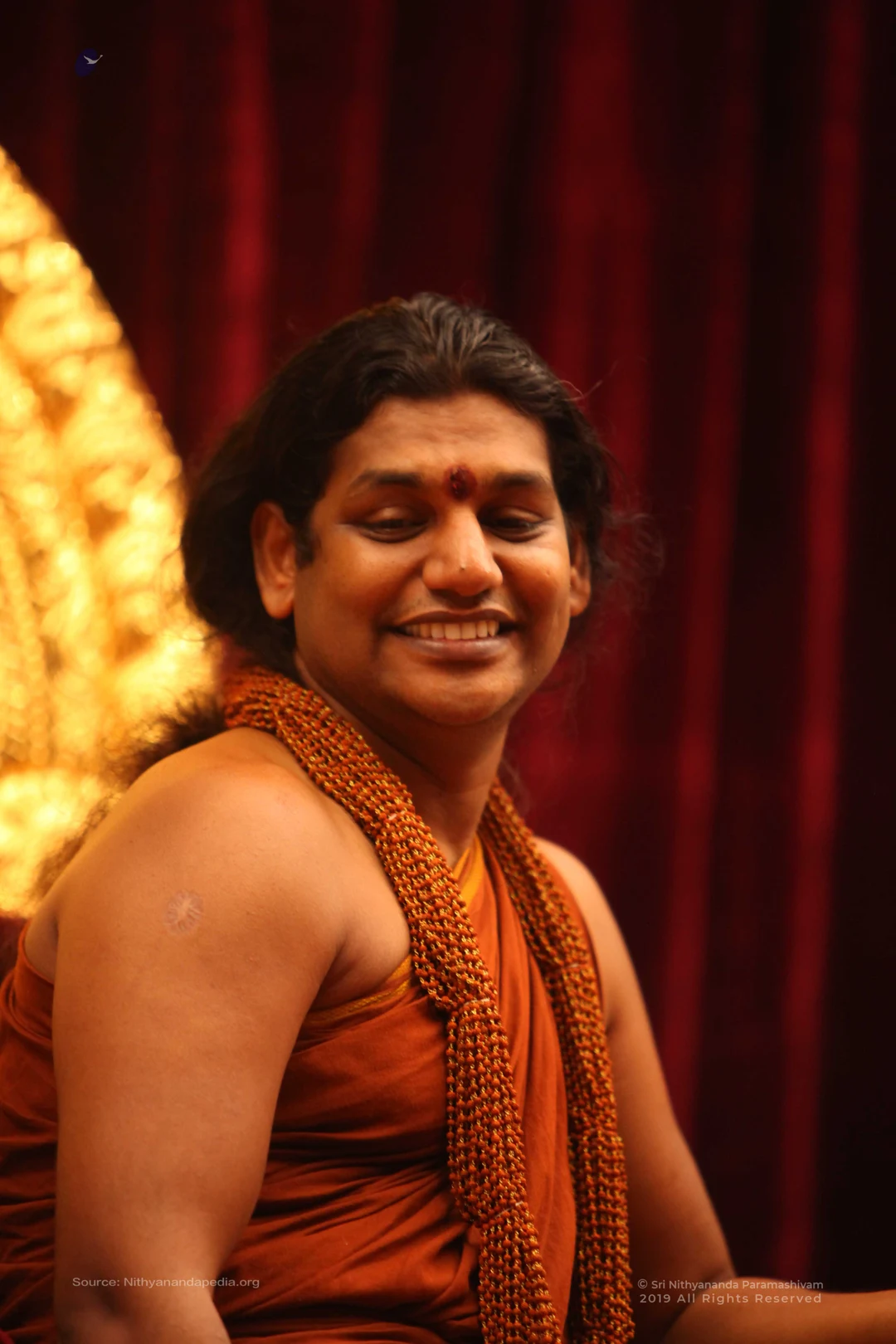
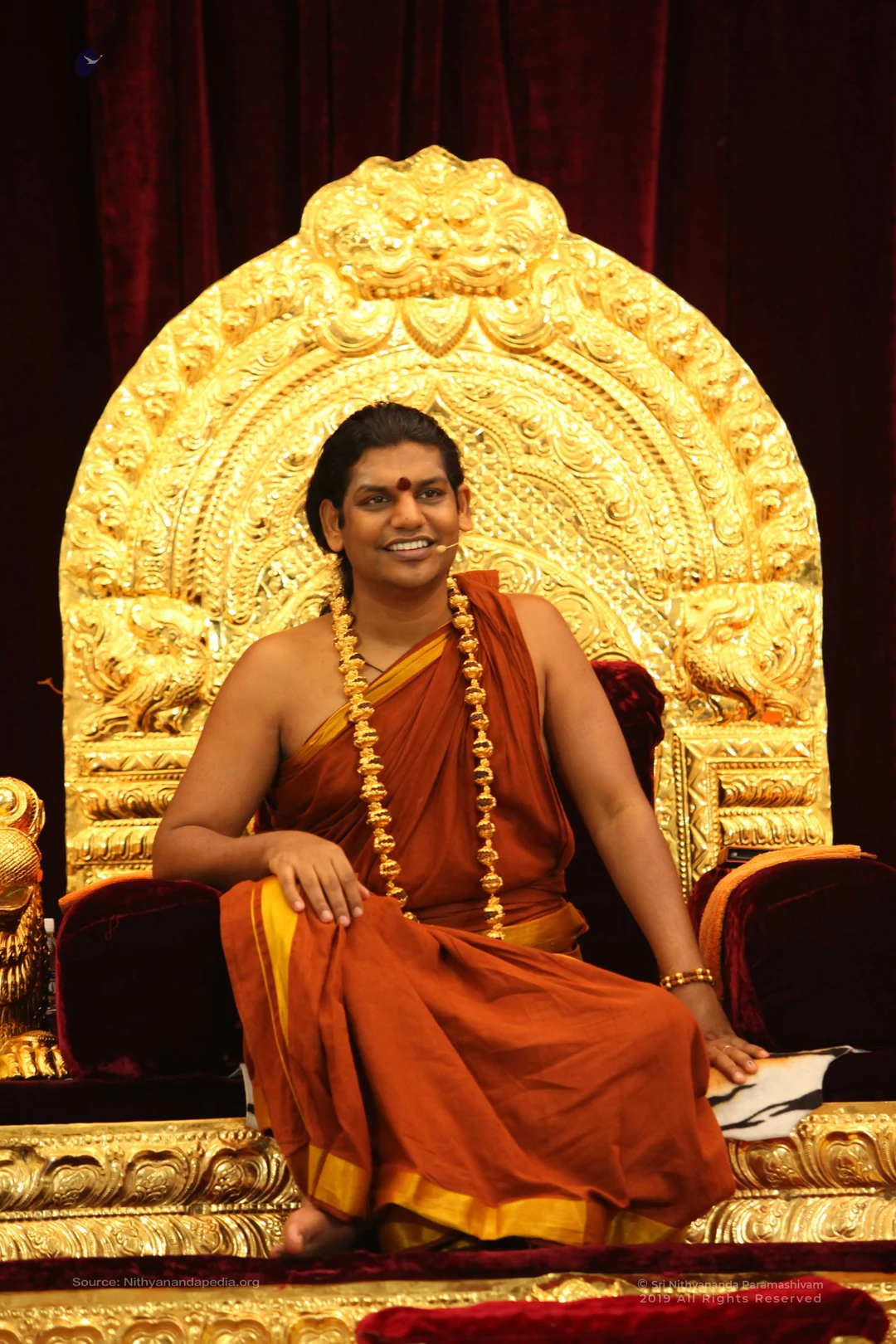
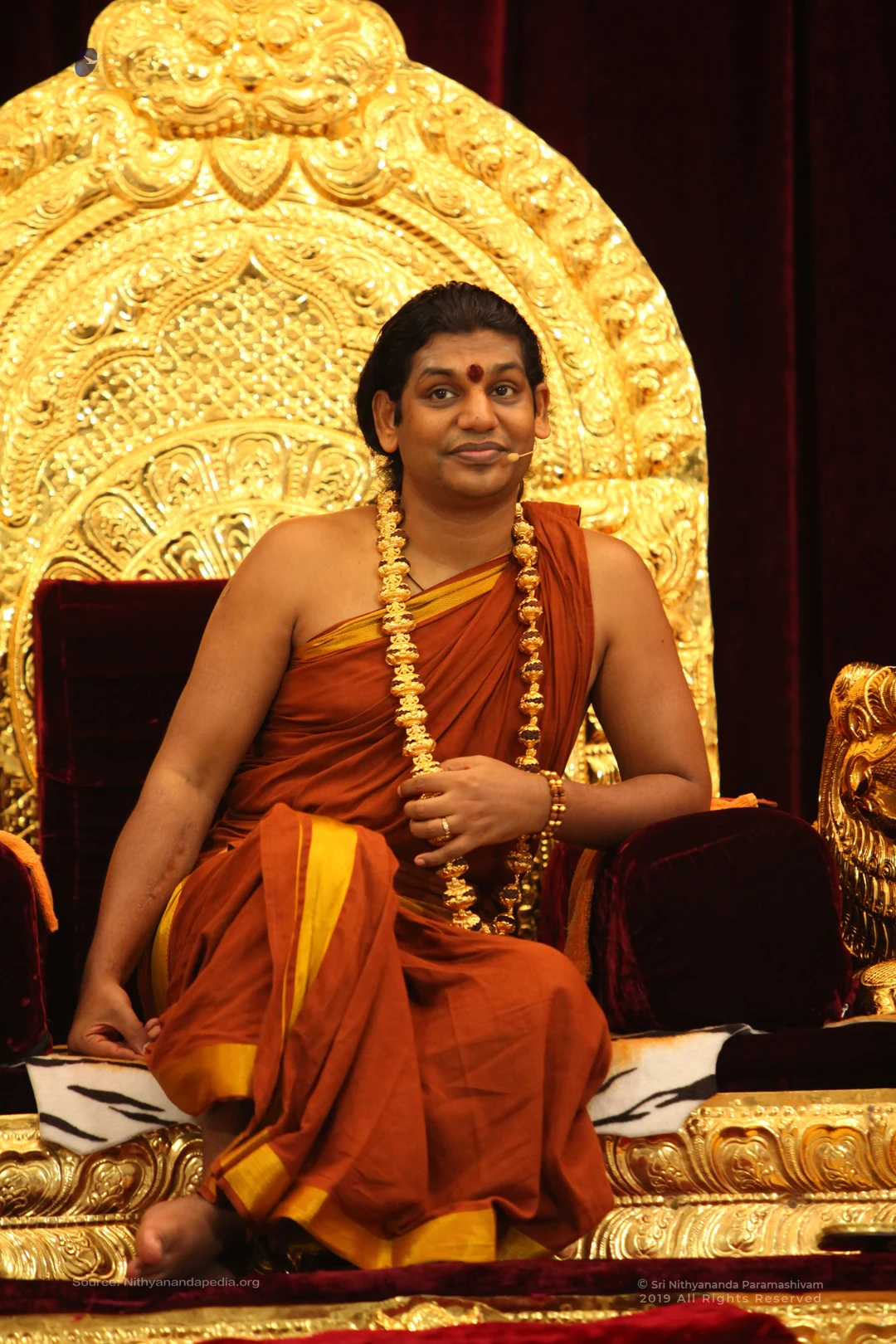
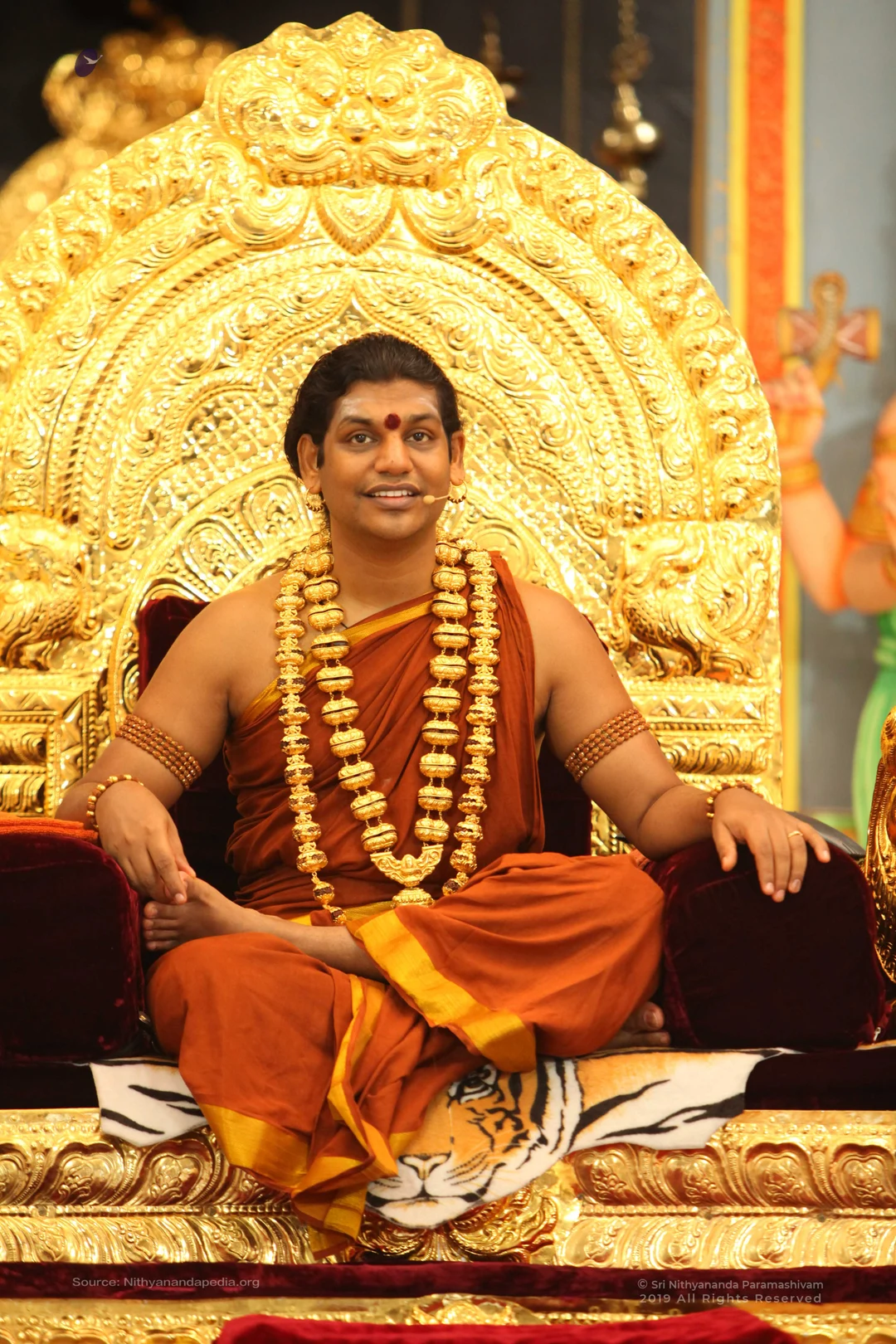
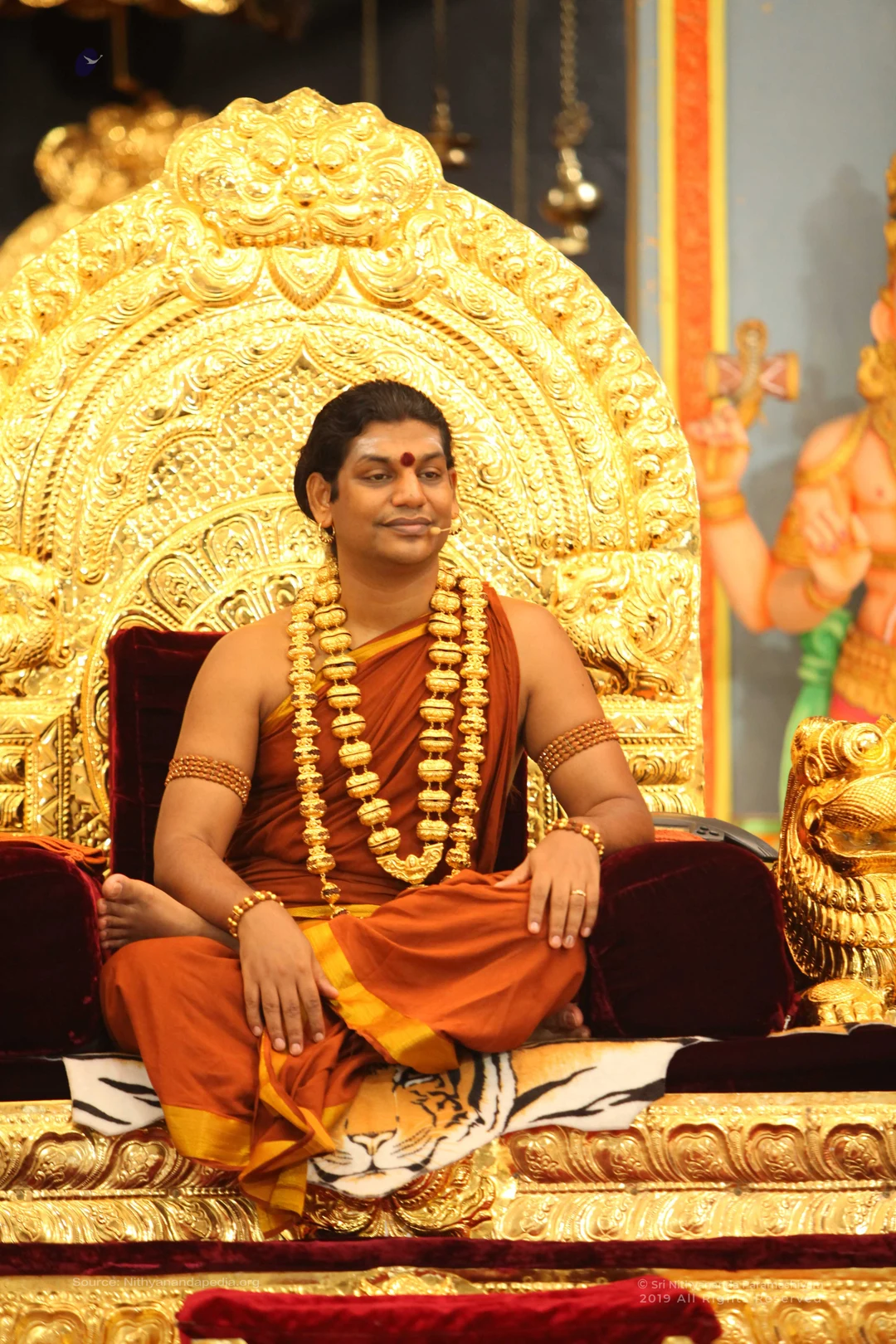
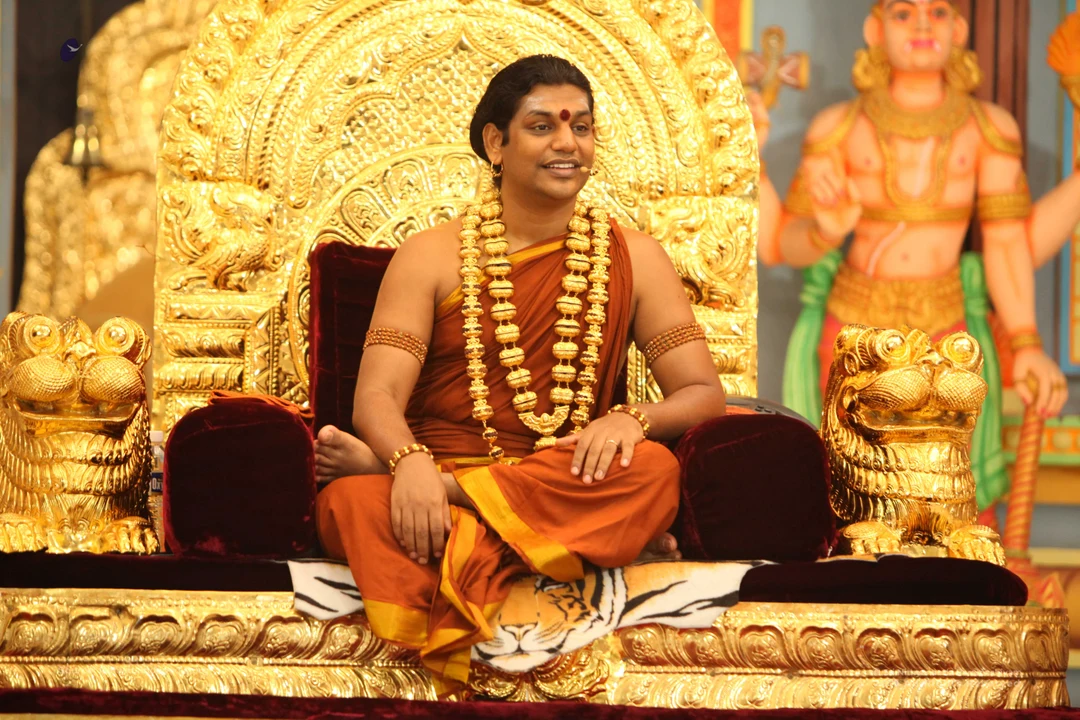
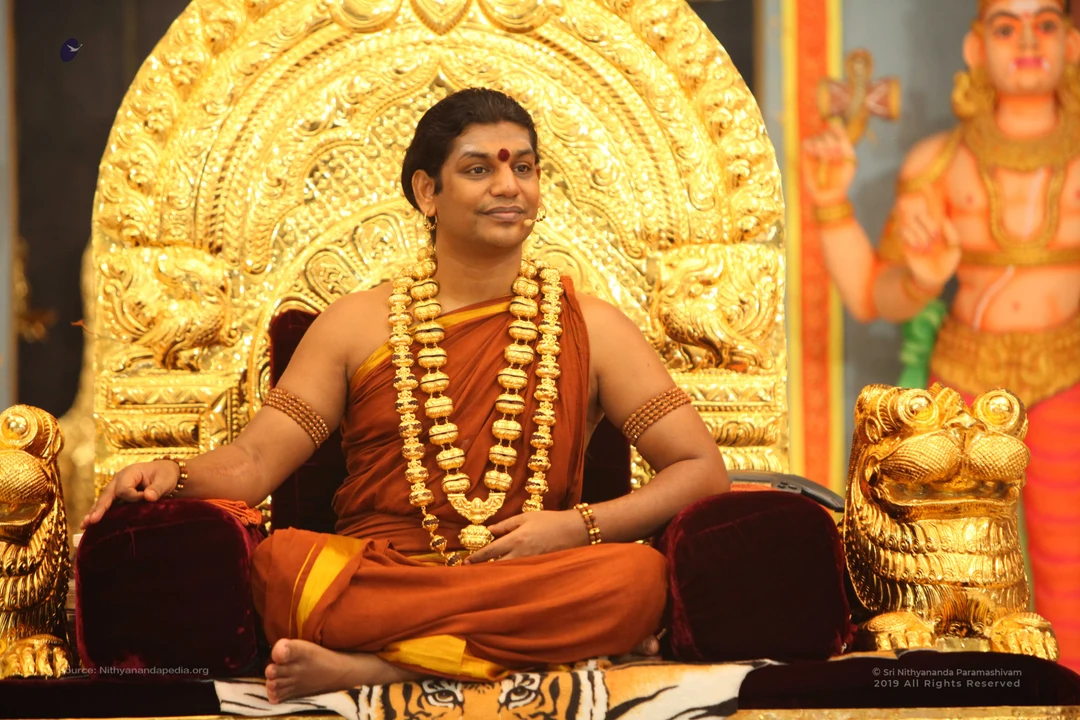
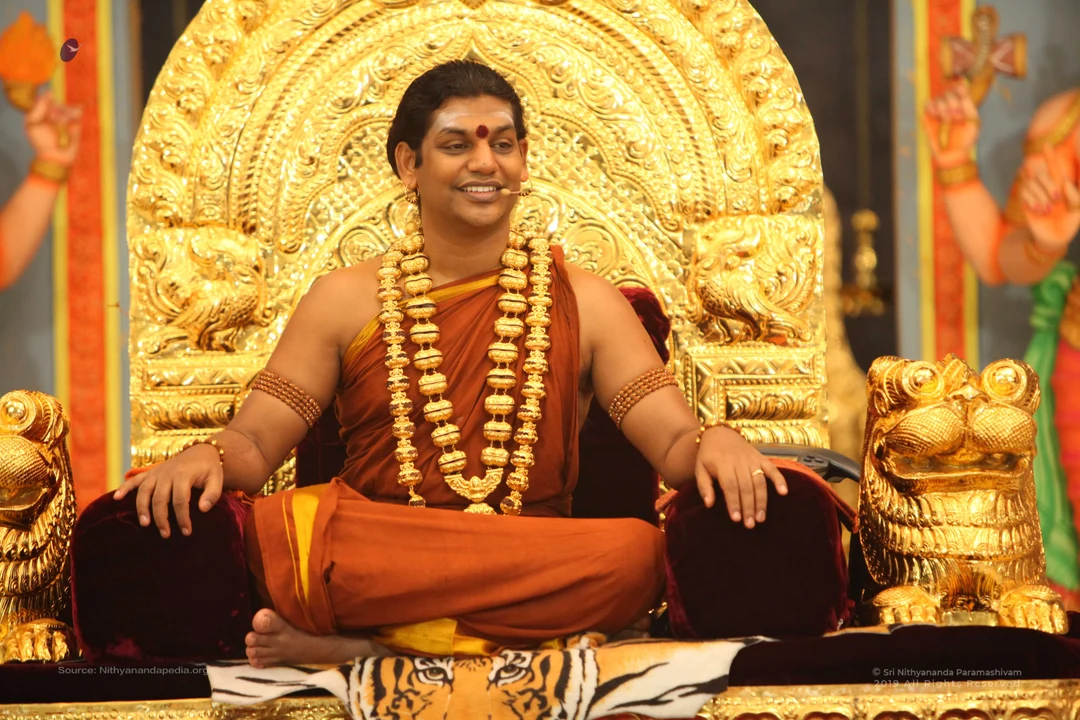
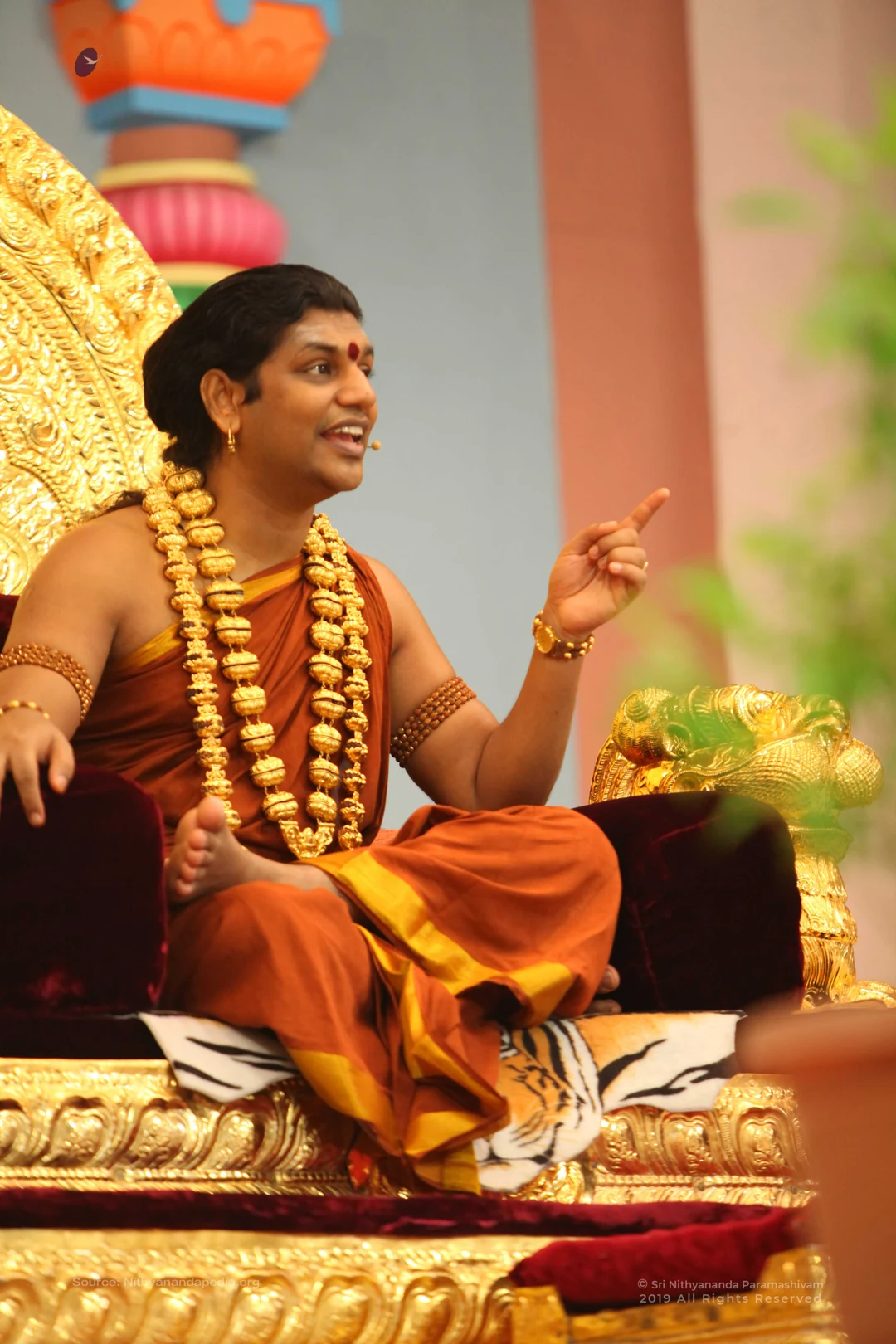
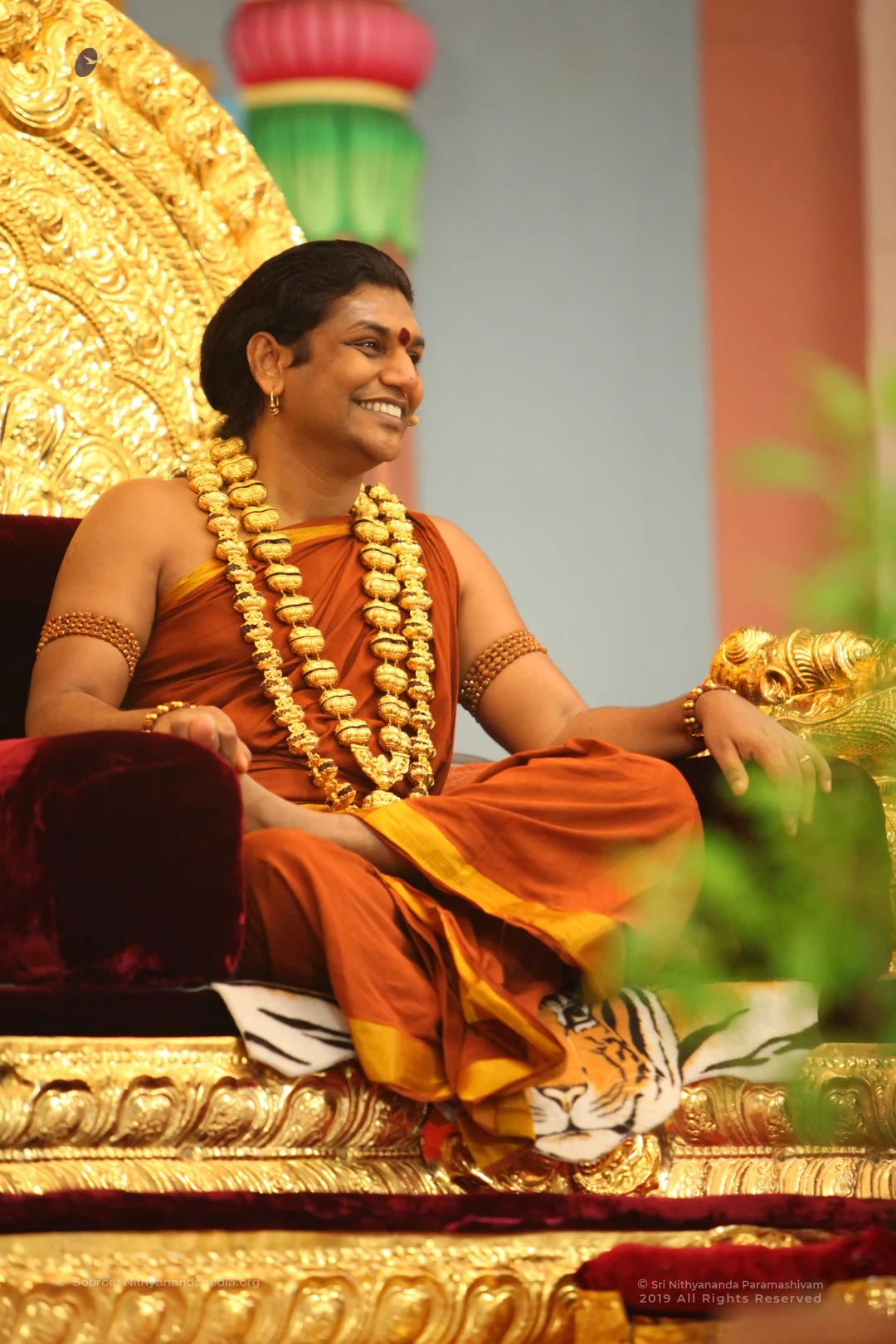
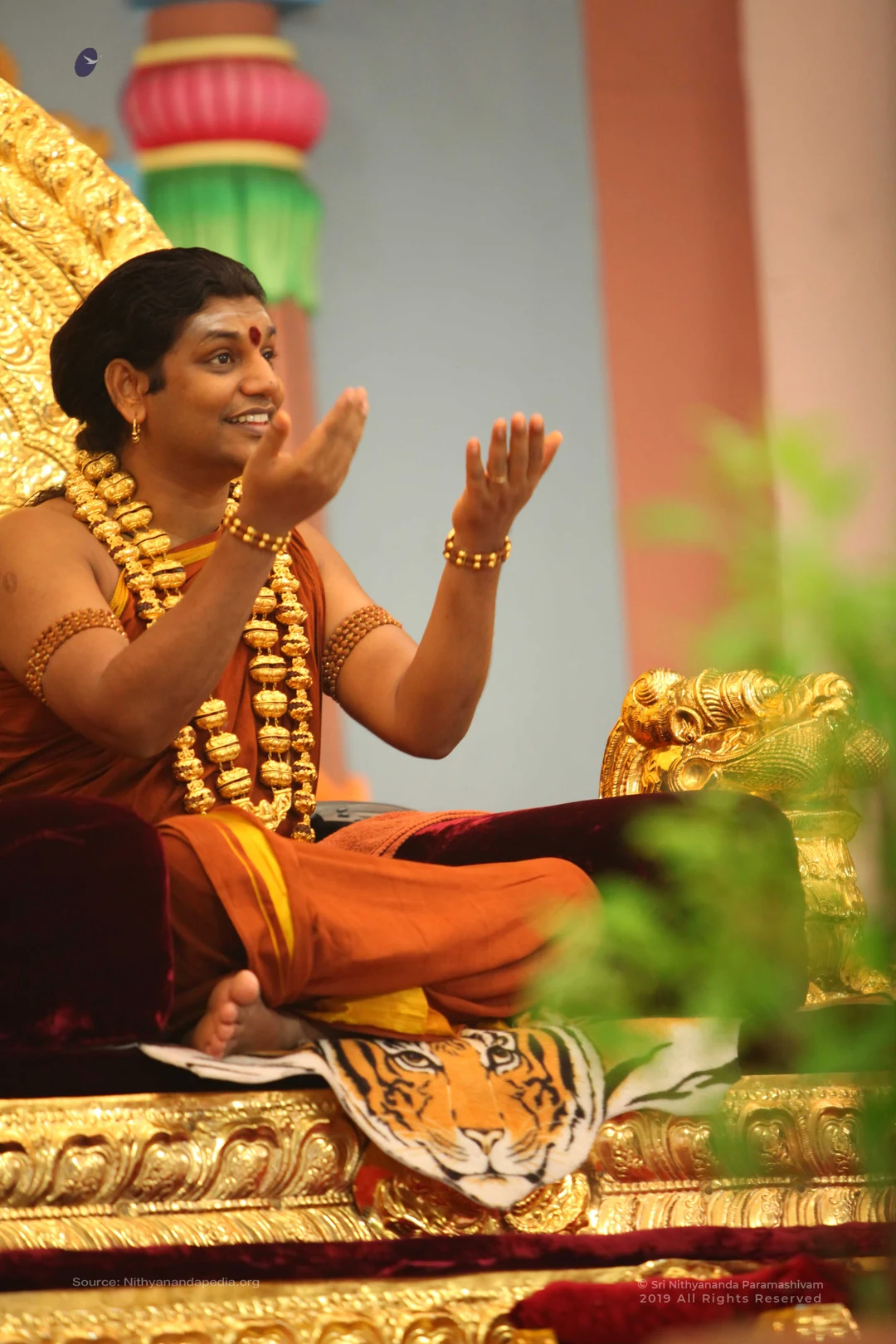
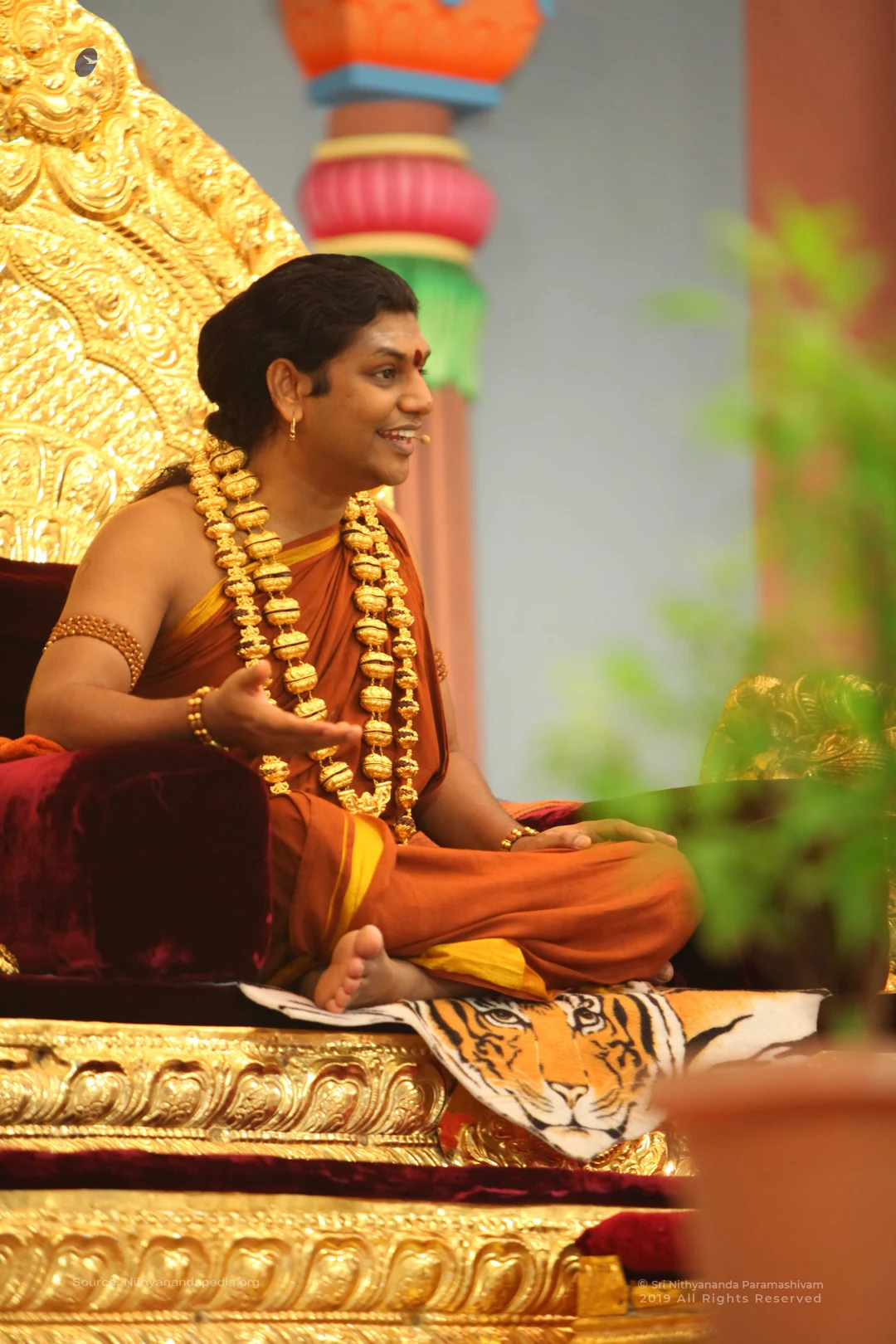
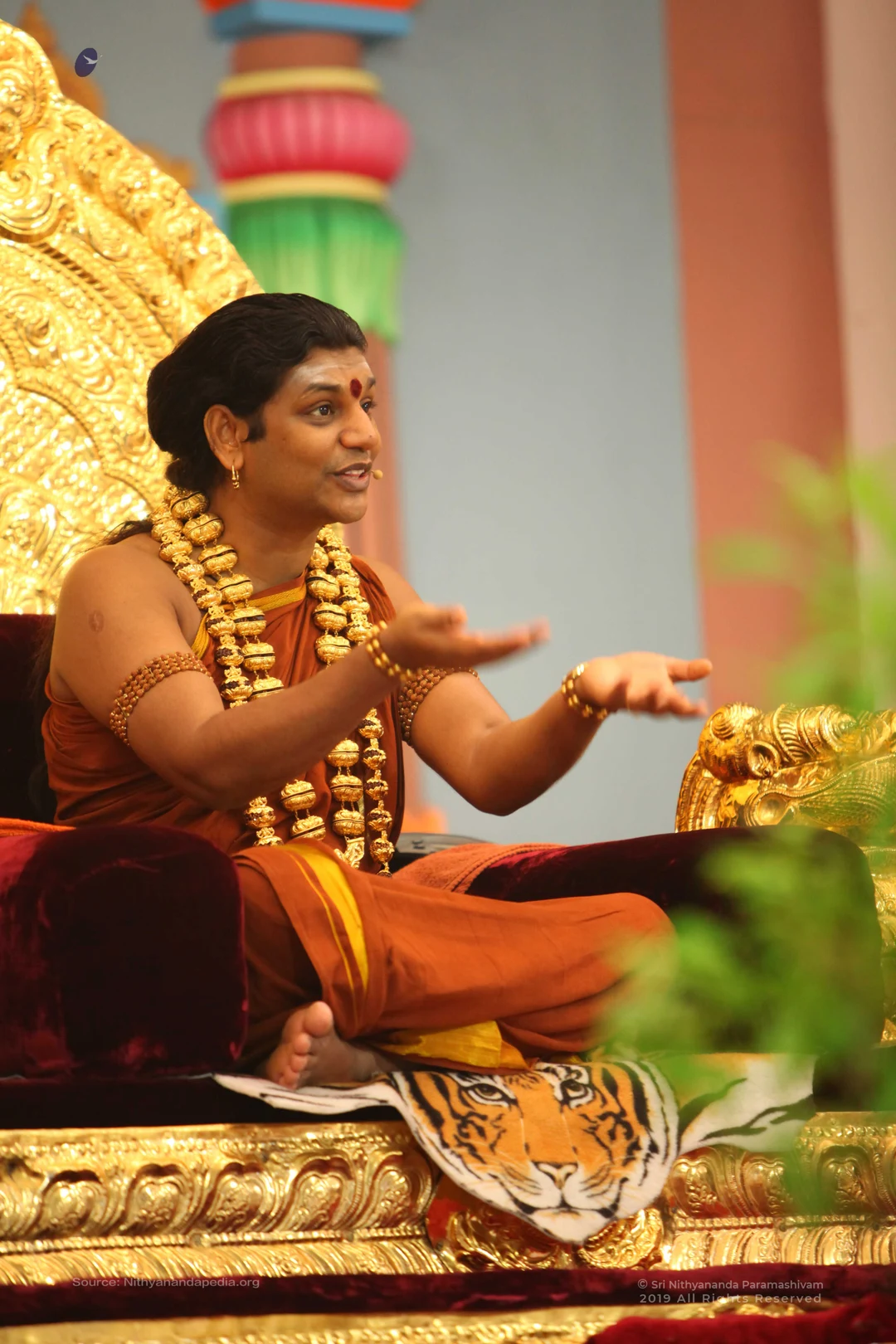
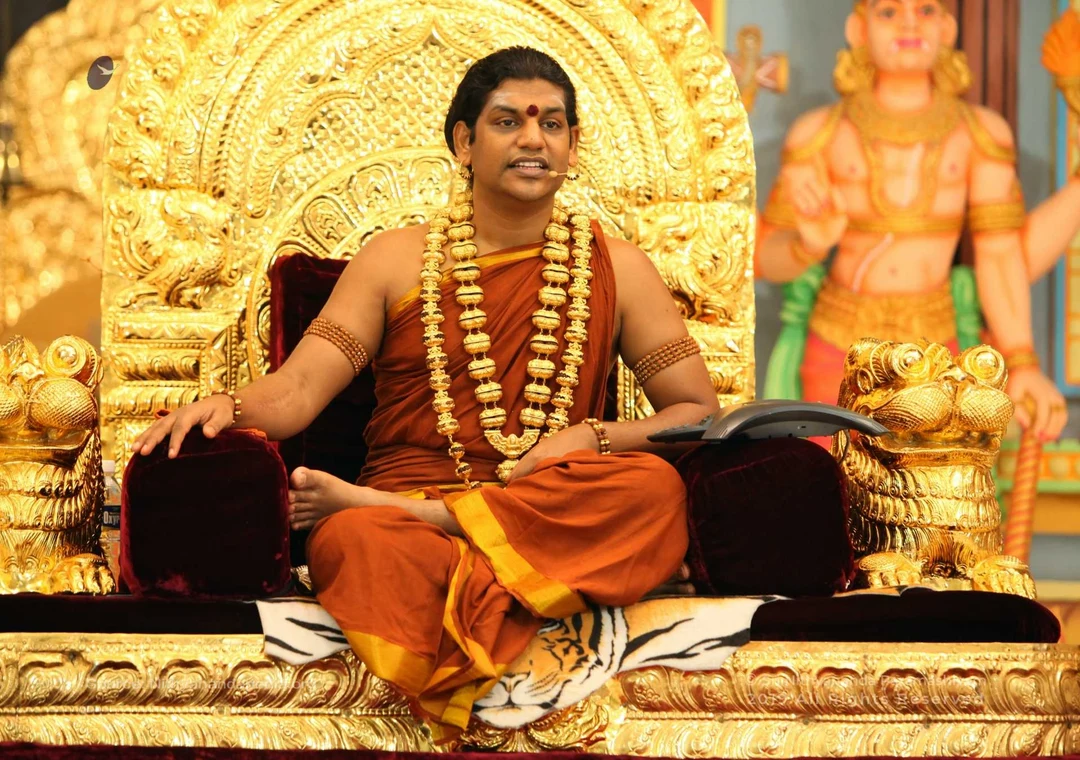
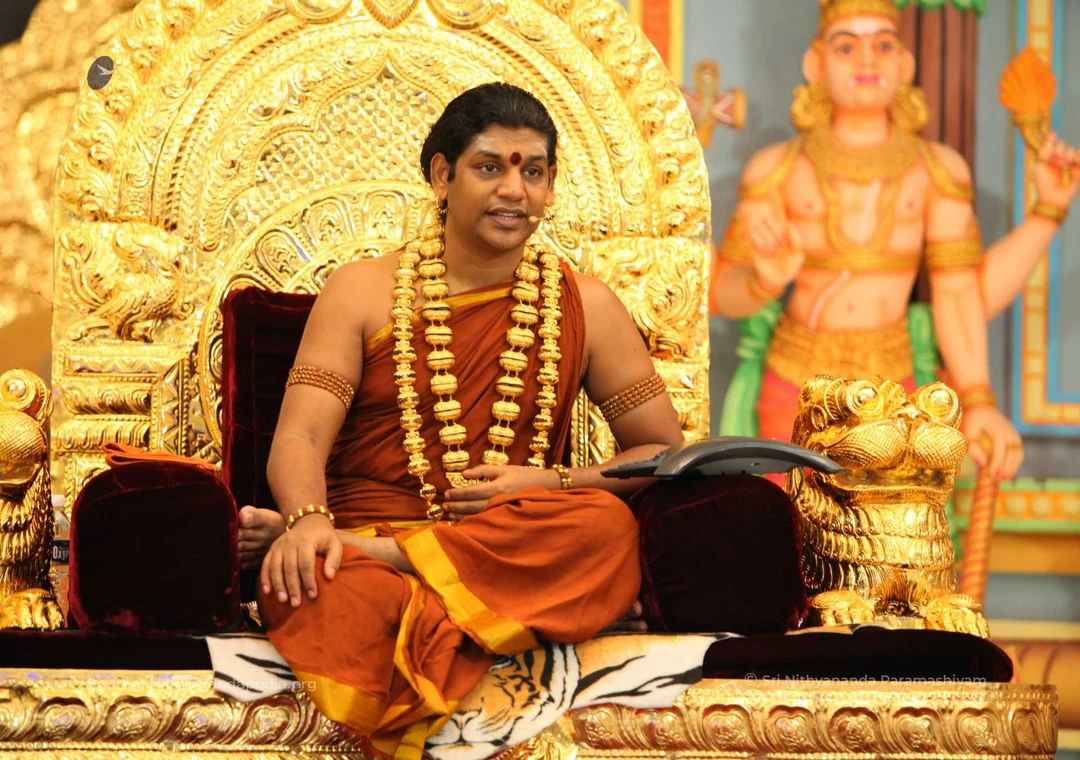
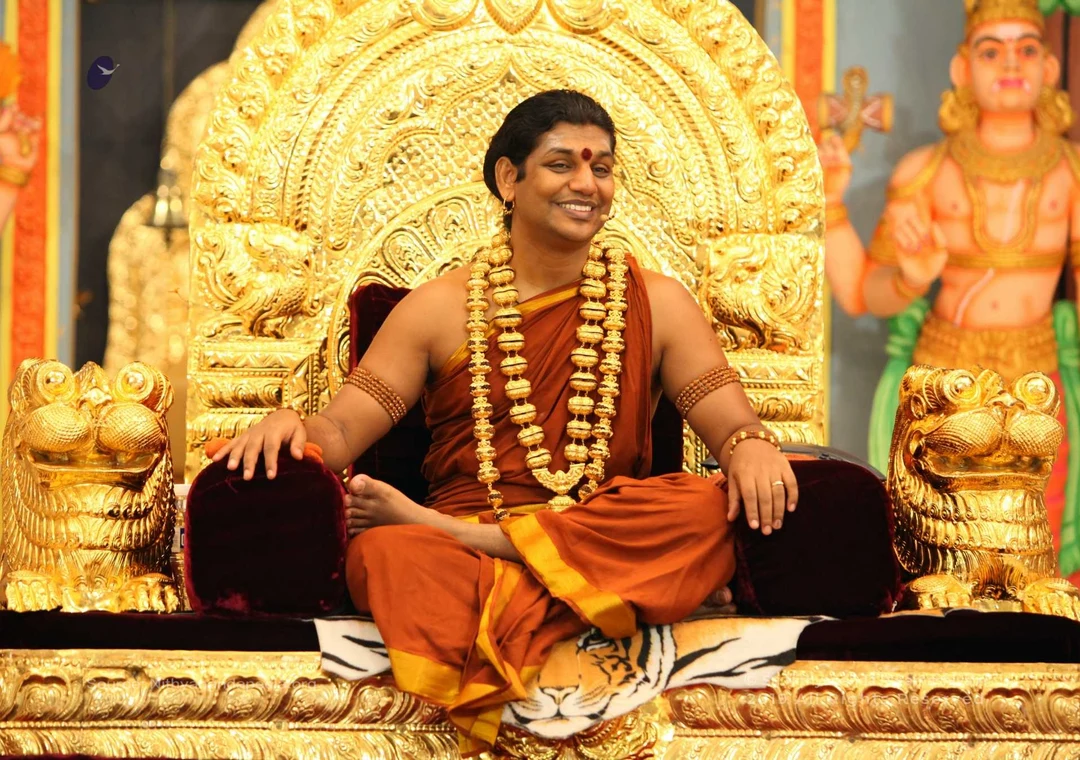
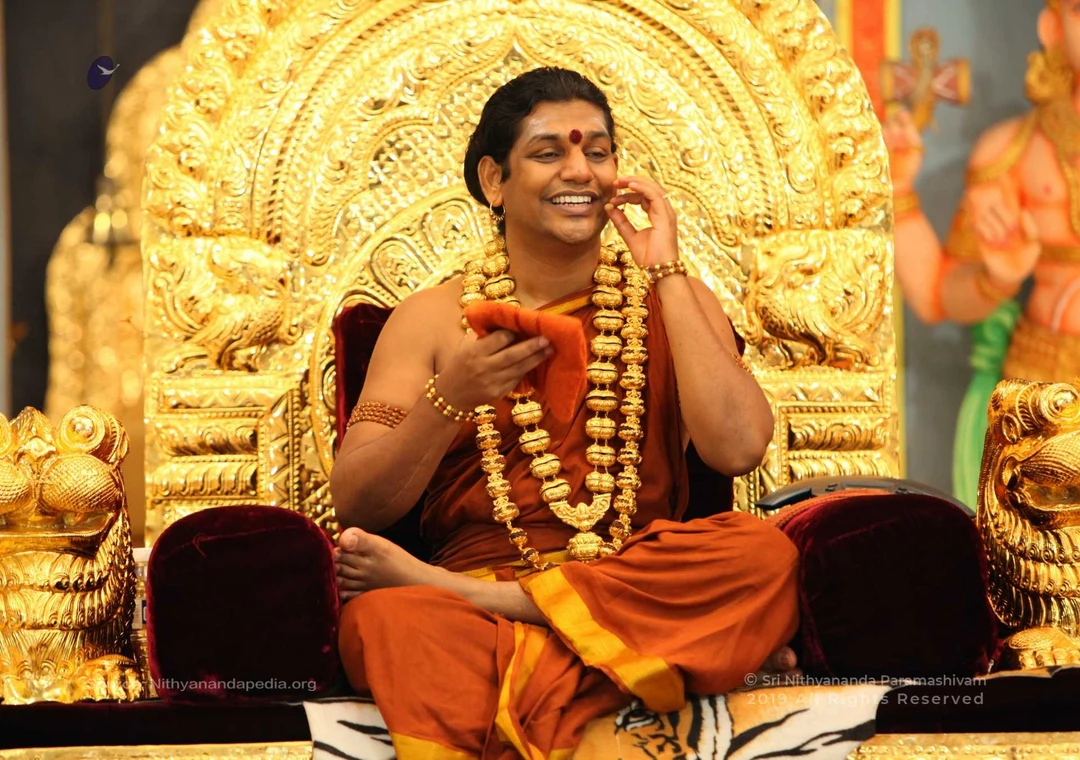
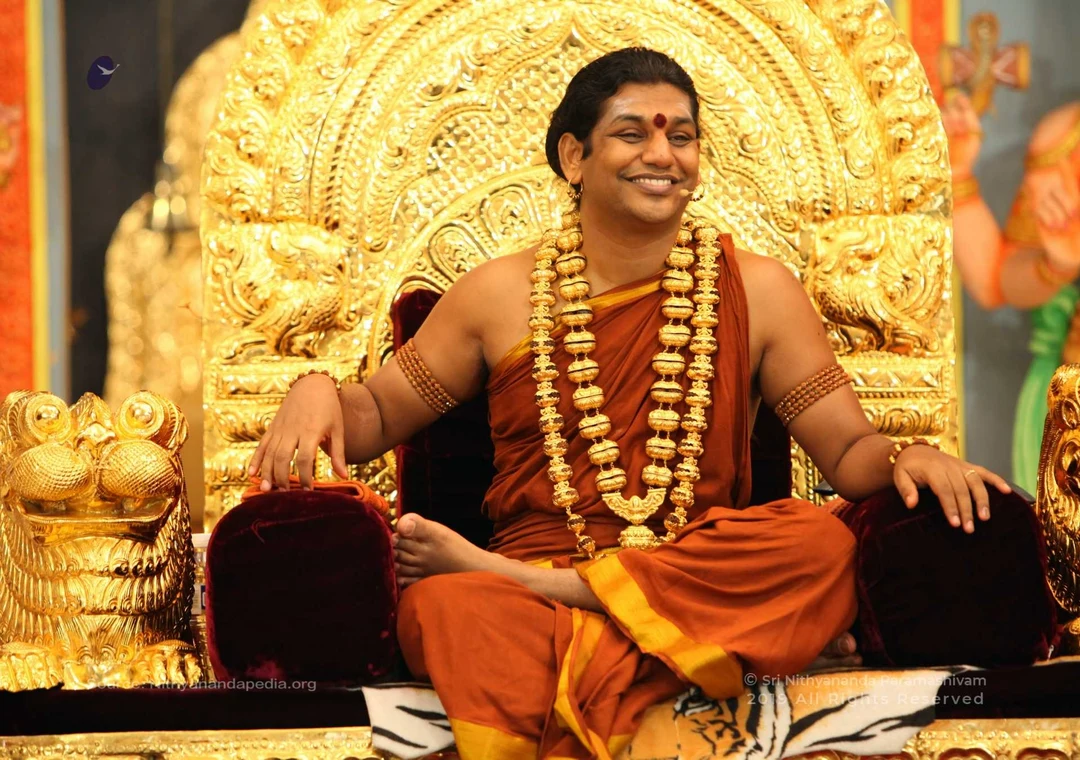
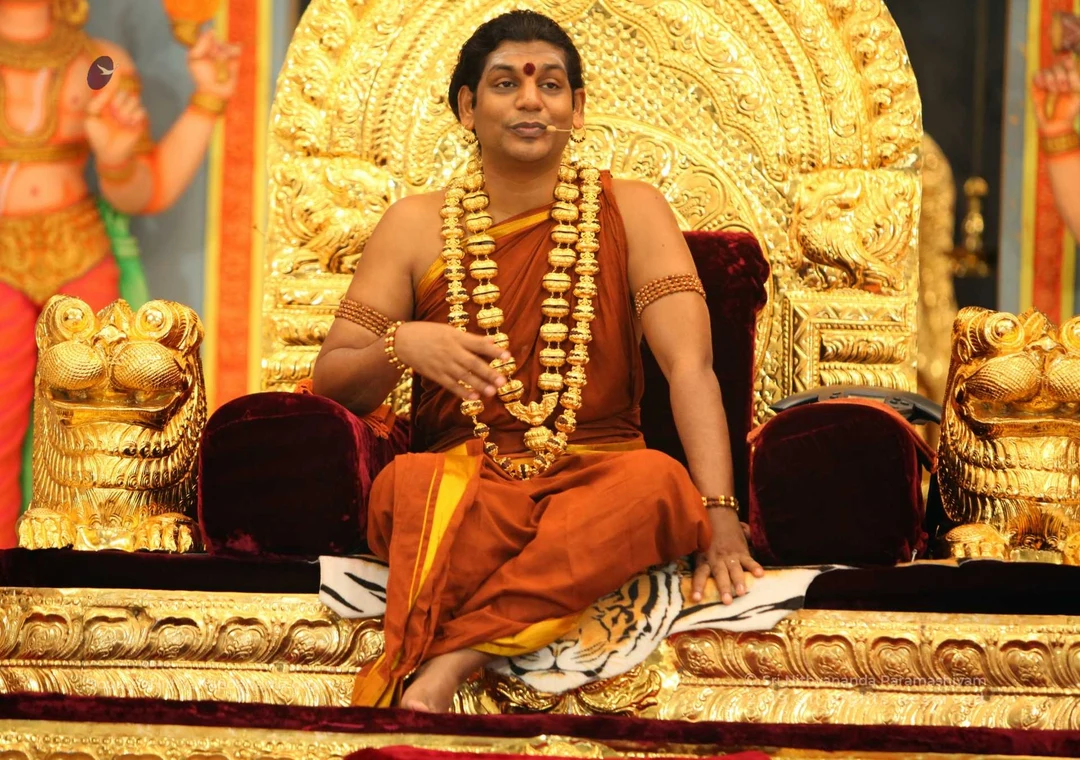
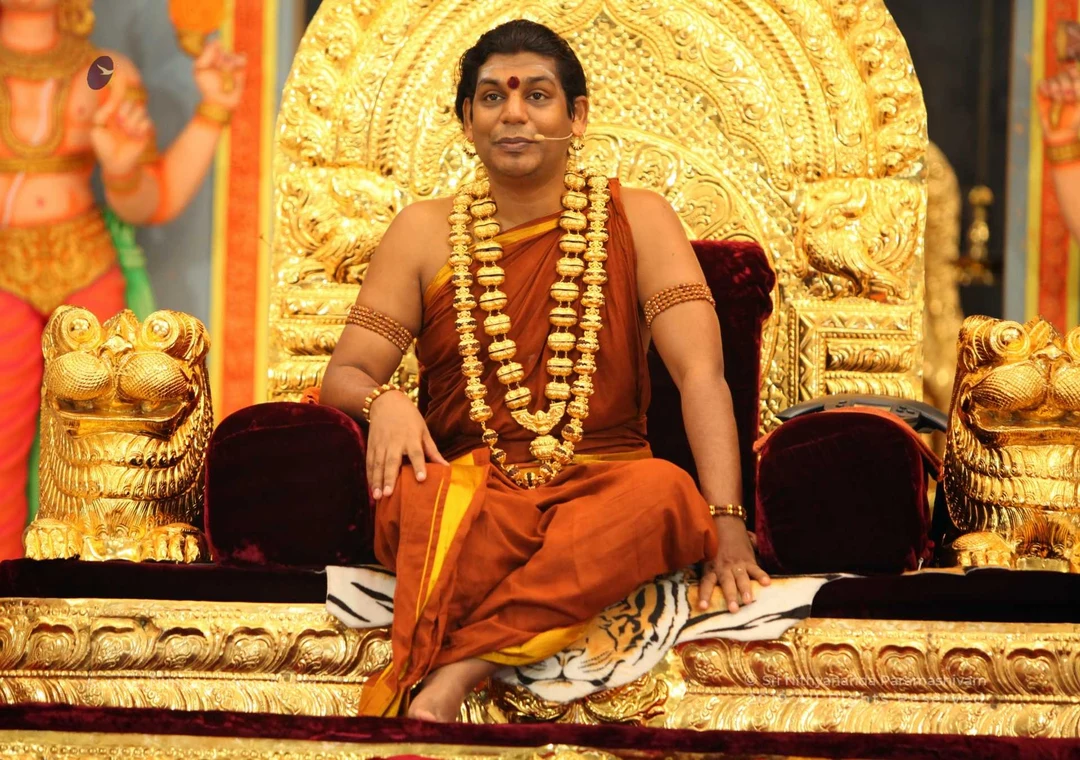
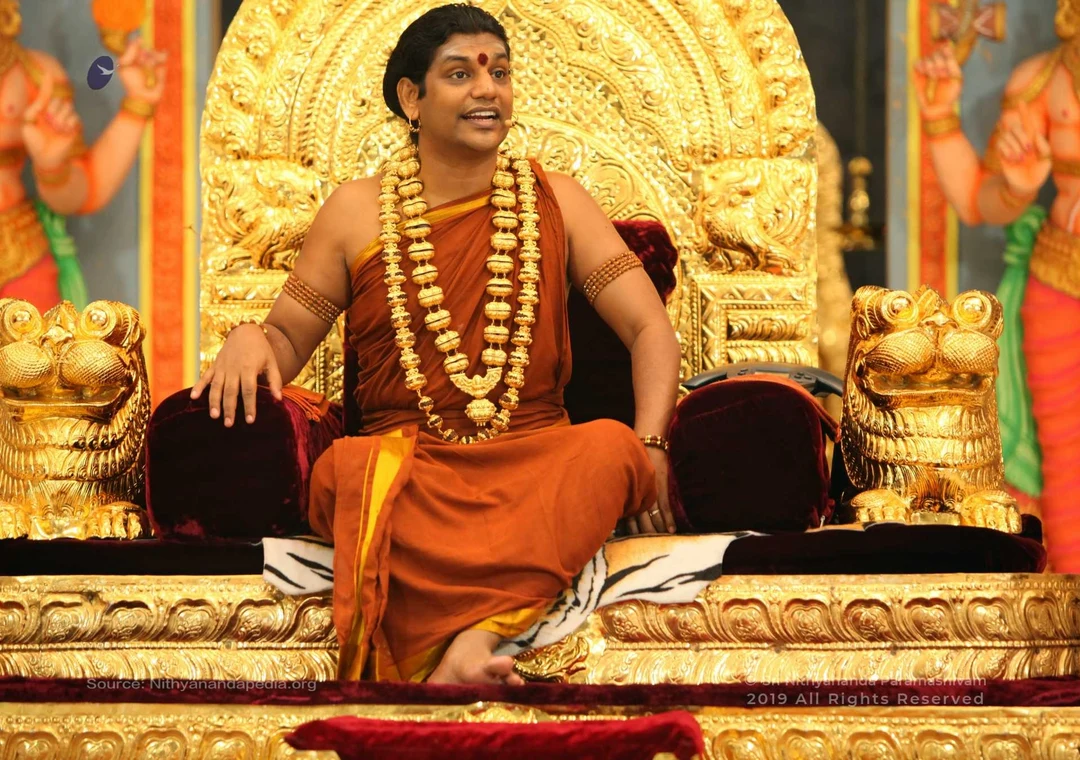
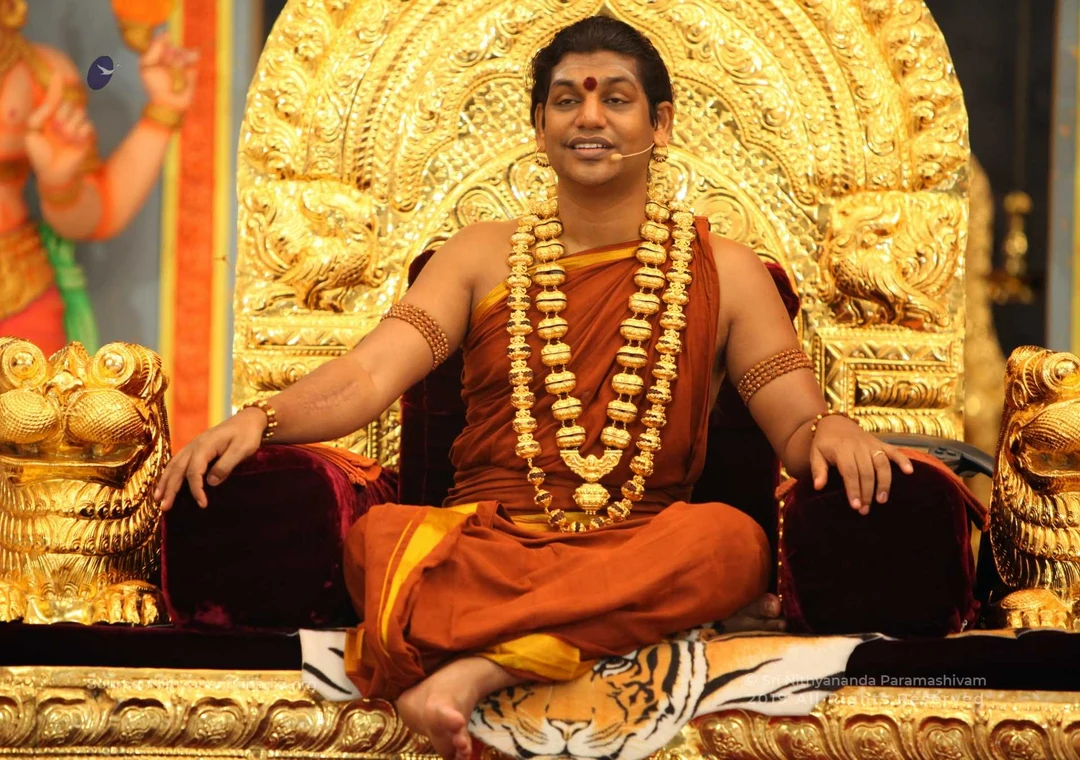
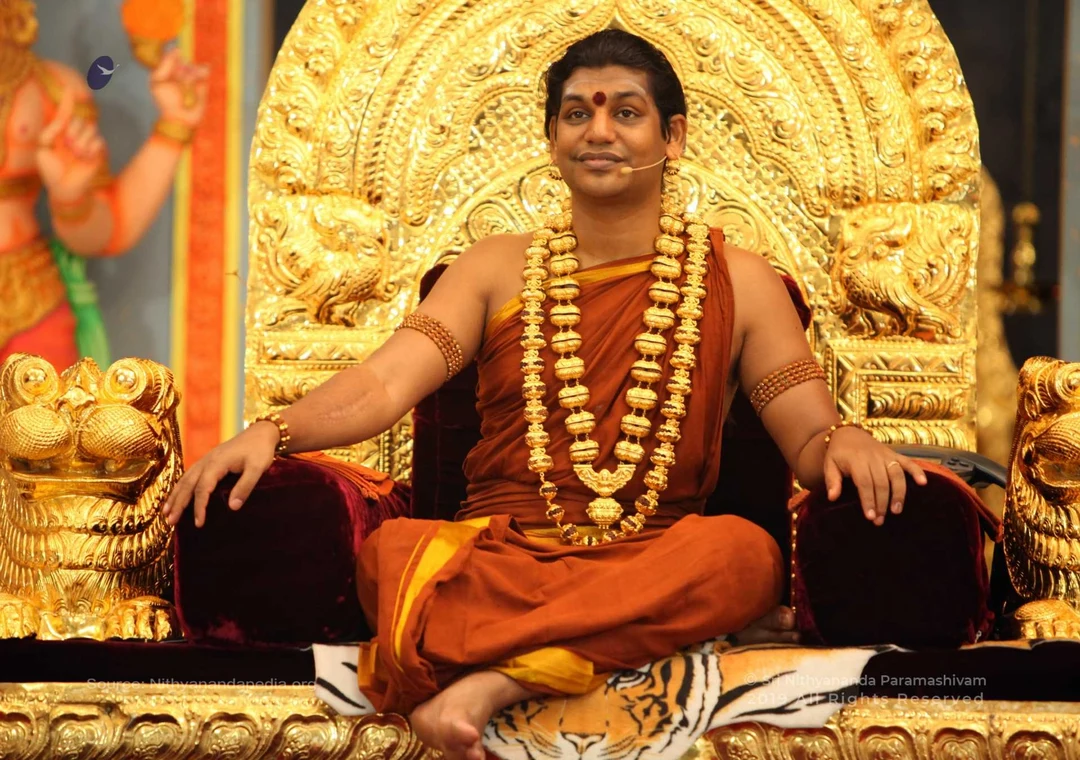
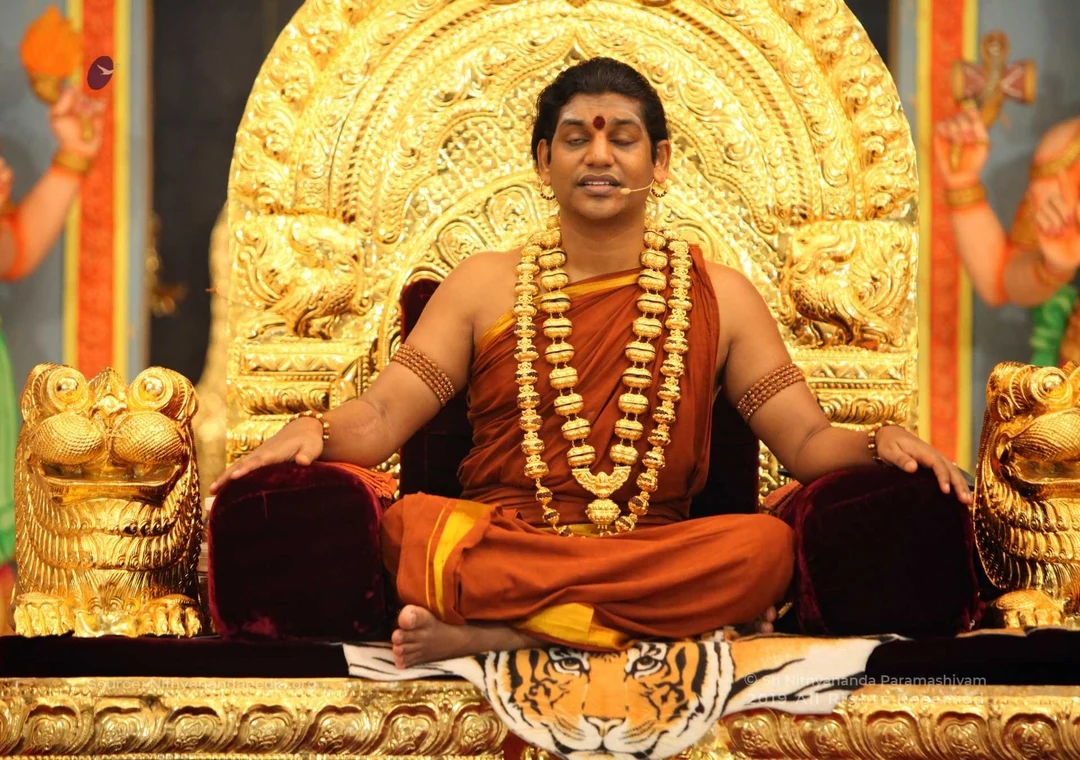
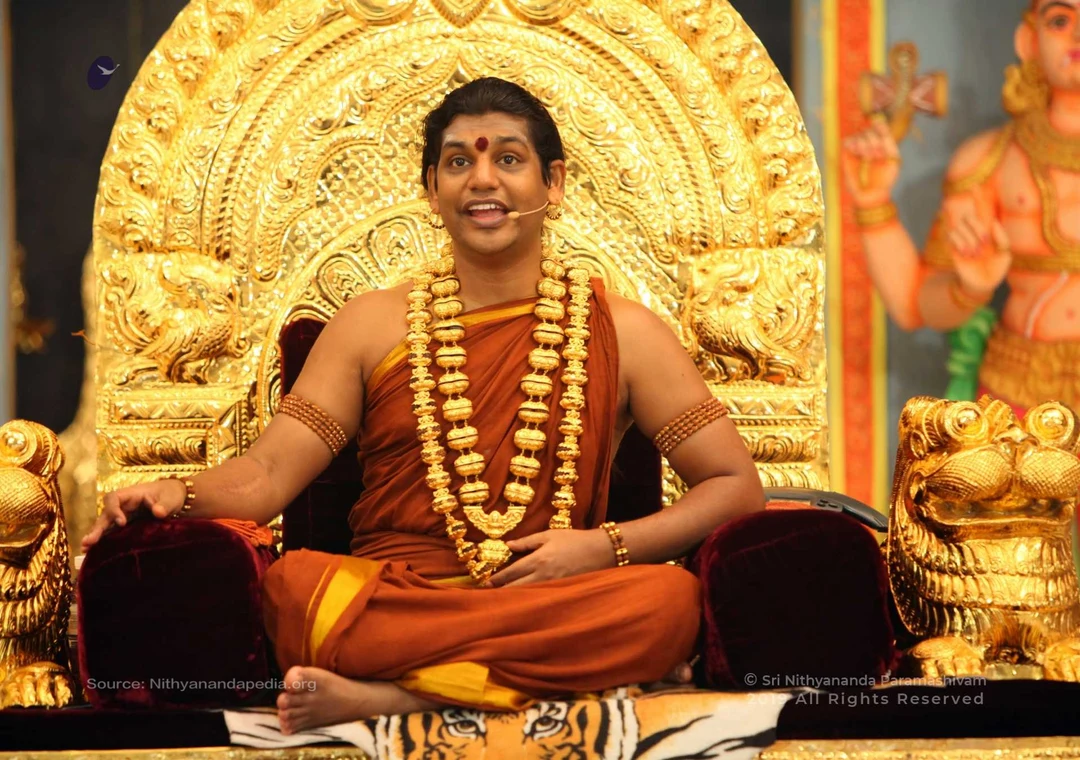
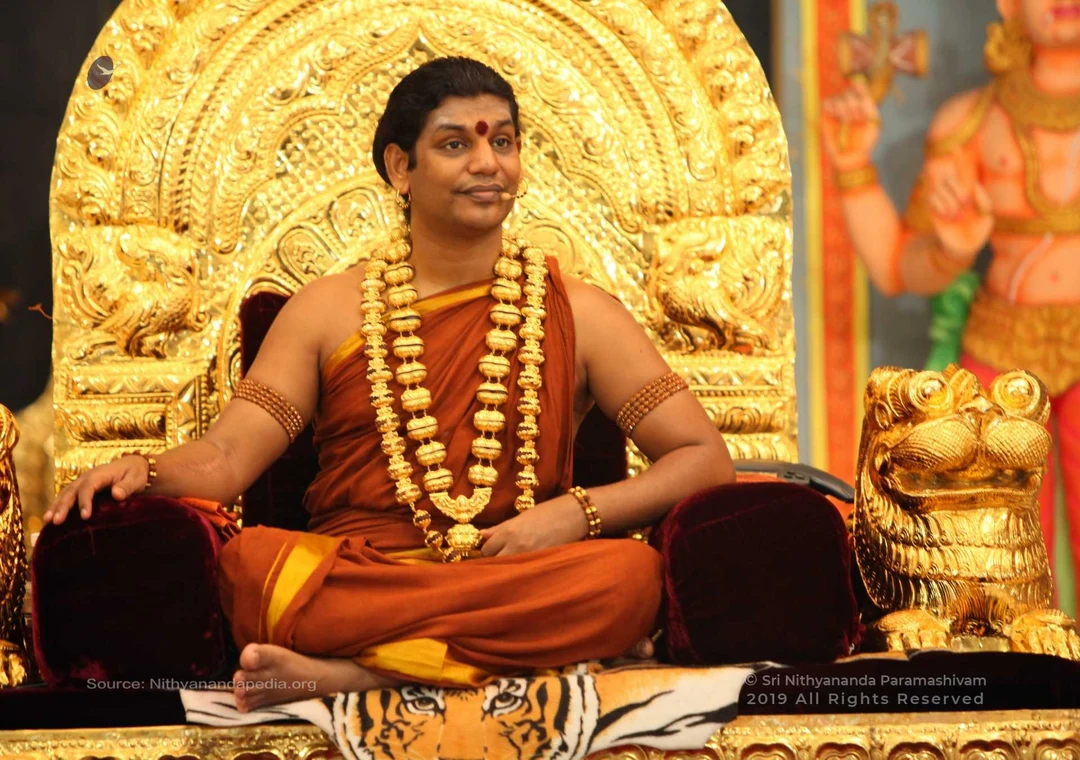
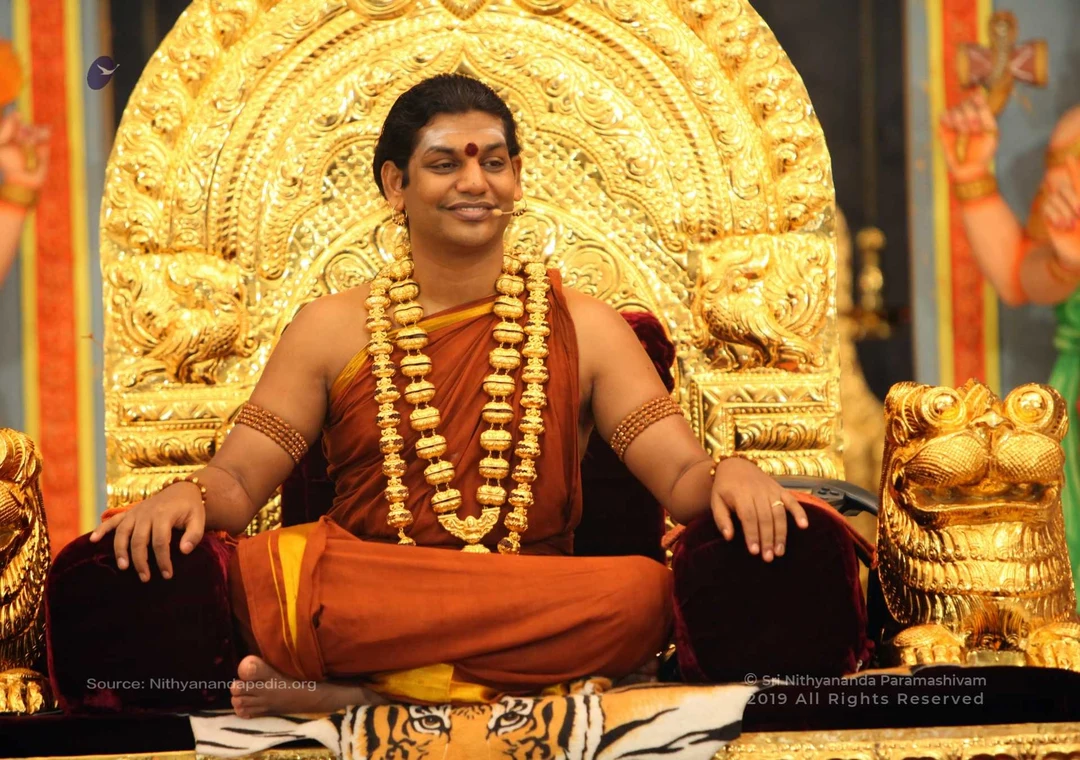
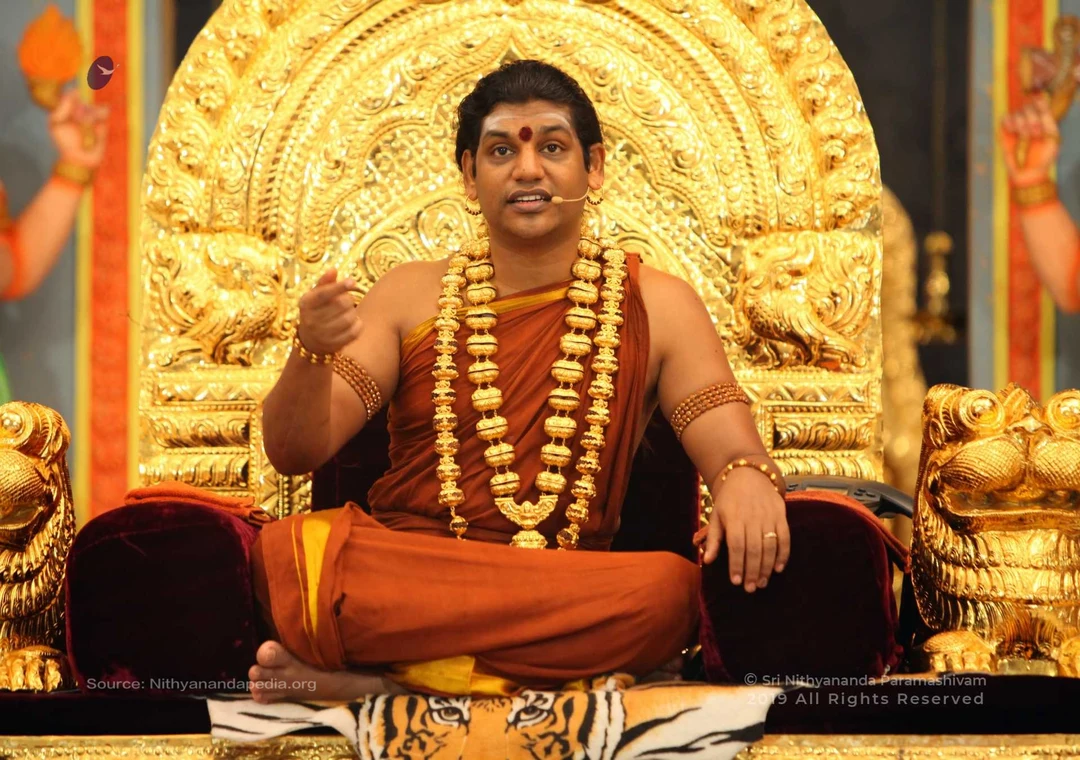
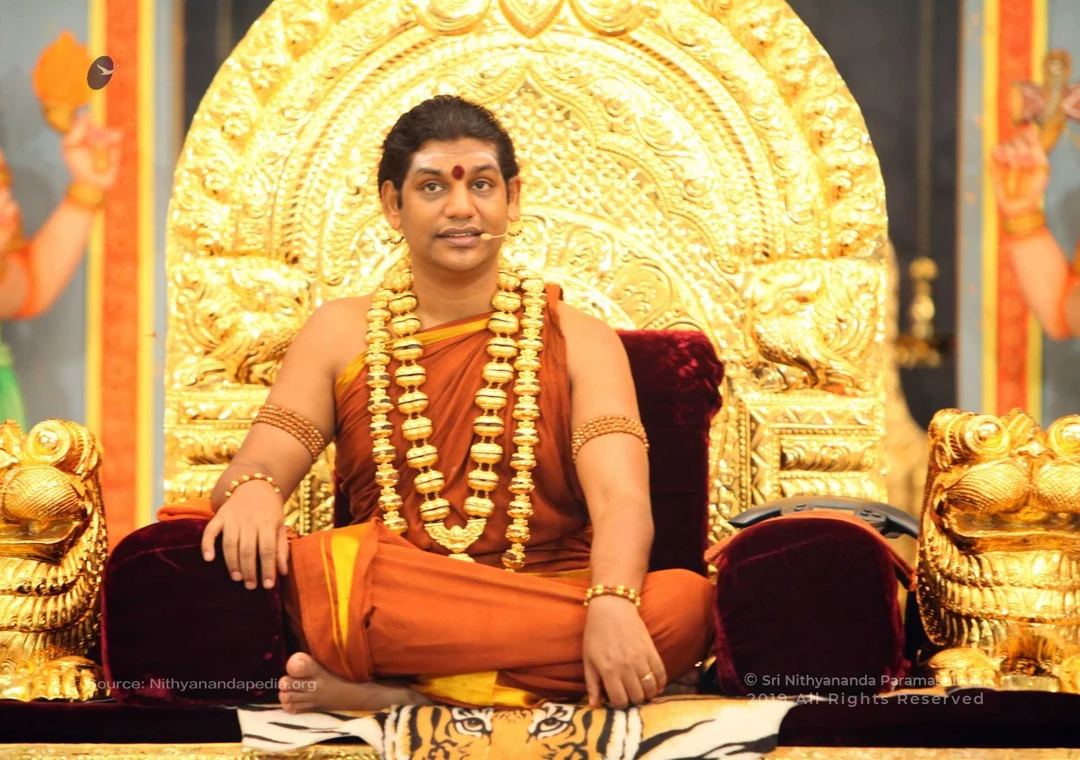
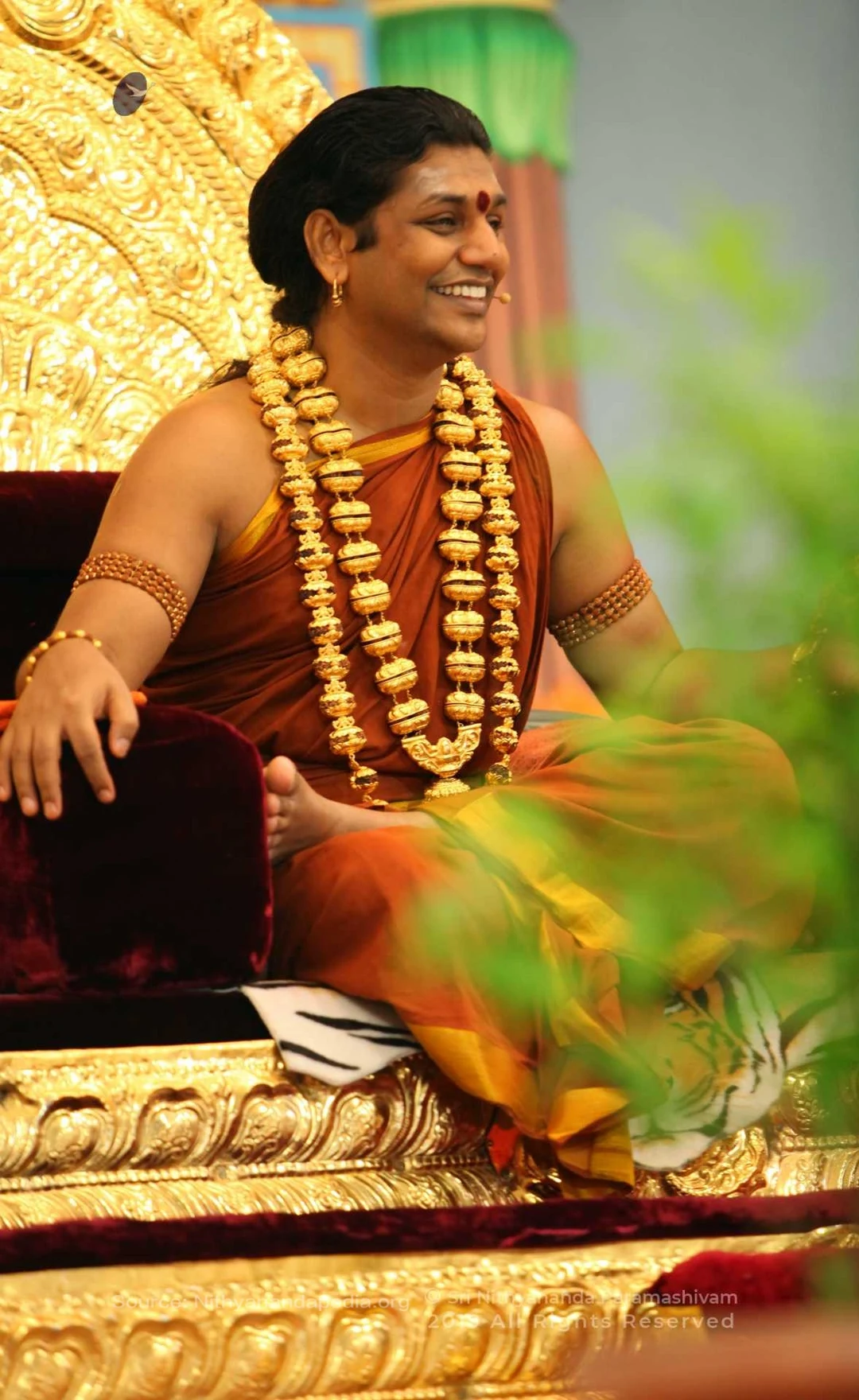
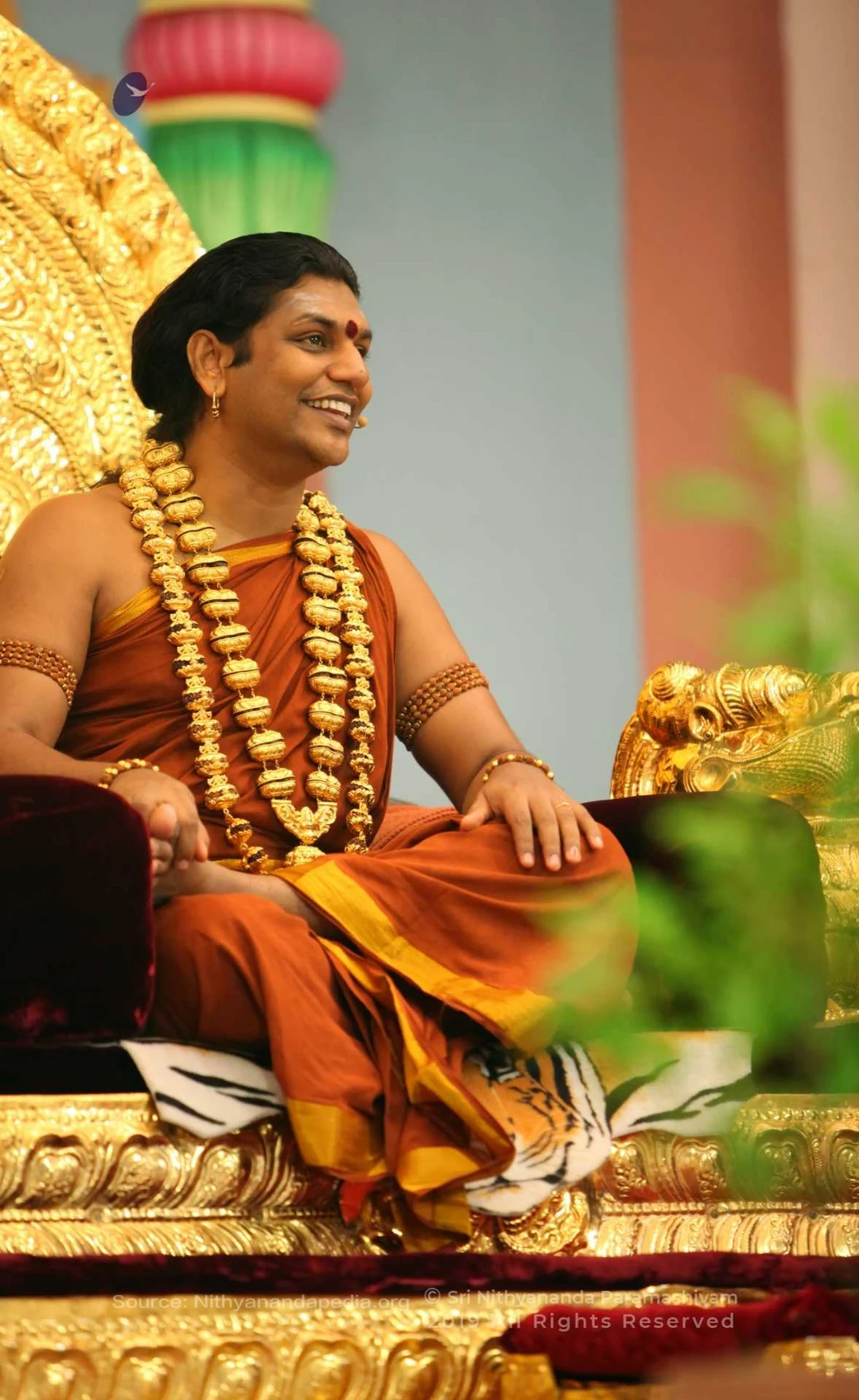
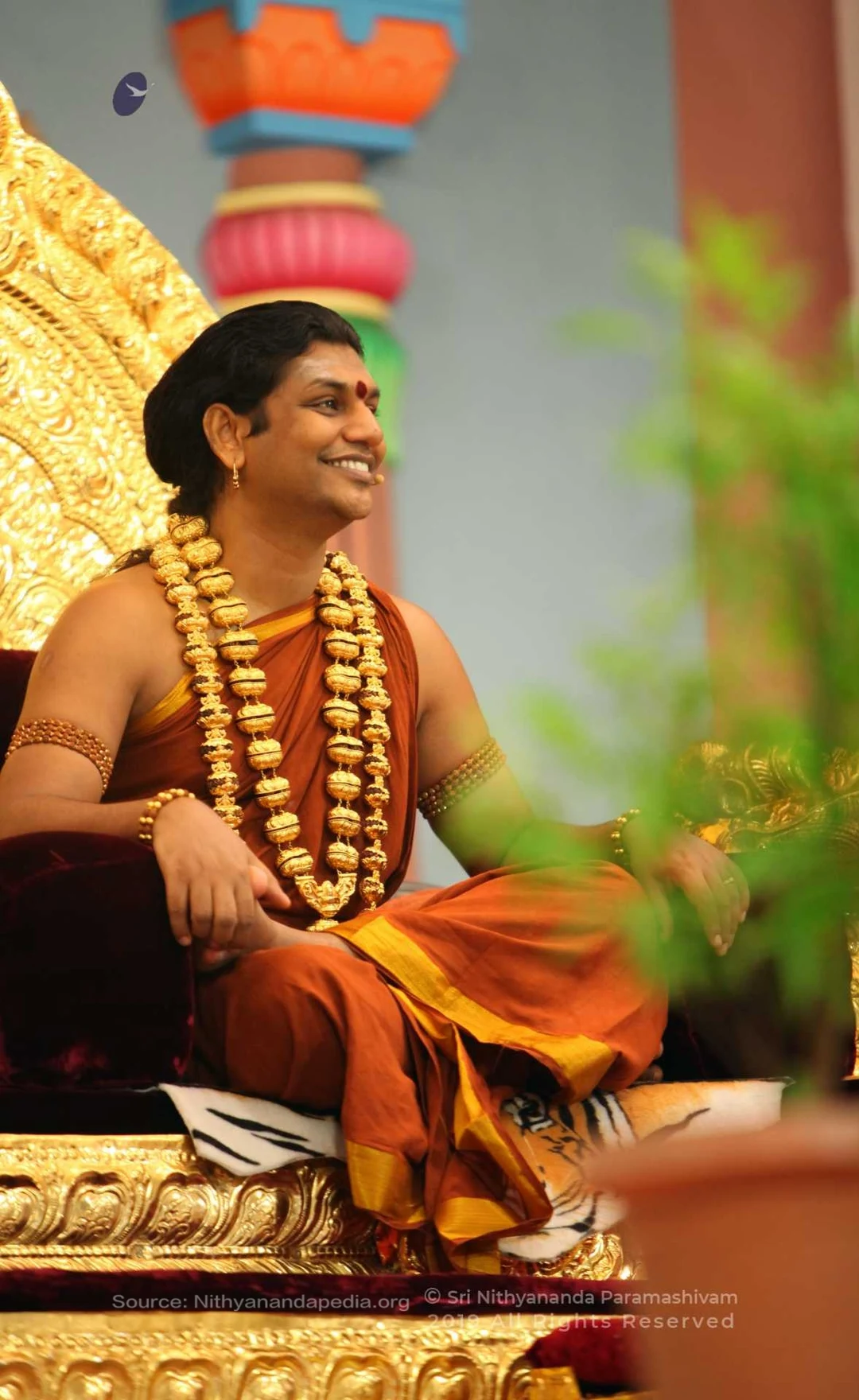
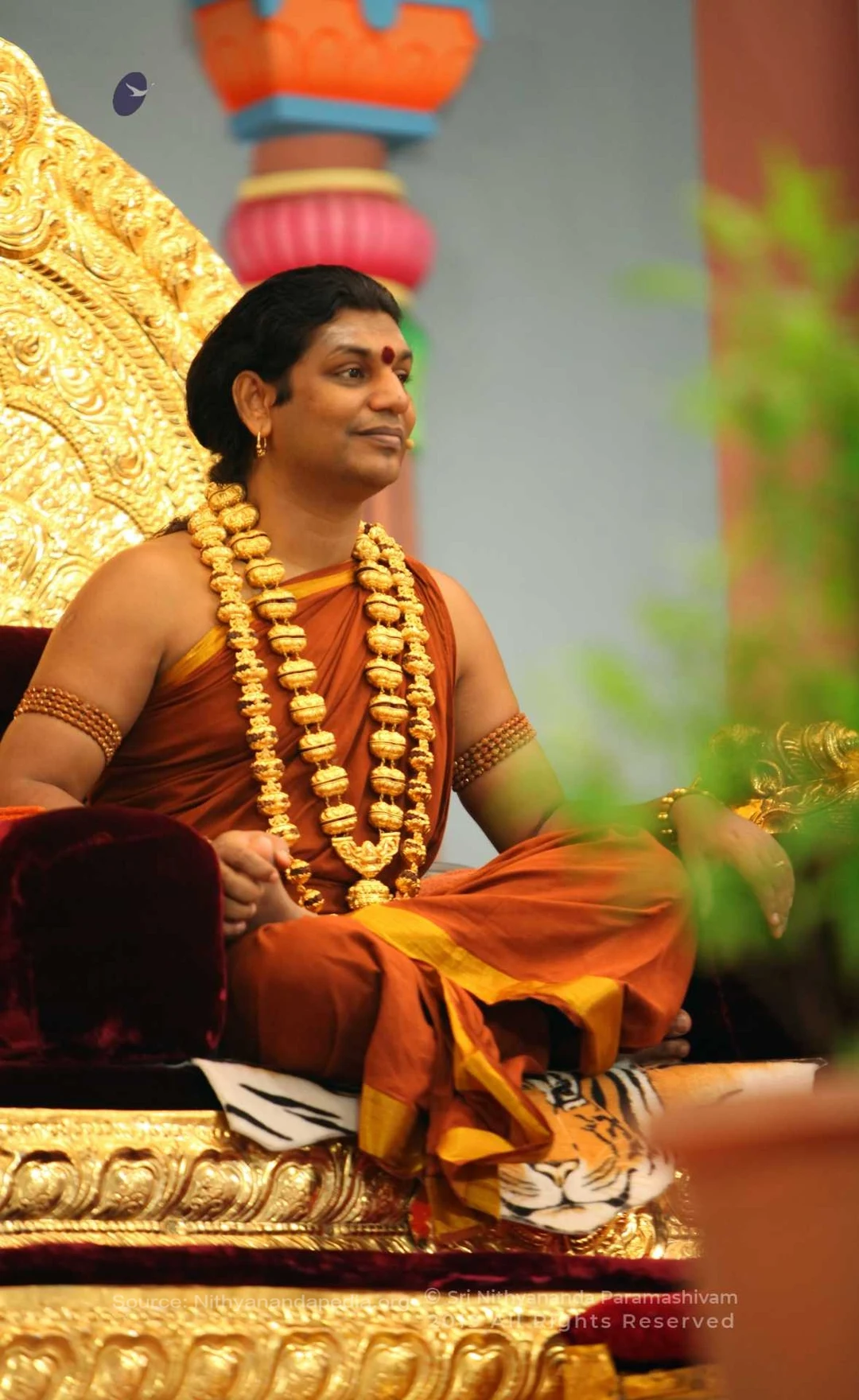
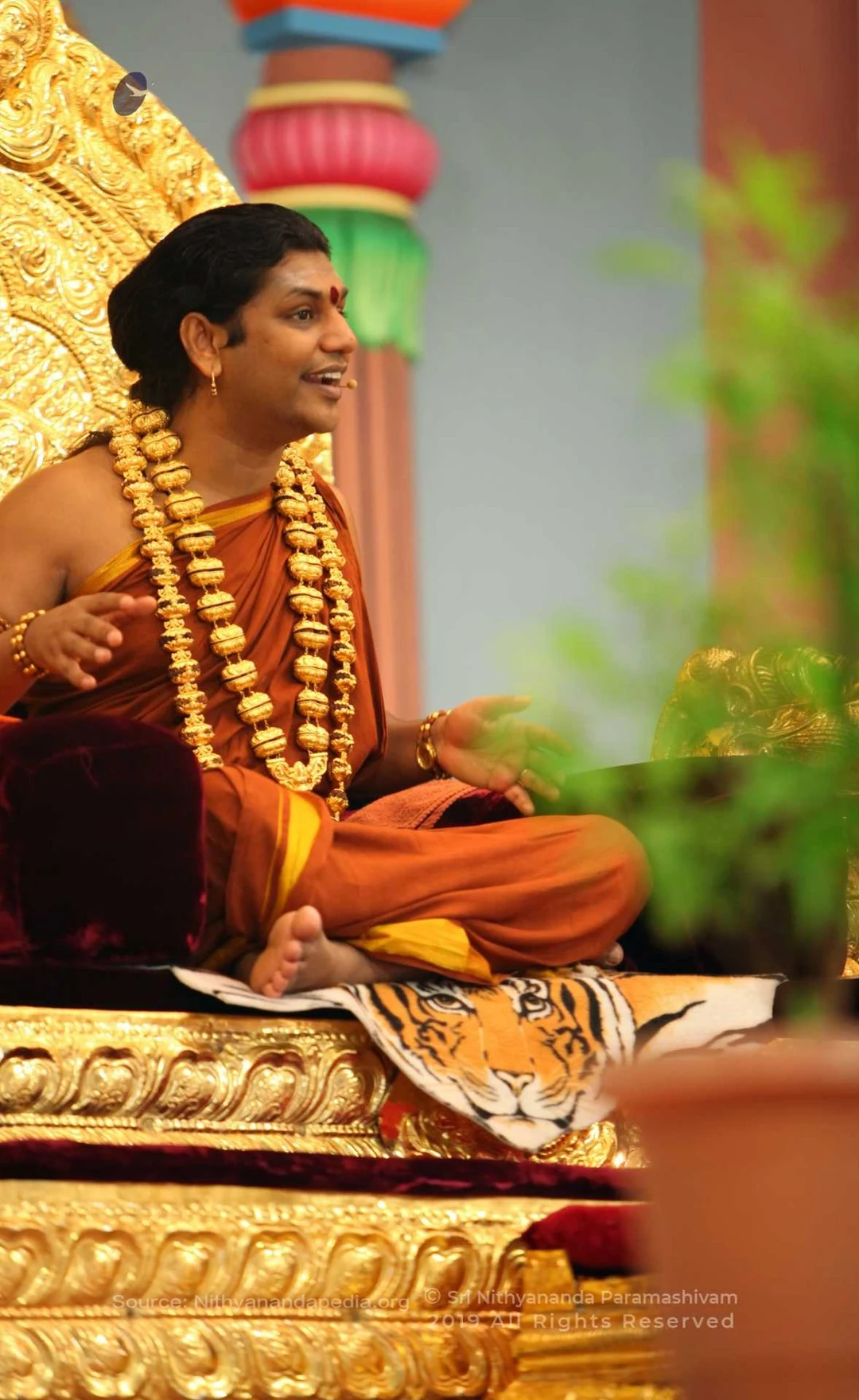
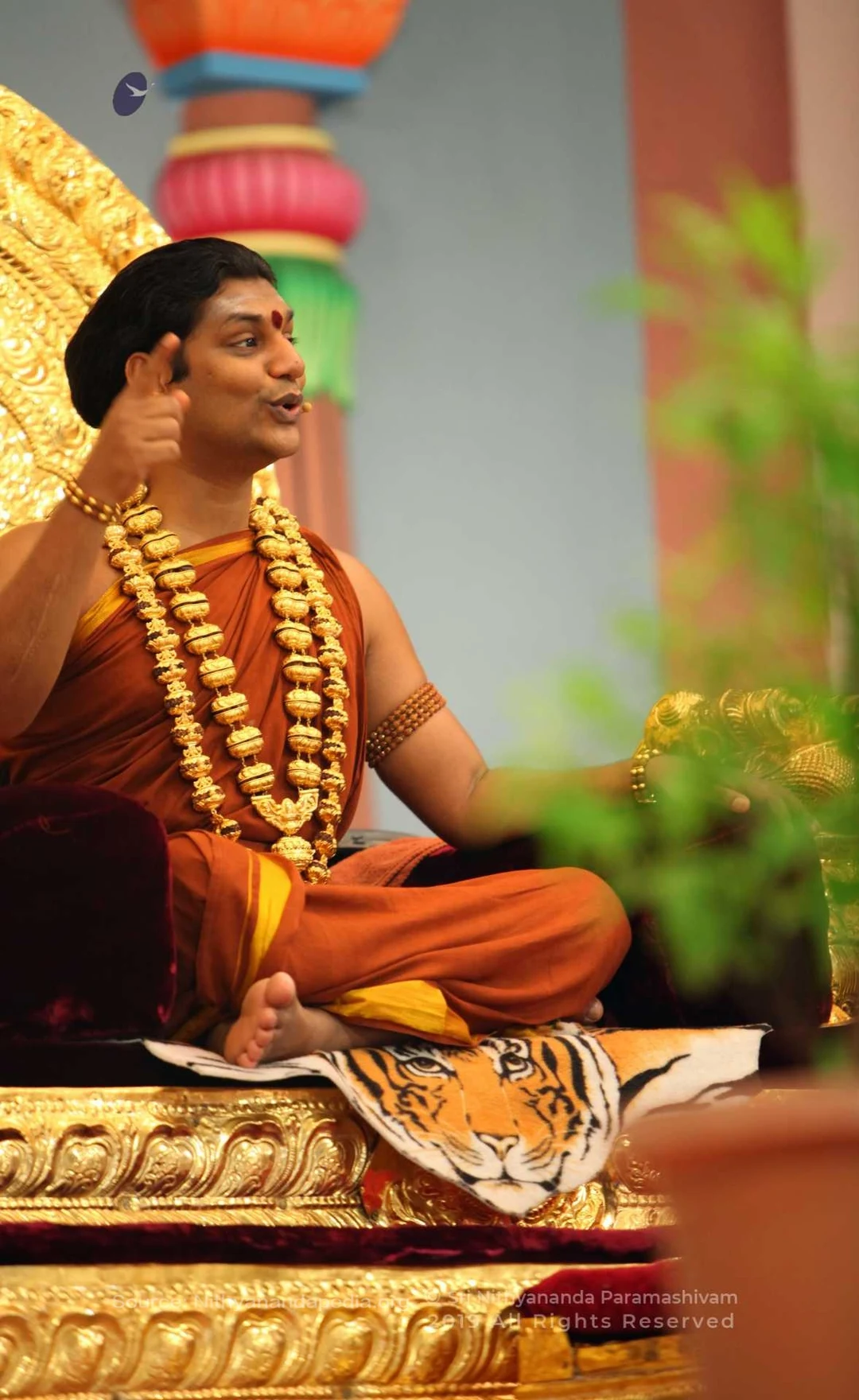
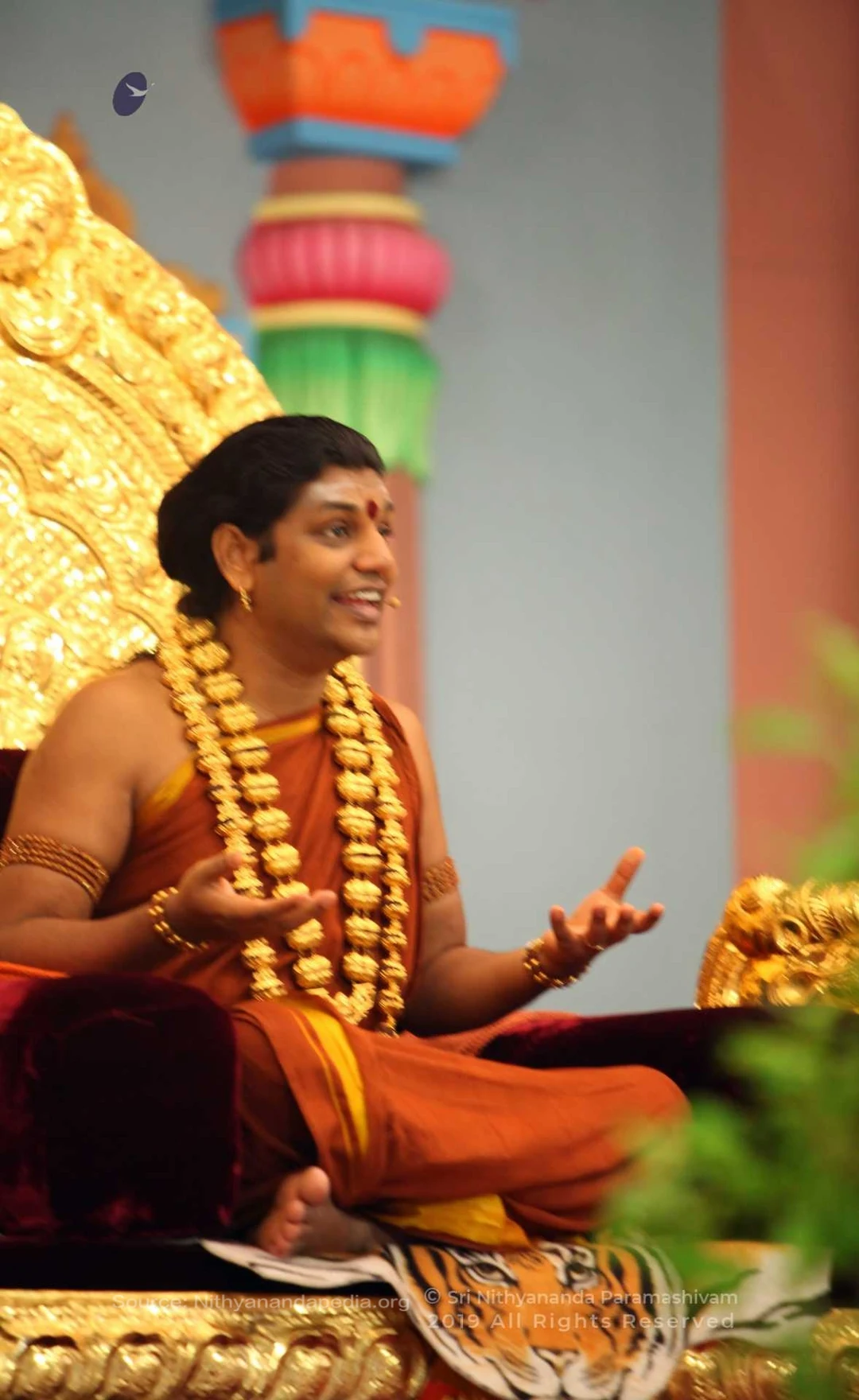
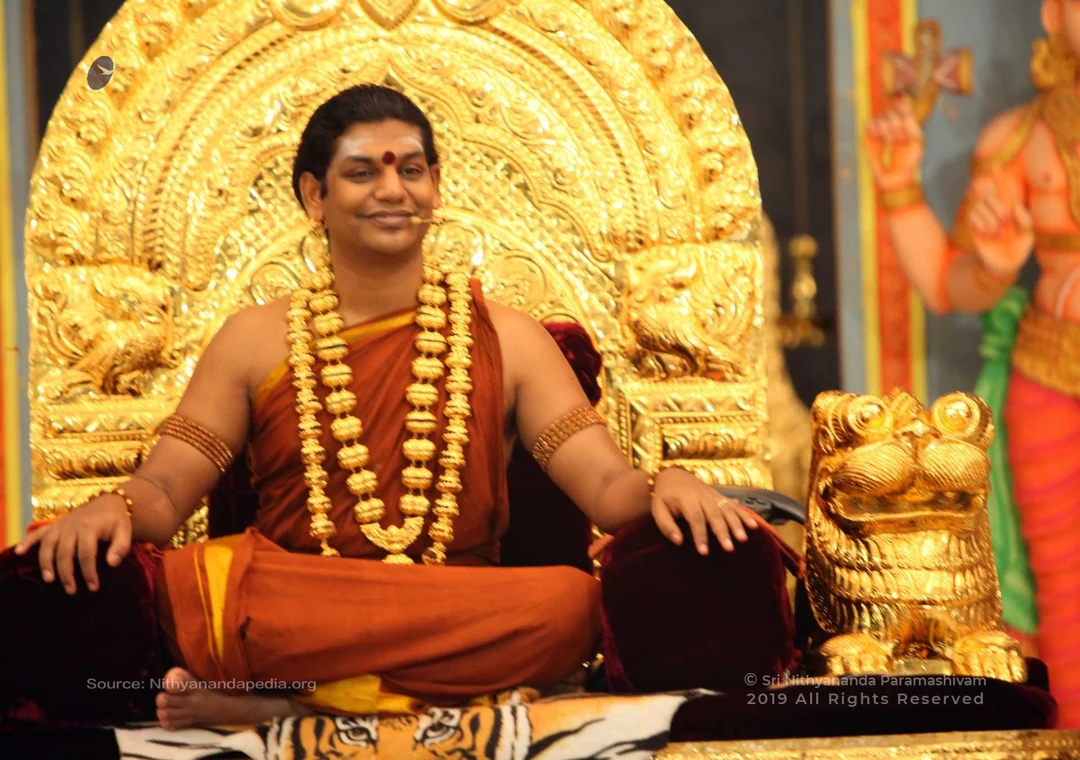
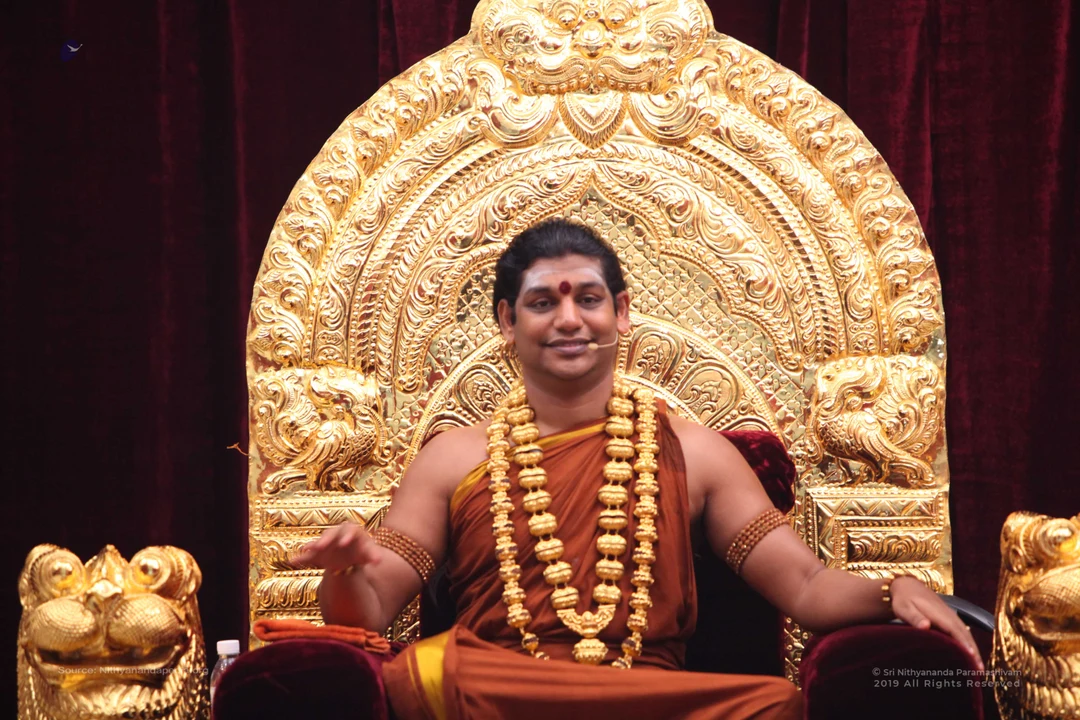
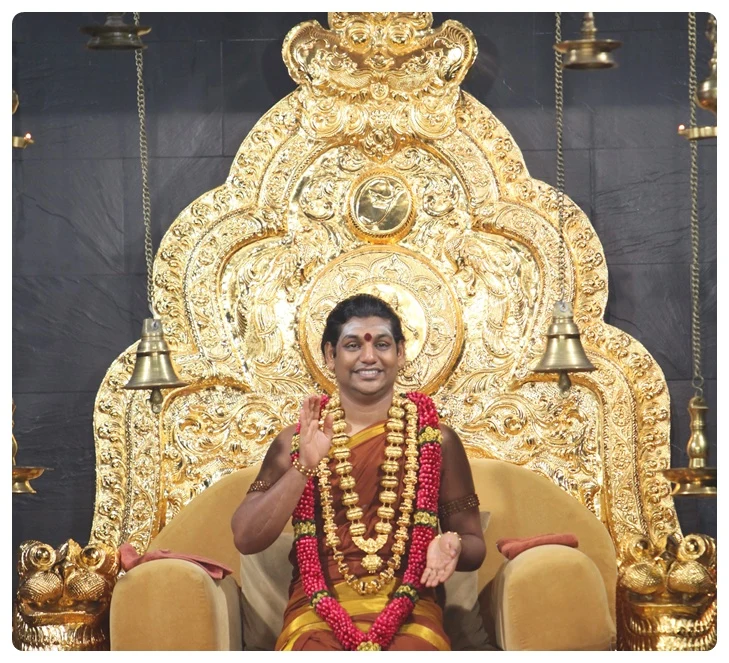
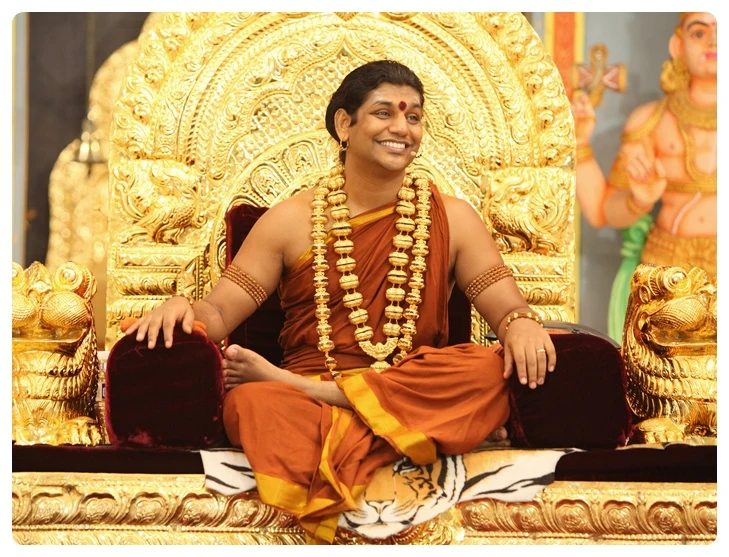
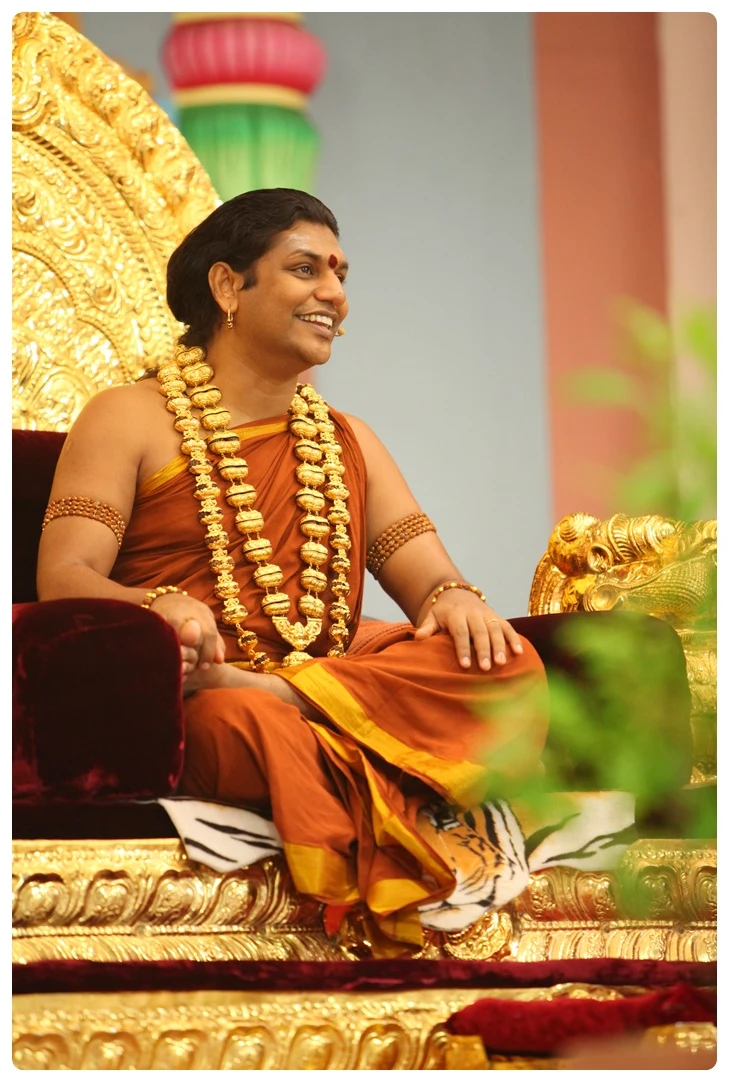
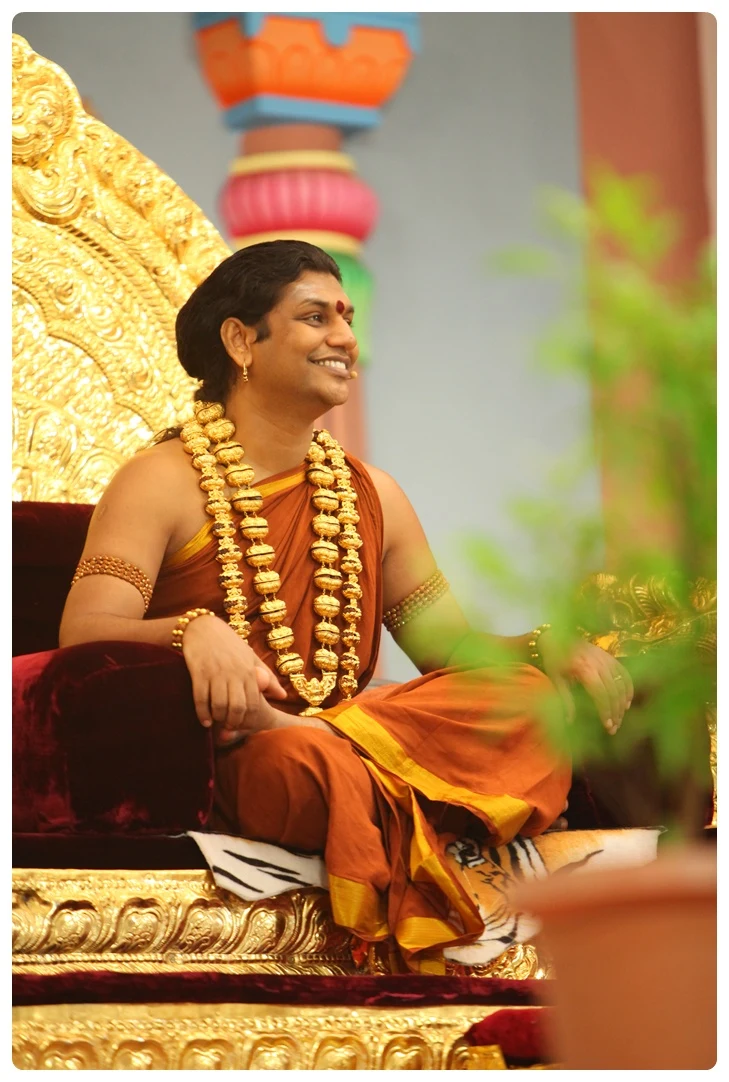
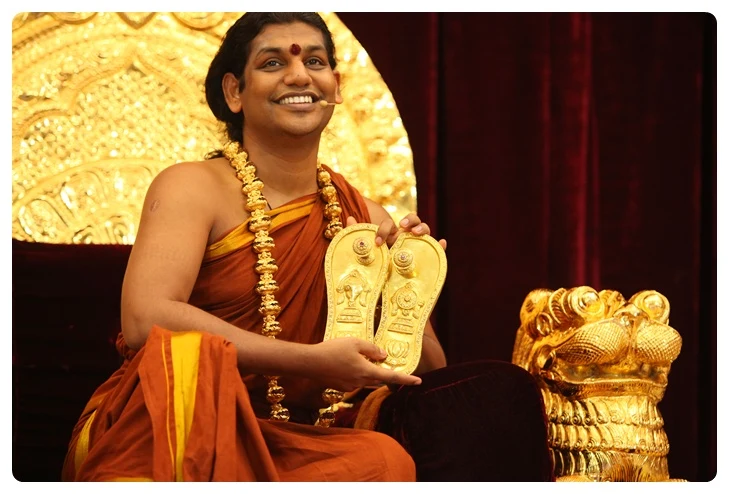
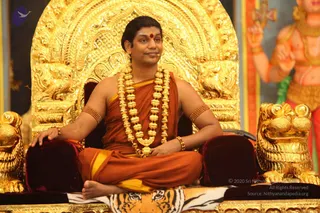
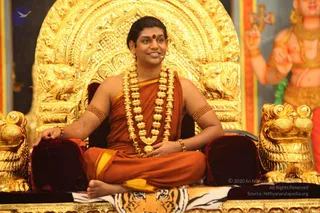
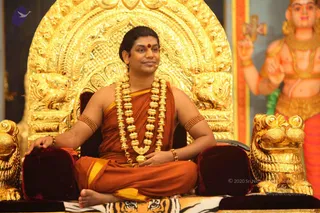
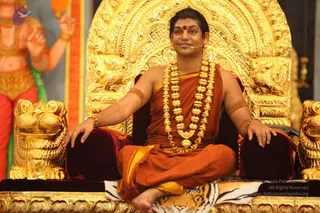
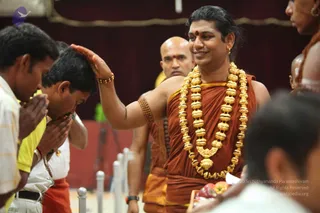
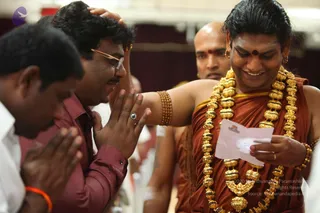
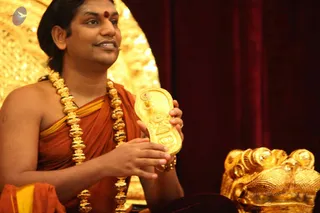
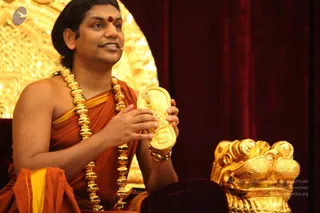
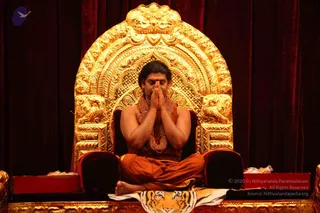
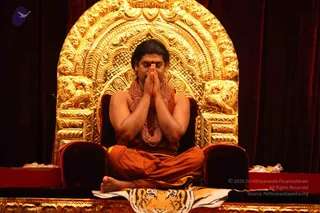
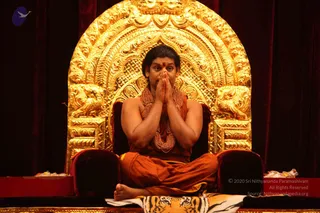
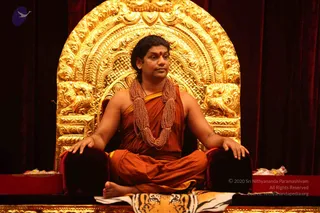
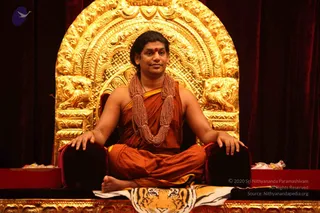
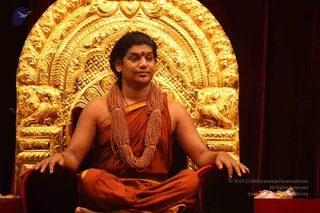
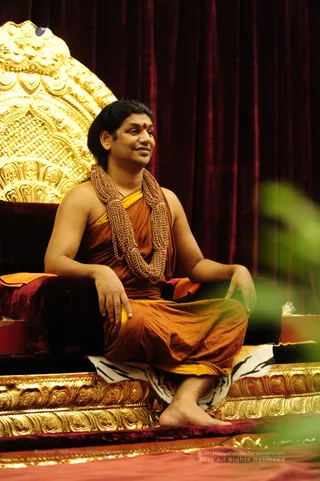
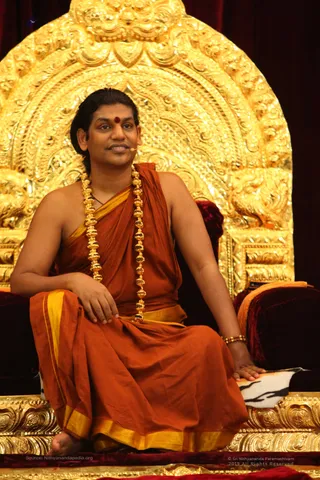
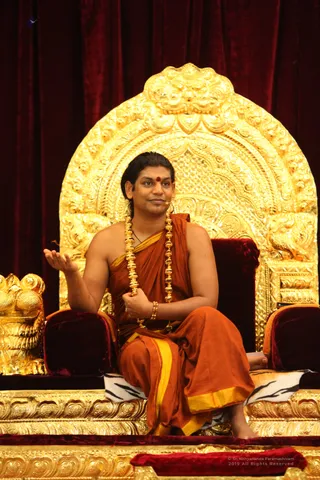
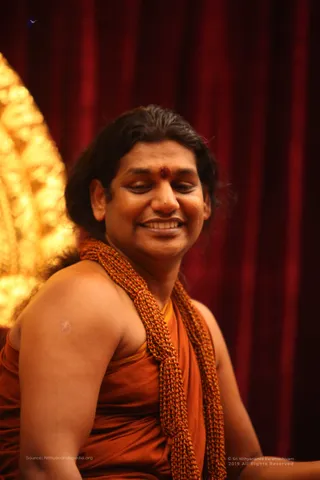
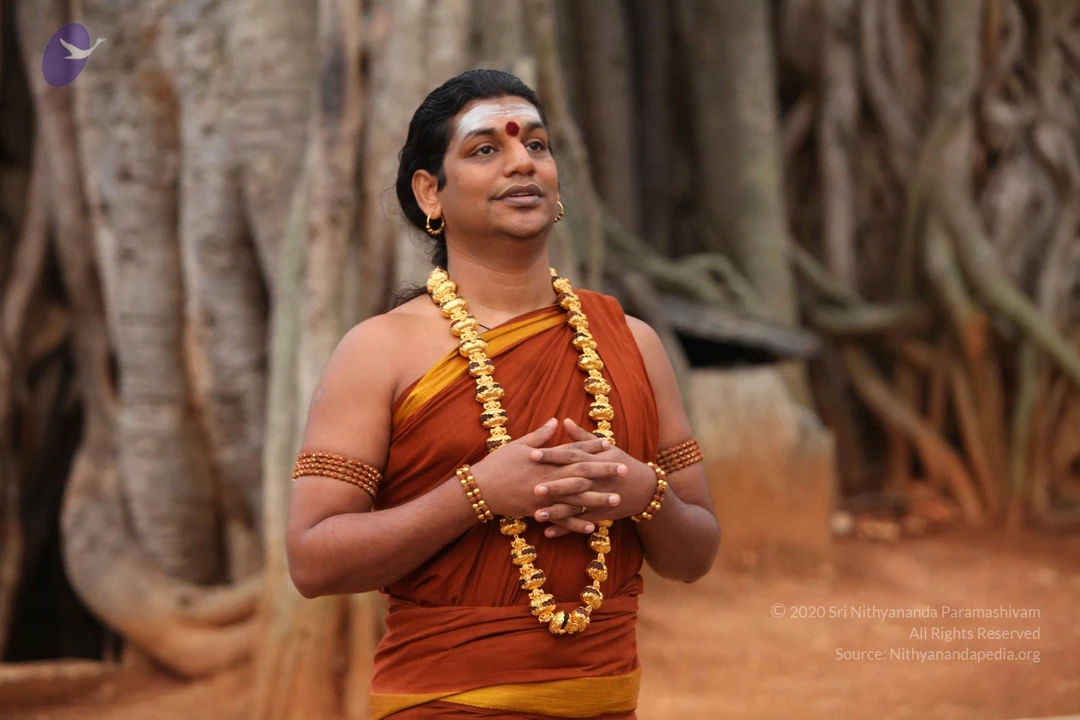
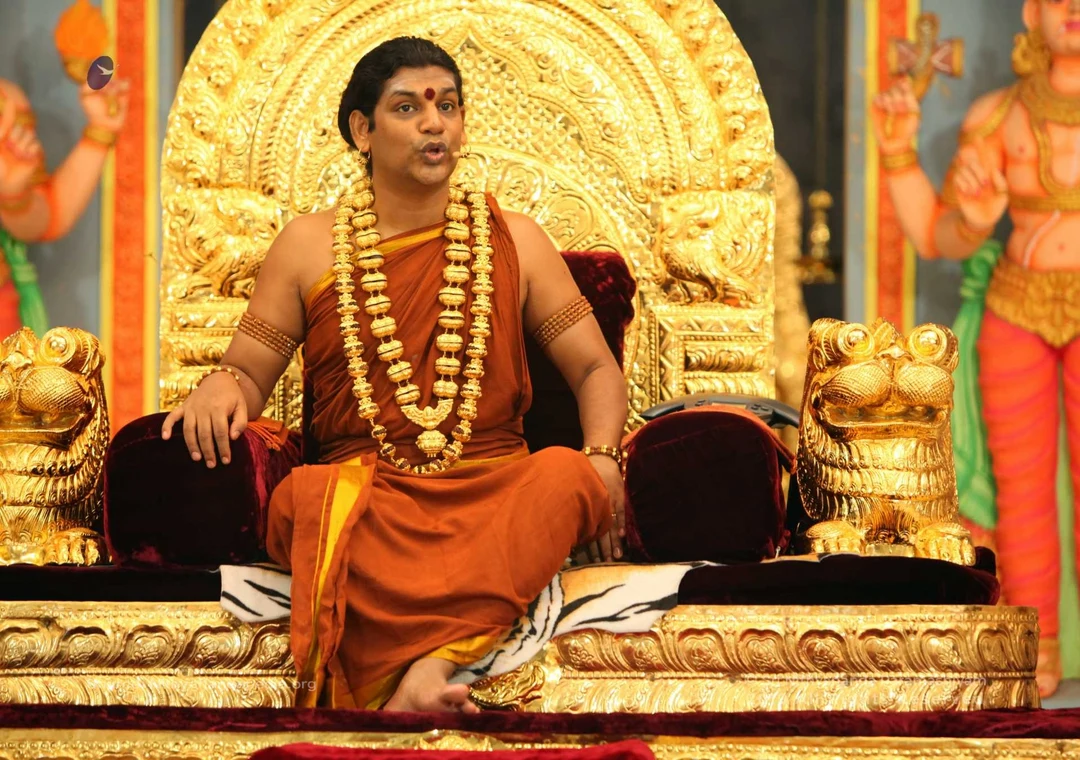
A man seated on an ornate golden throne with a carved gold arched backrest and velvet cushions, speaking with a small headset microphone. He wears a saffron-orange draped robe with gold borders, a long gold necklace of beads, a wrist mala, and a red bindi on his forehead. His dark hair is swept back. The figure has distinctive saffron and gold ceremonial clothing and long swept-back hair, matching the page's Swamiji cues, so this is a probable appearance-based match for Swamiji (probable) seated in person at a satsang setting.A seated man in a rust-orange dhoti and shawl with gold-yellow borders sits on an ornate gold throne with a carved gold arch behind him and a gold lion armrest at right. He wears a long multi-strand gold bead necklace, a red bindi on his forehead, a small clip microphone, and a bead bracelet, and he gestures with his right hand while smiling and speaking. Dark red velvet cushions and a patterned cloth cover the platform.A smiling man with swept-back dark hair and a small red bindi sits cross-legged on an ornate gold throne with a carved, high back. He wears an orange-saffron garment with gold borders, multiple strands of large gold beaded necklaces, gold bangles and armbands, and a small earring, with a lapel microphone visible near his face. A tiger-striped cloth covers part of the throne seat, and a red velvet cushion rests at his side. Behind him are a painted pink-and-orange column and a blurred green plant in the foreground. Swamiji (probable): the saffron clothing, gold necklaces and swept-back hair on a seated speaker presiding over a satsang match the page's description of Nithyananda's morning satsang.

May 24 2013

Original wiki page
Contents

Title

Inner Awakening Day 17
Q & A by Paramahamsa Nithyananda 24-May-2013

Description:

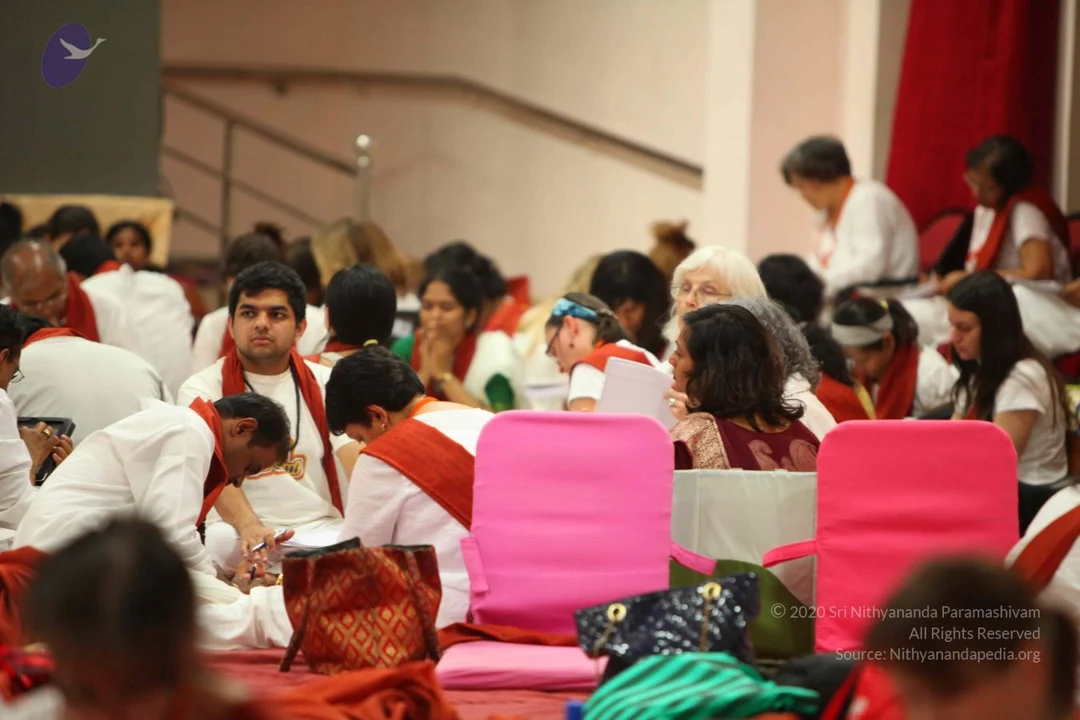
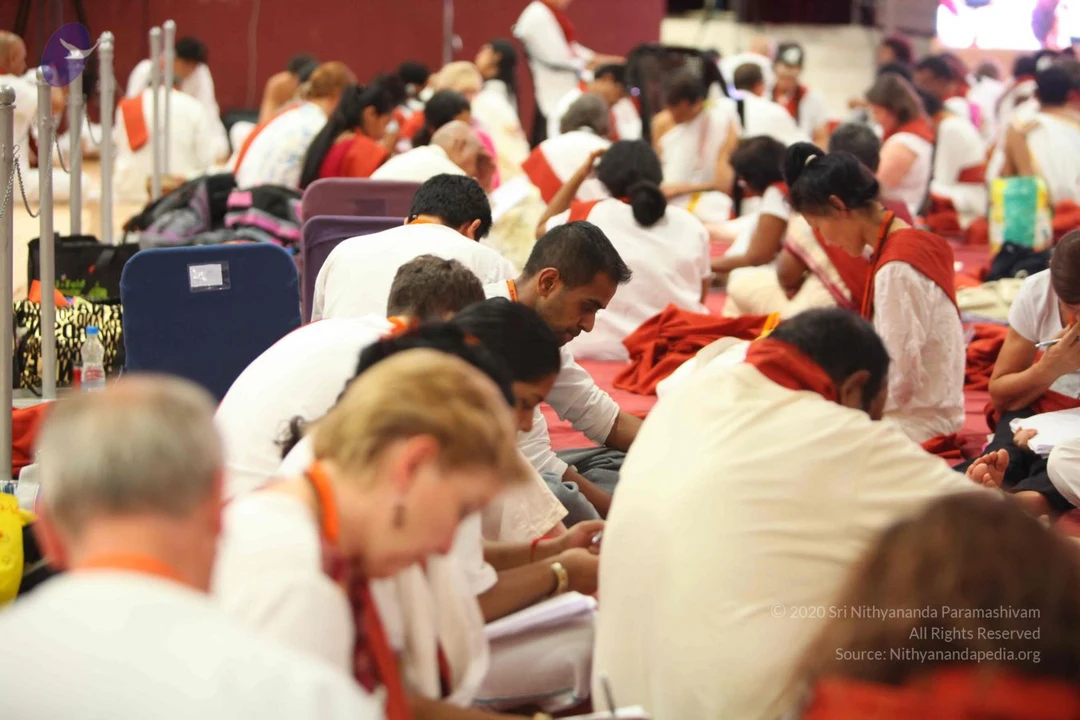
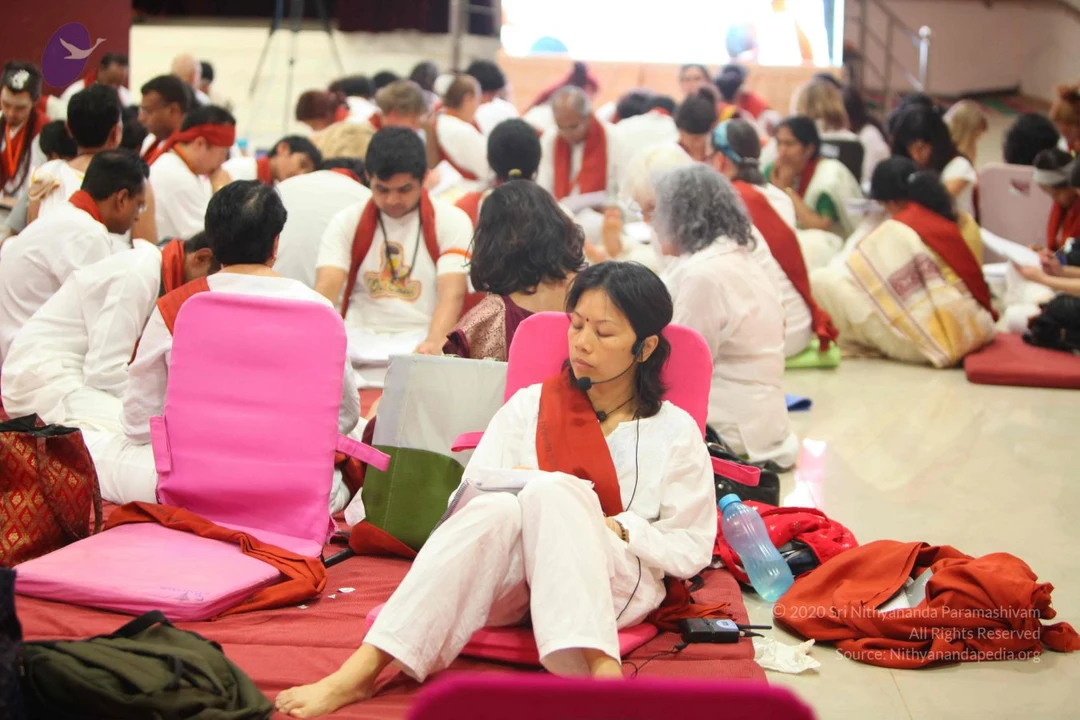
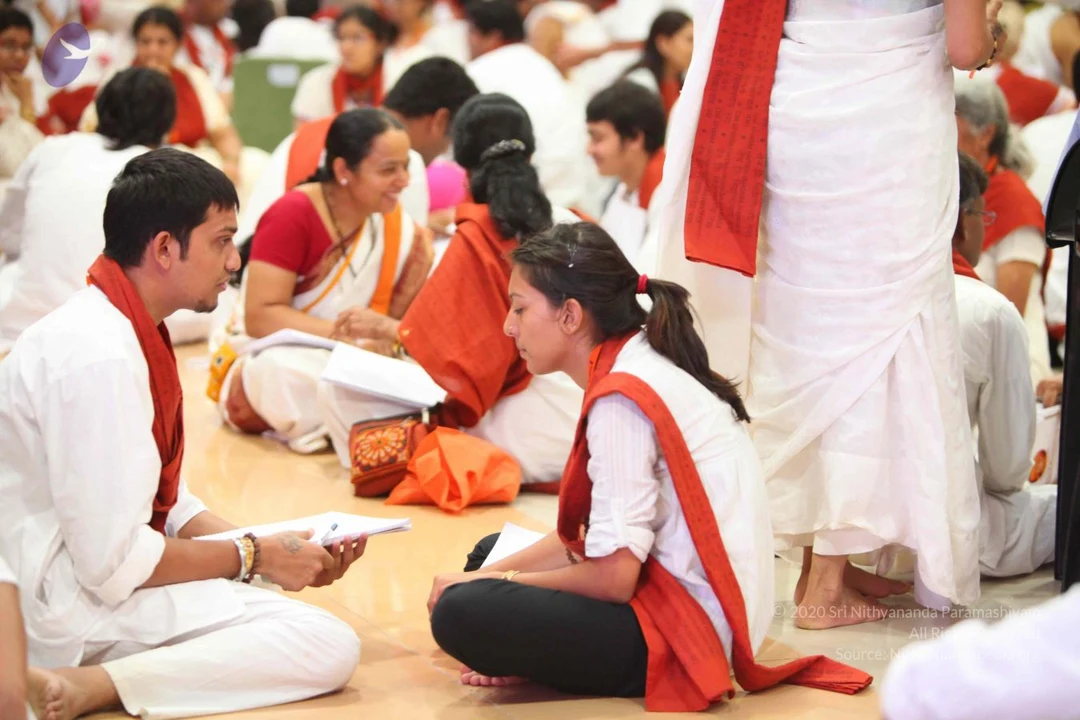
In today’s morning satsang, Paramahamsa Nithyananda instructs us in how to live the four principles. He reminds us that these truths are for all of us to embody – not just for some to teach to others. Nithyananda also answers questions on healing karmic patterns and fears. To resolve karma with the departed, the ceremony of shraaddha can grant completion. Shraaddha is especially effective if performed at Bodhgaya, Bhadri, Manasarovar, and at Nithyananda’s North American temple in Ohio. To resolve deep-seated fears we must go to the root of our fear and complete with it. Many devotees make the mistake of either accepting the item they fear as inevitable, or of trying to deny their fear. Both are unsuccessful and result only in emphasizing the fear pattern.

Link to Video:

VideoAudio

Transcript:

Nithyanandeshwara Samaarambhaam Nithyanandeshwari Madhyamaam | Asmath Aachaarya Paryanthaam Vandhey Guru Paramparaam ||

I welcome you all with my love and respects I will continue to answer your questions even today helping everyone practice the four tattwas. Listen! Tattwas get rooted in you, become part of you only when you continue to be in communication with tattwas. Listen! Communication with tattwas means either you will be talking to others about the tattwas or talking to yourself about the tattwas. See when you build the body in the beginning, first 3-4 years you literally have to be a gym enthusiast or yoga enthusiast or obsessed with the diet. Once you build after that, even if you maintain that’s enough. It is not a big task. It will be much more easy. Now you are building your Vedic mind. It has to be constructed. I have laid foundation e will s and given you all the materials to build your building but you have to build dont forget. I am not going to give you already - made building because I respect your taste. If I build already - made building and give you, it will be like disrespecting your taste of construction, creativity. I give you the material now. You express your creativity and and build the life as you want with your Vedic mind. I only wanted to give you these final truths again and again. The space you carry is responsible for everything happening outside.

03:31

While you are carrying the space for Positivity itself, that trace of fear, one corner of you laughing at you, showing the fear, ‘If that happens, what will you do?’ ‘I will win, but if I fail what will happen?’, then you are planning for failure. Do completion with that thought, with that part. Integrated that part into you. Bring integrity with that part. Everything, everything in your life happens based on the space you carry. I saw in Haridwar even now. Even this time I saw in Haridwar, some pseudo-advaitis, some of these monks who lived thirty-fifty years this sadhu life, but did not do much spiritual practice, only studied a few books, they go on telling, ‘Aham Brahmasmi! Aham Brahmasmi!’ I told them it is amazing! But, not just telling it, you also learn how to believe it. When you are strongly believing and creating that space, you will simply see things around you also radiate “Tat Tvam Asi! Tat Tvam Asi!” Your Aham Brahmasmi is radiated by the Cosmos as Tat Tvam Asi! You say, ‘I am That!’; Cosmos says, ‘Yes, You are That!’ The problem is, most of the time, you go on telling, ‘I am That!’, but inside you don’t believe, ‘I will cheat others using this; I myself, no, I am not That!’ Then you are not cheating others; you are cheating YOU!

06:04

Bring completion, intense completion, complete completions. In completion, intense completion, the complete completion! Intense completion, the complete completion! Understand, telling, reciting, ‘I am God! I am Atman! I am Soul! I am the Paramatma!’ Great! All these are great, if you know how to create that space also! Now I want each one of you to create the right space for yourself. Of course, it is not necessary always that “I am the Ultimate” has to be the right space for everyone. You can choose as you want. You may want to be just successful in the world; then create that space. You may want to be enlightened; create that space. You may just want to be at the feet of the Master; Dasoham! “I am the servant of the Ultimate!’; then create that space. There is no need for competition. I heard, in one temple, two old men were staying. Both were pseudo-advaiti, pseudo dvaiti; Pseudo-non-dualist,two old men, both are pseudo-dualist! Both of them are interested in only using that principle to cheat others, not to convince themselves. Listen! I wanted to tell all my Swamis and ashramites, ‘Use these four tattvas for your strategic planning in life.’ Don’t use this just as a product to sell. Use this as your own food to live. There are many pharmaceutical companies, they don’t take their own medicine! They know the side-effect of it! I always tell my people to ask their doctor, when your doctors gives some prescription, ask him, ‘To yourself, will you use the same prescription if you have the same condition?’ If he says yes, then take that medicine. So I request my devotees, even when…….when my Swamis take classes, ask them, ‘When you have a problem, when you have a difficulty, would you use the same four principles to solve the problem, or do you have some other strategy? These four tattwas are not moral science. They are not social science. They are the amazing, best strategy for life! Again, every morning, when you wake up, reclaim your trust on these four tattwas. Analyze today morning your mind, where are the incompletions, what are the incompletions?

11:30

How am I going to apply these four principles and clear them? Do this, day in and day out! That is what will lead you to completion within you and with others. These two pseudo – pseudo-non-dualist and pseudo-dualist, this non-dualist he wants to show he is a big guy. So he wrote a big paint, “SOHAM” on the wall, compound wall of the temple. Not in one place, everywhere! “SOHAM”, “SOHAM”, “SOHAM”, “SOHAM”! Means, “I Am That!” “SOHAM”! This dualist, he is not able to tolerate. How come this guy is preaching his philosophy? Come on! Now he took the paint and just put “DA” in front of everything! “DASOHAM” “DASOHAM” ”DASOHAM” “DASOHAM”! Means, “I am the Servant!” That is the space of the Dualist philosophy. And, third day! Non-dualists are very intellectual! ‘Arrey, you fellow! You bhajan mandali! Just singing and jumping! You guys have come to challenge us?’ This fellow comes and takes the paint! “SADASOHAM”! He puts “SA”! “SADASOHAM” “SADASOHAM” “SADASOHAM”, all over! And, again, the non-dualist comes. ‘No! I am not going to leave it!’ Now, he puts one more “DA”! “DASADASOHAM” “DASADASOHAM”! It goes on! The fight goes on! I tell you, there is no need for fight between SOHAM and DASOHAM and SADASOHAM and DASADASOHAM! There is no need for any fight! What you feel as the space which will give you completion, create that! That’s it! But, be in integrity with the space you create! Be in integrity with the space you create! Be in integrity with the space you create! Understand, whether you want simple vacation from your boss, or your wife to agree to your decision, or as complicated things as achieving what you want in your life miraculously, or Cosmos bending and doing things in life as you want, whatever may be your need, one thing I can tell you, it can happen just by the space you create.

15 – 30 min:

START: 15 min.

Vivekananda says very beautifully, ‘In India, even if we want wealth, we just go and sit under the tree and create the space. Wealth happens! It is at our feet!’

It is true! It is true! Our Masters have done it! It is possible! When Shankara created the space for wealth, Kanakadhara, the shower of gold, rain of gold happened! I am not promoting superstitions! I am not promoting wrong ideas! I am promoting clear science! Live it! You will understand the power of this science! Live it! You will understand the power of this science! Learn to create the space in these next four days – 24, 25, 26, 27, 28. Five days. Learn to create the space in these five days. I also wanted to cancel all the homas we planned, because just for few people attending the homa, the whole three-hundred-and-ten people’s time is wasted. Just yesterday I saw. So, I feel, the next four homas, we will cancel it. Let us spend more time in establishing all of you in that advaitha space. And I wanted more sessions, more practical! You apply, and come back to me with questions. So, you guys don’t have any problem? We can do that? Great! And I can also spend more time in answering your questions. You see, it is like, you create a space, go and operate. You may be successful. Sometimes, you may not be successful. Then you hit. You may not be successful. Then come back with the question. I will help you where is the problem, and how you can be successful, and why the failure. So aligning you and strengthening you, and again sending you back.

Each one of you guys are my brahmastras! I am sending each one of you on the collective negativity of the world. Go and fall like brahmastras! So, I wanted these five days to be spent, each one of you to be established in the advaitha, in the space of ultimate! When you are established in the space of Possibility, then you are a boon to Planet Earth! I tell you, you are a boon to Planet Earth! I will better spend time on making you established in that space. When you practice, go and apply in your life. You will have so many questions, than if you just sit and listen to the tattwas in the class. The real questions will happen when you apply them outside on the world. When you make calls and talk to the people and do the completion, or enrich them, only then you will have the real problem; only then you will understand how many paise your tattwas are worthy of! Sometimes, people speak great tattwas, but it is not even worthy of two annas; because it cannot do anything in life! If you cannot move the world, your word is useless! If you can move the world, even your presence is a blessing!

I will answer your questions. Question.

Question: The first question today is from Inner Awakening ID No.8, Madhu, who is asking, ‘Pranaam, Swamiji! From the other day’s comments about Cause and Effect and Shraaddha in the Maheshwara Puja, it seems that completion with the departed soul may also lead to reducing the karmic account between the departed souls and I. Is this understanding correct?’

Swamiji: Let me read the question. Madhu! (Madhu stands up). Please be seated! ‘Pranaam, Swamiji! From the other day’s comments about Cause and Effect and Shraaddha in the Maheshwara Puja, it seems that completion with the departed souls will also lead to reducing the karmic account between the departed souls and I. Is this understanding correct?’

I will say your understanding is correct. But I would like to add some more things to your understanding. Sometimes, this karmic debt stays in you so heavily, even with so many of your completions, still in the heart you continue to carry some incompletion. At that kind of moments, at that kind of situations, the completion with the departed souls through Shraaddha, there are a few places in India, well-known for that energy, Bodh Gaya in Gaya where Buddha became enlightened, there is a huge beautiful Vishnu temple, there Vishnu’s feet are worshipped, the place is well-known for the energy of Pinda Shraaddha, completion with the departed souls, and Badri, in Badrikashram when you do Pinda Shraaddha, Brahma himself receives in his Kapaala, Brahma Kapaala, Kaalabhairava himself receives, having Brahma Kapaala, please understand, when you give in Badrikashram, Kaalabhairava holding Brahma’s skull, receives the Pinda and offers it to Vishnu. There all the three are connected. So, in Badrikashram, or Gaya, Bodh Gaya, or in Manasarovar, these are the places if you offer the Shraaddha, please understand, it really does the completion in the level of bio-memory, in the level of bio-memory. Take enough time, do completion with them, and offer the Shraaddha. It does completion in the level of bio-memory itself. So, I will sincerely encourage every human-being to do completion with the departed souls, so that people living now, you and your next generation can experience the joy of completion. And I also declare, in U.S., our Ohio Temple will specially radiate the energy on the banks of the Ganga, Yamuna and Saraswathi, in Prayag, anybody does Shraaddha in our Ohio Temple, in our Ohio-Prayag Temple, it will be received directly by Kaalabhairava through his Brahma Kapaala and offered to Vishnu. It will reach your elders, the departed souls. Ohio-Prayag will radiate this special energy of helping you and supporting you in completing with the departed souls. That place has the ambience. You have to do the Shraaddha, and take bath in that river, Sangam. You will see the completion happens.

Next Question.

Question: The next question is from Inner Awakening ID No.284, Brendon, who is asking, ‘If we are all cleansed of all Karma, does this mean that when we do something that causes Karma, do the consequences come much sooner if not instantly? In a normal situation, what makes instant Karma happen? Why does certain Karma carry over for a long period of time?’

Swamiji: It is a beautiful question, Brendon! Let me read the question bit by bit.

‘If we are all cleansed of all Karma, does this mean that when we do something that causes Karma….?’

Listen! Once you do completion, your action does not produce any more Karma. Karma is nothing but the actions out of incompletion leads to more incompletion. For example, if you eat ice-cream out of incompletion, that becomes a deeper pattern. But after you do completion, the same ice-cream will not become a big pattern in you.

30 – 45 min:

It may just be in the level of habit, that is all; not pattern. Casual habit; not pattern. Understand, the more completion space you carry, less impact you create as Karma. For example, out of incompletions, deep greed, when you take ice-cream, the pattern you create is like a carving on the stone, which will stay forever. Out of completion, you complete with that pattern, why you start this ice-cream pattern, may be just to tell your friends you are rich, richer than others. So, you buy the big ice-cream, before you eat you show it to everybody, by that time it melts away! You would have done something like that. From there only the pattern would have started. After you complete, even if you eat the same ice-cream, the pattern you create will be like a writing on the water; it won’t even stay for a few seconds. And, one more thing you need to know, when you are in completion, if you do any Karma, the consequences will be coming won’t be much; there won’t be any consequences. There will not be any consequences. But the space you carry will have consequences. That will happen immediately. Immediately it will happen. Instantly it will happen. So, this instant Karma is nothing but the space you carry after the completion. After the completion, the space you carry. It is based on the space you carry.

Brendon is asking, ‘Why does certain Karma carry over for a long period of time?’

It is just because of incompletions you carry. The more incompletions you carry, Karmas reside in you, and you carry it over for a long period. Listen, carrying it over for a long period does not mean the effect comes very late. No! Effect is continuously coming! Continuously suffering!

So, the instant Karma, effect of Karma, everything is based on the space you carry. The space you carry.

Next question.

Question: The next question is from Inner Awakening ID No.208, Thirugnanam, who is saying, ‘Swami, kindly clarify whether the statement “Every action has its own reaction” clarified by Swami during the last satsangh.’

Swamiji: Please understand, Thirugnanam, please be seated, I wanted to allow this statement with a new understanding: Every reaction carries its own action. Please understand, because you do not know what is action till you achieve completion, all your so-called action is nothing but a reaction of incompletion. So, every reaction has its own action. “Every action has its own reaction” is not a complete statement. Every reaction has its own action, or re-reaction. All action you do out of incompletion is reaction. It is not action. Till you complete, you do not know how the space of action will feel. So, whatever you call as reaction, whatever you call as reaction is nothing but action. Understand, it is nothing but action. Whatever you call as action is nothing but reaction. Whatever you call as reaction is nothing but action.

You may say how the reaction can create action? When it is chaos and something happens after you do something, it can be called only as action. Because, many a time, your reactions don’t cause the reactions you want. It means something else is acting. That has to be called only as action, because it is not the right reaction, your reaction expected. How many of you are getting it? If it is a reaction as you planned, it can be a reaction. Most of the time, because your action is a reaction of your incompletion, the reaction of your reaction cannot be called as reaction, because it does not bring the reaction you expect. So, it has to be called as action. The reaction to the reaction is not the reaction you expected. So, naturally it can be called only as action.

Next question.

Question: The next question is from Inner Awakening ID No.113, Laura Markman, who is saying, ‘Swamiji, I have heard the healing or by doing the Inner Awakening, through 2013 to 2015, is really important and will contribute to the next twenty years. Otherwise, if we don’t shift or break ourselves up, that energy would be asleep. Can you speak on this? Also, do you have to have a temple or a space in order to have a two-way video-conferencing? Asking for this in Washington-Eden Lake-Idaho area.’

Swamiji: Let me read out the question. Laura Markman, please be seated.First thing, this three years is crucial, because the energy shift has happened. It is not from 2013 to 2015, but 2012 to 2015. It started in 2012, 2012 end it started, and till 2015 it is going to go up. Now if you transform, catch this energy, easy, you will get it first-hand. After that you should get it from the people who got it during this time. You may get it now wholesale. After 2015 you have to get it from retailers. That is all is the difference. Till 2015 you can get it from wholesalers. After 2015, you may get it only from retailers. That is the reason I request you to get it before 2015.

And, on temple, No, you don’t need to have a temple for two-way video-conferencing. You can sit wherever you are, even in your house, and have two-way video-conferencing. But, I will sincerely recommend, even if it is two-three families, you gather as a group and watch the satsang everyday, so that you won’t miss, you won’t sleep! The group energy is amazing Always. You can discuss, think through this principle. You can have a space of enriching. So, I will really recommend, even if you are two-three families, or even a single family, have a common place as a group. Even if you are one person, have a place separately dedicated for this. You will see, that place will have a different vibration! Different vibration!

Next.

Question: The next question is from Inner Awakening ID No.269, Ma Aruna, who is asking, ‘Dear Swamiji, as you say, facing fear is the only way to go beyond any fear. Kindly correlate practicing the four tattvas and living without fear of any sort from now on; for example, fear of public speaking, going up to the fear of death.’

Swamiji: Ma Aruna….! Her question is, ‘Dear Swamiji, as you say, facing fear is the only way to go beyond any fear. Kindly correlate practicing the four tatvas and living without fear of any sort from now on; for example, fear of public speaking, going up to the fear of death.’

You think public speaking is such a small fear? Aruna, you are wrong! Fear of public speaking is nothing but fear of losing your image, which is much worse than fear death. At least, after death you know, I don’t need to face this fellow. Nobody is going to back come and ask you, ‘Why did you die in such a bad way? You could have died a little more gracefully!’ No, nobody is going to ask you. But everybody is going to ask you, ‘Why did you blabber your mouth so much? Why did you open your mouth and lose the little respect you had?’ Everybody is going to ask you! So Fear of public speaking is much more than fear of death. Getting it? Statistics are right when they say fear of public speaking is the largest fear than fear of death! Fear of death comes only as second in the survey reports.

45 min:

Understand, listen, listen, when you face certain fear….. I’ll give you one example. For example fear of losing all your wealth. When you face that fear you don’t need to start believing you will lose one day, but you will face it. Listen. Usually what you do know in the name of facing the fear? ‘Alright, now I lost it! What can be done? Let me face.’ Then what happens? One part of you confirms you are going to lose the all the wealth and then it will say, ‘No, no! How can you live? How can you live? What is this? Why are you thinking all this?’ Listen, how many of you understand what I am saying? So now you are caught between whether you are going to accept you are going to lose the wealth one day, or just to hide, hide, hide and suppress, ‘No, I am not going to lose! I am not going to lose! I am not going to lose!’ If you say you are not going to lose, your heart is not going to believe. If you say, ‘Yes I am going to lose now what to do?’ Again, ‘See, you are powerless now what to do? What is the way to save yourself?’ Your mind somehow keeps seeing the rut. Listen you don’t need to believe you are going to lose the wealth, and you don’t need to have the fear what will you do if you lose the wealth? Understand? I am giving you one more example. Let me expand first, when you have the fear of losing the wealth, go to the root when it when the fear started and complete with that root. Neither deny the fear nor say yes to the fear. Understand, when you have the fear ‘If I lose all my wealth what will happen?’ Don’t deny, ‘No I am never going to lose my wealth’ Don’t tell that within you and don’t say, ‘Yes! I am going to lose the wealth what can I do?’ Don’t say that. Neither say yes, nor say no to that fear go to the root of that fear and complete with it. How many of you are getting it? So how many of you are struggling saying yes or no to that fear? Whether you say yes or no you are caught.

Listen, I’ll give you one more example. Example, you went and did some crime now you are afraid you may be imprisoned. If you say you are not going to be imprisoned your heart is not going to believe. ‘If it happens, what to do?’ If you say alright If you are imprisoned it’s okay you say I’ll face it. Now again ‘ Then again, ‘No, no you see, you are so powerless your life is gone, what will happen to this, what will happen to that, what will happen to wife, what will happen to child, what will happen to your life? You are in depression. How many of you struggle? If you say “Yes” or “No”, both lead to struggle. Saying yes or no both leads to powerlessness raise your hand. That is why I am telling you fear is the most cunning guy whether you say “Yes” or “No” you are in mess. Don’t say “Yes” or “No” go to the root and complete. ‘From where you start? Come on tell me that.’ Ask the fear ‘From where you start come on tell me that. Who are you? Who is your father?’ In India we have the habit in villages especially for anything they’ll first thing ask, ‘Who is your father? You are from which family?’ I tell you the whole India, all of you need to know, with such a less police power such a small law and order infrastructure India is the lowest crime rate in the whole world do you know that? Lowest crime rate reported unreported, both. Lowest crime rate. Why you know not because of police and law and order infrastructure, it is just this one idea, ‘Who is your family?’ ‘Hey they will blame my family they will blame my father.’ ‘From which family you are?’ This is the first question they will ask even if you go to school late, the school teachers will ask, ‘Yaar paiyyanda nee?’ (Whose son are you?) Arrey! Who is my father how is it going to affect my coming late to school a day? For everything family will be held as responsible so just that one pattern only keeps the whole India crime free or lowest crime.

51:17 Hindi - 51:55

Understand whenever you need to face the fear, when I say “face the fear” I don’t mean accept the fear no find the root of the fear and face it, complete with it. Even when I lead you into the death process I am not making you accept what will happen to death . ‘What will happen after death, let me accept.’ No I am only guiding you to the root of death fear and completing it. No see the whole study the whole death meditation what answer do you get? Do you get any answer for what will happen after death? No I am not interested in giving you the answer to what will happen after death I am only interested in from where this fear started, leading you there and completing it.

So the fear of public speaking, don’t say you will be a failure in public speaking and you will lose your face. Don’t say you will never be failure you will be successful just go to the root when that fear of public speaking started. When that started. This one thing I can never understand in my life is, what do they mean by fear of public speaking? Once I asked one fellow, ‘You should receive enlightenment. When are you going to receive?’ He said, ‘Tell me Swamiji, which shop it is available I will go and receive .’ Like he can’t understand what is enlightenment, same way I can’t understand the meaning of the word, “fear of public speaking”, because my first public lecture was delivered at the age of ten. When I was ten, I spoke on Patanjali Yoga Sutras. I am now thirty-five last twenty-five years I am continuing, continuing, continuing to be in the public and only last ten years we have started video recording the satsangs but otherwise my public life is twenty-five years. Fear of public speaking is nothing but fear of talking to yourself. First bring Integrity with what the word you utter to you then you will understand the fear of public speaking will disappear. It will disappear.

Let you all achieve, experience, live, express, radiate, share and explode in eternal bliss Nithyananda.

Photos Of The Day:

Deity-Darshan
Pratyaksha-Padapuja

Nithya-Satsang

Sarva-Darshan

Inner-Awakening

Inner-Awakening-Darshan

Gurukul-Homa

Swamiji-at-the-Nirvani-Akhada-Haridwar

Photos

Link to Video:

Tags:

Paramahamsa Nithyananda, live, truth, healing, karma, ceremony, shraaddha, Bodhgaya, Bhadri, Manasarovar, fear, deny, success.

Photos from this day

View all 385 photos

Deity-Darshan
35 photosSource gallery
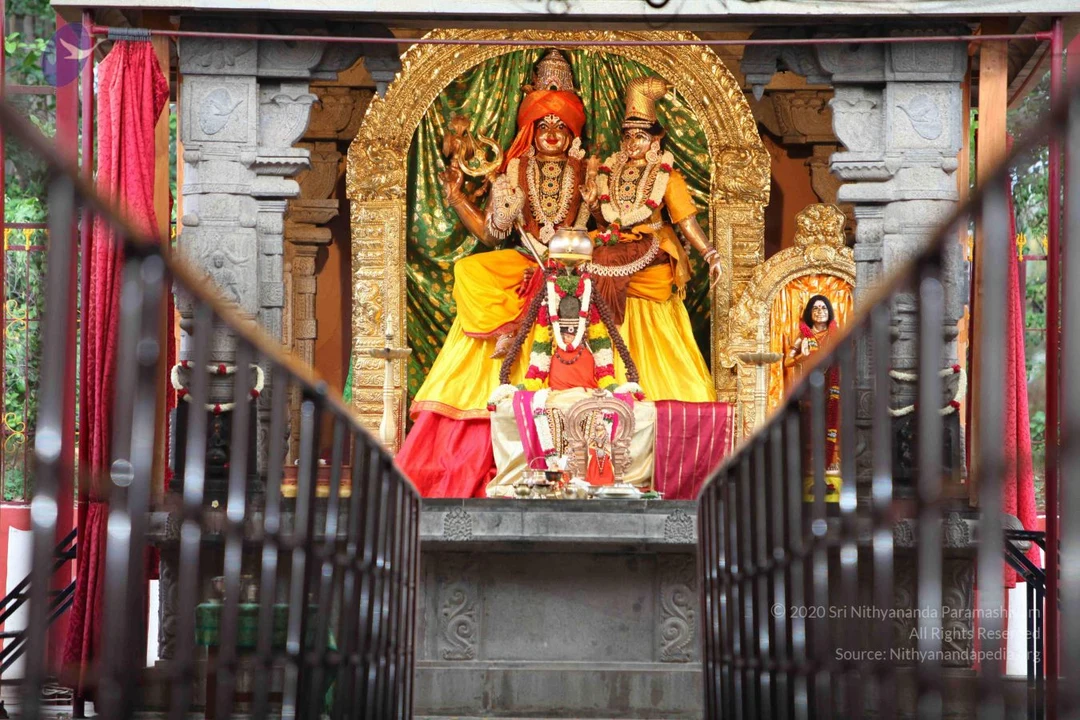
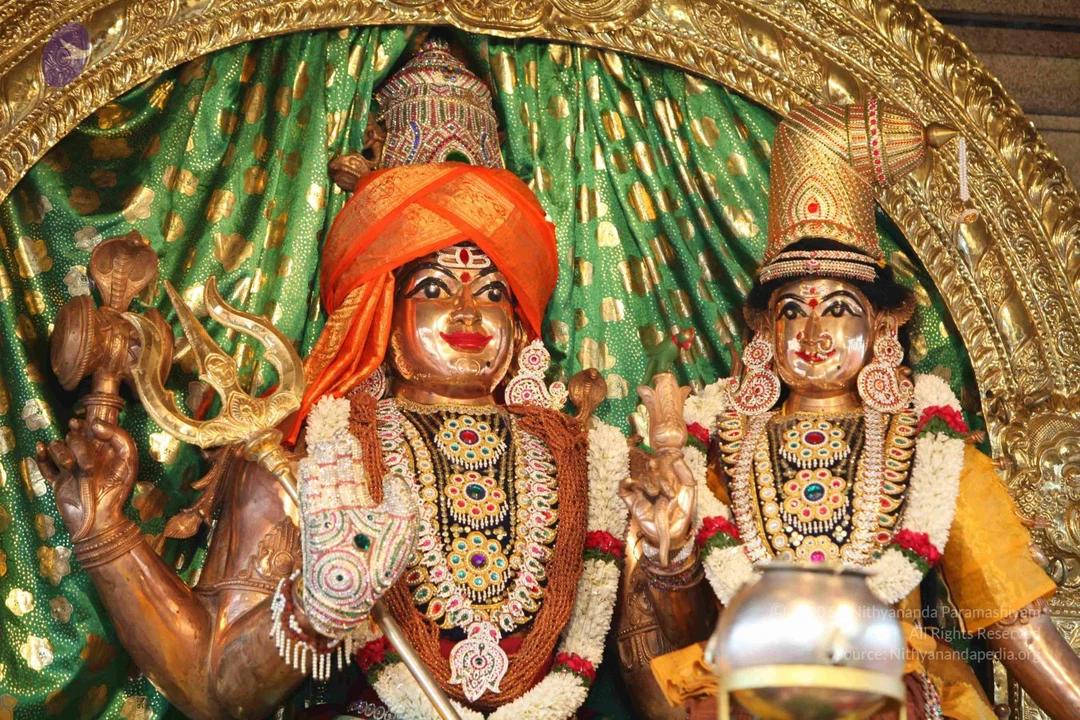
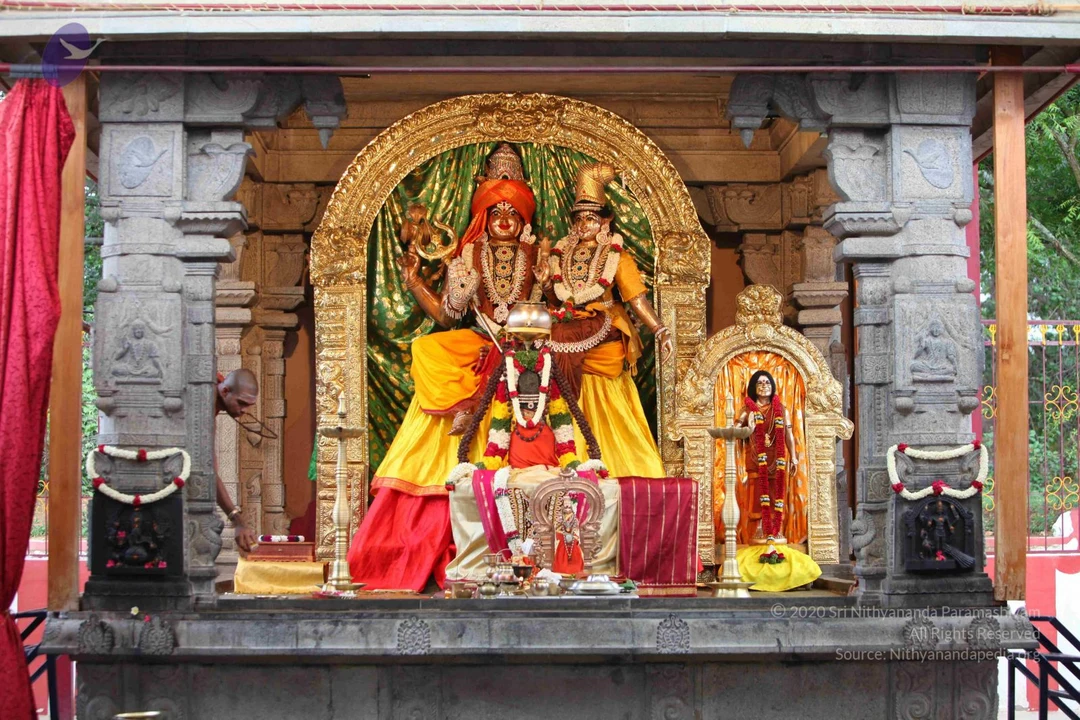
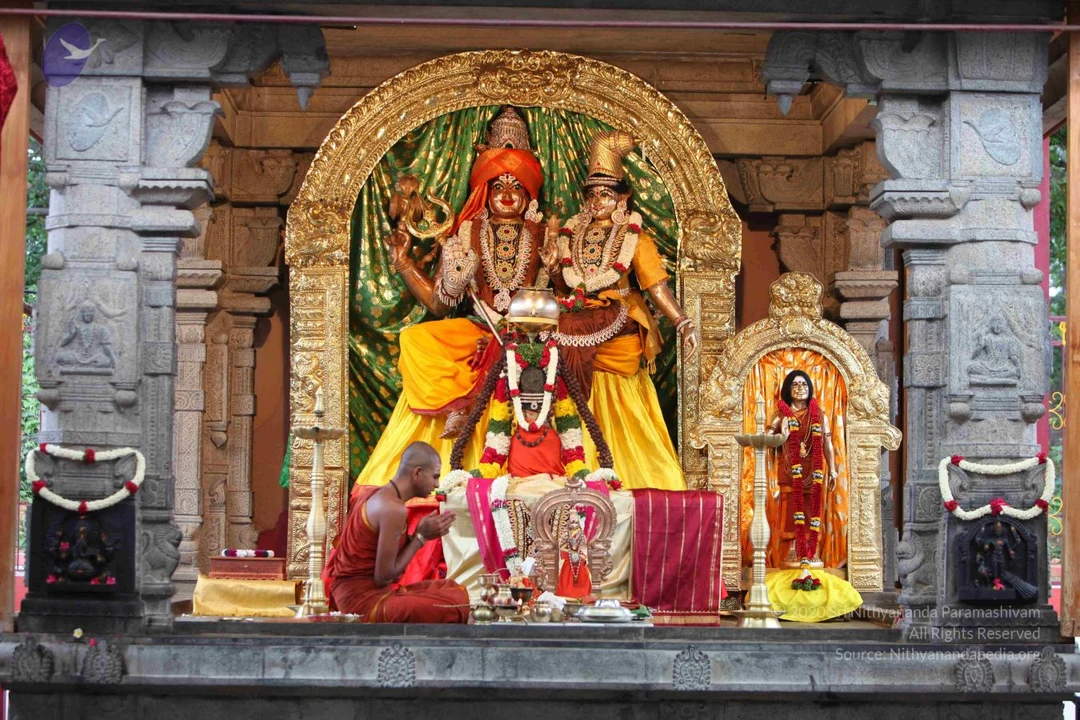
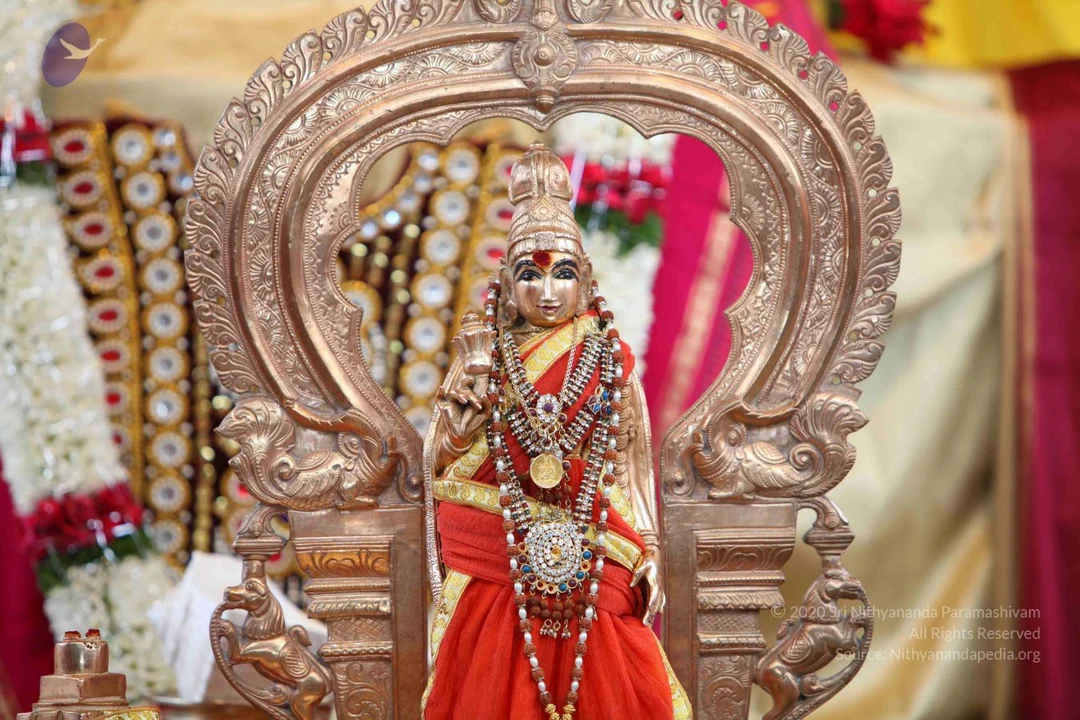
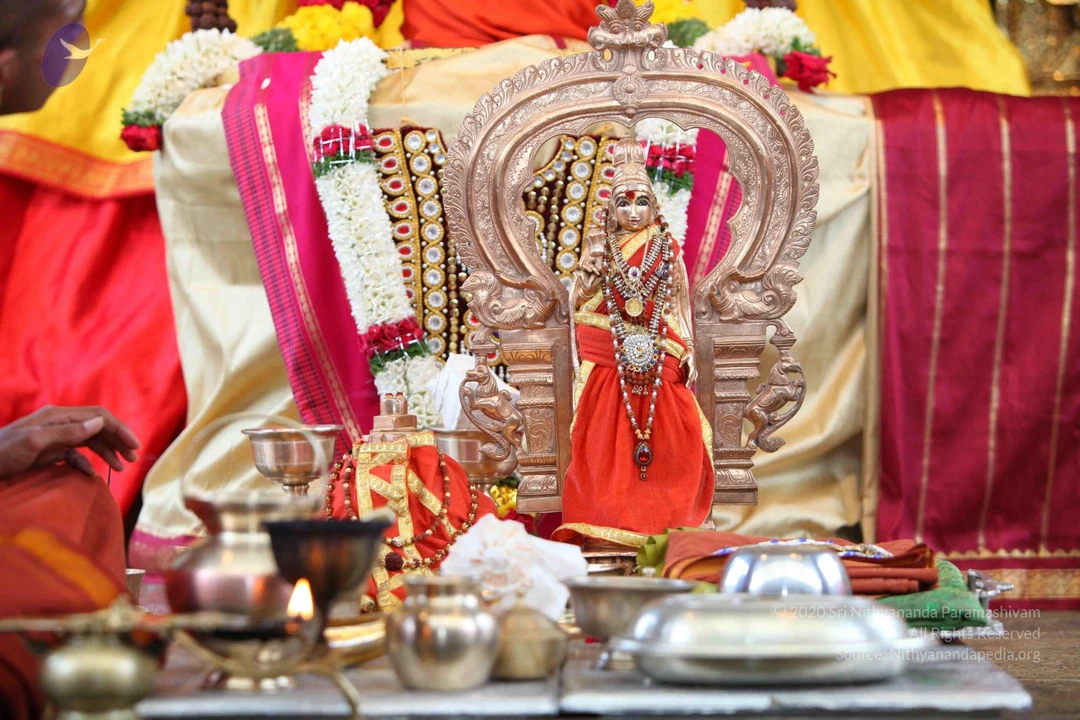
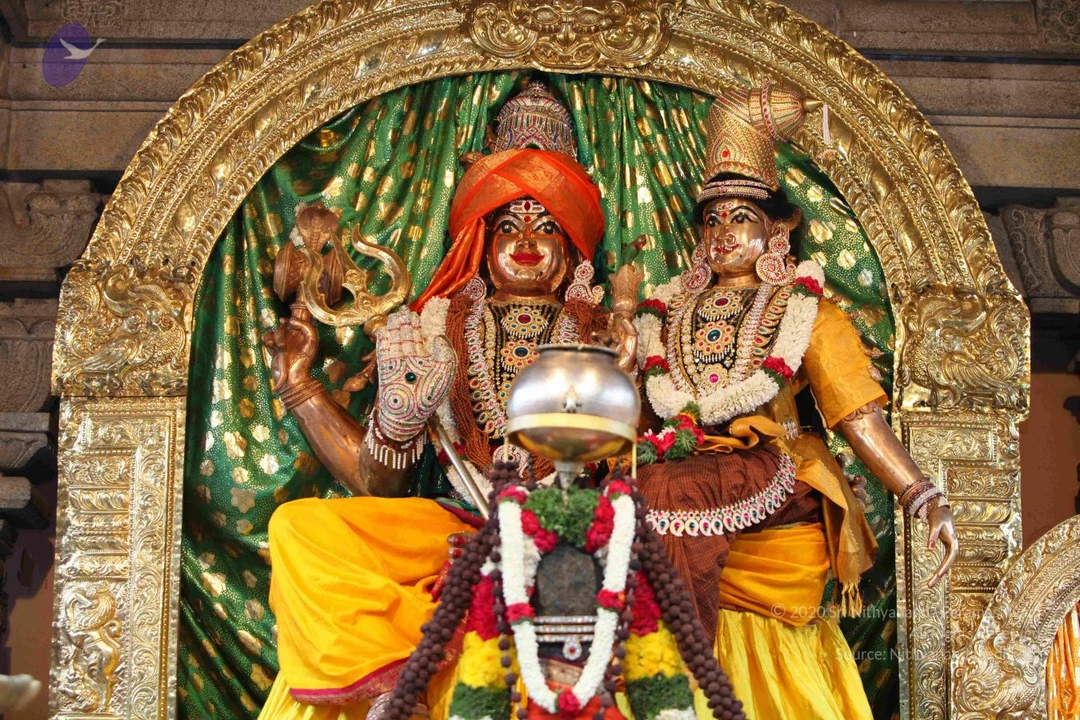
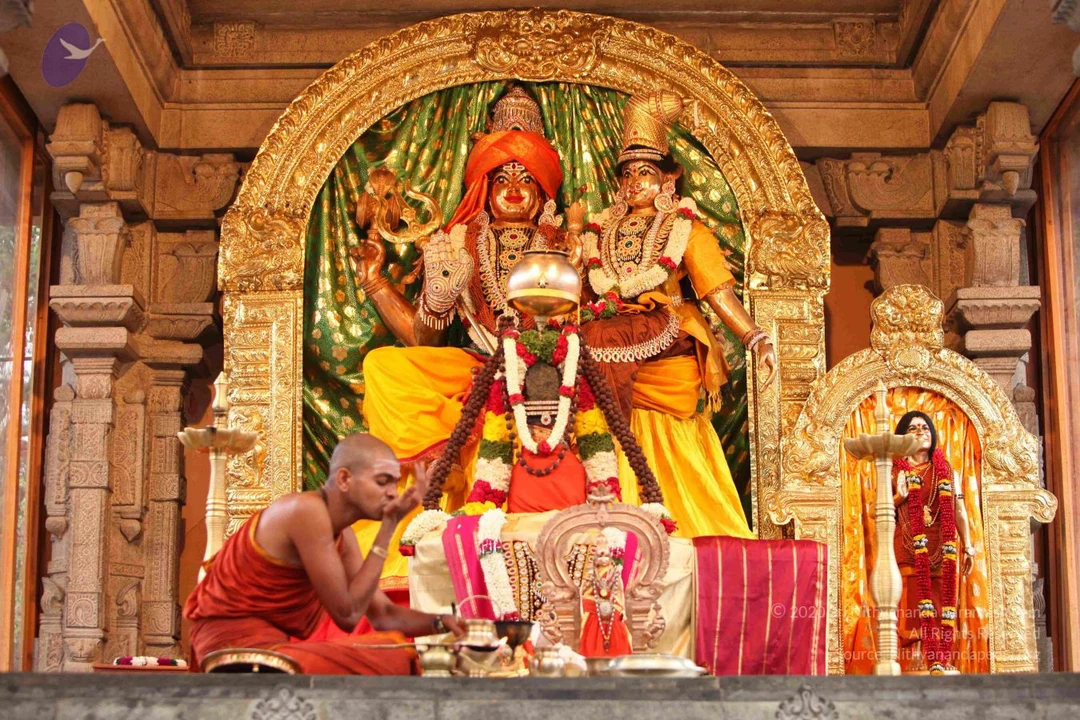
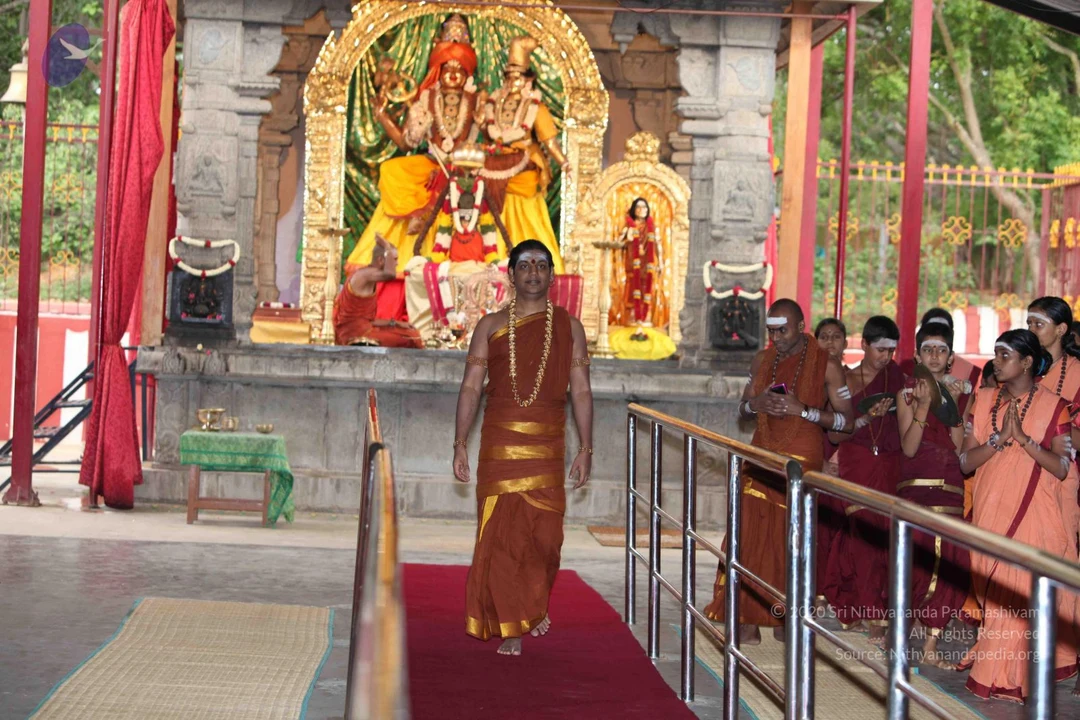
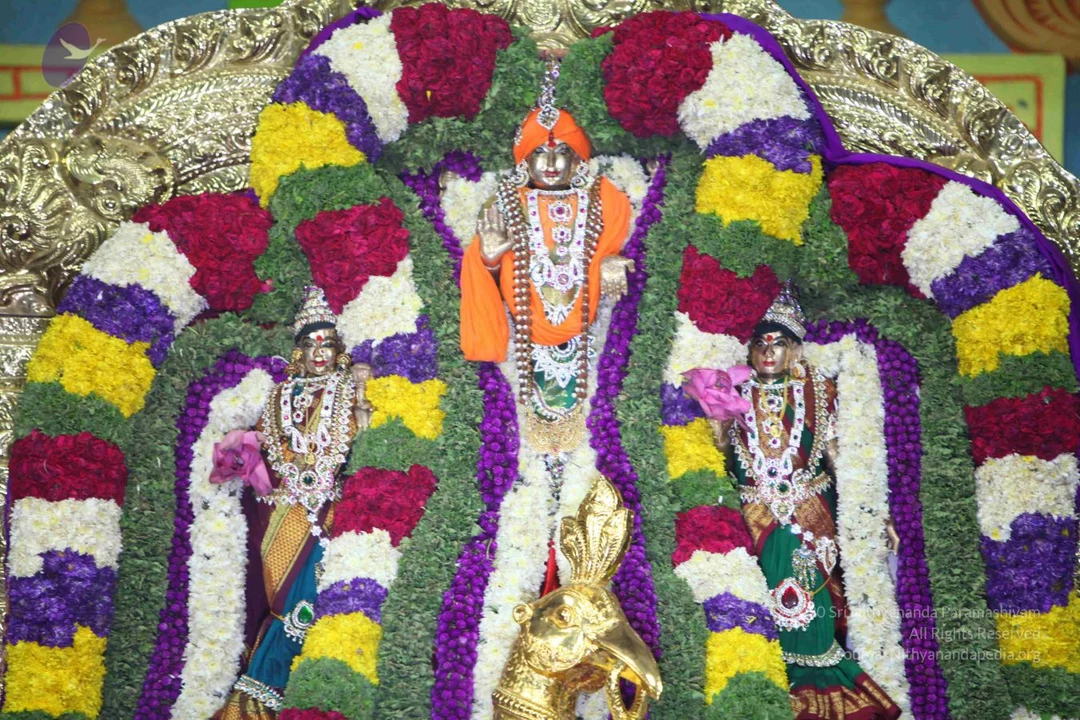
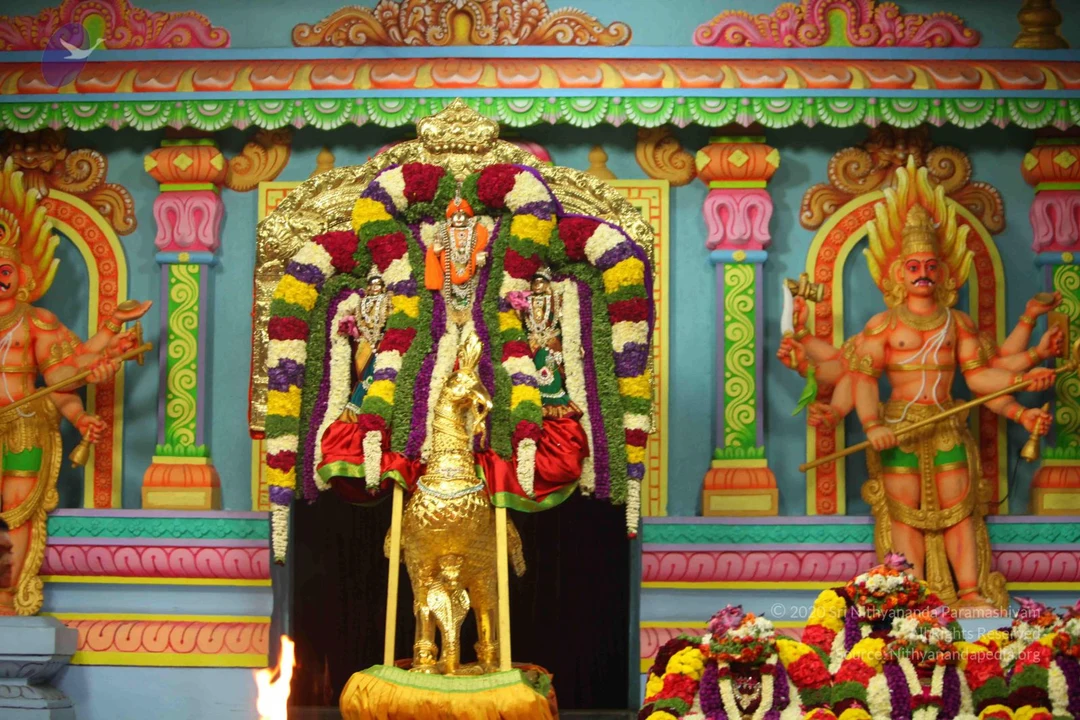
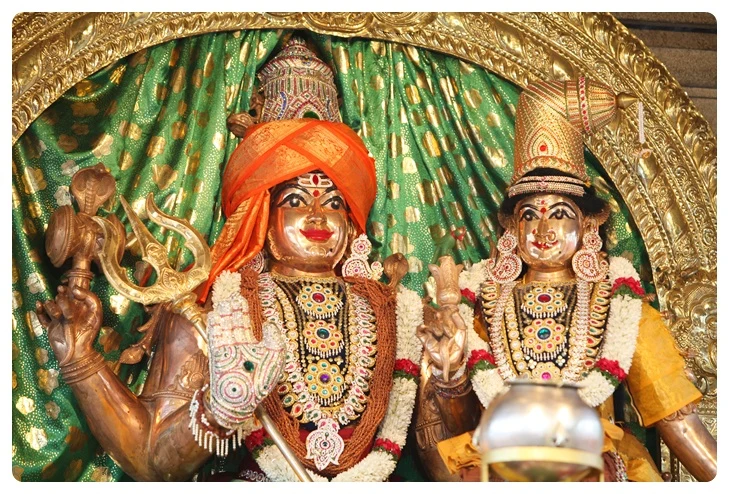
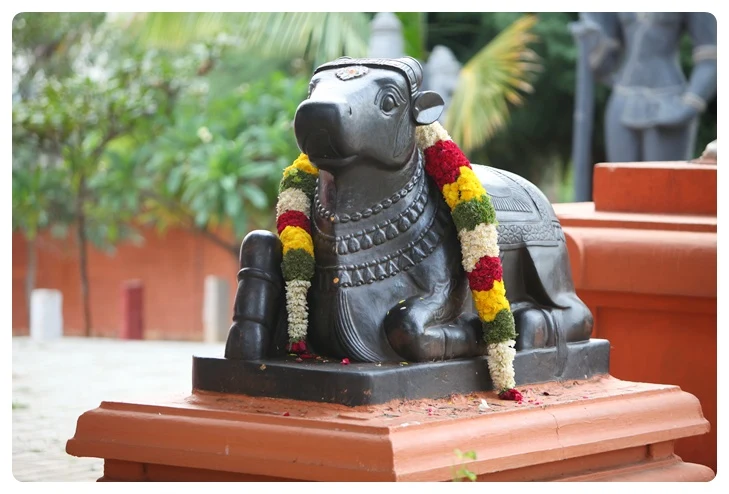
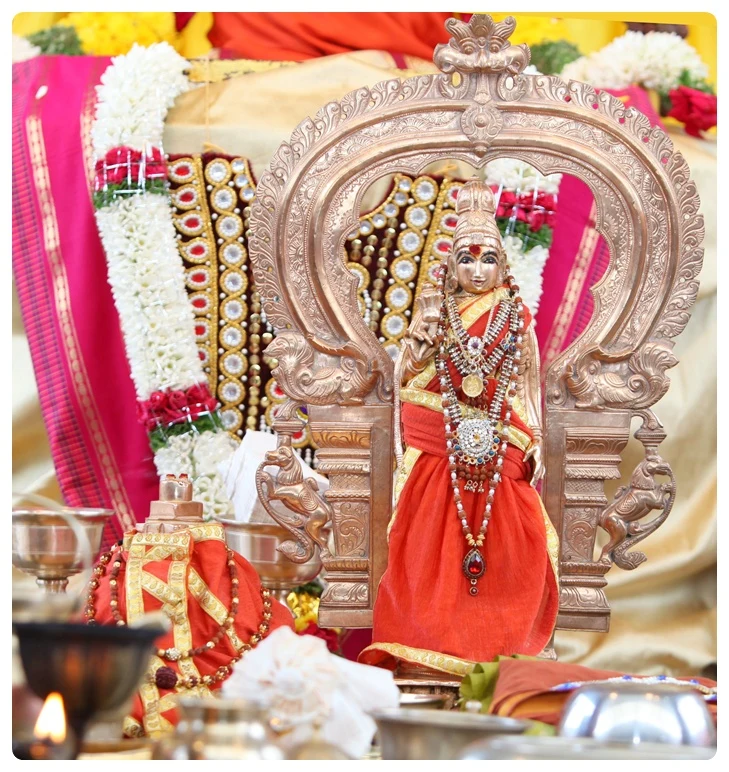
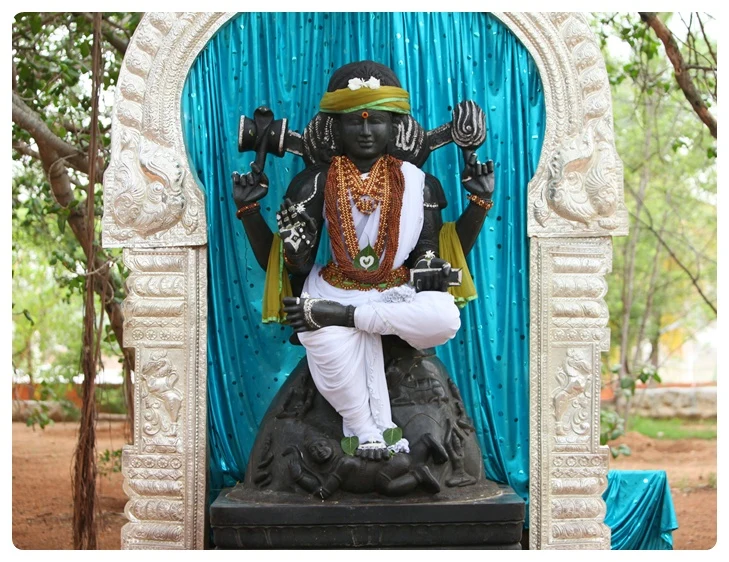
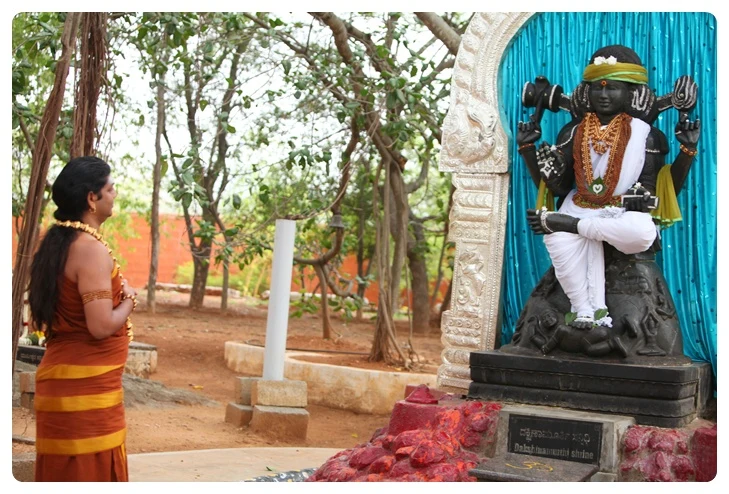
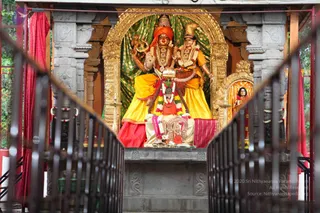
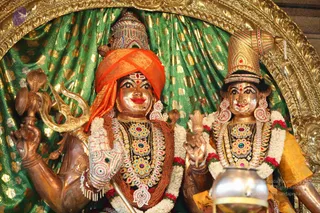
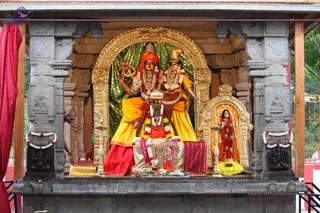
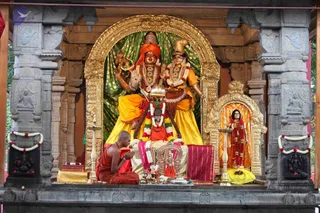
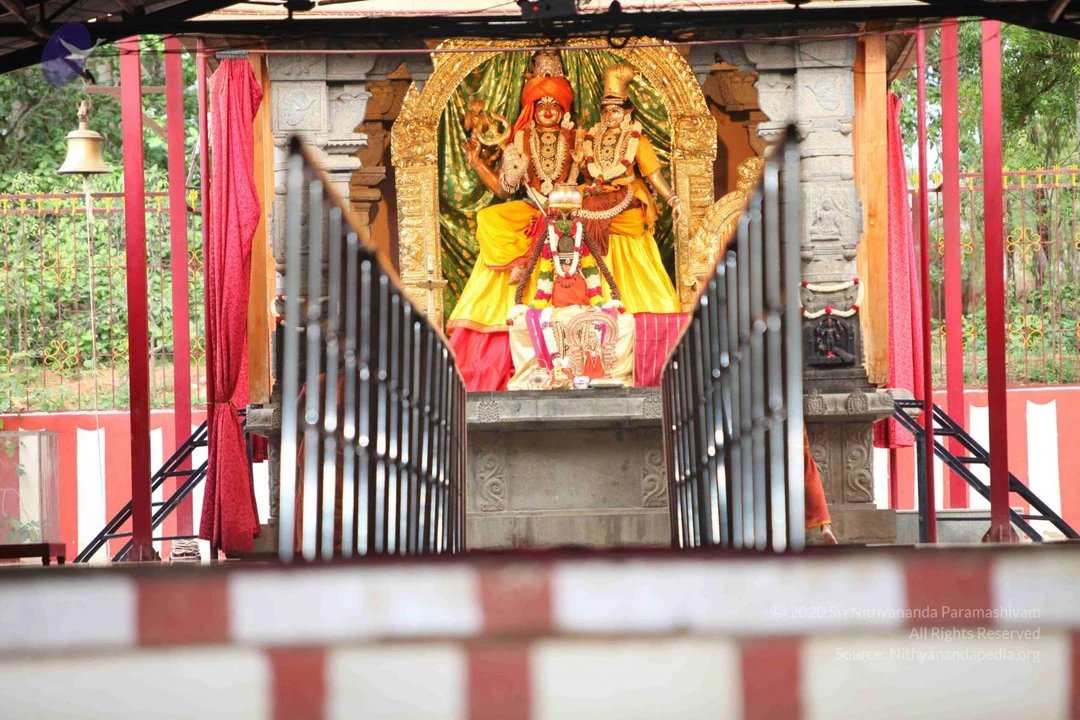
Photograph of a shrine framed by grey metal gates and red-and-white striped barriers. Inside a gilded arched niche, two seated deity murti are dressed in yellow garments with red trim and rich garlands; one holds a bell-like object and the figures sit atop a stone pedestal with marigold garlands and a small offering. Green silk drapes hang behind, and red cloth panels and a hanging bell frame the open-air structure with greenery beyond.A black stone Nandi bull statue sits on an orange-red pedestal outdoors, decorated with a garland of marigolds in red, yellow and white with green leaves draped over its neck and flank. Its forehead bears a small ornament, and a carved necklace of bells and beads hangs at its chest. A grey statue of a standing deity figure is visible at the upper right, with green foliage and an orange wall behind. No people are present.Photo of a shrine seen through metal railings in a temple courtyard. Inside an arched golden frame with a green cloth backdrop stand two large painted deity murtis in gold-yellow and orange garments, one holding a trident-like weapon and wearing an orange turban-style crown, the other wearing a tall crown. Garlands of flowers and beaded necklaces adorn them. Below, a stone plinth holds a smaller murti or sacred object decorated with flower garlands, brass lamps and a kalasha-style vessel. A red curtain hangs on the left and a small shrine figure with red garland appears at the right edge. The viewer is positioned behind the railing, which frames the shrine.A photograph of two gilded metal deity murtis in a gold-framed arched shrine niche against a green cloth with gold dots. The left murti has a bronze-gold face, an orange turban, a trident held in one hand and a small drum-like instrument in another, wearing jeweled necklaces and a rudraksha-style brown garland with white flower garlands. The right murti wears a tall ornate crown, red-and-green jeweled necklaces, large earrings, and a yellow-gold garment, with a silver kalasha-like vessel in front. Both are garlanded with white flowers and red blossoms. No physical people are visible.Photograph of a temple shrine with two large painted deity murti standing under a golden arch, one in orange-red and yellow garments with a red turban-like crown and garlands, the other in saffron-yellow with a tall gold crown and multiple garlands. A small figure sits in front, and a brass kalasha-style vessel with flowers sits at center. Stone pillars with carvings flank the shrine, green cloth hangs behind, brass oil lamps stand at the sides, and a red curtain hangs at left. A partially visible person in white stands at the left edge near a pillar, and a small attendant figure stands at right. Garlands of white and marigold decorate the pillars and shrine.A shrine scene with a large golden arch framing two painted deity murtis, one with an orange turban and trident-like weapon and one wearing a gold crown, both with garlands and gold ornaments, seated before a green draped backdrop. In front, a shaved-headed man in orange-red robes sits cross-legged at a puja platform, hands folded in a devotional gesture, beside brass lamps, a kalasha-like vessel, flower garlands and a red-and-white cloth. A smaller figure in an orange robe with a red garland stands in a side niche. Grey stone pillars with carvings frame the open pavilion.

Pratyaksha-Padapuja

41 photosSource gallery
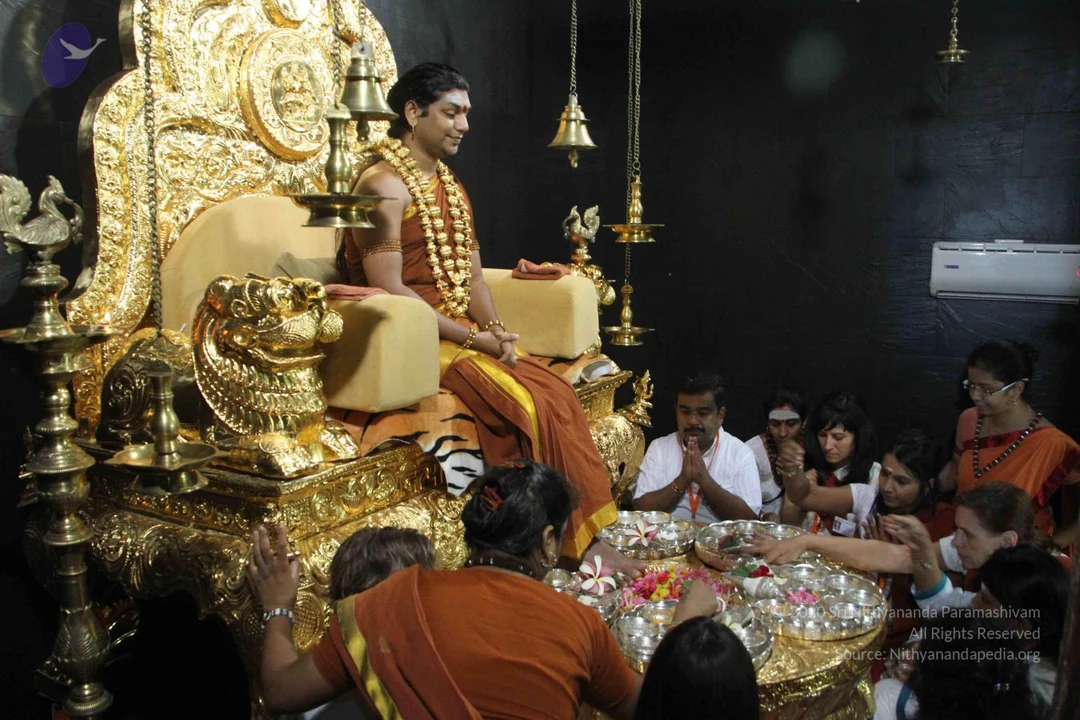
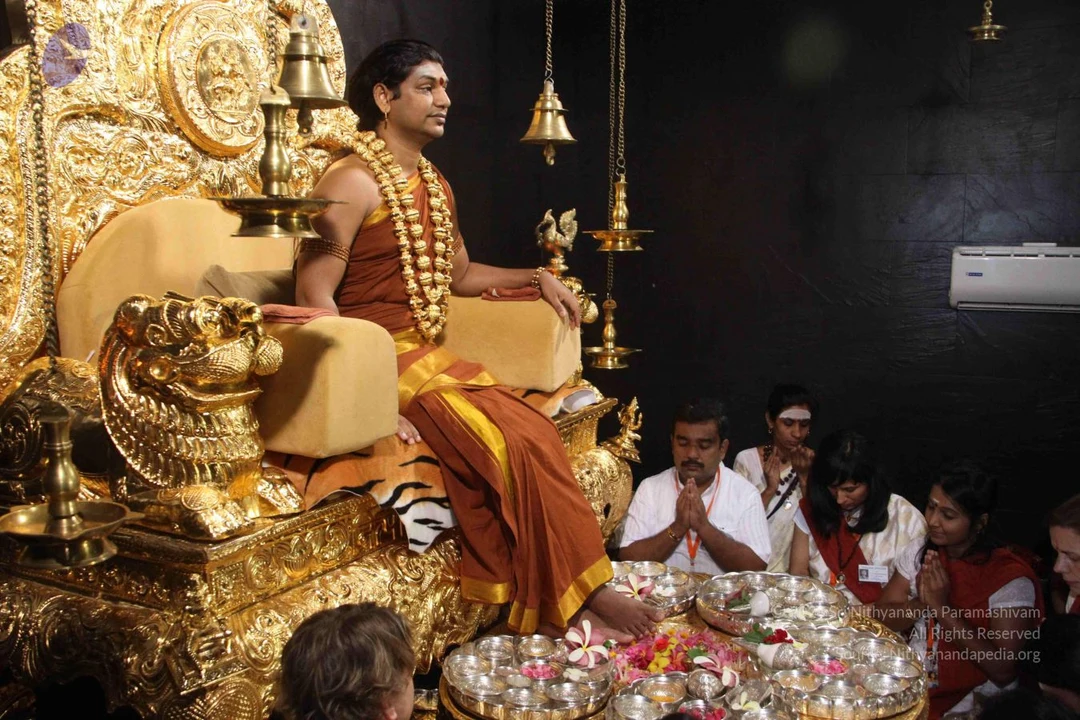
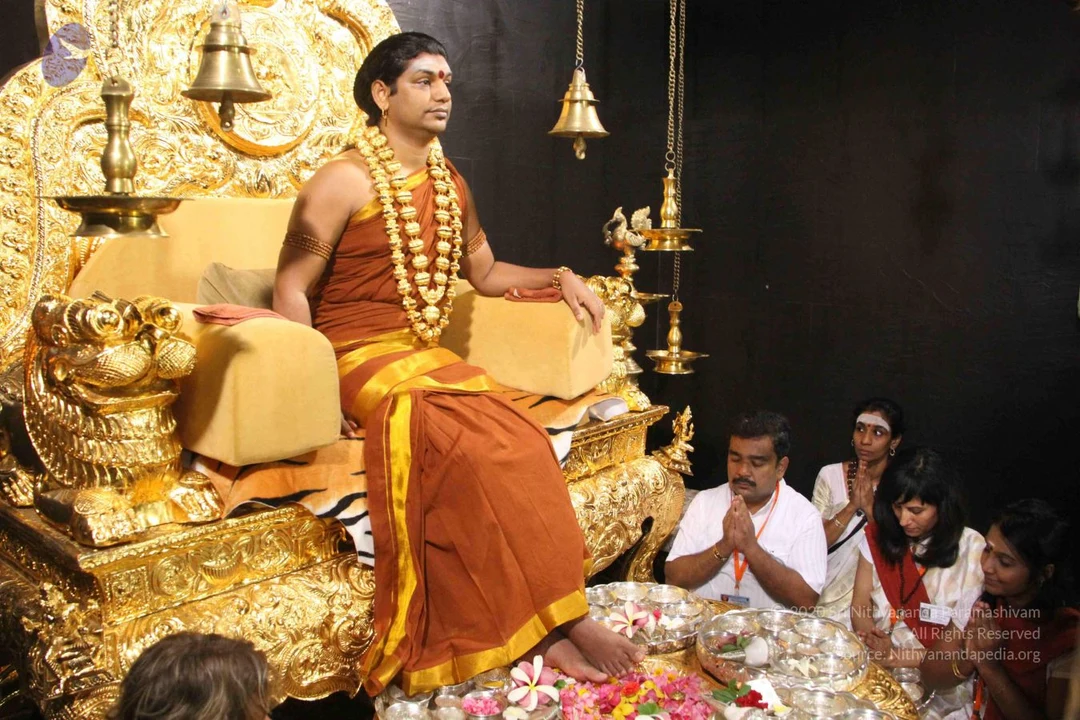
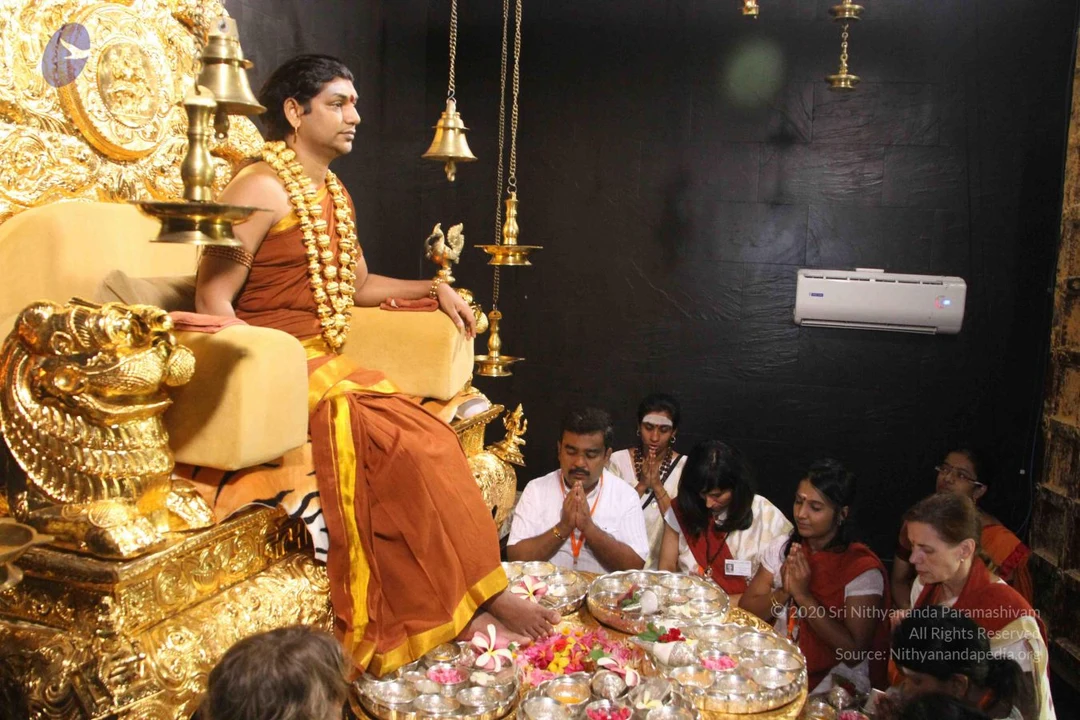
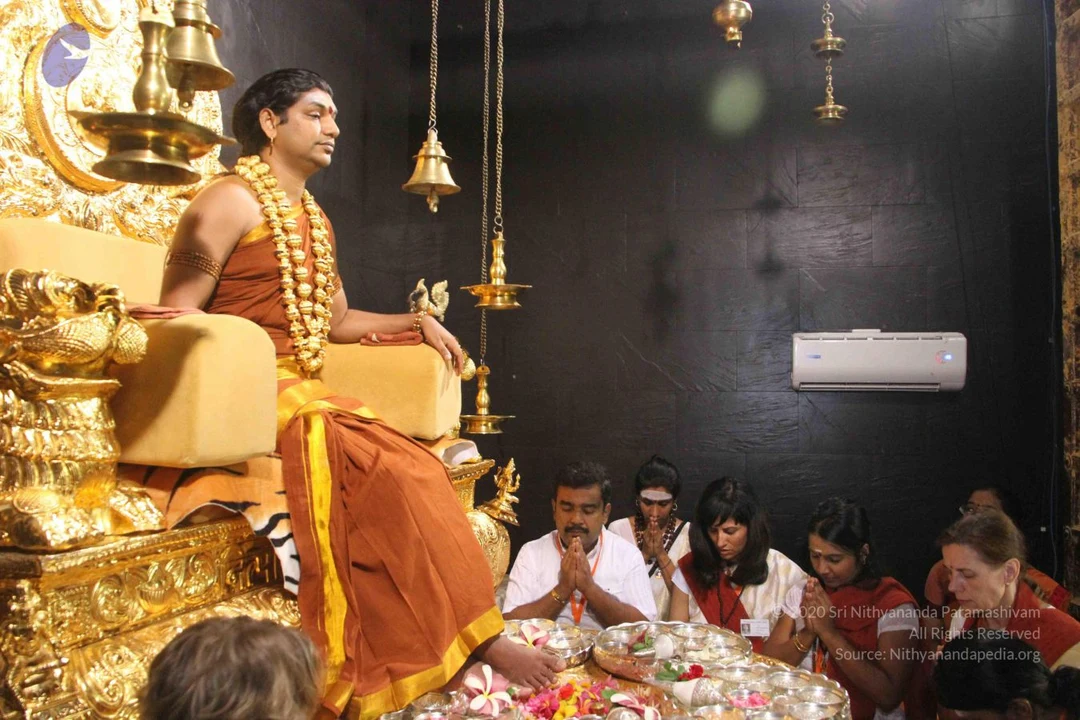
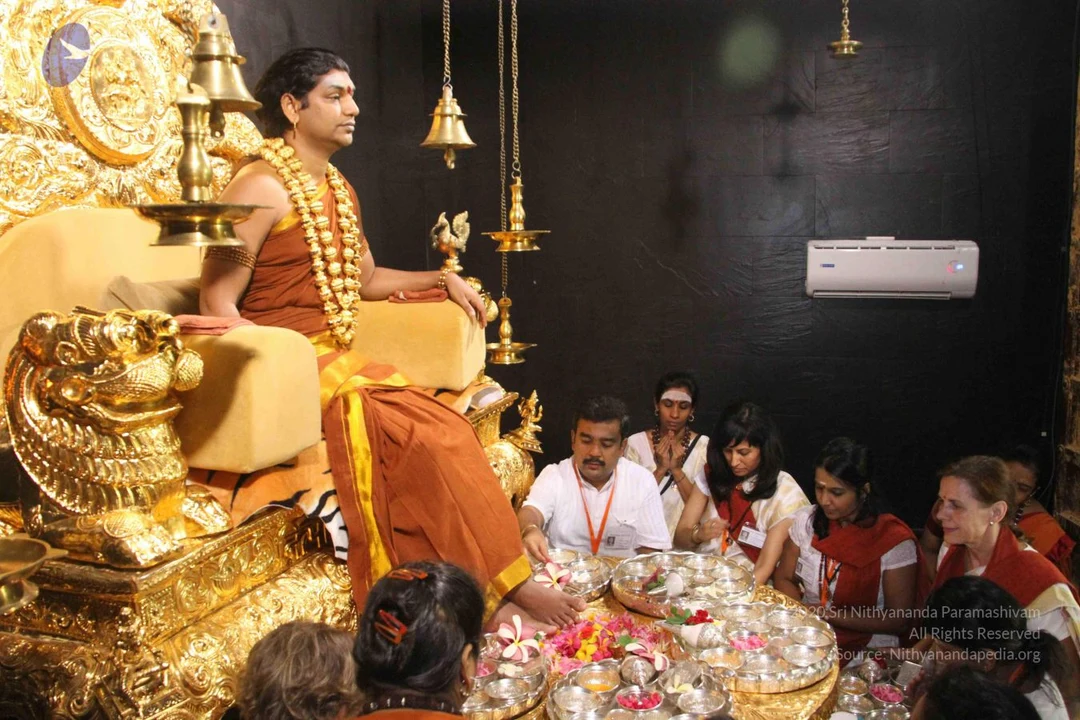
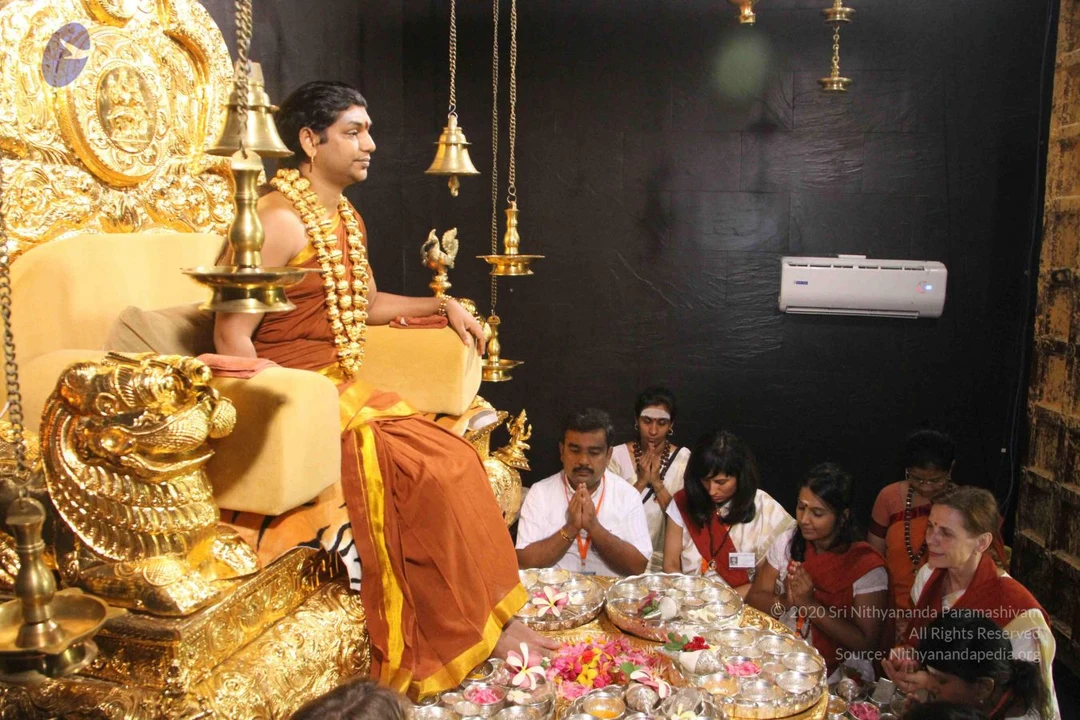
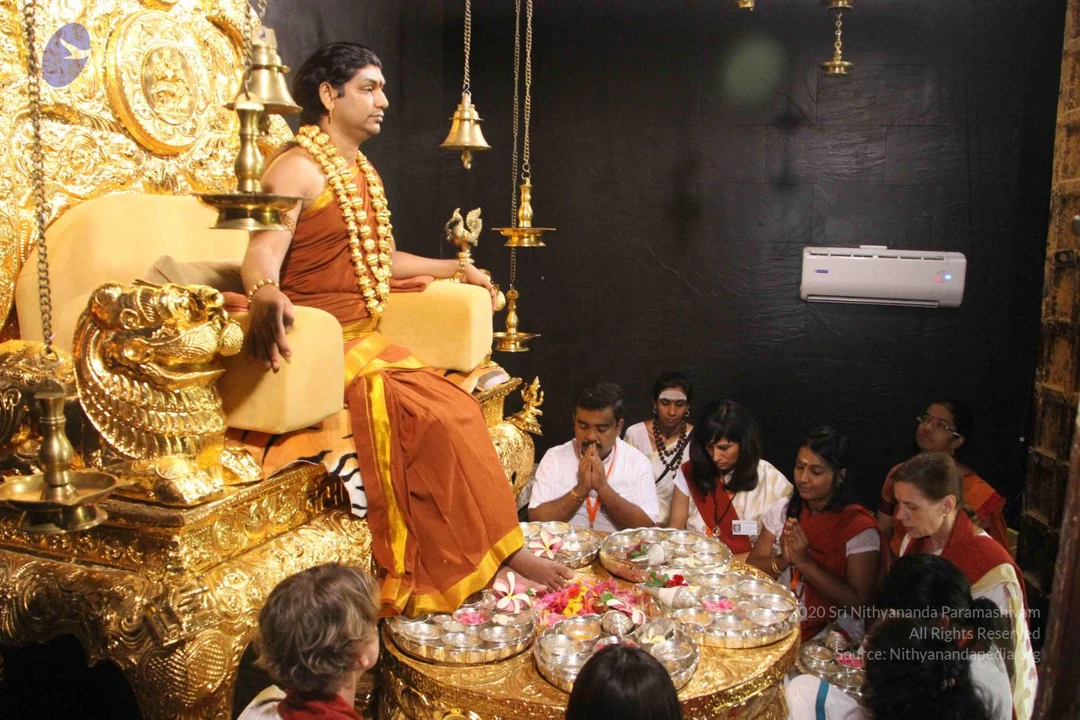
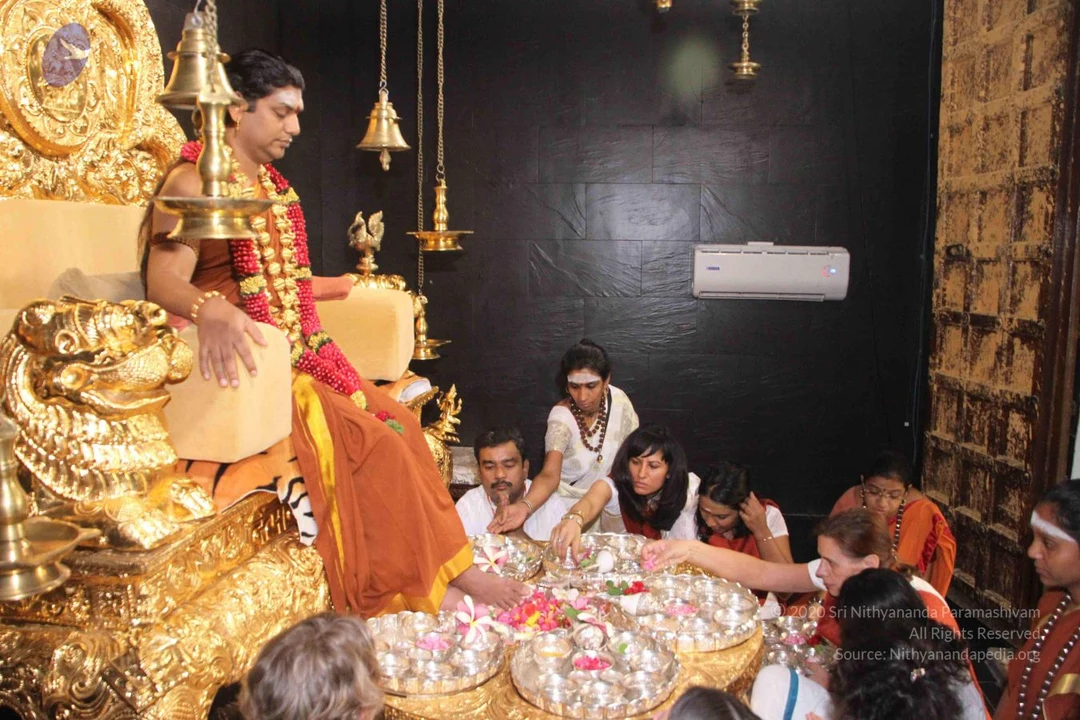
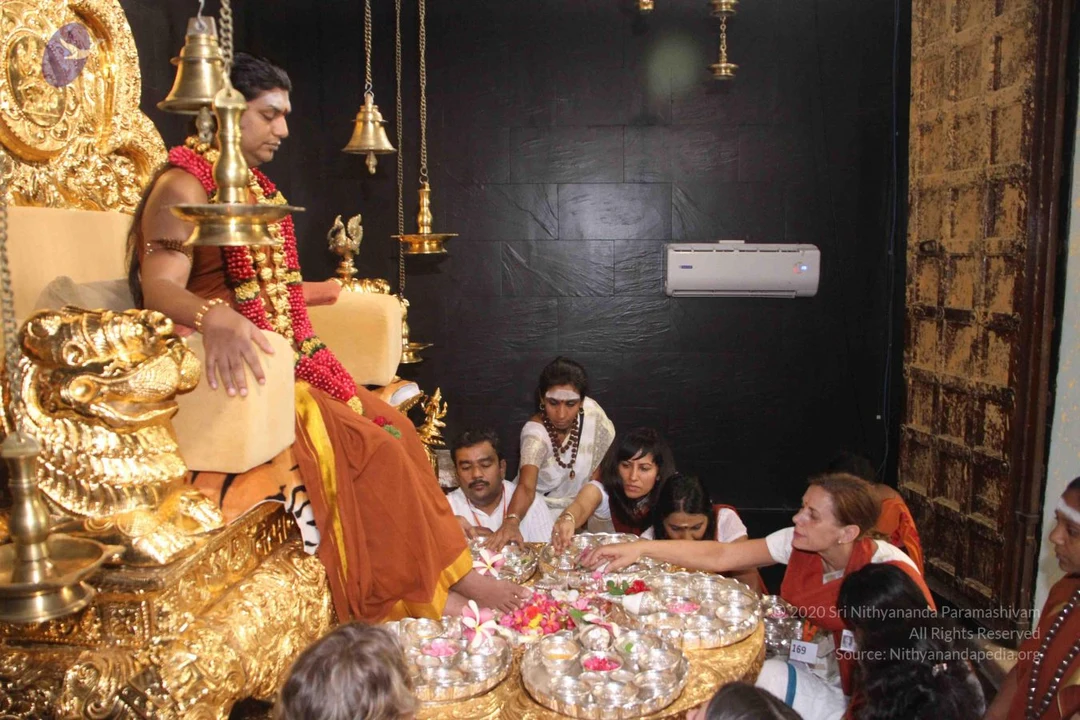
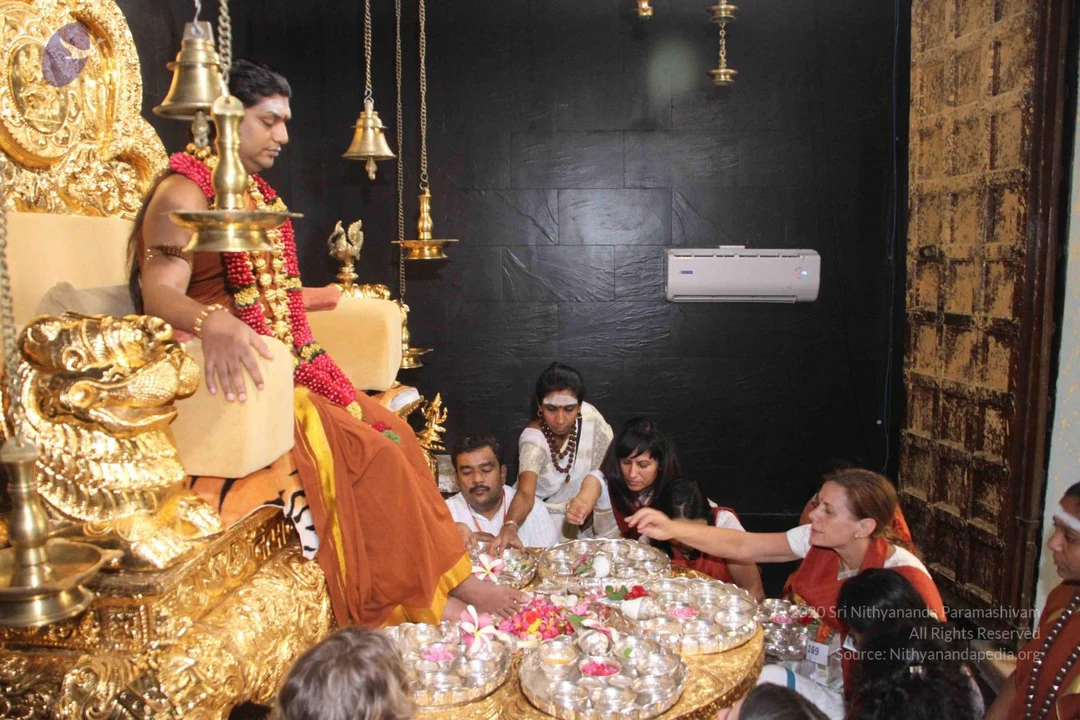
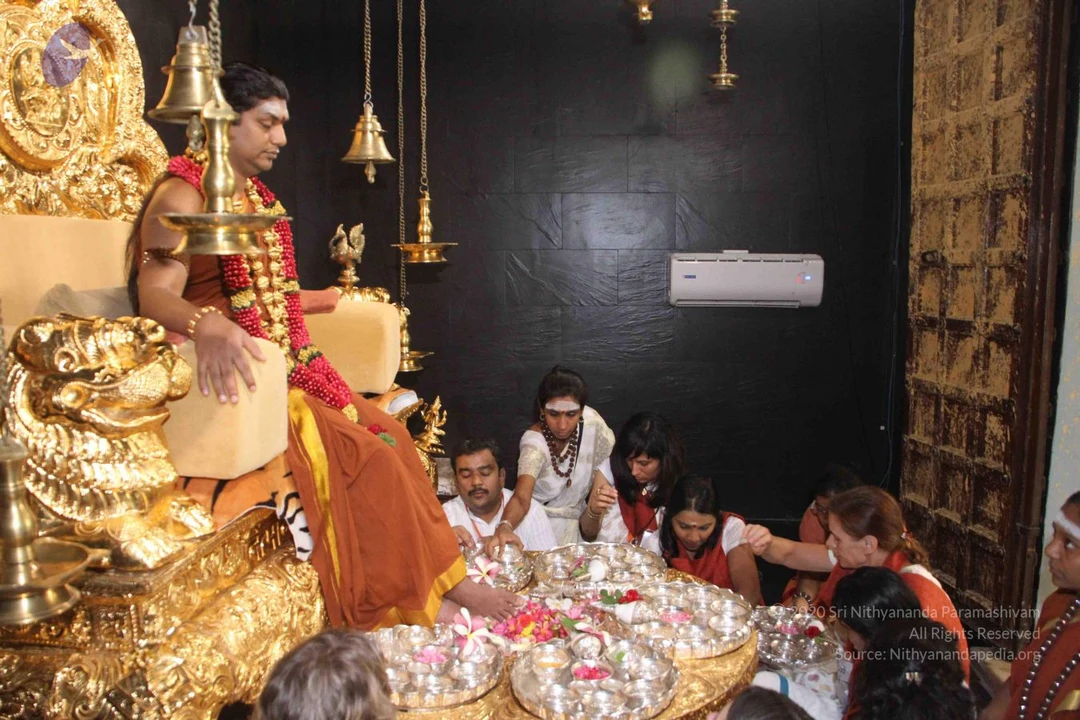
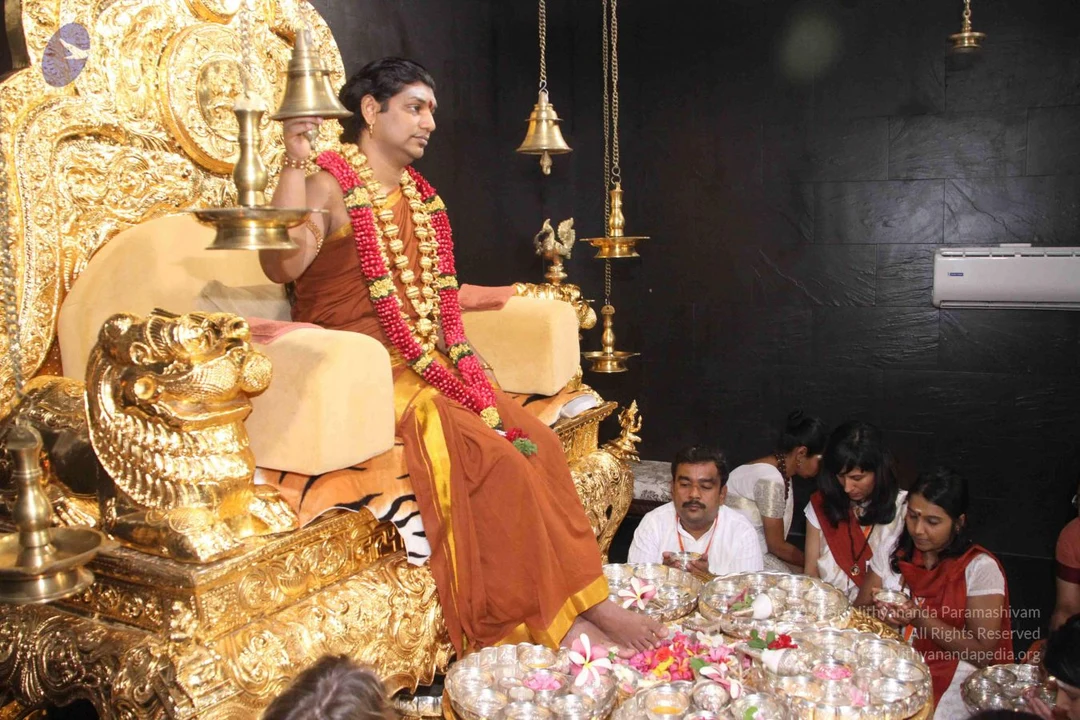
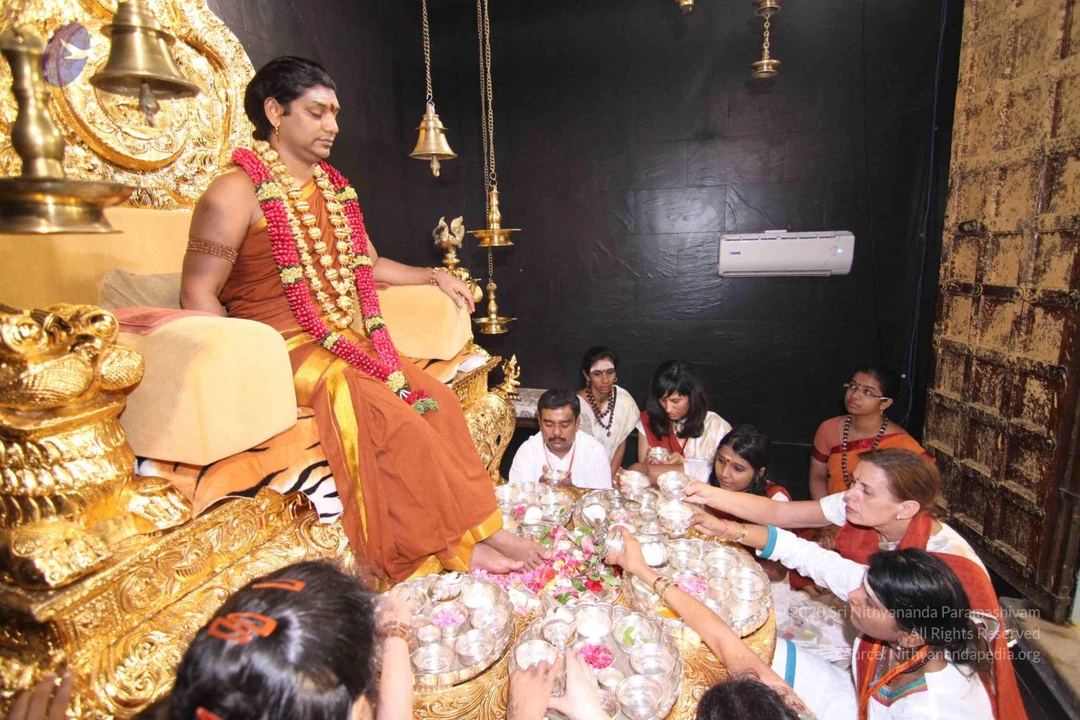
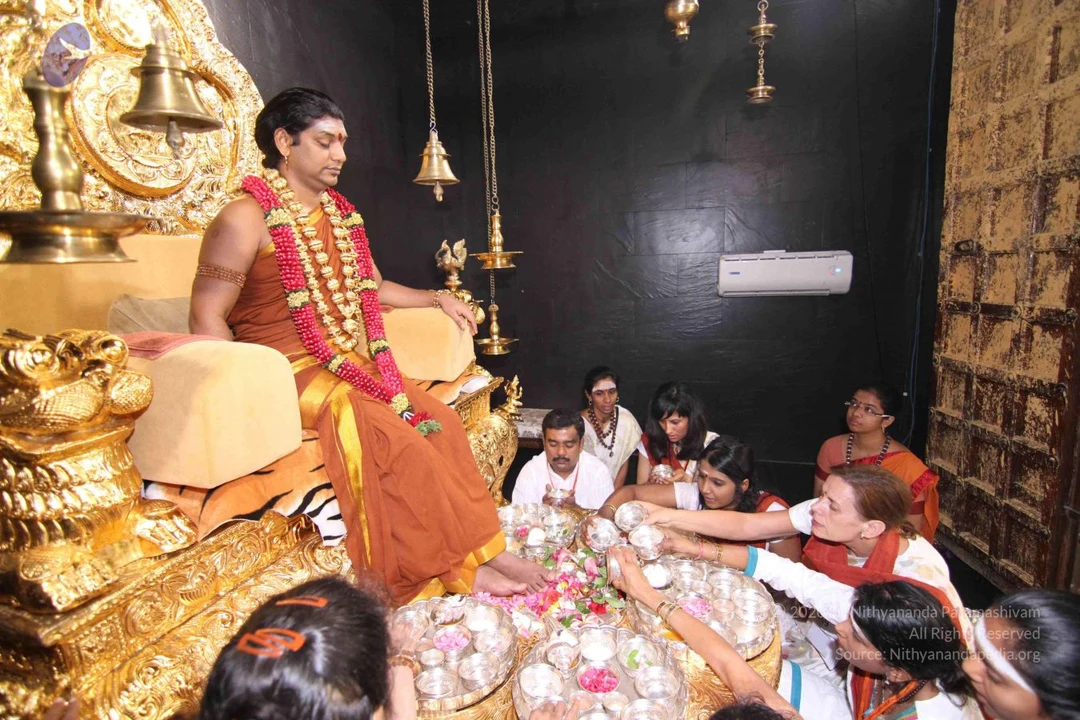
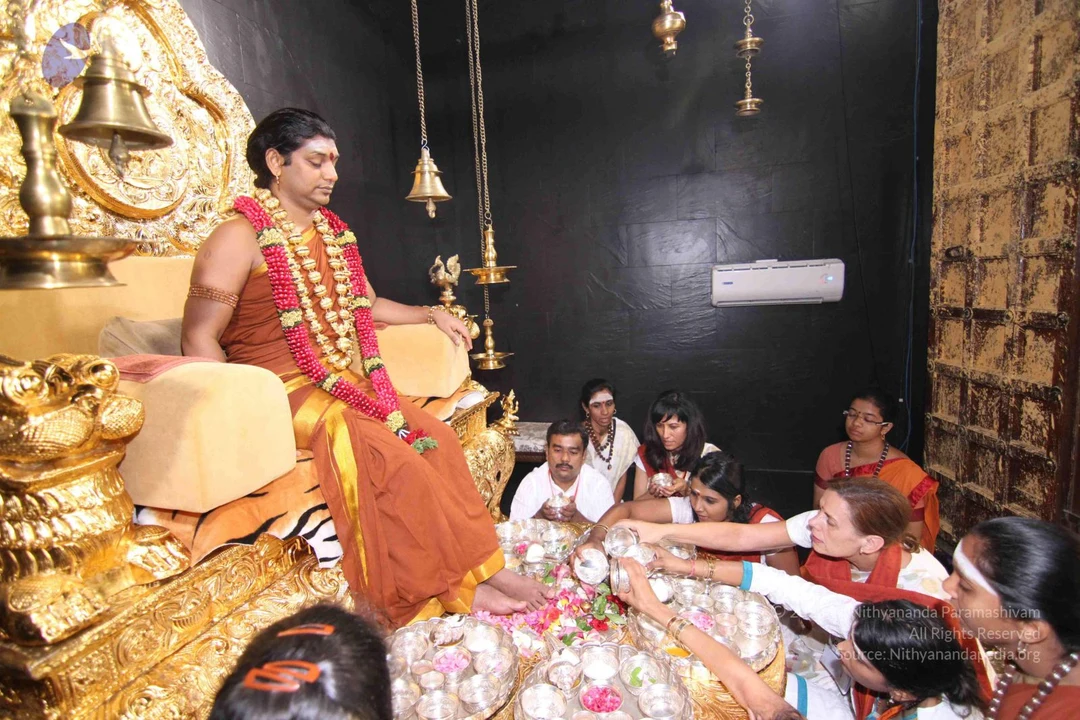
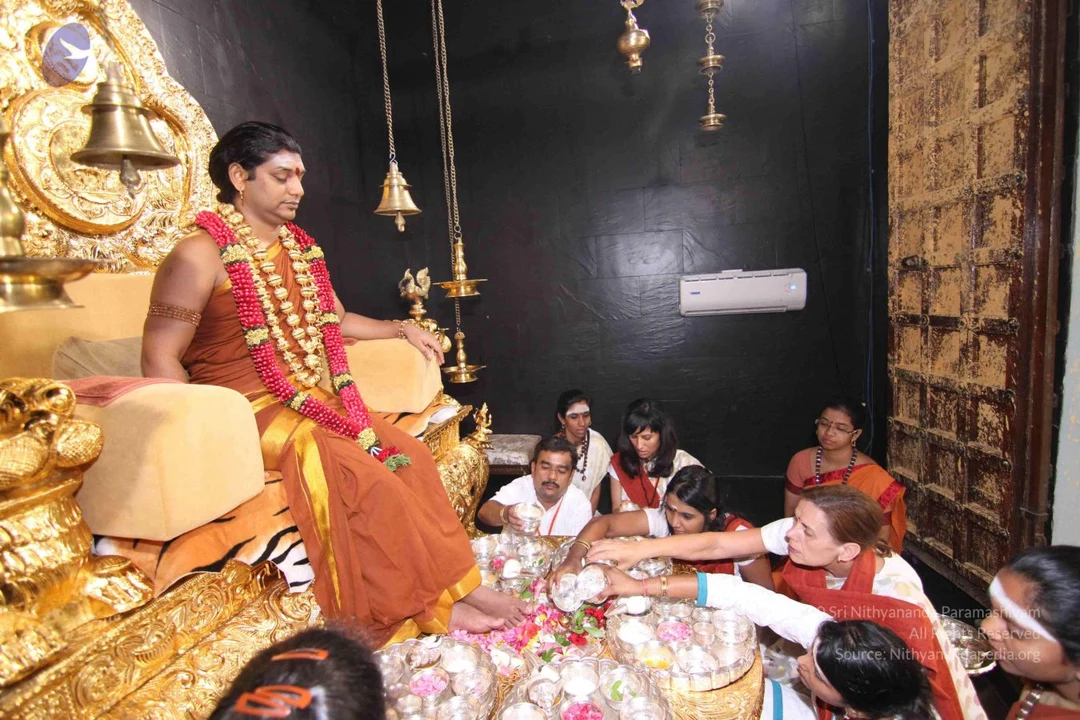
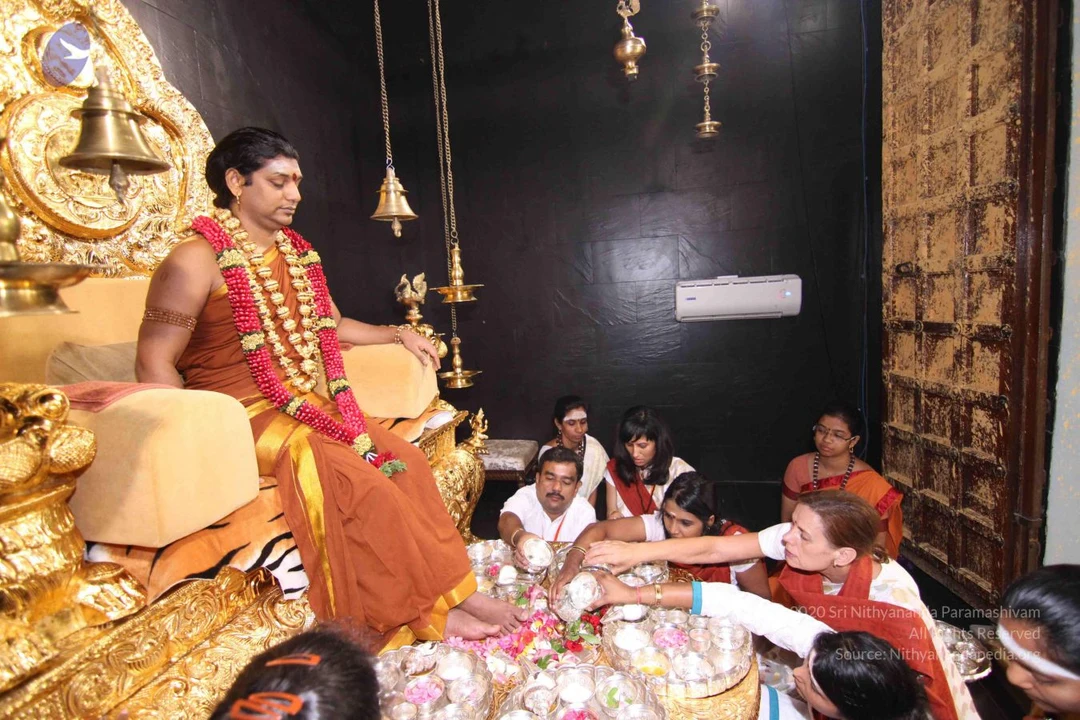
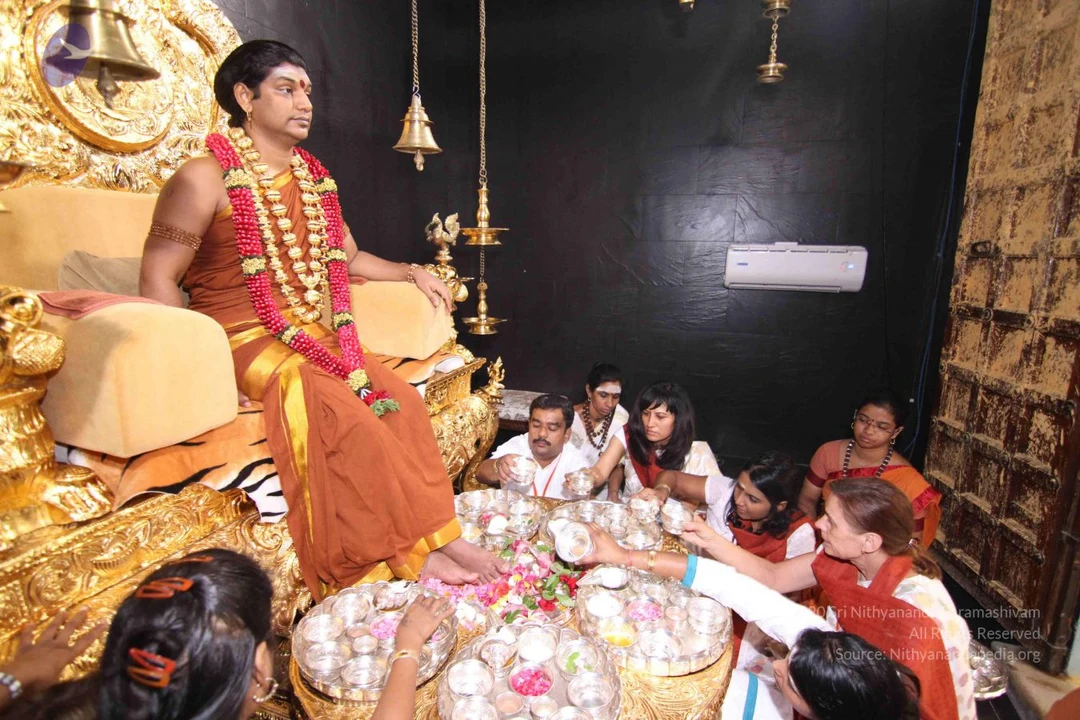
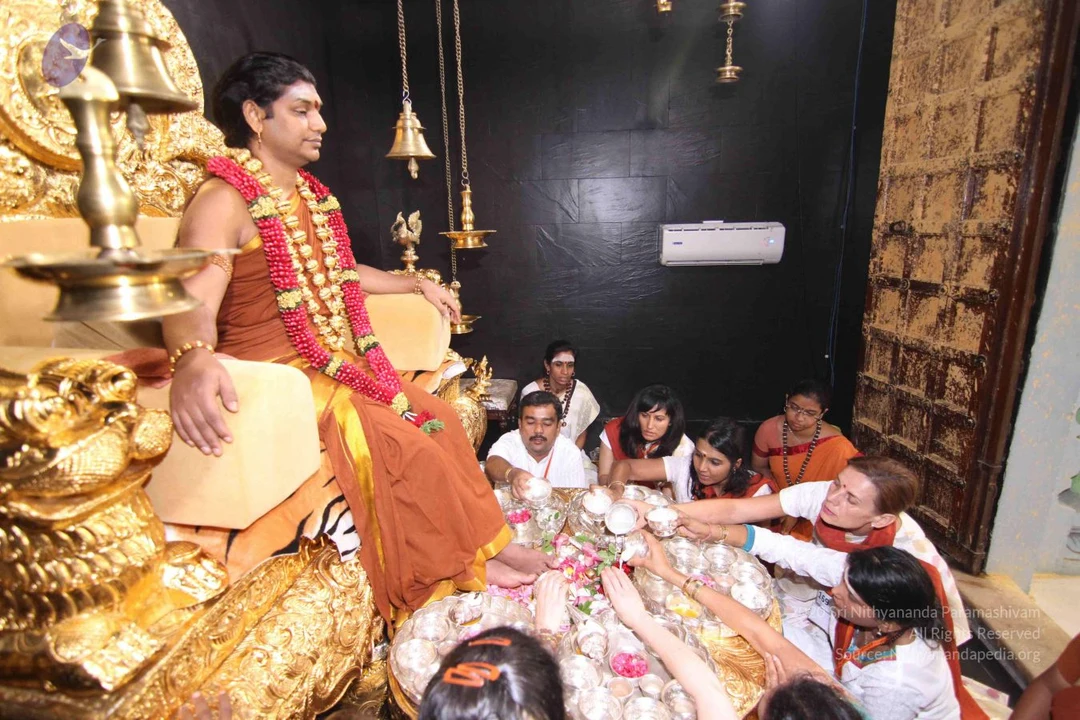
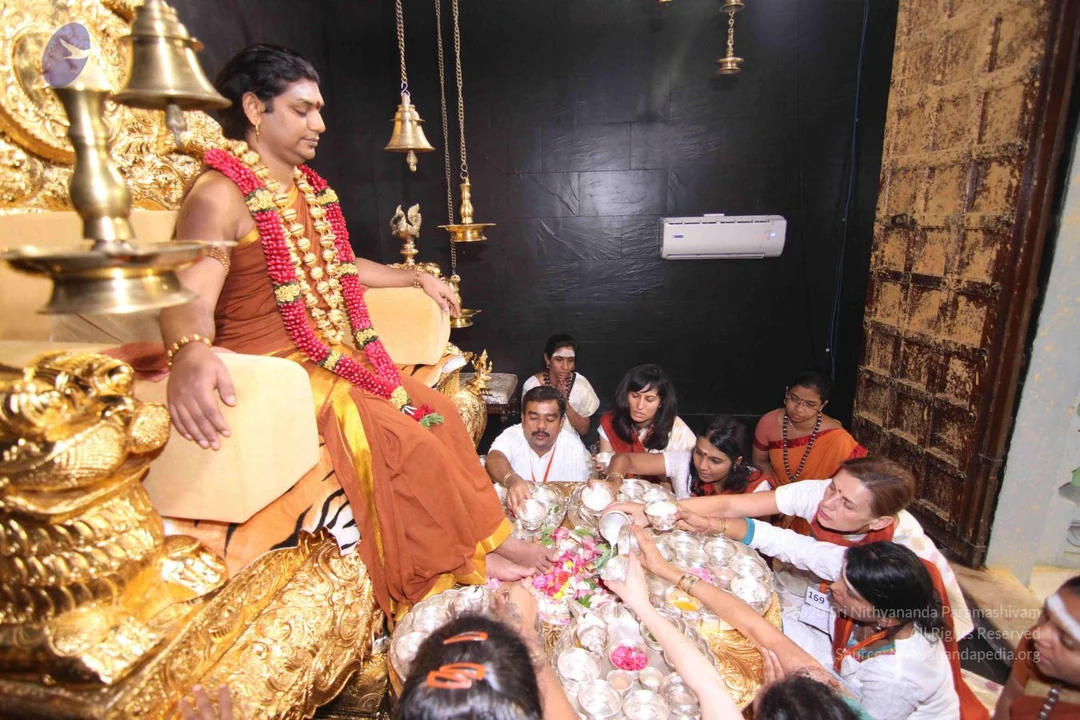
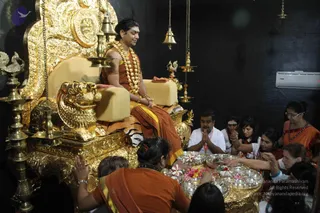
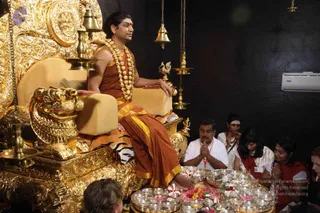
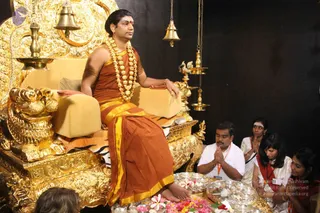
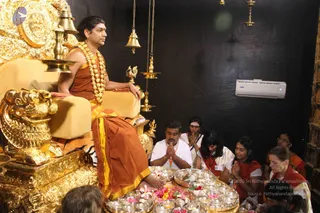
A seated man with long dark hair wears an orange-saffron dhoti and a long white-and-gold flower garland, with gold bangles on his wrists, on an ornate gold throne carved with lion-like figures and a tiger-striped cloth draped over the seat. Brass oil lamps and hanging brass bells surround him against a black wall. Around a low golden table of silver and steel plates holding flowers and offerings, several devotees sit or kneel: a man in white with an orange garland and folded hands, a woman in an orange sari with rudraksha-style beads, and a woman in red and white with a white forehead mark. An air conditioner is mounted on the wall at right. The seated man matches the page's a person reference through his saffron clothes, long hair and ceremonial garland, so the appearance-based label is probable; the attribution rests on those visible cues alone.A man with long swept-back dark hair sits on an ornate gold throne carved with lion-head arms and a gilded backrest, draped in a tiger-striped cloth. He wears an orange-brown robe with a gold border, a long rudraksha-style gold bead necklace, and bangles, and his bare feet rest on a footstool. Before him, brass plates hold flower petals, fruit, and small oil lamps. Devotees kneel at the throne's base with hands folded in anjali: a man in white with an orange scarf, a woman in white with a forehead marking, and women in white and red garments. Brass hanging lamps and bells hang from the upper right, and a wall air conditioner is visible on the black wall.A seated man in an ornate gilded throne with a lion-head armrest sits on a tiger-striped cloth. He wears a saffron-orange dhoti and shawl with gold borders, a long gold necklace of beads, gold armbands, and a red tilak on his forehead. Bells and a hanging brass lamp hang above him. Below, a lower-level brass tray holds steel bowls with pink and white flowers. Three devotees kneel in front with hands folded in namaskar: a man in a white shirt with an orange lanyard, and two women in white and red saris, one with white vibhuti on her forehead.A photograph of a seated figure on an ornate gold throne with a carved lion-head armrest, in a dark-walled room with hanging brass bells and oil lamps. The seated man wears a saffron-orange dhoti with a golden border, a bare upper body with an arm band, and a long necklace of gold-toned beads; he has long swept-back hair and gazes to the side. Swamiji (probable), based on the long hair, gold necklace and saffron clothing, seated on the throne. Before the throne, several devotees sit on the floor behind silver thalis filled with flowers, fruit, sweets and kumkum; a man in a white shirt with an orange lanyard and a woman in white with a red shawl sit with hands folded in namaste, and other women in red and orange saris are seated nearby. A wall-mounted air conditioner is visible at right.A photograph of a seated figure on a gold-gilded throne with a cushioned yellow seat, wearing an orange-saffron dhoti and shawl with yellow borders, a dense gold bead garland, a rudraksha-style gold necklace and a gold armlet. The figure looks to the side with a composed expression, one hand resting on the armrest. a person, seated in darshan. Before the throne, a row of devotees kneel with palms pressed in anjali; one man in white with an orange lanyard, a woman in white with a tilak, and women in red and white saris hold brass plates of flowers, petals and small oil lamps on a floor laid with offerings. Hanging brass bells and a brass lamp hang from chains in a dark wall-panelled room with a wall air conditioner.A seated man on an ornate gold throne with carved lion-head armrests wears an orange-saffron dhoti with a yellow border, a long white and yellow flower garland, a bangle, and has long swept-back hair. Gold and brass oil lamps hang from chains above him, and an air conditioner is mounted on the black wall. In front, a brass thali is set with small bowls, pink and orange flowers, and petals on a round table, while seated devotees in white and red-orange shawls with ID lanyards sit with folded hands; one man in a white shirt has a lanyard and a woman in white with a bindi is joined-palmed. Several heads are visible in the foreground. Appearance-based probable Swamiji (probable) seated on the throne, with saffron clothing, a flower garland and long hair as the distinguishing cues.

Nithya-Satsang

14 photosSource gallery
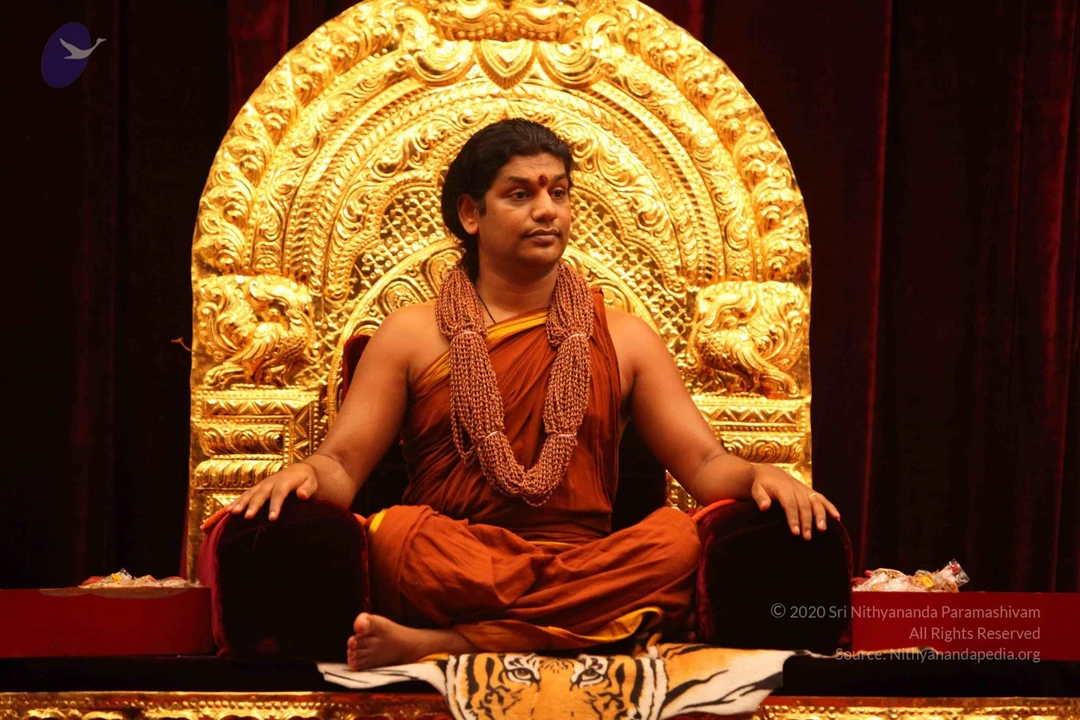
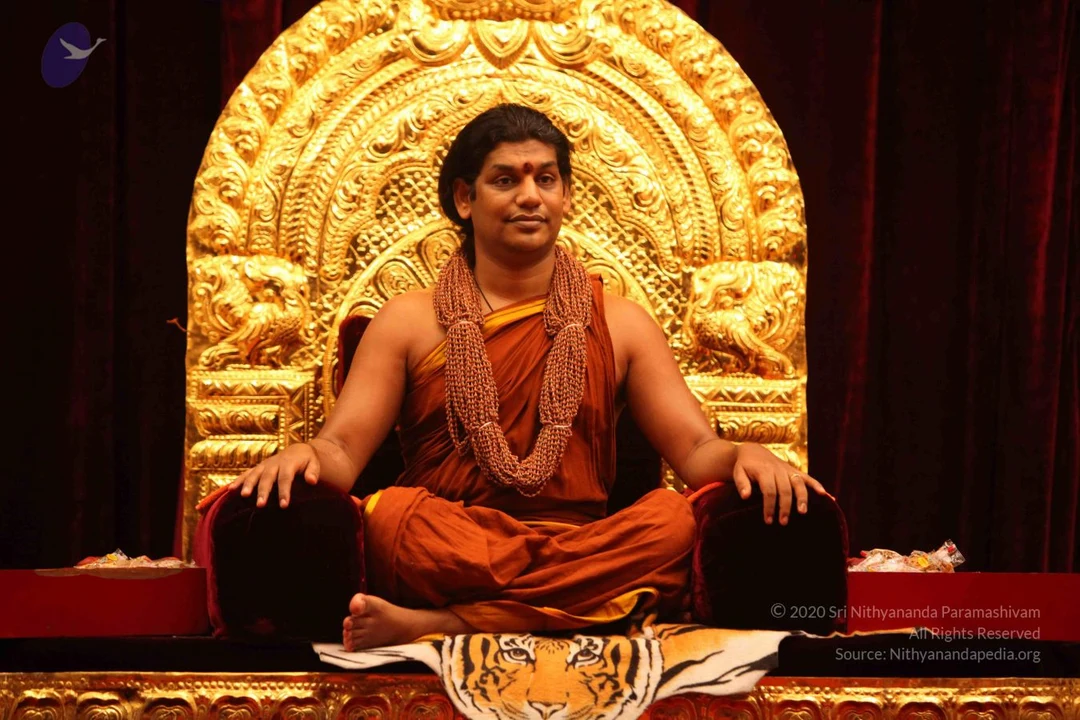
A seated man in saffron-orange robes sits cross-legged on a richly gold-embossed throne with carved lion-head armrests, on a striped tiger-skin cloth. He wears layered gold beads necklaces, gold armbands, a red bindi on his forehead, and a small microphone at his cheek. He smiles with hands resting on the armrests. Behind the throne stand painted deity figures with multiple arms and gold bangles. Appearance suggests a person seated in ceremonial presence; the saffron robe, gold malas and ornate throne are the qualifying cues. Lion-head armrests and tiger-skin seat are visible.A seated man in an orange-saffron robe sits cross-legged on a large ornate golden throne carved with lion motifs and a tiger-skin cloth below. He wears layered gold bead necklaces, gold armlets, and a red bindi, smiling with hands resting on velvet-covered armrests. Golden lion-head armrest carvings flank him, and painted deity figures with raised arms appear at the edges. Such a figure is a probable Swamiji in appearance, with long swept-back hair, saffron clothing, and gold malas as cues.A man seated in lotus position on an ornate gold throne with lion-head armrests, draped with a tiger-skin cloth on the platform. He wears an orange-saffron dhoti and shawl with yellow borders, a long multi-strand gold bead necklace, gold armbands and bangles, and a red bindi on his forehead. He rests one hand on the throne armrest and sits barefoot. A pictured deity figure with red skin and gold ornaments stands in the background at right. a person is seated centrally, with orange-saffron clothing and ornate gold necklaces as the qualifying cues.A seated man in a golden ornate throne with carved lion-head armrests sits cross-legged on a tiger-striped cloth, smiling and gesturing with his right hand. He wears an orange-saffron dress with a yellow-gold border, multiple heavy gold bead necklaces, gold armbands and bangles, and a red bindi on his forehead. Behind him stands a painted deity figure with gold jewellery and raised hands. The setting suggests a satsang seat on a stage. a person: the person shows saffron clothing, gold malas and an ornate throne, which align with the page's reference to a person.A seated man in saffron-orange robes sits cross-legged on a tiger-skin rug before an ornate gold throne with carved lion heads and arched backrest. He wears a long rudraksha-style gold bead necklace, a gold ornament at his neck, gold armlets, and a red bindi. Hands rest on the velvet armrests, and he appears to be giving a talk. To the right stands a painted deity murti with a raised hand and gold jewellery against a red background.A seated man in saffron-orange robes sits cross-legged on an ornate gilded throne with lion-head armrests, draped over a tiger-striped cloth. He wears multiple strands of gold beaded necklaces, gold armbands and bangles, and a red bindi on his forehead, with a small headset microphone near his face. A red and orange painted deity figure with multiple arms stands at the left edge. The setting is a satsang-style stage. a person: the man has short dark hair and wears saffron robes with heavy gold malas and a throne, consistent with the page's reference to a person speaking at this event.

Sarva-Darshan
13 photosSource gallery
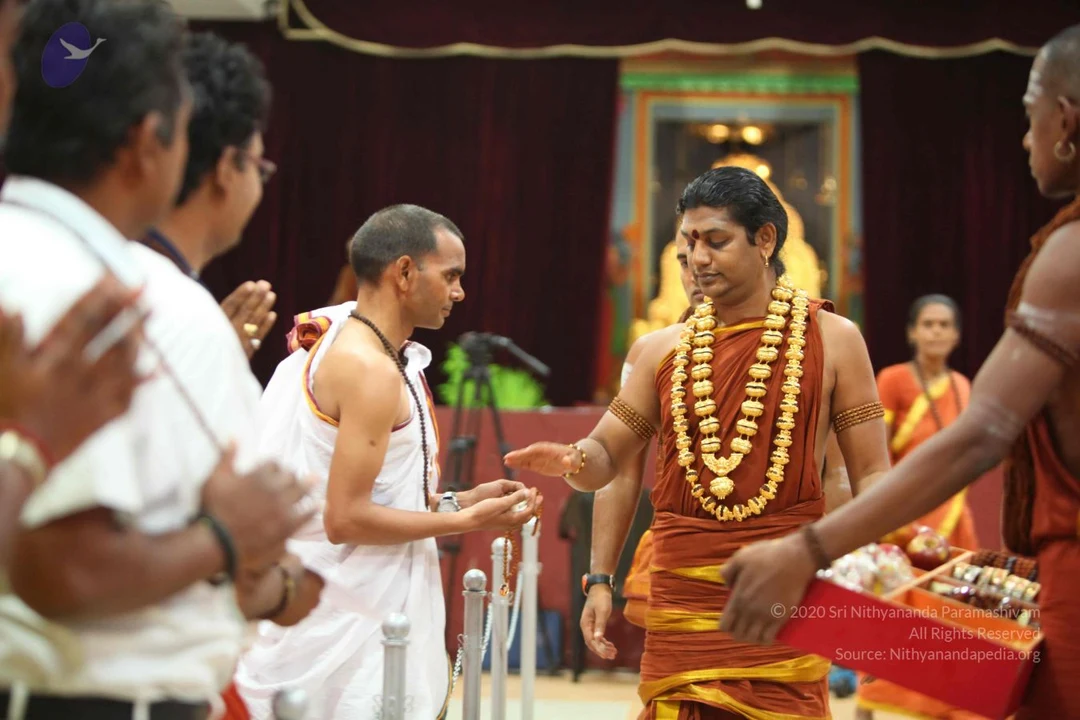
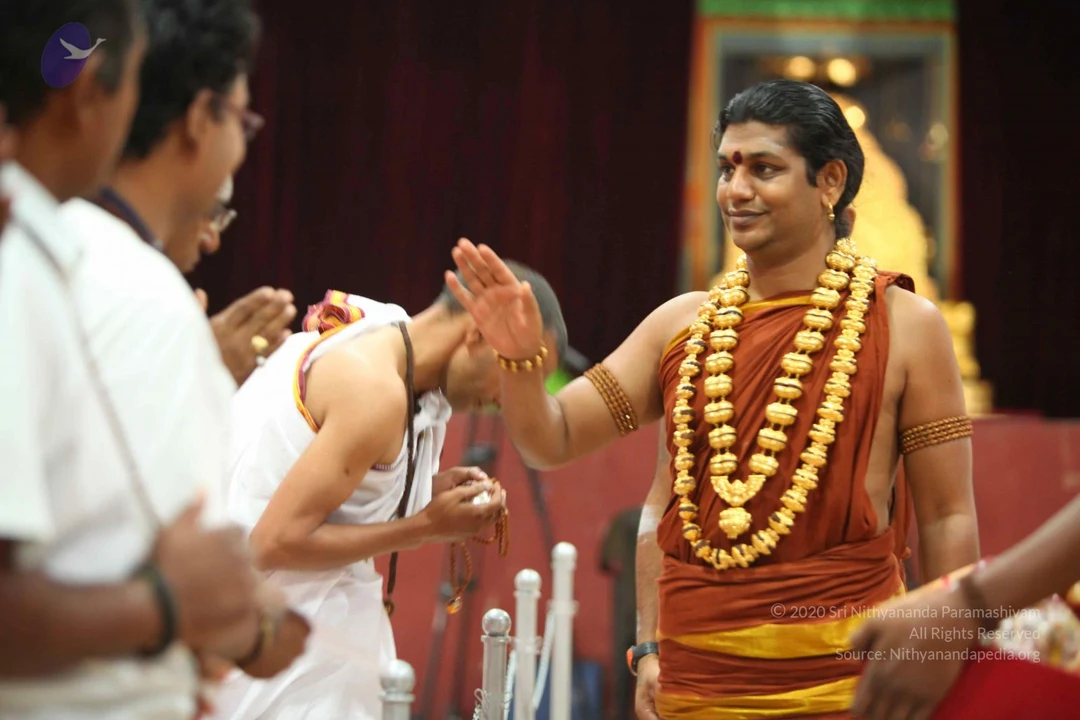
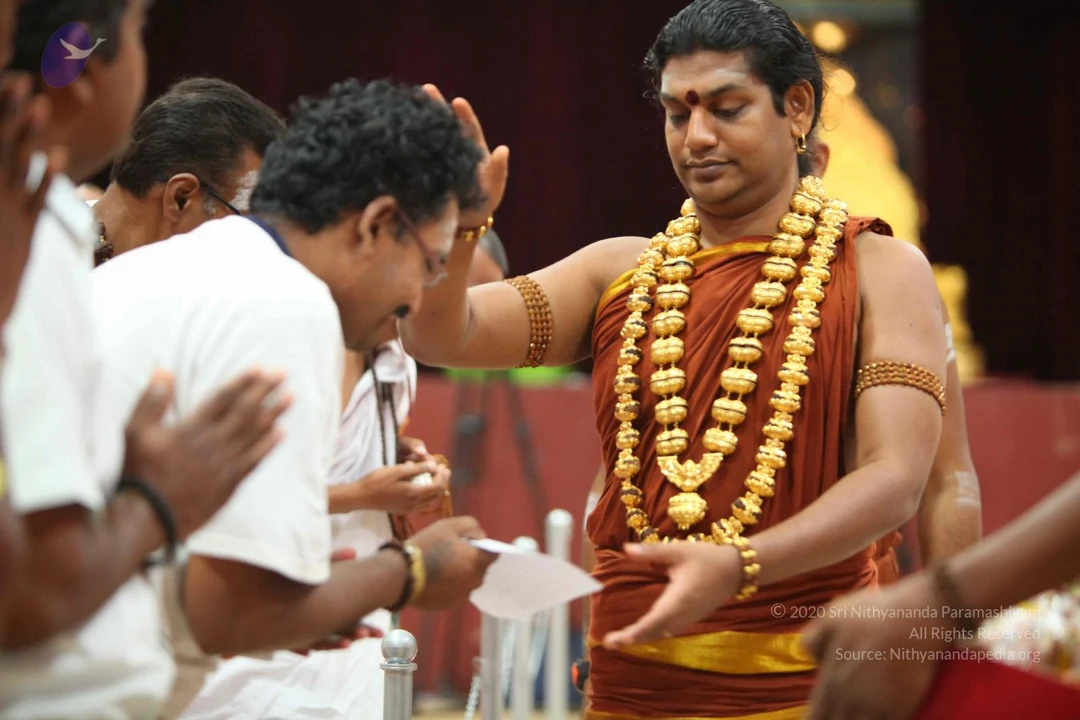
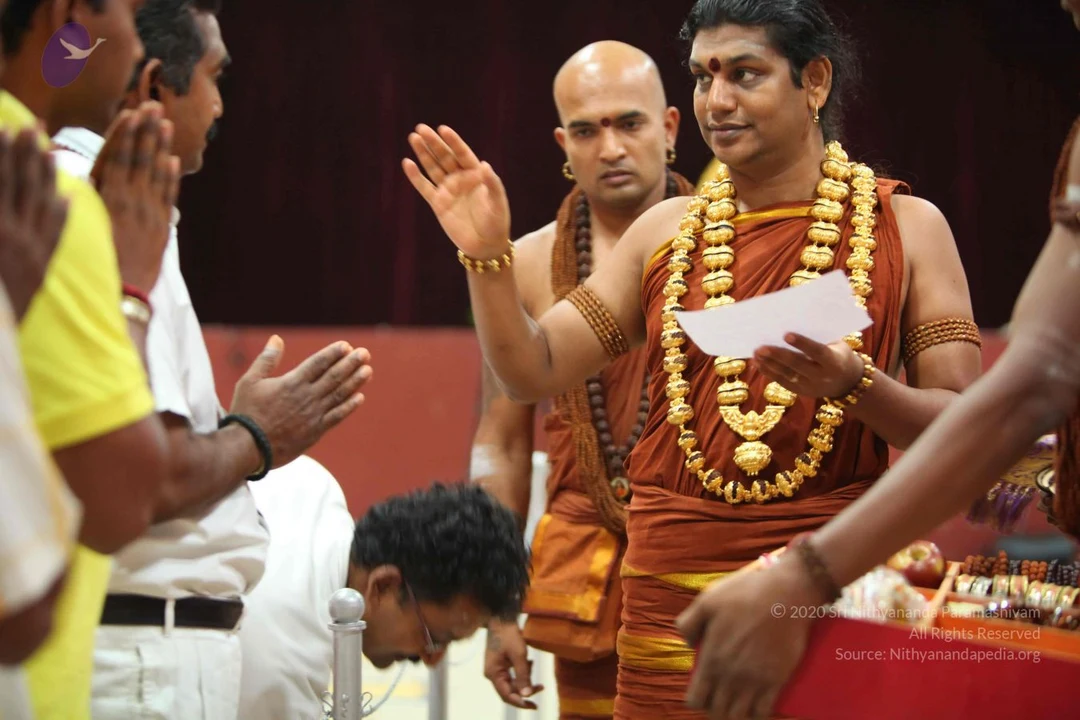
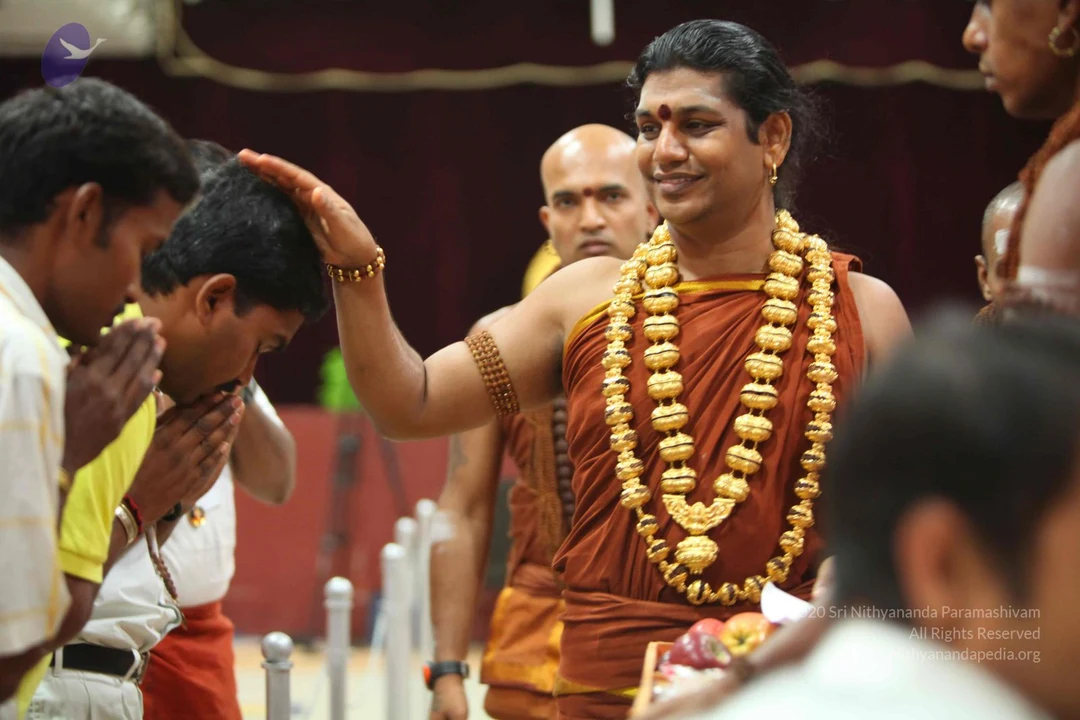
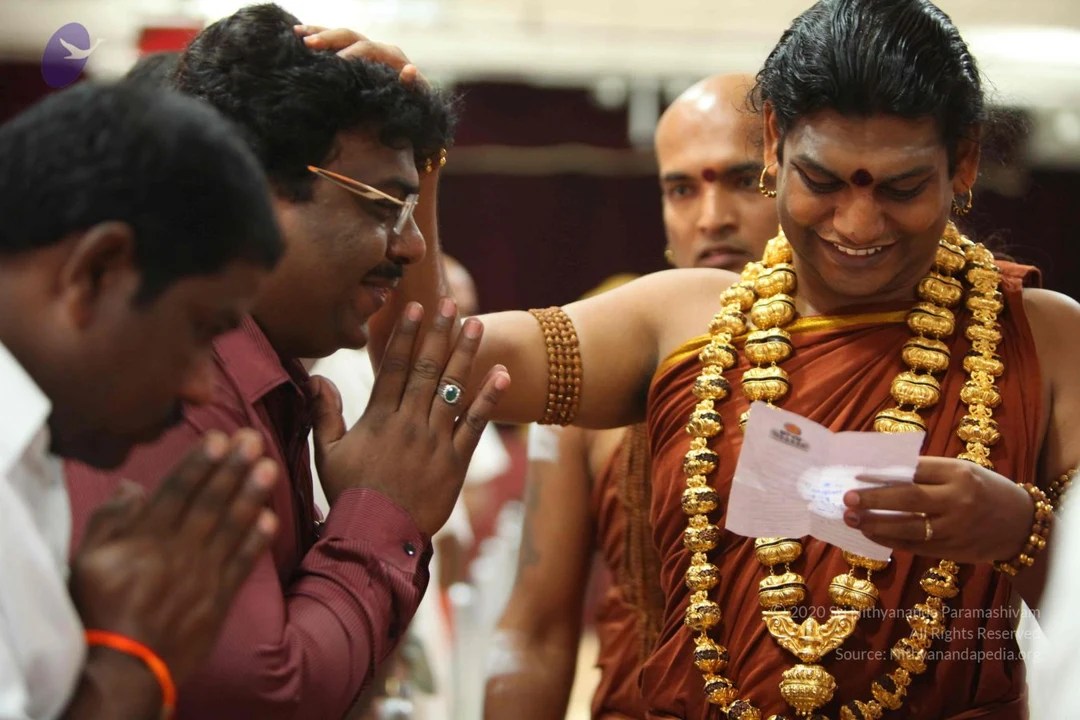
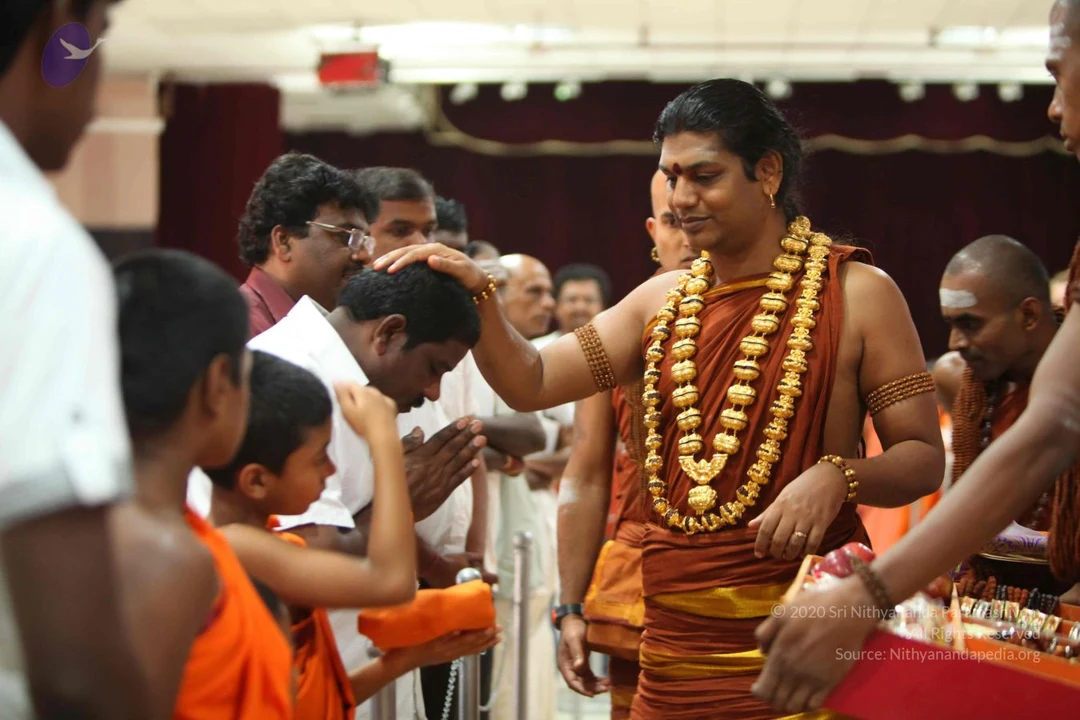
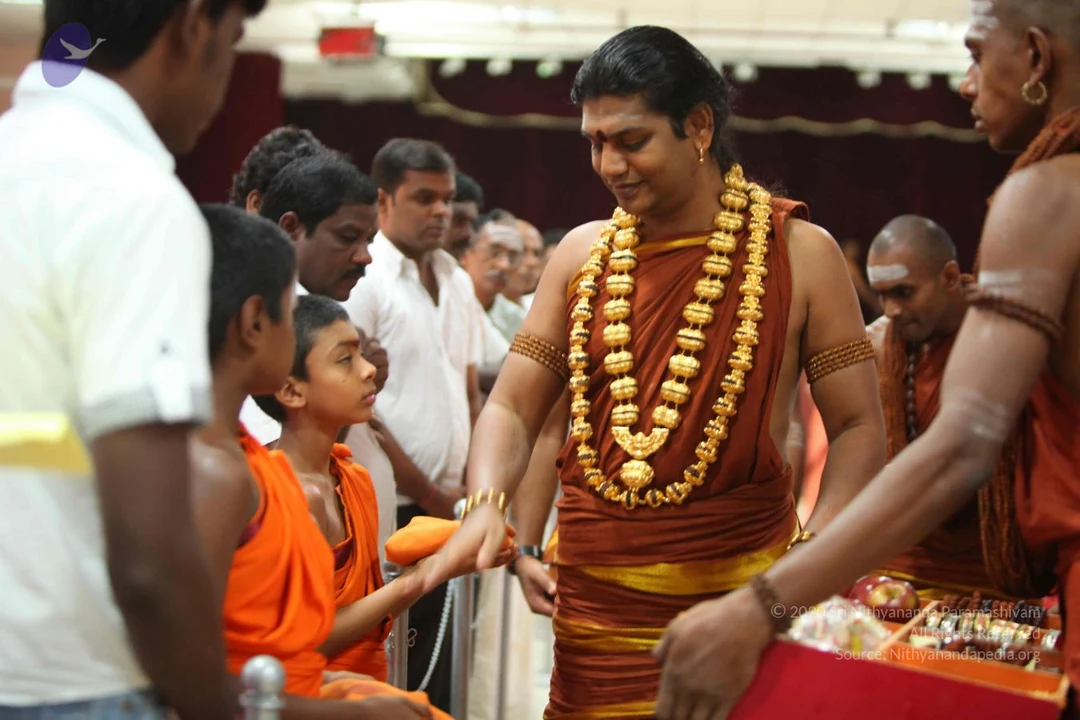
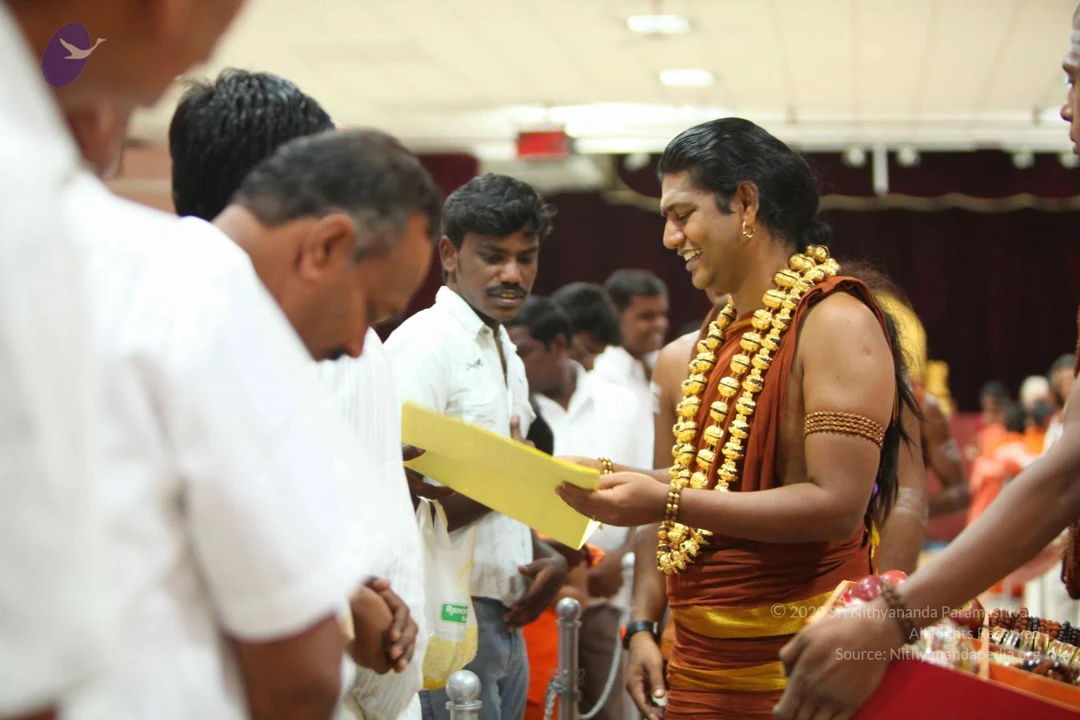
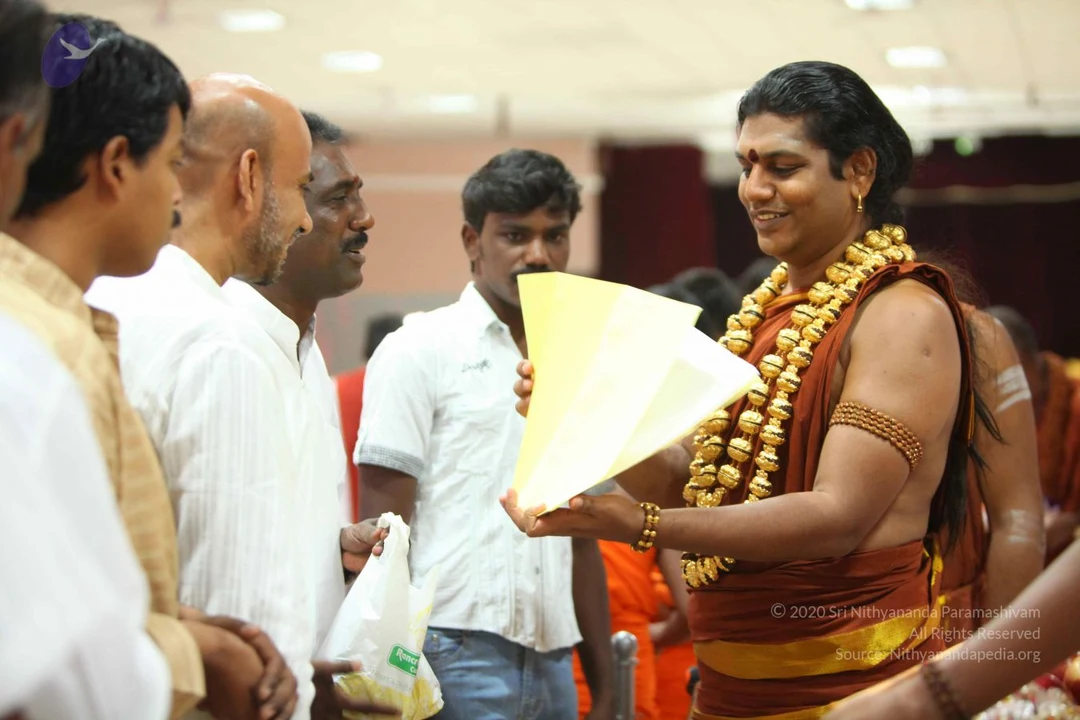
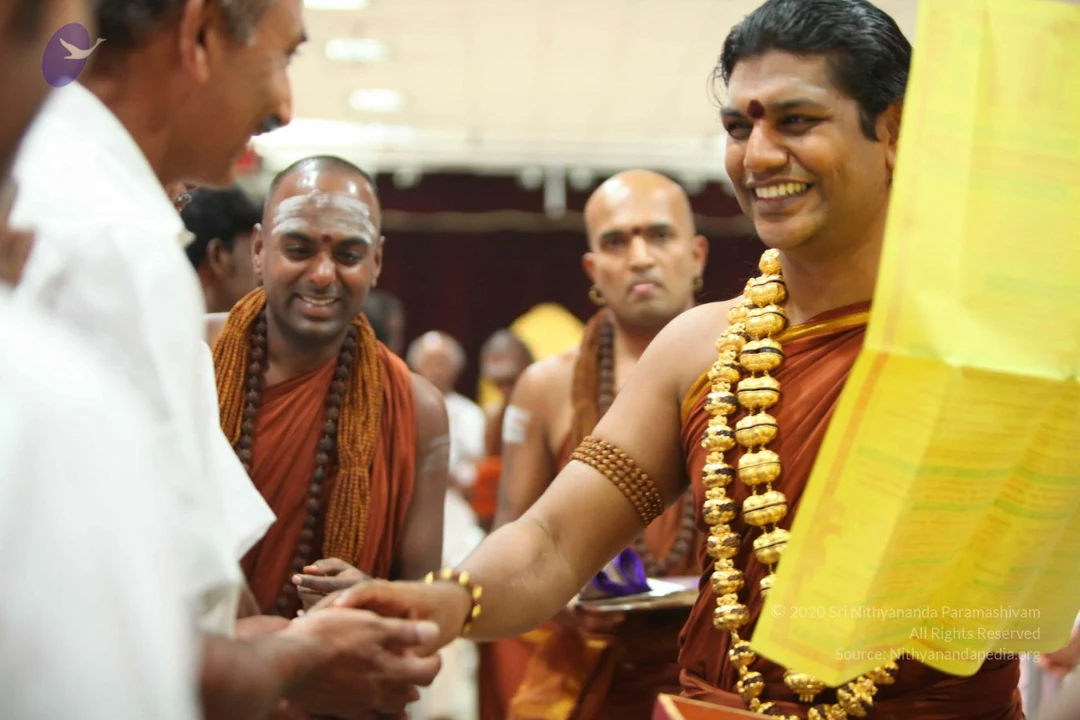
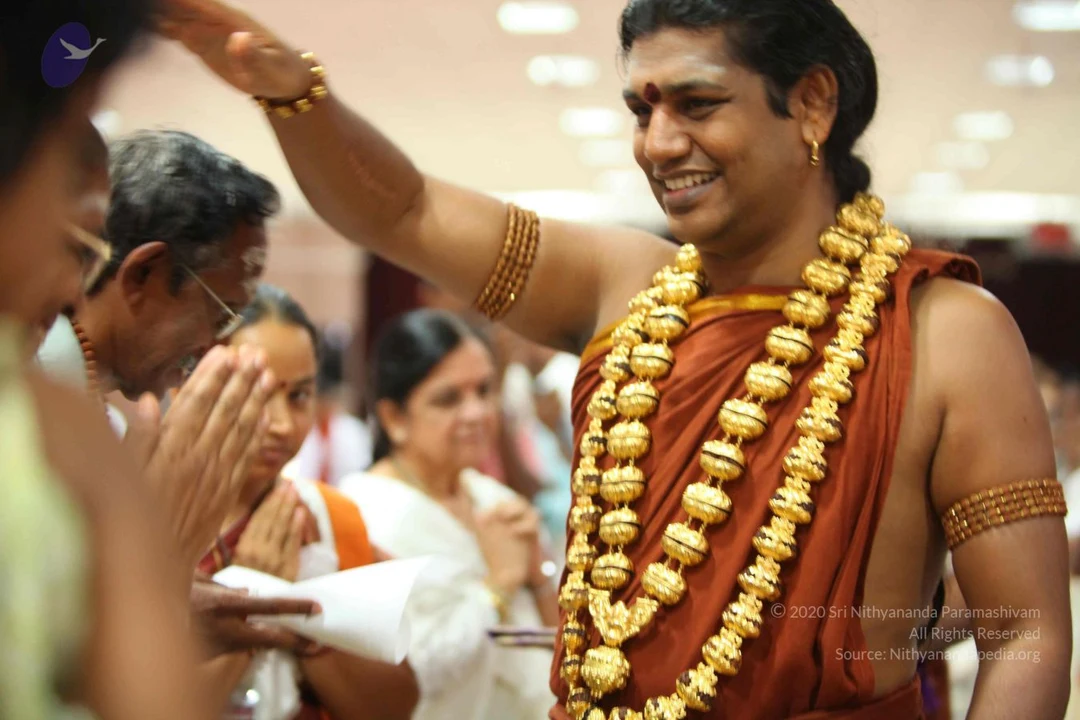
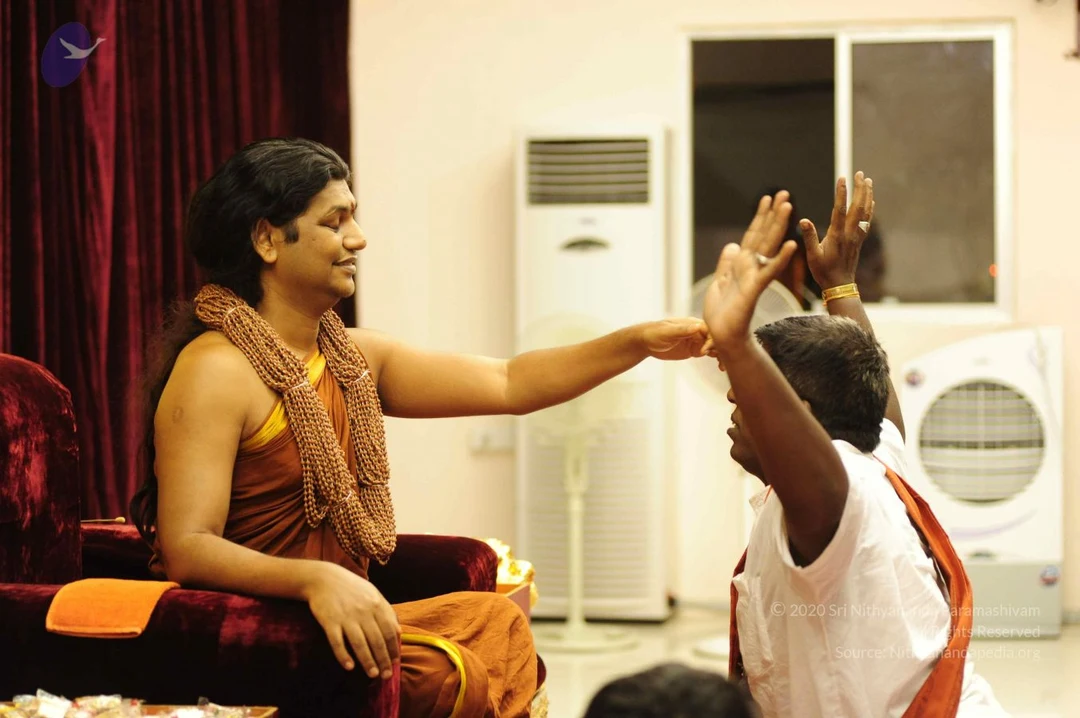
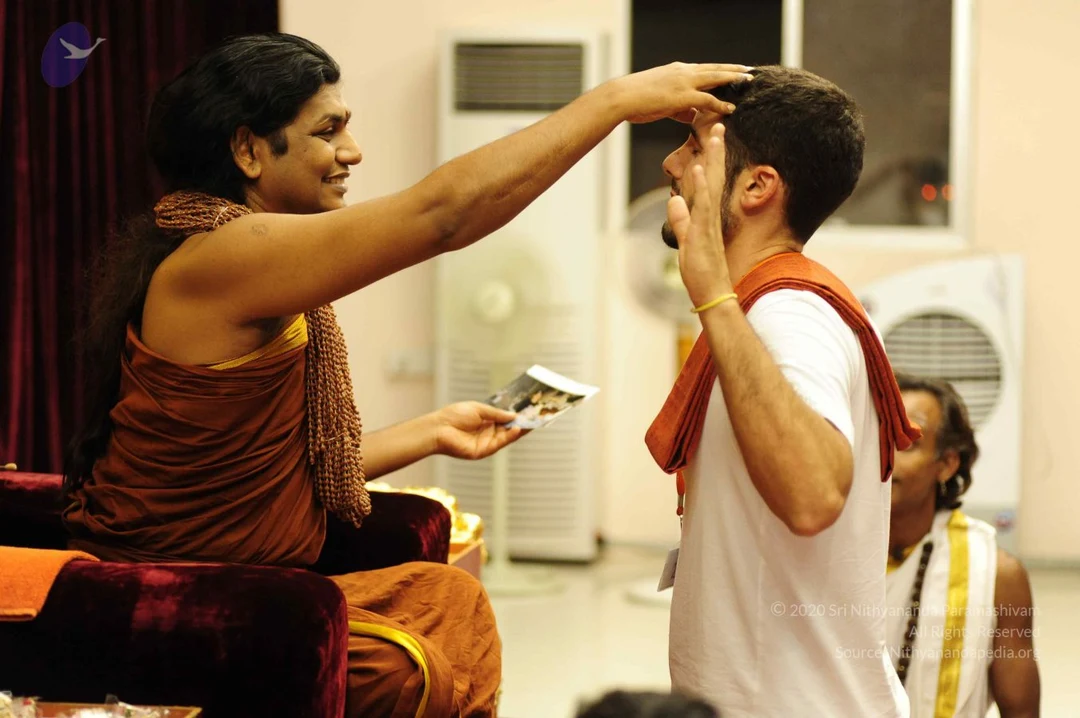
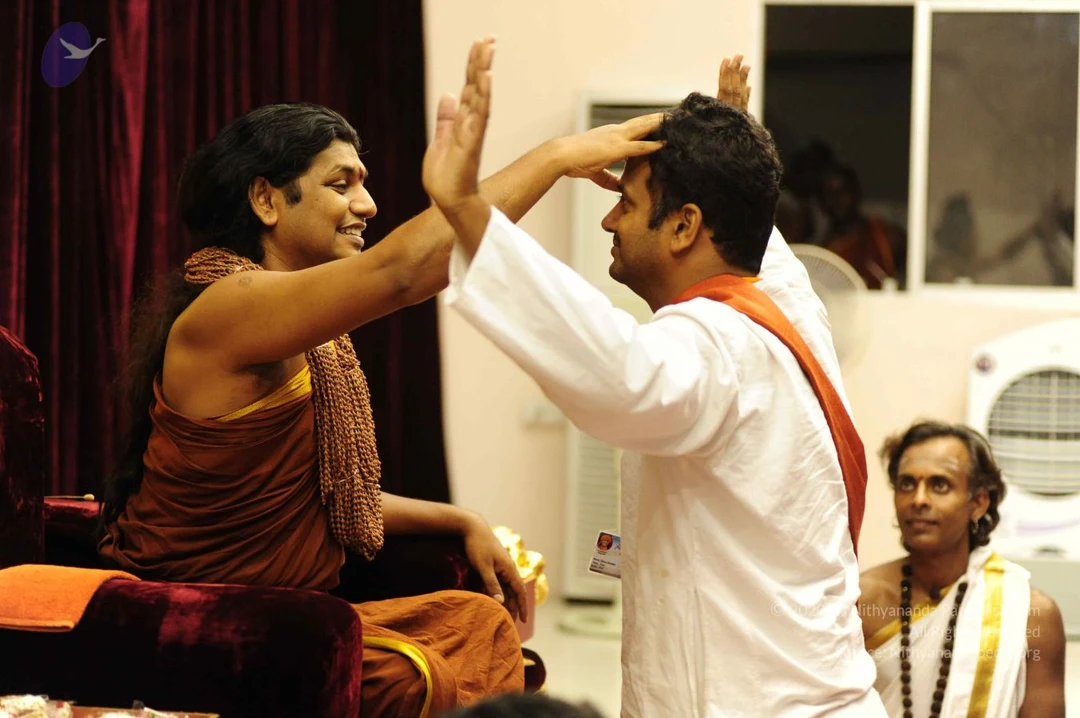
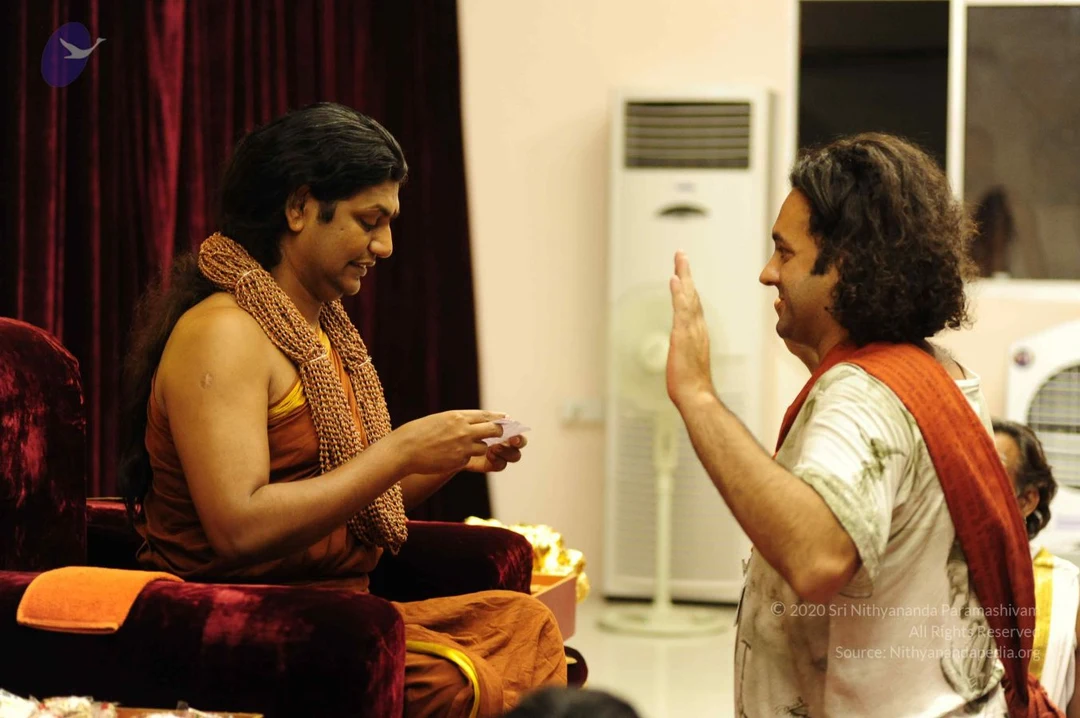
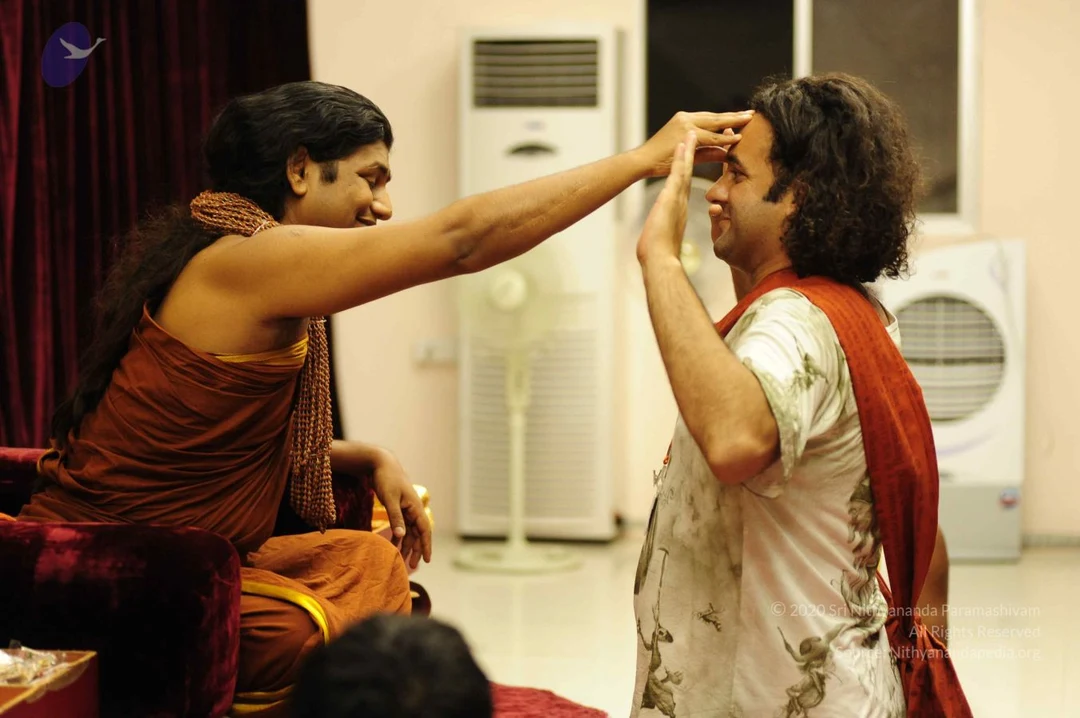
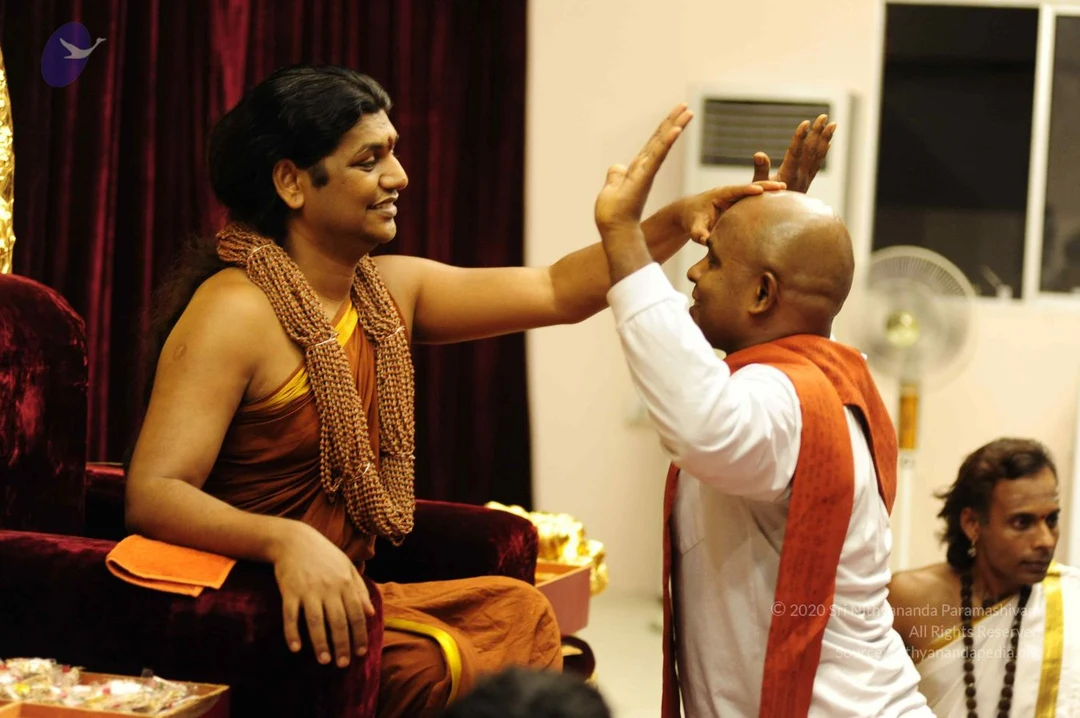
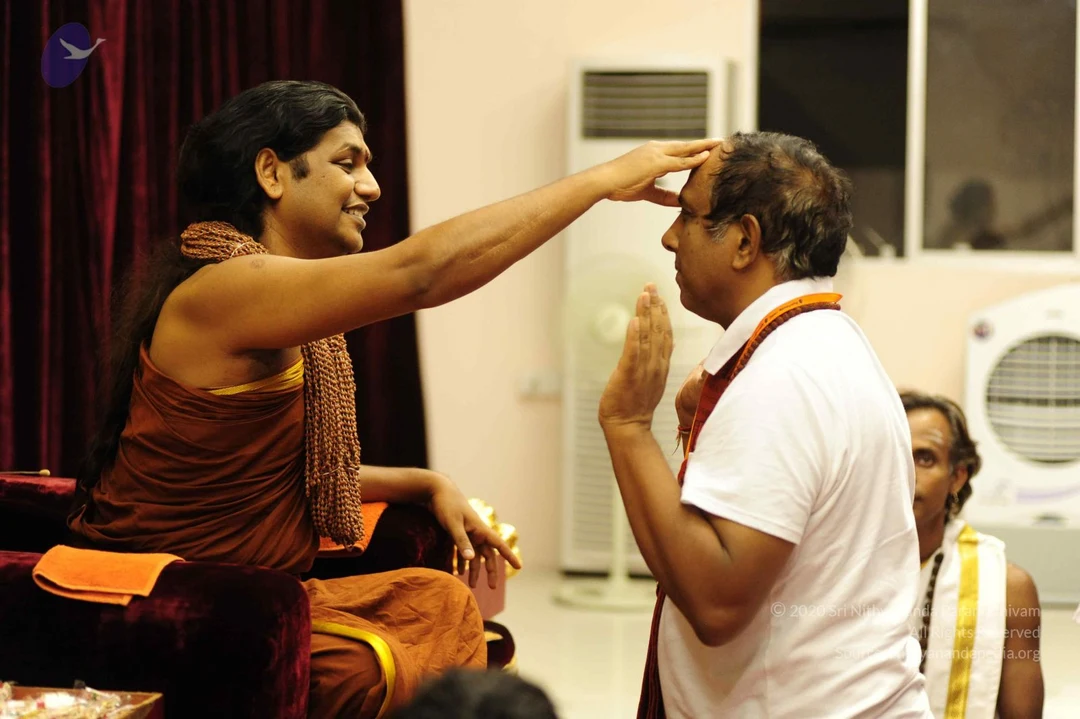
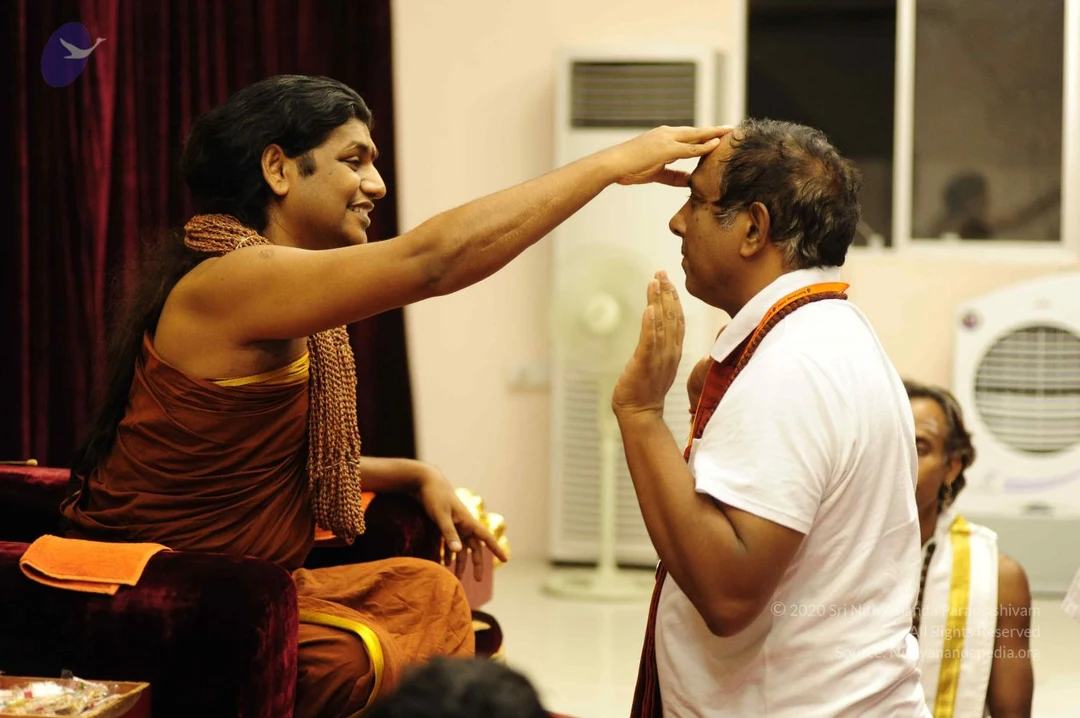
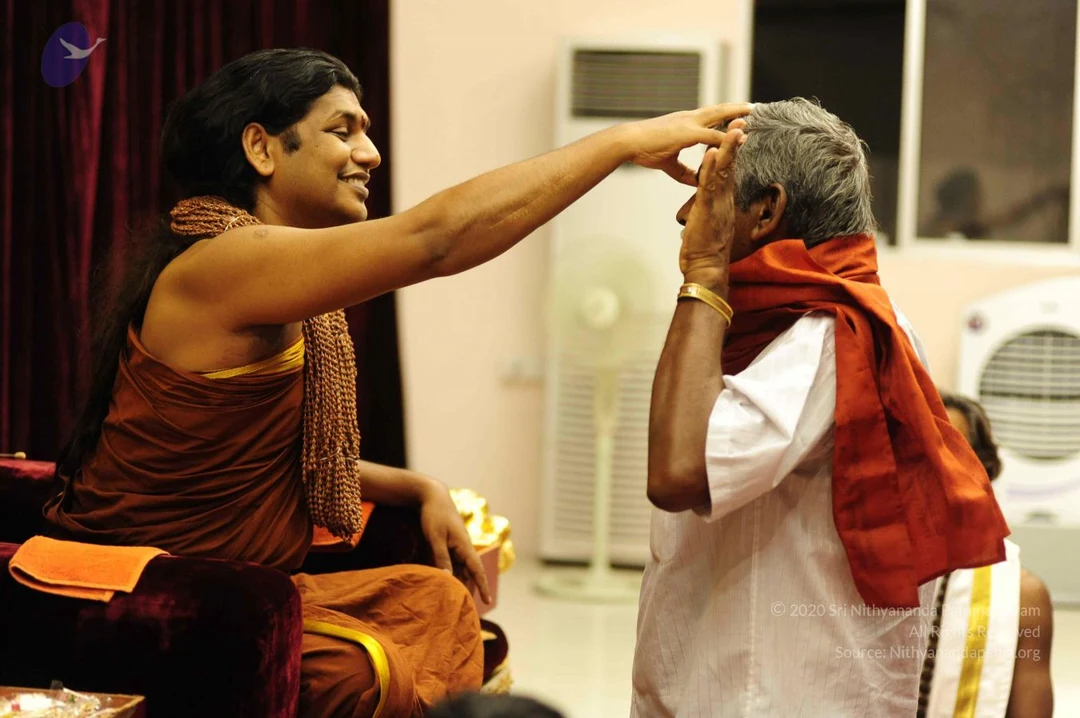
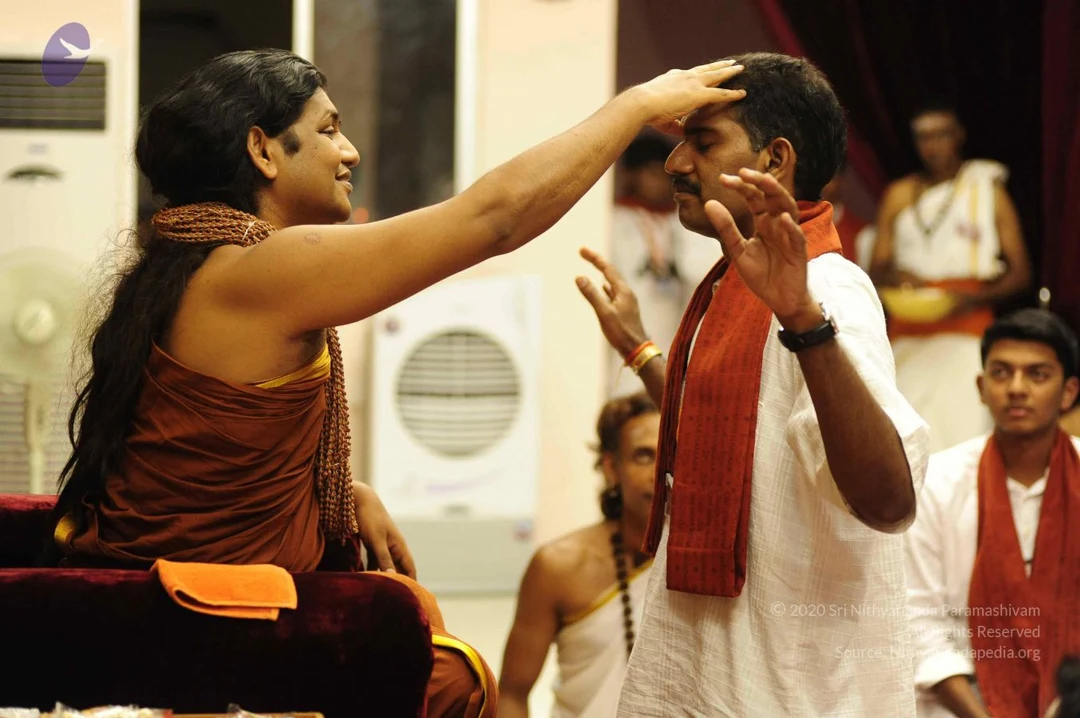
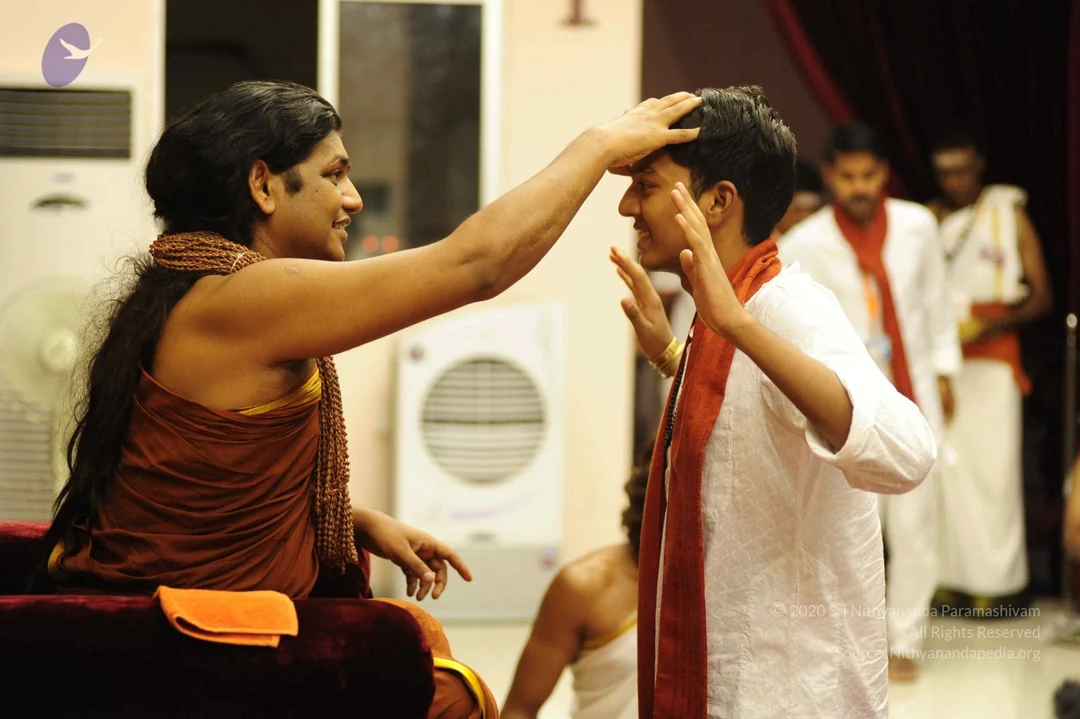
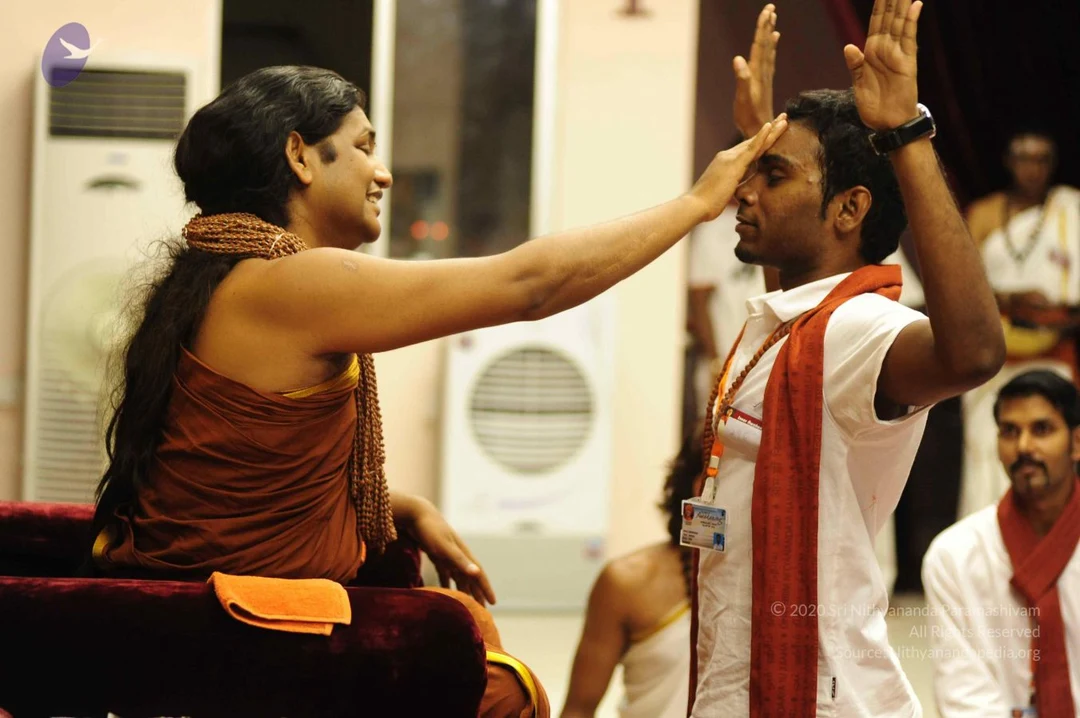
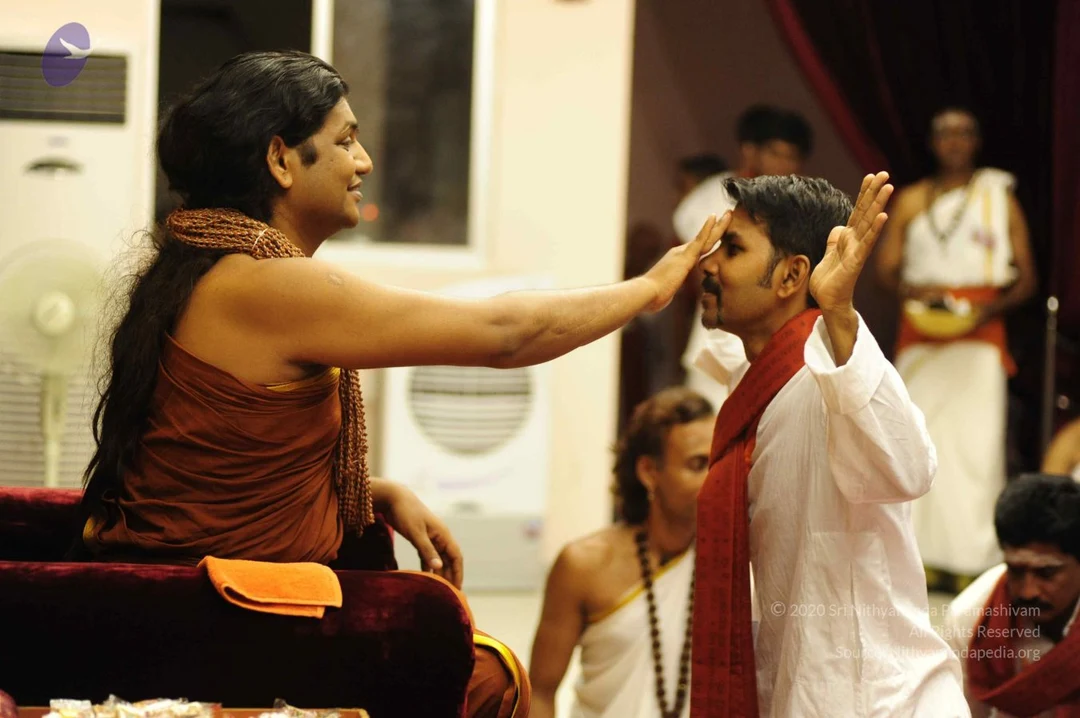
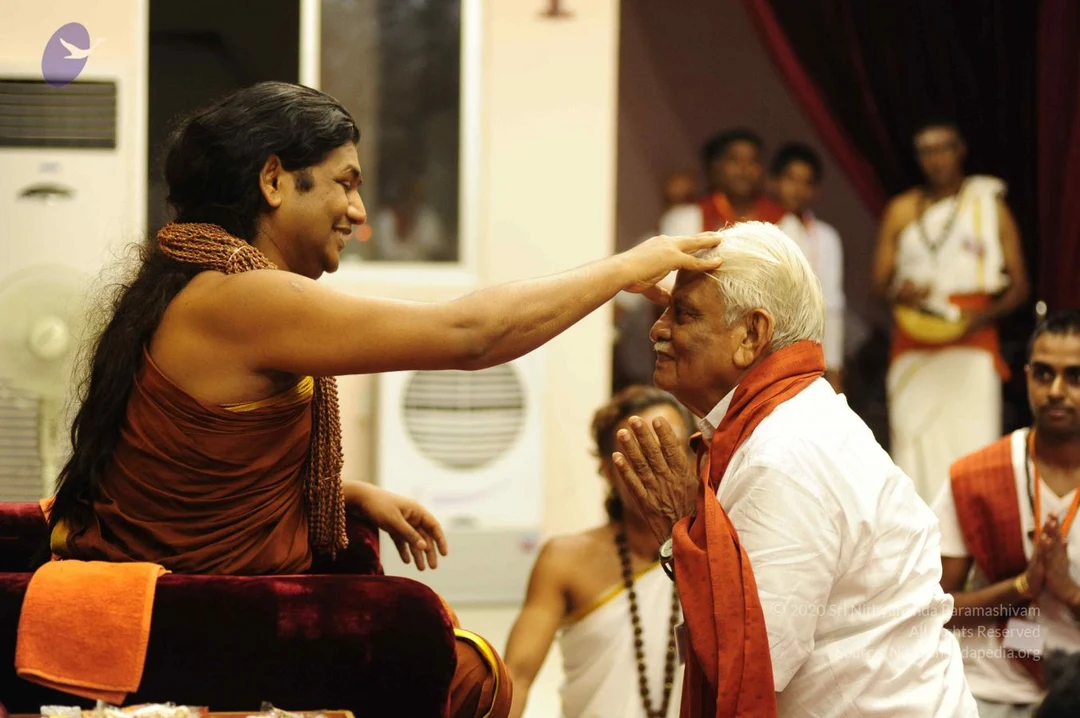
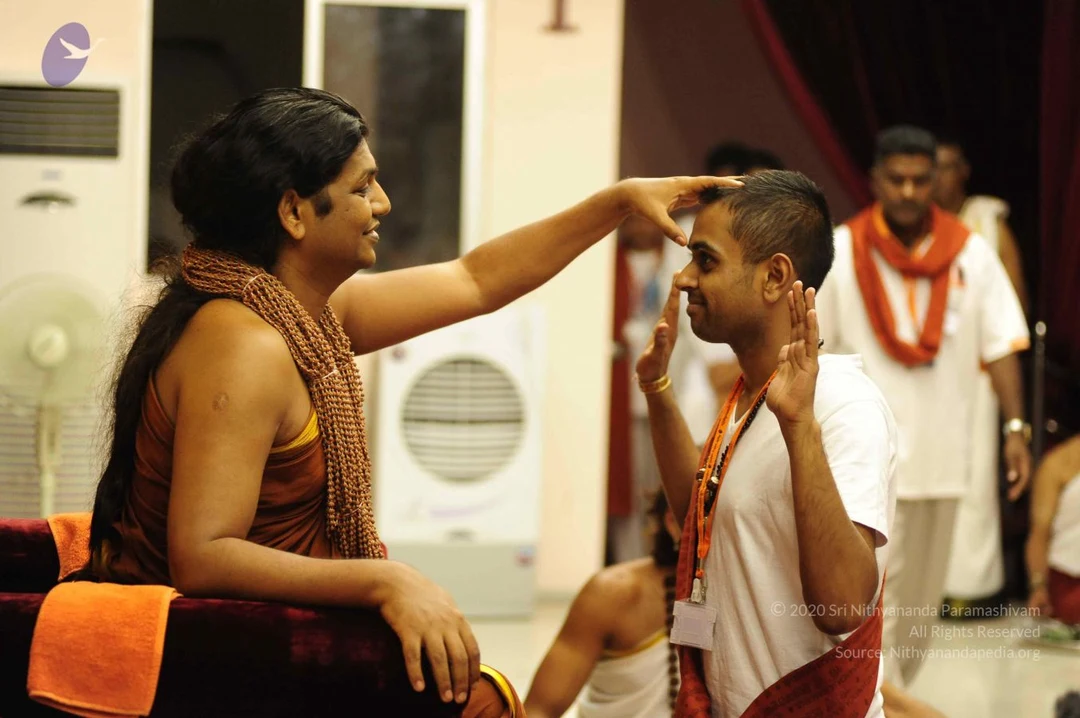
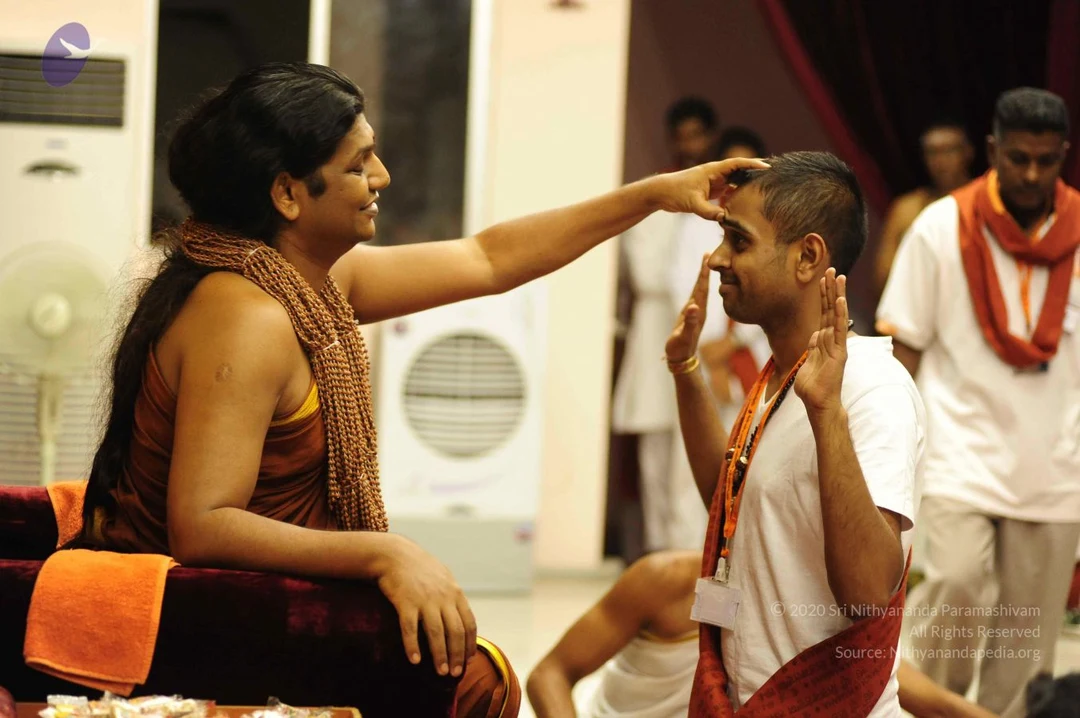
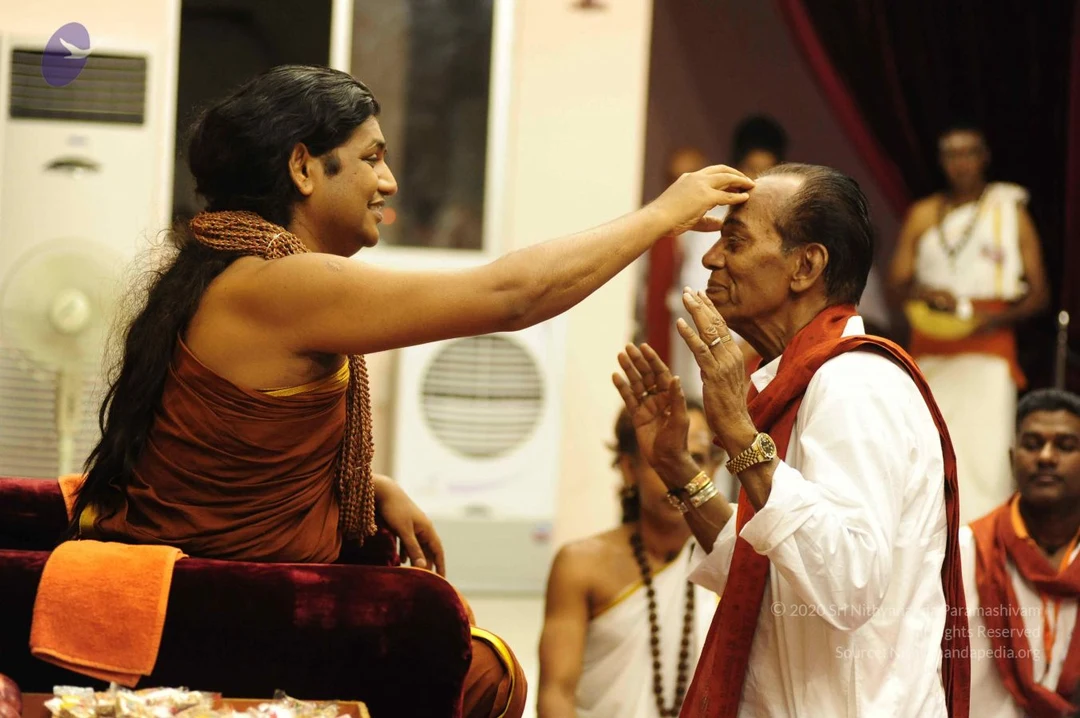
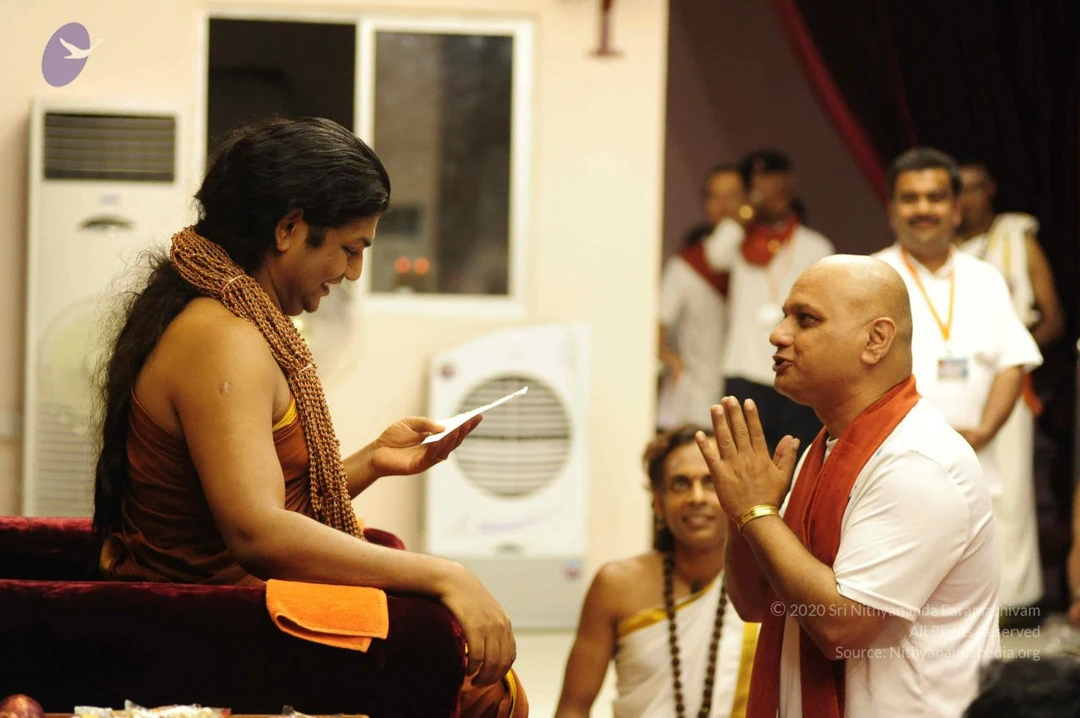
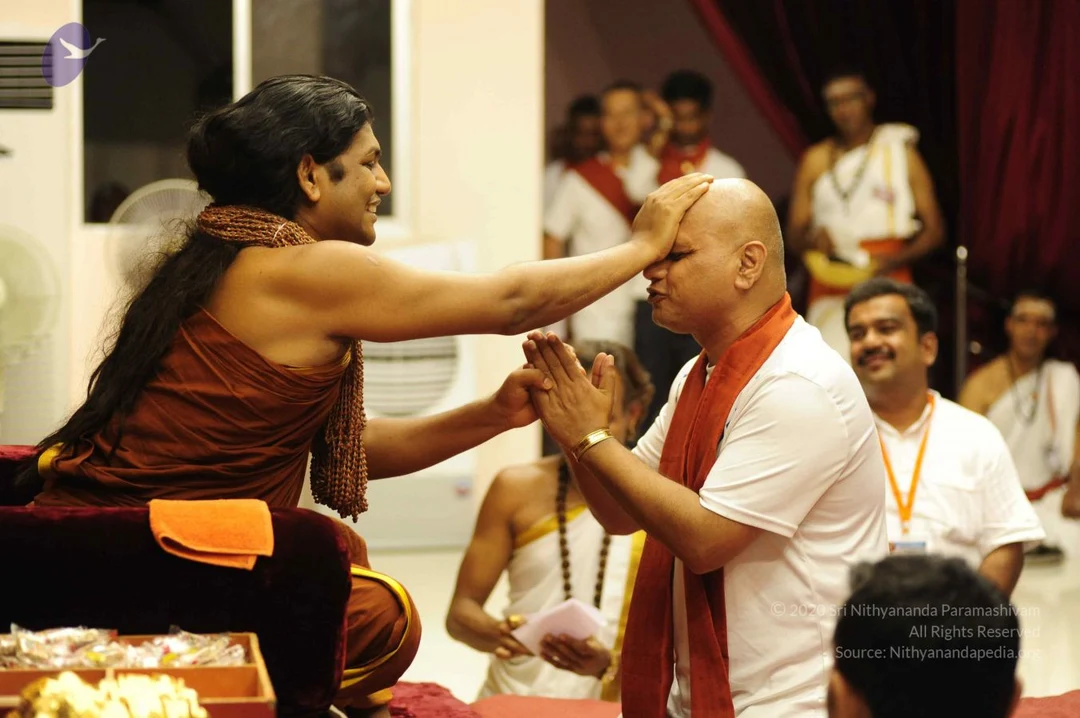
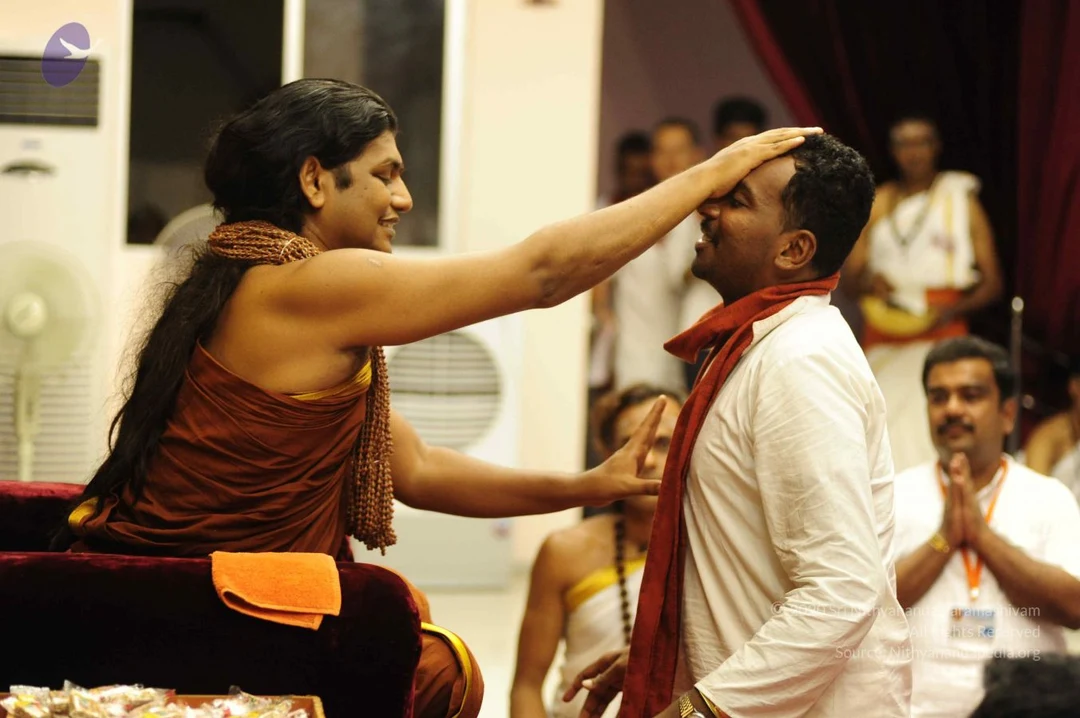
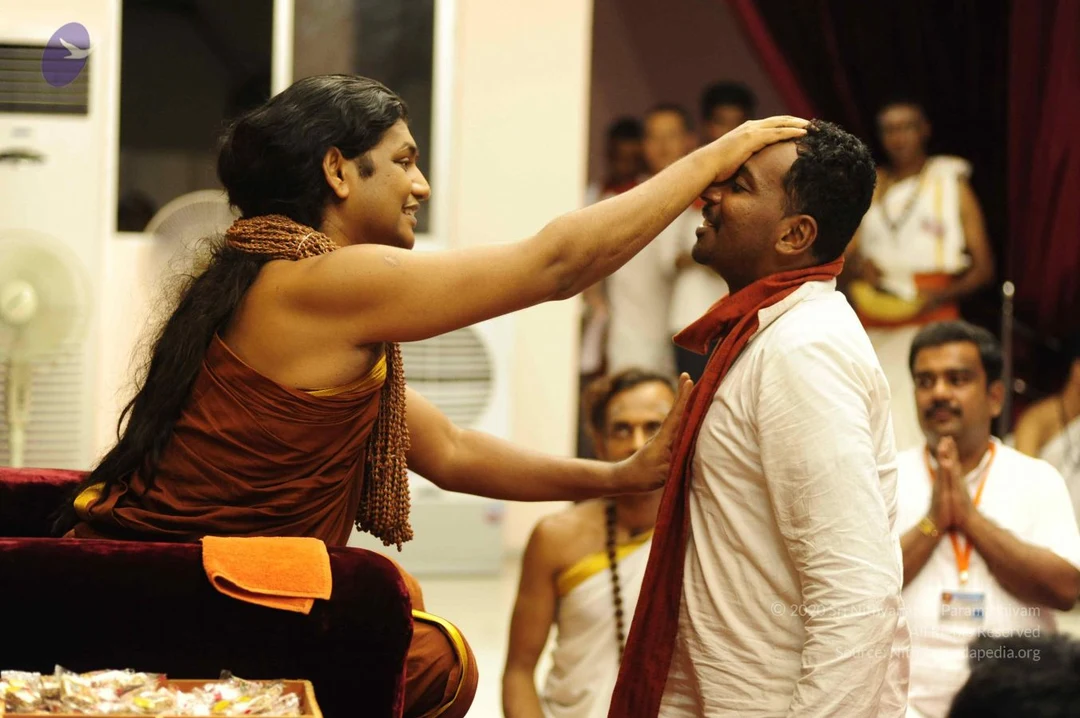
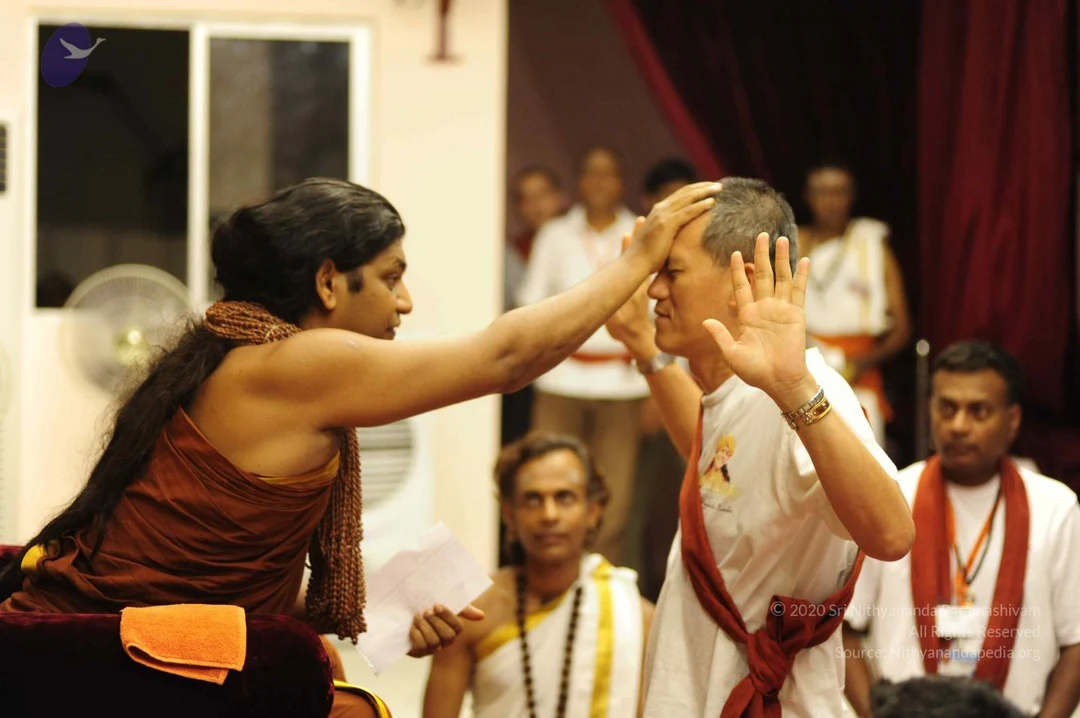
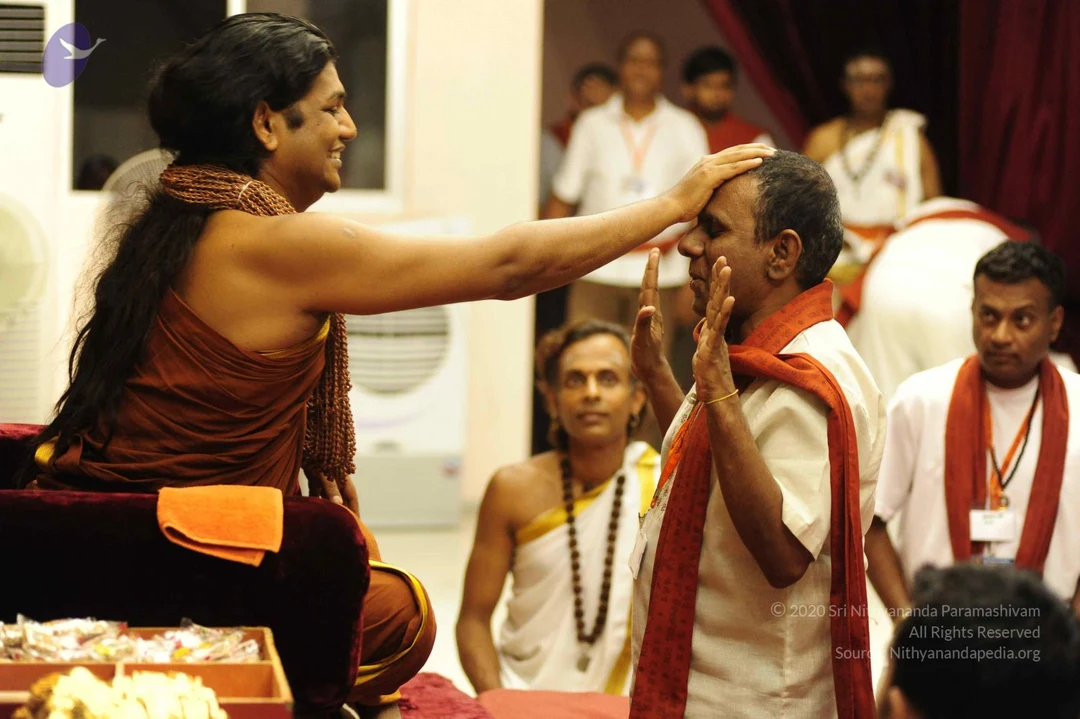
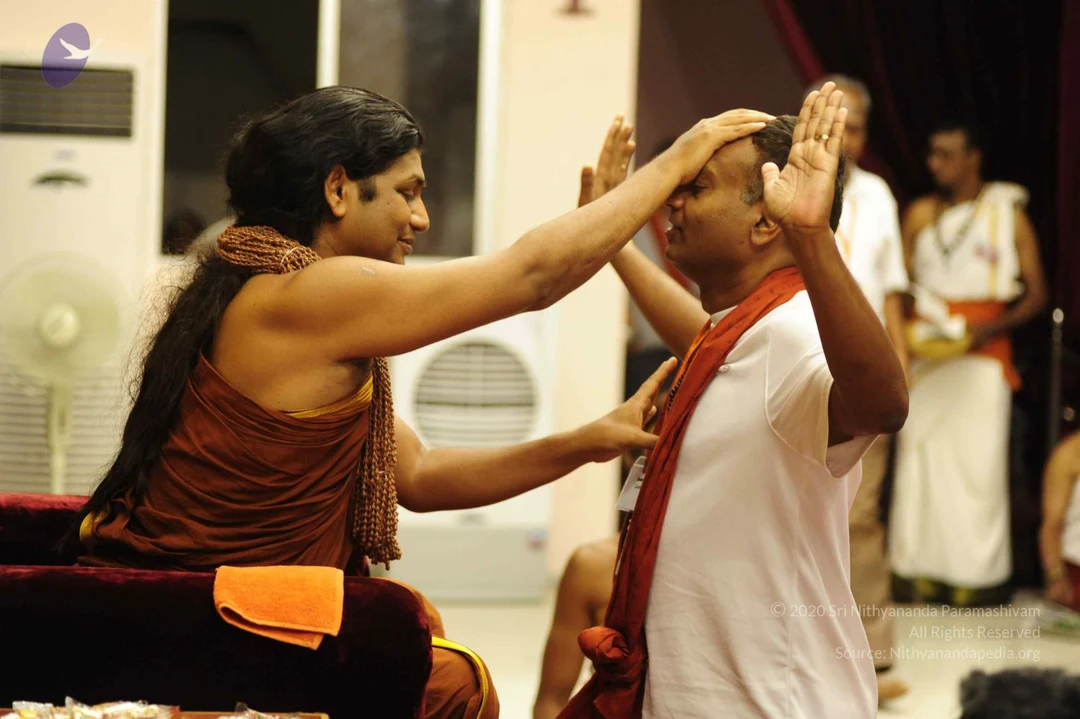
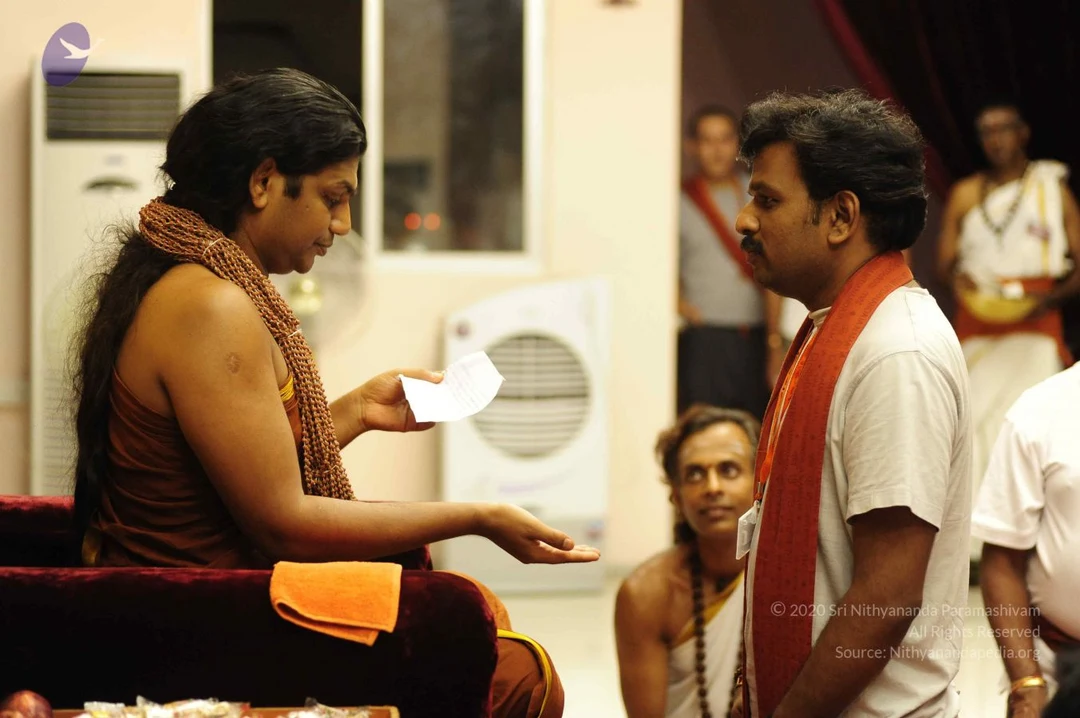
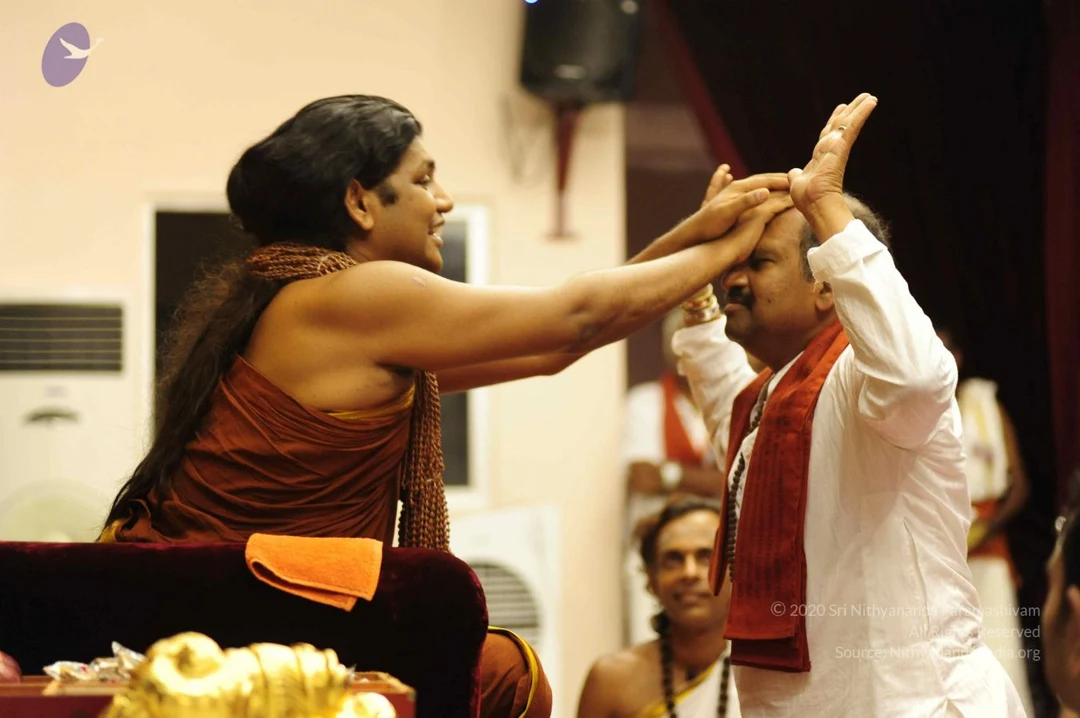
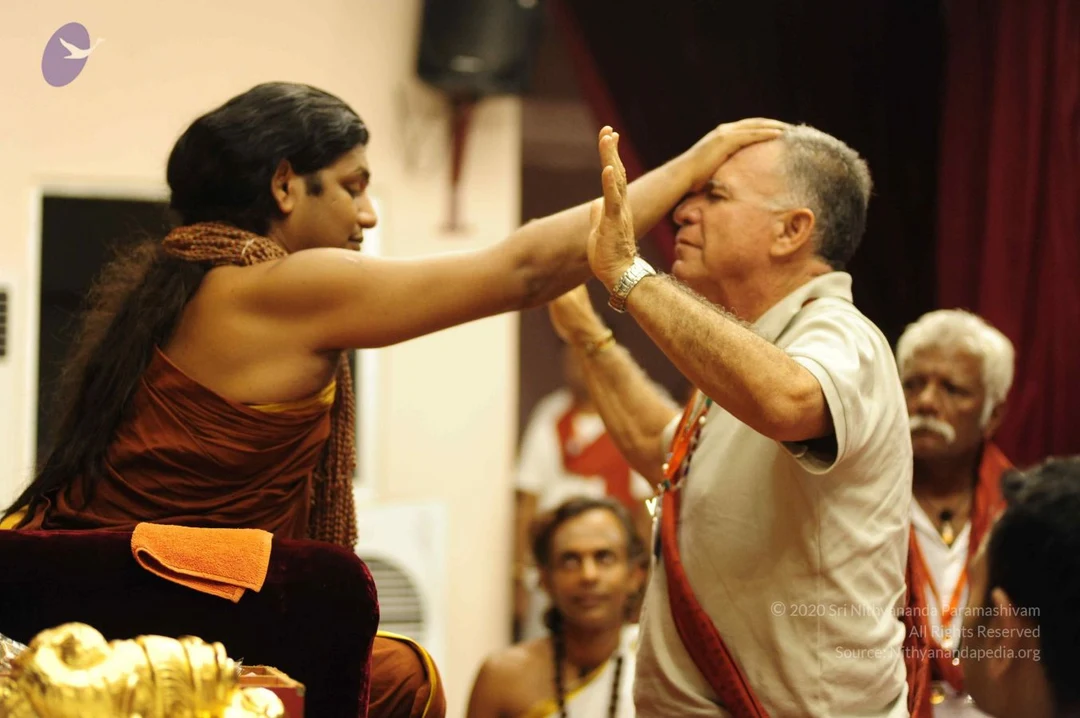
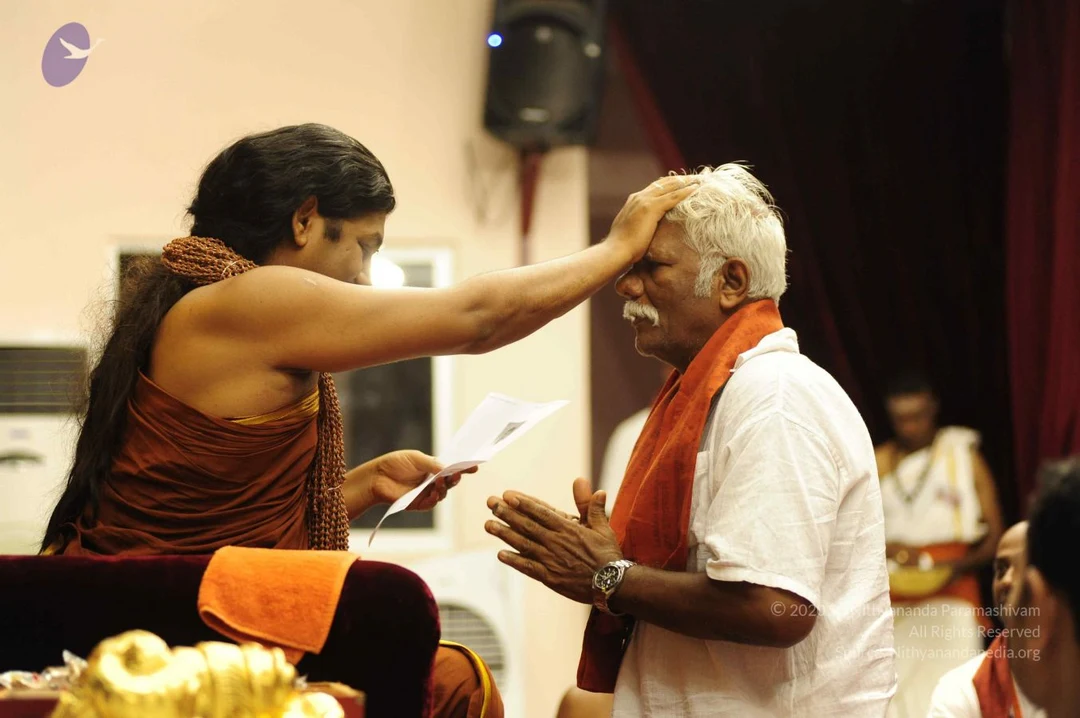
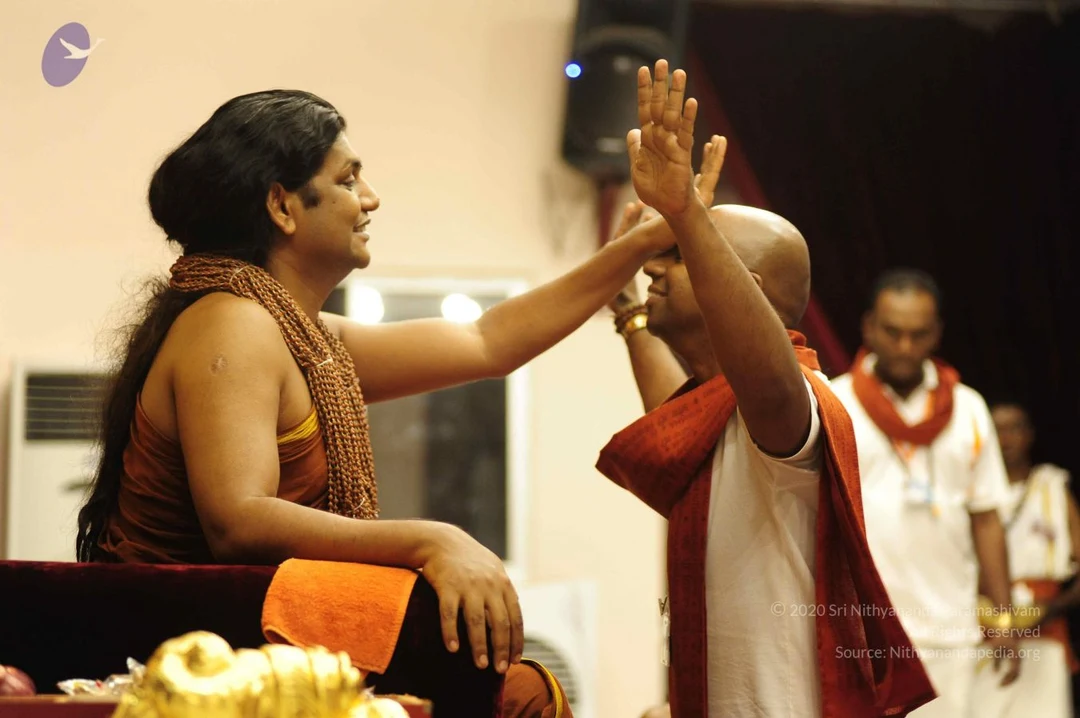
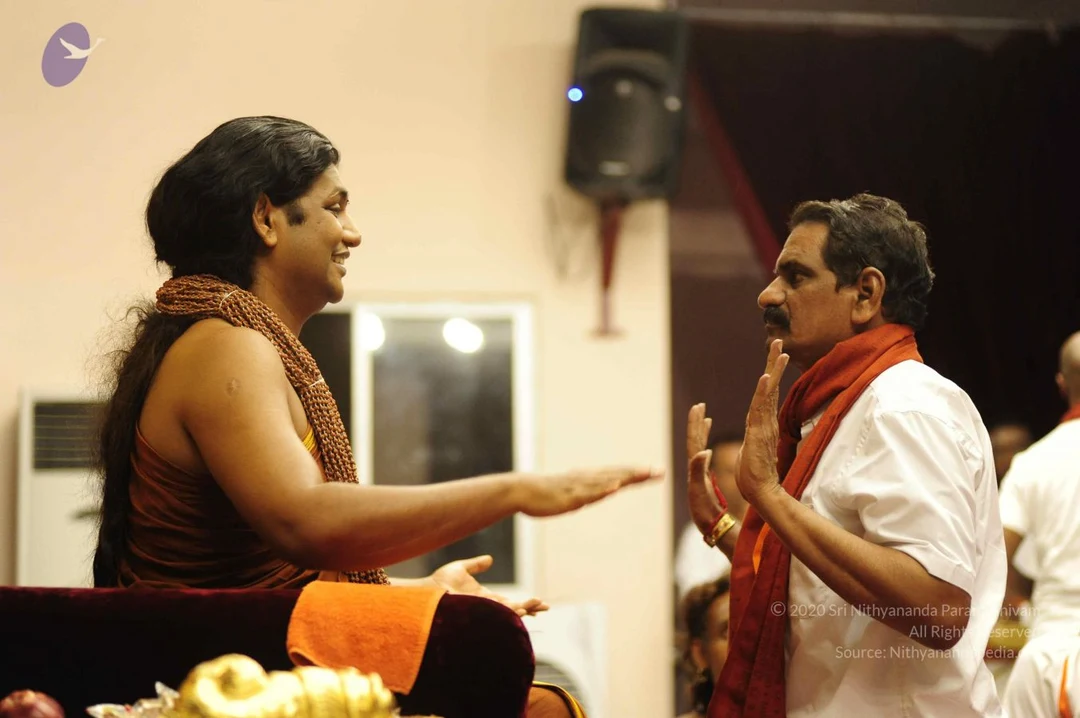
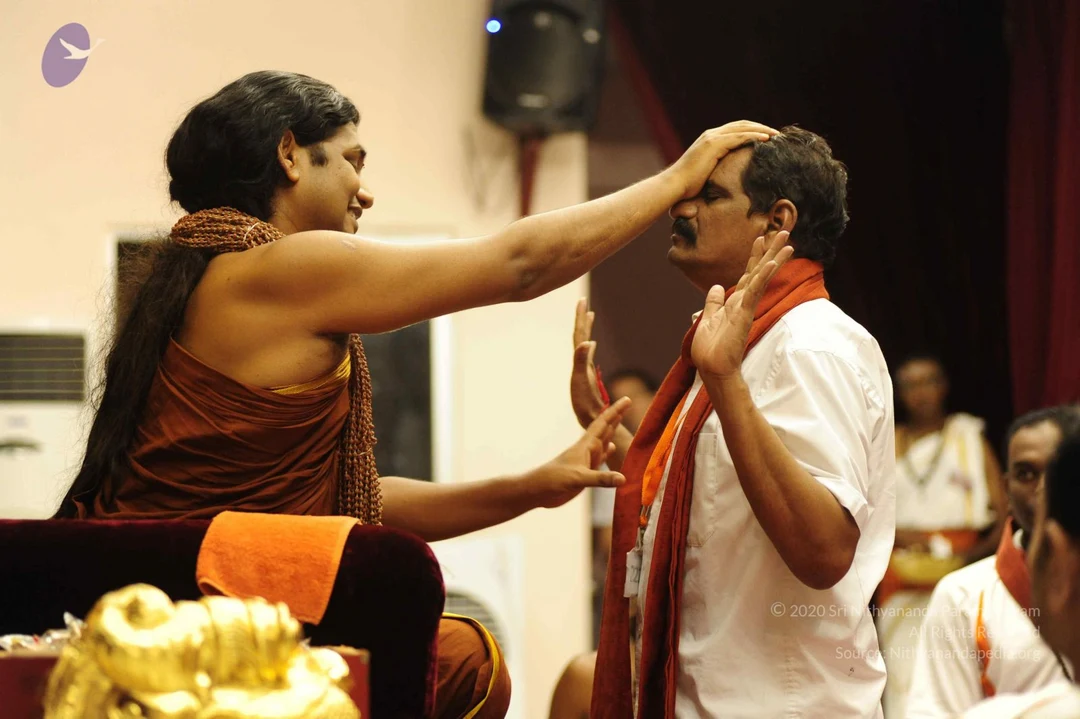
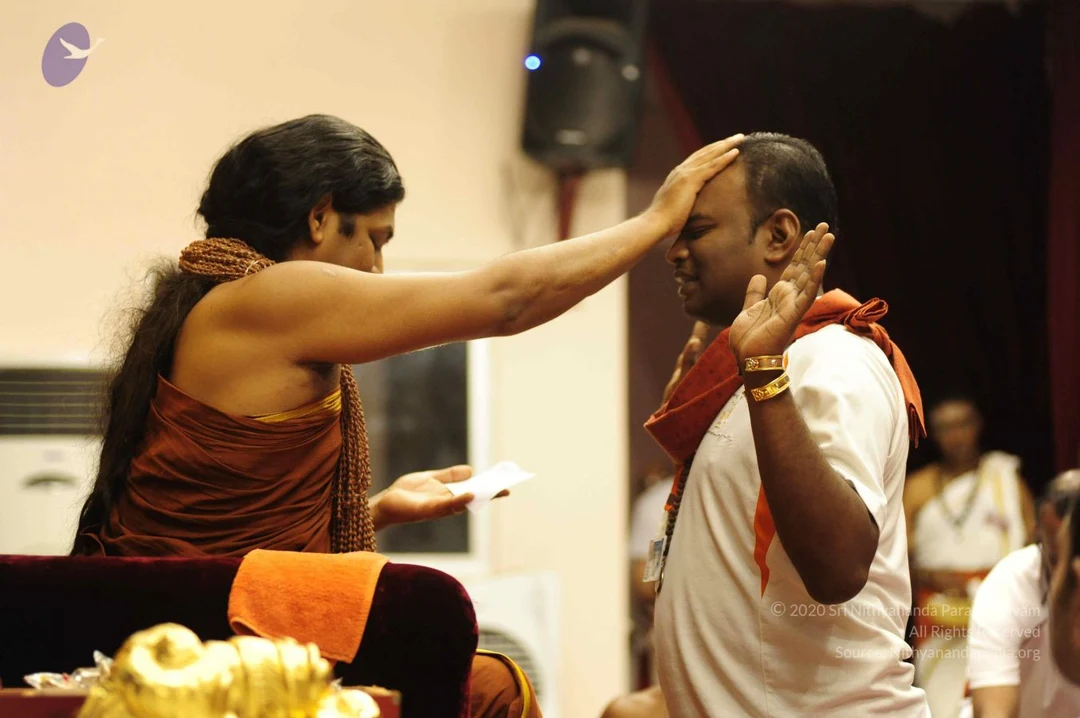
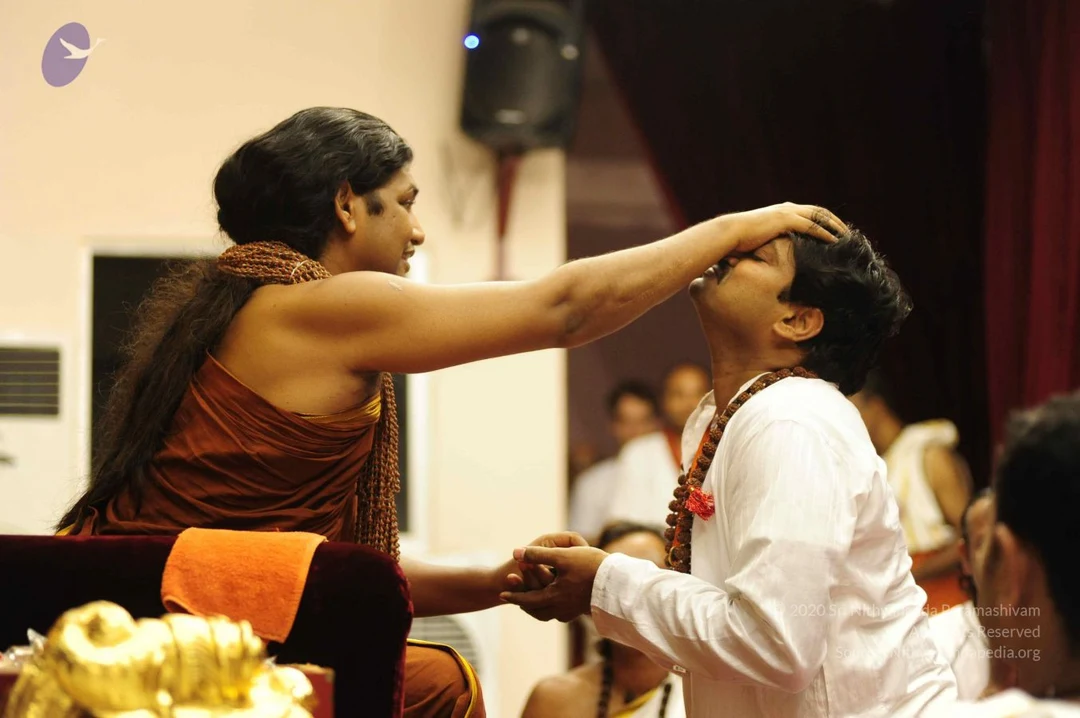
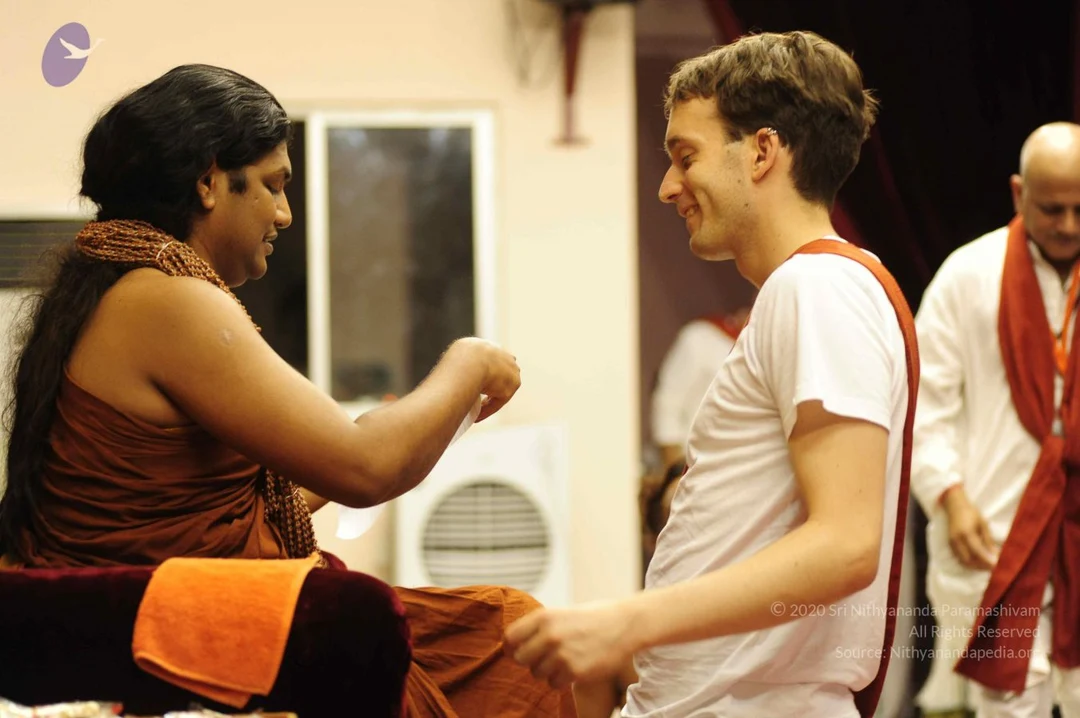
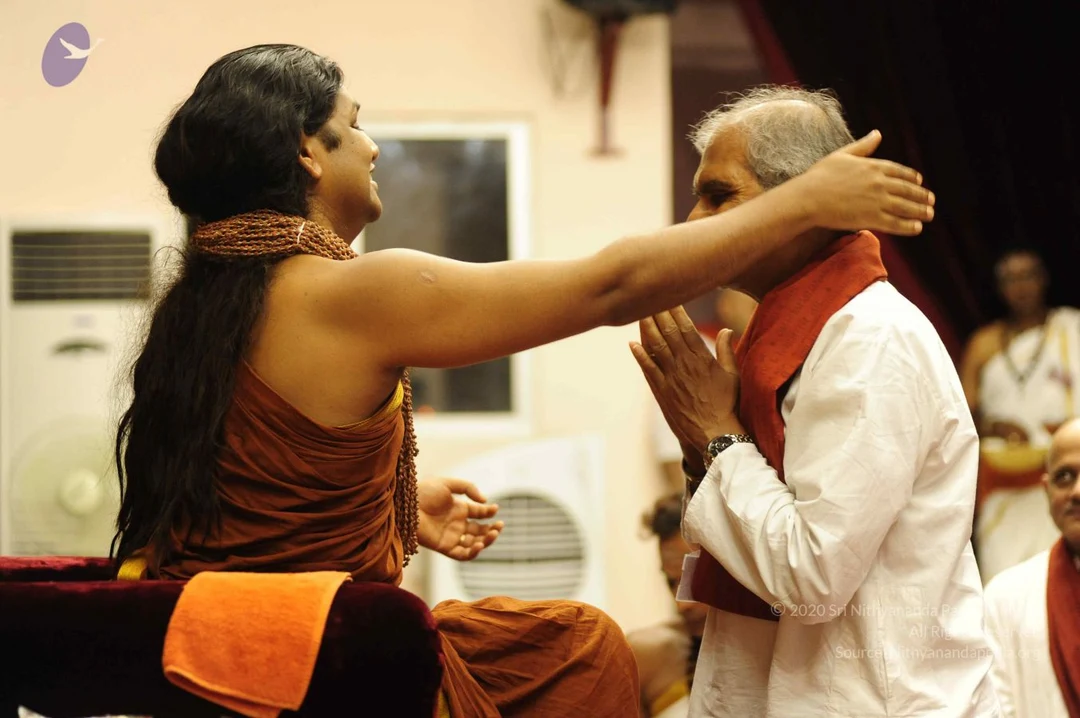
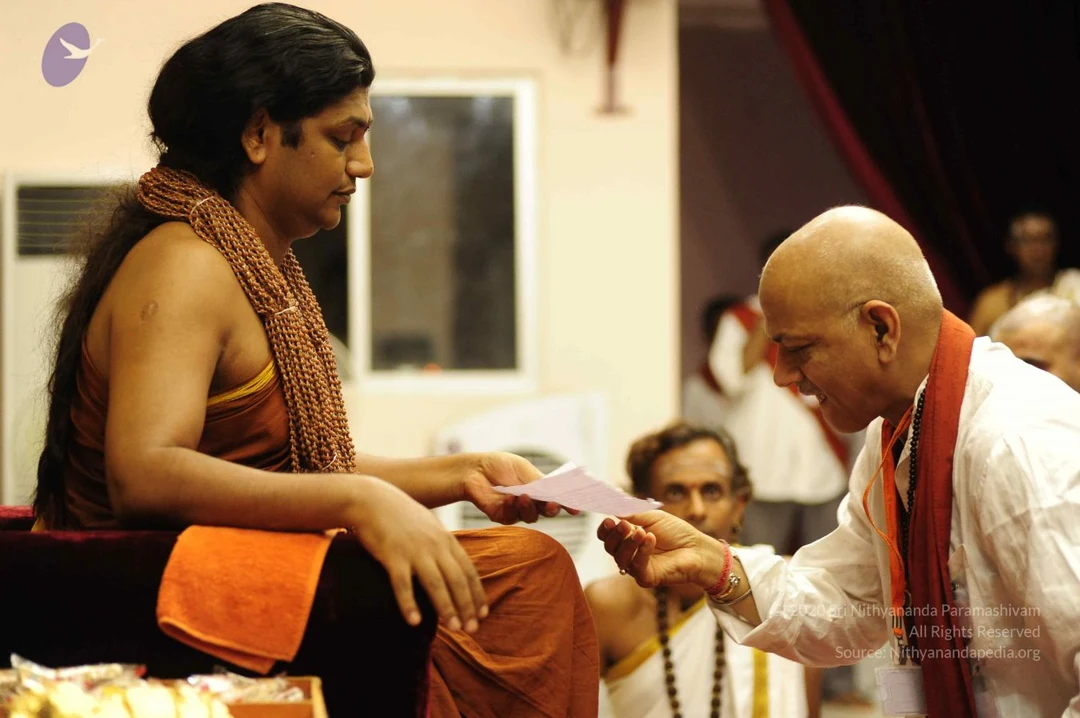
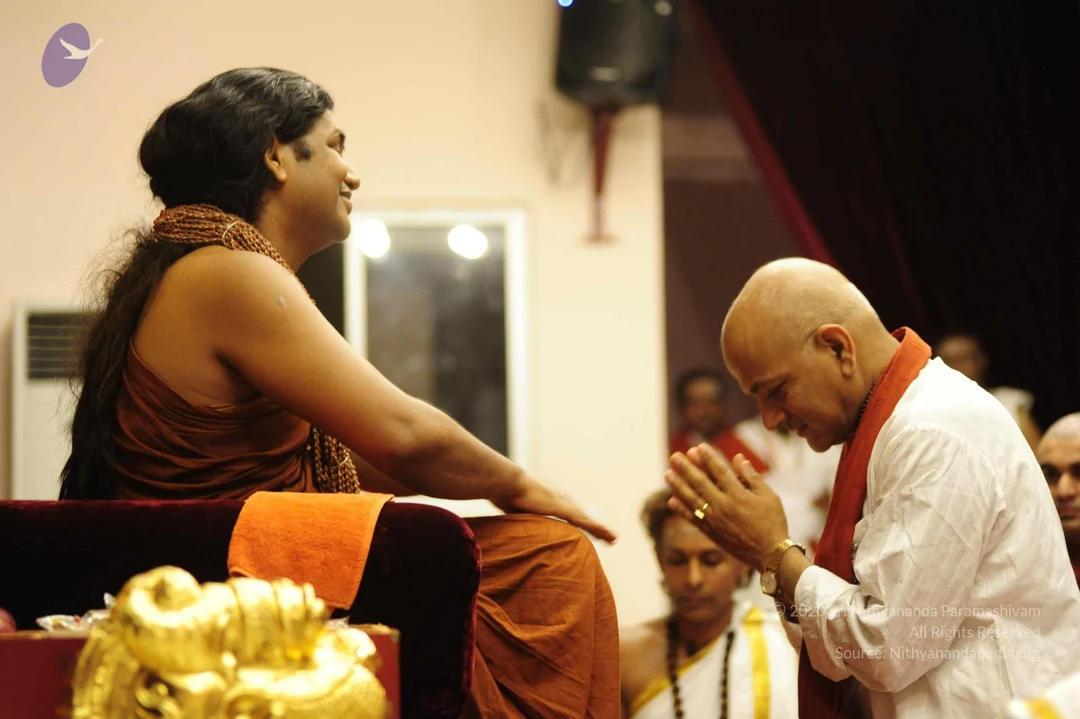
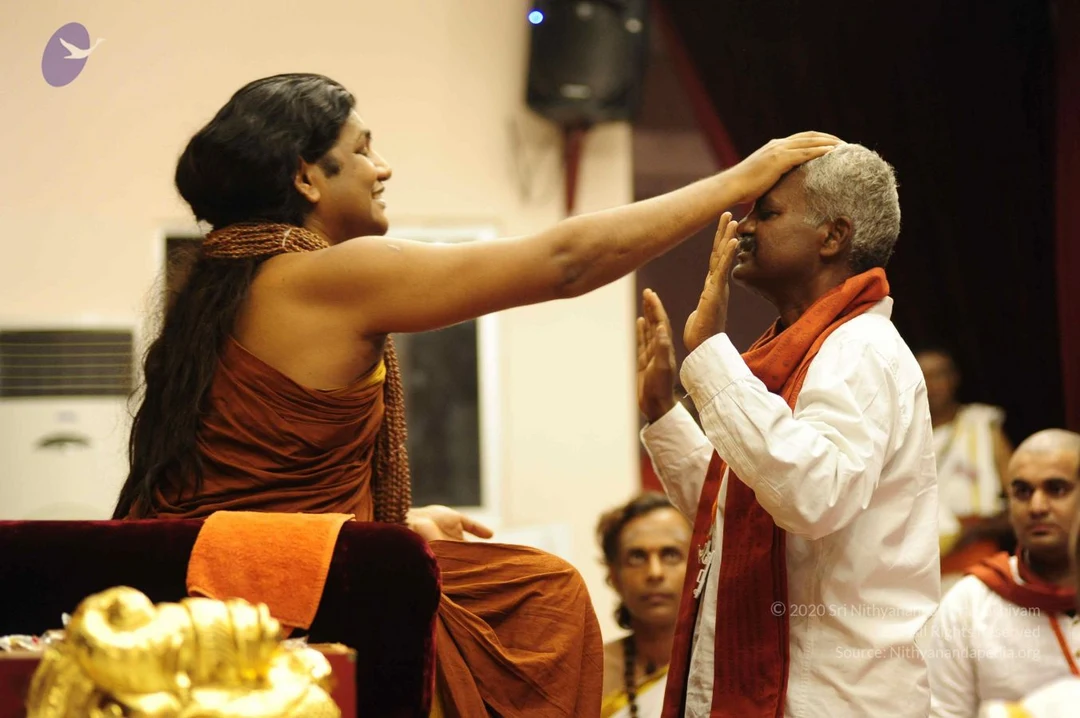
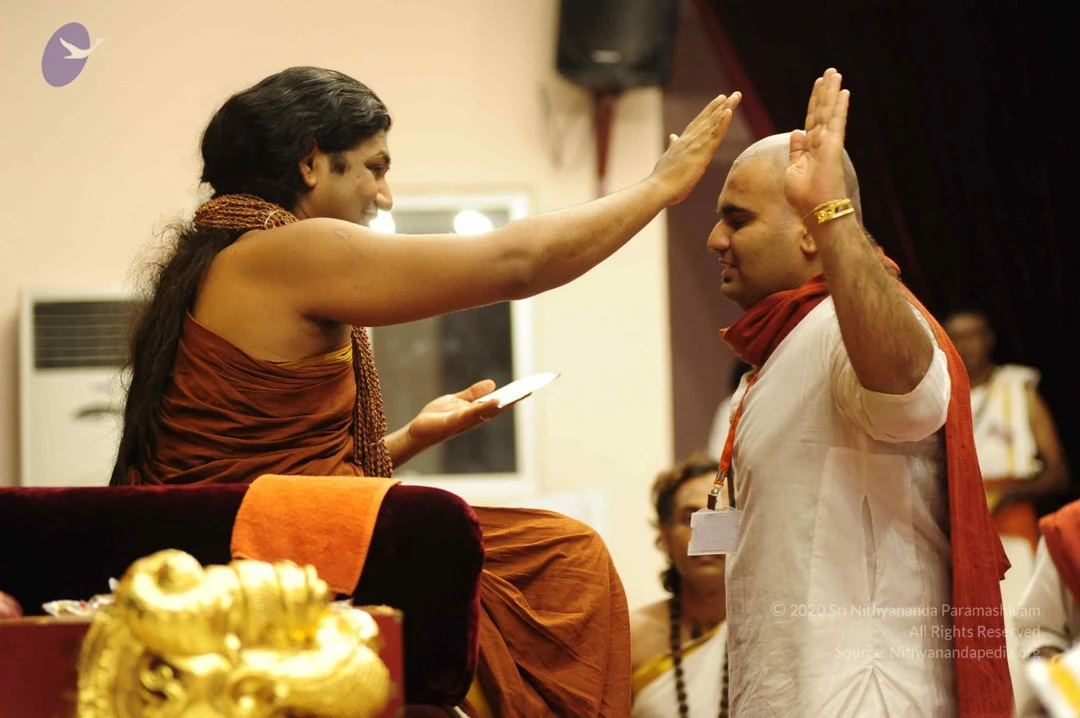
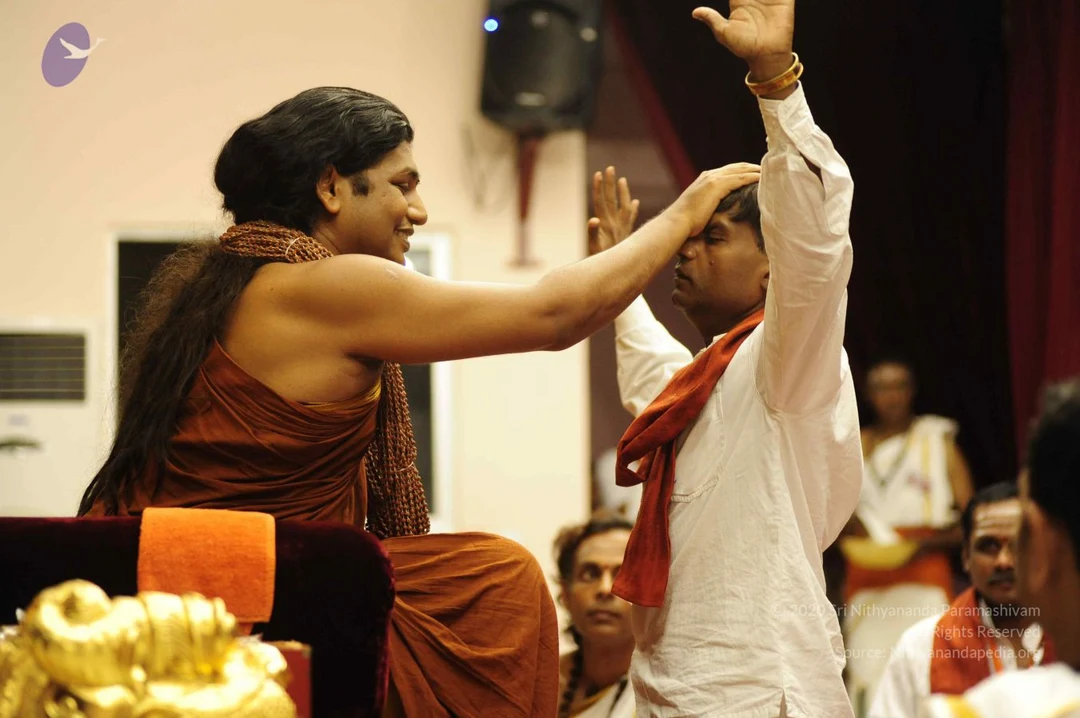
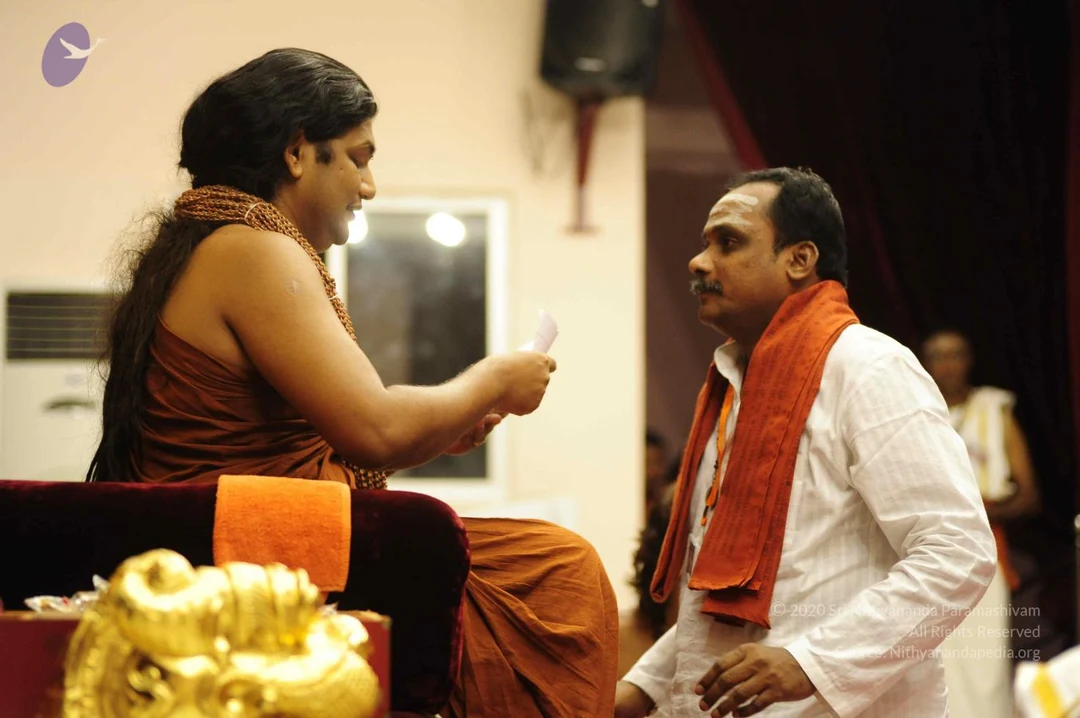
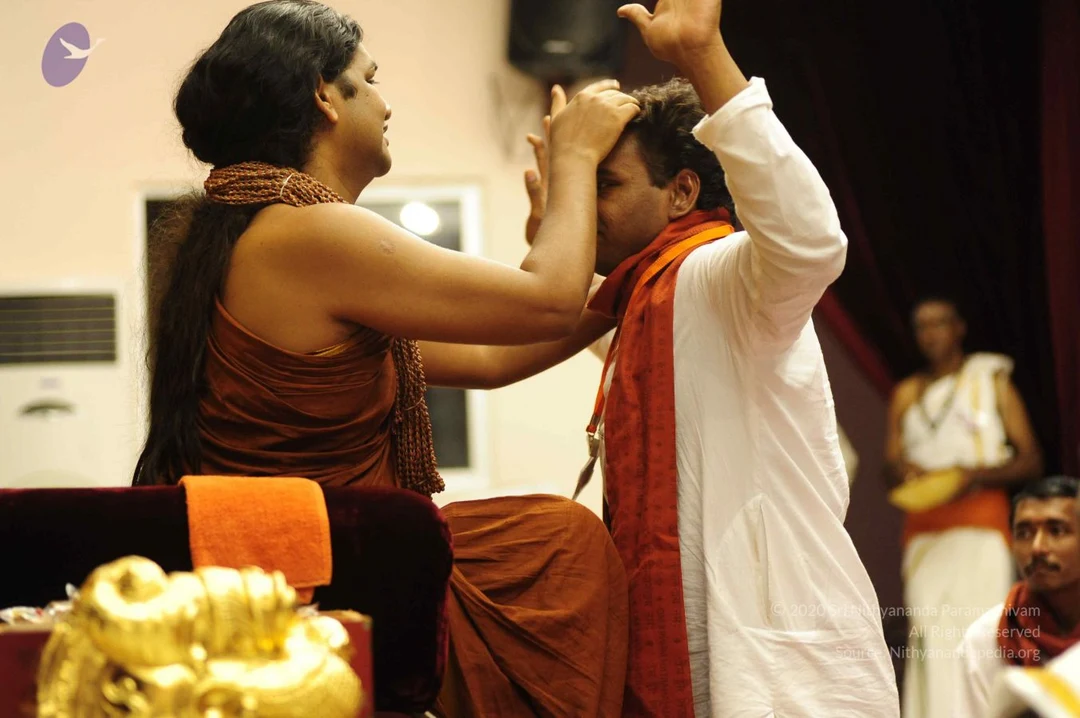
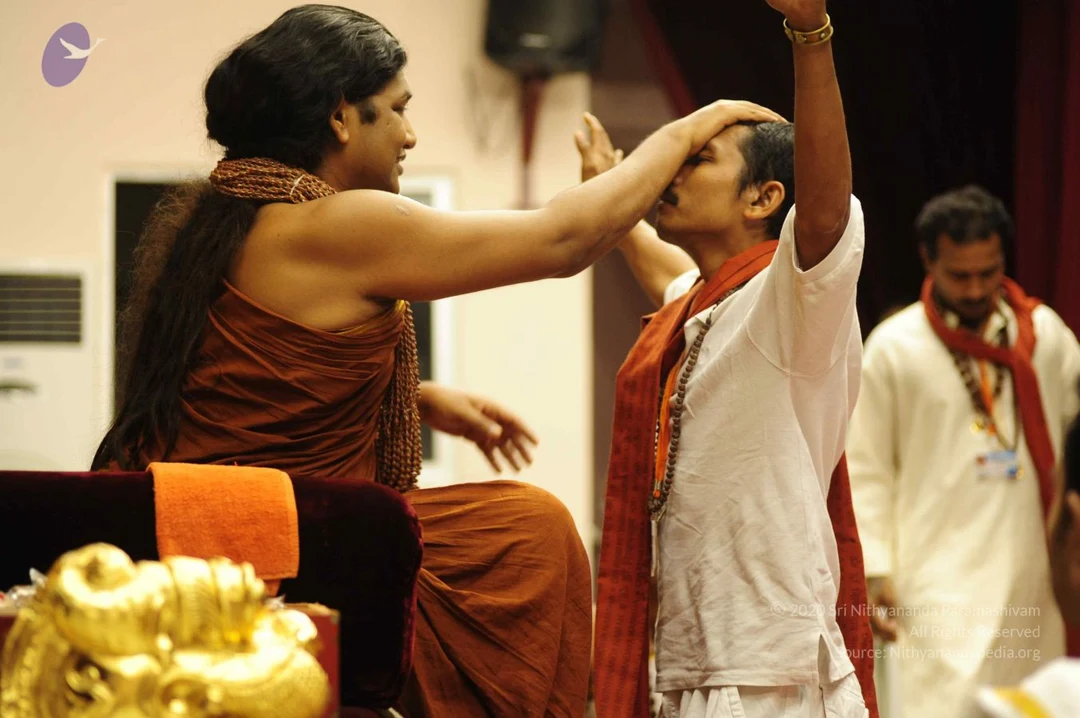
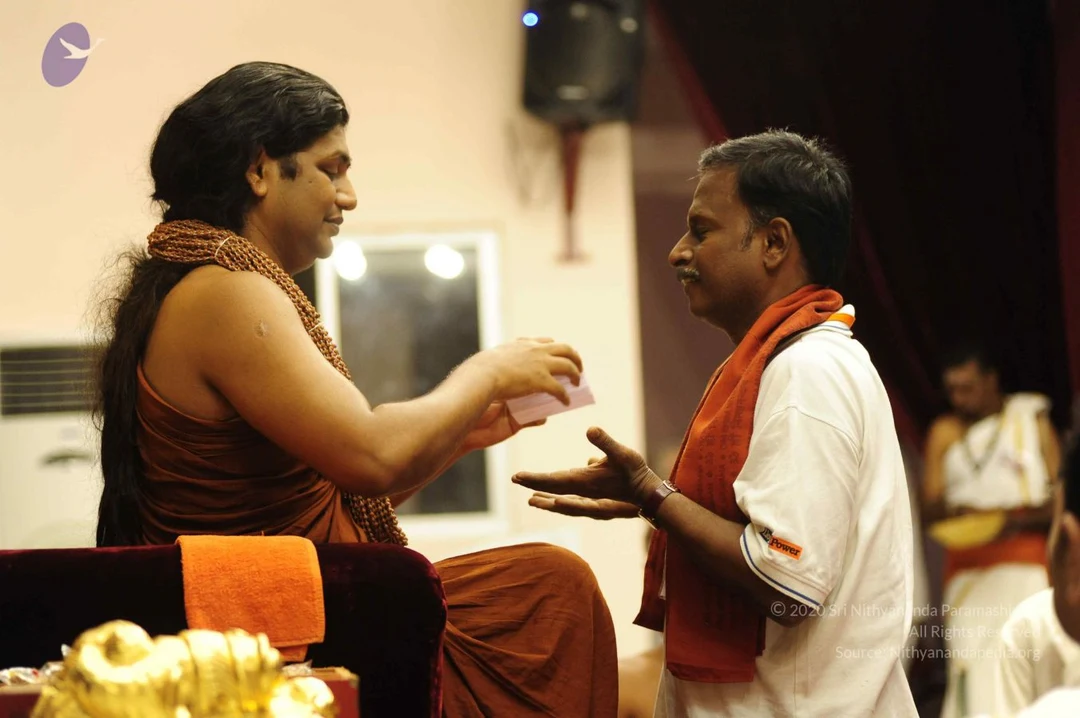
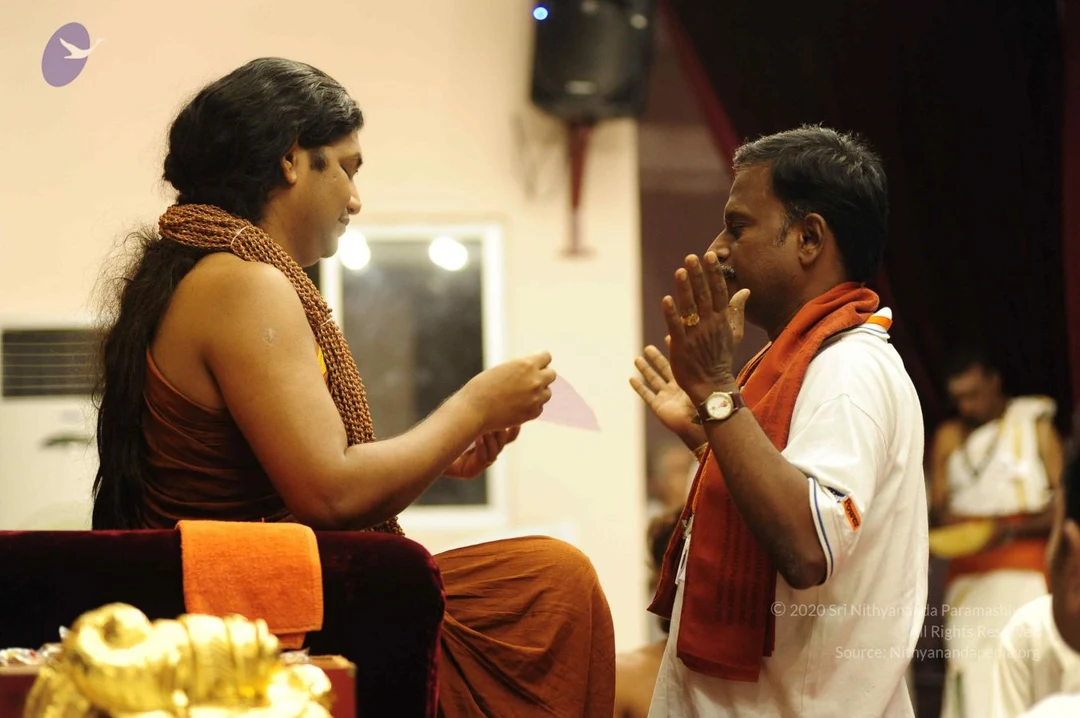
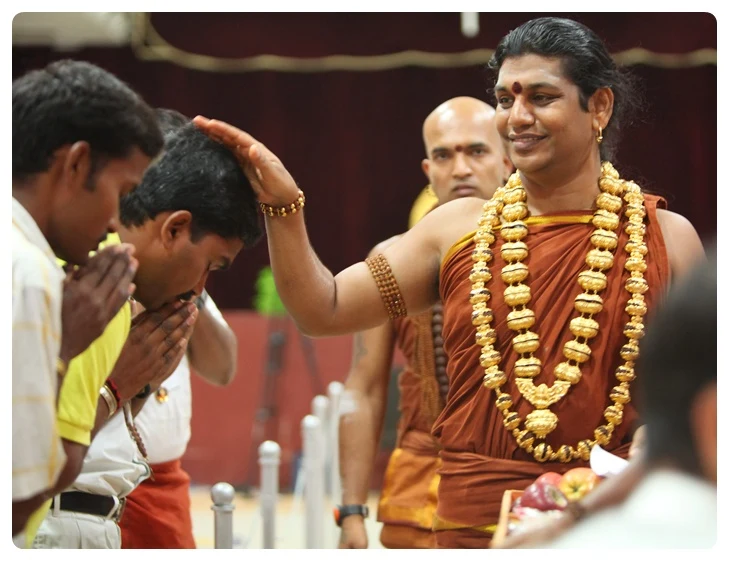
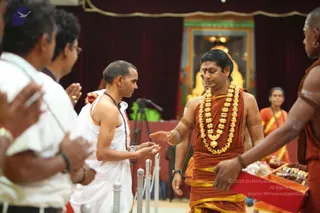
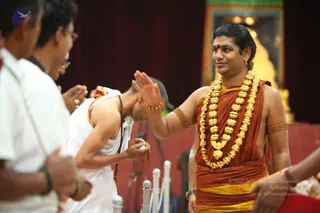
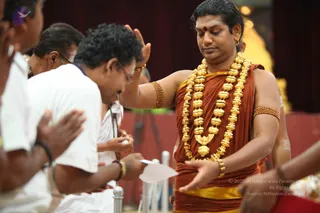
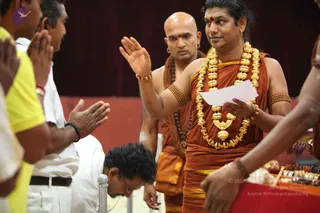
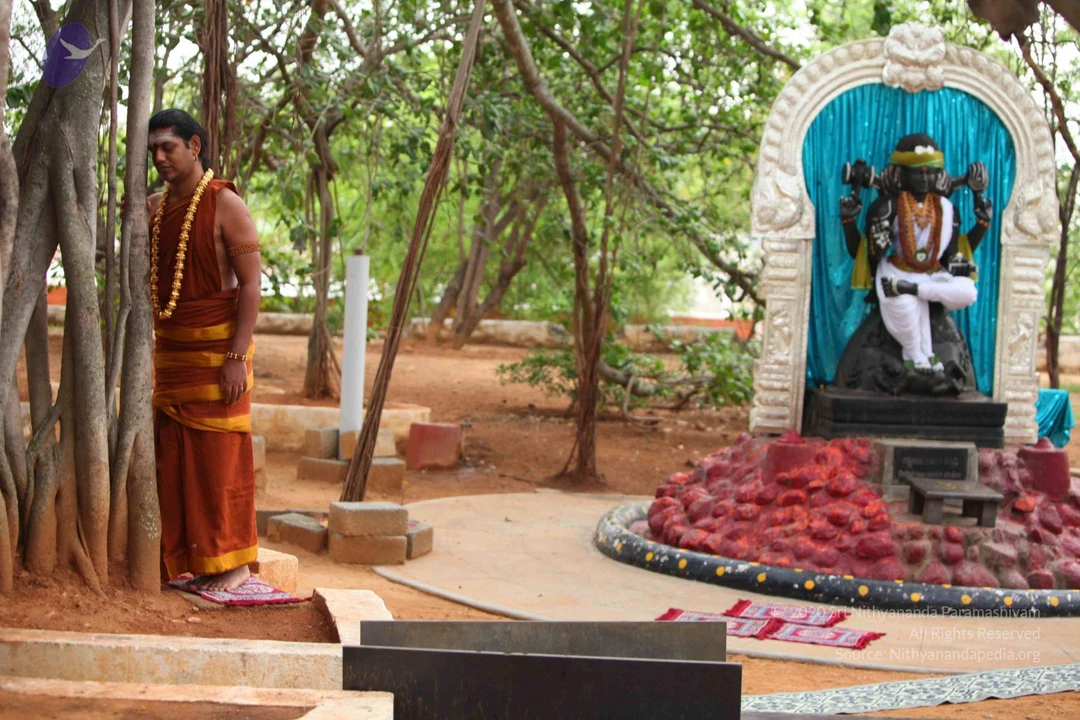
A photograph of a temple-hall ritual. In the centre, a man in an orange-saffron dhoti and shawl wears a heavy gold multi-strand necklace, a red-orange tilak on his forehead and gold armlets; his hair is swept back and he holds out his hand toward a devotee. Beside him, a man in white dhoti and shawl with a rudraksha-style mala stands holding a small object. Several people in white shirts stand at the left with hands folded in namaskar. At the right, a shaven-headed attendant in saffron carries a red tray of offerings. Behind them, a gilded deity murti and a maroon curtain frame the scene, and a woman in orange sari stands in the background. a person is the central figure, shown in gold ornaments and saffron garments.A man in saffron-orange draped clothing and a long gold-bead garland stands at right, raising one hand in greeting with a small red bindi on his forehead. Multiple layered gold garlands, gold armbands and bangles adorn him, with a golden ornament at his ear. Behind him is a gold-toned deity figure and a deep red curtain. At left, a man in white dhoti and shirt holds his hands in anjali, another man in white bends forward offering a rudraksha or prayer-bead mala, and more people in white stand at the edge of the frame.A photograph of a ritual exchange in a temple-like hall. A man in a saffron-orange wrap and bare-armed, with a bindi, wears long heavy gold necklaces of bead-like links and gold armlets; he raises one palm toward a devotee while extending the other hand over a small paper offering held by a bespectacled man in a white shirt. Other devotees in white clothes stand nearby with hands folded, and a gold-coloured backdrop and red drapery fill the background. The orange-robed figure with ornate gold adornments and a distinctive presentation is a person candidate, but the identity is uncertain from appearance alone.A photograph of a satsang setting with a standing figure in orange-red robes and a heavy gold necklace with large gold beads and a central gold pendant, holding a sheet of white paper and raising one hand in a gesture of address. Long swept-back dark hair and gold bangles on the wrist and upper arm are visible. Beside him a bald man in an orange shawl wears a rudraksha mala and gold earrings. On the left, people in yellow and white clothing press their palms together in namaste, and a man bends forward at a metal barrier. At the lower right, a red-cloth table holds rudraksha malas, bangles and fruit. The background is a dark maroon curtain with a red wall. a person is the central figure in orange robes with gold adornments.A photograph of a satsang setting with a man in saffron-orange robes and a heavy gold multi-strand necklace extending his right hand to bless the head of a seated devotee in a yellow shirt. The blessed devotee bows with eyes lowered, and another devotee in white with hands in anjali stands at left. Behind the central figure, a bald man in a saffron cloth stands near a pillar line. A probable Swamiji candidate is shown with long swept-back hair, a red bindi, gold bangles, ornate gold necklaces and saffron robes, performing a blessing. Fruit offerings sit on a tray at lower right, and a maroon curtain forms the backdrop.A photograph of a smiling man in an orange-saffron dhoti and wrap, with a heavy gold multi-bead necklace, rudraksha bracelet, gold earrings and a red bindi, holding a folded white paper. He is being touched on the arm by a devotee in a maroon shirt wearing glasses, with a hand raised to his forehead area, while another man in white with a light orange thread on the wrist presses his palms together in namaskar at left. A bald man in the background wears an orange cloth with a red mark on his forehead. Probable Swamiji (probable): the central figure wears a crown-less saffron wrap, rudraksha bracelet and ceremonial gold necklace, and his hair is swept back, which are the cues used here. The setting is an indoor hall with a maroon backdrop.

Inner-Awakening

36 photosSource gallery
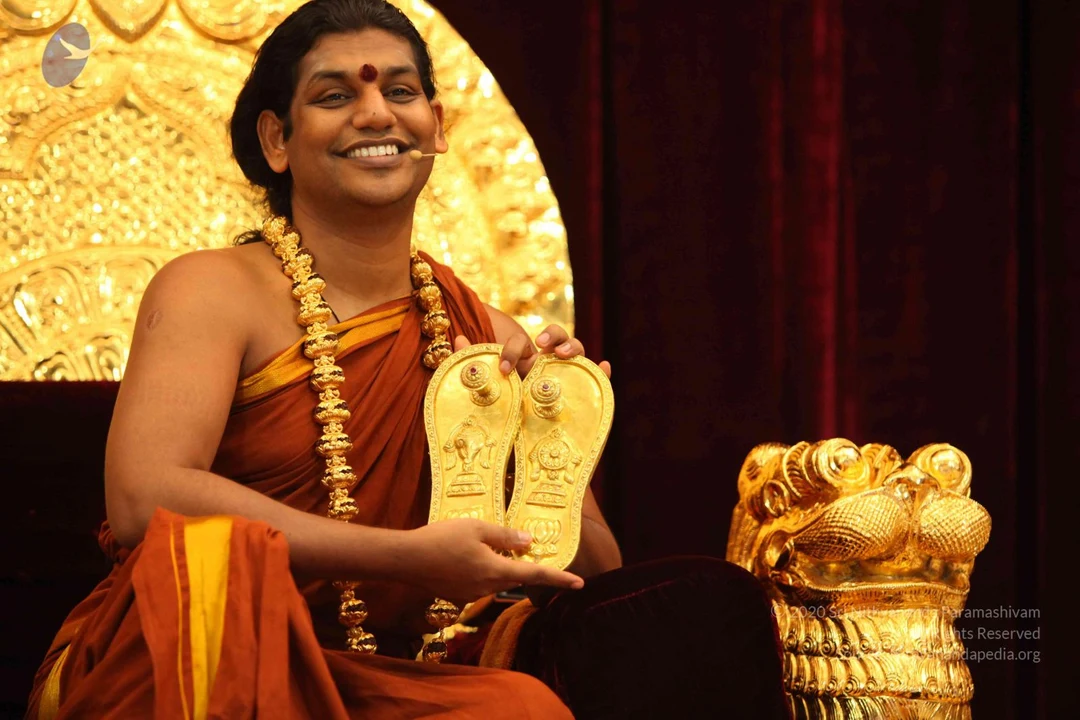
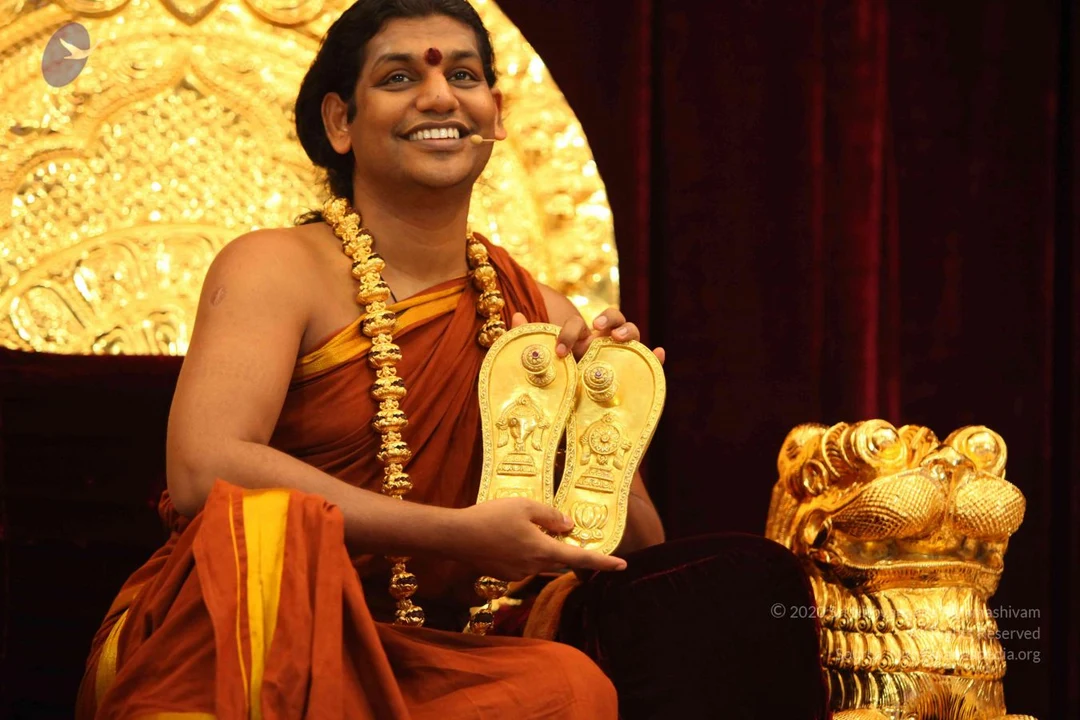
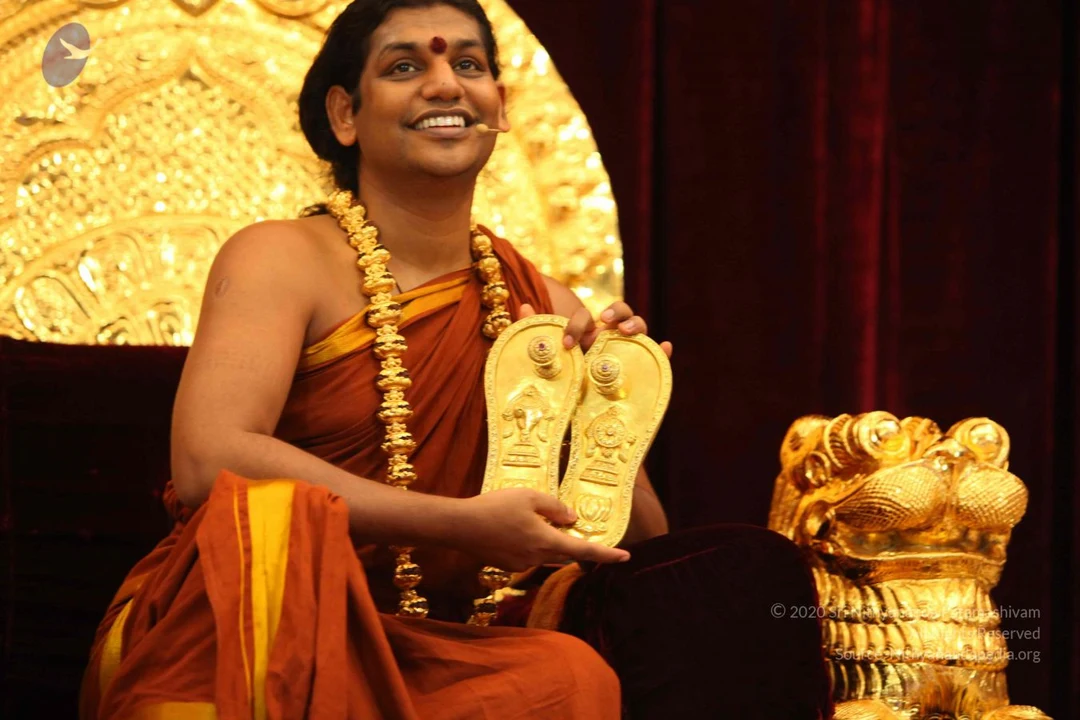
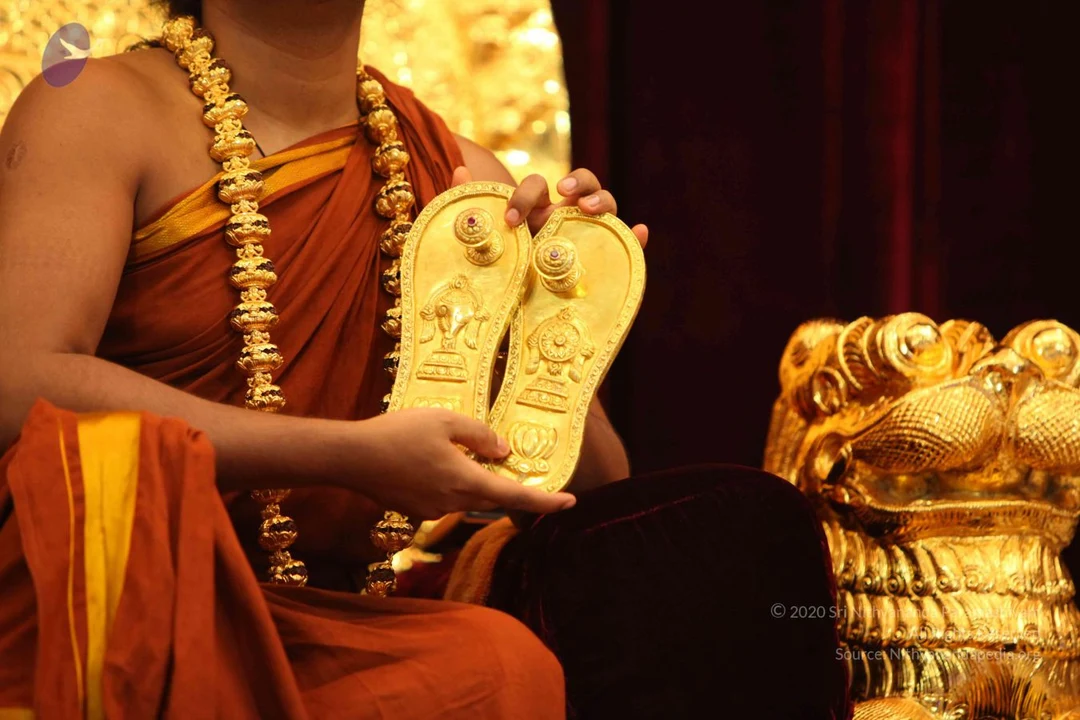
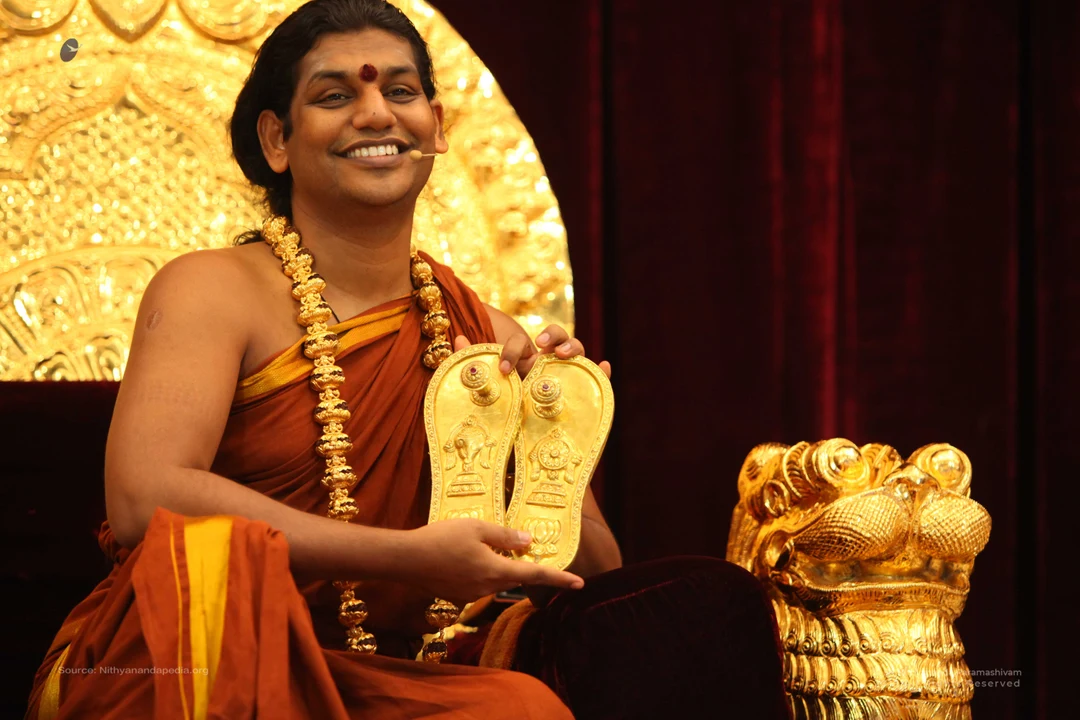
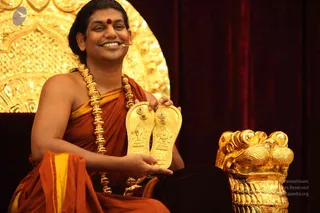
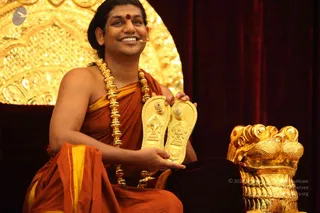
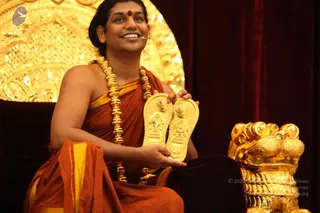
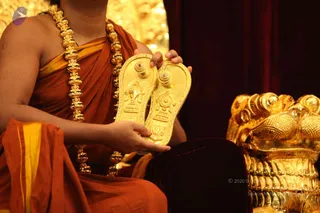
A seated man in an orange-saffron robe with a yellow edge holds a large gold ceremonial object shaped like a sandal or footwear with carved details, in front of a golden backdrop and a dark red curtain. He wears a long gold-bead necklace and a red bindi, and a small microphone is visible near his face. To the right, a gold ornate lion-like or decorative carved object sits on a dark cloth. The setting resembles a satsang or discourse hall. Swamiji (probable): the man has long swept-back dark hair and saffron clothing with ornate gold garlands, matching the page's note of his presence at the event.A photograph of a man seated on a golden throne before a gilded backdrop and deep red curtains. He wears an orange-saffron shawl over his shoulders and a long gold-beaded necklace, with a red bindi on his forehead. He holds a golden ceremonial object with a lotus motif in both hands and gestures as he speaks, with a small microphone visible near his face. In the lower right stands a large gold lion-head ornament. a person is seated in a satsang setting, with the presentation cues of saffron clothing and gold ornaments.A smiling man in saffron-orange robes with a gold ceremonial necklace of beads sits on a golden lion-headed throne in front of a large gold-embossed backdrop. He holds up a pair of golden sandals engraved with motifs, and a small headset microphone is visible near his face. The dark red curtain behind him sets off the gold decor. a person is identified by saffron robes, a gold bead necklace and a shaved-to-swept hairstyle with a red tilak.A smiling man seated on an ornate golden throne in front of a gilded backdrop, wearing an orange-saffron robe with a yellow-edged dhoti and a long gold-bead necklace. He has a red bindi on his forehead and a small microphone near his mouth, and he holds a pair of gold padukas (sandals) with both hands. A golden lion-head armrest sits at the lower right against dark red drapery. The figure matches the a person appearance cues of an orange robe, gold ceremonial necklace and ornate setting, shown in person during a discourse.A smiling man in a saffron-orange robe with a yellow-edged wrap sits on a golden throne before a large gold-embossed backdrop and red curtains. He wears a thick multi-strand gold-and-beaded necklace, a red dot on his forehead, and a small microphone at his cheek. He holds a pair of ornate gold sandals or paduka with embossed deity motifs in both hands. A golden lion-head armrest is visible at right.Close crop of a seated figure in saffron-orange robes with a yellow border, wearing a heavy gold bead necklace. The figure holds a pair of ornate gold sandals (padukas) with raised floral and motif relief, one with a red stone. Beside them is a gilded lion-head armrest on a dark velvet seat, with a golden backdrop behind. The face is not shown. This appears to be a peetha/throne setting with padukas, but identity is not established from appearance alone.

Inner-Awakening-Darshan
144 photosSource gallery
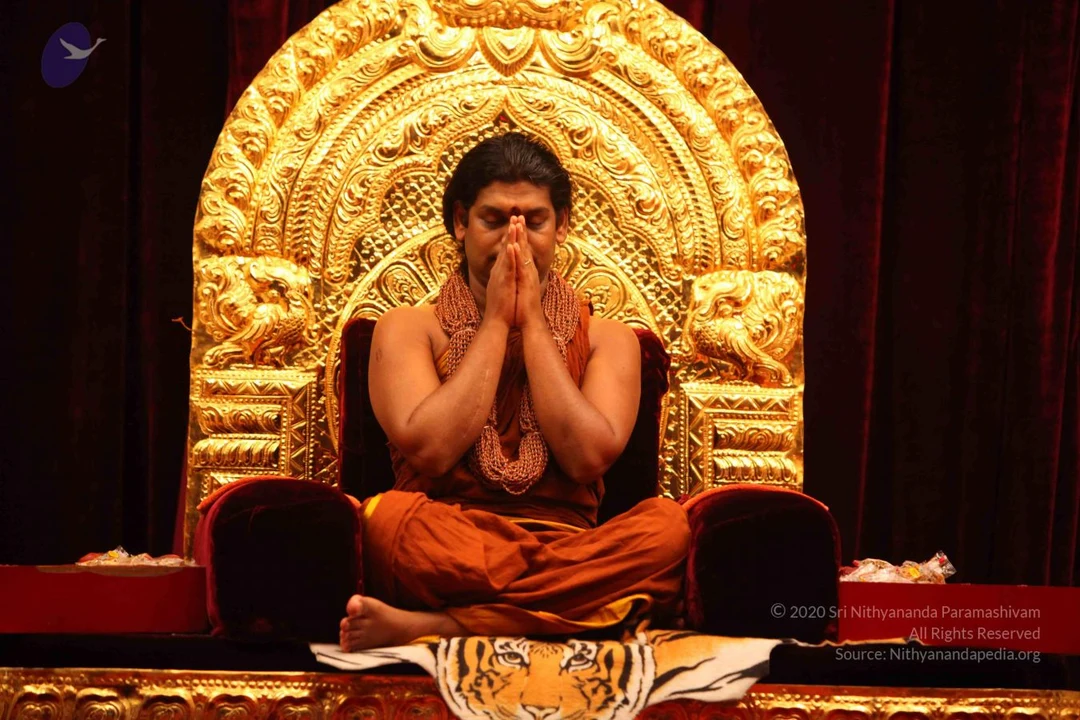
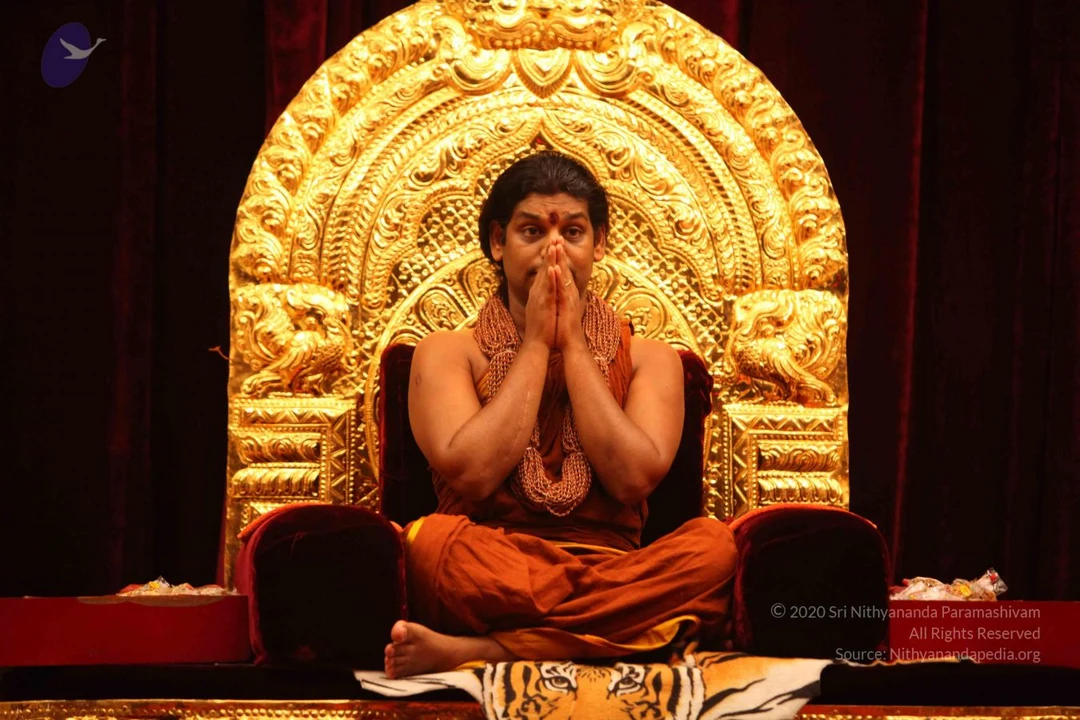
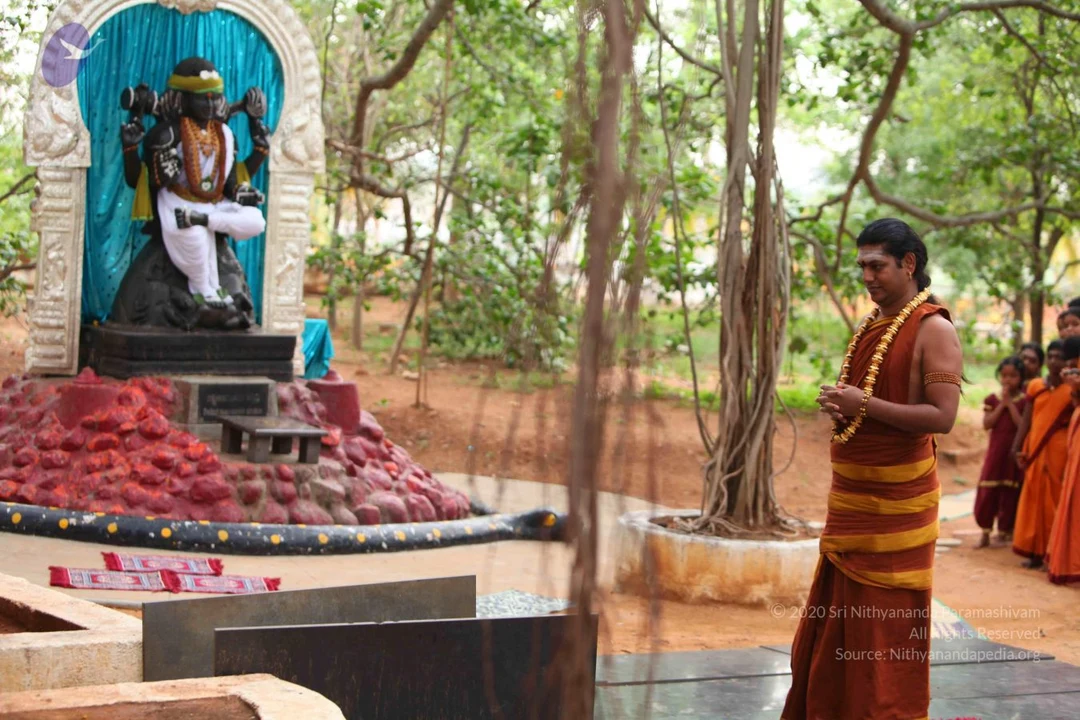
A seated man in an orange-saffron dhoti and wrap sits cross-legged on an ornate golden throne with lion-carved armrests and a large arched gold backrest, palms pressed together in anjali at his face with eyes closed. He wears a multi-strand beaded necklace of rudraksha-style malas. Red velvet drapes frame the throne, a tiger-striped cloth lies at his feet, and a red-draped table with flowers sits to one side.A man seated cross-legged on an ornate gold throne with a carved arched back and lion-head motifs, against dark red velvet drapery. He sits with palms pressed together in namaste at his chest and eyes closed. He wears a saffron-orange dhoti and a bare upper body, with a long rudraksha mala draped over his shoulders, and a red bindi on his forehead. His bare feet rest on a striped tiger-skin rug. Small offerings sit on red ledges at either side of the throne.A seated man in an ornate golden throne with carved lion-like figures and a golden arched backrest, set against deep red drapes. He sits cross-legged on a tiger-striped cloth, palms pressed together in namaste at chest level. He wears a saffron-orange garment over bare shoulders, a long beaded rudraksha-style necklace, and a small red mark on his forehead. Flower offerings lie on the red platform beside him.A man seated cross-legged on an ornate gilded throne with a large arched backrest carved with floral scrollwork and lion figures, in front of dark red velvet drapes. He wears an orange-saffron cloth draped over his torso, an ornate multi-strand rudraksha-style mala necklace, and a red tilak on his forehead. His hands rest on dark cushioned armrests, and a striped tiger-skin cloth covers the dais. Small offerings sit on red trays at either side. a person seated in a meditative pose on a golden peetha, with saffron clothing and rudraksha mala as visible cues.A seated man in a saffron-orange wrap and dhoti sits cross-legged on an ornate gold throne with a repoussé arched backrest carved with lion figures. He wears a thick multi-strand rudraksha mala around his neck and a red tilak on his forehead, with his bare hands resting on dark cushioned armrests. A striped tiger-skin cloth covers the dais edge, and red velvet drapes frame the background. Small offerings sit on red side tables.A man sits cross-legged on a dark cushioned seat in front of an ornate gold-leaf throne back carved with scrolls and lion-like figures. He wears an orange-saffron cloth draped over his shoulders and bare chest, a yellow-gold undercloth, and multiple strands of rudraksha-style beads around his neck. He has a red bindi on his forehead, hands resting on the chair arms, and a calm, meditative expression. Flower offerings sit at the edge of the frame on the right. Dark red drapes fill the background. a person is seated in a meditative posture, appearing as a devotee-seated teacher during satsang.

Gurukul-Homa

31 photosSource gallery
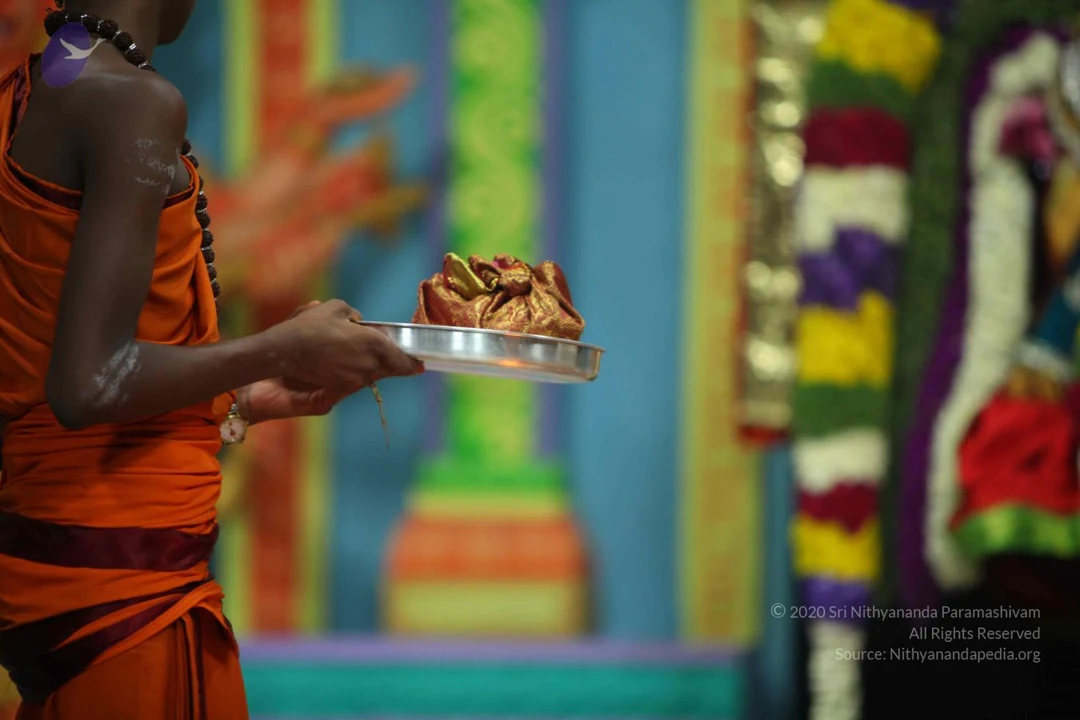
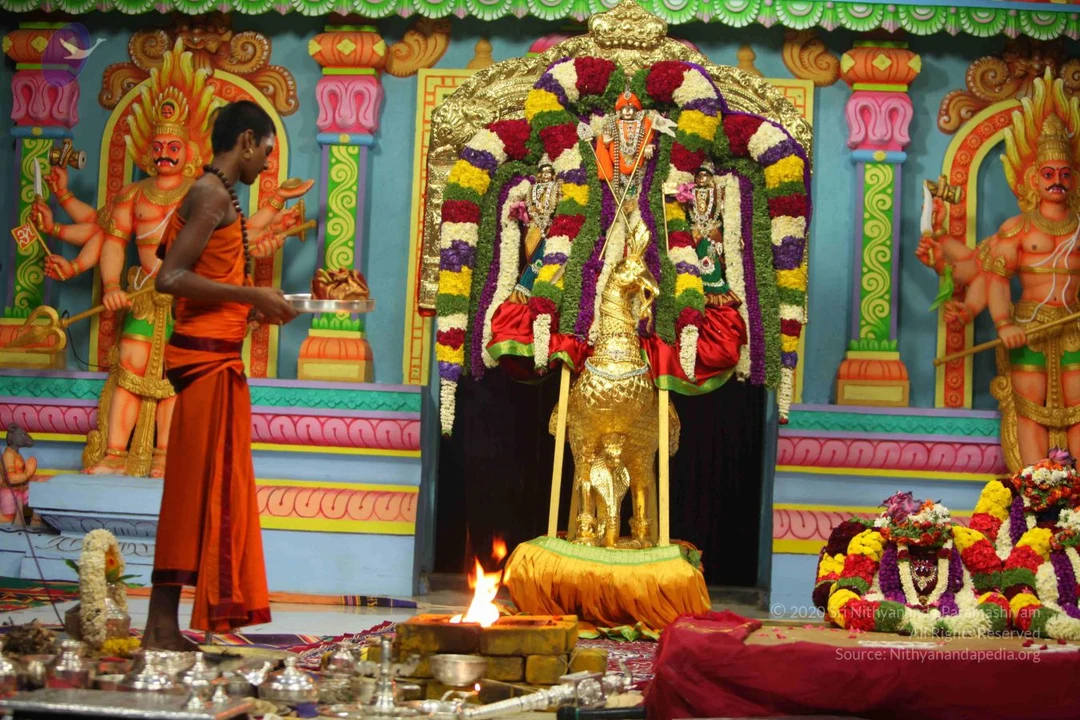
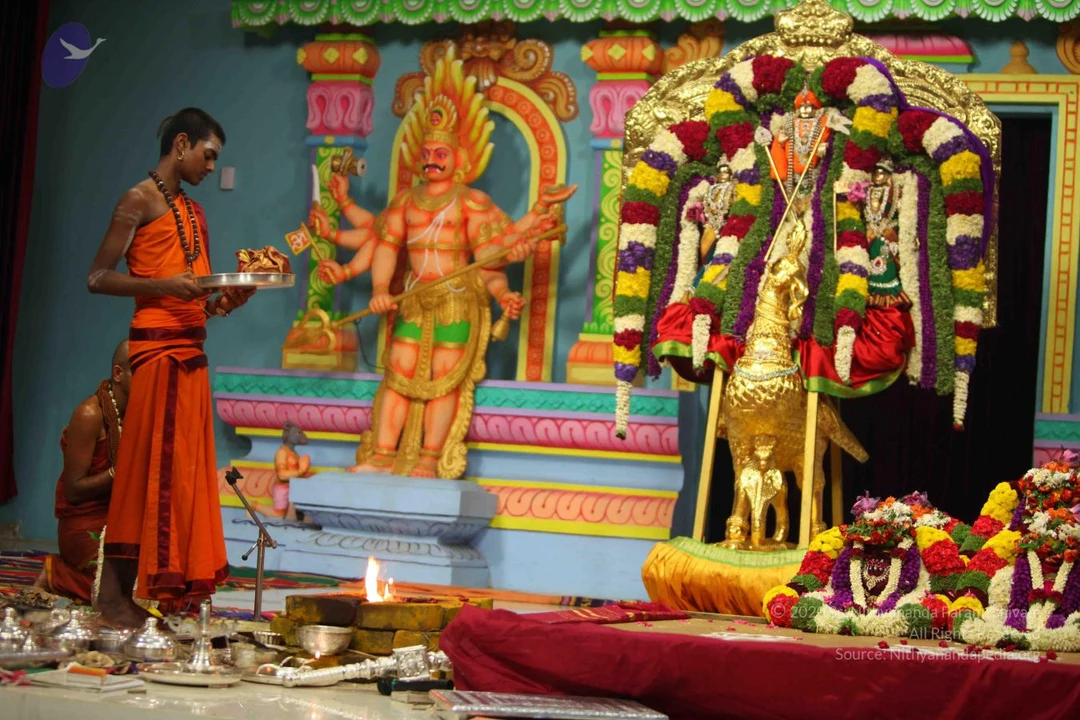
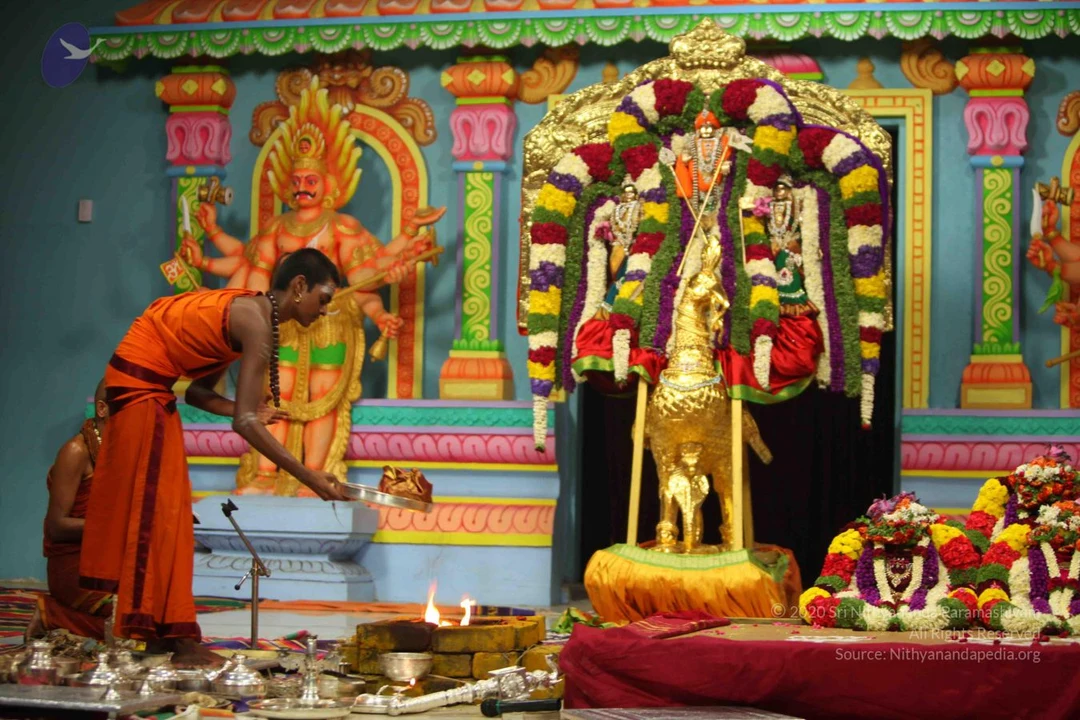
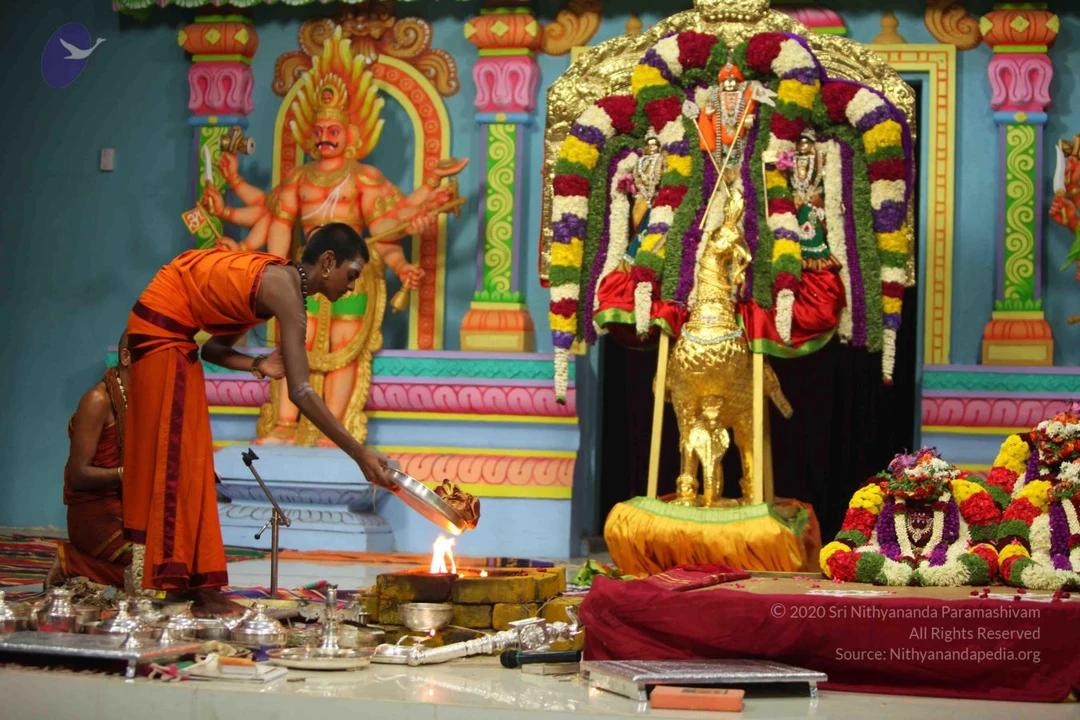
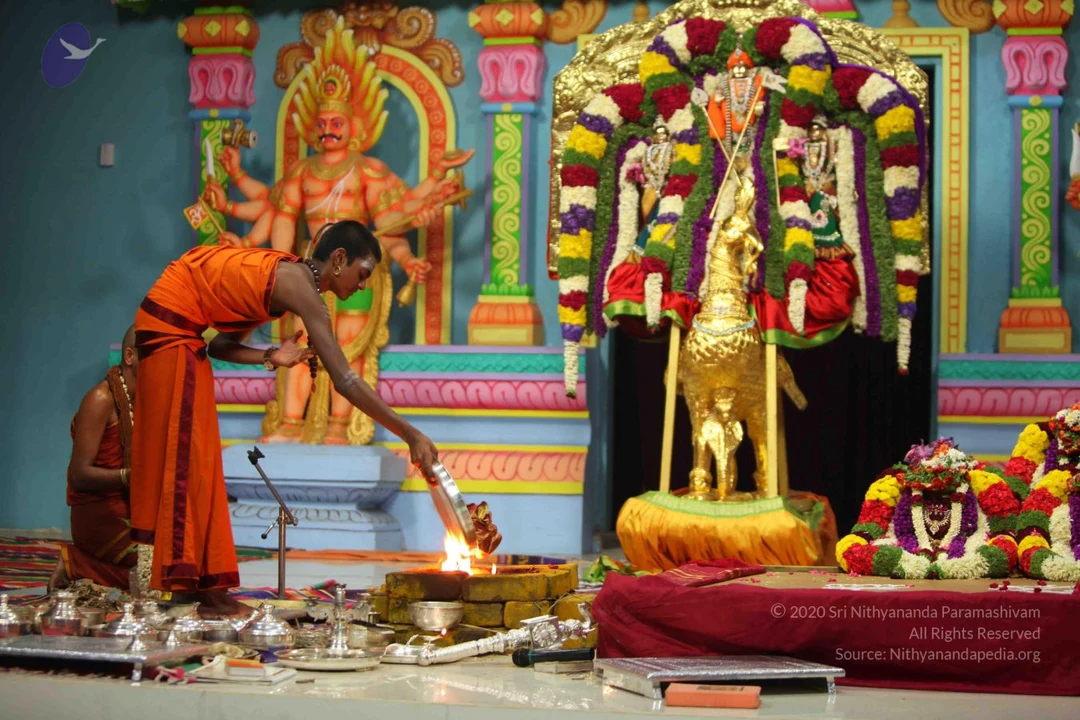
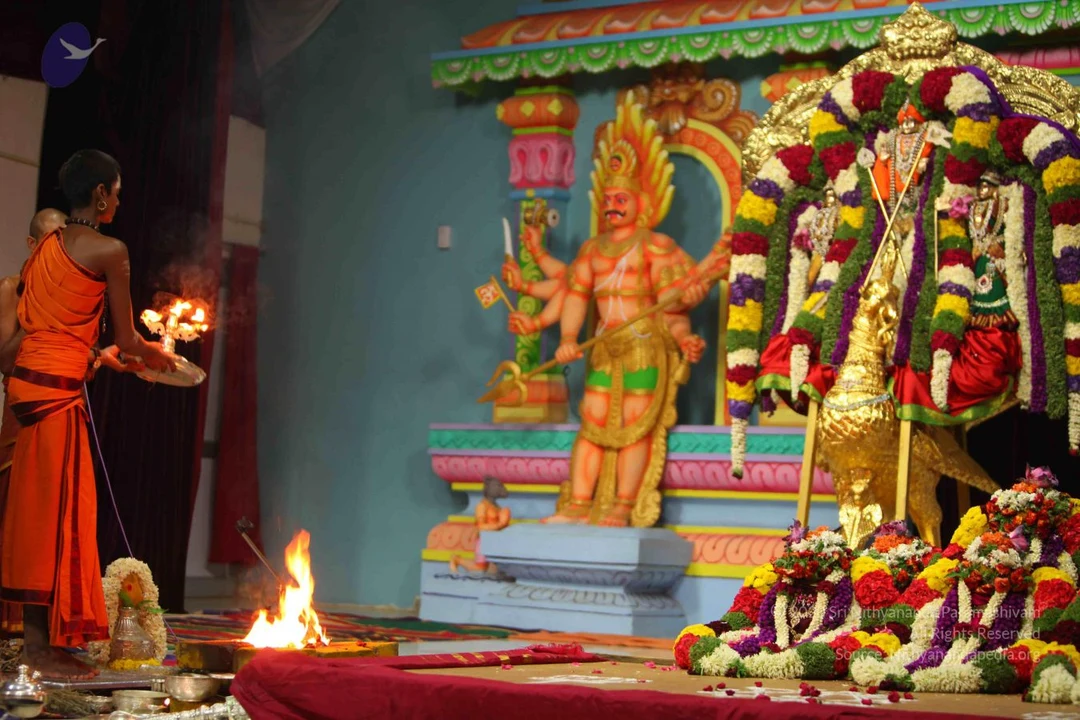
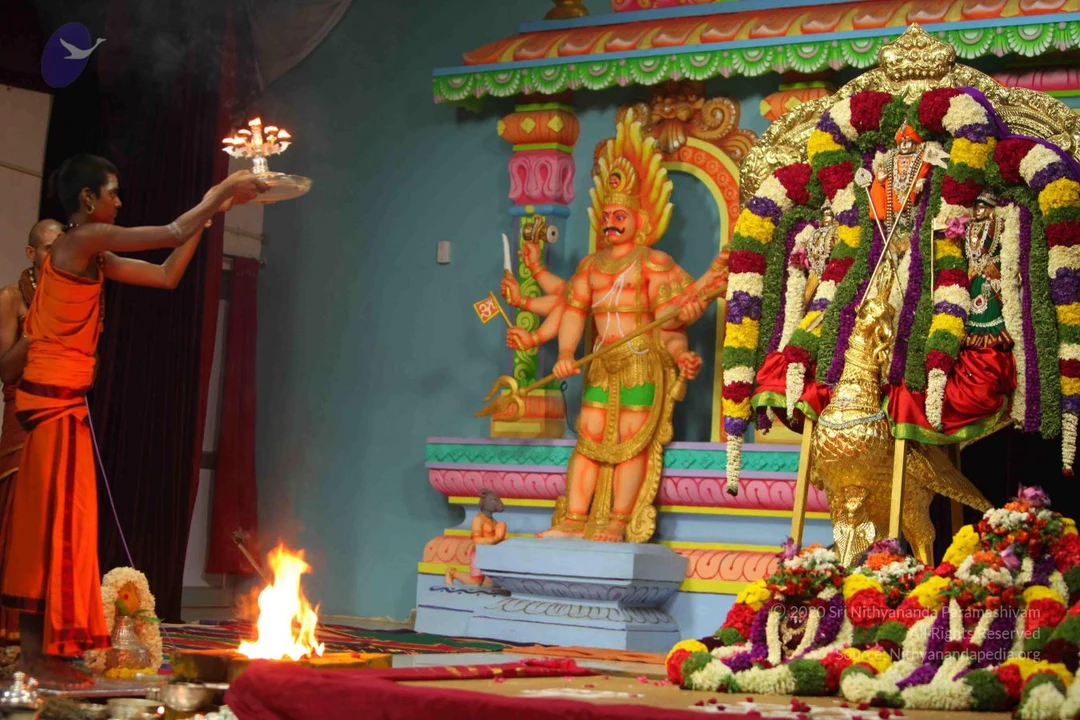
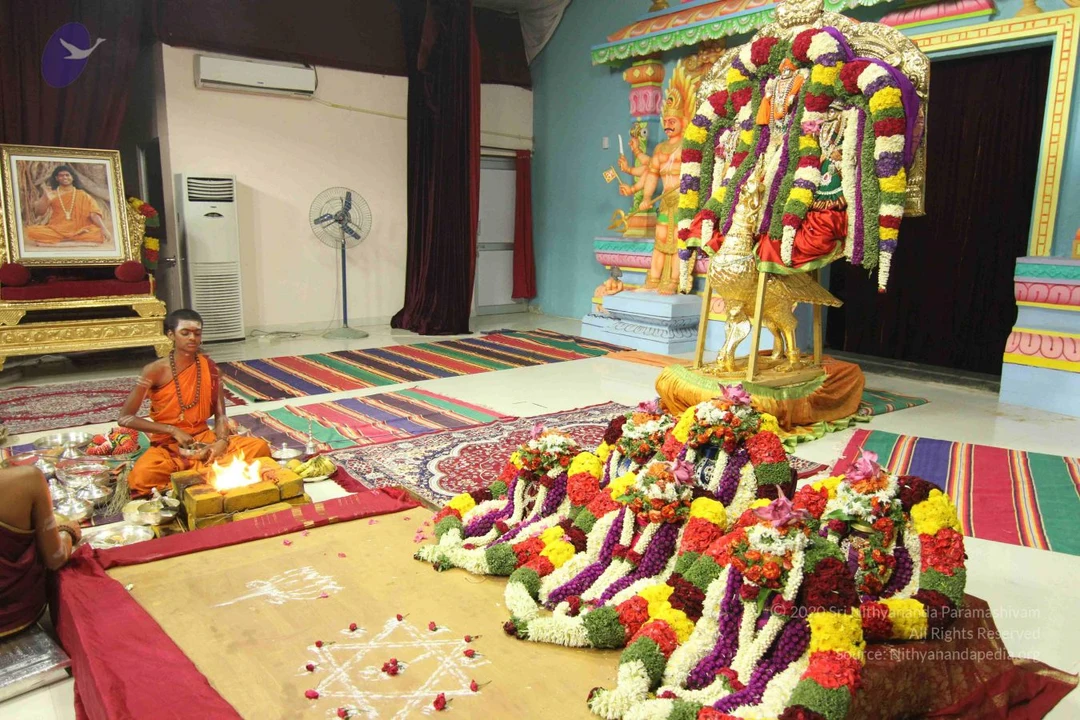
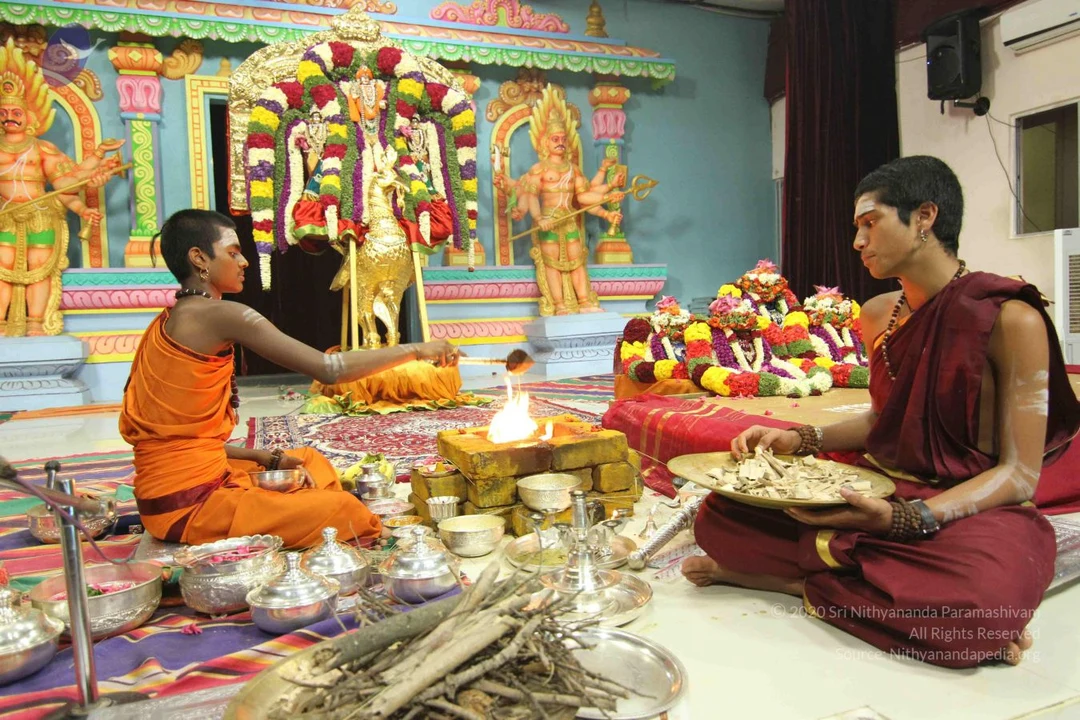
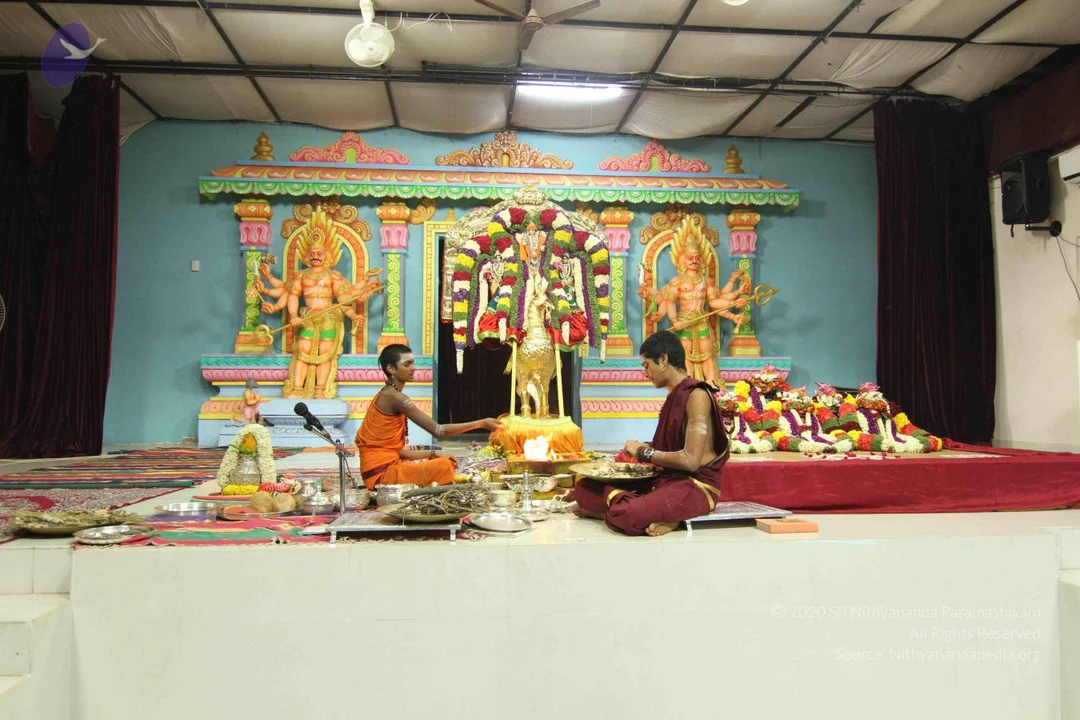
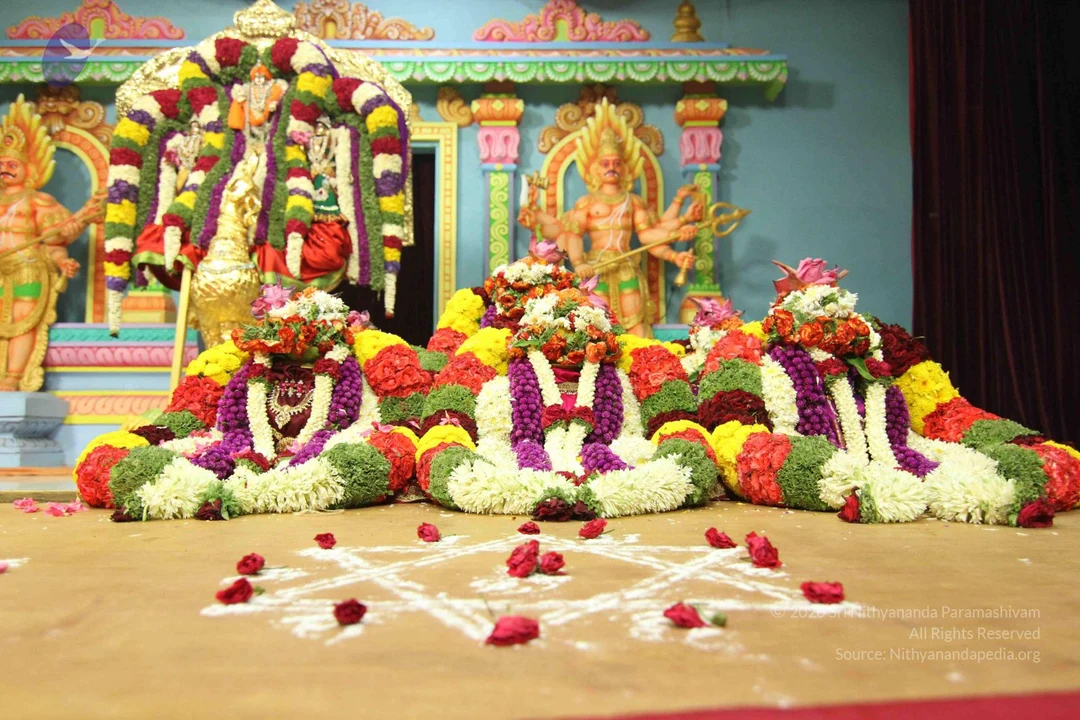
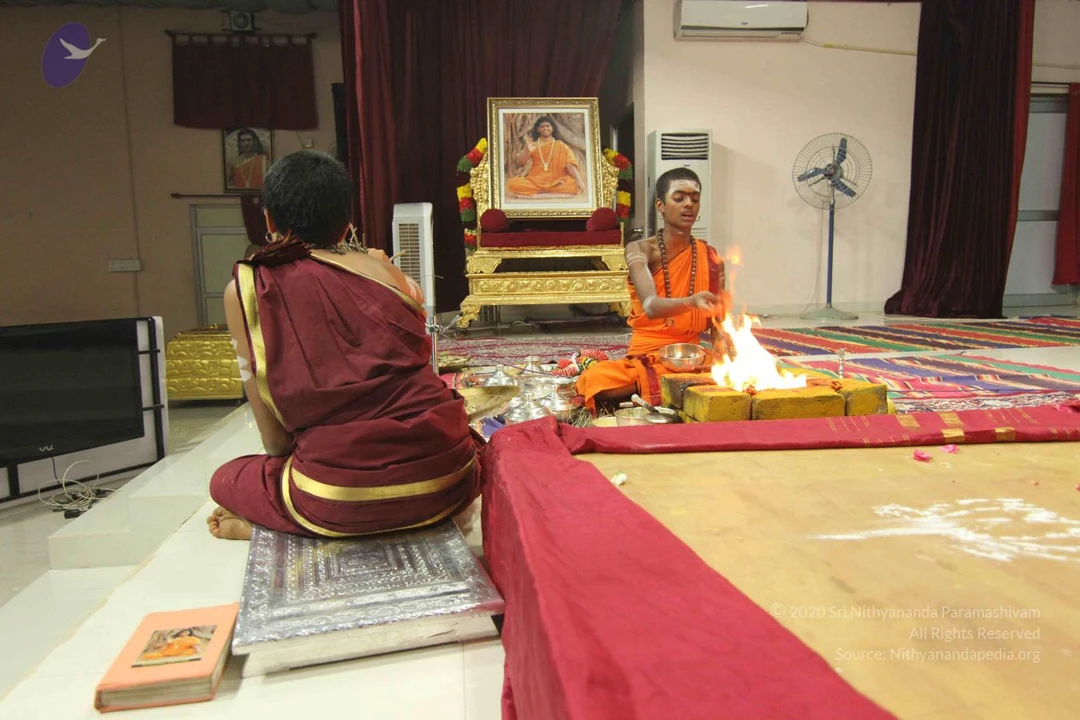
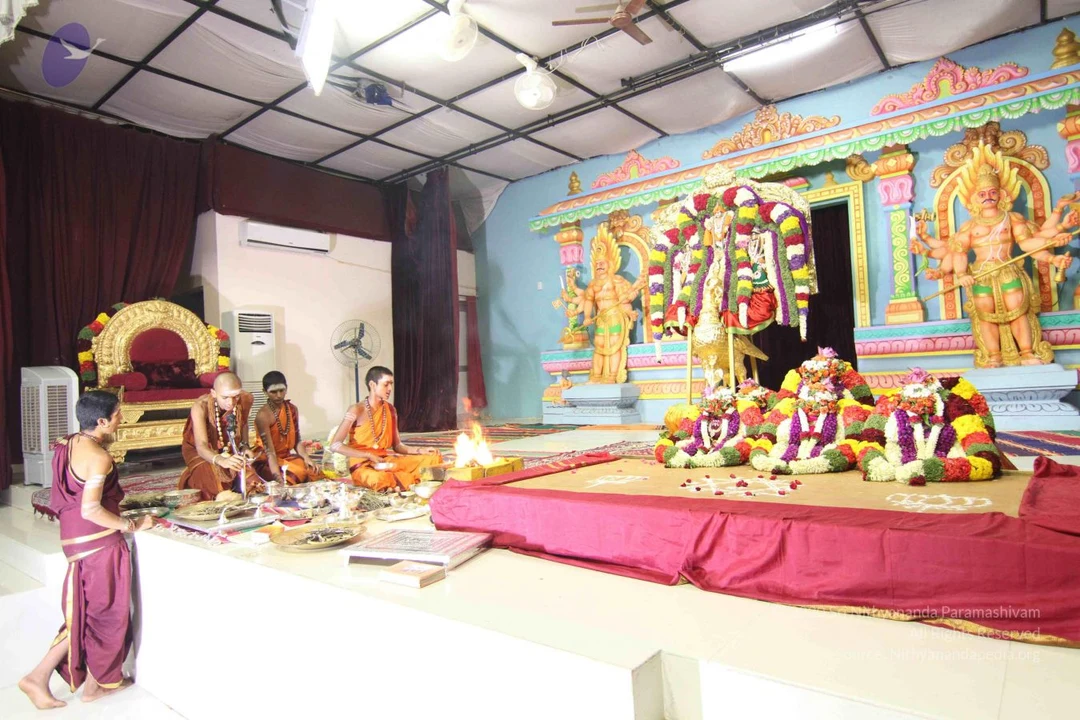
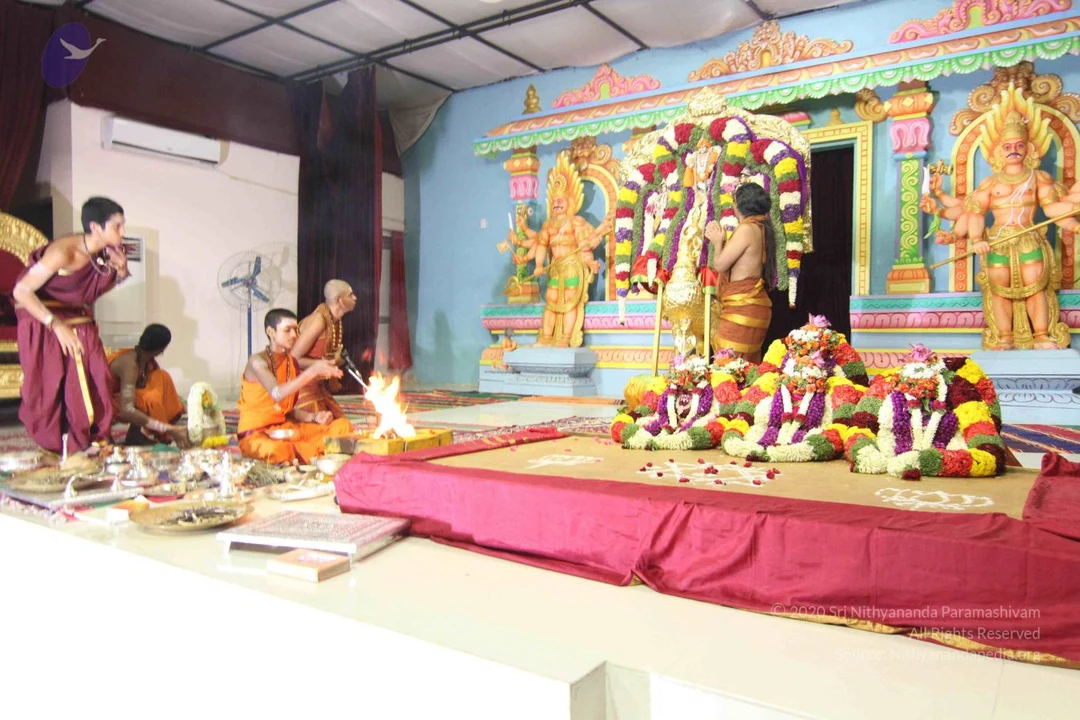
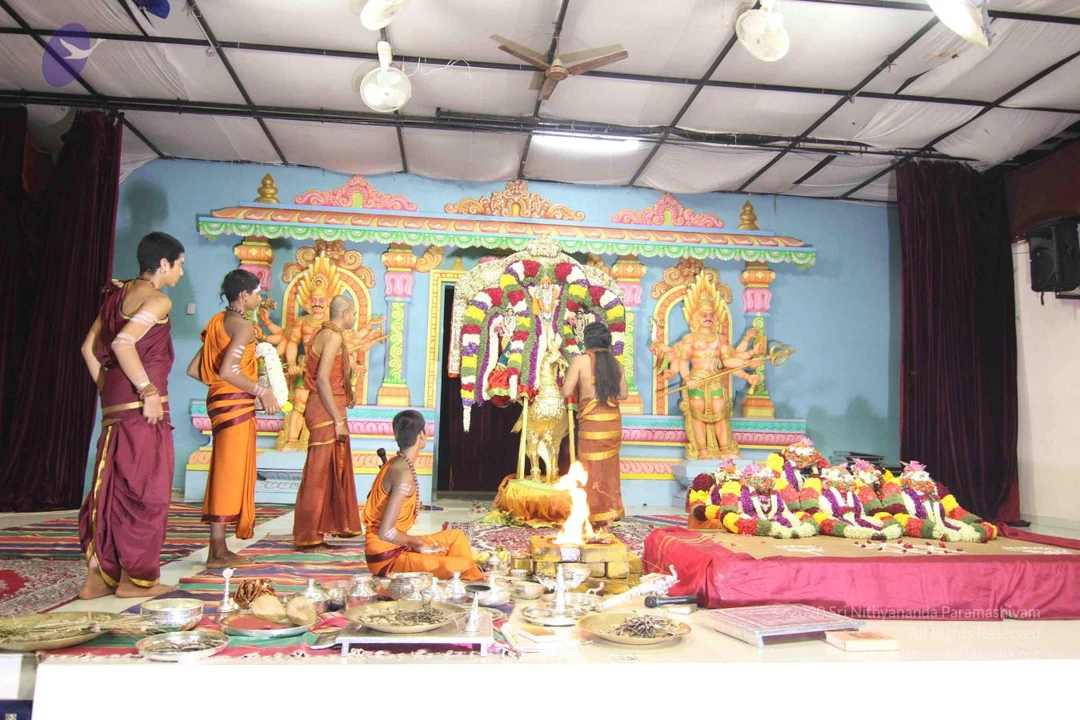
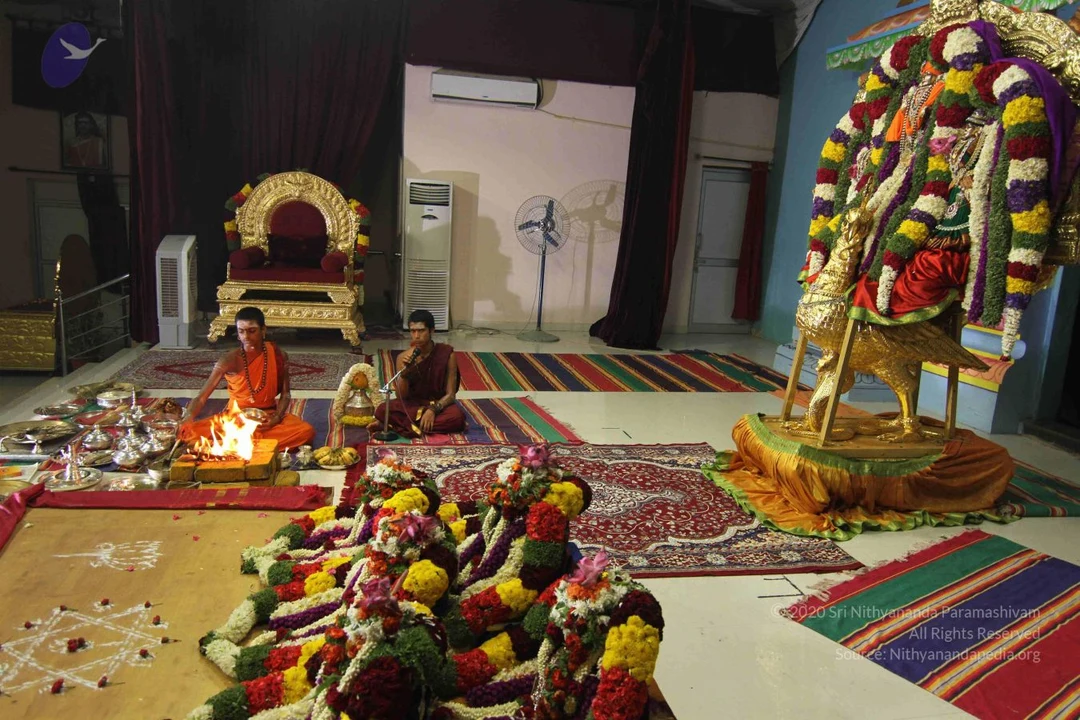
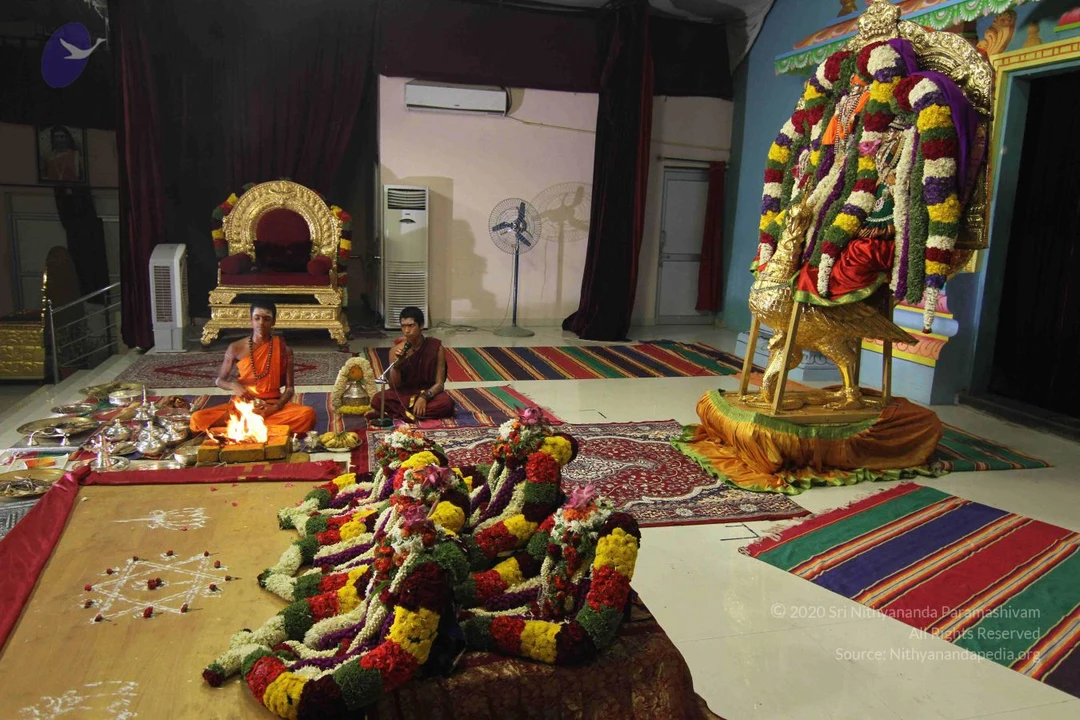
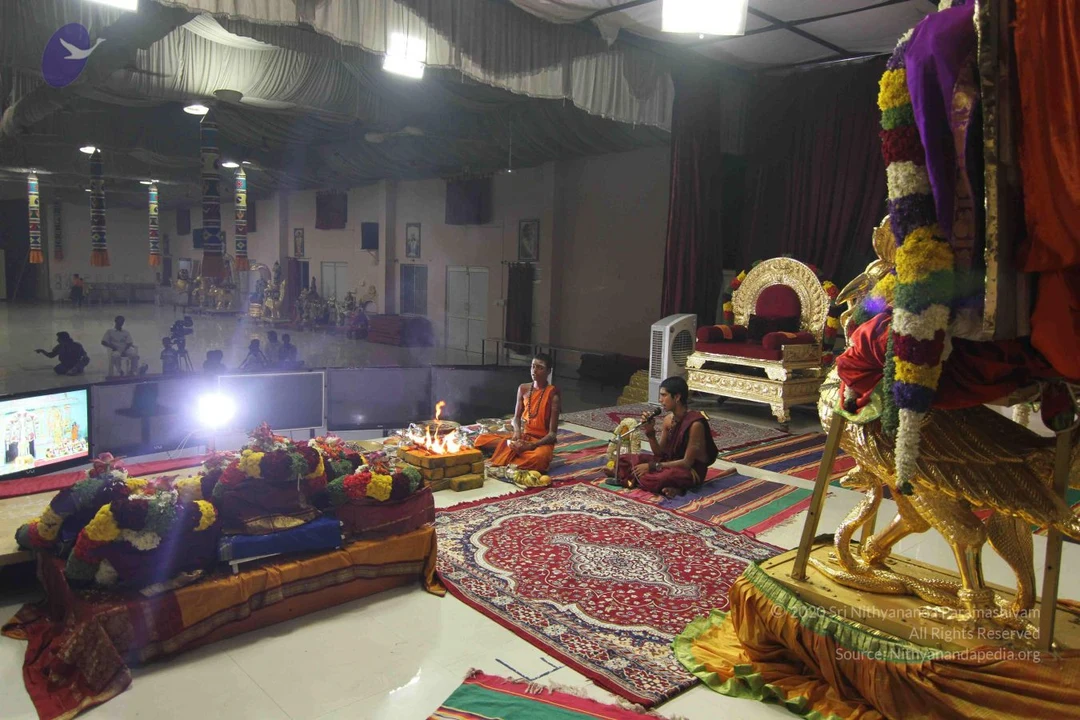
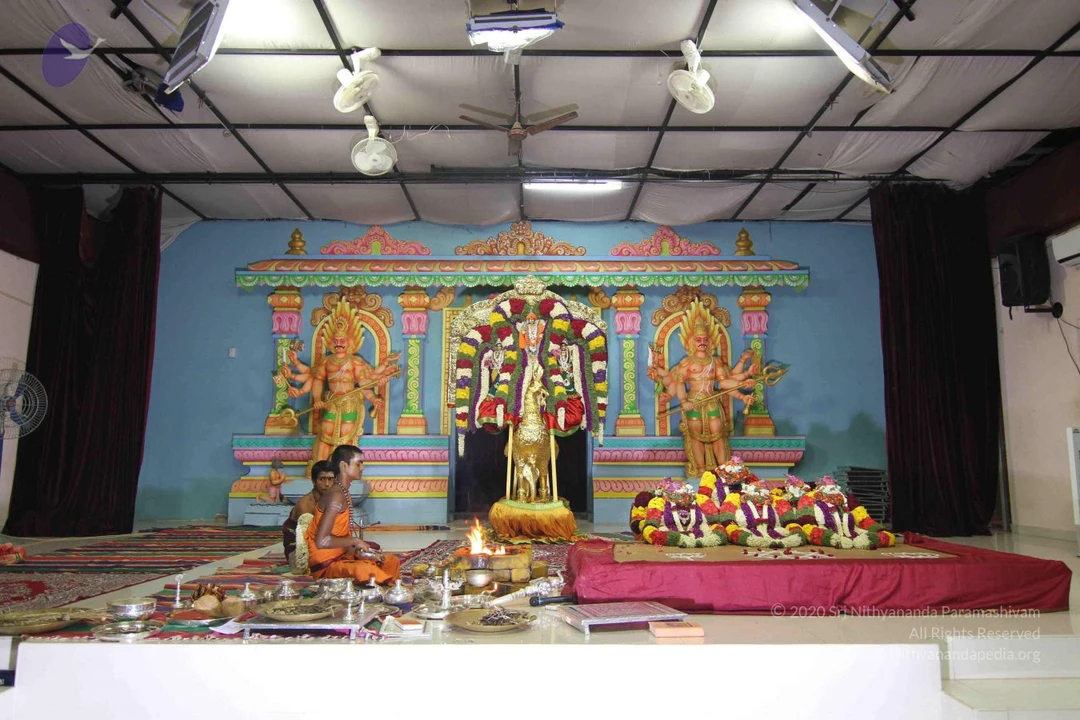
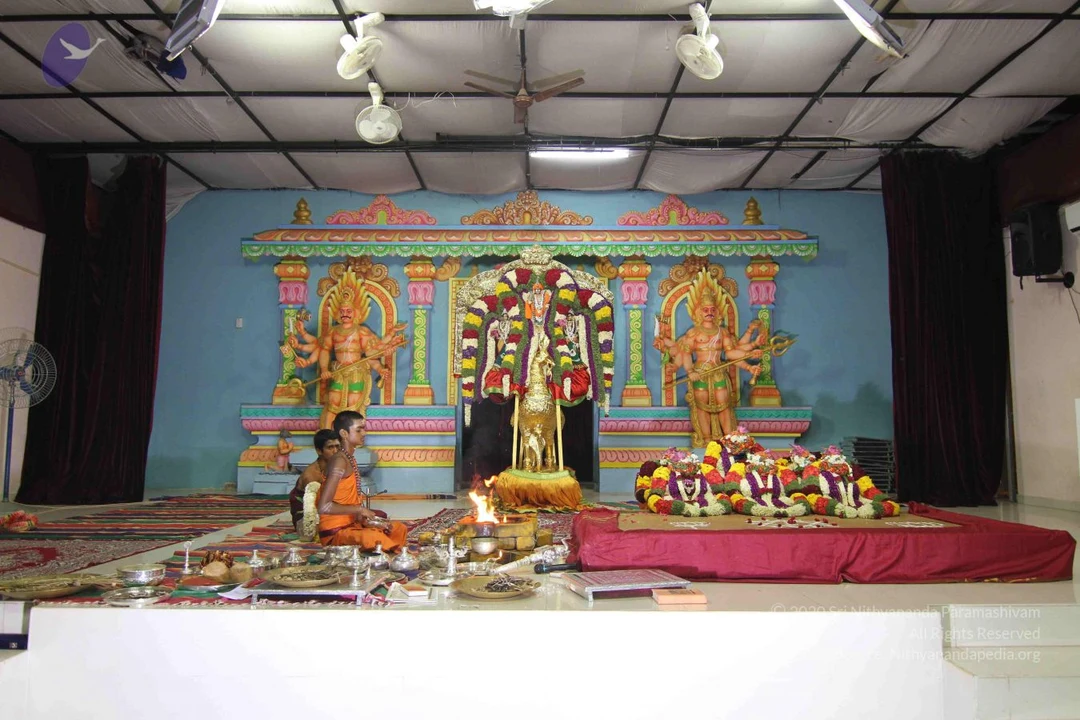
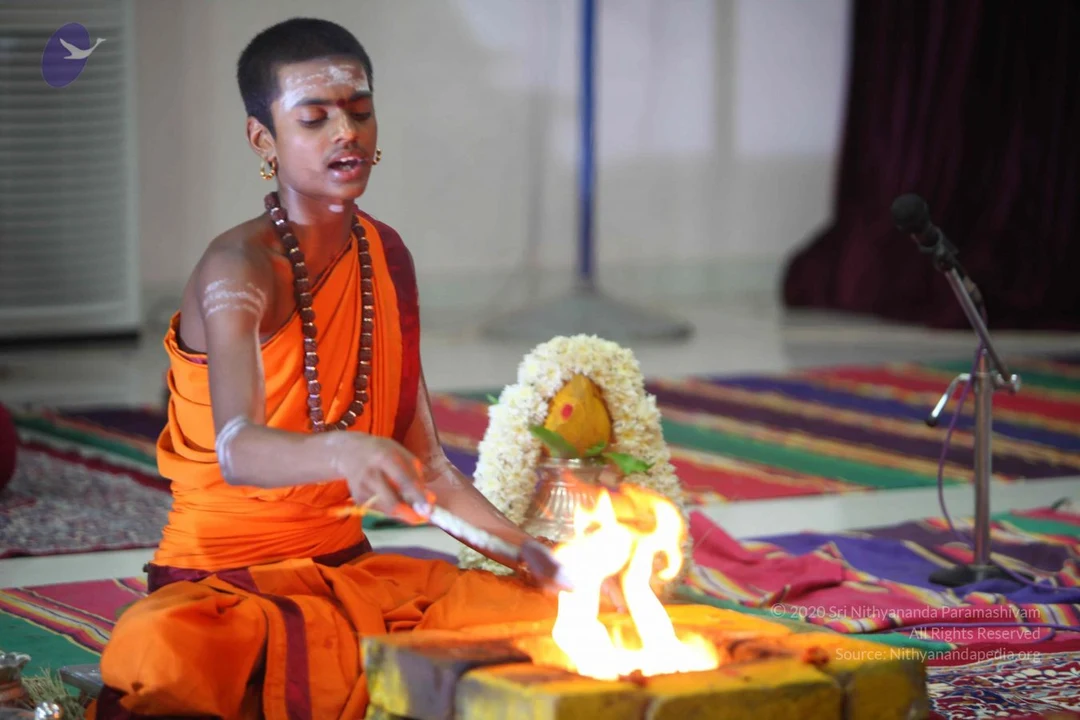
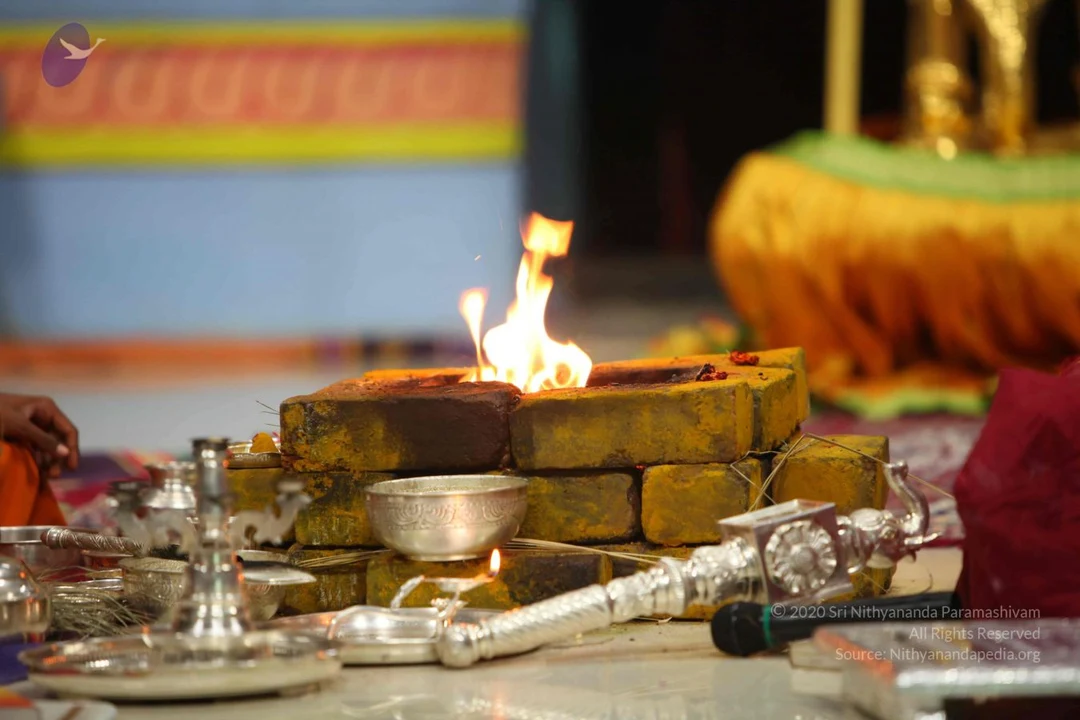
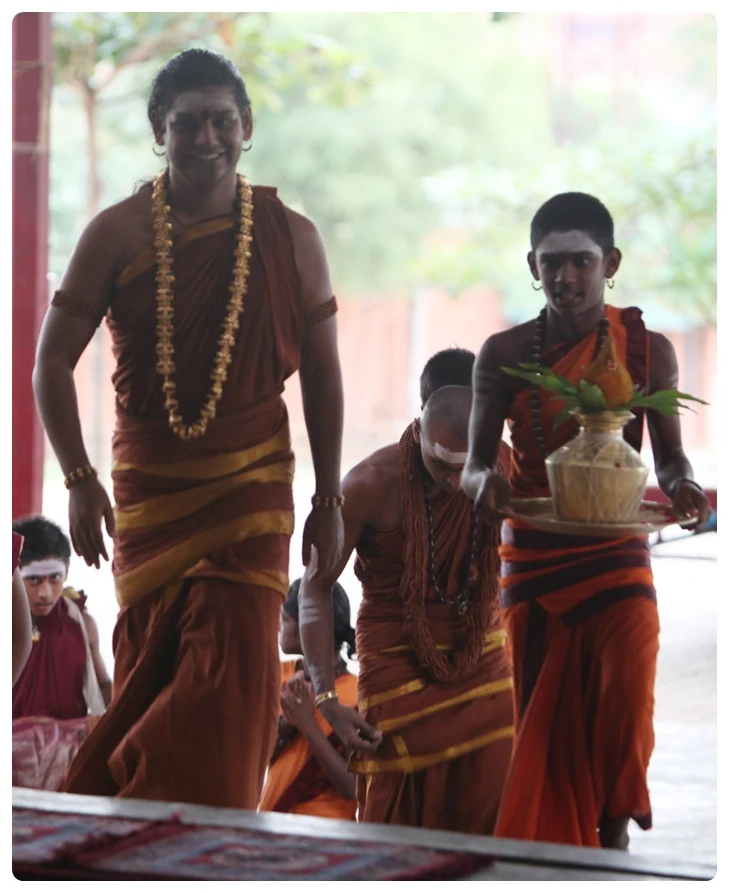
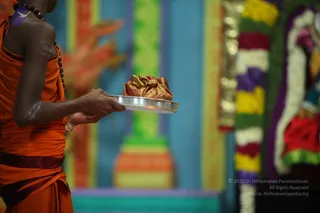
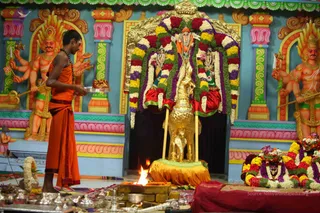
A photograph of a person in orange saffron robes, seen from the side and cropped at the shoulders, carrying a small silver tray holding a bundle wrapped in red and gold brocade cloth. Dark beaded necklaces hang over the shoulder, and white markings are visible on the upper arm. The background shows a colourful temple-style backdrop of blue, green and orange panels beside a column of garlands in red, yellow, white and purple flowers. The scene suggests a ritual offering, though only the bearer's torso and arms are visible.A temple ritual scene in front of a shrine decorated with a dense garland of red, yellow, purple and white flowers. A gilded bull mount (nandi-like vahana) stands at the centre before a deity murti adorned with flower garlands. A fire burns on a stone fire pit in the foreground beside silver puja vessels. On the left, a young priest in saffron-orange dhoti and shawl with a rudraksha mala holds a silver plate, facing the shrine. Painted guardian figures with weapons flank the shrine on both sides against bright turquoise and pink walls. Flower offerings are arranged on a red-draped table at the right.A temple ritual inside a brightly painted shrine hall. A young man in orange ochre dhoti and shawl, with rudraksha mala beads, holds a silver plate of offerings while a second orange-clad priest kneels at left beside silver vessels and an oil lamp. Behind them stands a painted multi-armed deity with a flaming crown holding a mace and trident-like weapons. On the right, a golden deity murti in a gold-framed shrine is draped in a garland of red, yellow, purple and white flowers, with a golden bull vahana in front and flower offerings below. A small flame burns on a brass stand near the foreground.A temple puja in progress before a deity shrine. A priest in saffron-orange dhoti and shawl, with a rudraksha mala around his neck, bends forward holding a silver tray with offerings near a small lit oil lamp and burning flames. Behind him a seated attendant in orange kneels. The shrine holds a golden bull (nandi) statue and a golden-framed deity murti draped with garlands in red, yellow, white and purple. Colourful painted pillars and a multi-armed painted deity figure with a trident frame the scene, and fresh flower garlands sit on a red-draped table at right.A photograph of a temple ritual in a shrine room with turquoise walls and painted pillars. A priest in an orange-saffron dhoti and upper cloth, with a rudraksha-style neck mala, leans forward to pour offerings from a silver plate into a small lit fire pit at the foreground. A second, partly visible person in red-brown clothing kneels beside him. Behind them stands a deity murti of a multi-armed figure painted in orange and gold. At the right, a large deity figure is garlanded with thick bands of red, yellow, purple and white flower garlands, with a golden bull (nandi) statue before it. Brass vessels, a lamp and ritual implements sit on the floor, and a red cloth covers a table with flower-decorated items.A photograph of a ritual fire offering in a temple hall. A person in an orange robe with a long orange-and-maroon wrap leans over a small brick fire pit, pouring from a metal ladle or vessel into a flame. Behind them a second person in red-brown clothing kneels at the left edge beside silver ritual vessels and a silver stand. Behind the fire, a golden bull figure (Nandi) stands on a gold base before a deity murti draped in a garland of red, yellow, and purple flowers, with a bright orange-and-gold backdrop and a painted multi-armed figure holding weapons on the left wall. Flower offerings sit on a maroon cloth at the right.
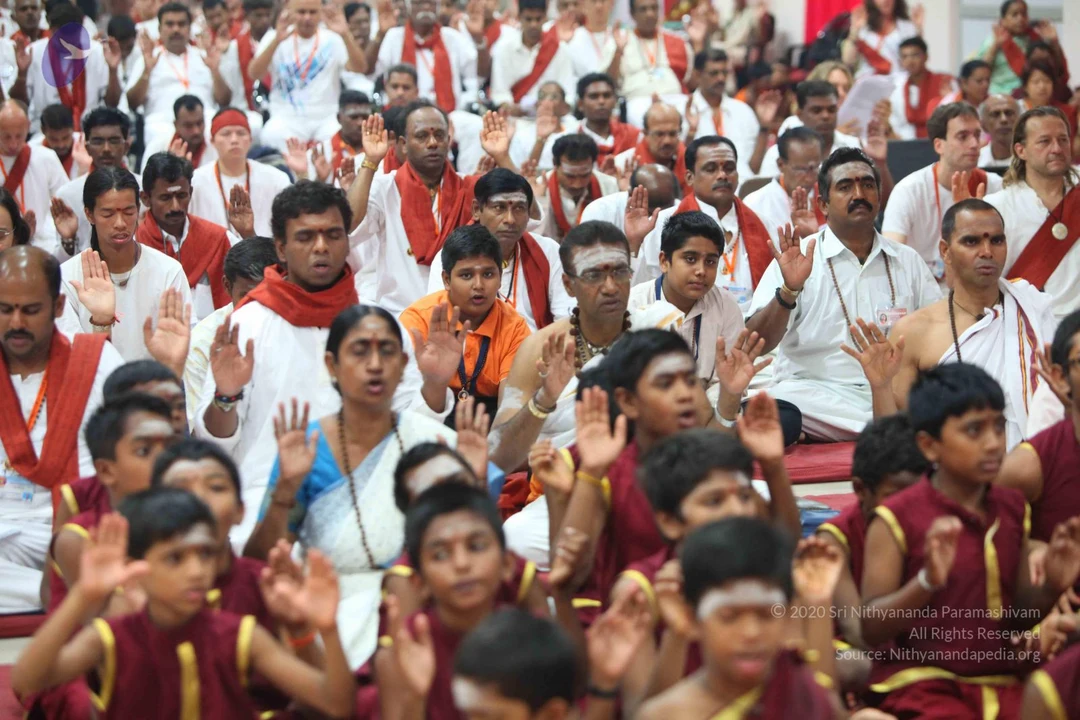
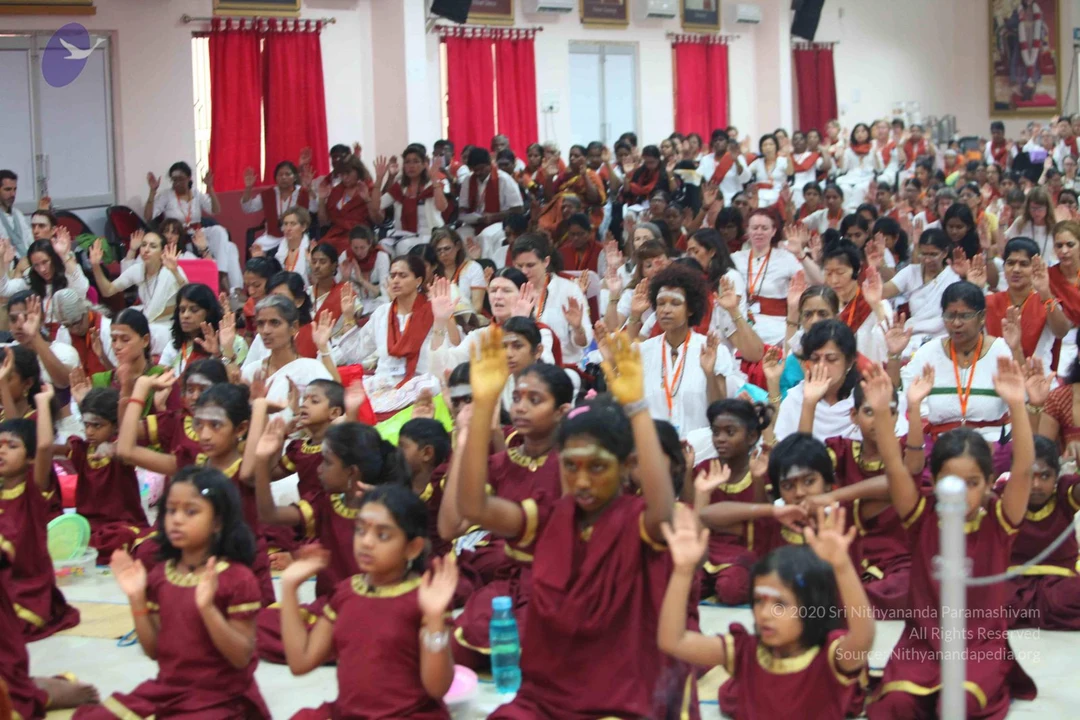
Swamiji-at-the-Nirvani-Akhada-Haridwar

3 photosSource gallery
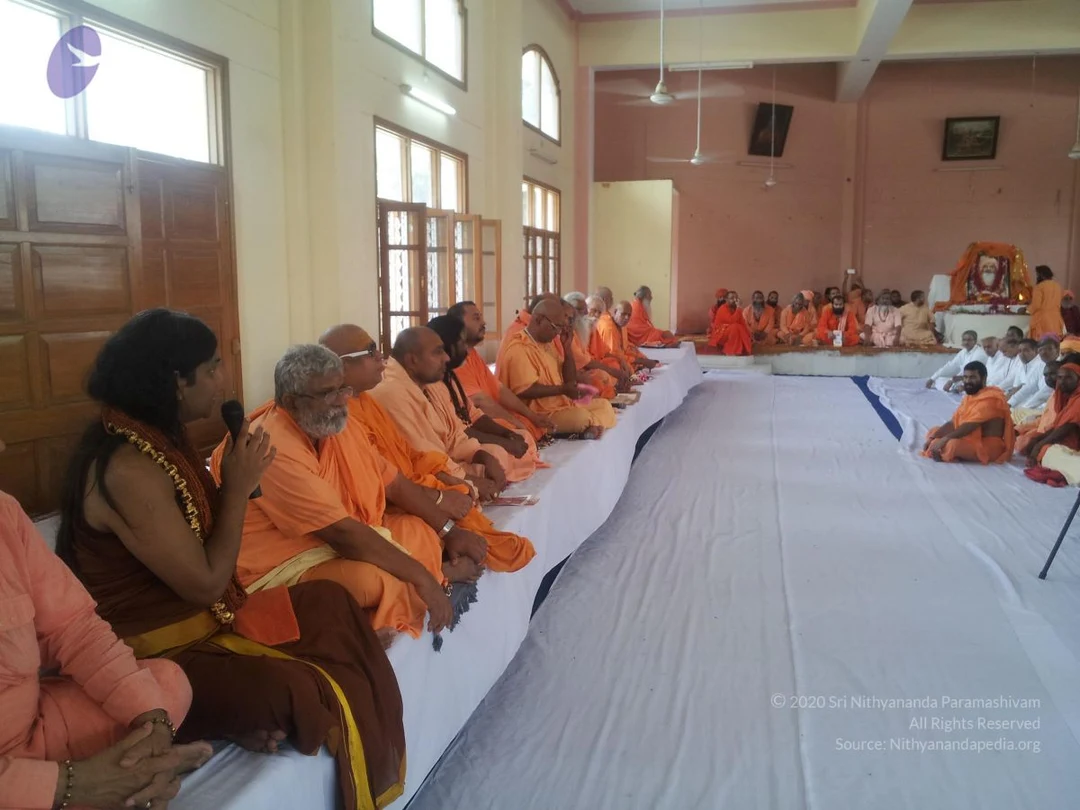
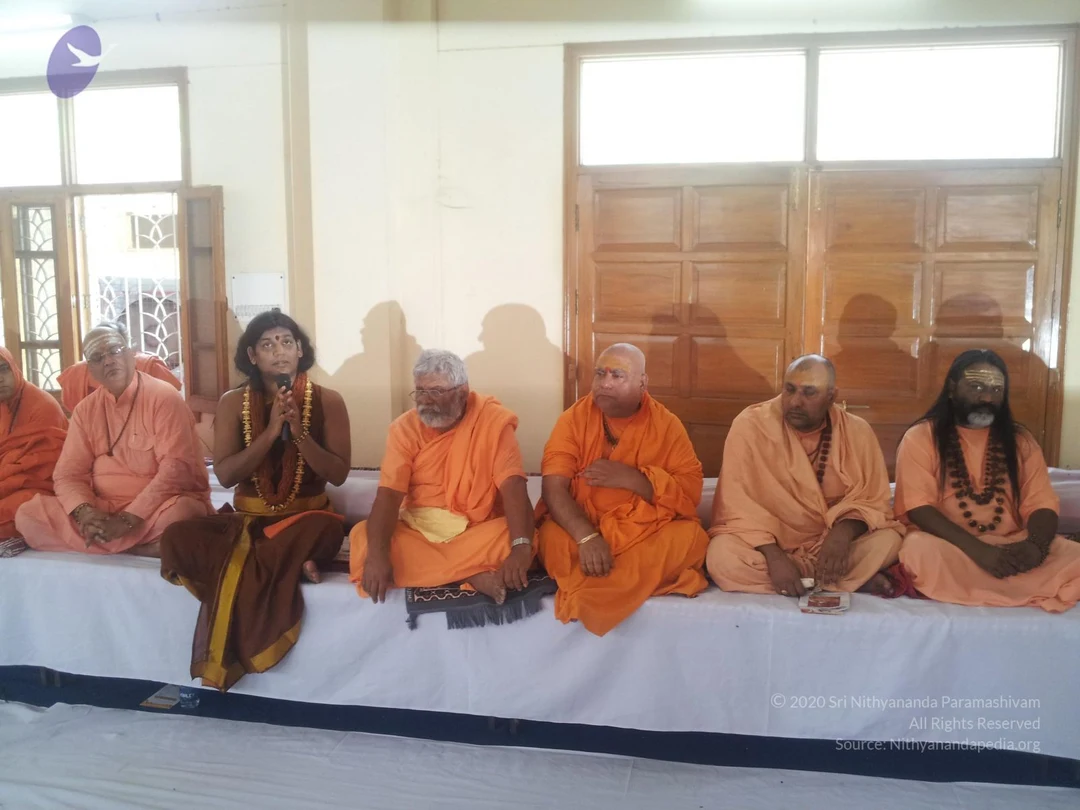
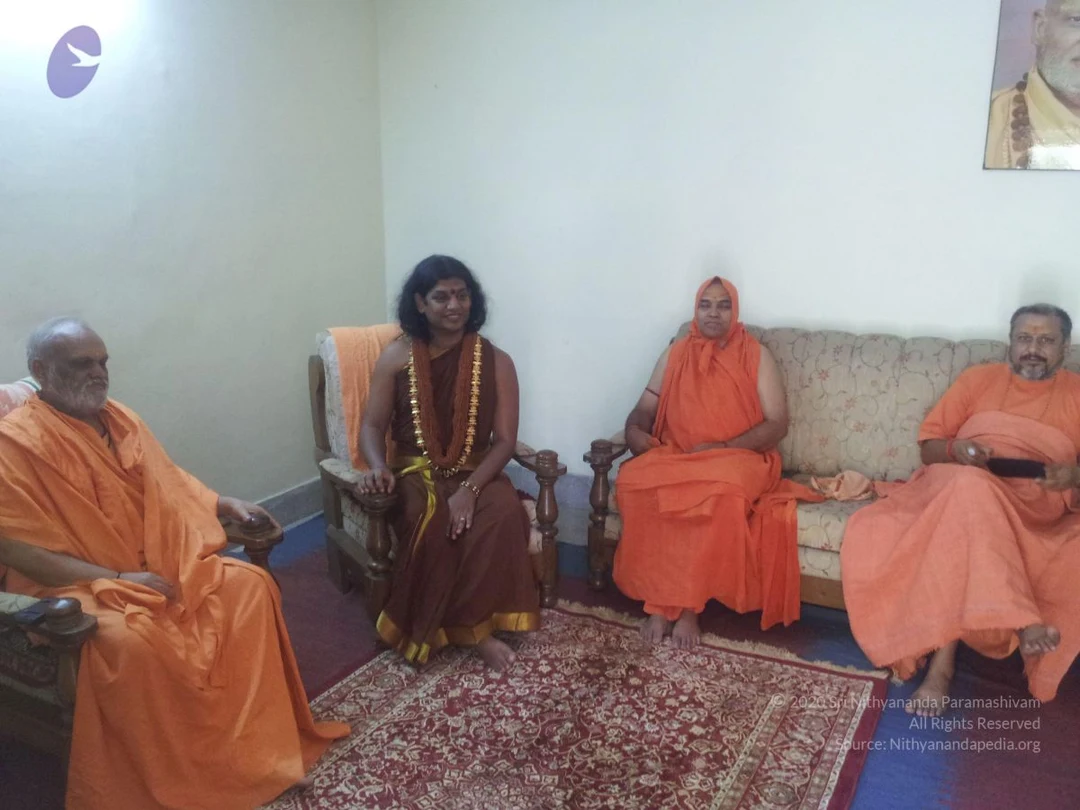
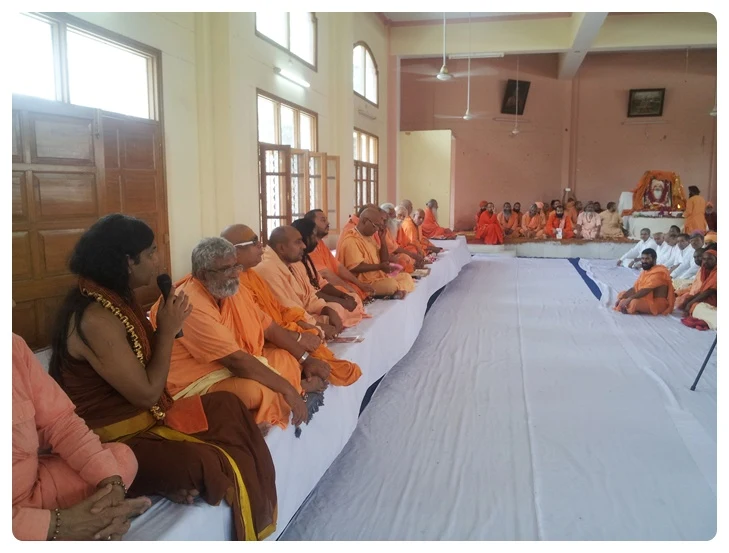
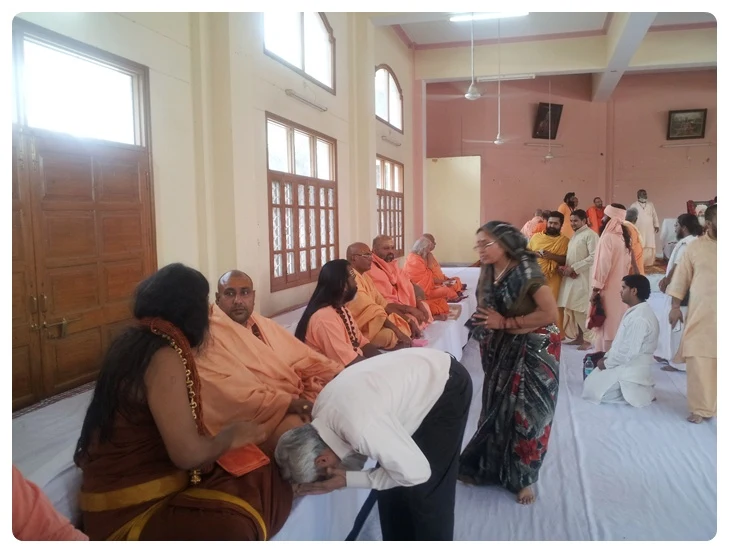
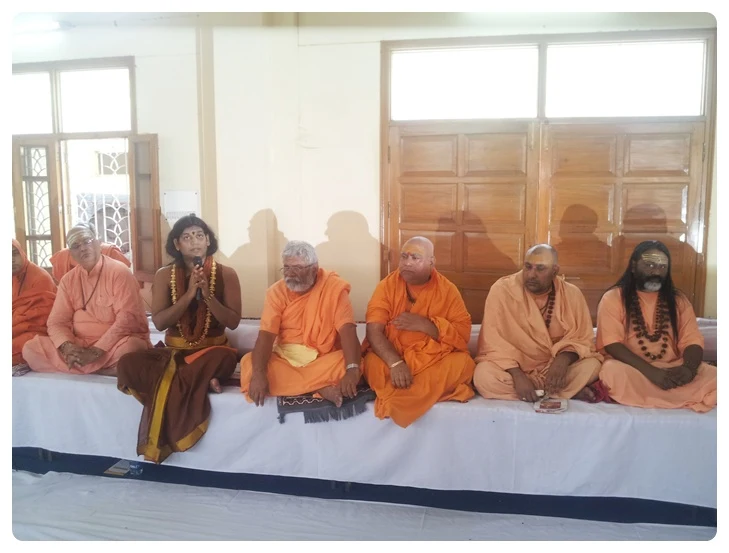
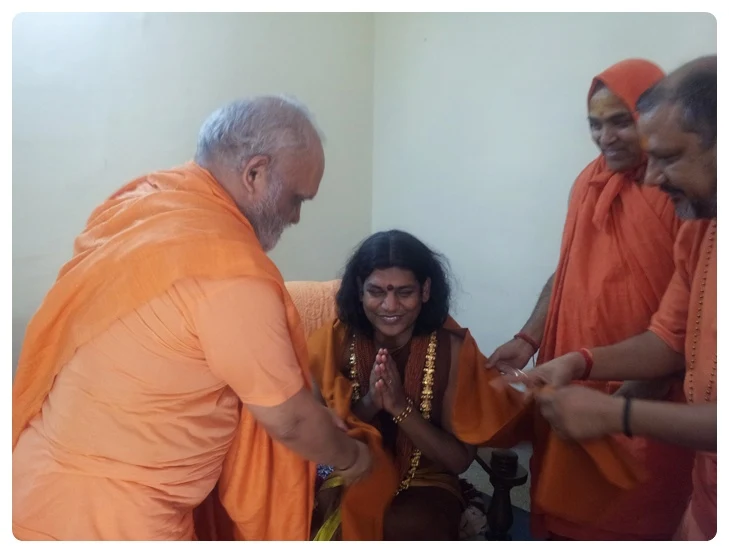
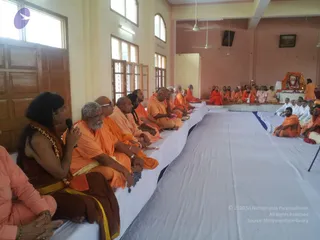
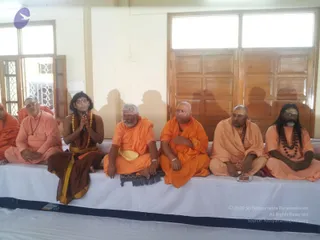
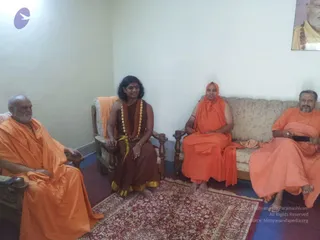
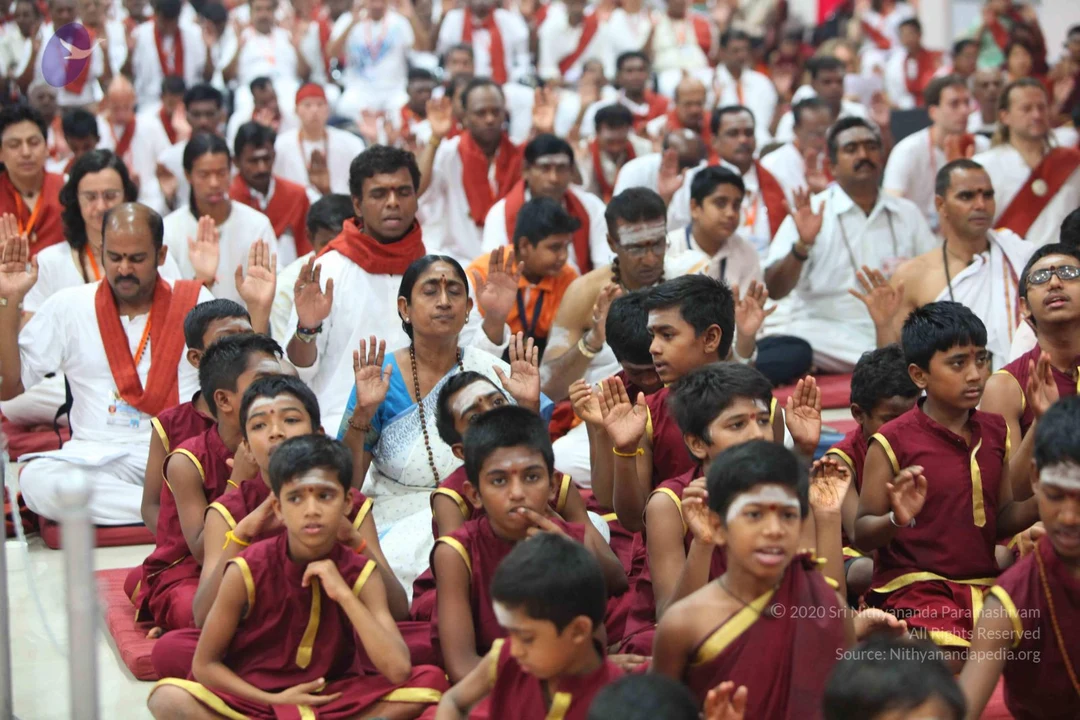
A photograph of a satsang in an indoor hall with pink walls, ceiling fans and a framed picture on the wall. On the left, a long white-draped bench holds a row of men in saffron and orange robes seated in a line. A woman in a brown top with a gold-toned necklace and yellow-edged brown garment holds a microphone and speaks toward them. A man in orange robes with white beard sits in the row near the front. Across the hall on the right, a larger group of saffron-robed sannyasis sits cross-legged on the floor facing a raised platform. On that platform, a deity murti stands draped in orange garlands beside a framed portrait, and white-clad devotees sit near it. The scene shows a seated gathering listening to a talk.A seated group of saffron-robed sannyasis sits on a long white-draped bench in a bright hall with wooden doors behind them. A young man with long dark hair in the centre left wears a rudraksha mala and orange-gold shawl, holding a microphone with his hands pressed together while speaking. Beside him an older bearded man in an orange robe sits cross-legged on a mat, and a bald man in orange robes rests his hands in his lap. At right, a long-haired bearded sadhu with a painted forehead and rudraksha malas sits in a peach-coloured robe. Several others in saffron and peach robes sit at the left edge.A photograph of four people seated in a plain room with cream walls and a red patterned rug. On the far left an older bearded man in orange robes sits in a wooden armchair. Next to him a woman in a brown sari with a yellow border and a gold-and-orange garland sits in a wooden chair with an orange cloth draped over its back. On the sofa to the right, a person in an orange robe with an orange head covering sits, and at far right a bespectacled man in orange robes holds a phone. A framed portrait hangs on the upper right wall, showing an older man with a white beard and a beaded garland.
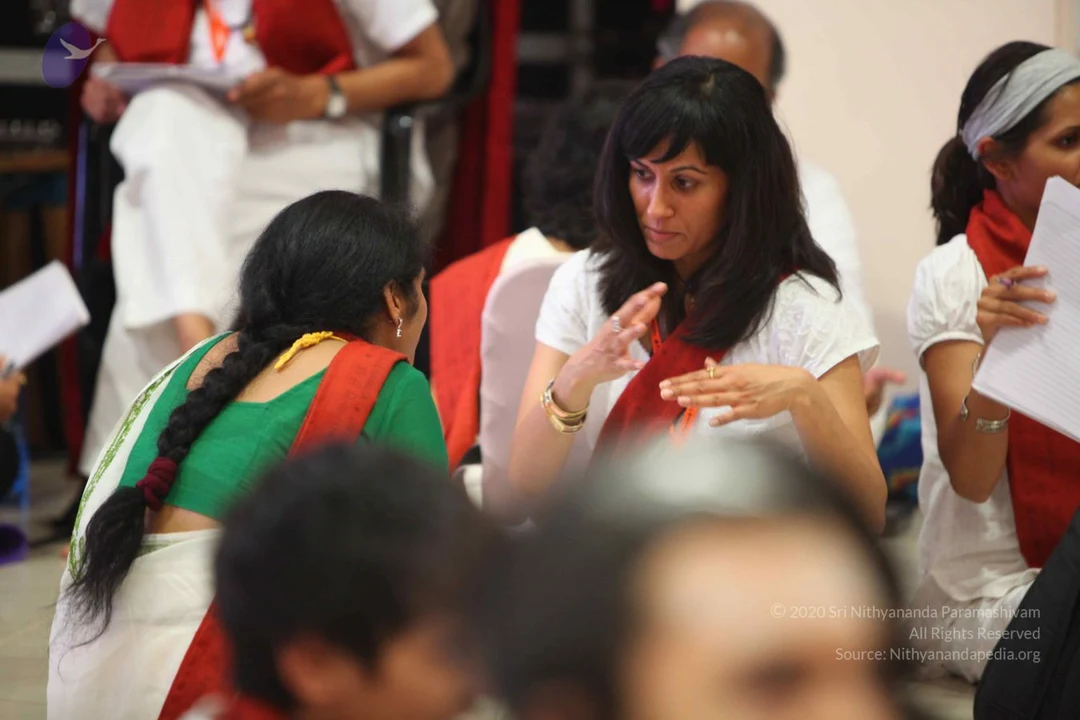
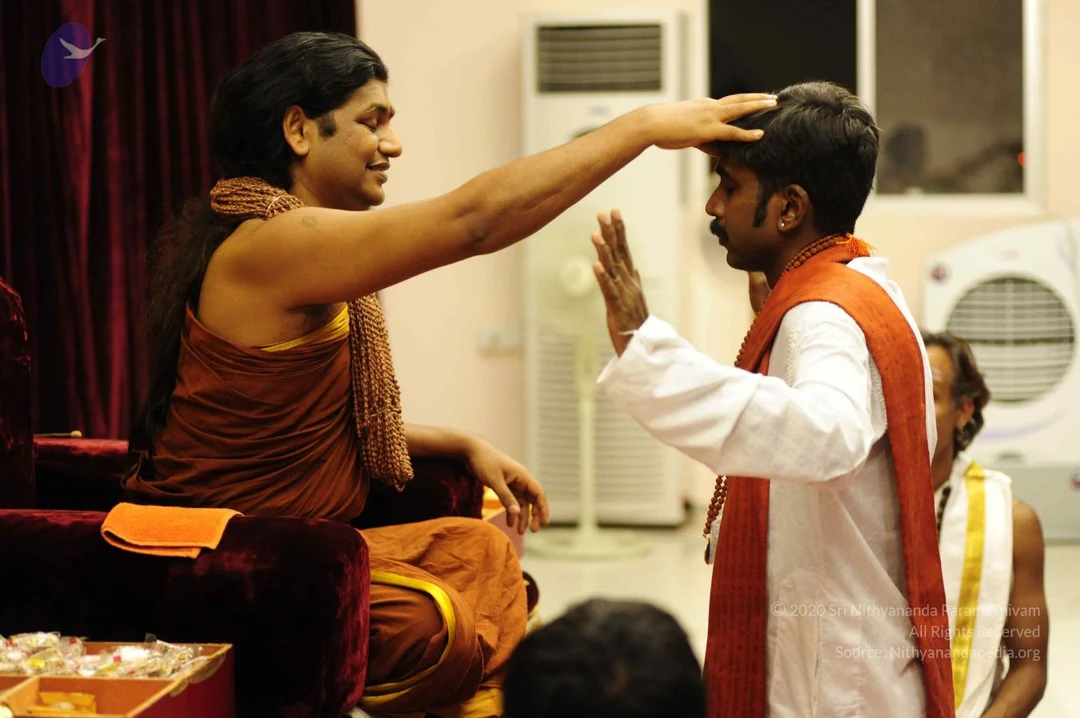
Photos
68 photosSource gallery
A seated man in an orange-brown dhoti-style garment with a yellow edge sits cross-legged on an ornate gold and red velvet throne against a deep red velvet curtain. He wears a thick brown wooden bead necklace and has a red tilak mark on his forehead, and he sits barefoot on a tiger-striped cloth. A blurred green plant in the foreground and a red ceremonial box at the side frame the scene. Appearance-based label: Swamiji (probable), with long swept-back hair, saffron clothing, a rudraksha mala and a gilded throne as cues.A seated man in an orange-rust dhoti and shawl with gold borders sits on an ornate gold throne with carved lion and floral motifs against a dark red velvet backdrop. He wears a long ornate gold necklace of beads, a gold bracelet, and a red bindi on his forehead, with a small head microphone clipped on. His right hand rests on his knee and his left hand on the armrest. Swamiji (probable): long dark hair swept back, saffron-orange robes, ceremonial gold necklace and bindi cues are present, so this is the appearance-based candidate seated on the throne.A man seated on an ornate gold throne with a carved arched back before deep red velvet drapery. He wears an orange-red garment draped over one shoulder with yellow borders, and a long gold necklace of beads. He has a red bindi on his forehead and a small microphone near his face, and his raised right hand gestures as he speaks. Gold lion-shaped armrest carvings and a red velvet cushion are visible. The setting suggests a satsang discourse. Swamiji (probable) by appearance cues: long swept-back hair, saffron-orange ceremonial clothing and a gold necklace of beads, seated as the speaker.A man seated on an ornate golden throne with a carved gold arched backrest and velvet cushions, speaking with a small headset microphone. He wears a saffron-orange draped robe with gold borders, a long gold necklace of beads, a wrist mala, and a red bindi on his forehead. His dark hair is swept back. The figure has distinctive saffron and gold ceremonial clothing and long swept-back hair, matching the page's Swamiji cues, so this is a probable appearance-based match for Swamiji (probable) seated in person at a satsang setting.A seated man in a rust-orange dhoti and shawl with gold-yellow borders sits on an ornate gold throne with a carved gold arch behind him and a gold lion armrest at right. He wears a long multi-strand gold bead necklace, a red bindi on his forehead, a small clip microphone, and a bead bracelet, and he gestures with his right hand while smiling and speaking. Dark red velvet cushions and a patterned cloth cover the platform.Photograph of a smiling man with long swept-back dark hair and a red bindi on his forehead, seated against a deep red velvet curtain. He wears a saffron-orange cloth draped over his shoulder and a long thick gold-toned beaded necklace. A large glowing golden decorative backdrop sits at left. Probable Swamiji by appearance cues: long hair, saffron clothing and a beaded gold necklace, shown in a stage or satsang setting.