Skip to content
Thursday

2 July 2015

Gurukul, The Education Centric Family Of Guru By Paramahamsa Nithyananda

Dated photos
582
Source pages
1
Media
7
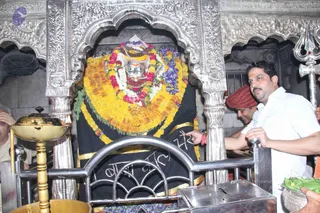
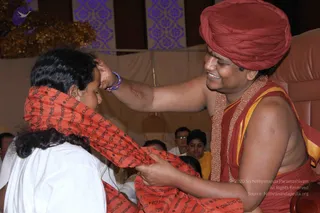
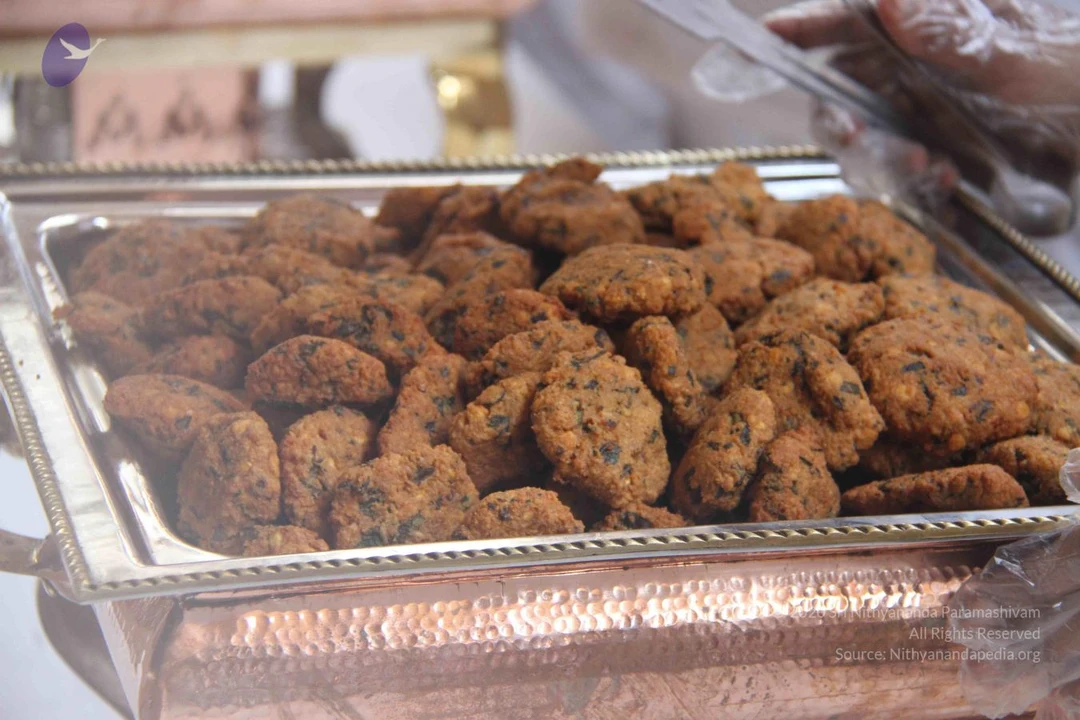
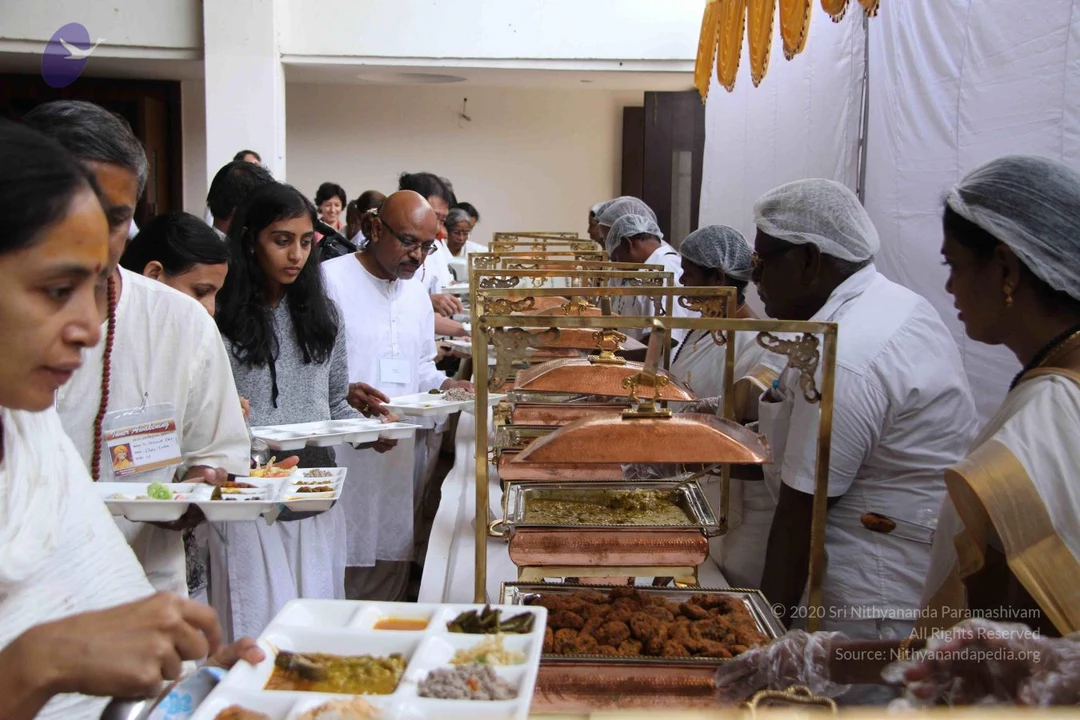
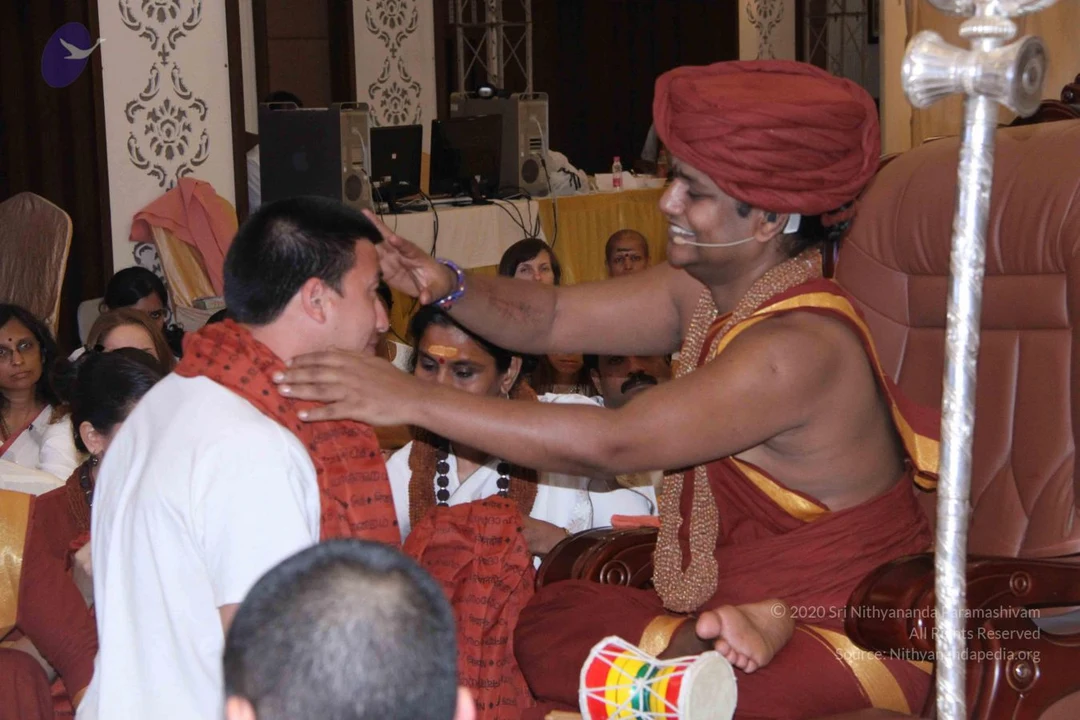
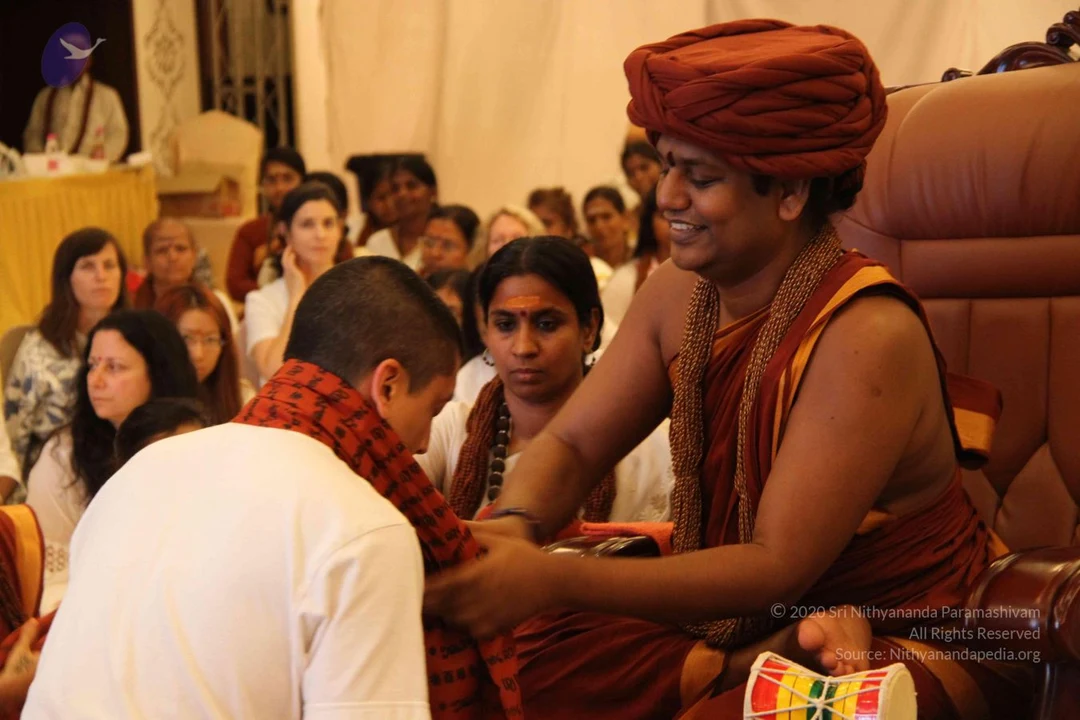
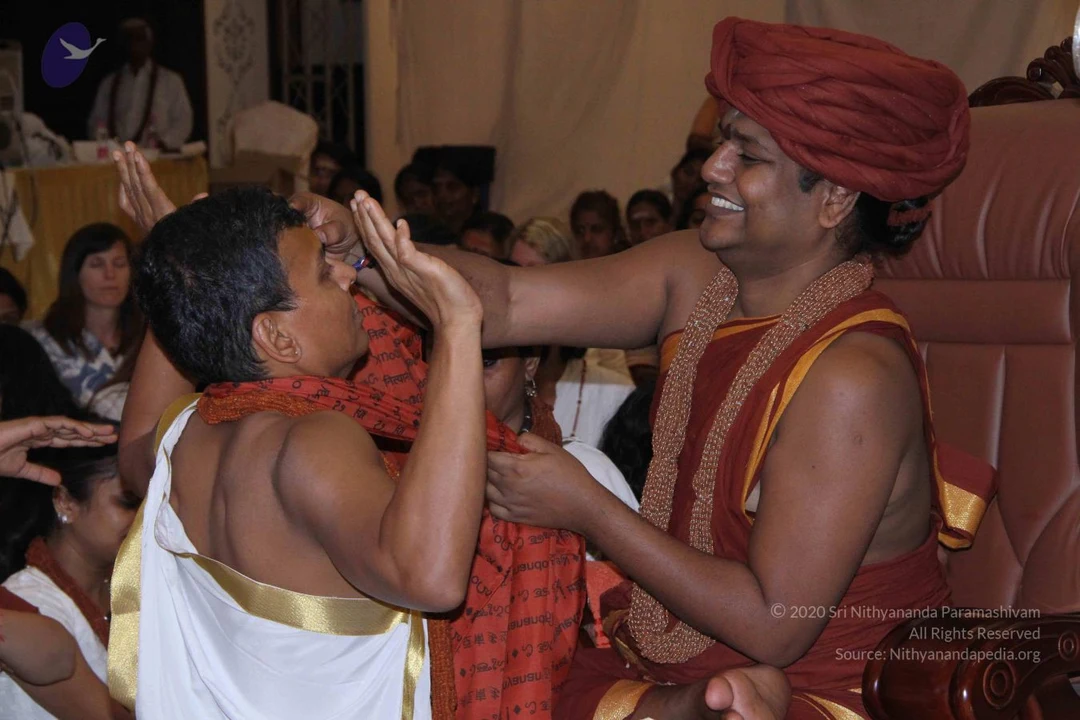
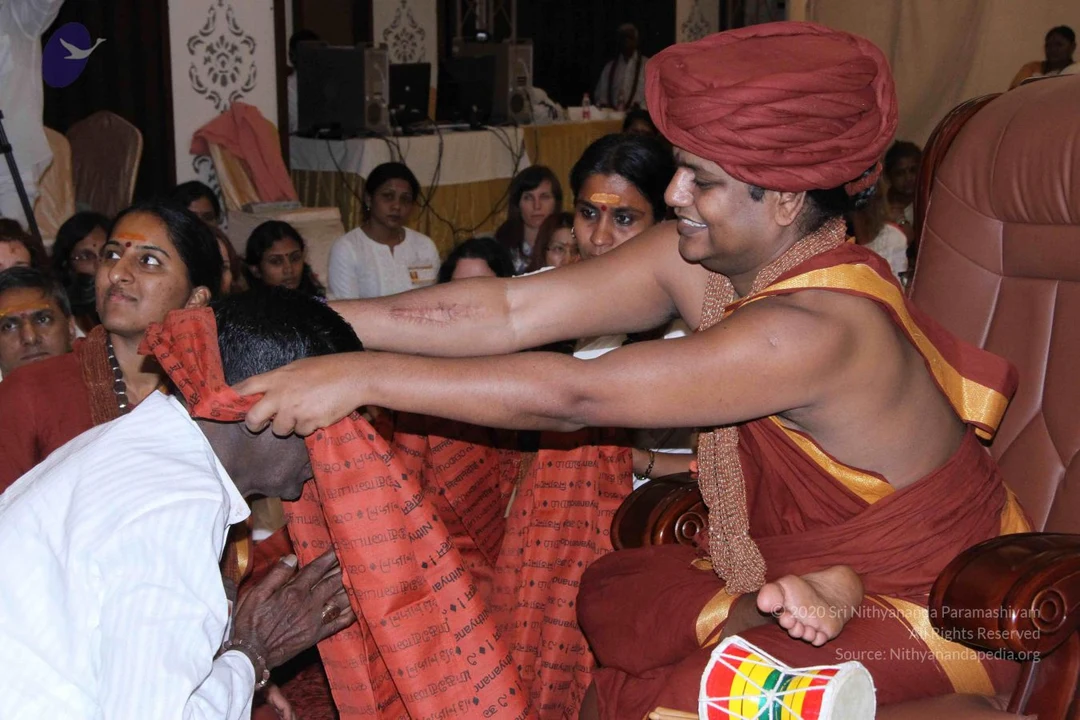
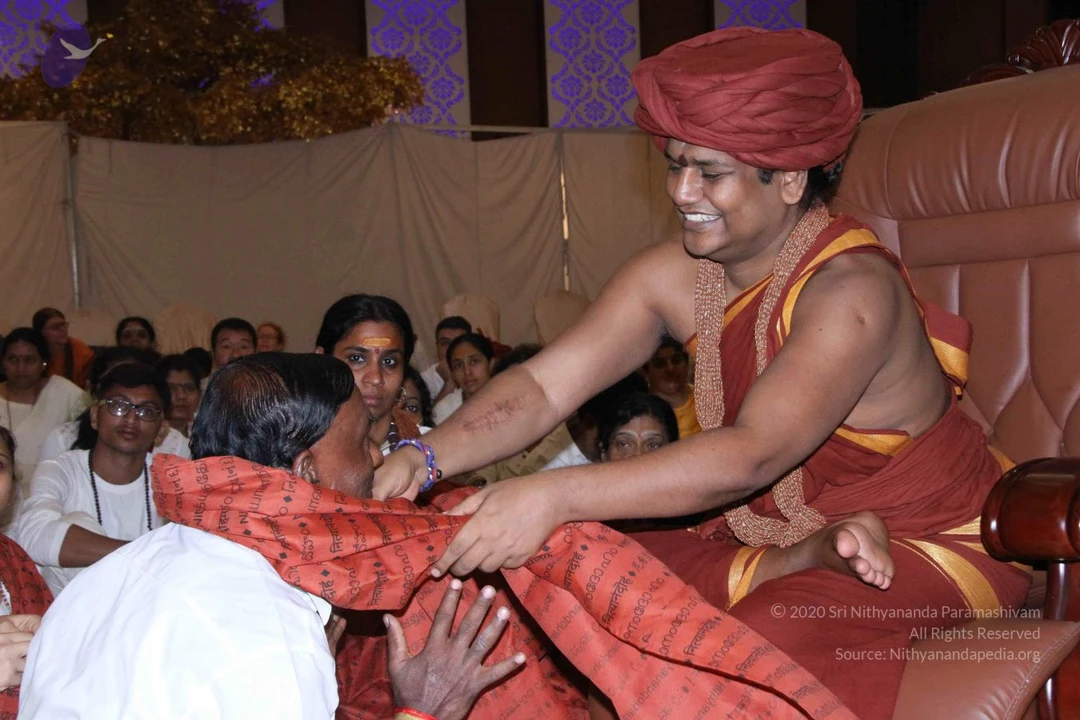
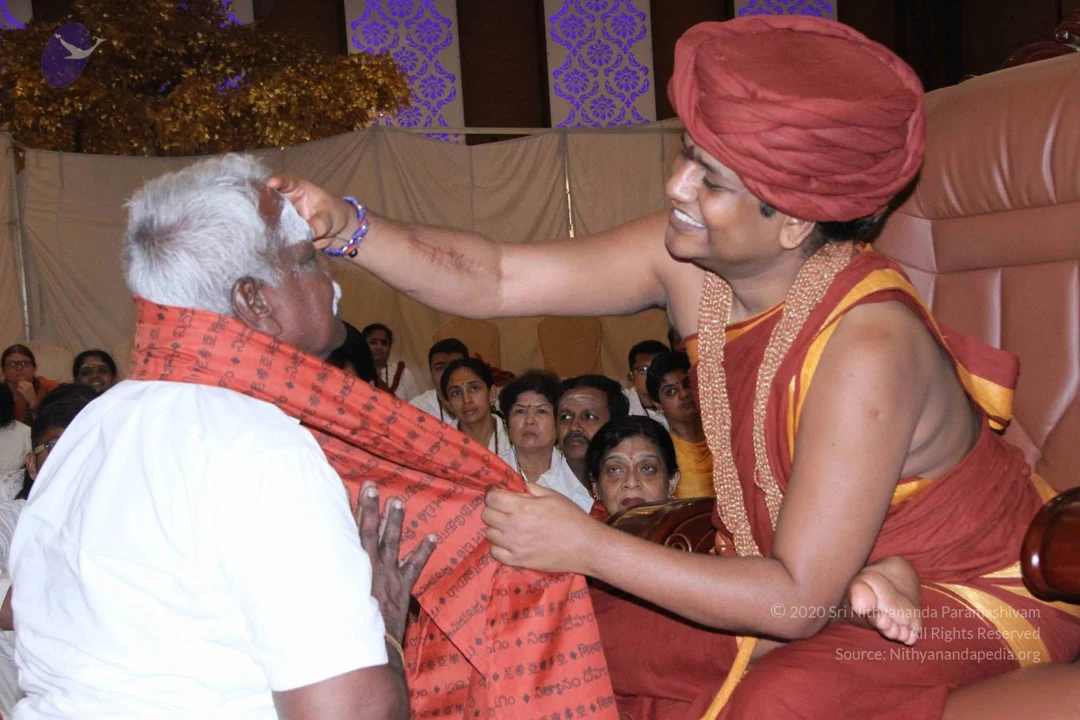
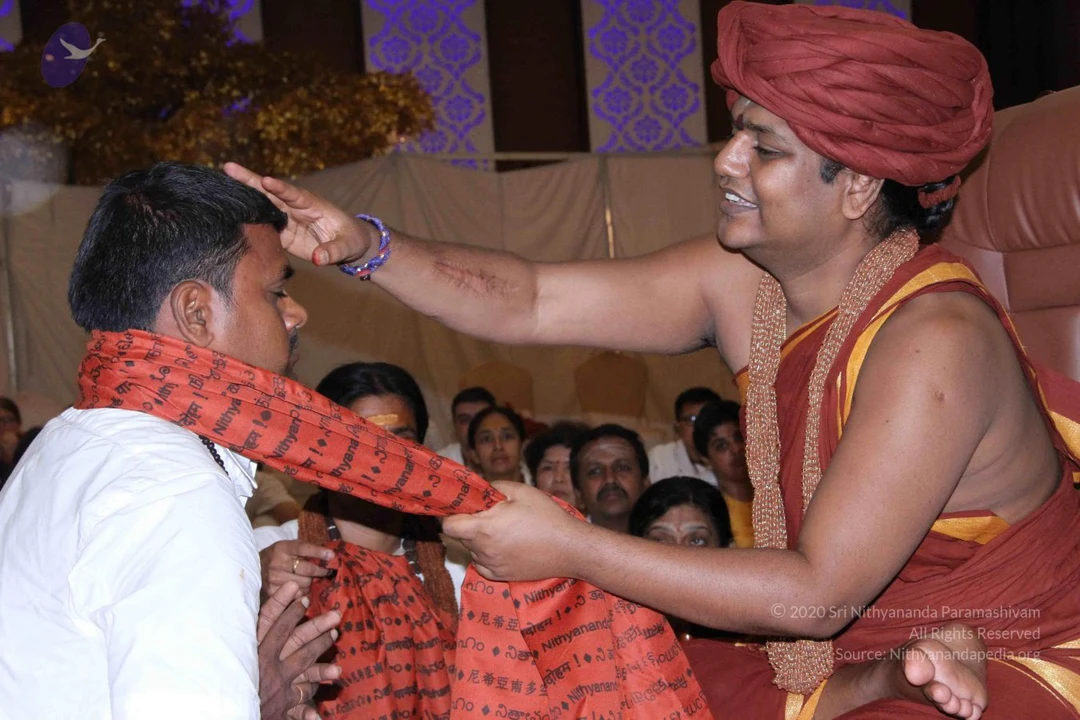
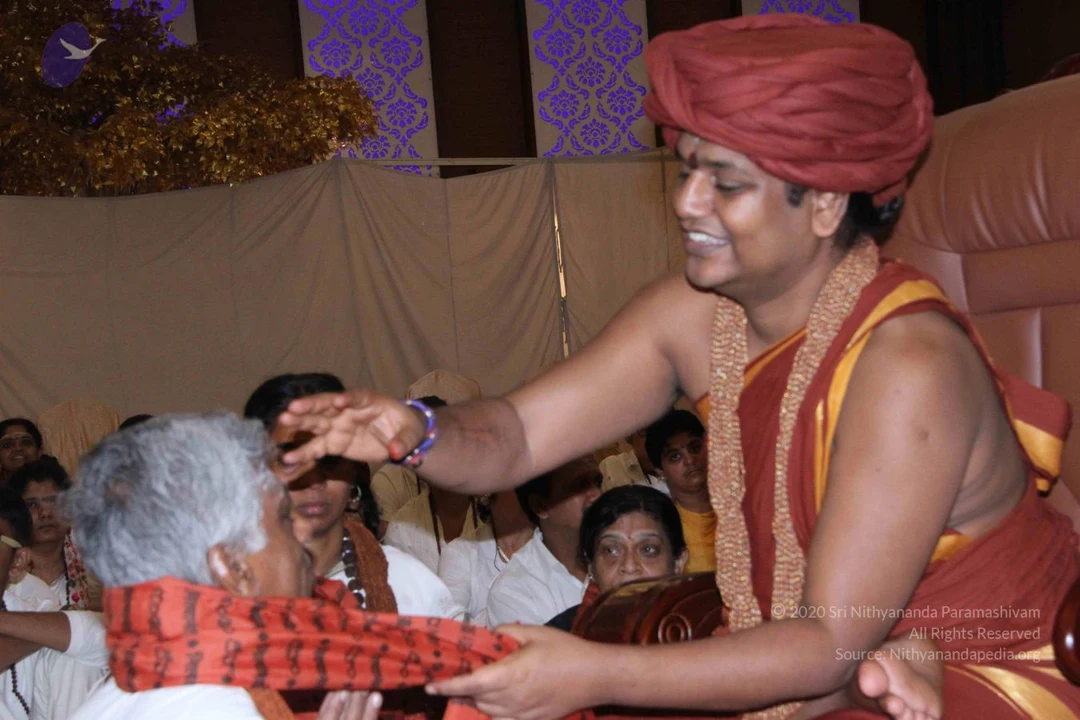
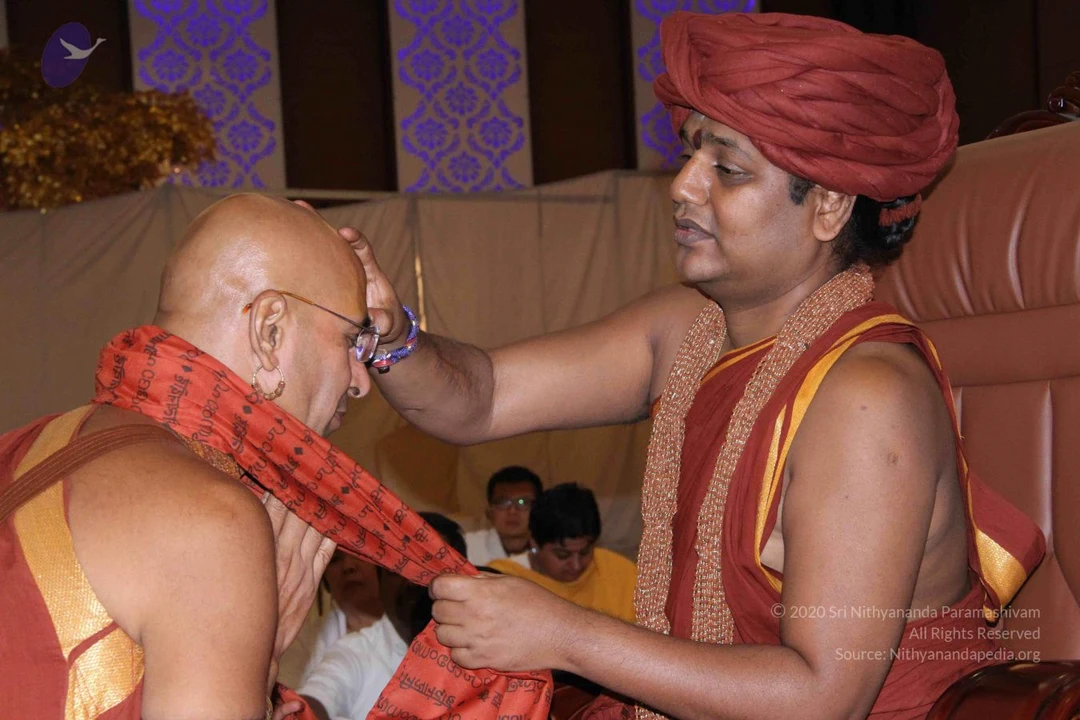
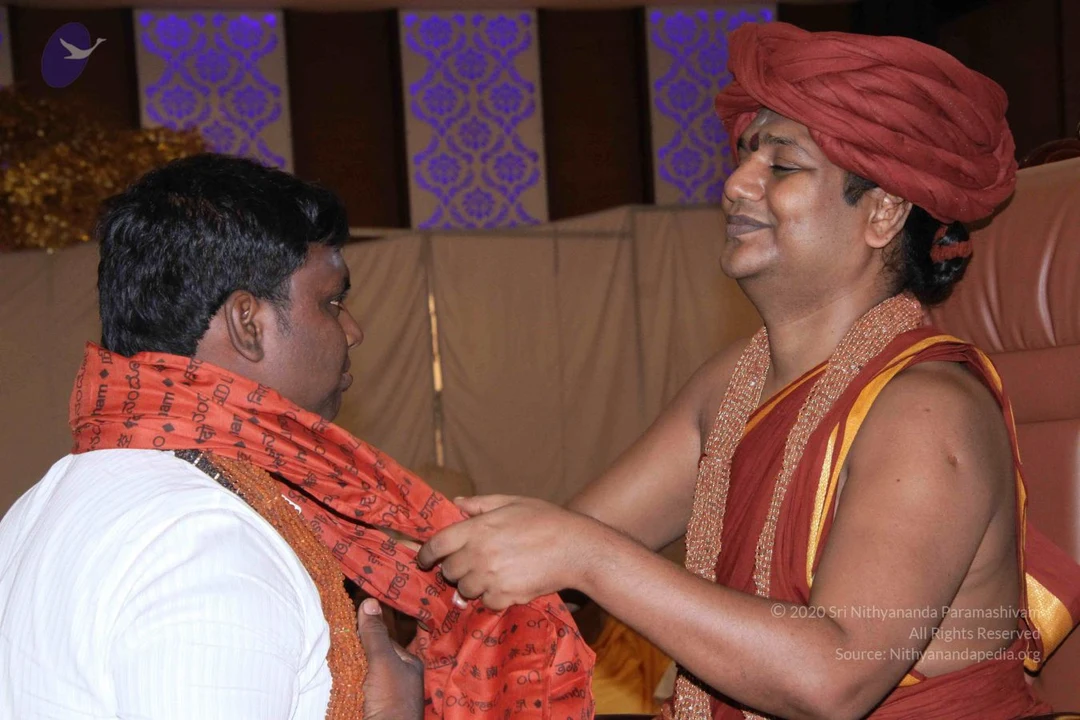
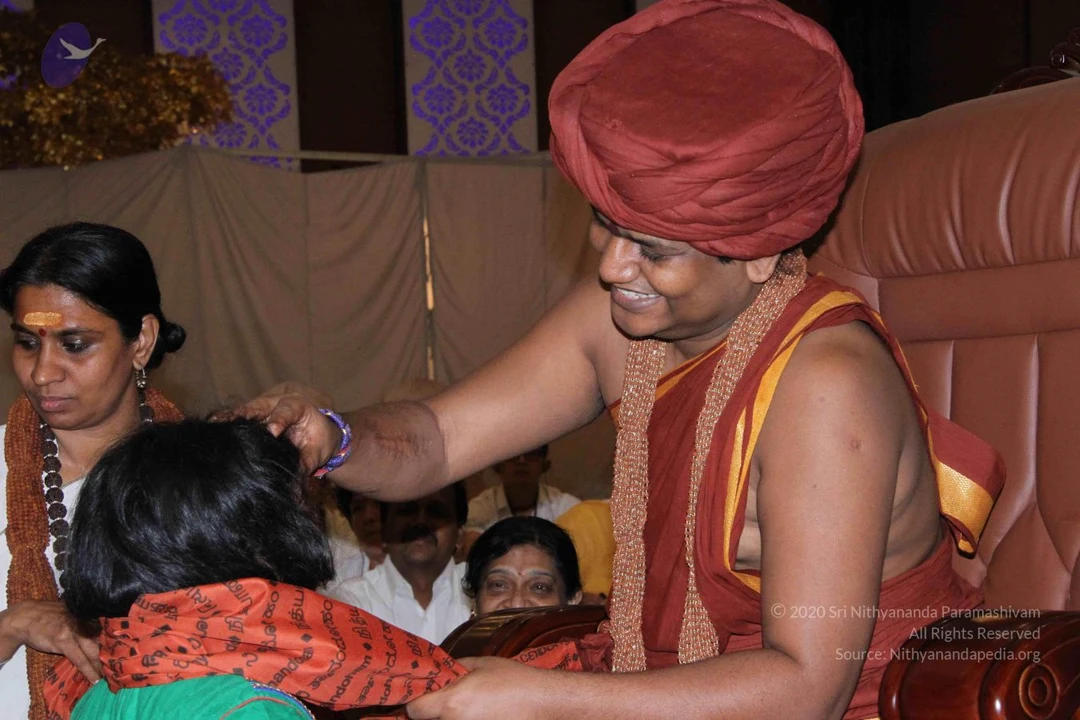
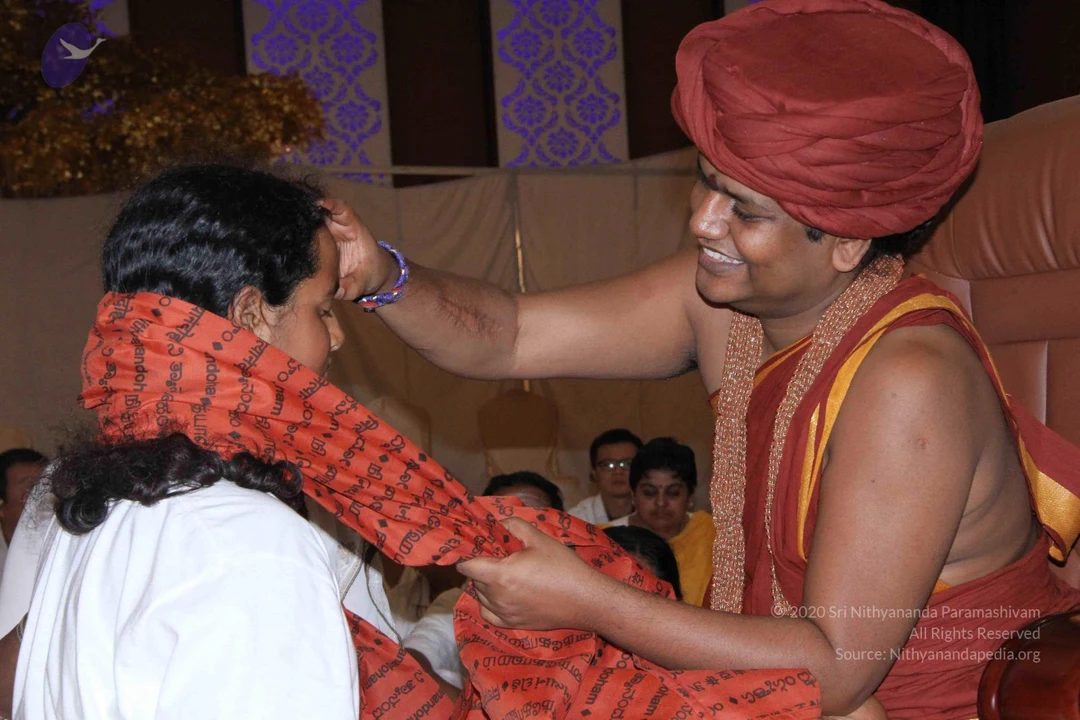
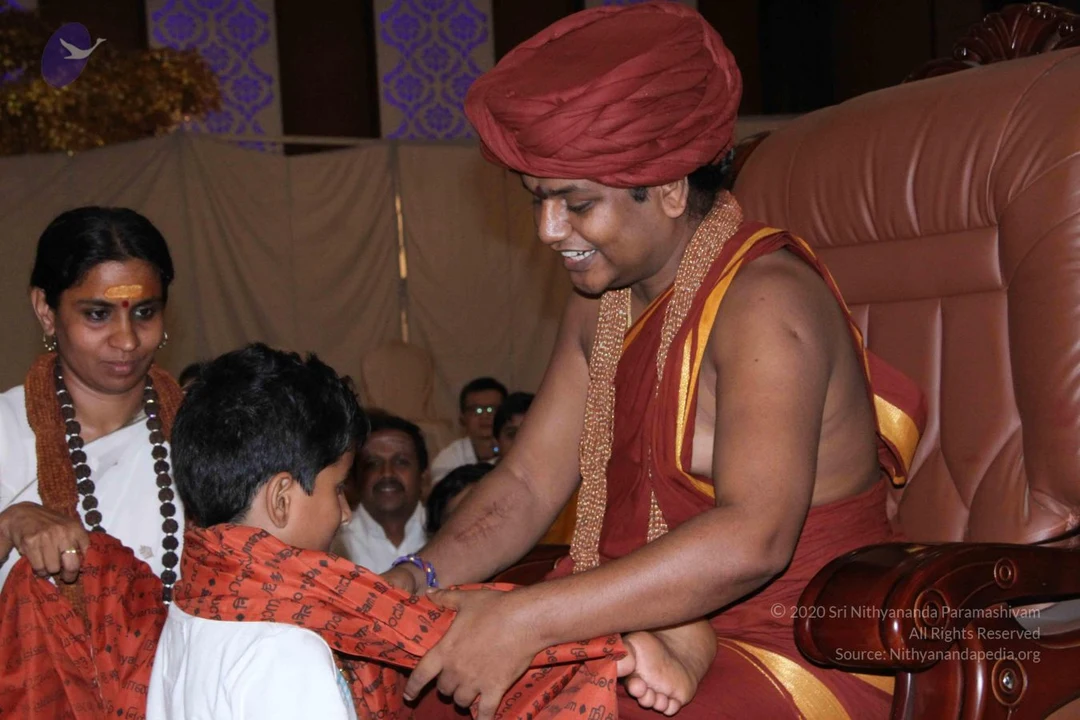
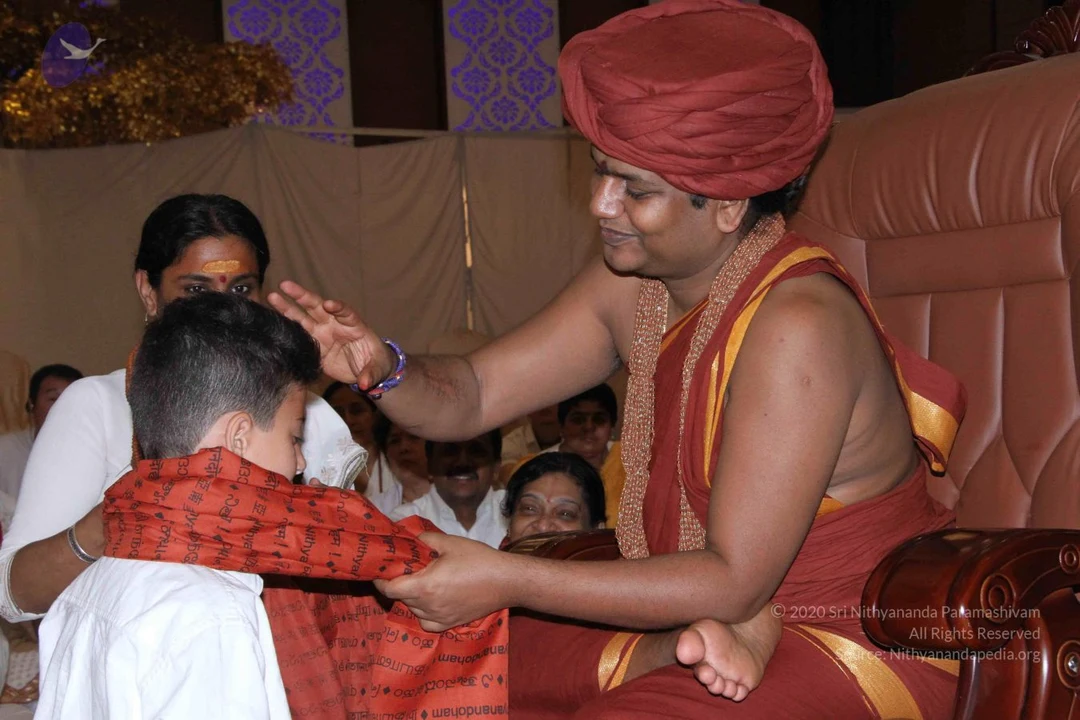
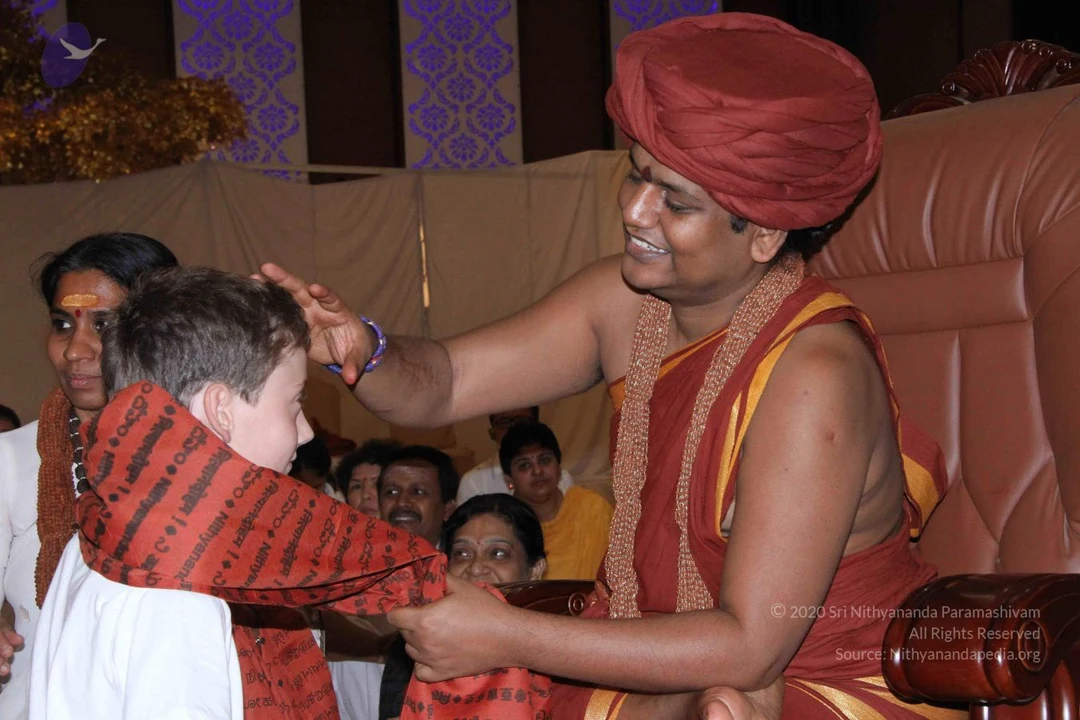
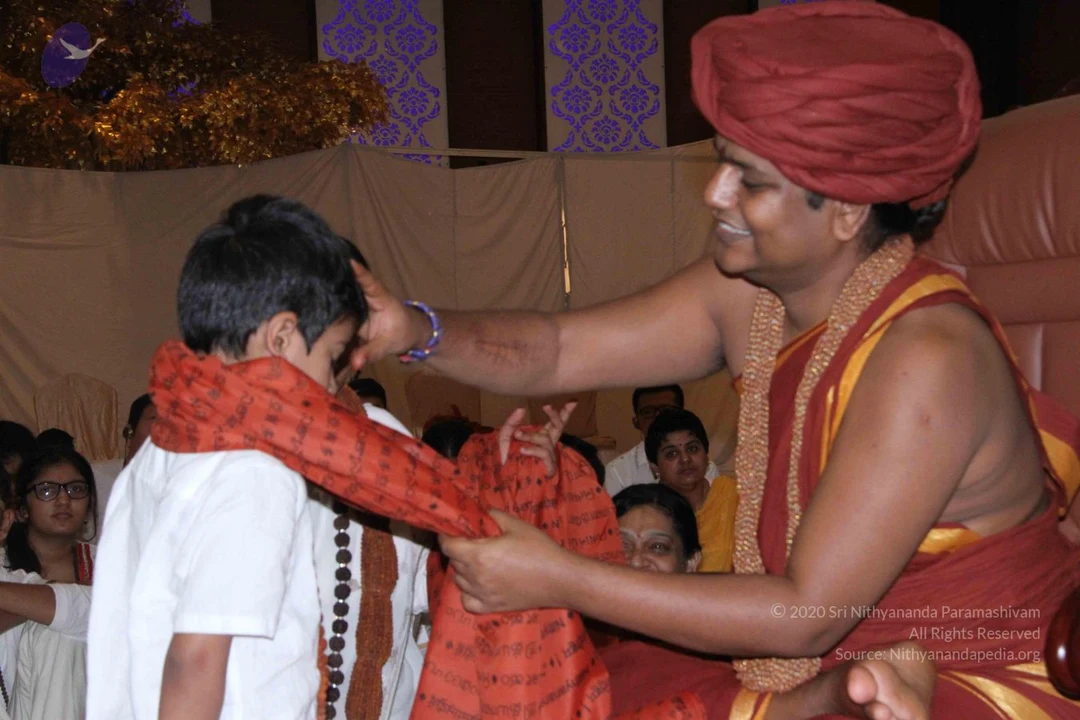
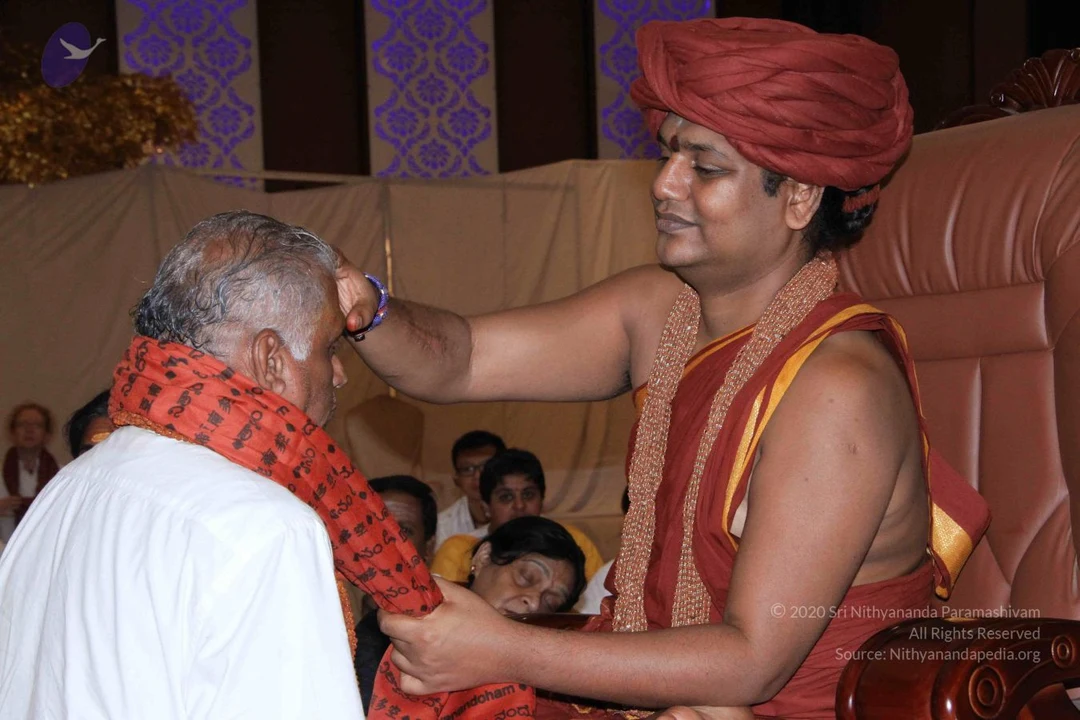
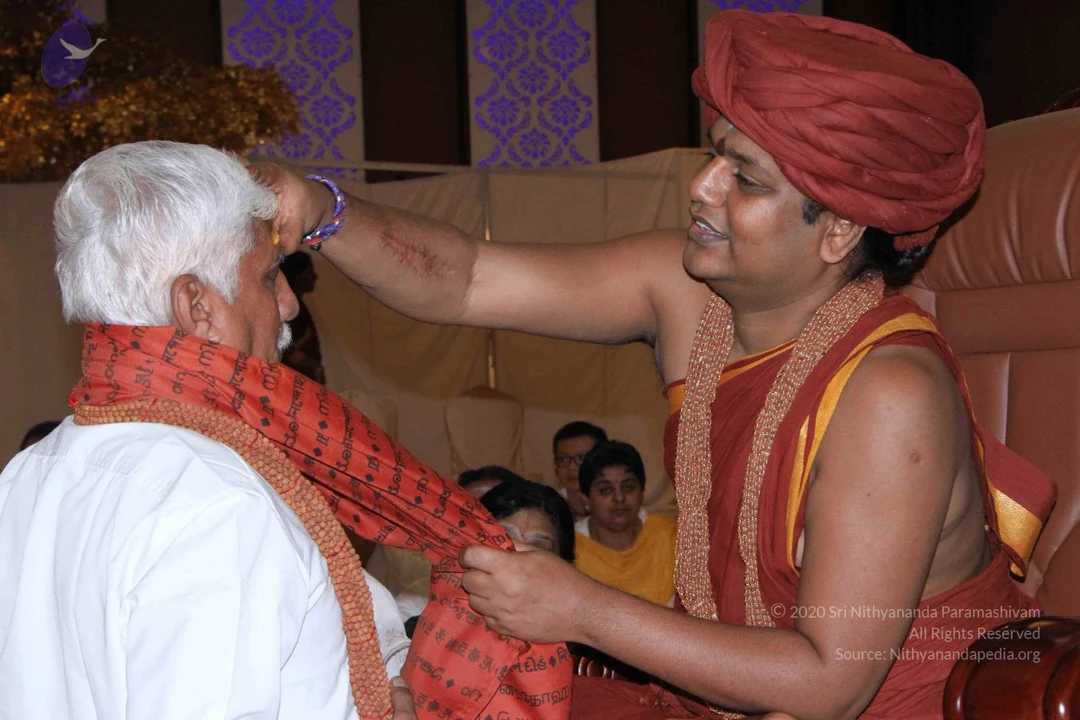
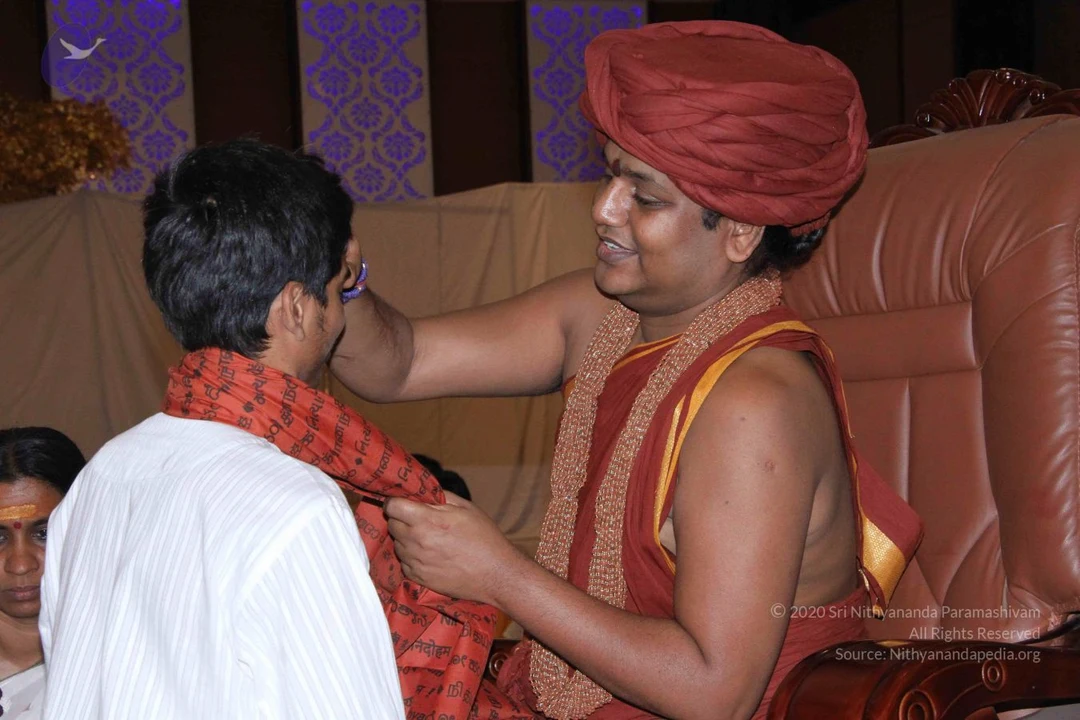
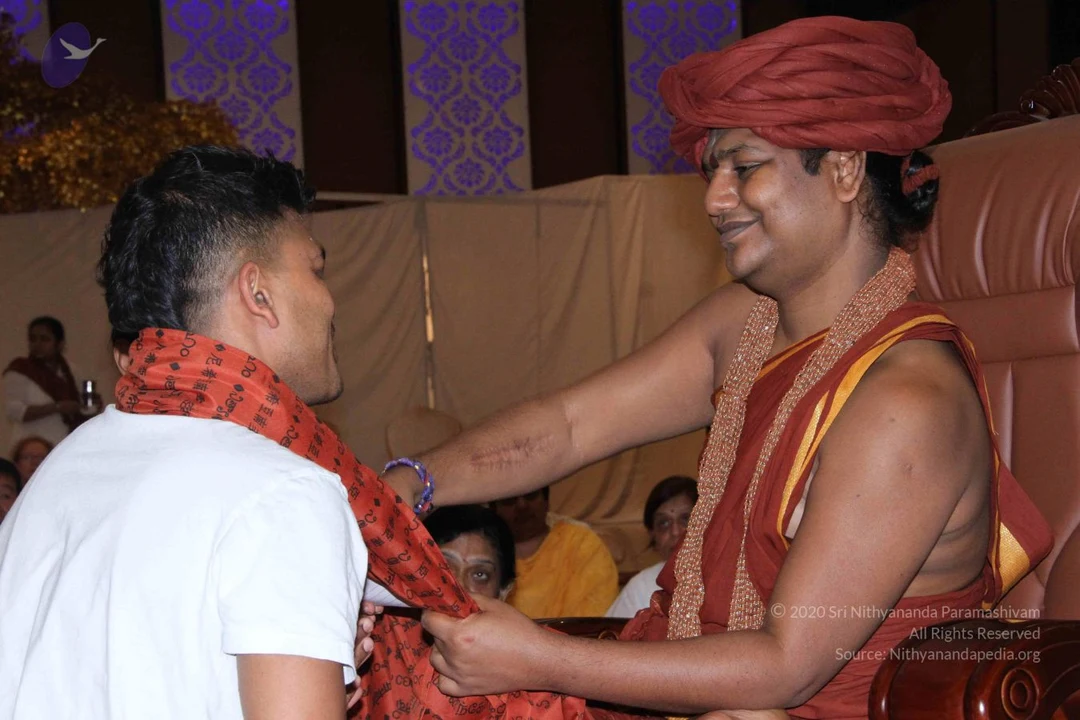
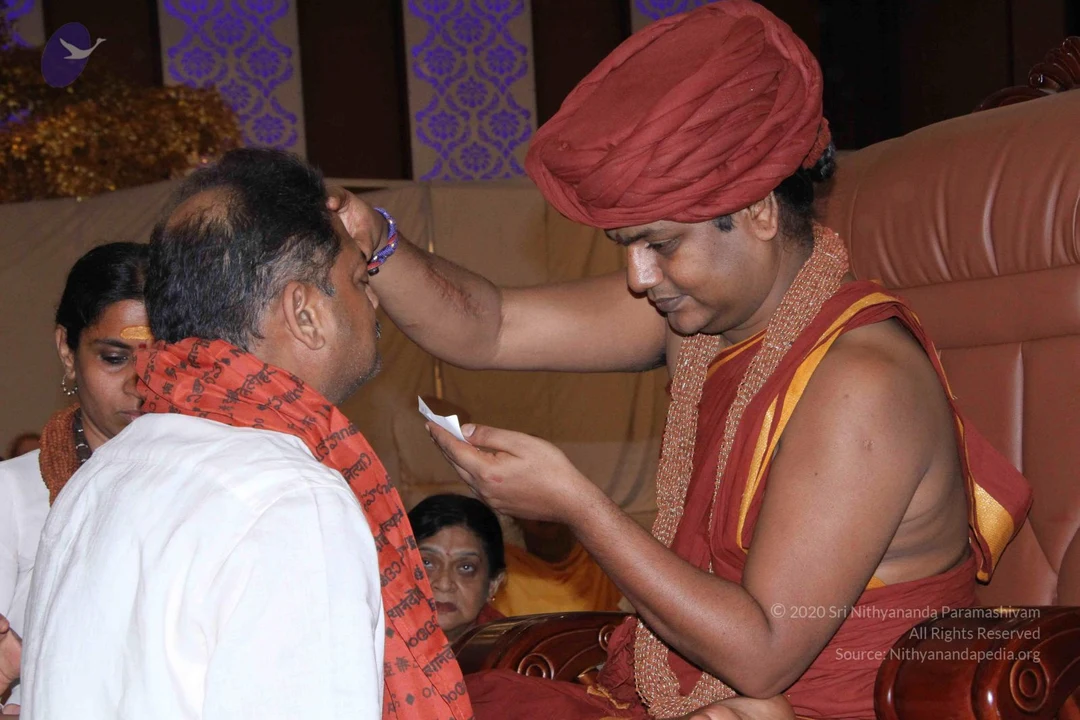
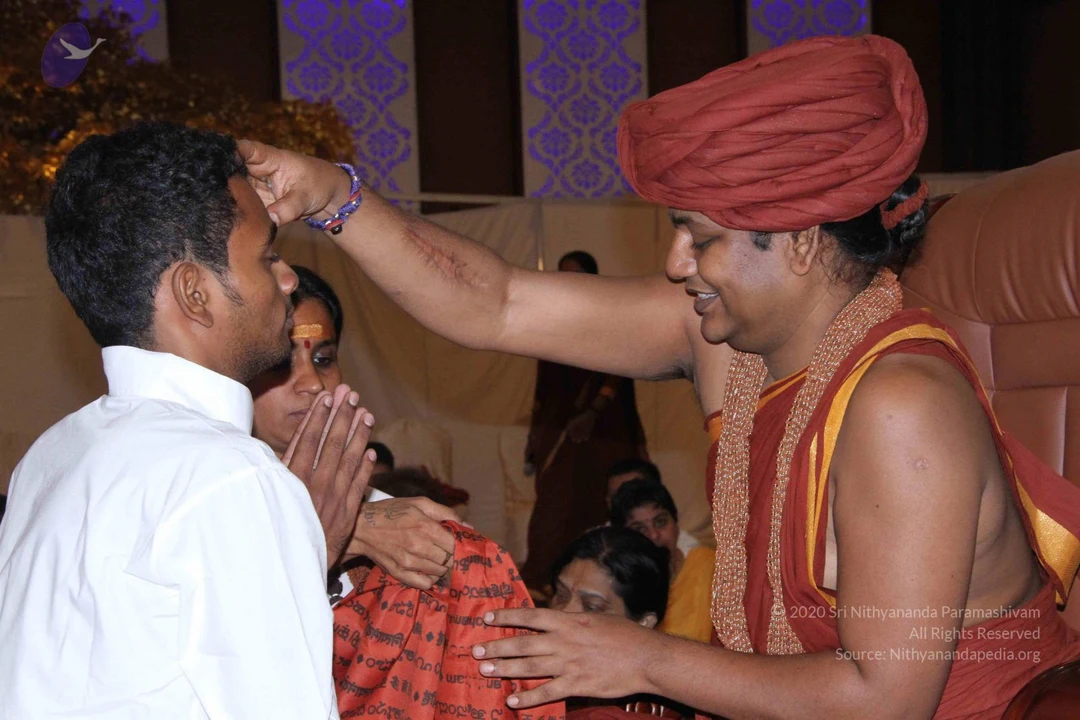
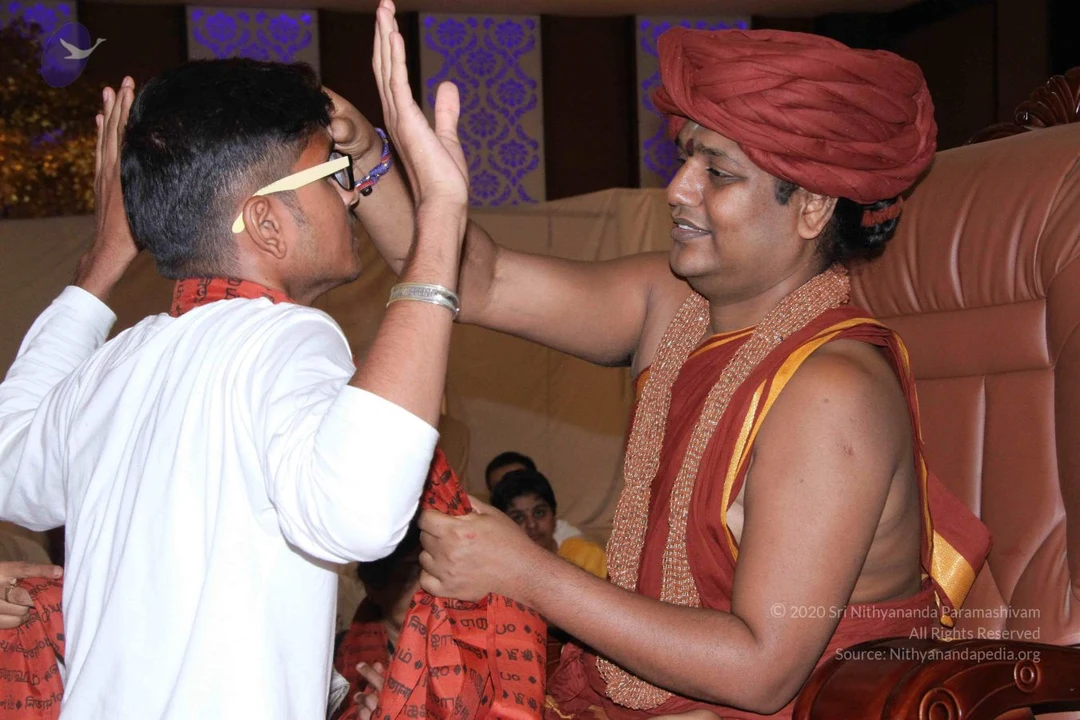
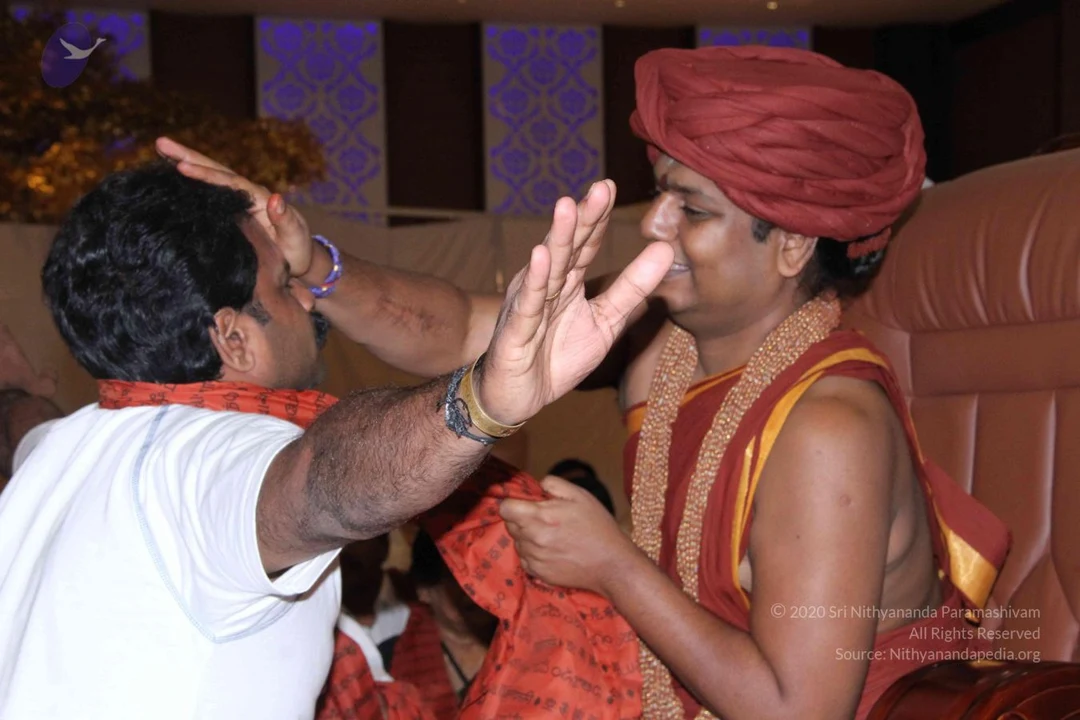
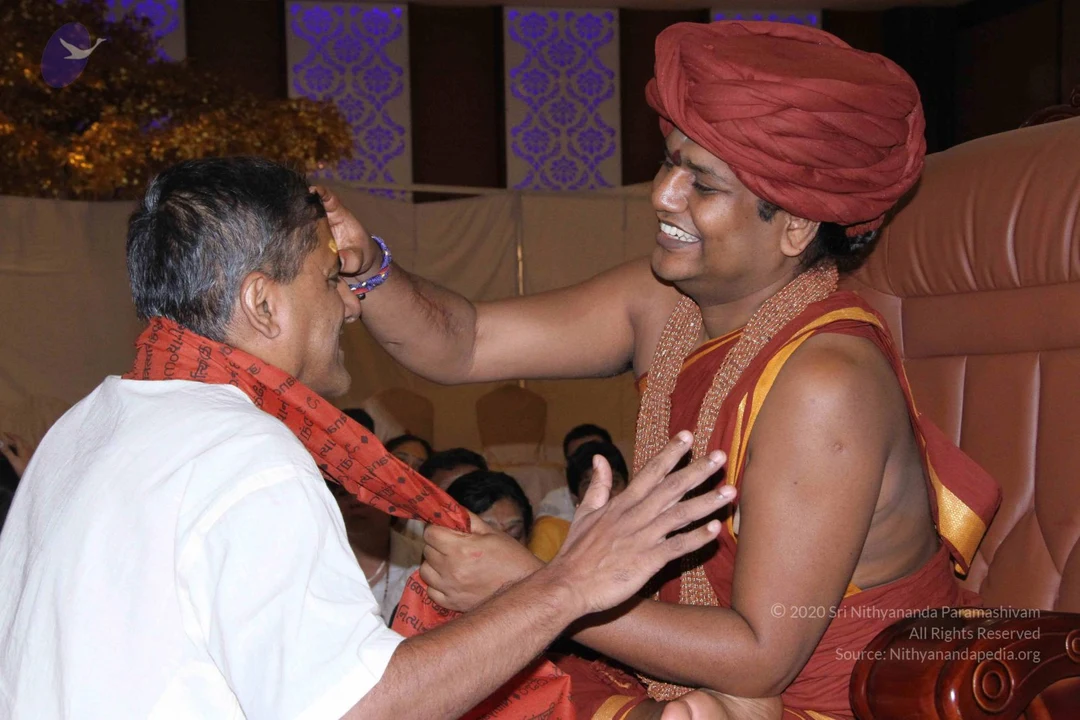
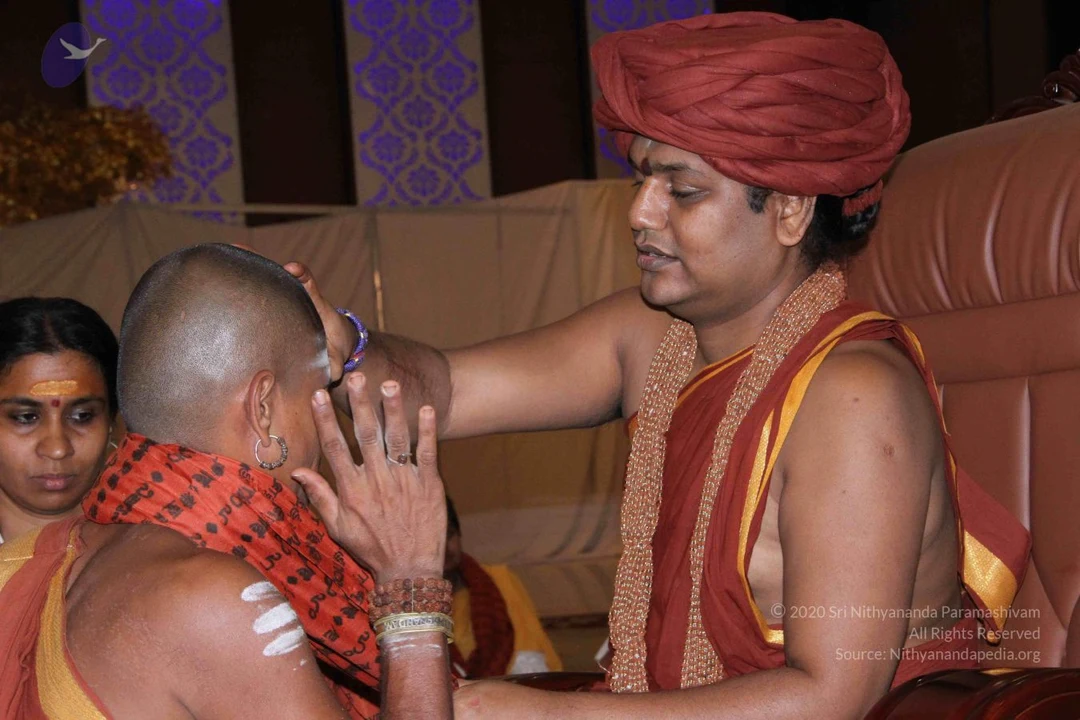
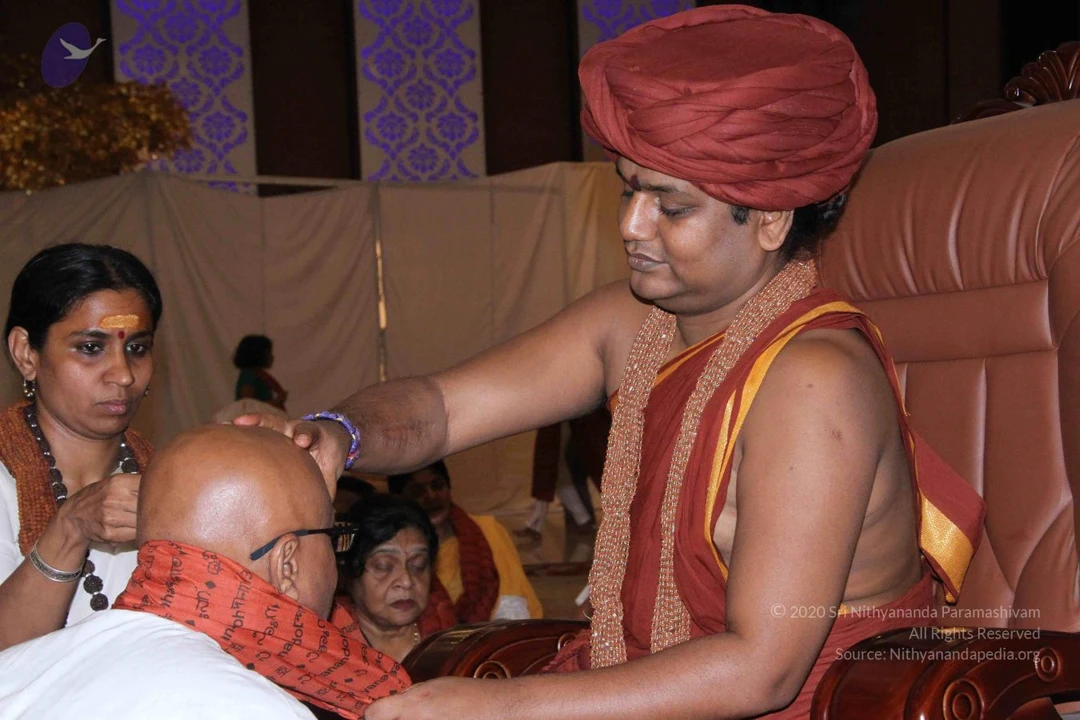
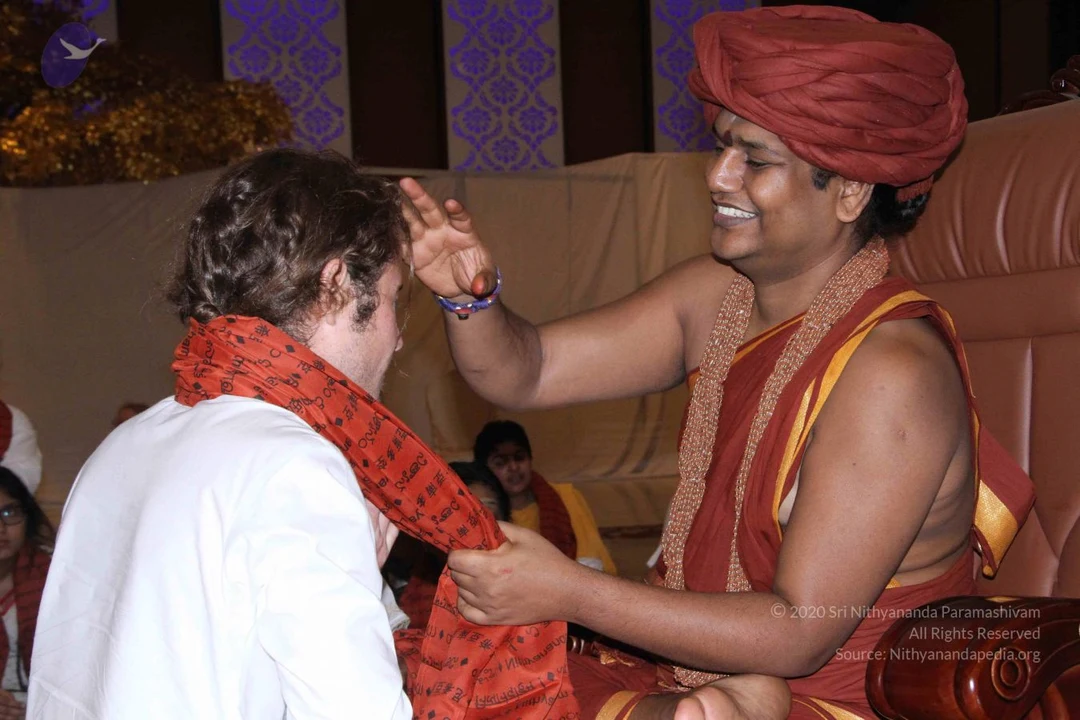
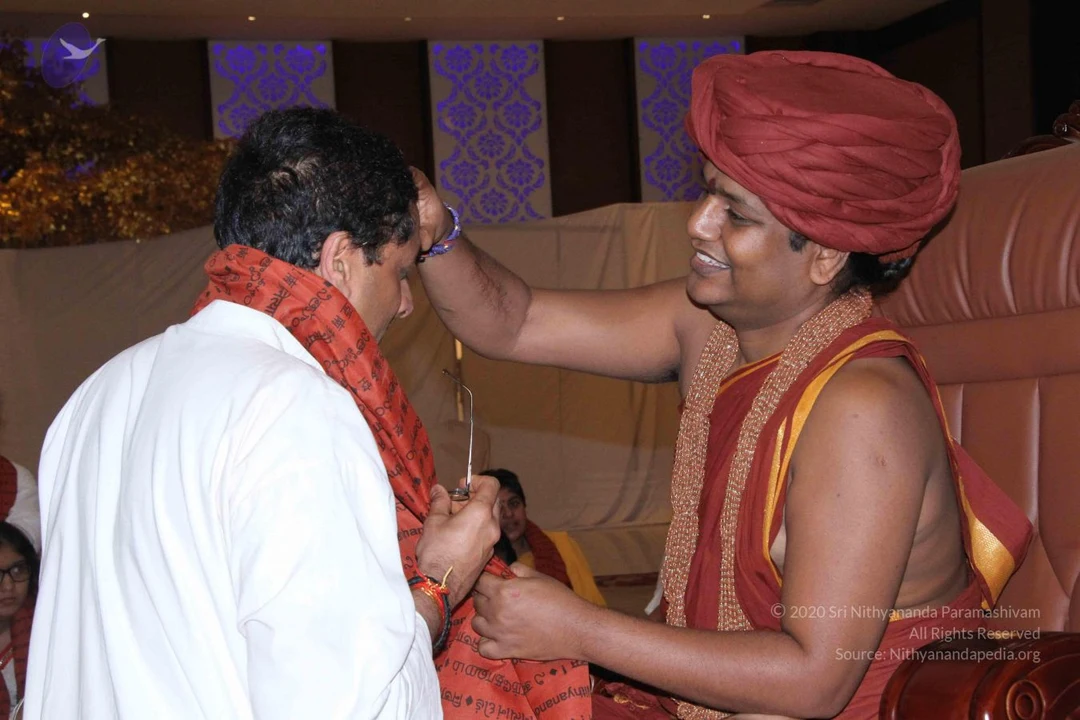
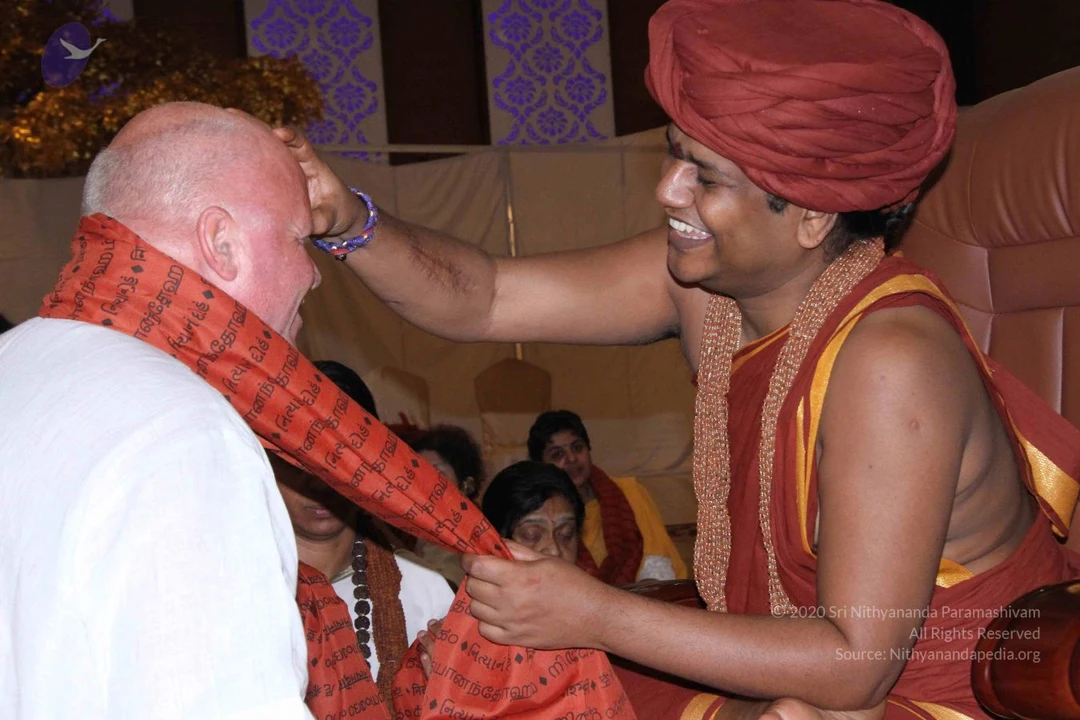
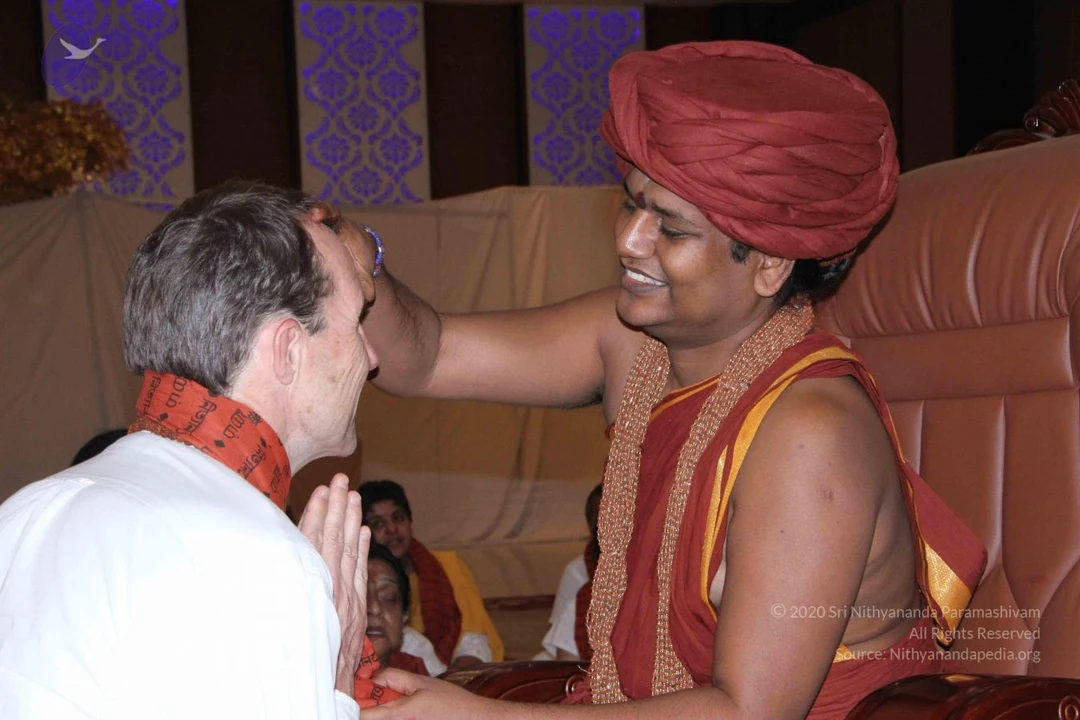
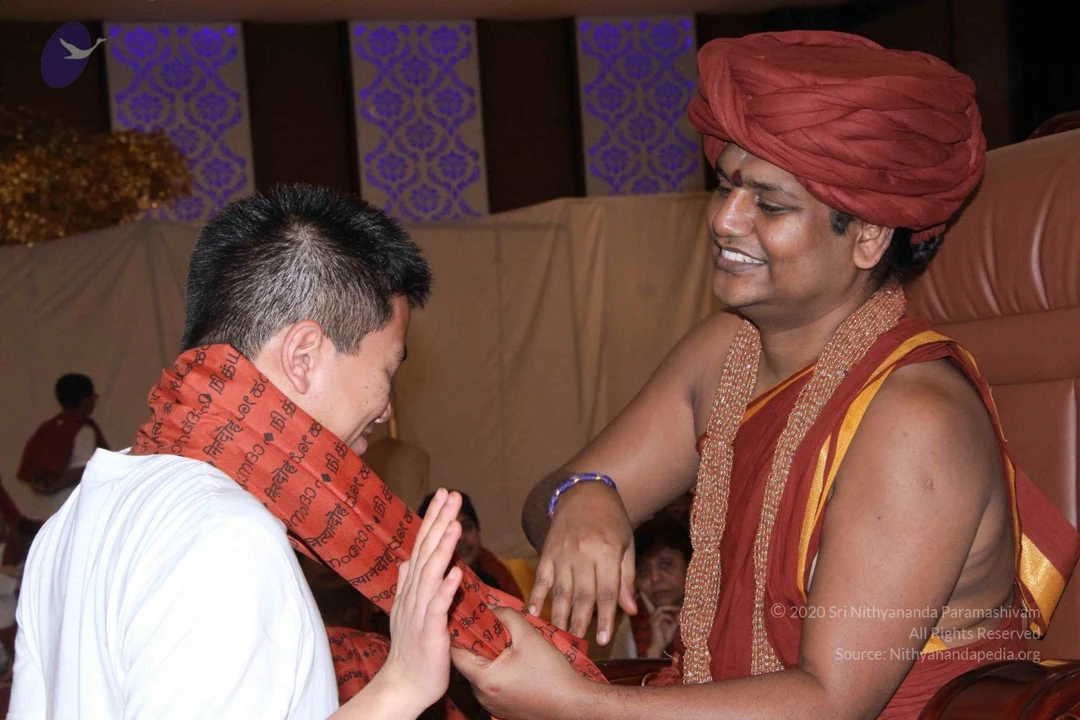
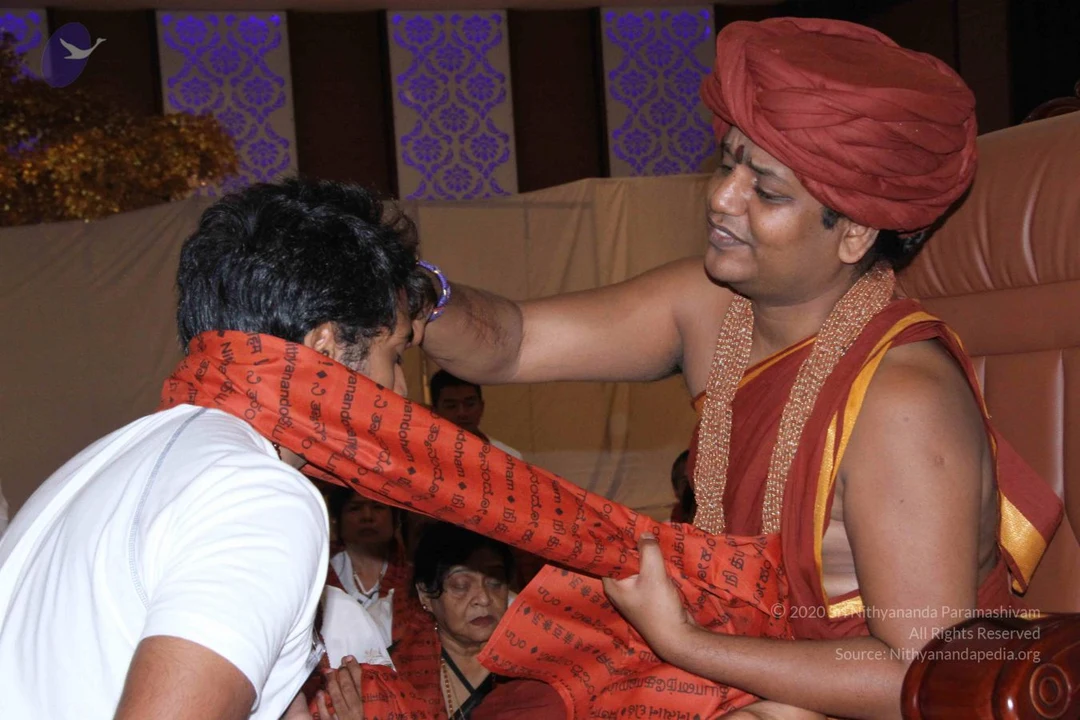
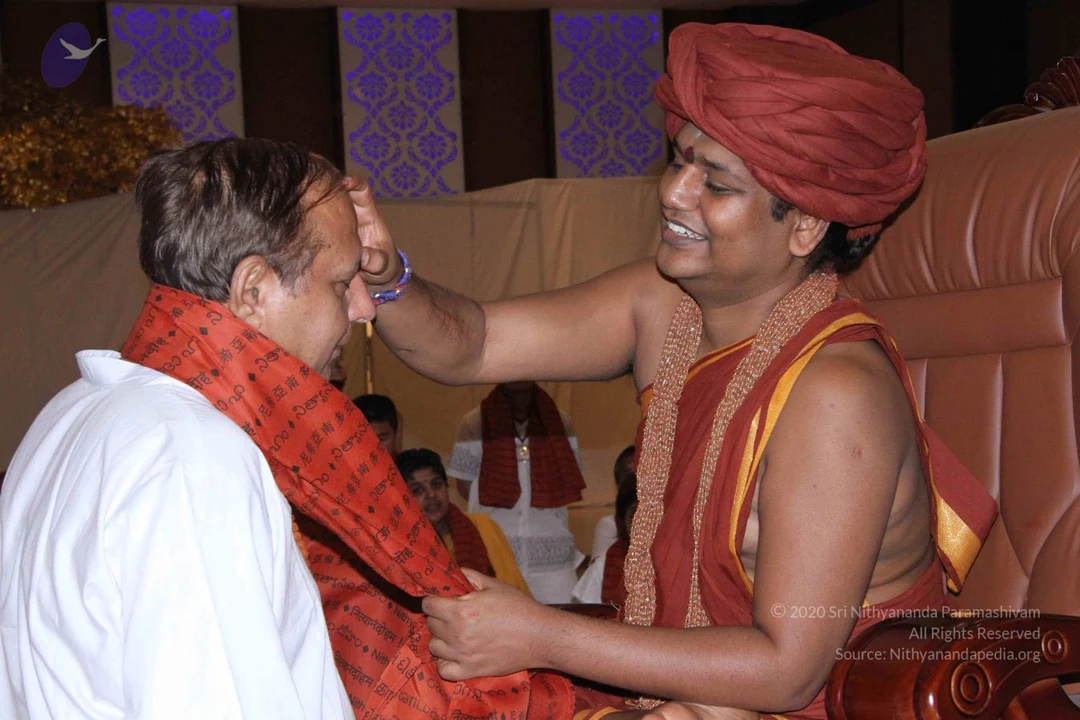
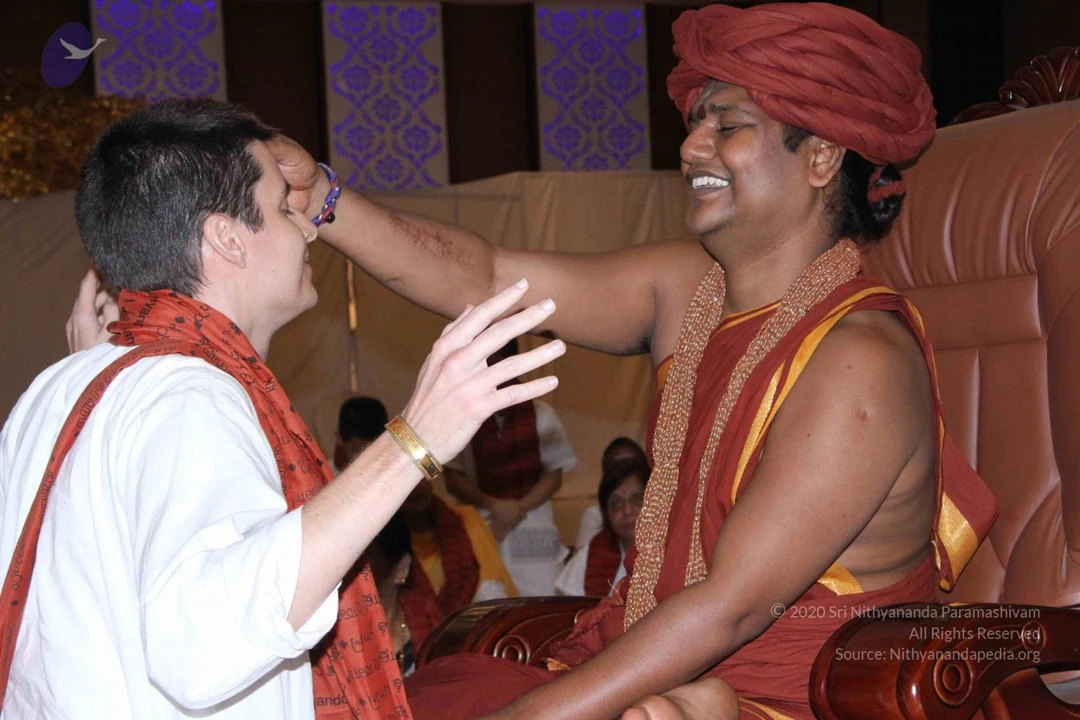
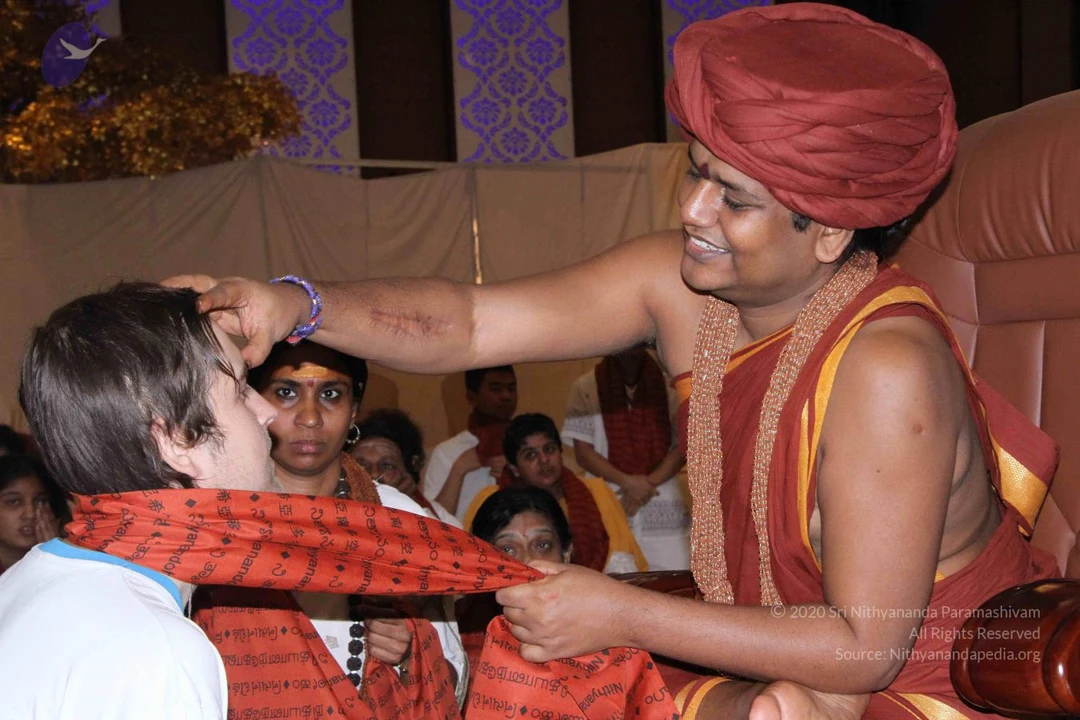
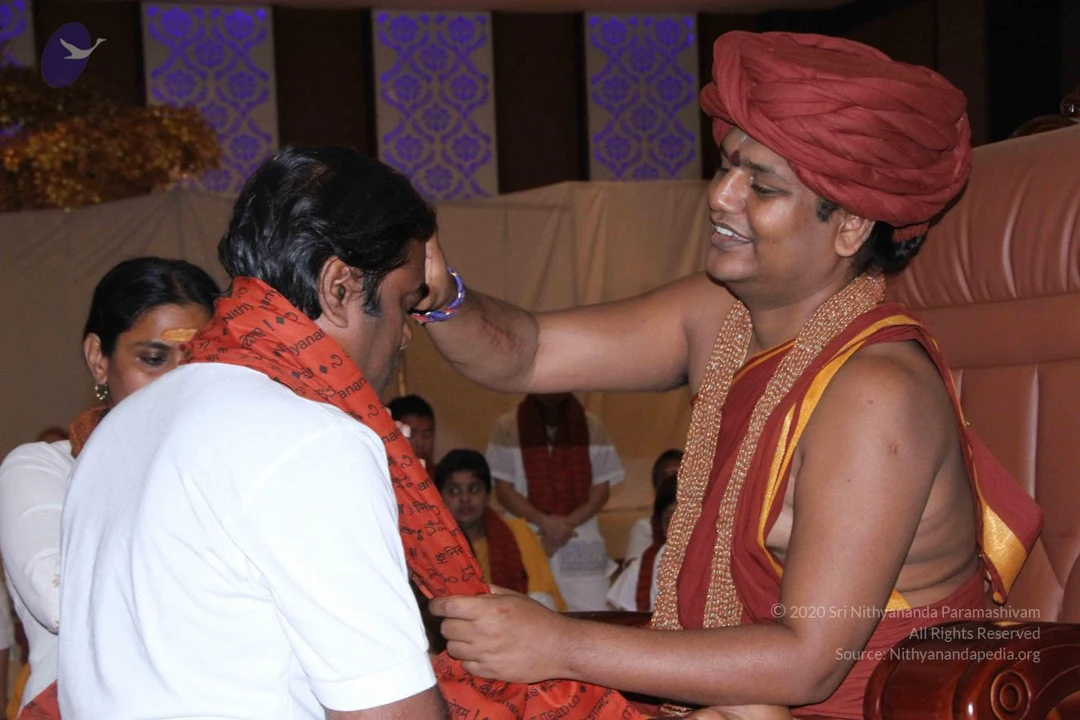
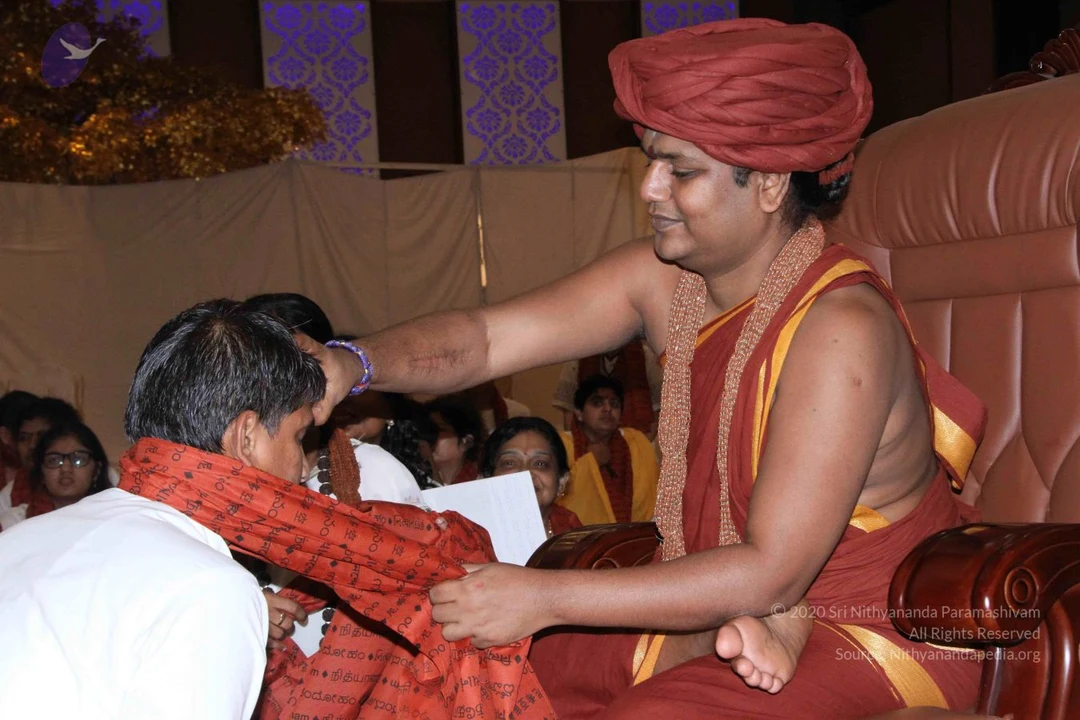
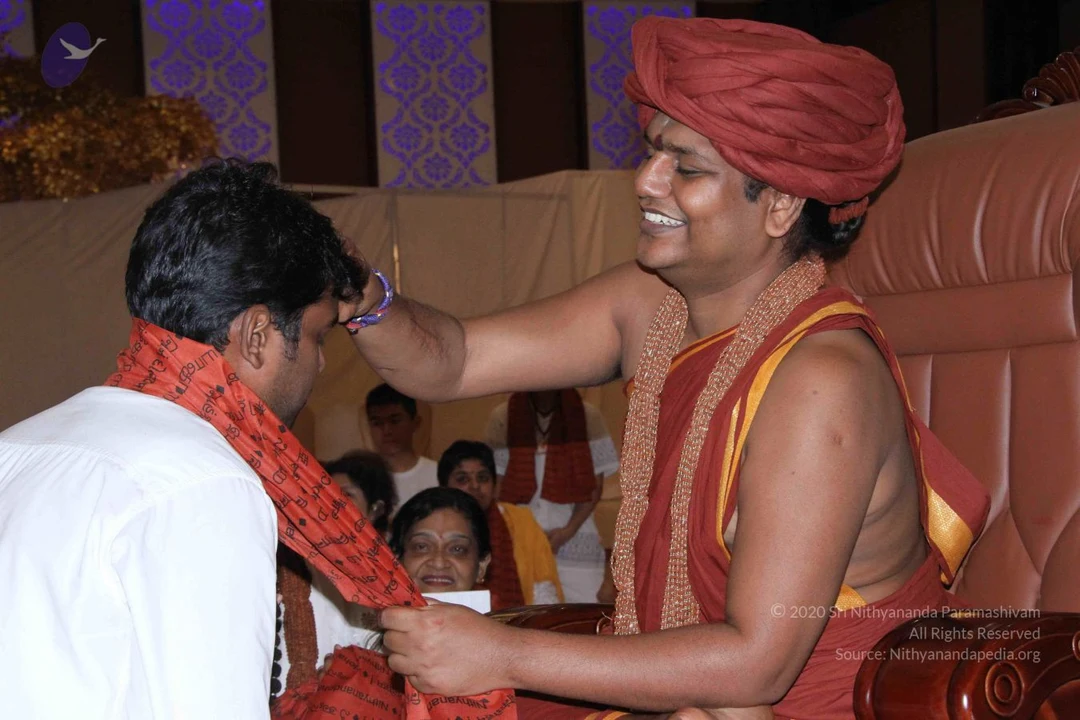
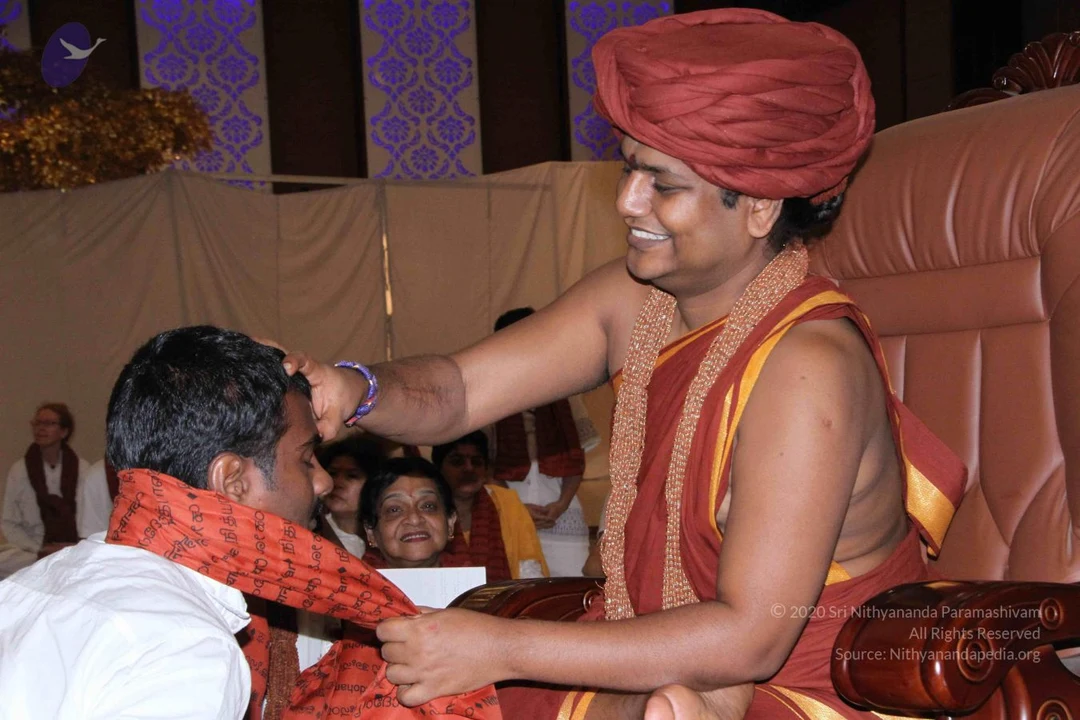
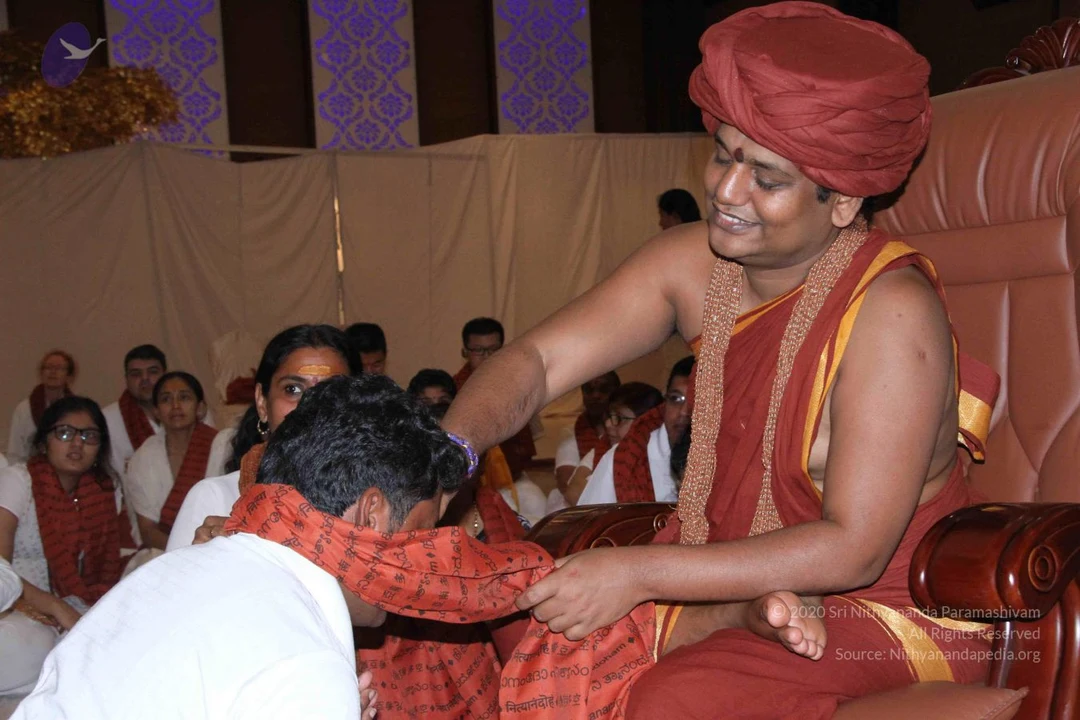
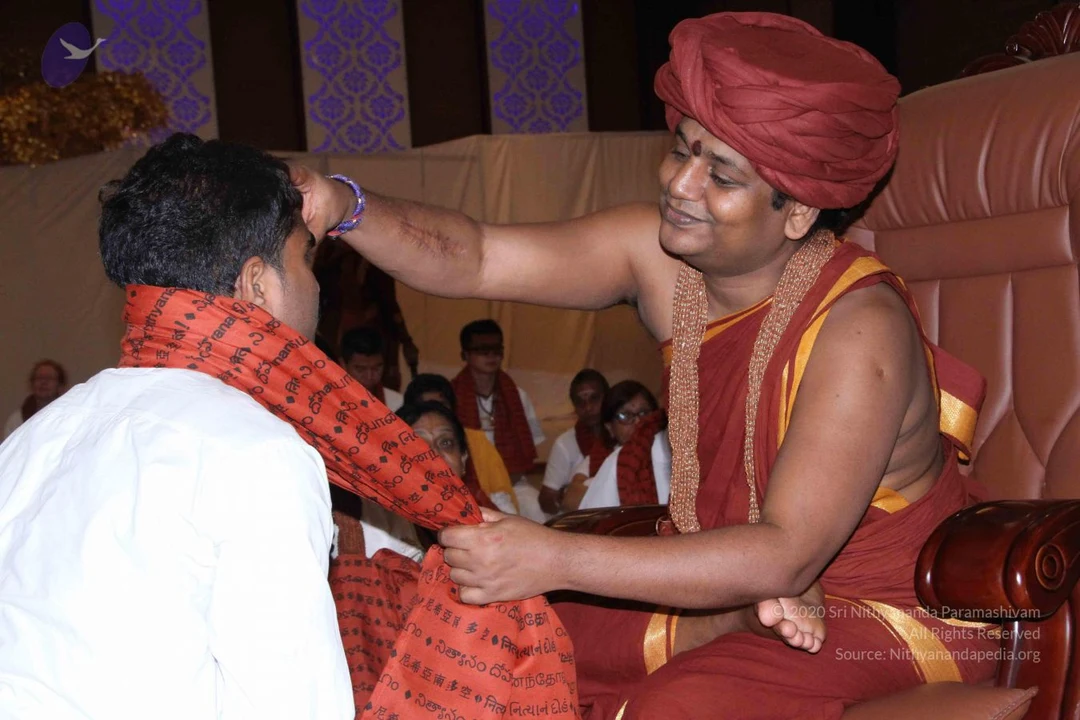
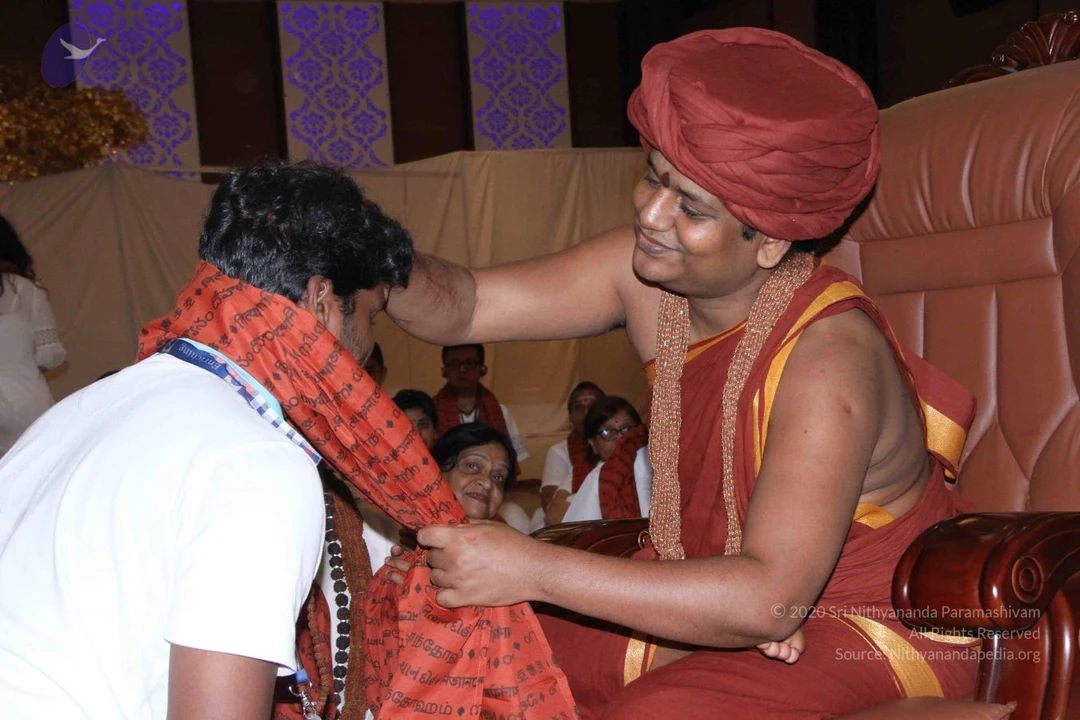
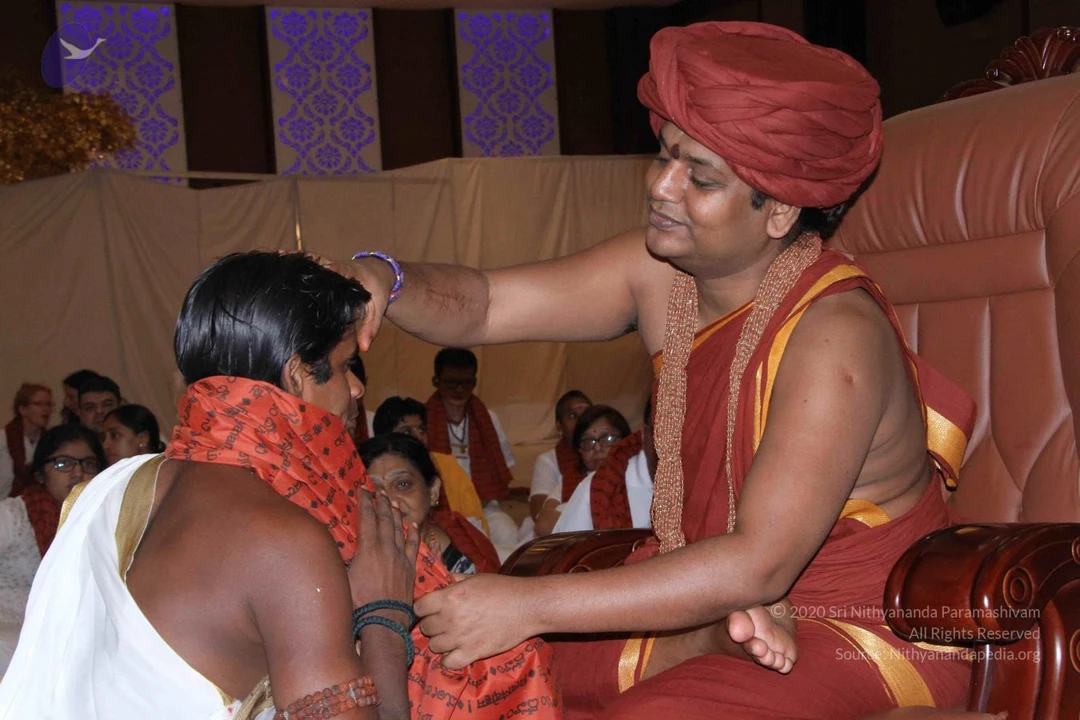
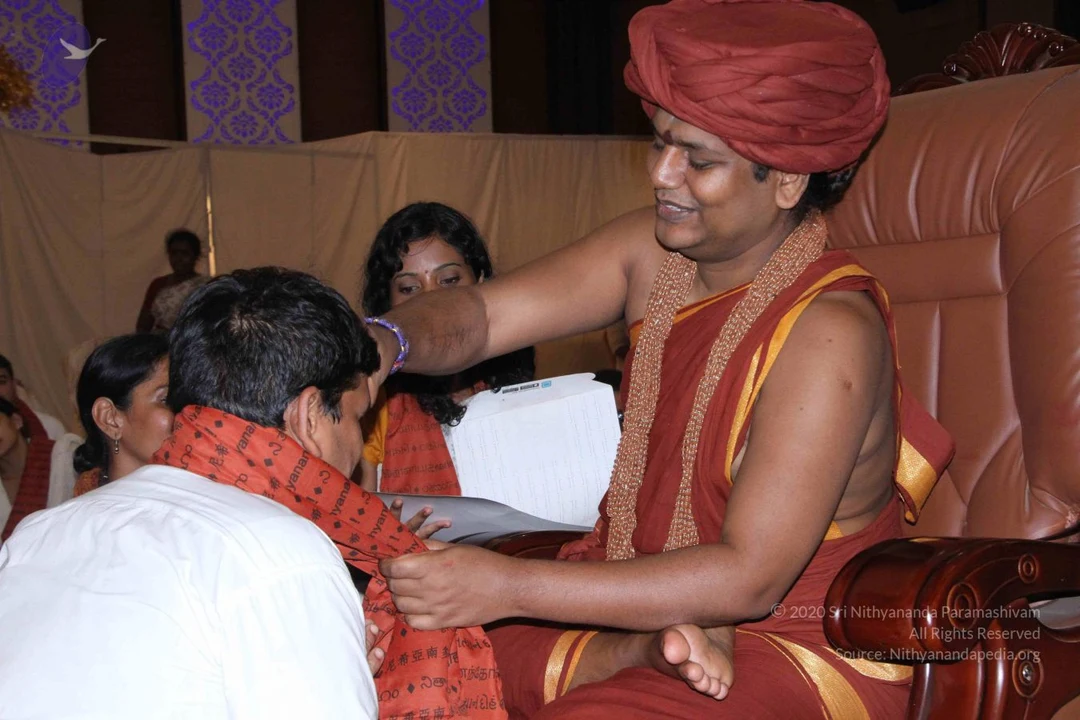
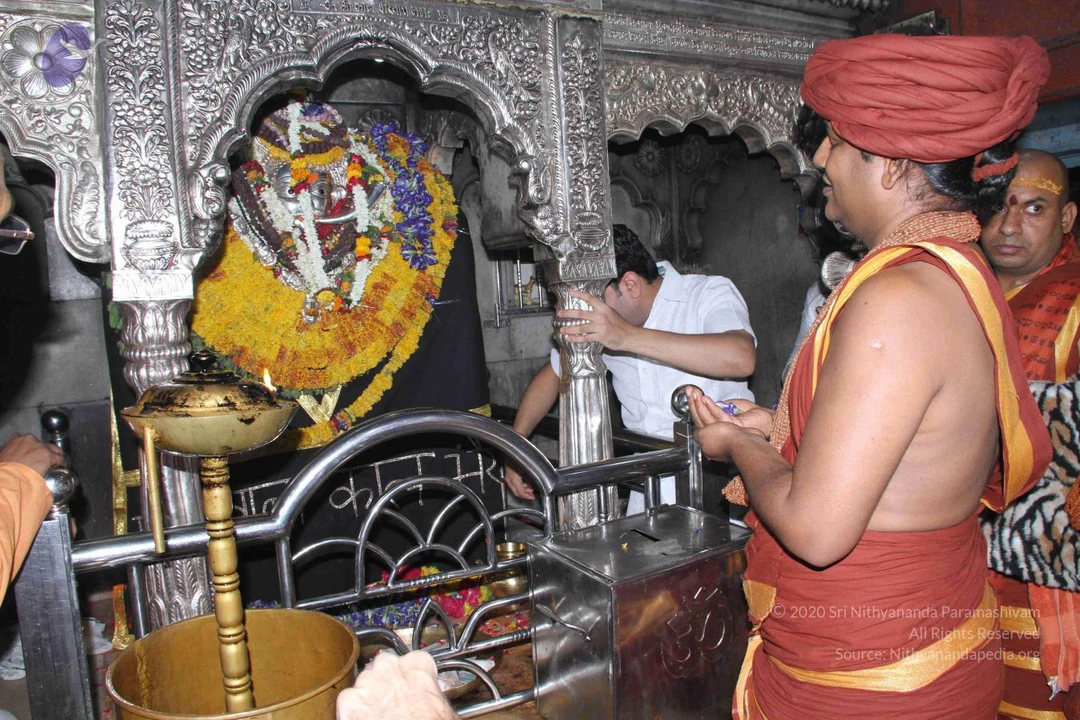
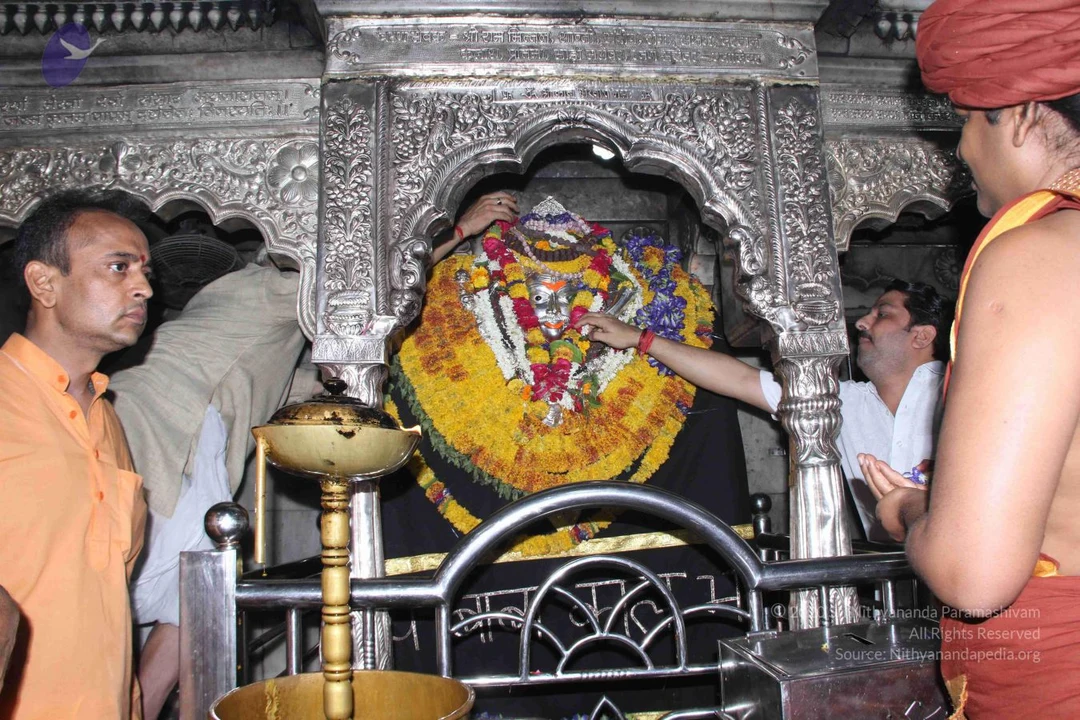
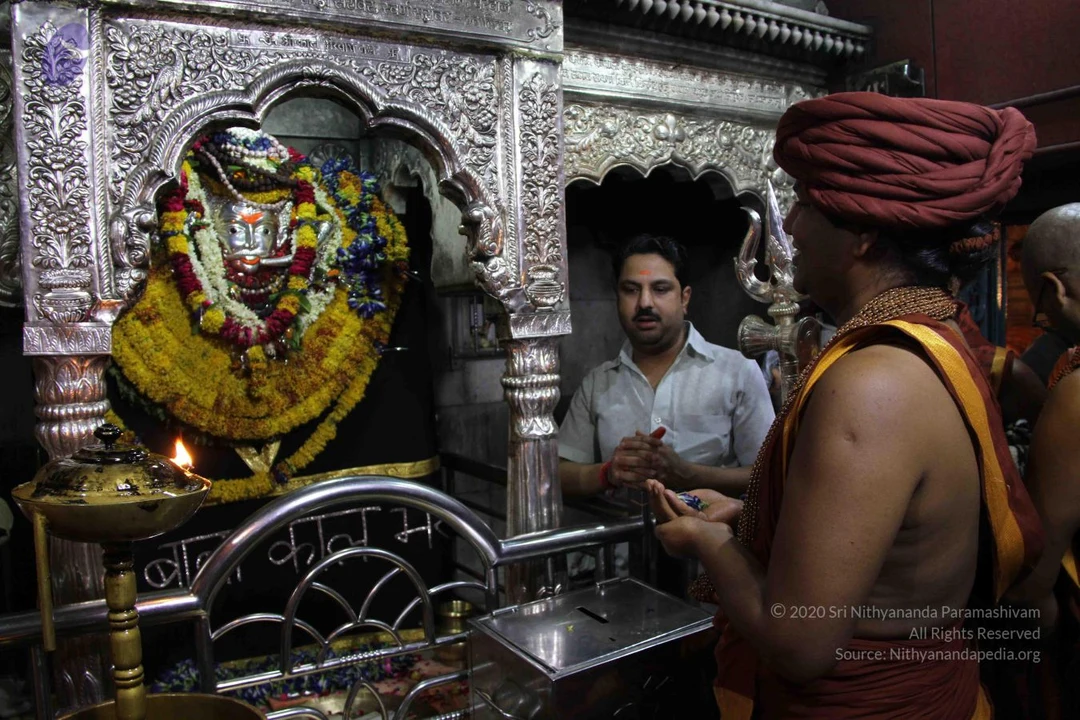
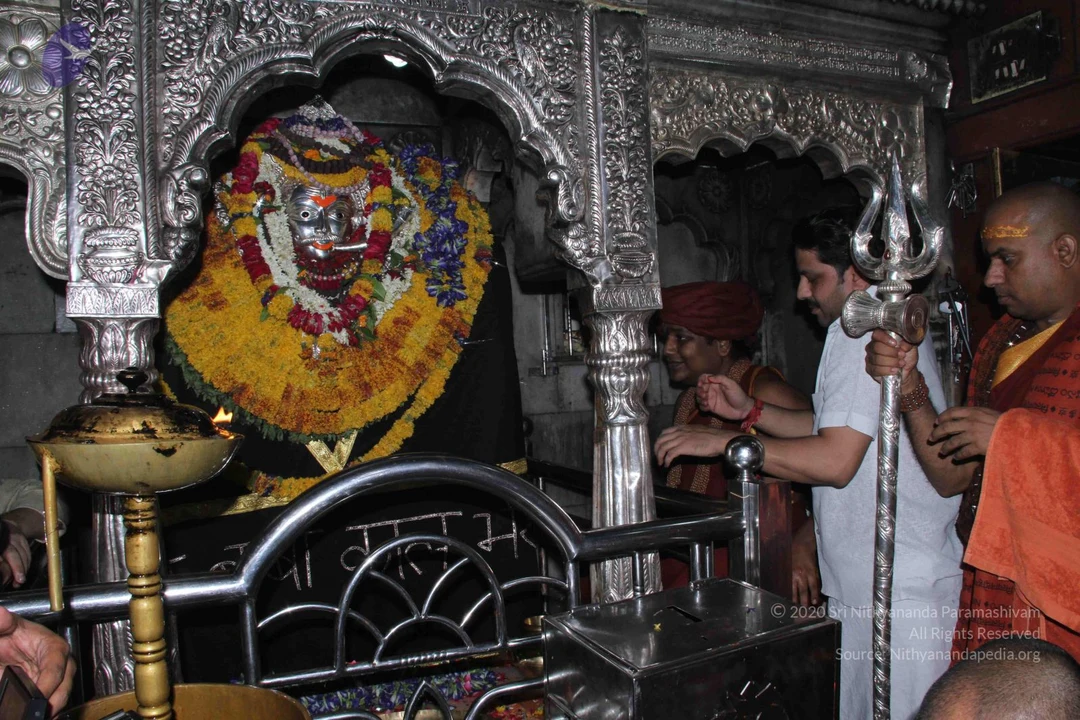
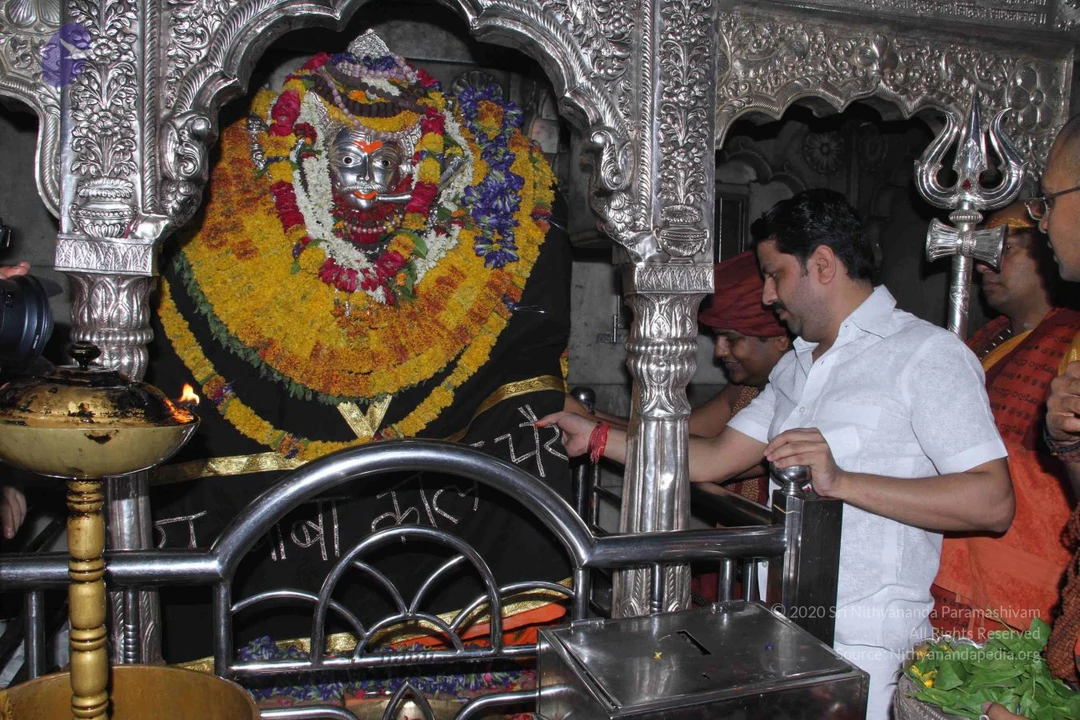
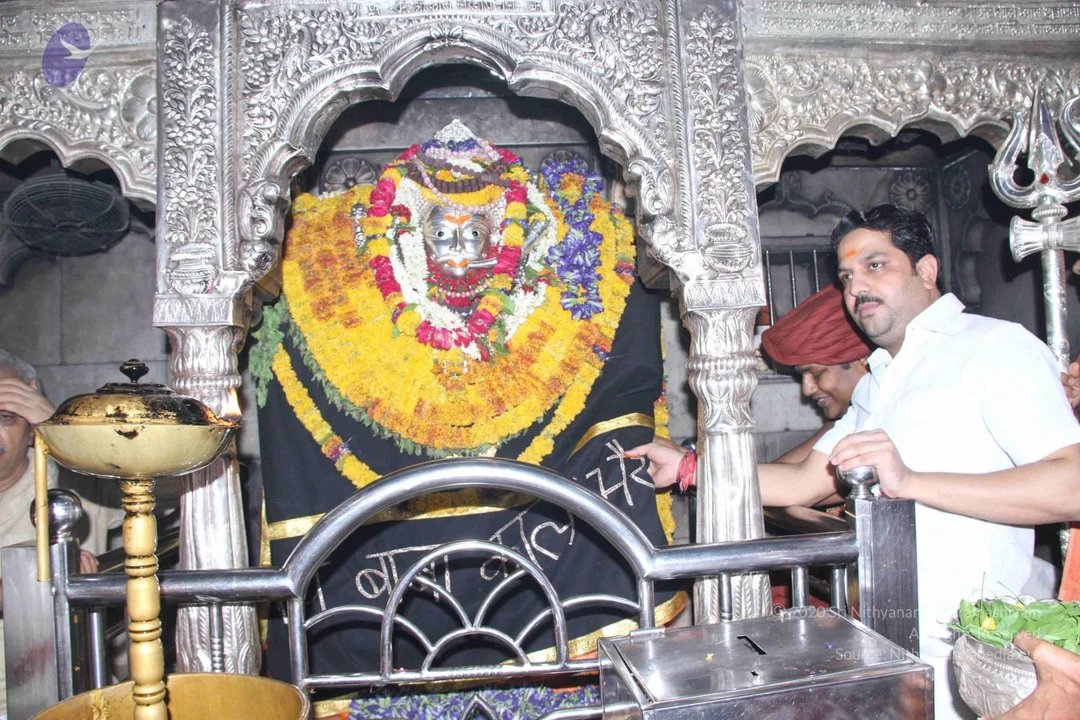
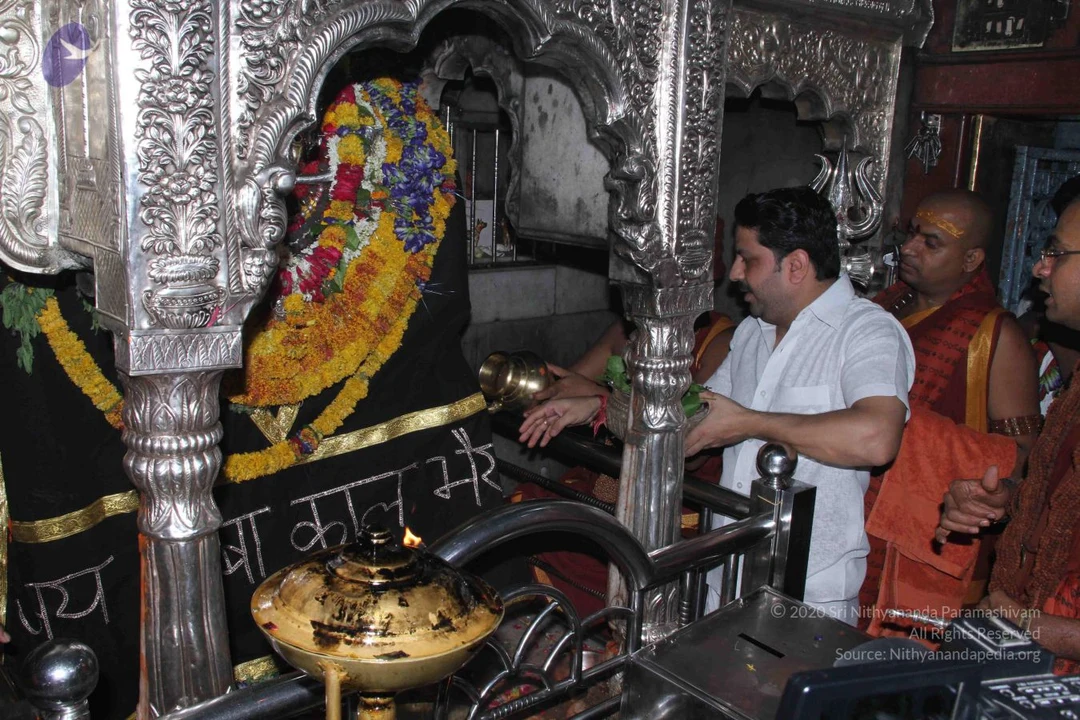
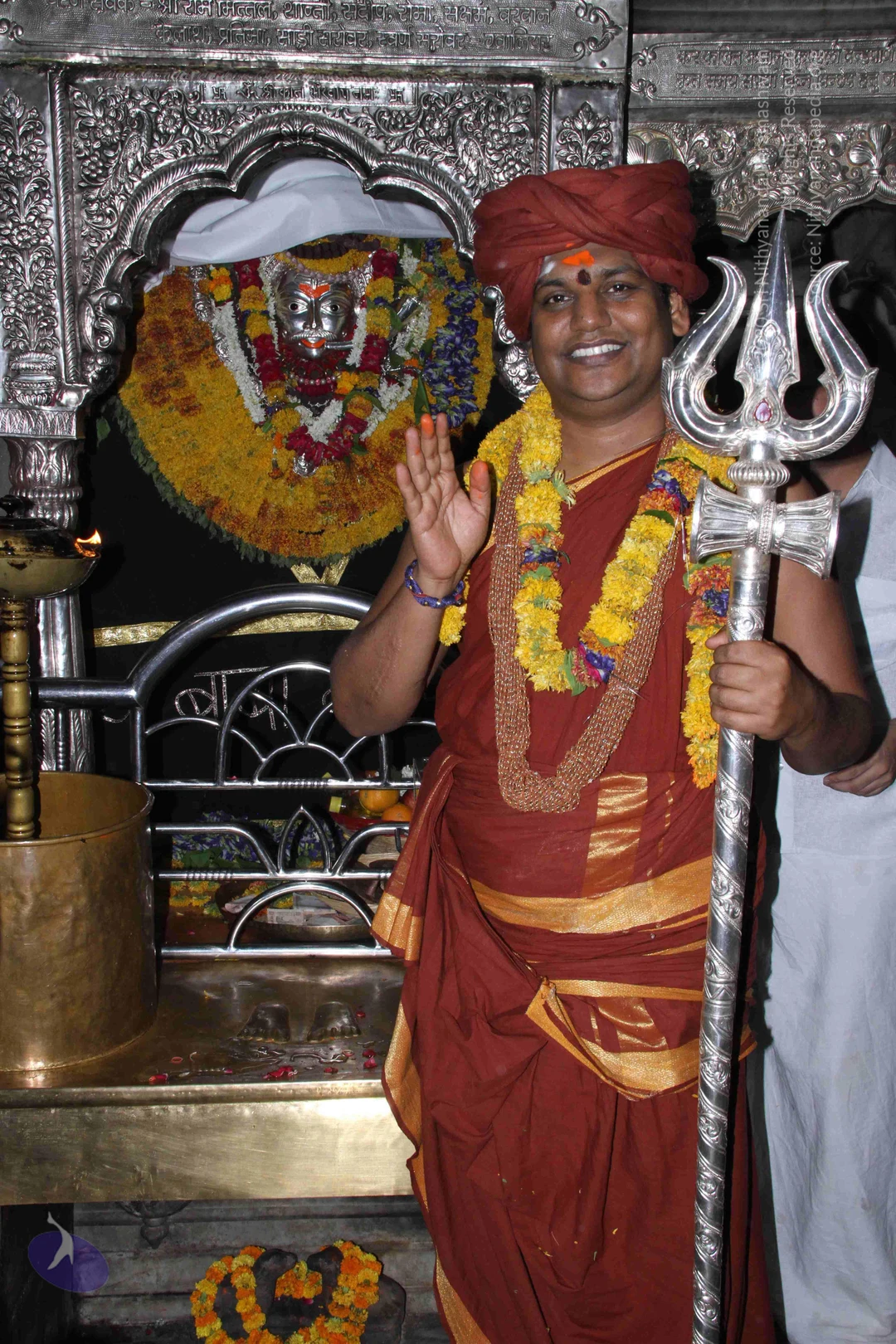
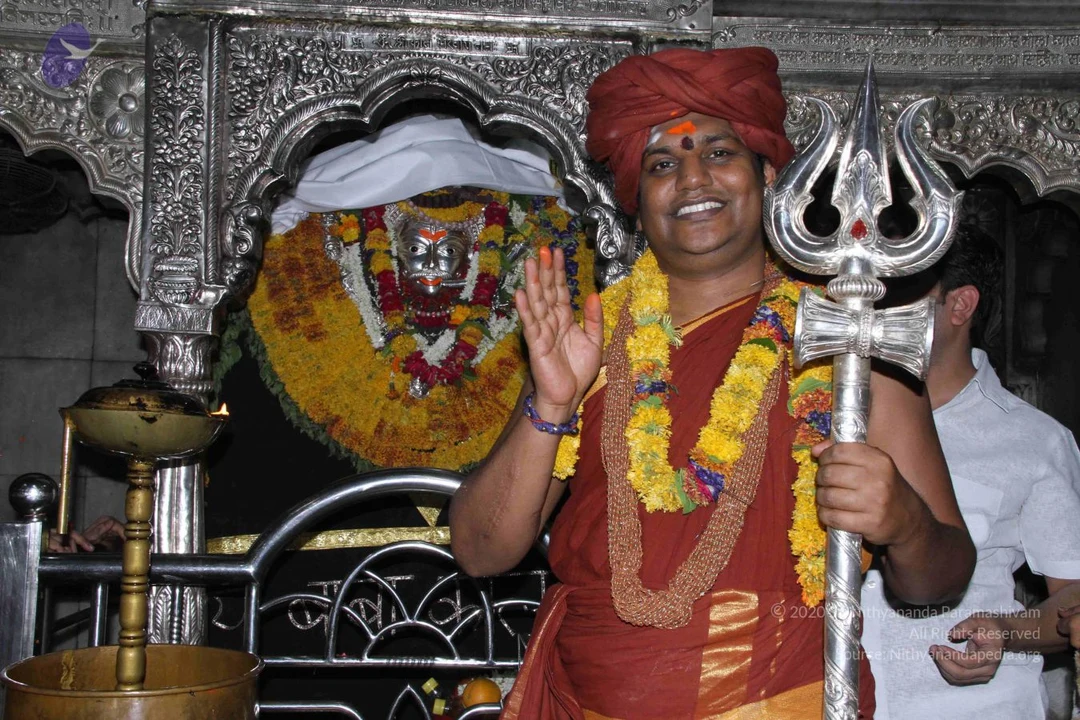
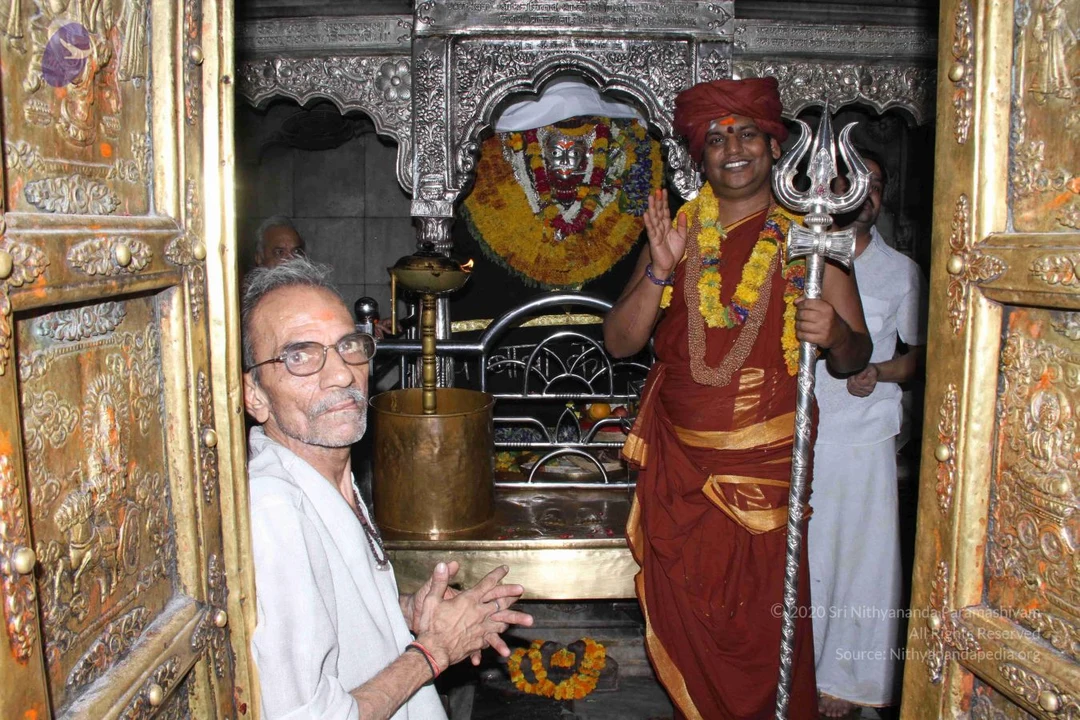
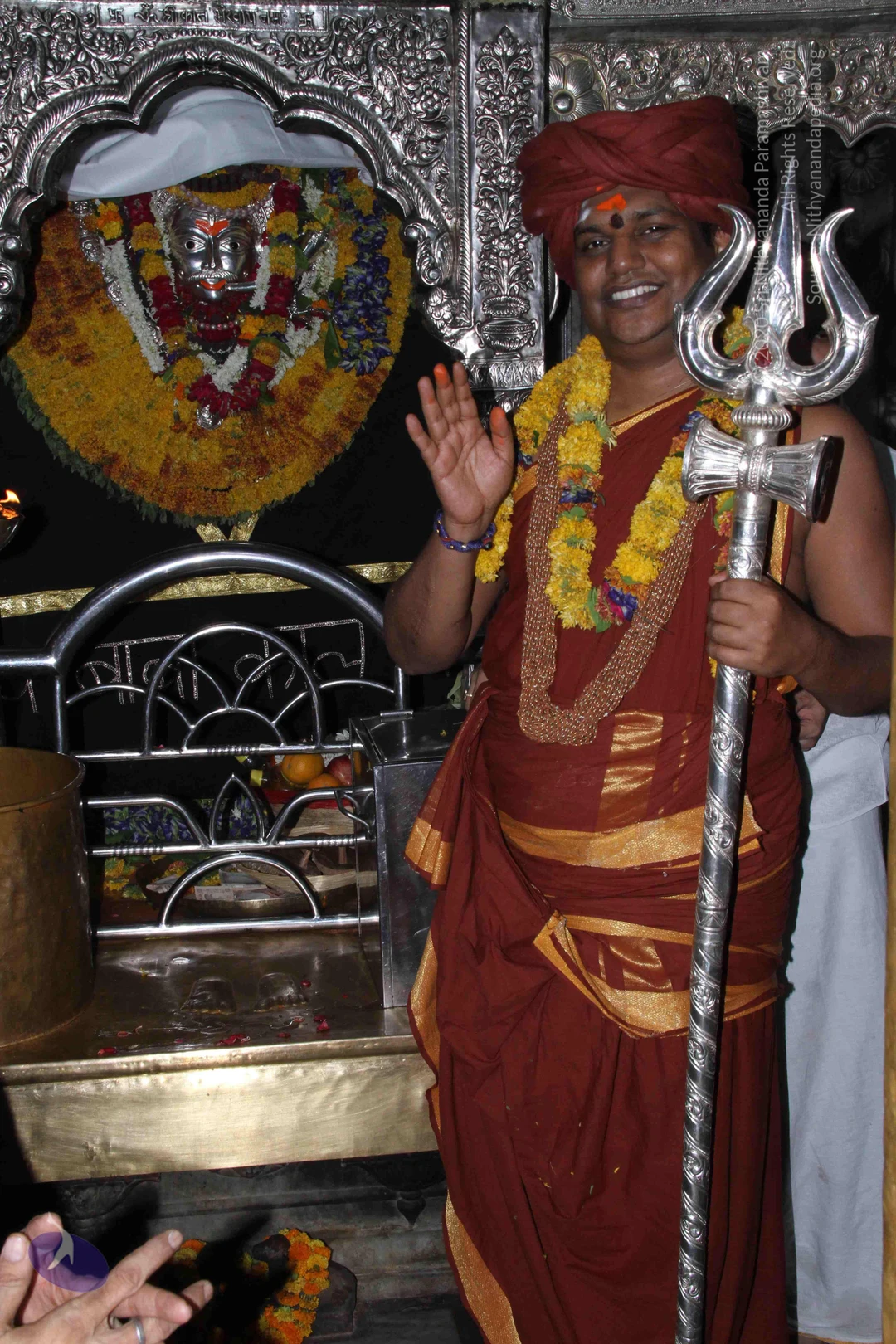
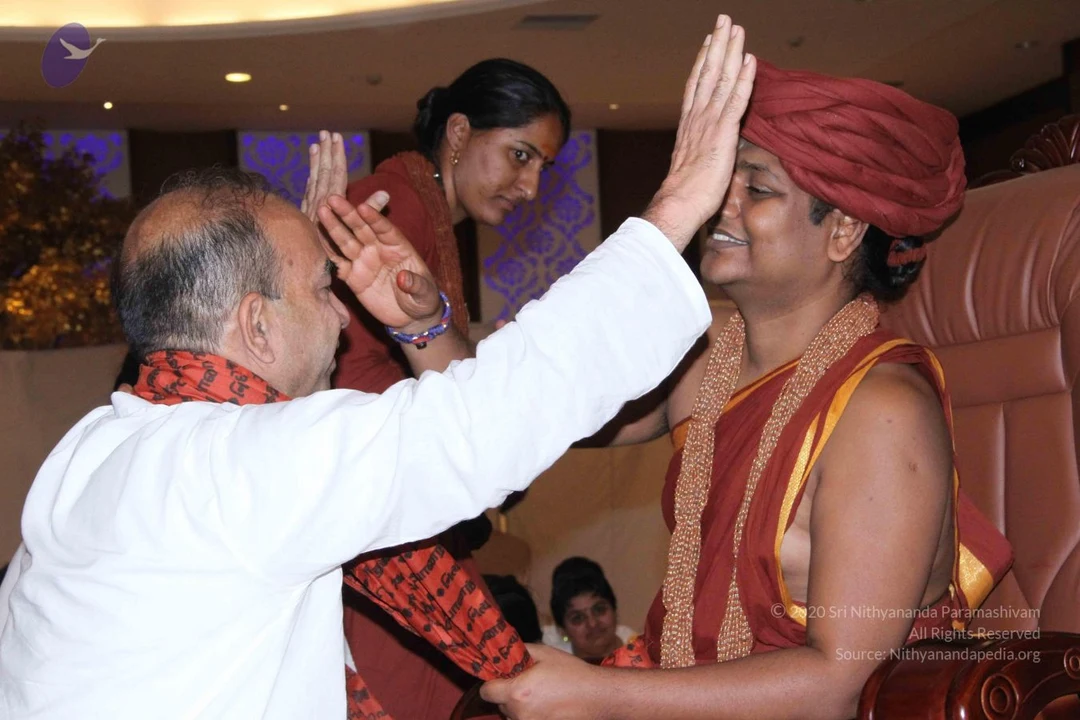
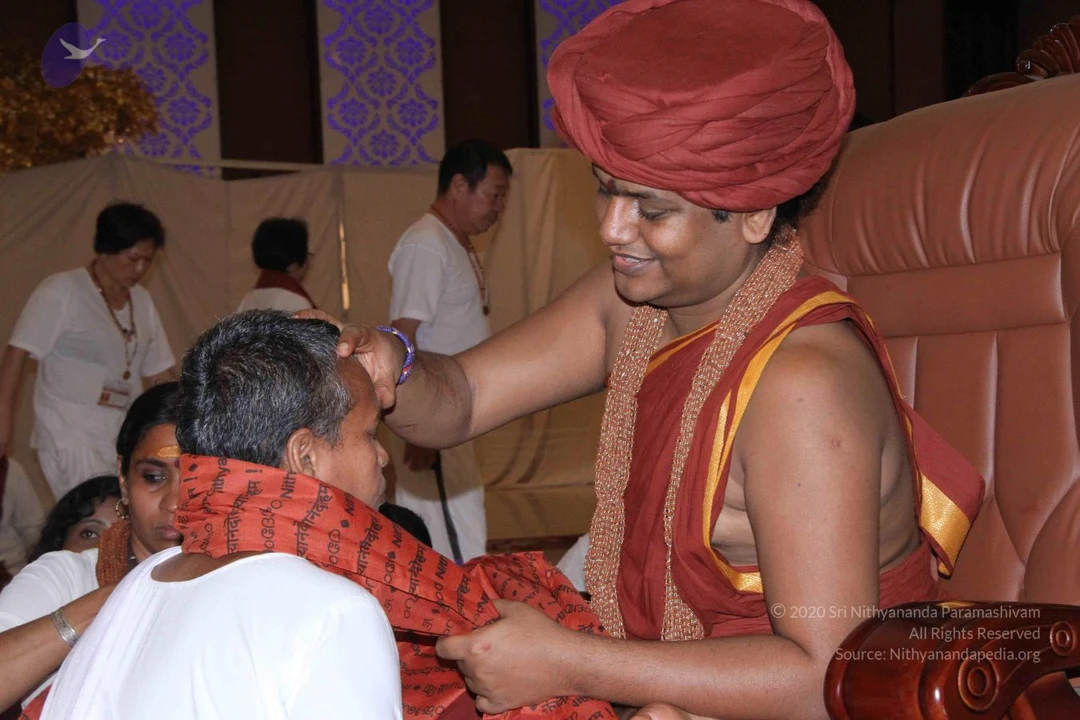
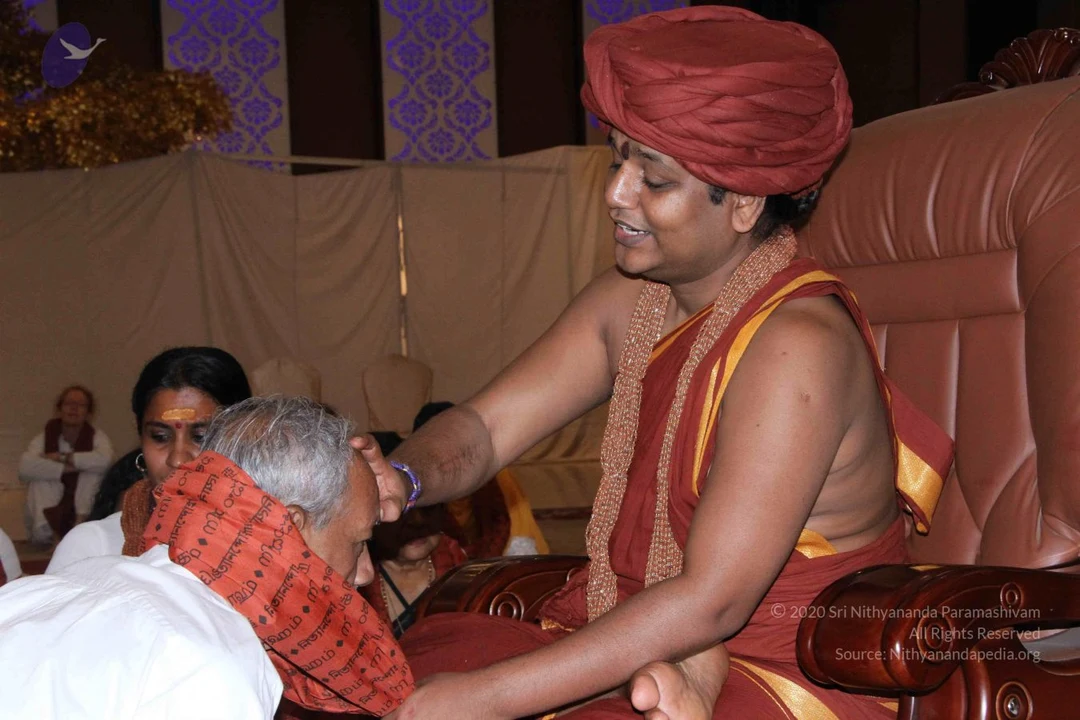
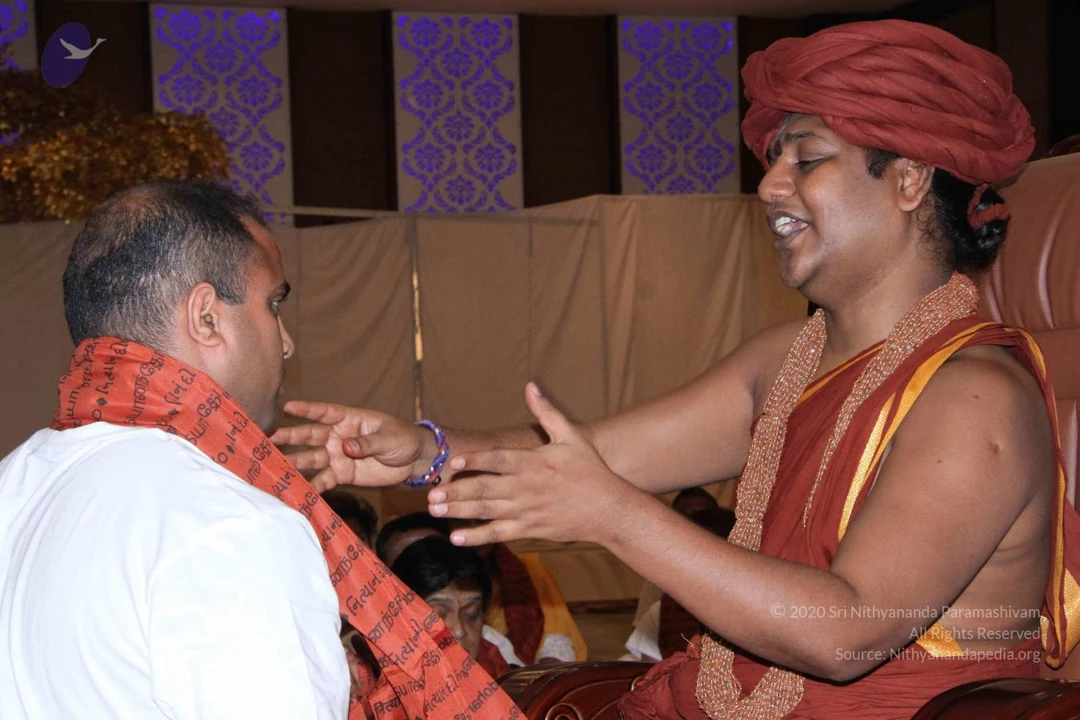
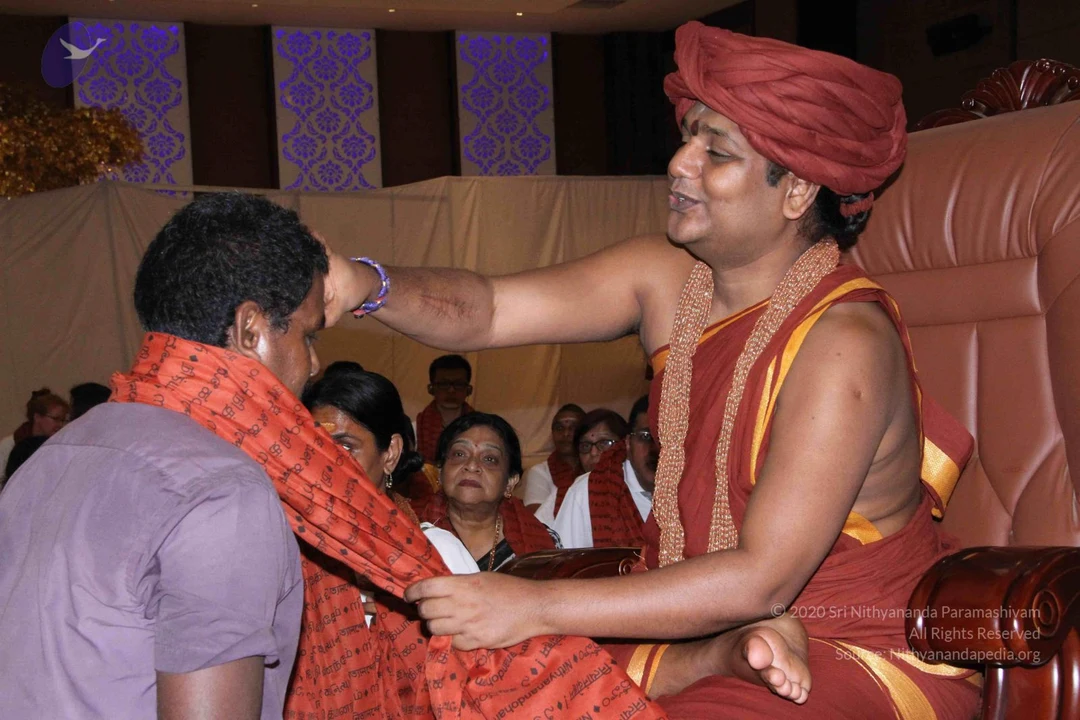
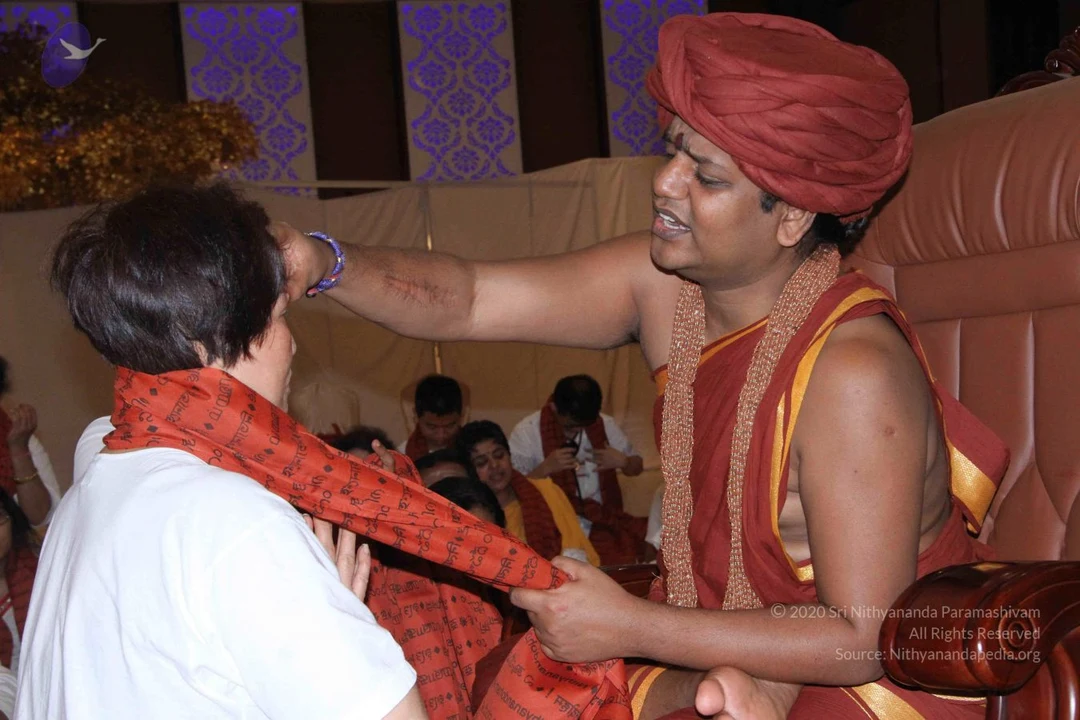
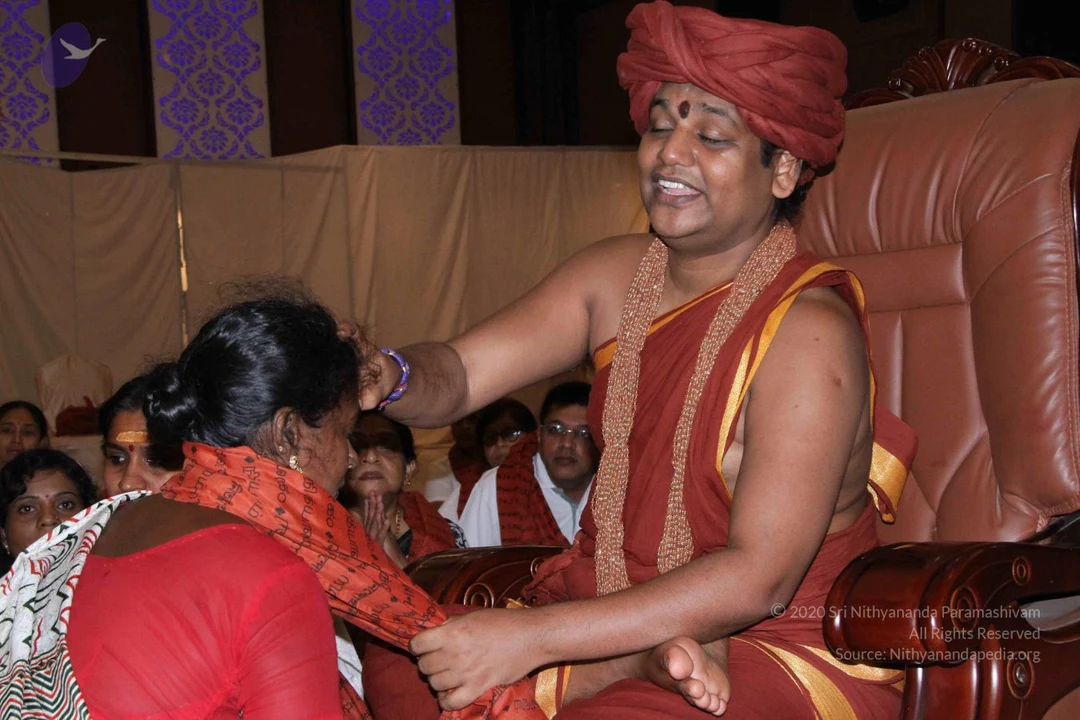
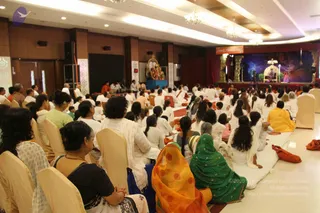
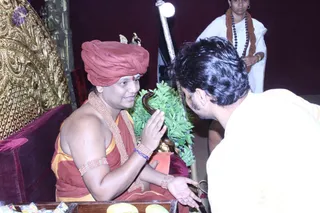
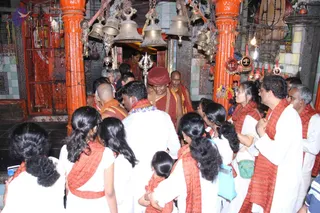
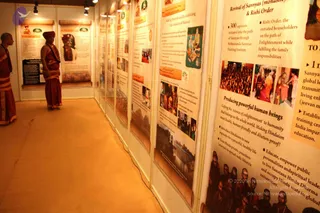
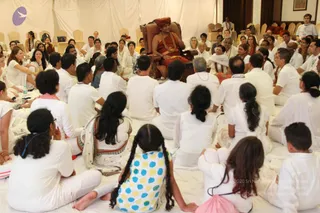
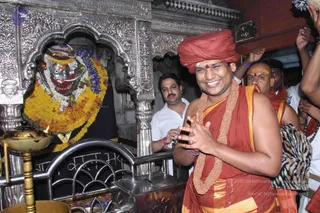
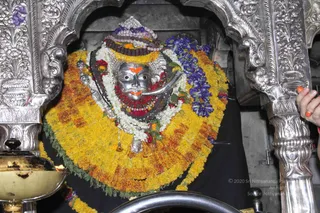
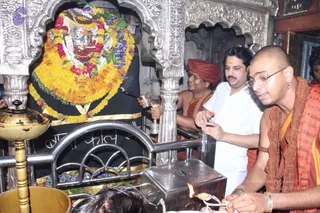
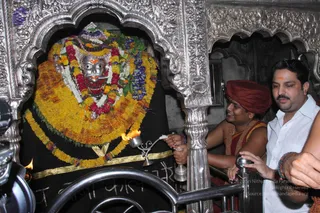
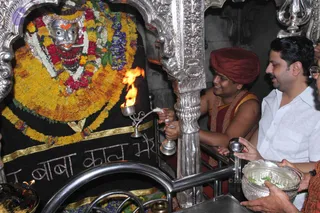
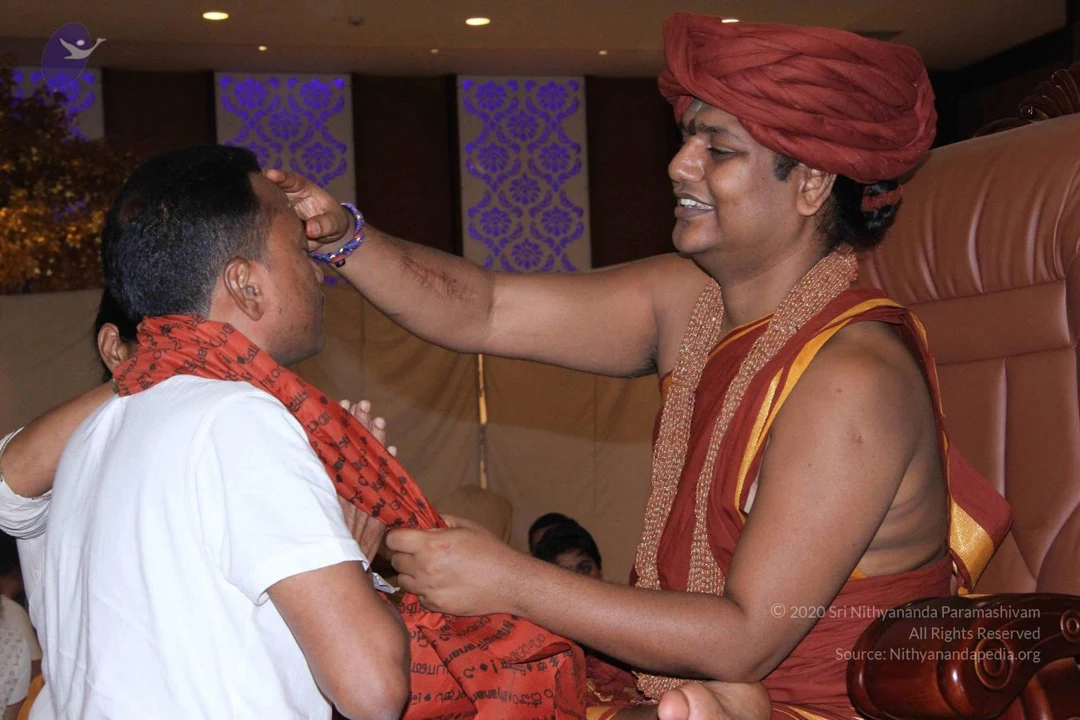
A photograph inside a silver-ornamented shrine with a deity murti, a silver-faced idol draped in marigold and rose garlands and a black and gold cloth. A man in a white shirt with a red tilak on his forehead stands at right, reaching toward the shrine's railing. Behind him a man in a red turban stands near the shrine. A brass lamp stands at left, and a silver trident is mounted on the right pillar. A leaf-wrapped offering sits at lower right. Black text is written on the black cloth draped over the deity.A photograph of an indoor satsang with a man in a red-orange turban and matching red-orange robe with a yellow sash and a beaded gold-toned necklace. He smiles while placing his right hand on the forehead of a person in white clothes who bows with head lowered. He also holds a long red-orange scarf printed with dark repeated text, draped over the bowing person's head and shoulders. Behind them are seated people, a patterned purple and gold backdrop, and a gold floral arrangement at the upper left. A blessing or dhiksha-style giving of a saffron shawl is depicted. Swamiji (probable): the seated man in the red turban and saffron robes with a beaded necklace and a sash, placing a hand on the bowed devotee's head.A close-up photograph of a large quantity of fried, crisp, brown savoury fritters or vadas, heaped in a shallow stainless steel chafing tray with a hammered copper base. Some pieces show dark green herb flecks. A clear plastic wrap and a pair of tongs sit at the top edge. No people are visible.

July 02 2015

Original wiki page
Contents

Title:

Gurukul, The Education Centric Family Of Guru By Paramahamsa Nithyananda

Description:

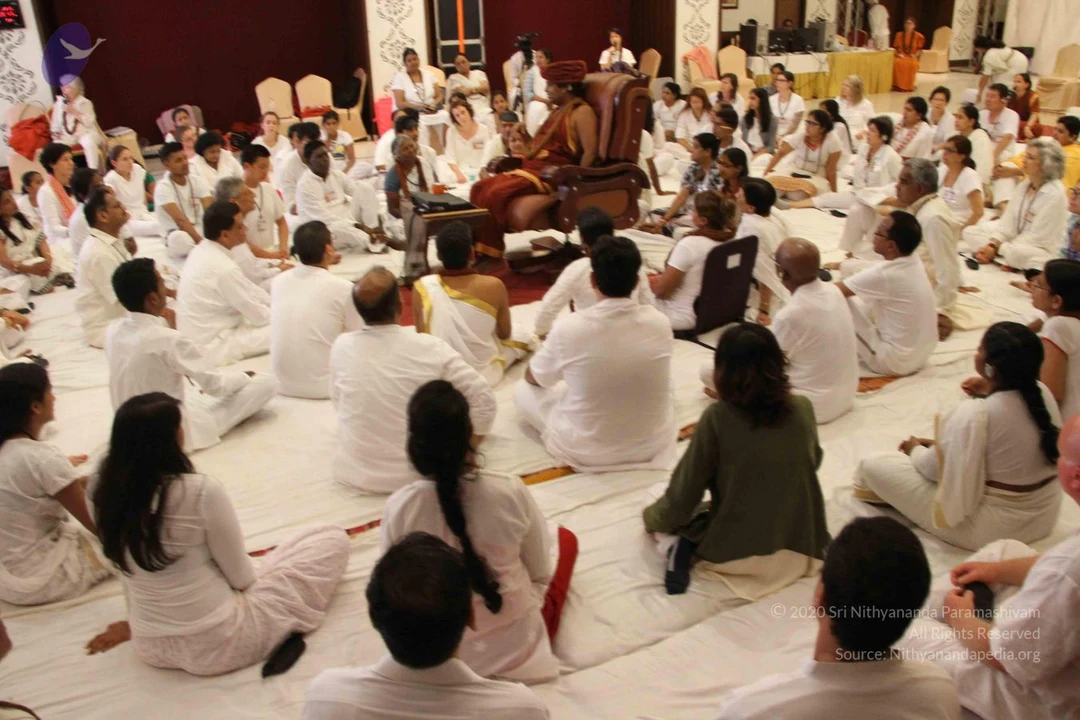
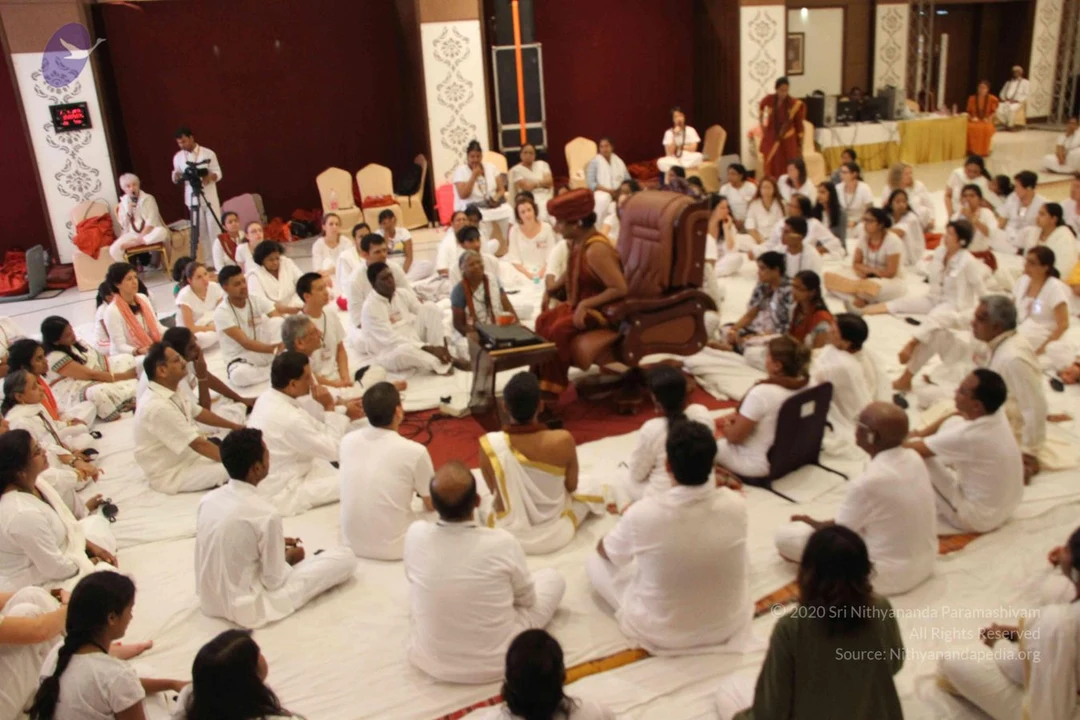
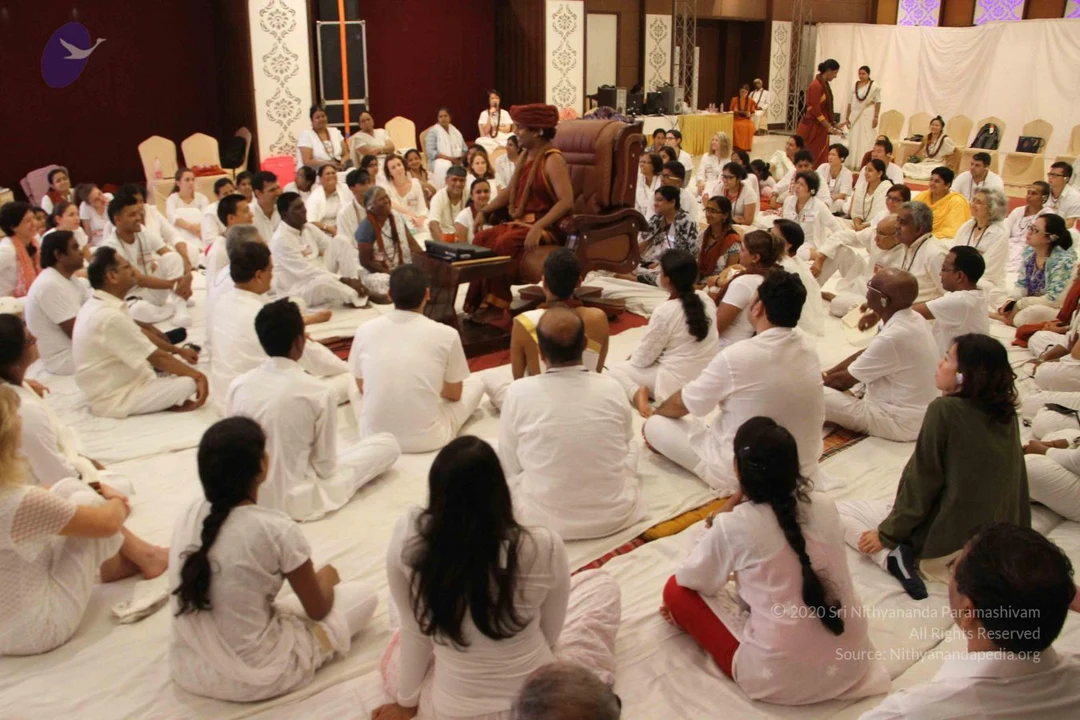
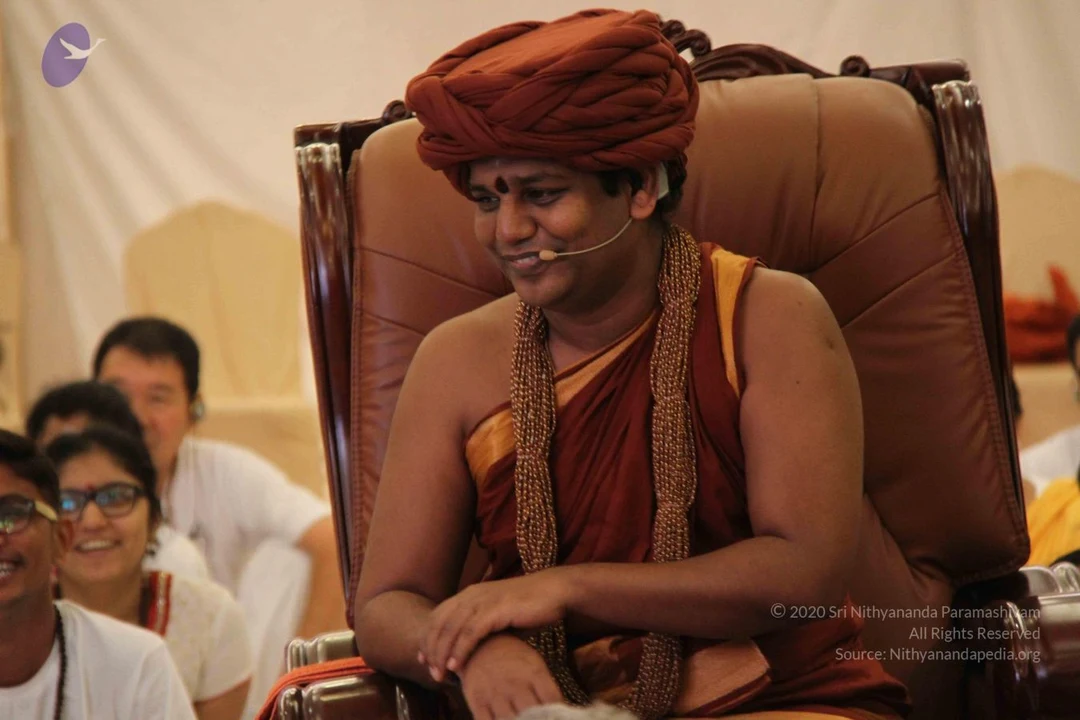
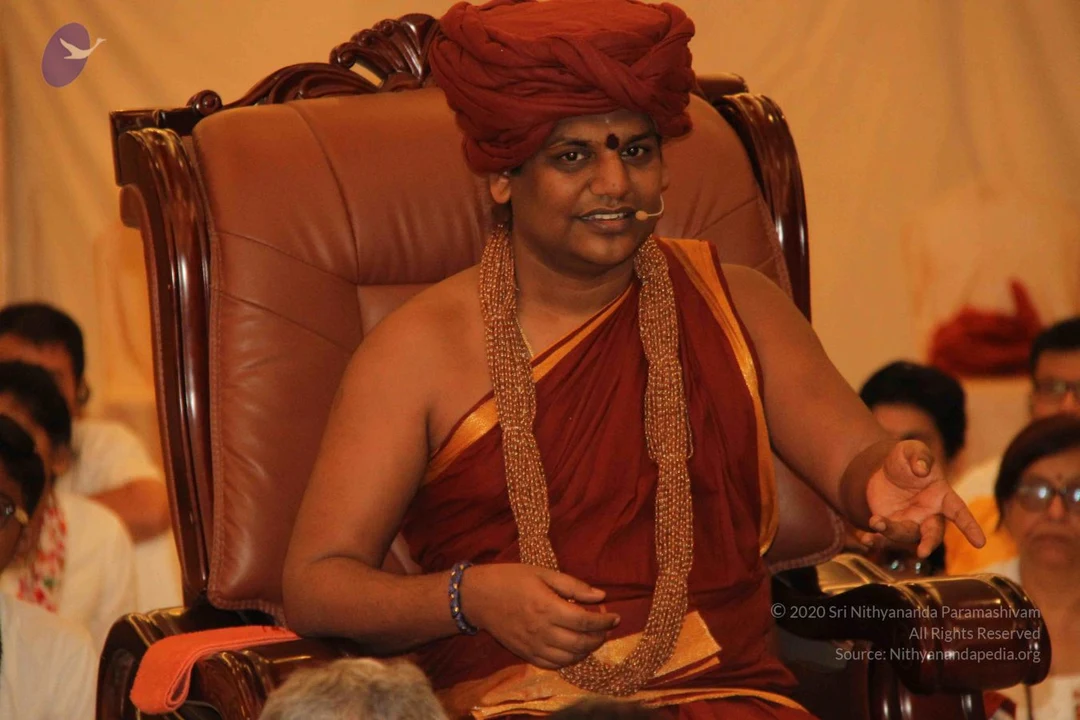
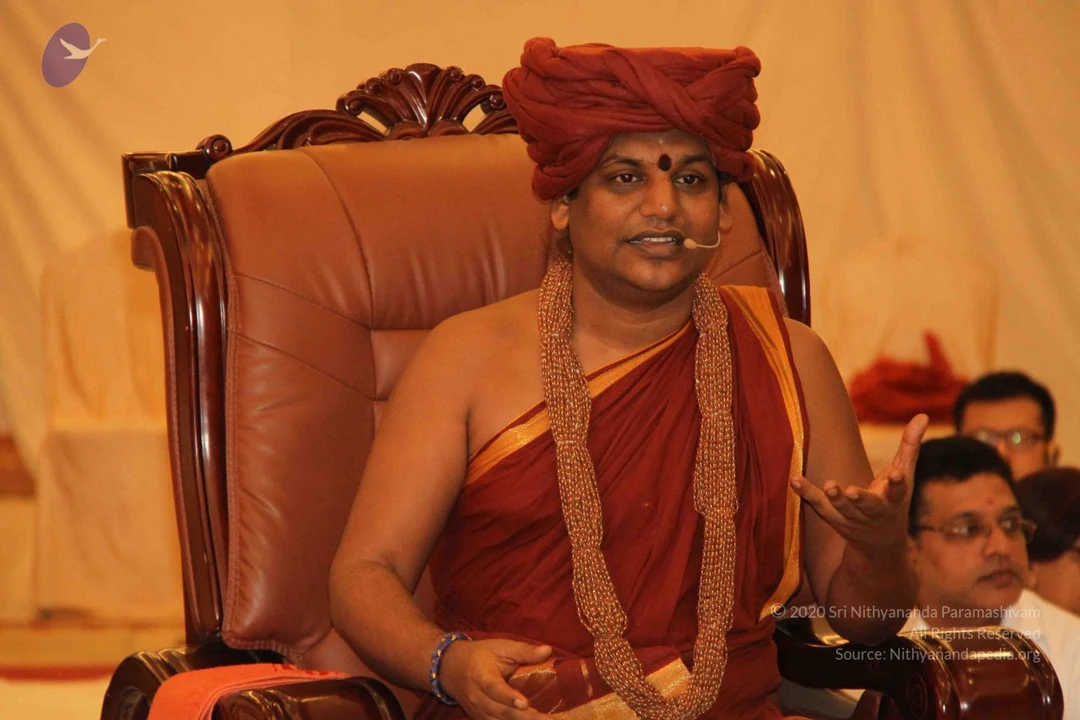
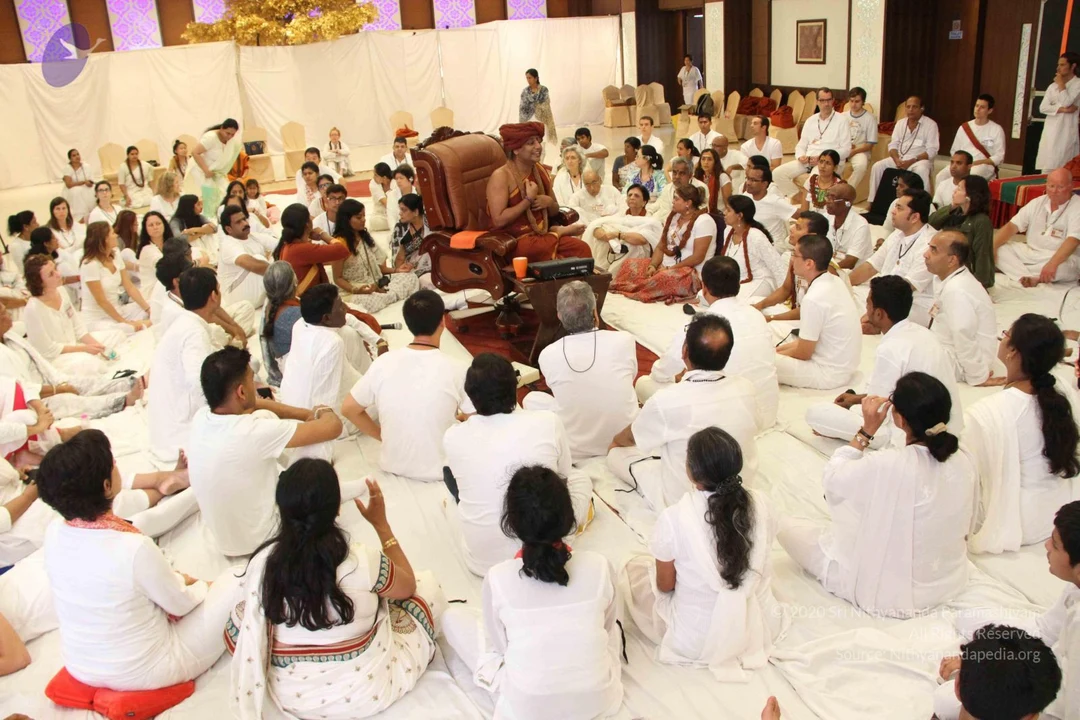
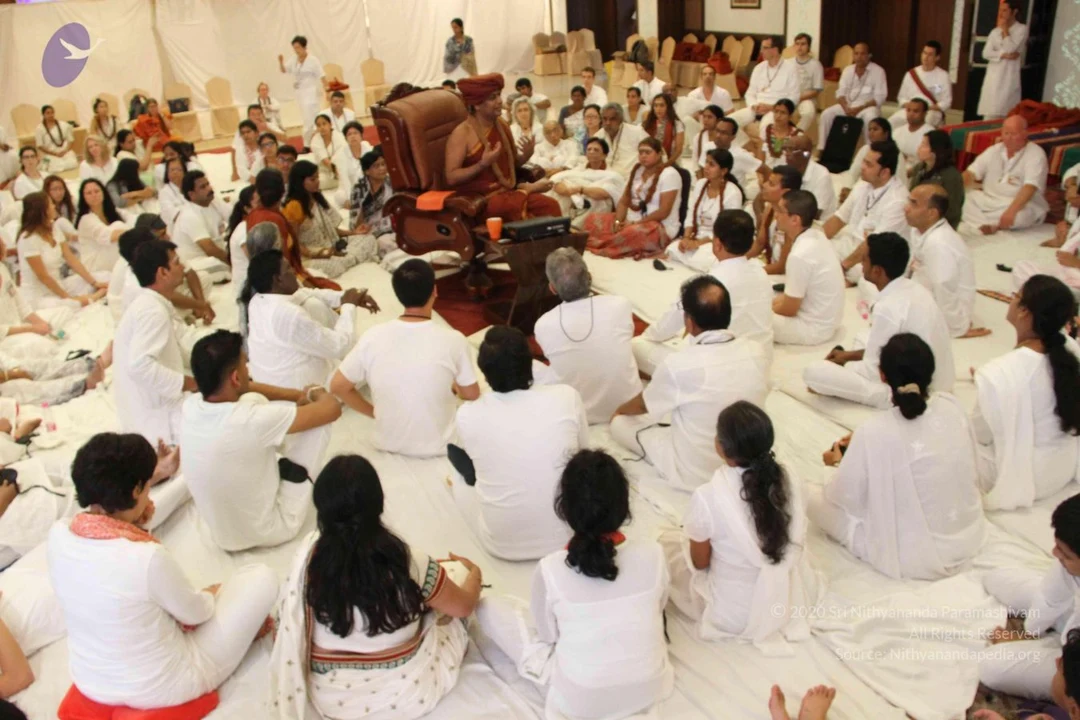
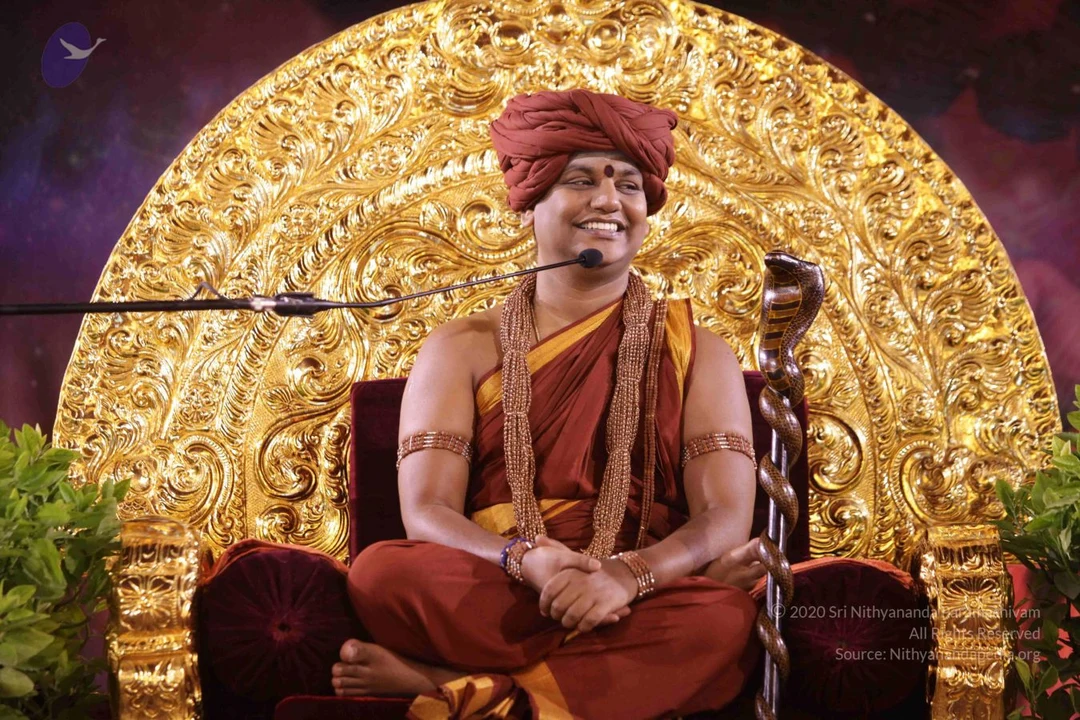
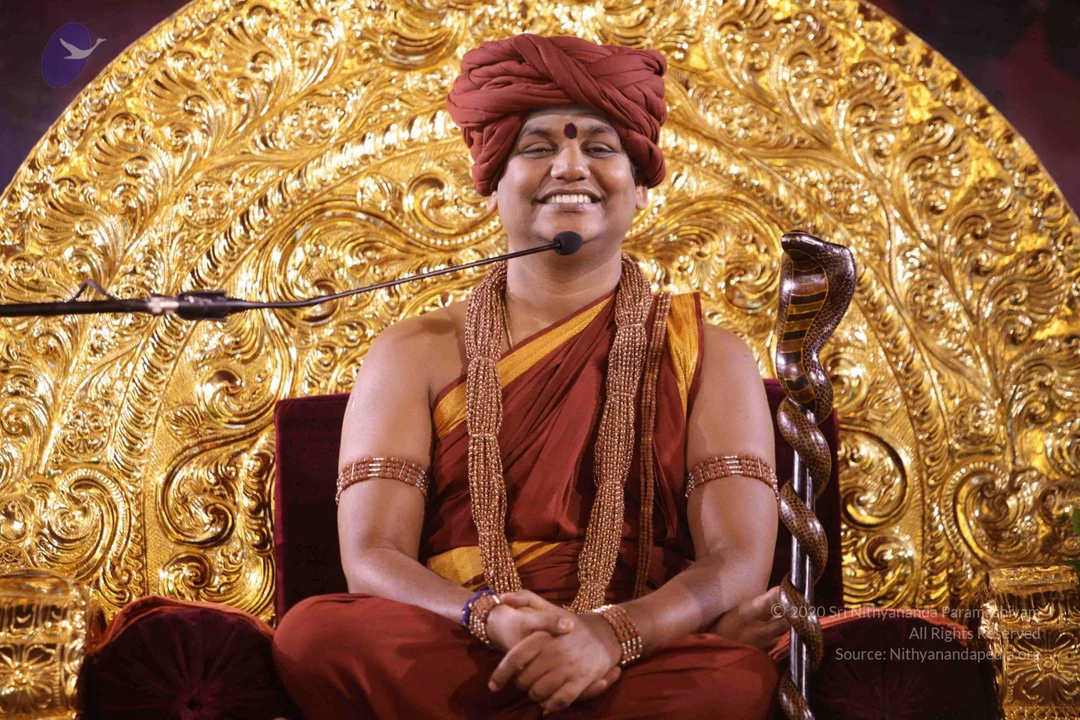
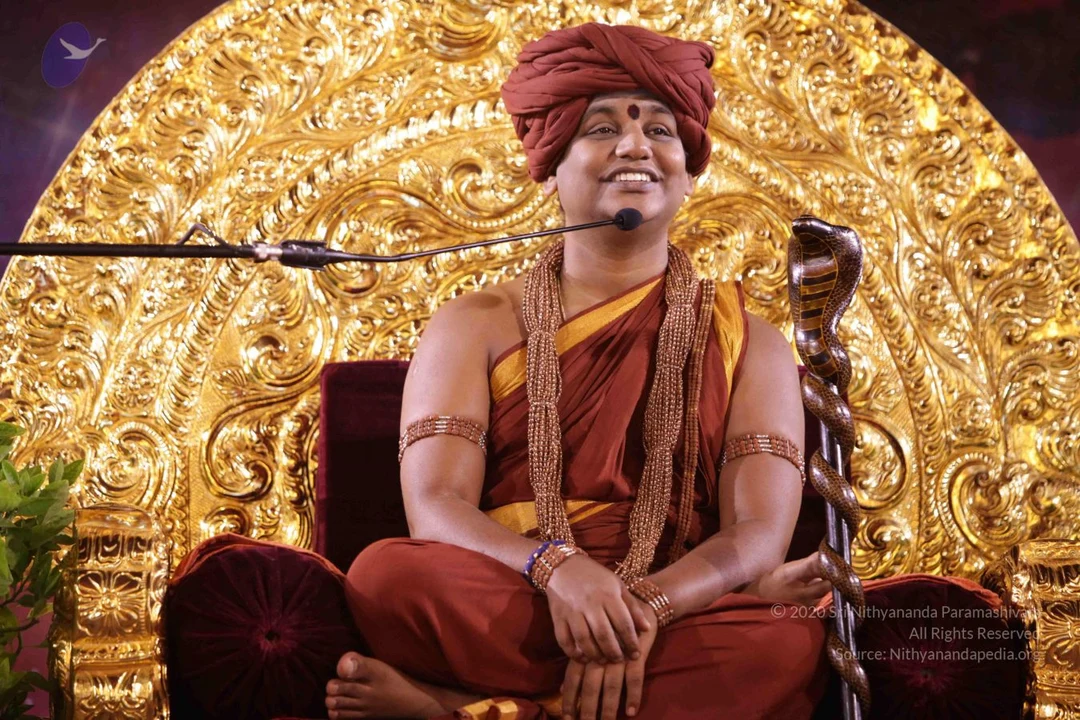
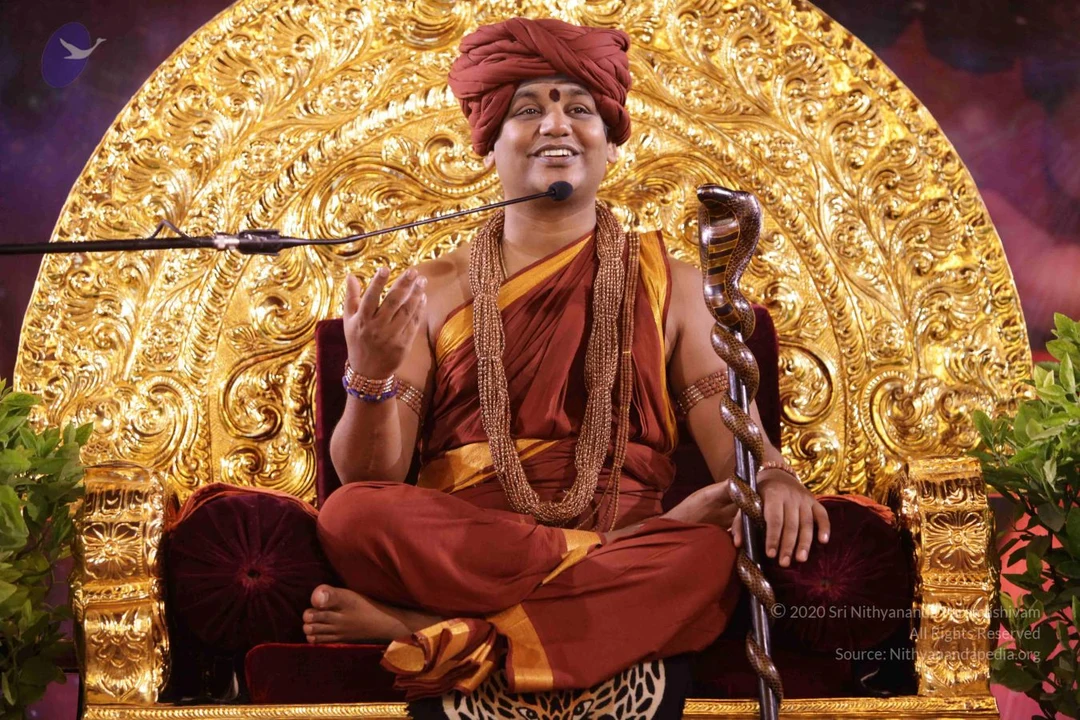
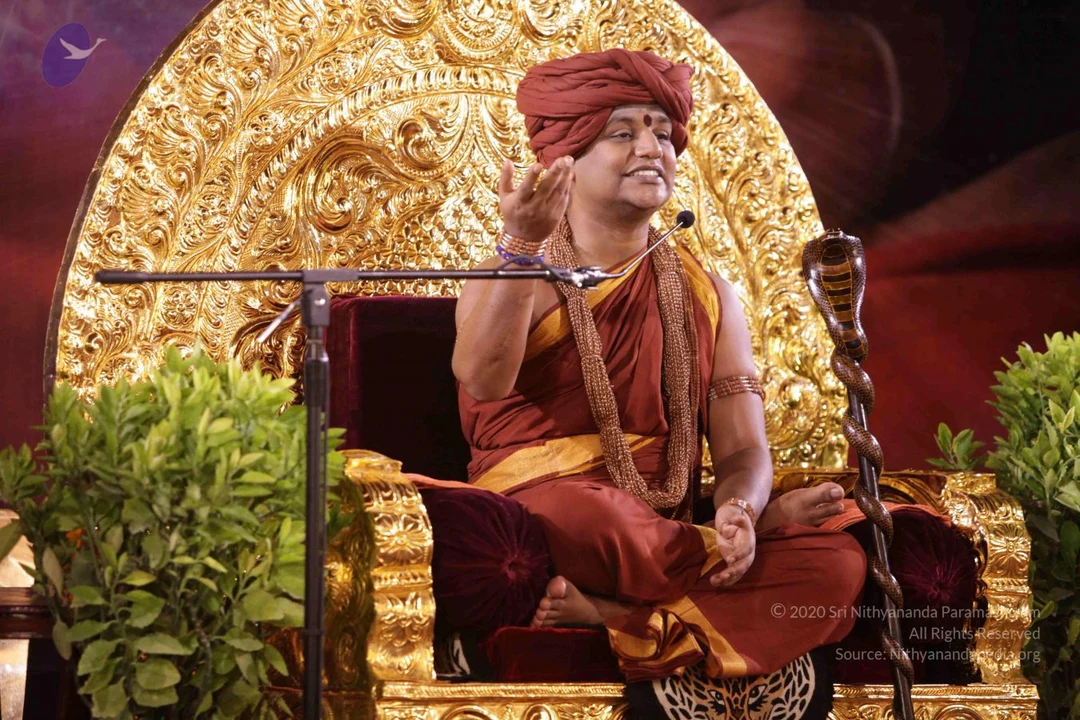
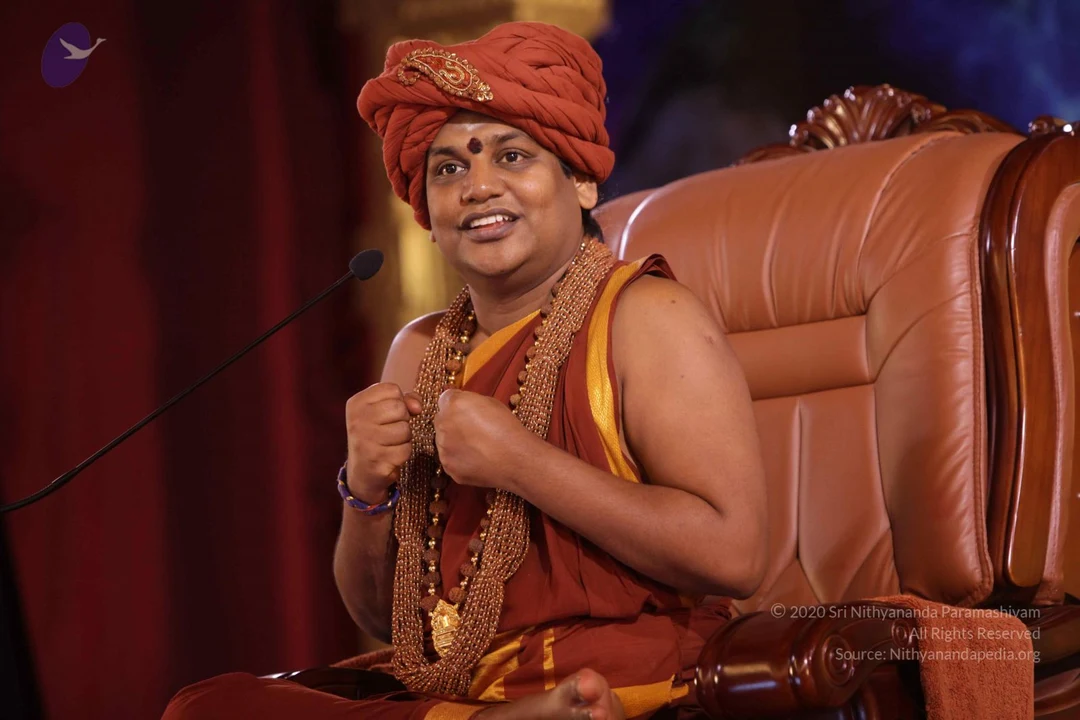
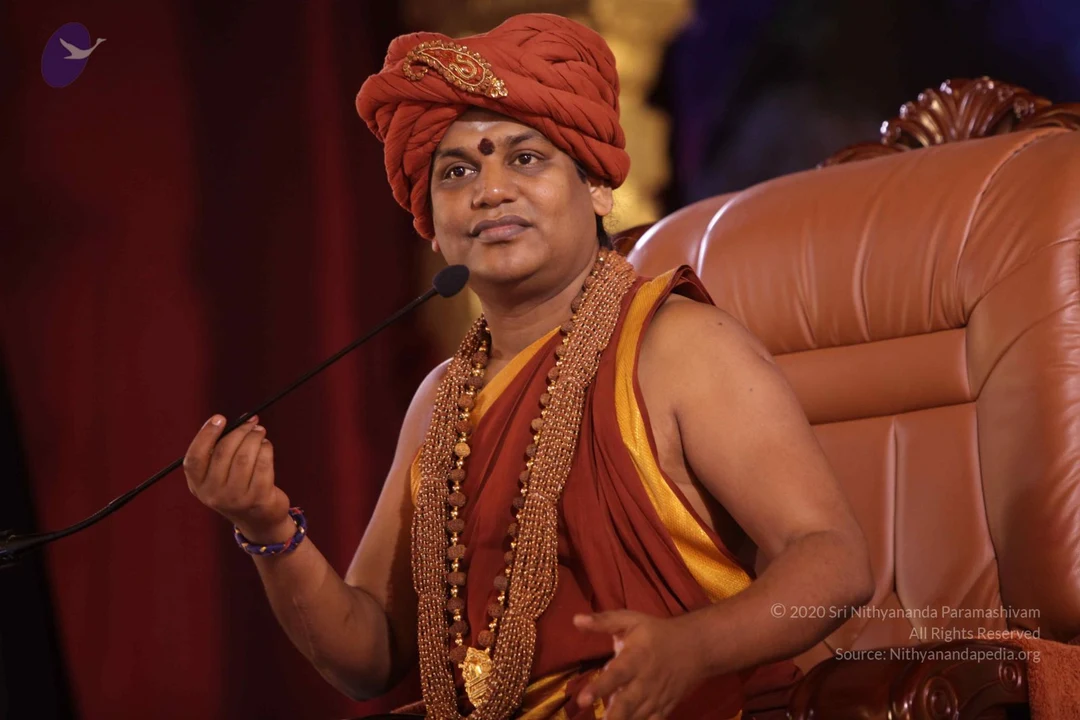
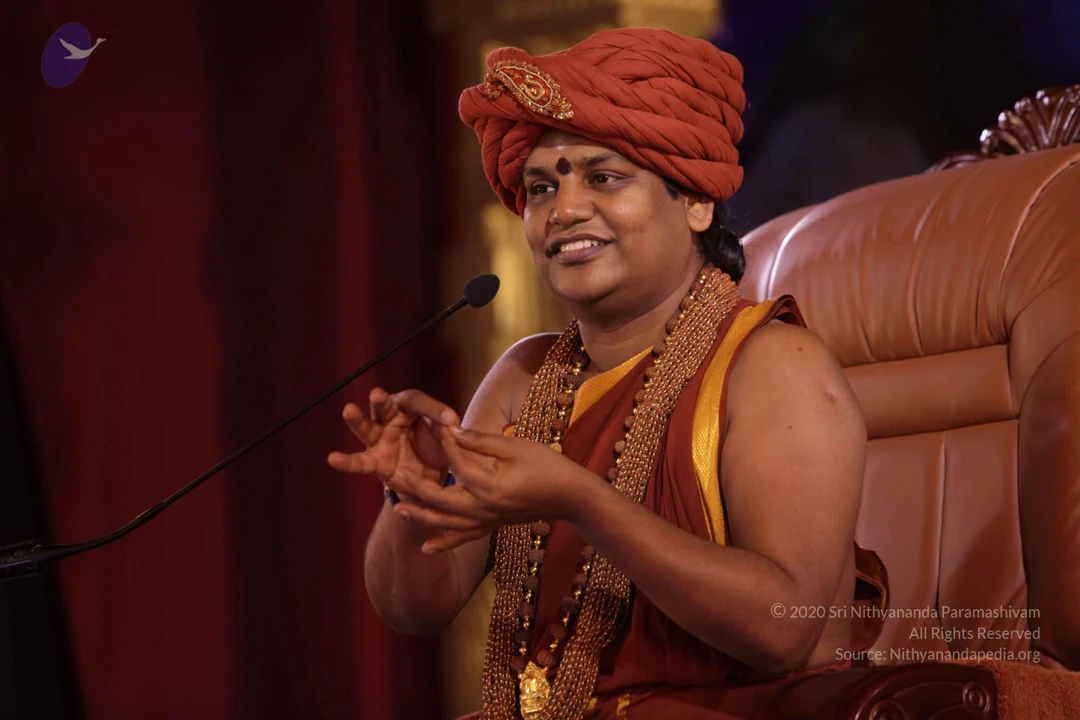
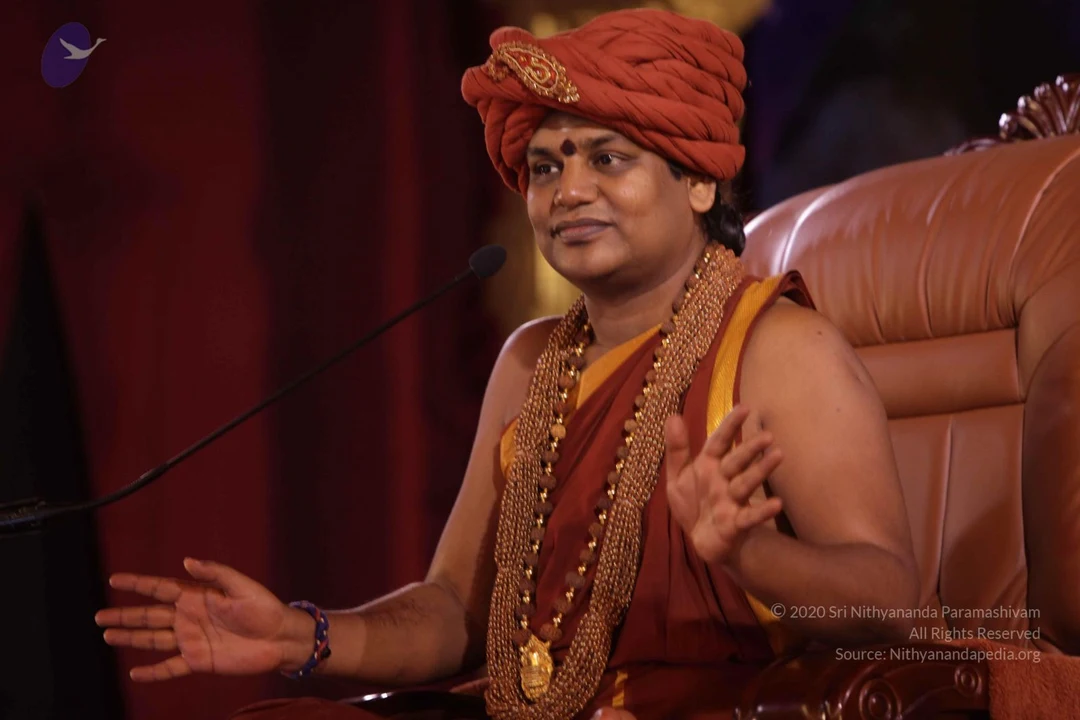
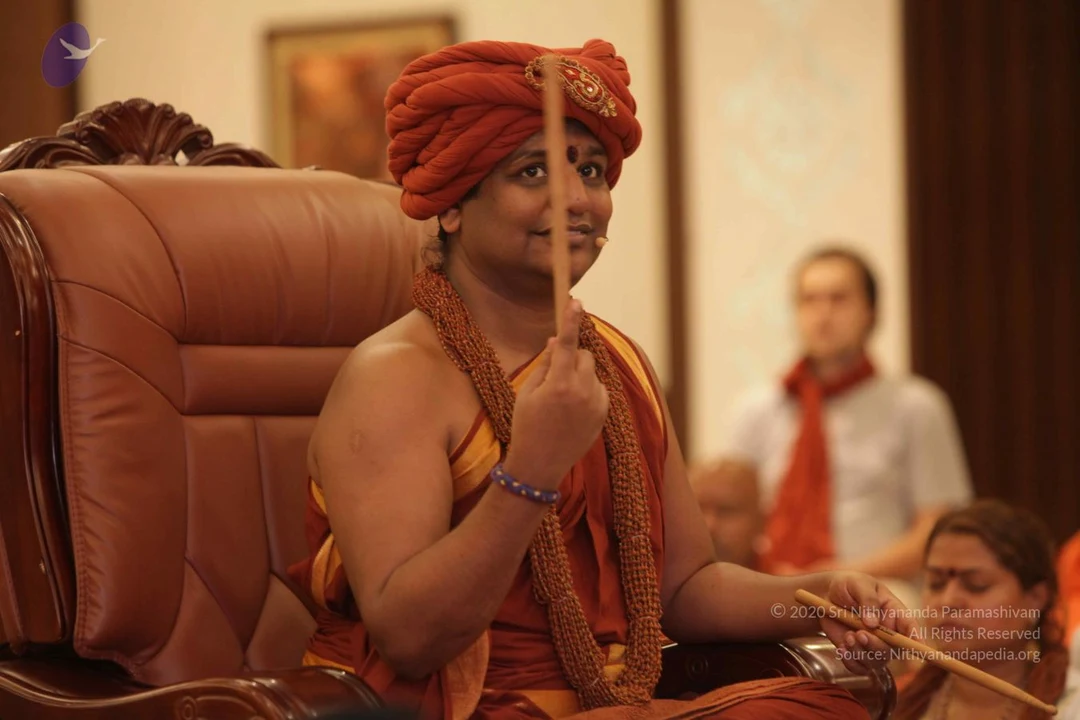
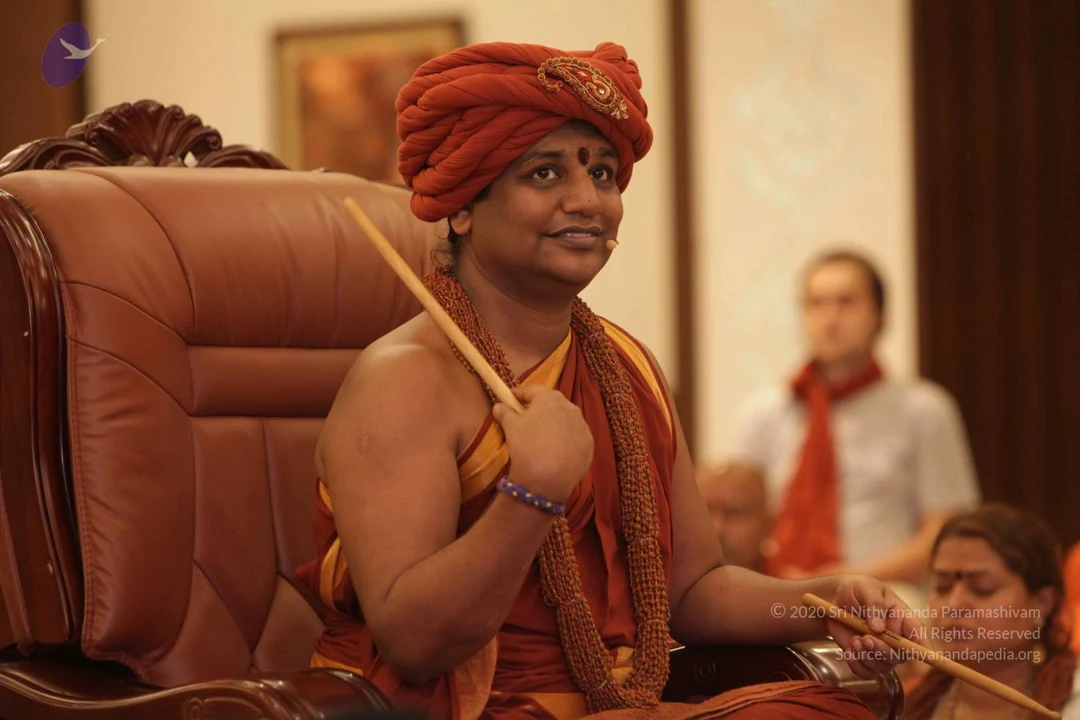
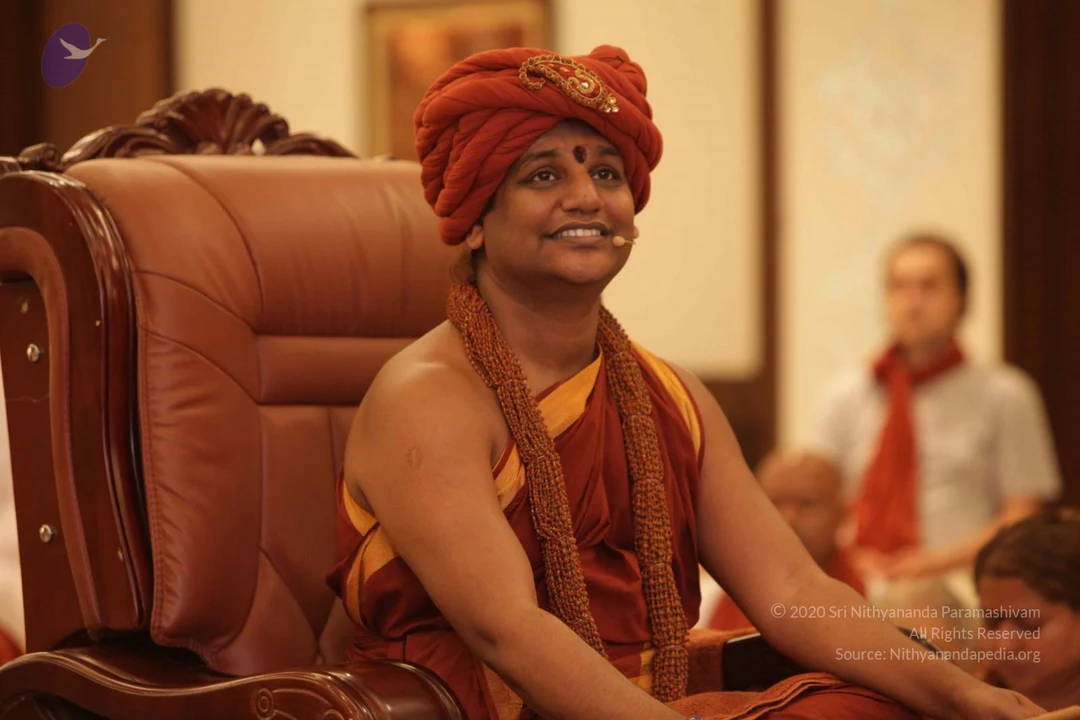
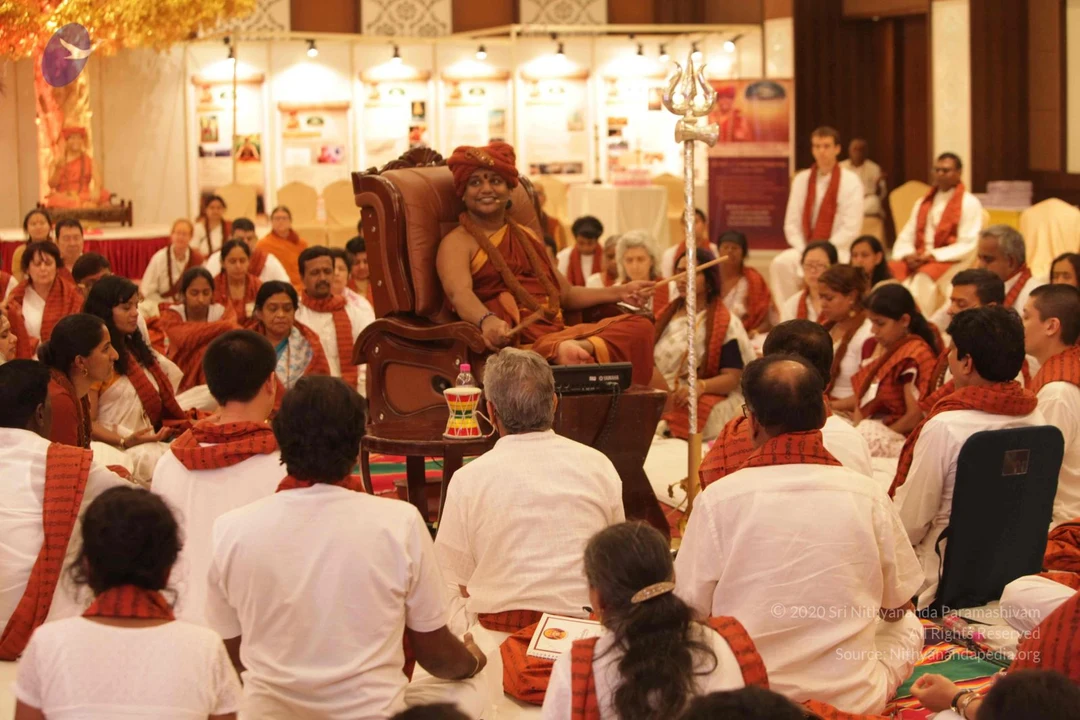
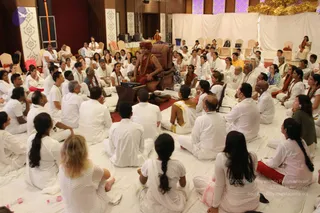
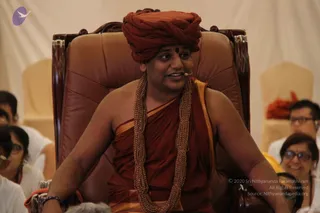
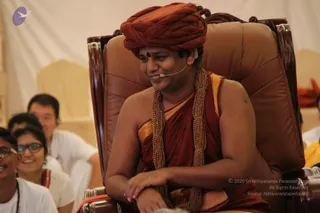
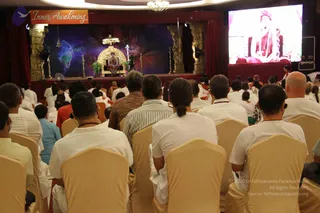
In today's (02nd July 2015) Satsang from Varanasi, Paramahamsa Nithyananda dwells into the wonders of Varanasi - the city which is wonder made by man and supported by Gods. Entering into the Shanti Mantra of Kathopanishad, He shares that the very base of the Vedic Gurukul education system, which is the basis of vedic tradition is the city of Varanasi. In the education centric system of Gurukul in Vedic India, the Guru always encouraged disciples to travel. discover, invent and constructive freedom was enjoyed by them. Varanasi was the headquarters for all Gurukuls - the Naimisharanya, Sarvajnapeetha and much later Nalanda. Even the Gurus of Lord Rama and Lord Krishna, were educated in Varanasi, the seat of education. Gurukul is the home to family of Guru, where the focus is on education, learning, evolving. Even Krishna, Rama, Caintanya Mahaprabhu went through the Gurukul education to imbibe the scriptural knowledge to validate and share their sacred experience with humanity. He emphasises the need for living in large joint family which nurtures the Sanatana Hindu Dharma and is now diminishing today.

Link to Video:

VideoAudio

Transcript:

nithyānandeśvara samārambhām nithyānandeśvari madhyamām | asmat āchārya paryantām vande guru paramparām ||

I welcome all of you with my love and respects.

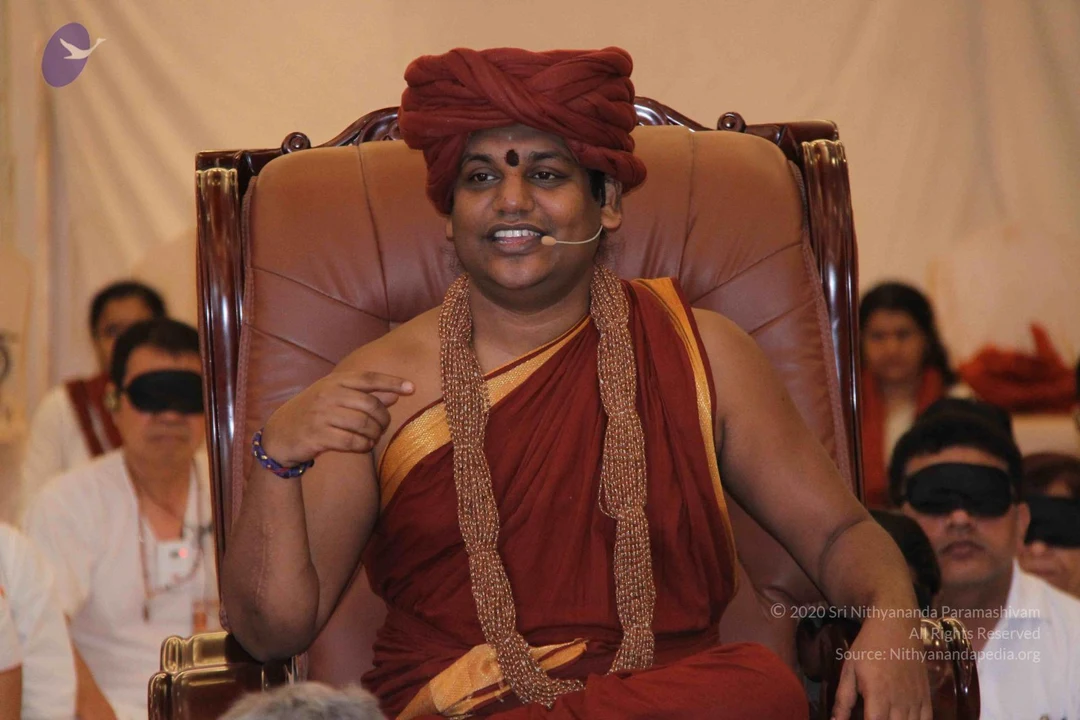
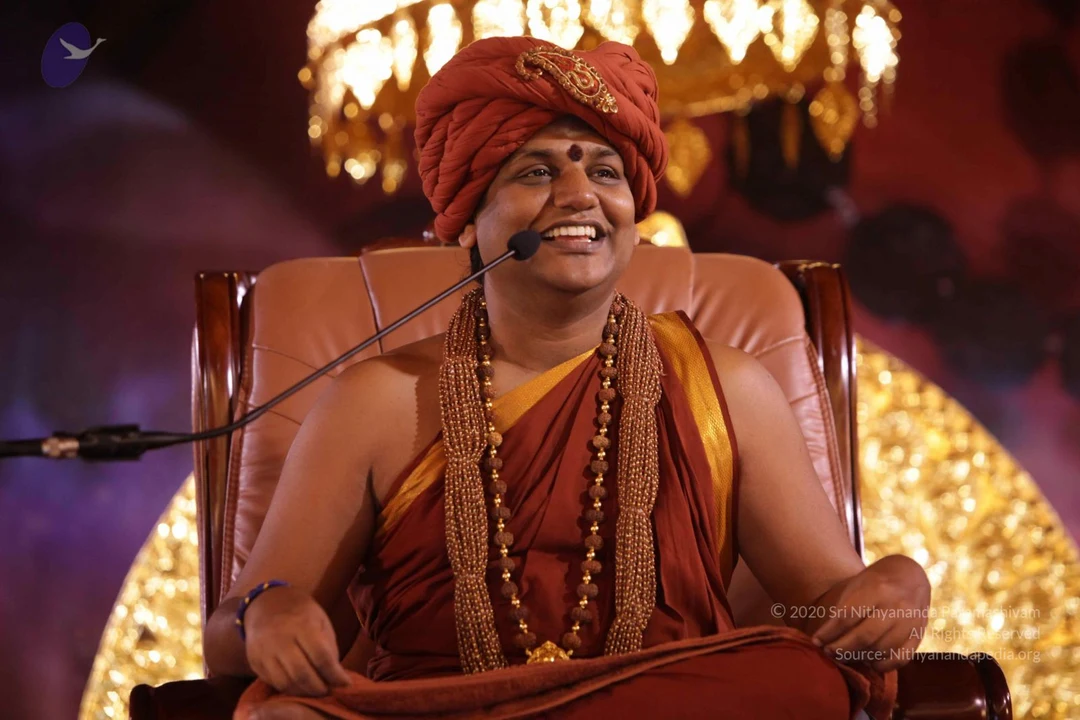
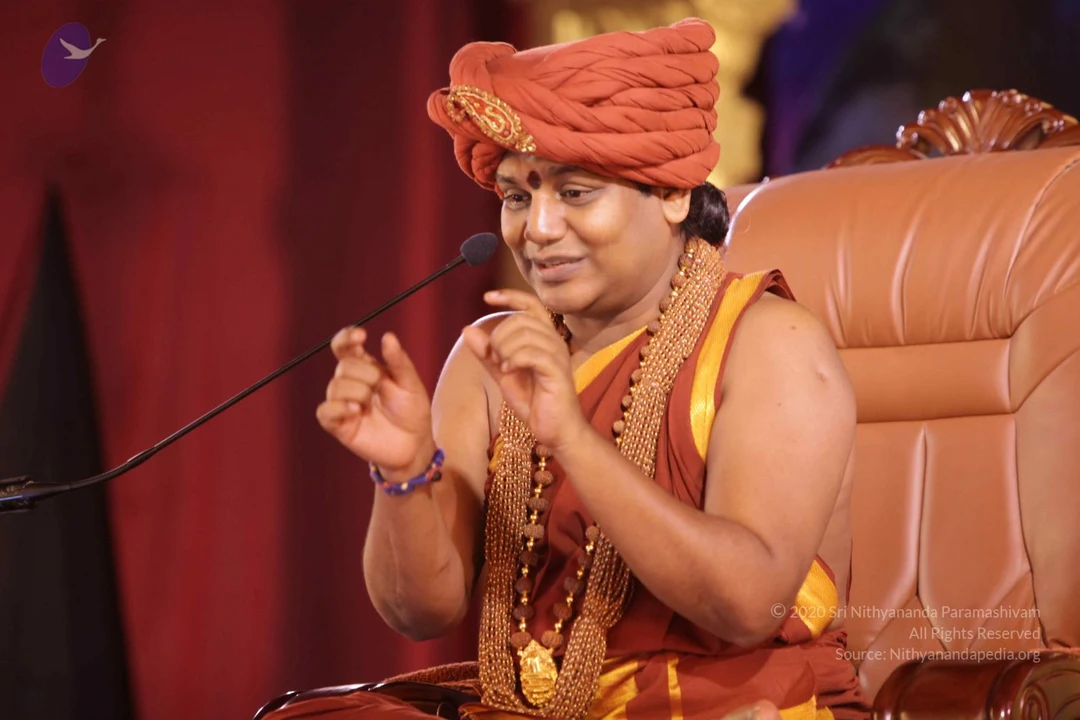
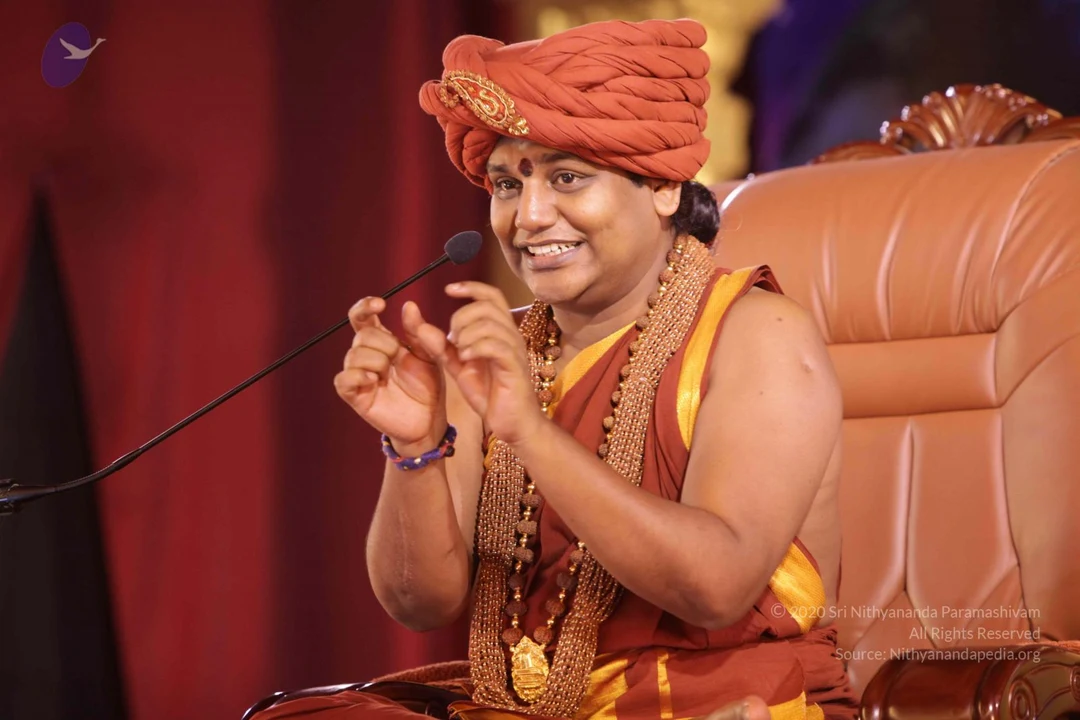
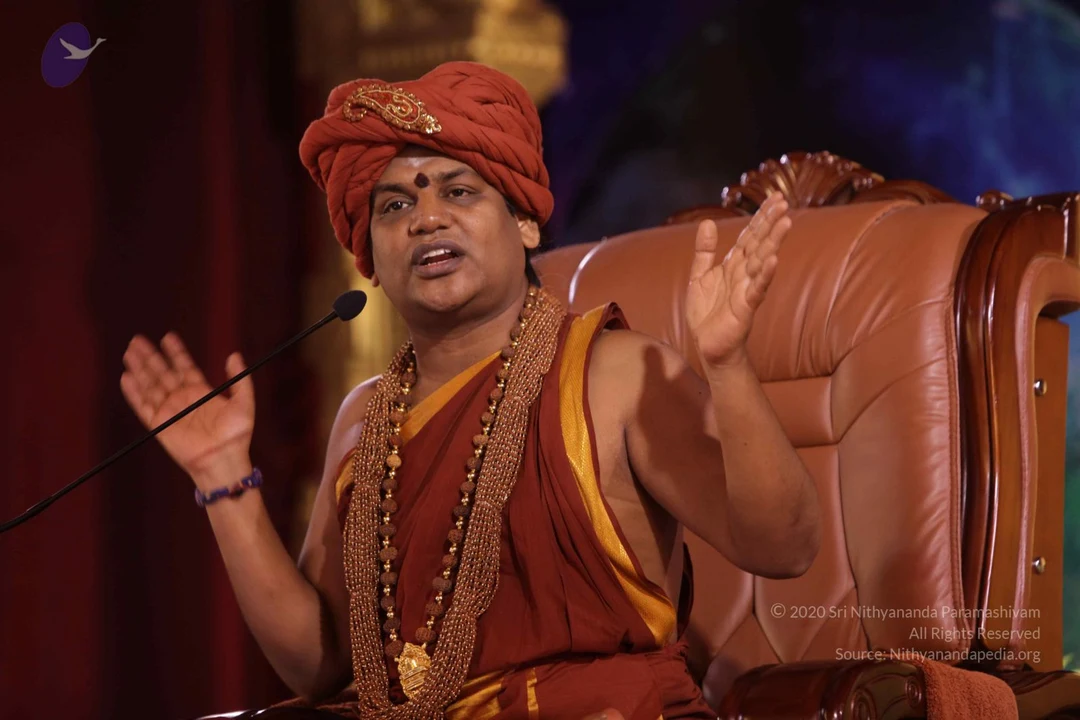
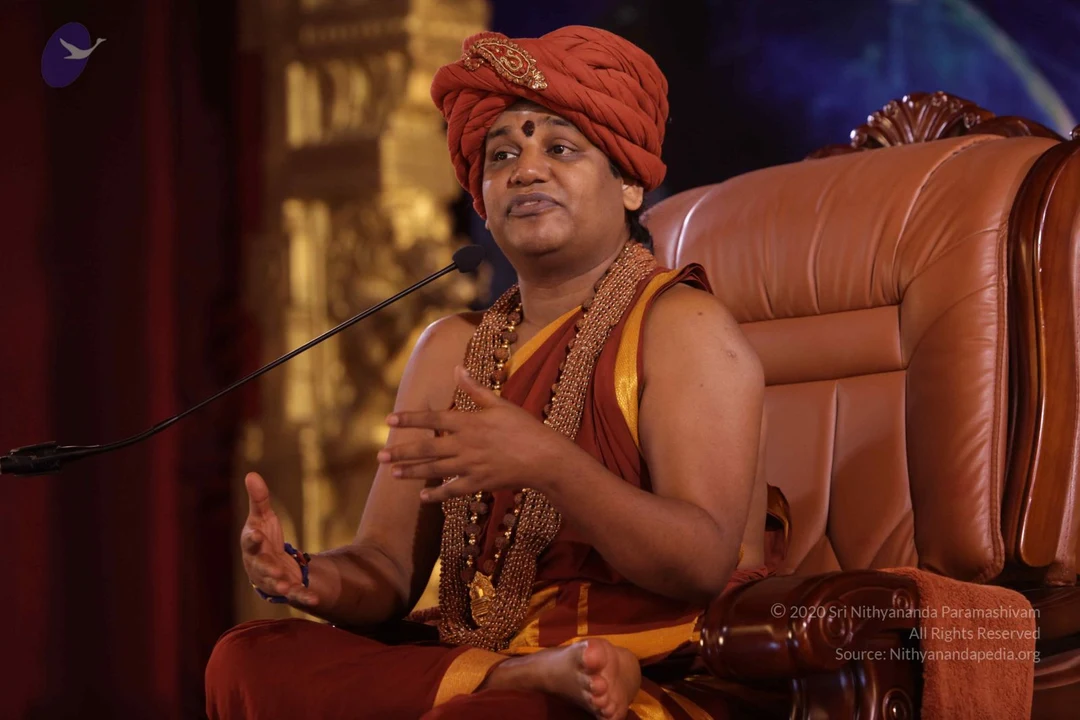
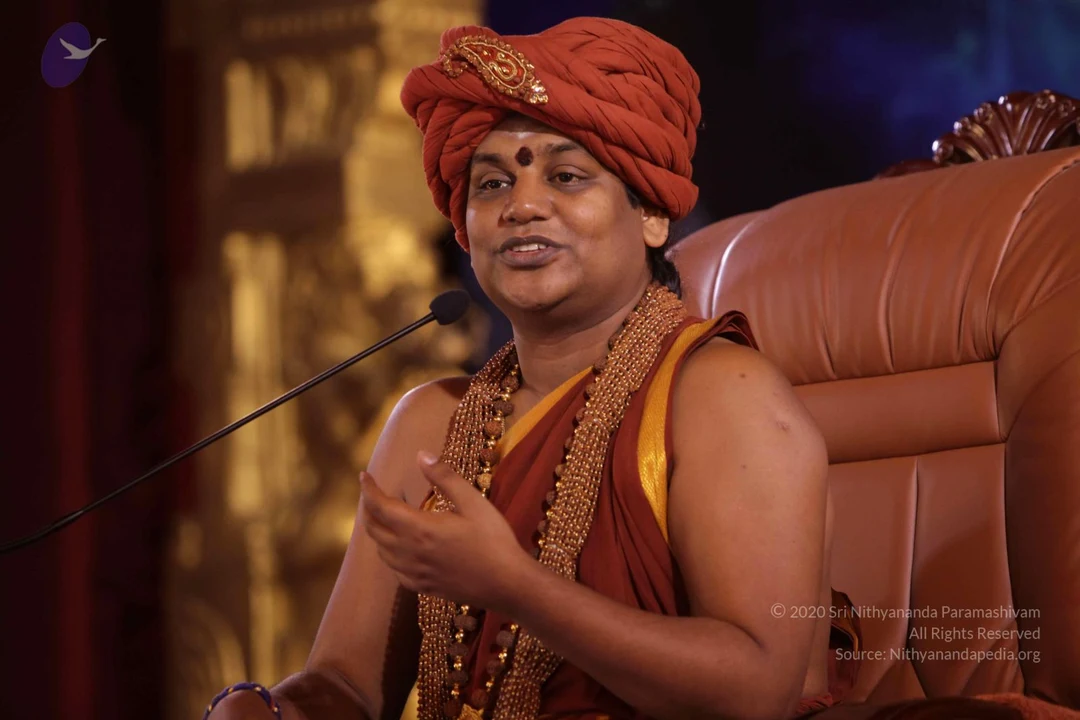
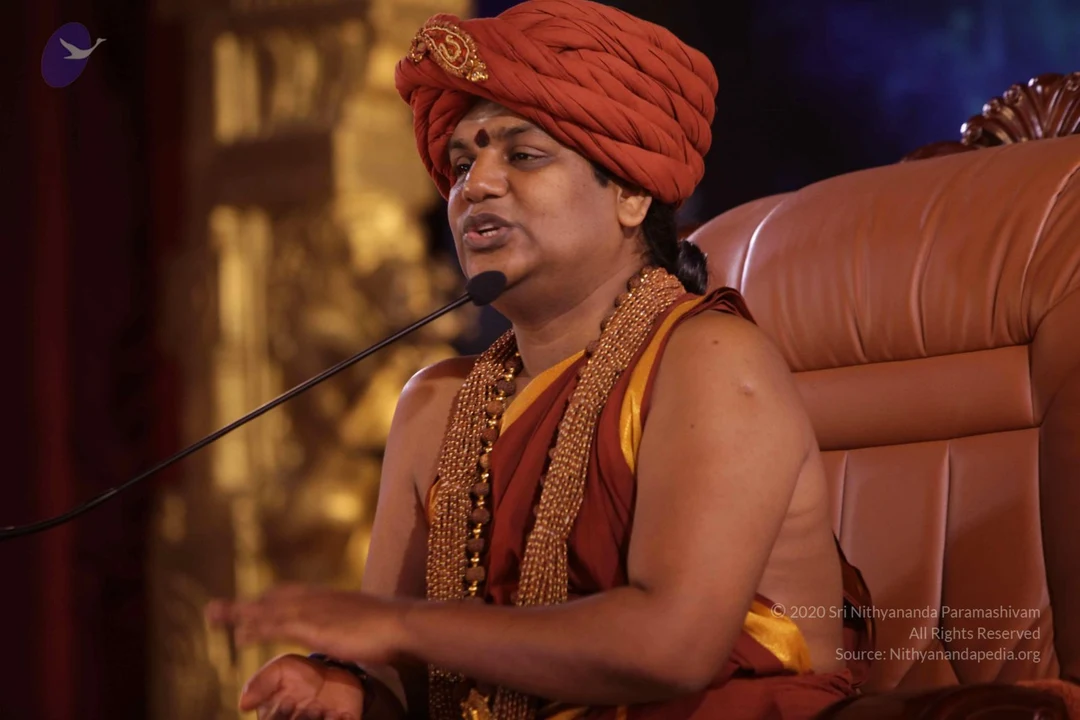
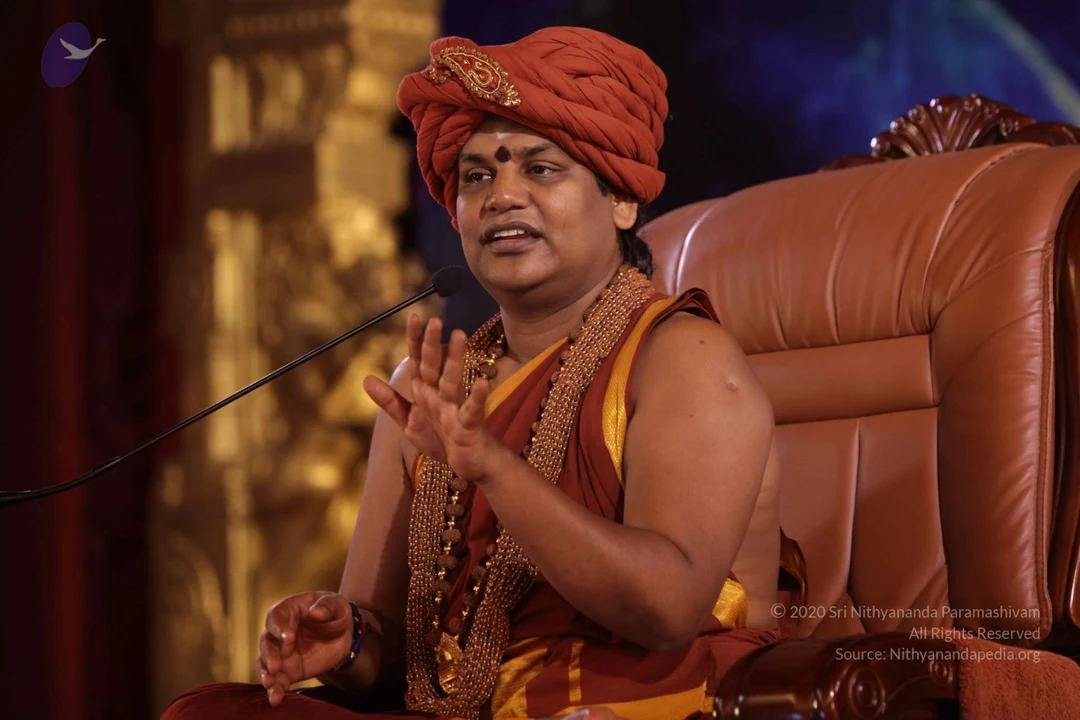
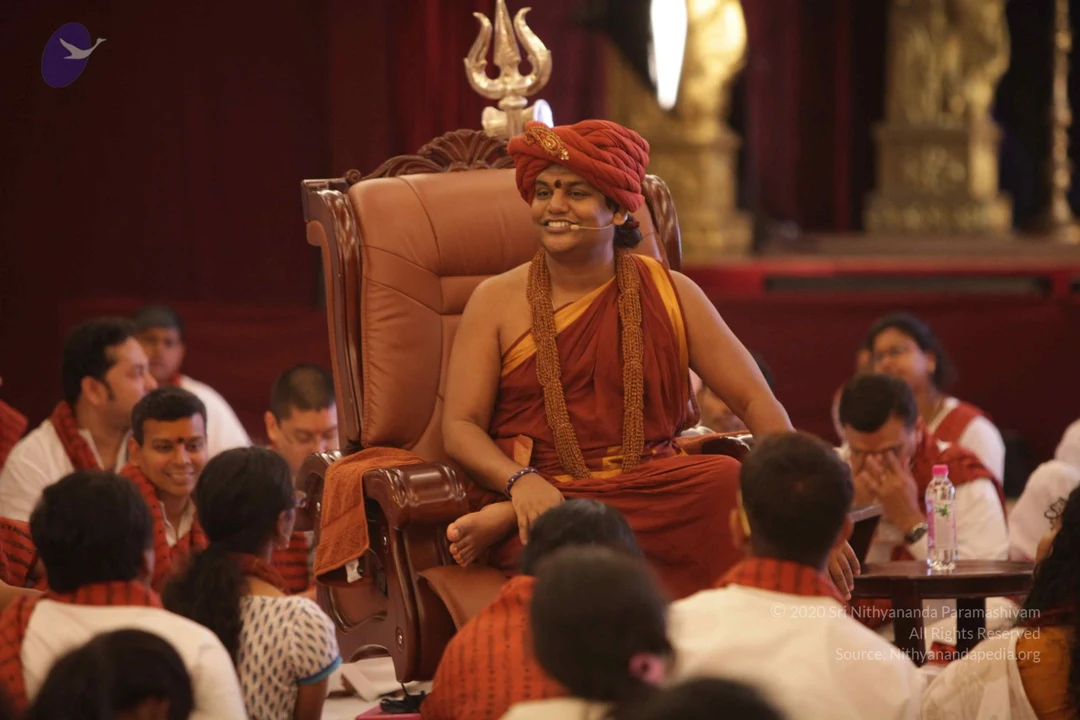
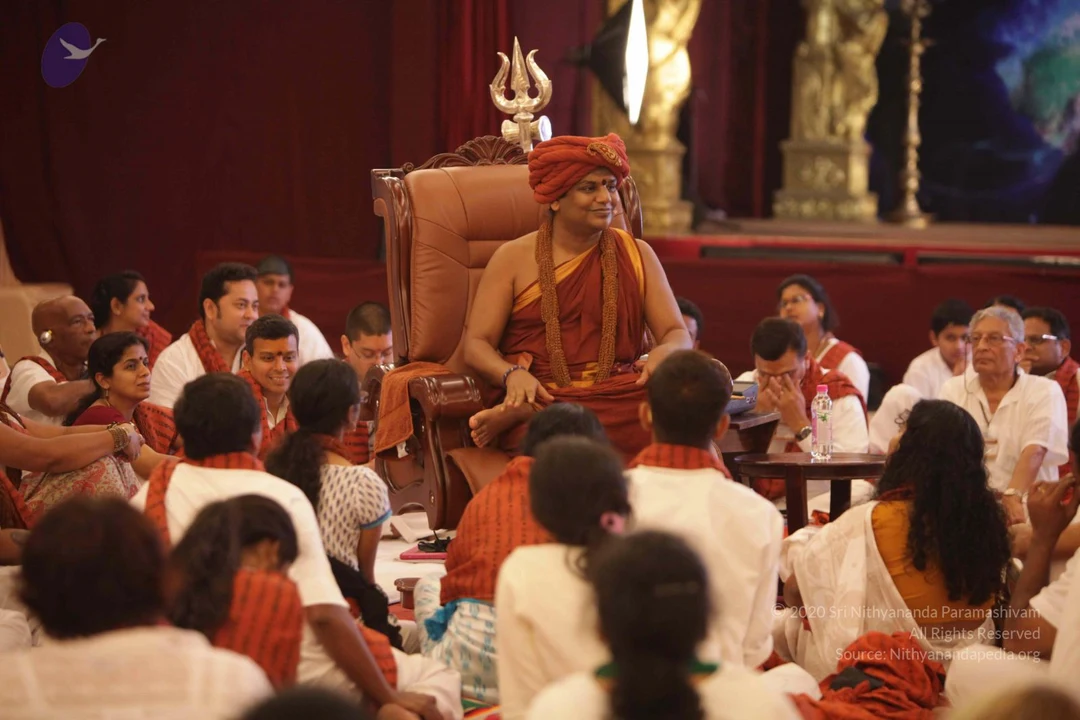
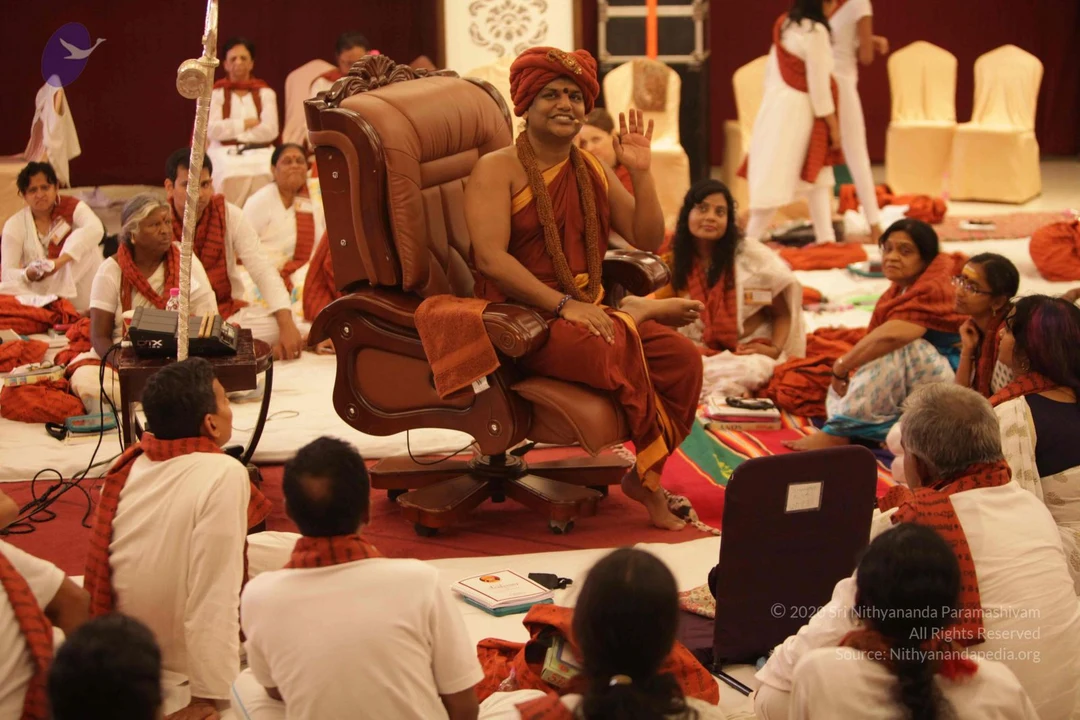
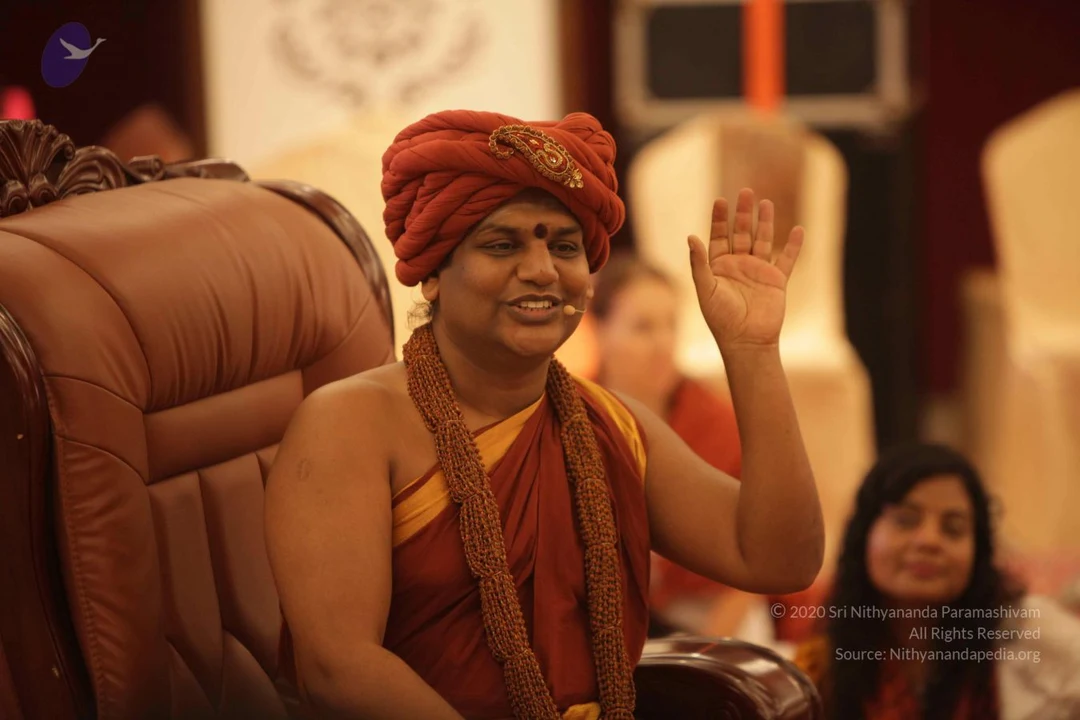
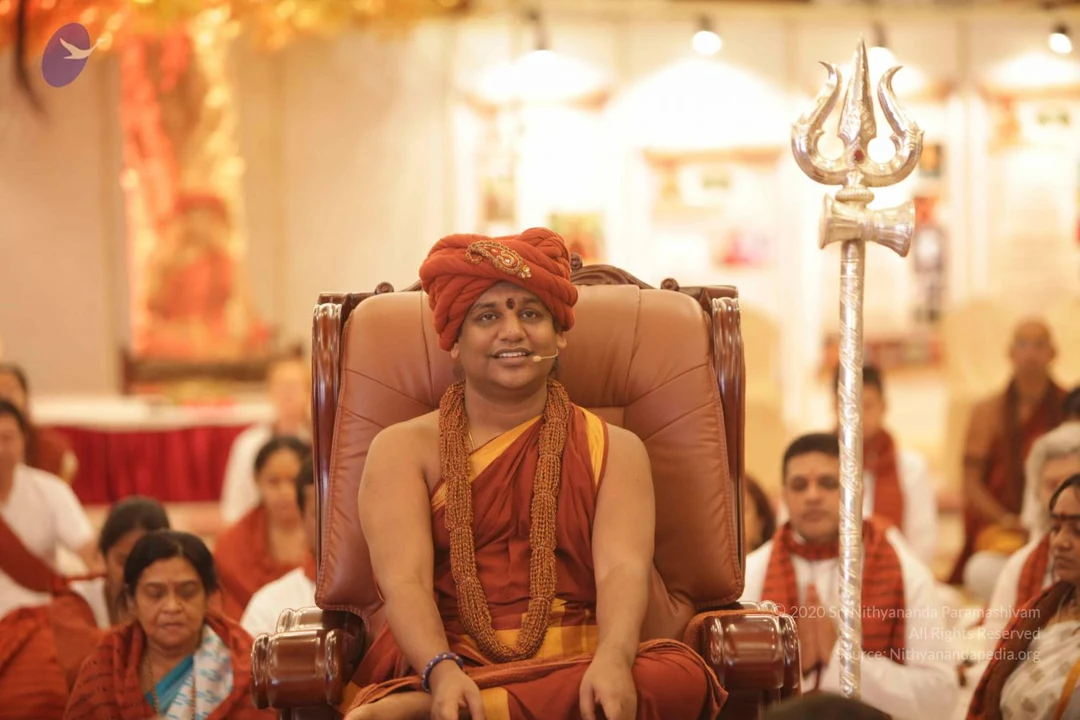
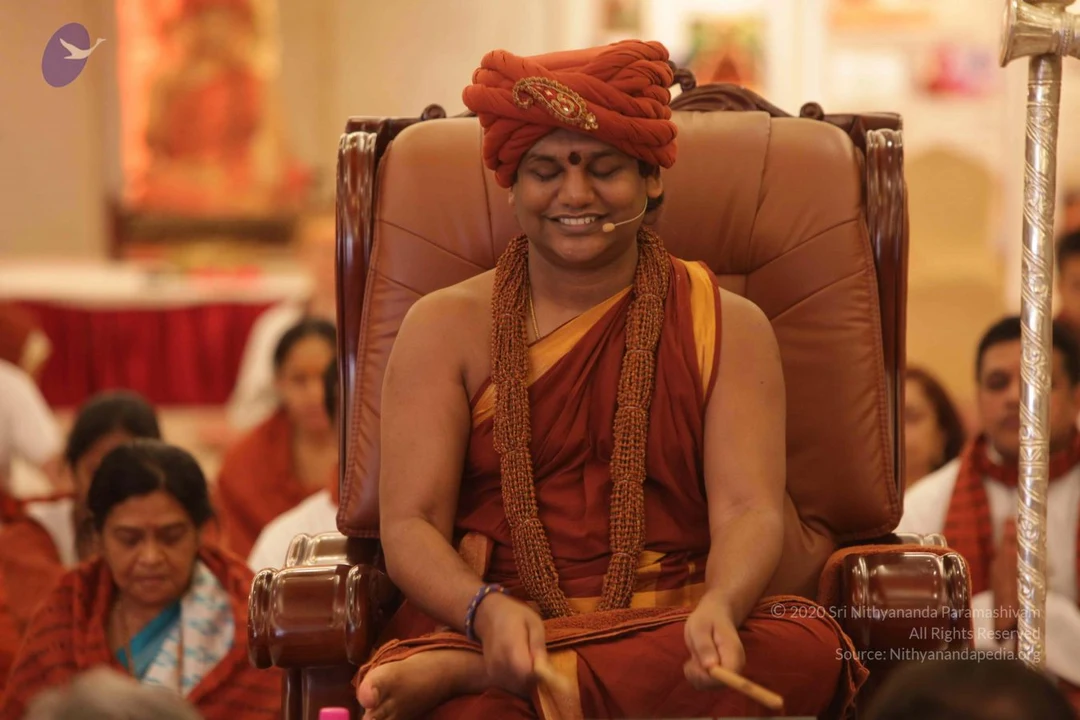
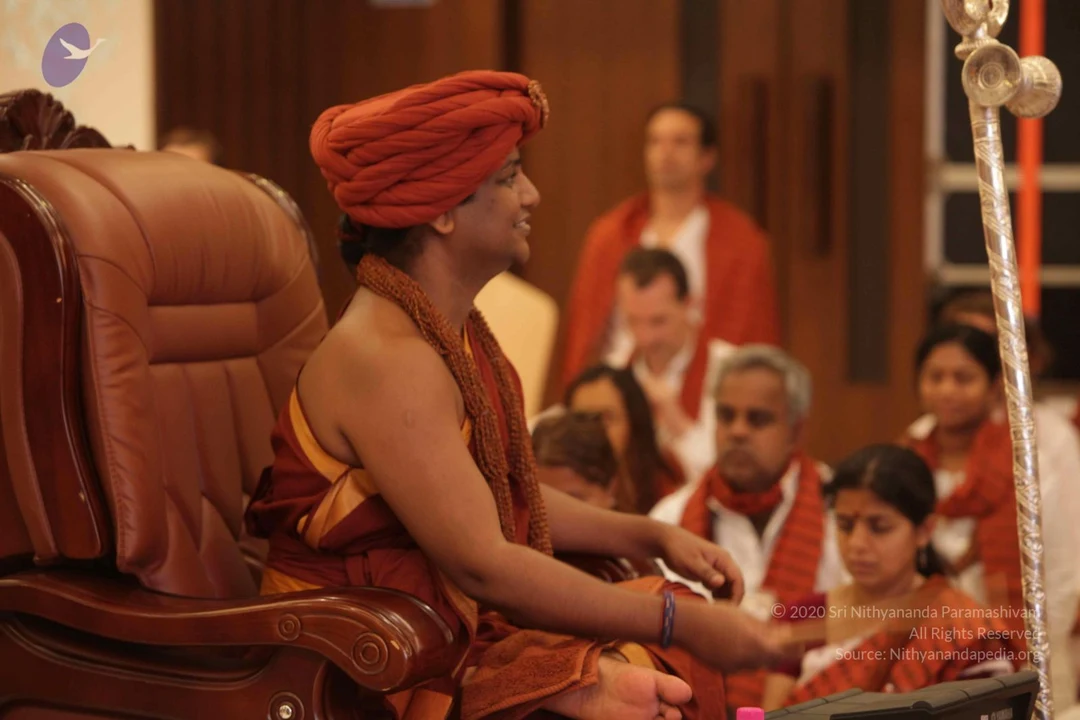
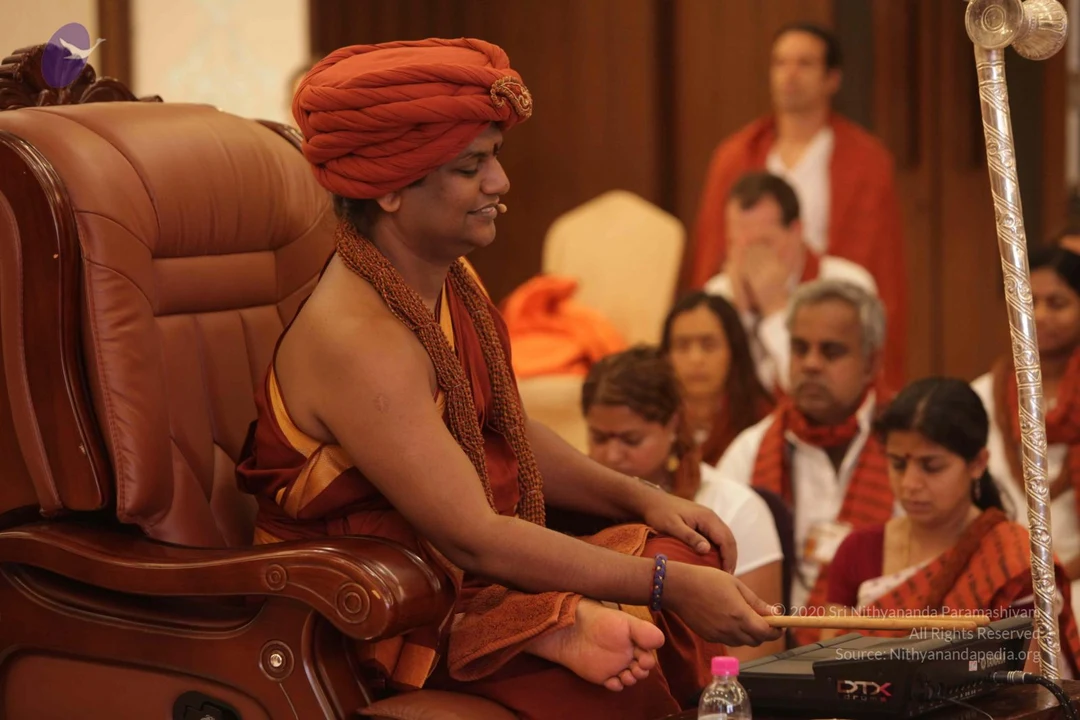
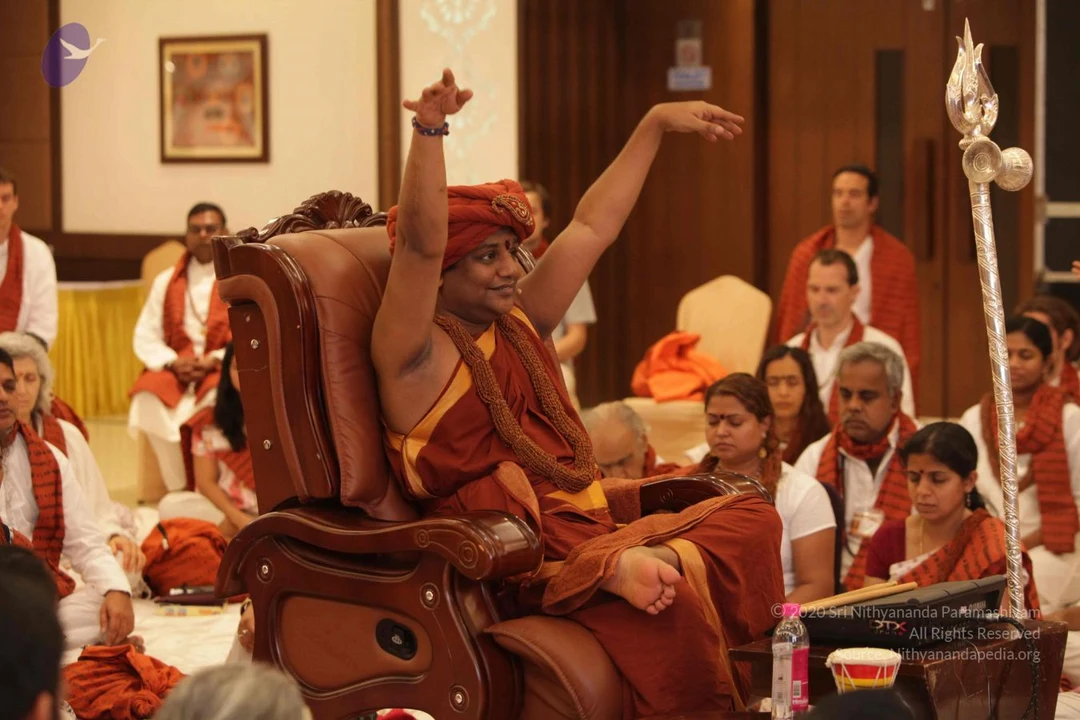
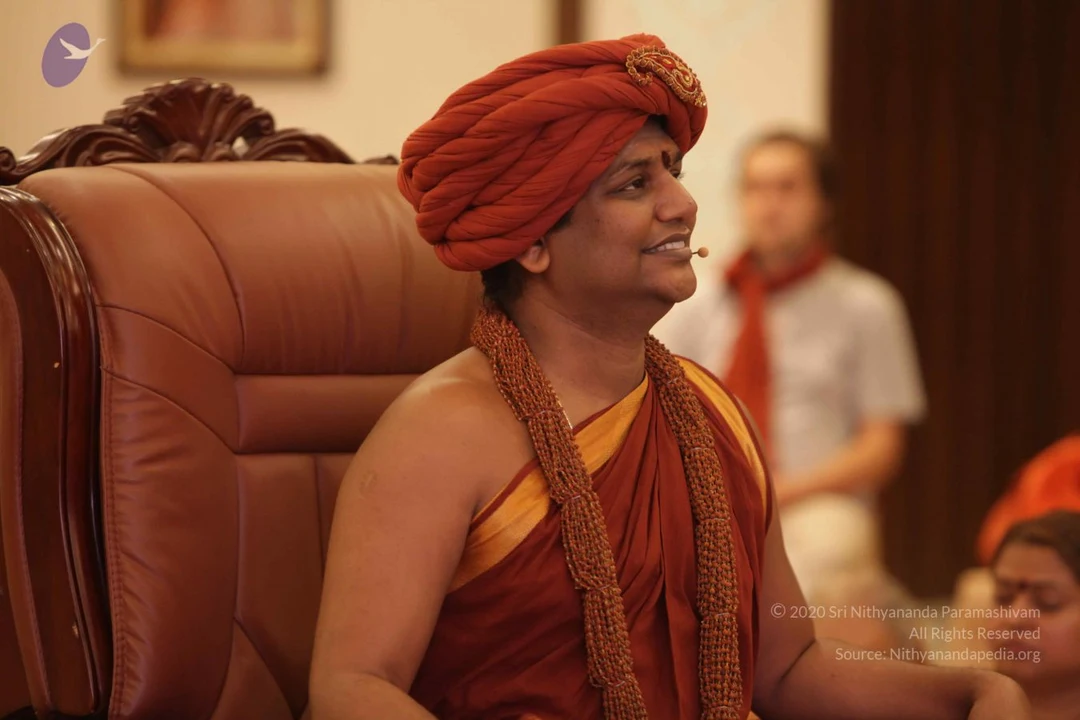
Yes, I am back to Kathopanishad. Today I am a little balanced to speak about anything else. But whenever I enter into Varanasi, at least 24 hours, I am so full of Varanasi. Even if I start speaking about something else I will be back to Varanasi. You see I can say, this city is a wonder. Made by man, supported by God. It’s a man-made wonder supported by God. All the Gods have supported this great wonder, Varanasi. It is older than any legends, because legends are written here. Legends were created here. This is the breeding ground for the great legends. Understand, whether it is Guru of Rama or Guru of Krishna; studied in this city. Whether it is Guru of Rama or Guru of Krishna, studied in this city.

2.26

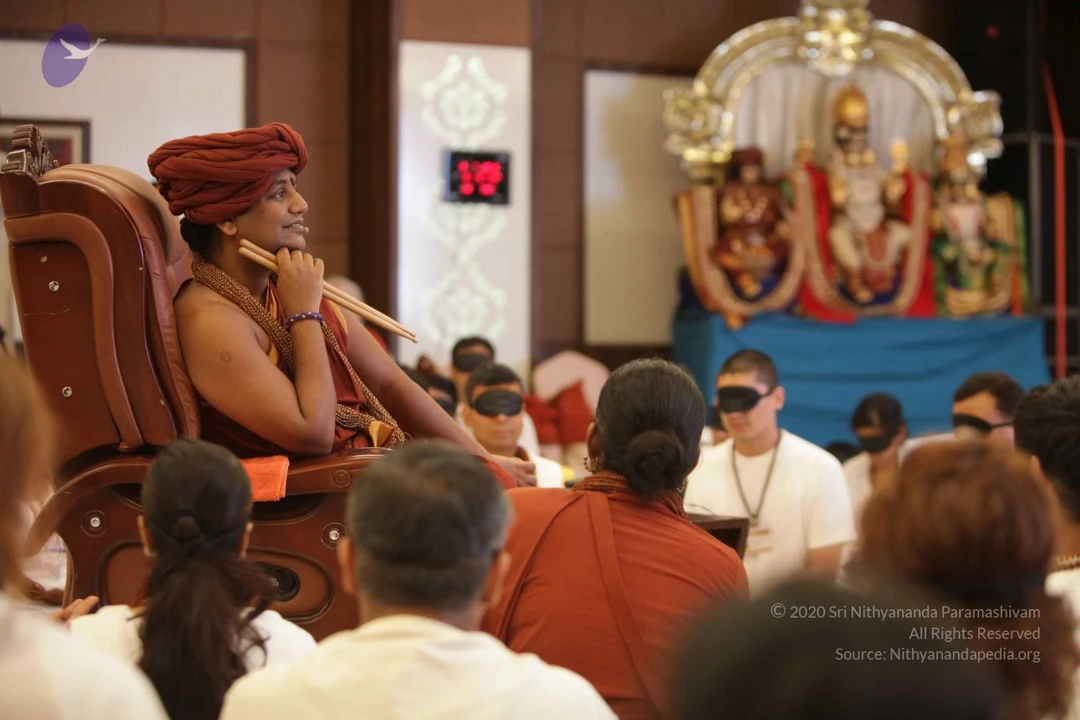
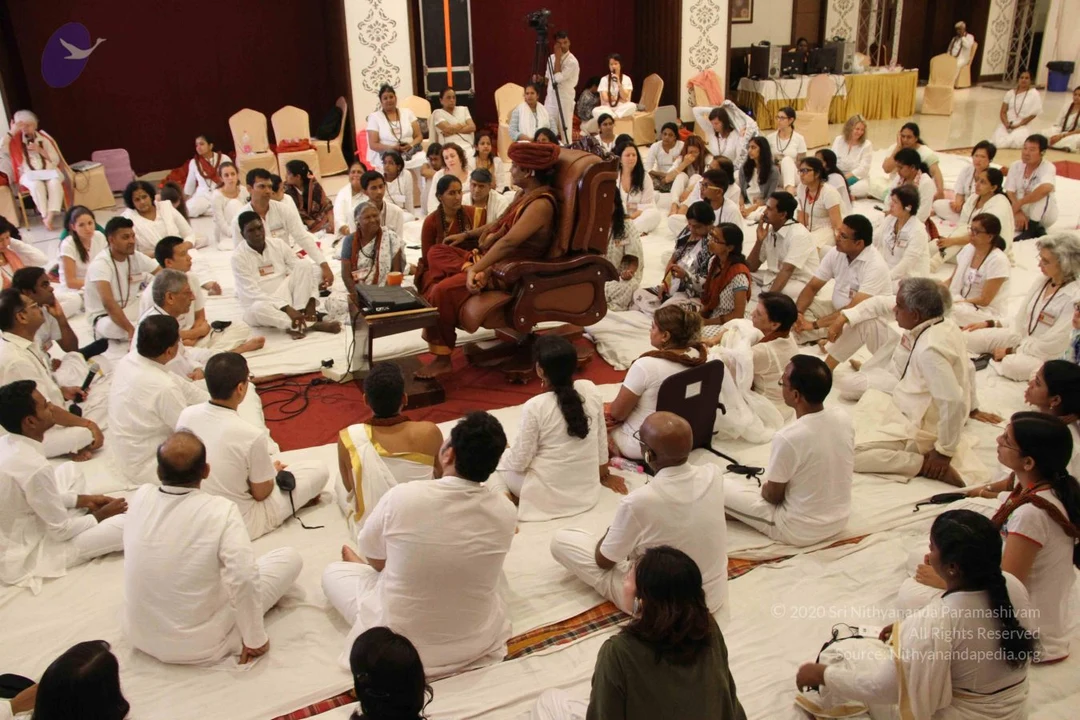
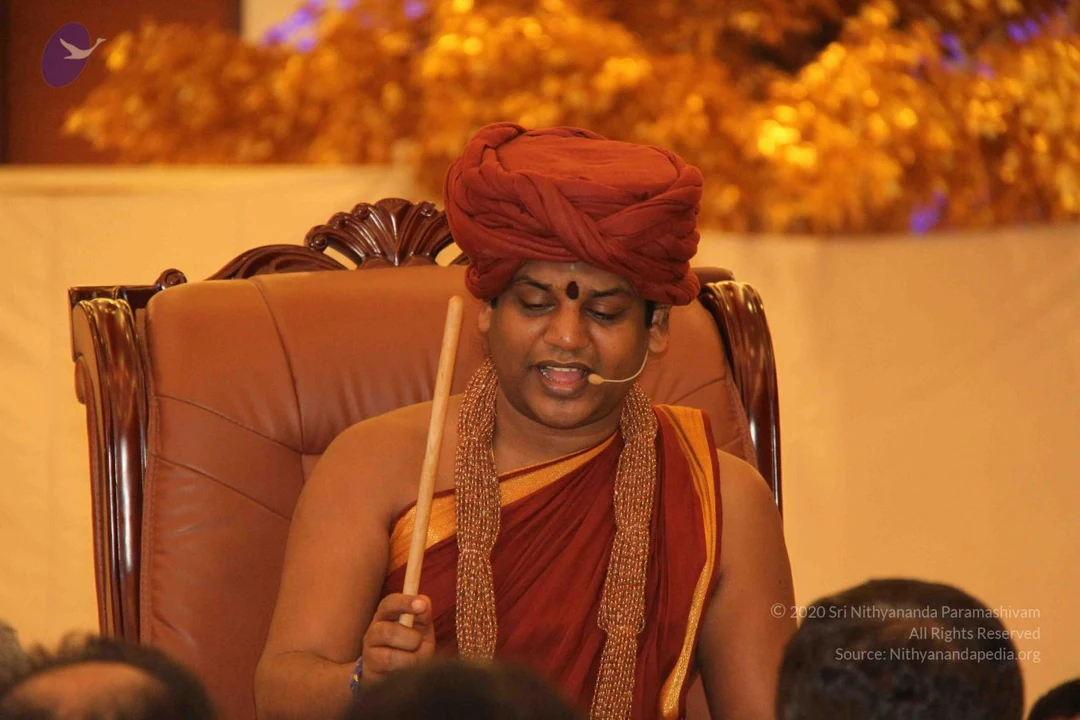
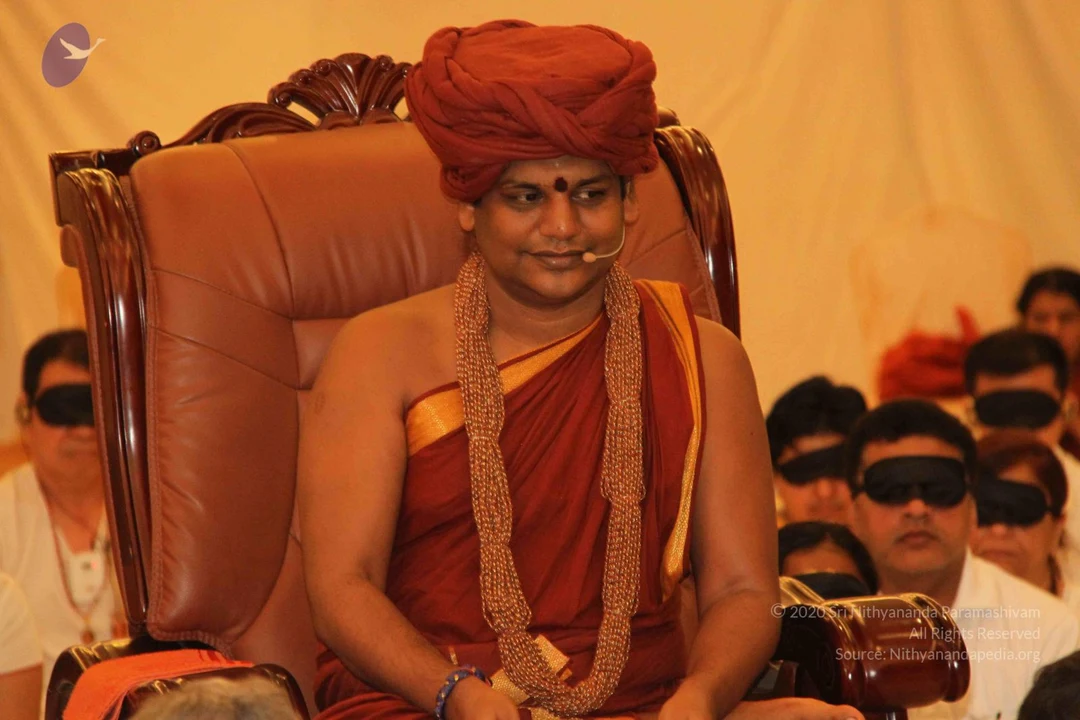
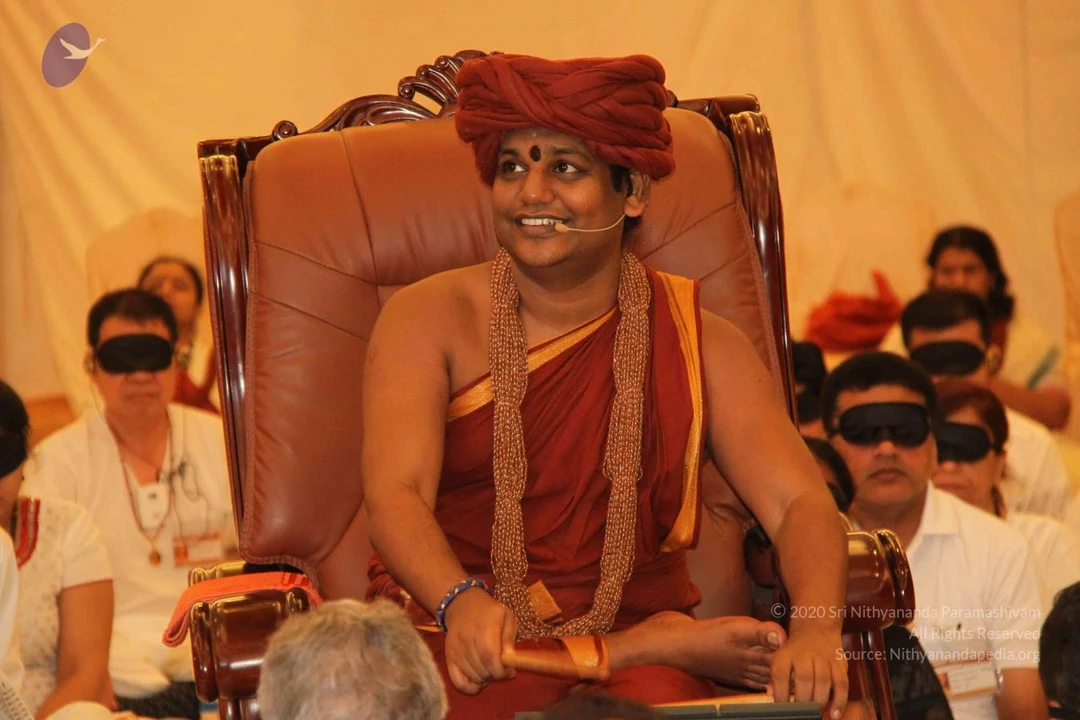
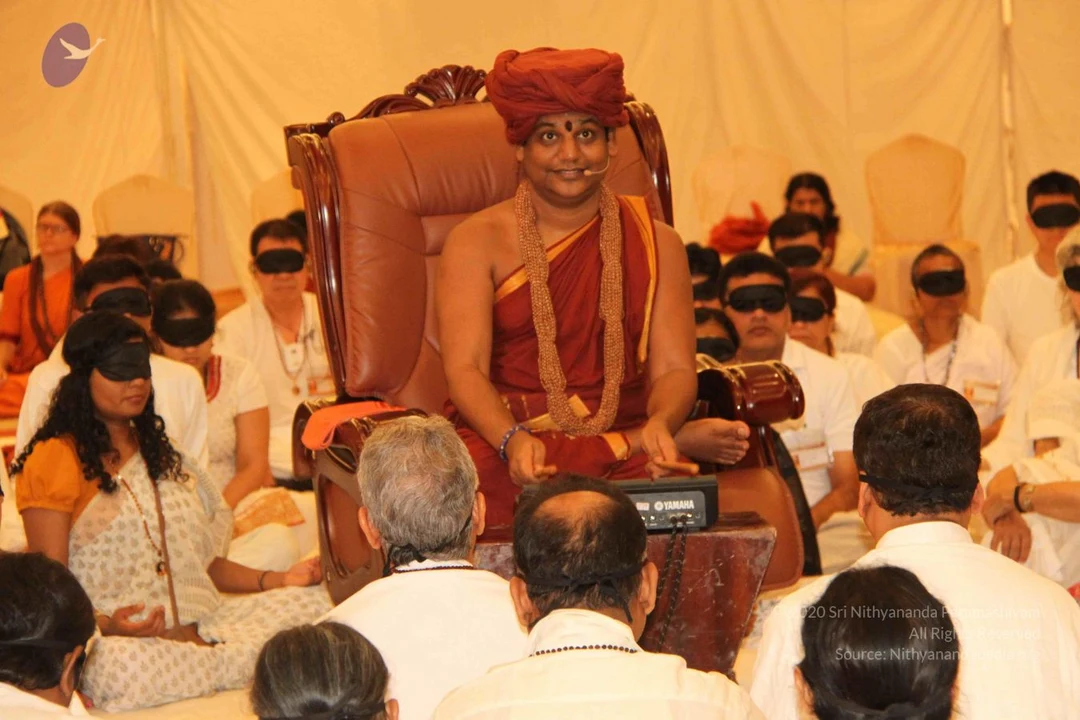
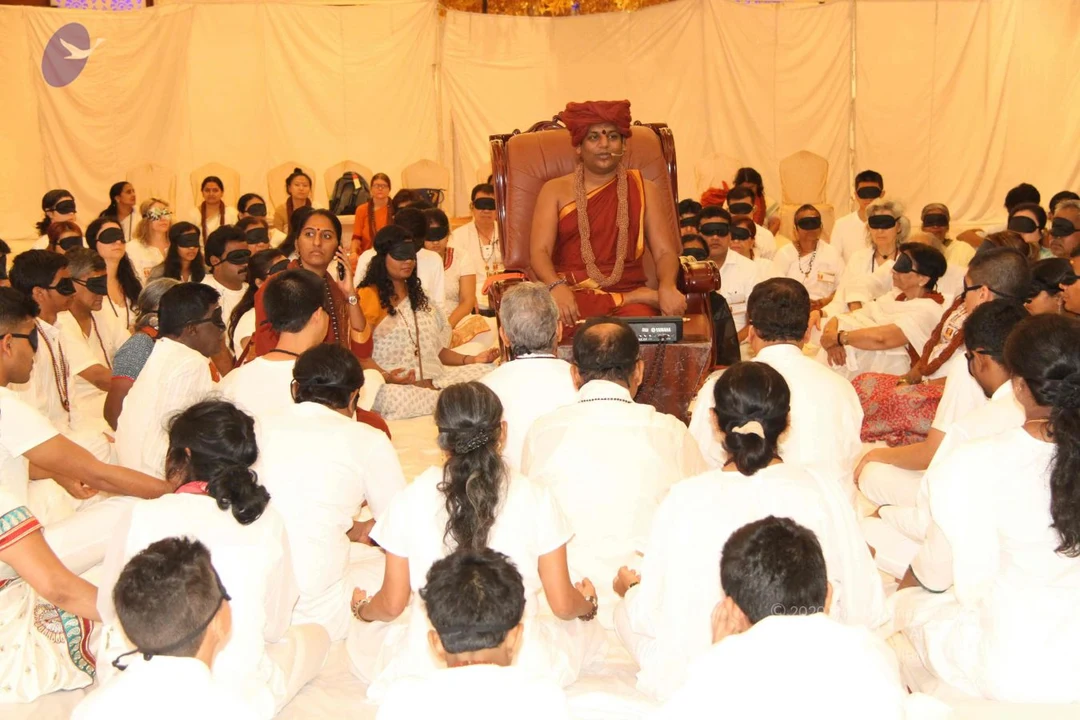
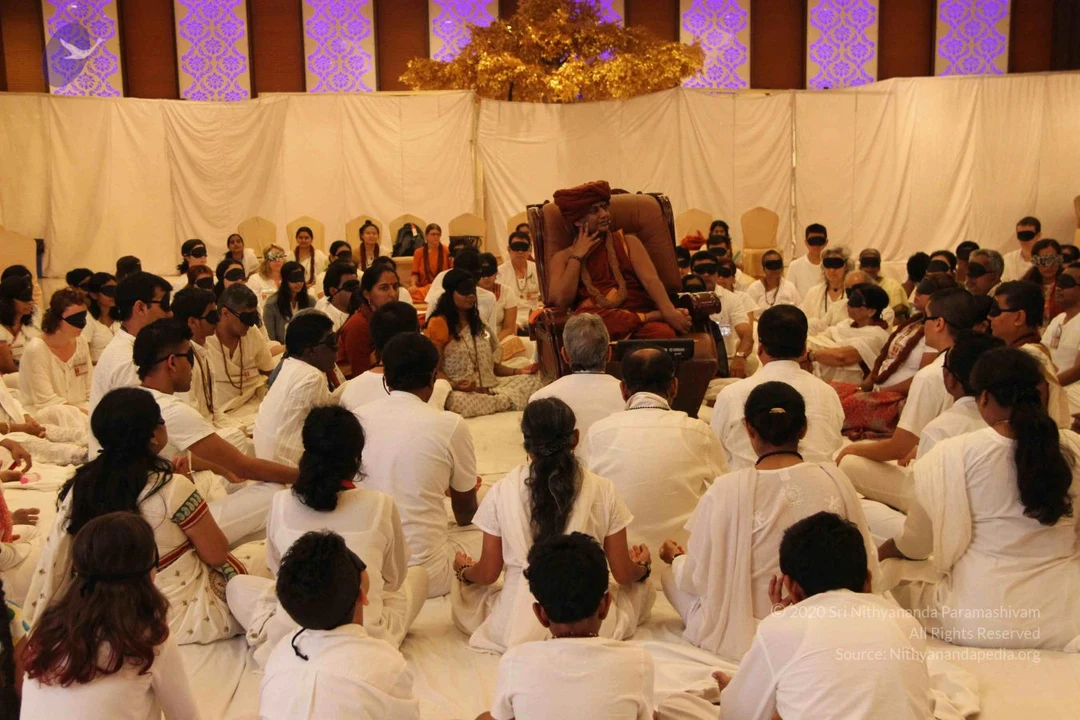
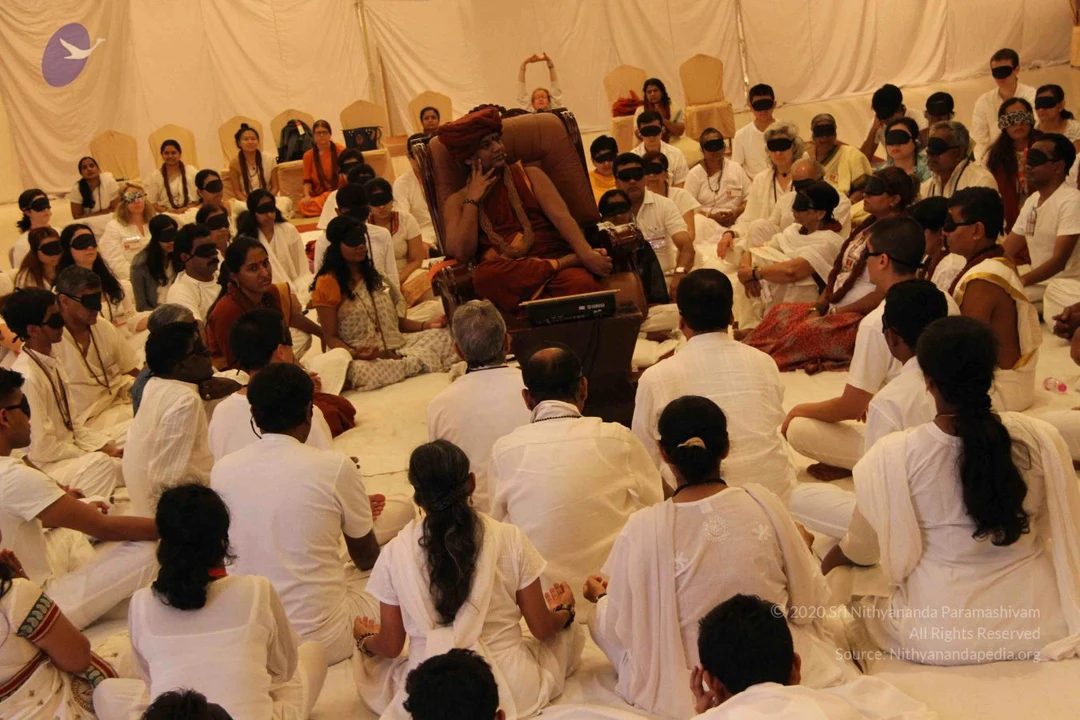
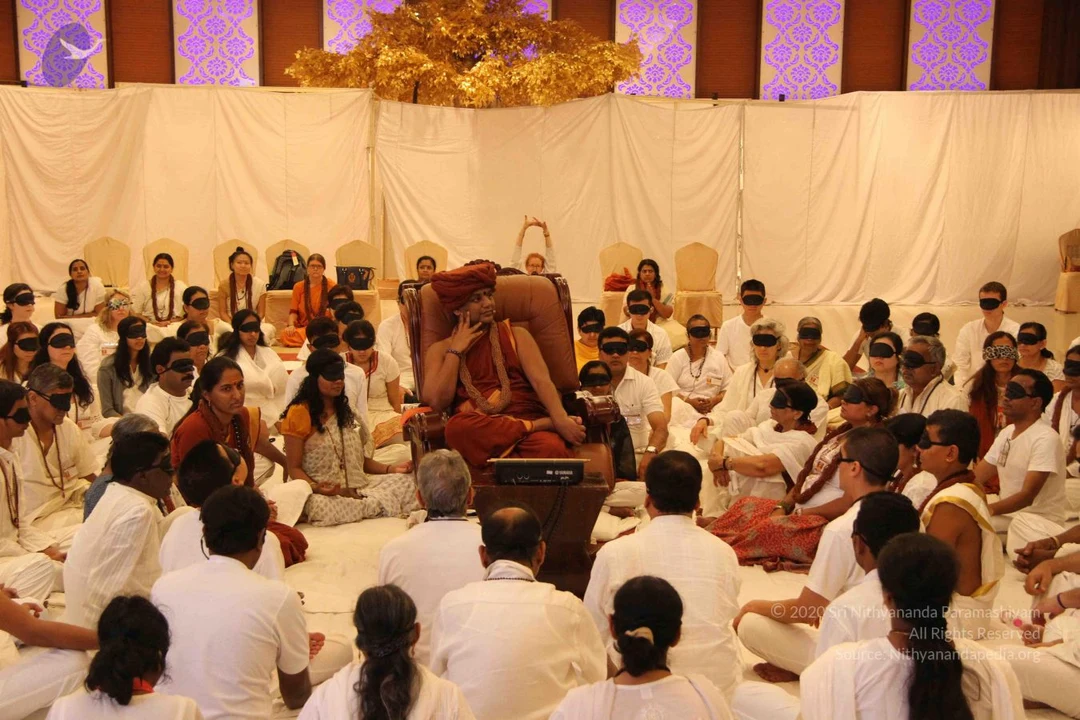
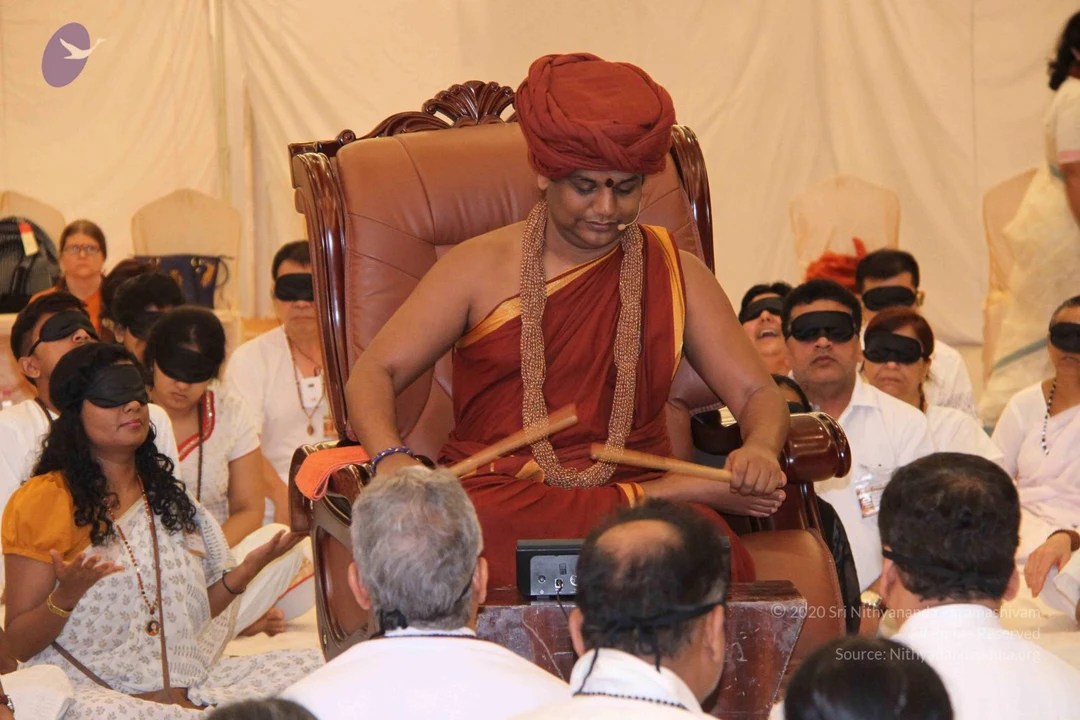
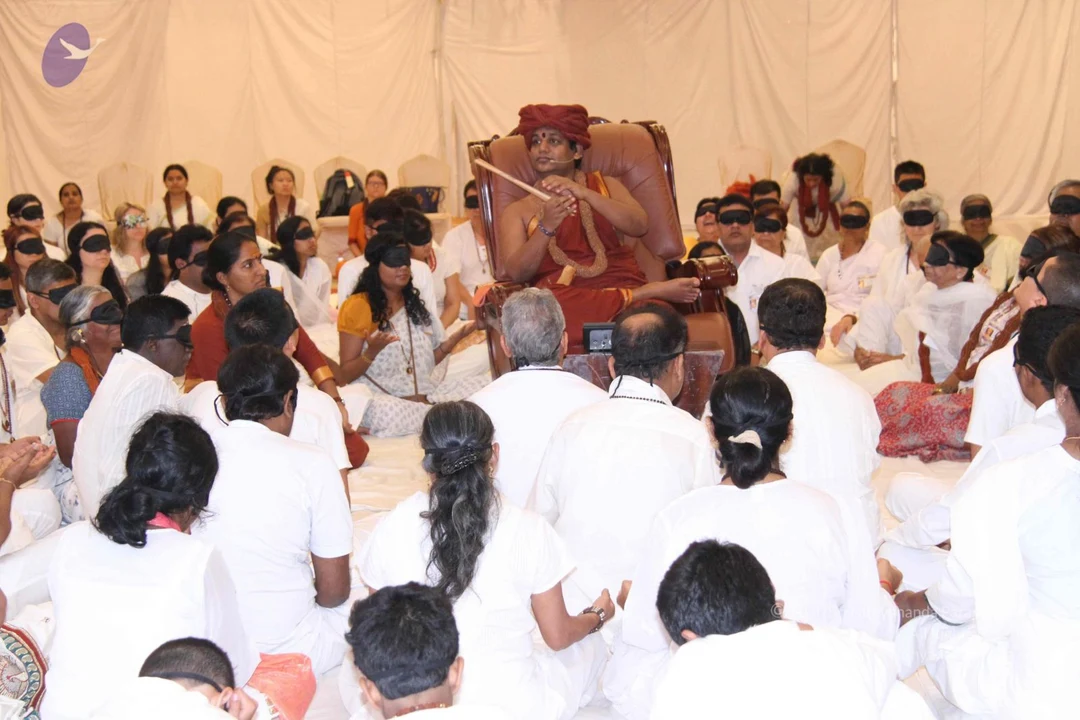
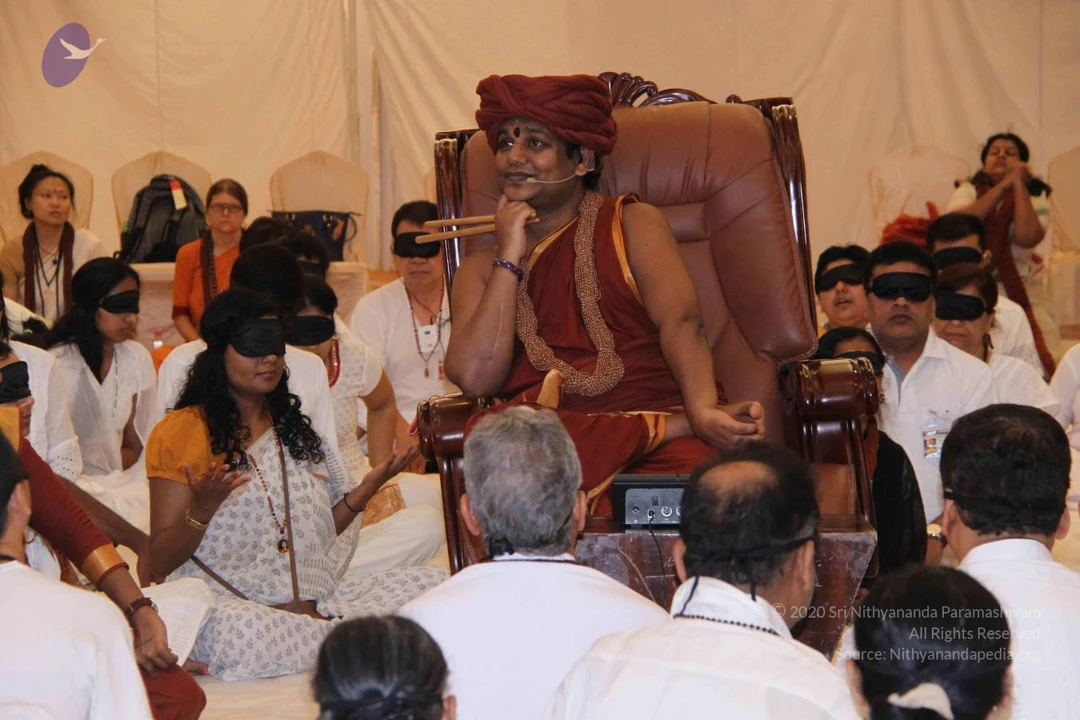
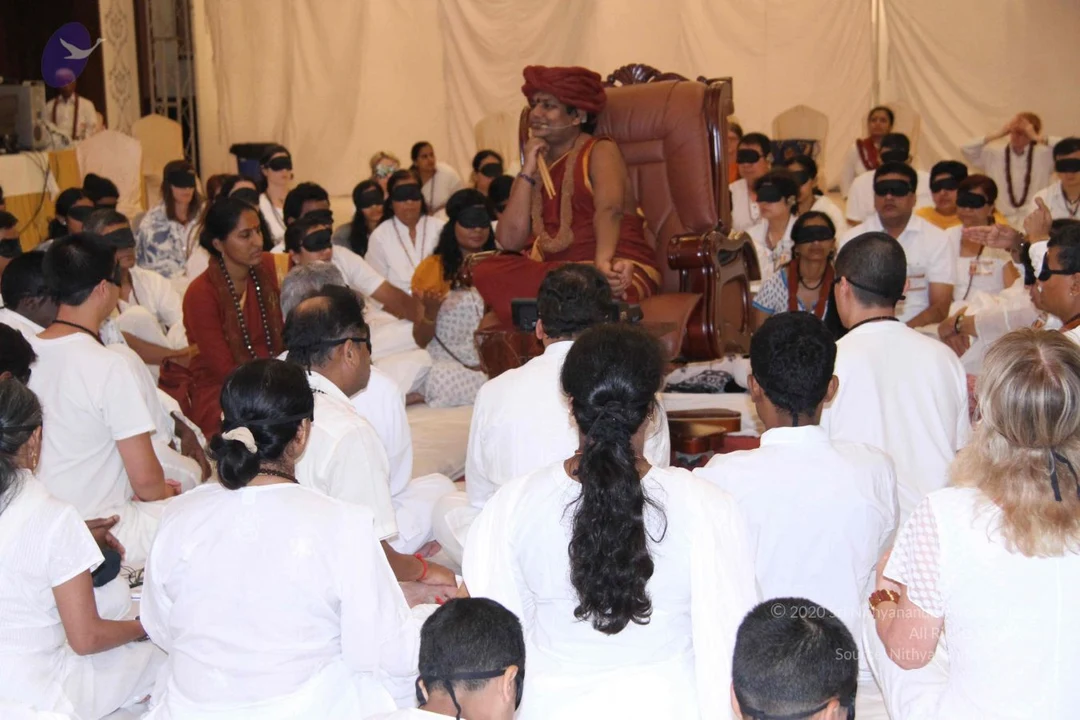
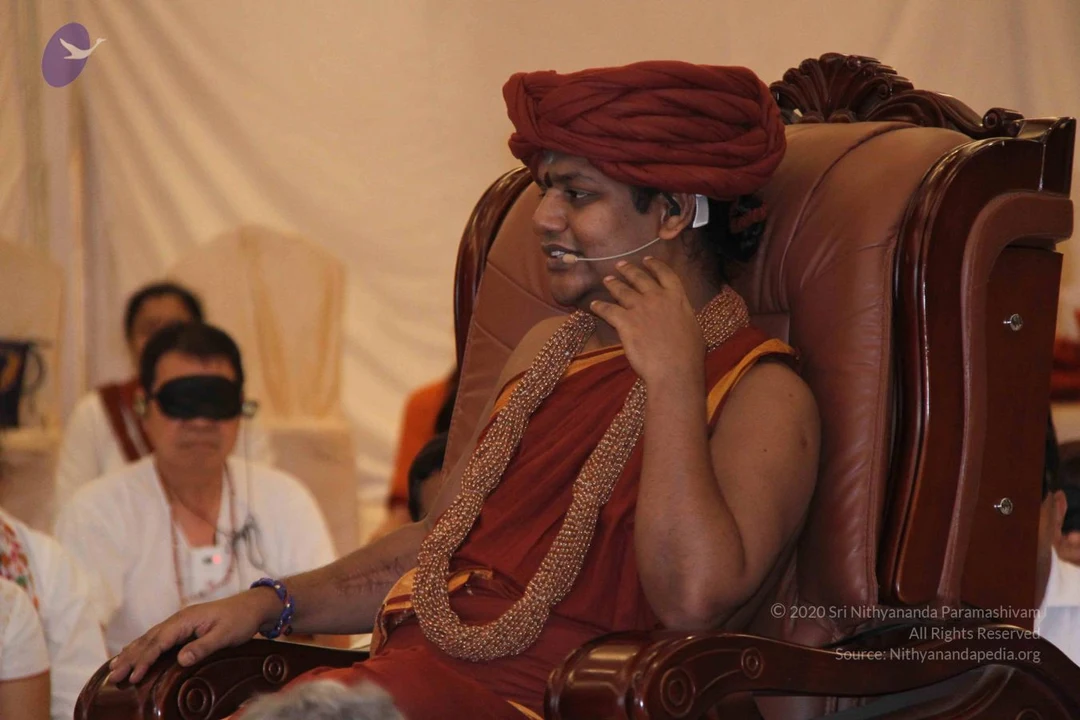
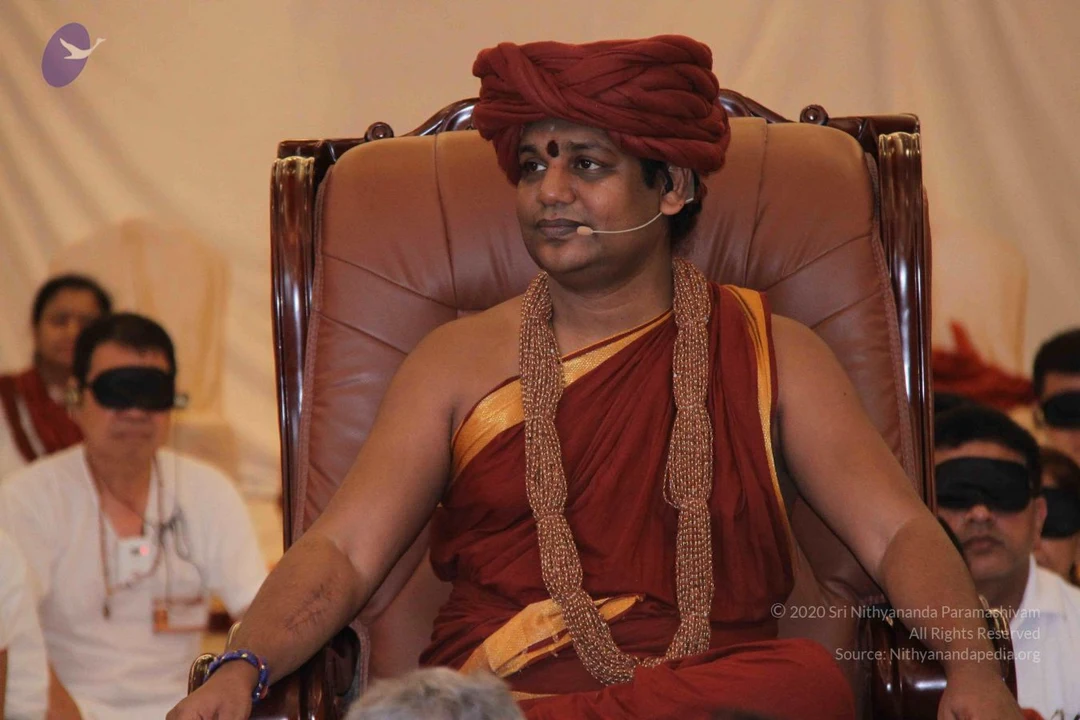
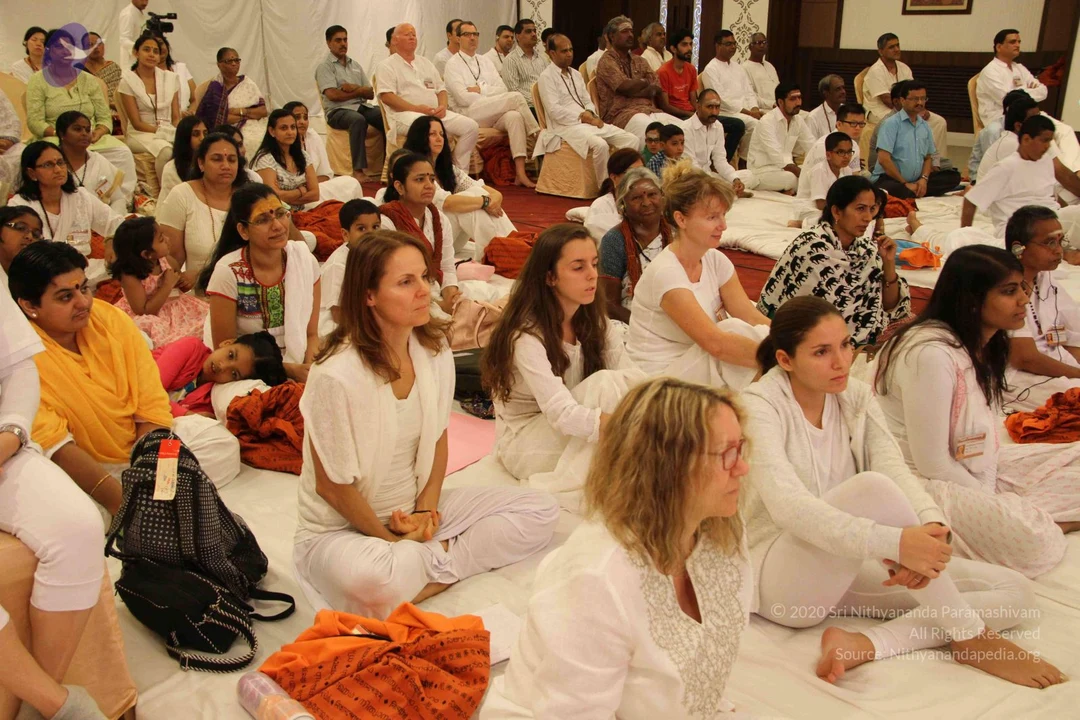
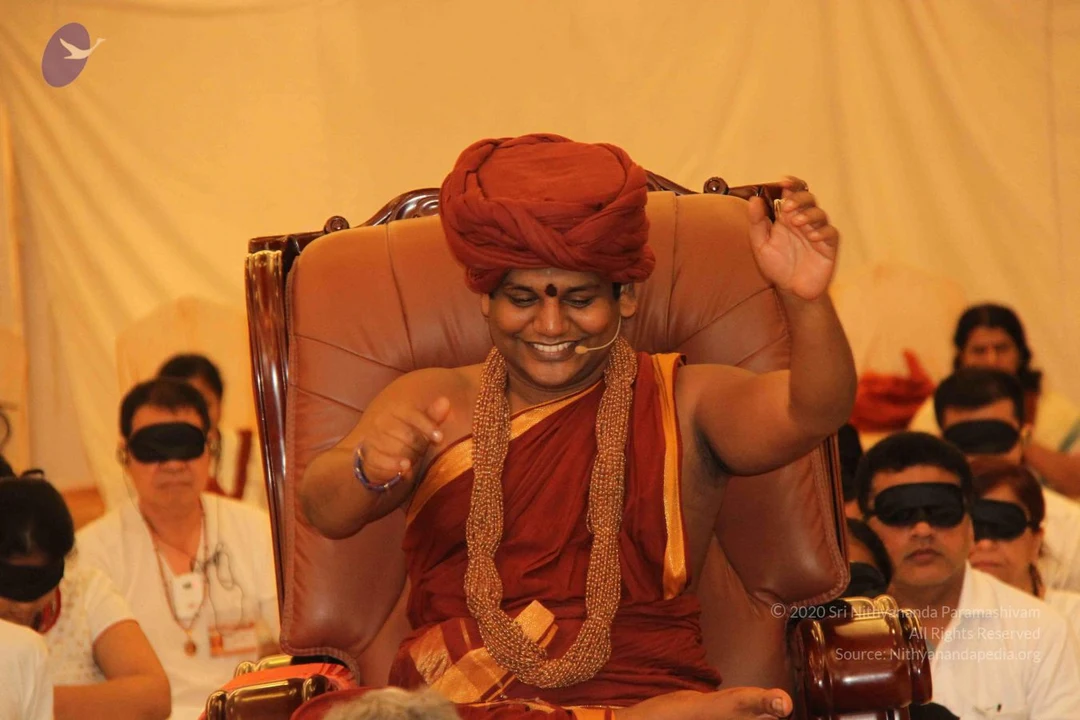
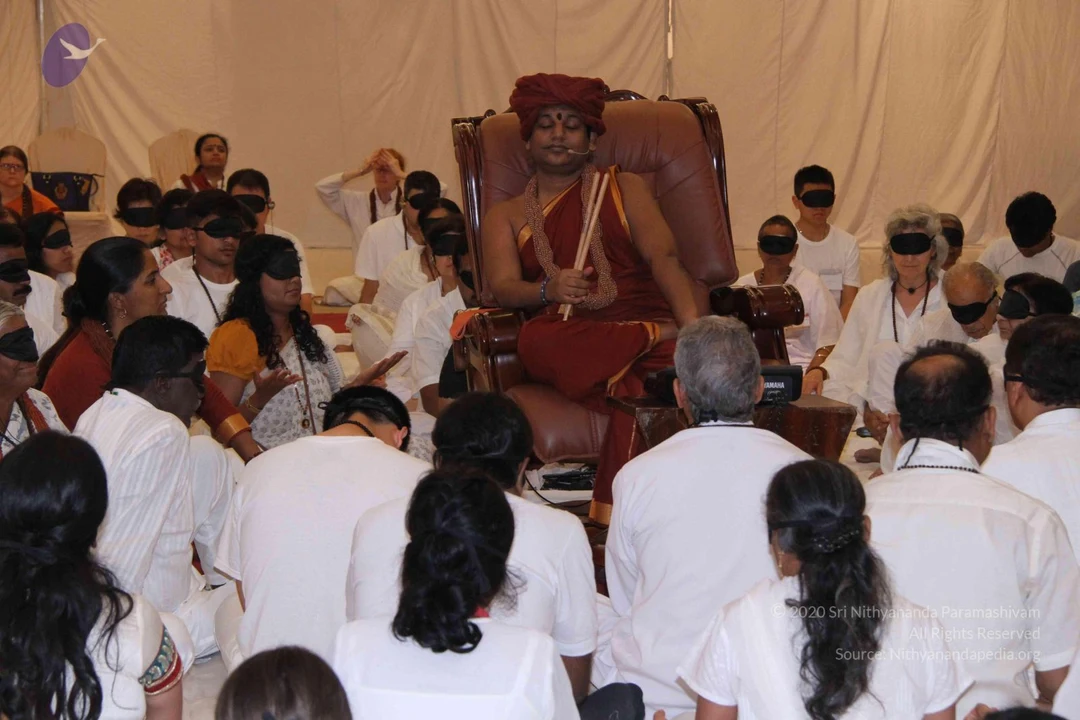
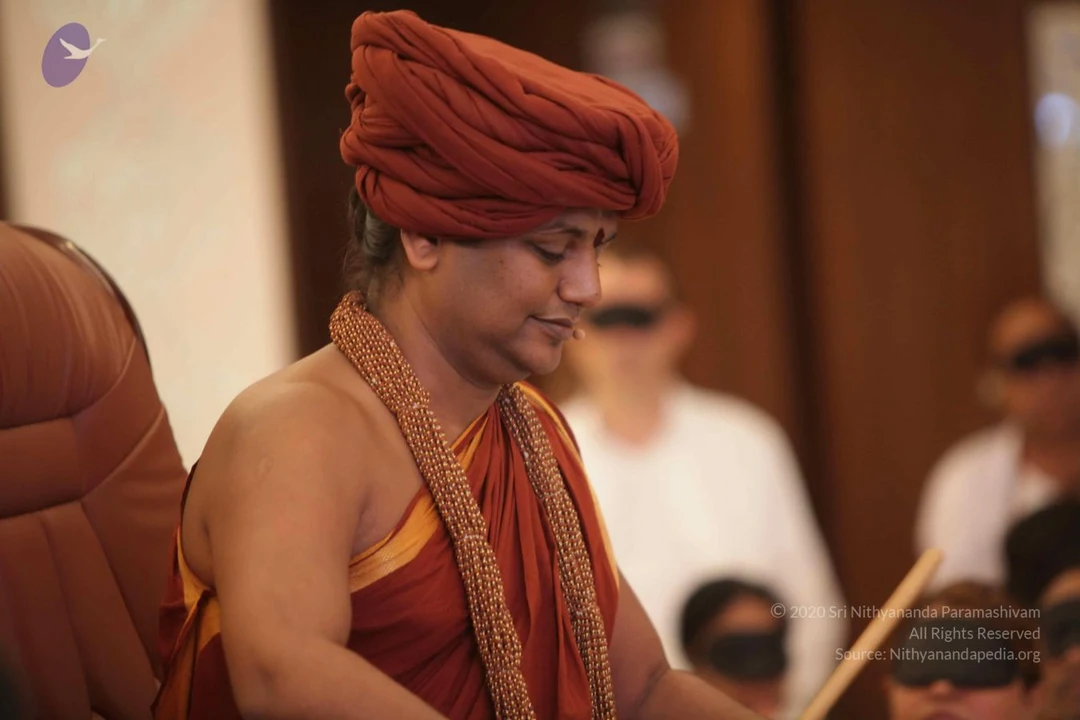
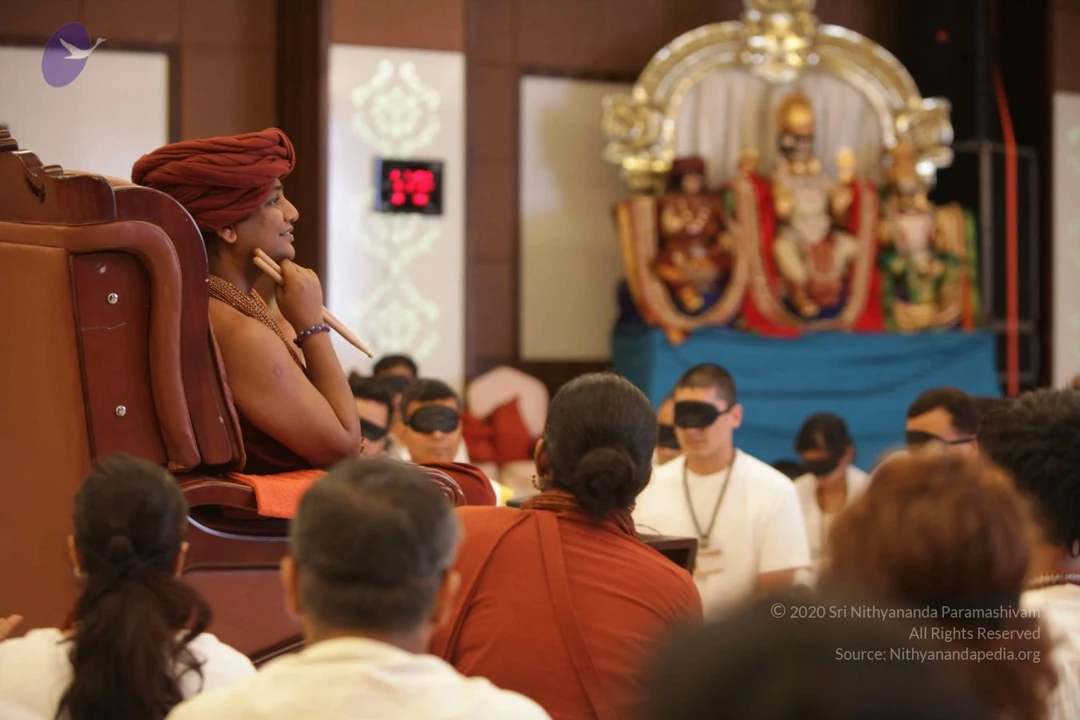
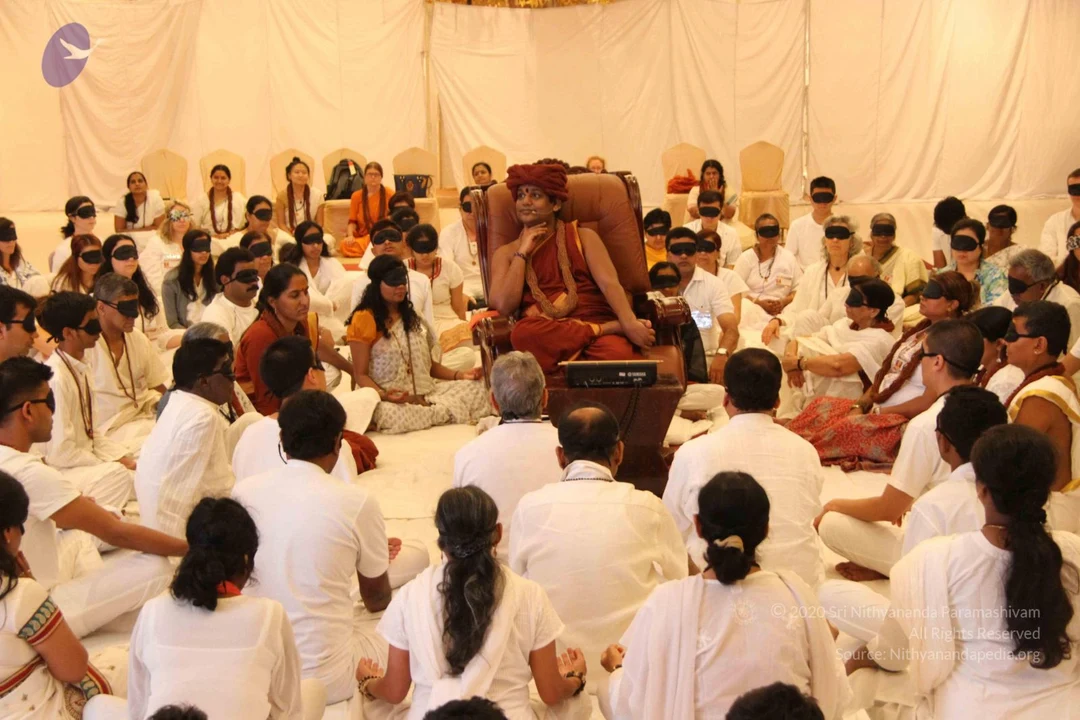
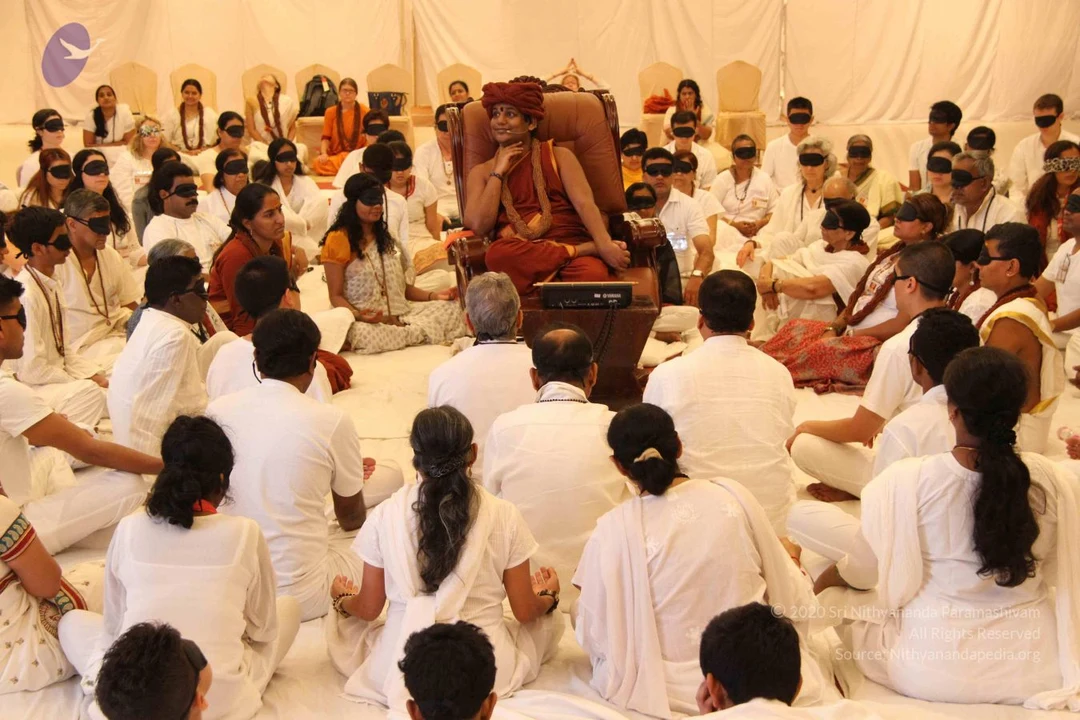
All Gurukuls were head-quartered in this city. Naimisharanya or Sarvajnapeetha, or Takshashila; much later, Nalanda. All of them, were head-quartered here, in Varanasi. Because all those Masters who established those universities, all of them studied here. Directly at the feet of Mahadeva. Sapta Rishis, Sanakadi Rishis, Devi herself studied at the feet of Mahadeva, here in this sacred city, Varanasi. So, whenever I enter, my Being responds to this city. The city responding to my presence is so overwhelming. At least 24 hours I can’t speak about anything else. And this time it is too much because the day 1 the initiation is successful. The day 1 the initiation is successful. Because kids have already started reading. The day one, first day initiation. Please understand. The kids who came for Inner Awakening yesterday first time. Getting initiated, many of them have started blind fold reading. The third eye awakening has started happening. Without any fraud, cheating, or without any looking through the hole. So beautiful. The very day, day 1, the initiation has started becoming reality.

4.36

Blessed are those who live in this sacred place, even if they don’t know the context. Sometime I feel so overwhelmed, I wonder I may just start rolling on the dust of Varanasi. Doing angapradakshinam (circumambulation with body) of this whole city. Because every inch Mahadeva walked. In this ground Mahadeva walked. And millions of people who achieved the space of Mahadeva, expressed the space of Mahadeva. Those great beings have walked. Yesterday night, when I was just resting into Samadhi, I just heard the flight sound. Usually in samadhi you won’t hear any sound or see anything. I was shocked. Then slowly I started just recognising the external atmosphere. I thought we are nowhere near airport. And even if there is a airport, when I fall into Samadhi I never hear any sound of flight moving and all that. How come? I saw this Kinaram Baba was flying in hit cot. Kinaram Baba is a great Aghori, who used to fly just by touching his cot. Wherever he wants to go he will just touch that cot. He used to sit on a wooden cot, still that cot is there, in the Adheenam. I will try to make time for all you guys to go and see. He is not using his body anymore. He is, the body is in Jeeva samadhi. But he doesn’t need body and all. And, like helicopter, ‘woosh’ that cot was going. I saw, where are you going? He said “no, I came to give darshan, this time I’ll express through you, and give all the initiation. Make all these people do whatever need to be done through this Kundalini Awakening”. I was, of course, I just bowed down to him and offered my respects. By the time in 2, 3 seconds he just, in the 2, 3 seconds that idea of respect and respected and person respected, that disappeared and I again fell into the space of Advaita.

7.29

Understand it is not that in those days, even now, so many beings achieved the space of Mahadeva, is just moving around here and there. They are all available. Kinaram Baba is one of the great Aghori, lived in Varanasi. His recorded biography goes to 440 years. Please understand. And another one Trailanga Swami, his recorded biography goes up to 370 years. Kinaram Baba, and Trailanga Swami both of them are seen even by recent day people. Rama Krishna has seen Trailanga Swami. And even Rajendra Prasad, he has seen the Trailanga Swami. They were all just in last 100 years names. Kinaram Baba maybe a little older. But, historical figures. Not legendary figures or mythical figures. Who lived here, now, in reality. Kinaram Baba used to have a cot. Whenever he wants to go and give darshana to some devotees, wants to see somebody he will just tap the cot and it will fly. It will fly wherever he wants to go, he will go and bless people and he will come back. Using the physical body. Using the physical body, he will go. And Trailanga Swami beyond. He will not even move. He will be sitting here and appearing in 10 places. Trailanga Swami is the second being who had directly the mother’s milk from Parvati. Meenakshi. First being is Jnanasambandar, second being who received the Meenakshi Prasada, and sitting here among all these beings, millions of people who radiated Mahadeva’s space walked in this city. So every inch, every corner, every dust is scared by them putting the feet in this place; the very air which they all breathed. This Trailinga Swami will sit in Samadhi, Ganga will overflow, for 6 months when the water recedes he will be sitting in the same place, that’s all. In Samadhi. There is no physical, physiological, psychological rules for them. Just breaking everything.

11.08

Again yesterday I started with Kathopanishad but I am back to Varanasi. This time I will try to make a little time for all you guys to go and see this Kinaram. At least Kinaram Baba samadhi and Trailanga Swami Samadhi, both of them have jeeva samadhi here, that means alive. While they are alive they built their tomb and sat in that. They did not even die. They told the disciples, “aye, cover the stone, enough. I am going to be sitting here forever and blessing all you guys.” So both of them sat like that. It’s called jeeva samadhi. The tomb built while you are alive.

11.55

Alright, I will enter into Katha Upanishad. I am still explaining the Shanti Mantra, I have not entered into the next verse. Please recite, the Shanti Mantra of Katha Upanishad along with me:

auṁ saha nāvavatu | saha nau bhunaktu | saha vīryam karvāvahai | tejasvi nāvadhītamastu mā vidviṣāvahai || auṁ śāntiḥ śāntiḥ śāntiḥ ||

13.21

This verse explains the context of Gurukul, listen. This verse explains the context of Gurukul. Gurukul means, the literal meaning of the Gurukul is, Guru’s home. Please understand. In the Hindu tradition family is the nucleus, you demolish any thousands of number of temples. You burn any thousands of numbers of scriptures, as long as the family system is alive, we will stand back. We will come back. Because, Sanatana Hindu Dharma values are transmitted, transferred through the family tradition. The gotra (family lineage)…I wanted to tell this to all you guys, as much as possible please live as large joined families. Either become a Sannyasi, be in the Gurukul, which is large joined family, of Gurukul. Or live as much as possible – it depends on your heart, how many people your heart can accommodate without judging. How many people your heart can take up without judging.

15.17

I tell you, wherever you live as a large joined family, large joined families, dharma is alive. Sanatana Hindu Dharma is alive. Because it is the large joined families where this values can again and again be practiced. Where each one of you will be guided, supported, to live this Vedic Sanatana Hindu Dharma values. I have experimented this large-sized joined family communities. Maybe in a few places I failed but, I am not a failure. I know for sure, I’ll again make it happen. I am very clear, I’ll make it happen. I just needed to work on more people and bring more completion. Each one of our Adheenam, our Temple, each of our Sangha, I wanted it to be a large joined family. I’ll make this into reality in India first. In Indian villages I will make this into reality. West has gone too much away from the family concept.

17.17

Gurukul means Guru’s home. Guru’s family. Becoming part of the Guru’s family, please understand. Even if you want to become a Sannyasi you have to become a part of the Guru’s family who may be a Grihastha. Many great sadhus, monks, monastic members, Sannyasis, studied under Grihastas. My own Guru, when I became a part of my Gurukul, my Guru’s family, he had 14 kids. Please understand; 14 kids. The last one was my age. And I need to put this on record, at that time my Guru was above 80. At least because now only we are discovering his age. Very safely I can come to the conclusion he is above 80. When I joined his Gurukul I was three and a half years, three or three and a half years. Even when I requested him I want to become a Sannyasi, he said, ‘you will become a successful Sannyasi but be part of my family first’. The training I had. The exposure I had. To live with this family, taught me so much to run the sangha now. None of his kids will listen to him, but he had the patience to out up with everyone. None of his kids will listen to him but he had a patience to put up with everyone. That never giving up has come to me from my Guru. I may train, scream, shout, but I will never give up. That is from him. The gift – not compromising or getting diluted, neither breaking. He will never compromise or get diluted in his ideas and standards he sets. And same way will not give up.

20.15

I tell you, even if you are going to become great Sadhu, Sannyasi, you need to be in the Gurukul. Even the great Incarnations, Rama, Krishna, all of them studied in Gurukul. When I am talking about Rama and Krishna I just want to tell you guys, one of the best book I have read recently, the Scion of Ikshvaku by Amish. You may be surprised Me mentioning him. Understand. I am not saying he is factual, but he is, he, he can really add juice to the facts. And a real, real, fiction author. I very strongly recommend, promote, his recent book ‘Scion of Ikshvaku’, by Amish. It is based on Rama’s life, of course it’s a fiction, but, you will really enjoy it. I enjoyed. I enjoyed, I strongly recommend and request every one of you to read this book. Buy and read this book. And, I enjoyed it. I also recommend his other books, the Shiva Trilogy. Please understand I am not standing by the facts because there are many things which are not fact he is writing, but the book itself is all about fiction it is not, he is not claiming he is a historian or is presenting the facts as it is. The way he presented you will enjoy, even if it is fiction. Even if it is fiction you will enjoy. I have read I don’t know how many different Rama stories, maybe at least 100 different versions of Rama stories I have read. But this is something unique. And, the way he has portrayed Rama's Gurukul experience; so beautiful.

22.55

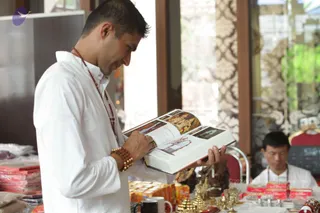
When I am talking about Gurukul, I remembered how he is beautifully presenting. Very rare I will stop in the airport bookstores, because whenever I walk in the airport it’s almost like a parade only. I don’t know whether it is this dress or this rudraksha, whole attention from all corners it will be on me. So I will need to walk as quickly as possible and settle down in one corner. So I will never go and enter into any shops. This time I just picked up this book and I really enjoyed it. And I recommend, even for our Gurukul kids, you guys will enjoy it.

23.48

Whether incarnations like Rama or Krishna, all great Incarnations, have to go to Gurukul in Vedic tradition. You can’t say, ‘what, I am a great Incarnation why should I go to Gurukul?’ No. Even if you are consciously born, even if you are born with all the experiences and spiritual powers, you need to study the shastras (scriptures) to validate your experience. Especially when you want to reproduce that experience and powers on others. When you want to share, Gurukul is required. Gurukul is an important factor makes Incarnations complete. Otherwise you will never know the authenticity of your experiences. You will never be able to reproduce that same experience on others as a science. Gurukul is compulsory for anybody happens in Vedic tradition. And the context needed for the Gurukul is set in this verse.

25.53

Our Gurukuls are not teacher centric, our Gurukuls are education centric, please understand. Our Gurukuls are not teacher centric, our Gurukuls are education centric. Student can develop, invent something which his Guru doesn’t know. He has a freedom. Please understand, only the basic formulas are taught. Basic tools to awaken knowledge is taught. Then student is left free to explore on his own. The kind of a creativity, please understand. Gurukuls are not with the set of rules or frame, they only supported people to explore the highest possible creativity. Gurukuls are not like dams for your inspiration and energy. It is like an embankment for the wild river. Embankment is different, dam is different. With a dam you are damned. It’s embankment, not dam. That is why many of the Advaita Guru’s disciples were Visistadvaitas or Advaitis, or many of the Visistadvaiti Advaiti Guru’s disciples were Advaitis, means what? Only the basic analysis scales were given to you but you are left to feely analyse. You are given spoon not spoon-fed. You are not spoon-fed. You are only given spoon. The freedom, freedom itself shows, otherwise you will be shocked Ramanuja’s Guru was a great Advaiti. Being Advaiti, Ramanuja was even able to think in the language of Visishtādvaita shows the freedom available in the Gurukul. And same way there are many Advaitis studied at the feet of Dvaitis or Visistadvaitis.

28.52

Chaitanya is from school of Nyayaka, Nyaya Shastra, logic. But He is the greatest devotee ever happened on the planet earth. I can’t even say greatest devotee ever walked on the planet earth because he never walked, he was always jumping. Greatest devotee ever happened on the planet earth. He is from school of Nyayayka, school of logic from Mayapur. Mayapur was the greatest university for the thought trend of Nyayayika, the thought current of Nyayayika; logic. The thought current of logic. Nyaya, Vedanta and Vaisishika. Nyaya is one of the shad darshanas, Vaisishika is the furtherance of Nyaya. A person like Chaitanya could be produced from the school of Nyaya seems ‘Anyaya.’

30.29

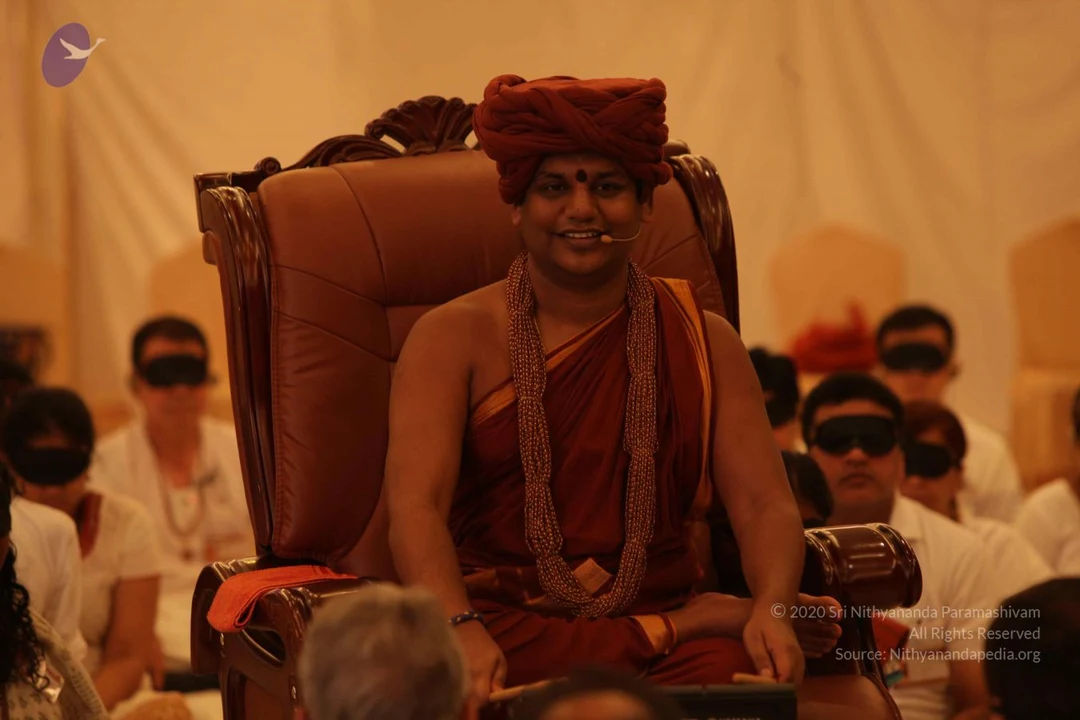
But, Sanatana Hindu Dharma gives only the tools to explore, but it is not putting you any frames, any restrictions, dams. This whole verse, if you read the Shanti Mantra, it is education centric, not teacher centric. Unfortunately, in the modern day, because teachers have not taken the responsibility to be education centric, it has become more teacher centric. This whole verse if you read; “may we both together be protected.” See, teacher is also praying along with the student. Actually, it is because we are education centric, we were able to explore and reach the new new heights of seeking. New, new heights of seeking. That is where even the Ishta Devata concept has come. Guru encourages disciple to travel, discover, reinvent, invent their own paths, their own methodologies. He continues to encourage the disciples to explore on their own. Just being available as a good support, guide. Not being heavy on them. I can say, the uniqueness of our Gurukuls are freedom to explore, create, the constructive freedom they enjoyed. Even in our Gurukul, I initiate them into various powers, and let them explore. See when I had enlightenment at the age of 12, the third eye awakening has happened I was able to see all the 360 degree. I initiated the kids into that power and let them explore. Now they are coming up with too many new, new powers. They are able to download languages, they are doing many more things which I did not do.

33.47

I will continue to expand on the context and concept of Gurukul, expressed in the Shanti Mantra of Kathopanishad.

So with this, I will move into the next segment of the morning satsang, because today we have Completion Initiation, and many more important sessions. Long day, which will not look long. Long day, when it looks short, you are in bliss. Short day, when it looks long, you are in pain. So, with this, I’ll move to the next segment of the morning satsang, Kalpataru Darshan. I bless you all.

Let you all radiate with Integrity, Authenticity, Responsibility, Enriching, Causing Living Advaita, the eternal bliss. Thank you.

Title

Creating The Right Visualizations & Verbalizations || Part 1 || IA || 02 July 2015

Description

Convention name: Inner Awakening Location: Varanasi,India Date: 02 July 2015

In this video Supreme Pontiff HDH #Nithyananda Paramashivam creates right visualisations and verbalisations by uttering the #sacred syllables to remove the wrong light/sound recordings and creating more right light/sound recordings in the individual and works with cognition transmitting bio-memory of doing completion.

The Supreme Pontiff of Hinduism Jagatguru Mahasannidhanam His Divine Holiness Nithyananda Paramashivam (HDH) is the reviver of #KAILASA - the ancient enlightened civilization and the great cosmic borderless Hindu nation. Revered as the incarnation of Paramashiva - the primordial Hindu Divinity, HDH has a following of 2 billion Hindus worldwide with de facto spiritual embassies in over 150 countries. He has worked untiringly for over 26 years for the revival of Kailasa, for global peace and to give super conscious breakthrough to humanity. He has survived the worst persecution of multiple assassination attempts on person and on character by anti-Hindu elements. He is collecting, organising, preserving, time capsuling, decoding, spreading and reviving 20 Million source books of Hinduism and the 64 sacred arts & sciences like Ayurveda, music, dance, sculpting, astrology, vastu and much more. Close to 20,000 hours of HDH’s timeless talks have been recorded till date (Sep 2020), which are a treasure trove of powerful cognitions to solve individual and global problems of any kind.

Link to Video:

VideoAudio

Title

Creating The Right Visualizations & Verbalizations || Part 2 || IA || 02 July 2015

Description

Convention name: Inner Awakening Location: Varanasi,India Date: 02 July 2015

In this video Supreme Pontiff HDH #Nithyananda Paramashivam creates right visualisations and verbalisations by uttering the #sacred syllables to remove the wrong light/sound recordings and creating more right light/sound recordings in the individual and works with cognition transmitting bio-memory of doing completion.

The Supreme Pontiff of Hinduism Jagatguru Mahasannidhanam His Divine Holiness Nithyananda Paramashivam (HDH) is the reviver of #KAILASA - the ancient enlightened civilization and the great cosmic borderless Hindu nation. Revered as the incarnation of Paramashiva - the primordial Hindu Divinity, HDH has a following of 2 billion Hindus worldwide with de facto spiritual embassies in over 150 countries. He has worked untiringly for over 26 years for the revival of Kailasa, for global peace and to give super conscious breakthrough to humanity. He has survived the worst persecution of multiple assassination attempts on person and on character by anti-Hindu elements. He is collecting, organising, preserving, time capsuling, decoding, spreading and reviving 20 Million source books of Hinduism and the 64 sacred arts & sciences like Ayurveda, music, dance, sculpting, astrology, vastu and much more. Close to 20,000 hours of HDH’s timeless talks have been recorded till date (Sep 2020), which are a treasure trove of powerful cognitions to solve individual and global problems of any kind.

Link to Video:

VideoAudio

Title:

Nithyananda Times, 02nd July 2015

Description:

The Daily Video Magazine of the Nithyananda Sangha

Link to Video:

Photos From The Day:
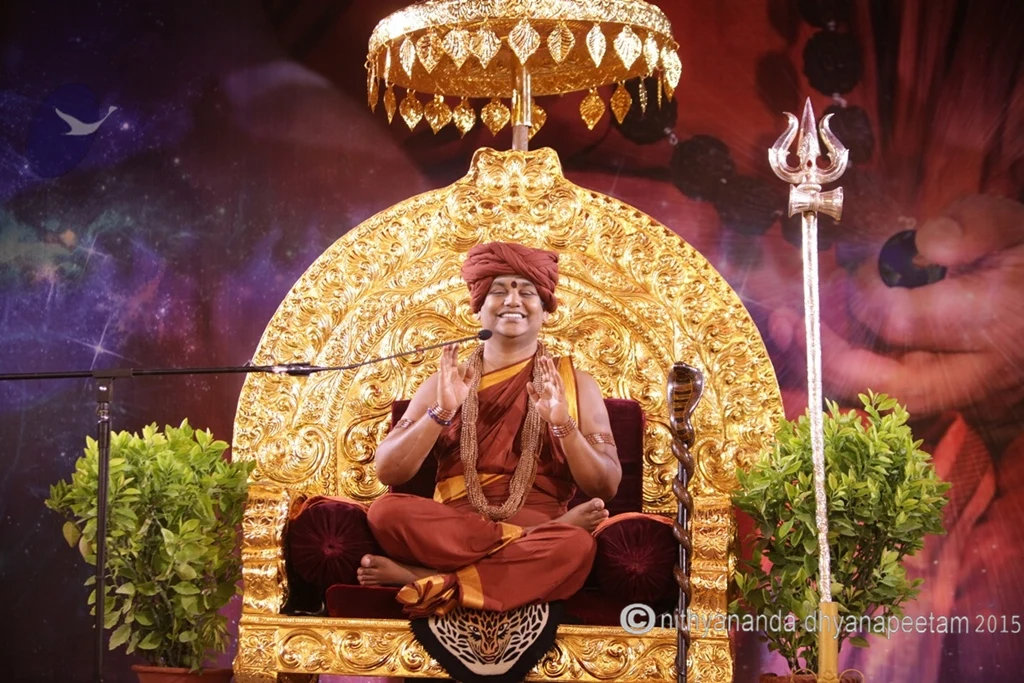
Tags:

Paramahamsa Nithyananda, Varanasi, Hinduism, Kalabhiarava, Kashi, Anandavana, Inner Awakening, Third Eye Awakening, Shivoham, Lord Rama, Krishna, Caitanya Mahaprabhu, Naimisharanya, Sarvajnapeetha, Nalanda, Kathopanishad, Shanti Mantra, Gurukul, Vedic Education, Gurukul, Gurukul education,

Photos Of The Day:

Completion-Initiation
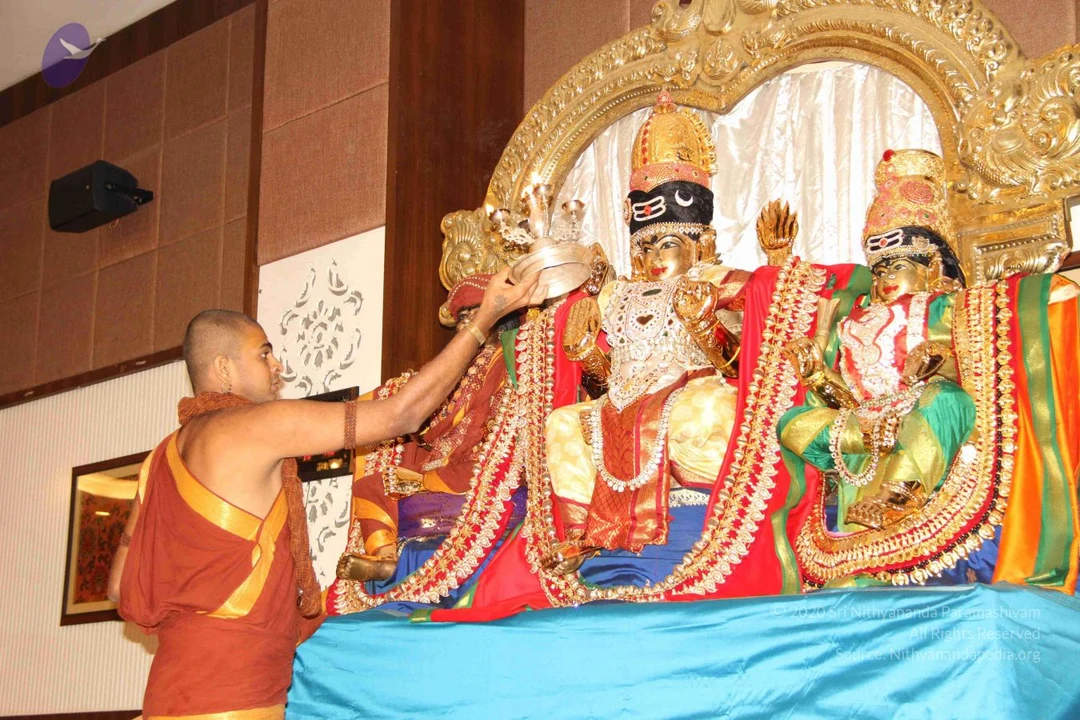
Shivoham-question-and-answer-session

Photos Of The Day:

Morning--Satsang

SarvaDarshan

IA

GalleriaAndDieties

Photos Of The Day:

Kalabhairava-Temple-Visit

Photos Of The Day:

th july2015

shivoham

DCIM

yettoselect

slected photo -kalabhairva temple

sat&outside phopts2d july2015

july-2-shivoham-session-photo-slected

slected

Raw

03-Inner-Awakening

04-Galleria-And-Deities

Photos from this day

View all 582 photos

Completion-Initiation
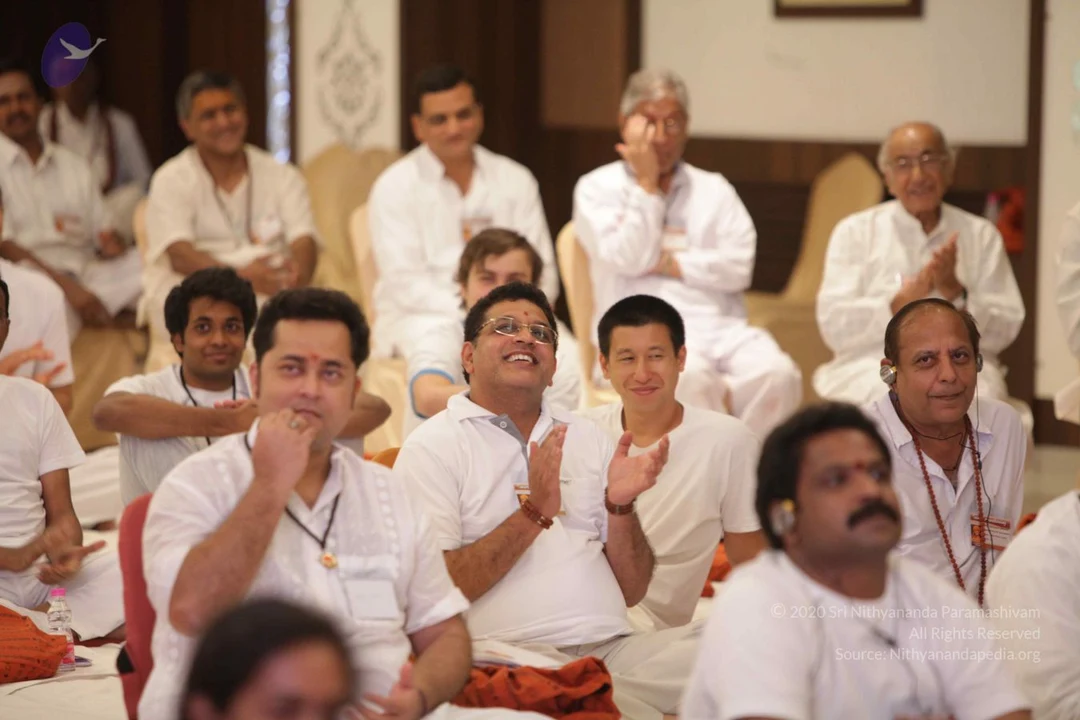
40 photosSource gallery
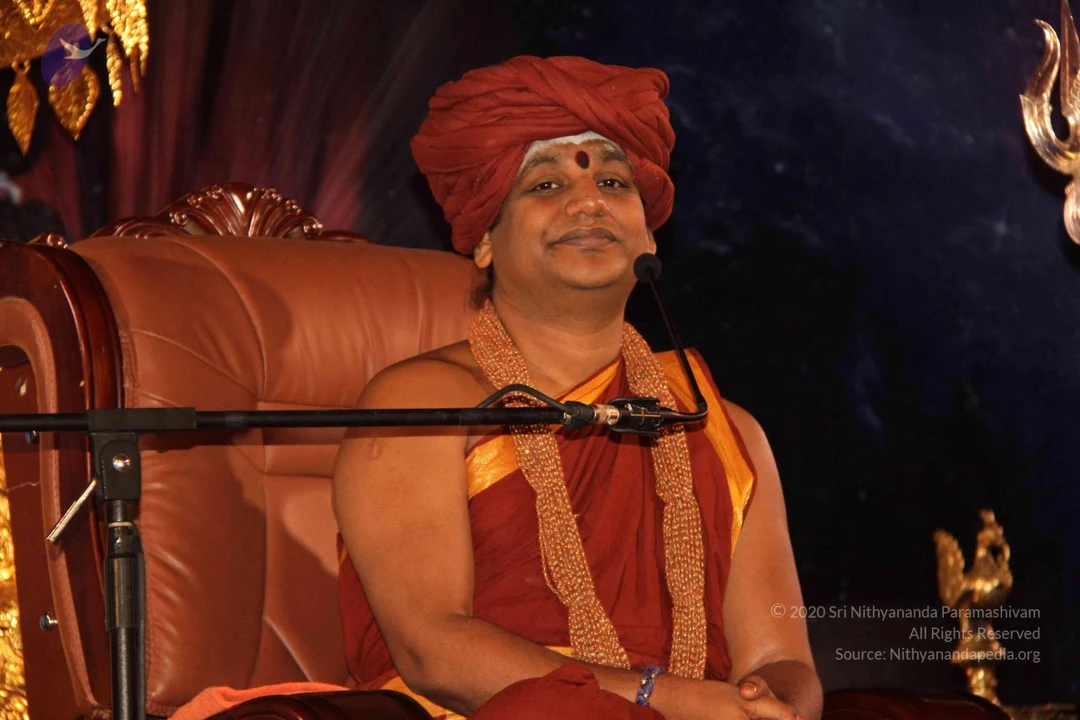
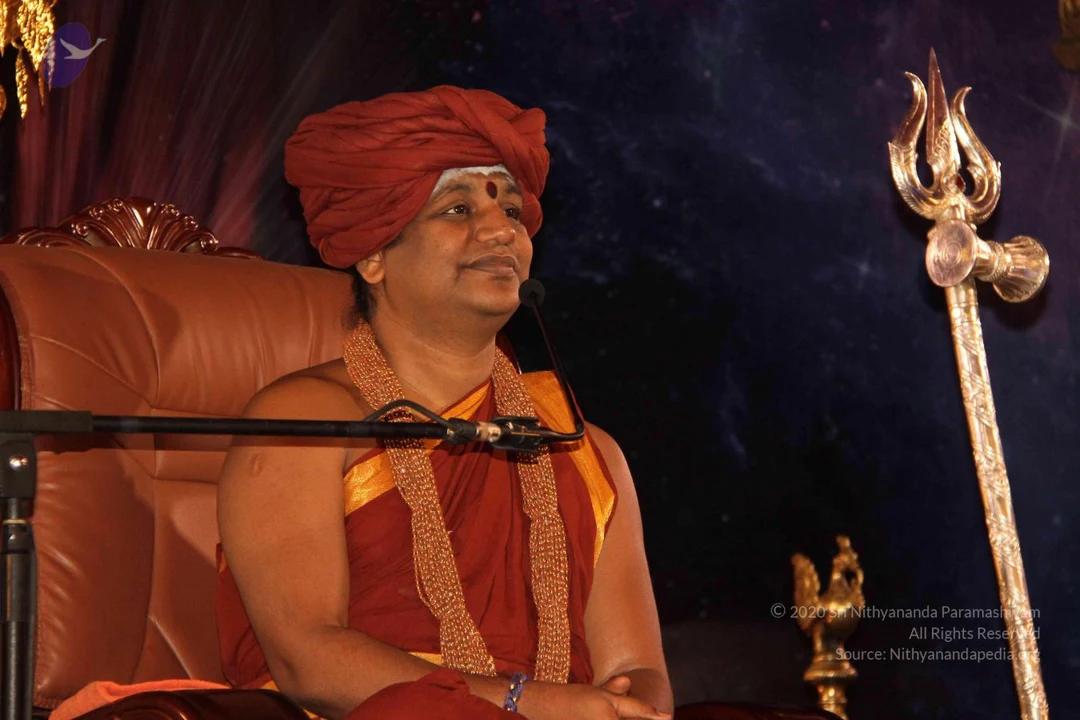
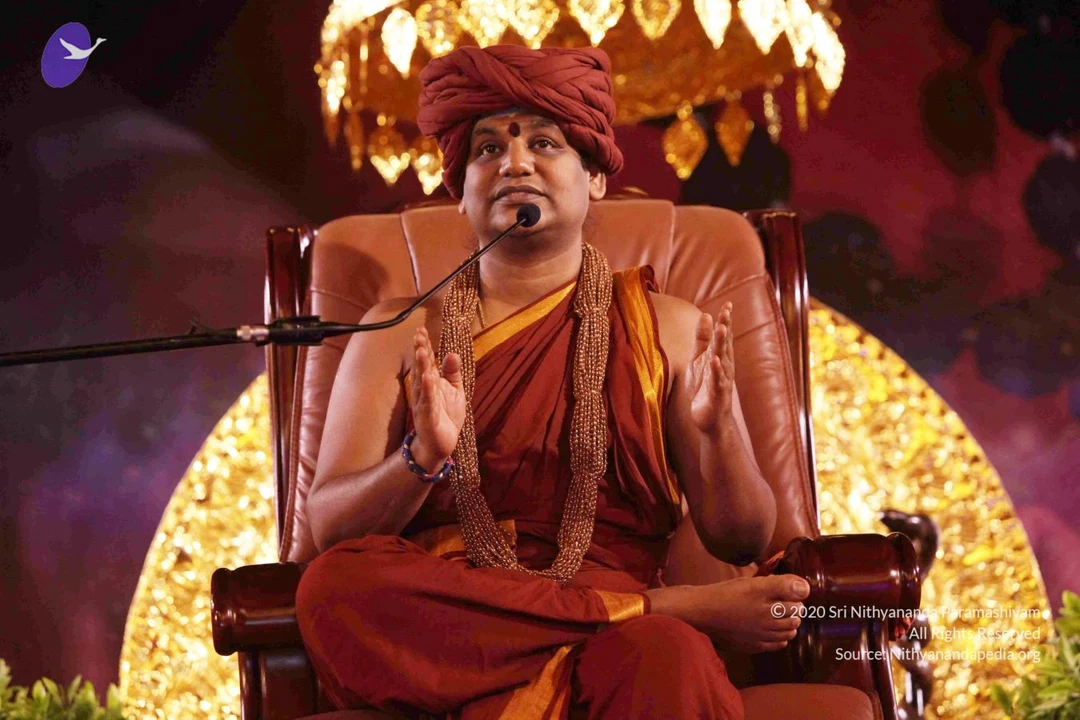
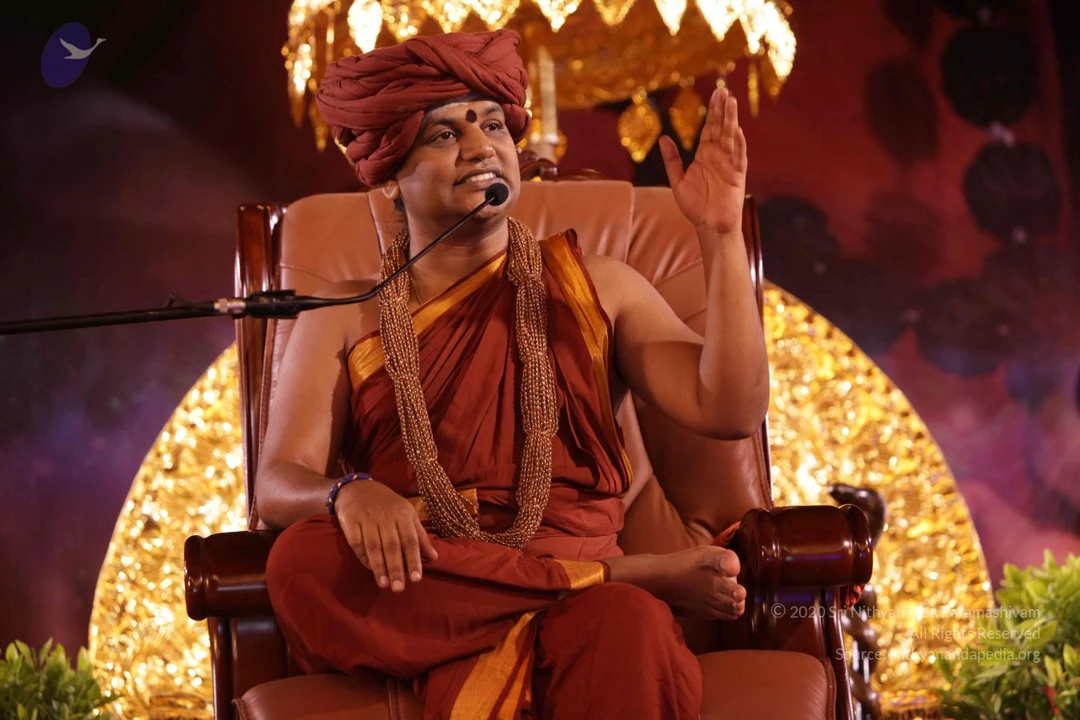
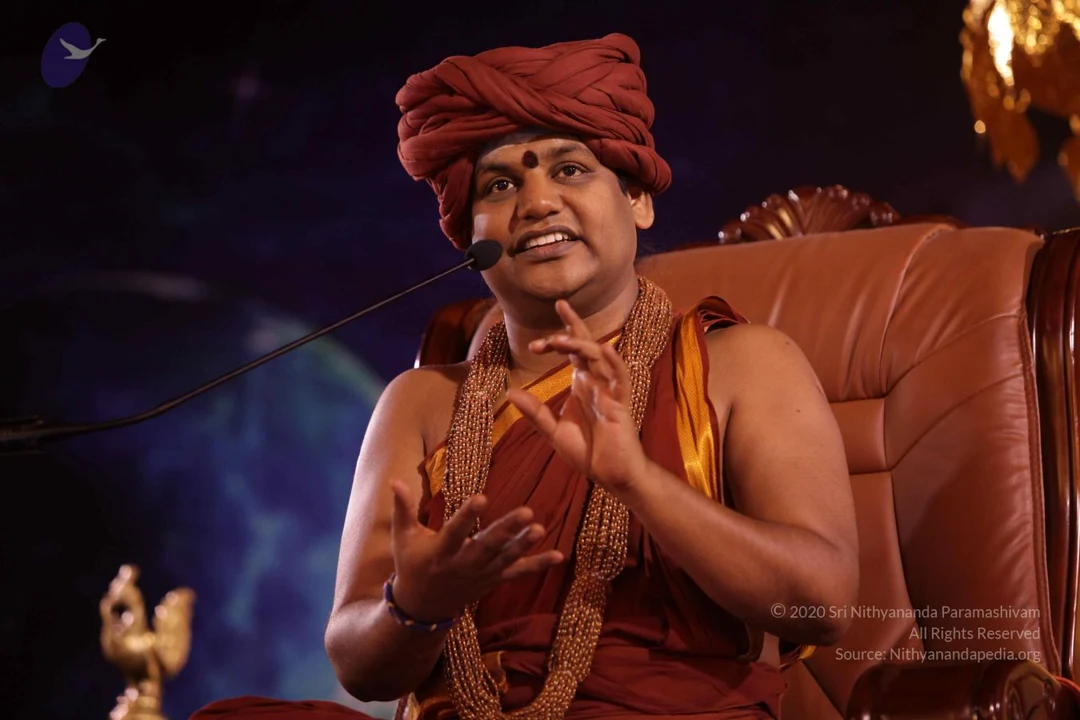
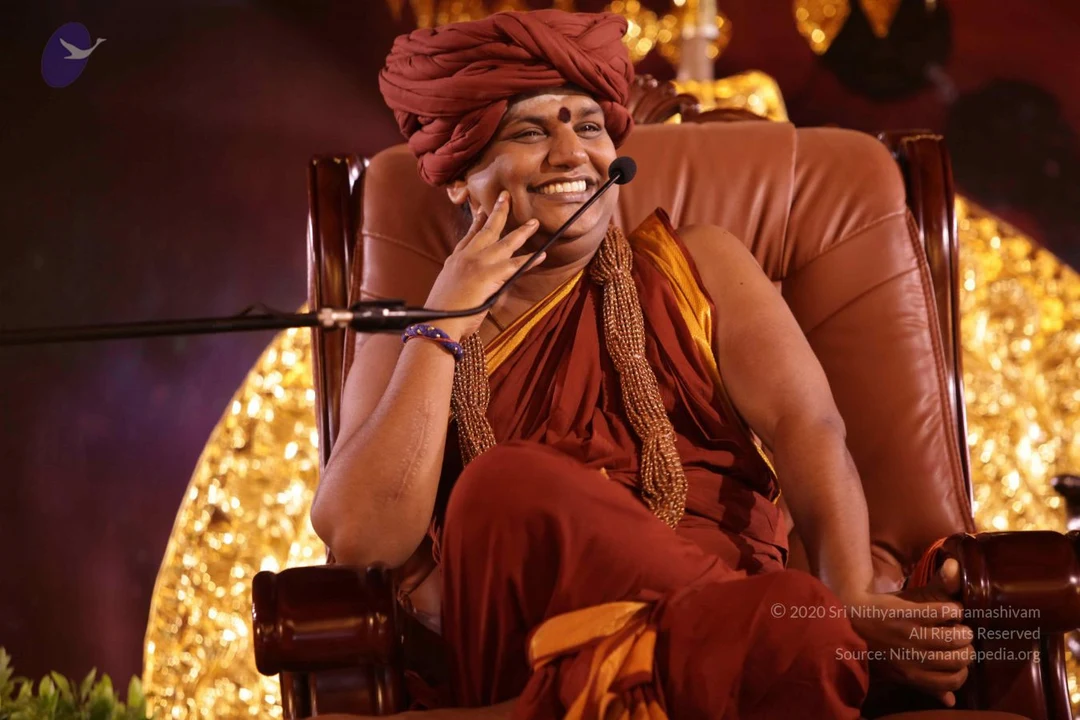
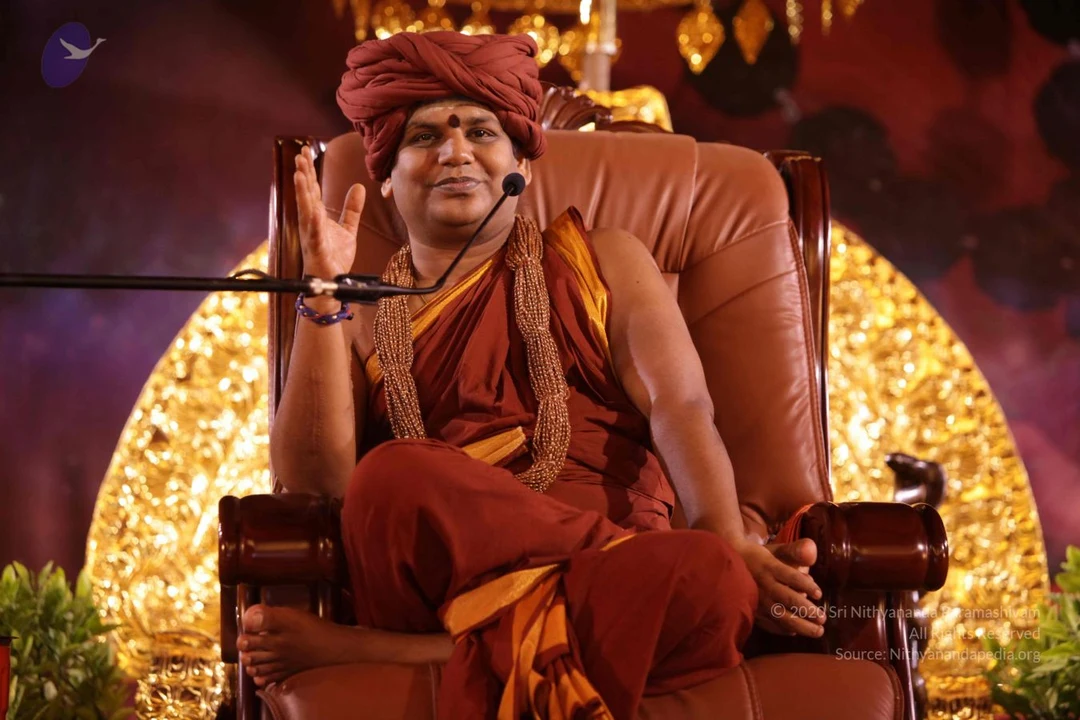
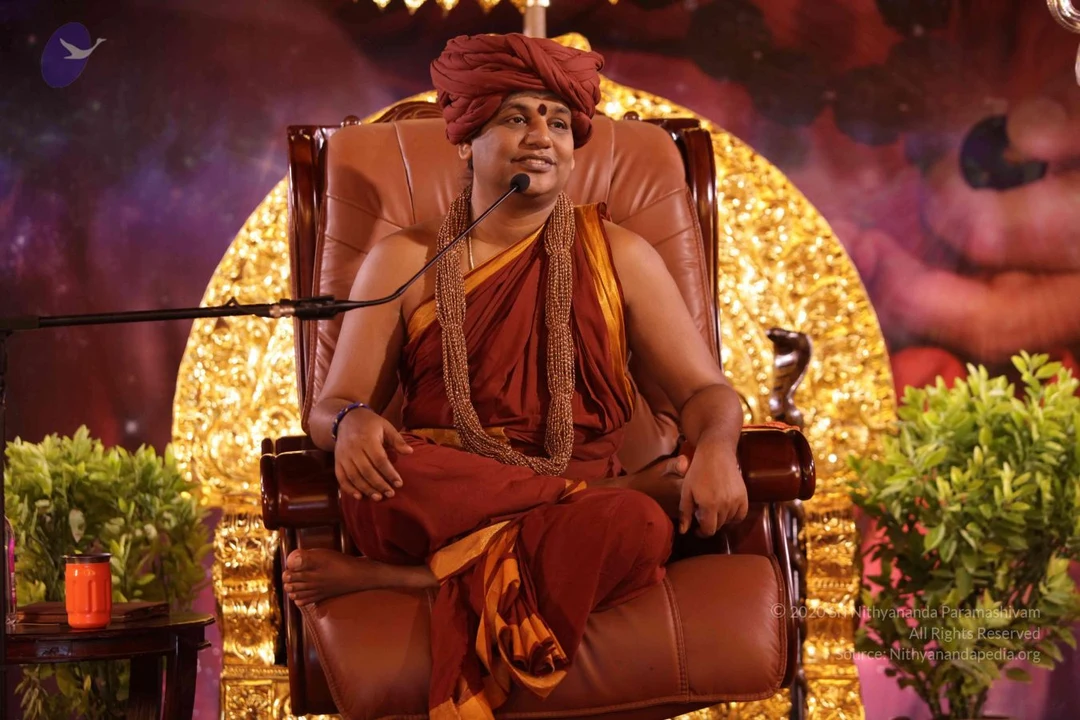
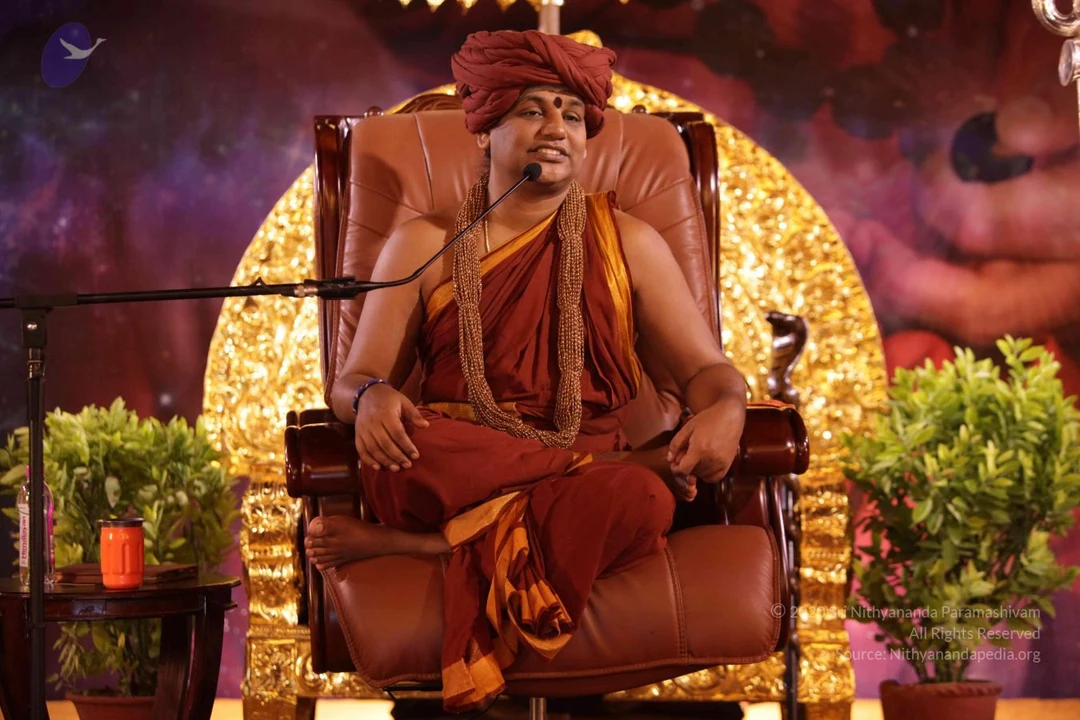
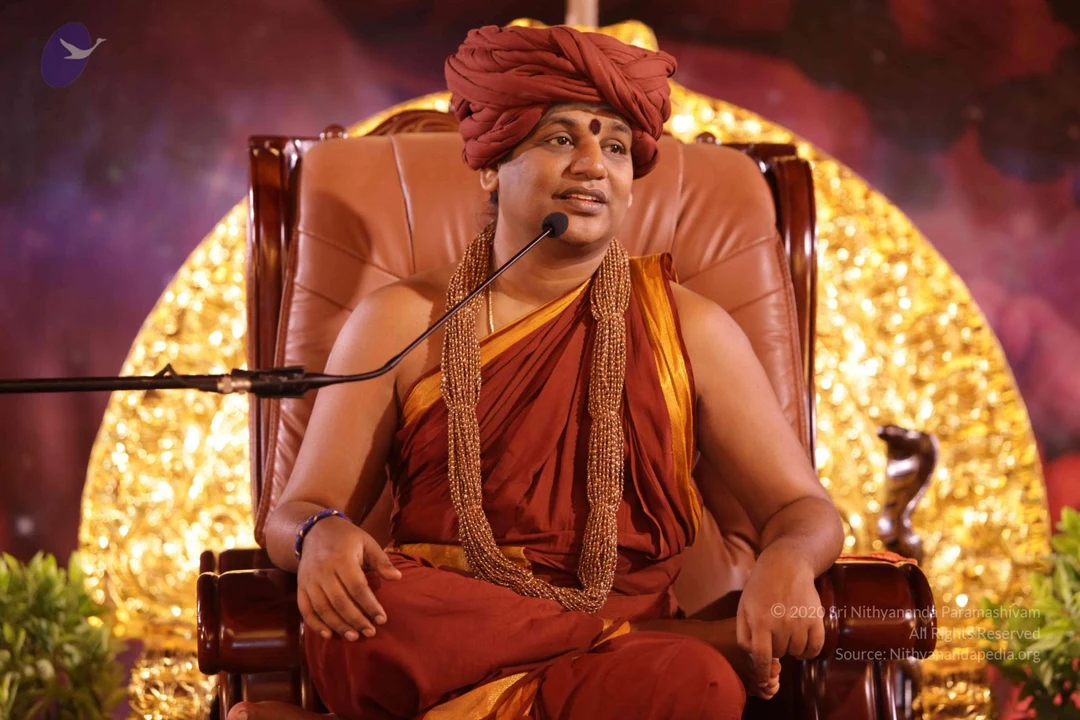
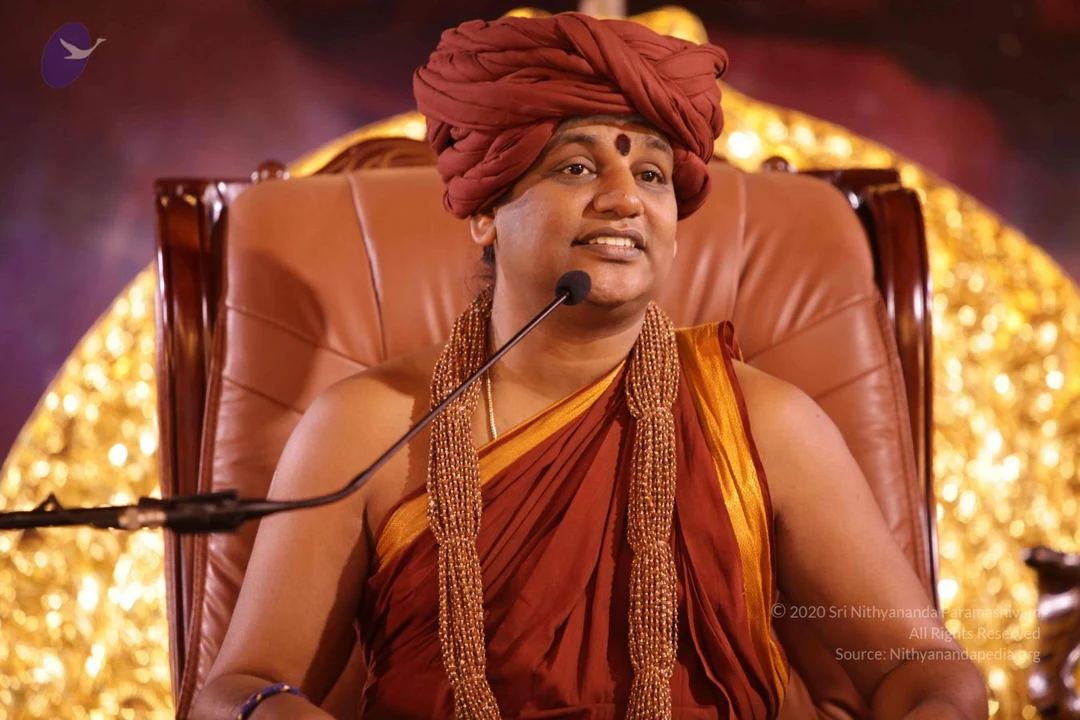
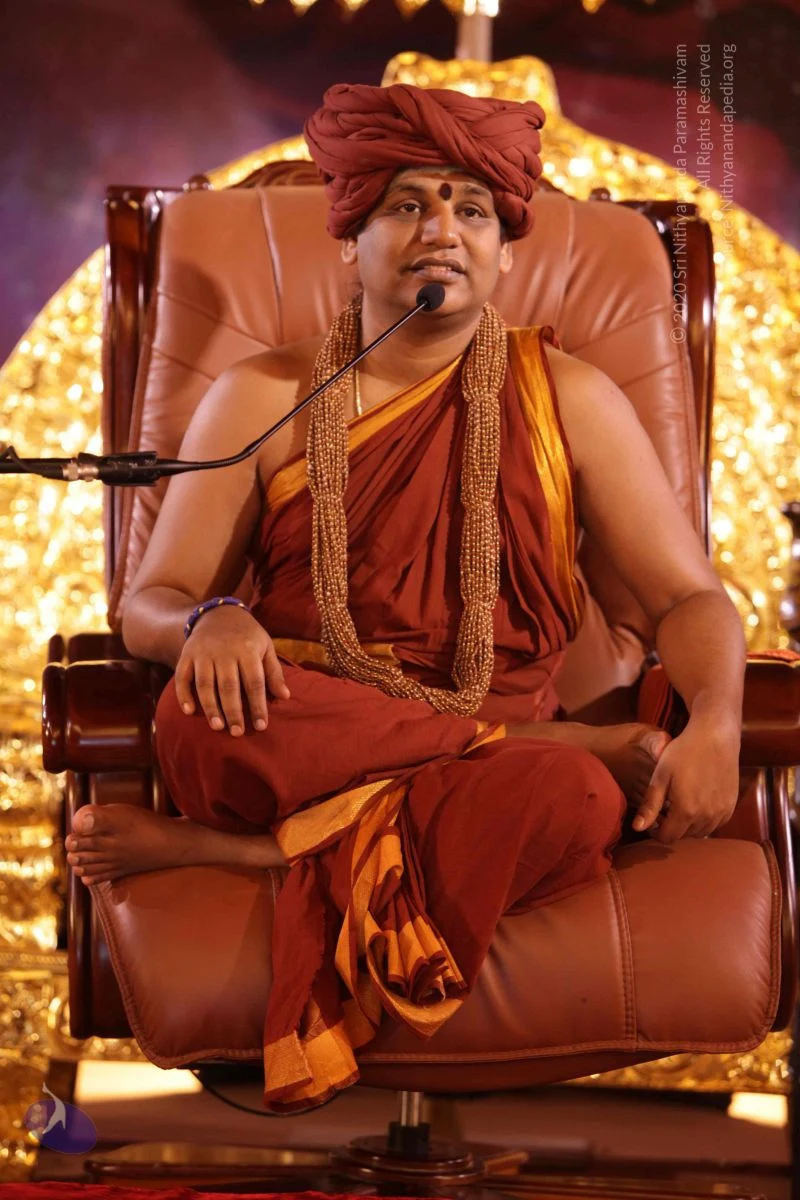
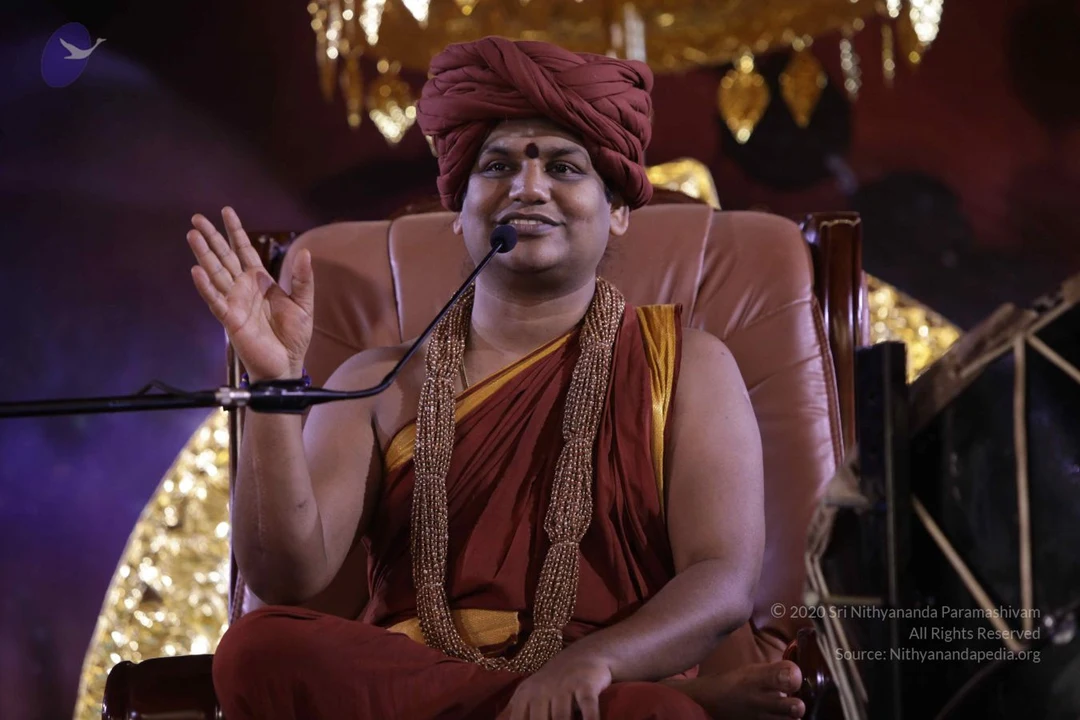
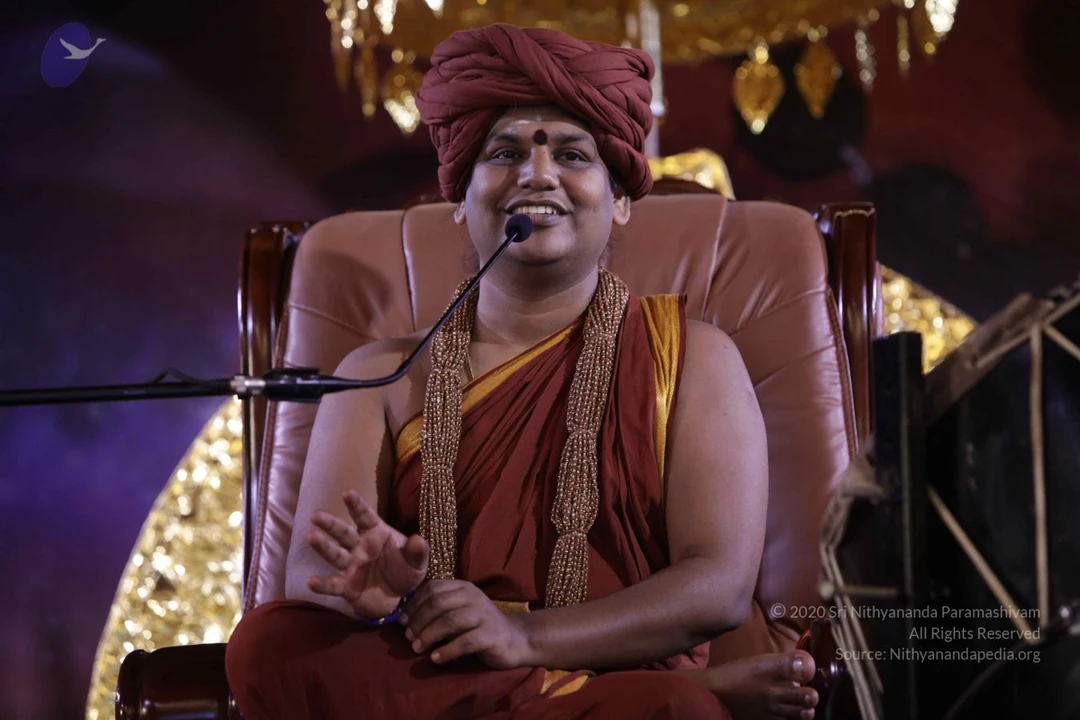
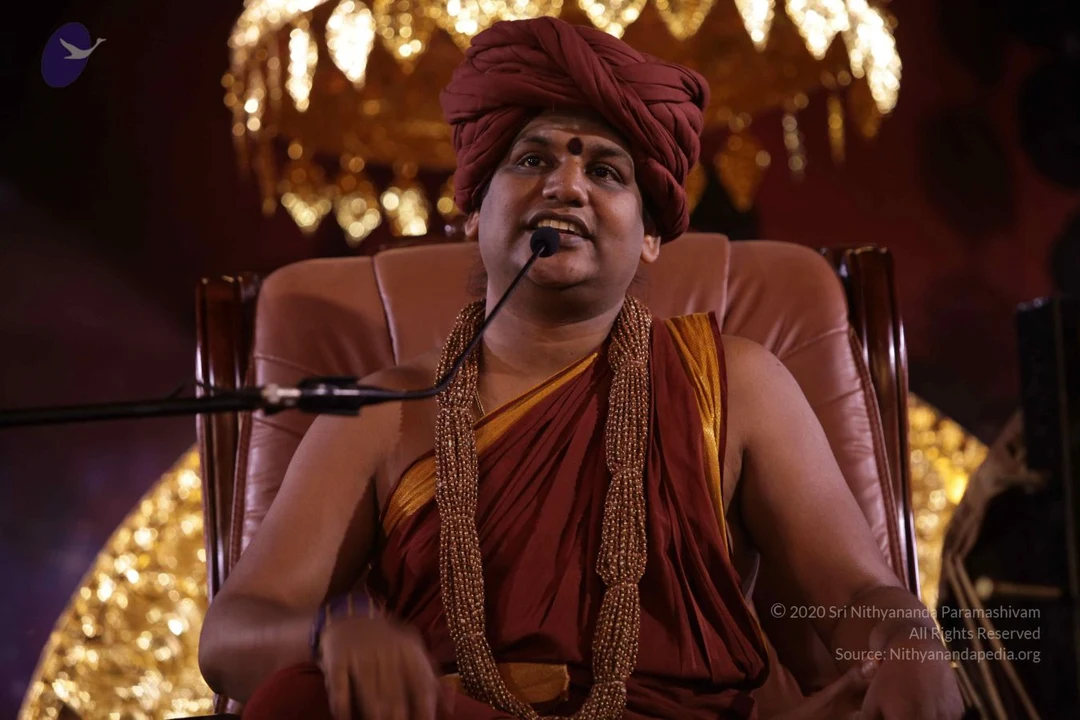
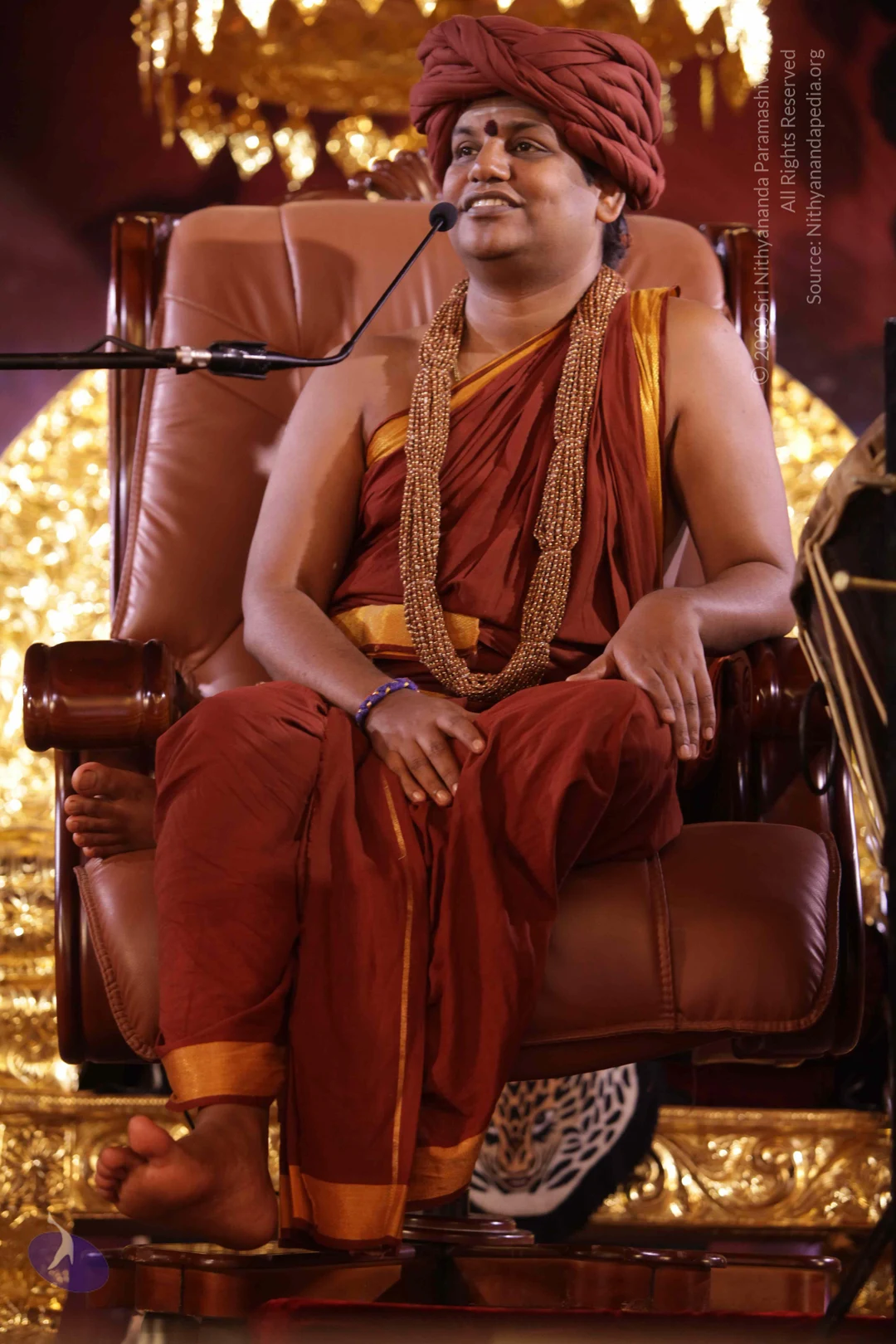
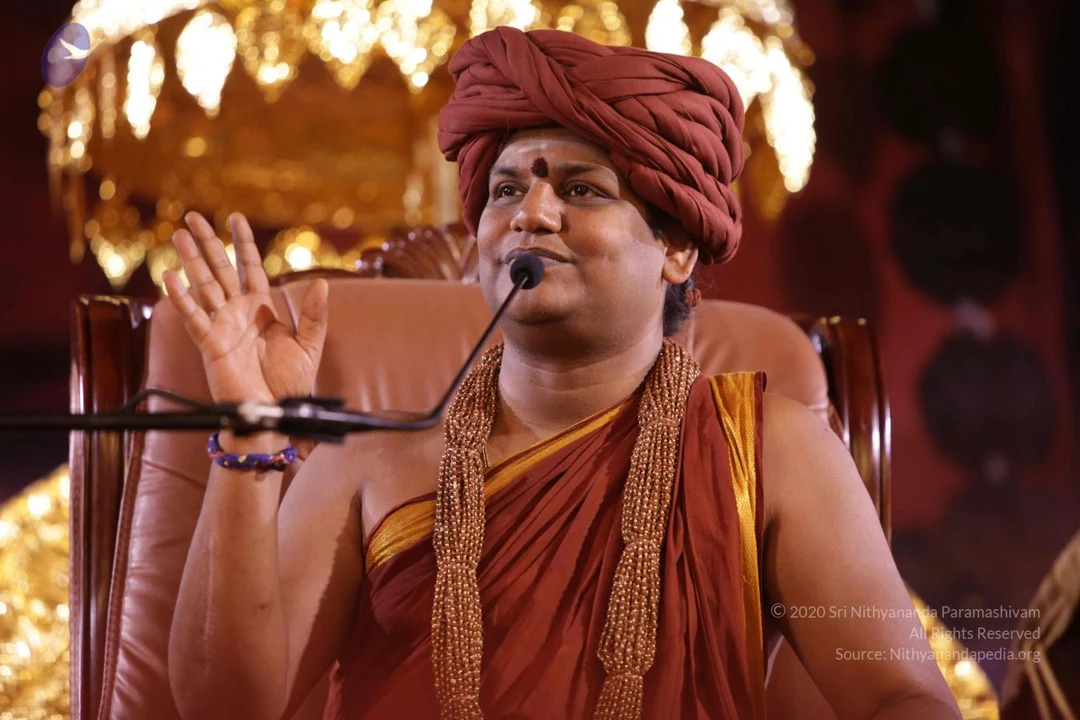
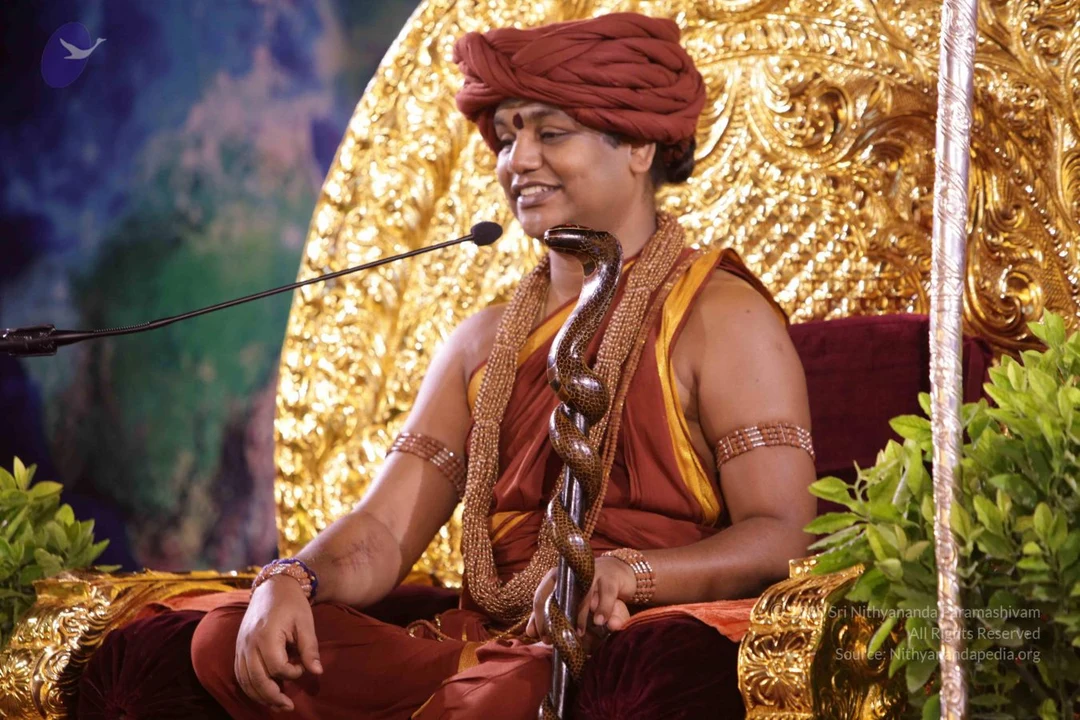
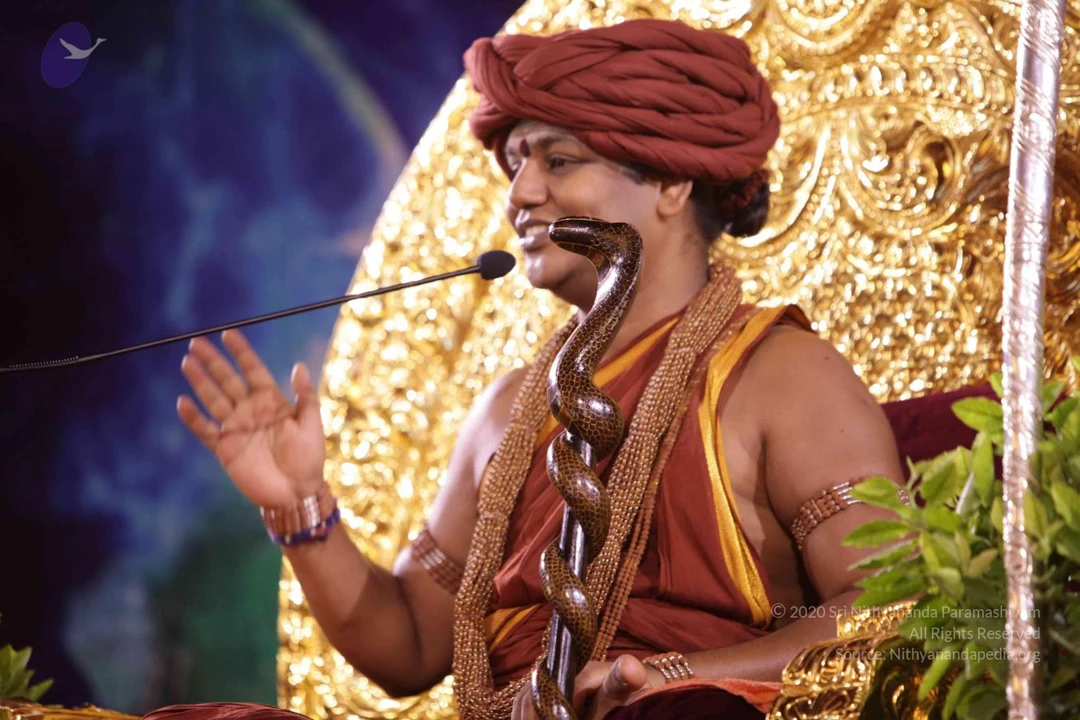
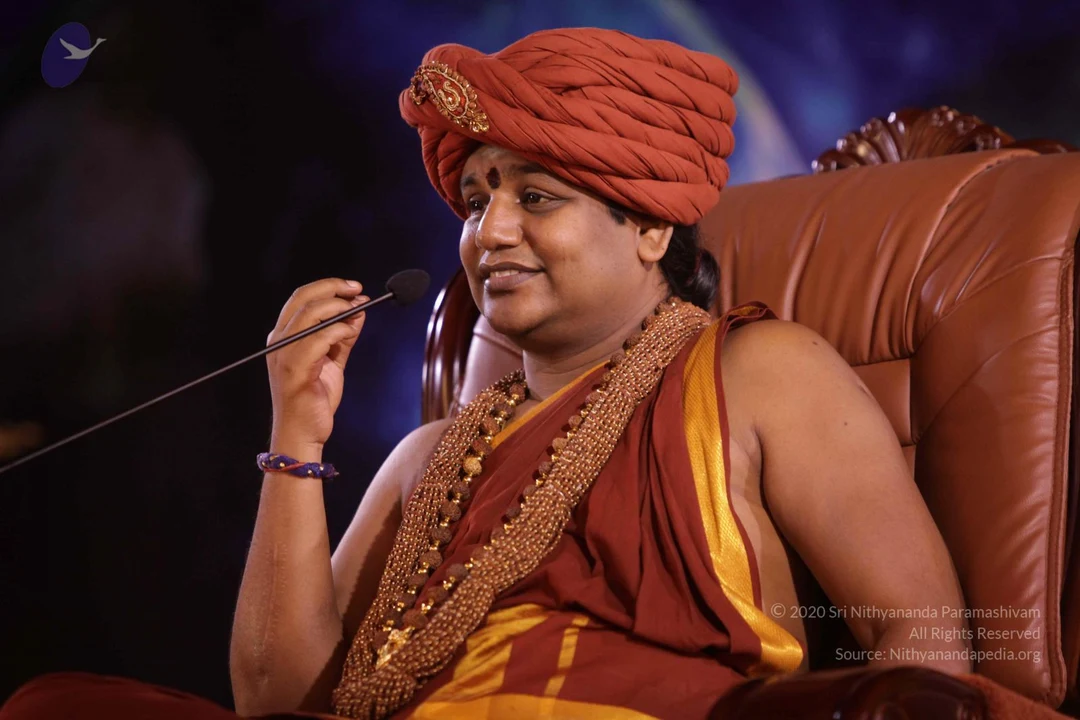
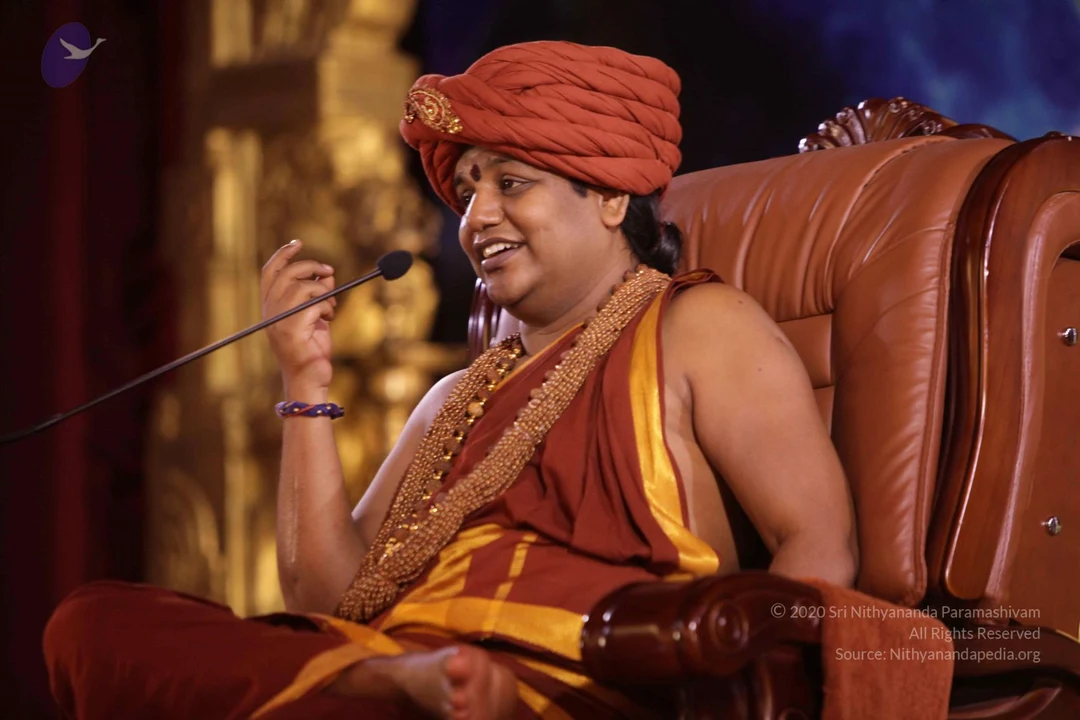
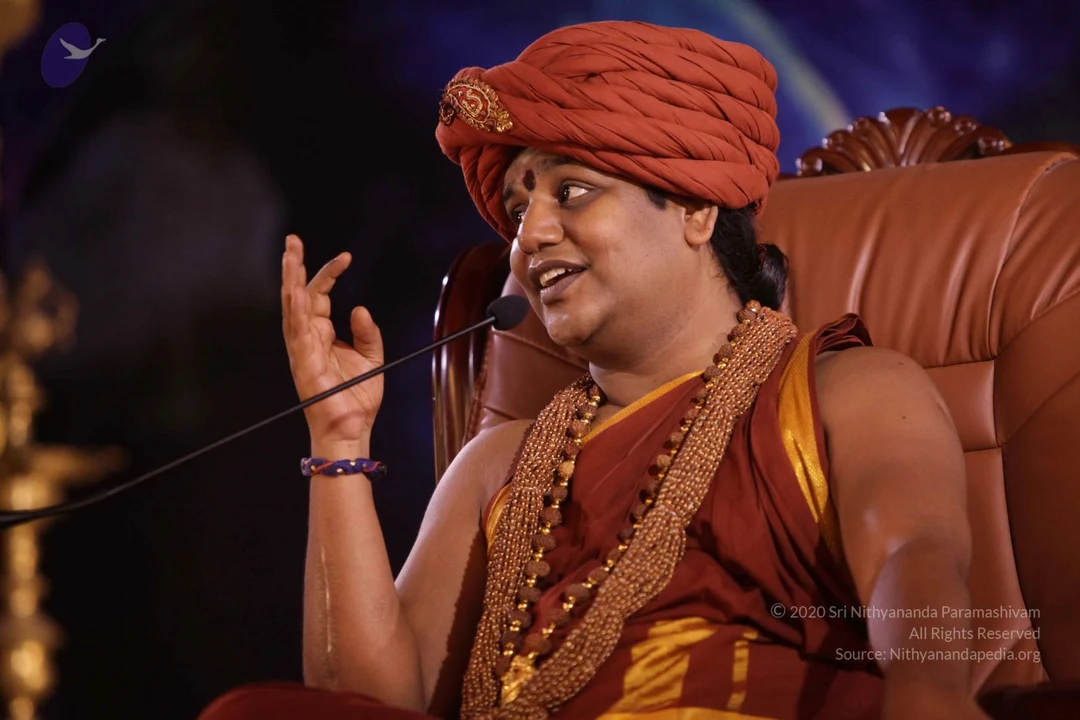
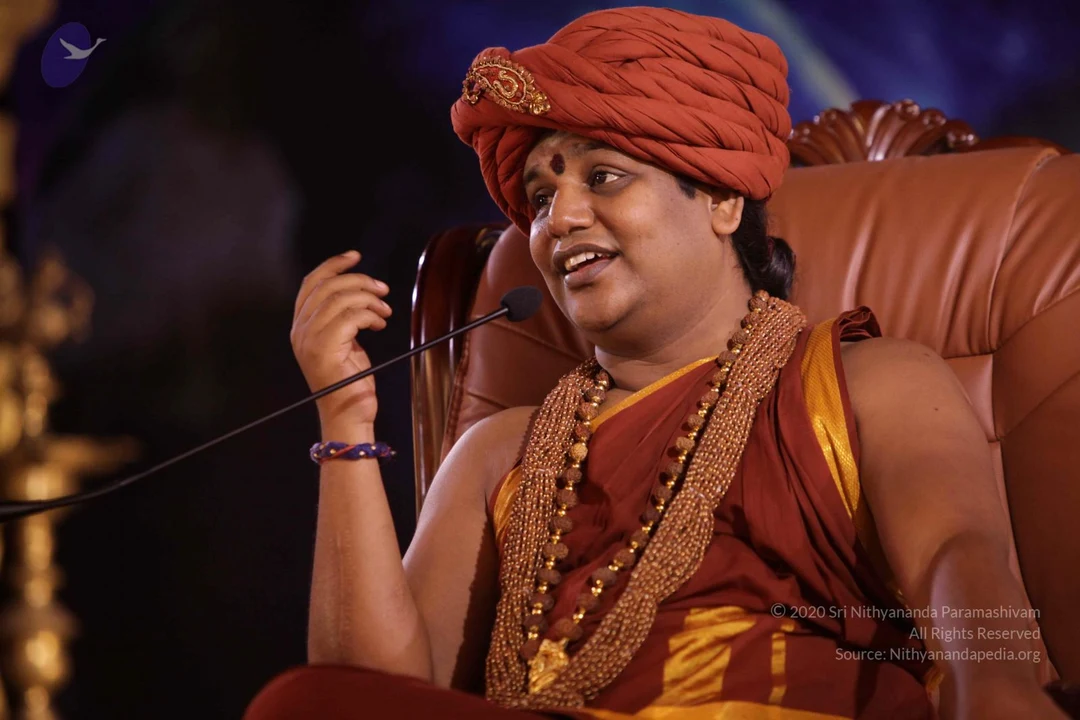
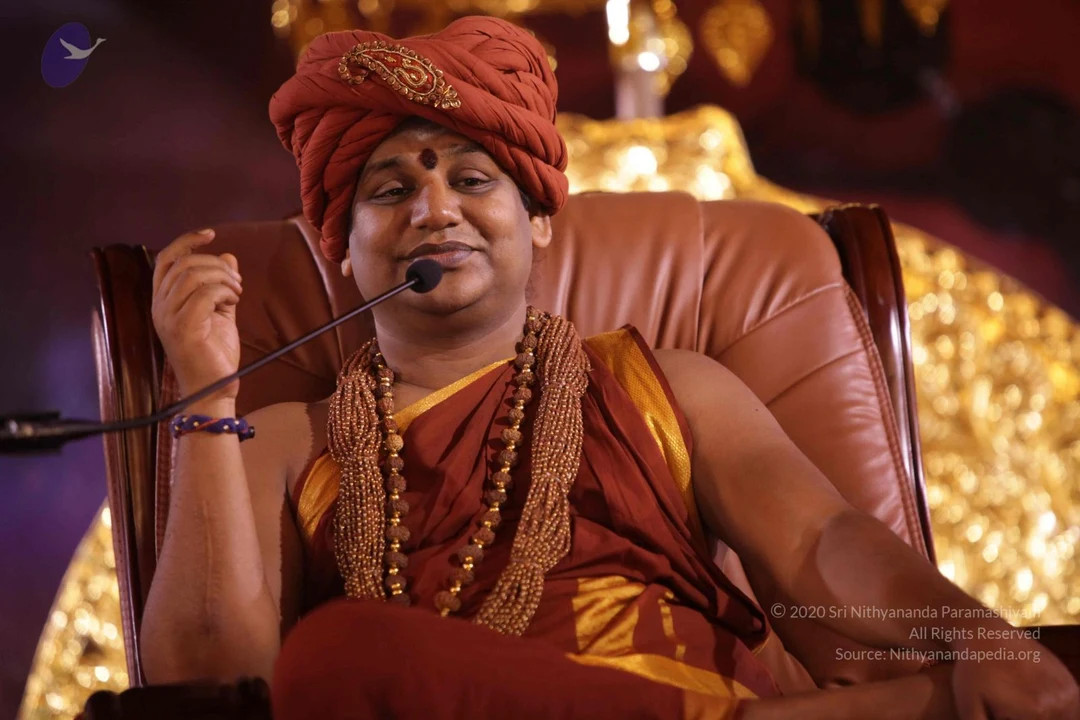
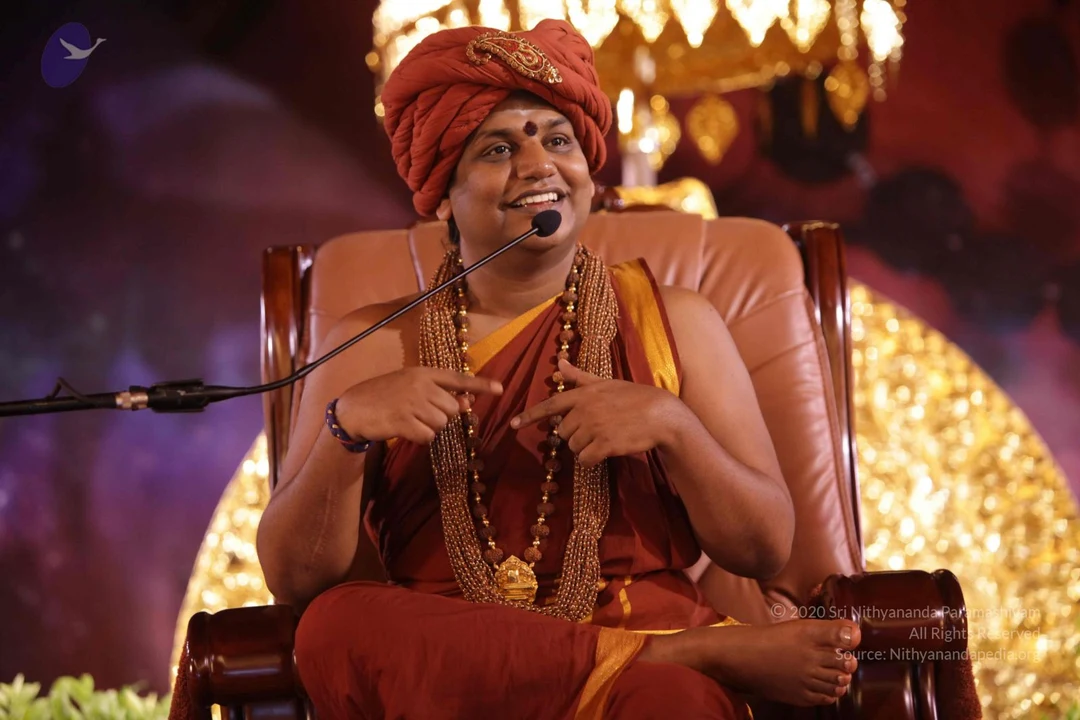
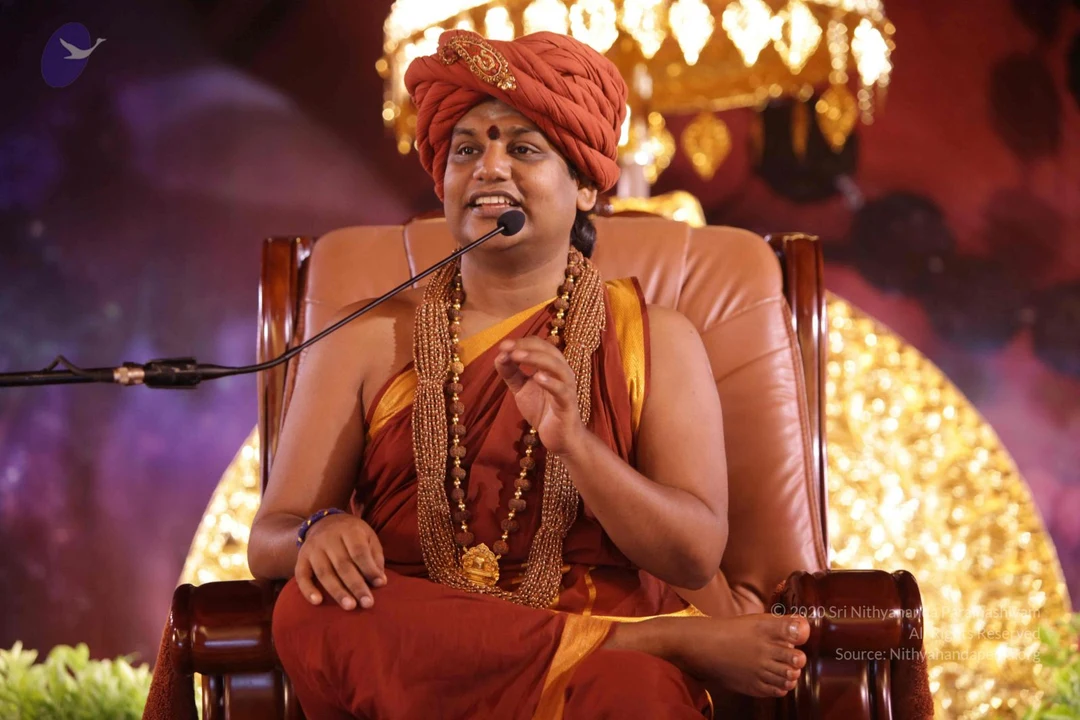
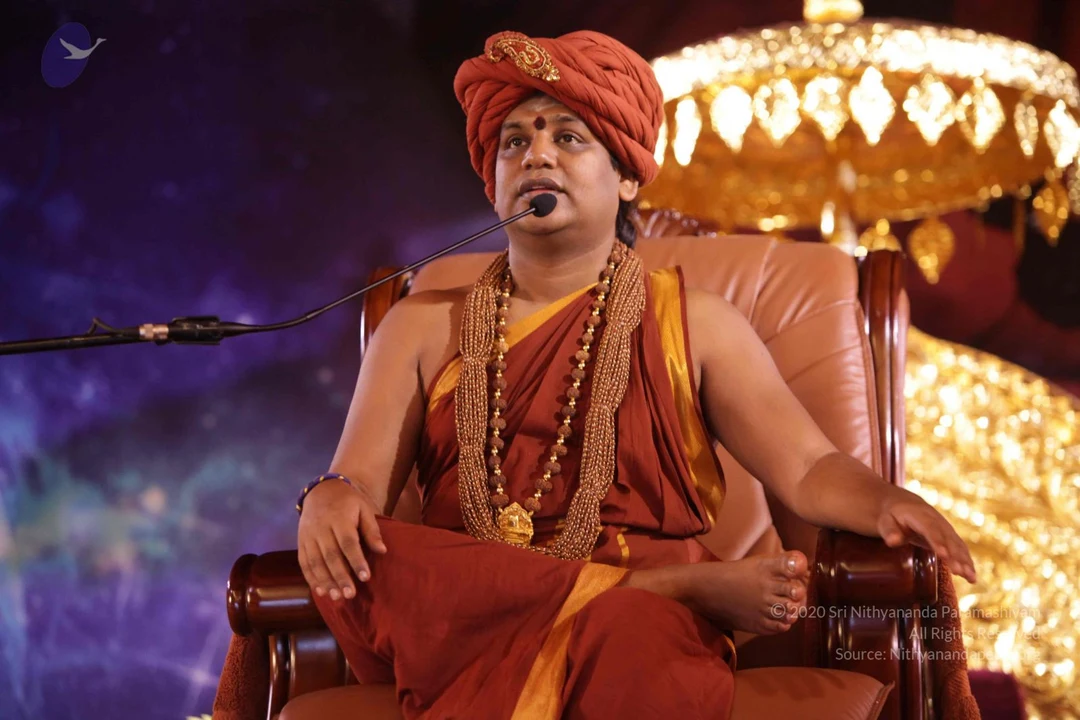
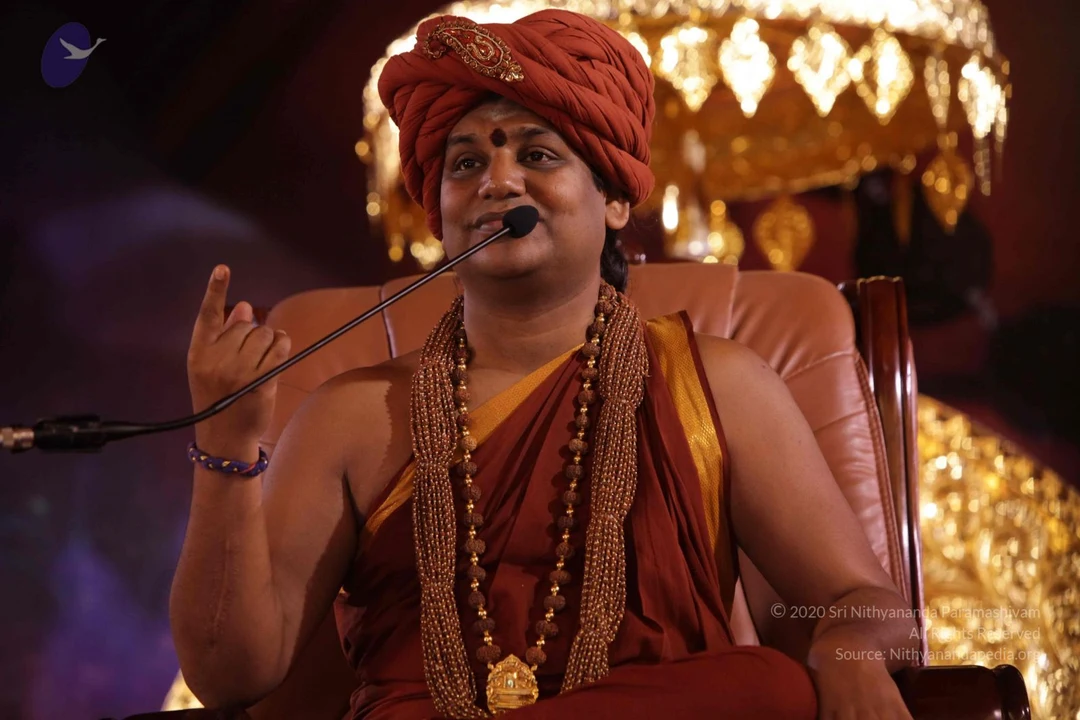
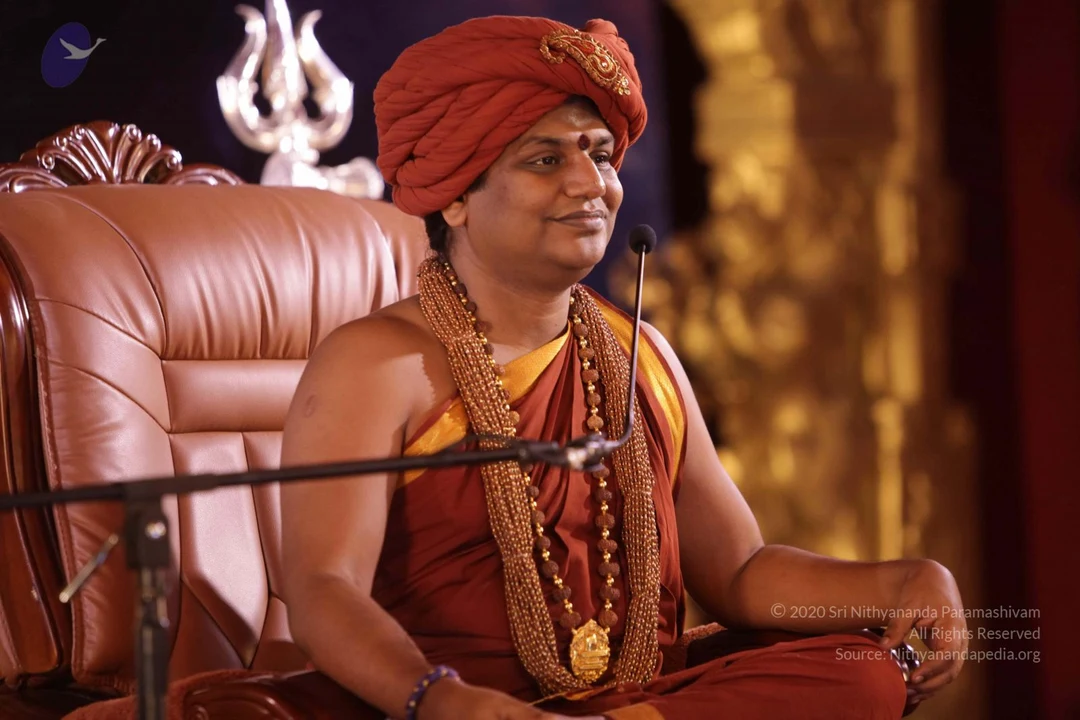
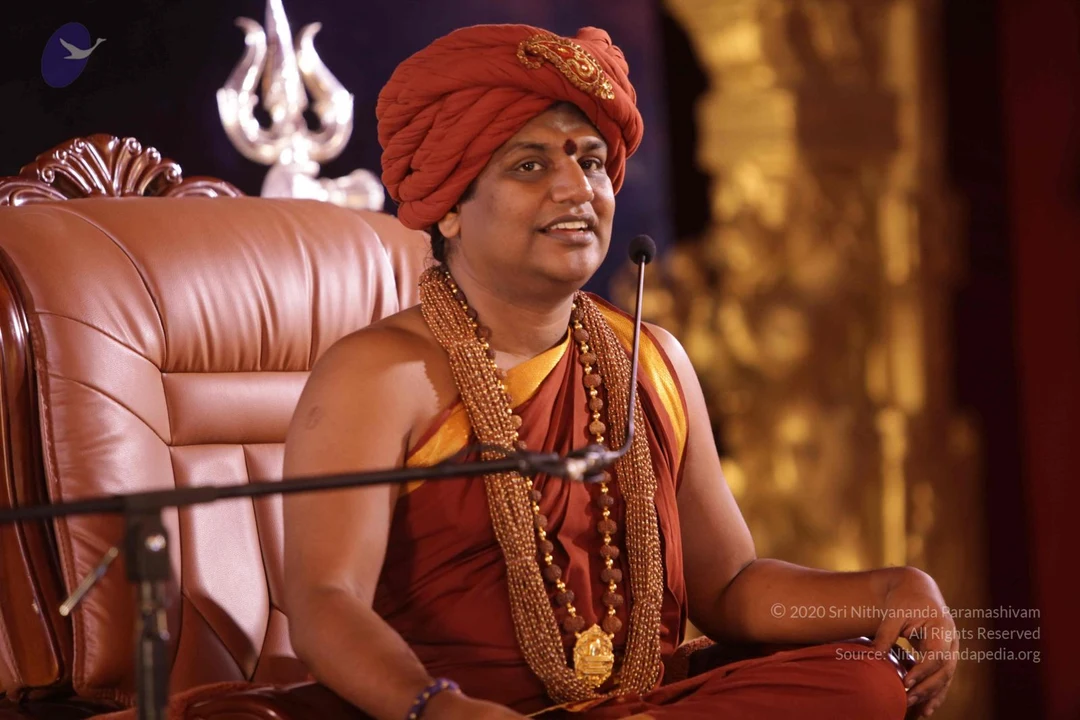
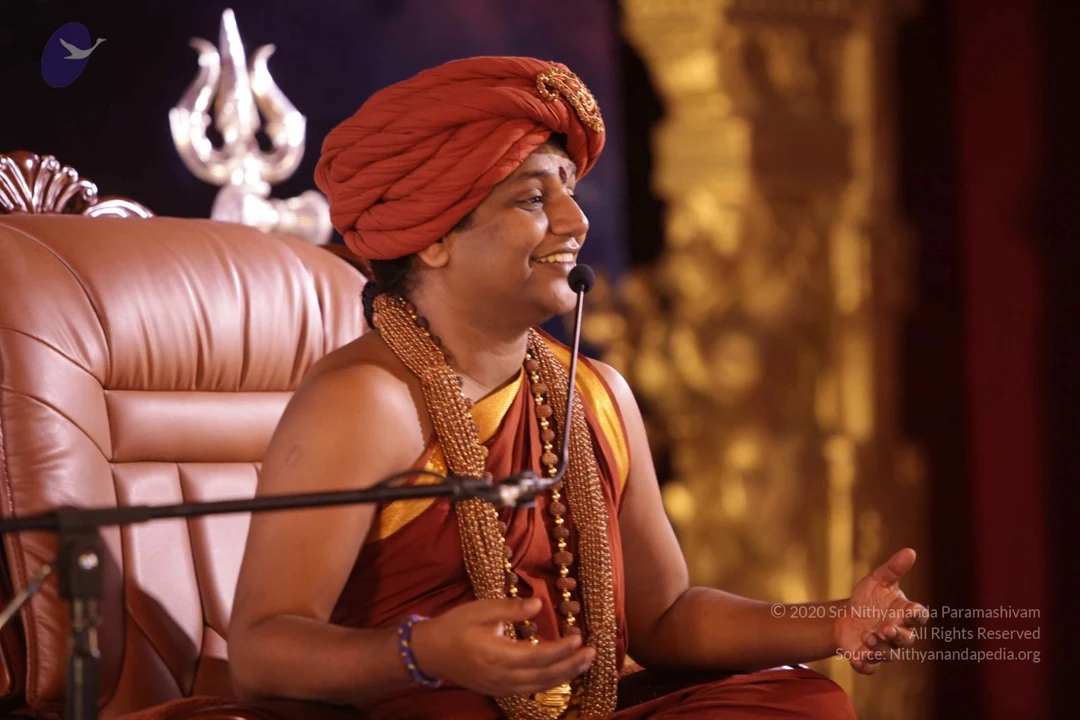
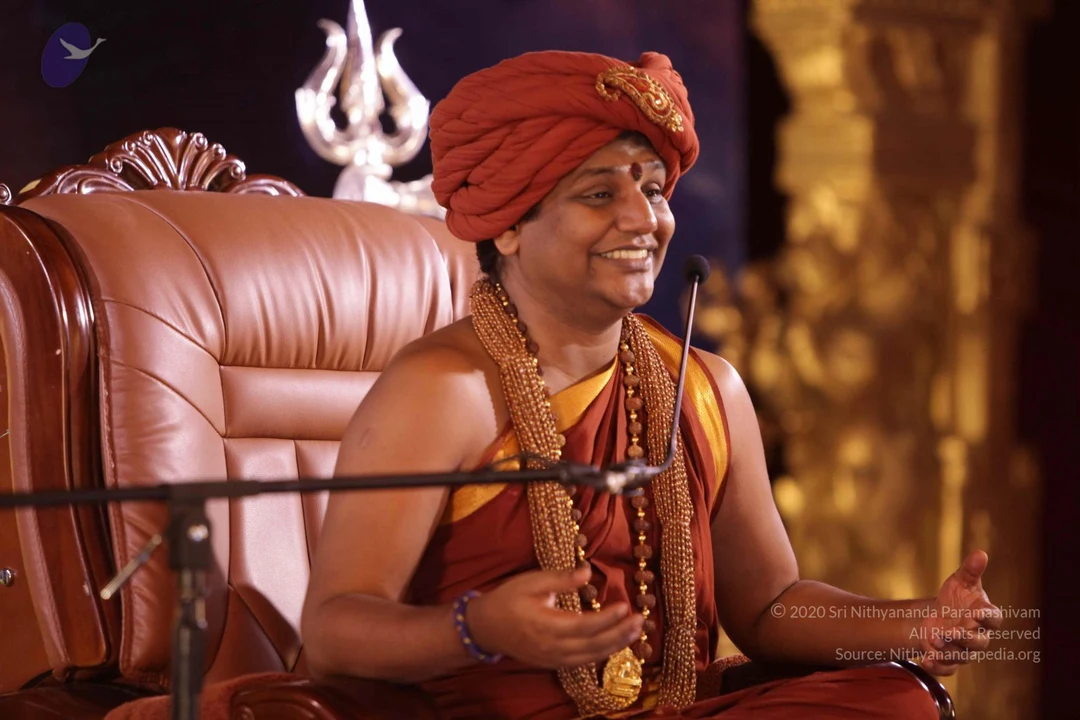
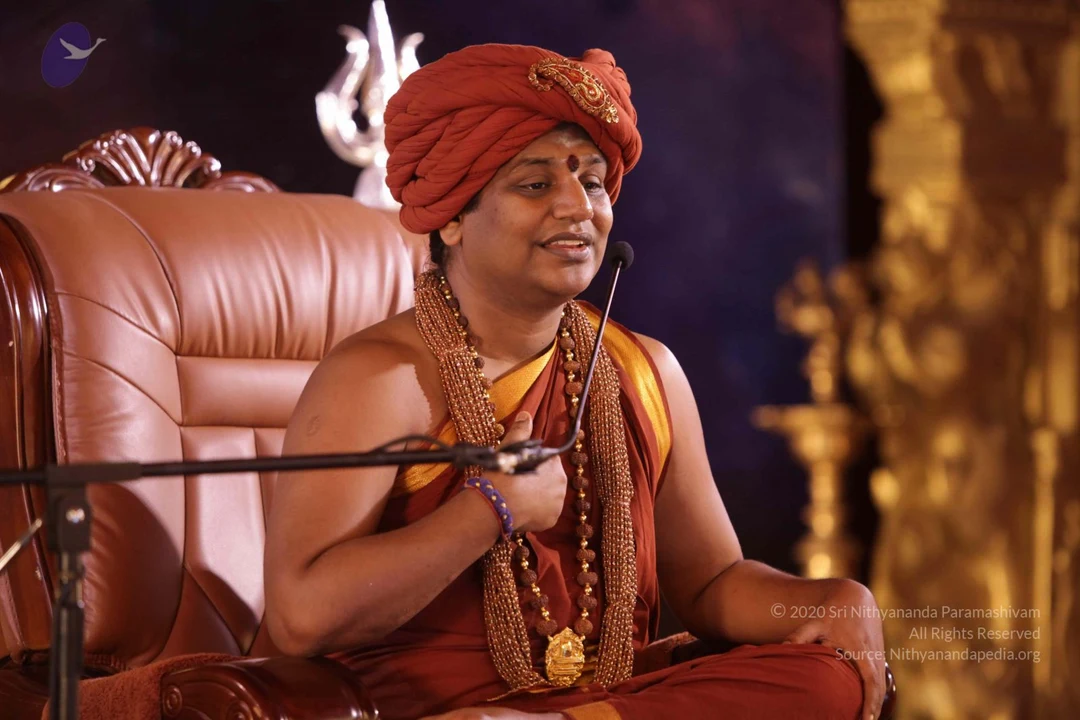
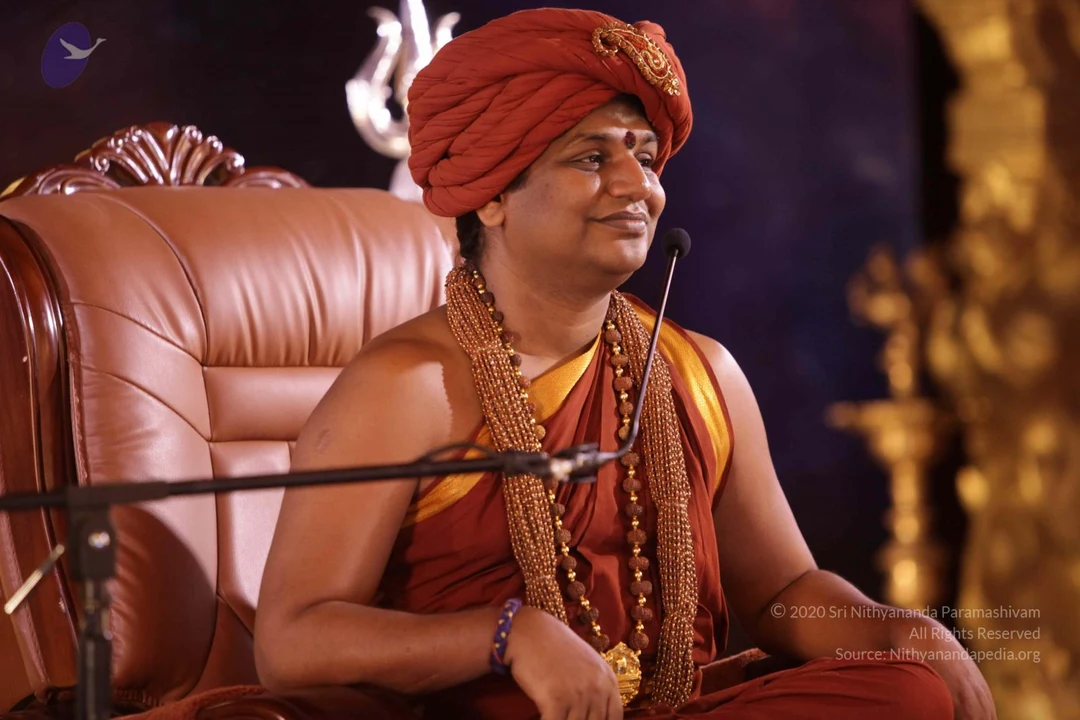
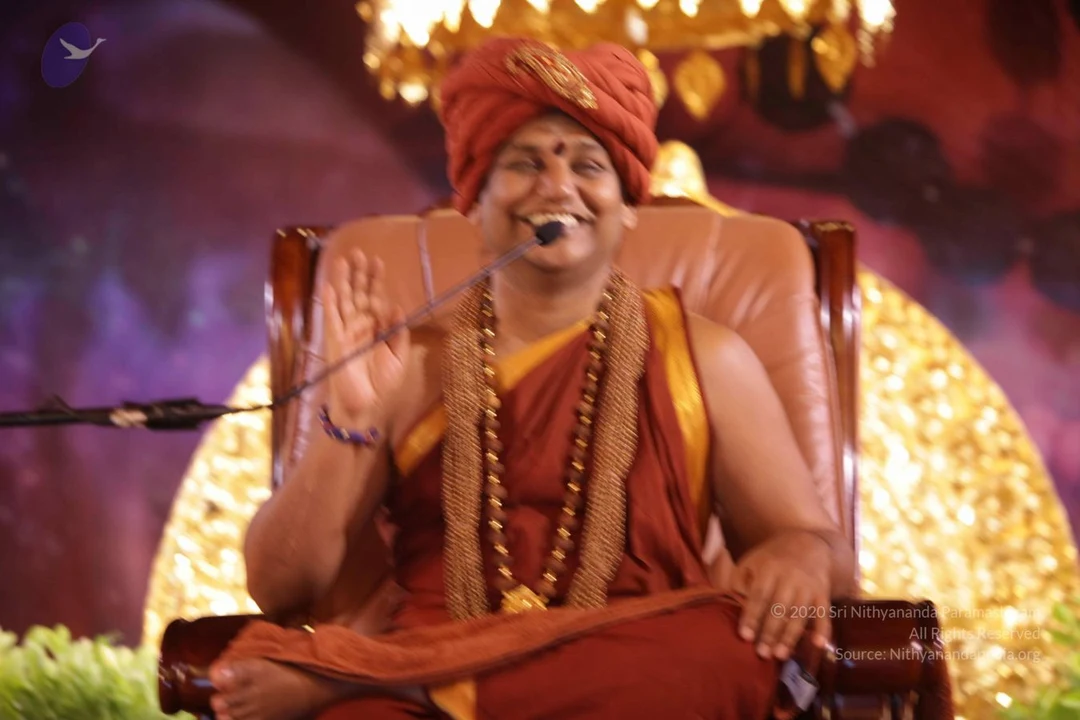
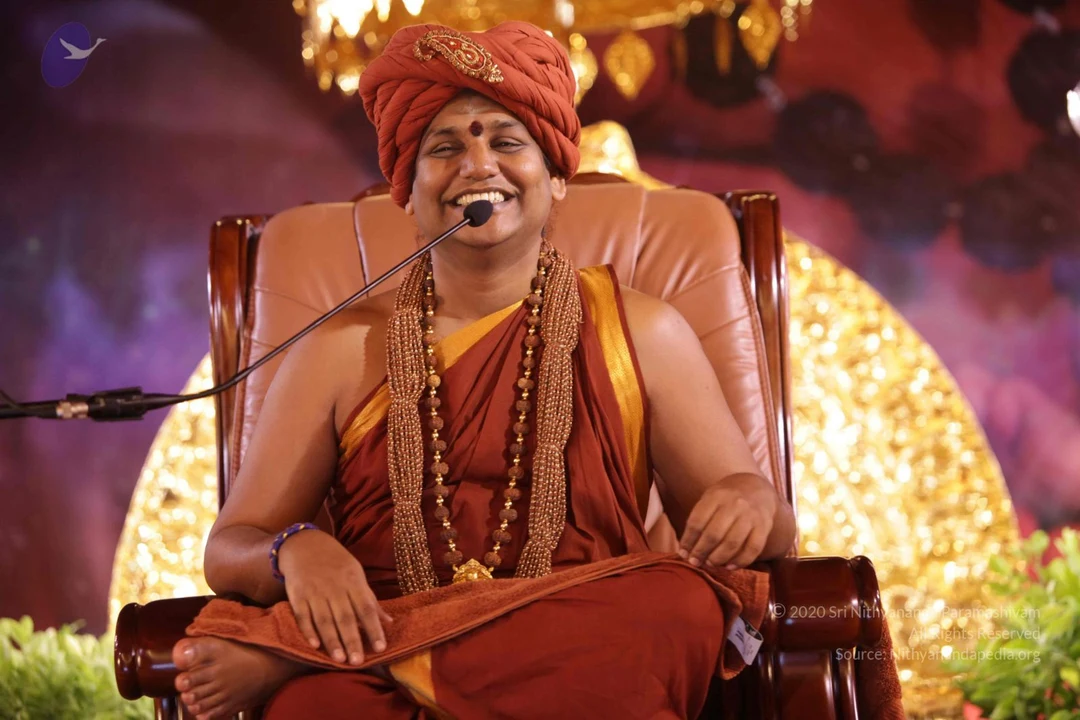
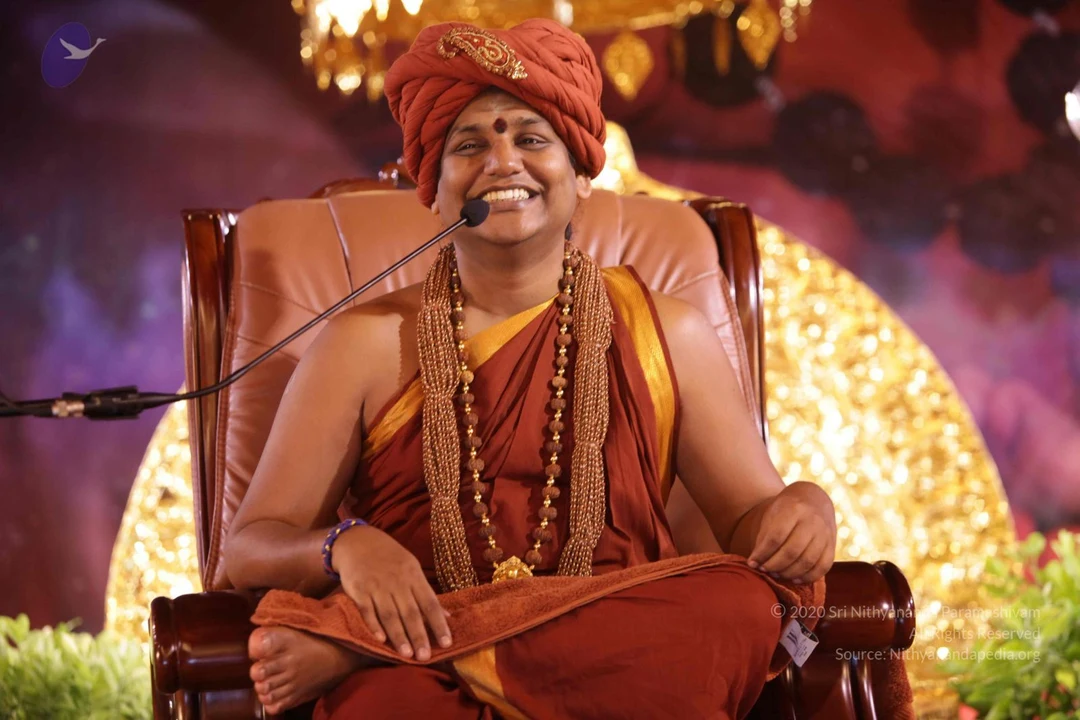
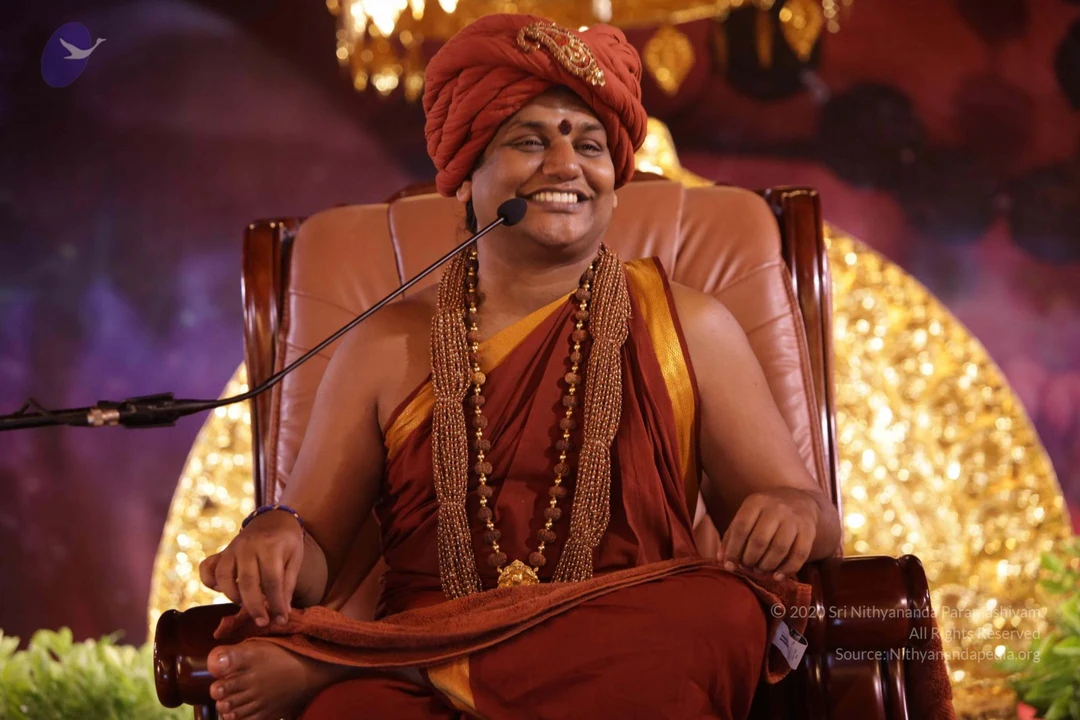
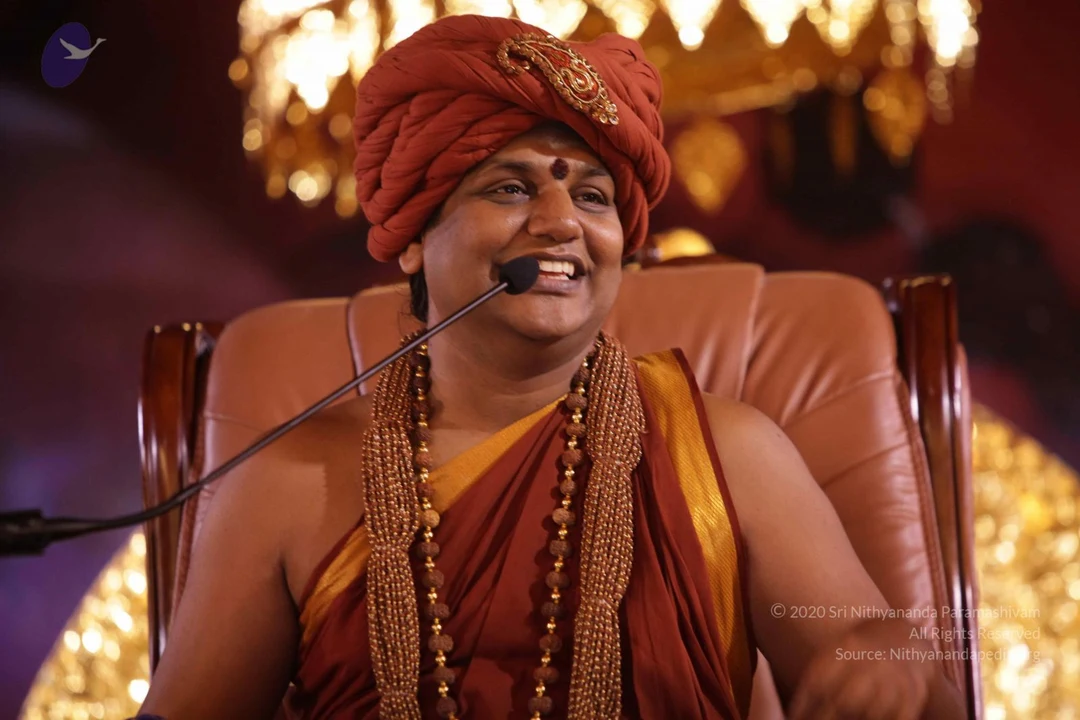
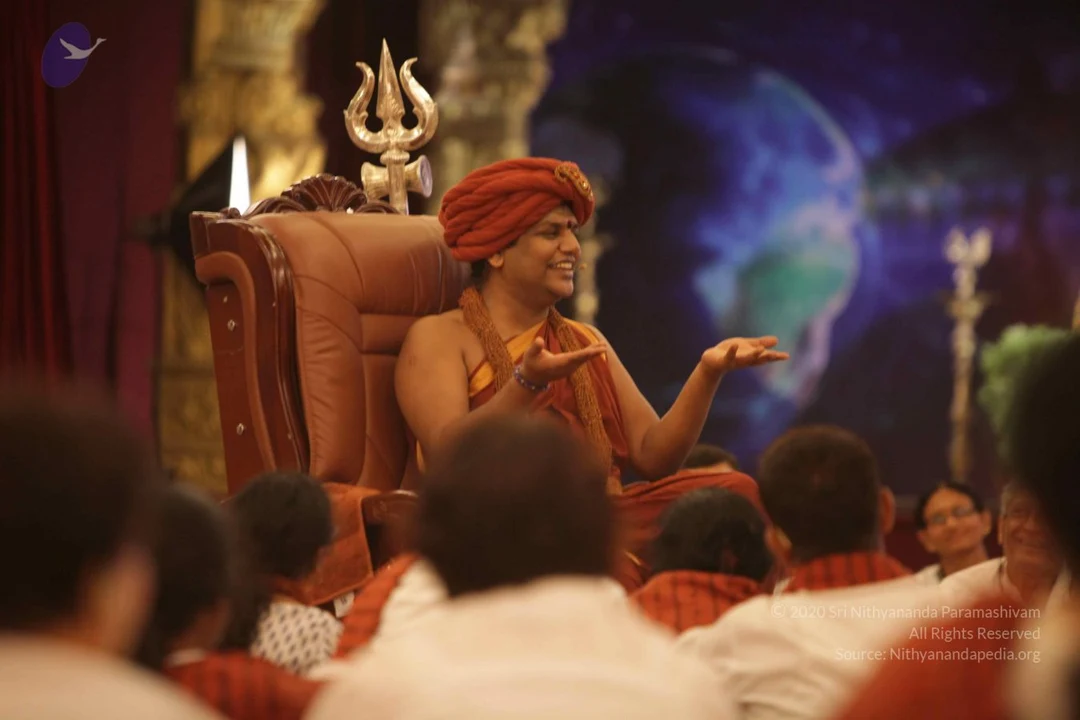
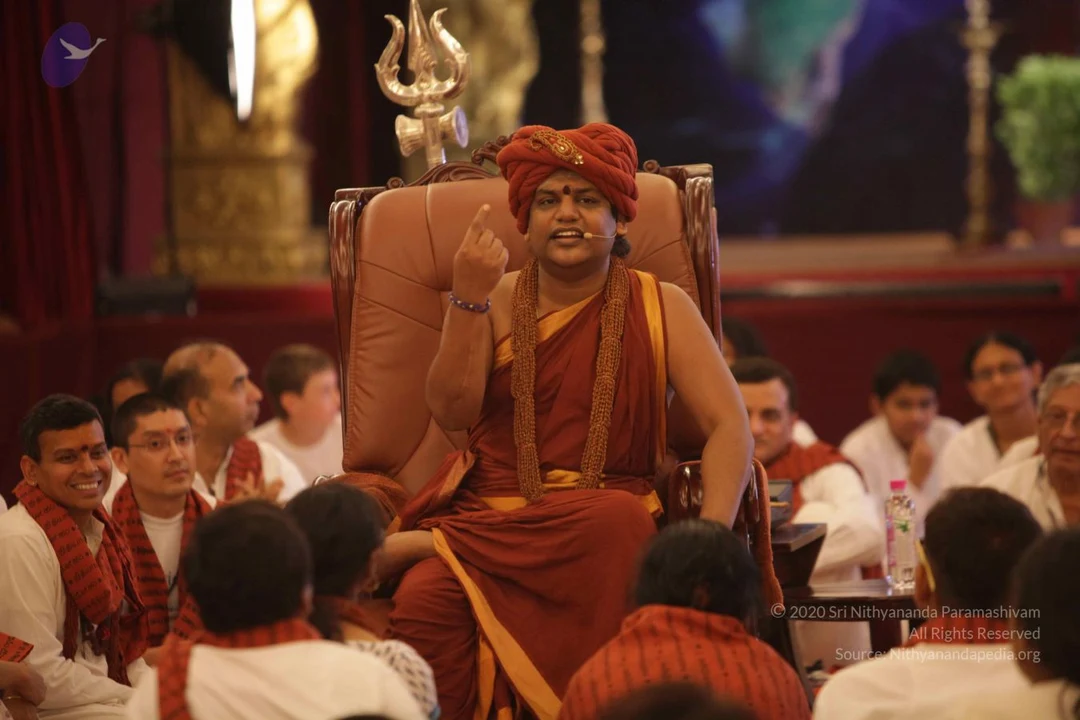
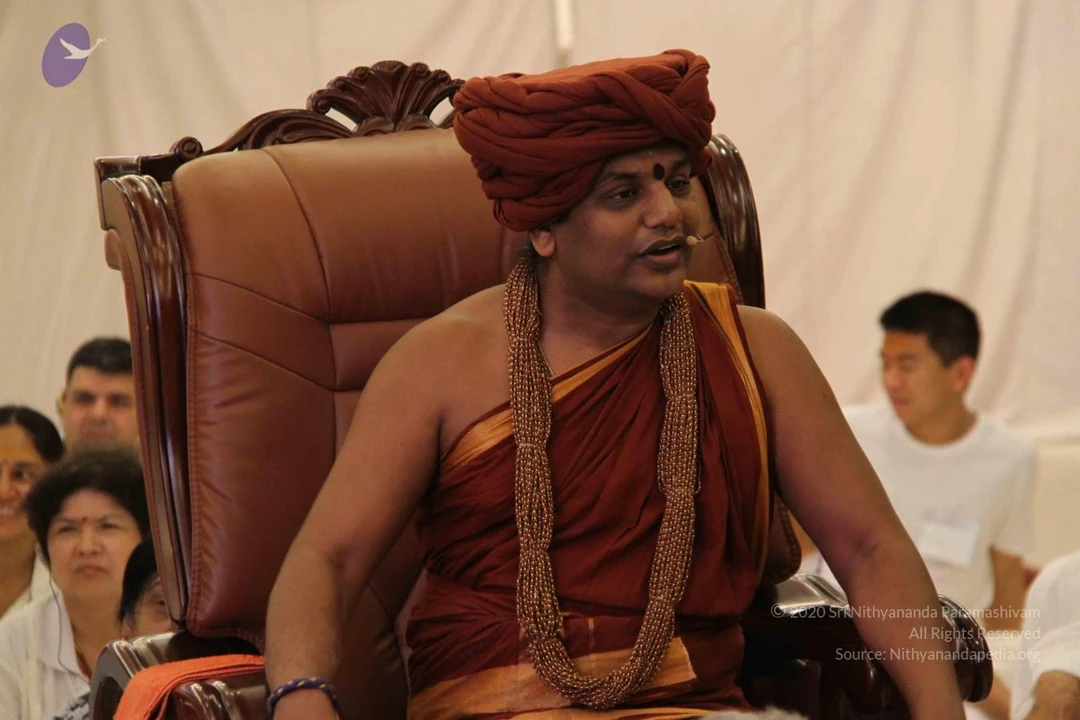
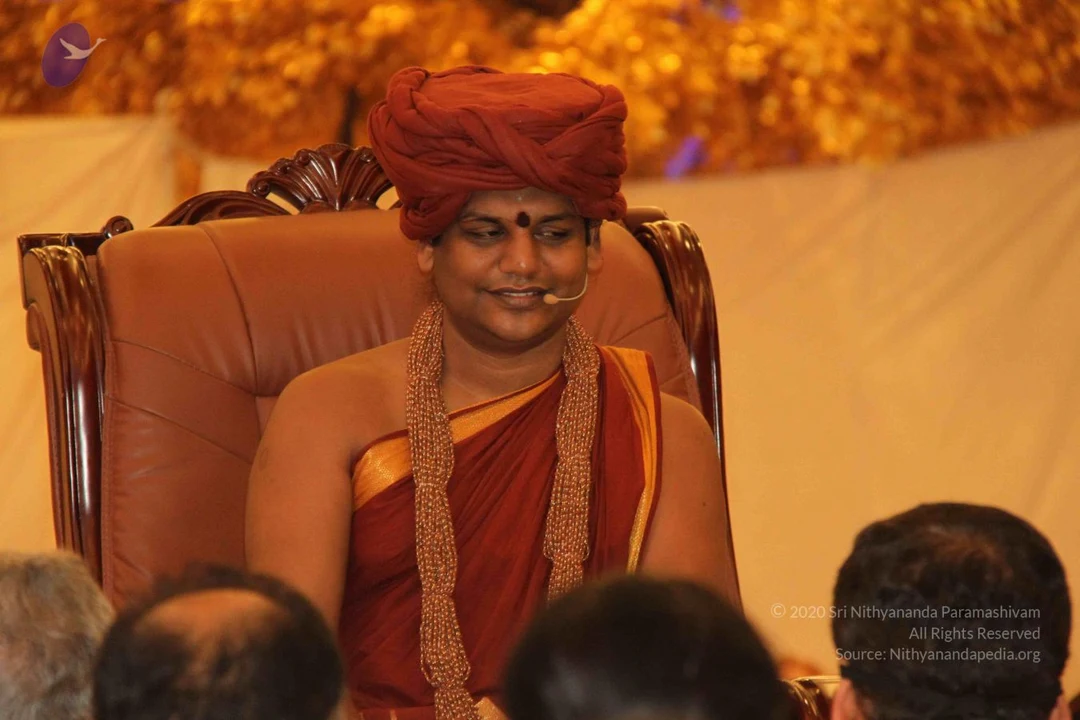
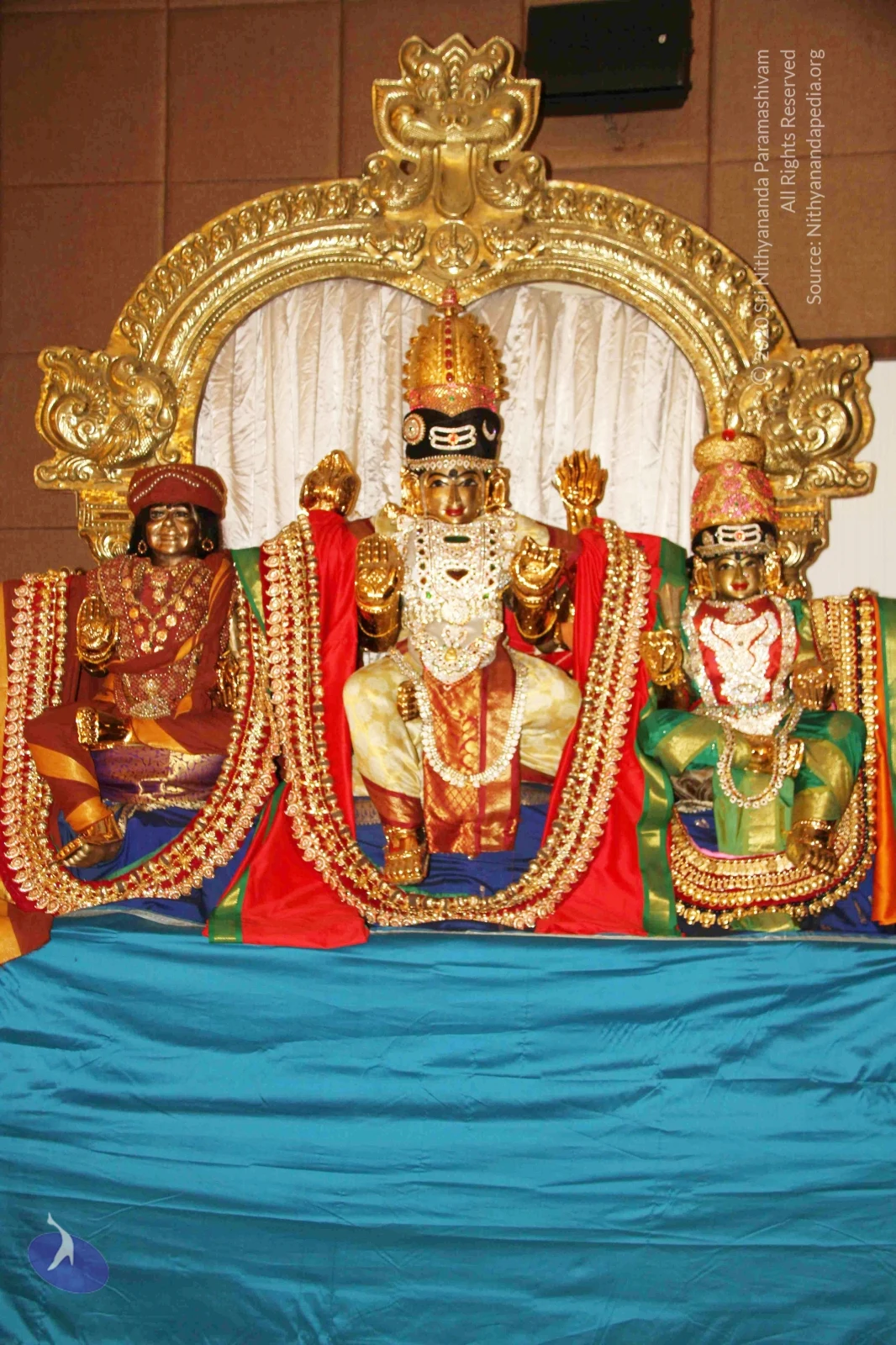
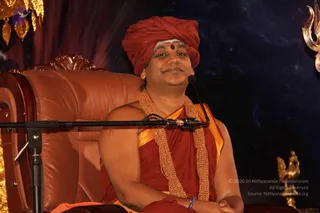
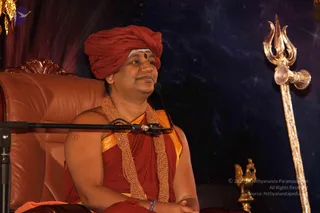
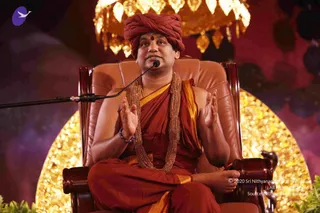
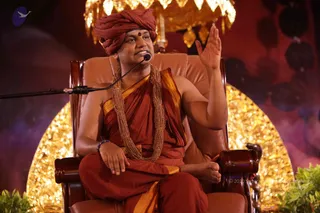
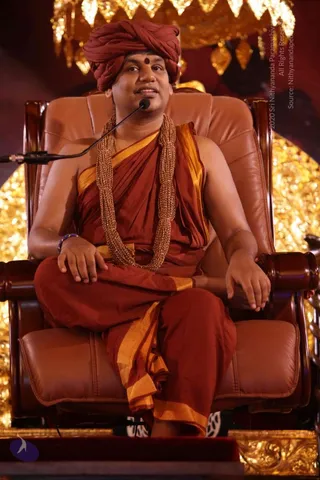
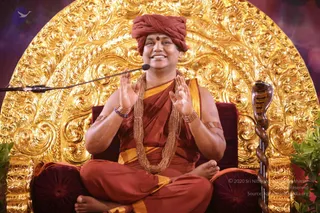
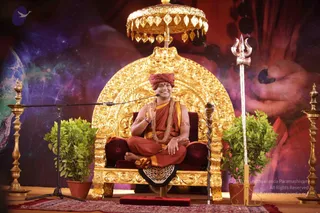
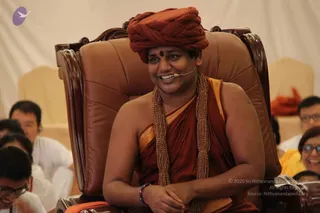
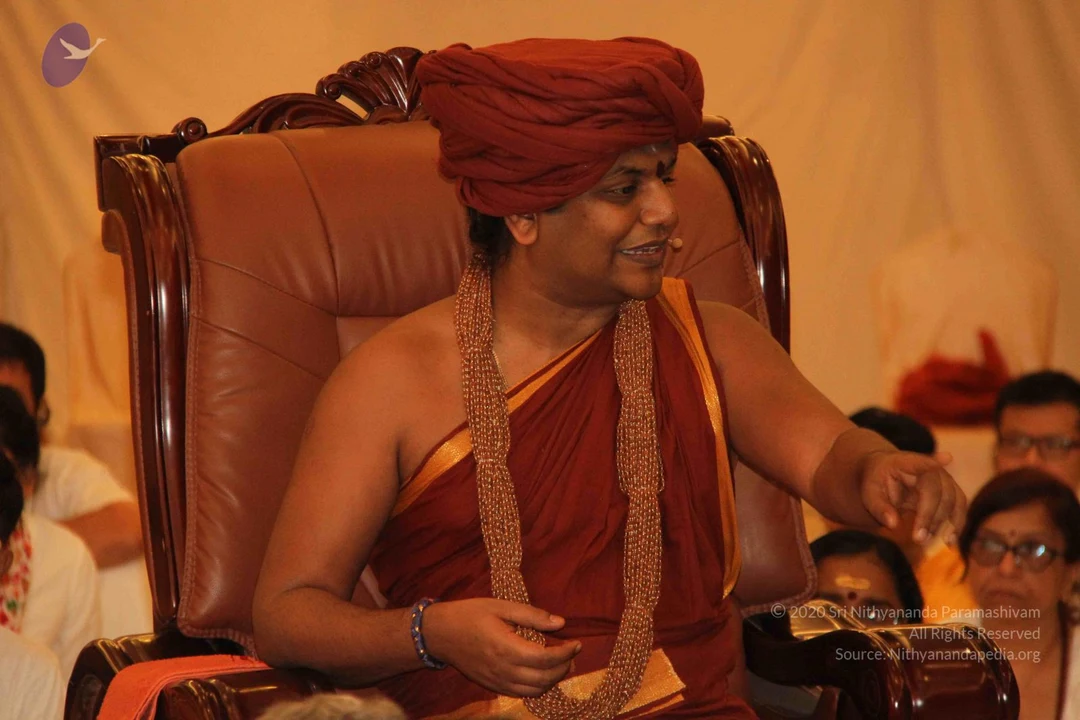
A photograph of a shaved-headed priest in an orange-red dhoti and saffron upper cloth performing abhishekam on a pair of deity murtis seated on a blue-and-red draped dais. The priest holds a silver vessel raised over the crowned murti's head with his right hand. The two gold-and-silver murtis wear ornate red, green and white silk garments, jewelled necklaces and tall crowns with white urdhva-pundra markings. Behind them stands an ornate gold-framed arch with white drapery, and a wall speaker and wood-panelled wall frame the indoor hall.A man seated on an ornate brown leather throne-style chair beside a black microphone stand, speaking at a satsang. He wears a red-orange turban with a red bindi and white markings on his forehead, a saffron-orange robe draped over his shoulders with a gold border, and a long multi-strand beaded necklace of gold-coloured beads. A blue wrist bead band is visible. Behind him is a dark blue backdrop with gold ornamental pieces at the edges, including a golden trident-like finial at upper right. One person is visible.A photograph of a seated man in a reddish-orange turban and matching saffron-red robe with a gold-edged shawl, wearing a long gold-toned bead necklace and a red bindi with white markings on the forehead. He sits in a brown leather armchair in front of a microphone on a stand, smiling and looking to the side. A tall ornate golden trident stands at right against a dark blue starry backdrop, and a small golden deity figure sits near the base of a gold-toned object at lower right. Appearance-based label: a person, seated on a throne-like chair as the speaker at a satsang, with the trident and turban as distinguishing cues.A man in a maroon-red turban and red-orange robes with a golden-yellow border sits in a brown leather armchair, speaking into a microphone on a stand. He wears a long multi-strand gold chain necklace and a blue beaded bracelet, with a red tilak on his forehead, and his hands are raised in front of his chest in an expressive gesture. Behind him a large glowing golden circular backdrop and a golden chandelier-like canopy light the stage, with green foliage at the lower edge. The Nithyananda Paramashivam appearance is a probable match based on the turban, saffron robes, gold necklace and throne-like seat, so this is a satsang discourse in progress, with one person visible.A man in a maroon turban, maroon robes with gold-bordered drape and a thick gold-toned beaded necklace sits in a brown leather armchair, raising one hand palm-out while speaking into a microphone on a stand. A gold illuminated backdrop and an ornate gold chandelier glow behind him, with green plants at the lower right.A man seated on a brown leather throne-style armchair with wooden armrests, speaking into a microphone on a stand. He wears a maroon-red turban with a small red dot on his forehead, a maroon-red robe with gold borders draped over the shoulder, and a layered gold-beaded necklace; a blue beaded bracelet is on his wrist. Behind him is a large gold-glittering backdrop and a gold chandelier-like canopy. Swamiji (probable): this seated speaker, wearing a red turban, saffron-red robes with gold borders, and ornate gold beaded necklaces while seated in a raised chair, appears to be a satsang discourse speaker.

Shivoham-question-and-answer-session

130 photosSource gallery
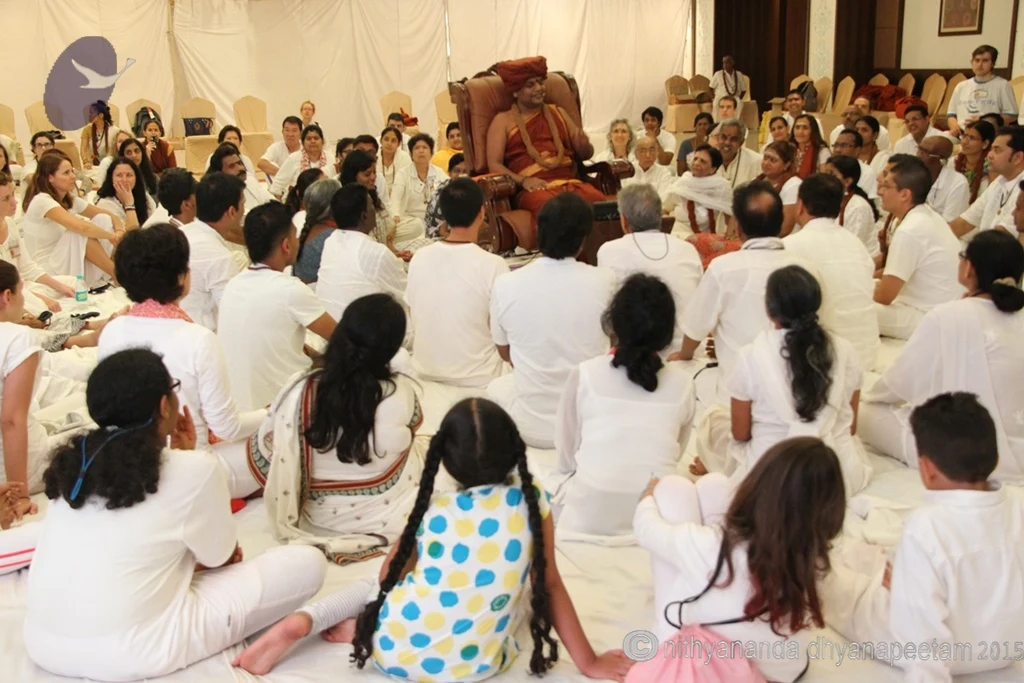
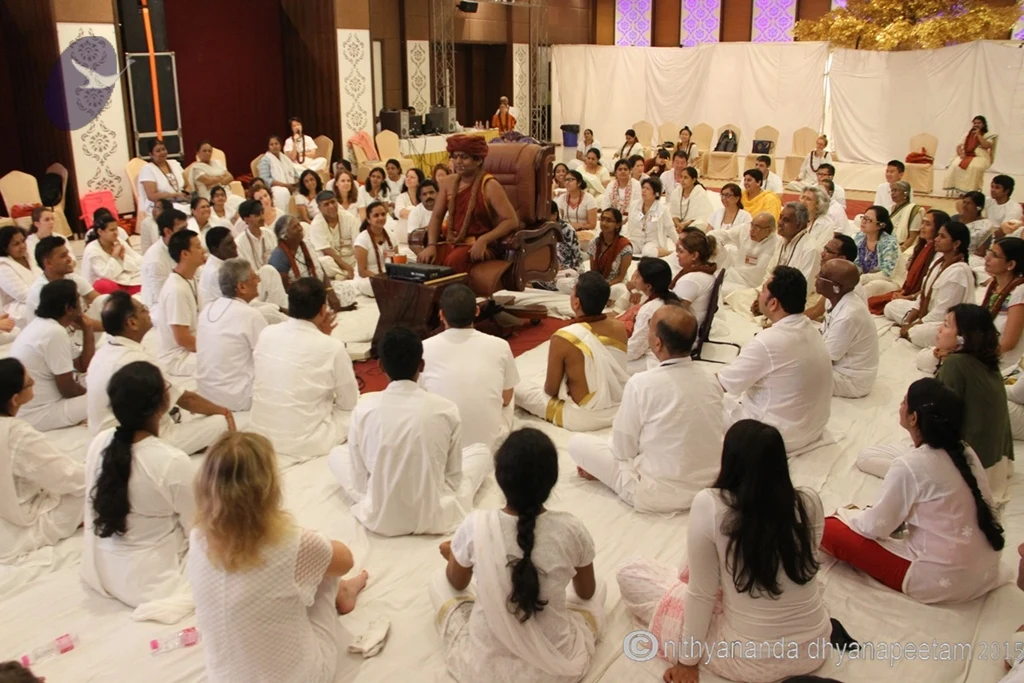
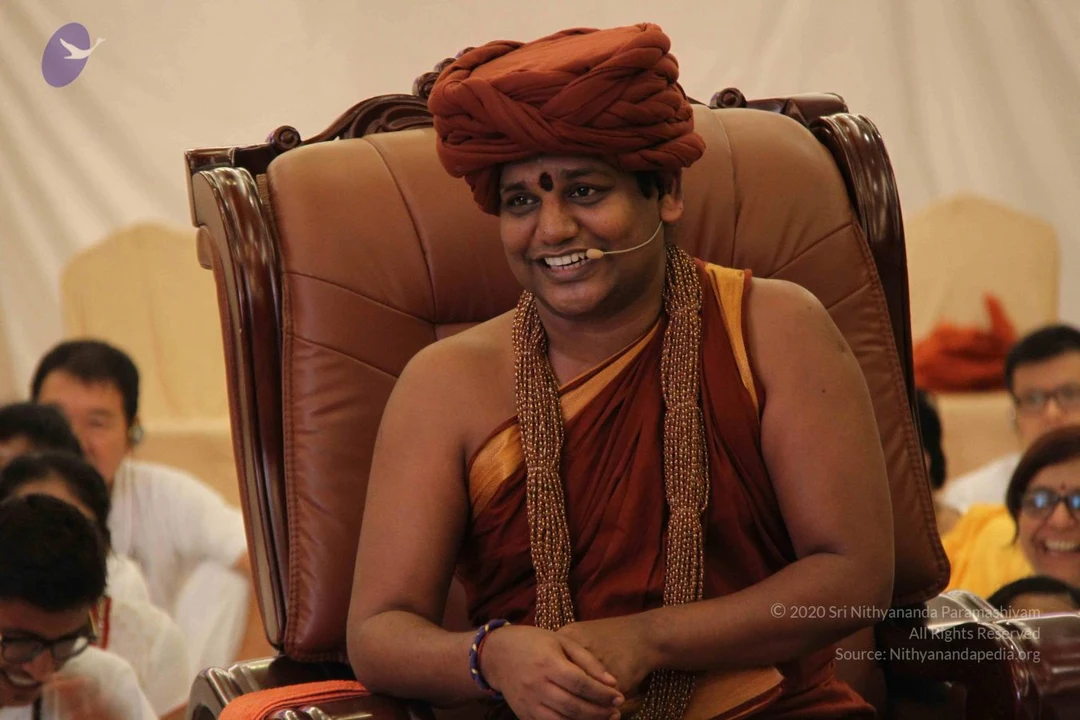
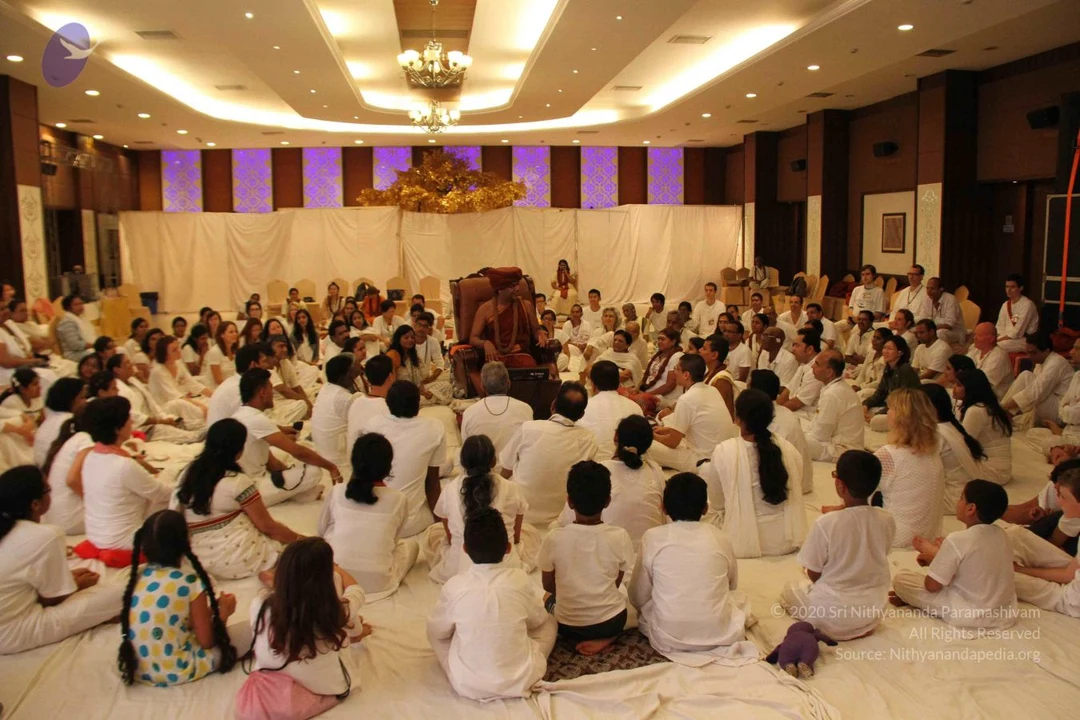
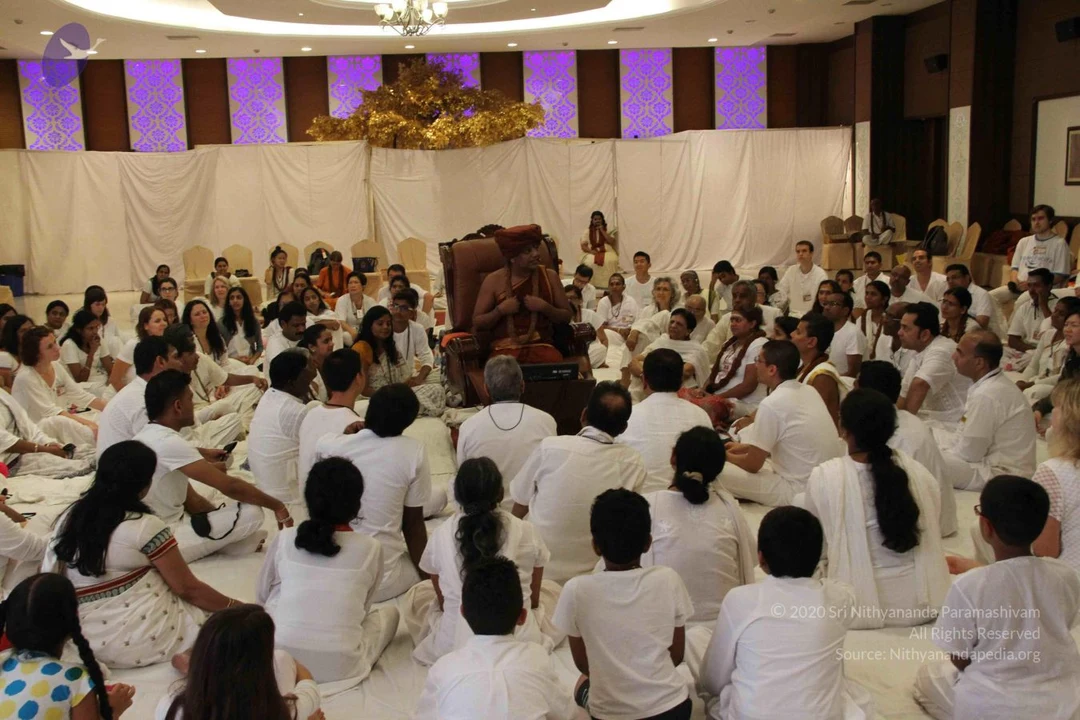
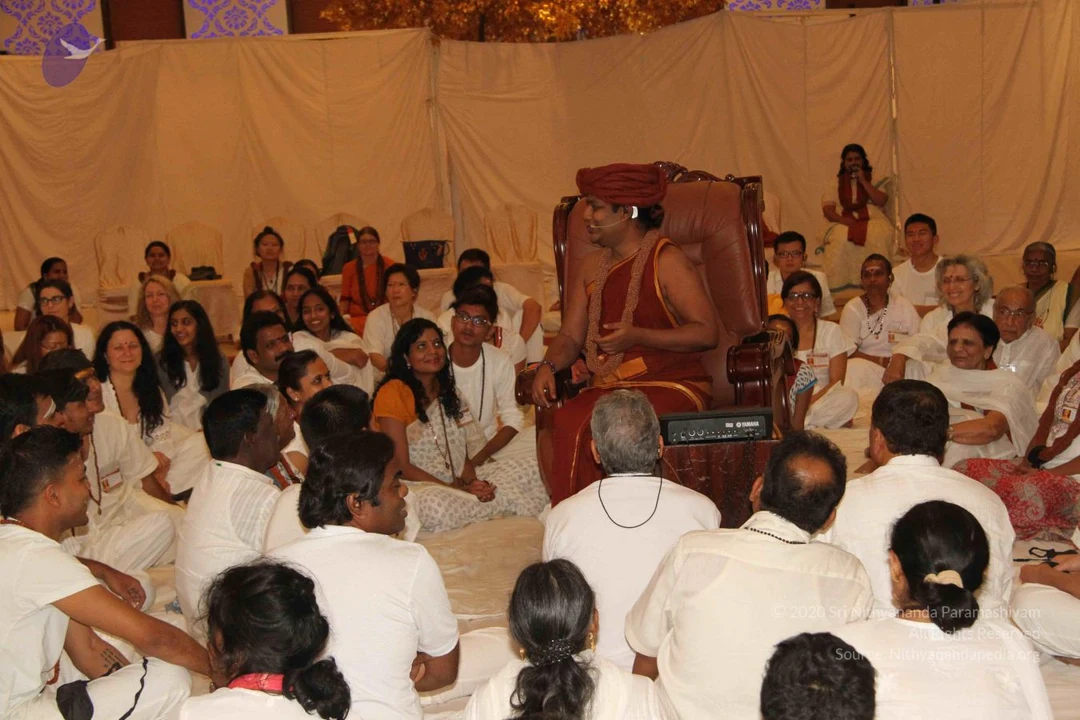
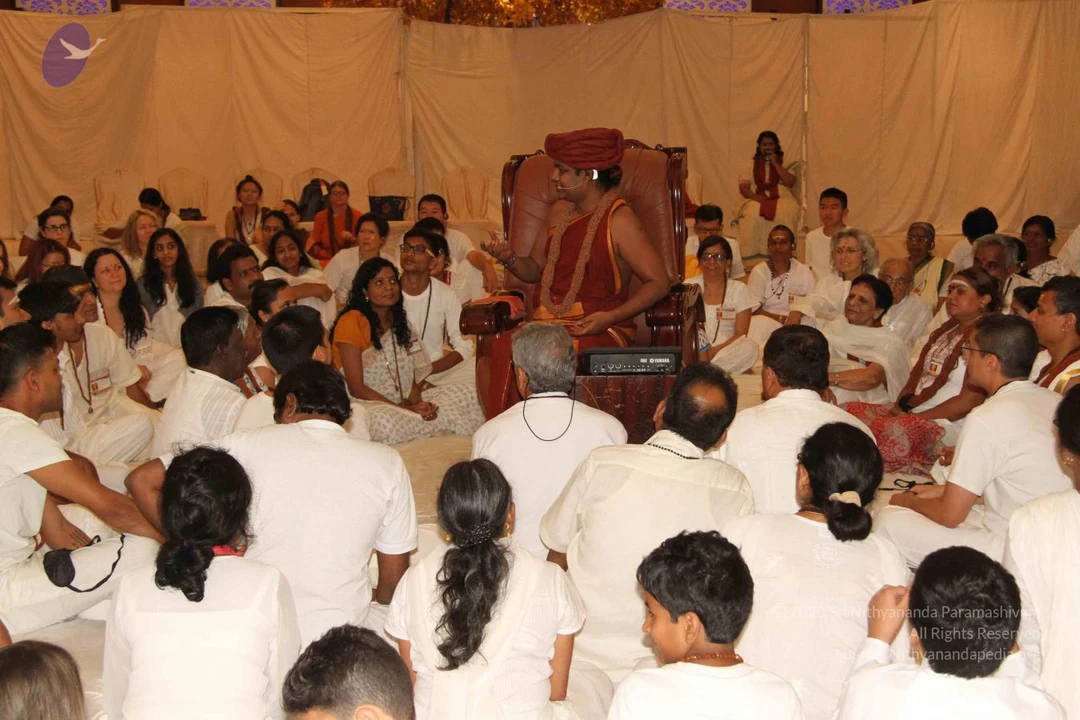
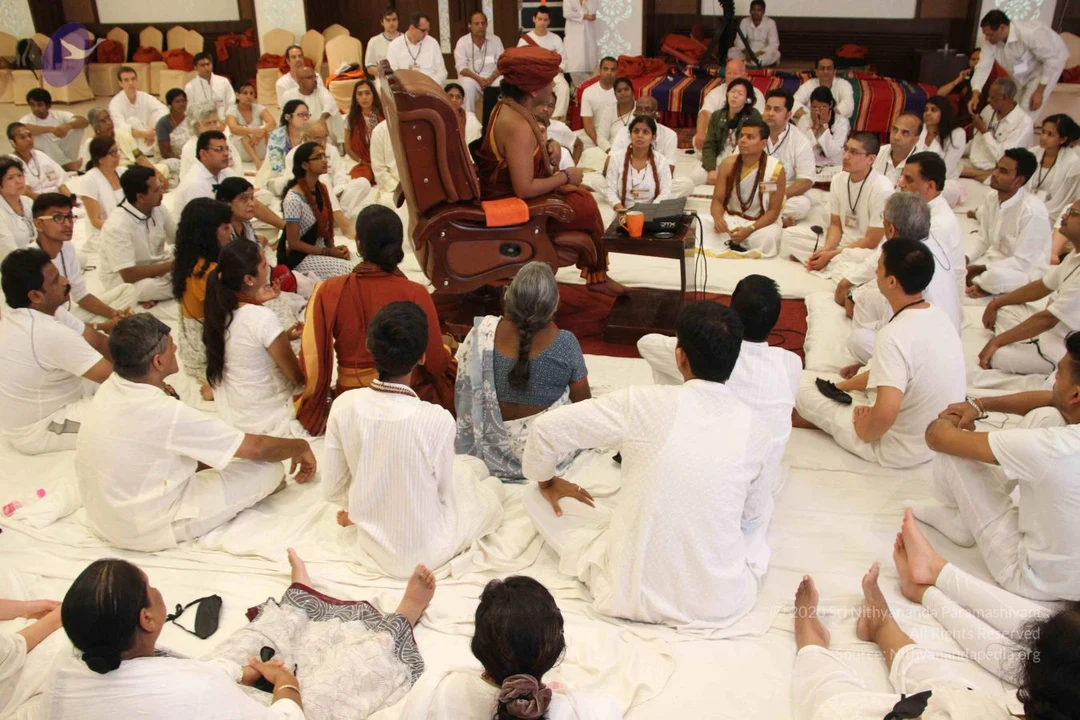
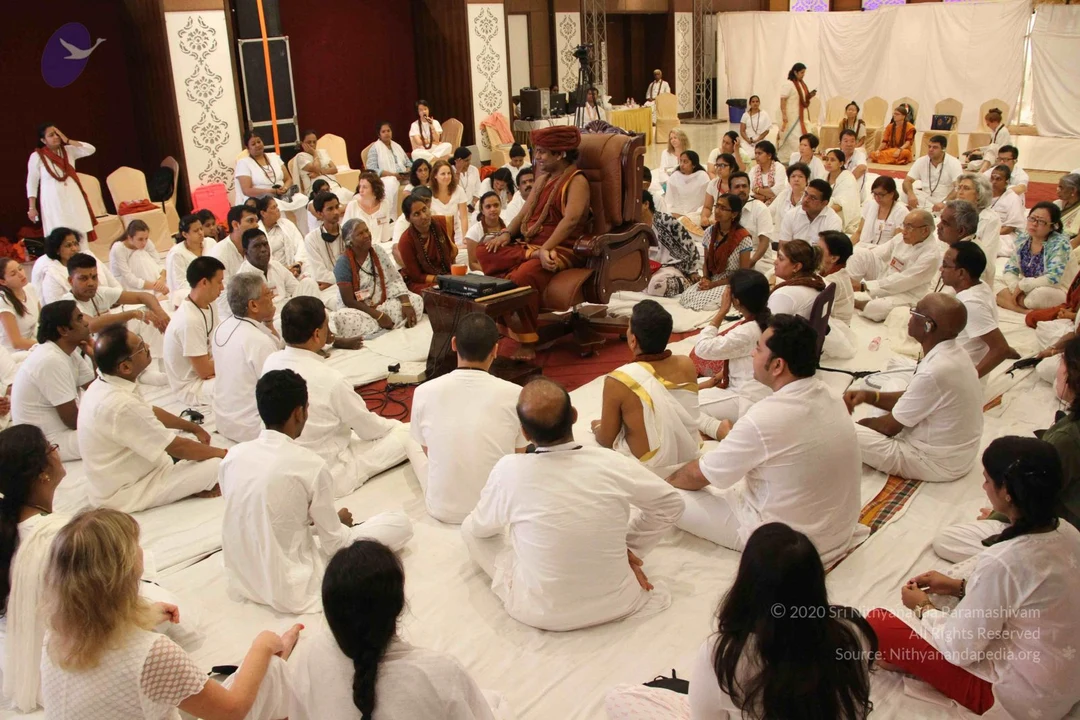
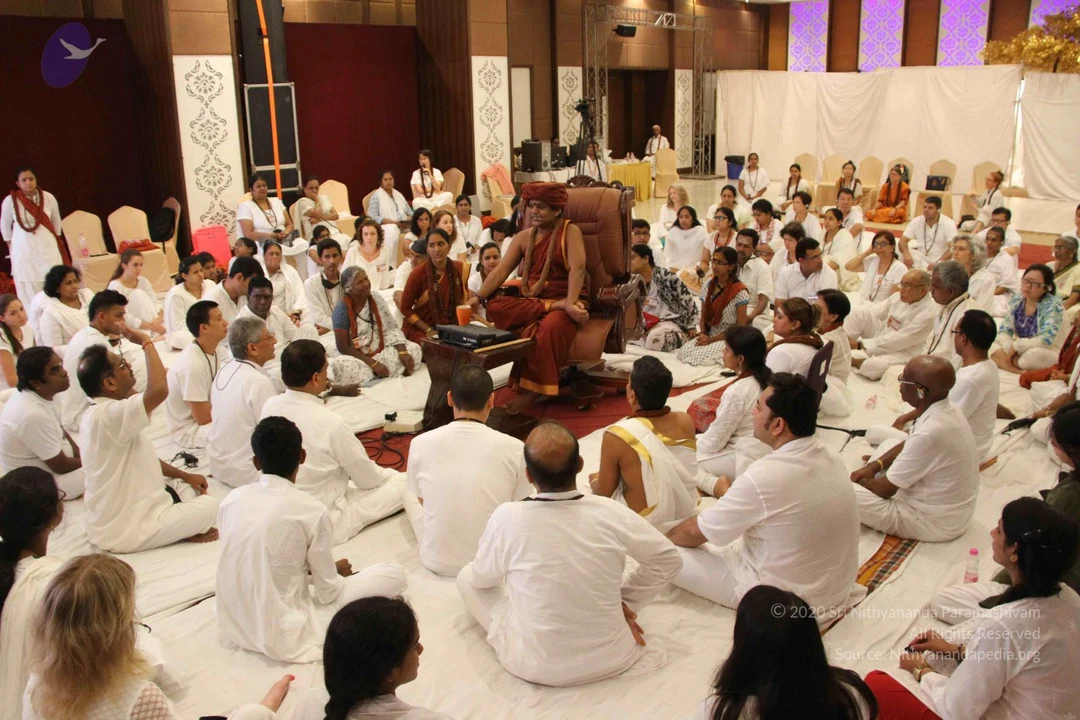
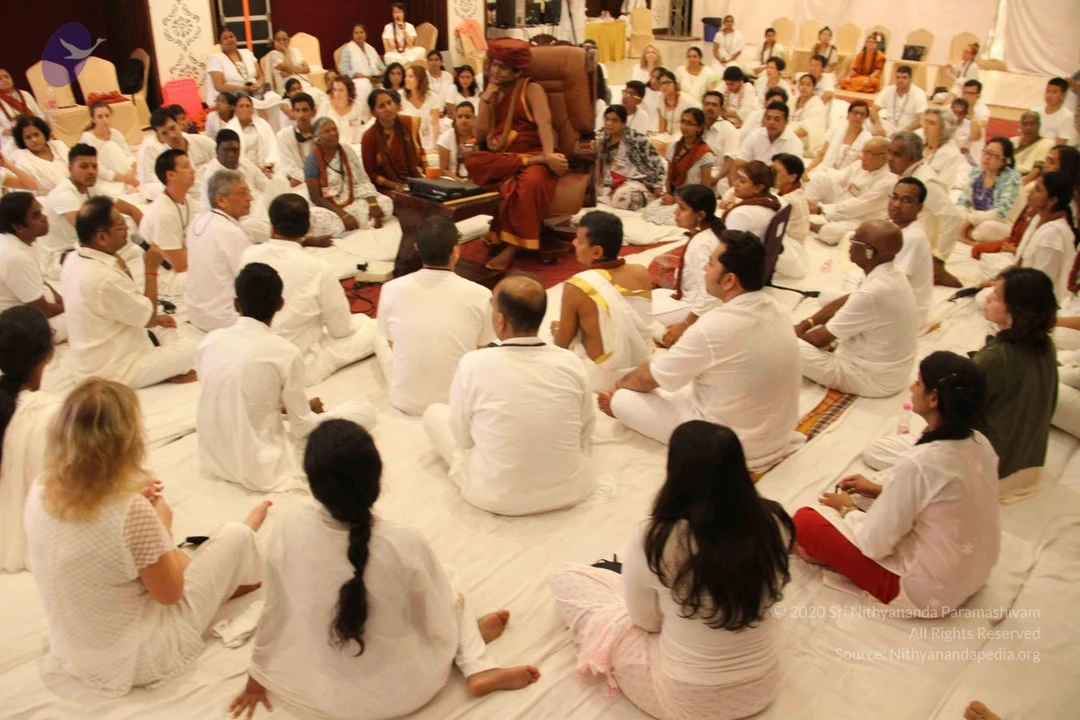
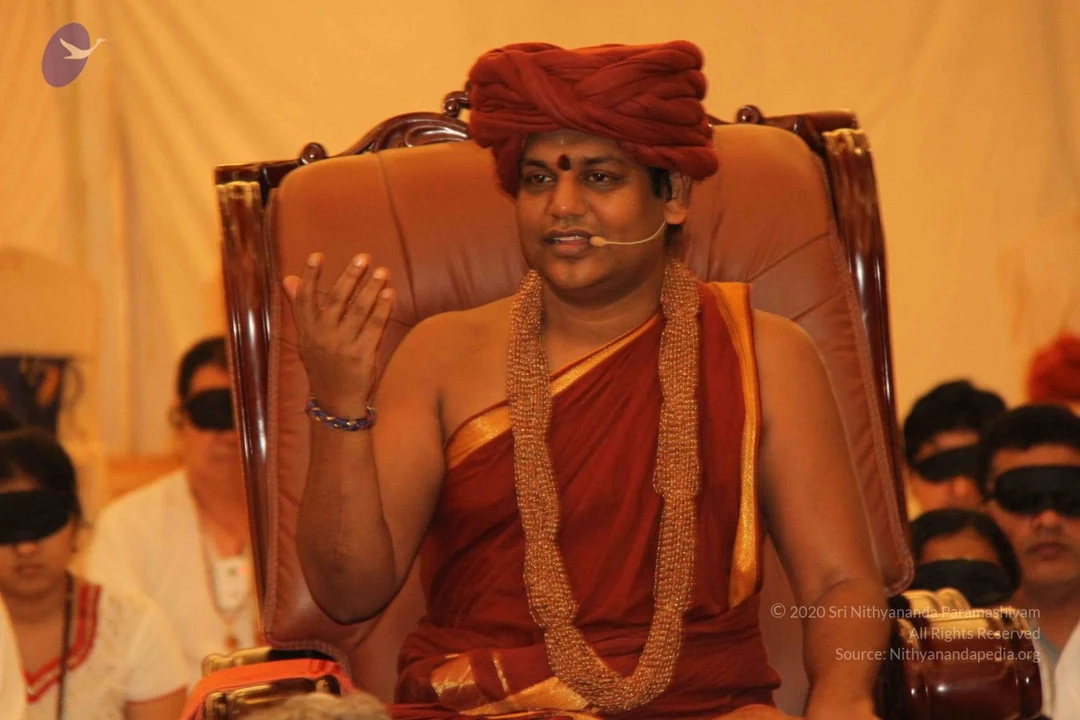
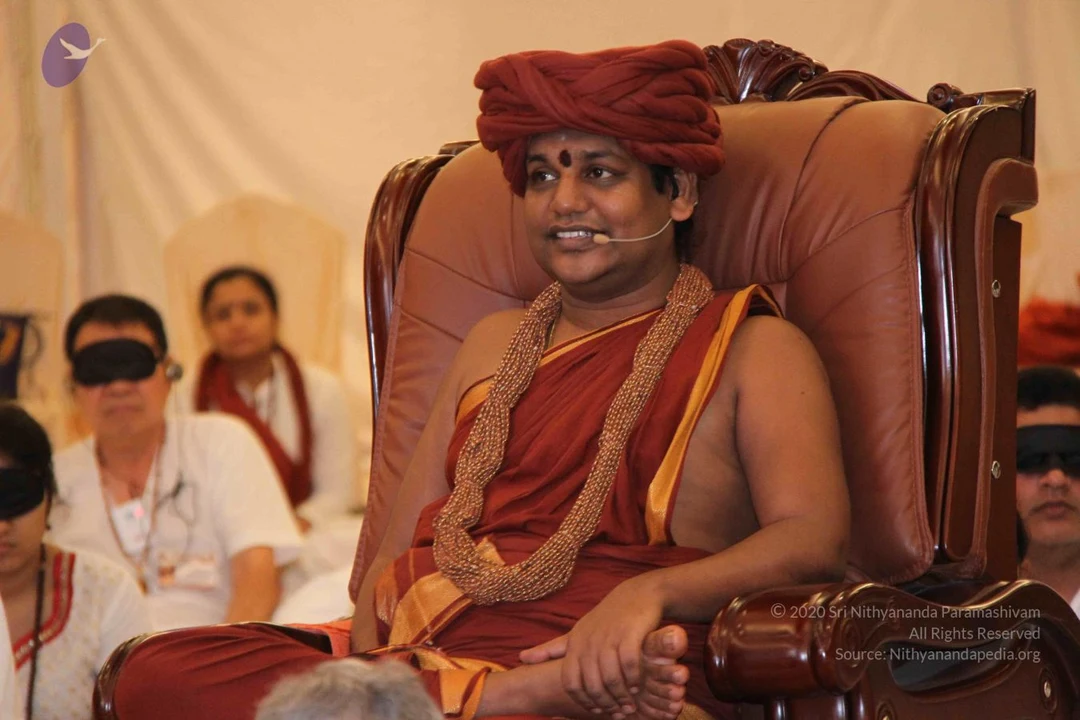
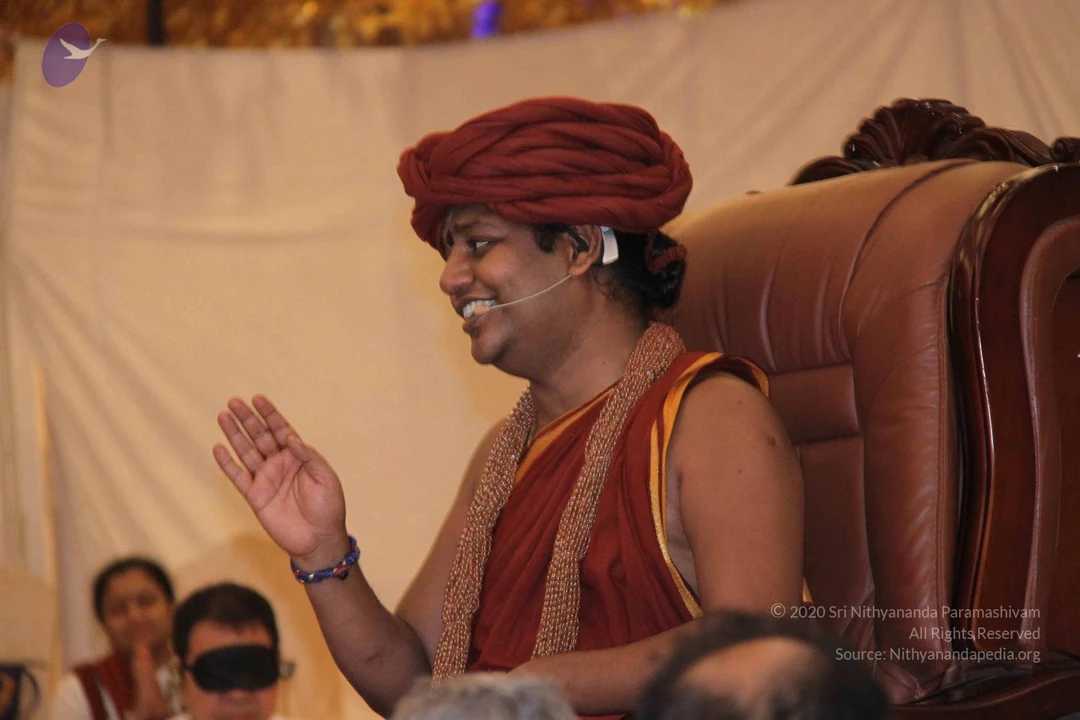
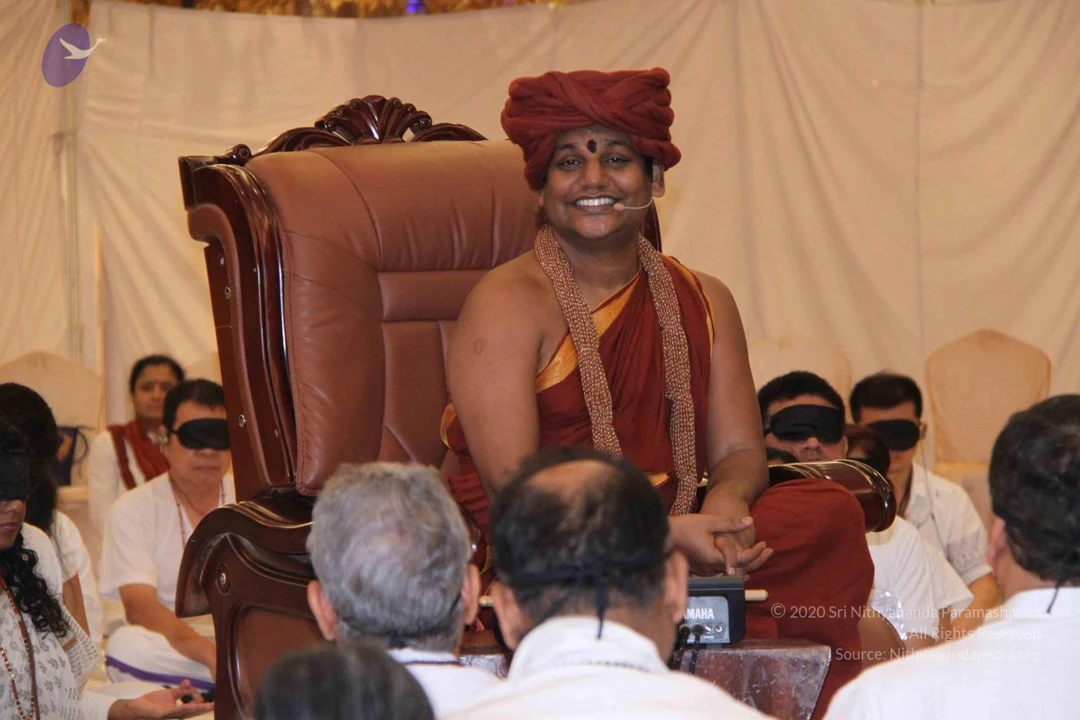
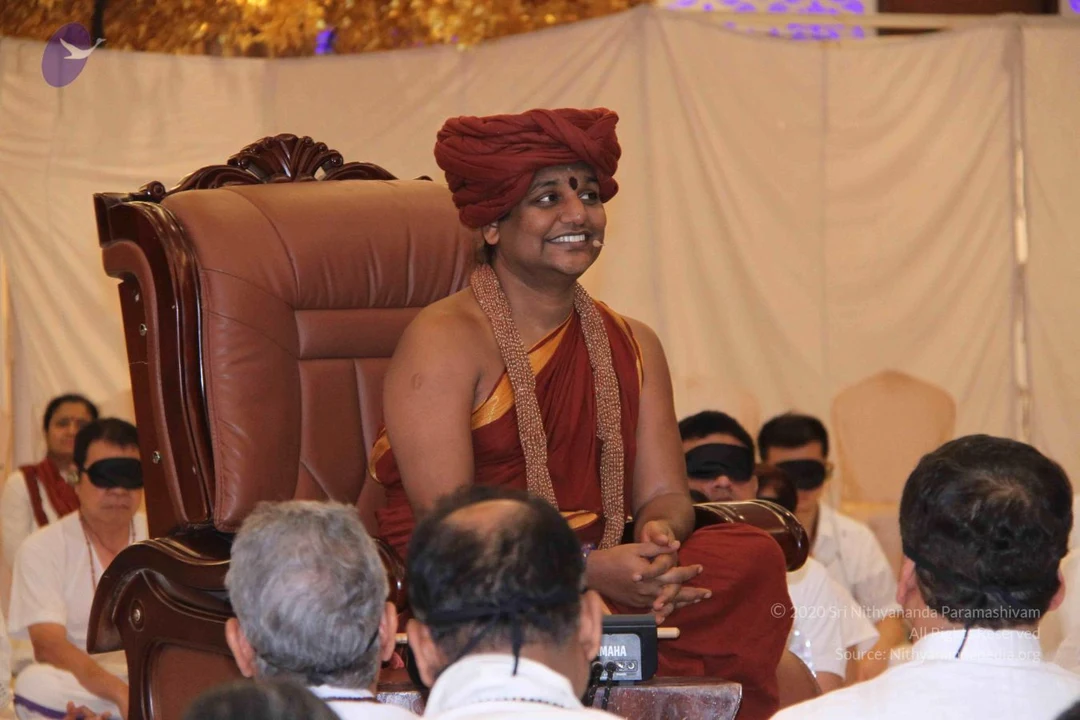
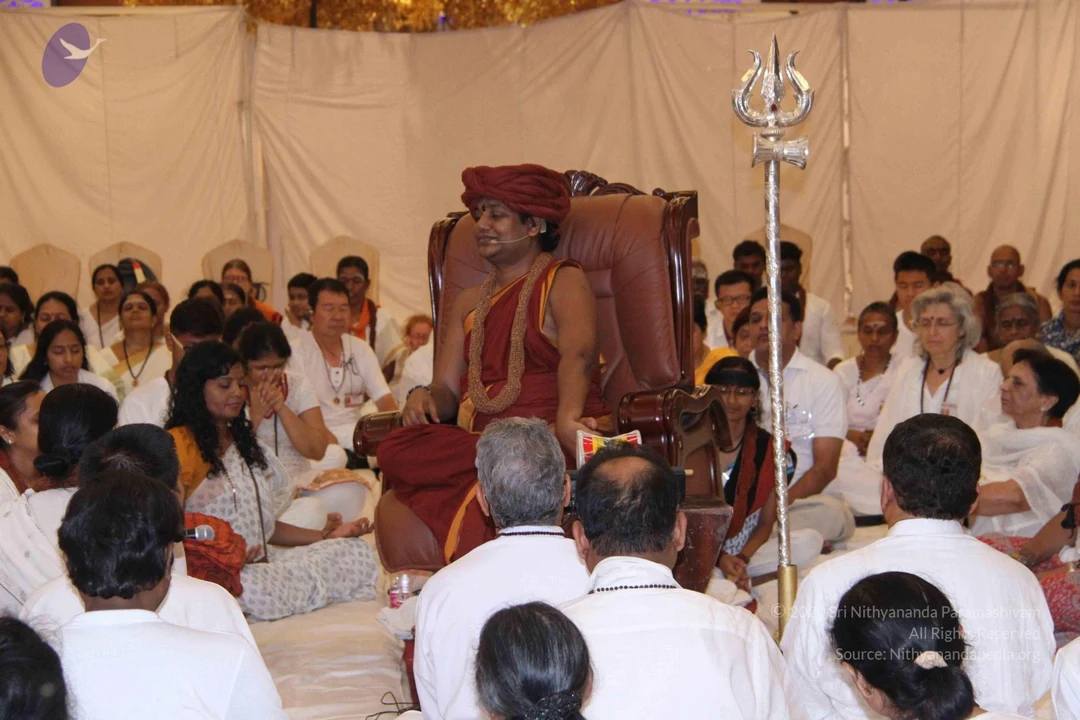
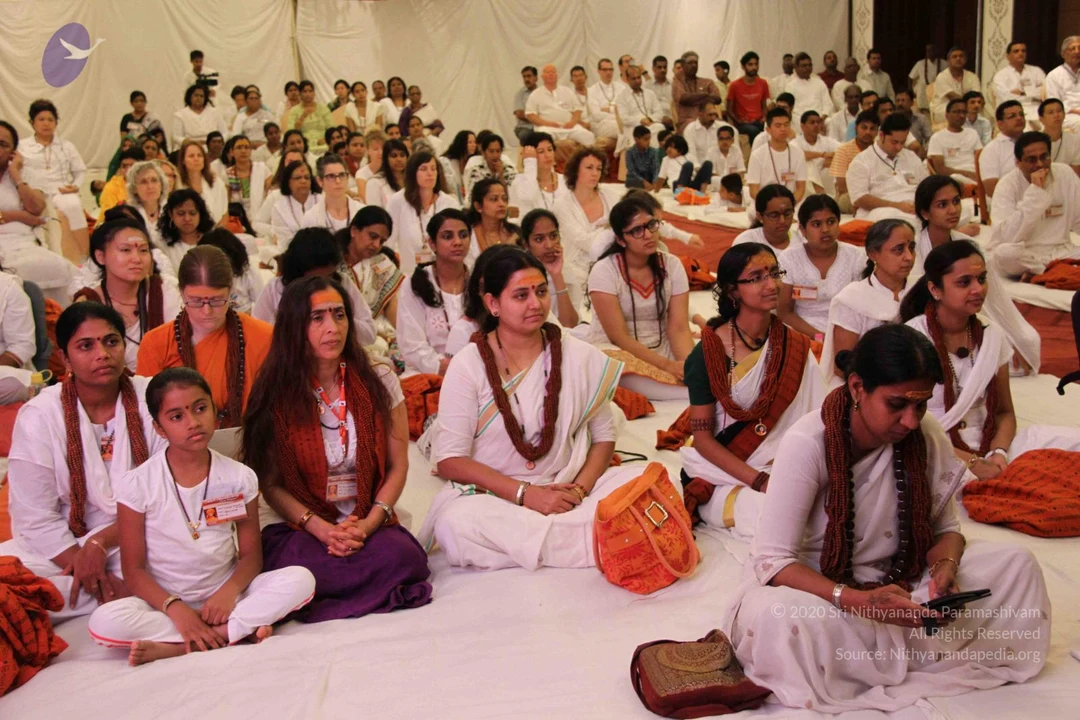
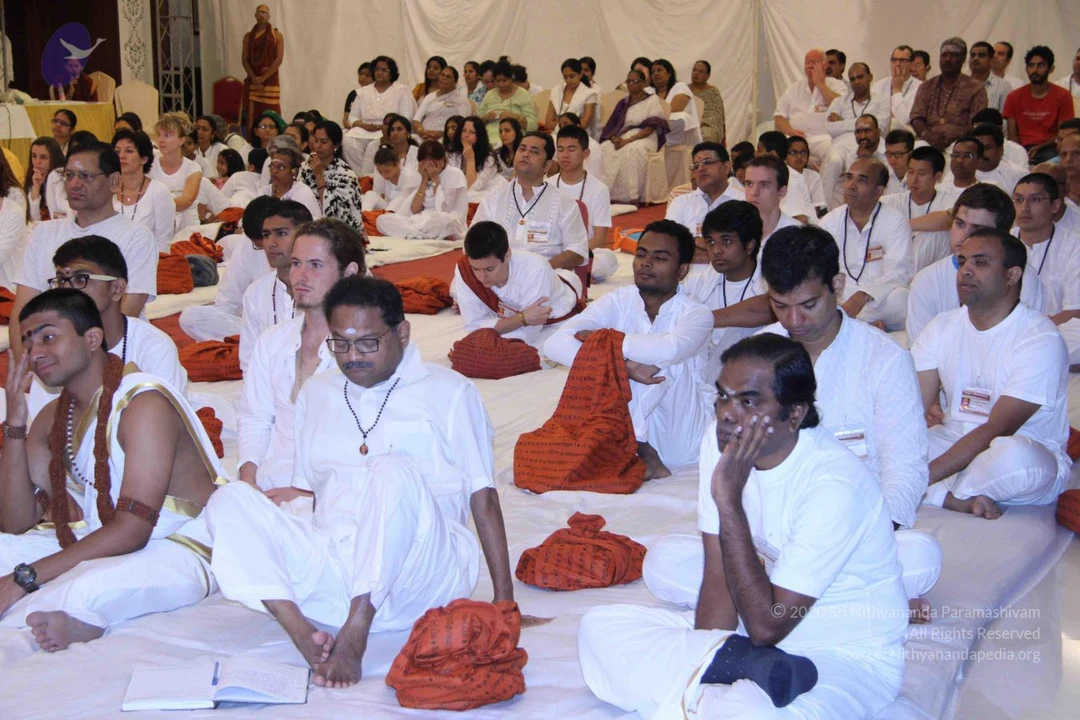
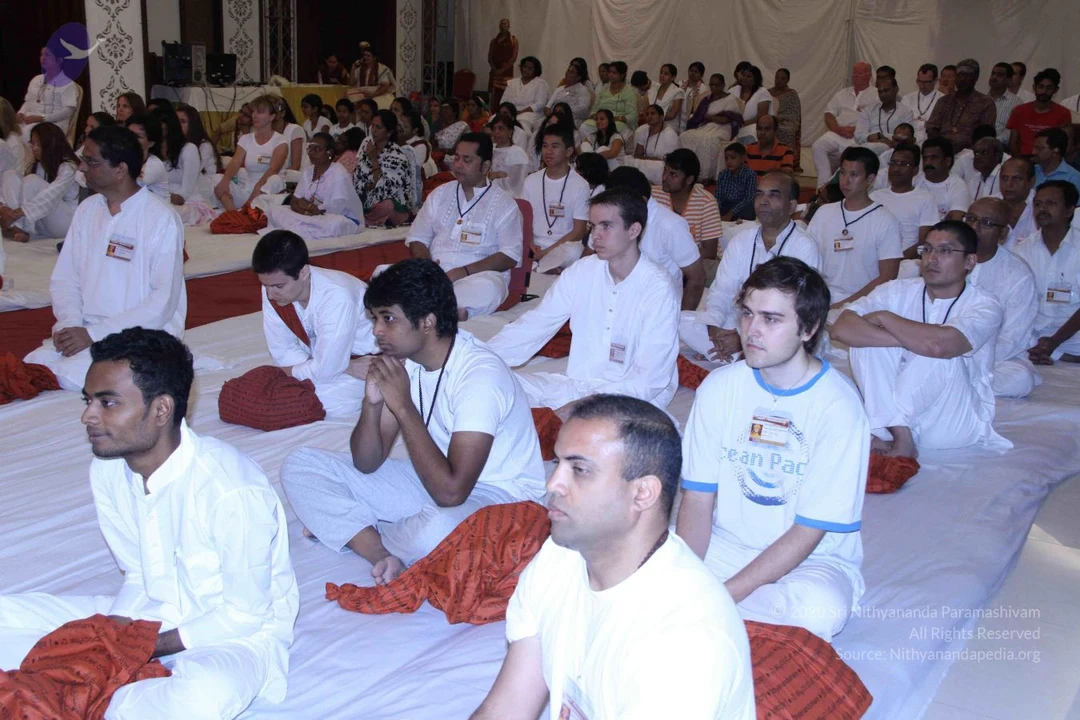
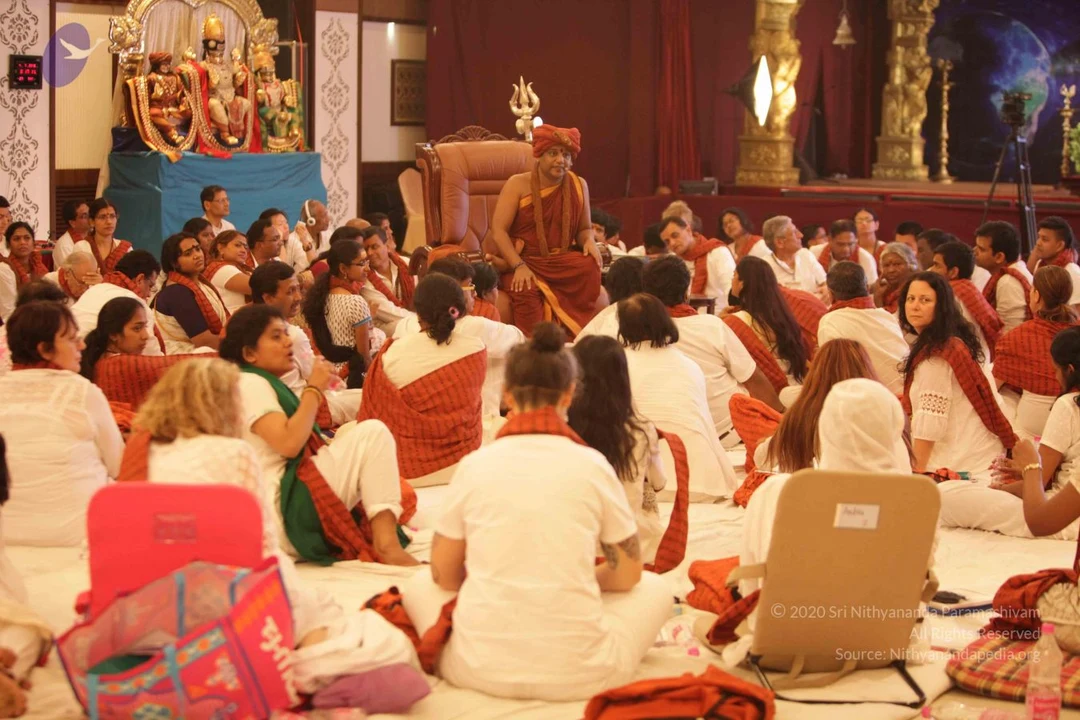
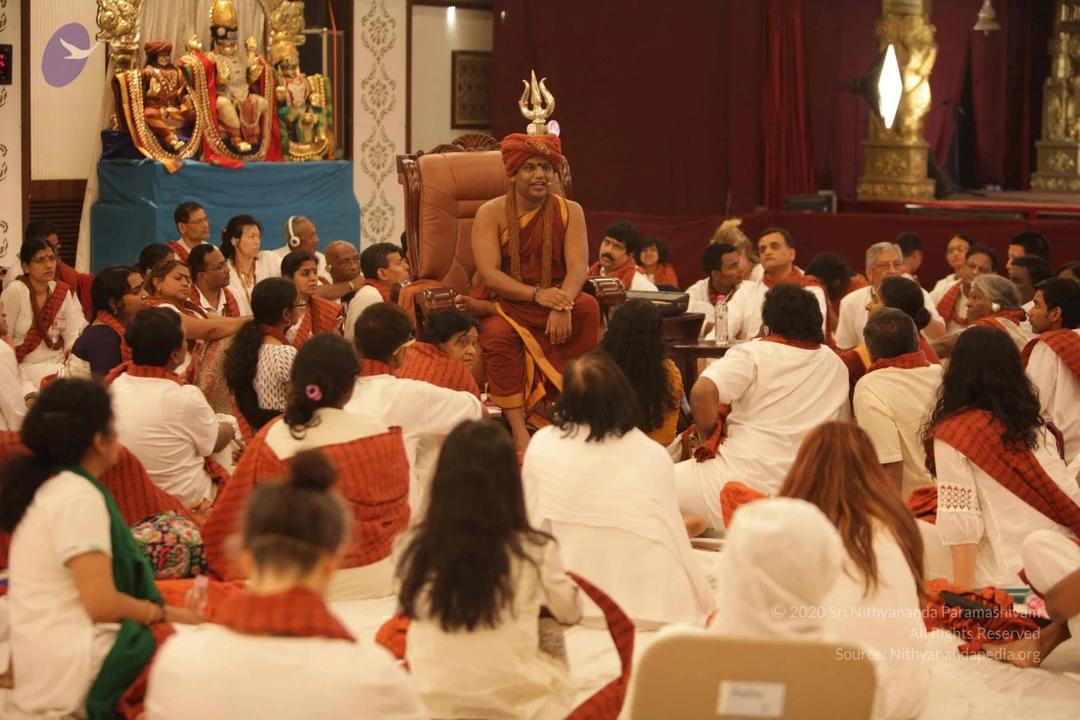
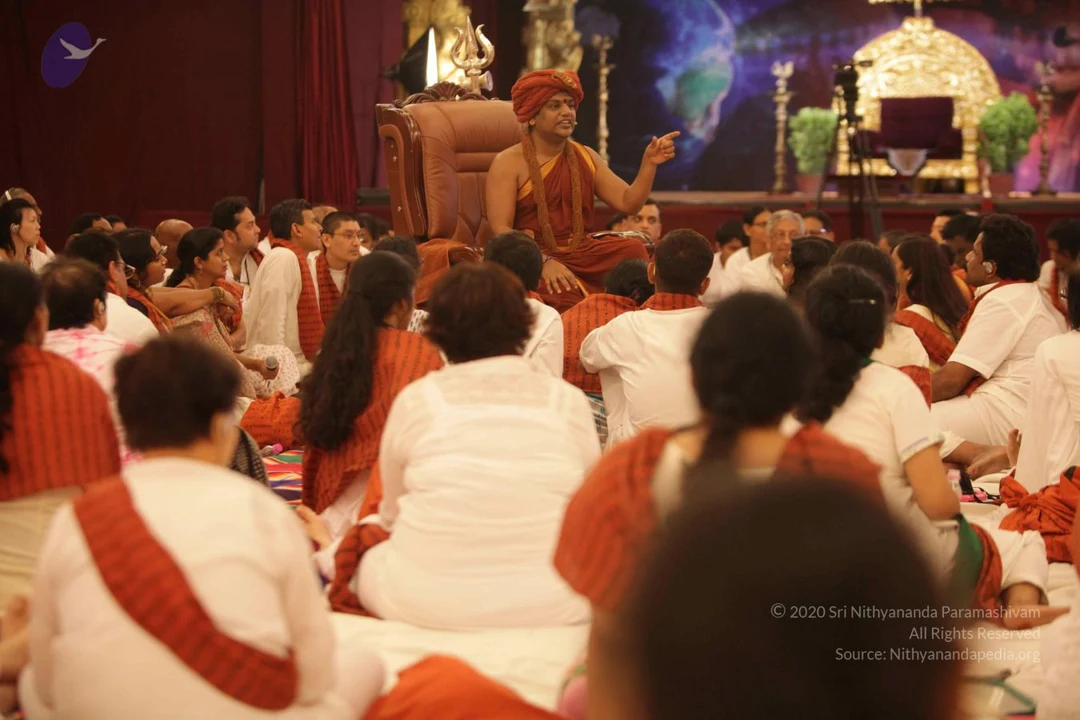
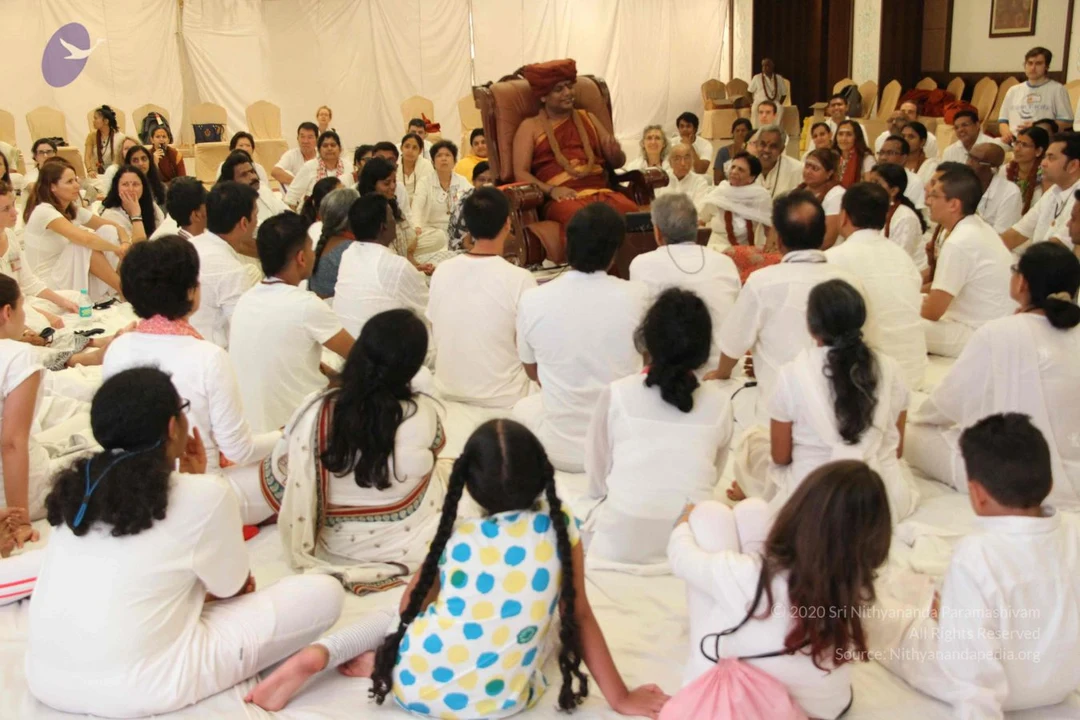
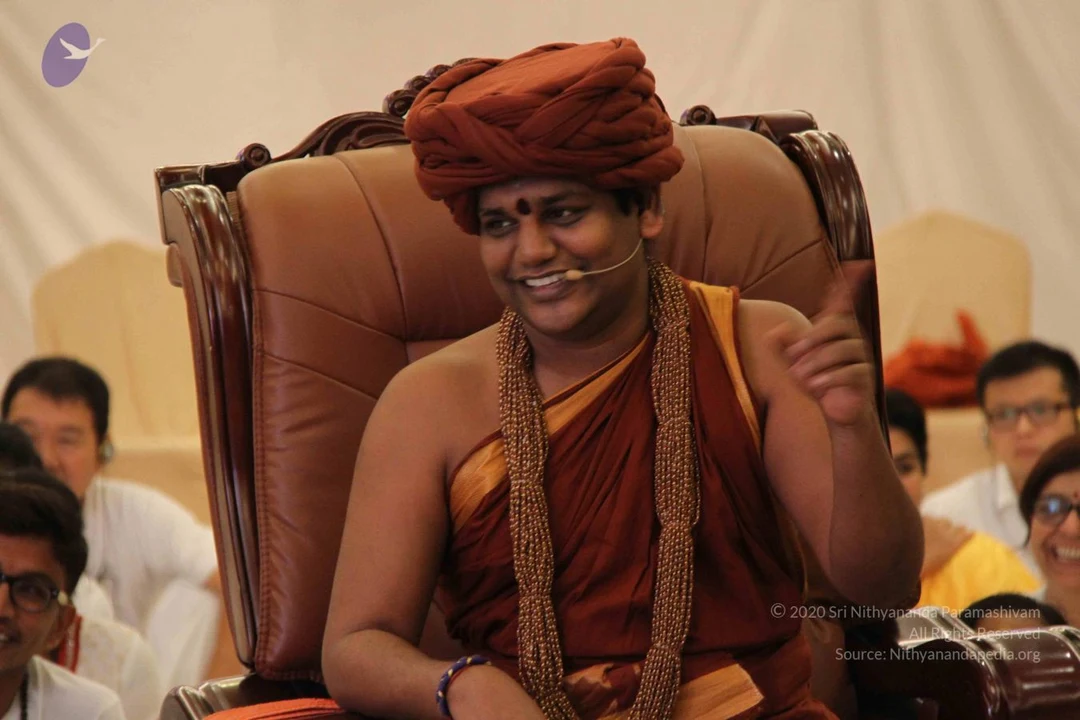
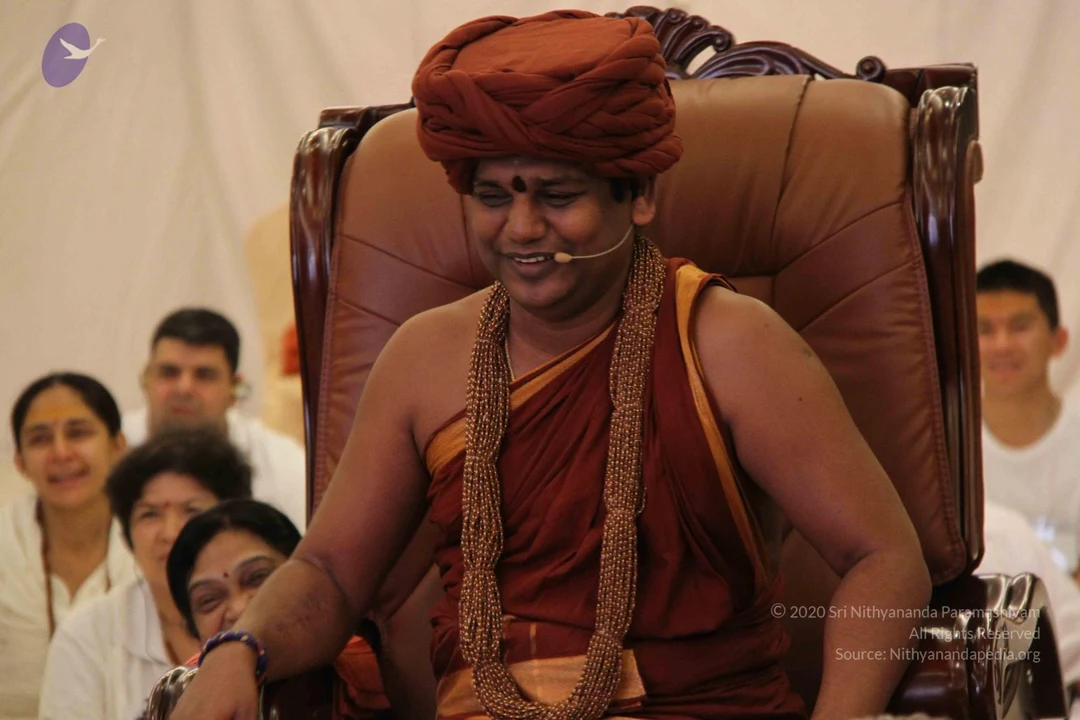
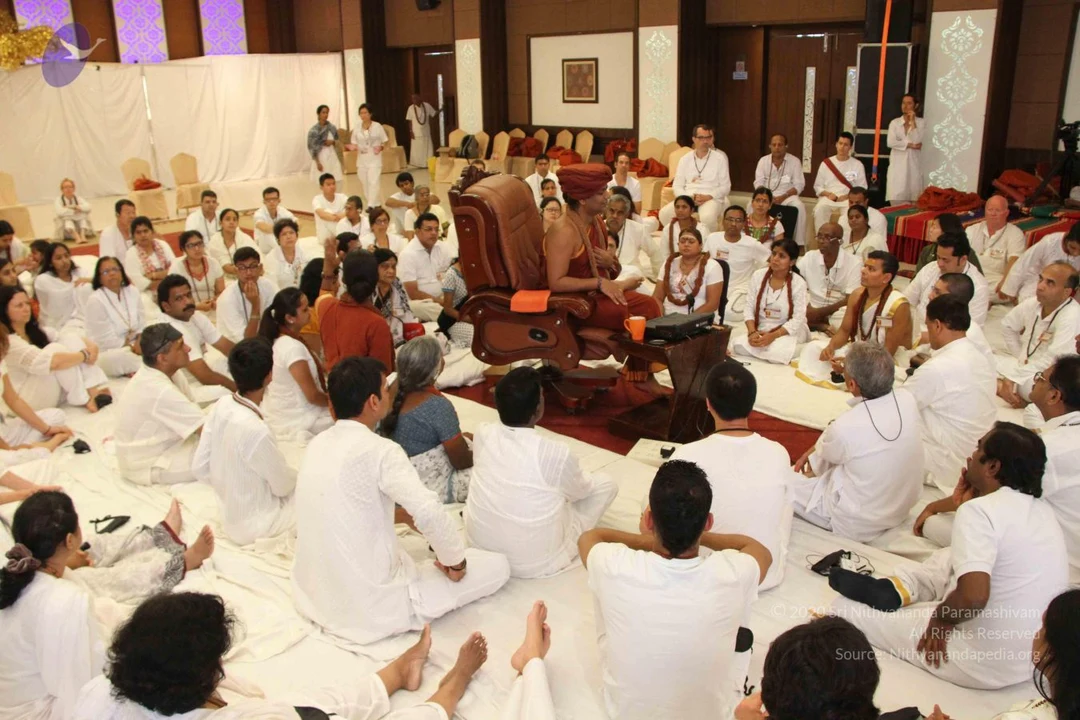
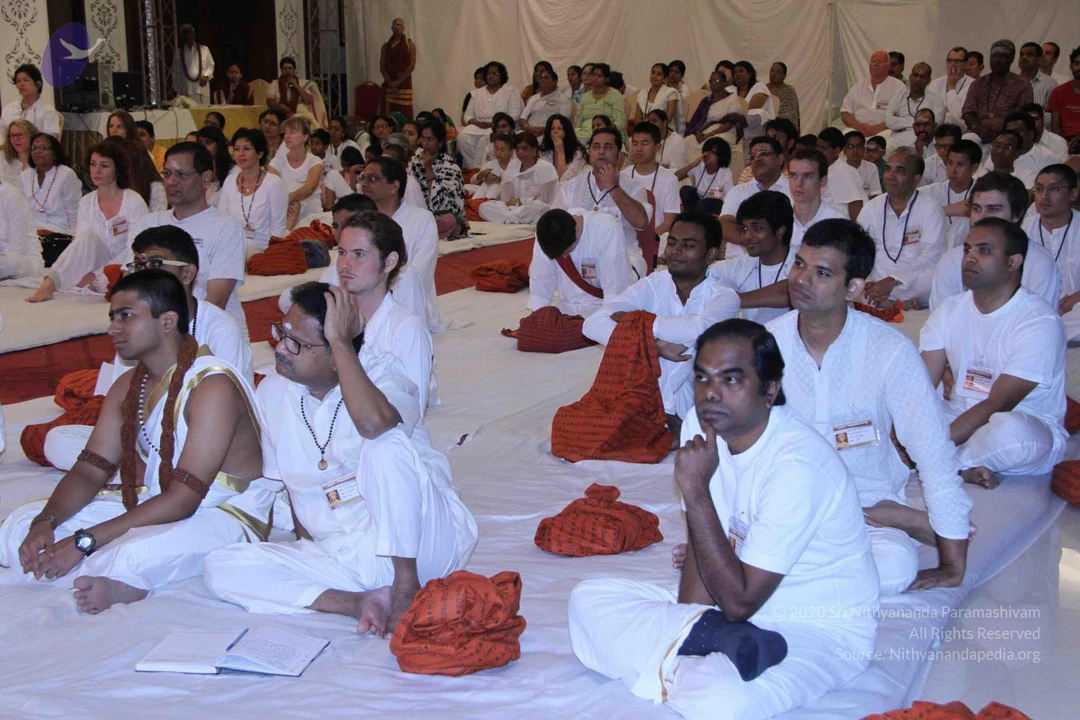
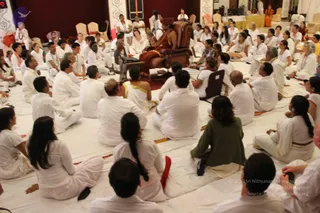
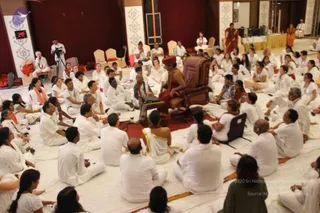
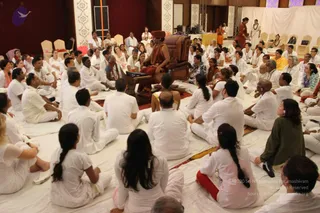
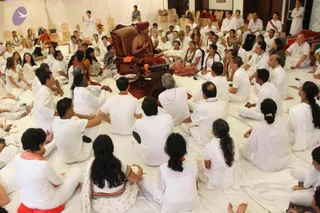
A large satsang gathering with many seated devotees in white clothes sitting on white floor sheets in a hall with maroon walls. At the centre front, a figure in a maroon-orange turban and orange-red robe sits on a high ornate brown throne, with a bare-chested attendant in a golden-bordered cloth seated nearby. Audience members, mostly in white kurtas and dresses, face the front, and a few wear saffron or green clothing. A camera operator stands at the back and a table with yellow cloth is visible on the right.A photograph of a large satsang hall where many people in white clothes sit cross-legged on white mats facing a central figure. The central figure wears saffron-orange robes and a rust-coloured turban and sits on an ornate brown leather chair with a small wooden table beside it. Several seated devotees wear white kurtas and some women wear saffron or orange shawls. A cameraman stands with a tripod at the left edge, a man in white stands behind the seated group, and a red-and-gold cushioned seat sits near the right side of the room. Crowd appearance suggests a seated audience of many participants.A satsang in a hall with a white-draped stage and red walls. A person in a saffron-and-red robe with a rust-coloured head wrap sits on a large brown leather throne-style chair at the centre front, facing a seated audience. Many devotees in white clothes sit cross-legged on white floor sheets, some with long braids and some with glasses. Standing attendants in white and orange-saffron clothes are visible at the back stage, with a small table and decorated pillars on the sides. The audience numbers roughly 50 visible people.A satsang in a large hall where a crowd of about 60 people, mostly in white clothing, sits cross-legged on white floor mats around a central seated figure. The seated figure wears an orange-saffron robe and an orange turban and sits on a dark brown high-backed throne-like chair, with a small table and microphone in front. Many attendees wear white kurta-style or white salwar outfits, a few wear saffron or red shawls, and one woman in front wears a white top. Gold decorative trees and white draped fabric stand at the back, with purple patterned panels on the walls and a stage-side audio setup visible at left.A man seated on a large brown leather armchair with carved wooden frame, speaking to an audience during a satsang. He wears a red-orange turban, a saffron-orange wrap over a bare shoulder, a long multi-strand rudraksha-style bead mala, and a small headset microphone. A red bindi is on his forehead and he gestures with his right hand open. Behind him, white draped fabric and cream chairs. Several seated devotees are visible at the sides, a woman in glasses on the right smiling, and a man in glasses behind.A smiling man in saffron-orange robes and a rust-red turban sits in a large brown leather armchair with carved wooden armrests. He wears a layered gold-beaded necklace, a red bindi on his forehead, and a small headset microphone, with his hands resting together in his lap. Behind him, seated devotees in white clothing and eyeglasses smile, and a cream fabric canopy forms the backdrop of a satsang setting. The person in the chair appears to be Swamiji (probable), given the turban, saffron robes and ornate beaded necklaces, though this is an appearance-based label only.

Morning--Satsang

16 photosSource gallery
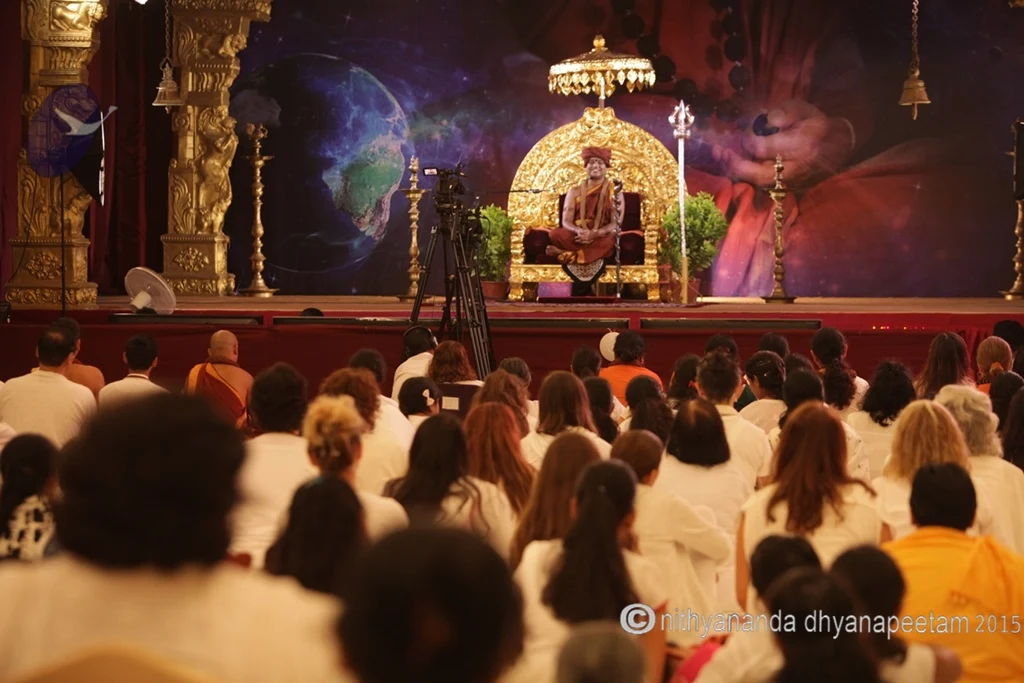
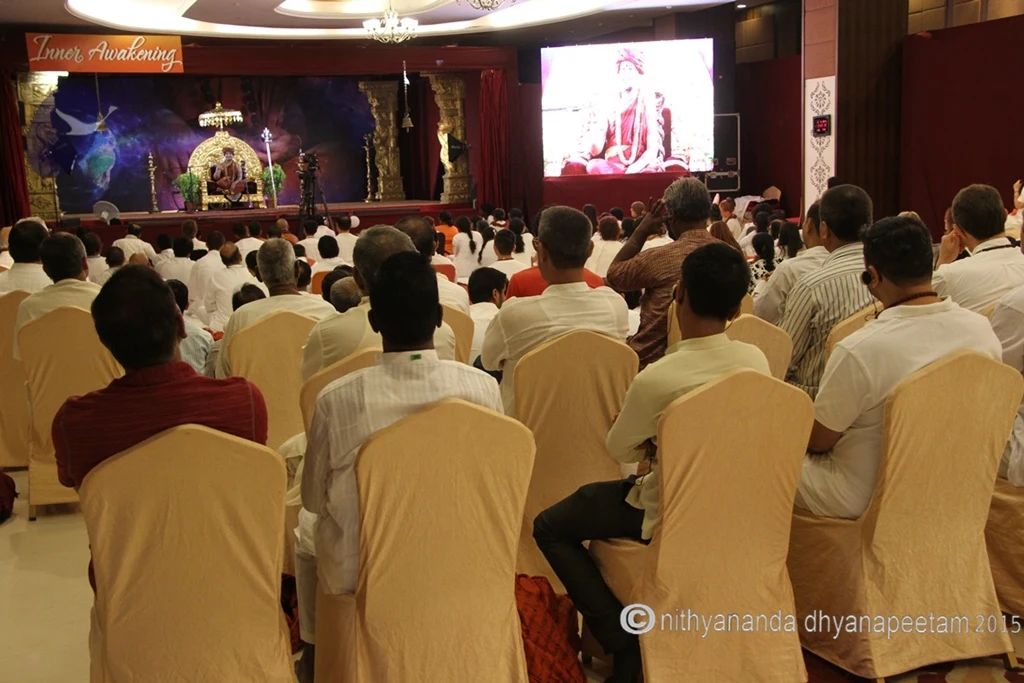
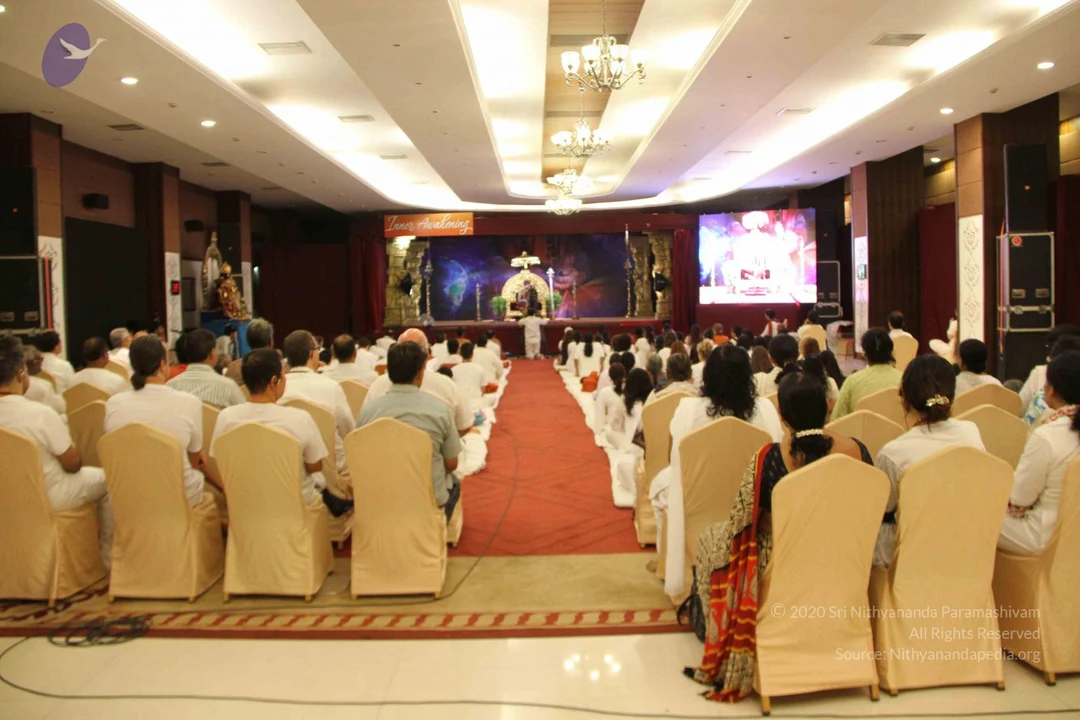
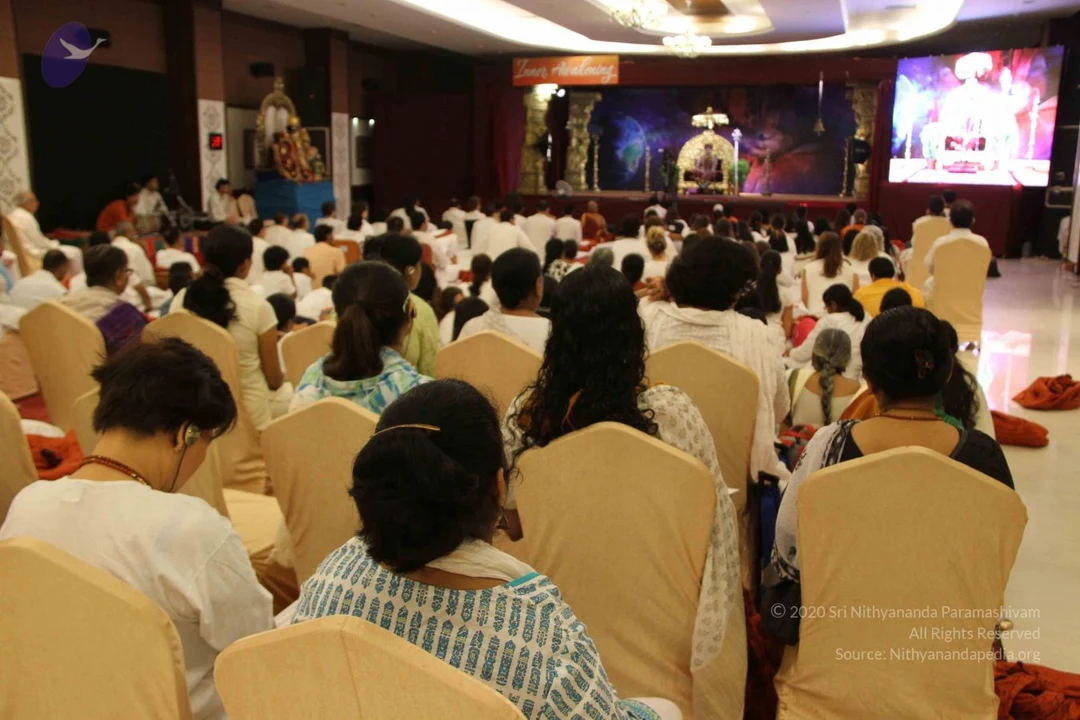
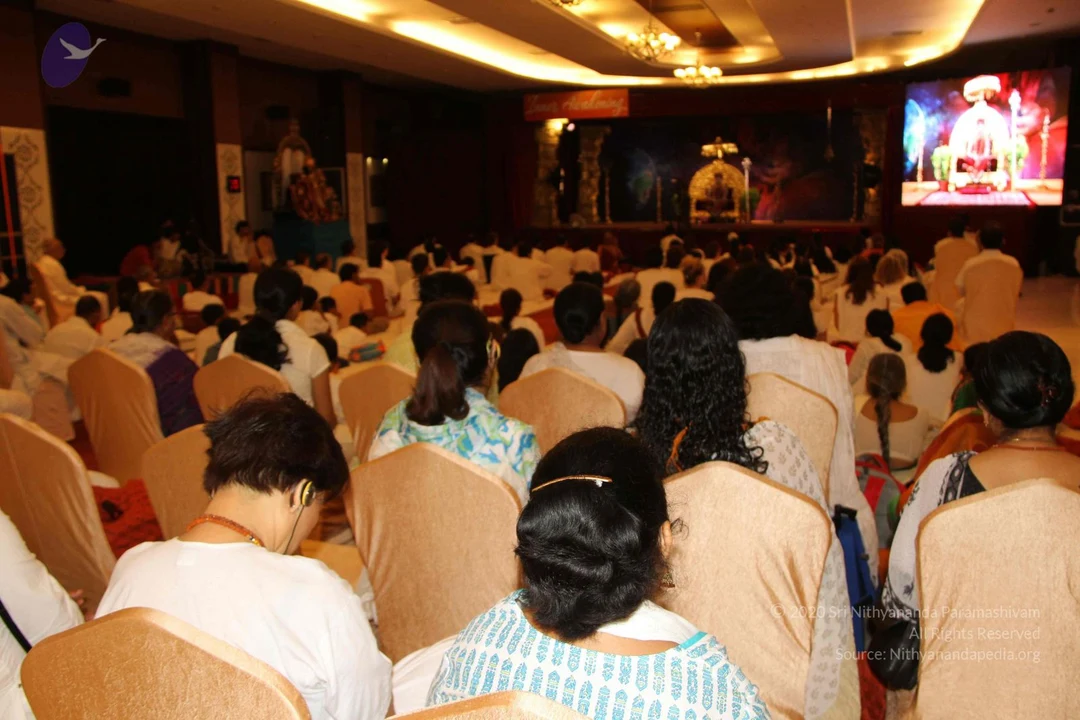
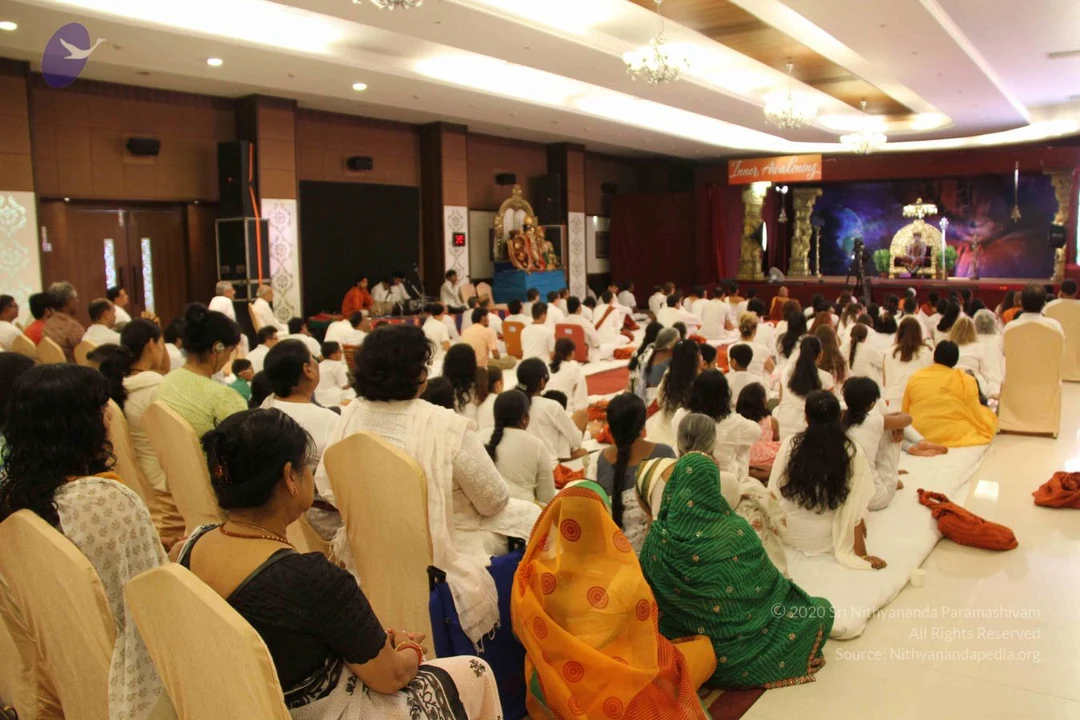
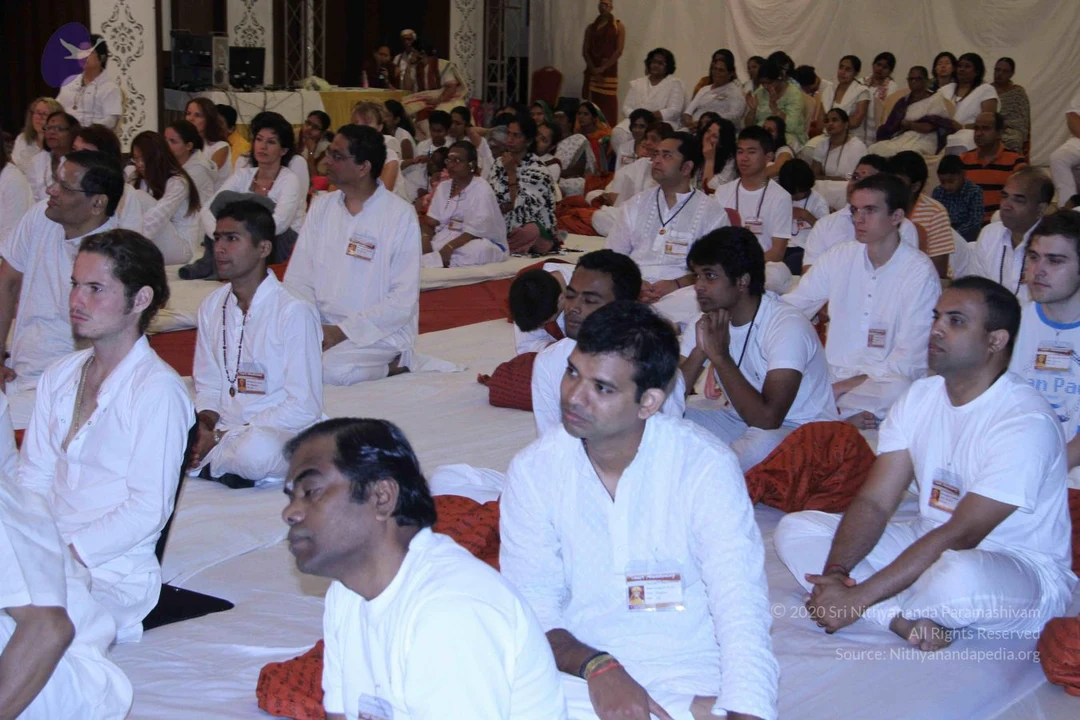
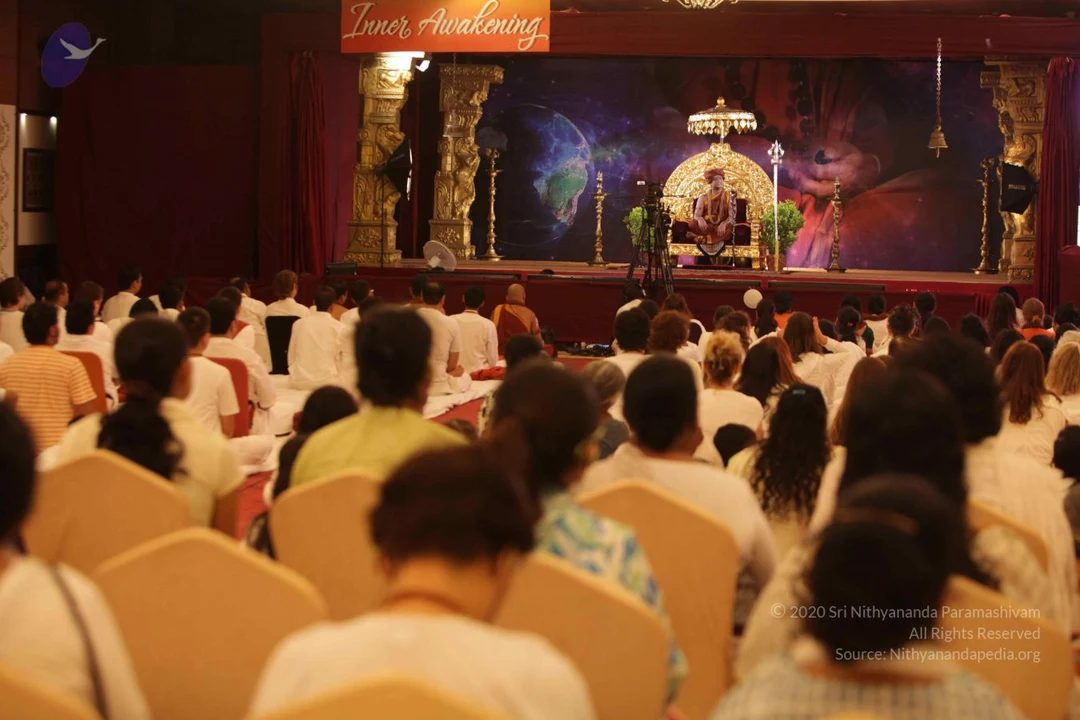
Photograph of a seated audience viewed from behind at a satsang hall. Many people in white clothes and gold-coloured chairs face a stage with a golden throne backed by a starry blue backdrop, and an orange banner reading Inner Awakening hangs at upper left. On the stage, a figure in orange and saffron robes sits on the throne, and a large screen at right shows a close-up of a person in red robes seated on a red cushion. Several people wear rudraksha malas, and gold pillars and a chandelier frame the hall. The seated attendees number roughly twenty to sixty, with some partly visible at the edges.A photograph taken from the back of a seated audience in a hall during a satsang. Rows of attendees in cream-covered chairs face a stage with a golden throne-like seat draped with a cloth, flanked by gold pillars and a star-field backdrop. A large screen shows a figure in red and saffron robes seated in meditative posture. Most attendees wear white or pale shirts and kurtas, with a few in red, orange and striped clothing. A camera on a tripod stands near the stage. A banner reads Inner Awakening.Photograph from behind a large hall filled with rows of seated devotees in white clothes on gold-covered chairs, facing a raised stage at the far end. Many attendees wear white kurtas and shirts; a woman in a red and orange patterned sari sits at right. A red carpet runs down the centre aisle toward the stage, where a figure in white stands near an ornate gold-and-purple backdrop with a central throne-like seat and a large video screen above showing a similar scene. A chandelier hangs from the ceiling, and a statue stands at the left edge beside a banner reading 'Inner Awakening'. The scene suggests a satsang gathering.A photograph taken from the back of a seated audience in a large hall with cream-upholstered chairs and a polished floor. Many people in white and pastel clothing sit facing a stage with a decorated central seat and a deity murti on a side altar. A large screen at upper right shows a figure in white on a stage. Some attendees wear earphones, and a few wear rudraksha or beaded necklaces. Orange cloths lie on the floor near the front row. Several dozen people are visible, including partially visible heads at the edges. The setting resembles a satsang hall.A large hall seen from behind rows of seated devotees, mostly women with hair in buns and ponytails, wearing white and light-blue patterned clothing, with a few wearing headphones. Beige-cushioned chairs fill the foreground. On the stage, a golden throne-like seat and a dais decorated with ornate pillars stand beneath a backdrop, and a large screen on the right shows a figure seated on a throne with lamps and red draping. A small deity murti sits on a side table at left. Some people in the far rows wear white clothing.Wide interior photo of a satsang hall with a large crowd of devotees seated on white floor mats and rows of cream chairs, facing a stage at the far end. Many women wear white saris and salwar kameez, while one front-row woman wears a green sari with red patterns and another wears an orange and yellow dupatta. A seated figure in an orange robe sits near the front right on the floor. On the stage, a figure sits on an ornate golden throne-like seat before a backdrop of a dark blue night scene with a painted deity-like figure, and a golden deity murti sits on a blue-draped pedestal at the left. Chandeliers hang from the ceiling and a red banner with white lettering is displayed above the stage.

SarvaDarshan

26 photosSource gallery
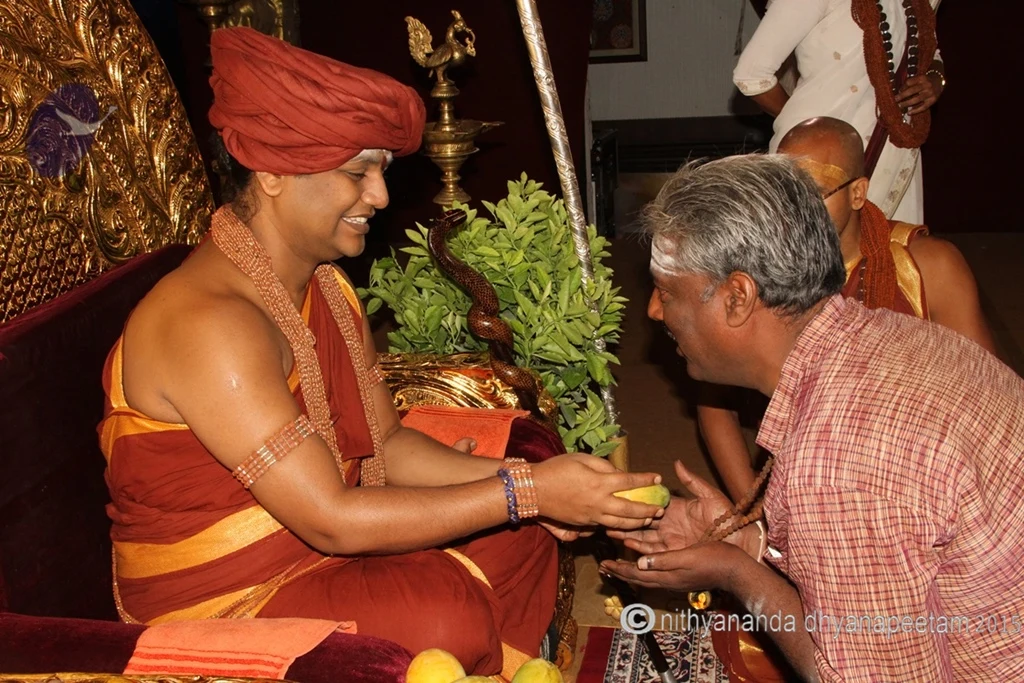
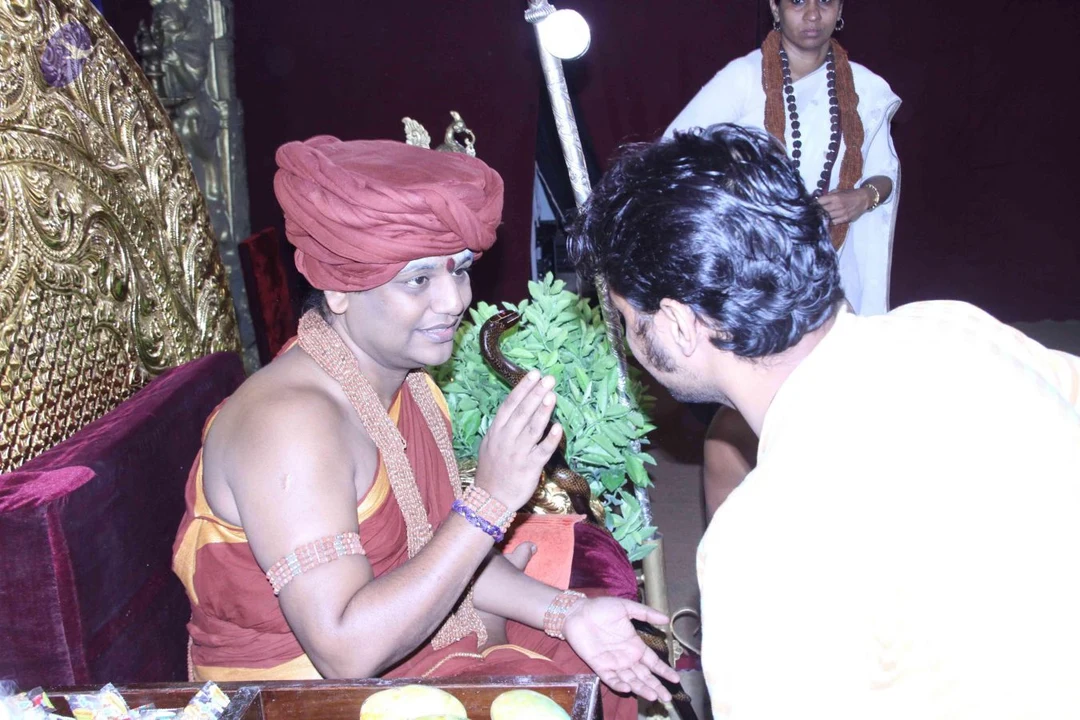
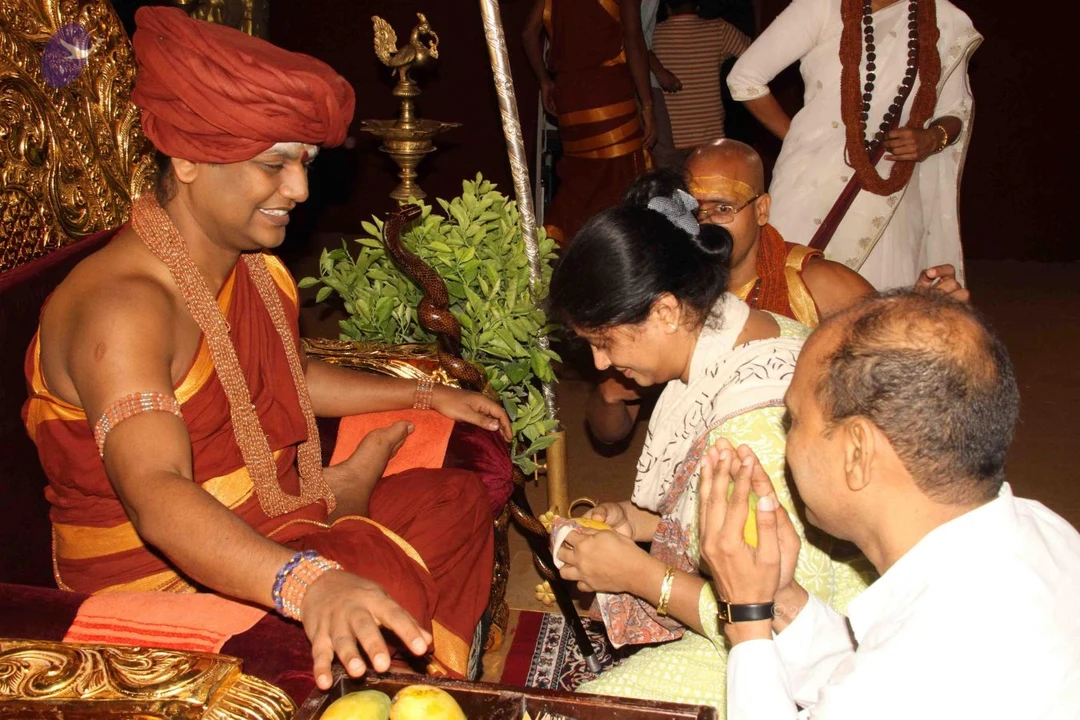
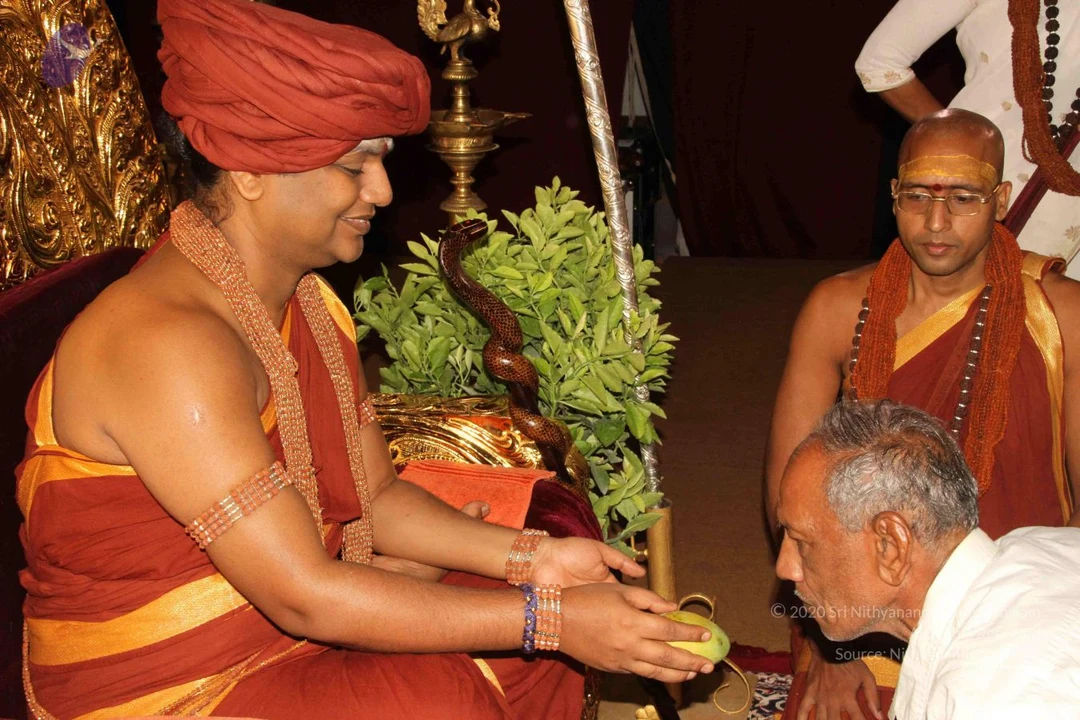
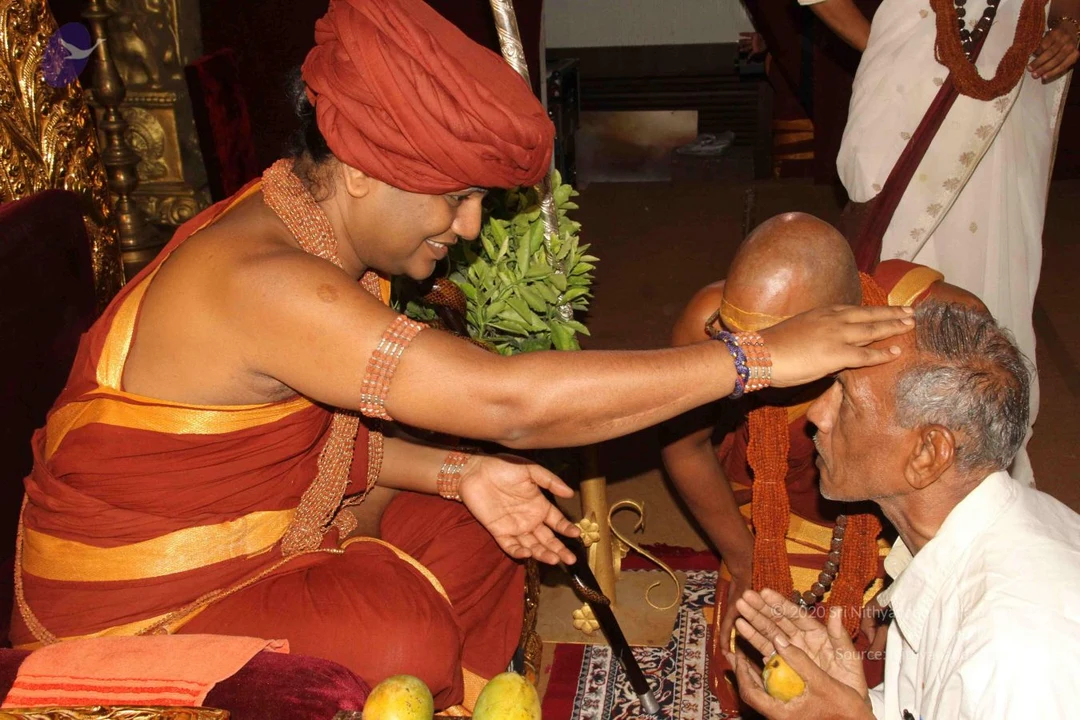
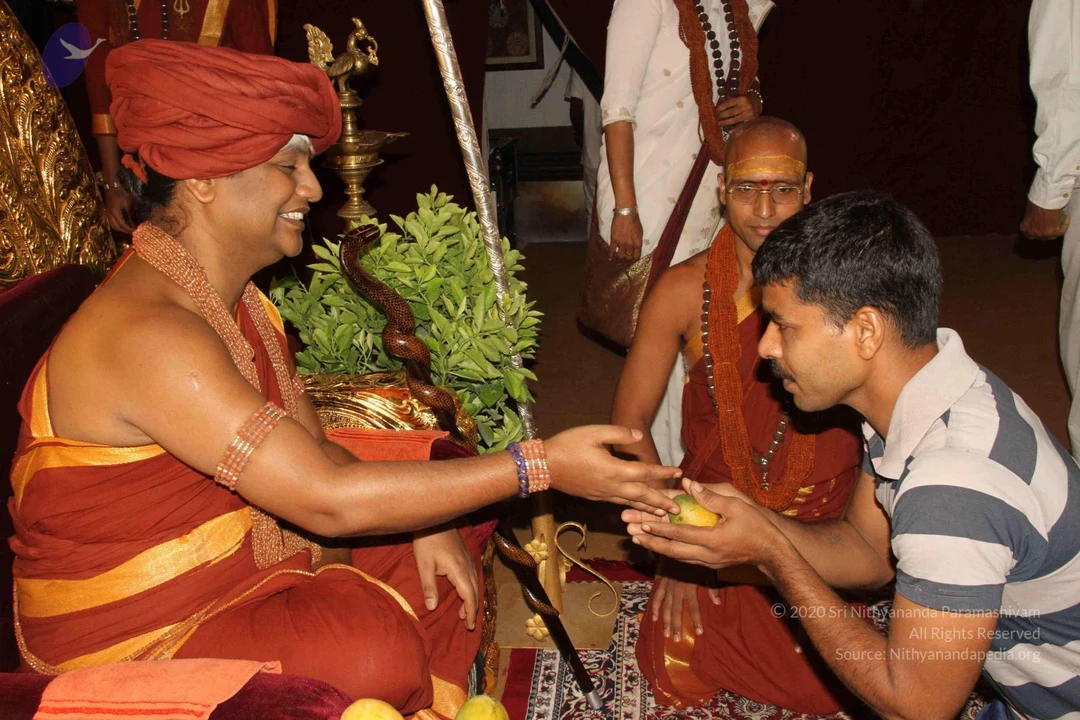
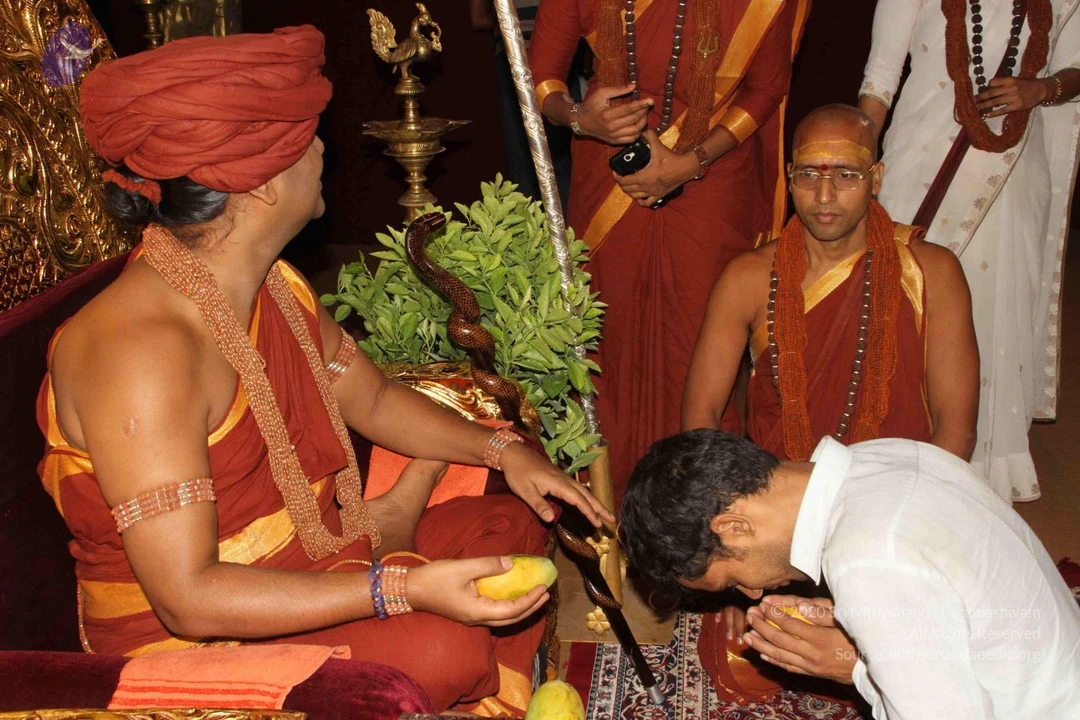
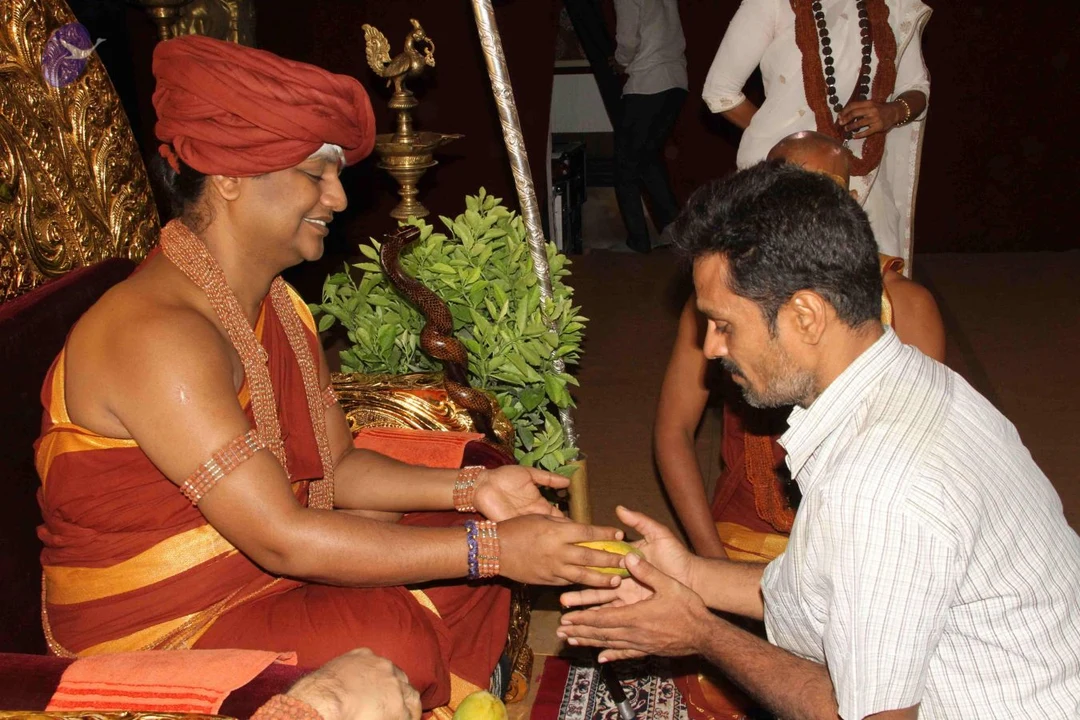
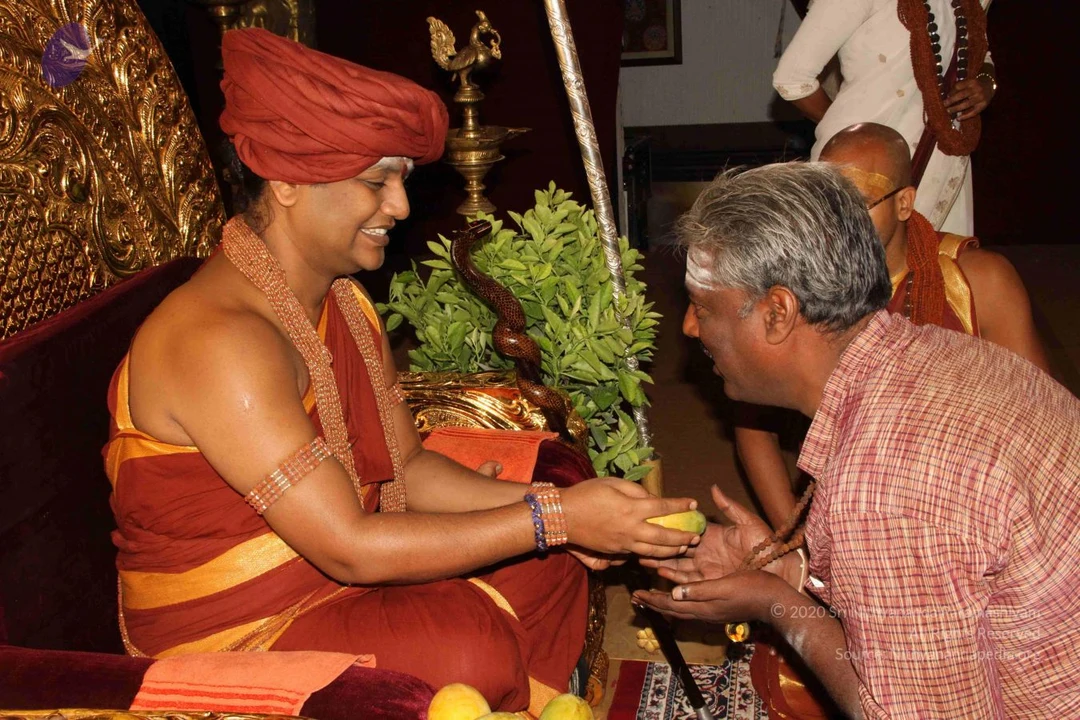
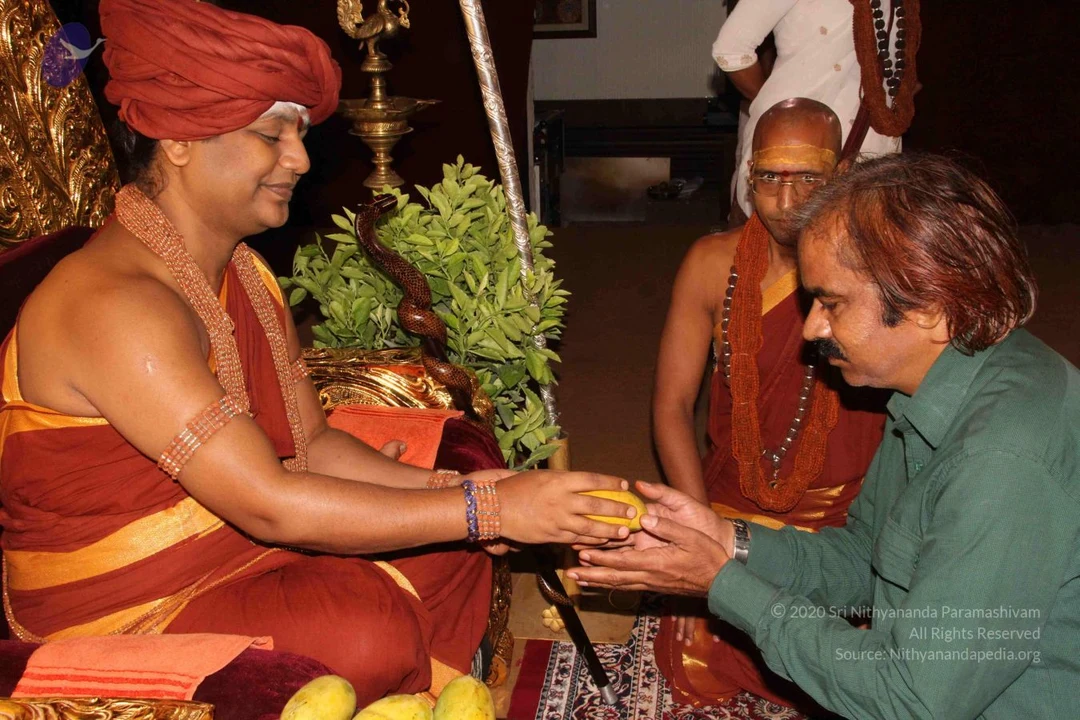
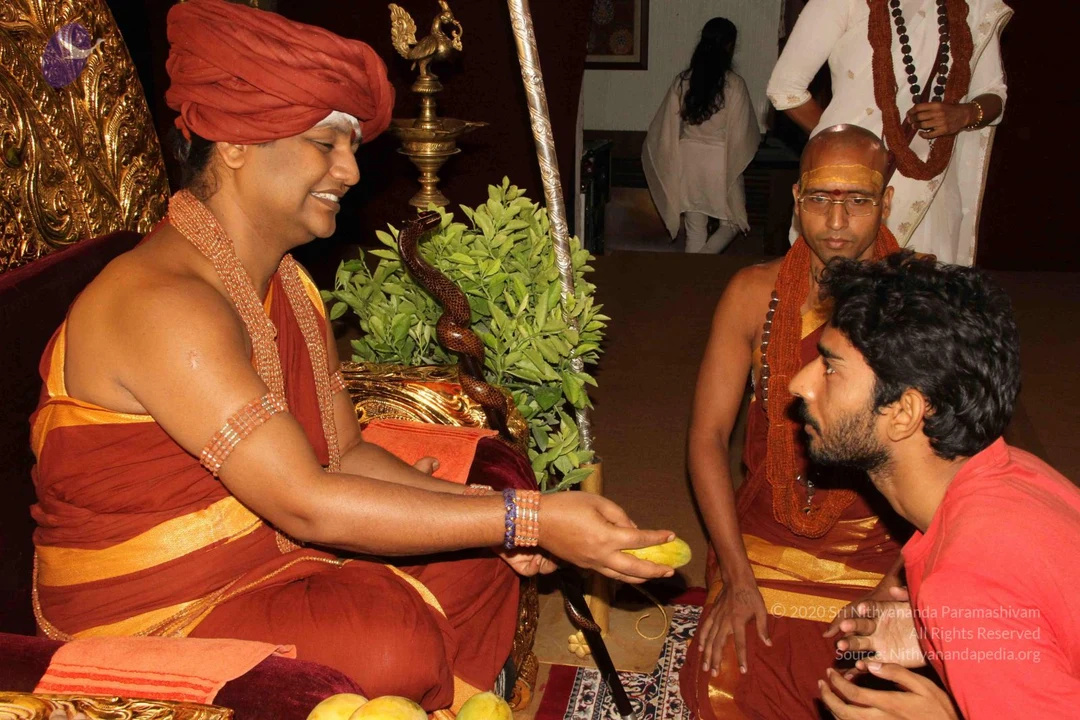
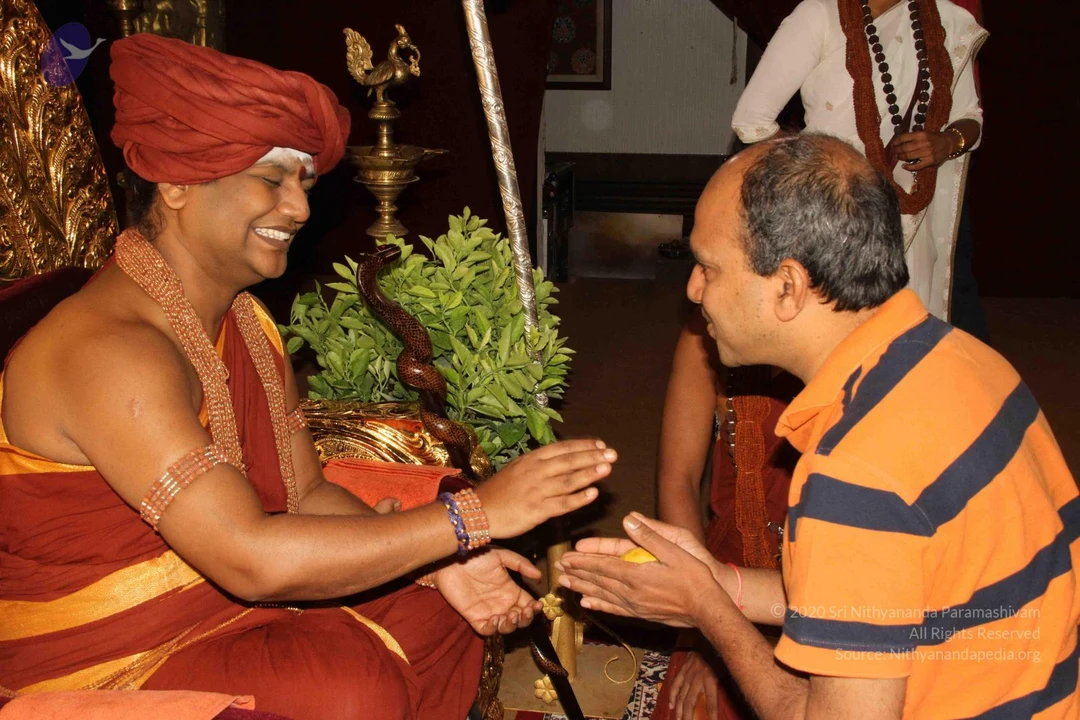
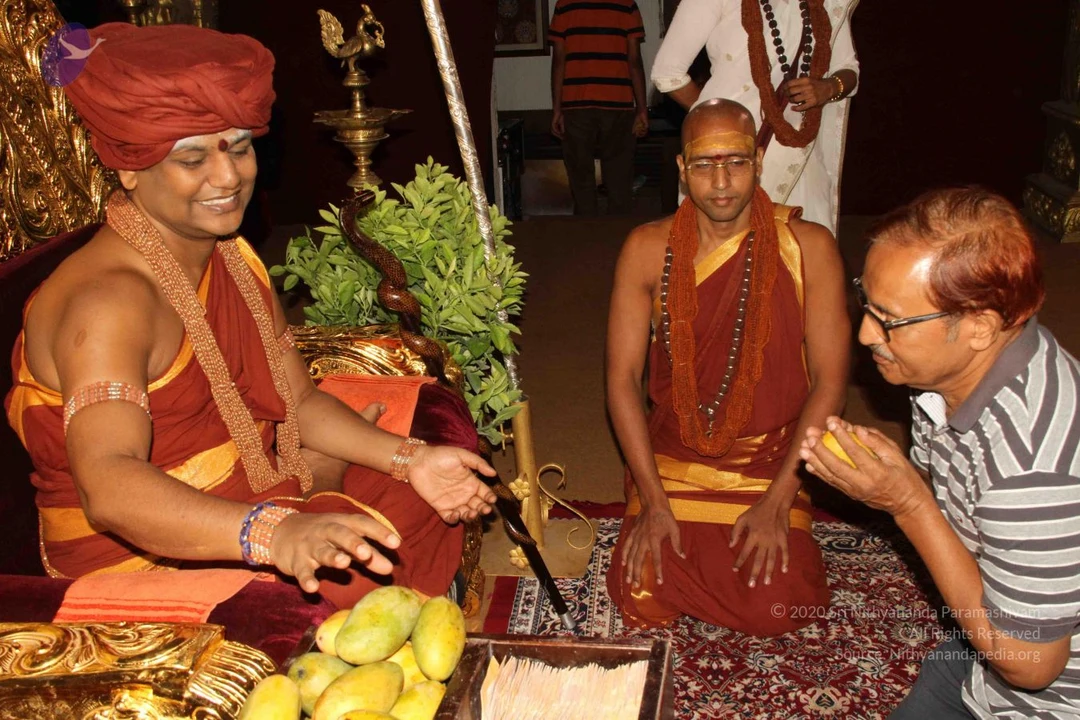
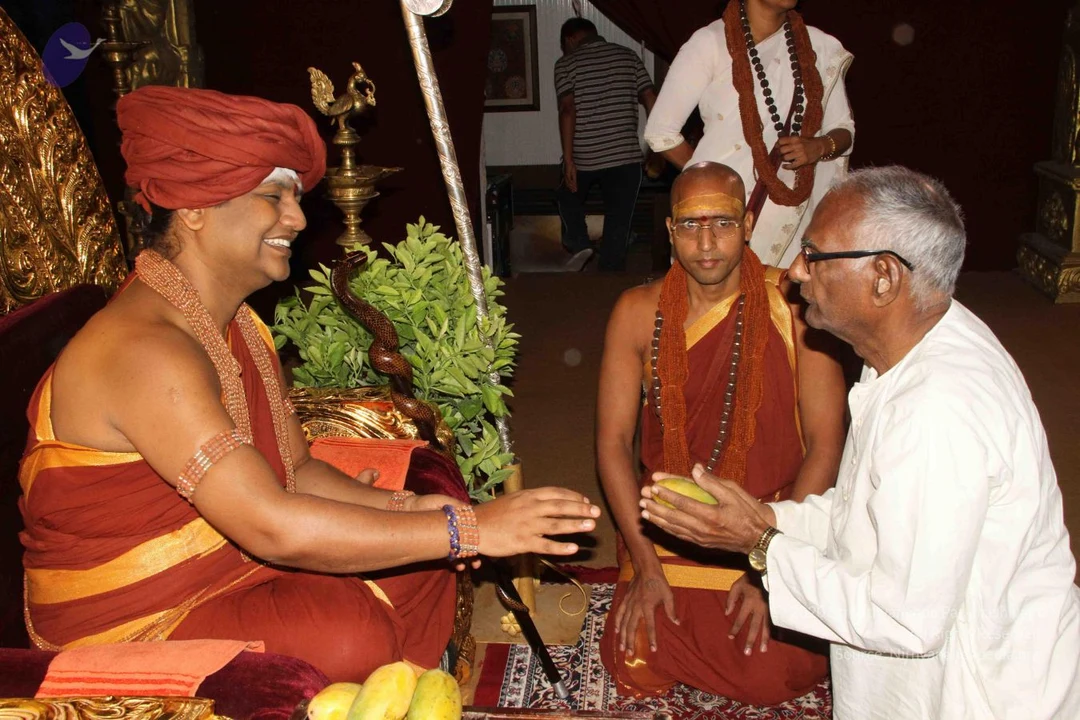
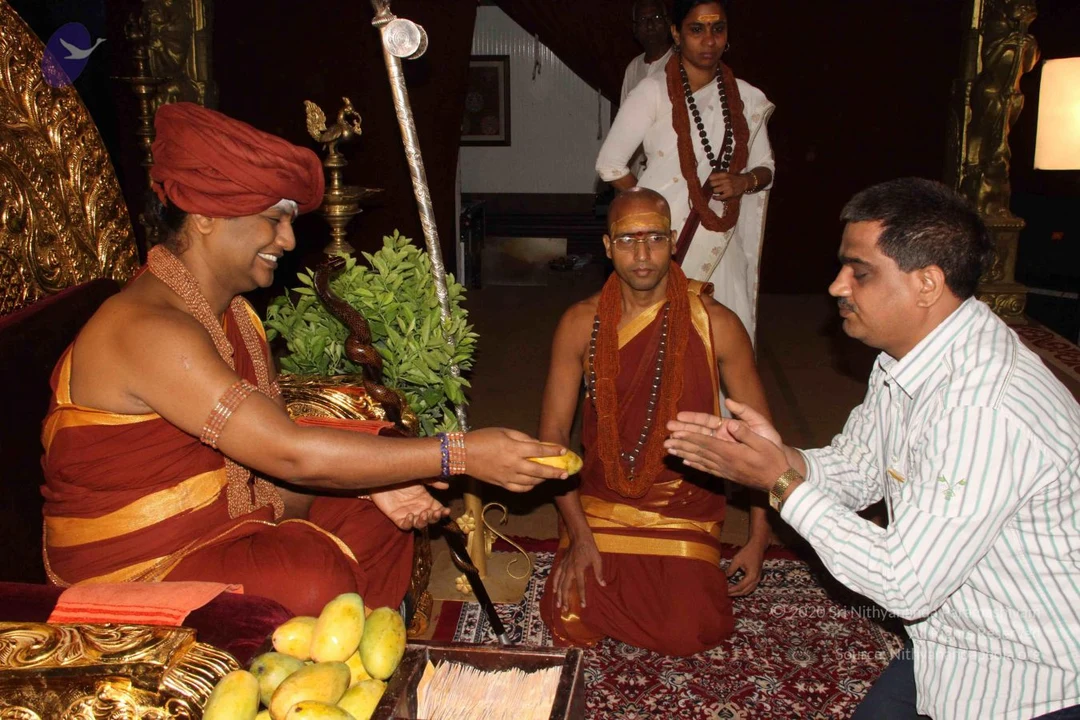
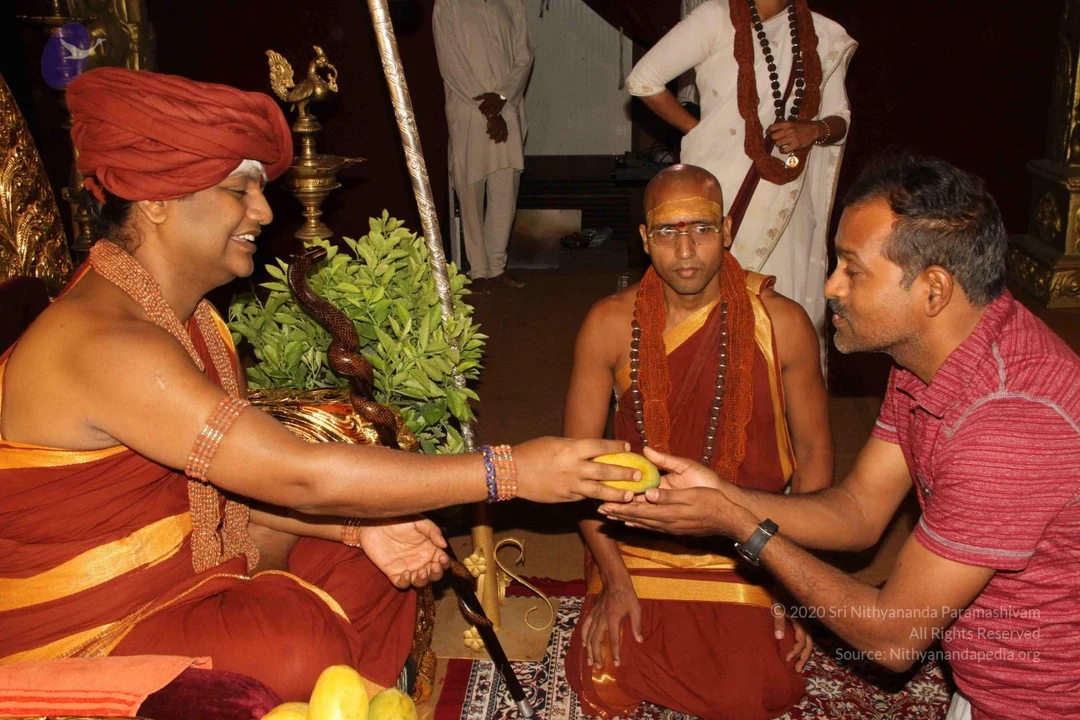
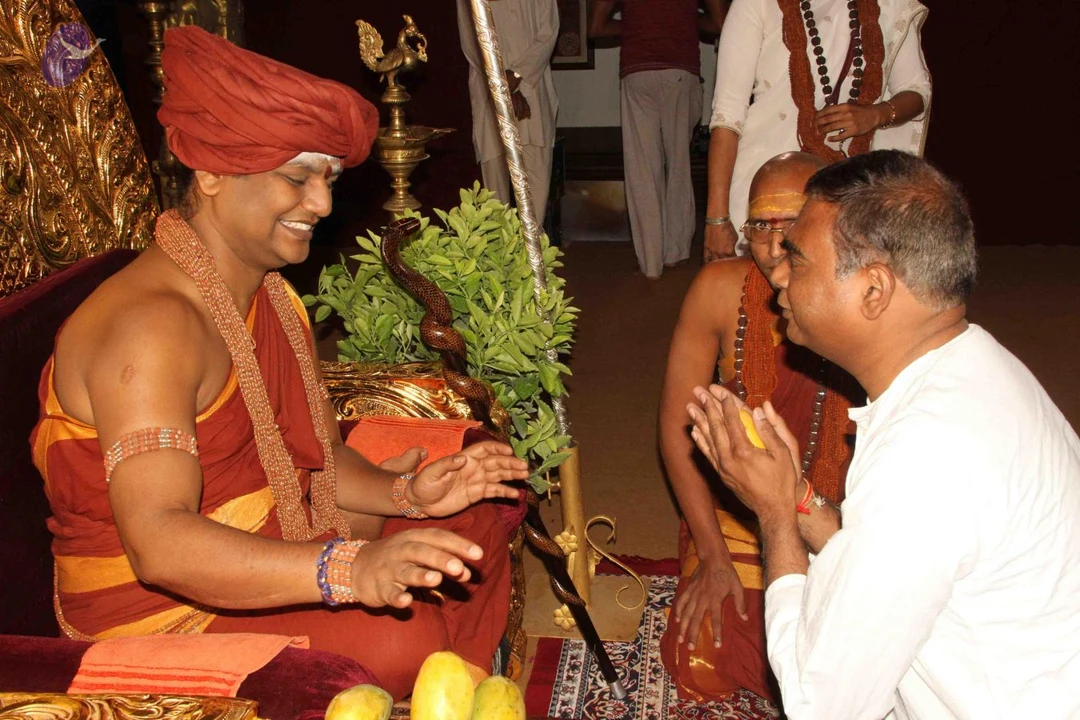
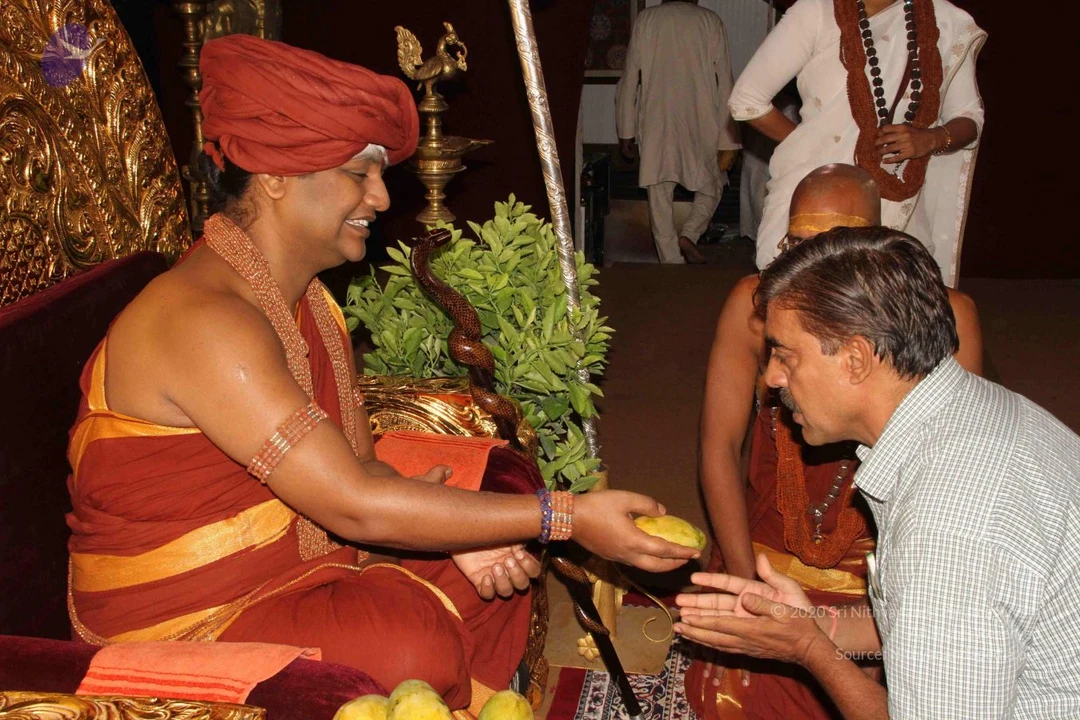
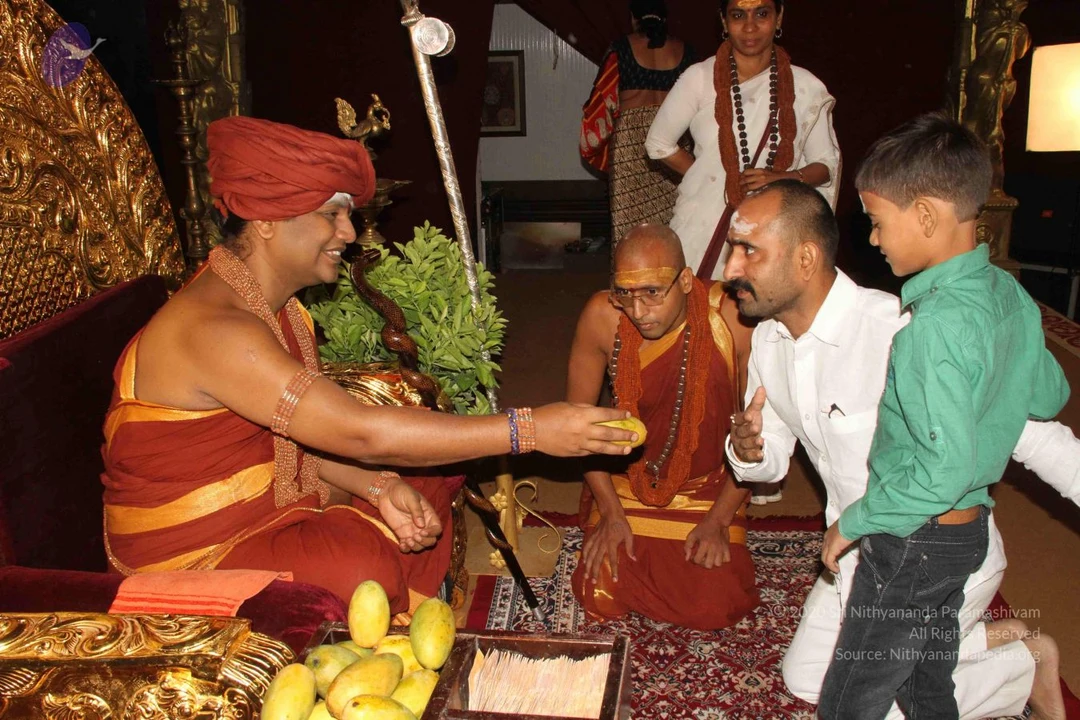
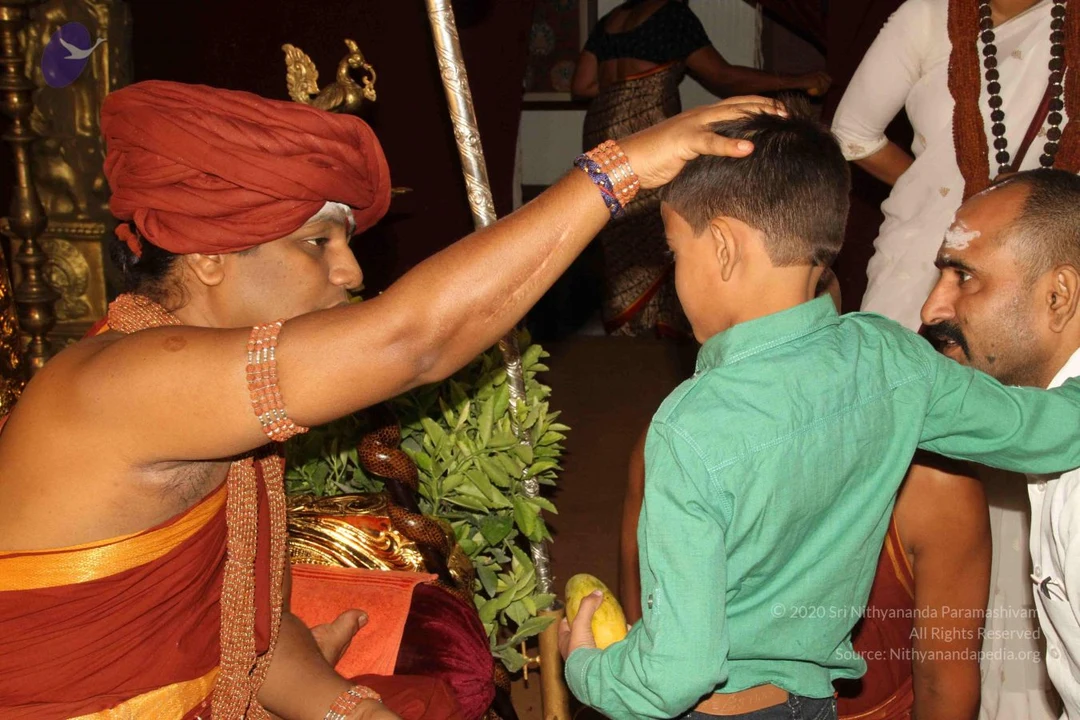
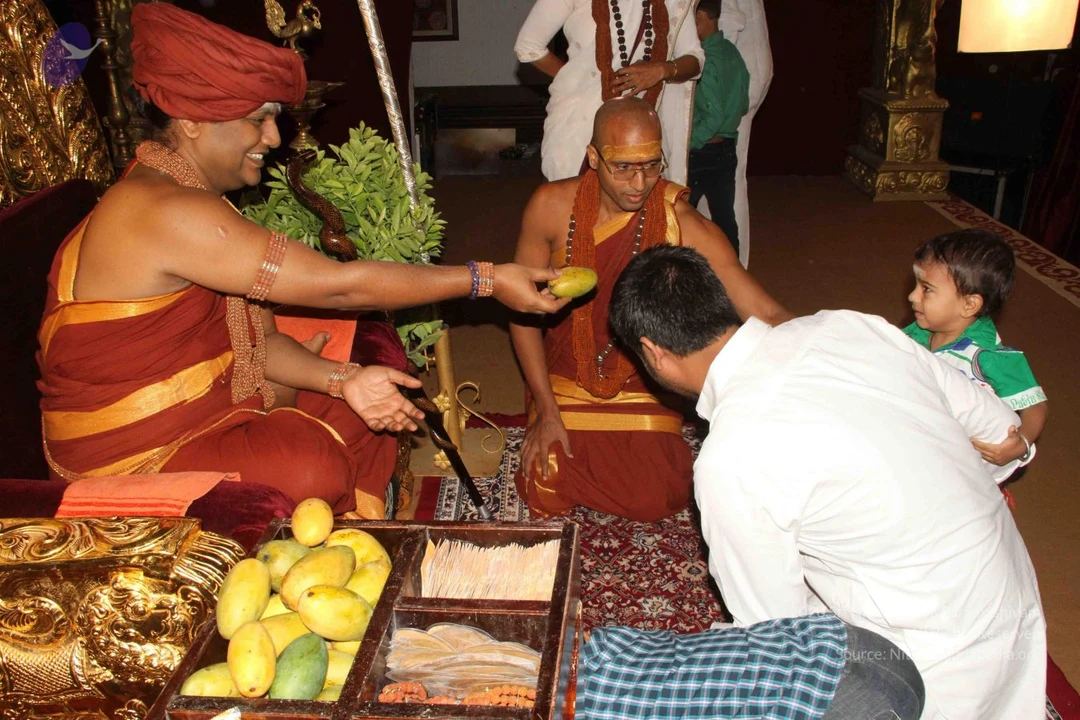
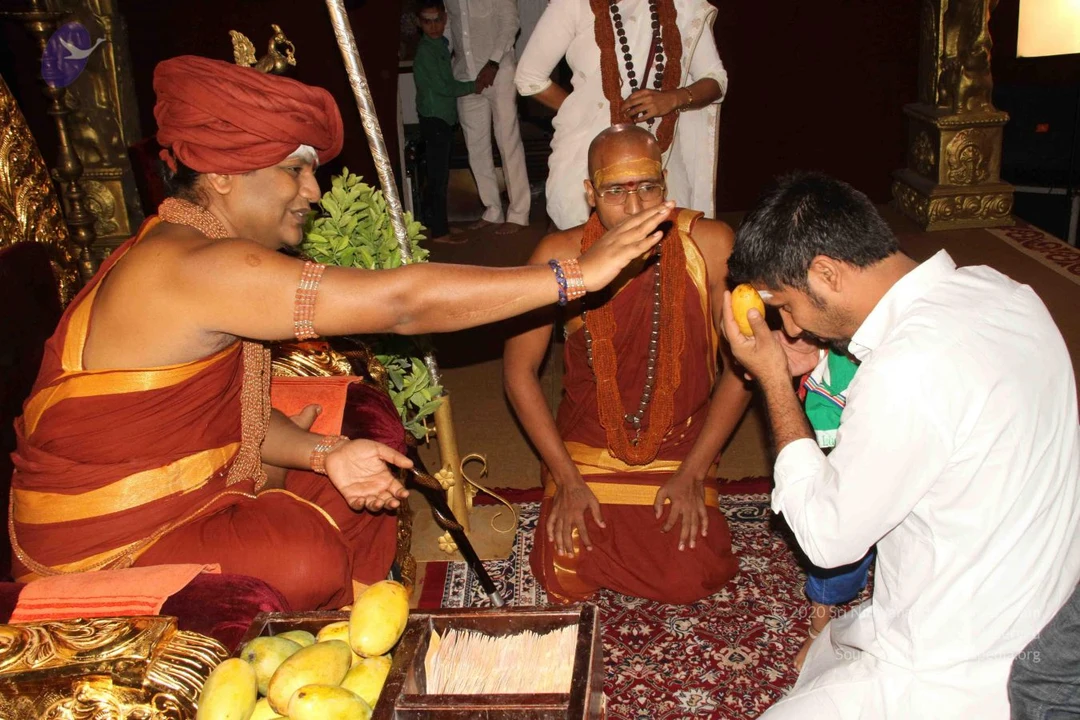
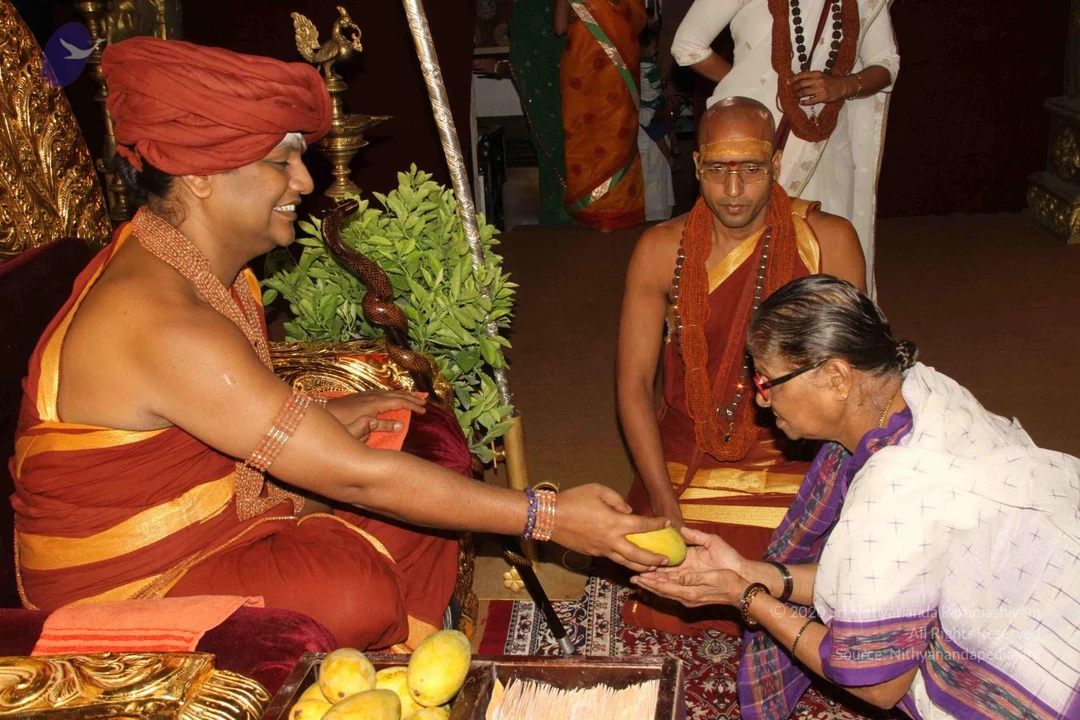
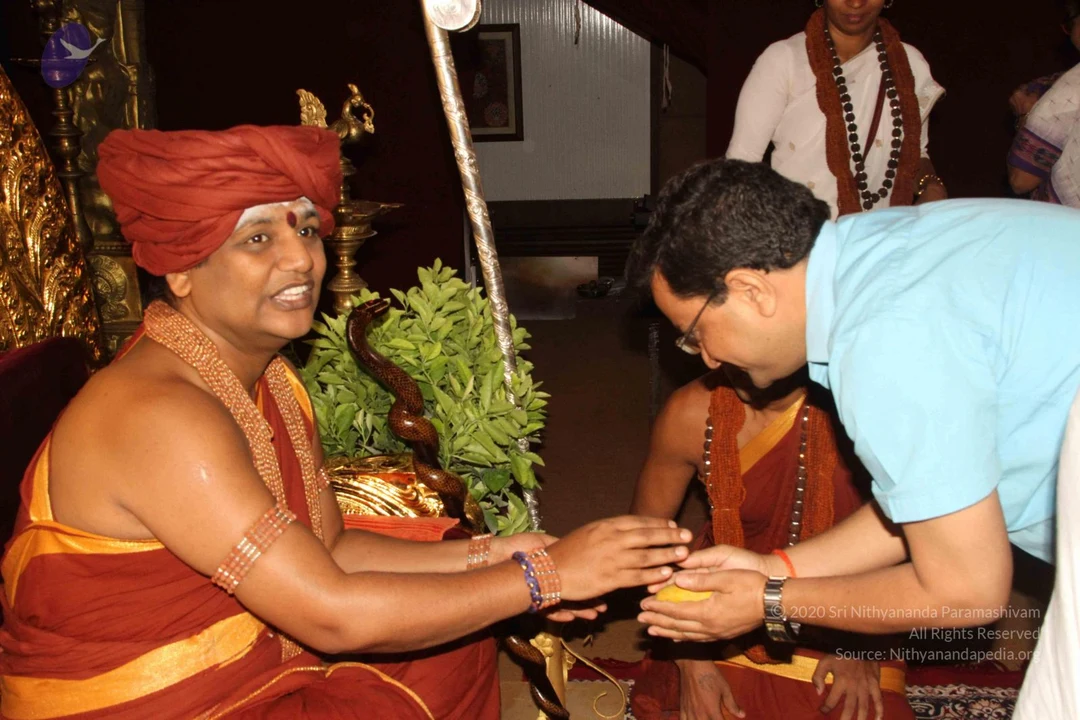
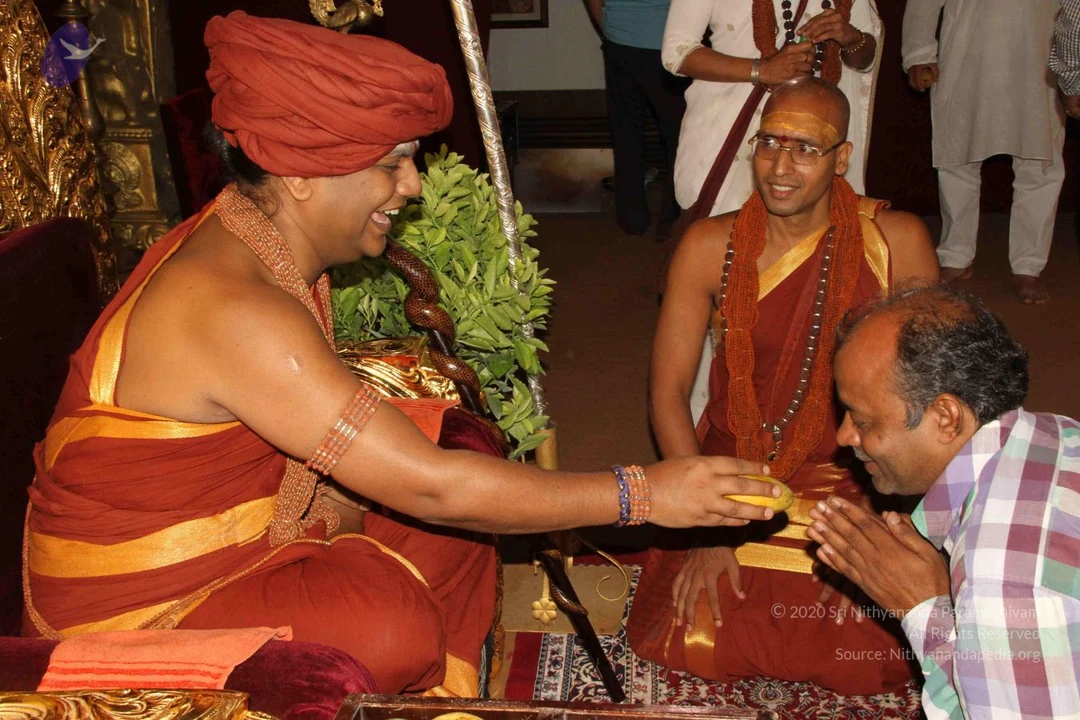
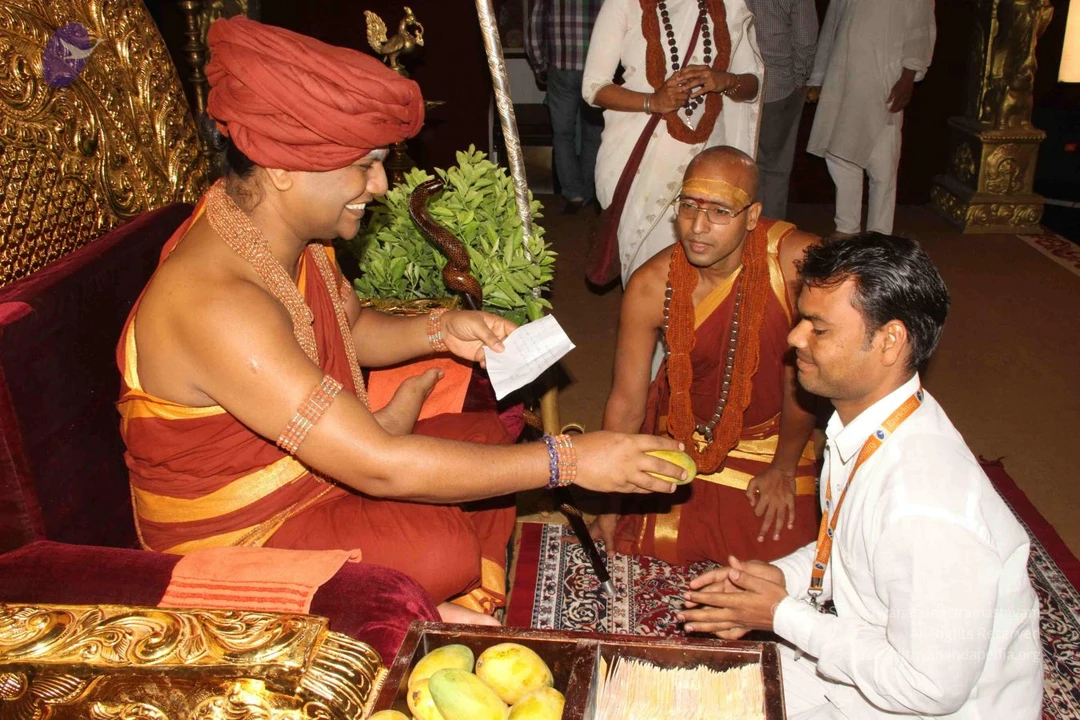
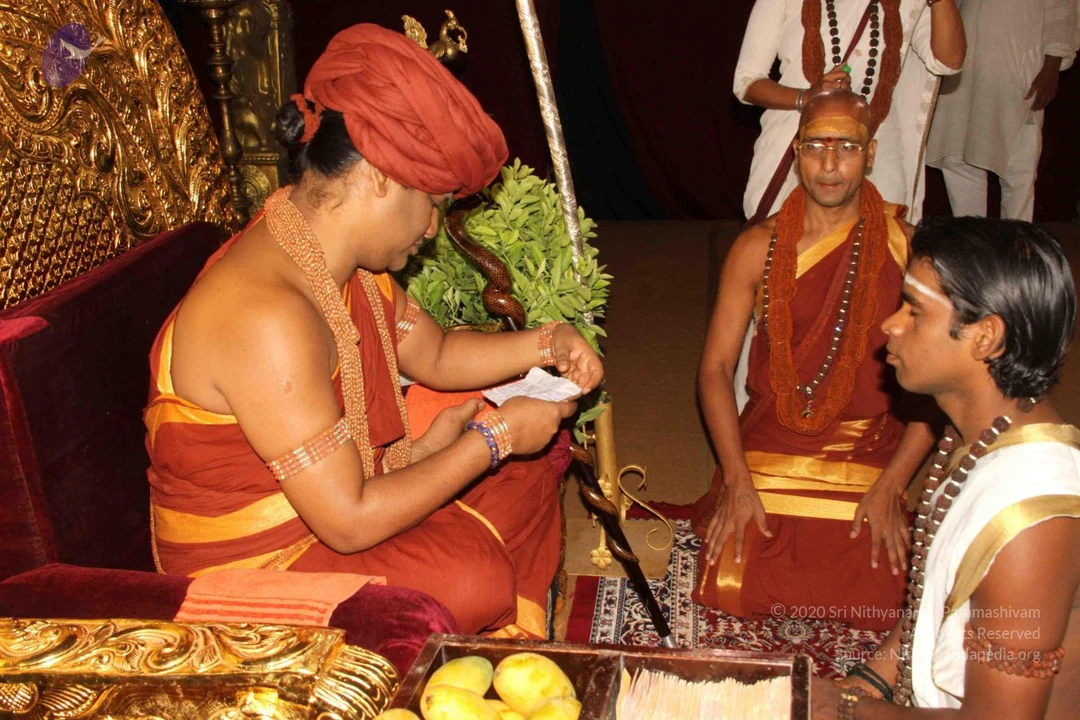
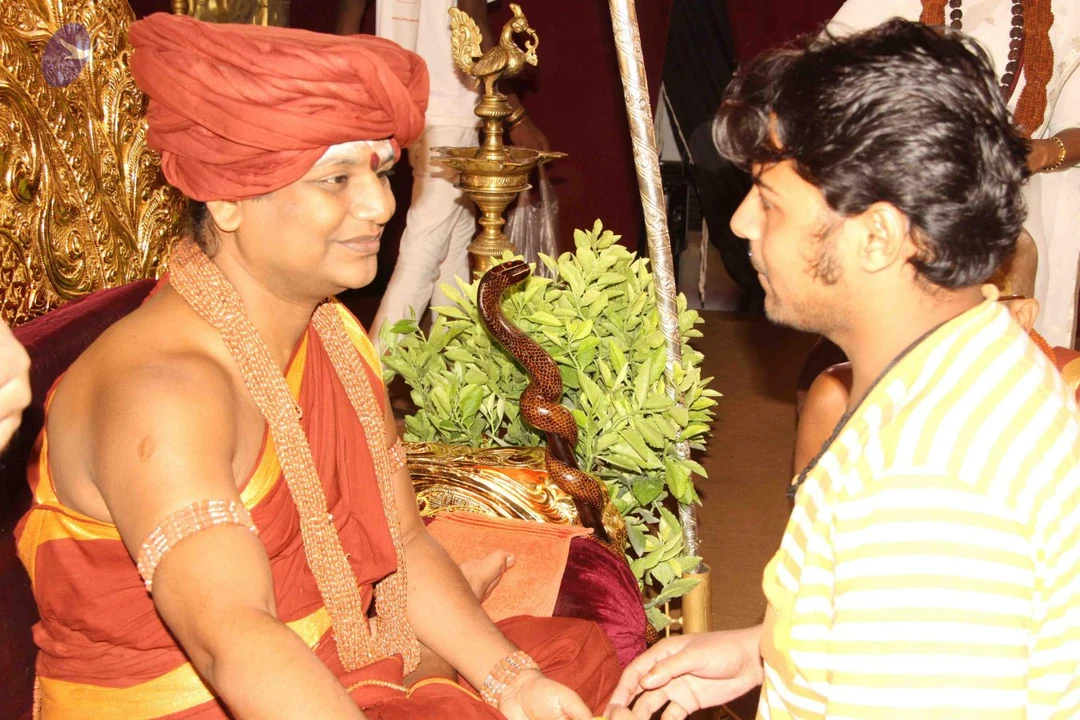
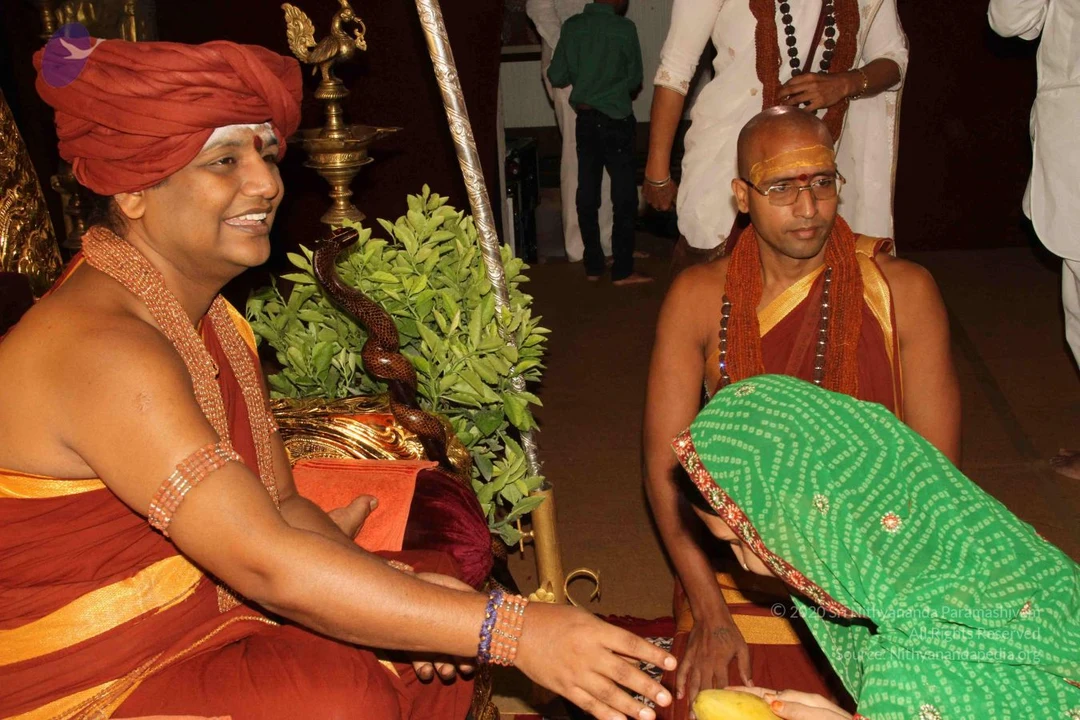
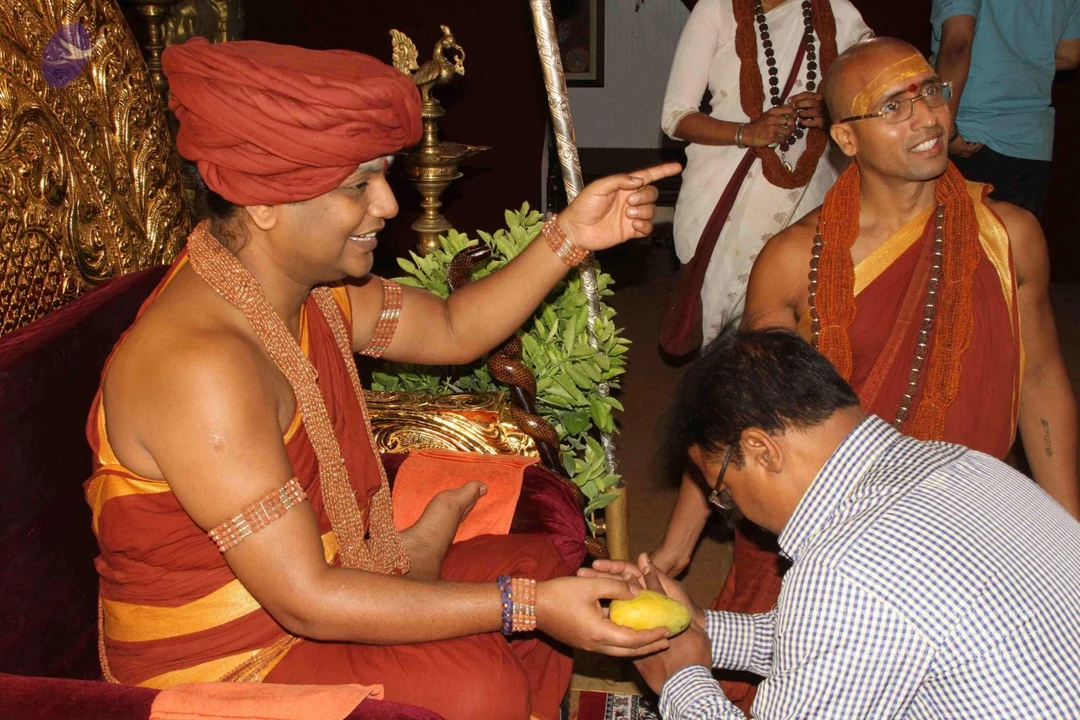
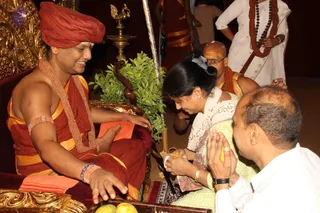
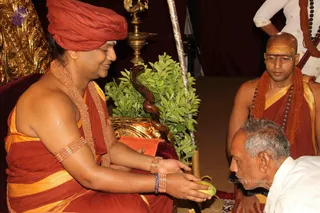
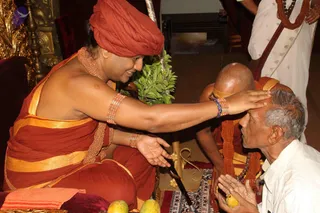
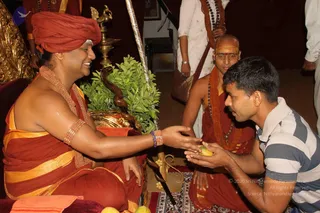
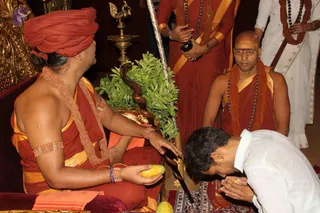
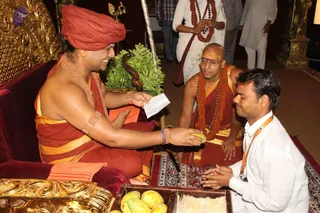
A seated man in a rust-red turban and draped red-and-saffron cloth sits on a gold-carved throne with a purple velvet cushion, a rudraksha-style bead strand and a beaded necklace visible, his hands raised toward a young man in a cream kurta who bends forward and reaches toward a wooden staff or rod topped with a carved serpent-like head, with green leaves beside it. A woman in white with a rudraksha mala and orange shawl stands behind them, and a tray of fruit and sweets sits in the foreground. The appearance of the seated man with turban, saffron-toned draping and ornate bangles is consistent with the page's a person reference, though his identity cannot be confirmed from appearance alone.A seated man in saffron and orange robes and a red-orange turban sits on a gold-carved throne, smiling and holding a bundle of green leaves with a small dark snake draped across it. Layers of beaded bracelets and necklaces adorn his arms and chest. A woman in a pale green sari with a white border kneels before him, bowing her head, and a man in a white shirt sits beside her with palms pressed together in greeting. Behind them, a standing attendant in white holds a long staff with a rudraksha mala, and a brass oil lamp with a rooster finial sits nearby, with mangoes on a tray in the foreground. The appearance of the seated figure is consistent with a probable Swamiji (probable) given the saffron robes, turban and ornate beaded adornments, though this is an appearance-based label only.A seated man in a red-orange turban and orange-saffron robe with gold trim and a beaded necklace reaches out to a kneeling elderly man in a white shirt, who bows low and receives a green fruit. A dark snake coils on a gold tray among green leaves. Behind them stands a bald man in orange-red robes with a sacred thread mark on his forehead and a rudraksha mala, plus a brass oil lamp and a gold-decorated throne. The a person candidate's cues include a turban, saffron-orange robe, and ornate beaded jewellery on a golden throne, but the face and appearance are not clear enough for confident identification.A seated man in an orange-red turban and orange-and-gold draped robes, with ornate beaded necklaces and bangles, places his right hand on the head of a kneeling bald devotee in orange and gold clothing wearing a beaded mala. An elderly man in a white shirt kneels in front with hands folded and a mango in hand, waiting for blessing. Mangoes, green leaves, a metal rod and a folded pink cloth sit on a patterned rug before a gilded wooden throne. A second person in white stands at the top right. Four people are visible.A photograph of a seated figure in a red-orange turban, saffron-orange draped garment with gold border, and beaded rudraksha-style necklaces, smiling as he extends his hand toward a kneeling man in a grey-and-white striped polo shirt who offers a yellow fruit, possibly a mango. A brown snake is coiled over a silver staff held beside the seated figure, and green leaves and a brass oil lamp stand nearby. Behind them a shaved-headed man in saffron robes with a sacred thread and beads, and a man in white, stand watching; a gold ornate chair backrest is at the left edge.A photograph of a seated figure in a red turban and saffron-orange robes with a beaded necklace and bangles, holding a yellow mango while a live snake rests on a silver staff. A man in a white shirt bows with hands folded near the staff, and a bald priest in saffron with a rudraksha mala sits nearby. Standing attendants in saffron and orange shawls hold a phone, and a brass oil lamp and a golden throne are visible. Green leaves and mangoes lie on a patterned rug. a person is the seated figure in red turban and ornate beaded necklace, appearing to receive devotion.

IA

26 photosSource gallery
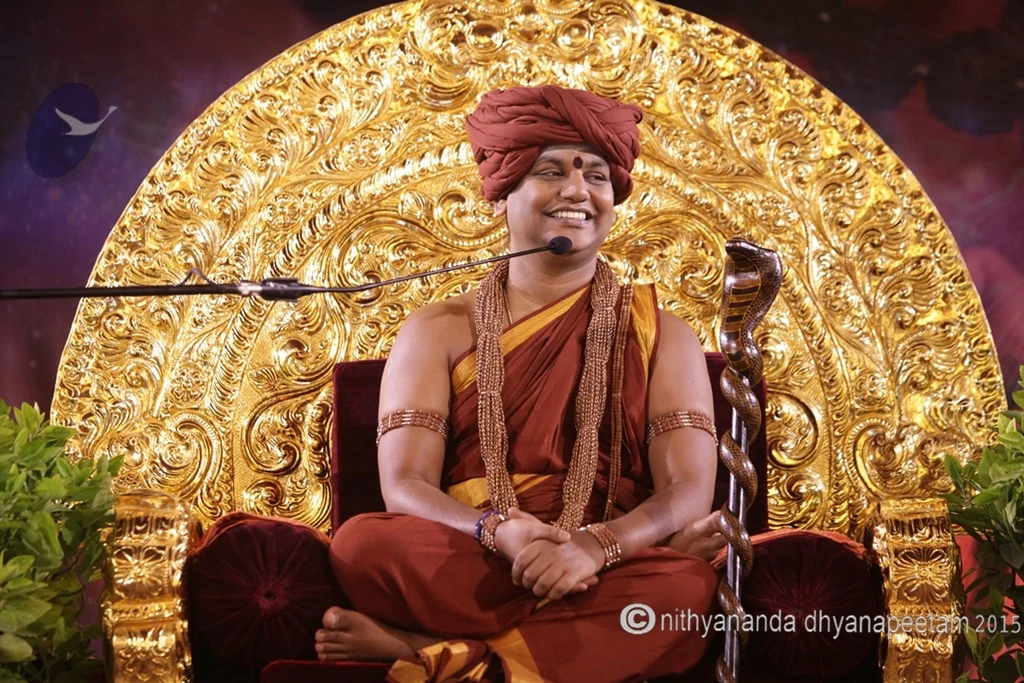
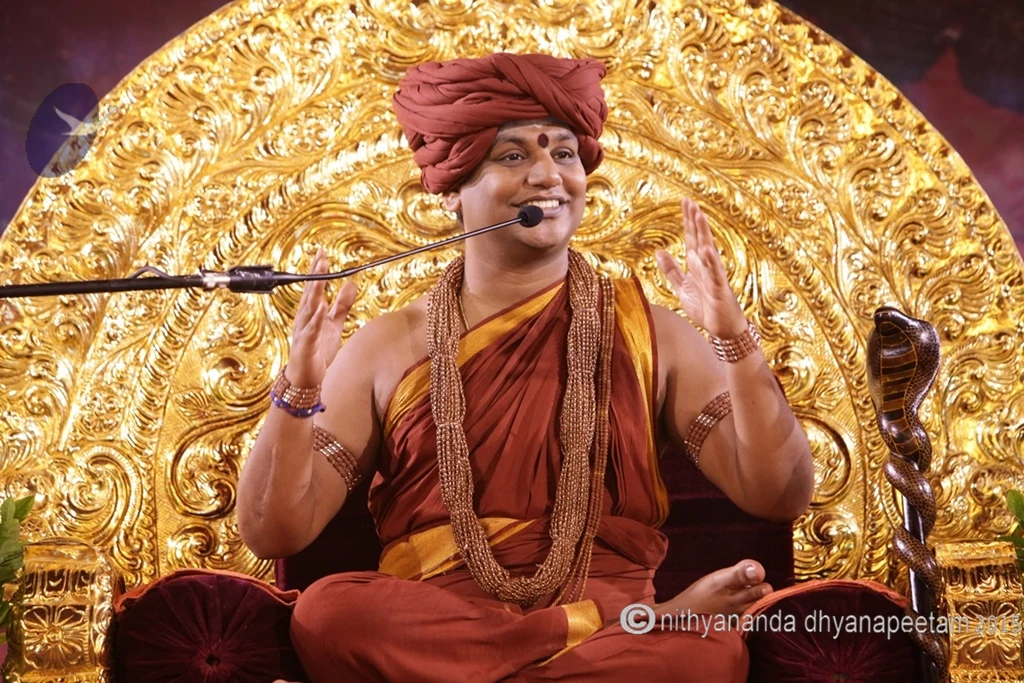
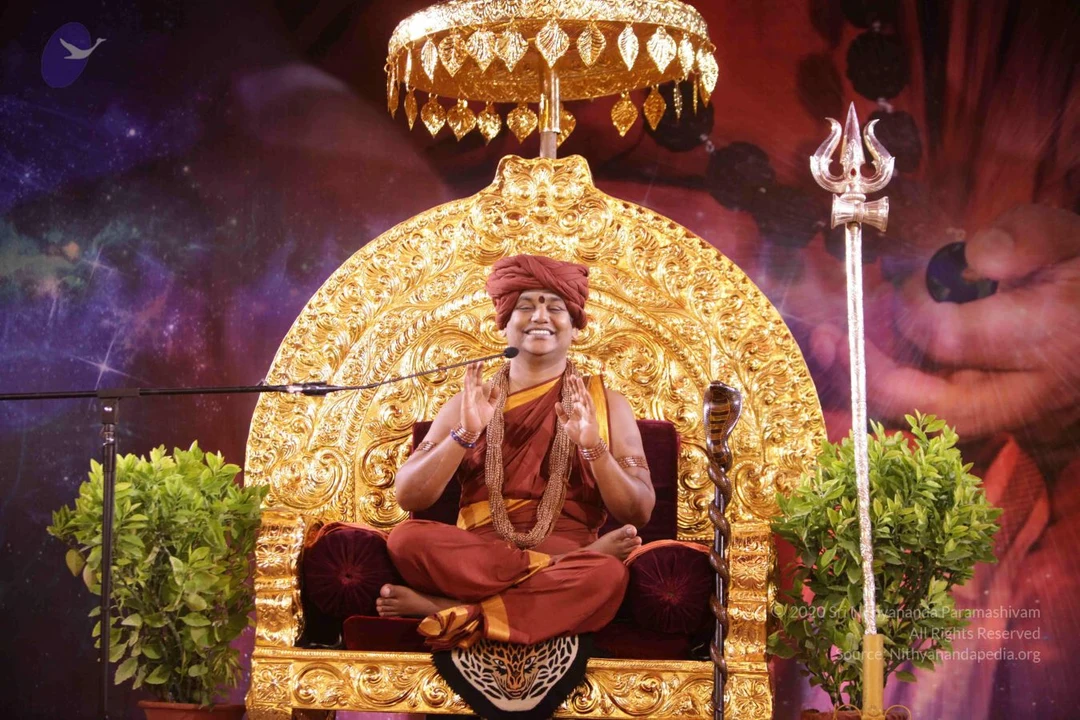
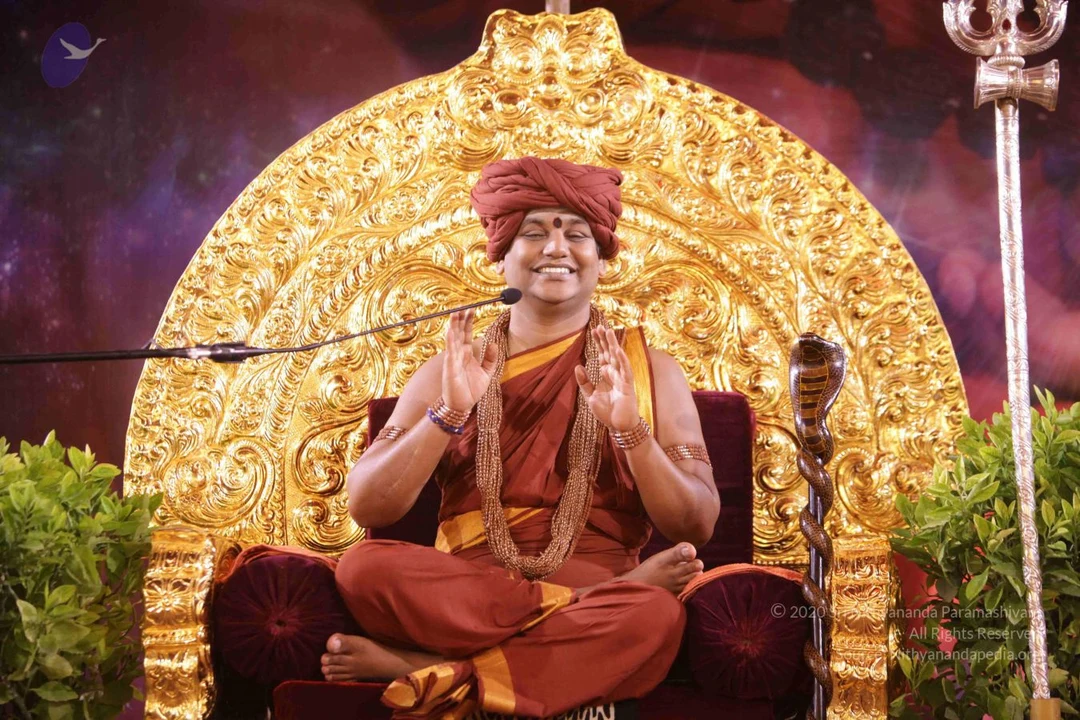
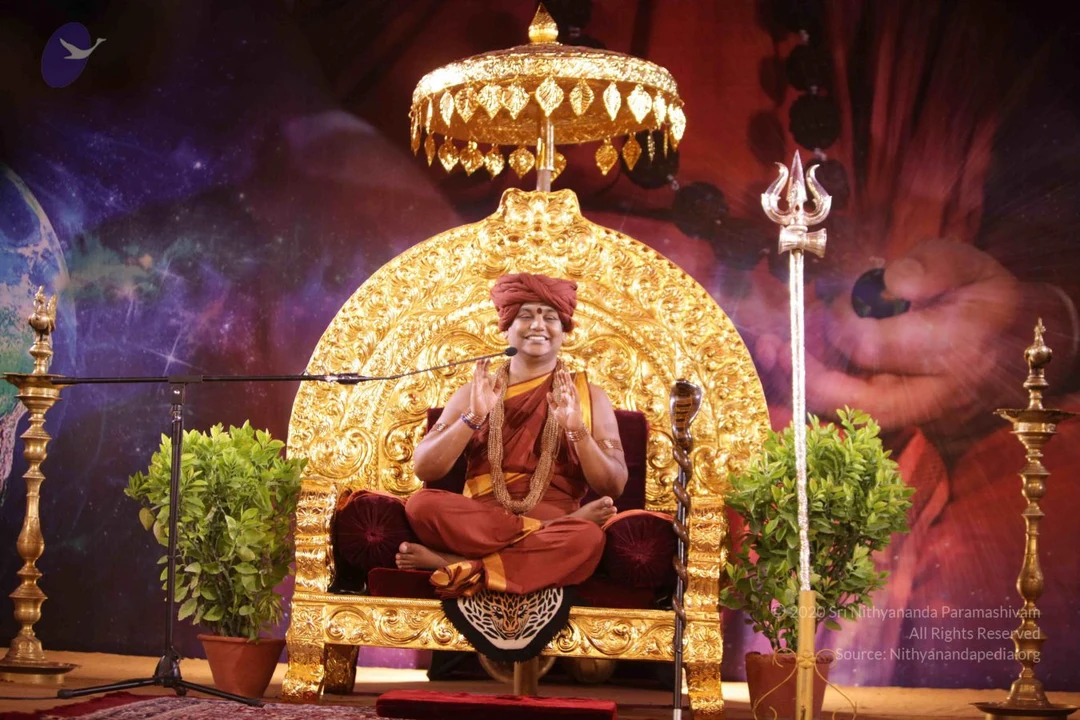
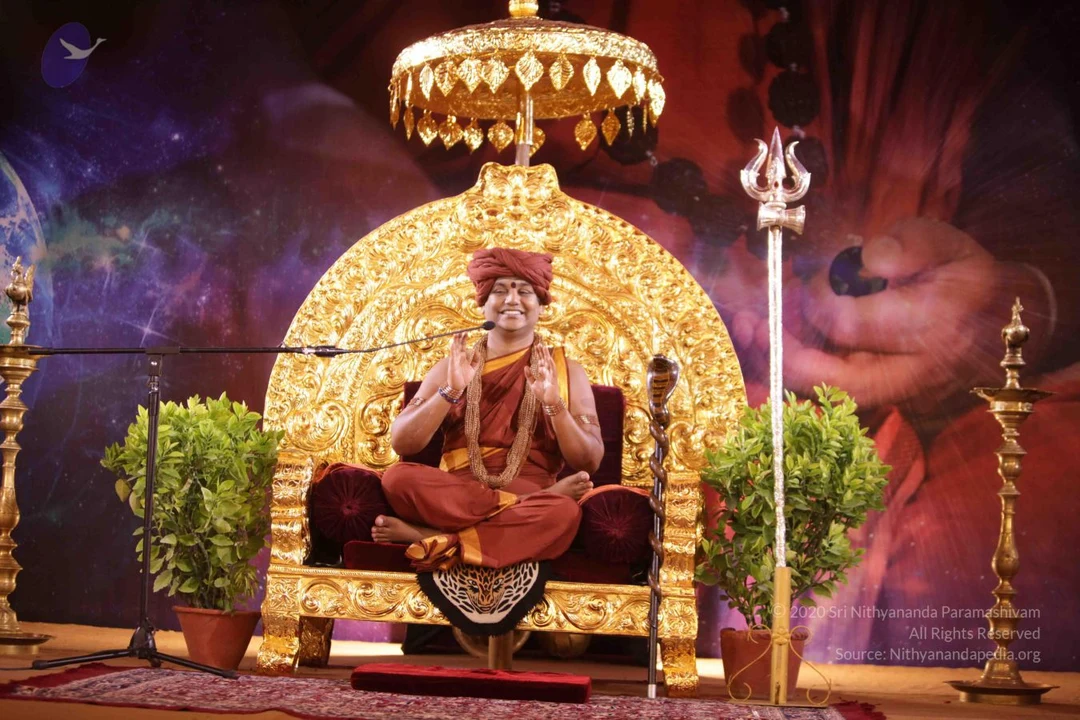
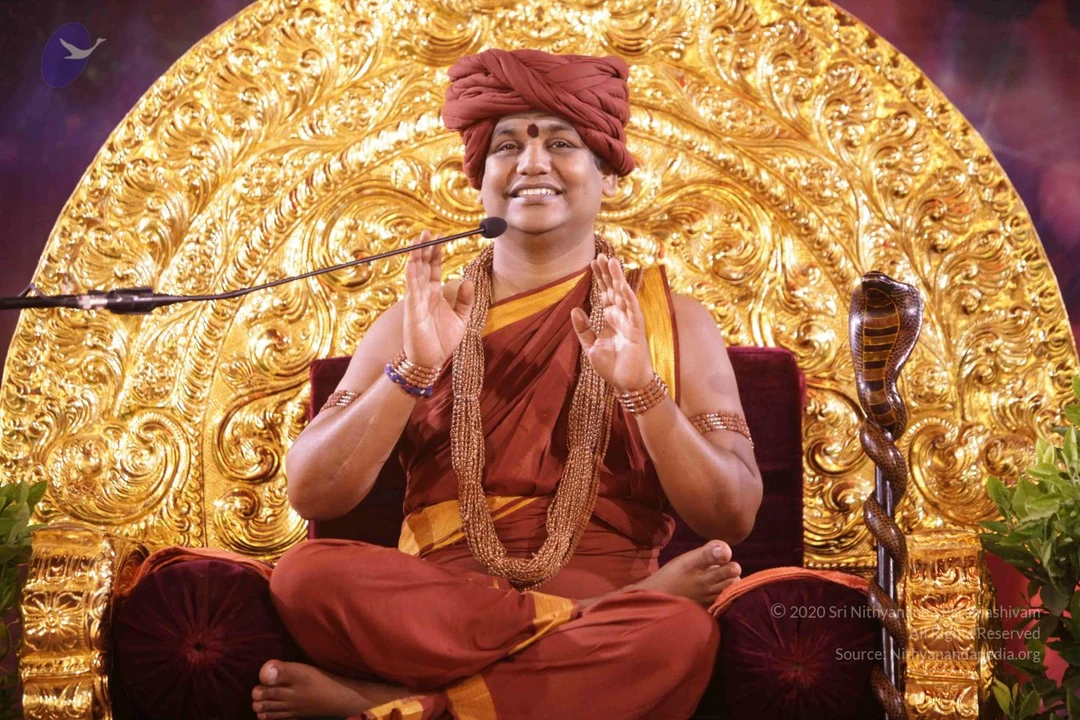
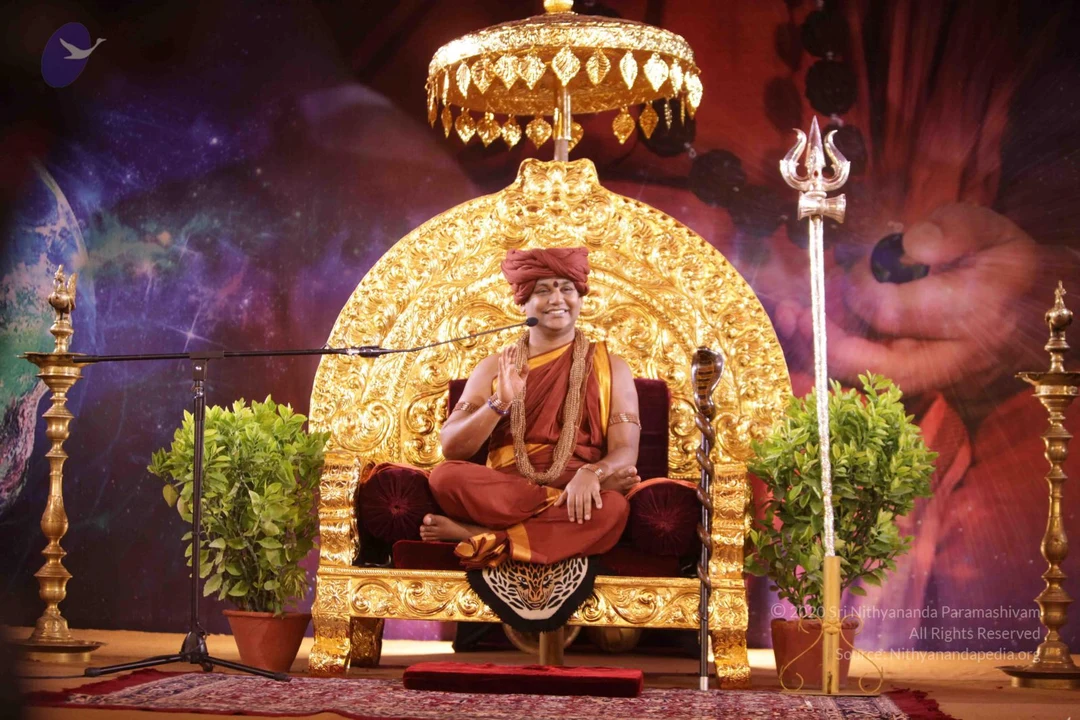
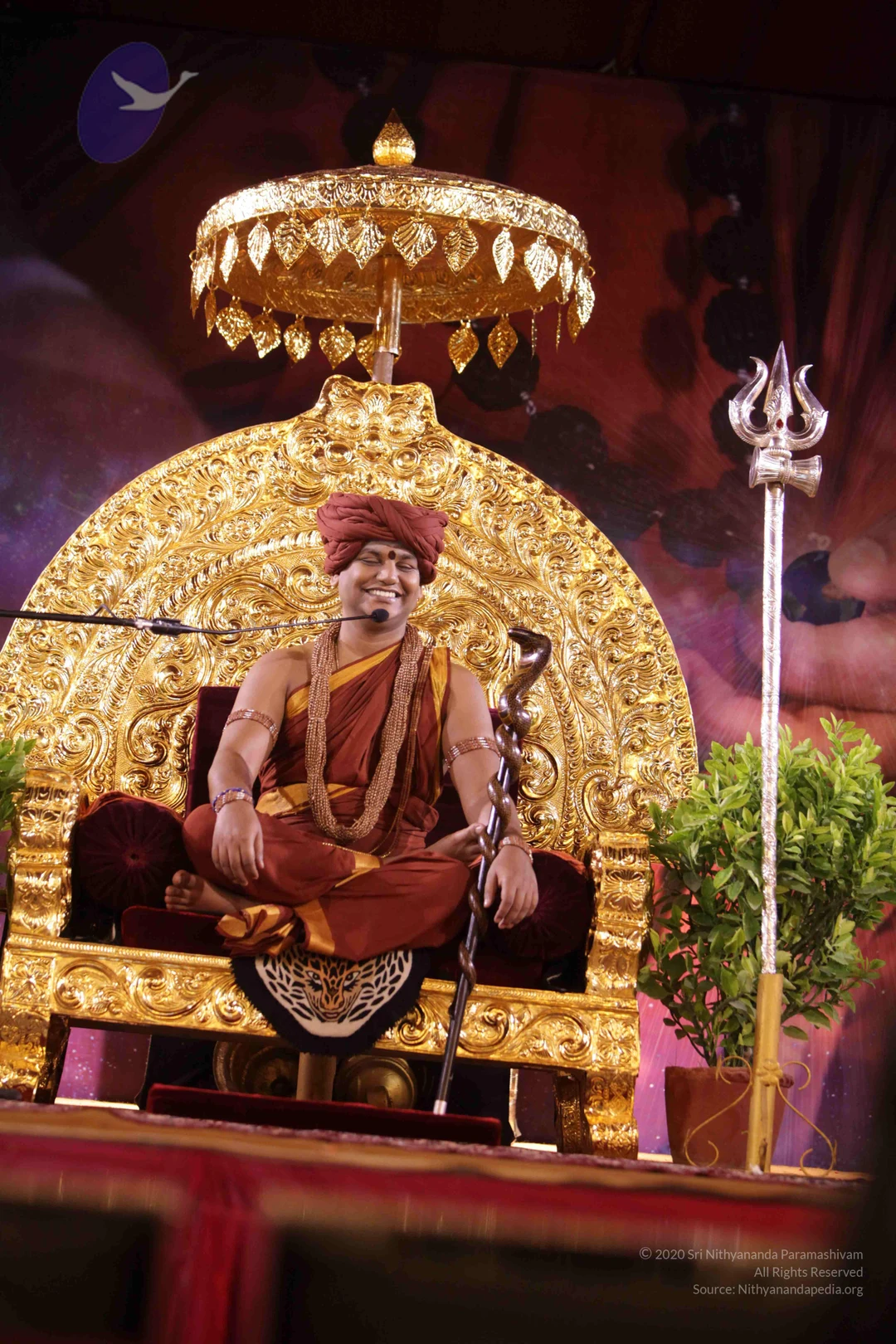
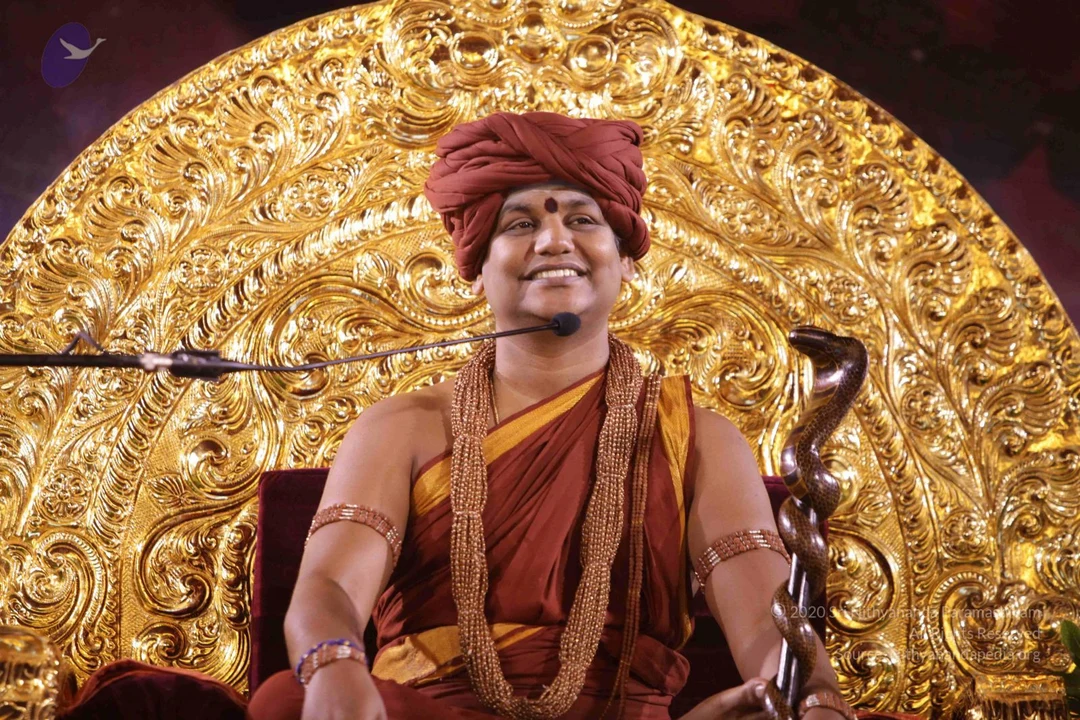
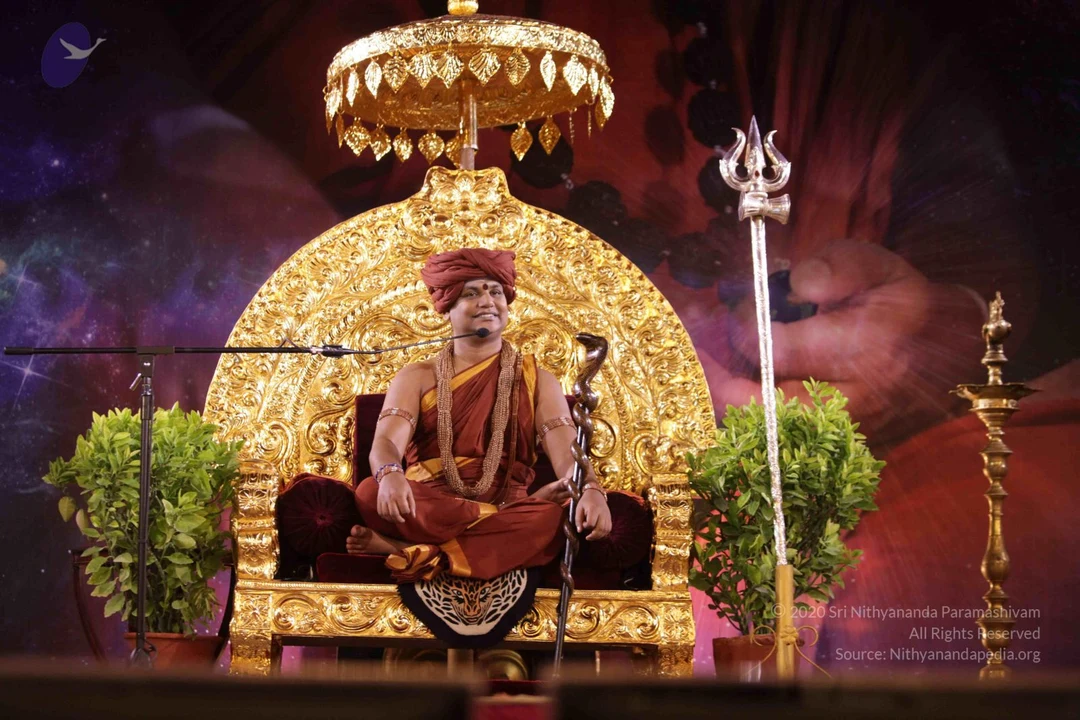
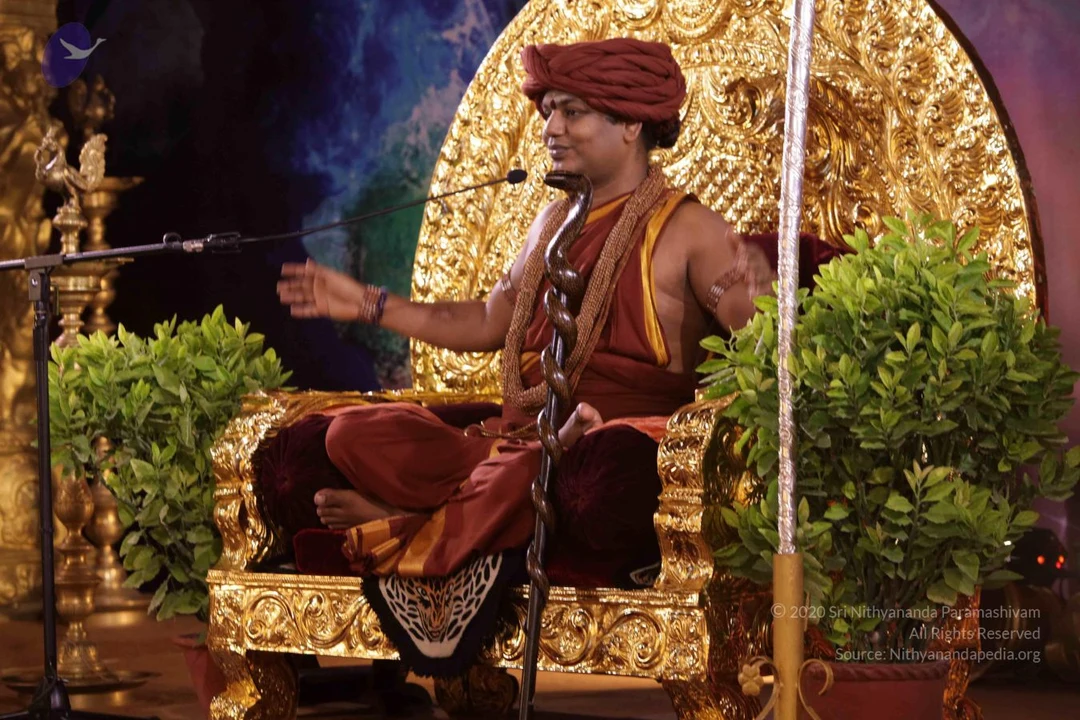
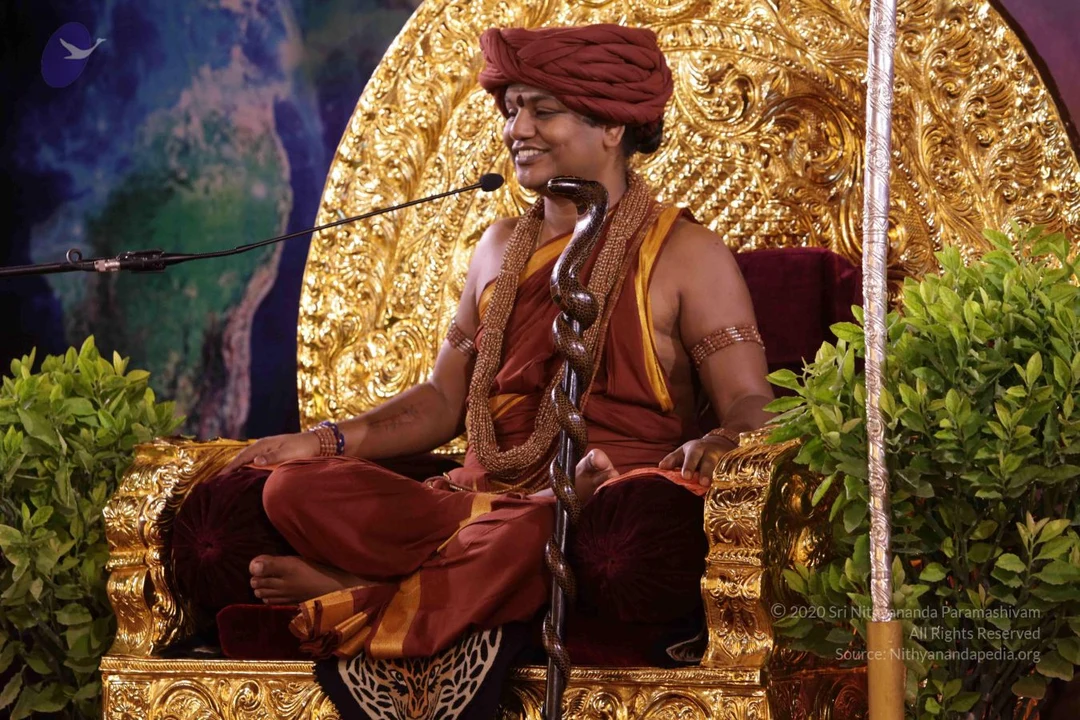
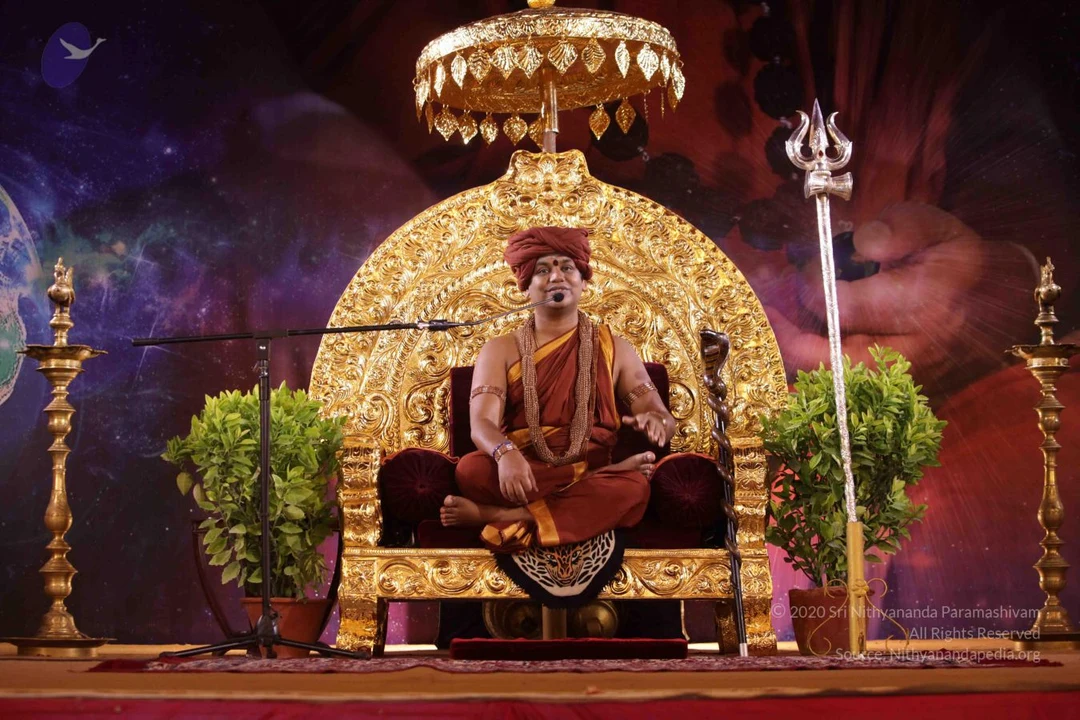
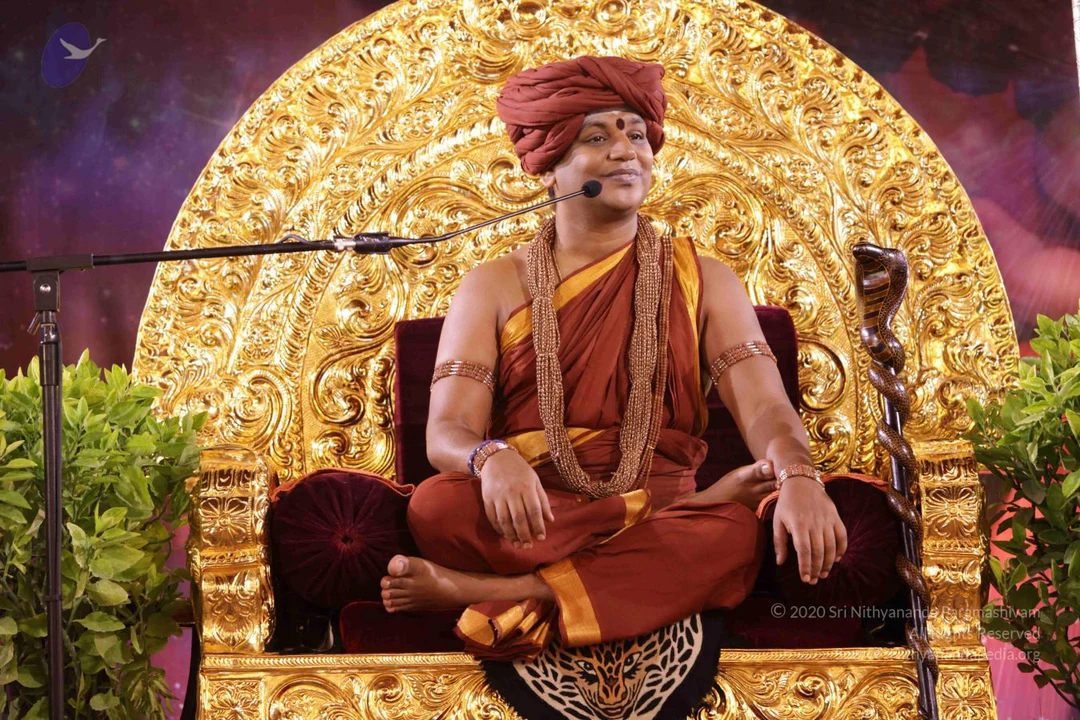
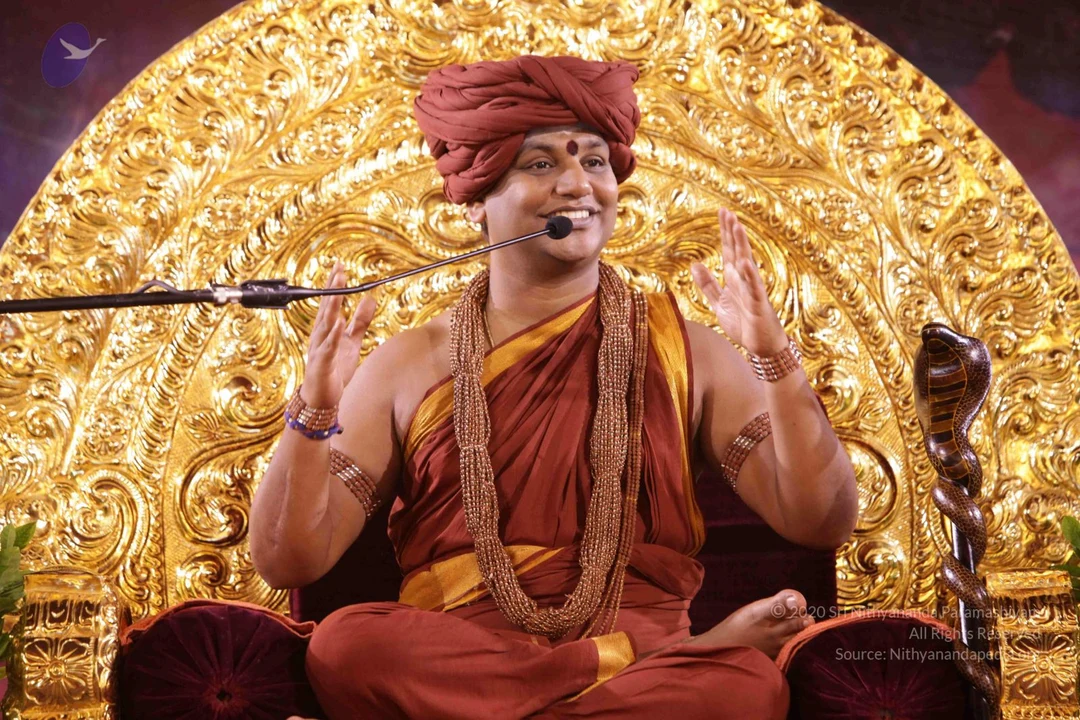
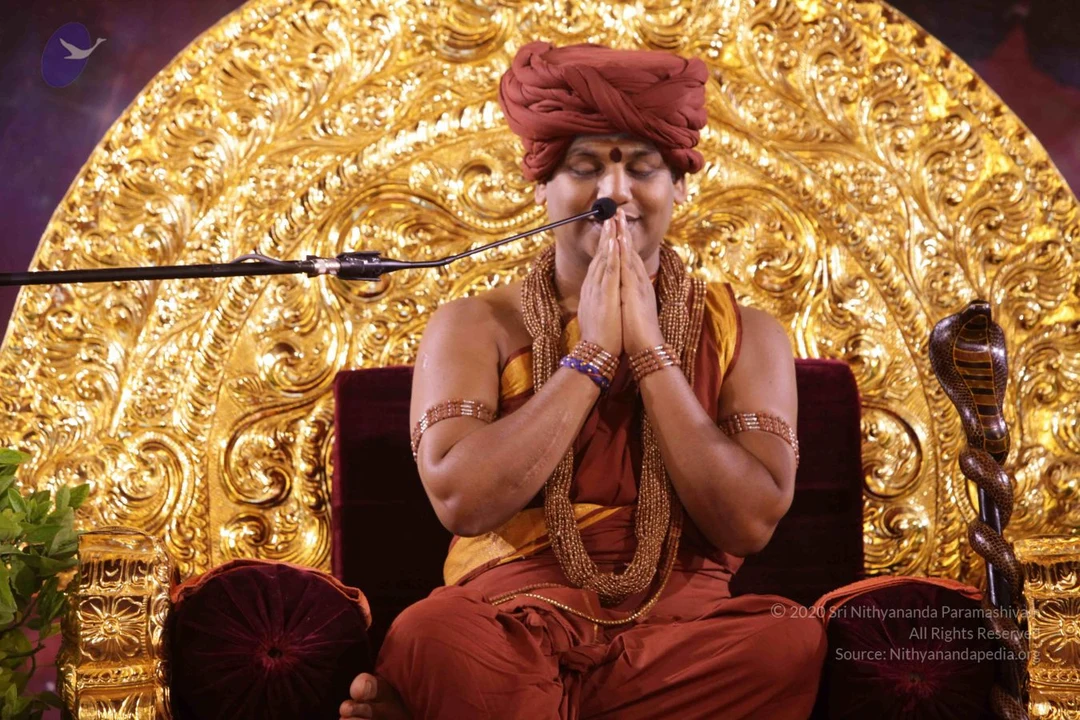
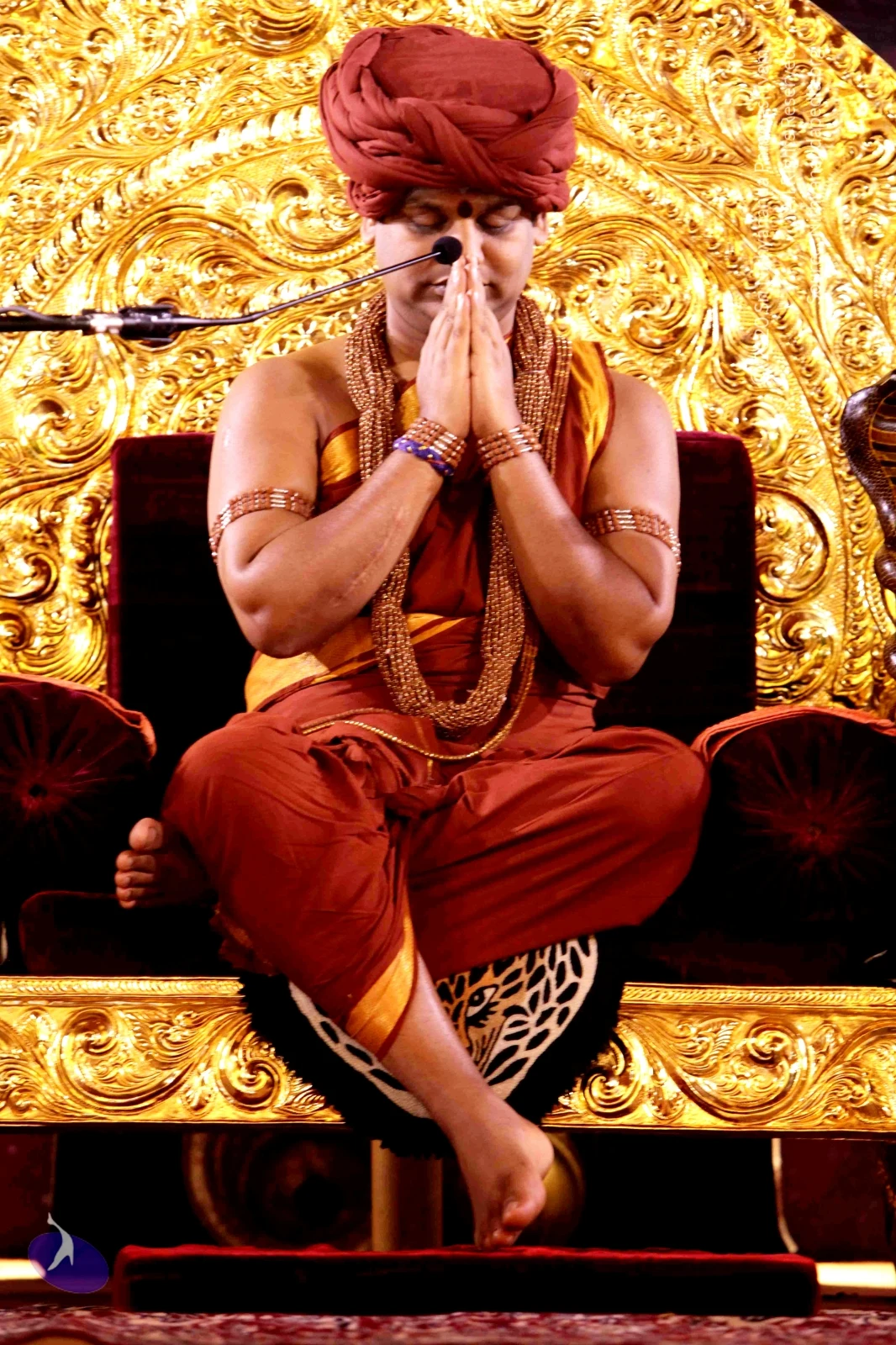
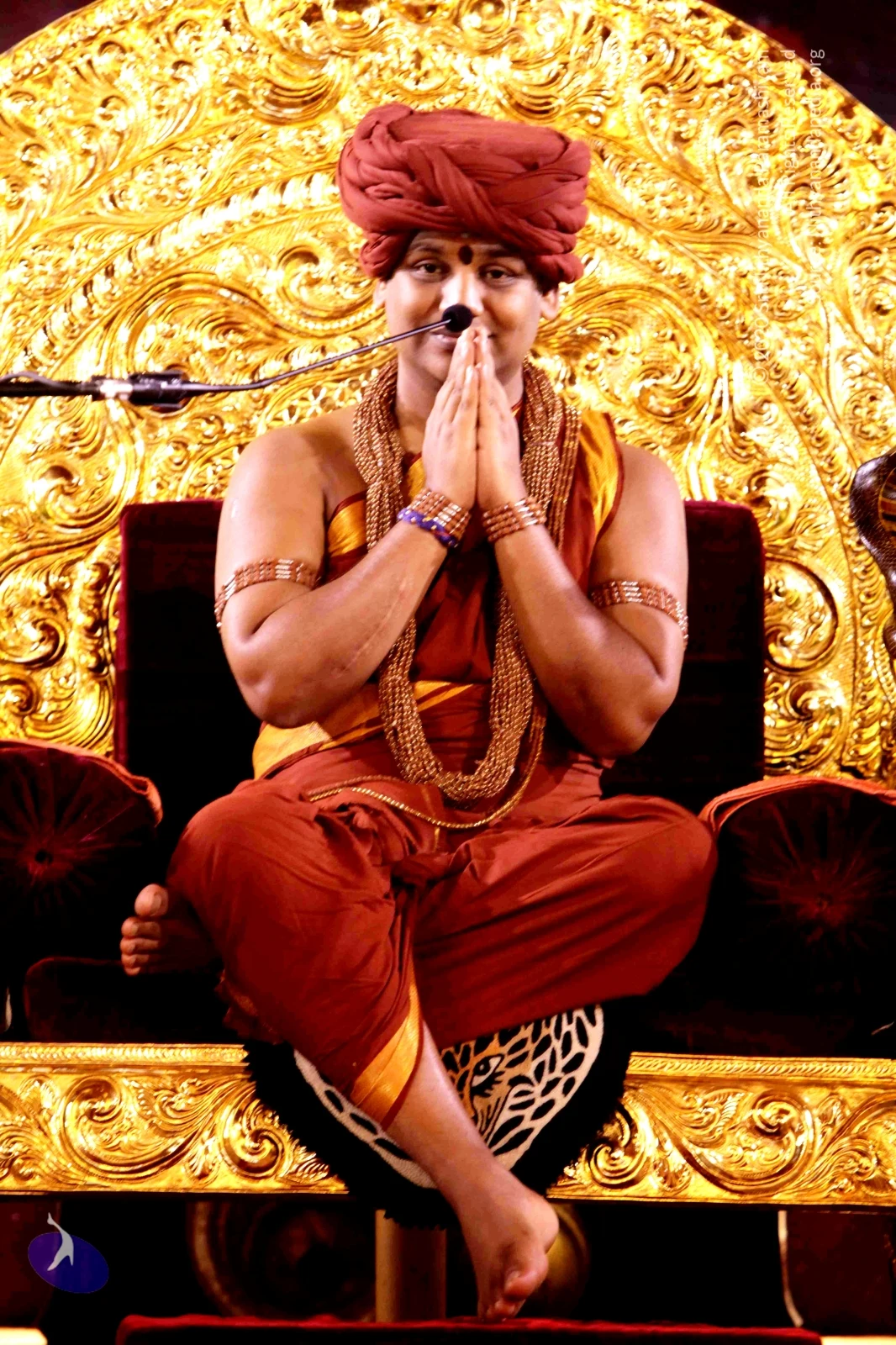
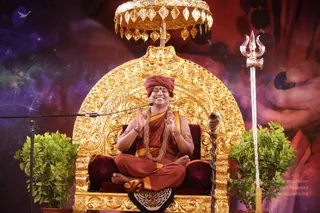
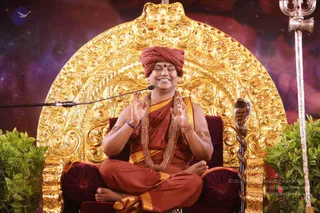
A seated man in saffron-orange robes and a red turban sits cross-legged on an ornate gold throne with a carved backrest and a tiger-skin cushion at its base. He has his palms pressed together at chest level, eyes closed and smiling, with a gold necklace of beaded strands and rudraksha-style malas around his neck. A silver trident stands upright to the right beside a twisted staff, with green potted plants flanking the throne and a gold canopy with leaf-shaped ornaments above. A microphone on a stand is at left, and a cosmic galaxy backdrop with red tones fills the background.A seated man in saffron-red robes and a matching red turban smiles broadly with palms pressed together in a greeting gesture. He sits cross-legged on a plush maroon cushion in front of an ornate gold embossed throne backrest. He wears layered gold chain necklaces, a rudraksha-style mala, gold bangles and a purple wristband, with a red bindi on his forehead. A microphone on a stand is in front of him. To his right stands a silver trident and a carved snake, and green foliage frames both sides of the stage against a dark red backdrop. Swamiji (probable) is seated in saffron-red robes and red turban with ornate gold chains, speaking at a satsang seat.A seated figure in saffron-orange robes and a red turban sits cross-legged on an ornate gold throne with a gilded arched back and a gold canopy above. Both palms are pressed together at the chest in greeting, and a long rudraksha-style mala hangs around the neck. Wrist bands and armlets are visible. Flanking the throne are potted green plants, brass oil lamps on tall stands, and a silver trident leaning on the right. A microphone stand stands to the left. The backdrop is a cosmic purple and red image with a globe. The setting suggests a satsang or discourse stage.A figure in saffron-orange robes and a red turban sits cross-legged on an ornate gold throne with a golden canopy above, eyes closed and palms pressed together in a gesture of greeting or devotion. A rudraksha mala and ceremonial gold necklace hang on the chest, with bangles on the wrists. A tall silver trident stands to the right beside a small snake-shaped staff, and brass oil lamps flank the stage with potted green plants. A microphone stand is at left, and the backdrop shows a cosmic purple and red design. The figure appears to be a person, seated for a satsang discourse.A seated figure in a maroon-red turban and matching saffron-red robe with gold borders sits cross-legged on a red velvet cushion before an ornate gold throne with carved floral scrollwork. The figure wears a red-brown bindi, multiple strands of gold-toned beads, gold armlets and bangles, and a purple-and-gold bead bracelet. Both palms are raised in a teaching gesture while smiling, and a microphone stand is visible at left. A carved wooden cobra staff stands at right beside potted green leaves.A seated man in a saffron-red turban and red-orange robe with a gold-yellow sash sits cross-legged on an ornate gold throne with a gold canopy above, smiling and raising one hand in blessing. A rudraksha mala hangs around his neck and gold bangles adorn his wrists. Beside the throne stand a silver trident and a cobra-shaped staff, potted green plants flank the seat, and brass oil lamps frame the stage. A microphone stand is at left and a red-patterned rug lies below, with a cosmic galaxy backdrop behind. a person appears in the central role of teacher on the stage.

GalleriaAndDieties

49 photosSource gallery
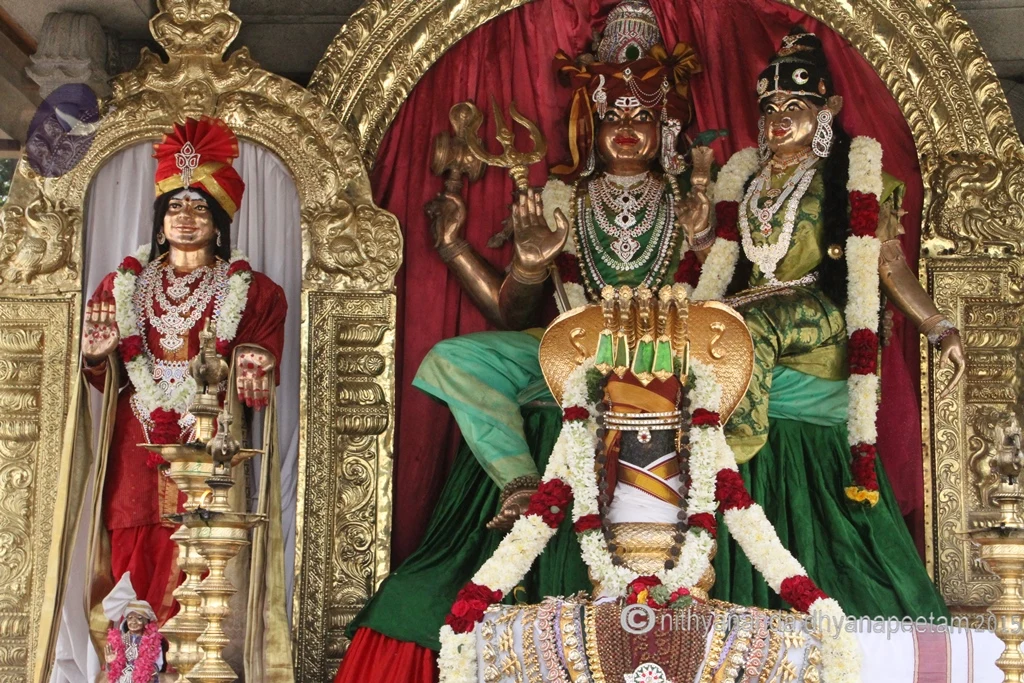
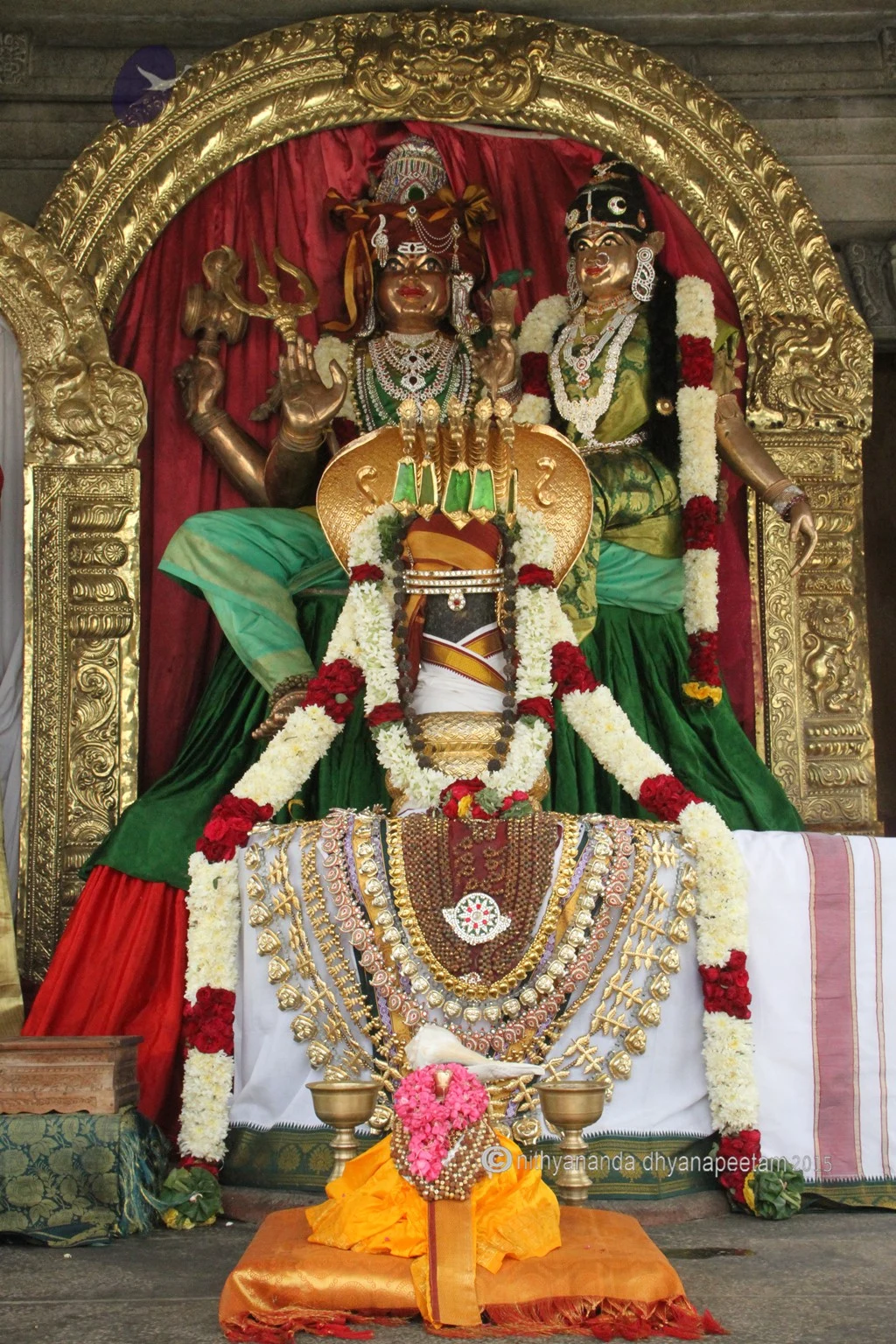
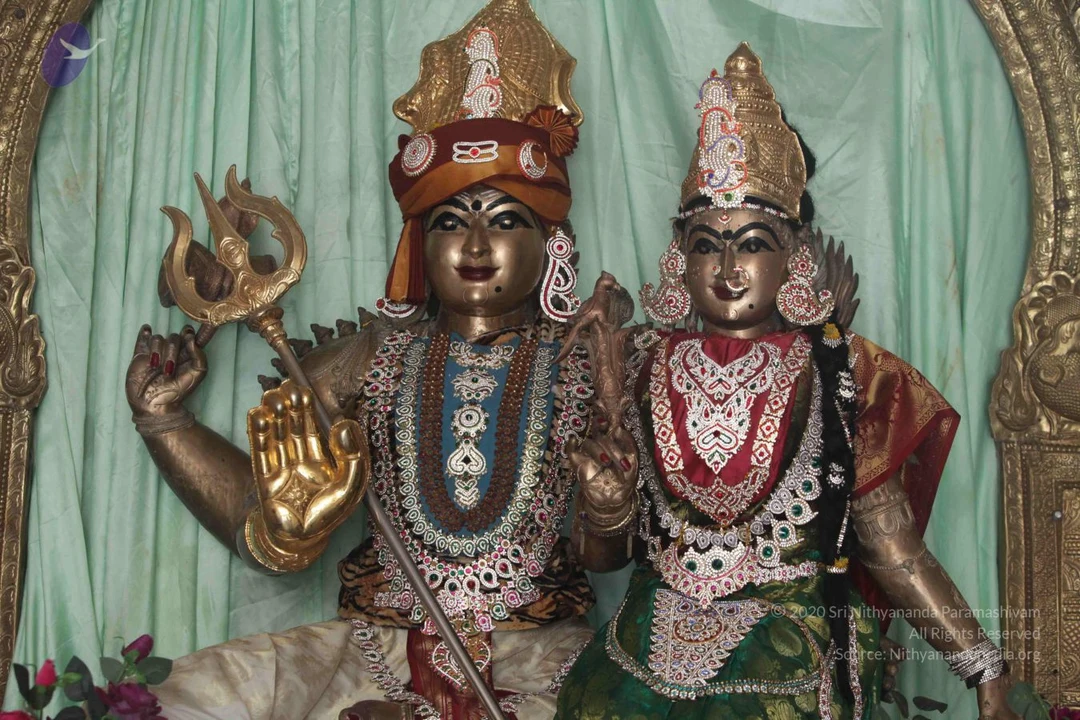
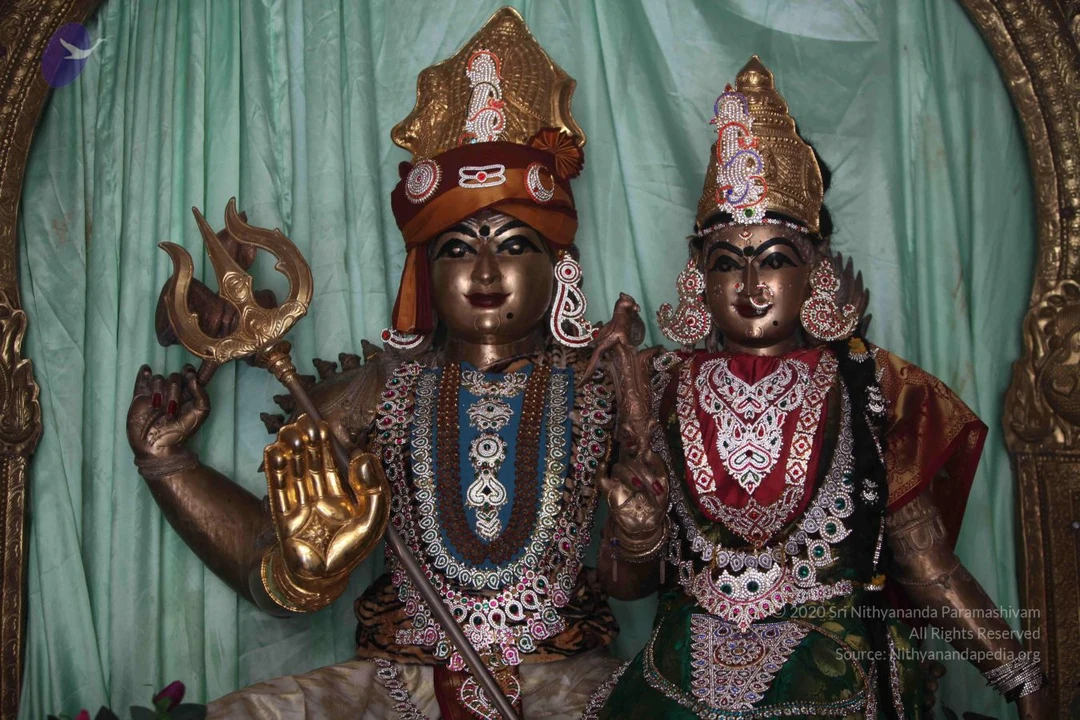
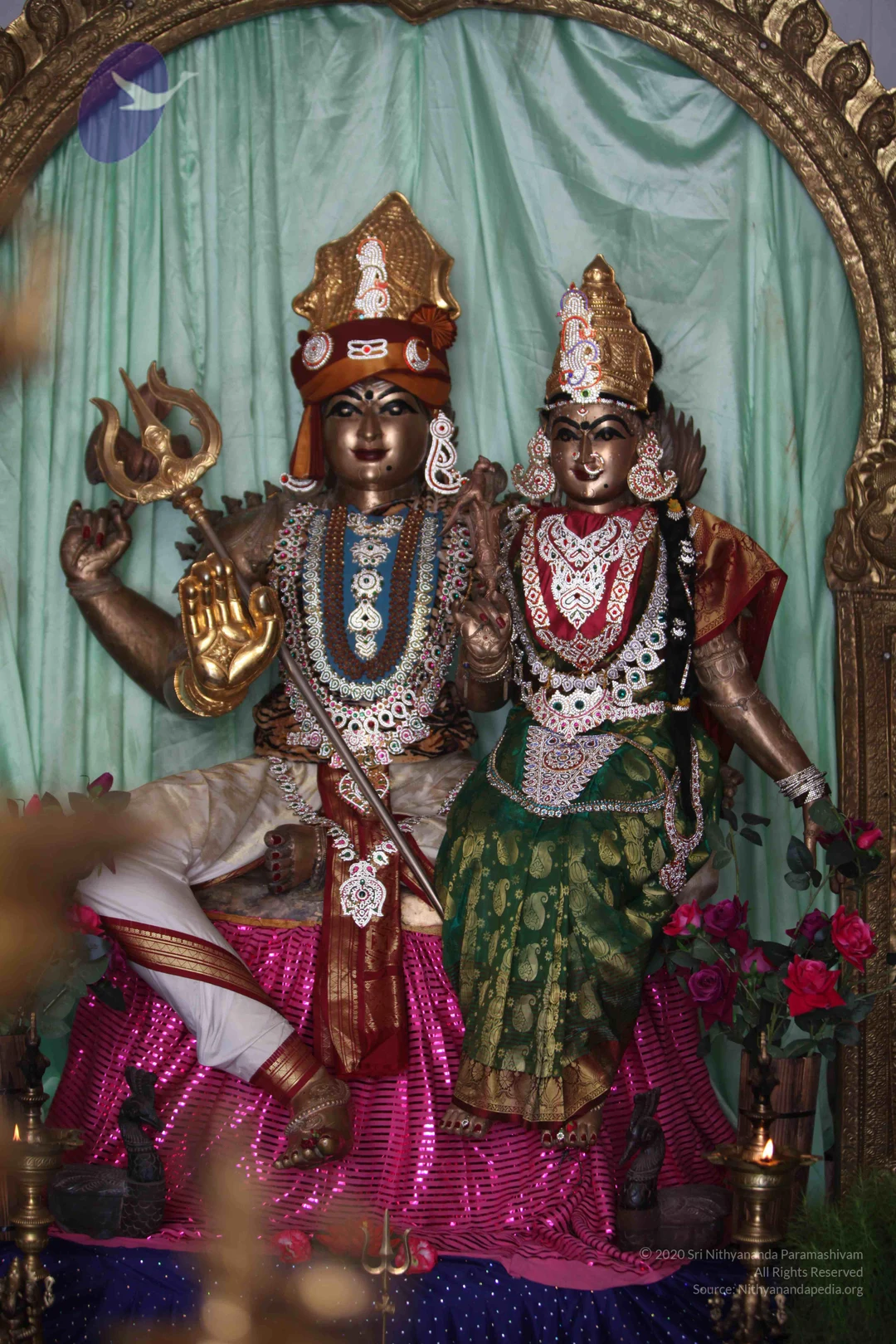
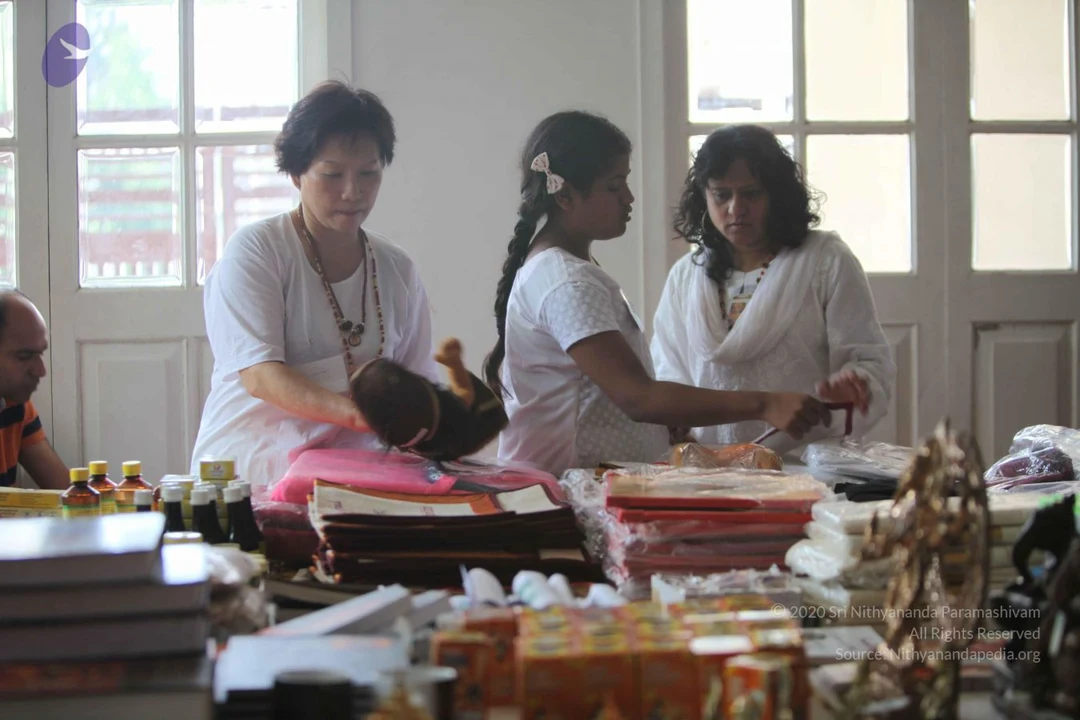
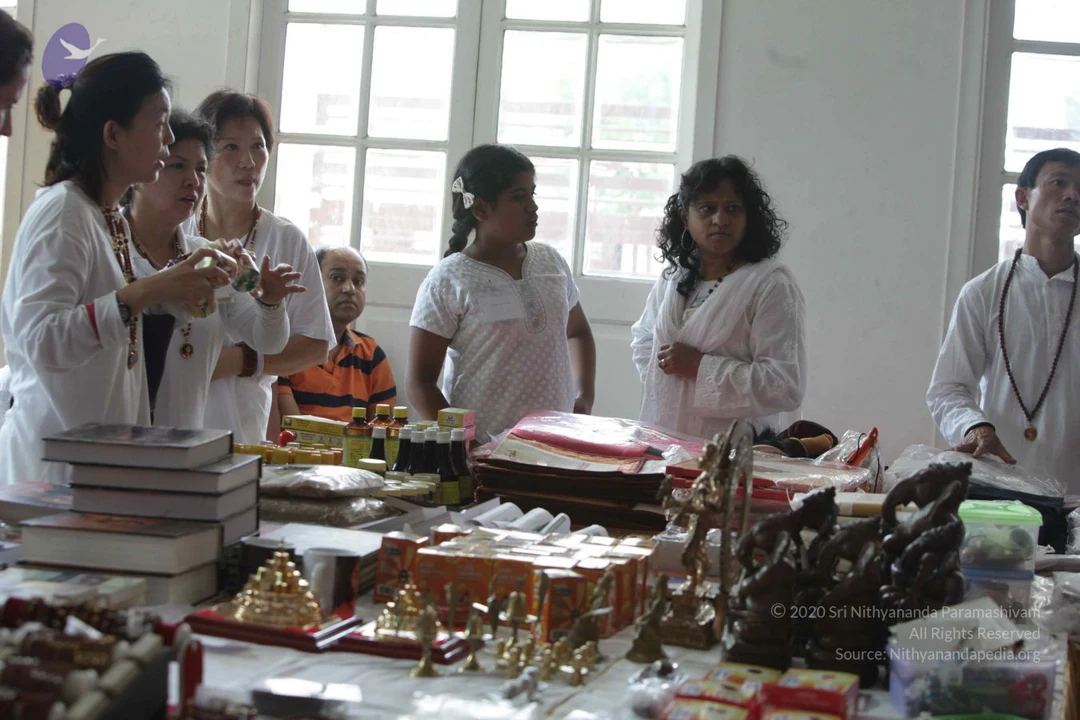
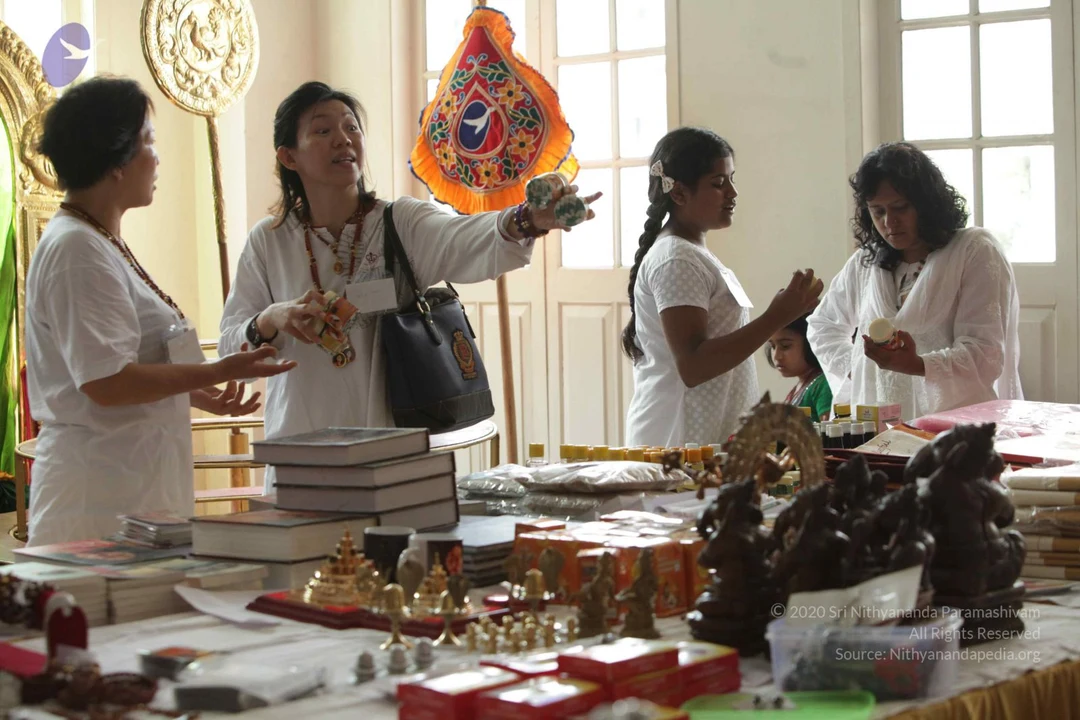
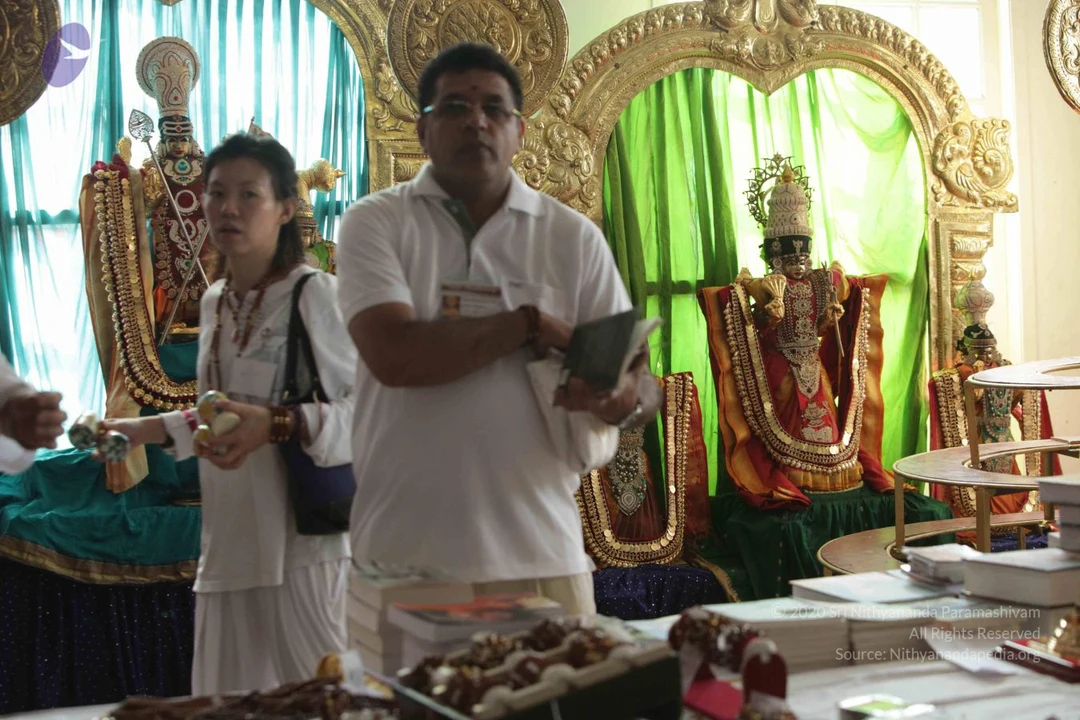
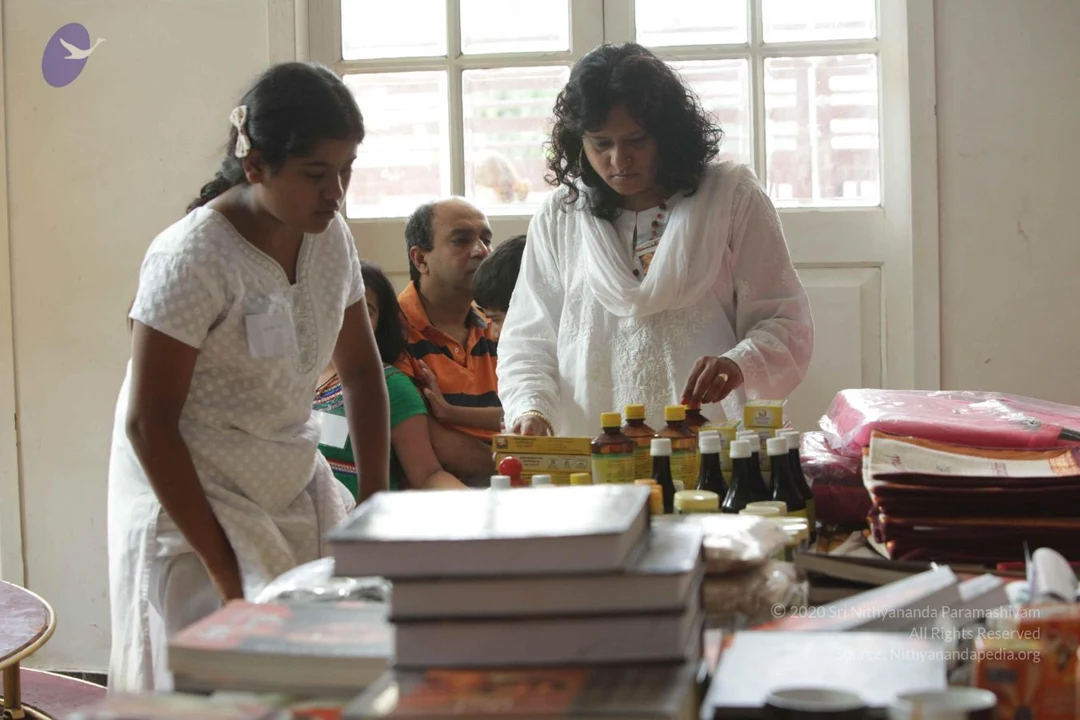
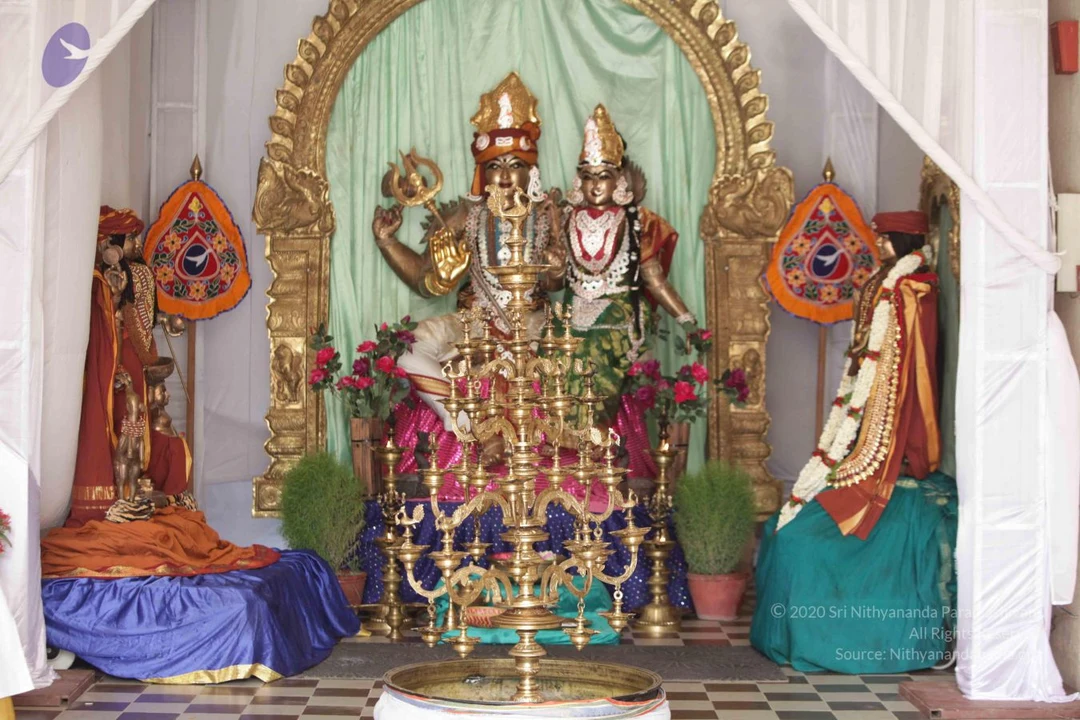
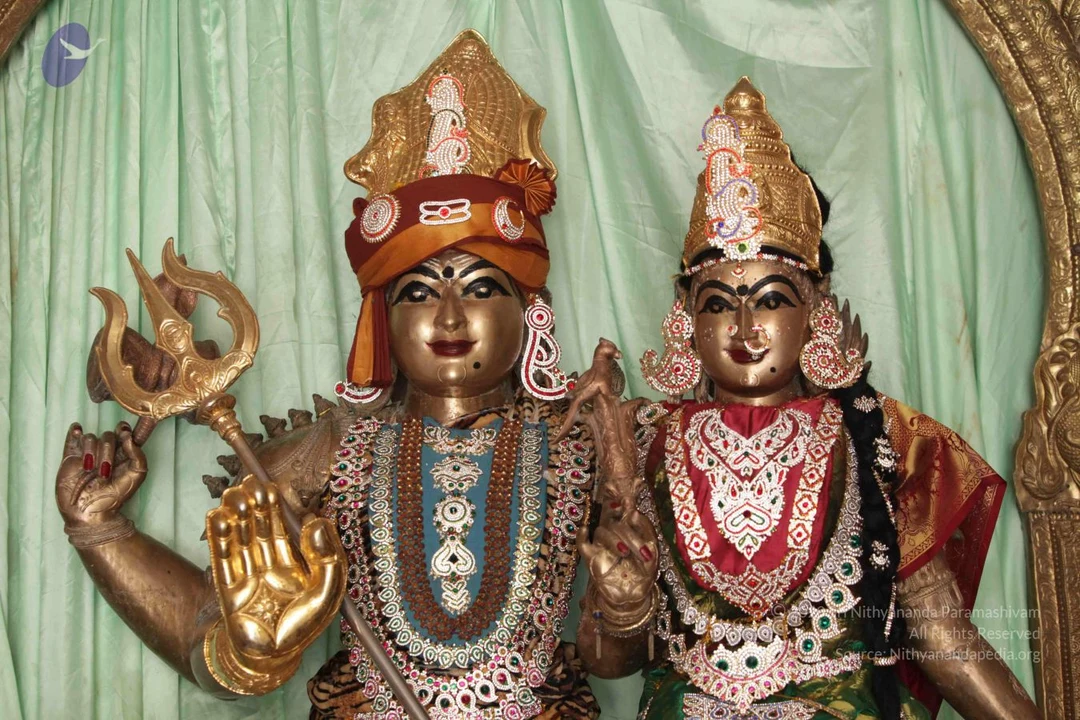
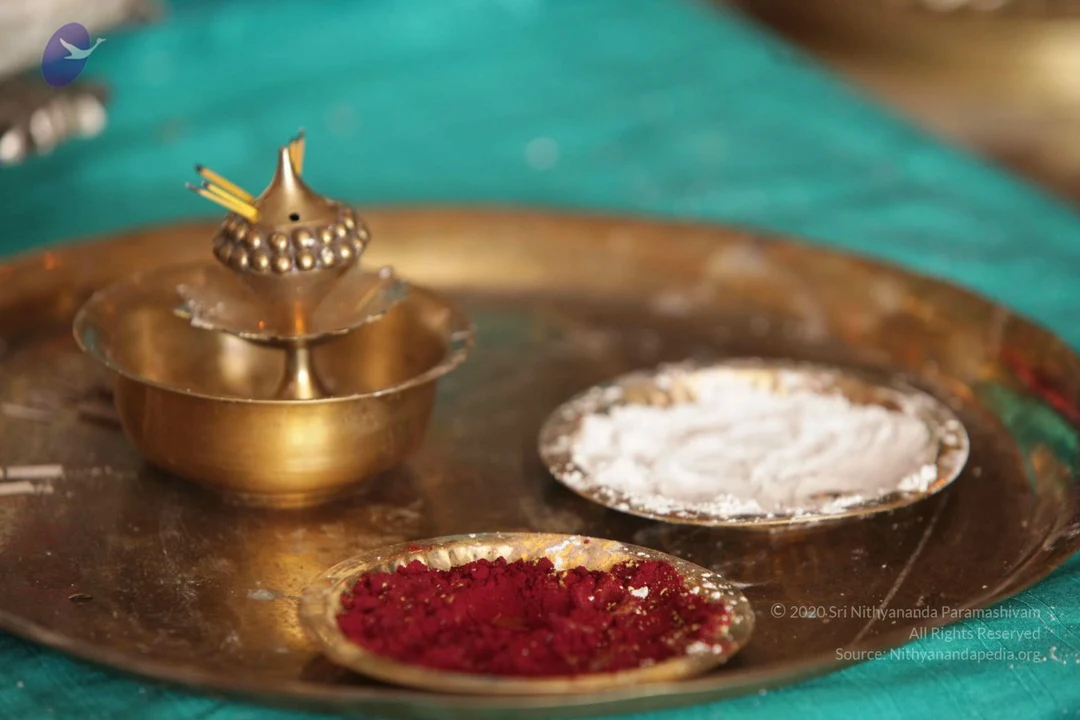
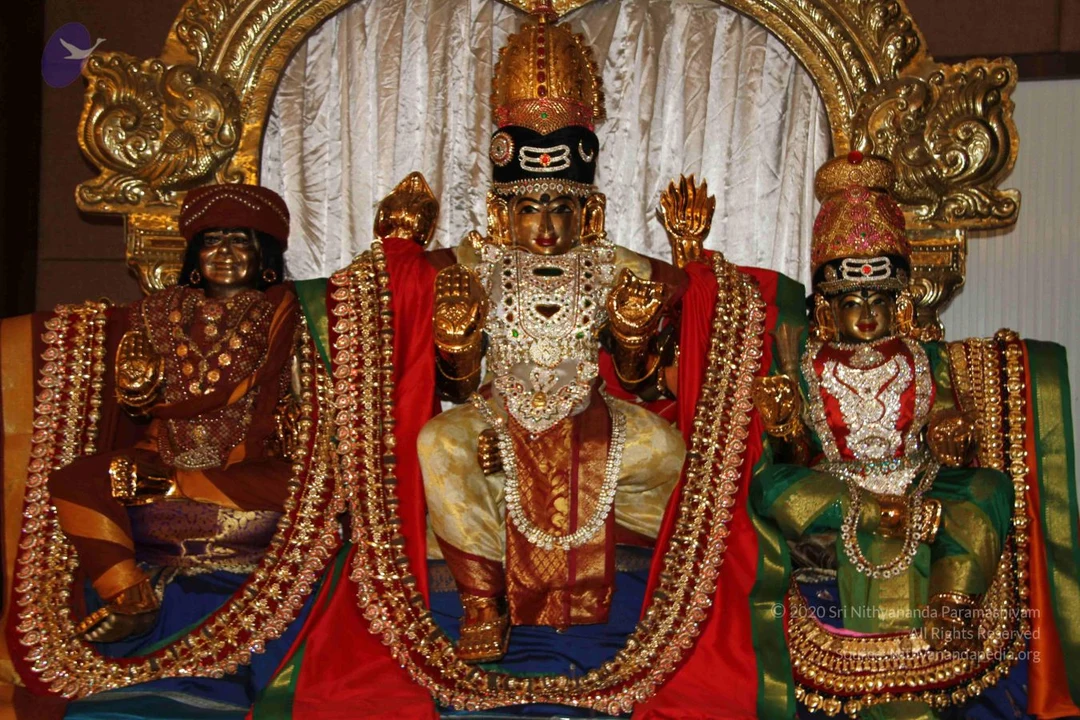
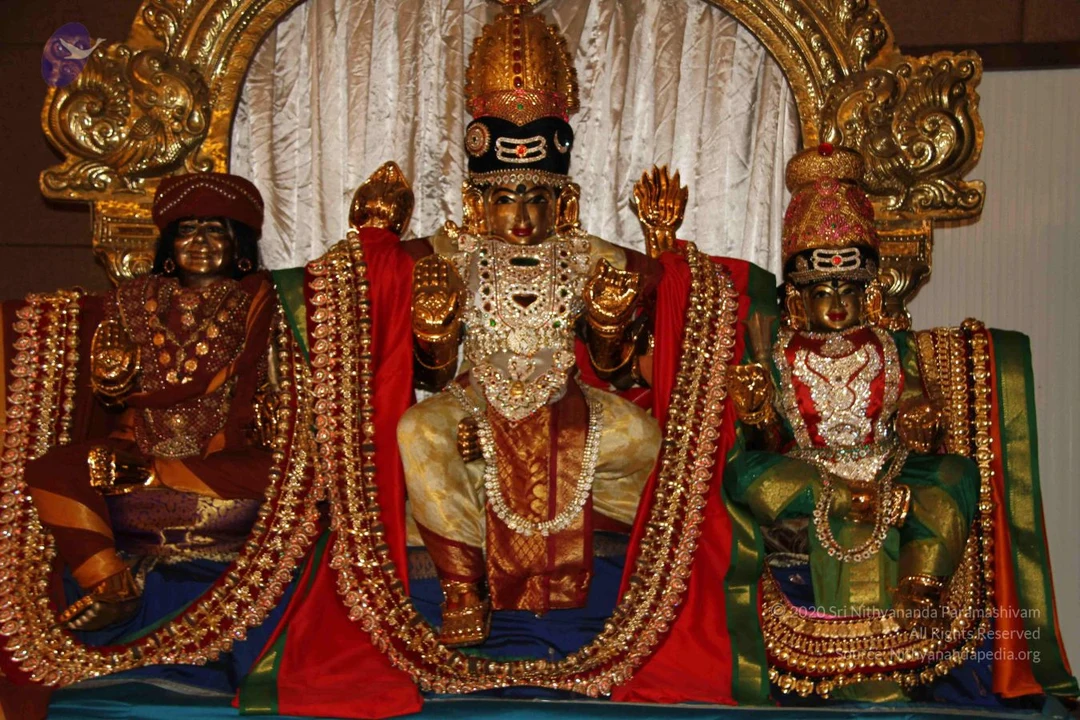
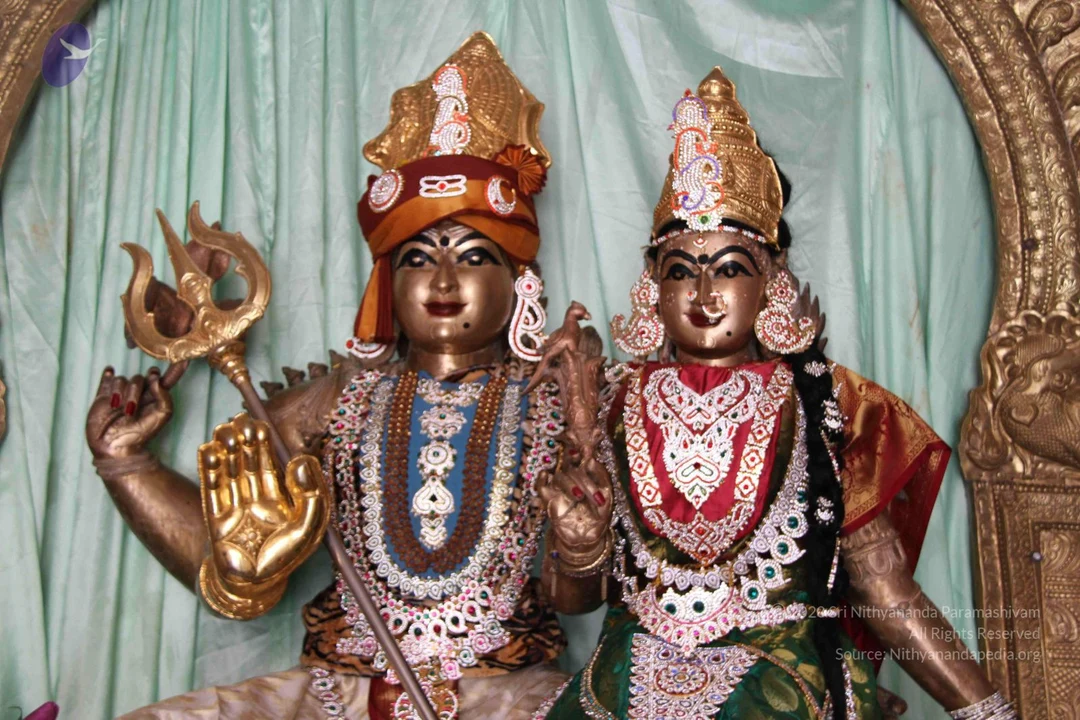
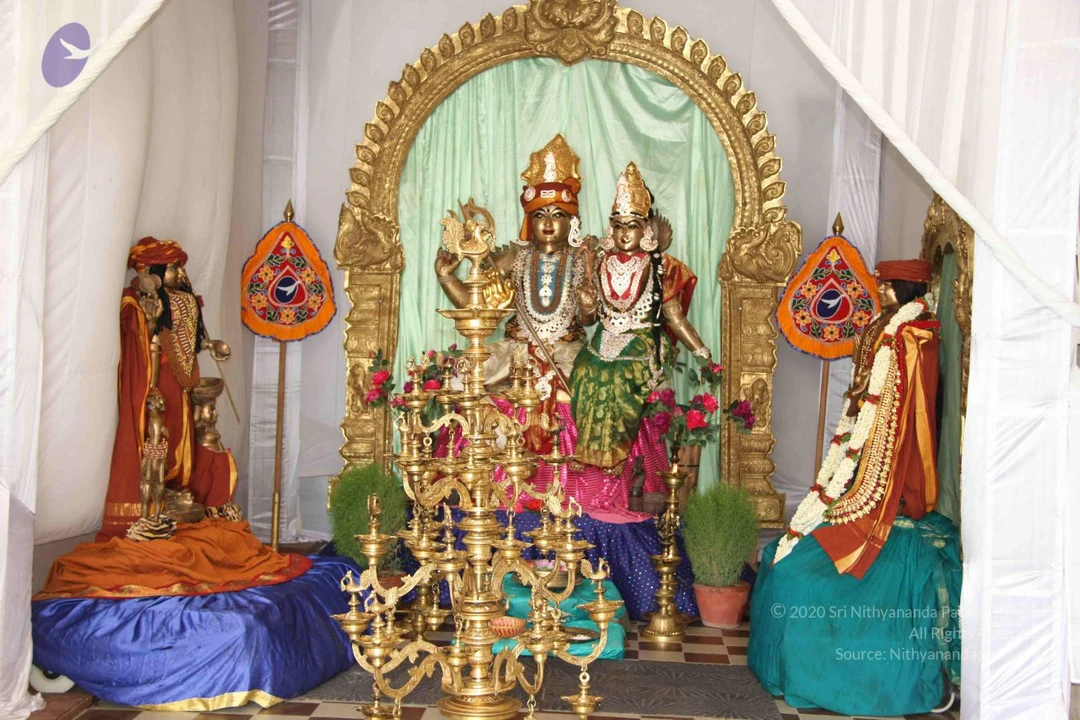
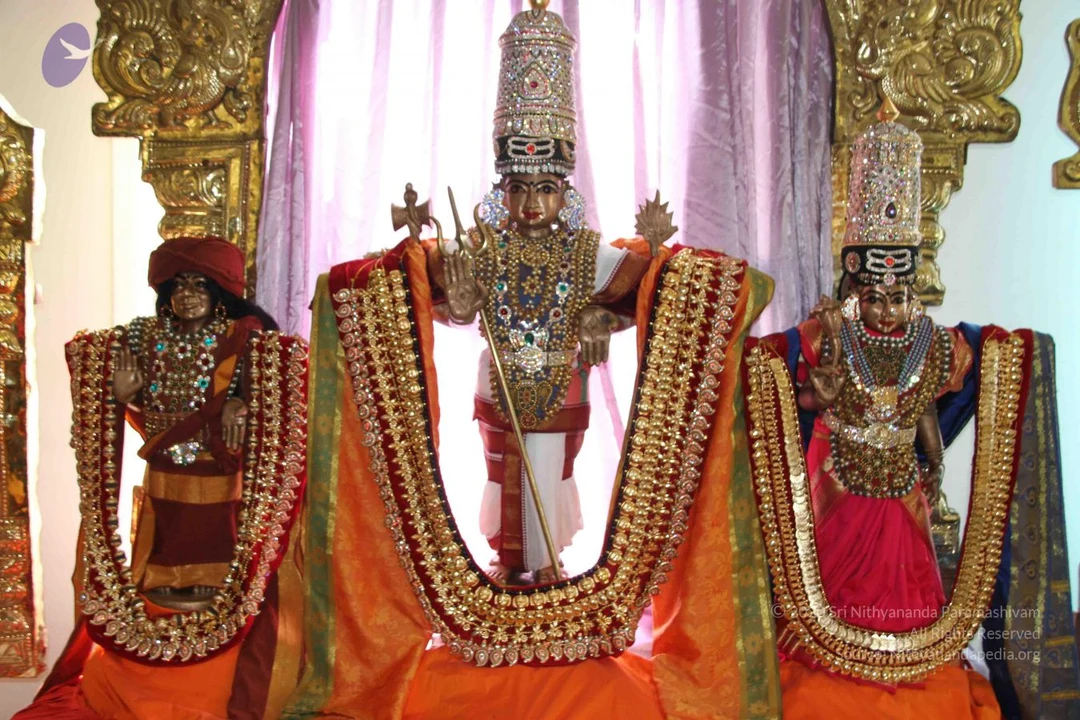
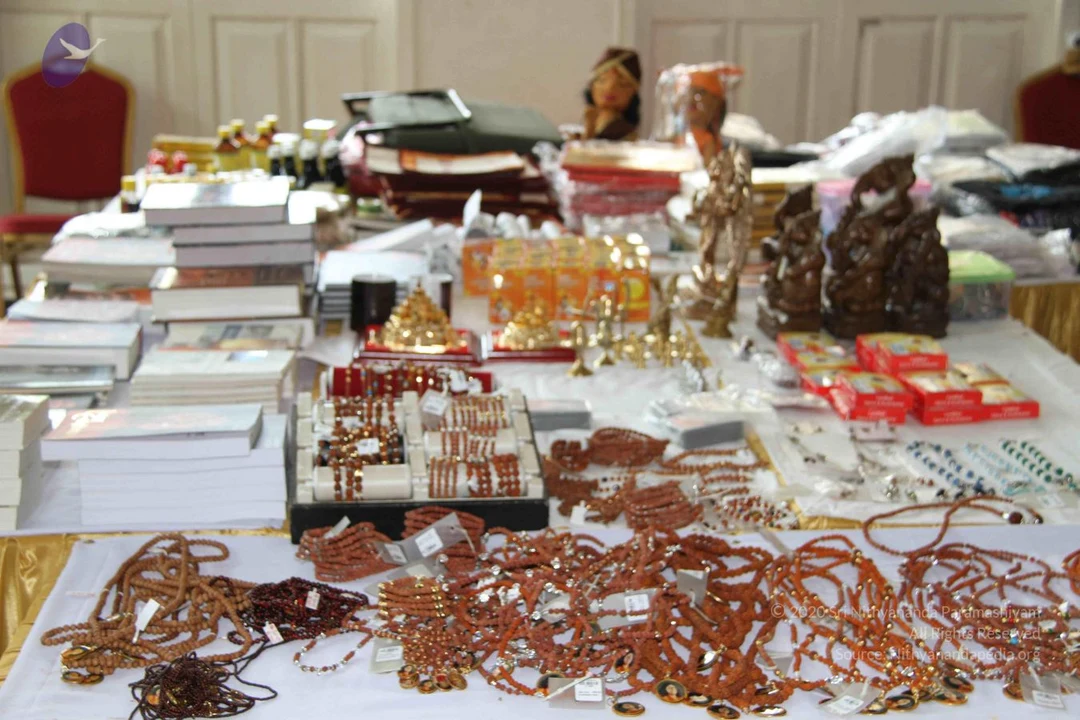
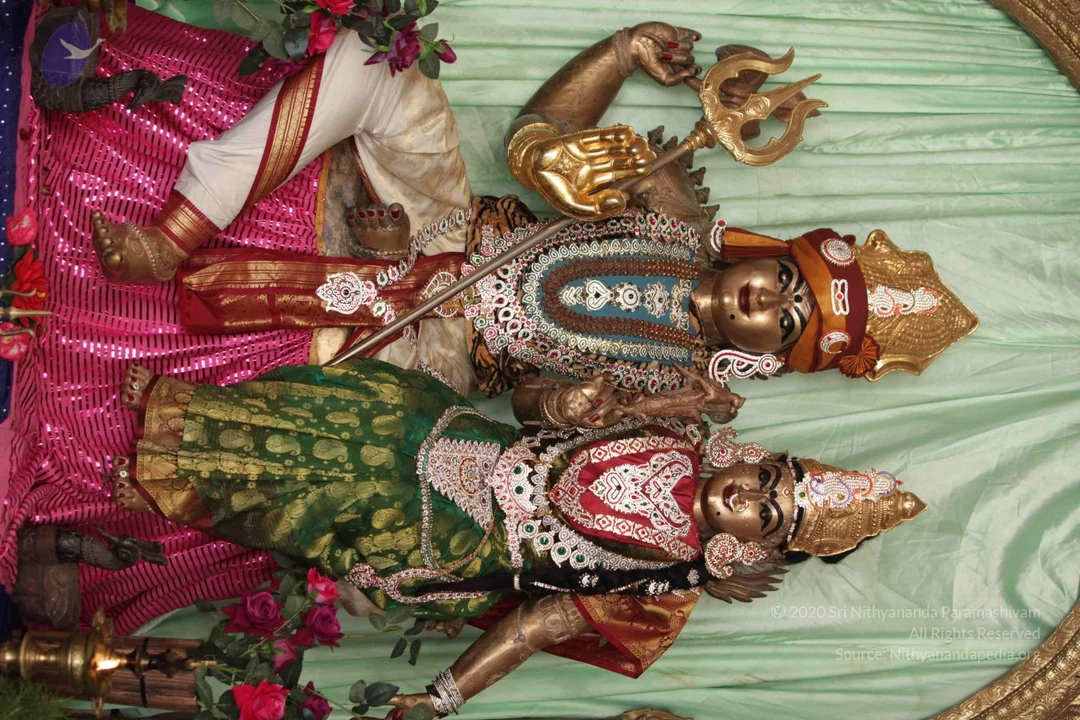
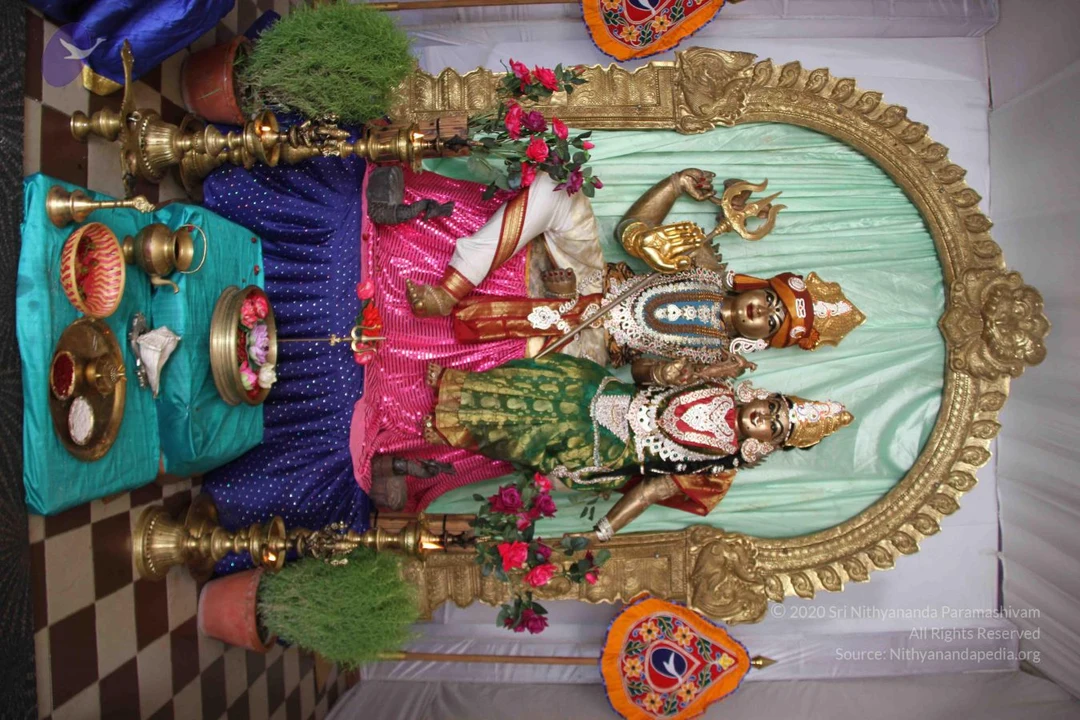
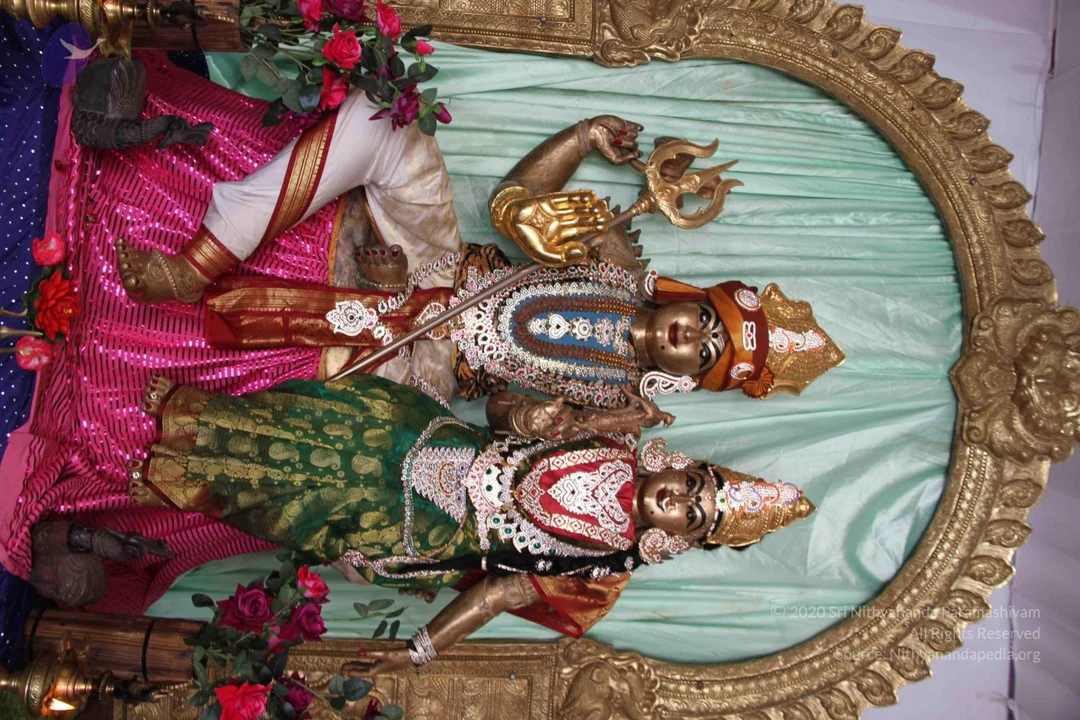
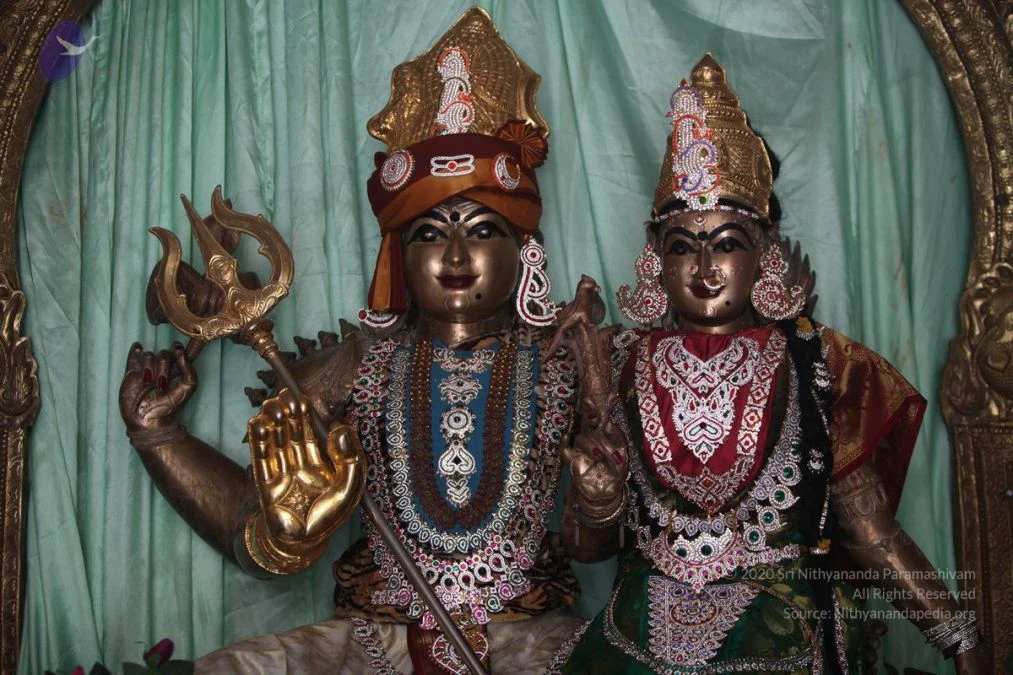
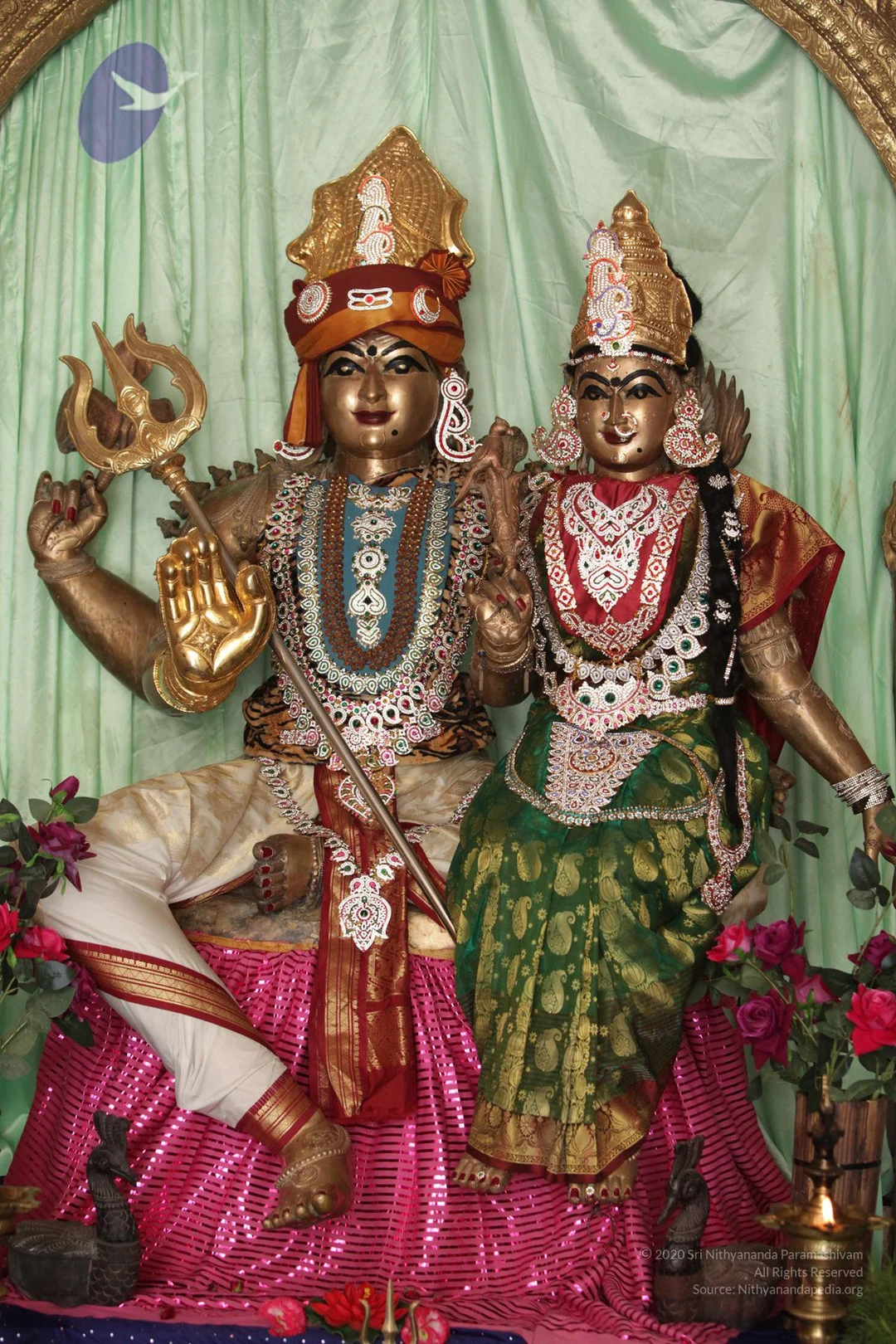
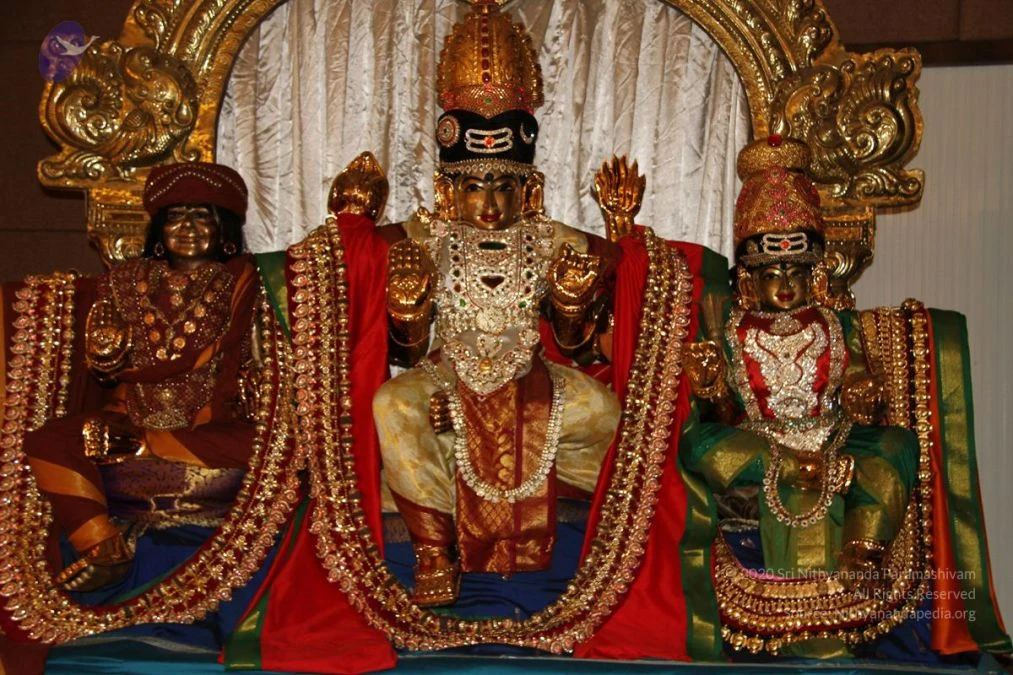
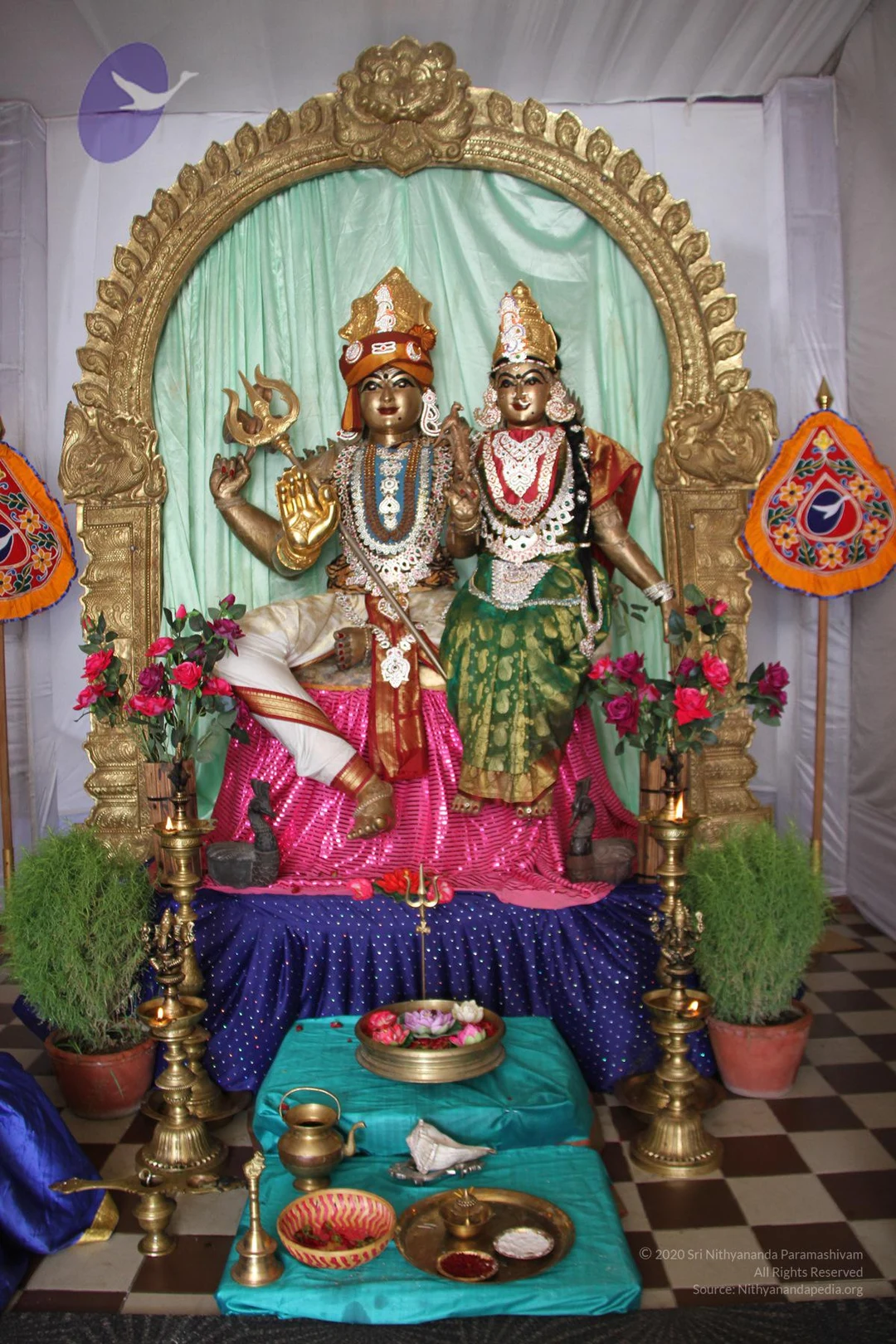
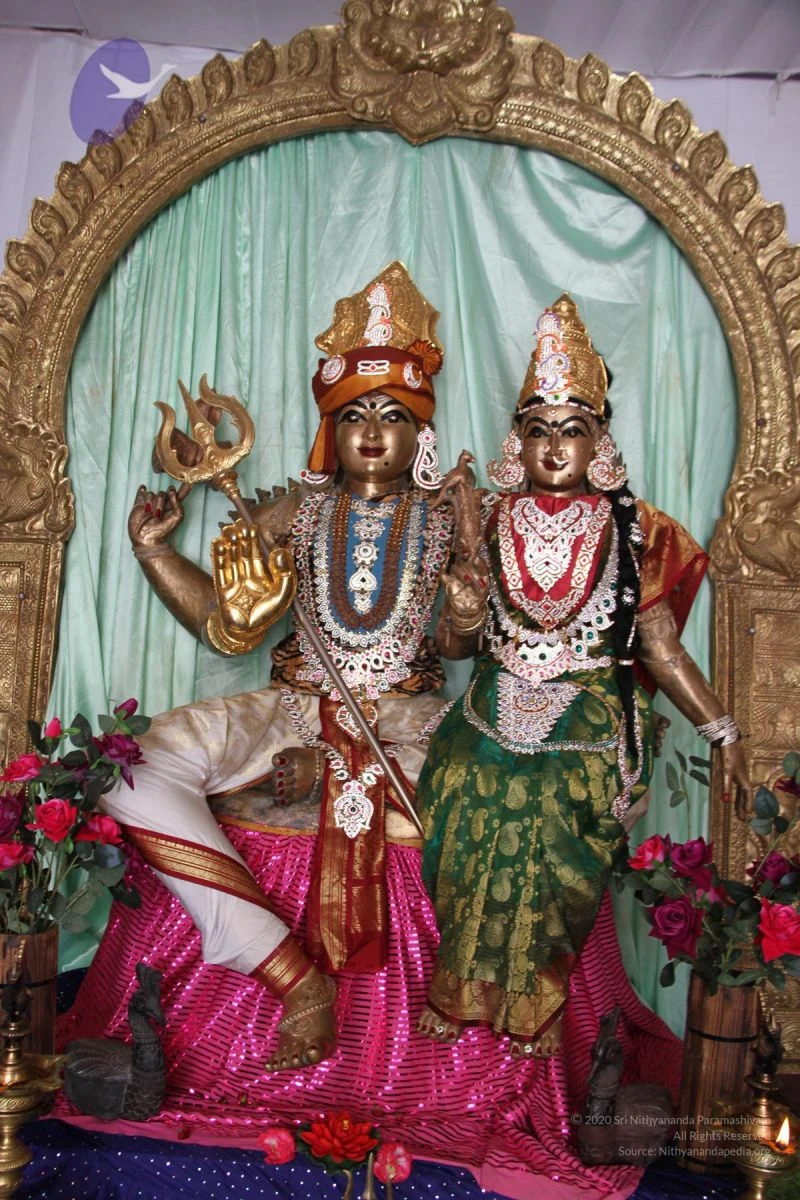
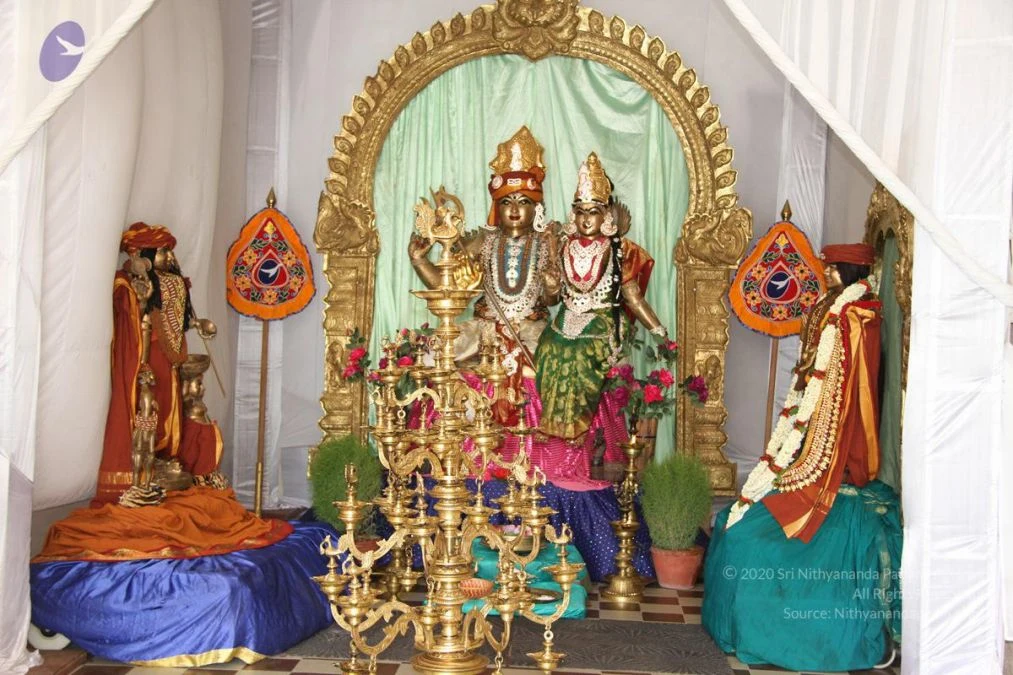
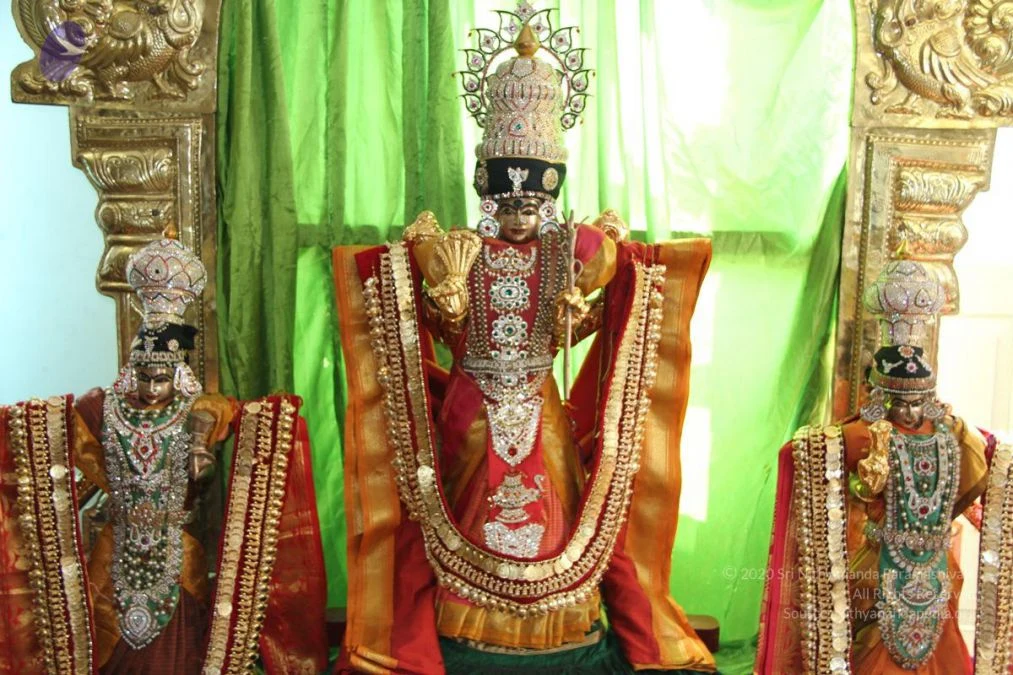
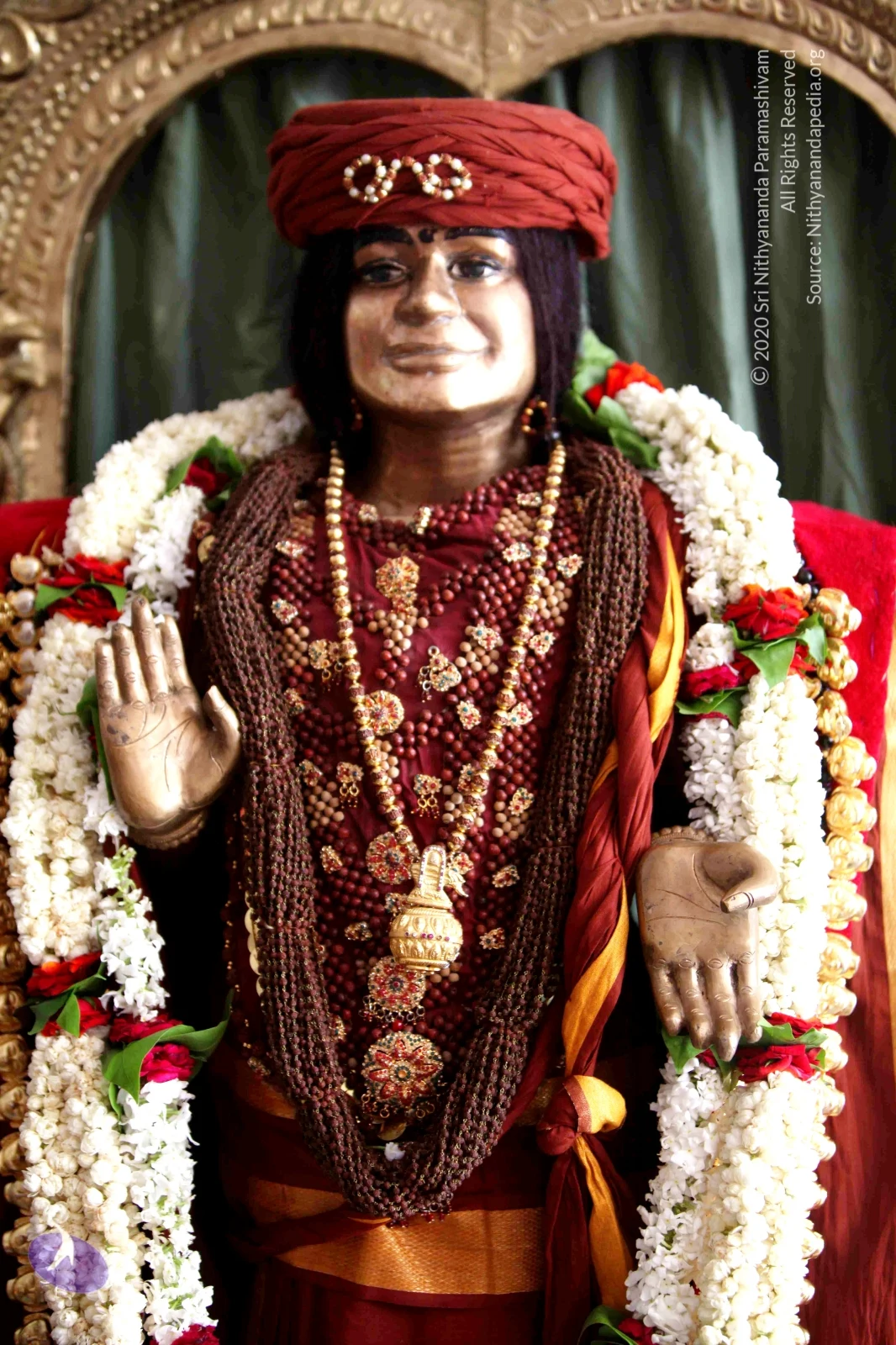
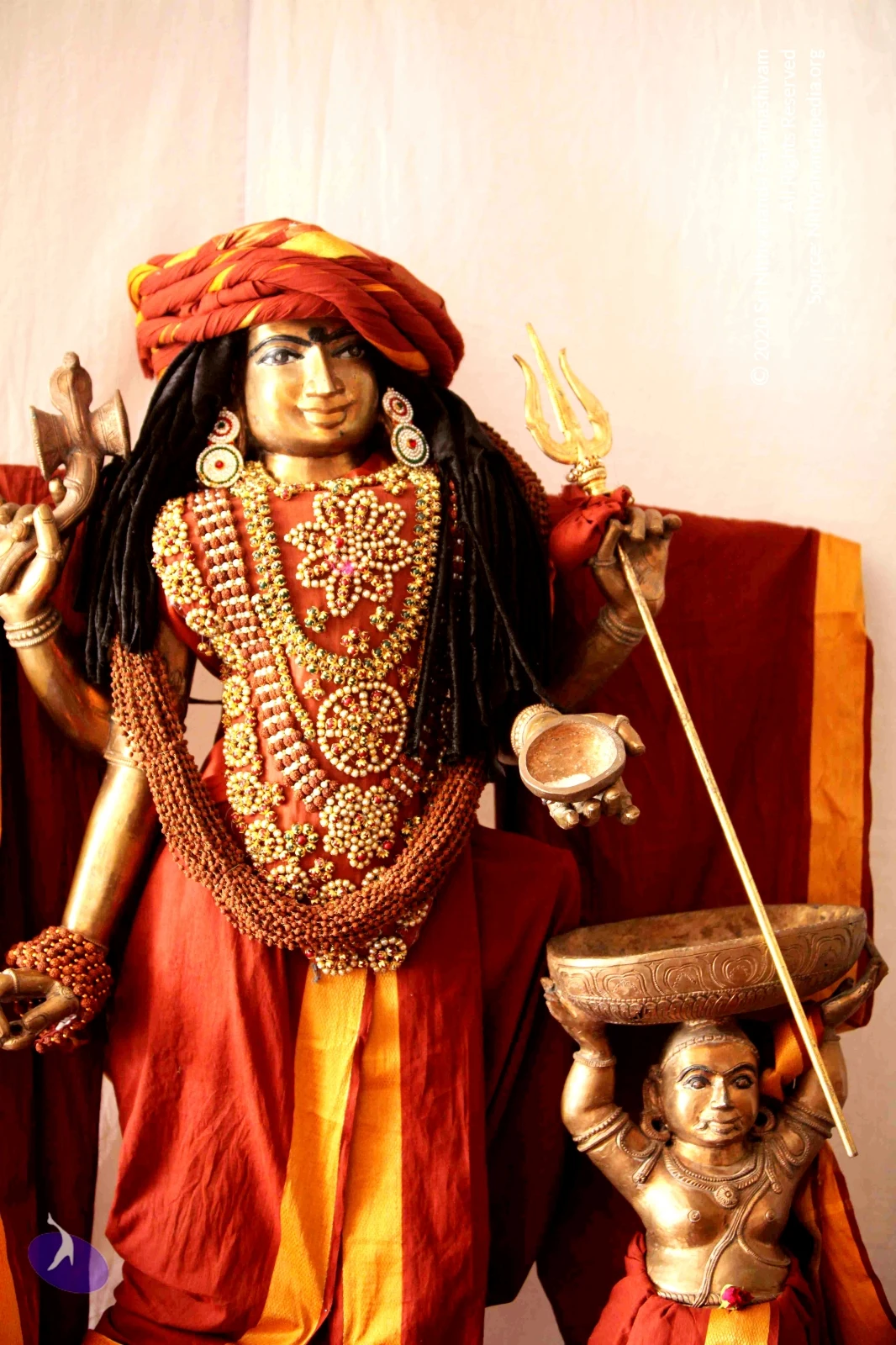
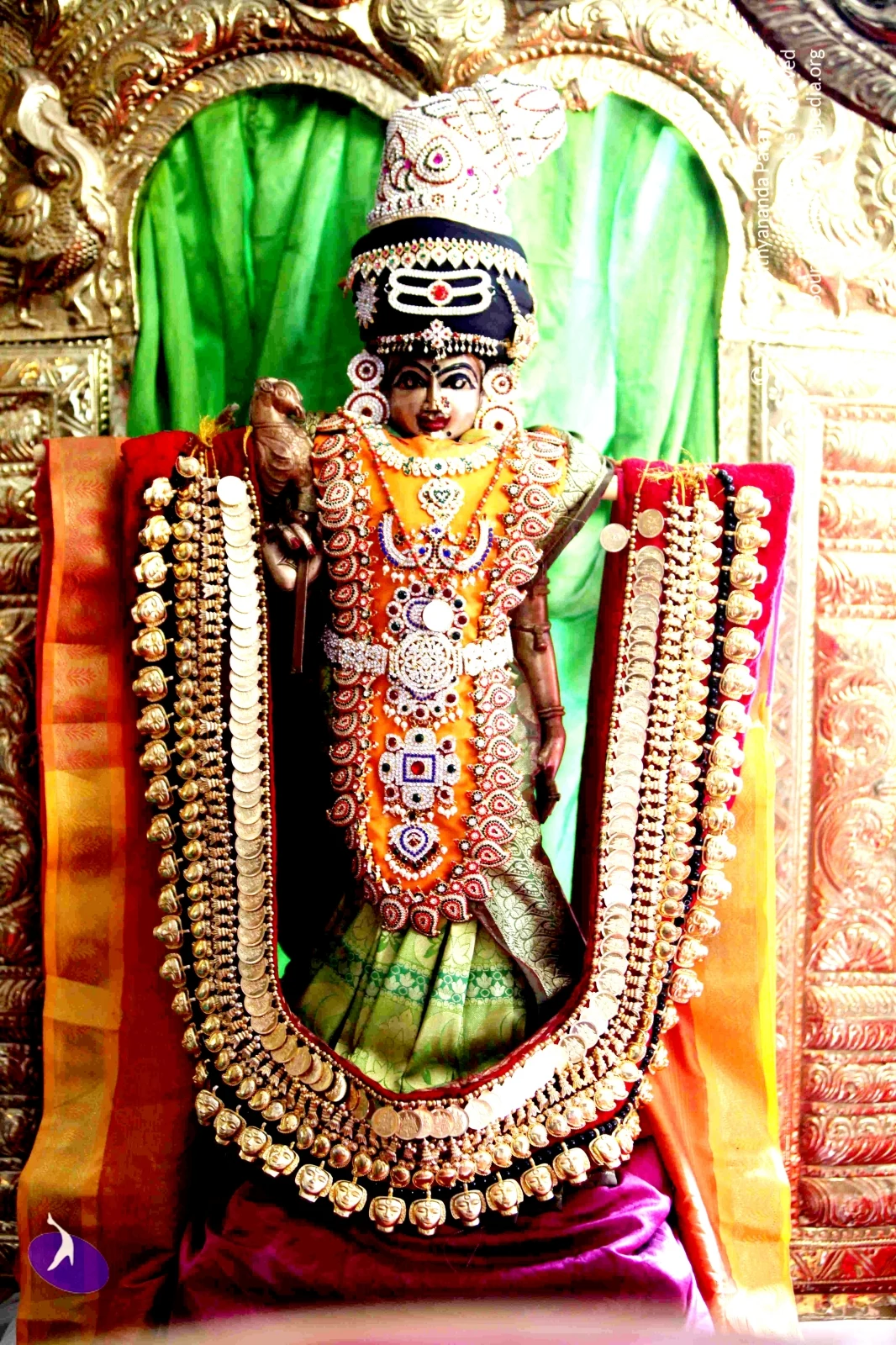
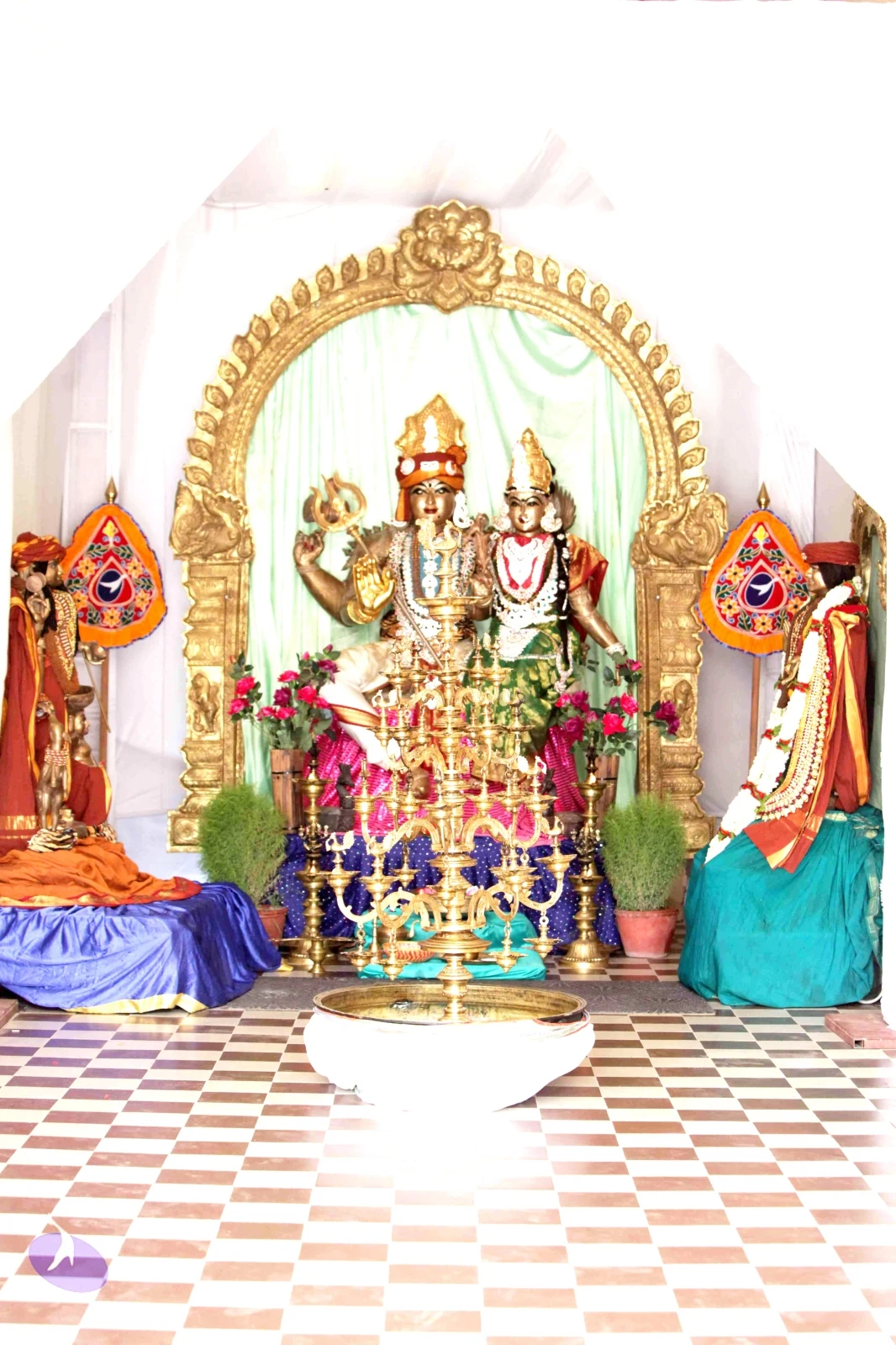
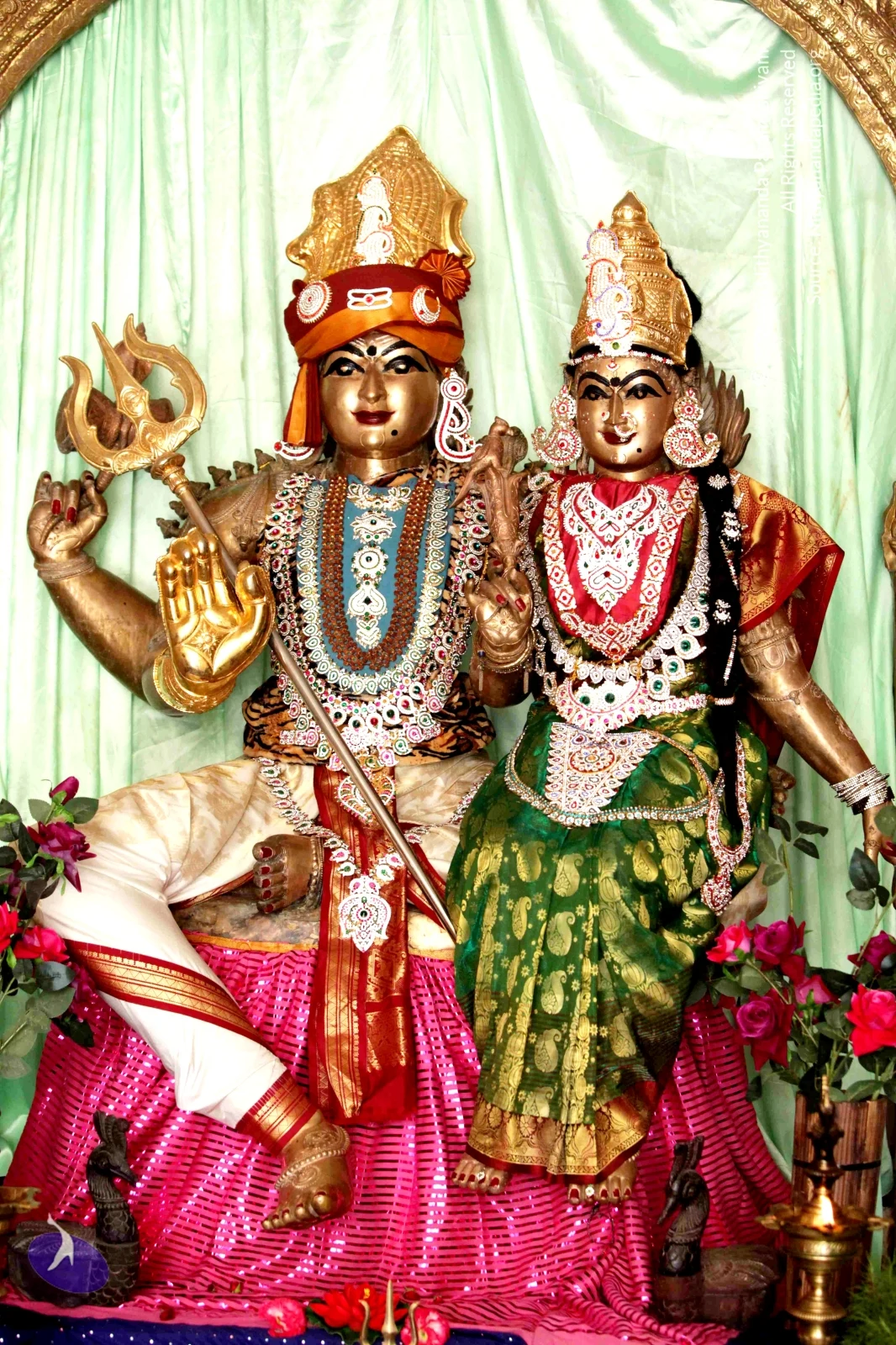
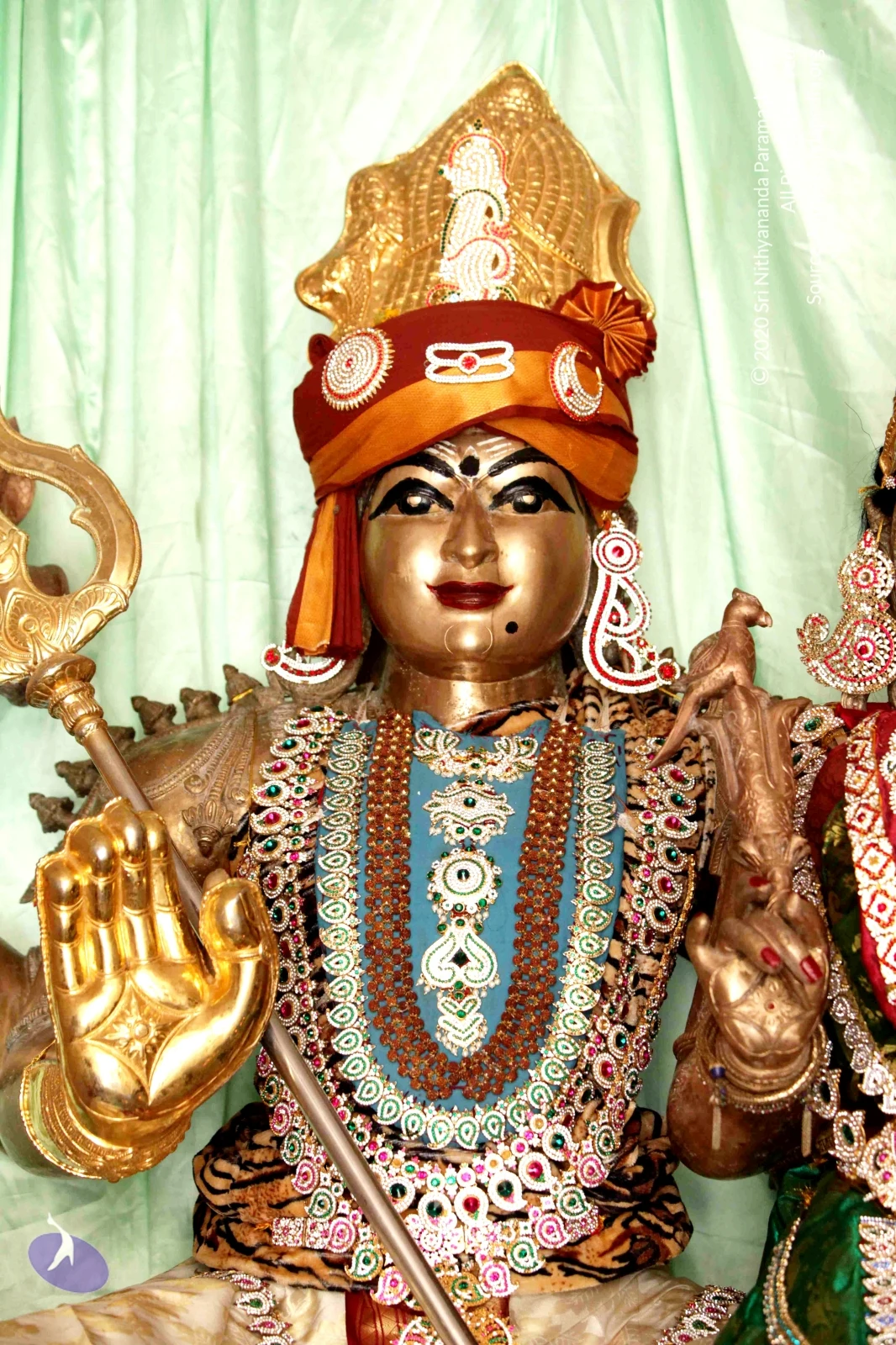
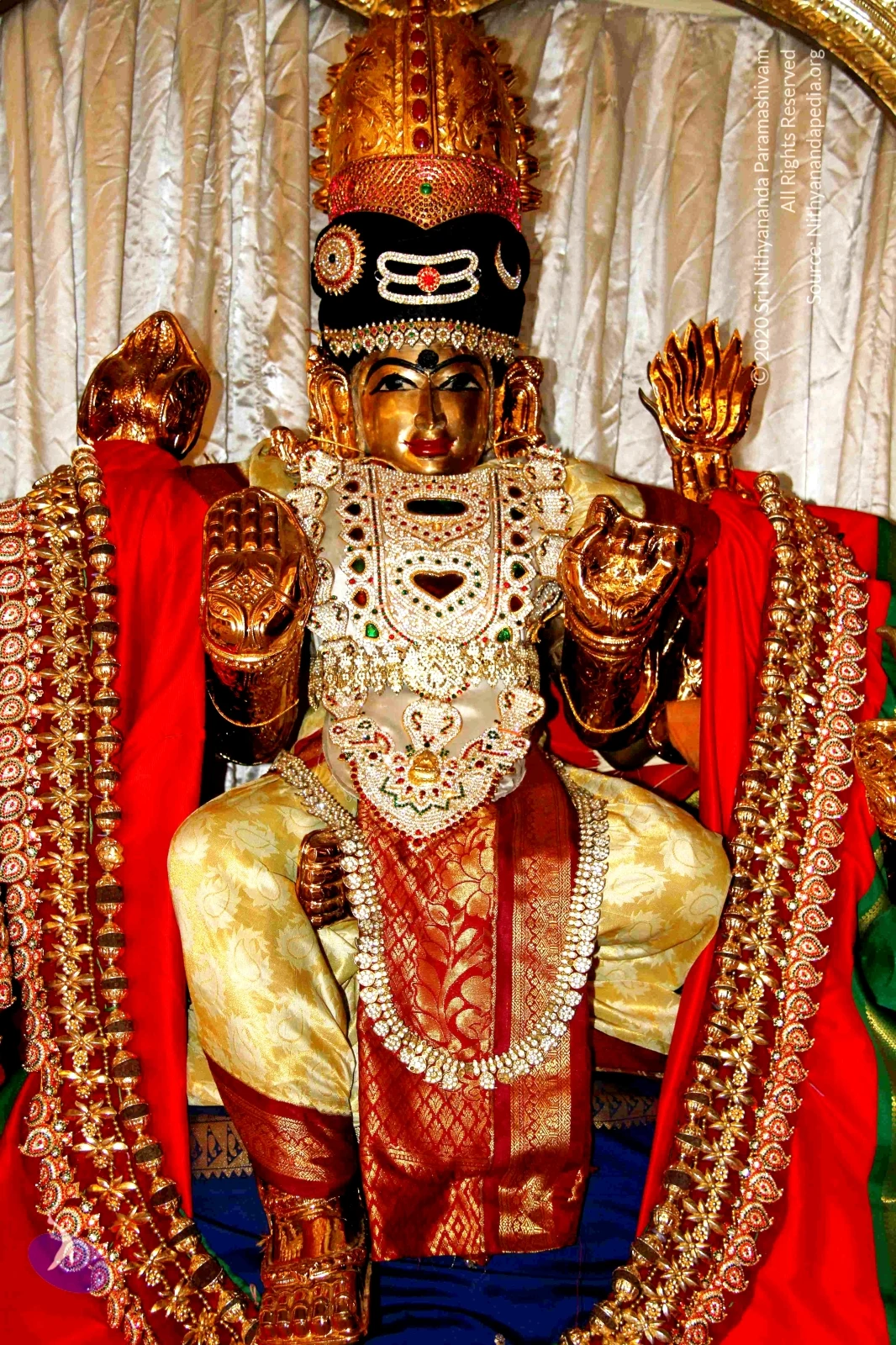
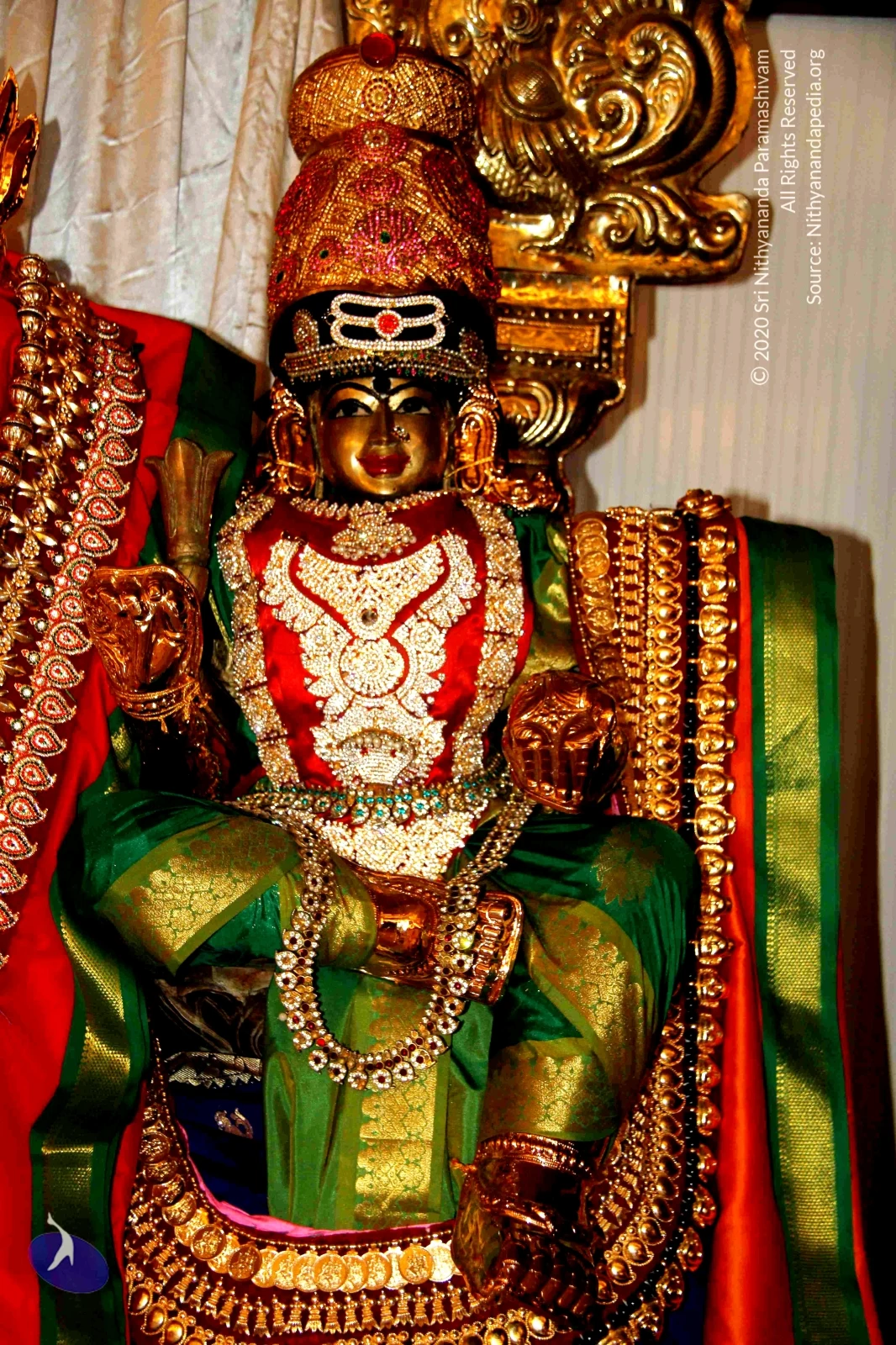
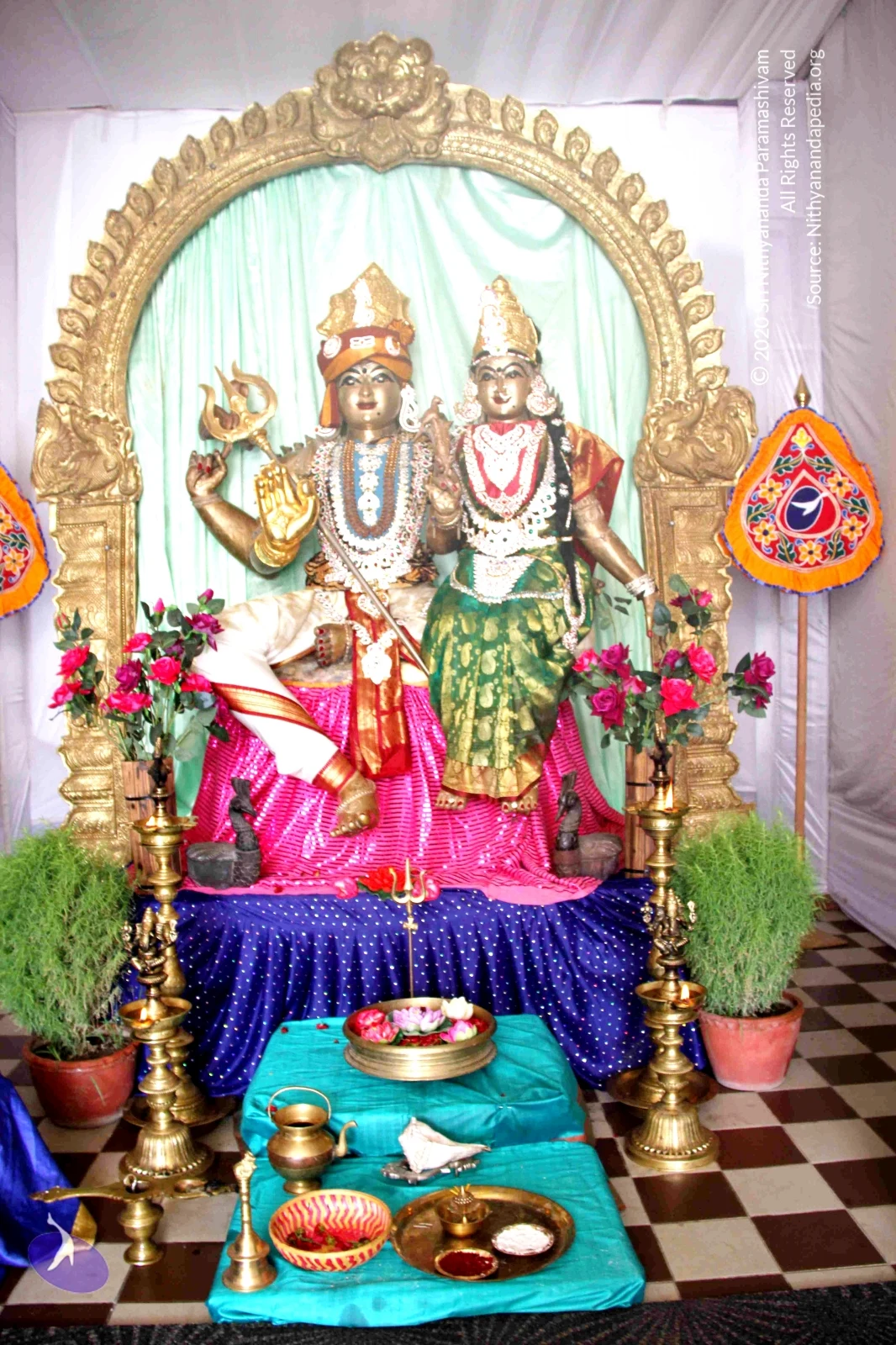
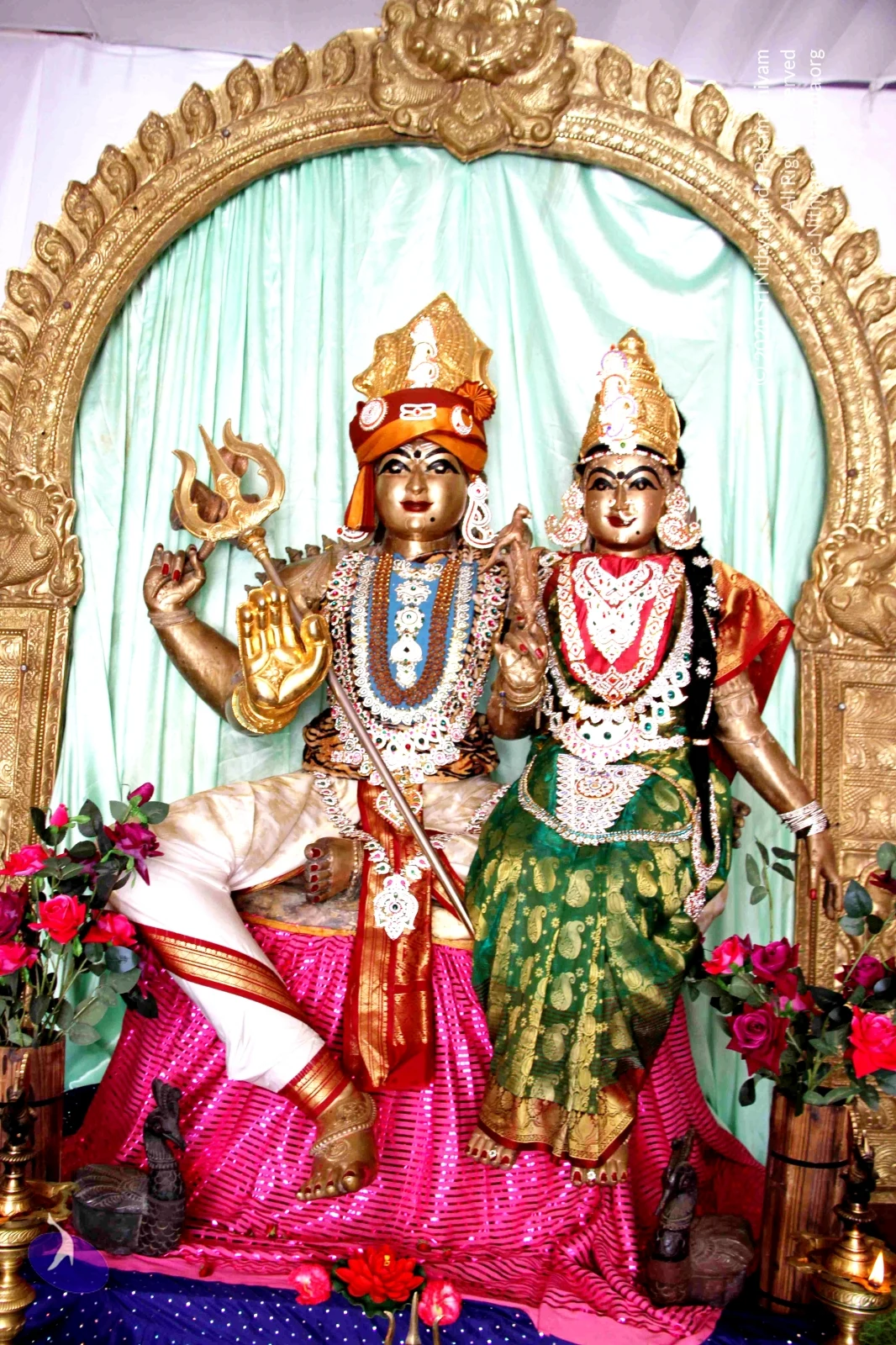
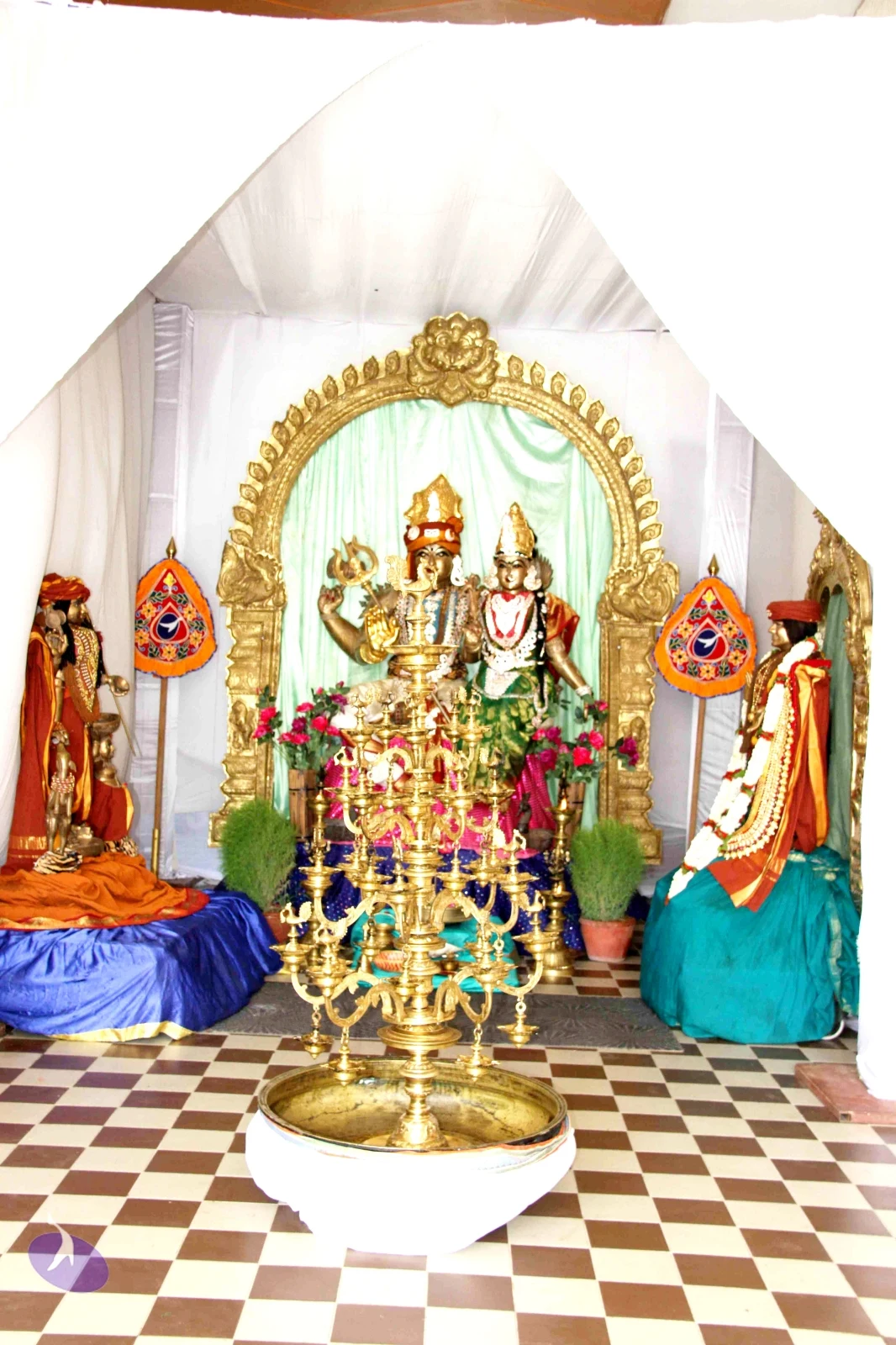
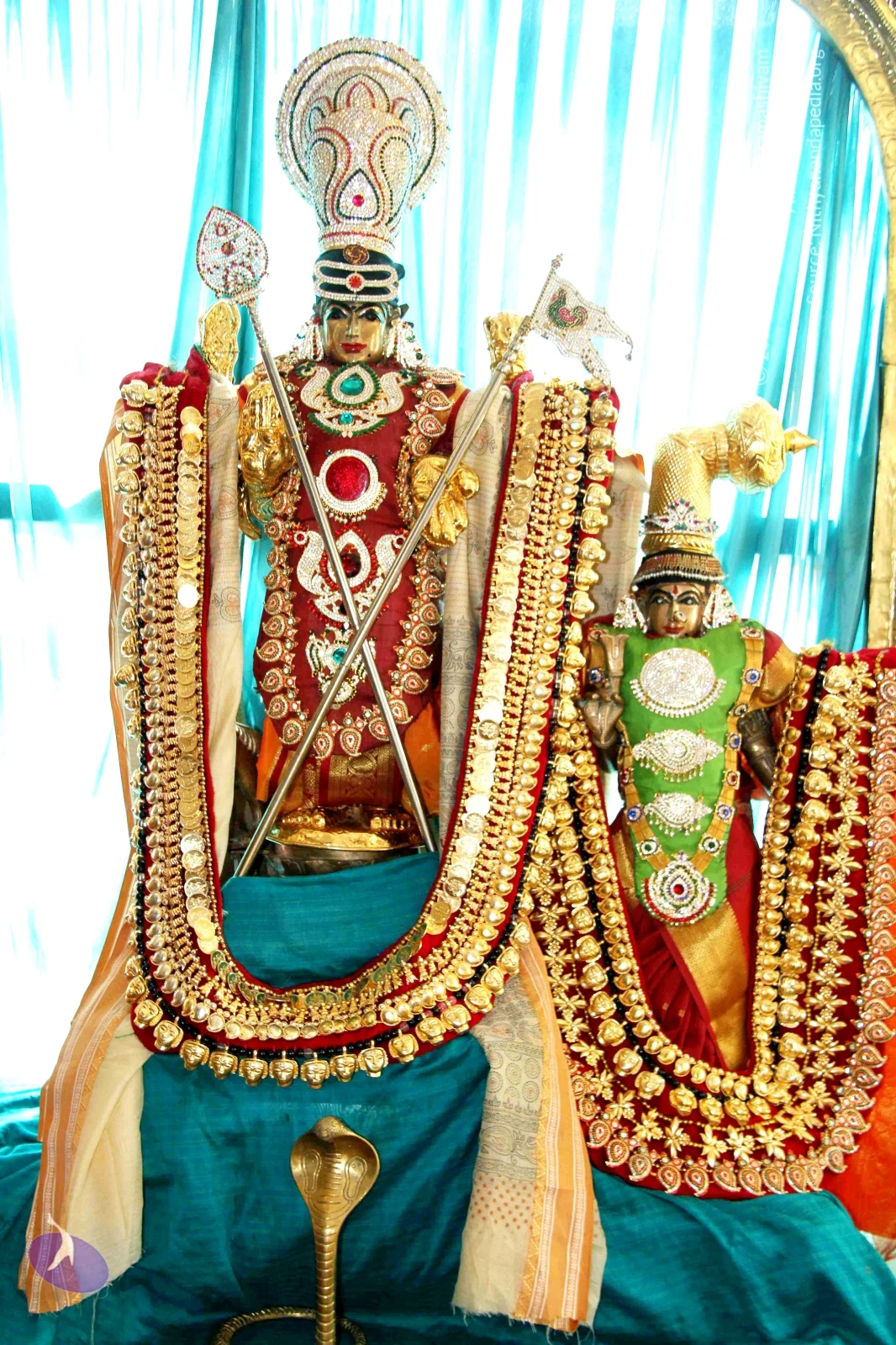
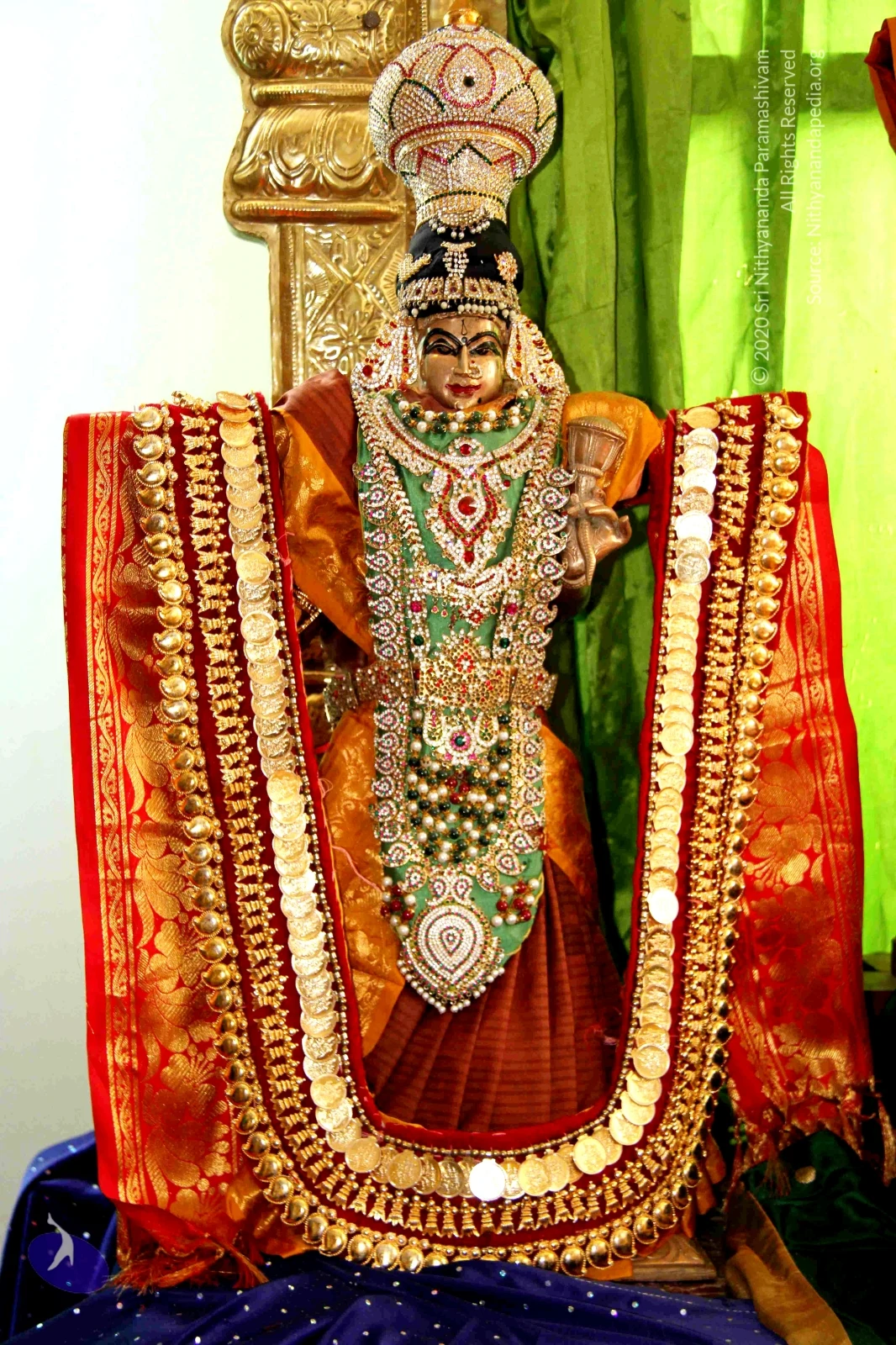
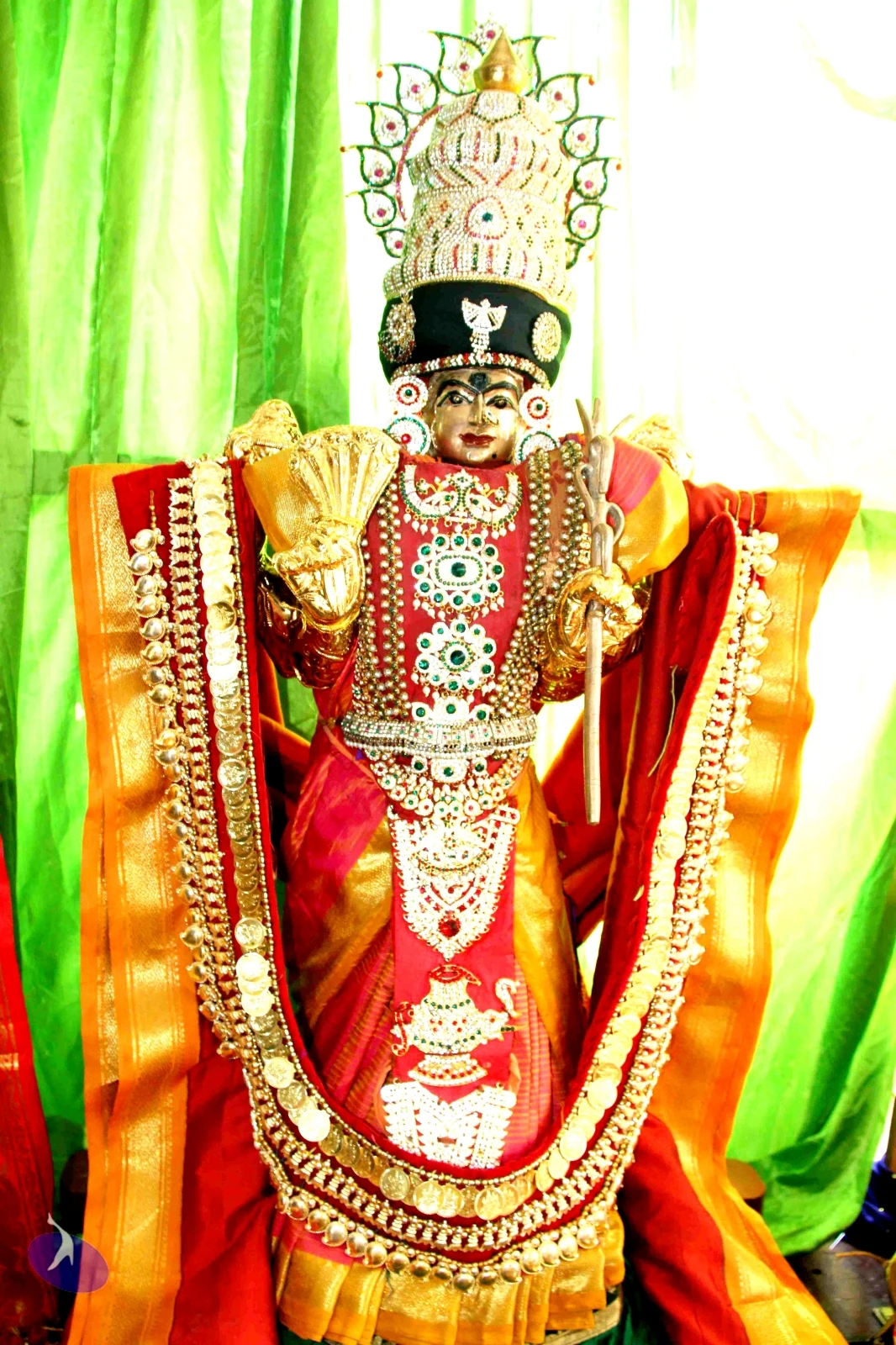
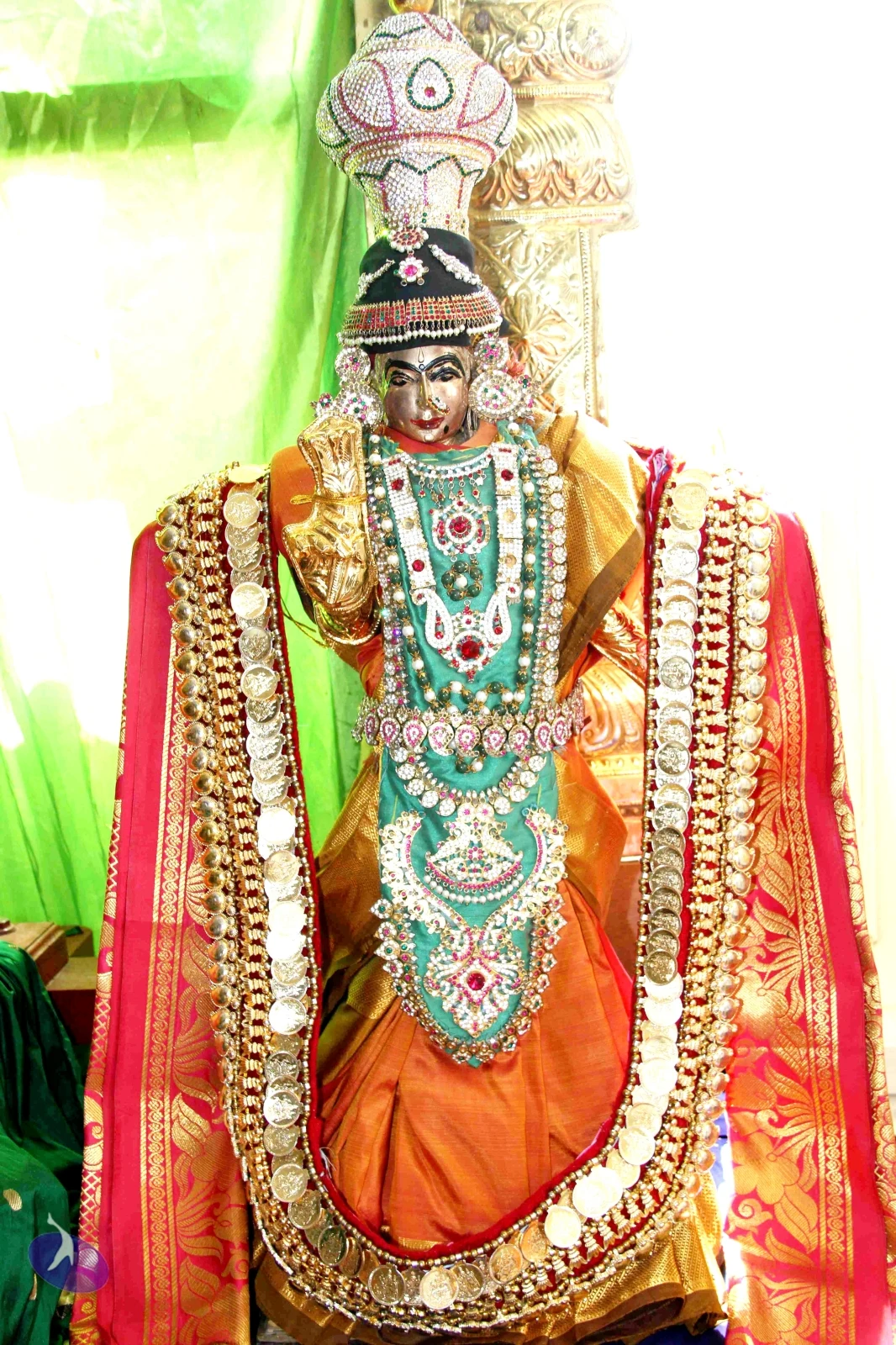
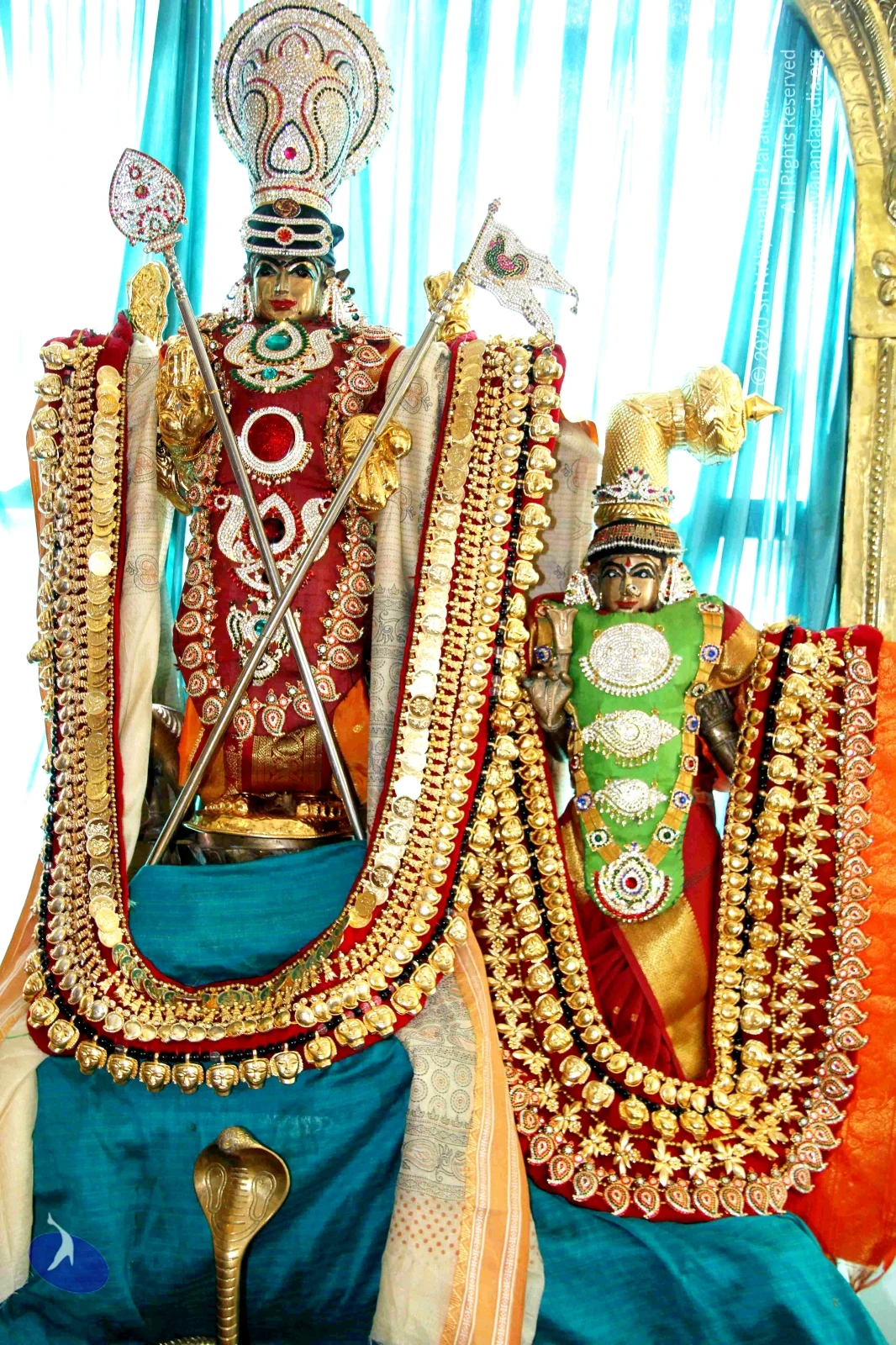
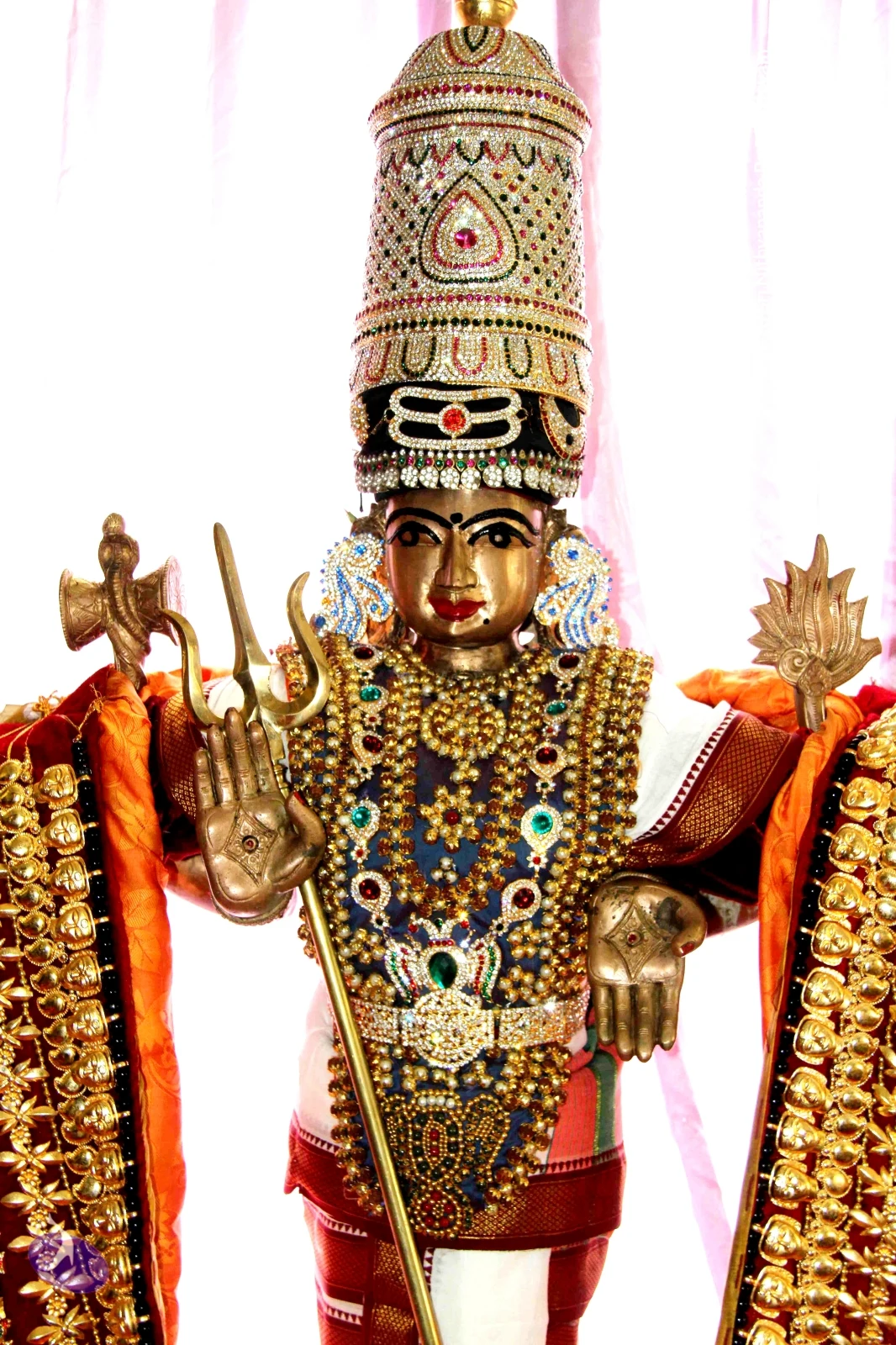
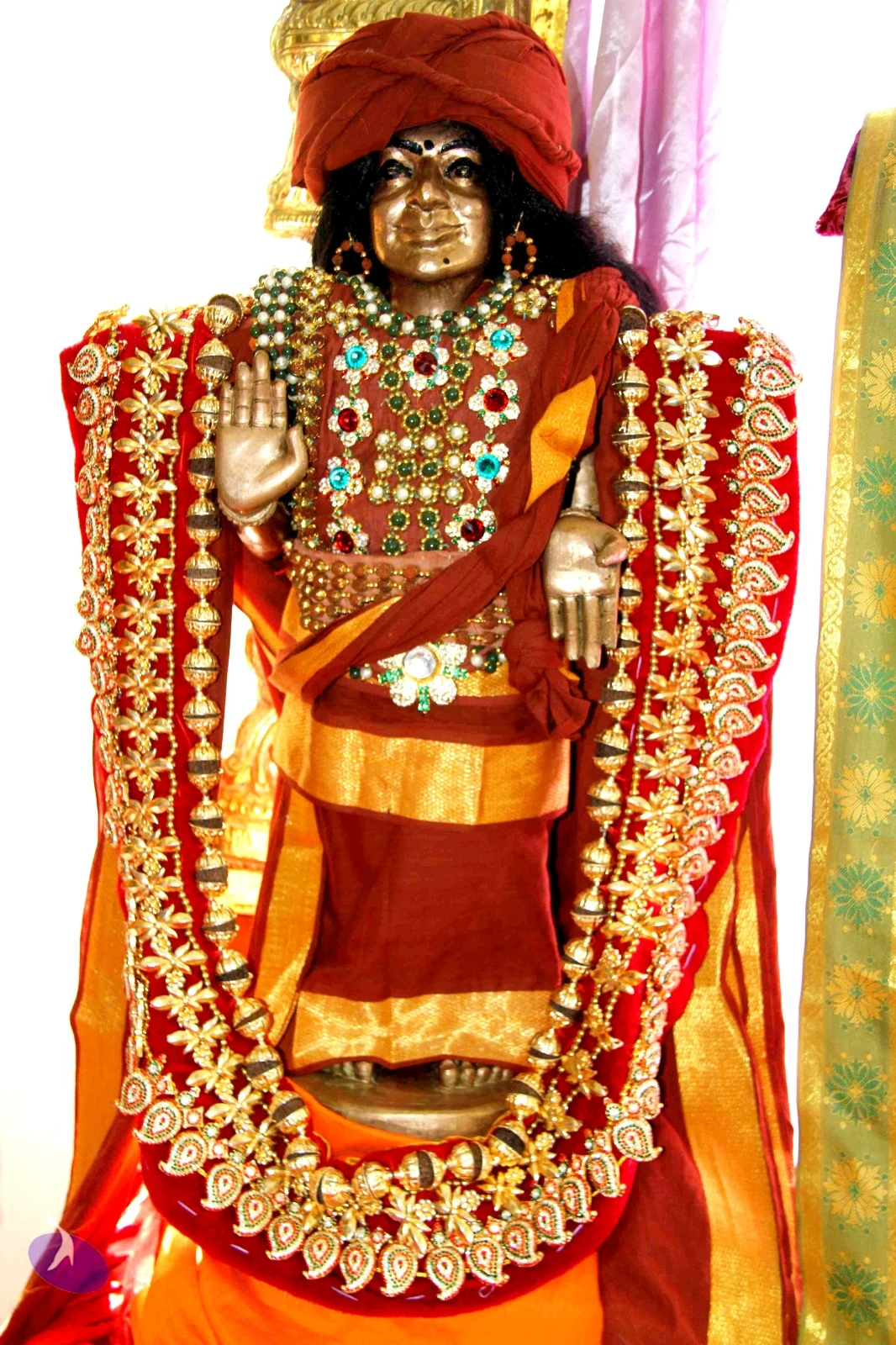
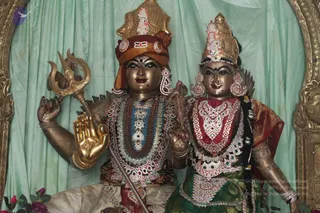
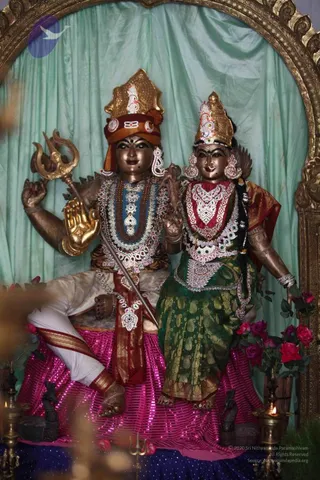
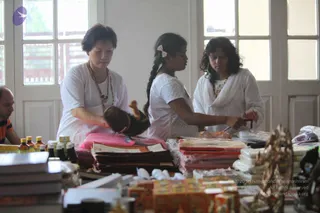
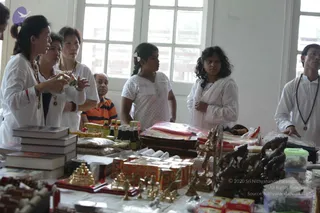
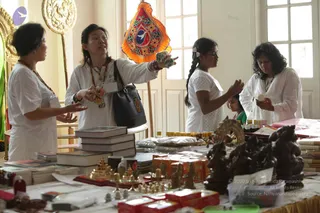
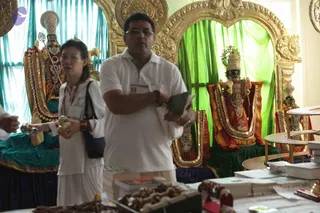
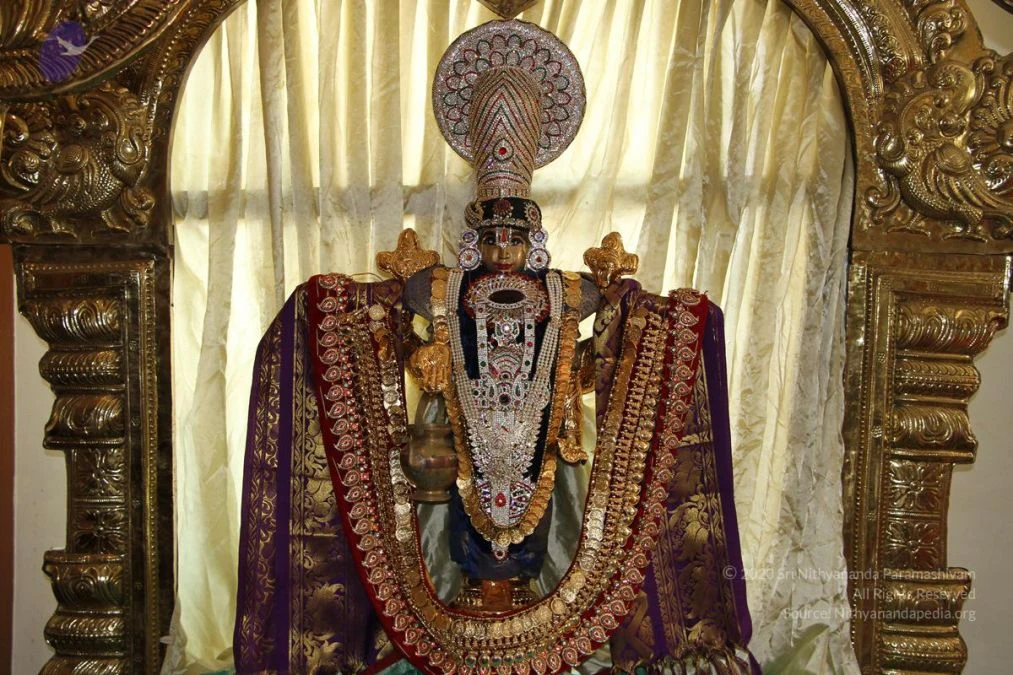
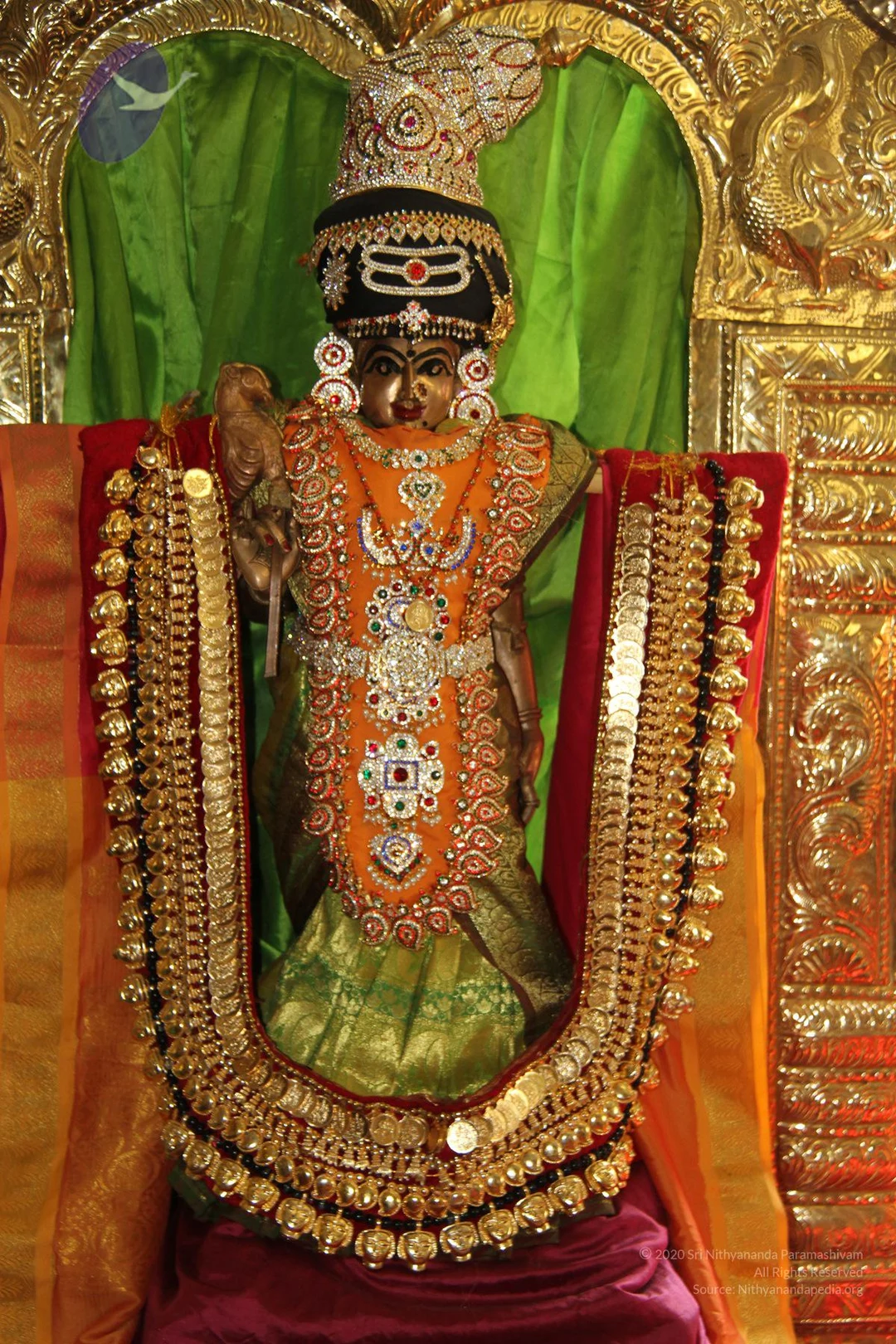
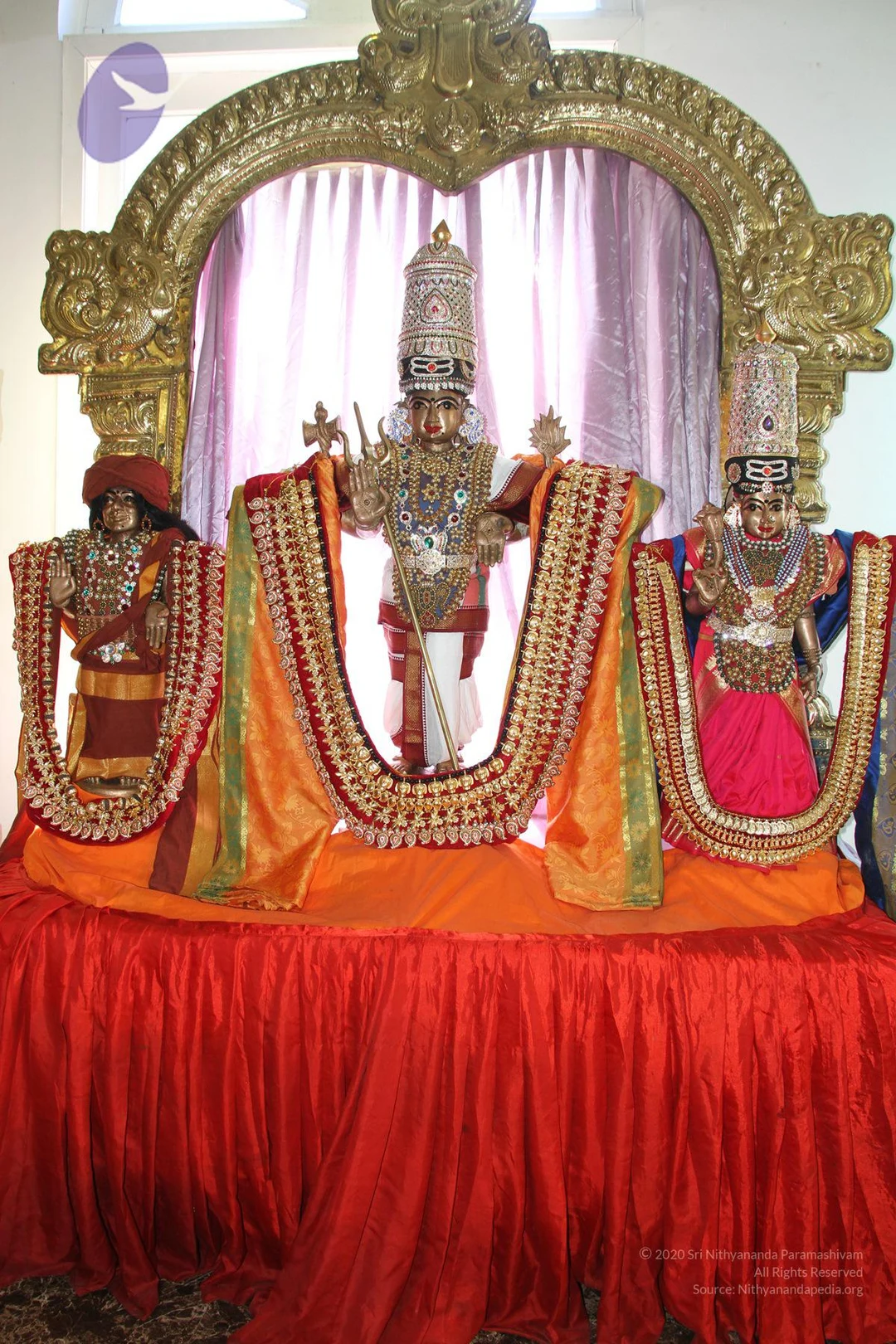
Two golden-brown statues of deities seated side by side against a pale green draped backdrop framed by ornate gold arch. The figure on the left, with a tall golden crown, orange-red headband and a golden trident raised in one hand, wears an elaborately beaded and jewelled garland with rudraksha beads. The figure on the right wears a gold crown, dangling earrings, a red and white beaded blouse and a green sari, holding a lotus-like object. Flower petals lie at their feet.A photograph of a pair of decorated deity murti statues seated on a pink sequined cloth before a pale green draped backdrop framed by an ornate gold arch. The figure on the left, holding a trident in one hand, wears an orange and red head wrap with a vibhuti marked forehead, a rudraksha and jewelled garland, a tiger-print upper garment and white dhoti. The figure on the right wears a gold crown, green brocade sari with paisley patterns, red blouse, jewelled necklaces and a long braid, with a bunch of red roses at the side. Brass oil lamps stand at the edges, one lit. No living people are visible.A photograph of three women working at a table covered with stacked folded fabrics in pink, maroon and red, clear plastic-wrapped bundles, small amber bottles, and boxes of orange packaging, with gold-toned items at the right edge. The woman on the left wears a white top and a beaded necklace and is handling a folded cloth. The middle young woman wears a white top with a braid and a hair bow and holds a small item. The woman on the right wears white with a draped shawl and a beaded necklace and appears to be cutting or handling fabric. A bald man in a striped shirt is partly visible at the left edge. Tall windows with white frames light the room.A photograph of a bright white room with tall multi-pane windows, where several people stand around a table covered with books, bottled oils, small boxes, brass and wooden figurines, and folded cloth. Foreground: a woman in white with beaded necklaces gestures while speaking; beside her, women in white garments and beaded necklaces listen. A man in an orange-and-black striped shirt stands behind them, and a girl in a white embroidered top with a hair clip watches. On the right, a woman with curly hair wears a white outfit and necklace. At far right, a man in white with a rudraksha mala looks upward. Brass and dark wooden deity figures and a brass kalasha-like object sit on the table.Four women in white clothing stand at a sales table laden with books, small brass and dark wooden deity figurines, boxed items, and bottles. The woman in the centre wears a white top, a red-and-beige beaded mala, and a lanyard badge; she holds small jars and gestures while speaking. A woman on the left in white with a beaded necklace listens. A woman in a white dress with a long braid handles items, and a woman with curly hair in white examines a small jar. A child in green stands partly visible behind the table. A hanging orange and red ornamental decoration with a logo hangs in the background beside gold-framed mirrors and white windows.Photograph inside a temple-style shrine room with gold arched frames and green and teal drapes. A man in a white polo shirt with glasses stands centre, holding a small book, and a woman in white clothes with a dark shoulder bag and red bangles stands beside him holding small items in her hand. Behind them are gold-clad metal deity murti dressed in red and gold garments with garlands and ornaments, one wearing a tall crown. Books and boxed sweets are displayed on a table in the foreground.
Kalabhairava-Temple-Visit

71 photosSource gallery
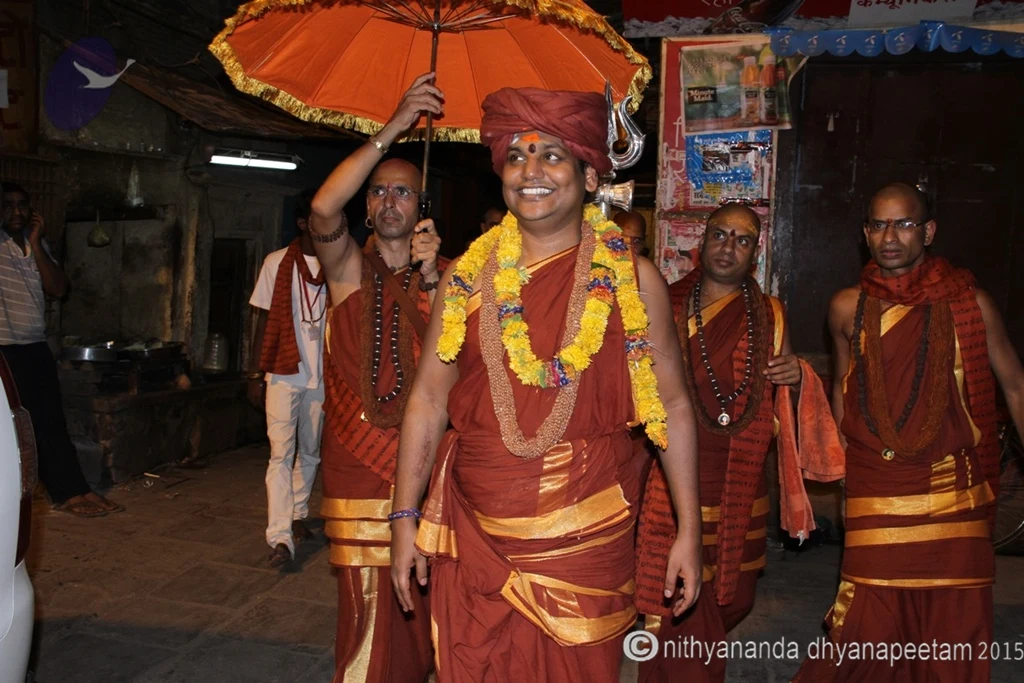
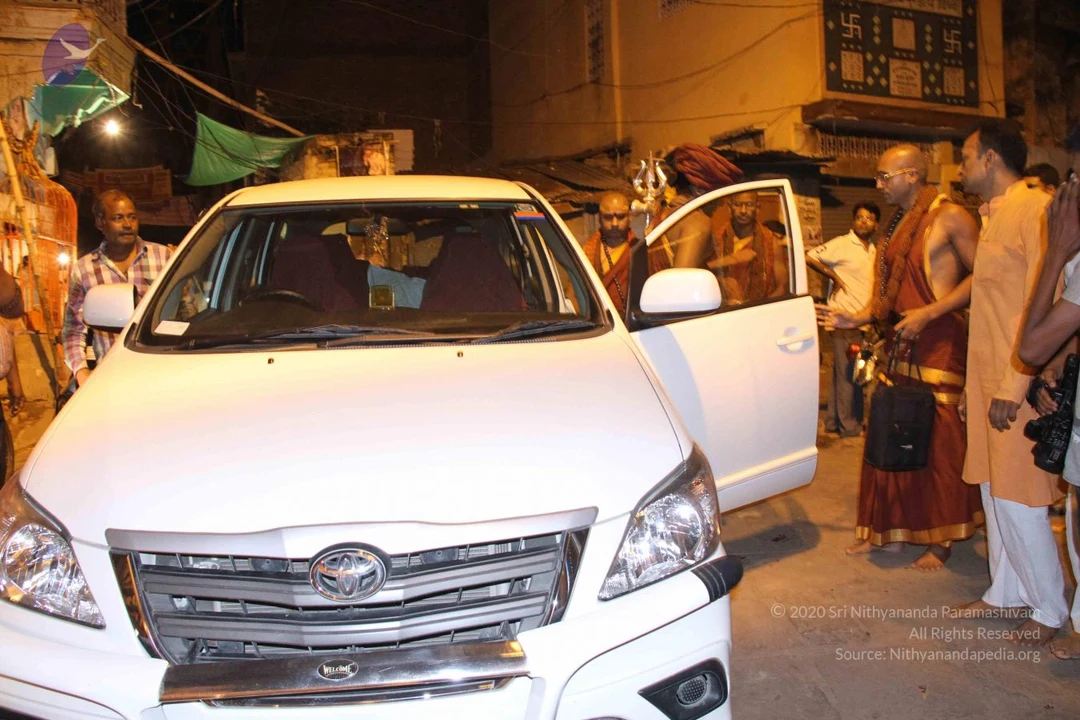
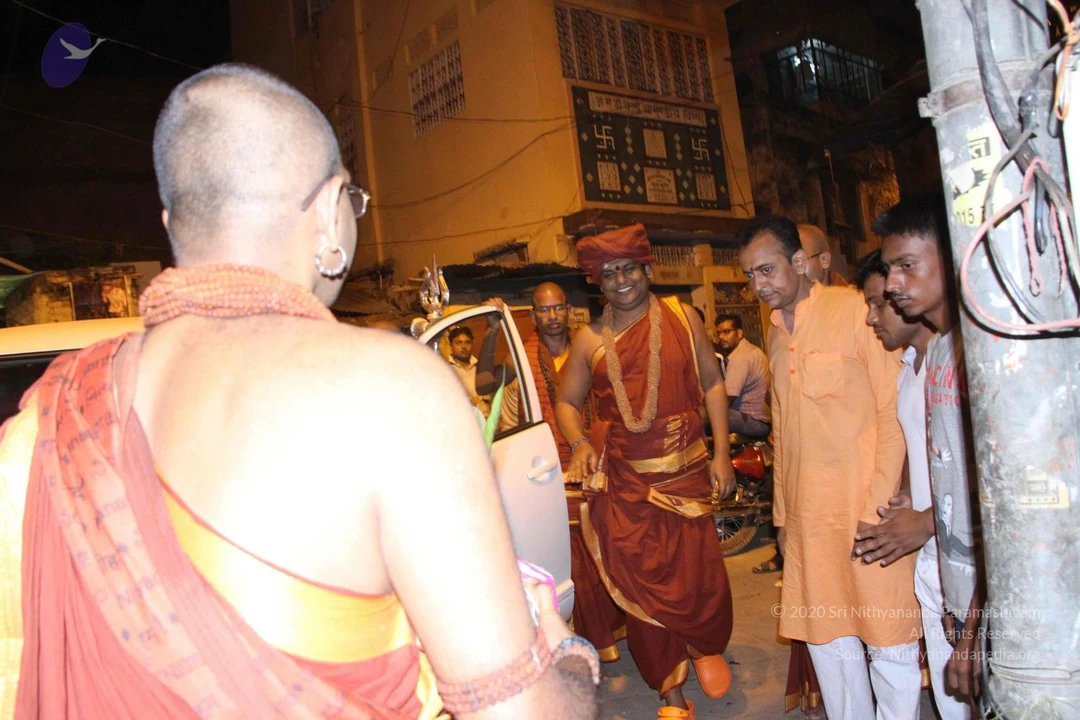
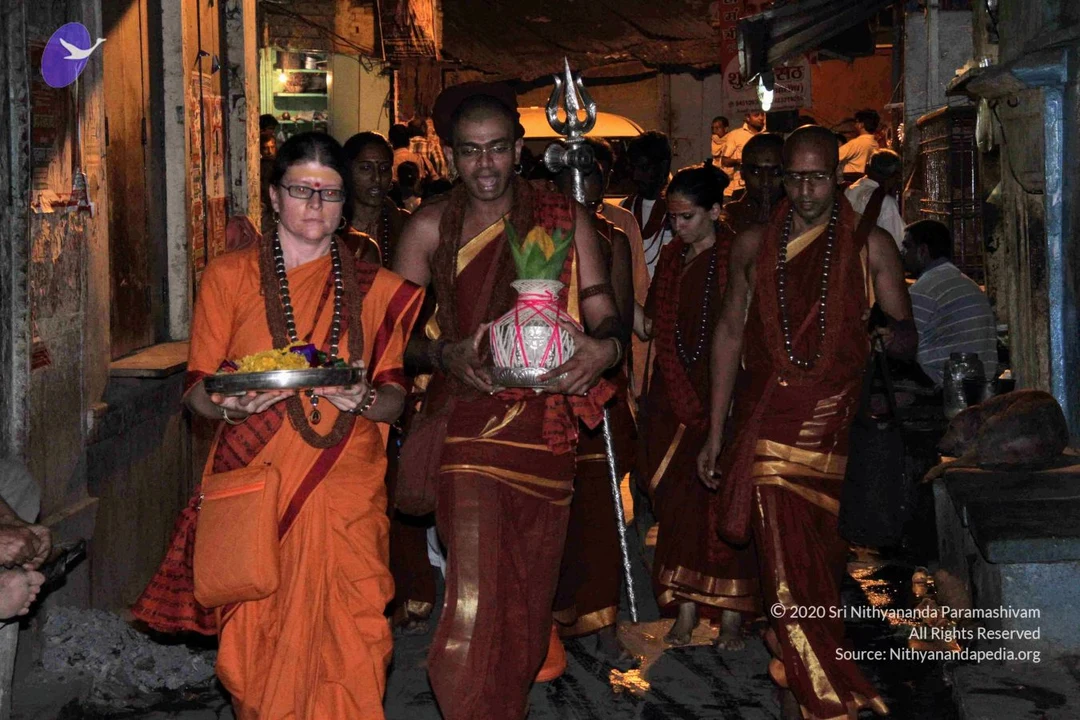
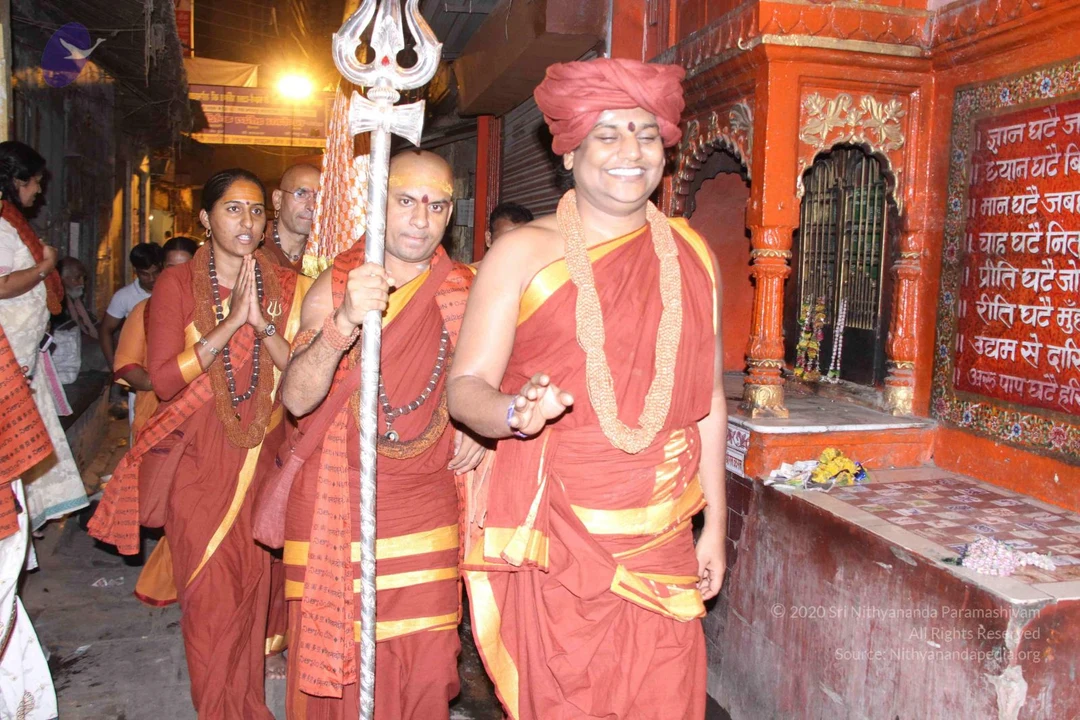
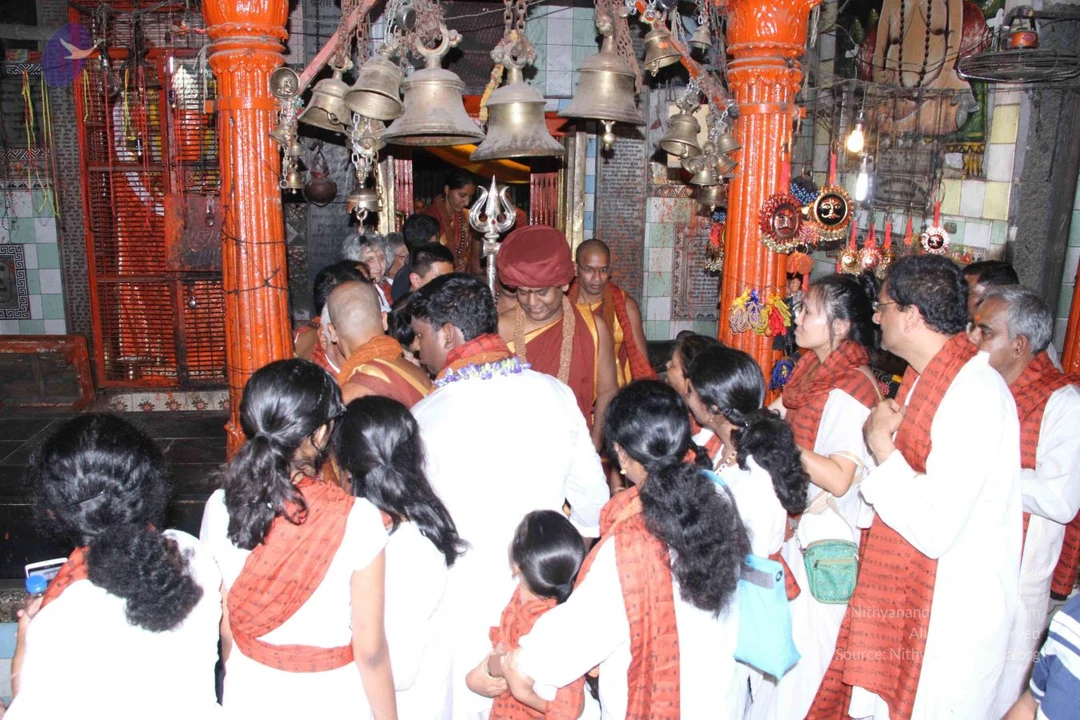
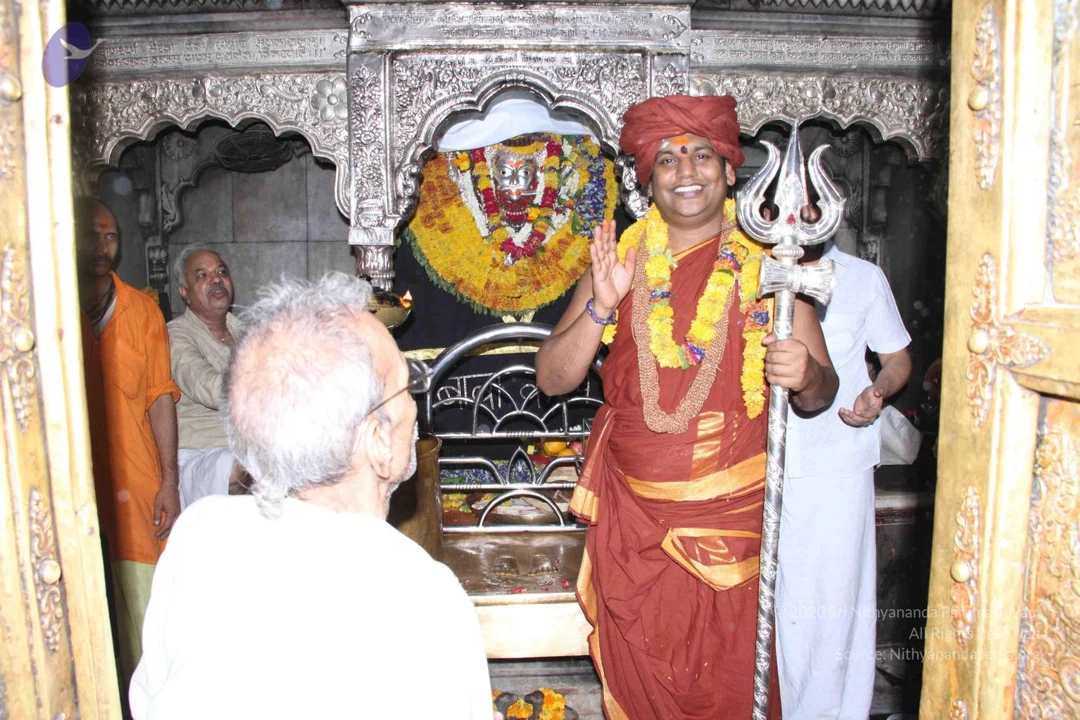
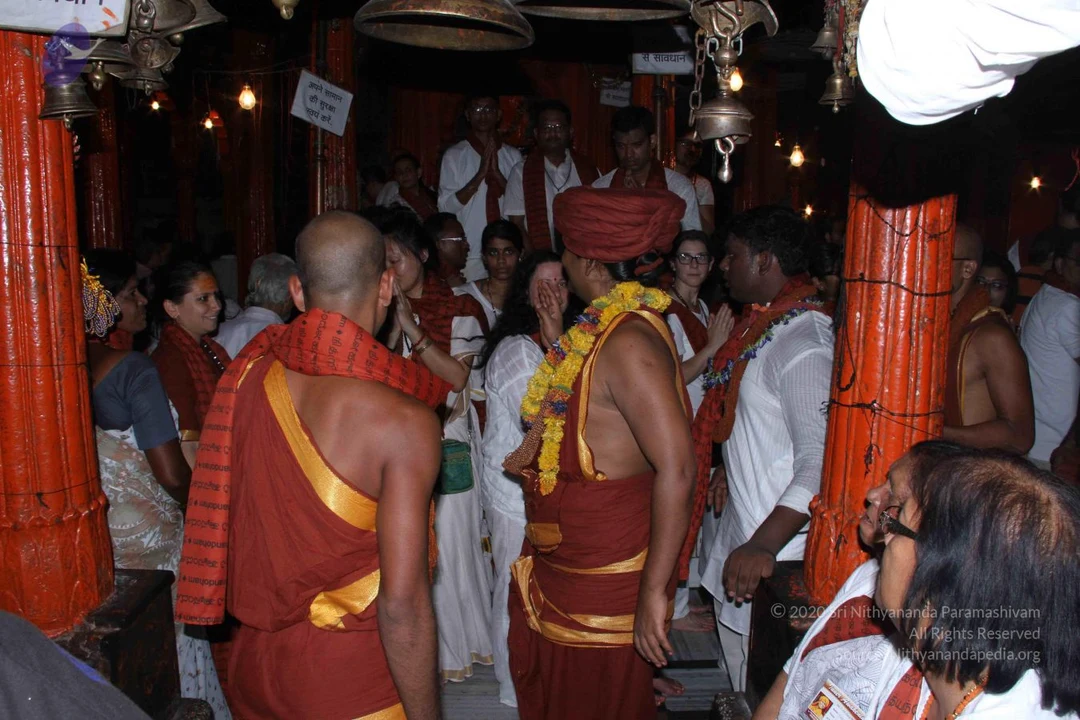
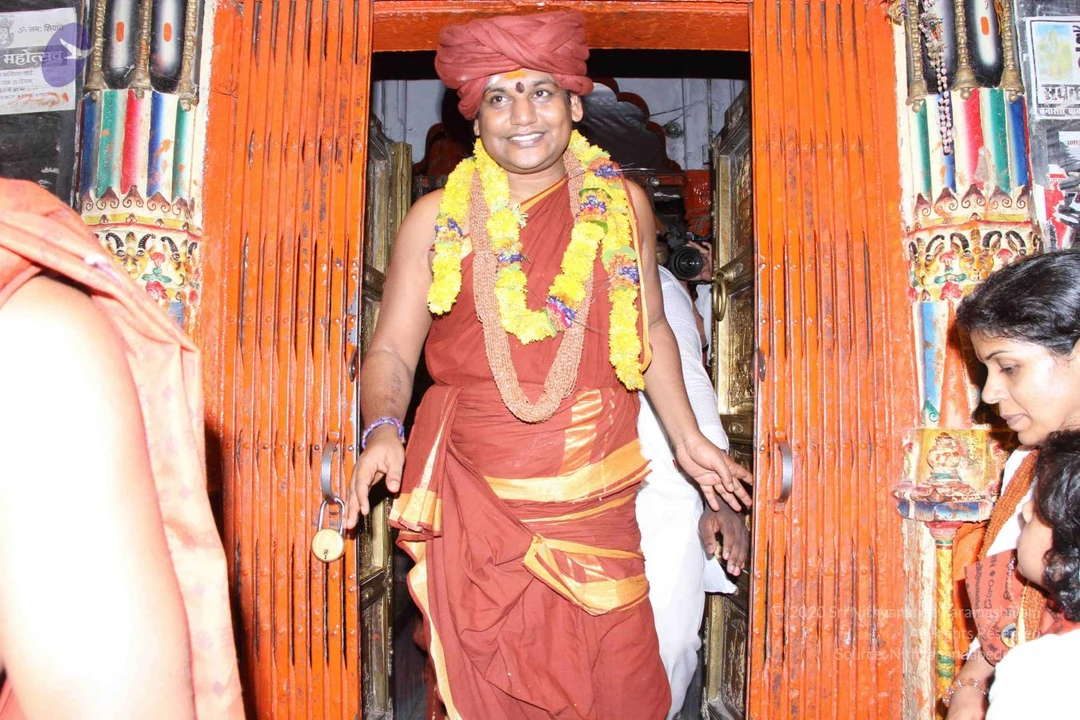
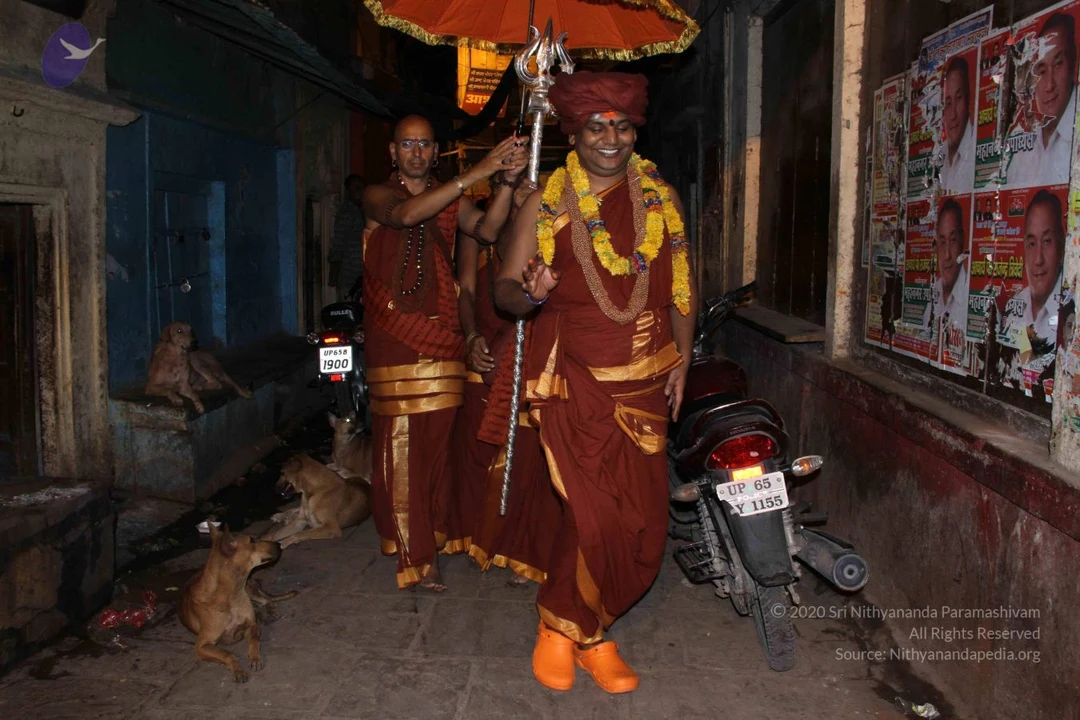
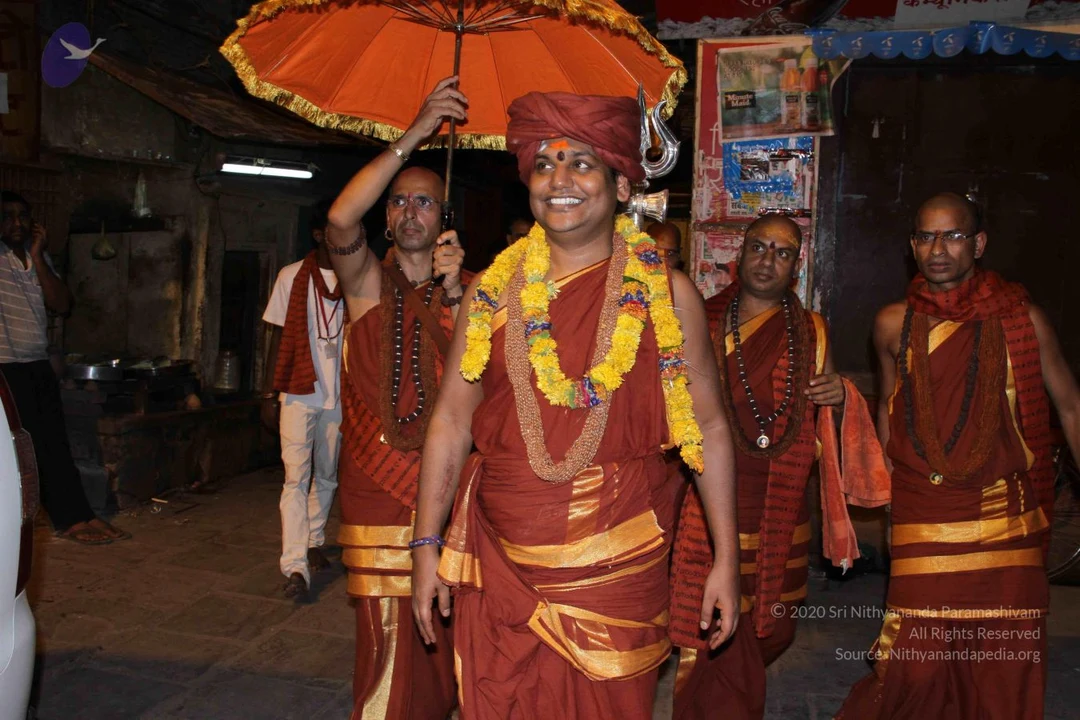
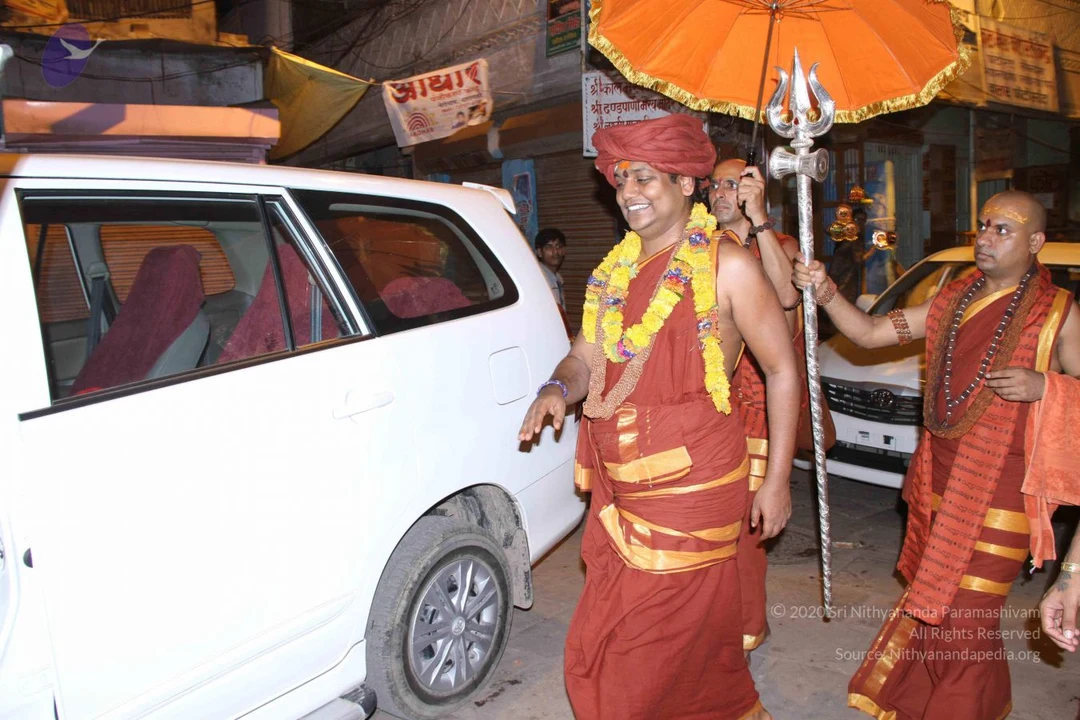
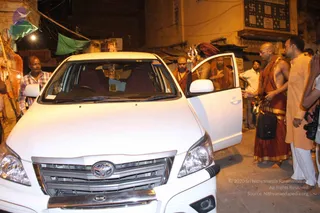
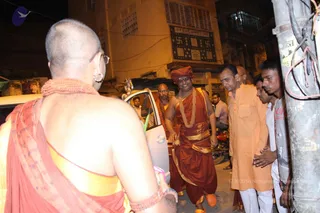
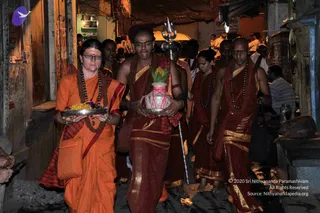
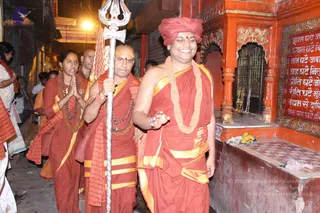
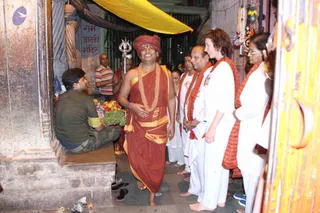
Night street scene in a narrow Varanasi-style lane. A white Toyota Innova stands in front with its driver-side rear door open. Beside the car, a bare-chested man in orange-red cloth with a rudraksha mala and a shaved head stands near the open door, and a second man in saffron wrap holds a trident. Behind them, another man in white stands near the car, and a photographer with a camera is at right. A man in a checked shirt stands at left. Colourful cloth and a red-and-white sign hang on a building facade with swastika symbols.A night street photograph in a narrow Indian lane, with a white car door open at left. In the centre a smiling man in a red-maroon saffron-toned robe and matching red turban wears a long white flower garland and a gold-edged dhoti-style wrap, and steps forward. At left a bald, shaved-headed man with a red-orange wrap and a rudraksha mala stands with his back to the camera, facing him. At right several men in orange kurtas and white trousers and a young man in a grey t-shirt stand close together watching. A trident is visible on the car roof. Painted swastika signs and Hindi lettering appear on a building wall behind. Whether the central figure is a person is uncertain from appearance alone.A night procession moves through a narrow lane in an old city, with people in orange and red sannyasi-style robes walking toward the viewer. In the foreground a woman in an orange sari and rudraksha mala carries a silver tray of flowers and offerings. Beside her a man in a dark red-brown dhoti and shawl with a rudraksha mala holds a decorated clay kalasha with pink and white wrapping and a green leaf sprig. Behind them a silver trishul is raised, and other robed attendants and onlookers follow along the street, with shop fronts and a lit doorway visible.Night street procession in a narrow Varanasi lane lit by warm lamps. A smiling man in a red-orange turban and saffron-orange robe with a gold-trimmed sash and a long white flower garland walks at the front, one hand raised in blessing. Beside him a bald man in orange robes holds a tall silver trident (trishul) upright, with rudraksha beads and orange tilak on his forehead. Behind them a woman in red-orange sari with a rudraksha mala and folded hands in namaste walks alongside another man in orange. On the right, a red-painted shrine niche with gold ornamentation and a barred grille; a red panel with Hindi verses hangs beside it, and flower offerings rest on a ledge. The man at the front wears distinctive long, swept-back hair under the turban? Not visible; cues are limited to the turban, garland and orange robes, so identity is uncertain.A photograph of a narrow temple lane in Varanasi beside a shrine with the sign "राम जानकी मंदिर" (Ram Janaki Mandir). A man in a saffron-orange dhoti and shawl, with a red turban, a long marigold garland and a rudraksha-style bead bracelet, walks forward smiling with hands at his waist, and a silver trident stands behind him. Behind him, a line of devotees in white kurtas and orange shawls stand with hands folded, including a woman with curly auburn hair and another woman in white with glasses. A seated man in a green shirt sits at the shrine with a tray of marigolds and flowers. The lane has a yellow cloth canopy overhead and scattered sandals on the stone floor. Swamiji (probable): the walking man wears saffron ochre robes, a red turban, a flower garland and a bead bracelet, and is the figure at the centre of the group.Photograph inside a temple with orange-painted pillars and hanging brass bells overhead. A man in a maroon-red head wrap and orange-saffron robe stands centrally, with another orange-robed figure beside him, while a crowd of devotees in white clothes and orange-red shoulder cloths surrounds them. Devotees hold their hands together in greeting, and a trident stands on a small stand in front of the group. Colourful tassels and decorative ornaments hang from the ceiling on the right. Several women in white and orange shawls gather close, and a woman with a dark ponytail is visible in the foreground. Approximately 25 people are visible.
th july2015

38 photosSource gallery
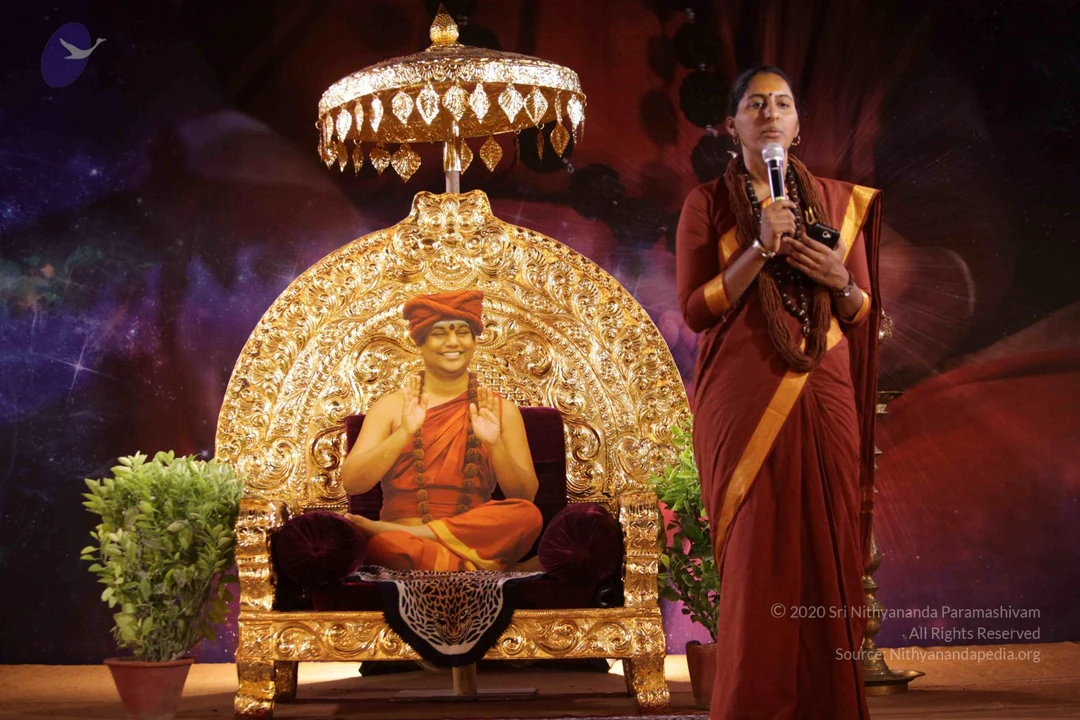
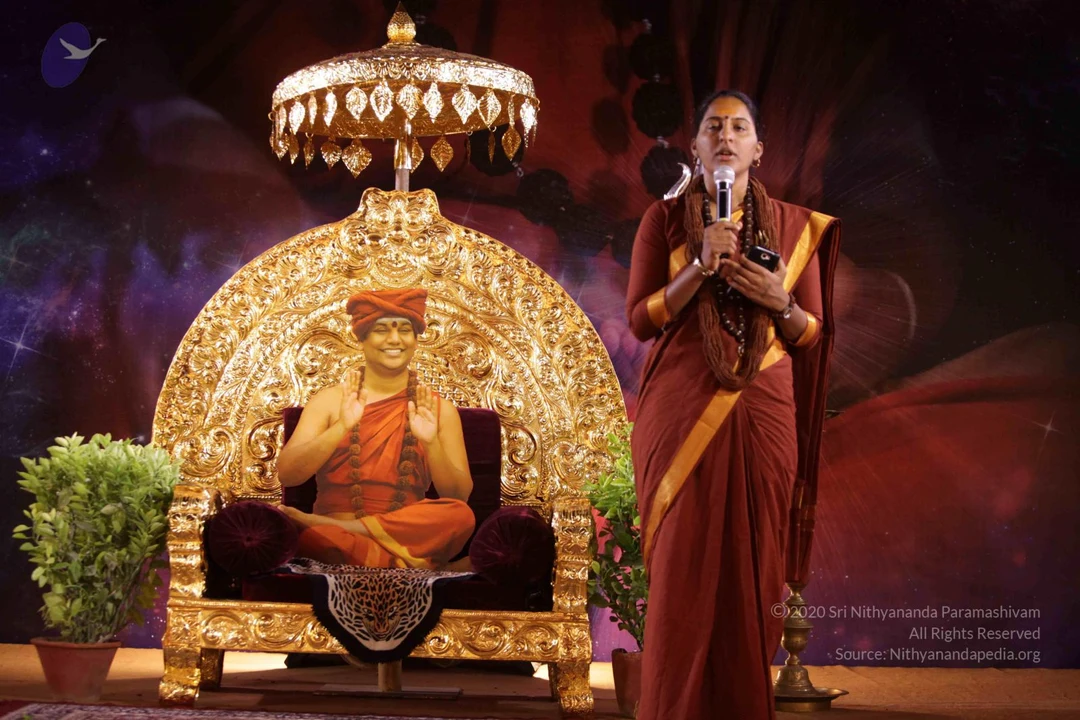
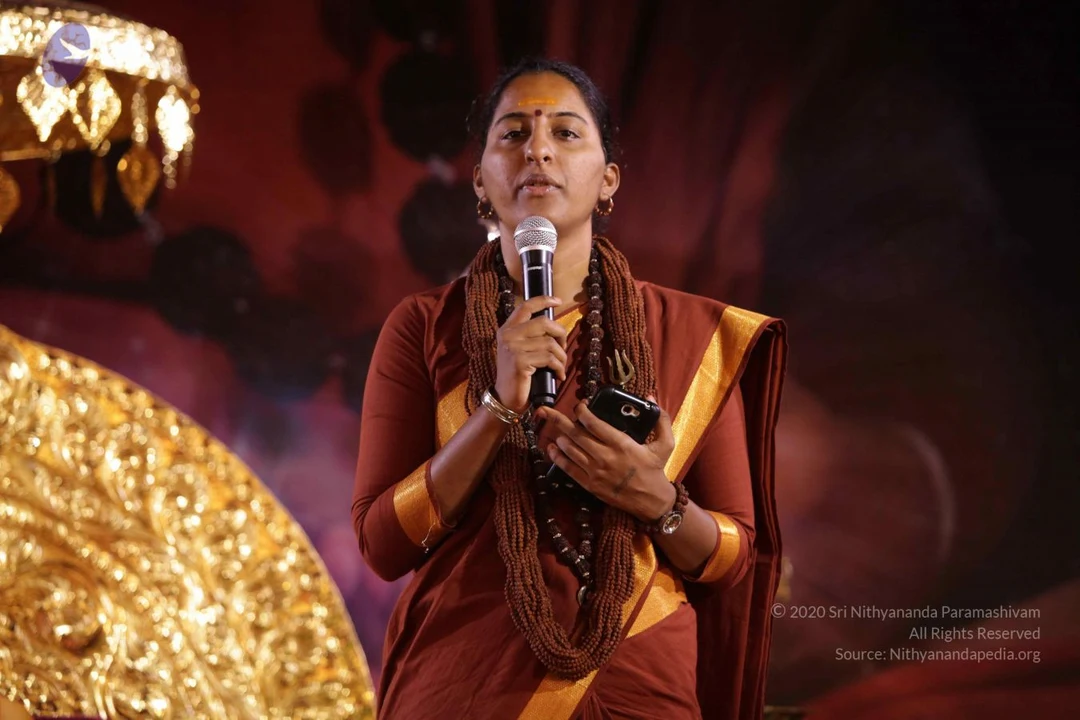
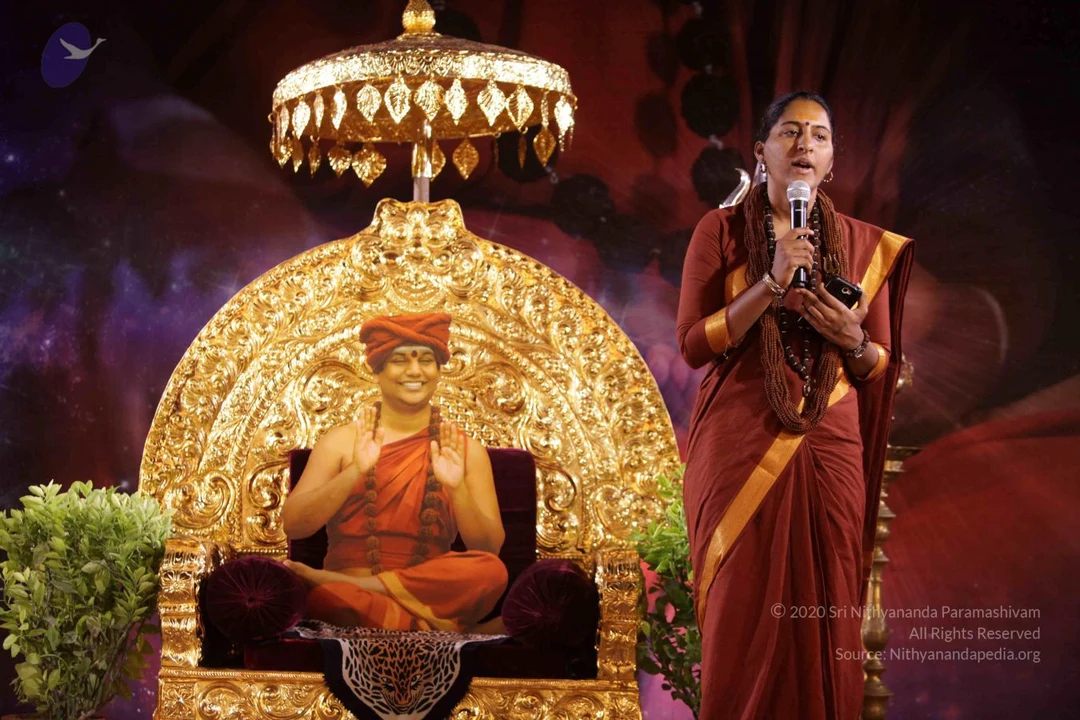
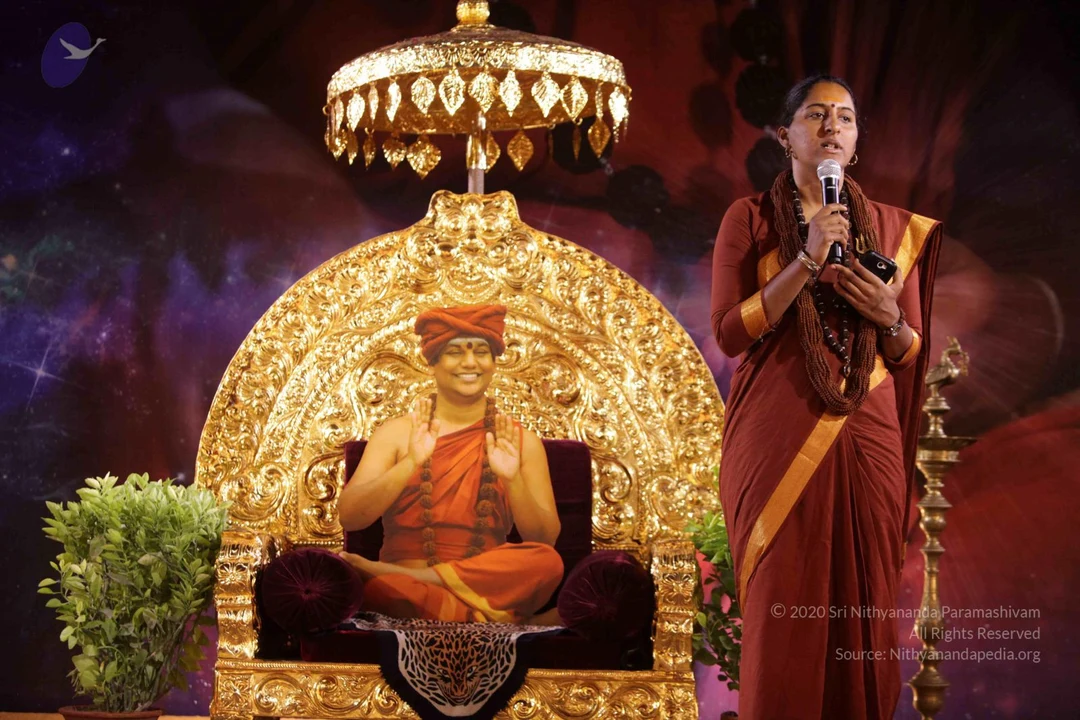
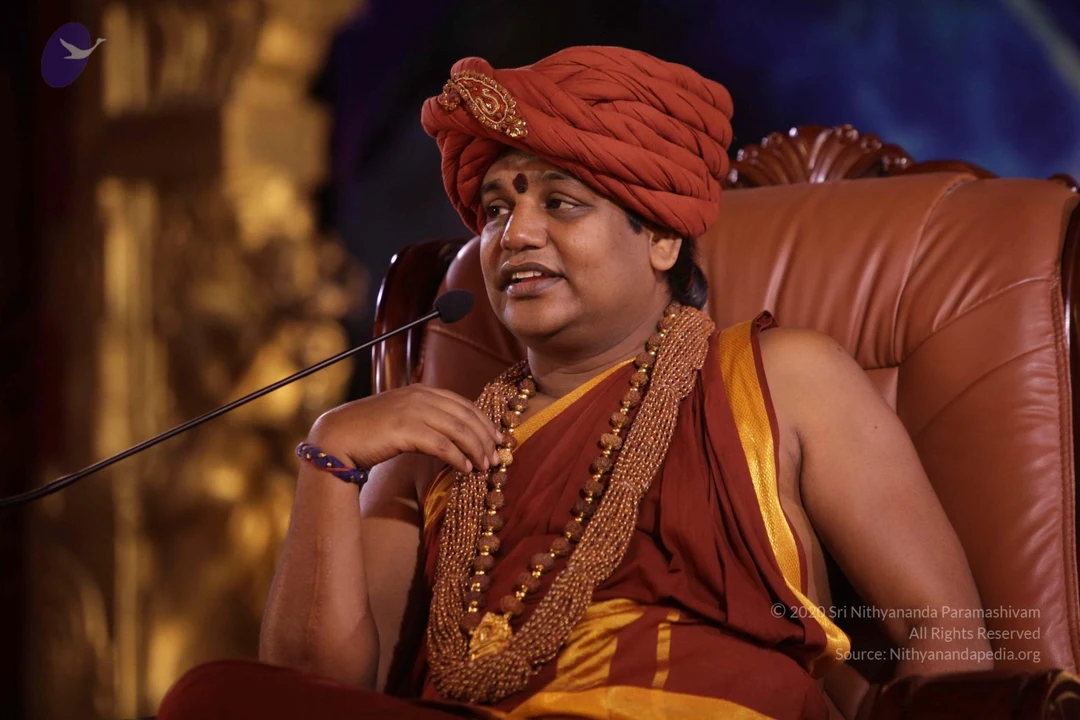
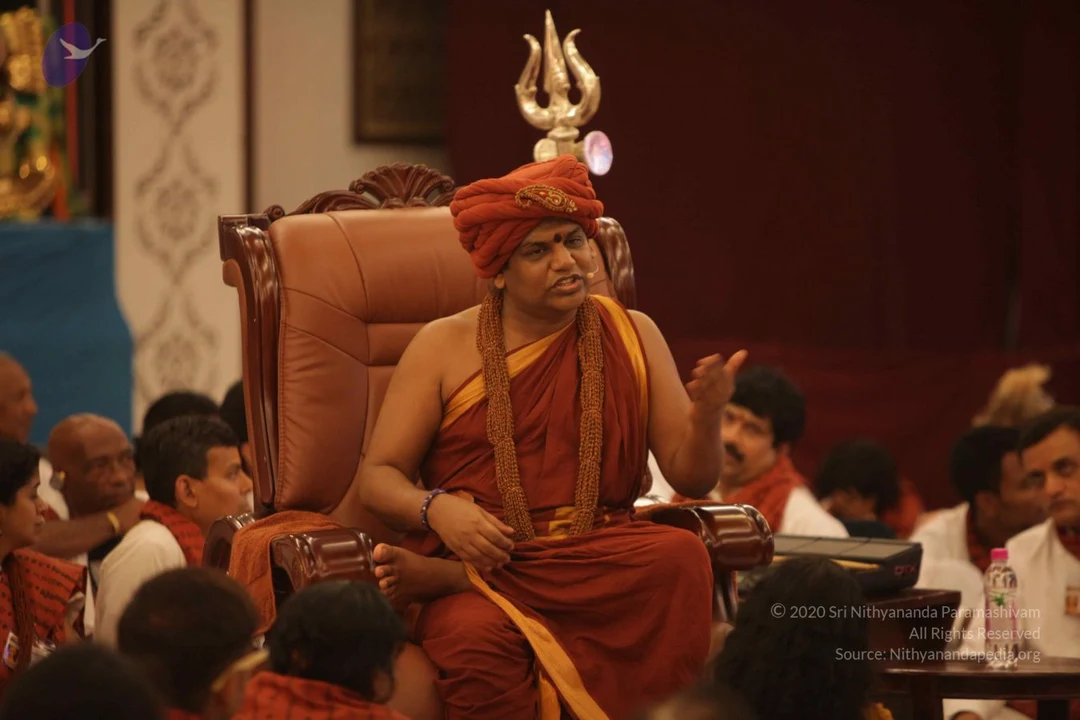
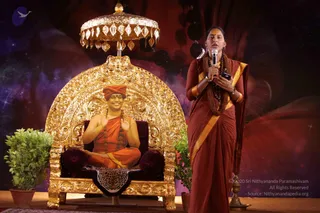
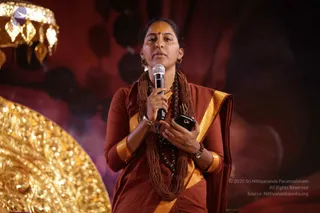
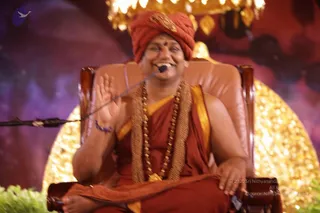
A woman in a deep maroon sari with gold borders stands on a stage holding a microphone in one hand and a phone in the other, speaking to an audience. She wears a rudraksha mala and a red bindi. Beside her, a large ornate gold throne with a canopy stands with a printed portrait of a smiling figure in saffron robes and an orange turban seated in lotus pose, hands raised in blessing. Potted green plants flank the throne, and a brass oil lamp stands at the right edge against a dark purple backdrop. The large portrait is a printed depiction, not a physical person. Physical people visible: one.A woman speaks into a handheld microphone on a stage at a satsang or discourse. She wears a deep maroon and rust-coloured sari with a gold border draped over her shoulder, a matching long-sleeved blouse, and a thick multi-strand rudraksha mala around her neck. A small orange tilak marks her forehead, and she wears a gold bangle and a wristwatch. In her other hand she holds a dark mobile phone. Behind her is a dark red backdrop, and on the left a large ornate gold-embossed decorative object is partly visible along with a gold lantern-style fixture. The image shows her as a speaker, not a person candidate by appearance.A woman in a deep red sari with gold border stands at right holding a cordless microphone and speaking, with a rudraksha mala draped over her shoulders and a small black device in her other hand. Beside her, a large ornate gold throne with a canopy stands on a dark cushioned seat, and a seated figure in orange robes, an orange turban, and a rudraksha mala raises both palms in blessing; this figure appears on a screen or backdrop behind the throne, so the person seated on the throne is a depiction, and the appearance matches Swamiji (probable) with orange turban and rudraksha cues. Potted green shrubs and a purple cosmic backdrop frame the stage.A smiling man seated in a brown leather armchair on a stage, gesturing with his raised right hand while a microphone on a stand is held near his mouth. He wears a deep orange-red turban with a gold emblem, an orange-red robe with a yellow-gold border, and a long gold-toned beaded necklace with a rudraksha-style mala, plus a purple beaded bracelet. Behind him stands a large glowing golden disc with purple and blue backdrops and green foliage at the lower edge. Visible cues include the turban, saffron-orange robes and ornate gold necklaces, consistent with Swamiji (probable), seated as a teacher giving a discourse.

shivoham

3 photosSource gallery
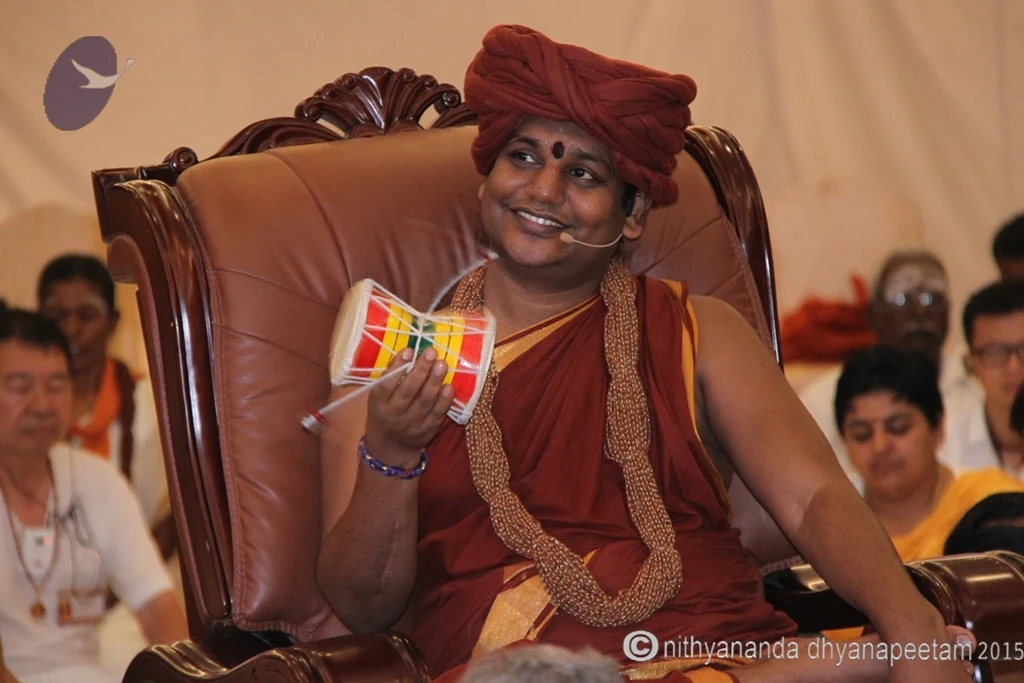
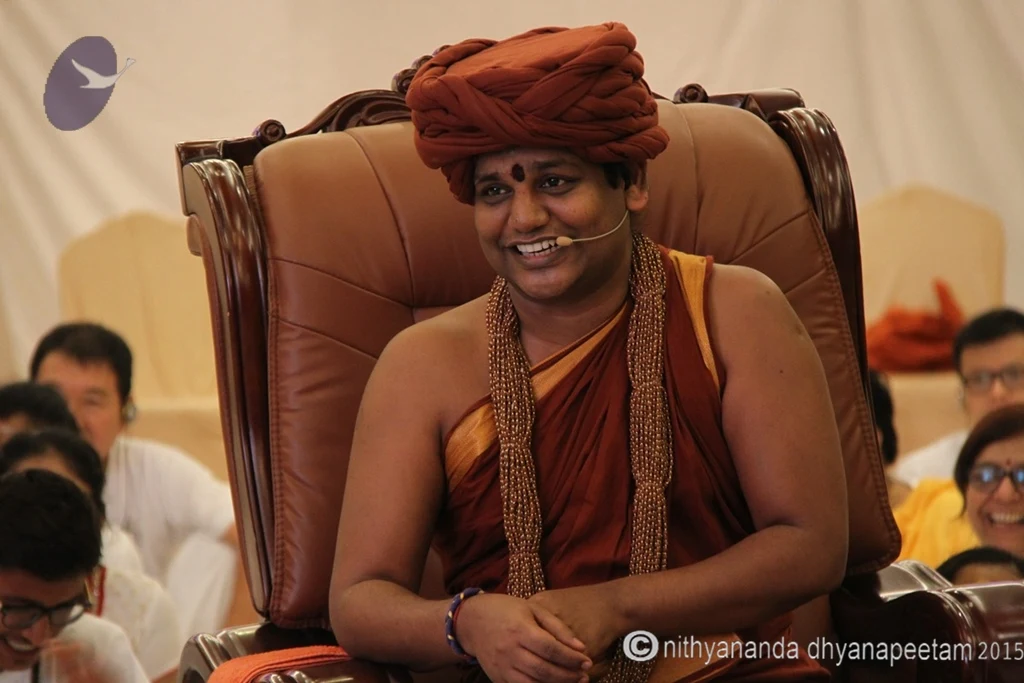
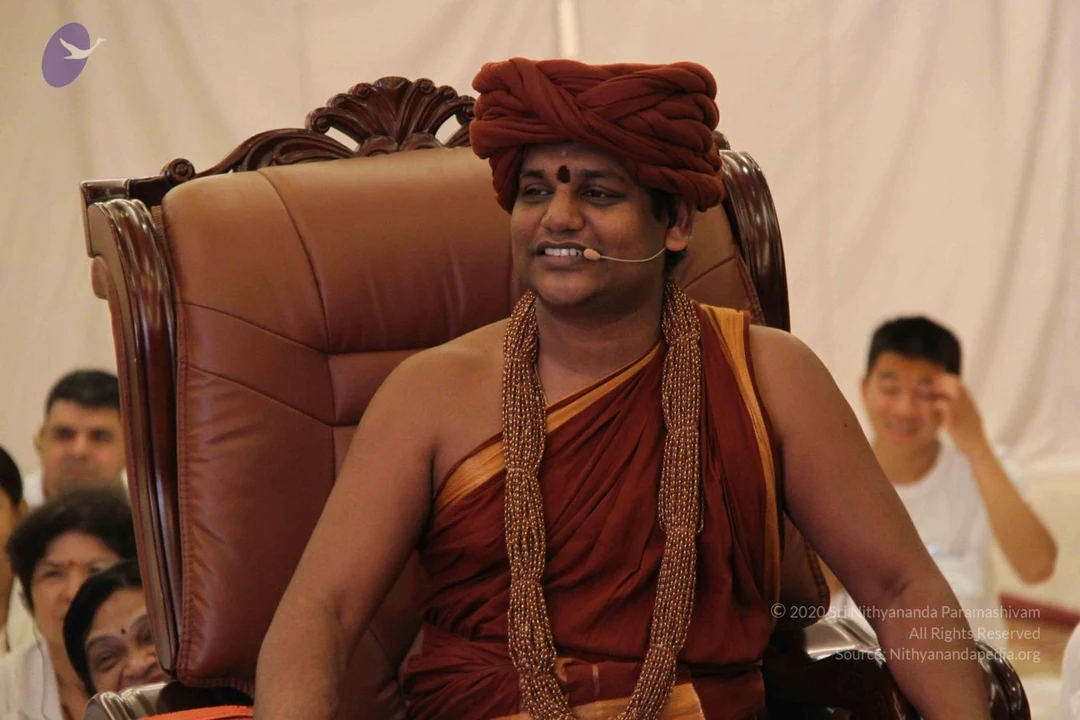
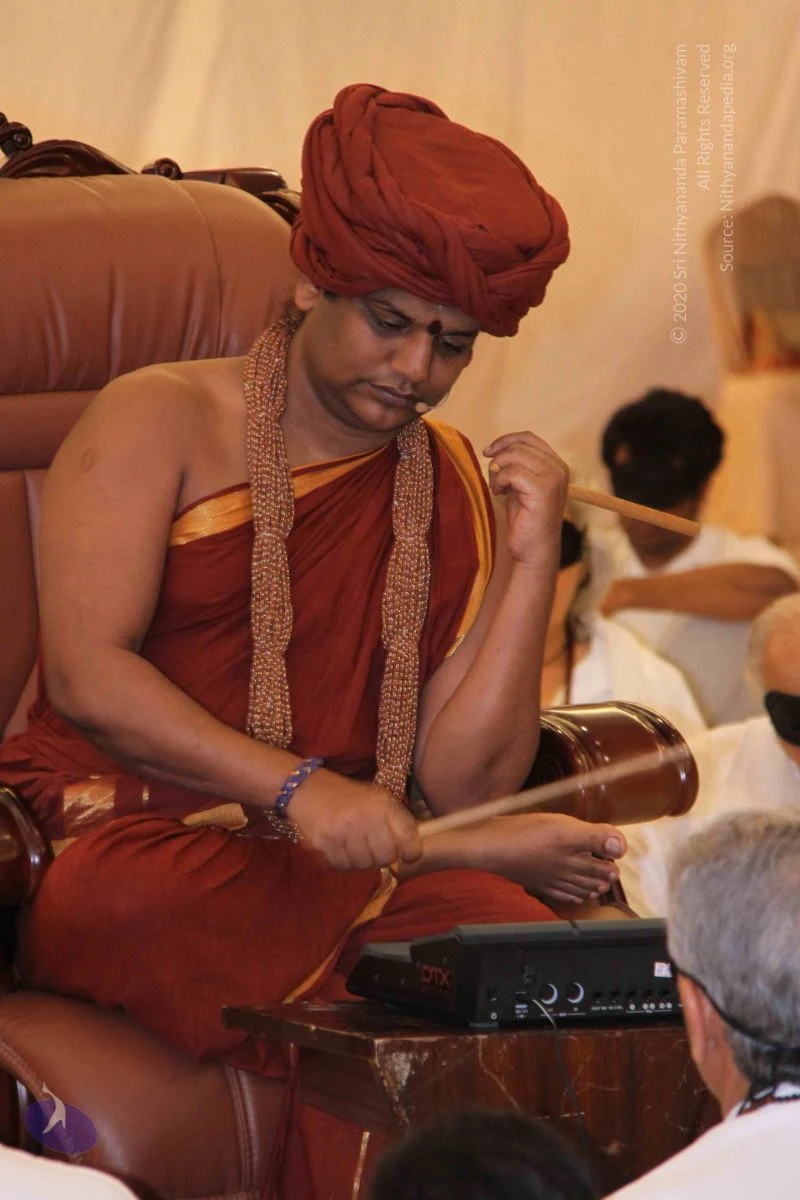
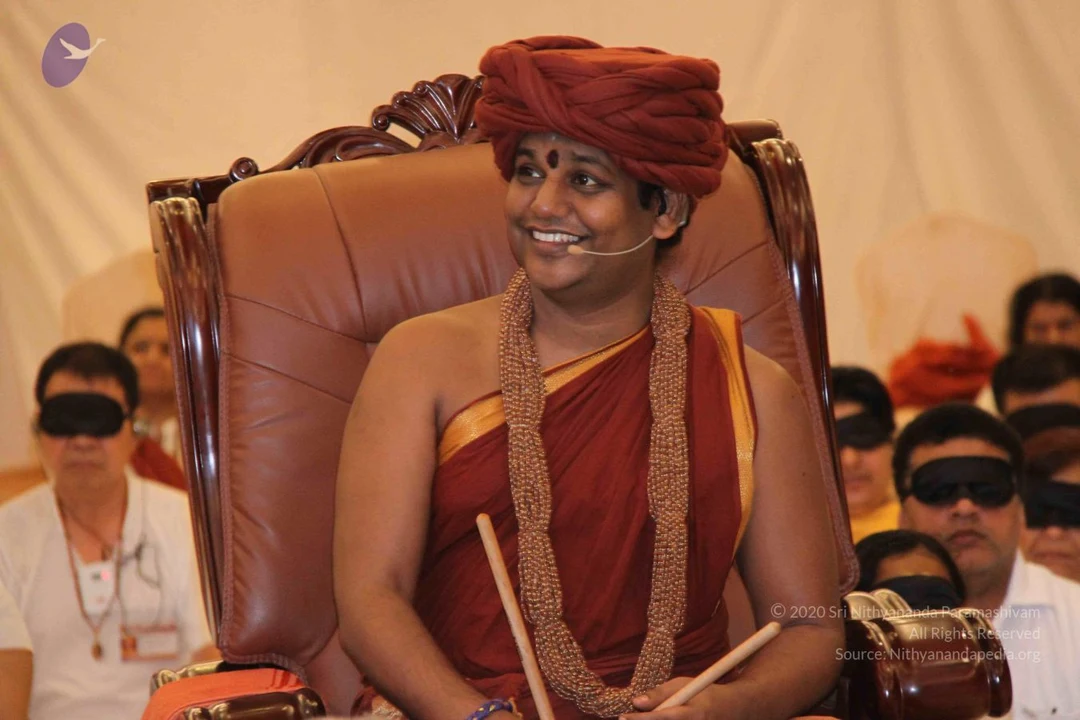
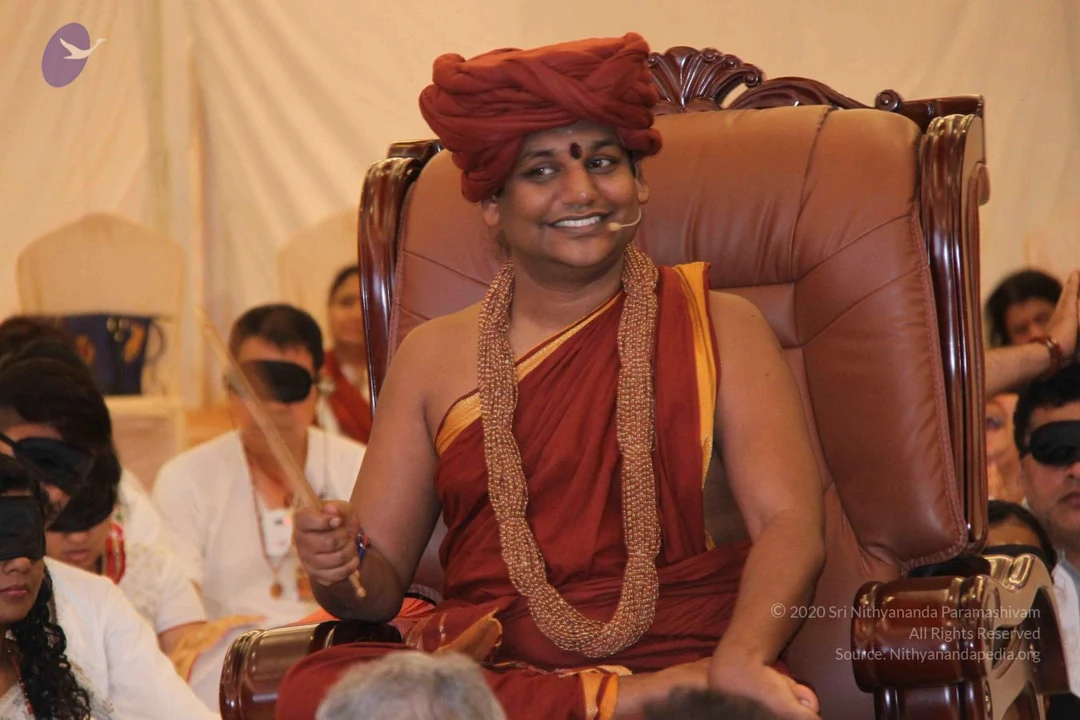
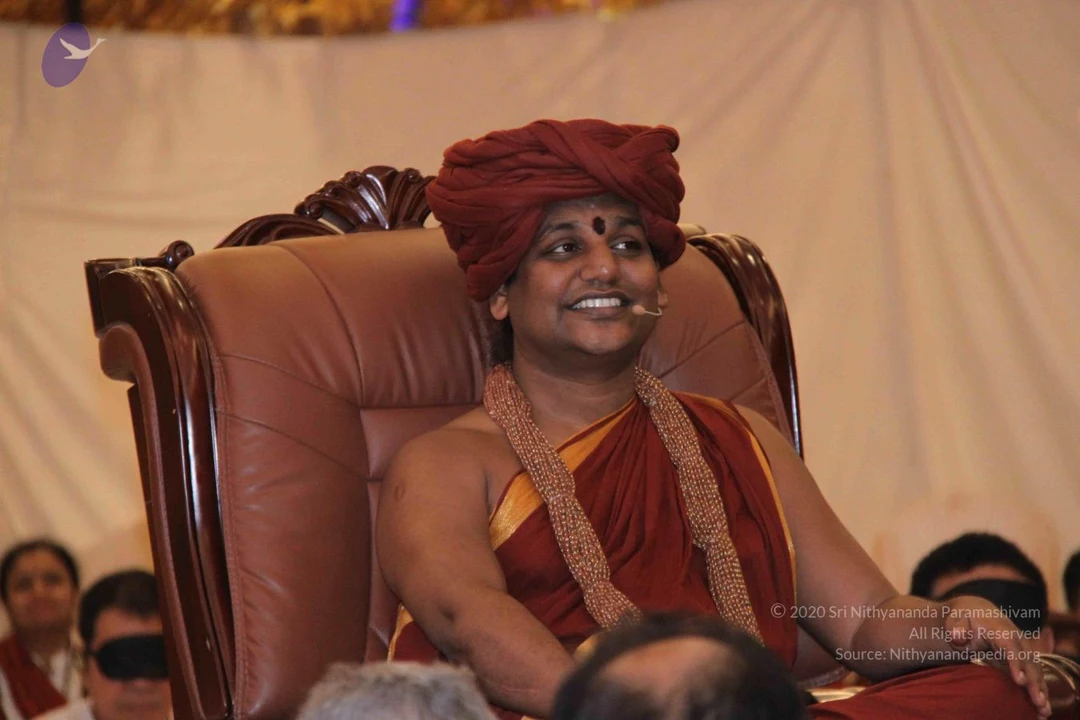
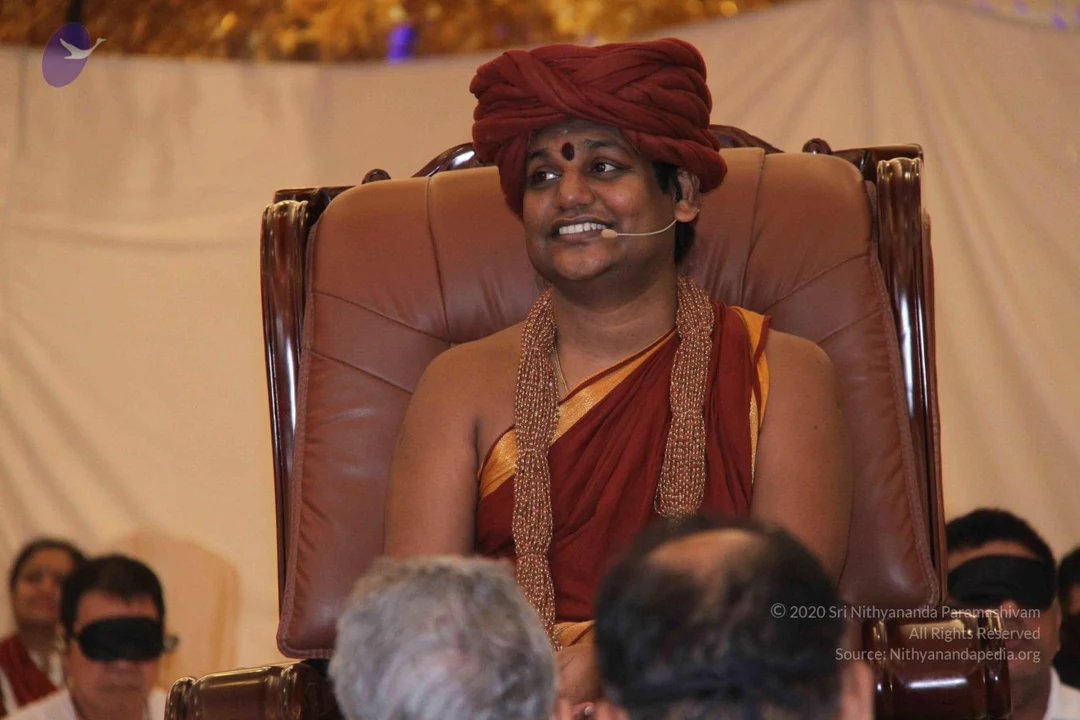
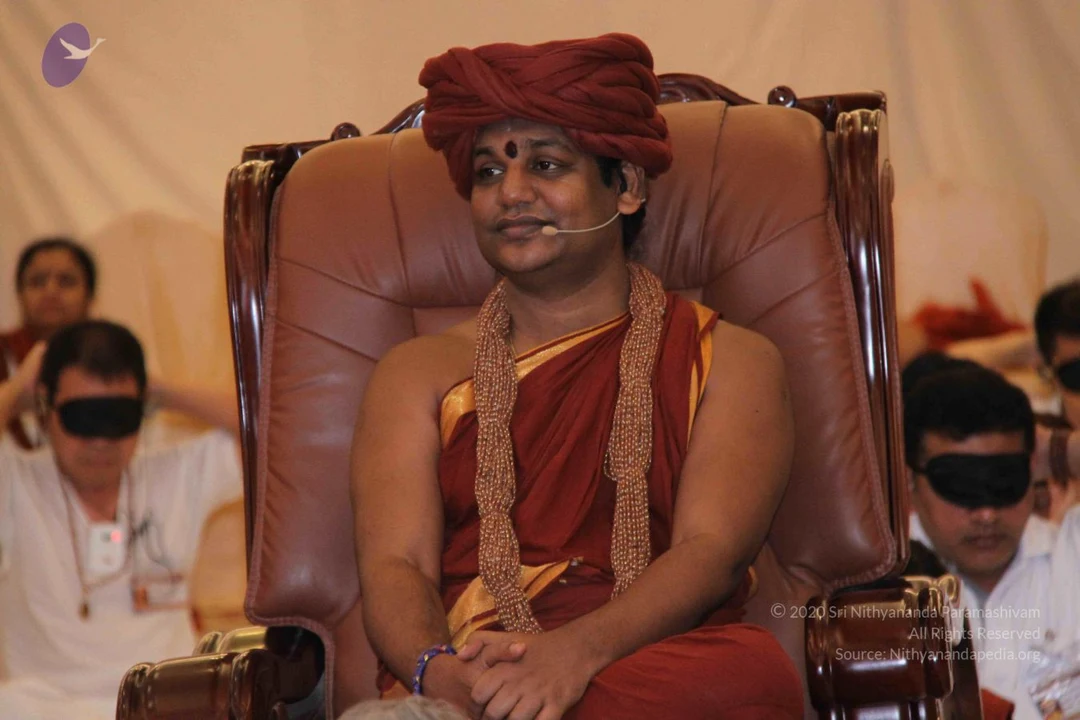
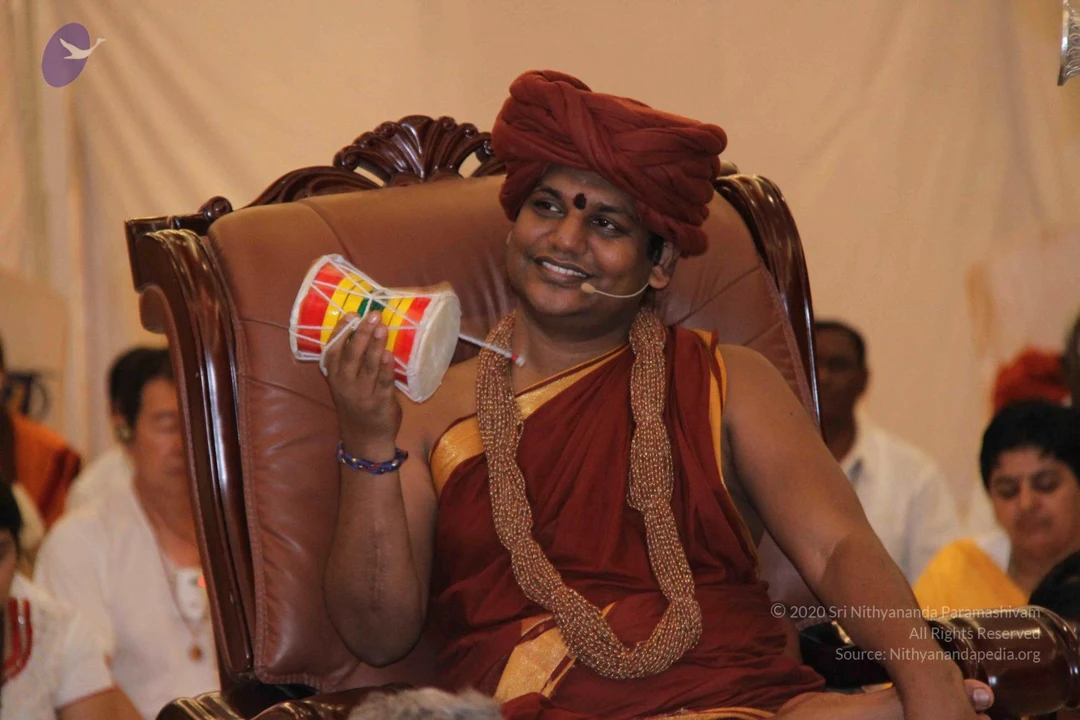
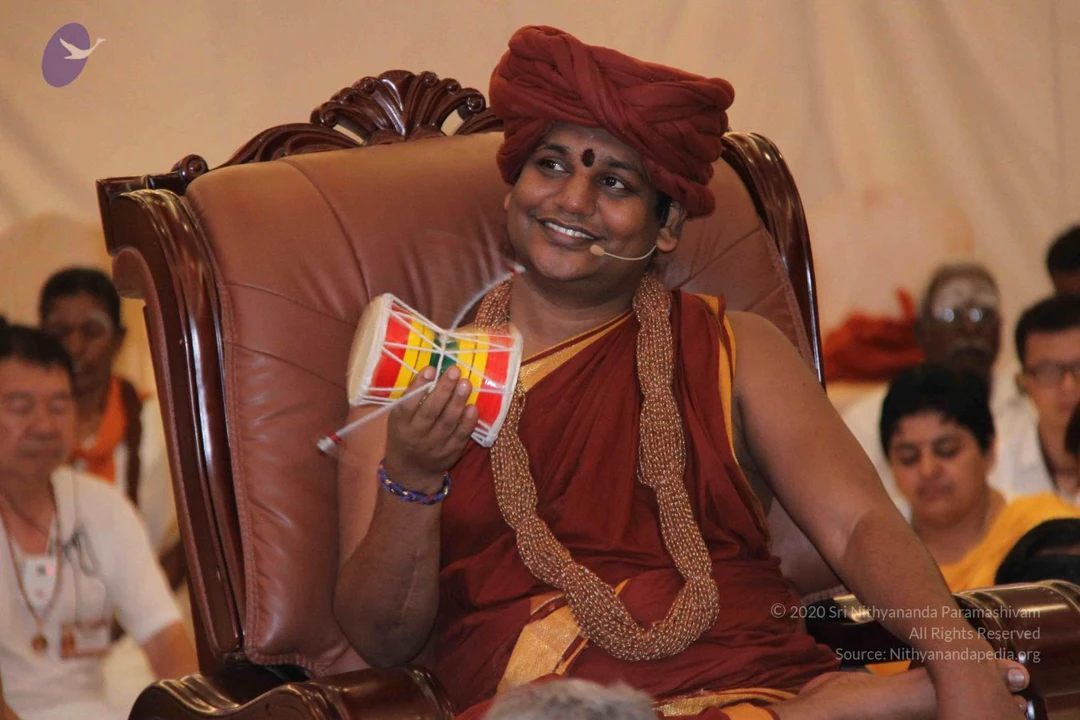
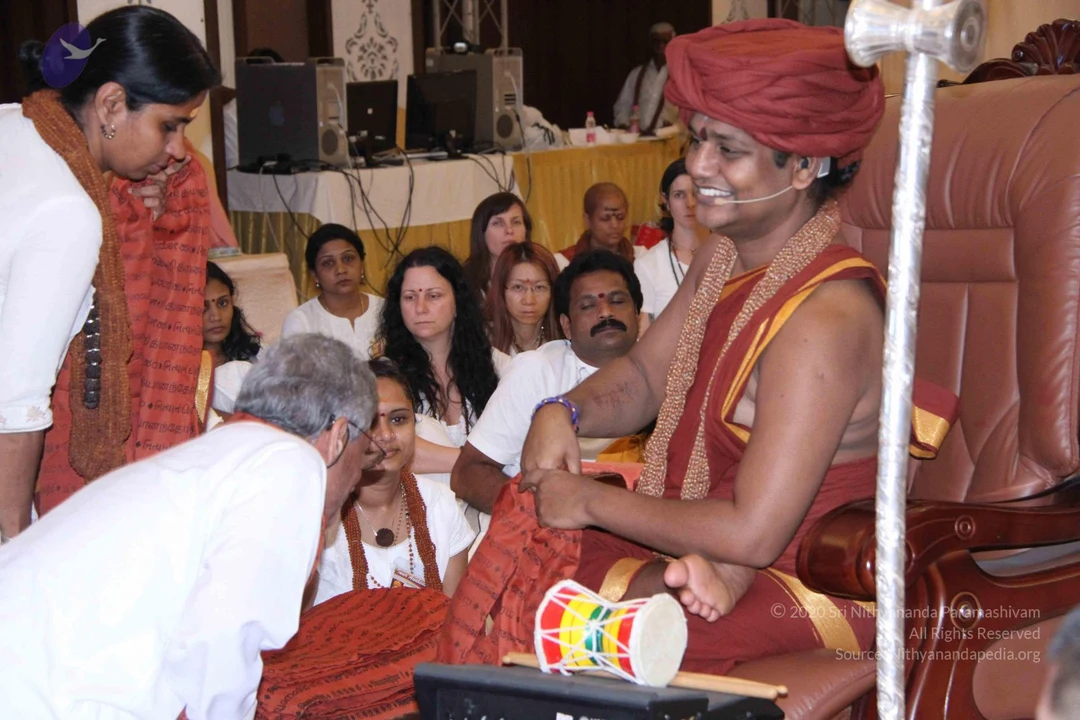
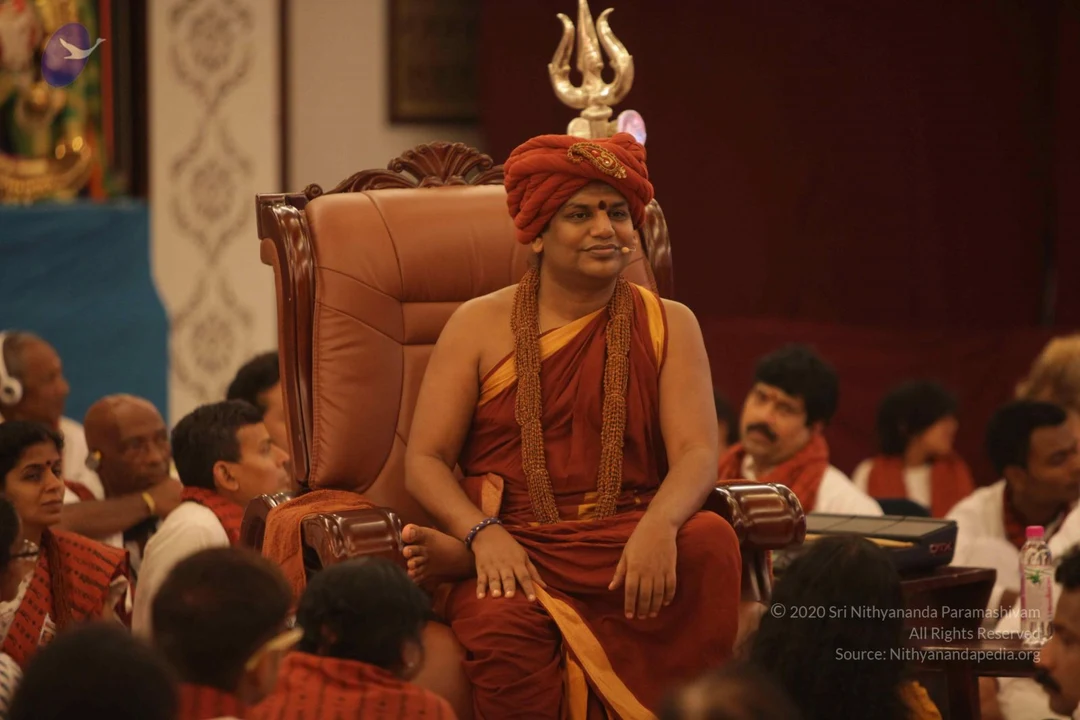
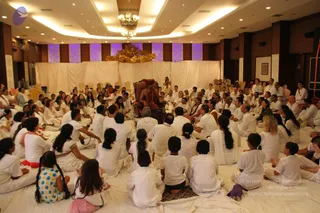
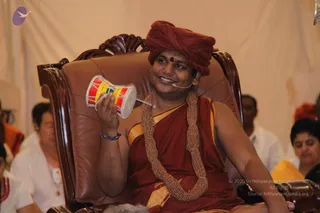
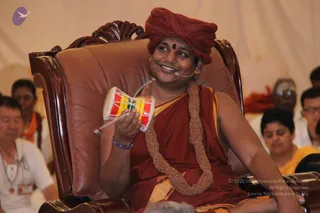
A smiling man in saffron-orange robes and a rust-red turban sits in a large brown leather armchair with carved wooden armrests. He wears a layered gold-beaded necklace, a red bindi on his forehead, and a small headset microphone, with his hands resting together in his lap. Behind him, seated devotees in white clothing and eyeglasses smile, and a cream fabric canopy forms the backdrop of a satsang setting. The person in the chair appears to be Swamiji (probable), given the turban, saffron robes and ornate beaded necklaces, though this is an appearance-based label only.A seated satsang in a warm-lit hall with a patterned wall of violet panels and a golden tree backdrop behind a white curtain. A man in saffron-orange robes and a red-brown turban sits on a dark wooden throne at the centre front, with a red cloth and microphone before him. Around him a large crowd sits cross-legged on white sheets, mostly dressed in white clothing, including children in the foreground, a girl in a green-and-blue dotted dress, and women with long braids. Some attendees wear white shawls. Chandeliers hang from the ceiling and empty chairs line the sides of the room.Swamiji (probable) seated in an ornate brown leather throne-style chair during a satsang, smiling and looking to his side while holding a small colourful damaru drum. He wears a deep maroon turban, a maroon and gold-bordered robe, and a long beaded rudraksha mala with a microphone headset at his ear. Seated devotees in white and orange clothing fill the background against a cream fabric backdrop.

DCIM

30 photosSource gallery
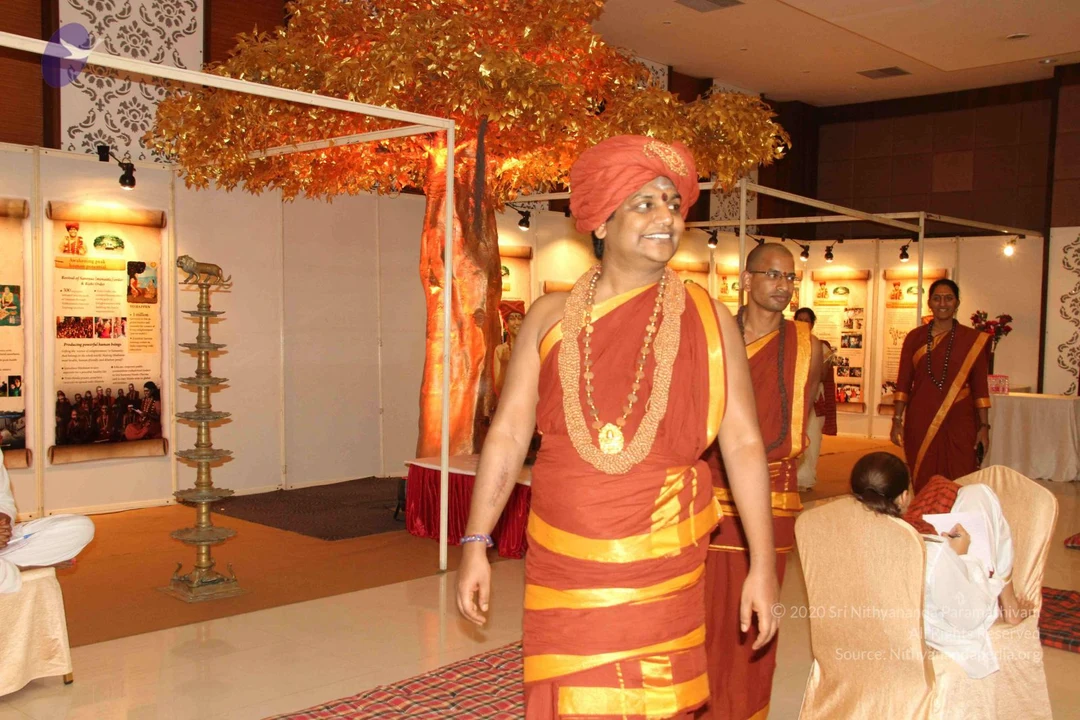
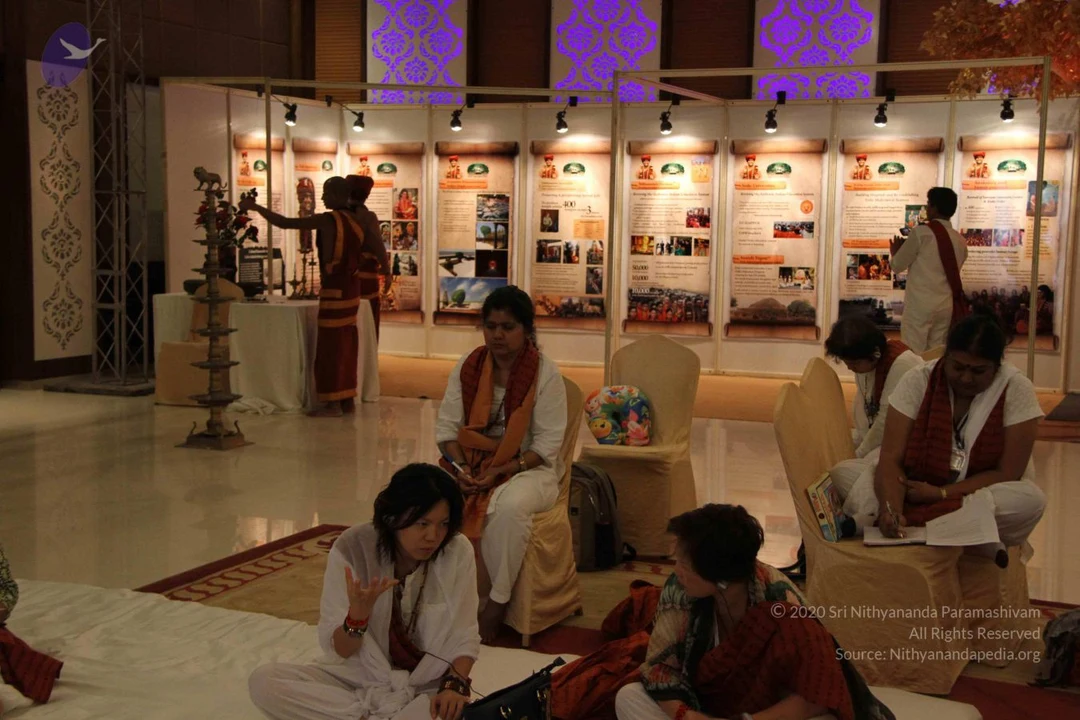
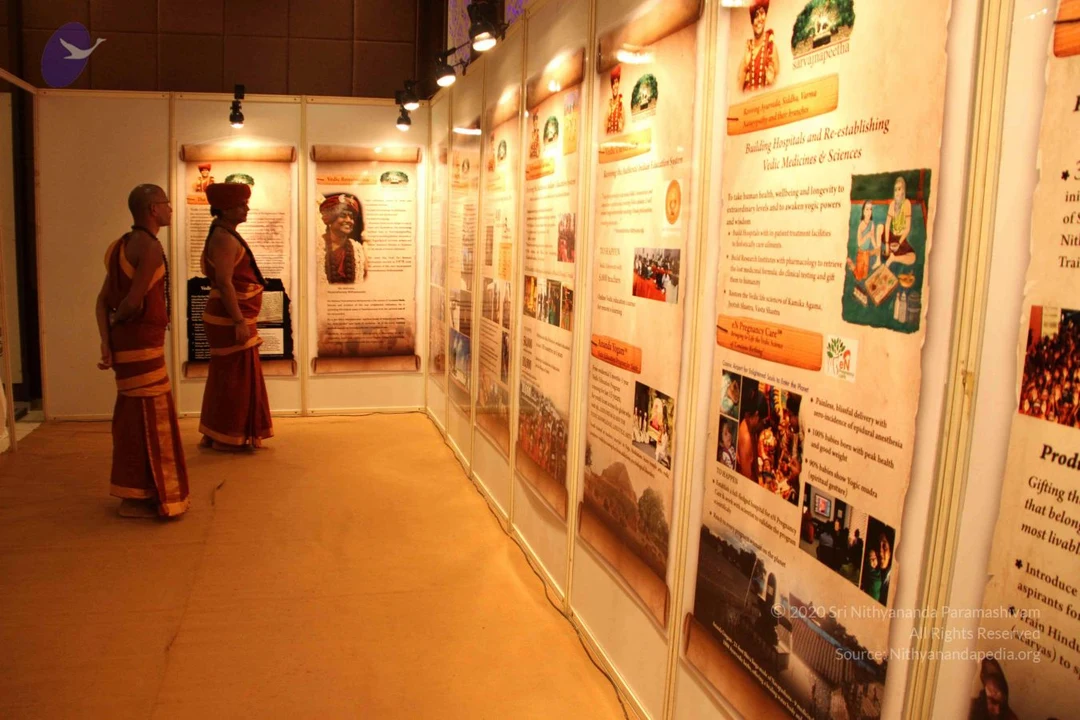
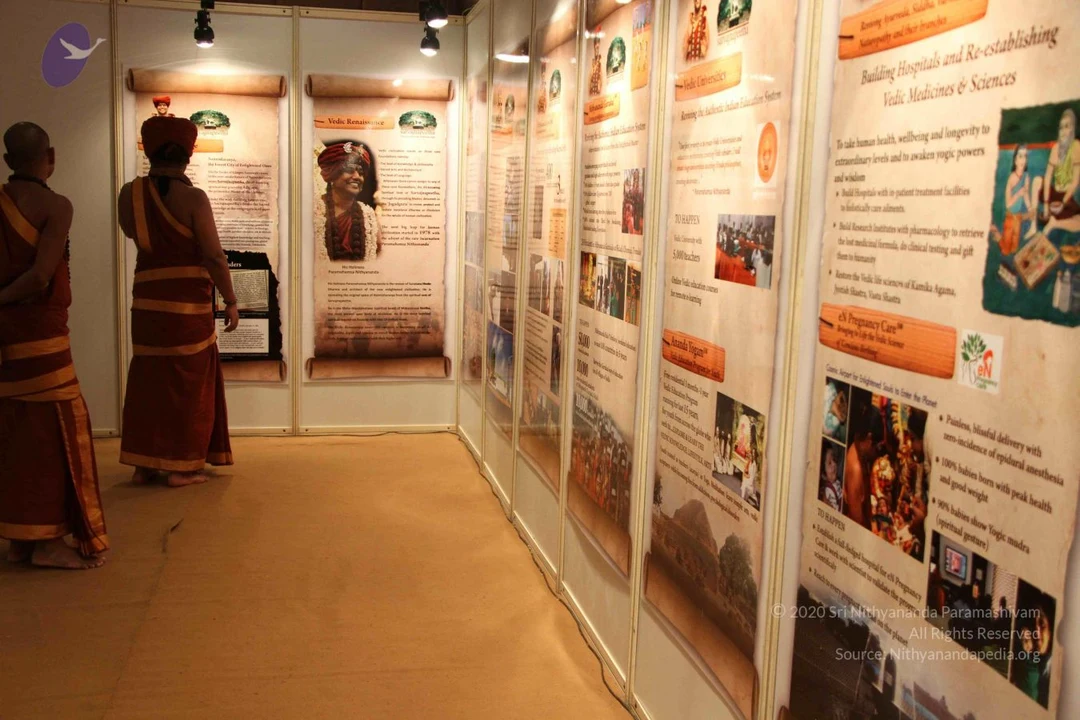
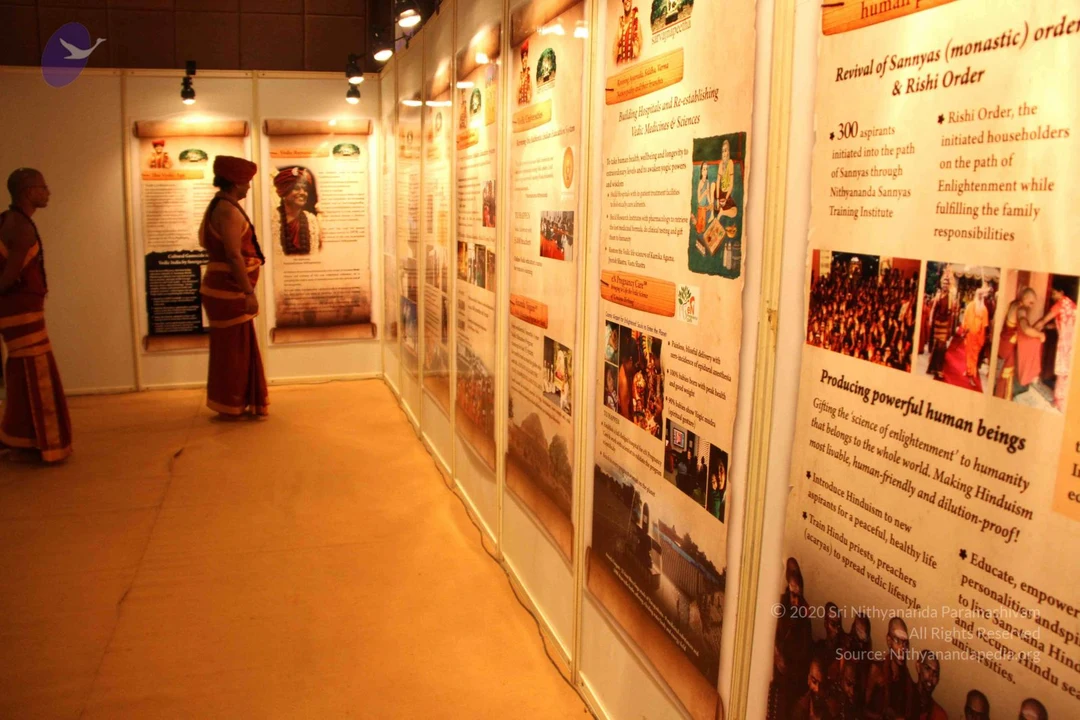
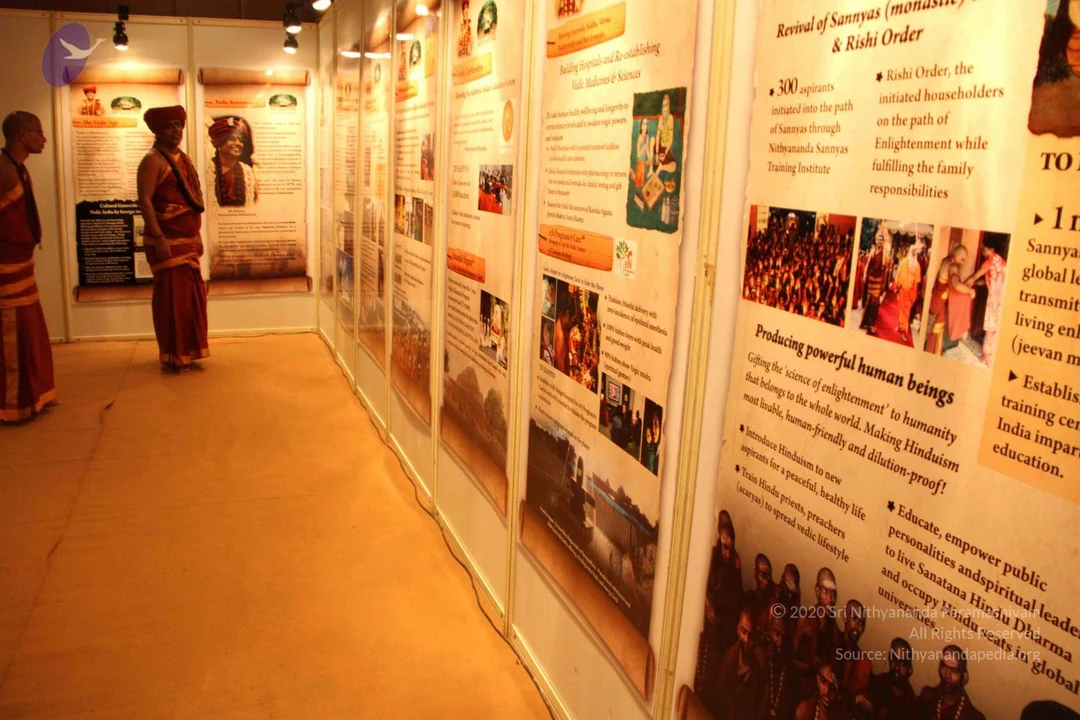
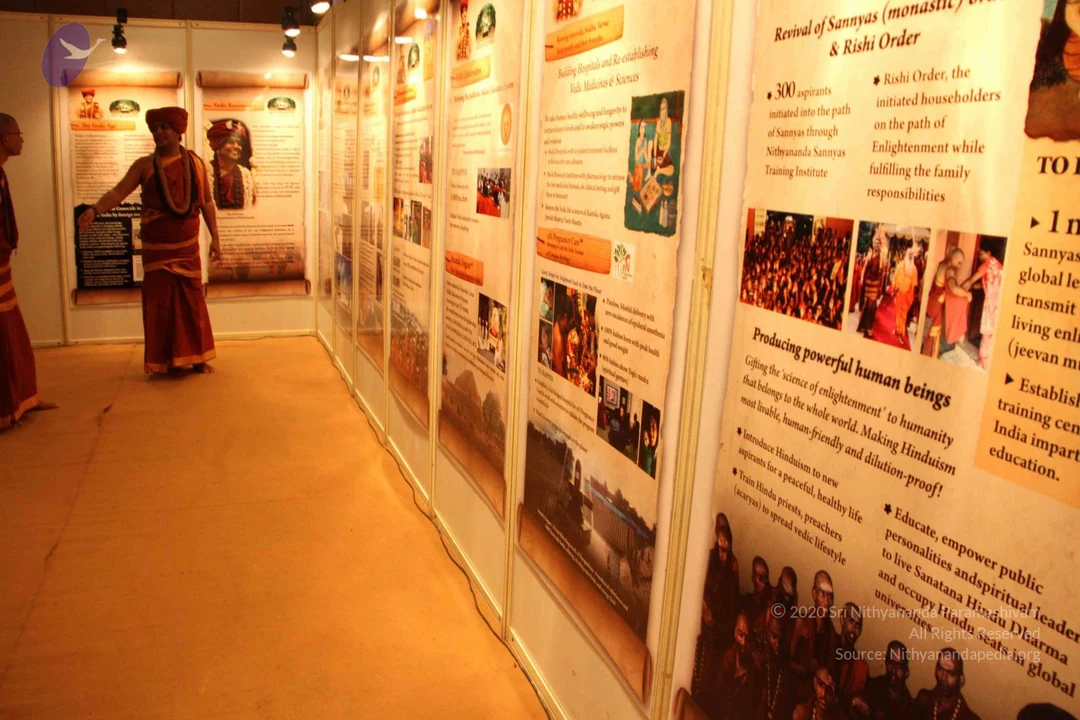
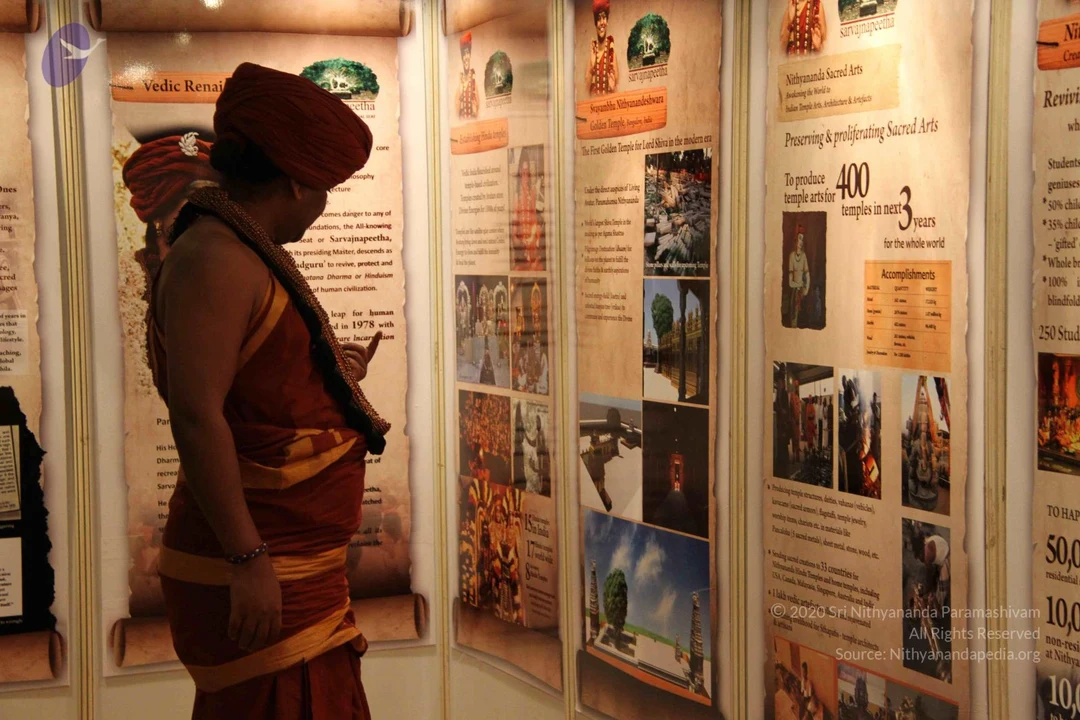
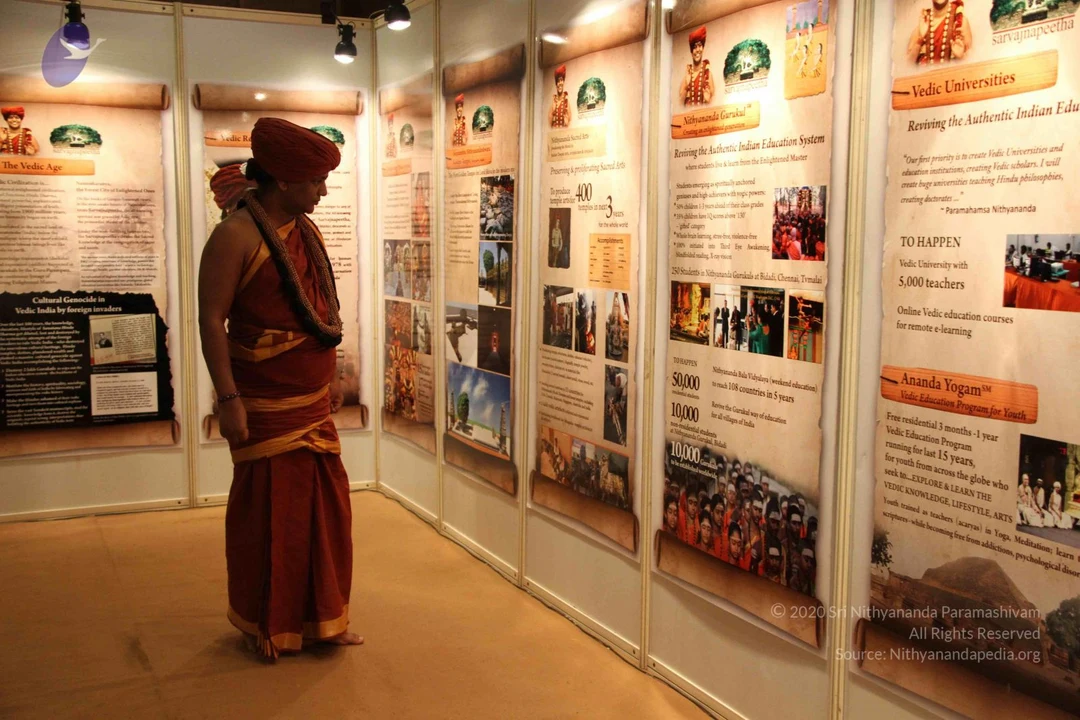
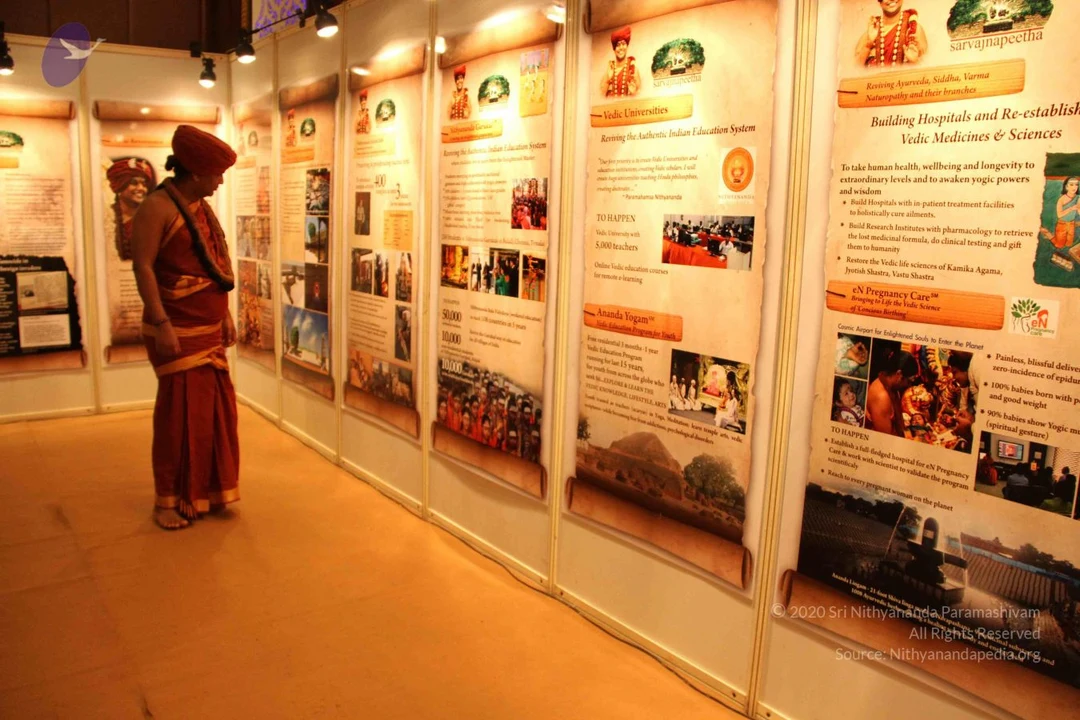
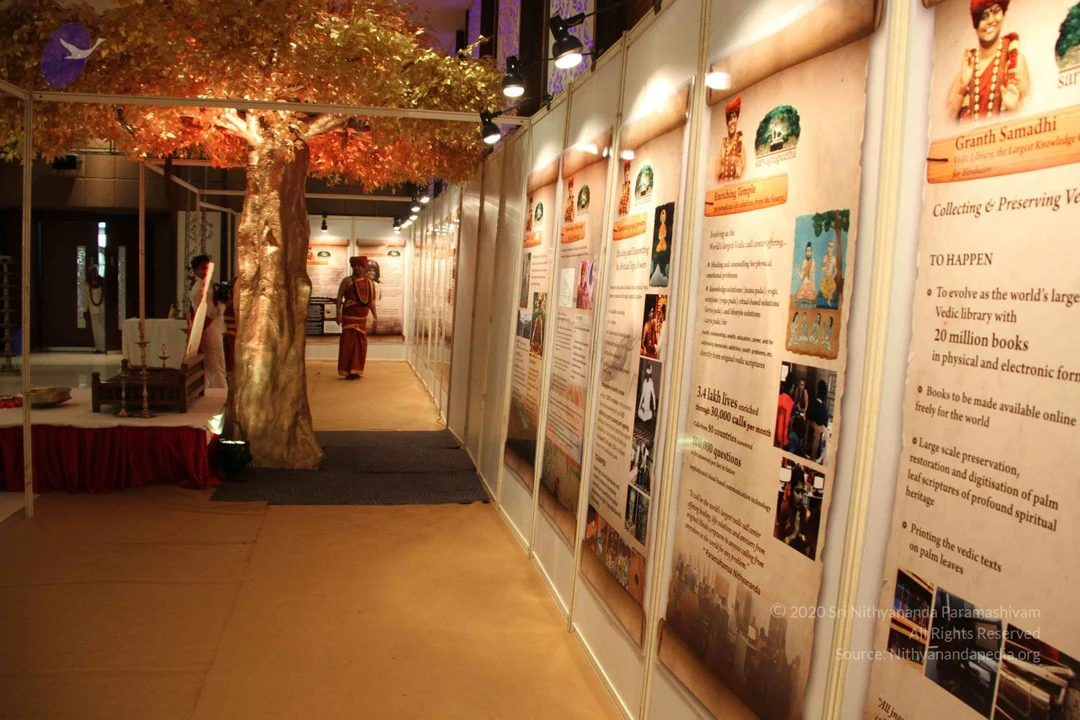
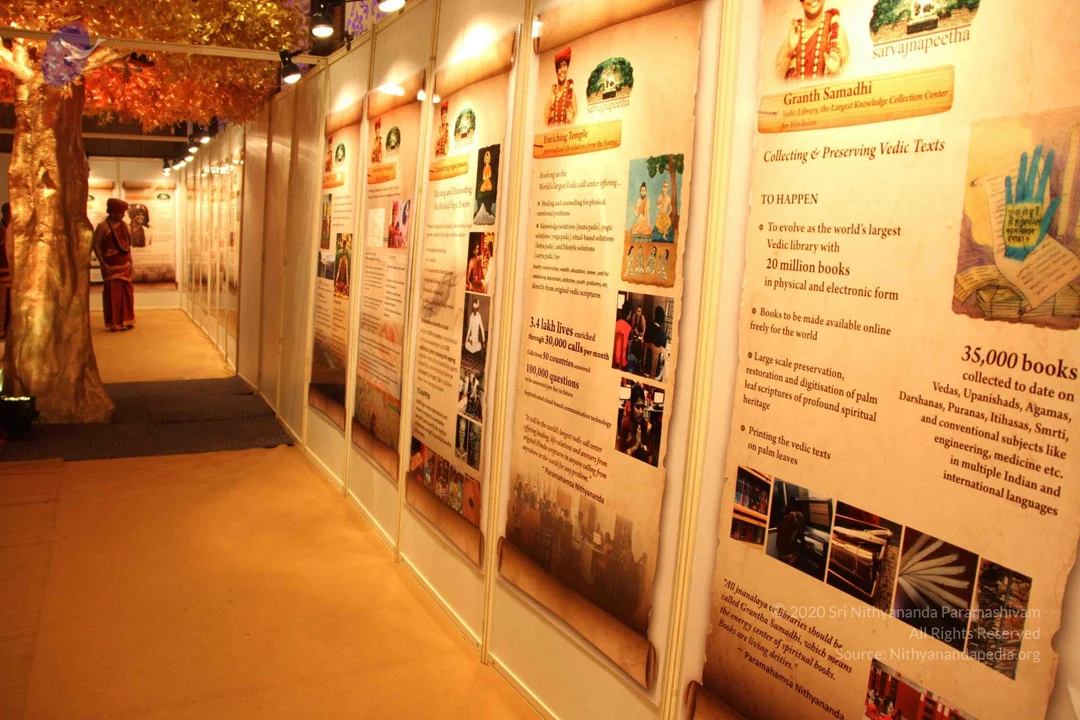
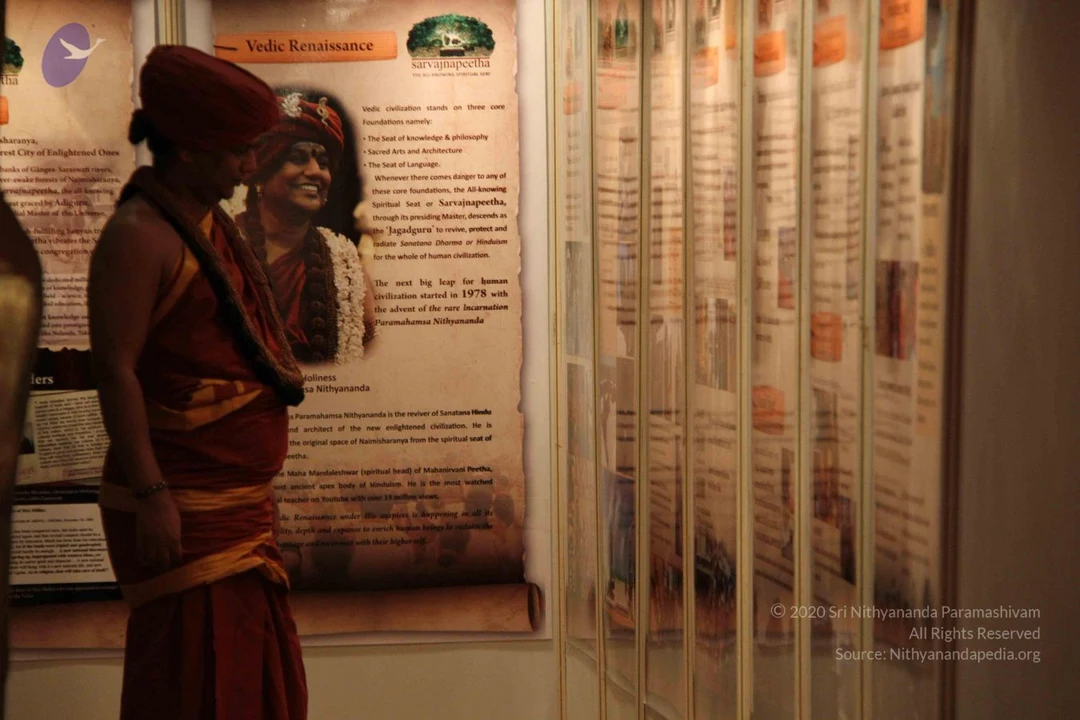
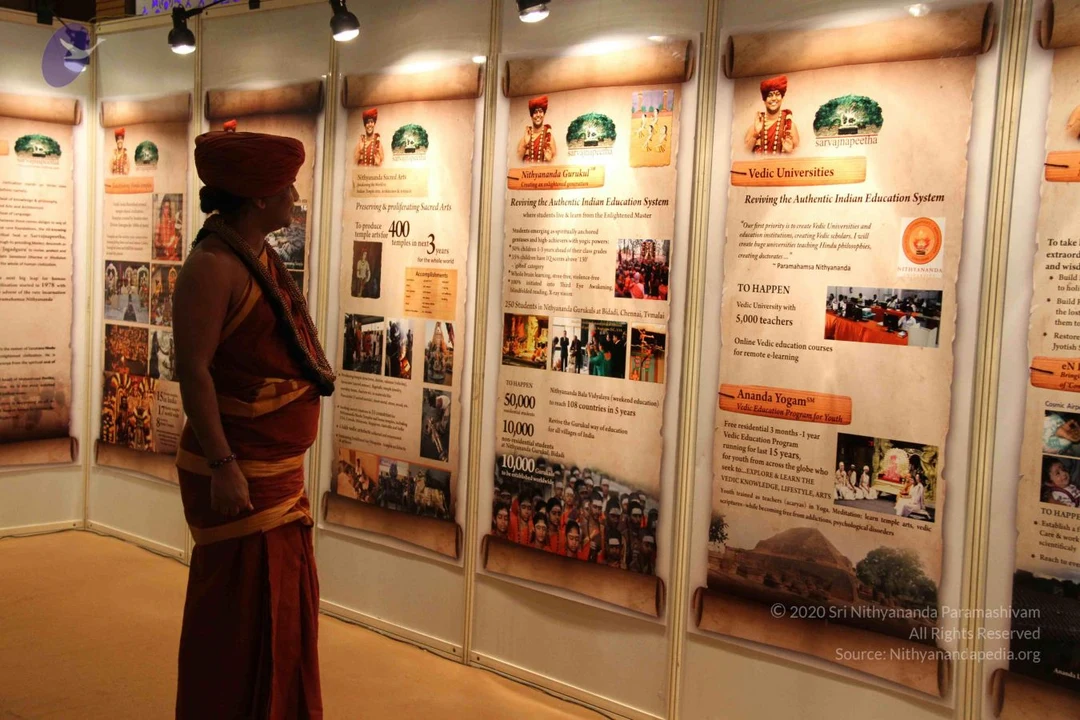
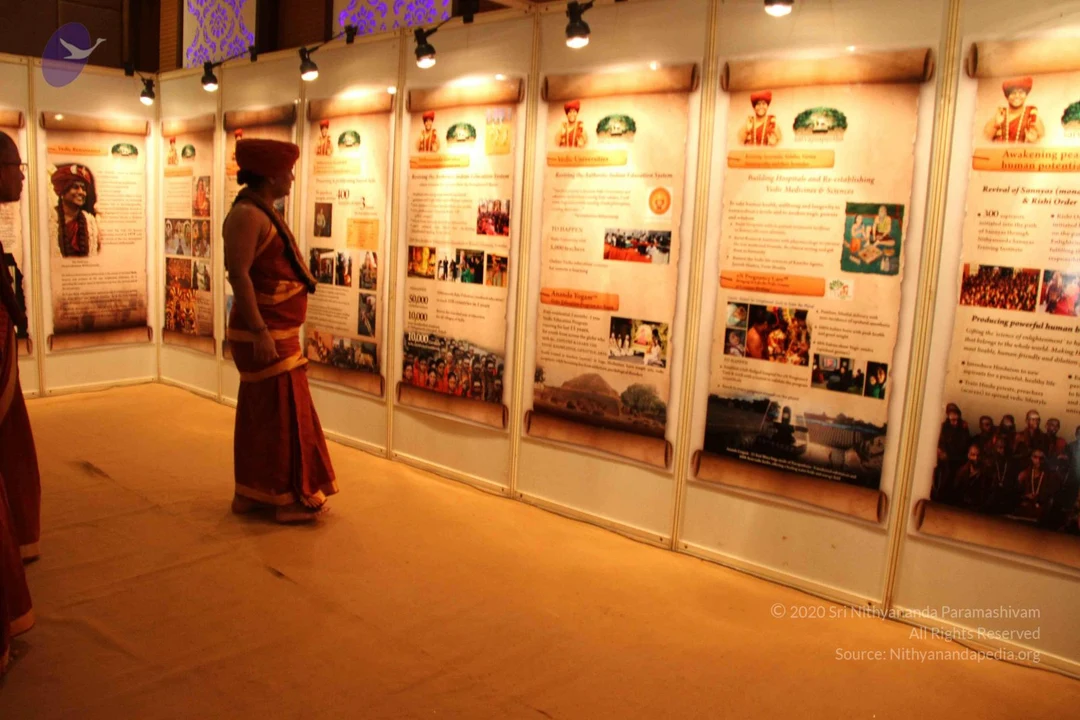
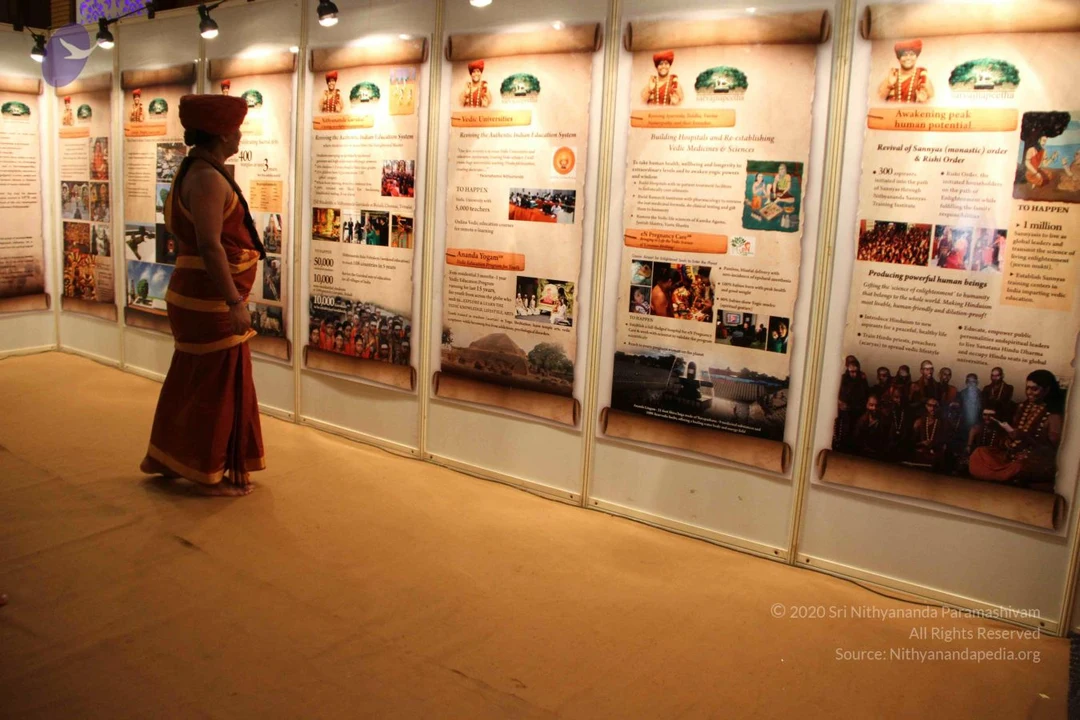
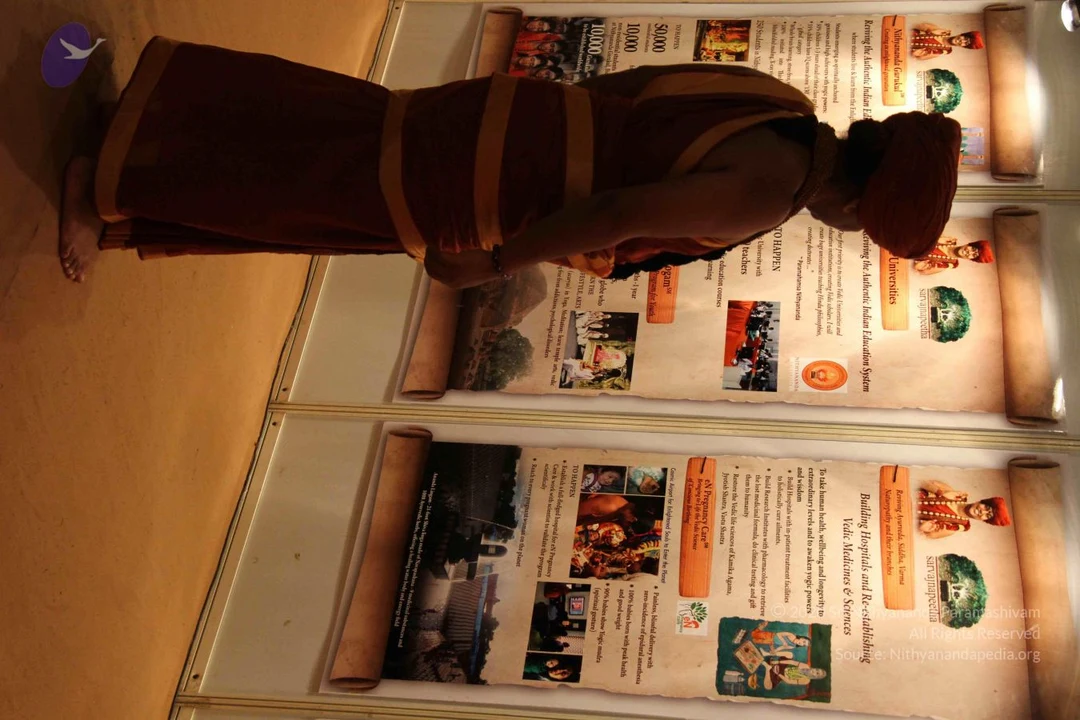
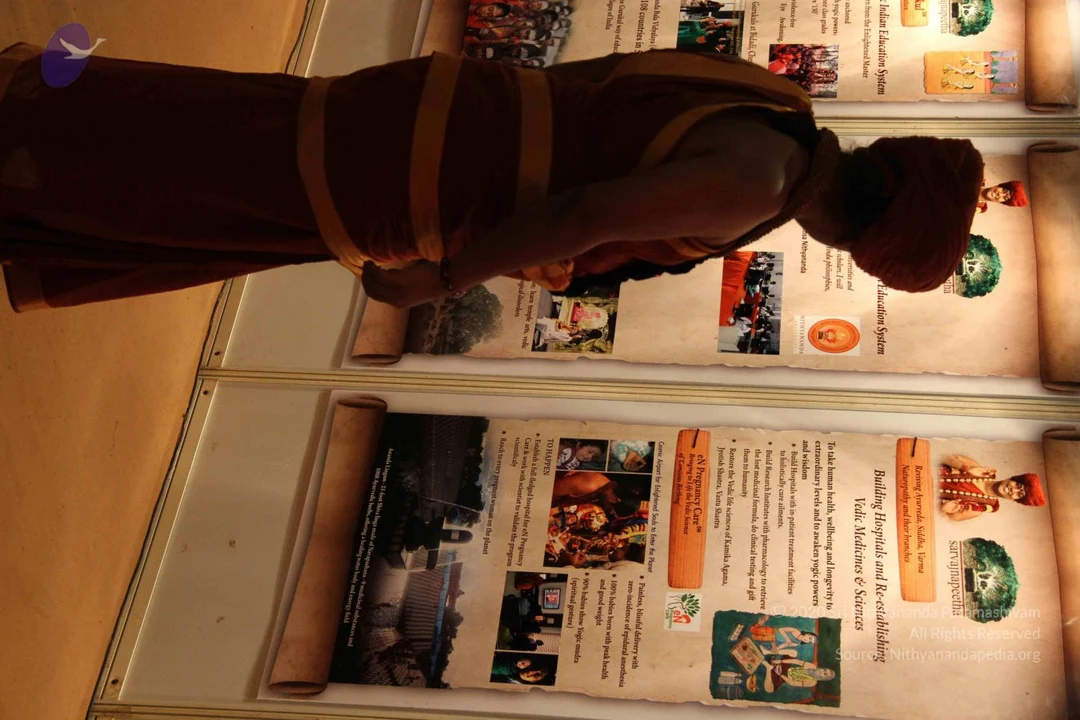
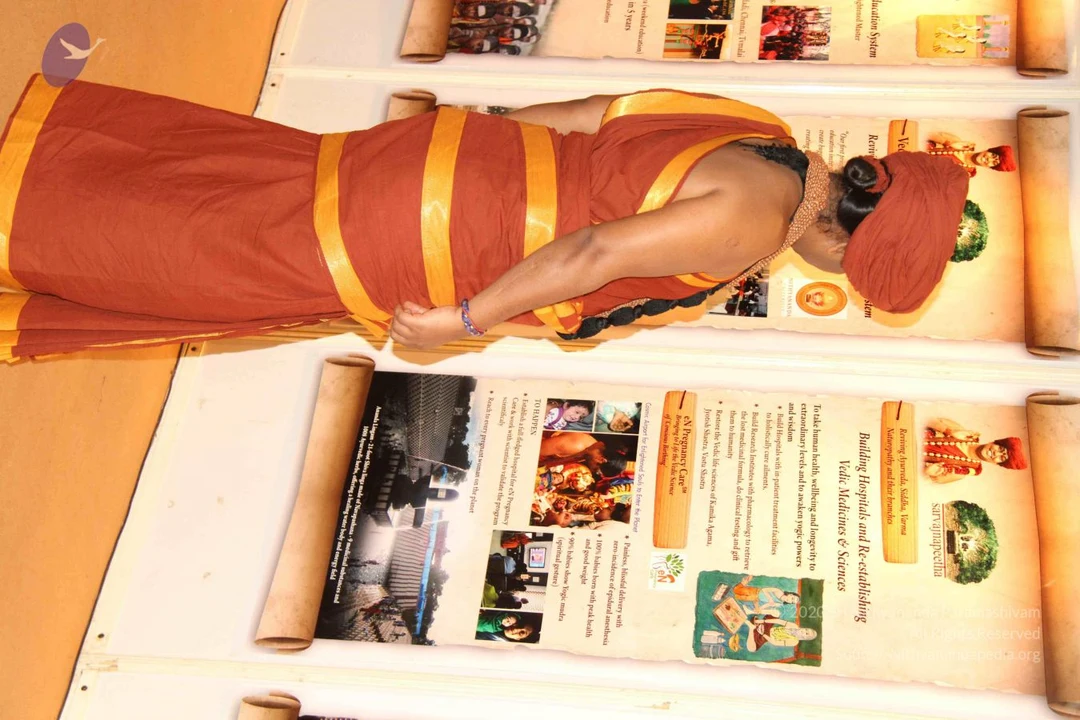
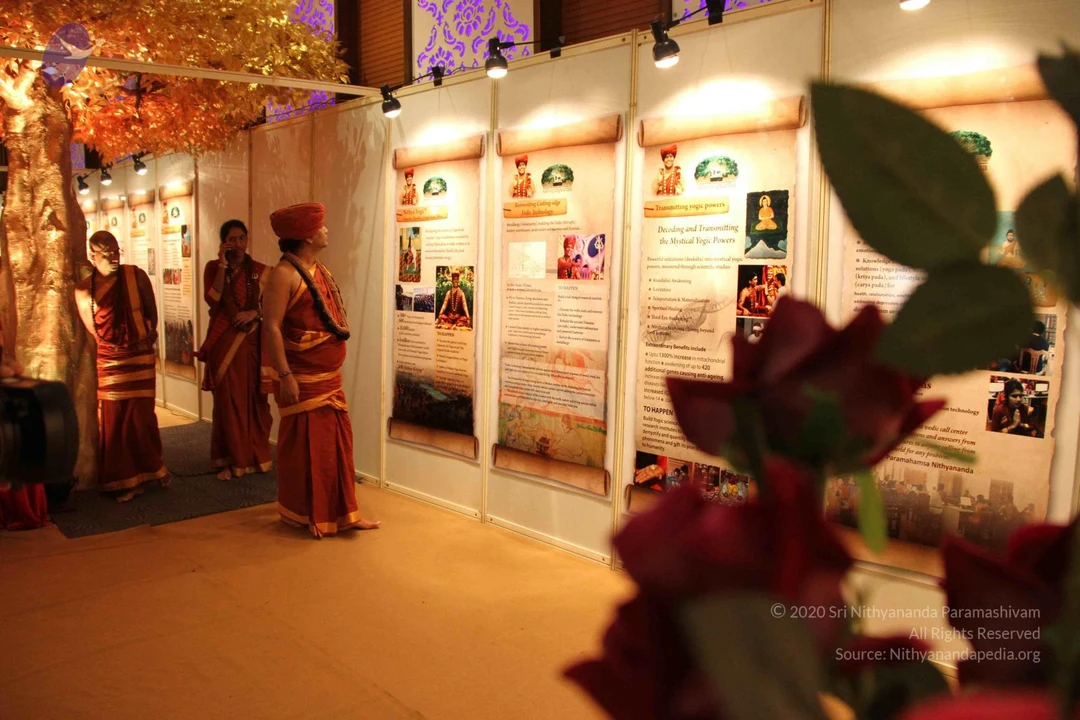
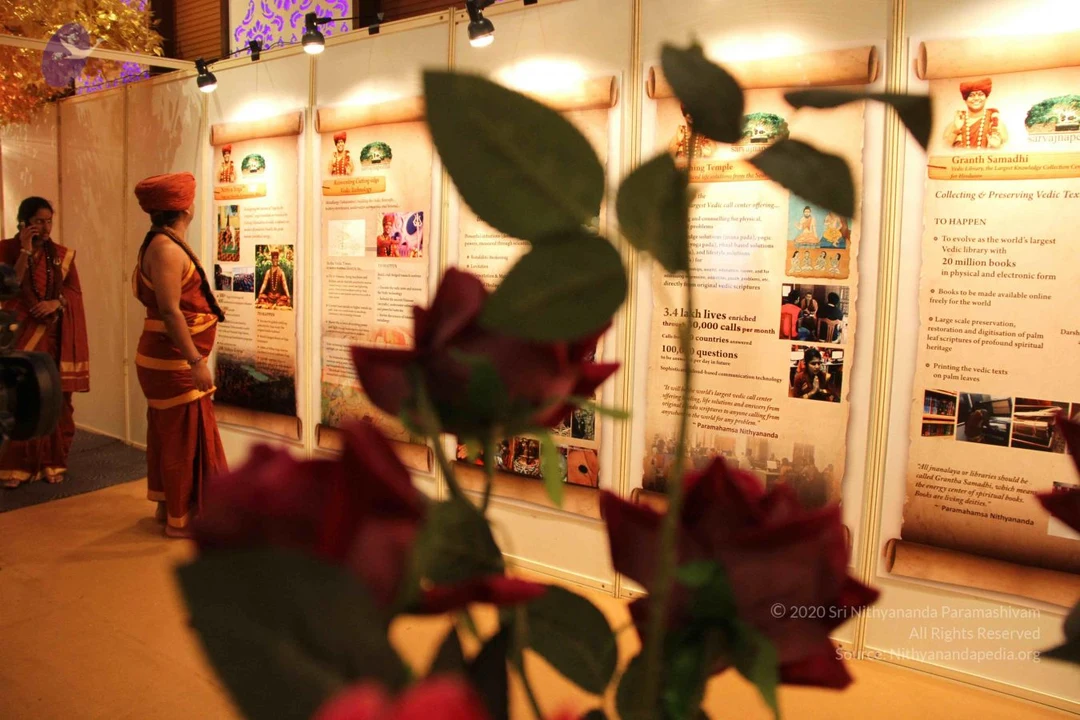
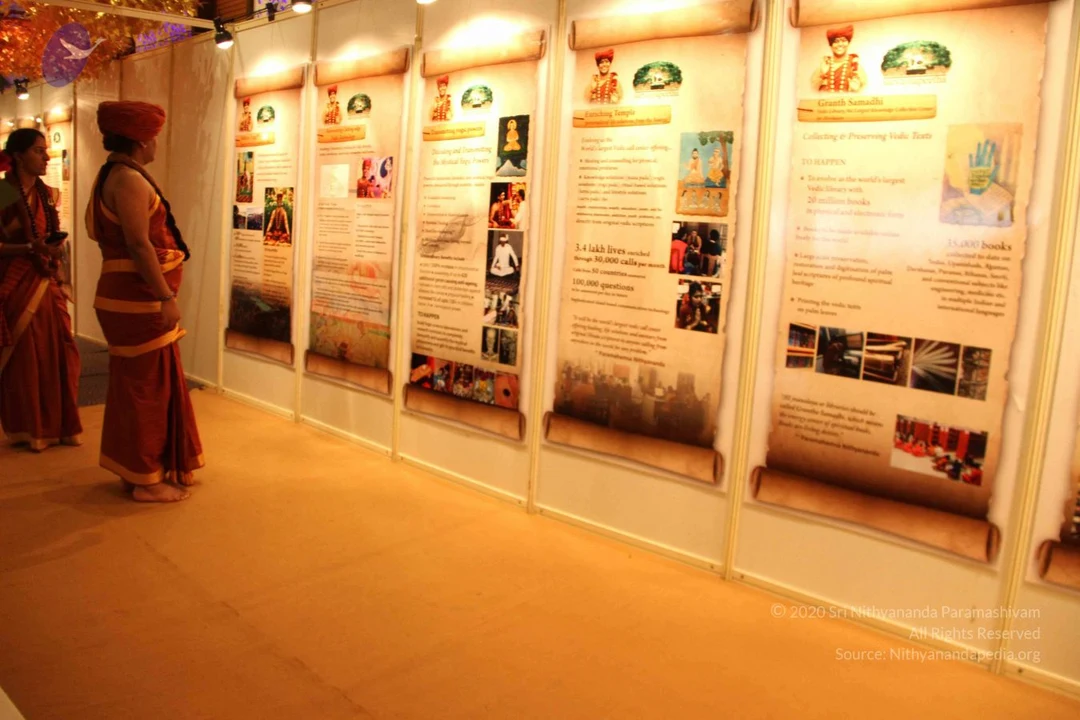
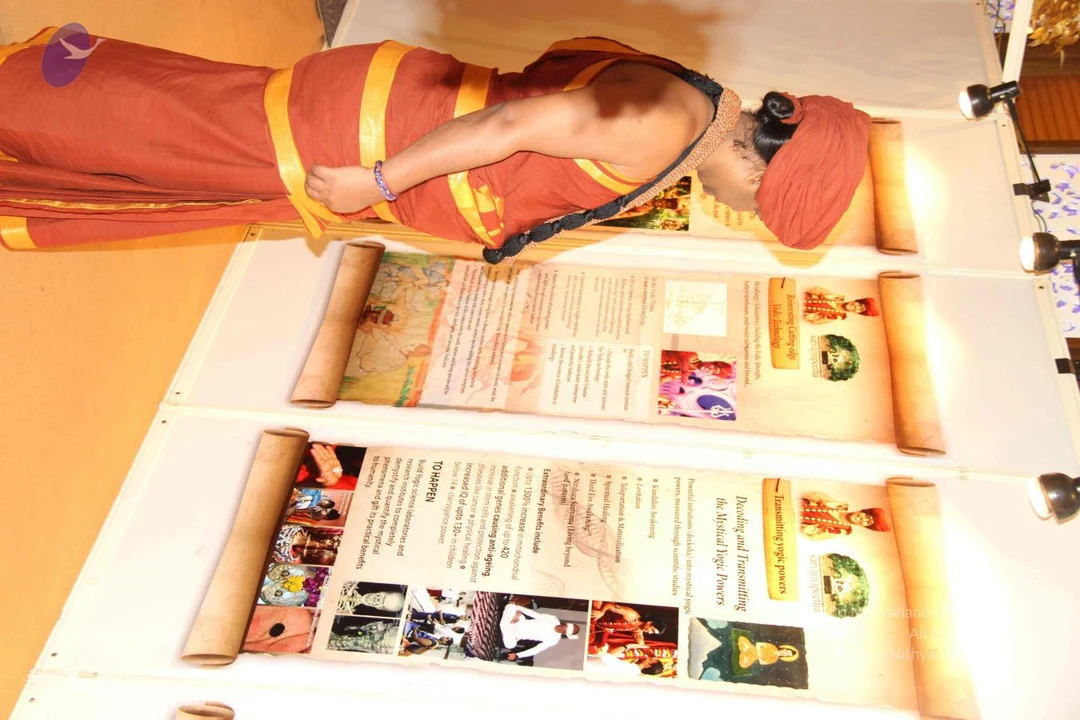
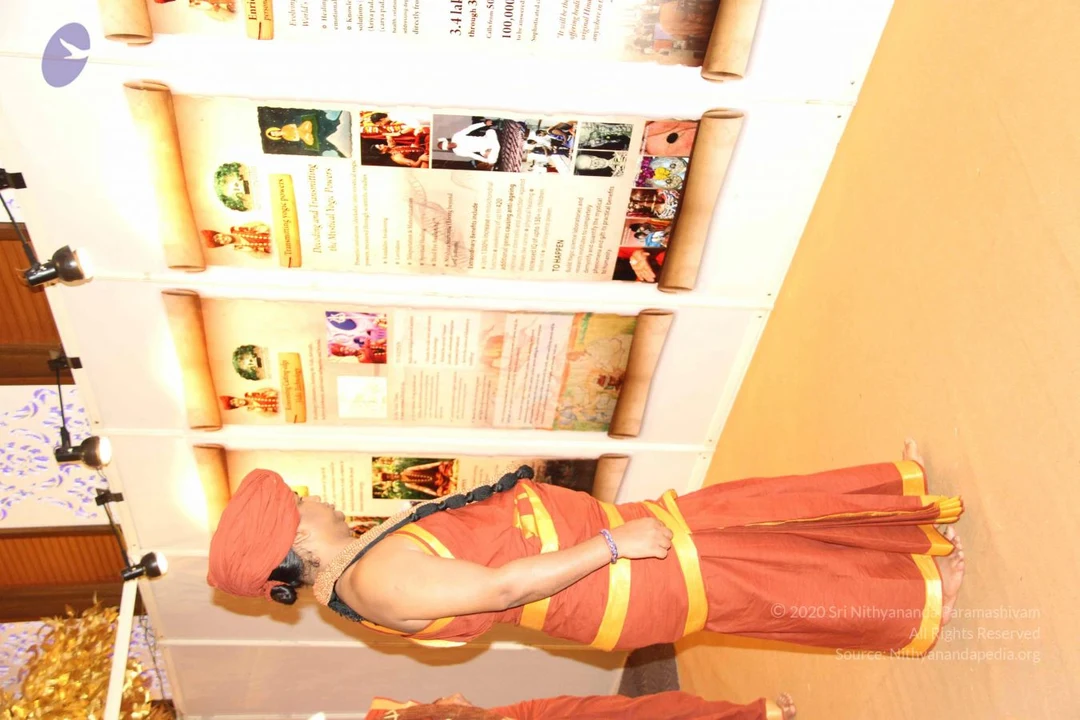
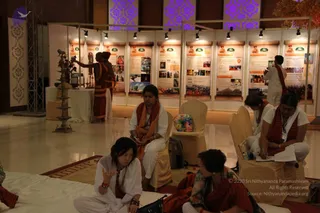
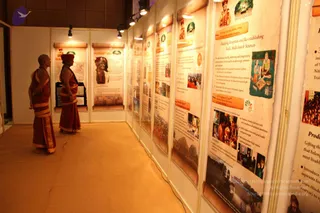
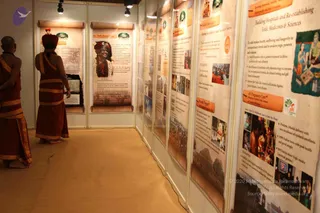
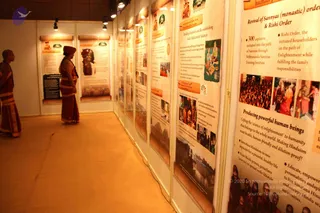
Indoor exhibition hall with a cream marble floor and a row of tall display panels with orange-bordered headers, photographs and text, lit by track spotlights. A bronze multi-tiered oil lamp stands on the left beside a draped table with flowers. Several women in white clothes with red-and-orange shawls sit on the floor and on gold-covered chairs, one writing in a notebook, one gesturing with her hand, one holding a book. Two figures in red-and-orange shawls stand near the displays and another man in white with a red shawl stands at the right. The scene is a satsang-related exhibition event.A photograph of an exhibition corridor with tall vertical panels mounted on white partition walls under track lights. Two people in saffron-orange robes with gold borders stand at left, viewed from behind, looking at the panels; one wears a shaved head and the other a red-orange head covering. The floor is covered in beige matting. No candidate is identifiable from appearance, so the figures are described by role as devotees.Photo of an exhibition corridor with tall partition panels mounted with parchment-style scroll banners. Two people with shaved heads in saffron-orange robes stand on the left, one in a red-orange turban, both viewing the displays from behind. The panels show text headings, photographs and illustrations, including a banner titled Building Hospitals and Re-establishing Vedic Medicines and Sciences with a painted image of two women and a child. A portrait labelled Vedic Renaissance shows a smiling figure in a red turban with white flower garland. Spotlights hang from the ceiling above a beige floor.Photo of an exhibition hall with a long row of tall, vertically hanging display panels mounted along a glass-fronted partition, lit by warm spotlights over a beige floor. Two people stand in the left foreground looking at the panels: one man at the far left with a shaved head in a reddish-orange dhoti-style garment and a shawl, and a woman in the centre wearing an orange-red sari and a red head covering. The large panel on the right, headed Revival of Sannyas (monastic) order and Rishi Order, has photographs of devotees, a robed person in orange and white, and text about initiating 300 aspirants into sannyas and producing powerful human beings. Other panels show a portrait, temple and hospital imagery, and a cow-and-agriculture photo.Photograph of an exhibition hall with tall white display panels lining a corridor of beige floor, lit warmly. Two men in saffron-red robes stand on the left looking at the panels; one wears a red-and-white turban and the other a bare-headed red wrap. The panels carry printed banners with photographs and text on sannyas revival, Rishi Order, Vedic Gurukul education and humanitarian work. A large right-hand panel shows a photo of a crowd of saffron-robed monastics and a headline about producing powerful human beings. No identifiable a person candidate is visible.A photograph of an exhibition corridor with tall white display panels lining one side and a sandy-coloured floor. Along the right, a large panel headed "Revival of Sannyas (monastic) Order & Rishi Order" shows group photos of saffron-clad sannyasins and a bullet list. Another panel reads "Producing powerful human beings" with photos of monks. On the left, a man in saffron-orange dhoti and shawl with a red turban and garland stands in front of the panels and gestures toward them, while a second person in orange robes stands at the far left edge.
yettoselect

140 photosSource gallery
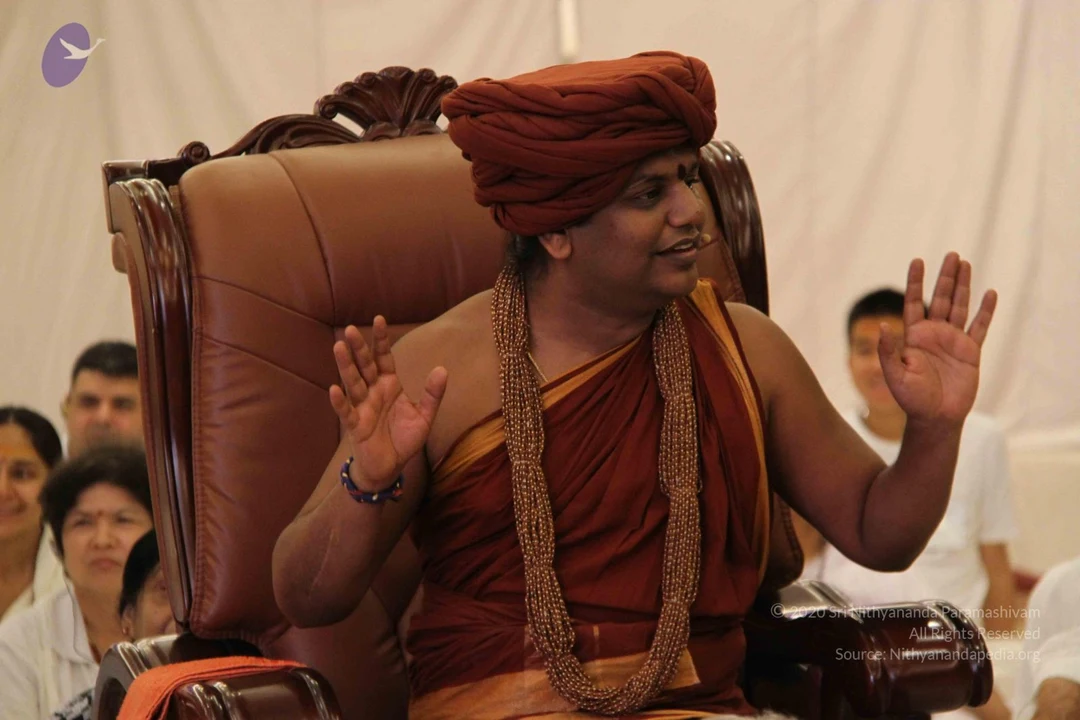
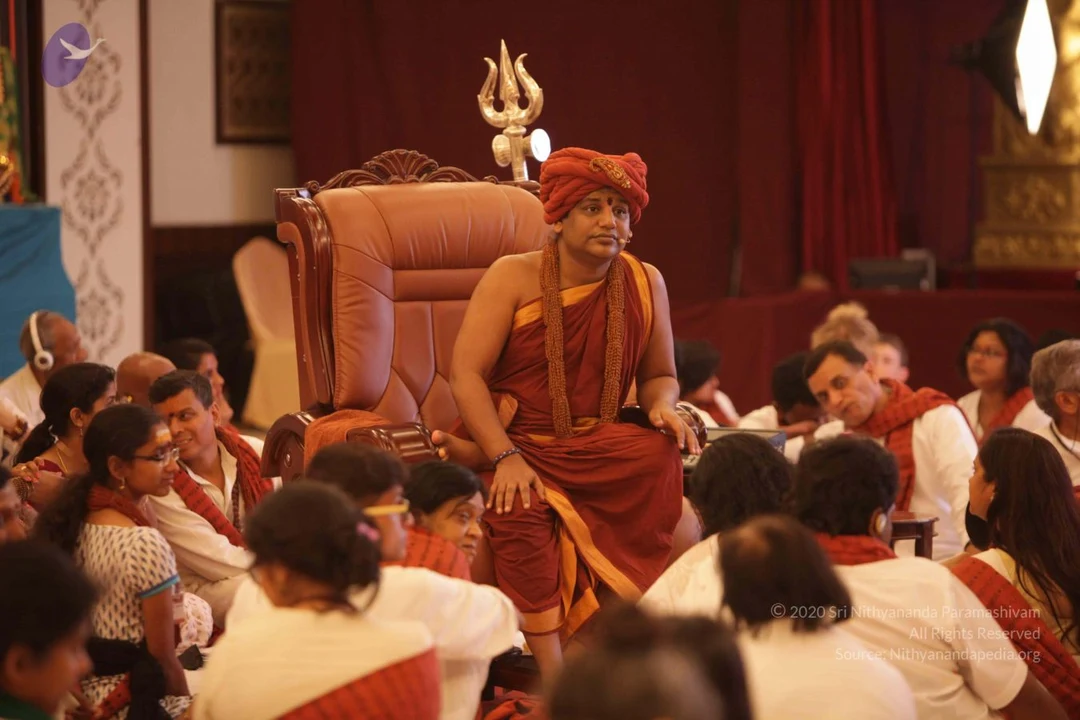
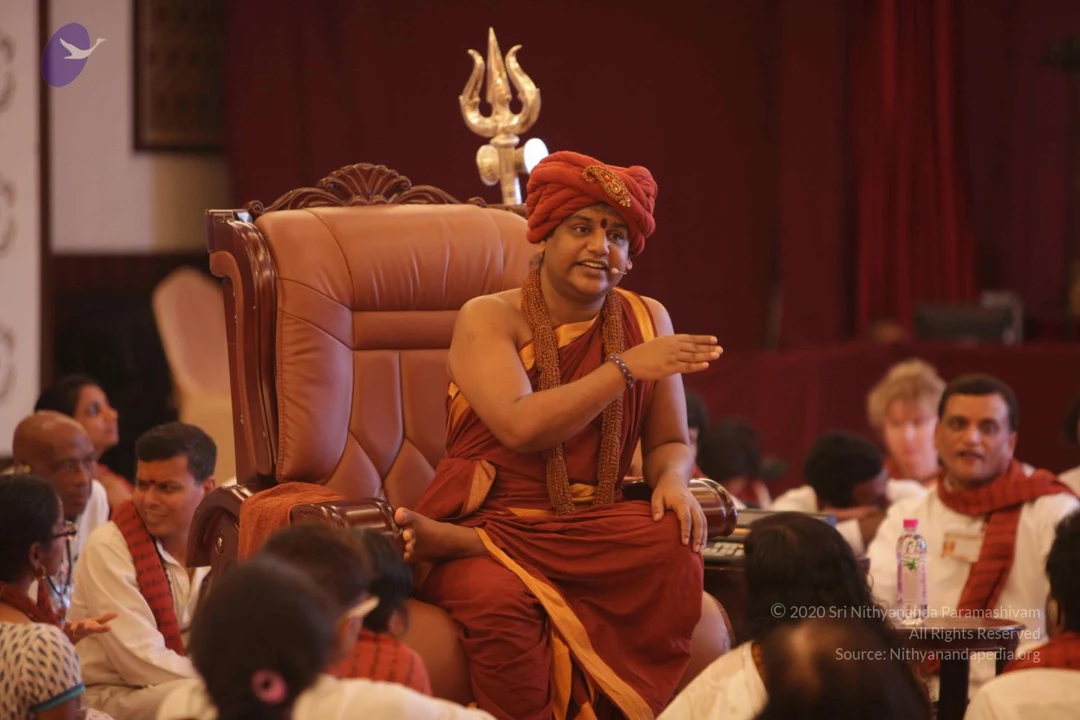
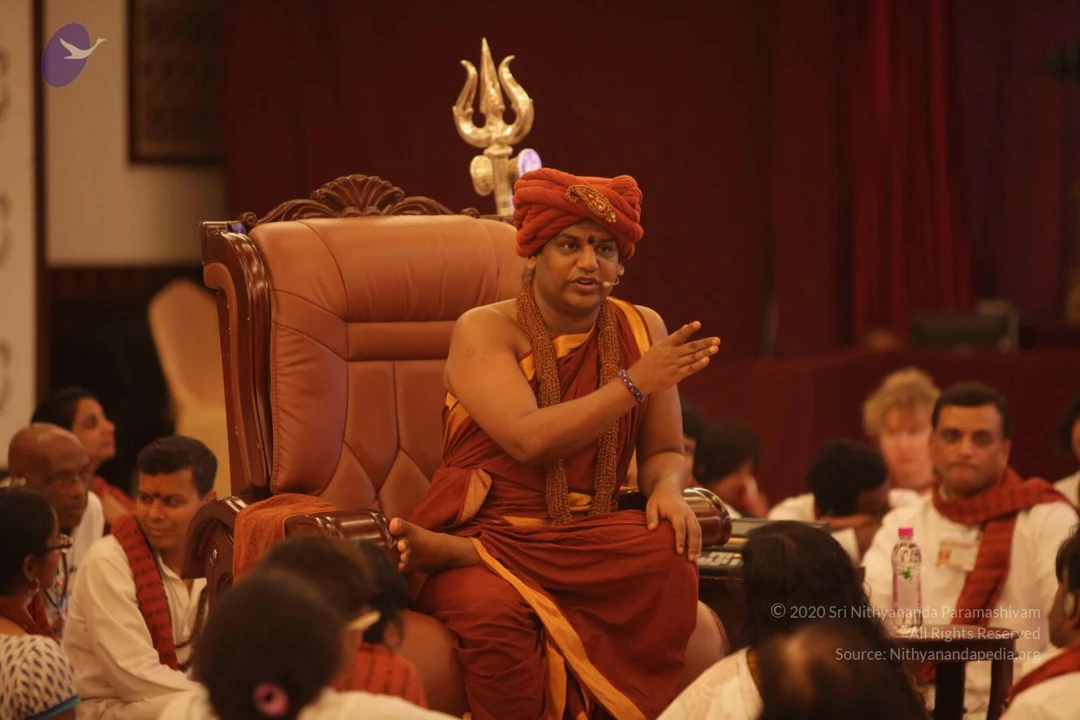
A photograph of a satsang in a large tented hall with white draped fabric overhead. A man in saffron-orange robes and an orange turban sits on an ornate reddish-brown throne at the centre, while a dense ring of seated devotees in white clothing surrounds him on a white floor covering. Several children in the foreground sit with their backs to the camera, including a girl with long braids in a yellow polka-dot dress. Some attendees on chairs at the back wear white and orange garments, and a few hold their palms together. The scene shows a seated discourse with the teacher on a raised throne and devotees listening attentively. Swamiji (probable): the seated figure on the throne wears a saffron-orange robe, an orange turban and a shawl, consistent with the page's account of a satsang.A large satsang gathering with many seated devotees in white clothes sitting on white floor sheets in a hall with maroon walls. At the centre front, a figure in a maroon-orange turban and orange-red robe sits on a high ornate brown throne, with a bare-chested attendant in a golden-bordered cloth seated nearby. Audience members, mostly in white kurtas and dresses, face the front, and a few wear saffron or green clothing. A camera operator stands at the back and a table with yellow cloth is visible on the right.A photograph of a large satsang hall where many people in white clothes sit cross-legged on white mats facing a central figure. The central figure wears saffron-orange robes and a rust-coloured turban and sits on an ornate brown leather chair with a small wooden table beside it. Several seated devotees wear white kurtas and some women wear saffron or orange shawls. A cameraman stands with a tripod at the left edge, a man in white stands behind the seated group, and a red-and-gold cushioned seat sits near the right side of the room. Crowd appearance suggests a seated audience of many participants.A satsang in a hall with a white-draped stage and red walls. A person in a saffron-and-red robe with a rust-coloured head wrap sits on a large brown leather throne-style chair at the centre front, facing a seated audience. Many devotees in white clothes sit cross-legged on white floor sheets, some with long braids and some with glasses. Standing attendants in white and orange-saffron clothes are visible at the back stage, with a small table and decorated pillars on the sides. The audience numbers roughly 50 visible people.A satsang in a large hall where a crowd of about 60 people, mostly in white clothing, sits cross-legged on white floor mats around a central seated figure. The seated figure wears an orange-saffron robe and an orange turban and sits on a dark brown high-backed throne-like chair, with a small table and microphone in front. Many attendees wear white kurta-style or white salwar outfits, a few wear saffron or red shawls, and one woman in front wears a white top. Gold decorative trees and white draped fabric stand at the back, with purple patterned panels on the walls and a stage-side audio setup visible at left.A man seated on a large brown leather armchair with carved wooden frame, speaking to an audience during a satsang. He wears a red-orange turban, a saffron-orange wrap over a bare shoulder, a long multi-strand rudraksha-style bead mala, and a small headset microphone. A red bindi is on his forehead and he gestures with his right hand open. Behind him, white draped fabric and cream chairs. Several seated devotees are visible at the sides, a woman in glasses on the right smiling, and a man in glasses behind.
slected photo -kalabhairva temple

10 photosSource gallery
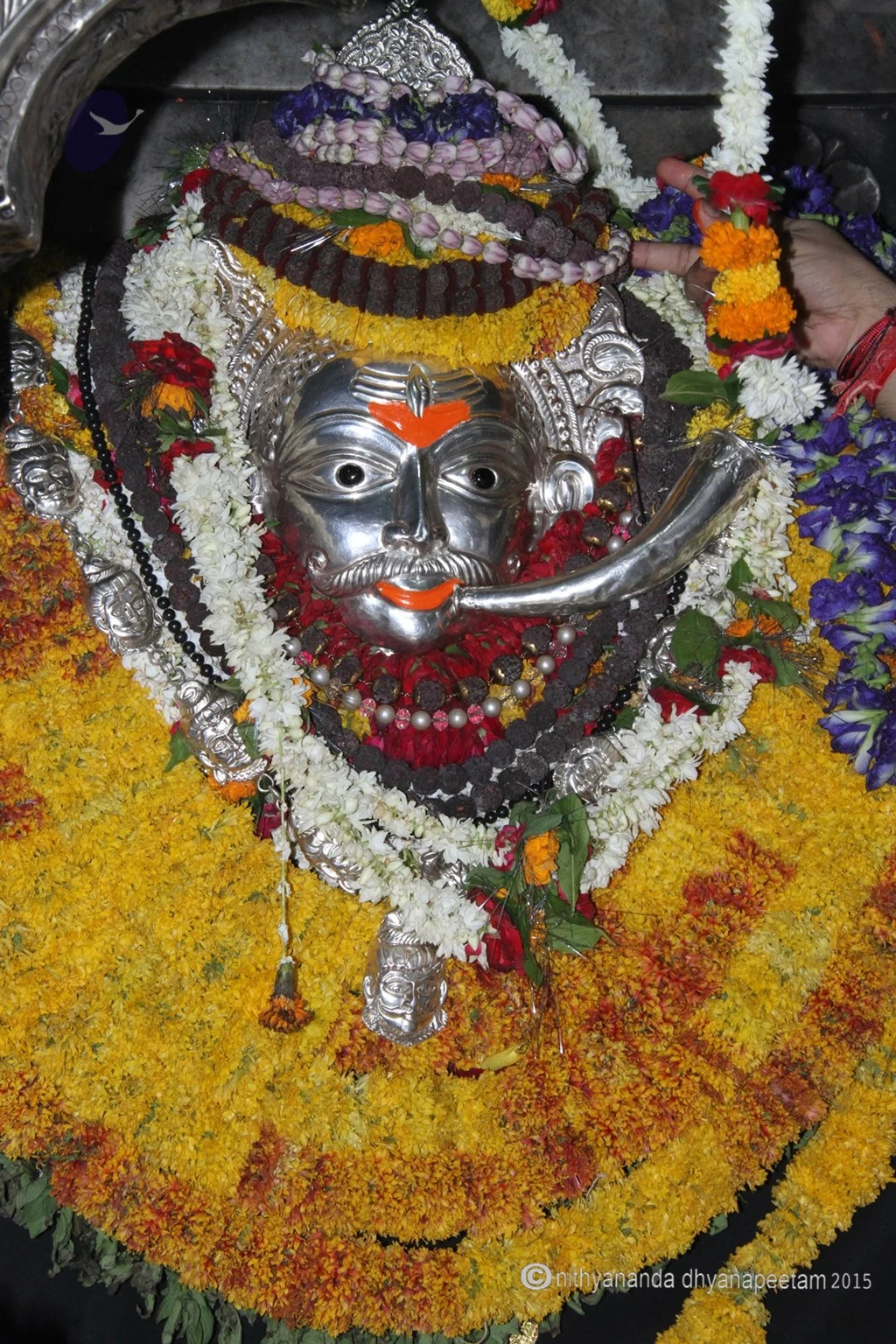
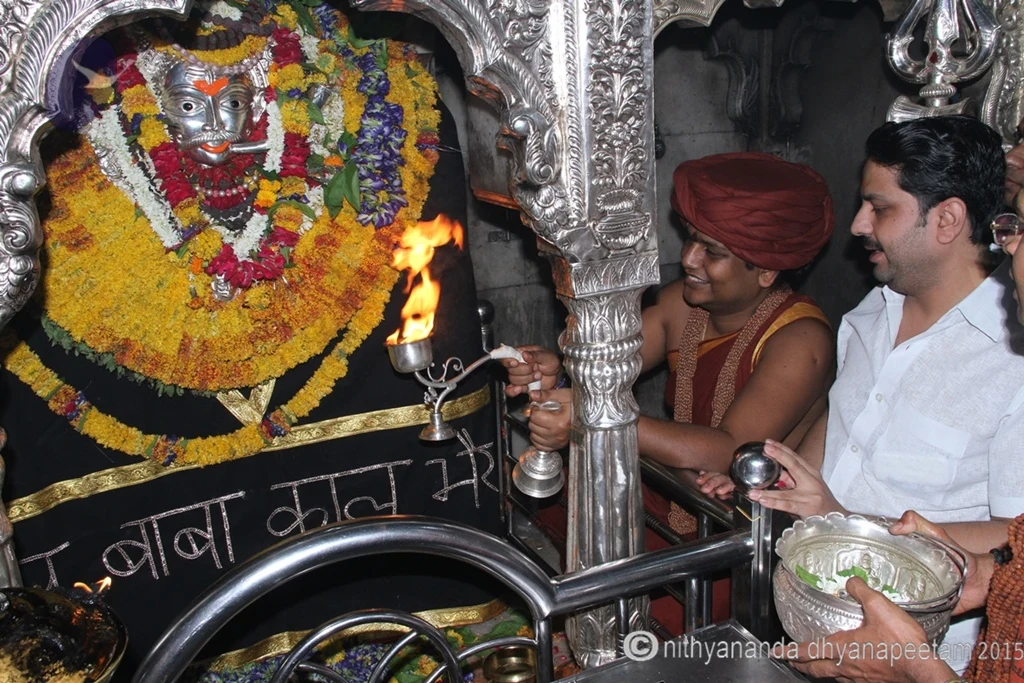
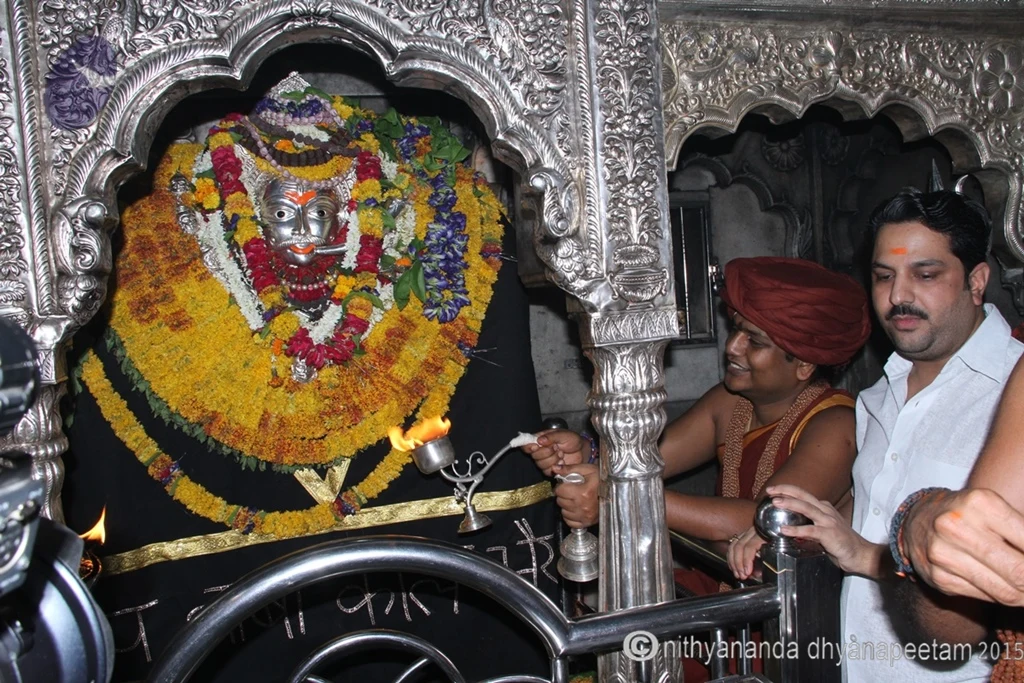
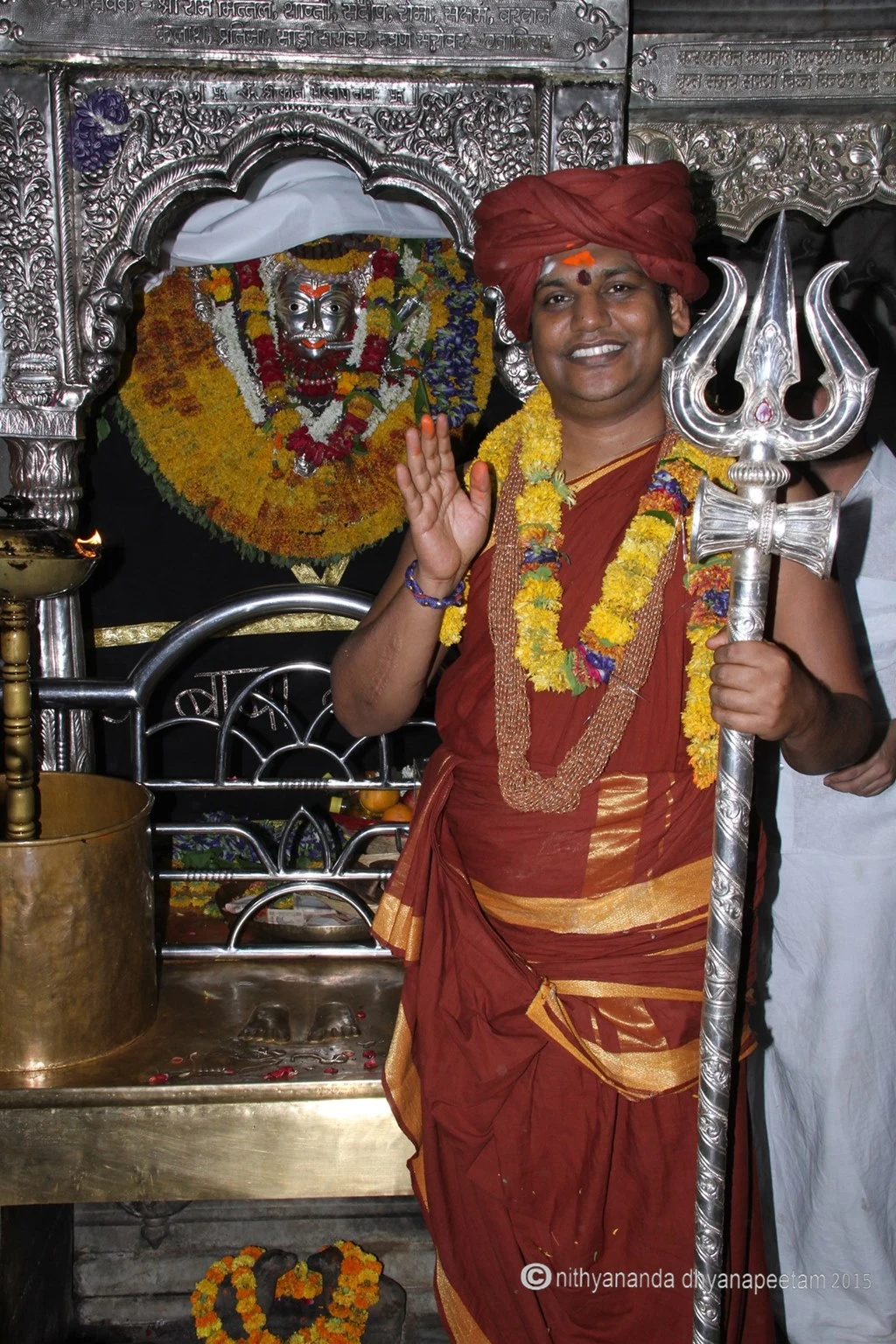
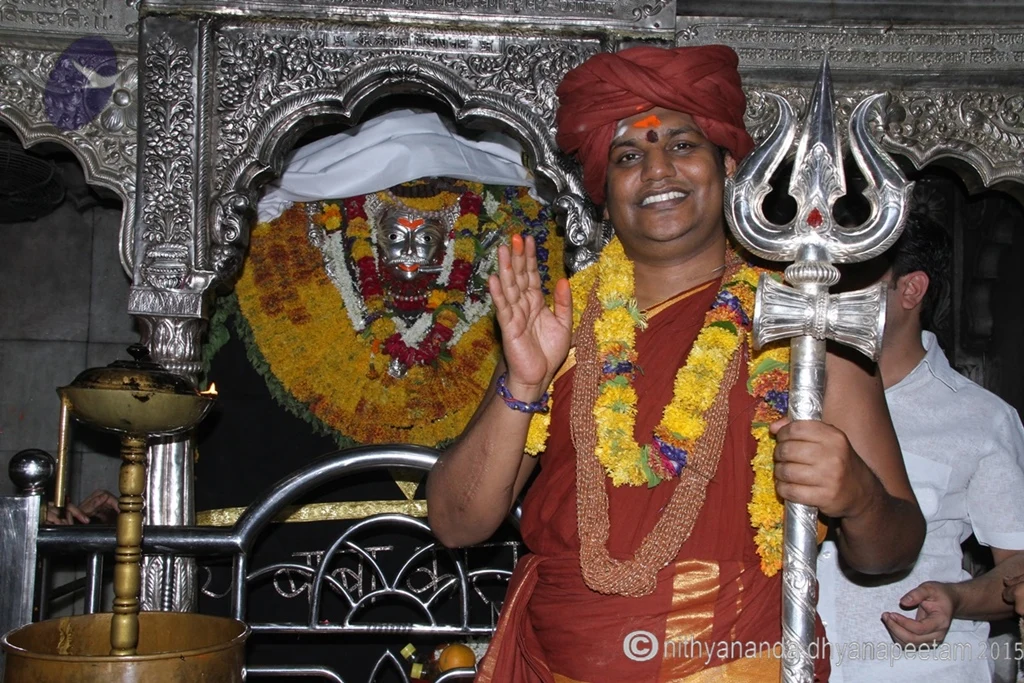
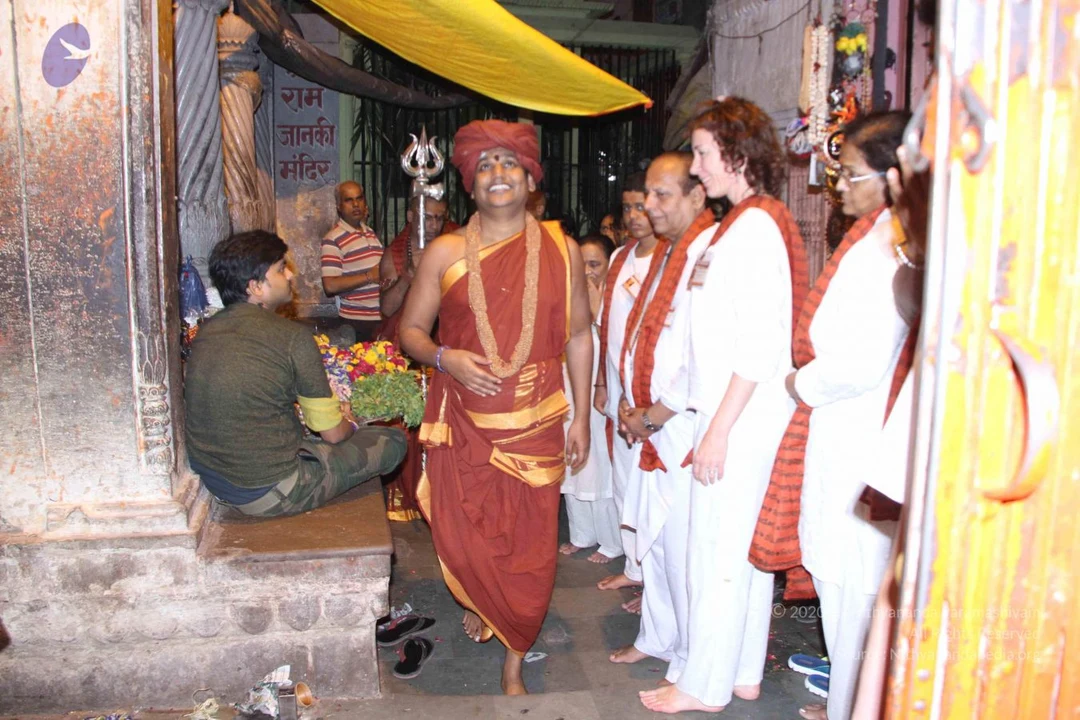
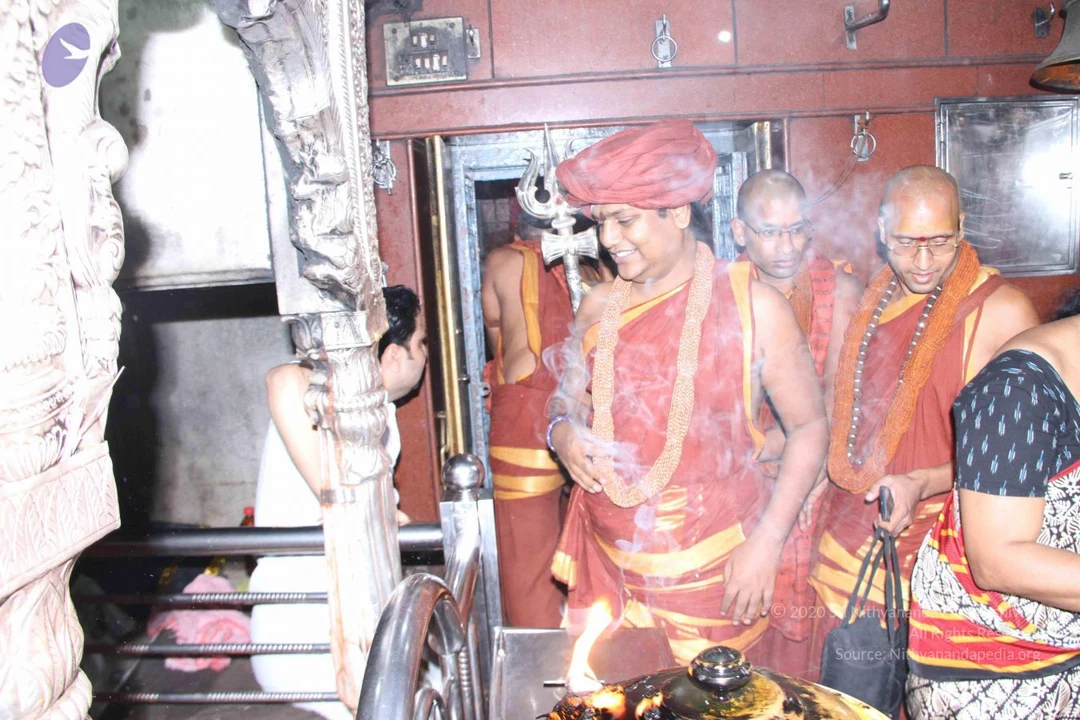
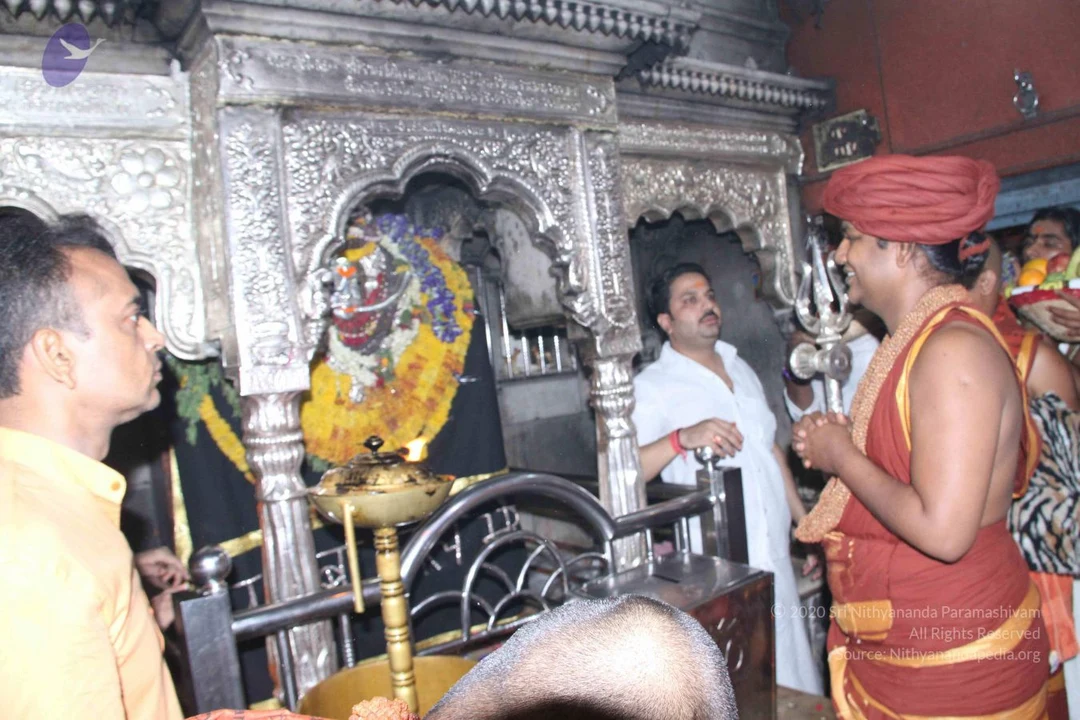
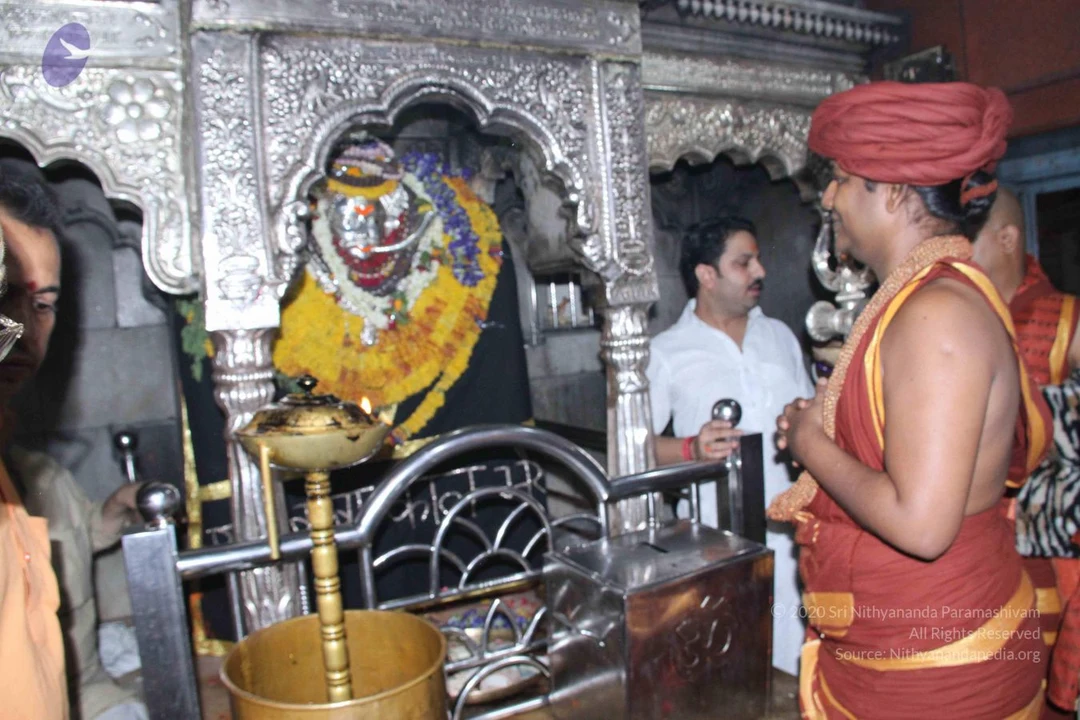
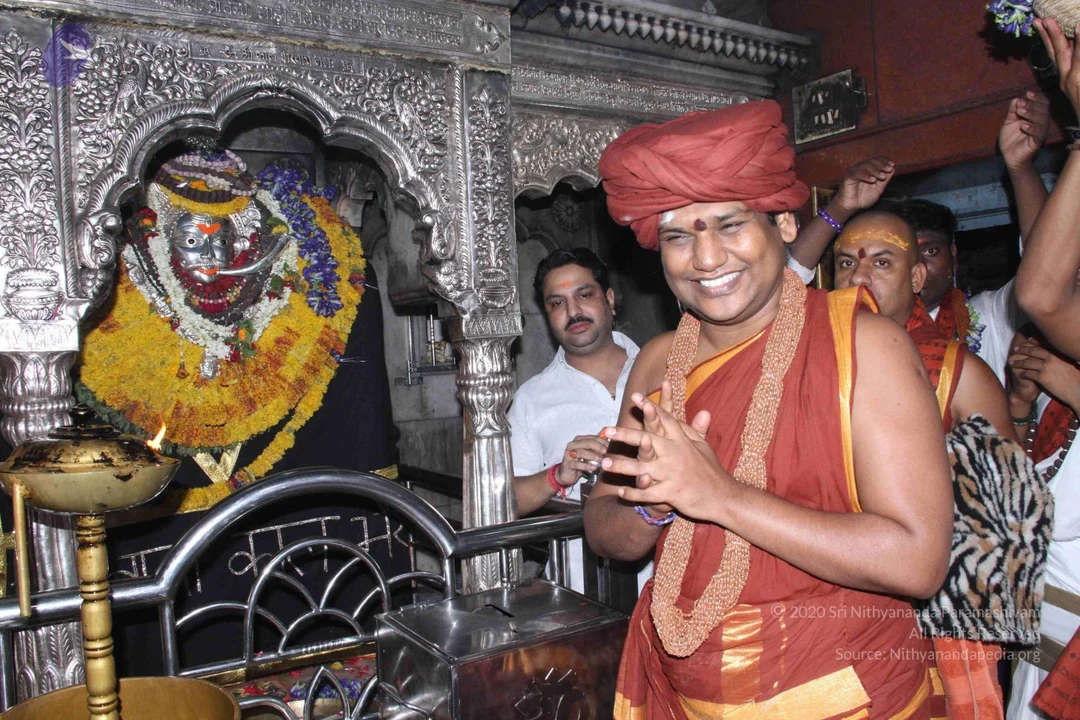
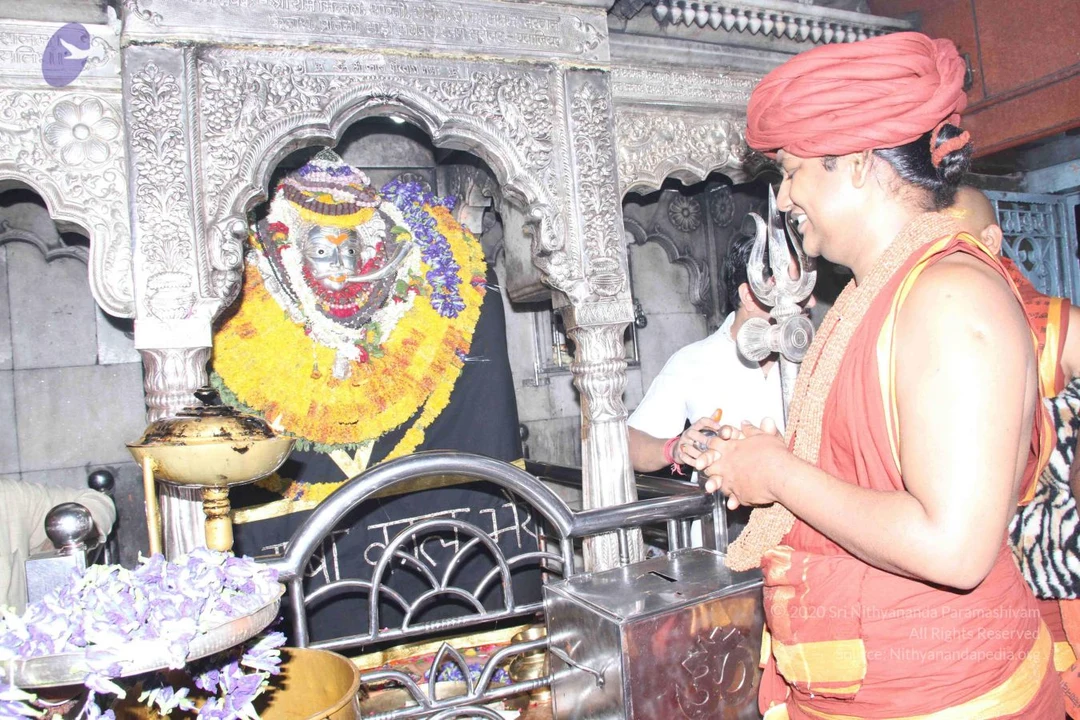
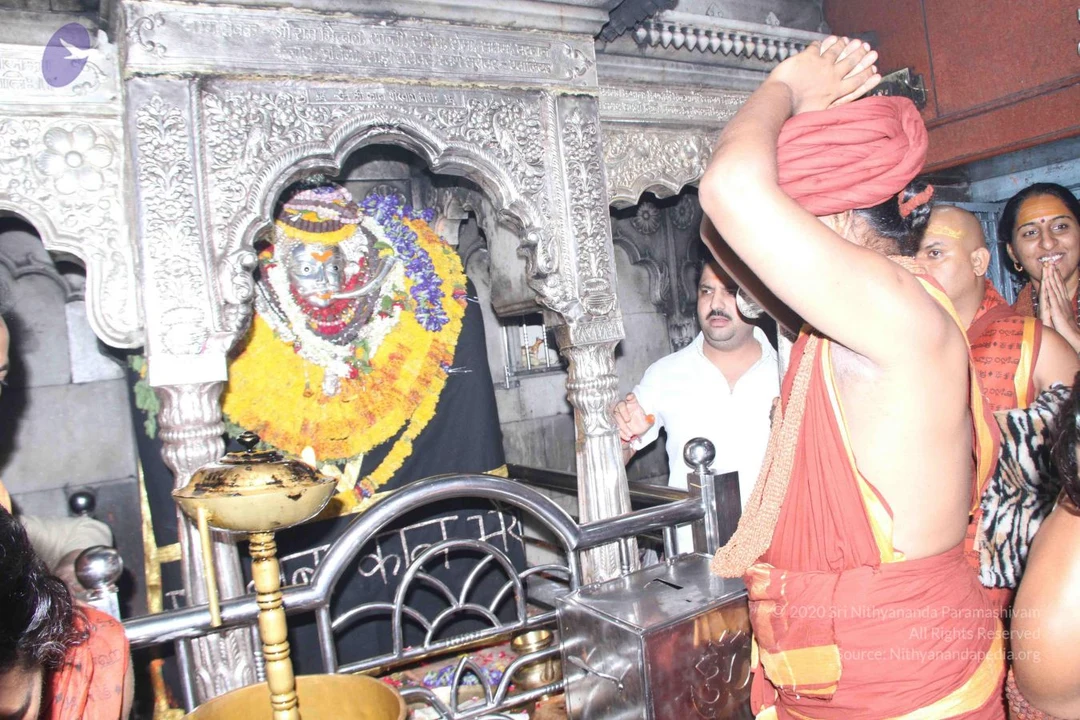
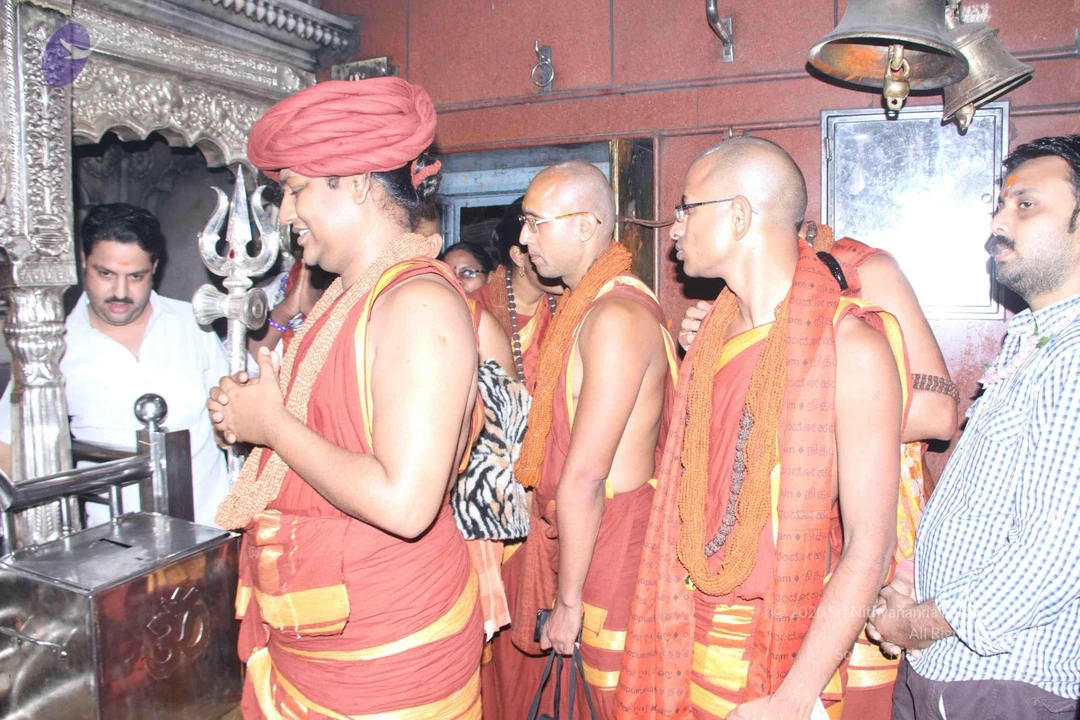
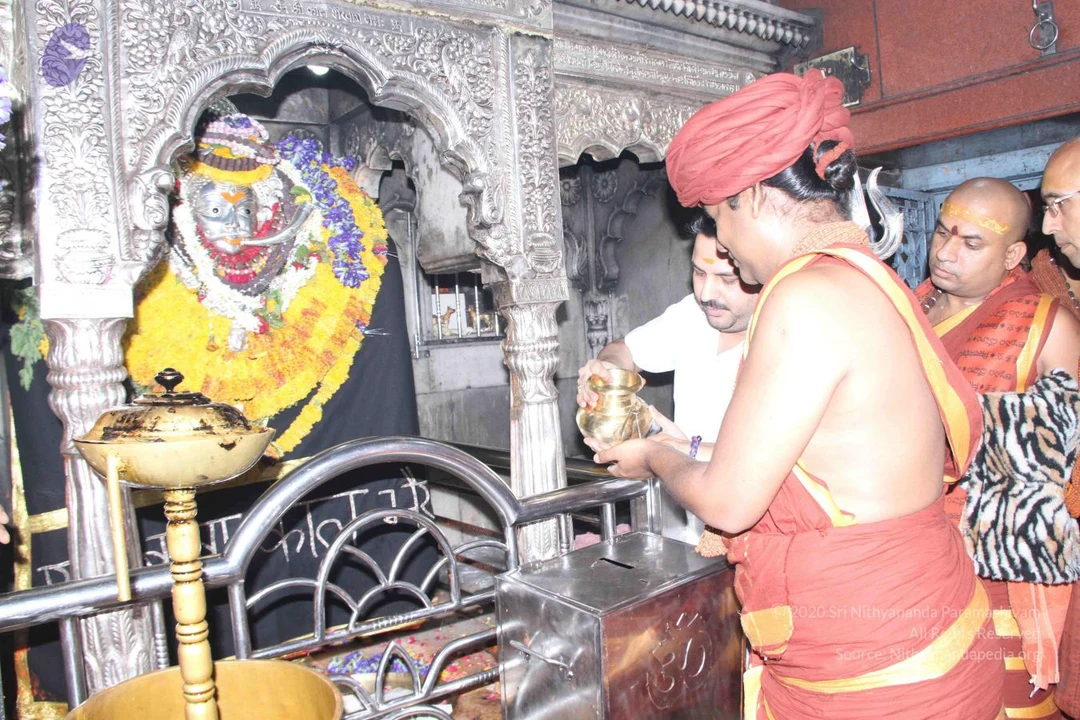
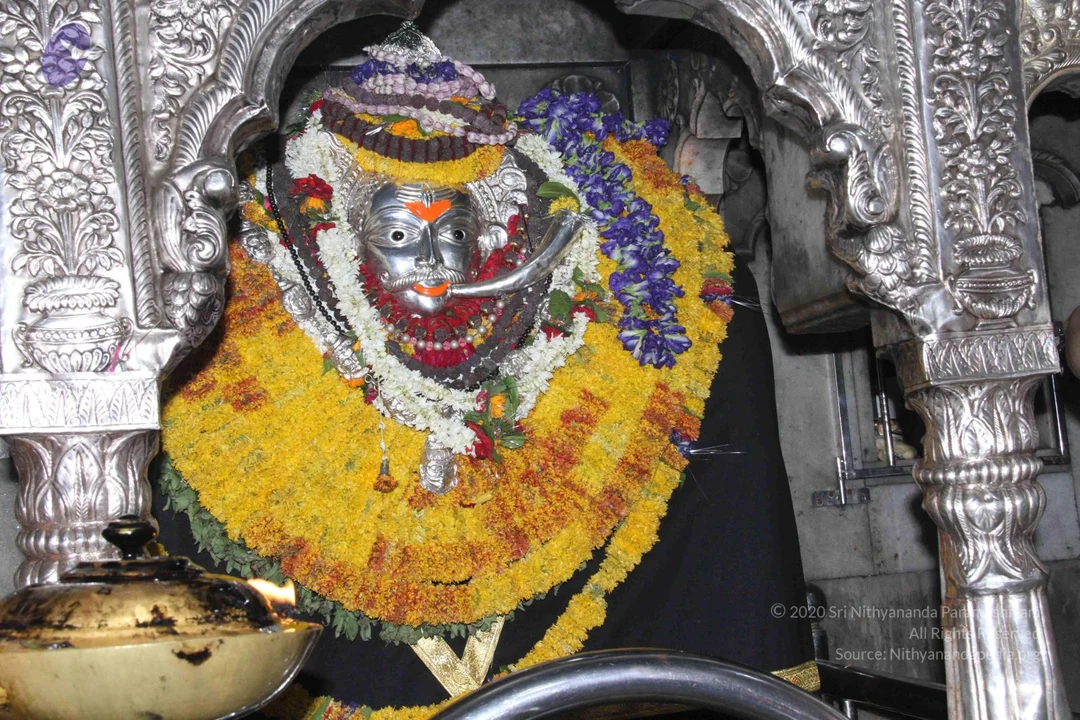
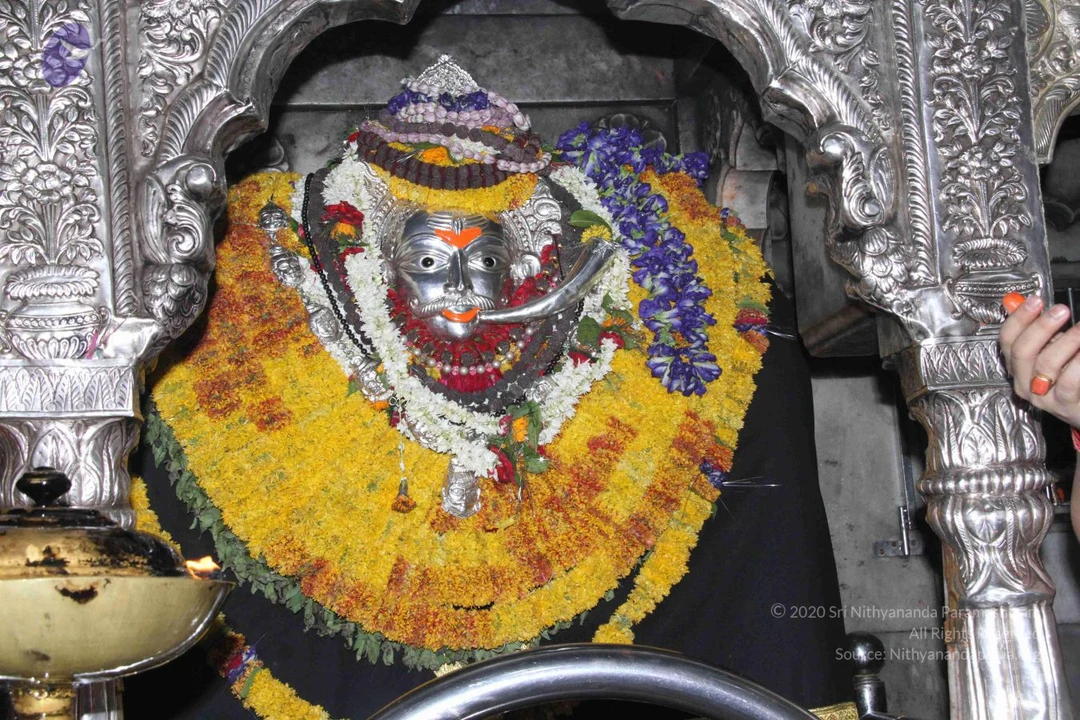
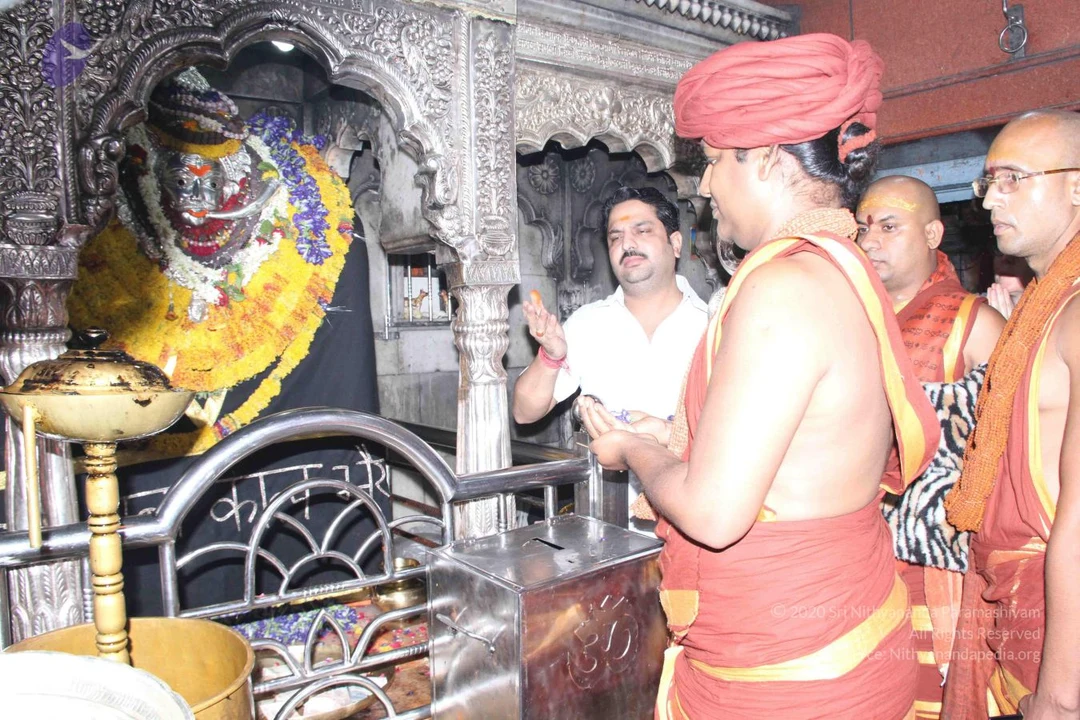
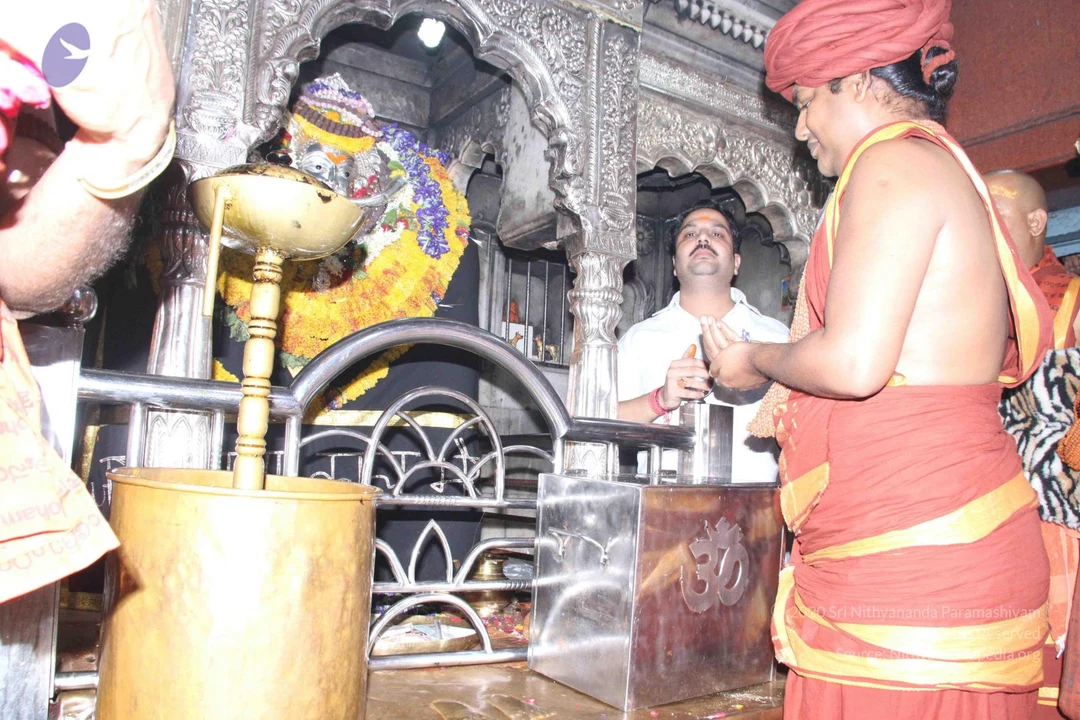
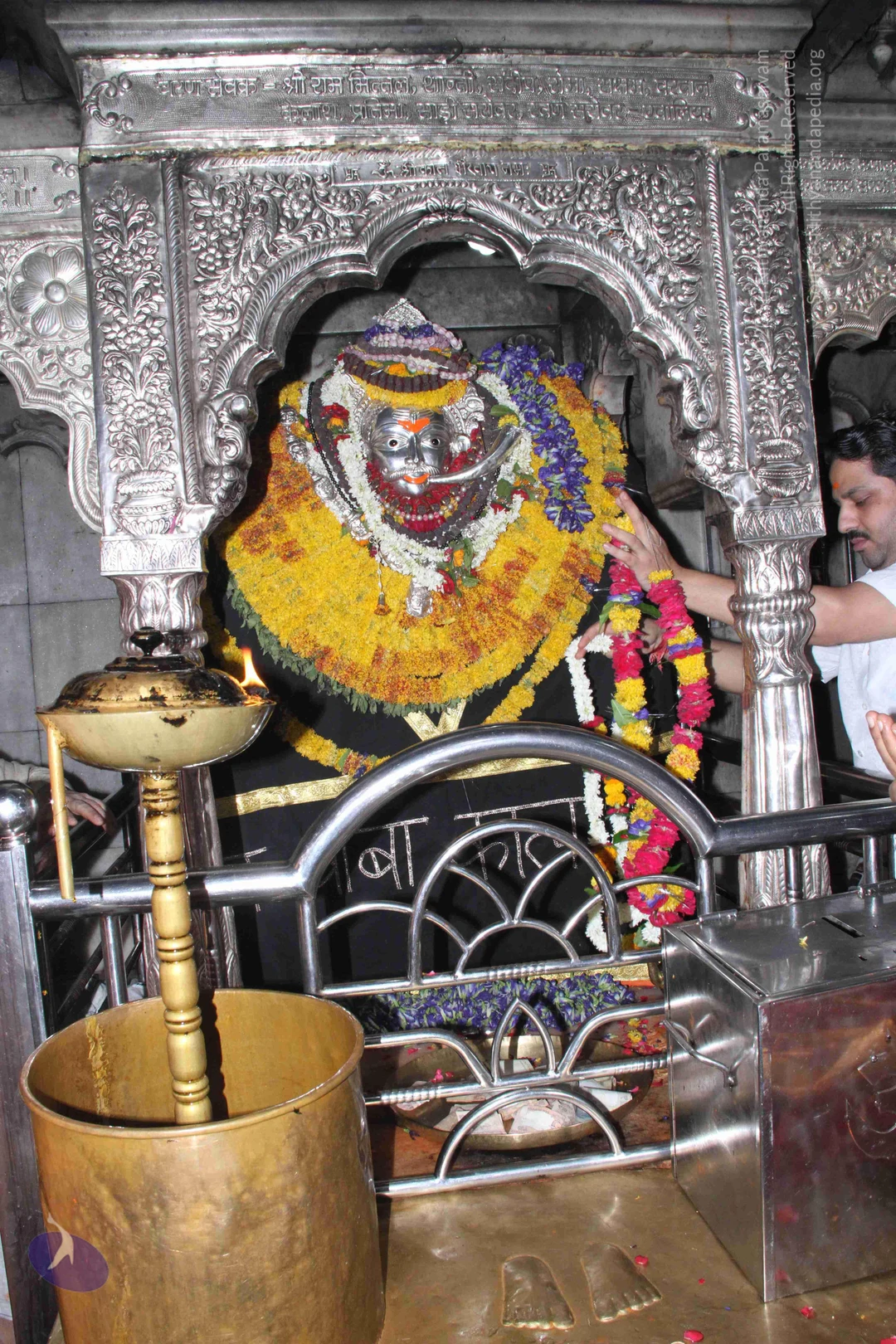
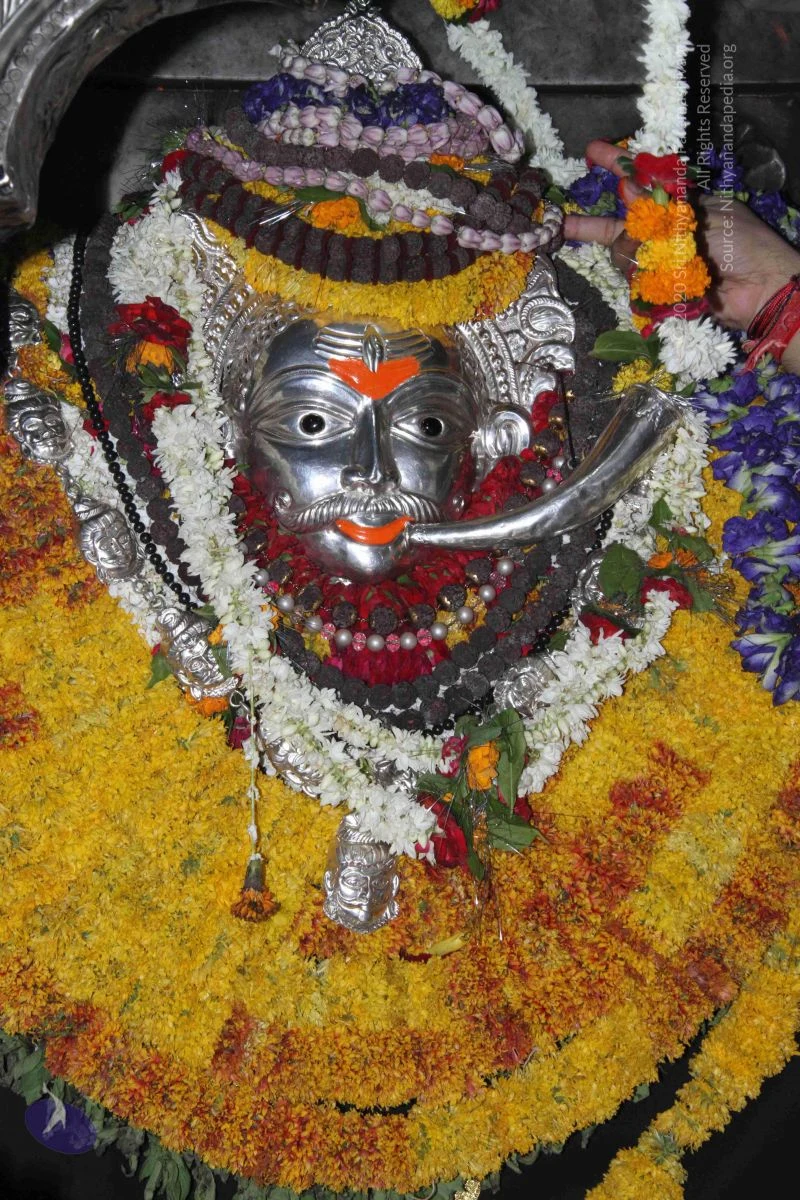
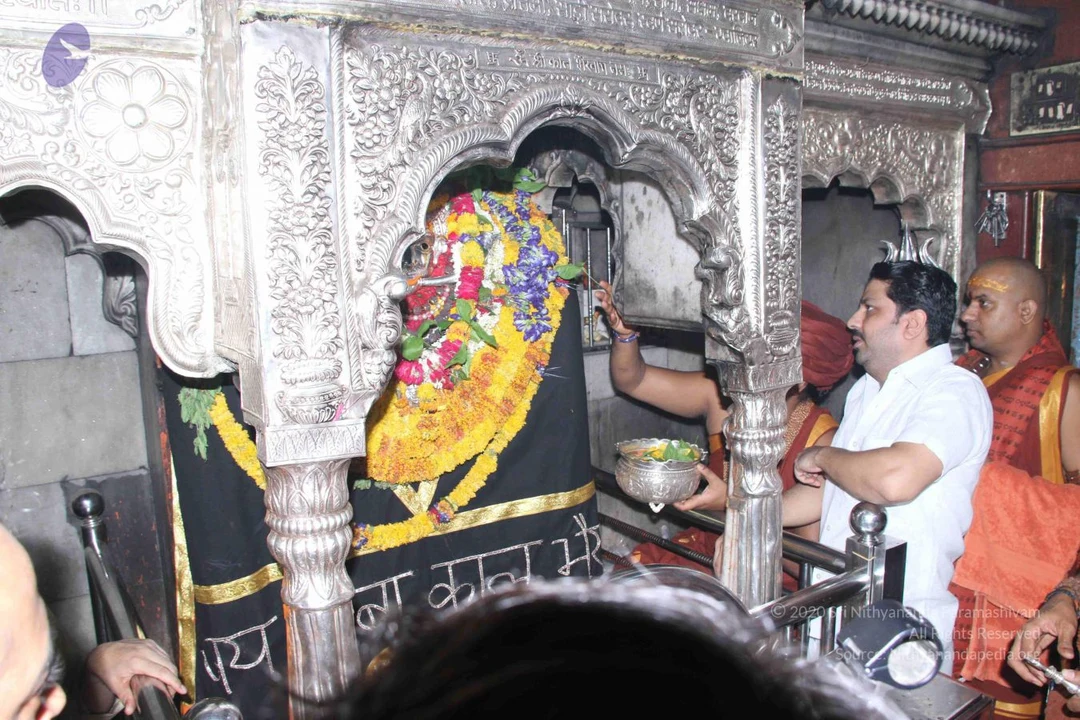
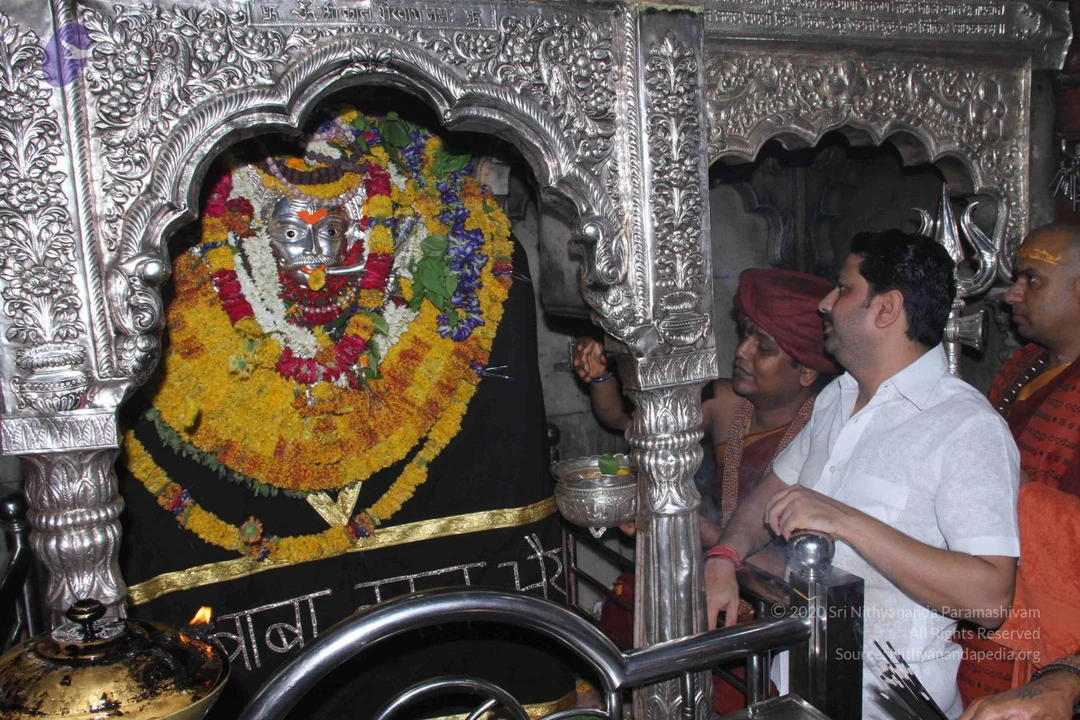
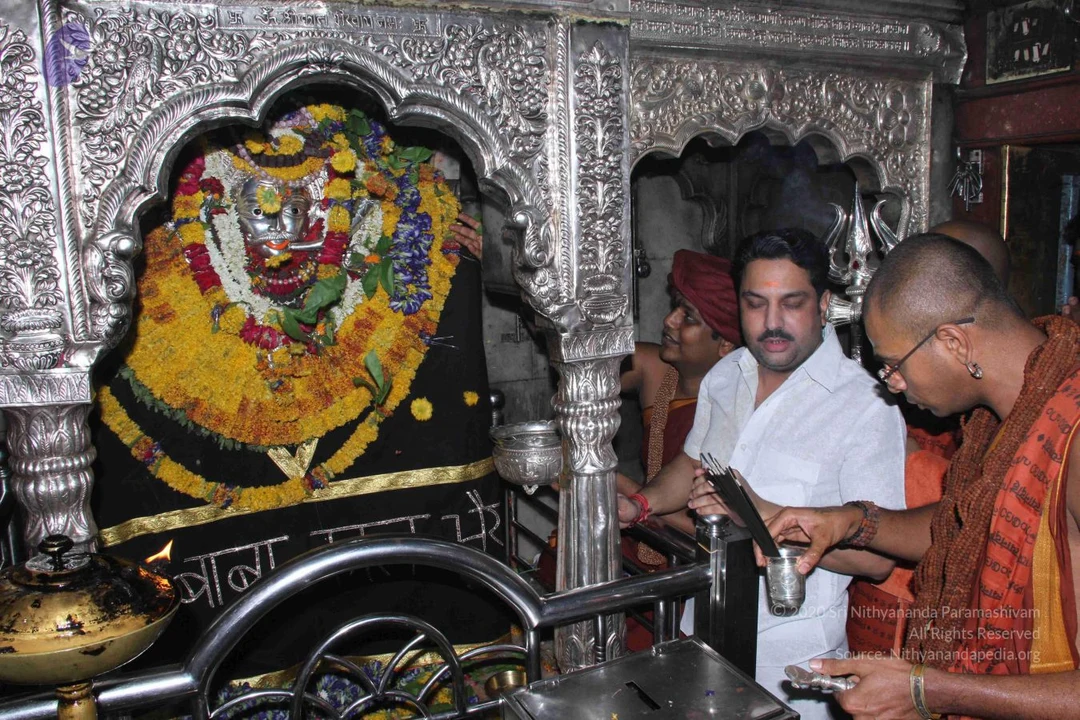
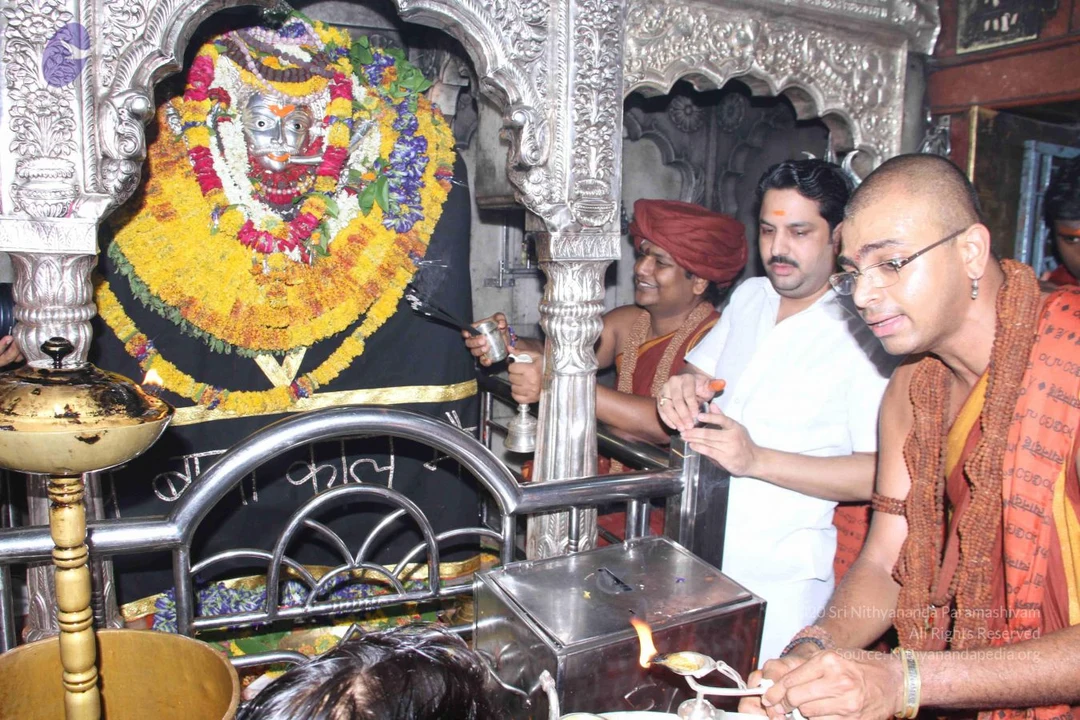
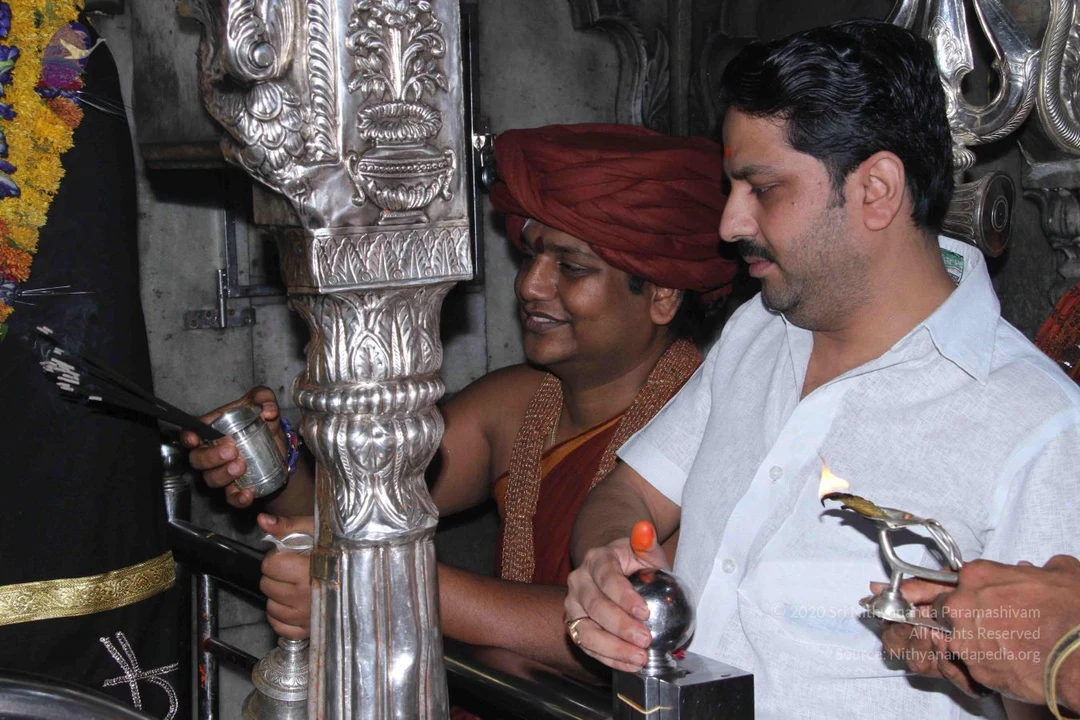
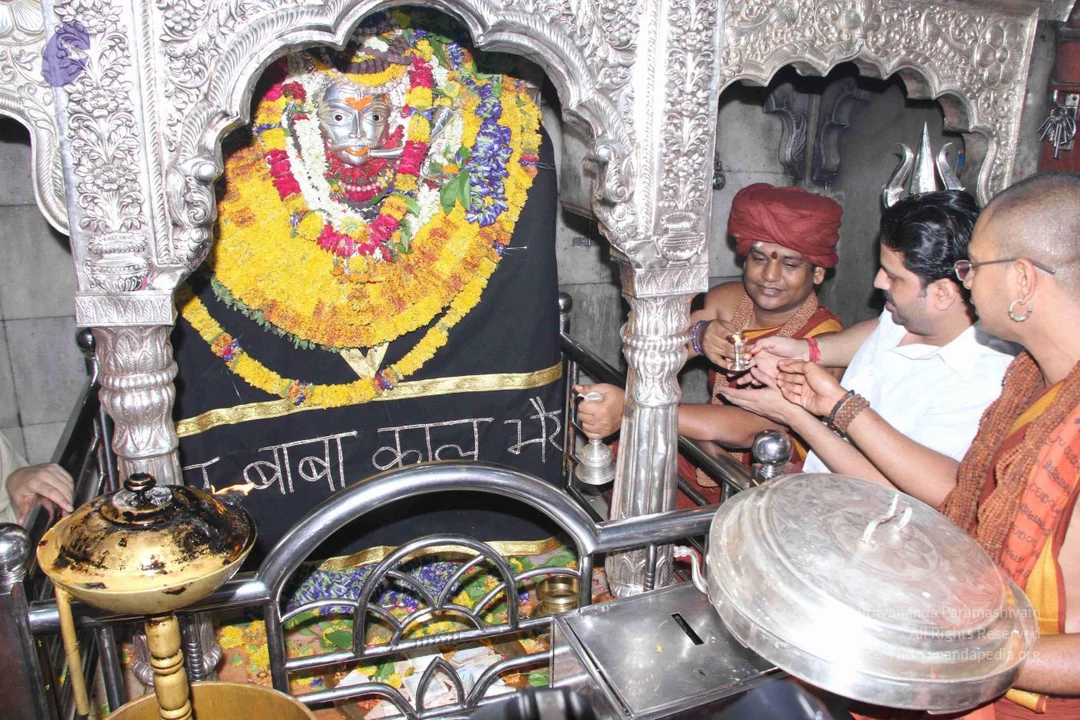
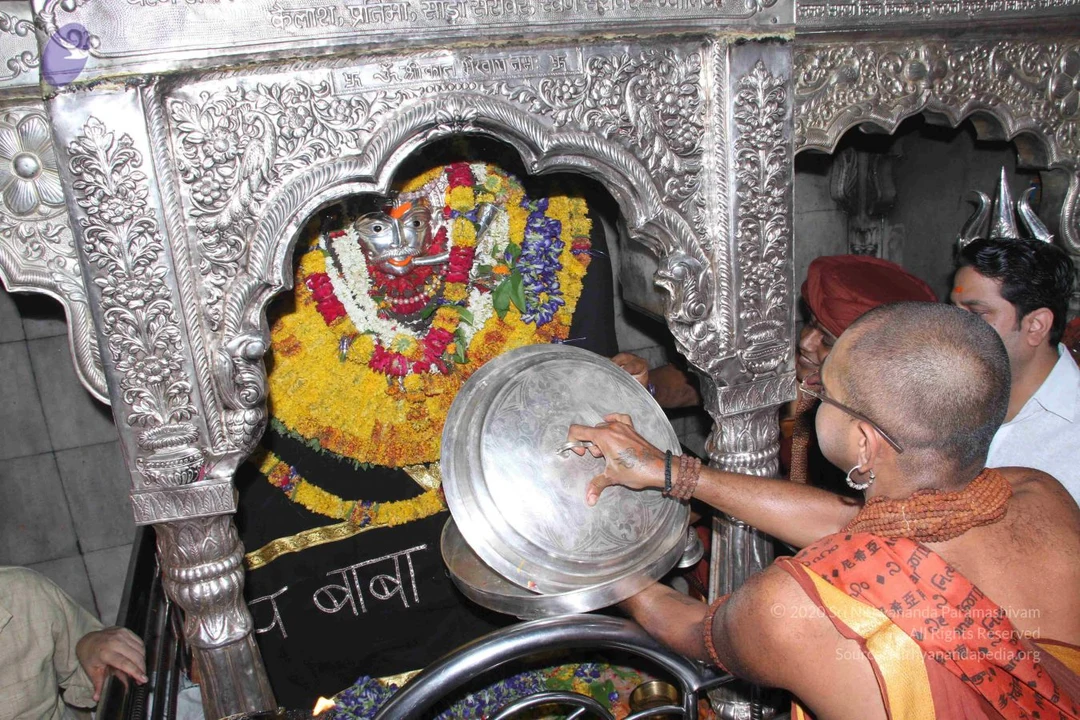
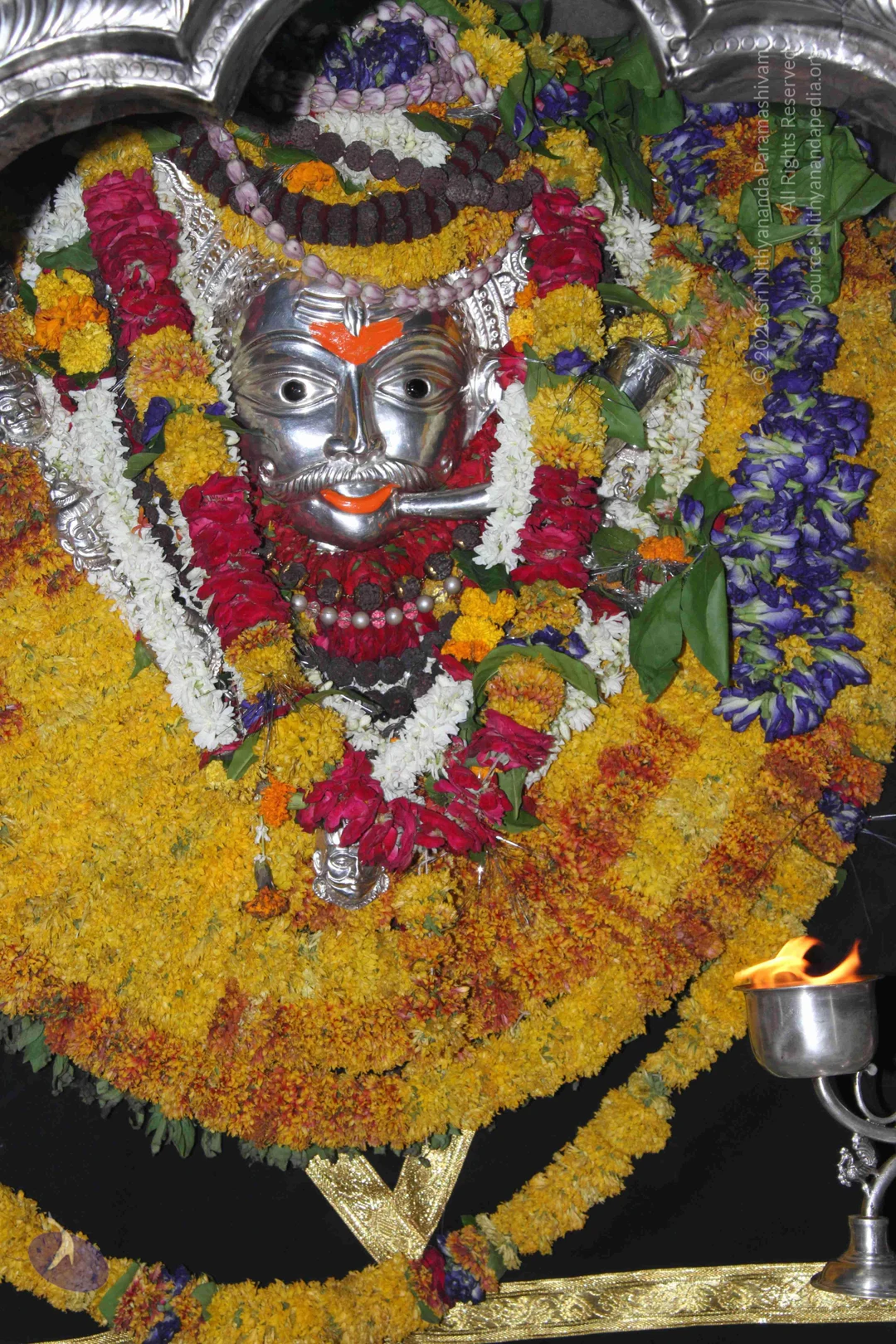
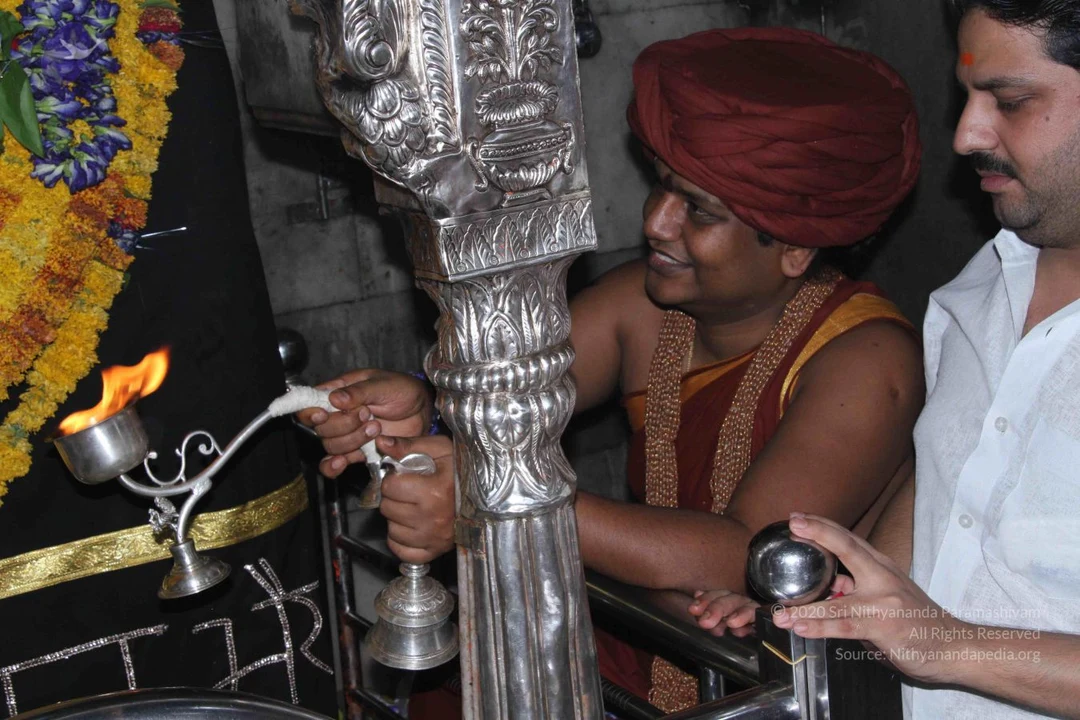
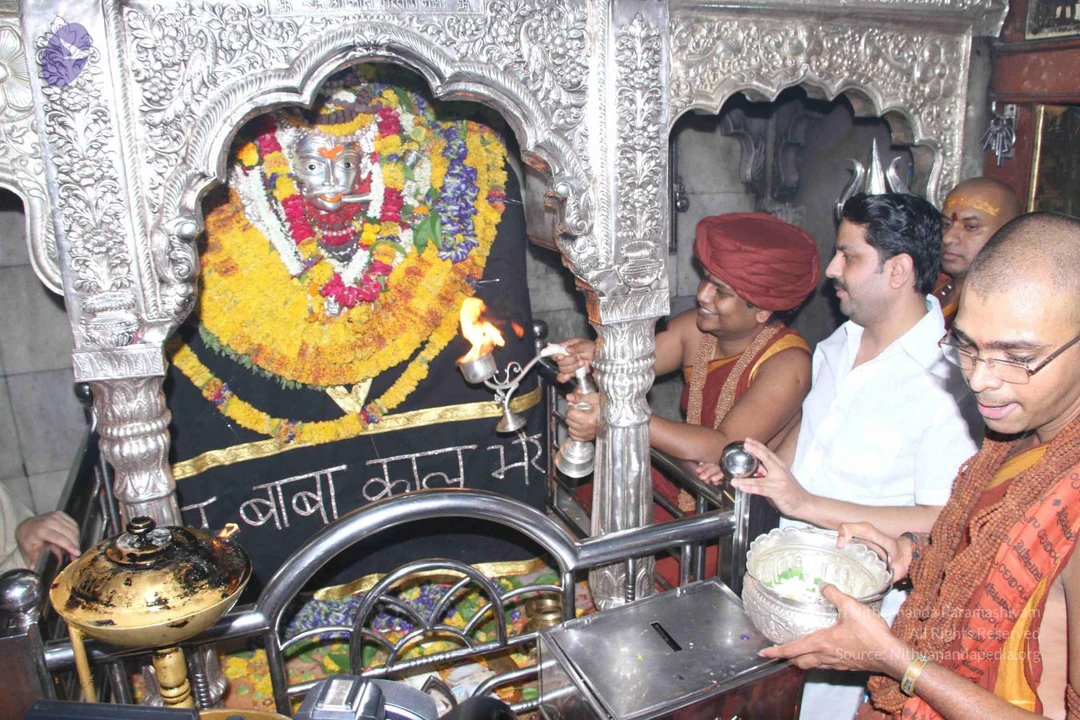
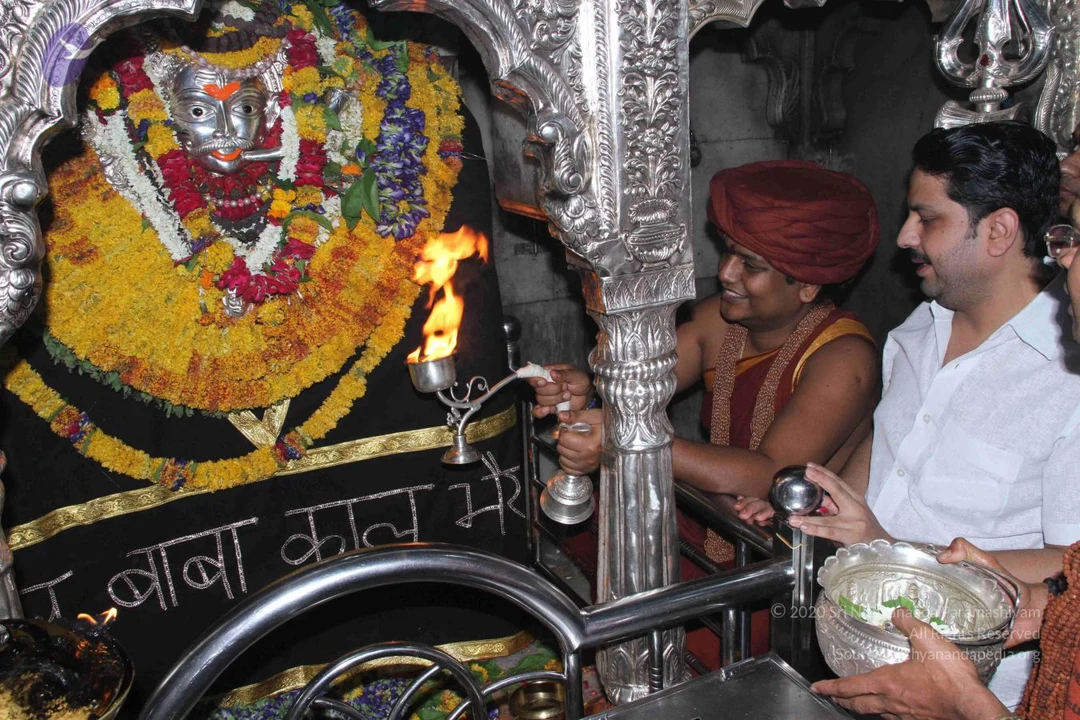
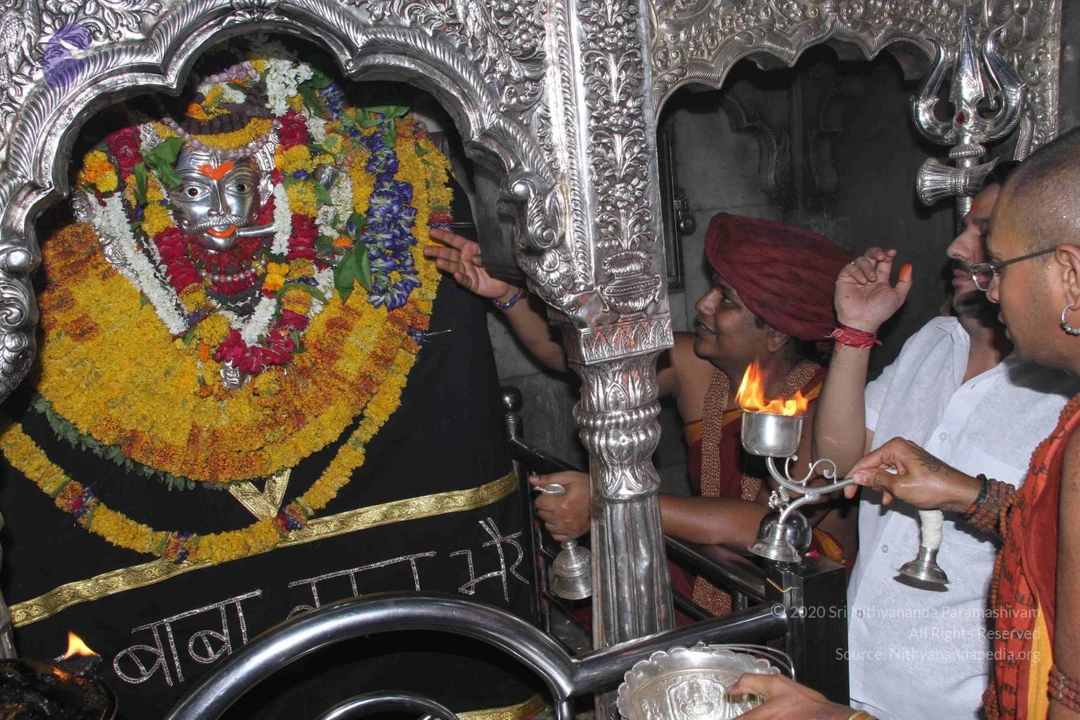
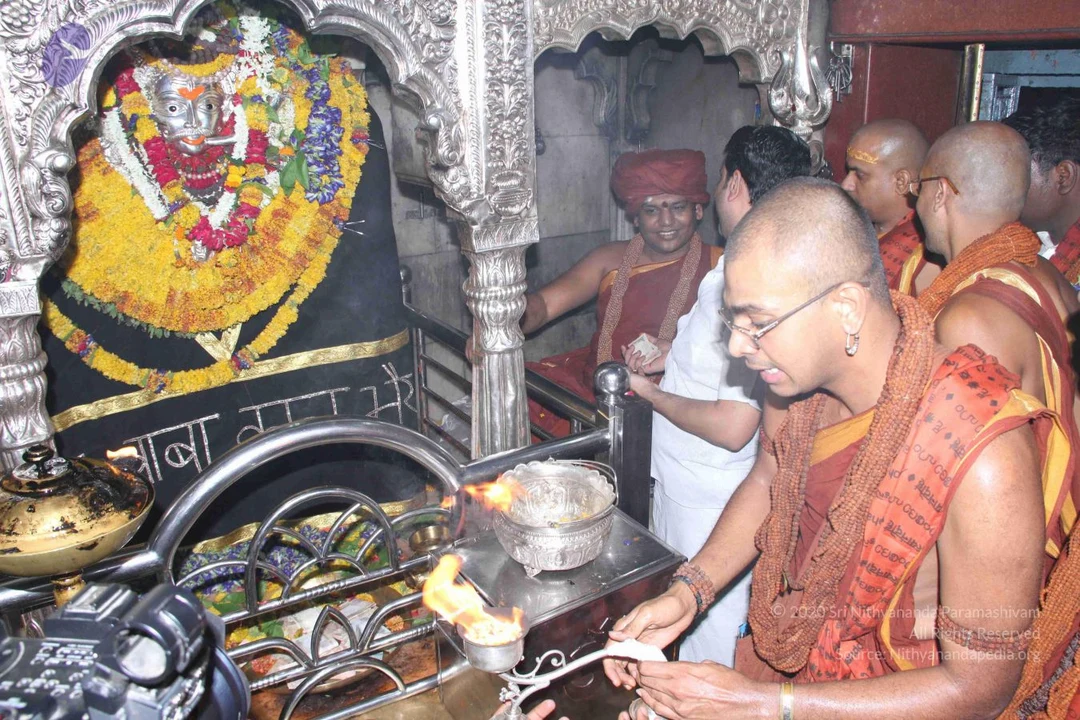
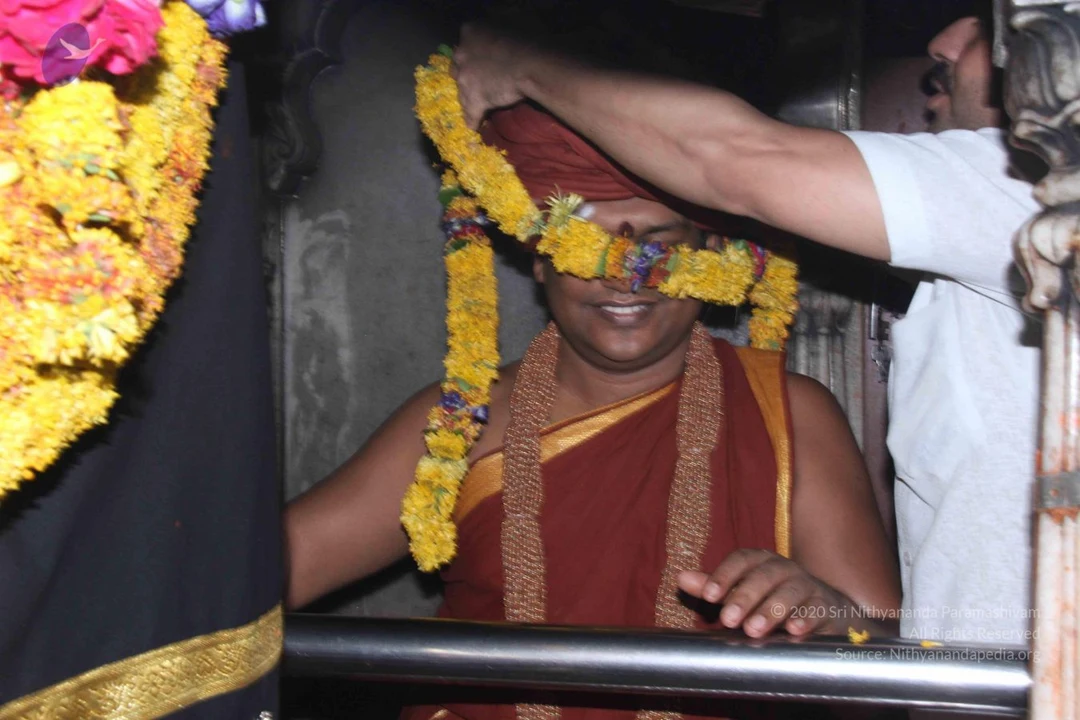
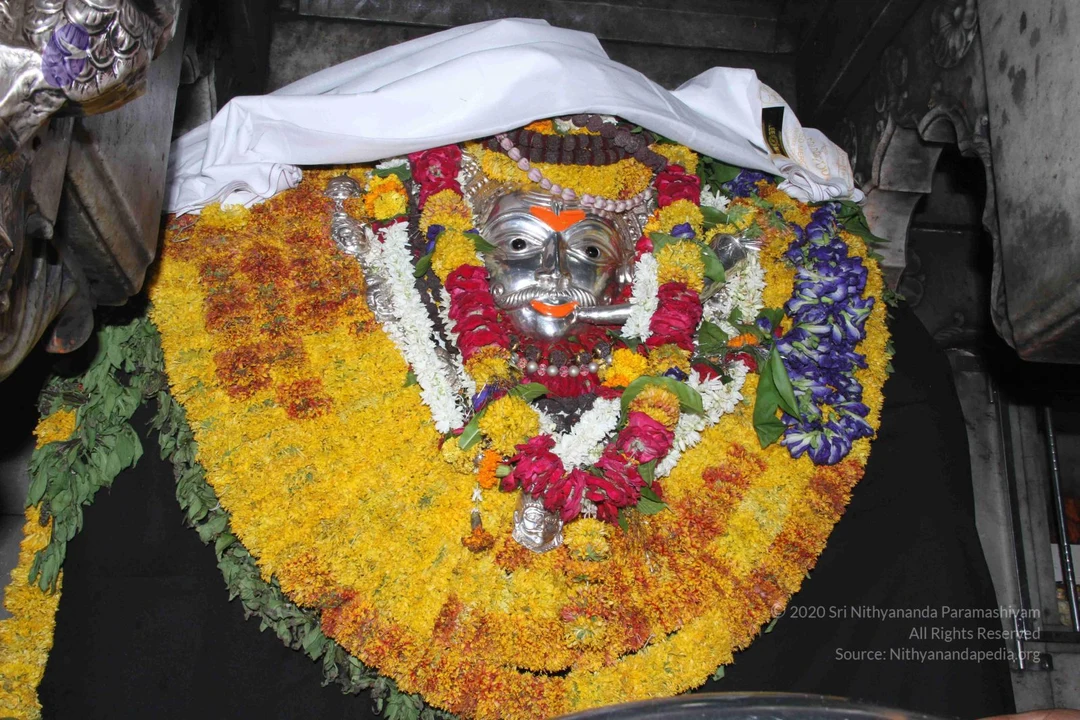
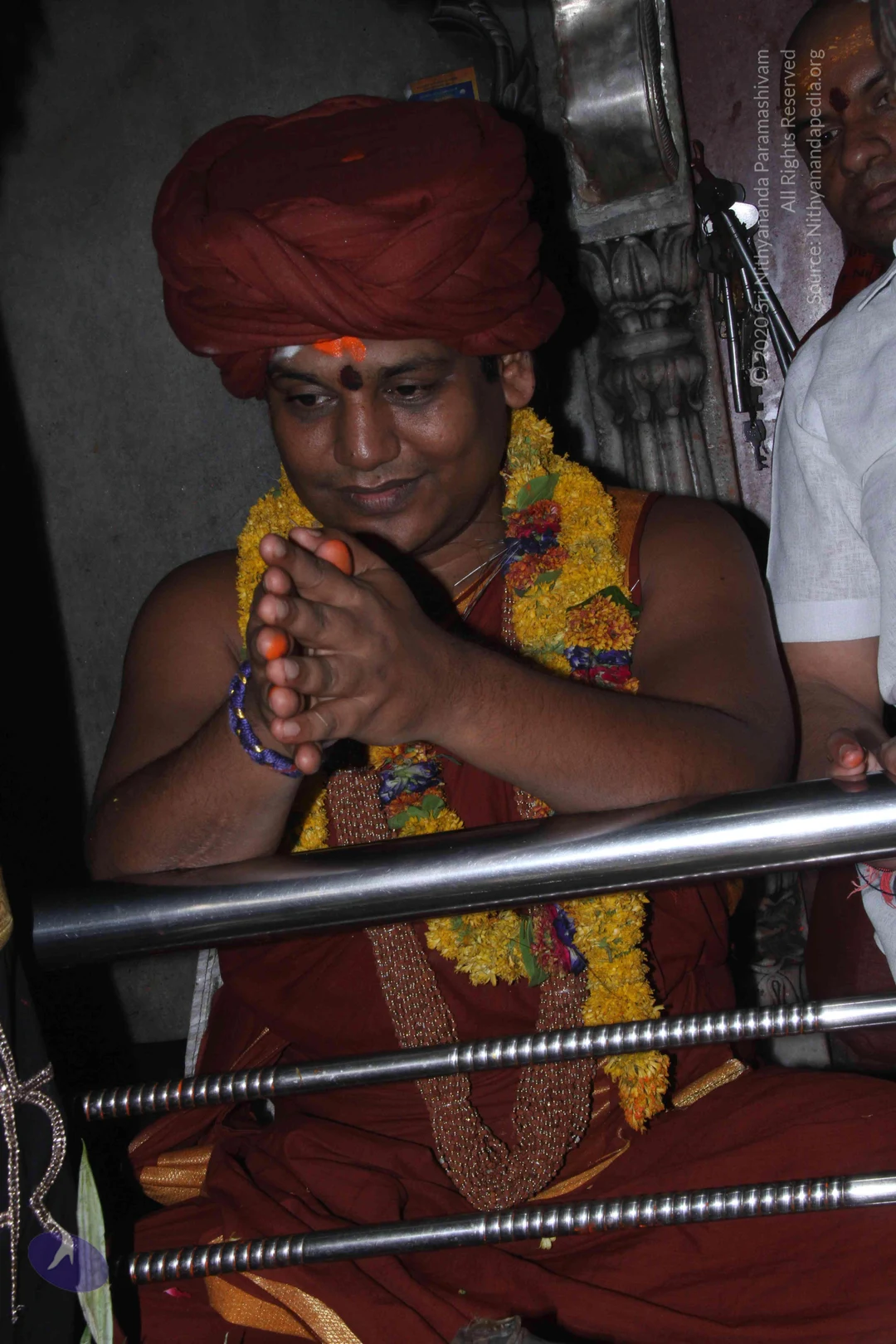
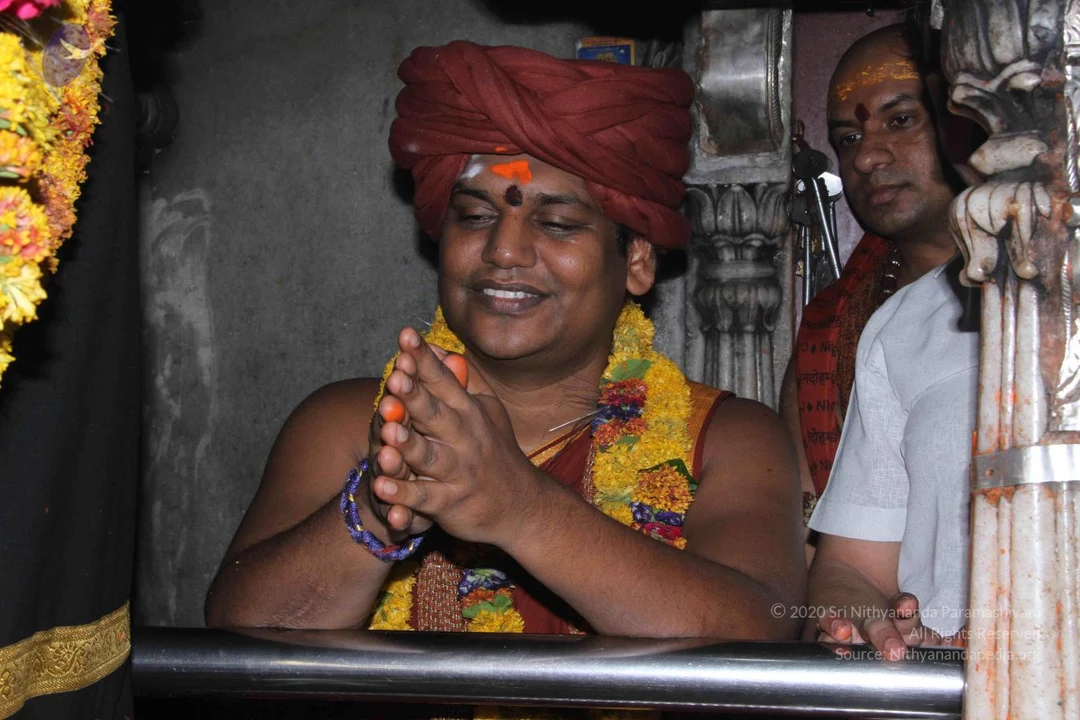
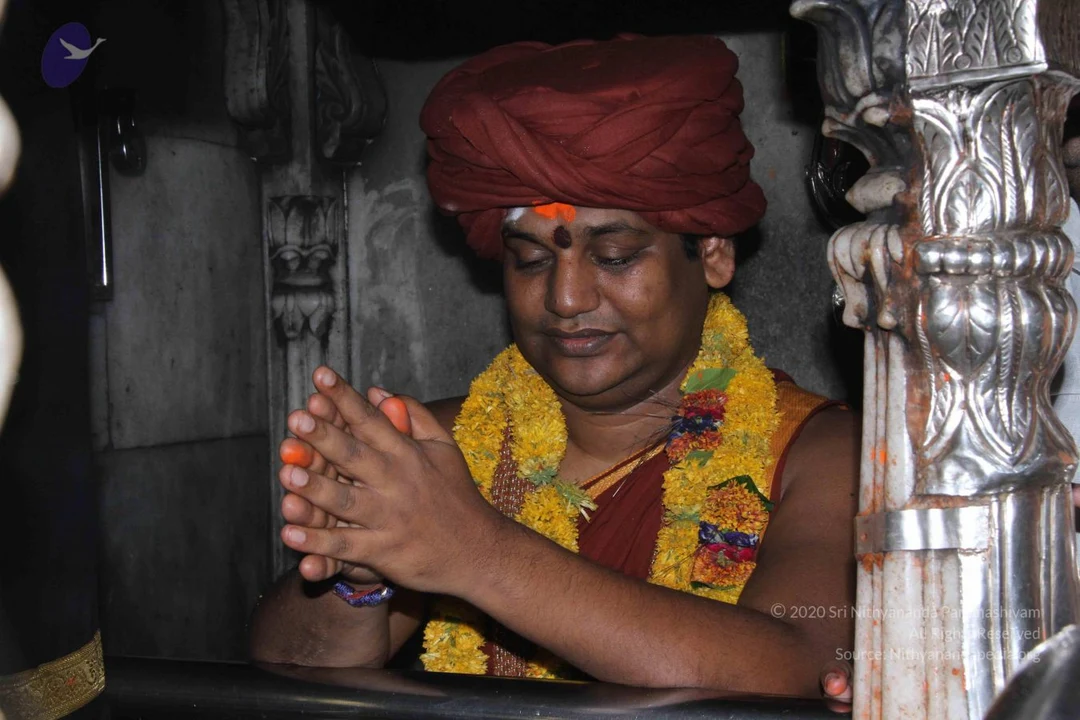
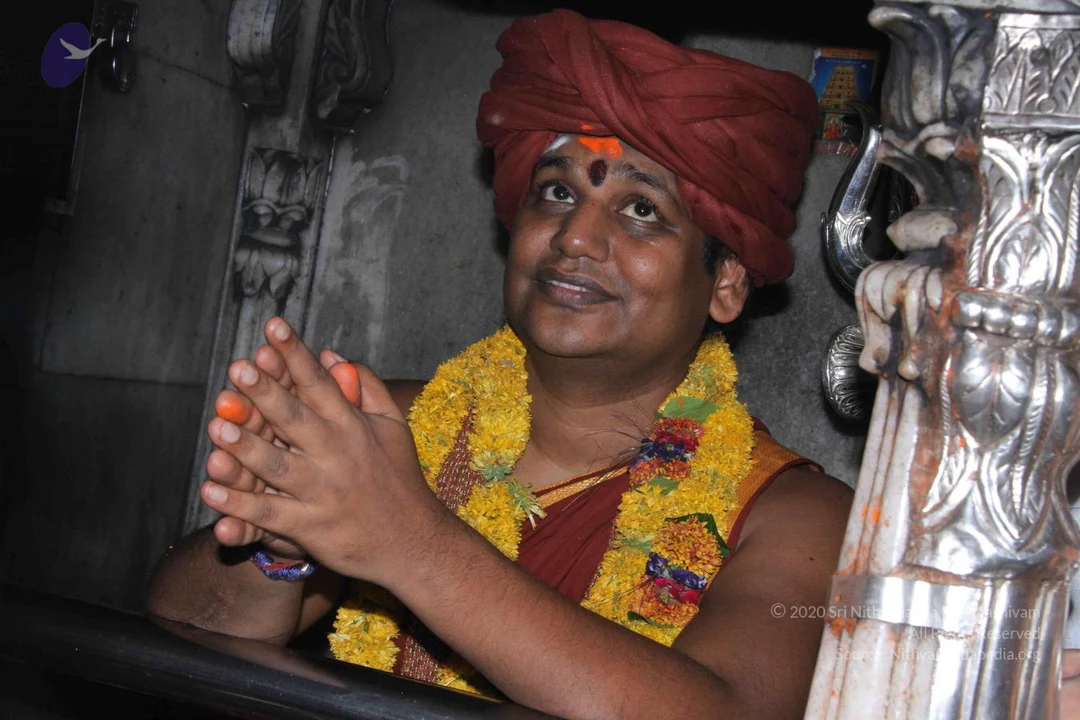
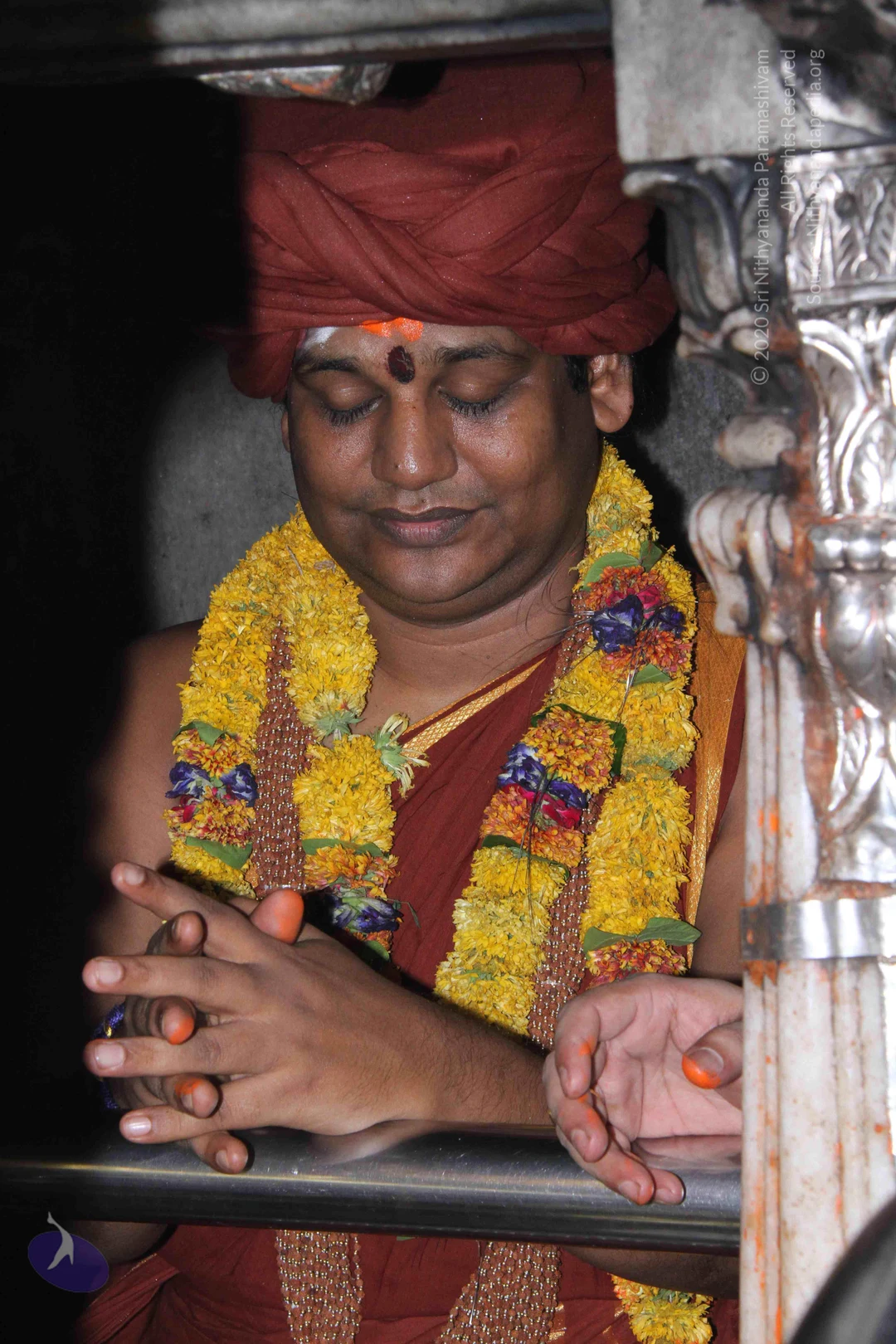
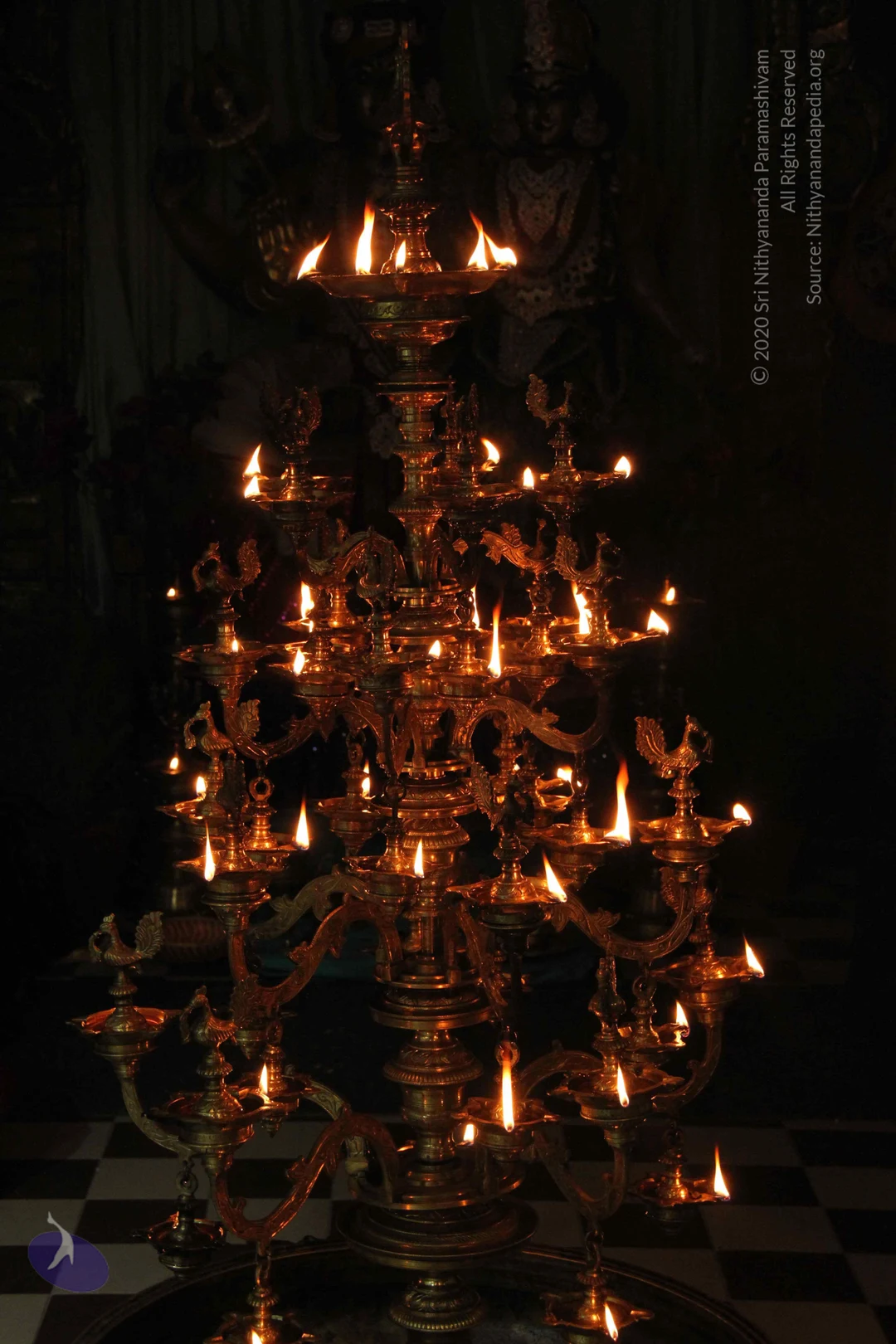
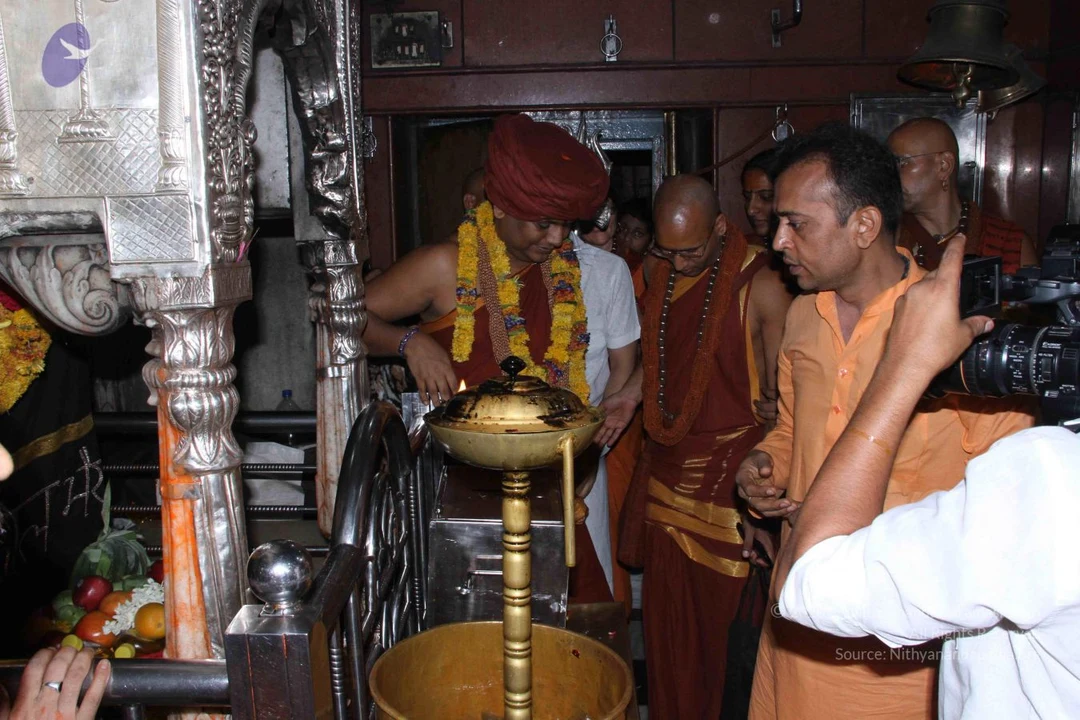
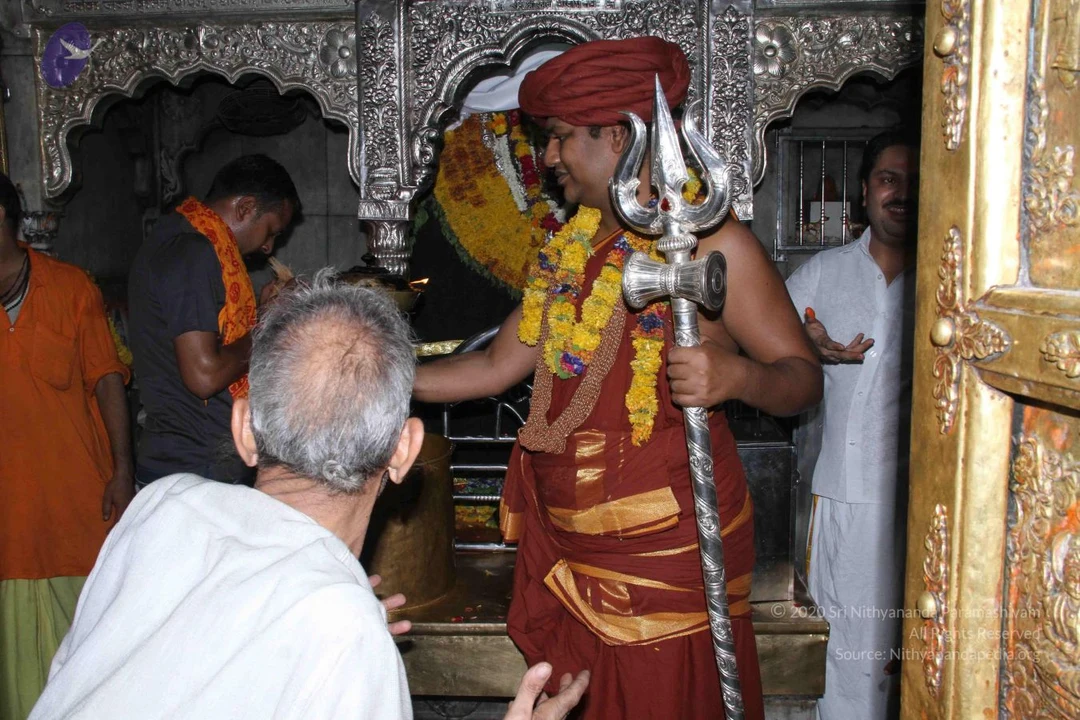
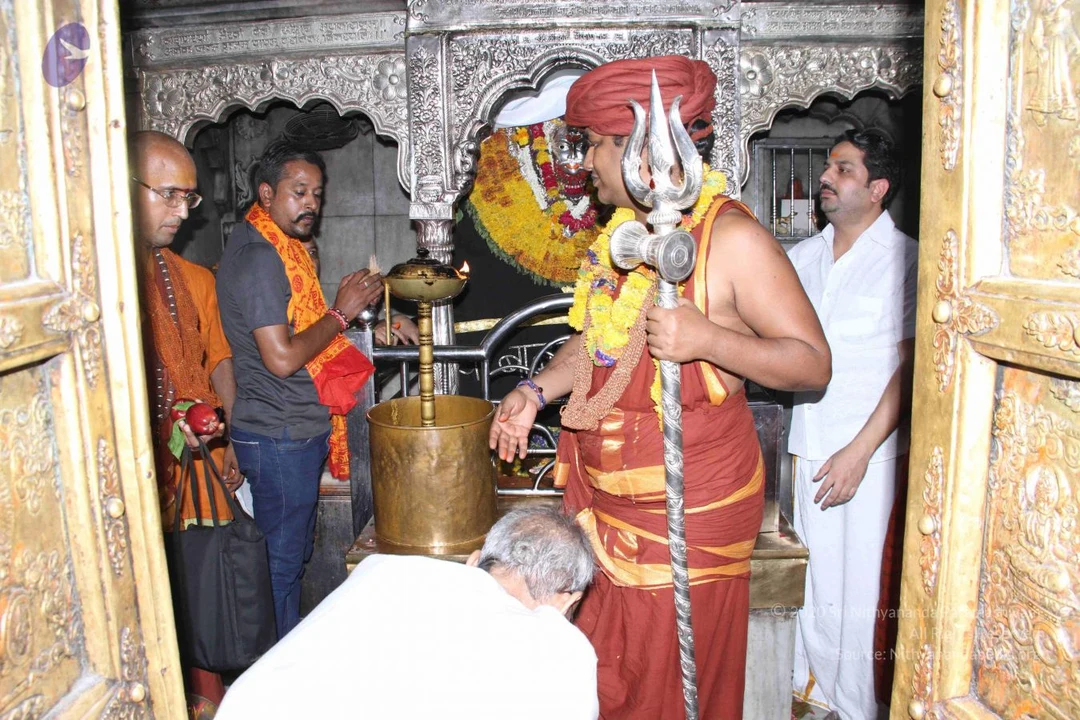
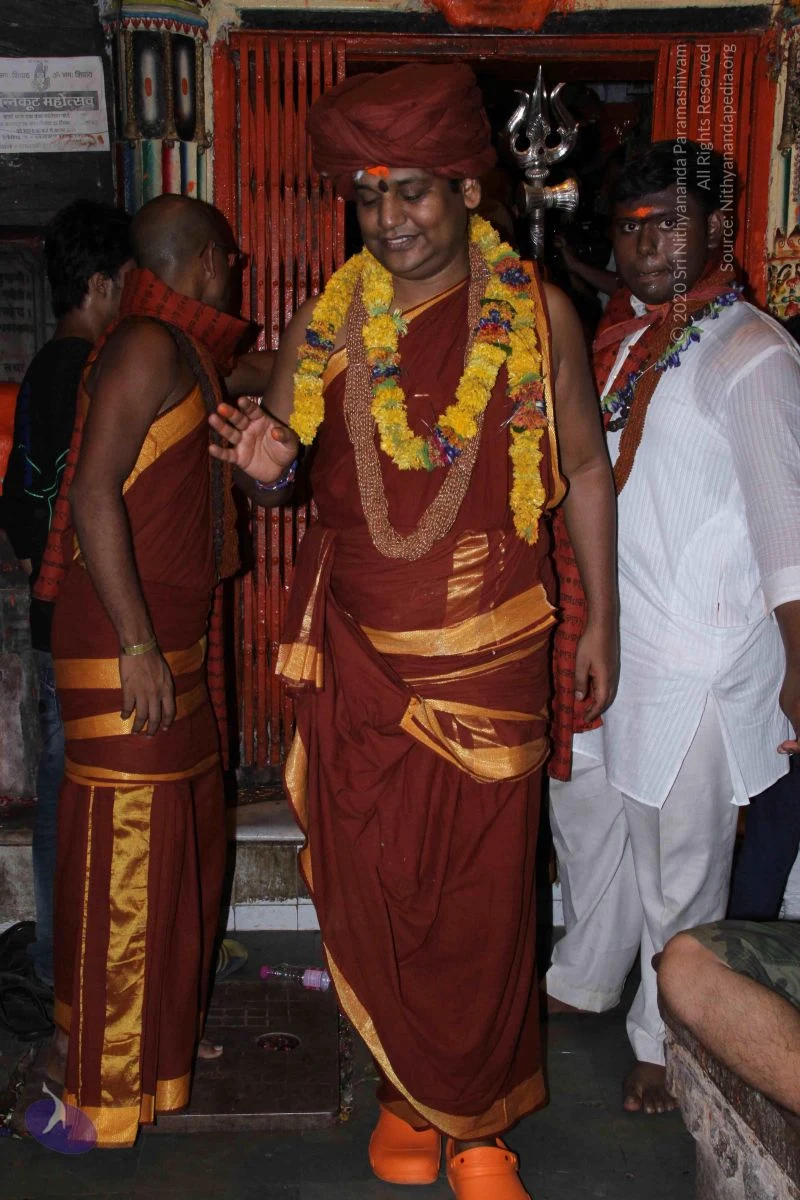
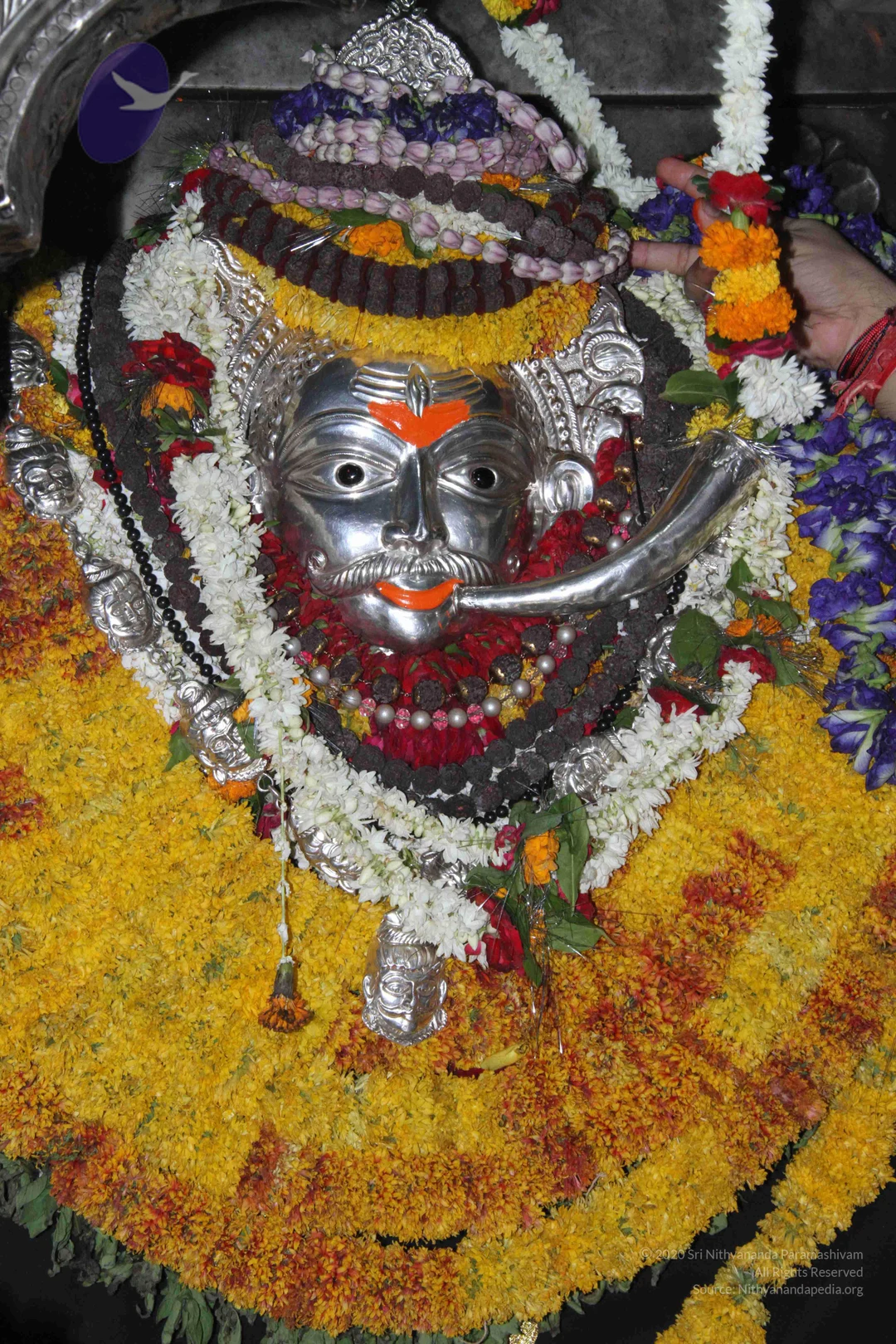
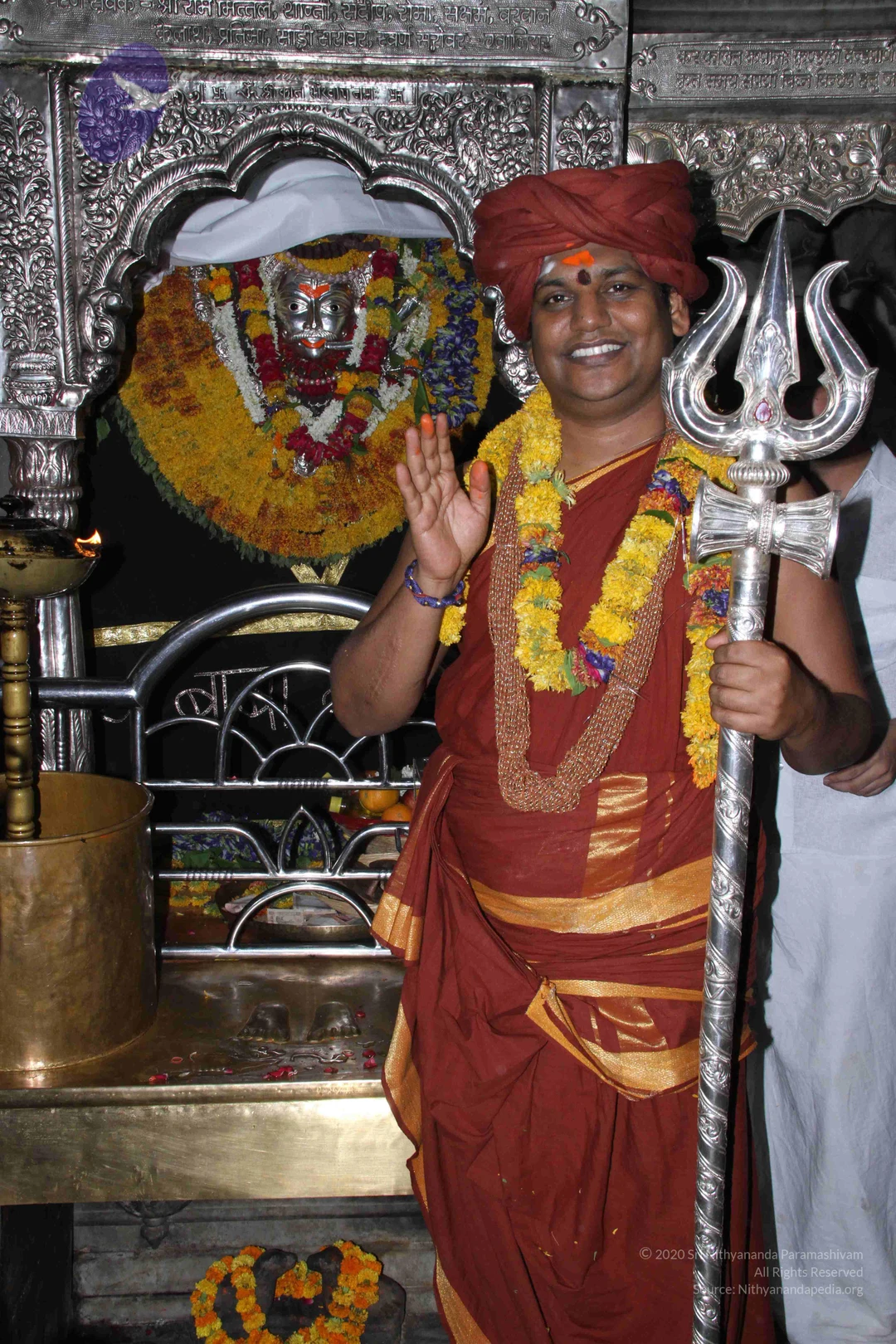
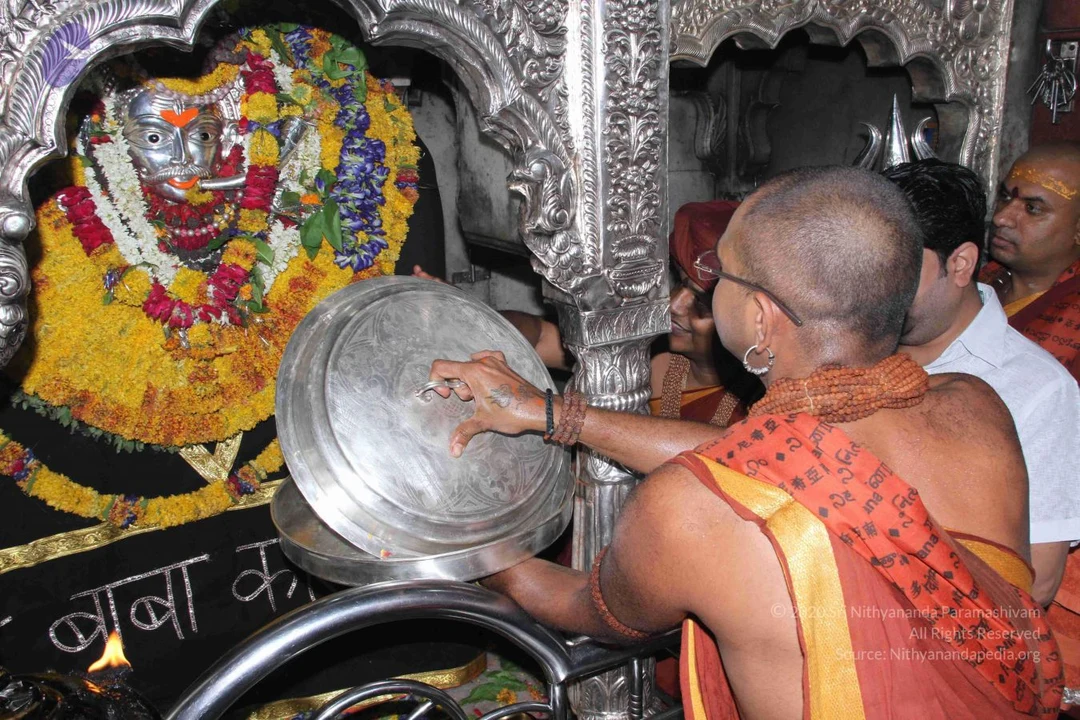
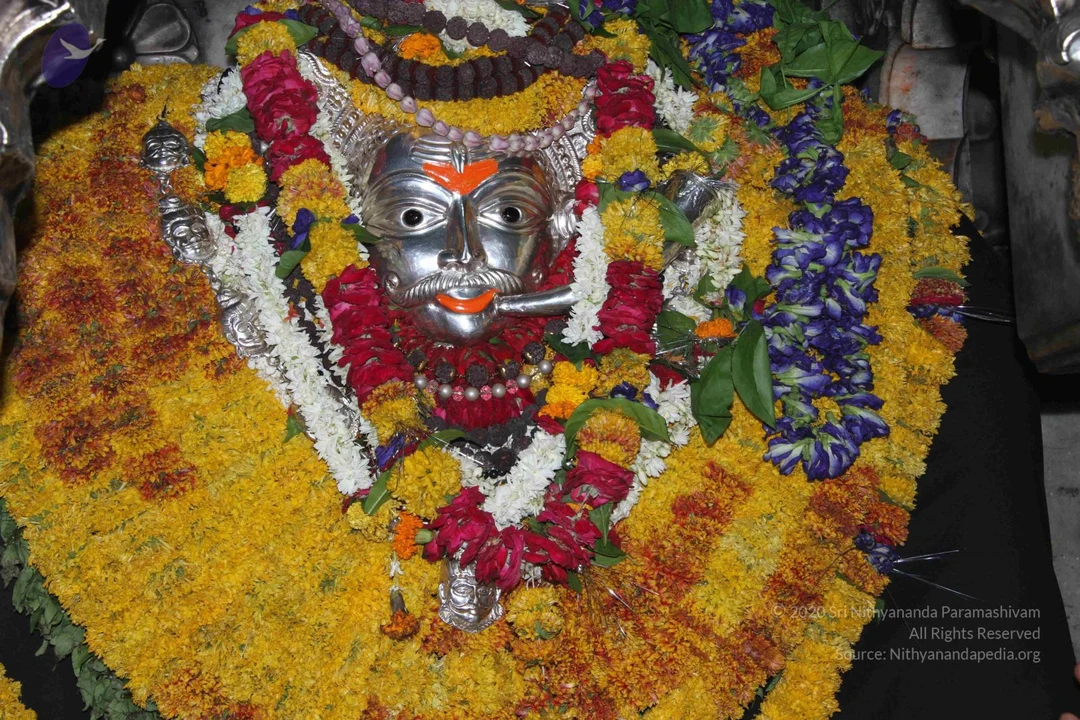
A photograph of a narrow temple lane in Varanasi beside a shrine with the sign "राम जानकी मंदिर" (Ram Janaki Mandir). A man in a saffron-orange dhoti and shawl, with a red turban, a long marigold garland and a rudraksha-style bead bracelet, walks forward smiling with hands at his waist, and a silver trident stands behind him. Behind him, a line of devotees in white kurtas and orange shawls stand with hands folded, including a woman with curly auburn hair and another woman in white with glasses. A seated man in a green shirt sits at the shrine with a tray of marigolds and flowers. The lane has a yellow cloth canopy overhead and scattered sandals on the stone floor. Swamiji (probable): the walking man wears saffron ochre robes, a red turban, a flower garland and a bead bracelet, and is the figure at the centre of the group.A smiling man in an orange-red turban and saffron-orange robe stands with palms pressed together in namaskar beside a silver-framed shrine. He wears a long beaded rudraksha-style mala and a red-and-gold stole, with a red tilak on his forehead. Behind him a man in white holds a small object near the shrine, and other devotees in white and saffron crowd close. Inside the shrine, a silver-faced deity murti is decorated with marigold garlands, a white flower garland and a blue flower garland. Brass oil lamps with flames stand in the foreground beside a silver railing.A photograph of a silver deity murti of a moustached, fierce-faced form with an orange tilak on the forehead, adorned with a silver crown set with colored stones and a silver-tipped horn or mouth ornament. The figure is draped in thick garlands of yellow and orange marigolds, white flower strands, purple blue flowers and green leaves, with red beads at the neck. Behind it is a black cloth backdrop framed by ornate silver arch panels with floral repoussé work. At the lower left an oil lamp burns with a visible flame, and a hand with orange-painted nails appears at the right edge. No people are seated before the image; the scene is a close temple shrine view.A photograph inside a temple sanctum where a silver-framed deity murti, draped in black cloth and heavily garlanded with yellow marigolds, red and white flowers, and blue blossoms, is being worshipped. On the right, a bald man in saffron-orange robes with rudraksha malas and a gold-rimmed pair of glasses holds a small oil lamp and a flame over a metal stand, a person in saffron and rudraksha, appearing to lead the worship. Beside him, a man in a white kurta holds a small brass vessel, and behind them a man in a red turban and orange robes pours from a brass vessel. A brass lamp stands in the foreground, and a silver pot is visible at lower left with a partly visible person's head.A photograph inside a temple shrine showing a silver-framed niche with an ornate silver-embossed arch. A silver deity face with orange tilak is covered in dense garlands of marigolds, red and white flowers and purple blossoms, set against a black cloth with a gold border. Two men stand at right: a bald-shaved man in a red-orange turban and saffron-coloured wrap, holding a silver lamp with a flame, and a man in a white shirt with an orange tilak on his forehead and a bangle on his wrist, reaching toward the silver railing. Lit oil lamps are visible at the lower left.A photograph inside a temple shrine showing a silver deity face framed by marigold and rose garlands on a black cloth with gold border. In the foreground a man in a maroon turban and saffron-orange robe with a beaded mala lights a brass oil lamp with a flame. Beside him a man in a white shirt holds a silver bowl of offerings. Silver railings and ornate silver pillars surround the shrine, and handwritten Hindi text reads 'Baba Kaal Bhairav' on the black cloth.

sat&outside phopts2d july2015
93 photosSource gallery
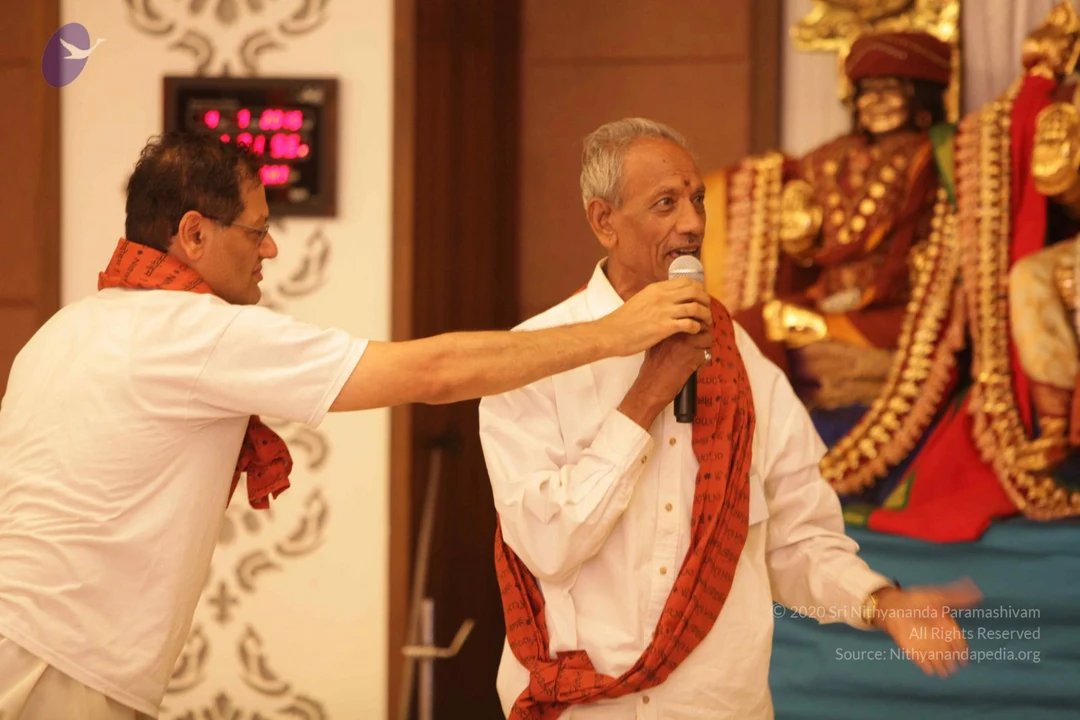
Photograph of a seated audience viewed from behind at a satsang hall. Many people in white clothes and gold-coloured chairs face a stage with a golden throne backed by a starry blue backdrop, and an orange banner reading Inner Awakening hangs at upper left. On the stage, a figure in orange and saffron robes sits on the throne, and a large screen at right shows a close-up of a person in red robes seated on a red cushion. Several people wear rudraksha malas, and gold pillars and a chandelier frame the hall. The seated attendees number roughly twenty to sixty, with some partly visible at the edges.A photograph taken from the back of a seated audience in a hall during a satsang. Rows of attendees in cream-covered chairs face a stage with a golden throne-like seat draped with a cloth, flanked by gold pillars and a star-field backdrop. A large screen shows a figure in red and saffron robes seated in meditative posture. Most attendees wear white or pale shirts and kurtas, with a few in red, orange and striped clothing. A camera on a tripod stands near the stage. A banner reads Inner Awakening.Photograph from behind a large hall filled with rows of seated devotees in white clothes on gold-covered chairs, facing a raised stage at the far end. Many attendees wear white kurtas and shirts; a woman in a red and orange patterned sari sits at right. A red carpet runs down the centre aisle toward the stage, where a figure in white stands near an ornate gold-and-purple backdrop with a central throne-like seat and a large video screen above showing a similar scene. A chandelier hangs from the ceiling, and a statue stands at the left edge beside a banner reading 'Inner Awakening'. The scene suggests a satsang gathering.A photograph taken from the back of a seated audience in a large hall with cream-upholstered chairs and a polished floor. Many people in white and pastel clothing sit facing a stage with a decorated central seat and a deity murti on a side altar. A large screen at upper right shows a figure in white on a stage. Some attendees wear earphones, and a few wear rudraksha or beaded necklaces. Orange cloths lie on the floor near the front row. Several dozen people are visible, including partially visible heads at the edges. The setting resembles a satsang hall.A large hall seen from behind rows of seated devotees, mostly women with hair in buns and ponytails, wearing white and light-blue patterned clothing, with a few wearing headphones. Beige-cushioned chairs fill the foreground. On the stage, a golden throne-like seat and a dais decorated with ornate pillars stand beneath a backdrop, and a large screen on the right shows a figure seated on a throne with lamps and red draping. A small deity murti sits on a side table at left. Some people in the far rows wear white clothing.Wide interior photo of a satsang hall with a large crowd of devotees seated on white floor mats and rows of cream chairs, facing a stage at the far end. Many women wear white saris and salwar kameez, while one front-row woman wears a green sari with red patterns and another wears an orange and yellow dupatta. A seated figure in an orange robe sits near the front right on the floor. On the stage, a figure sits on an ornate golden throne-like seat before a backdrop of a dark blue night scene with a painted deity-like figure, and a golden deity murti sits on a blue-draped pedestal at the left. Chandeliers hang from the ceiling and a red banner with white lettering is displayed above the stage.

july-2-shivoham-session-photo-slected

5 photosSource gallery
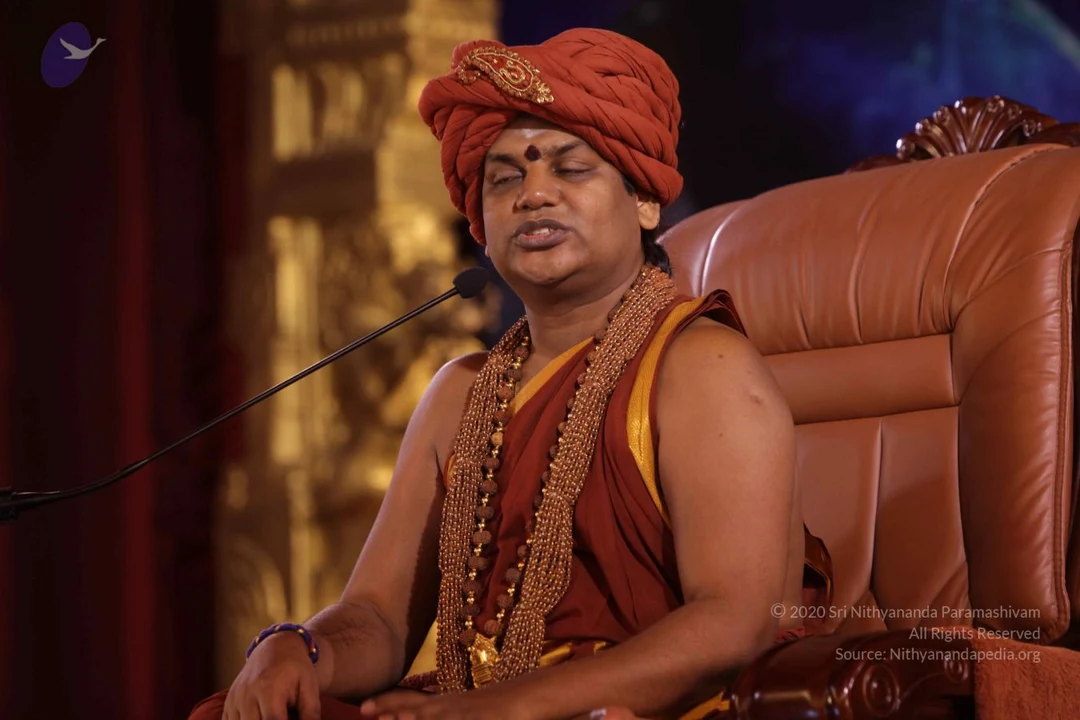
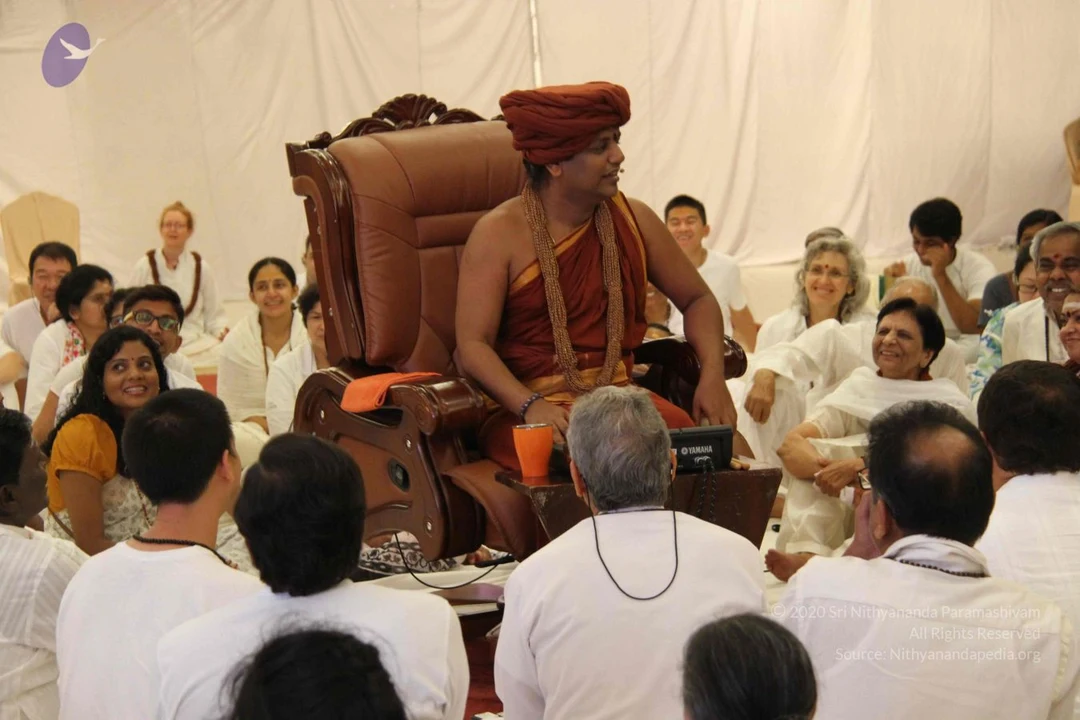
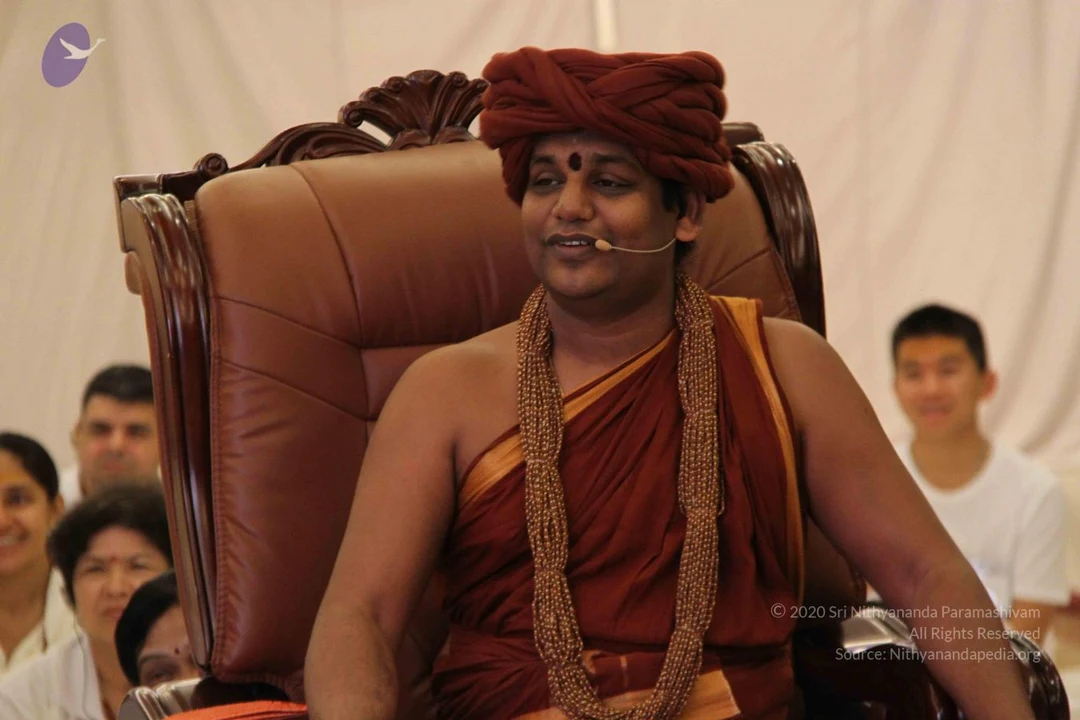
A photograph of a satsang in a large tented hall with white draped fabric overhead. A man in saffron-orange robes and an orange turban sits on an ornate reddish-brown throne at the centre, while a dense ring of seated devotees in white clothing surrounds him on a white floor covering. Several children in the foreground sit with their backs to the camera, including a girl with long braids in a yellow polka-dot dress. Some attendees on chairs at the back wear white and orange garments, and a few hold their palms together. The scene shows a seated discourse with the teacher on a raised throne and devotees listening attentively. Swamiji (probable): the seated figure on the throne wears a saffron-orange robe, an orange turban and a shawl, consistent with the page's account of a satsang.A satsang in a large hall where a crowd of about 60 people, mostly in white clothing, sits cross-legged on white floor mats around a central seated figure. The seated figure wears an orange-saffron robe and an orange turban and sits on a dark brown high-backed throne-like chair, with a small table and microphone in front. Many attendees wear white kurta-style or white salwar outfits, a few wear saffron or red shawls, and one woman in front wears a white top. Gold decorative trees and white draped fabric stand at the back, with purple patterned panels on the walls and a stage-side audio setup visible at left.A smiling man in a rust-orange turban with a red tilak mark sits on an ornate brown leather throne-style armchair with carved wooden arms. He wears an orange-saffron robe draped over one shoulder and a long strand of beaded gold-brown mala necklace, a blue-and-purple beaded bracelet, and a small headset microphone near his mouth. His hands rest clasped in his lap. Seated audience members, including a woman in yellow with glasses, surround him under a cream fabric canopy. Probable Swamiji (probable) appears in person, identified by turban, saffron robes and mala cues.A satsang in a hall where many people in white clothes sit cross-legged on white floor sheets arranged in a wide circle. At the centre, a figure in orange-saffron robes with a red-orange head covering sits in a large brown leather chair, speaking with a hand raised. Several listeners in white and a few in colourful saris and salwar kameez face him. A woman in white stands at the back near white draped curtains, and chairs line the far side. Visible persons include a man with a white shawl and a woman with a long braid in the foreground. The chair and a small table with a red cup and a black device sit before him.A smiling man in a maroon turban and maroon robe sits in an ornate carved brown leather armchair, holding a small red, yellow and white hand drum in his right hand. He wears a long beaded rudraksha-style mala with a gold-toned necklace and a purple wristband, and has a headset microphone. Seated people in white and orange clothing, including a man with white forehead markings and a woman in yellow, sit around him under a cream tent canopy at a satsang setting. Swamiji (probable): the seated central figure in maroon turban, rudraksha mala and ornate chair matches the page's Nithyananda Paramashivam context by visible ceremonial cues.

slected
47 photosSource gallery
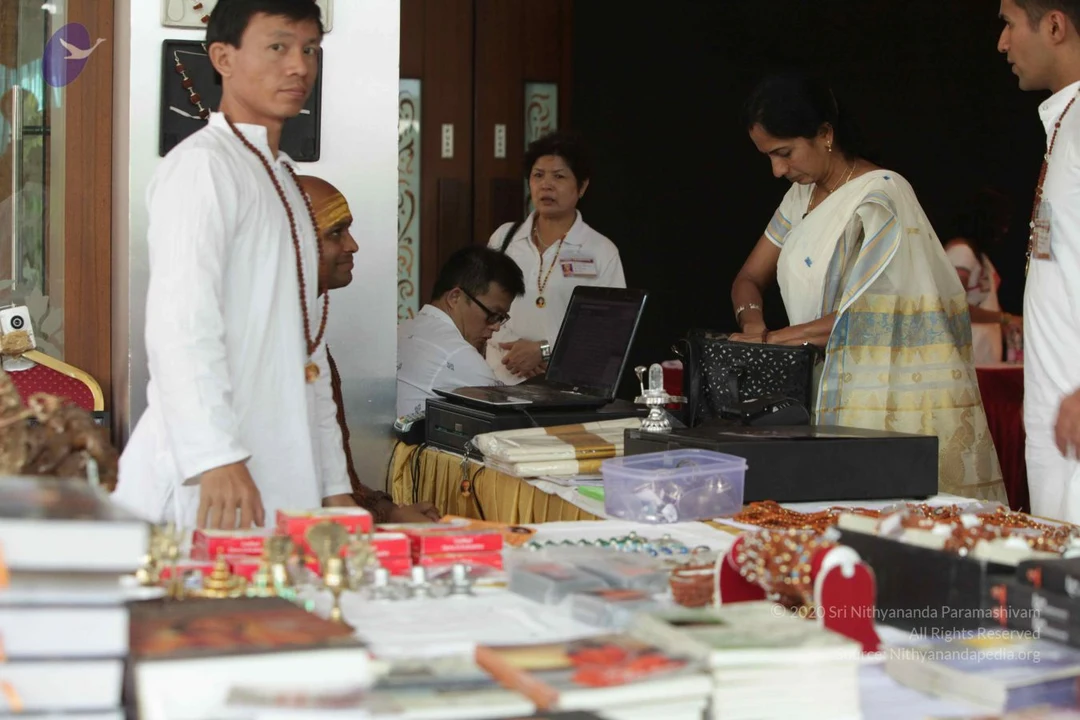
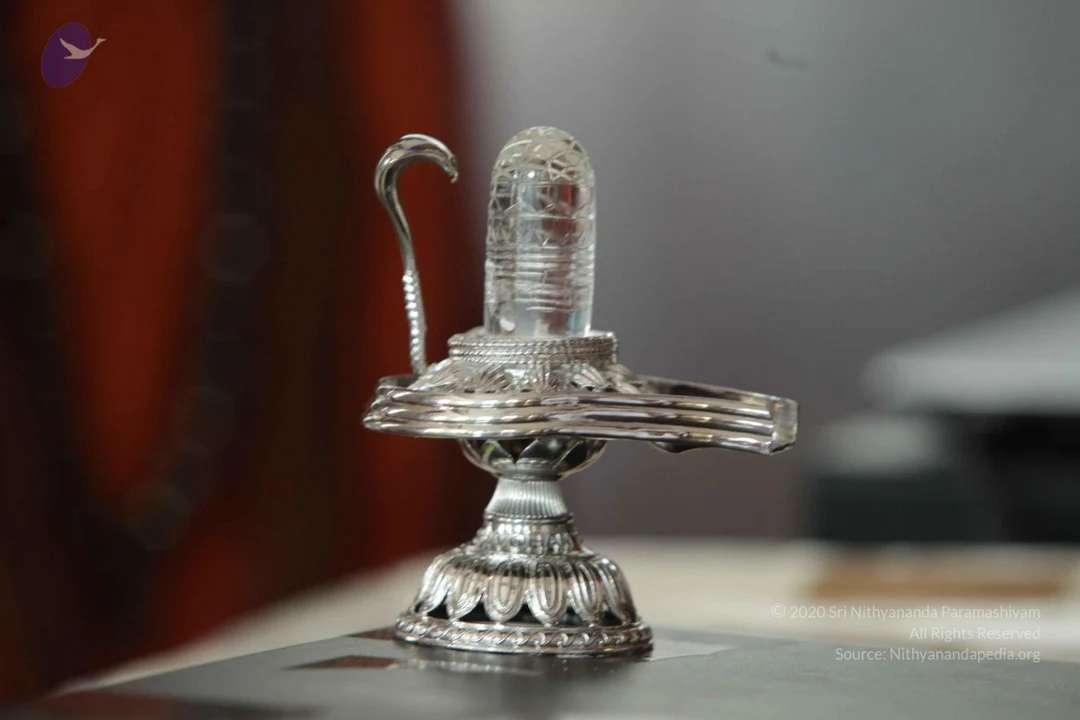
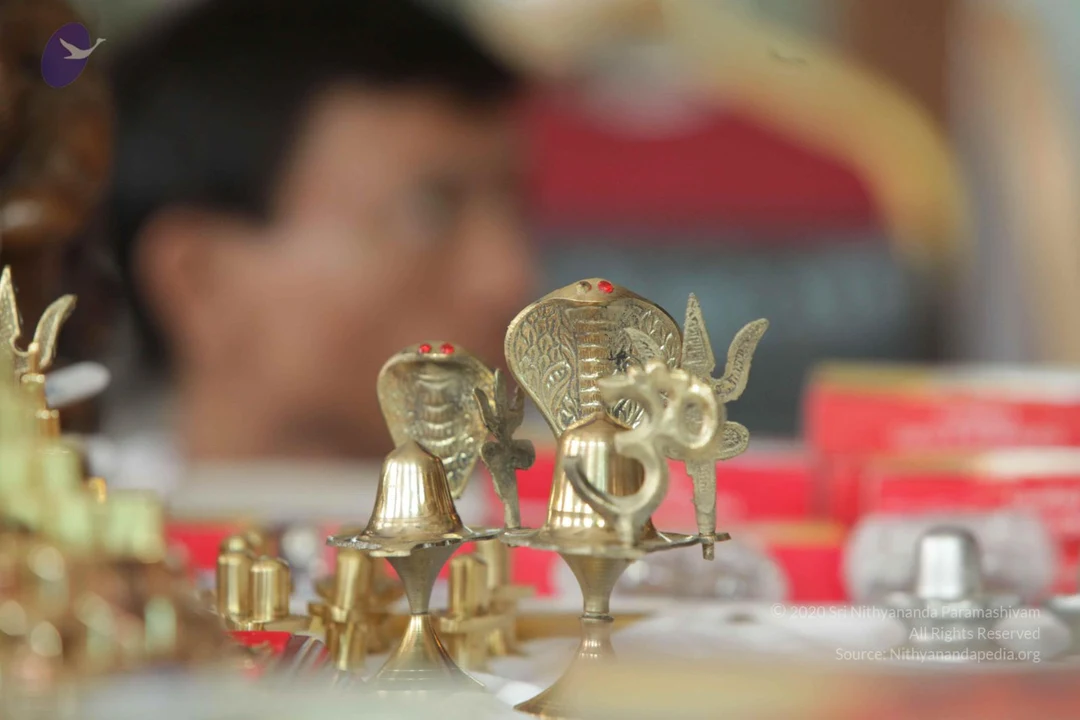
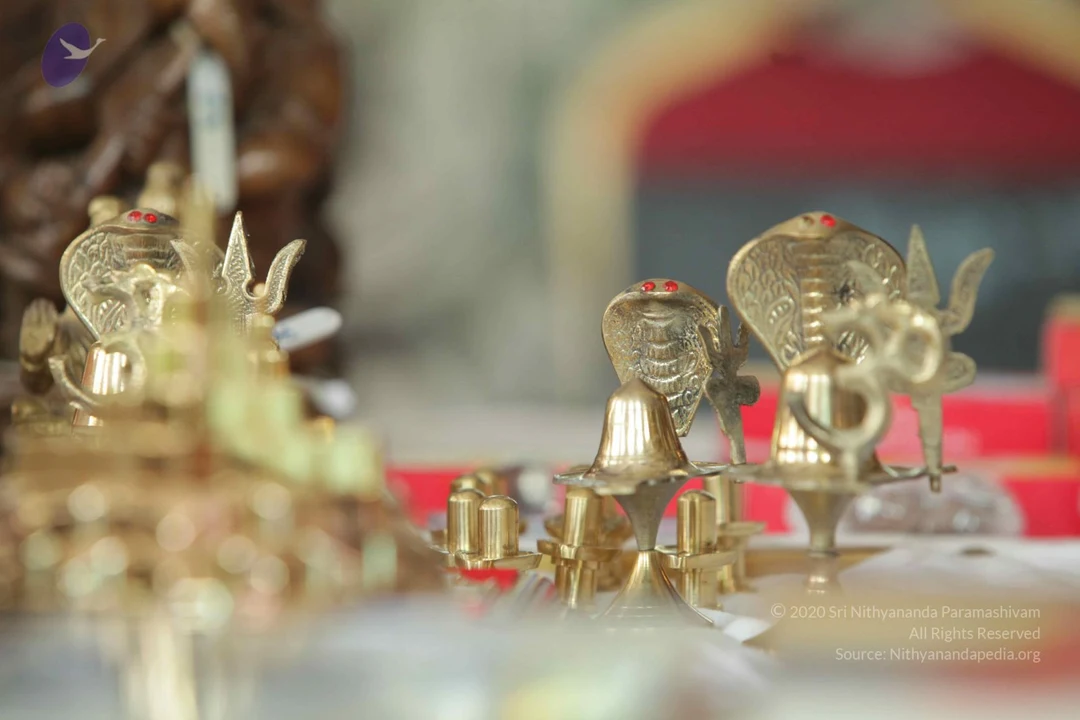
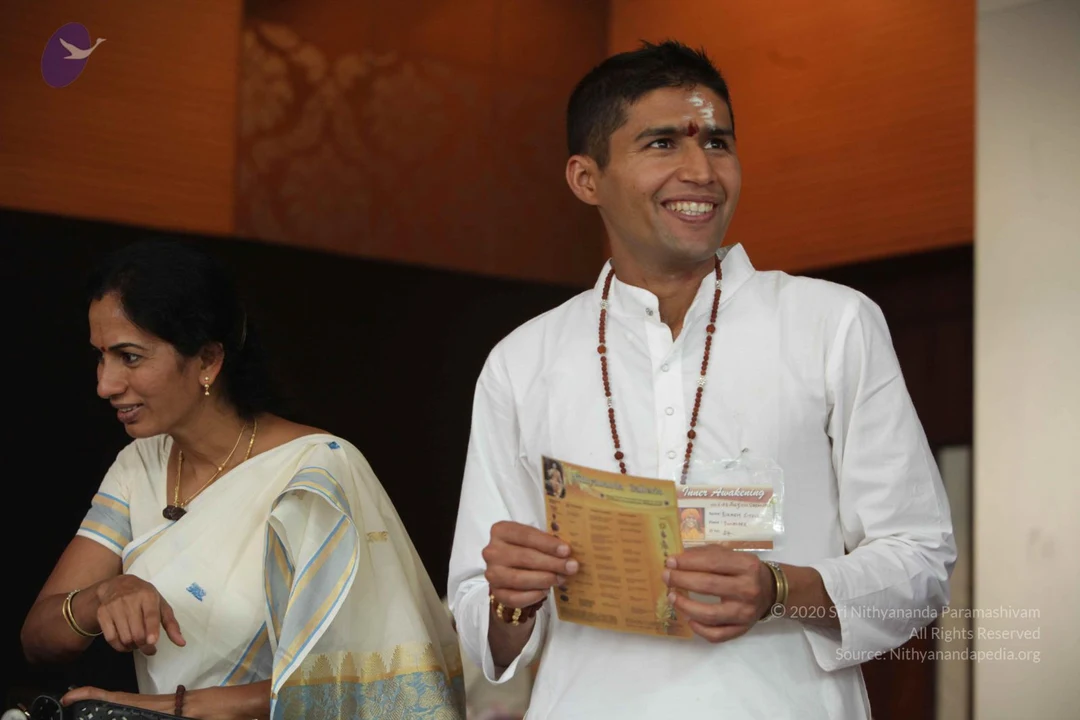
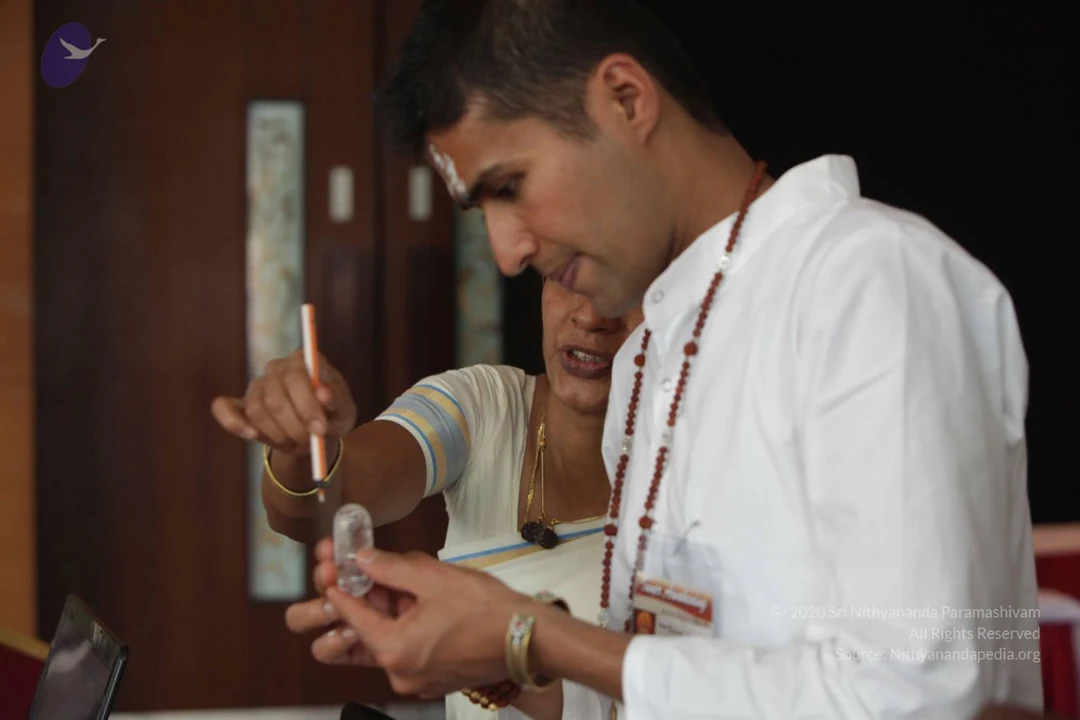
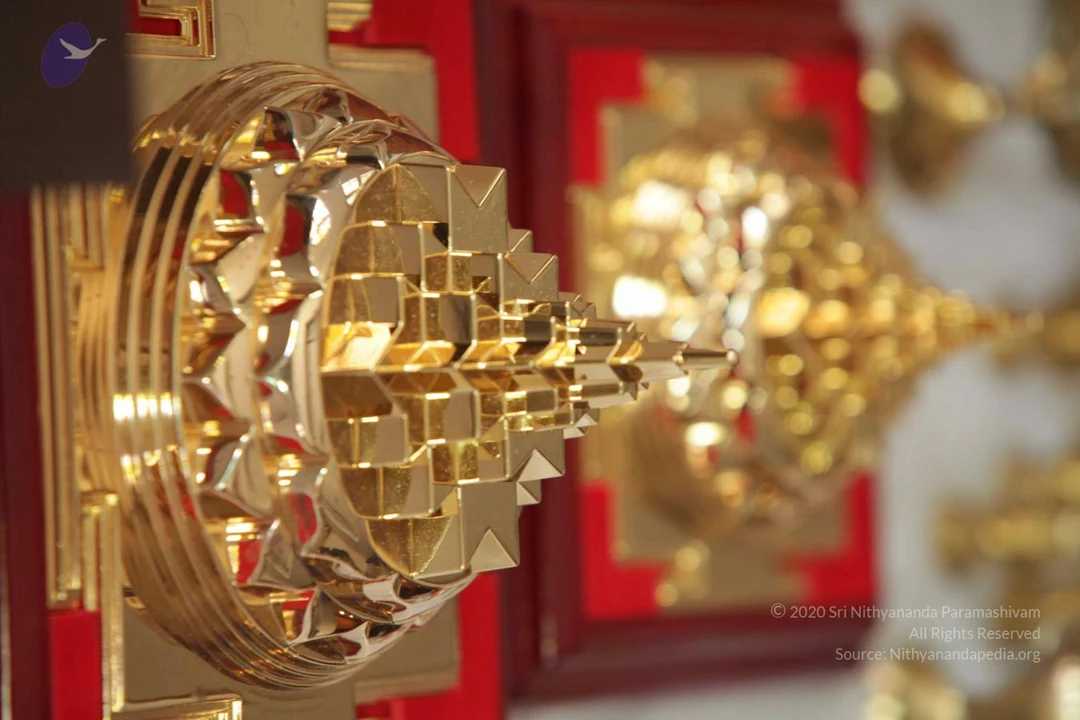
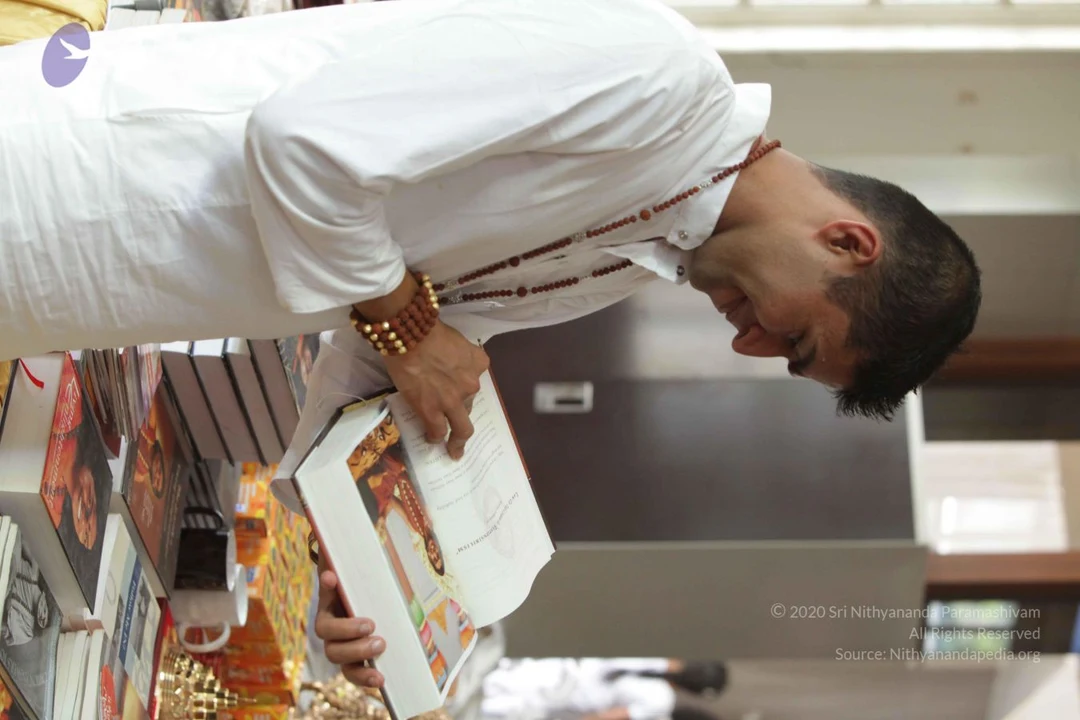
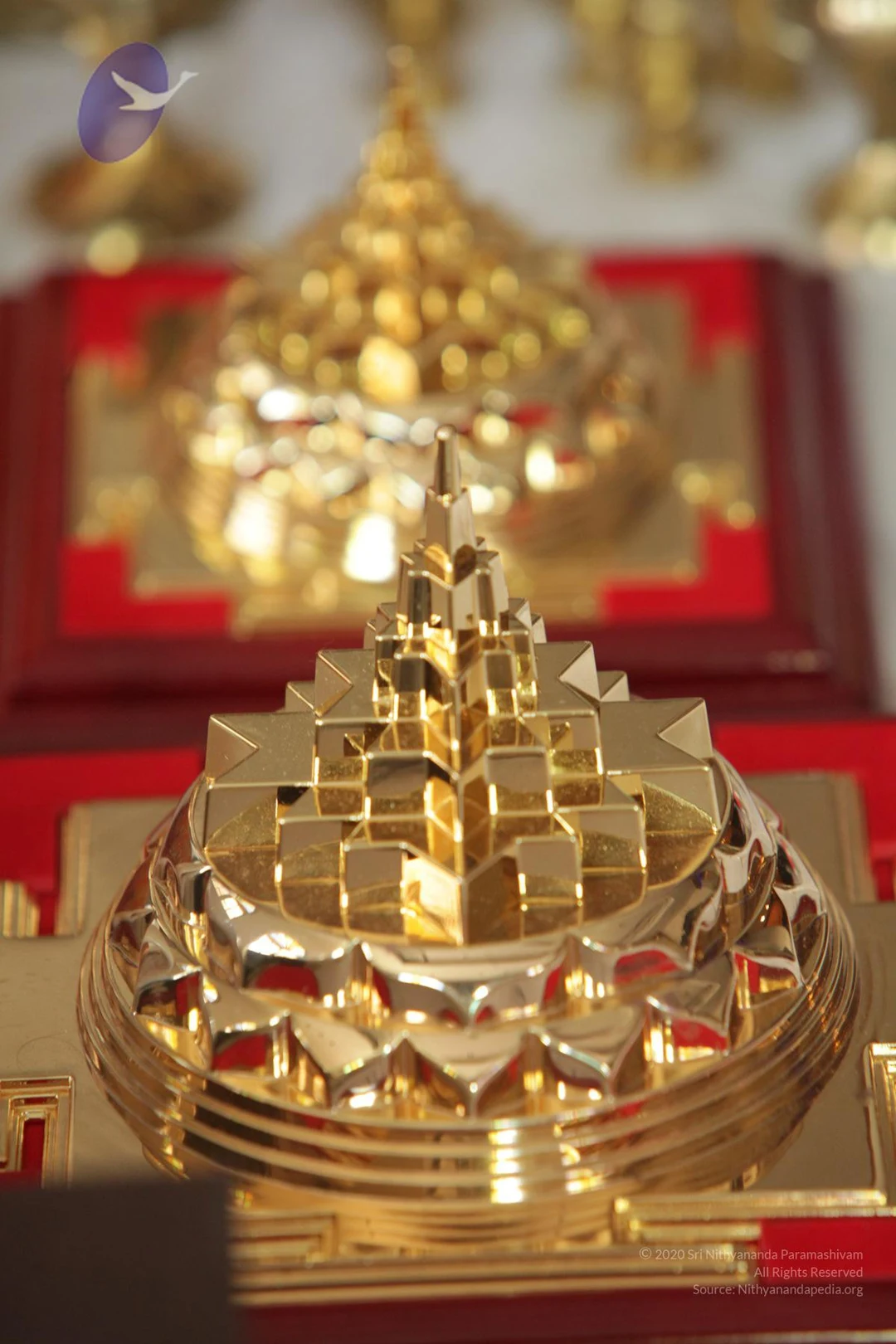
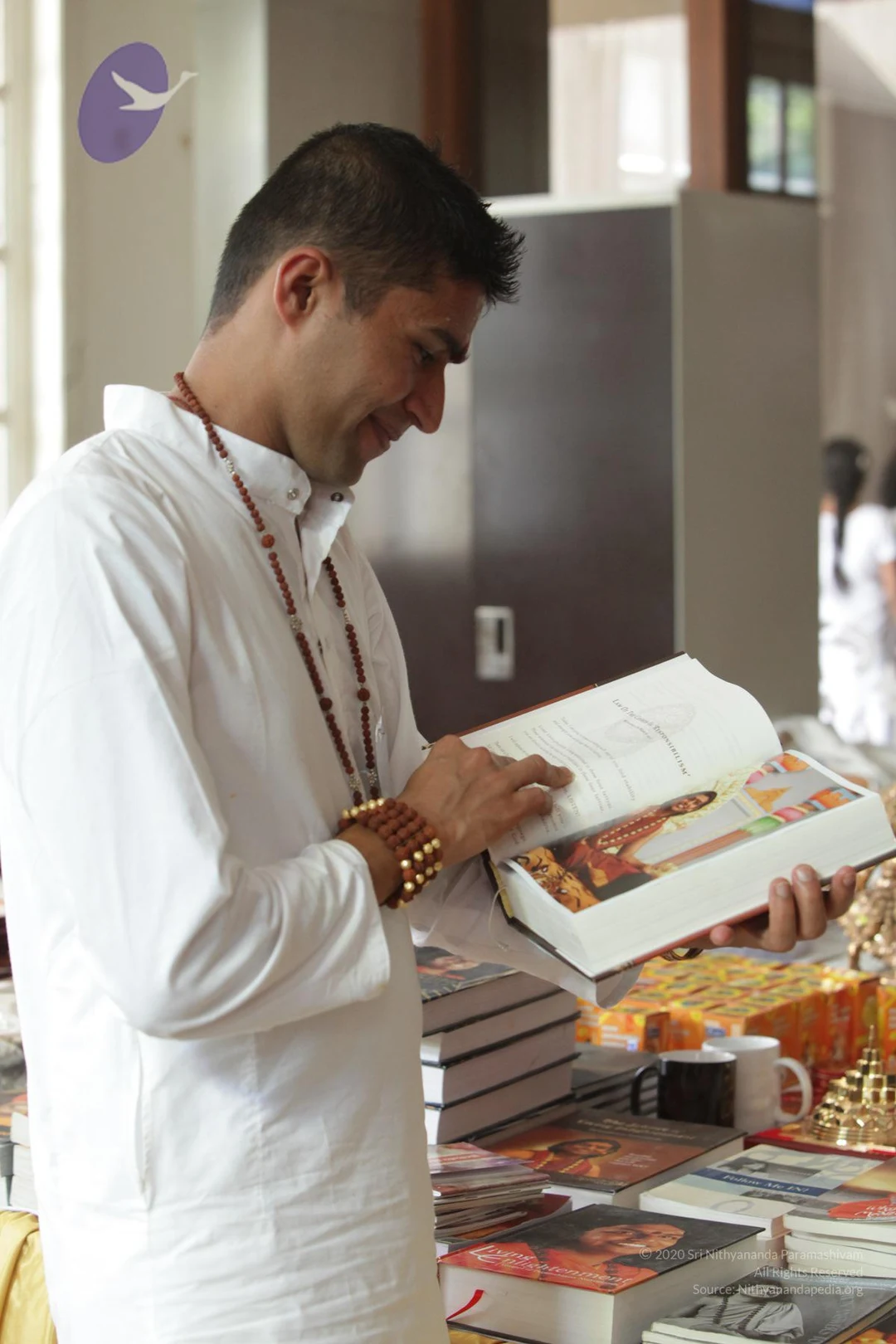
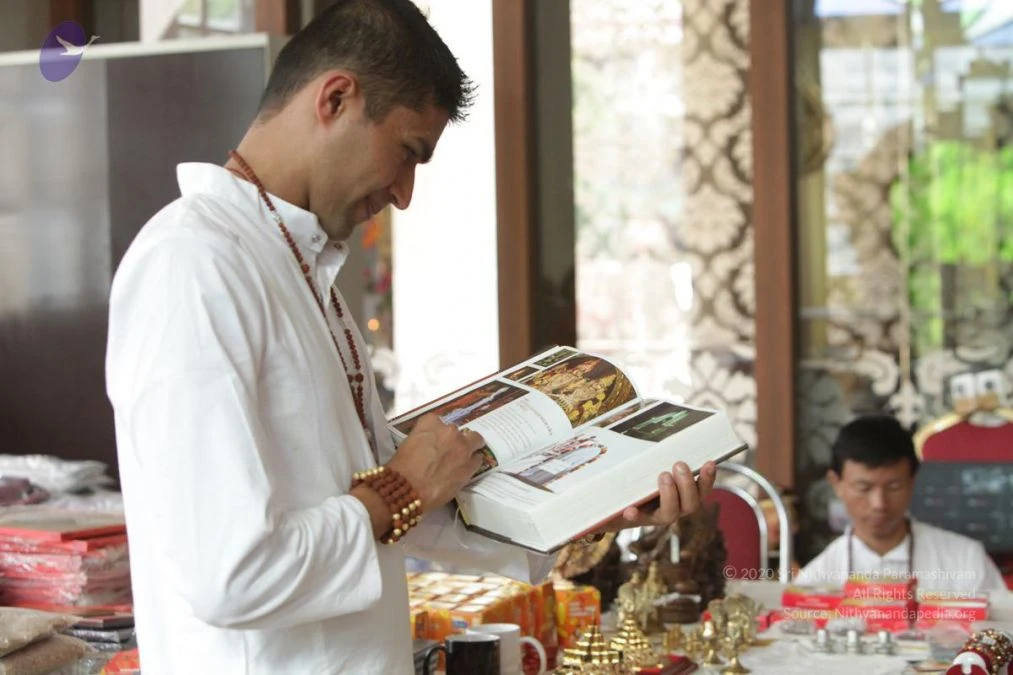
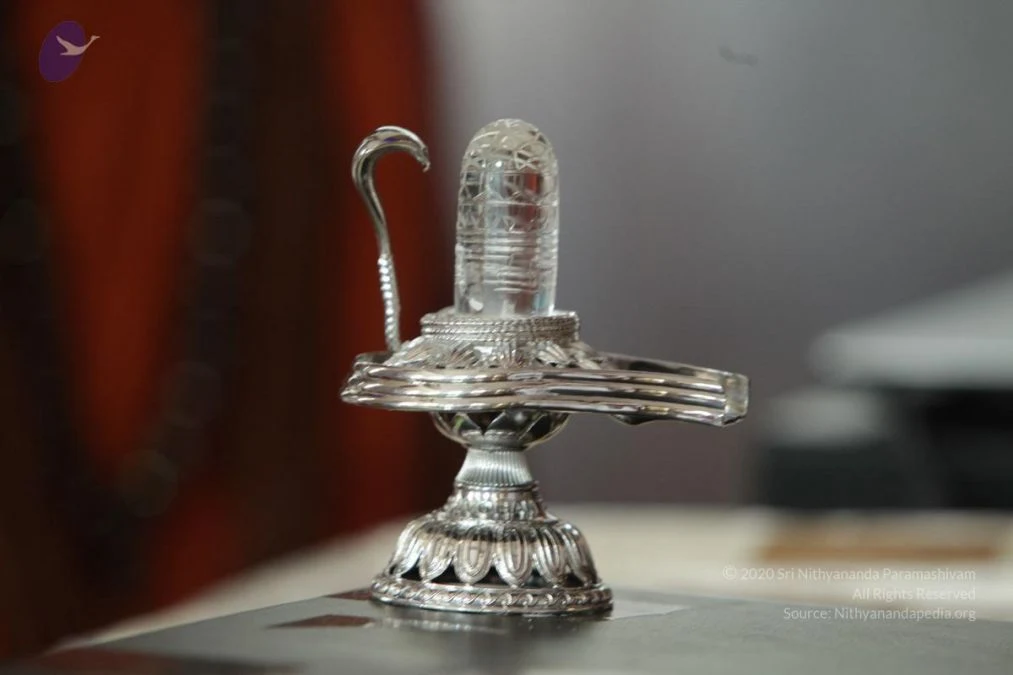
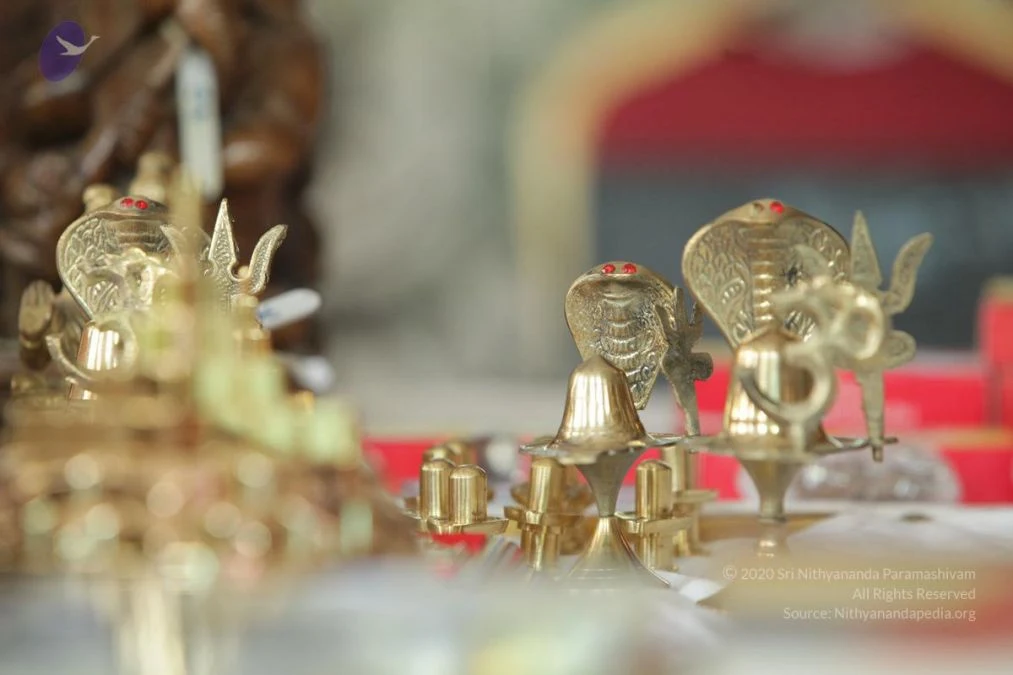
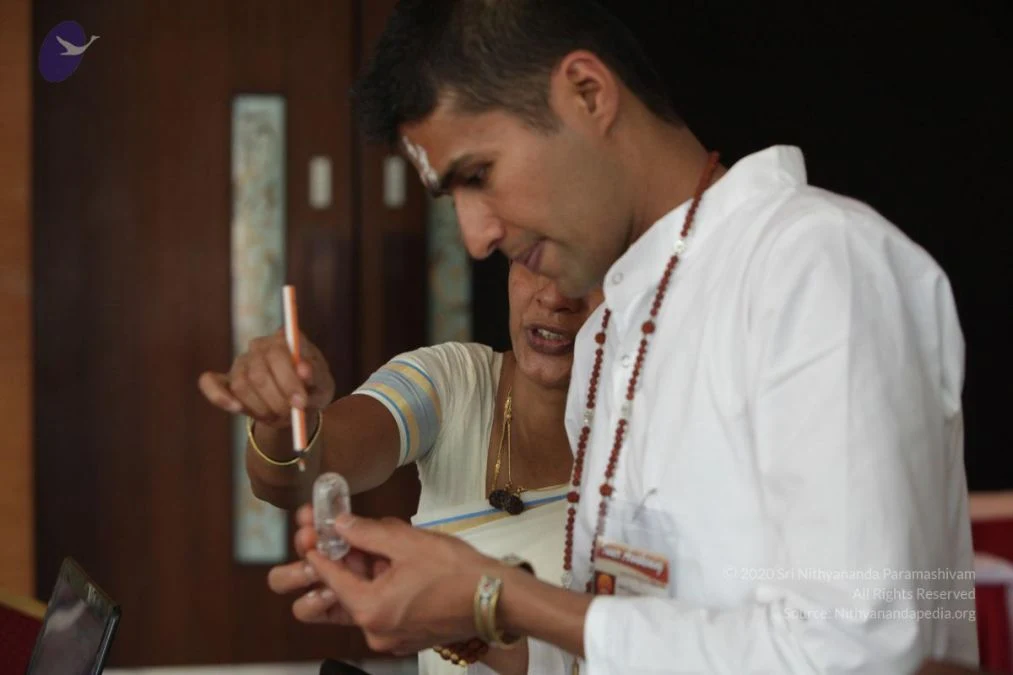
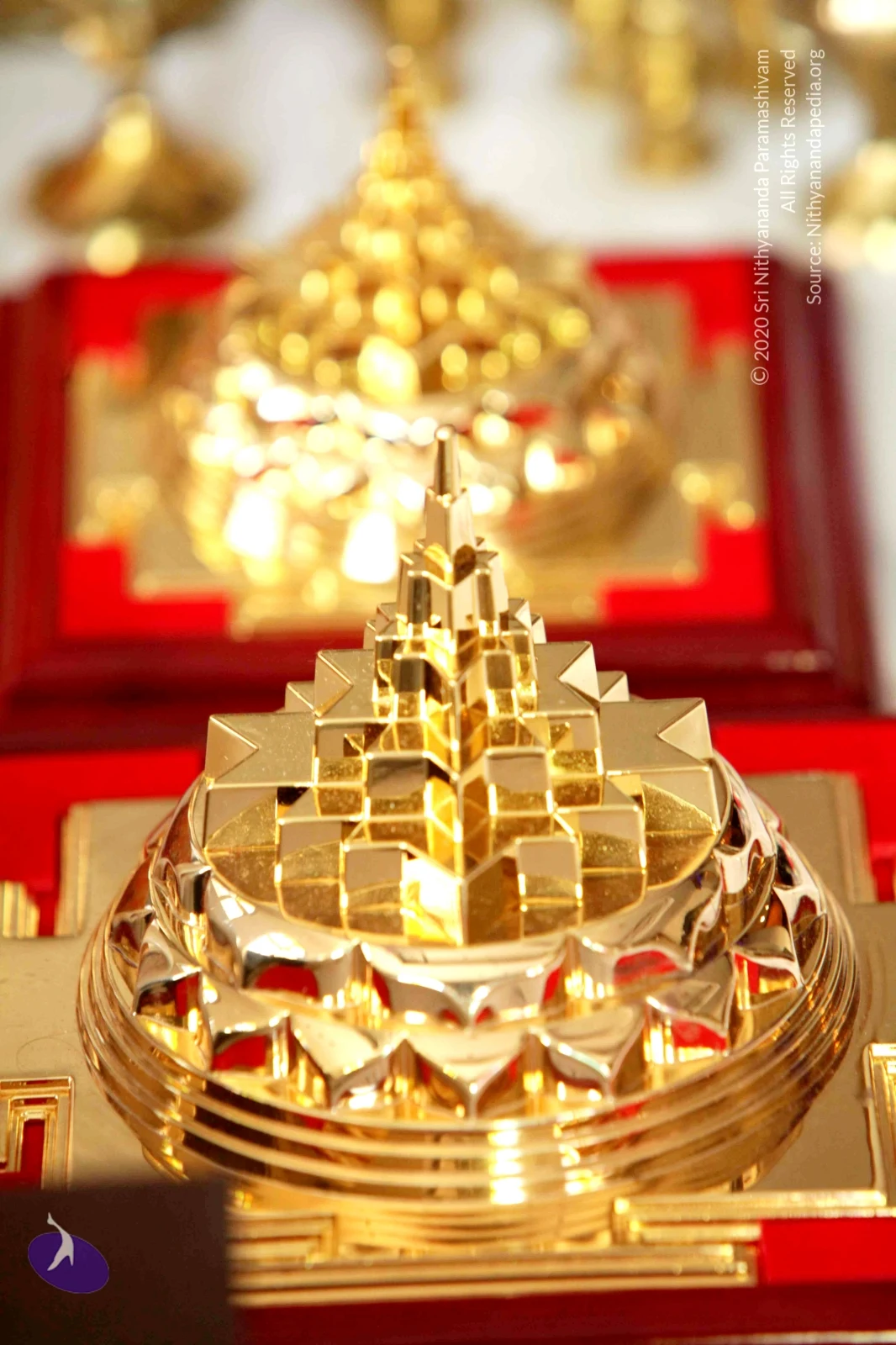
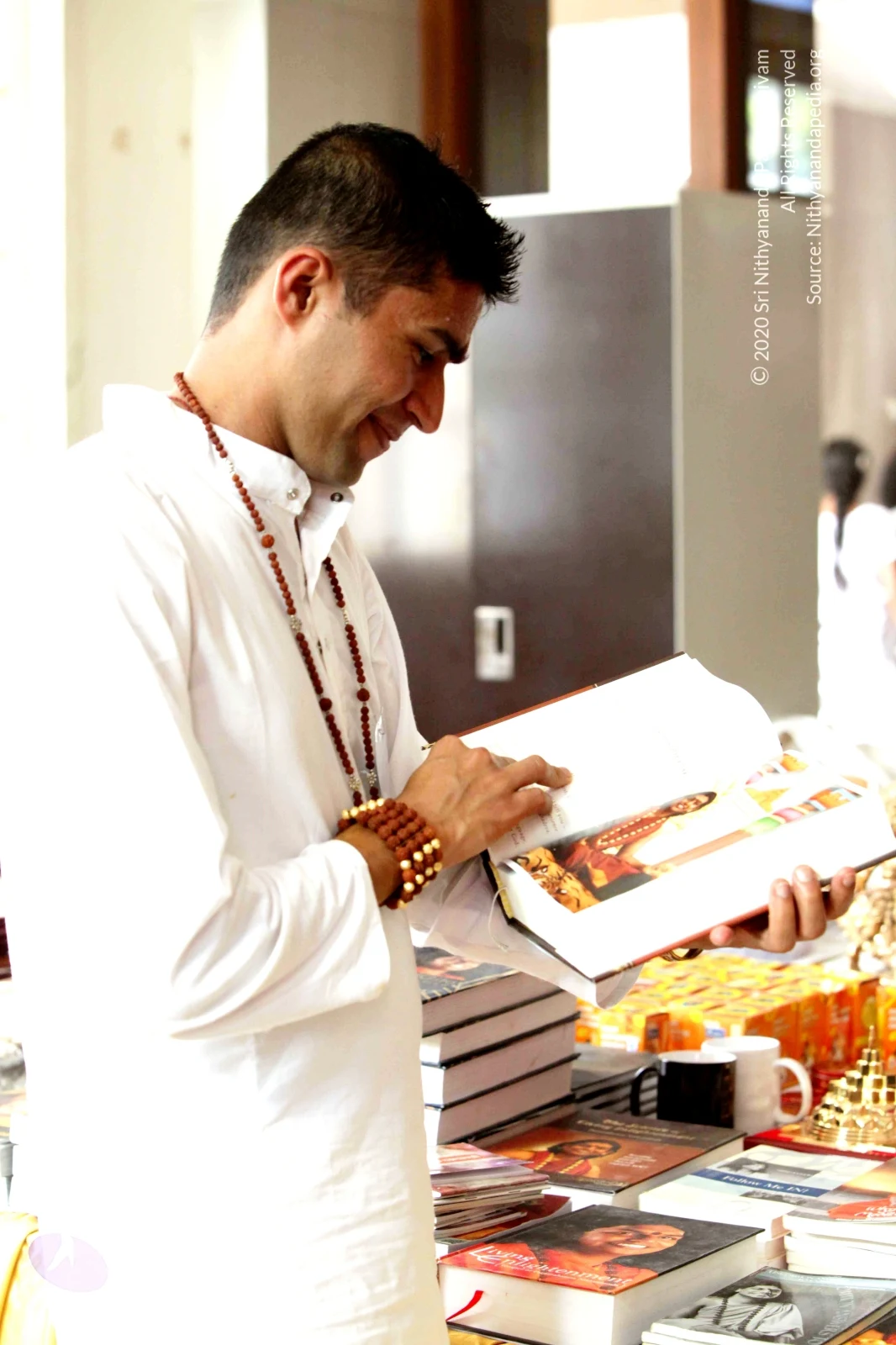
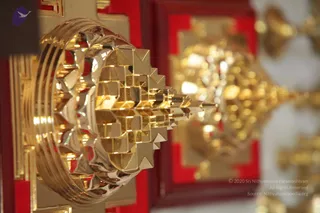
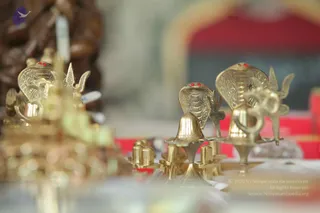
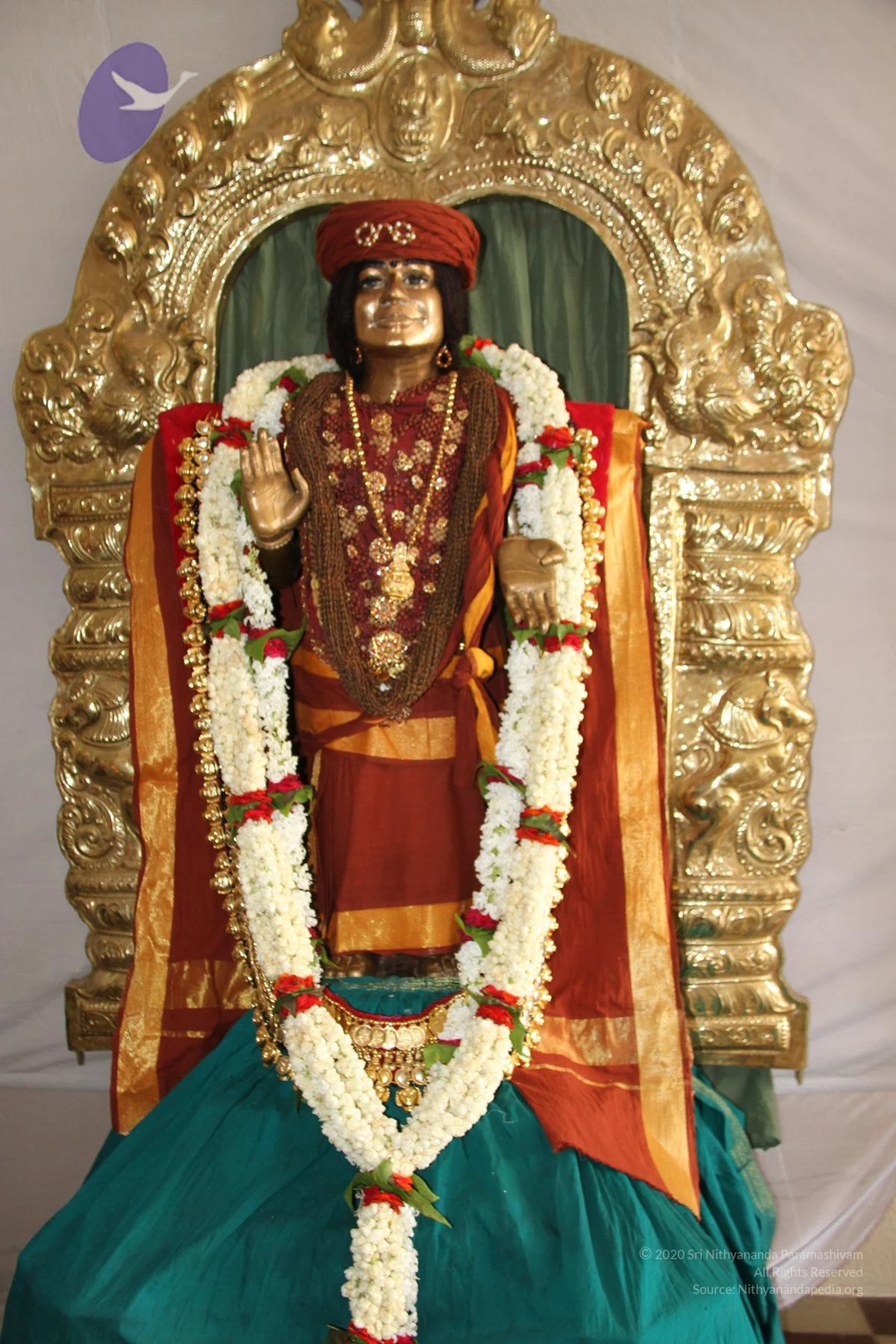
Photograph of a seated figure in a gold-ornate throne with a red-orange turban, bare-shouldered orange and yellow robes, beaded necklaces and bracelets, smiling and handing a small folded paper to a visitor. Beside him a second seated man in orange-and-saffron robes with a rudraksha mala, forehead tilak and glasses sits on a carpet near a bundle of green leaves and a dark snake-like stick. A man in a white shirt with an orange lanyard kneels and receives a mango from the figure, with a tray of mangoes and a bowl of sticks in the foreground. Standing devotees in white and maroon clothing are behind. The figure is an appearance-based probable Swamiji (probable) in the throne-seated role, with cues of red turban, bare-shouldered orange robes and ornate beaded adornments.Close-up photograph of gleaming gold-plated Sri Yantra metalwork, a geometric meru-style yantra with stacked triangular tiers and lotus-petal rings, set on a red and gold framed panel. Behind it, blurred repeated golden ritual objects. No people are visible.A photograph, rotated sideways, of a man in white traditional clothing standing at a bookshop display. He wears a white kurta, several rudraksha malas around his neck and a rudraksha bracelet on his wrist, and he is bent forward examining an open hardcover book with both hands. Shelves of books and a glass display case are behind him, with blurred figures in white at the lower edge.A man in a white kurta-style shirt stands at a table reading an open hardcover book with colour photographs of temple art. He wears wooden rudraksha-style beaded malas around his neck and wrists. On the table are small brass figurines, brass lamps, stacked red boxes and mugs. Behind him, a second man in white with a beaded mala sits at a counter near a window with patterned panels.Close-up photograph of brass ritual objects on a table. Two brass Shiva lingams with cobra hoods, each with red gemstone eyes, stand beside a brass trishul, a brass oil lamp and small brass dishes. Behind them, out of focus, a dark wooden deity murti and a red cloth backdrop. No people are visible.A photograph of two people at a table indoors. In the foreground a man in a white collared shirt with a red rudraksha mala and a forehead tilak holds a small clear crystal or glass object in both hands and looks down at it. Beside him a woman in a white sari with blue and yellow borders and gold bangles holds a white incense stick or candle upright in one hand. A gold pendant hangs on her neck. Behind them are dark wooden panels and a laptop screen edge at lower left. The man wears a printed name badge on his shirt. The scene looks like a small ritual or demonstration. Two physical people are visible.
Raw
149 photosSource gallery
A photograph of a satsang in a large tented hall with white draped fabric overhead. A man in saffron-orange robes and an orange turban sits on an ornate reddish-brown throne at the centre, while a dense ring of seated devotees in white clothing surrounds him on a white floor covering. Several children in the foreground sit with their backs to the camera, including a girl with long braids in a yellow polka-dot dress. Some attendees on chairs at the back wear white and orange garments, and a few hold their palms together. The scene shows a seated discourse with the teacher on a raised throne and devotees listening attentively. Swamiji (probable): the seated figure on the throne wears a saffron-orange robe, an orange turban and a shawl, consistent with the page's account of a satsang.A large satsang gathering with many seated devotees in white clothes sitting on white floor sheets in a hall with maroon walls. At the centre front, a figure in a maroon-orange turban and orange-red robe sits on a high ornate brown throne, with a bare-chested attendant in a golden-bordered cloth seated nearby. Audience members, mostly in white kurtas and dresses, face the front, and a few wear saffron or green clothing. A camera operator stands at the back and a table with yellow cloth is visible on the right.A photograph of a large satsang hall where many people in white clothes sit cross-legged on white mats facing a central figure. The central figure wears saffron-orange robes and a rust-coloured turban and sits on an ornate brown leather chair with a small wooden table beside it. Several seated devotees wear white kurtas and some women wear saffron or orange shawls. A cameraman stands with a tripod at the left edge, a man in white stands behind the seated group, and a red-and-gold cushioned seat sits near the right side of the room. Crowd appearance suggests a seated audience of many participants.A satsang in a hall with a white-draped stage and red walls. A person in a saffron-and-red robe with a rust-coloured head wrap sits on a large brown leather throne-style chair at the centre front, facing a seated audience. Many devotees in white clothes sit cross-legged on white floor sheets, some with long braids and some with glasses. Standing attendants in white and orange-saffron clothes are visible at the back stage, with a small table and decorated pillars on the sides. The audience numbers roughly 50 visible people.A satsang in a large hall where a crowd of about 60 people, mostly in white clothing, sits cross-legged on white floor mats around a central seated figure. The seated figure wears an orange-saffron robe and an orange turban and sits on a dark brown high-backed throne-like chair, with a small table and microphone in front. Many attendees wear white kurta-style or white salwar outfits, a few wear saffron or red shawls, and one woman in front wears a white top. Gold decorative trees and white draped fabric stand at the back, with purple patterned panels on the walls and a stage-side audio setup visible at left.A man seated on a large brown leather armchair with carved wooden frame, speaking to an audience during a satsang. He wears a red-orange turban, a saffron-orange wrap over a bare shoulder, a long multi-strand rudraksha-style bead mala, and a small headset microphone. A red bindi is on his forehead and he gestures with his right hand open. Behind him, white draped fabric and cream chairs. Several seated devotees are visible at the sides, a woman in glasses on the right smiling, and a man in glasses behind.