Skip to content
Tuesday

2 July 2013

Dated photos
371
Source pages
1
Media
4
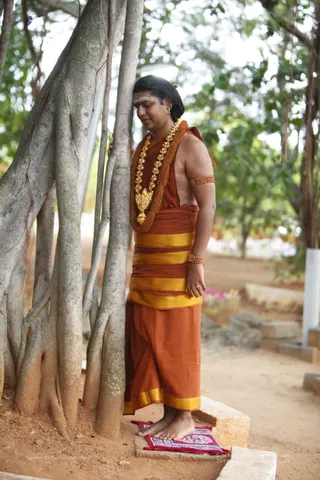
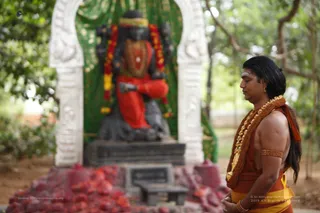
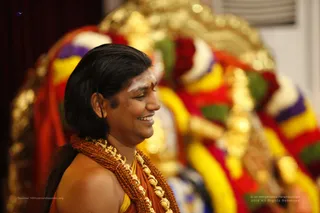
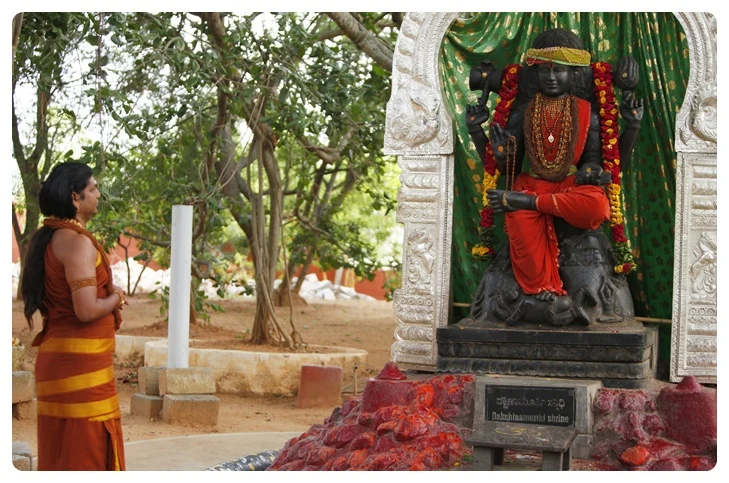
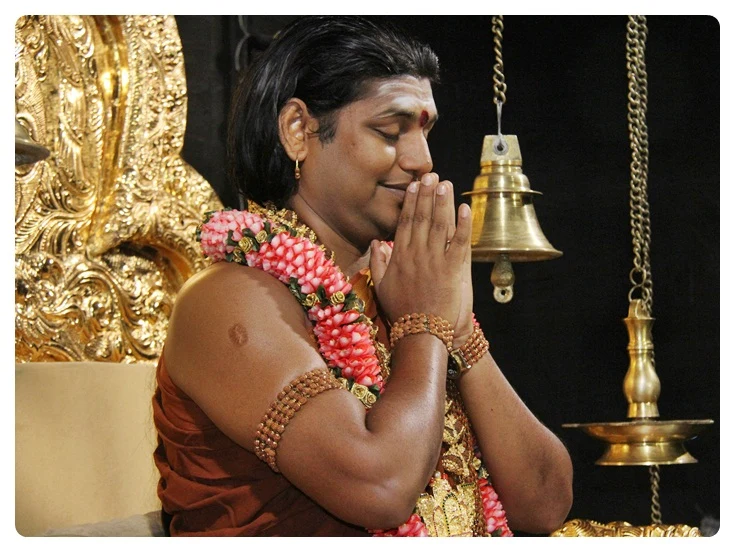
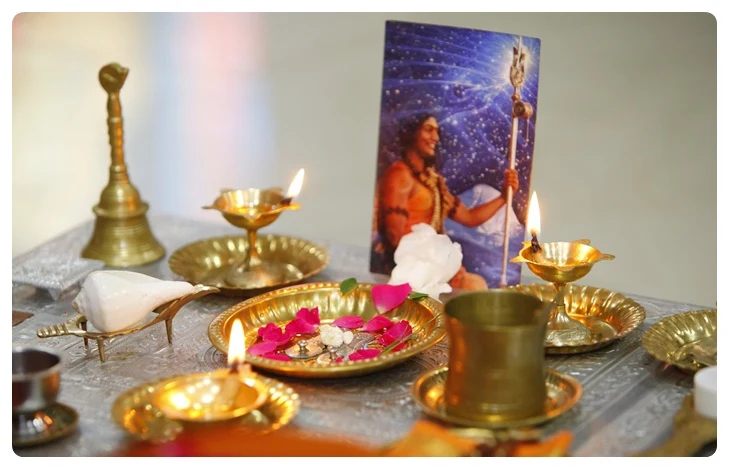
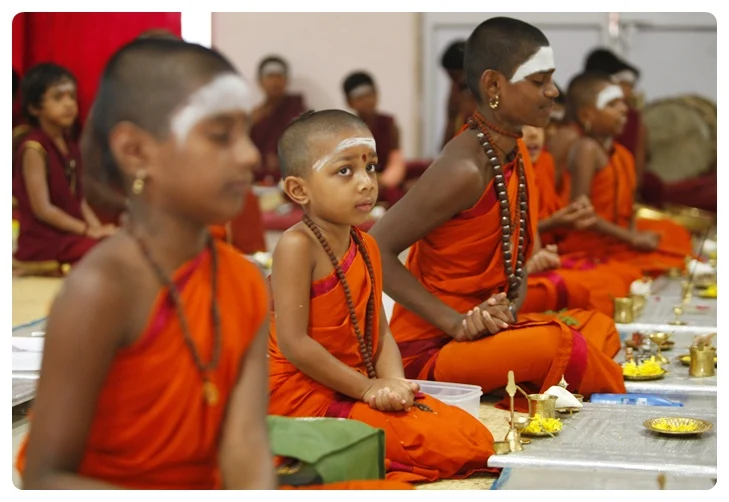
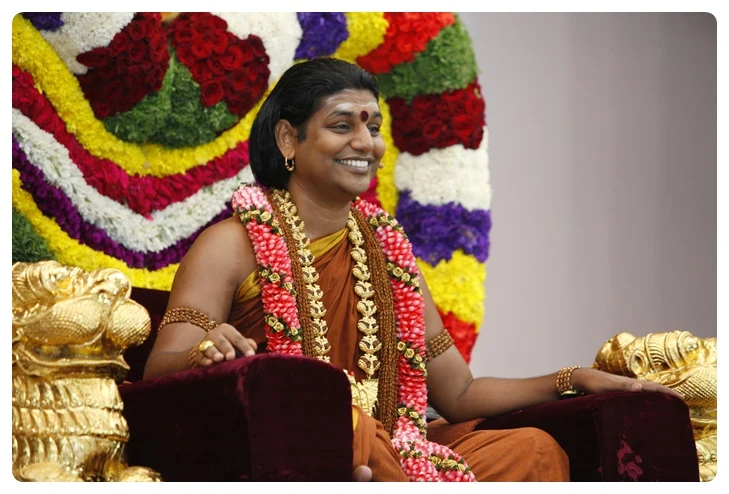
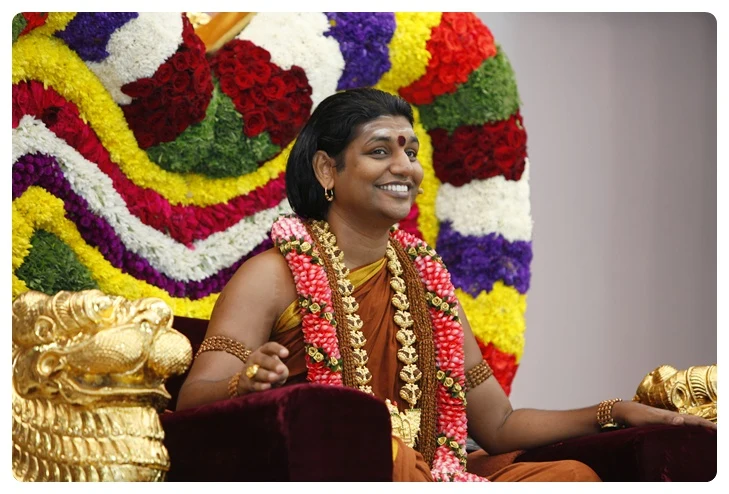
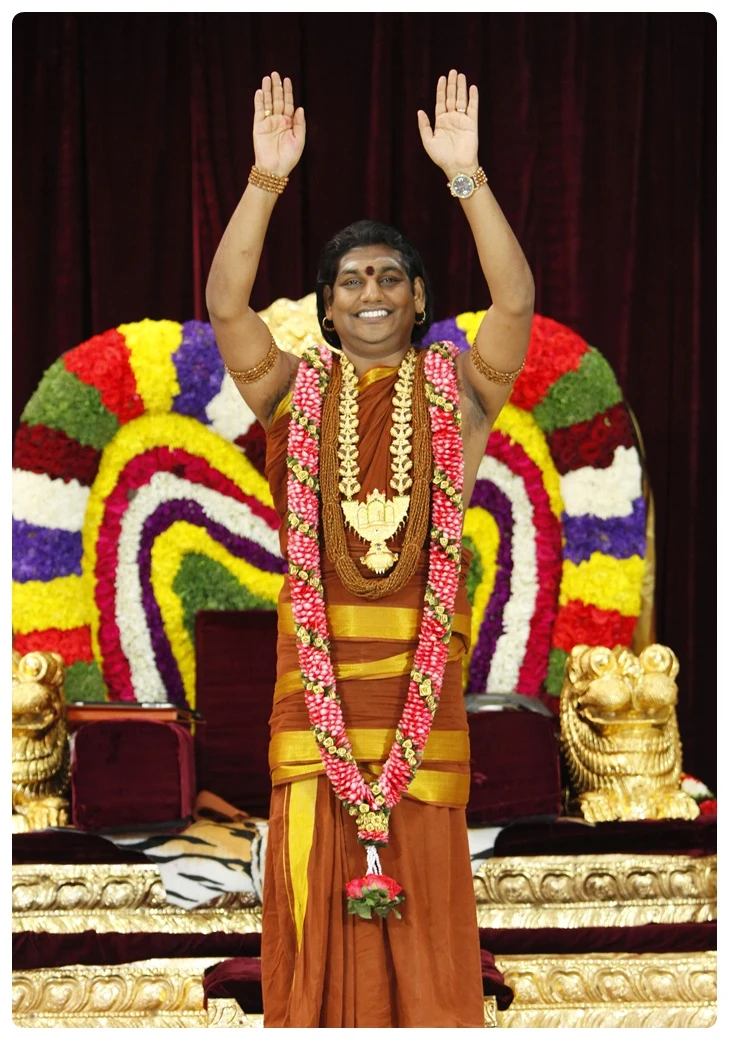
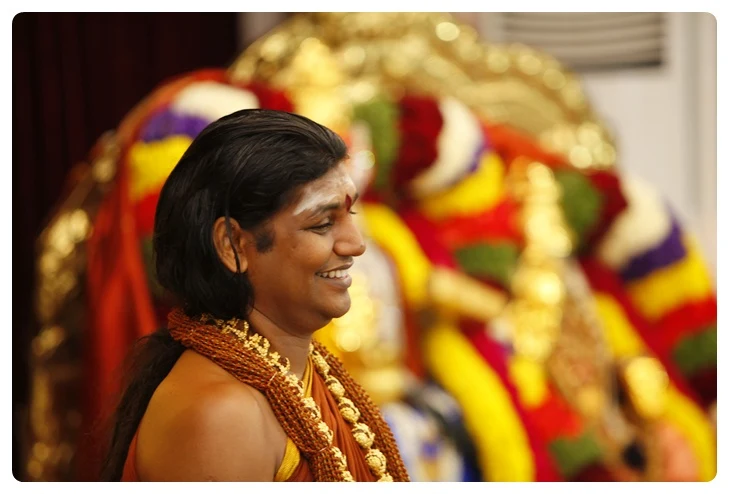
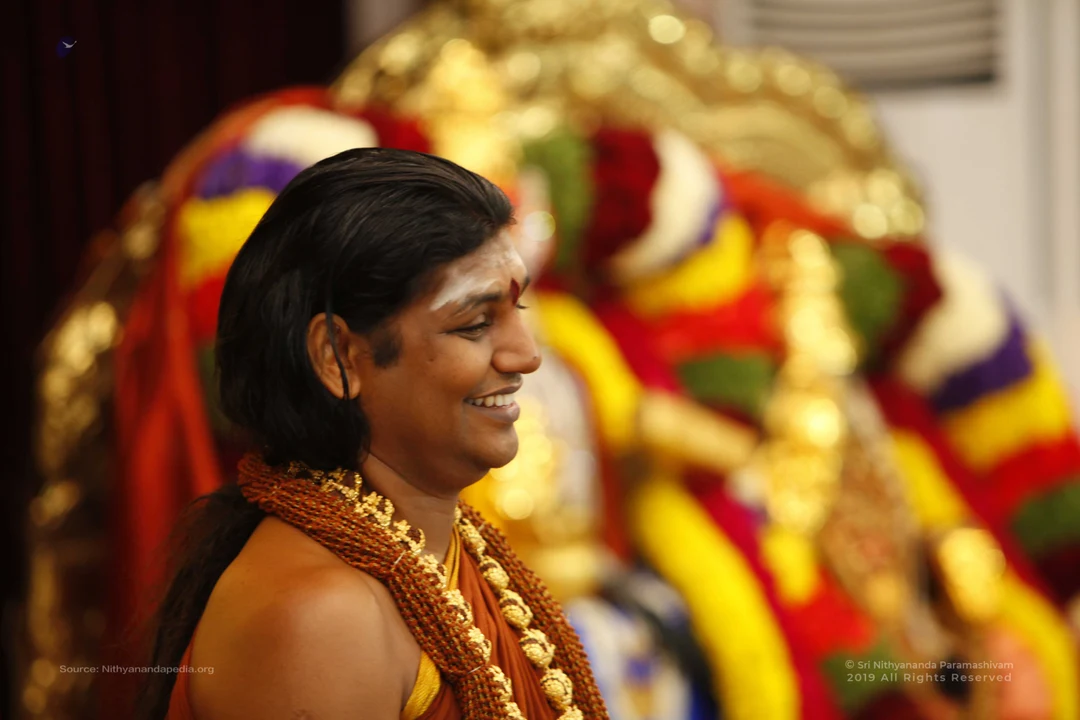
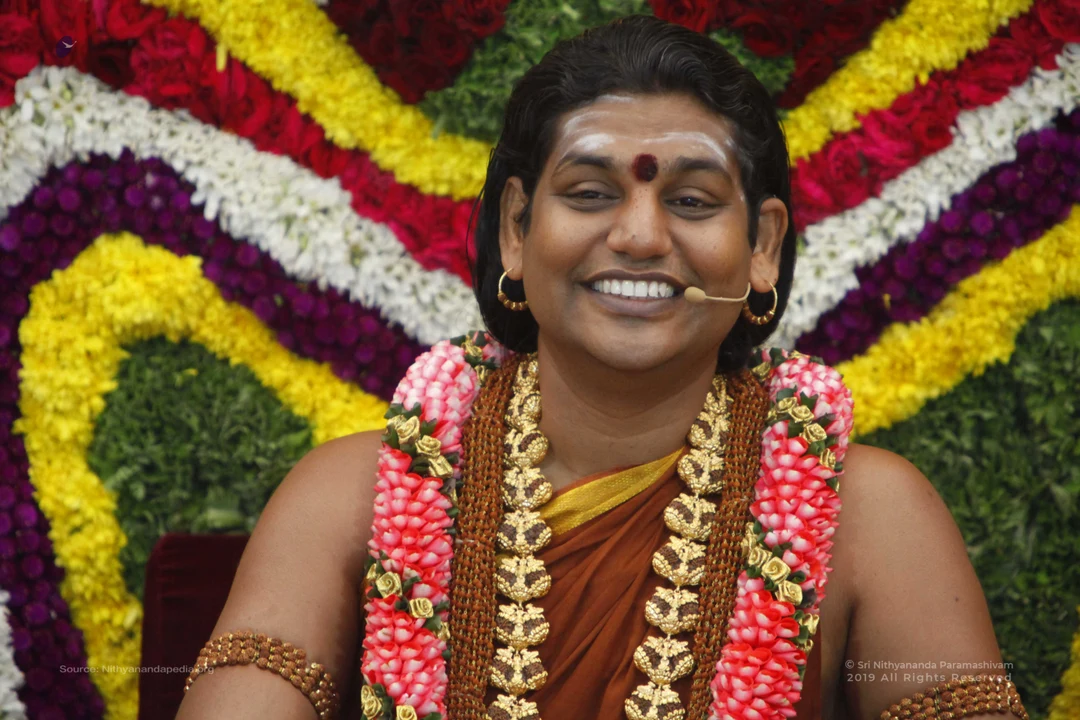
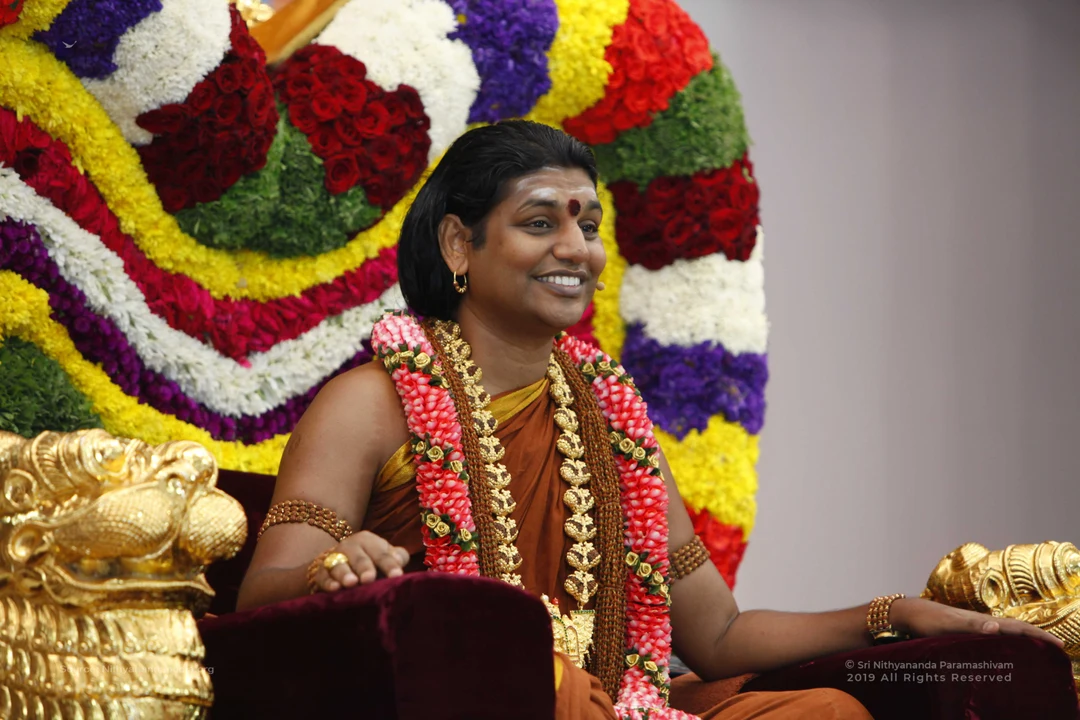
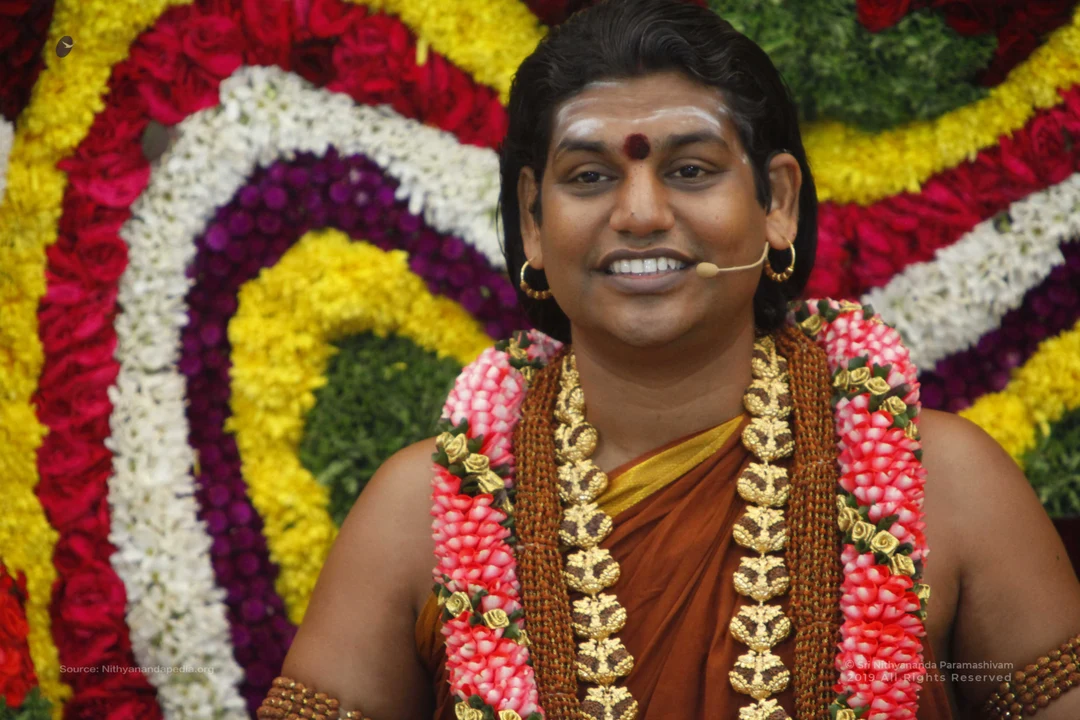
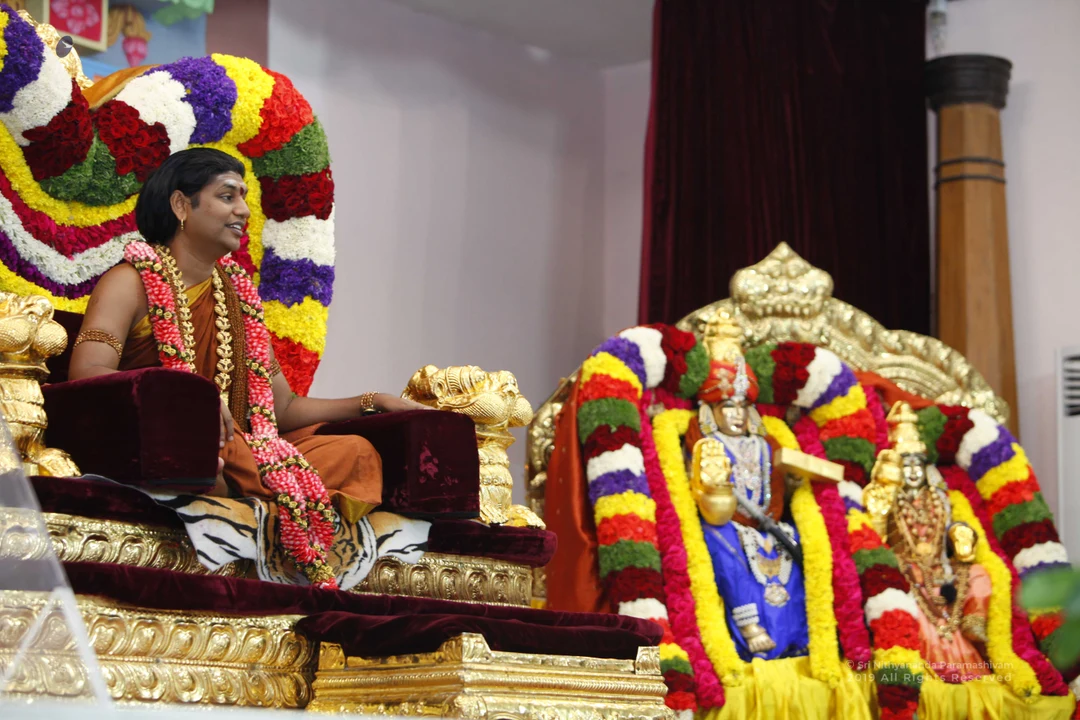
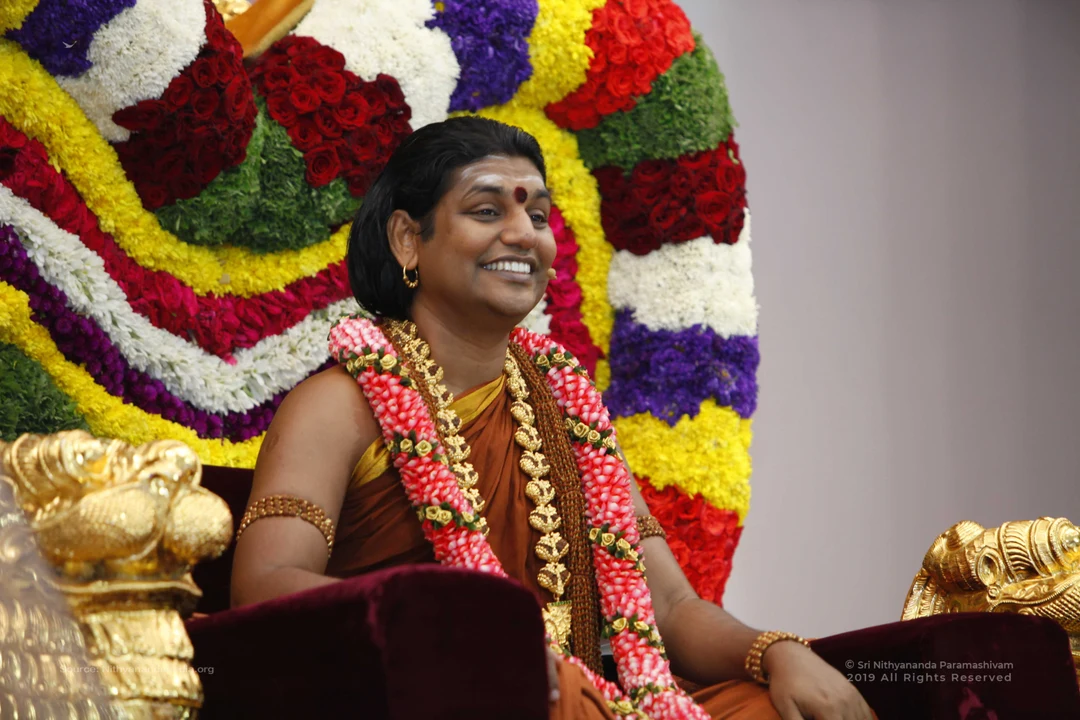
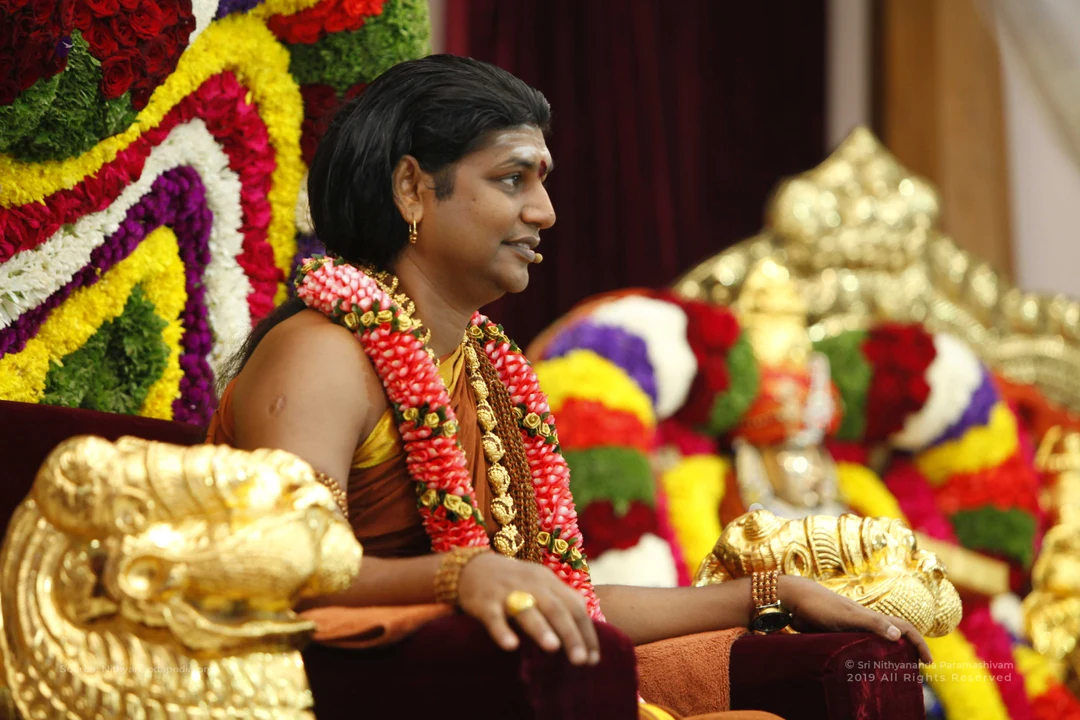
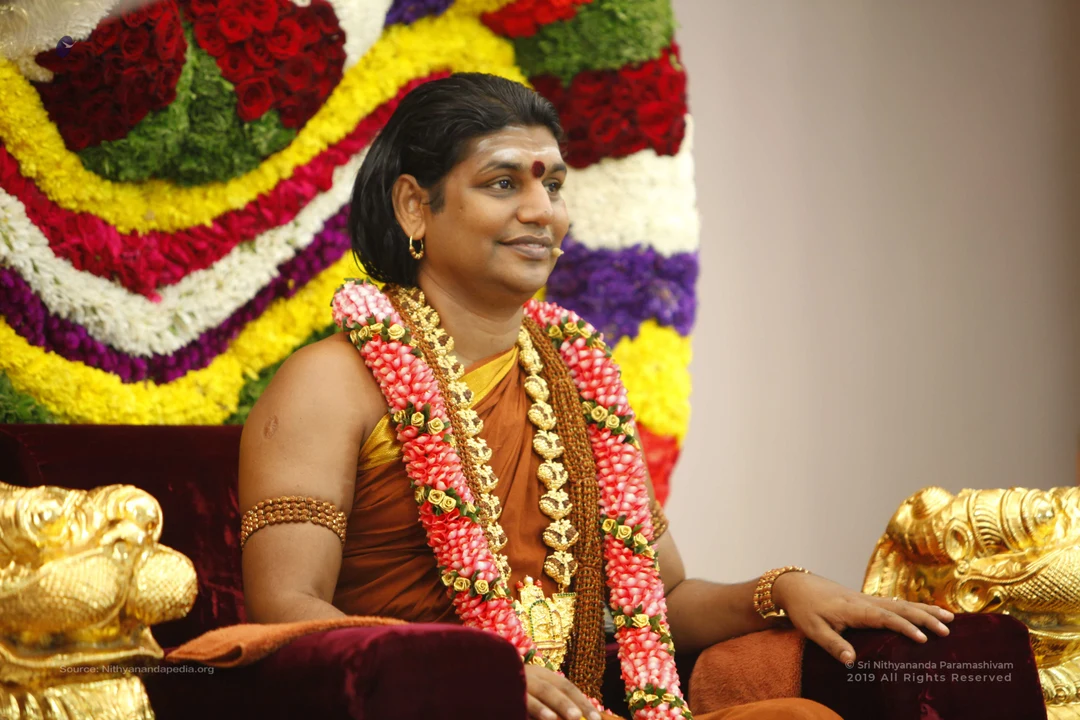
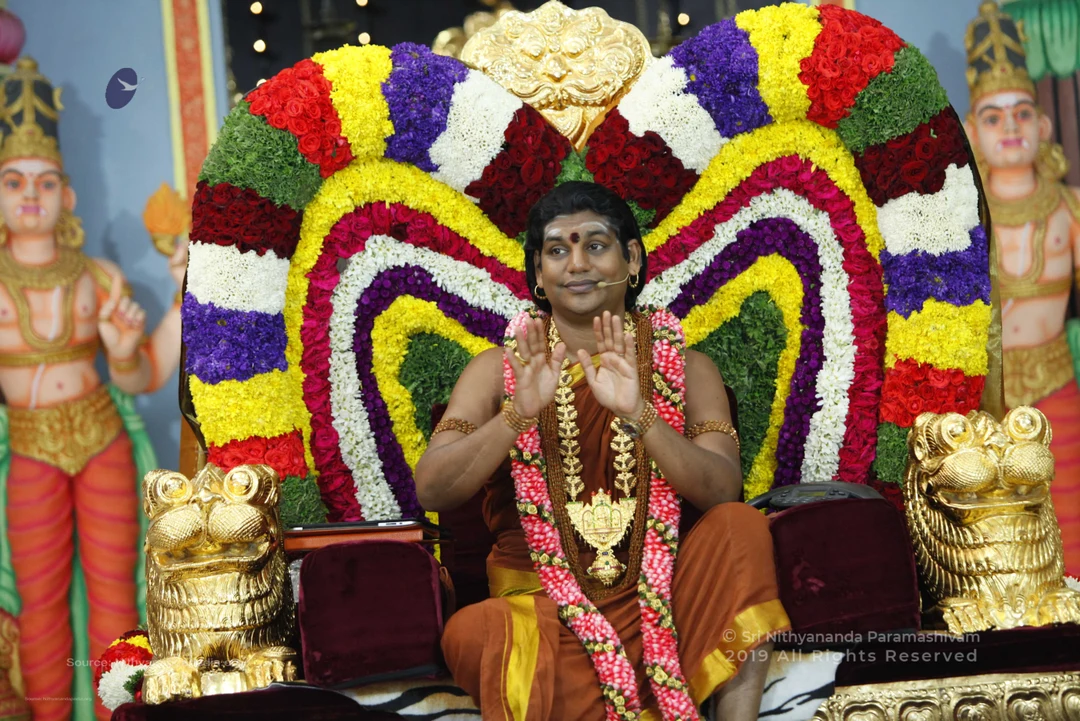
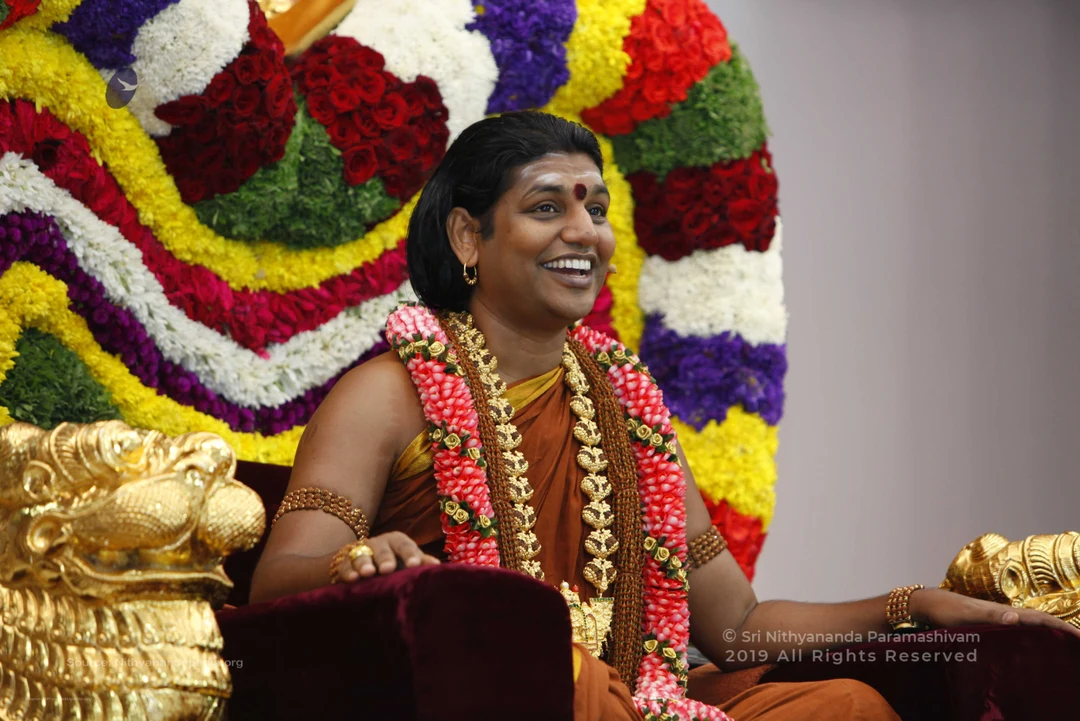
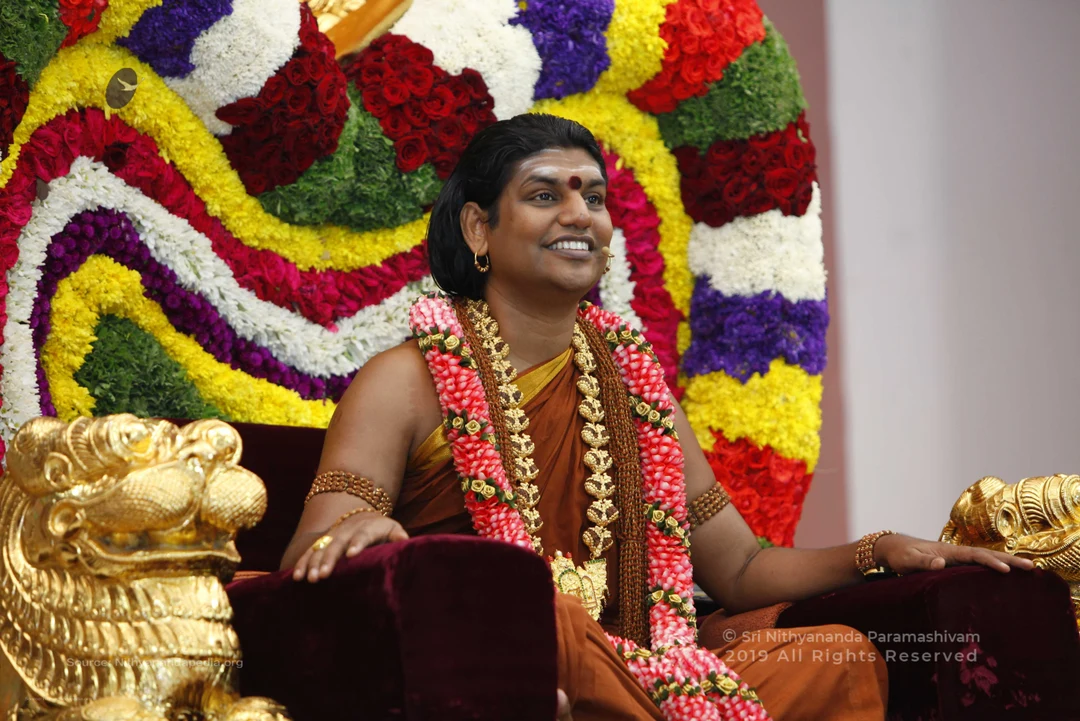
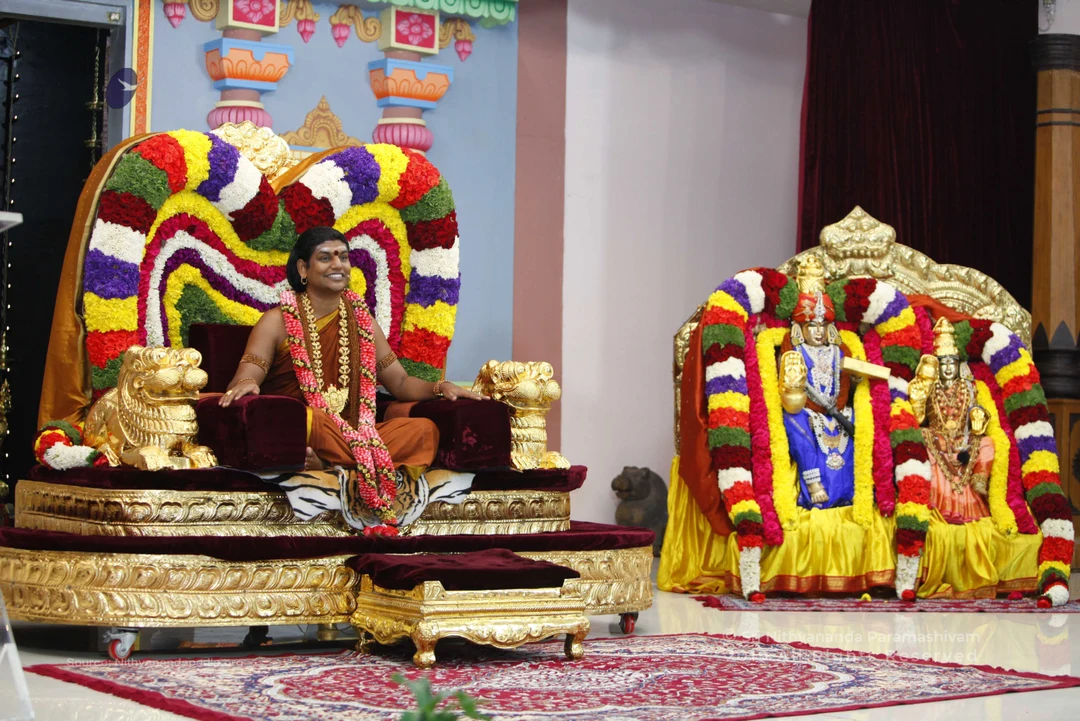
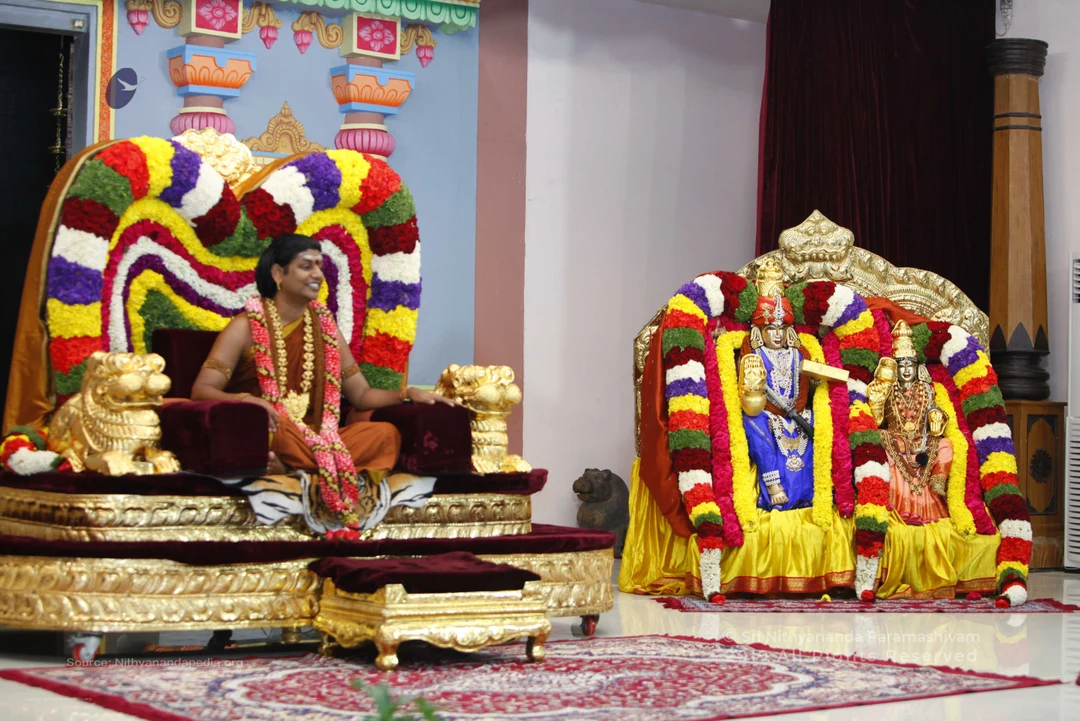
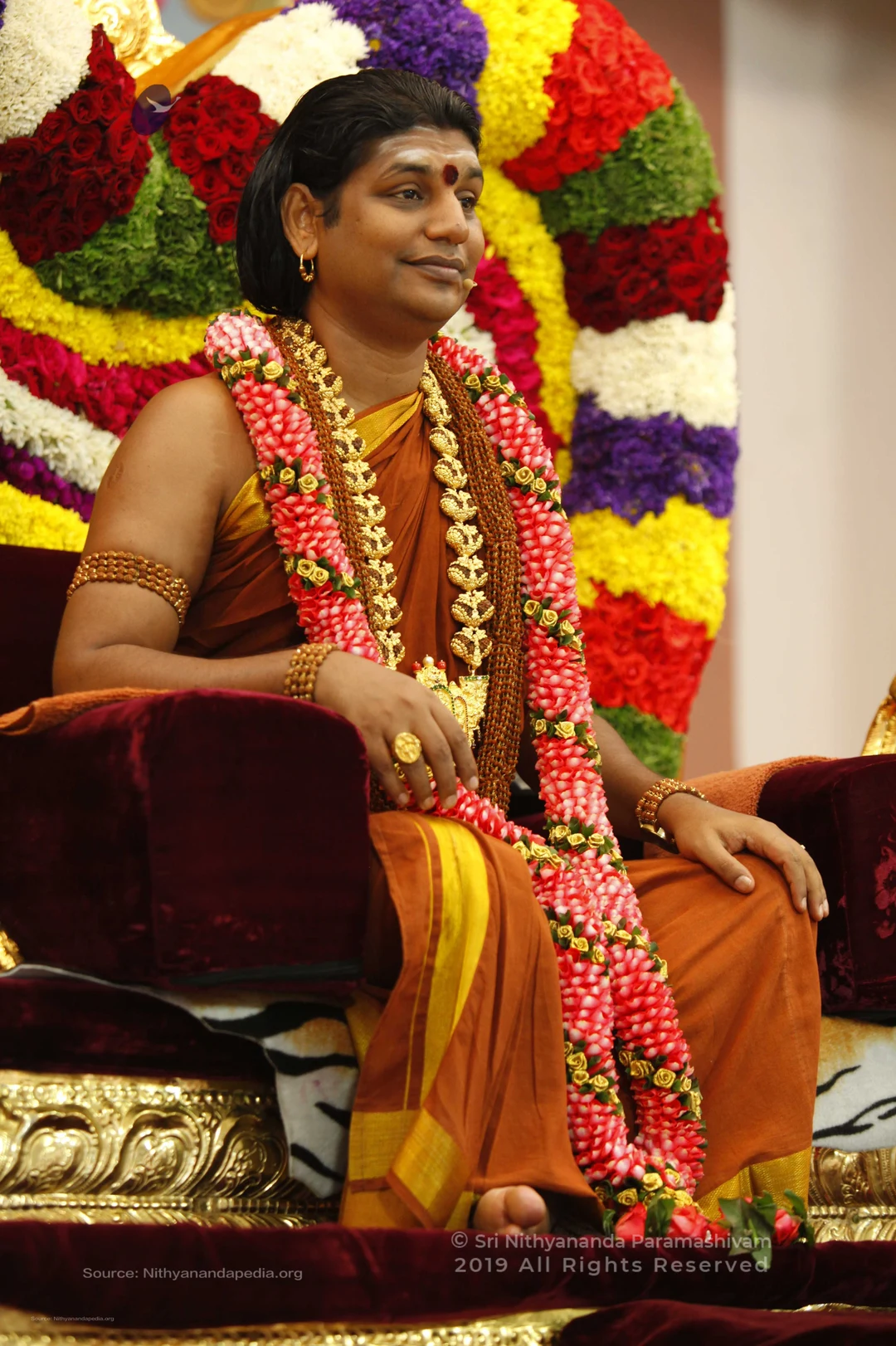
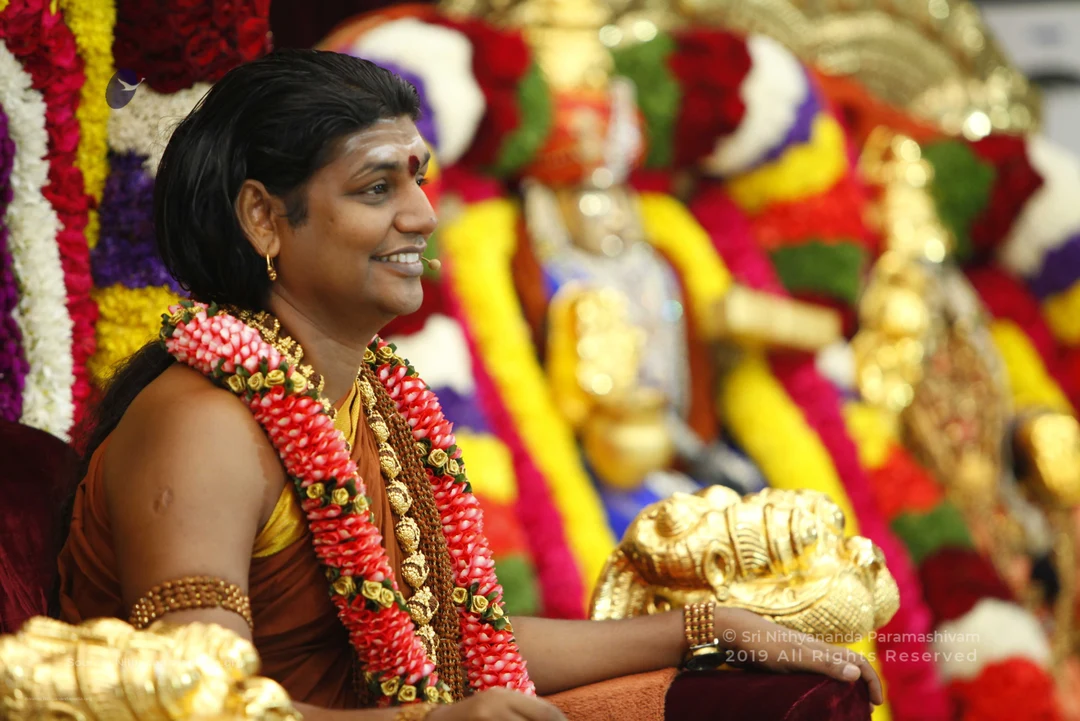
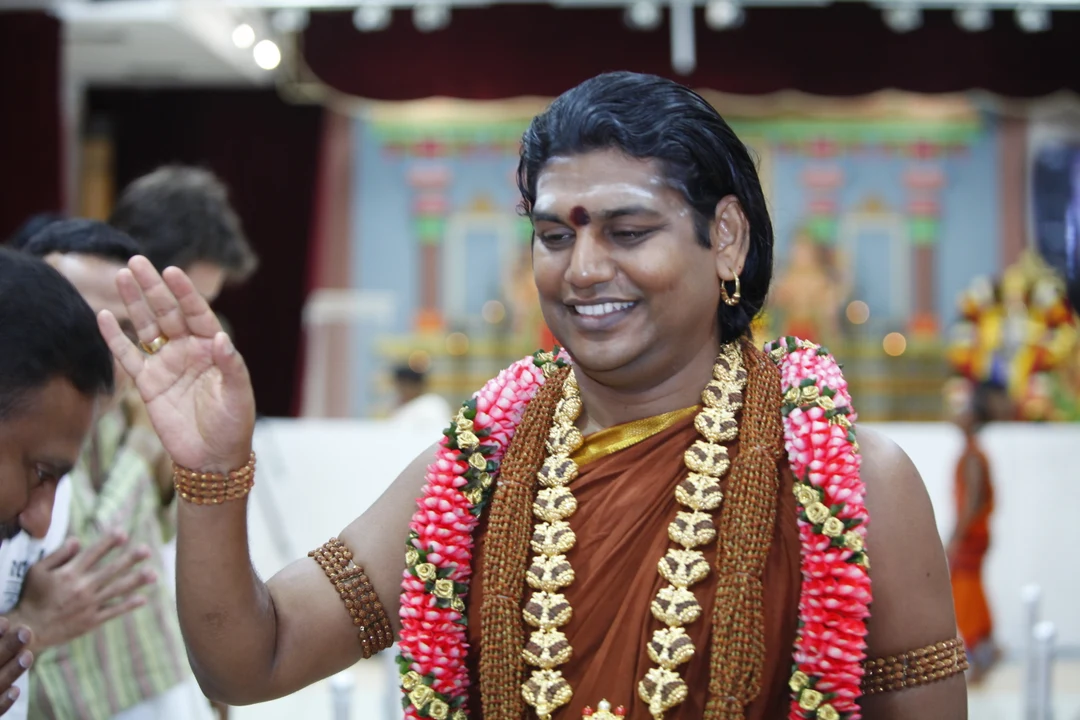
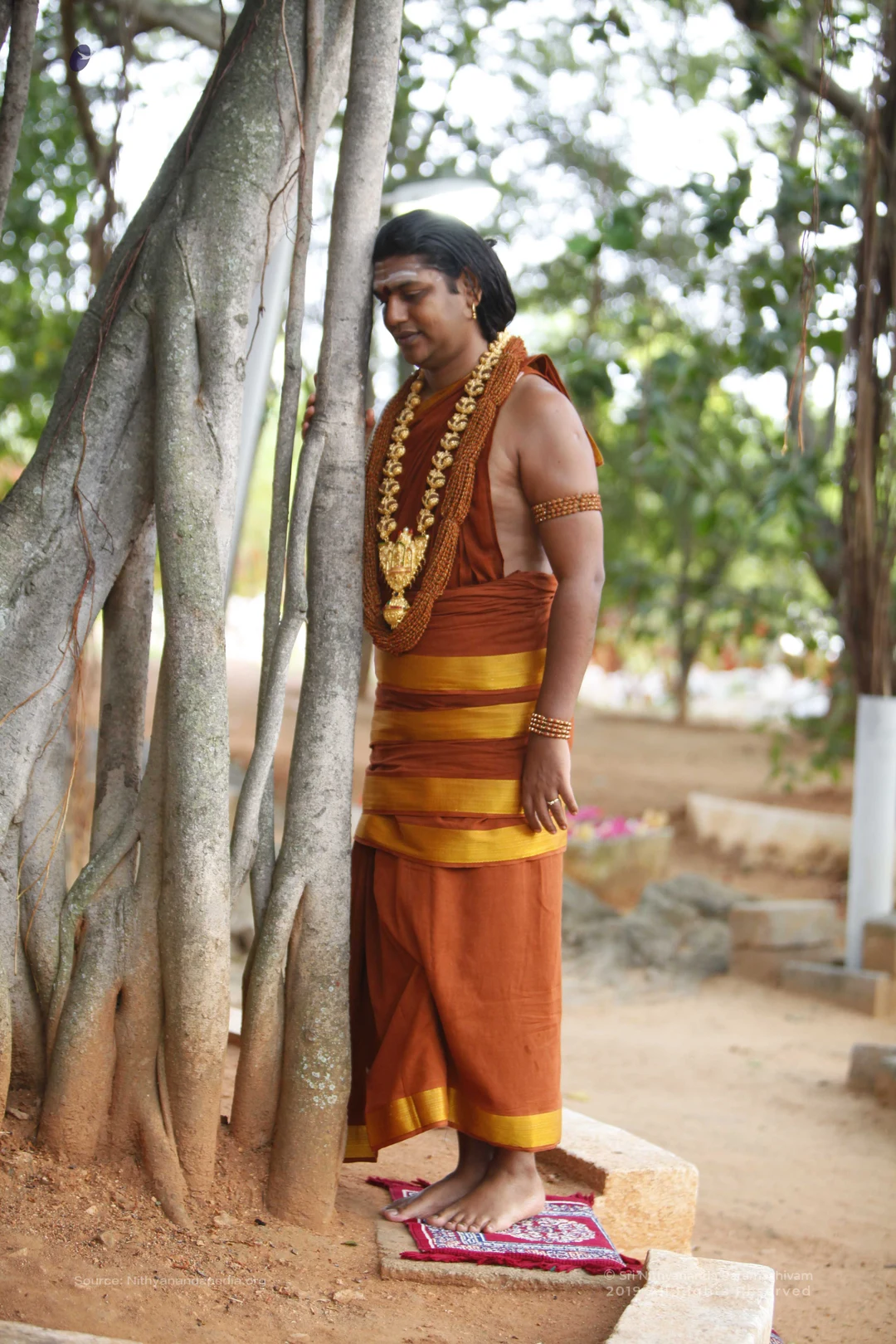
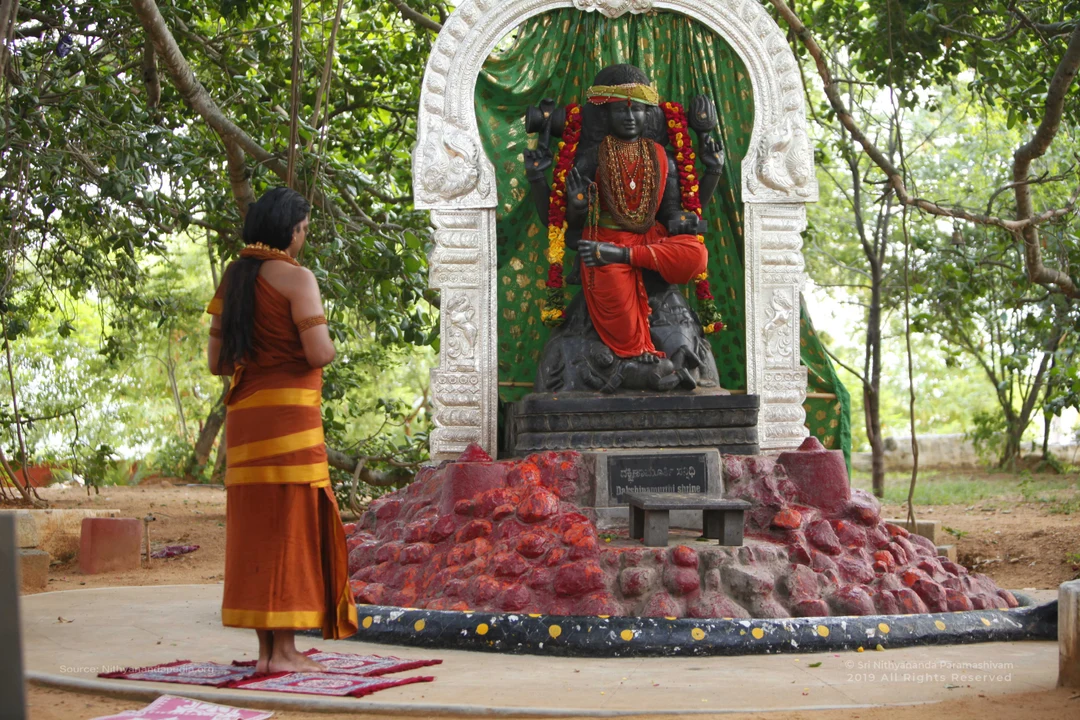
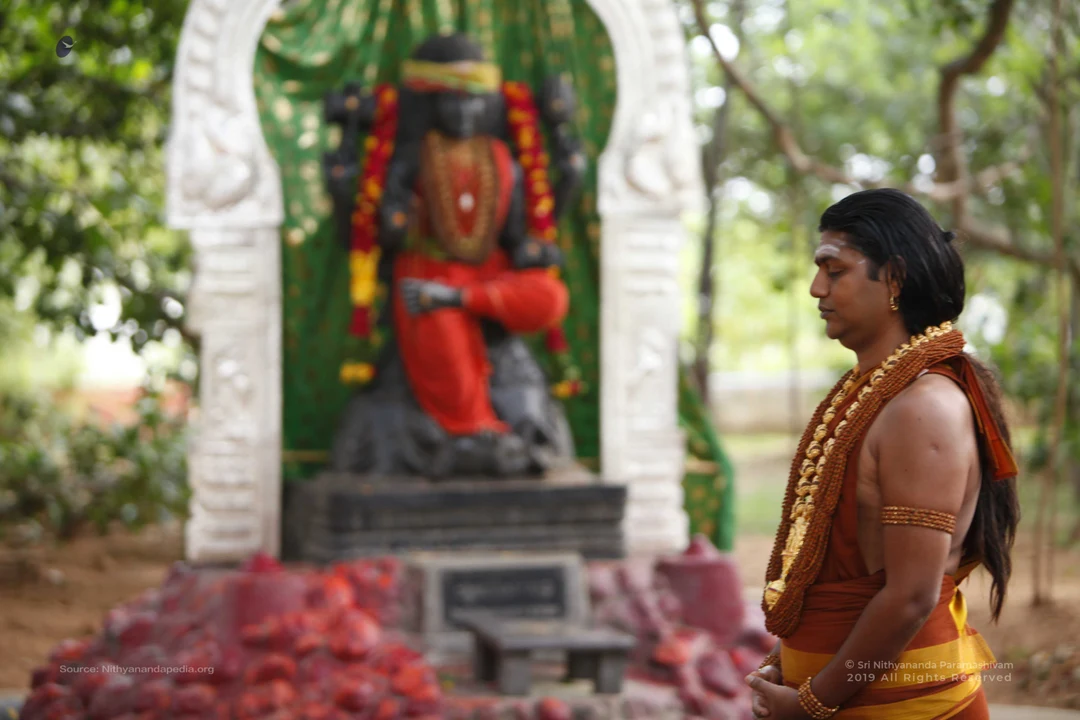
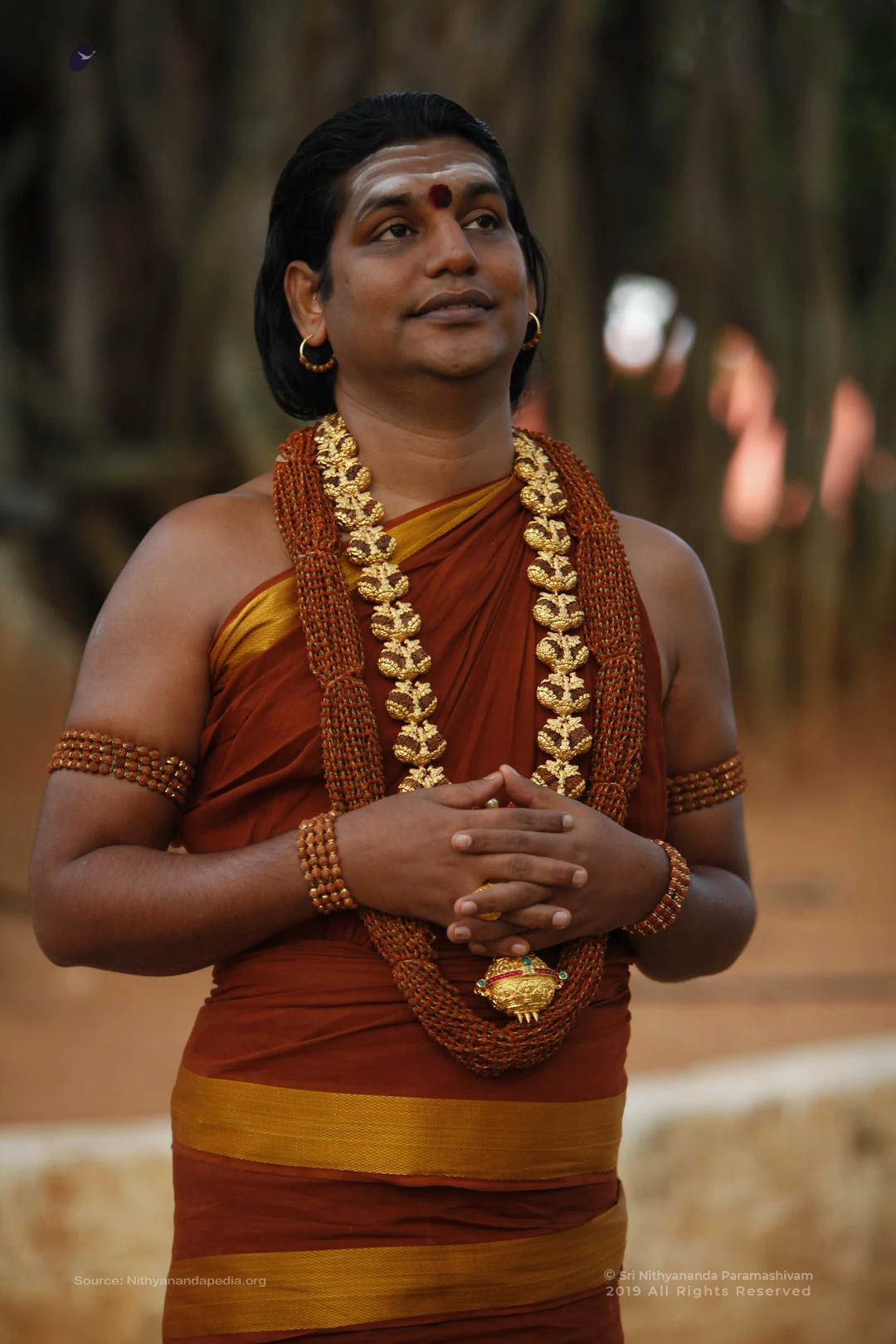
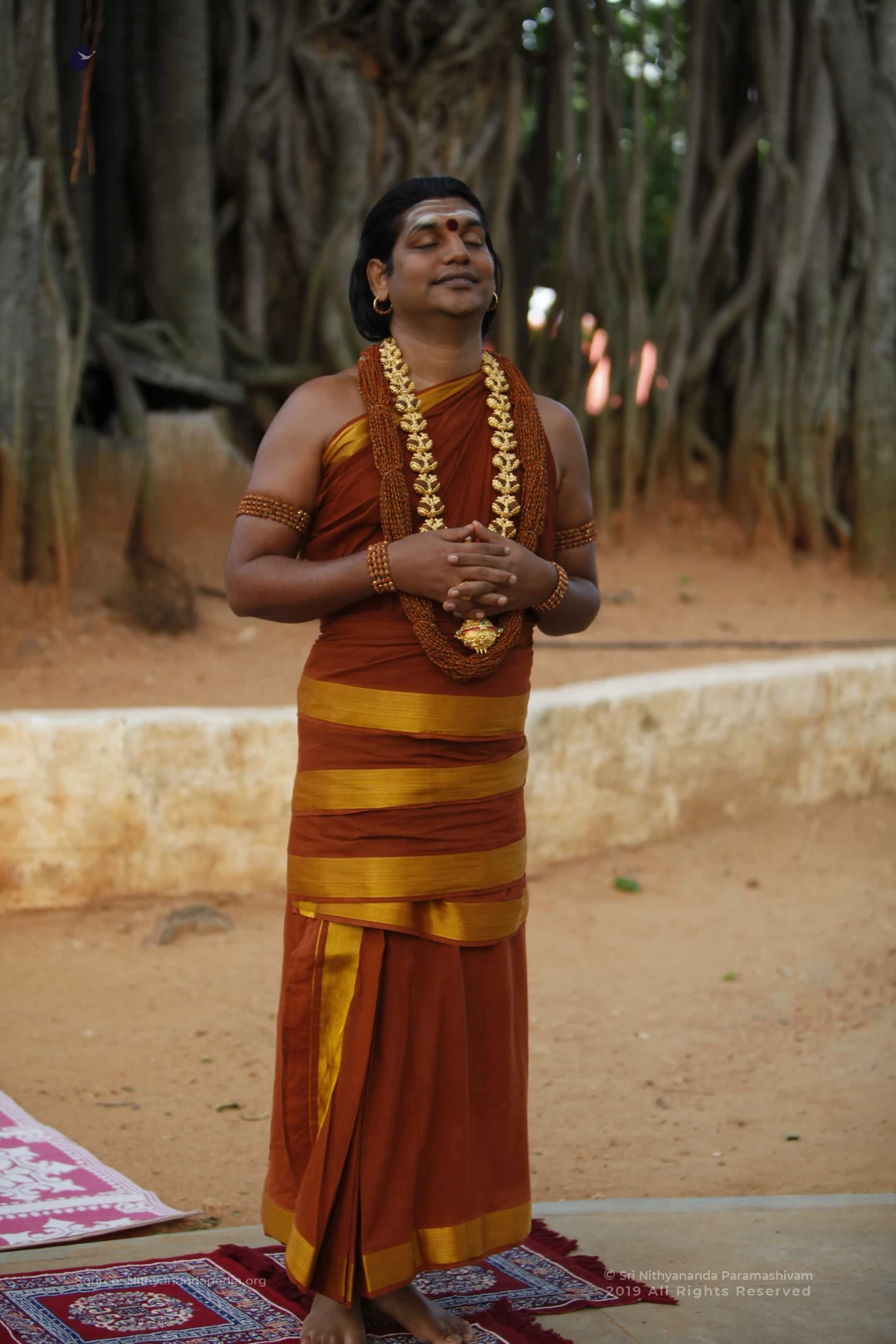
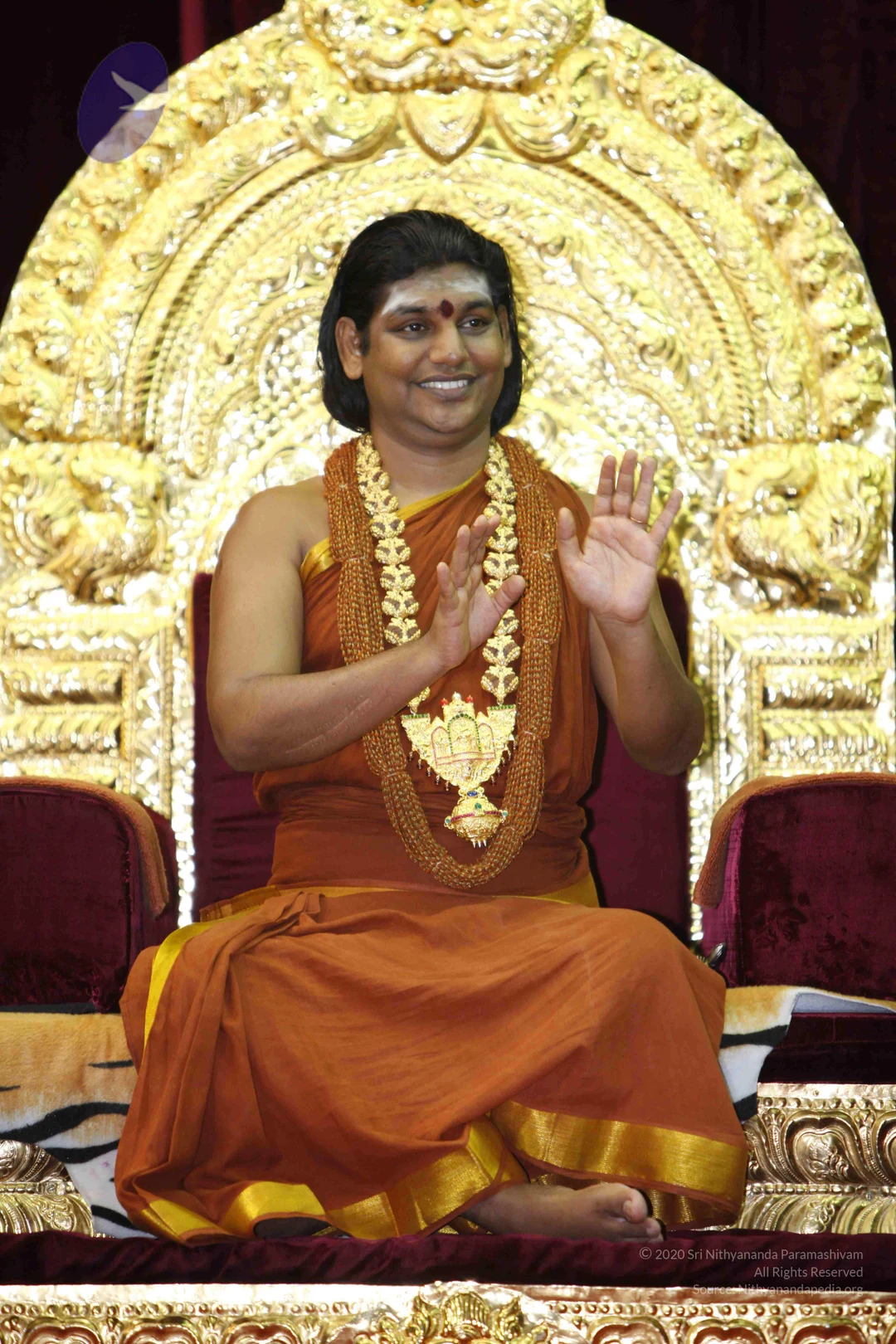
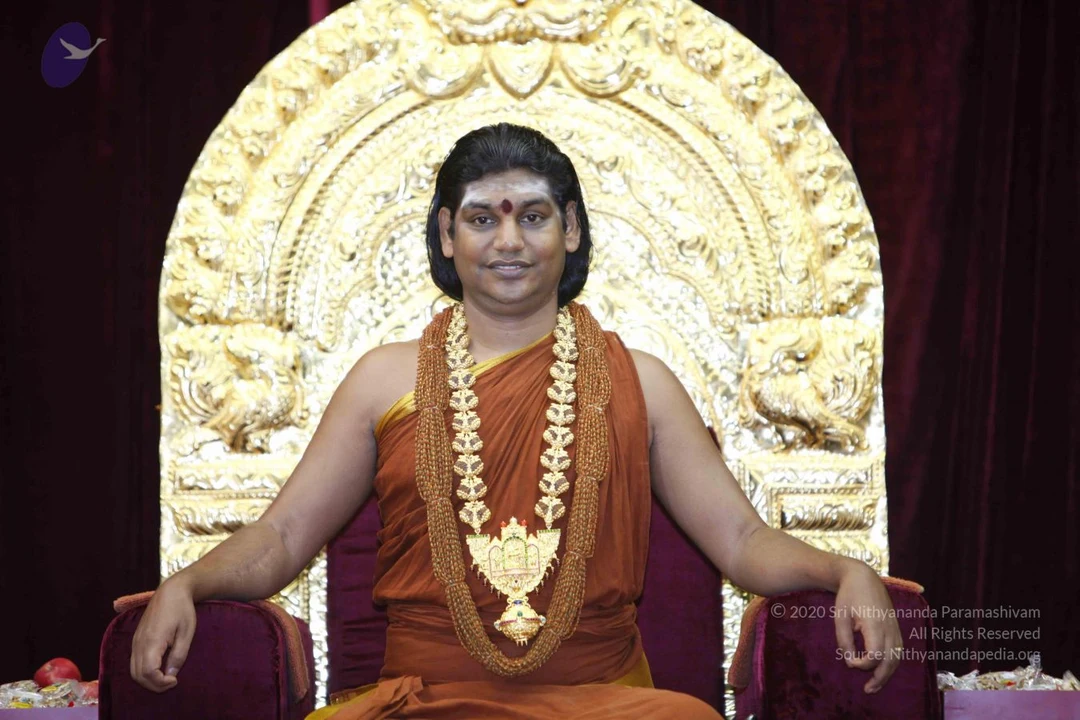
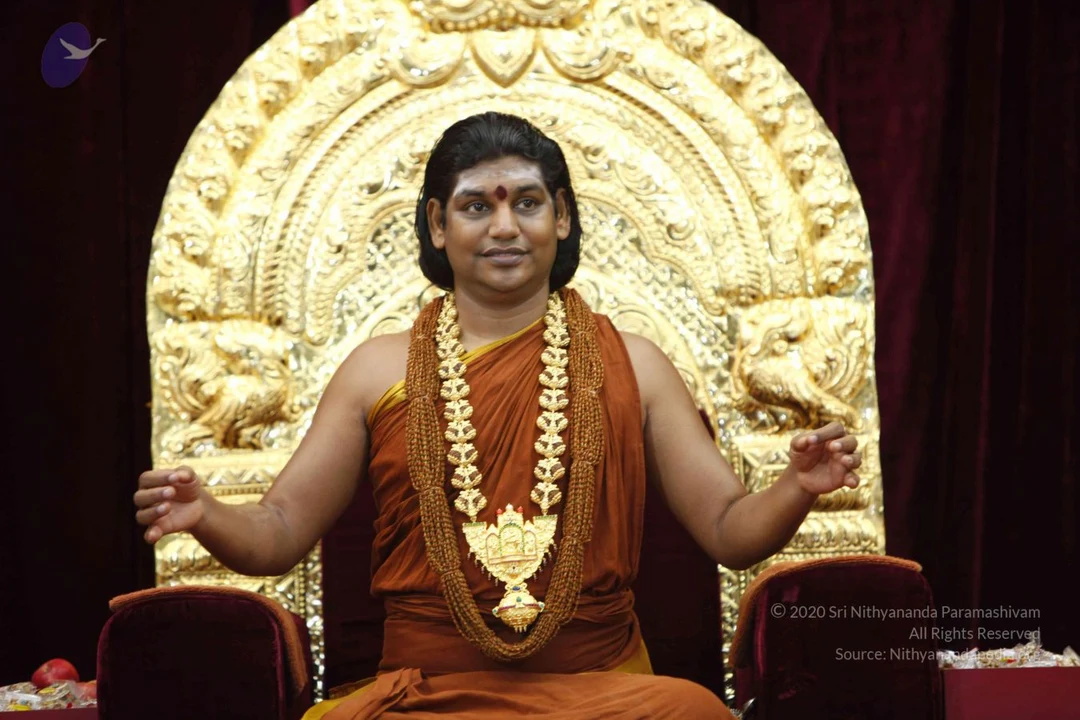
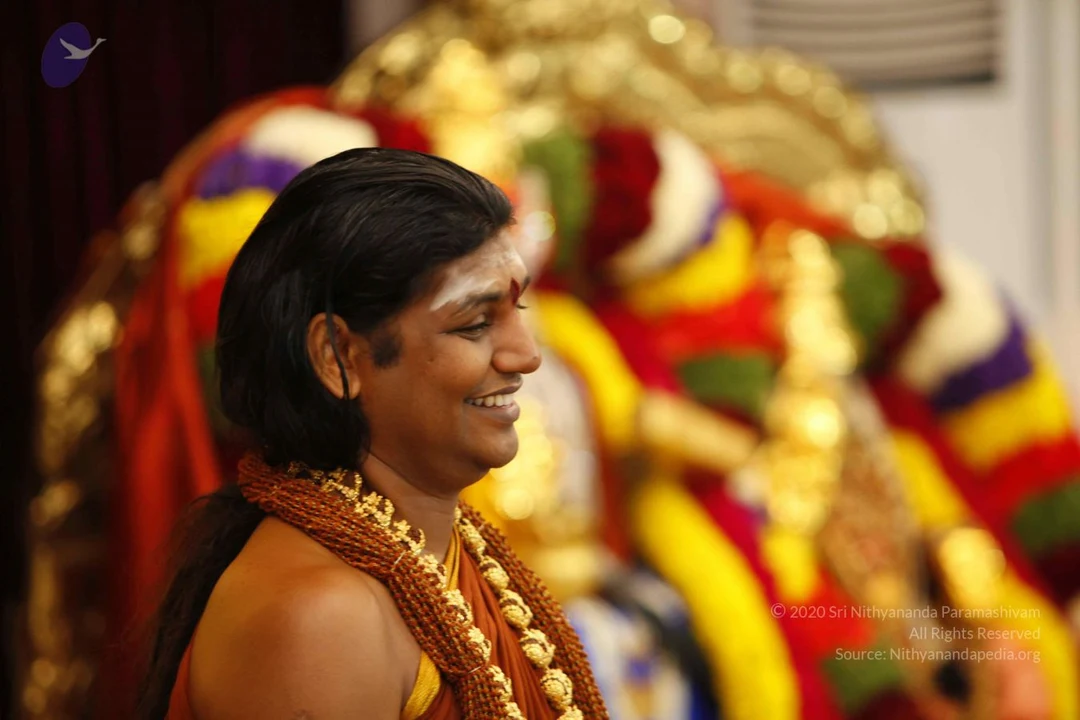
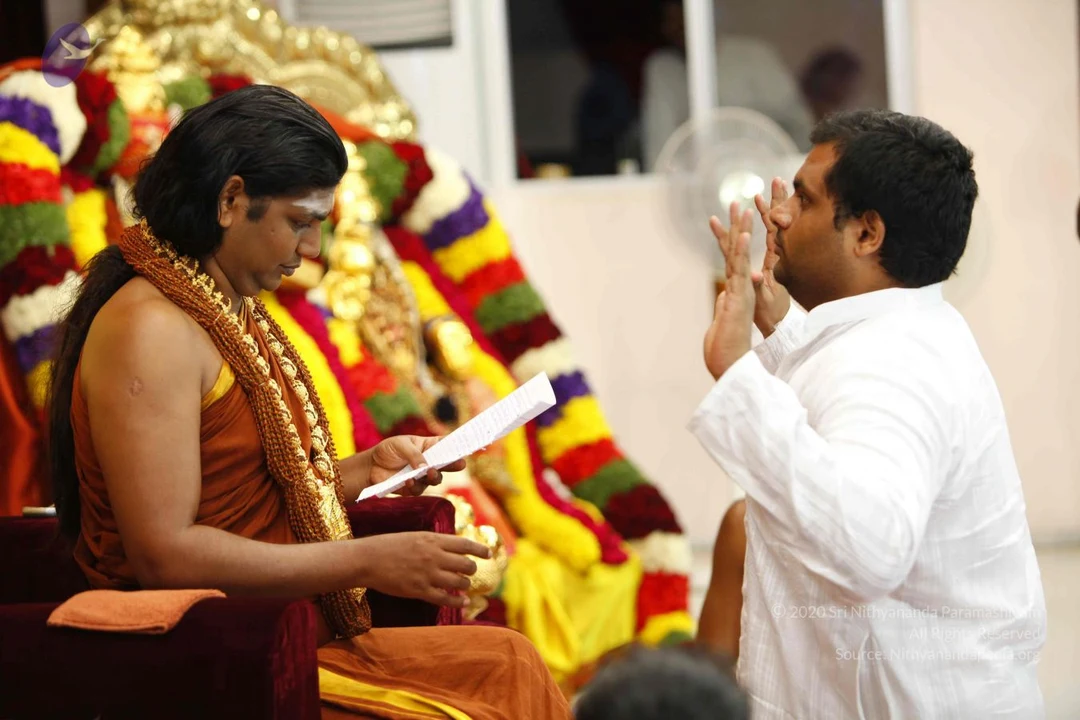
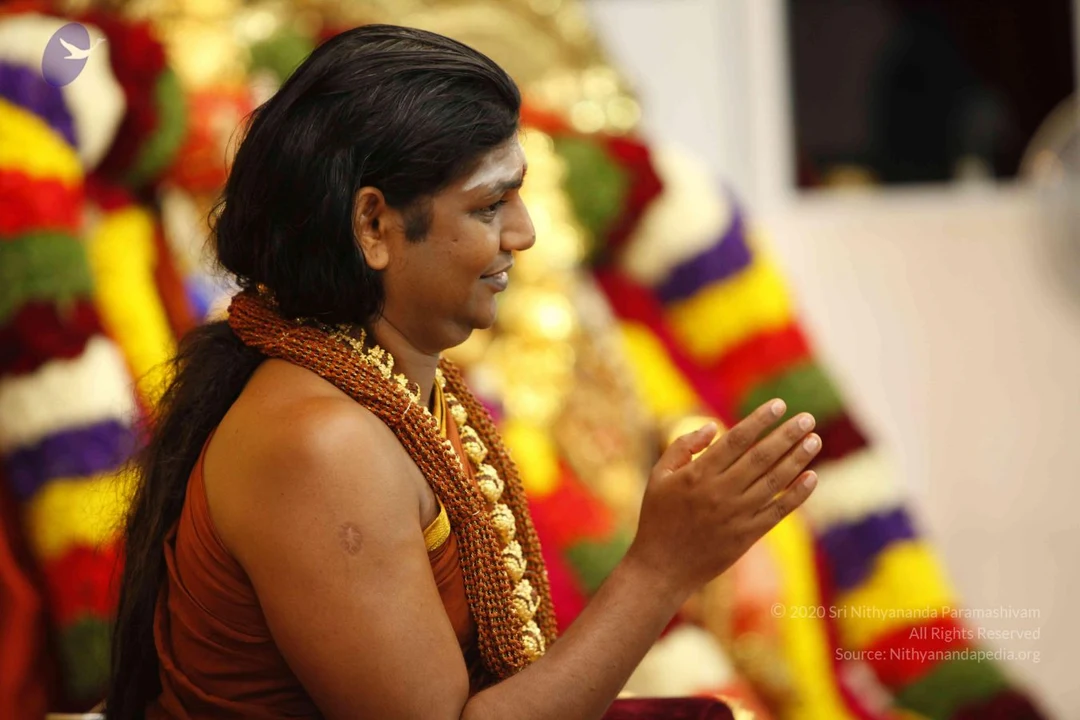
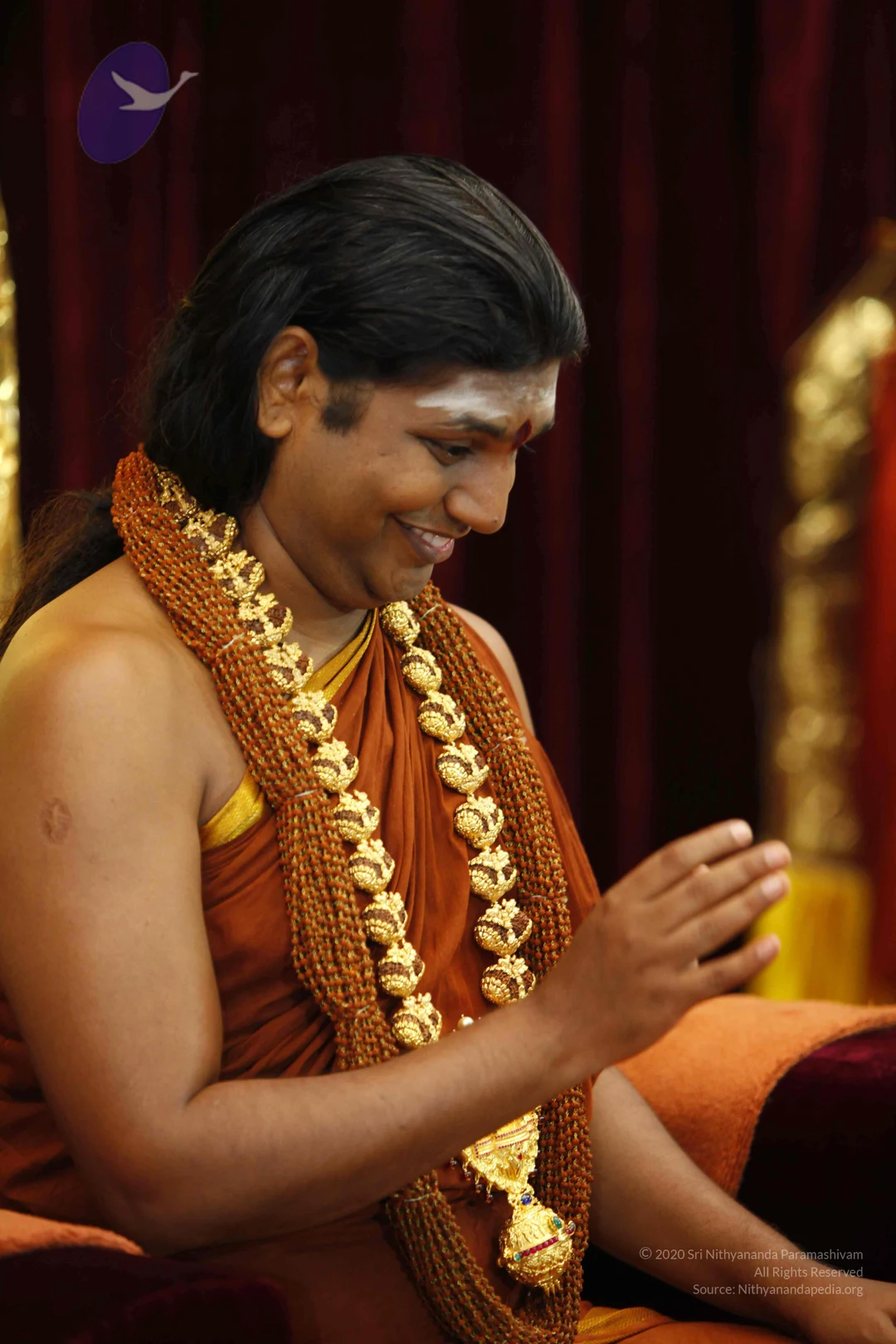
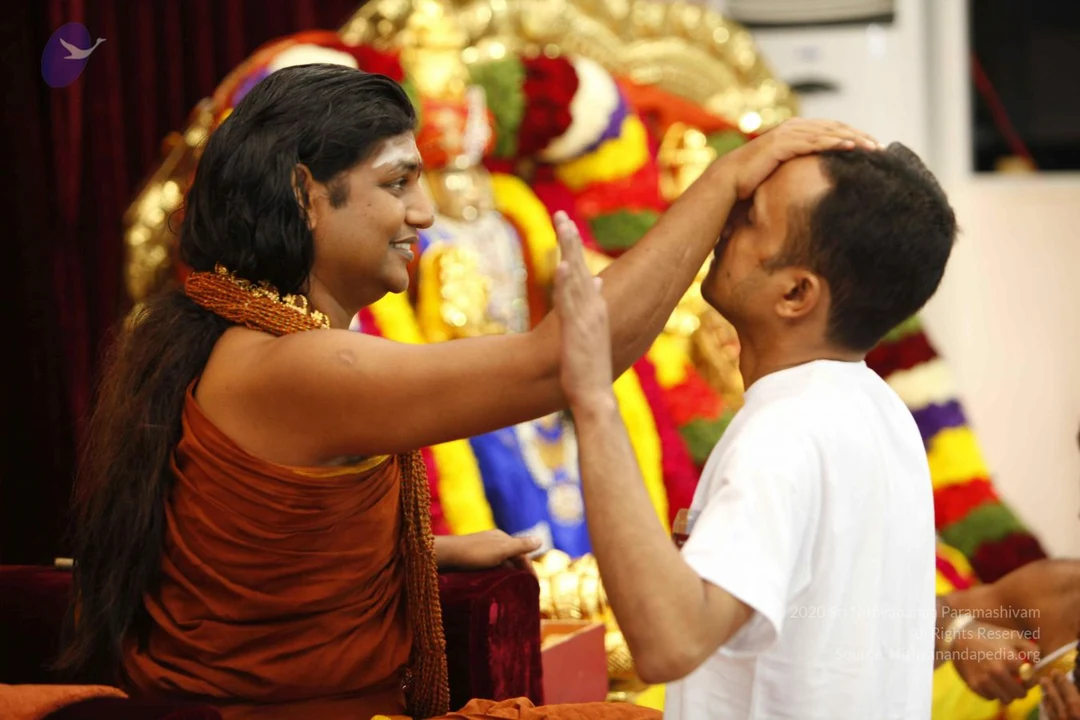
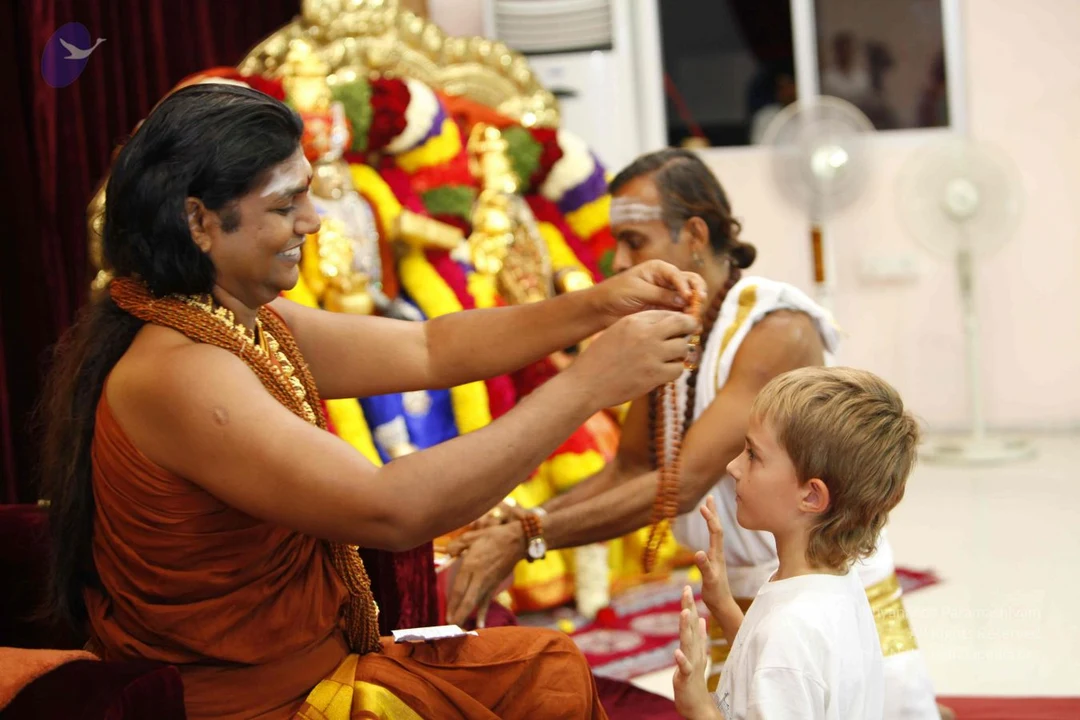
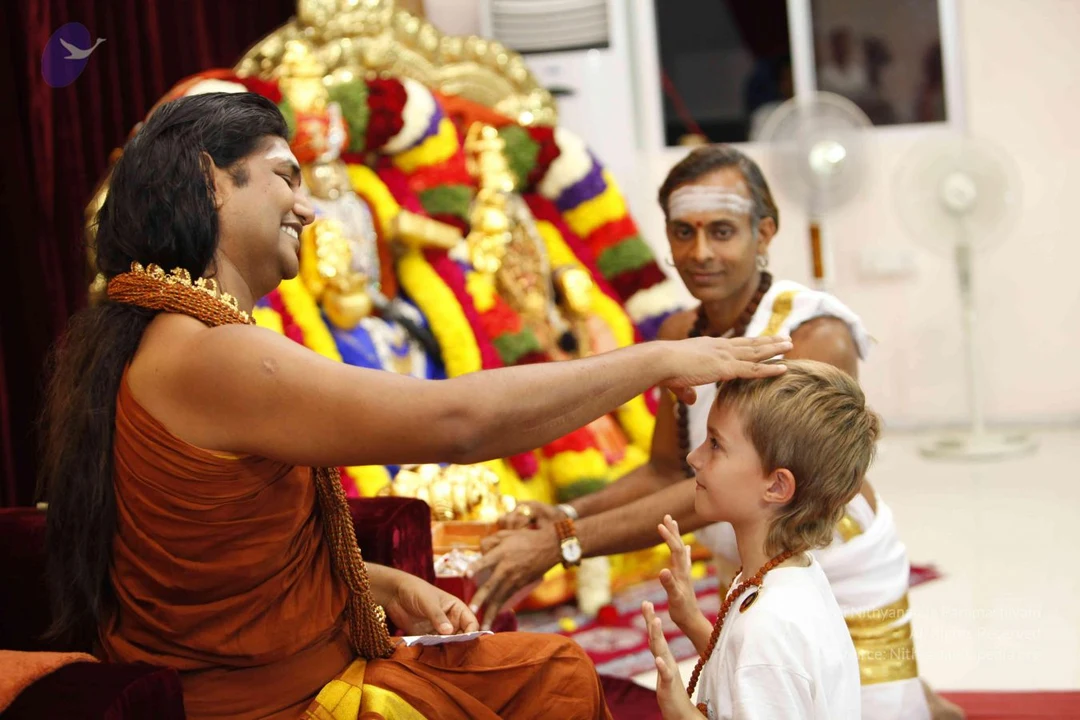
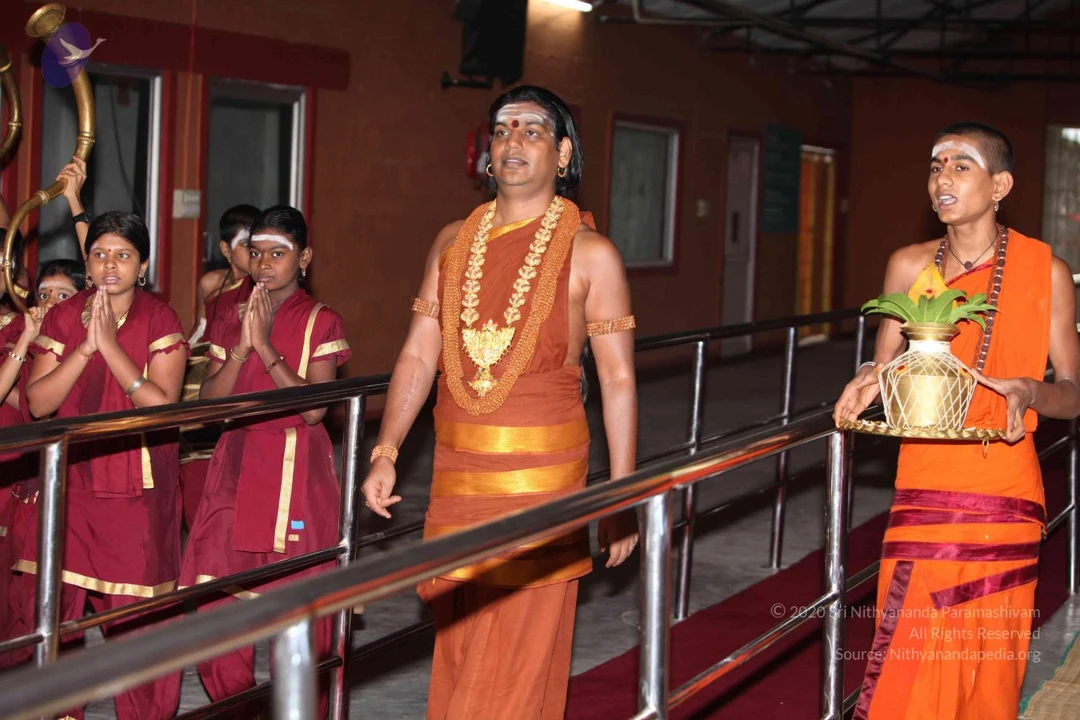
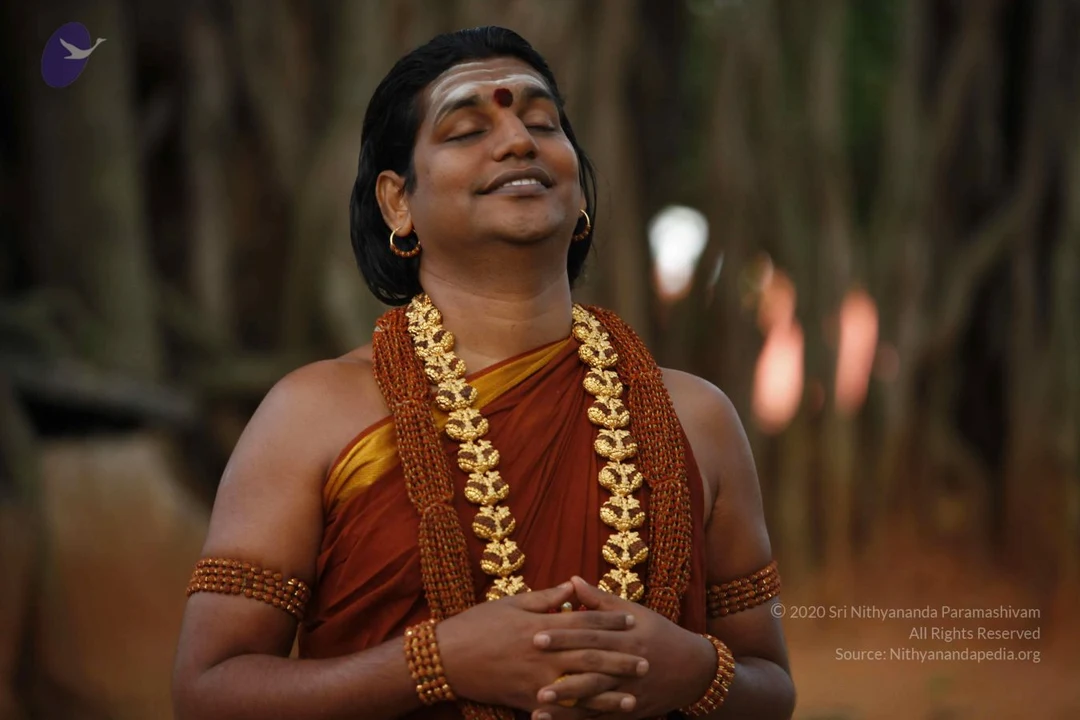
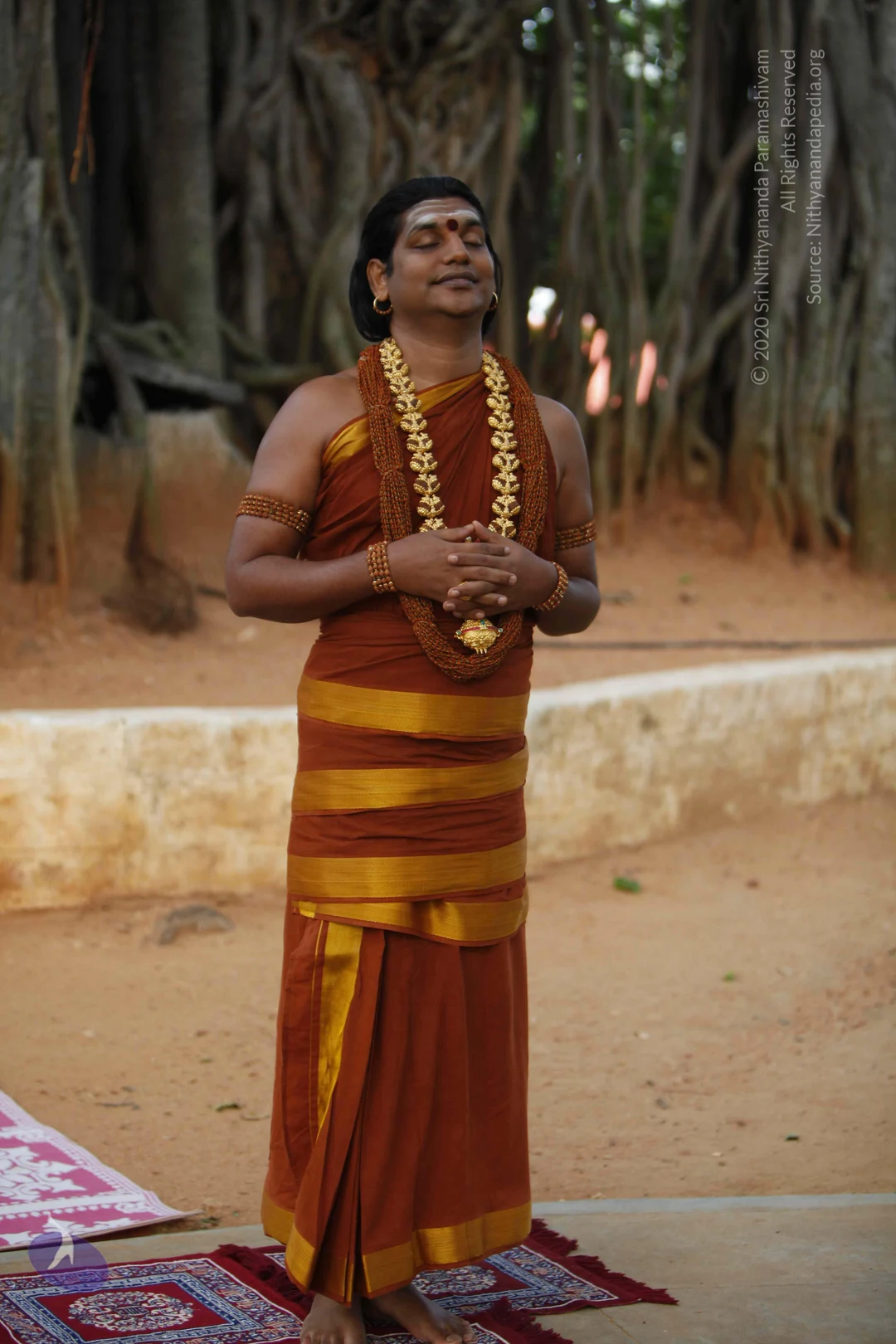
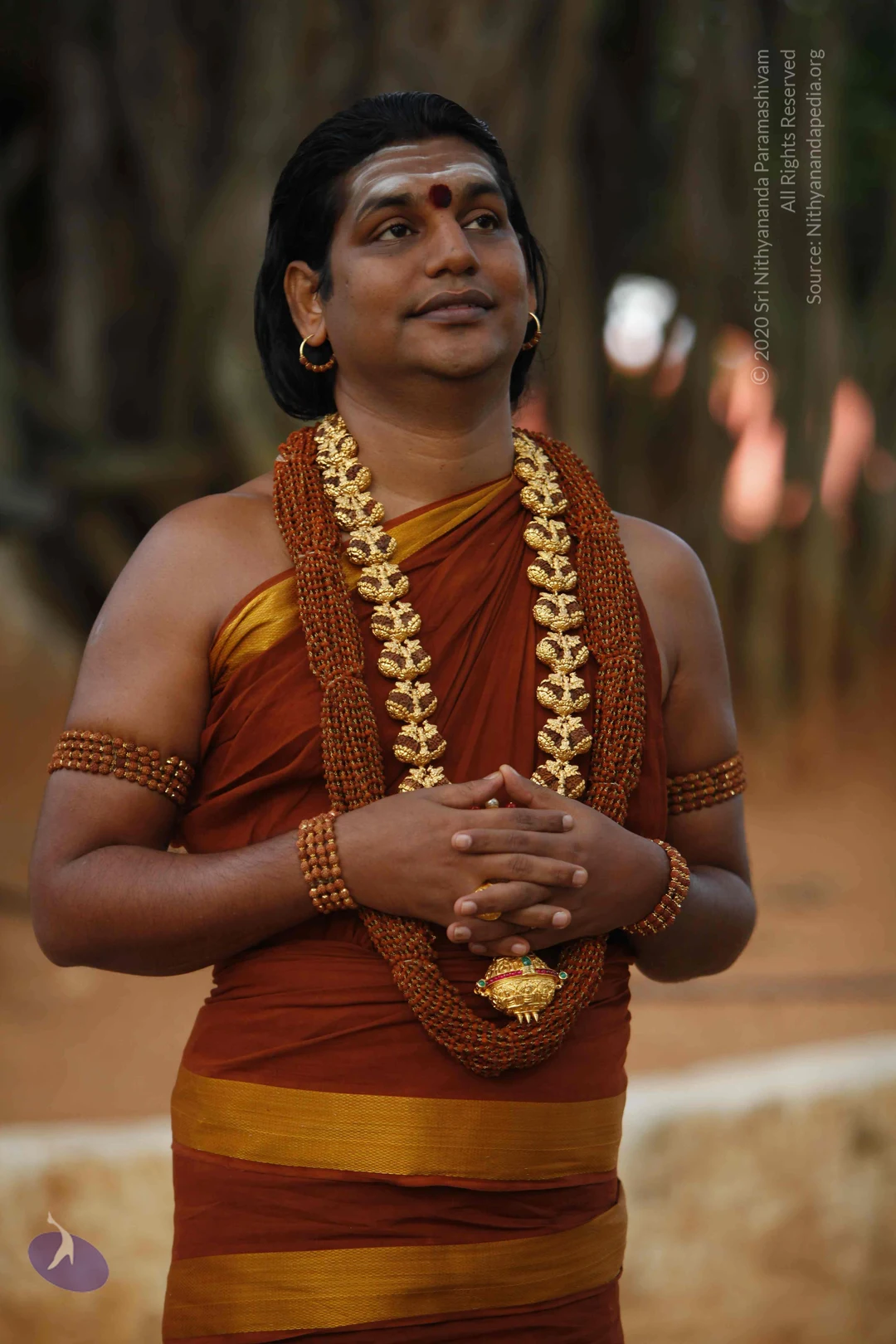
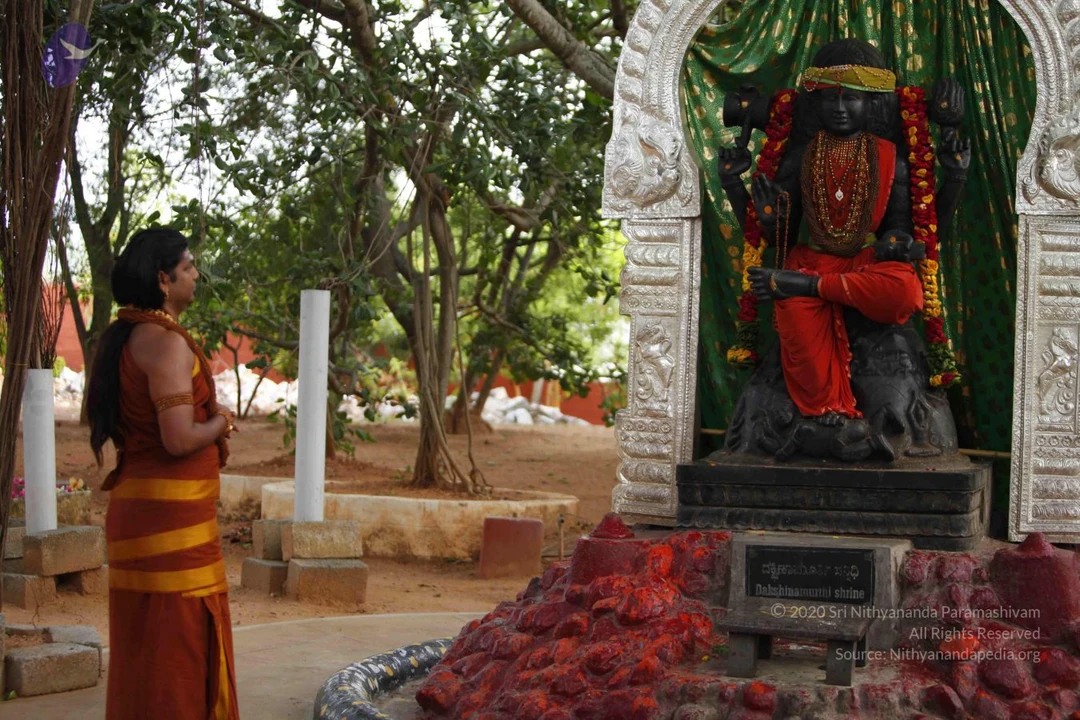
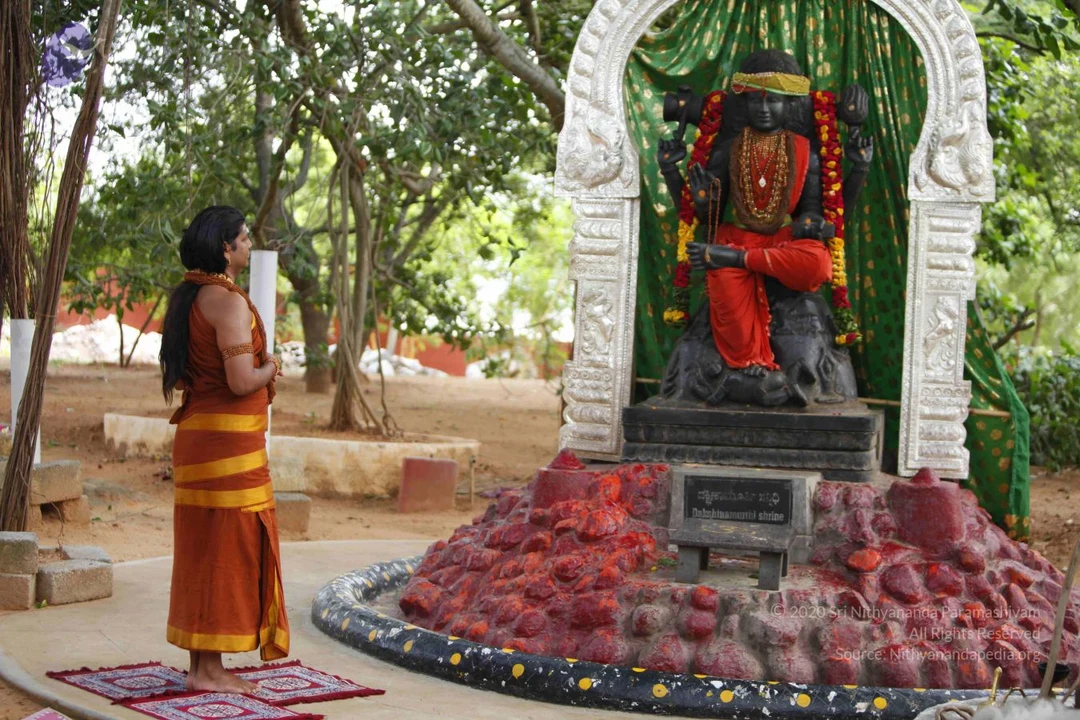
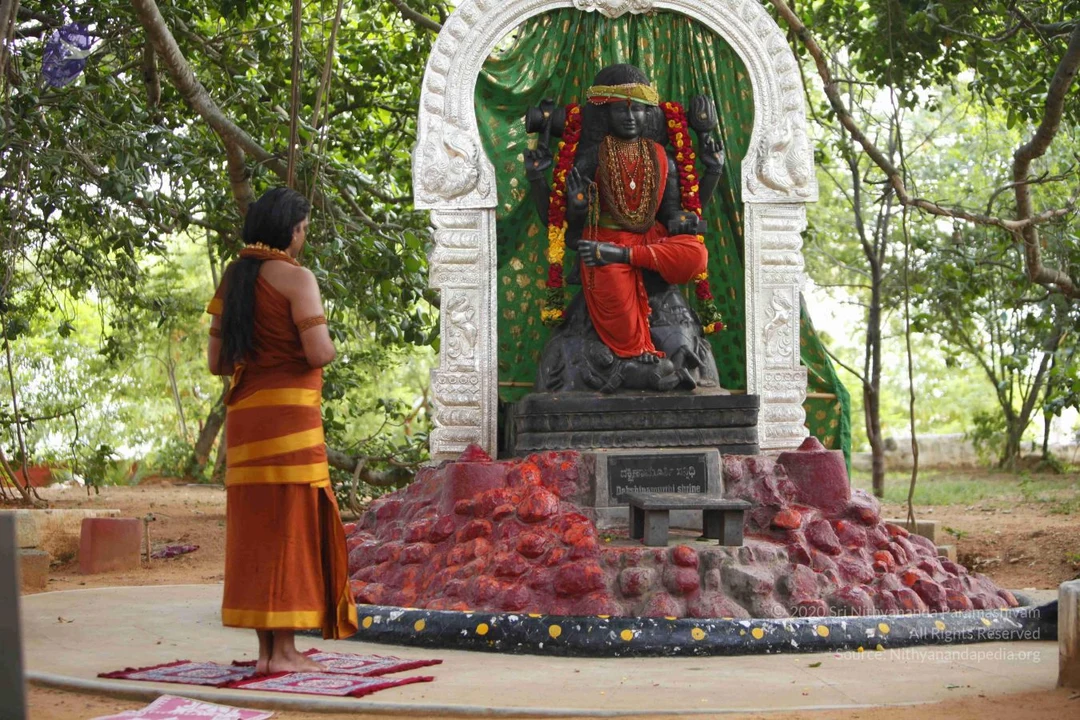
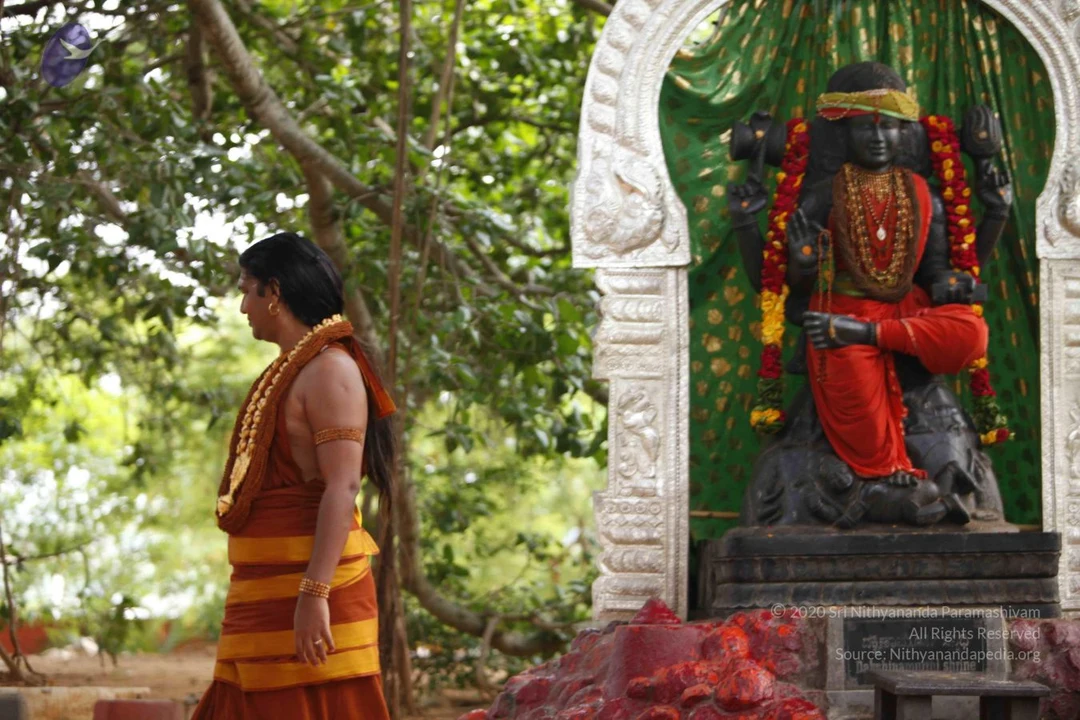
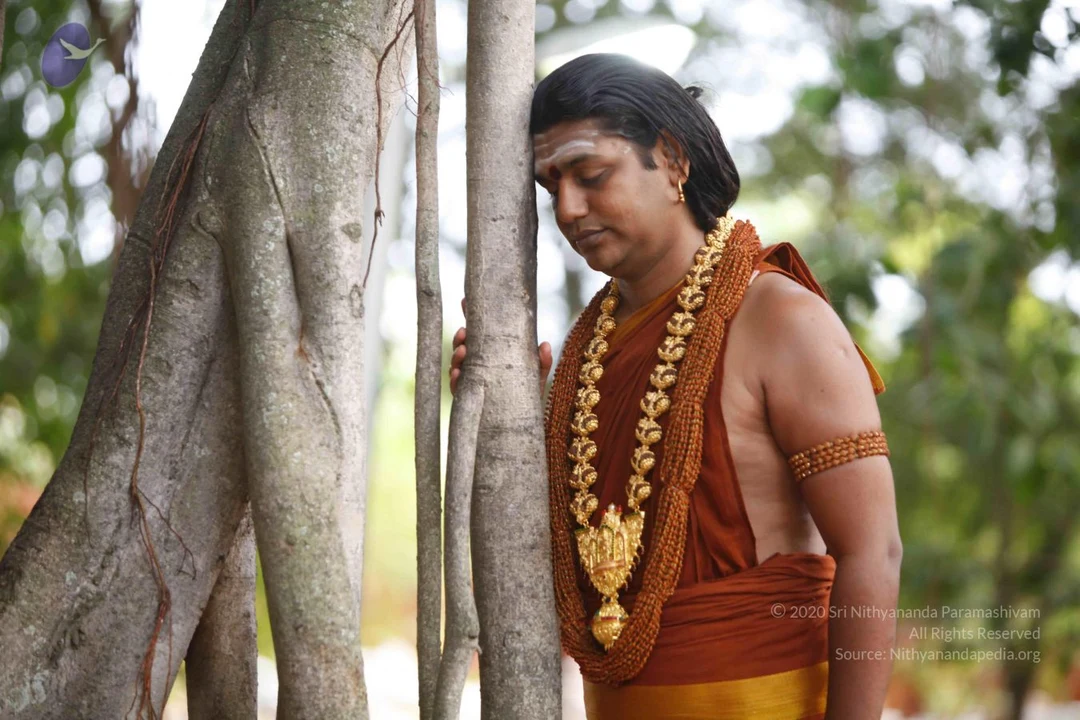
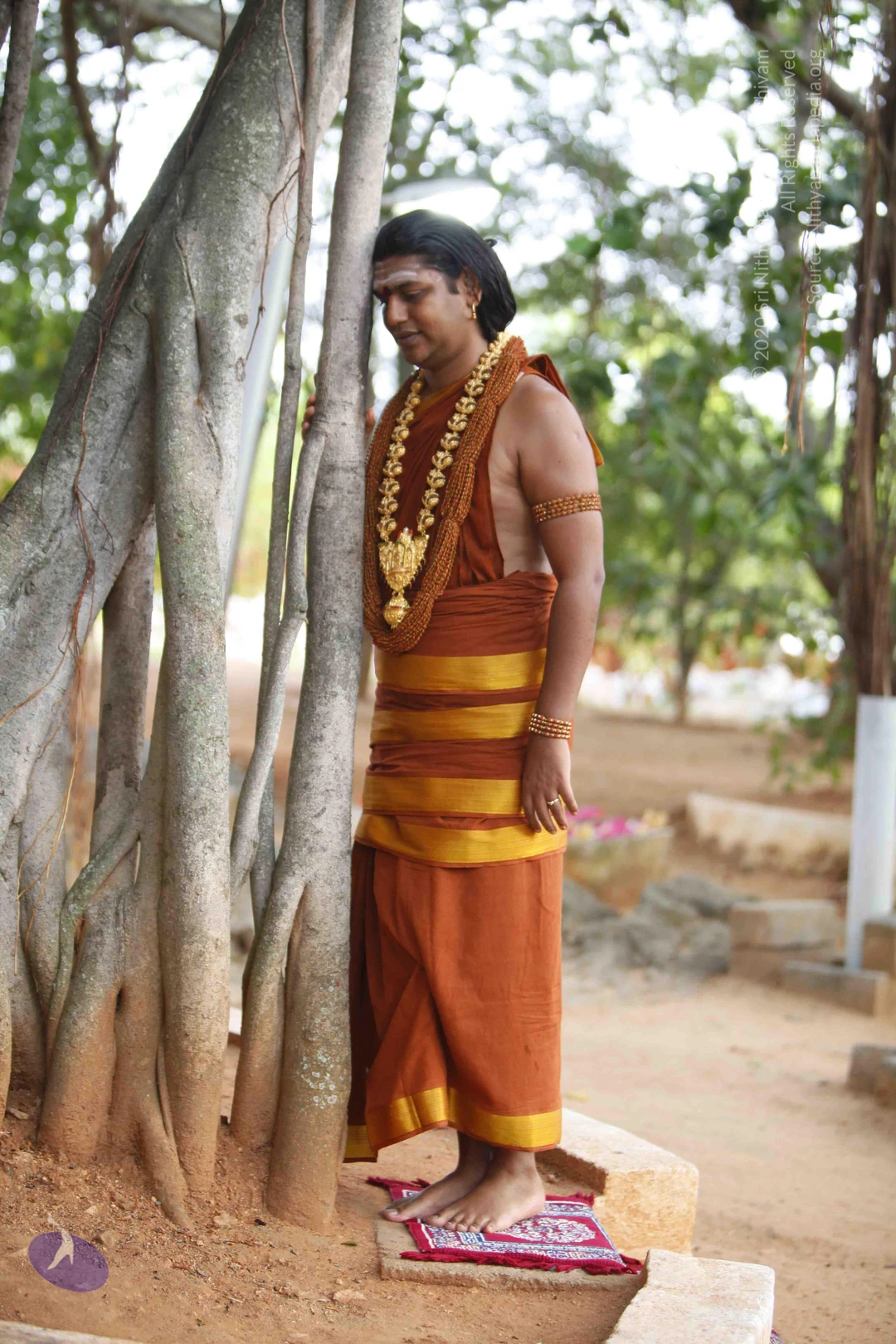
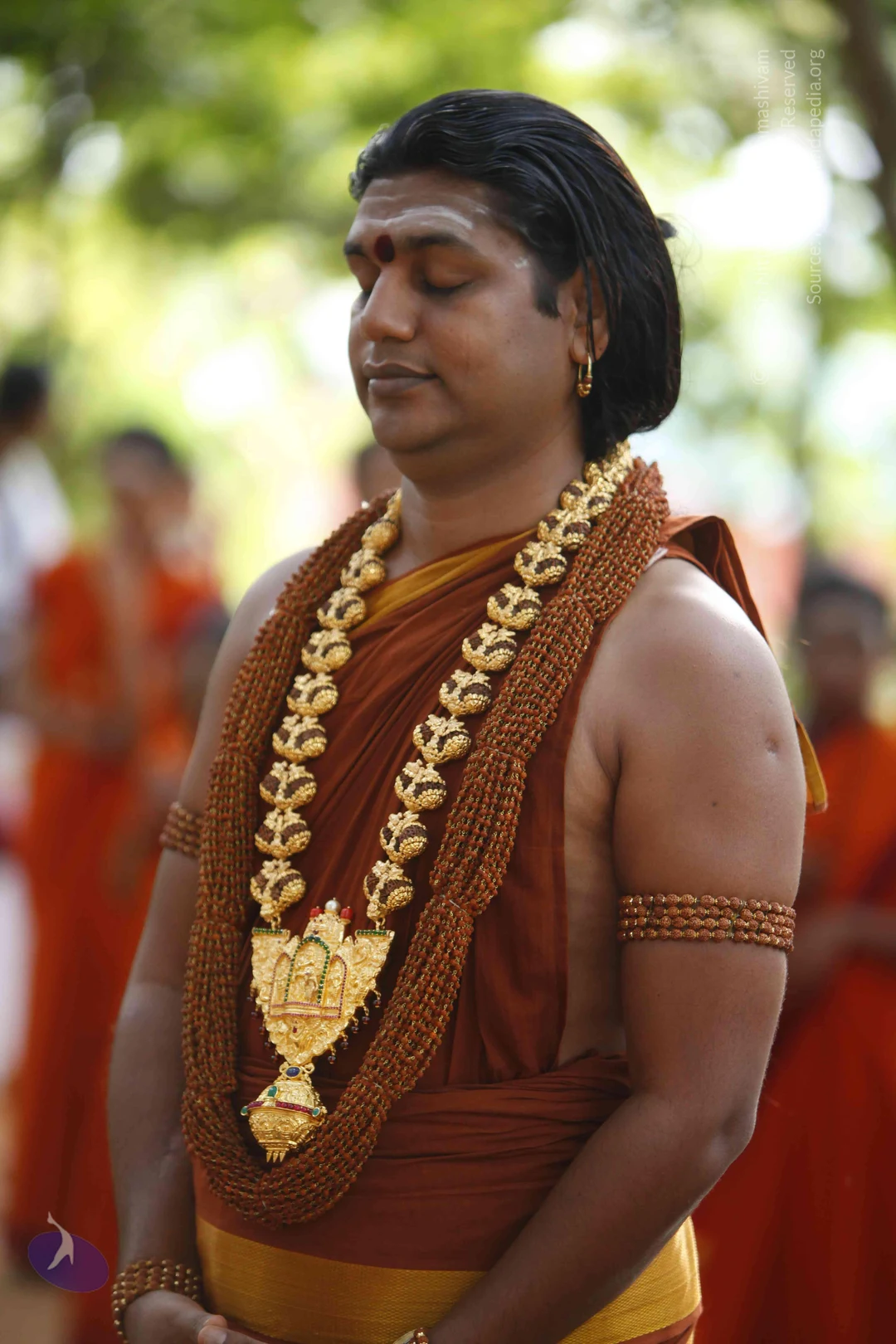
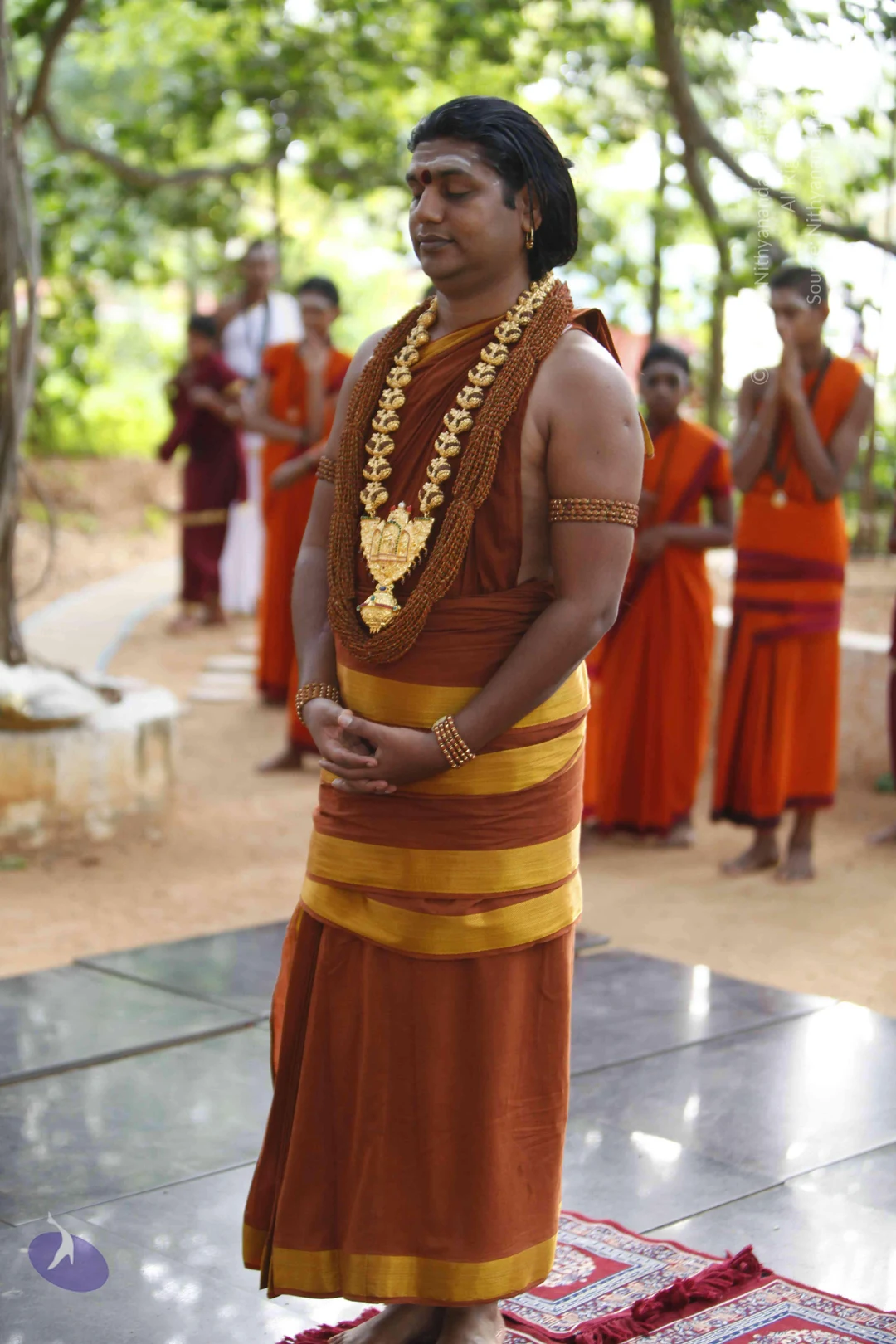
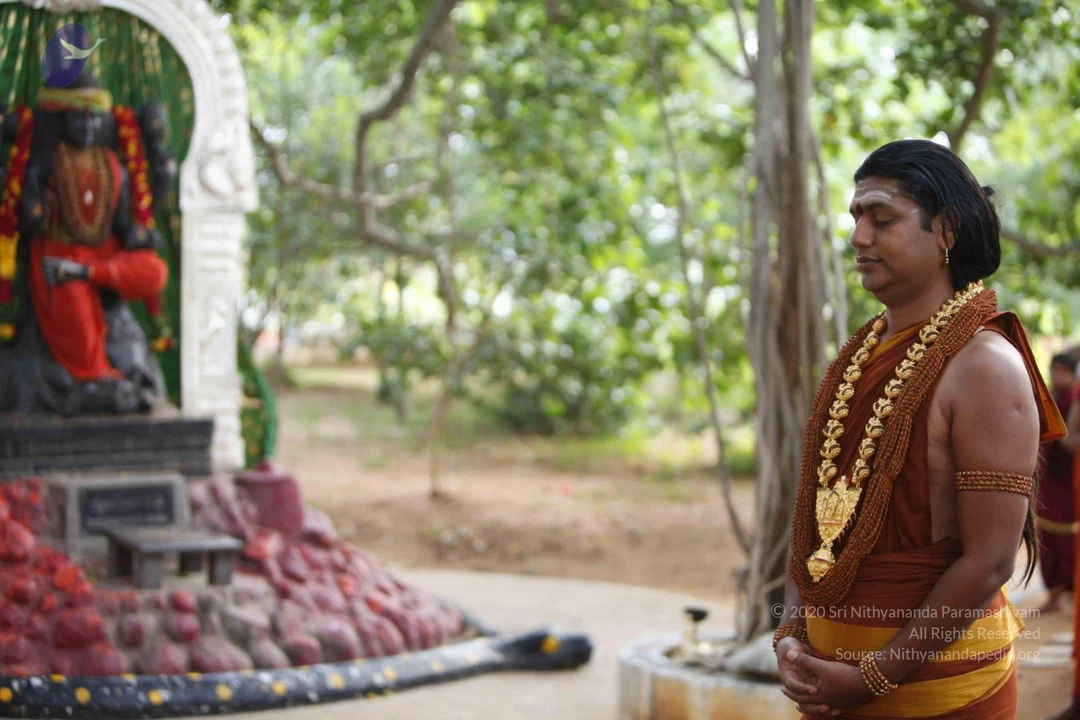
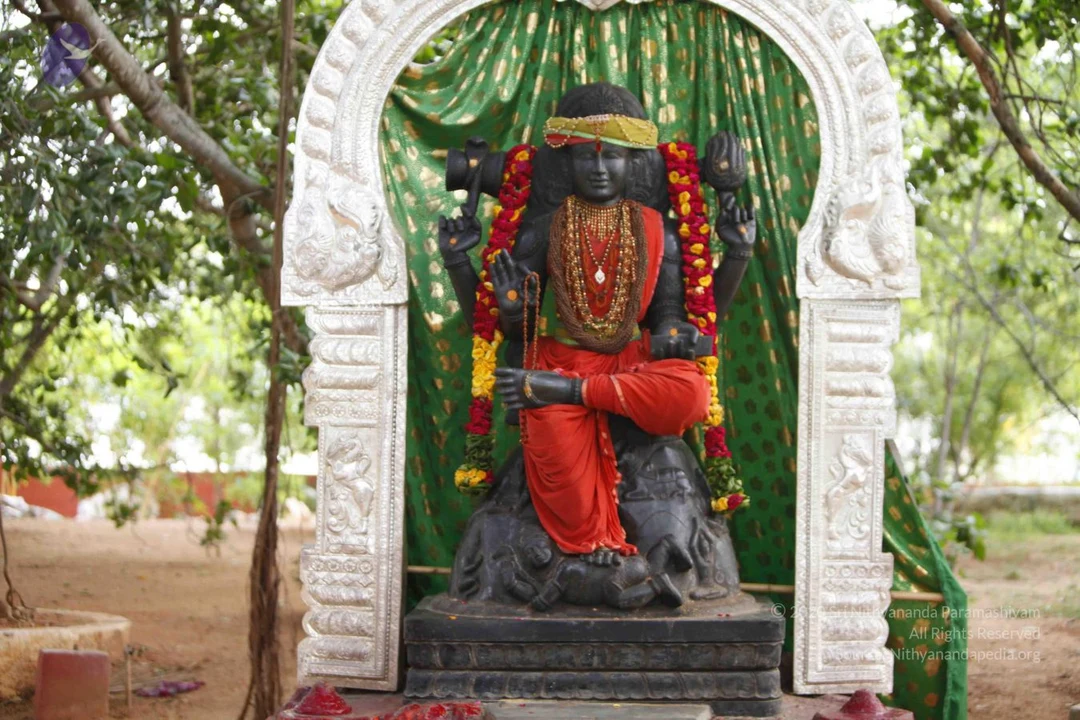
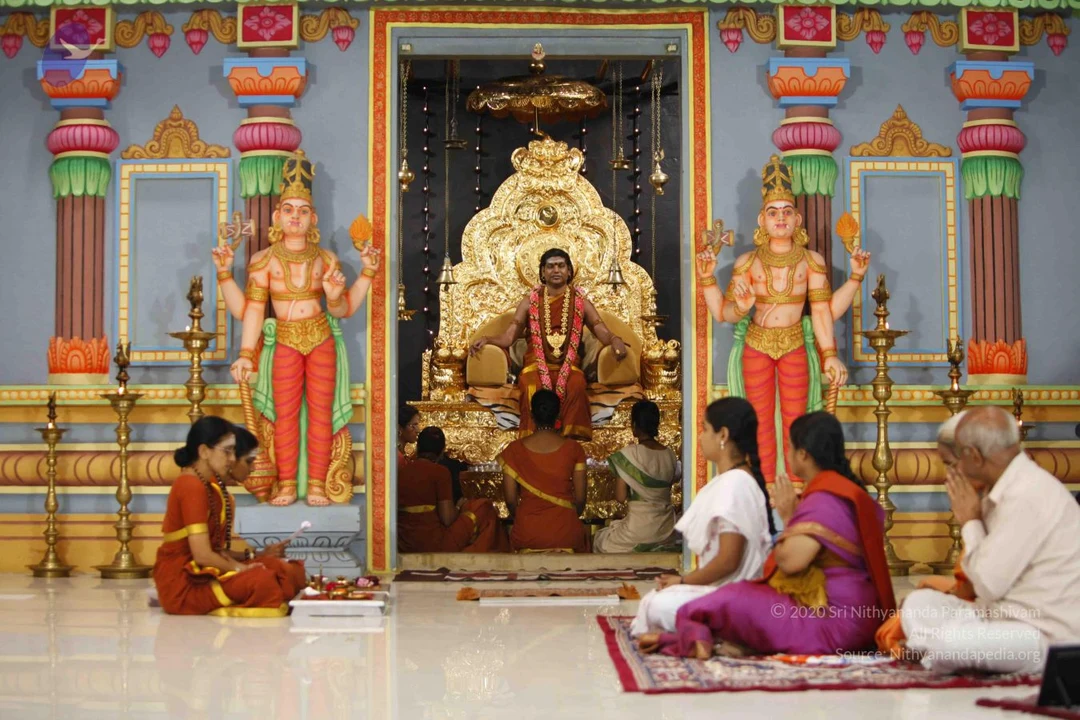
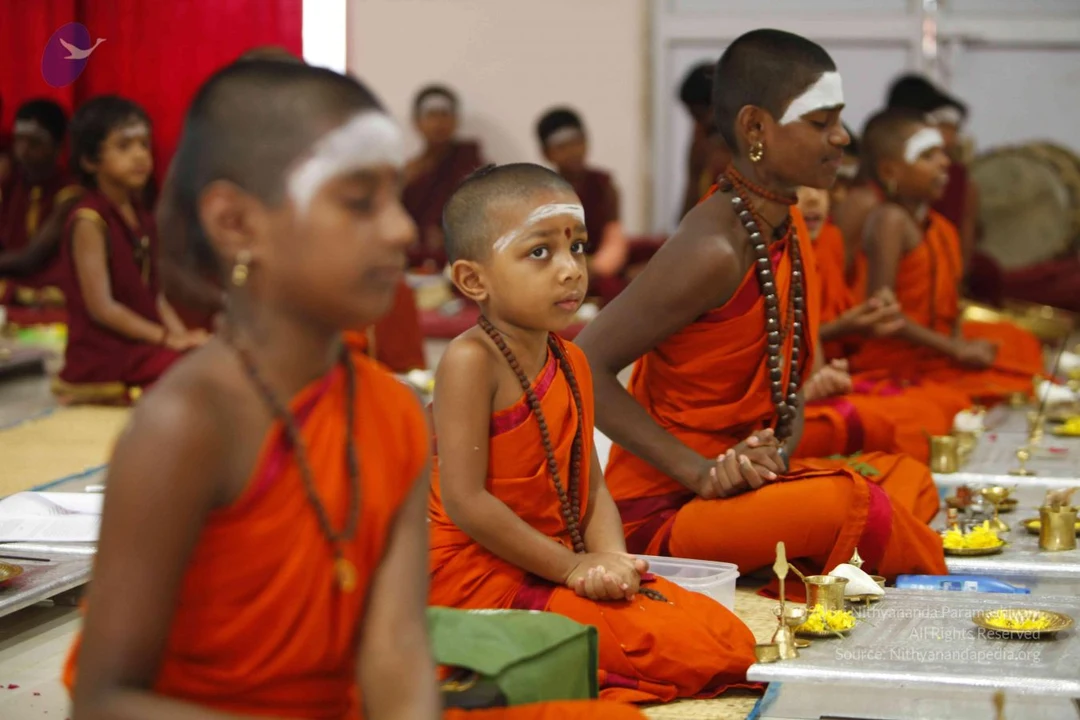
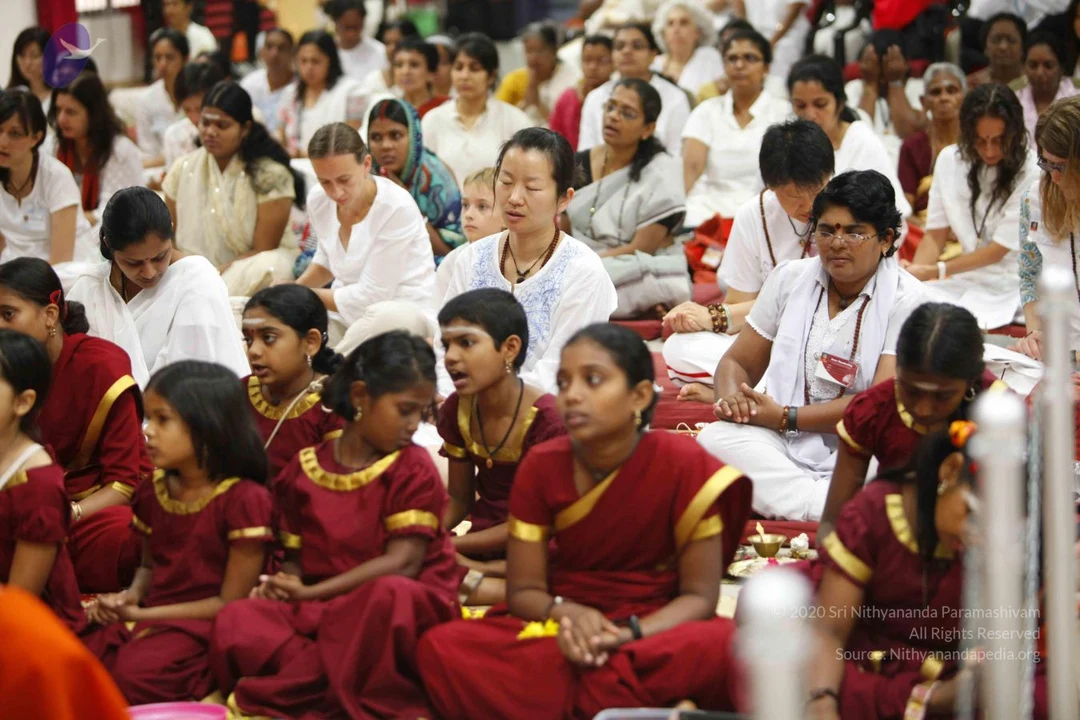
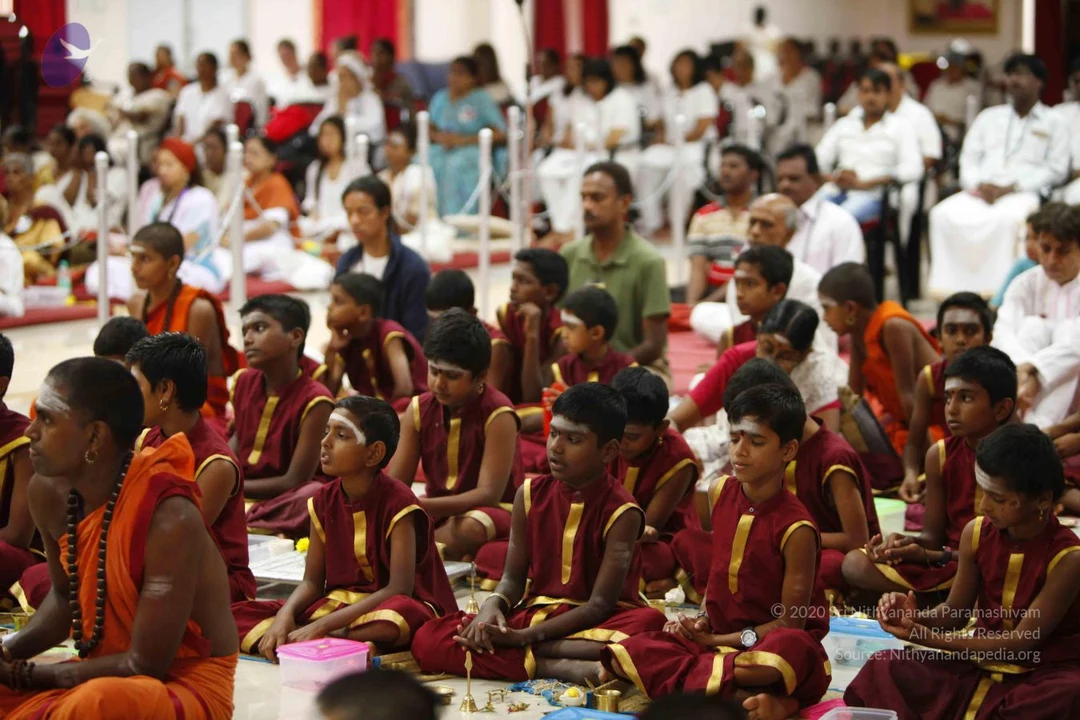
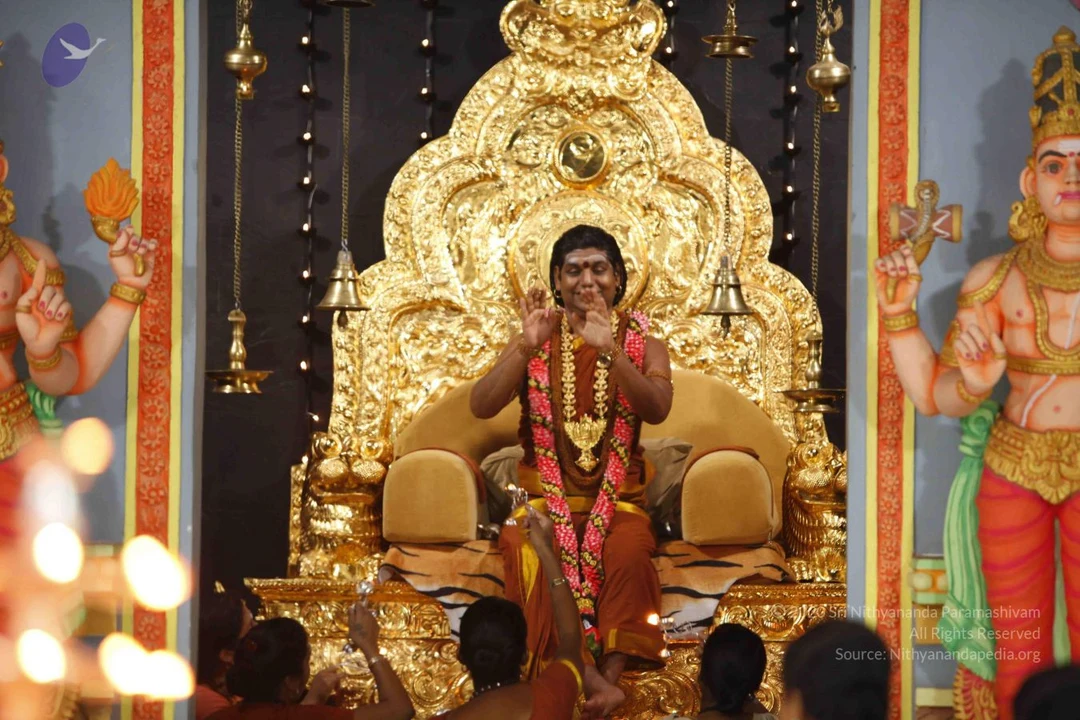
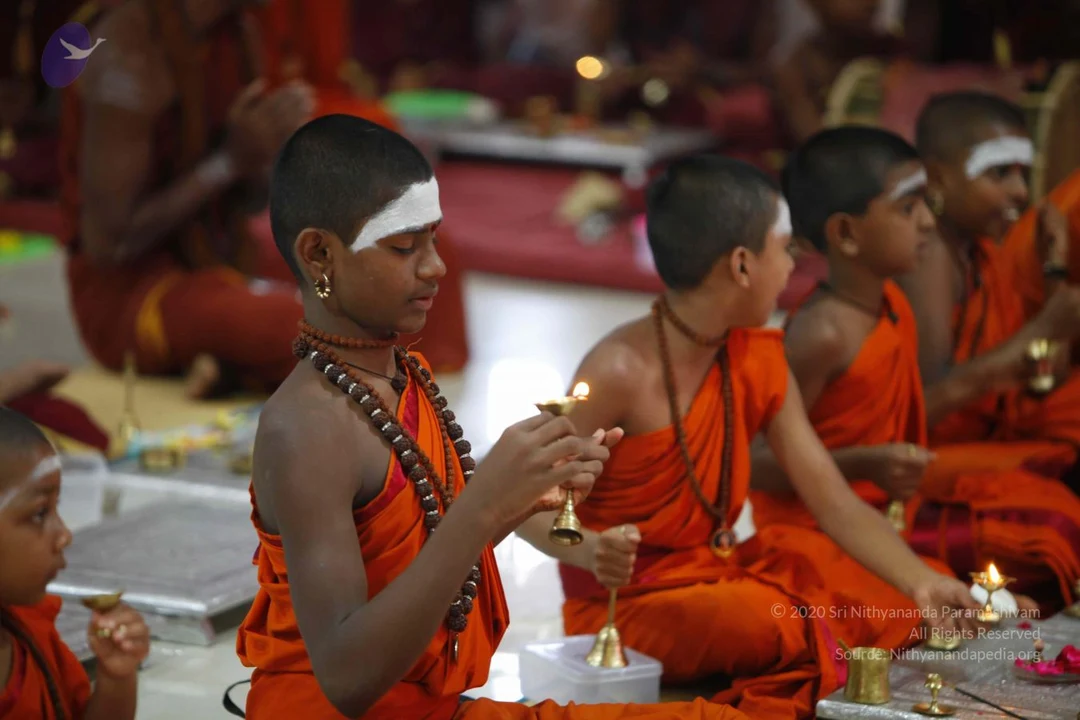
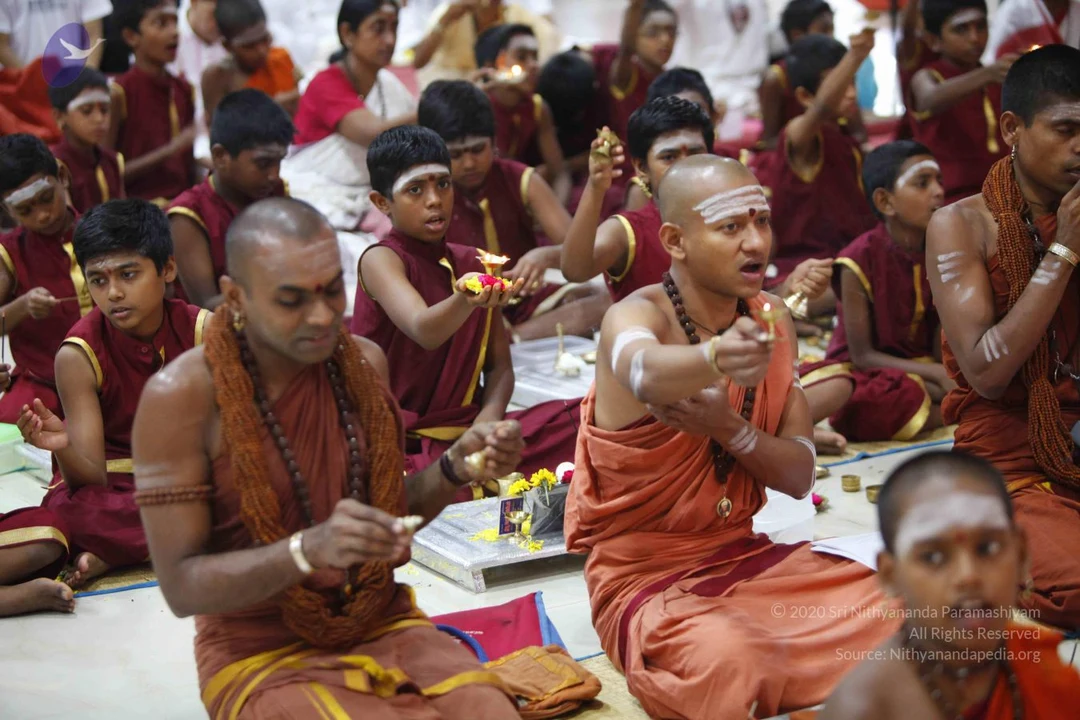
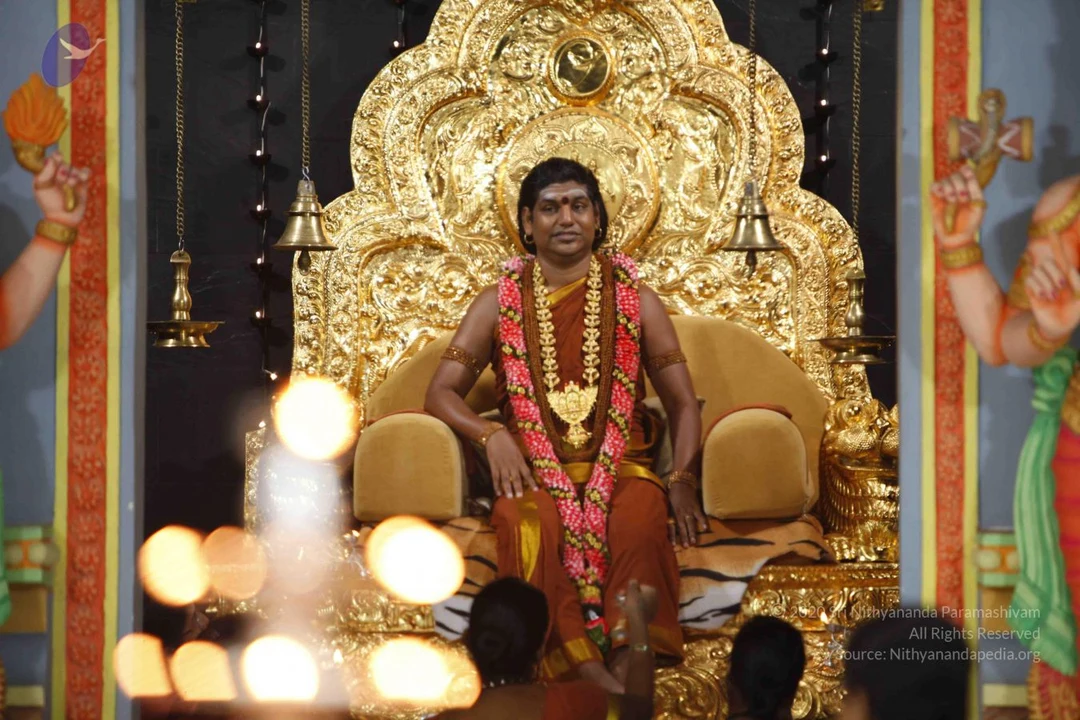
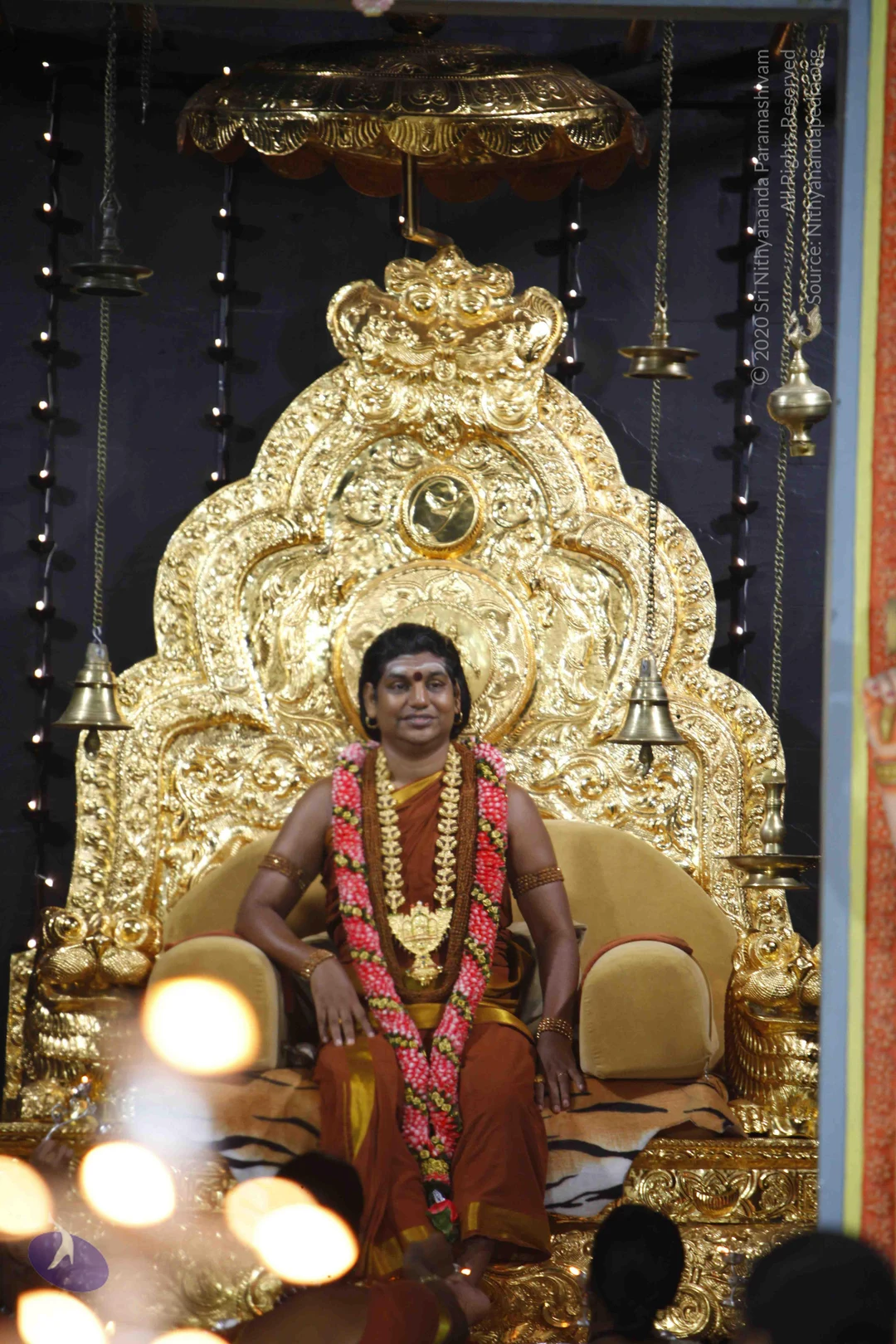
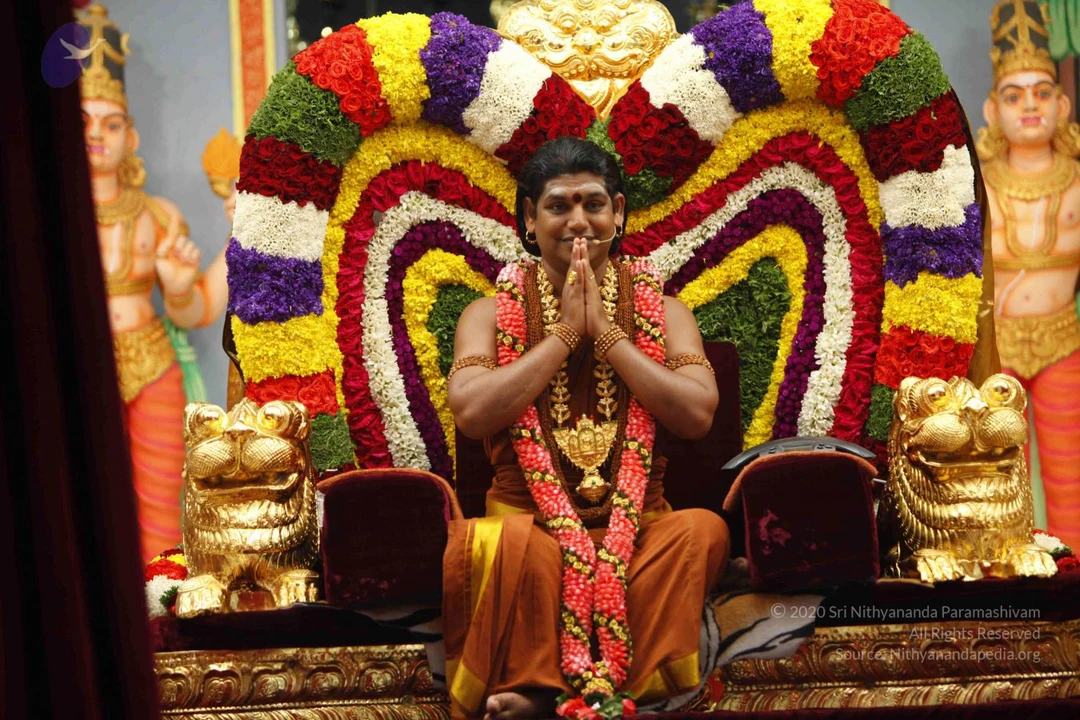
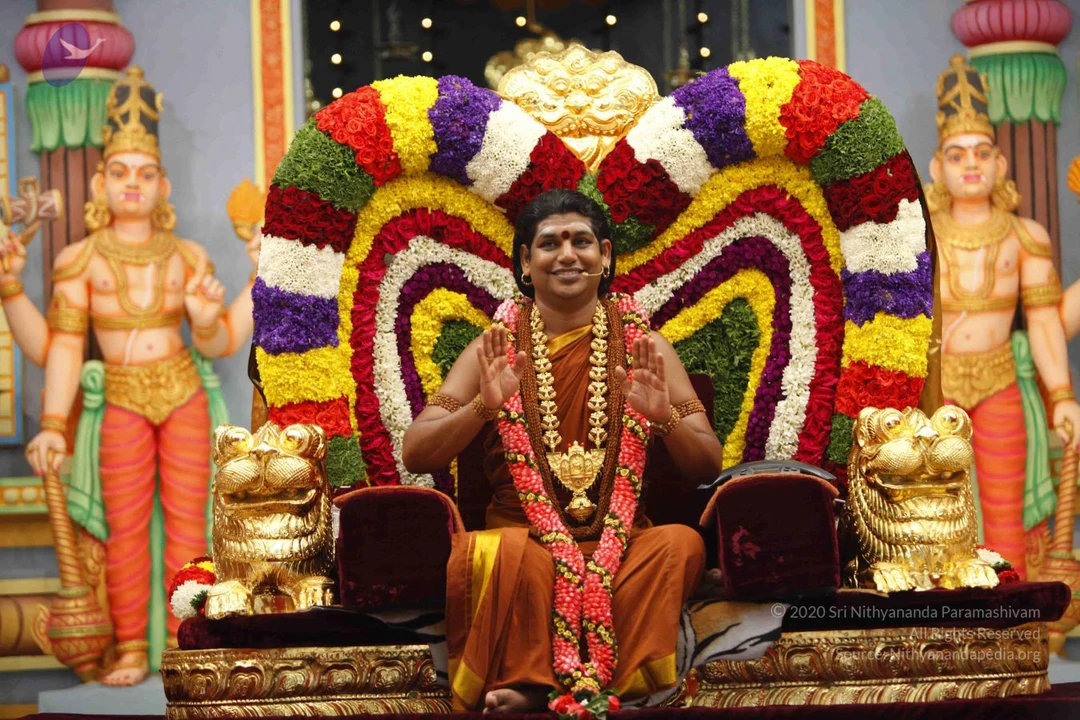
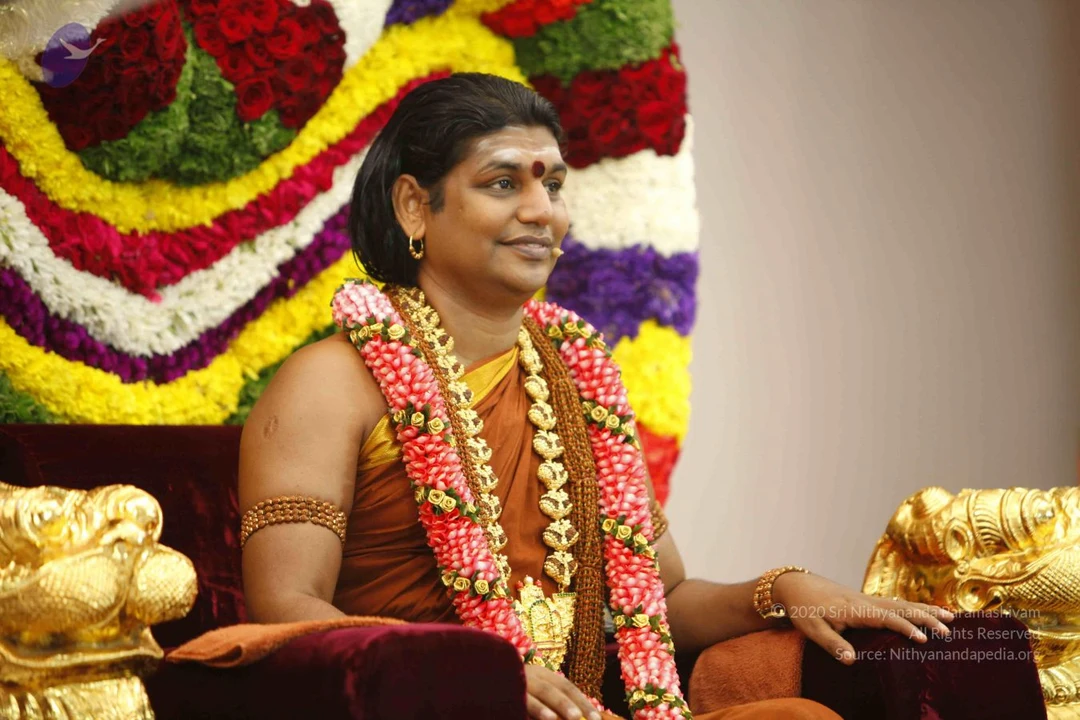
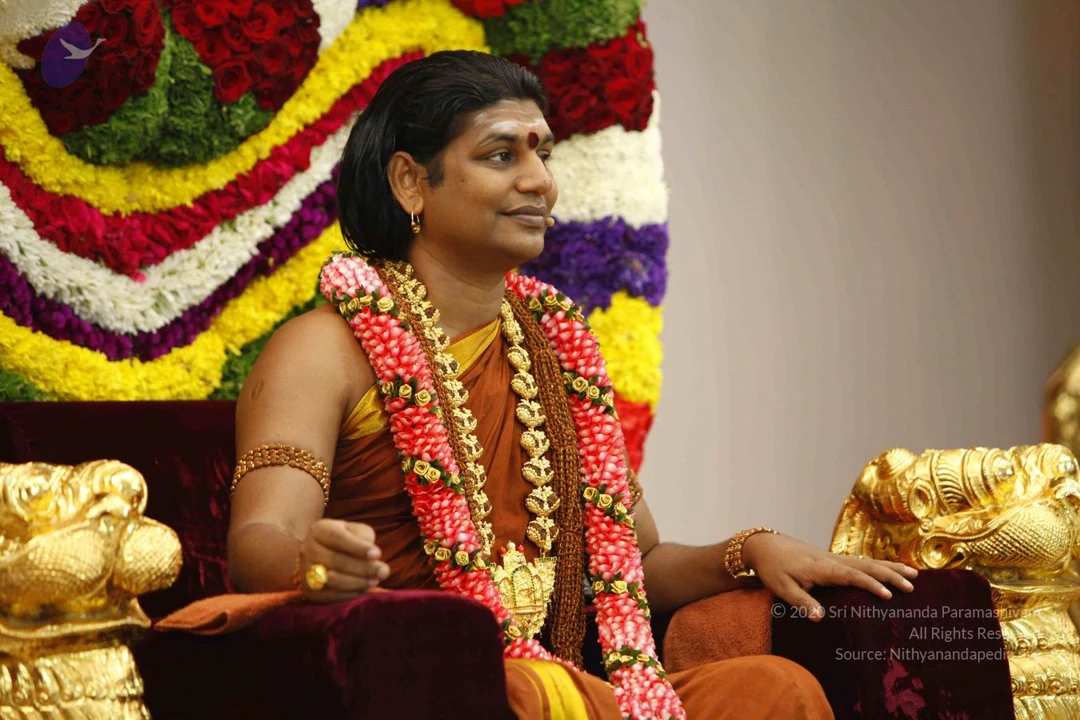
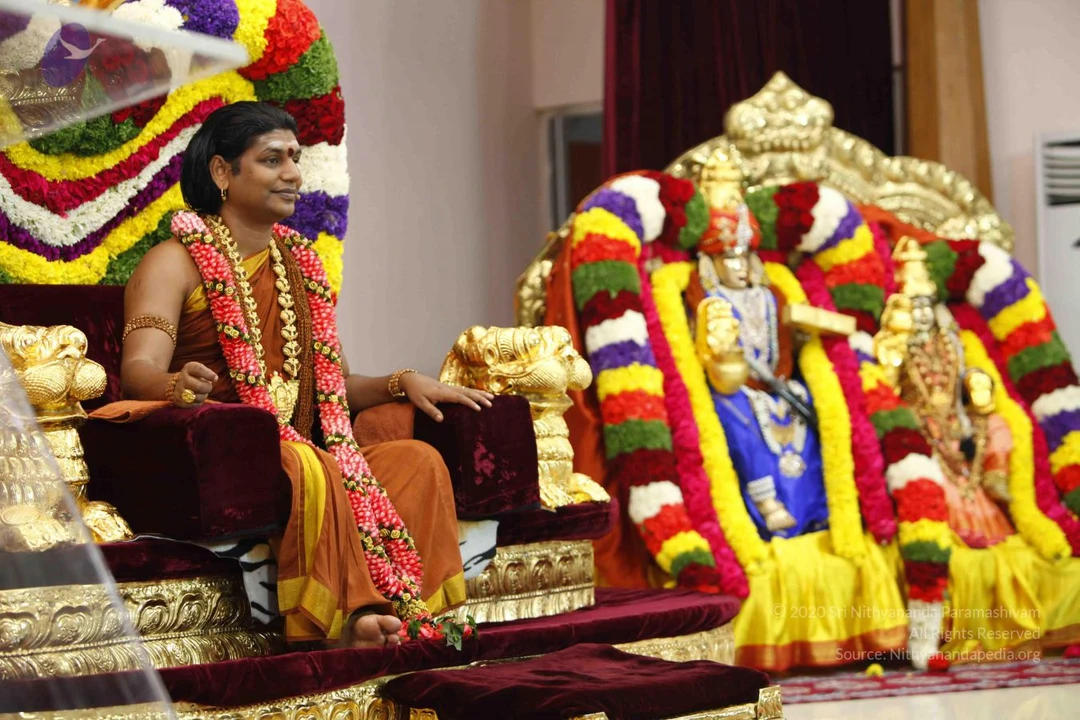
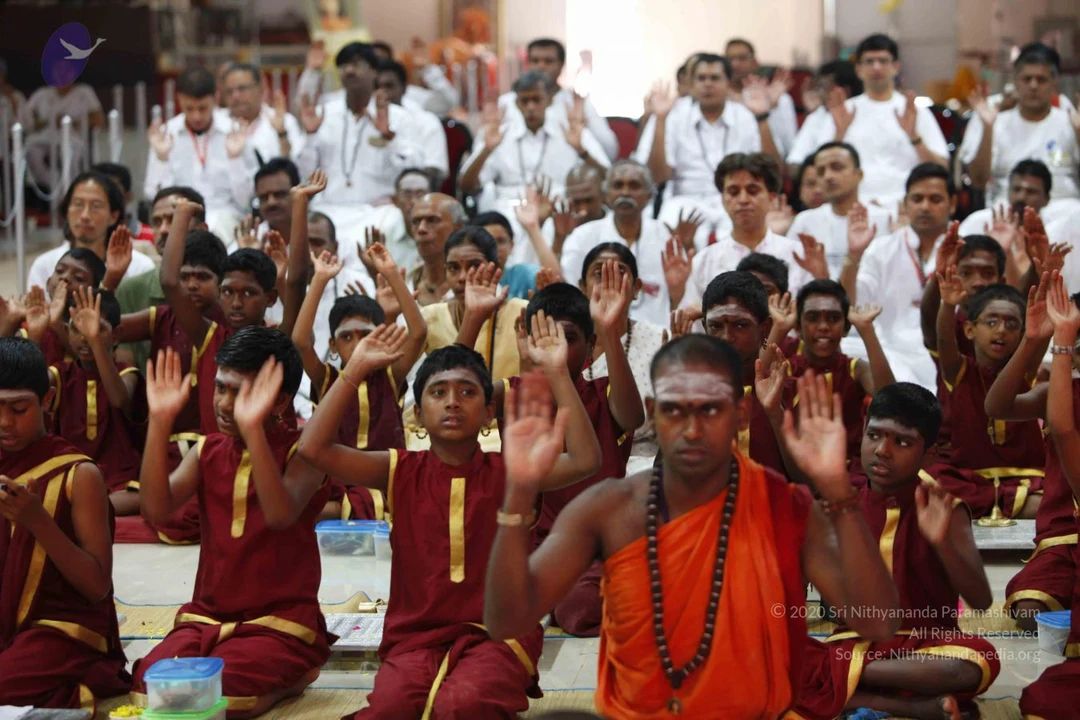
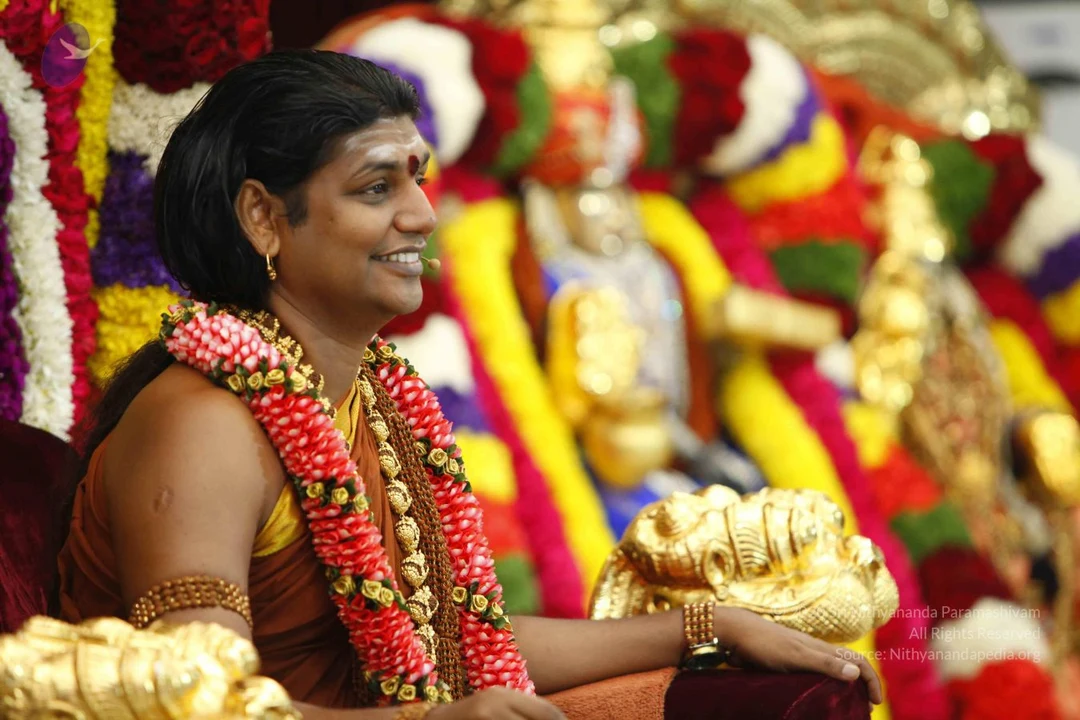
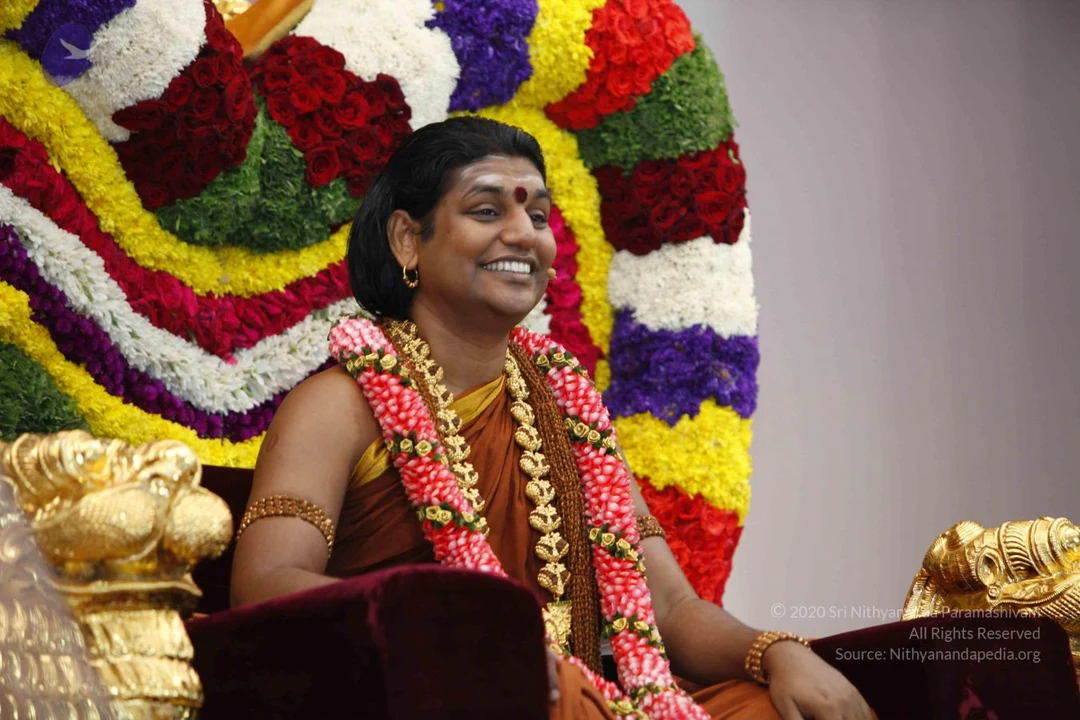
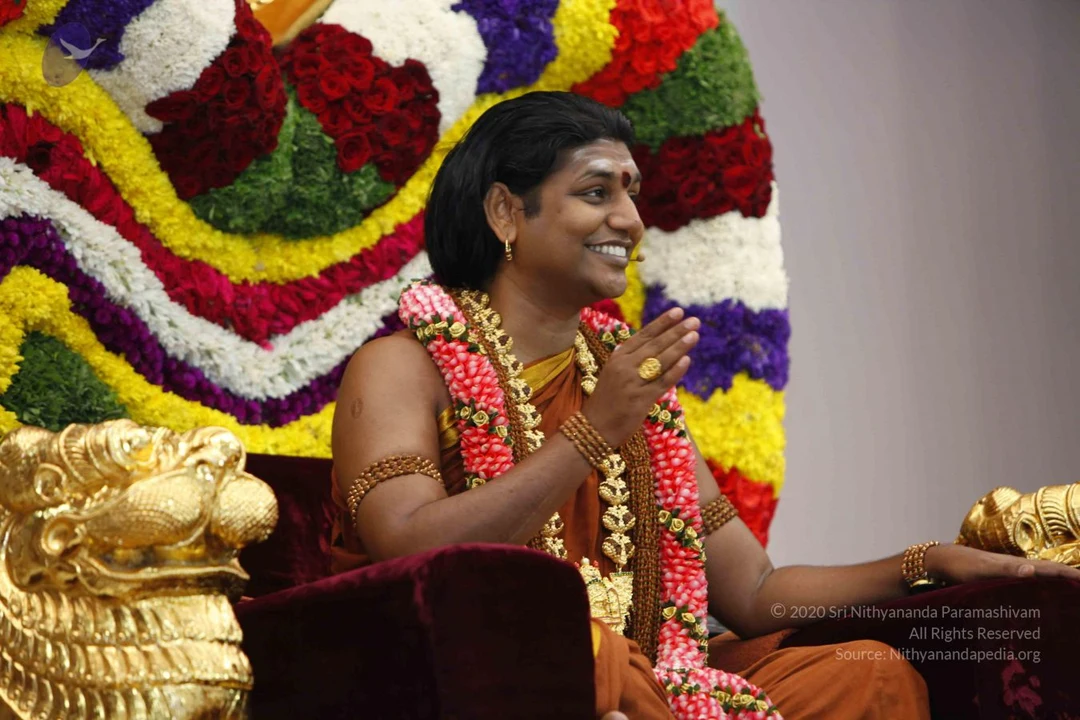
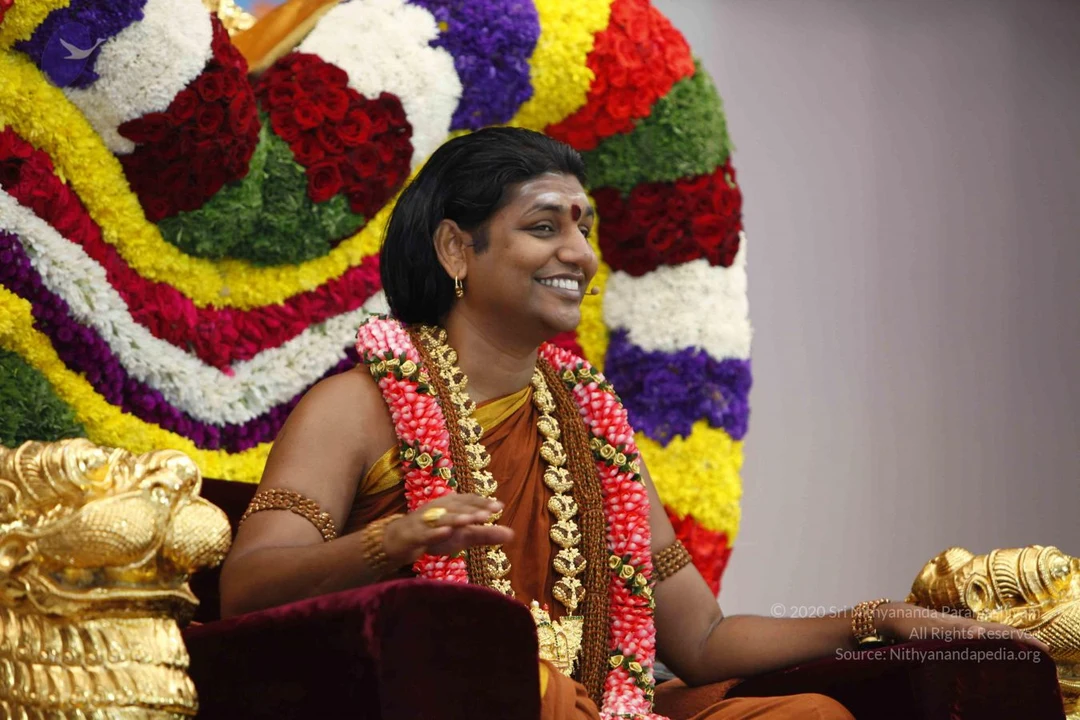
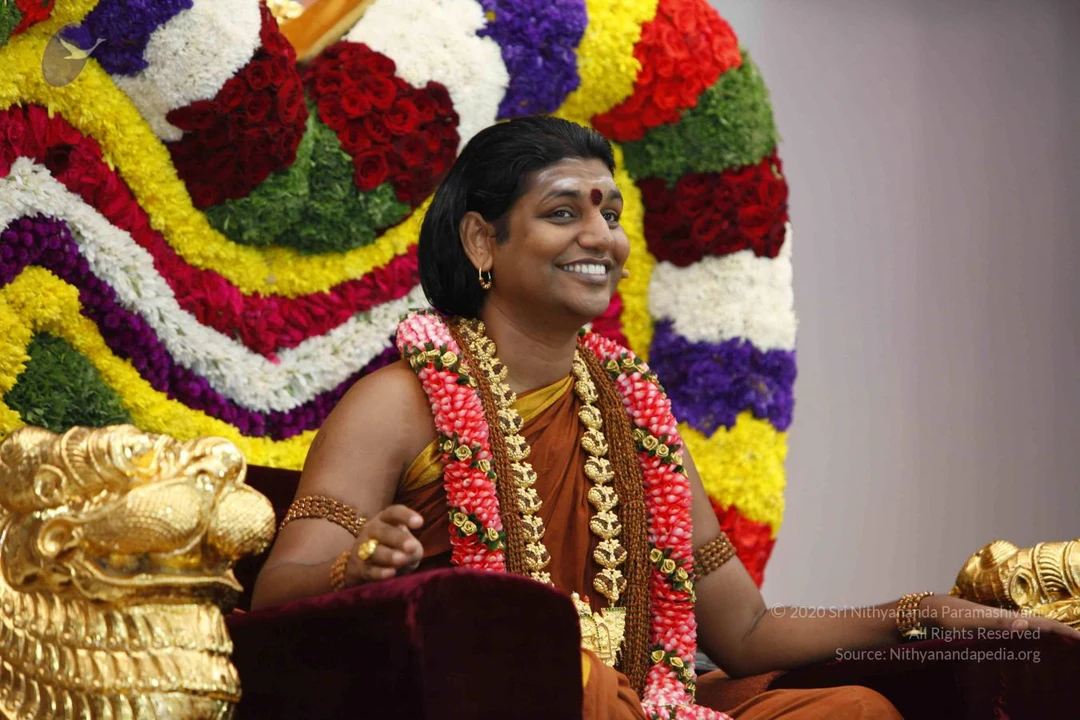
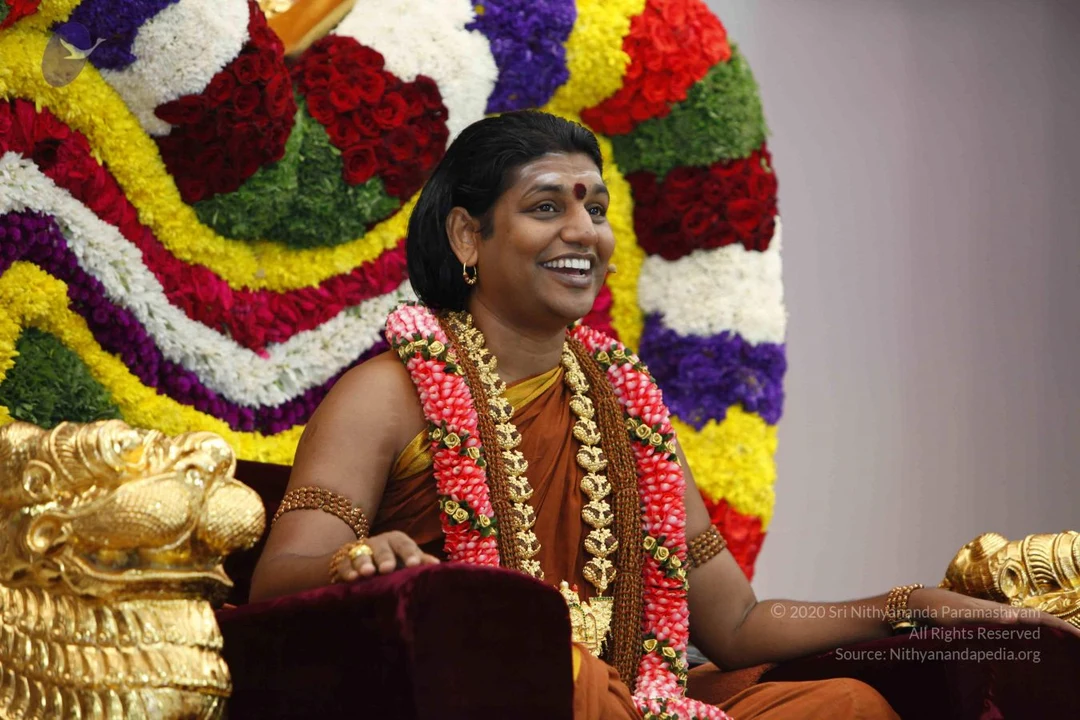
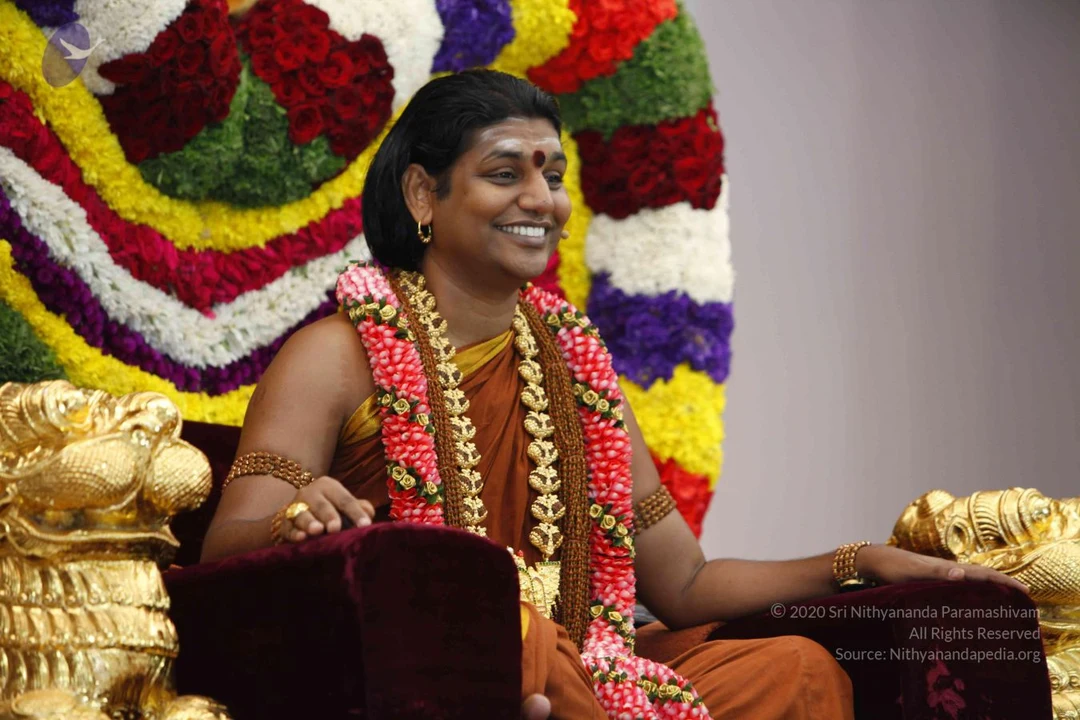
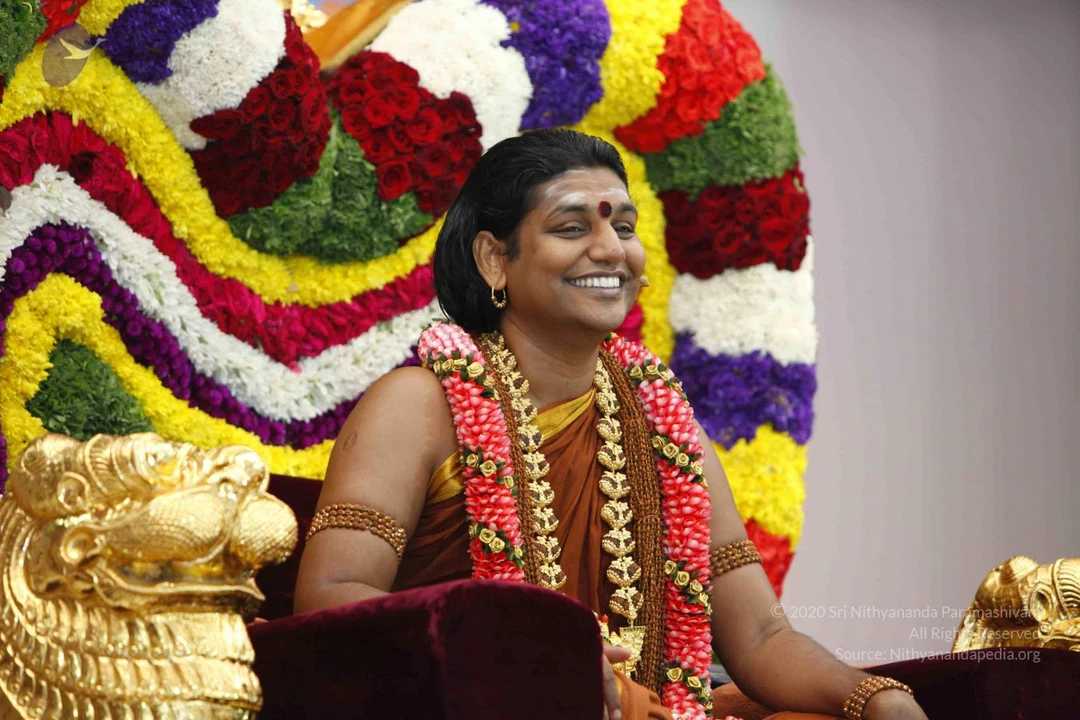
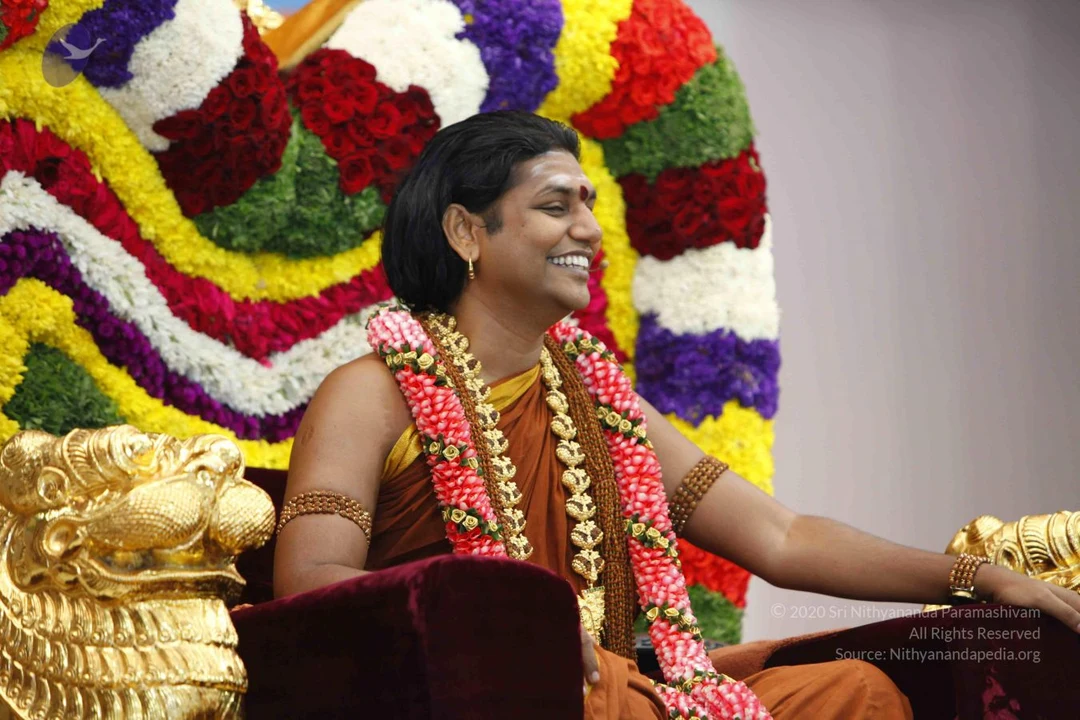
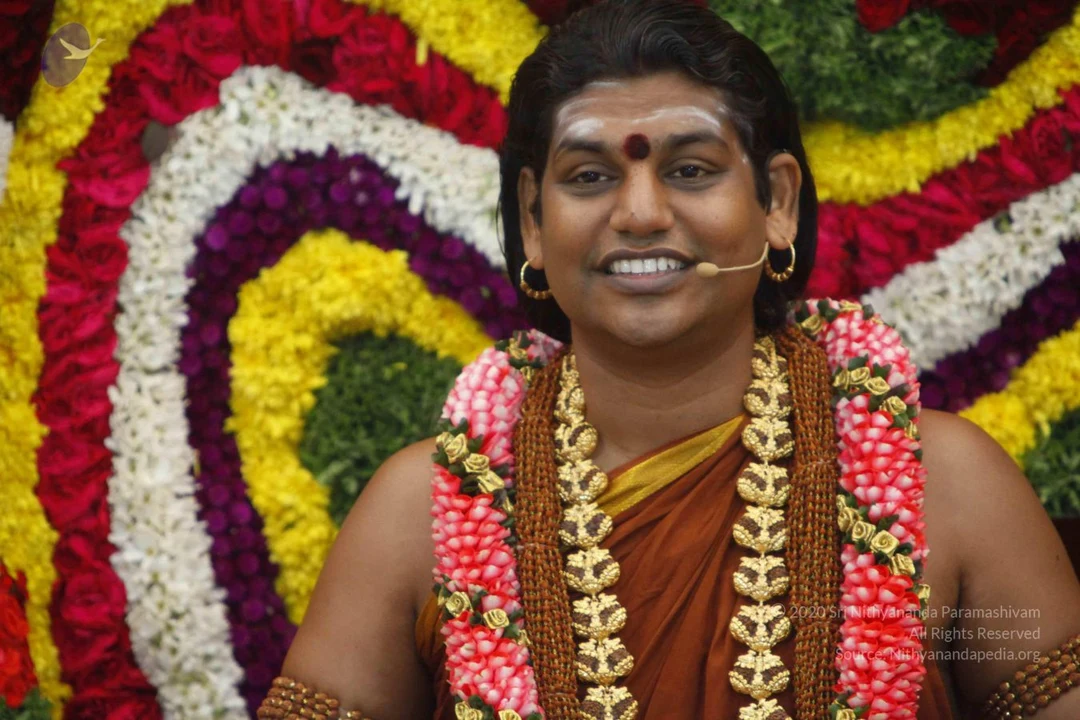
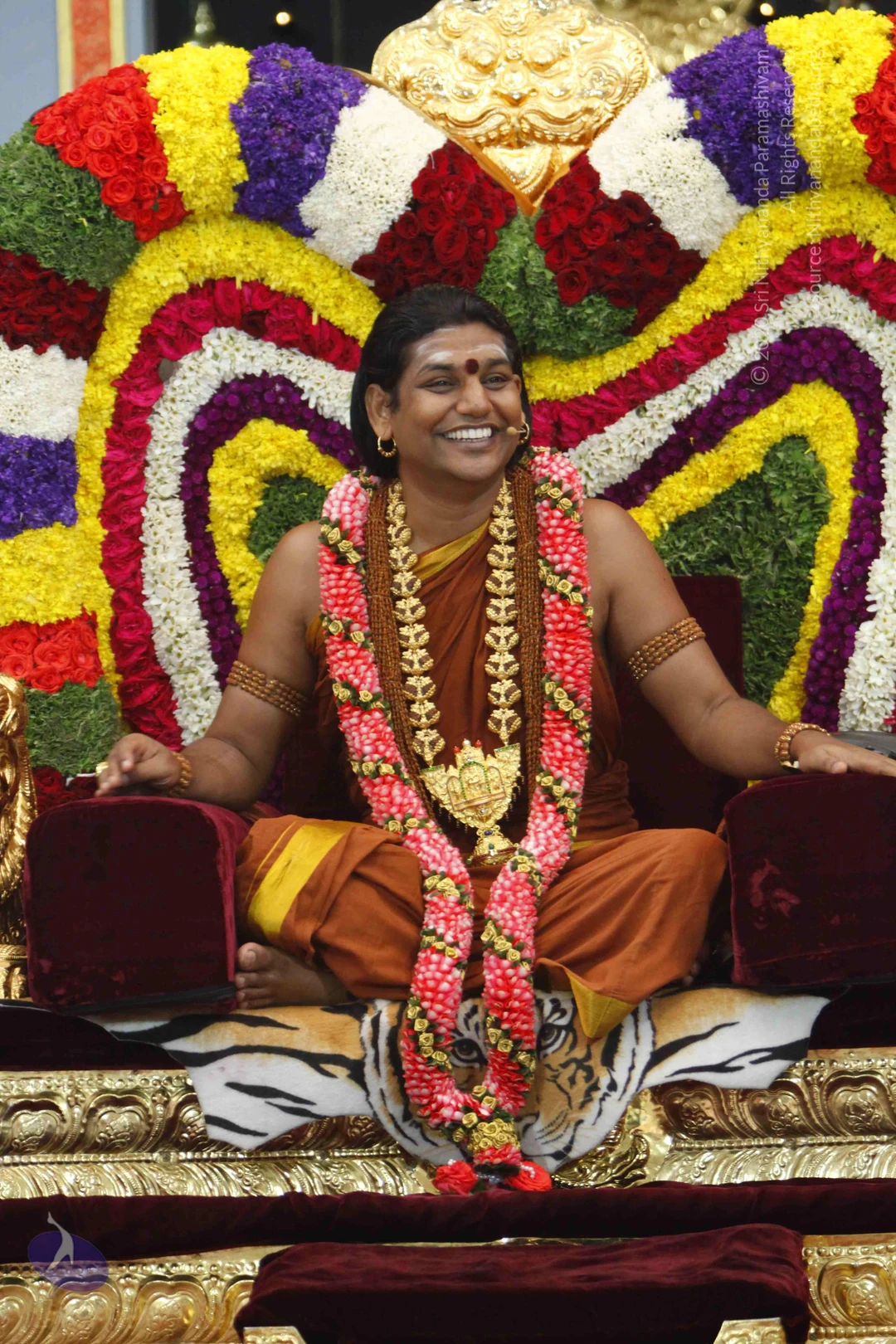
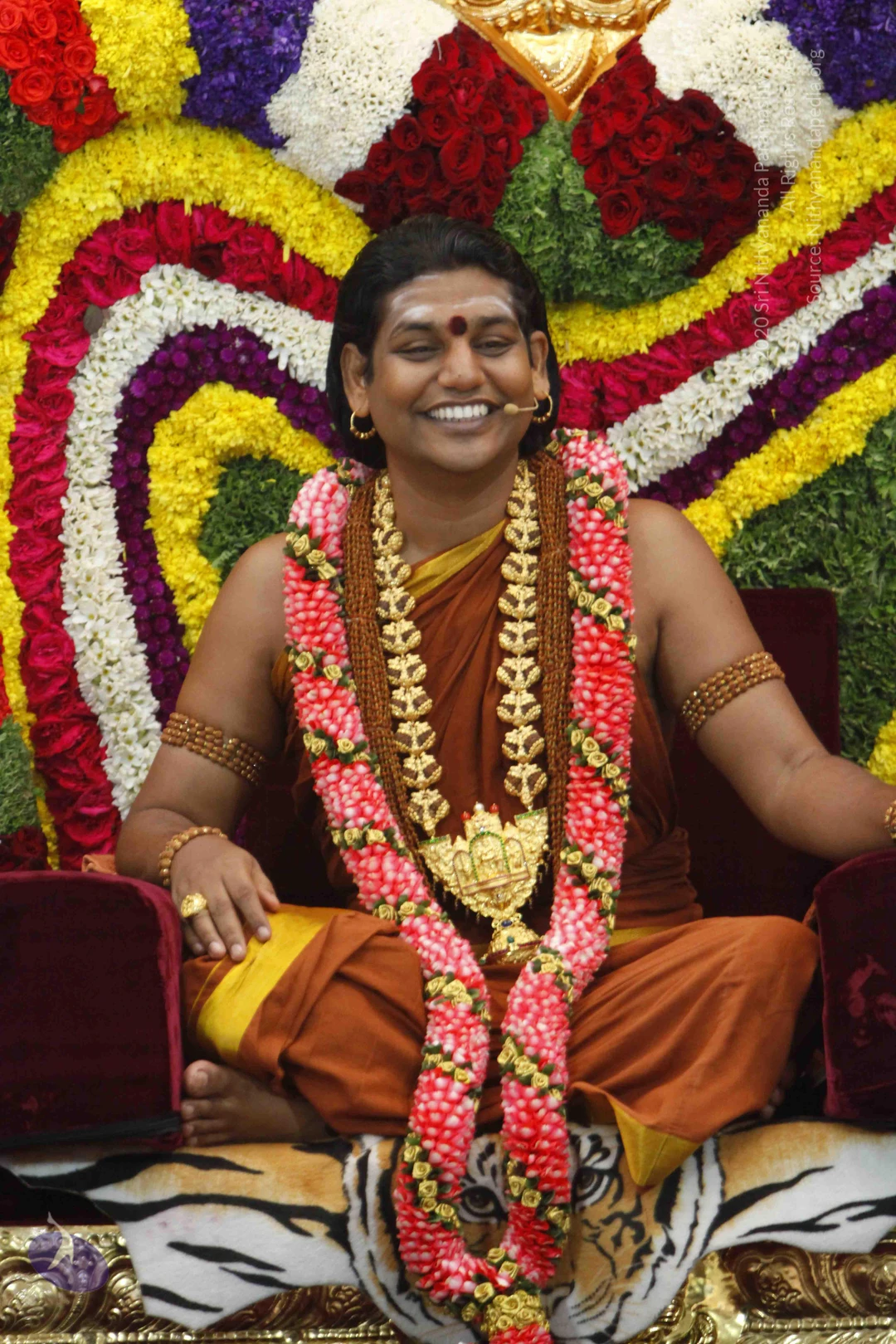
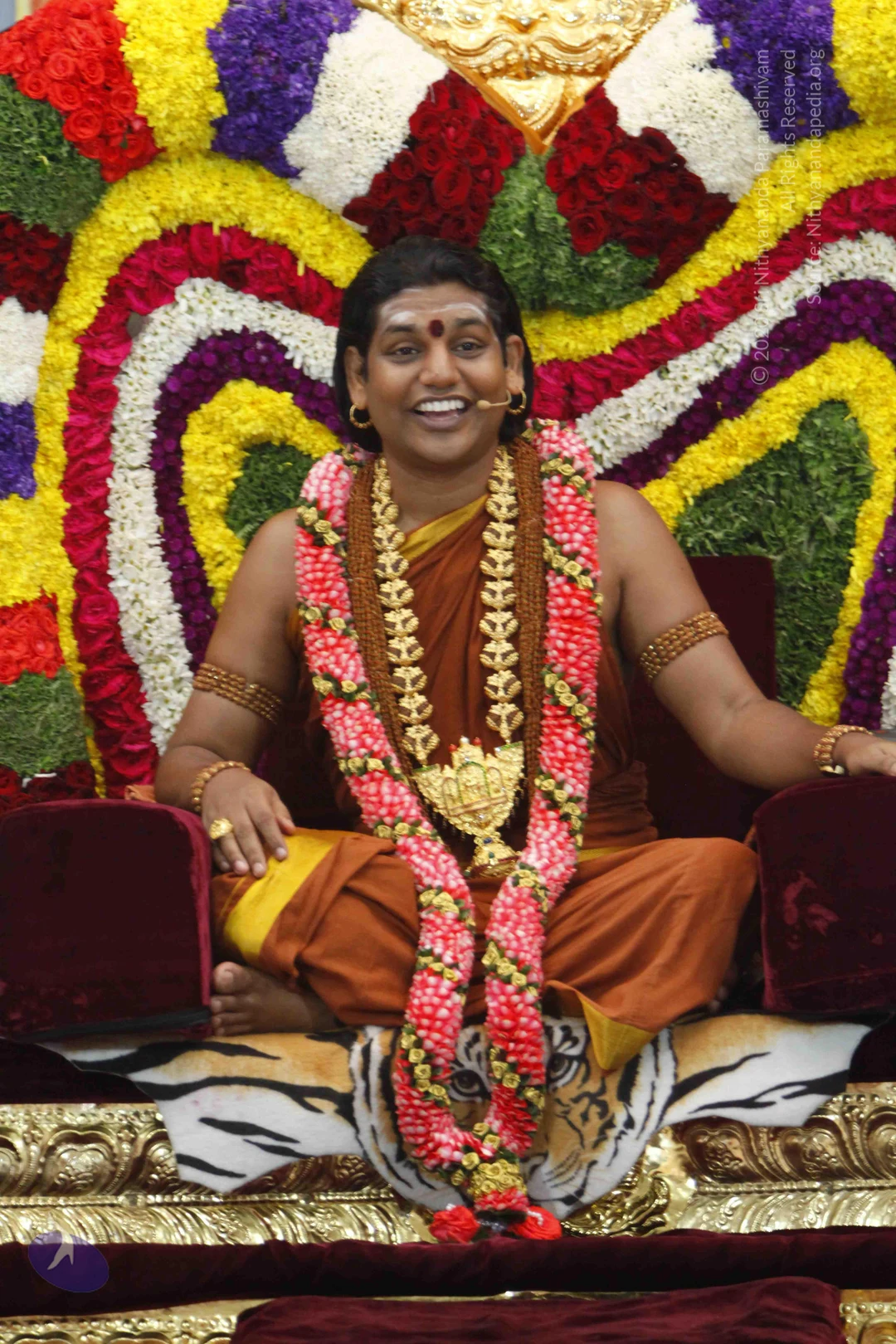
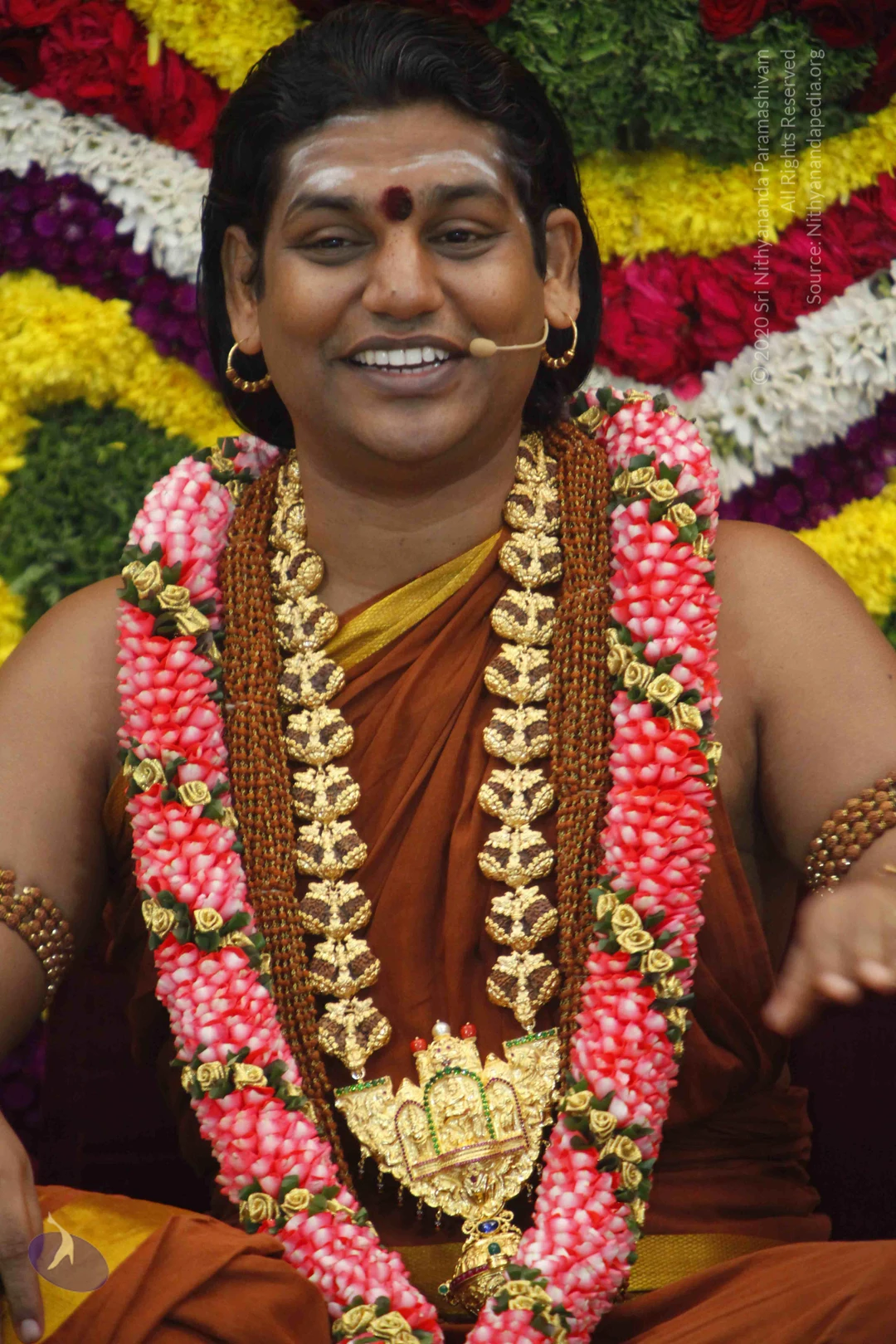
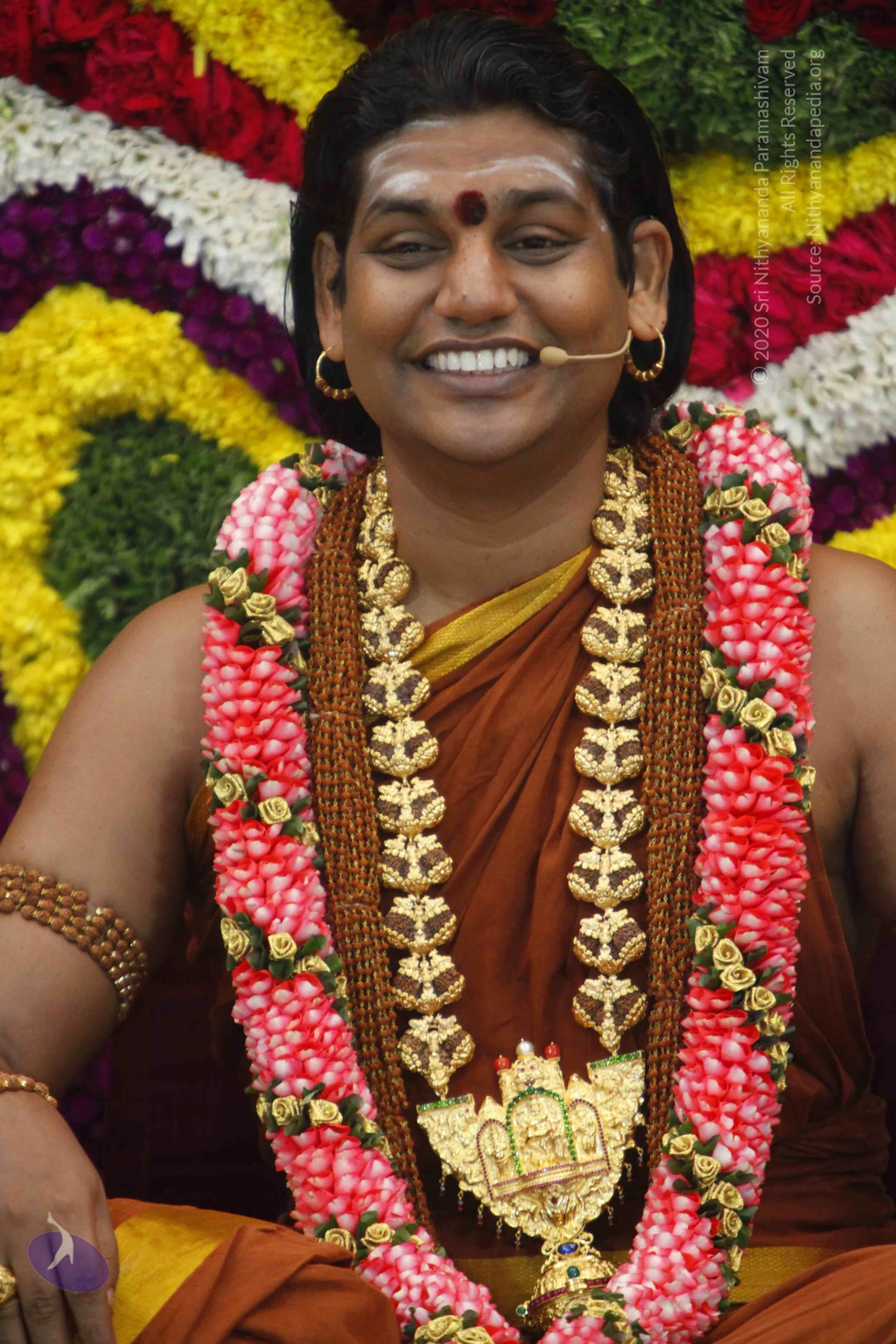
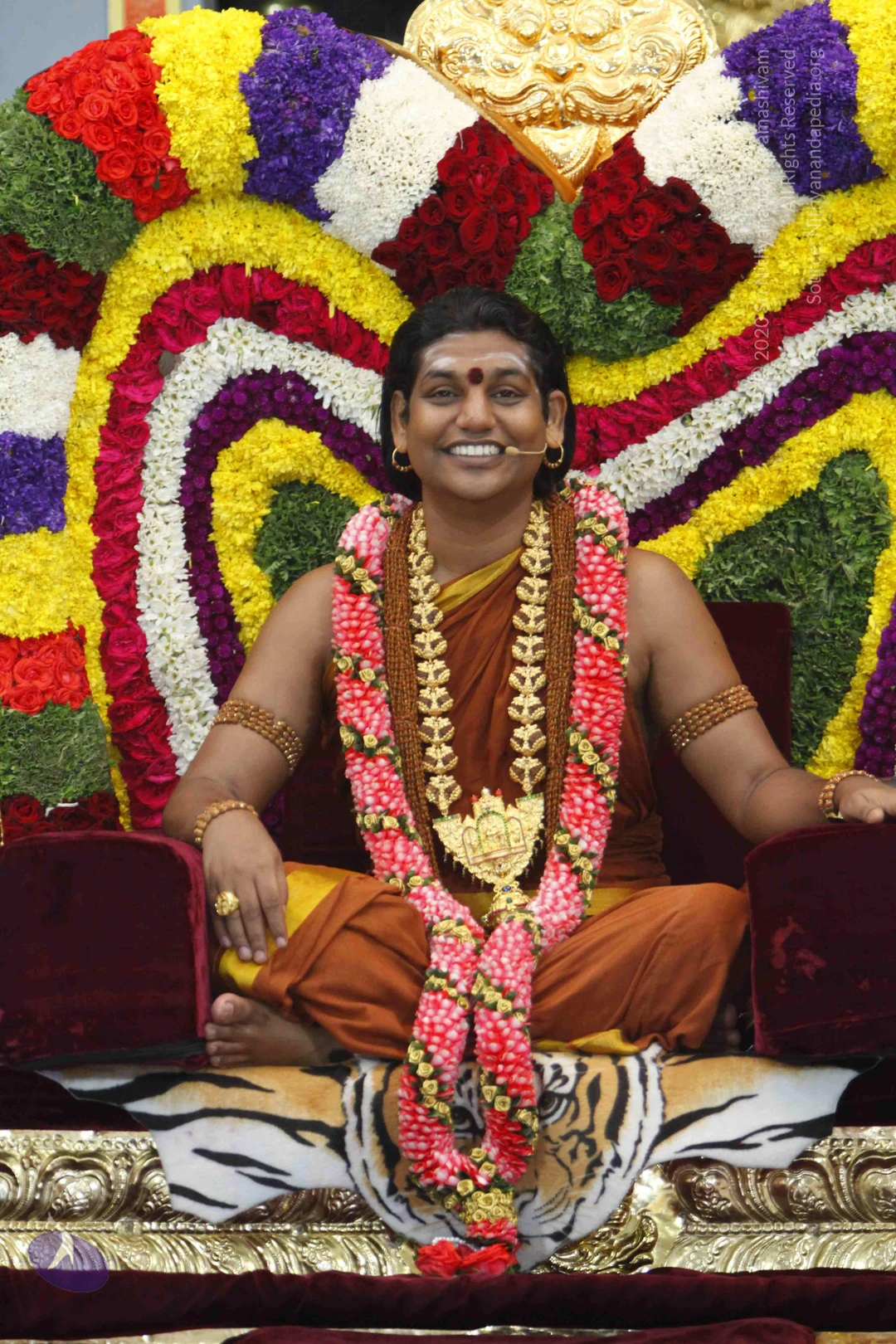
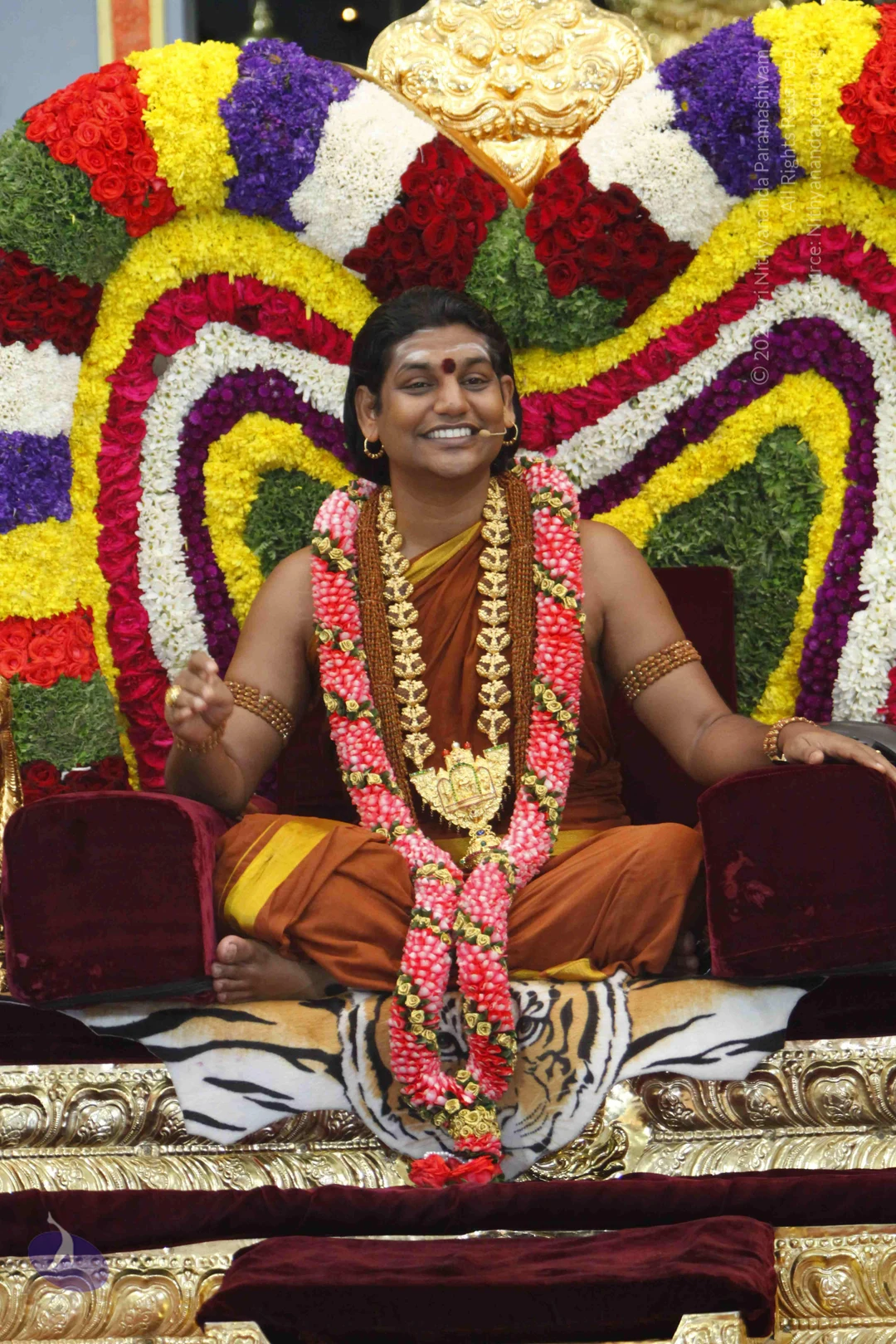
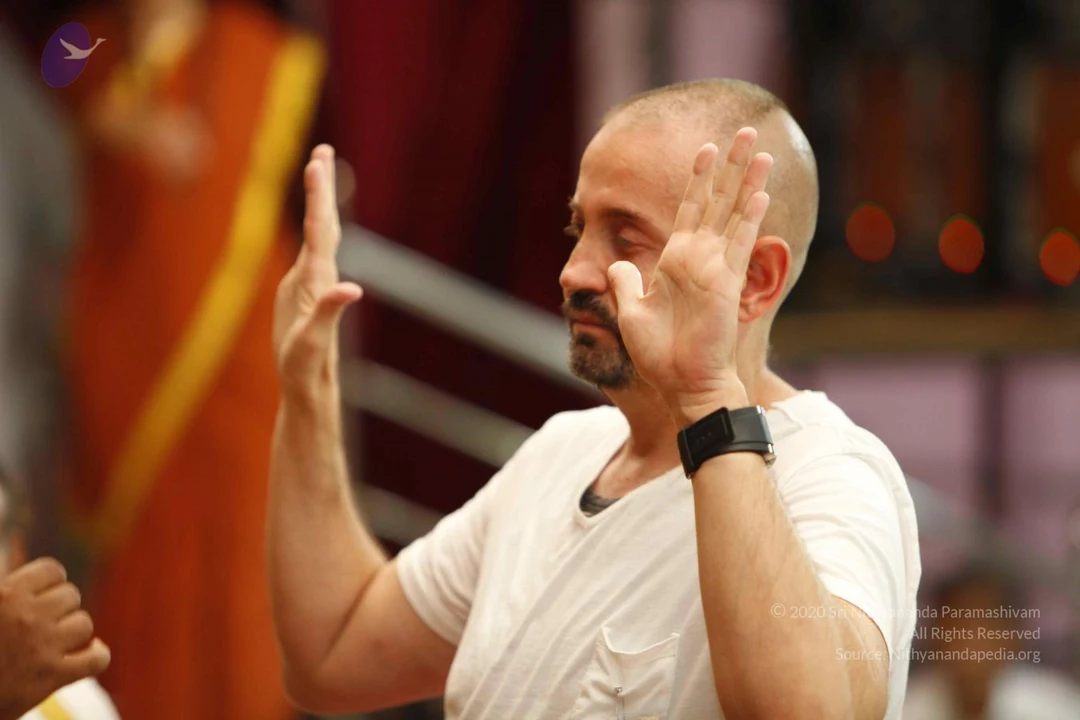
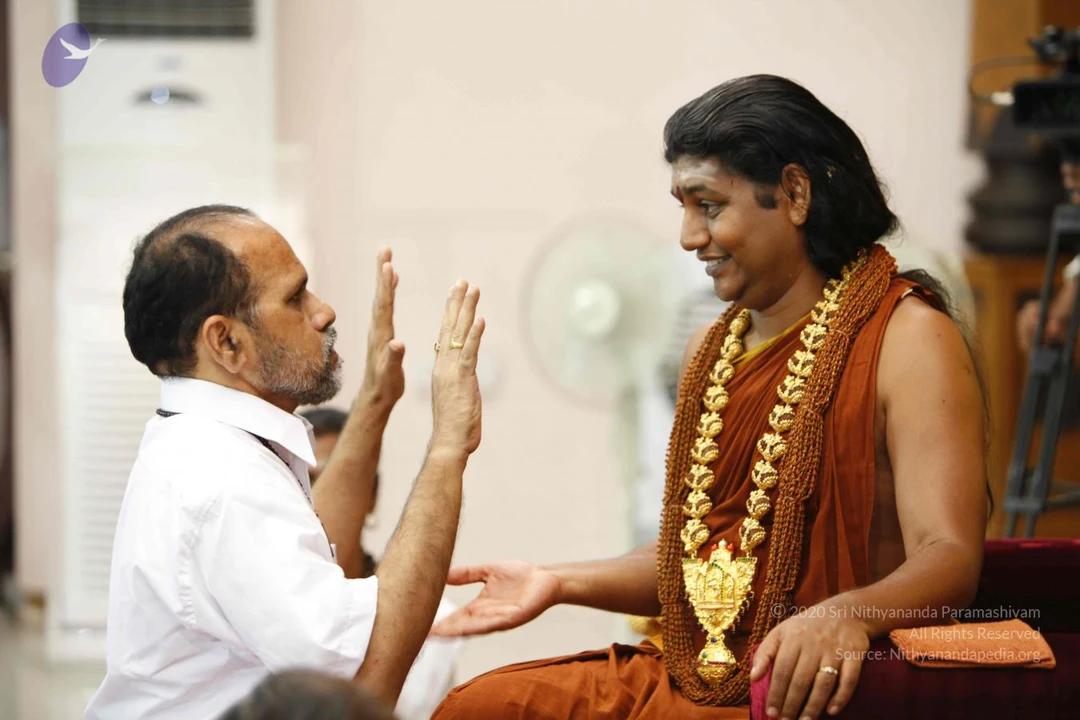
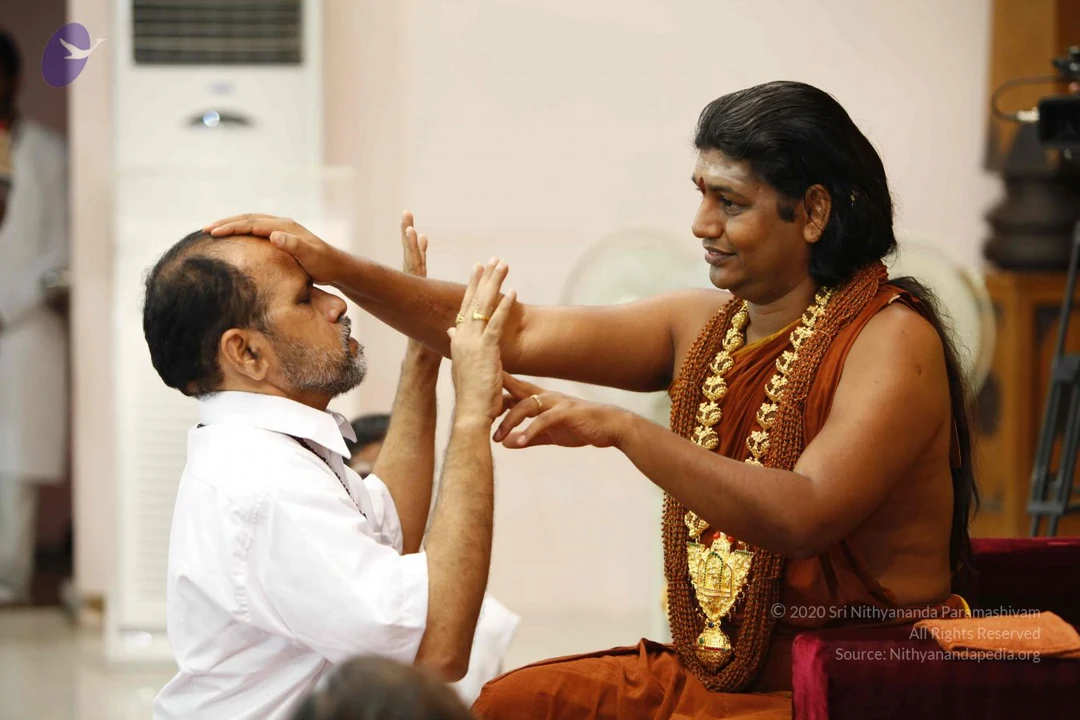
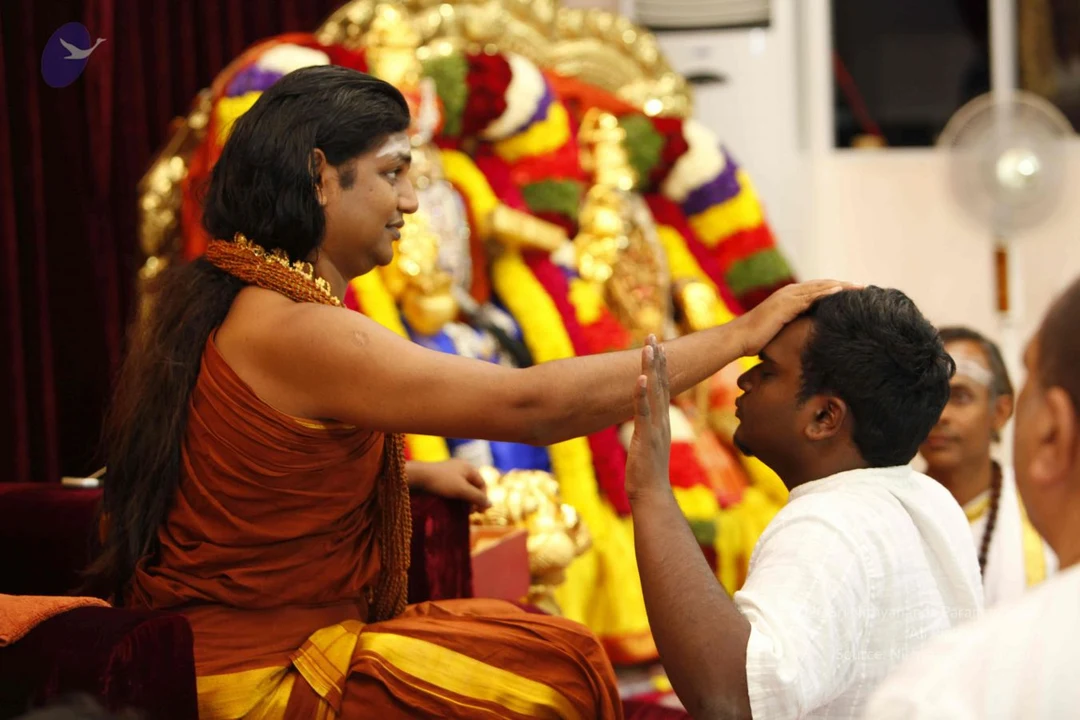
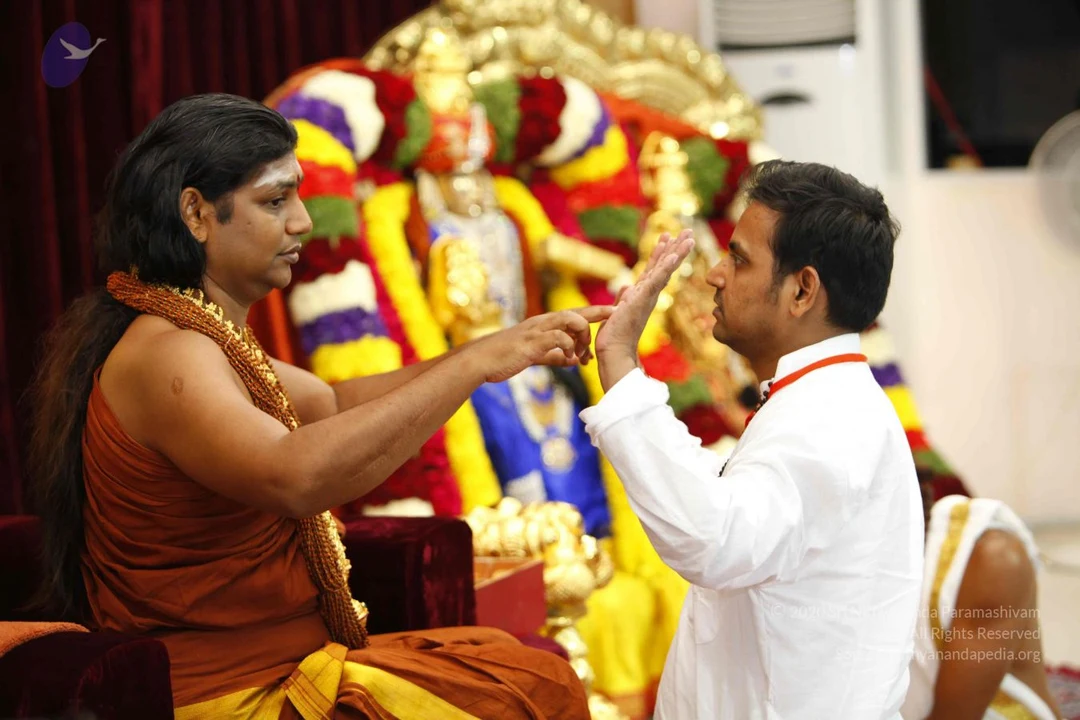
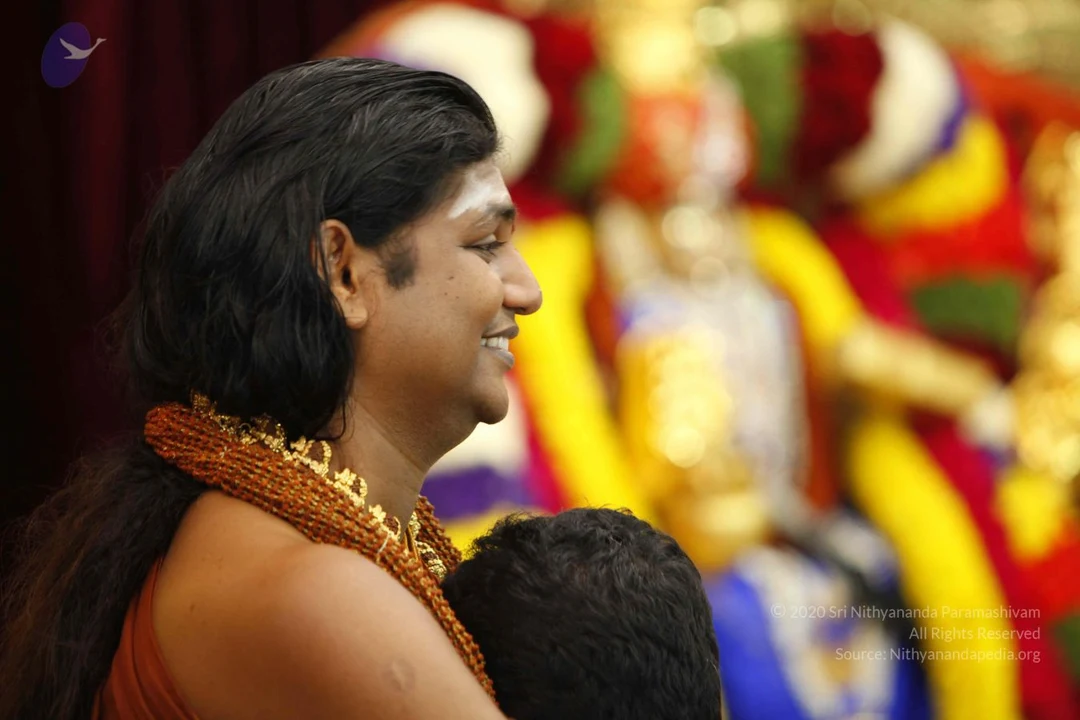
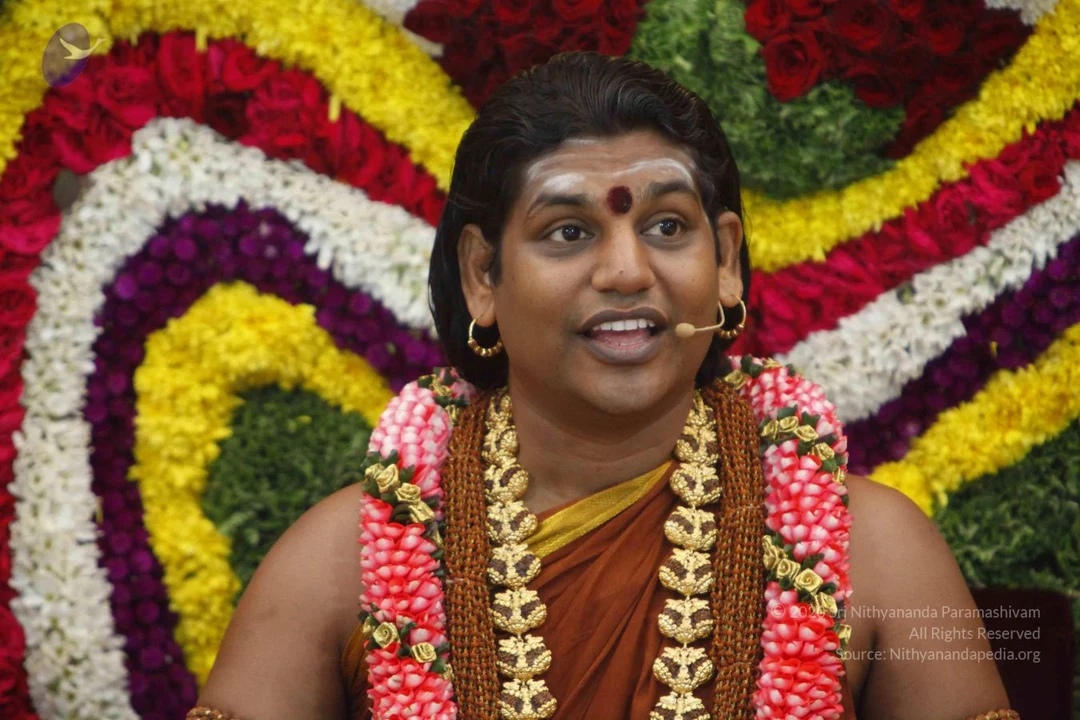
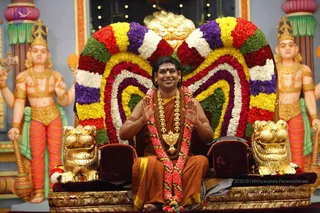
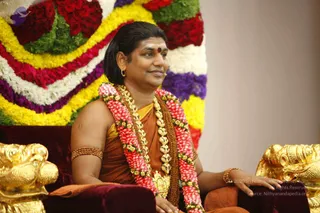
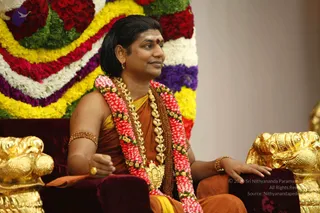
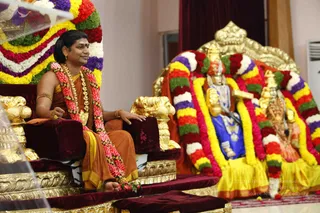
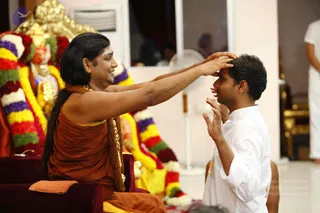
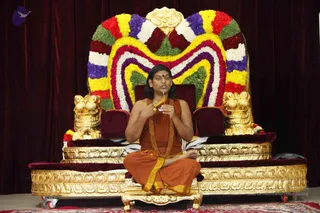
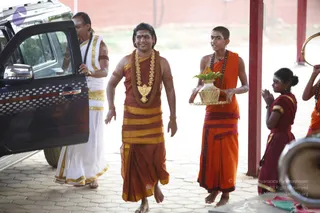
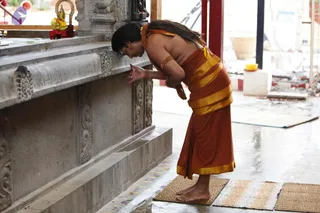
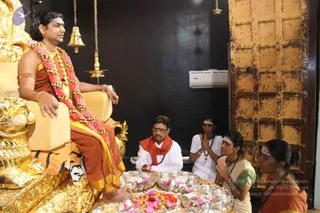
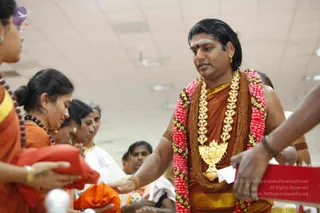
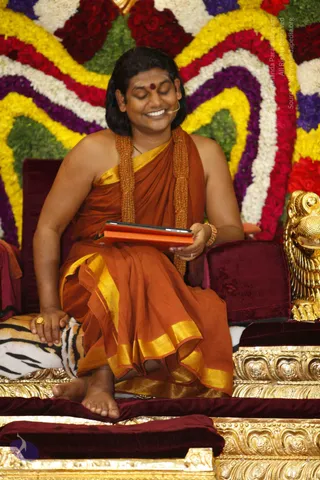
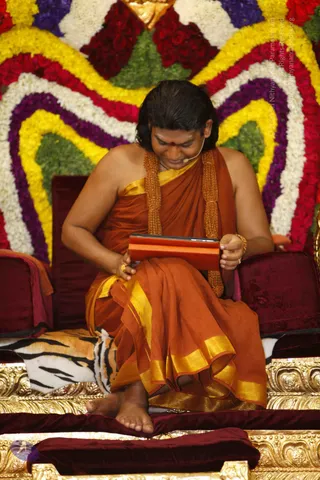
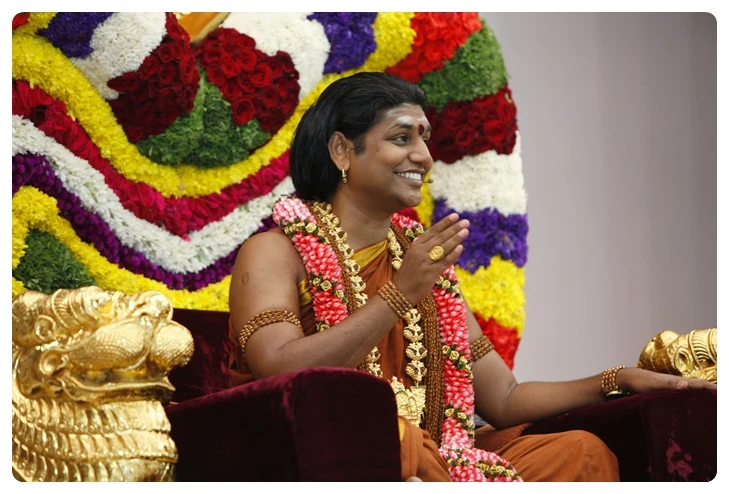
A man in orange and gold ritual dress stands barefoot on a small red and white patterned mat beside a large banyan tree, leaning his forehead against its trunk with eyes closed. He wears a long dark swept-back hair style, a white vertical tilak on his forehead, a heavy gold necklace with a pendant over a rudraksha-style beaded mala, an orange shawl draped over one shoulder, an orange cloth with wide gold borders wrapped at the waist, and beaded bangles on his wrists and upper arm. A shallow bowl of flower petals sits on a low stone ledge behind him in an outdoor garden setting.A man with long swept-back black hair stands in profile at right, eyes closed and hands joined at the waist, in front of a black stone deity murti draped in red cloth and garlanded with red and yellow flowers. He wears a saffron-orange shawl over a bare chest, a gold necklace of ornate beads, gold armlets and an orange-and-yellow dhoti, with a white forehead mark. Red flowers and petals are heaped at the base of the shrine beside a small black stone bench. A green cloth backdrop hangs behind the deity, framed by a white arched niche carved with figures, surrounded by green trees. a person, standing in devotional prayer, appearance-based label only, with distinctive saffron shawl, long hair and gold ornaments.A smiling man in profile stands in front of a large decorated frame draped with garlands in red, yellow, green, white and purple, with gold ornamental work visible behind him. He has long dark hair swept back, a white vertical tilak with a small red dot on his forehead, and wears an orange-saffron cloth with a bare shoulder. A multi-strand gold and rust-coloured beaded necklace hangs at his chest. Swamiji (probable) is shown with long swept-back hair, saffron clothing and rudraksha-style beads, a distinctive appearance matching the page's claim.

July 02 2013

Original wiki page
Contents

Title

What is Sangha? InnerAwakening

Description

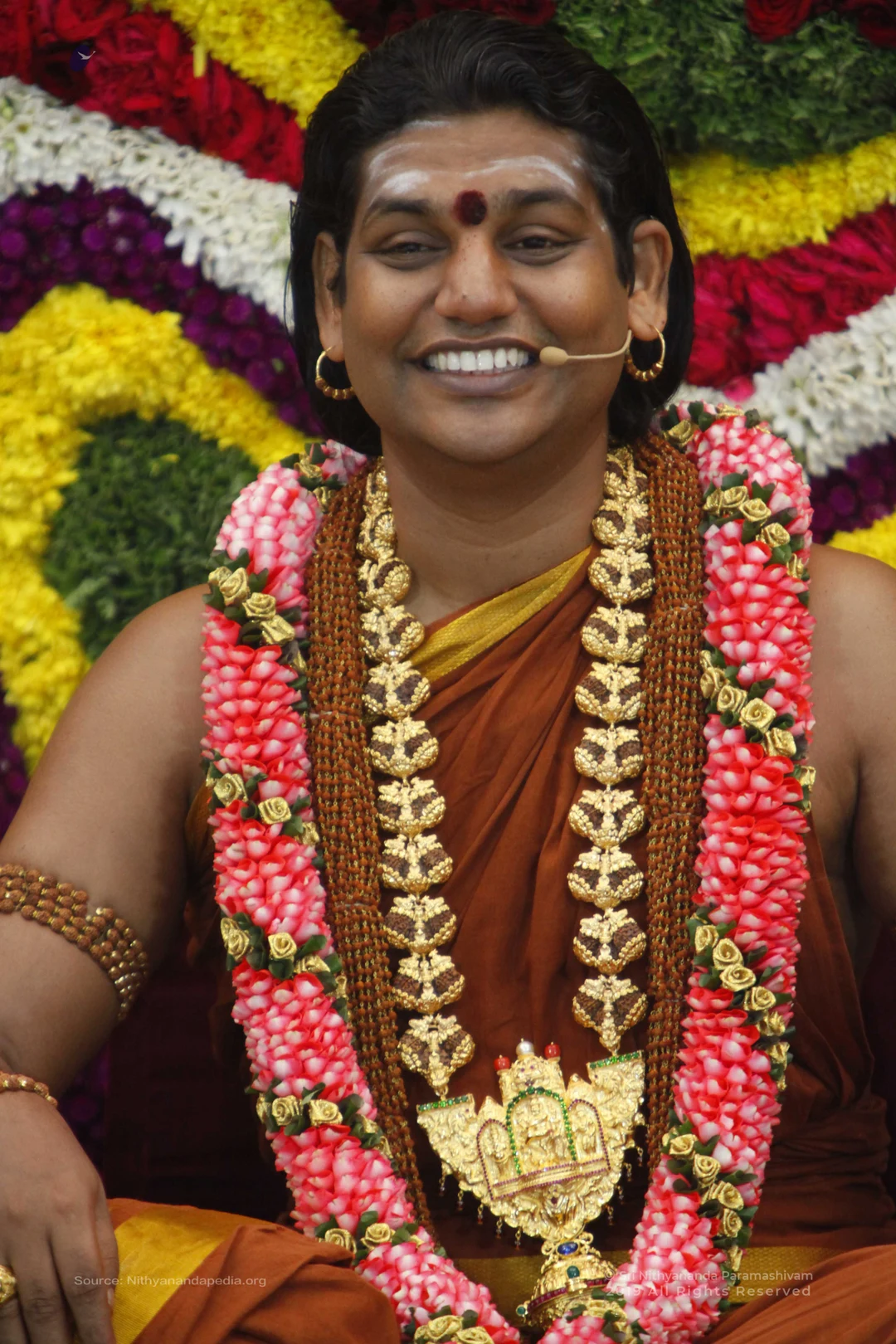
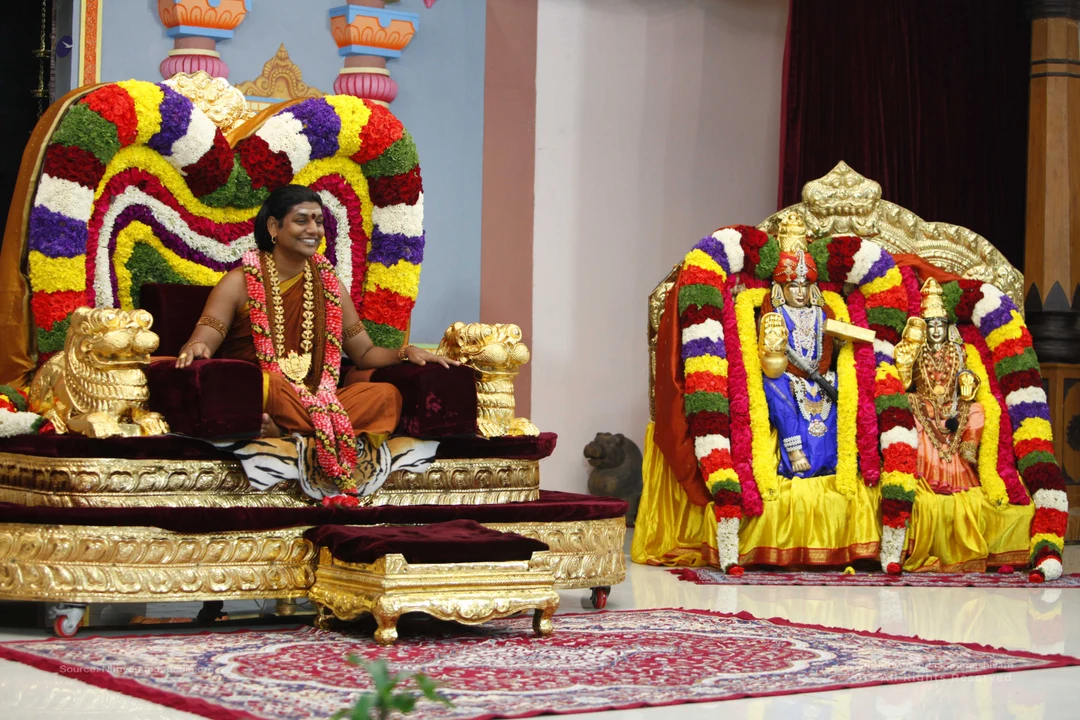
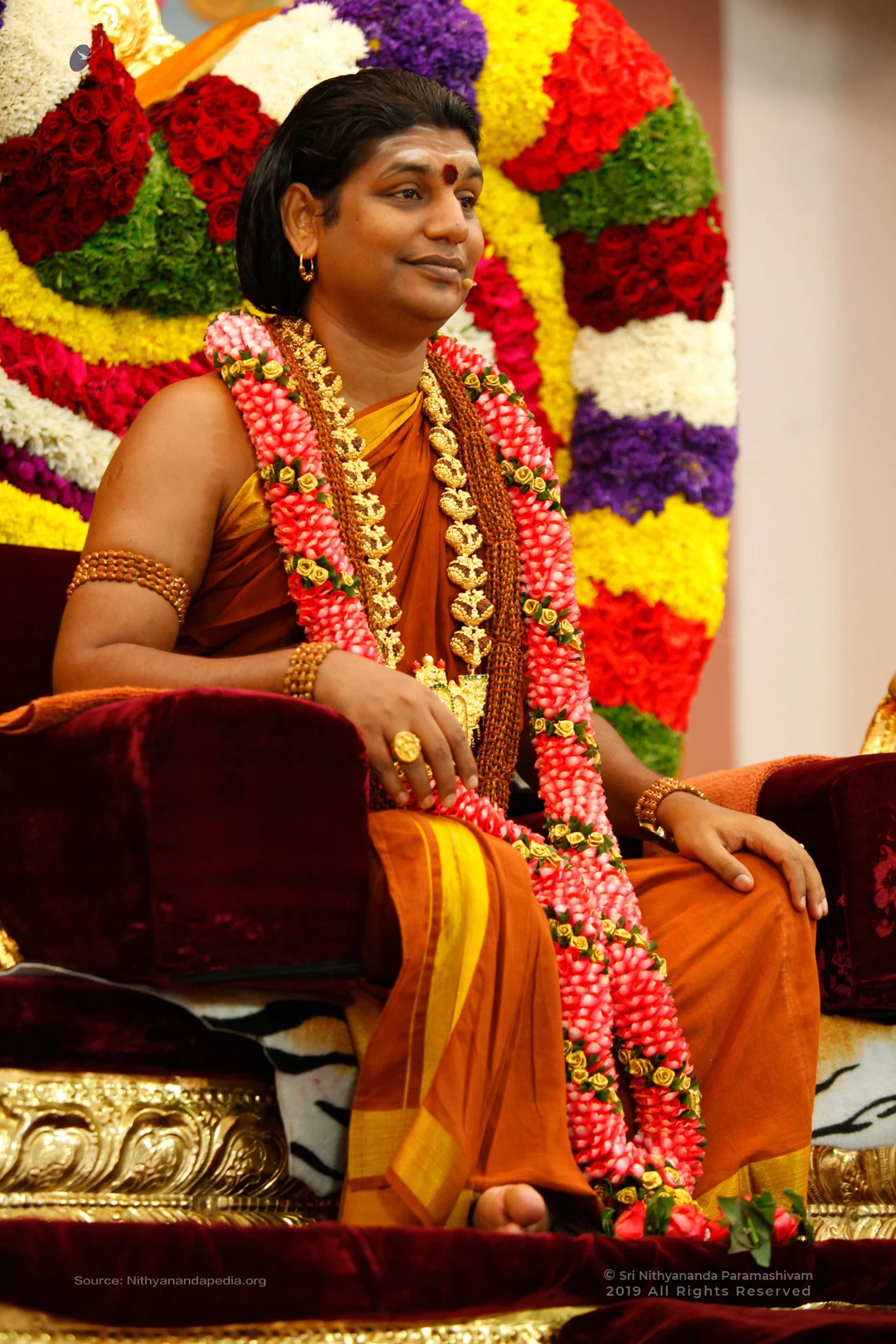
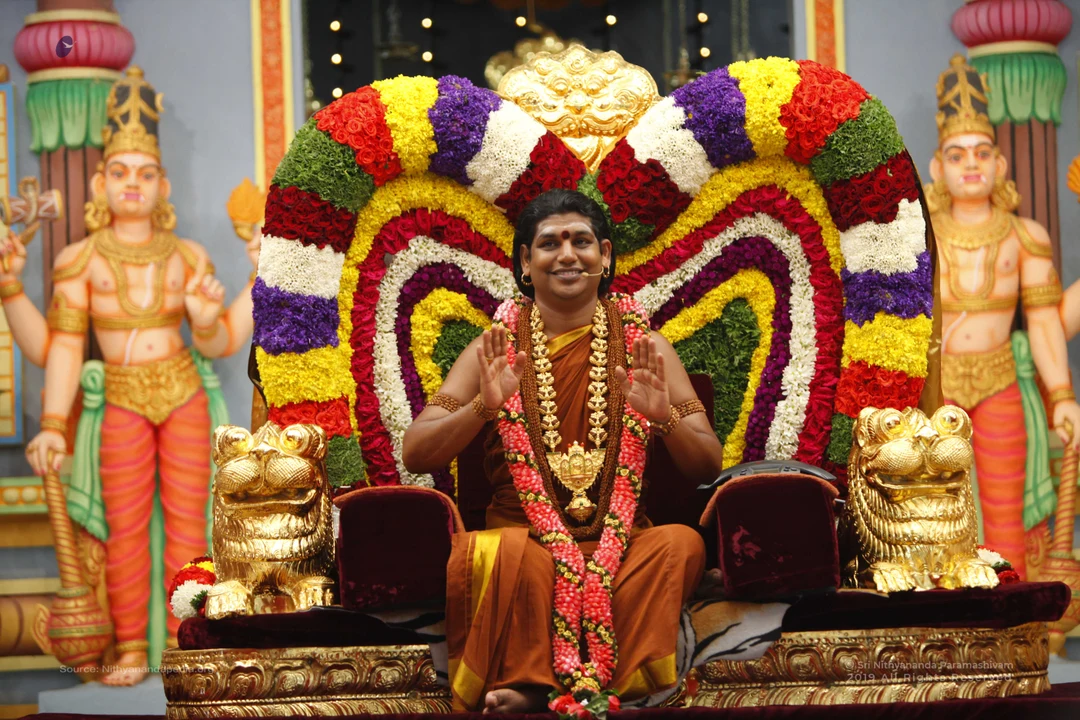
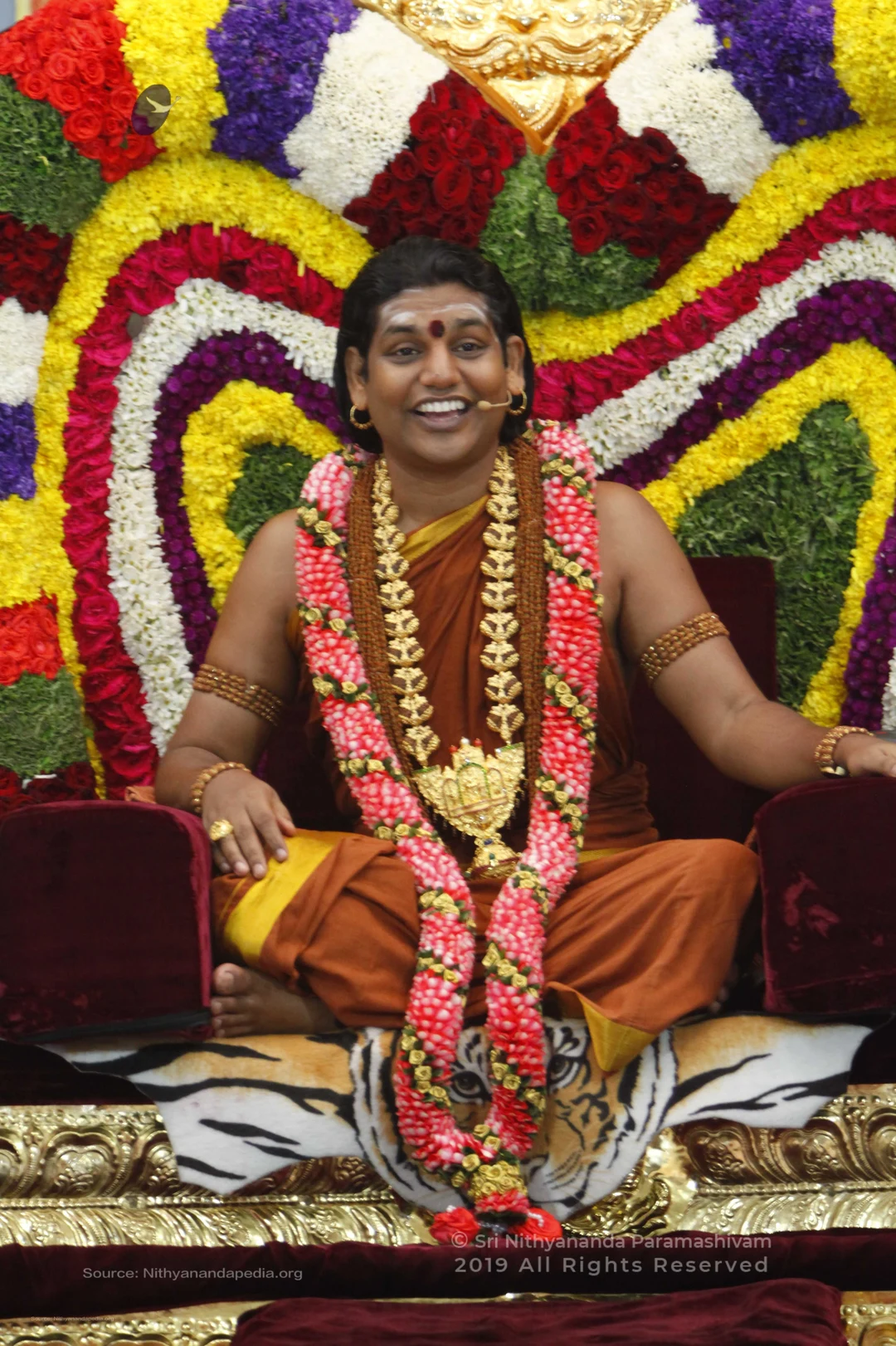
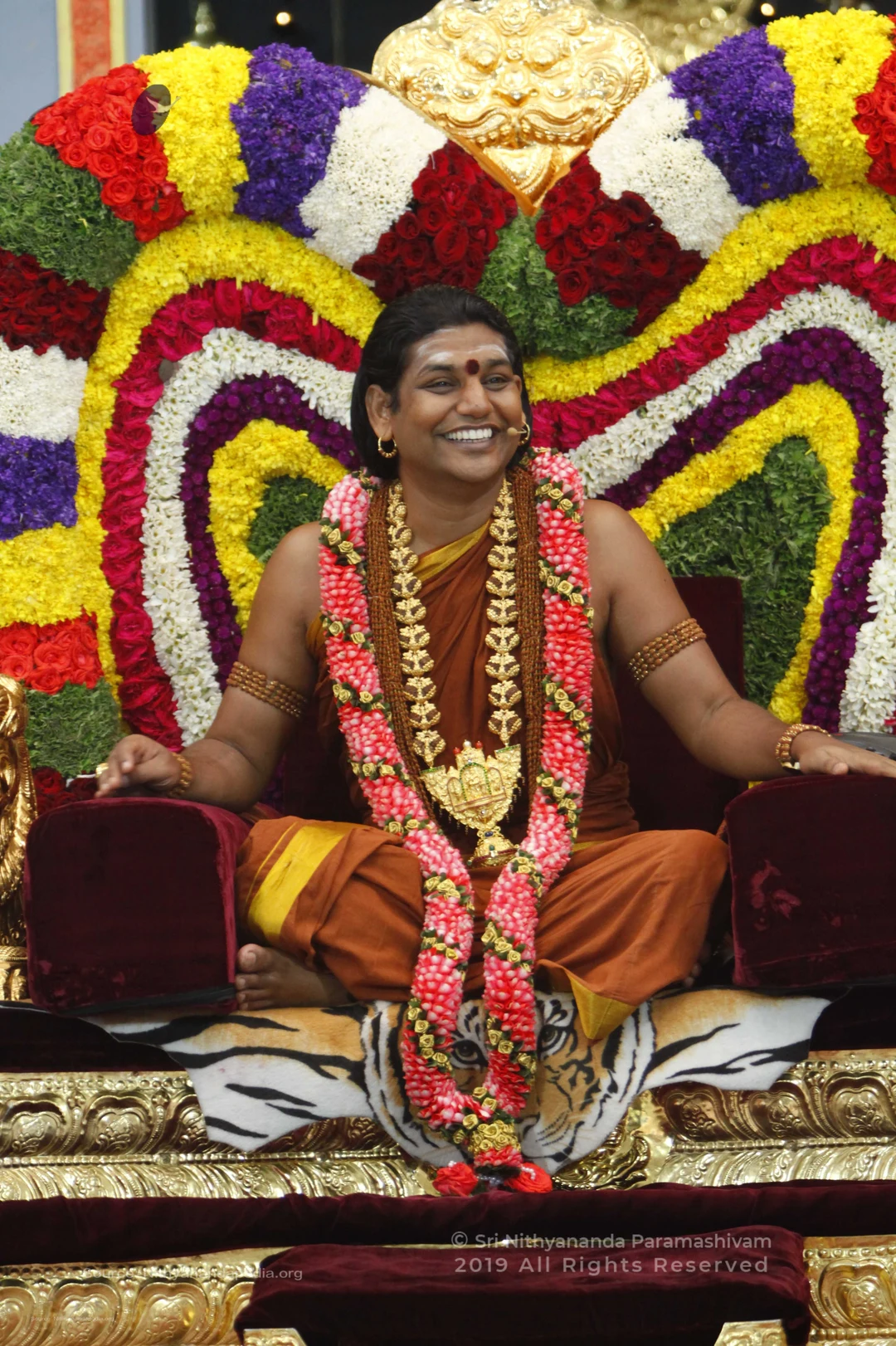
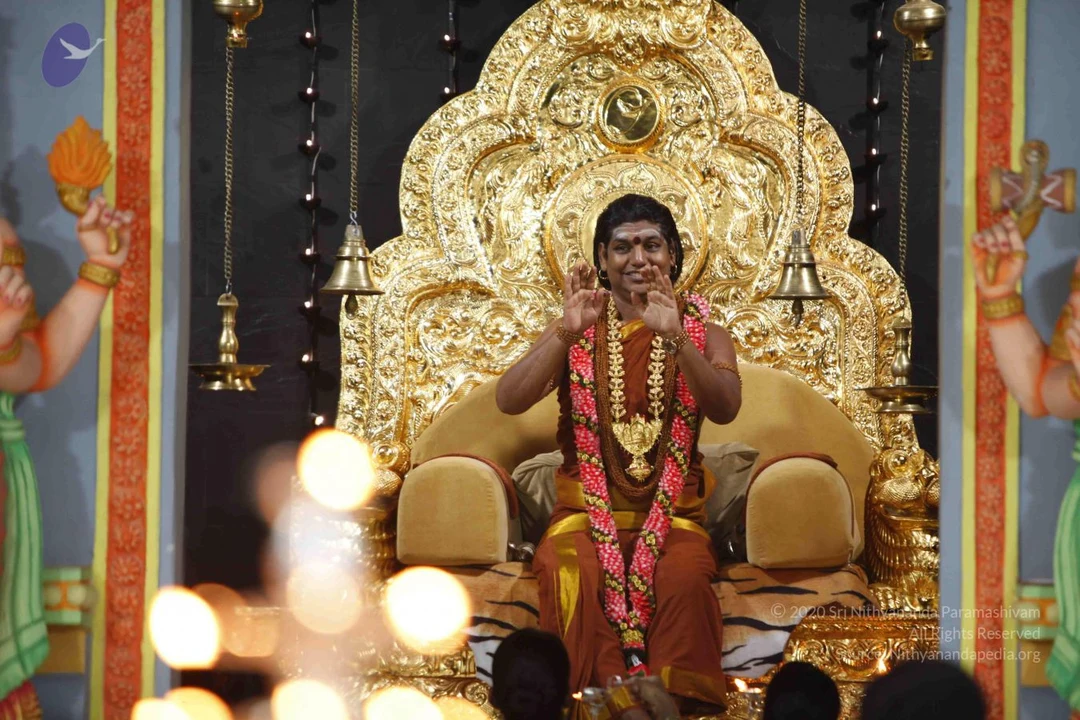
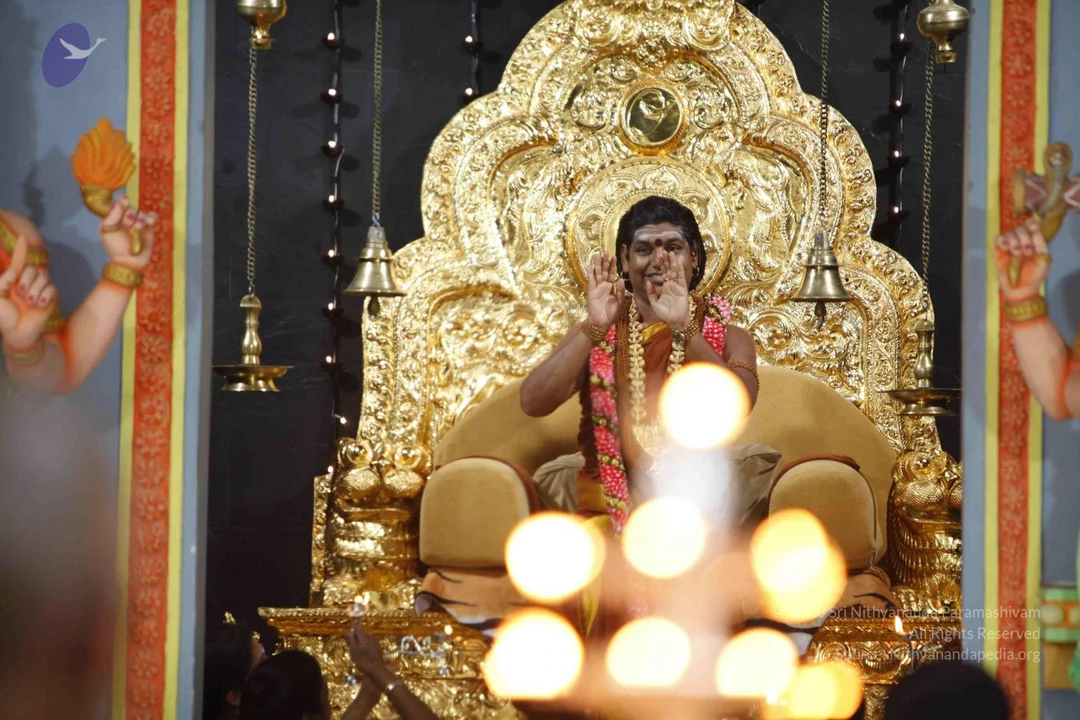
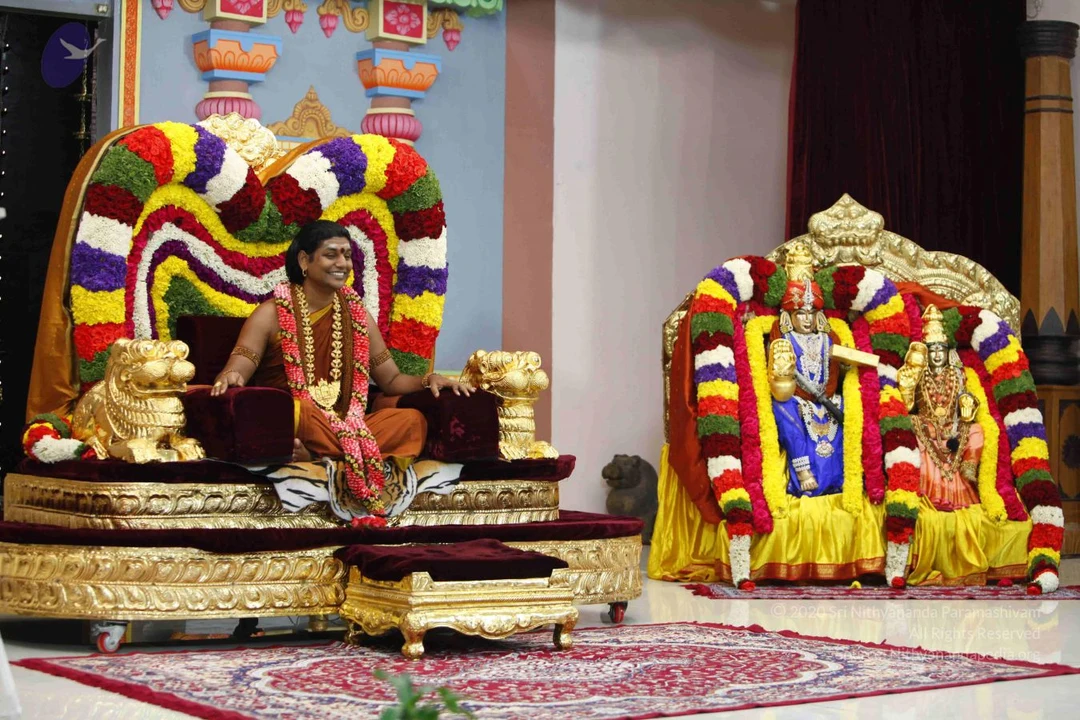
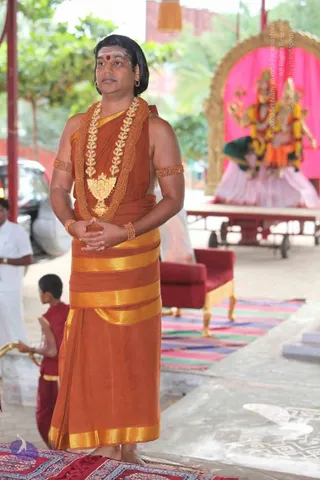
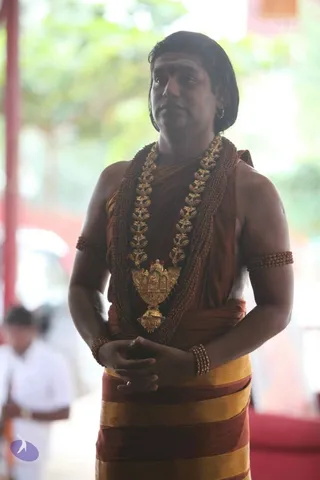
On this day Swamiji explains the meaning of Sangha

VideoAudio

Title

Become more Subtle and Sensitive

Description:

In today’s morning Satsang, Paramahamsa Nithyananda expands on the Nirahara Samyama and highly recommends it for healing many disorders and diseases. When you remove solid food from your diet, the stomach does not need to do the work of digesting. This allows many of the restlessness patterns we carry to be released. In the initial stage of removing solid food, we feel the psychological effect: powerlessness. Powerlessness is nothing more than incompletions we carry. For some of us, all of our patterns seem like mountains! Paramahamsa Nithyananda adamantly assures us that it is possible to complete with them all!

VideoAudio

Transcript:

Nithyanandeshwara Samaarambhaam Nithyanandeshwari Madhyamaam | Asmath Aachaarya Paryanthaam Vandhey Guru Paramparaam ||

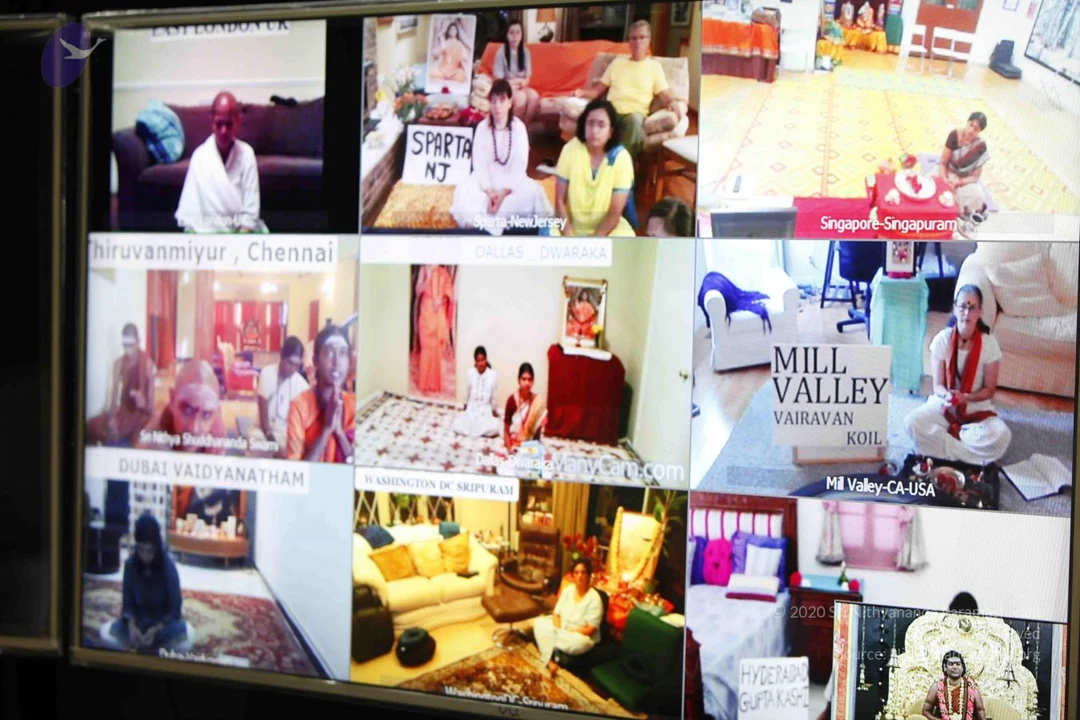
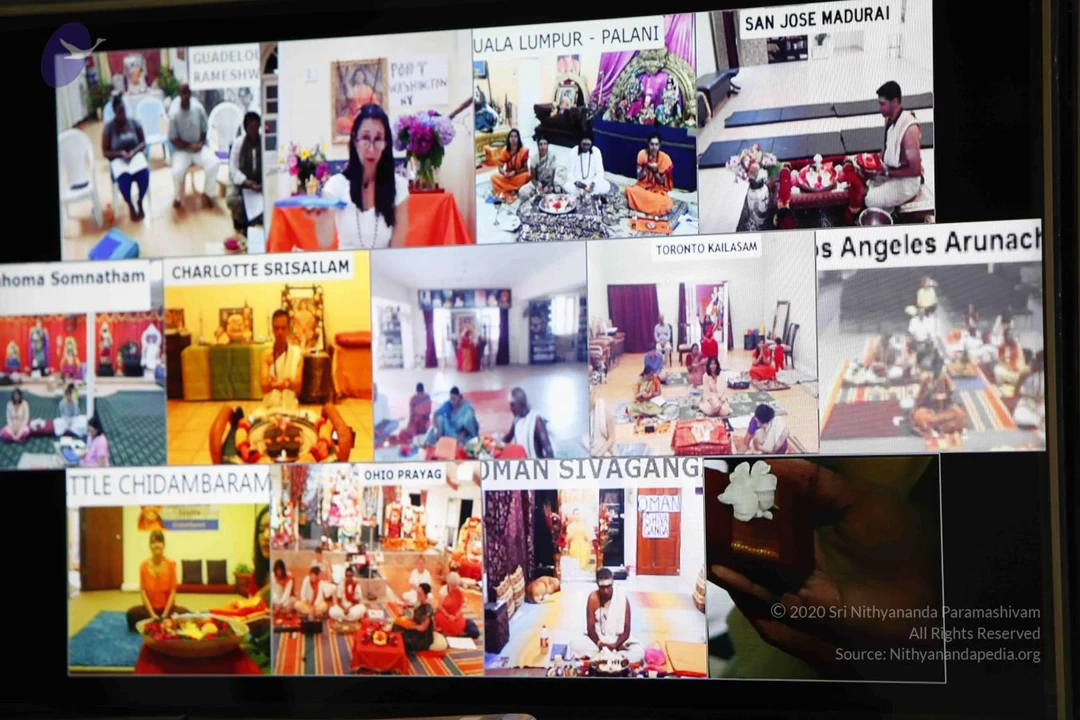
I welcome all the devotees, disciples, samajis, satsangis sitting with us around the world at this moment through Nithyananda TV, Sadhana TV and Lotus News Channel and two-way video-conferencing all over the world. I welcome every one of you with my love and blessings.

Today, I will expand on Nirahara Samyama. And I have three things to talk today:

· One, the story of today’s leela, story of the deity;

· And the Nirahara Samyama; and

· Today’s subject for Nithya Satsang – “Stability”.

I will do one by one.

First, on Nirahara Samyama. Listen, all the Nirahara Samyama participants have to understand these few basic rules and regulations. You cannot use your will power to be Nirahari. You only can use your conscious power to be Nirahari.

What is the meaning of “will power” and “conscious power”? With will power, there will always be struggle. With conscious power there will never be any struggle.

Understand, if you use will power and fast, it will be just a fasting. You may lose weight. In the dream you may feel that you are feasting. In the dream, you will have dreams that you are feasting, eating all items. You can have tea, coffee, no problem. Anything liquids you can have. Only in the first level I want to remove solids from your patterns. If you remove solids, lot of items related to pride, taste will be removed. If you remove the solid food, that itself will help you to clear many of the patterns.

Please understand, so first this 48 hours, remove solids food from your life. That is enough. And one more important thing. When the stomach does not have the work of digesting, digestion, it will release so many restless patterns to you. That is why, first working on removing the solid food from your system. Yesterday, today, and till tomorrow morning, no solid food. You can have any amount of liquids like juice, coffee, tea, buttermilk. But not alcohol! You can’t justify that is also liquid. No! No! So, whole day, continuously do completion. Every irritation, agitation you feel, powerlessness you feel, do completion.

Every moment you feel powerless…… Please understand, when you start the Nirahara Samyama, you will not feel tiredness first. You will feel powerlessness first. Because it is more psychological. It is not physical. It is more psychological. You will only feel powerlessness. Food is always associated with power for you. So understand, complete, complete, complete with all that powerless feeling.

Go on completing, completing, completing. Even if there is mountains of incompletions in front of you, you can complete. I know, sometimes you feel there are mountains of incompletions in front of you. You are afraid to look at life. I tell you, it is possible. Completion is possible. Understand, the junior civilizations – Egyptians, Greek; latest civilizations – European civilizations; modern civilizations – the western civilizations; these civilizations are filled with food because still they have not found the depths of life. Please understand, when you live for quite a long time, you will discover a lot of great truths related to life. That is why Vedic tradition carries so much of depth. Arrey, we are sitting on the Planet Earth from a long time! We know how to eat, we know how to treat, we know how to wear, we know how to give birth in a best way, we know how to die in a best way, because we are sitting here since ages! We are not newcomers. We are the senior-most civilization. Anywhere you go to a new city or place, many things you need to learn from the people who are already settled there. So, we are the people who are settled here since ages. I am not talking, please understand, I am not talking out of any arrogance or pride, or I am not even talking because I am born in Vedic civilization. No! I am just stating some truths, simple facts. Our guys knew how to fly 170 years before the Wright Brothers flew in Mumbai, India. One Hindu Pundit made the aircraft as per the descriptions from Vedic tradition and flew for 4 kms, means, a little more than 2 miles! So, please understand! But, unfortunately, never, we are not propagandists. That is where the problem is. We go on doing research and development.

This Nirahara Samyama is an age-old method of bringing health to your body. During the Nirahara Samyama, drink water the moment you wake up and brush the teeth. Drink water before you go to bed. Continuously, once in one hour, half an hour, sit with a glass of water. You may feel, ‘Continuously I have to rush to rest-room!’ That is okay! That is okay! All your organs will be awakened, fresh, cleansed. In Hindu tradition, we call it “vratha”. Almost in all families, at least one person will be this vratha-obsessed person. Monday for Shiva, Tuesday for Muruga, Wednesday for ourselves! If you don’t find any god, come on, let us do for ourselves! And Thursday for Guru, Friday for Devi, Saturday for Shanigraha and again Sunday for Surya! But, I tell you, always in my experience I found these vratha-obsessed people are very healthy. Really! My grandmother! I have seen many people in my life who are this vratha-obsessed. It is from that I got the basis for the Nirahara Samyama. Then I developed it as a proper process through the help of Hatha Yoga Pradeepika and Patanjali Yoga Sutras and the Yogic literatures.

One of the powerful result of Nirahara Samyama is - it awakens your Kundalini Shakthi. I tell you, this Nirahara Samyama is one of the greatest gift, my contribution to the world! Clearly systematizing, see the process is available from time immemorial with Hindu tradition. But I organized it very clearly with the yogic process and right context. I sincerely request and recommend Nirahara Samyama for healing many disorders and diseases. You can join till tomorrow. Of course, tomorrow, we will be having a break. Day-after-tomorrow, means Thursday morning, we will start the second level. You can even join second level directly. First level is more like a preparing your body and mind without giving a strong shocks.

Understand, Nirahara Samyama will awaken many powers which you never even thought you have it. It will awaken your memory power. You may think how not giving food can awaken memory power? Because, it will release all the restlessness you carry, agitations you carry, anger you carry, resistance you carry. When you complete with all that, you will have so much of inner space, you will have memory power! So, so many extraordinary powers you carry inside you will be released with Nirahara Samyama. That is all for now on Nirahara Samyama!

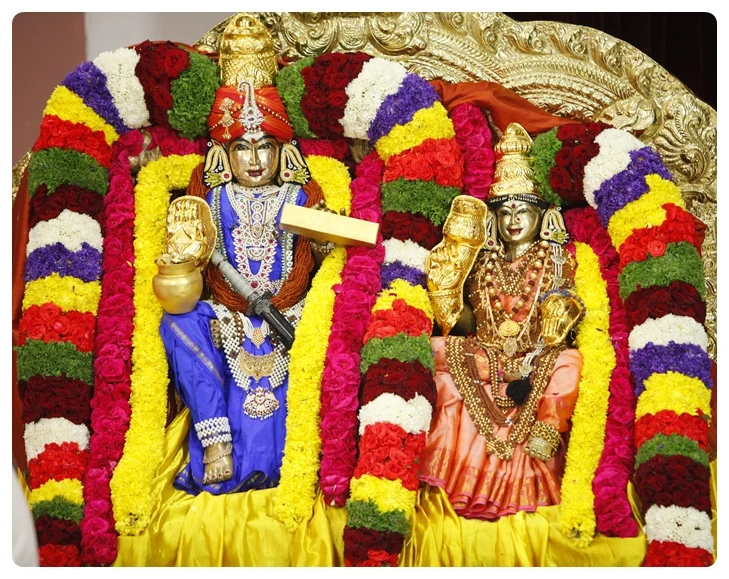
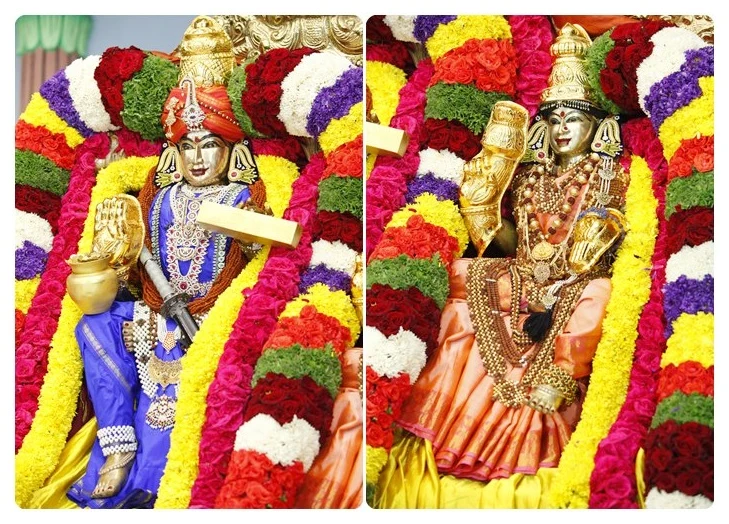
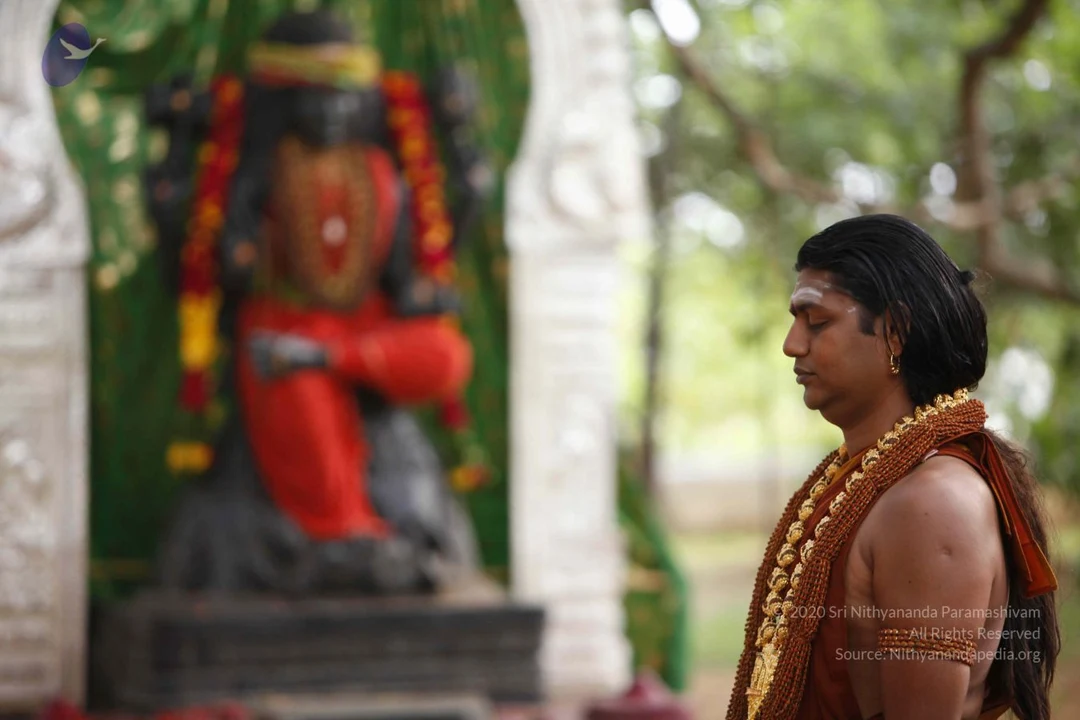
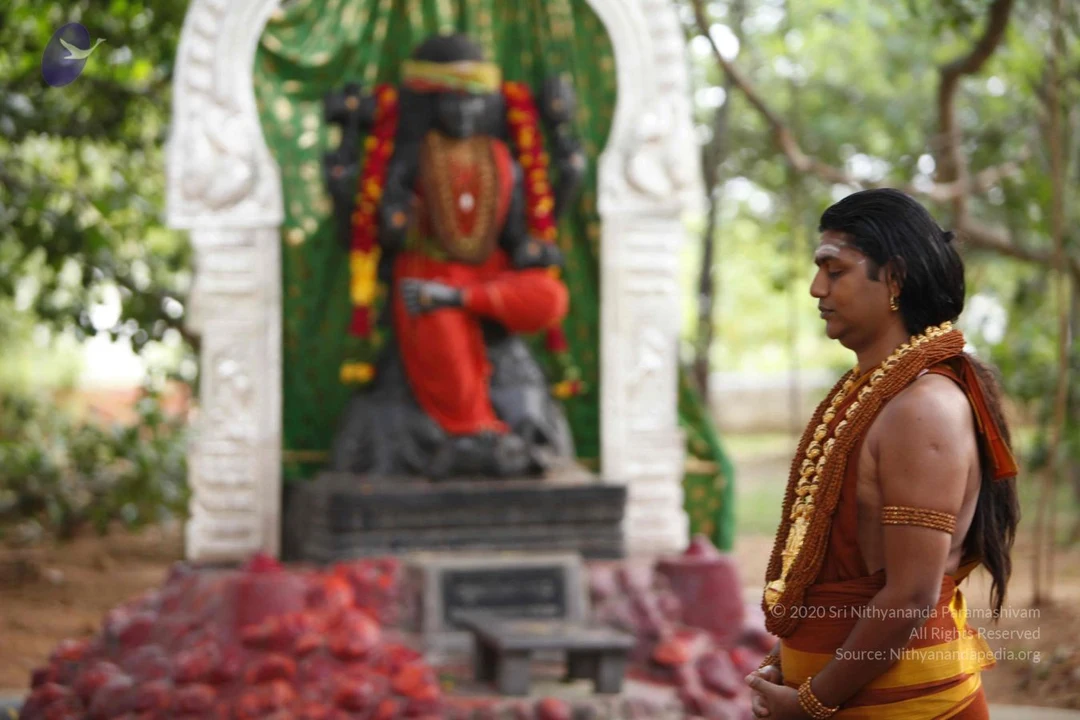
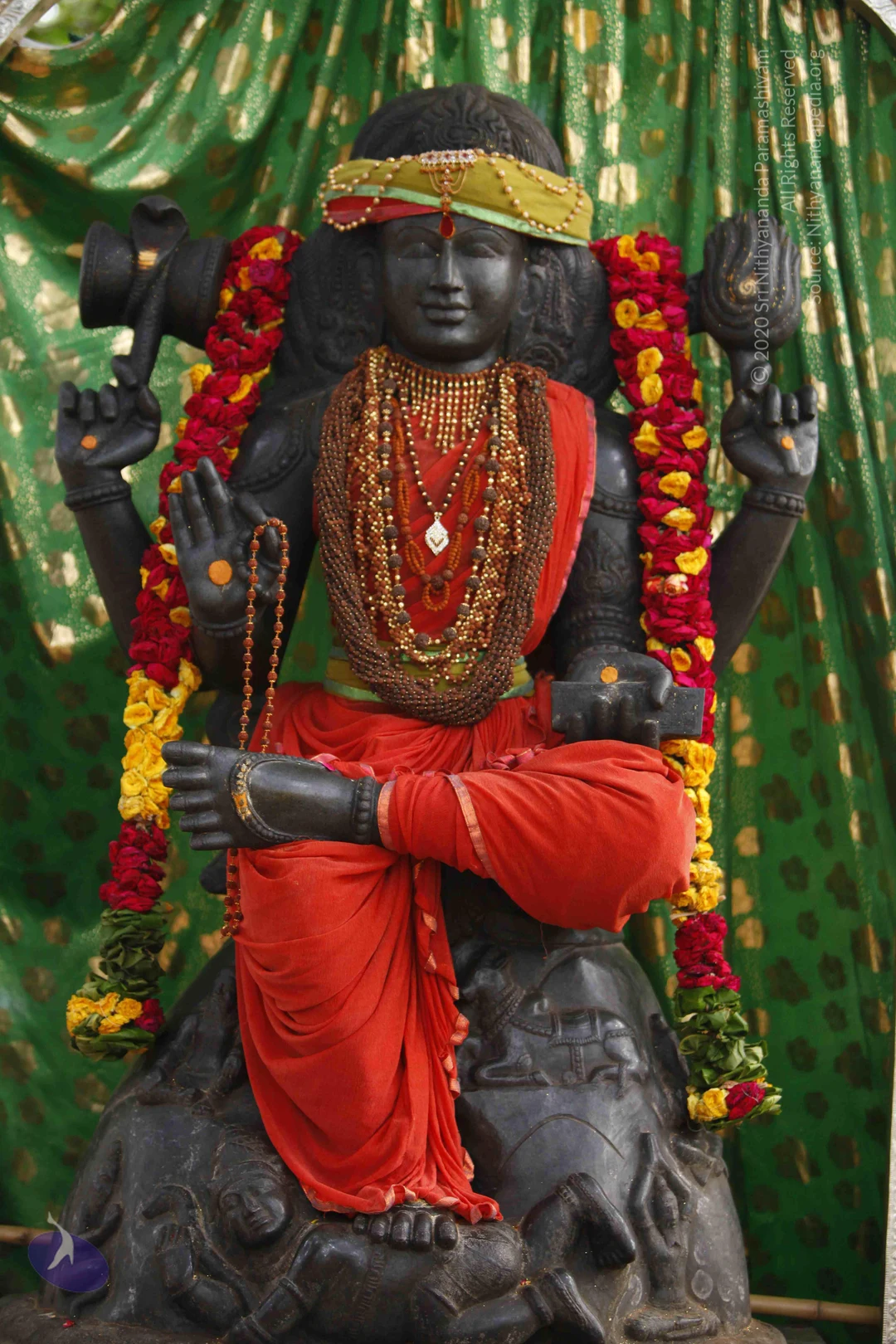
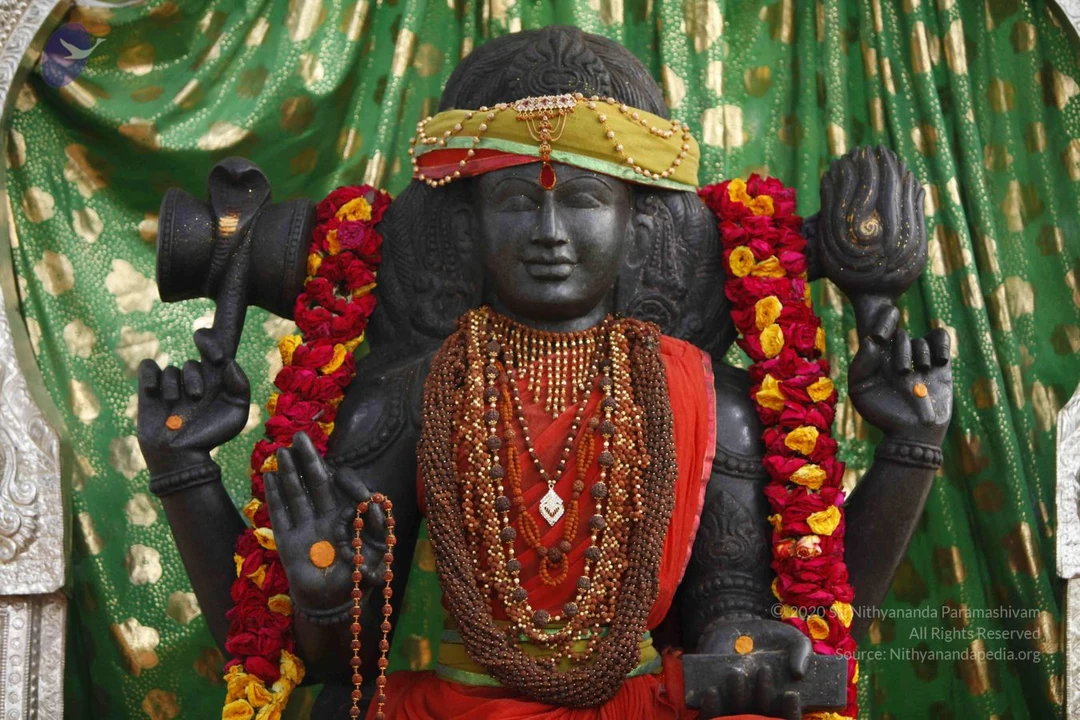
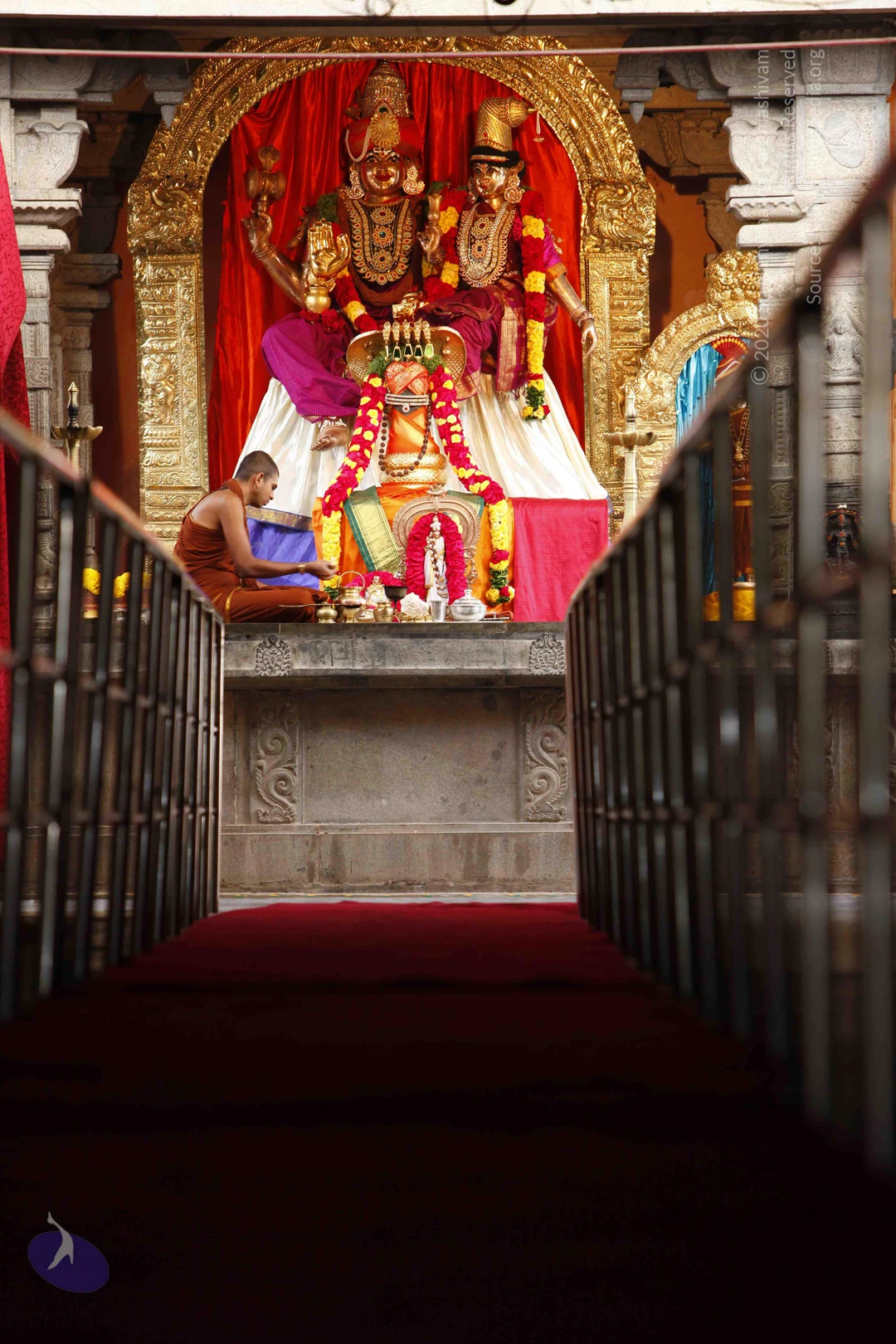
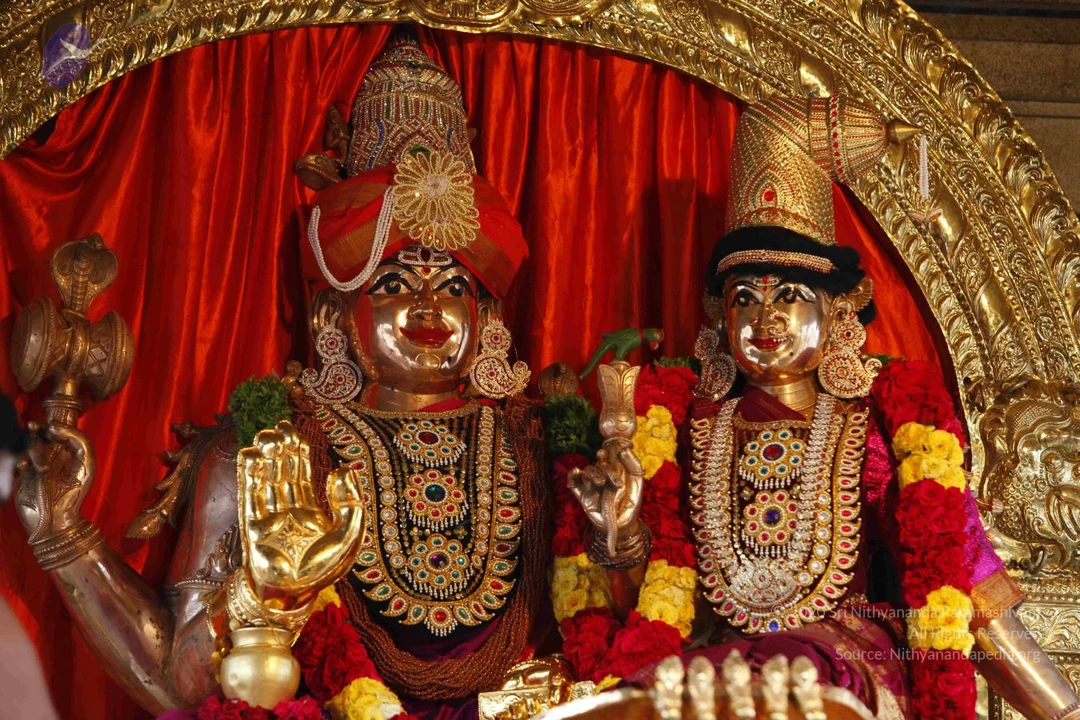
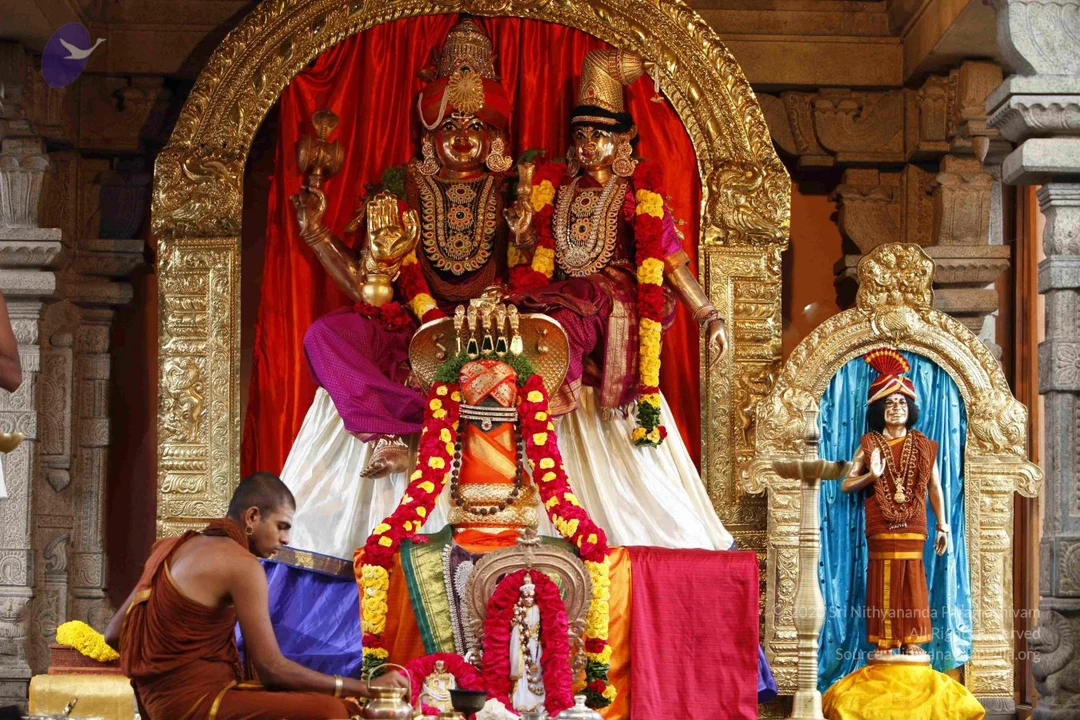
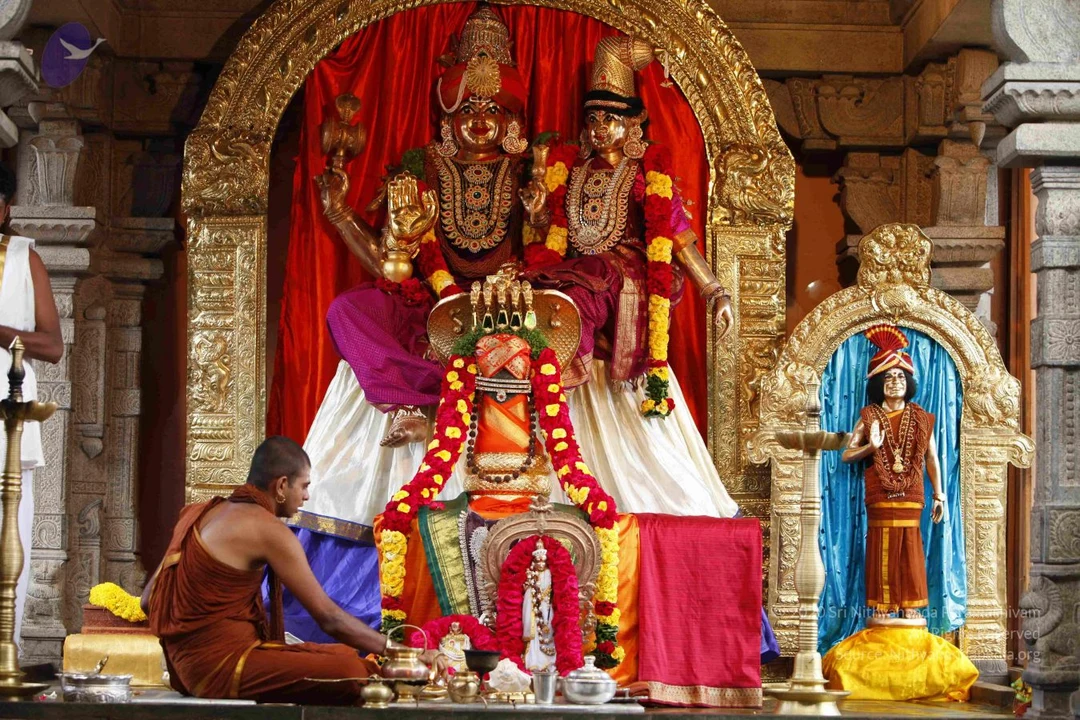
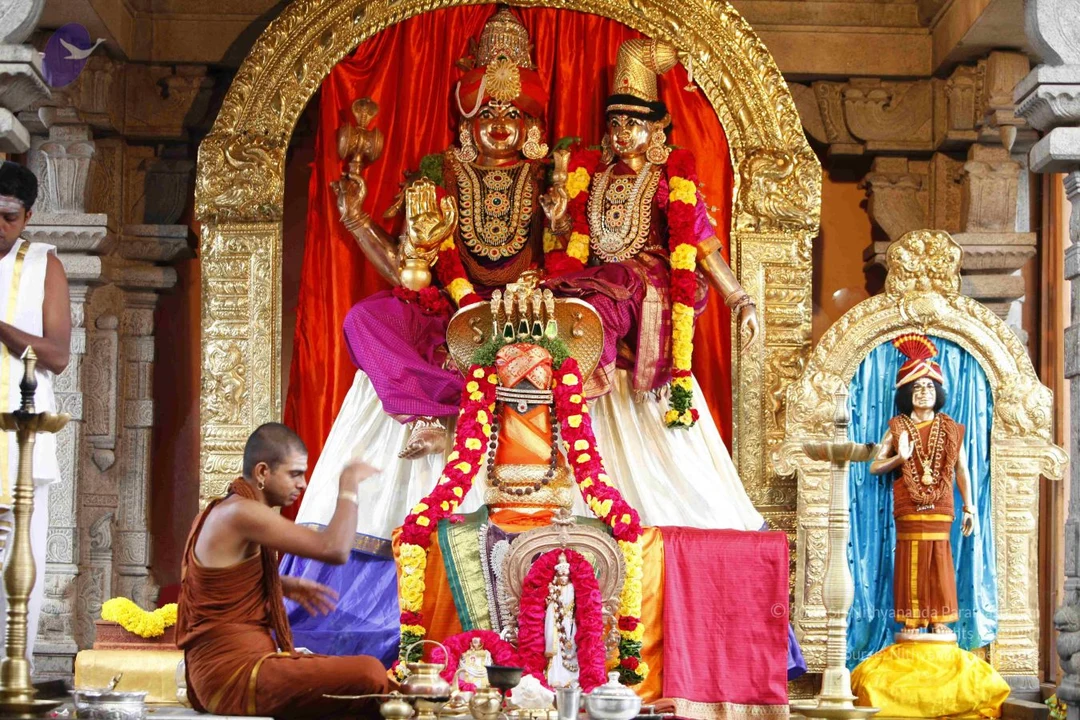
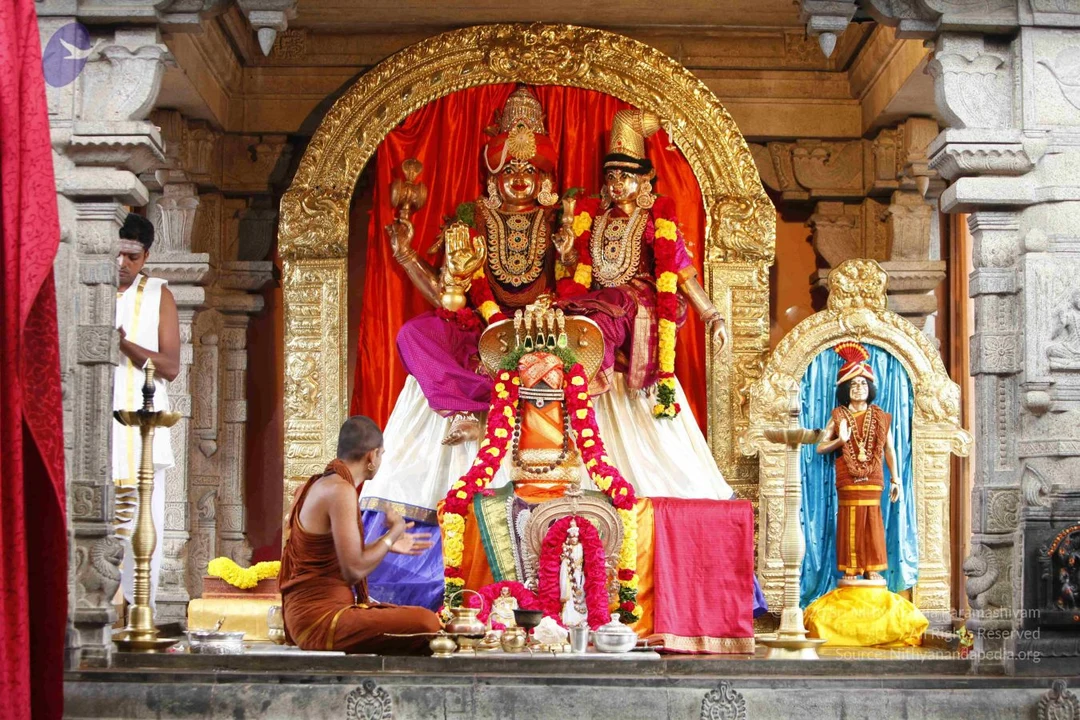
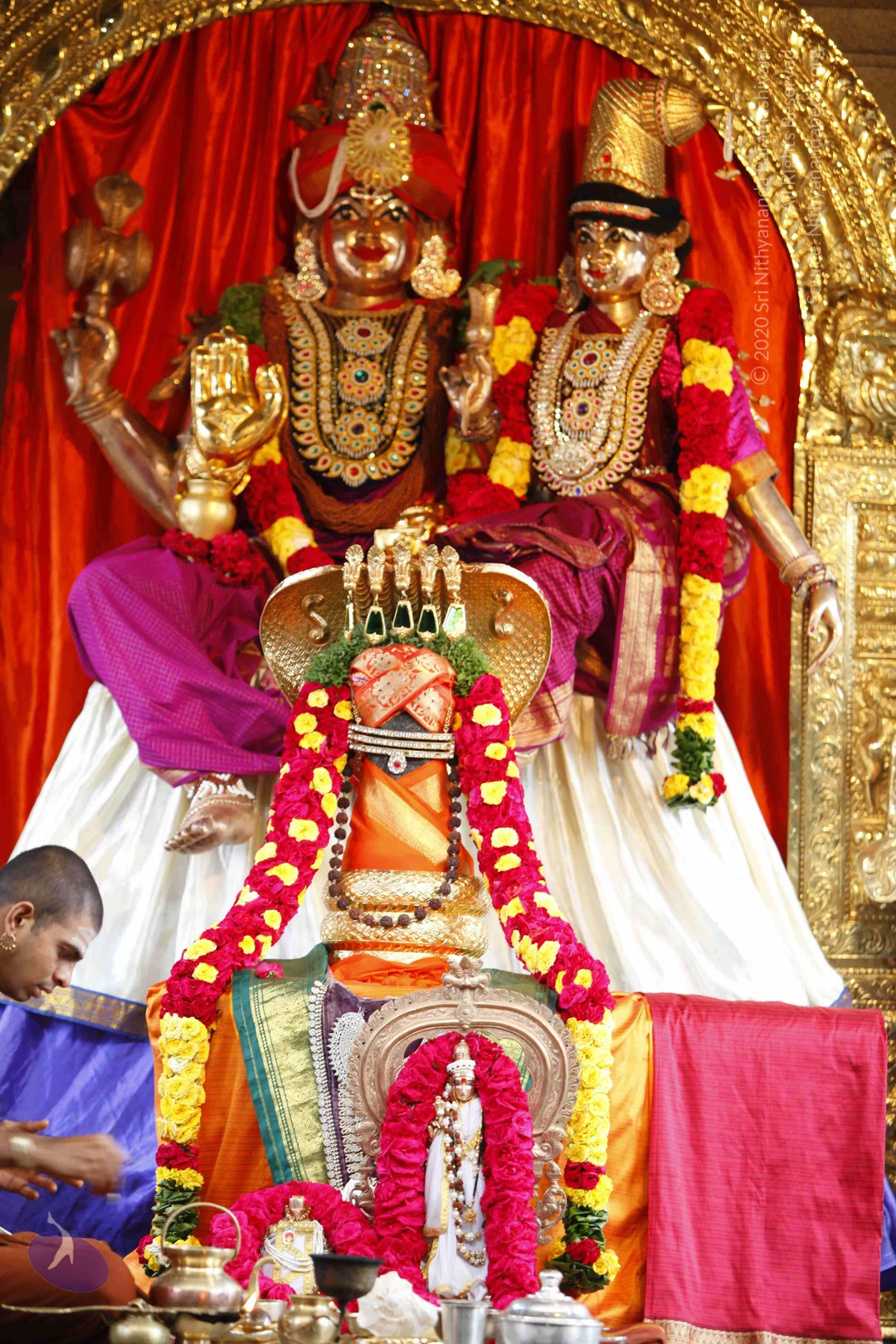
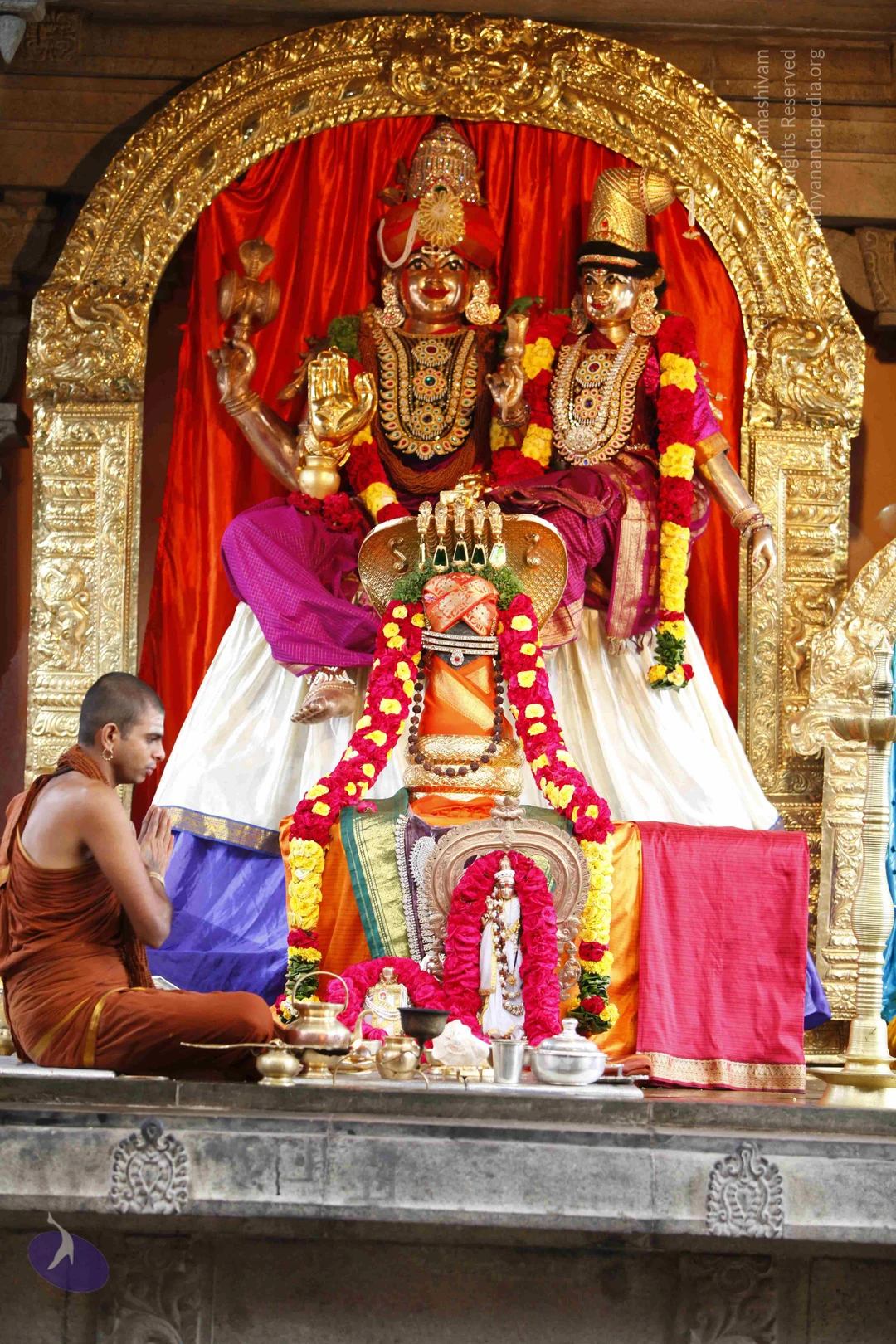
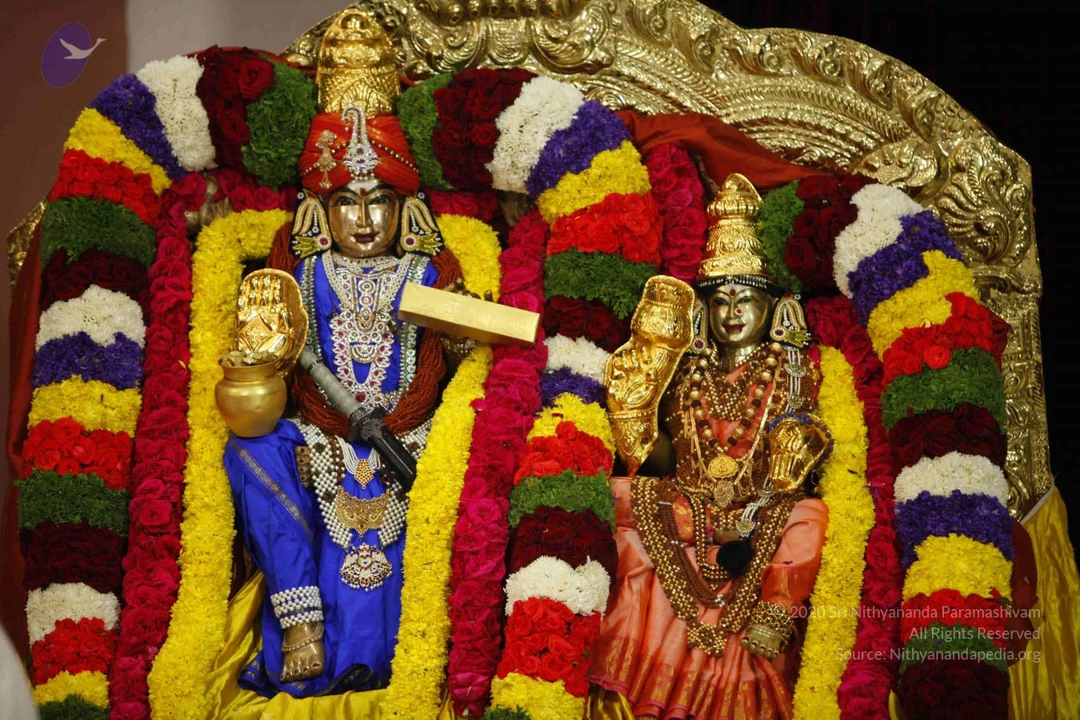
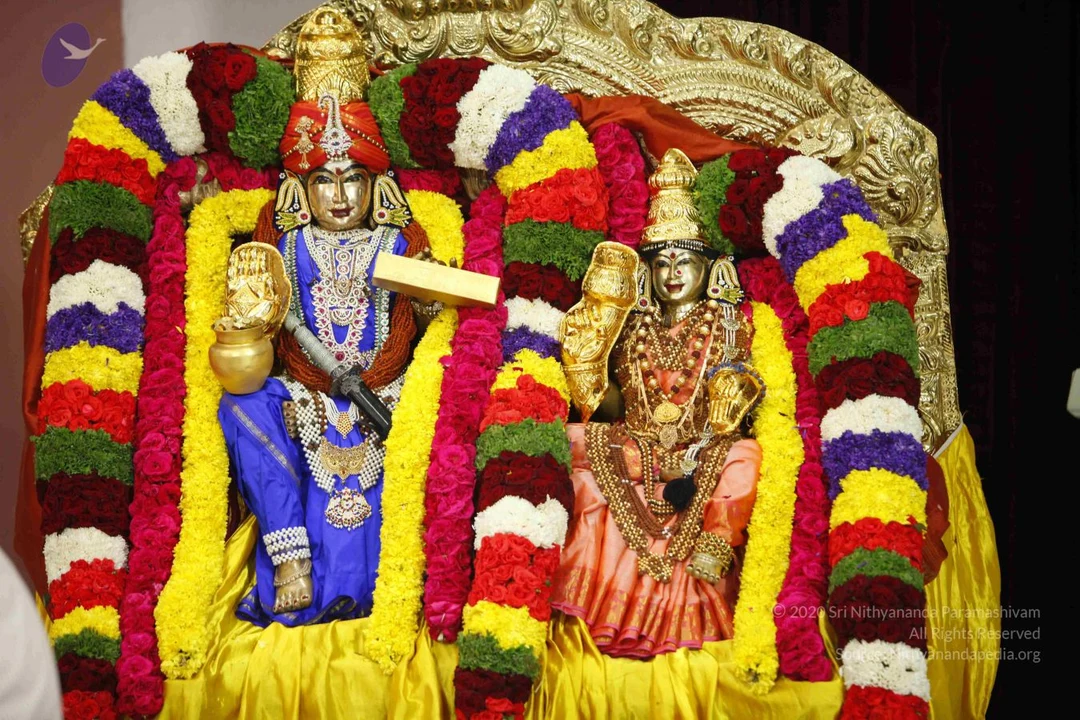
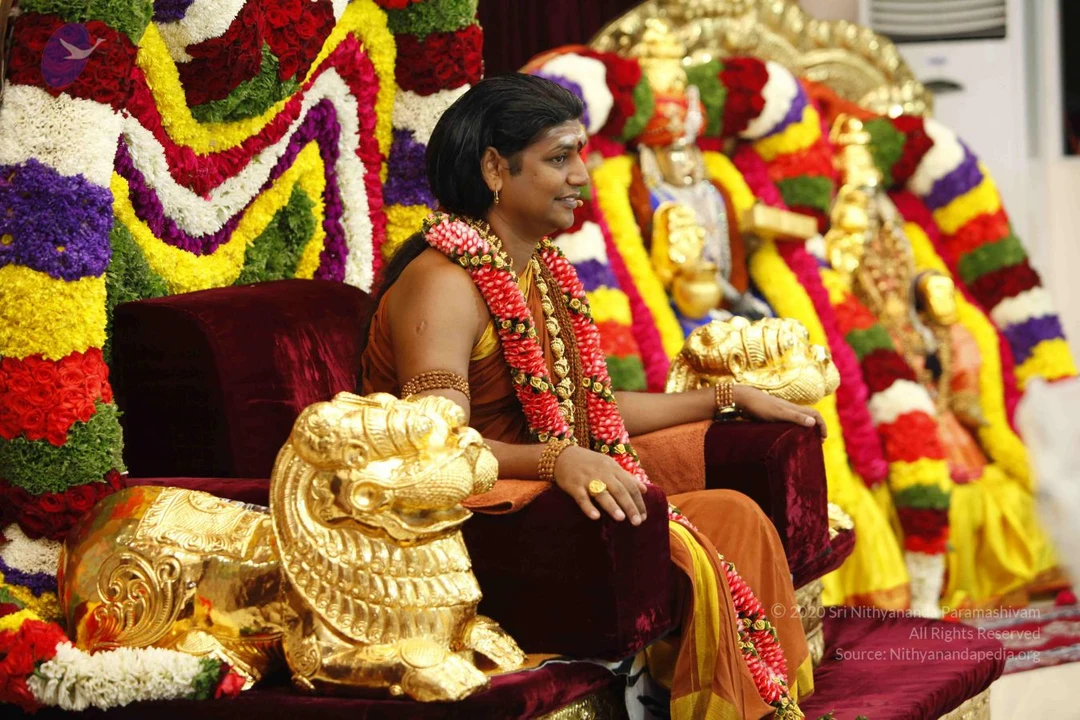
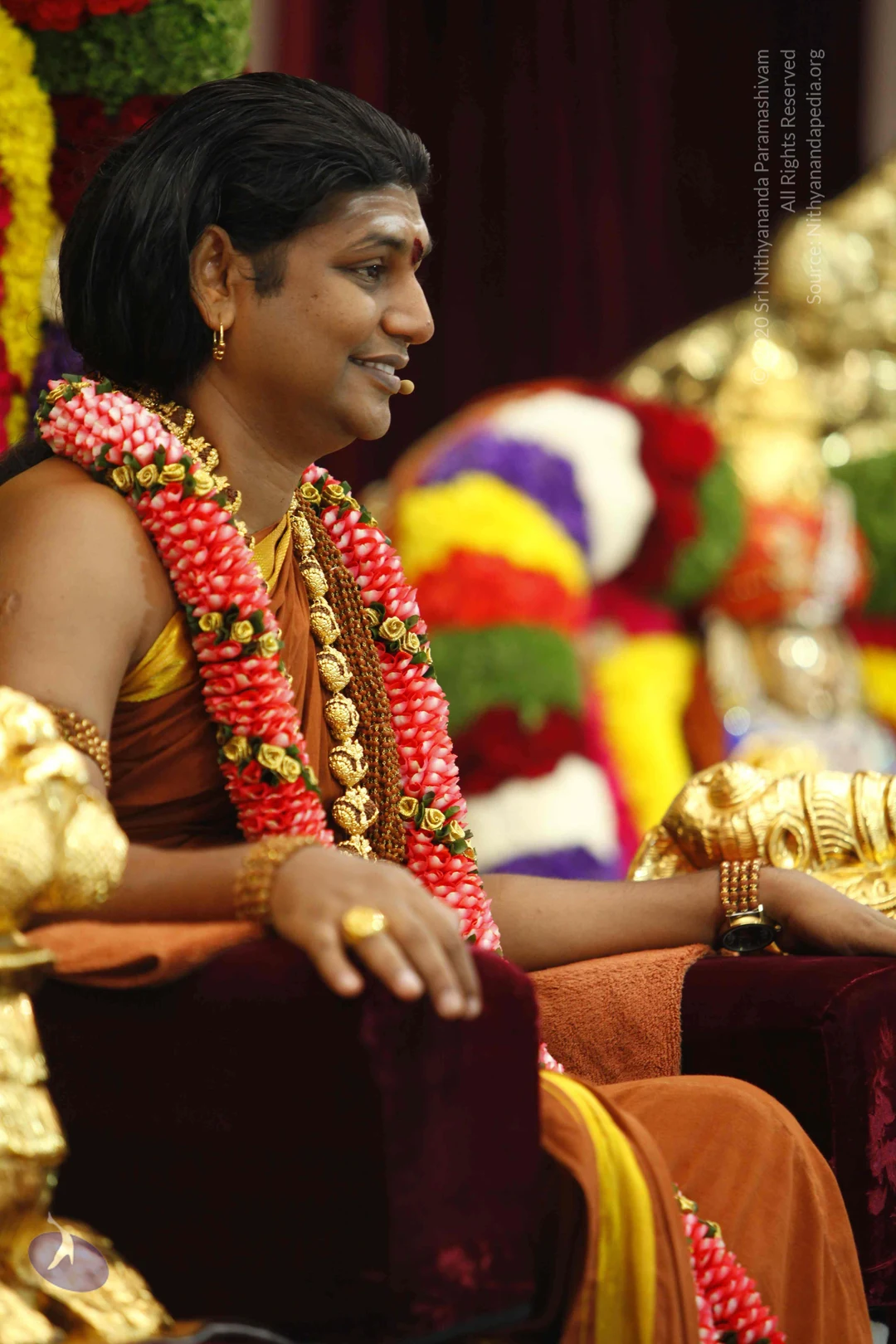
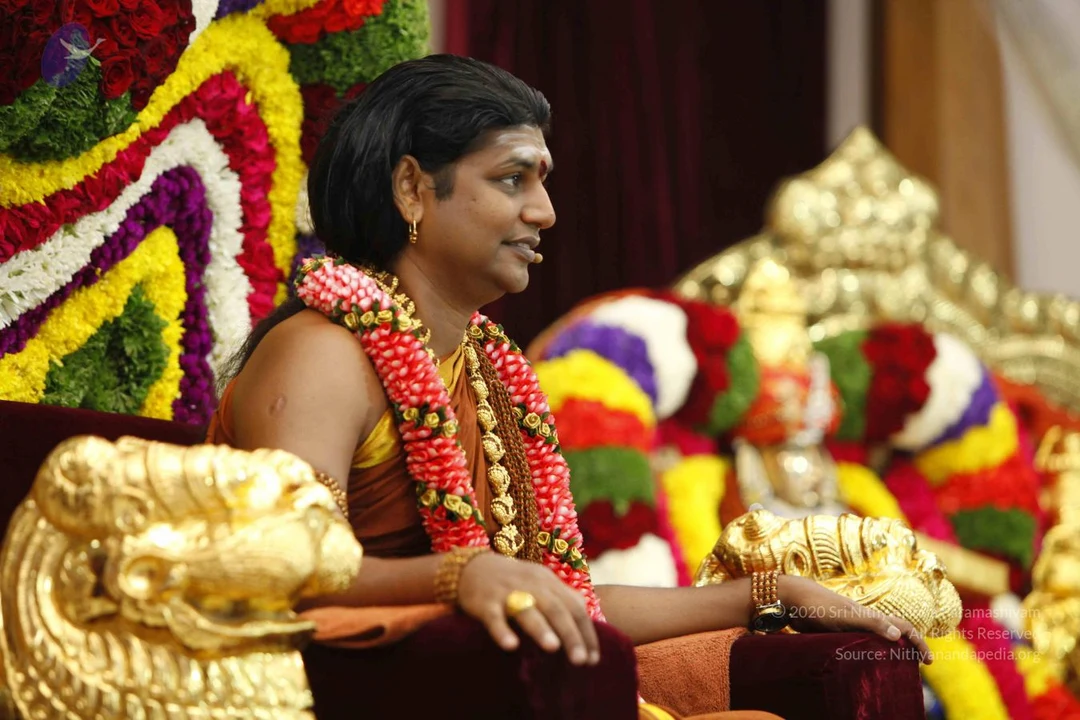
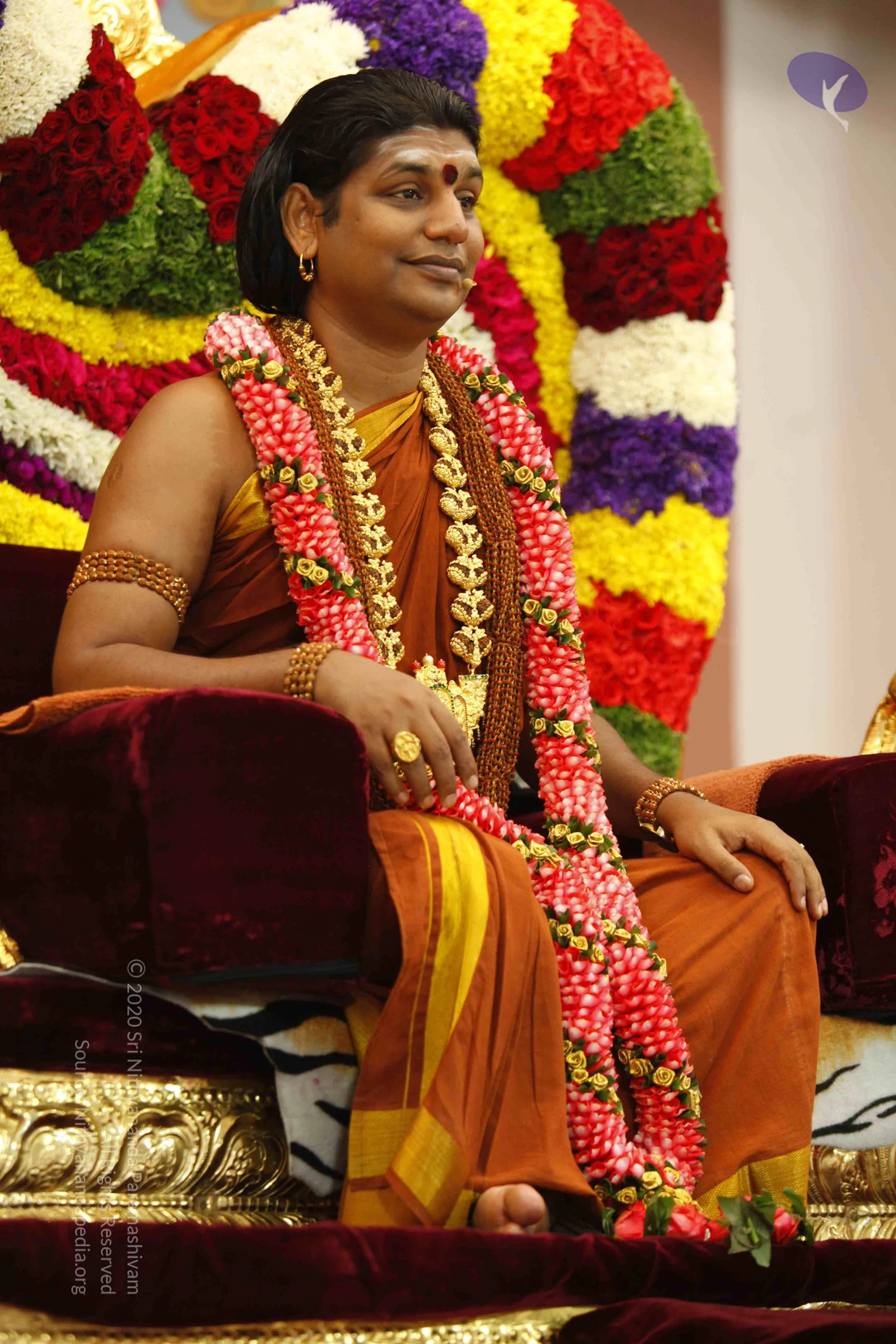
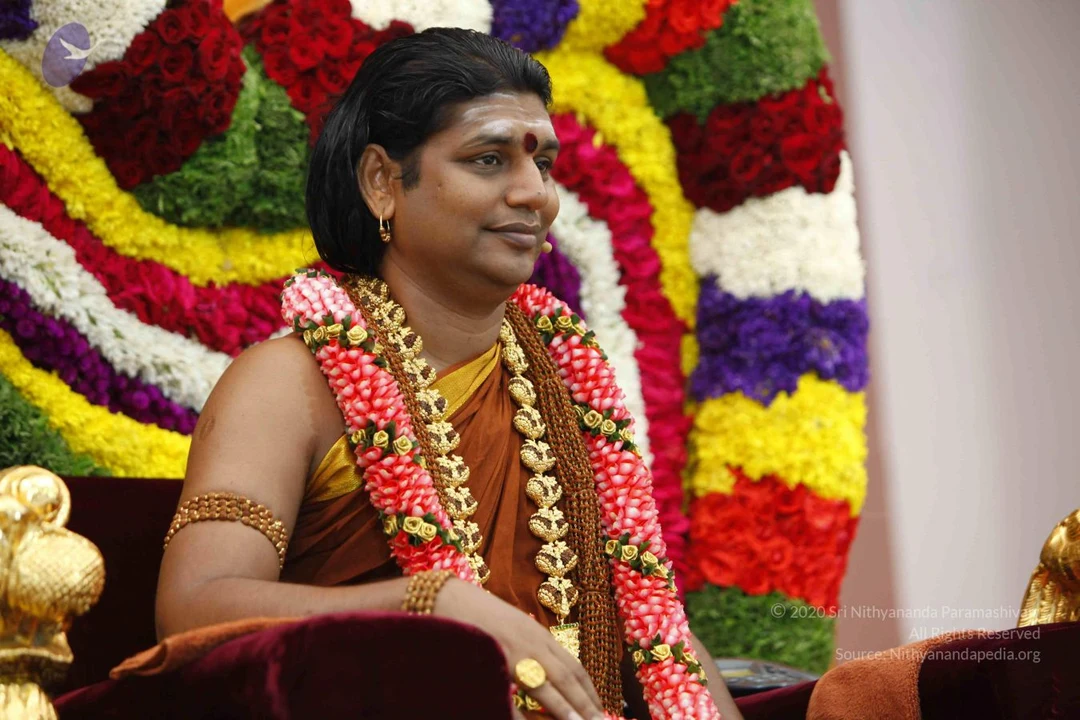
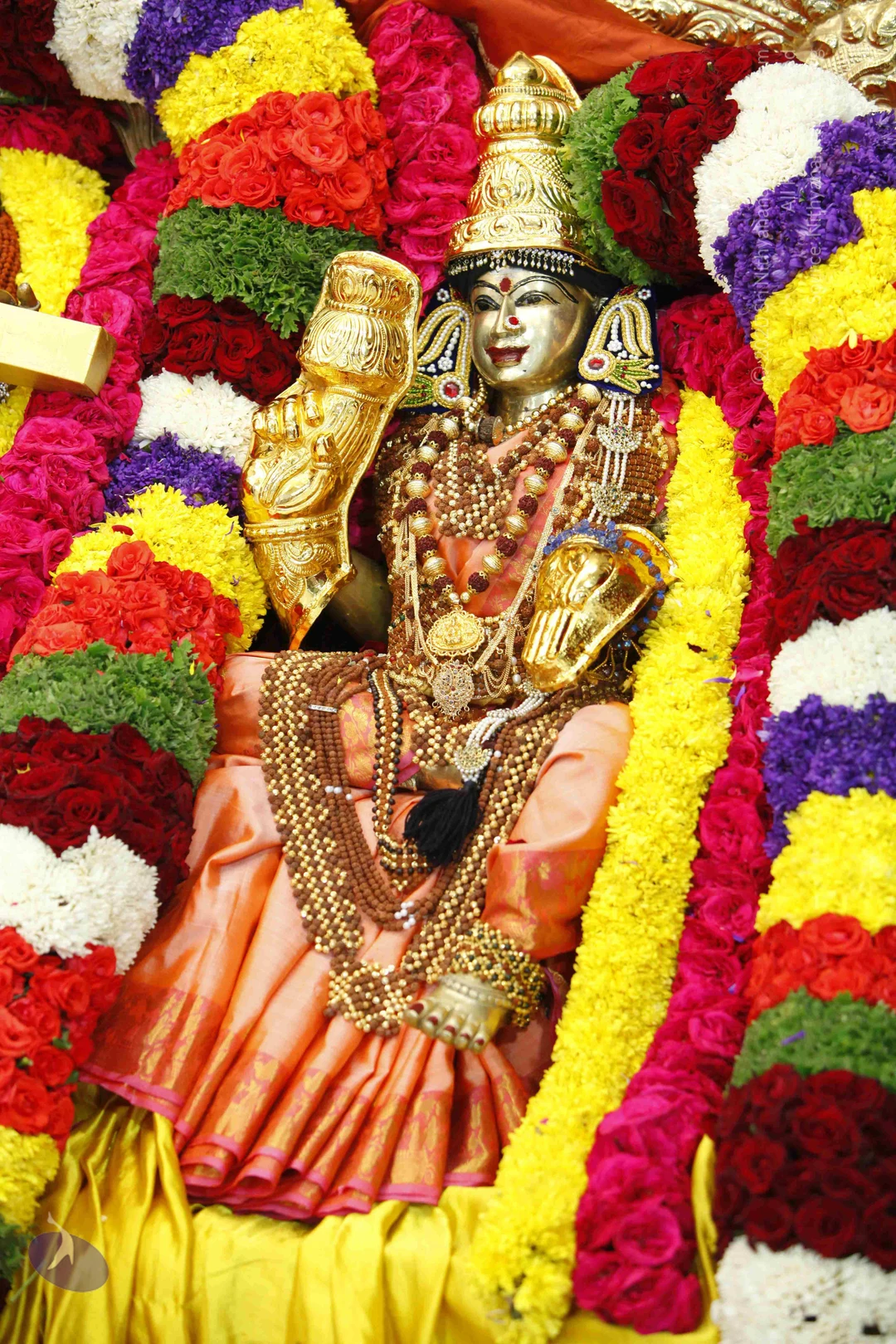
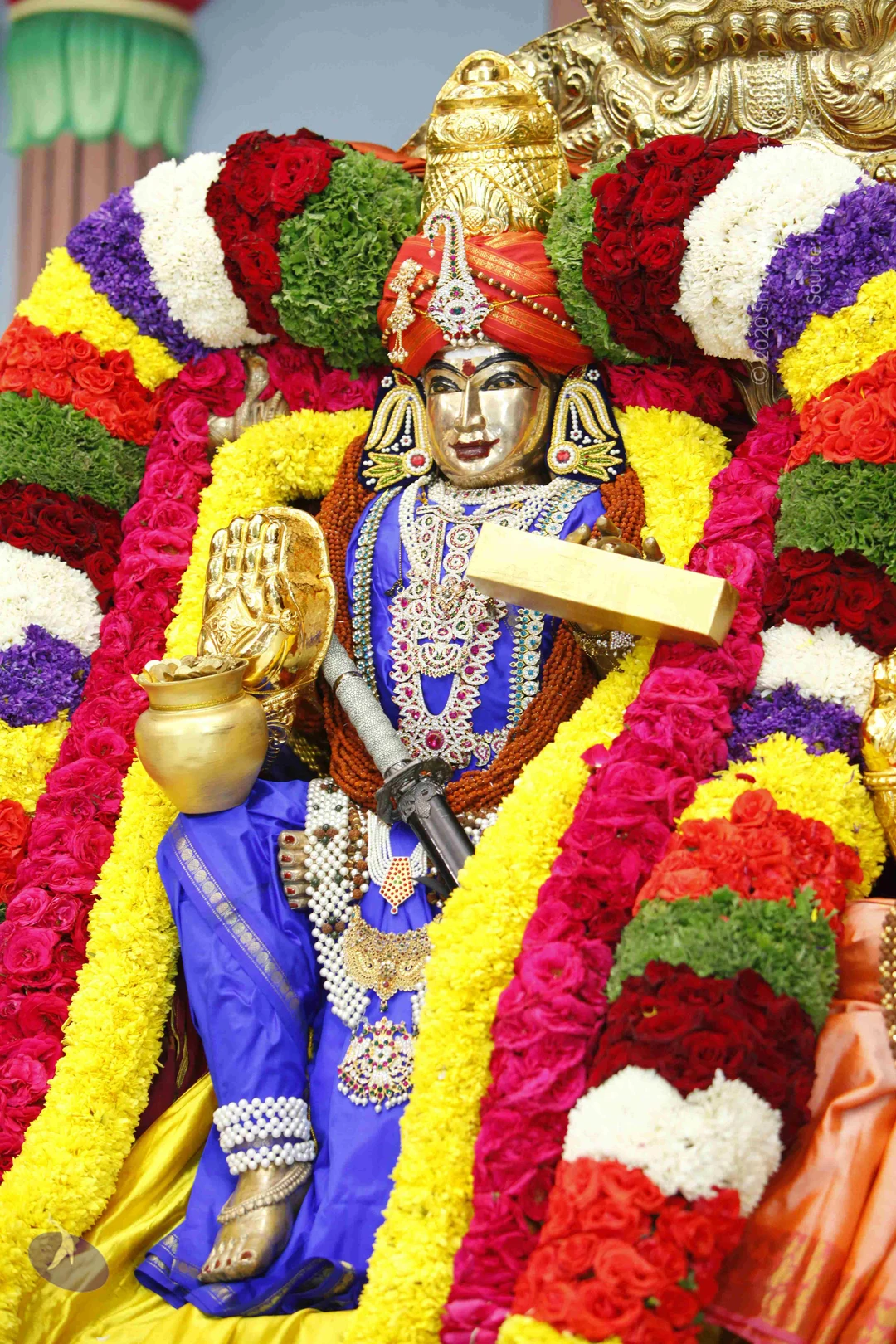
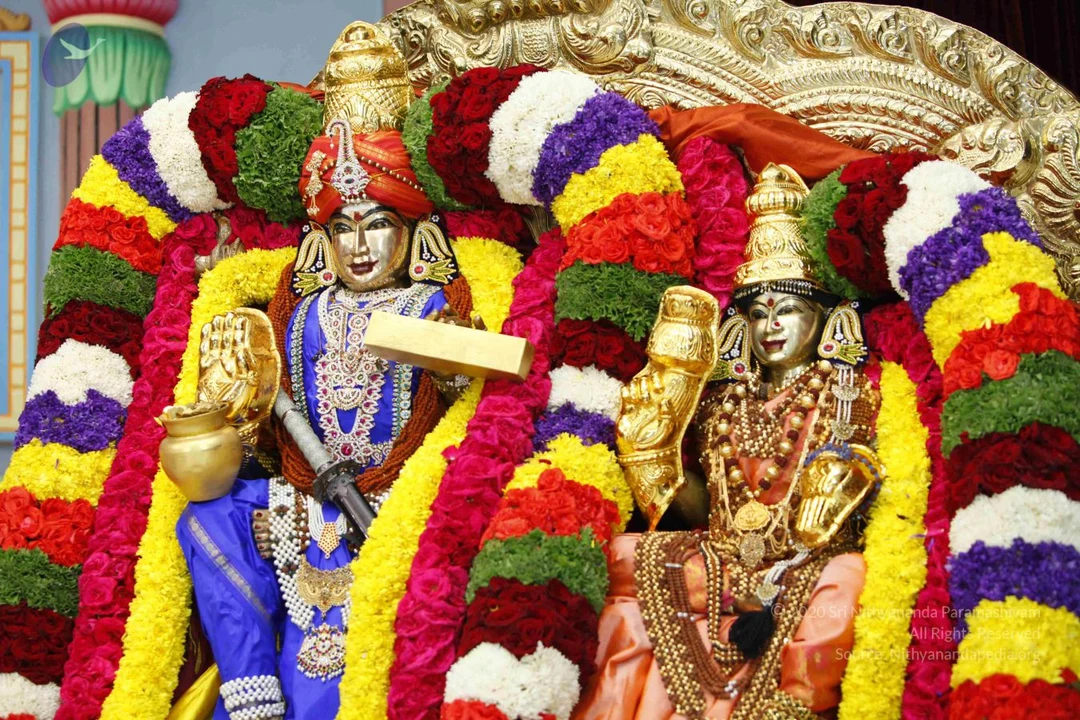
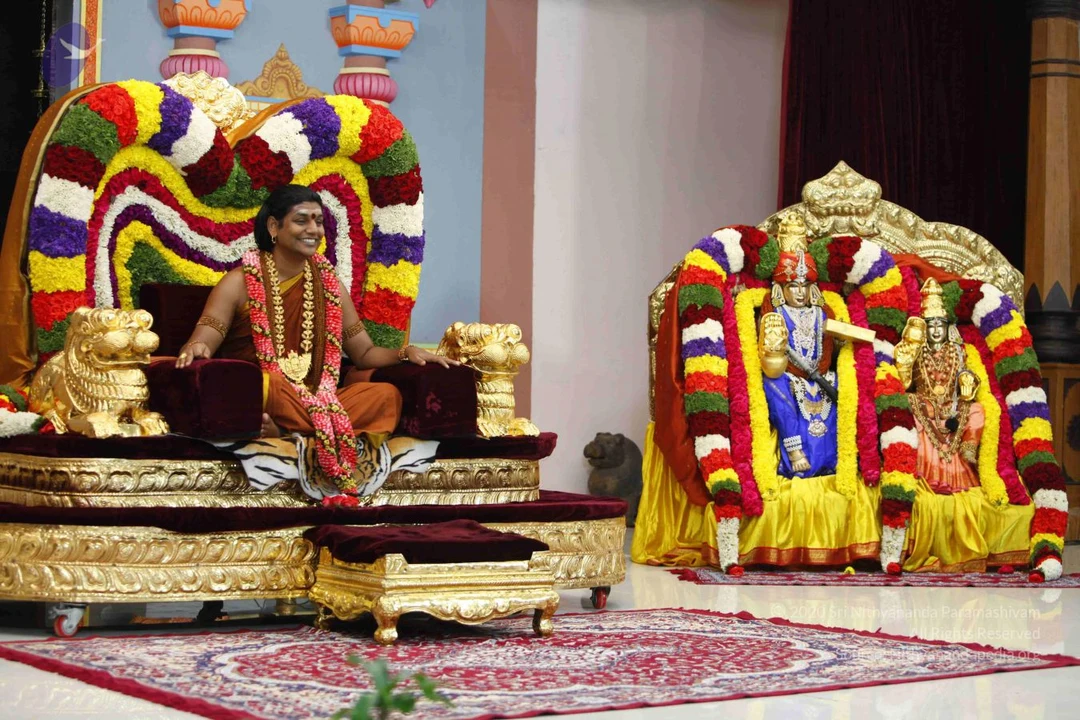
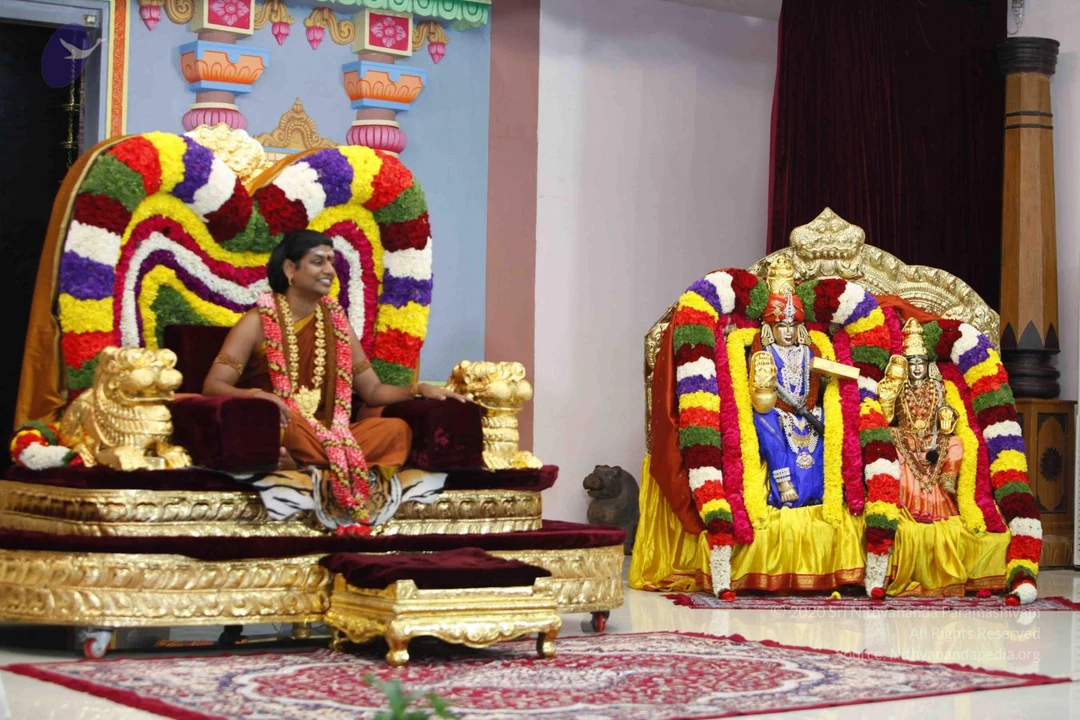
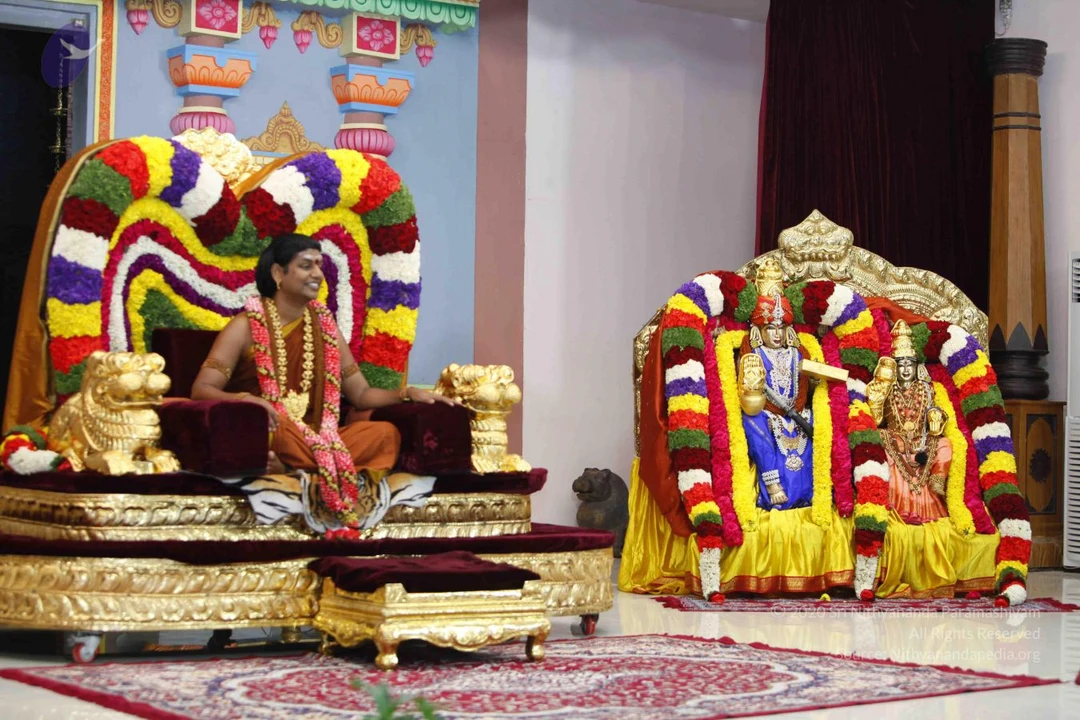
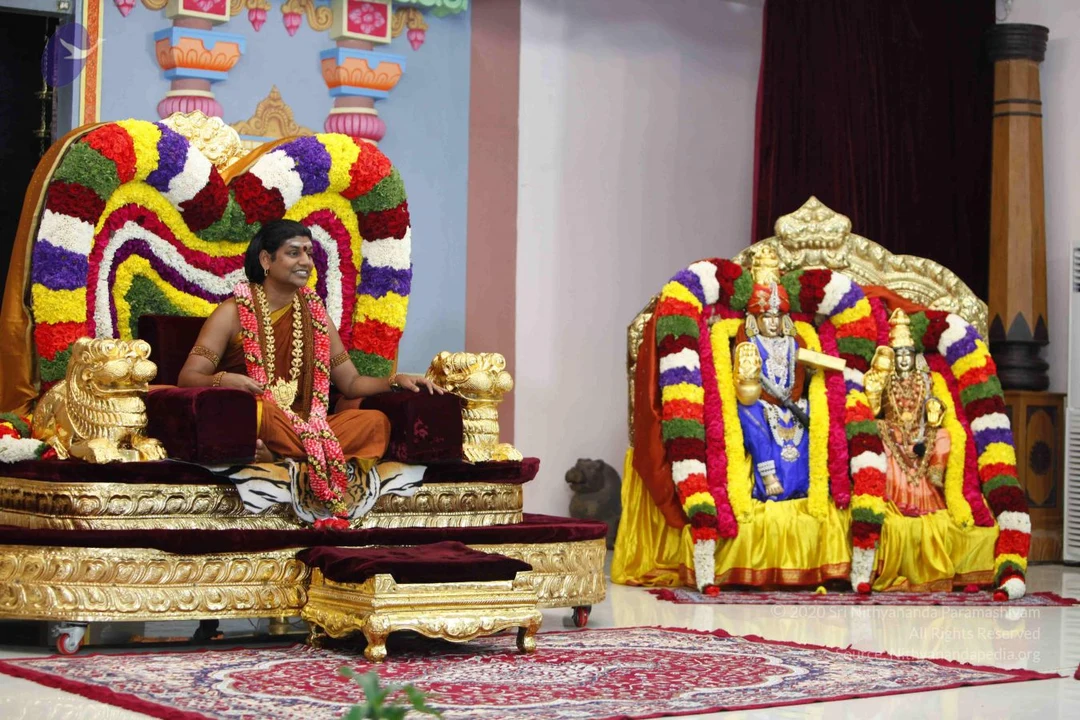
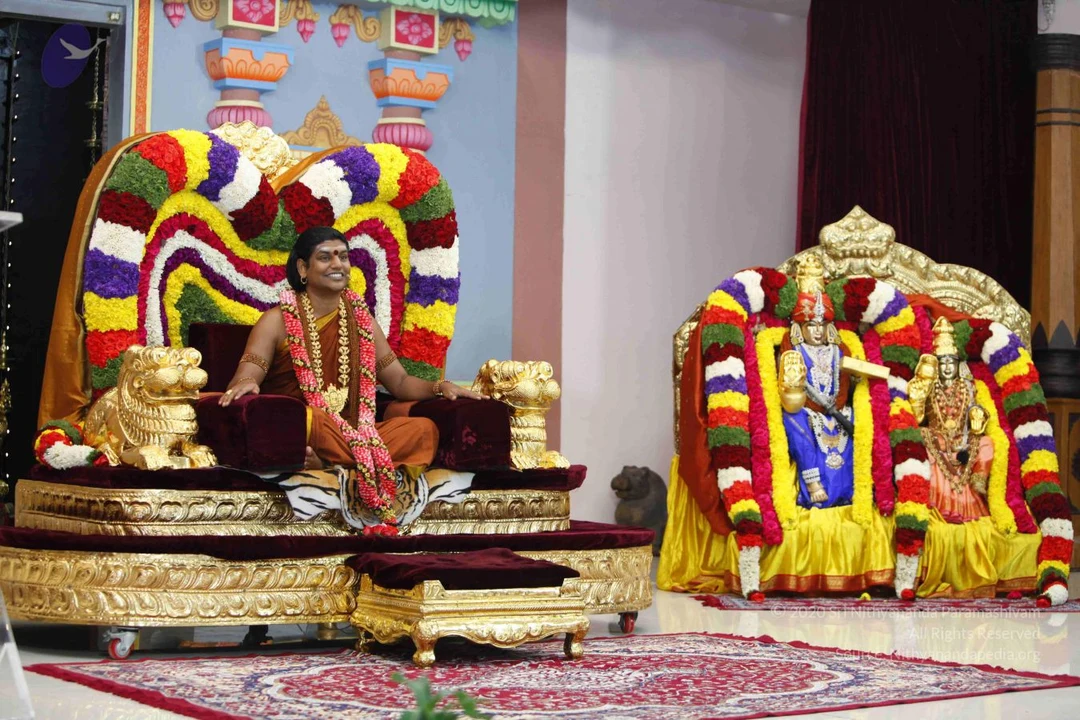
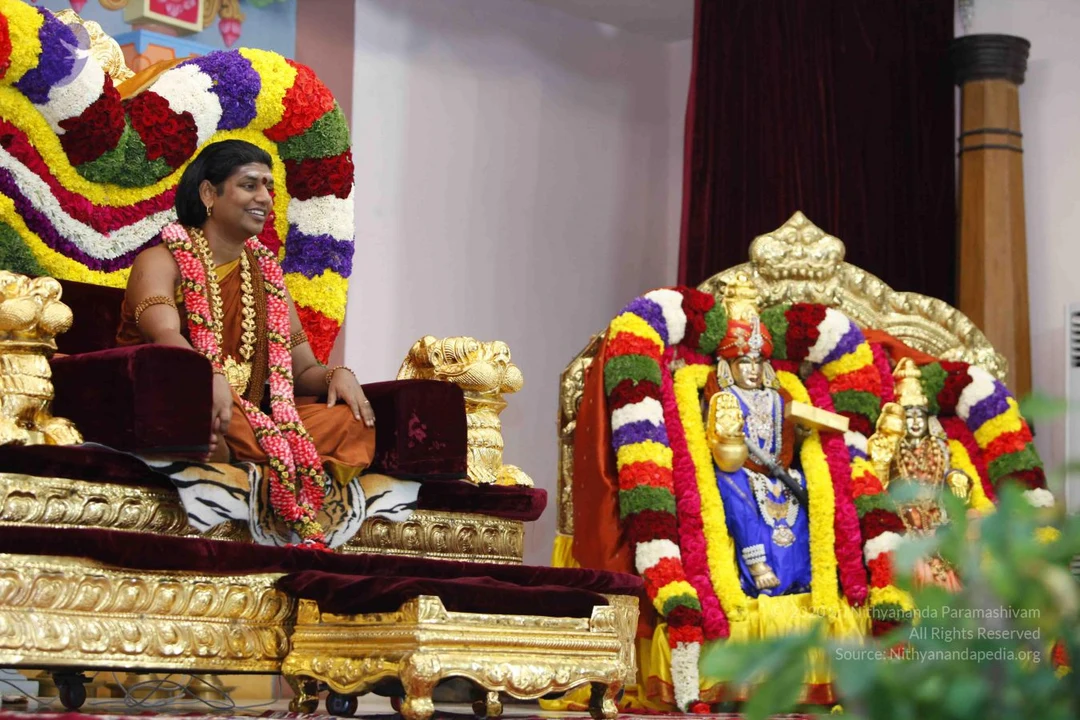
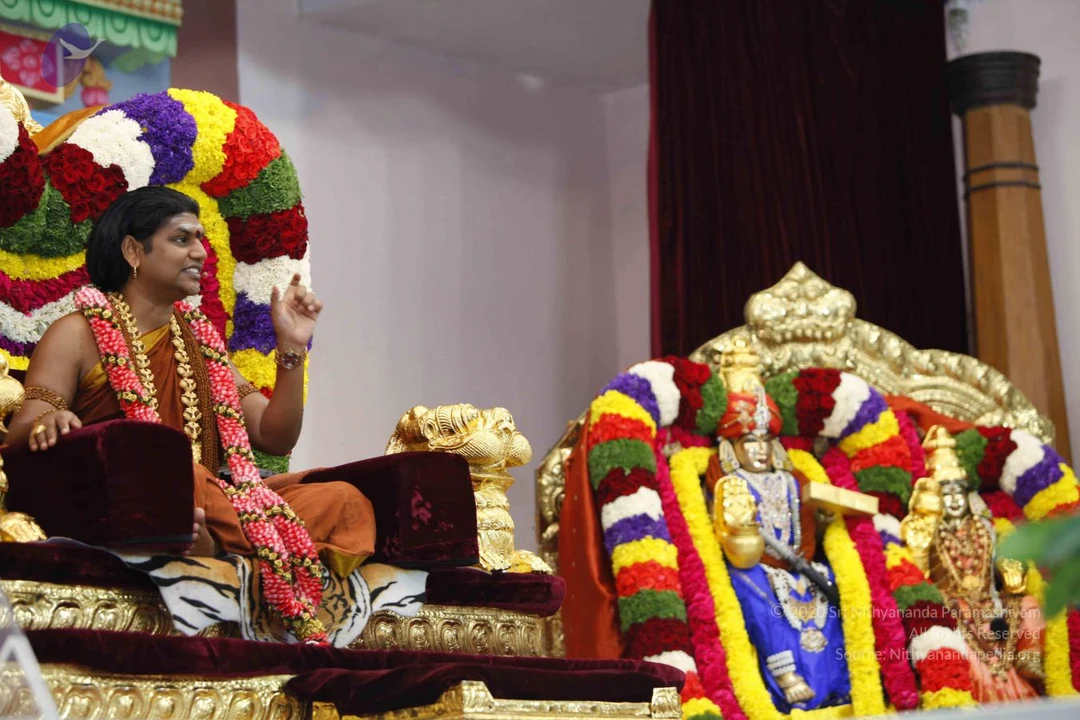
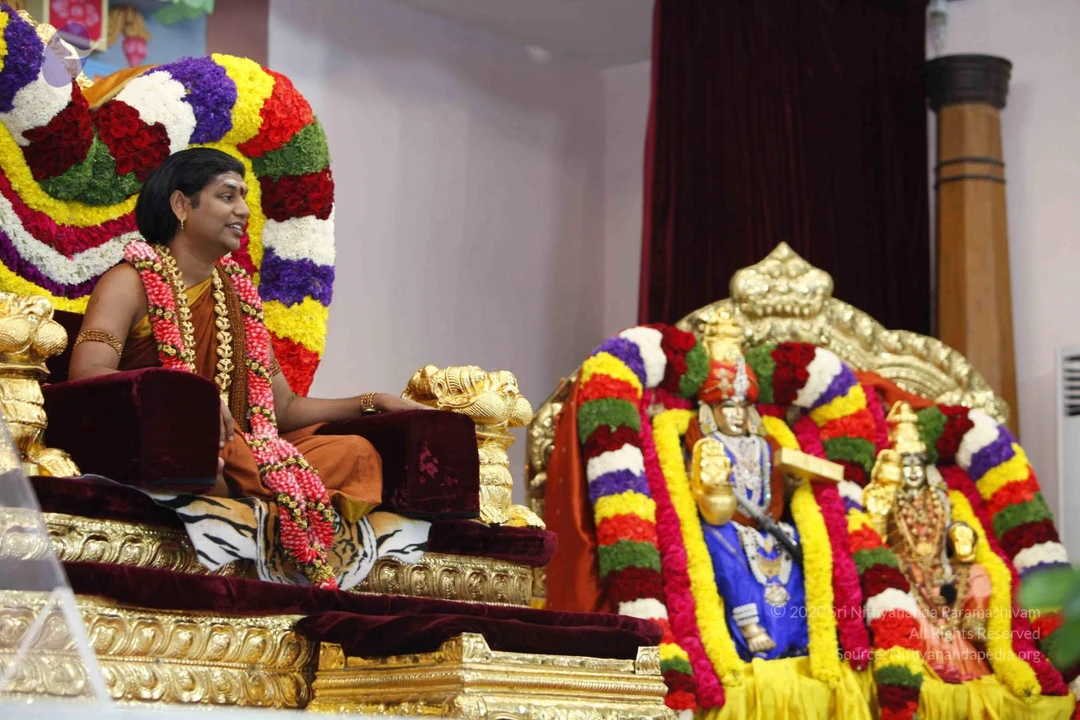
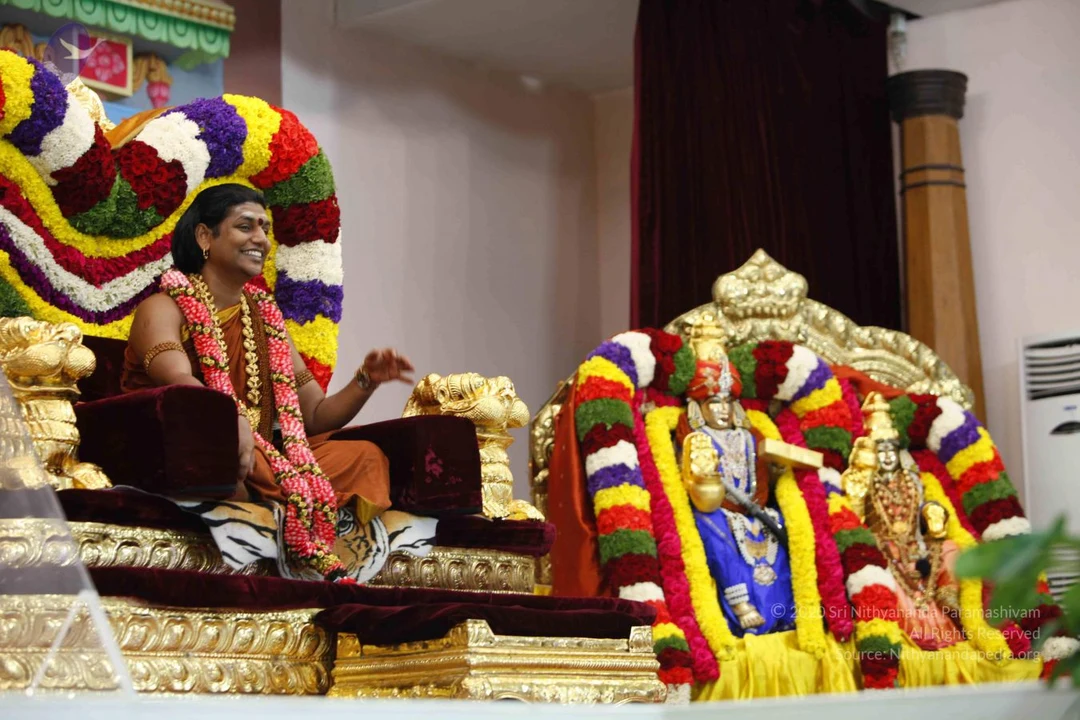
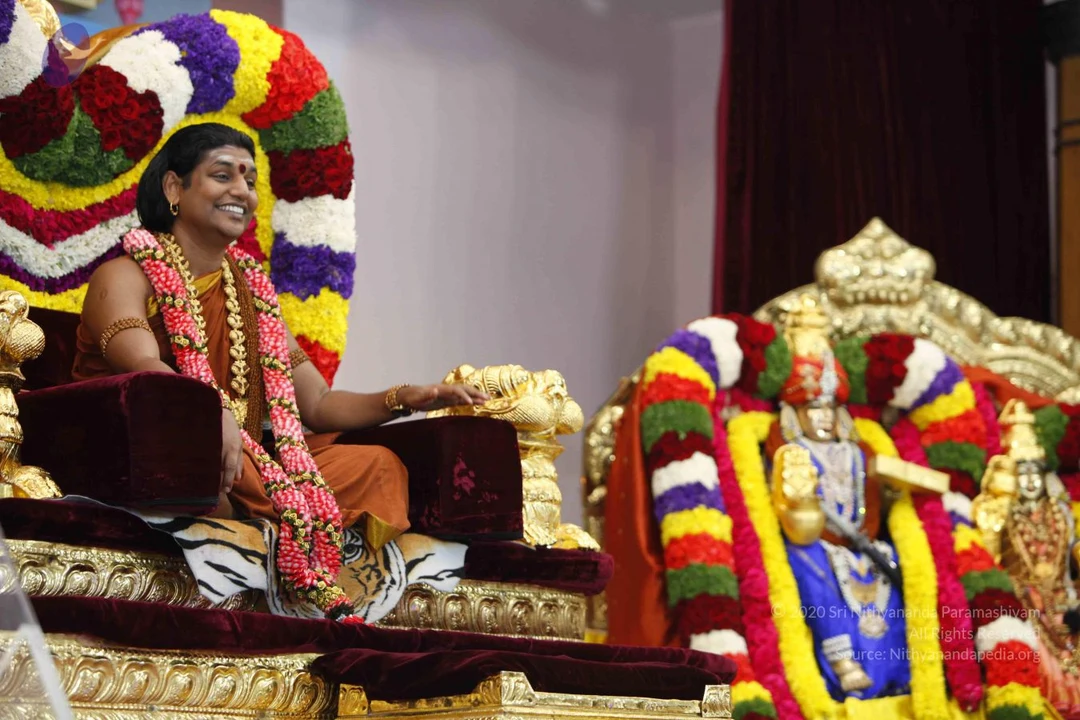
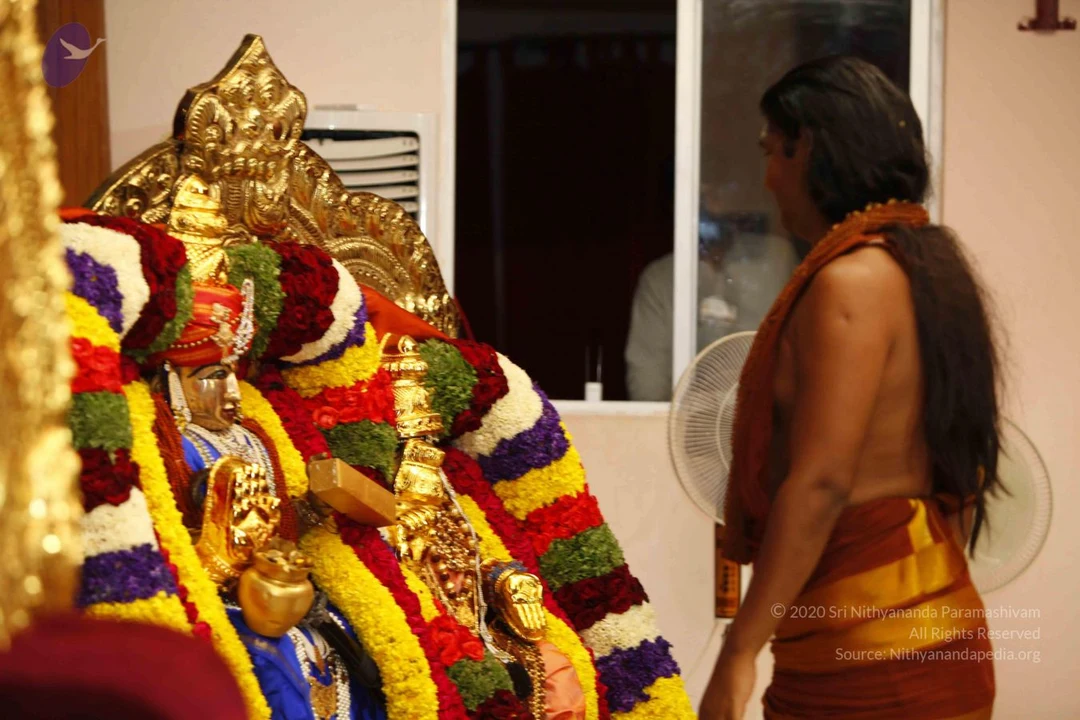
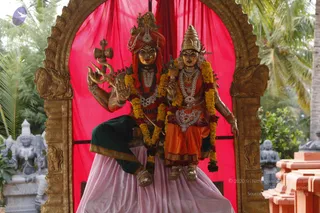
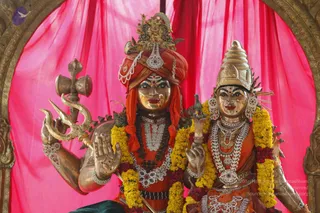
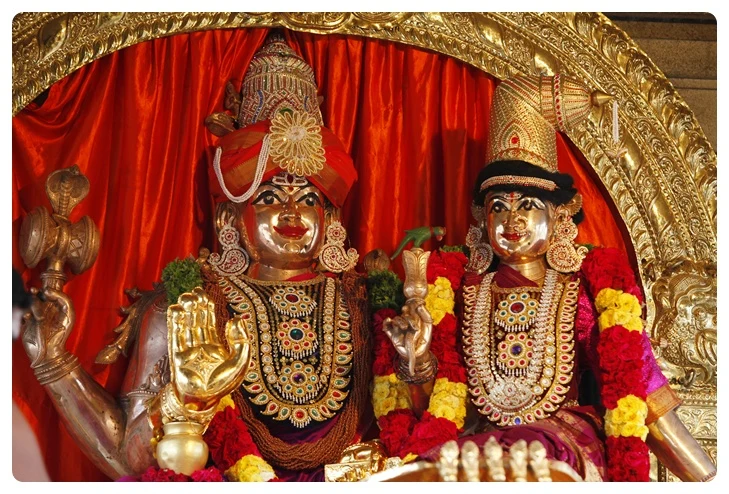
Next I will describe the alankara (decoration) today. Shiva is gracing us with the posture of blessing one of his devotee with gold coins. The story is very beautiful and sweet story. That is why I don’t want to give up on this story. I really thought there are so many important things I have to discuss, Inner Awakening is going on. So, should I miss this story? No, I can’t miss this story. Such a beautiful story! Shiva coming down and initiating, giving enlightenment to a black sparrow is also not a big thing. See, the receiver may be a small guy, but the item given and the giver is great, big guy. Understand? See, I coming down and giving enlightenment to people is not a big thing. I come down and teach one brahmachari to wash his clothes, it is a real thing! I help a brahmachari to wear the dress properly is the real thing! He can come down to give big things to small people and small things to small people! He can even come down to give small things to small people!

An ordinary priest, a poor Adi Saiva priest, who is born from the community which was doing puja to Sundareshwara in Madurai, he is supposed to receive Acharya Abhisheka and get married, only then he can start doing puja to Sundareshwara. So he goes and begs Mahadeva, ‘Please give me some money to have Acharya Abhisheka and get married, so that I can start doing puja to you.’ At the same time, the king, the Pandya king had a doubt. His name is Shenbhaga Pandian. He had a doubt whether his queen’s hair is naturally fragrant or the fragrance is artificial. And he ordered the country anybody who clarifies his doubt will be given thousand gold coins. Of course, when he comes down he does lot of work not just helping a brahmachari to wear the clothes properly, or not just help him wash his clothes! When he teaches to wash their clothes, I teach them also how to wash their mind! So Mahadeva comes down. Whenever I describe his leelas, actually I describe his leelas just for my own enjoyment, not for anything else. Blessed are those who can flow by remembering his leelas! So Mahadeva comes down in the form of a poet and tells that priest, ‘Don’t worry! You are praying for money. I will give you a song which clarifies the doubt of the king whether his wife’s hair is naturally fragrant or artificial fragrance. You go and give this poem to king and take that thousand coins. You have money.’

And that priest was a little afraid. ‘Who will accept me as a poet if I take your verses, your poetries? Even now nobody respects me! How will anybody respect me if I take your poetry and show?’

Mahadeva says, ‘Don’t worry! You go, take it and give it to the king. You will get the money.’

The poetry means that women have natural fragrance. That is the meaning of the poetry. So the priest he goes and reads out the poem in the court, and the king is very happy that his doubt is cleared, because he has not announced his doubt to the world! Please understand, he has not announced his doubt! He only said, ‘I have a doubt. Anybody brings the poetry to clarify my doubt, I will give them the gift.’ So, the poet is supposed to have the intuition to find the doubt of the king! So, when the poet exactly addressed his doubt, the king was convinced that this poem is from a poet who has a intuition, and he decided he will give the gift - thousand gold coins.

But there was a Chief Poet in the court. That guy jumps in and says, ‘No, no, no! You can’t give money for this poem, because what is expressed in this poem is not truth. Women don’t have natural fragrance for their hair.’

Now it is a big problem! The Chief Poet says no, the fragrance is only artificial because of flower scent, scented oil, not natural. But the poem says it is natural fragrance. Come on, what to do now? Let us analyze really the problem once more whether the hair has natural fragrance or not. Because, Nakeeran, Nakeeran is the great chief poet!

Please understand, it is not an ordinary place in Madurai. Sundareshwara created three seats. One, the kingdom; and management of the language; and Sarvagjna Peetha, the spiritual seat. Please understand, for any civilization to be alive, three things are required. Philosophy of Lifestyle, the Lifestyle Philosophy, how the lifestyle should be the philosophy. Second, Art and Architecture. Third, Language. In Madurai, Sundareshwara created three seats for all the three. The Pandya Kingdom, the seat of the king, is for maintaining the architecture and art. The Tamil Sangham, the Sangha for the language, the seat for the language; he himself established. And very important, the Sarvagjna Peetha, to keep the knowledge of the lifestyle alive, Madurai Adheenam. He himself established all the three. So, please understand, whenever there was disturbance in any one of these, he himself comes down and maintains, realigns, and revives. So now, a great poet, and he is not just a poet, he is a poet of the highest order, highly integrated. A personality like Nakeeran…no, that is why I really can’t digest this. This Pseudo yellow journalist Gopal – Rama Gopalan using the title Nakeeran for his Yellow Journal – blackmailing Yellow Journal. Nakeeran Gopal has no right to use the word Nakeeran for his magazine. May be he can use the word Nakee. Anyhow, a poet like Nakeeran cannot tell lie, why should he object if the poetry is truth. Nakeeran says – No, women does not have natural fragrance for the hair. But who sent the poem? Mahadeva himself. So now, big conflict. I tell you unfortunately never this story was explained. It’s almost like end of the story – Mahadeva is powerful, so he bulldozed, he burnt Nakeeran. So the logical conclusion was never arrived - whether the women’s hair has natural fragrance or not. The truth is never explained. Now I will explain. . No, this truth was not finally revealed. End of the story also Mahadeva comes and uses his third eye power, bull dozers Nakeeran and burns. And Nakeeran comes apologizes, O’ Mahadeva!, but the solution has not arrived, whether the women’s hair has natural fragrance or not. So the priest comes and reads out the poem. Chief Poet opposes, No! Women’s has no natural fragrance.

Finally the priest goes to the temple and cries, see what is this? One poet came and gave me the poem and I went to the King and other than beating I got everything. Again Mahadeva appears and says what is this – you did not get the thousand gold coin. This guy says they would have beaten me and the chief poet said ‘your song is useless, there is a mistake in your song’. And Mahadeva himself comes to the court in the form of a poet directly to argue with Nakeeran – chief poet.

Mahadeva says women’s hair has natural fragrance. Nakeeran says, ‘No! Women’s hair has no natural fragrance!’ And then Mahadeva goes to the next level, the devathas and devis. Nakeeran makes a mistake there only. He says, ‘No! Even the devathas, devis and gandharvas, their hair has no natural fragrance!’. And Mahadeva goes to the next level, even for Meenakshi! Nakeeran makes a mistake and says, ‘Yes. Even for Meenakshi there is no natural fragrance.’ That is where Nakeeran lost his Integrity and he became inauthentic. Because when he assumed a stand, he has to maintain that stand. Please understand, then the story goes that Nakeeran was burnt by Mahadeva’s third eye, anger, and Mahadeva orders the king to give the gold coins to the priest, and all the thousand coins were given to the priest and the story ends.

I don’t think you need to come down to give thousand gold coins for a priest! So, what is the final logical conclusion? That was never revealed! Please understand, women have natural fragrance for their hair. That is the truth! Listen, when you become highly intellectual, your ability to smell is lost. So, as Nakeeran is a high level intellectual, he lost the ability to sense very subtle smells. The natural fragrance of the hair is a very subtle smell. The king is not that intellectual. So his sense of smell is still alive. Of course, Mahadeva - sharpest sense of smell! And one more thing you need to know, when a woman becomes intellectual, her hair loses the natural fragrance. So, what Nakeeran expressed from his experience is true. One, he is a high level intellectual. He himself cannot smell such a subtle smells, because when you become very high intellectual, the first thing you lose is sense of smell. Whether somebody is intellectual or enlightened intellectual, this one test is enough. If he still retains his high sense of smell, he is an enlightened intellectual; or he is just an intellectual. I have also seen, all enlightened beings have high sense of smell. Osho, he can smell a perfume from two-hundred feet! There are some perfumes he was allergic to. Those perfumes they will not even allow inside the hall. Because for two-hundred feet he can smell! J. Krishnamurthy, he can smell may be more than two, three hundred metres! Actually if you go to Adayar his center, there is a tree near the entrance and his quarters atleast 200 meters. He can sit in his quarters and smell the flower in the tree in the entrance. He will say that tree is flowered today. Ramakrishna…! Nakeeran is only an intellectual, of course highly integrated intellectual, but not enlightened. That is why he lost the ability to smell that sensitive smells. That is first. Next, the women whom he has seen in his life that close are all intellectual poet women’s who lost their natural hair smell. Highly intellectual women lose the natural hair smell, natural hair fragrance. And the third important problem is, the biggest problem intellectuals has is if they know one handful of clay and its qualities thoroughly one handful of clay, they think they know all the clay available in the world! Intellectuals do not believe in exemptions. They think everything is a straight forward square. They just do cookie cutting. So, Nakeeran has not seen all the women of the world. He might have seen only few women that close where he can smell their hair. So, unfortunately, he has come closer only to the intellectual women, the pundits, the poetesses, intellectual women, and intellectual poets - I should use the right word. Because of that, naturally he never experienced, because neither his nose is capable nor he came near somebody who has a natural fragrance. Finally, above all, when the argument came, he should have stopped with human-beings, human female. He should not have stepped beyond. See, that is the biggest problem with the intellectuals. If they establish one idea, after that they just to hold on to that one idea; they are ready to lose even their Integrity and Authenticity. If Nakeera would have stopped, No. I have seen from my experience - ‘All the women I have seen in my experience don’t have natural fragrance.’ If he had stopped with that, the problem would not have arisen. He would not have been burnt by Mahadeva. But intellectuals usually get stuck with the “I am right” root-pattern. With that root patter, and then they completely compromise with Integrity and Authenticity. They are ready to lose everything just to be right. That is what Nakeeran did. This is the most unfortunate pattern. And that is the way they lose everything, and their very life. Finally, Nakeeran realized that Mahadeva himself has come down. Even then he argues, No! ‘You may be Shiva himself, but I am right! I am right! No woman has natural fragrance in the hair.’ Then, finally, Mahadeva asked, because Nakeeran had lost Integrity and Authenticity, Mahadeva takes the responsibility of removing him. He burns him alive through the third eye! Then Nakeeran’s soul realized his mistake and apologizes. He (Mahadeva) gives his life back and brings him back.

Beautiful story! How if you are stuck with the pattern “I am right”, your whole life will be taken away. This is the example of that story. Anyhow, finally, the unsolved question, whether women’s hair has natural fragrance or not, is solved today! This is what exactly happened. The women who came closer to Mahadeva, all of them had natural fragrance, and all the women who came near Nakeeran did not have natural fragrance, and he did not have the capacity to smell also. This king had both type of women around him, and in some he saw the natural fragrance, and in some he did not see the natural fragrance. That is why he had the doubt. So, finally, Mahadeva has to come back to remove the doubt. Today Mahadeva is in that decoration, having the gold coins in the right hand, and having the poem he wrote in the left hand, with third eye. So, understand, this pattern “I am right” is one of the worst patterns which will completely destroy even your life! Even your life can be destroyed!

With this, I will move to the next segment of the morning satsang – Nirahara Samyama.

Please sit straight. Close your eyes. Visualize you have become Bidadi Kalpavruksha. Talk on “Stability” I will do, may be, tomorrow. Visualize you have become Bidadi Kalpavruksha. Cognize you have become Bidadi Kalpavruksha, and inhale through both the nostrils and mouth. Hold as long as you can by closing the nostrils and the mouth. And exhale as slowly as you can through the nostrils, not through the mouth. Please do this Nirahara Samyama Kriya first level for twenty-one minutes. Sit straight and start the Nirahara Samyama Kriya. Namah Shivaya!

(NIRAHARA SAMYAMA KRIYA IN PROGRESS)

Relax! I bless you all! Let you all radiate with Integrity, Authenticity, Responsibility and Enriching, with eternal bliss, Nithyananda! Thank you!

Photos

Photos of the day
IA-Session-Swamiji

IA-Darshan

Photos Of The Day:

Temple

Pratyaksha-Pada-Puja

Nithya-Satsang

Sarva-Darshan

IA-Day2

Photos Of The Day:

IA-Darshan

IA-Participants-Session

IA-Session-Swamiji

IA-Session-Swamiji-2

Photos Of The Day:

Temple

Pratyaksha-Pada-Puja

Nithya-Satsang

Sarva-Darshan

IA-food

IA-Participants-Photos

IA-Yoga

Photos Of The Day:

IA-Darshan

Photos from this day

View all 371 photos

Photos of the day
32 photosSource gallery
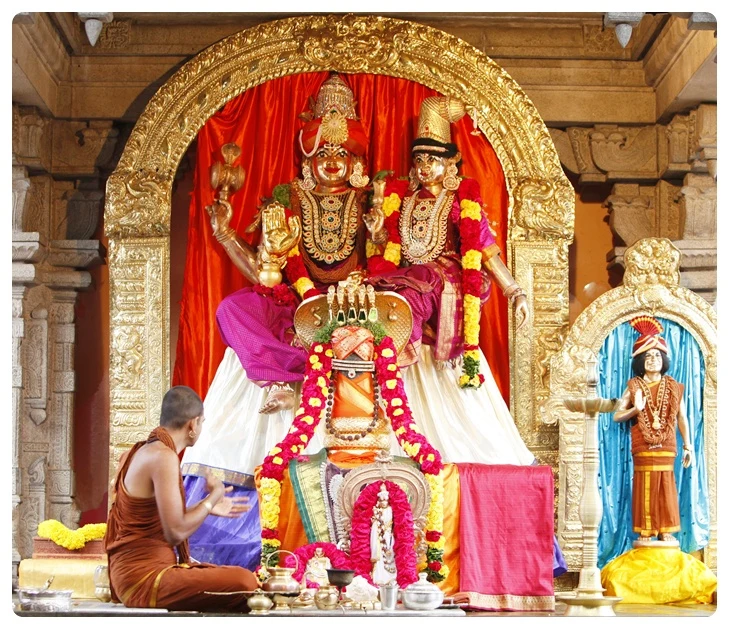
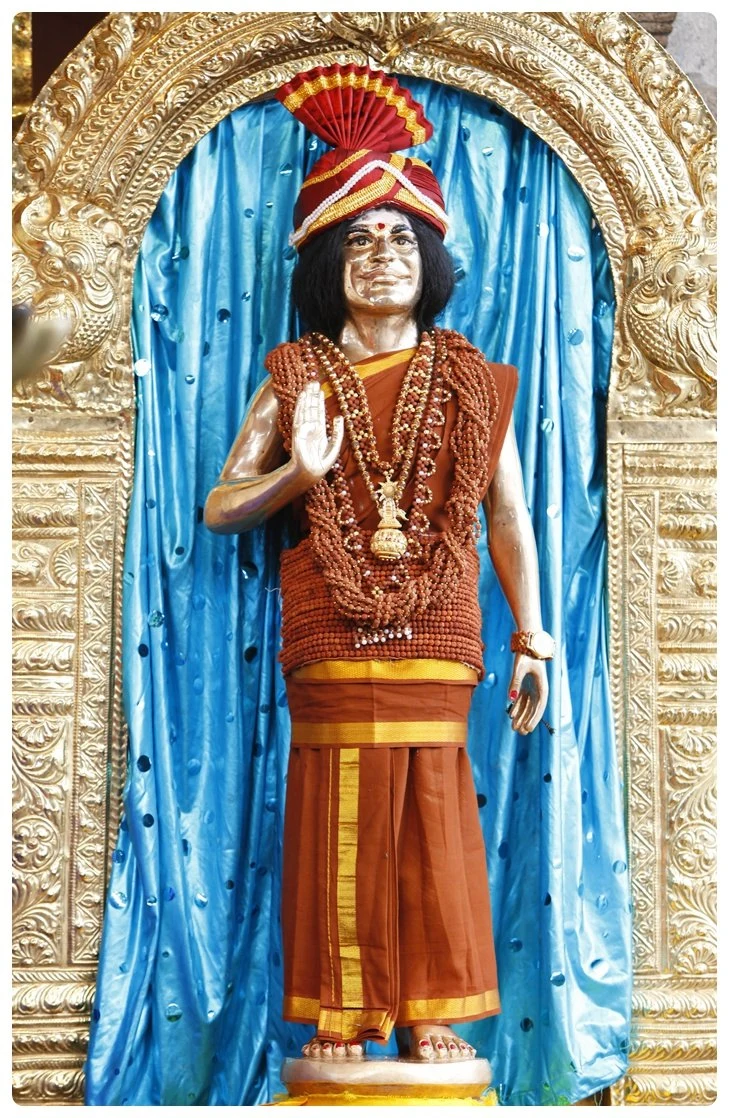
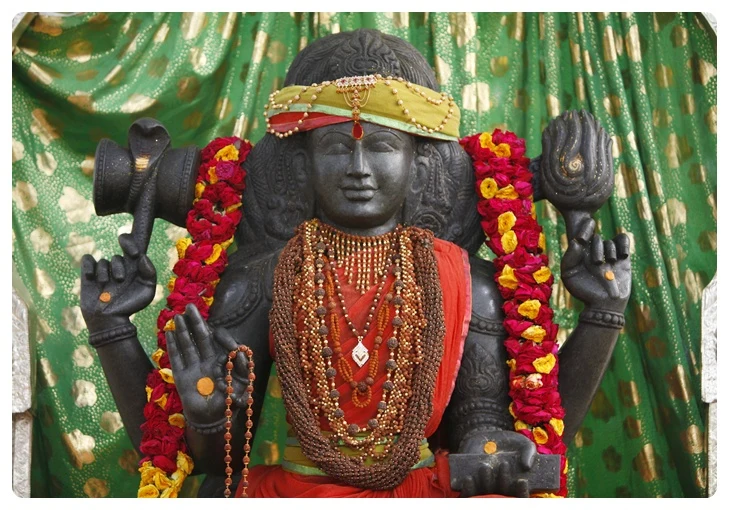
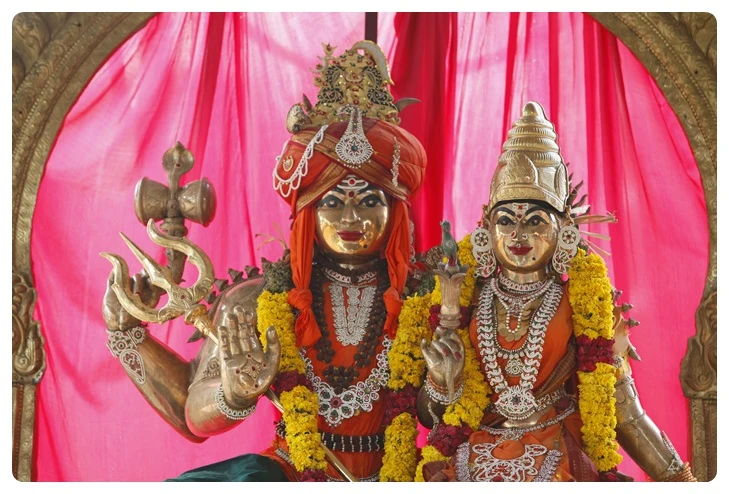
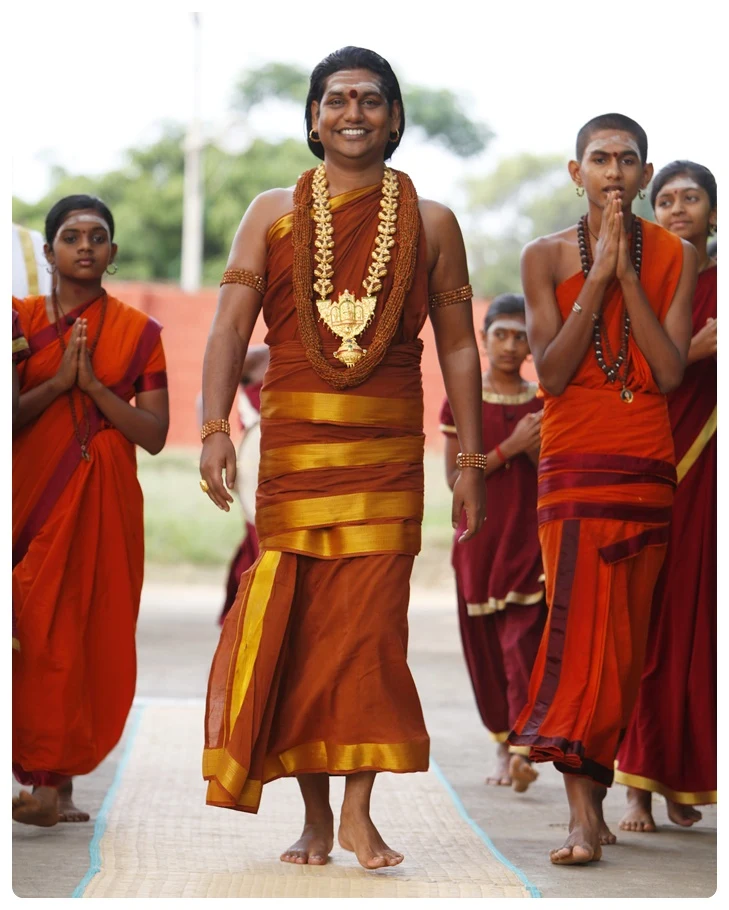
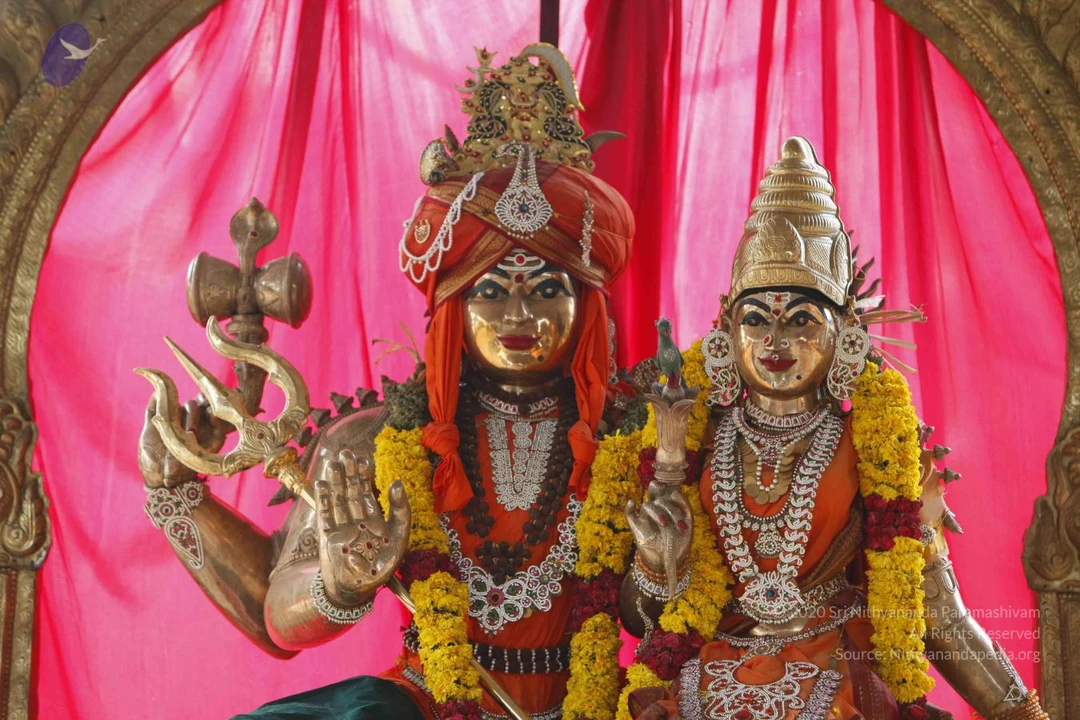
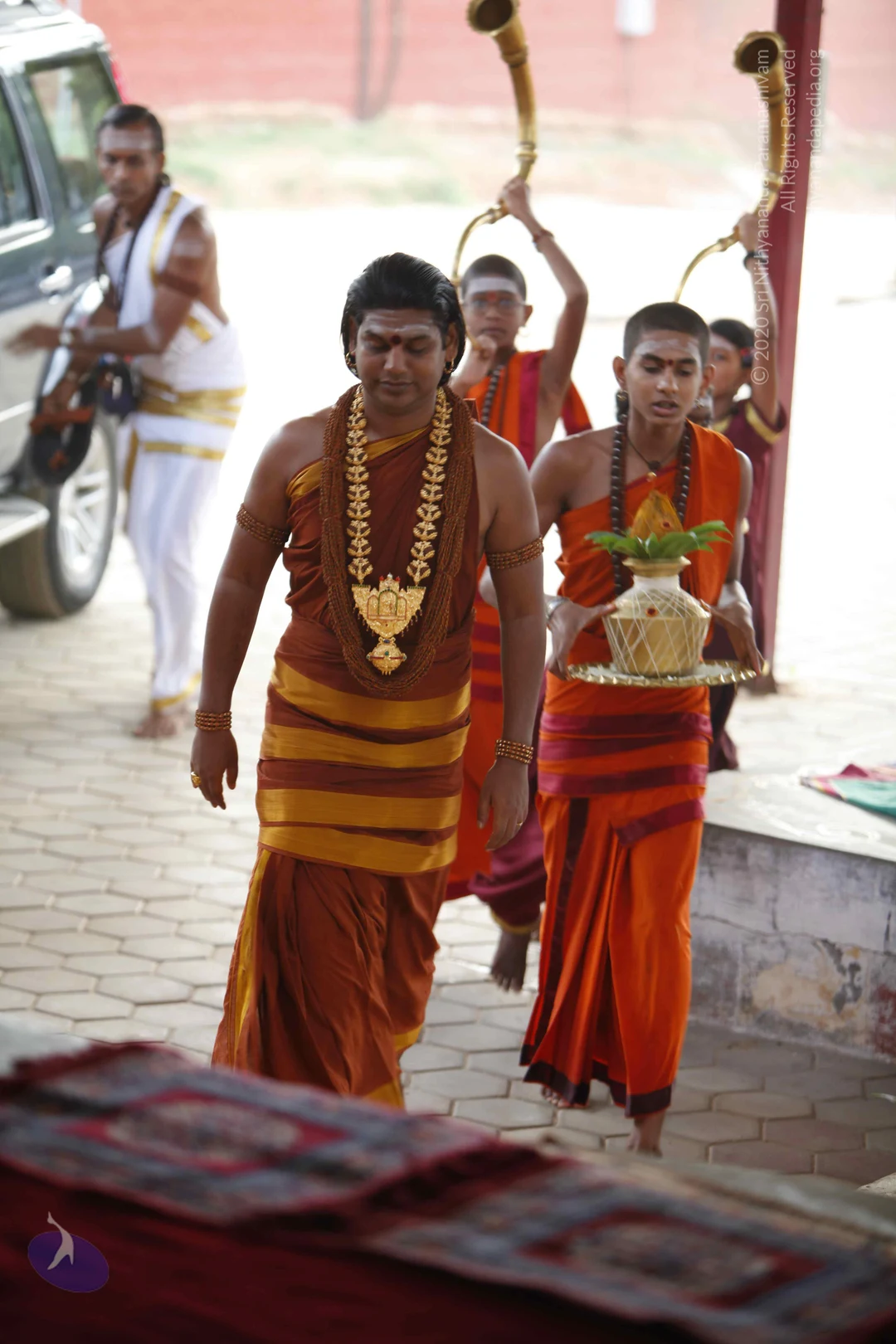
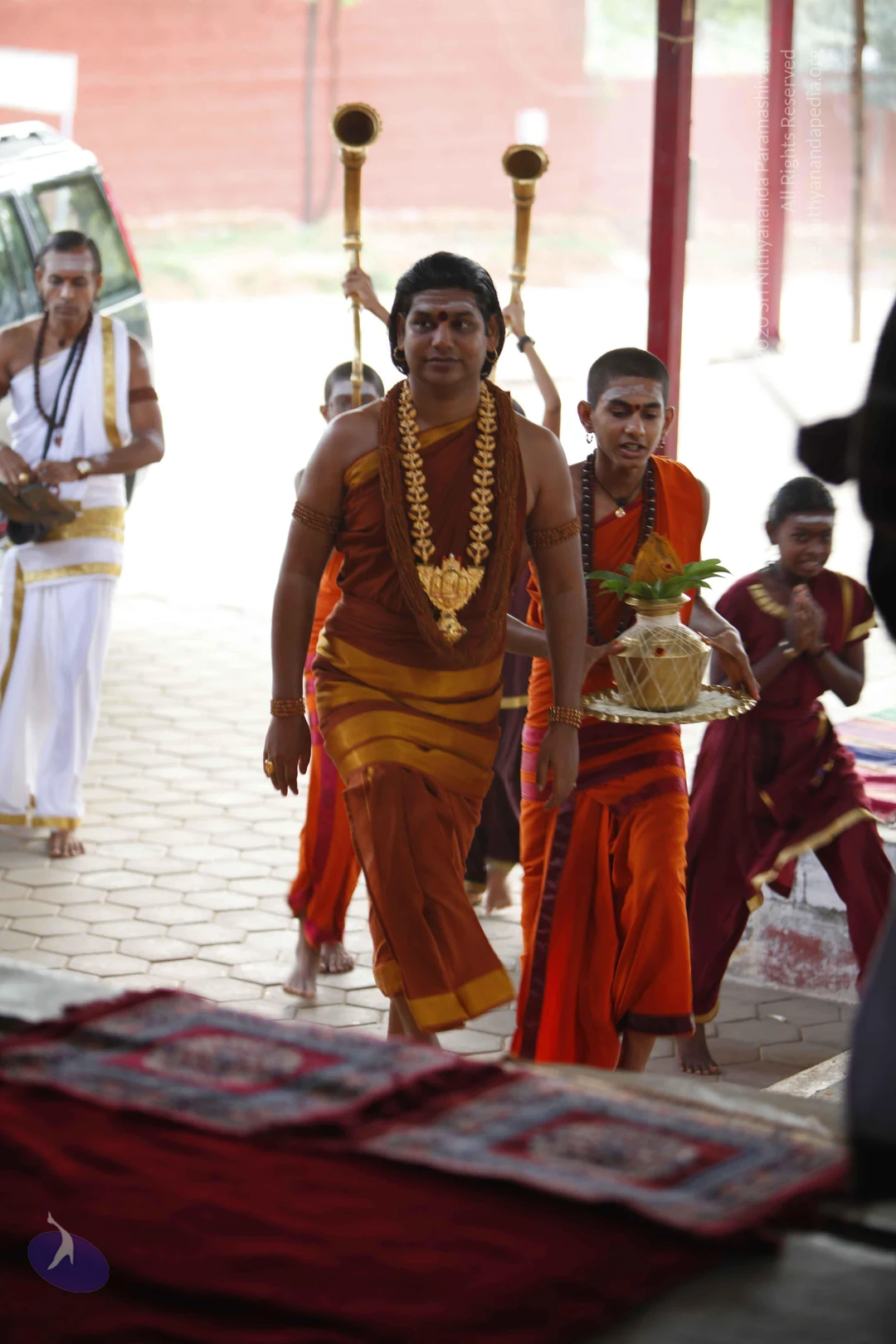
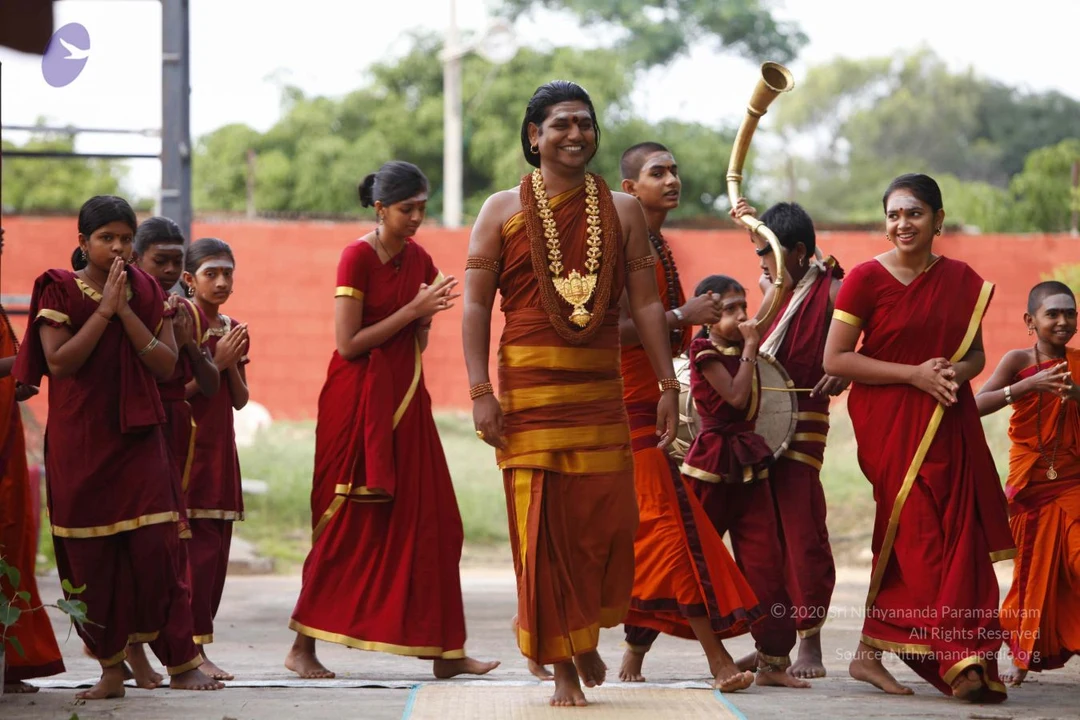
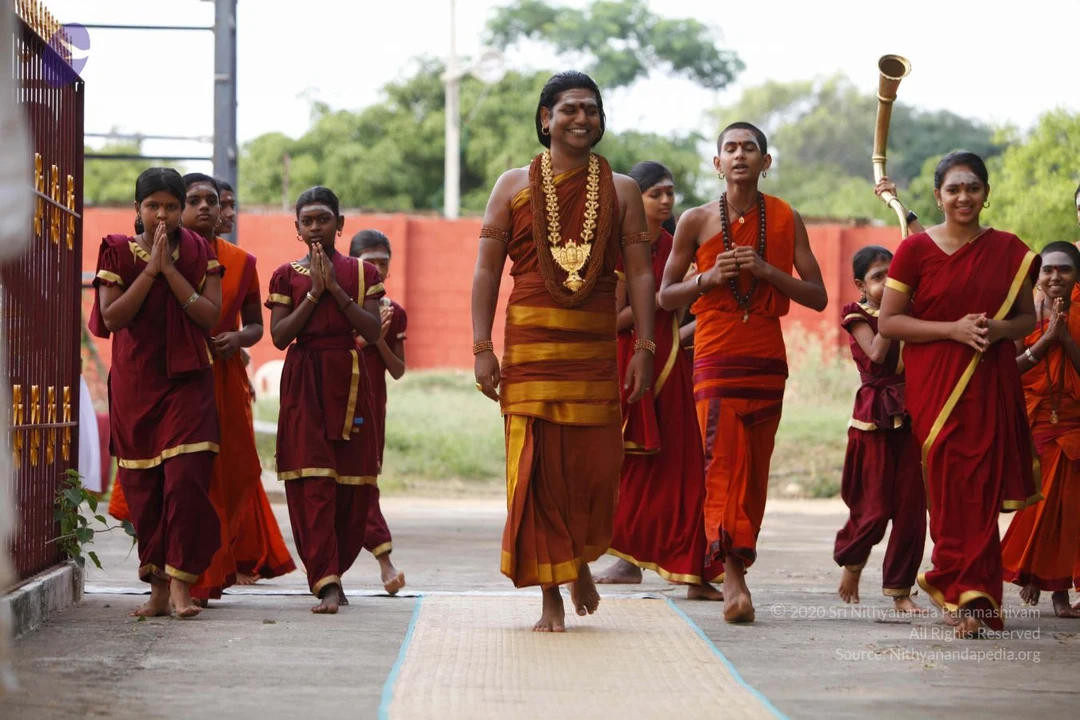
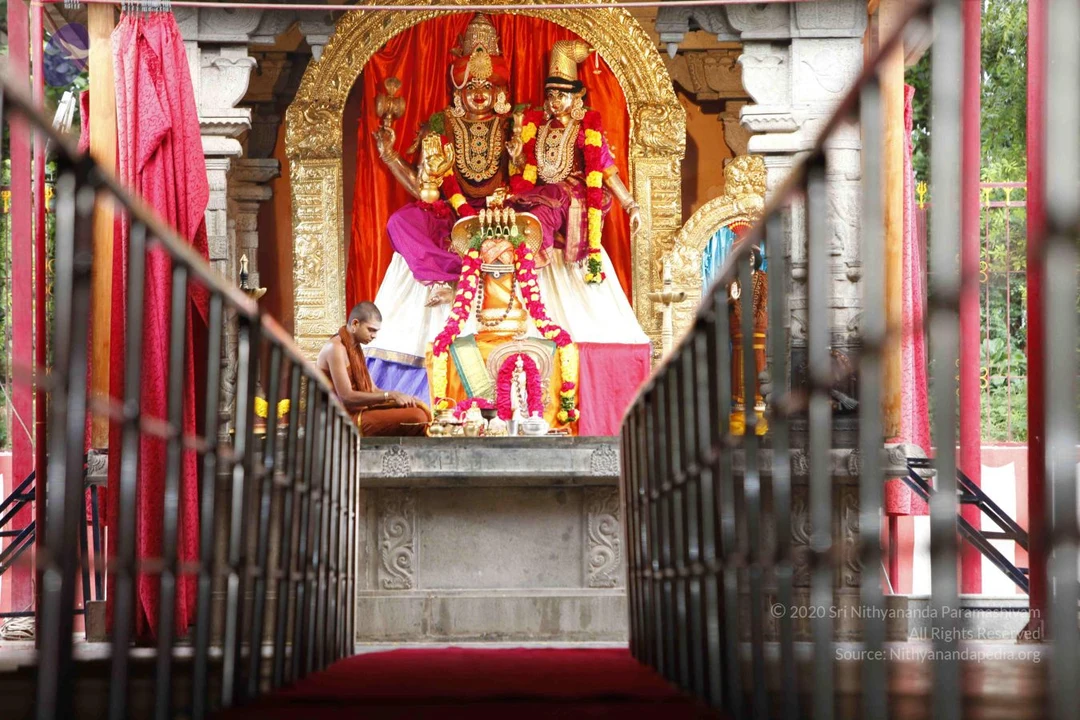
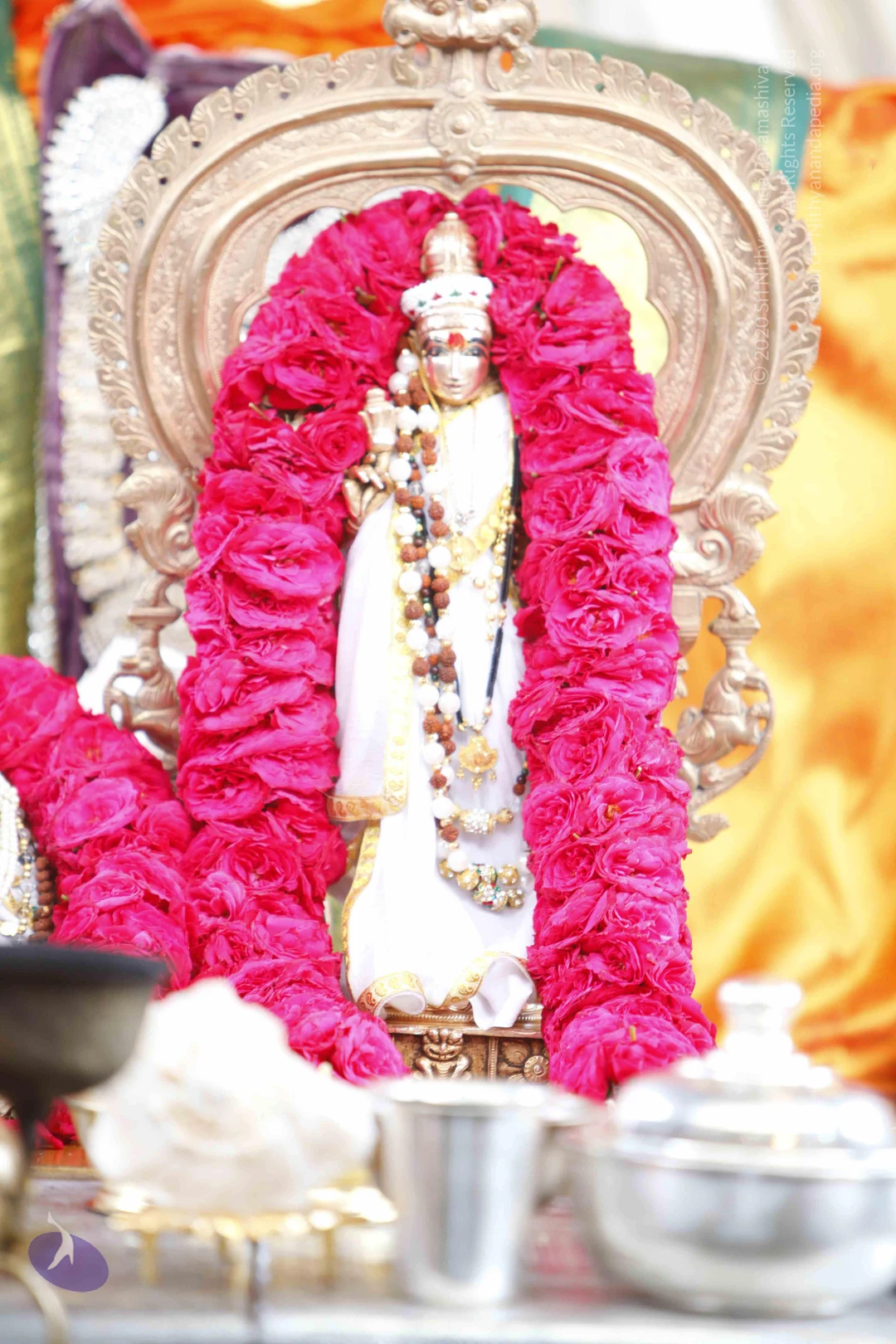
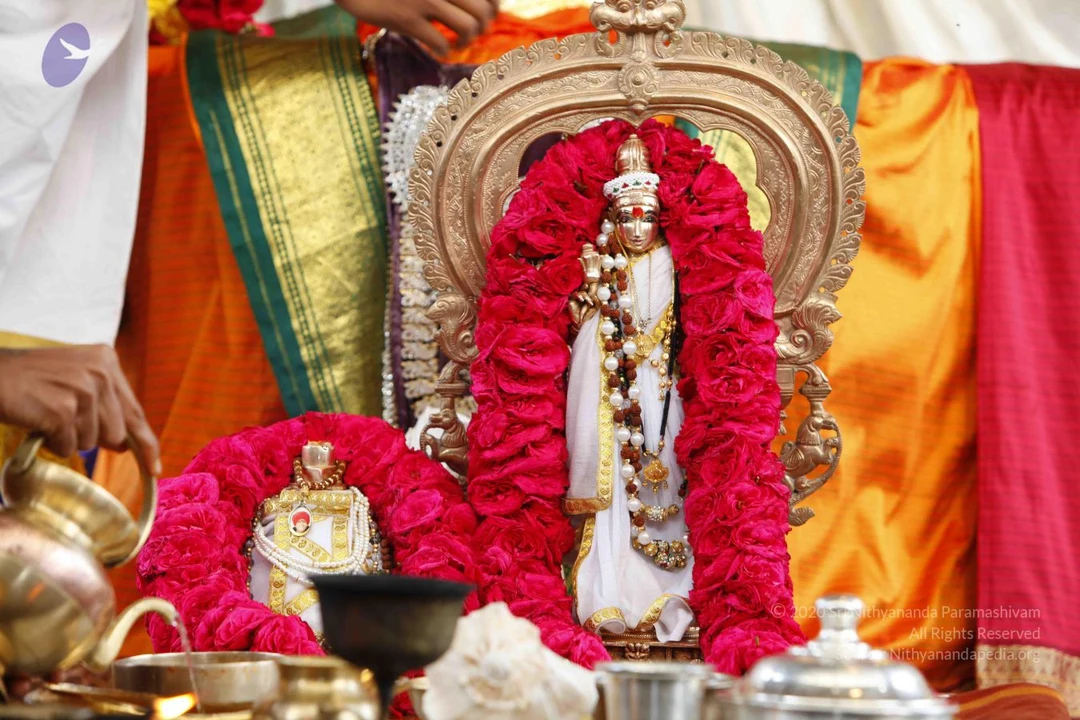
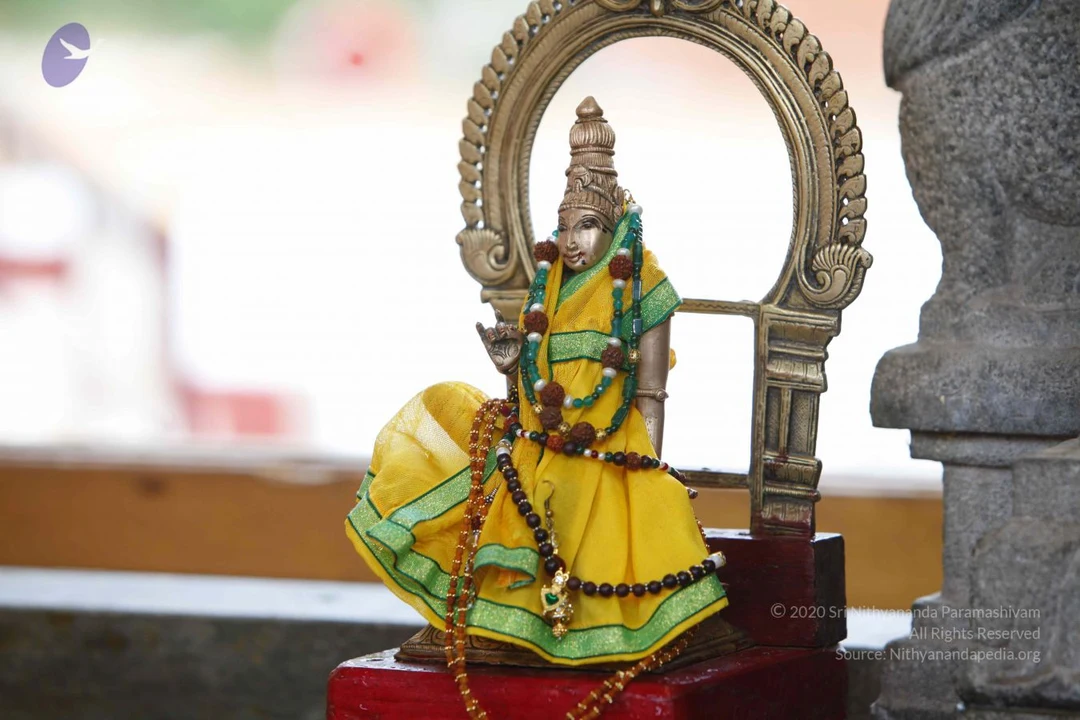
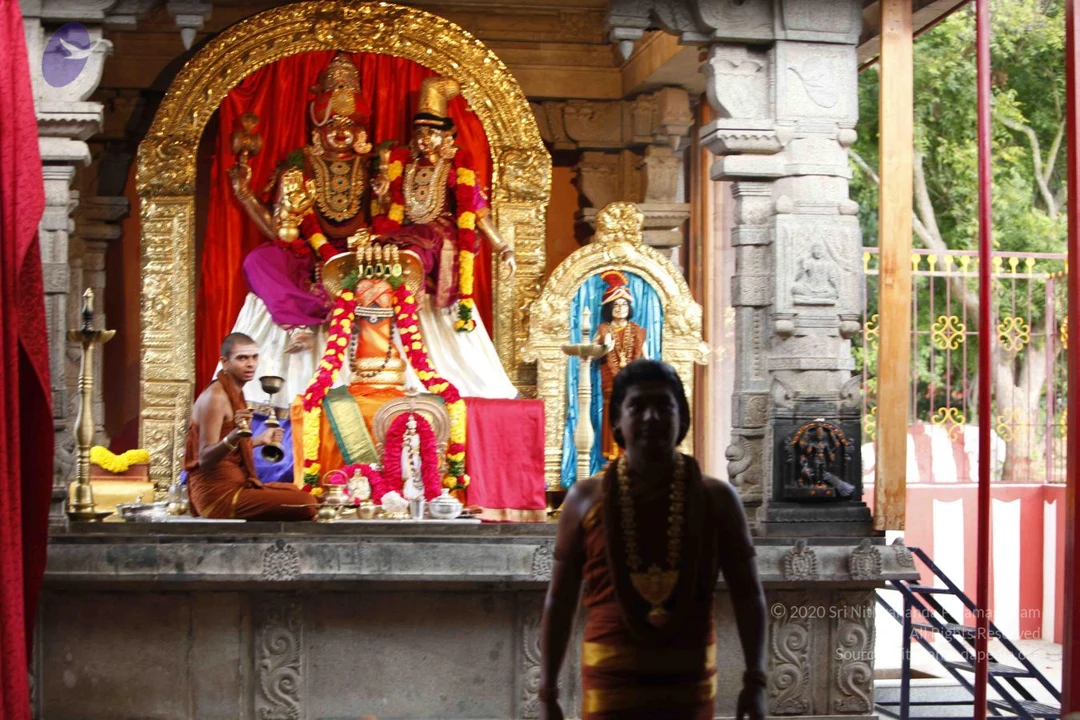
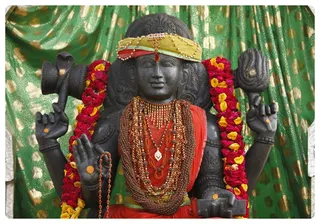
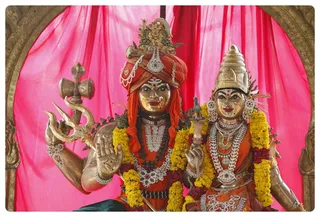
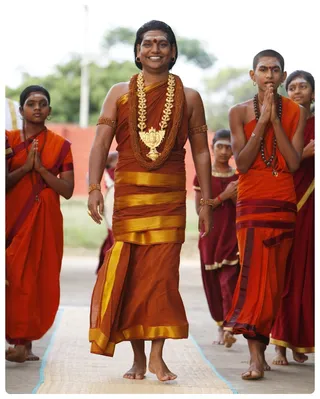
Two gilded deity murtis sit side by side in an ornate gold arched shrine against a red satin backdrop. The figure on the left wears a red and gold turban with a large ornament, holds a golden hand gesture and a staff-like object, and has a rudraksha-style and jewelled necklace. The figure on the right wears a tall gold and red crown, a jewelled necklace and matching earrings. Both are decorated with red, yellow and white flower garlands, and the scene resembles temple worship. No living people are visible.A shaved-headed priest in saffron-orange robes kneels at the lower left of a temple shrine, hands raised in worship before a large gilded pair of deity murtis seated on a raised platform. The central figures wear gold crowns, gold necklaces and garlands of yellow and red flowers, and one holds a ceremonial staff. Between them sits a gold and orange ritual object decorated with flowers and a tall kalasha-like vessel. Red curtains hang behind the shrine and a gold arched frame surrounds it. To the right, a smaller painted or statue figure in orange and gold with a red cap stands in a blue-curtained niche beside a brass lamp. Brass pots and offerings lie on the floor in front of the platform, indicating puja.A life-sized painted statue stands in a golden ornate arched niche draped with blue satin curtains scattered with small blue sequins. The figure wears a red and gold turban, a red kumkum dot on the forehead, and long dark hair. It has a rust-brown sleeveless top made of beaded rudraksha-style malas, a gold pendant on a cord, and rust-brown dhoti-style cloth with gold border. Its right hand is raised in abhaya-style blessing, and a gold wristwatch is visible on the left arm. The statue is a depiction, not a physically present person, and the scene shows no visible people.A black stone murti of a deity with four arms, seated before a green cloth patterned with gold spots. The statue wears a yellow and red headband with a red forehead mark, layered beaded necklaces in amber and brown, a long pendant, and a red cloth draped over the body. Red and yellow marigold garlands hang over both shoulders. One hand holds a rudraksha-style mala, another displays a raised palm with an orange tilak, and a third holds a trident-like weapon. No physical people are visible.Two metal murti statues of a male and female deity pair stand side by side against a bright pink draped cloth framed by an ornate gold arch. The male figure wears an orange-red turban with a jewelled ornament, rudraksha mala beads, and a silver necklace, holding a trident in one raised hand and a damaru-like object in the other. The female figure wears a gold crown, layered silver necklaces, earrings and a yellow-and-red marigold garland, holding a lotus-like object. Yellow marigold garlands drape both figures. This is a photograph of statues, not living people.A smiling man with swept-back dark hair and a red bindi walks barefoot on a mat through an outdoor courtyard, wearing an orange-saffron dhoti and shawl with gold borders and a gold-and-rudraksha necklace with a large gold ornament. Gold bangles adorn his arms. Flanking him are younger devotees in orange and maroon robes, several with shaved heads or hair pulled back, some with rudraksha malas, palms pressed together in anjali. Red brick walls and trees frame the background.

IA-Session-Swamiji

7 photosSource gallery
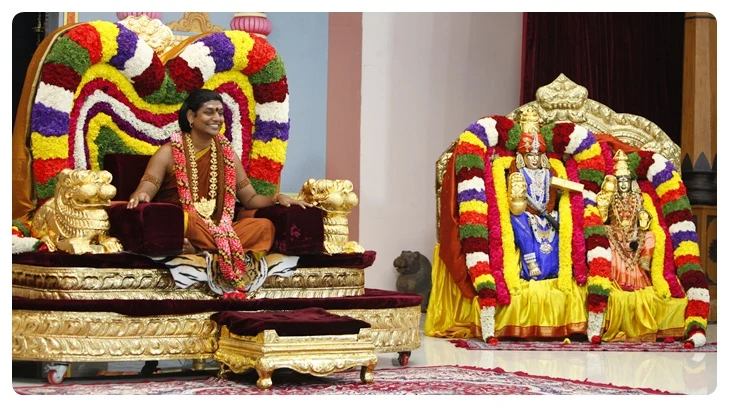
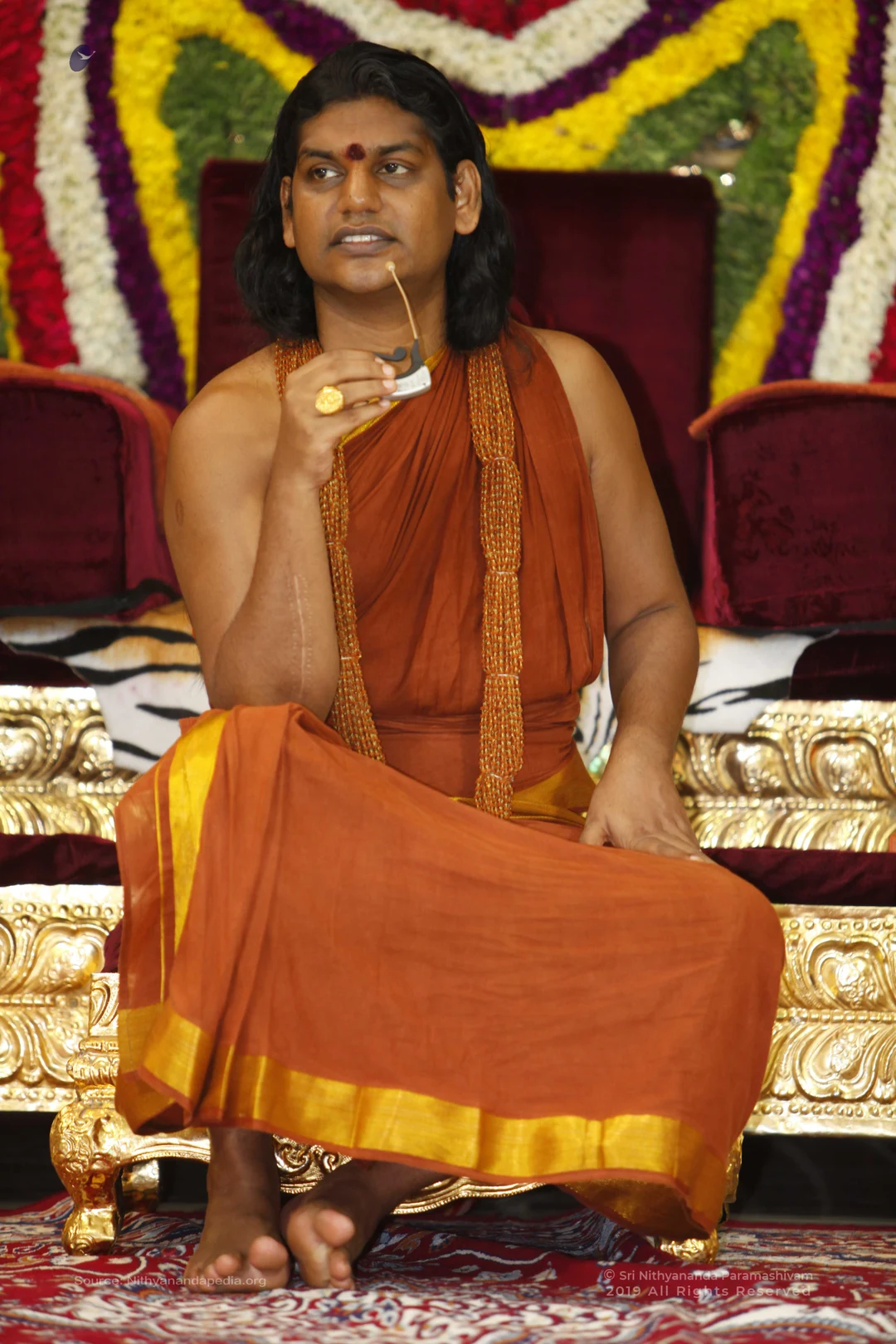
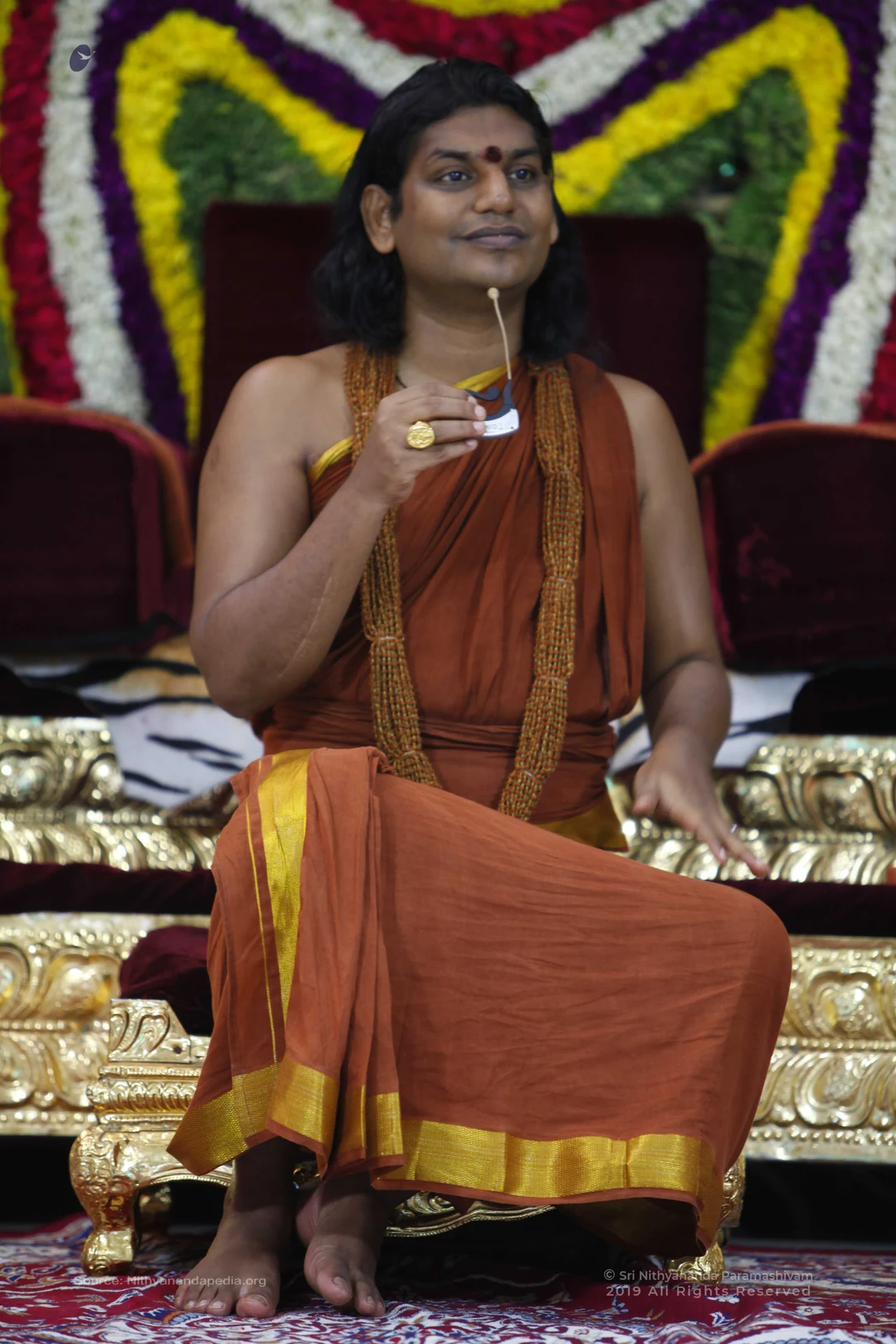
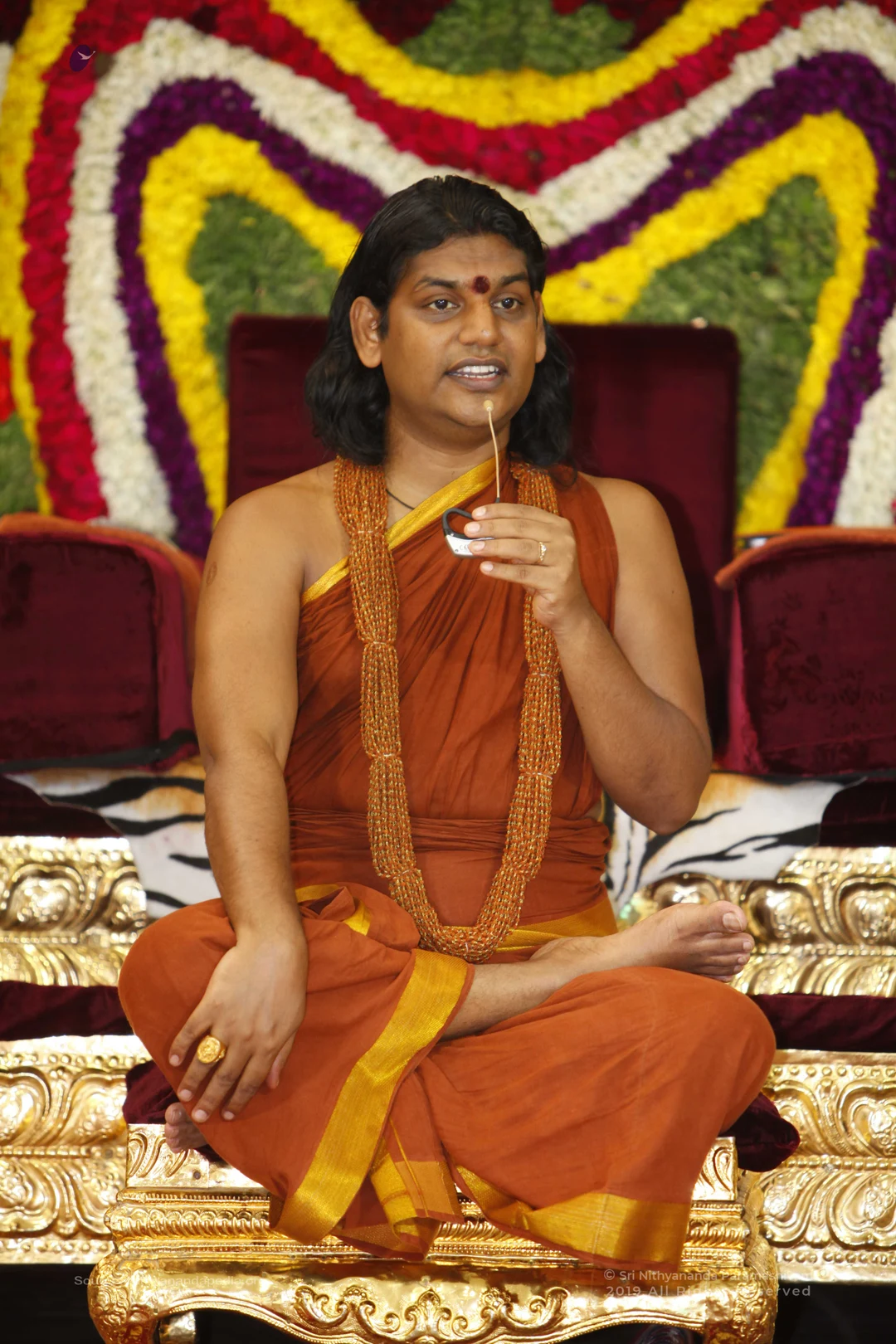
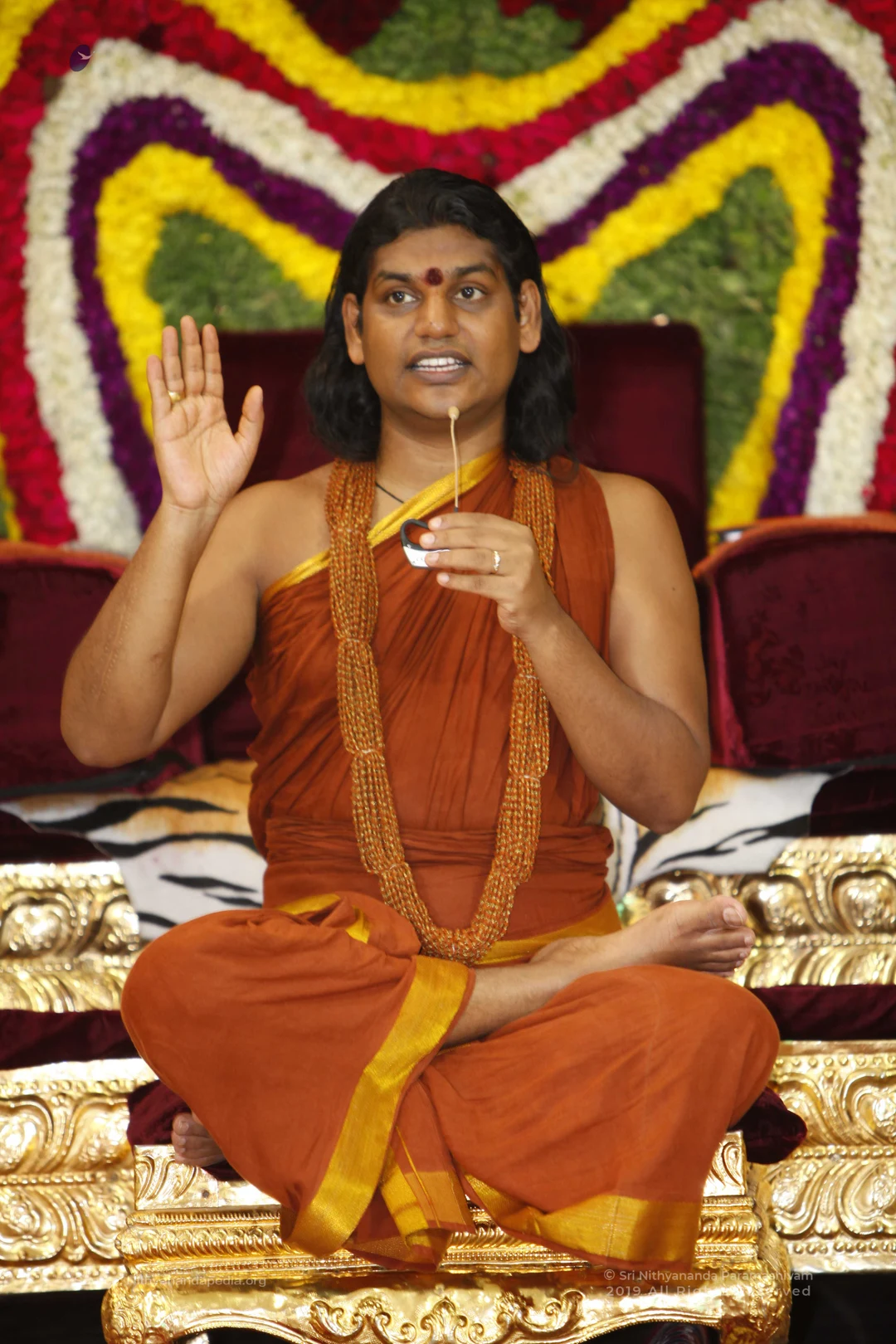
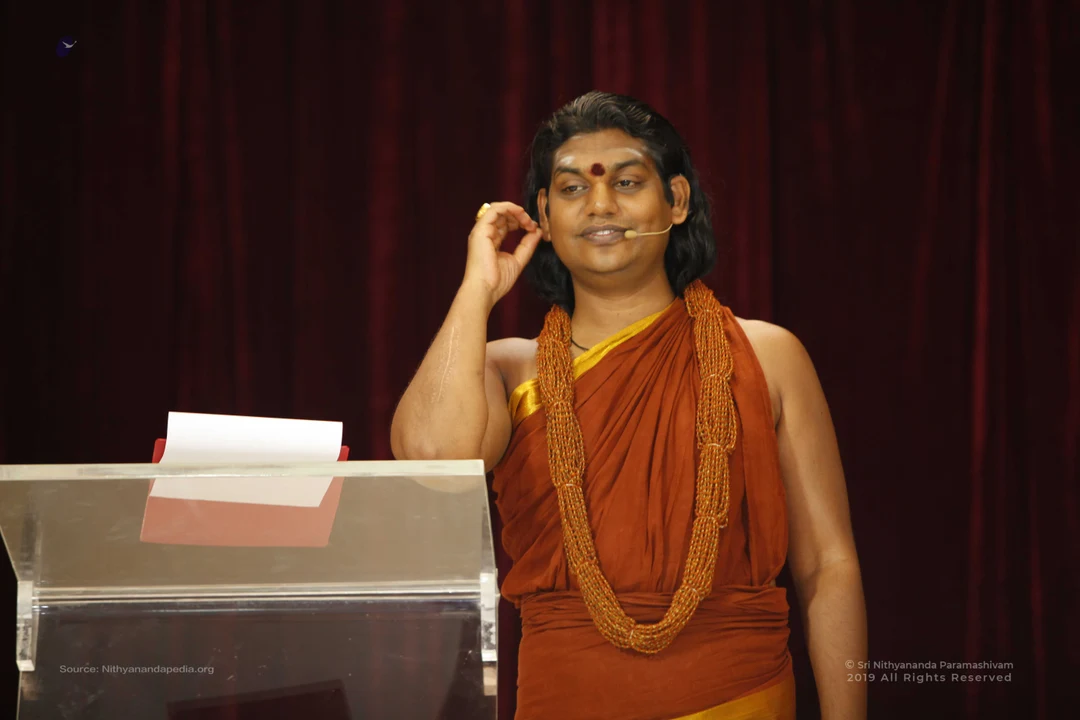
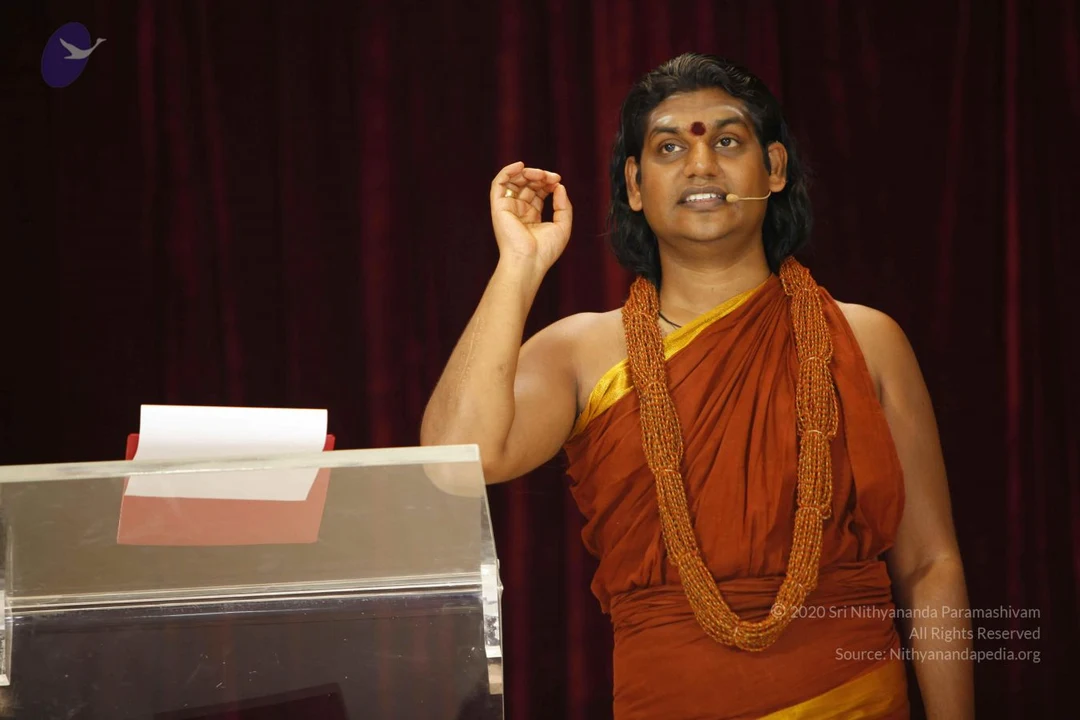
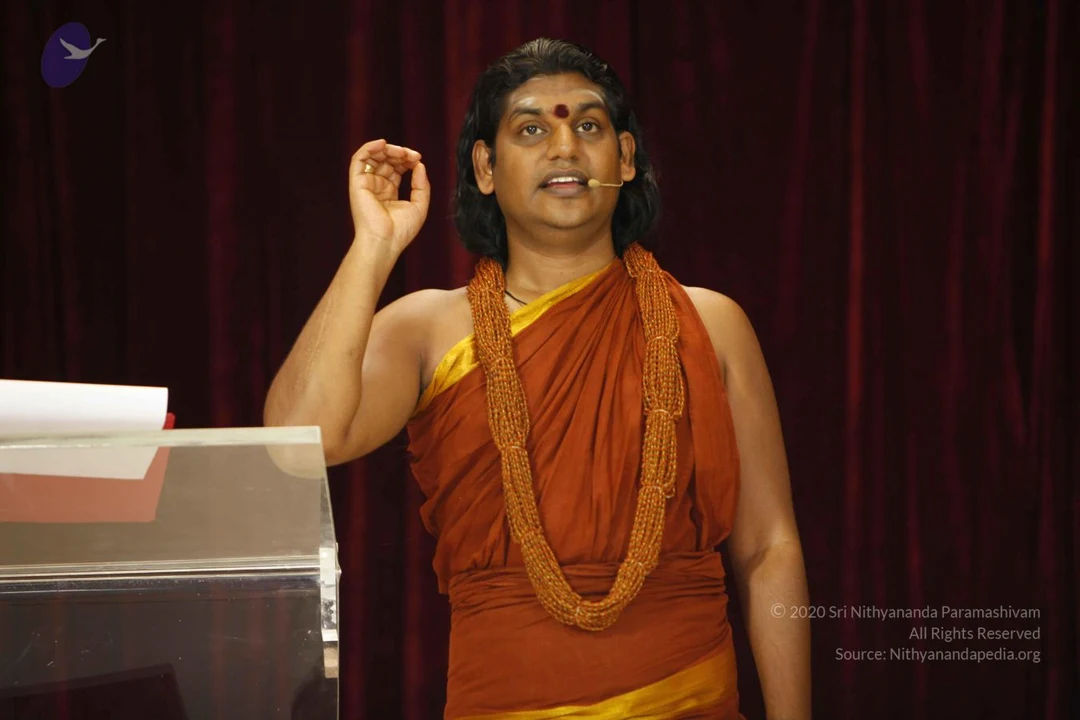
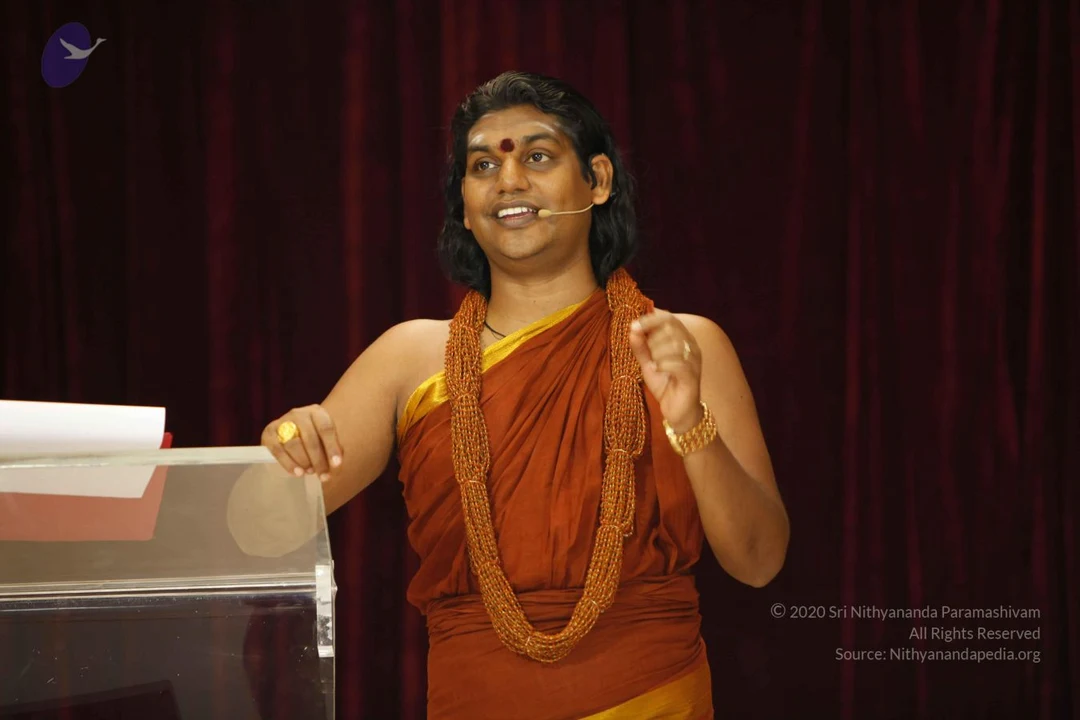
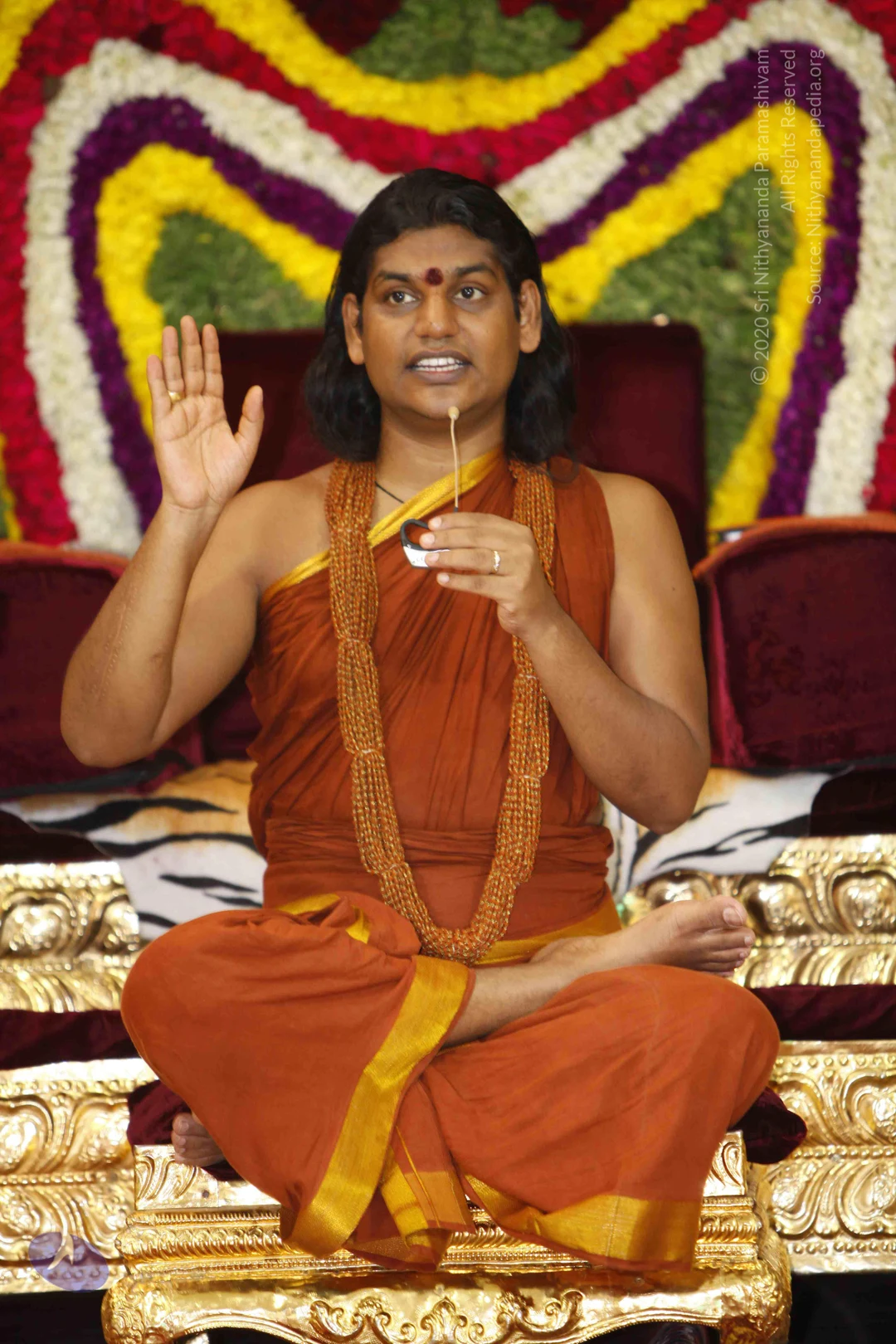
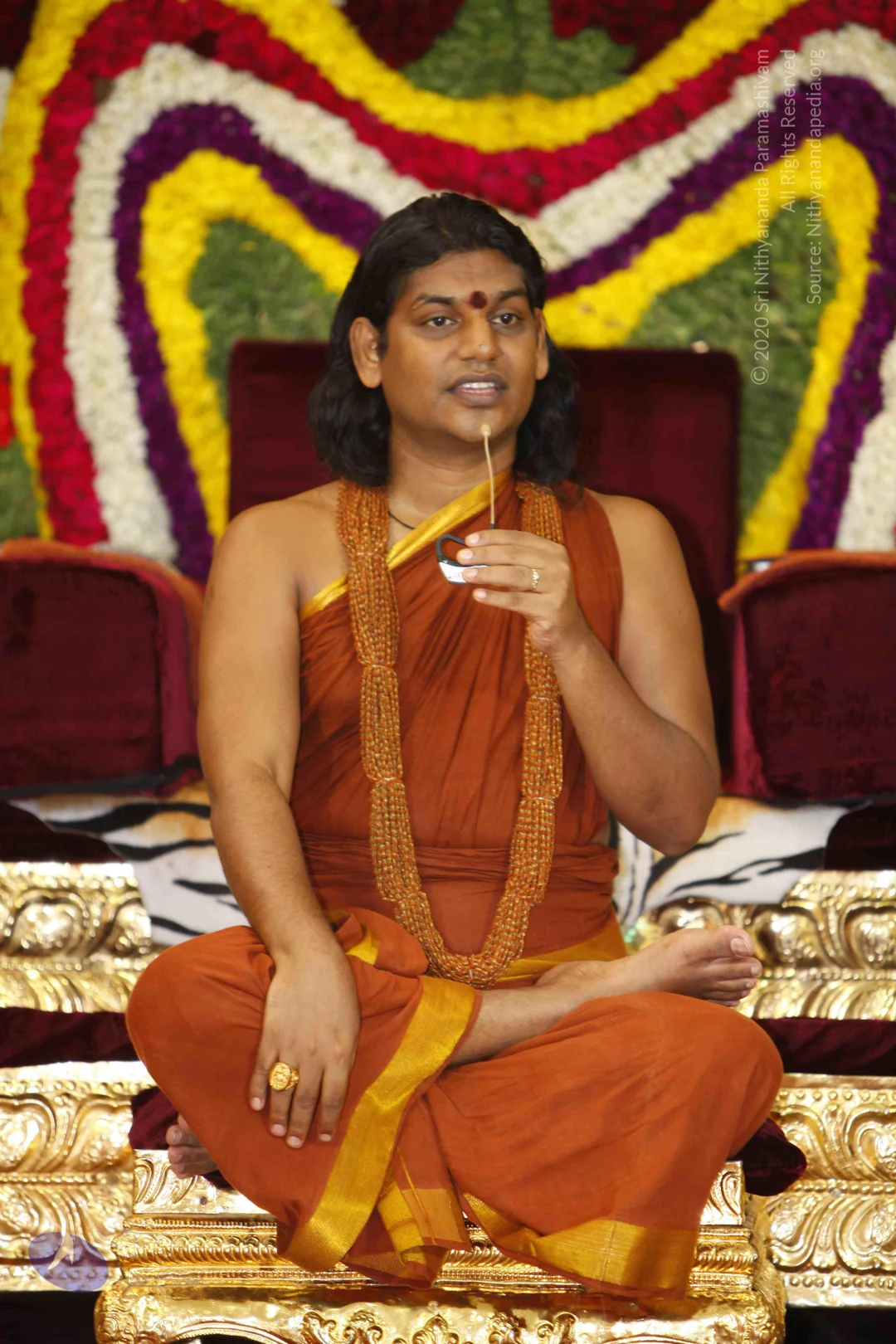
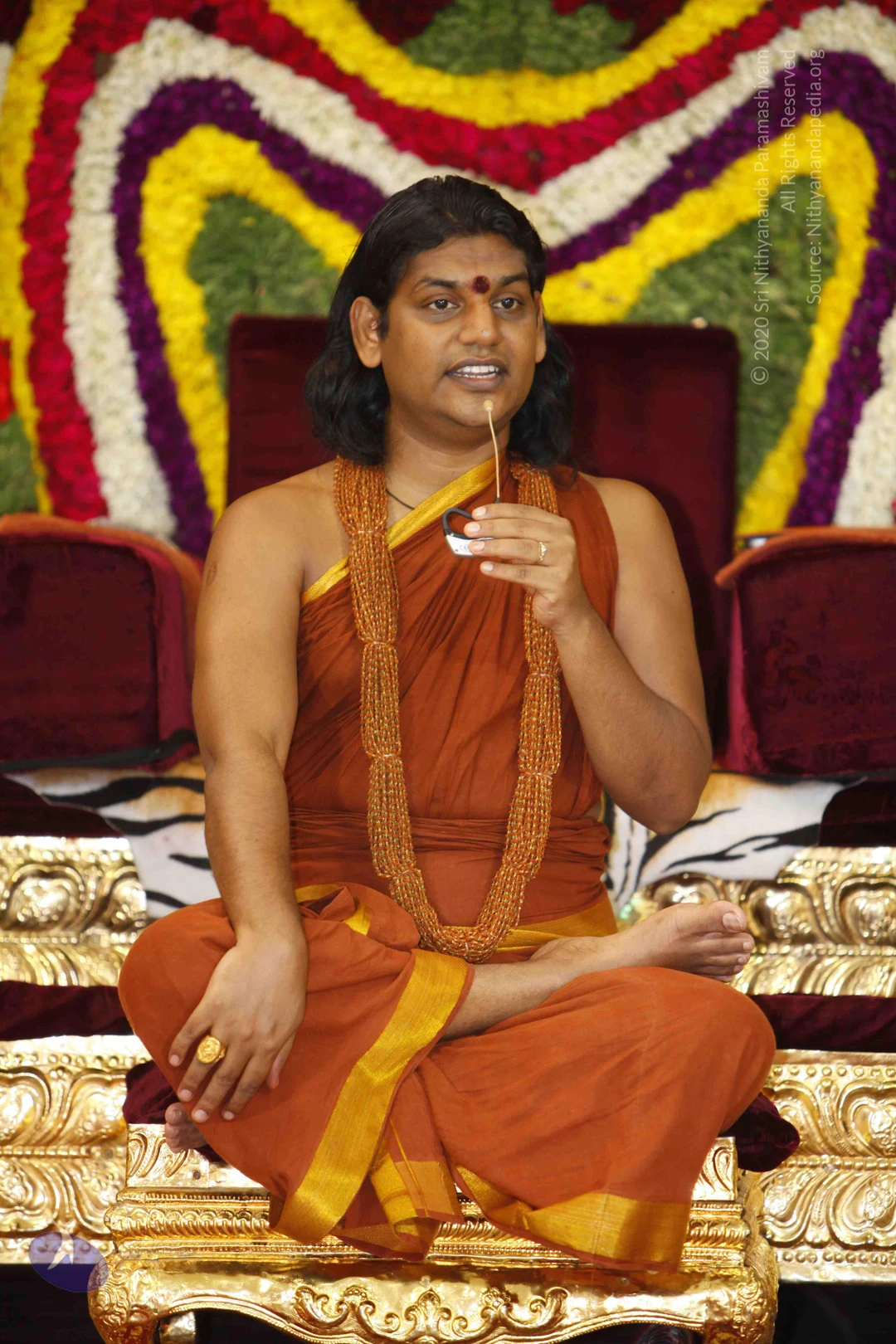
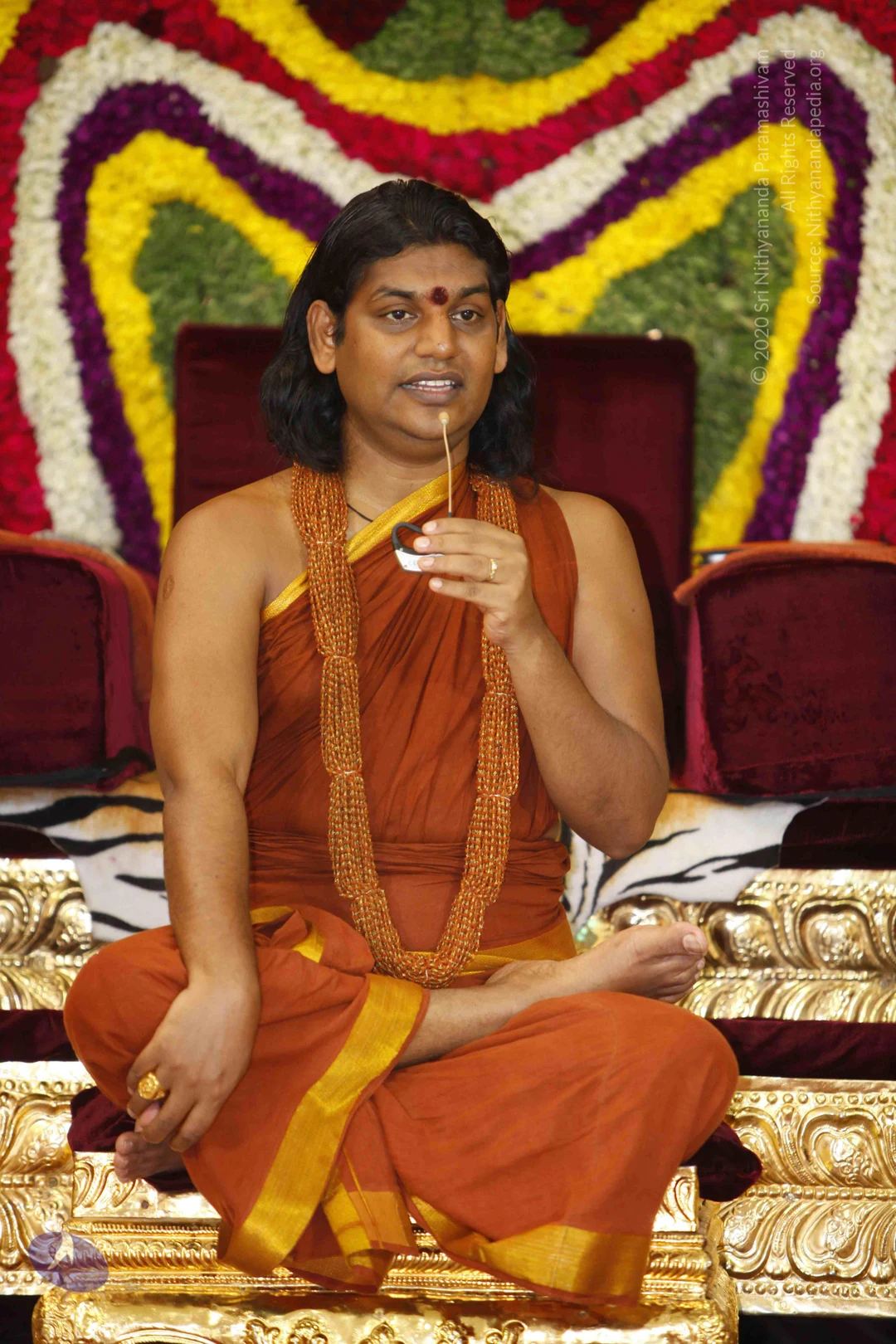
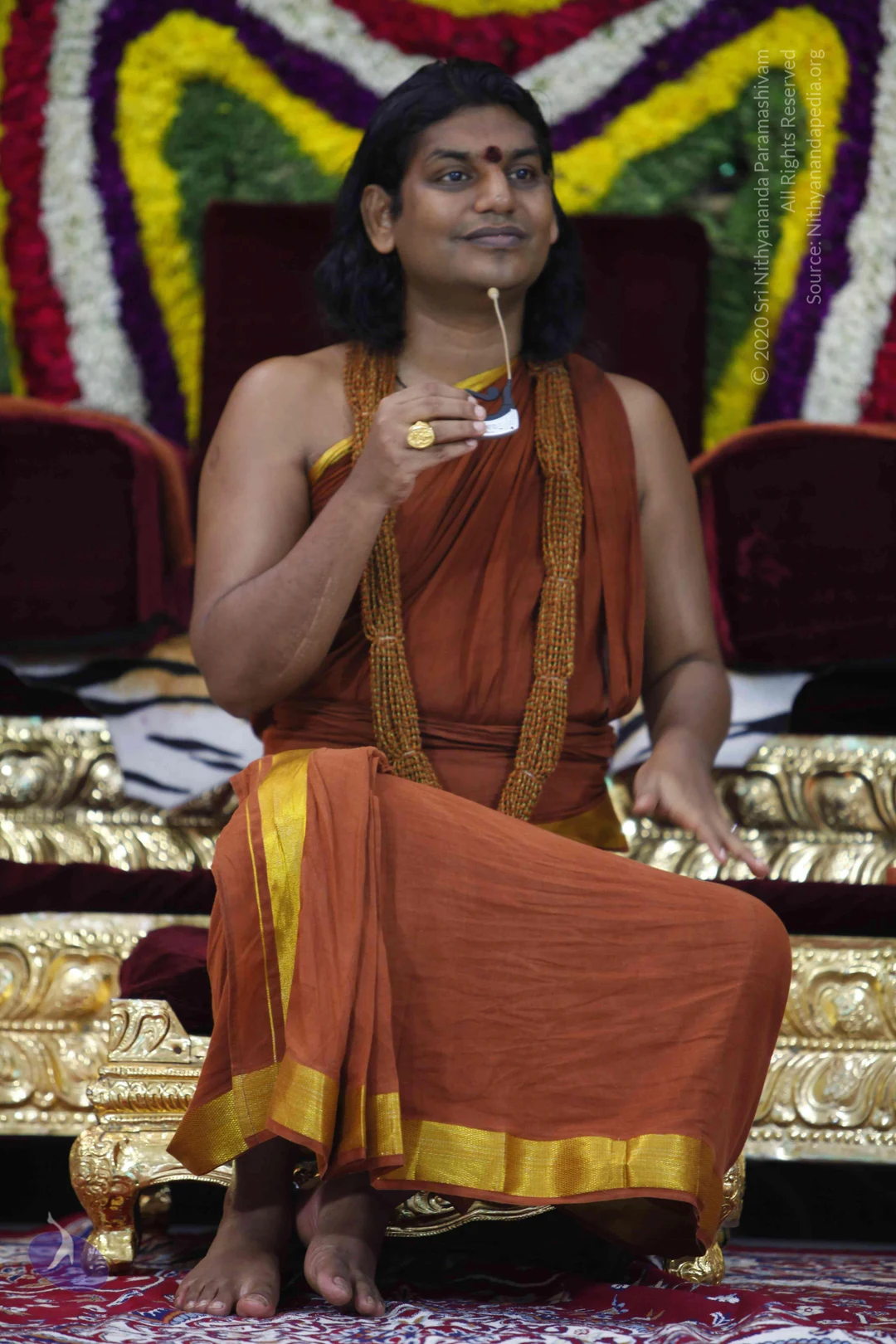
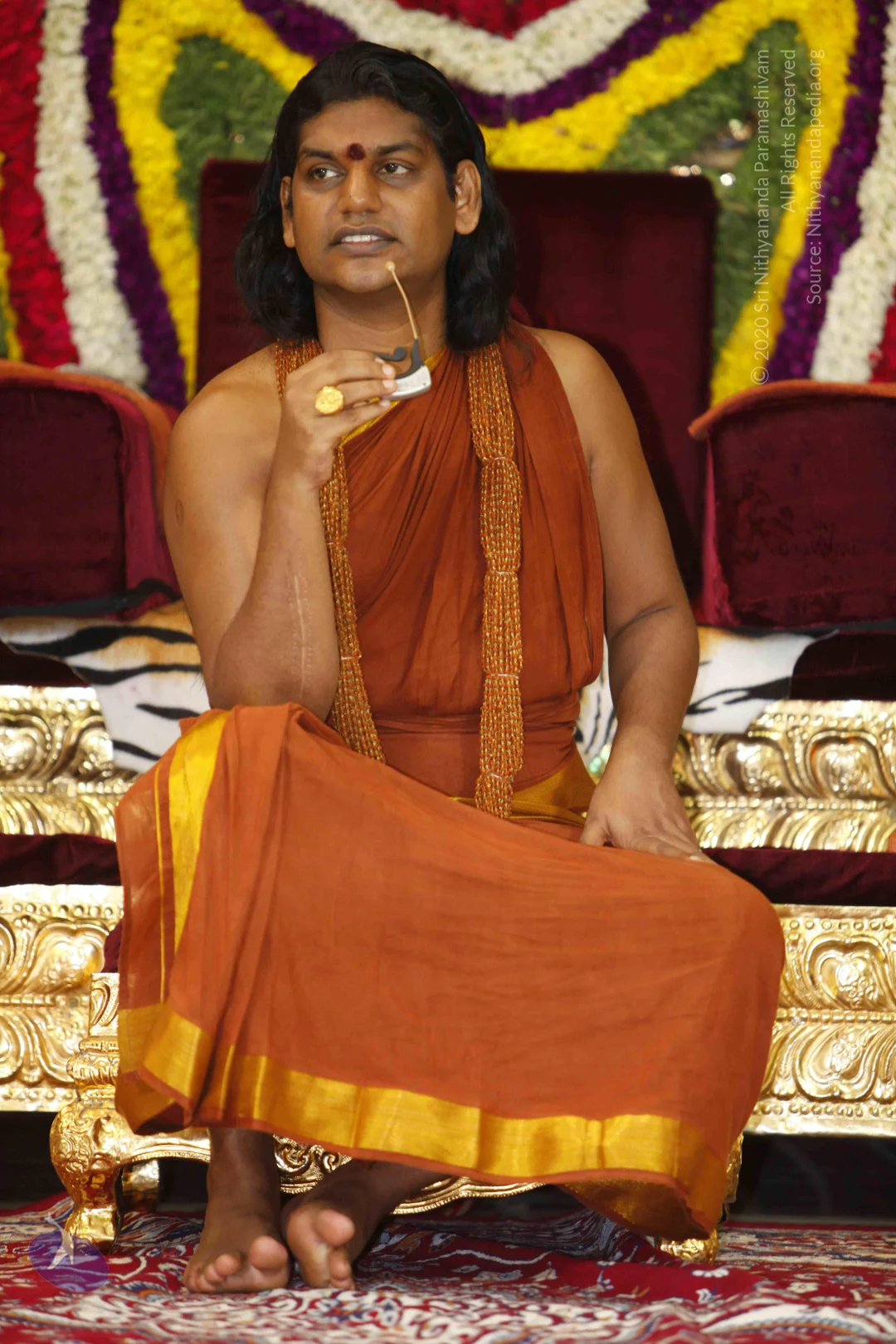
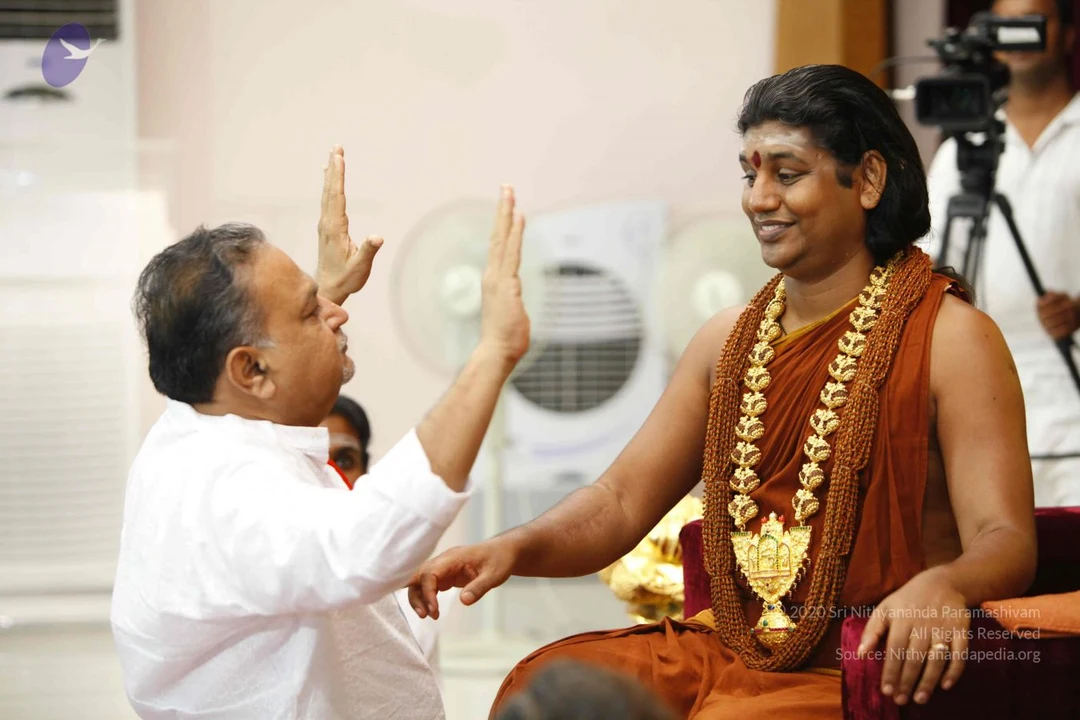
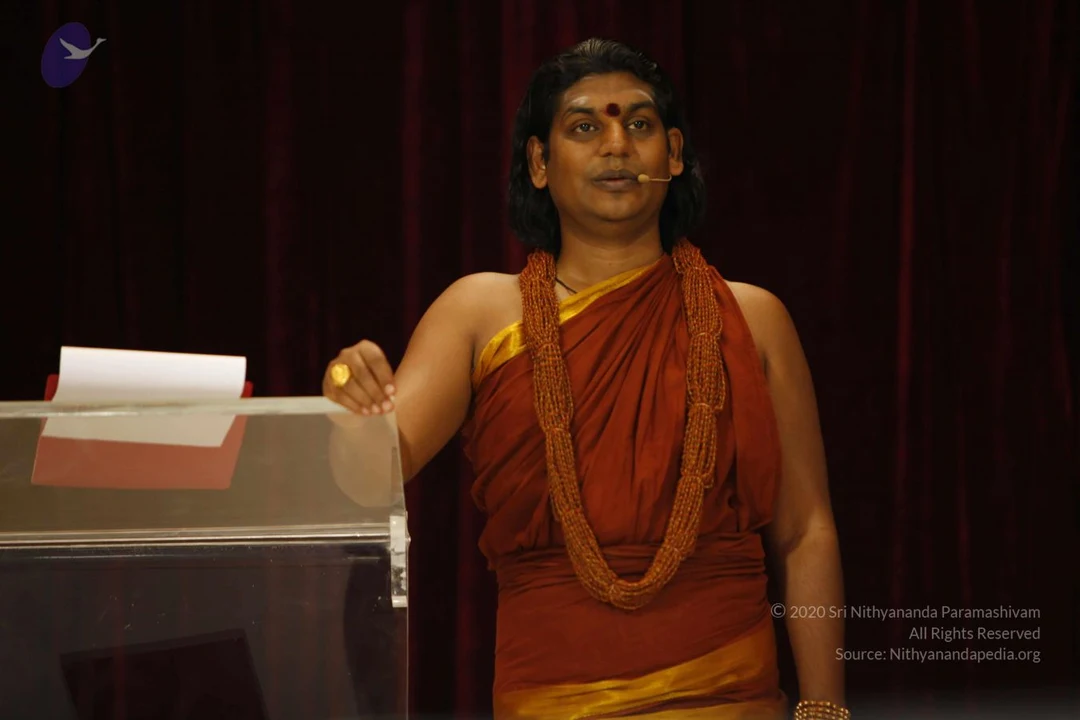
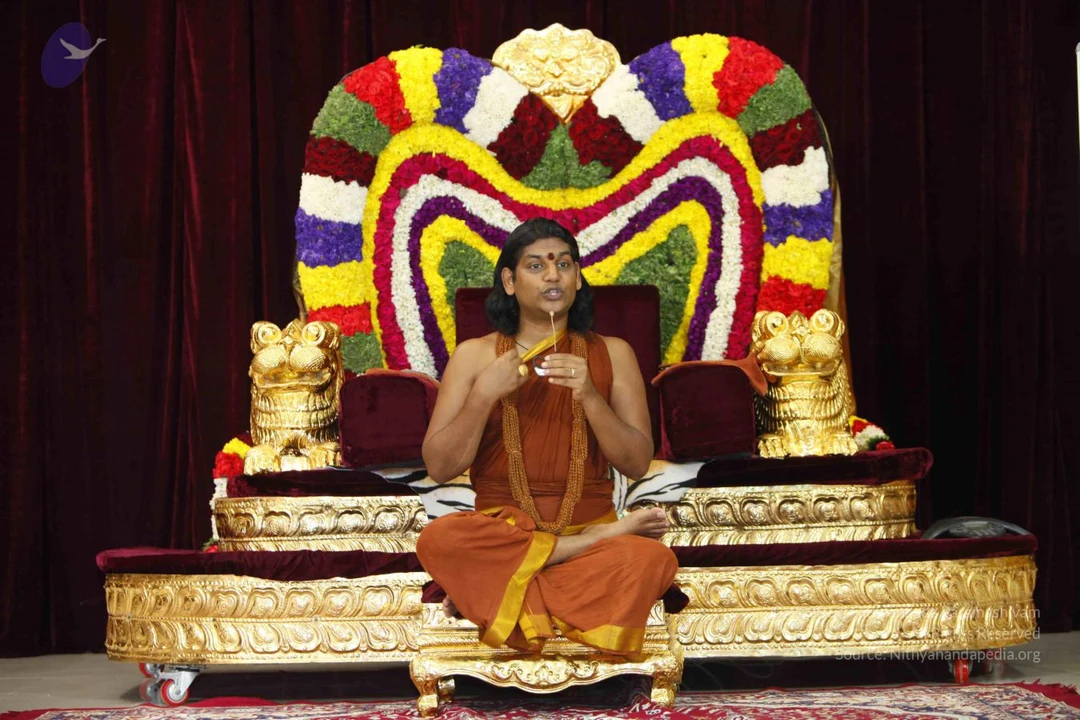
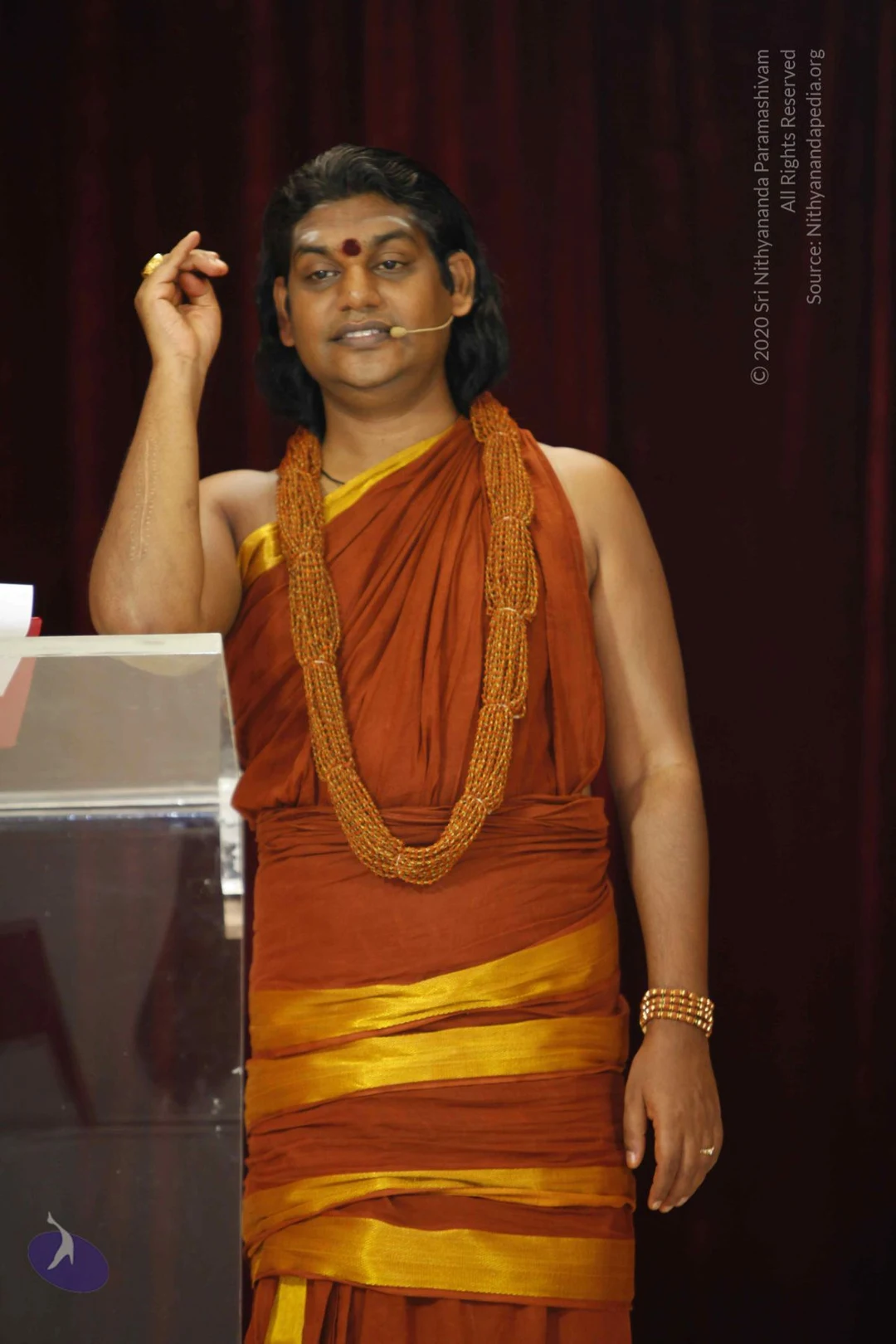
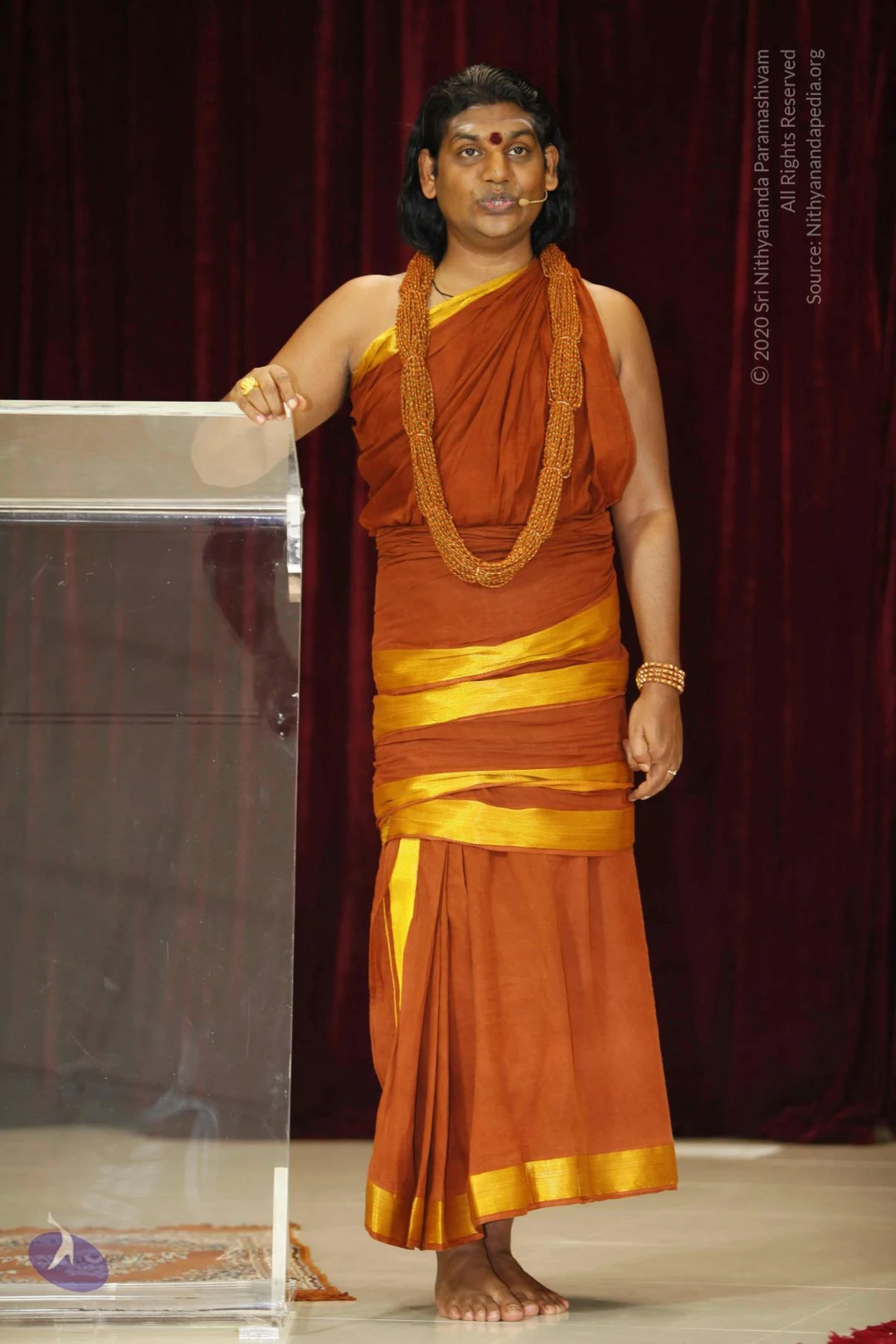
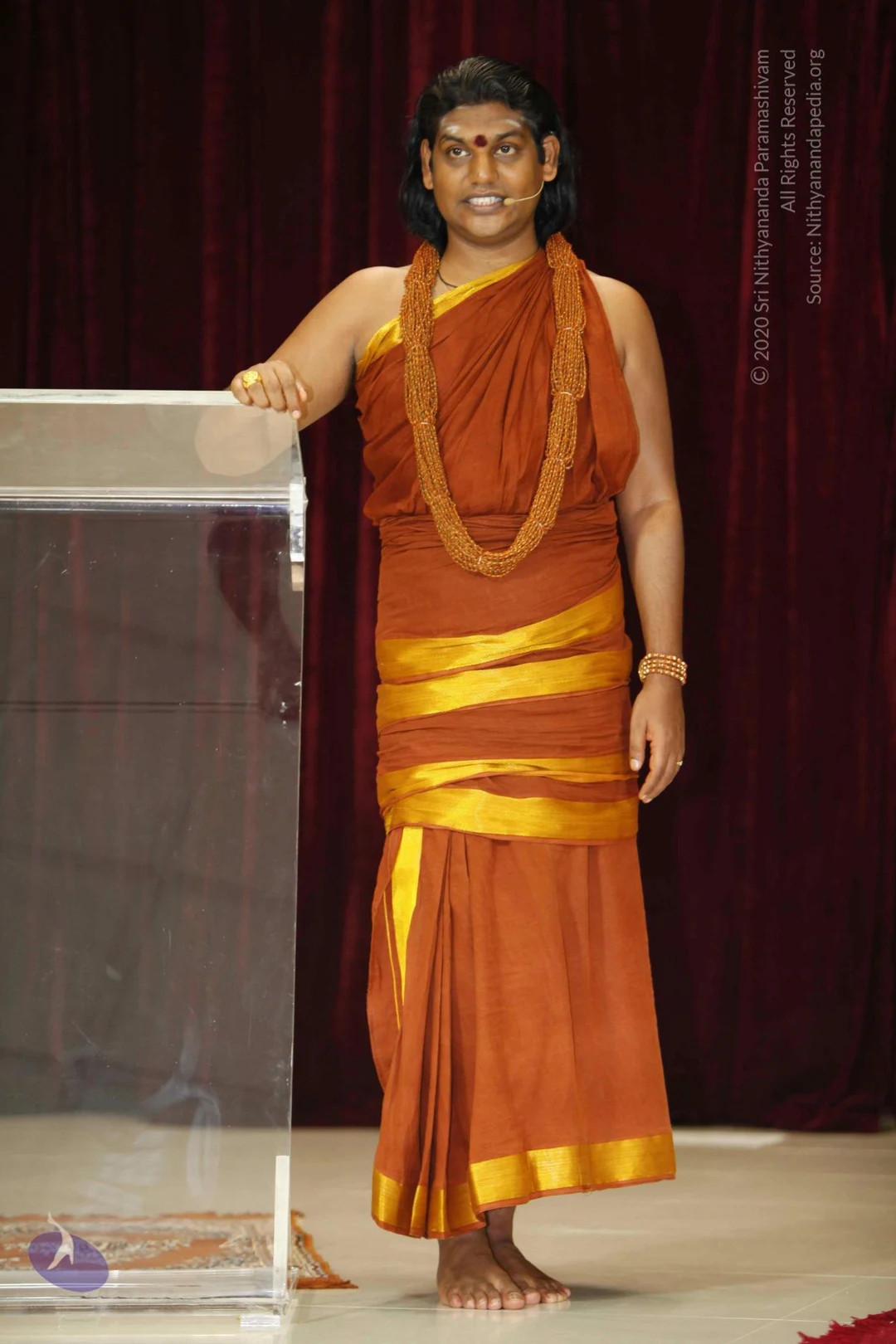
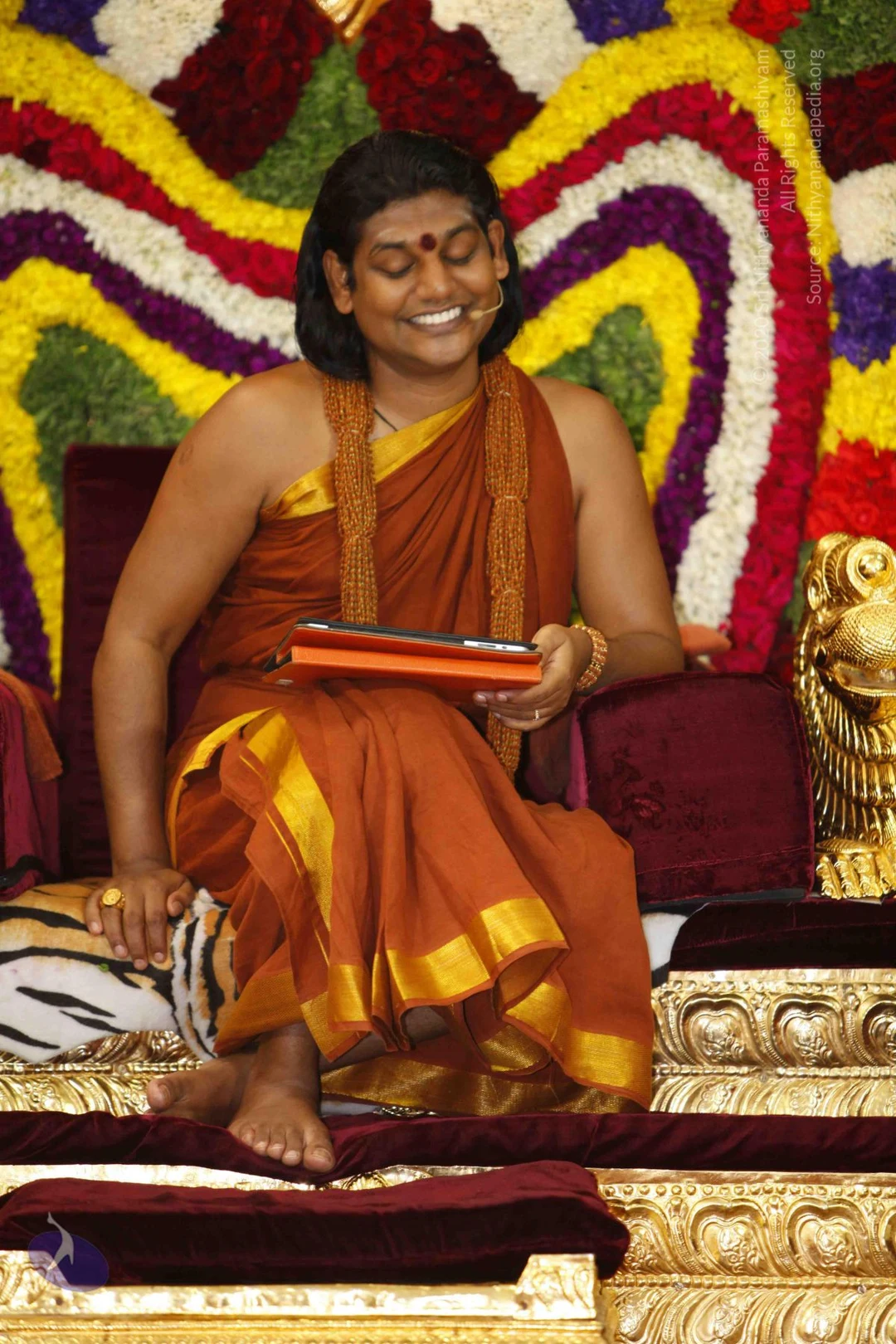
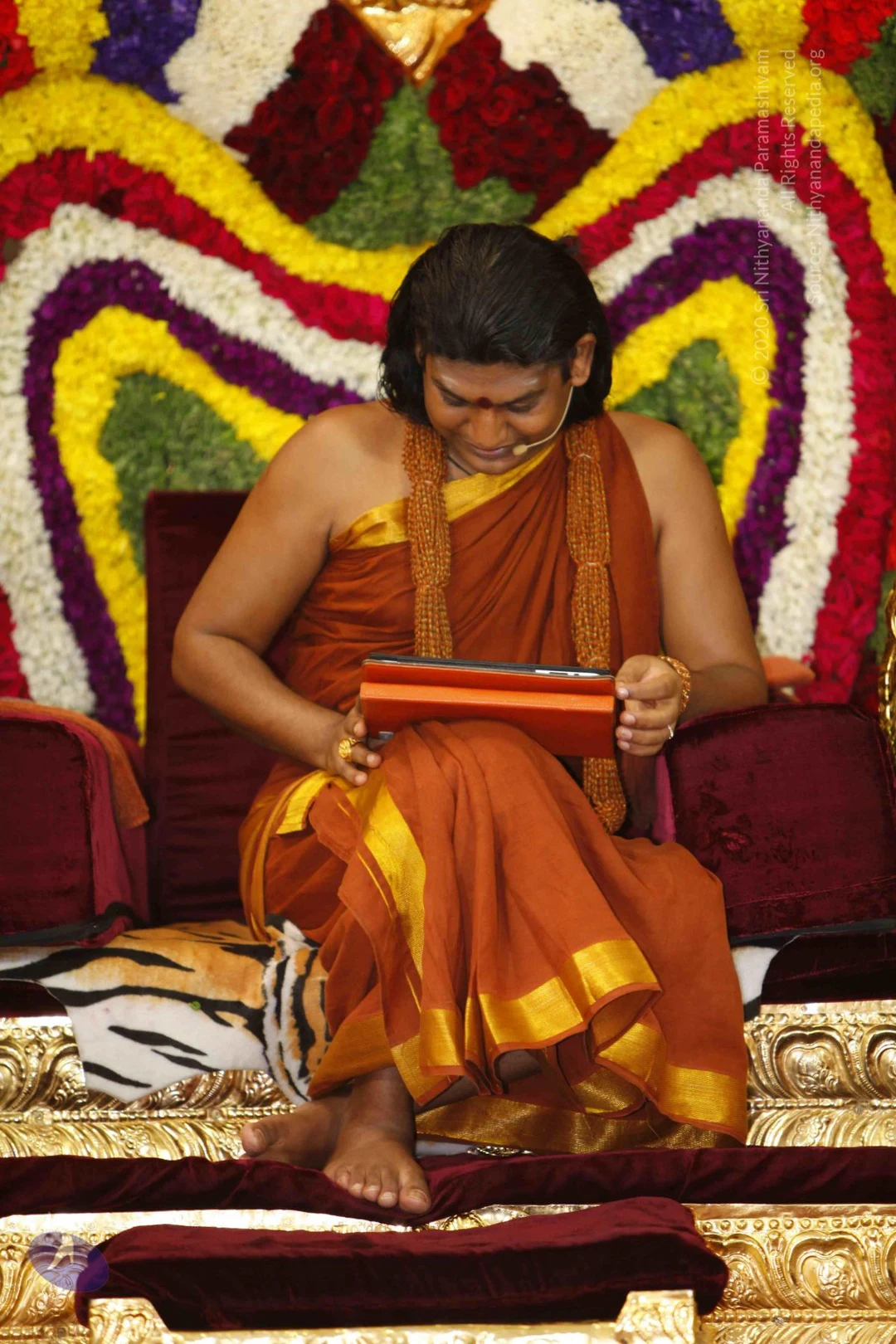
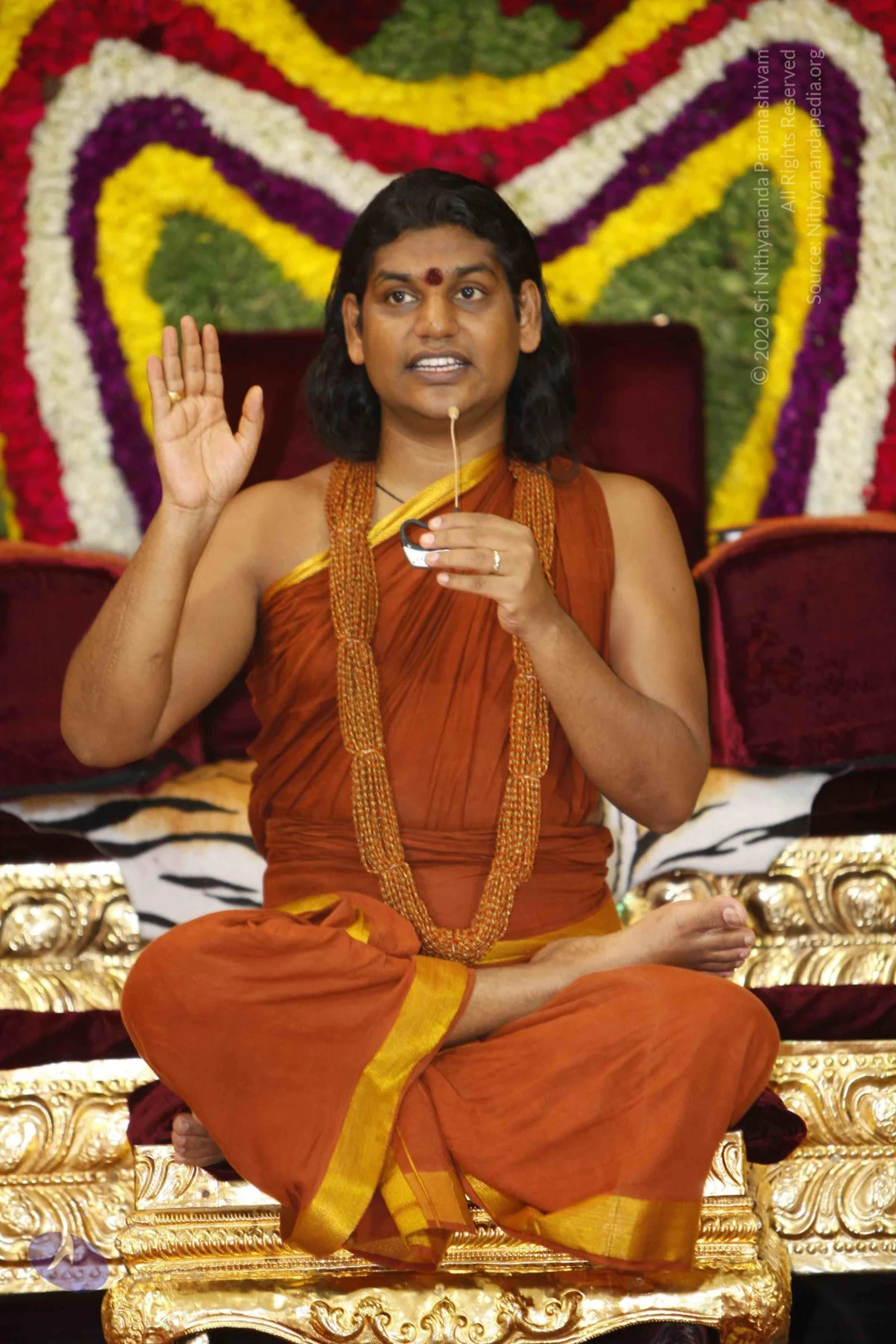
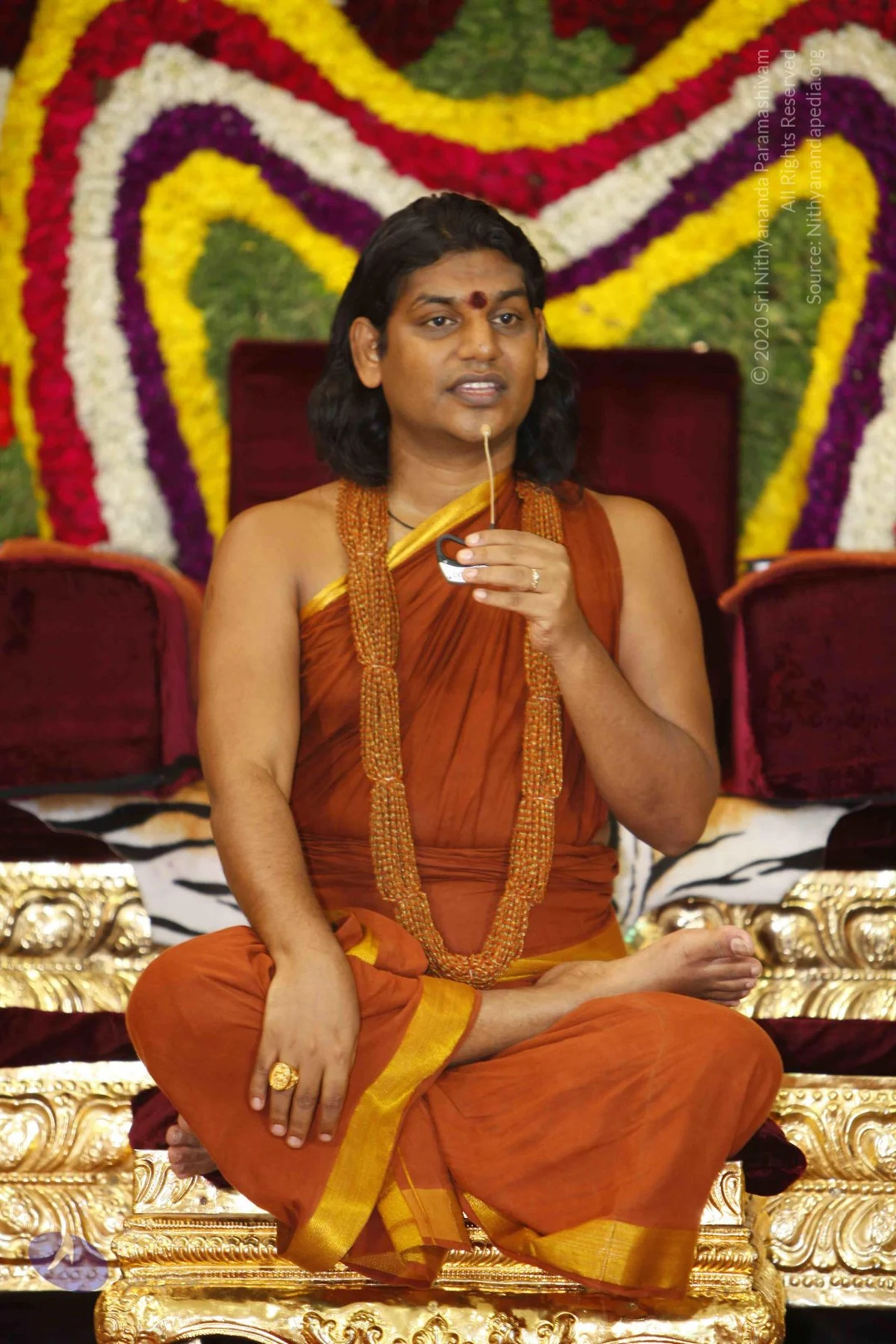
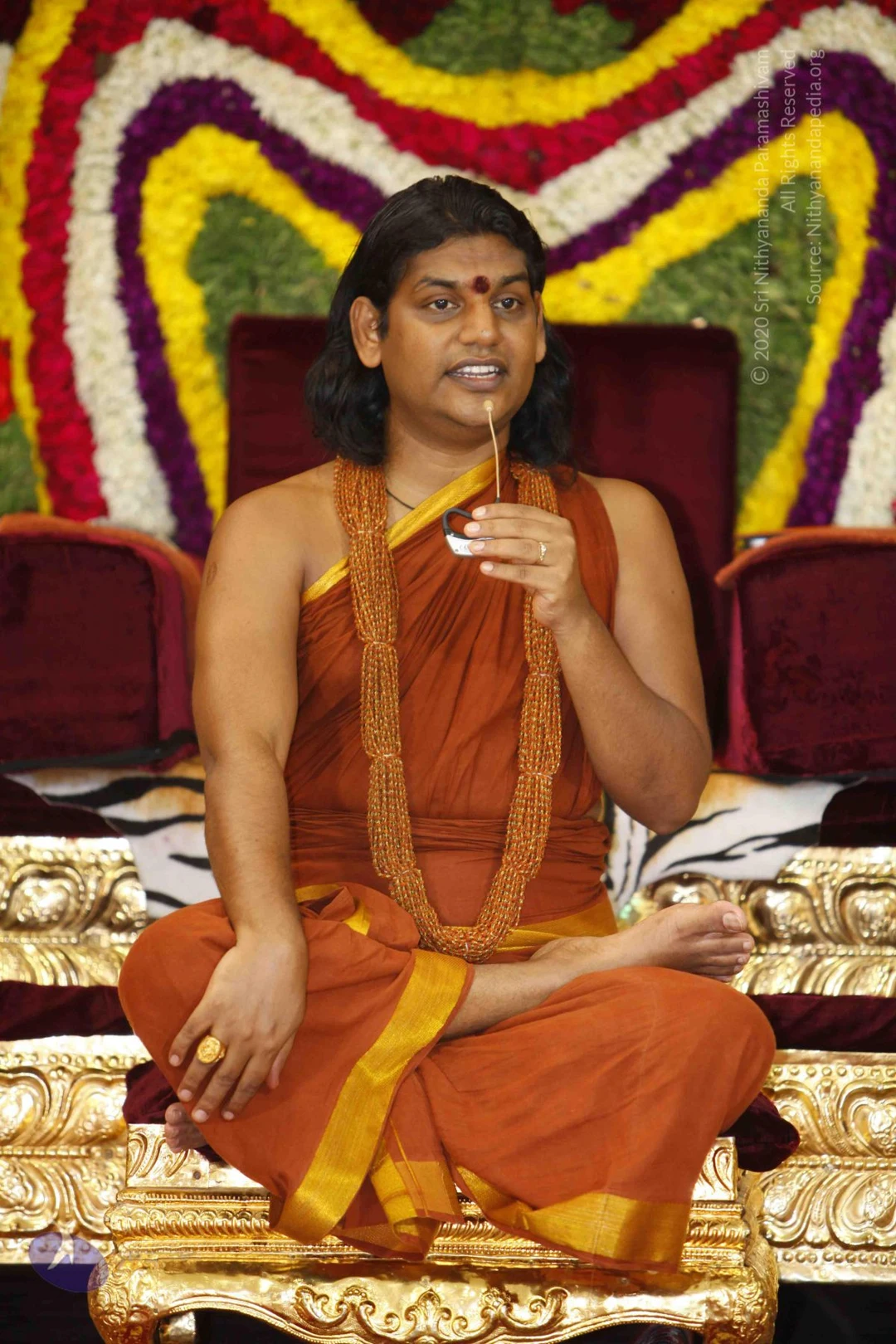
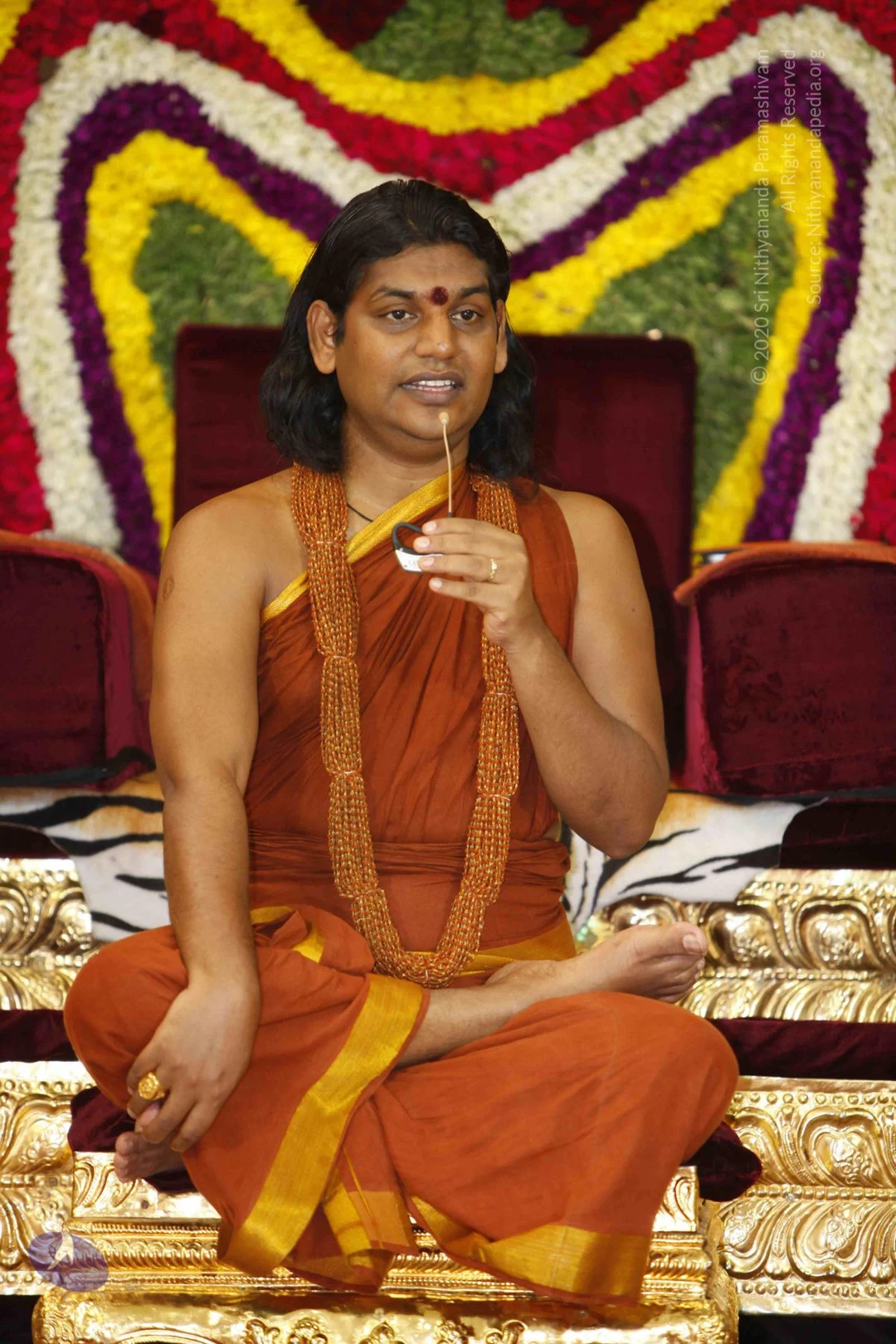
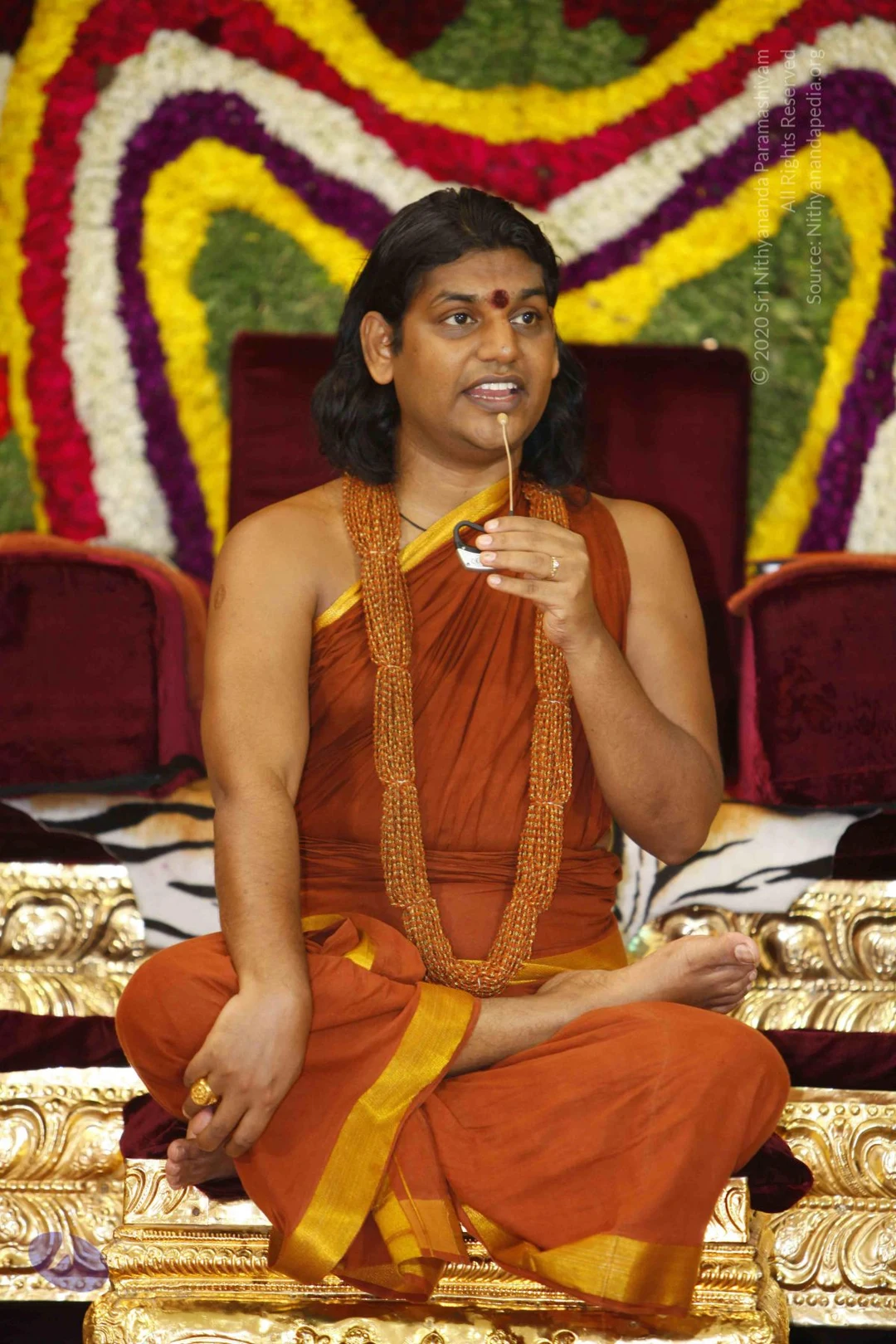
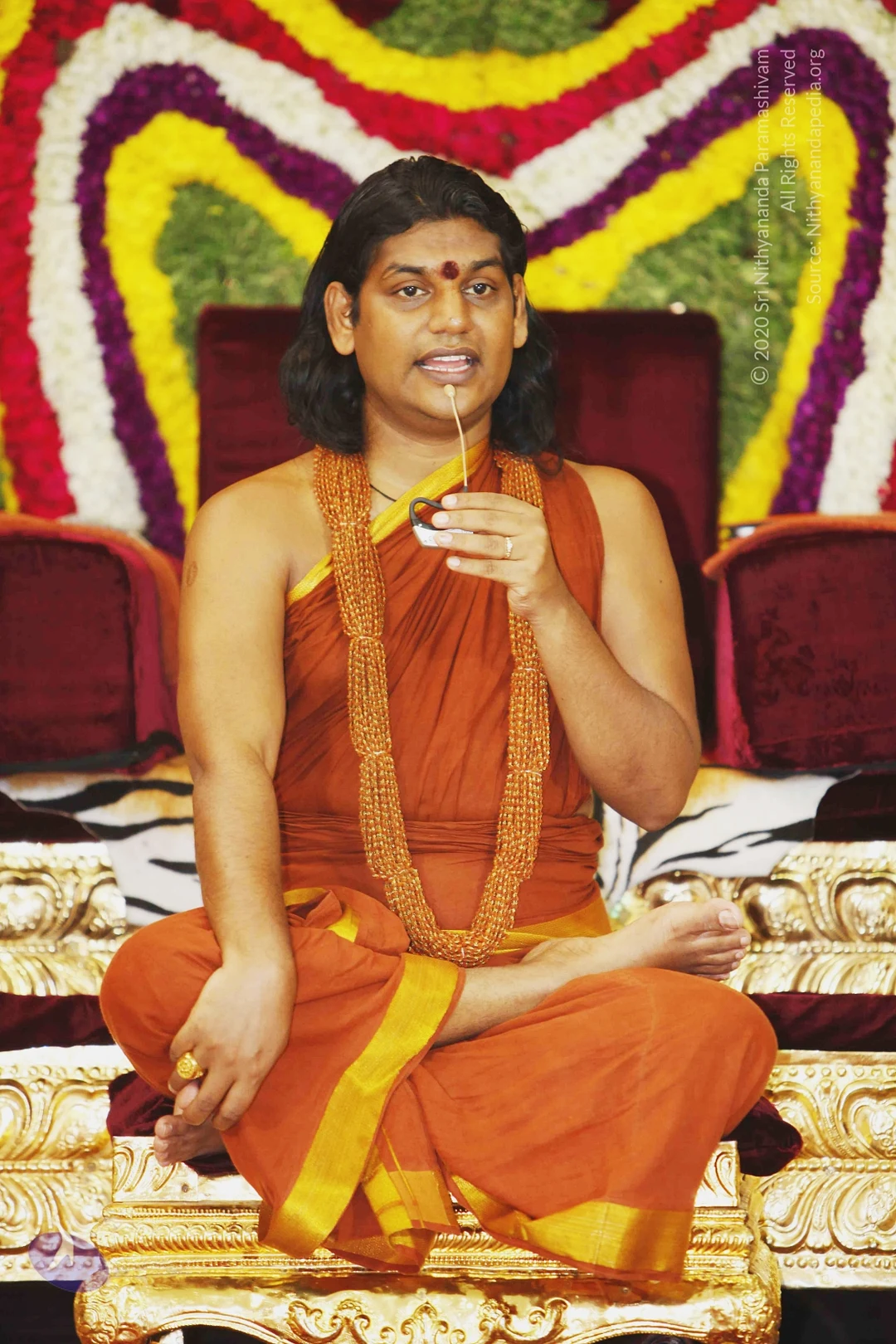
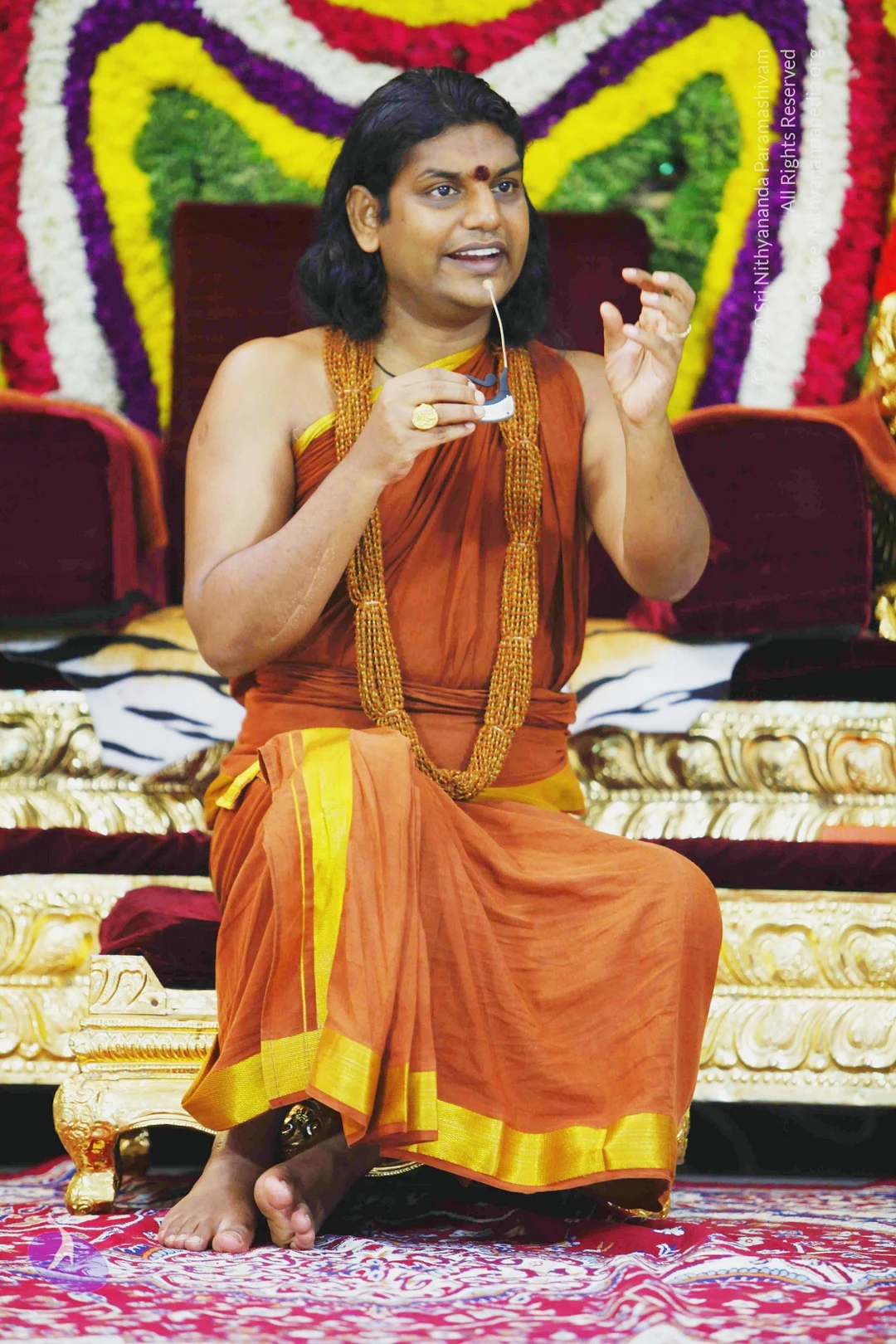
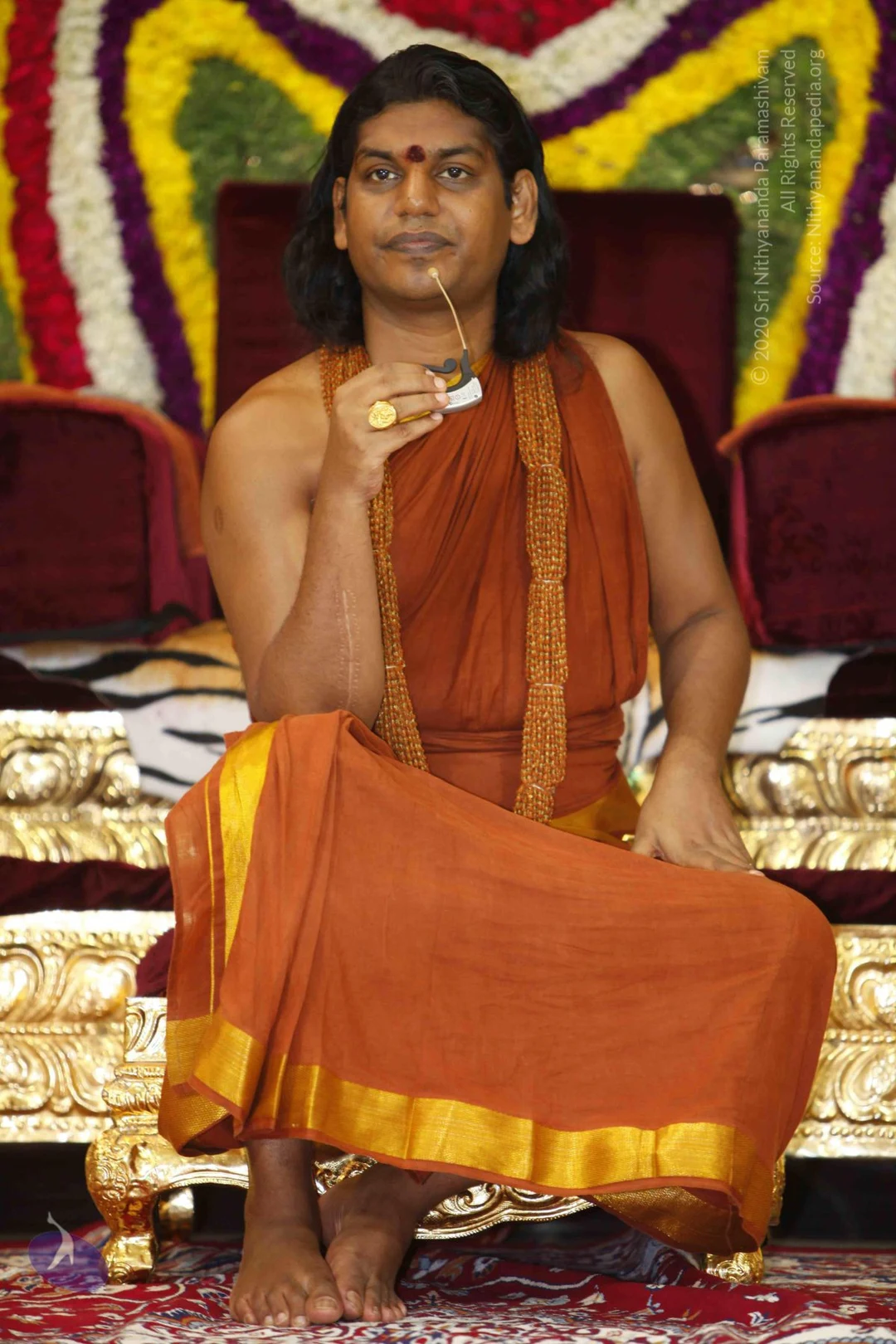
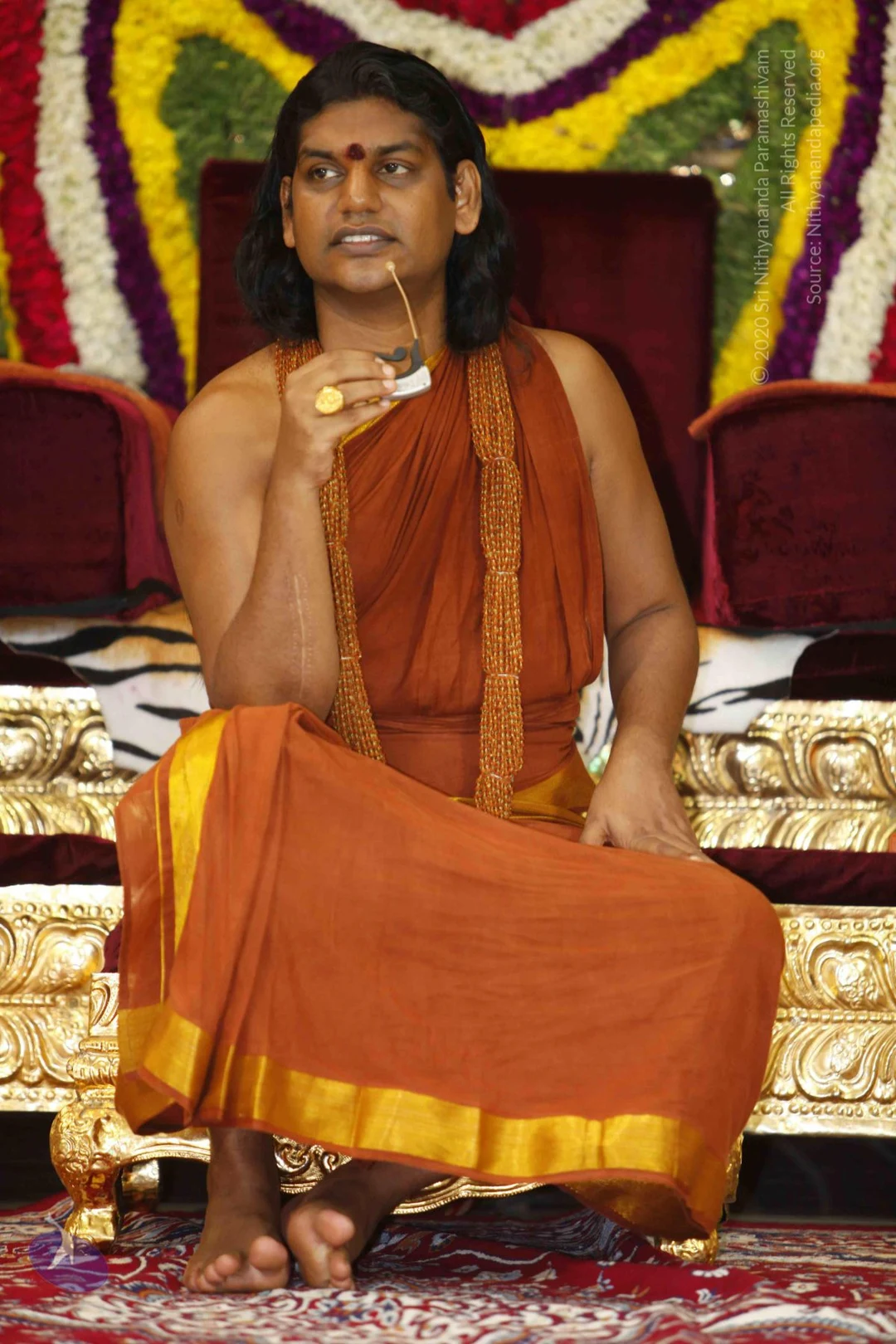
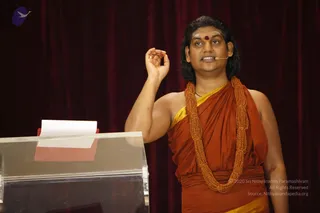
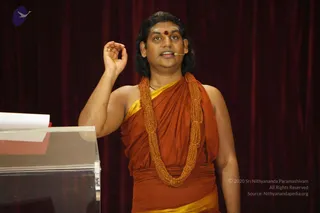
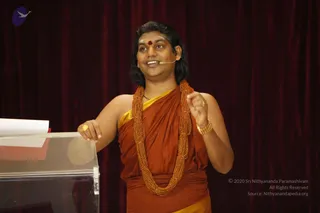
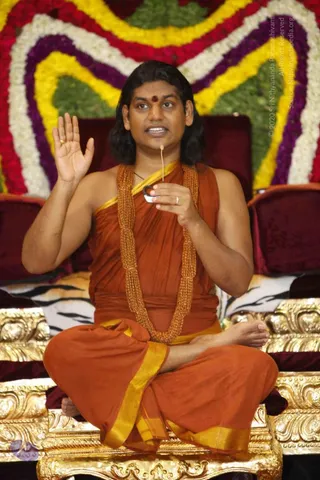
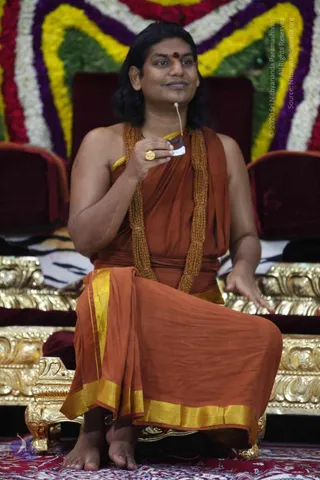
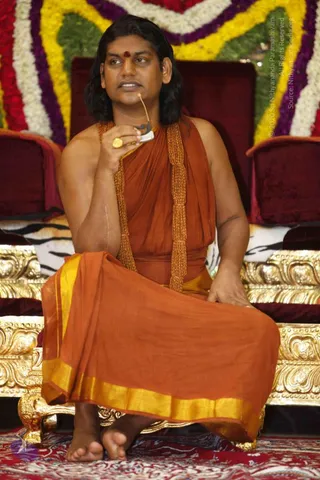
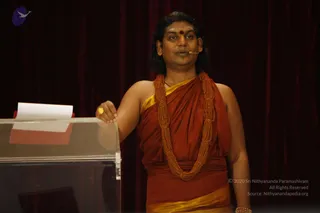
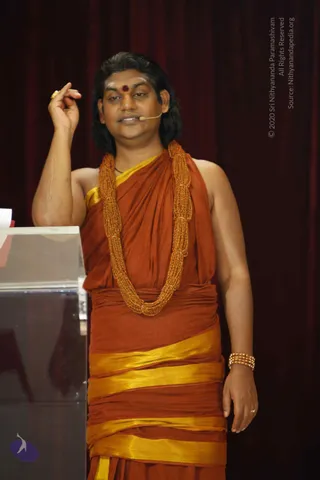
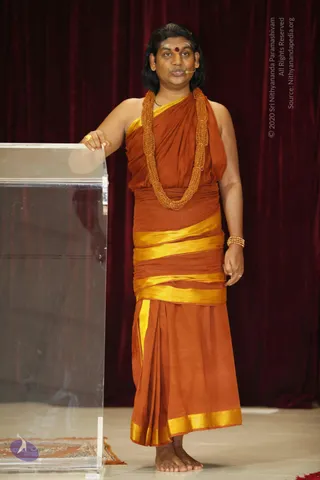
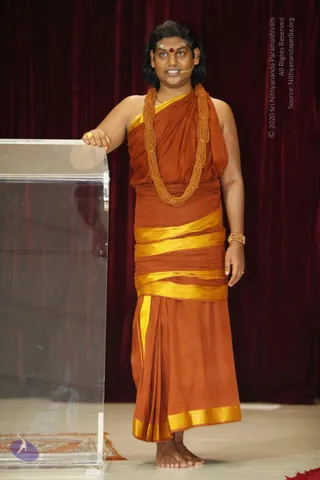
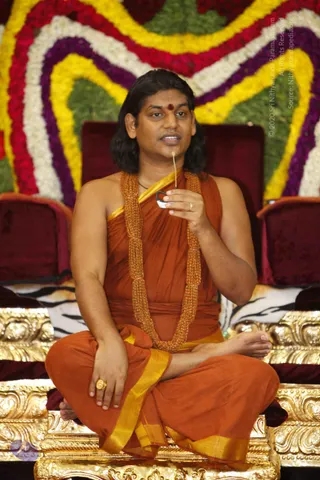
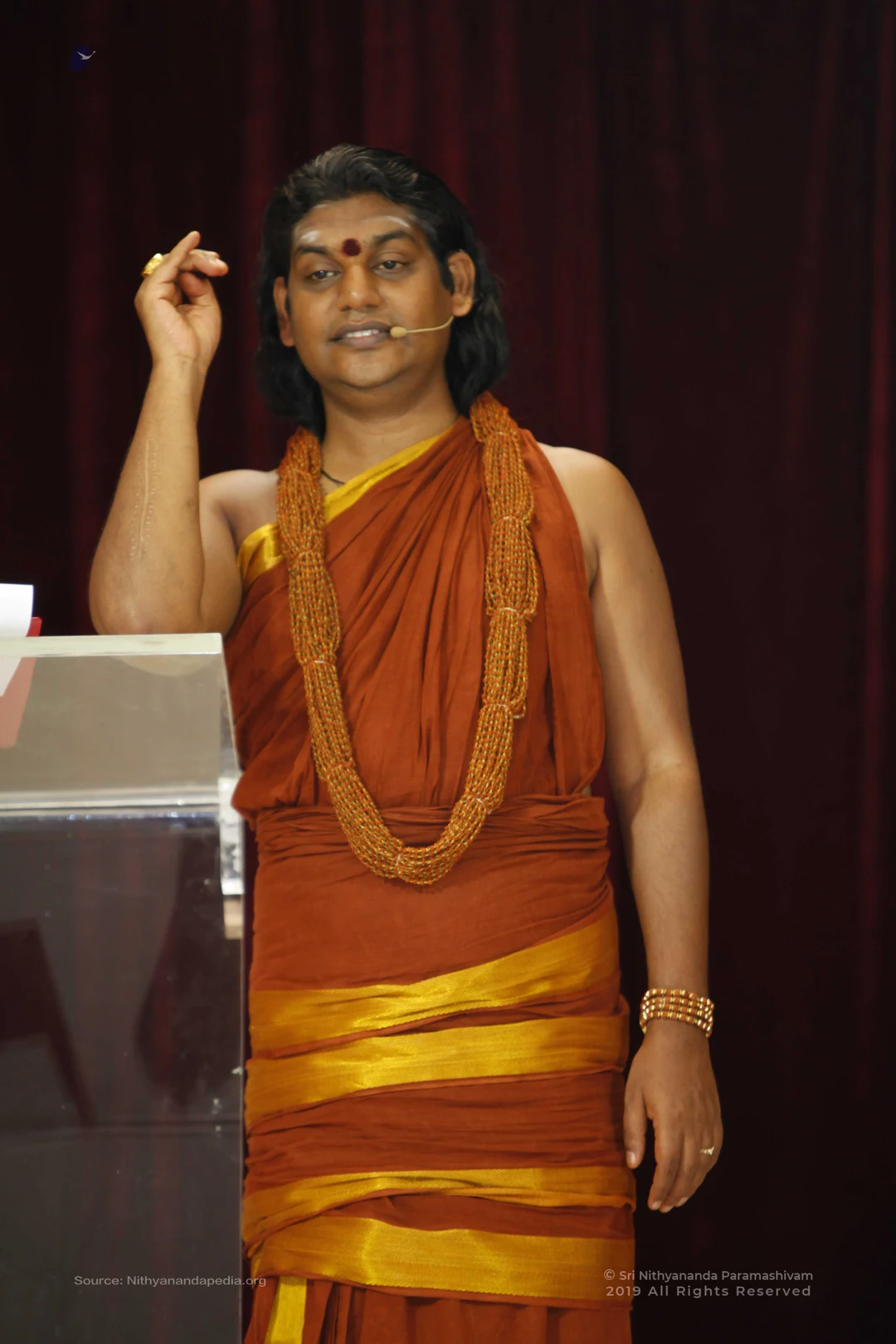
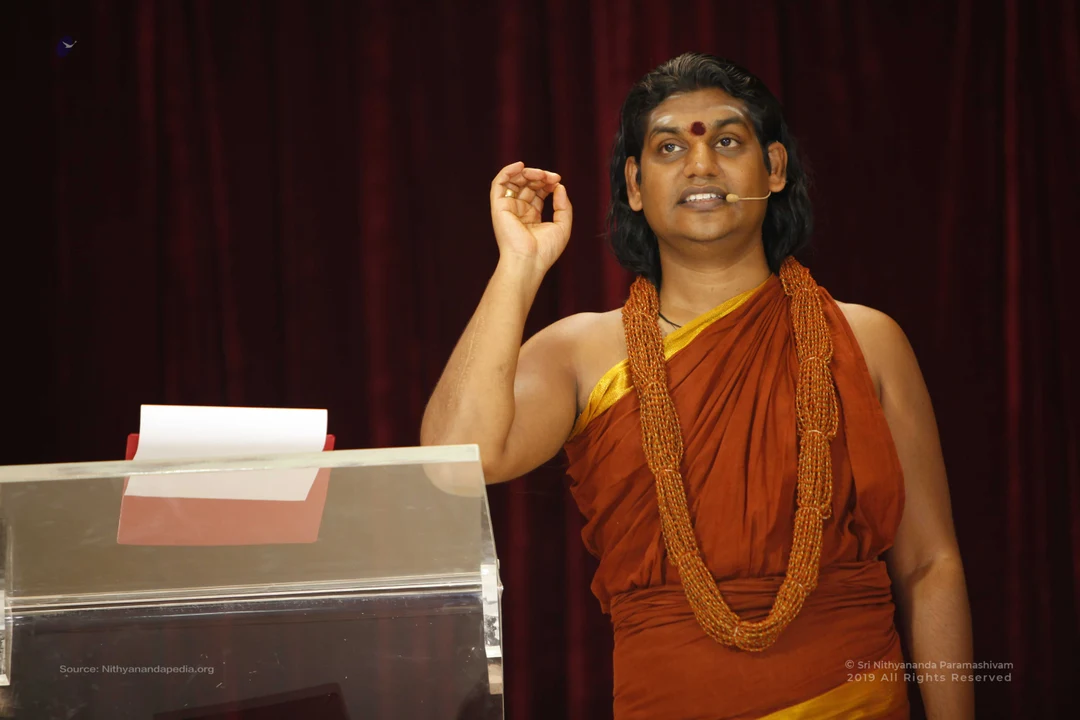
A man in saffron-orange robes with a gold trim stands at a clear acrylic lectern on a stage in front of deep red curtains. He wears a long beaded rudraksha-style mala necklace, a small red dot on his forehead, and a headset microphone, and raises one hand in a gesture while speaking. A sheet of paper rests on the lectern.A photograph of a man standing at a clear acrylic lectern on a stage in front of deep maroon velvet drapes, speaking into a small headset microphone with one hand raised in a mudra-like gesture. He has shoulder-length dark hair, a red bindi on his forehead, and wears a saffron-orange draped robe with a yellow edge, a long multi-strand rudraksha mala around his neck, and a gold-coloured sash. Papers rest on the lectern. Swamiji (probable): the long swept-back hair, saffron robe and rudraksha mala are consistent with the page's identification of this discourse by Paramahamsa Nithyananda, though the appearance cues are only partially distinctive.A man stands behind a clear acrylic lectern in front of dark maroon drapery, speaking into a head-mounted microphone with his right hand raised in an explanatory gesture. He wears a rust-orange cloth wrapped over one shoulder with a yellow border, layered with a long rudraksha-style mala of rust-coloured beads and a gold bangle and gold ring. He has a red bindi on his forehead and shoulder-length dark hair. Papers rest on the lectern. This appears to be a satsang discourse, and the appearance-based label is a person, a speaker in saffron-orange clothing with a rudraksha mala and ceremonial gold ornaments.A seated man in an orange-saffron dhoti and shawl with gold borders sits cross-legged on an ornate gold-carved throne draped with a zebra-striped cloth. He wears a long multi-strand orange rudraksha-style mala and a red bindi on his forehead. His raised right hand is open in a teaching gesture, and his left hand holds a small silver bowl with a stick, with his mouth in mid-speech. Behind him is a backdrop of colourful marigold and rose garlands in red, yellow, white and purple arranged in arches.A seated man with shoulder-length dark hair and a red bindi wears a rust-orange shawl and dhoti with gold borders and a long beaded rudraksha-style mala. He holds a small white card with a cotton-tipped stick near his chin, gesturing with his other hand while seated on a gold-carved throne with a striped tiger-skin cover. Behind him are a backdrop of red, yellow, white and purple flower garlands arranged in arches.A man with shoulder-length dark hair and a red bindi sits cross-legged on an ornate gold throne with a zebra-striped cushion, speaking while holding a small object near his chin. He wears an orange-saffron unstitched robe with a gold-bordered end and a long rudraksha-style mala of orange beads draped across his chest, plus a gold ring on his finger. Behind him stands a backdrop of red, white, yellow and green flower garlands, and the throne rests on a red patterned carpet. Swamiji (probable): long swept-back hair, saffron robe, rudraksha mala and gold ornaments, seated as the speaker at a satsang.

IA-Darshan

39 photosSource gallery
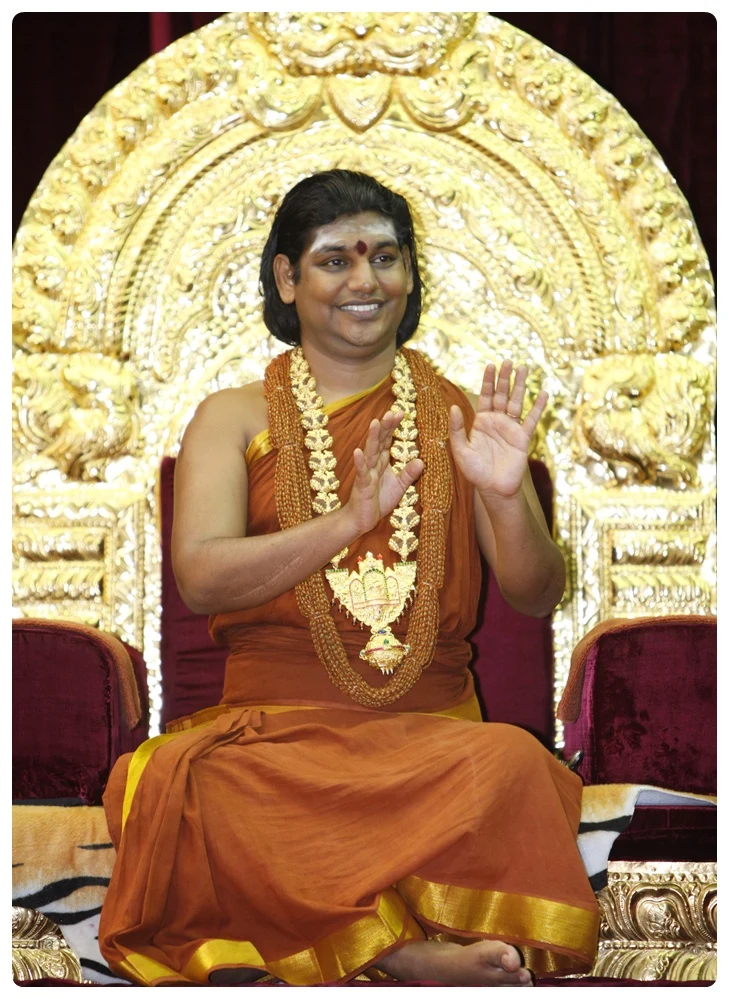
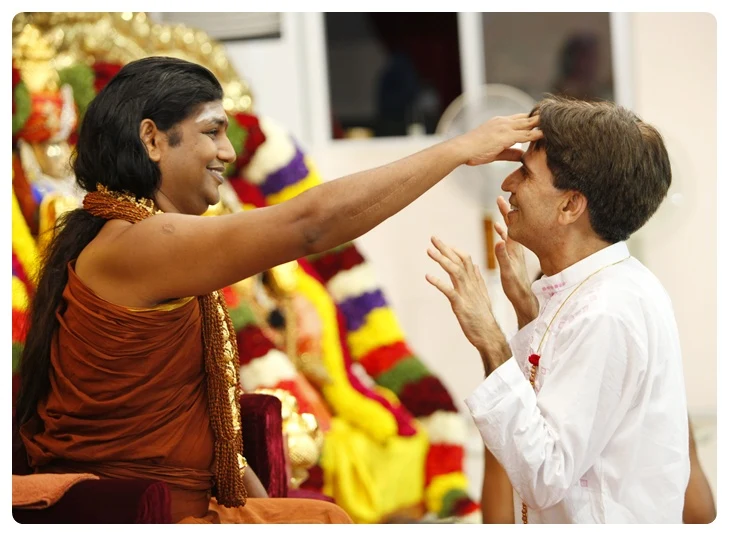
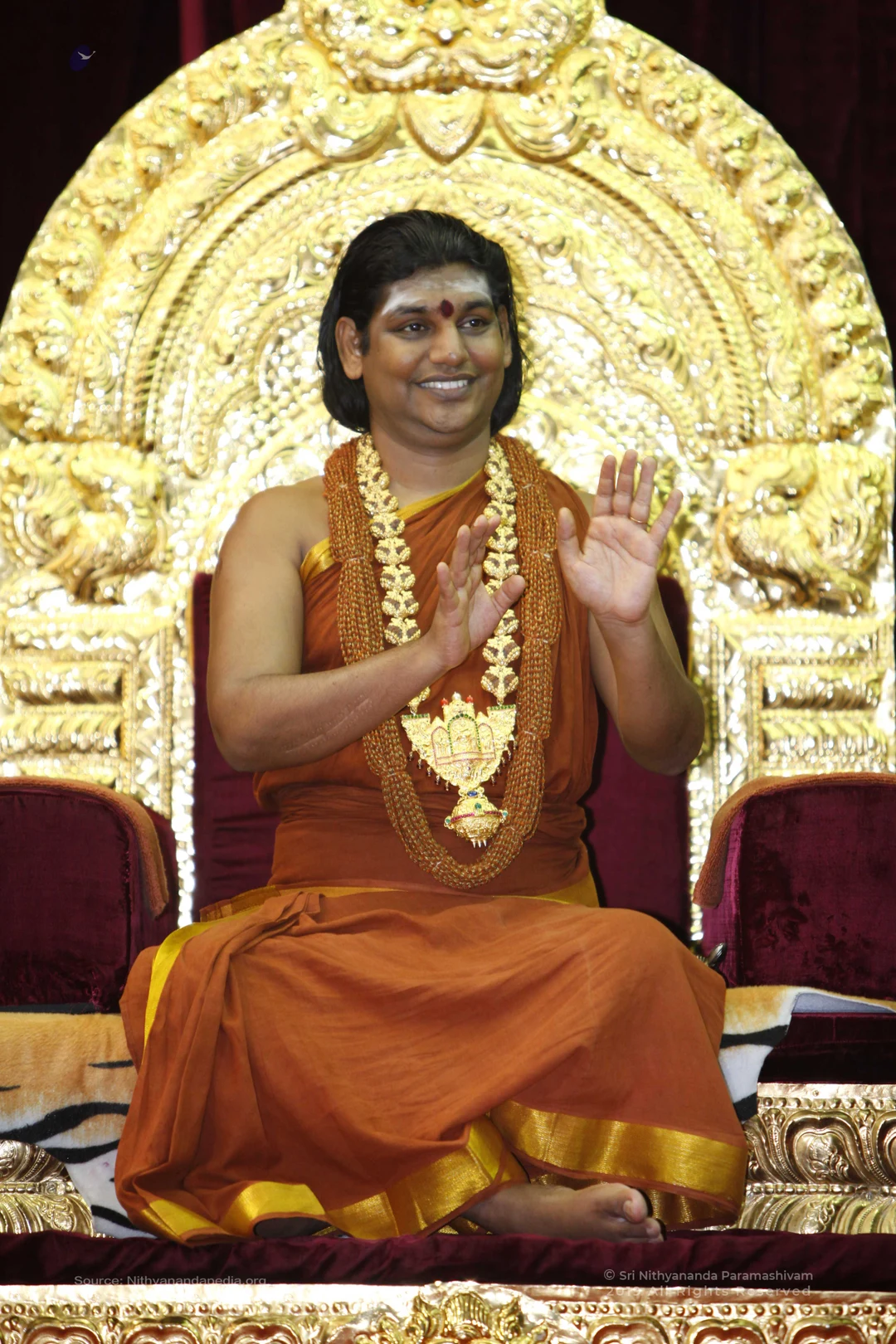
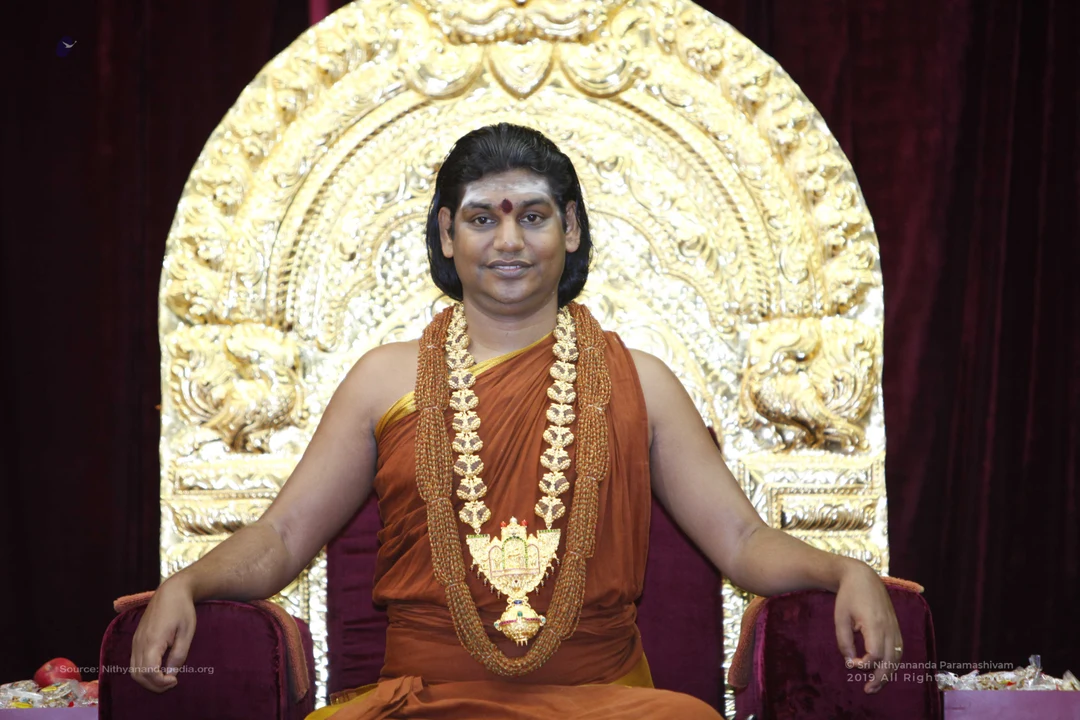
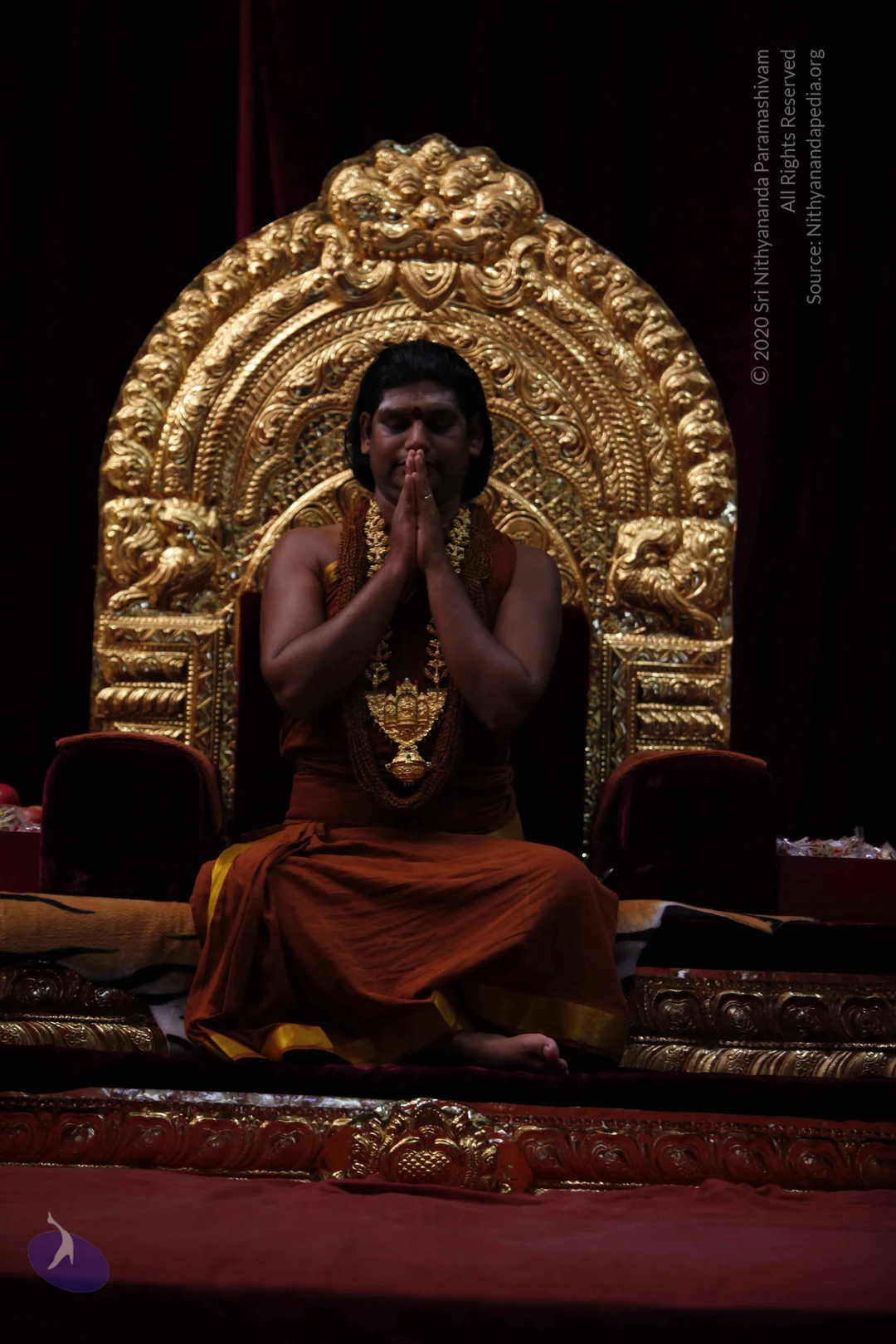
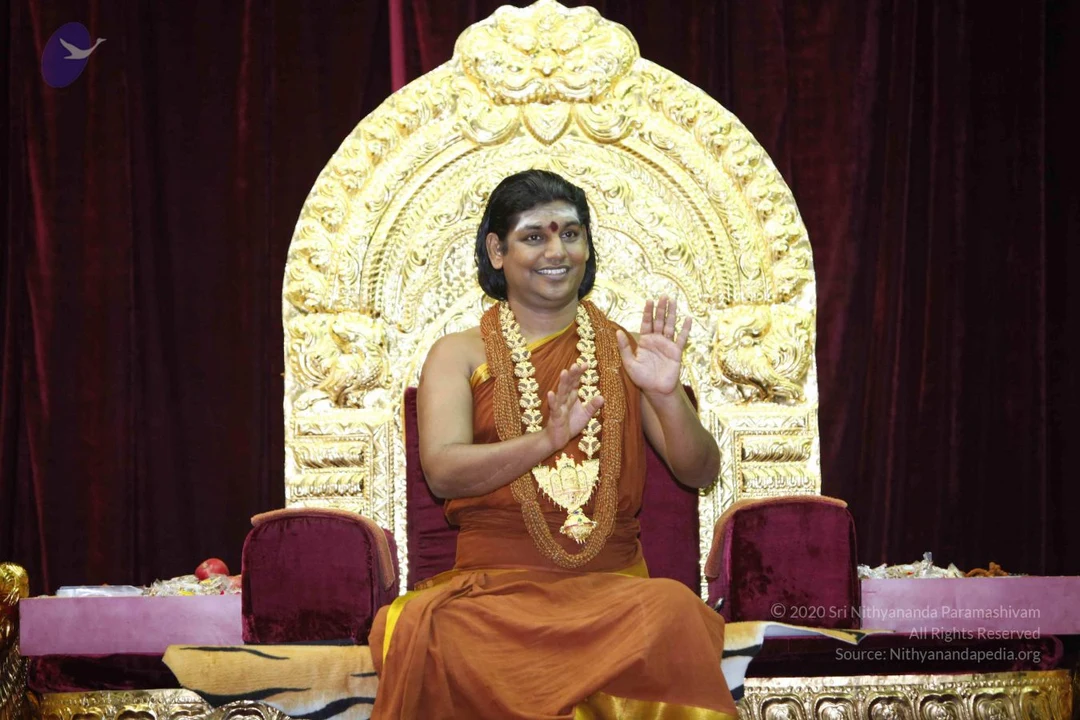
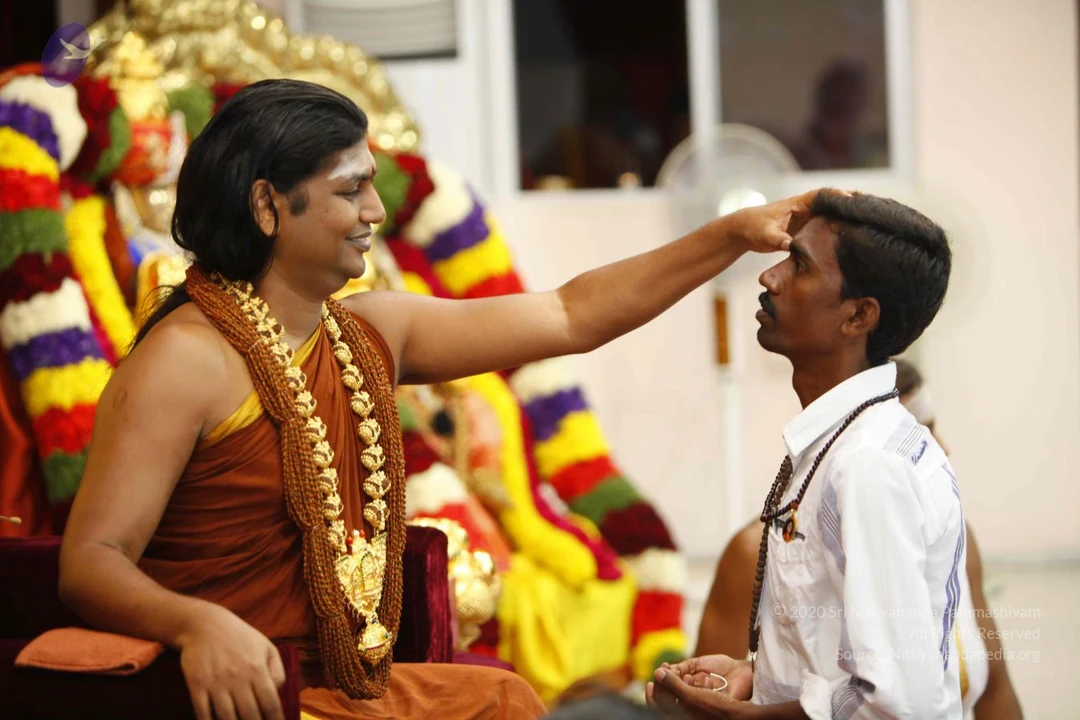
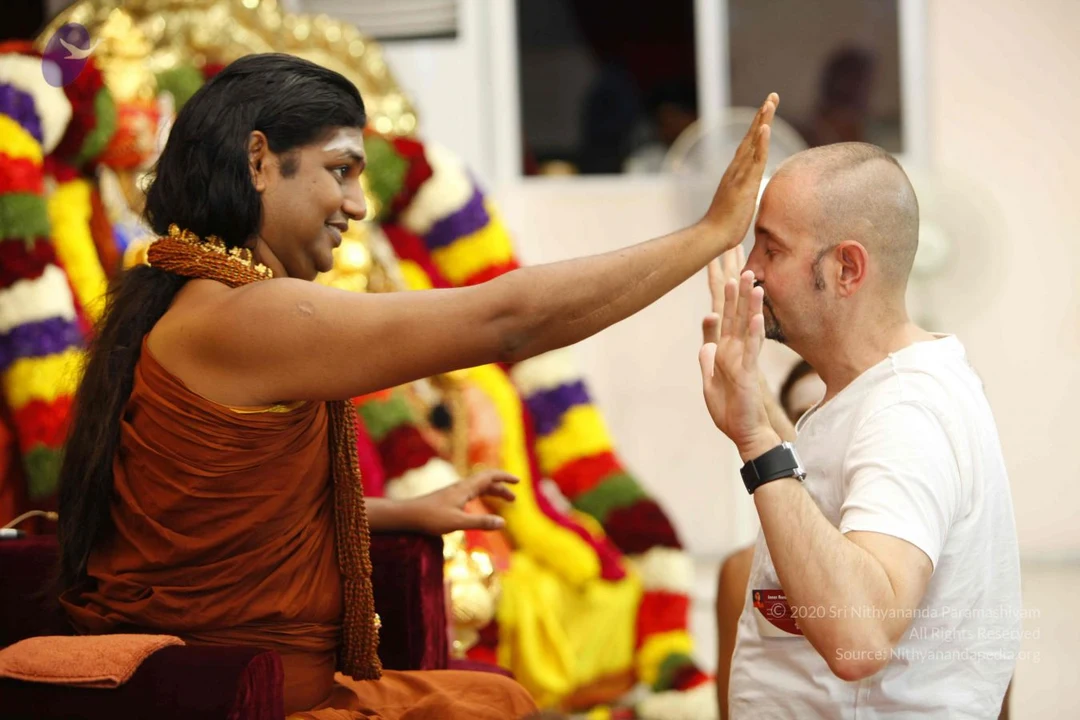
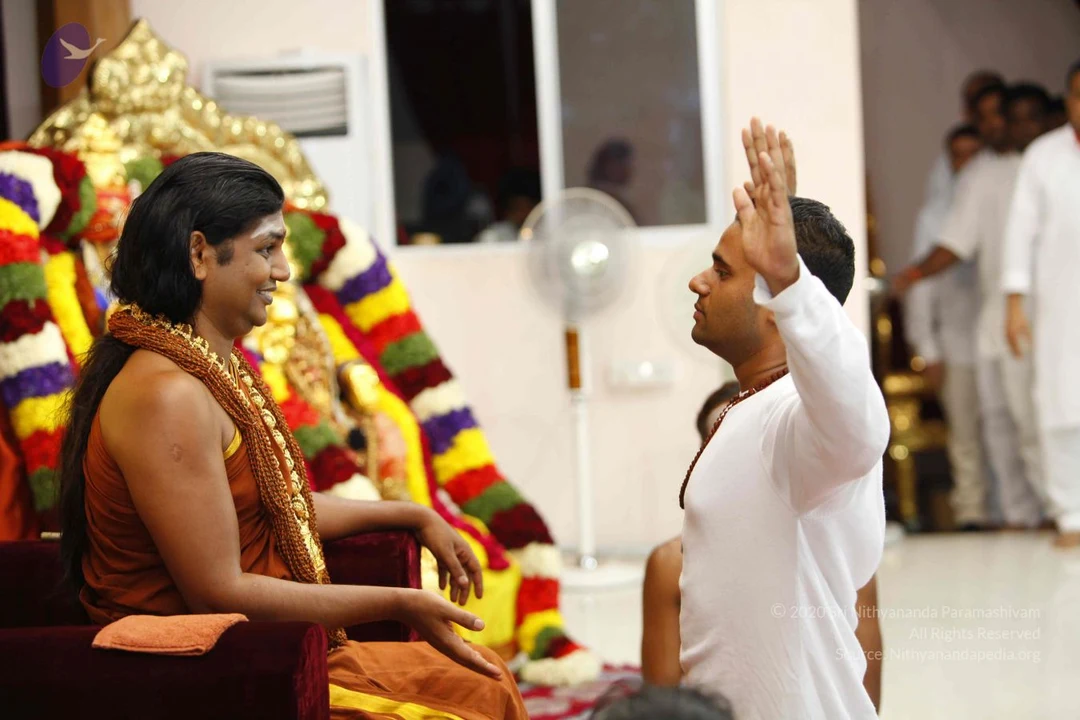
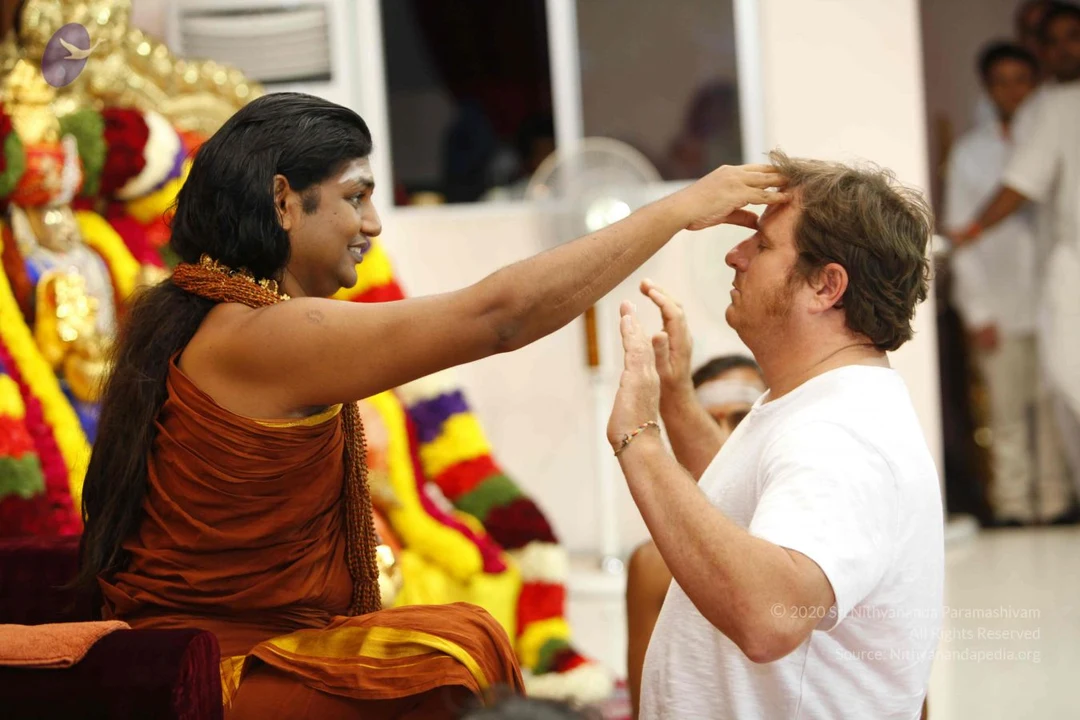
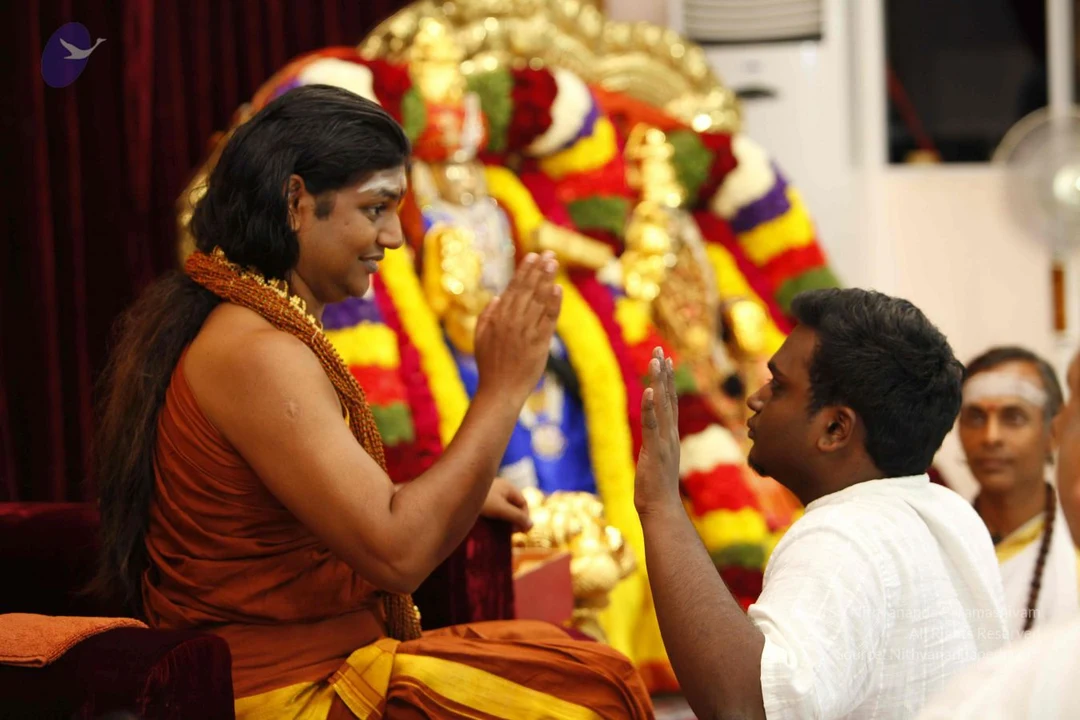
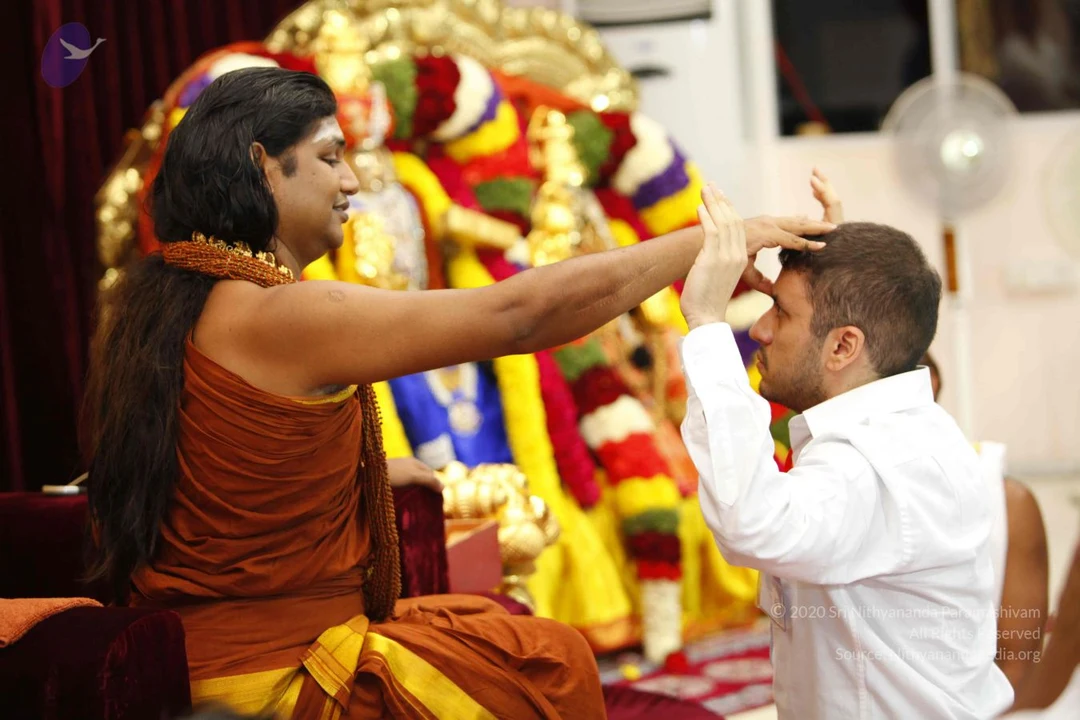
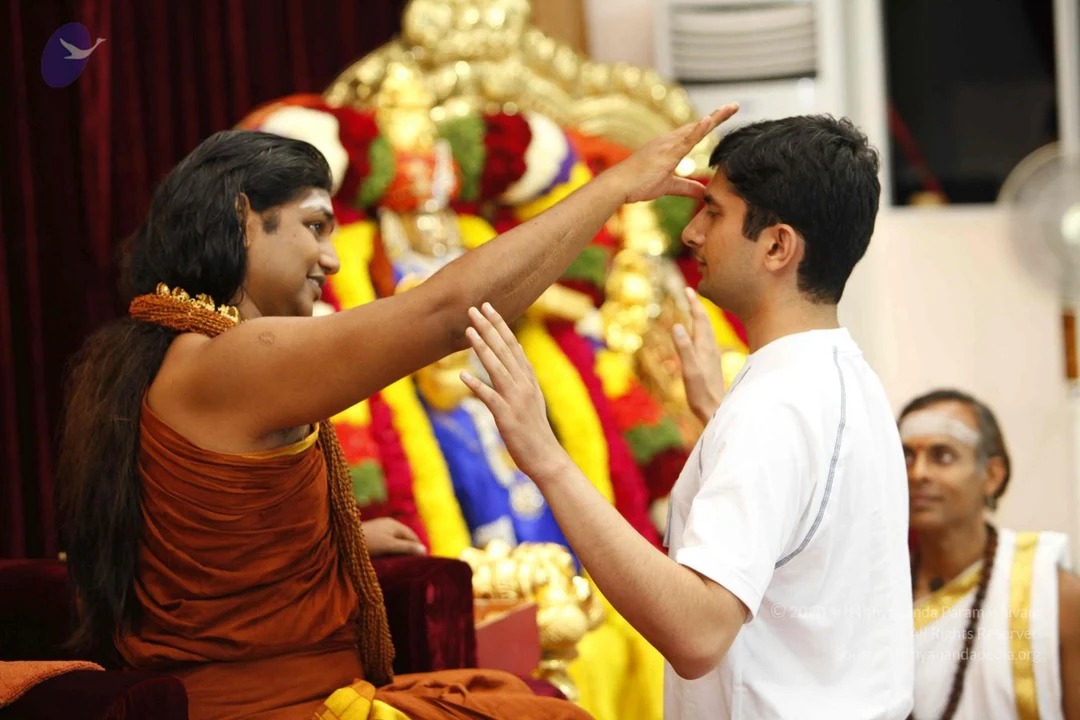
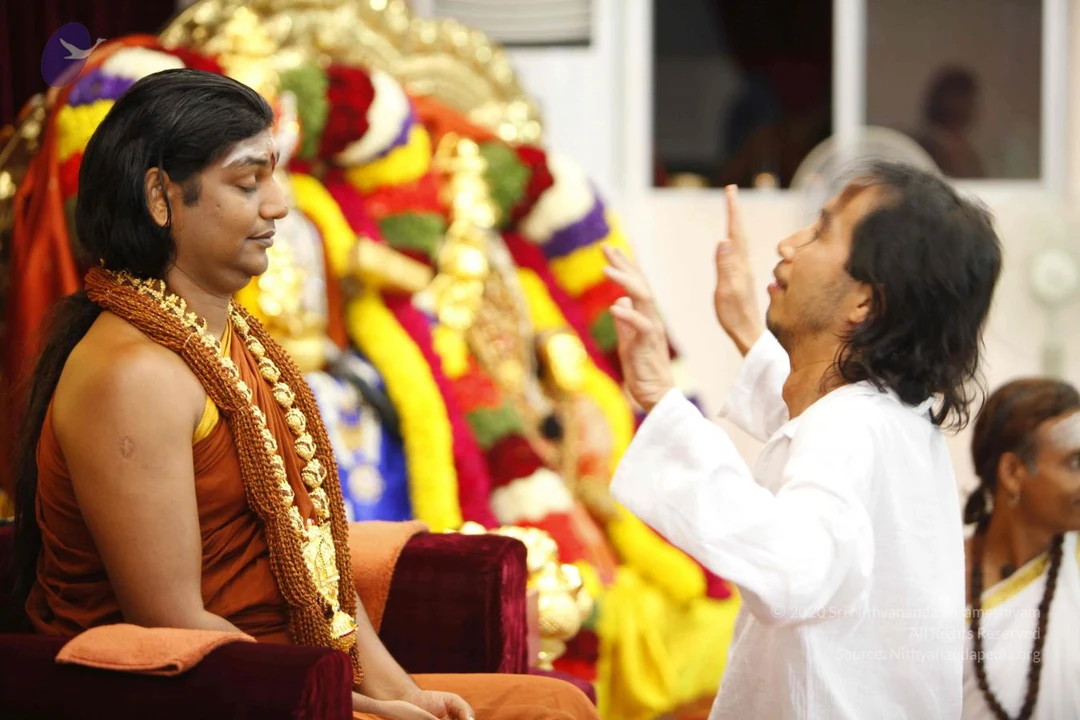
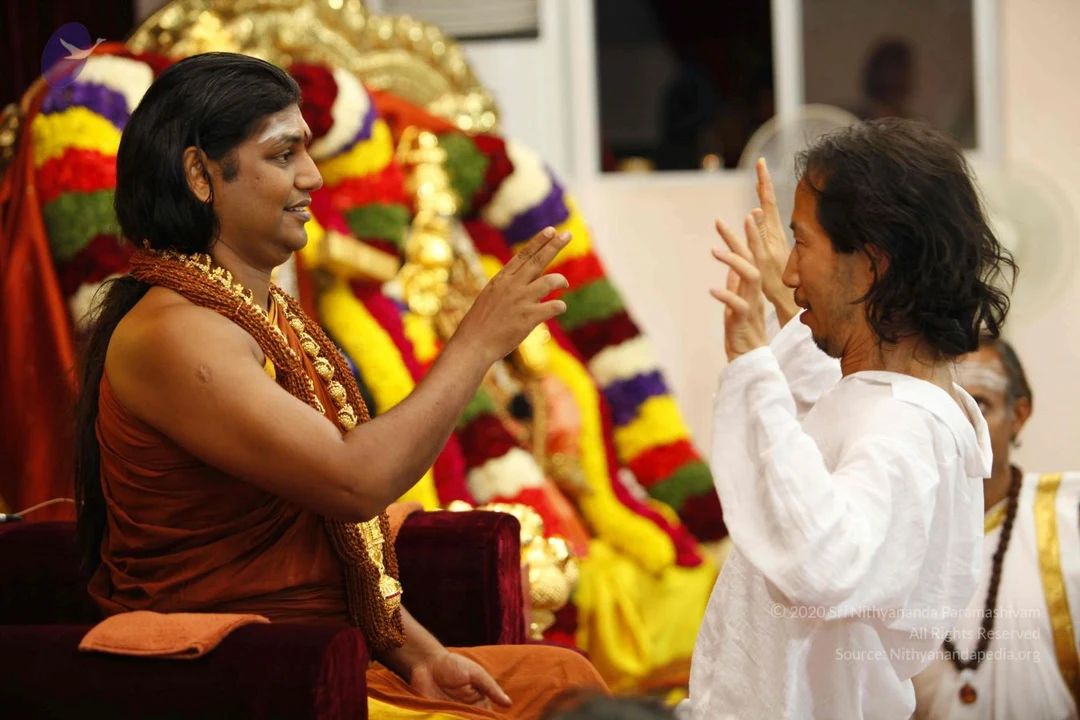
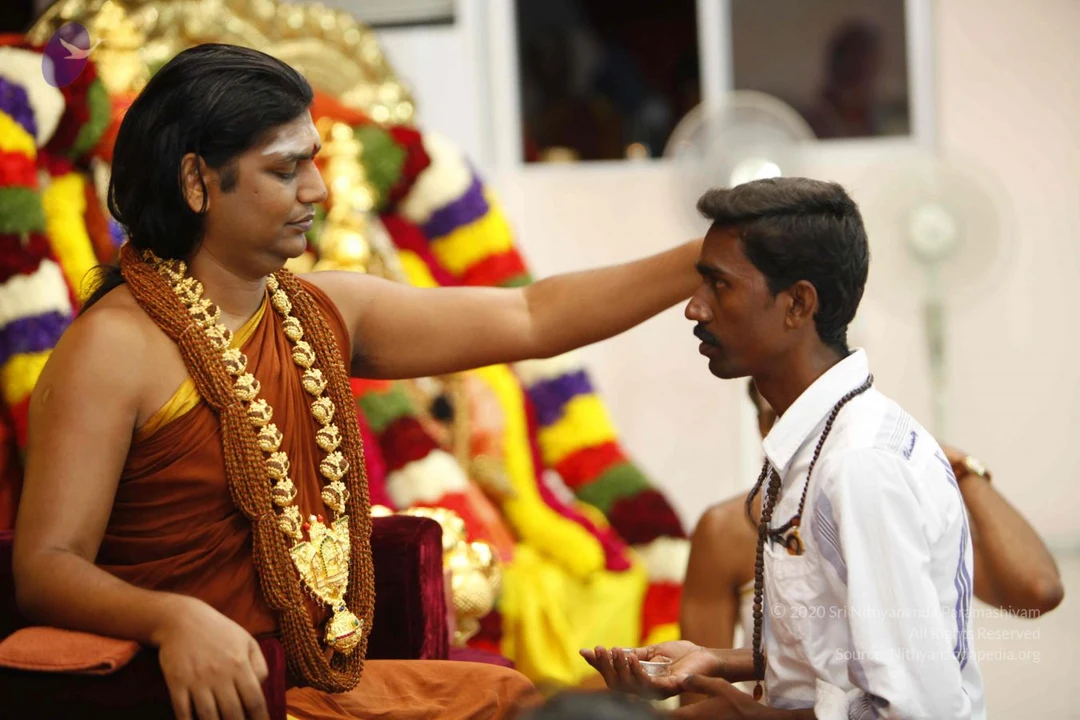
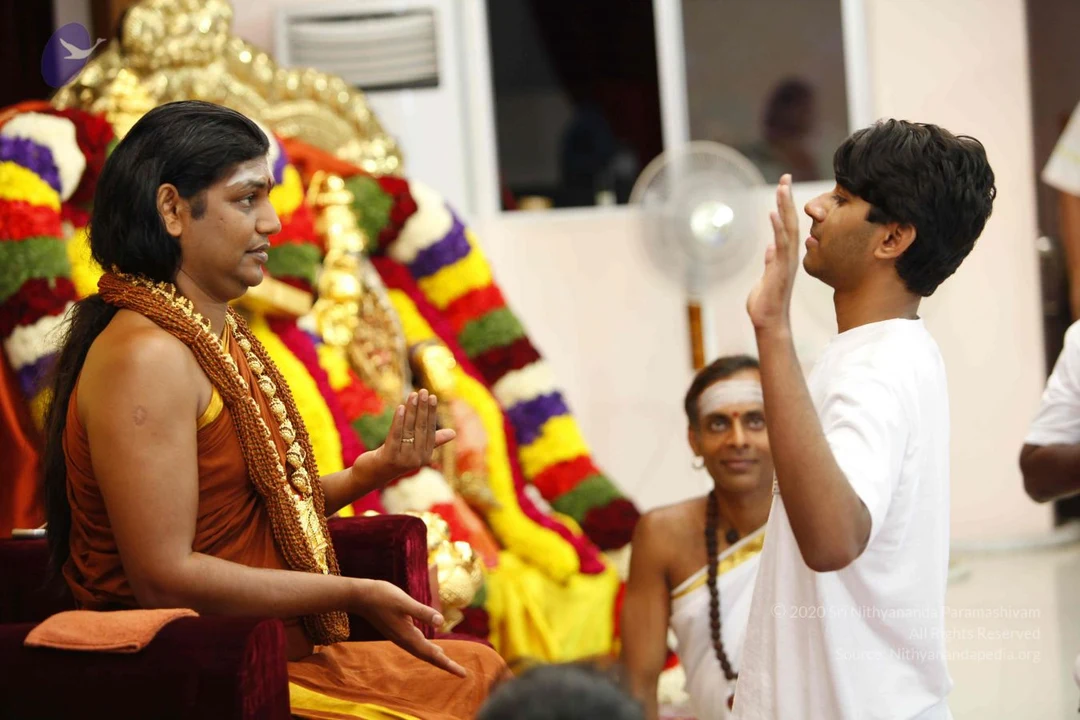
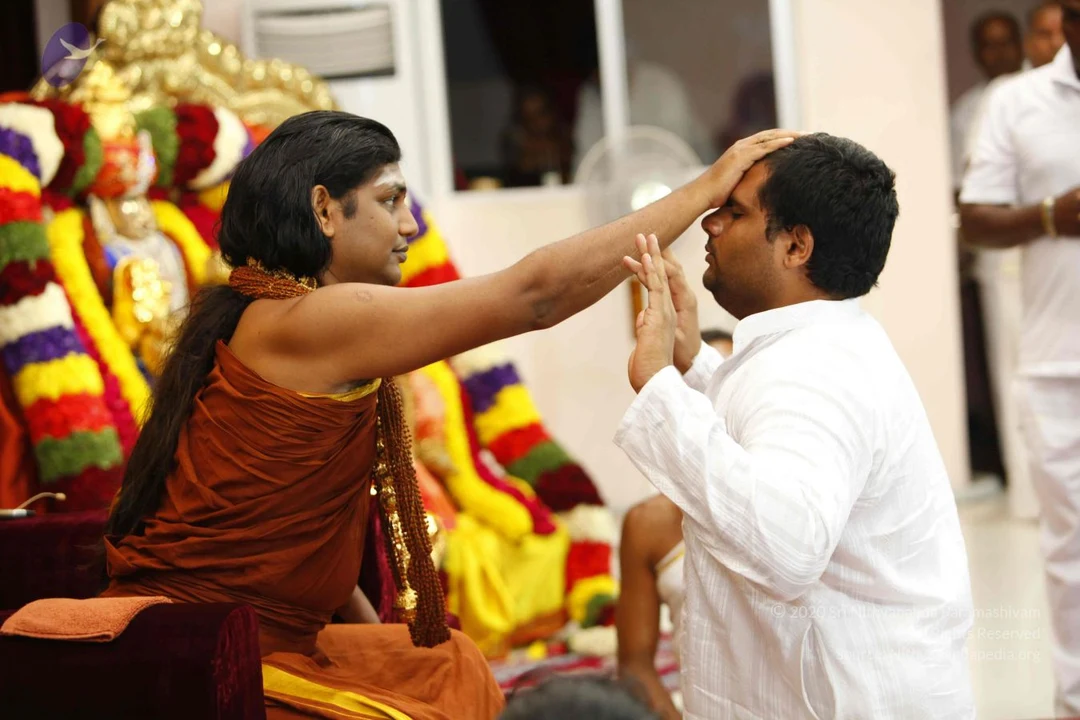
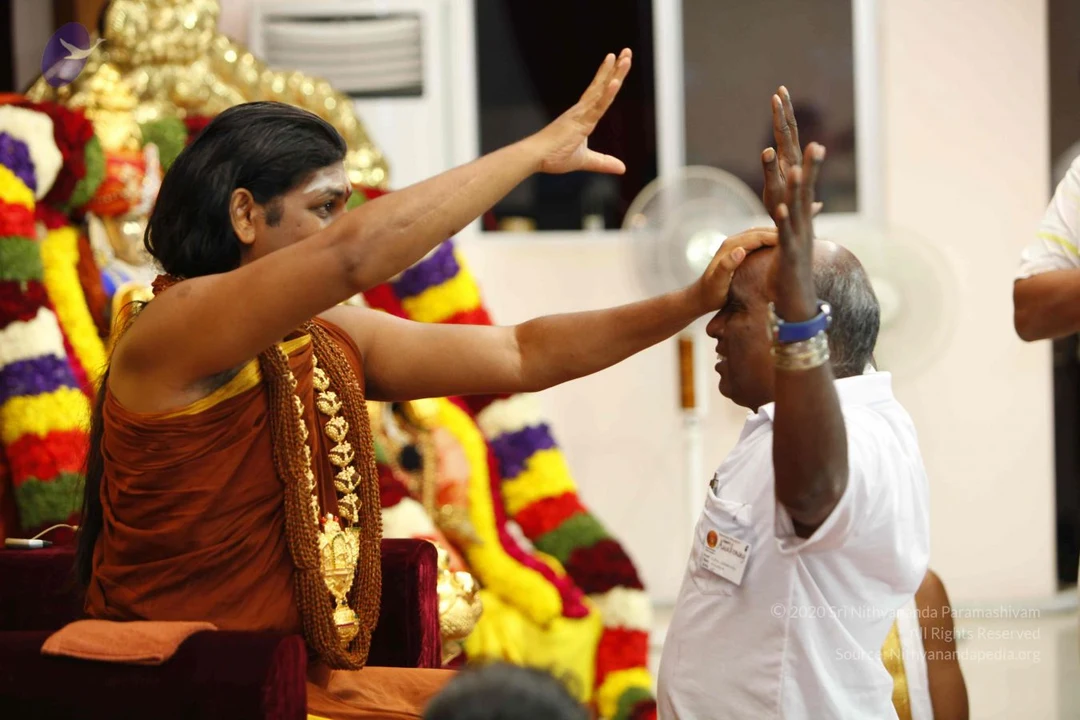
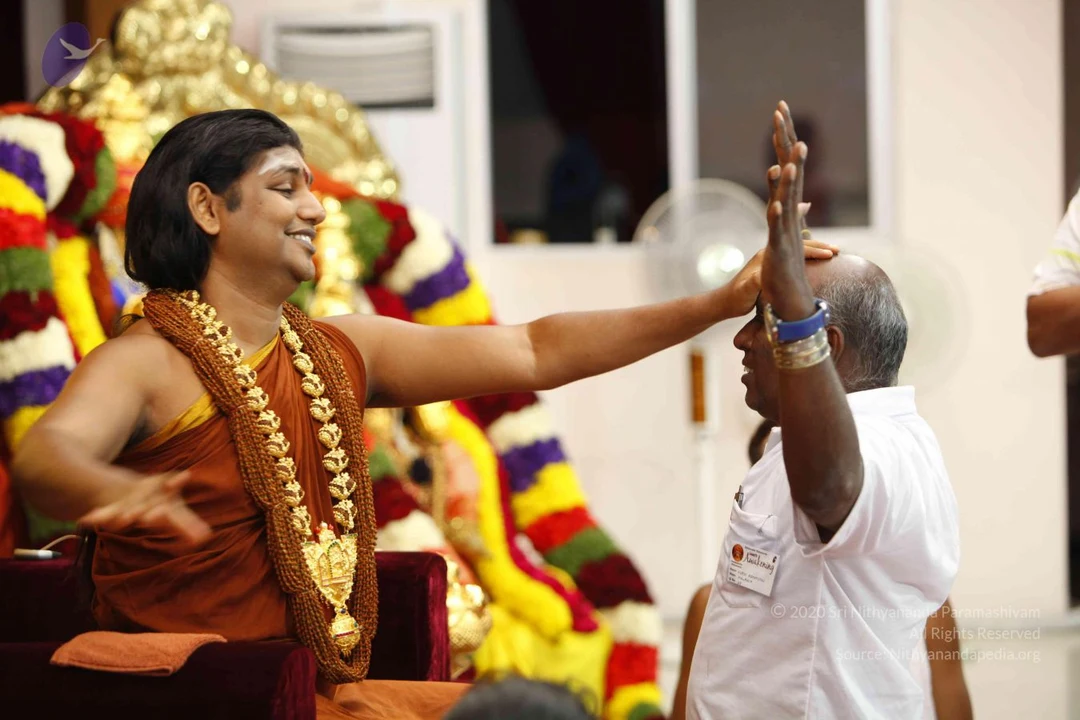
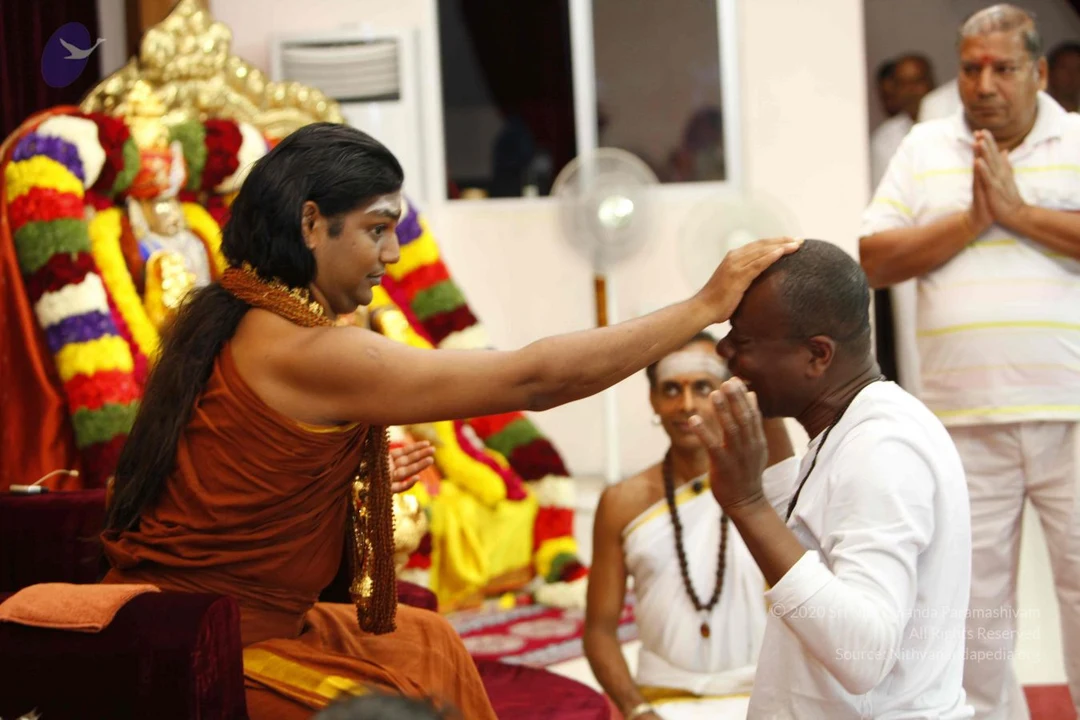
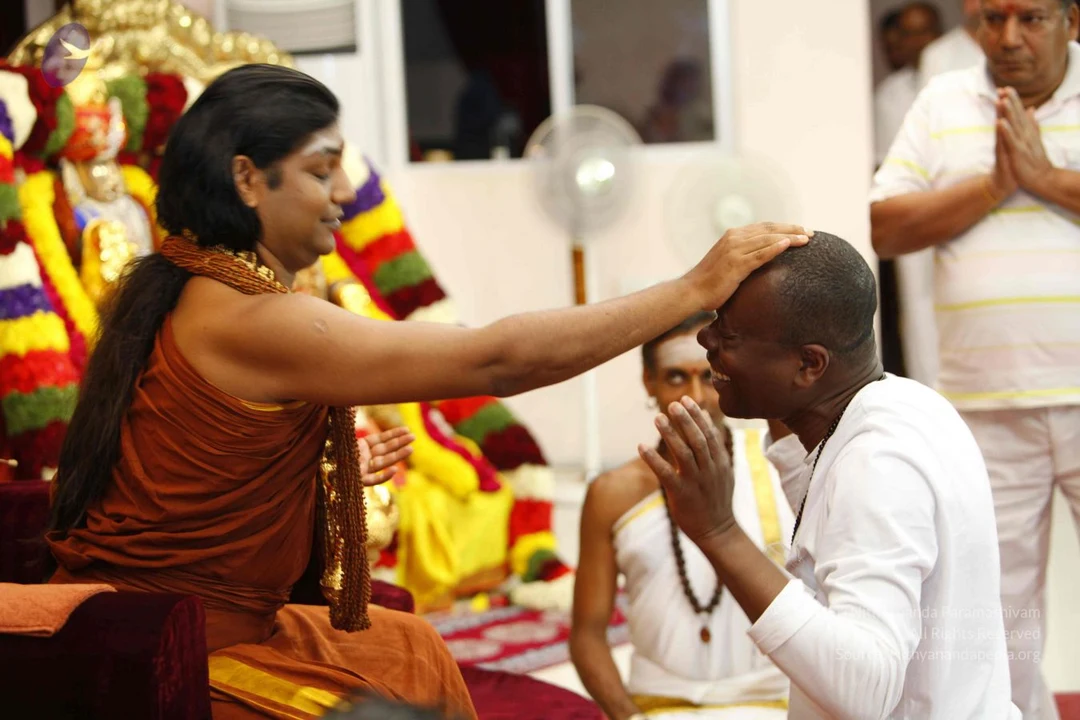
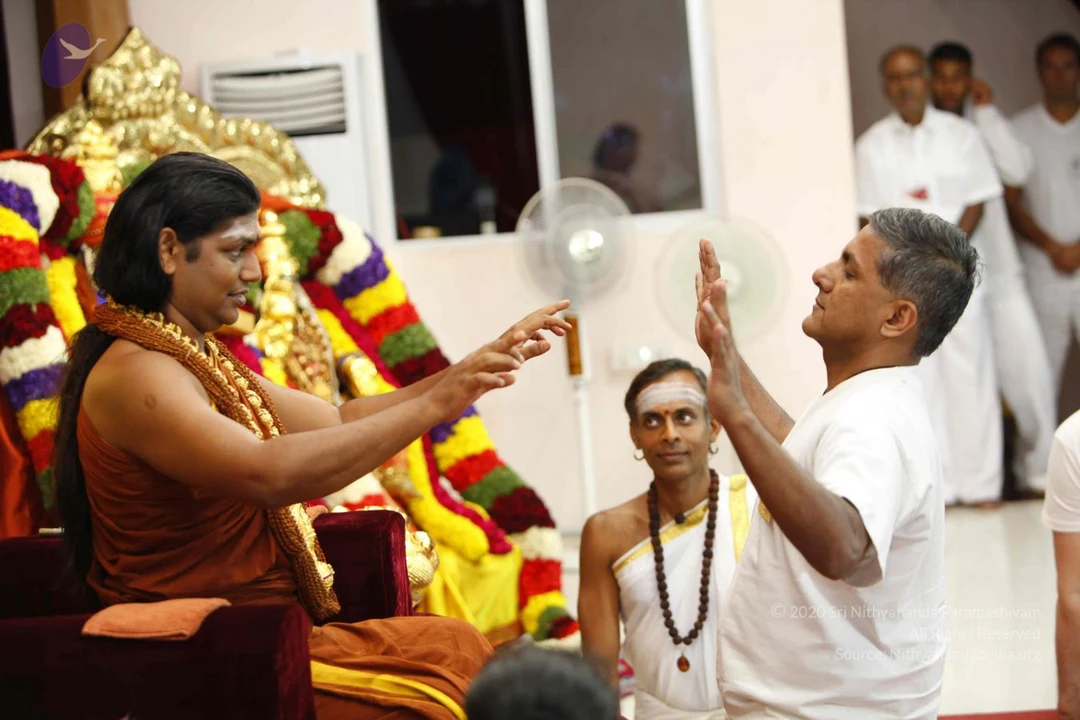
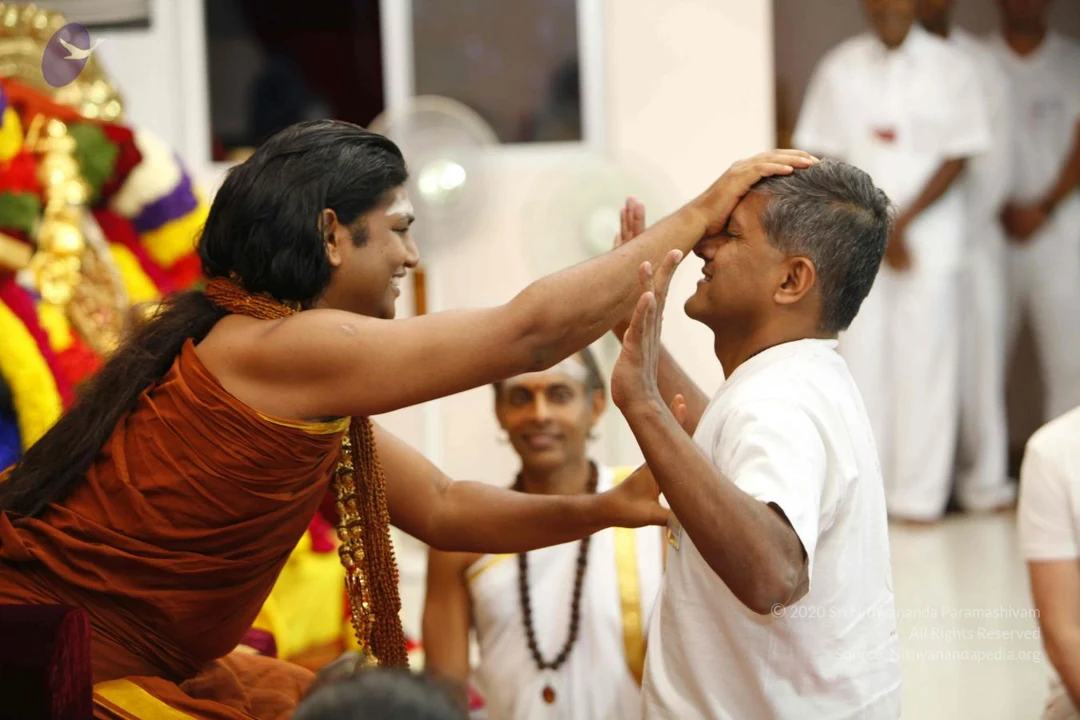
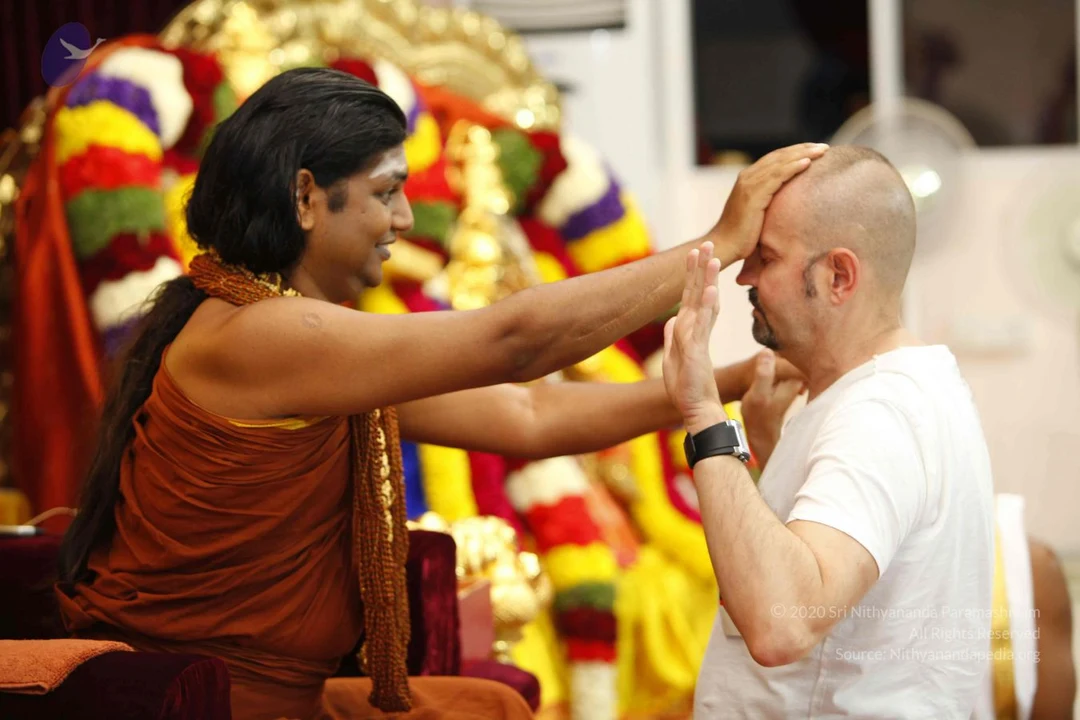
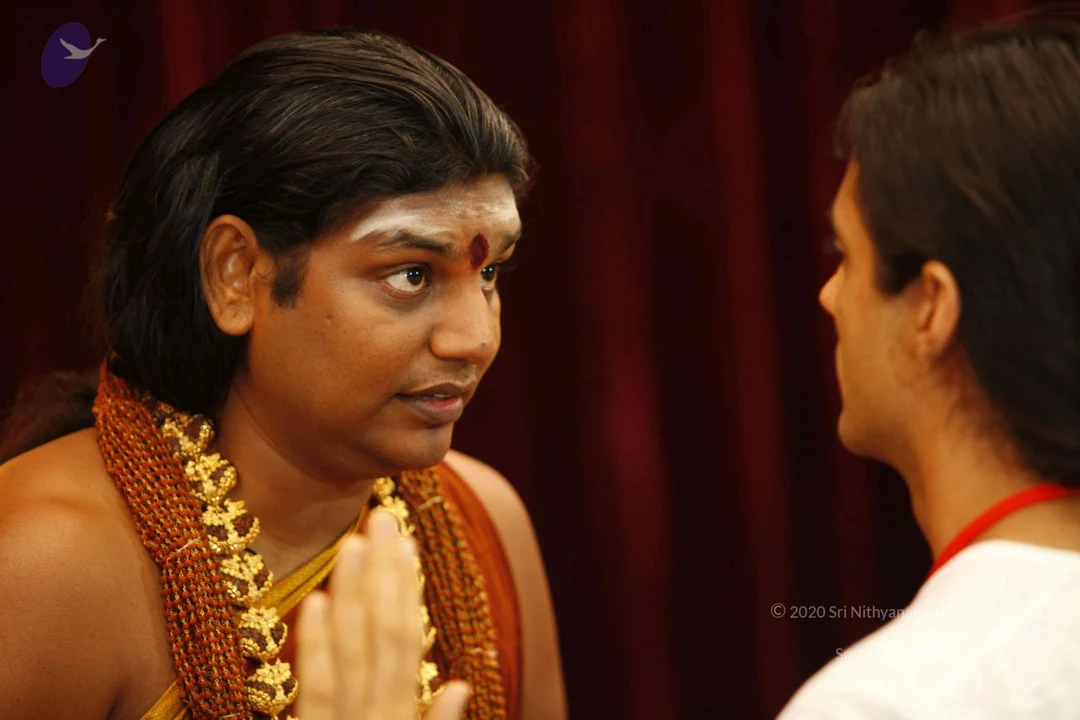
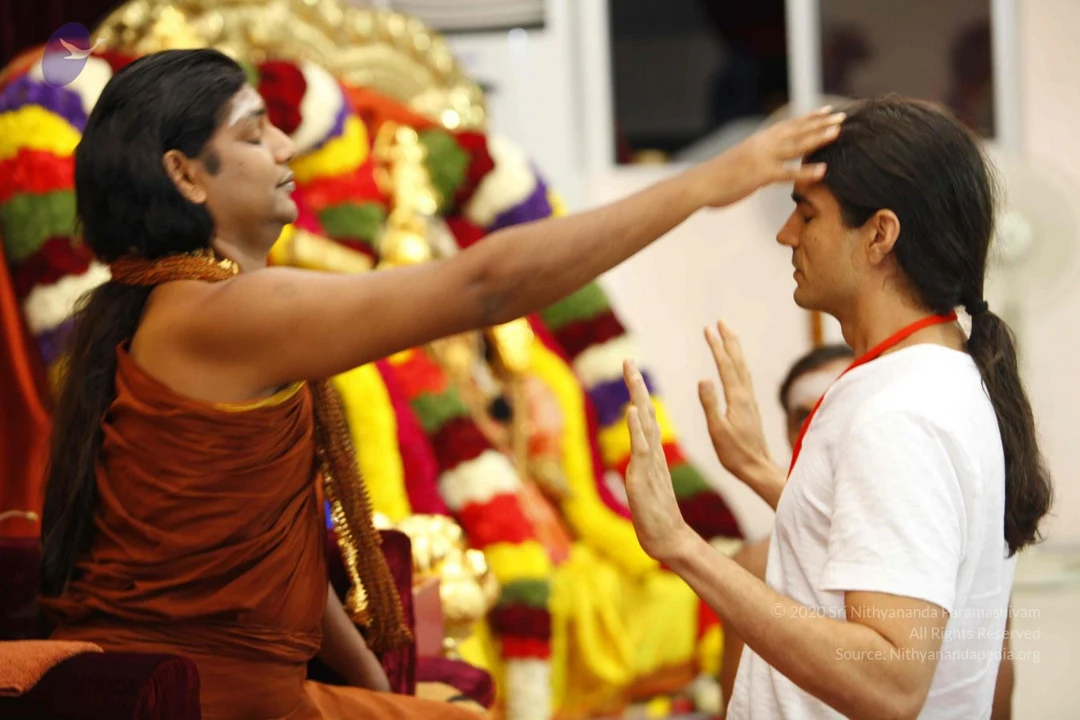
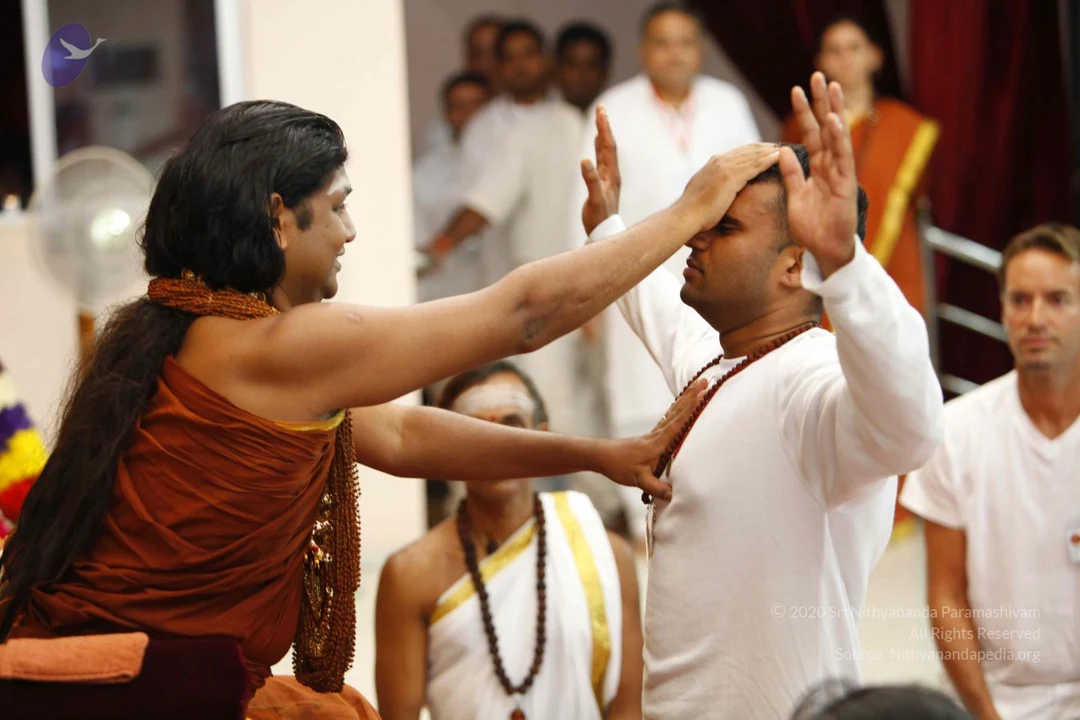
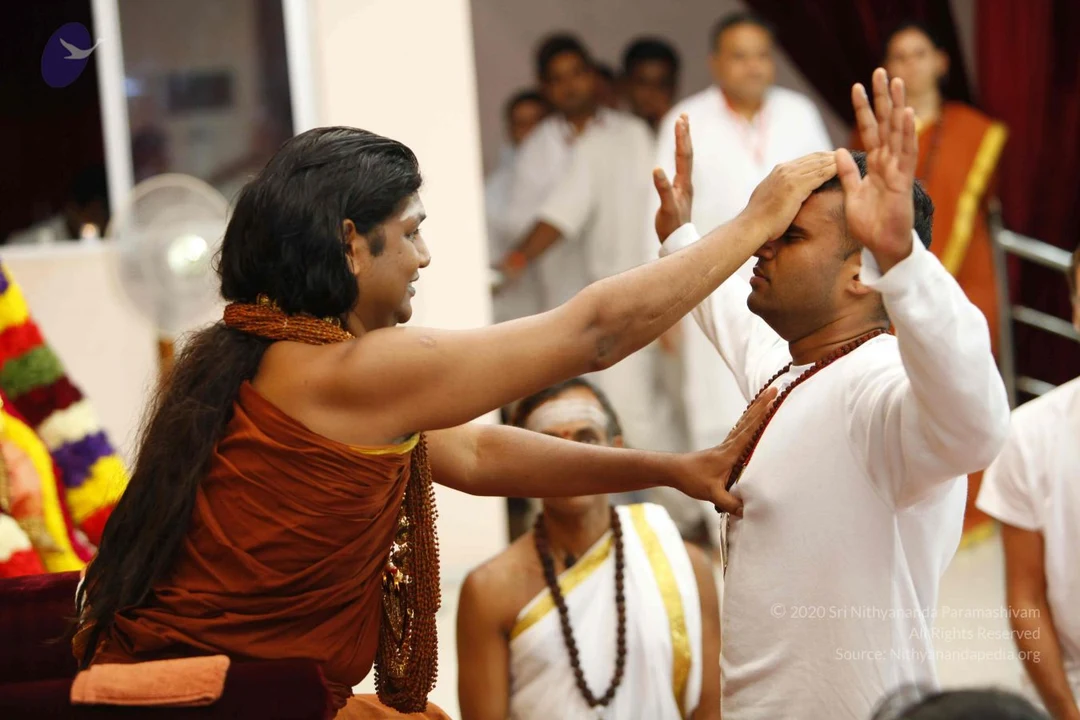
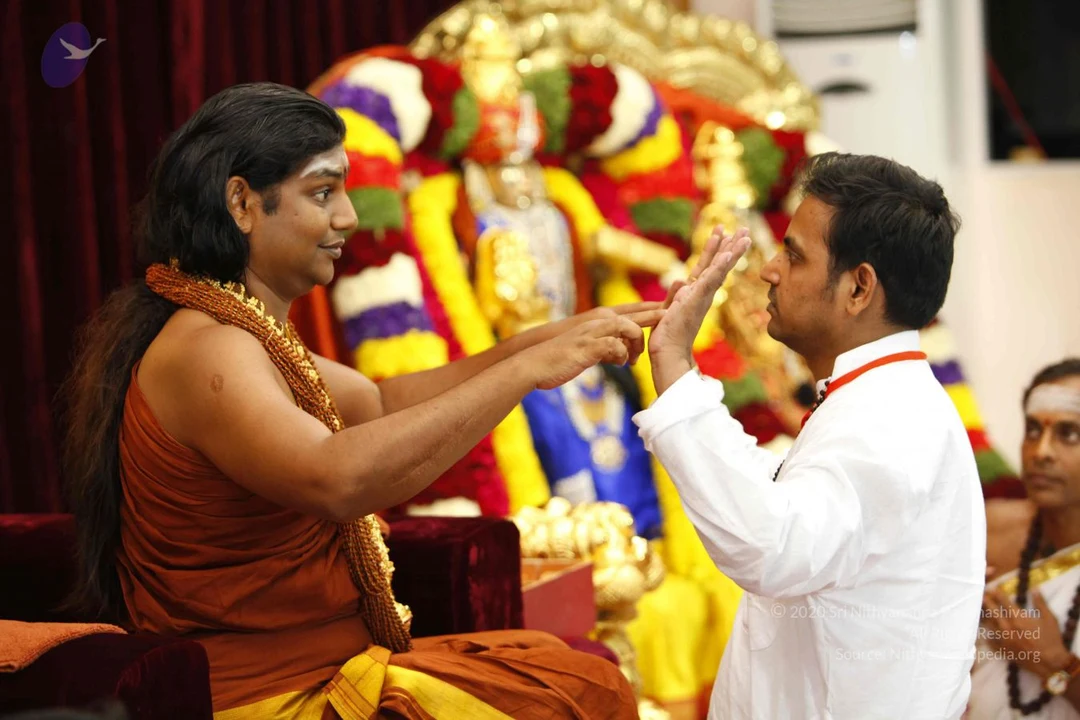
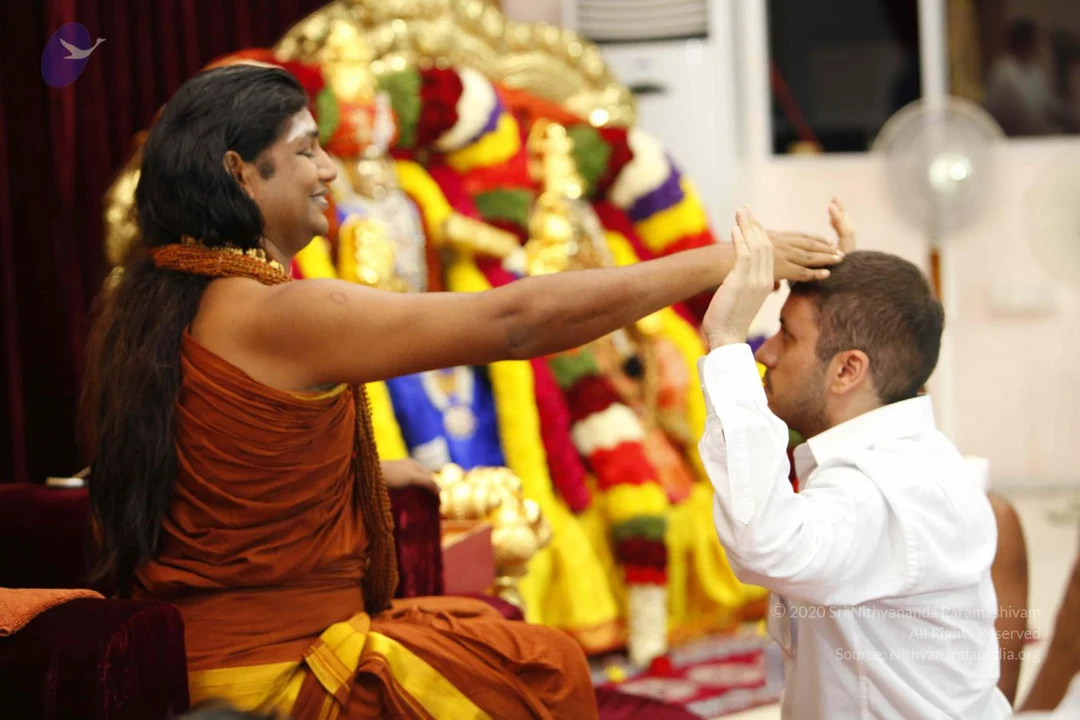
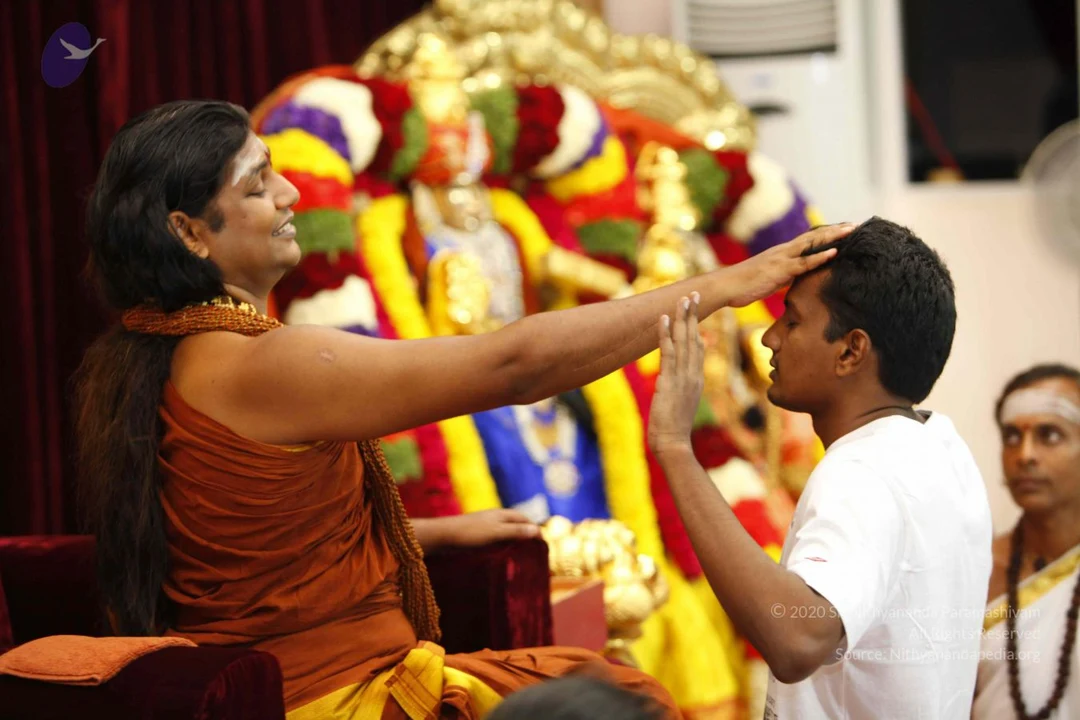
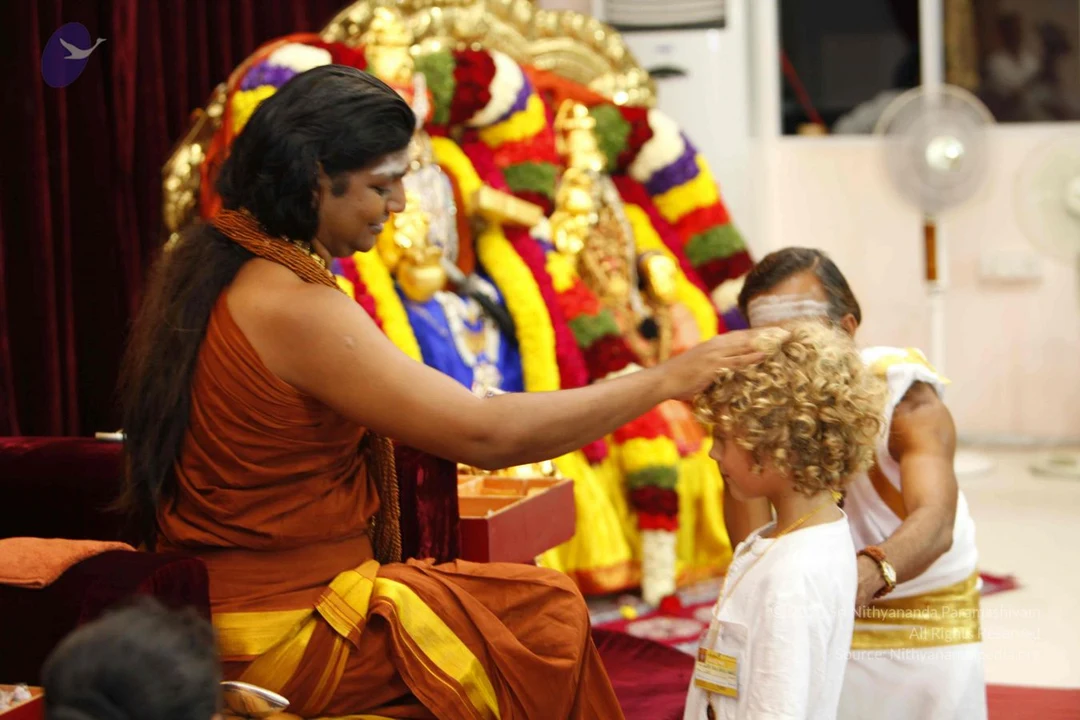
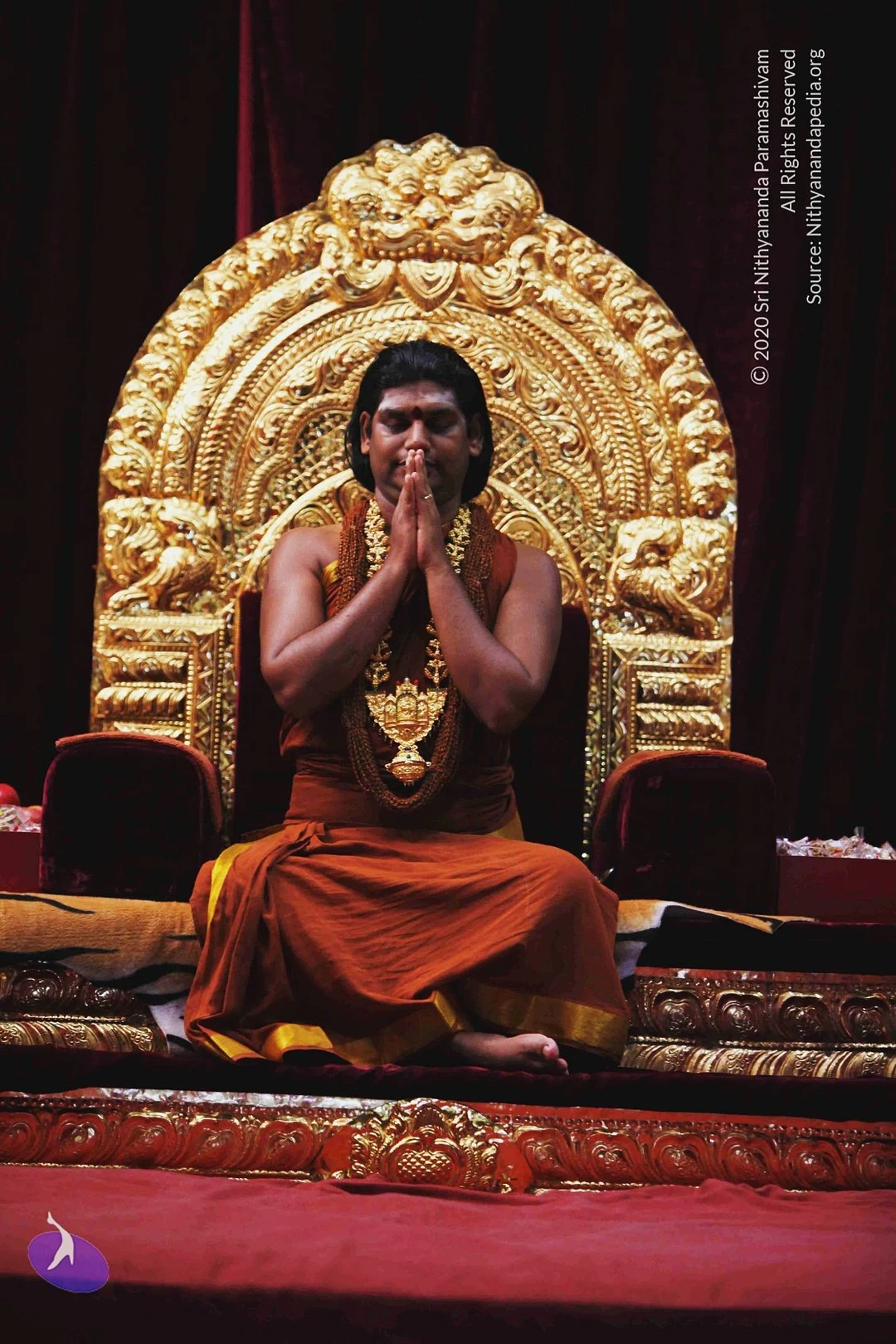
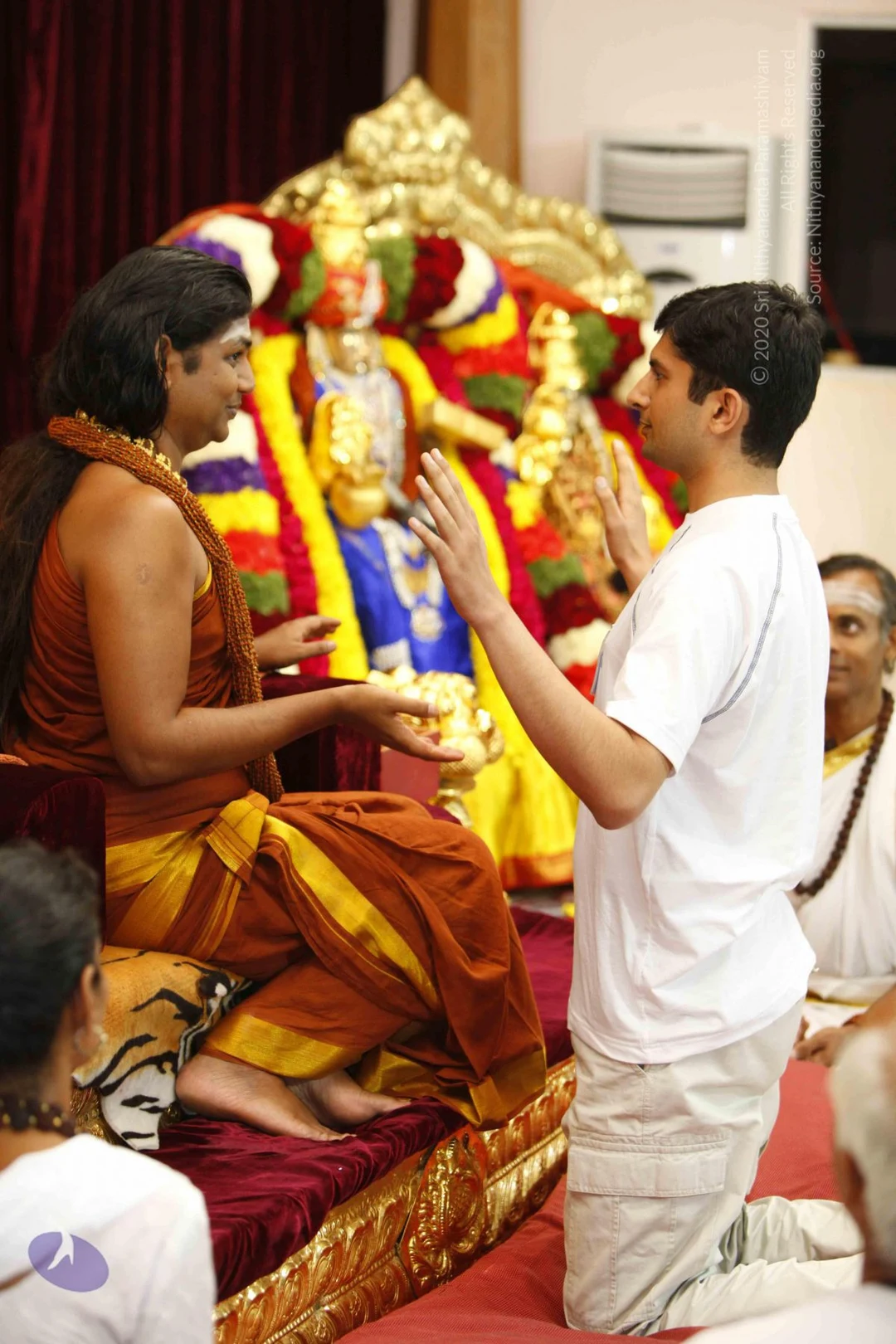
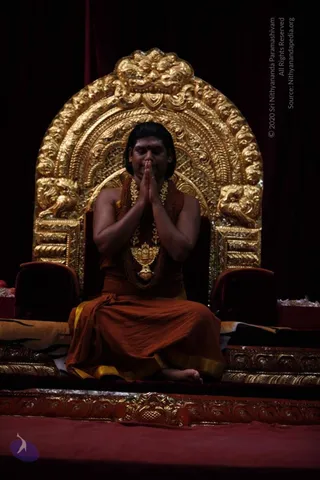
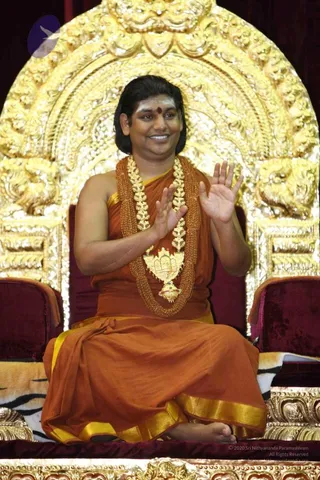
A man sits cross-legged on a red-draped dais before an ornate gilded throne with carved lion figures and a scrolled arch. He presses his palms together in anjali mudra with eyes closed, wearing an orange-saffron dhoti with gold border, a long dark rudraksha mala and a large gold pendant necklace, plus a red tilak on his forehead. Swamiji (probable): long swept-back hair, saffron clothing, rudraksha mala and ceremonial gold necklace, seated on a throne. Dim red velvet drapes frame the scene.A seated man in an orange-saffron robe and yellow-orange sash sits on an ornate gold throne with carved lion heads and a tall arched back, in front of deep maroon velvet drapery. He wears a long gold ceremonial necklace with a large gold pendant, a rudraksha-style mala, and a red bindi on his forehead. His long dark hair is swept back, and he raises both hands in a welcoming gesture while smiling. Fruit and flowers sit on pink-topped tables at the sides of the throne. a person appears in person, seated in the central role of the teaching throne.A seated man in orange-saffron robes with gold border sits cross-legged on an ornate gold throne with carved arches and red velvet armrests, smiling and raising both palms in a welcoming gesture. He wears a long gold-beaded mala with a large gold pendant and has a red bindi and white marks on his forehead. Swamiji (probable) appearance-based cues: long swept-back hair, saffron robes, rudraksha-style mala and ceremonial gold necklace, seated on a throne in a satsang setting. Nobody else is visible.A man seated on a maroon velvet armchair in front of an ornate gilded arched throne back with carved lion-like motifs and a deep red drape. He wears an orange-saffron shawl over his torso, a long gold ceremonial necklace with a large gold pendant, and has long swept-back dark hair and a red bindi on his forehead. Fruit and flower offerings lie on a small table at the lower edge. Swamiji (probable): long swept-back hair, saffron clothing, ceremonial gold necklaces and a seated throne position are visible cues. One person is present.A seated man in an orange-saffron robe wears a long gold-bead necklace with a large ornate gold pendant and a rudraksha-style mala, with a red bindi on his forehead. He sits in an ornate gold-leaf throne with carved lion and floral motifs, against a deep red curtain, with his hands raised in an open gesture. Fruit and flower offerings lie on a small red table at the lower edge. Swamiji (probable): this seated figure on the throne has long swept-back hair, saffron clothing, a bindi and ceremonial gold necklaces, consistent with the page's Swamiji claim, though the appearance cues are only moderately distinctive.A seated man in a saffron-orange robe and a long gold-and-bead necklace with a large gold pendant reaches out to touch the forehead of a kneeling man in a white collared shirt and rudraksha mala. The seated figure has long swept-back dark hair and a white tilak on the forehead, and he smiles. Behind them stand a large deity murti decorated with a multicolored garland of red, yellow, green, white and purple flowers, with gold ornaments visible. The kneeling devotee holds his hands together in a receiving gesture, consistent with darshan or blessing. A white wall and a fan appear at the right edge.

Temple

47 photosSource gallery
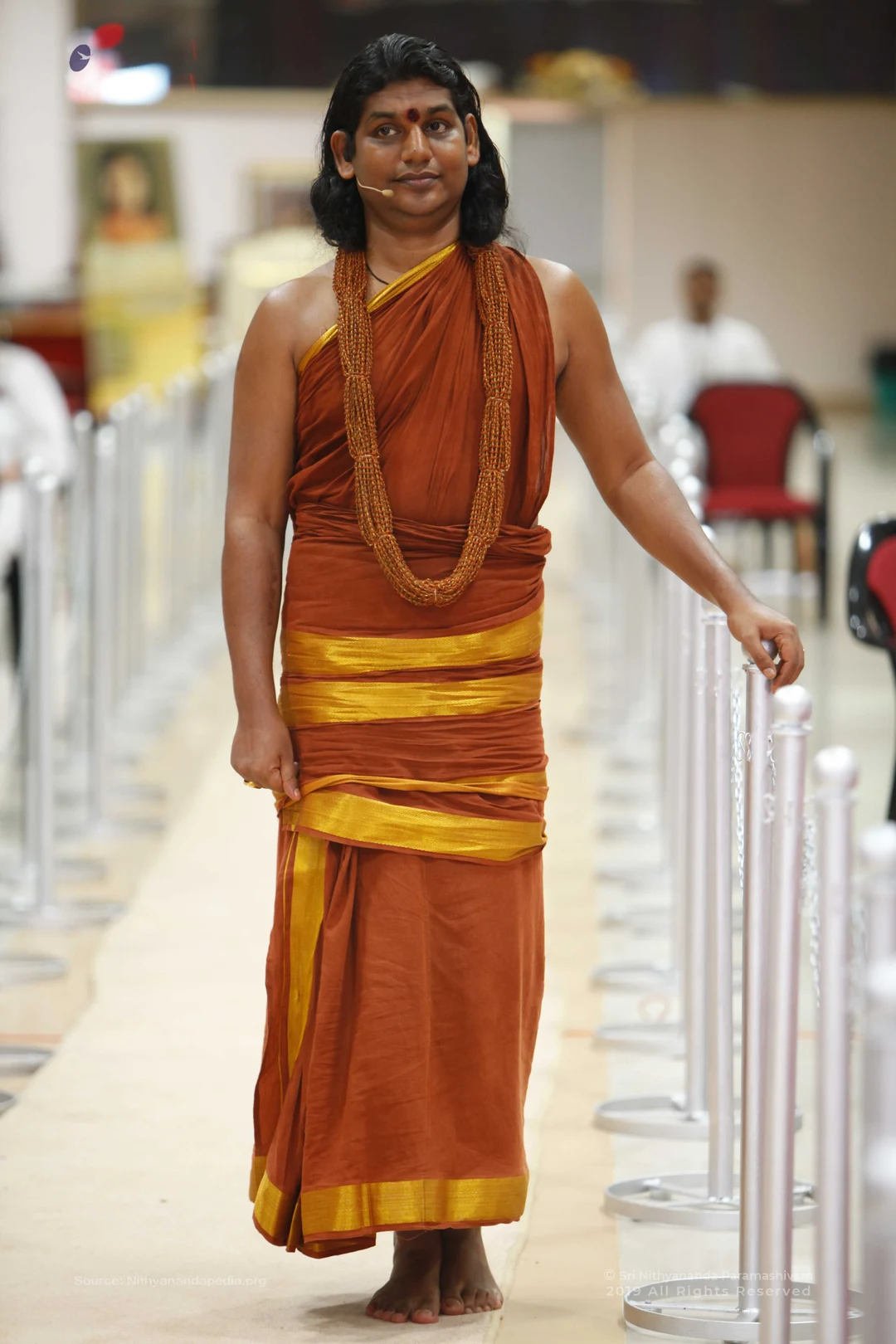
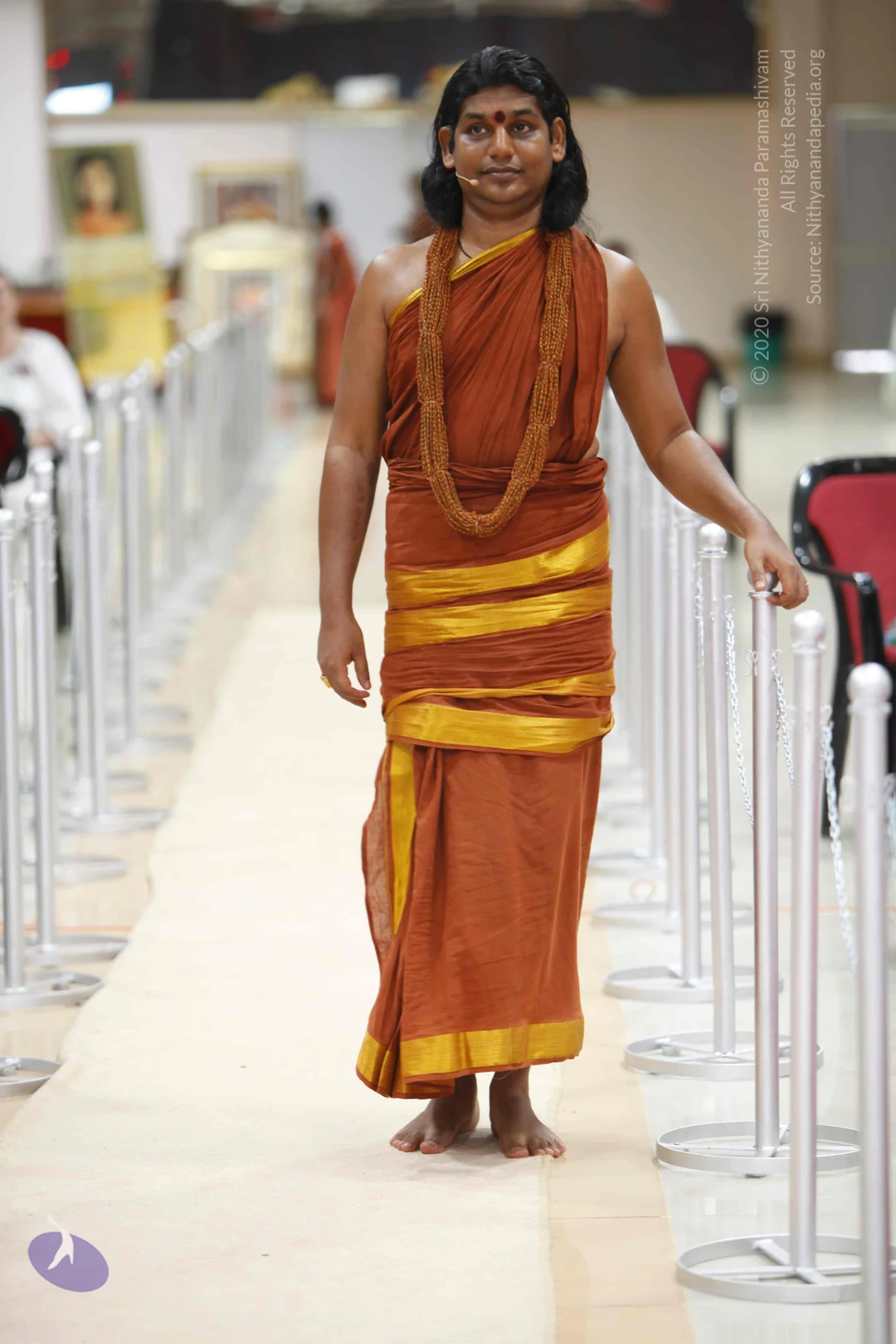
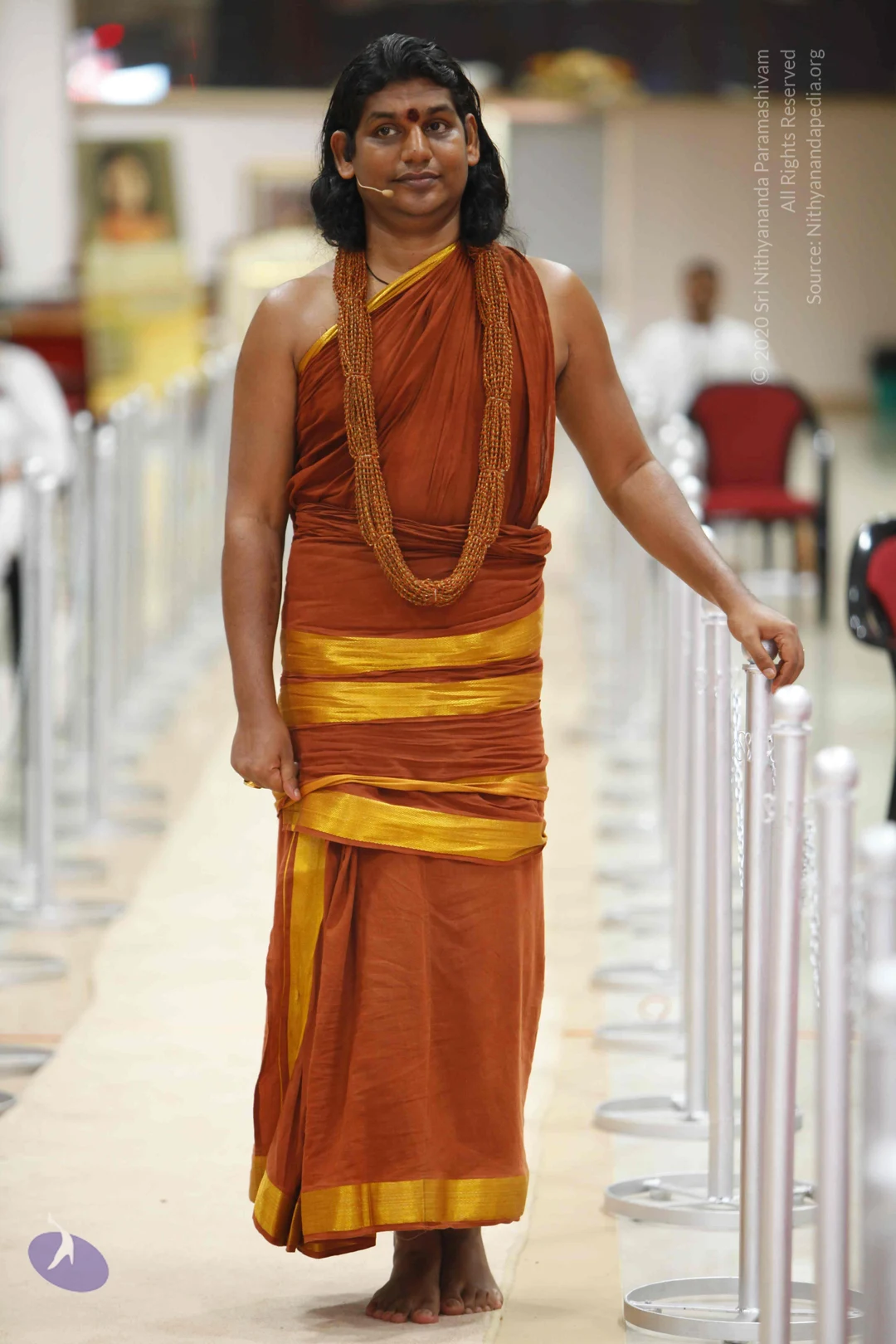
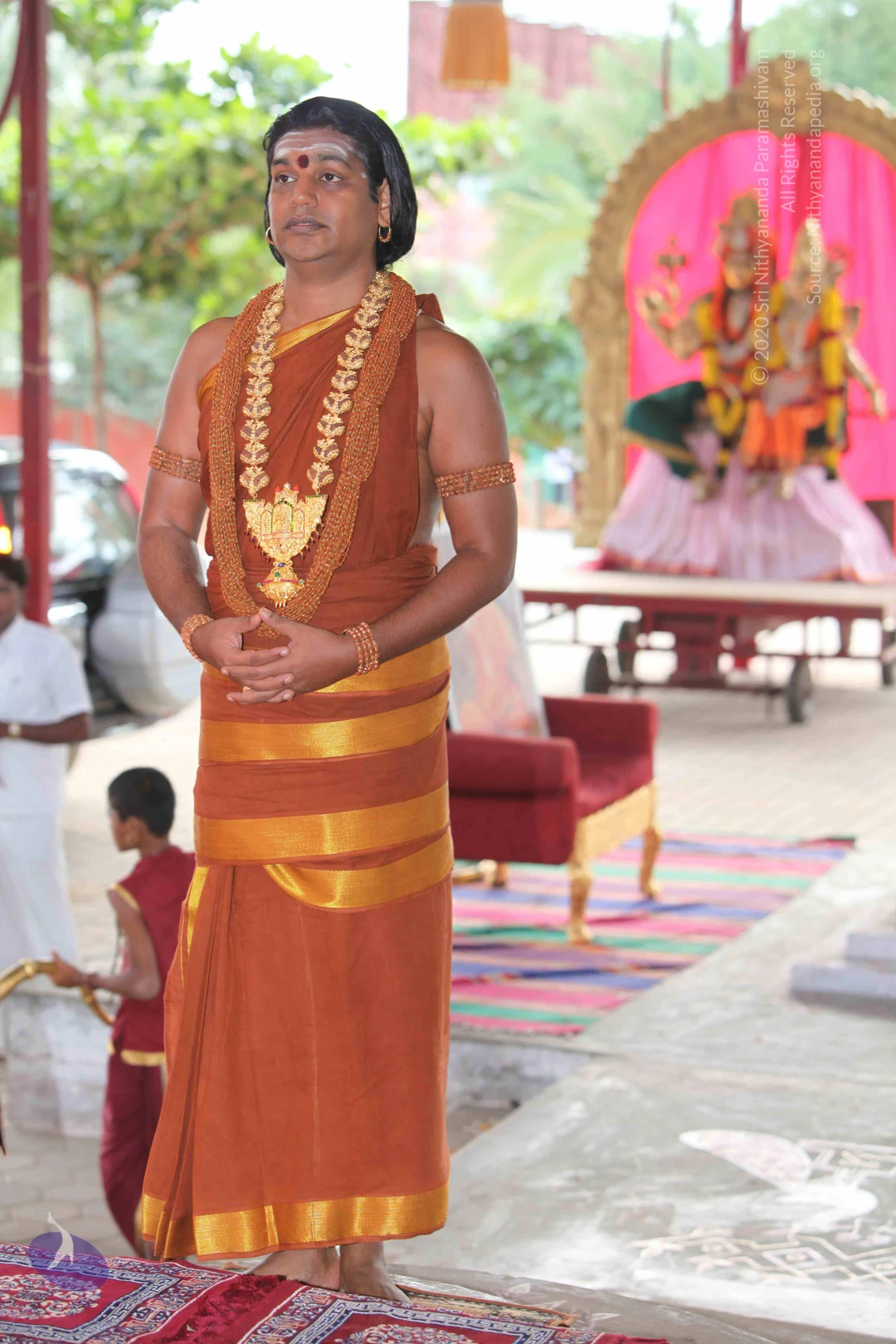
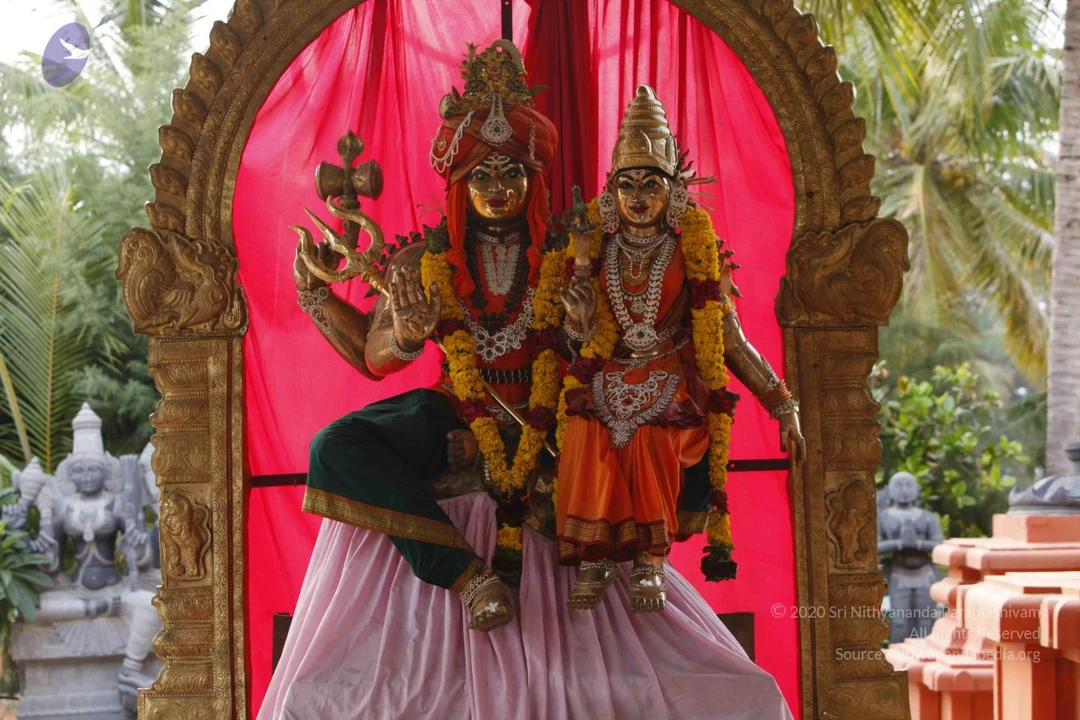
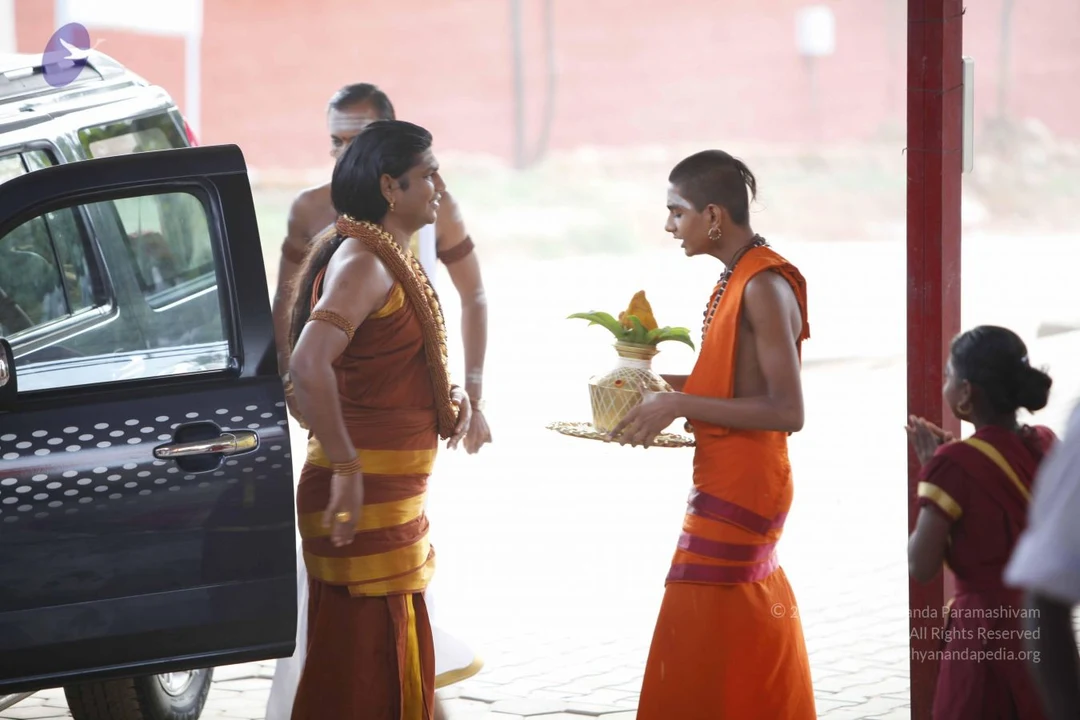
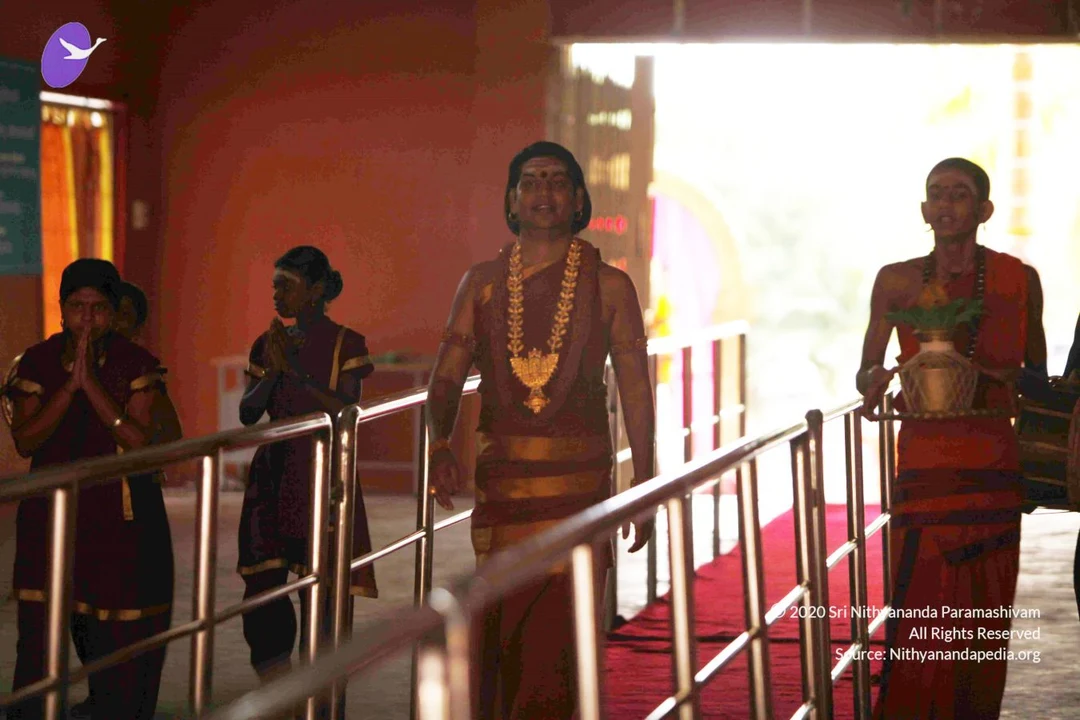
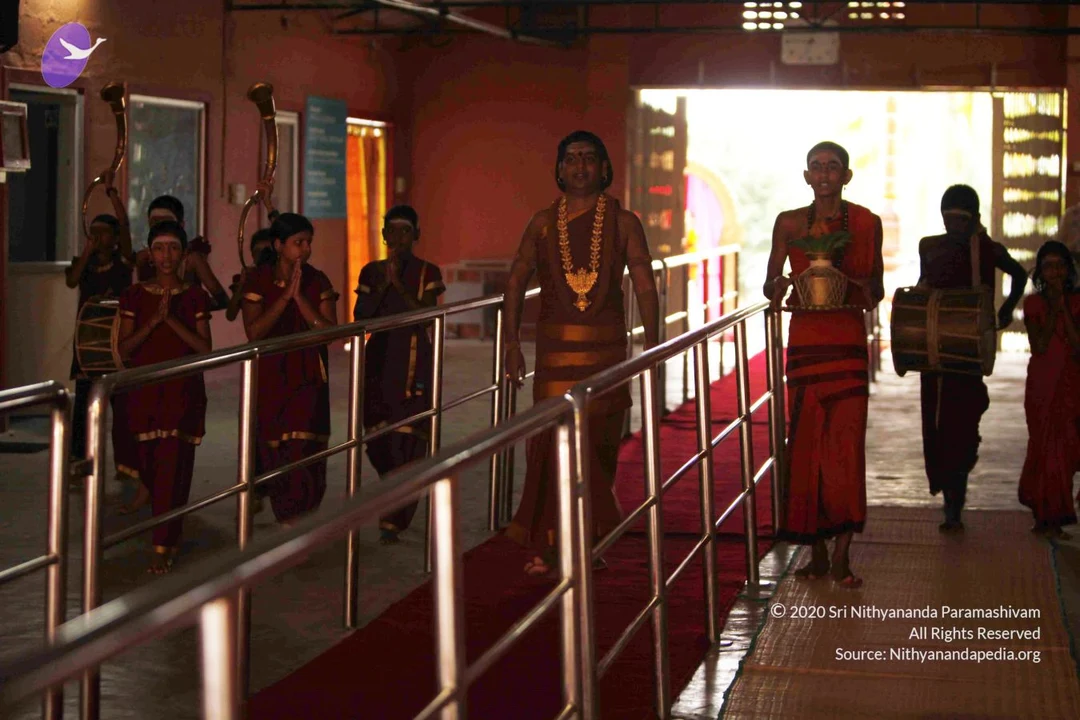
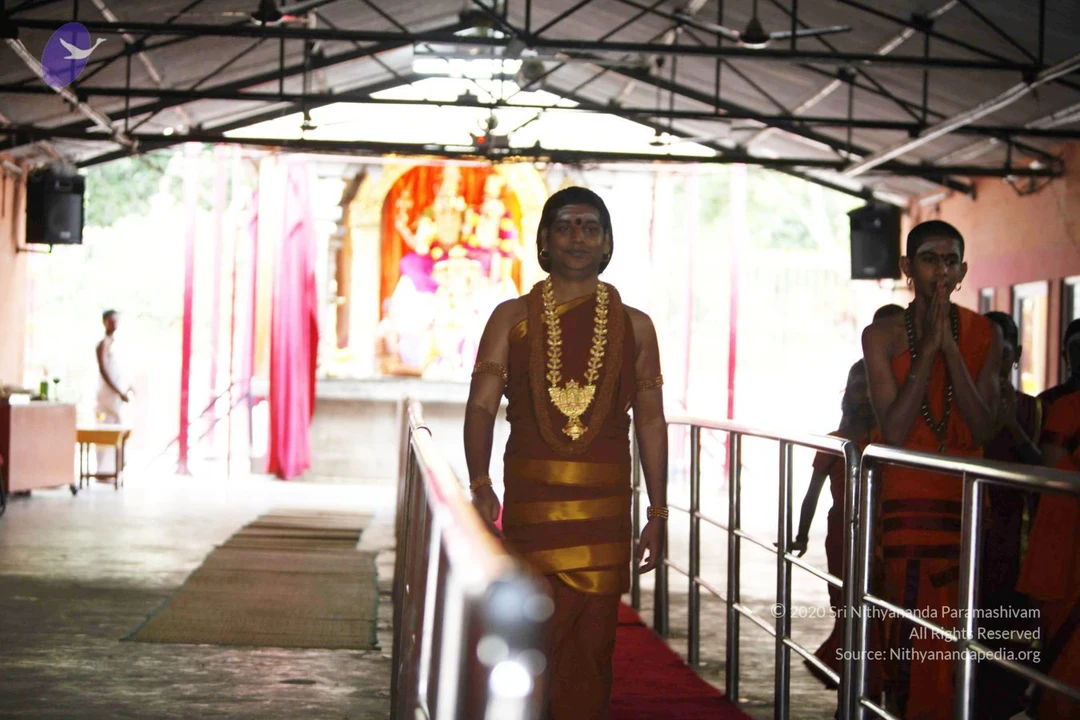
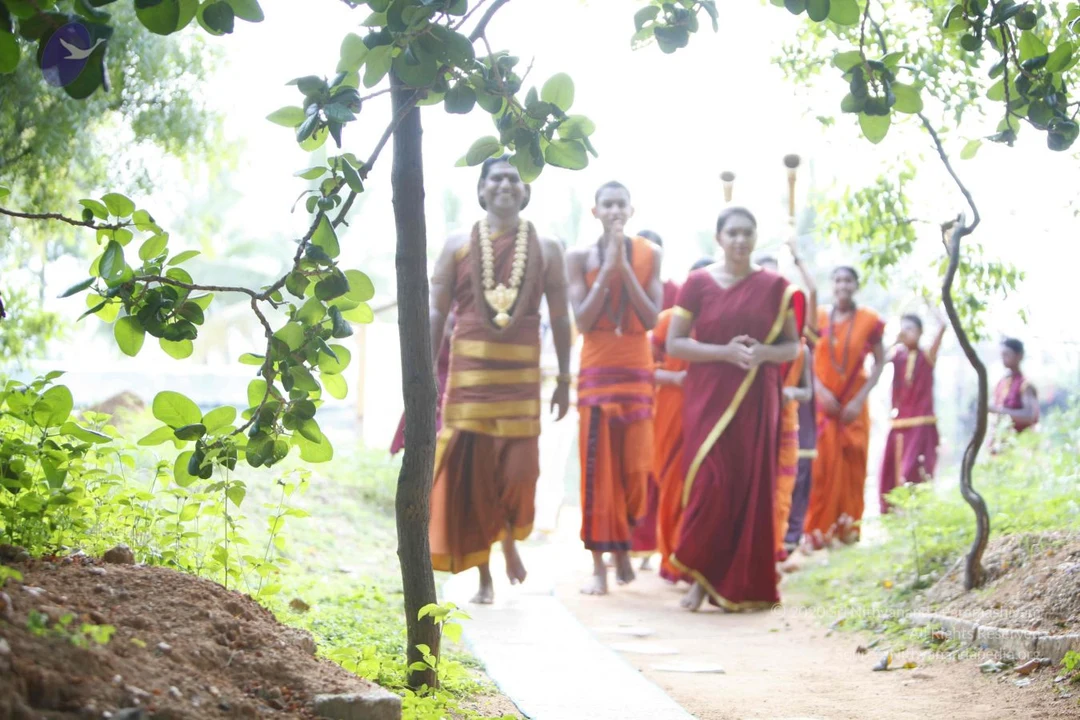
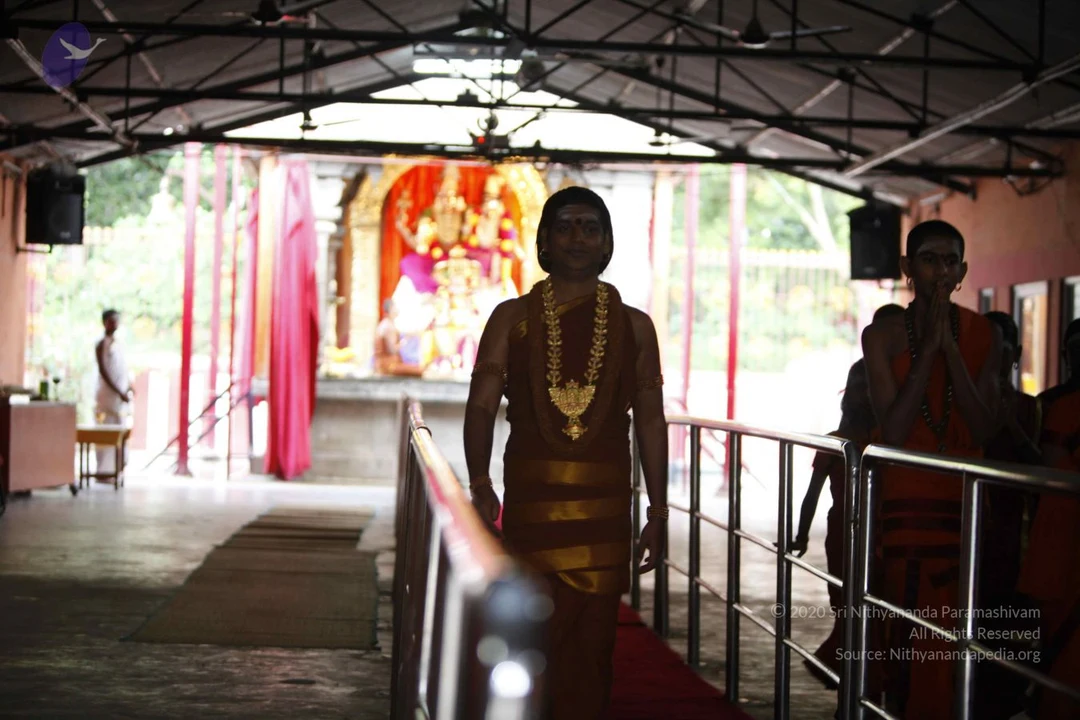
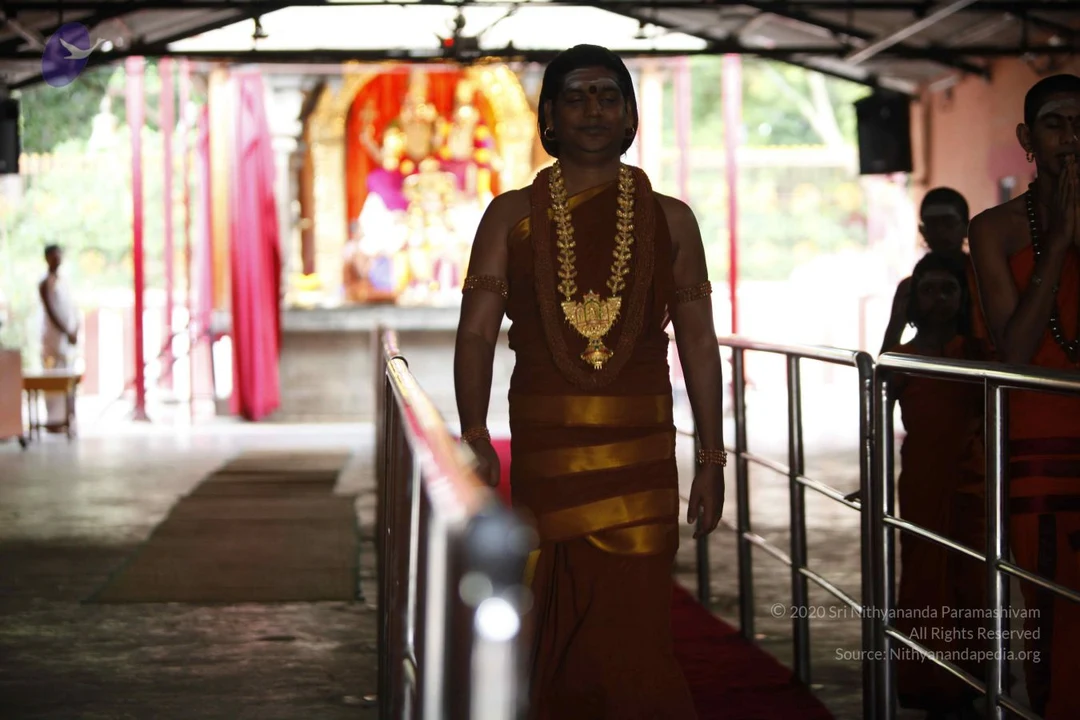
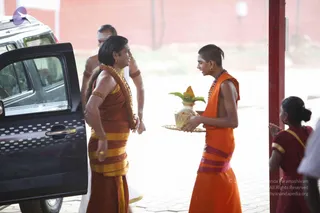
A photograph of a ceremonial procession walking along a red carpet between metal railings in an indoor hall with red-brown walls. At centre, a man with long swept-back hair, a red bindi and a rudraksha-style gold chest ornament wears an orange-saffron dhoti with a gold-bordered waist cloth and a heavy orange garland with gold pendant, and gold armbands; he is bare-chested and walks with hands loosely open. To his right, a young attendant in an orange dhoti and maroon-striped sash, with a rudraksha mala and white forehead marks, carries a brass tray holding a small kalasha-style pot with green leaves. Behind, several young women and girls in maroon and gold-bordered outfits stand with palms pressed together in namaste, and a figure at left holds a long brass ceremonial horn.A standing man in an orange-brown dhoti and shawl with broad gold borders stands barefoot on a patterned red-and-gold rug, hands joined at the waist. He wears a long gold ceremonial necklace with a lotus-shaped pendant, gold armlets and bangles, a red bindi and white forehead markings, and long swept-back dark hair. Behind him, a red-cushioned gold-legged chair sits on a colourful striped mat, and a pink-draped arch frames a deity murti with garlands. A child in red and a man in white stand at the left edge. Swamiji (probable): the standing man wears saffron-orange ornate clothing, long swept-back hair, a gold lotus pendant necklace and gold armbands.A standing man with long, swept-back dark hair and a small gold hoop earring wears a rust-brown and gold-bordered wrap over his shoulders and waist. He has layered rudraksha malas across his chest and a long ornate gold necklace with a large gold pendant set with coloured stones. Rudraksha bands encircle his upper arms and wrists, and his hands are clasped at his waist. The indoor background is blurred with green foliage and red pillars. A second figure in white stands at the left edge, partly out of focus.A photograph of two processional deity murtis seated together on a golden arched palanquin against a bright red draped backdrop, with palm trees and stone sculptures behind. The figure on the left wears a red-orange turban and crown, holds a trident and a small ritual object, and is adorned with white beaded necklaces and a green and gold garment. The figure on the right wears a tall golden crown, orange skirt, and a layered white and red garland of flowers. Both are draped in marigold and red flower garlands. No physical people are visible.Two golden metal murti statues sit side by side against a pink draped curtain within an ornate gold arch. The left figure wears an orange and red turban, rudraksha mala, white floral necklaces, and holds a trident and a damaru-like drum; the right figure wears a gold conical crown, layered pearl and gold necklaces, large earrings, and an orange garment. Both are adorned with yellow and red garlands and have red tilak markings. A small green parrot perches on a staff near the right figure. The scene is a deity murti display, not living people.A photograph of an outdoor courtyard beside a dark car with a polka-dot door. A man with long swept-back hair, wearing a rust-orange wrap with yellow borders, gold armlets and a gold necklace, stands at the open door. Facing him, a younger person with a shaved head in a saffron-orange robe and rudraksha mala holds a brass tray with a kalasha of mango leaves and a coconut, presenting it. Behind them a man with a bare torso and ash markings stands near a red pillar, and a woman in a maroon dress with yellow trim stands at the right with hands folded in greeting.
Pratyaksha-Pada-Puja

49 photosSource gallery
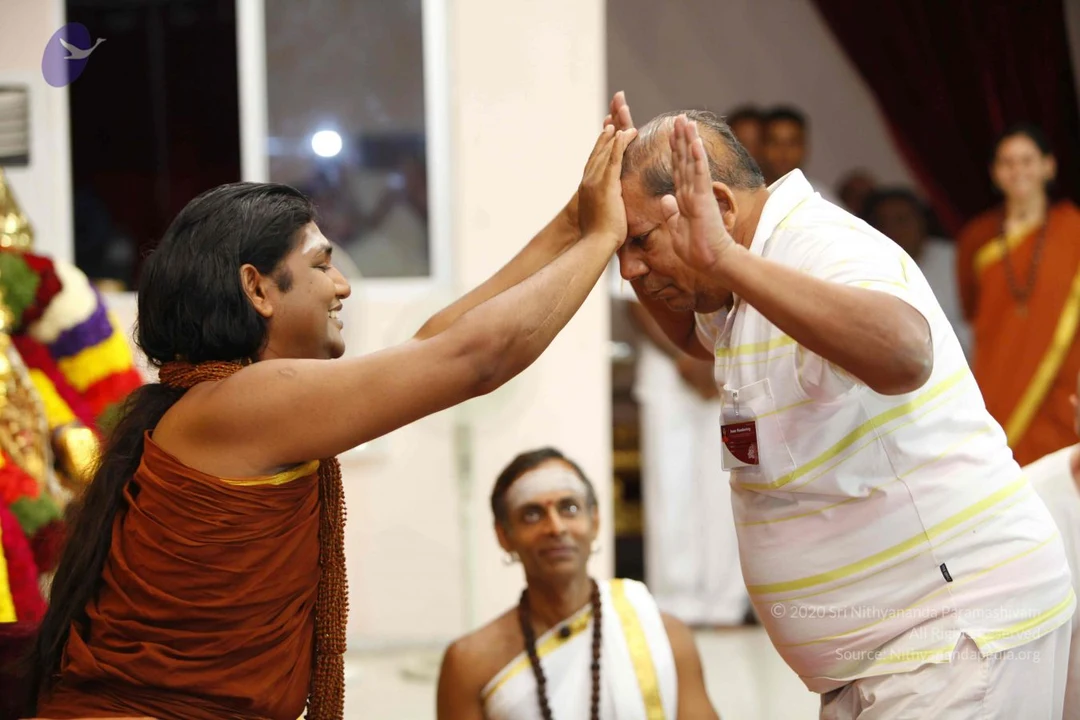
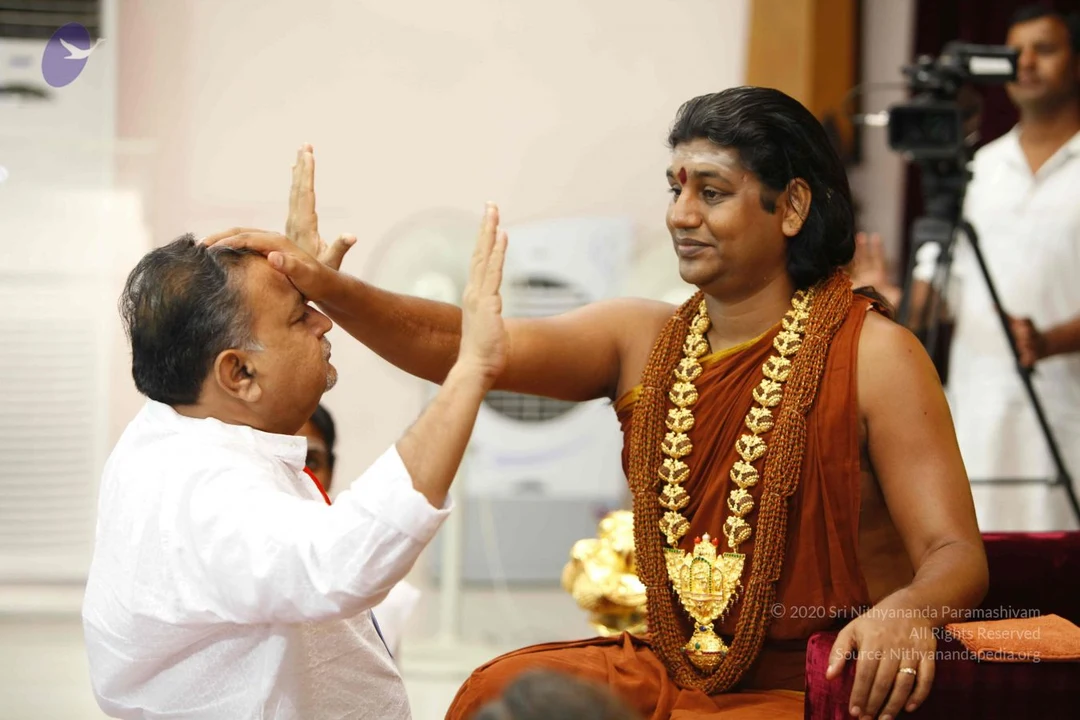
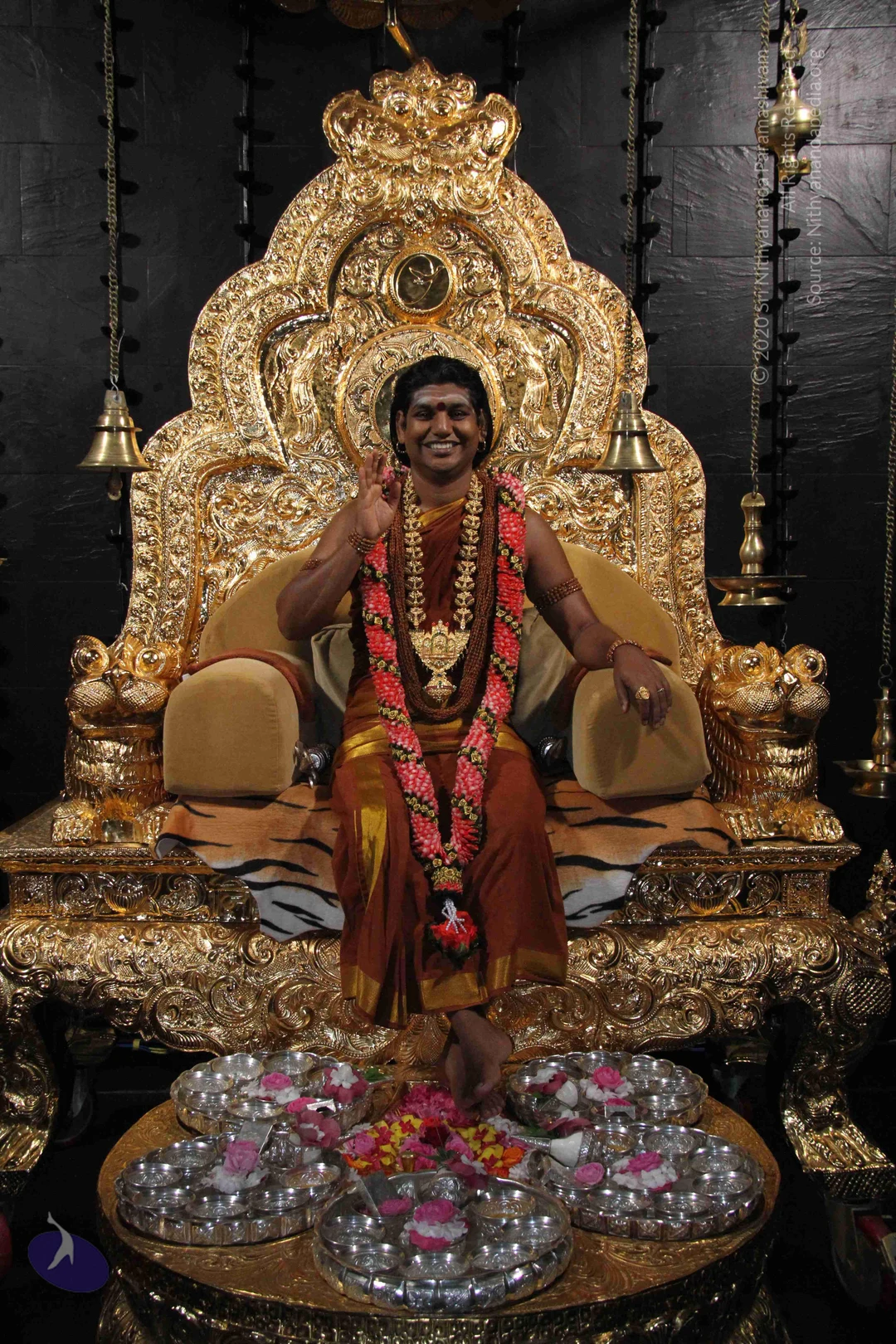
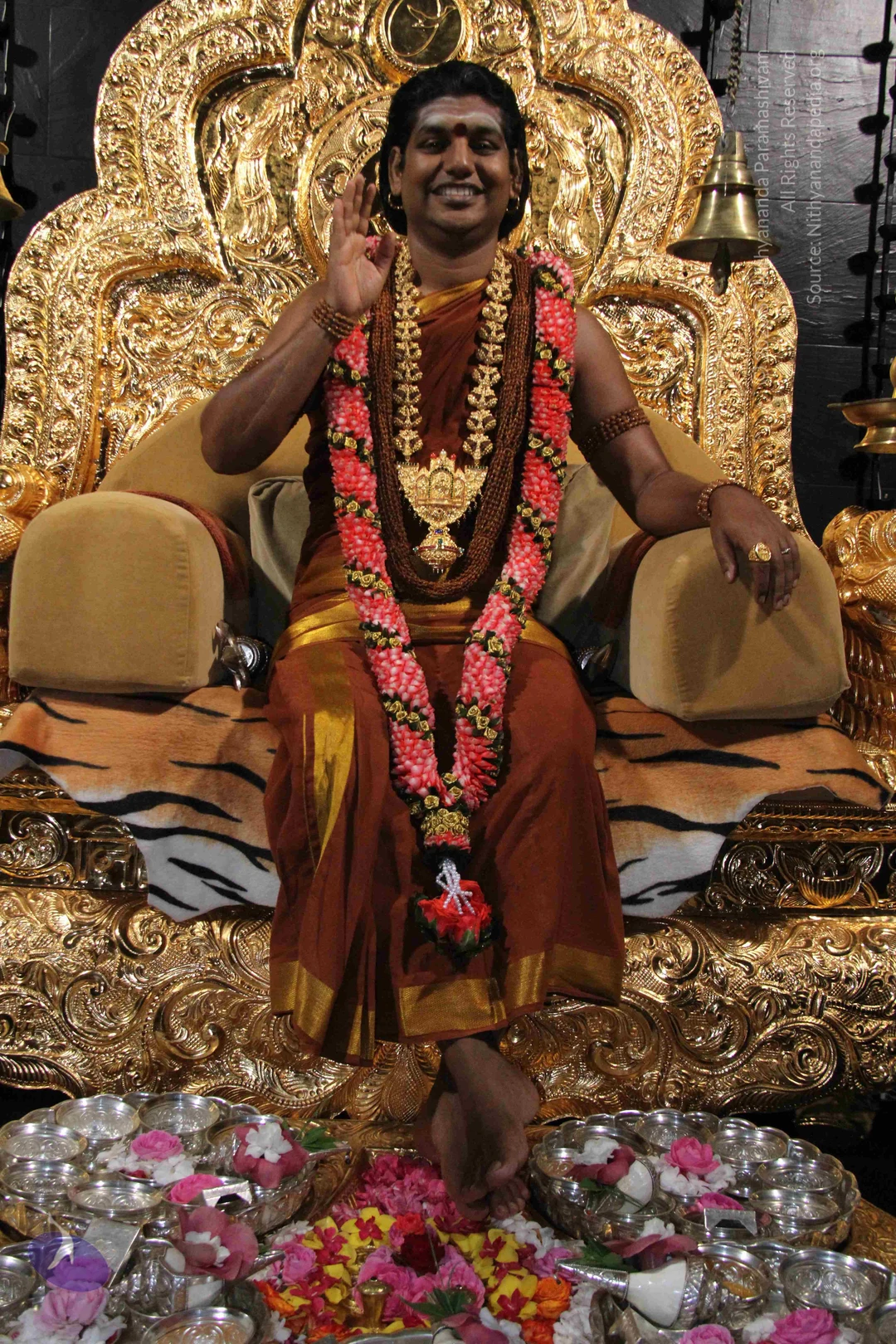
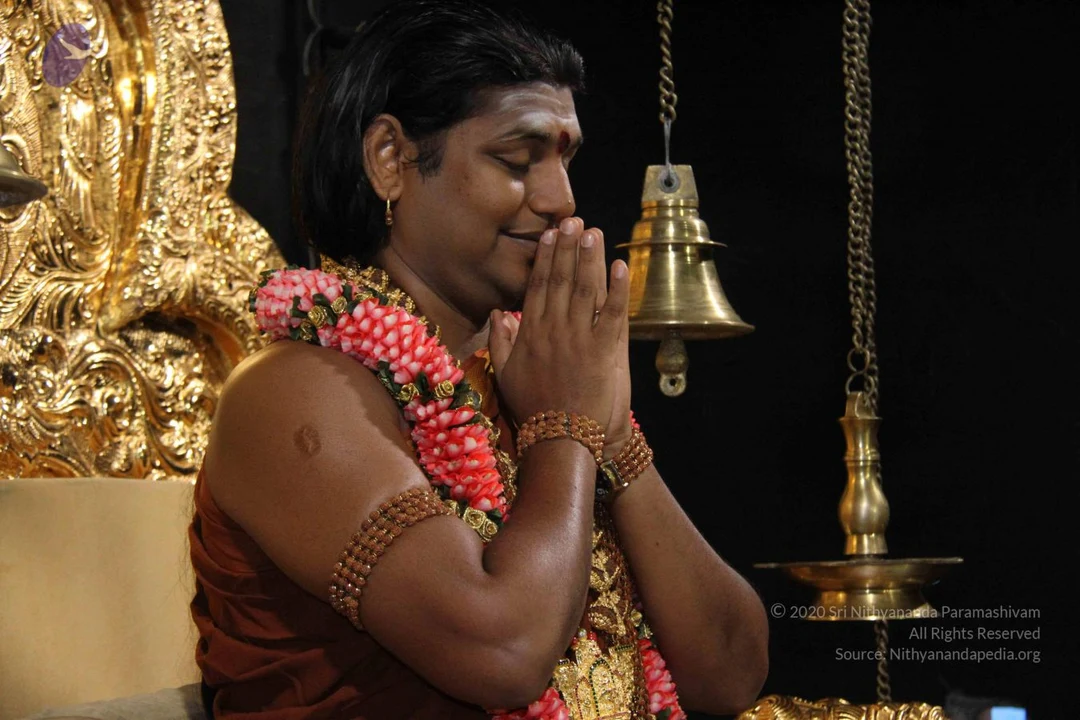
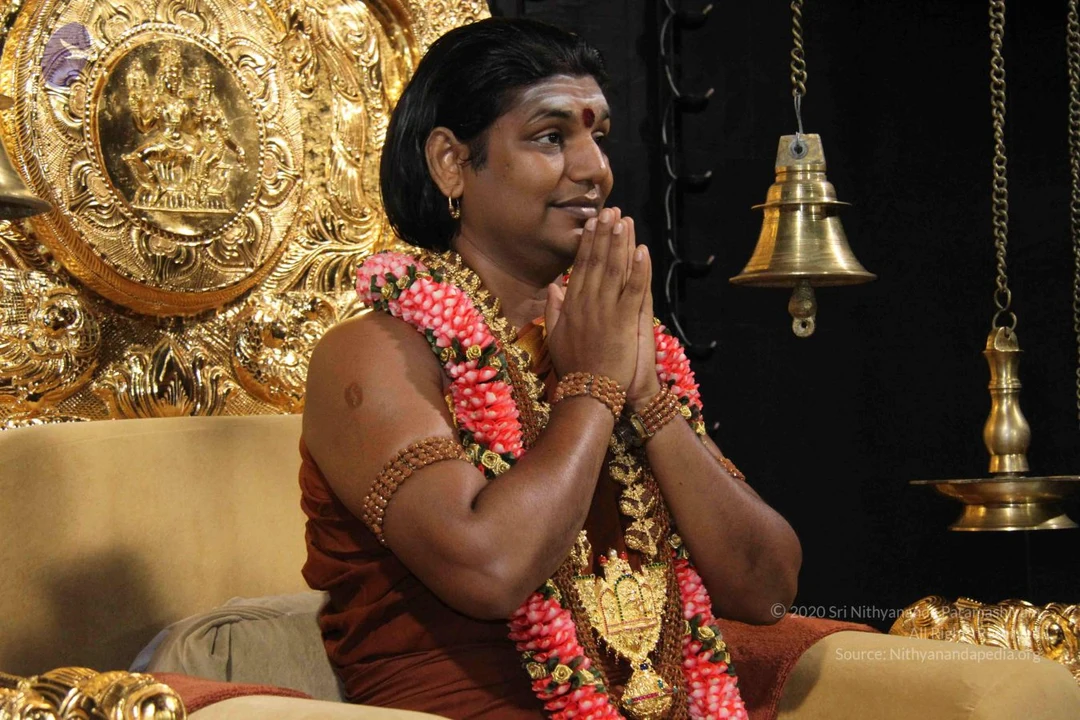
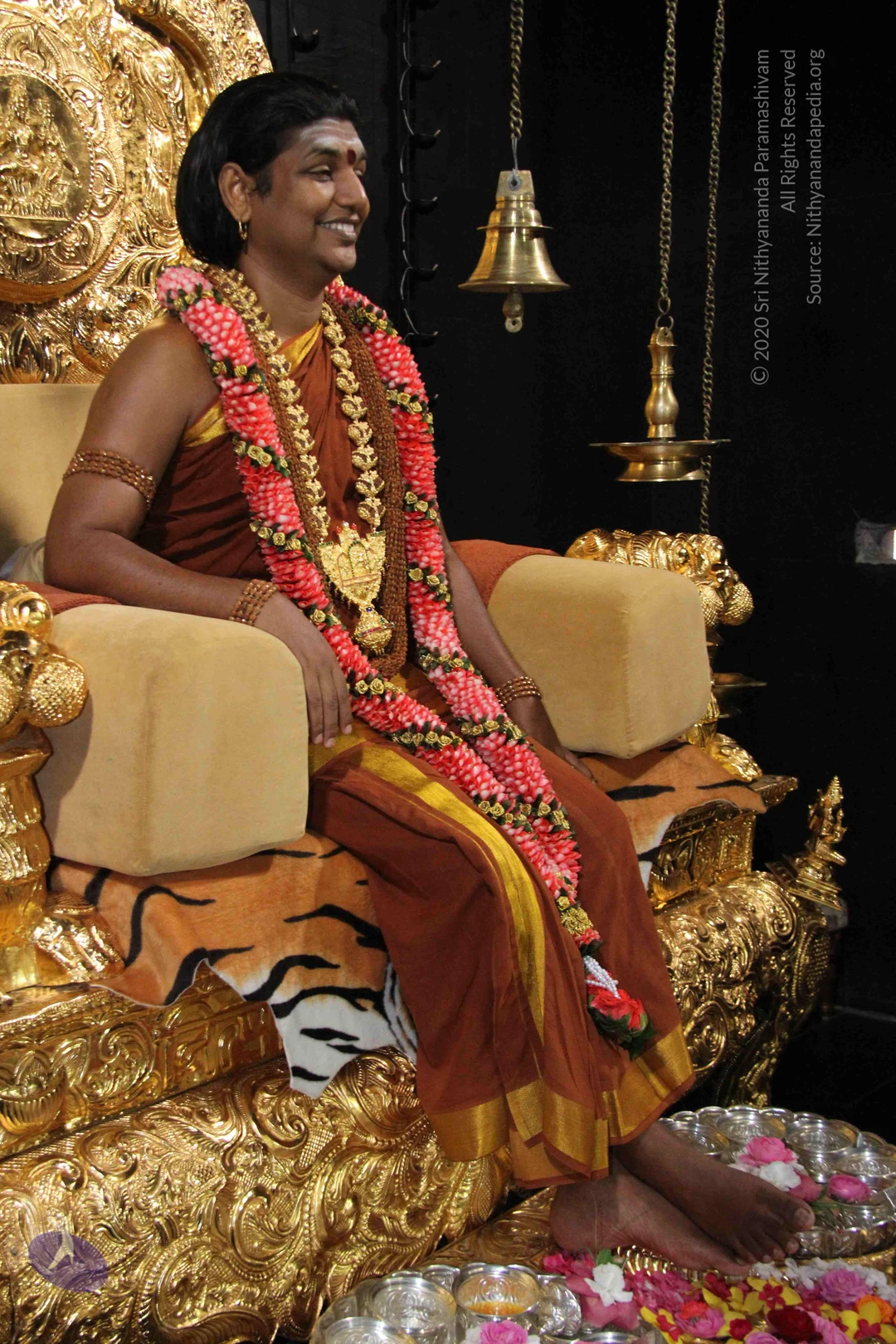
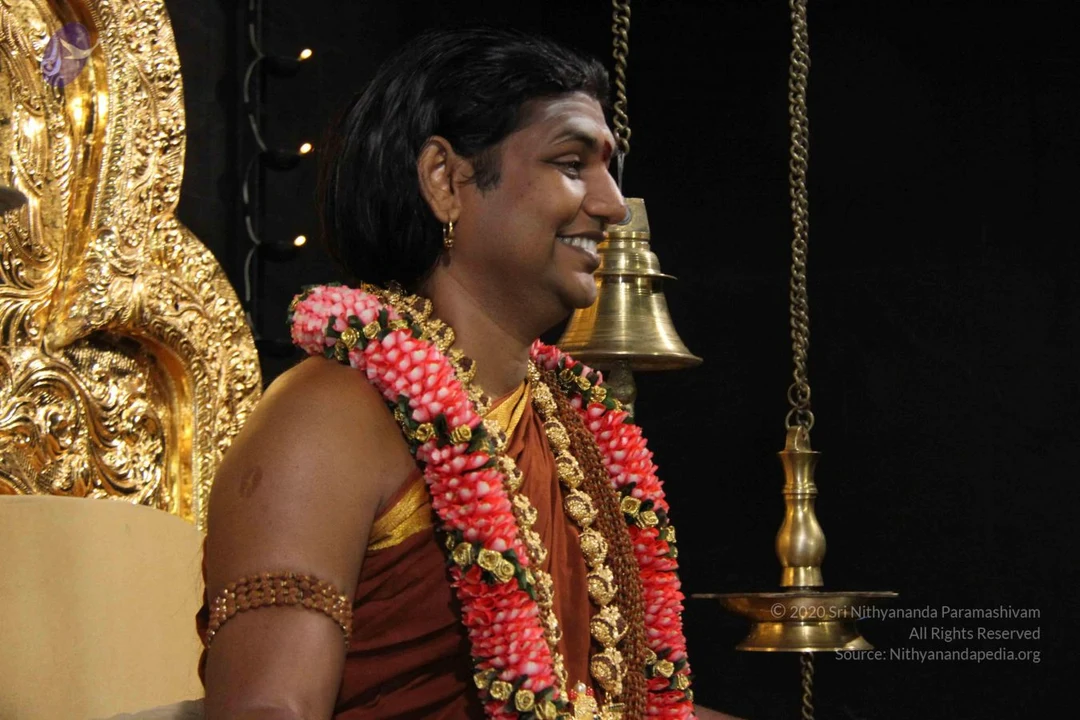
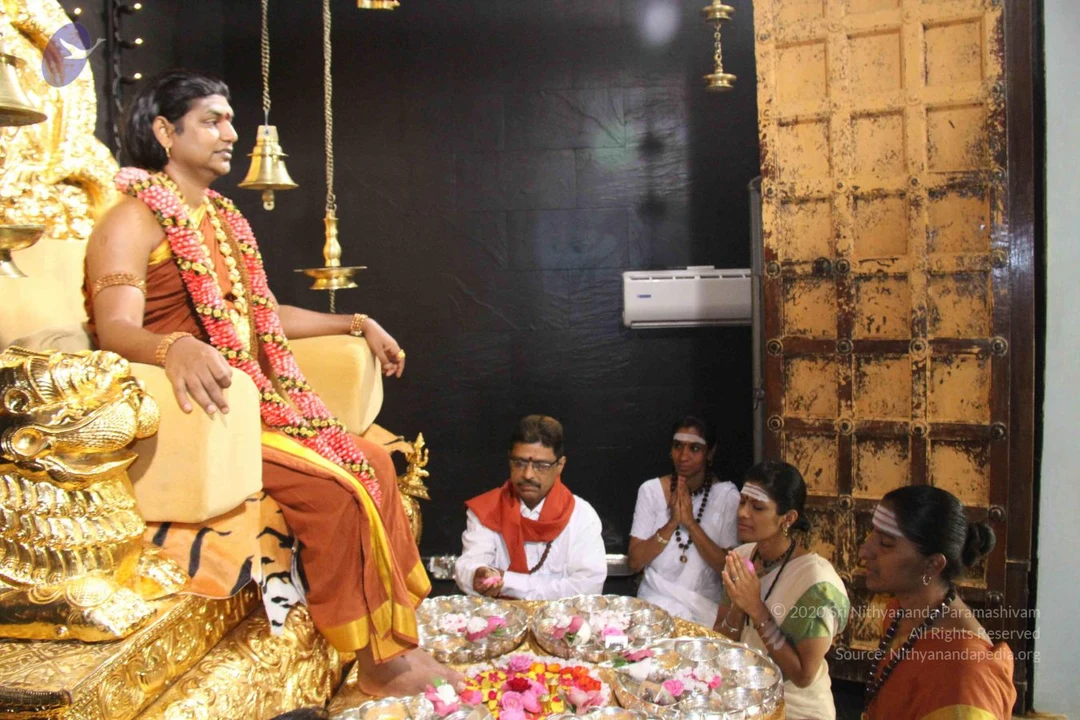
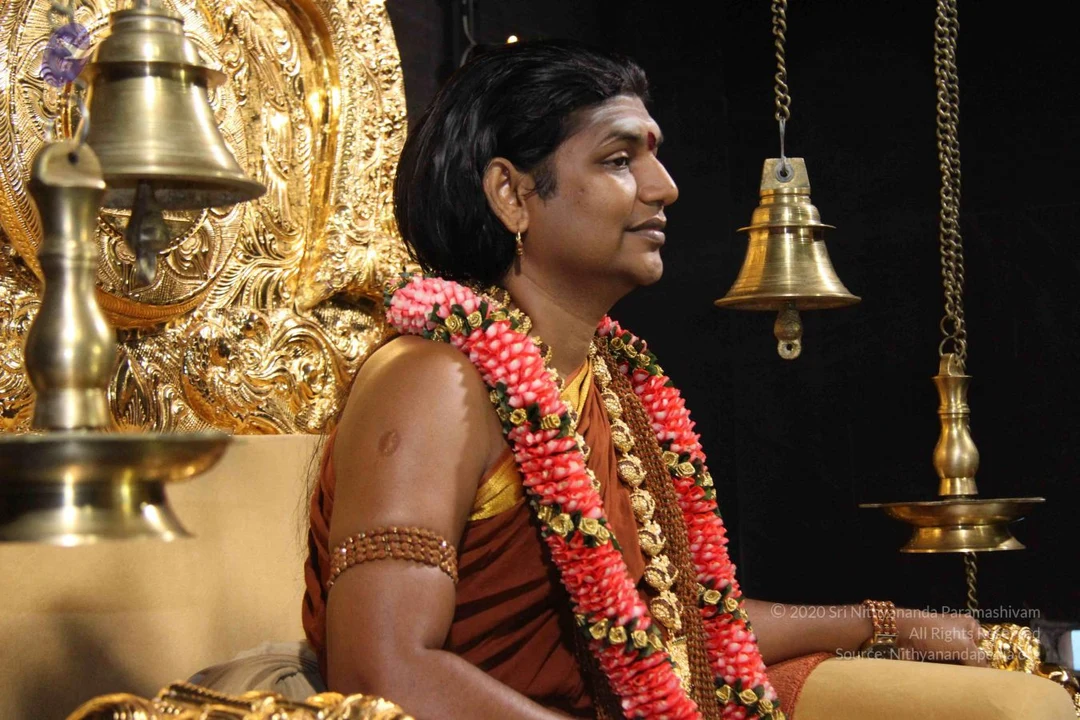
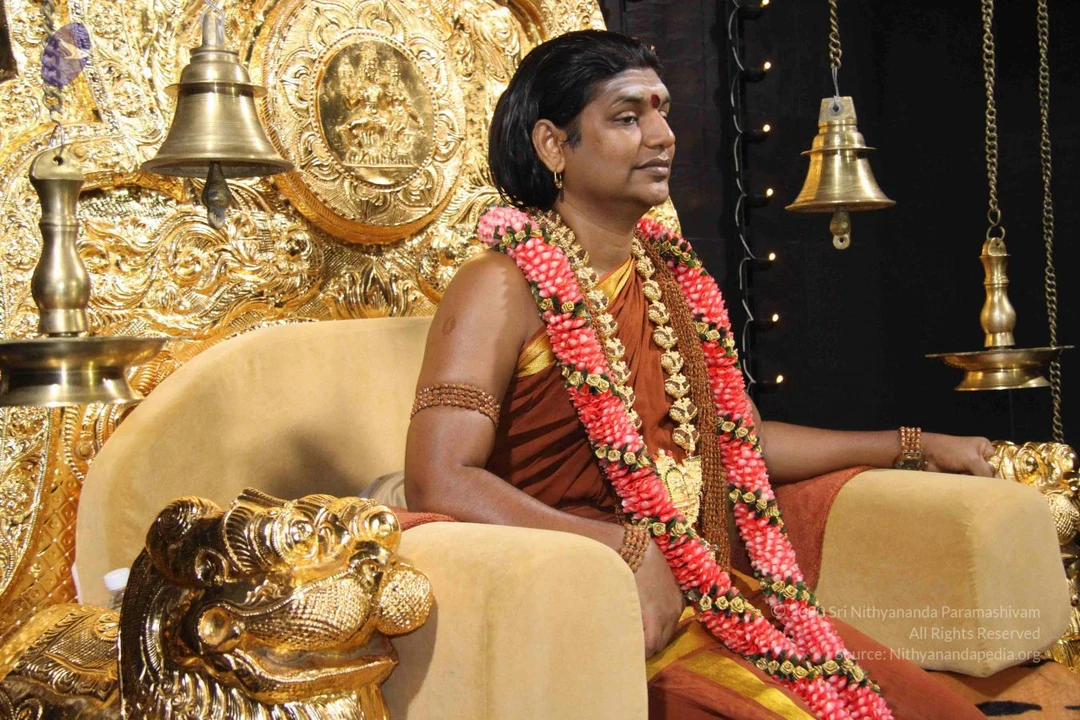
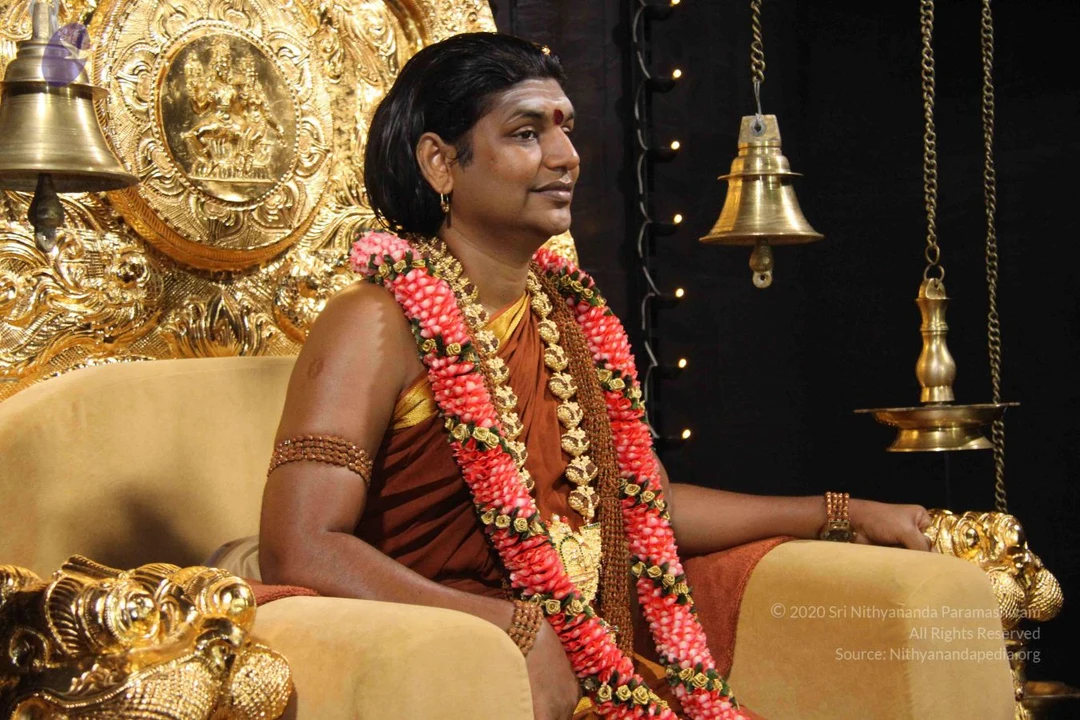
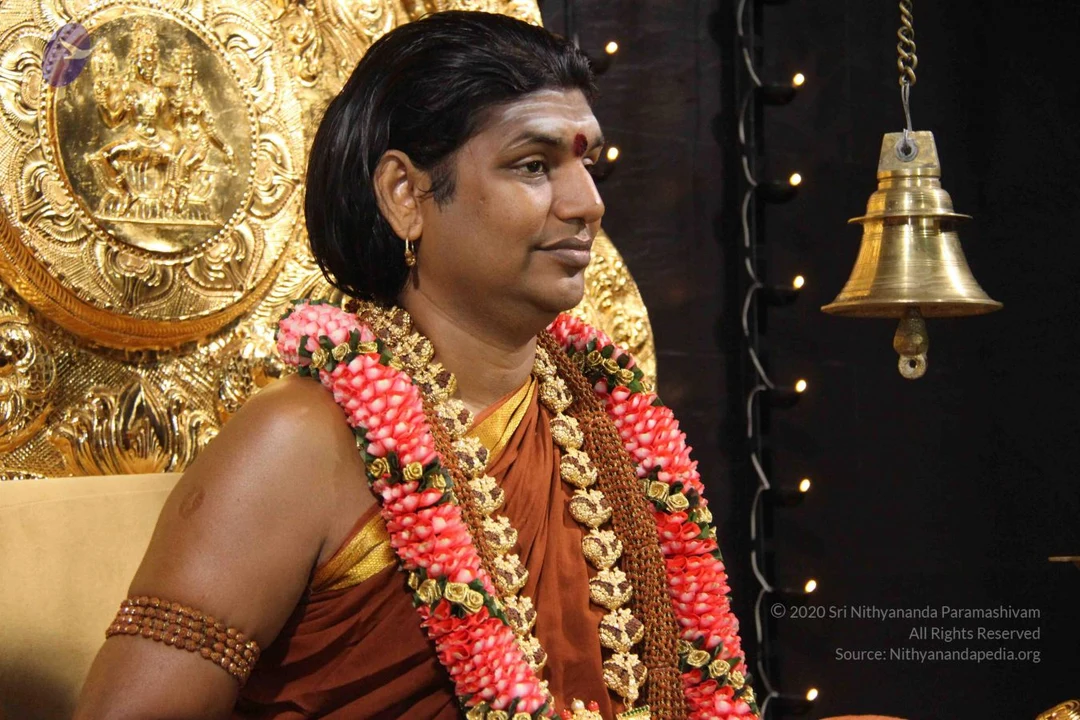
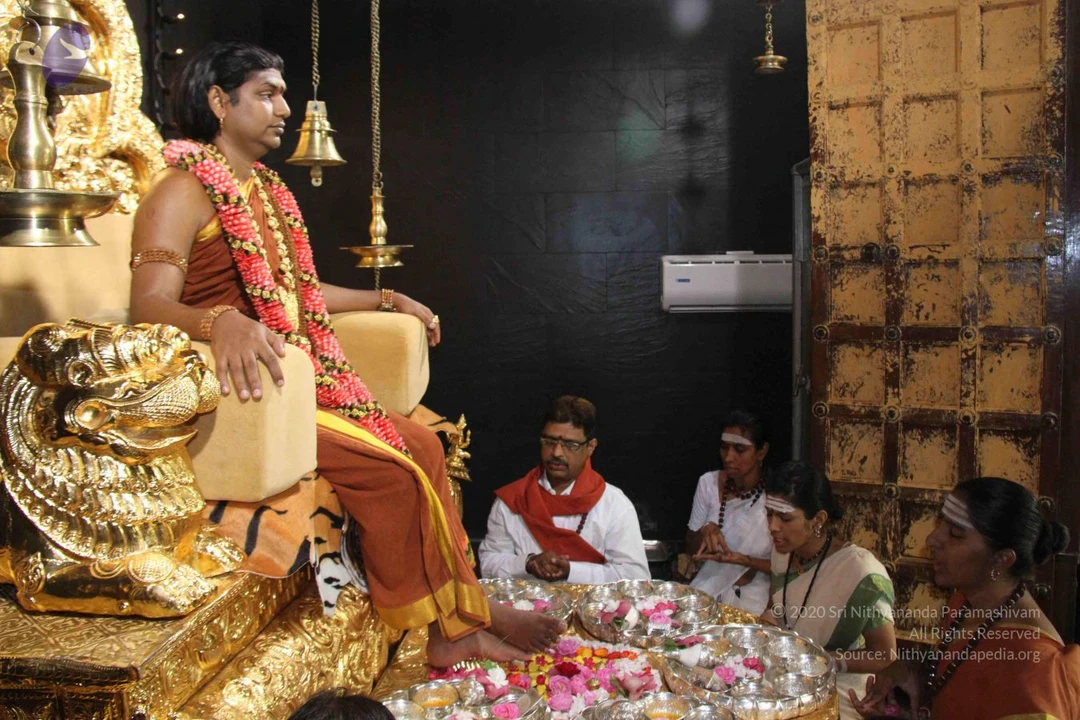
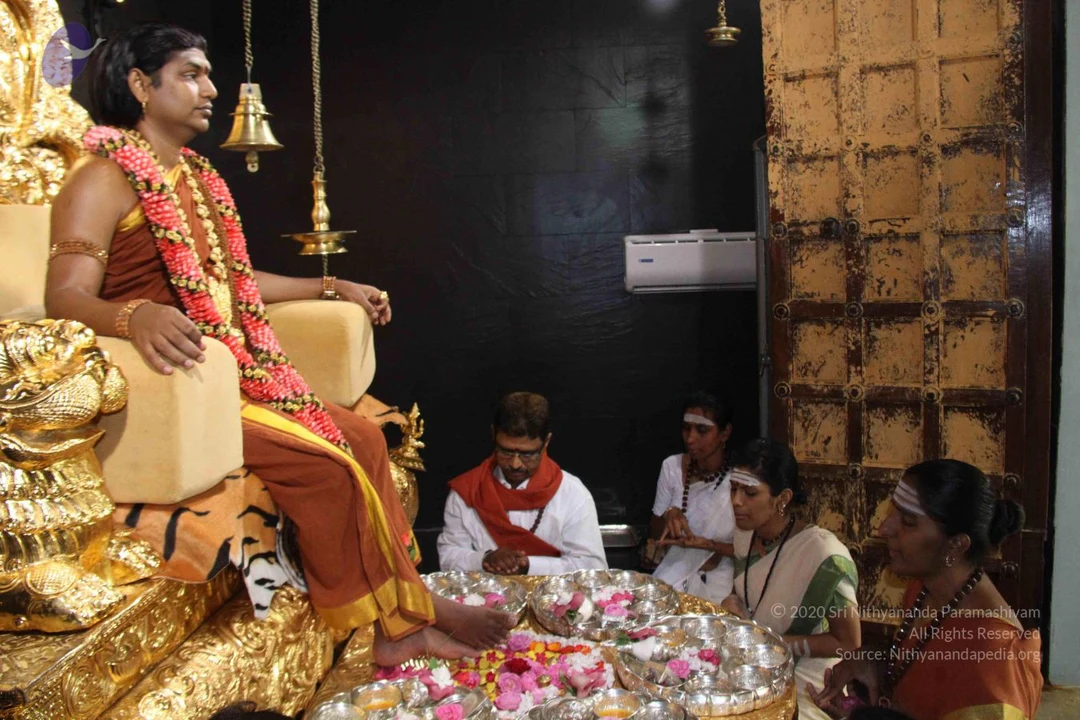
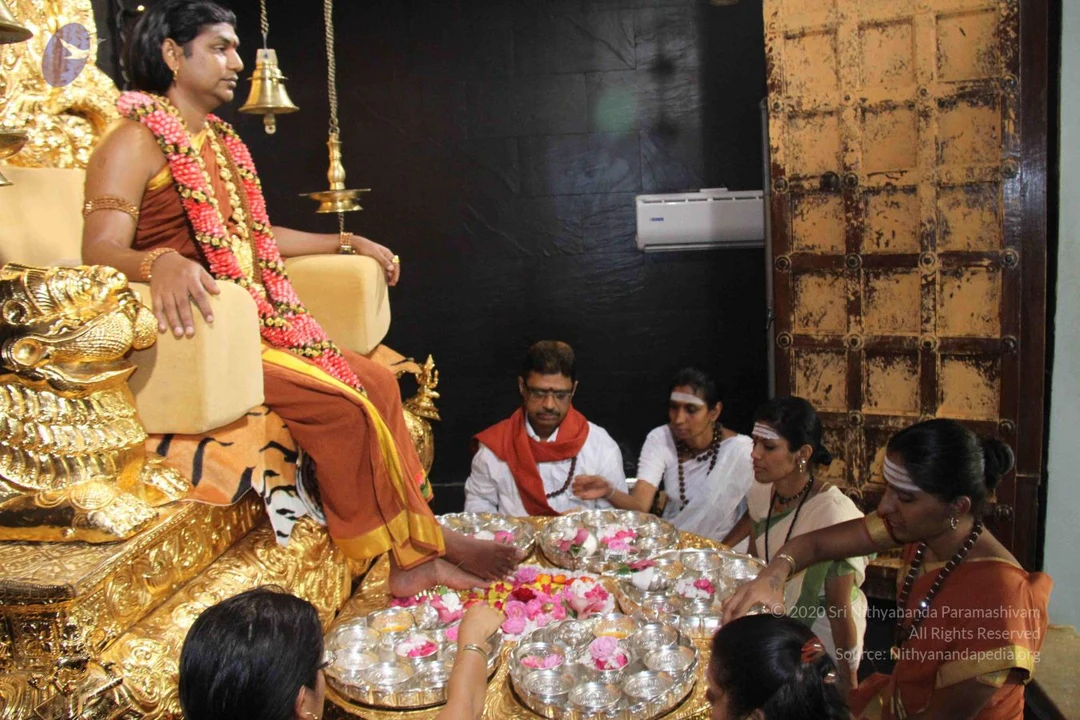
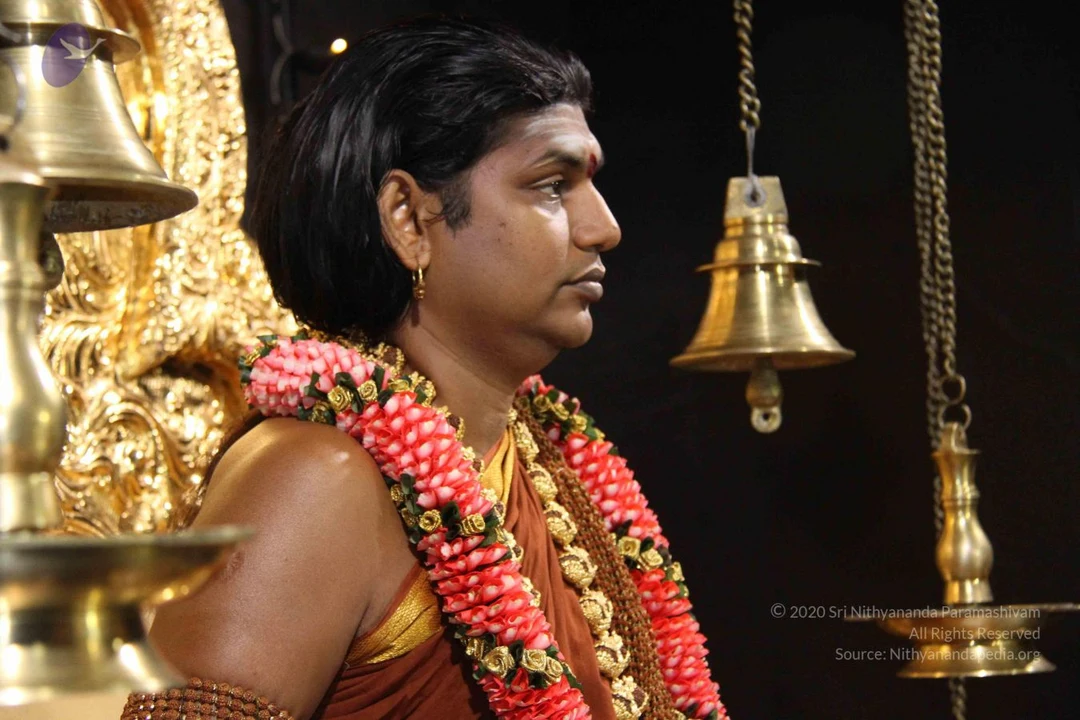
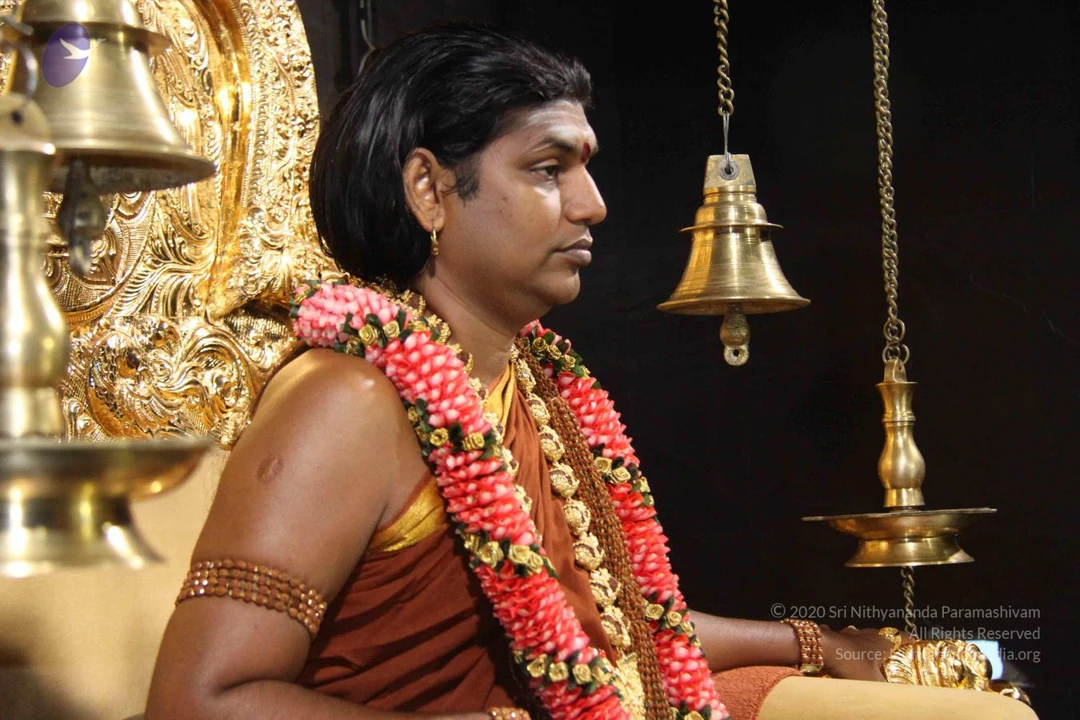
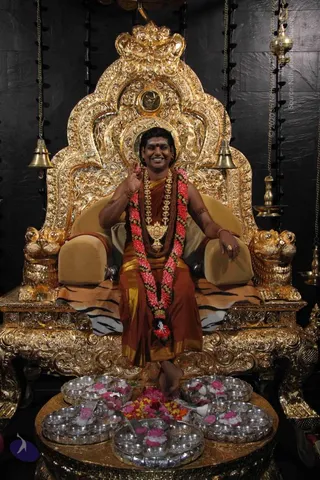
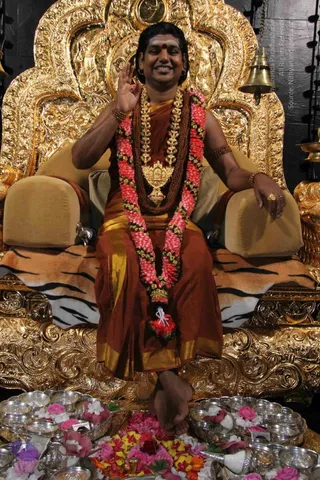
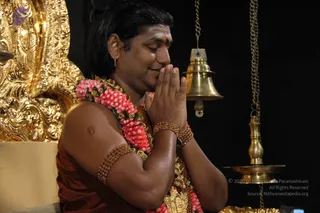
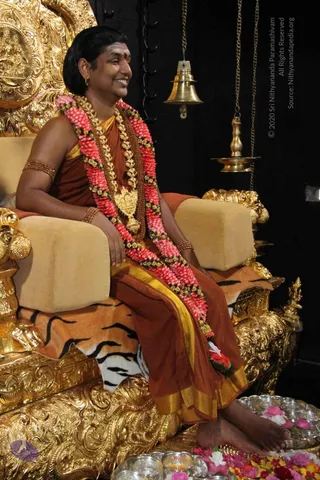
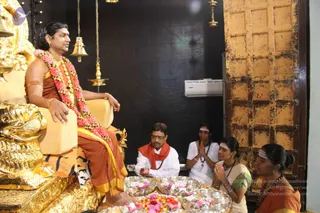
A photograph of a man seated on an ornate gold throne with carved lion-head armrests and a tiger-skin cloth draped over the seat, set against a dark slate wall with hanging brass bells and lamps. He wears a rust-orange garment with a gold border, a long red and pink flower garland, rudraksha beads and a gold pendant necklace, and raises one hand in a blessing gesture while smiling. Silver trays holding pink flowers, lamps and offerings are arranged on a gold table at his feet. Appearance-based candidate, a person, shown in person; he wears a rudraksha mala, gold ceremonial necklace and orange-saffron clothing on a throne with a crowned gold backrest.A man seated on an ornate gold throne with tiger-skin cushion, raising his right hand in blessing and smiling. He wears a rust-brown robe with gold border, a pink and white flower garland, layered gold necklaces, a rudraksha mala, bangles and a red bindi. Silver bowls of flowers and petals surround his bare feet on the floor, with a brass bell beside the throne. Probable Swamiji (appearance-based): long swept-back hair, ornate gold throne, rudraksha mala and ceremonial gold necklace, seated in a ritual setting.A photograph of a man with short dark hair and a red bindi, eyes closed and palms pressed together in namaste at the chest. He wears a reddish-brown shawl over a gold-embroidered garment and a pink and white flower garland, with rudraksha bracelets on his wrists and upper arm. Behind him is an ornate gold throne carving, and to the right hang a brass bell and a brass oil lamp on chains against a black background.A photograph of a smiling man seated on an ornate gold throne upholstered with a tiger-stripe cloth and tan velvet armrests. He wears a rust-orange robe with a gold border, a red and white flower garland, layered gold necklaces, a gold armlet and bangles, and a red bindi. A brass bell hangs from chains behind him beside a brass oil lamp, and silver bowls with pink and yellow flower petals sit at his bare feet. The scene matches the Swamiji (probable) cues of long swept-back hair, saffron-orange clothing, rudraksha-style and ceremonial gold ornaments, and the throne setting, so he is presented as a probable Swamiji seated in person for a satsang-style setting.Photo of a smiling man seated beside a gold-carved throne with a hanging brass oil lamp (deepa) and a brass bell at right. He wears a rust-brown robe, a long garland of pink and red flowers with gold-tone beads, a gold chain necklace, a rudraksha-style brown bead strand, a beaded armband, and a small red bindi, with hair swept back and a gold hoop earring. Dark background. Appearance-based cues for a person include the long swept-back hair, ornate gold-toned adornments and ceremonial garland on a throne setting; the presence is uncertain from appearance alone.A seated man in an ochre-orange dhoti and shawl, wearing a red and white flower garland and a gold armlet, sits on a gilded throne with carved lion-like armrests. Behind him are hanging brass bells and oil lamps. Before the throne, three women and one man kneel or sit on the floor with hands joined in prayer; the man in white with an orange-red shawl and rudraksha mala holds a plate, and the women wear white and green saris with sandalwood tilak. Brass plates of flowers, fruit and offerings sit in front of them. A large golden-brown wooden door and a wall-mounted air conditioner are visible behind.

Nithya-Satsang

48 photosSource gallery
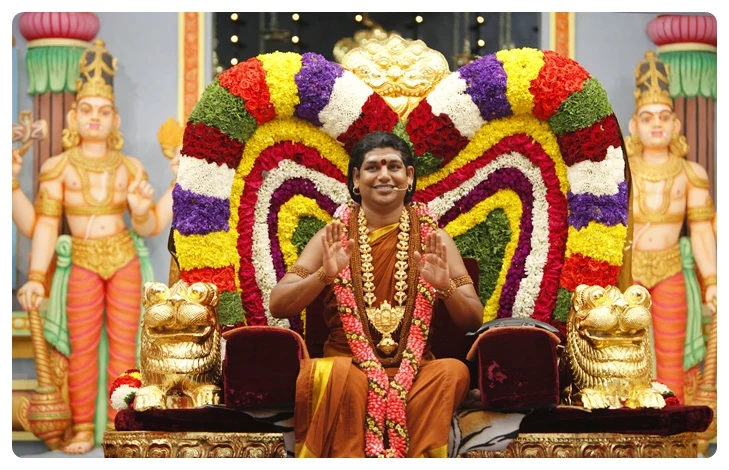
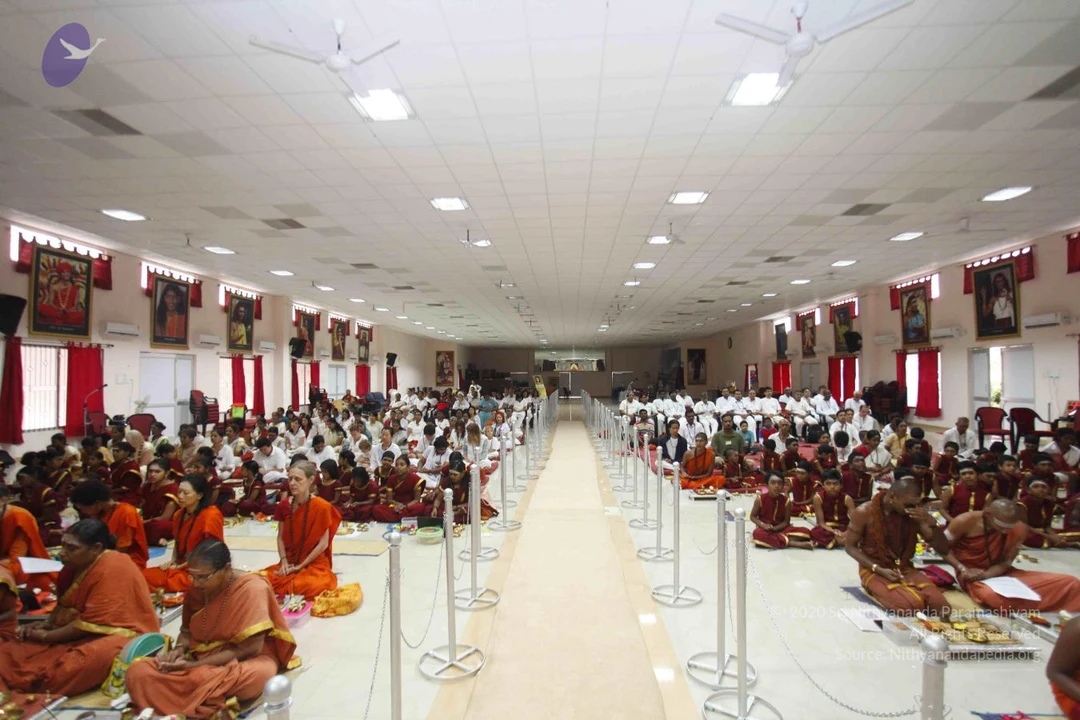
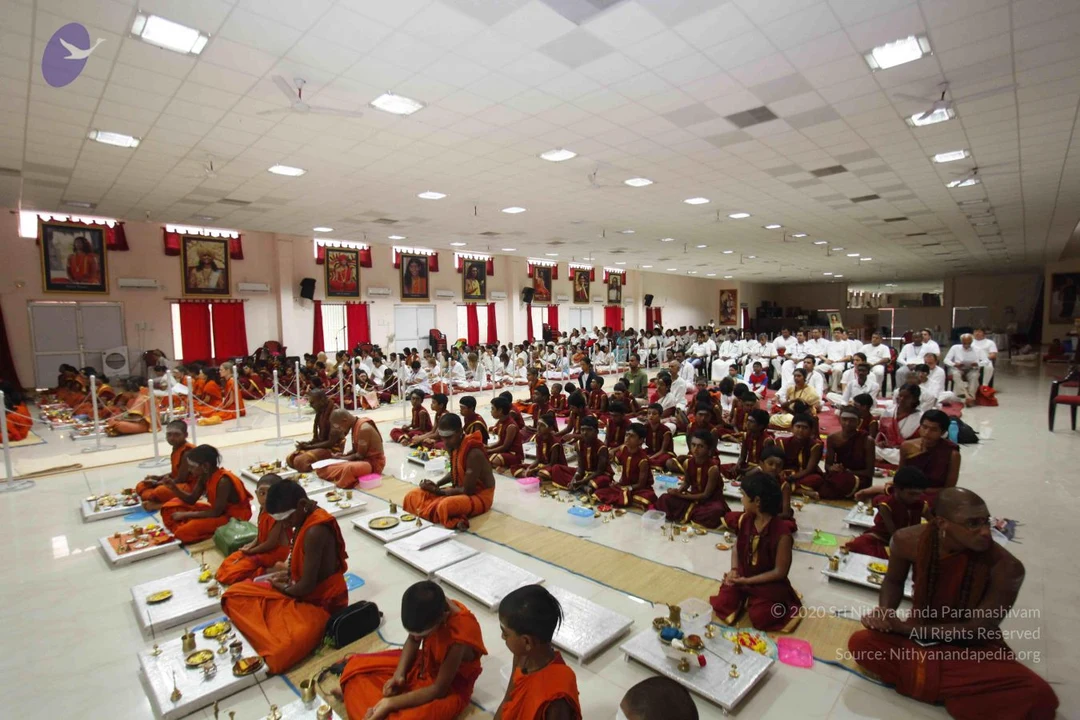
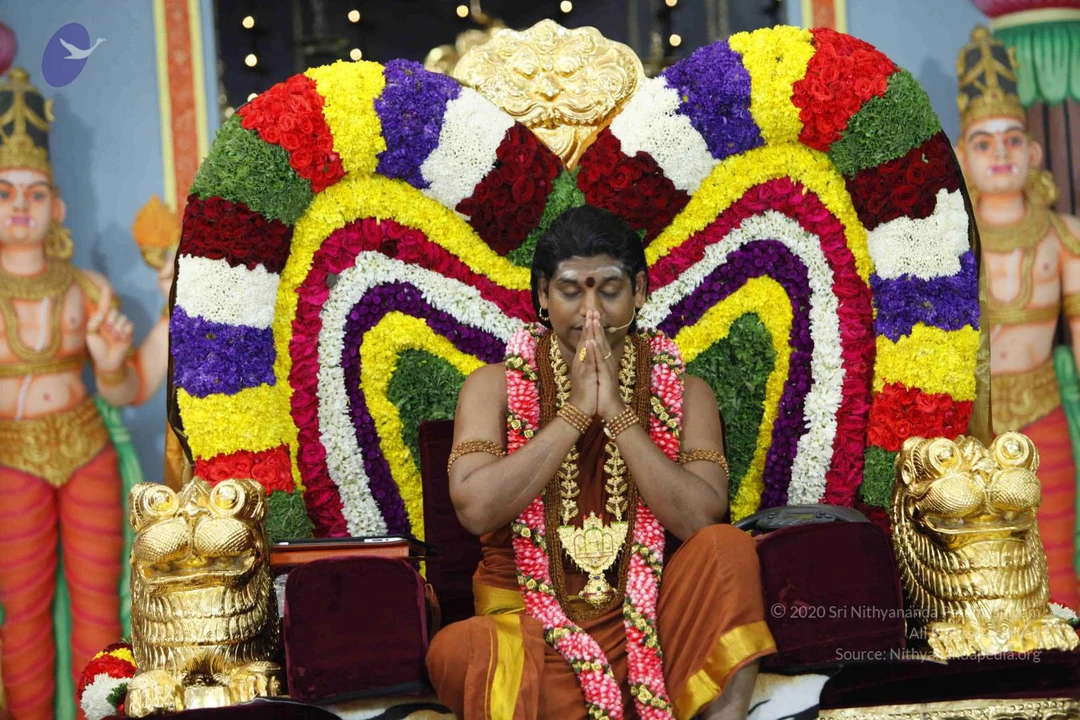
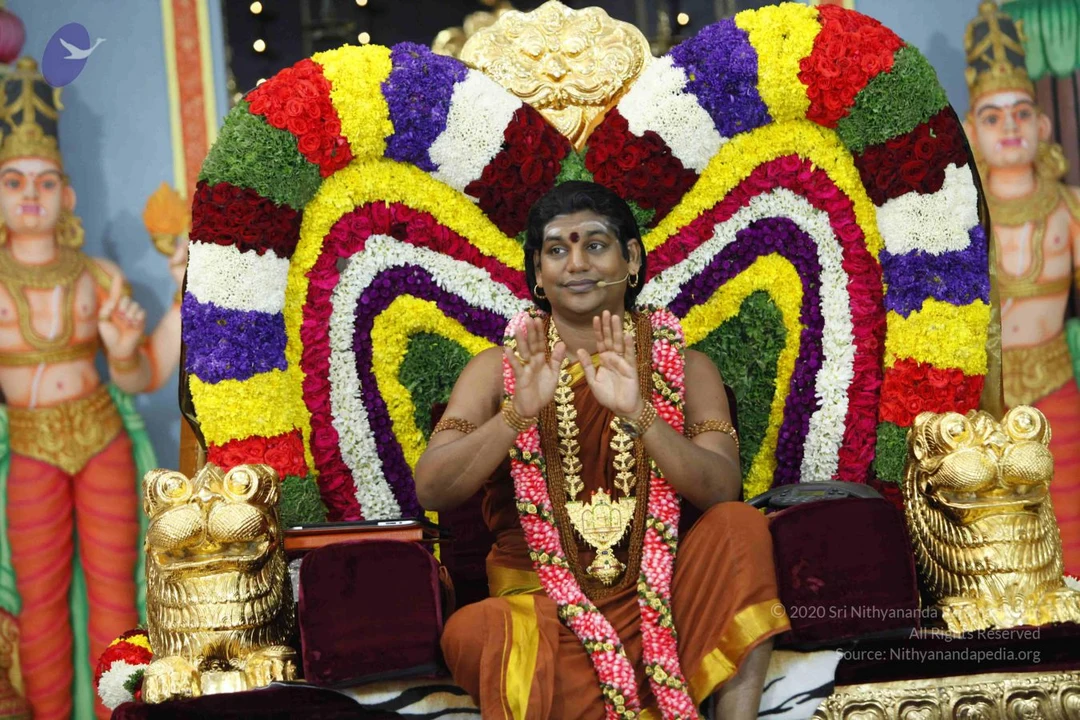
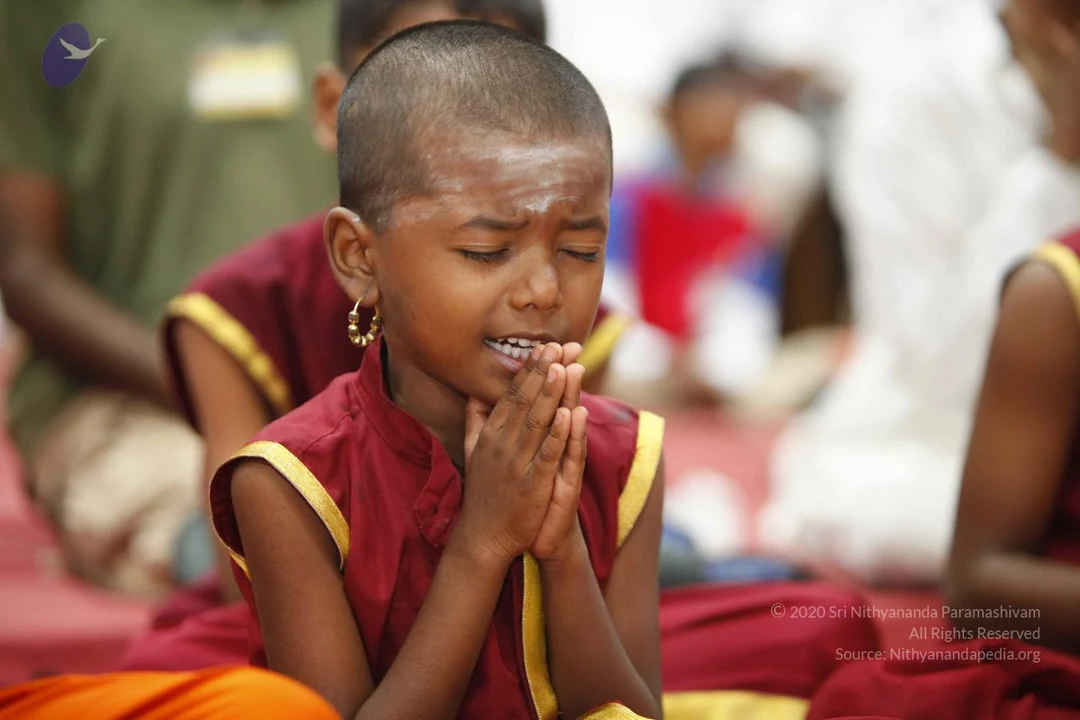
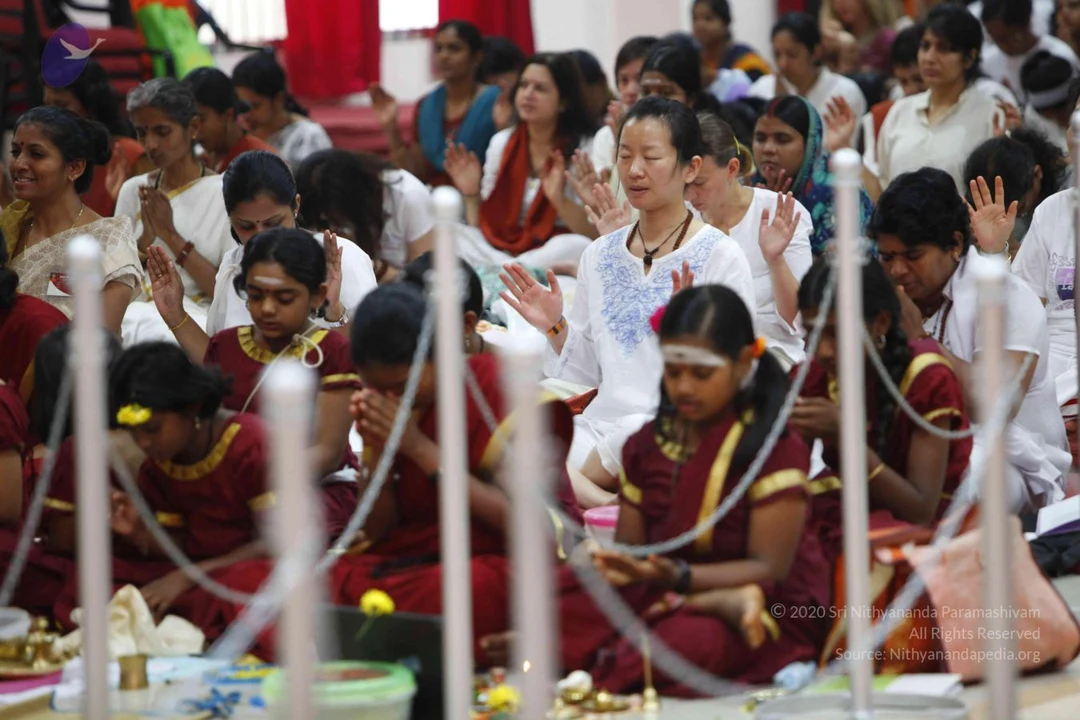
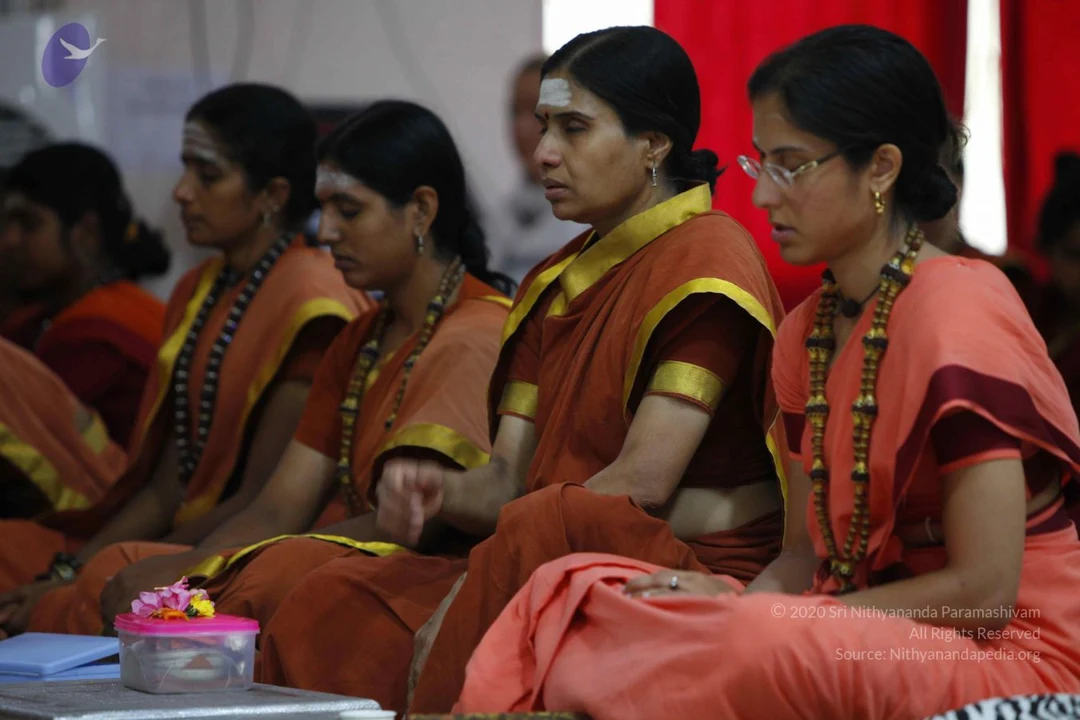
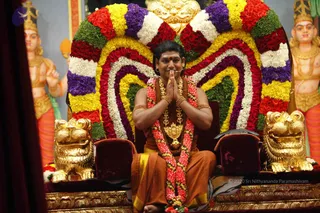
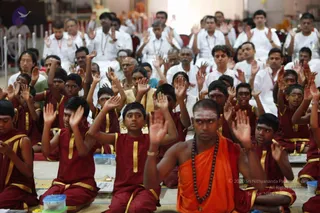
A seated man in saffron-orange robes and a golden necklace sits with palms pressed together in greeting on an ornate throne. Behind him is a large arched backdrop of multicoloured flower garlands in red, yellow, purple, white and green, with golden lion figures flanking the seat. Standing deity murti statues in orange and gold dhoti stand at the left and right edges. A red and white flower garland hangs over his shoulders, and he wears a microphone headset and a dark rudraksha-style mala. a person seated on a peetha throne in a satsang setting.A seated man in saffron-orange robes sits on a golden lion-headed throne before a large arch of flower garlands in red, yellow, white, purple and green. He wears a rudraksha mala with a gold pendant and a flower garland, with palms raised in greeting. Two painted standing dvarapala guardian figures with gold crowns and ornaments flank the throne. Person is seated on a peetha throne, with the garland arch behind as a ceremonial honour setting.A seated man in an orange-brown garment with a gold-toned sash sits on a deep maroon velvet throne with golden lion-head armrests. He wears a long pink and red flower garland with yellow accents, layered gold chains, a gold bangle on the upper arm and a wristband, and a small red bindi on his forehead with a tilak. Behind him a floral backdrop of red roses, yellow, white and purple flowers is arranged in bands. A small microphone is visible near his face. He gazes off to the side with a slight smile. Swamiji (probable): long swept-back hair, ornate gold necklaces and an orange-saffron garment seated on a throne, consistent with a satsang setting.A photograph of a man seated on a plush maroon throne with gilded lion-head armrests, in front of a tall floral backdrop of red, yellow, white and purple flowers. He wears an ochre-orange robe over a yellow cloth, with a thick garland of pink and red blossoms, layered gold chains, a rudraksha mala, a gold arm band and a gold ring, and a red dot on his forehead. He sits upright with his hands resting on the armrests, looking to the side. Probable Swamiji is seated as the central figure, identified by the throne and his distinctive long swept-back hair with rudraksha and ceremonial gold adornment; he is the only person pictured.A seated man in an orange-saffron dhoti and shawl sits on a maroon velvet throne with gold lion-head armrests, wearing a multi-strand rudraksha-style garland of pink and red flowers, gold necklaces and gold bangles, and a red tilak on his forehead. He rests one hand on the armrest and gazes to the side. Beside him, a deity murti in blue and gold clothing with a gold crown and a pale face is adorned with long garlands of yellow, red, green, white and purple flowers, seated on a golden throne. The setting is a hall with a rose-and-marigold garland backdrop and a wall air conditioner. a person is seated on the throne beside the garlanded deity murti.A seated satsang gathering in a hall with many devotees raising their right hands in salutation. In the foreground a shaved-headed man in an orange saffron robe and a long rudraksha mala sits with hands raised, with a white tilak on his forehead. Beside him boys in maroon robes with gold borders, some with vibhuti or tilak marks, raise their hands. Behind them adults in white shirts and white dhotis sit in rows, and a figure in a yellow sari appears near the centre. Plastic containers and small brass items sit on the floor in front. The pictured mood is one of collective devotion during a morning satsang. Several people hold hands in greeting and an orange-clad teacher appears among them, though the image does not clearly show a central figure identifiable as a person.

Sarva-Darshan

8 photosSource gallery
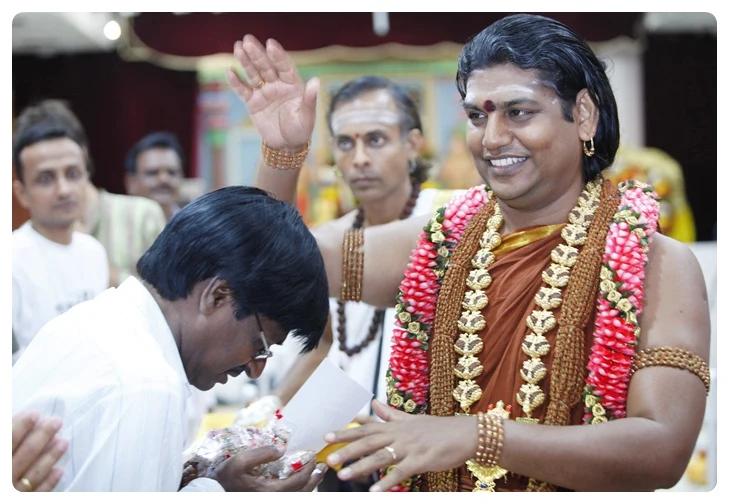
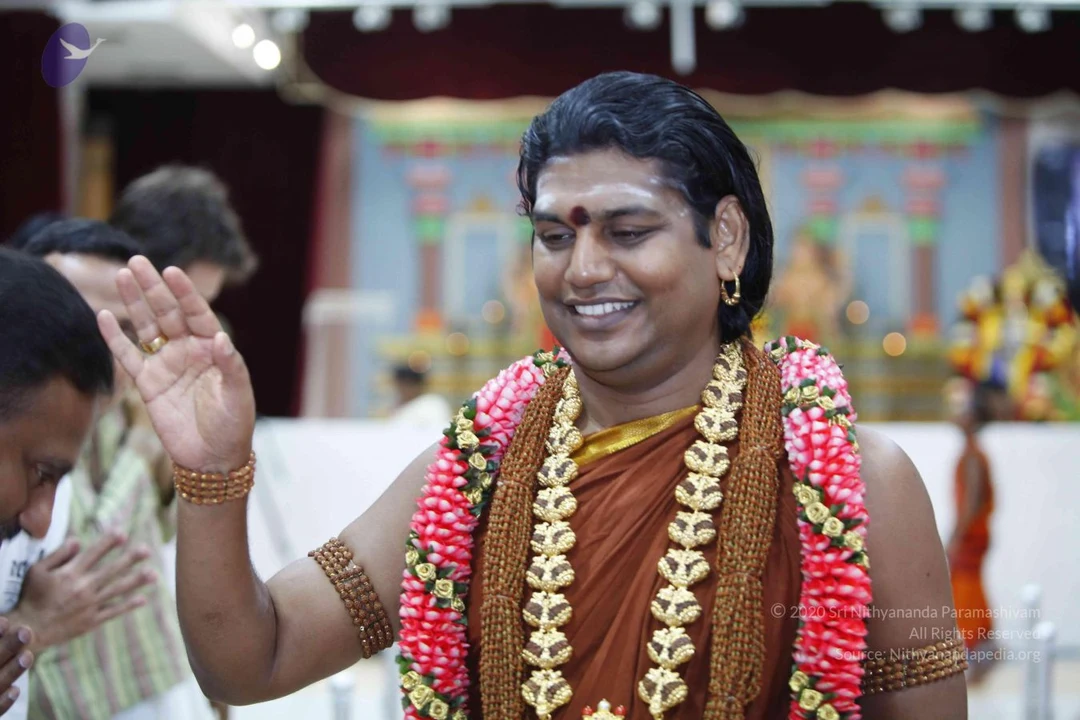
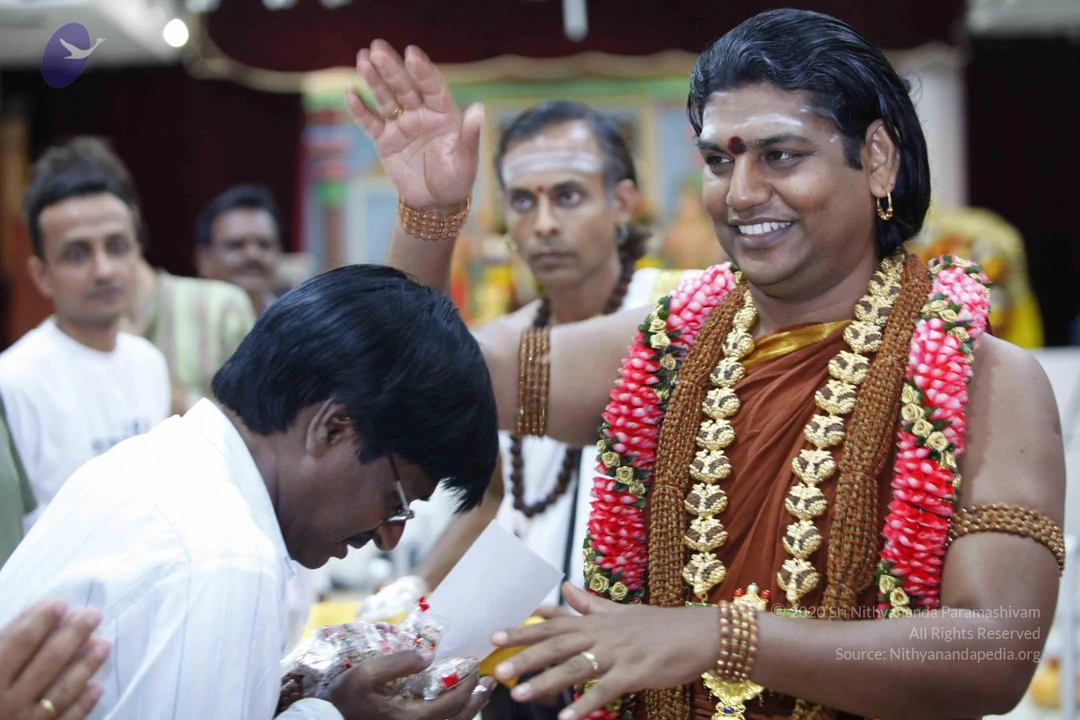
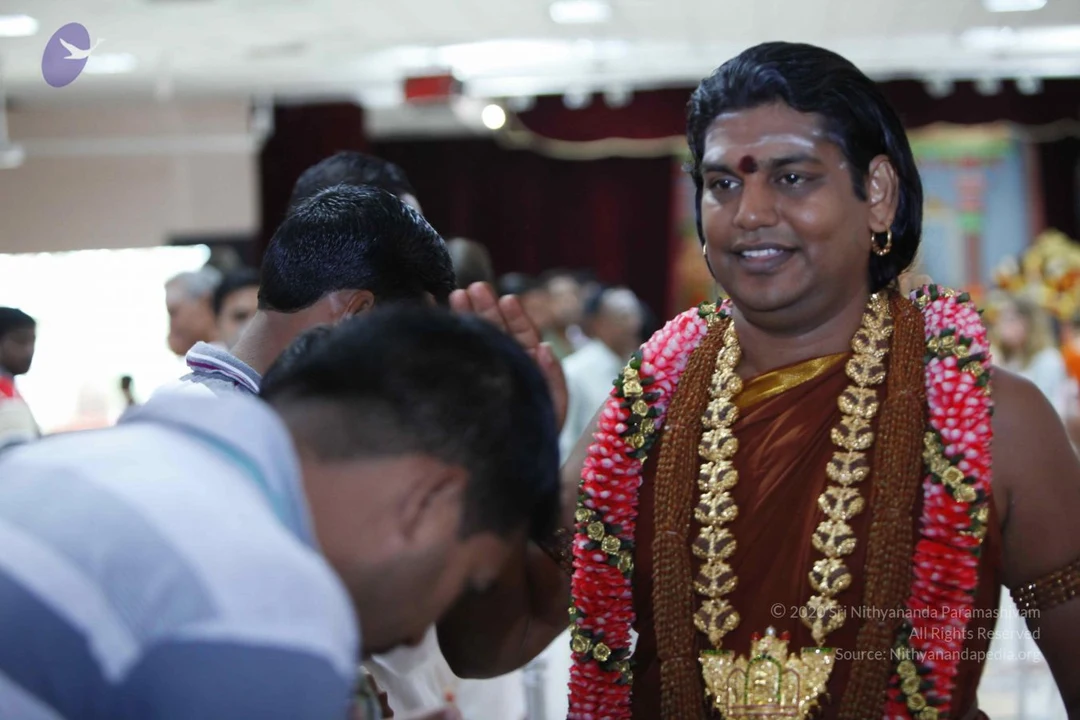
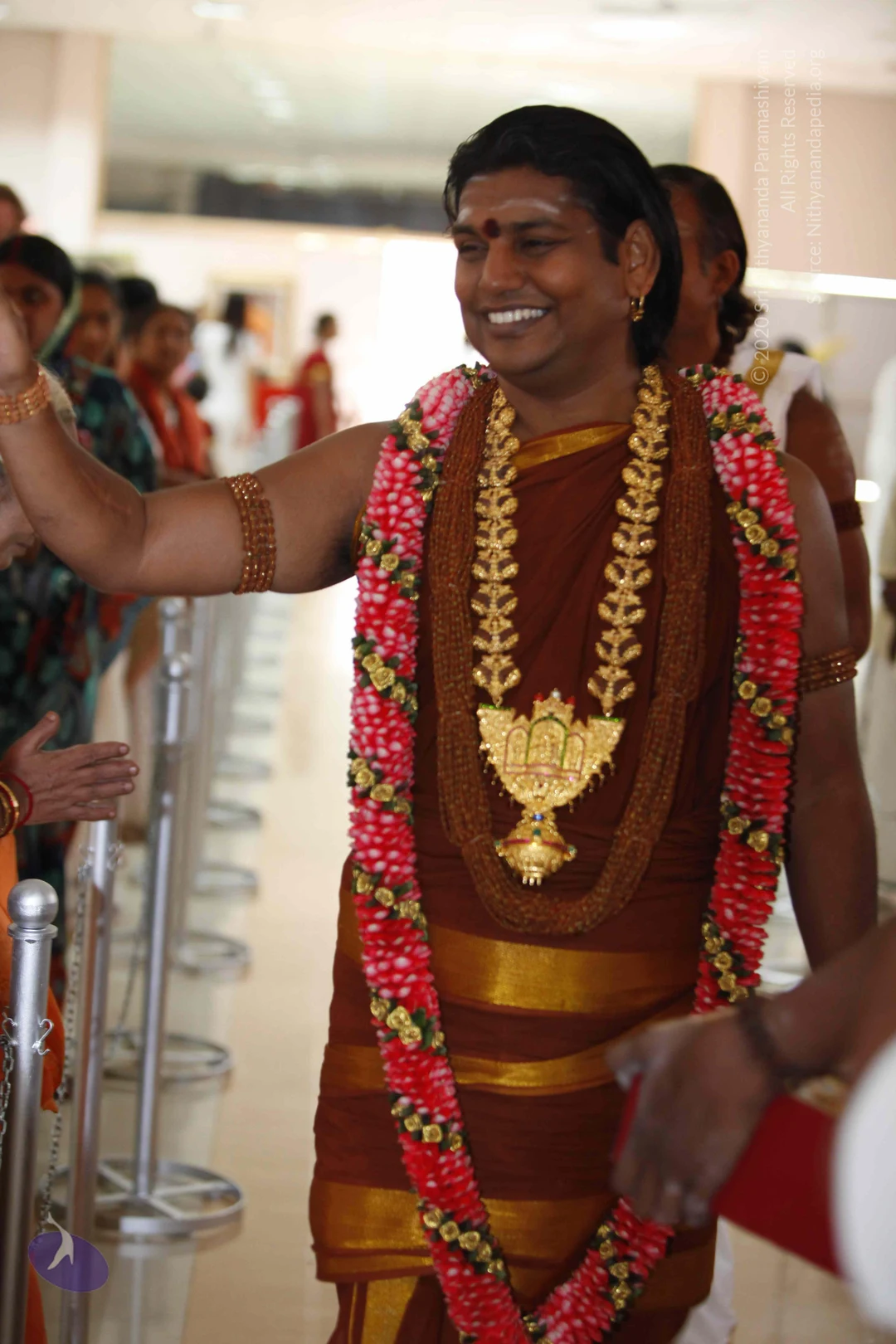
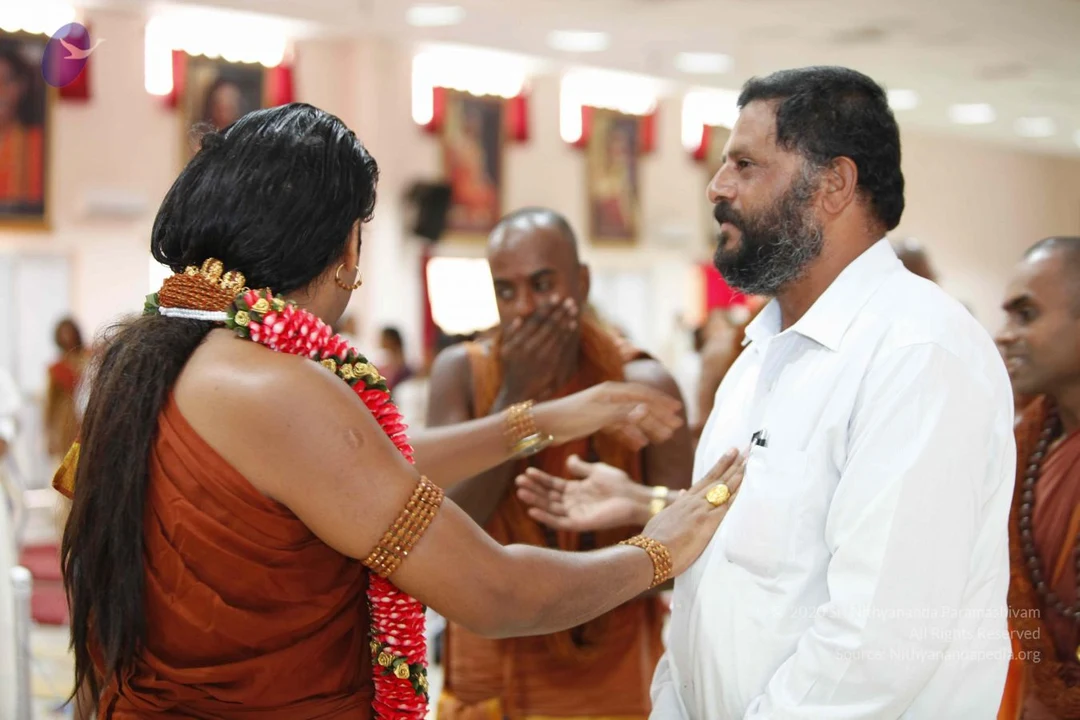
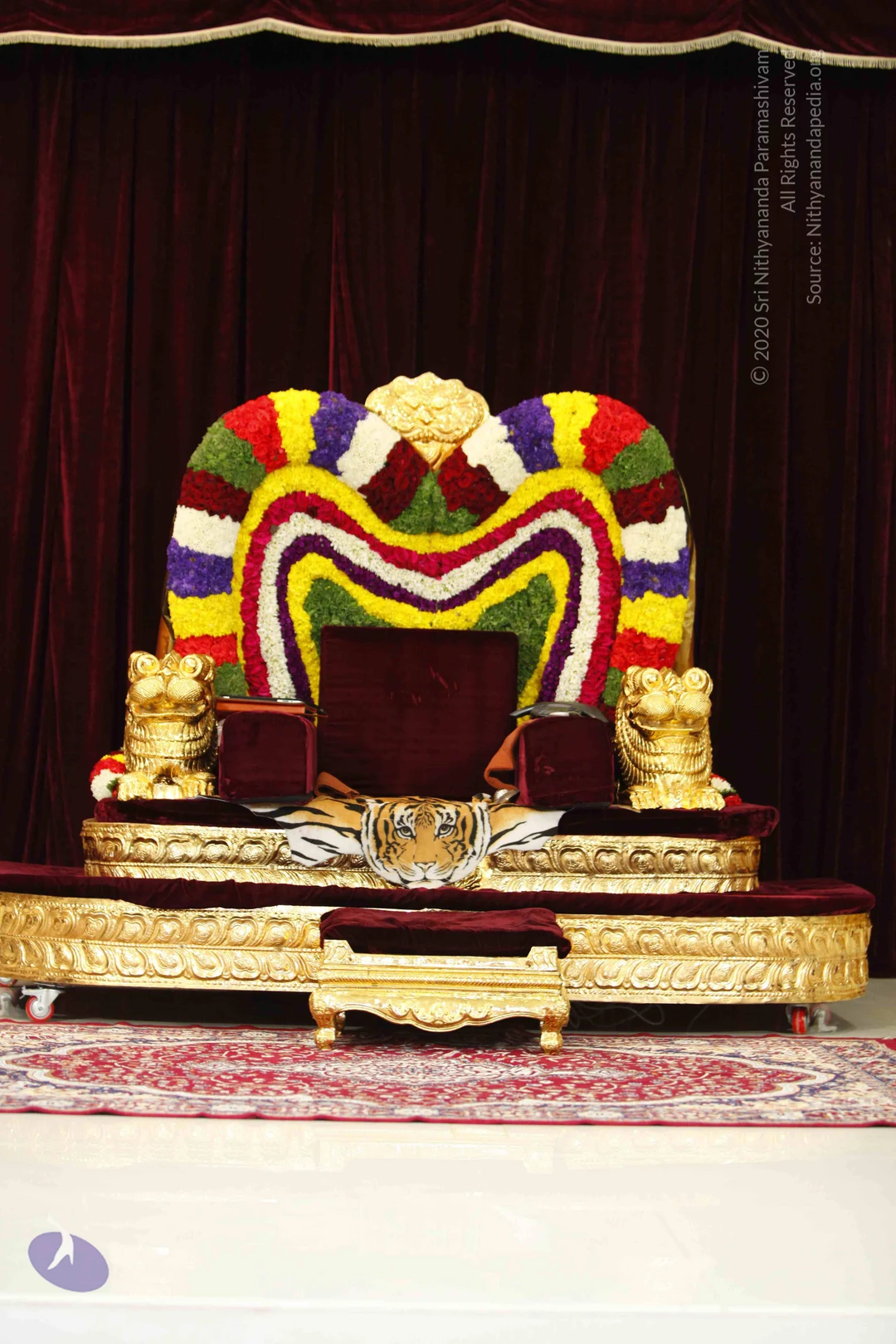
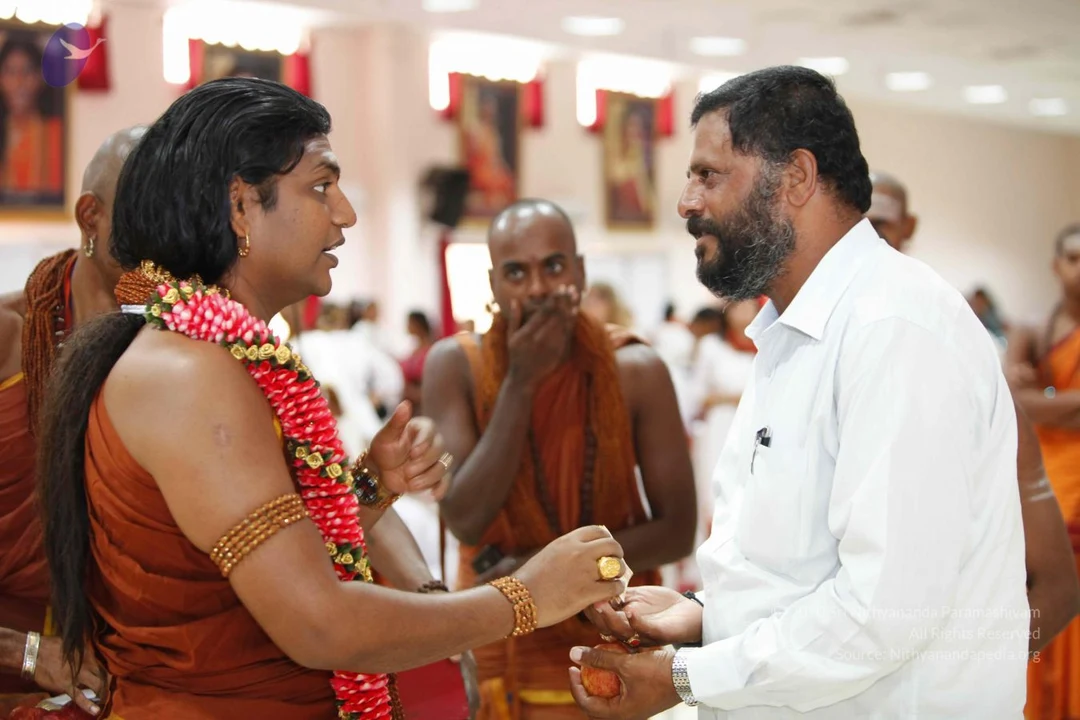
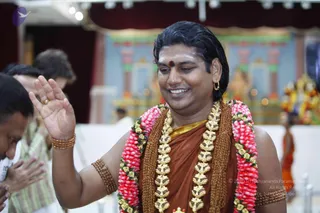
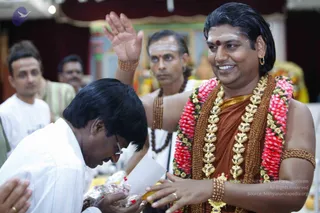
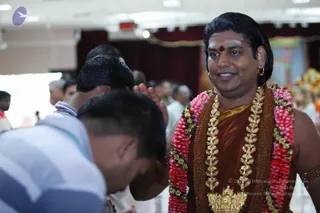
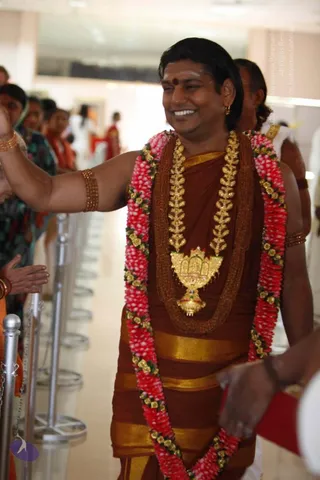
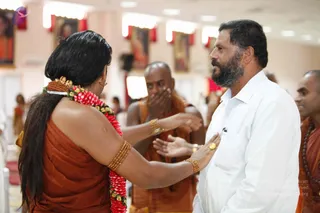
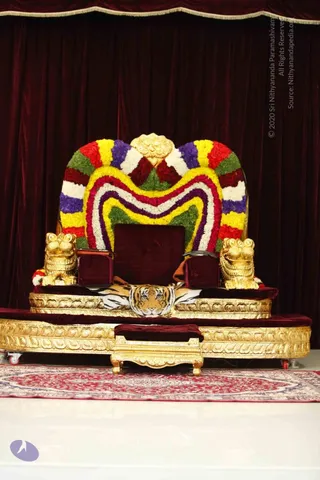
A smiling man with swept-back black hair, a red bindi and white forehead markings waves his right hand while wearing a rust-orange wrap over a bare chest. He has a thick garland of pink and red flowers with gold-coloured beads, a long gold-bead necklace and rudraksha beads on his arms and chest. Beside him a man in a striped shirt has his palms pressed together. Behind them a temple-style backdrop with painted pillars, decorated deity figures and warm lights is visible. a person is shown in person, identified from the swept hair, rudraksha and ceremonial garland cues.A photograph of a central figure in an ochre-brown robe with a thick gold necklace and a red-and-pink flower garland, smiling and raising one hand in blessing. He has long swept-back dark hair, gold earrings, a bindi and white tilak markings, and gold armlets. A man in white shirt bows low with folded hands, holding a small white envelope and plastic-wrapped sweets. Behind them a man with a white forehead tilak wears a rudraksha mala, and several onlookers stand near a colourful shrine backdrop.A photograph of a man with swept-back dark hair, a red bindi and a white vertical tilak, wearing a rust-brown wrap over bare shoulders, a long ceremonial gold necklace and a garland of red and white flowers with gold-coloured accents. He smiles toward the right while another man in a white-and-blue striped shirt bends forward in front of him, and a hand is raised near the bent head as if in blessing. Several other people stand in the blurred background of a bright hall with red drapes and floral decorations.A smiling man in a brown ceremonial robe with gold border stands in a bright hall, wearing a long red and gold flower garland, heavy gold necklaces with a gold pendant, and gold armlets. A red bindi and white forehead markings are visible. A woman in green and red clothing reaches toward him from the left, while another person stands behind him in a corridor lined with silver stanchions. Probable Swamiji is shown, dressed in saffron-toned robes with gold ornaments, long swept-back hair and ceremonial garlands, receiving devotees in an in-person setting.A photograph of an indoor hall with pale walls and framed portraits in red frames behind the group. In the foreground a woman with long dark hair pinned up, wearing a rust-orange sari-style wrap and a red-and-white flower garland, reaches toward a bearded man in a white collared shirt and gold ring, who places his hand on his chest. Behind them a bald man in orange robes covers his mouth with his hand, and another bald man in orange robes with a rudraksha mala stands at the right edge. Gold bangles are visible on the woman's wrists. No candidate for a person is identifiable by appearance, so the role-based description stands.An empty ornate gold throne stands on a stage before dark maroon velvet drapes, with a tiger-skin cloth draped over its seat. Two gilded lion figures flank the throne, and a large multicolour flower garland arches behind it in bands of red, yellow, purple, white and green, topped by a gold crest. A red patterned rug lies under the platform. No people are visible; the throne is unoccupied.

IA-Day2

20 photosSource gallery
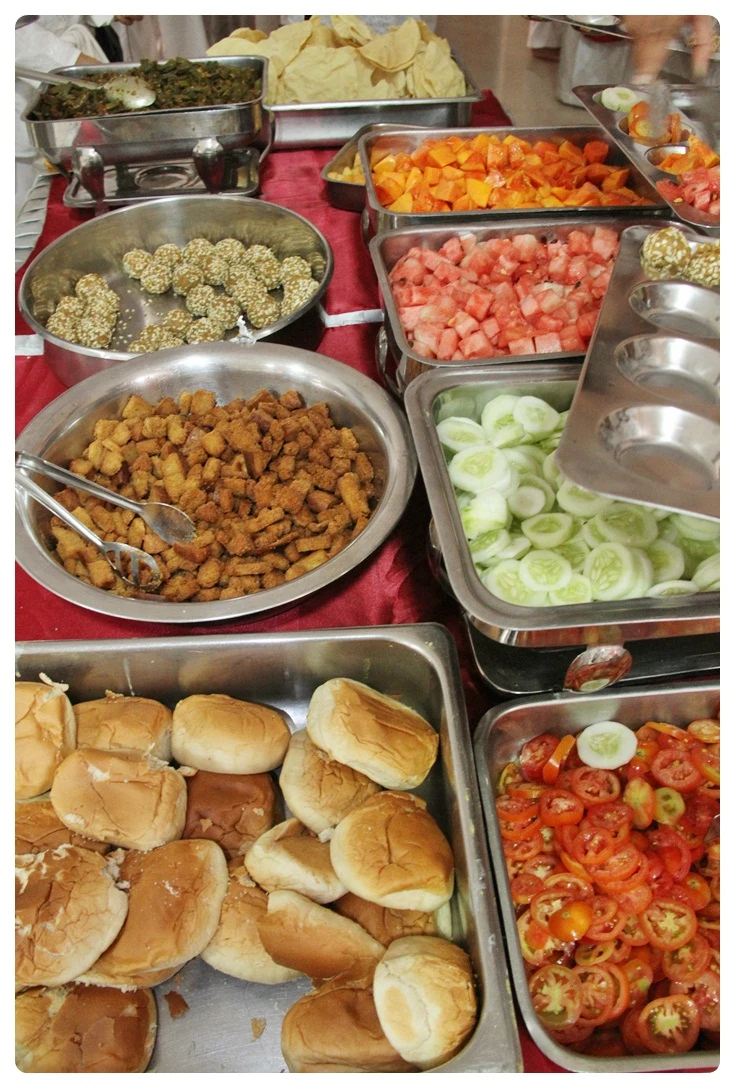
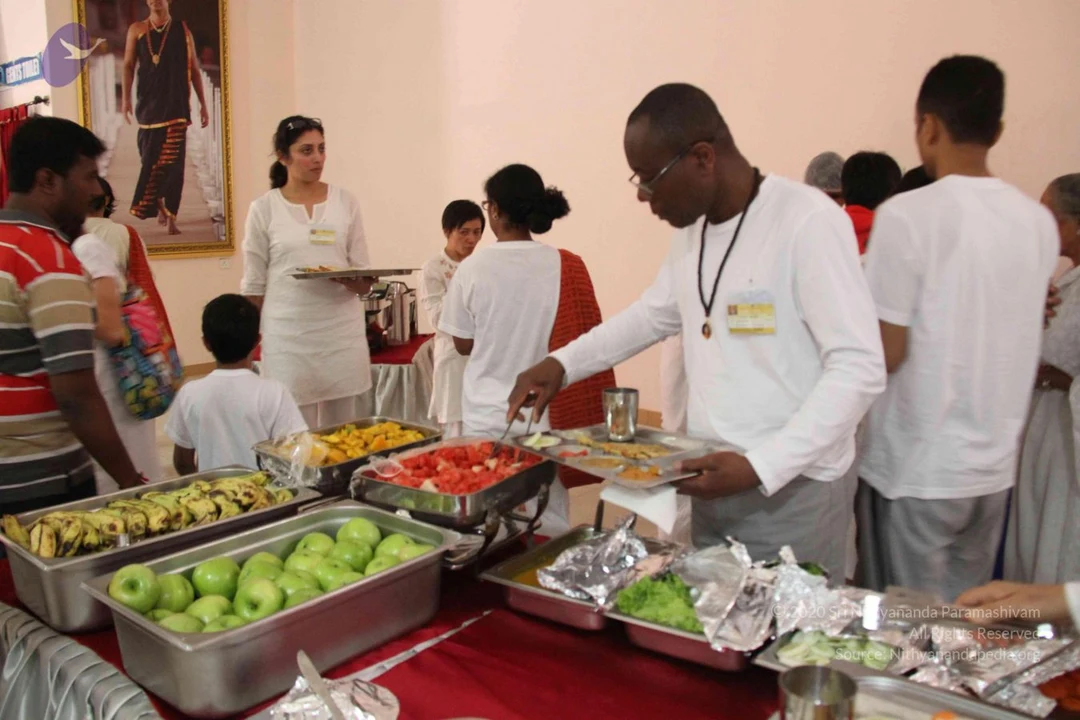
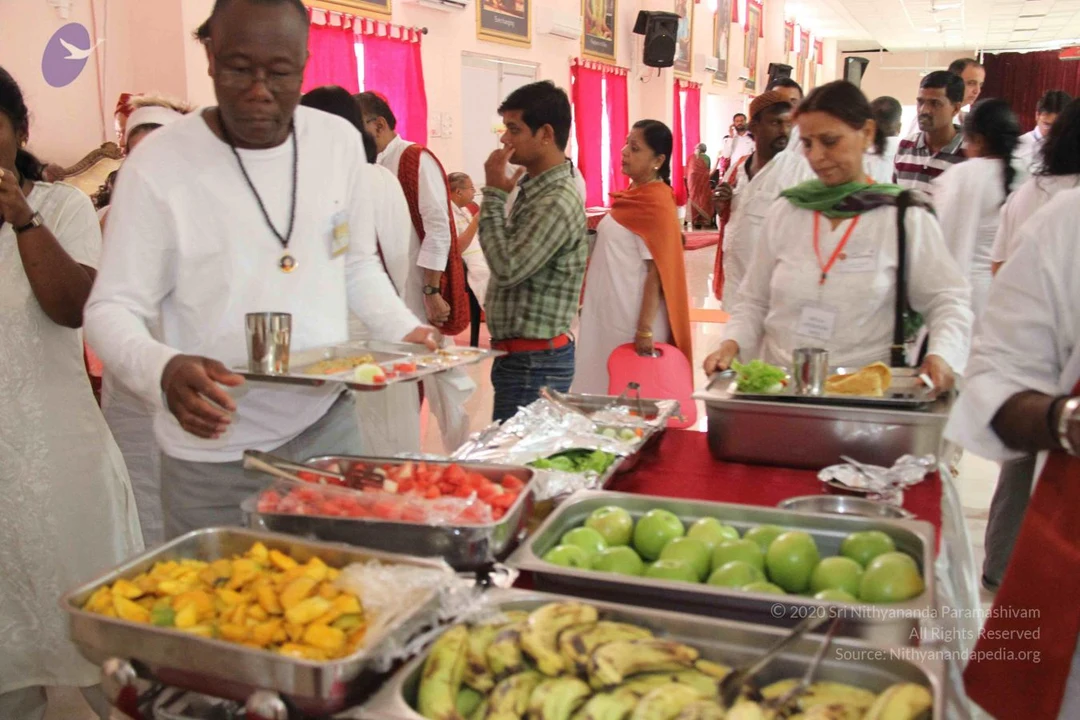
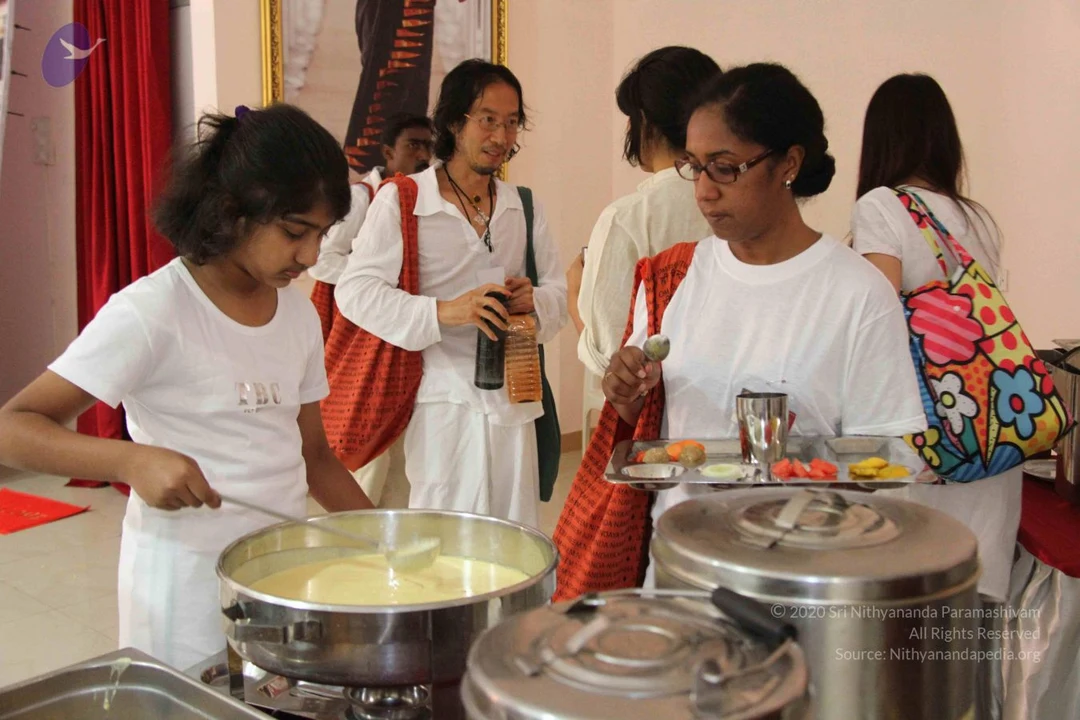
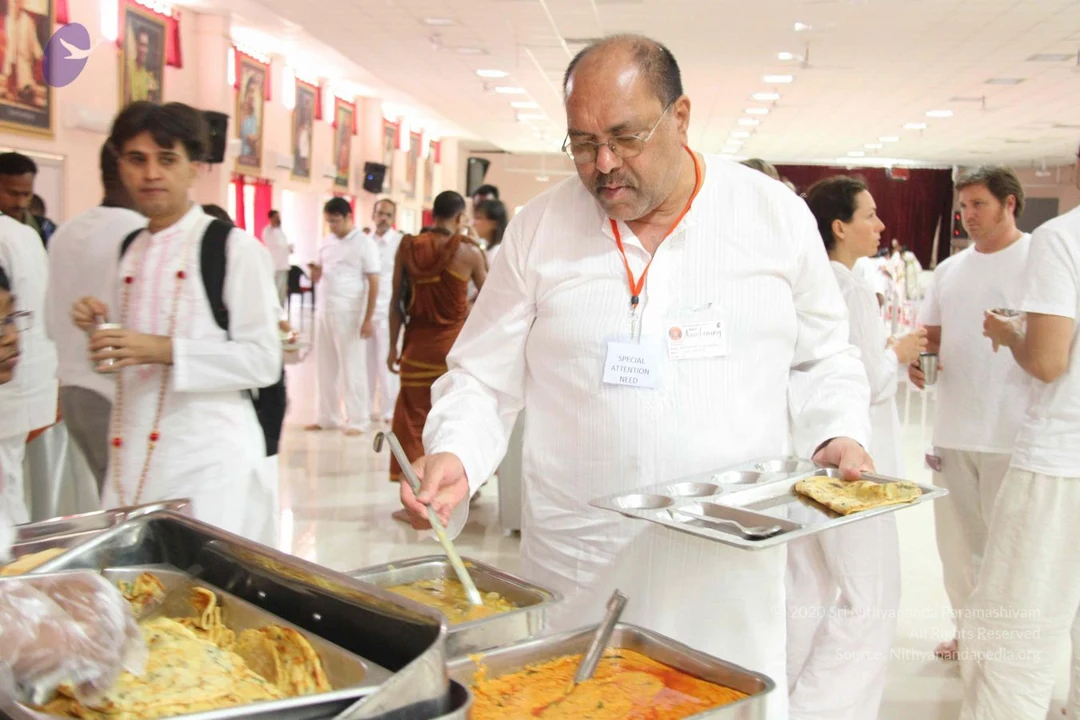
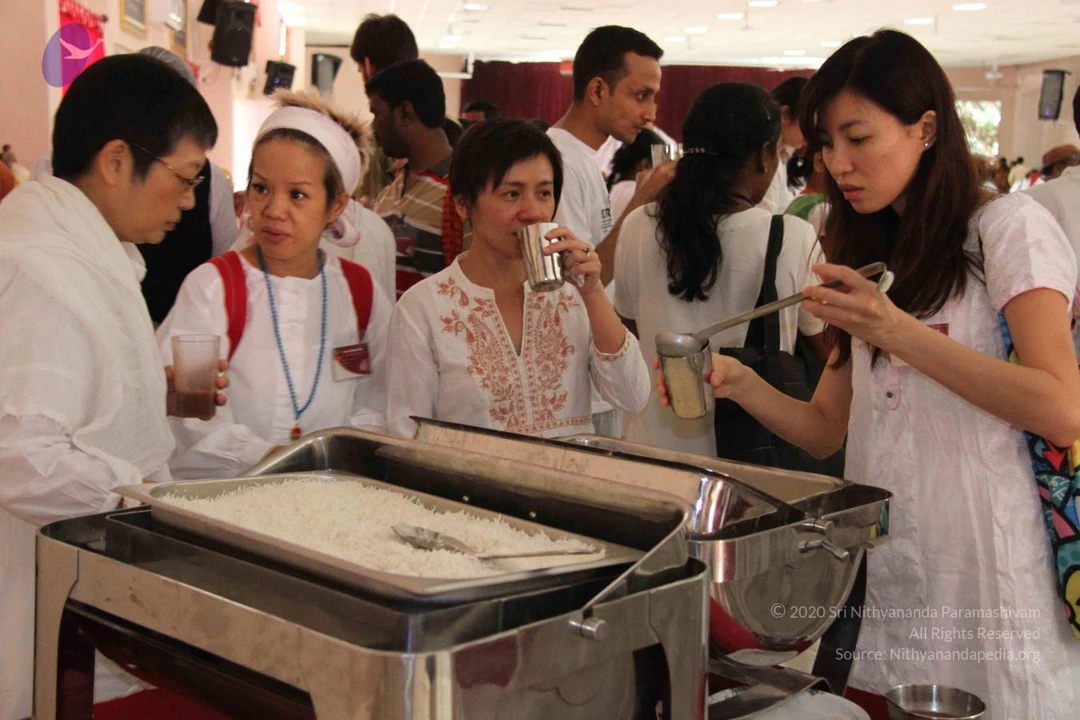
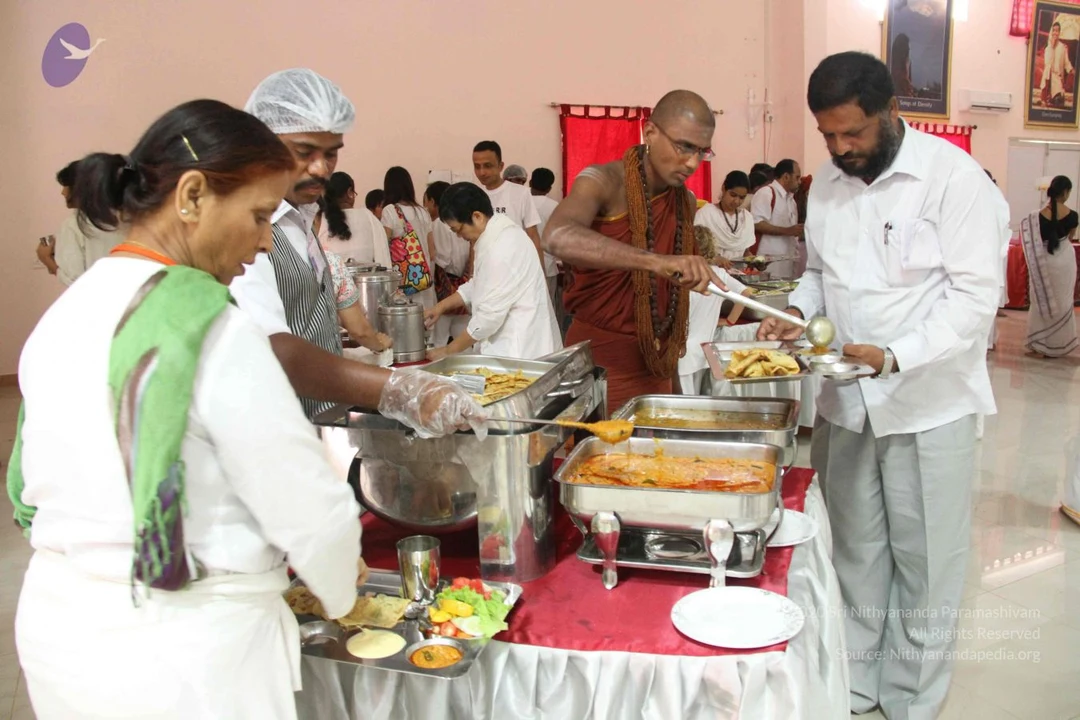
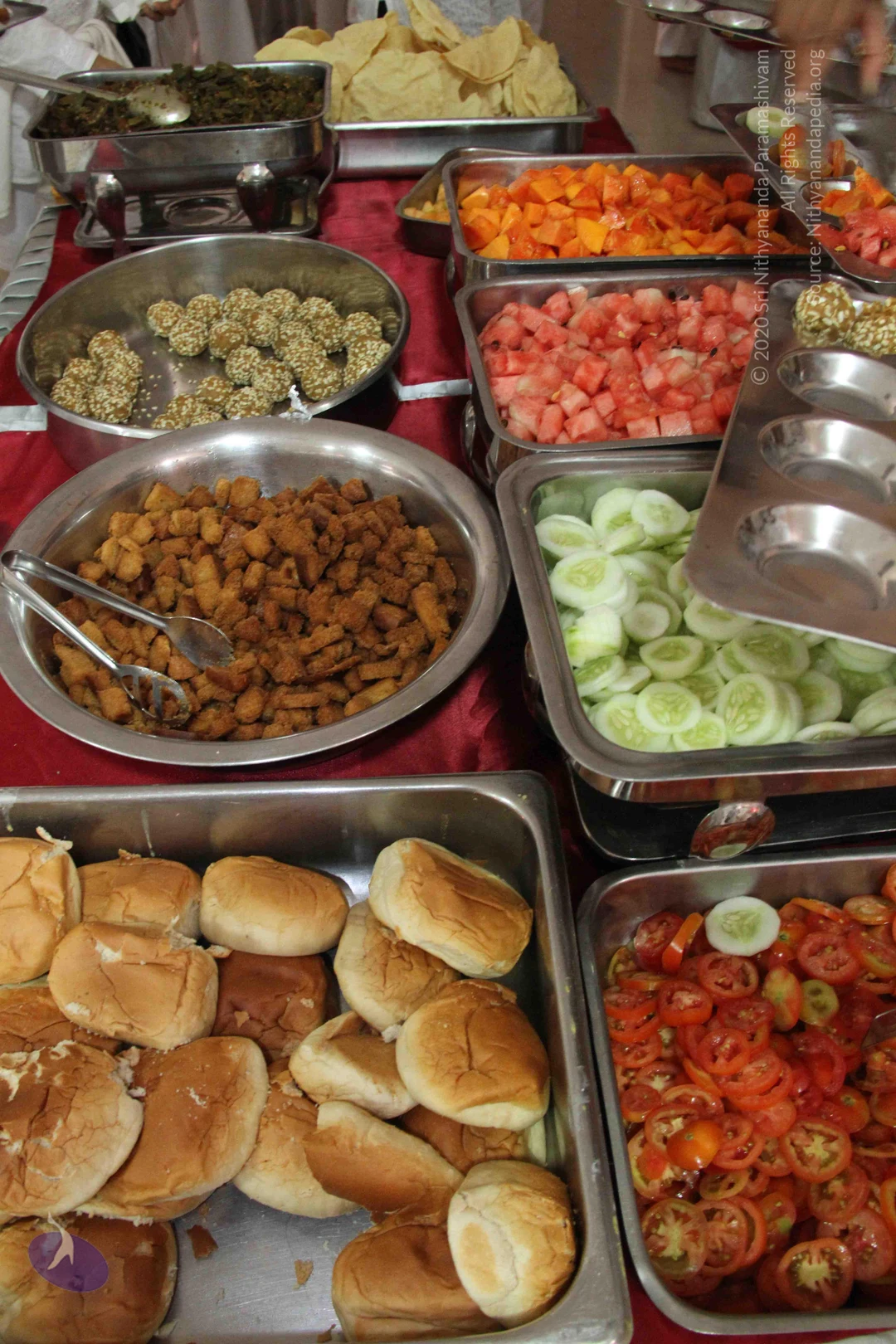
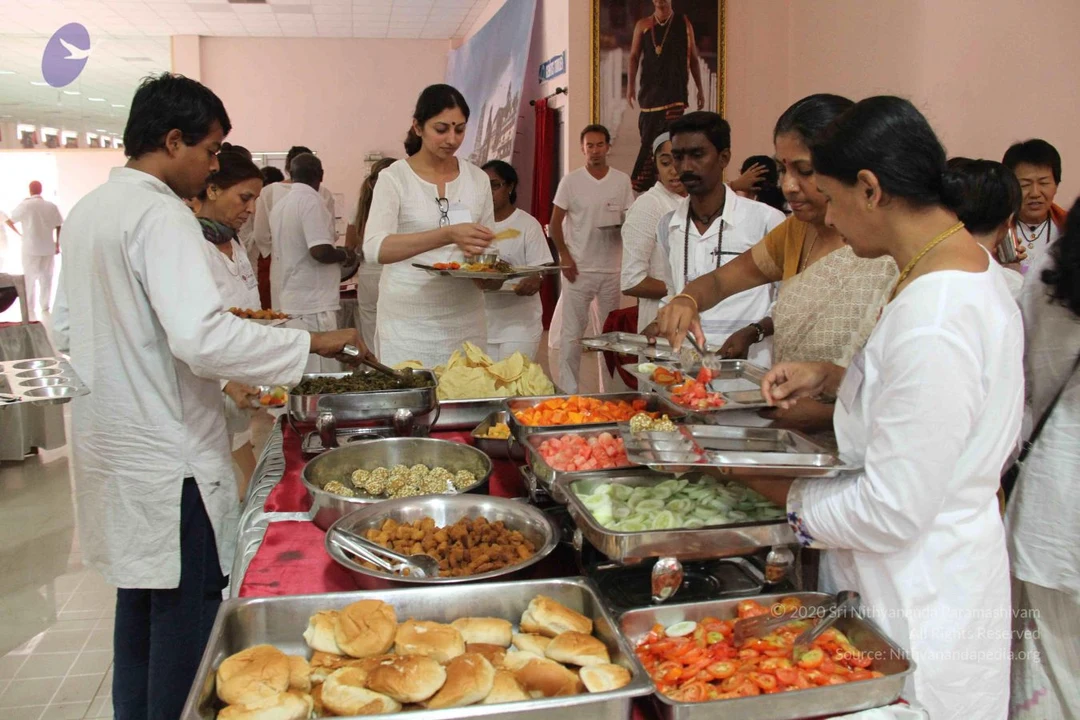
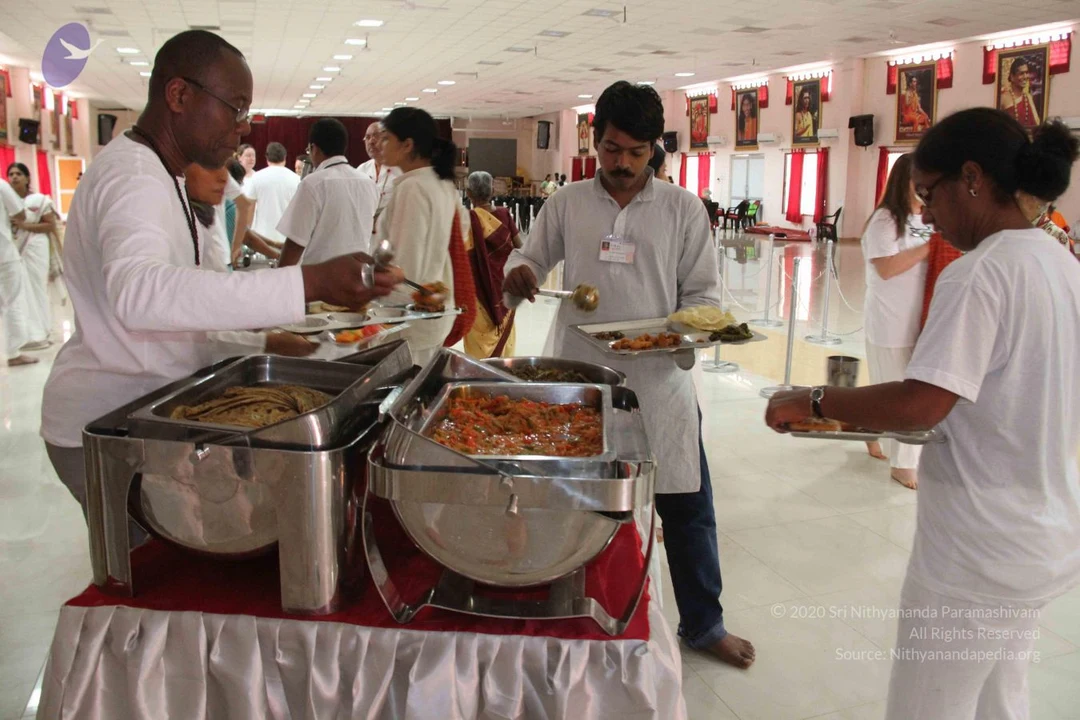
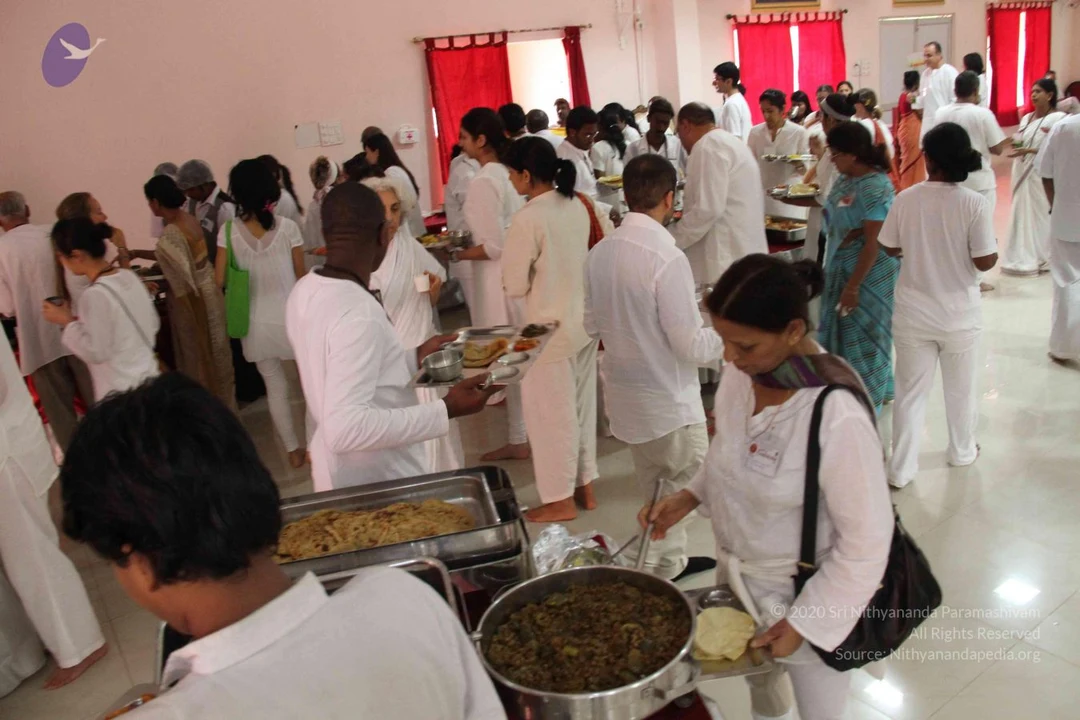
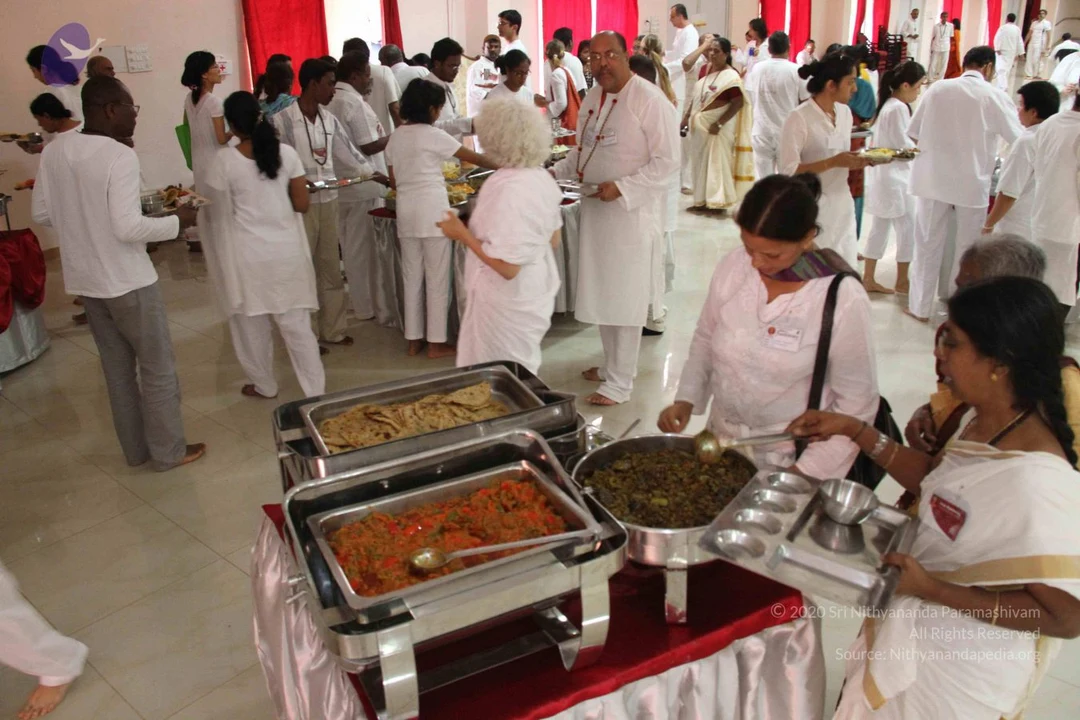
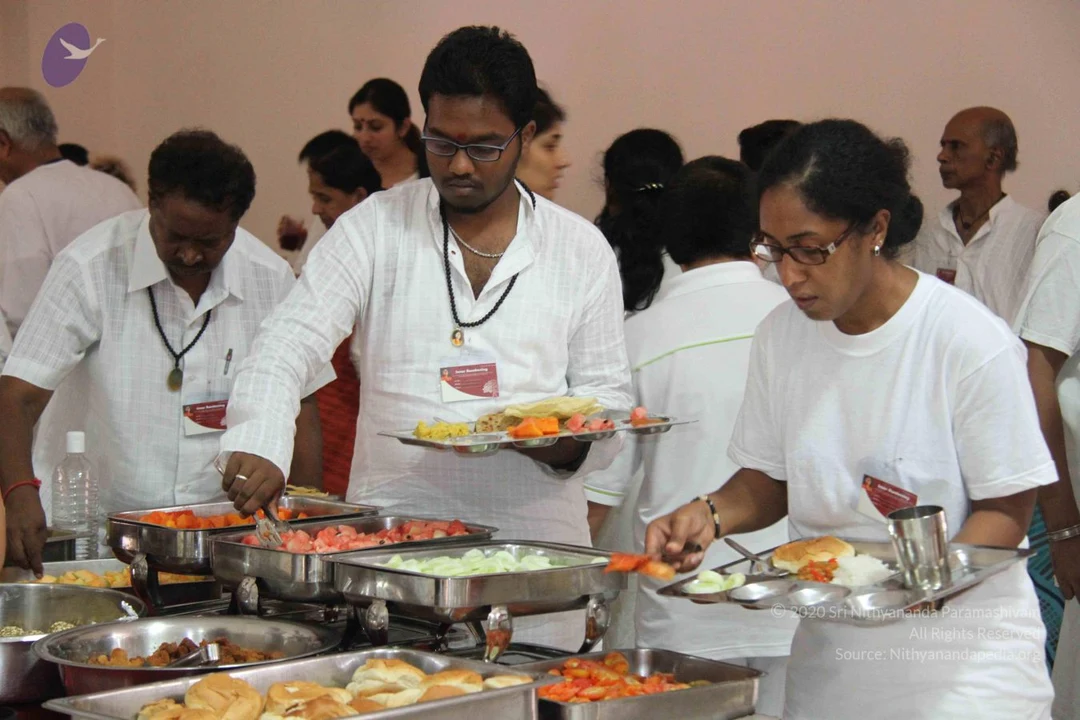
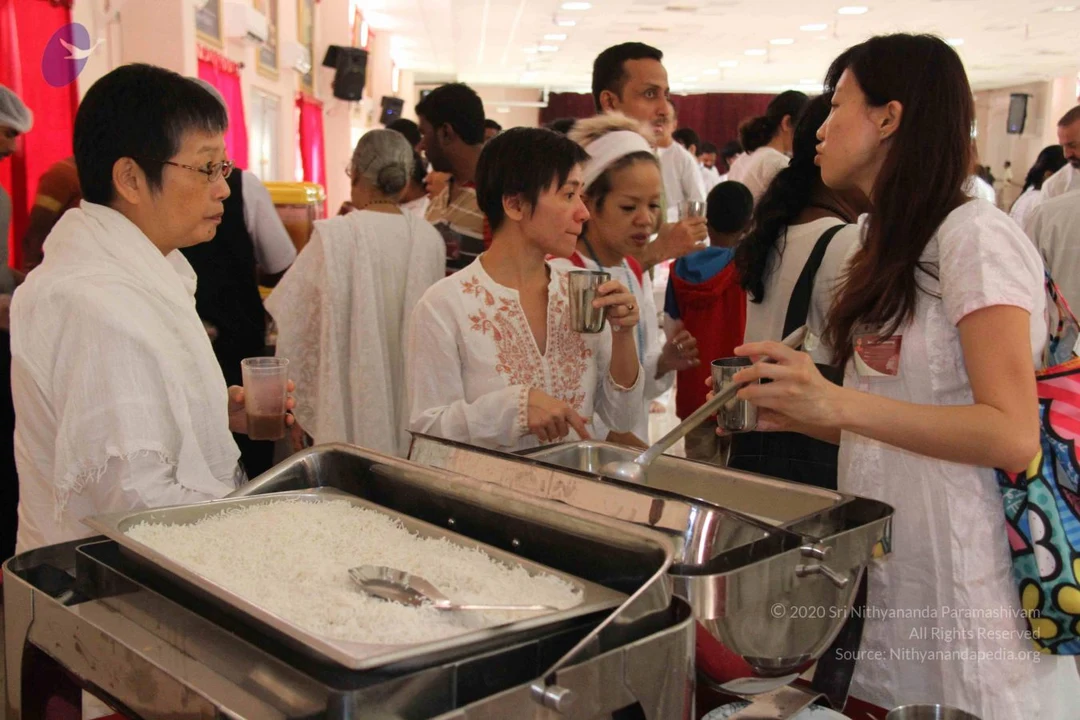
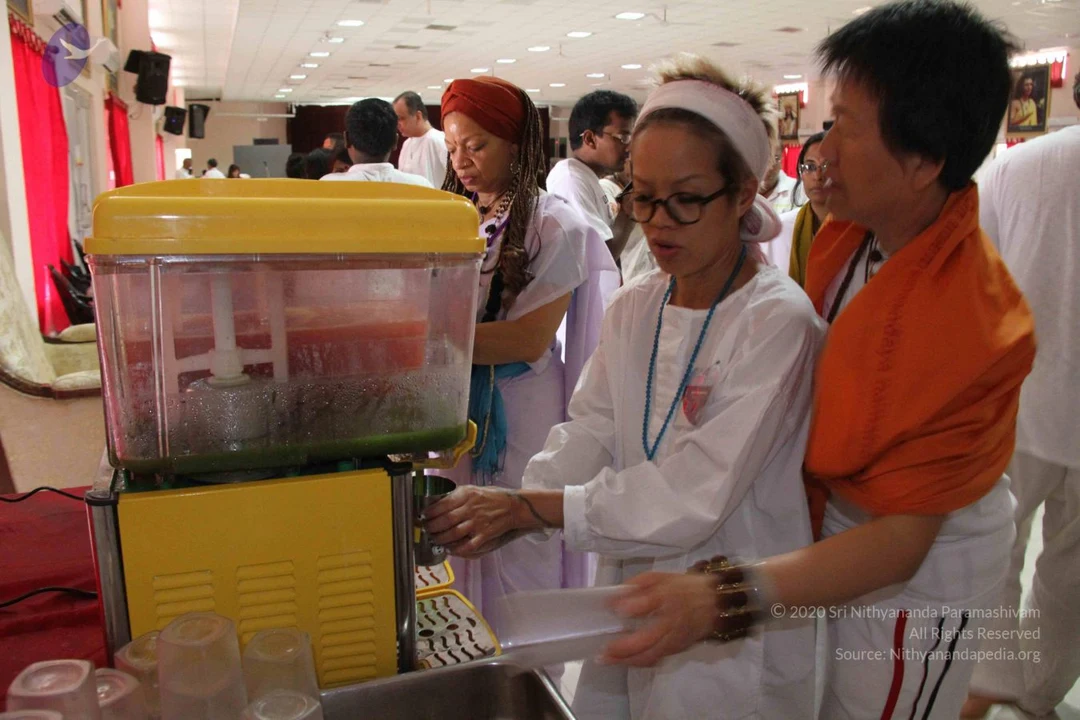
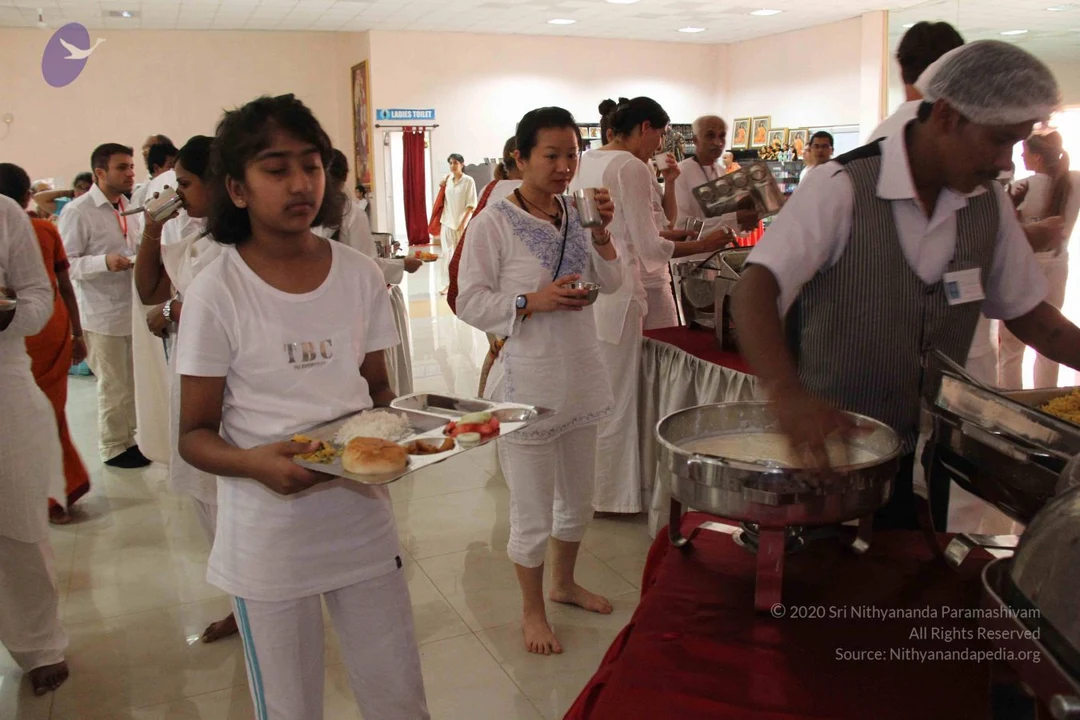
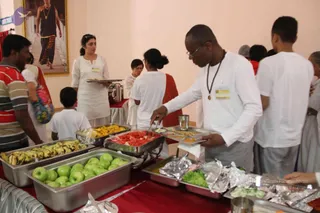
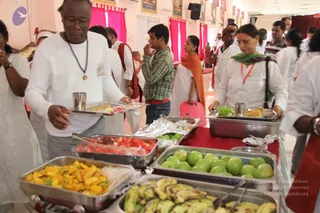
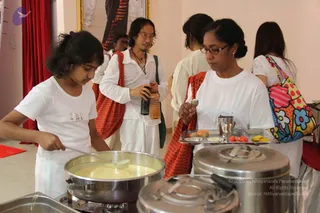
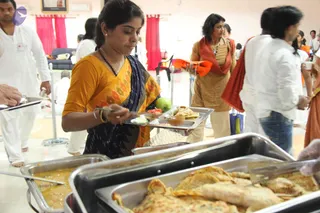
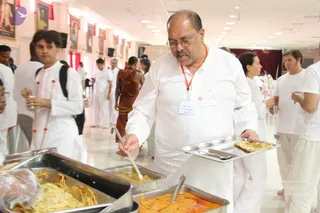
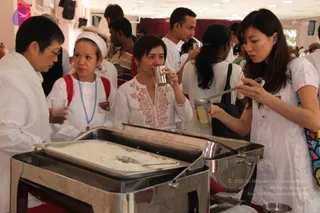
A buffet serving line in a bright, cream-walled hall with a red tablecloth. Steel chafing dishes hold sliced bananas, apples, mango and red watermelon-like fruit, and foil-wrapped trays and greens sit beside them. A man in white clothes with a dark beaded mala around his neck holds a plate and serves food. A woman in white stands behind a tray, and other devotees in white and orange clothing line up. A framed portrait of a figure in orange-and-white draped robes hangs on the wall.A buffet serving line of fruit and food at an ashram hall. In the foreground a man in a white shirt with a dark pendant necklace holds a steel tray, beside steel trays of cut mango, watermelon, lime-green apples and bananas. A woman in white with an orange lanyard and green scarf serves from another tray. Behind them, devotees in white clothes, some wearing orange shawls and red-and-gold cloths, mingle near pink curtains and framed pictures on the walls. Around fifteen people are visible.A photo of an ashram serving area where devotees in white clothes serve food. A young girl in a white t-shirt stirs a large steel pot of pale yellow liquid with a ladle on a gas burner. A woman in a white t-shirt, dark-rimmed glasses and hair in a bun carries a steel tray with fruit pieces and small dishes. Behind them a man in white kurta with a dark bag and a long necklace stands near a woman wearing a colourful floral bag. A red curtain and a framed portrait are visible on the wall. Four people are visible.A woman in a mustard-yellow and navy ikat sari with a black beaded mangalsutra necklace and gold bangles serves herself from a buffet at a food counter. Her steel tray holds flatbread, a cut apple, fruit slices and a small serving of food. Steel chafing dishes of curry and flatbreads sit in the foreground. Behind her, several people in white clothing move through a bright hall with red curtains, and a woman in a tan kurta with an orange-red shawl stands to one side. No one is identified as a person in this scene.A buffet line in a bright white-walled hall with framed portraits along the wall. A middle-aged bald man in white kurta and trousers, wearing an orange lanyard and a badge reading SPECIAL ATTENTION NEED, holds a steel tray and serves himself from a steel serving pan with a ladle. Steel chafing dishes hold yellow and orange curries and flatbreads. Around him, devotees in all-white clothing stand and walk; one man at left wears a white kurta with a red-bead mala, another person in the background wears an orange-brown dhoti and sash. Dozens of people fill the hall but only several are clearly visible, so the count is best given as a range.A photo of devotees in white clothing queuing at a stainless steel buffet for a meal of plain white rice. A woman in a white dress with a colourful bag ladles a liquid from a steel pot into her cup, while a woman in a white embroidered top with red floral thread sips from a steel tumbler. Beside them a woman with a white headband and blue beaded mala holds a glass, and a man in white stands at the left edge. Others move through a hall with a red curtain behind.

IA-Darshan

48 photosSource gallery
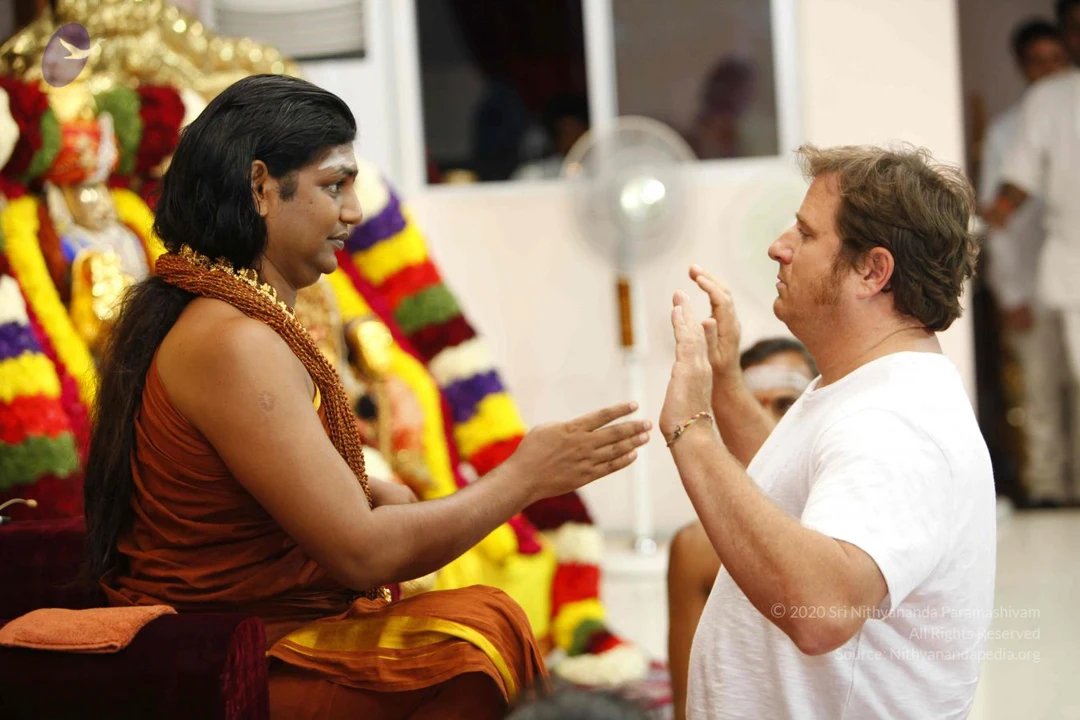
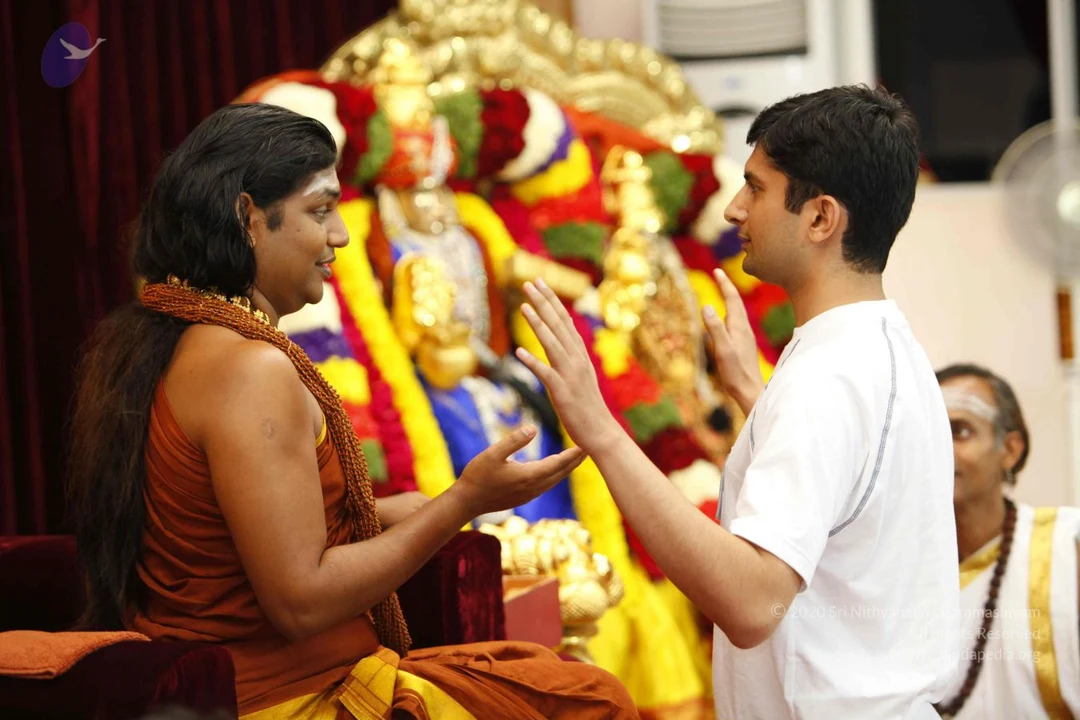
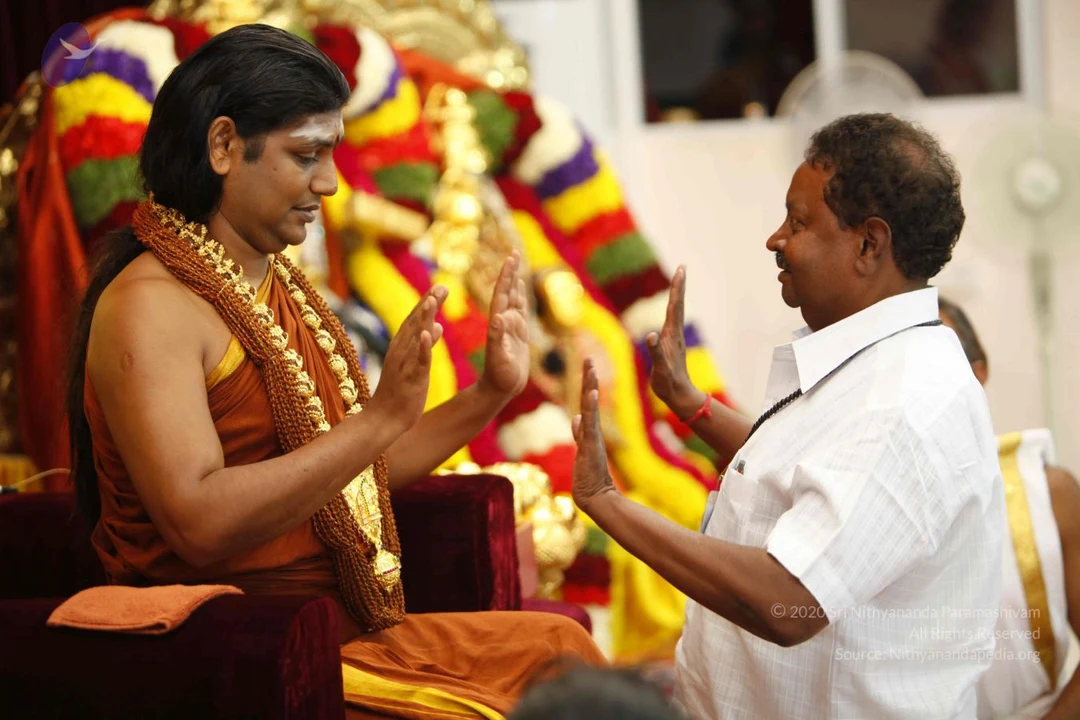
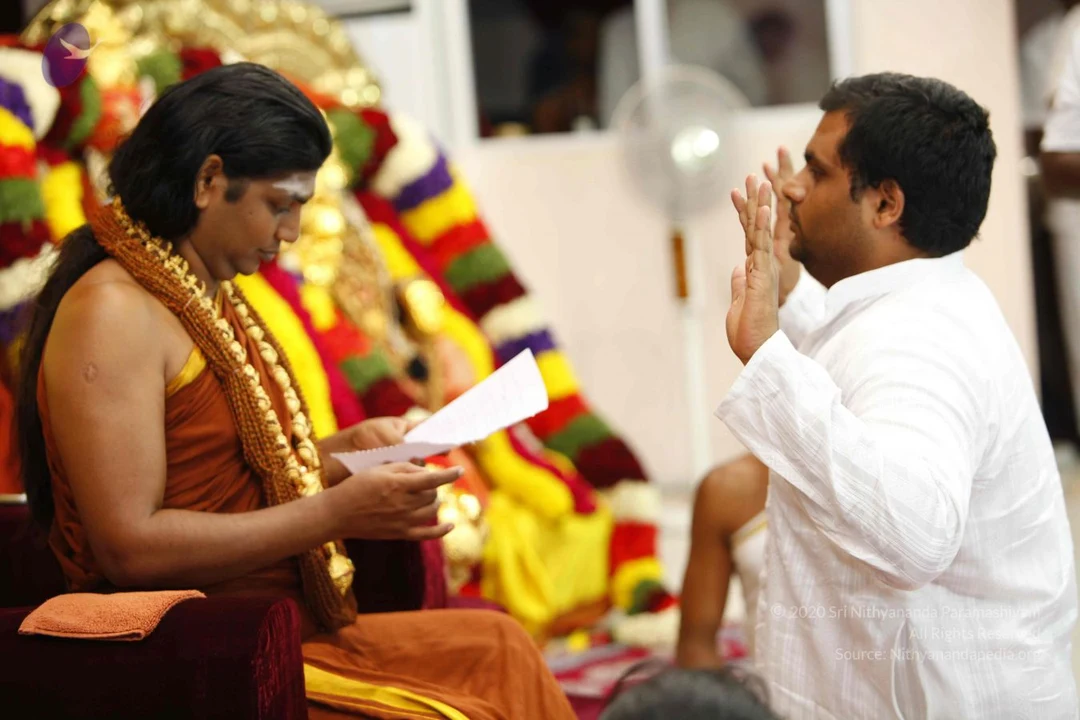
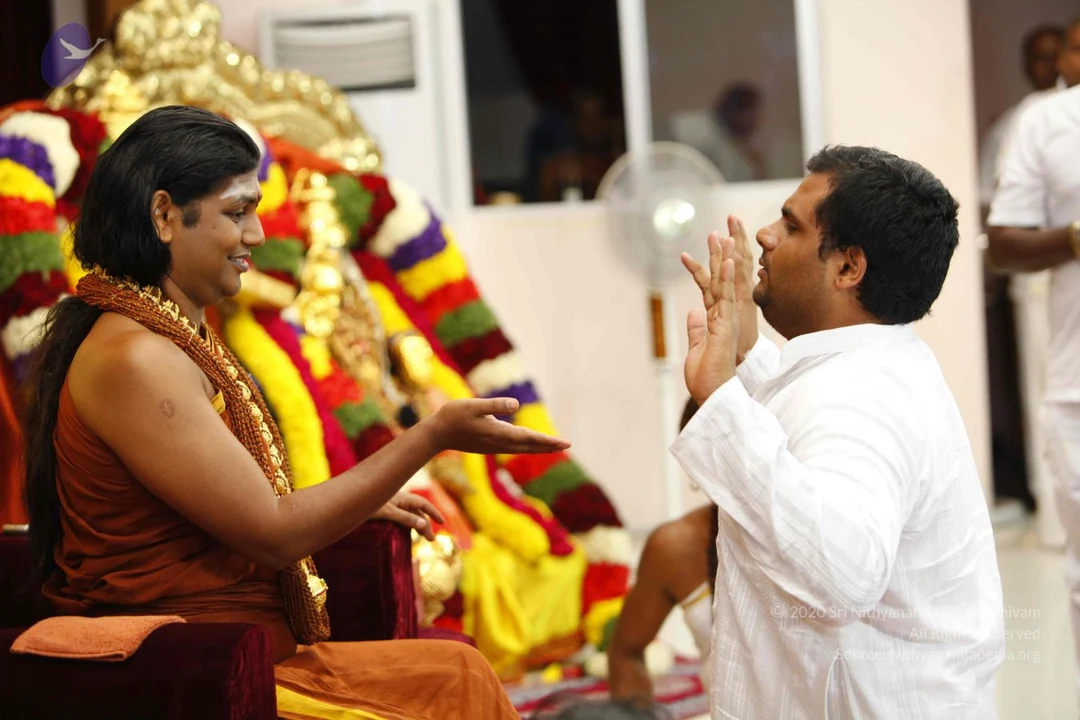
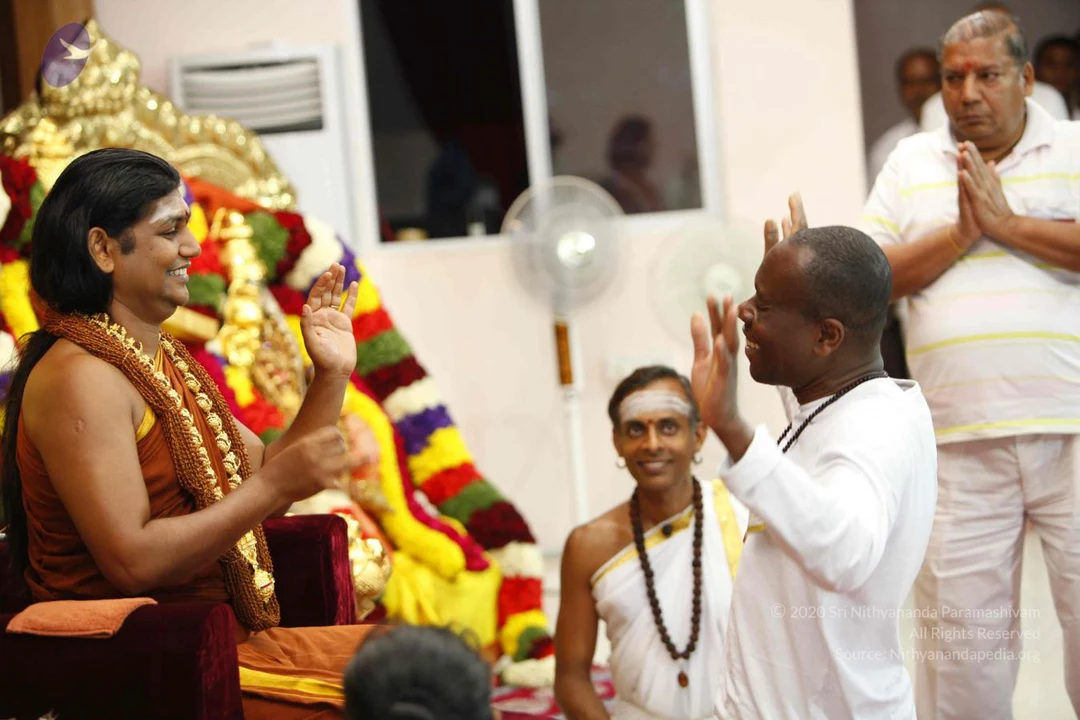
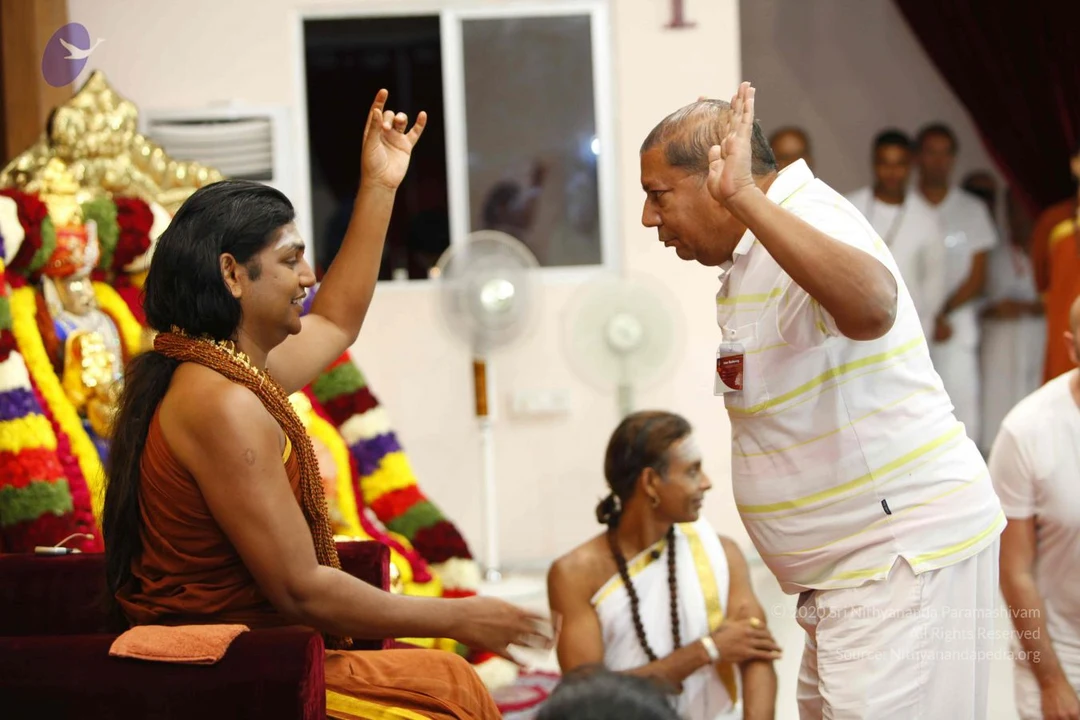
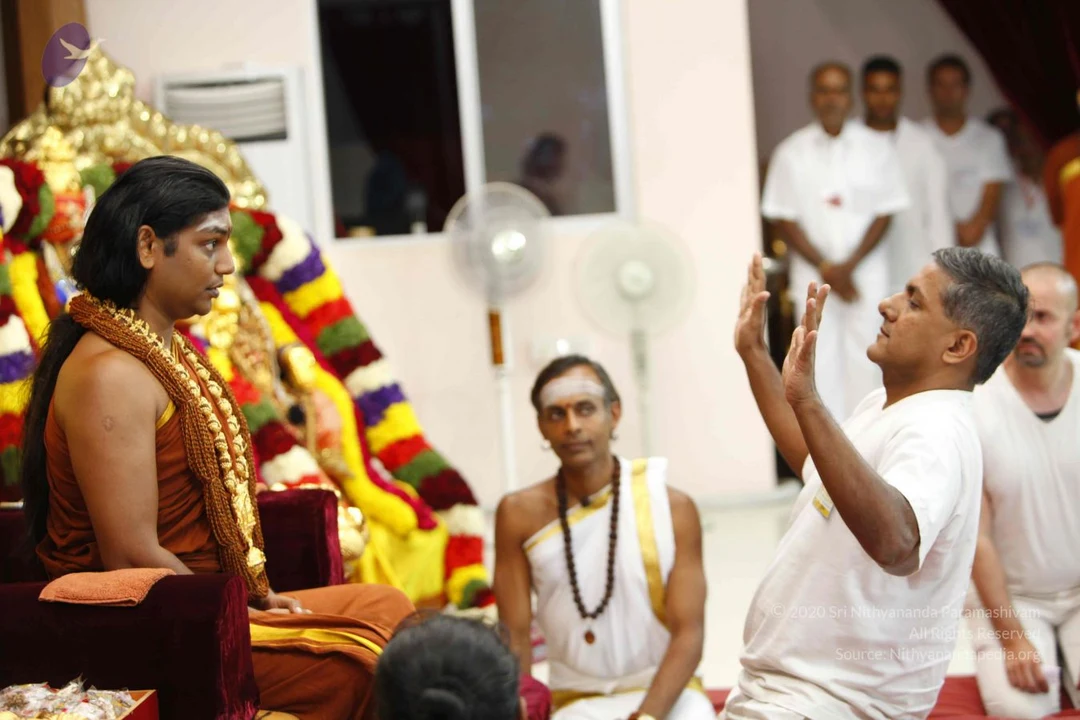
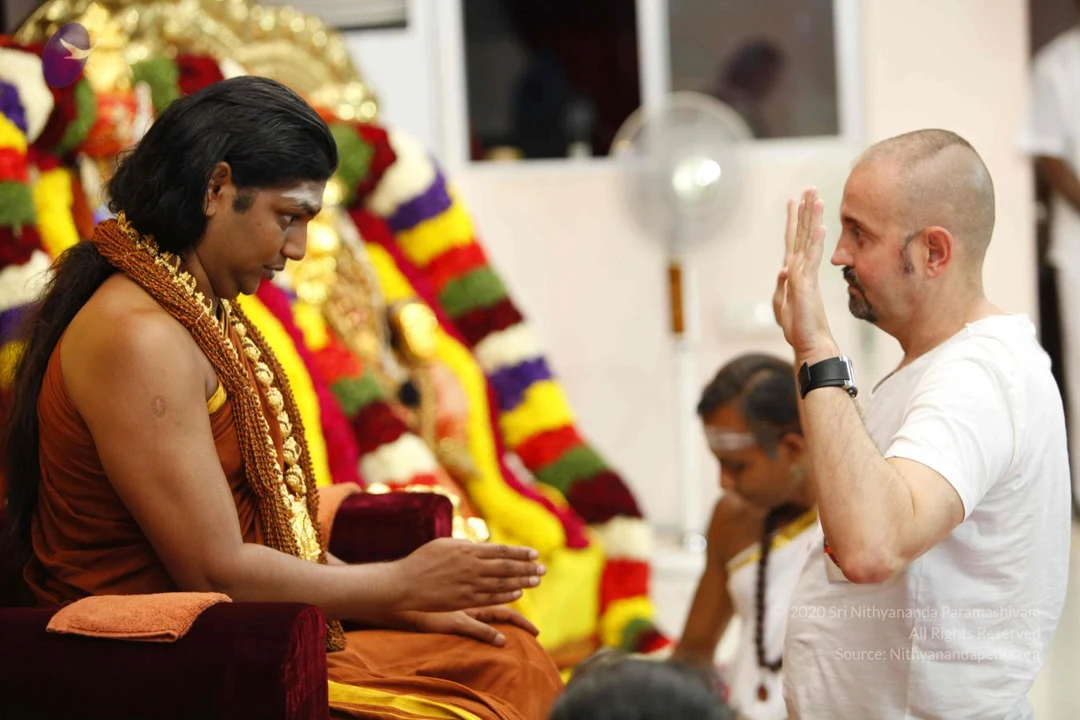
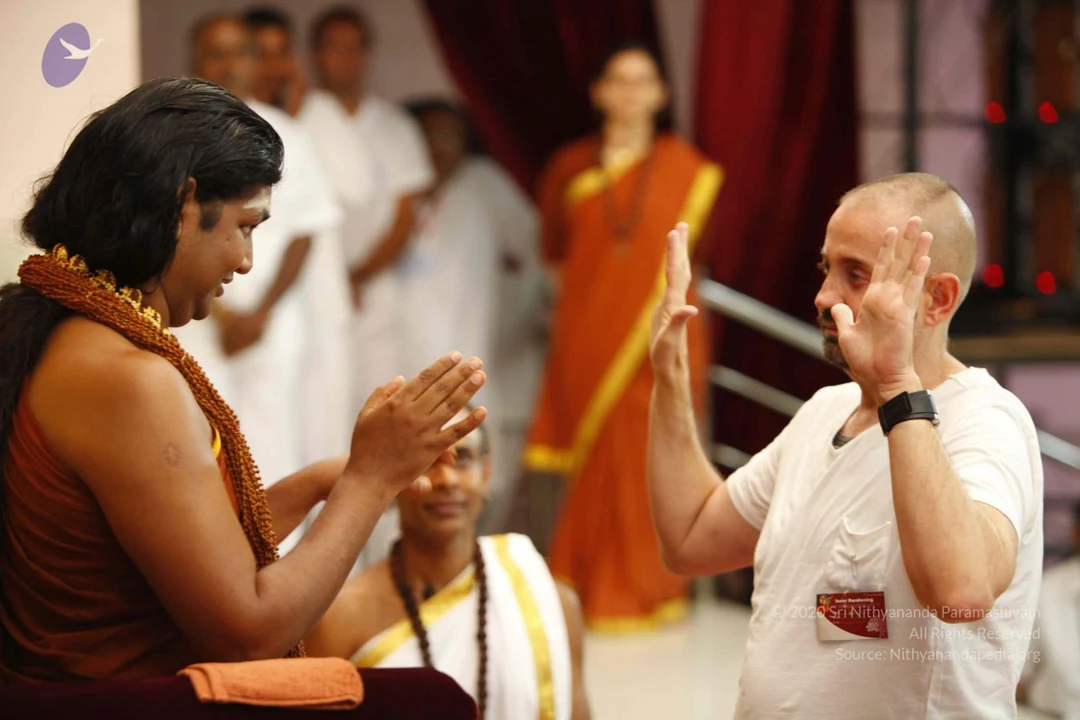
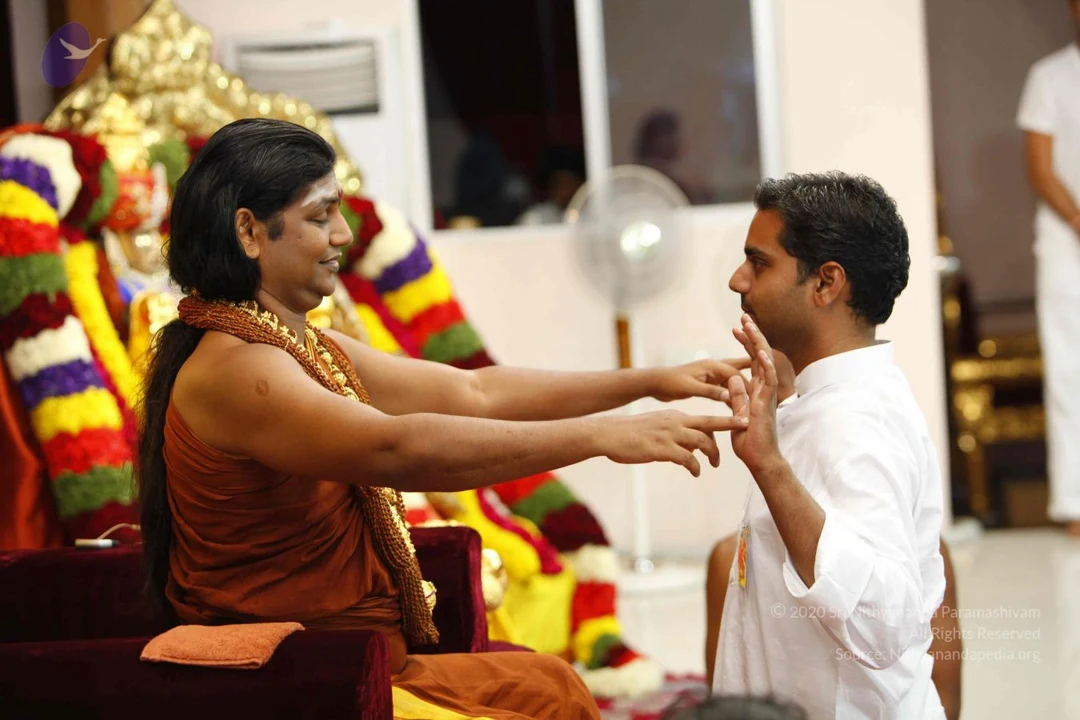
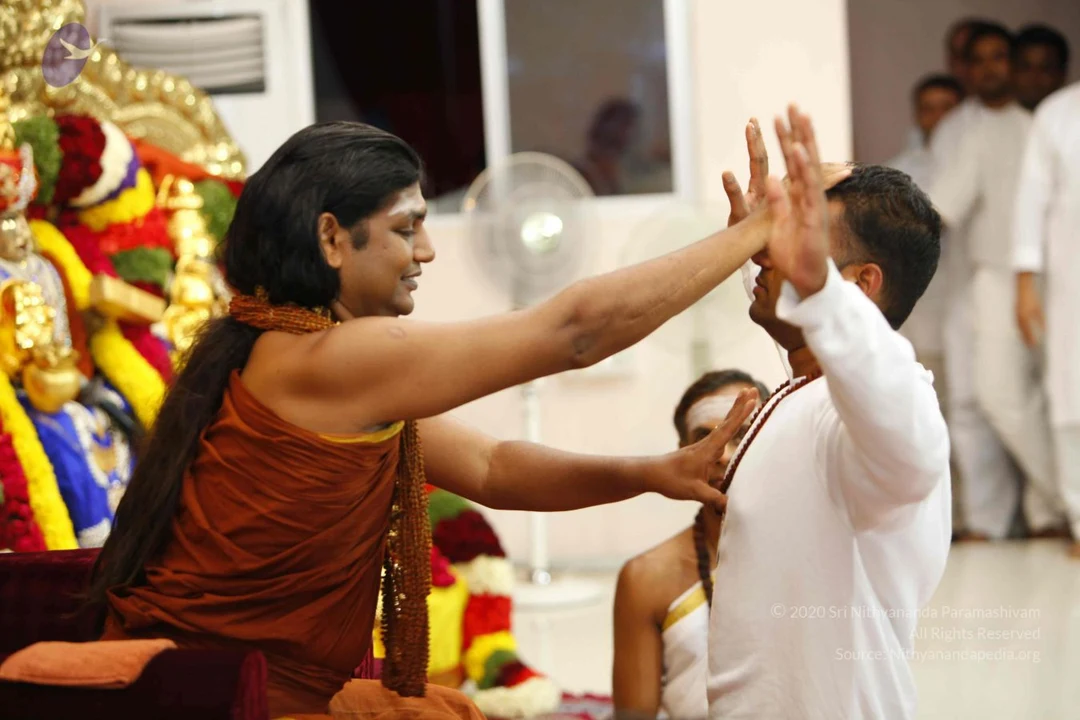
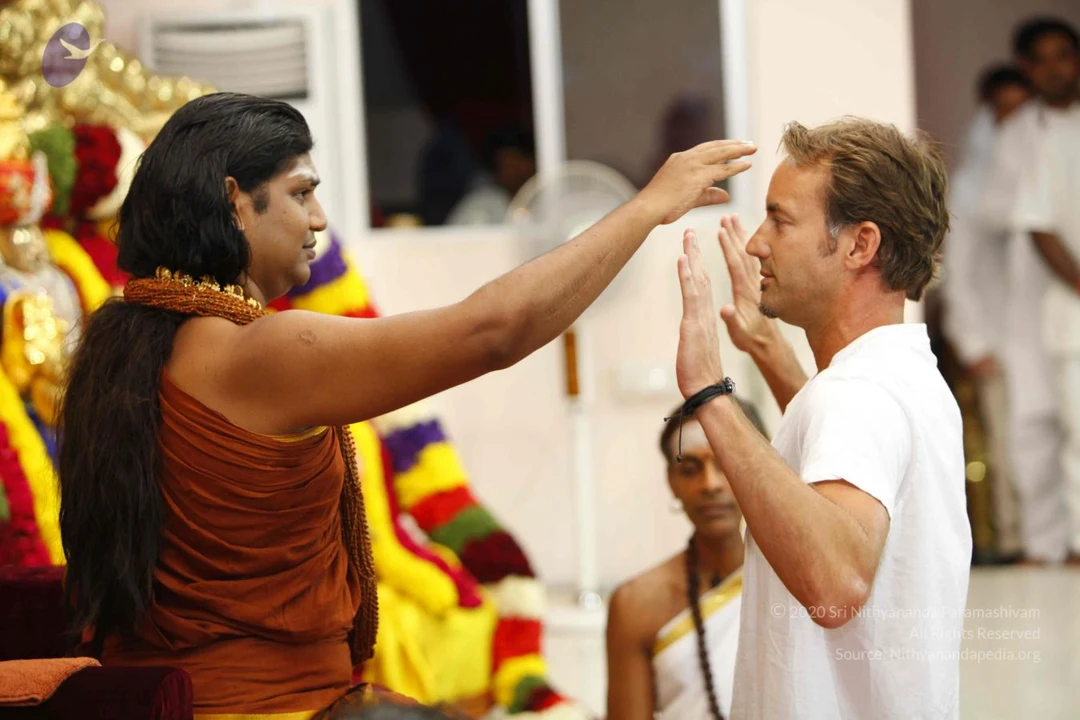
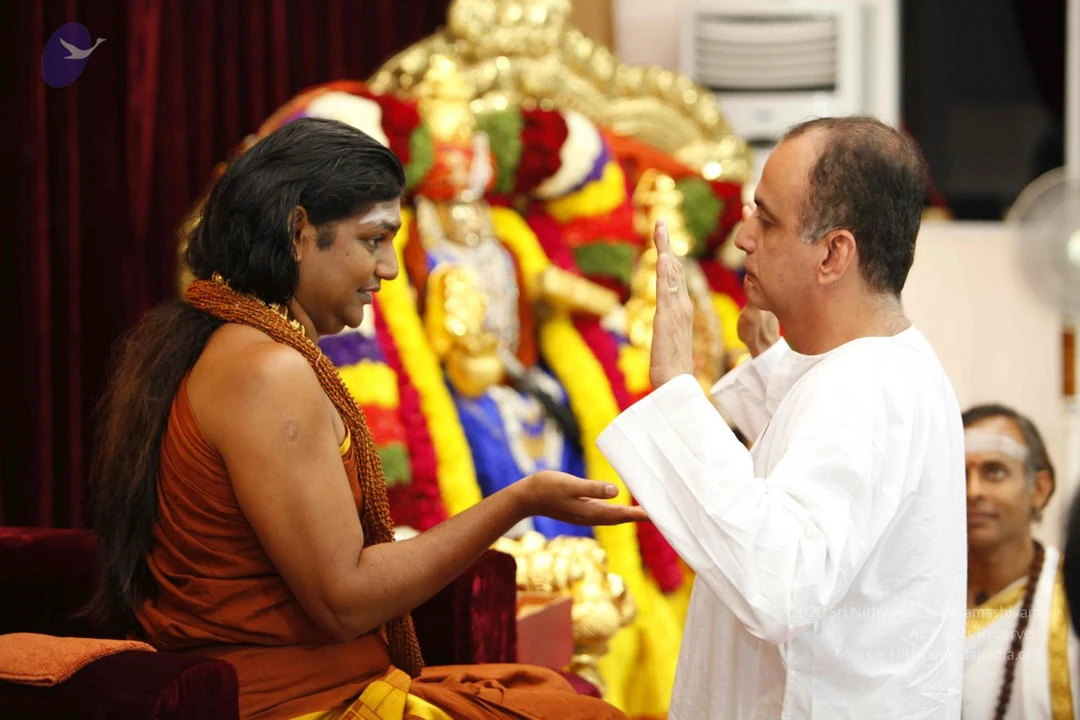
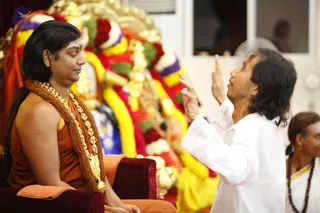
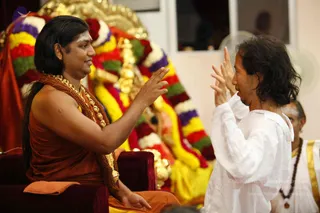
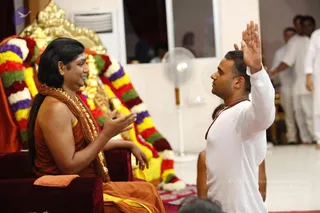
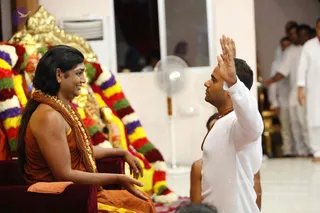
A seated man in an orange-saffron robe and yellow-orange sash sits on an ornate gold throne with carved lion heads and a tall arched back, in front of deep maroon velvet drapery. He wears a long gold ceremonial necklace with a large gold pendant, a rudraksha-style mala, and a red bindi on his forehead. His long dark hair is swept back, and he raises both hands in a welcoming gesture while smiling. Fruit and flowers sit on pink-topped tables at the sides of the throne. a person appears in person, seated in the central role of the teaching throne.A seated man in orange-saffron robes with gold border sits cross-legged on an ornate gold throne with carved arches and red velvet armrests, smiling and raising both palms in a welcoming gesture. He wears a long gold-beaded mala with a large gold pendant and has a red bindi and white marks on his forehead. Swamiji (probable) appearance-based cues: long swept-back hair, saffron robes, rudraksha-style mala and ceremonial gold necklace, seated on a throne in a satsang setting. Nobody else is visible.A man seated on a maroon velvet armchair in front of an ornate gilded arched throne back with carved lion-like motifs and a deep red drape. He wears an orange-saffron shawl over his torso, a long gold ceremonial necklace with a large gold pendant, and has long swept-back dark hair and a red bindi on his forehead. Fruit and flower offerings lie on a small table at the lower edge. Swamiji (probable): long swept-back hair, saffron clothing, ceremonial gold necklaces and a seated throne position are visible cues. One person is present.A seated man in an orange-saffron robe wears a long gold-bead necklace with a large ornate gold pendant and a rudraksha-style mala, with a red bindi on his forehead. He sits in an ornate gold-leaf throne with carved lion and floral motifs, against a deep red curtain, with his hands raised in an open gesture. Fruit and flower offerings lie on a small red table at the lower edge. Swamiji (probable): this seated figure on the throne has long swept-back hair, saffron clothing, a bindi and ceremonial gold necklaces, consistent with the page's Swamiji claim, though the appearance cues are only moderately distinctive.A photograph in a temple-like hall with a deity murti decorated with garlands in red, yellow, green and purple behind. A seated man in saffron-orange robes with a rudraksha mala and a gold-ornamented necklace sits on a maroon throne-like seat with eyes closed, a white vibhuti line on his forehead. Beside him, a man in white clothes raises both hands in a blessing or invocation gesture. On the far right edge, a partly visible person wearing a rudraksha mala and white forehead marks sits. The seated man with long dark hair and saffron robes is a probable Swamiji candidate by visible cues (long swept hair, saffron clothing, rudraksha mala and gold necklace), appearing in person.A photograph of a seated figure in saffron-orange robes with a long swept-back hair, a gold-and-brown beaded necklace and a shawl, gesturing with both hands toward a man in white kurta-style clothing who kneels close and mirrors the gestures with raised palms. Behind them is a large garland of red, yellow, green, purple and white flowers around a golden deity murti or throne decoration. A third person in white with a shaved head and white sacred markings sits at the right edge. Swamiji (probable): the seated figure has long swept-back hair, saffron clothing, and ceremonial gold and beaded adornments, consistent with the page's account of a satsang discourse. Three people are visible.

IA-Participants-Session

7 photosSource gallery
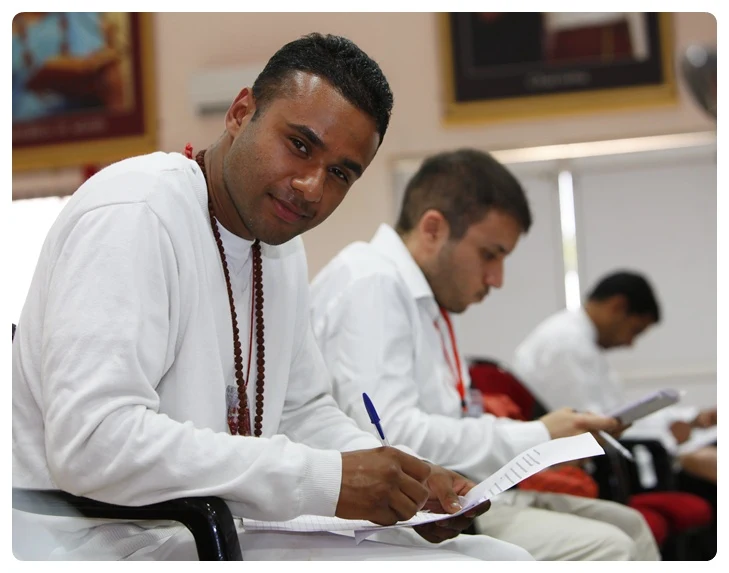
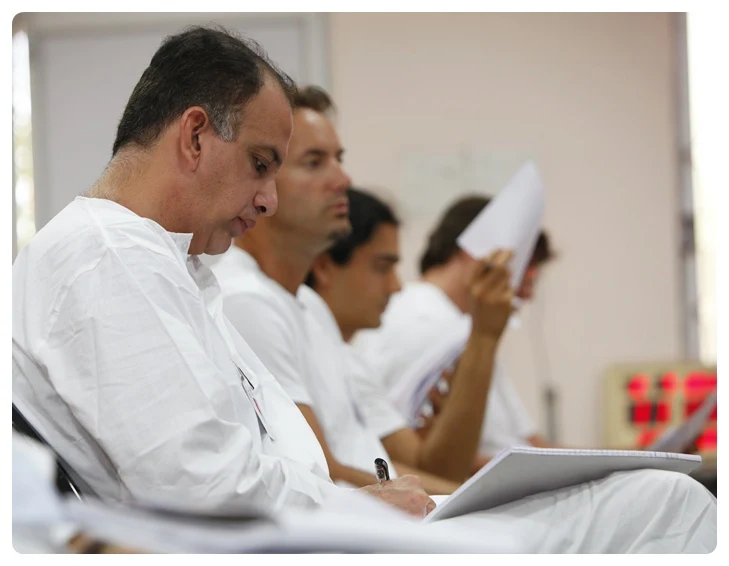
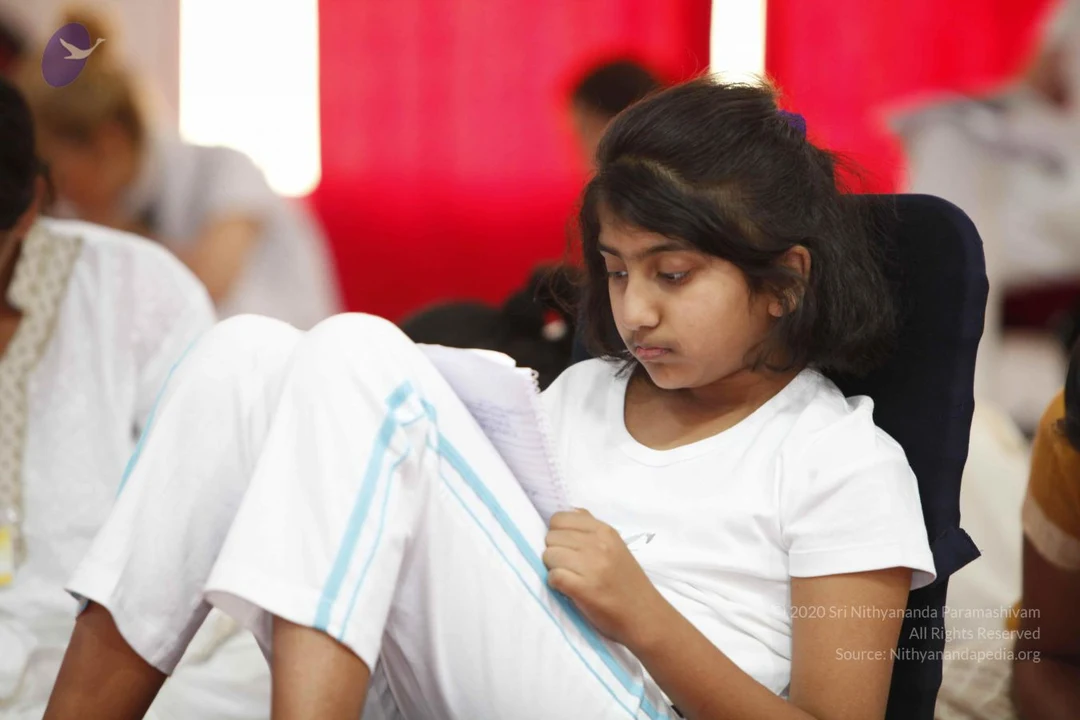
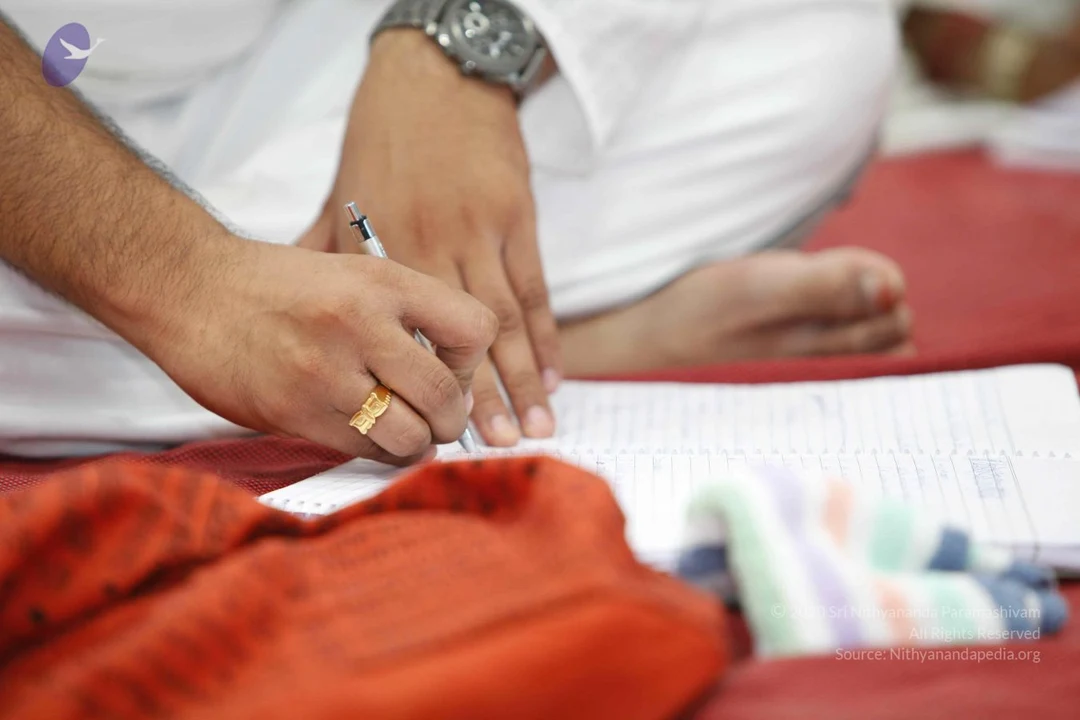
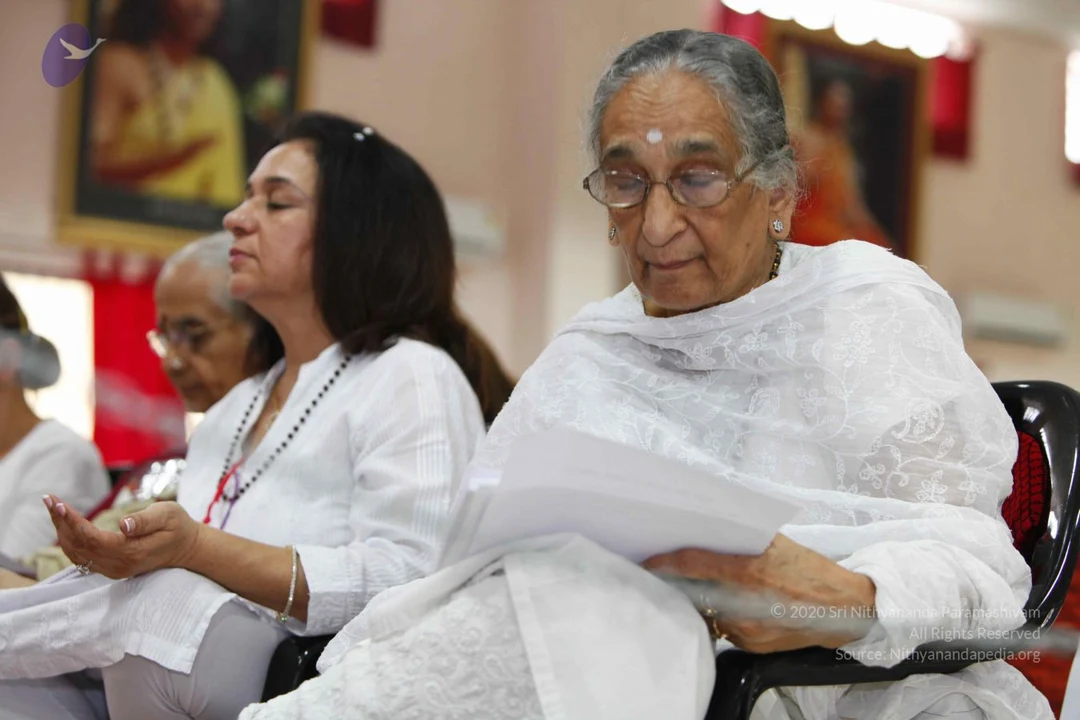
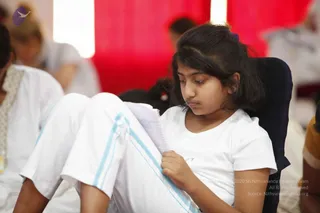
A young girl with shoulder-length dark hair sits in a dark blue chair, writing in a spiral notebook balanced on her crossed legs. She wears a white t-shirt and white trousers with light blue stripes down the sides. Behind her, blurred figures in white clothing sit in a hall with red drapes and bright lights.Close-up photo of a seated person in white clothing writing in a spiral notebook with a silver pen. The visible hand wears a gold ring and a steel wristwatch. A folded saffron-orange cloth lies in the foreground, and a striped knitted cloth sits beside the notebook on a red mat. Only hands, arms, and bare feet are visible; no face appears.Seated devotees in white clothing at an indoor satsang hall. In the foreground an elderly woman with grey hair pulled back, wearing glasses, a white embroidered shawl and a small white dot on her forehead, holds loose papers in her lap. Beside her a woman with long dark hair and a black beaded mala sits with eyes closed and one hand resting open on her knee, wearing a white kurta. Another elderly woman in glasses is partly visible further left. Behind them are framed portraits on a pink wall and a red cloth, and a saffron-robed figure appears in one portrait, but no one is identifiable as a person in person.Close-up photo of a man's right hand writing with a black pen in a spiral-bound notebook. He wears white clothing with a red and gold ornamental tassel or mala bead at the cuff. The background is blurred, showing other seated people in white clothing.A row of men in plain white kurta-style clothing sit on chairs in a bright room, taking notes on white paper with pens. The foreground man in front has short dark hair and wears white with a small lanyard-like cord; he looks down at his notebook. Behind him, others in white also write or hold papers, and a red digital display glows at the right edge. Blurred figures appear at the far left. The setting suggests a satsang or seminar session.A photograph of seated men in a meeting hall. In the foreground a smiling young man in a white long-sleeved top and white trousers wears a rudraksha mala and holds a pen over a sheet of paper on his lap. Behind him, a second man in white with an orange lanyard writes on paper, and a third man in white looks down at papers. Framed pictures hang on the pale wall and red curtains are visible at left. No candidate matching the a person description is visible.

IA-Session-Swamiji

51 photosSource gallery
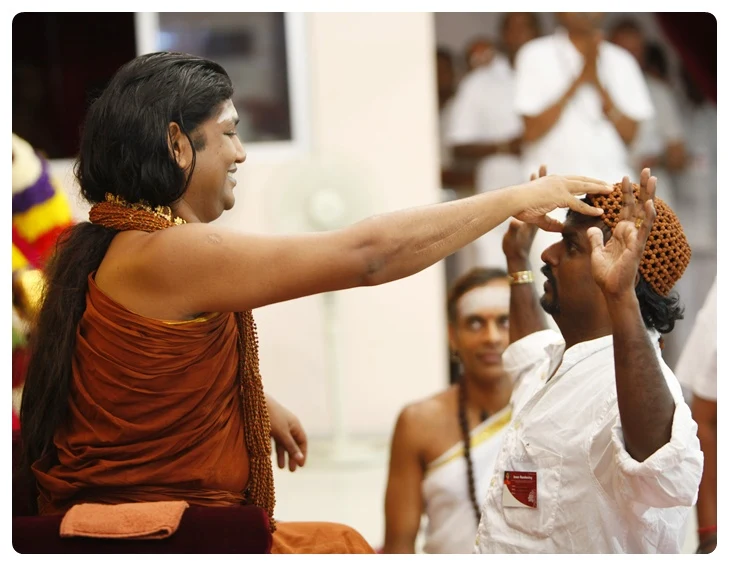
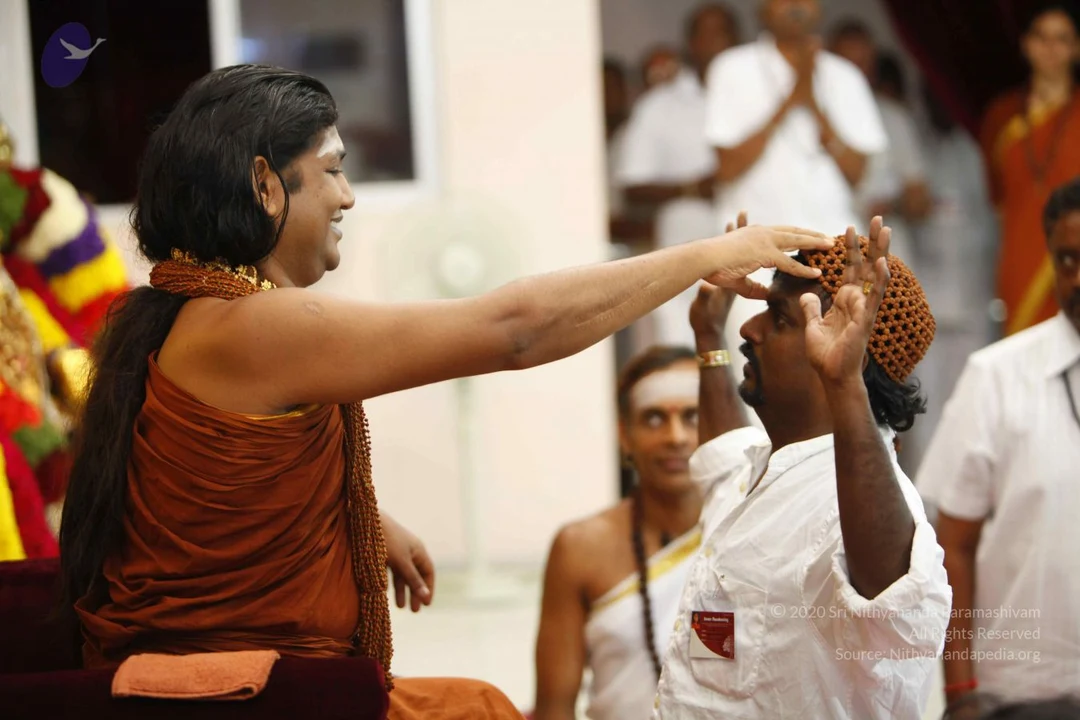
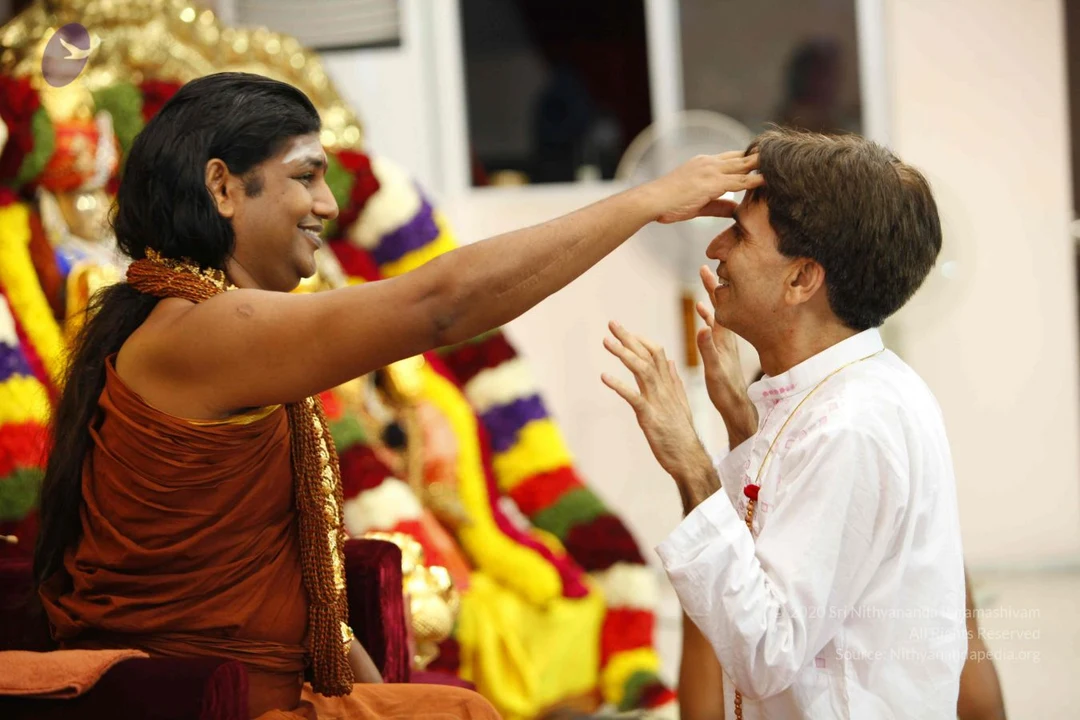
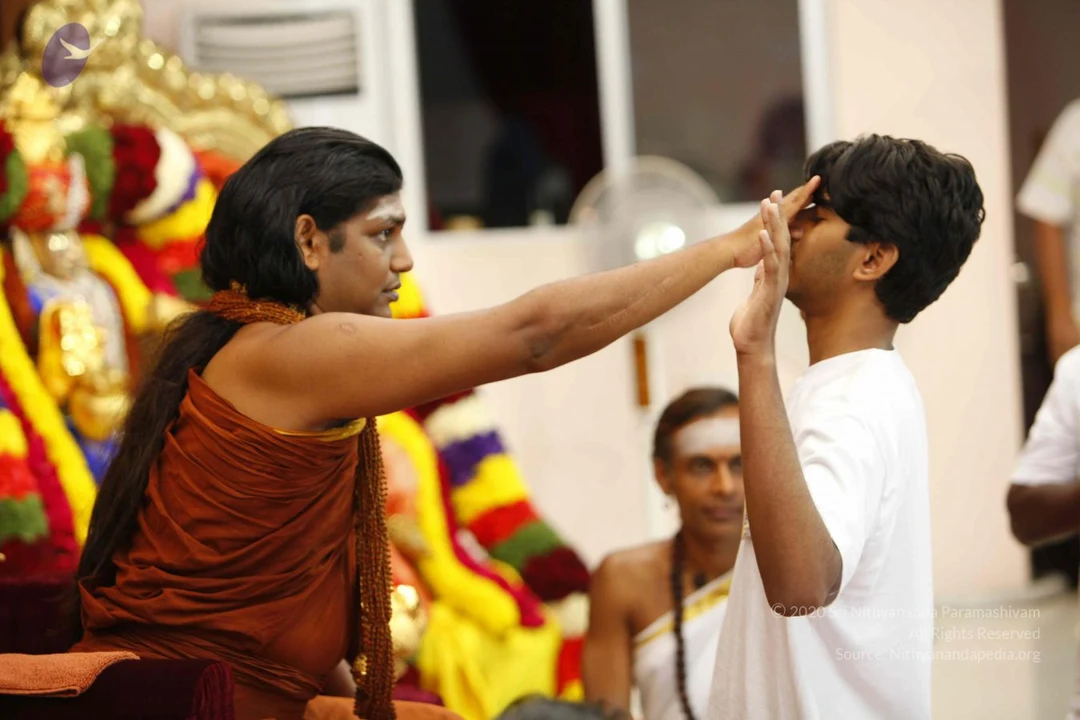
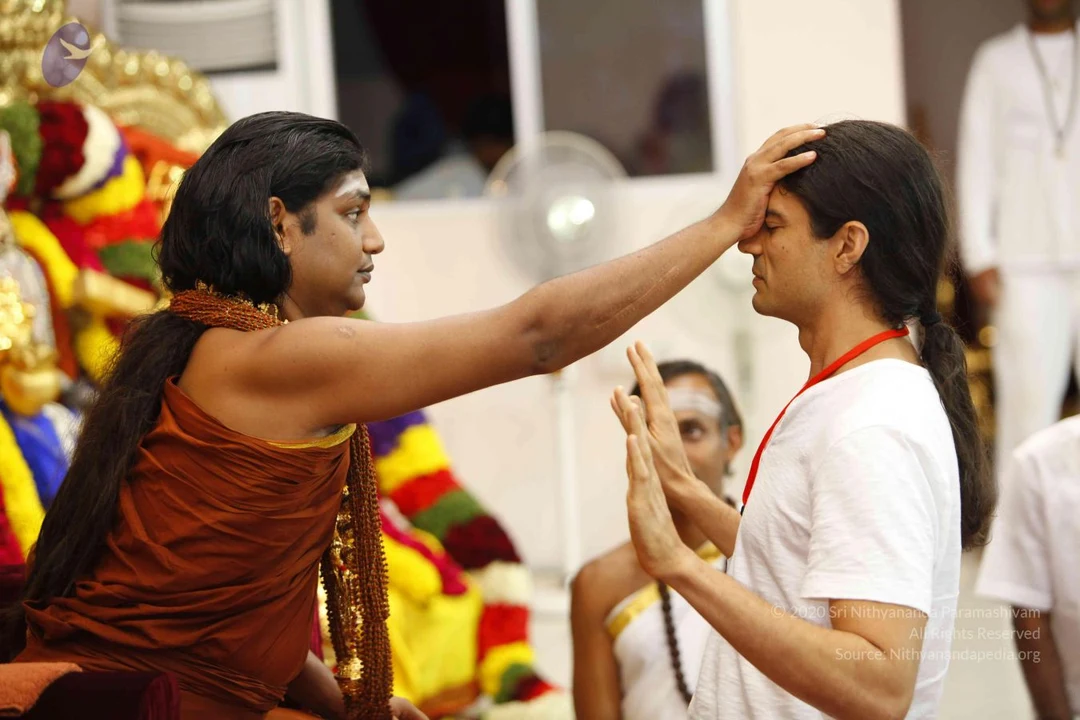
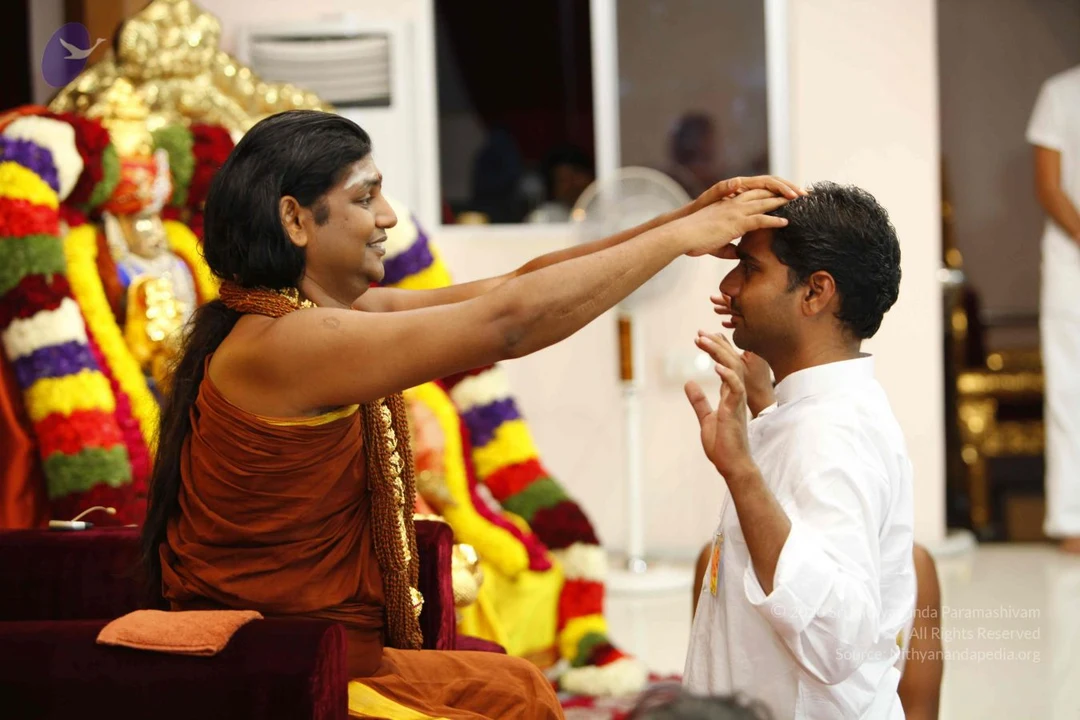
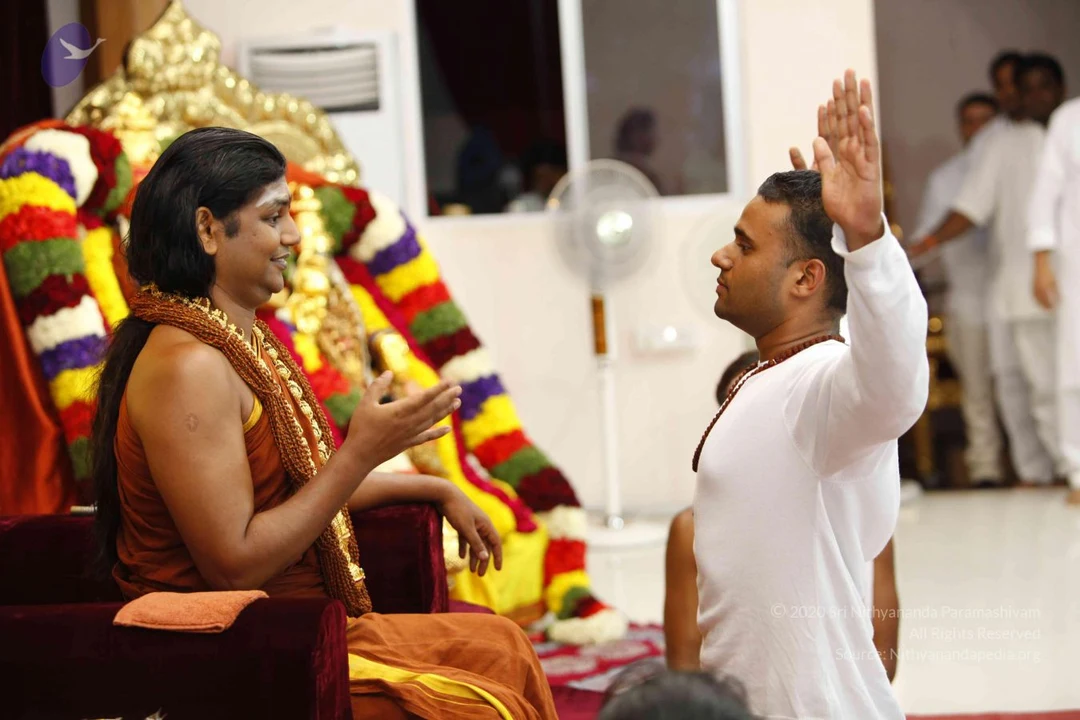
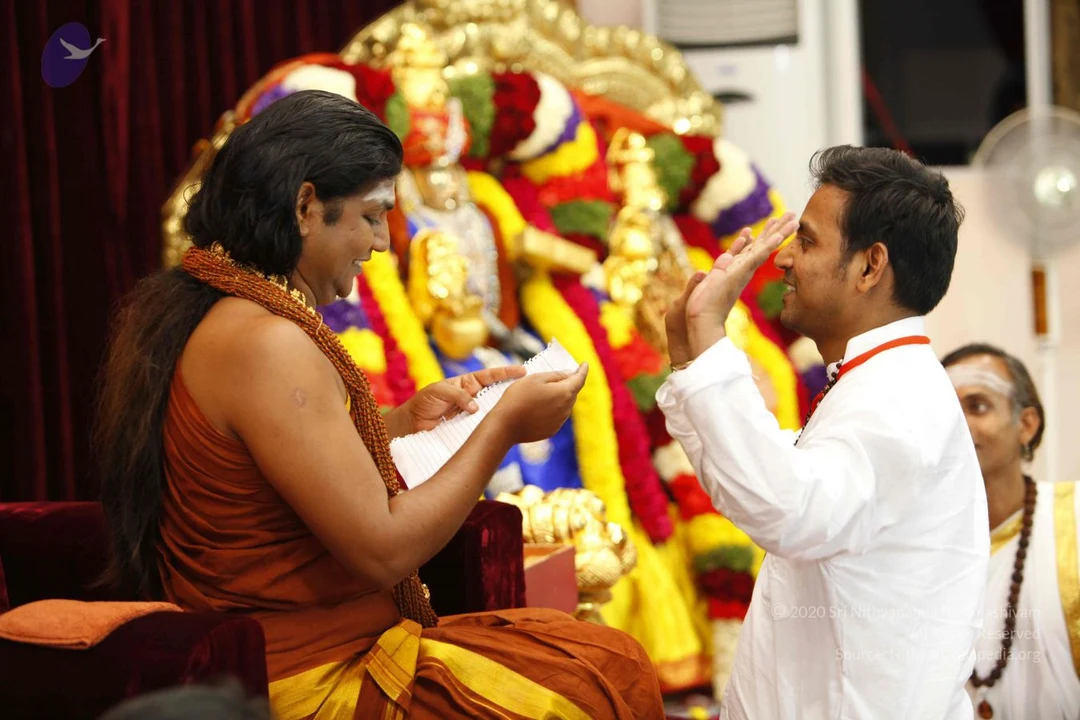
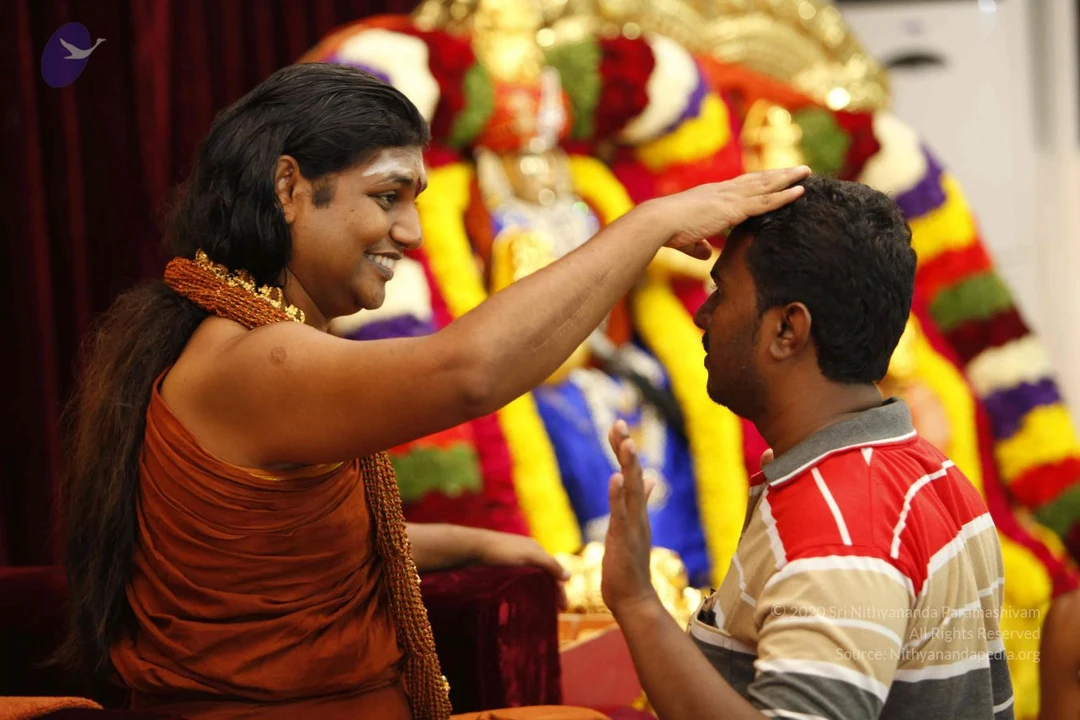
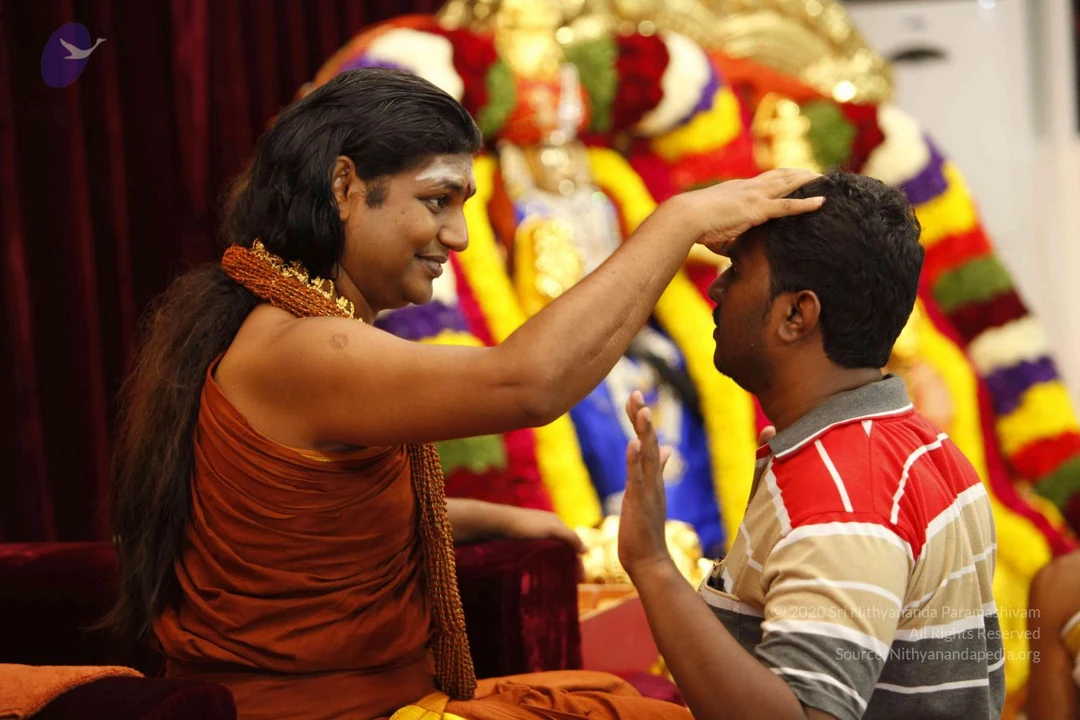
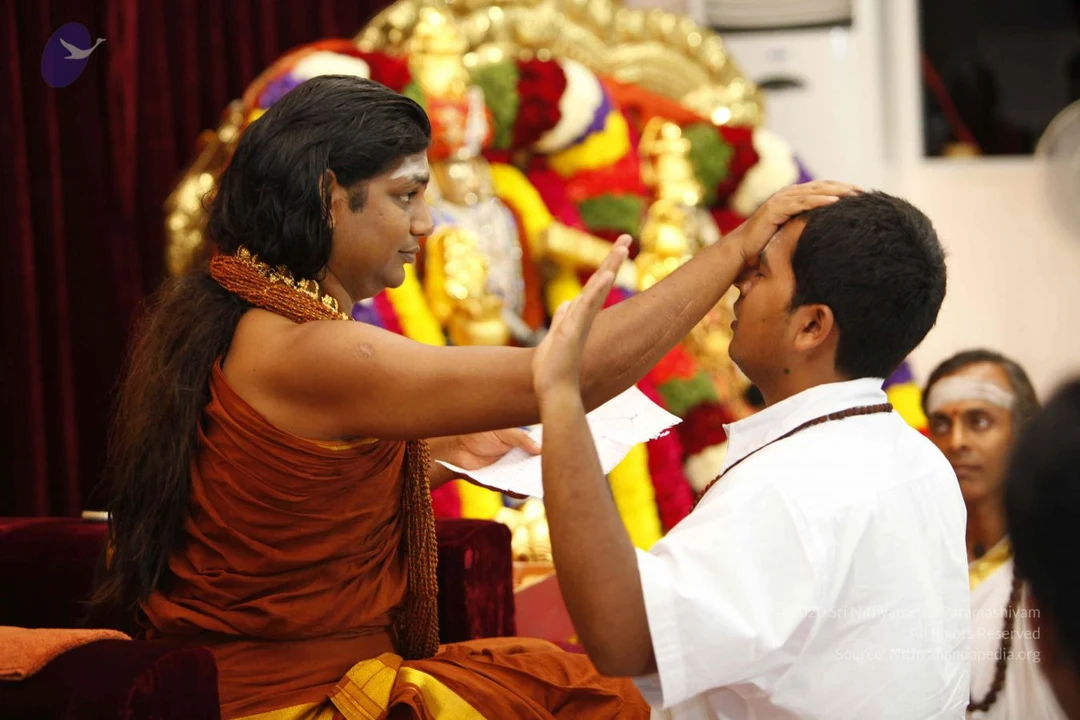
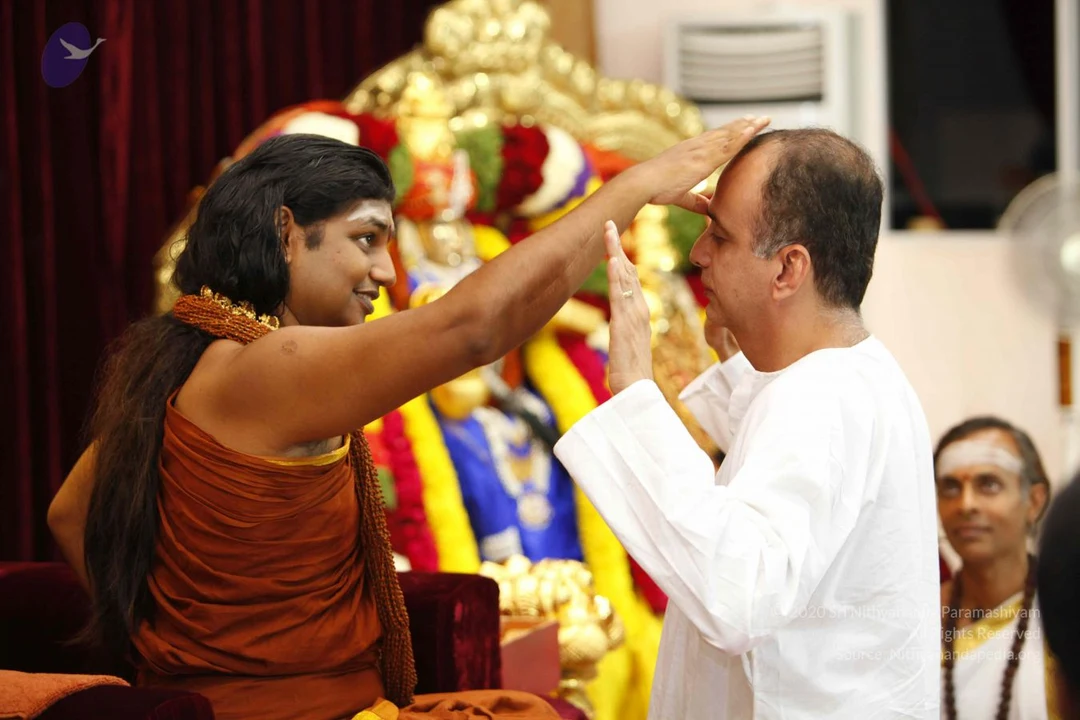
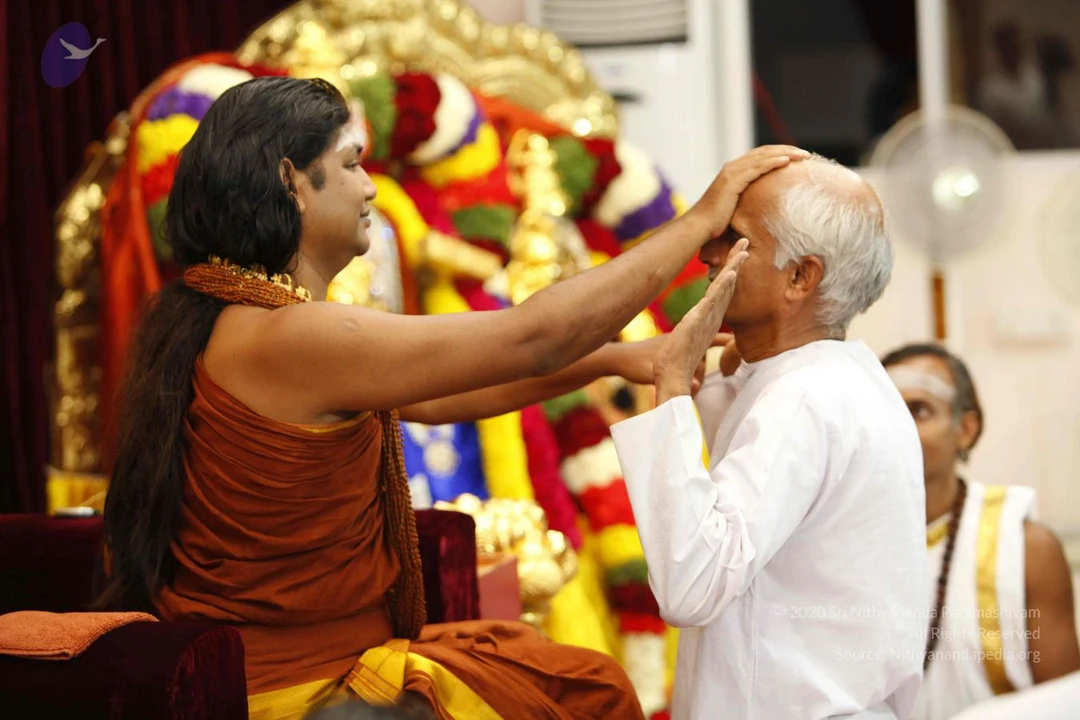
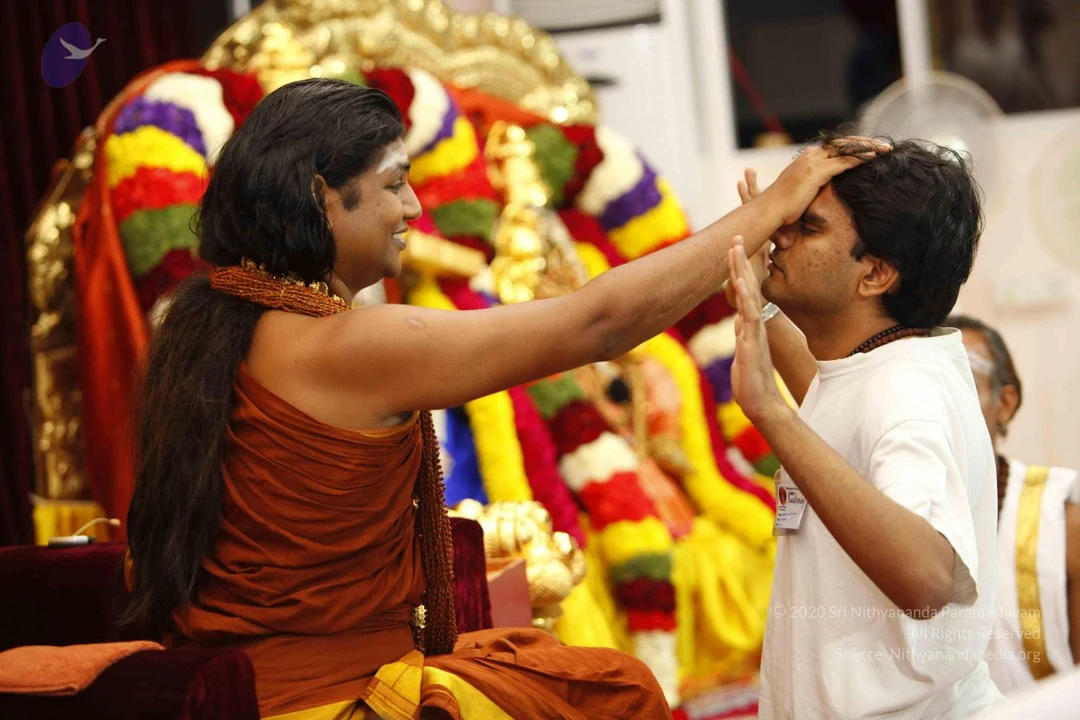
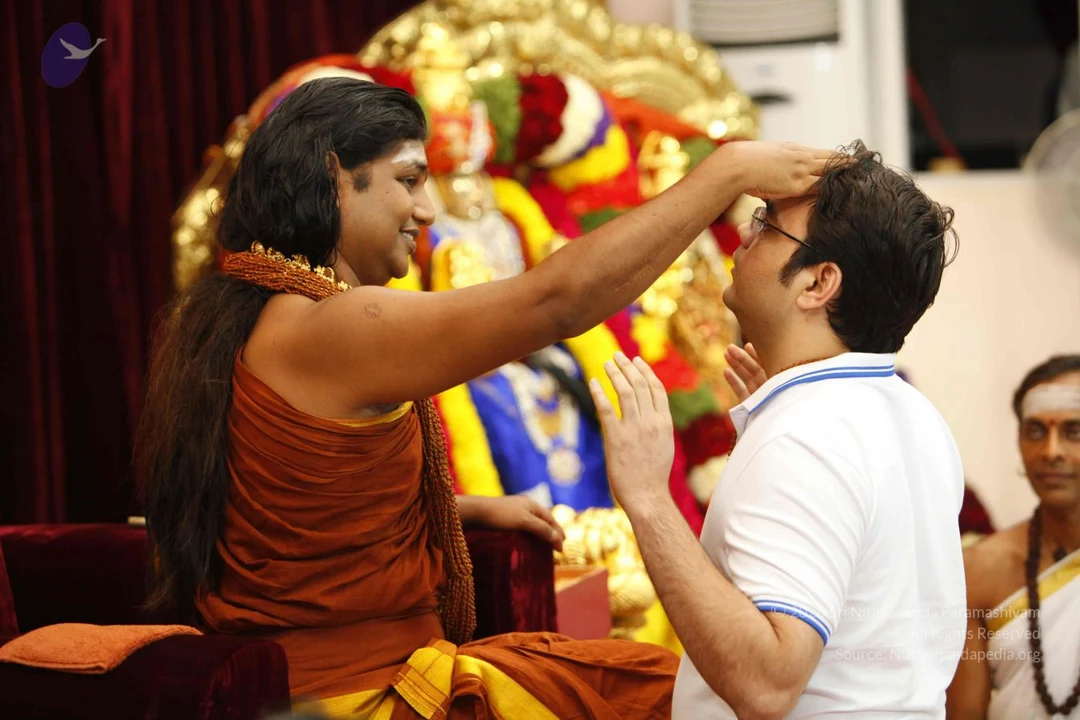
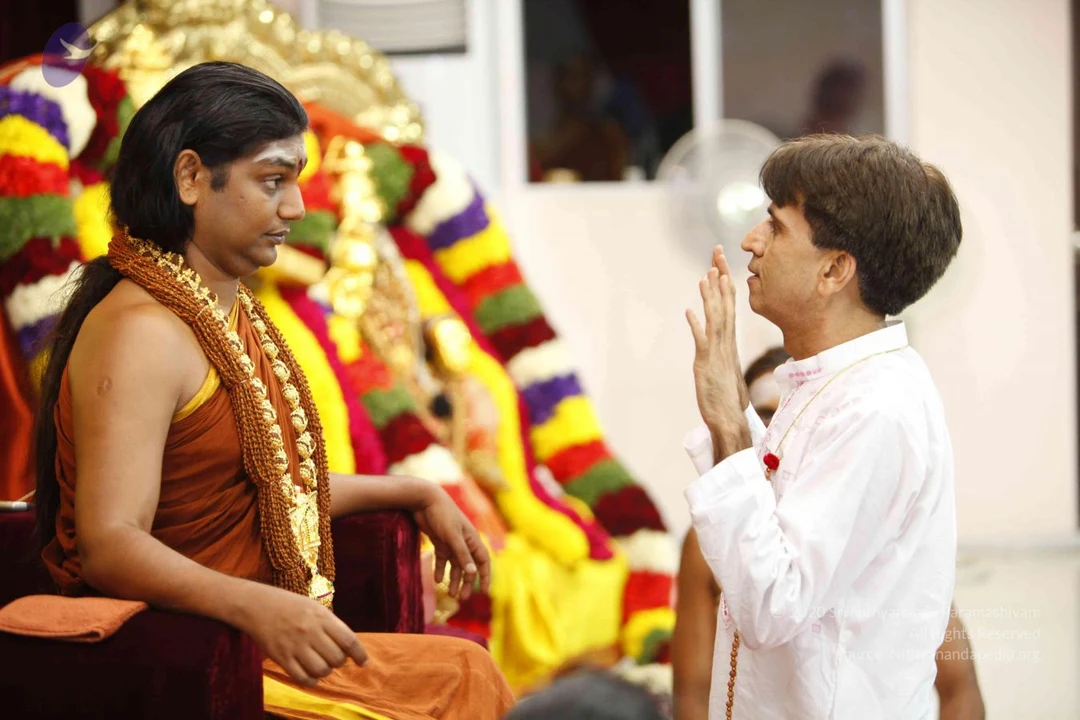
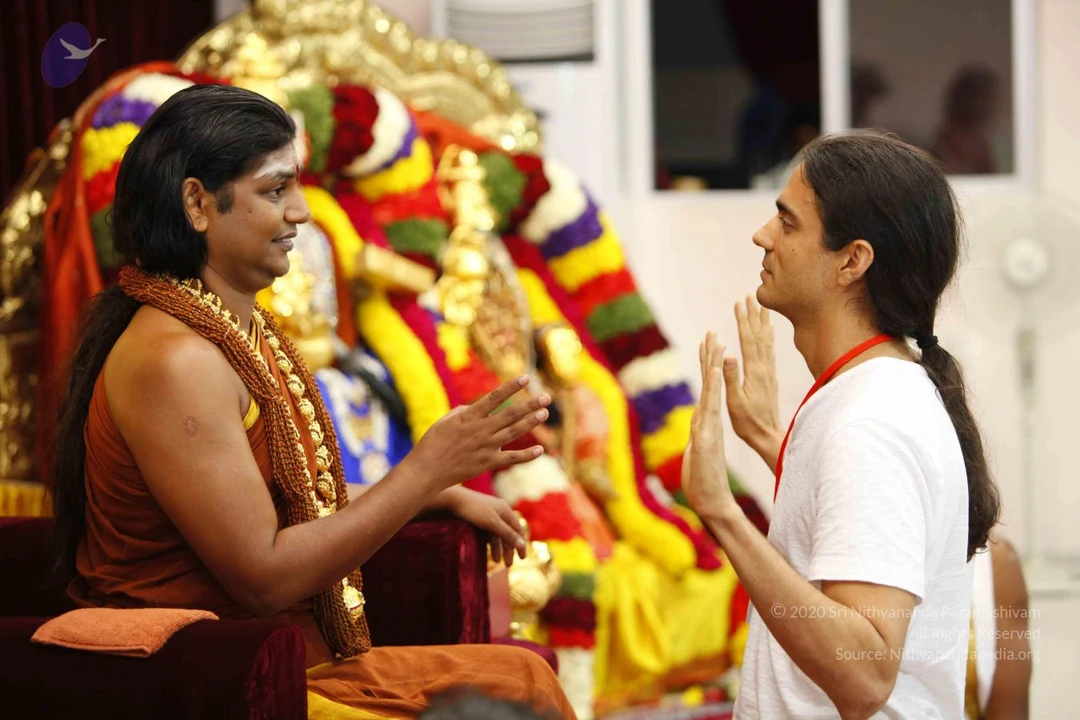
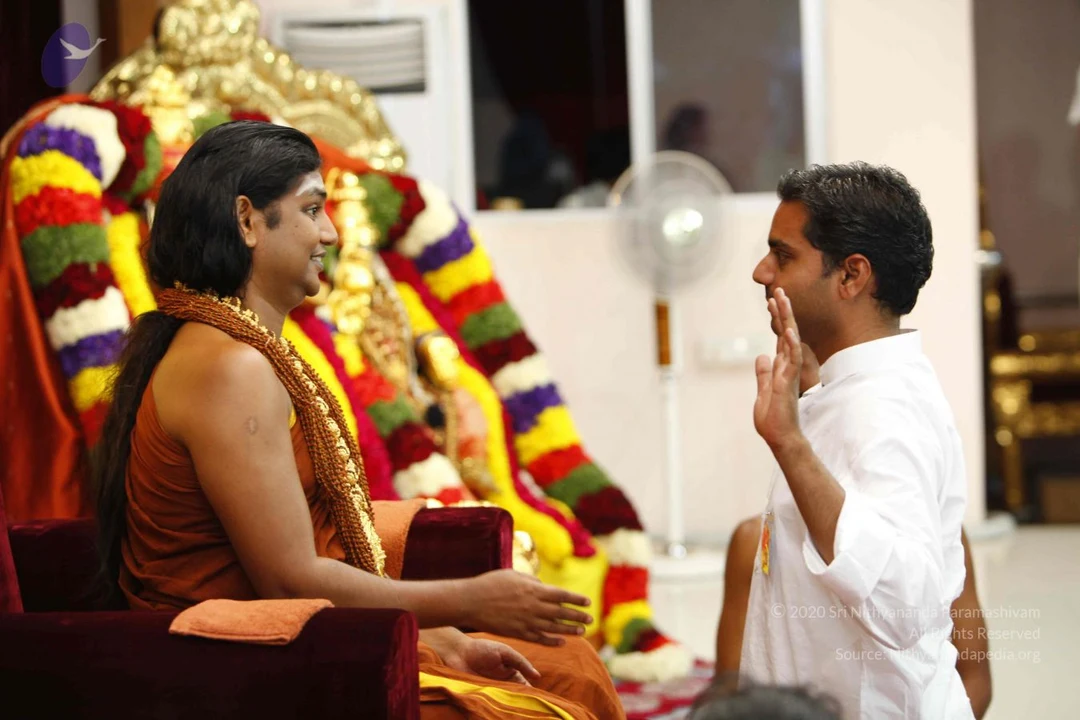
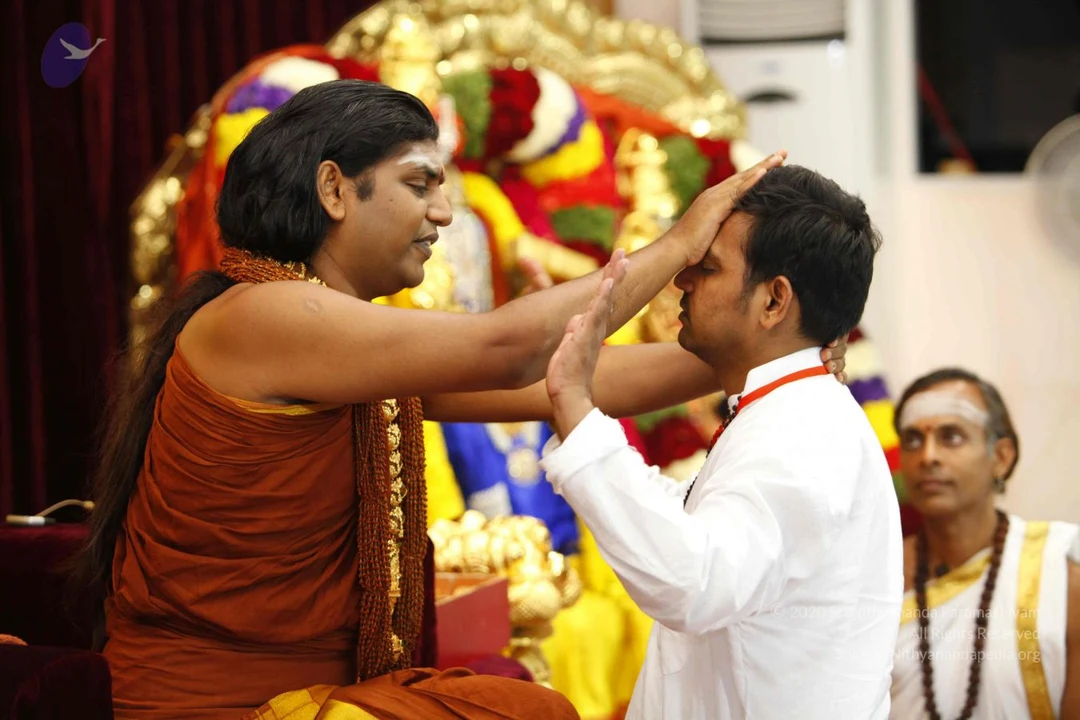
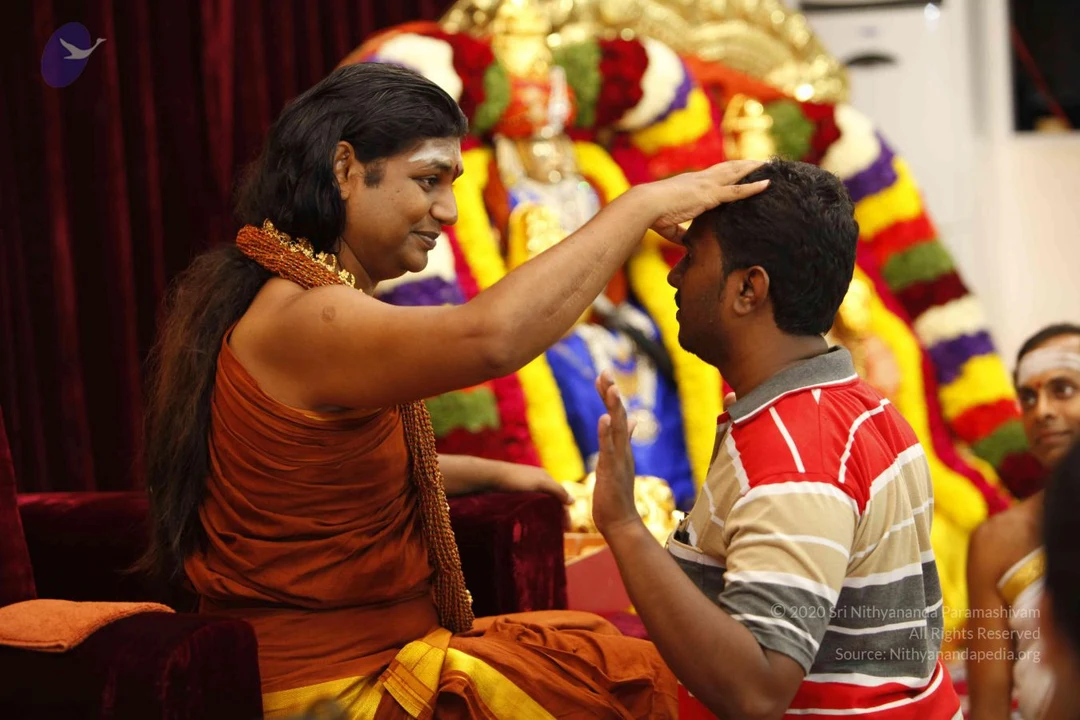
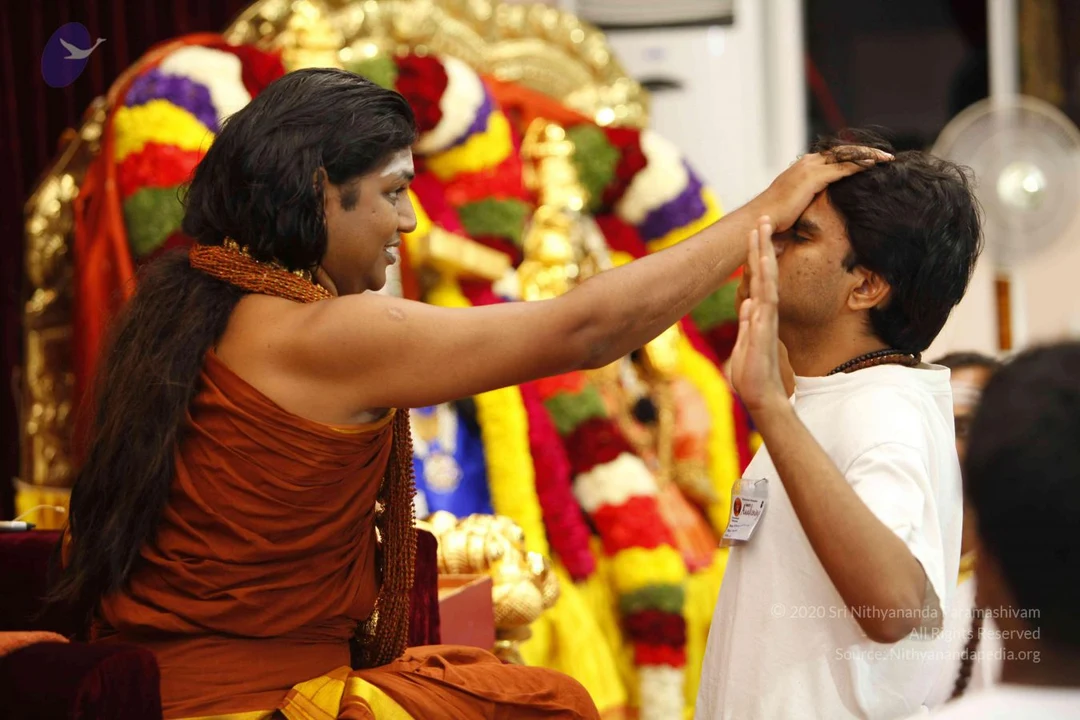
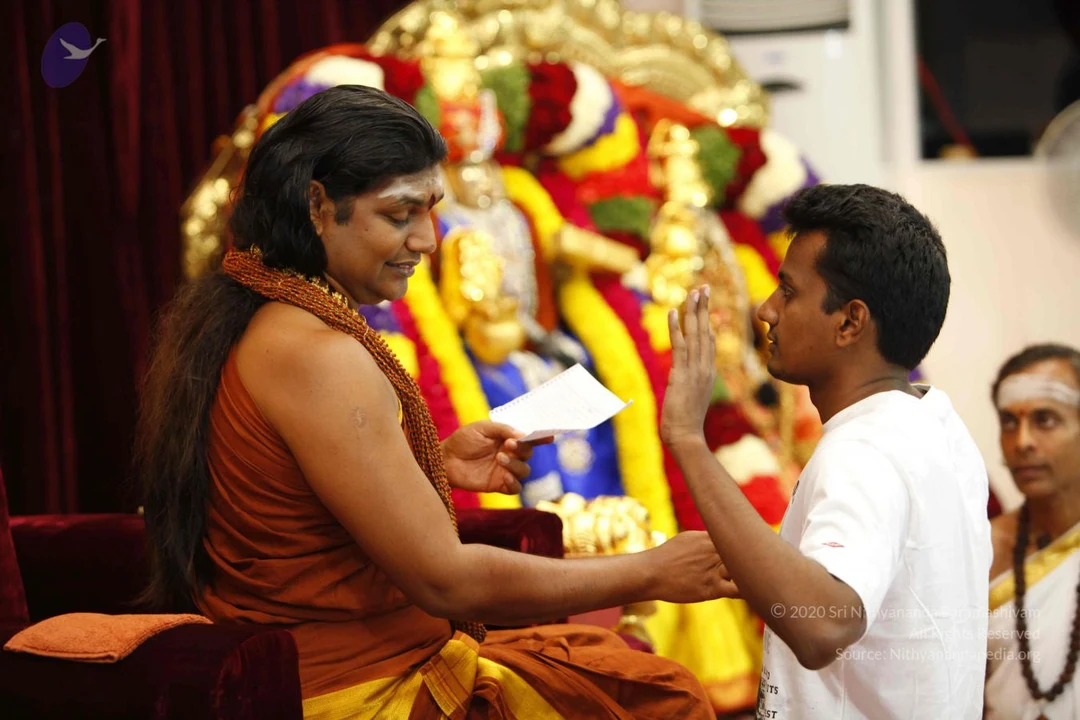
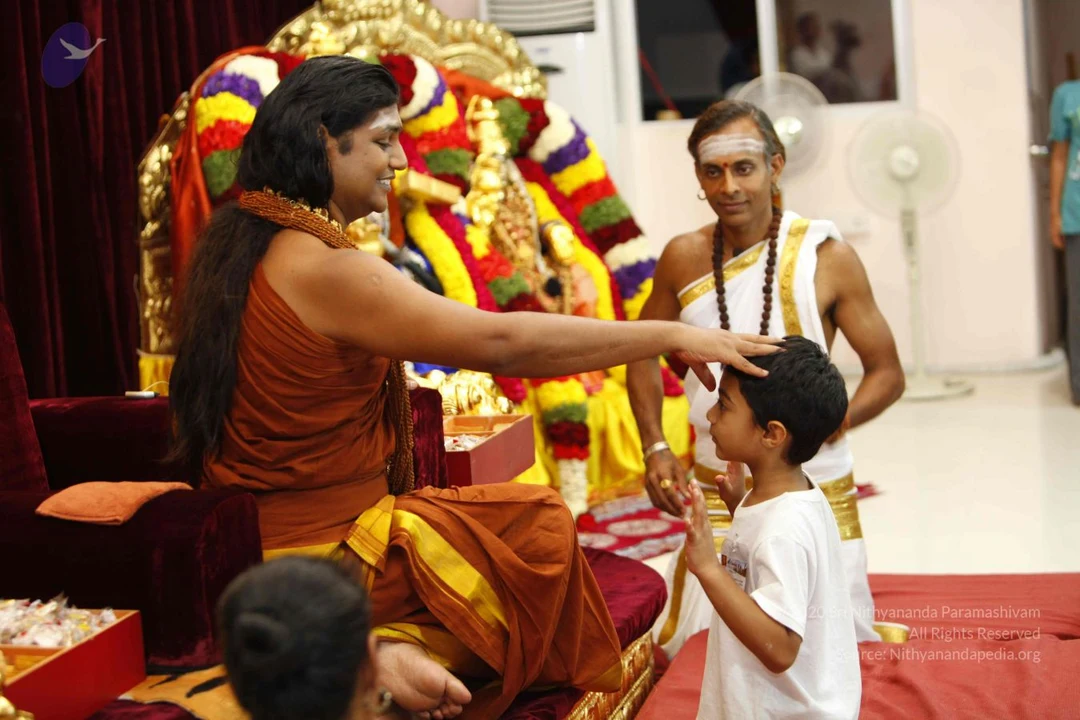
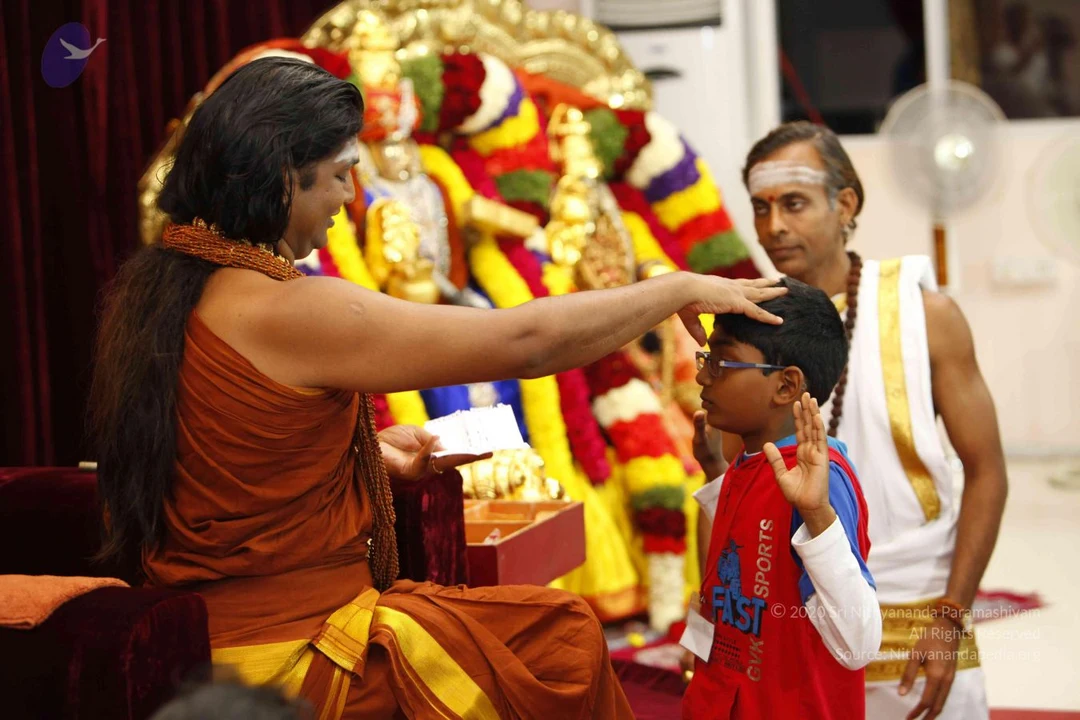
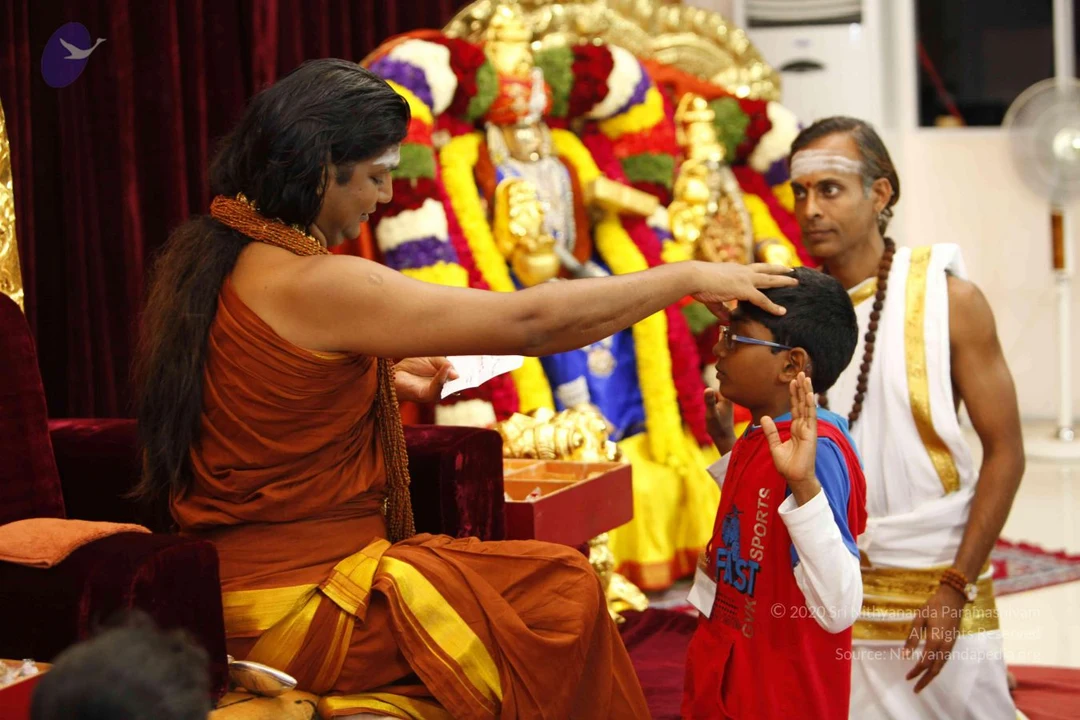
Photograph of a seated figure in an orange-brown robe with a long, loose, swept-back hairstyle and a rust-coloured bead necklace, extending his right hand over the head of a young man in a white t-shirt with a red cord around his neck and his hair tied back in a ponytail. The young man's eyes are closed and his hands are raised in front of him in a receiving posture. Behind them is a deity murti decorated with a garland of red, yellow, green and white flowers and gold ornaments. Swamiji (probable) is shown seated in orange-brown robes with long hair and a rust-coloured bead necklace, giving a blessing to a devotee.A photograph of a long-haired man in an orange-brown robe and a long gold-beaded necklace seated on a dark red velvet throne, smiling as he gestures with an open hand toward a man in a white kurta shirt who sits before him with one palm raised. Behind them is a golden deity murti framed by garlands of yellow, red, green and purple flowers, with a pedestal fan and a white wall. A small logo appears at top left. Visible white tilak marks are on the seated man's forehead; the seated man is a probable Swamiji candidate by cues of long hair, orange clothing, and gold necklace, shown in person.A photograph of an indoor satsang setting. A man with long dark hair and a rudraksha mala with ceremonial gold necklace, wearing an orange-brown saffron wrap, sits on a dark red cushioned seat and extends both hands toward a short-haired man in a white kurta who kneels facing him and raises his palms. Behind them stands a golden deity murti or throne backdrop decorated with garlands of red, yellow, white and purple flowers. A standing man in white clothing is at the right edge and a fan is visible in the background. The seated figure's appearance and cues are consistent with a person, shown here giving blessings in person.A photograph of a seated figure in an orange-brown robe with a long gold-beaded necklace and long swept-back hair, with a white tilak on the forehead, placing both hands on the head of a young man in a white shirt who stands with his palms pressed together. Behind them stands a deity murti draped in red, white, yellow and purple flower garlands, with a gold-toned throne and a blurred background. A person in white stands at the right edge. The seated figure has distinctive long hair, saffron-toned robes and ceremonial gold beads, consistent with the page's Swamiji (probable) reference to a blessing or initiation.A seated guru with long dark hair, a vertical white forehead mark, an orange saffron wrap and a gold ceremonial necklace sits on a red-cushioned throne in front of a floral garland-draped backdrop of red, yellow, green and purple flowers. He gestures with open hands while speaking to a standing man in a white kurta with a rudraksha mala, who raises his palm in greeting. Several other men in white clothing stand in the background, and a pedestal fan is visible. The seated figure matches the appearance cues of Swamiji (probable) with a flowing saffron wrap, gold necklace and long hair, and is shown giving satsang-style teaching to a devotee.Photo of an indoor satsang setting. A man with long dark hair, orange saffron robe and a thick ornate gold-and-rudraksha necklace sits on a maroon throne-like seat, smiling toward a man in a white kurta with a rudraksha mala who raises his right palm in greeting. Behind them a decorated backdrop of multicoloured garlands in red, yellow, green and purple surrounds a golden throne, with a standing fan at center. Several men in white clothes stand in the background. Swamiji (probable): the seated man in saffron with long hair, shawl and ceremonial gold necklace.

IA-Session-Swamiji-2

5 photosSource gallery
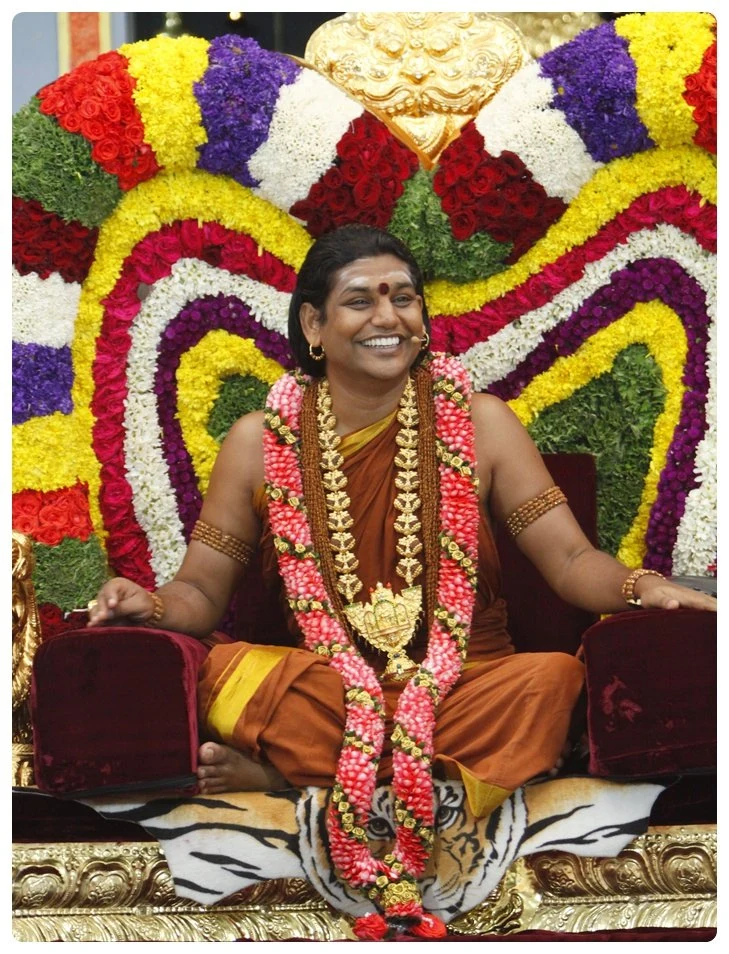
A man in a saffron-orange draped robe with a gold-edged wrap stands at a clear acrylic lectern on a stage with dark burgundy velvet drapes behind him. He wears a rudraksha mala of brown beads around his neck and a red dot on his forehead, and a small headset microphone is attached near his face. His right hand rests on the lectern edge, where a sheet of white paper sits on a red folder, and a gold ring and beaded bracelet are visible. Swamiji (probable) appears to be the speaker, based on the saffron robe, rudraksha mala and swept-back long hair, giving a satsang discourse.A man in saffron-orange robes with a gold trim stands at a clear acrylic lectern on a stage in front of deep red curtains. He wears a long beaded rudraksha-style mala necklace, a small red dot on his forehead, and a headset microphone, and raises one hand in a gesture while speaking. A sheet of paper rests on the lectern.A photograph of a man standing at a clear acrylic lectern on a stage in front of deep maroon velvet drapes, speaking into a small headset microphone with one hand raised in a mudra-like gesture. He has shoulder-length dark hair, a red bindi on his forehead, and wears a saffron-orange draped robe with a yellow edge, a long multi-strand rudraksha mala around his neck, and a gold-coloured sash. Papers rest on the lectern. Swamiji (probable): the long swept-back hair, saffron robe and rudraksha mala are consistent with the page's identification of this discourse by Paramahamsa Nithyananda, though the appearance cues are only partially distinctive.A man stands behind a clear acrylic lectern in front of dark maroon drapery, speaking into a head-mounted microphone with his right hand raised in an explanatory gesture. He wears a rust-orange cloth wrapped over one shoulder with a yellow border, layered with a long rudraksha-style mala of rust-coloured beads and a gold bangle and gold ring. He has a red bindi on his forehead and shoulder-length dark hair. Papers rest on the lectern. This appears to be a satsang discourse, and the appearance-based label is a person, a speaker in saffron-orange clothing with a rudraksha mala and ceremonial gold ornaments.A seated man in saffron-orange robes with a gold-bordered yellow sash and a long beaded necklace sits cross-legged on an ornate gold throne. The throne has lion-head armrests and a backrest decorated with a heart-shaped arrangement of marigolds and flowers in red, yellow, white, purple and green, set against dark red velvet drapes. He holds a small object in both hands and speaks. The figure has long dark hair, a red dot on his forehead, and bare feet. A red patterned rug covers the floor in front. Per the page, this is a satsang setting; the man's appearance shows long swept-back hair and a long necklace with saffron robes, consistent with the probable Swamiji.

Temple

34 photosSource gallery
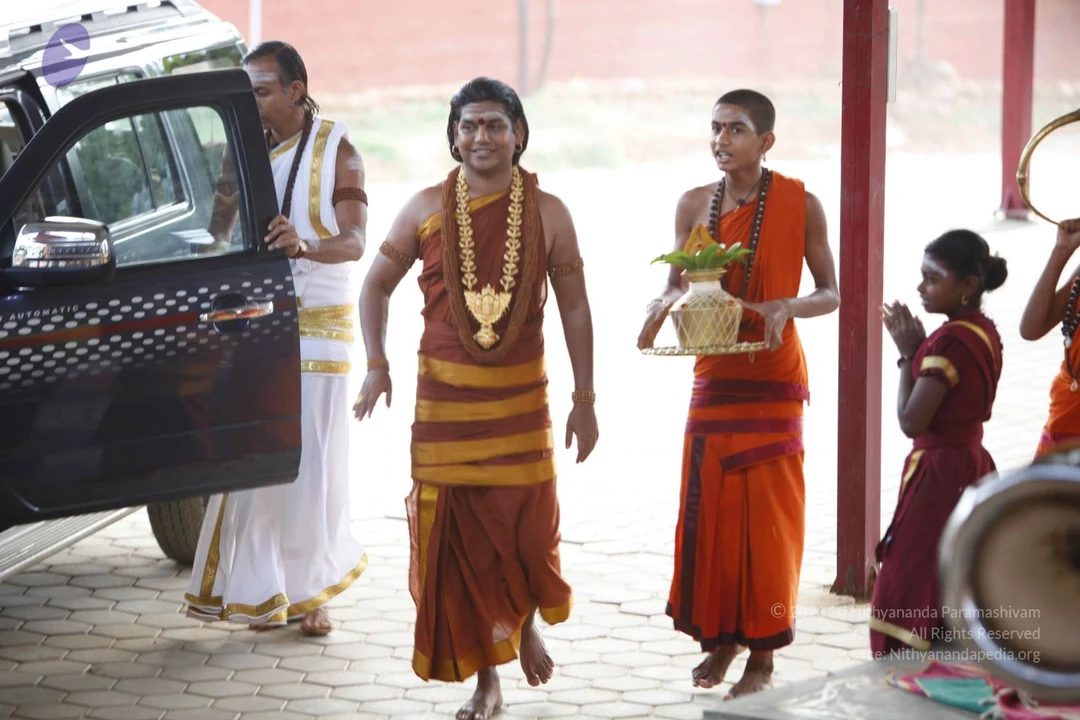
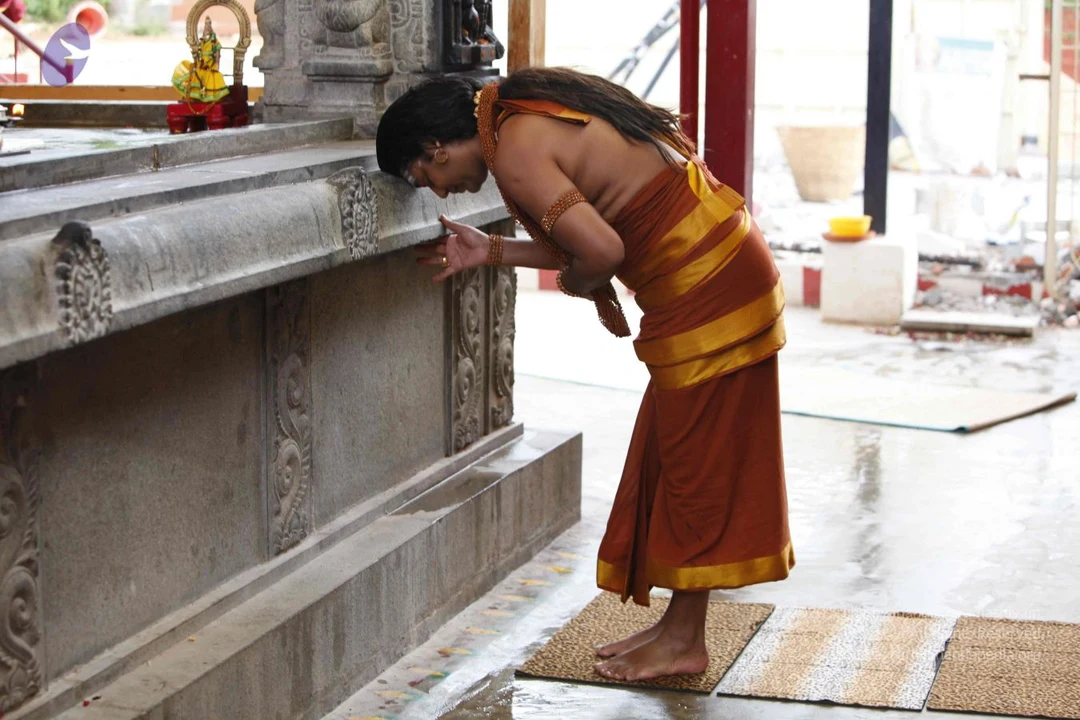
A photograph of a ceremonial procession walking along a red carpet between metal railings in an indoor hall with red-brown walls. At centre, a man with long swept-back hair, a red bindi and a rudraksha-style gold chest ornament wears an orange-saffron dhoti with a gold-bordered waist cloth and a heavy orange garland with gold pendant, and gold armbands; he is bare-chested and walks with hands loosely open. To his right, a young attendant in an orange dhoti and maroon-striped sash, with a rudraksha mala and white forehead marks, carries a brass tray holding a small kalasha-style pot with green leaves. Behind, several young women and girls in maroon and gold-bordered outfits stand with palms pressed together in namaste, and a figure at left holds a long brass ceremonial horn.A photograph of two processional deity murtis seated together on a golden arched palanquin against a bright red draped backdrop, with palm trees and stone sculptures behind. The figure on the left wears a red-orange turban and crown, holds a trident and a small ritual object, and is adorned with white beaded necklaces and a green and gold garment. The figure on the right wears a tall golden crown, orange skirt, and a layered white and red garland of flowers. Both are draped in marigold and red flower garlands. No physical people are visible.Two golden metal murti statues sit side by side against a pink draped curtain within an ornate gold arch. The left figure wears an orange and red turban, rudraksha mala, white floral necklaces, and holds a trident and a damaru-like drum; the right figure wears a gold conical crown, layered pearl and gold necklaces, large earrings, and an orange garment. Both are adorned with yellow and red garlands and have red tilak markings. A small green parrot perches on a staff near the right figure. The scene is a deity murti display, not living people.A photograph of an outdoor courtyard beside a dark car with a polka-dot door. A man with long swept-back hair, wearing a rust-orange wrap with yellow borders, gold armlets and a gold necklace, stands at the open door. Facing him, a younger person with a shaved head in a saffron-orange robe and rudraksha mala holds a brass tray with a kalasha of mango leaves and a coconut, presenting it. Behind them a man with a bare torso and ash markings stands near a red pillar, and a woman in a maroon dress with yellow trim stands at the right with hands folded in greeting.Photograph of a courtyard arrival outside a red-walled building with a dark SUV on the left. A bare-chested man with long swept-back hair and a red tilak walks forward wearing a rust-orange dhoti with gold stripes, a heavy gold-and-bead garland and a gold pendant, and gold armbands. Beside him a younger man in a saffron-orange dhoti with rudraksha beads holds a brass tray with a kalasha-style vessel and green leaves. A man in white dhoti with gold border stands by the open car door. On the right a woman in a maroon sari with a gold border stands with hands folded, and a person holds a large brass ritual gong. Pillars and paved floor complete the setting.A barefoot person in a saffron-orange draped garment with gold-yellow borders and a gold beaded necklace and bangles bends forward to touch the grey carved stone base of a shrine or altar in an open temple-like hall. A small colourful deity image with a golden arch sits in the upper left background, and a red-and-gold structure is visible at right. Woven mats lie on the wet floor, with construction materials and a yellow bowl in the background.

Pratyaksha-Pada-Puja

43 photosSource gallery
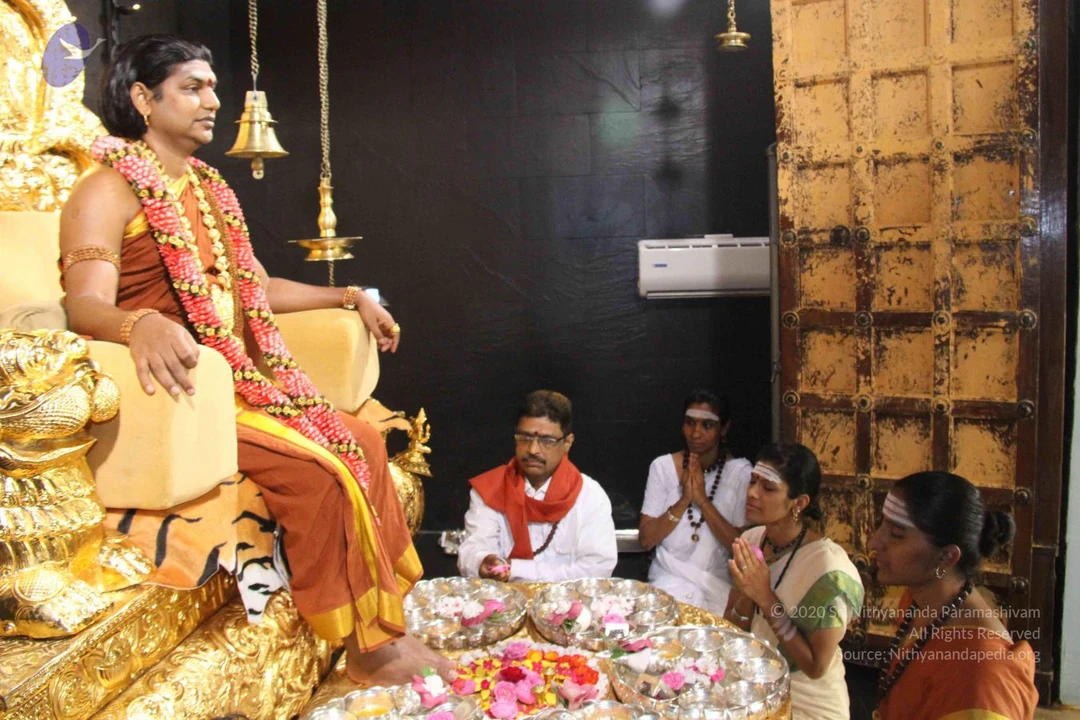
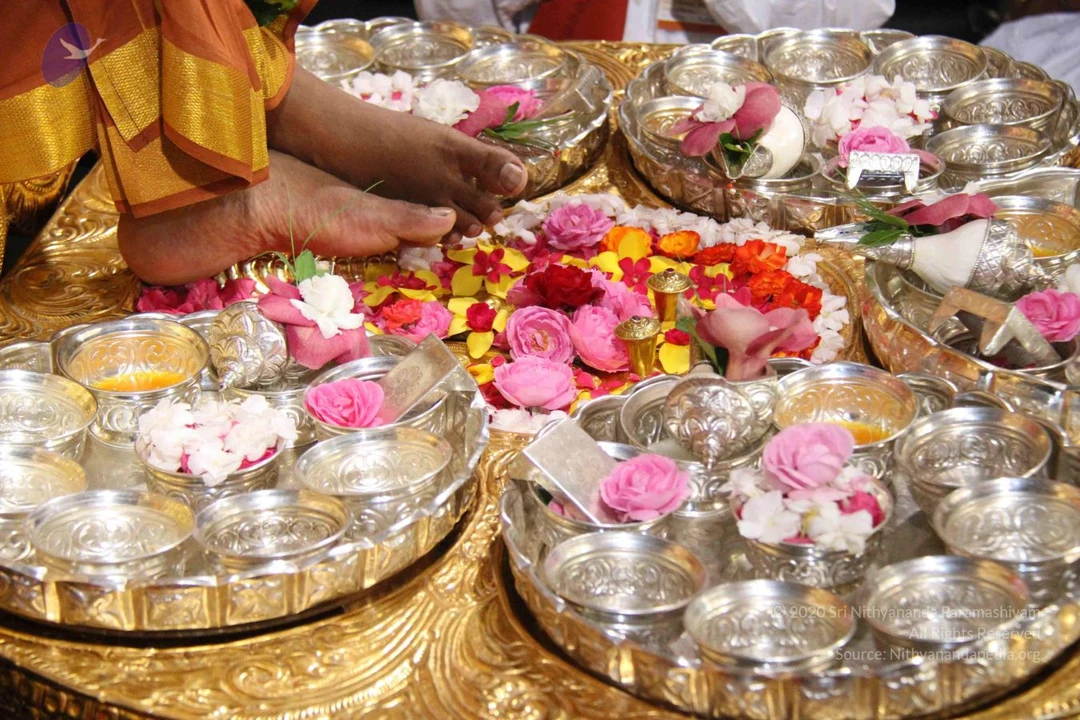
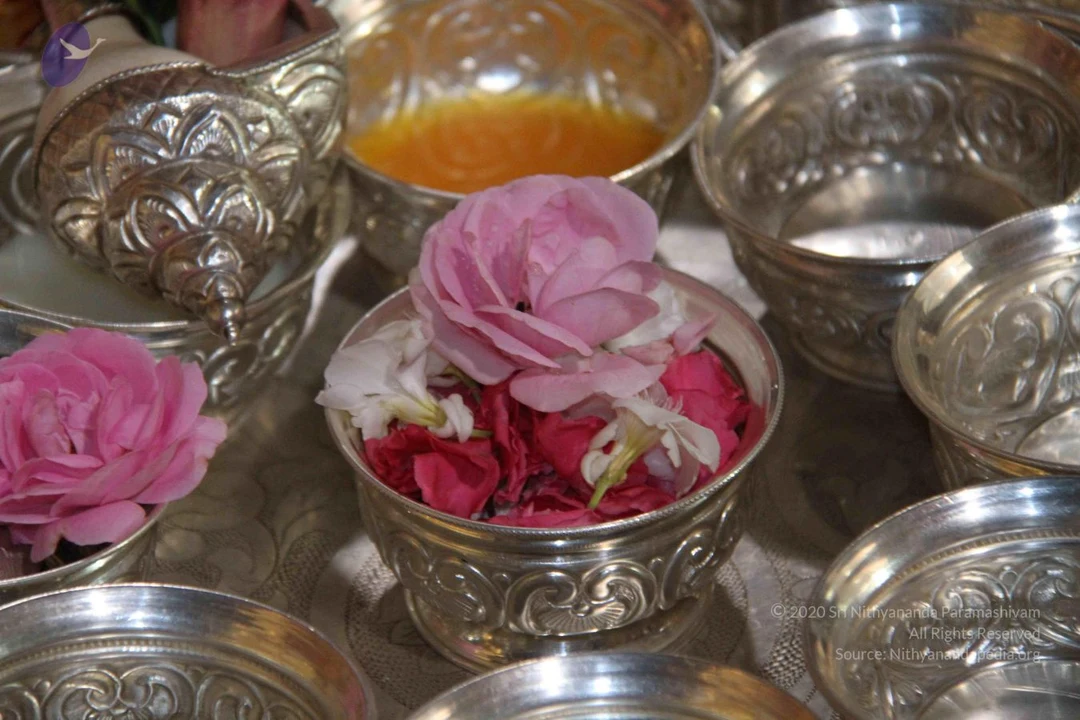
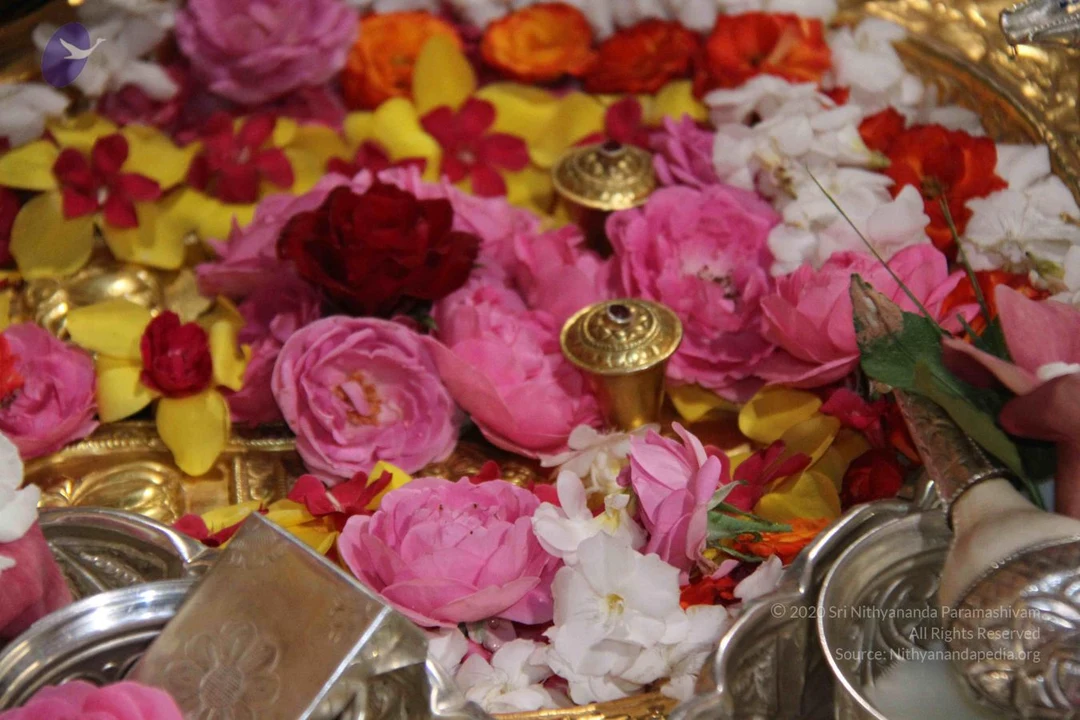
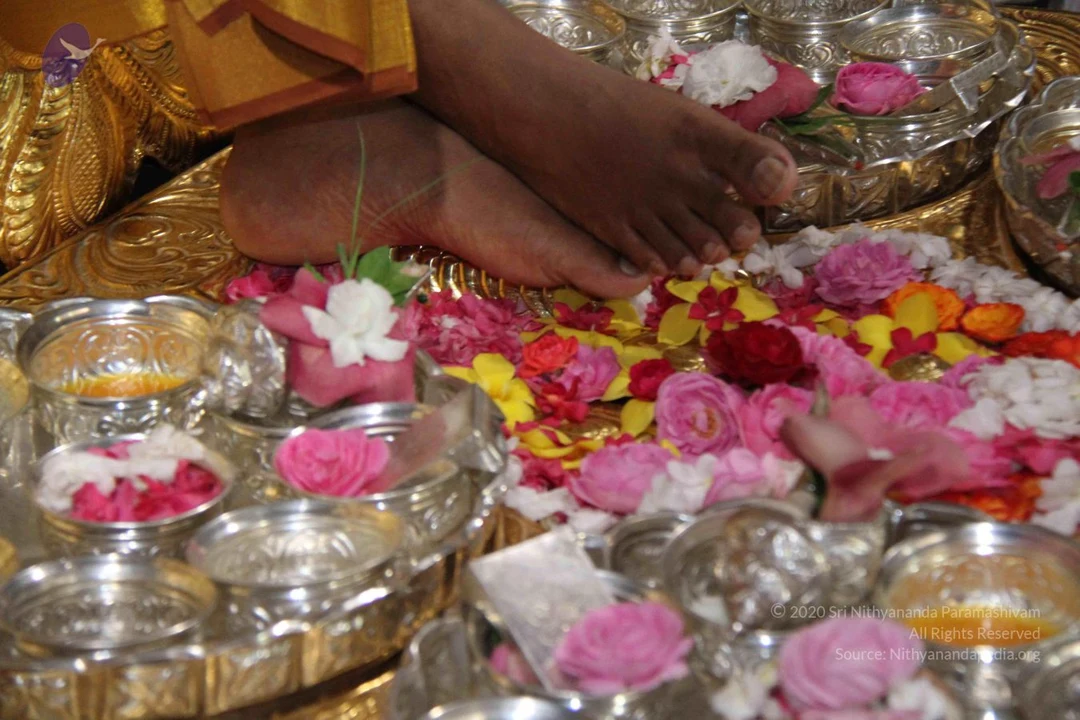
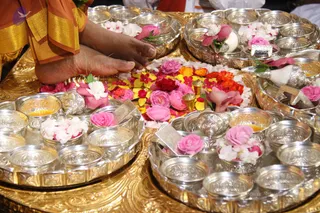
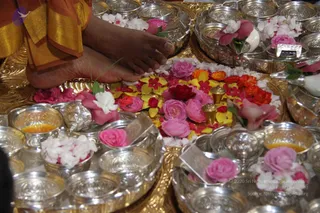
A photograph of a man with short dark hair and a red bindi, eyes closed and palms pressed together in namaste at the chest. He wears a reddish-brown shawl over a gold-embroidered garment and a pink and white flower garland, with rudraksha bracelets on his wrists and upper arm. Behind him is an ornate gold throne carving, and to the right hang a brass bell and a brass oil lamp on chains against a black background.Photo of a smiling man seated beside a gold-carved throne with a hanging brass oil lamp (deepa) and a brass bell at right. He wears a rust-brown robe, a long garland of pink and red flowers with gold-tone beads, a gold chain necklace, a rudraksha-style brown bead strand, a beaded armband, and a small red bindi, with hair swept back and a gold hoop earring. Dark background. Appearance-based cues for a person include the long swept-back hair, ornate gold-toned adornments and ceremonial garland on a throne setting; the presence is uncertain from appearance alone.A seated man in an ochre-orange dhoti and shawl, wearing a red and white flower garland and a gold armlet, sits on a gilded throne with carved lion-like armrests. Behind him are hanging brass bells and oil lamps. Before the throne, three women and one man kneel or sit on the floor with hands joined in prayer; the man in white with an orange-red shawl and rudraksha mala holds a plate, and the women wear white and green saris with sandalwood tilak. Brass plates of flowers, fruit and offerings sit in front of them. A large golden-brown wooden door and a wall-mounted air conditioner are visible behind.A photograph in a shrine room with a dark wall and an ornate golden wooden door. A man seated on a golden throne with tiger-striped upholstery wears a saffron-orange dhoti and shawl, a multicoloured garland of red, pink and white flowers, gold bangles and an armlet, and looks to his left. Three devotees kneel before him with palms joined in namaskar; one wears a white kurta with a rudraksha mala and a red shawl, another wears white with a white forehead mark, and two women wear cream and orange saris with white forehead marks. In front of them are brass plates of pink flowers, rose petals and a central arrangement of marigold and orange petals. Hanging brass bells and an oil lamp are suspended from the ceiling above the throne. a person appearance is a seated man in saffron with a garland and gold ornaments, which matches the page's reference, but this cannot be confirmed from appearance alone.A close photograph of a padapuja ritual on a gold-toned platform. A pair of bare feet in a saffron-orange garment with gold border rests on a bed of pink, red, orange and yellow flowers and white blossoms. Surrounding the feet are polished silver bowls and trays holding flower petals, small oil lamps with flames and a silver vessel. Pink roses and white jasmine-like blossoms are arranged in the silver bowls, and a silver spoon lies among them. No faces are visible. The scene is centred on the feet and the floral offering.Close photo of bare feet resting on a bed of pink, red, orange and yellow flowers arranged on a gold tray during a padapuja-style ritual. The feet belong to a person wearing an orange and gold silk garment. Surrounding them are polished silver bowls holding white jasmine-like blossoms, pink roses, a yellow liquid, and small brass lamps.

Nithya-Satsang

39 photosSource gallery
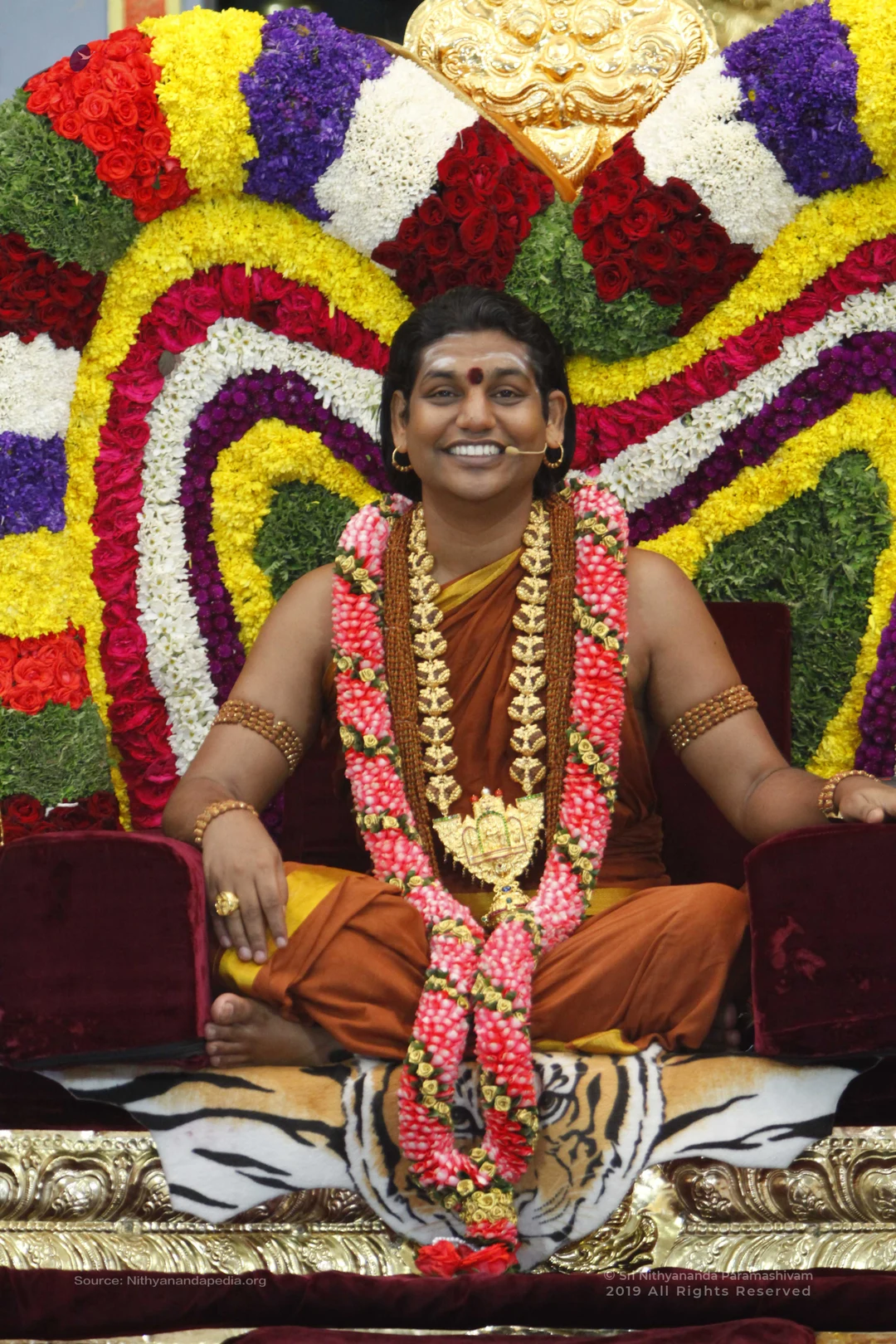
A seated man in saffron-orange robes and a golden necklace sits with palms pressed together in greeting on an ornate throne. Behind him is a large arched backdrop of multicoloured flower garlands in red, yellow, purple, white and green, with golden lion figures flanking the seat. Standing deity murti statues in orange and gold dhoti stand at the left and right edges. A red and white flower garland hangs over his shoulders, and he wears a microphone headset and a dark rudraksha-style mala. a person seated on a peetha throne in a satsang setting.A seated man in saffron-orange robes sits on a golden lion-headed throne before a large arch of flower garlands in red, yellow, white, purple and green. He wears a rudraksha mala with a gold pendant and a flower garland, with palms raised in greeting. Two painted standing dvarapala guardian figures with gold crowns and ornaments flank the throne. Person is seated on a peetha throne, with the garland arch behind as a ceremonial honour setting.A seated man in an orange-brown garment with a gold-toned sash sits on a deep maroon velvet throne with golden lion-head armrests. He wears a long pink and red flower garland with yellow accents, layered gold chains, a gold bangle on the upper arm and a wristband, and a small red bindi on his forehead with a tilak. Behind him a floral backdrop of red roses, yellow, white and purple flowers is arranged in bands. A small microphone is visible near his face. He gazes off to the side with a slight smile. Swamiji (probable): long swept-back hair, ornate gold necklaces and an orange-saffron garment seated on a throne, consistent with a satsang setting.A photograph of a man seated on a plush maroon throne with gilded lion-head armrests, in front of a tall floral backdrop of red, yellow, white and purple flowers. He wears an ochre-orange robe over a yellow cloth, with a thick garland of pink and red blossoms, layered gold chains, a rudraksha mala, a gold arm band and a gold ring, and a red dot on his forehead. He sits upright with his hands resting on the armrests, looking to the side. Probable Swamiji is seated as the central figure, identified by the throne and his distinctive long swept-back hair with rudraksha and ceremonial gold adornment; he is the only person pictured.A seated man in an orange-saffron dhoti and shawl sits on a maroon velvet throne with gold lion-head armrests, wearing a multi-strand rudraksha-style garland of pink and red flowers, gold necklaces and gold bangles, and a red tilak on his forehead. He rests one hand on the armrest and gazes to the side. Beside him, a deity murti in blue and gold clothing with a gold crown and a pale face is adorned with long garlands of yellow, red, green, white and purple flowers, seated on a golden throne. The setting is a hall with a rose-and-marigold garland backdrop and a wall air conditioner. a person is seated on the throne beside the garlanded deity murti.A seated satsang gathering in a hall with many devotees raising their right hands in salutation. In the foreground a shaved-headed man in an orange saffron robe and a long rudraksha mala sits with hands raised, with a white tilak on his forehead. Beside him boys in maroon robes with gold borders, some with vibhuti or tilak marks, raise their hands. Behind them adults in white shirts and white dhotis sit in rows, and a figure in a yellow sari appears near the centre. Plastic containers and small brass items sit on the floor in front. The pictured mood is one of collective devotion during a morning satsang. Several people hold hands in greeting and an orange-clad teacher appears among them, though the image does not clearly show a central figure identifiable as a person.

Sarva-Darshan

7 photosSource gallery
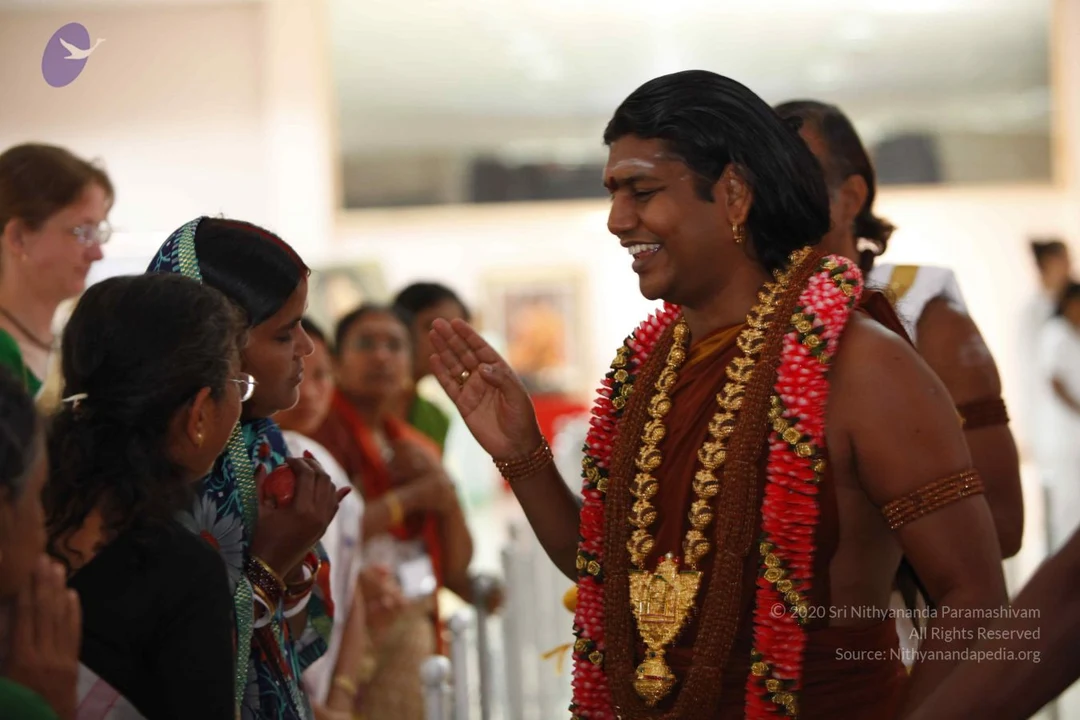
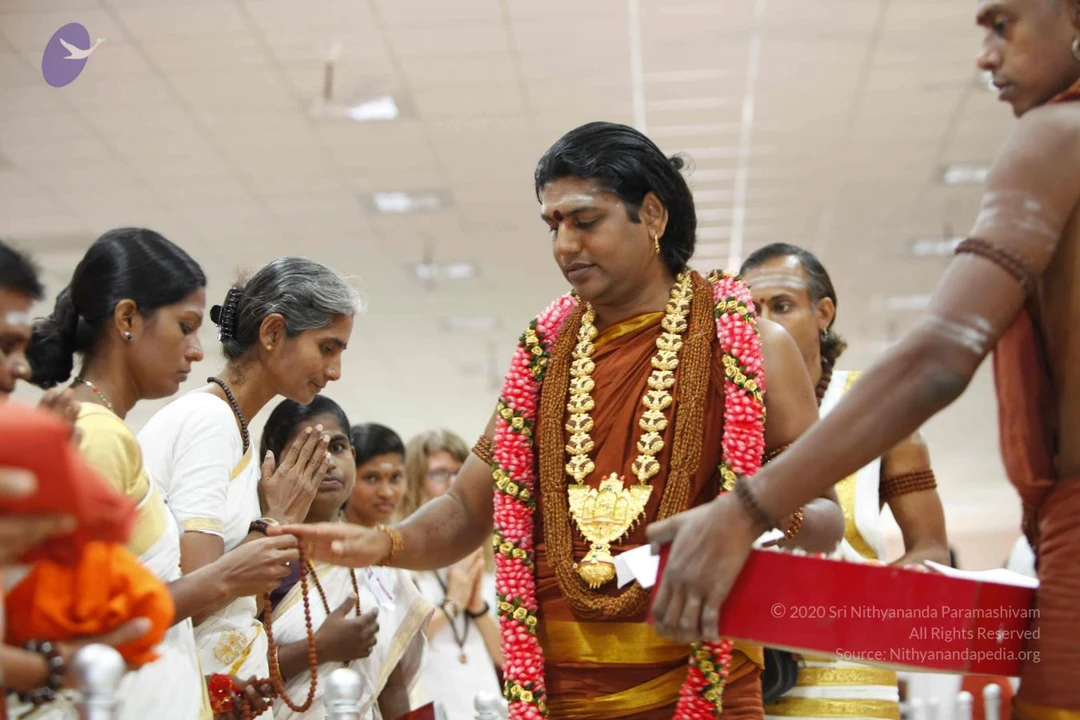
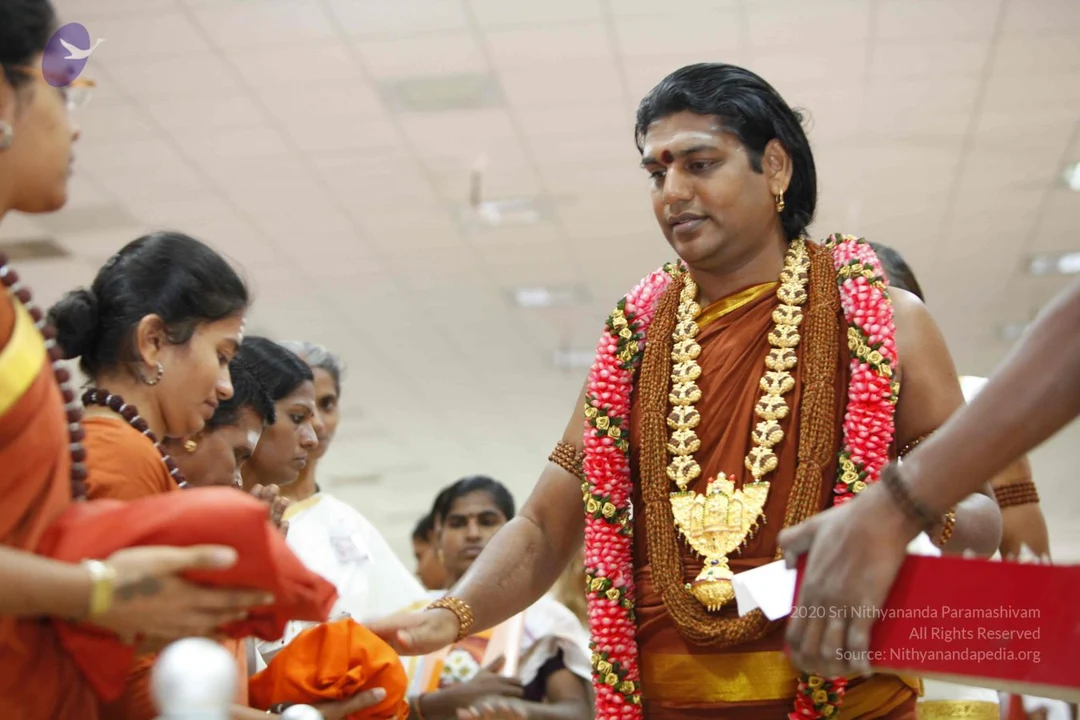
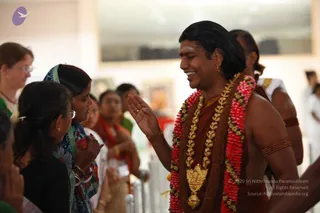
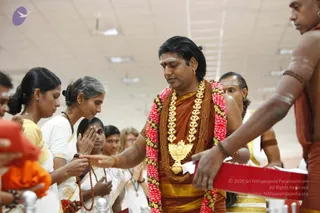
A smiling man with swept-back black hair, a red bindi and white forehead markings waves his right hand while wearing a rust-orange wrap over a bare chest. He has a thick garland of pink and red flowers with gold-coloured beads, a long gold-bead necklace and rudraksha beads on his arms and chest. Beside him a man in a striped shirt has his palms pressed together. Behind them a temple-style backdrop with painted pillars, decorated deity figures and warm lights is visible. a person is shown in person, identified from the swept hair, rudraksha and ceremonial garland cues.A photograph of a central figure in an ochre-brown robe with a thick gold necklace and a red-and-pink flower garland, smiling and raising one hand in blessing. He has long swept-back dark hair, gold earrings, a bindi and white tilak markings, and gold armlets. A man in white shirt bows low with folded hands, holding a small white envelope and plastic-wrapped sweets. Behind them a man with a white forehead tilak wears a rudraksha mala, and several onlookers stand near a colourful shrine backdrop.A photograph of a man with swept-back dark hair, a red bindi and a white vertical tilak, wearing a rust-brown wrap over bare shoulders, a long ceremonial gold necklace and a garland of red and white flowers with gold-coloured accents. He smiles toward the right while another man in a white-and-blue striped shirt bends forward in front of him, and a hand is raised near the bent head as if in blessing. Several other people stand in the blurred background of a bright hall with red drapes and floral decorations.Photograph of a smiling man with long swept-back dark hair, a tilak on his forehead, and a bare chest under a rust-brown shawl, raising one hand in greeting toward a group of women and devotees at a metal barrier. He wears a dense red-and-white flower garland, a long gold-and-brown necklace, a gold pendant, a gold bangle and an armband. Women on the left wear saris and glasses, one with a bindi and bangles, and one woman near the centre holds her palms together. Background shows white walls, framed pictures and blurred people in orange and white. Matching the appearance cues of the page subject, this man is a probable Swamiji (Nithyananda Paramashivam) in the appearance-based label, with a garland, long hair, gold necklaces and a shawl as qualifying cues.A central man in an orange-brown saffron-toned garment and long gold ornate necklace with a large gold pendant, wearing red and pink flower garlands and a rudraksha-style bead mala, stands with eyes lowered while a man in saffron clothing at right holds a red tray. Women in white and cream-bordered saris with gold borders stand around him, one with palms joined in prayer and another holding a rudraksha mala. The setting is an indoor hall with a white ceiling and fluorescent lights. a person is recognizable by long swept-back hair, saffron garb, ceremonial gold necklace and garlands, with the central figure receiving devotees during a ritual exchange of offerings.A man in an orange-brown ceremonial robe stands at the centre, wearing a thick garland of pink and white flowers, a gold-and-bead necklace with a large gold pendant, and gold bangles. He has a red bindi and tilak on his forehead, and his hand extends toward a person on the right holding a red cloth. Several women in orange and white saris lean in on the left, some with rudraksha malas, and a red-cloth offering is held near the lower left. The setting is an indoor hall with a drop ceiling and recessed lights.

IA-food

18 photosSource gallery
A buffet serving line in a bright, cream-walled hall with a red tablecloth. Steel chafing dishes hold sliced bananas, apples, mango and red watermelon-like fruit, and foil-wrapped trays and greens sit beside them. A man in white clothes with a dark beaded mala around his neck holds a plate and serves food. A woman in white stands behind a tray, and other devotees in white and orange clothing line up. A framed portrait of a figure in orange-and-white draped robes hangs on the wall.A buffet serving line of fruit and food at an ashram hall. In the foreground a man in a white shirt with a dark pendant necklace holds a steel tray, beside steel trays of cut mango, watermelon, lime-green apples and bananas. A woman in white with an orange lanyard and green scarf serves from another tray. Behind them, devotees in white clothes, some wearing orange shawls and red-and-gold cloths, mingle near pink curtains and framed pictures on the walls. Around fifteen people are visible.A photo of an ashram serving area where devotees in white clothes serve food. A young girl in a white t-shirt stirs a large steel pot of pale yellow liquid with a ladle on a gas burner. A woman in a white t-shirt, dark-rimmed glasses and hair in a bun carries a steel tray with fruit pieces and small dishes. Behind them a man in white kurta with a dark bag and a long necklace stands near a woman wearing a colourful floral bag. A red curtain and a framed portrait are visible on the wall. Four people are visible.A woman in a mustard-yellow and navy ikat sari with a black beaded mangalsutra necklace and gold bangles serves herself from a buffet at a food counter. Her steel tray holds flatbread, a cut apple, fruit slices and a small serving of food. Steel chafing dishes of curry and flatbreads sit in the foreground. Behind her, several people in white clothing move through a bright hall with red curtains, and a woman in a tan kurta with an orange-red shawl stands to one side. No one is identified as a person in this scene.A buffet line in a bright white-walled hall with framed portraits along the wall. A middle-aged bald man in white kurta and trousers, wearing an orange lanyard and a badge reading SPECIAL ATTENTION NEED, holds a steel tray and serves himself from a steel serving pan with a ladle. Steel chafing dishes hold yellow and orange curries and flatbreads. Around him, devotees in all-white clothing stand and walk; one man at left wears a white kurta with a red-bead mala, another person in the background wears an orange-brown dhoti and sash. Dozens of people fill the hall but only several are clearly visible, so the count is best given as a range.A photo of devotees in white clothing queuing at a stainless steel buffet for a meal of plain white rice. A woman in a white dress with a colourful bag ladles a liquid from a steel pot into her cup, while a woman in a white embroidered top with red floral thread sips from a steel tumbler. Beside them a woman with a white headband and blue beaded mala holds a glass, and a man in white stands at the left edge. Others move through a hall with a red curtain behind.

IA-Participants-Photos

13 photosSource gallery
A young blonde girl with bangs stands against a plain pale wall, wearing a pink zip-up knit cardigan and small gold stud earrings. A white name badge with a green and yellow N-Gen Bengaluru card is pinned to her chest, showing a photo, handwritten name and age details.A photograph of a man standing against a plain pale wall. He wears a white long-sleeved kurta with a faint striped weave and an open collar, a thin gold chain, and a small red bindi on his forehead. He stands facing the camera with arms at his sides and a neutral expression, with no other people, objects or ritual setting visible.A photo of a young boy with shoulder-length sandy-blond hair standing against a plain pale pink wall. He wears a white short-sleeved t-shirt decorated with colourful hand-drawn illustrations, including a rocket-like shape, a small house, a Christmas tree and a monkey-like figure, along with coloured letters. He looks directly at the camera with a neutral expression. No ritual, deity, or a person depiction is visible.A single woman stands against a plain light grey wall, facing the camera with a slight smile. She wears a cream saree with a brown geometric block-print pattern and a beige border, paired with a mustard-yellow blouse. She has a red bindi, a gold nose stud, small gold earrings and a thin gold chain necklace, with her hair pulled back. No ritual, deity or a person depiction is visible.Two boys sit cross-legged on a tiled floor in front of a large water photograph on the wall. The boy on the left wears a white t-shirt and black shorts with an ID badge, holding a knife and a piece of bread, with a metal tray holding bread, a green apple, small bowls and a red item. The boy on the right has curly blond hair and wears all-white clothing with a dark rudraksha-style bead mala and pink and green wristbands, eating from a steel tray with bread and a green apple, with a steel cup behind him. Both trays sit on the floor beside them.A studio portrait of one woman against a plain pale beige wall. She wears a blue and grey paisley-patterned head scarf and a white V-neck kurta with white chikankari embroidery. She has small hoop earrings and a closed-mouth smile, and looks directly at the camera. A small purple bird logo appears in the top left corner.

IA-Yoga

7 photosSource gallery
A photo of a large hall with red and white decor where many women sit on pink, orange and red mats and cushions behind silver stanchions joined by chains. In the foreground a blonde woman in a black short-sleeved top with black patterned trousers sits turned to one side. Nearby a woman in a black top and dark trousers sits with bare feet extended on an orange mat, holding a small object. Several other participants sit in the background, some in white and maroon clothing, with water bottles and bags around them. No a person candidate is visible.A photograph of seated attendees during a satsang session on a hall floor. In the foreground, a man with long dark hair, glasses and a navy wrap sits with his arms folded. Beside him, a man in a black t-shirt, white trousers and a yellow name badge rests his chin on his hand. Behind them, other participants in black and white clothing sit on mats, with red cloths and water bottles nearby. A cardboard box labelled Maruti sits in front. No one in the image is confirmed as a person.A photograph of a seated group in a bright hall with pale floor and purple yoga mats. In the foreground an older man with white hair and a grey moustache wears a pale pink polo shirt and sits on a mat, looking off to the side. Behind him several people in black shirts and white trousers sit on red cushions, some with hands folded or resting on knees. Plastic cups, water bottles and small plates lie on the floor. A man in black at left leans on one arm, and another figure in a black shirt sits at right. No visible candidate is identified as a person.A photograph of a group of devotees seated cross-legged on mats in a hall during a meditation or satsang session, hands pressed together in namaste. In the foreground, a man with grey hair and a moustache wears a black t-shirt and holds his palms at his chest, eyes closed. Beside him, another man in a black shirt sits on a blue mat, and a man in a grey t-shirt and dark trousers sits on a brown mat with a water bottle and a small tissue box nearby. Rows of seated participants in black and grey clothing fill the background, with white pillars and a red-curtained wall behind them. Disposable plates and water bottles are placed on the floor.A man seated with eyes closed and palms pressed together in anjali mudra, a gesture of prayer or greeting. He wears a yellow polo shirt with navy and black trim and a black number 56 printed on the chest, plus a silver ring and a bangle on his wrist. The background is blurred, with other people seated in the hall, one in dark blue clothing on the right.Photograph of devotees seated on colored yoga mats in a large hall with a polished floor and rows of stanchion posts. In the foreground a man in a black t-shirt and black trousers sits cross-legged with palms pressed together in anjali mudra. Beside him a man in a yellow polo shirt with number 56 and plaid lungi sits with palms joined and eyes closed. Water bottles, a small plate, a folded red cloth and blue boxes lie on the mats. Behind them more seated people meditate in prayer posture, some in red and pink clothing.

IA-Darshan
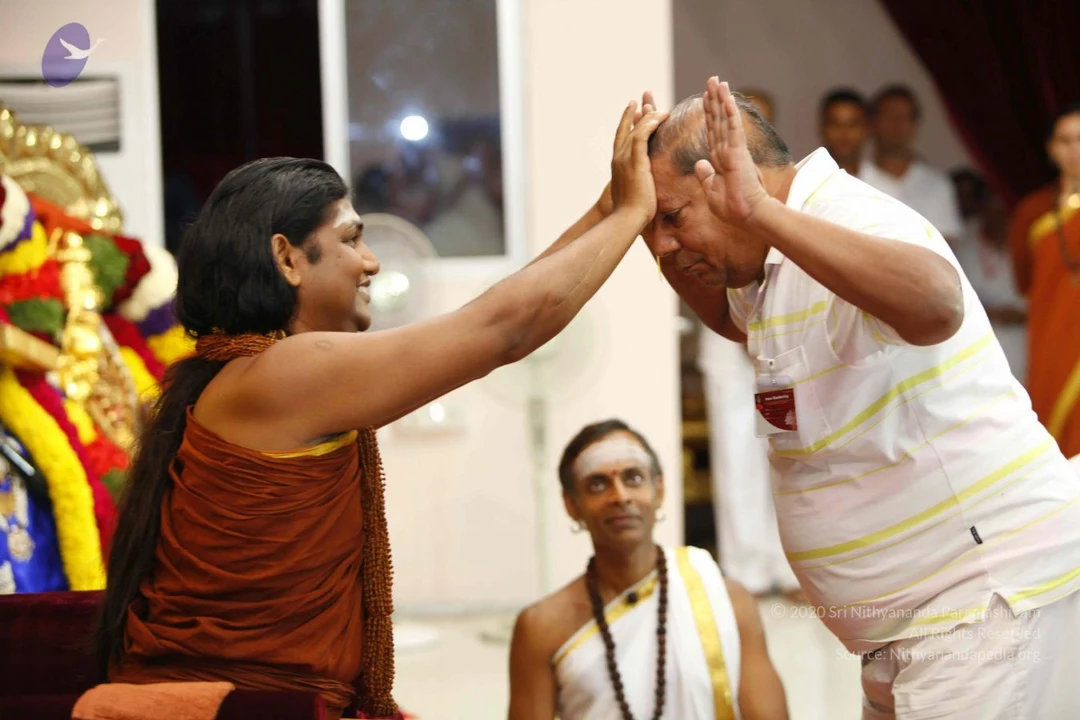
16 photosSource gallery
A man stands beside a clear acrylic lectern on a dark red curtained stage, speaking into a small headset microphone while raising one hand with fingers pinched together. He wears a rust-orange draped garment with broad gold-striped borders wrapped at the waist, and a long multi-strand orange-gold beaded necklace. He has long dark swept-back hair, a red bindi and white forehead marks, a gold ring and a beaded bracelet. Swamiji (probable): long swept-back hair, saffron-orange robes and a beaded necklace in a stage-speaking role.A standing man in rust-orange clothing with gold borders speaks at a clear acrylic lectern on a stage with deep maroon velvet drapes. He wears a multi-strand rudraksha-style bead mala around his neck, a matching beaded bracelet, a small red bindi, and a headset microphone, with his feet bare on a light floor. His left hand rests on the lectern while a small rug lies at its base.A standing man in rust-orange sannyasi wrap with gold-bordered bands around the waist and a gold-edged skirt drape, wearing a long orange rudraksha-style bead necklace and matching bead bracelet, with a red bindi on his forehead and a small microphone headset. He rests one hand on a clear acrylic lectern on a stage in front of a deep red velvet curtain, and stands barefoot on a light floor.A smiling person with long dark hair, a red bindi and a headset microphone sits on a gold-trimmed throne with maroon velvet cushions and a golden lion armrest. He wears an orange-saffron robe with gold borders, long rudraksha mala beads around the neck, a gold bangle and a gold ring, and holds an orange tablet device. Behind him is a large floral backdrop of red, yellow, white and purple garlands. A tiger-striped cloth lies on the seat. Appearance-based candidate present: Swamiji (probable), seated on the throne with saffron robe, rudraksha mala and long hair.A seated man in an orange-saffron dhoti and shawl with gold borders, with a rudraksha mala of orange beads draped over his shoulders, sits on a maroon velvet cushioned seat on a gold-edged dais covered with a tiger-striped cloth. He holds an orange tablet device and looks down at it, smiling. A small headset microphone is clipped near his face, and a red bindi mark is on his forehead. Behind him is a large arrangement of colourful flower garlands in red, yellow, white and purple.A seated man in an orange-saffron dhoti and shawl with gold borders sits cross-legged on an ornate gold throne-like seat with a dark red cushioned backrest. He wears a long orange-beaded mala around his neck, a red bindi on his forehead, and a gold ring, holding a small incense stick in one hand while speaking. Behind him is a large floral backdrop of red, yellow, white and purple marigold garlands arranged in arches, with a zebra-print cushion nearby. The appearance matches the Swamiji (probable) candidate through his long swept-back hair, saffron clothing and rudraksha mala; he is addressing a satsang audience.