Skip to content
Wednesday

3 July 2013

Dated photos
316
Source pages
1
Media
3
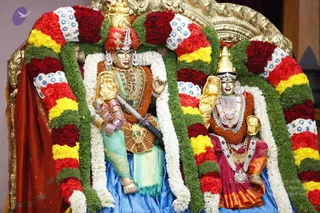
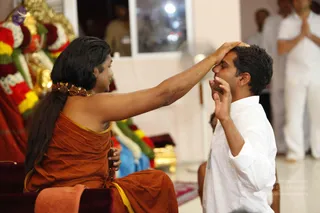
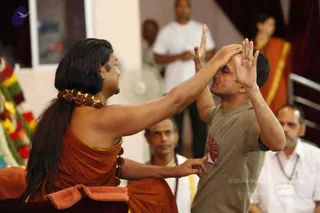
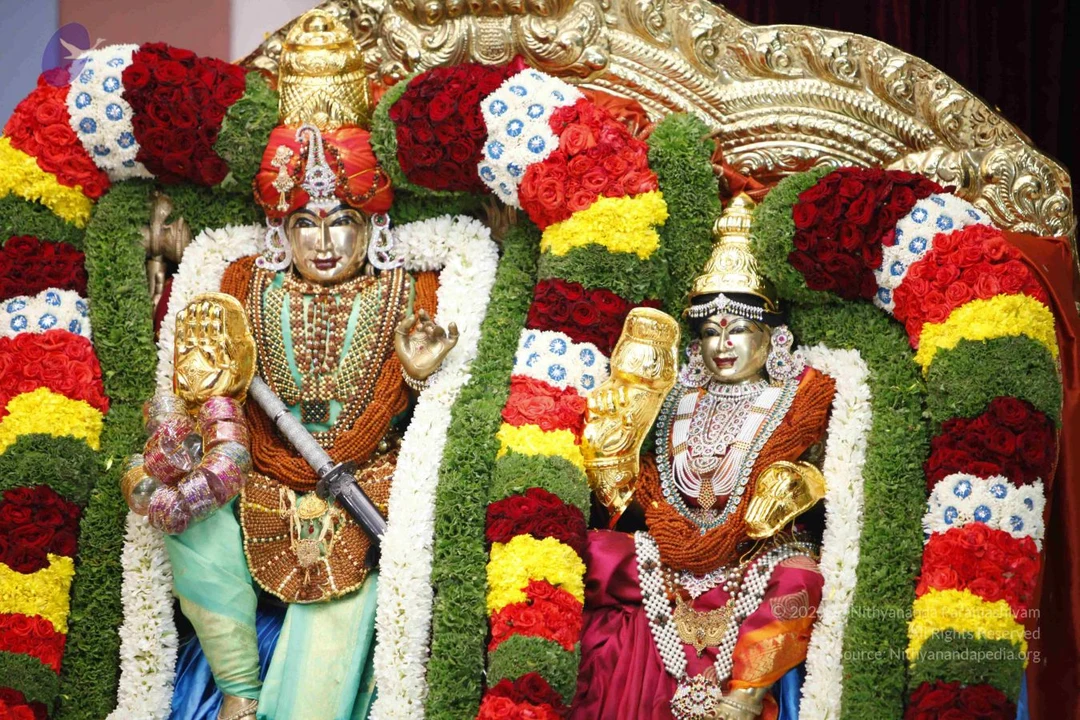
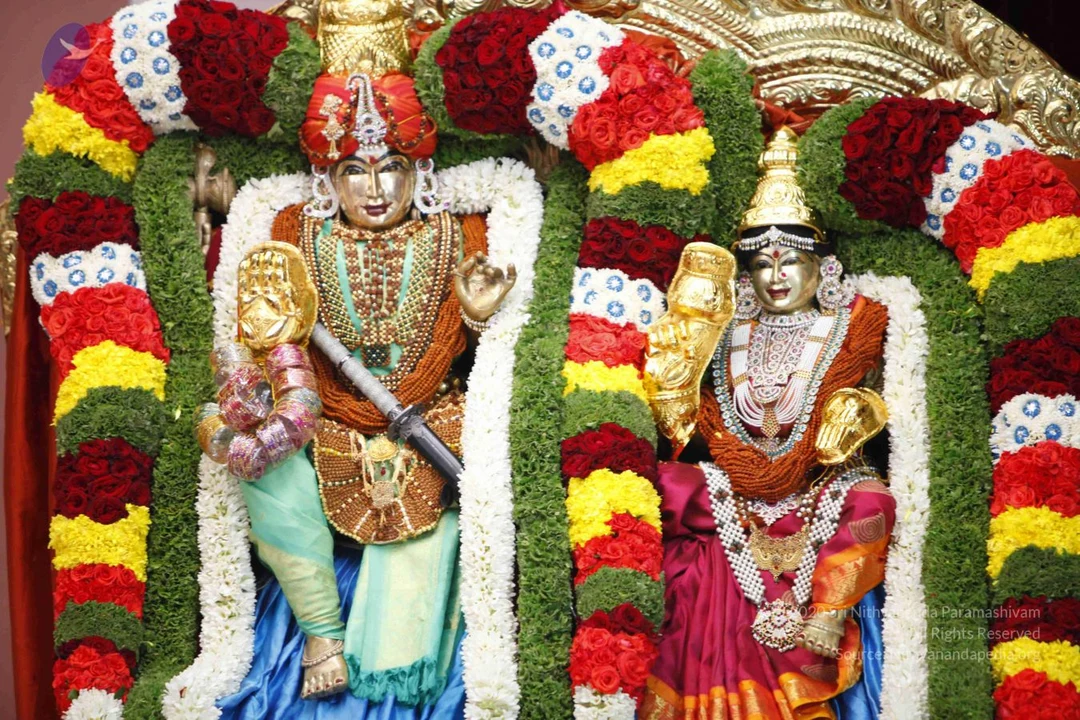
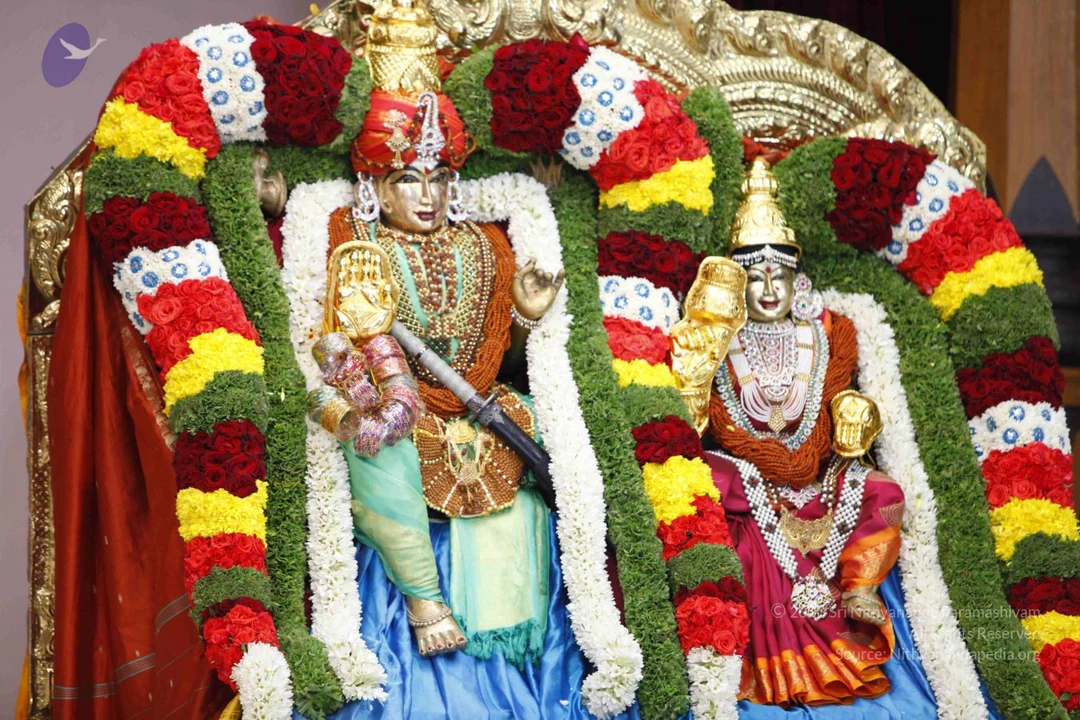
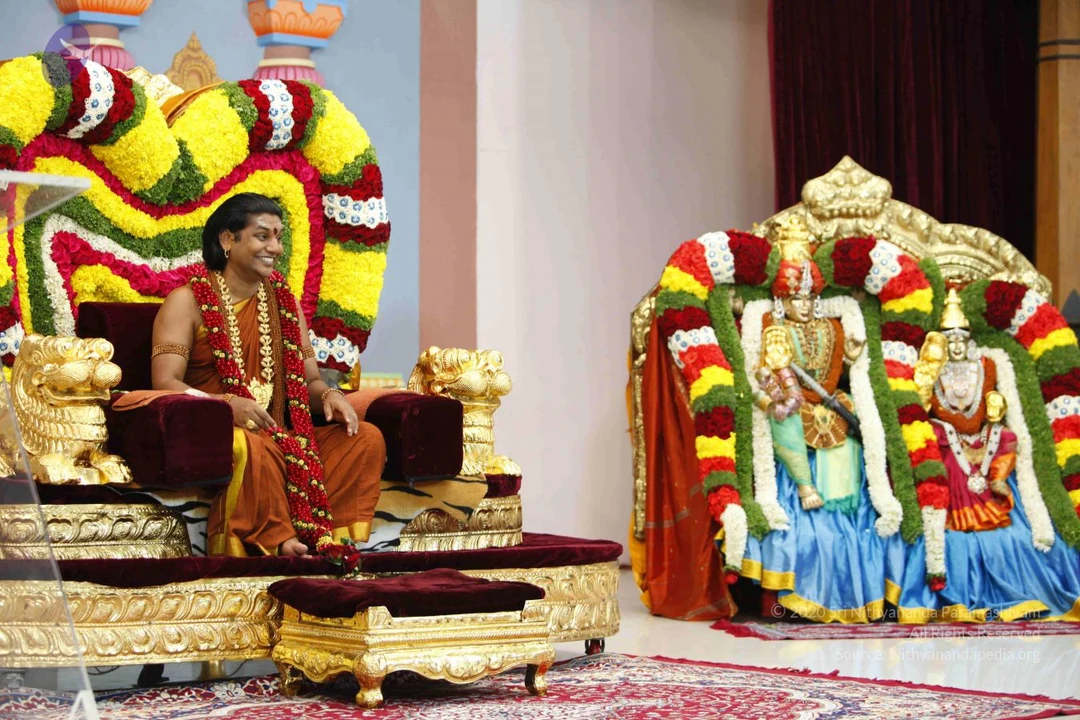
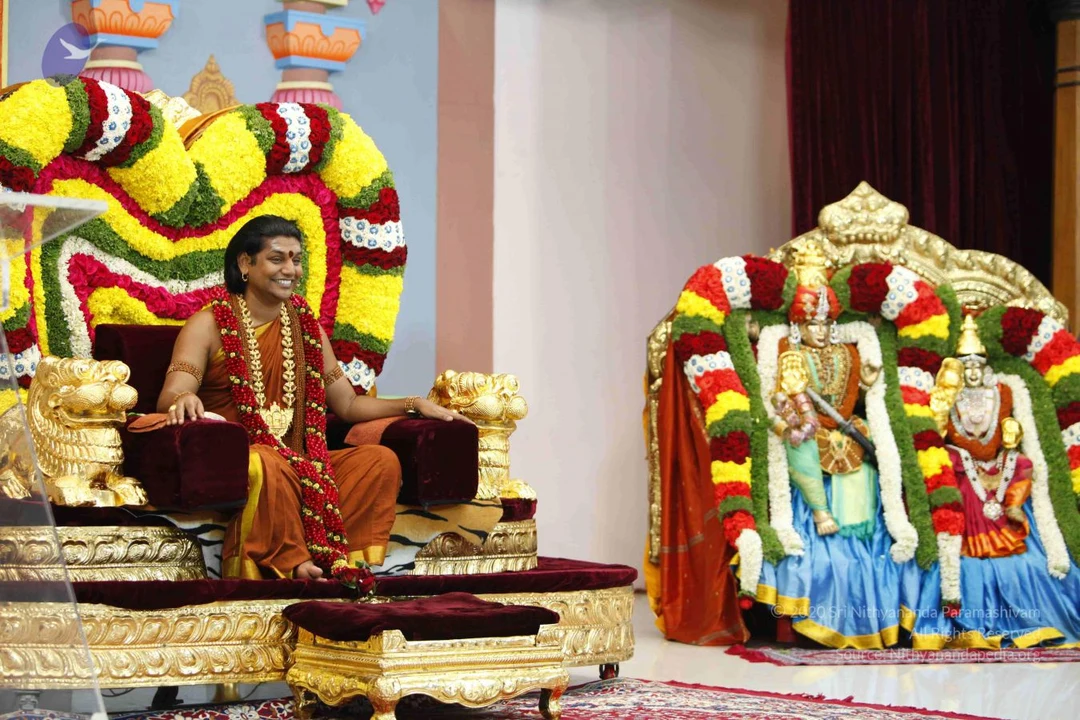
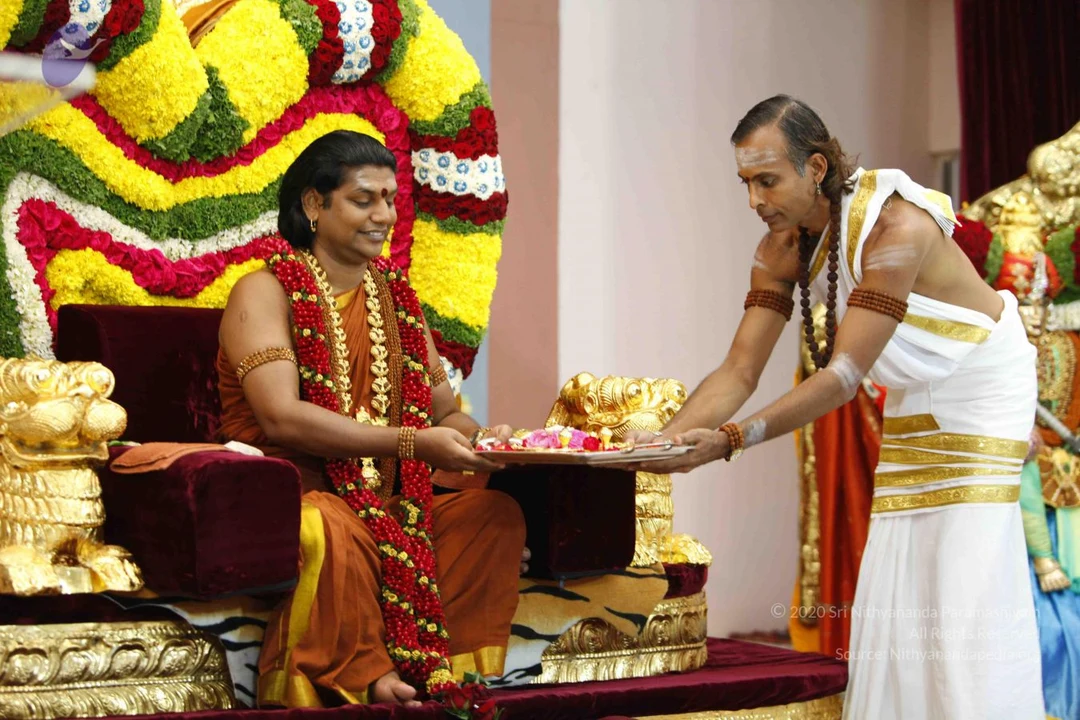
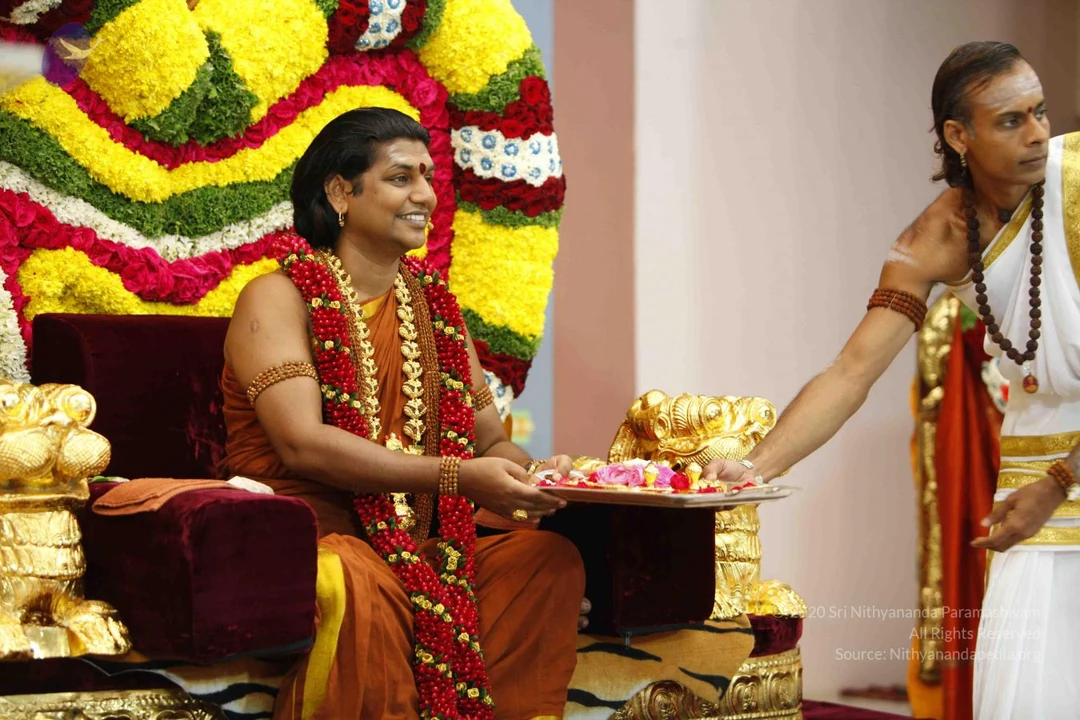
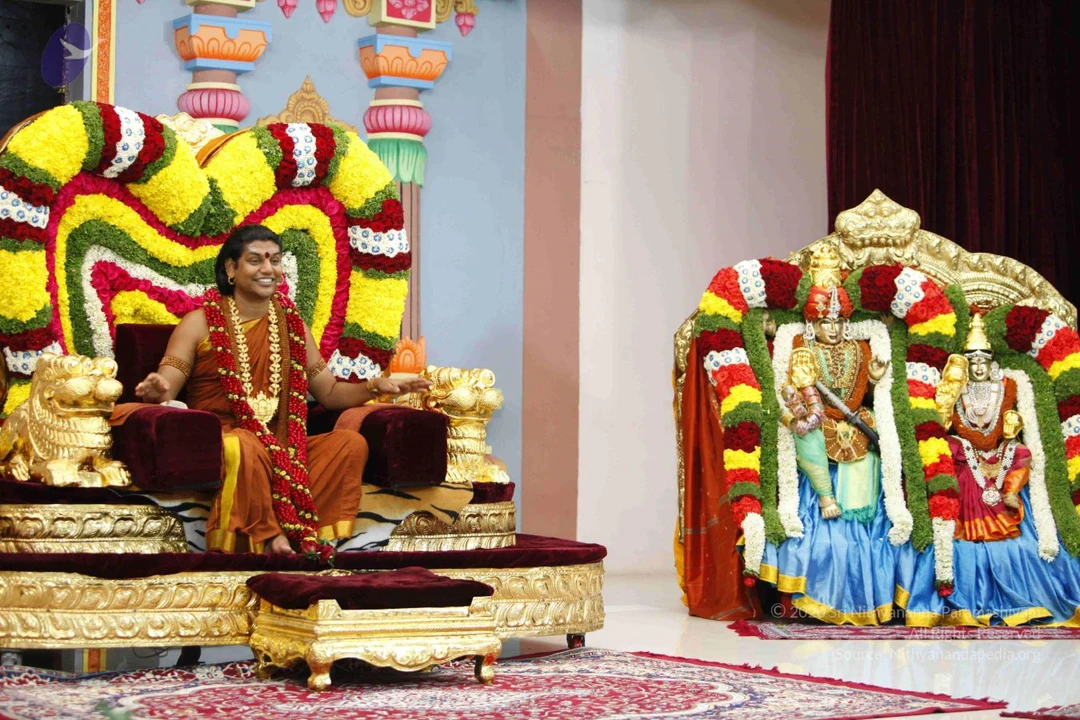
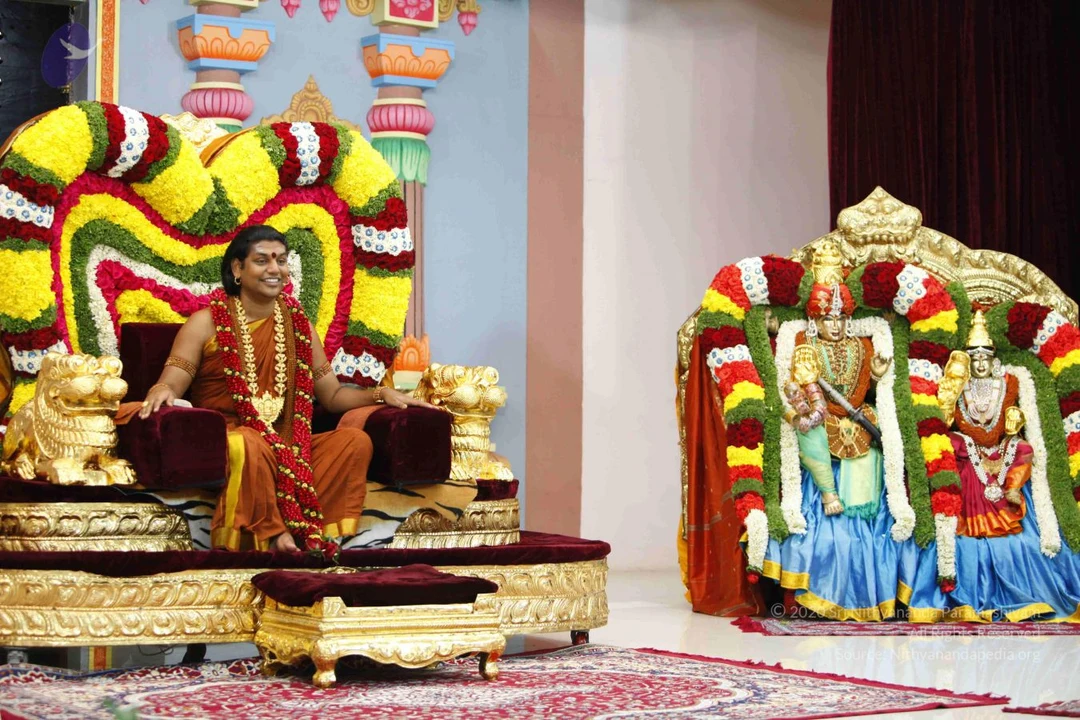
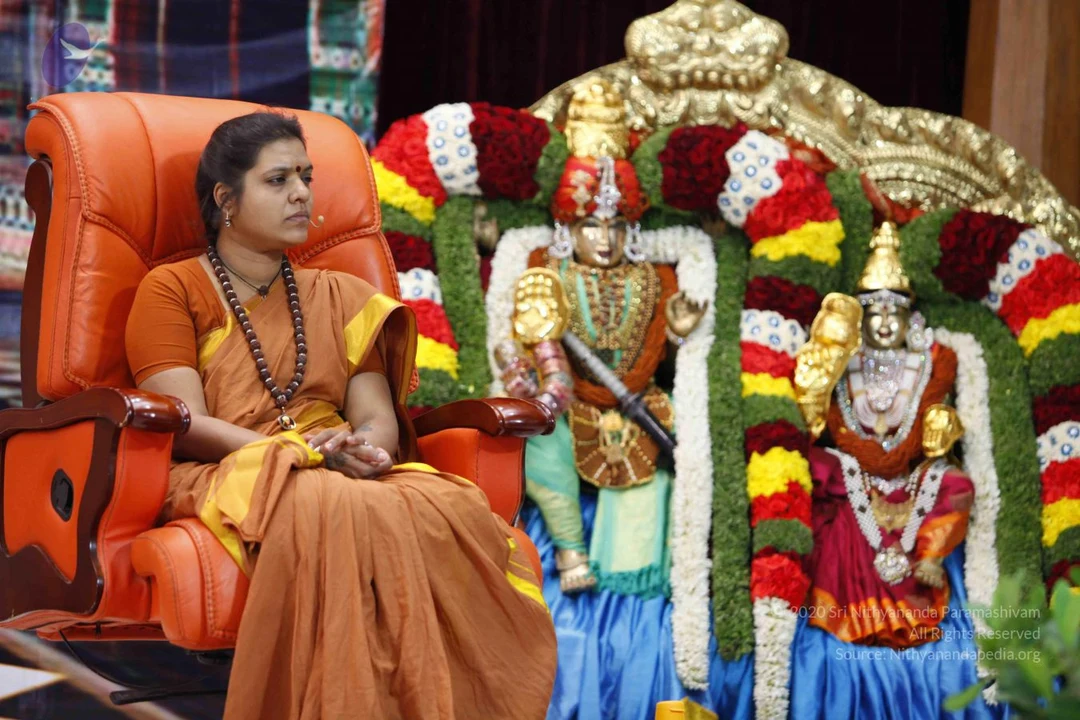
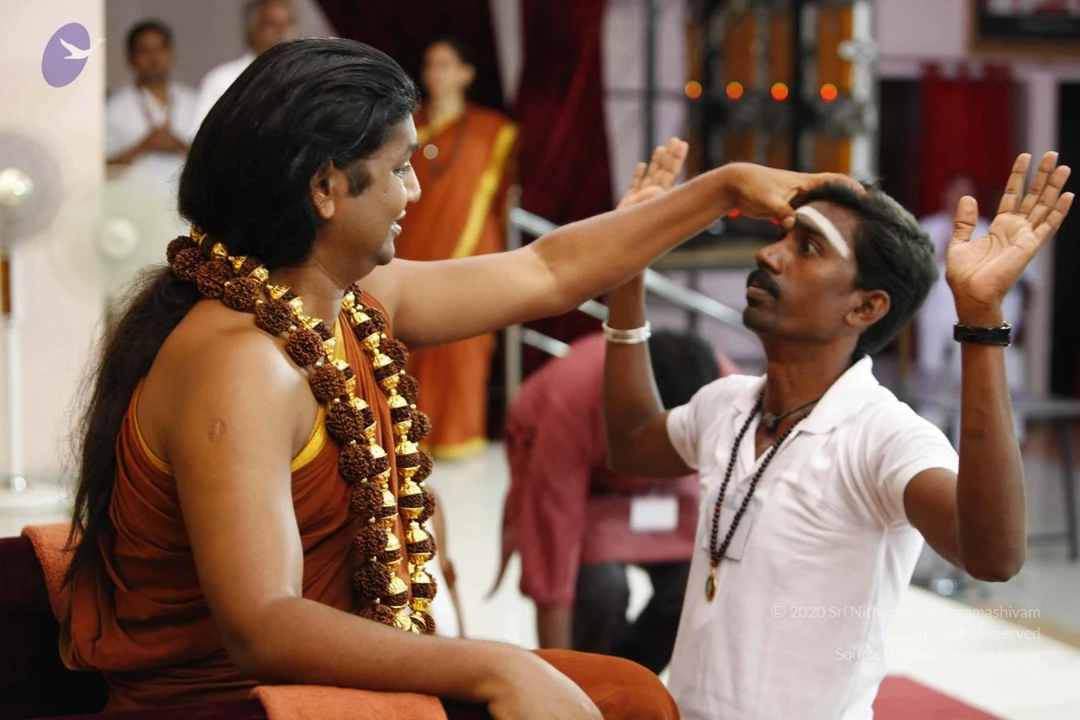
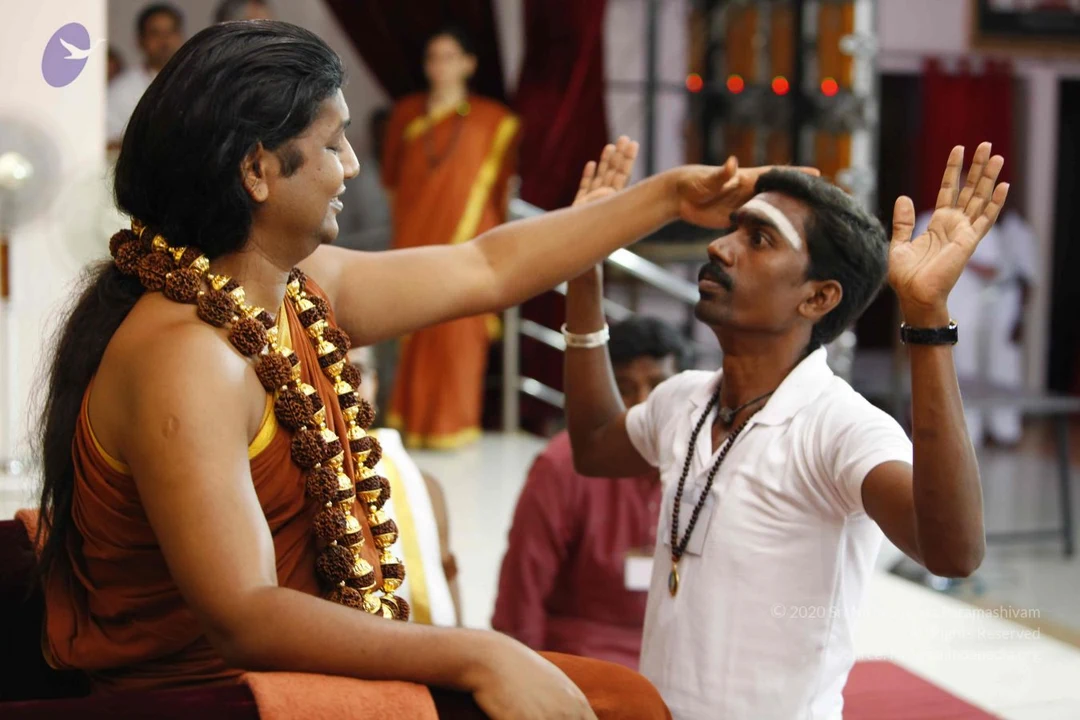
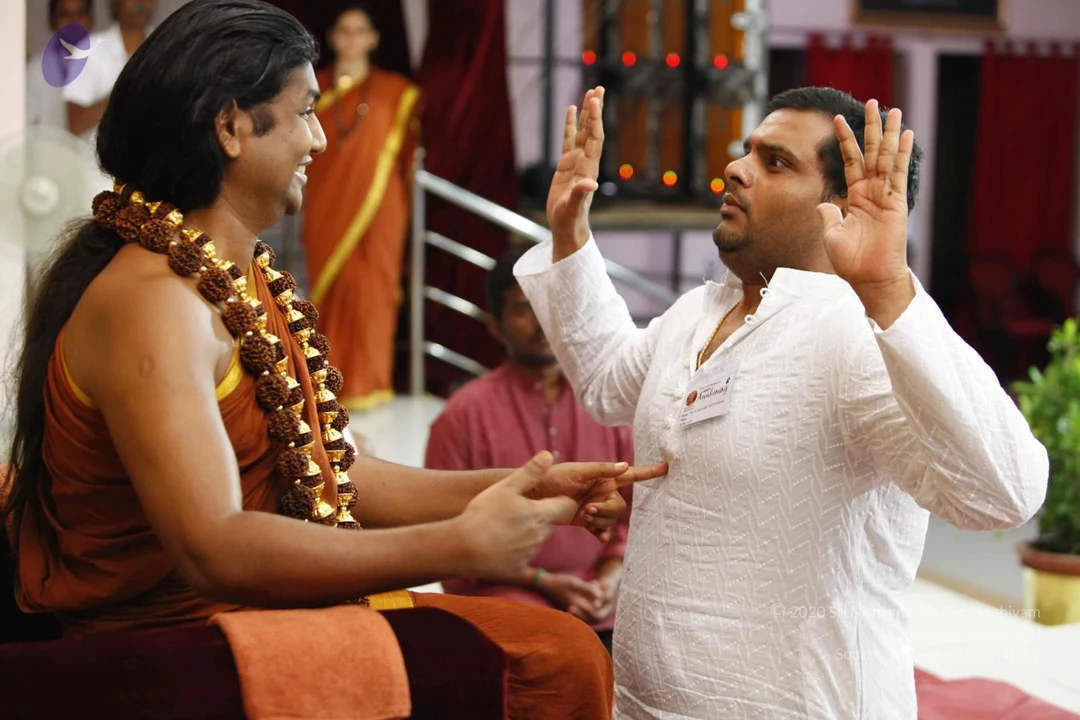
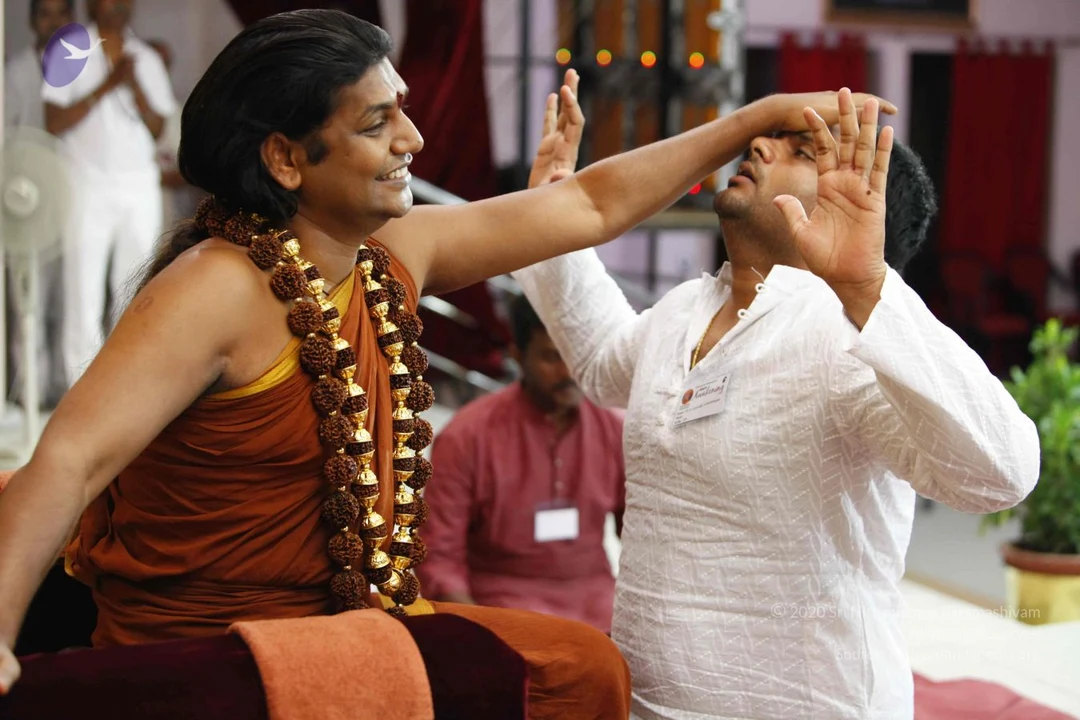
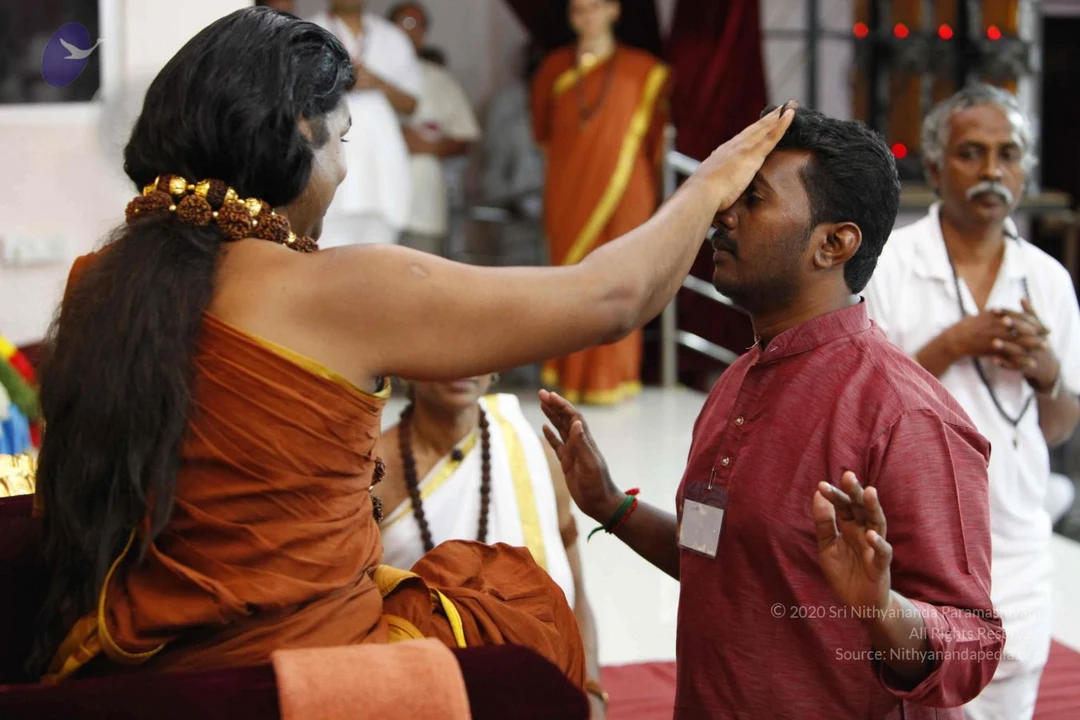
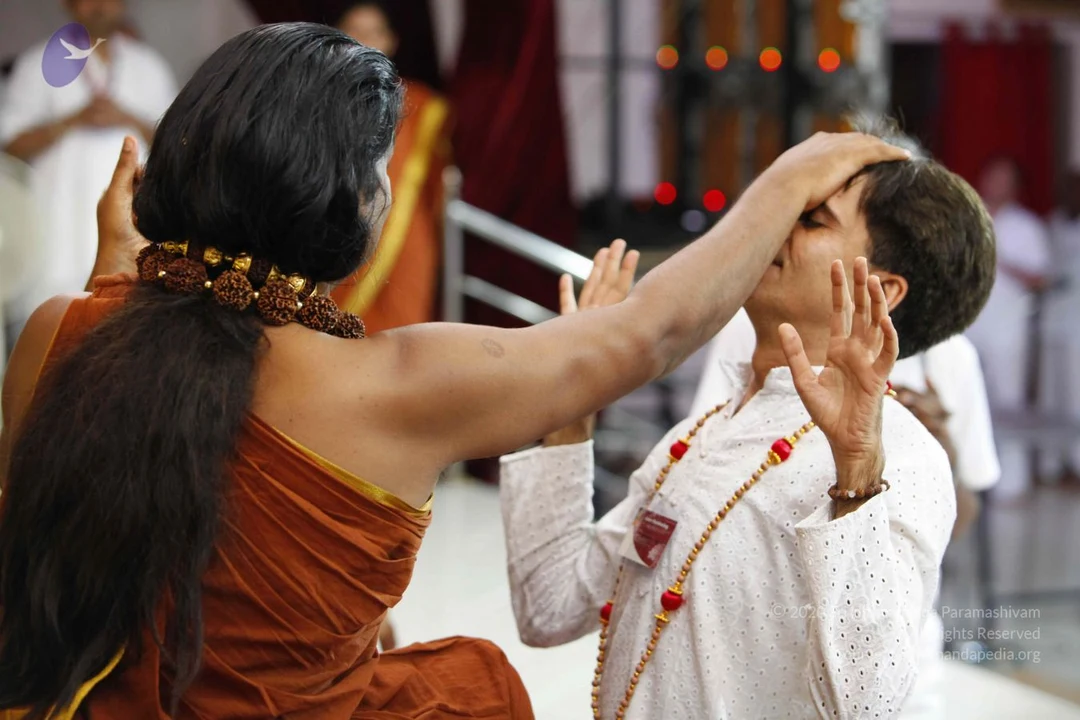
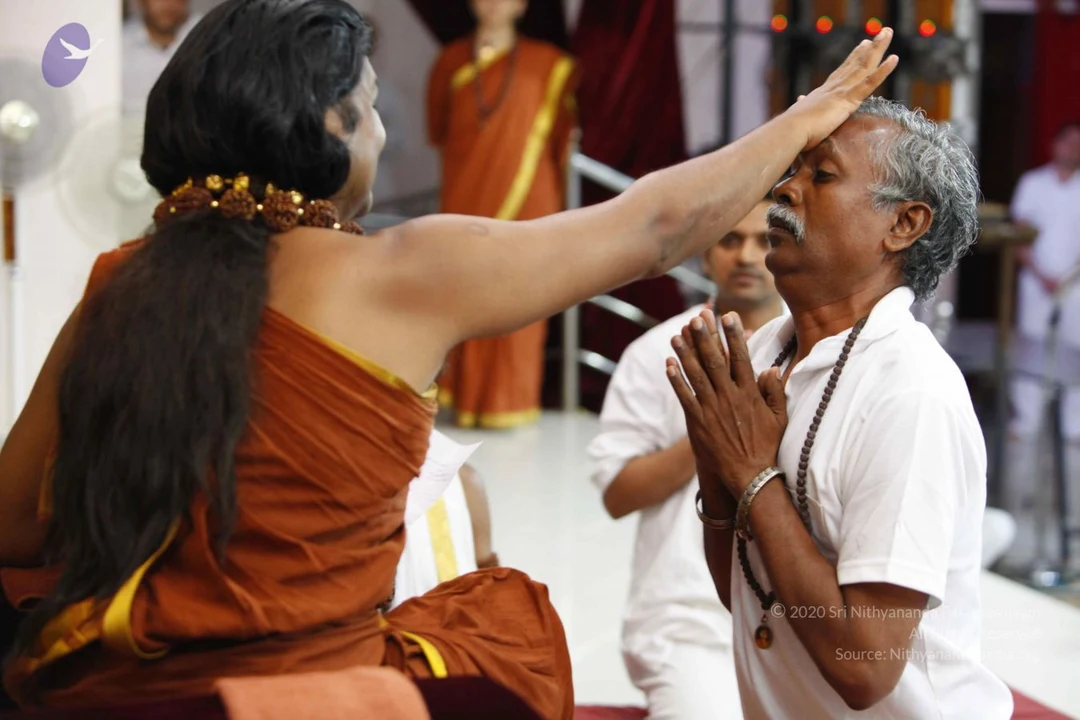
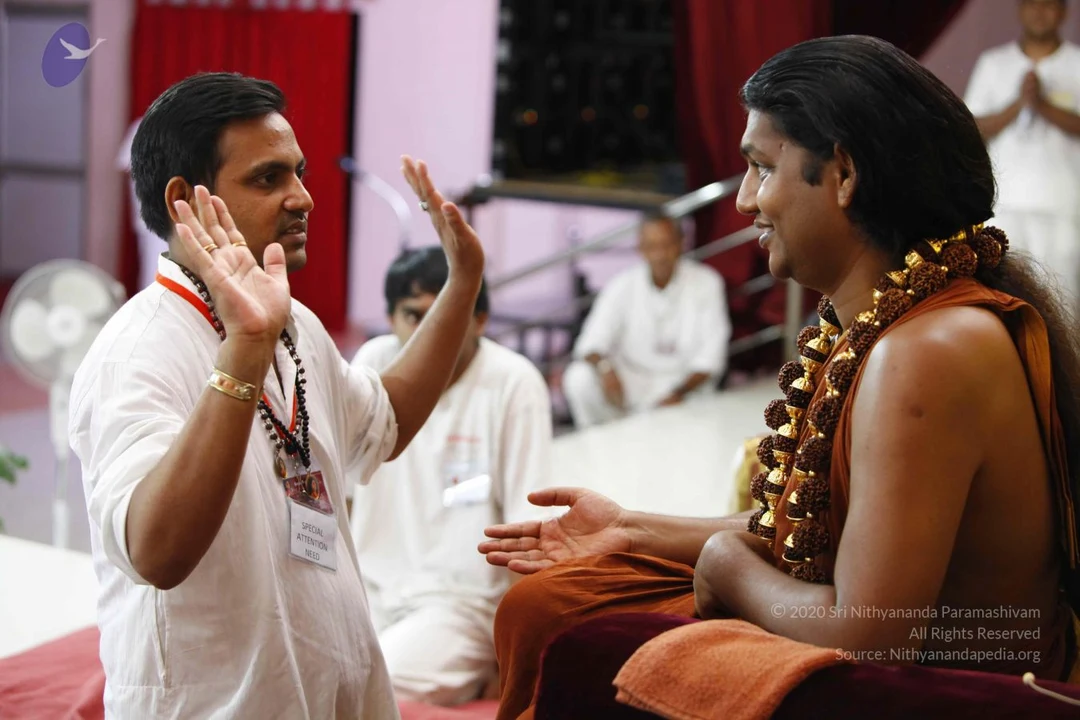
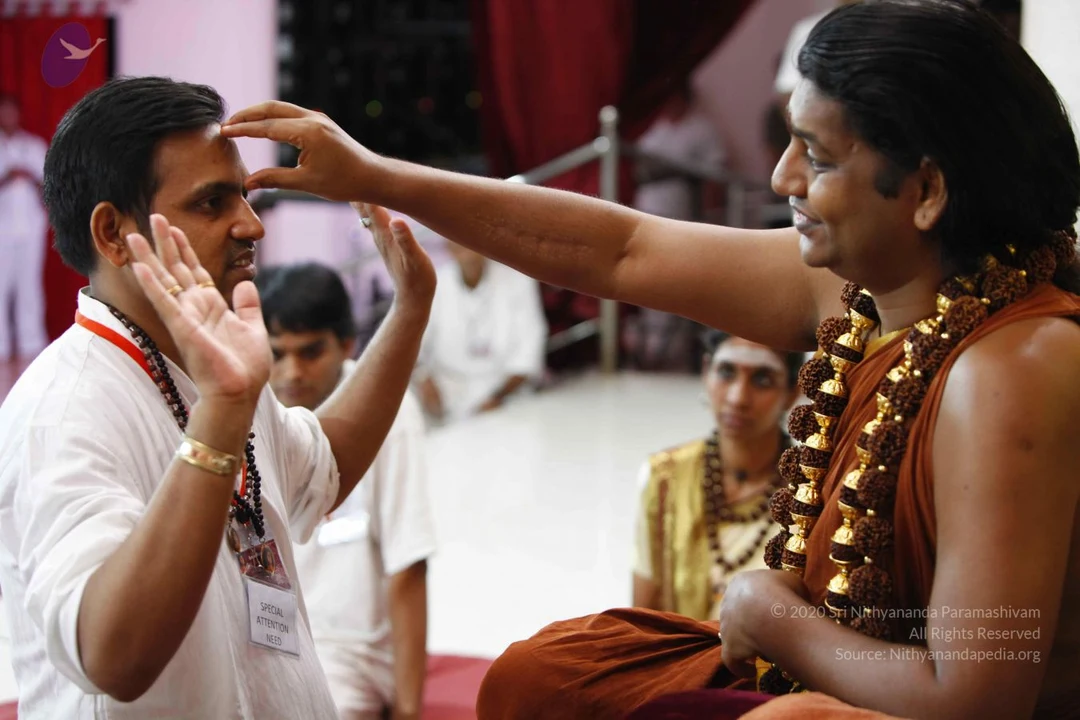
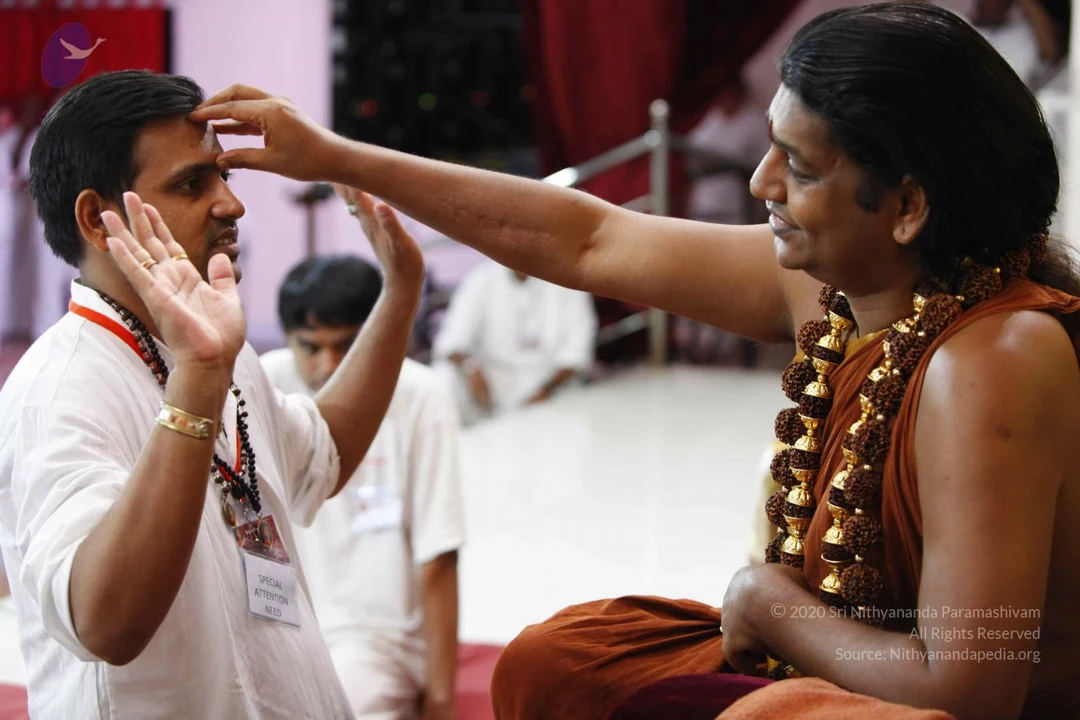
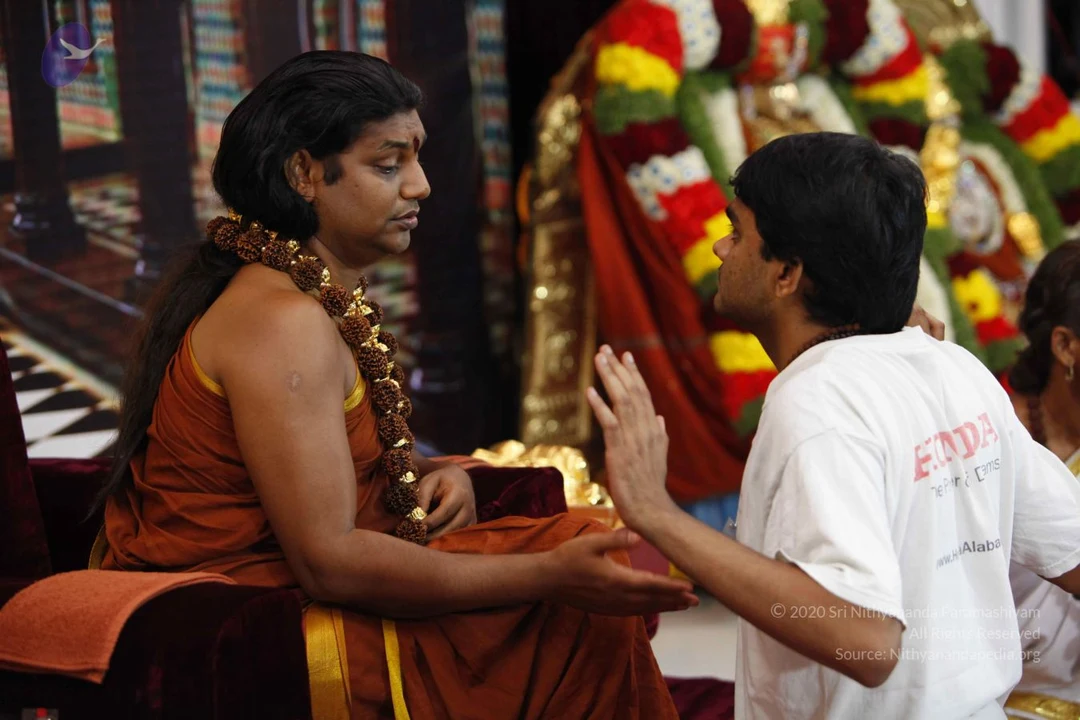
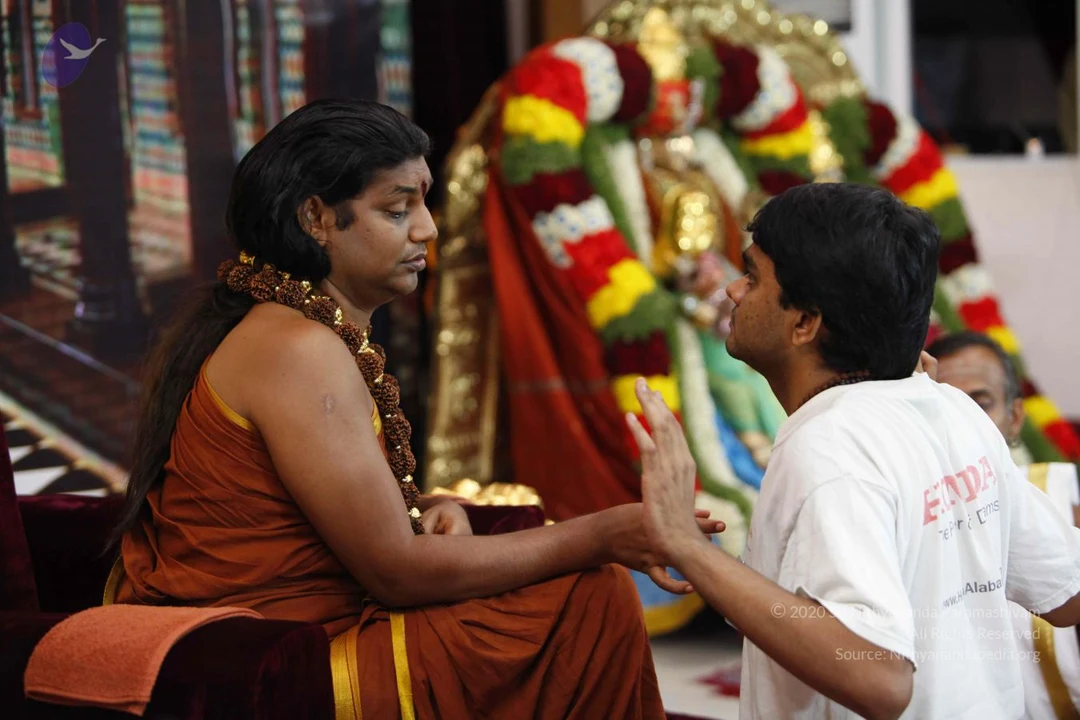
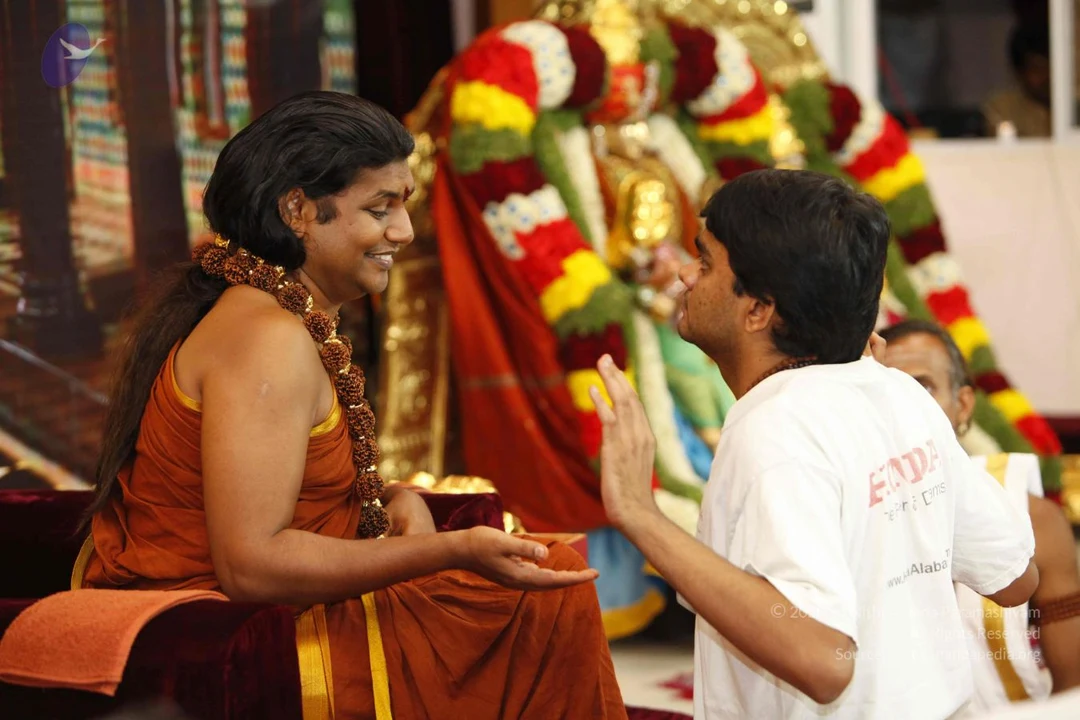
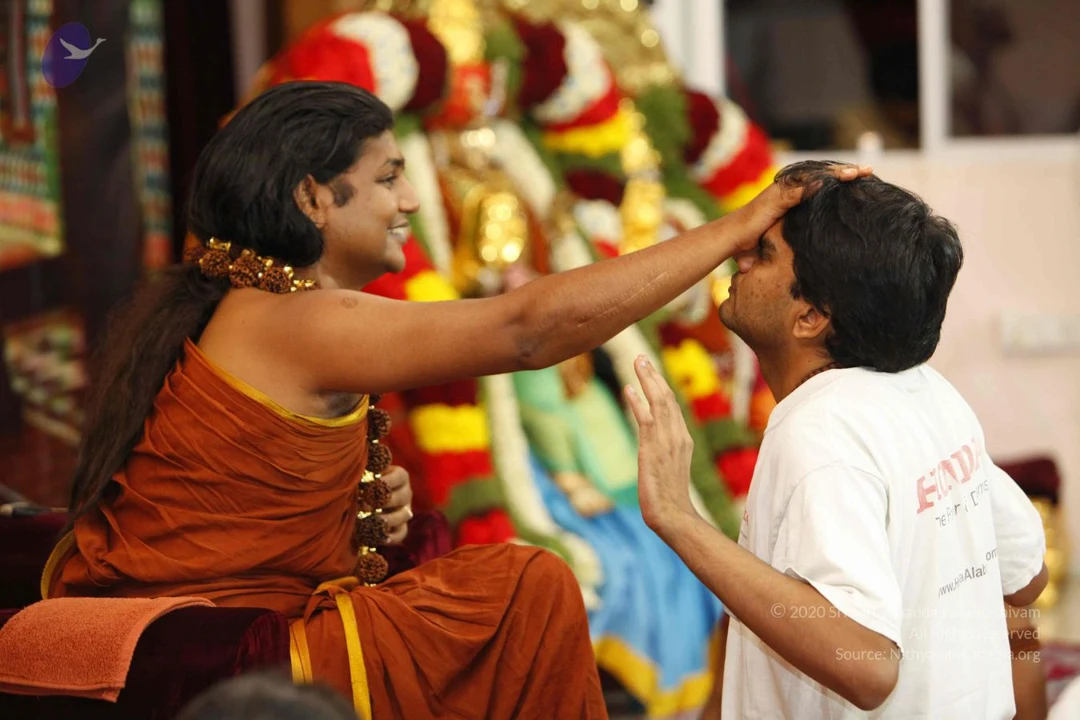
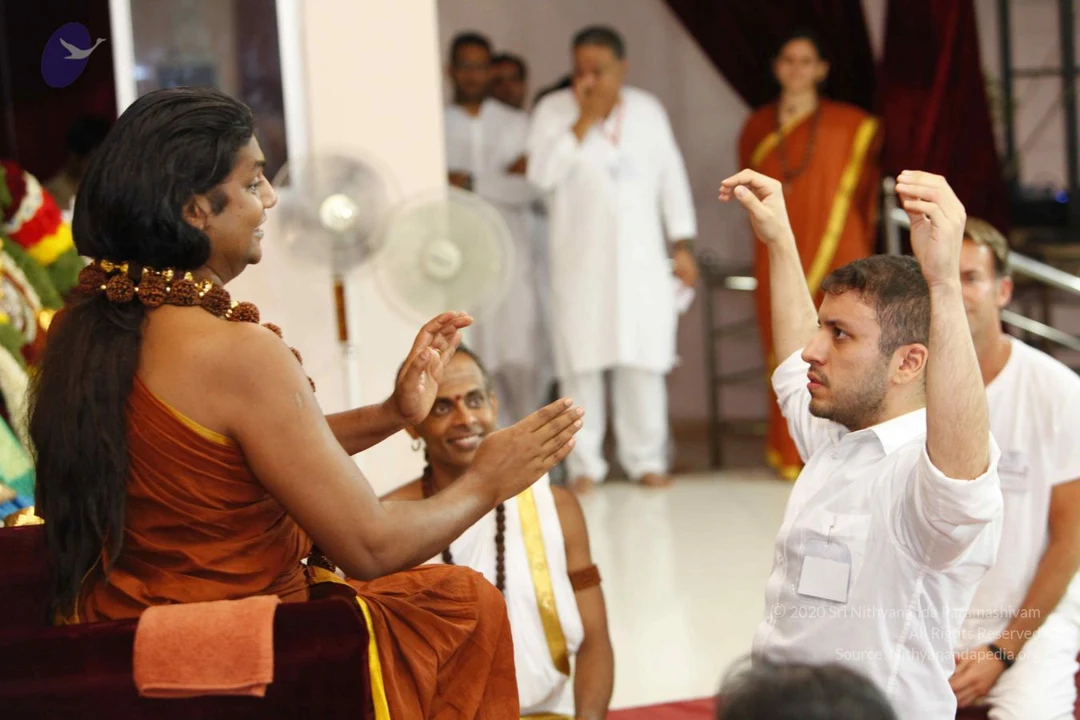
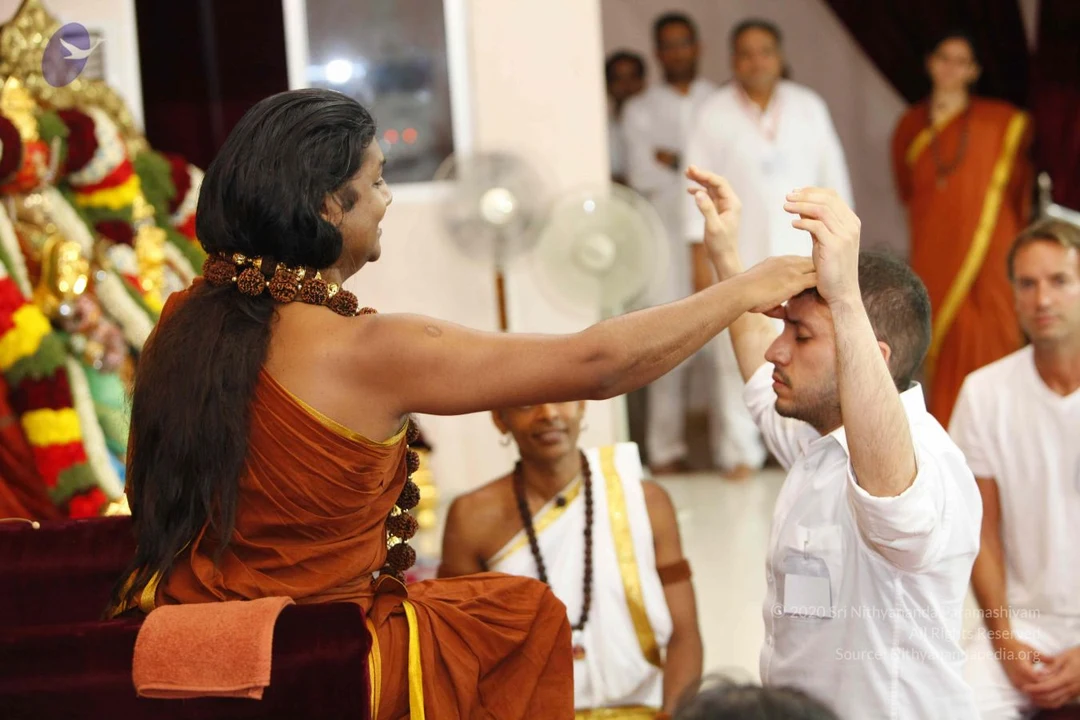
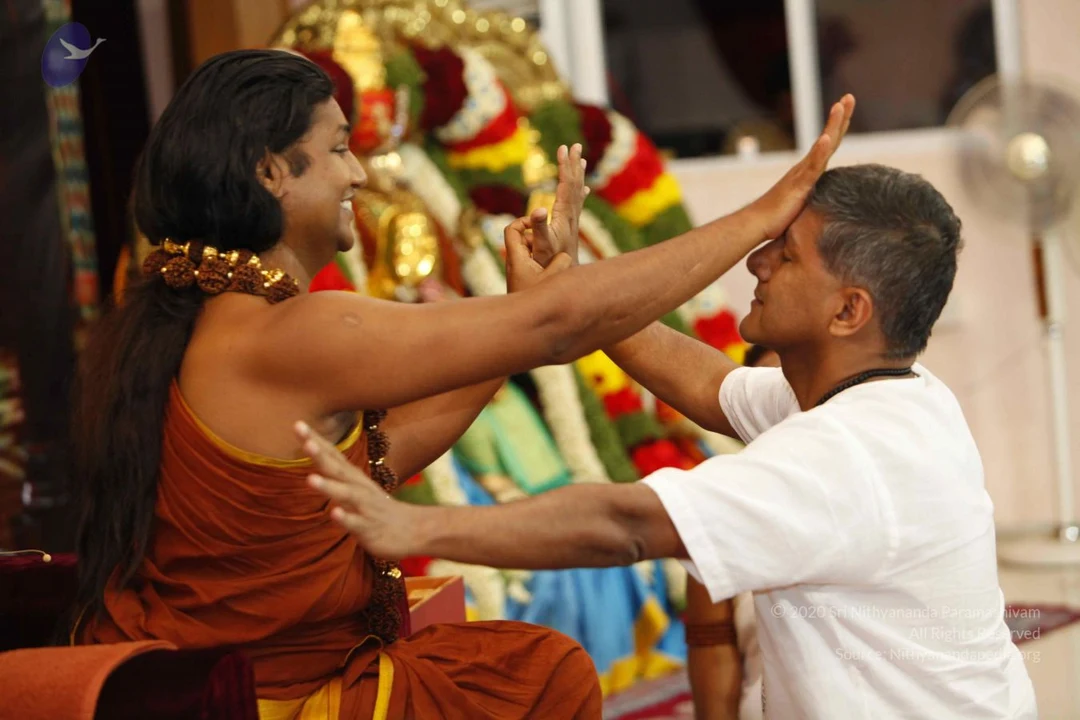
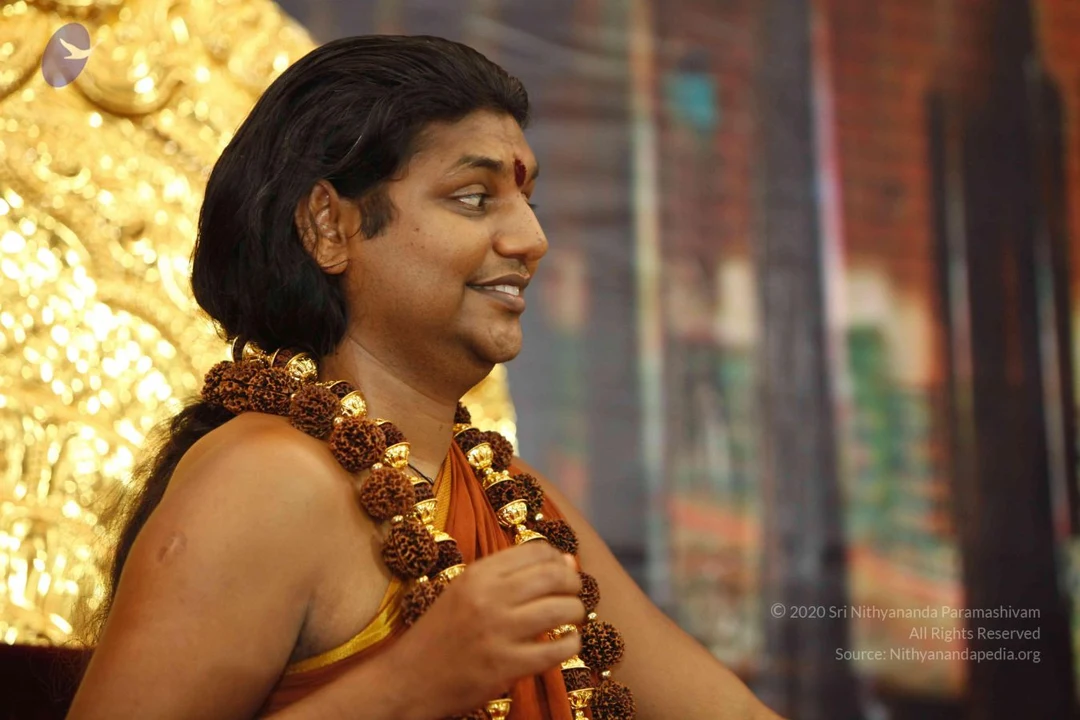
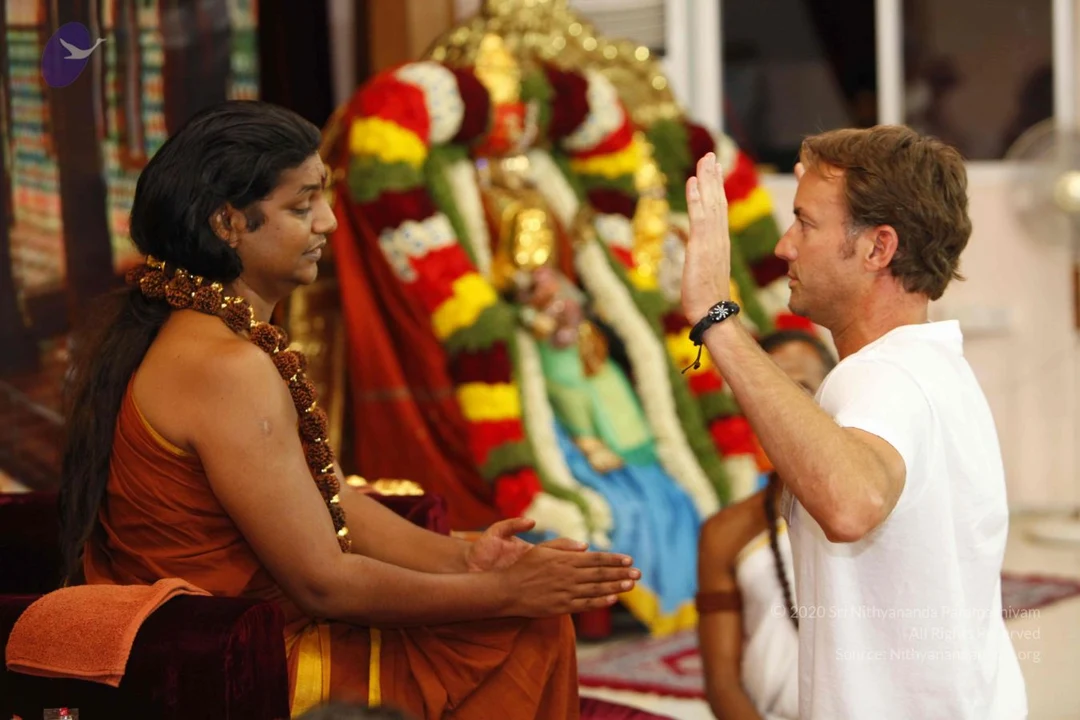
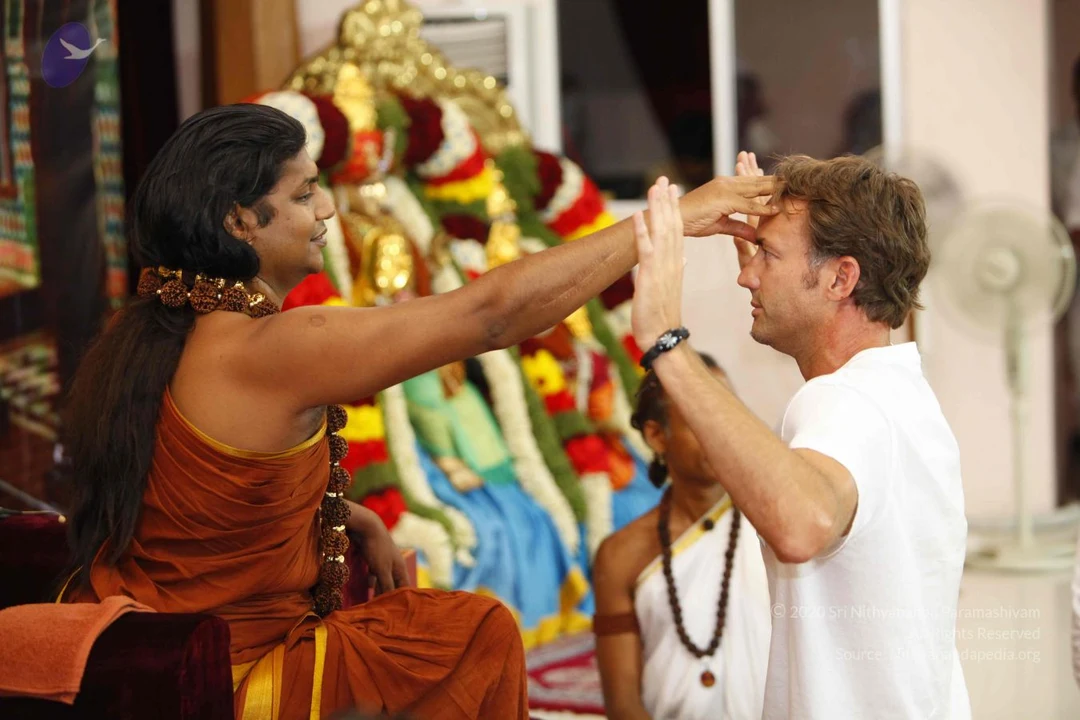
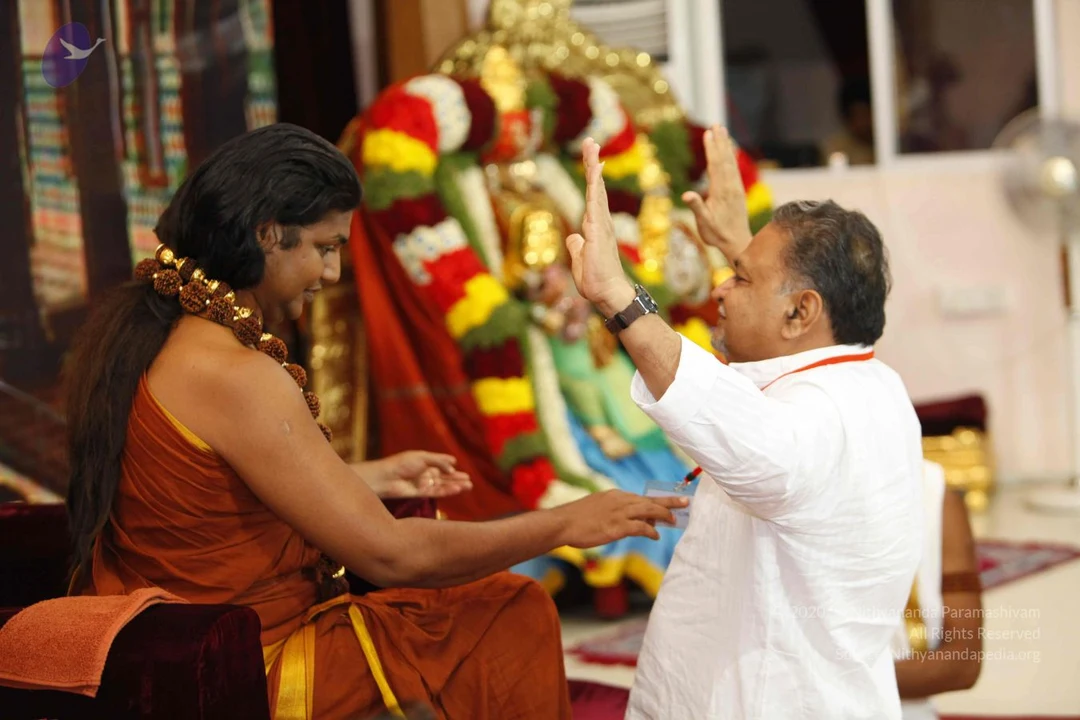
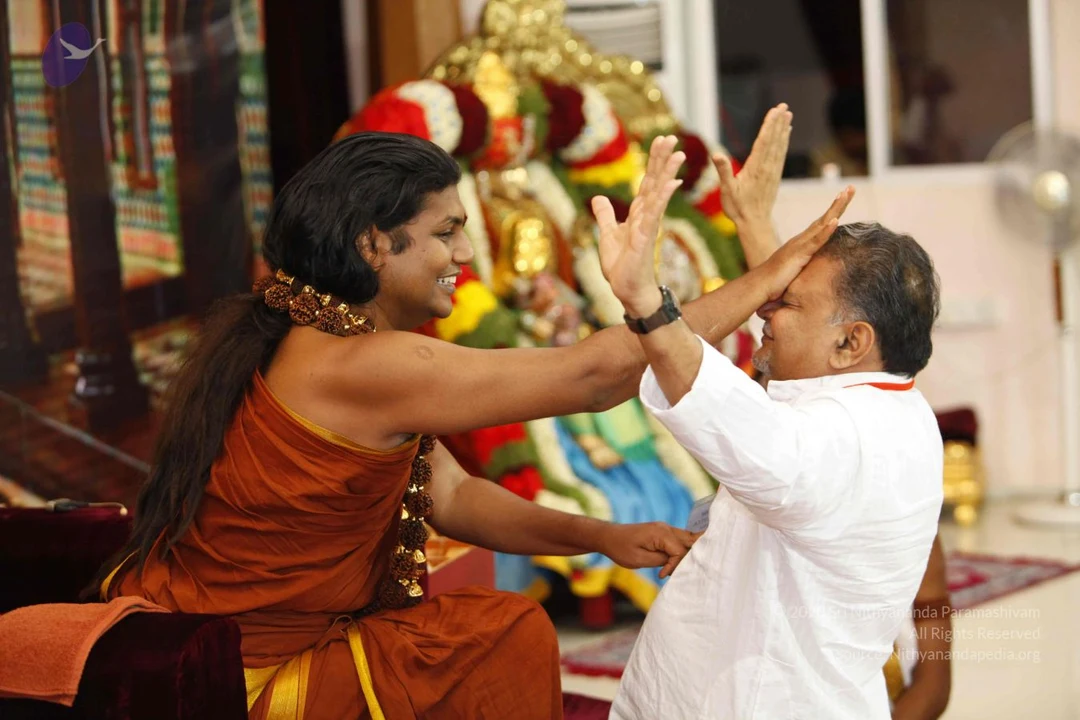
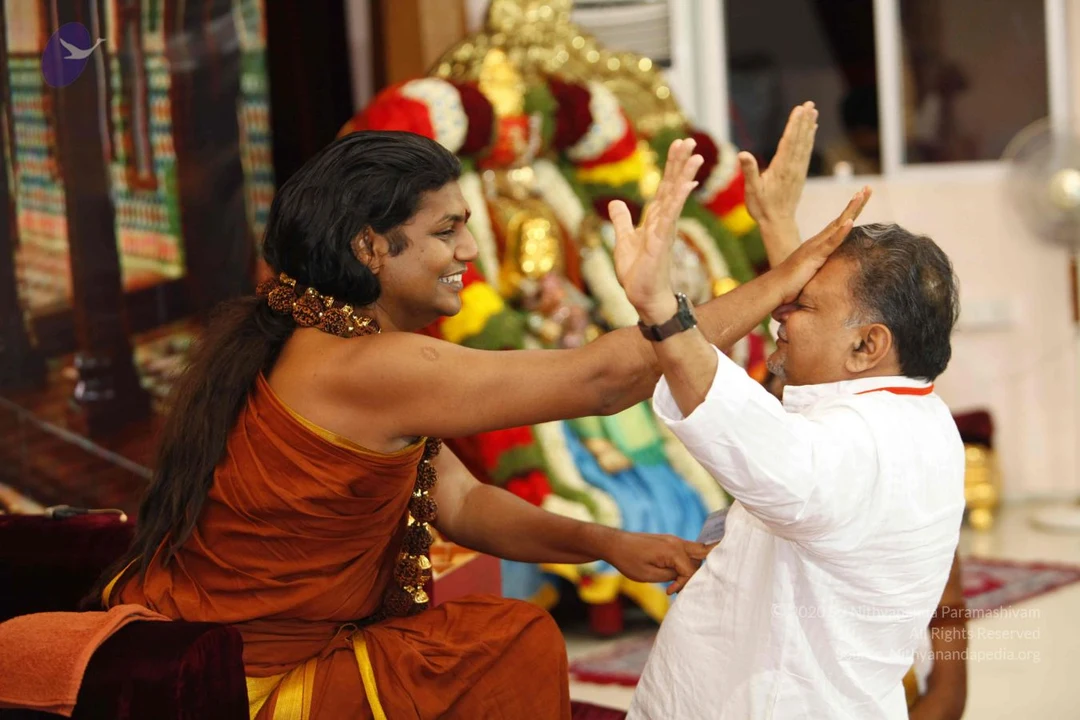
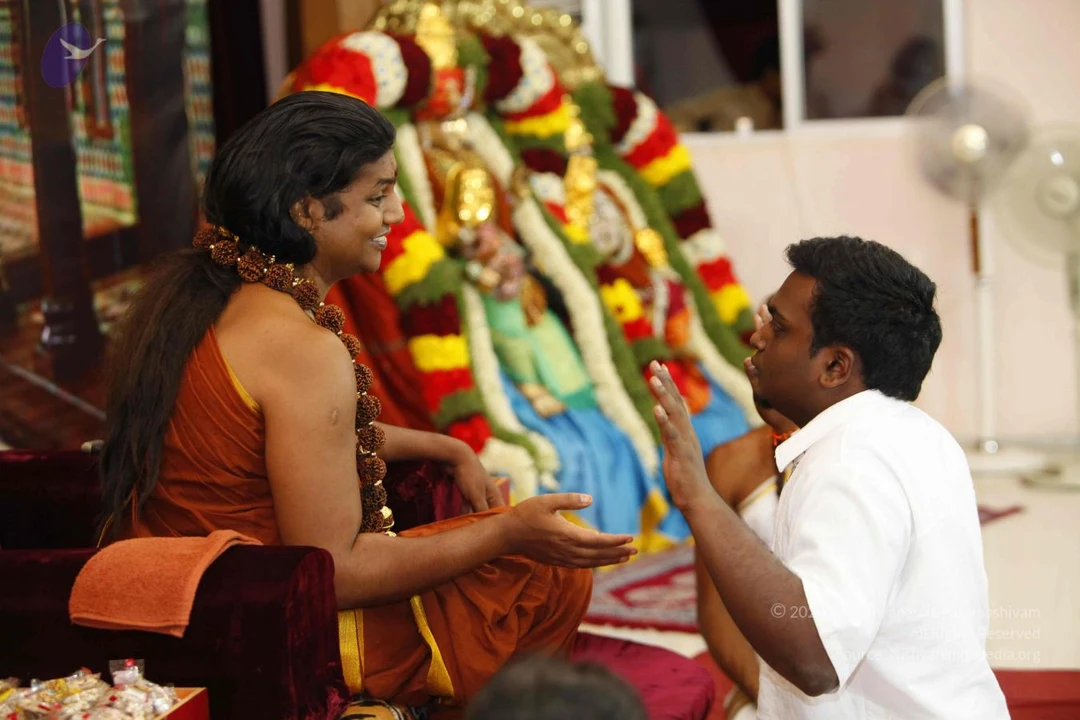
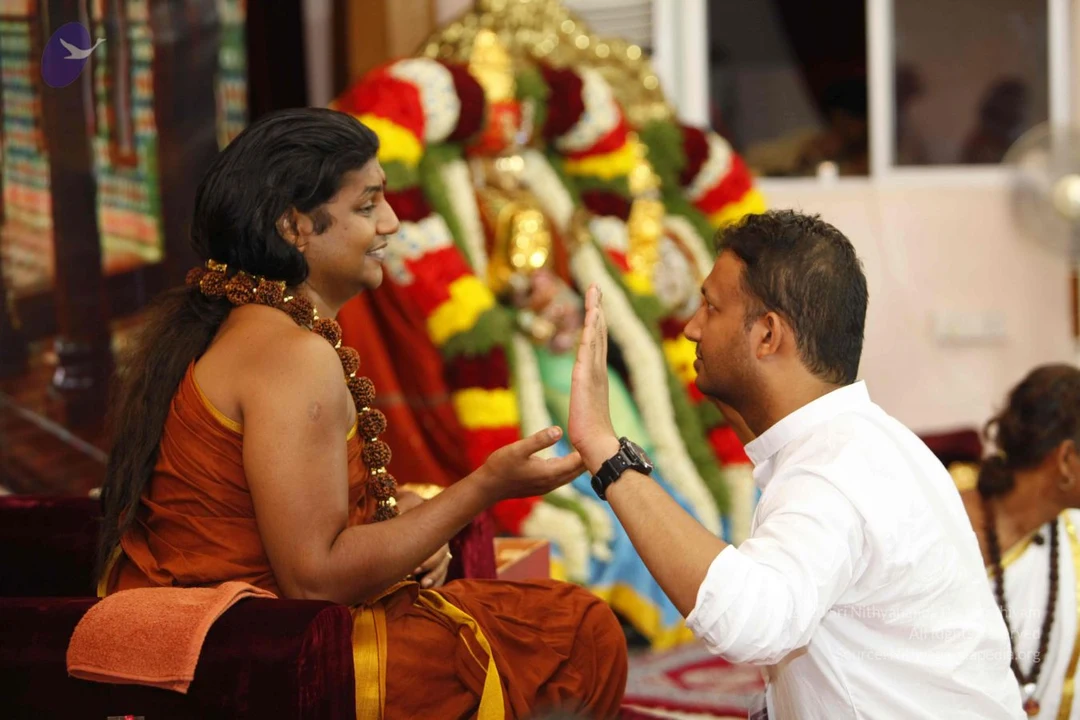
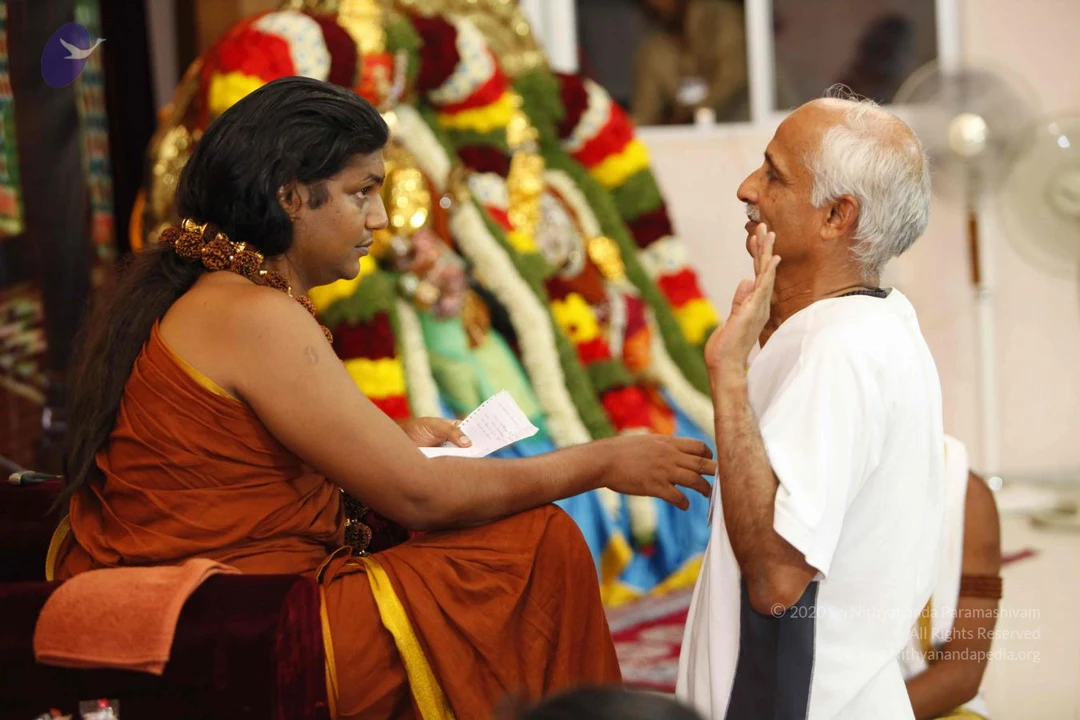
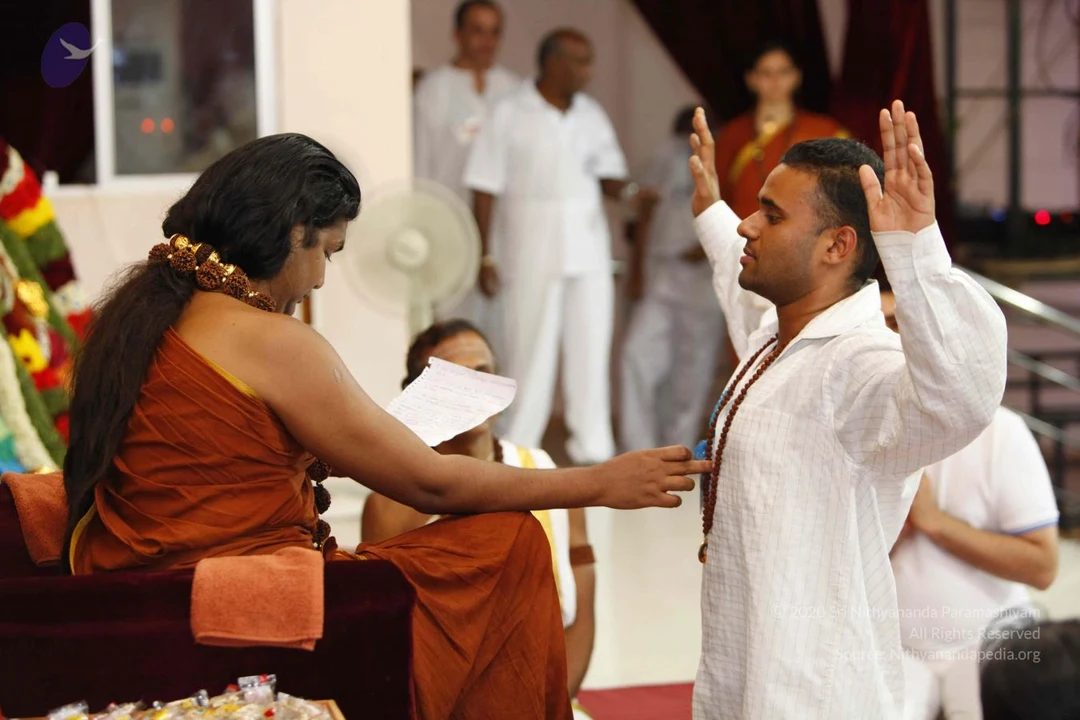
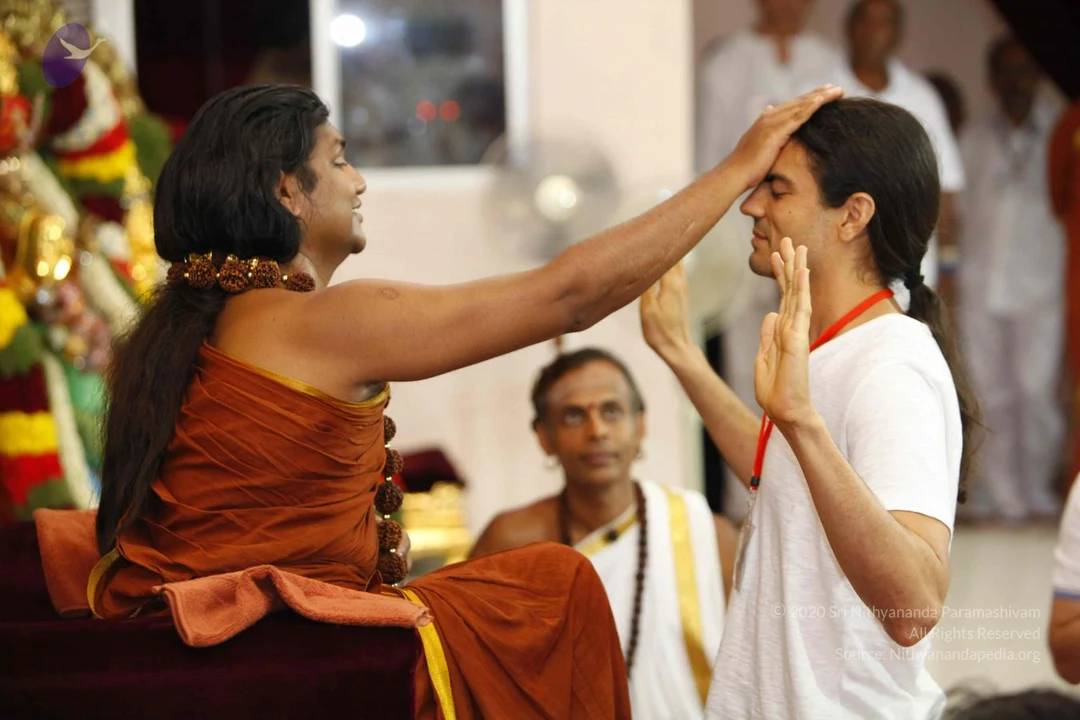
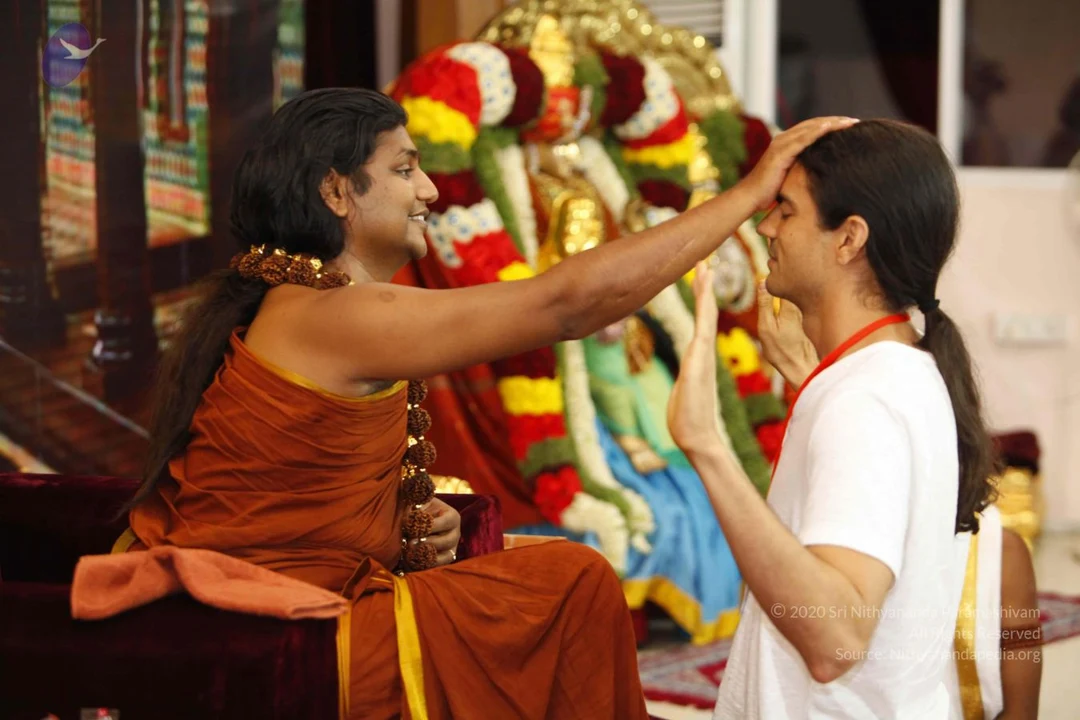
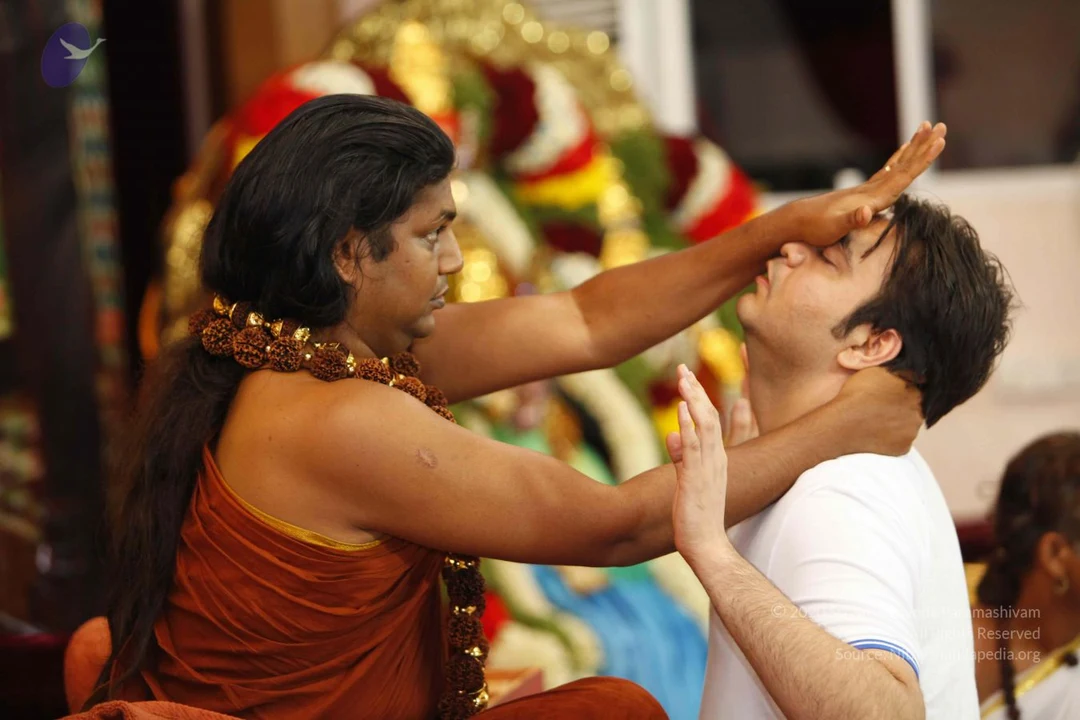
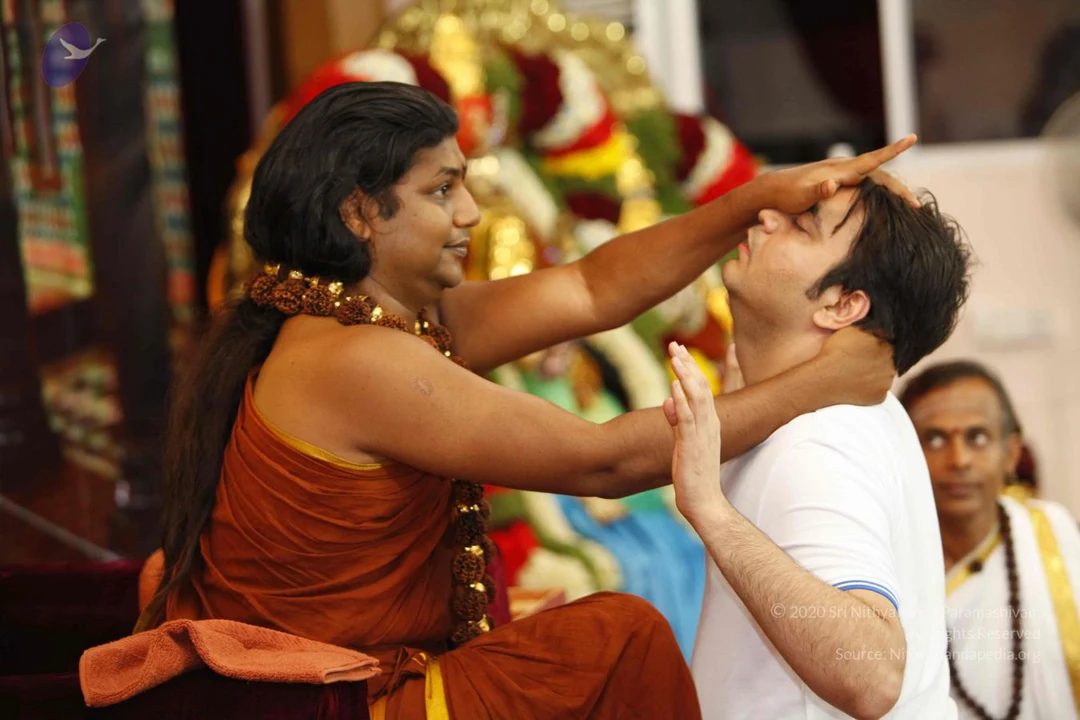
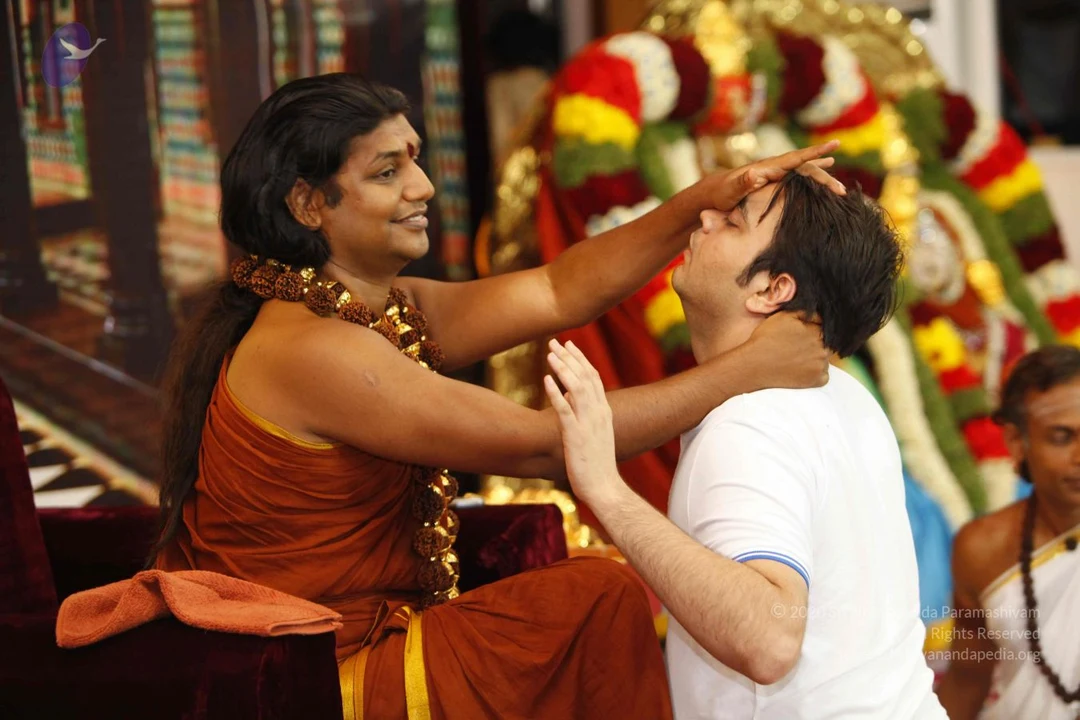
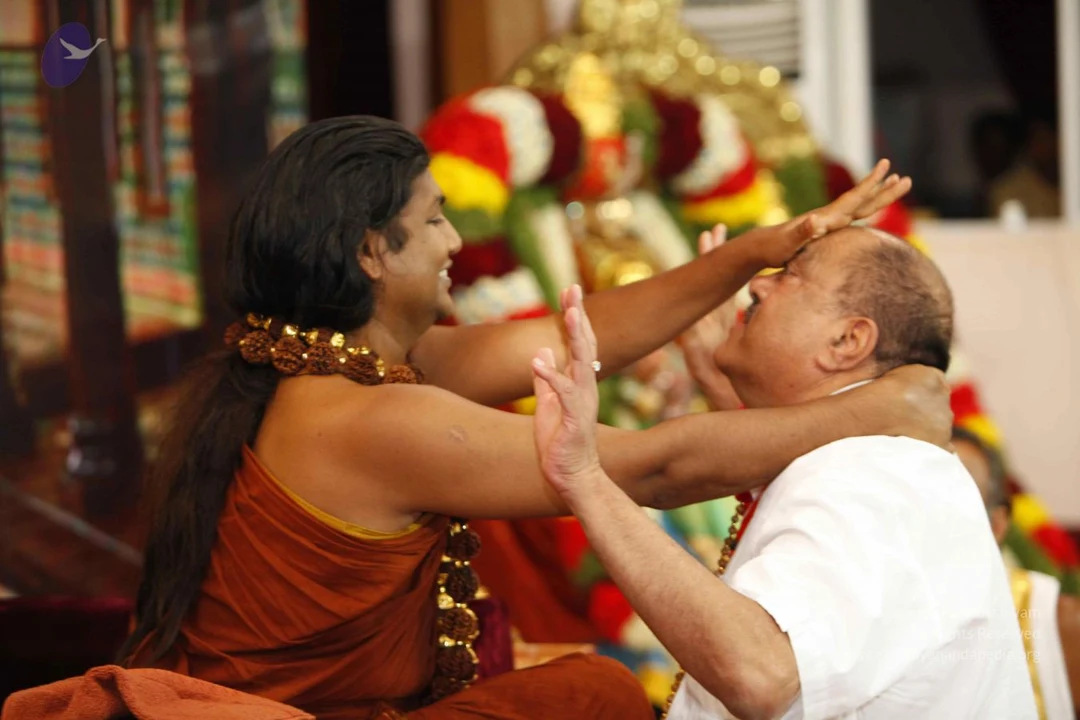
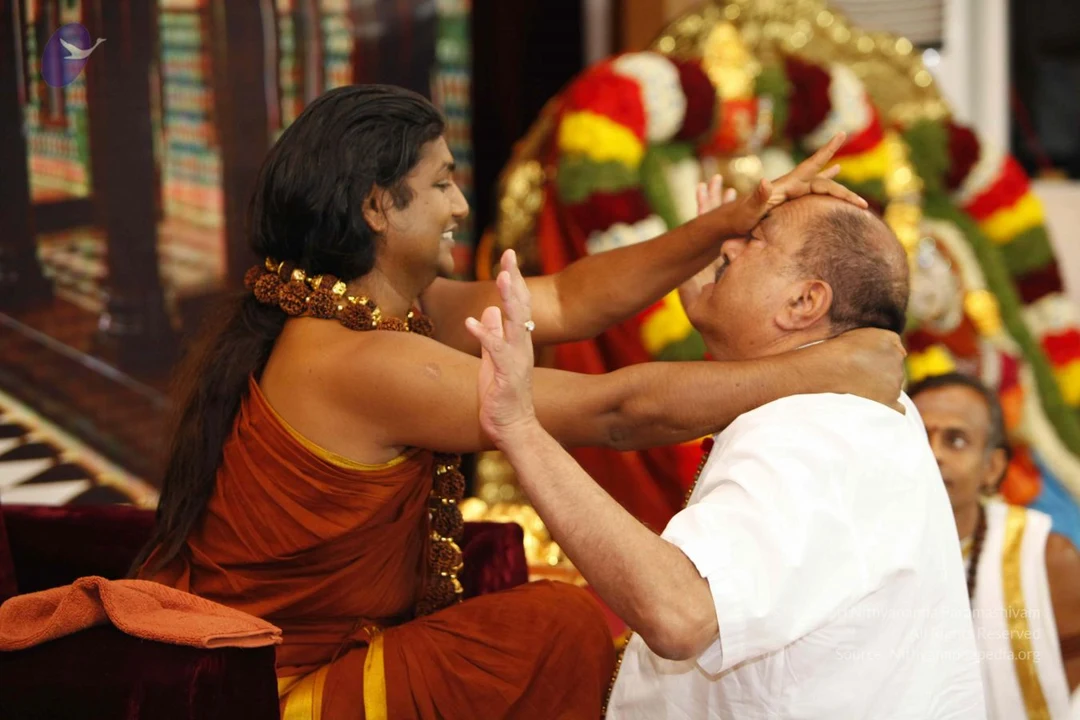
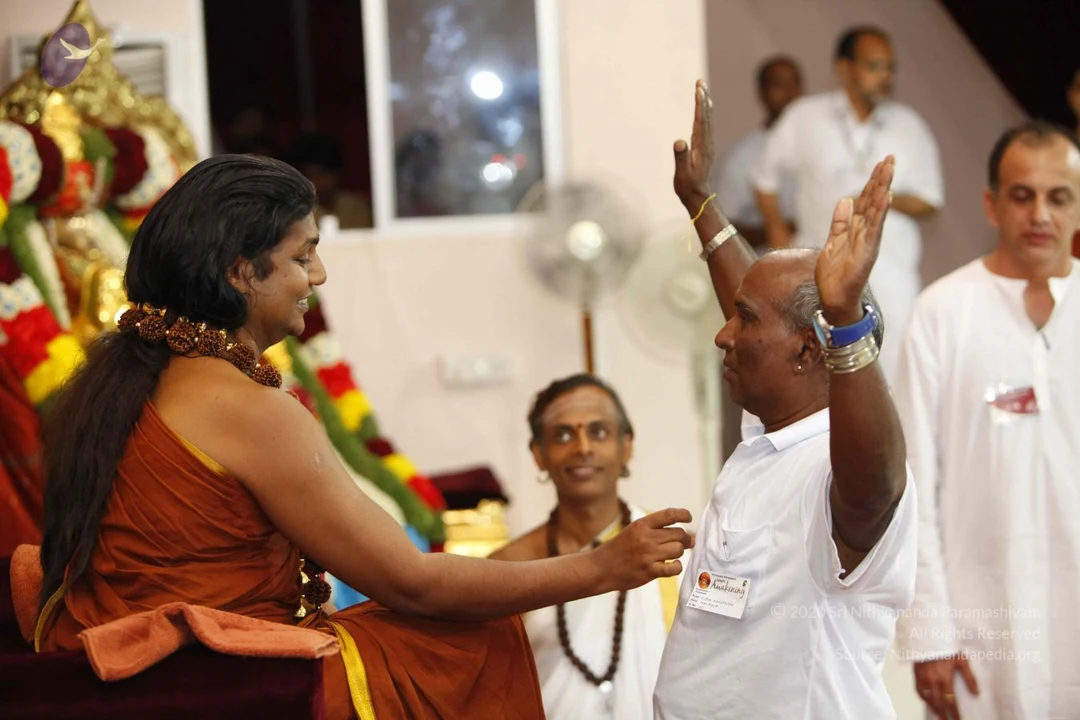
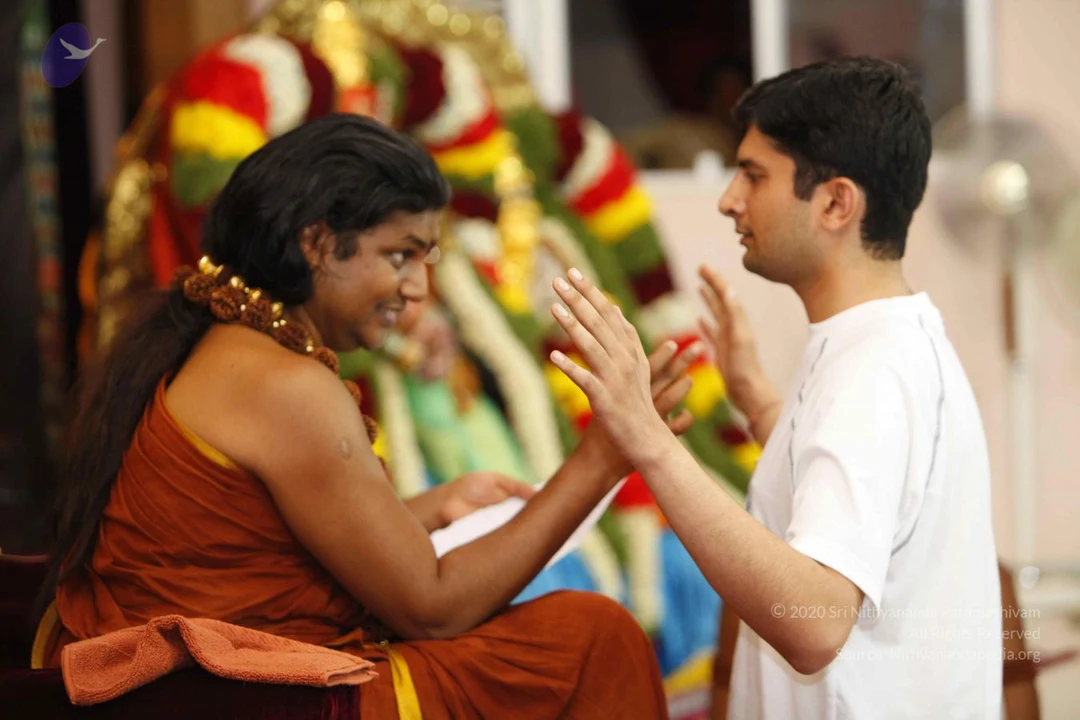
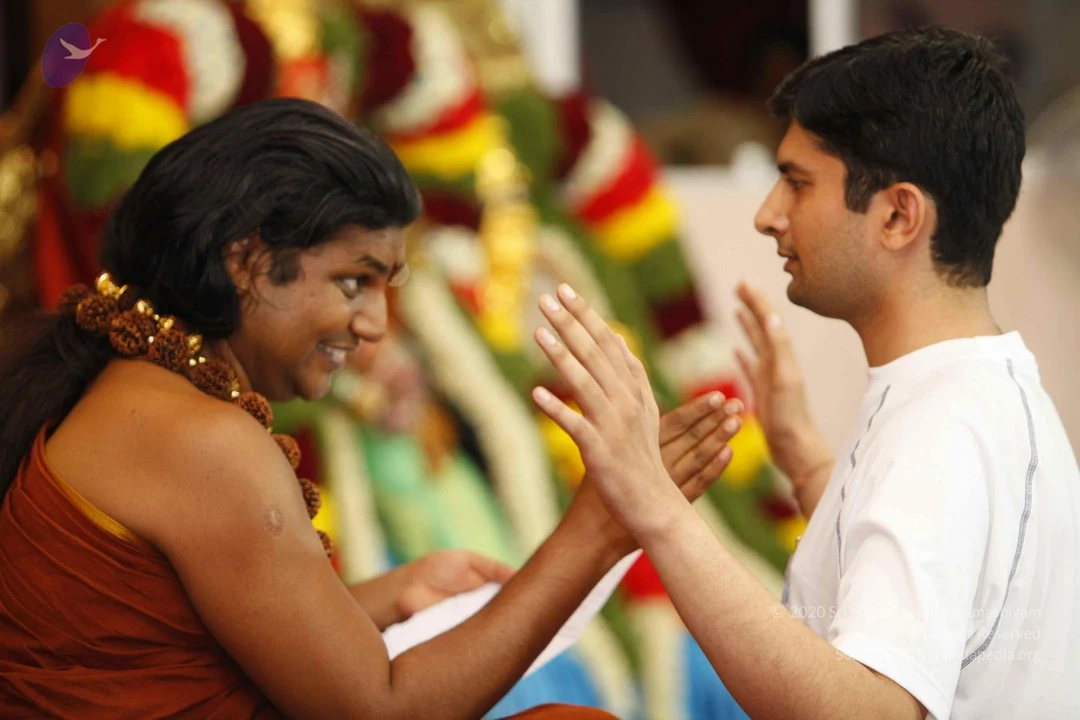
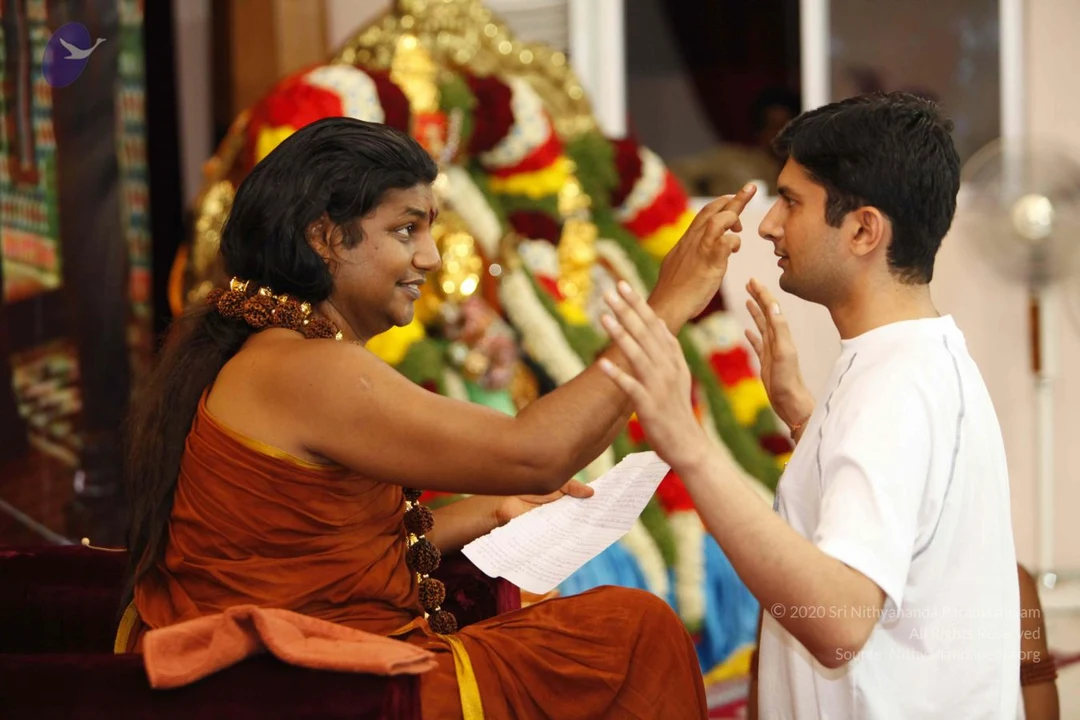
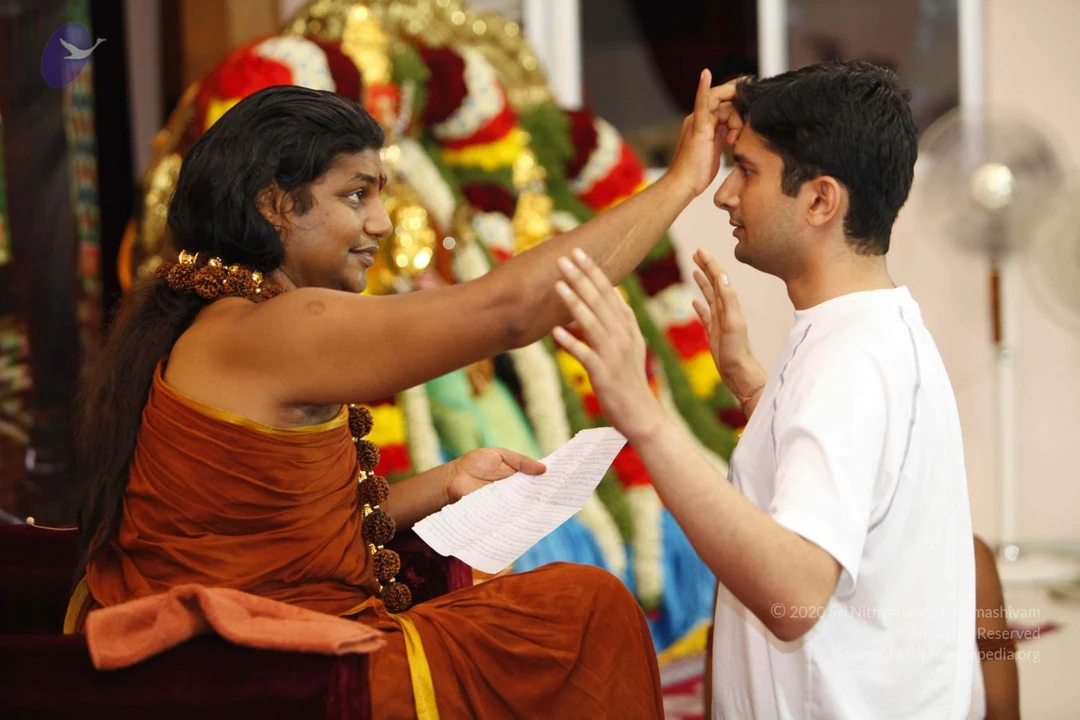
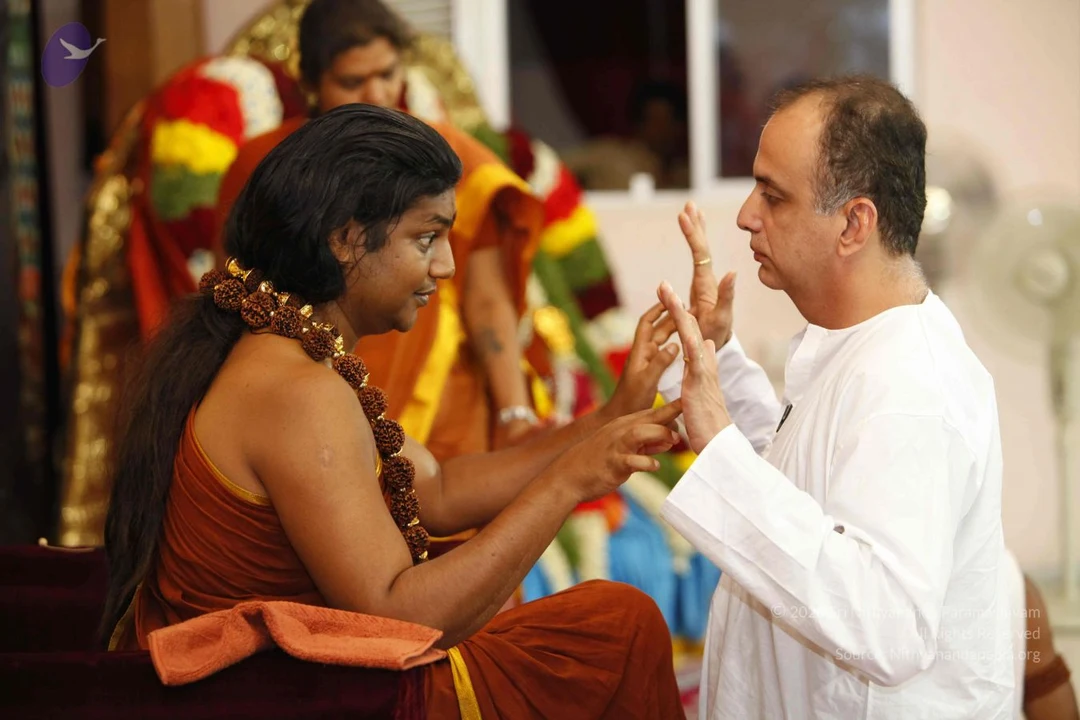
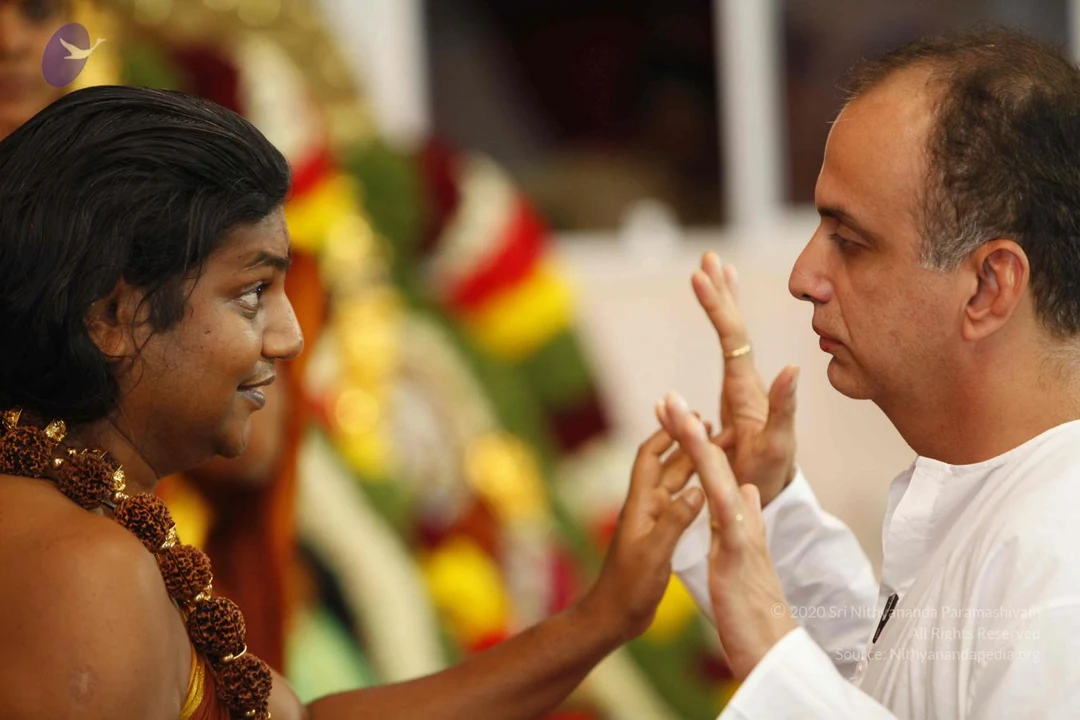
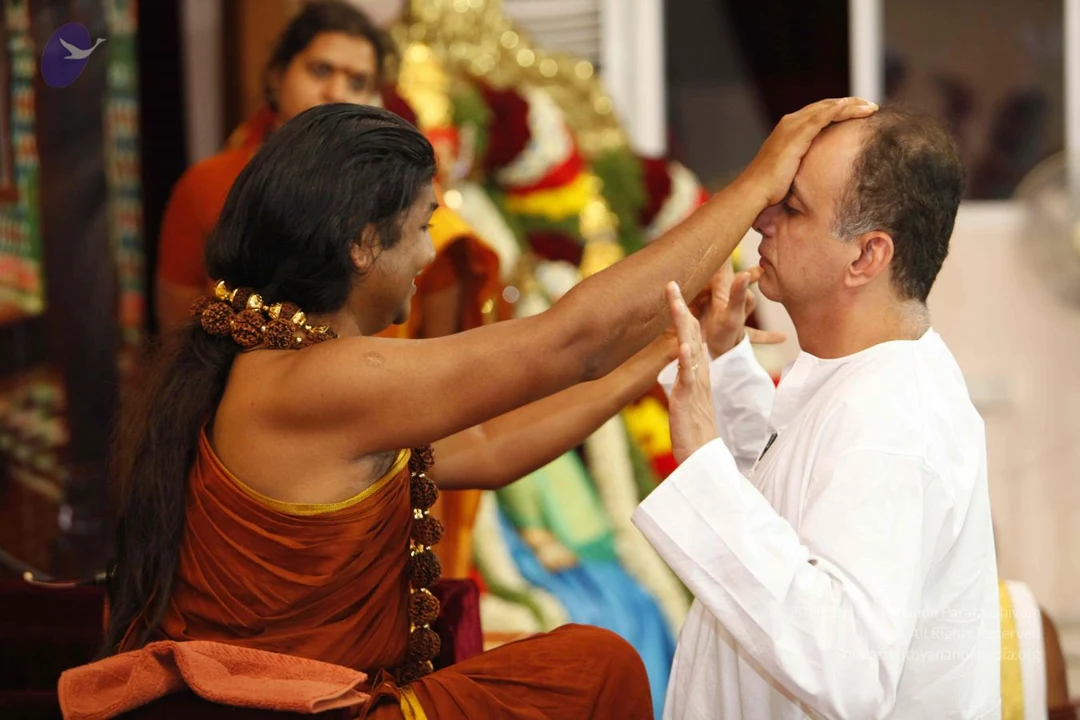
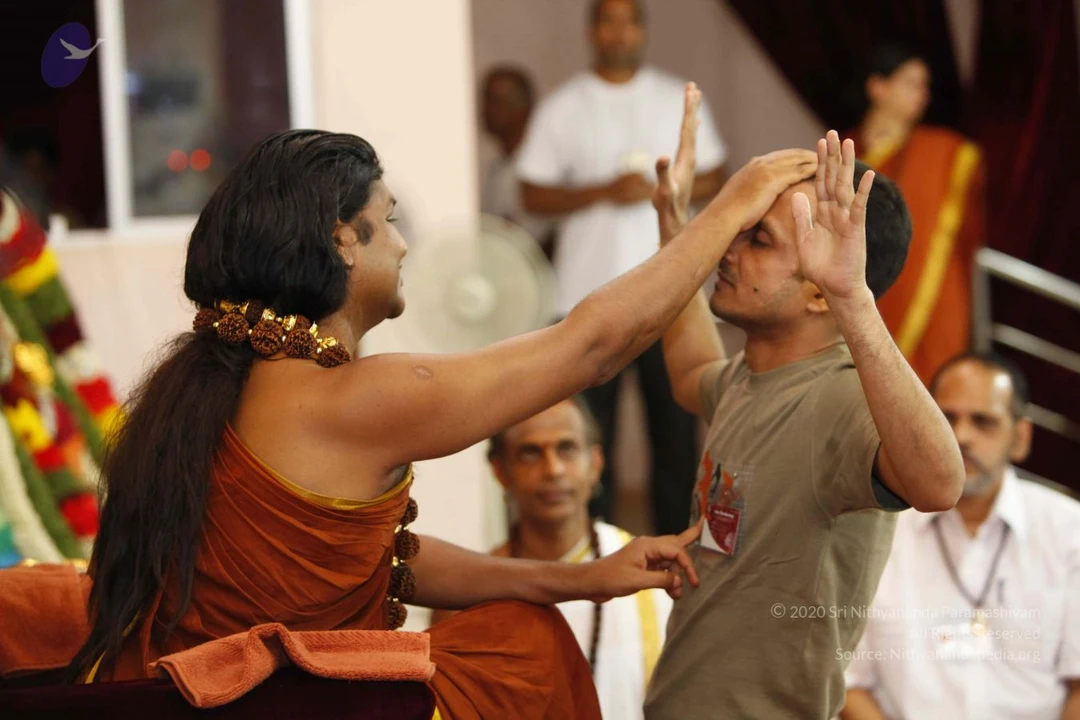
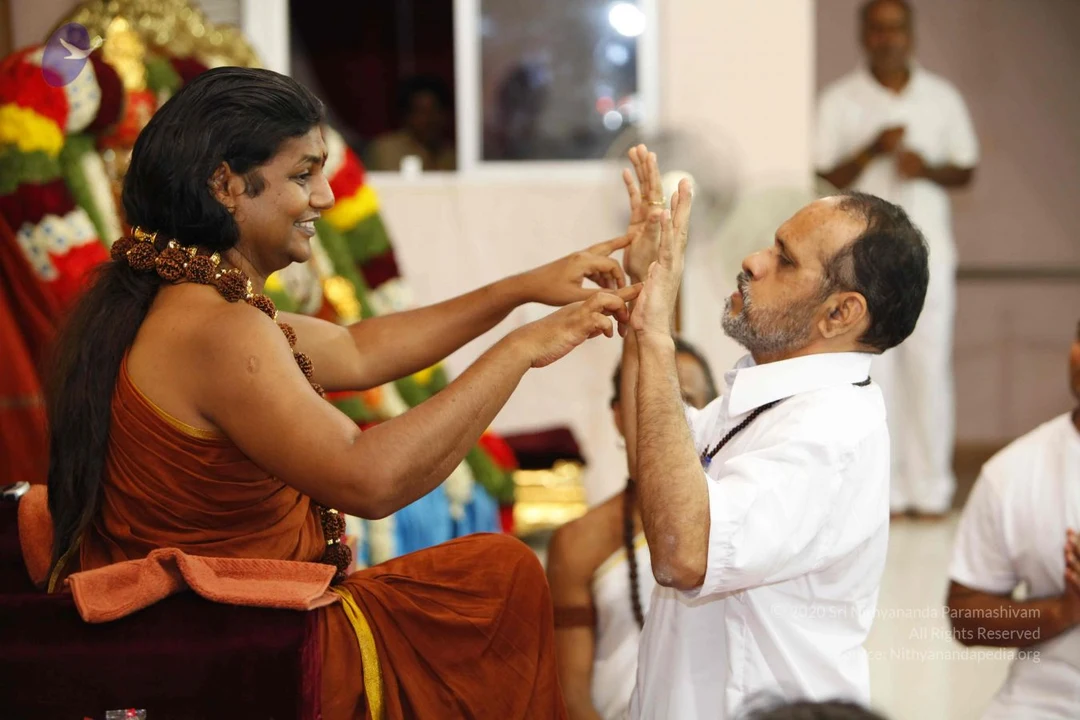
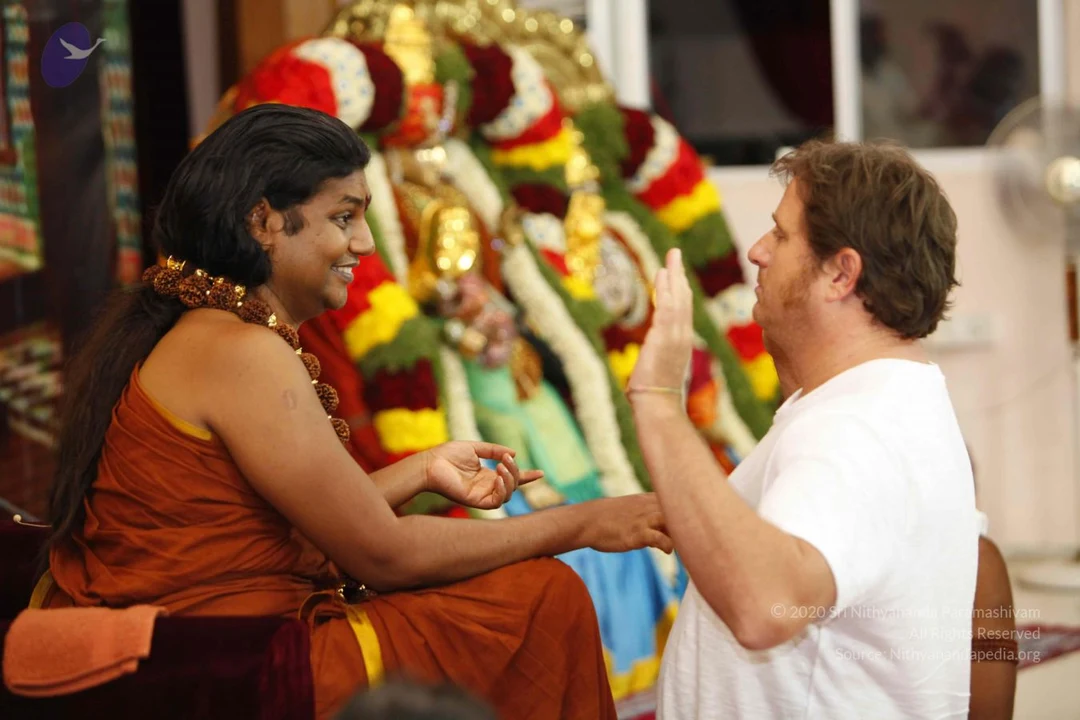
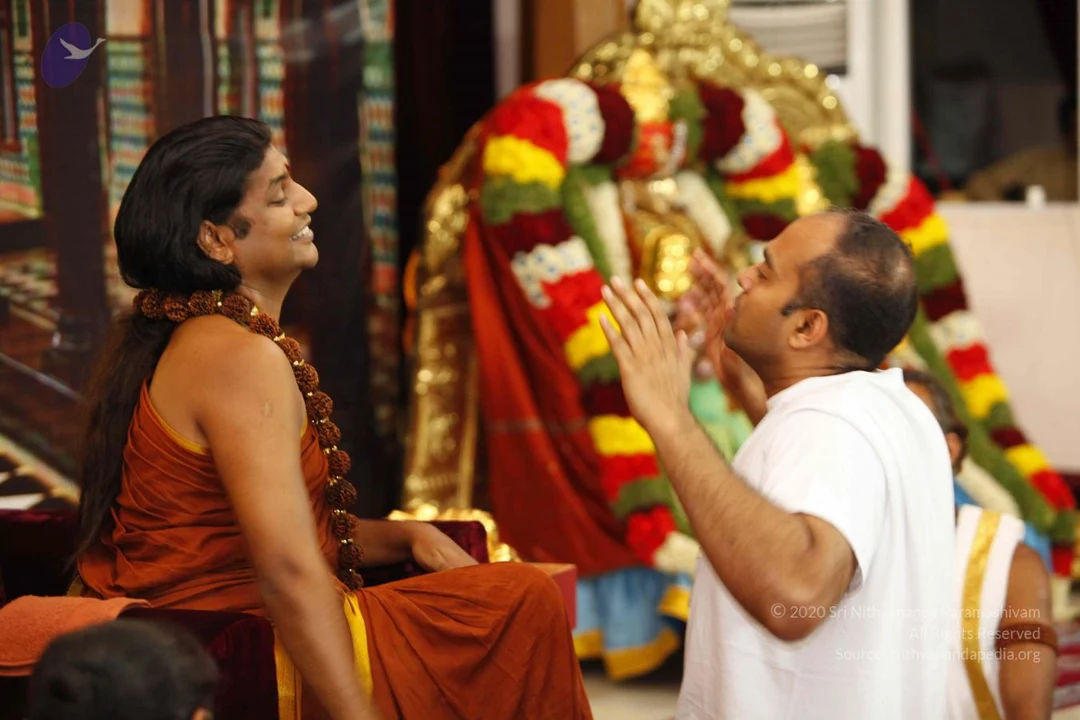
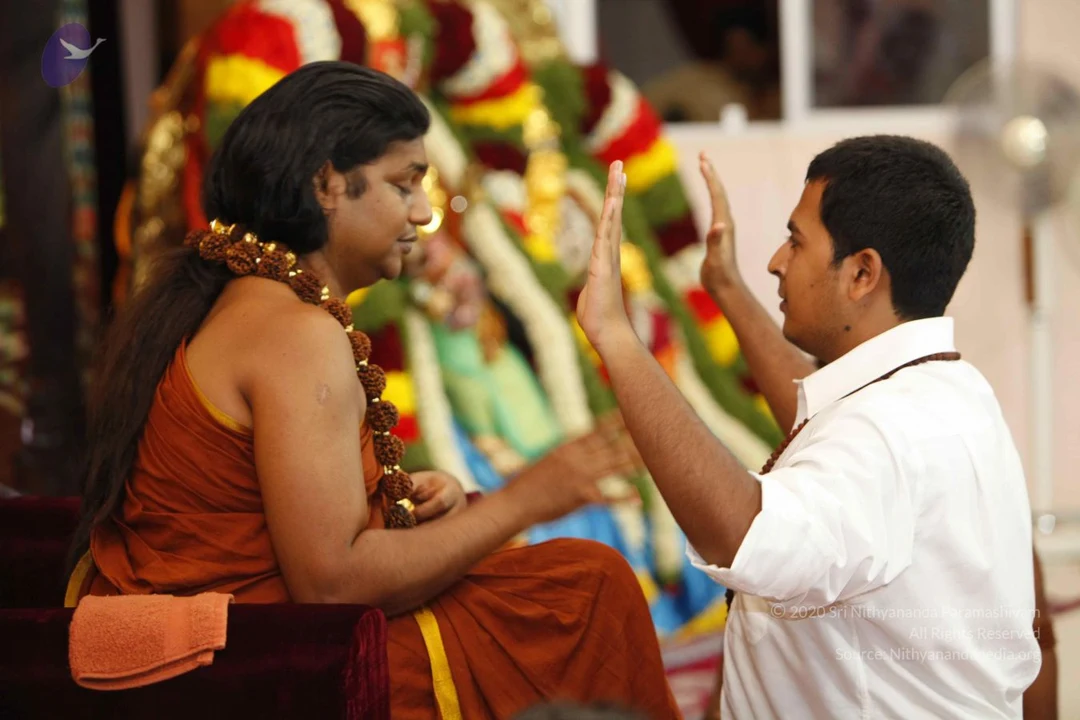
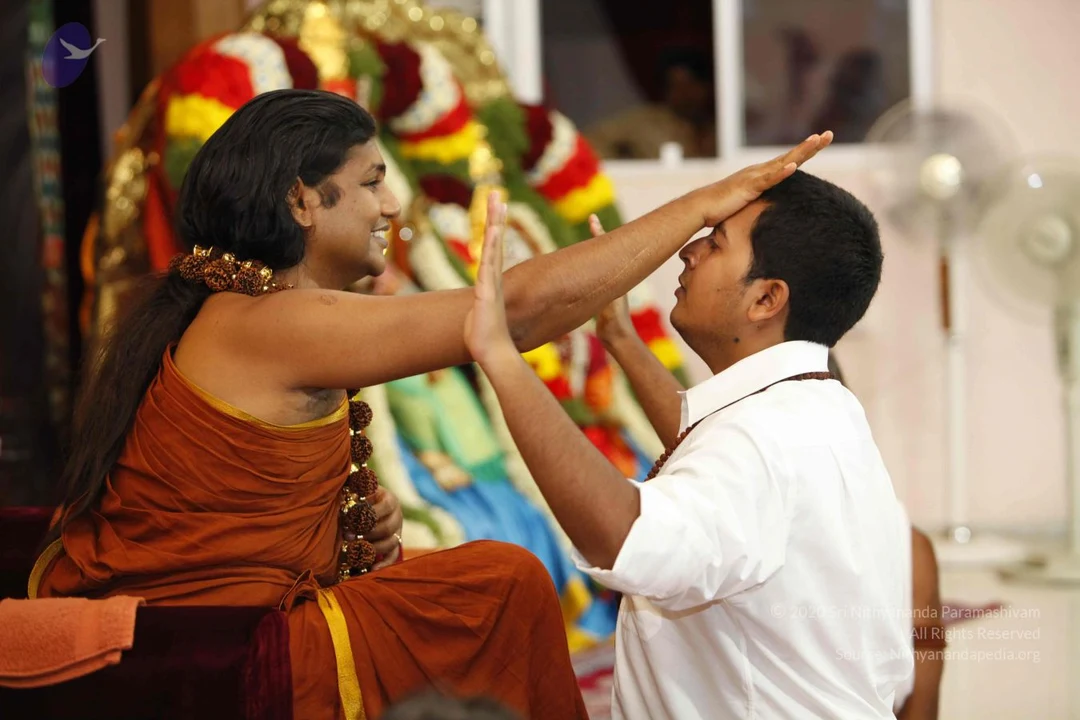
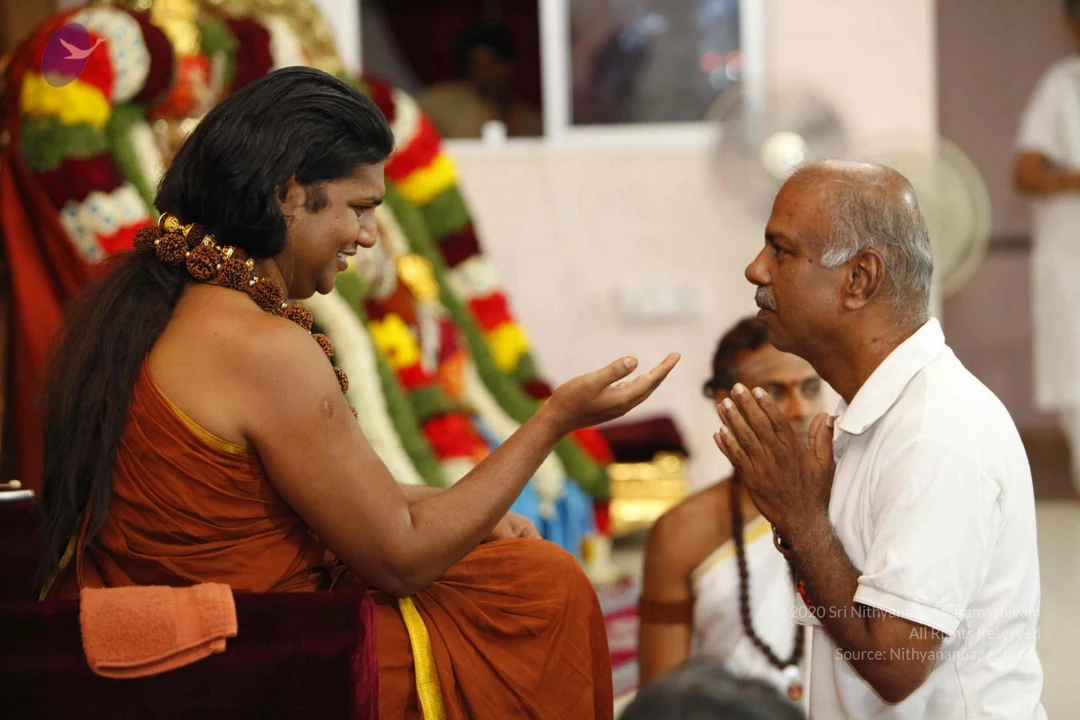
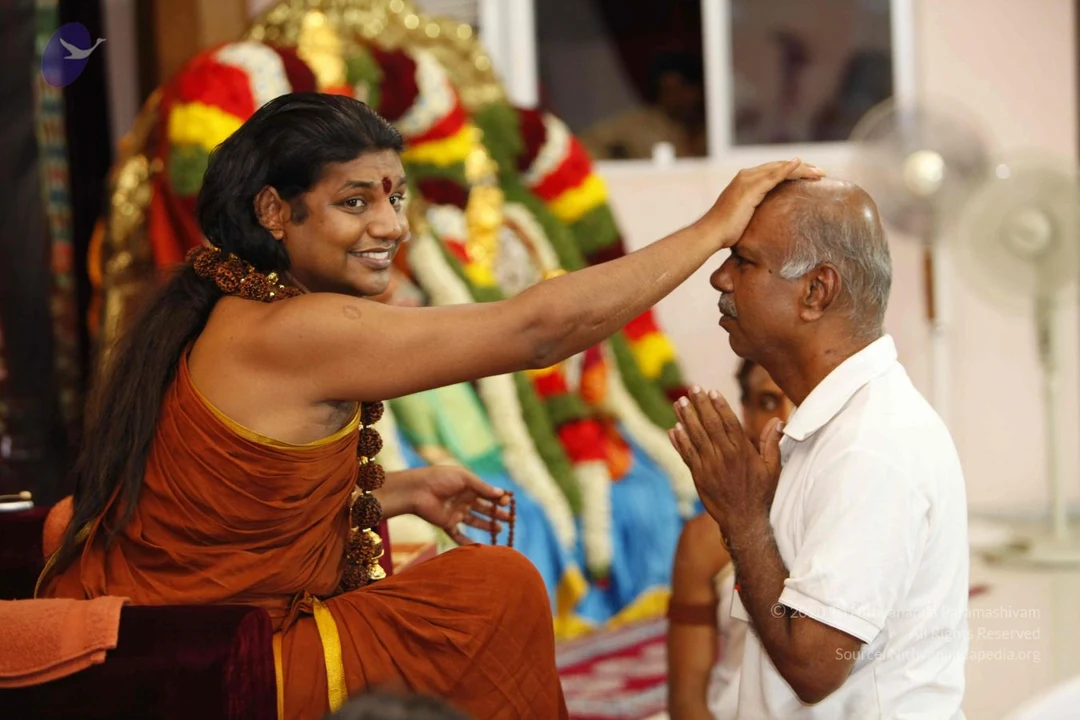
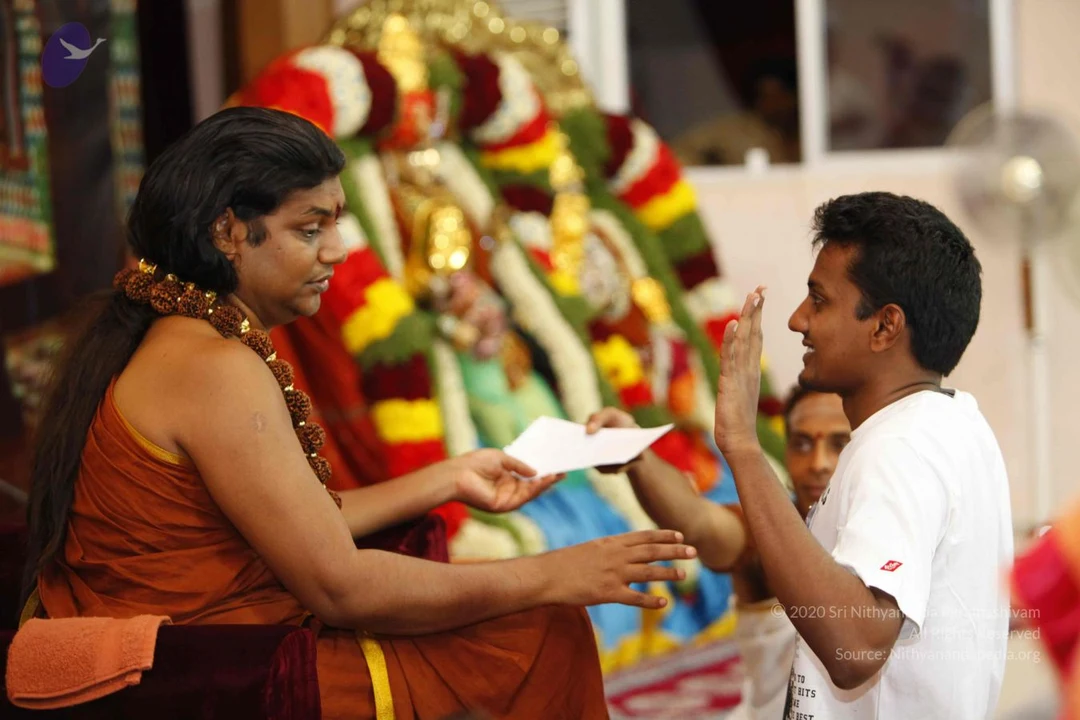
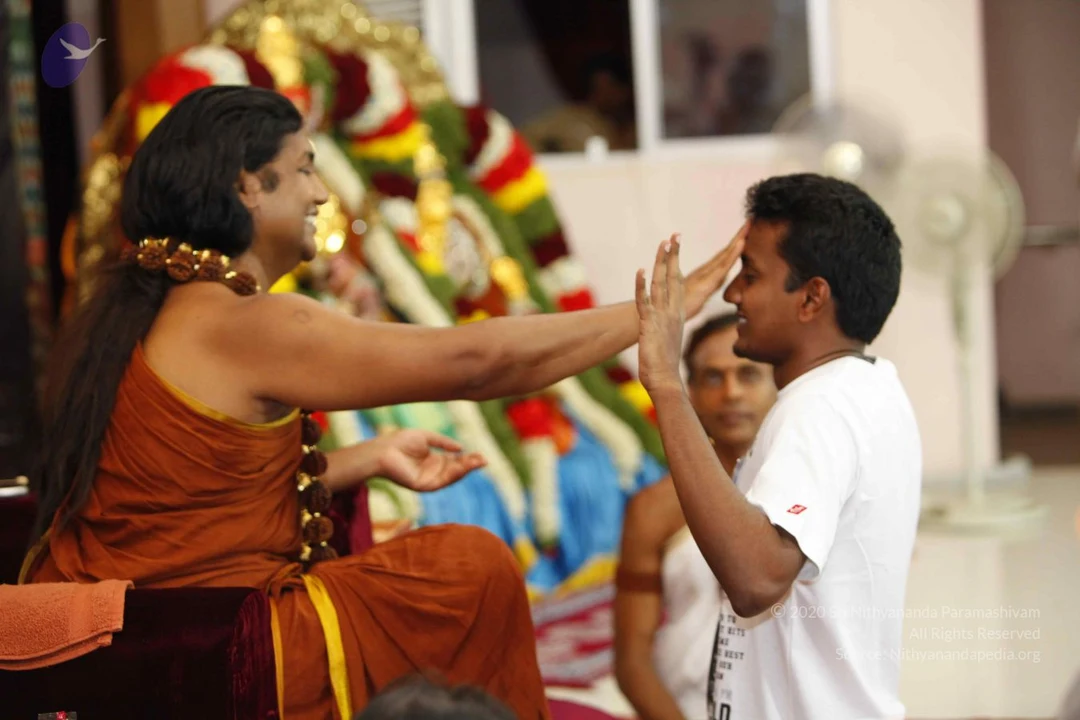
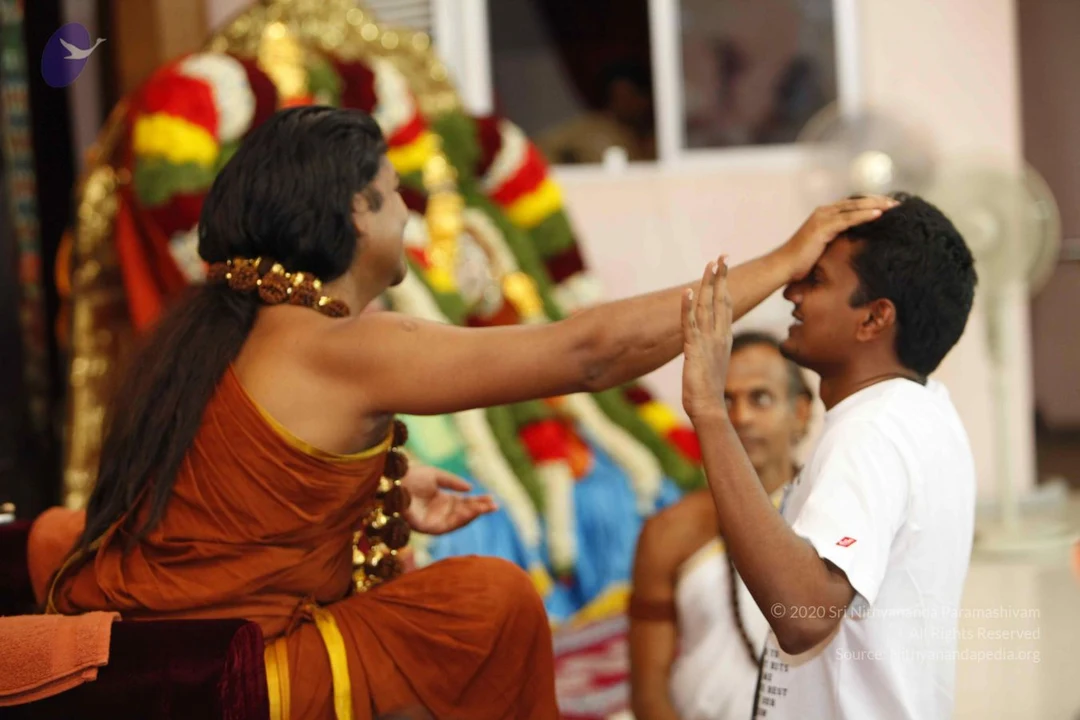
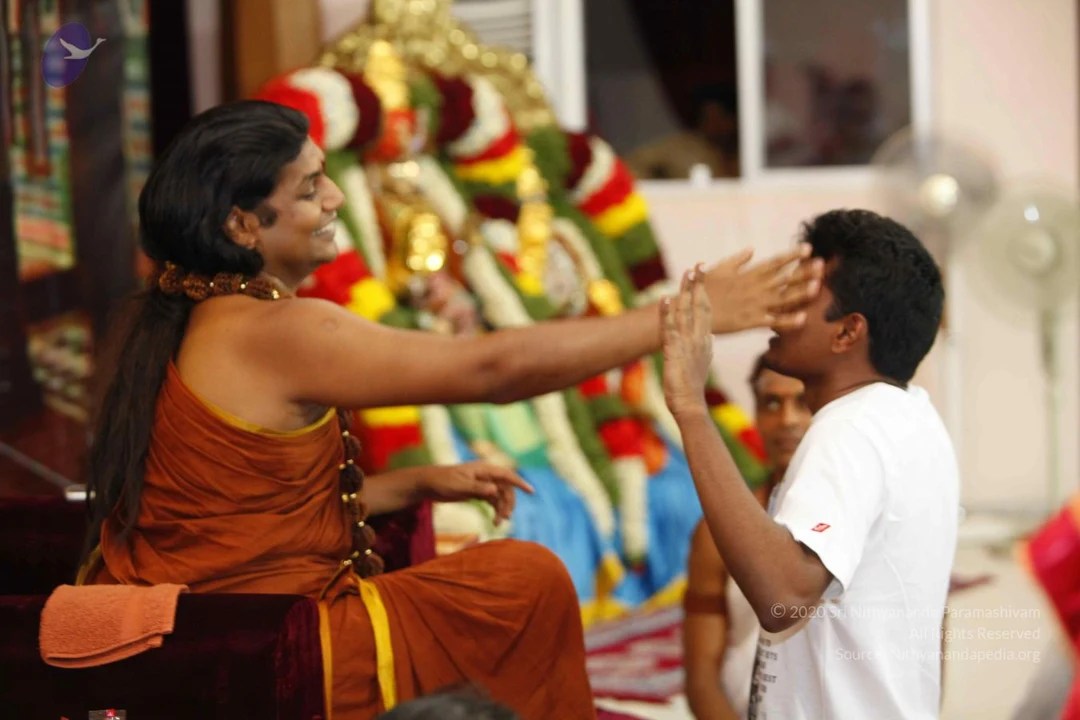
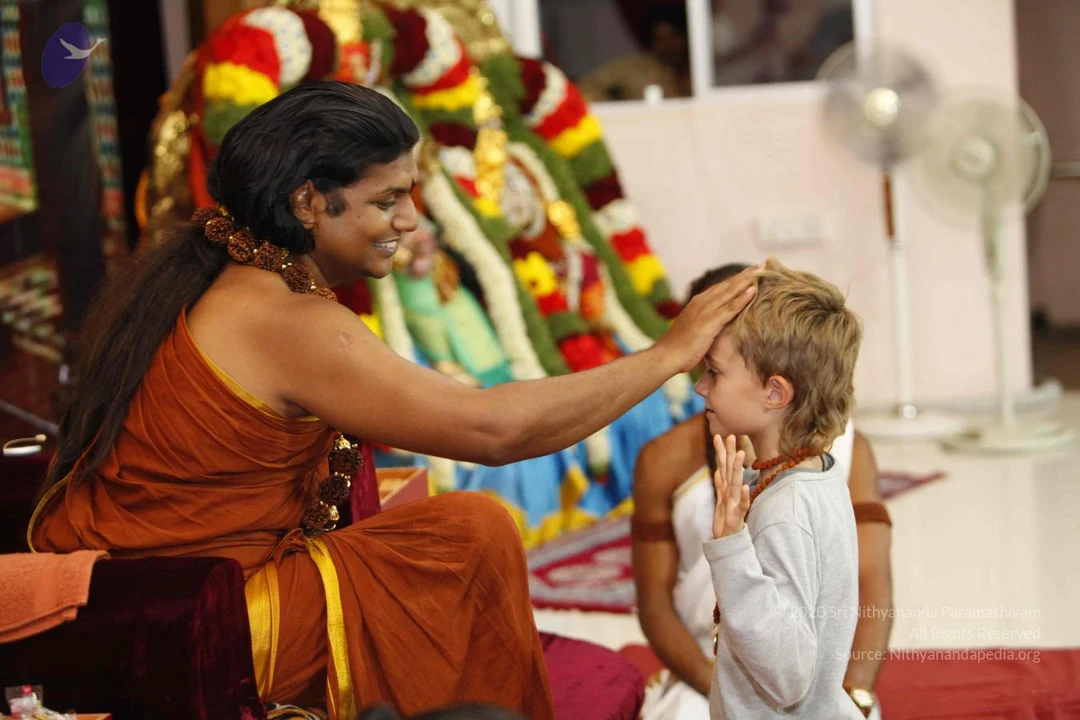
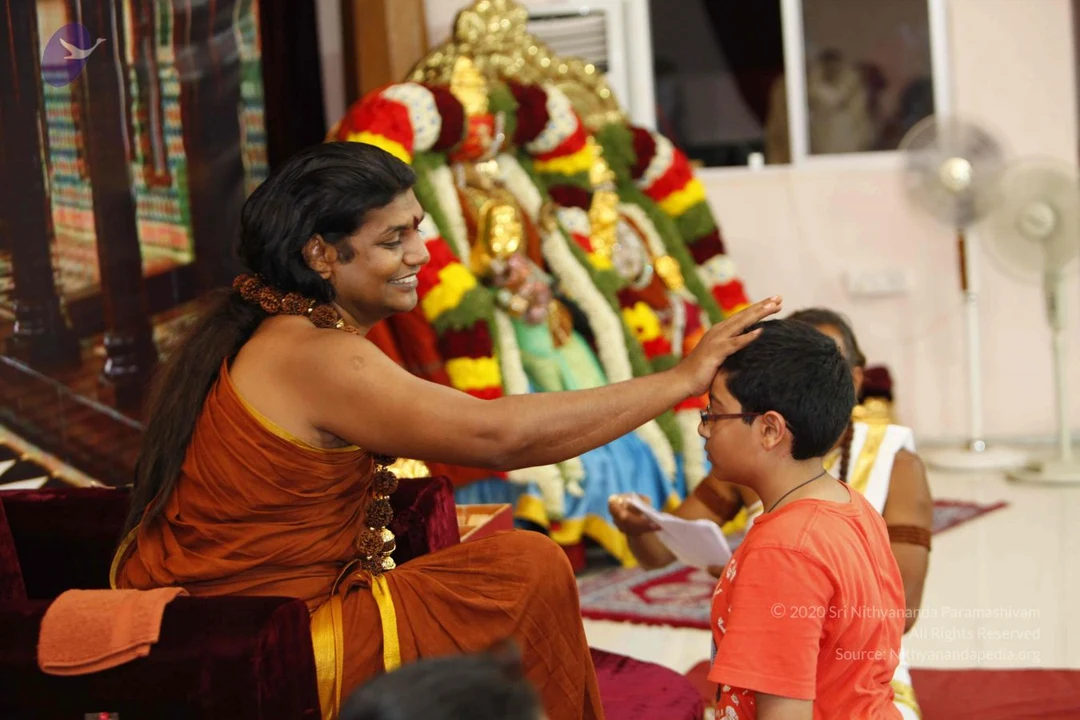
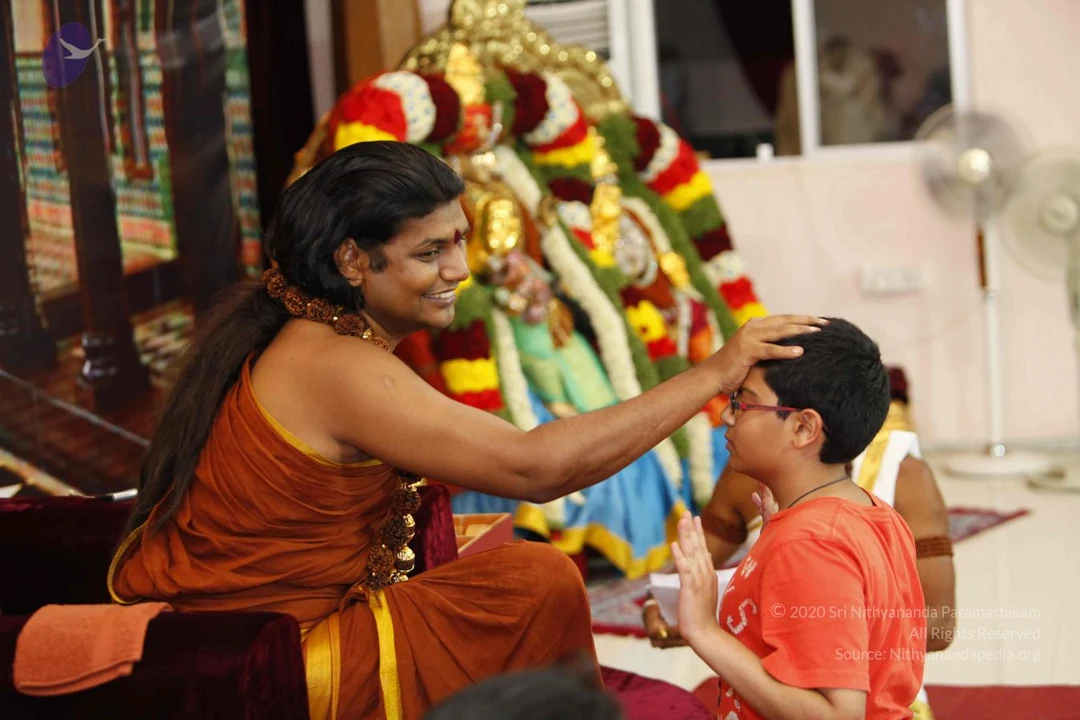
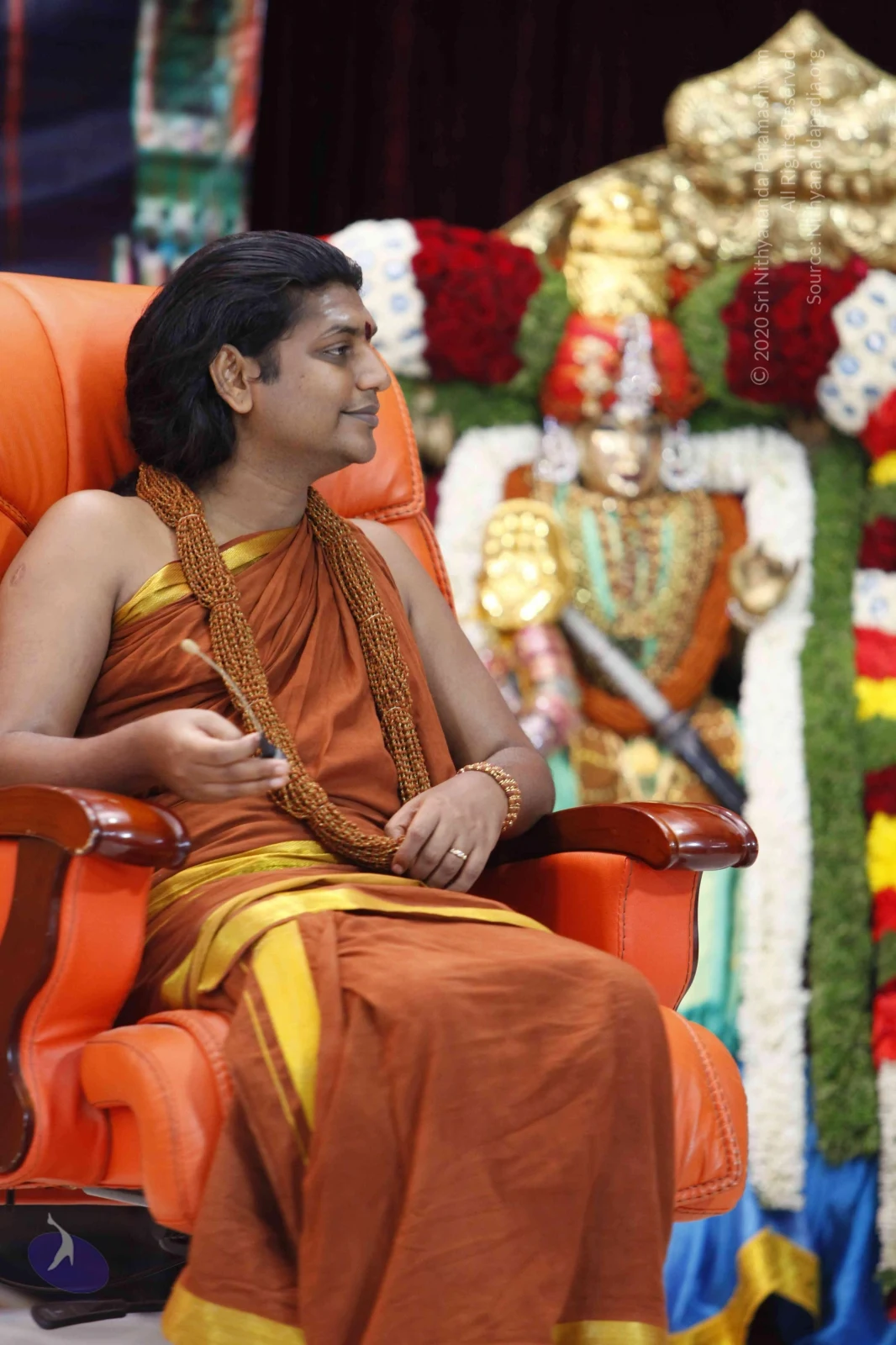
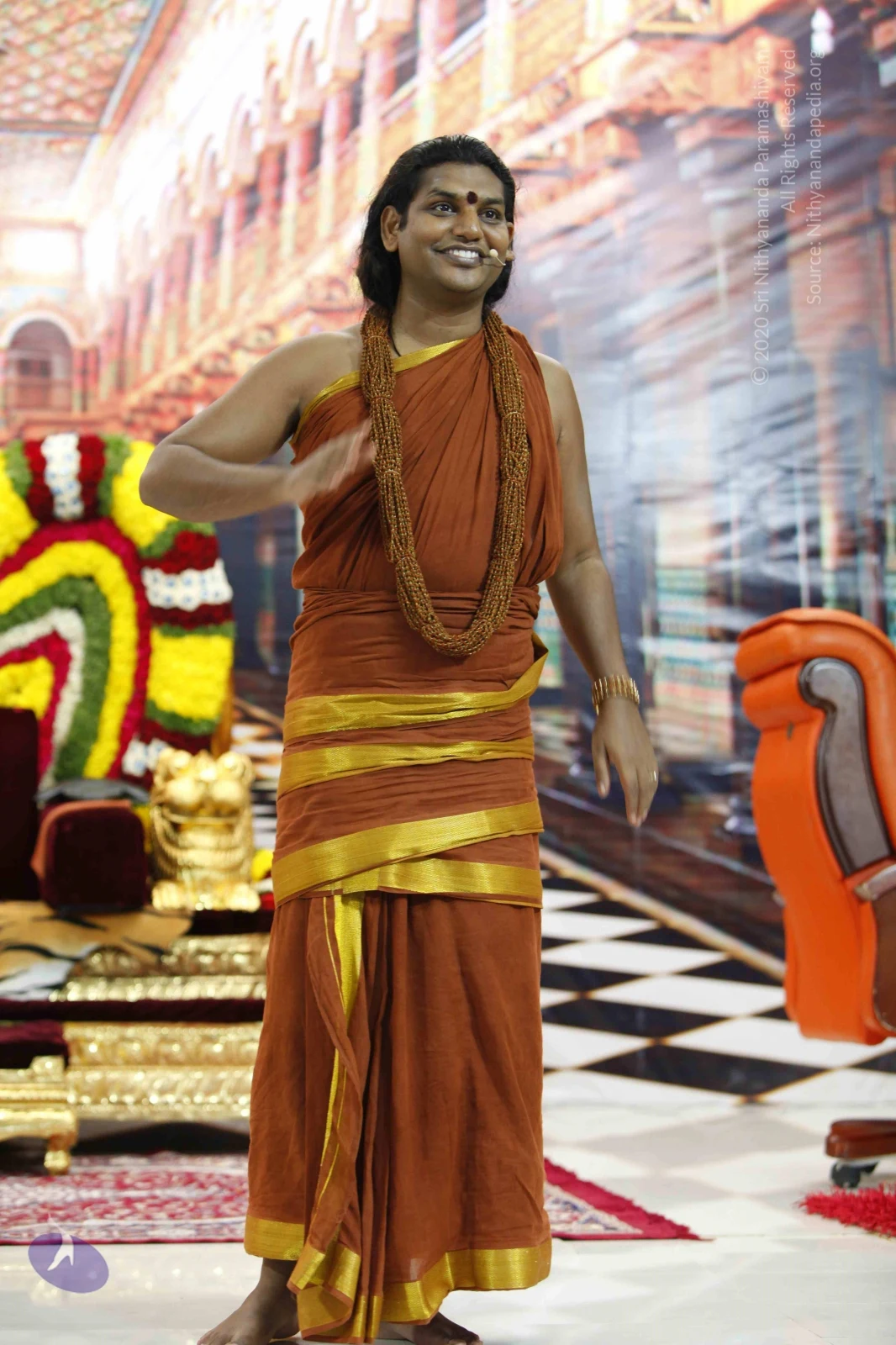
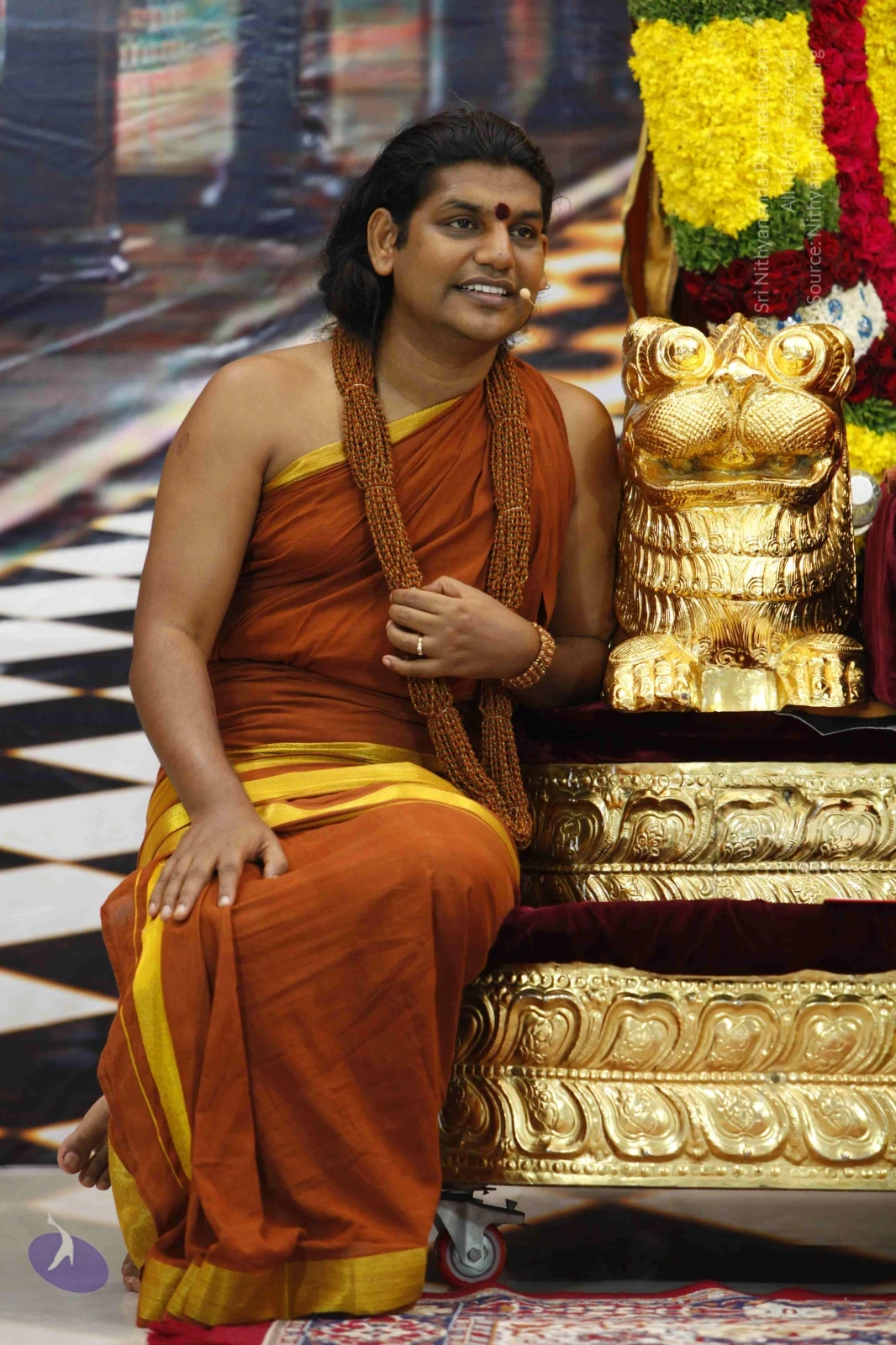
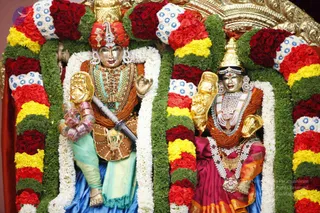
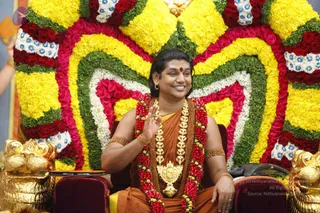
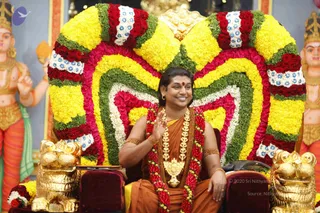
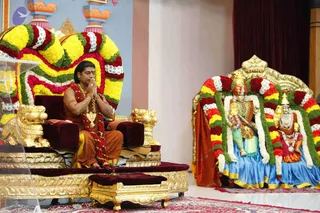
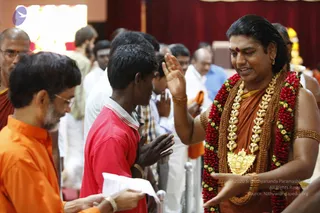
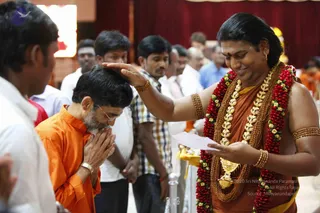
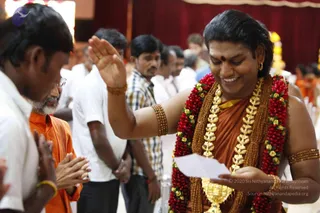
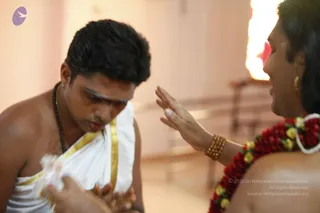
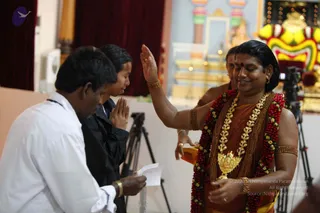
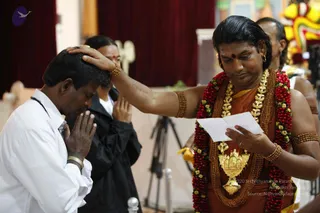
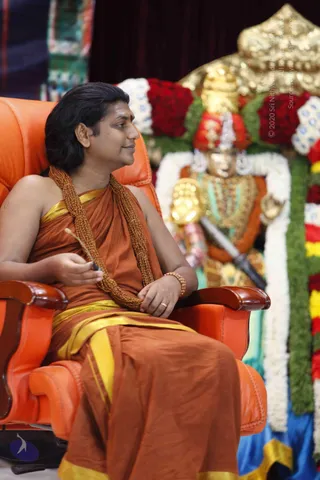
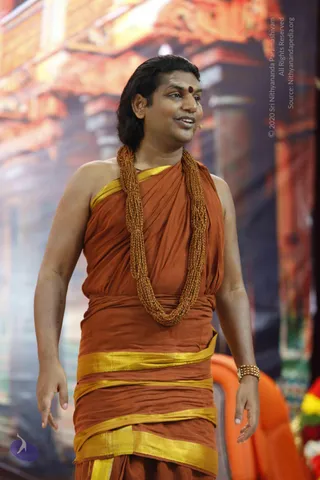
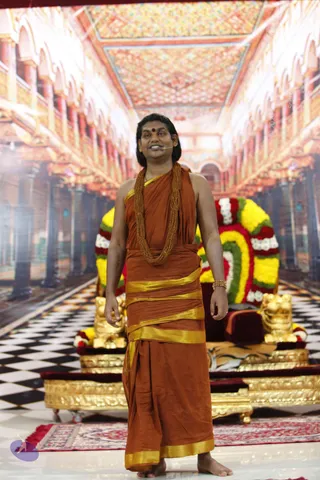
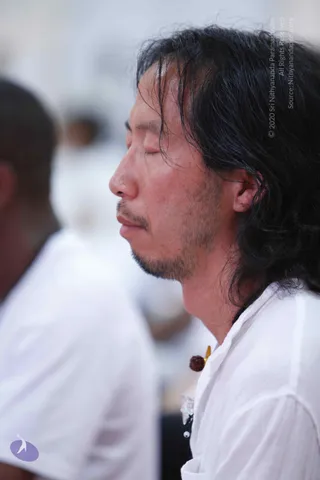
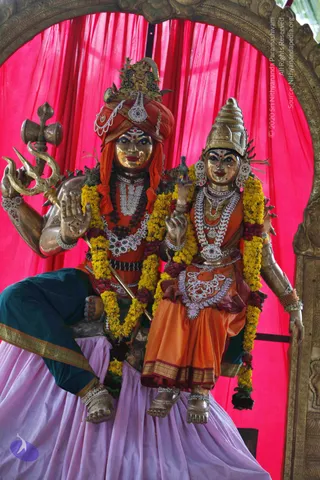
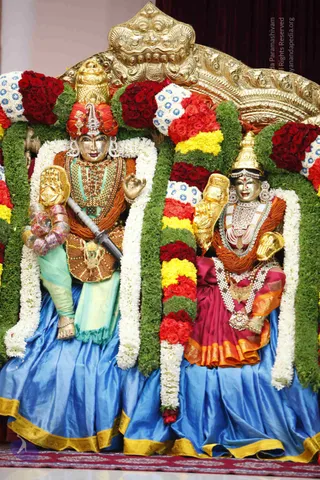
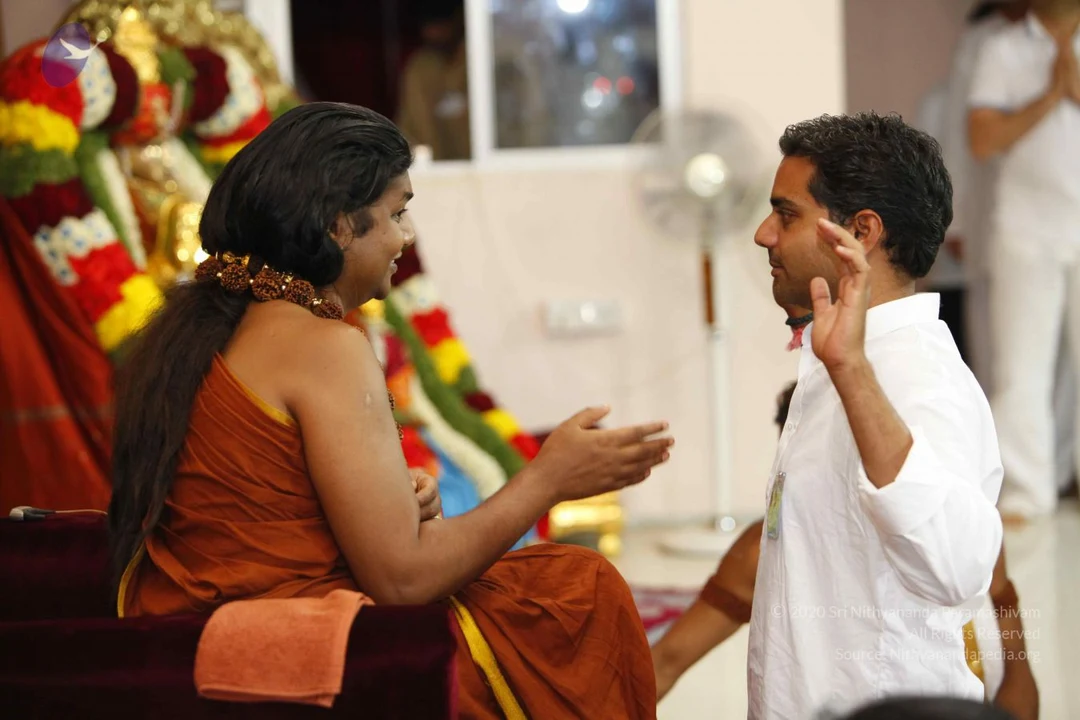
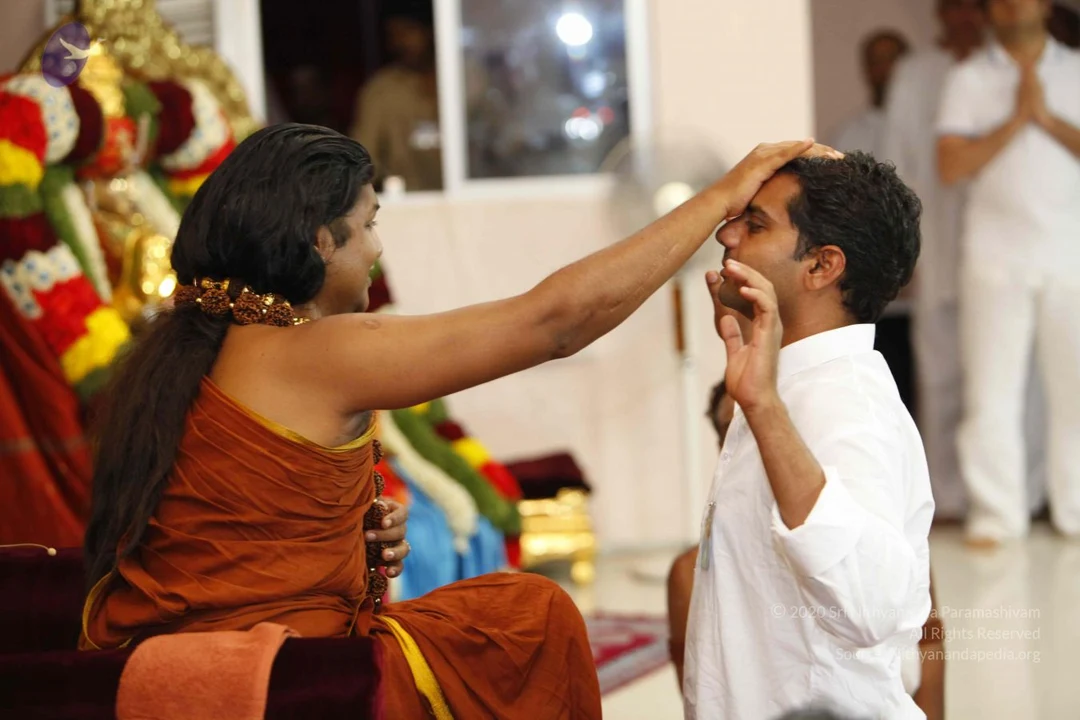
A photograph of two decorated metal or painted murti figures seated on a blue cloth-draped dais, framed by a long arch of red roses, yellow and white flowers and green leaf garlands. The figure on the left is a male deity murti in a red-orange turban and teal lower garment, with a jewelled breastplate and multiple bead necklaces, holding a golden hand-shaped object and a dark rod, with bangles on the forearm. The figure on the right is a female deity murti in a magenta and orange sari with gold crown and necklaces. A gold-framed backdrop and red cloth fill the sides.A photograph of a seated figure in a rust-orange robe with long dark hair pulled back, wearing rudraksha malas and a gold ornament, placing a hand on the forehead of a young man in a white shirt who kneels before them. Behind them is a floral garland of red, yellow and white flowers, and a red cushioned seat. Standing figures in white clothes press their palms together in the background. Swamiji (probable) is the seated figure in orange with rudraksha malas and long hair, giving a blessing to the kneeling devotee.A photo from a satsang where a seated figure with long swept-back dark hair, a rudraksha mala with gold ornaments, and an orange-saffron shawl places his palm on the forehead of a man in a brown t-shirt, who raises his other hand in return. Behind them, a man in a white shirt and another in white with a gold-edged shawl watch, and a woman in an orange sari stands near the back. A towel lies on the seat beside the seated figure, and floral garlands hang at the left edge. Swamiji (probable): the seated figure's long hair, rudraksha mala and saffron shawl are the qualifying cues.

July 03 2013

Original wiki page
Contents

Title

Stability-Quality of High-Achievers

Description:

In today’s morning Satsang, Paramahamsa Nithyananda explains how India still stands as the oldest living civilization on Earth because it has been deeply rooted in stability. The strength of the Vedic tradition is in developing what is best in life and people, carving out what is best from them, and leaving out the unnecessary parts. For example, there was a long standing custom in which sons would take up the same work as their fathers, and begin specializing in that area at a young age. Generations would work as carvers, artists, priests and so on, perfecting their craft or profession over the decades. But now, this tradition is in danger of being destroyed because of the pseudo western ideas about freedom and stability which have penetrated modern Indian society, causing degradation in the structure and lifestyle of the Vedic Tradition.

VideoAudio

Transcript:

0:18

I welcome you all with my love and respects.

I will move to Nithya Satsangh.

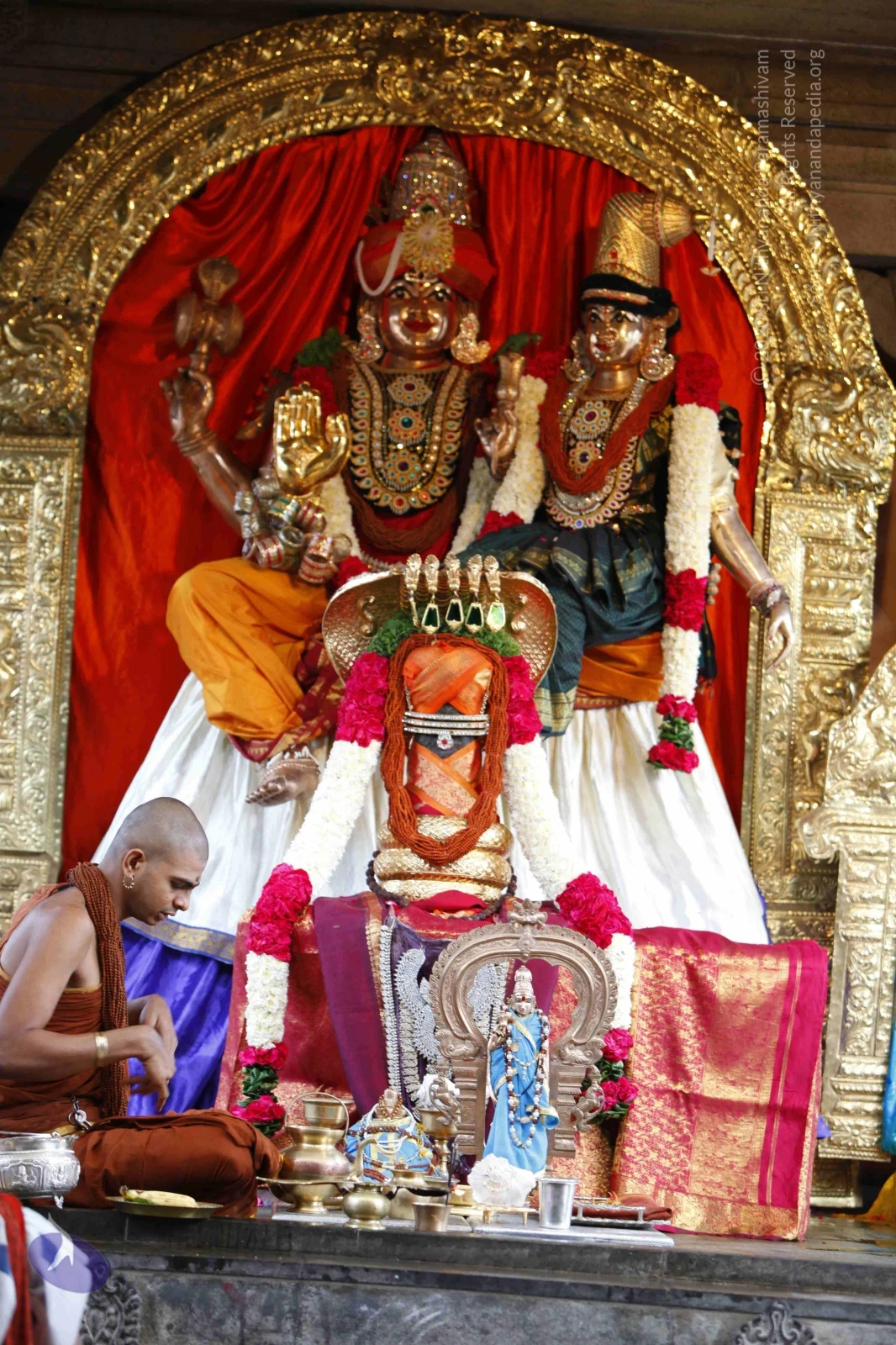
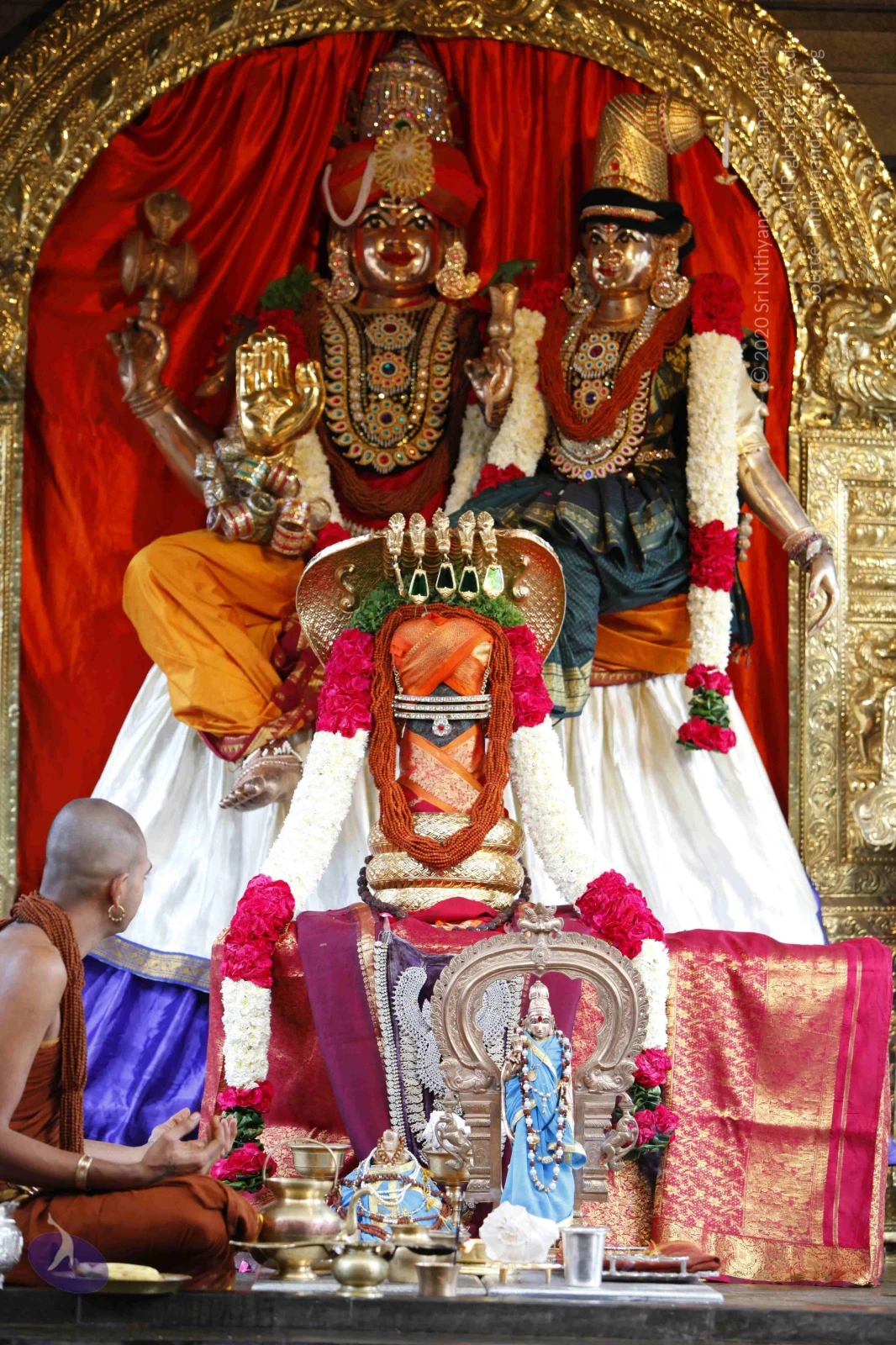
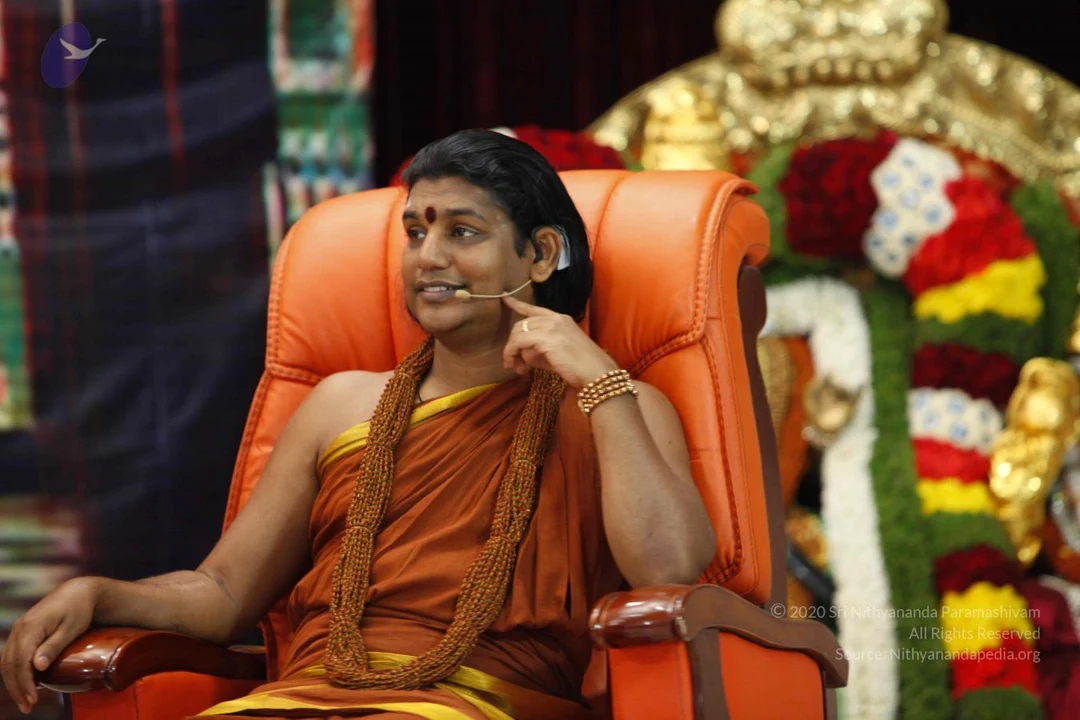
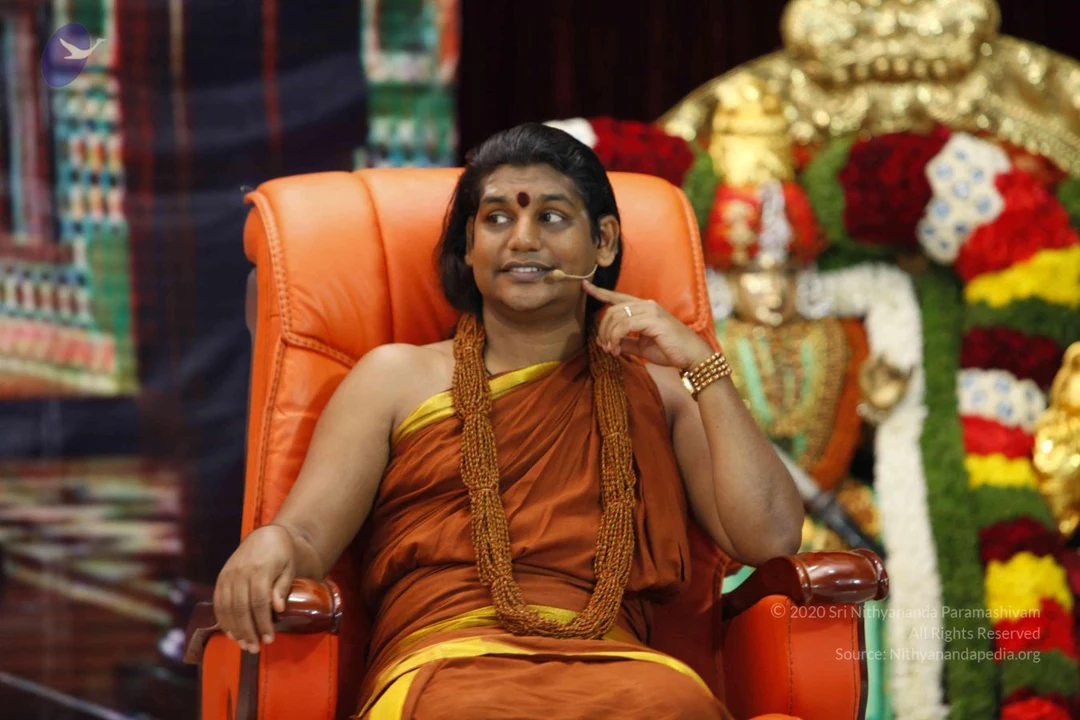
Today, Mahadeva is gracing us as a bangle vendor. ‘Valaiyal Vitra Leelai’. As a bangle vendor he is gracing us. If he sells the bangle, who will not want to buy? This bangle vendor is a very tricky job. I will tell you the story of leela, then you will understand.

Shiva once went to Taraka Vana. Taraka Vana is one of the oldest religious universities. Those Rishis, Professors, they became very egoistic; thinking that their knowledge is the ultimate, nothing more is there. So Mahadeva went as a beggar, bhikshadana. Seeing his grace and beauty, all the Rishi pathnis have started going behind him. And all these Rishis lost completely their face and the manly ego completely got destroyed. The manly ego completely got destroyed.

And the women, they ran behind Mahadeva such a way, melting in his love, and unable to tolerate the distance between him and them. The story says even literally, physically, they started losing weight and all the bangles dropped from their hands and the mekhala – the hip belt – dropped, because they have started becoming so lean, missing Mahadeva.

So, seeing this, all Rishis got very angry and declared all their wives have lost chastity. And the Rishis cursed their wives saying that, ‘You guys will be born in a merchant community in Madurai.’

And Rishi Pathnis said, ‘Alright, you do what you want. We will ask Mahadeva for remedy.’

Mahadeva says, ‘Alright, ask the same fellows who gave the curse.’

And Mahadeva revealed his identity, and ordered the Taraka Vana Rishis to give the remedy.

The Rishis said, ‘Alright, Shiva himself will come and put the bangles again for you guys. Then you will be liberated from the curse and come back.’

So, Mahadeva comes down as a bangle vendor and in the name of selling bangles and seeing the size, he puts the bangle for all those Rishi Pathnis who have come down due to the curse of the Rishis. Sundareshwara releases them from the curse. So, by the touch of Mahadeva, all those women, Rishi pathnis, got liberated and went back to their original space.

This is the thirty-second leela of Mahadeva in that sixty-four. What all he has to do to liberate people. He has to even sell energy beads to liberate people. Sometime people call him business man. That is okay. He has to do what he has to do for which he has to do.

4:54

Let’s move to the next segment of the morning satsang.

Today’s subject for Nithya Satsang, I will expand on some of the basic principles of Mamakaara, Ahankaara, Anyakaara, and through this I will expand the subject, ‘STABILITY’, because I gave a word yesterday I will speak on ‘Stability’.

Please understand. Now I am talking very important subject, and very sensitive subject. So I request you to move to the space of listening. Move to the space of listening.

Why the Indian civilization is still alive even after thousands and thousands of years? Why the other civilizations like Greek, Egypt have died? And many other civilizations - African civilization and all, they die and get created again.

All of you need to know non-controversially this one truth is accepted by all historians: Indian civilization is the oldest civilization. No doubt about it. To create the oldest civilization, to discover so many new things and offer it to society, something takes. What is that it takes? Listen. What is that it takes? Not because I am born and brought up in India; I am telling you the straightforward, simple facts.

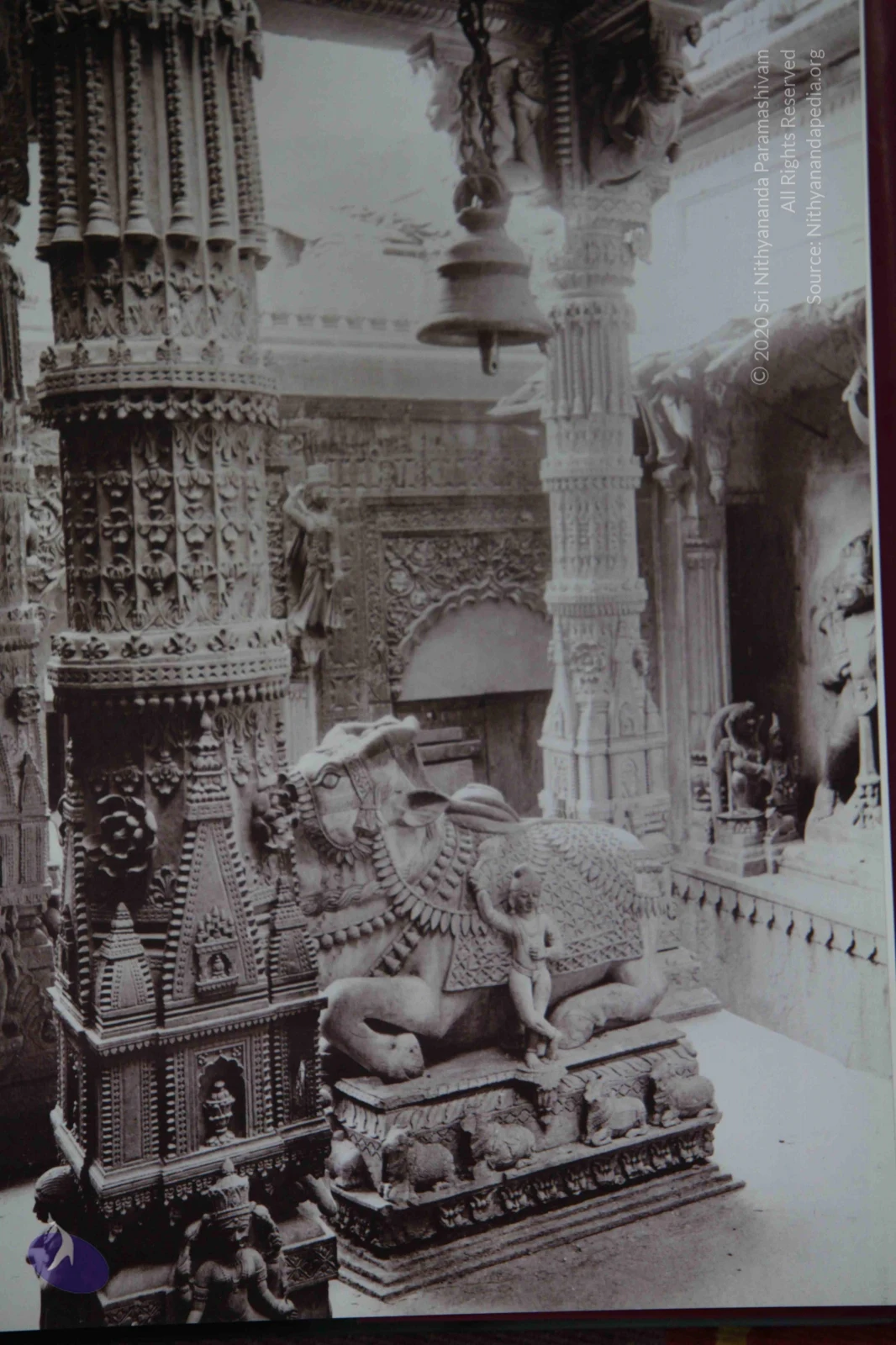
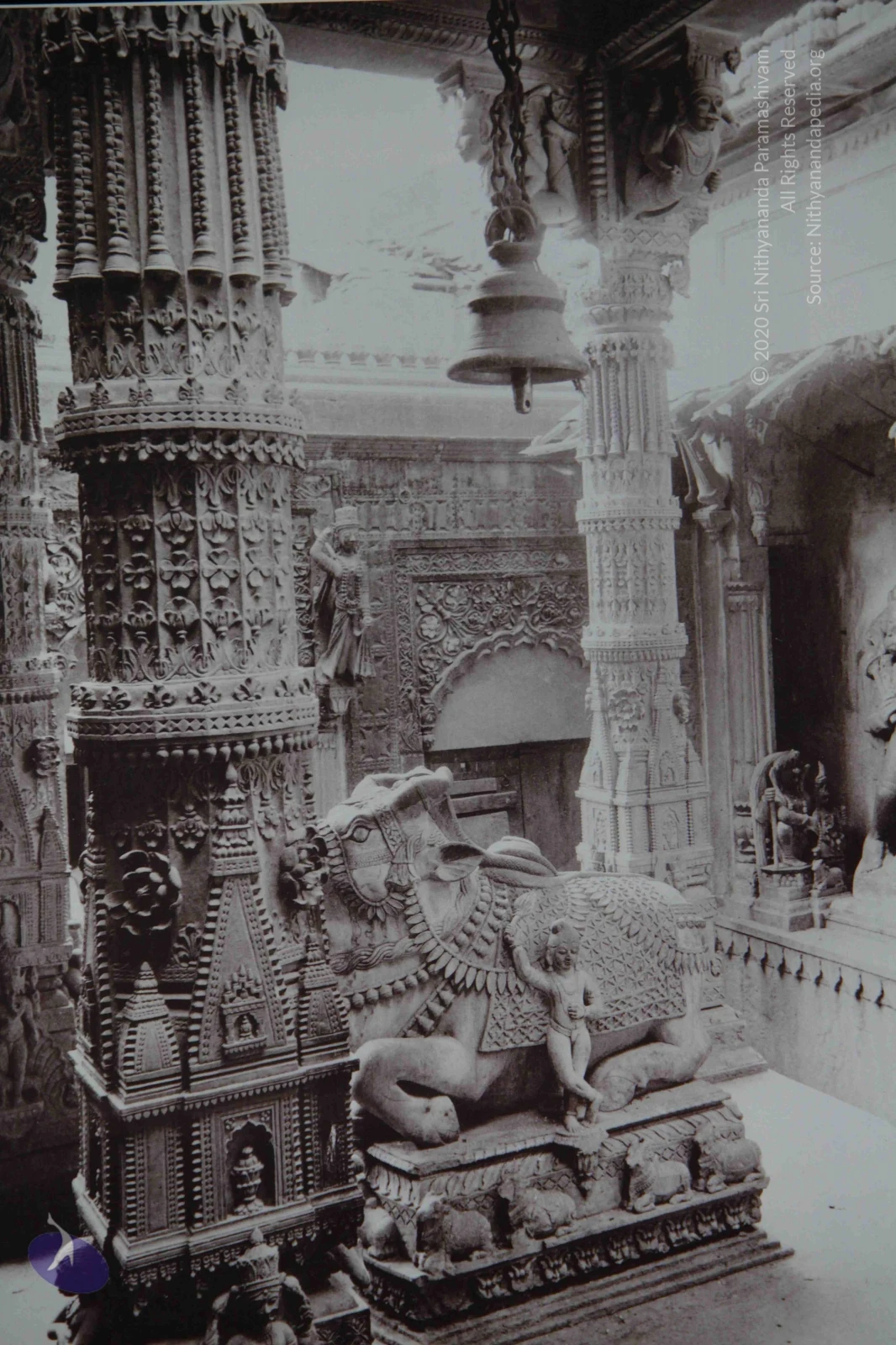
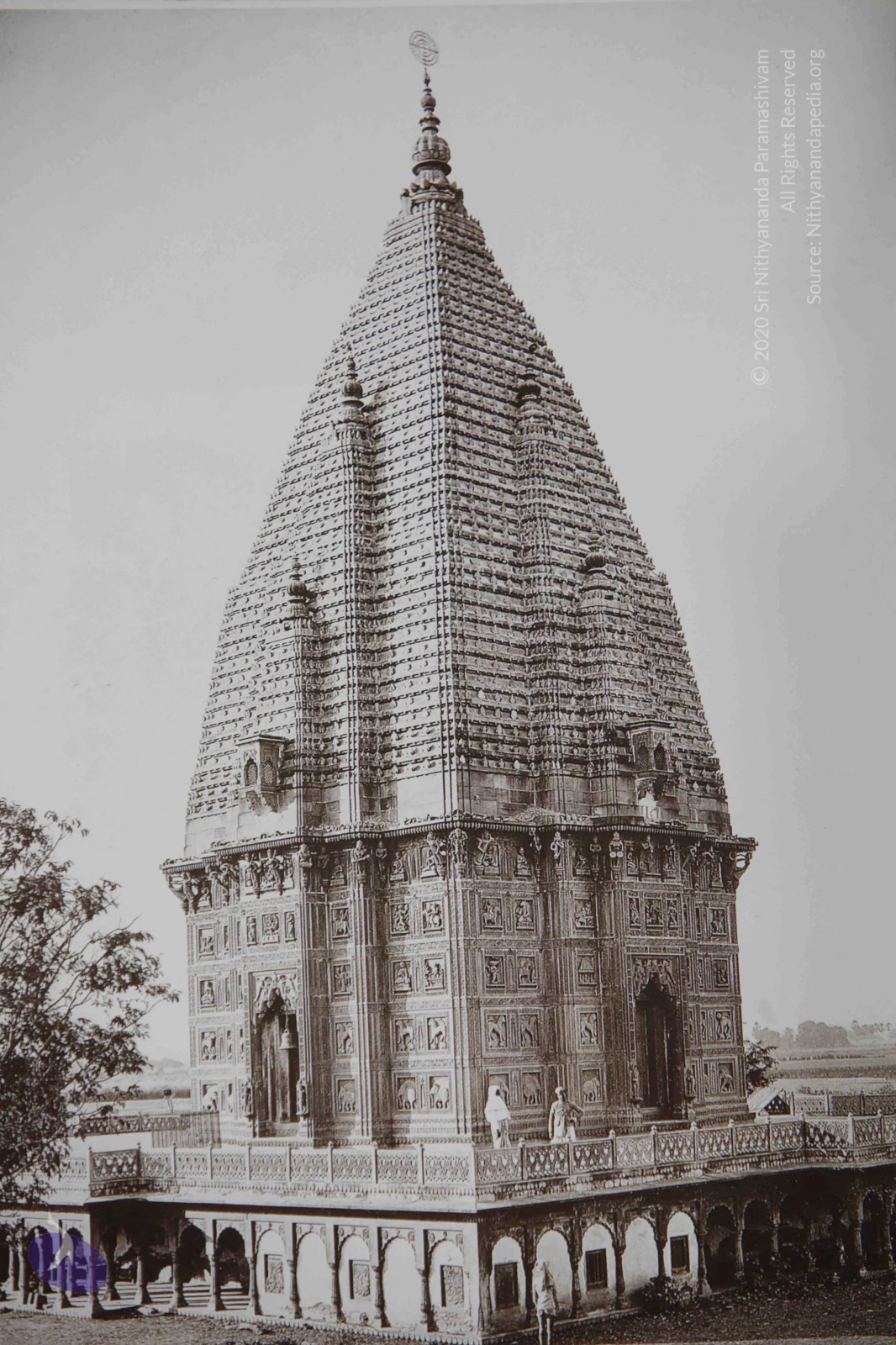
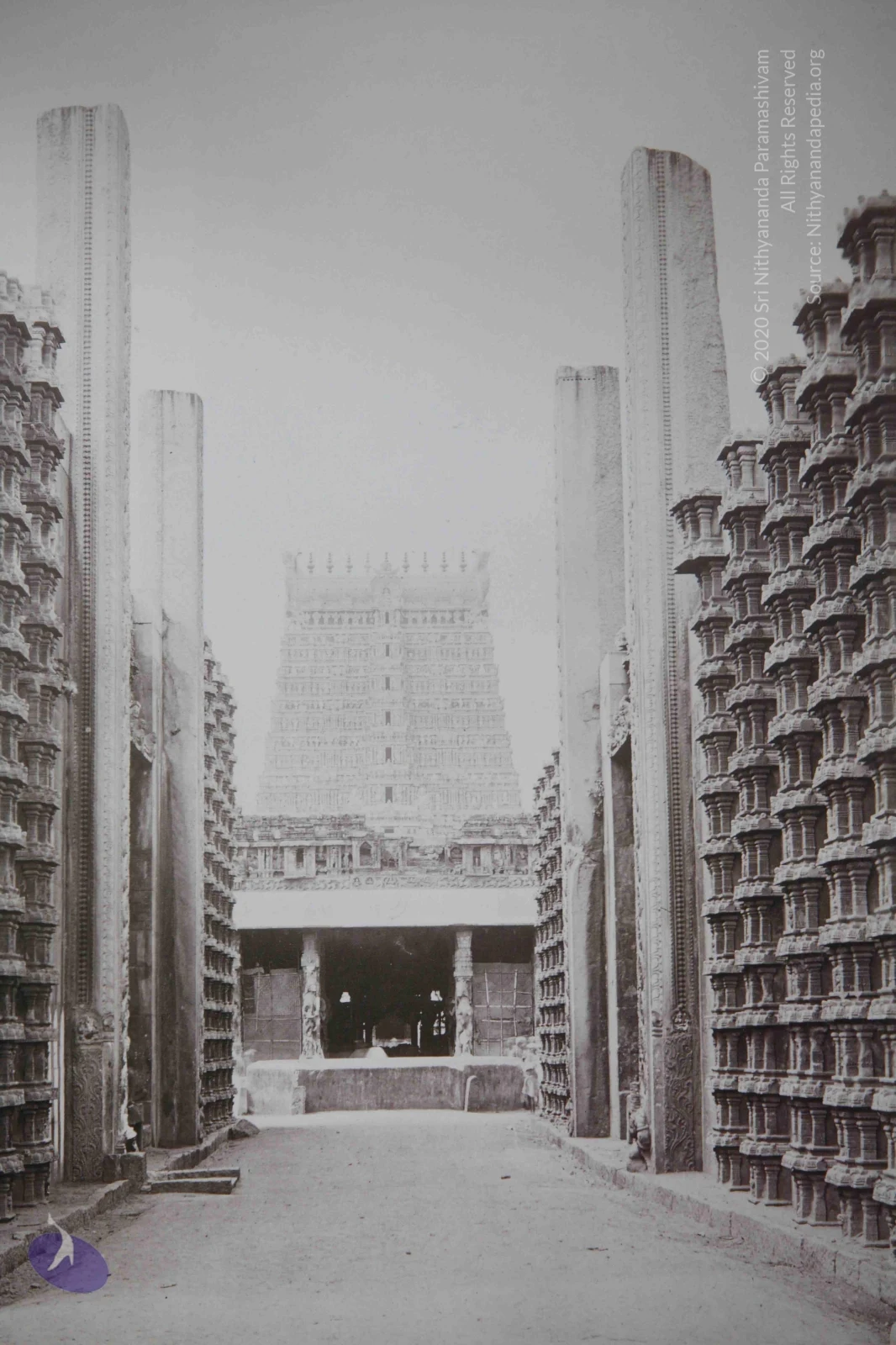
When British invaded India, India was the world’s richest country. I can give you the list of, list and list, tons and tons of material. Till 287 years before, Thanjavur Temple was the tallest building in the world. Understand, for almost 703 years, unbroken record. Even now, that is the tallest granite building in the world. Understand, tallest granite building; completely built out of granite. Largest granite building even now in the world is Tanjore Temple which is built when there was no machineries. Literally hand carved; on the whole structure, every inch, the hands of the artisans have played. They used the tools which can be held by hands. No large-sized machineries, no automated tools, no MNC machineries.

9:06

I was planning somehow I wanted to build like that one granite tower. No, don’t clap, don’t clap. I wanted to build, but the sthaapathis have finally given, it will take 1,200 crore to build now with all the machineries, and they are saying at least fifteen years they want. Now there are machineries which will bring exact, complete, final shape itself. You don’t need to put your hand at all on the stone. They will cut from the hill, the machines themselves will give the finishing touch, and the machineries will assemble it. We have machineries to do that huge work. But even with all that, they say, nothing less than a decade, means nothing less than ten years.

And Raja Raja completed the whole thing - two days less than five year. Just two days less than five years. Understand, the day they started breaking the stone – it is called ‘Vaasthu Pooja’ – and the day the Kumbhabhishekham, inauguration was done, two days less than five years. No machineries. It is not that easy to make elephants work, understand. Because, they don’t get salary! First of all, even if you give salary it is difficult to make Indians work. And it is impossible to make Indian elephants work. It is not a joke. How, how such massive things are possible. And you need to know, Rajaraja’s one tower is not over, immediately his son builds another one tower exactly like that. Just to respect father just few feet smaller. He says, ‘I can cross my father’s tower height but I should not do; just a respect.’

How, how so much can be done? And, I tell you, still that carving, making deities, idols, that art, with so much of physical work, without machineries, may be in next few days I will give a tour to all you guys with our Sacred Arts City. You can go and see. Everything is hand carved. How, how is it possible? Why will people do with so much of labor? How this civilization is able to do this? What you are seeing (image projected on the screen) is Tanjore Temple, the world’s largest granite building even now; world’s largest granite structure even now, world’s largest granite structure. There is a documentary in YouTube by BBC – ‘Lost Temples of India’. I sincerely recommend all of you to watch that on YouTube. How is it possible?

13:30

You should know one more thing. If you go to any village in Tamil Nadu, you will see a temple at least half of this size. How is it possible? I can give you at least one-thousand human settlements in India which is three thousand years old. At least one-thousand human settlement which is three thousand years unbroken, like Madurai, Tanjore – three-thousand years unbroken human habitat. At least one-thousand I can give you - Jagannath, Haridwar. In India, at least one-thousand, 1000 human habitats which is three-thousand year old! How is it possible? Everything boils down to one, one truth: STABILITY.

Please understand, Western civilization, in the name of freedom, destroyed one of the greatest possibility for human-beings – Stability. In Hinduism, if your father is a painter, you have to be painter. If your father is a artist, carves the stone, you have to do that. If you father makes pots, you have to do it. Please listen. Don’t judge with your western-infected mind. So sad, even Indians have started believing ‘you need to do your father’s profession’ is a bondage. No.

Freedom is, the real freedom is freedom from instable mind. By teaching the wrong idea of freedom, they destroyed in all the fields we are specialized. How is it possible a fourteen-year-old boy can repeat two lakh verses? In India, it was possible. Just before we were invaded by the British fanatics, every village will have a Vedic school where fourteen-year child will recite at least one Veda, two Veda, which is like two lakh verse three lakh verse. Because, the specialization, understand, the specialization, the moment you are born in a Brahmin family, the child knows till death you are going to do be doing only this; better let us specialize now than later. In a carpenter family, when a child is born, it knows whole life we are going to be working with wood; better let us specialize now than later.

17:59

All the artists whom I have, all of them – of course, now they are thirty, forty – all of them have learnt the art from their parents from the age of three or four. They started playing with the tools of their father, their parents. See, before fourteen only you make the right Mamakaara, right Ahankaara, right Anyakaara, right Swa-Anyakaara, all that. No, the specialization is destroyed when the stability is removed. In every field, we had so much of specialization. See, in the modern day, especially American civilization, nowhere you can bind people to be stable. You see, only in a stable stone you can carve the carvings which will be available for, which will be alive for eternal, eternity. Anything which gives way, which is not stable whatever you make in it, will not be long, will not be alive forever. Anything, you see mud gives way, but anything you make out of mud will not be there more than few hundred years. Anything which is stable, on that what you carve only will be alive forever.

In Vedic tradition, in Hindu tradition, we learnt the process, method of how to keep human-beings stable and carve the best things out of them. Our community system made human-beings like rock. The moment you are born in a Brahmin family, you know your whole life this is what is going to be you are doing; so better learn all the four Vedas as early as possible. So that stability made geniuses happen. Same way, if you are born in a sthaapathi family – sthaapathi means, an architect, traditional architect – they know till death you are going to be doing this; better learn it as early as possible.

Concepts of freedom made human-beings like mud. Out of mud you cannot make anything permanent, anything eternal, anything great. In the times of Vedic tradition, once somebody enters the monastery, he knows this is his life till end; better live it. If you go out, you don’t have life. Then the stable, great masters are created. But now, all you guys have too much of freedom, the pseudo freedom. So, every once in two days you plan, ‘Do I have that choice, that choice, that choice?’ That is why even the married life lost stability.

22:12

In the modern civilization, there is no more pathi and pathni. It is boyfriend-girlfriend, married boyfriend-married girlfriend or unmarried boyfriend-unmarried girlfriend - that’s all; because, if you shout little loud, that’s it, over. Husband and wife, both are always keeping one leg outside the house. I tell you, it is because of the instability in the family system, we lost even the science of tantra, we lost the science of love.

The instability brought in the name of freedom destroyed Indian civilization, Vedic civilization; because anything in Vedic civilization, the first prerequisite is stability. Because we are so rich, to specialize anything you need dedication of the whole life. If you want to study Nyaya, you have to be committed to it for whole life. If you want to study Vedanta, you have to commit to it for whole life. And there are some knowledge you can’t even learn by committing to one life; only if the generations commit, the fourth generation will master the skill. See the knowledge of Siddha tradition, if the generations commit, only by fourth or fifth generation becomes a perfect doctor. How many of you cognize what I am saying? So, anything in Indian civilization, the way we cook, the way we eat, the way we clothe, the way we take medicines, our healing system, our worship method, our lifestyle philosophy, our art and architecture.

For example somebody joins the adheenam, only if he is stable I can transmit all these great mystery sciences. See, the day my master, my mentor Raghupathi yogi adopted me, he built a very clear conscious inner image for me, outer image for me; my image about life. So now I know till death this is my life. So because of that stability, he was able to transmit so much of spiritual knowledge. Please understand, I am the fulfillment of fantasy of my many predecessors. I am the result of many of my predecessor’s hard work. I am the perfection of many of my predecessor’s hard work. Raghupathi yogi is I think 7th or 8th generation from the yogic traditions, yogic masters; the natha panthi. It is called Natha Panthi, the Natha Sampradhaya, where they will make a big hole on the ear. And he wanted to make for me. Somehow I escaped. It’s called natha panthis. Of course, finally, he did not leave me. He made a small hole here.

The Natha Panthis who went to Burma; of course, those days, Burma was part of India. When Burma got separated from India, my mentor, Raghupathi Yogi, came back from Burma and settled down in South India. Burma and South India had a very close connection. Tibet and South India had a very close connection like Padmasambhava, Bodhidharma all of them are from south went to Burma, Tibet and all those areas. In Bodhidharma’s time, there are clear mention, clear recorded history.

27:54

The perfection, see because I gave that stability feeling to him, he was able to transmit the whole knowledge. And I am so happy my parents were so strong, never allowed me the so-called pseudo freedom. I feel, please understand, I feel so bad when I see some of my Gurukul kids parents allow the so-called freedom of the kid and take their kid away. I feel, Oh God, I am so grateful to my parents who did not do that. It is not that I did not come back to my mom and dad and complained about the torturous training I have to go through with both my mentors. It’s not that I was that stable with Raghupathi Yogi or Kuppammal. But I tell you, my mother will just have a deaf ears whenever I say anything about them. My father will not listen and he will say, ‘Ay Saami, today you will complain about them; tomorrow you will only be going and sitting with them. I am not coming in the drama.’

Actually, parents should be little insensitive. You should not be too possessive and sensitive about the whims and fancies of your kids. How can kids have right whims and fancies? You need to spend little time even for them to get the right whims and fantasies. Till then you need to leave them to settle down with stability.

I tell you, the Indian laws now, present laws are dead against stability, because the pseudo freedom idea was put inside us. I tell you, biggest crime the British fellows did to us is injecting that pseudo freedom idea into us and saying if your father is carpenter, you don’t need to be a slave and learning the same carpentry; you can go and clean the bathroom in U.K. And you can go to Dubai and clean the shit of the camel; richest country in the world, why do you guys need to go to other countries for job? First eating the shit of wrong ideas given by them; first of all, the idea of economic growth by them is wrong. No, really.

31:45

Actually, I am already working. By the end of this year, I will be launching, I am going to create just like ISI mark, the Hindu Dharma recognition mark to the companies, companies which live the principles of, basic principles of Hindu Dharma, I am going to recognize. I will build this brand. Let dollar not be the parking place of our hard work. Your parking place is wrong. We always think Dollar is the most stable place where we can park our hard work or what we swindled. Even the Indian politicians, the Indian politicians who are supposed to be responsible for the stability of the Rupee, even they keep all the money they swindled through the Rupee in Dollar. Please understand, the politicians who are responsible for the stability of the Rupee, swindle the Rupee and store it in Dollar. Then even if they don’t trust Rupee, how is the Rupee going to gain the respect of stability? Wrong parking places, wrong concepts. And Indians need only one thing: get back to our stability lifestyle given by our community system.

That our country suppressed certain section of humanity, I tell you, no, it was not as it is getting projected now. The exemption incidents are compiled and the documentaries are made as a history of India. In India, the so-called suppressed community was treated much better than Blacks were treated in America or the Europe. There was never massacre of Dalits in India. And Ambedkar is not the first guy to talk about Dalit freedom. There were millions. Buddha was completely against Brahmins. We worship him, listen to him, because what he was saying making sense. Somewhere, one or two ego clashes is shown as if suppression of one part of the civilization. In that name, the whole community system is destroyed and the stability of the society is lost.

35:43

What Krishna says in Gita, ‘When the communities get mixed, the civilization is lost.’

I stand by Krishna’s words. I will work to bring the stability of community system.

When a boy is born in Kshathriya family, he should know politics is going to be his life. He has to learn that science from the age of three. When a boy is born in a Brahmin family, he should know this spiritual knowledge - learning and spreading is going to be his life; better he start learning the spiritual lifestyle philosophies from the age of three. He is not going to be respected as a doctor or engineer and that idiotic software engineers. And all the Brahmin software engineers, you fellows are responsible for all the degradation we are suffering. You should have stood like your elders. Your elders were not rich. Your ancestors lived with one piece dress, one meal a day. But they stood with their temples. They stood with their teaching. They stood with their preaching. The stability; hats off to the stability of Dalits, Brahmins, Kshatriyas, Vysyas of Vedic tradition; hats off to the stability!

I know I cannot finish the subject of Stability in one satsang. It is my heart I am opening. And I will continue in the next satsangs. I will be strongly promoting the community system, even though I am not a Brahmin, I wanted you to know. I know I am talking in a national channel. I want these ideas to be internalized. This pseudo Dalit suppression idea which is created by politicians for political mileage, for vote bank politics, please don’t believe. Oh, mainstream media, leave us to live our life. Get out of our country. Give us our country back, our peace back.

39:28

I will continue on the ‘Stability’ tomorrow also. Today, I will move to Nirahara Samyama. After this Nirahara Samyama Kriya today, please break your fast. Tomorrow morning eat and come for satsang. You can eat all the three meals today. Tomorrow morning also have your breakfast and come to satsang, because from tomorrow you will be continuing seven days the Samyama.

(HINDI)

Now, let us start the Nirahara Samyama.

(HINDI)

Now start the Nirahara Samyama Kriya. First, cognize you have become Bidadi Kalpavruksha and visualize you have become Bidadi Kalpavruksha and do the Kriya by inhaling through the mouth and both the nostrils, holding as long as you can by closing the nostrils and mouth. When you can’t hold any more, slowly exhale through the nostrils keeping the mouth closed. Do this Kriya continuously for twenty-one minutes. Please start the Kriya. I bless you all with my Integrity and Authenticity and Responsibility, let you all experience the awakening of Kundalini and produce the energy directly from space - live health, bliss and enlightenment. Namah Shivaya.

|alignment=center }}

Paramashivoham Oneness Capsule

Photos Of The Day:

Leela-Alankara
Temple
Prayaksha-Pada-Puja

NithyaSatsang

SarvaDarshan

Inner-Awakening-Session

Inner-Awakening-Darshan

Galleria

Galleria

Inner-Awakening-Darshan

Inner-Awakening-Swamiji-Session

Leela-Alankar

Leela-Alankar_Photo_1000__MG_9923_CMP_WM

Nithya-Satsang

Pratyaksha-Pada-Puja

SarvaDarshan

Temple

Photos from this day

View all 316 photos

Leela-Alankara

3 photosSource gallery
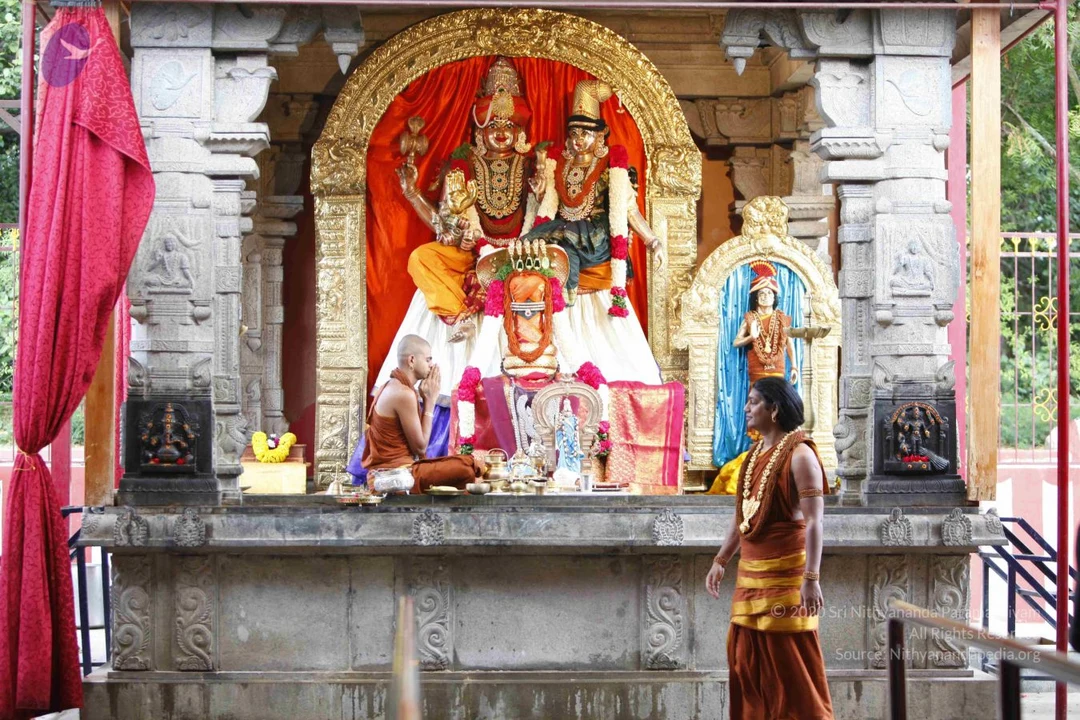
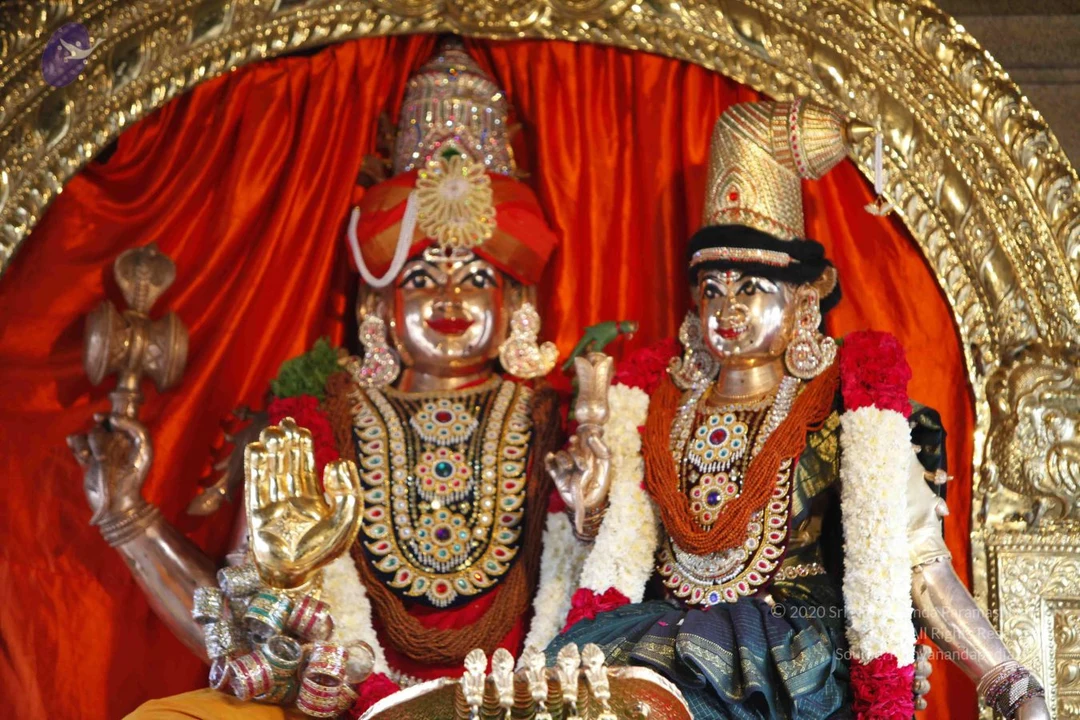
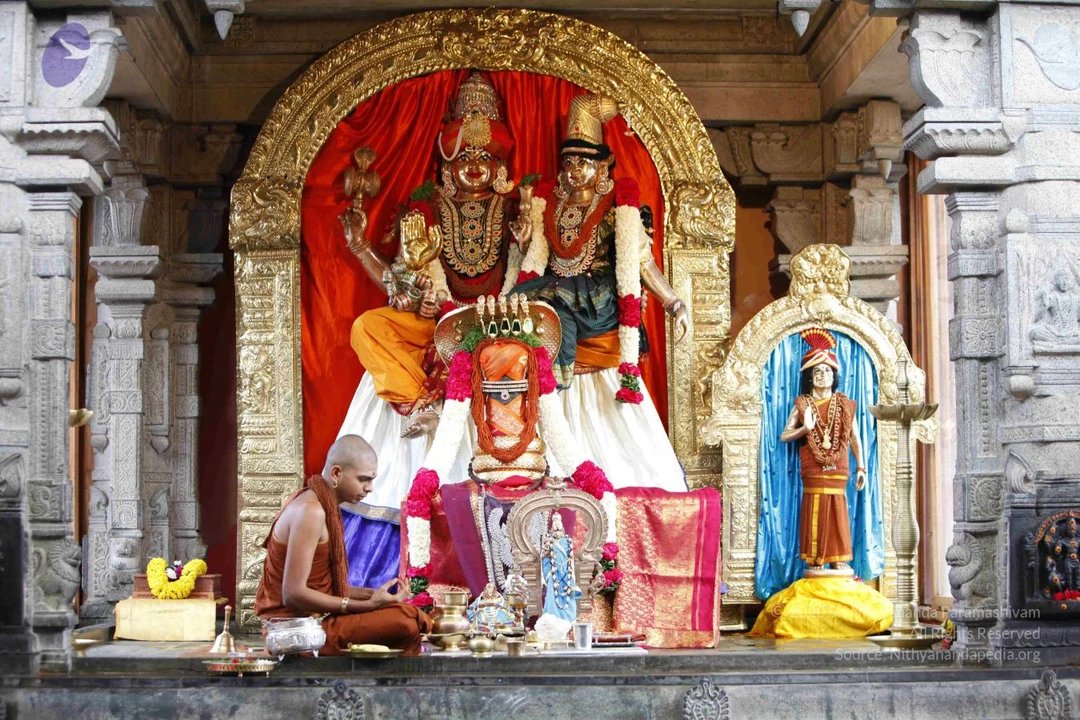
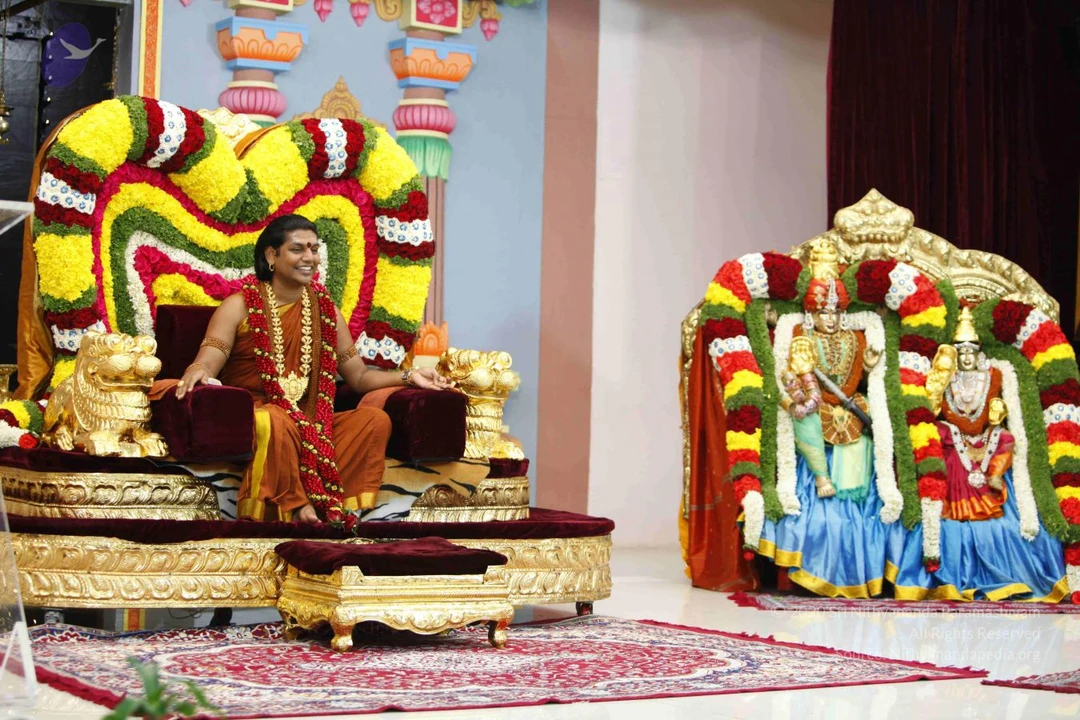
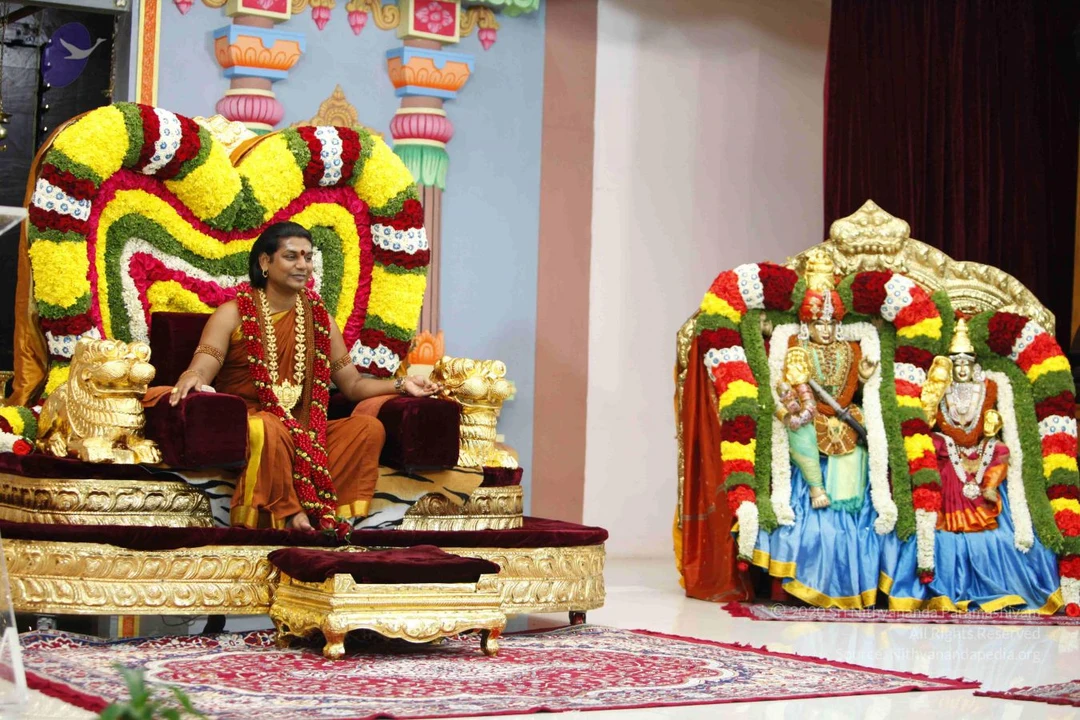
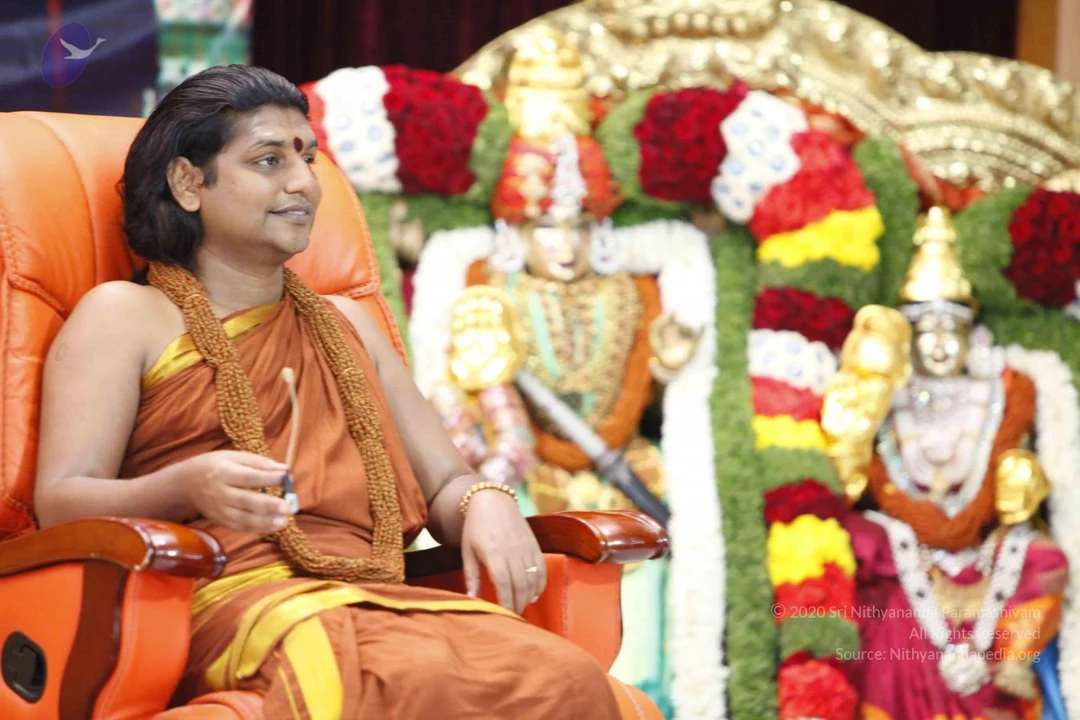
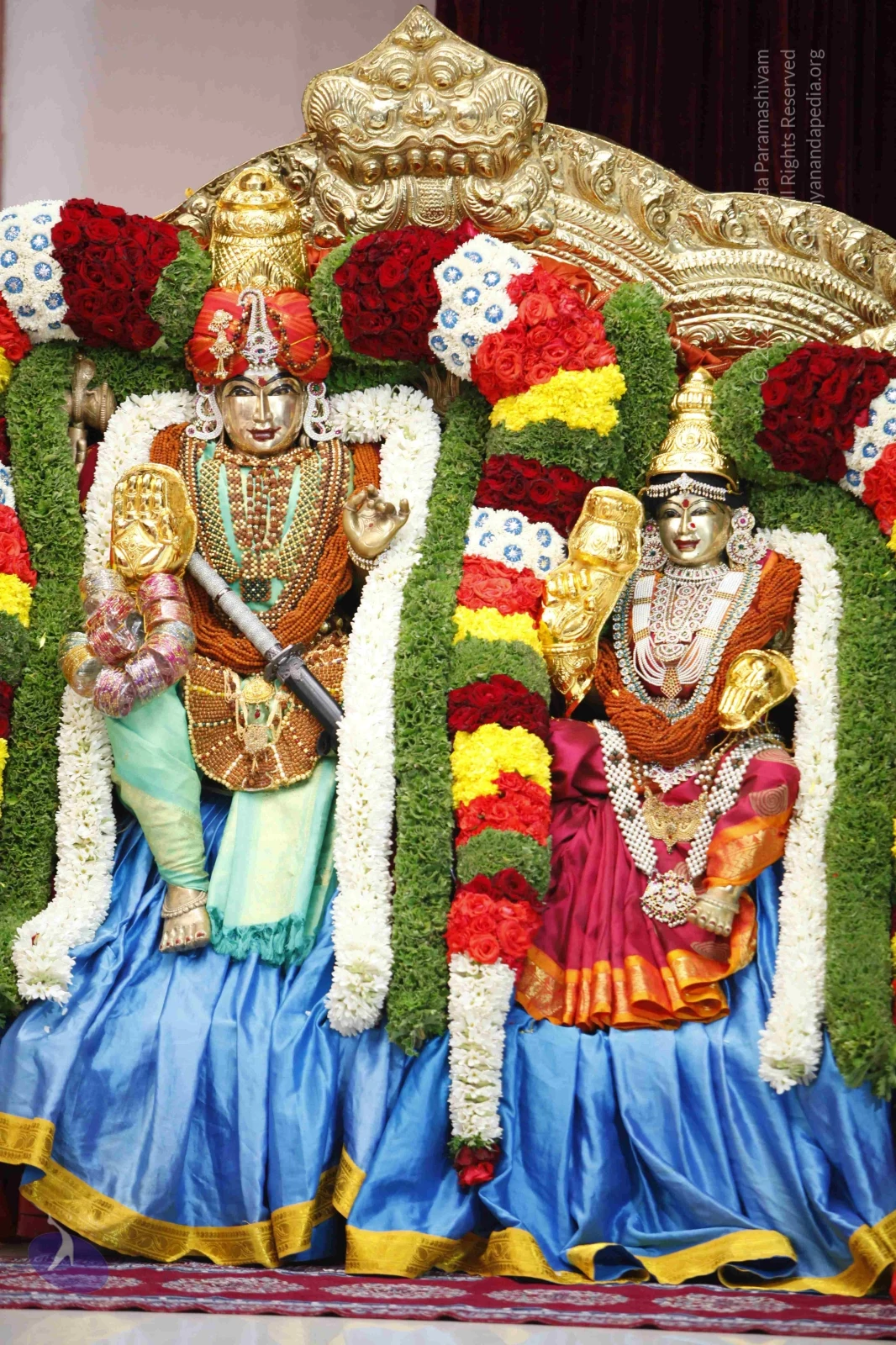
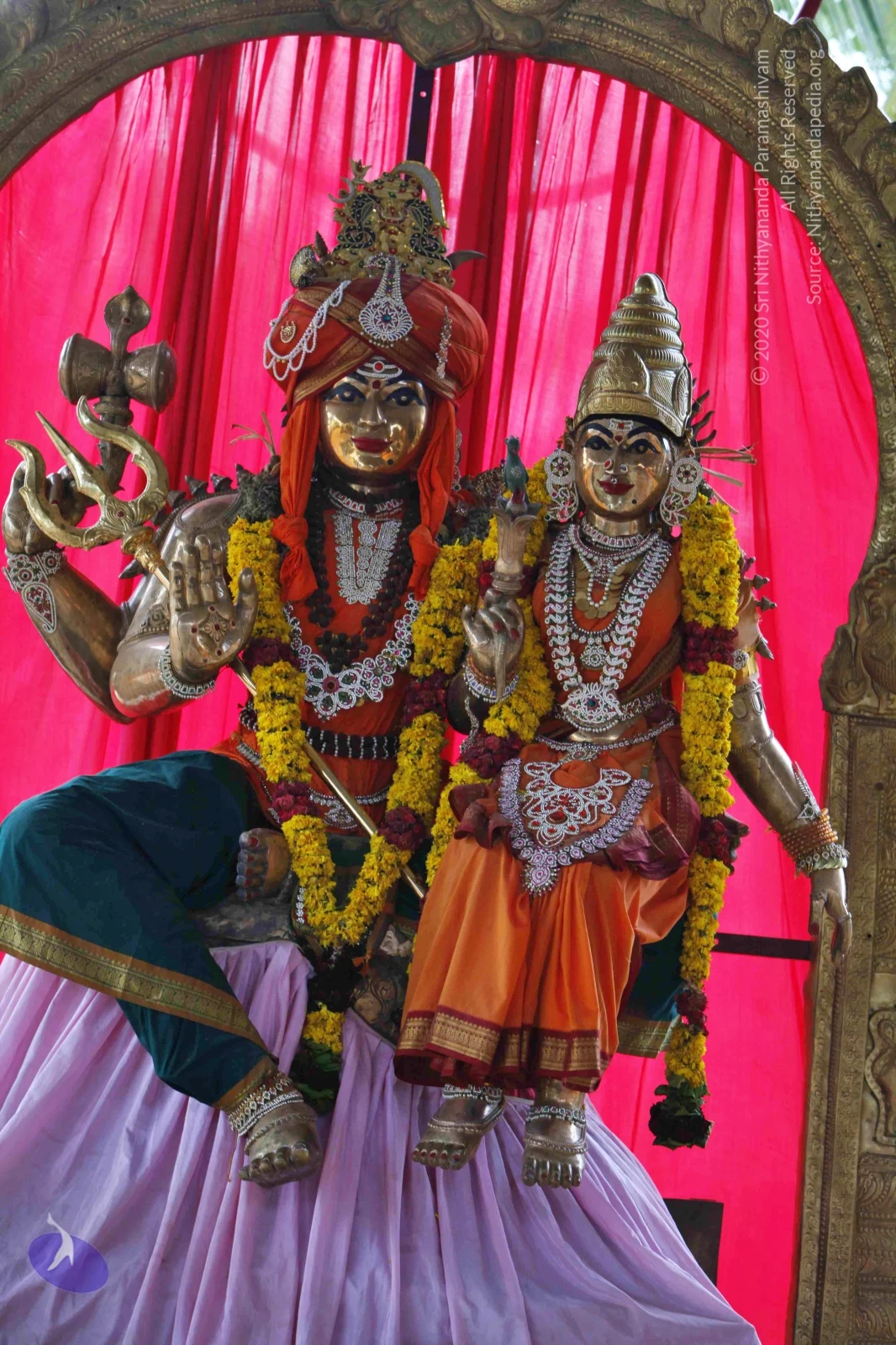
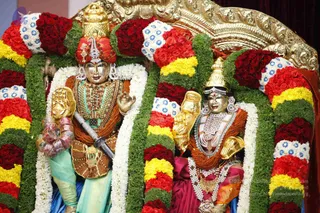
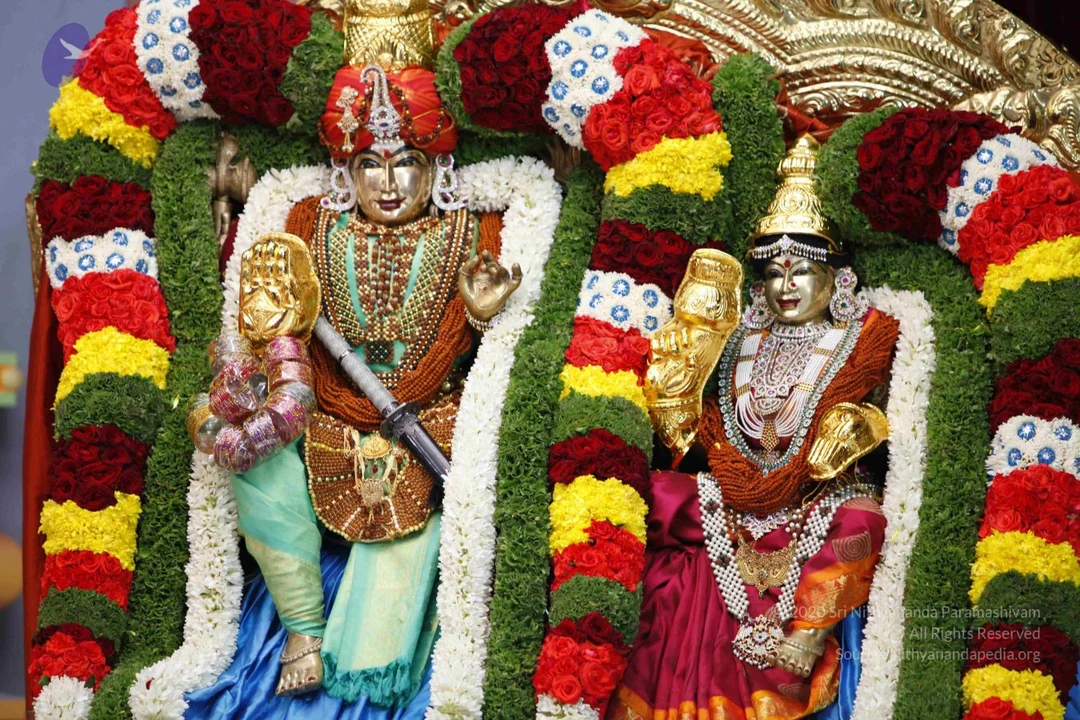
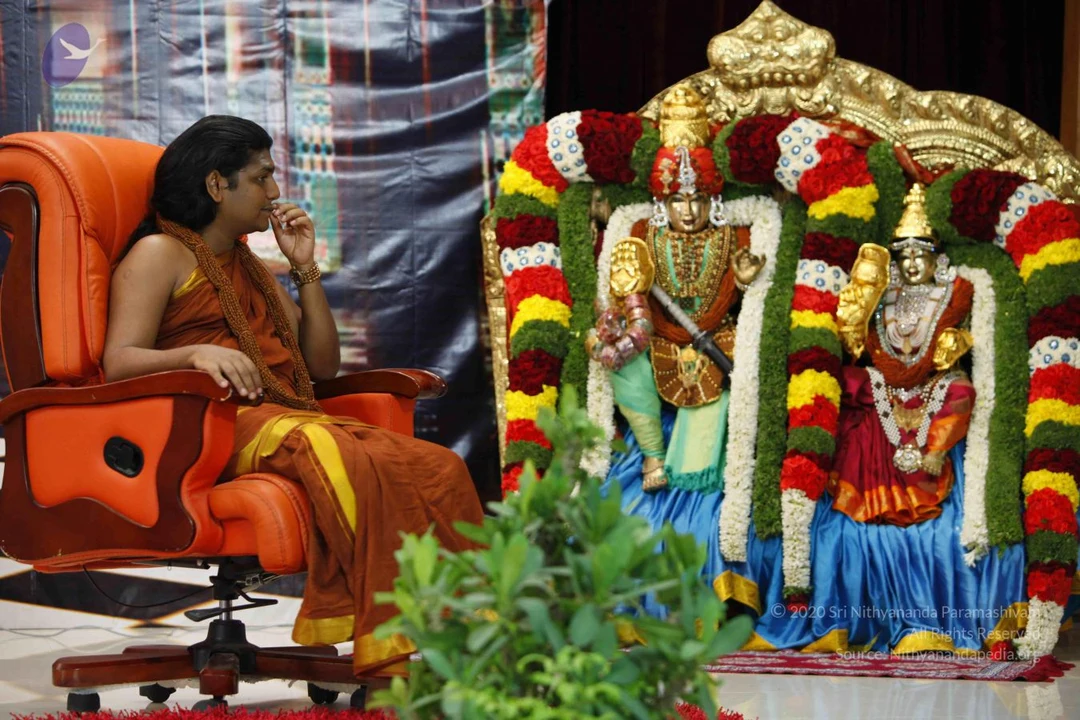
Two golden deity murtis seated side by side on a decorated throne framed by thick garlands of red roses, yellow flowers, white jasmine strands and green leaves. The figure on the left wears a red and gold turban, a rudraksha-style beaded necklace, a teal dhoti and a blue cloth below, holds a gold-colored staff or sword in one hand and wears many glass bangles on the other arm. The figure on the right wears a gold crown, layered pearl and jewel necklaces, a magenta and orange sari and holds a gold lotus-like object.Two gilded deity murti are seated side by side on a throne and framed by a dense arch of red roses, yellow marigolds, white jasmine garlands and green leaves. The figure on the left wears a red and gold turban, a beaded gold armour-like chest piece, a turquoise dhoti, multiple bangles on the arm and holds a sword; the figure on the right wears a gold crown, white pearl necklaces, a red and gold garment and gold armlets. An ornate gold throne backrest frames the scene. No physical people are visible.Two gold-finished deity murti are decorated with garlands of red roses, yellow marigolds, white flowers and green leaves framing an arched alcove. The male figure on the left wears a red and orange turban, teal dhoti, layered beaded necklaces and bangles, holding a gold mace-like staff and a gold hand. The female figure on the right wears a gold crown, pearl necklaces, a magenta and orange sari with a gold border, and holds a gold lotus-like object. Blue fabric drapes the base of the alcove. The scene appears to be a ceremonial display of deity murti, with no physical people visible.

Temple

25 photosSource gallery
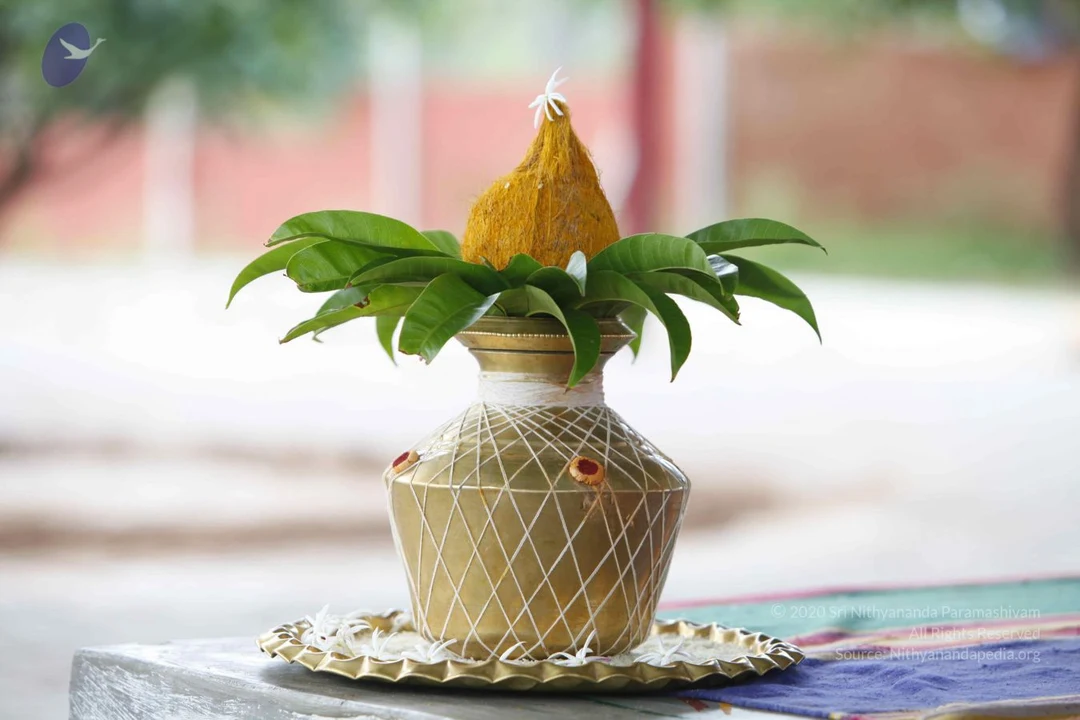
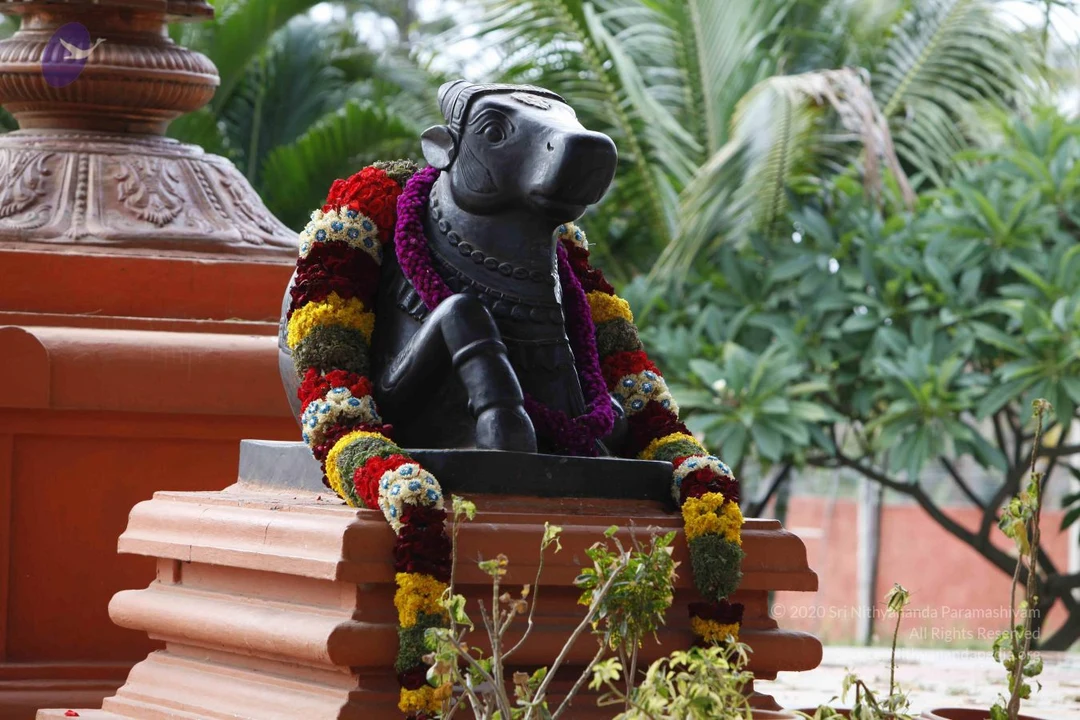
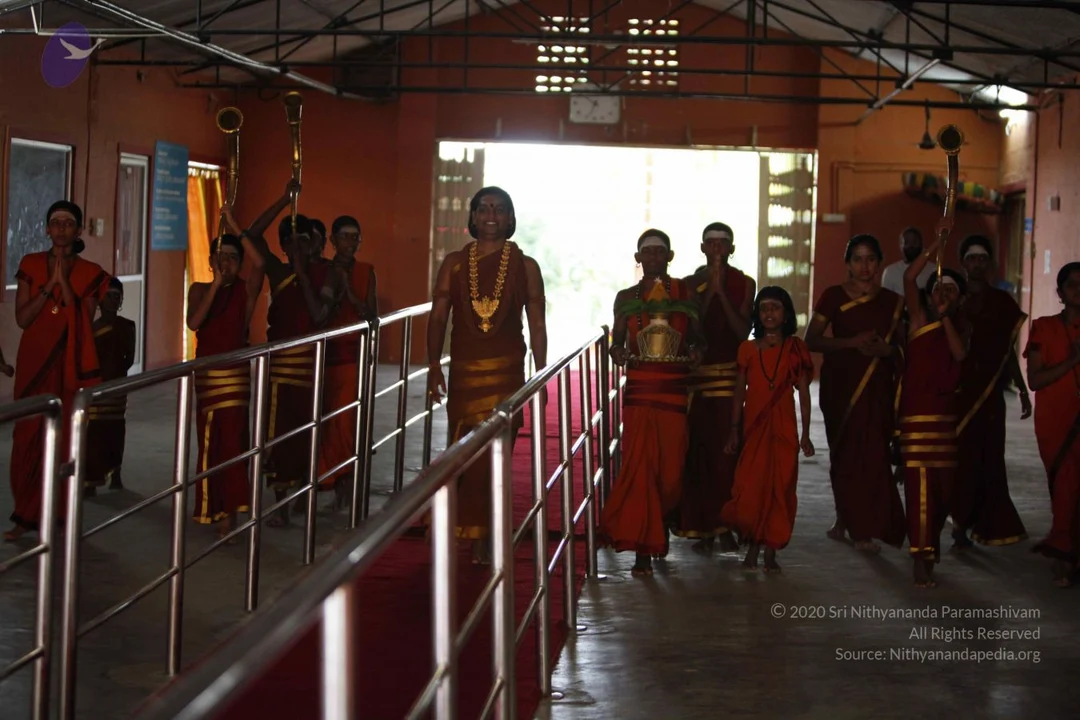
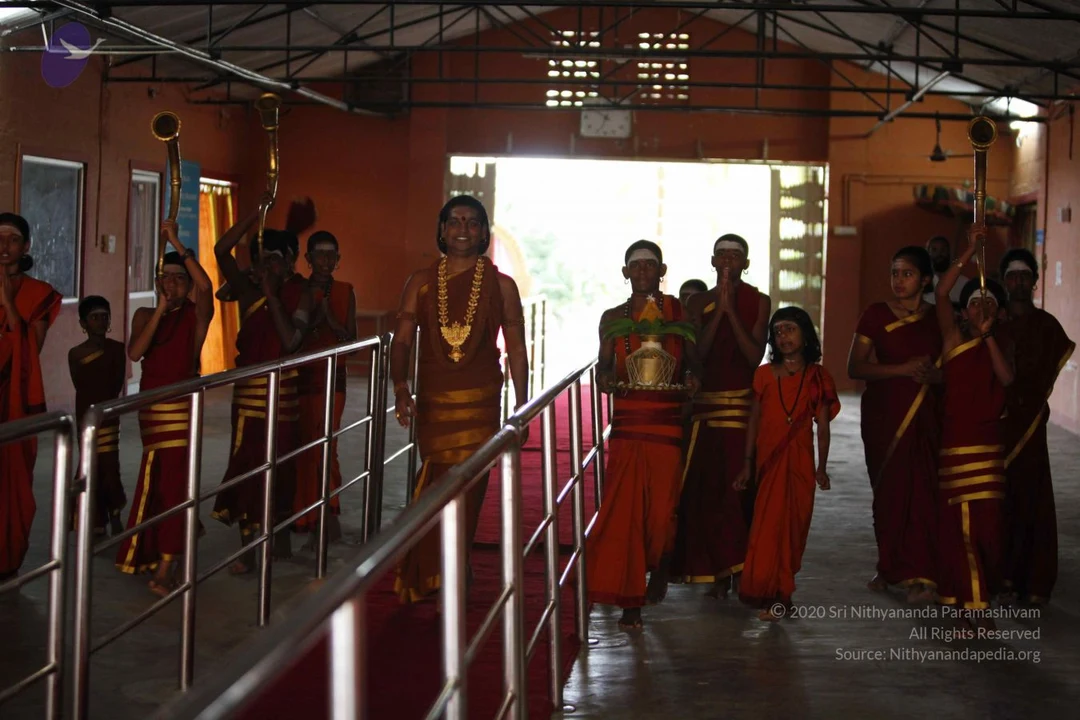
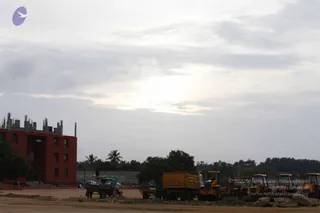
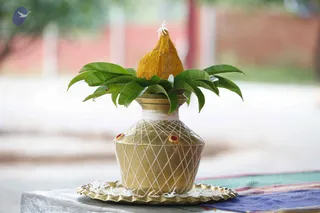
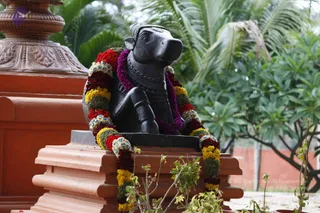
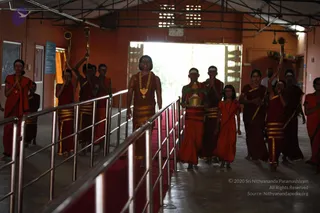
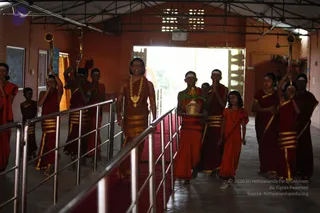
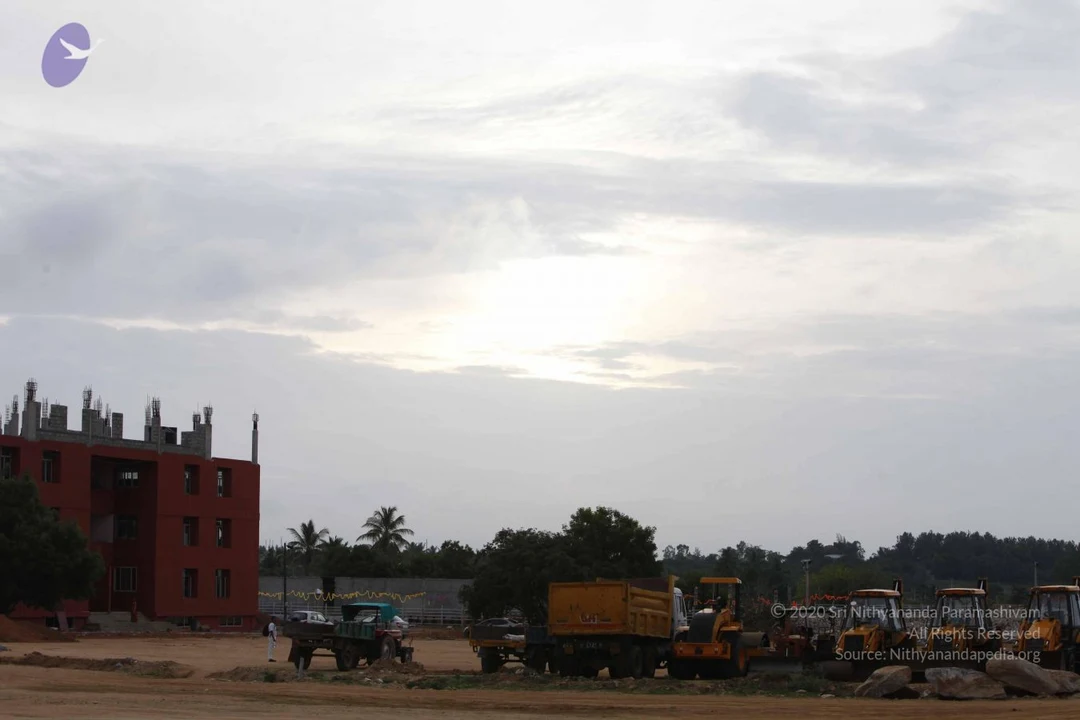
A dusty construction site under a pale, overcast sky. On the left stands an unfinished red-brick multi-storey building with exposed rebar columns on its roof. Several yellow earthmoving machines sit on bare earth: a yellow dump truck, a yellow road roller, and yellow excavators or backhoe loaders on the right. A green tractor-trailer is parked in front of the building, and a lone figure in white clothing walks near the left edge. Palm and tree silhouettes and a low boundary wall with strings of yellow lights line the horizon. No ceremony, a person or devotees are visible.A small striped squirrel stands upright on its hind legs on a pale grey gravel road, facing right, casting a shadow to its left. Reddish-brown earth and dry grass border the upper edge of the road in dim light. No people, deities or ritual objects are visible. A purple logo with a white bird appears in the upper-left corner, and a , , is printed in the lower rightA brass kalasha pot wrapped with white cotton thread in a diamond lattice pattern sits on a brass plate scattered with white flowers. Mango leaves encircle the mouth of the pot, topped by a yellow-orange coconut with a white flower tuft. Two small red-and-gold decorative dots adorn the pot's sides. The pot rests on a grey wooden surface with a blue and pink cloth beneath, and a blurred outdoor background of red walls and greenery. No people are visible.A black stone Nandi bull statue sits on a terracotta-coloured pedestal outdoors, garlanded with red, yellow and white flower strands and a purple garland around its neck. Palm fronds and green shrubs fill the background, with a red wall behind and a carved terracotta pillar at the left edge. No people are visible.A procession moves down a long covered hall with red-carpeted center and metal railings. A central figure with long dark hair wears a brown-orange robe, a heavy gold necklace and a red-marked forehead, walking forward with hands at the sides. Around him, people in red, orange and maroon robes with gold stripes carry long brass horns and a brass pot, and some stand with palms joined. A girl in an orange dress holds a small brass vessel.A procession inside a hall with a tin roof, orange-painted walls and a red carpet runway. A tall man in the centre wears a gold necklace, a gold chain, a red-orange dhoti-style garment and a bindi, and walks with his palms together. Around him, several young people in deep red and orange robes with gold stripes hold long brass horns aloft, and a girl in an orange sari with a dark bead necklace walks alongside. A person in the centre carries a brass kalasha vessel with a green leaf on top. The hall opens to daylight behind them, and a burst of light shines through the doorway.

Prayaksha-Pada-Puja
29 photosSource gallery
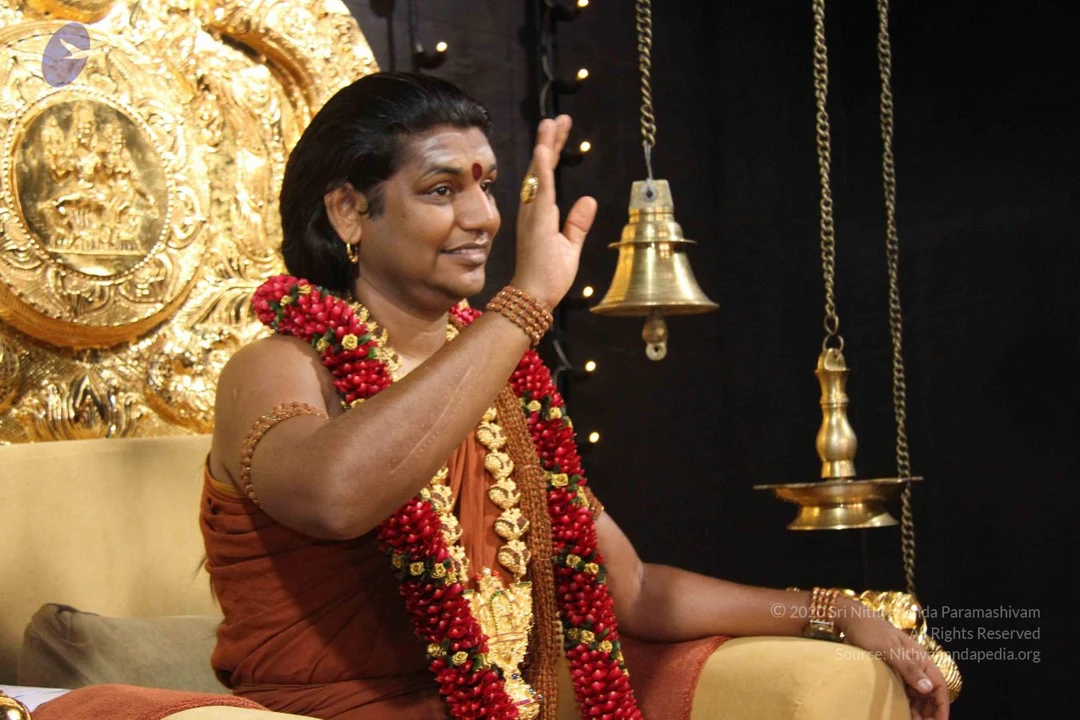
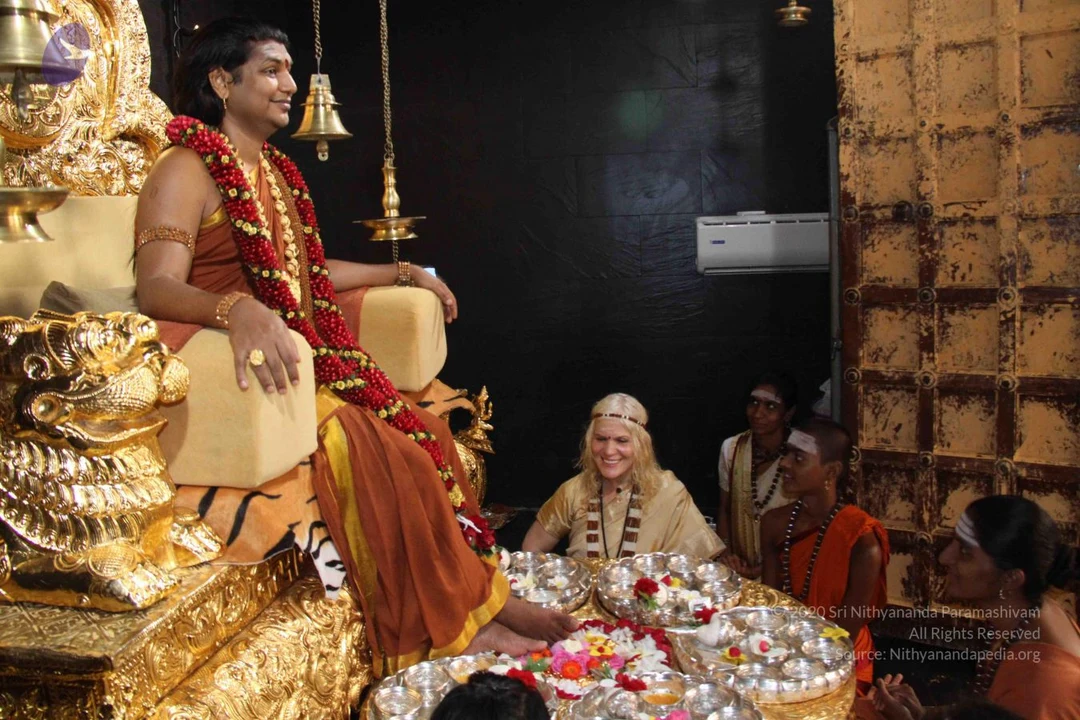
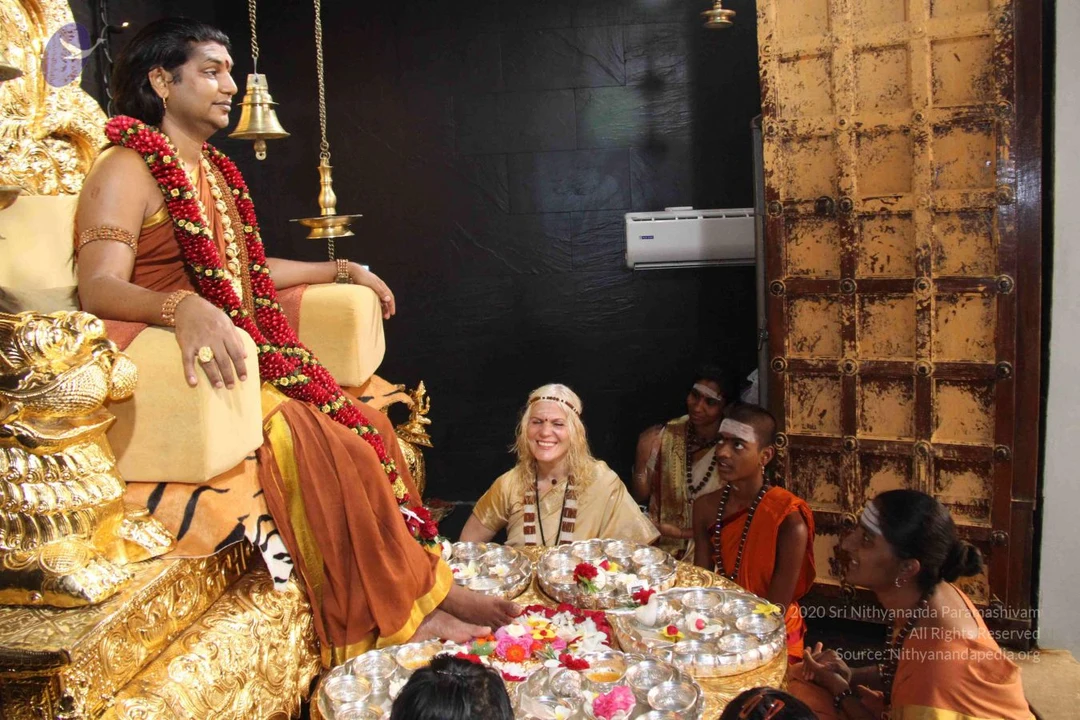
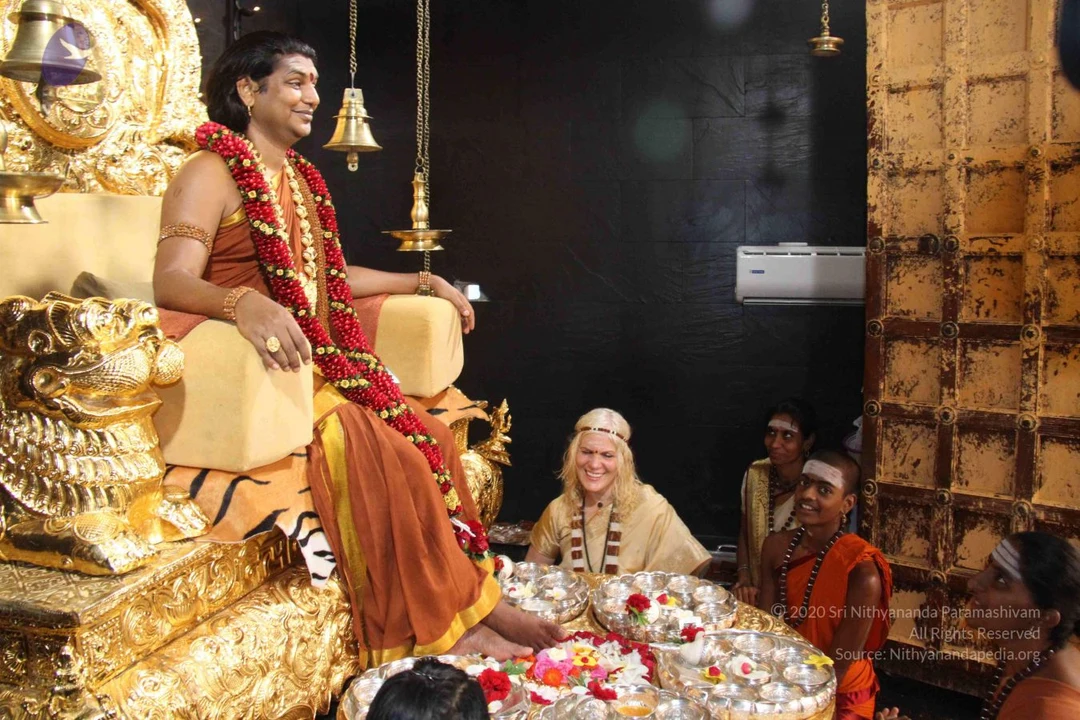
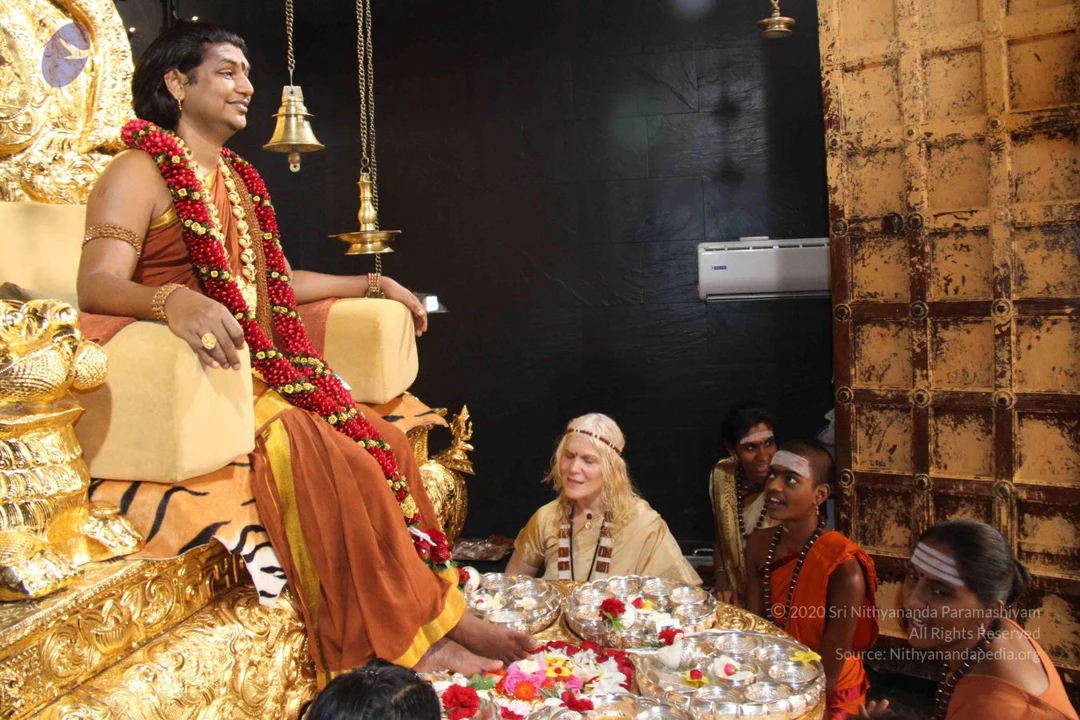
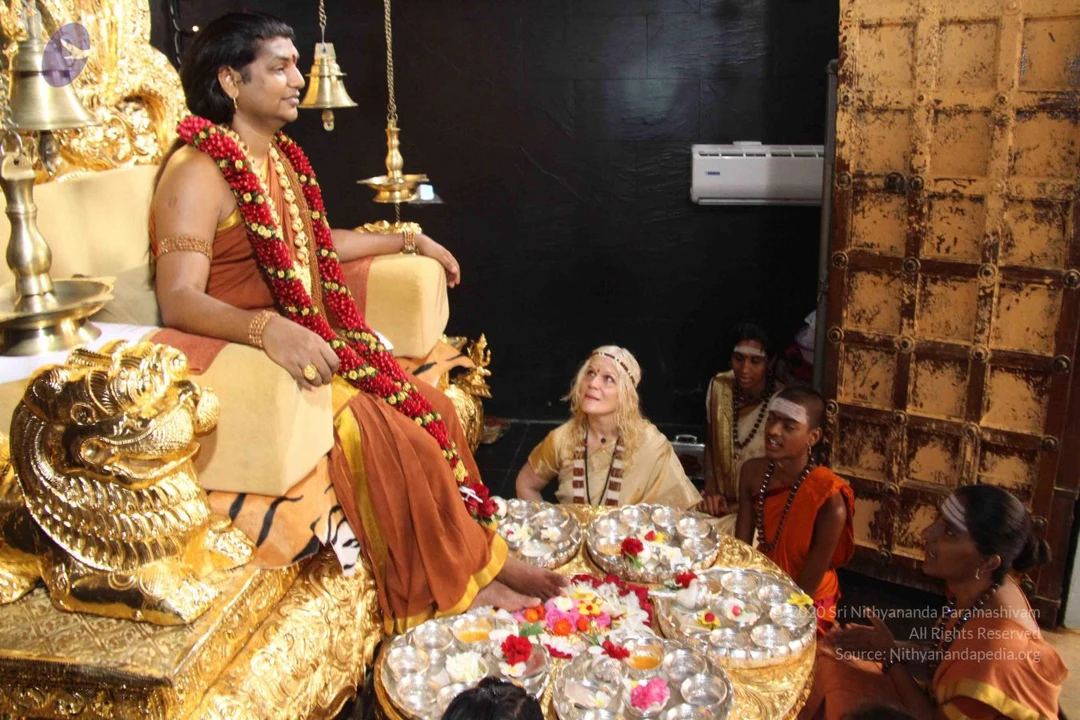
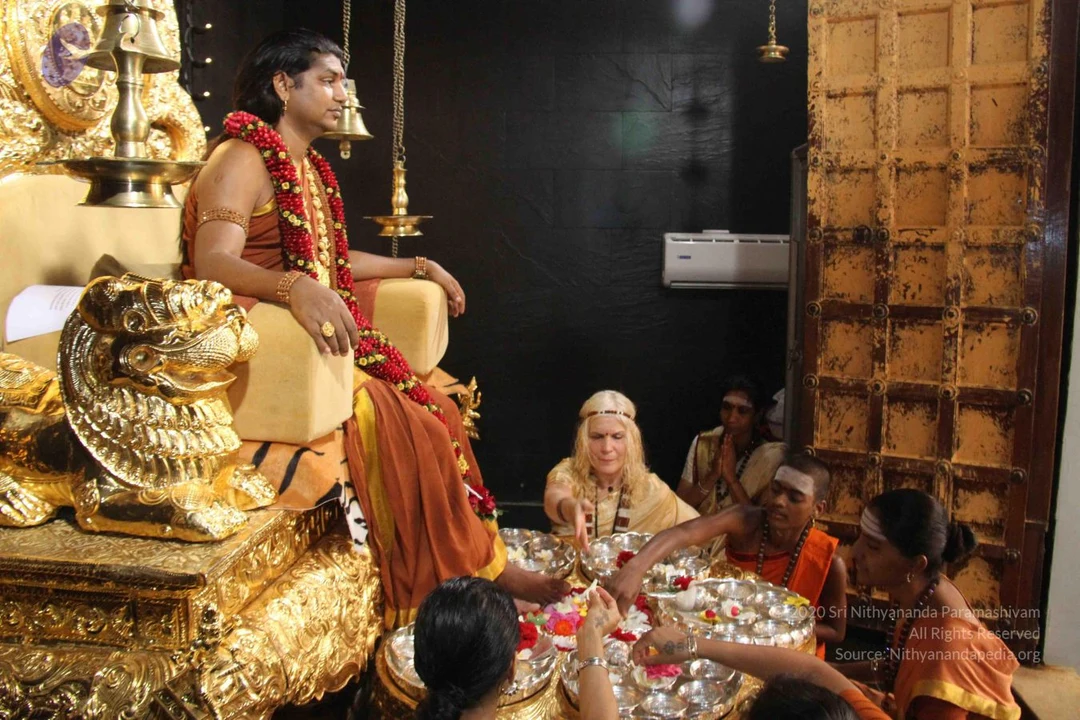
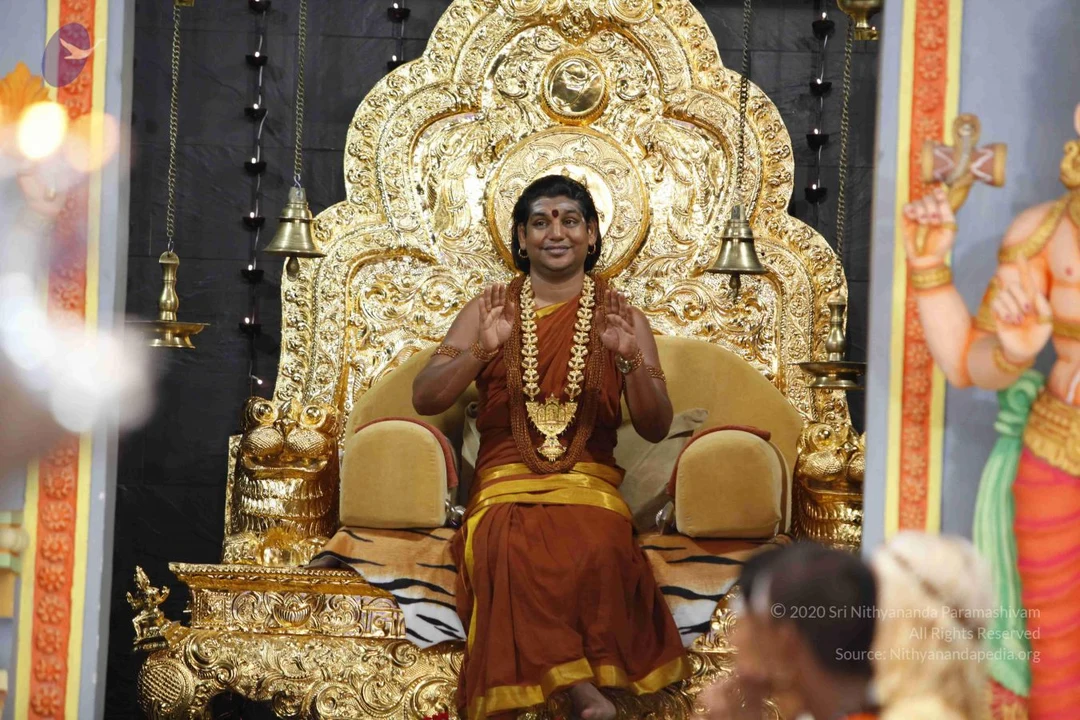
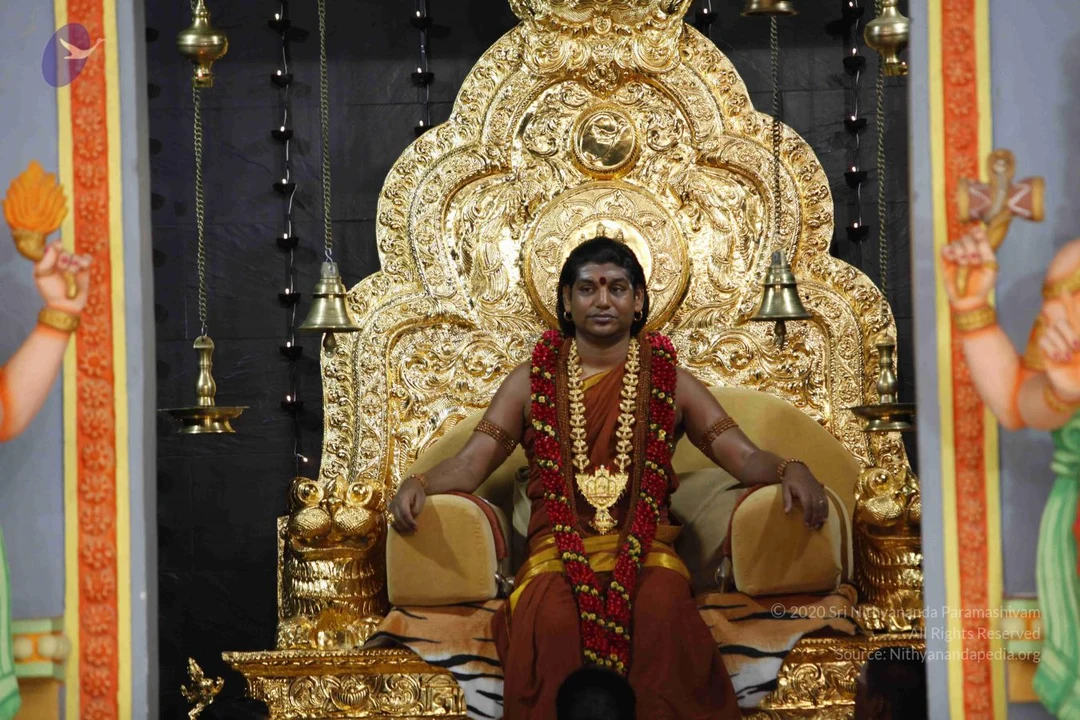
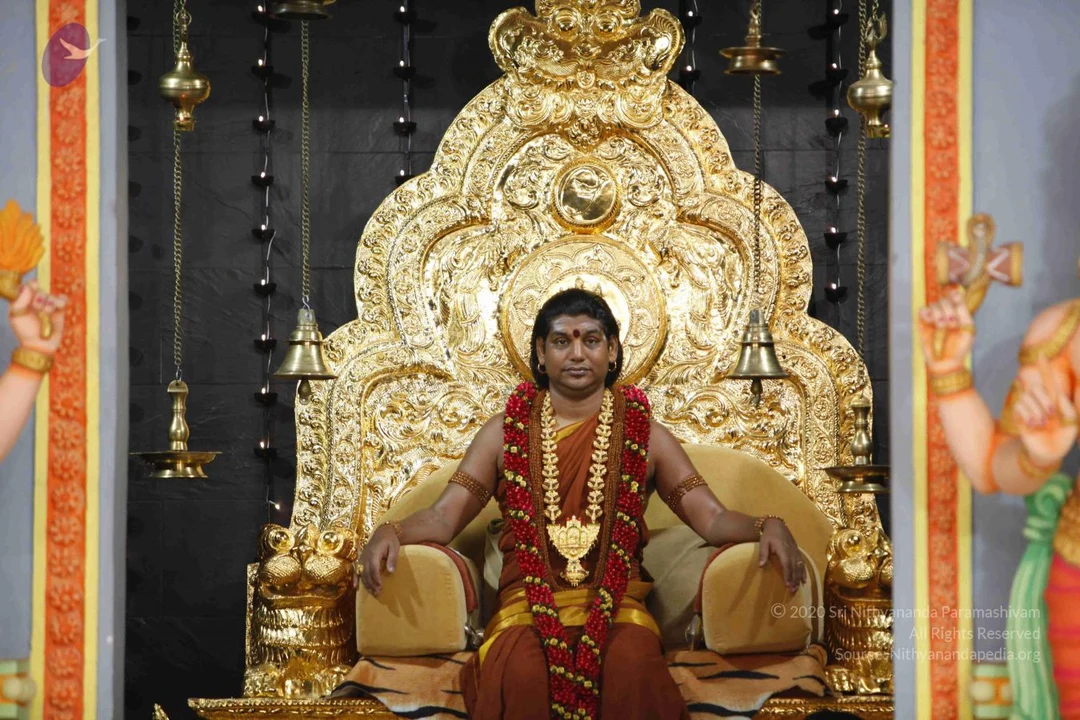
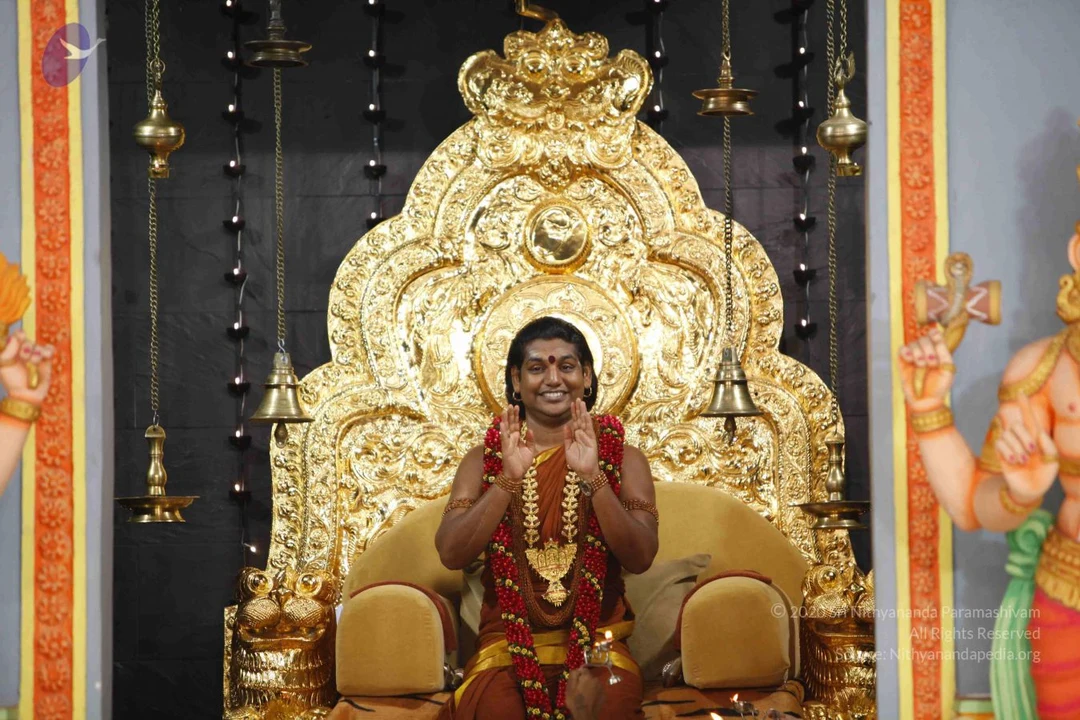
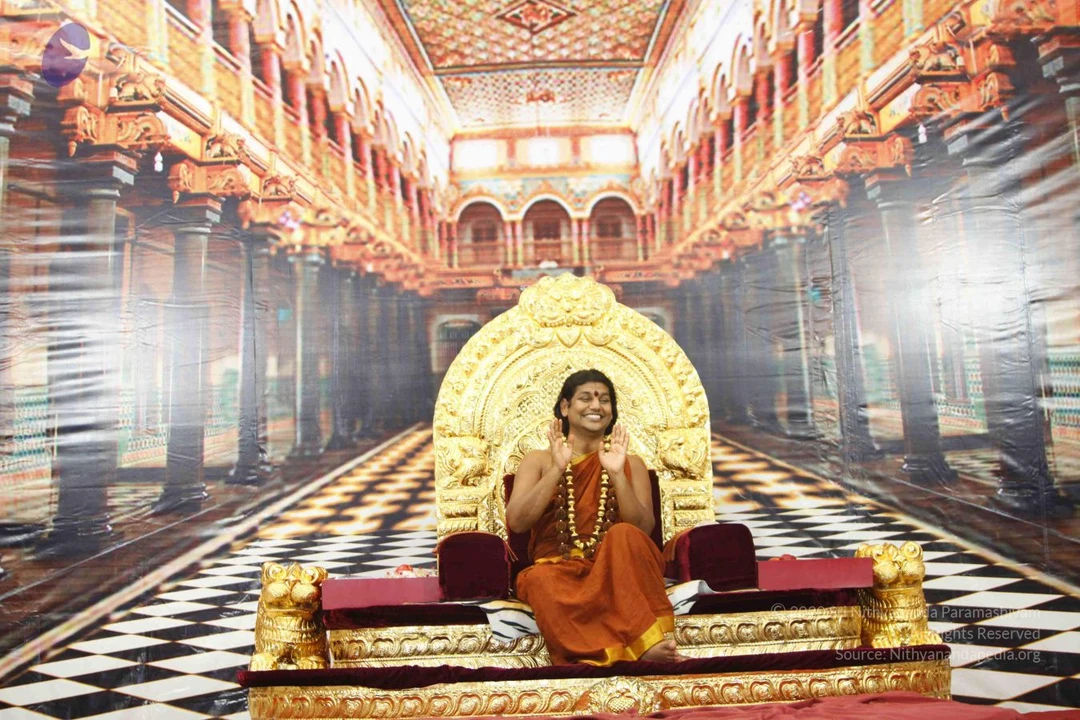
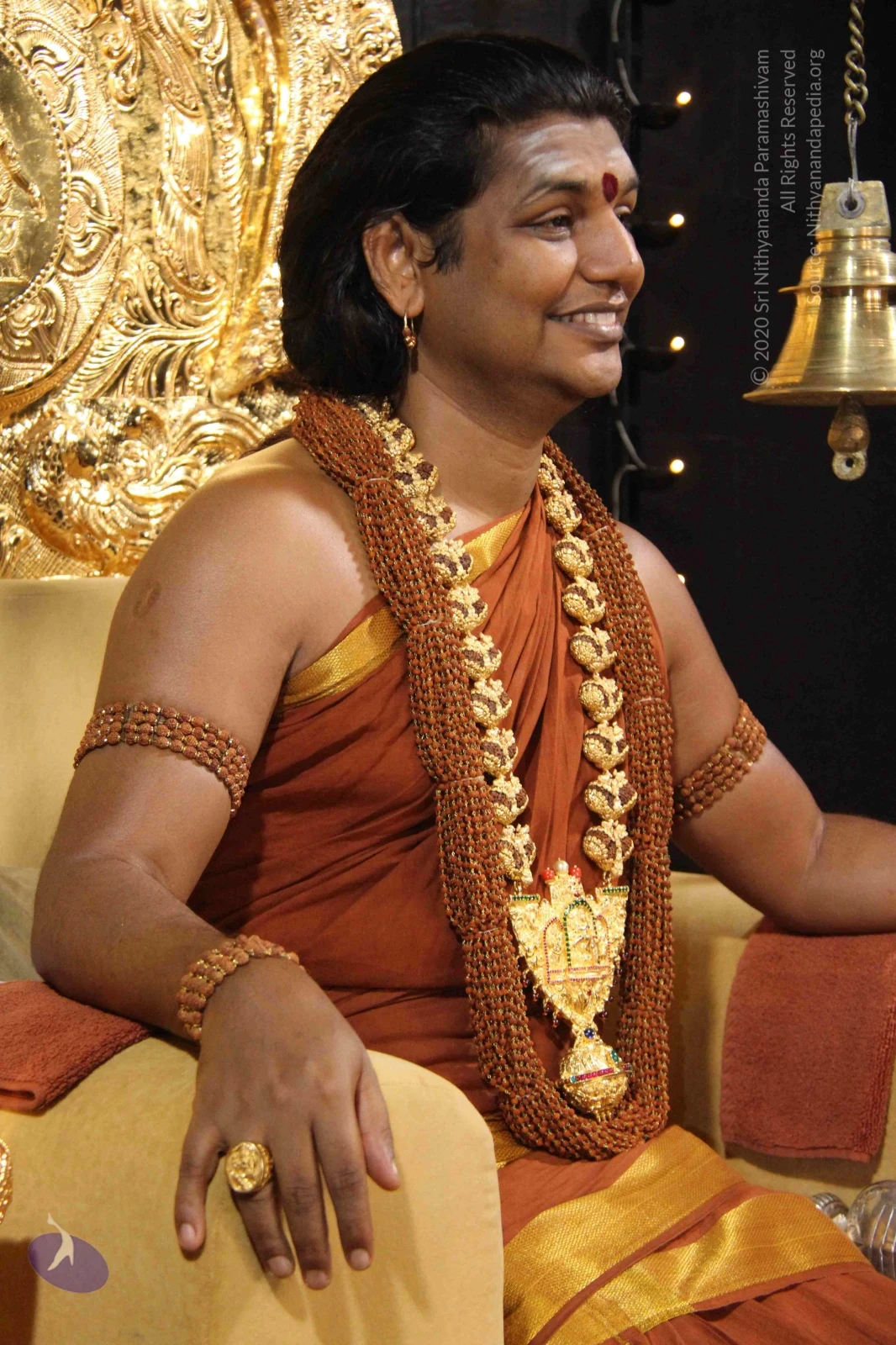
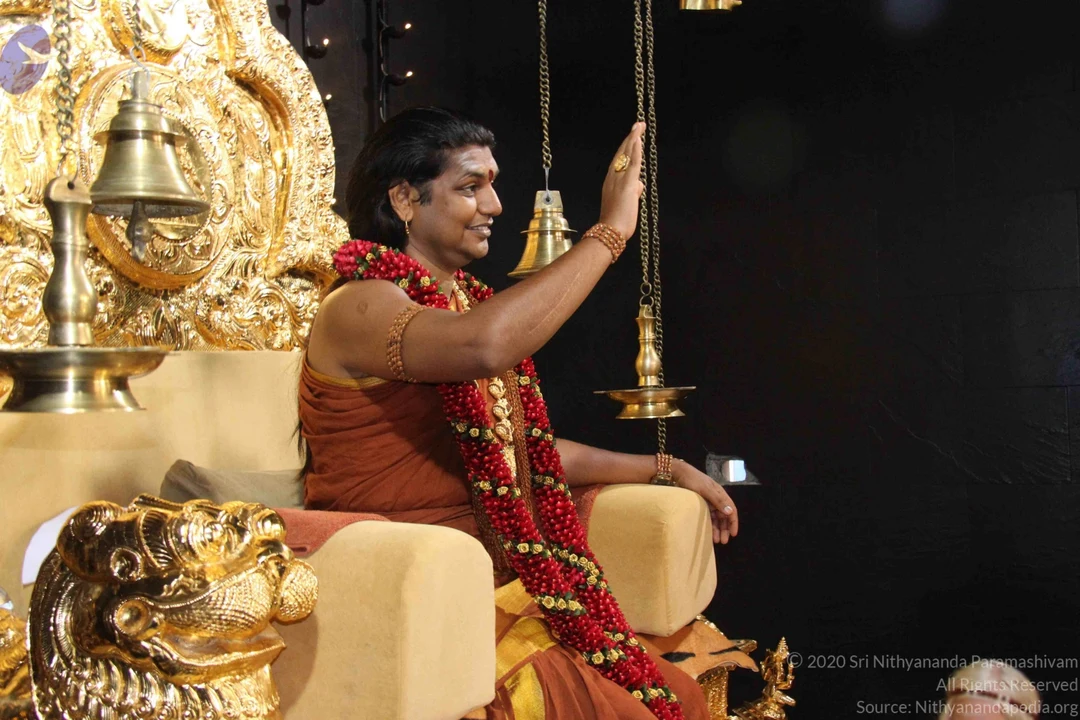
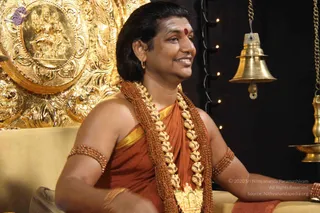
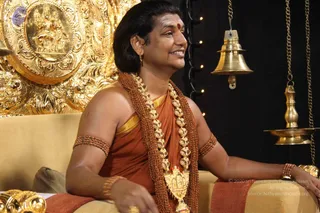
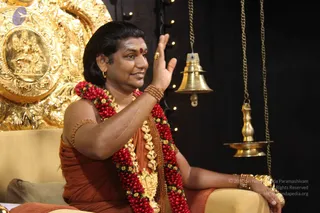
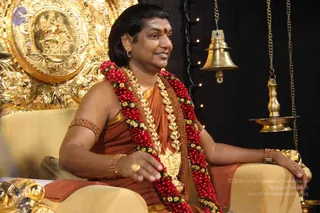
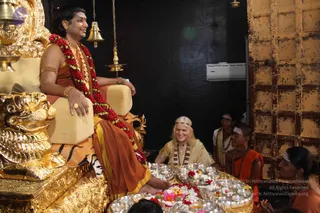
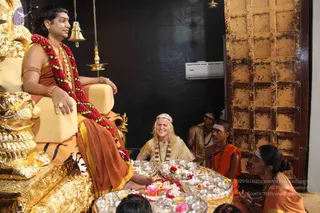
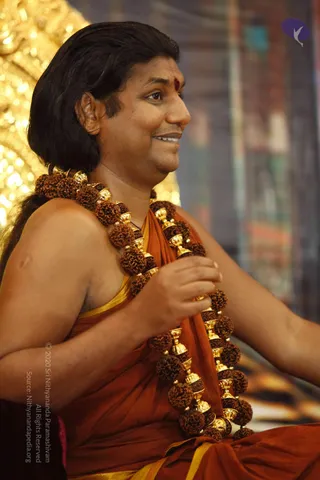
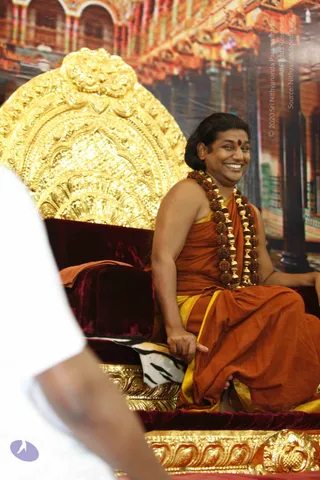
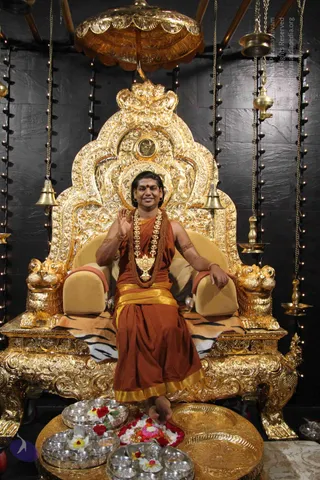
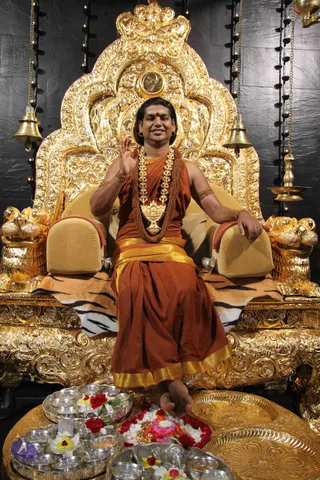
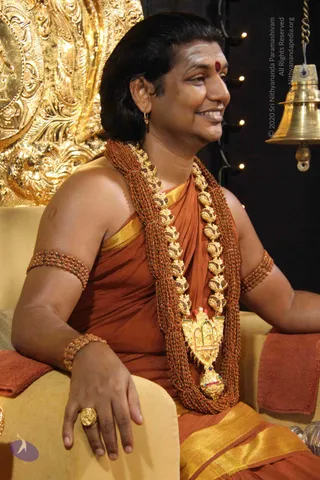
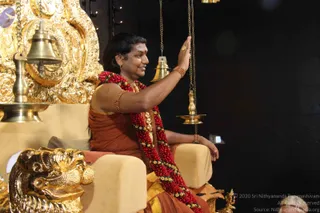
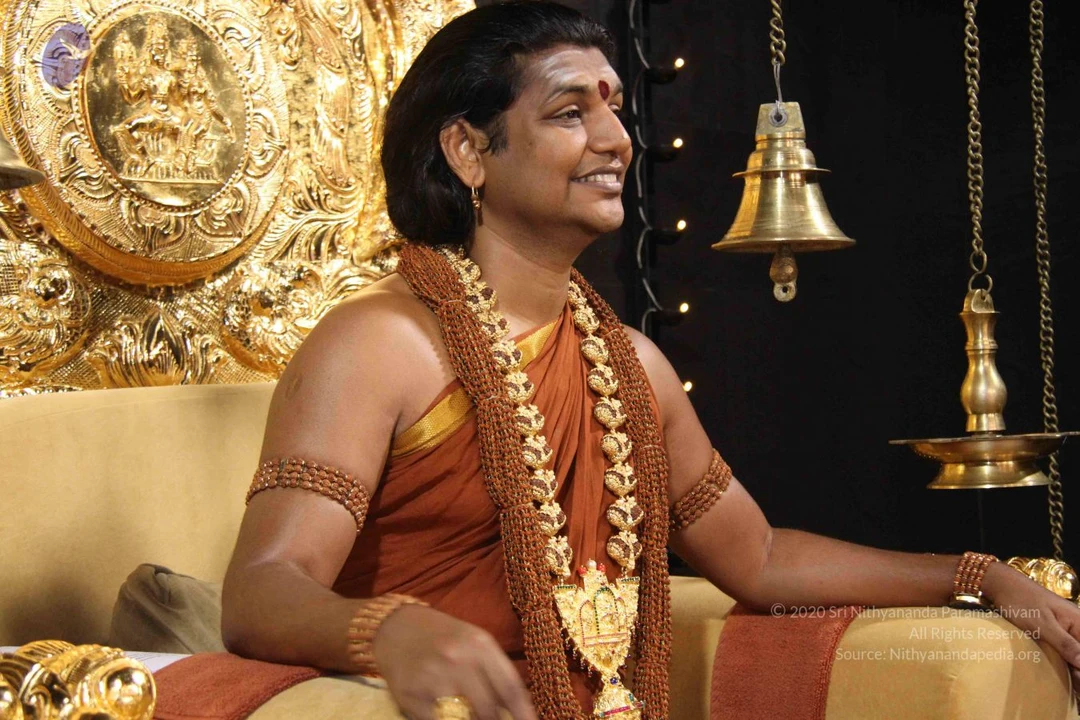
Photograph of a seated man in a satsang setting, smiling and turned to his right. He wears an orange-brown wrap over the shoulders, a long rudraksha mala with ornate gold pendant necklaces, rudraksha armlets, and a red bindi on the forehead. Behind him is an ornate gold-embossed panel showing a seated deity murti, and a brass bell with a brass lamp hangs at right.A photograph of a smiling man seated on a gold-upholstered throne-like seat in front of an ornate gold repoussé backdrop showing a deity relief. He wears a rust-orange dhoti-style wrap with a gold border, multiple rudraksha mala strands, a gold ceremonial necklace with a crown-shaped pendant, gold armlets, and a red bindi. A brass bell and a brass oil lamp hang on chains to the right. Swamiji (probable): the seated figure's long swept-back hair, rudraksha malas, saffron-orange clothing and ornate gold regalia are the qualifying cues, so he is labeled as the probable Swamiji in this in-person setting.A seated man in an orange-red shawl and ornate gold necklace, wearing a red-and-gold garland of flowers, raises one hand in a gesture while smiling. He wears a red bindi, bangles and a ring. Behind him is a large ornate gold throne-like backdrop with carved relief figures. A hanging brass bell and a brass oil lamp on chains hang to the right against a black background. Swamiji (probable): the figure has long swept-back hair, a saffron shawl, a rudraksha-style gold necklace and a red-flower garland, and the page identifies this Satsang as featuring Swamiji, so he is labelled as the probable Swamiji in this satsang setting.A seated man in an orange-brown draped garment sits on a gold-upholstered throne with ornate gold carved panels behind him. He wears a long red-and-gold flower garland, a gold chain necklace, a gold bangle on the upper arm, wrist bangles and a gold ring, with a red bindi on his forehead. He rests one hand on the armrest and looks to the side with a slight smile. To his right hang a brass bell and a brass oil lamp on chains against a dark backdrop. Probable Swamiji: the long swept-back hair, orange draped clothing, ornate gold necklaces and flower garland match the page's claim, and he is seated on the throne in the photo.A figure seated on an ornate gold throne with a carved lion-head armrest, wearing a saffron-orange dhoti and shawl, a red and white flower garland and gold armband, gazing to the side while smiling. Before him on the floor are silver plates of flowers, fruit and offerings. A woman in cream-coloured sari with a white headband and rudraksha mala sits smiling at the plates, with two sannyasis in orange robes and white forehead markings seated nearby. Hanging brass bells and a black wall with a carved gold-coloured door complete the room.A photograph in a temple-like room with a black wall and a large gold-brass door. On the left, a man seated on a gold throne wears an orange-saffron dhoti with a gold border, a red-and-white flower garland, gold bangles, and a ring; he has long swept-back dark hair and gold-toned ornaments. Probable Swamiji by appearance cues: long swept-back hair, ornate saffron clothing and ceremonial gold ornaments, seated in a position of honour. At the centre, a smiling woman with long blonde hair and a white forehead band sits in a gold-toned sari with a rudraksha-style necklace before a tray of brass plates holding flowers, kumkum and offerings. Around the tray, sannyasis in orange robes with rudraksha malas and white forehead markings sit or kneel; one on the right sits in an orange top. A deity murti is not visible. Ritual offerings with flowers suggest a puja or darshan setting. Foreground heads are partially visible at the bottom edge.

NithyaSatsang

23 photosSource gallery
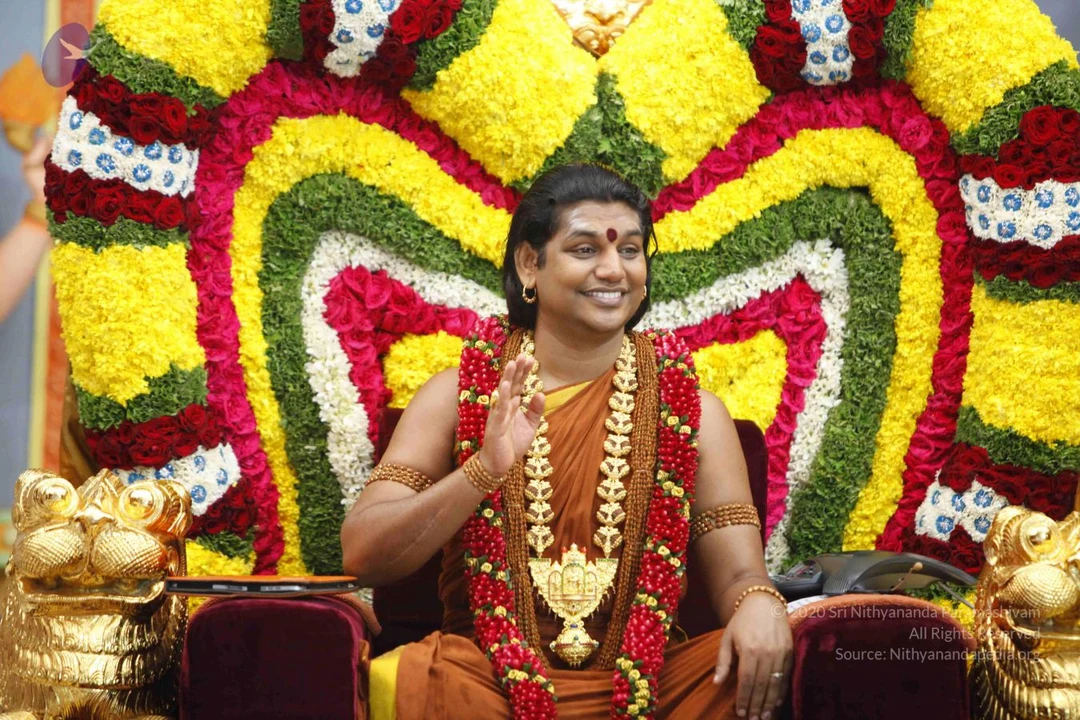
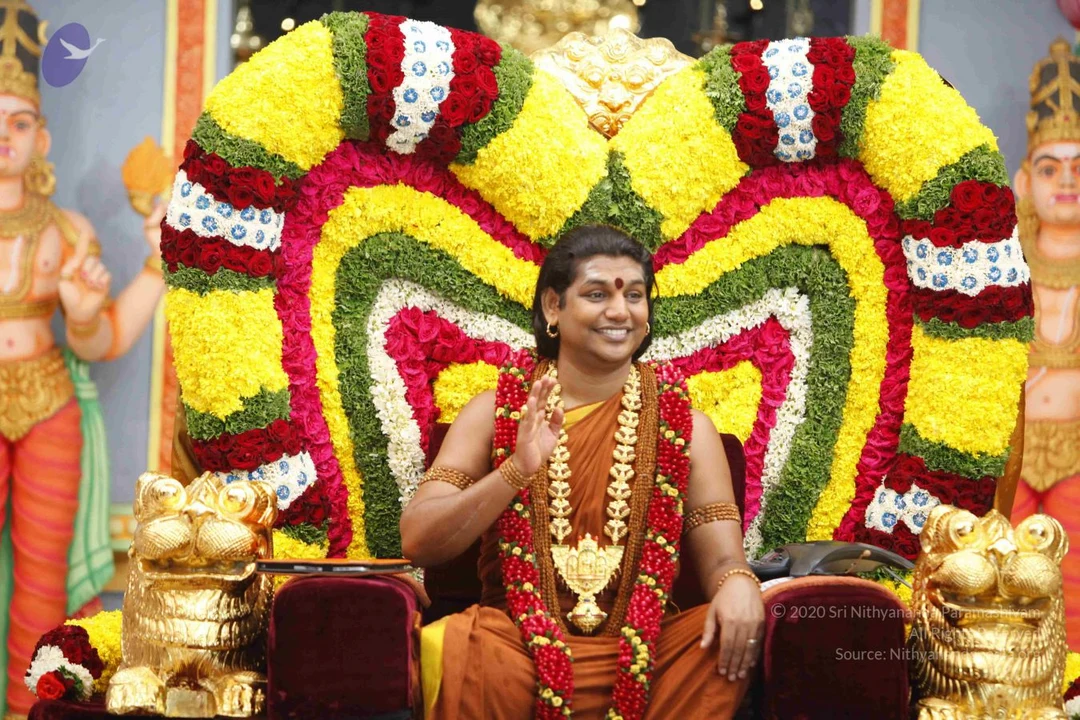
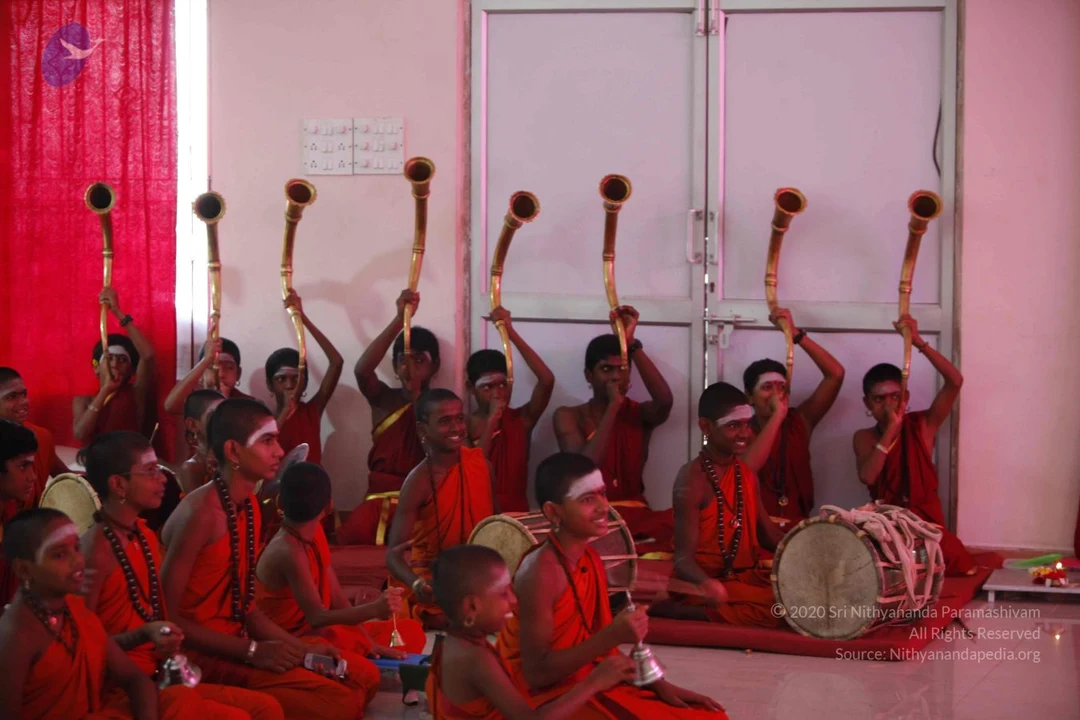
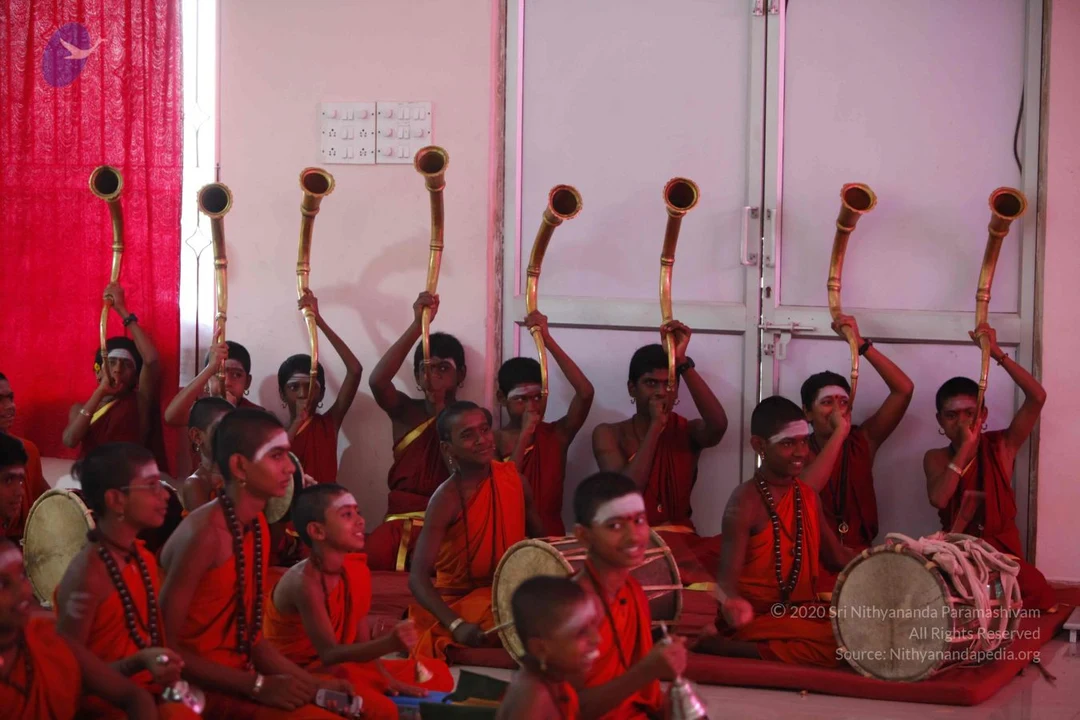
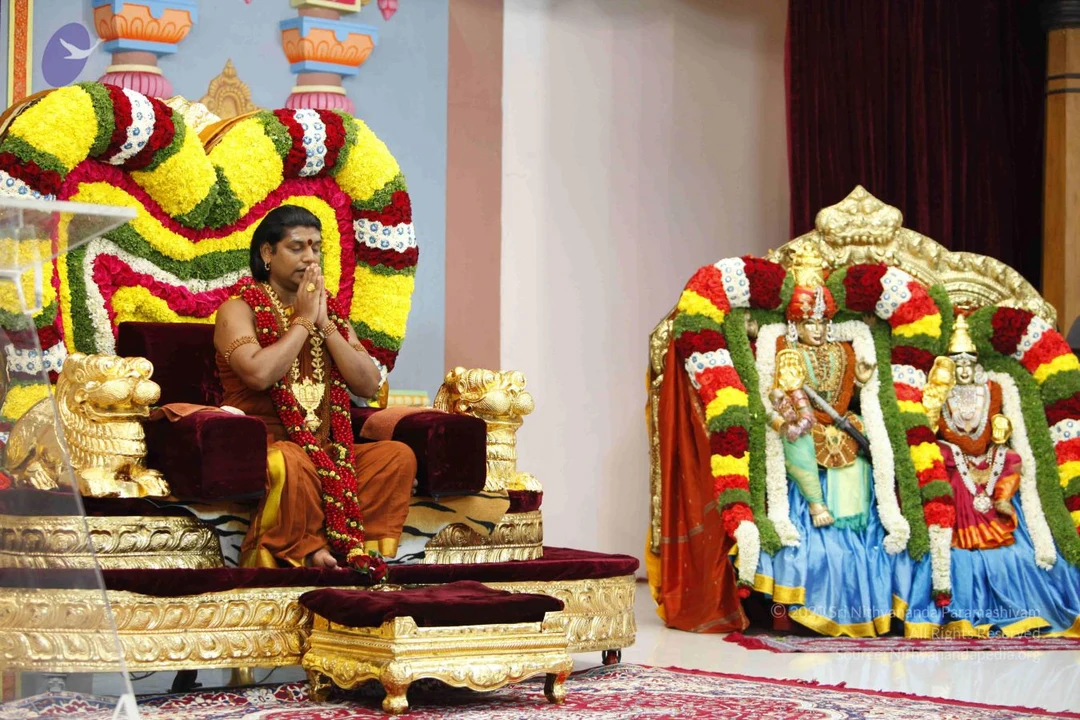
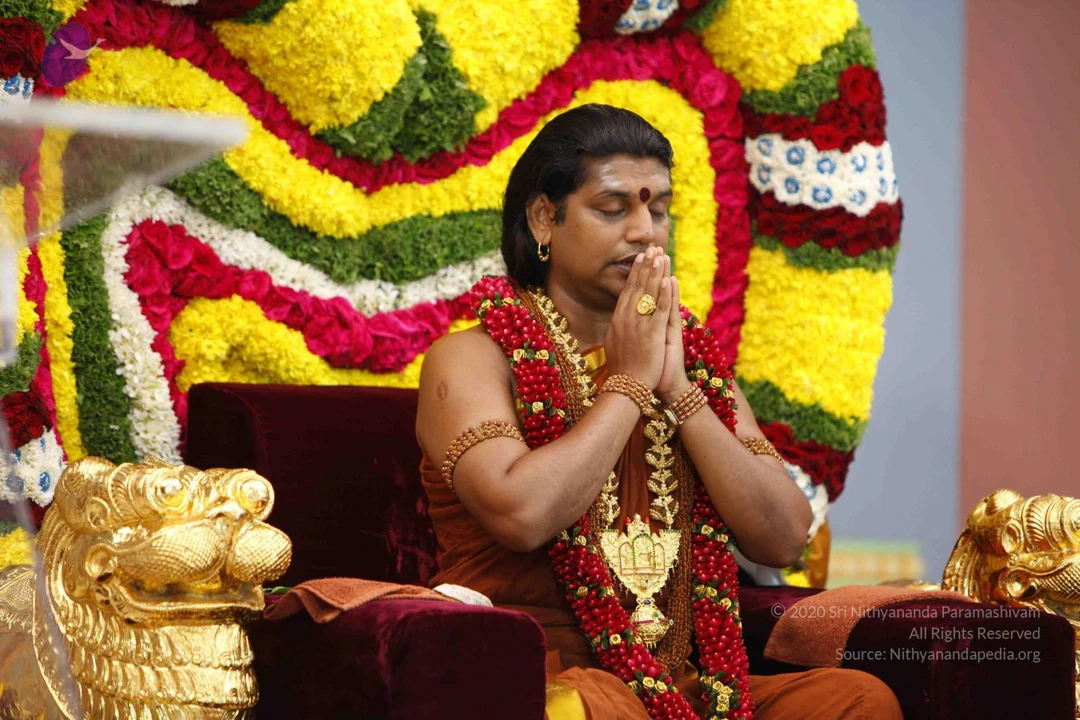
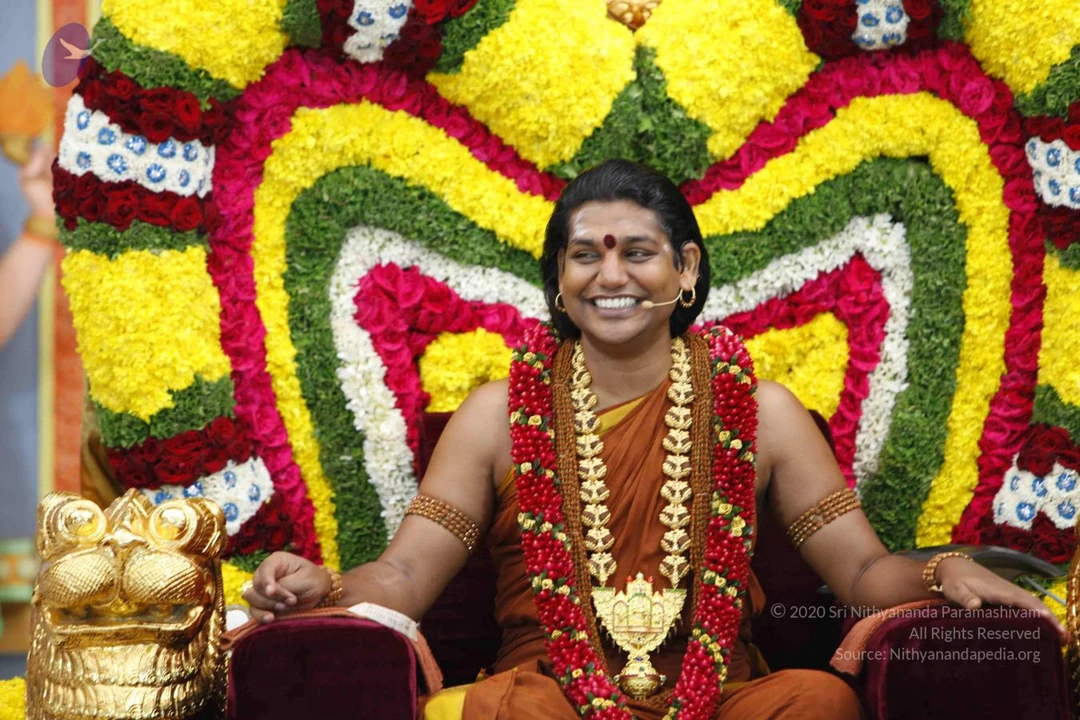
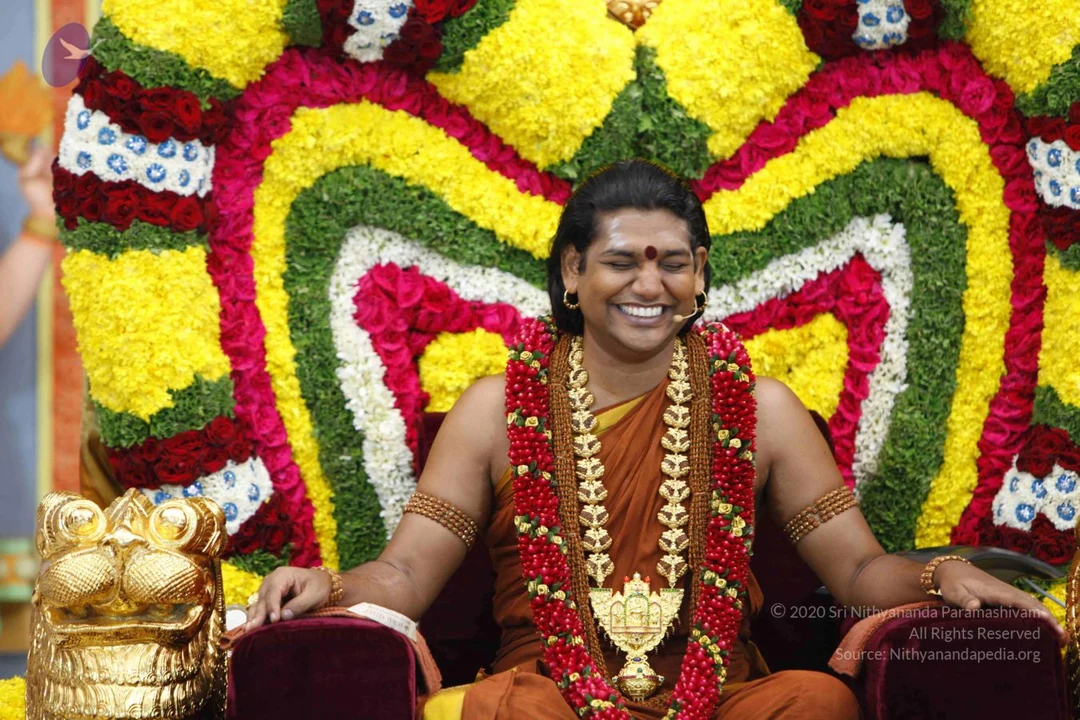
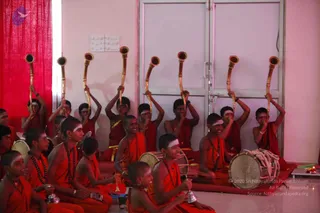
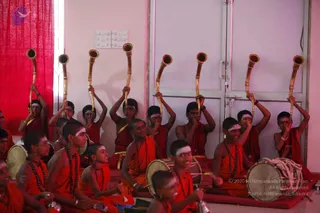
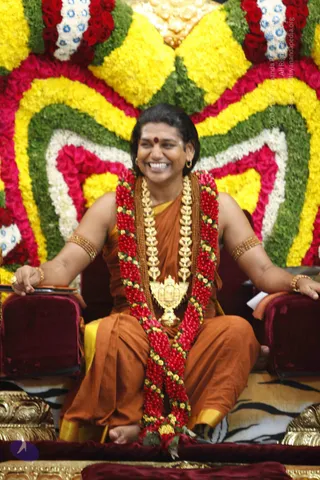
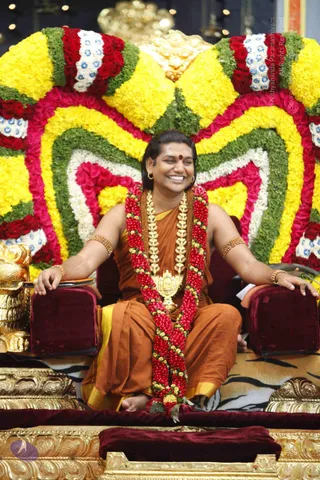
A man seated on a maroon-cushioned throne flanked by gold lion-head armrests, raising his right hand in a blessing gesture and smiling. He wears an orange-saffron dhoti and shawl, a gold ceremonial necklace with a central pendant, a red-beaded garland, red bangles and a red bindi, with long dark hair swept back. Behind him is a large floral backdrop of yellow marigolds, red roses, white jasmine and green leaves arranged in arched bands. A gold figure is partly visible at the top, and a microphone rests on the armrest.A seated man in saffron-orange robes sits on an ornate throne backed by a large arch of yellow marigolds, red roses, white jasmine and green leaves, with a gold crest at the top. He wears a long red beaded mala and a gold ceremonial necklace, gold bangles on his wrists, and a red dot on his forehead, and raises one hand in a smiling greeting. Gilded lion-head armrests flank the throne, and painted guardian figures in red and orange stand on either side. a person: a seated figure in saffron robes with a mala and ornaments, presented on a flower-decorated throne.A photograph of a group of young male monks in saffron-orange robes seated on the floor of a hall with a red curtain and white doors behind them. Many raise long curved brass horns high above their heads while others play hand drums and small hand bells. Several wear rudraksha malas and white forehead markings, and a small lit oil lamp sits at the lower right. The scene resembles a satsang musical offering.A photograph of a group of young boys in saffron-orange robes seated on red cushions in a bright hall with a red curtain and white doors behind them. Many hold long curved golden brass horns raised overhead, and several play drums in front. Several wear white forehead markings and rudraksha malas. The boys are smiling and playing ceremonial music together.A photograph of two decorated metal or painted murti figures seated on a blue cloth-draped dais, framed by a long arch of red roses, yellow and white flowers and green leaf garlands. The figure on the left is a male deity murti in a red-orange turban and teal lower garment, with a jewelled breastplate and multiple bead necklaces, holding a golden hand-shaped object and a dark rod, with bangles on the forearm. The figure on the right is a female deity murti in a magenta and orange sari with gold crown and necklaces. A gold-framed backdrop and red cloth fill the sides.A man with long swept-back dark hair sits on an ornate golden throne draped in red and yellow garlands, hands folded in namaste. He wears an orange-saffron dhoti, a gold necklace, a red flower garland and gold bangles. Beside him to the right stands a deity murti pair in blue and green silk with gold crowns and white garlands, one holding a sword and the other wearing a crown and a floral mala. Gold lion-form armrests, a red velvet cushion and a patterned carpet complete the stage. Photo with one visible person.

SarvaDarshan

9 photosSource gallery
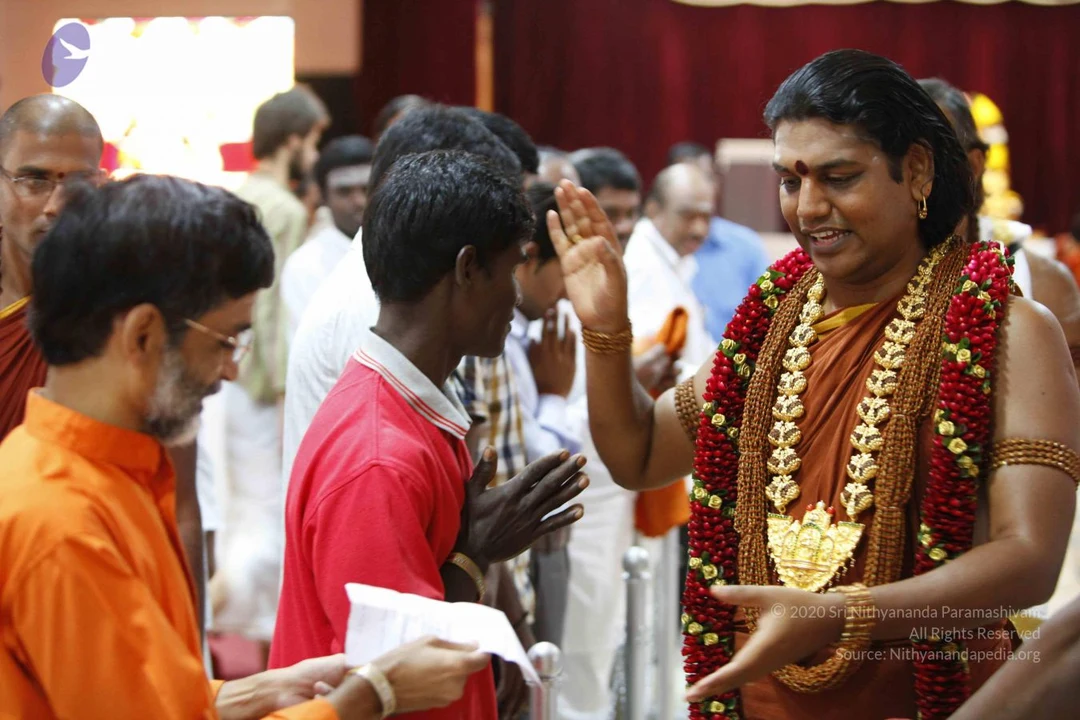
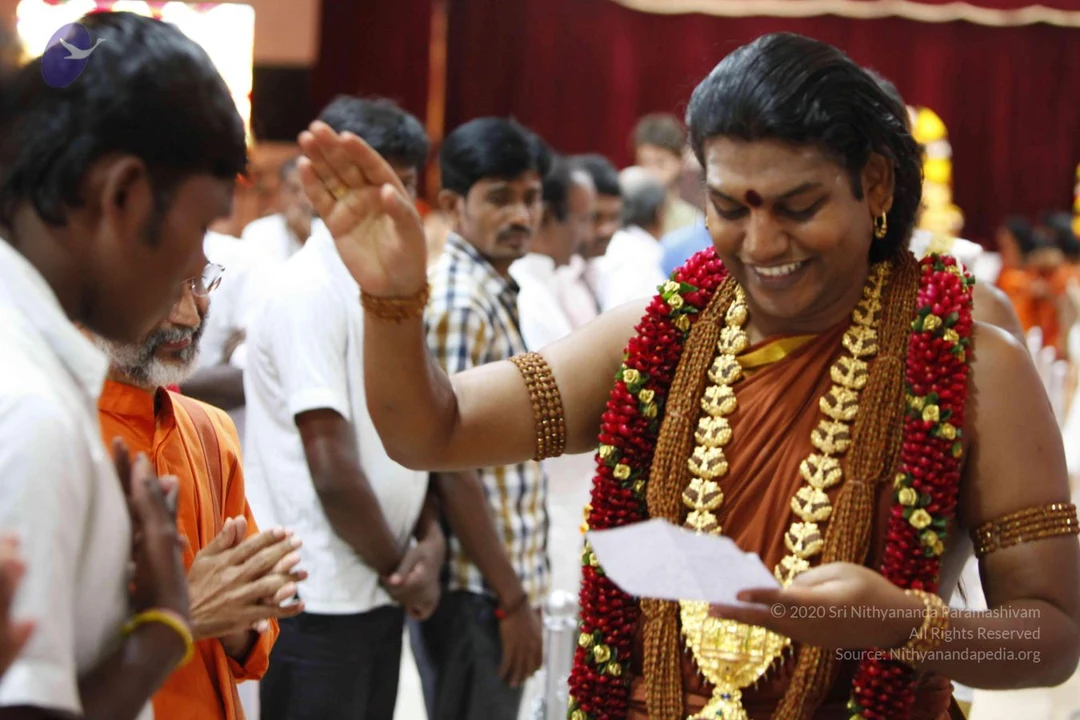
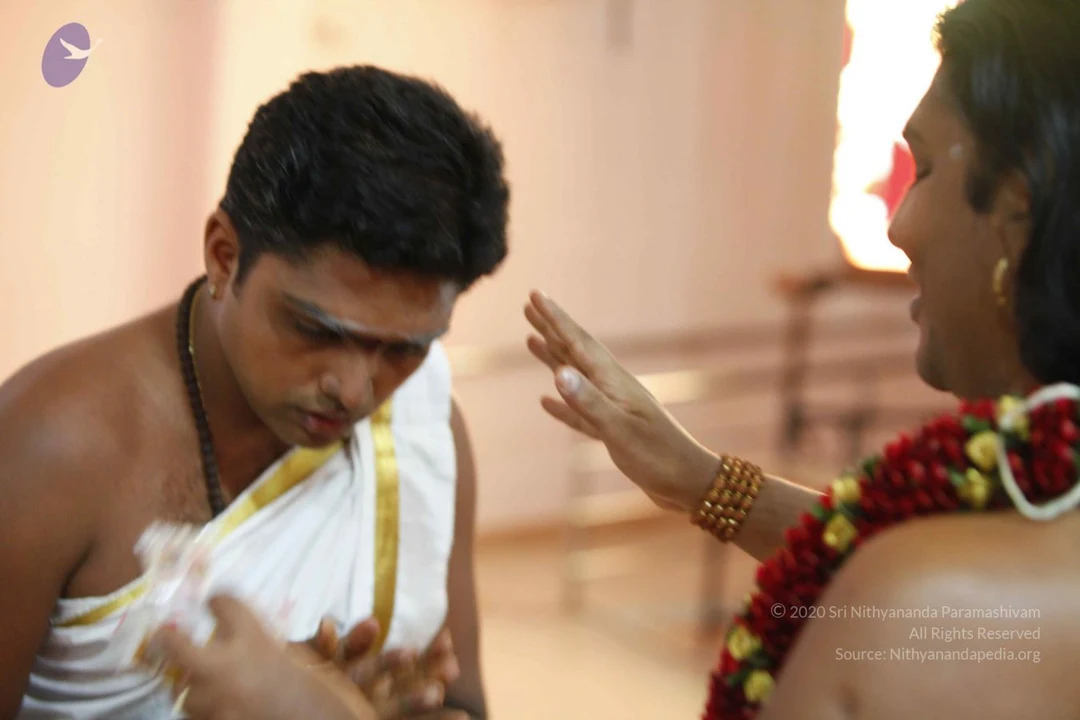
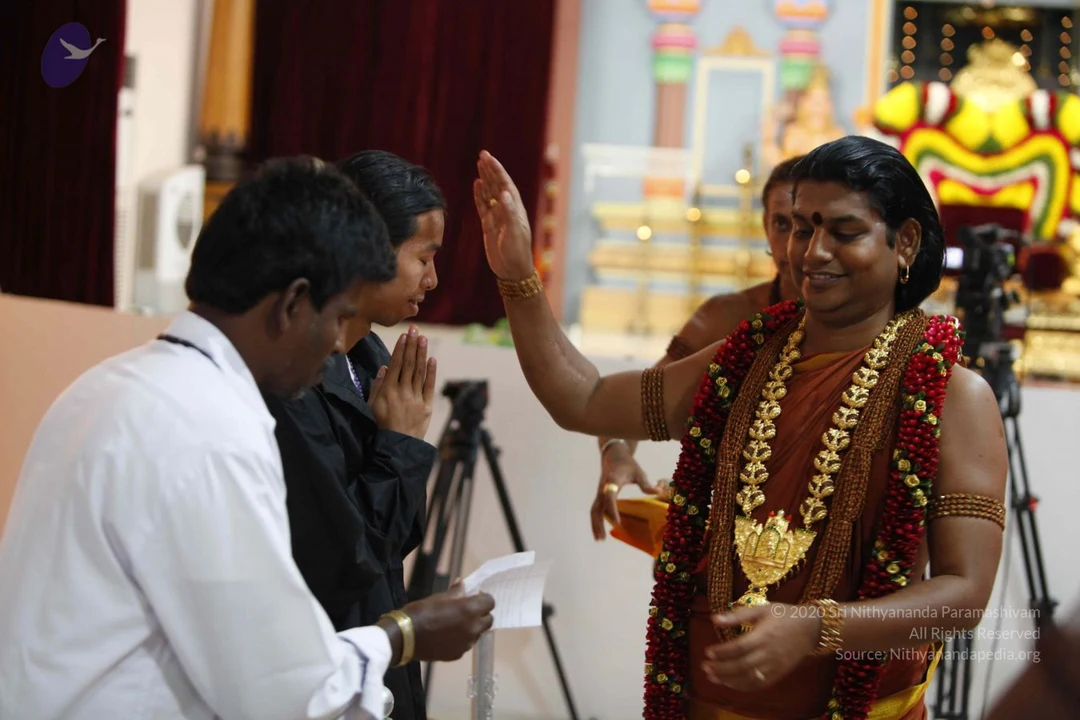
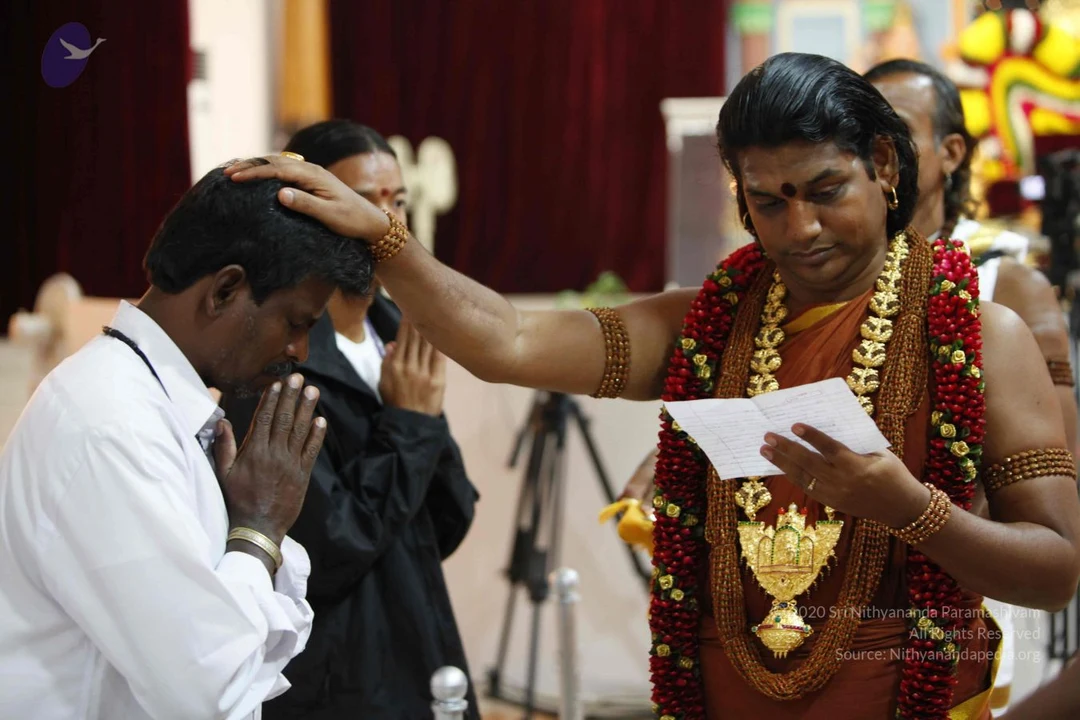
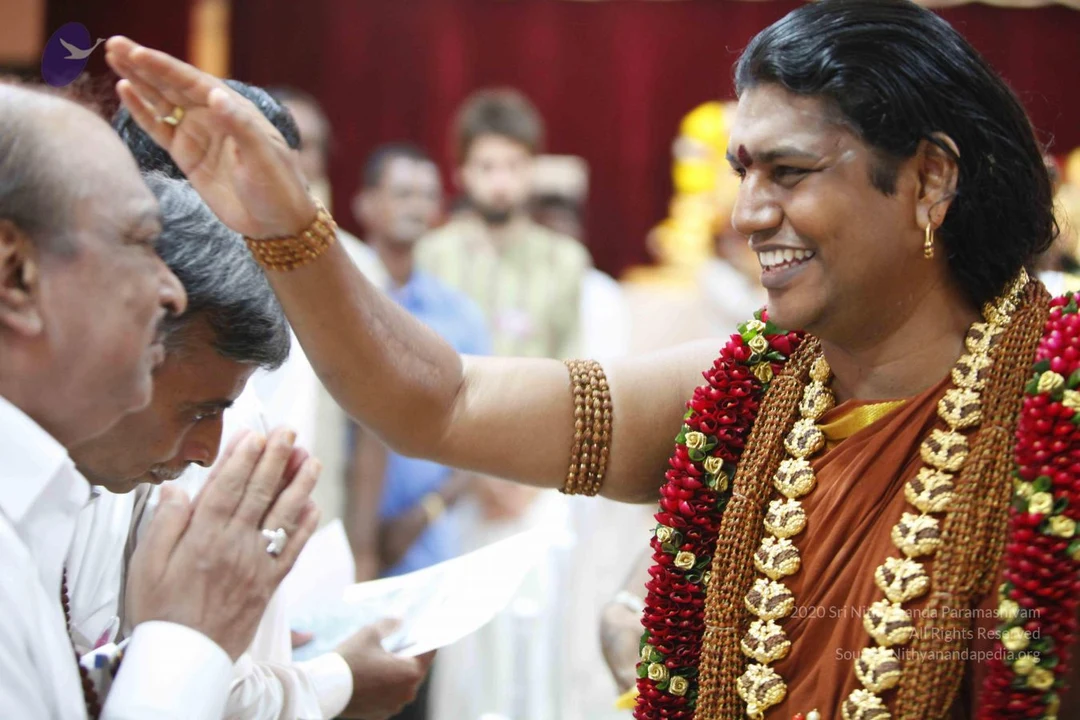
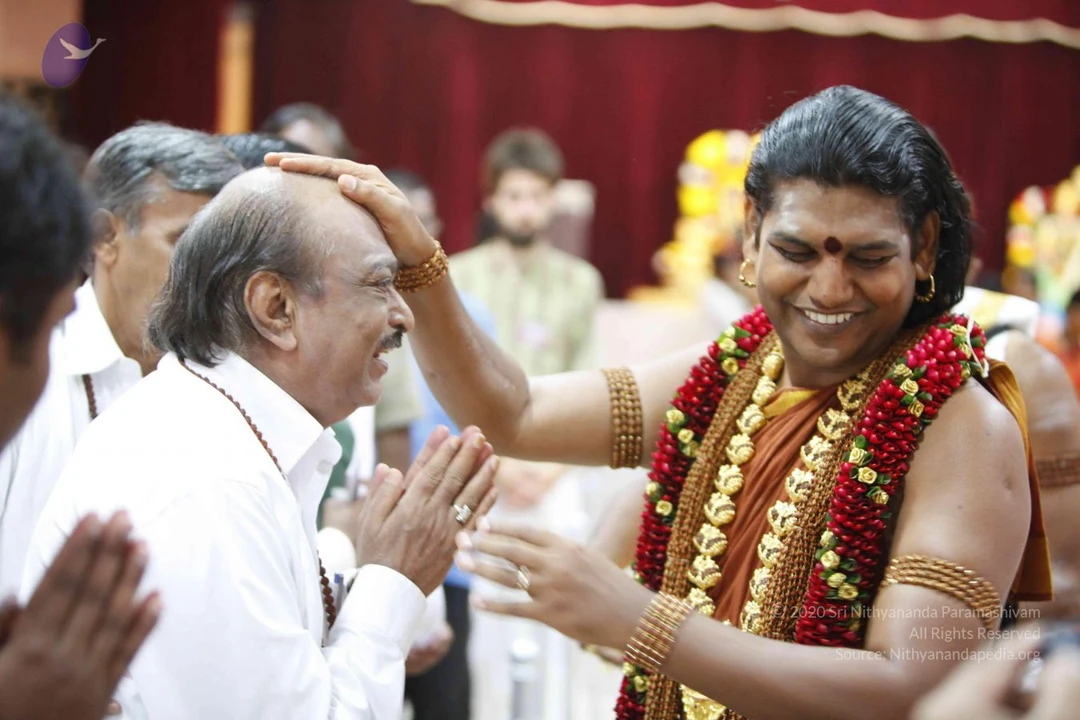
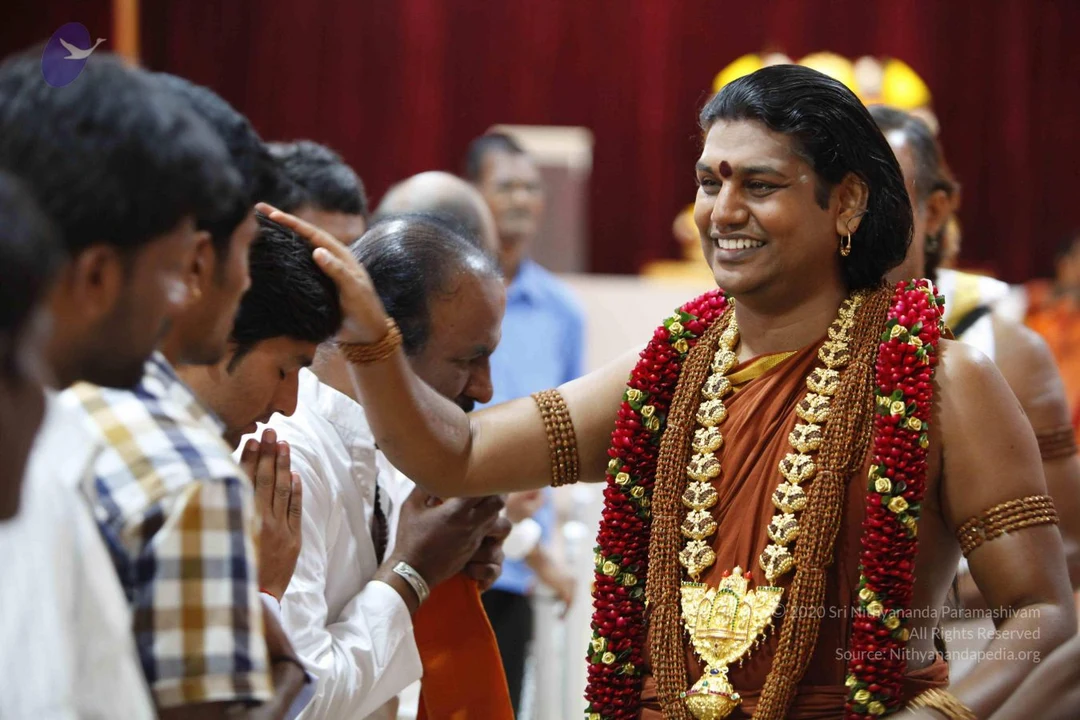
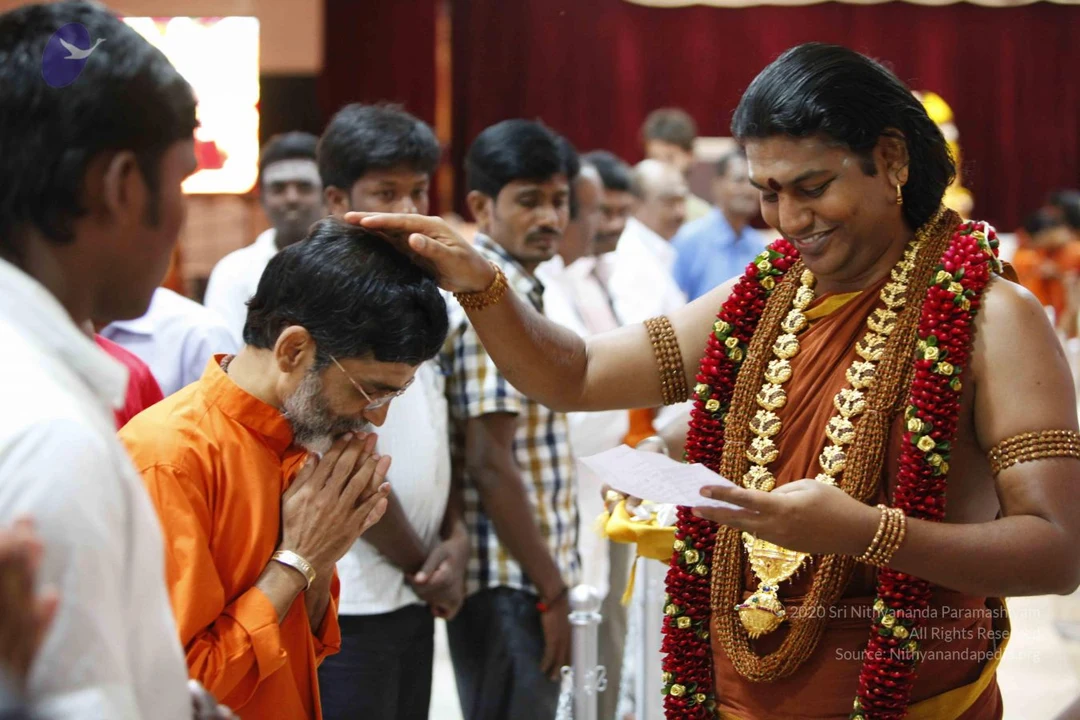
A photograph of a satsang gathering in a temple-style hall with red drapes. A figure with long swept-back dark hair, a red bindi, gold earrings, a red and gold flower garland, a heavy gold ceremonial necklace with a large gold lotus pendant, gold armlets and an orange-brown garment raises one hand in blessing toward a young man in a red polo shirt who holds his palms together in namaskar. To the left, a man in orange robes with glasses stands beside him. Devotees in white and light clothing stand in the background, several with hands folded. The figure's long hair, gold ornaments and rudraksha-style adornments are consistent with the Swamiji candidate; the description is probable rather than confirmed.A photograph of a satsang setting with a long-haired man in an orange-brown garment, wearing a heavy gold necklace and layered red flower garlands, placing his right hand on the head of a bearded man in an orange kurta who has his palms pressed together in namaskar. The standing man wears a bright orange-brown cloth with a gold necklace and holds a folded white paper in his left hand. Several men stand behind them, including one in a checked shirt and others in white shirts, and a red curtain hangs in the background. a person appears as the figure in the garlands and gold necklace, giving blessing. Gold bangles adorn his arms.A smiling figure in an orange-brown saffron garment stands at the centre, raising one hand in a blessing gesture while holding a folded white paper in the other. Dense red and white flower garlands with gold ornaments hang around the neck and across the chest, and gold bangles are worn on the arms, with a red bindi on the forehead and long swept-back hair. To the left, a man in a white shirt presses his palms together in greeting, and a bearded man in an orange kurta stands beside him with hands folded. Behind them, several people in white and checked shirts stand in a hall with red drapes and warm lighting. Swamiji (probable) is the central figure, identified by his crown-less swept hair, saffron clothing, ceremonial gold necklace and garlands.A photograph of a shaved-headed, bare-chested young man in a white dhoti with a gold border and a dark rudraksha mala, sitting with head bowed and hands cupped. Facing him, a person with swept-back dark hair, gold earrings, a red and yellow flower garland and a gold bangle raises one hand toward him, apparently blessing or addressing him. A white cloth and a small object are visible in the foreground. The background is a pale pink wall with a blurred warm light source.A photograph of a satsang-style scene in a temple-like hall with a golden shrine and colourful deity decorations in the background. A man in saffron-orange clothing with long swept-back dark hair, a red tilak, layered gold ceremonial necklaces and red flower garlands raises one hand in blessing while smiling. Two people in the foreground, one in a white shirt and one in black, press palms together or hold a paper, and a camera on a tripod is visible at right. Probable Swamiji (saffron clothing, long swept-back hair, gold necklaces and rudraksha-style garlands) is giving a blessing to devotees.A photograph of a ceremonial blessing in a hall with a dark red curtain. A man in a saffron-orange robe with a bindi, a red flower garland and layered gold necklaces, including a large gold pendant, places his right hand on the head of a kneeling man in a white shirt with his palms pressed together in prayer. The robed figure holds a printed sheet in his left hand. Behind them a second man in black stands with hands folded, and a colourful decorated backdrop is visible at the top right. The robed figure has distinctive long swept-back hair and gold ornaments, a person cue, so this is an appearance-based candidate in person. Watermarked copyright text is not reproduced.

Inner-Awakening-Session

72 photosSource gallery
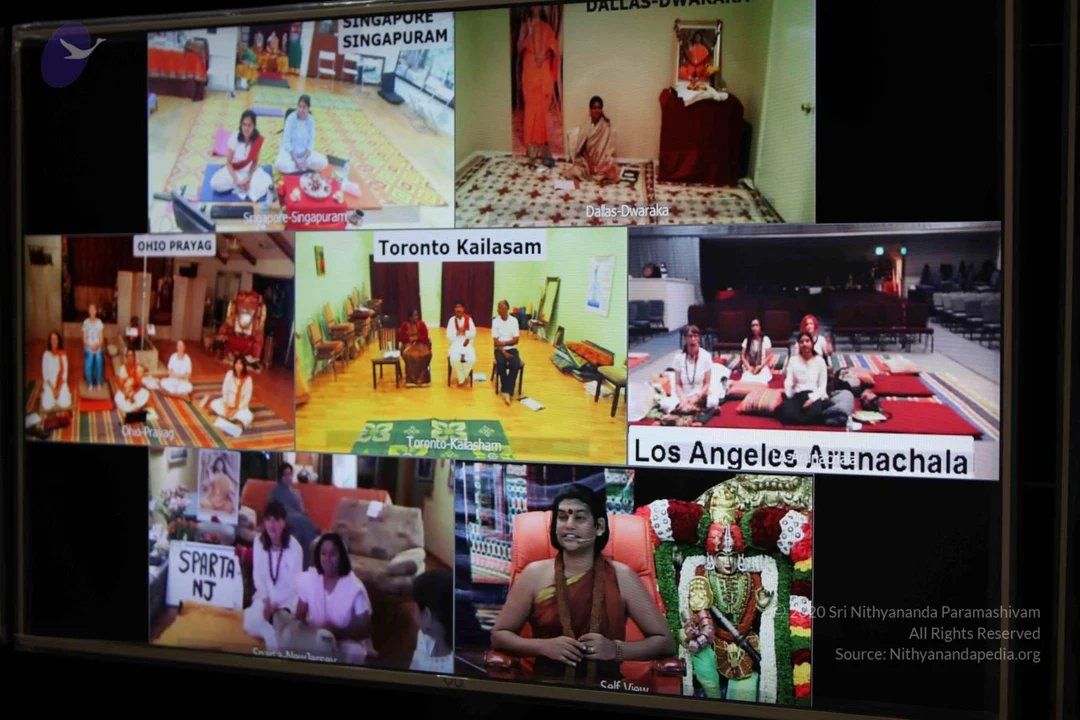
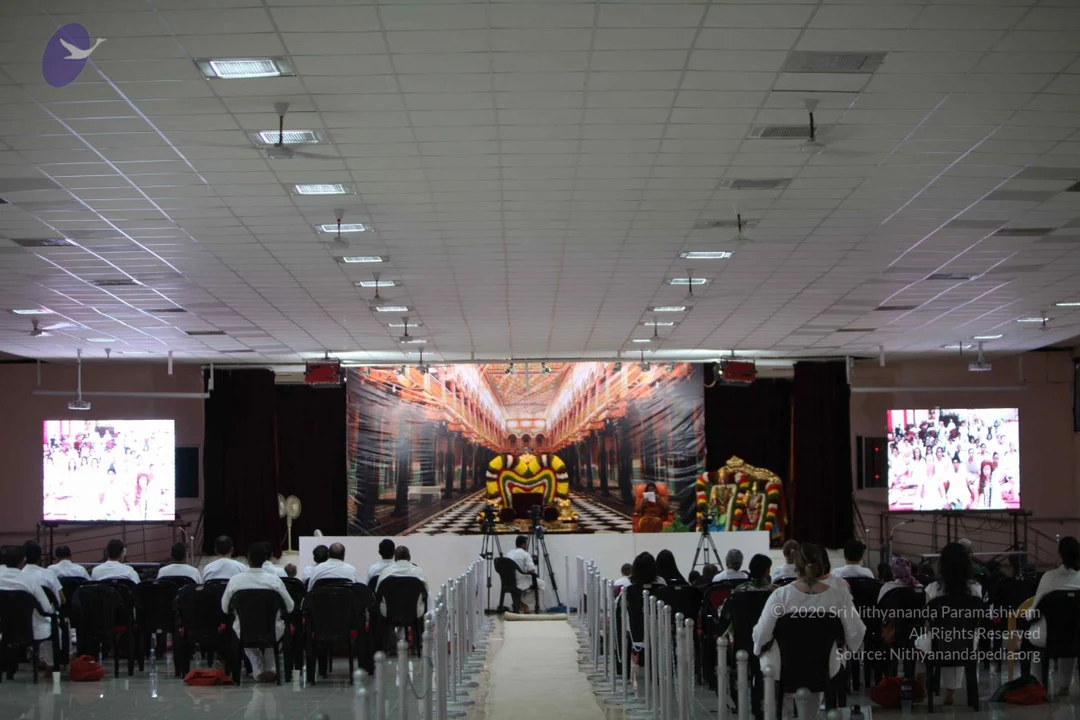
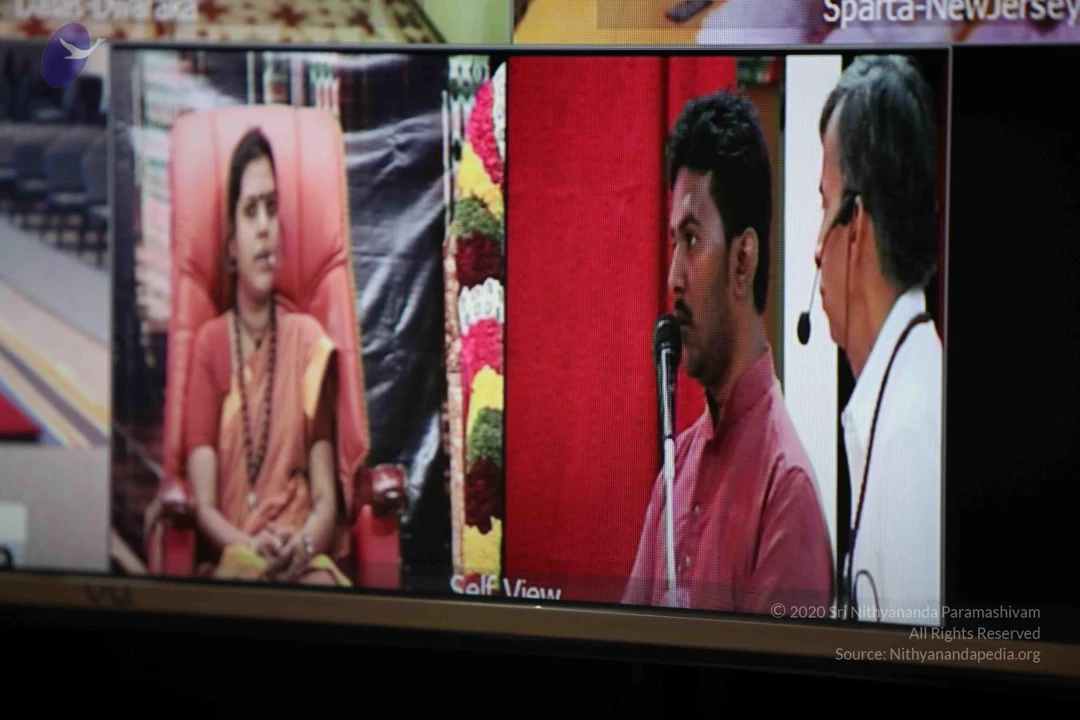
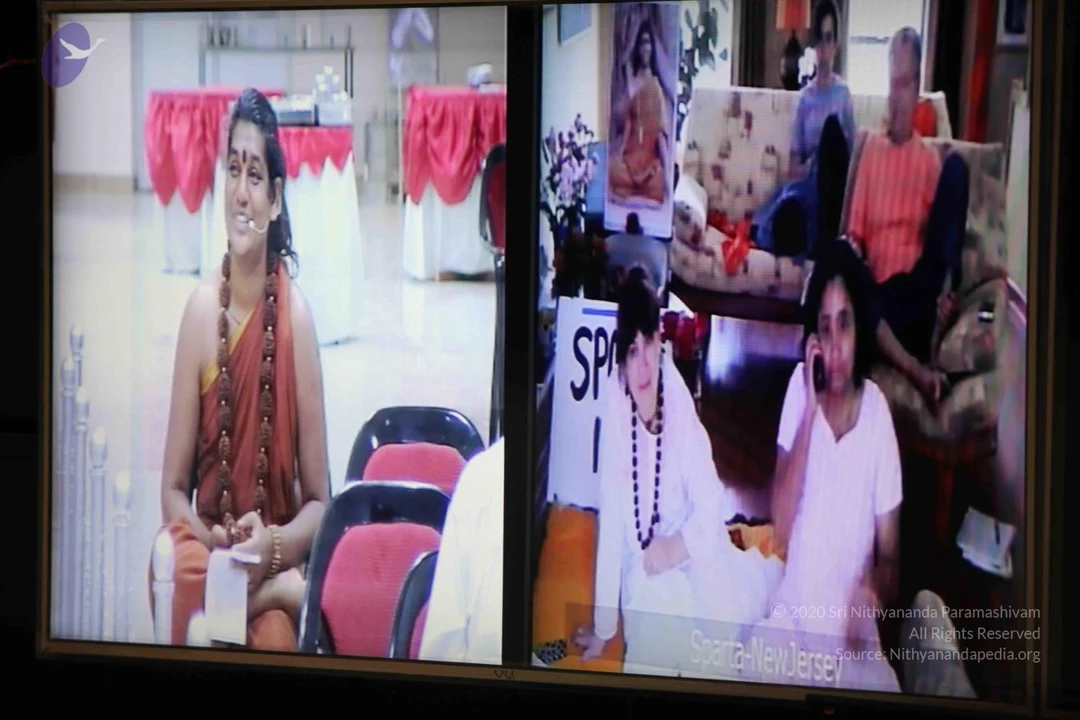
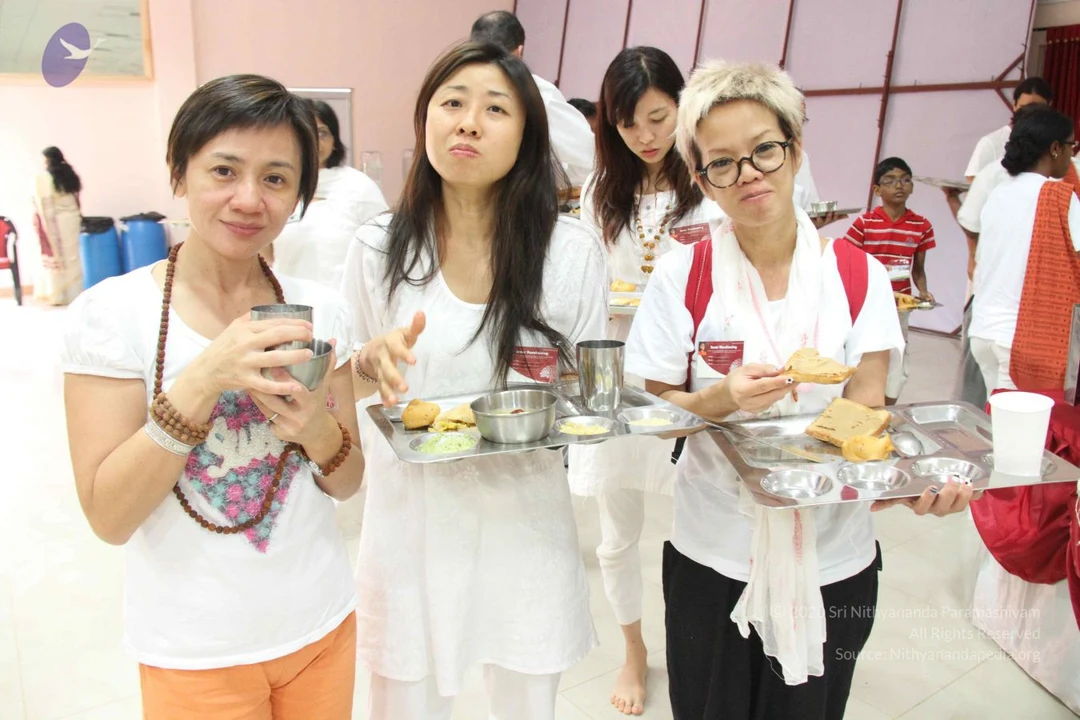
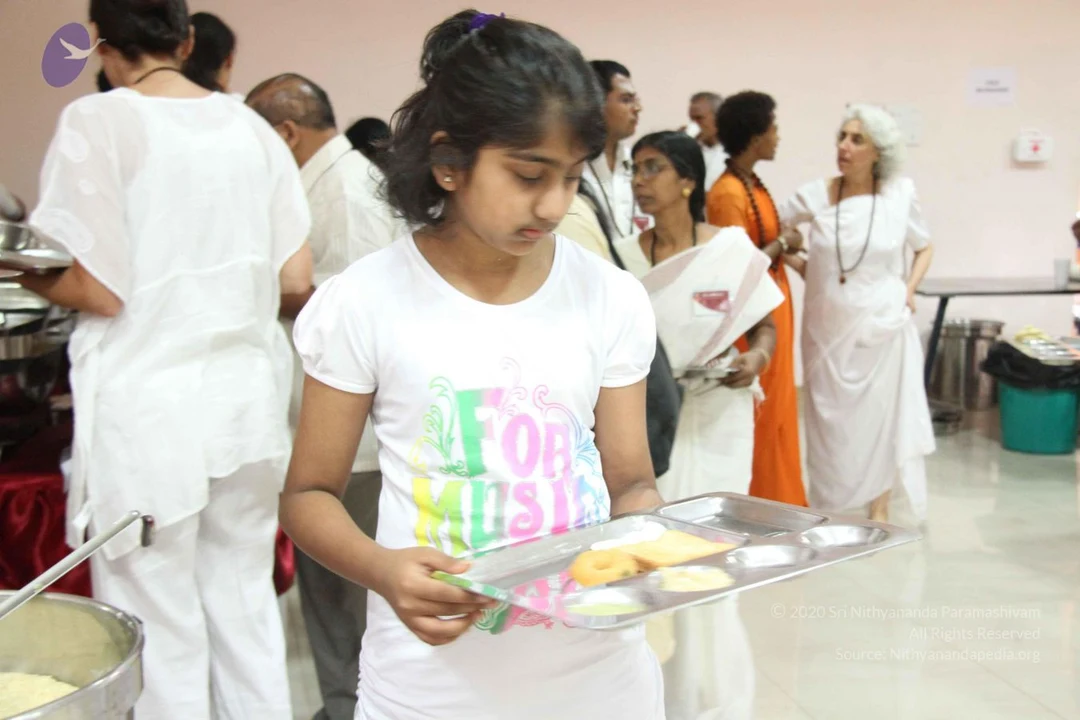
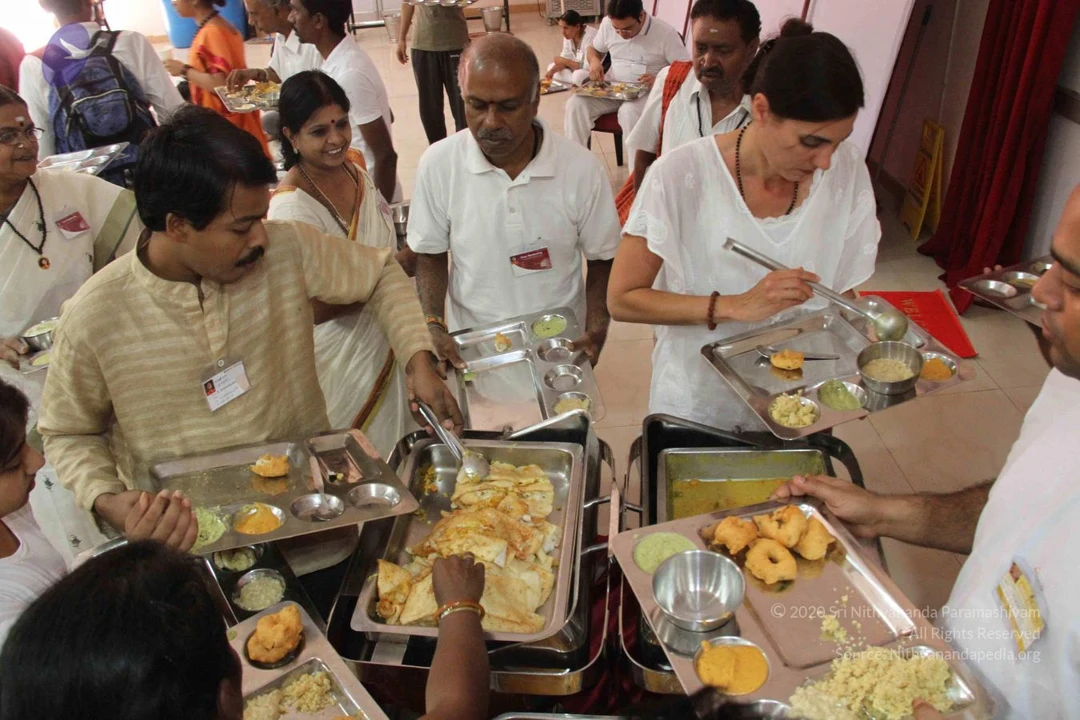
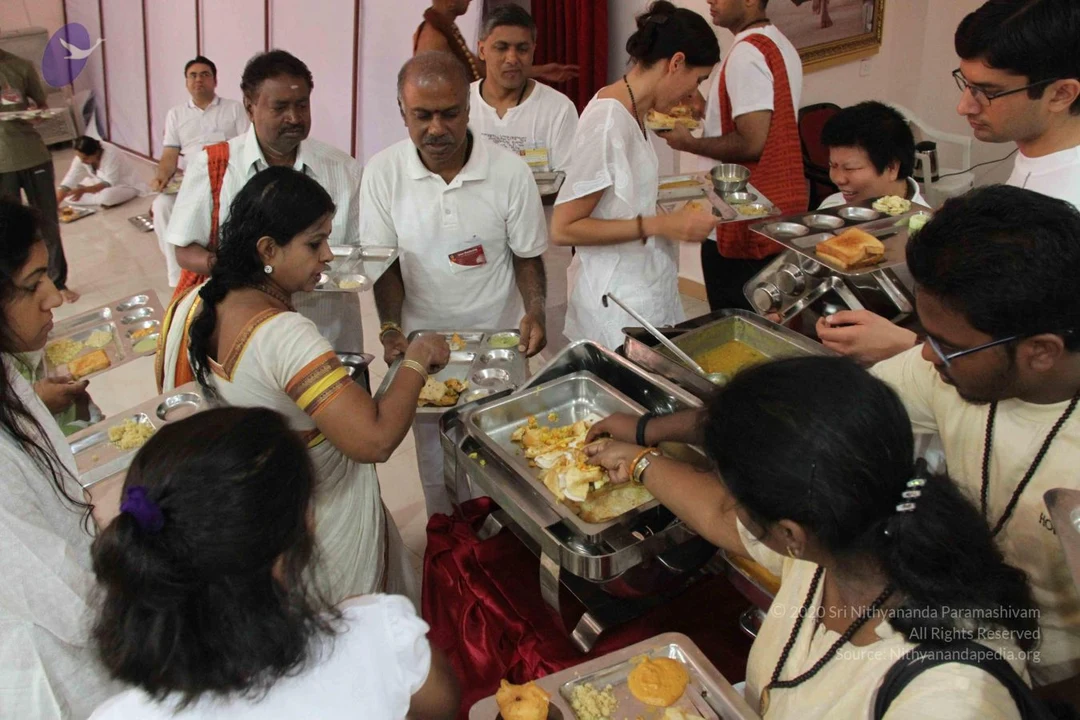
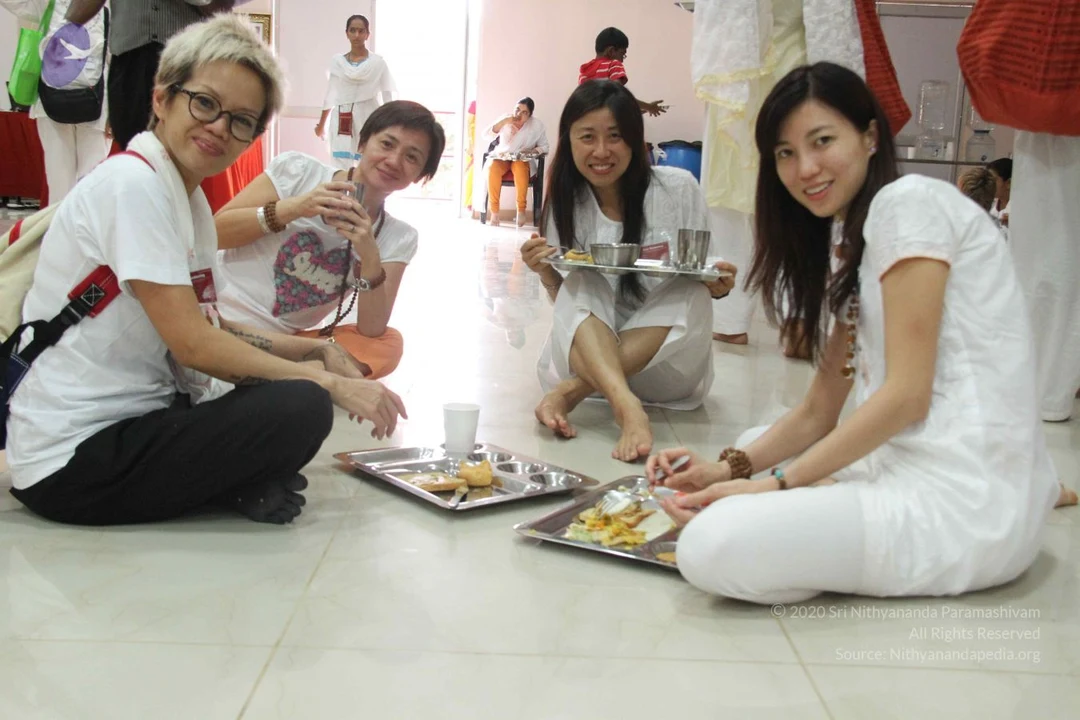
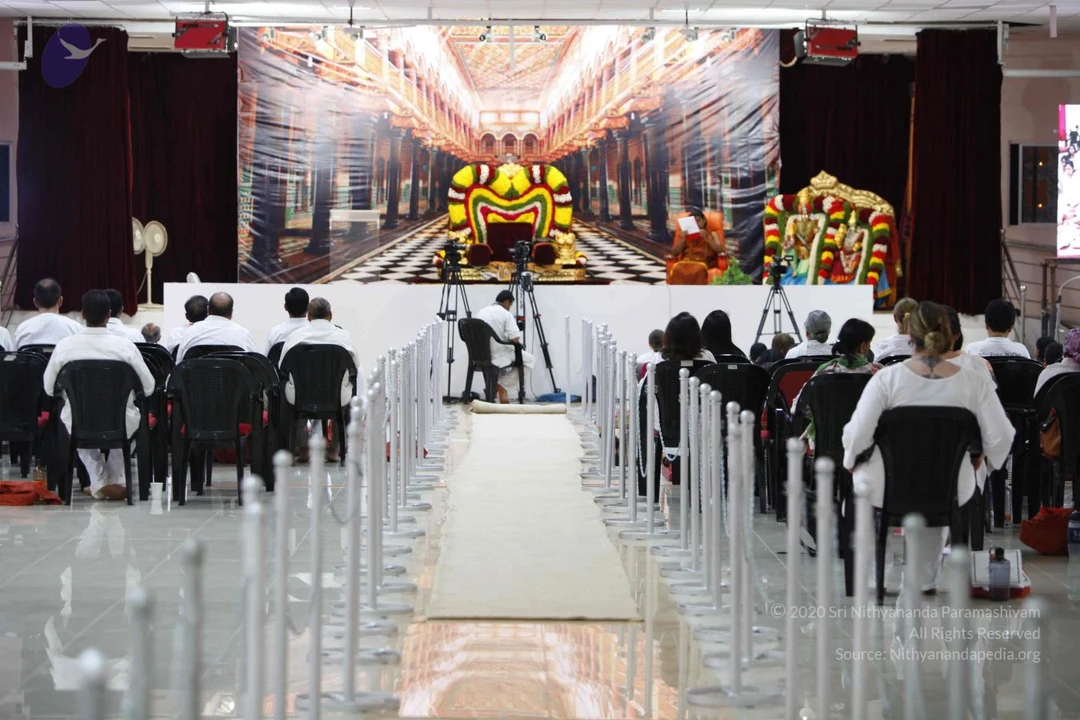
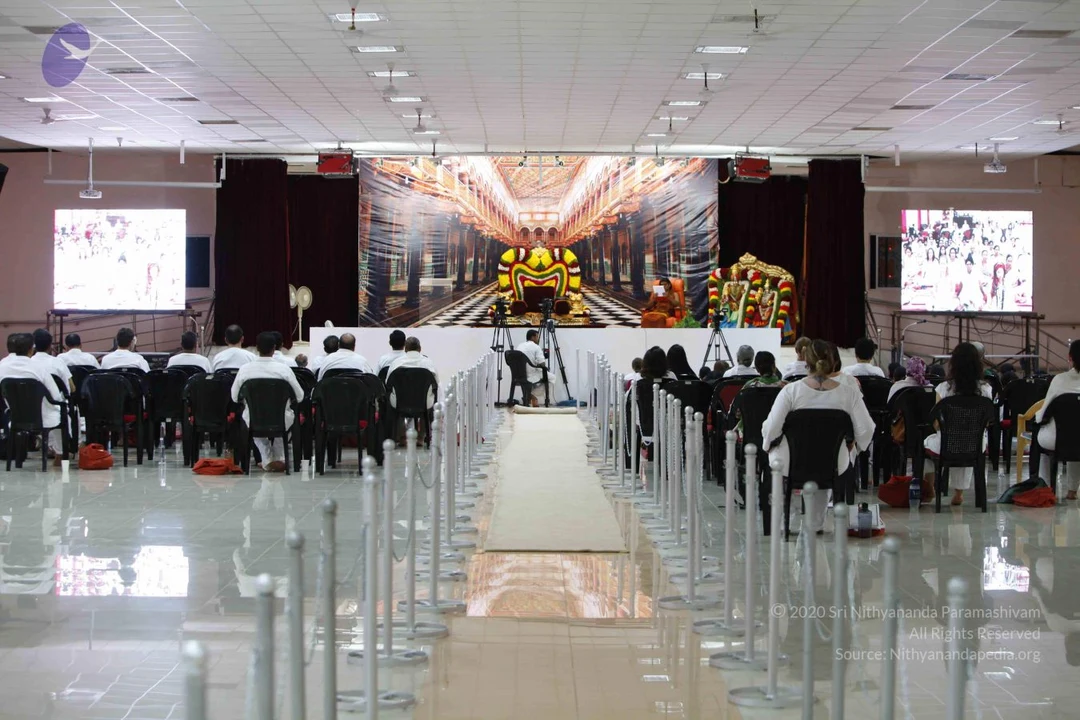
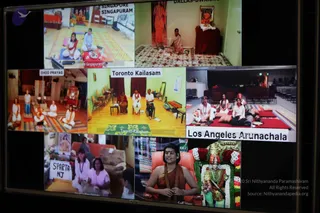
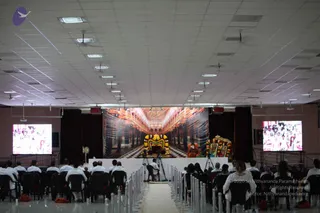
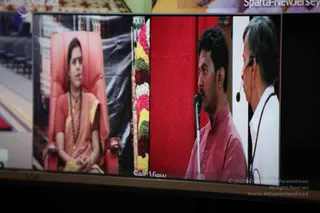
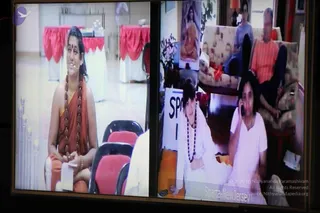
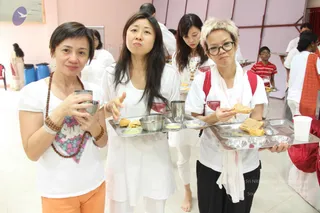
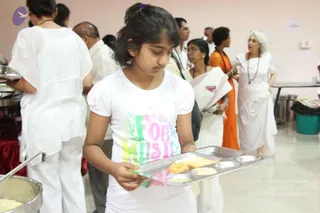
A large display screen shows a multi-panel video-conference collage of satsang sites. Panels labelled Singapore-Singapuram, Dallas-Dwaraka, Ohio Prayag, Toronto Kailasam, Los Angeles Arunachala and Sparta NJ show small groups of devotees in white and pink clothing seated on mats or chairs, some with puja trays and a framed portrait. The central-right panel shows a man in a saffron-orange robe and a flowing braid seated in an orange chair before a garlanded deity murti in gold and red, appearing as a screen image. The panels are on a screen, so they are depictions rather than physical people here.Wide view of an indoor satsang hall with a row of seated audience members in white clothing on black chairs, facing a stage. The stage backdrop is a large printed photograph of a long, pillared temple corridor glowing in warm orange light. Two ornate golden thrones with floral and garland decorations sit on the stage, one occupied by a seated figure in orange. Side screens show live footage of crowds. White barriers guide a central aisle toward the stage, and camera tripods stand near the front. Ceiling lights and fans are visible overhead. Seated people in the foreground wear white, with a few partially visible figures at the edges.A photograph of a large display screen showing a video conference split into several panels. On the left, a woman in an orange saffron-coloured sari with a rudraksha mala sits in a salmon-pink reclining chair with hands folded. In the centre panel, a man in a pink shirt speaks into a microphone while a man in a white shirt with a headset microphone listens beside him. Behind them is a red curtain and a garland of red, orange and yellow flowers. Labels at the top read Dallas-Dwaraka and Sparta-NewJersey, and a Self View label appears at the bottom. The room behind the screen is dark with rows of chairs.A photograph of a large screen split into two video feeds during a satsang. The left feed shows a woman with long dark hair in an orange saree and rudraksha mala seated on a chair in front of white-draped tables, speaking into a headset microphone. The right feed shows a live link from a room with a floral sofa where a man in an orange shirt sits beside a woman in white, and a woman in white with a rudraksha mala sits in front of a white sign reading SP.... Below, a caption reads Sparsa-New Jersey. A framed picture of a seated figure in orange hangs on the wall behind them.Photo of women in white clothing at an ashram meal service. On the left, a woman in a white t-shirt and orange pants wears rudraksha beads and bracelets and holds small steel cups. In the centre, a woman in a white kurta holds a steel tray with dal, chutney and flatbread. On the right, a woman with short silver-blonde hair and dark-rimmed glasses wears a white top, black pants and a white shawl, carrying a tray of chapatis and steel bowls. Behind them, people in white and orange dress move through a hall with pink walls and blue water drums.A young girl in a white t-shirt with a colourful multicolour 'FOR MUSIC' print carries a stainless steel divided tray holding fried snacks and sweets, walking through a crowded indoor dining hall. Behind her, people in white and orange clothing stand at serving counters with steel pots; a woman in an orange top and a white-haired woman in white robes with a beaded necklace stand conversing. Some attendees wear white, and a woman wears a red-bordered white sari with a name badge. The scene resembles an ashram annadan meal service.

Inner-Awakening-Darshan

74 photosSource gallery
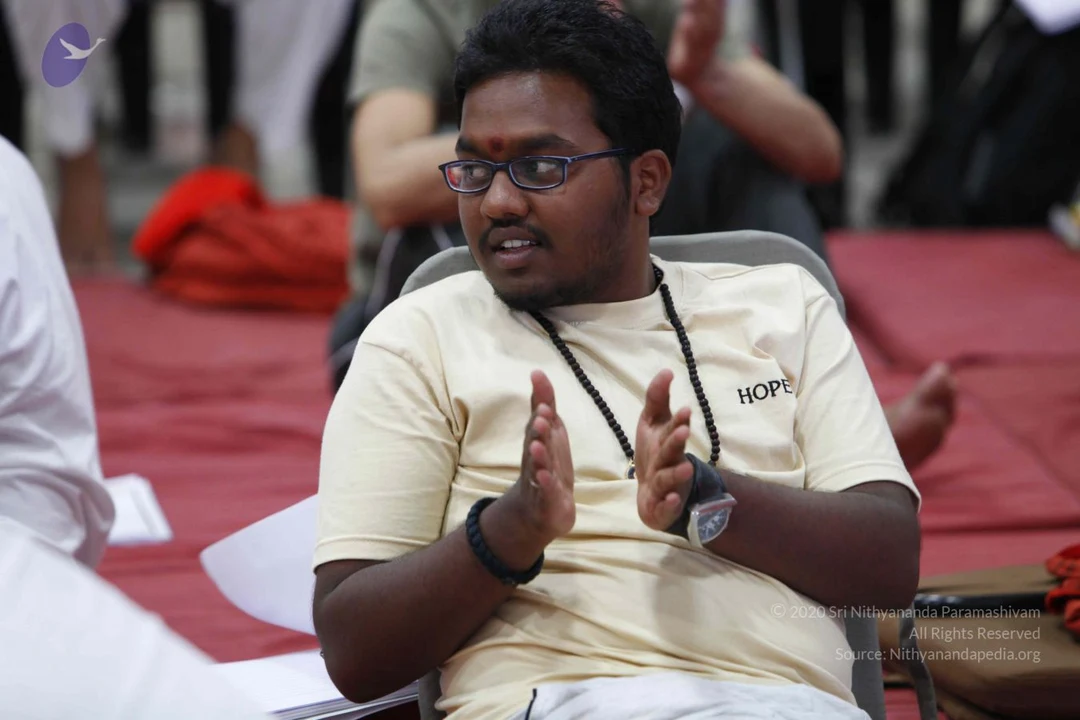
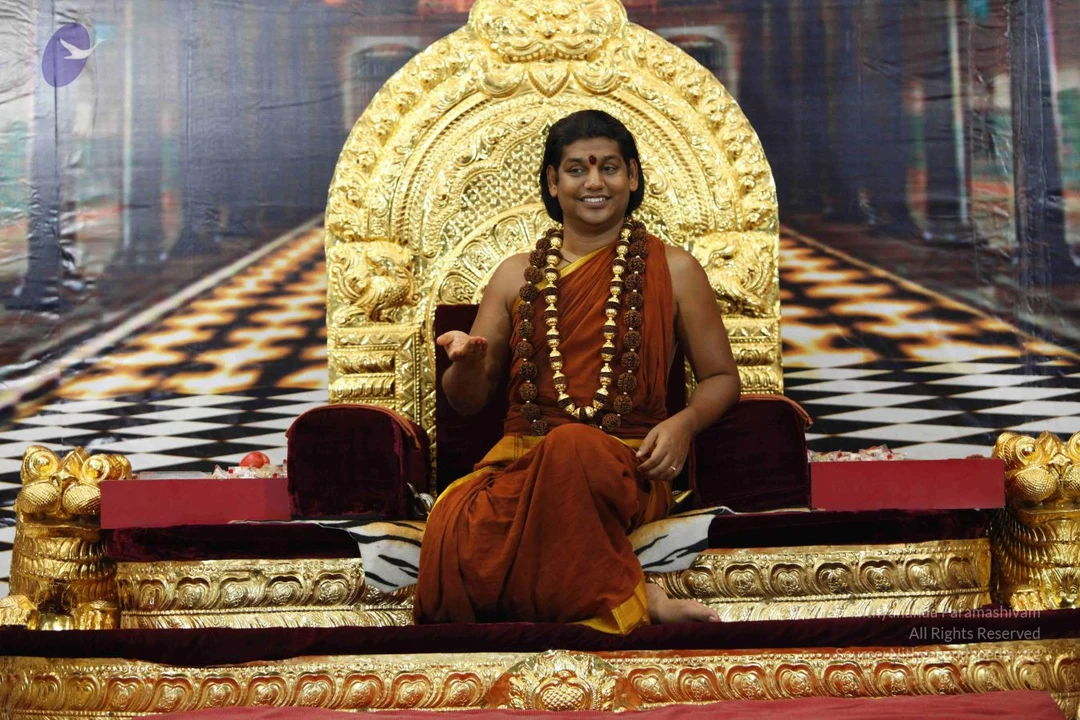
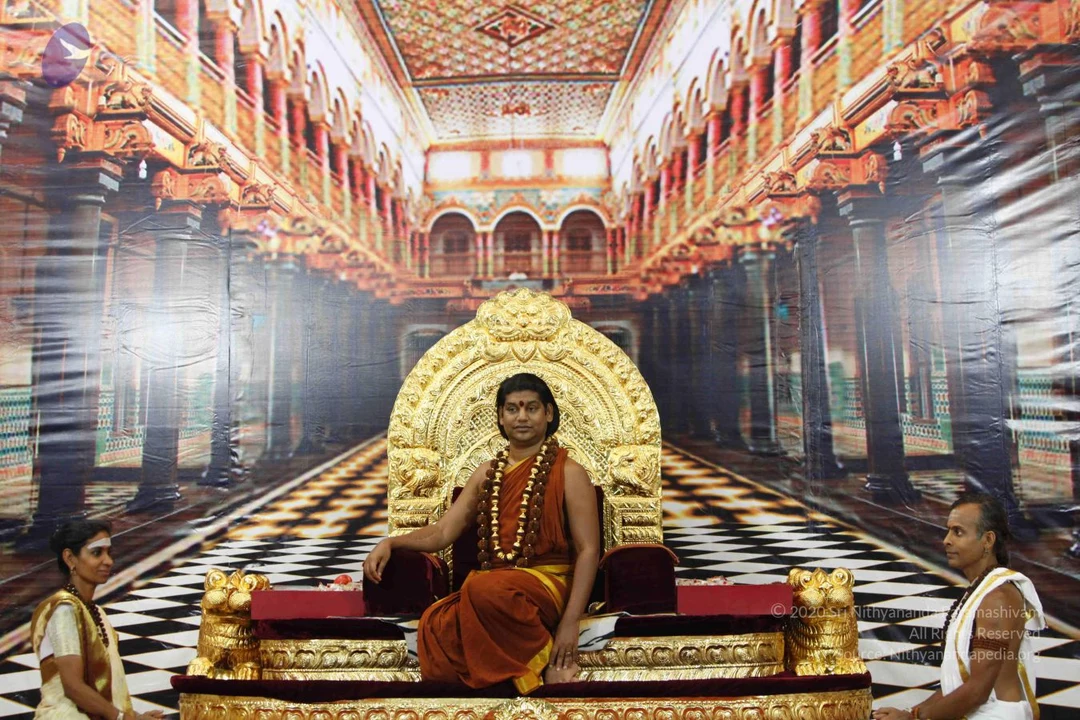
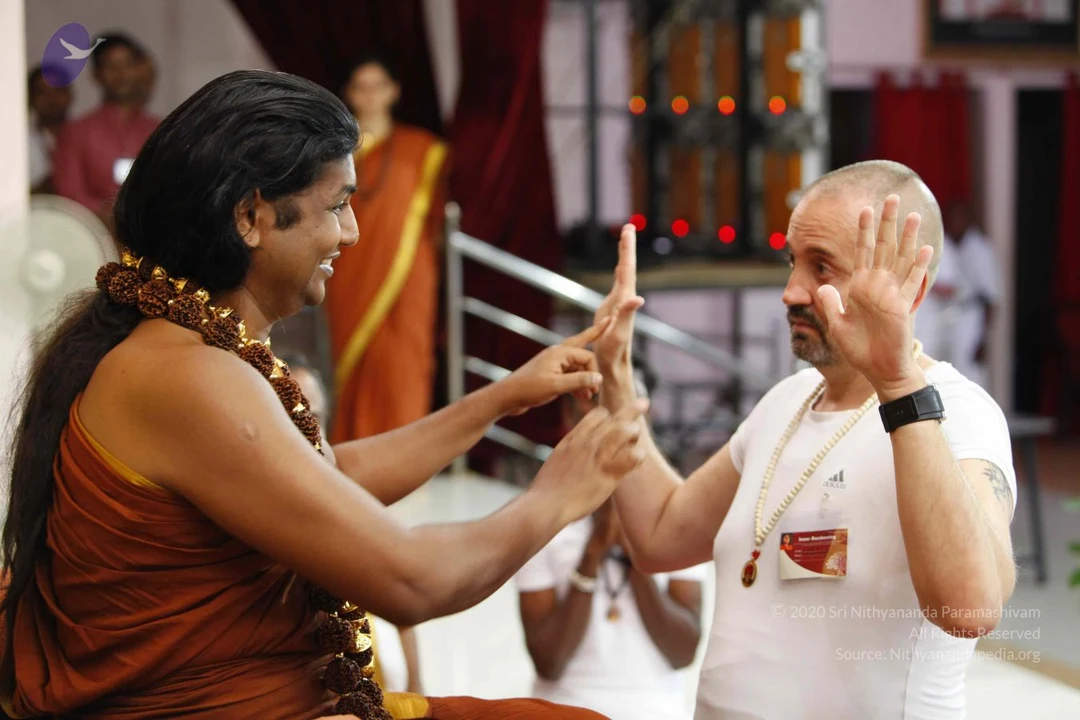
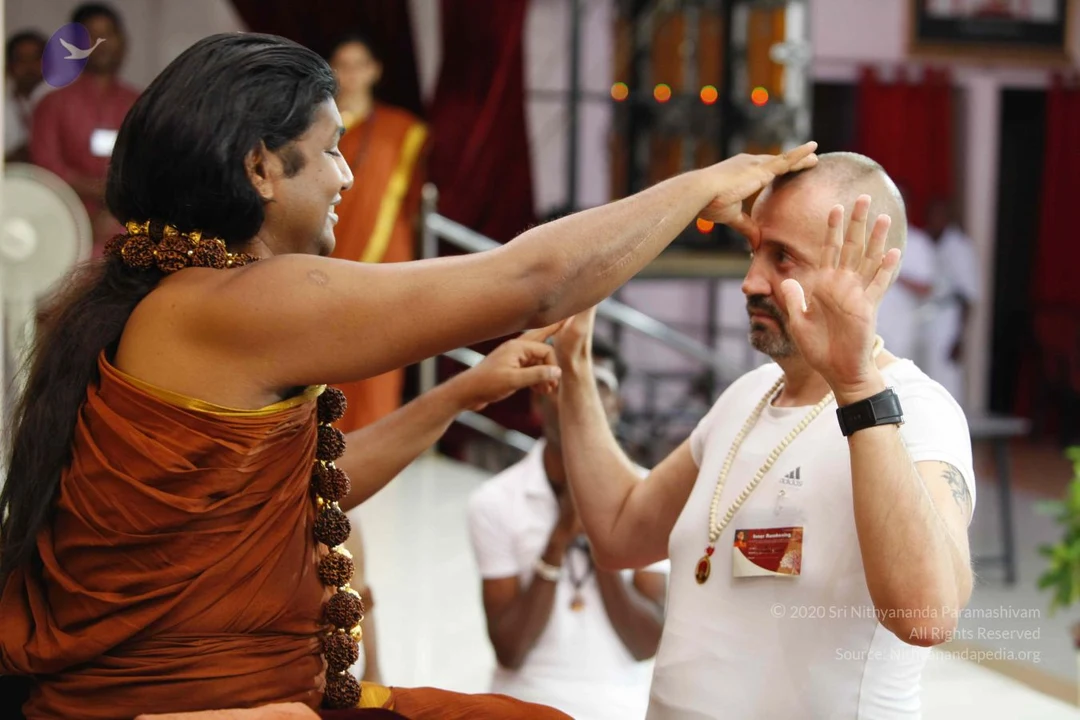
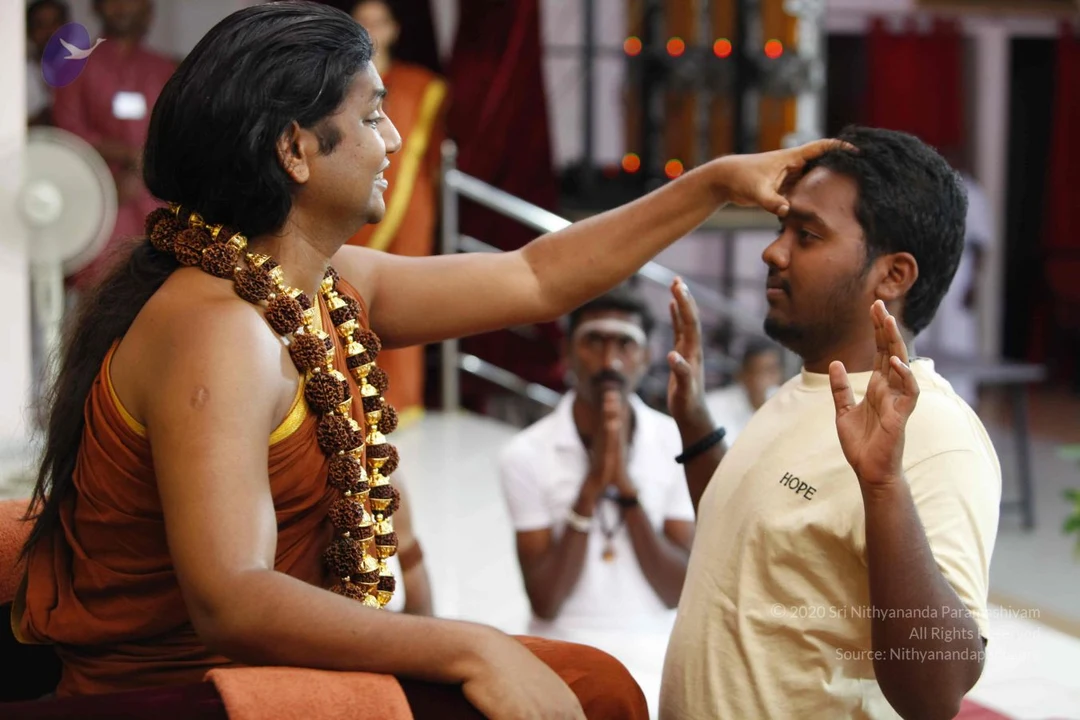
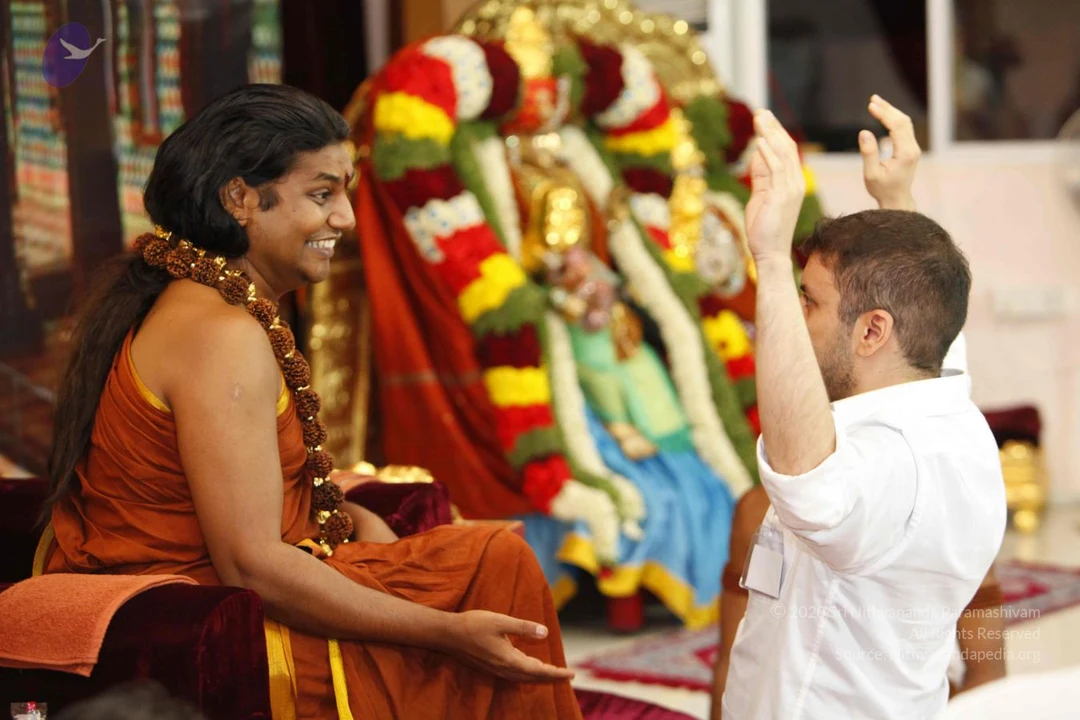
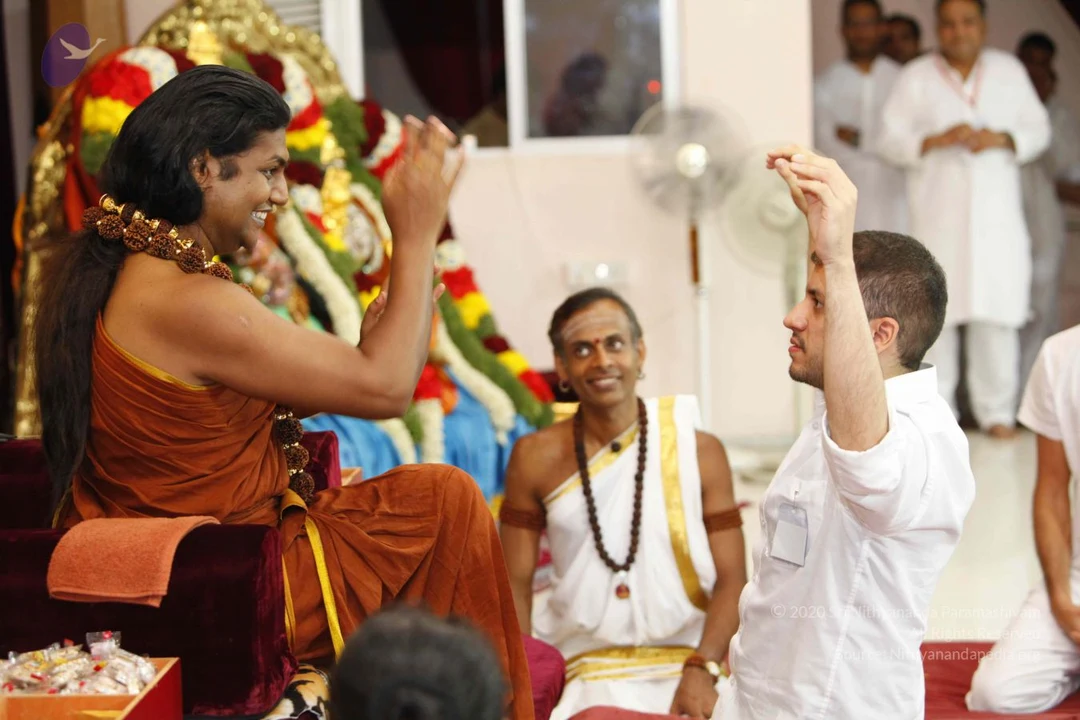
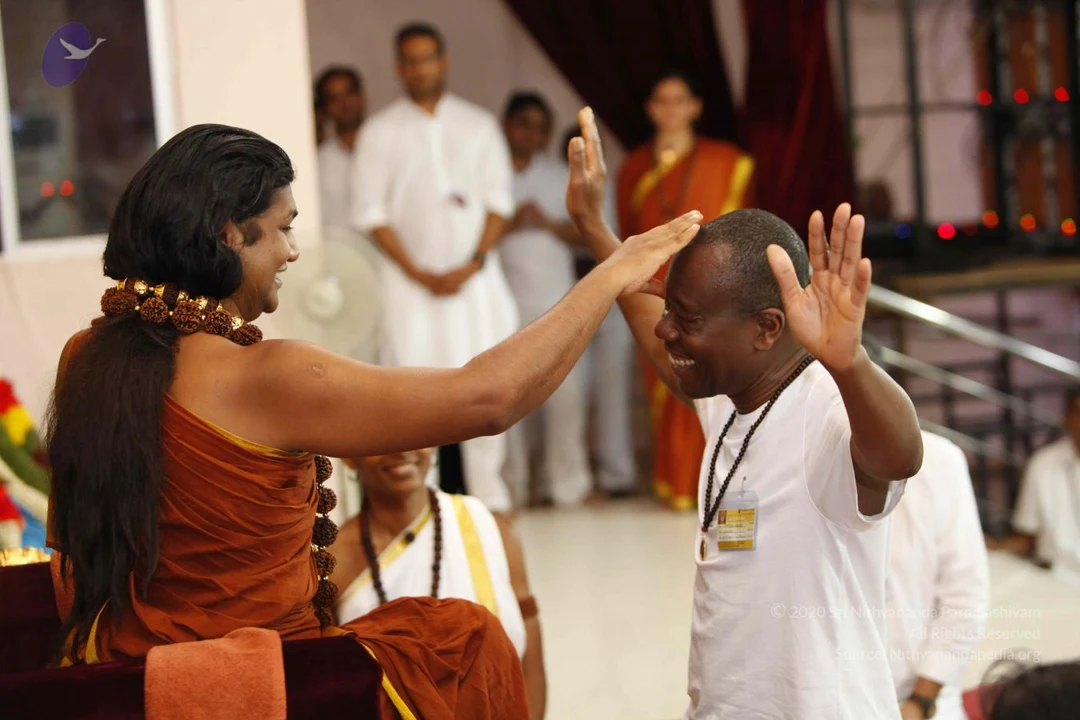
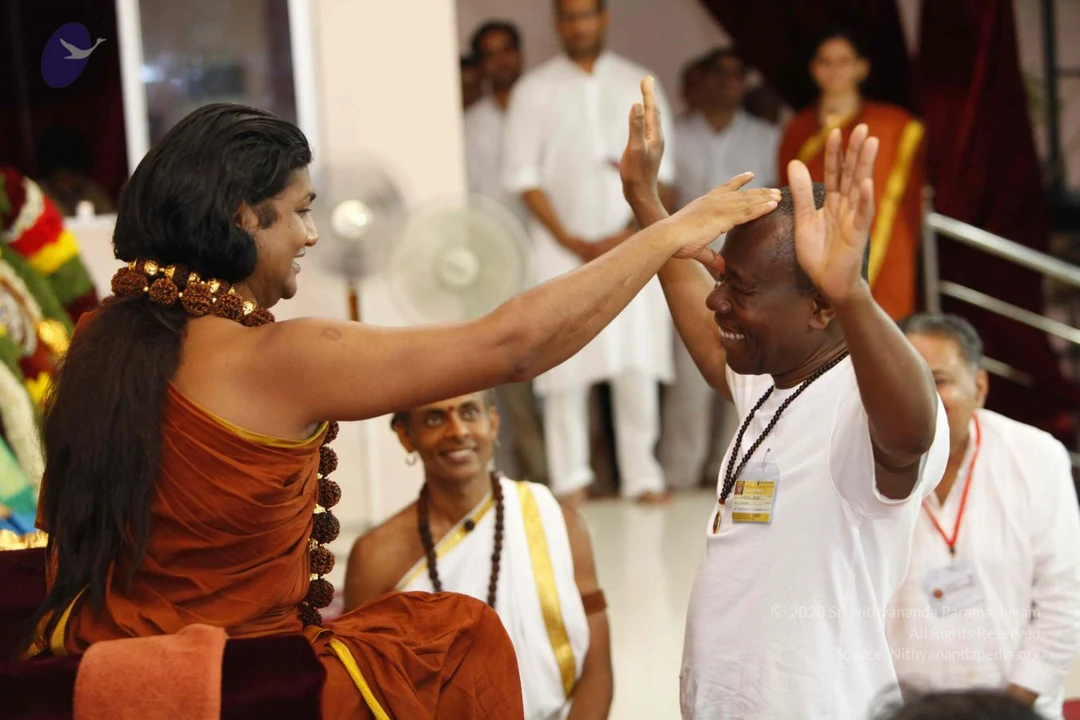
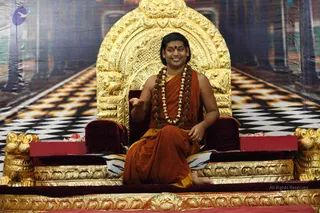
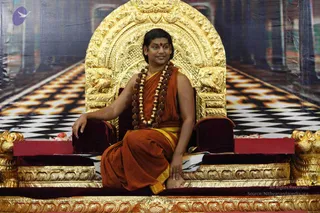
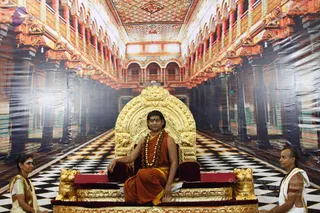
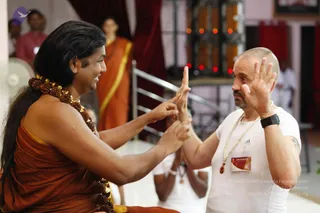
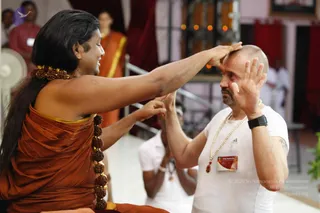
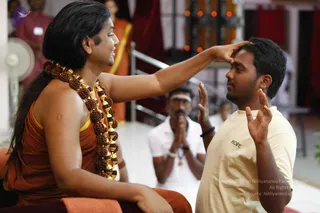
A seated man in an orange-saffron robe and yellow dhoti sits on an ornate gold throne with a carved arched back and lion-like side supports, set against a black-and-white checkered floor backdrop. He wears a long rudraksha mala with gold ceremonial beads and a red bindi, and gestures open-handed while speaking. Shown as a candidate for the a person: the saffron robe, rudraksha mala and gold ornaments are visible, and he is seated on a throne. Small offerings lie on the red cushioned platforms. Watermarked archive-style photo, no other people visible.A man with short dark hair and a red bindi sits on an ornate gold throne with carved lion-head armrests and a deep red velvet seat, set against a backdrop of a checkered black-and-gold floor receding into a hall. He wears an orange-saffron dhoti and shawl with gold borders and a long necklace of rudraksha beads and gold beads, and rests one hand on a red velvet armrest. Red and white flower petals lie on the platform beside the throne. a person (orange robes, rudraksha mala and gold ornaments on a throne), seated in person.A seated man in a saffron-orange robe and multiple beaded rudraksha-style malas sits on an ornate gold throne with a carved arched back and lion-form armrests, on a red-cushioned dais. He has a red bindi and long dark hair. Flanking him, a woman in a gold-bordered sari with a long beaded necklace sits on the left, and a man in white dhoti with a bare upper body and a rudraksha necklace sits on the right. The backdrop is a large printed banner of an ornate hall with arches, columns and a checkered marble floor. The scene resembles a staged throne arrangement at an event, with the central figure appearing to be a person based on the saffron robe, layered malas and throne-seated presence.Photograph of a satsang where a long-haired person in saffron-orange robes with a rudraksha mala and gold ceremonial necklace smiles and gestures with both hands, facing a bald man in a white t-shirt, white beaded necklace and black wristwatch who raises his palms in response. Behind them a woman in an orange sari stands near red curtains, and white-clothed devotees sit with hands joined. Lit orange and red lamps hang in the background. The robed figure has distinctive long hair, saffron clothing and rudraksha adornments, matching the page's a person label, so this is a person in person. Visible people are about five.A photograph of a satsang setting in which a long-haired figure in a saffron-orange wrap and a large rudraksha mala touches the forehead of a shaved-headed man in a white t-shirt with a white beaded necklace and a black wristwatch. The seated figure in orange extends one arm toward the man's head while the man raises both palms in a receptive gesture. Behind them, other people in white clothing stand and watch, a woman in orange sari is visible, and red drapes and small lamps line the background. The orange-clad figure shows long swept-back hair, a saffron wrap and rudraksha malas, consistent with a person presence, though the face is partly turned away.A photo of a seated man with long dark hair wearing a saffron-orange wrap and a long multi-strand rudraksha mala with gold beads, reaching to touch the forehead of a young man in a cream t-shirt reading HOPE, who holds his palms up in front of him. Behind them a man in a white shirt stands with palms pressed together in namaste, and a second person in orange stands in the background near red curtains and small lamps. The seated man's long hair, saffron wrap and rudraksha mala are visible cues, so this is a person. He is giving a blessing or initiation touch to the young man. A white-shirted devotee prays nearby.

Galleria

7 photosSource gallery
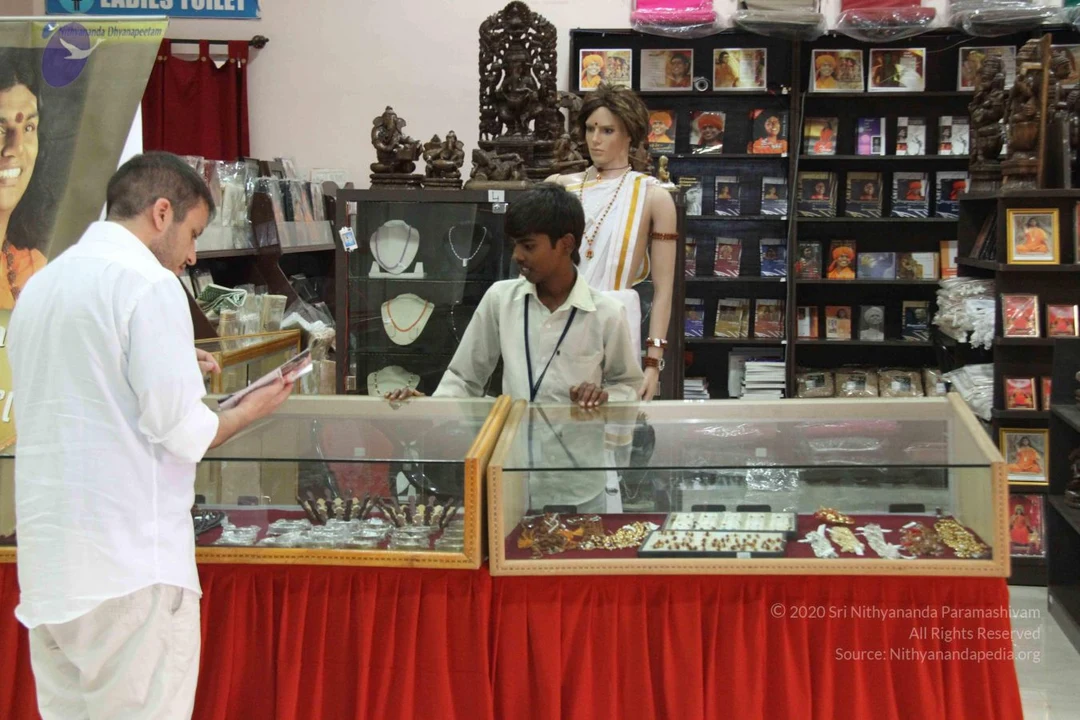
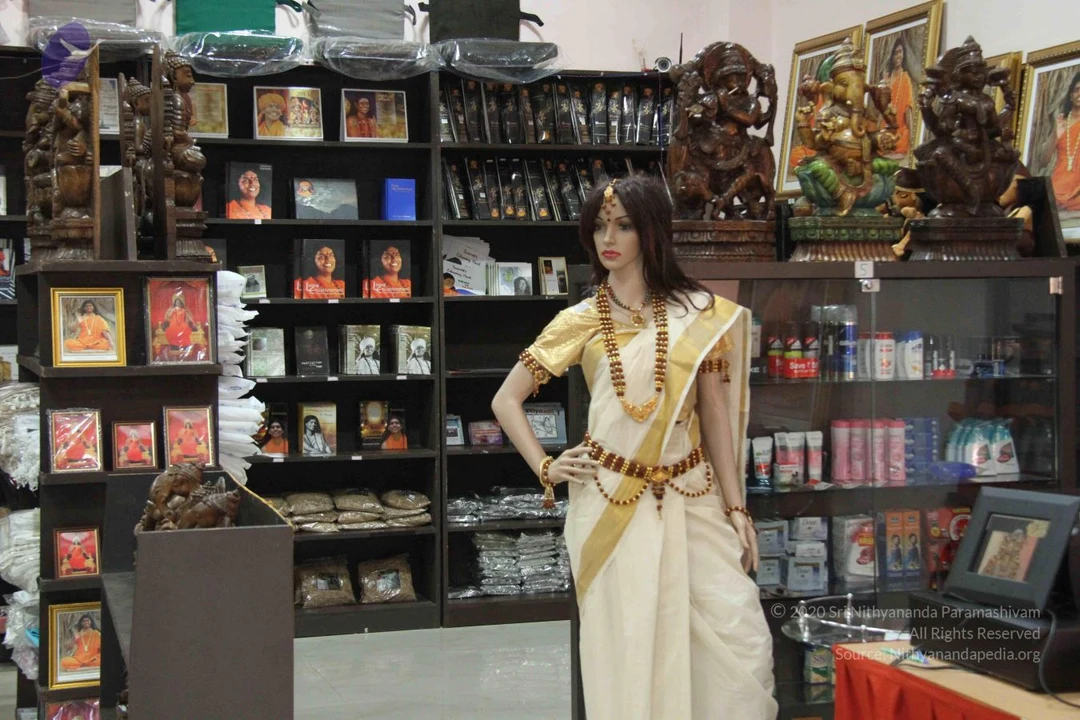
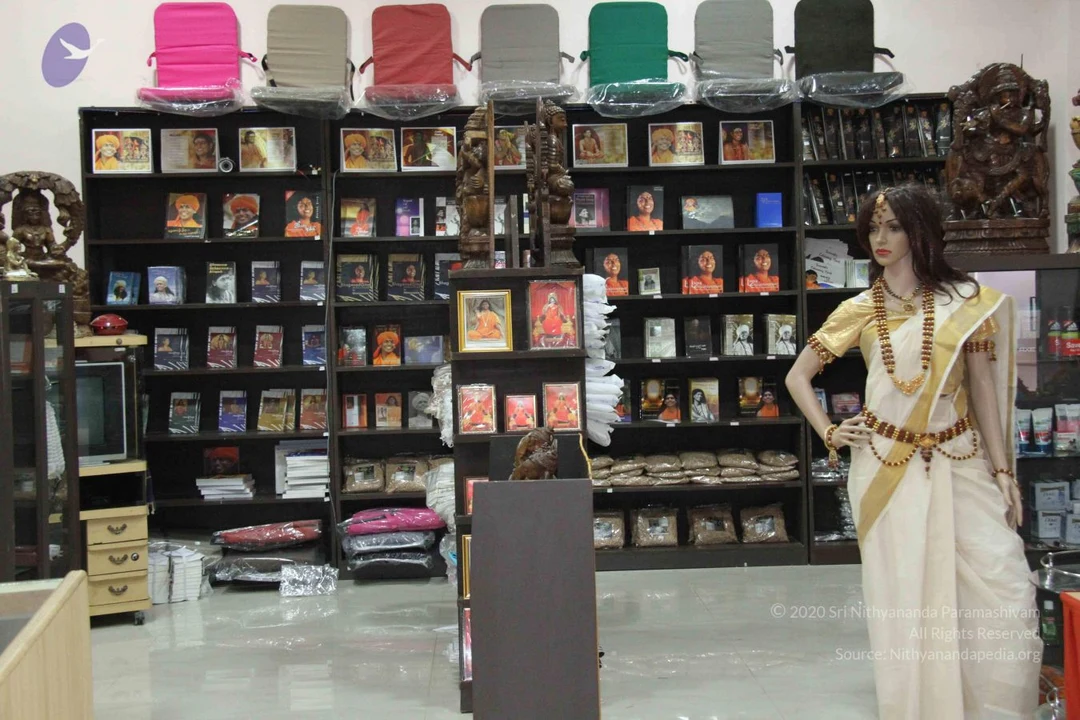
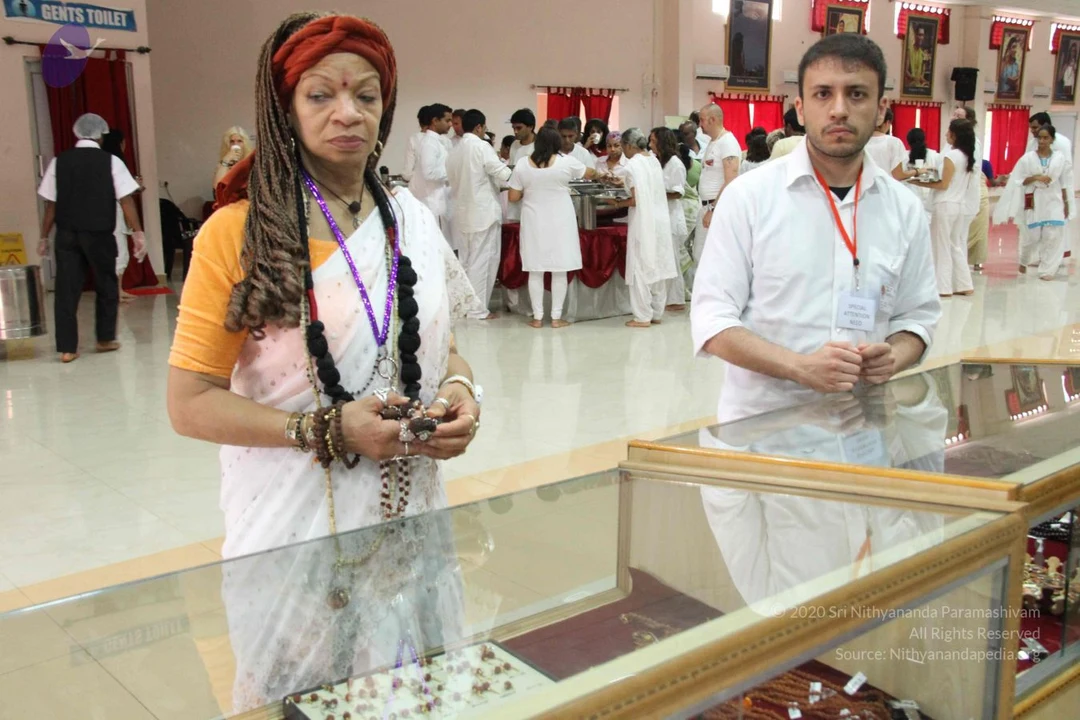
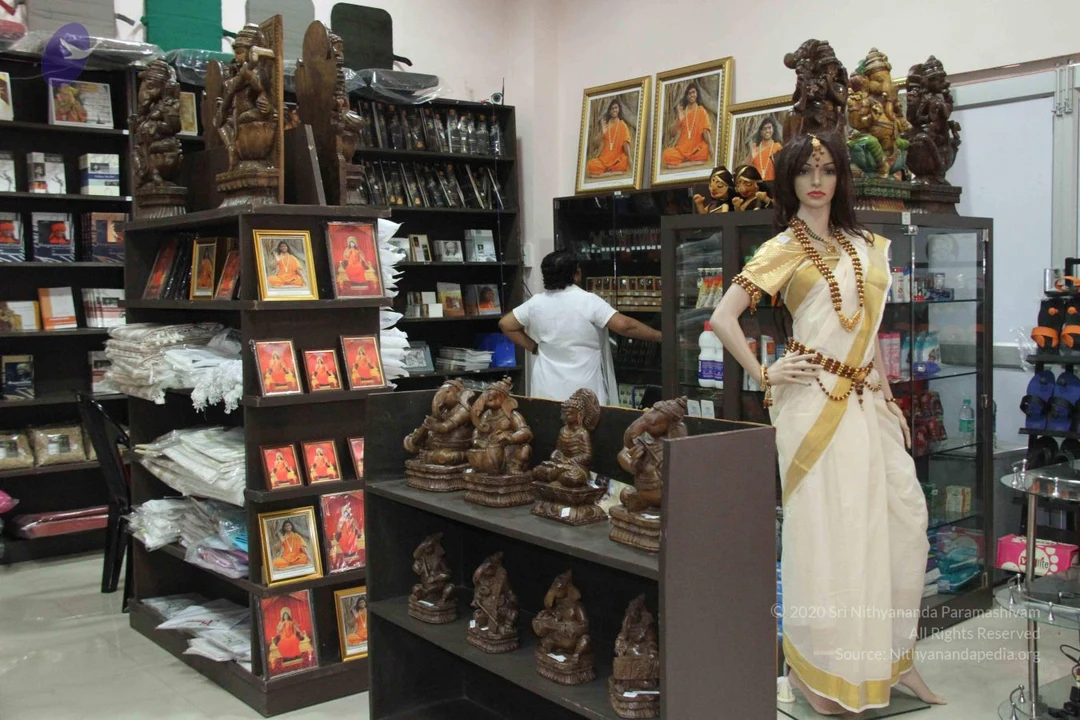
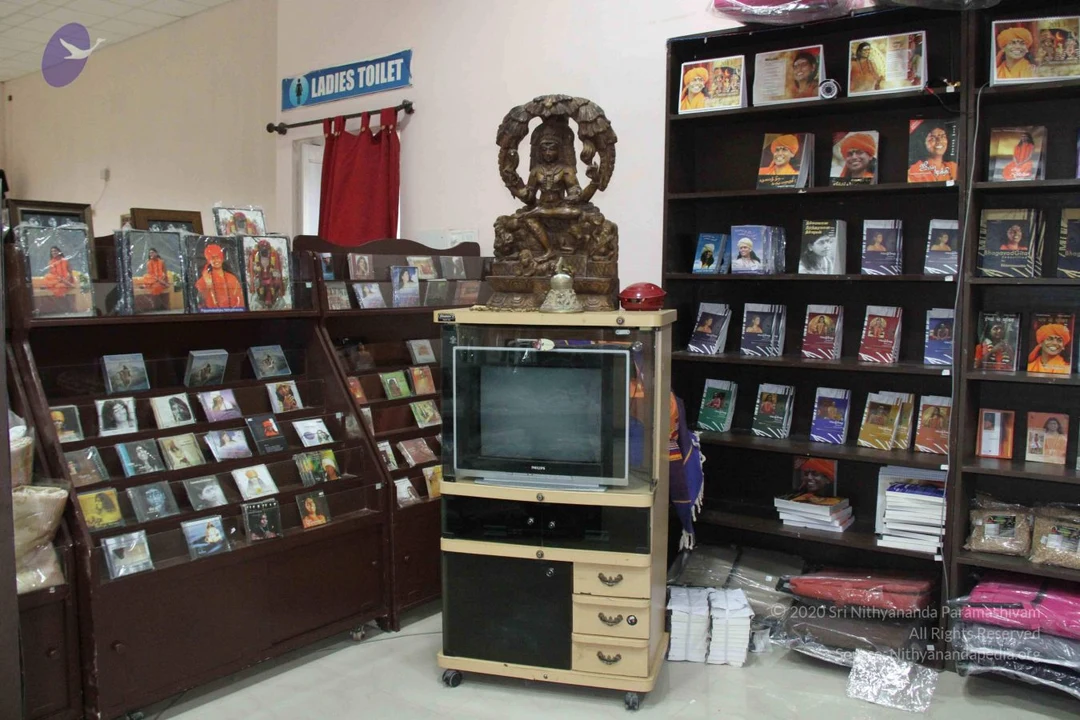
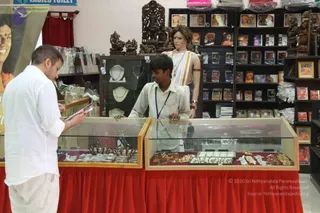
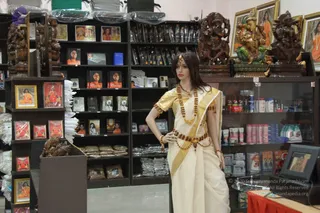
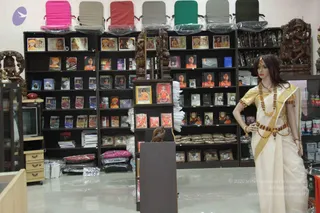
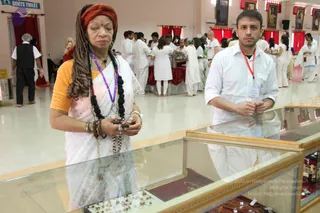
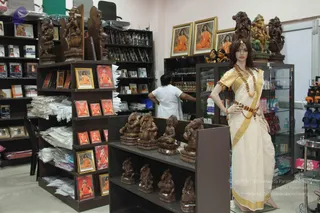
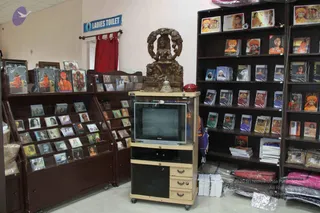
A photograph of a shop interior at what appears to be an ashram bookstall with glass display cases on red draped tables. A young man in a white collared shirt with a blue lanyard stands behind the counter, and a customer in a white shirt and white trousers at left looks at a leaflet. Behind them, a mannequin in a white dhoti with a gold border and a rudraksha-style bead necklace stands among shelves of framed portraits, books and CDs. Carved wooden deity figures and a banner showing a smiling man in orange stand at left. Jewellery, bangles and beaded items are arranged in the cases.Interior of a shop selling spiritual books, framed portraits, and religious items. A mannequin dressed in a cream sari with gold border and layered rudraksha malas stands center, one hand on hip. Shelves hold books and framed devotional pictures of a saffron-robed sadhu, and carved wooden deities including Ganesha stand on top of cabinets. A glass case shows toiletries and packaged goods, and a small computer monitor sits on the counter at right.Interior of a shop or ashram bookstore with white tiled floor and dark wooden shelves stocked with DVDs, books, framed photographs and small wooden deity statues. Colourful cushioned seats in pink, grey, red, green and black sit wrapped in plastic along the top shelf. On the right, a mannequin wears a cream and gold South Indian style sari with a red-brown rudraksha-style mala, gold necklace and bangles. Packets of goods and folded fabrics sit on the lower shelves and floor. Several framed images show saffron-robed figures and deities, but no living people are visible.Indoor photo in a bright white-tiled hall with red curtains and framed portraits on the wall. In the foreground a woman with long braided hair wrapped in a red-orange headwrap stands at a glass display case, wearing a white sari with an orange blouse, a purple beaded mala, rudraksha beads and layered necklaces, and holding rudraksha malas in her hands. Beside her a young man in a white shirt with an orange 'Attendee' lanyard stands still. Behind them, people in white clothes move around serving stations and tables; a sign reads 'GENTS TOILET'.Interior of a religious goods shop with dark wooden shelving stocked with framed prints and books. Framed portraits of a saffron-robed sannyasi seated in meditation hang on the walls and shelves; the faces are printed images, not physical people. A woman in a white top stands with her back to the camera near the back shelves. A mannequin in a cream and gold-bordered Kerala-style sari wears a rudraksha mala and a bindi. Carved wooden deity figures, including Ganesha statues, sit on the shelves and on top of the glass cabinet, along with bottles and packaged goods.Interior of an ashram bookshop with a wooden shelving unit on the left holding framed photographs and small prints, and tall dark wooden bookcases on the right stocked with books and booklets featuring orange-robed figures on their covers. A carved wooden deity murti with a multi-headed hooded crown sits on top of a TV cabinet, beside a small brass lamp. A blue sign reads Ladies Toilet, red curtains hang at a window, and packaged bundles of cloth lie on the floor at right. No people are visible.

Galleria

4 photosSource gallery
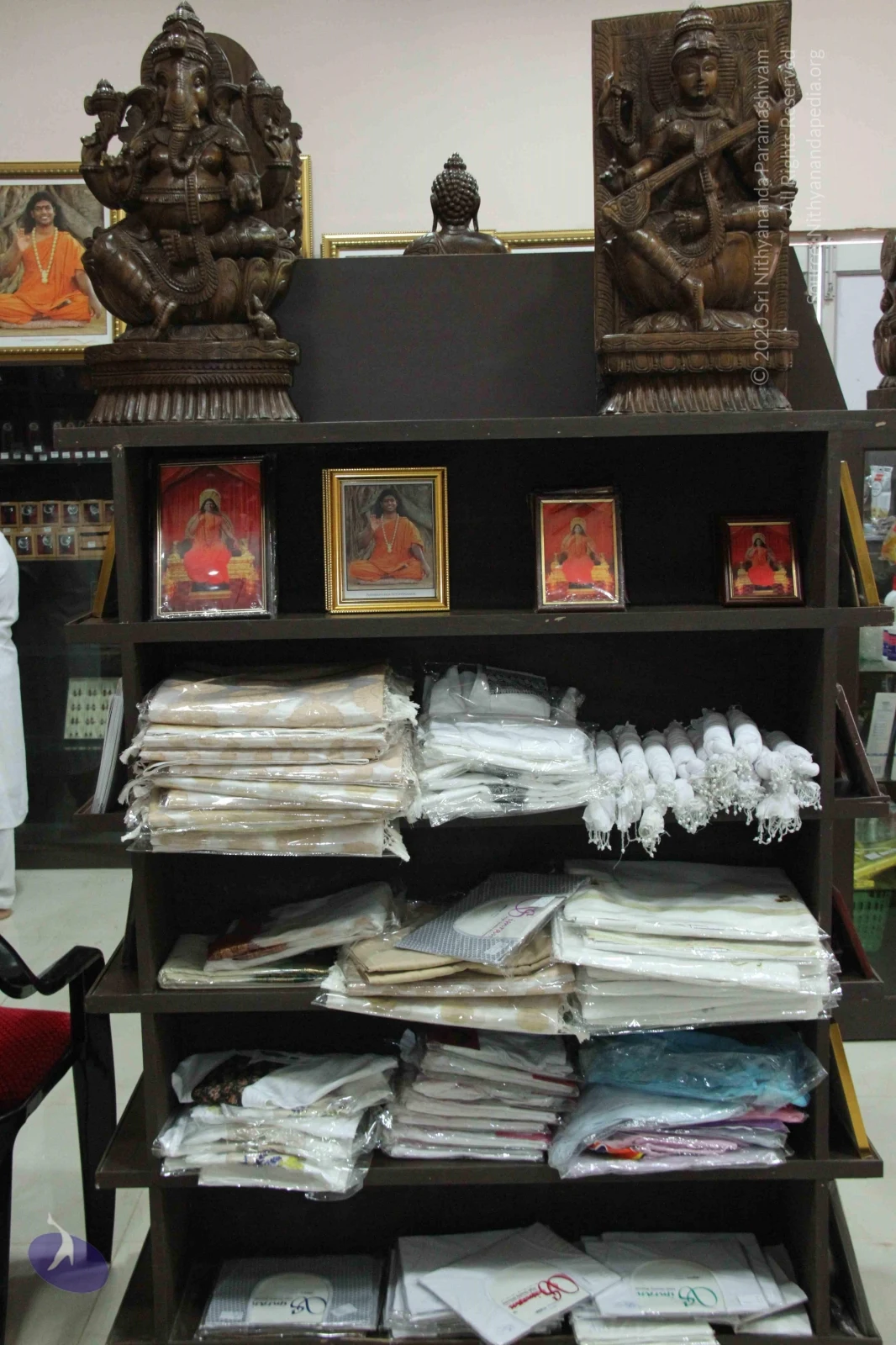
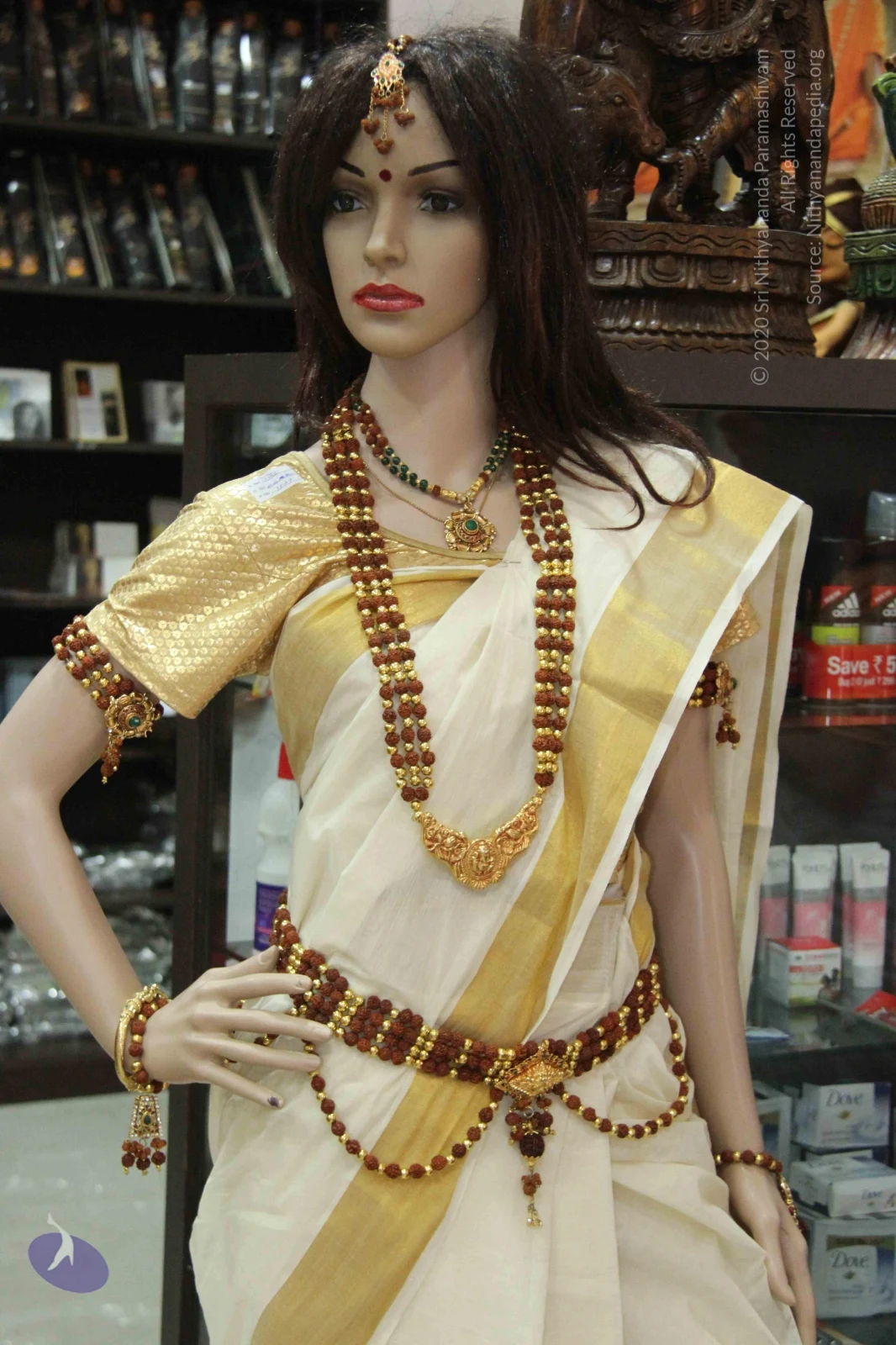
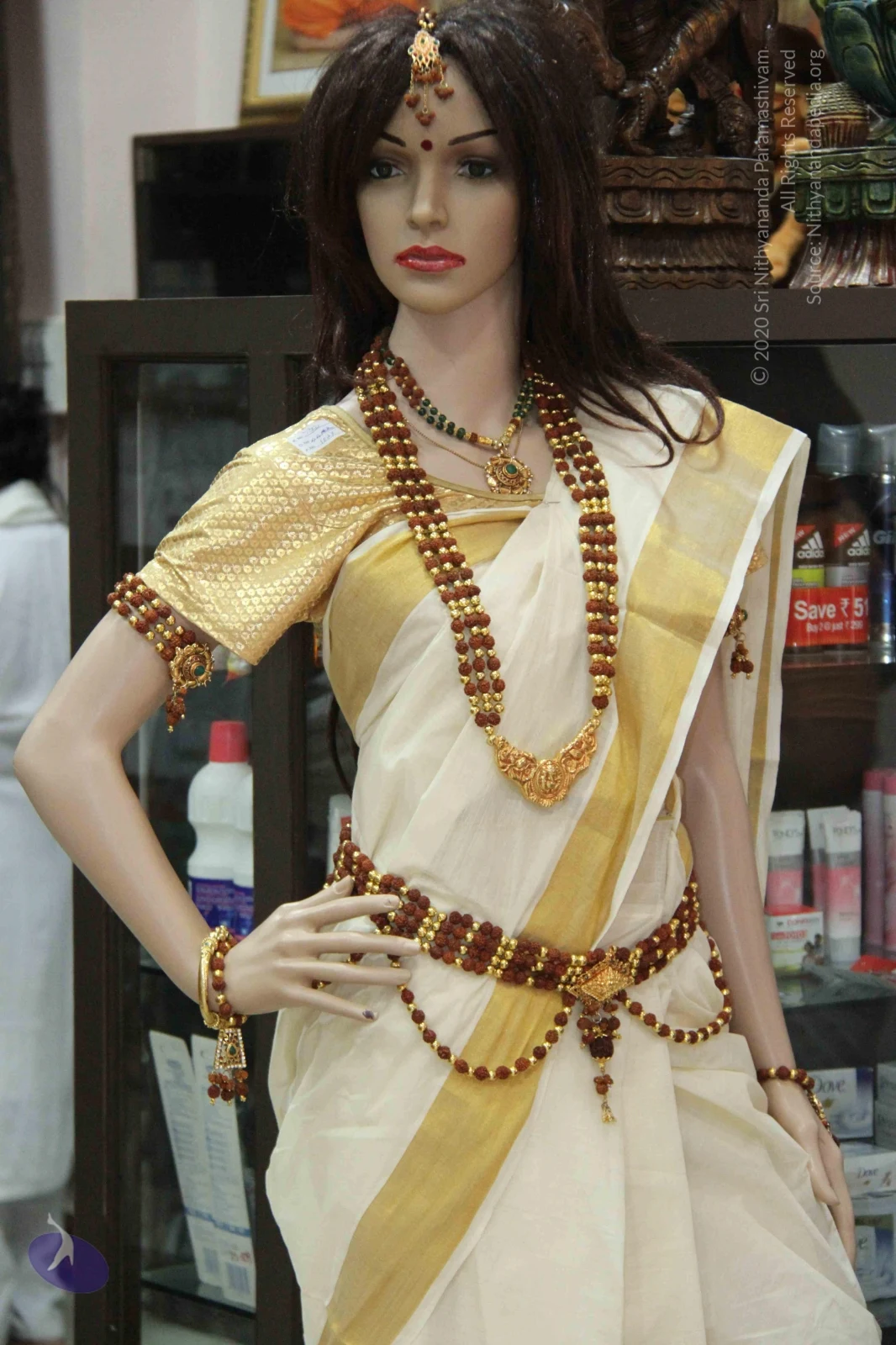
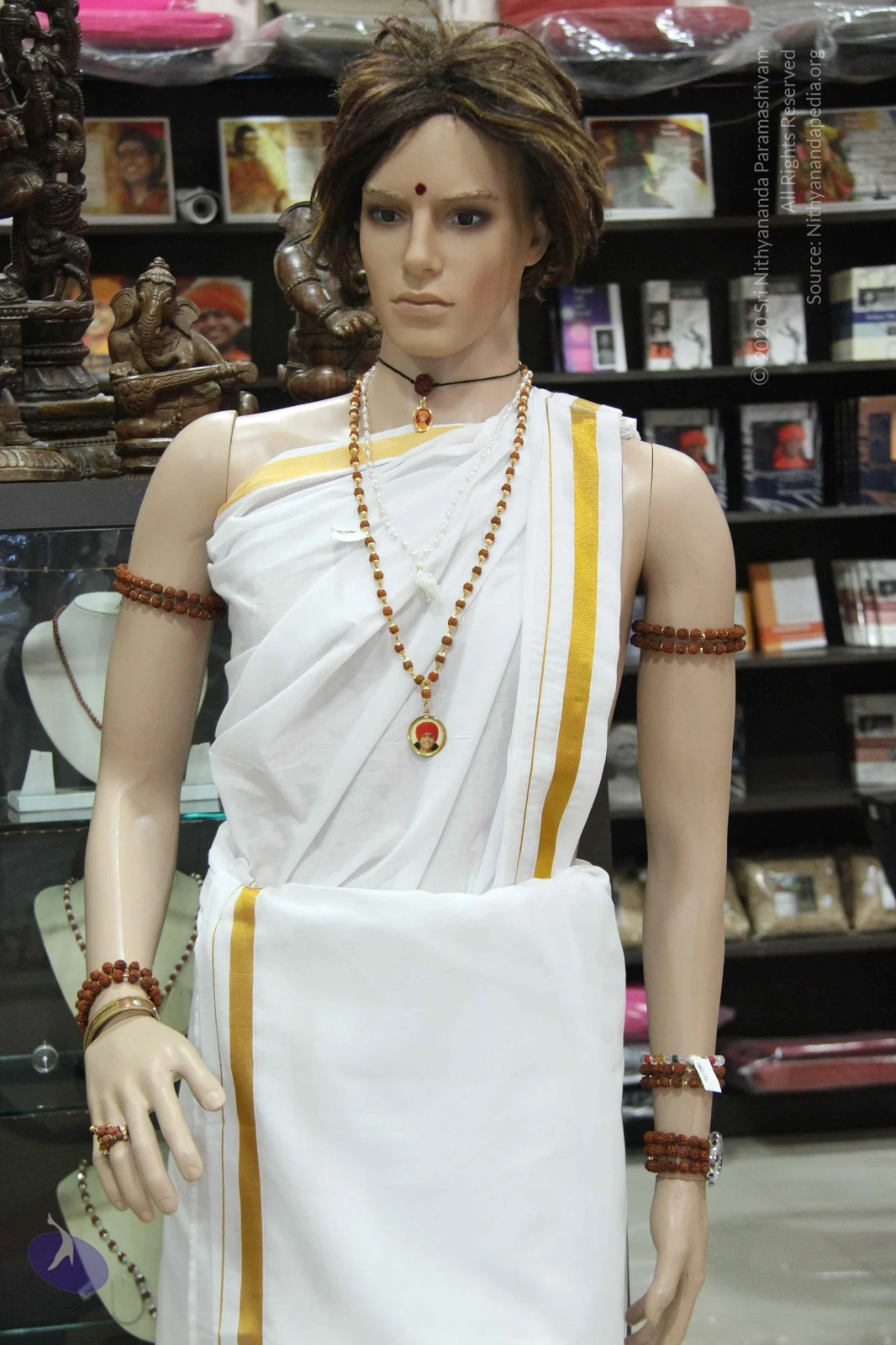
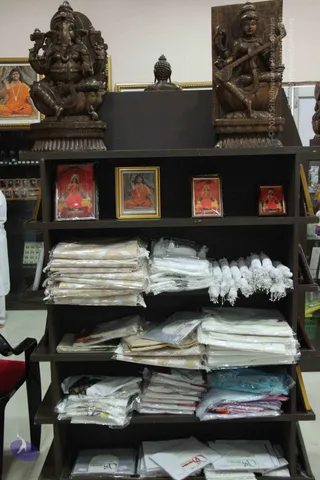
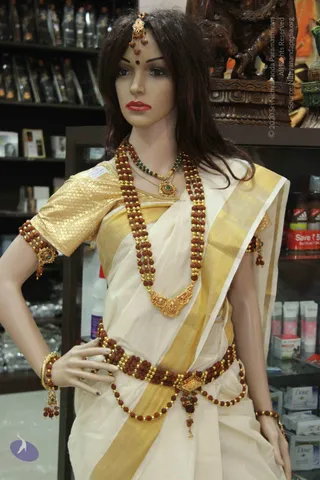
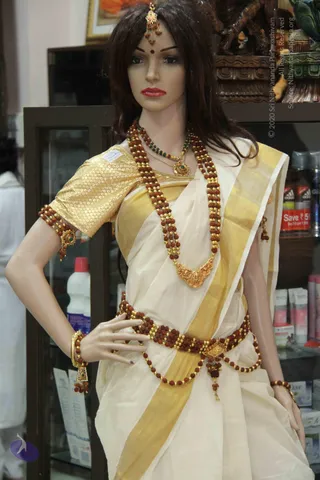
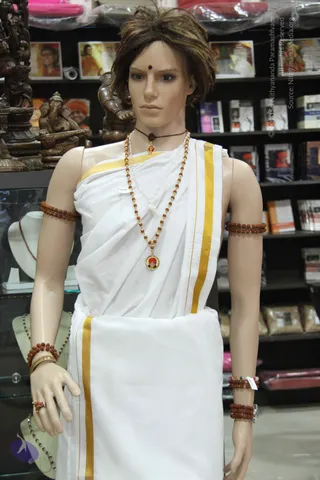
A retail display shelf in a shop with stacked, plastic-wrapped white and cream cloth bundles, folded garments and white towels with fringed ends on the middle shelves, and lower shelves holding packaged blue and pink fabrics and small paper packets. On top stand two carved wooden deity murti: a seated Ganesha on the left and a seated Saraswati holding a veena on the right, with a small brass Buddha-like figure between them. Framed prints show a seated figure in orange robes with a rudraksha mala and a red-clothed goddess image, all displayed on the shelf. No people are visible except a partial figure in white at the left edge.A store display mannequin wearing a cream and gold-bordered saree with a gold brocade blouse, dressed in layered rudraksha and gold-bead jewellery including a long multi-strand necklace, a rudraksha waist belt, armlets, a bracelet, a maang tikka and a red bindi.A female mannequin in a shop display wears a cream saree with wide gold zari borders and a gold brocade blouse. She is adorned with multi-strand rudraksha and gold-bead malas, a long rudraksha necklace with a gold pendant, rudraksha waist chain with gold clasp, rudraksha armlets and a gold bangle with green stone. Her wig has a gold maang tikka with red bindi. Behind her, a wooden cabinet, a shelf with a deity figurine, toiletry bottles and a Pantene advertisement. No living people are visible in the main display.A mannequin displayed in a shop wears a white dhoti and shawl with gold borders, styled with a red bindi on the forehead, layered rudraksha and pearl malas, a pendant with a small red-and-orange portrait, and rudraksha bracelets on the arms and wrists. Behind it, shelves hold books, framed portraits and bags of grain, and carved wooden deity figures sit on the left. The figure is a mannequin, not a living person, and no living person is visible, so the a person field is none.

Inner-Awakening-Darshan

7 photosSource gallery
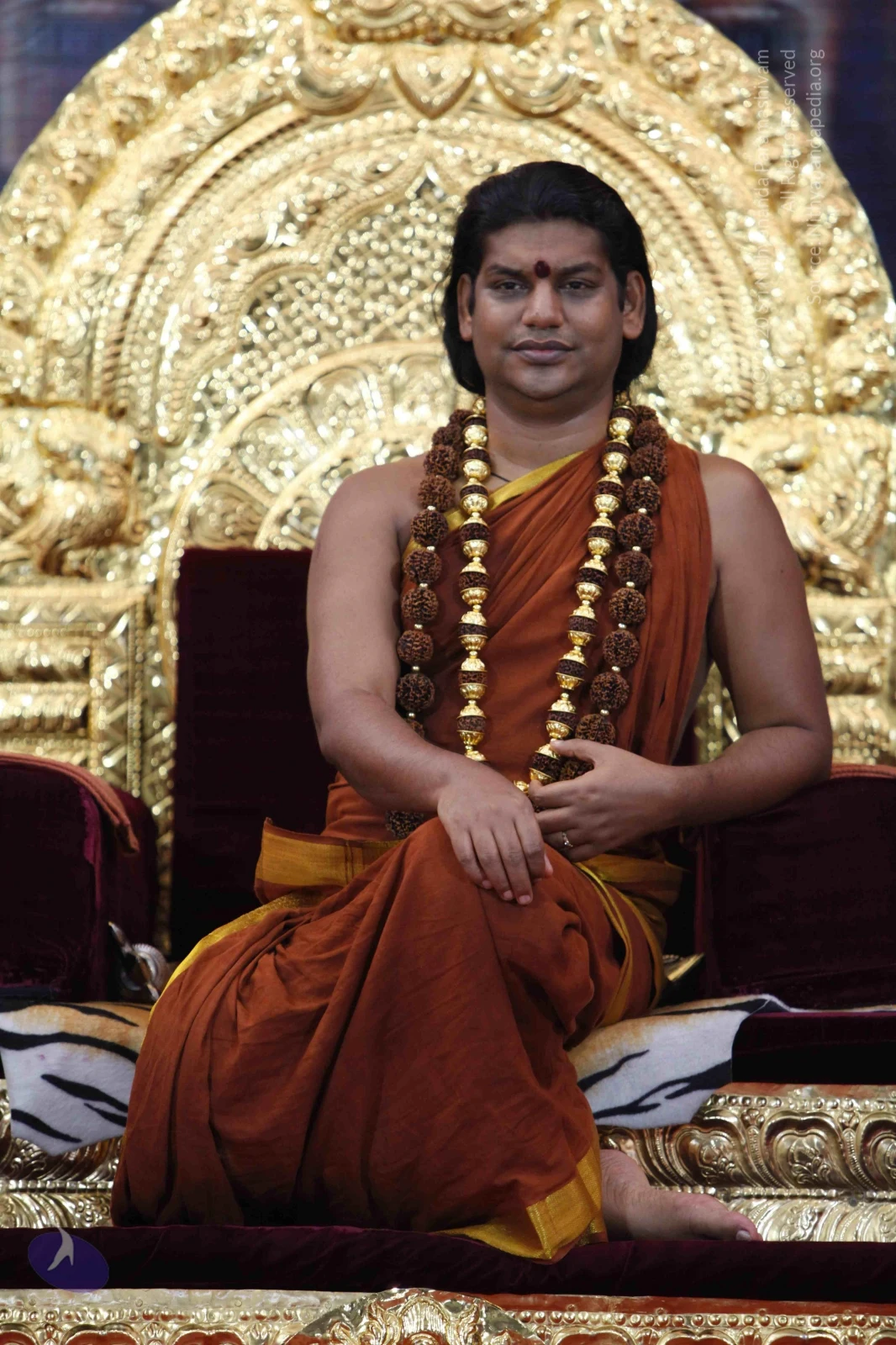
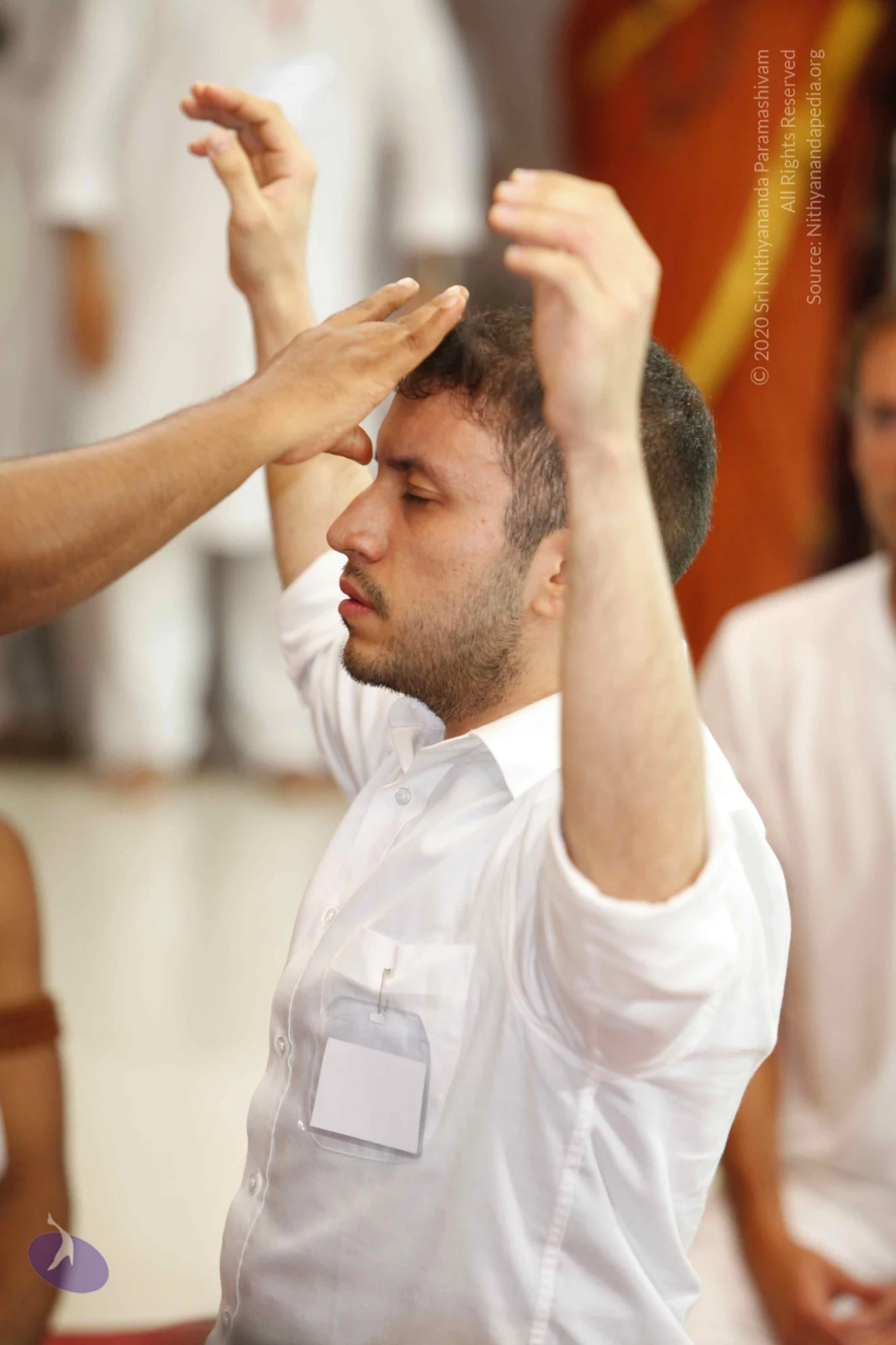
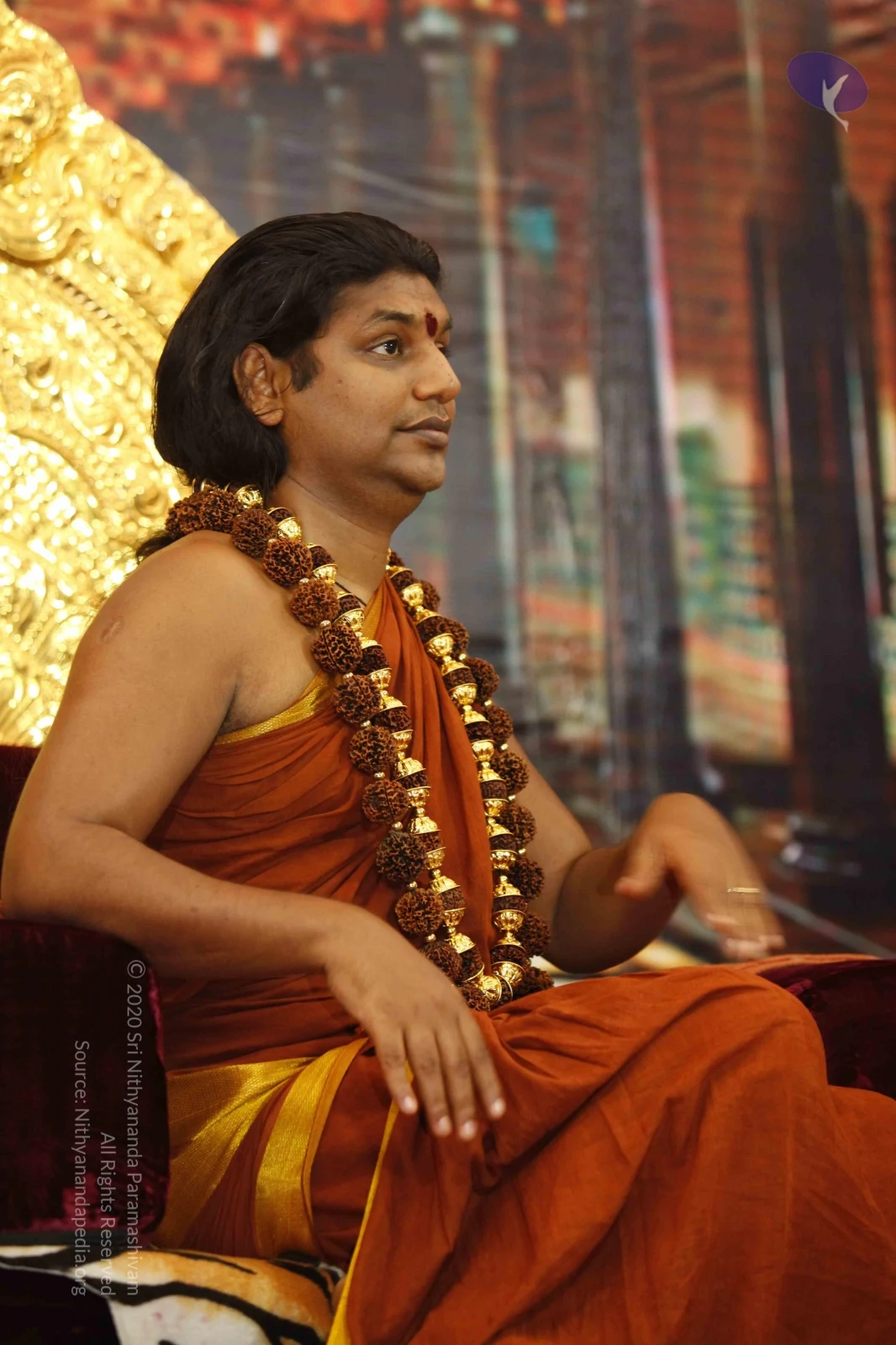
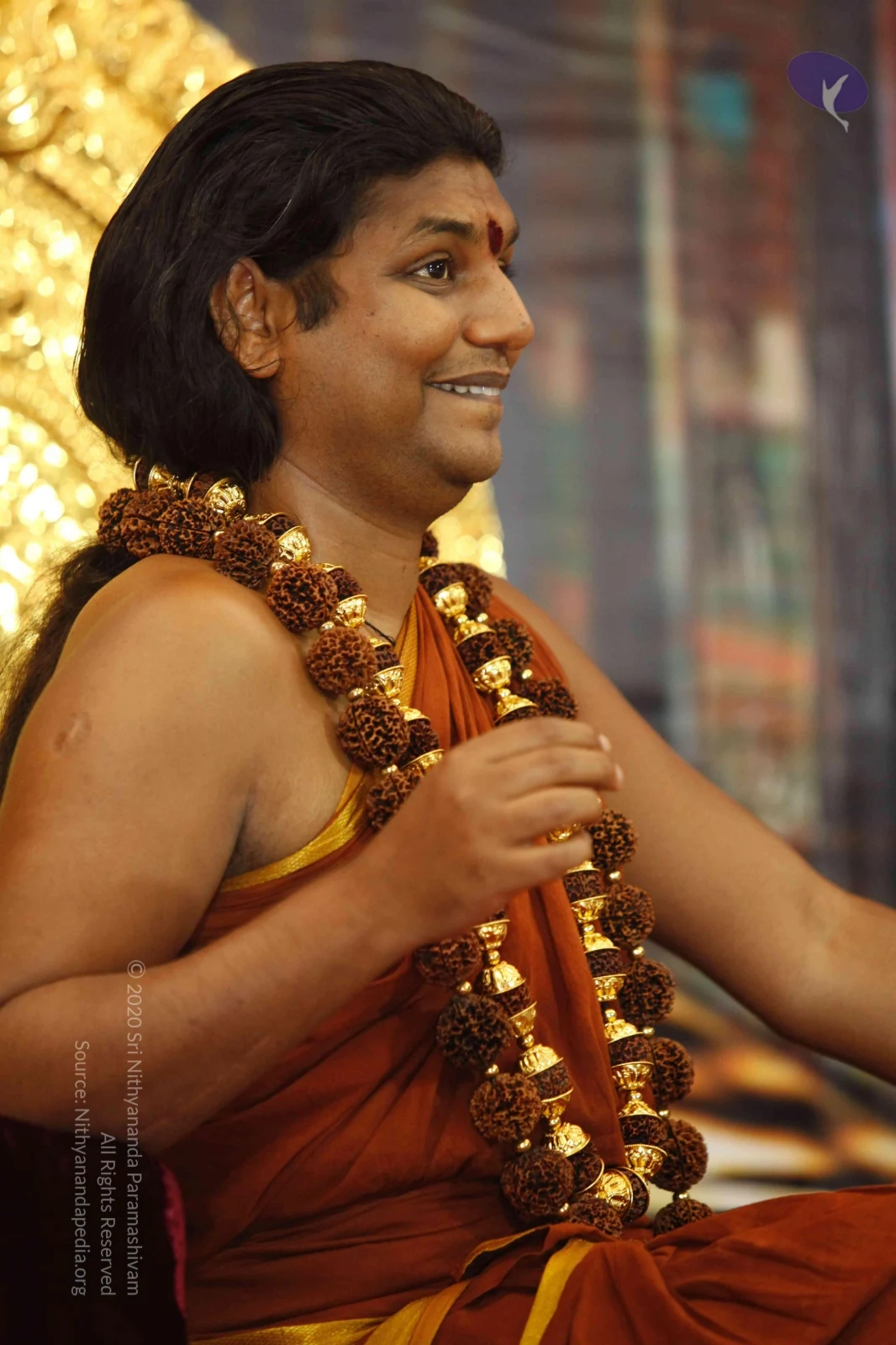
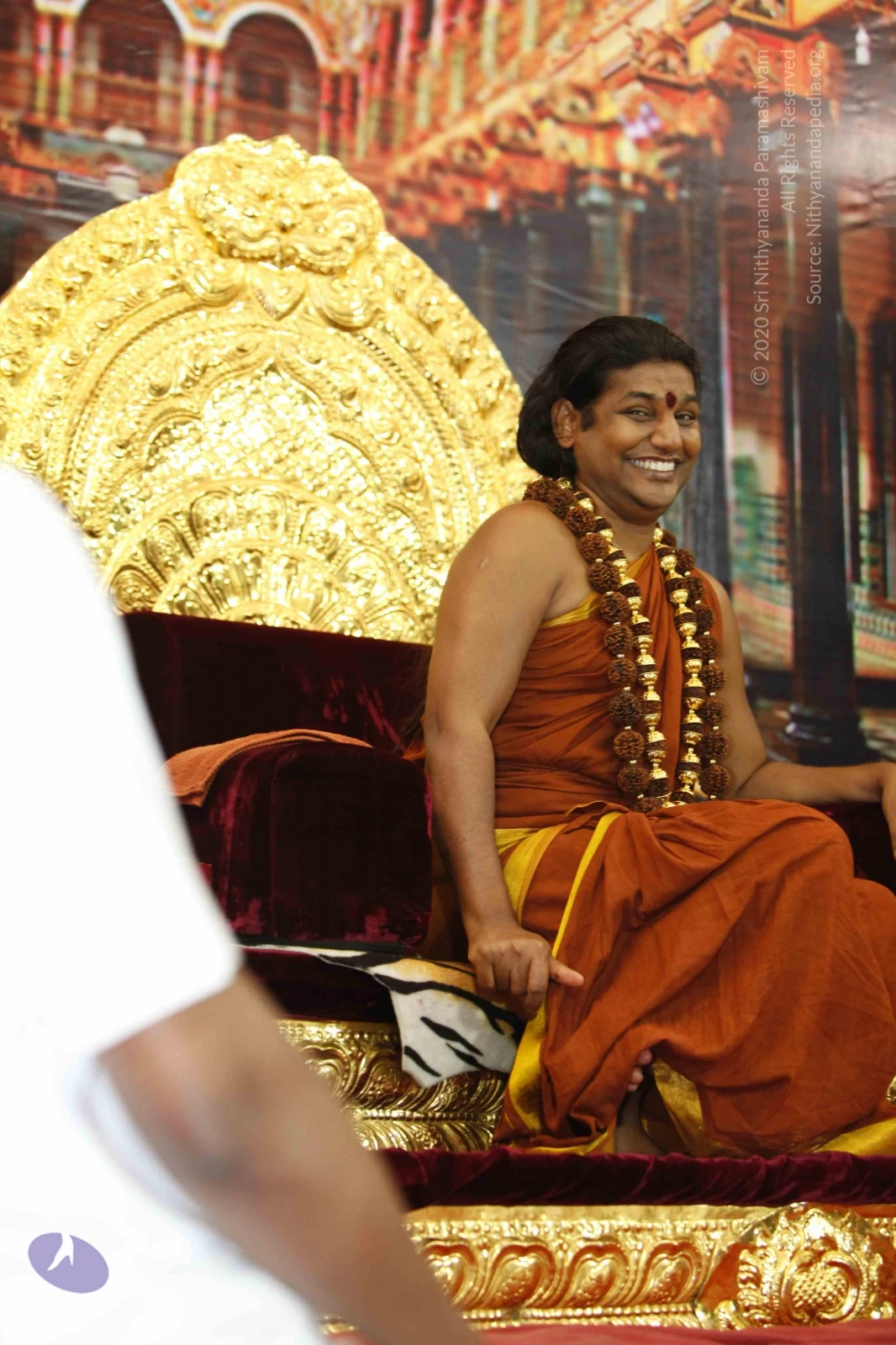
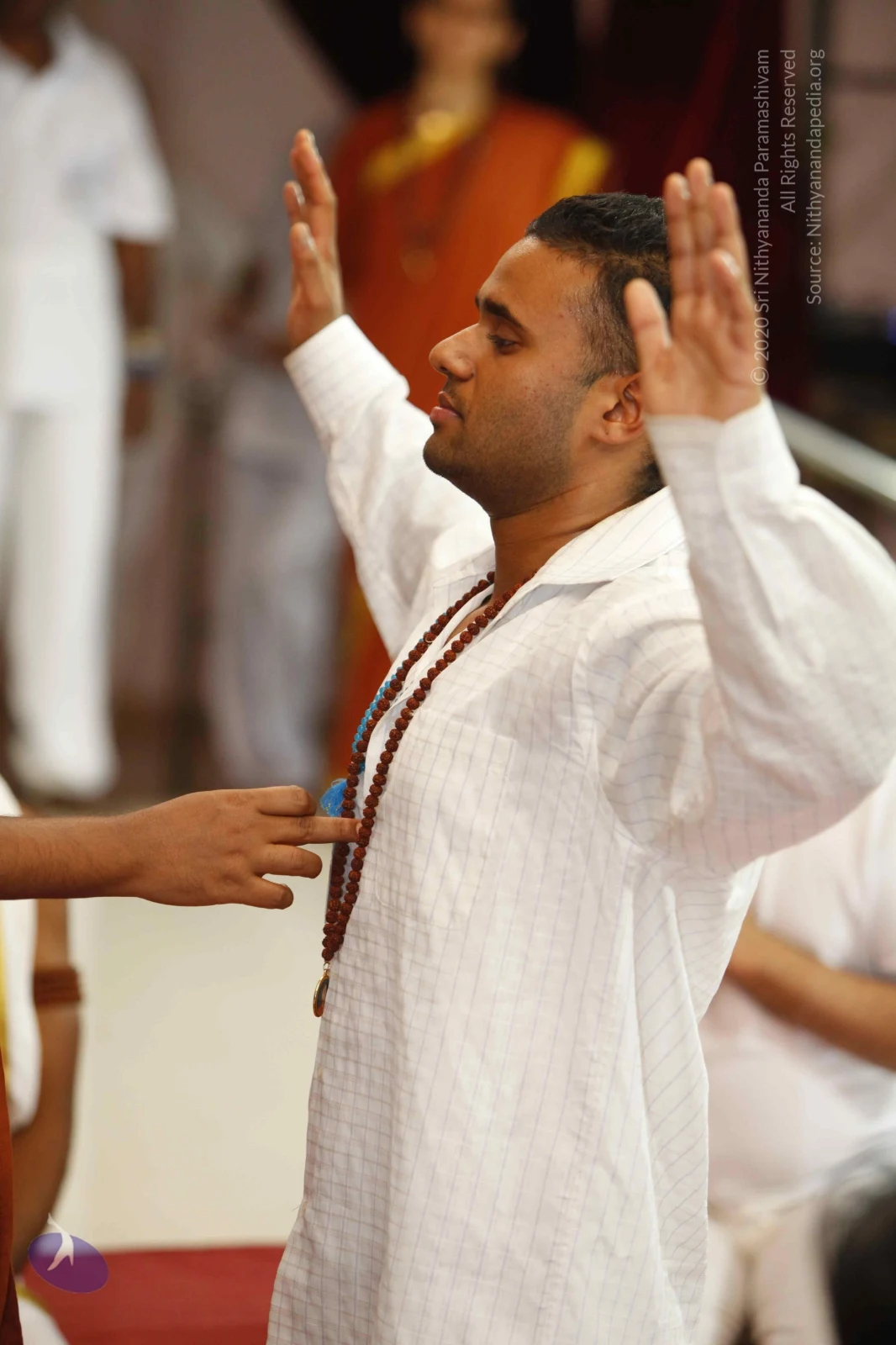
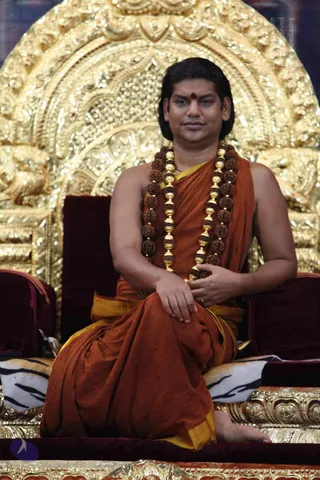
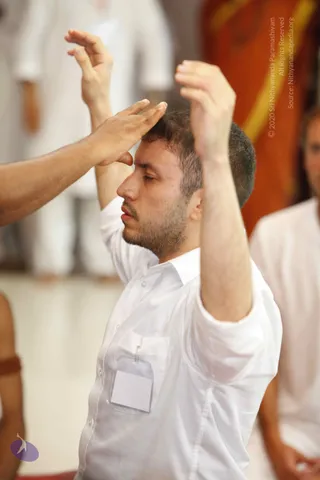
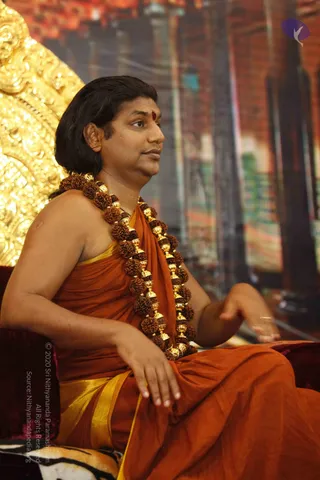
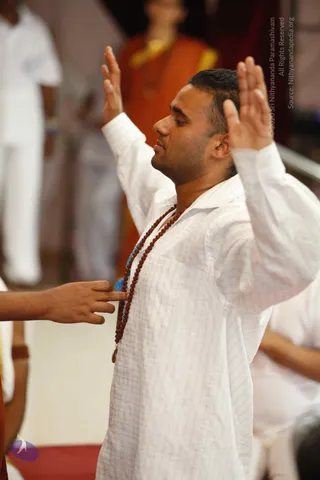
A man seated cross-legged on an ornate gold throne with a richly carved golden arch behind him, a tiger-striped cushion beneath him. He wears an orange-saffron dhoti and shawl with a gold-bordered edge, a red bindi on his forehead, and a long rudraksha mala interspersed with gold beads and a ceremonial gold necklace. His hands rest together on his lap. He has long swept-back hair and is bare-armed, sitting still and facing forward. Appearance-based label: a person, seated in person as a teacher on the throne. A watermarked archive photograph of a dais setting.Close photograph of a young man with short dark hair and light stubble, eyes closed, raising both forearms overhead with palms turned forward. A hand from the left, belonging to someone out of frame, rests on his forehead in a blessing gesture. He wears a white buttoned shirt with a white name badge clipped to the pocket. Behind him, blurred figures in white clothing and an orange cloth are visible. No a person candidate is clearly visible.Photograph of a seated man in a saffron-orange dhoti-style cloth with a gold-bordered wrap, wearing a long rudraksha mala with gold bead spacers draped over the shoulders. He has long dark hair swept back, a red bindi on his forehead, and gestures with his right hand while speaking, looking off to the side. He sits on a red velvet cushioned seat in front of a gold ornate throne back. A blurred backdrop of colourful painted city-like imagery fills the background. Probable Swamiji by appearance cues: long swept-back hair, saffron clothing, rudraksha mala and gold ornaments, seated in a satsang-style setting.Photograph of a seated man in orange-saffron robes with a gold-edged shawl, wearing long rudraksha mala necklaces with gold bead caps and a red bindi on his forehead. He has long swept-back dark hair, smiles and looks to the side, one hand resting on the beads at his chest. Behind him is a shimmering gold backdrop and a blurred, draped setting. Appearance-based cues (long hair, saffron clothing, multiple rudraksha malas). Single person visible.A smiling man with long swept-back dark hair and a red bindi sits on an ornate gold throne with a red velvet seat and cushion. He wears an orange-saffron cloth draped over his shoulder with a gold-bordered yellow lower garment, and a long necklace of rudraksha beads alternating with gold beads. Behind him is a large printed backdrop of a temple with red-and-gold architecture. In the lower left corner, a blurred person in white clothing is partly visible in the foreground. The man's appearance with long hair, saffron clothing, rudraksha mala and a throne matches the Swamiji (probable) cues, seated in the role of honoured guest on the dais.A man with short dark hair stands in profile with both arms raised, palms open, eyes closed, in a devotional gesture. He wears a white long-sleeved kurta with fine vertical stripes and a rudraksha mala of brown beads with a small pendant. Another person's fingertip touches the pendant from the left edge of the frame. Blurred figures in white and an orange-robed person stand in the background, and a red mat is visible at the lower left.

Inner-Awakening-Swamiji-Session

21 photosSource gallery
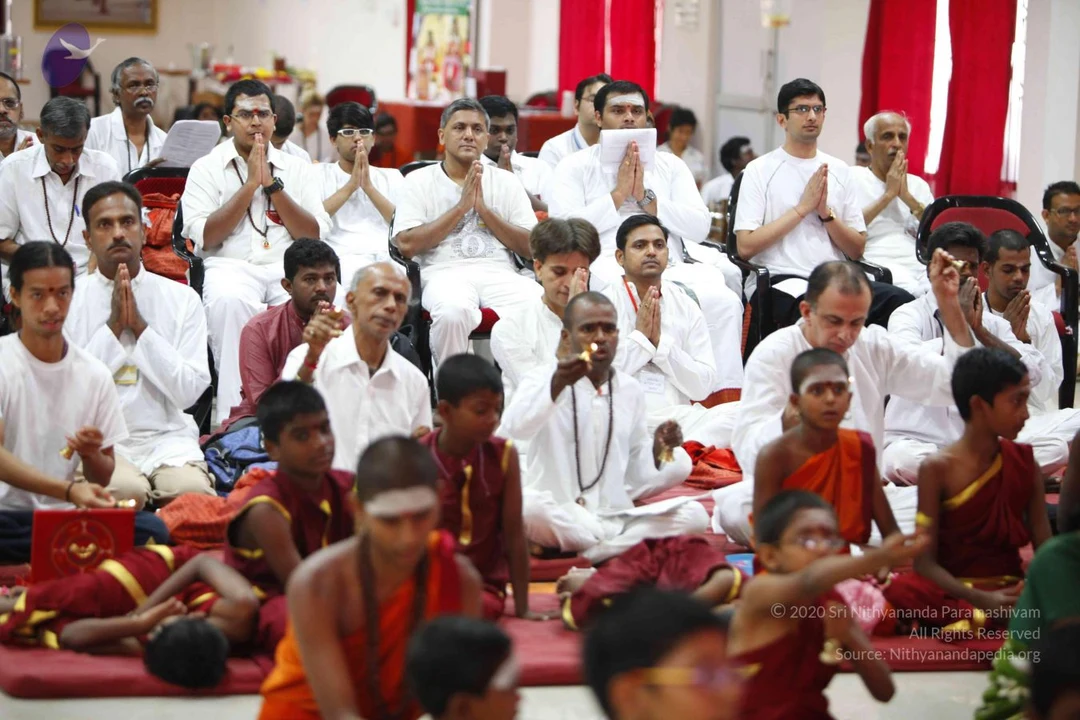
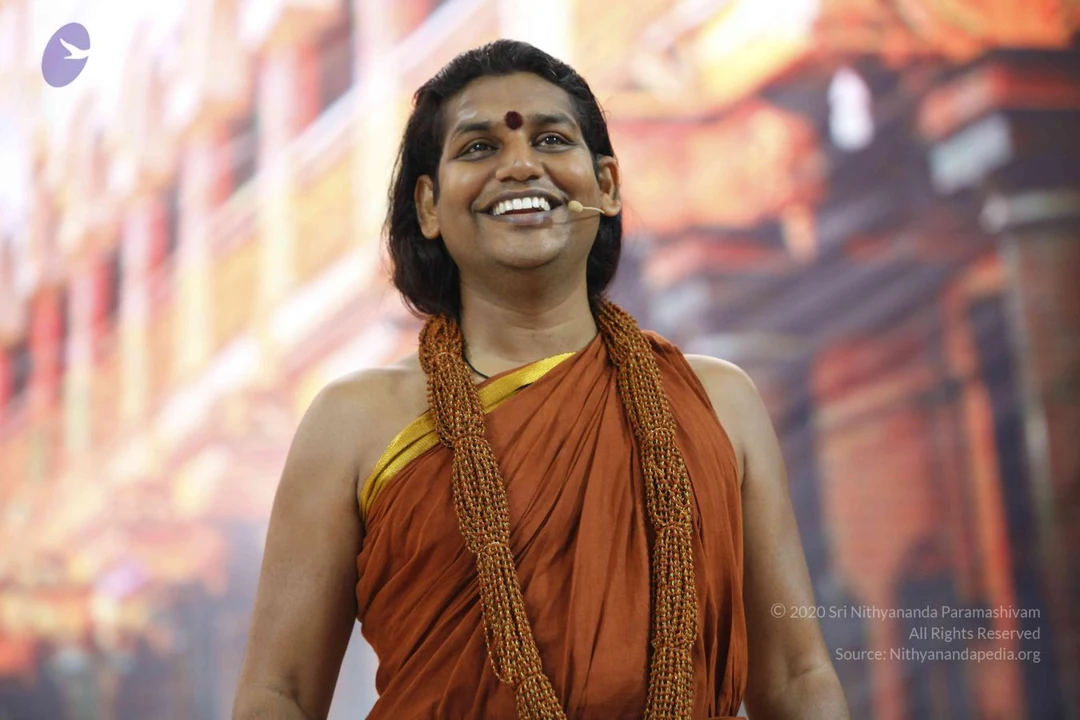
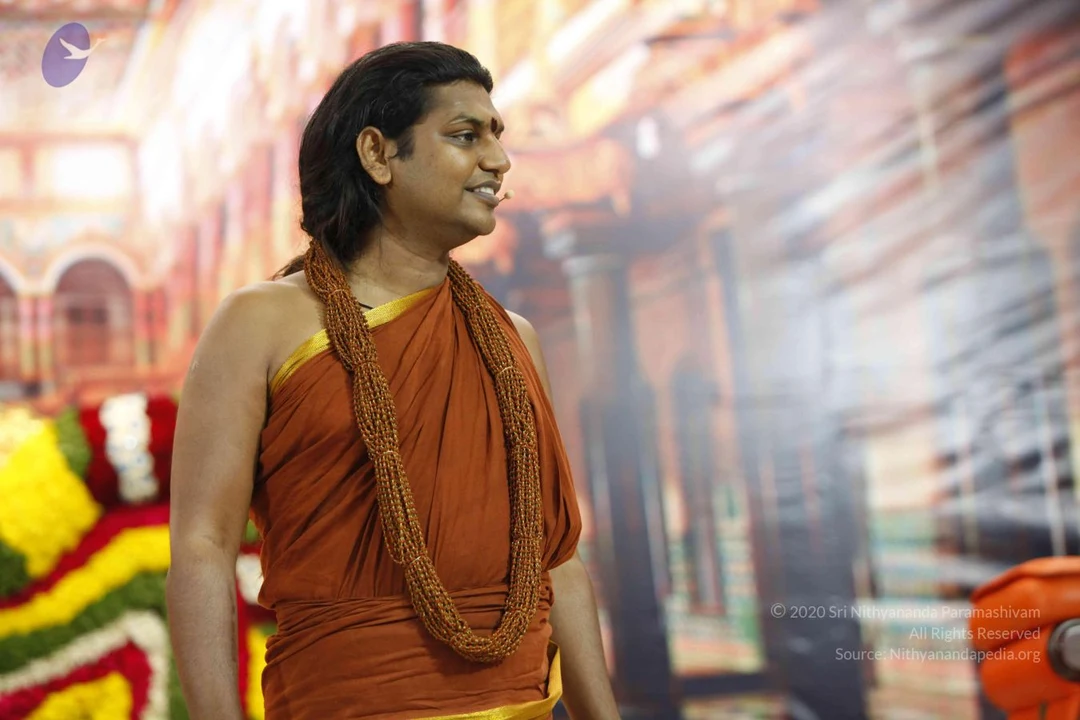
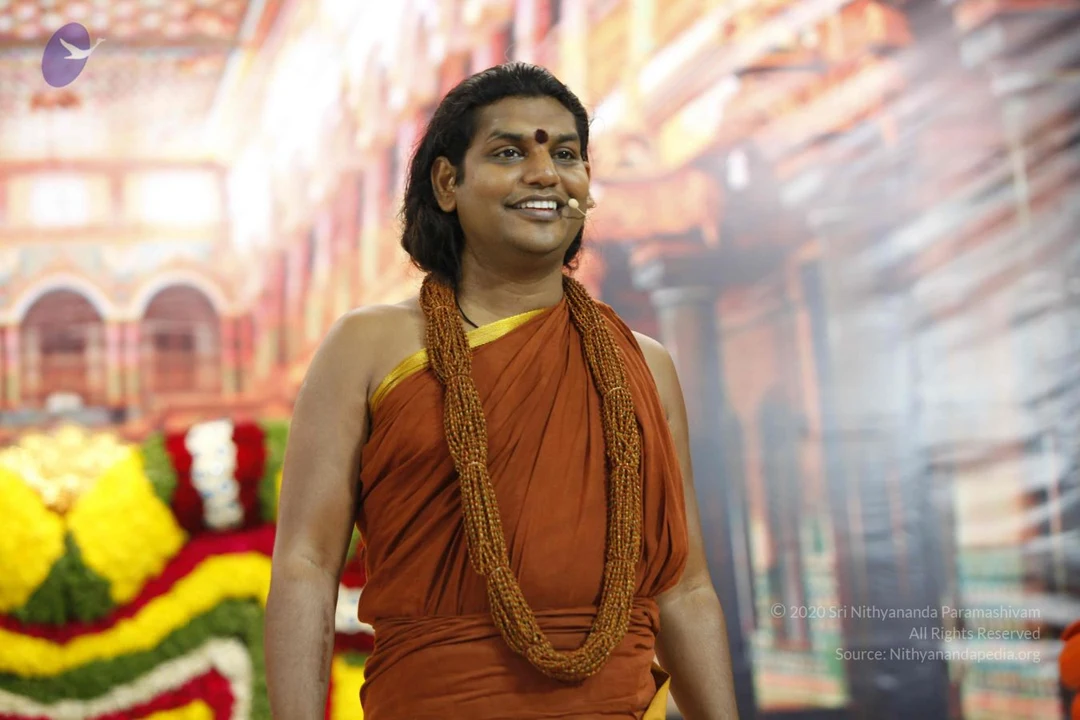
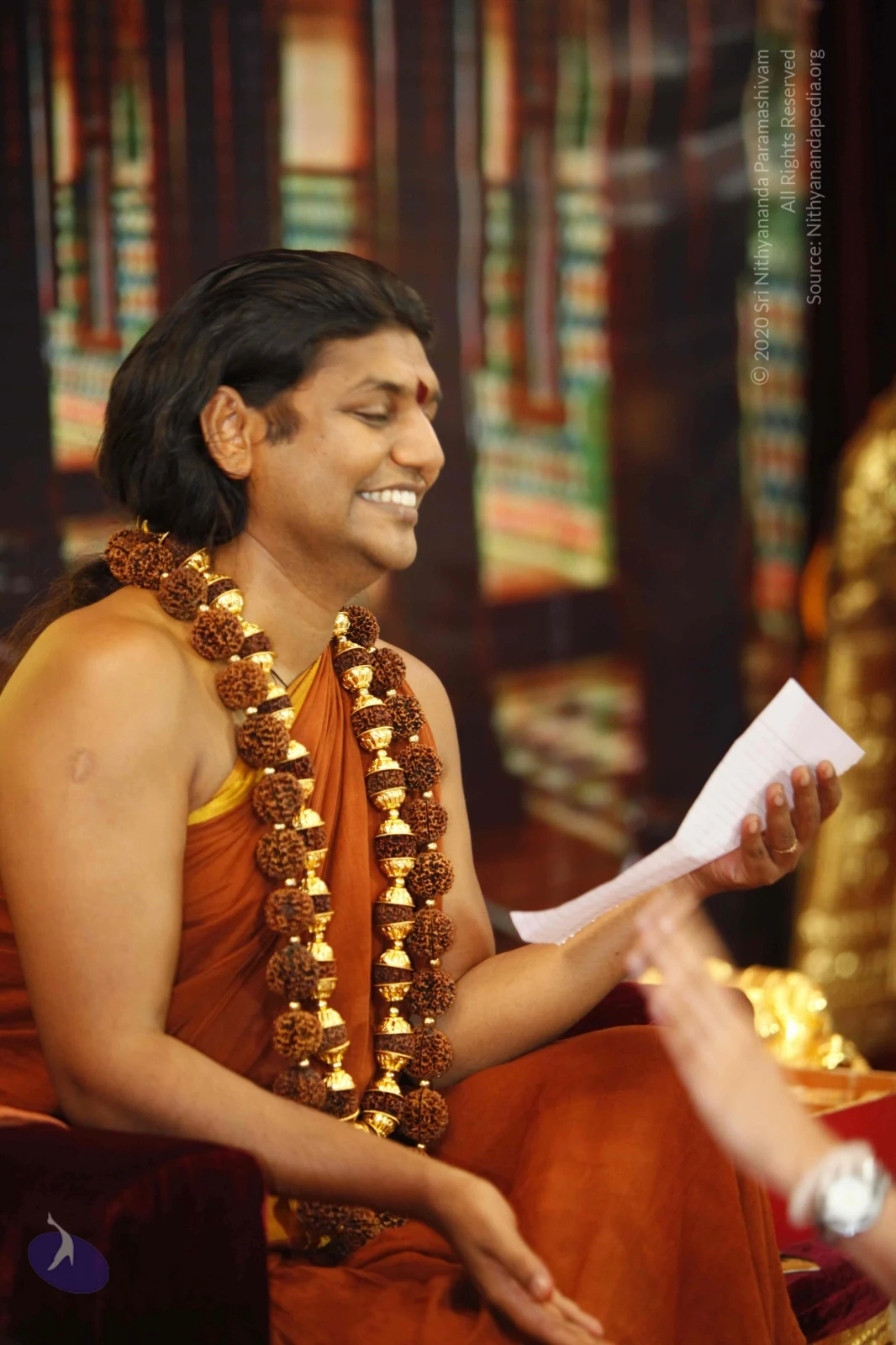
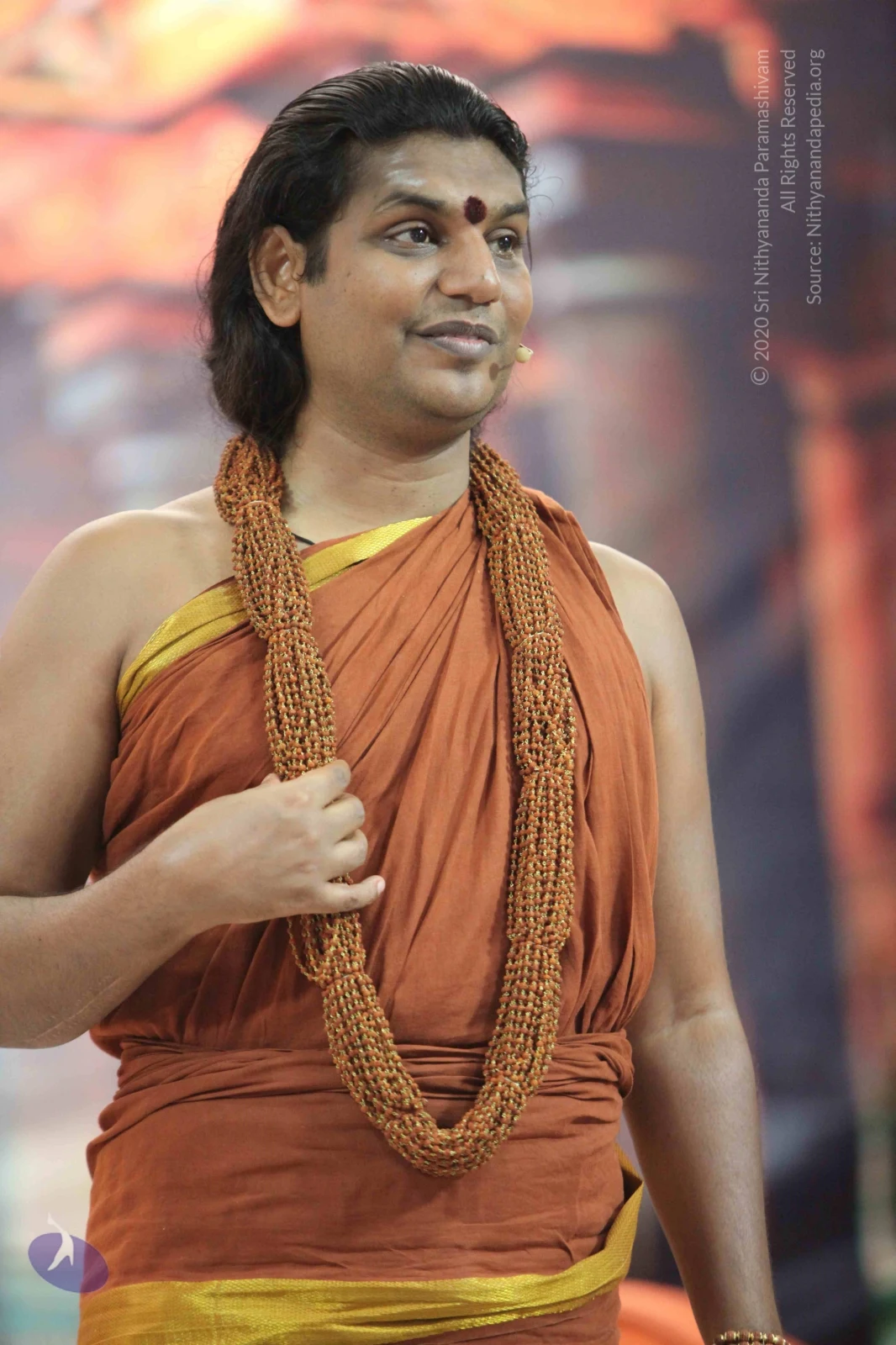
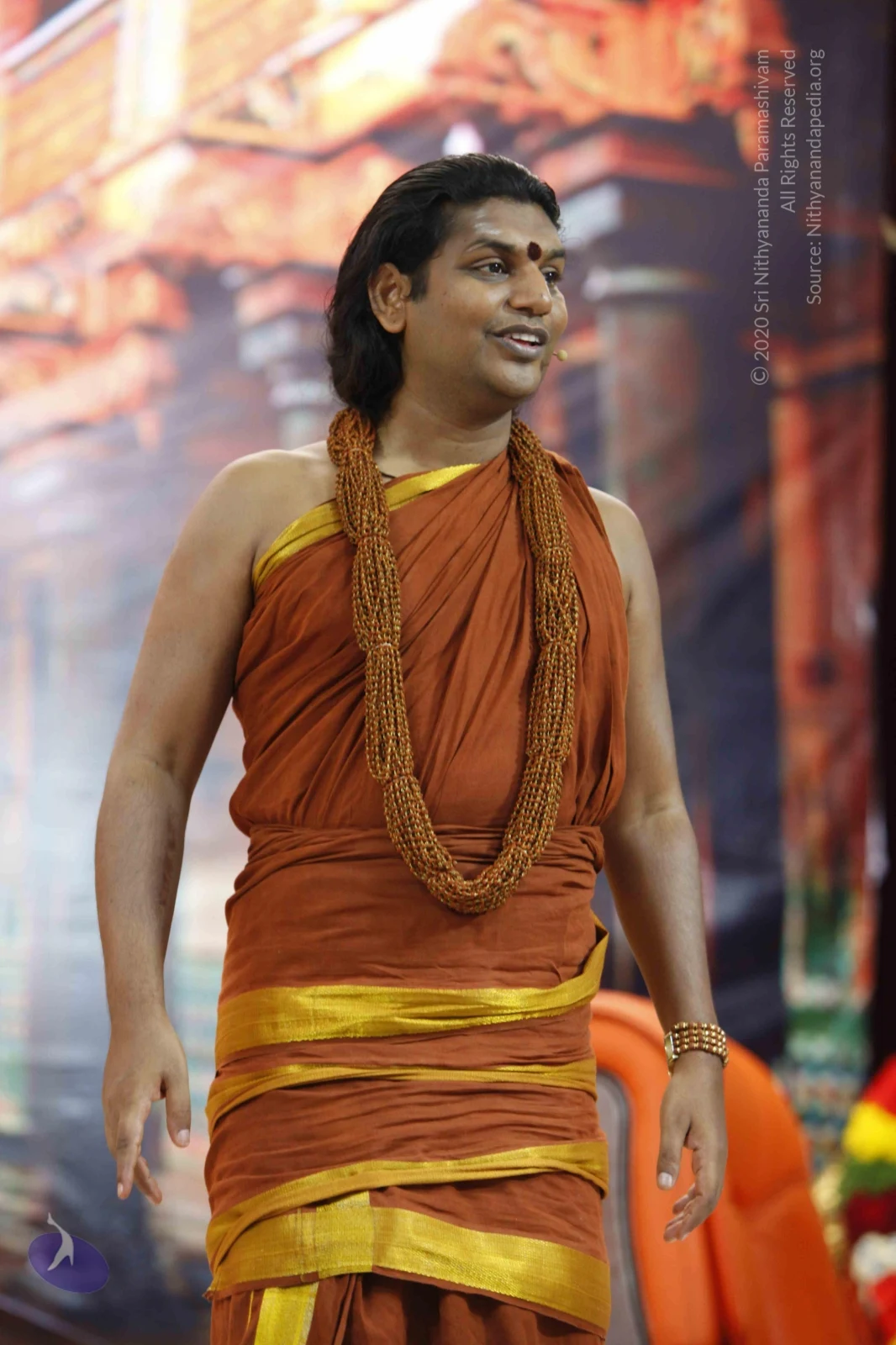
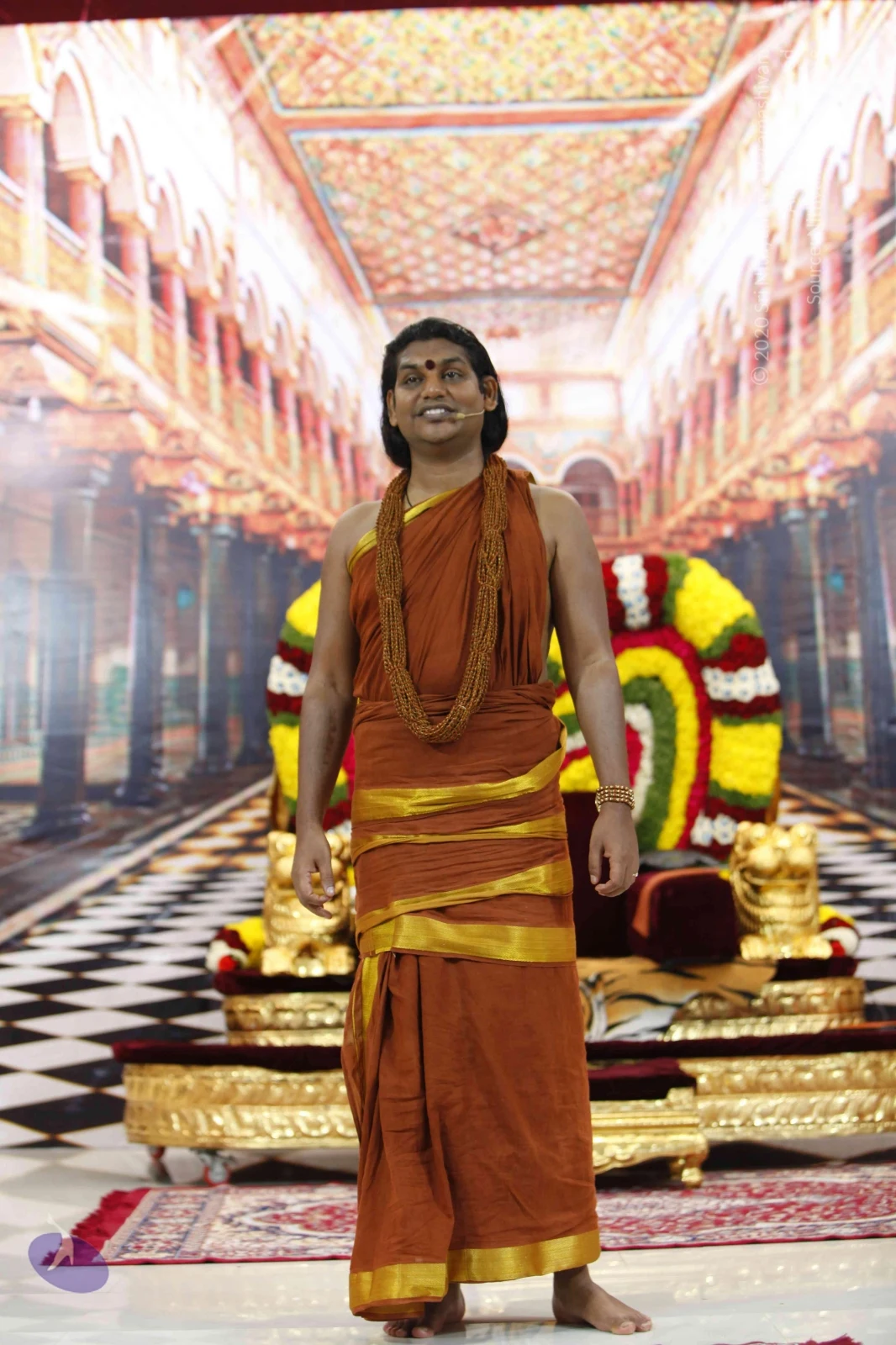
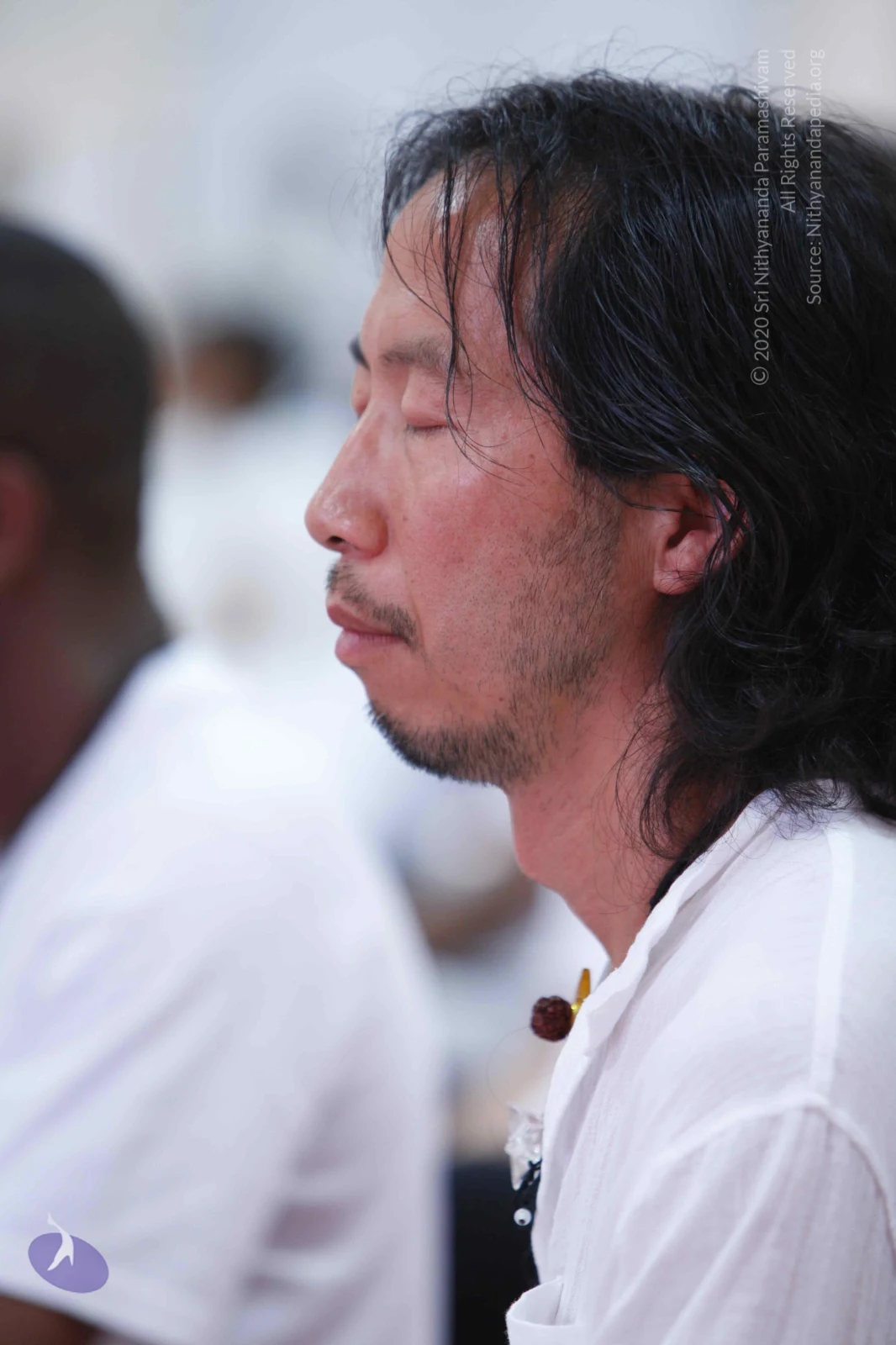
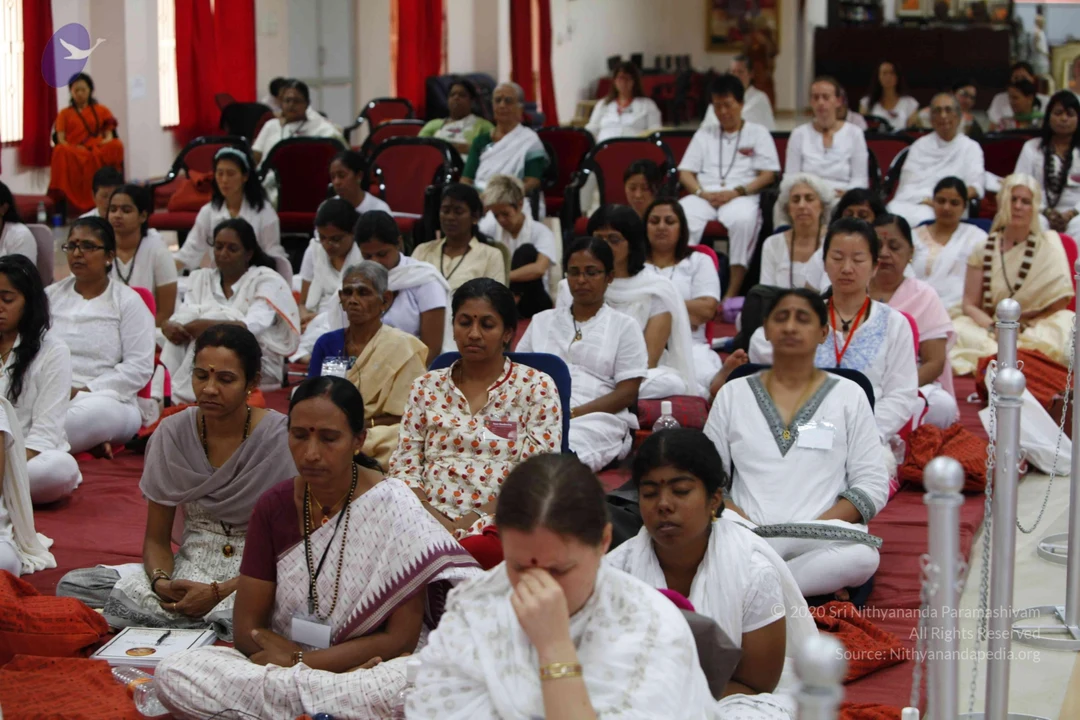
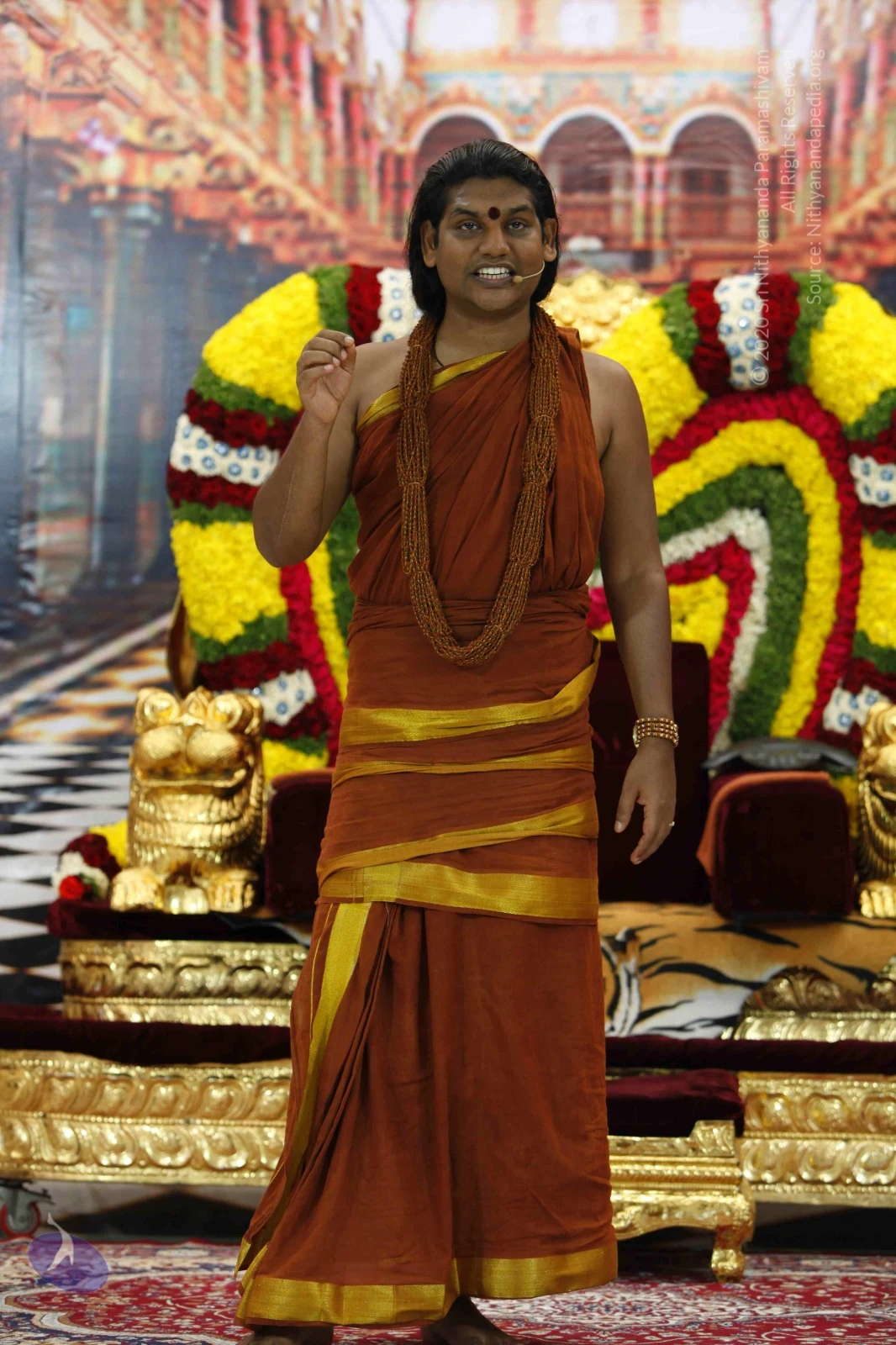
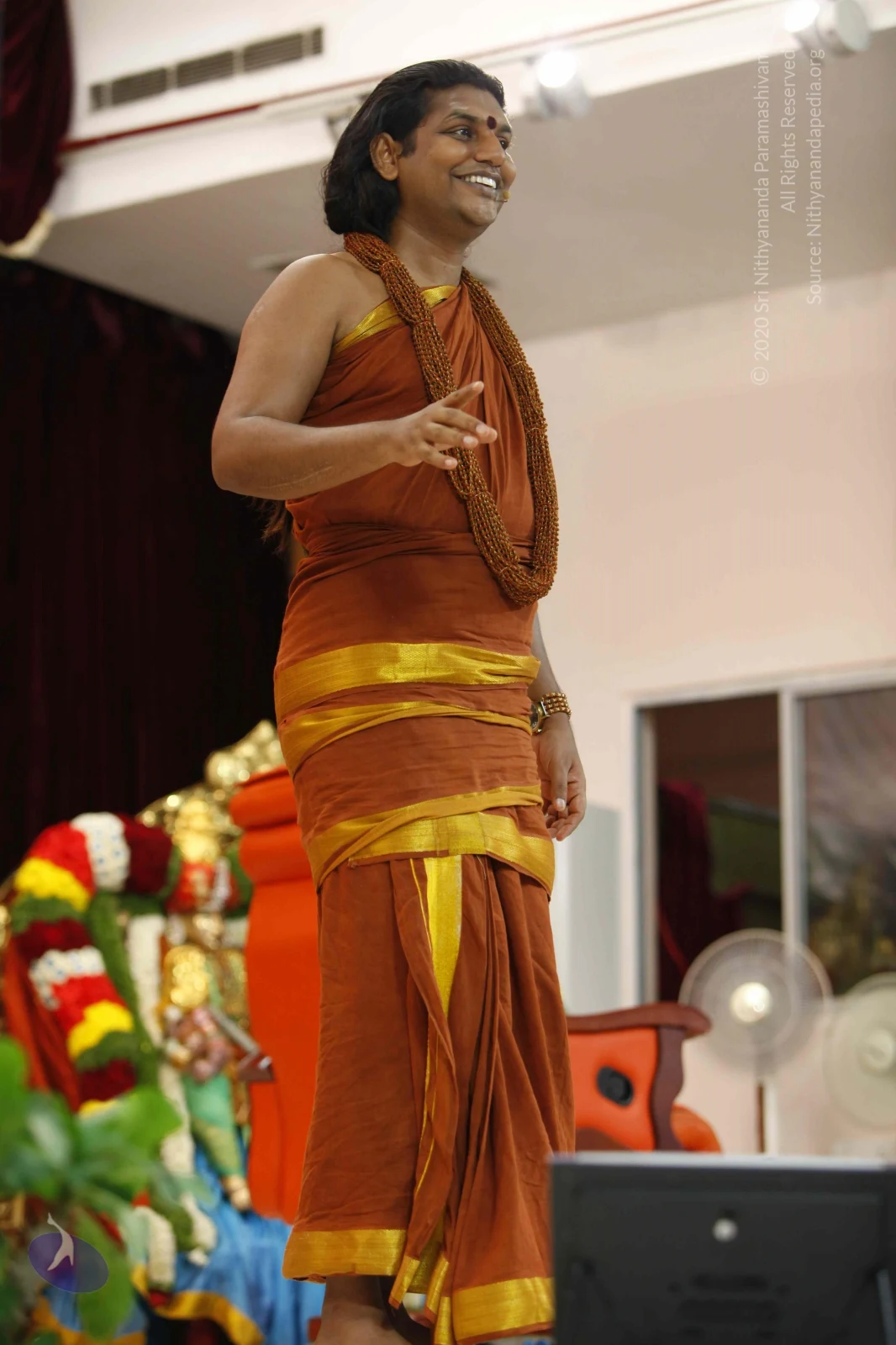
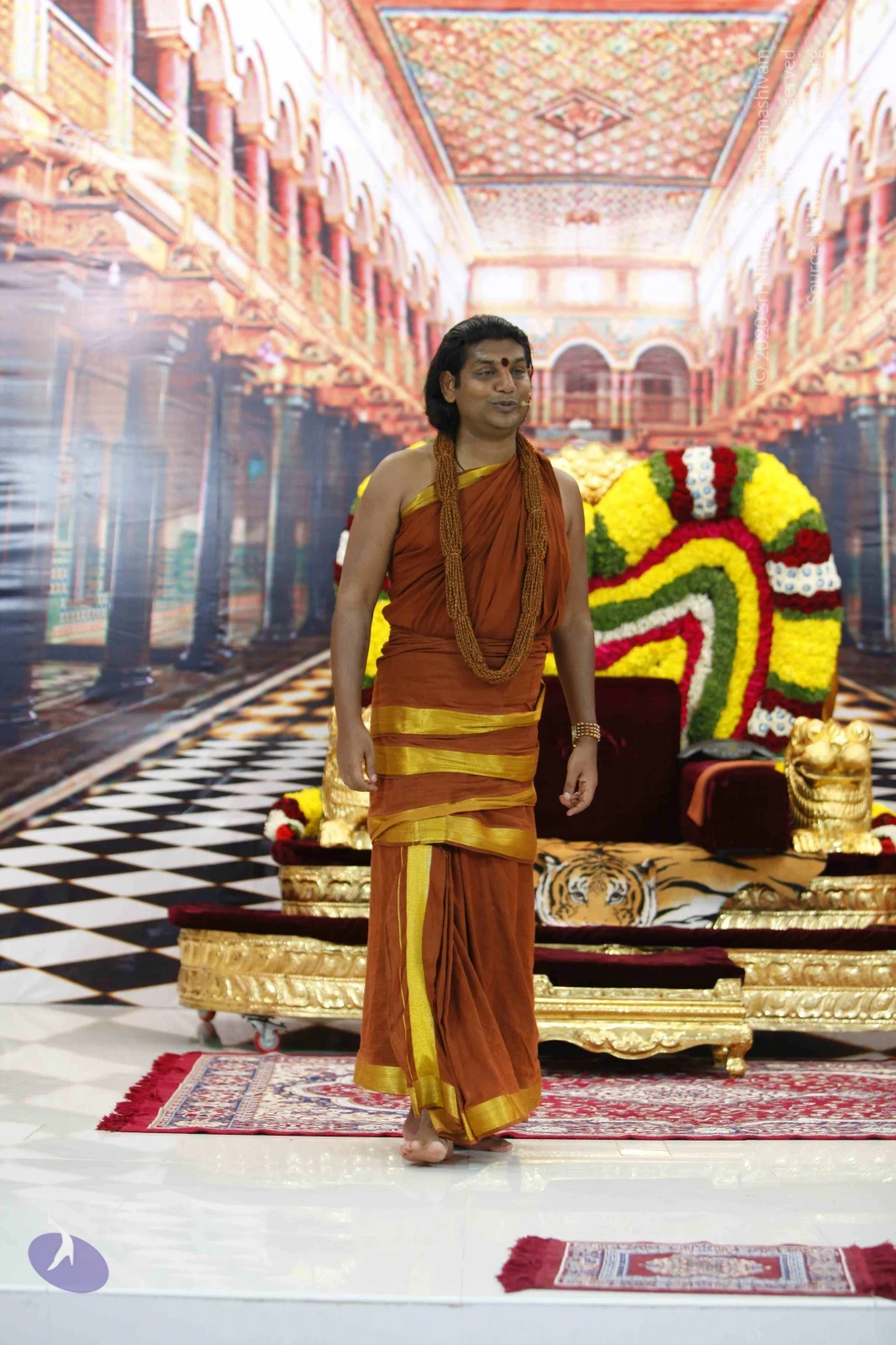
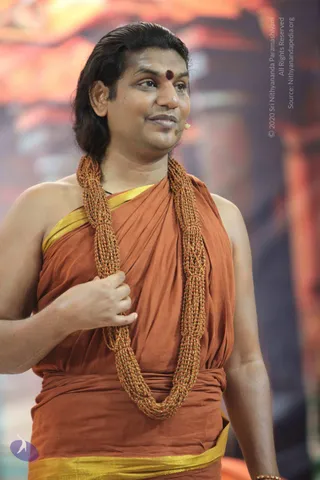
A man stands on a stage in a rust-orange draped garment with a gold border, wearing a thick orange-and-gold beaded mala around his neck and holding one end of it with his right hand. He has long swept-back dark hair, a red bindi on his forehead, and a small headset microphone on his cheek. He looks to the side with a slight smile. The blurred warm background suggests a satsang stage setting. a person: the long swept-back hair, orange draped robe and beaded mala are consistent with the page's identification, but the appearance cues are only moderately distinctive, so identity is uncertain.A man with long swept-back dark hair and a red tilak on his forehead sits in an orange leather armchair, wearing an orange-brown draped cloth with gold borders and a braided orange-gold rudraksha-style mala across his chest. He wears a bangle on one wrist and a ring, holding a small object in one hand while looking to his side with a slight smile. Behind him is a gilded deity murti adorned with garlands of red roses, white flowers and green leaves, with a gold crown, jewelled necklaces and a spear-like staff. Swamiji (probable) is seated as the speaker, with the cues of long hair, saffron clothing and ornate malas.A man with long swept-back dark hair and a small red bindi stands on a stage in front of a warm orange temple-architecture backdrop. He wears a rust-orange unstitched robe draped over one shoulder, with gold border bands wrapped at the waist, a long multi-strand rudraksha-style brown mala around his neck, and a gold bangle on his wrist, and he has a small headset microphone. He is turned slightly to his left, smiling and speaking, with an orange cushioned seat behind him and flowers at the right edge. Appearance-based label: Swamiji (probable), given the long swept-back hair, saffron-orange robe, rudraksha mala and gold ornaments, presenting as a speaker at a satsang.A standing man in an ochre-orange cloth wrapped as a dhoti and upper wrap with gold borders, wearing a long rudraksha mala around his neck and a gold bracelet on one wrist, with a red bindi on his forehead. He stands barefoot on a white marble floor before a stage backdrop of a painted colonnaded hall with a checkered floor, and behind him is a gilded throne flanked by golden lion figures and a garland-decorated seat. The photo shows a single person in a ceremonial setting with a small headset microphone at his ear.A close profile photograph of a man with long dark hair and a short beard, eyes closed, seated in meditation or satsang. He wears a loose white collarless shirt and a brown rudraksha bead on a cord at his chest. A blurred figure in white sits at the left edge, and other white-clad people are faintly visible in the background of a bright hall.A photograph of a large seated audience in a hall during a satsang, with many devotees sitting cross-legged on red mats and chairs facing forward with eyes closed or lowered. Most wear white or cream clothing, several women wear saris and salwar kameez, and some have garlands and rudraksha-style beads. A woman in orange robes sits near the top left, and red curtains line the back wall. The scene shows meditation and quiet attentiveness, with silver stanchions in the foreground. No person is clearly identifiable as a person from appearance, so no candidate is placed in the scene.

Nithya-Satsang

12 photosSource gallery
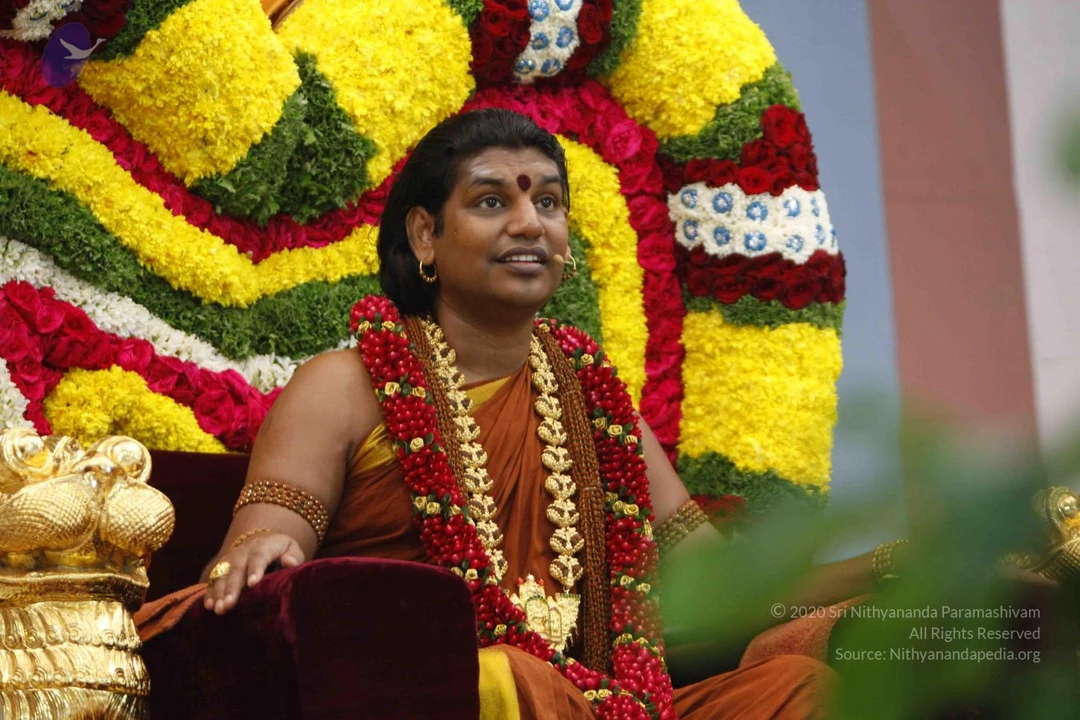
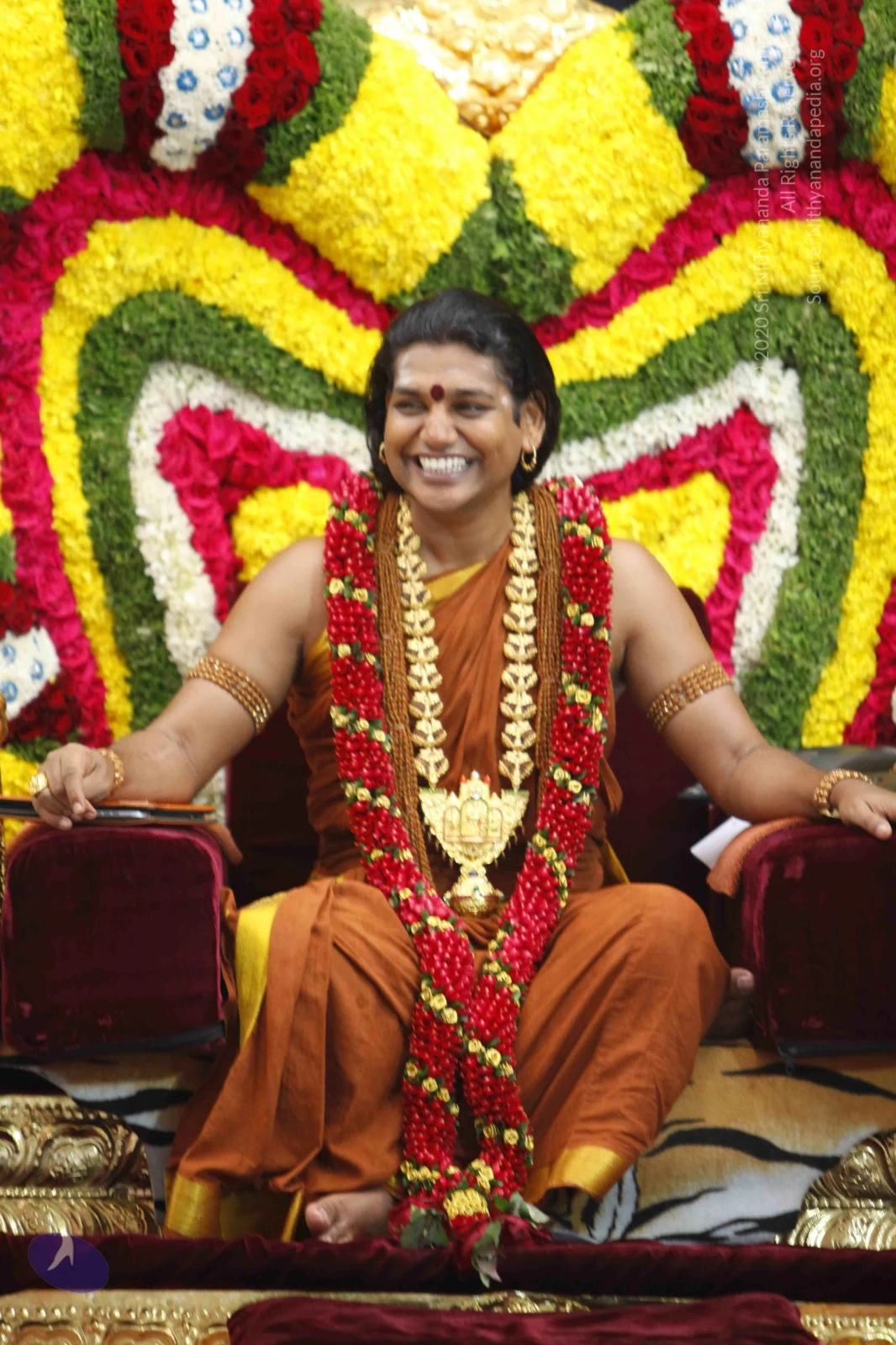
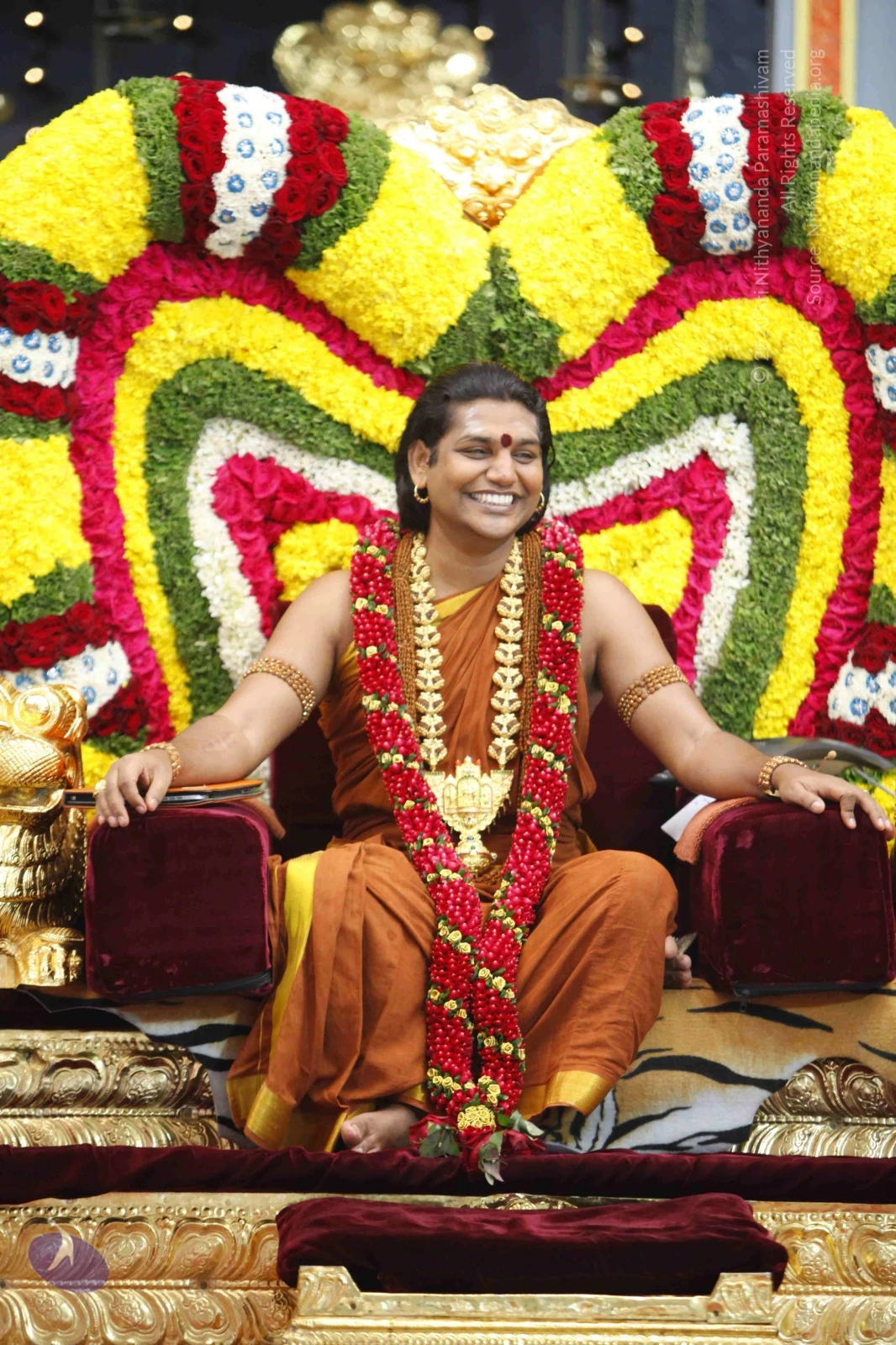
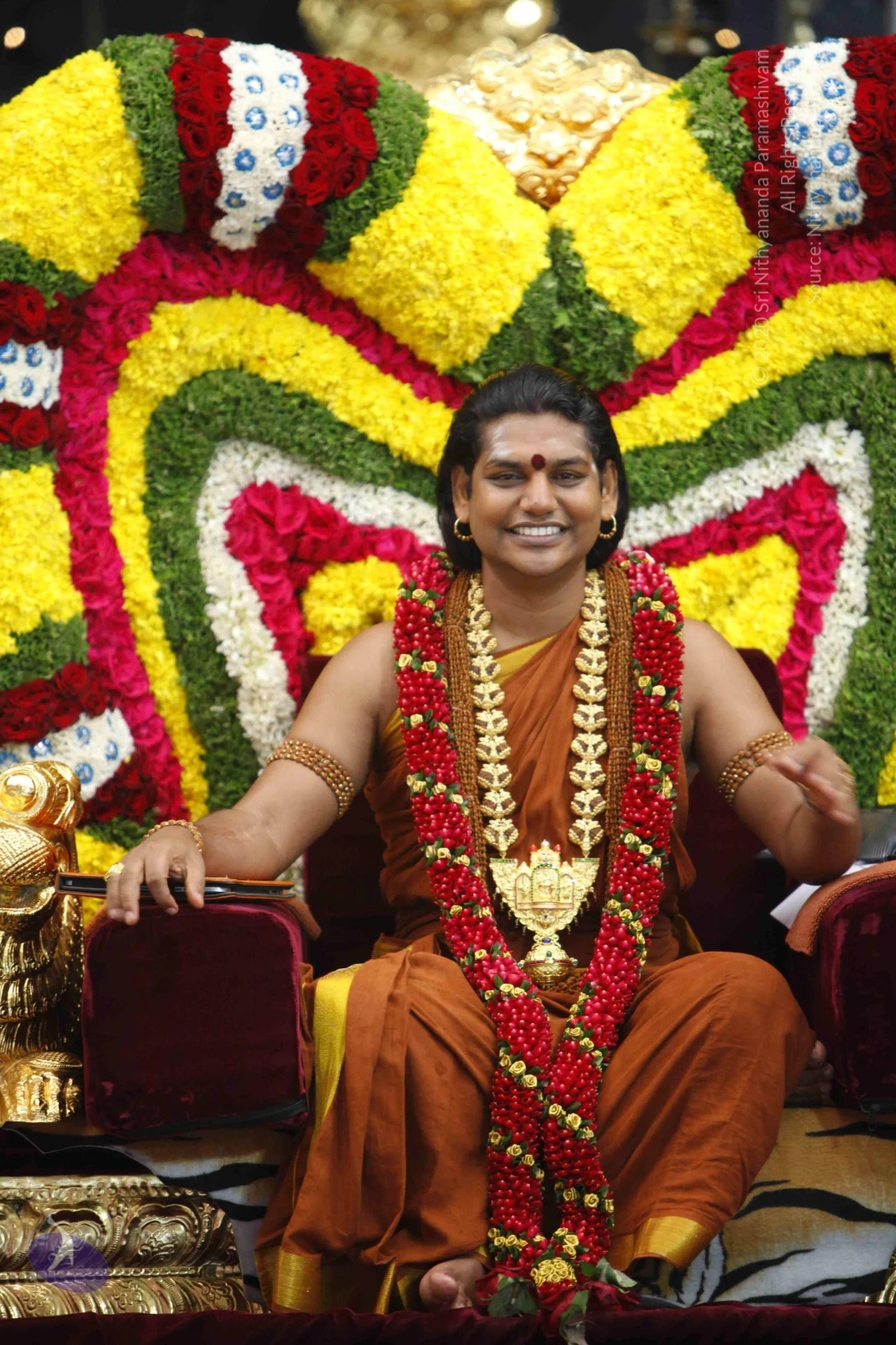
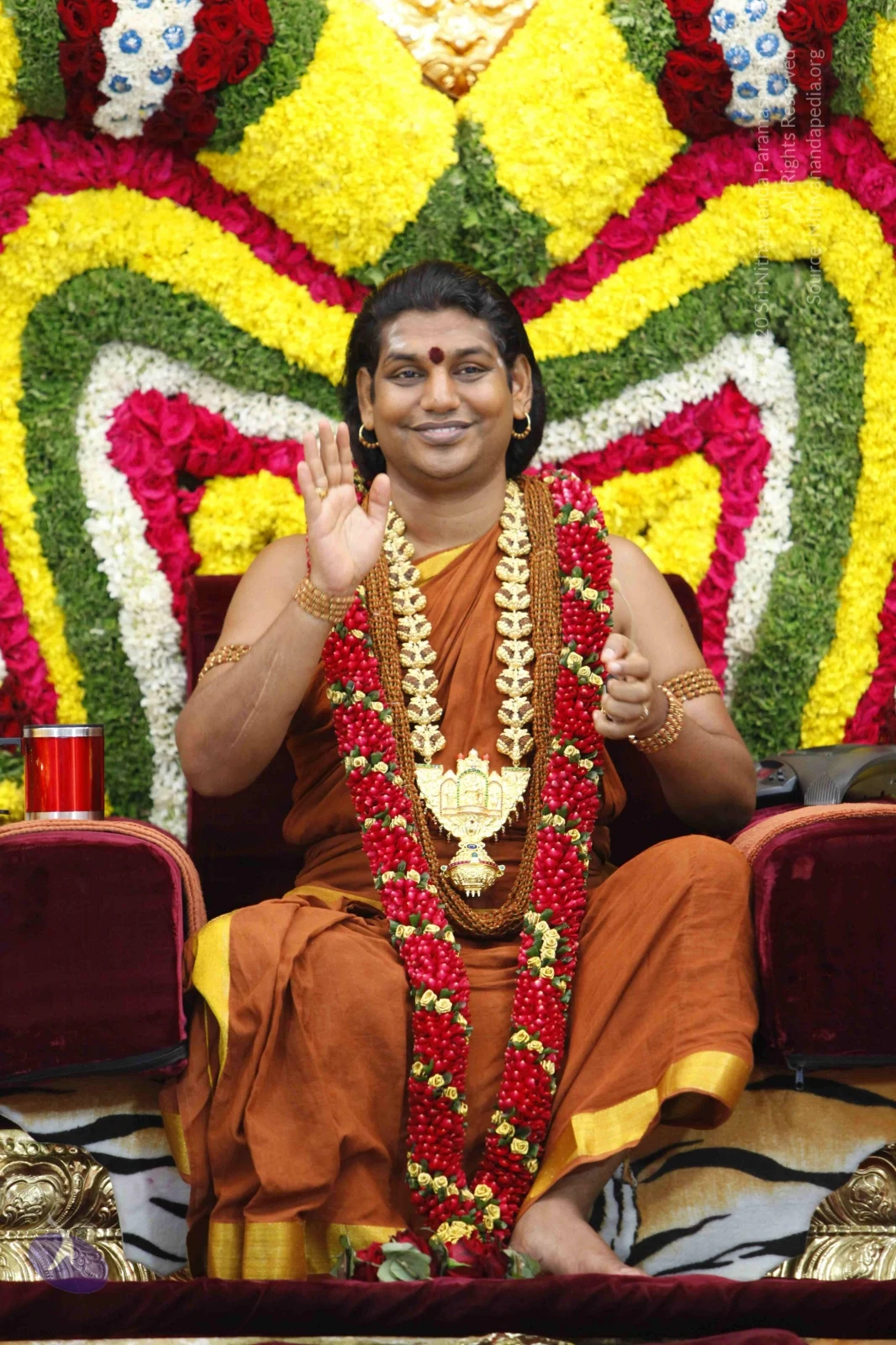
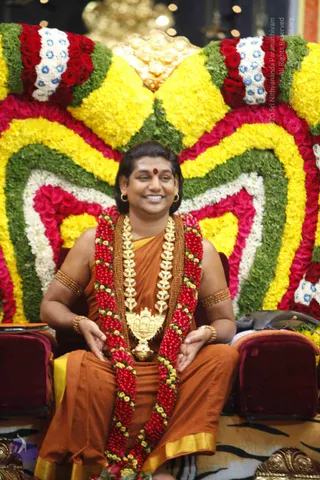
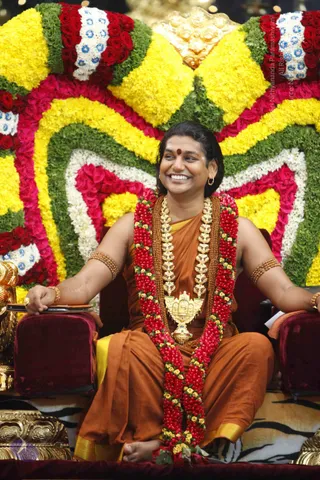
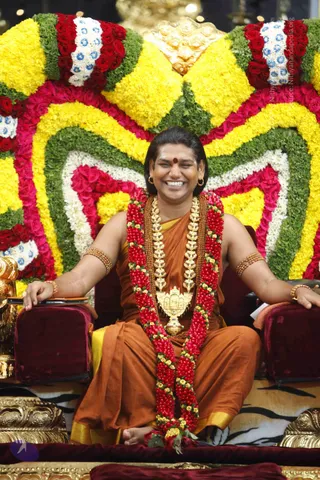
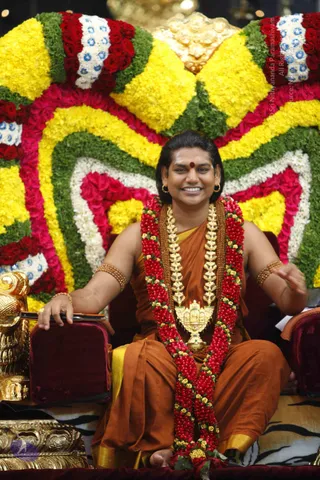
A seated man in an orange-brown robe with a gold-edged border sits on a plush throne draped with a tiger-skin rug, framed by a large arch of yellow marigolds, green leaves, red roses and white jasmine. He wears a long red and yellow flower garland, a rudraksha mala, a gold necklace with a central pendant, gold armlets, bangles and earrings, with a red bindi on his forehead. He smiles while resting his hands on his lap. a person: the visible cues are the orange ceremonial clothing, rudraksha mala, gold ornaments and the flower-decorated throne, and this is a candidate in person. No other people are visible.A smiling man with long swept-back dark hair and a red bindi sits on an ornate throne against a large floral backdrop of yellow marigolds, red roses, white jasmine and green foliage. He wears a saffron-orange robe with a gold border, layered gold necklaces, a red rudraksha mala, a gold pendant and gold armlets, and a red-and-yellow garland hangs to his waist. His bare arms rest on maroon velvet armrests, with a gold lion-shaped carving at the left edge and a tiger-striped cloth on the platform. Swamiji (probable) is seated centrally, with the distinctive long swept-back hair, saffron robe and ceremonial gold necklaces. A single person is visible.A smiling man with long swept-back dark hair sits cross-legged on an ornate throne in front of a large floral backdrop of yellow marigolds, red roses, green foliage and white jasmine arranged in arching bands. He wears a saffron-orange robe with a gold border, a red bindi, gold hoop earrings, a heavy gold necklace with a temple-style pendant, a rudraksha mala, and a red-and-yellow garland of beads and flowers. Gold armlets and bangles adorn his arms, and his bare feet rest on a tiger-striped cloth. A gilded lion motif appears at the top of the backdrop and gold figures at the left edge. The man appears to be a person, seated in a position of honour, and the scene is a photograph of a seated figure at a satsang-style event.A smiling man sits cross-legged on a velvet-cushioned throne-like seat in front of a large floral backdrop of red, yellow, green and white flowers arranged in concentric arches. He wears an orange-saffron dhoti and shawl, a thick red-and-yellow flower garland, a gold multi-strand necklace, a gold pendant, gold armlets and bangles, and a red bindi. He has long dark swept-back hair and hoop earrings. A tiger-striped mat lies beneath the seat. a person: the saffron clothing, long swept-back hair, ornate gold necklaces and garland fit the page's identification, but the face is not used for identification. Seated on a dais for a satsang setting.A seated man in an orange-brown robe with gold border sits smiling on an ornate gold throne upholstered in maroon velvet, arms resting on the armrests. He wears a long red and green flower garland, a gold ceremonial necklace, gold armbands and bangles, and a red bindi. Behind him is a large arch of yellow marigolds, red roses, green foliage and white flowers. A gold lion-form ornament is at the left edge, with a tiger-striped cloth draped over the dais and gold kalasha-style finials above. The scene reads as a formal satsang seat of honour.A smiling man with long dark hair, a red bindi and gold earrings sits on an ornate throne decorated with a large floral backdrop of yellow marigolds, red roses, green foliage and white jasmine. He wears an orange-saffron robe with a gold border, a red and yellow flower garland, a rudraksha mala, multiple gold ceremonial necklaces and a gold pendant, plus gold armlets. His right hand is raised in a gesture while his left rests on a red velvet armrest beside a gold lion-shaped carving. Tiger-striped fabric covers the dais. A satsang setting.

Pratyaksha-Pada-Puja
10 photosSource gallery
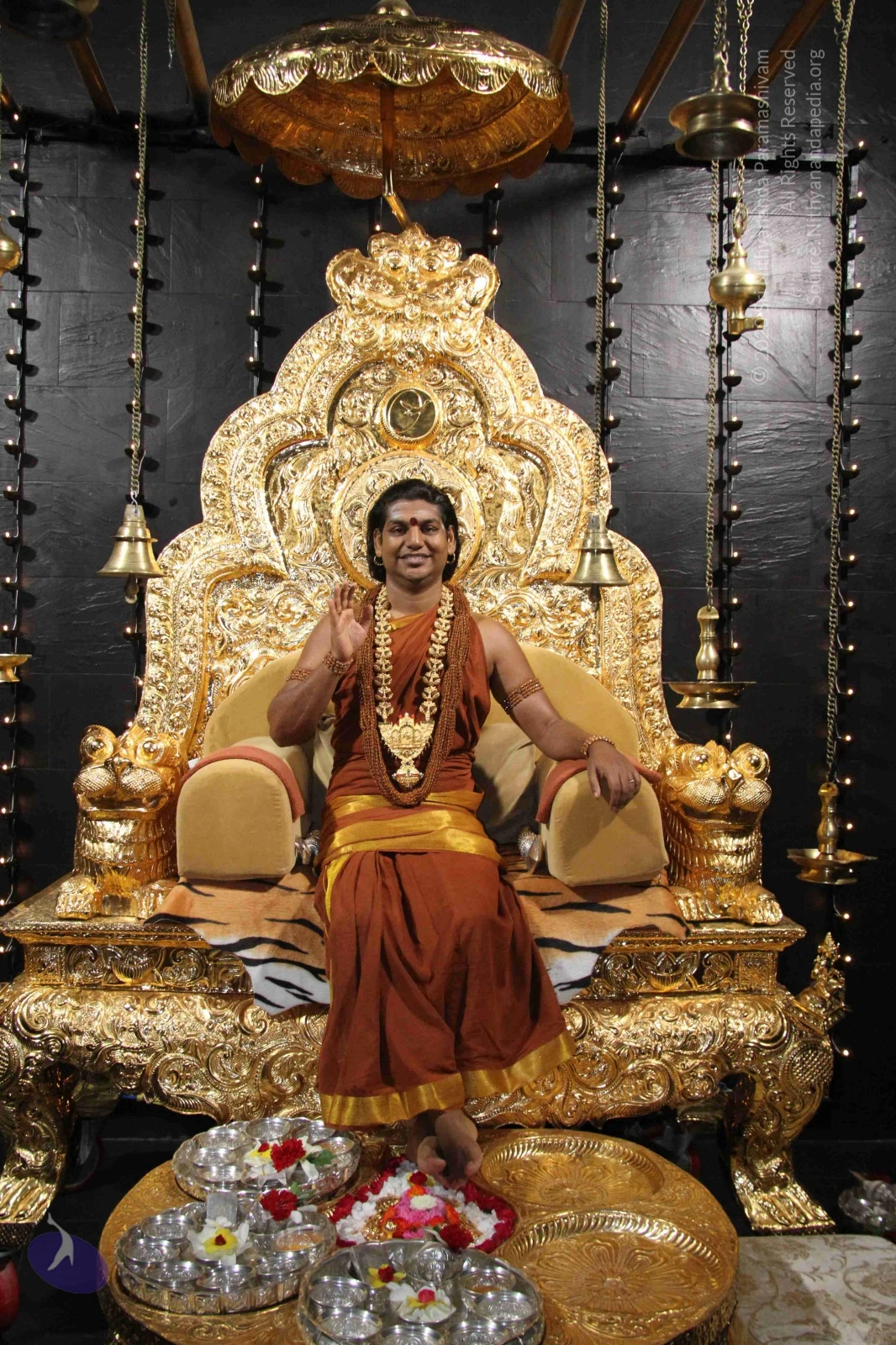
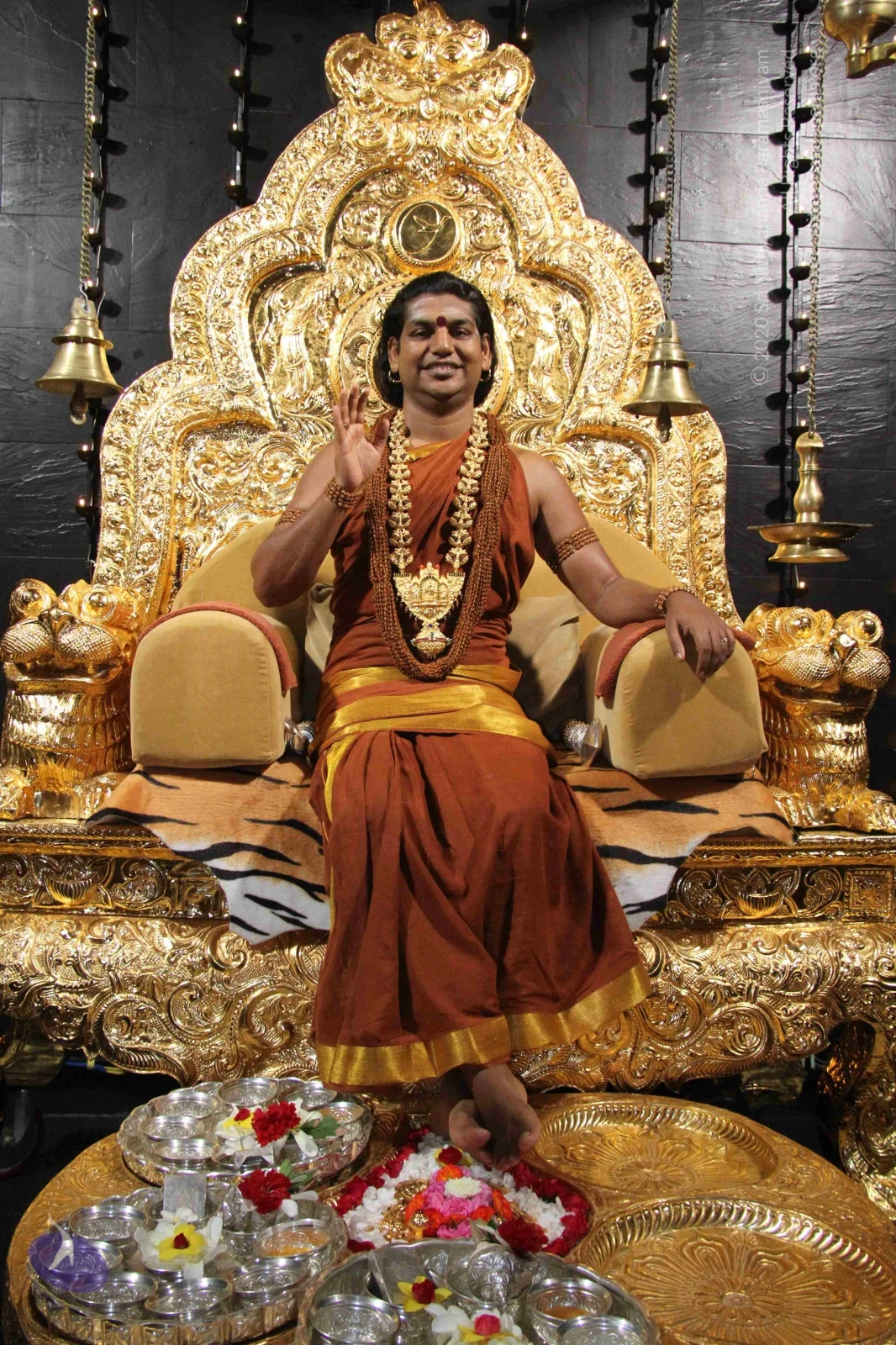
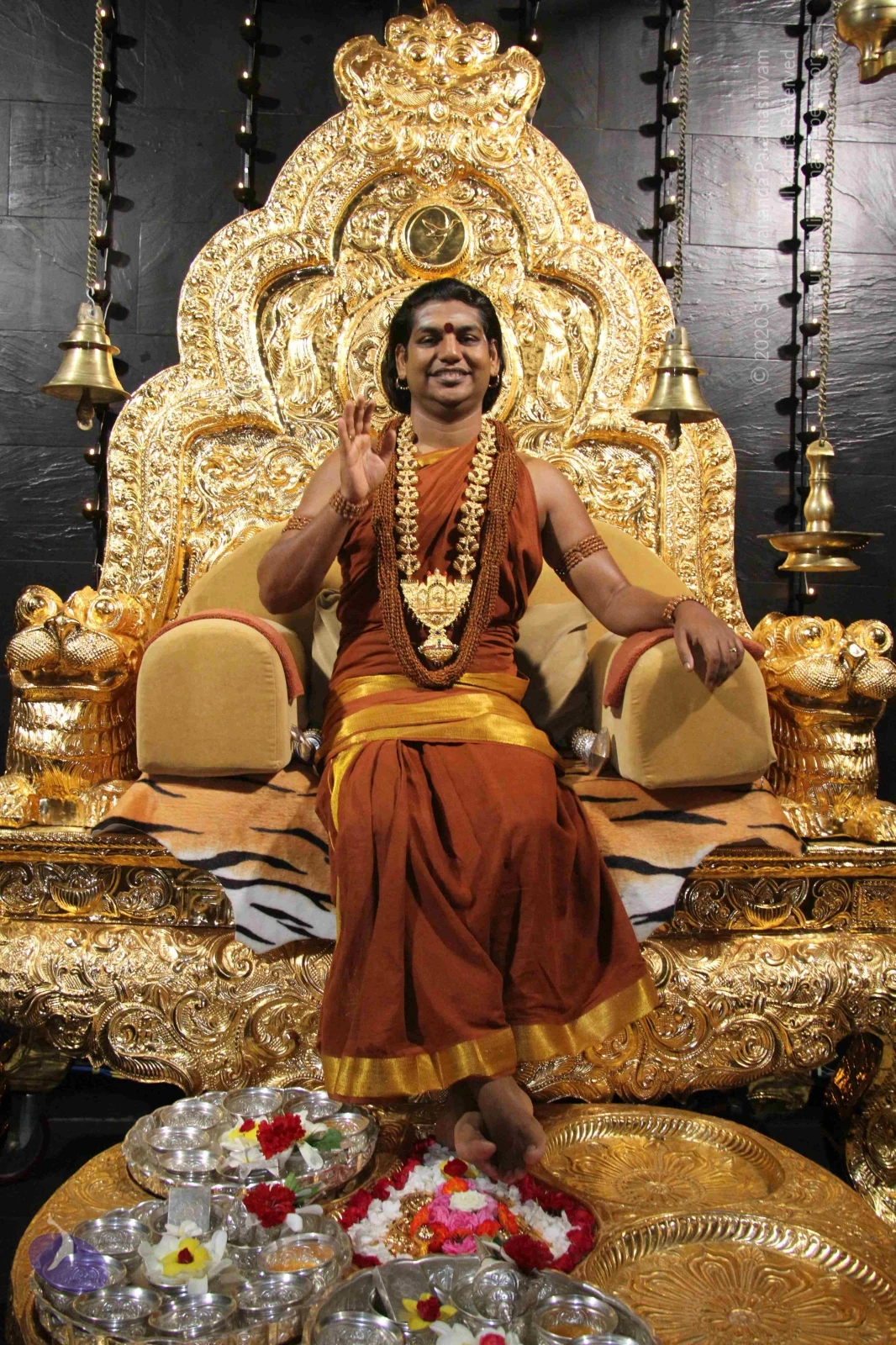
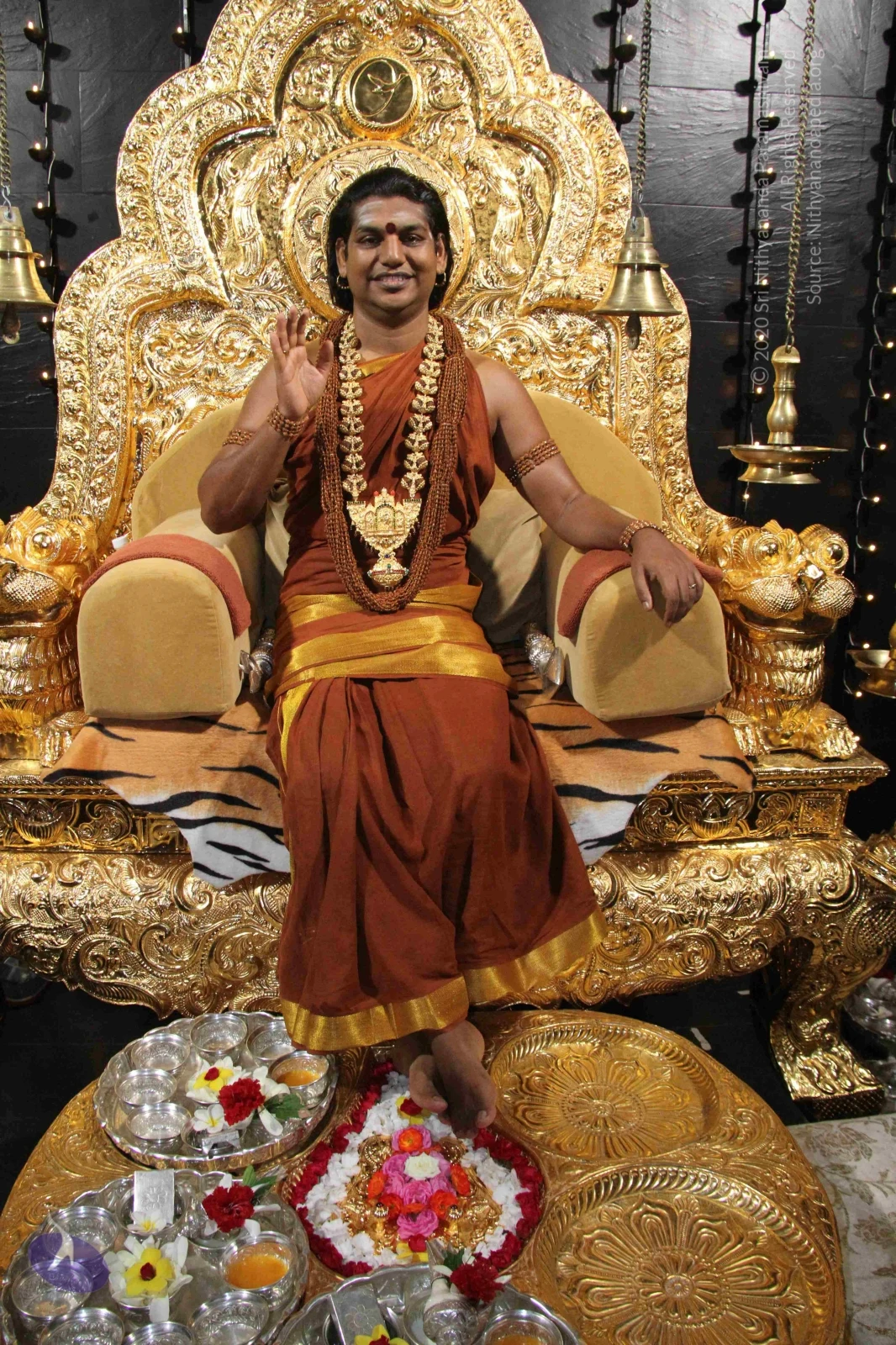
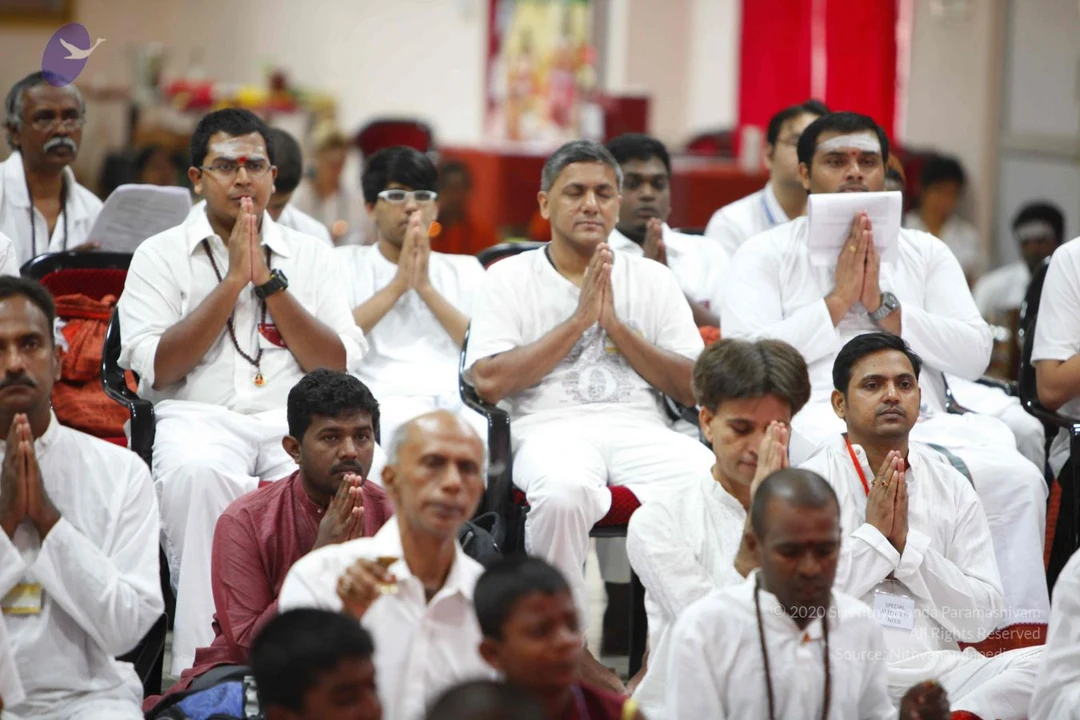
A photograph of a man seated on an ornate gold throne with carved lion-head armrests, a gold canopy above and a tiger-striped cloth draped over the seat. He wears an orange-red garment with a gold border, a gold-trimmed sash, a rudraksha mala and a large gold ceremonial pendant necklace, plus gold armbands and bangles. His right hand is raised in blessing and he has a red tilak on his forehead. Silver plates of flowers and offerings sit before the throne with a floral arrangement at his feet. Brass bells and oil lamps hang around the dark backdrop. Swamiji (probable): the seated figure has long swept-back hair, a crown-like gold canopy setting, saffron clothing, rudraksha mala and ceremonial gold necklace.A seated man on an ornate gold throne with carved lion-head armrests and a tiger-striped cloth draped over the seat, raising one hand in blessing. He wears rust-orange cloth with a gold border, a long rudraksha mala with a gold ceremonial pendant, gold bangles and an armlet, and a red bindi. Silver and steel plates of flowers, a lit oil lamp and marigold and rose petals sit on the golden platform before his feet, with hanging brass bells and a brass lamp to the sides against a dark stone wall. Appearance-based identification is uncertain given the throne and offerings, so the figure is described by role as a seated figure receiving puja offerings.A seated man in an ornate gold throne with carved lion-head armrests and a tiger-skin cloth draped over the seat, raising his right hand in blessing. He wears a rust-orange dhoti and shawl with a gold border, a gold-and-rudraksha mala with a large gold pendant, gold armbands and bangles, and a red bindi with a vibhuti mark. Silver trays of flowers, oil lamps and offerings sit at his feet, with a rangoli of red, pink and white petals on the floor, and brass bells hang on chains beside the throne.A seated man on an ornate gold throne with carved lion-head armrests, draped with a tiger-skin cloth, raises one hand in blessing. He wears a rust-orange robe with a gold-bordered waist cloth, a long gold pendant necklace over rudraksha beads, gold armbands and bangles, and a red bindi. Before him on a gold platform stand silver trays of flowers and small silver bowls, with a floral arrangement and a golden kalasha-like object at his bare feet. Hanging bells and a brass oil lamp frame the scene. Shown with appearance-based cues of ornate saffron clothing, rudraksha and a throne, so.A seated man with long swept-back dark hair and a red bindi wears a saffron-orange robe with gold border and a long rudraksha mala with gold beads, plus a large gold pendant and rudraksha armlets and bracelet. He sits on an ornate gold throne with a brass bell hanging at right and smiles toward the side. Swamiji (probable) based on long hair, saffron robe, rudraksha mala and gold pendant.A seated man in a rust-orange robe and a thick red-and-gold flower garland sits on an ornate gilded throne carved with lion heads. He raises his right hand to touch a hanging brass bell, with a brass oil lamp and a small brass bell beside him. Bangles are visible on his wrists and a red tilak mark is on his forehead. Dark background. Swamiji (probable): a long-haired figure in saffron-orange clothing with a garland, seated on a throne, matching the page's Swamiji-at-event note.

SarvaDarshan
3 photosSource gallery
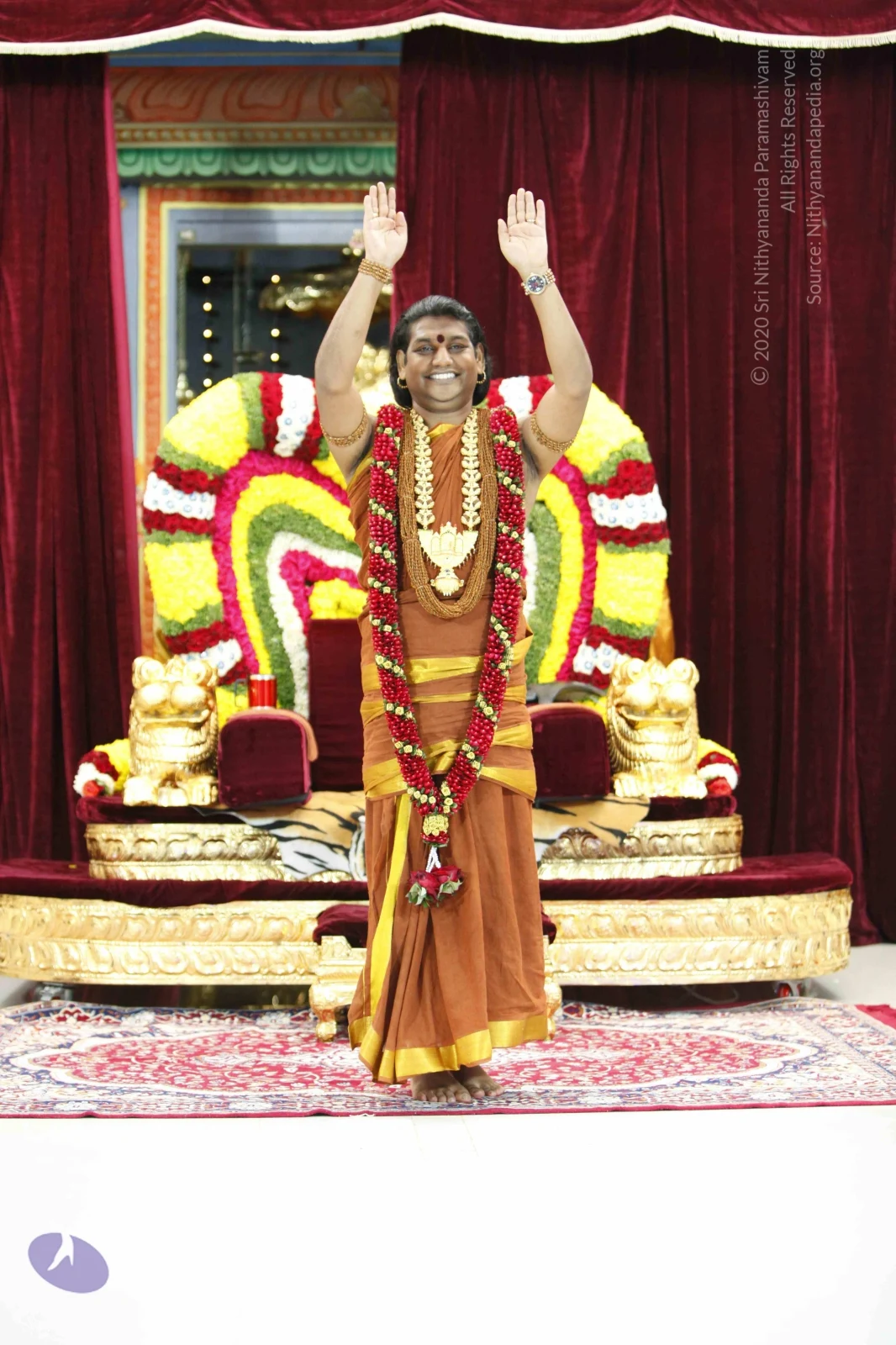
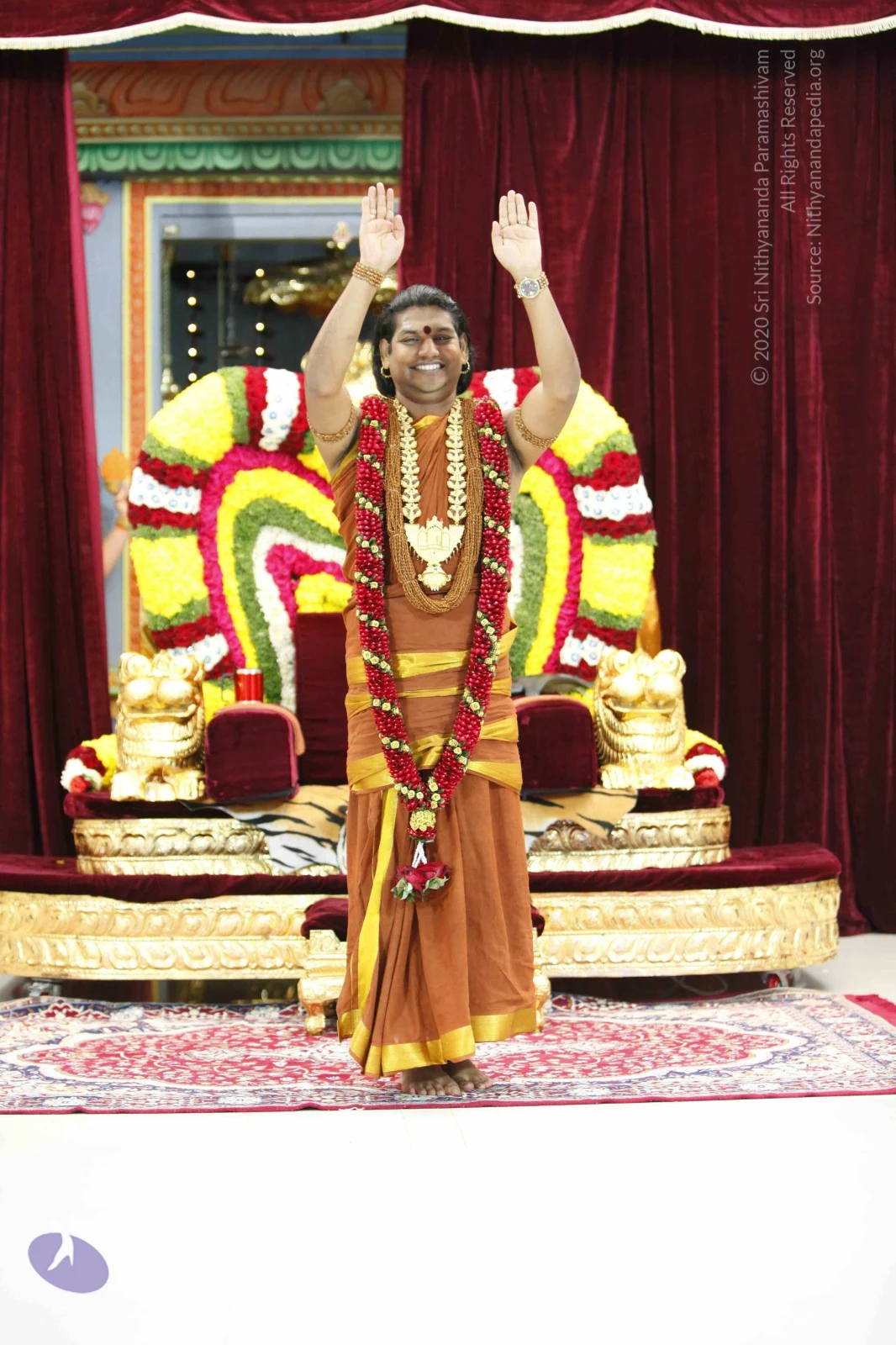
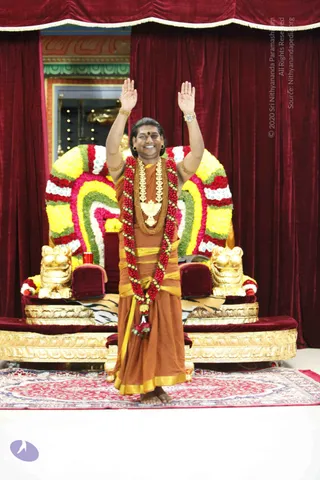
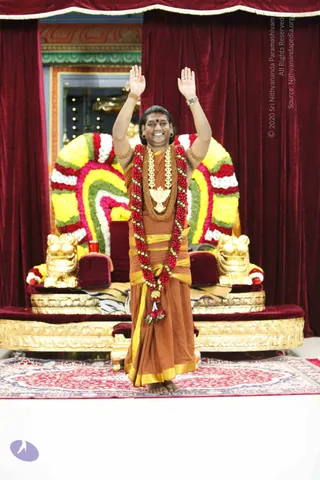
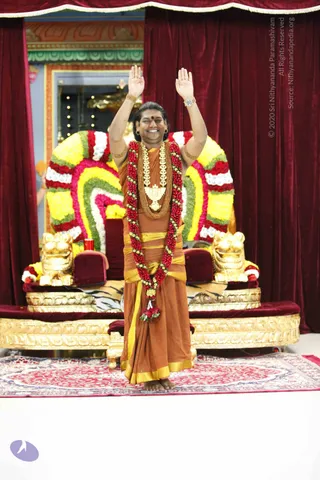
A smiling man stands barefoot on a red patterned rug in front of a gold throne backed by red velvet drapes and a large floral arch of yellow, green, red and white flowers. He wears a rust-orange garment with gold borders and a long red and yellow beaded garland, with gold necklaces, gold bangles and a gold wristwatch, plus a red bindi on his forehead. Both arms are raised in greeting. The gold throne has lion-shaped armrests and a tiger-skin cloth. Swamiji (probable): the figure has long swept-back hair, gold ornaments and a ceremonial gold necklace, while standing as the central honoured speaker at a satsang.A smiling man stands barefoot on a red patterned rug with both arms raised in greeting, wearing a rust-orange dhoti and shawl with gold borders, a thick red and green flower garland, a gold lotus pendant necklace, gold armbands and bangles, and a wristwatch. A red bindi marks his forehead. Behind him is a golden throne with lion figures, backed by a large arch of yellow, red, white and green flowers and red velvet drapes. The man's appearance shows some cues such as the garland, gold ornaments and orange clothing, though the image is not conclusive, so his identity is uncertain.A man stands barefoot on a red patterned rug in front of an ornate golden throne with lion-head armrests, a tiger-skin draped seat, and a backdrop of red velvet curtains and a large floral arch in yellow, red, white and green. He raises both hands in greeting, smiling, wearing a rust-orange dhoti-style garment with gold borders, a long red and green garland, layered gold necklaces with a lotus pendant, gold bangles, a wristwatch, and a red bindi. a person appearance-based label: long swept-back hair and ornate gold-and-garland adornment, while the page identifies this as a person's satsang event. Only one physical person is present.

Temple

16 photosSource gallery
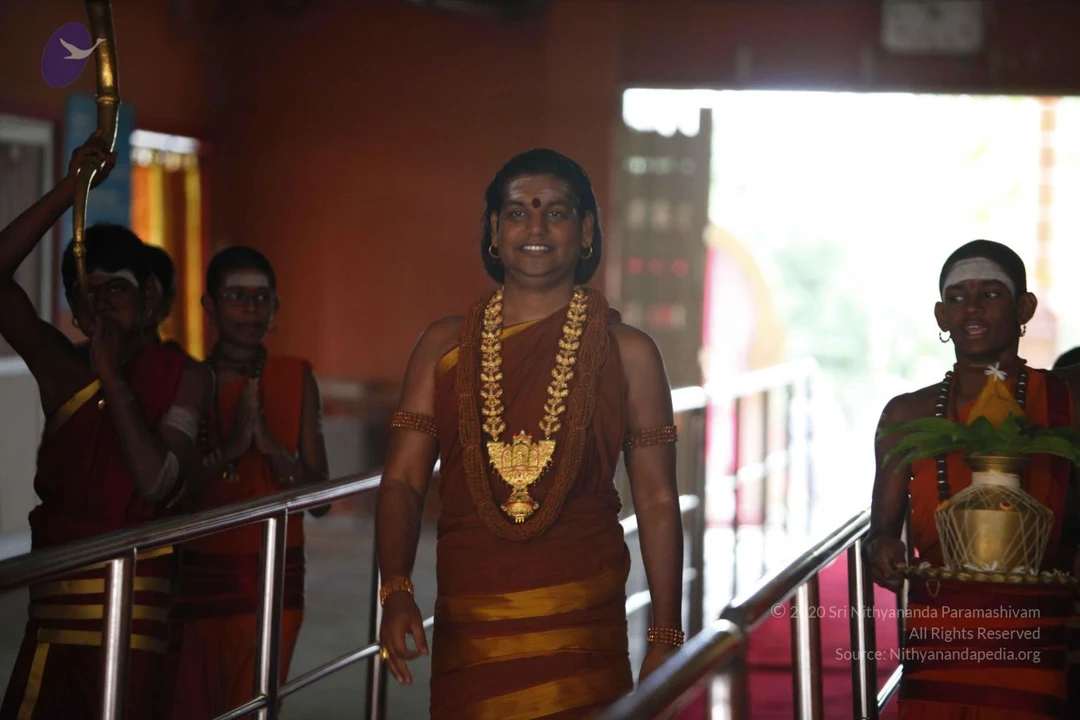
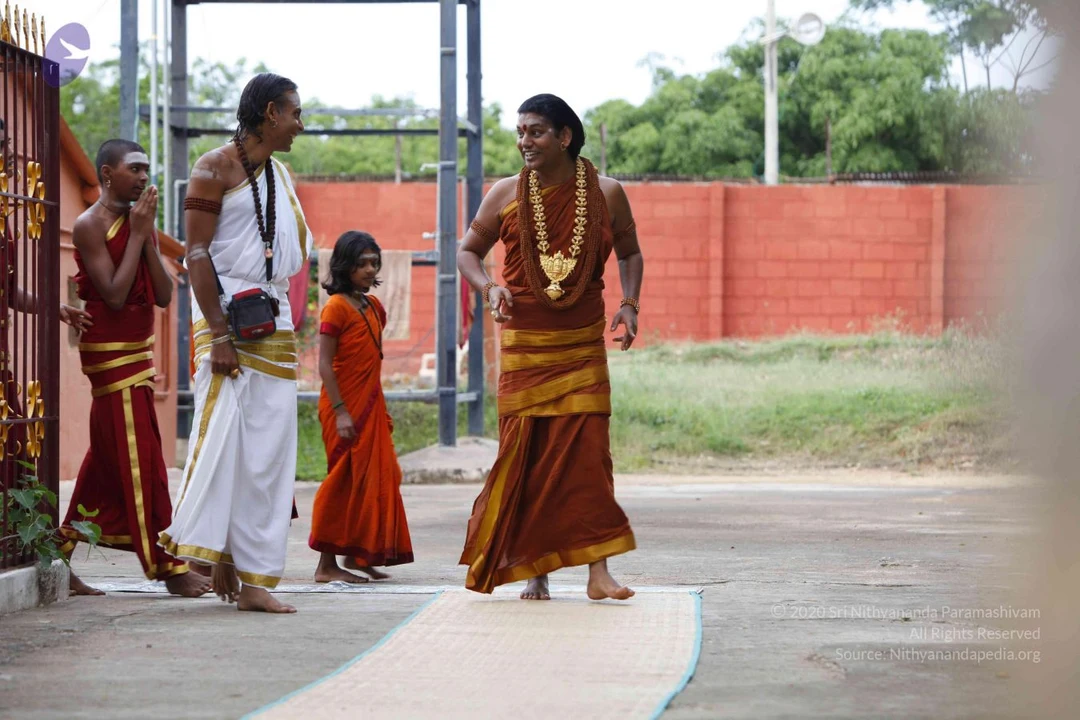
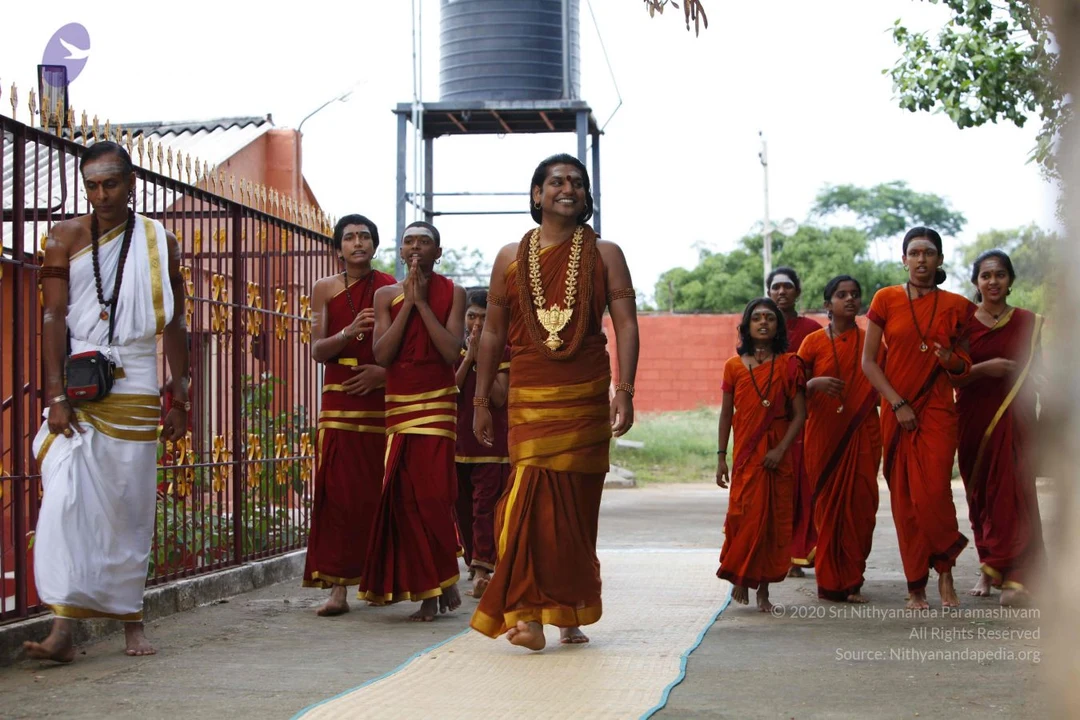
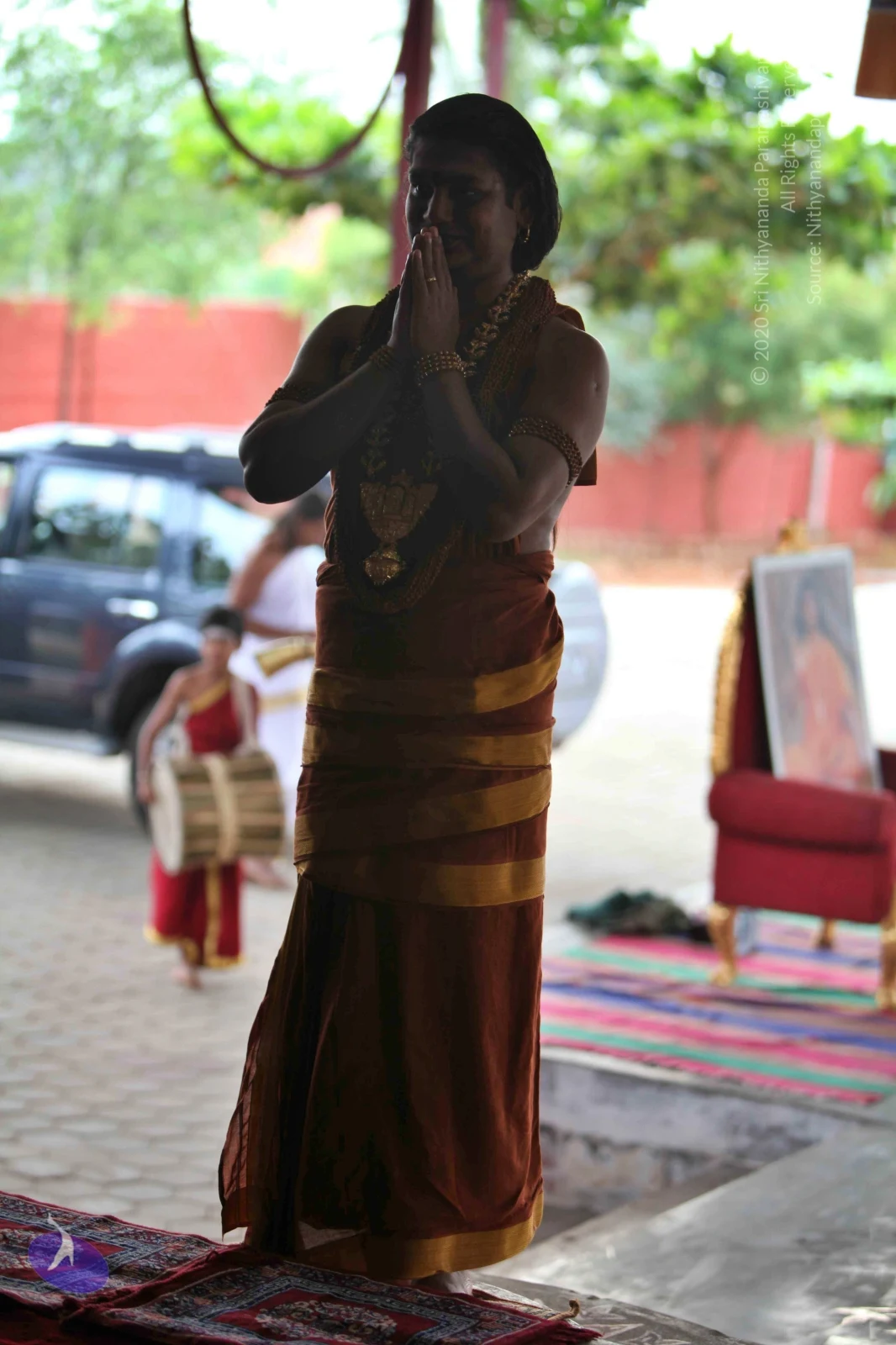
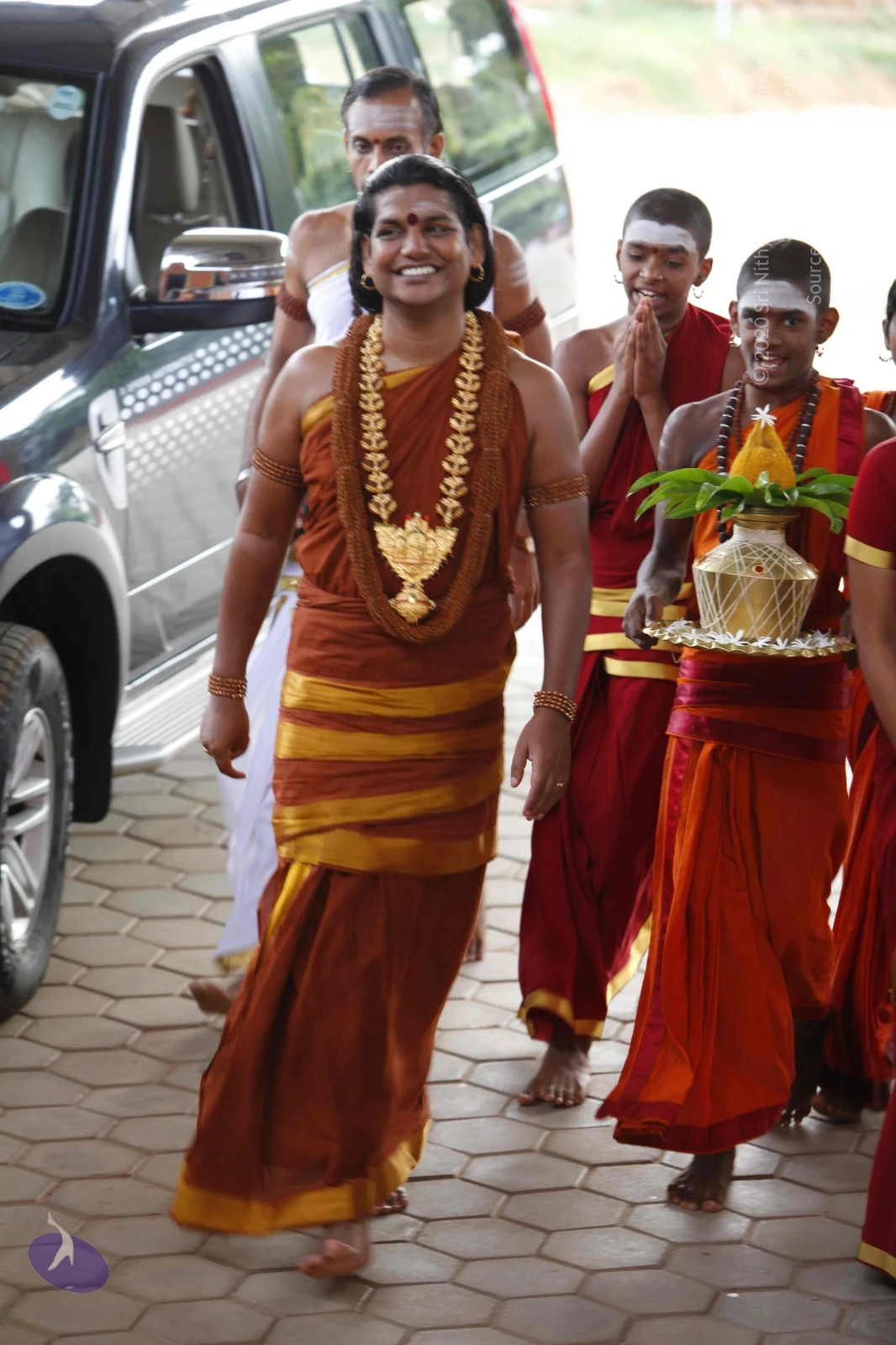
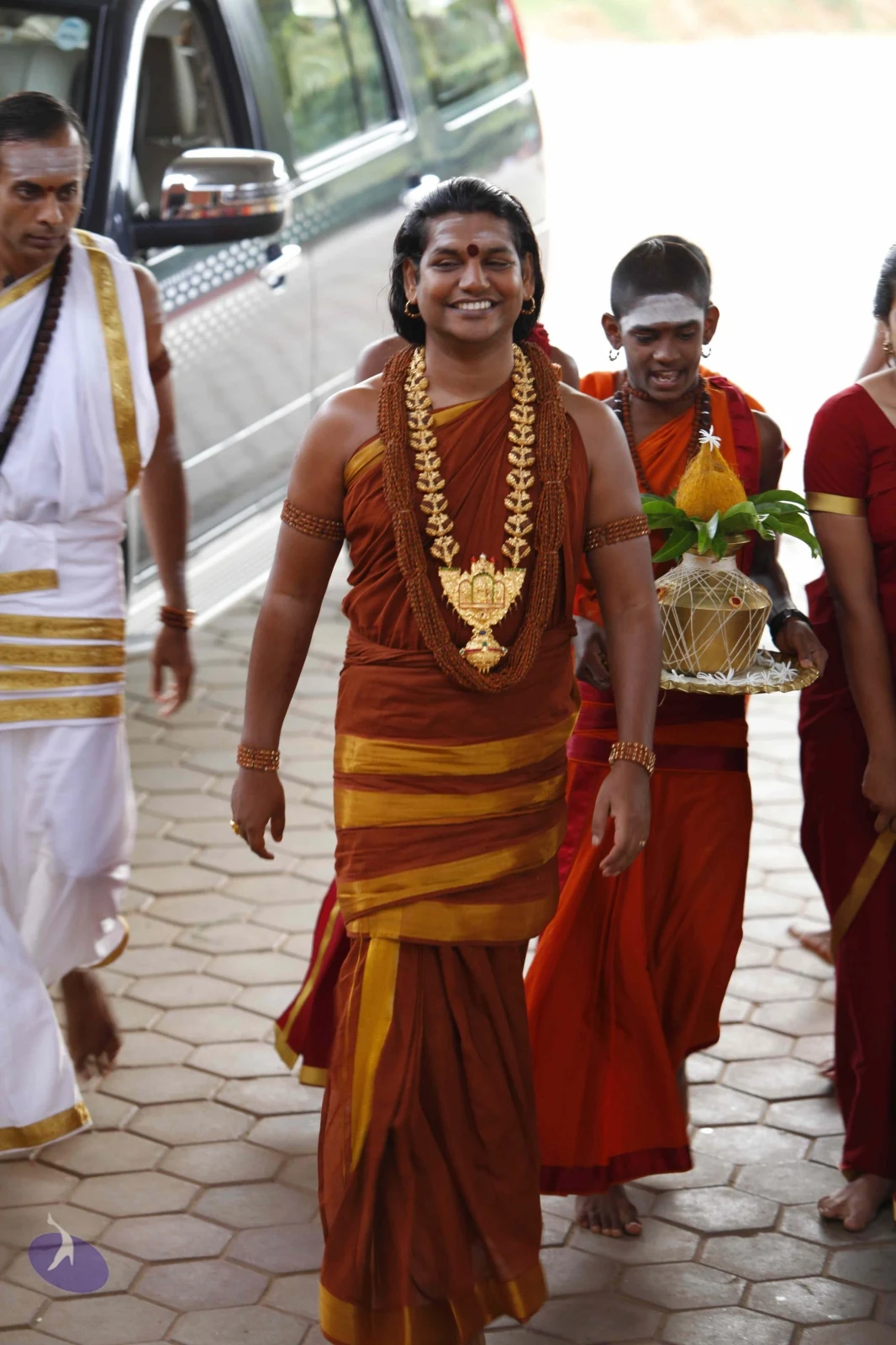
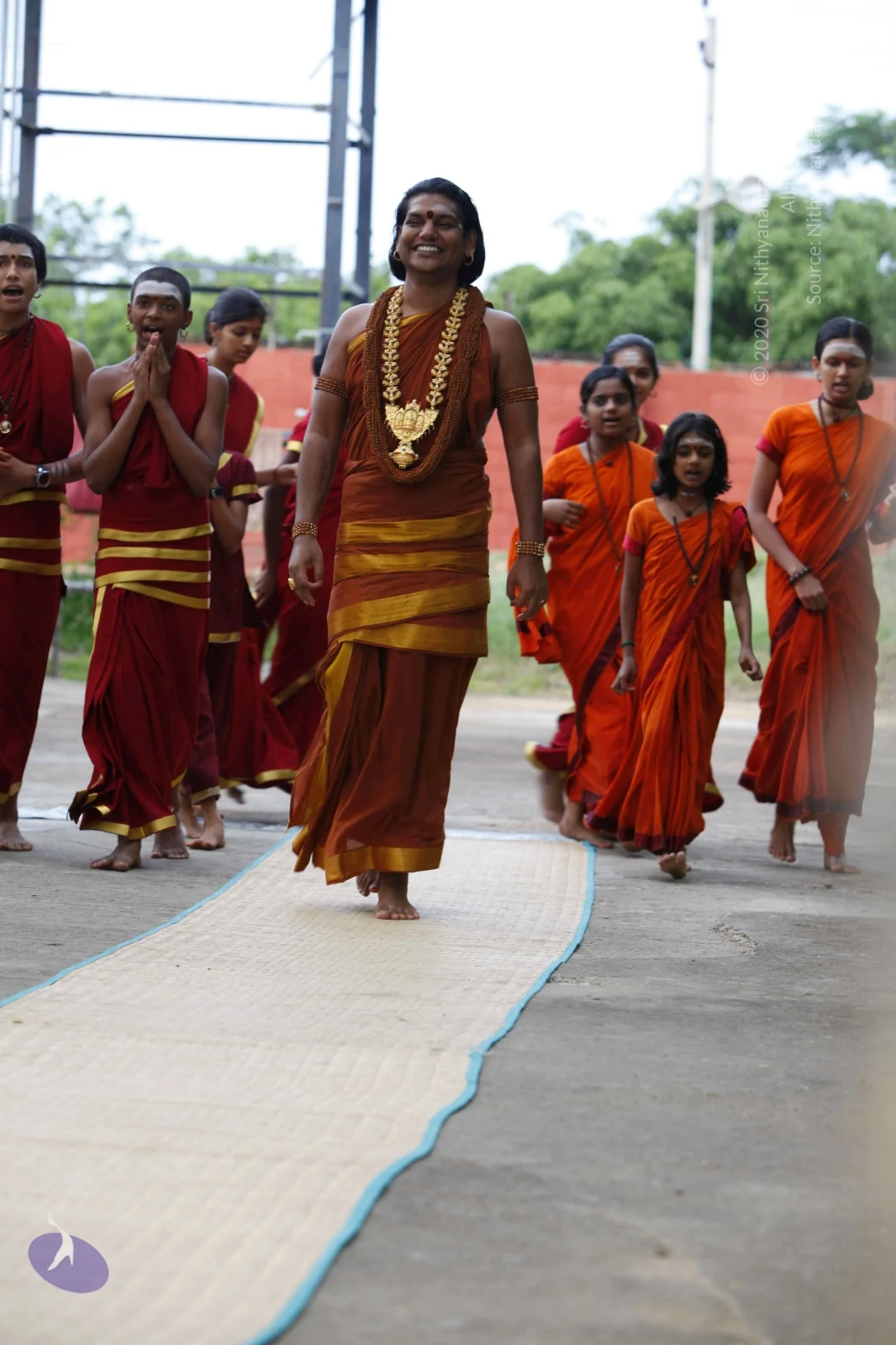
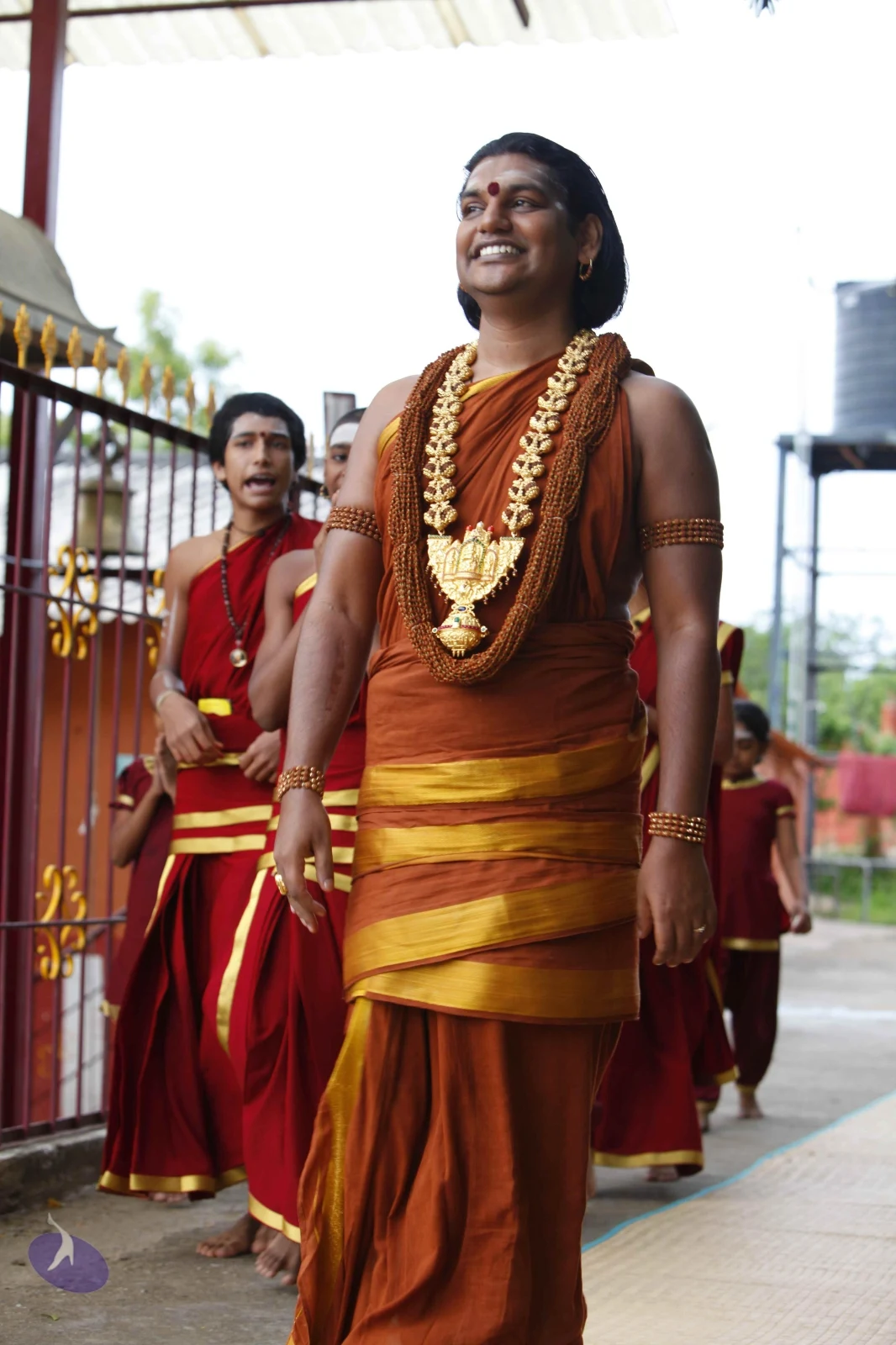
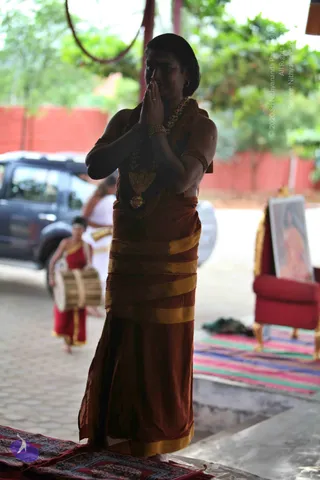
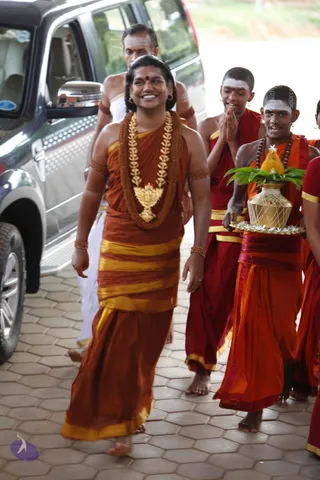
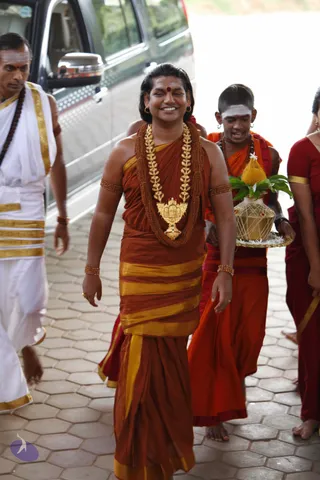
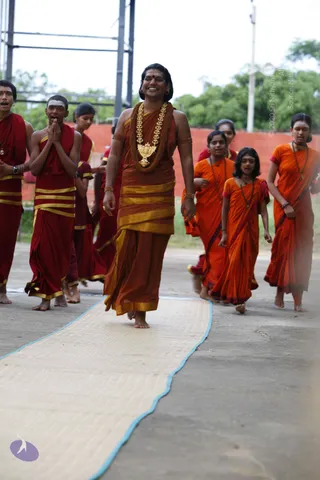
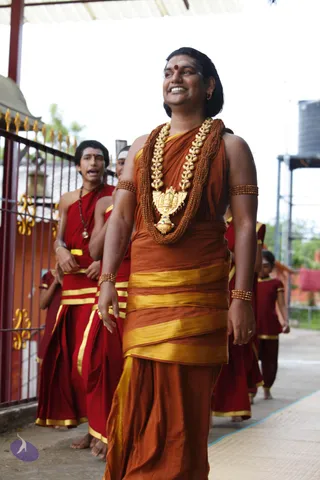
A performer in a rust-brown and gold-bordered dhoti-style garment stands barefoot on a patterned rug under a covered porch, hands pressed together in namaskar. A gold pendant and beaded garland hang at the chest, with gold bangles and an armlet. Behind, a drummer in a red garment with gold trim carries a drum, and a framed painting rests on a red chair beside a striped mat. Outside, a dark car and red wall appear in the background.Photograph of two life-sized metal murti statues seated side by side in front of a bright pink drape within an ornate gilded arch. The figure on the left wears an orange turban and orange garment with a dark rudraksha-style mala and a black-and-silver necklace, holding a trident in one raised hand. The figure on the right wears an ornate silver crown, orange-red sari-like dress, layered silver necklaces and a parrot perched on a raised hand, with a bangle-filled arm. Both are draped with yellow and red flower garlands and stand on a lavender cloth. The scene depicts deity murti rather than living people.A photograph of a procession at an entrance paved with hexagonal tiles, beside a silver SUV. In front, a smiling man with swept-back dark hair and a red bindi wears a rust-orange shawl and dhoti with gold borders, a heavy gold necklace and bangles. Behind him, young men with white forehead markings and red and orange robes walk; one has his hands joined in namaskar, and another carries a brass kalasha topped with a yellow cloth and green leaves on a tray. A man in white dhoti stands further back.Photograph of a procession on a paved hexagonal-tile walkway beside a parked dark SUV. A smiling central figure wears long swept-back dark hair, a red bindi, a rudraksha mala with a gold ornamental necklace, gold bangles and orange-red silk with gold borders. Behind him a young attendant in orange robes with white forehead marks carries a brass kalasha with a coconut and mango leaves on a tray. A man in white dhoti with gold border walks at left, and a woman in red sari stands at right.Outdoor photograph of a smiling figure in long dark hair, rust-orange draped garment with broad gold borders, a heavy gold floral necklace and gold armlets, walking barefoot along a woven cream mat with a light blue edge across a concrete courtyard. Behind, a group of young people in red and orange robes walk and sing, one with palms pressed in anjali. Red brick wall and trees in background.A smiling person with swept-back dark hair, a red bindi and an orange-brown dhoti-style garment with gold-bordered wraps walks forward in a line. He wears a thick rudraksha mala with an ornate gold pendant and gold necklace, plus rudraksha bracelets on the upper arms and wrists. Behind him, several young men in red and gold-bordered robes follow along a covered walkway beside a red-and-gold metal gate. Three or four other people are visible in red robes.
July 03 2013

1 photoView all
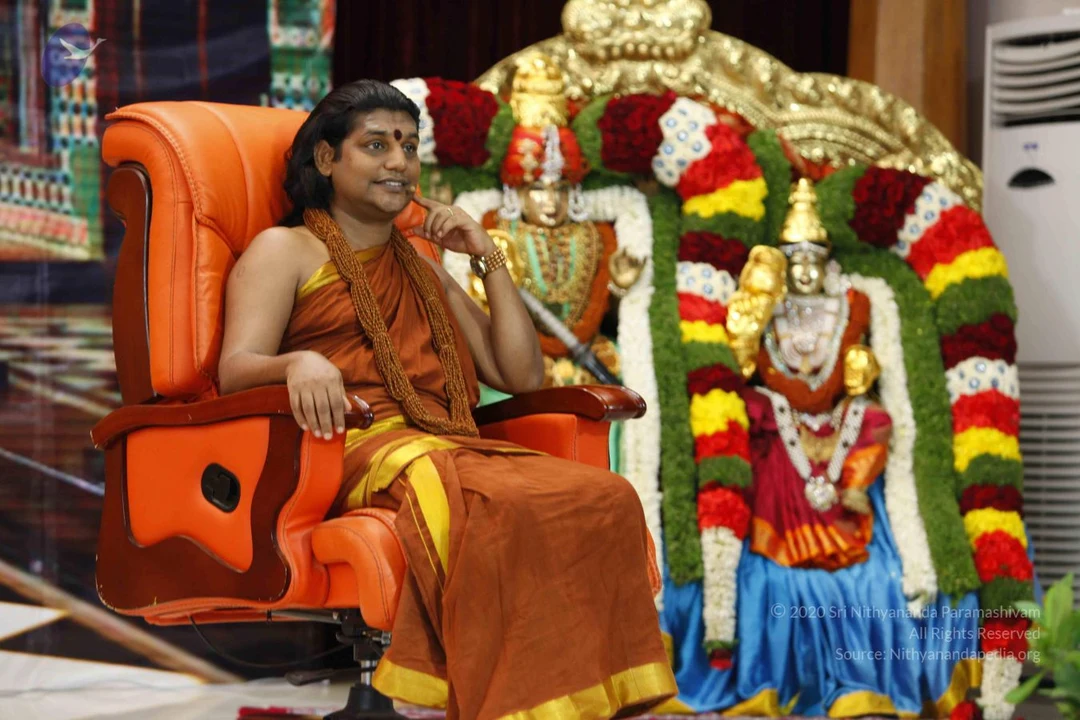
Two gilded deity murtis seated side by side on a throne-like seat framed by an ornate gold canopy and garlands of red roses, white jasmine and green leaves with yellow marigolds. The male figure wears a red turban with a jewelled ornament, a sword across his lap, green dhoti and a beaded golden armour-like chest piece with layered mala necklaces, holding a gold-tone mace or hand implement. The female figure wears a golden crown, rich layered jewellery, a magenta and orange saree with gold border and a bindi, holding a gold-tone object. Blue silk drapes fall over the base. Statues, not physical people.