Skip to content
Friday

3 July 2015

Secrets Of Real Heaven Beyond Death by Swami Nithyananda

Dated photos
330
Source pages
1
Media
3
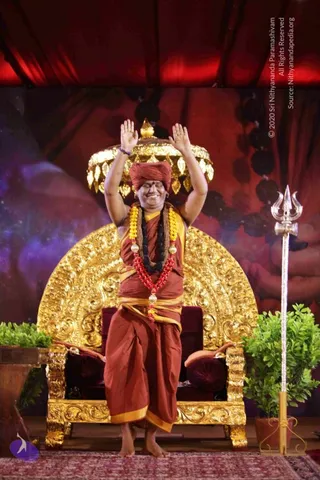
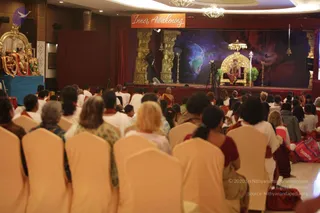
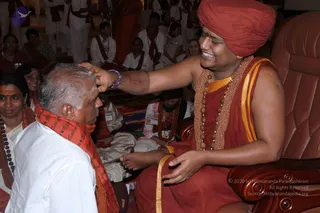
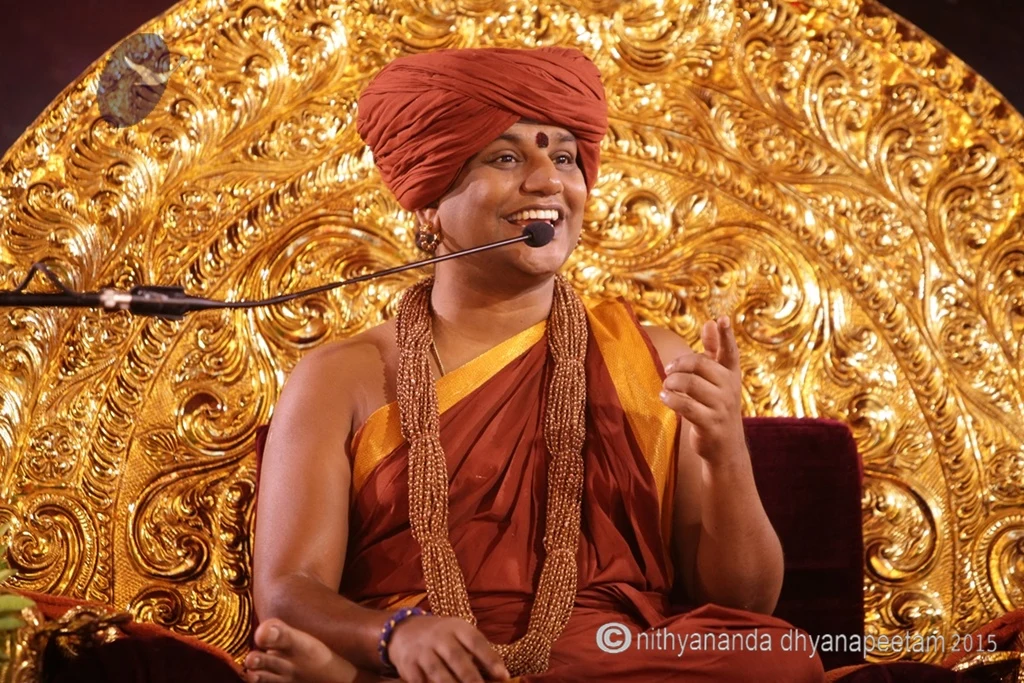
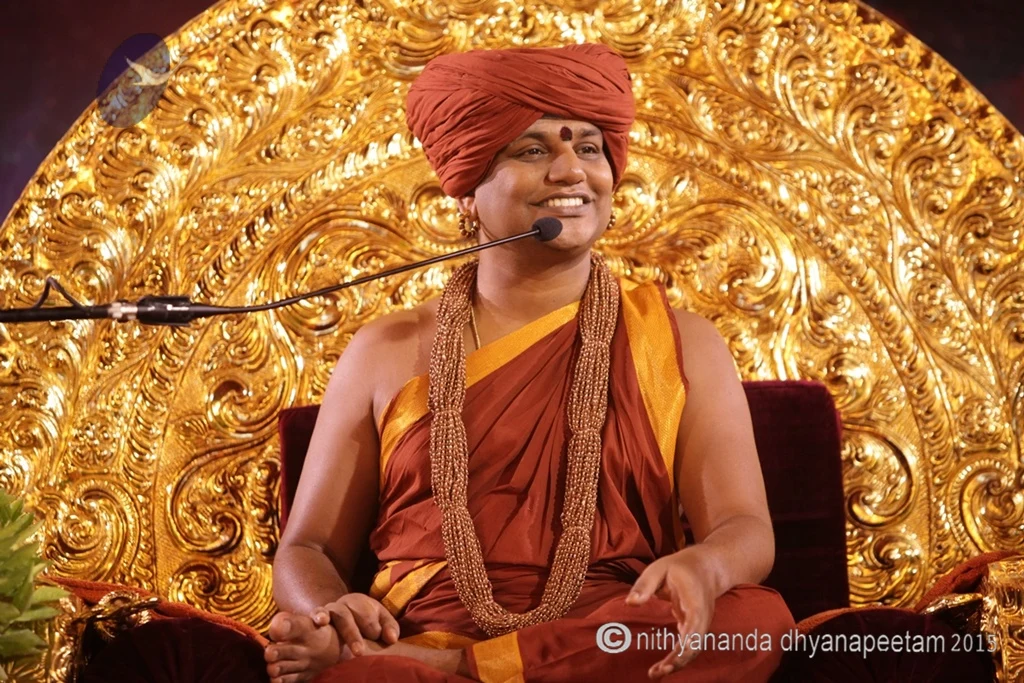
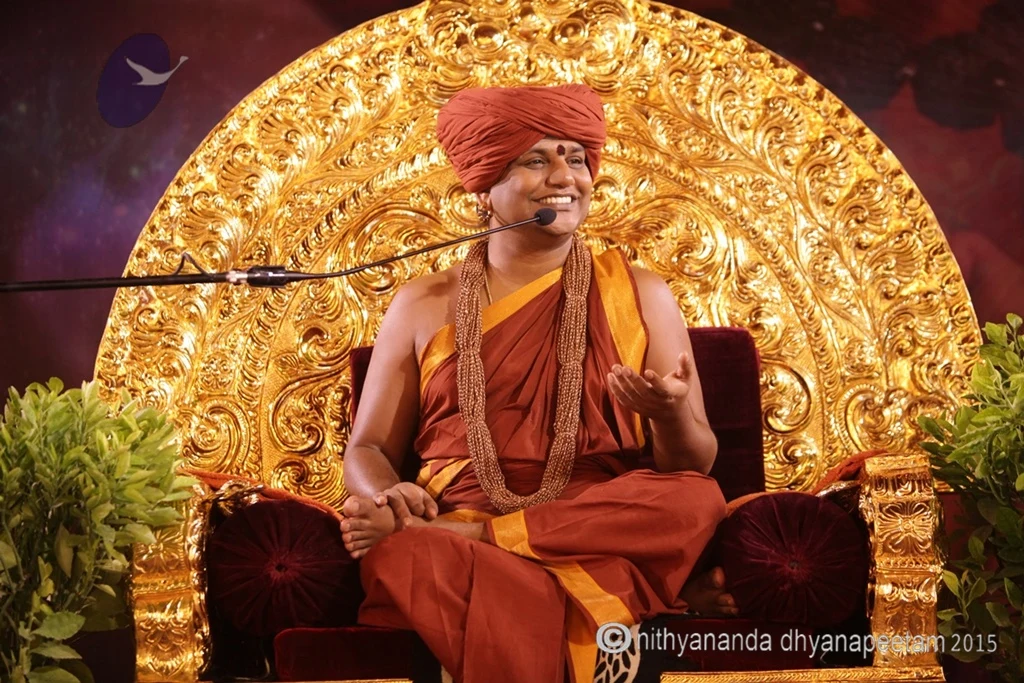
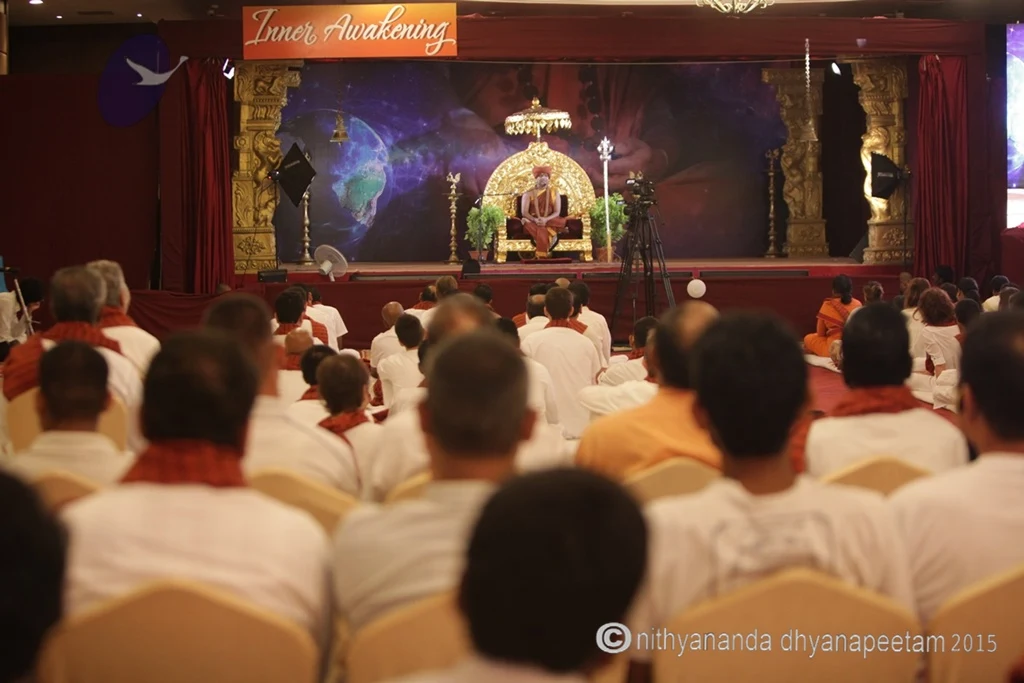
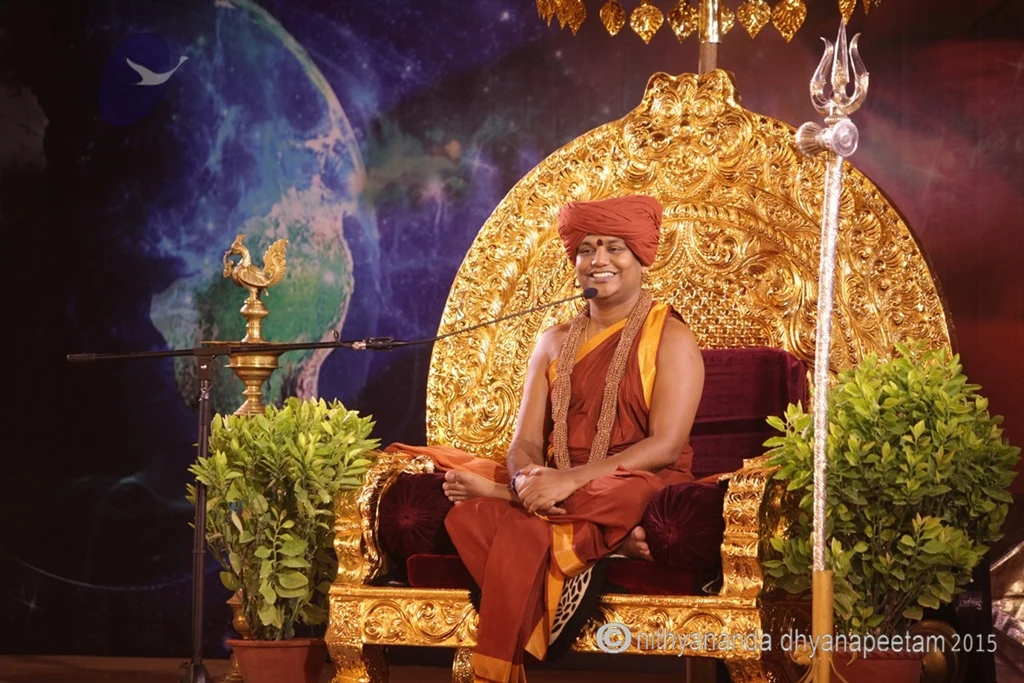
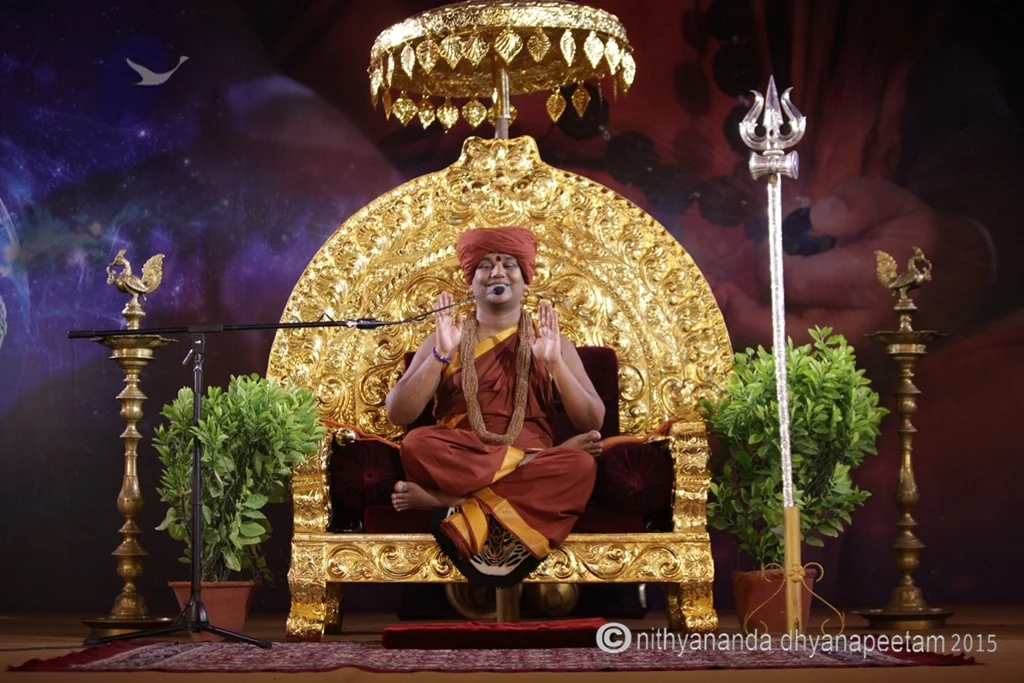
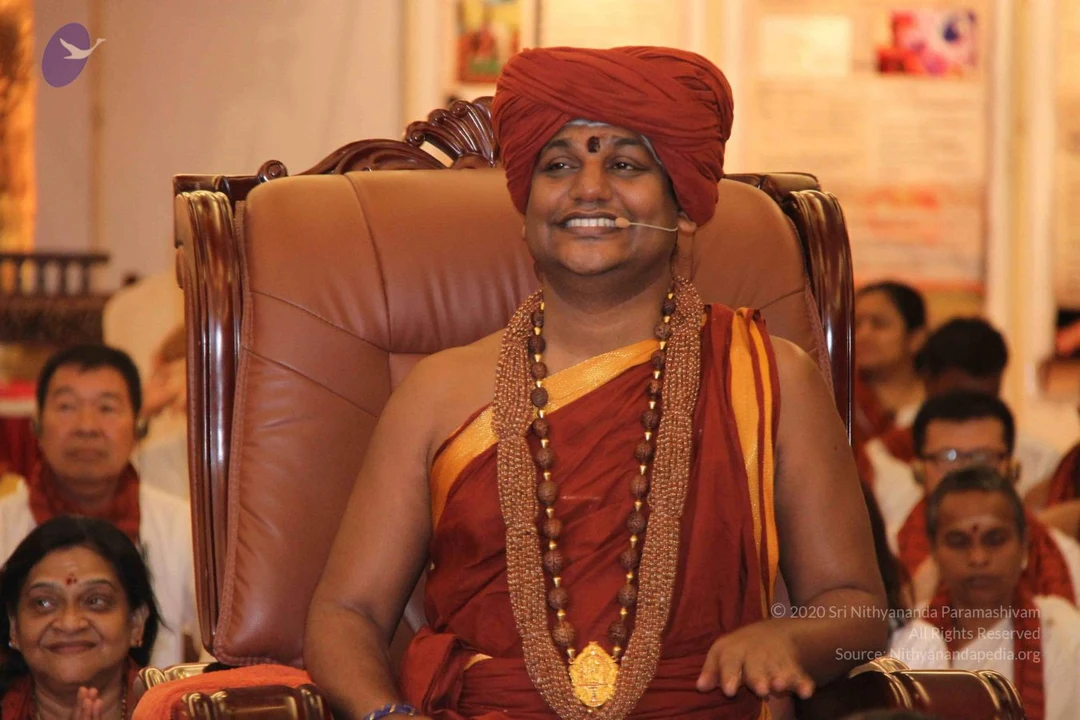
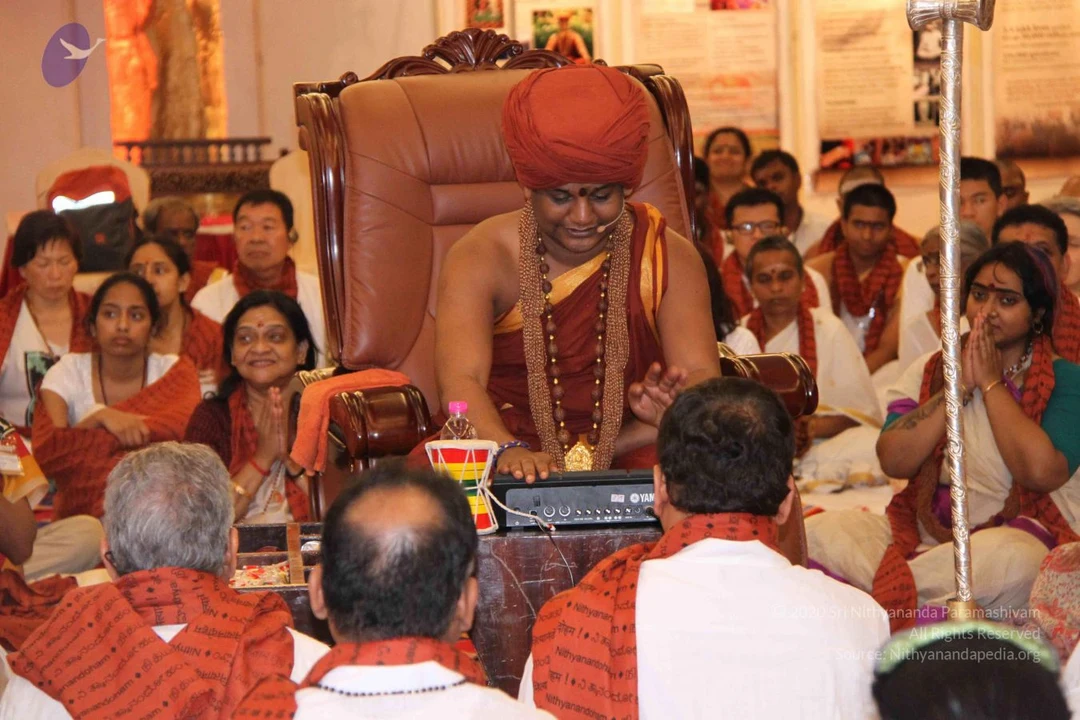
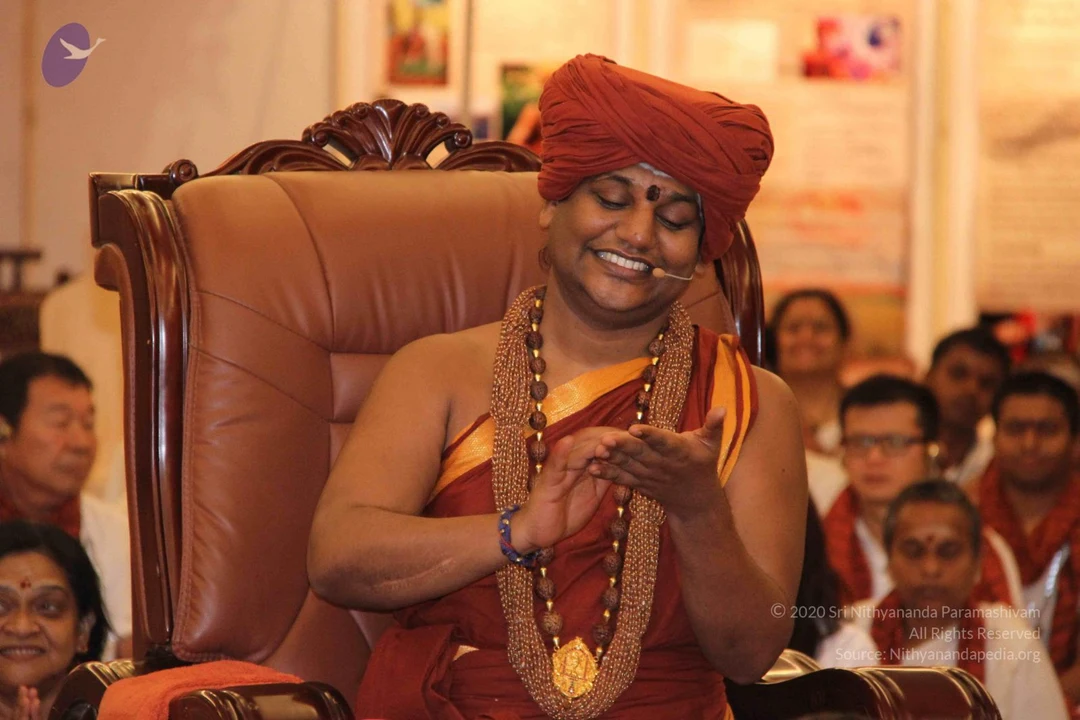
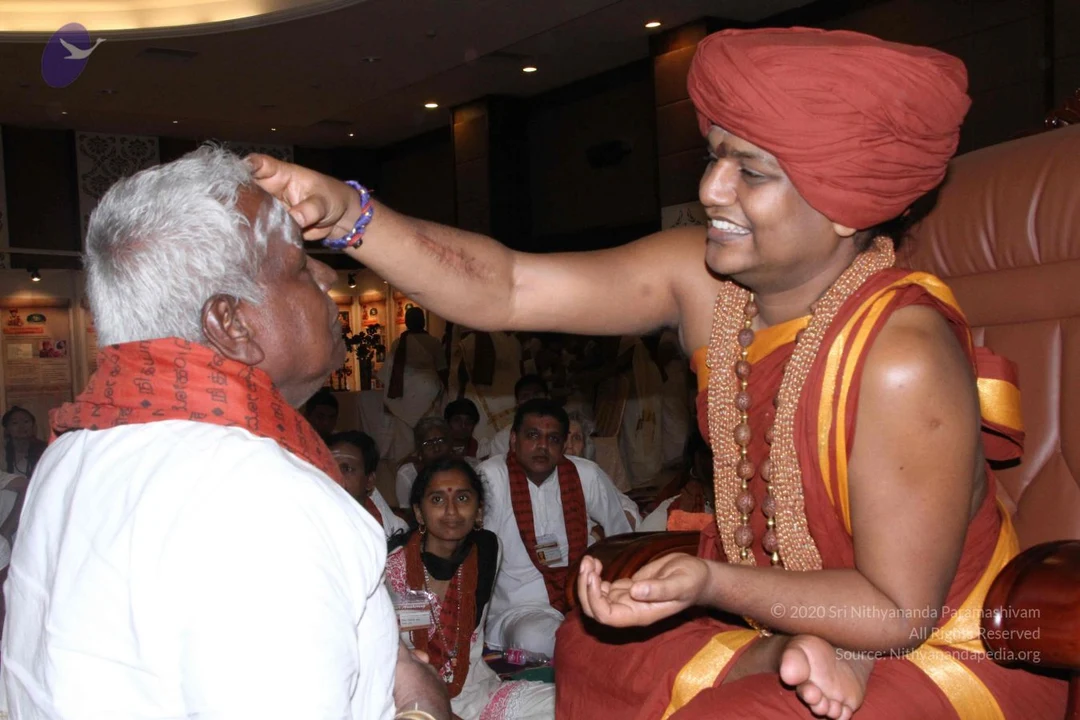
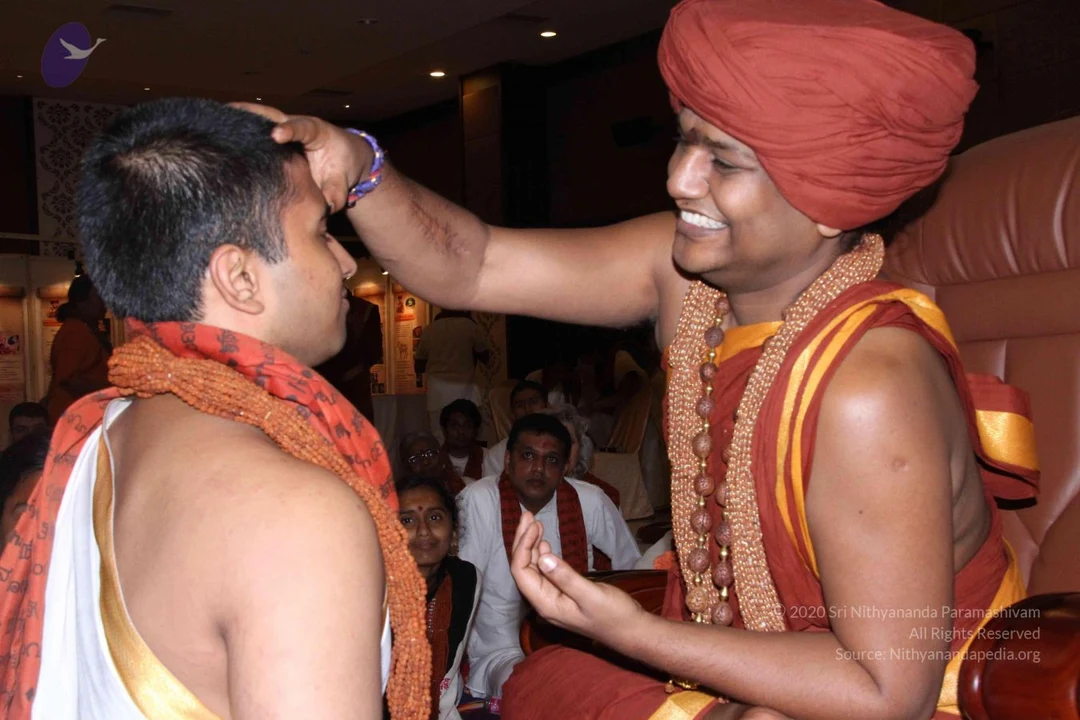
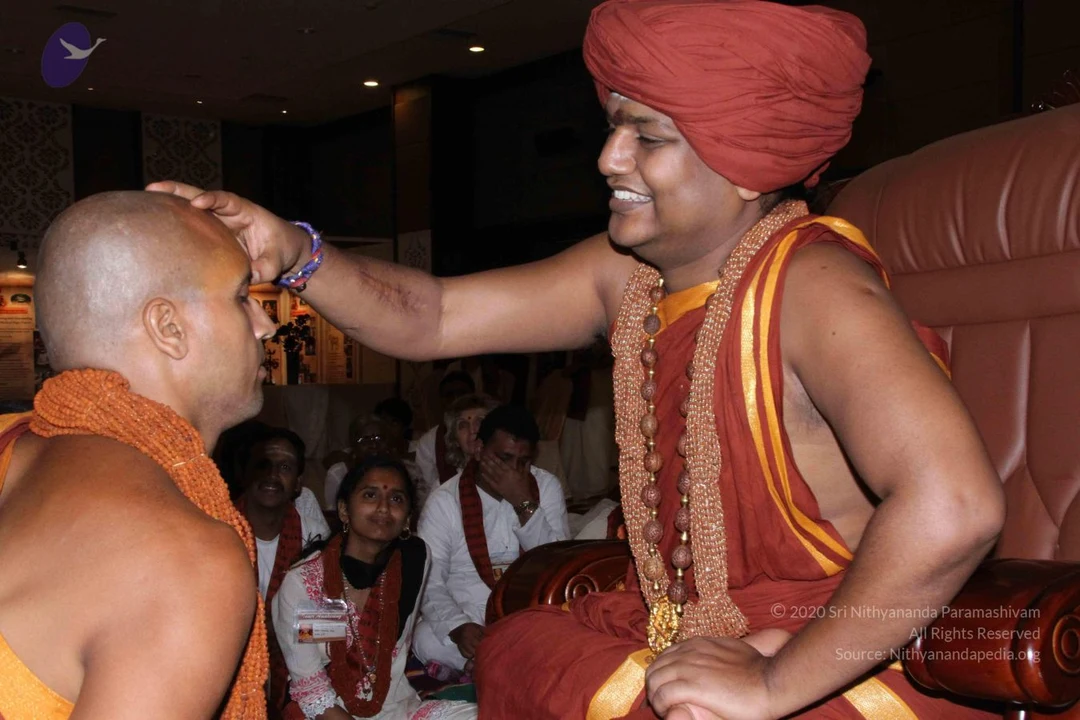
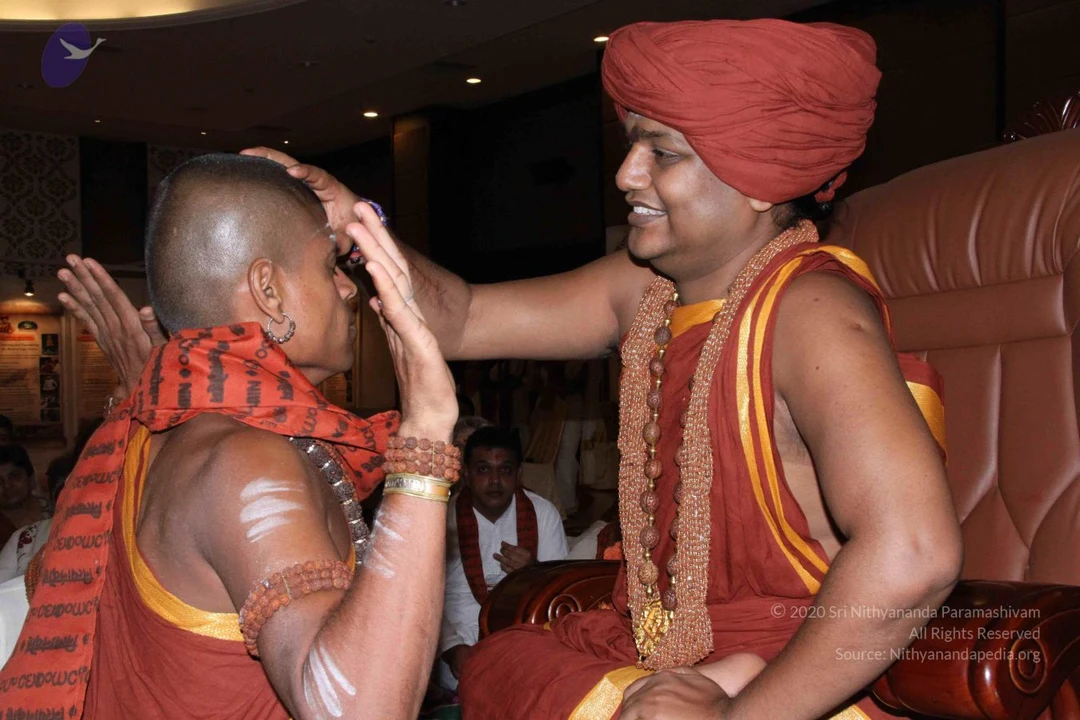
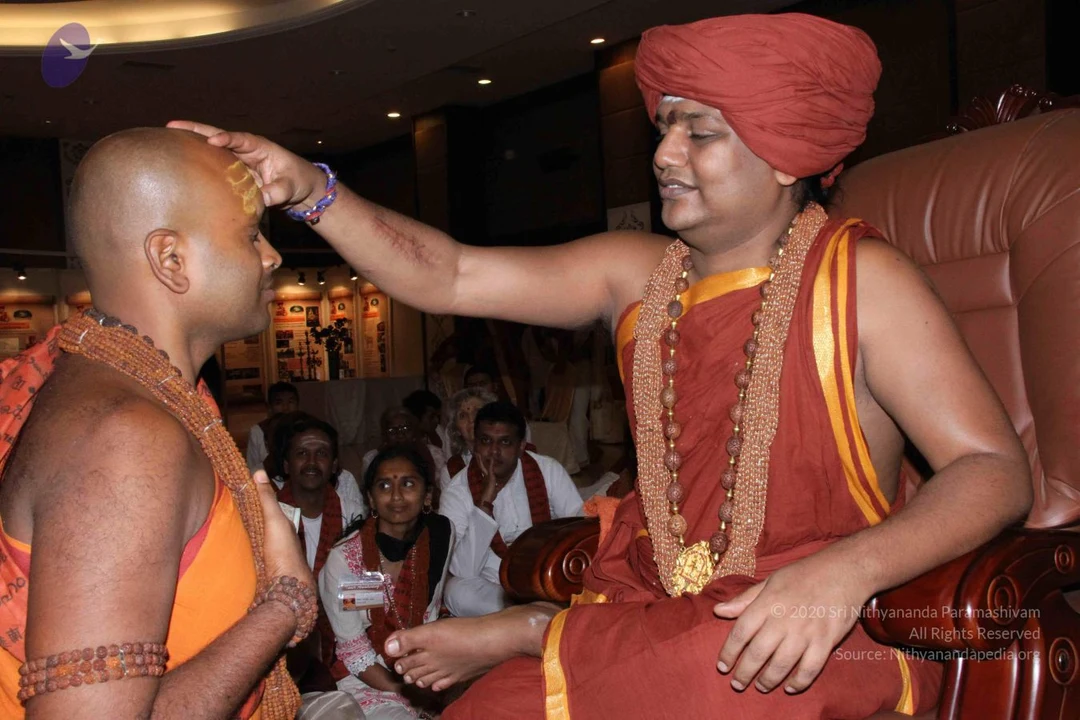
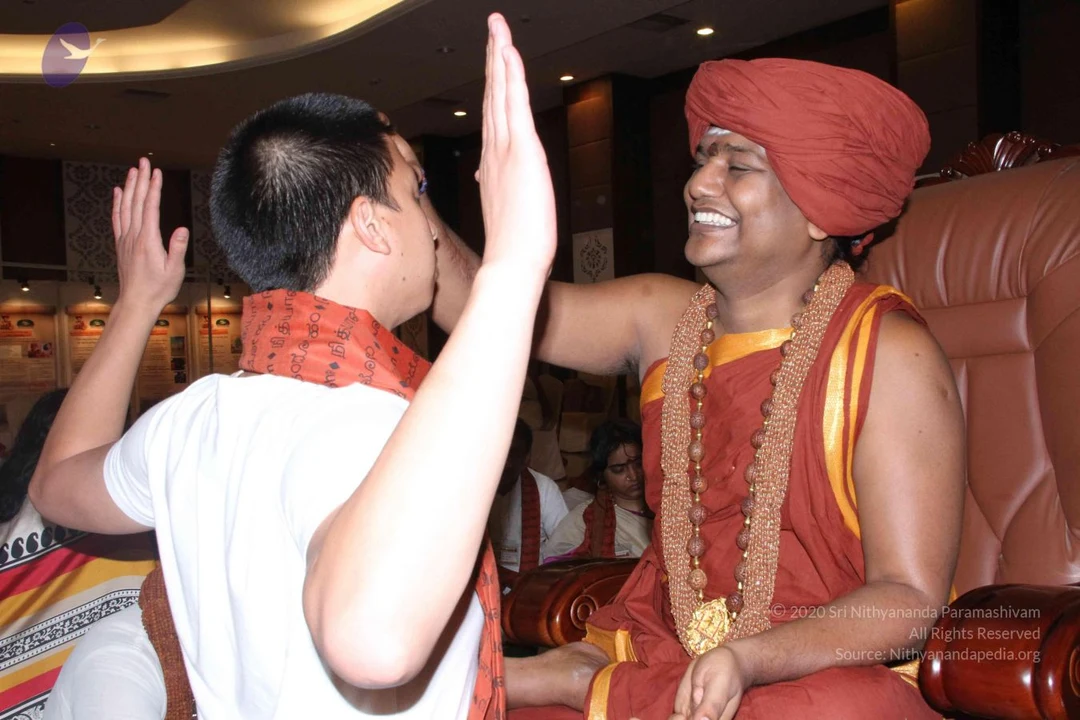
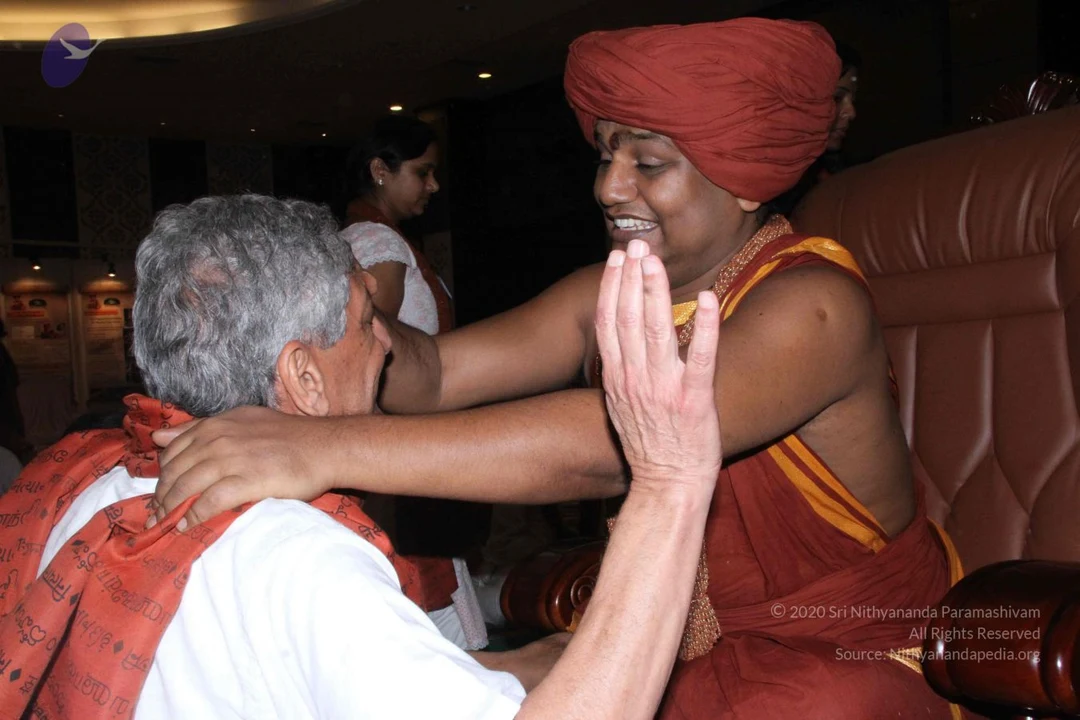
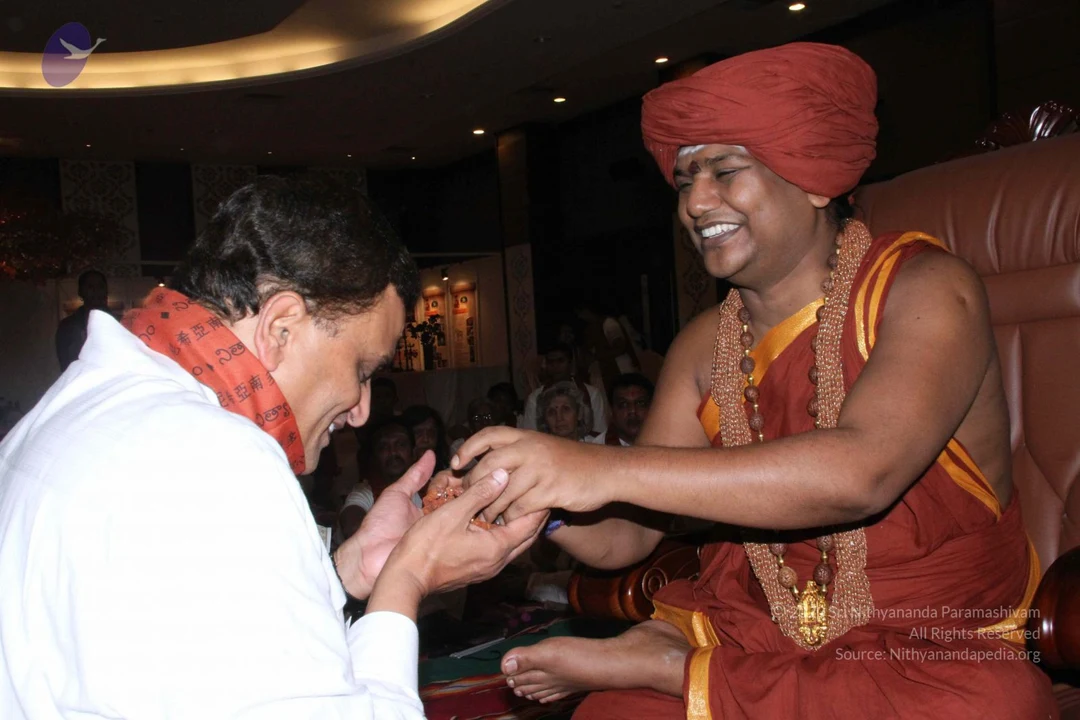
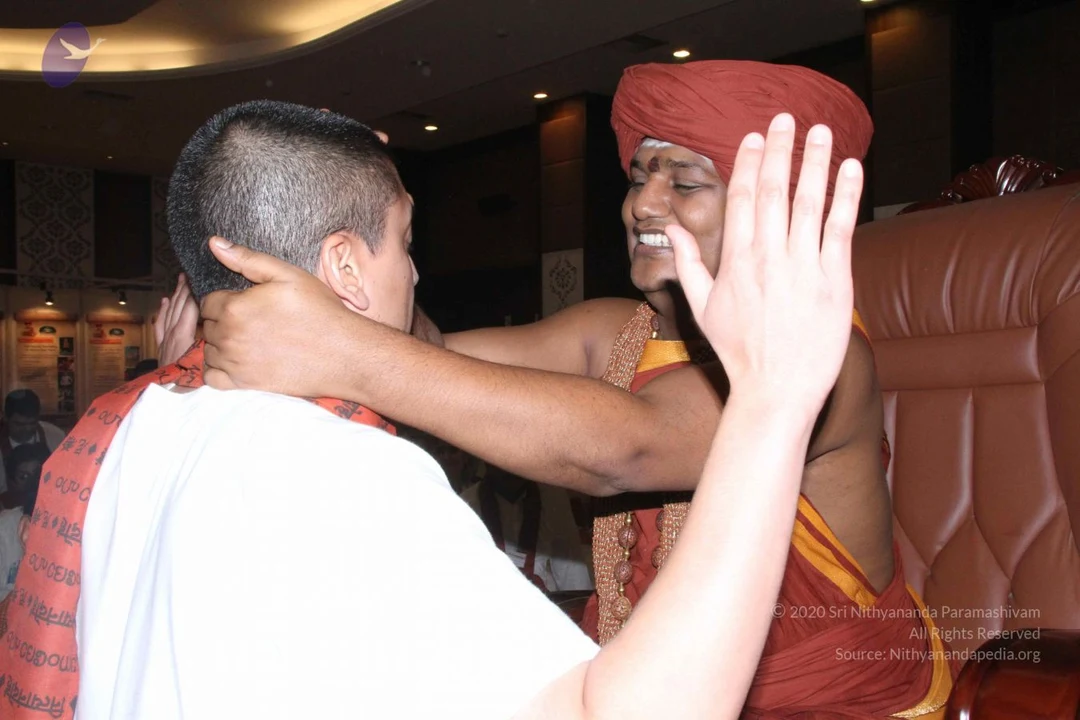
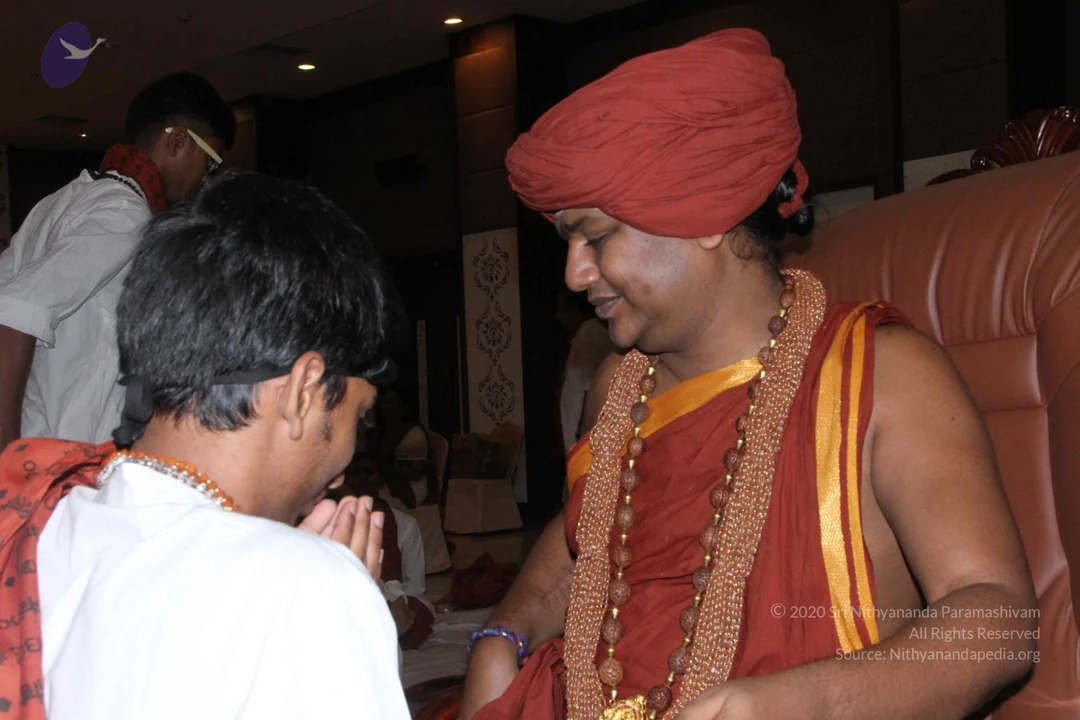
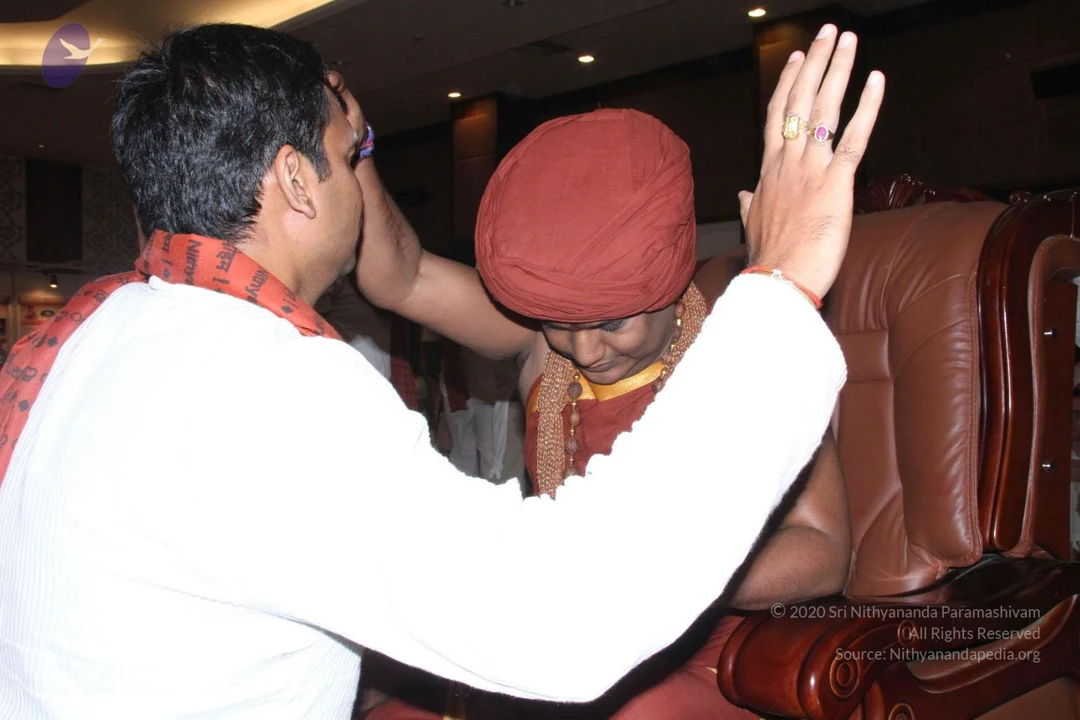
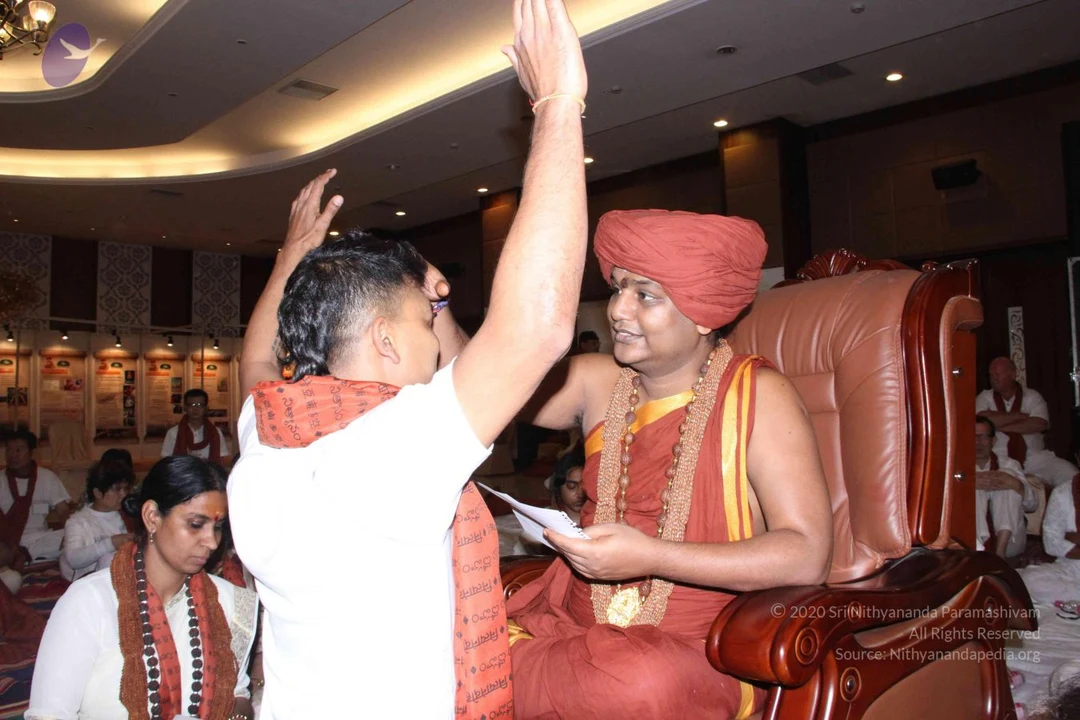
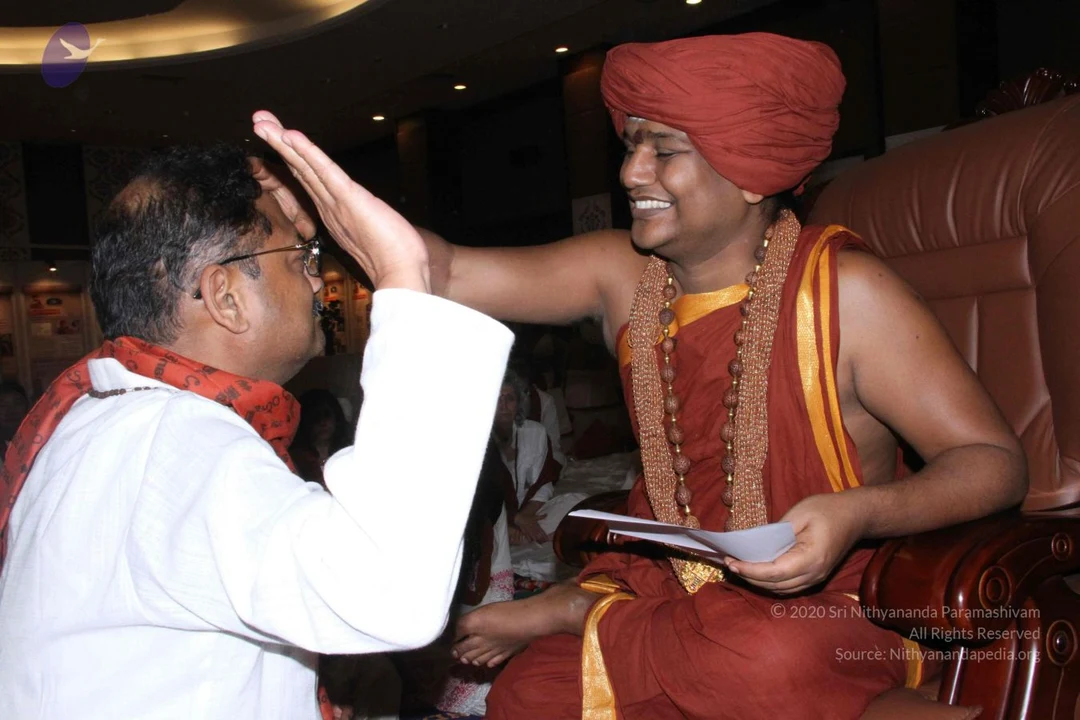
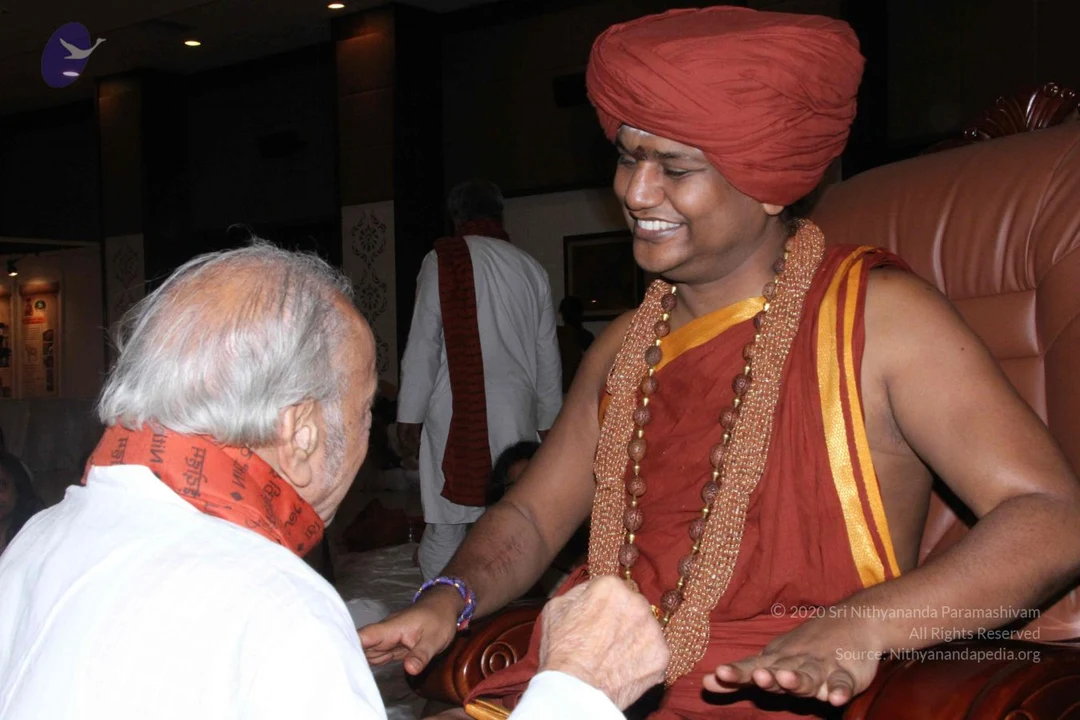
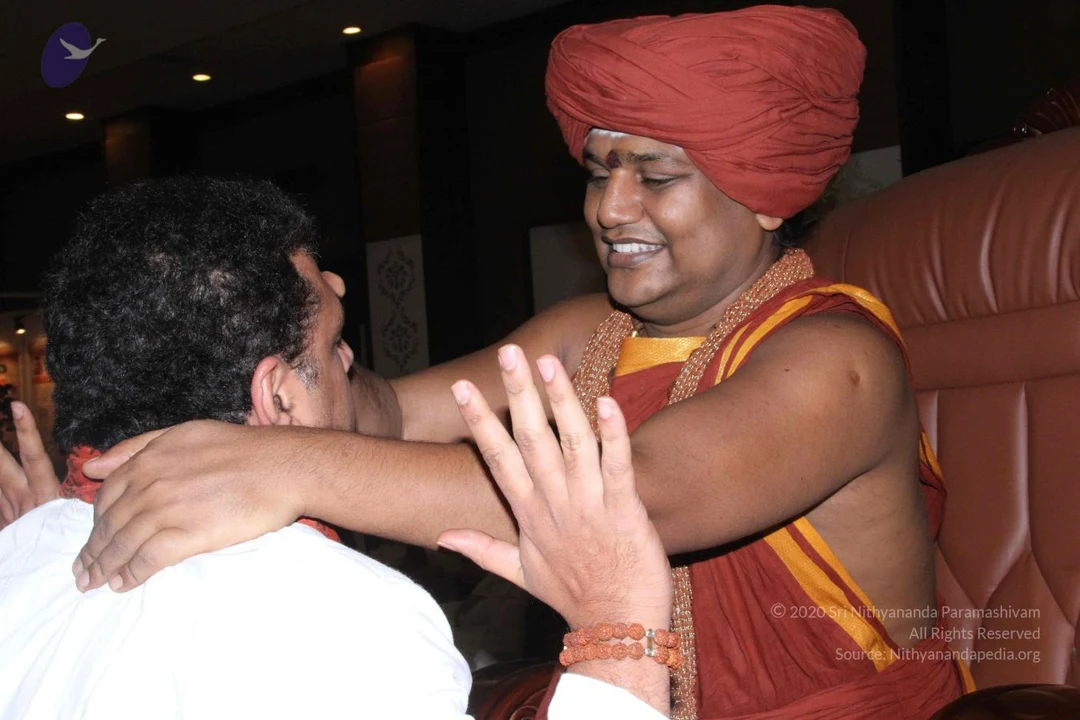
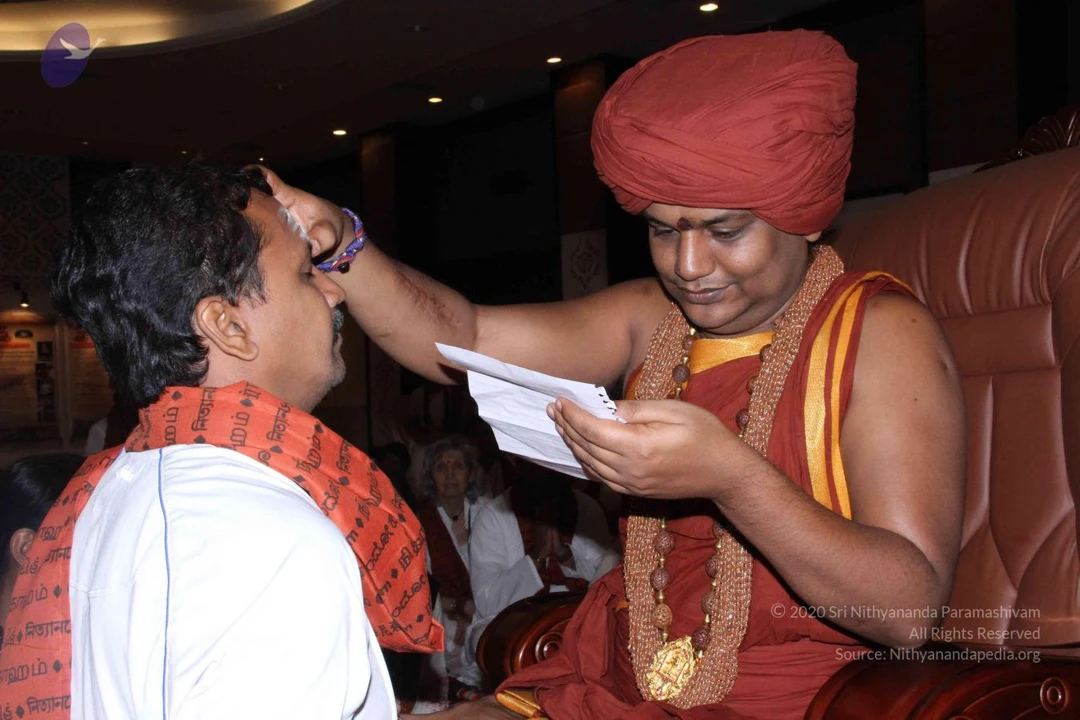
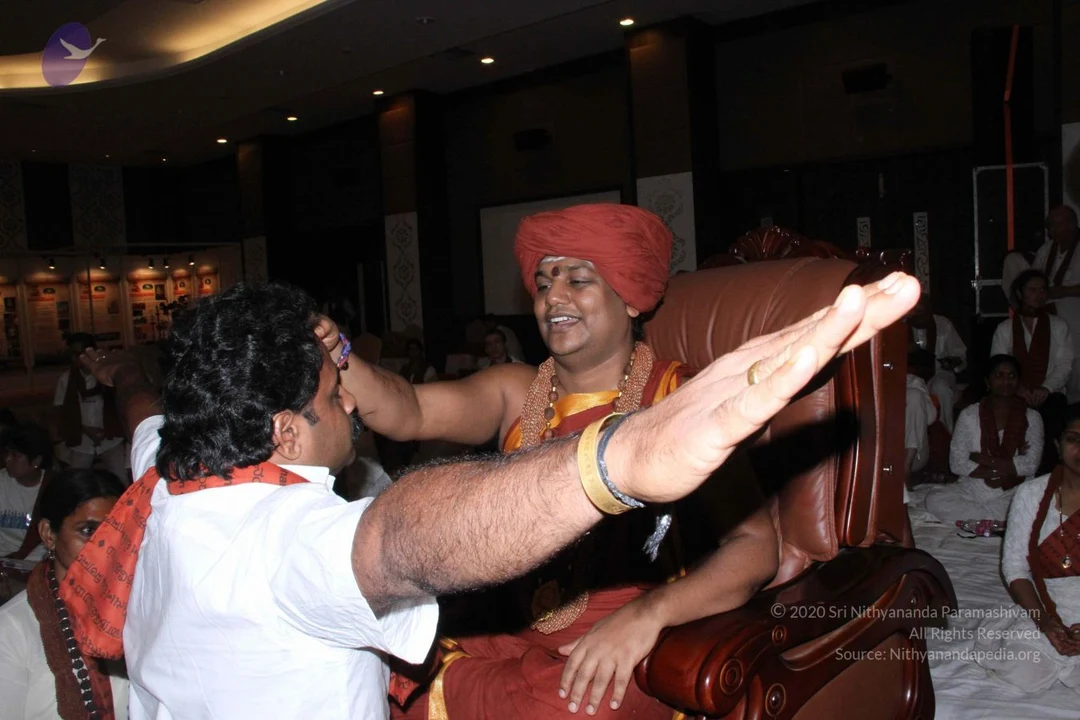
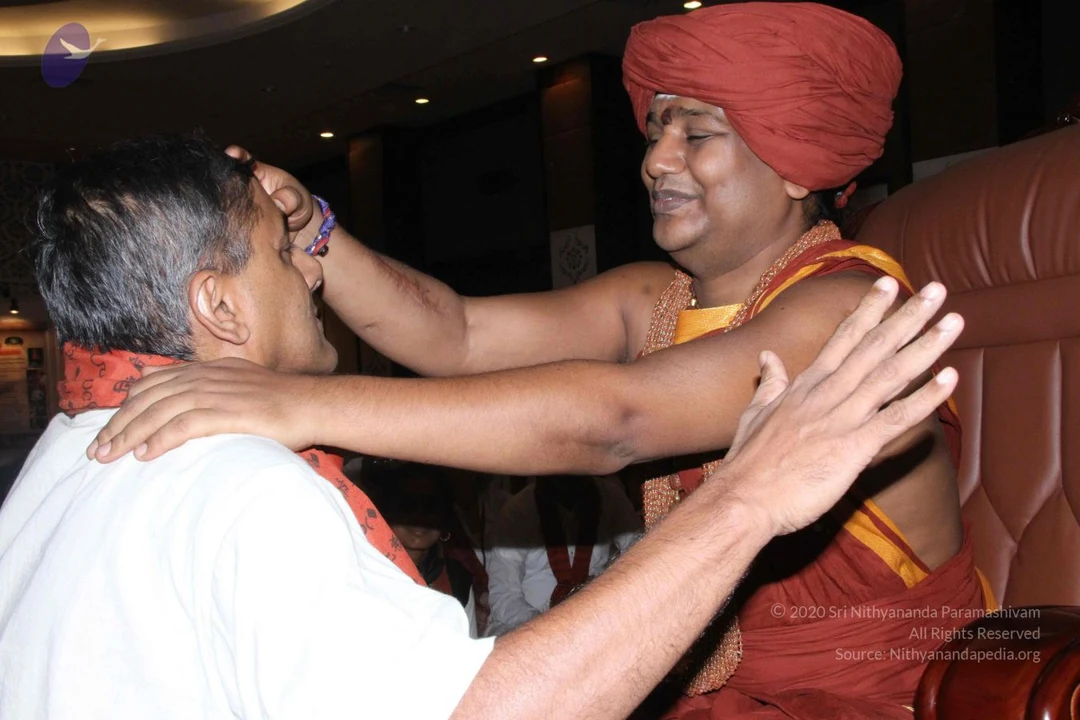
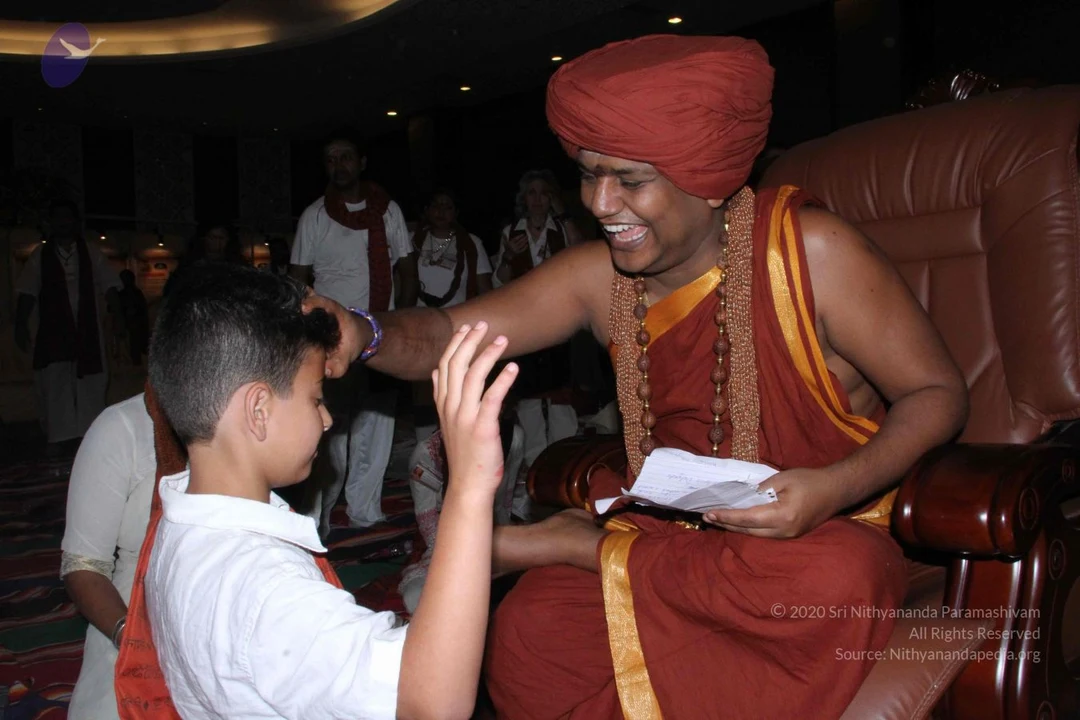
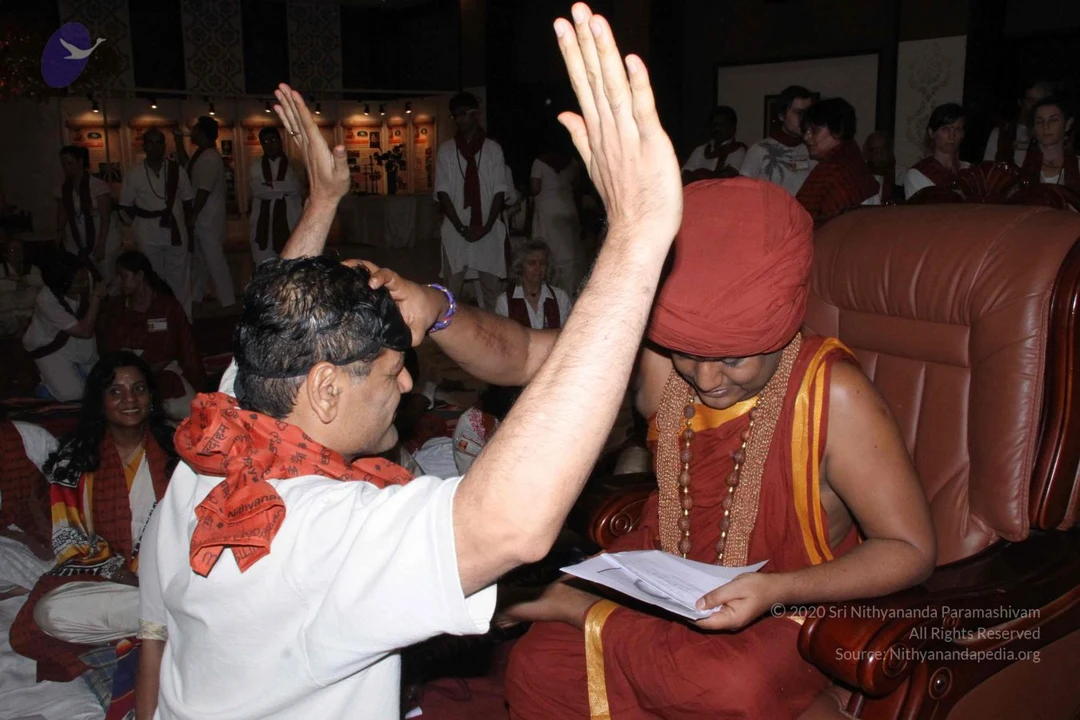
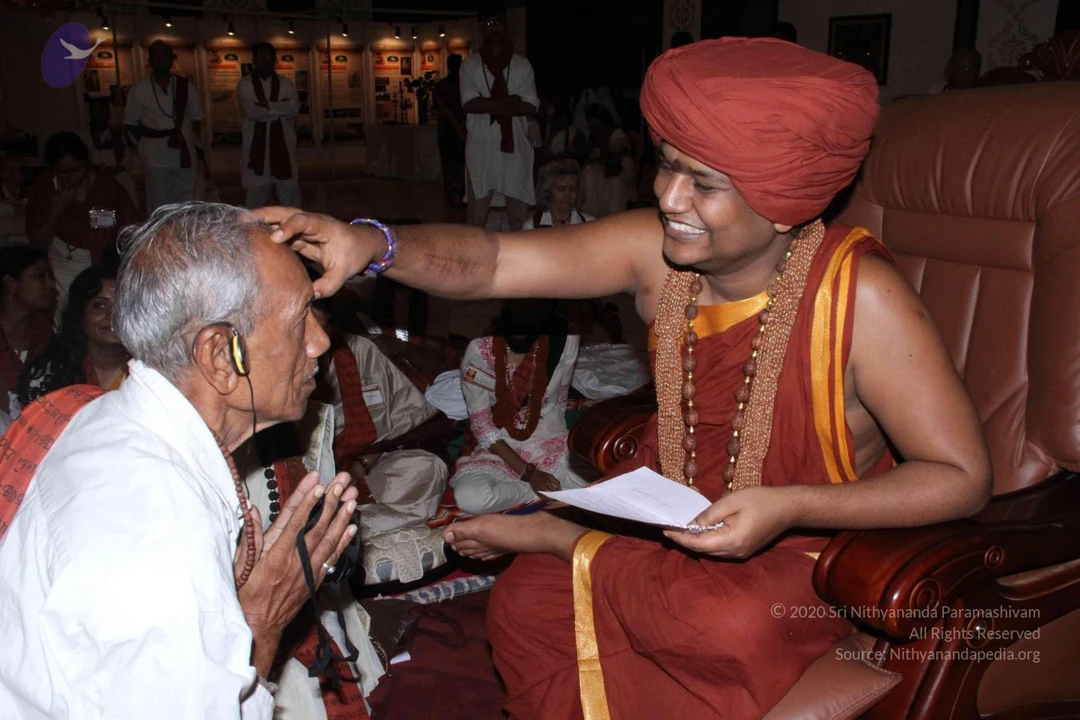
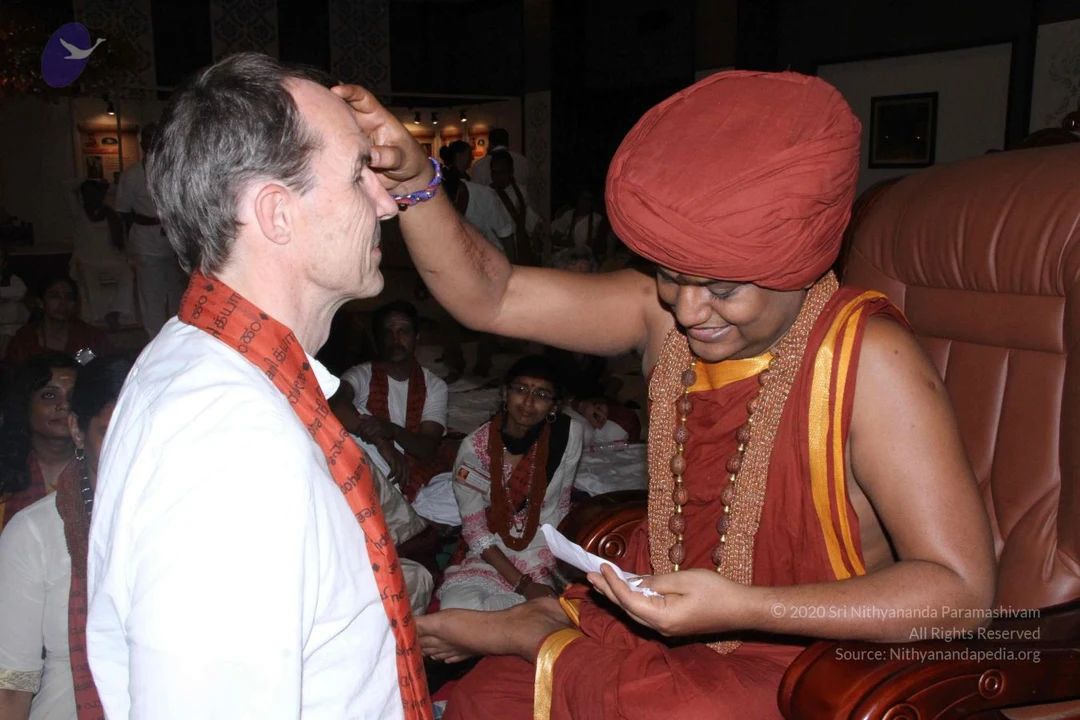
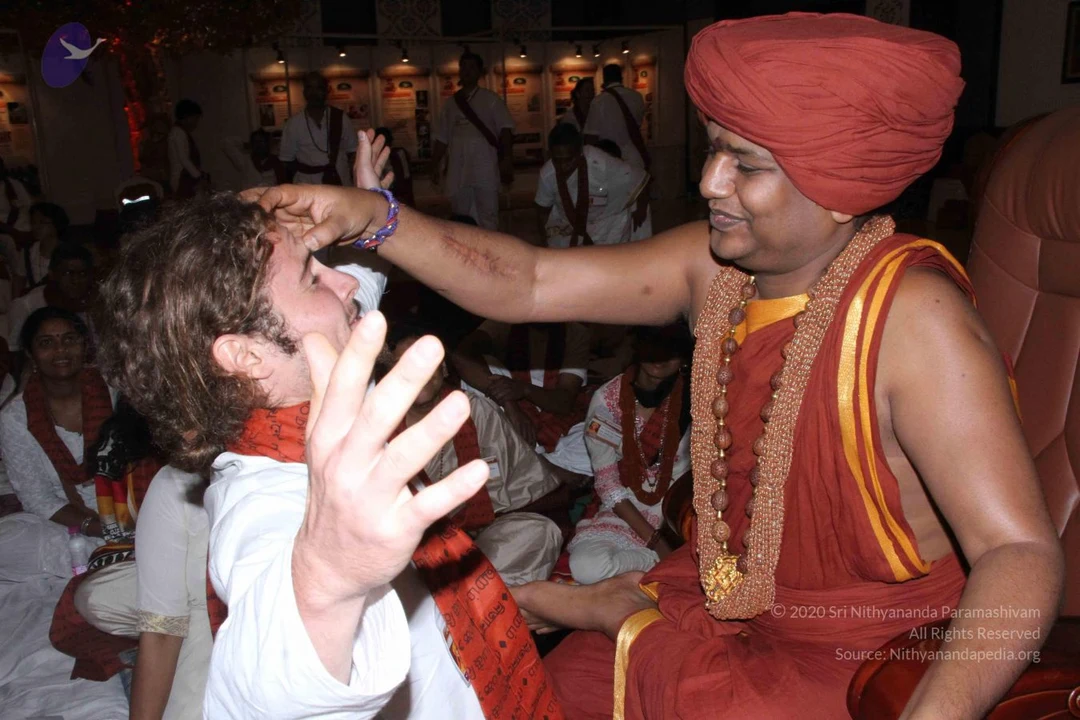
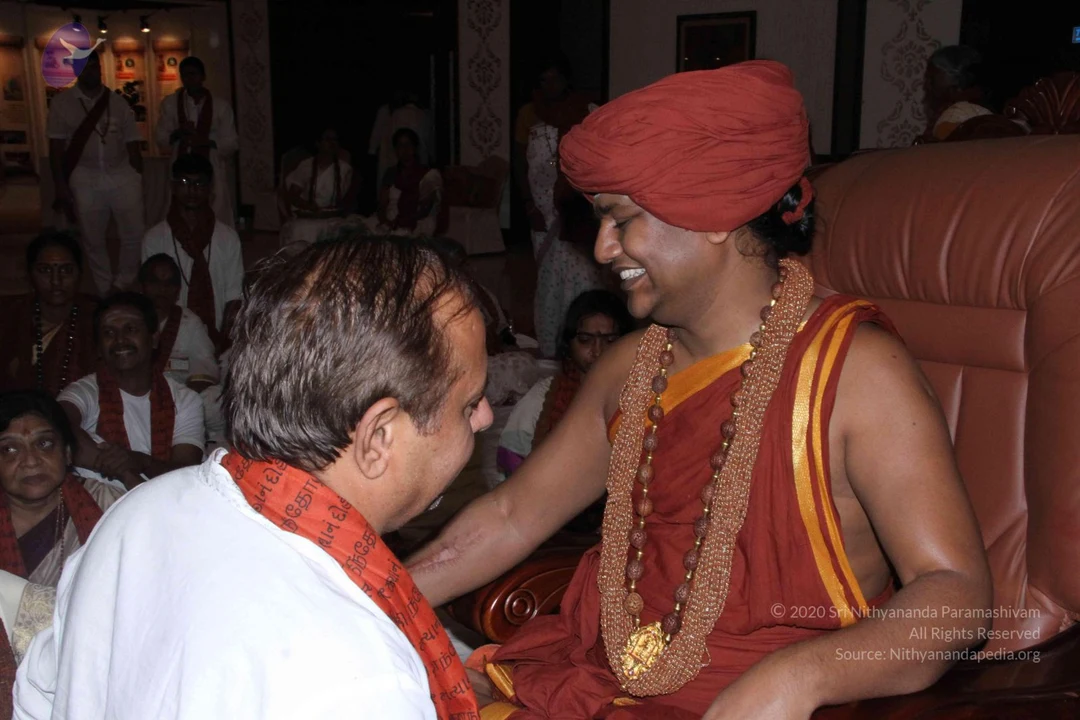
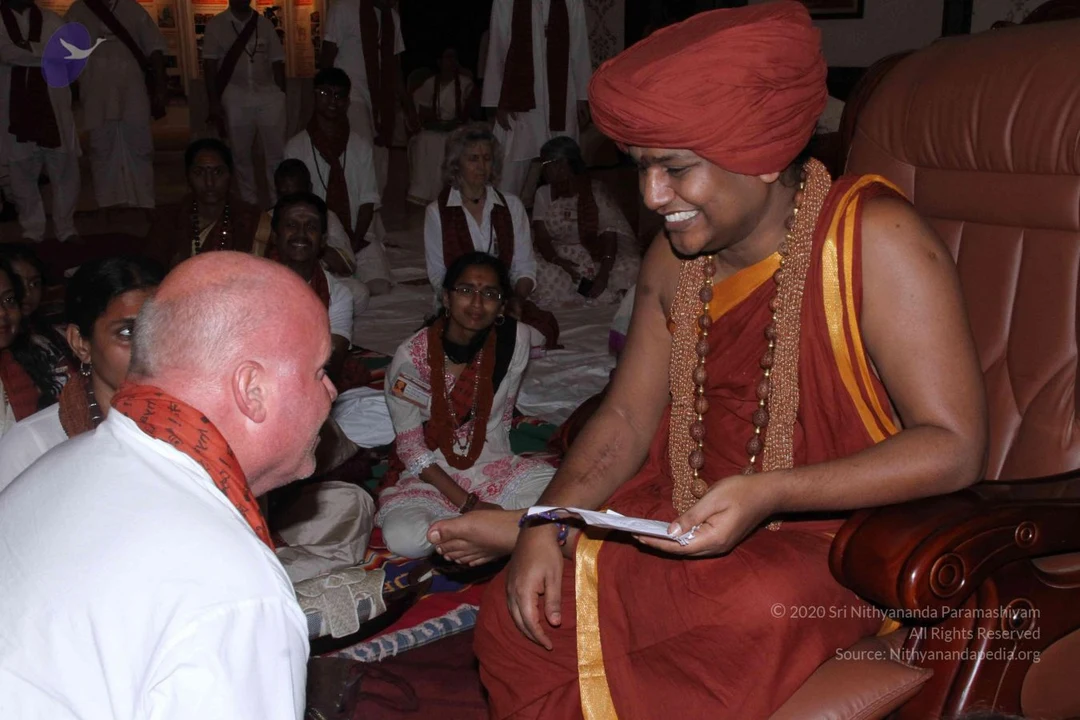
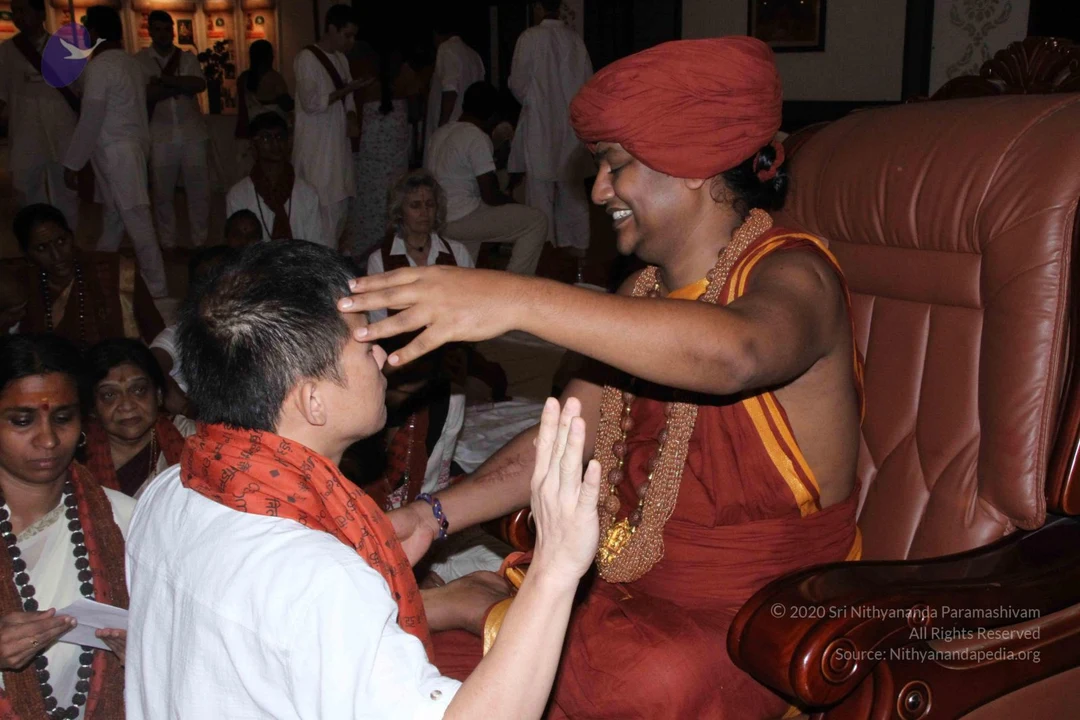
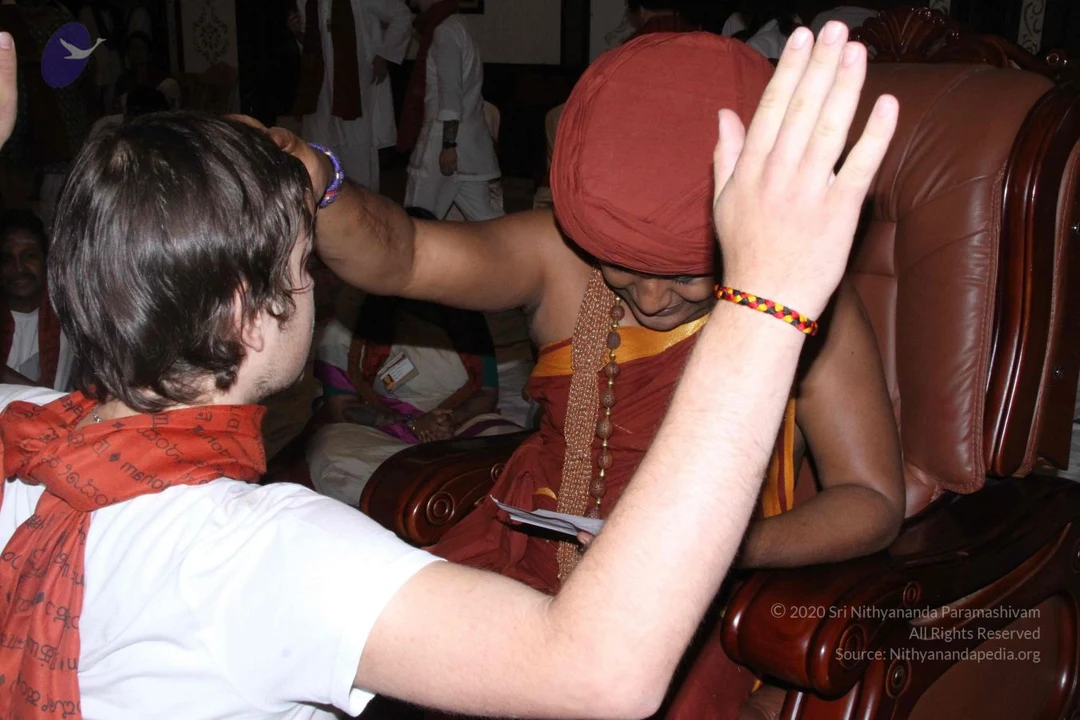
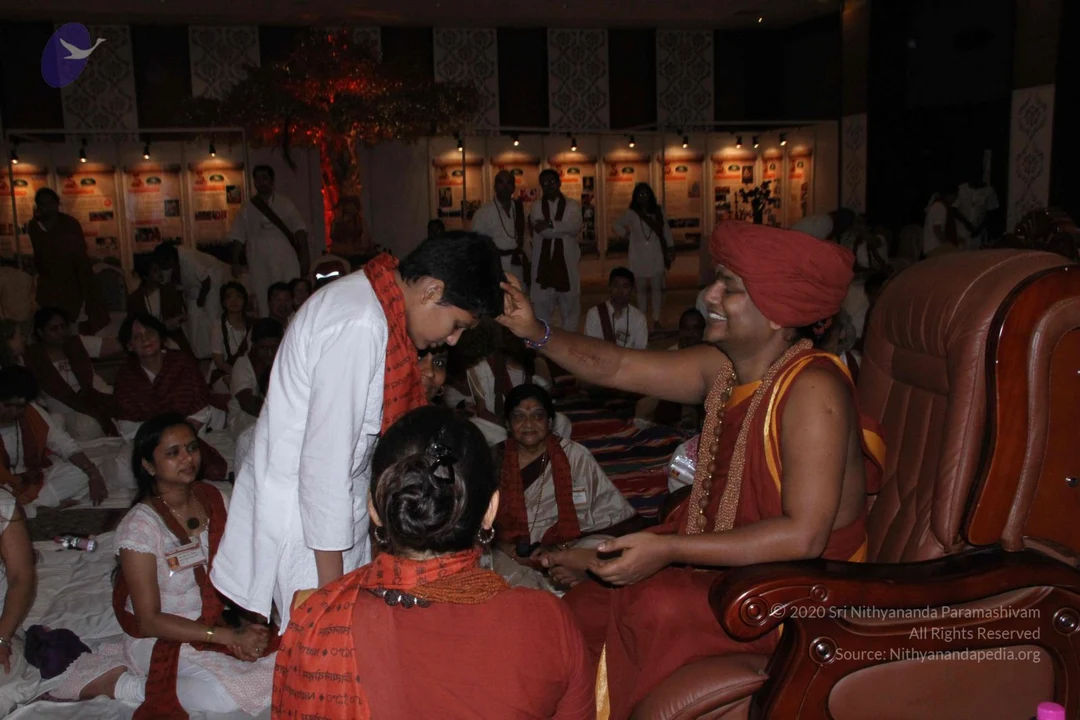
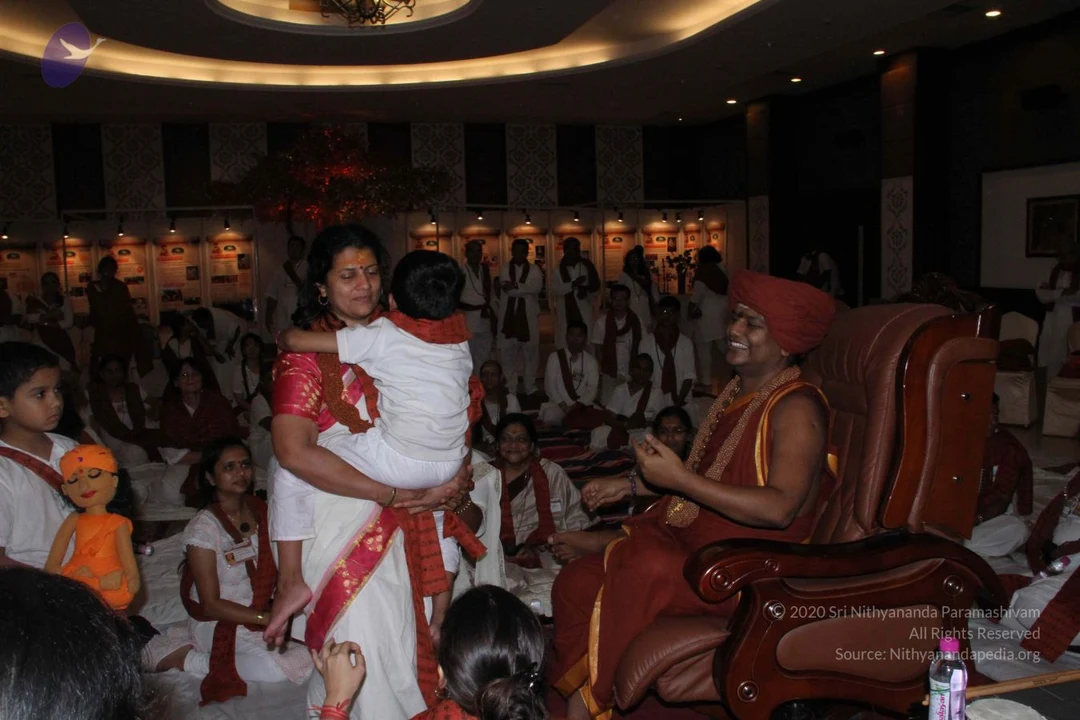
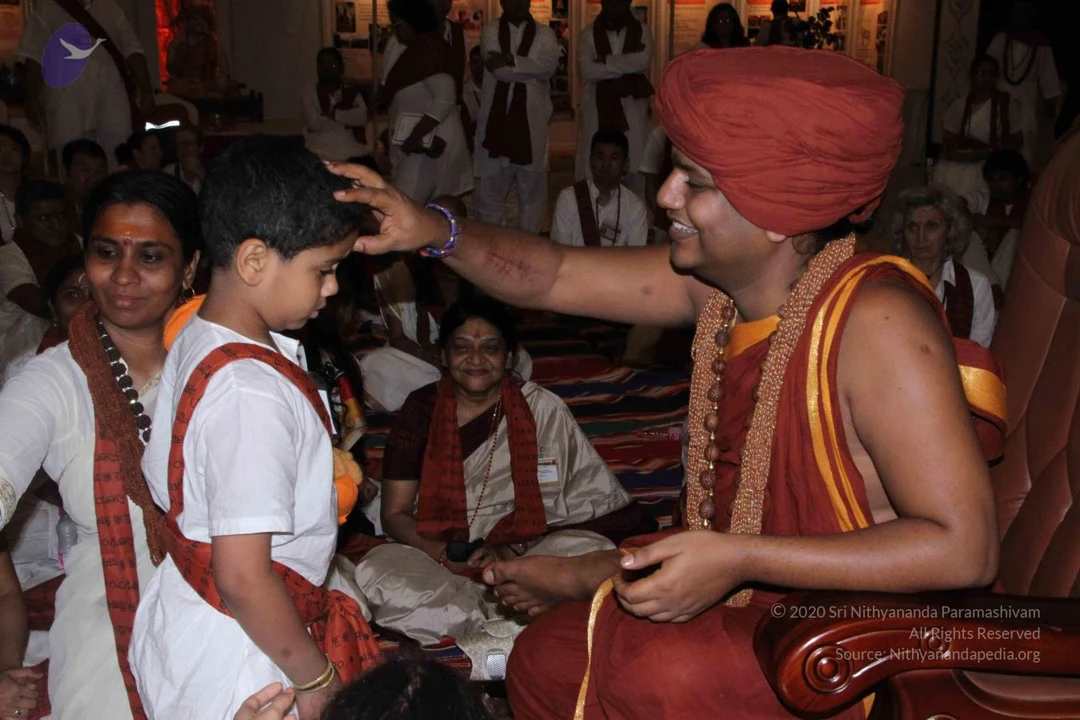
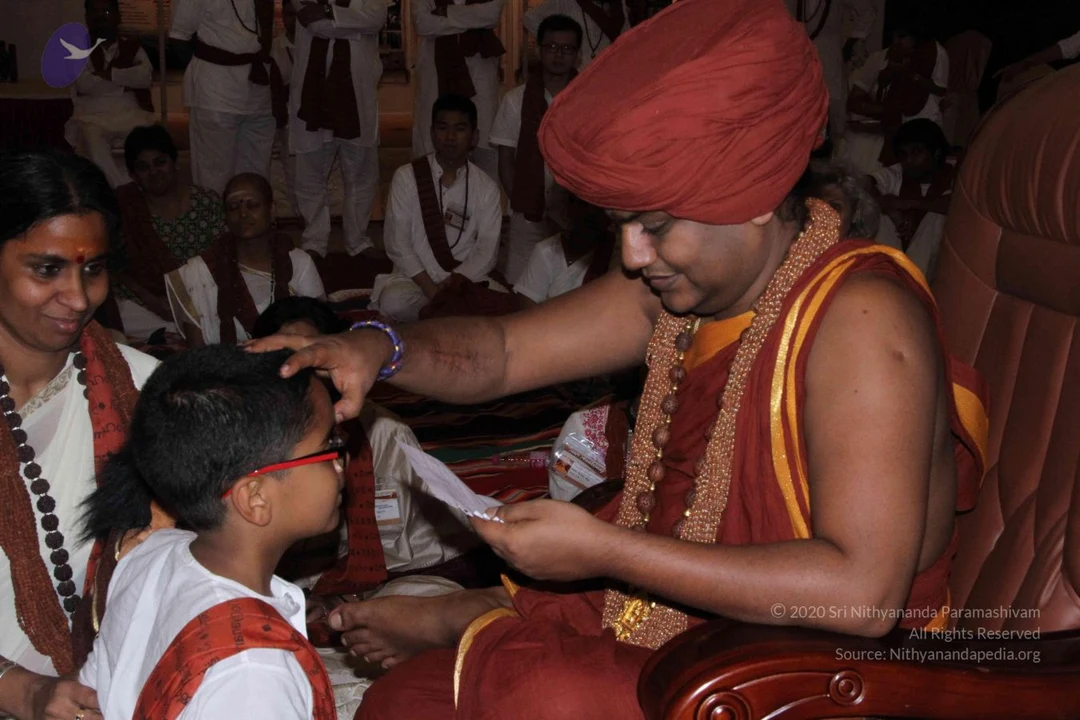
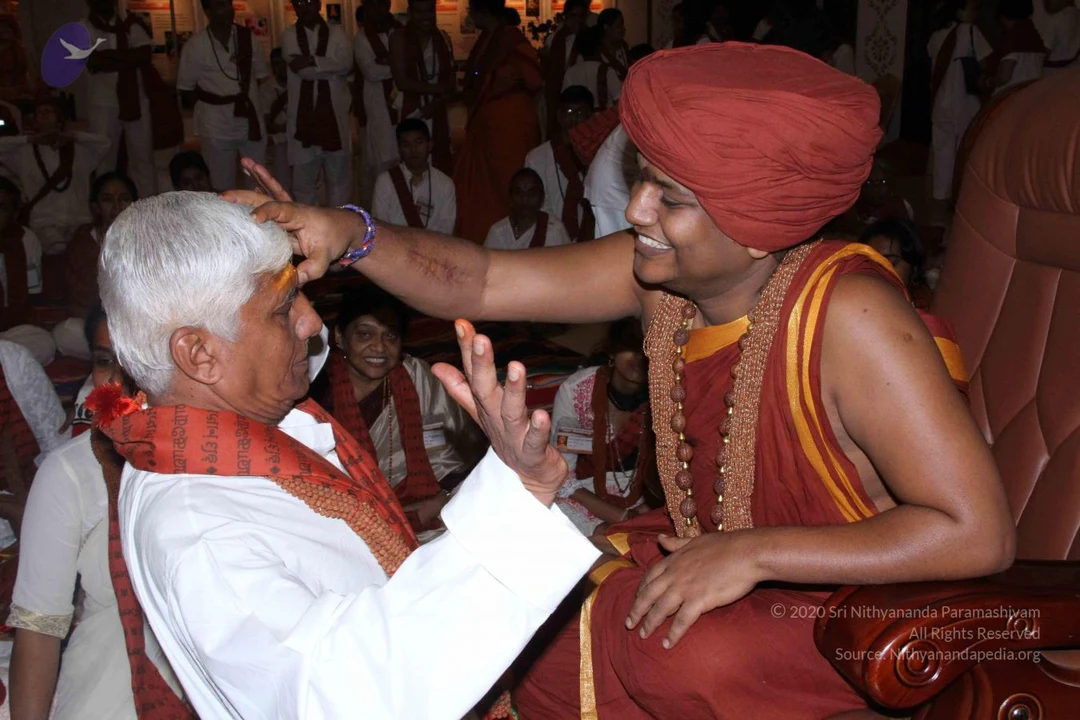
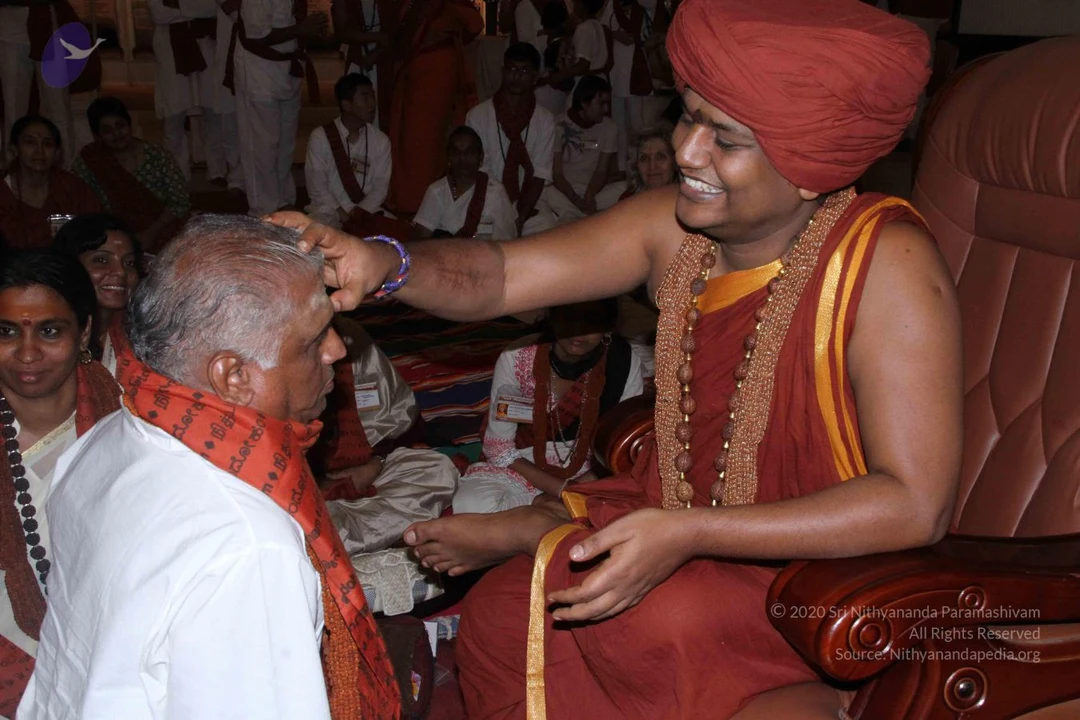
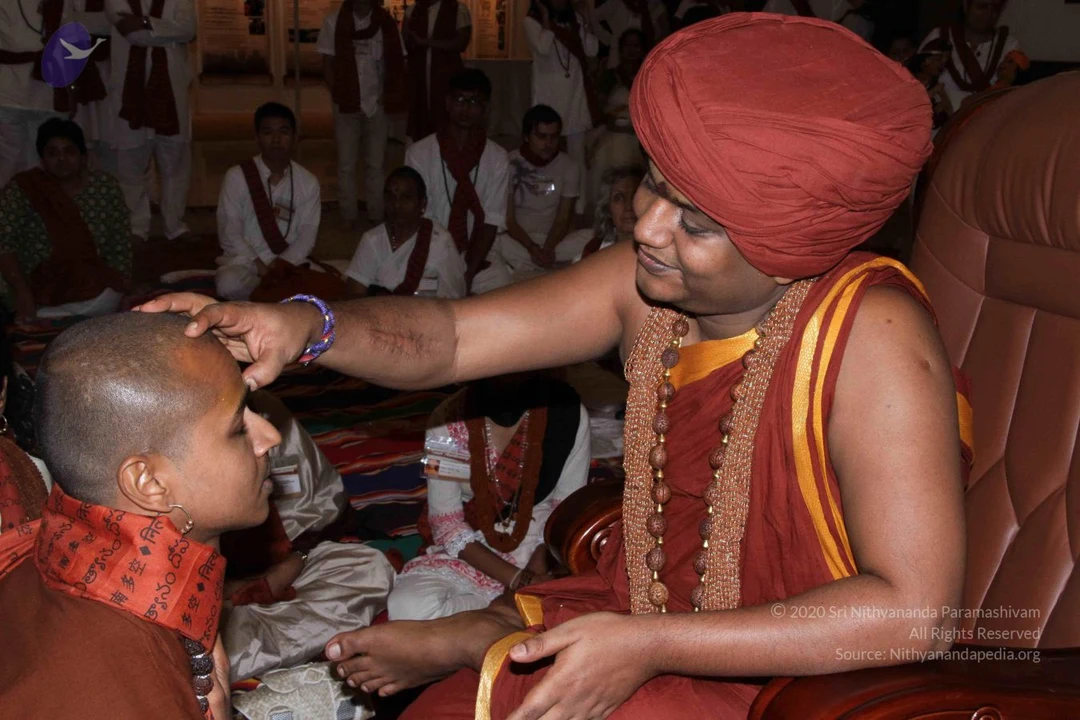
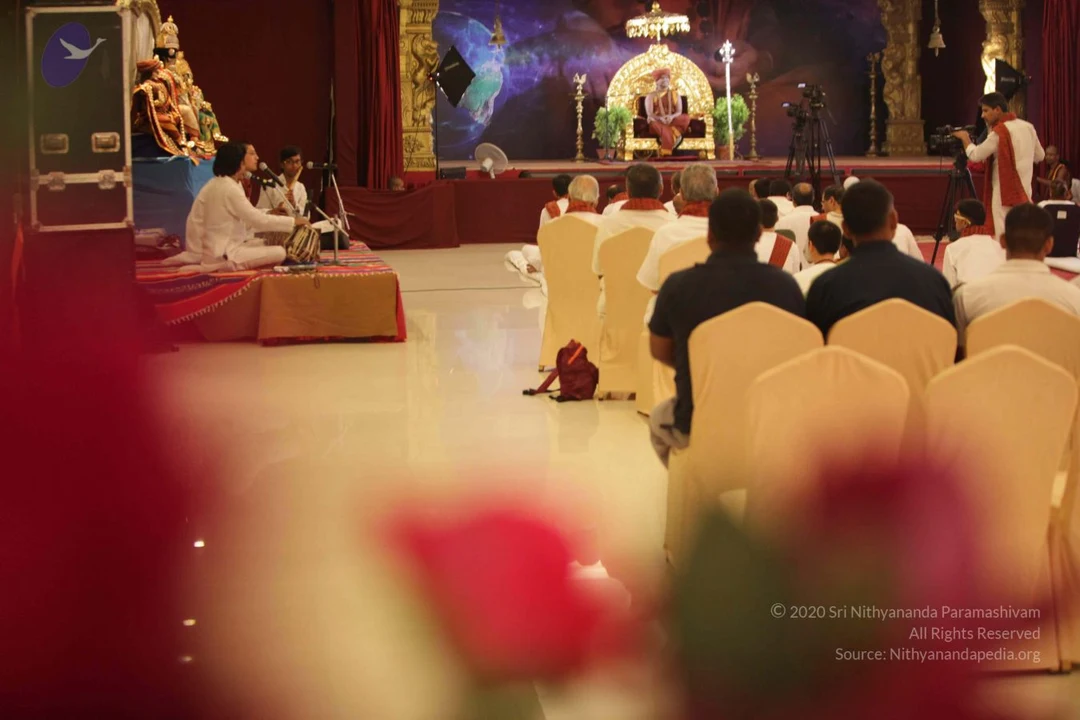
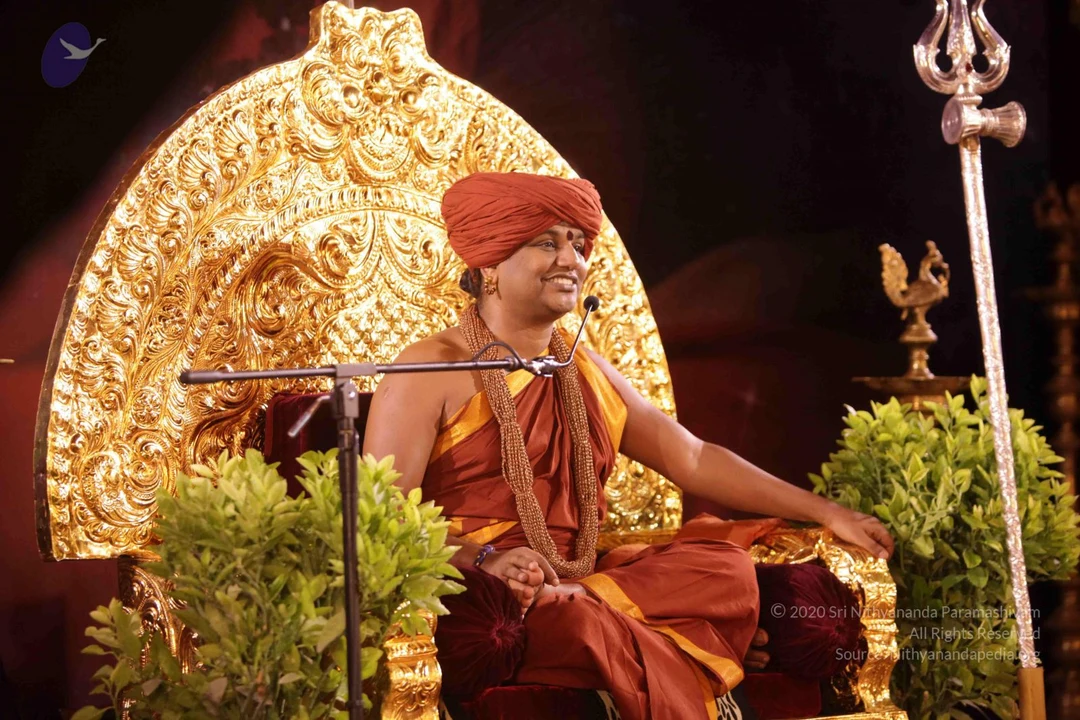
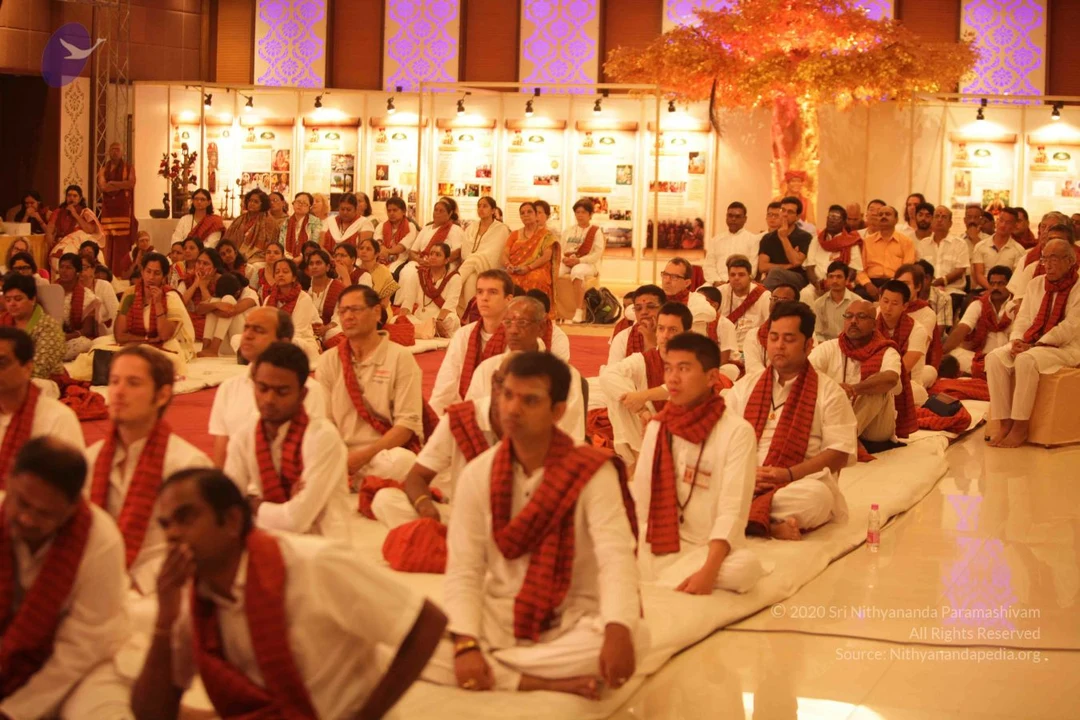
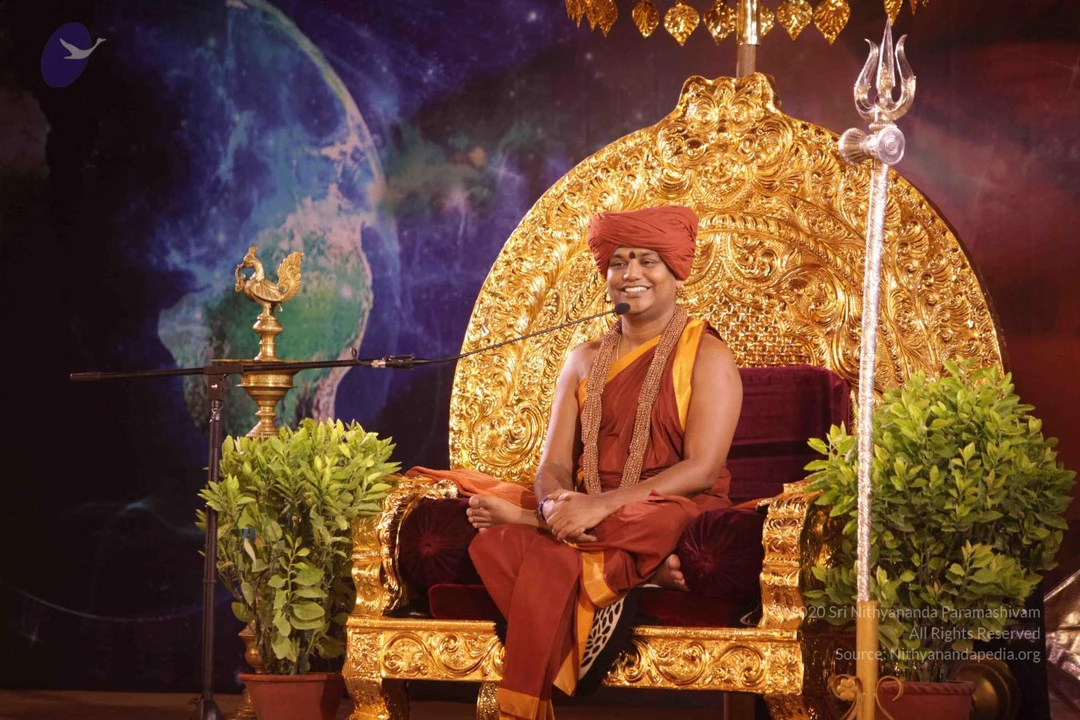
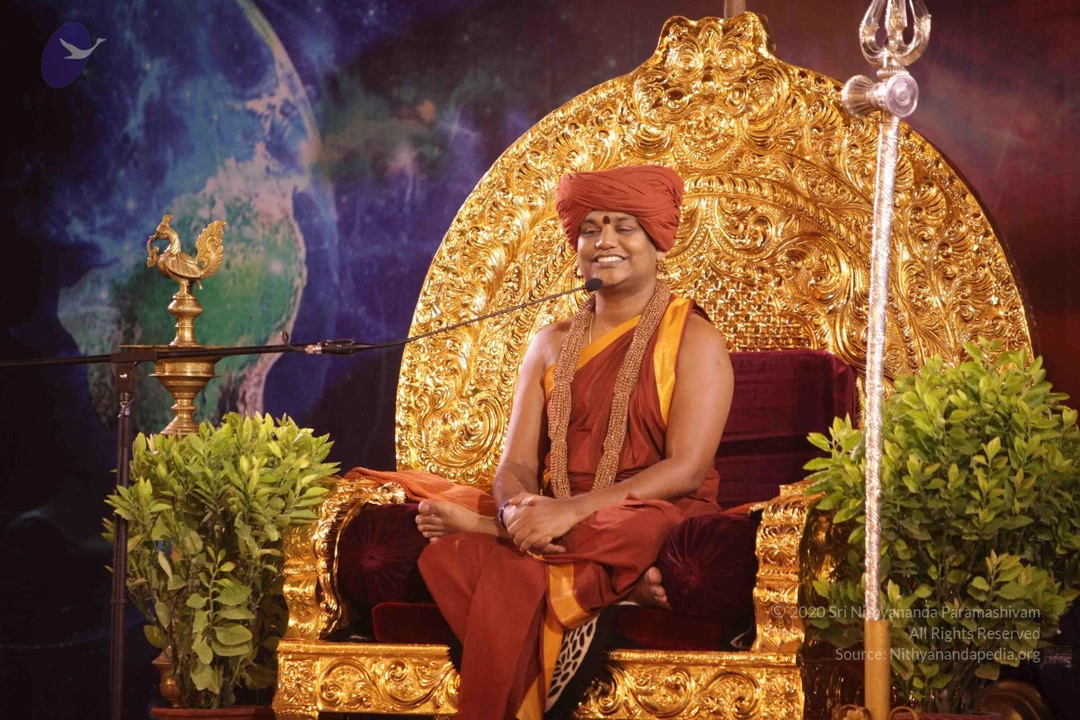
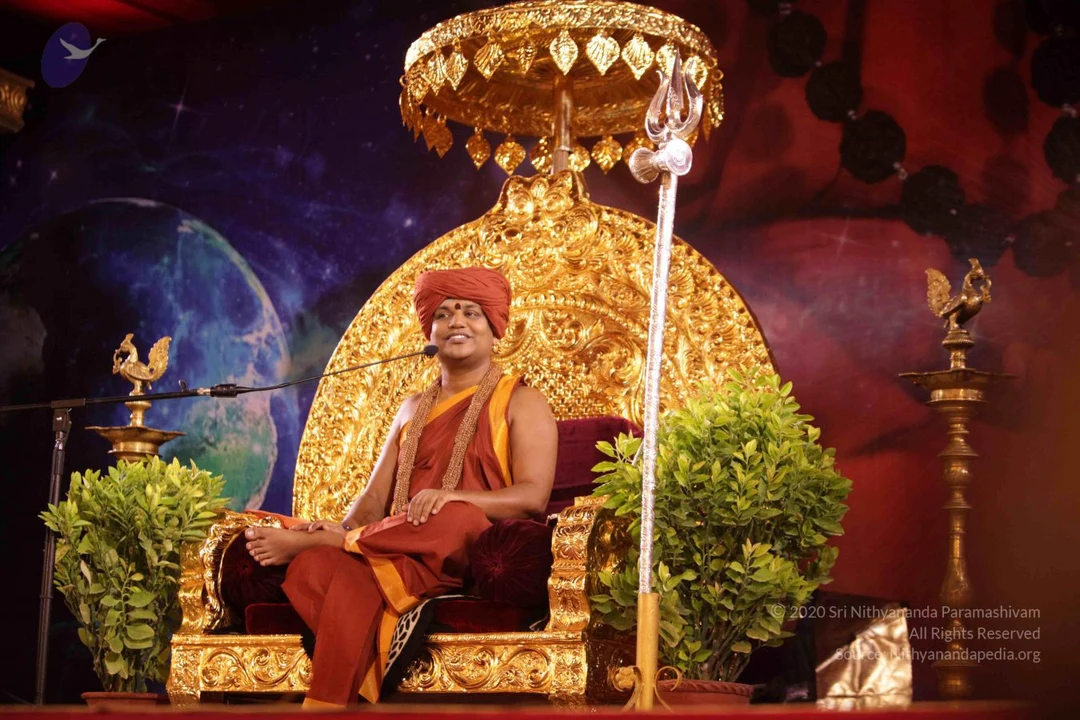
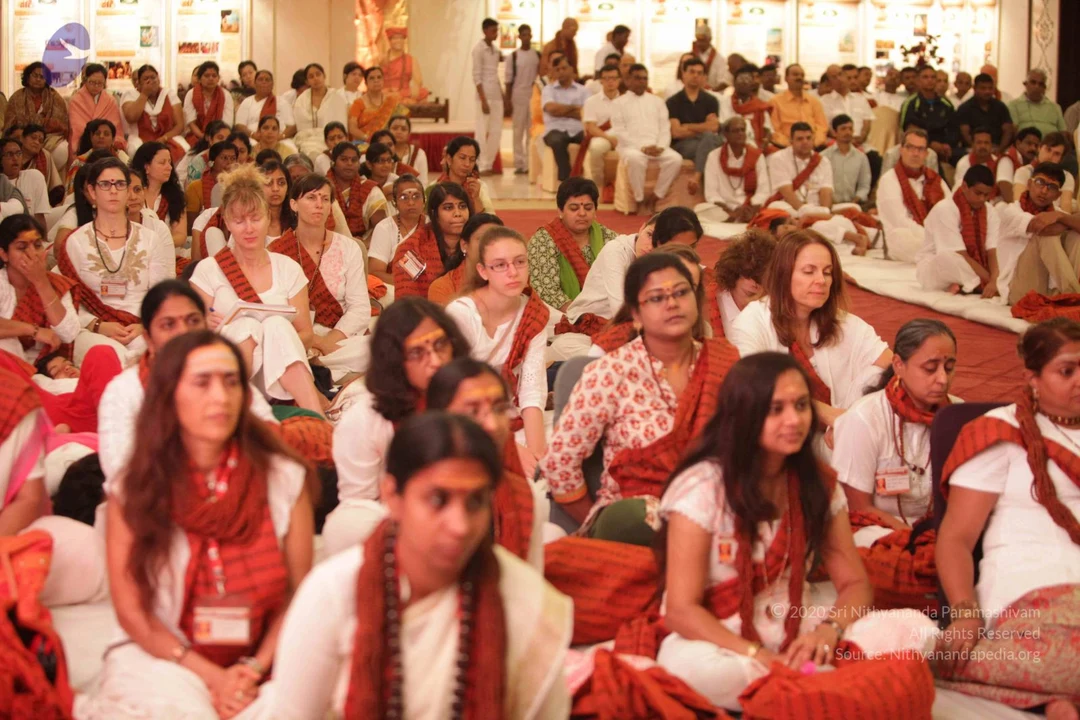
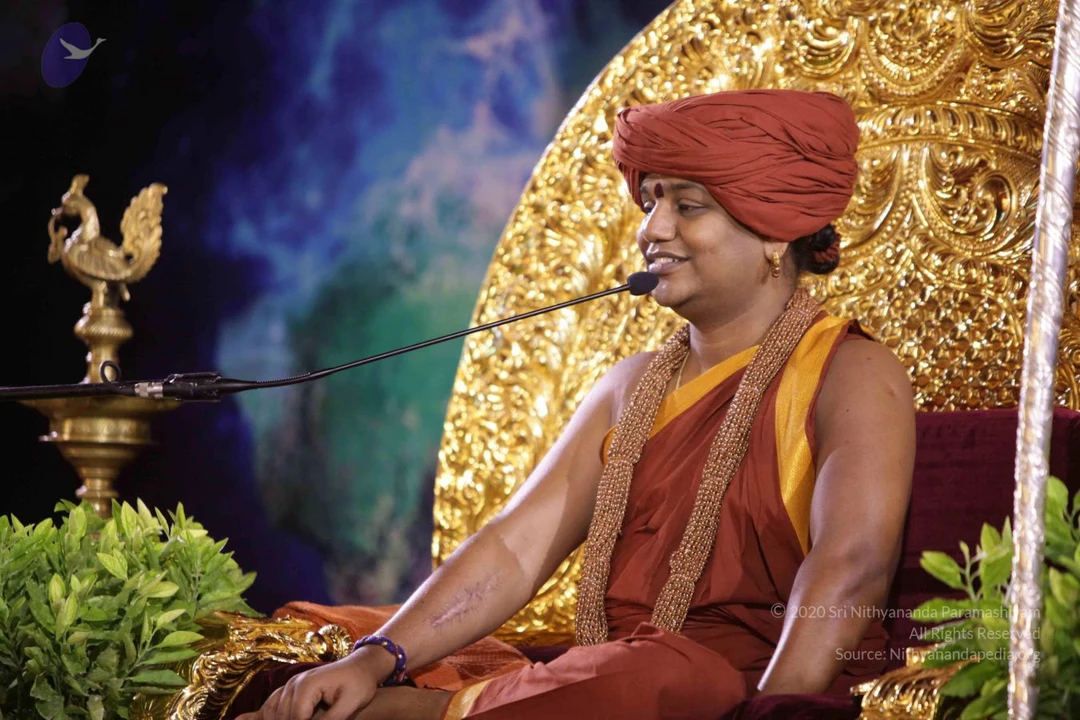
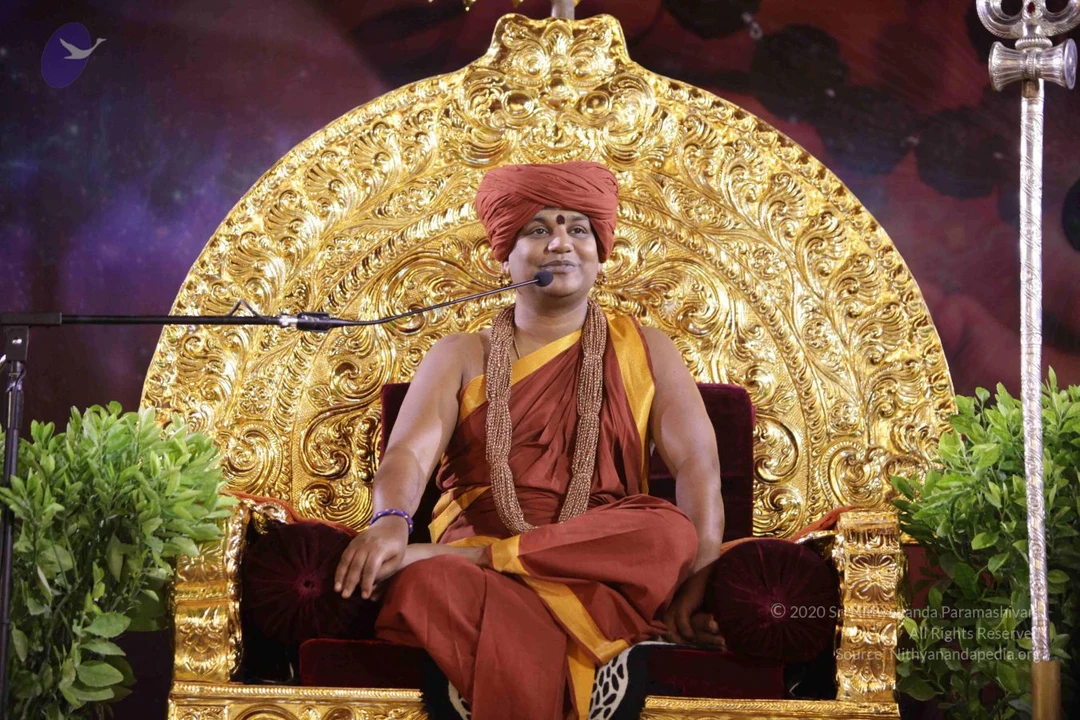
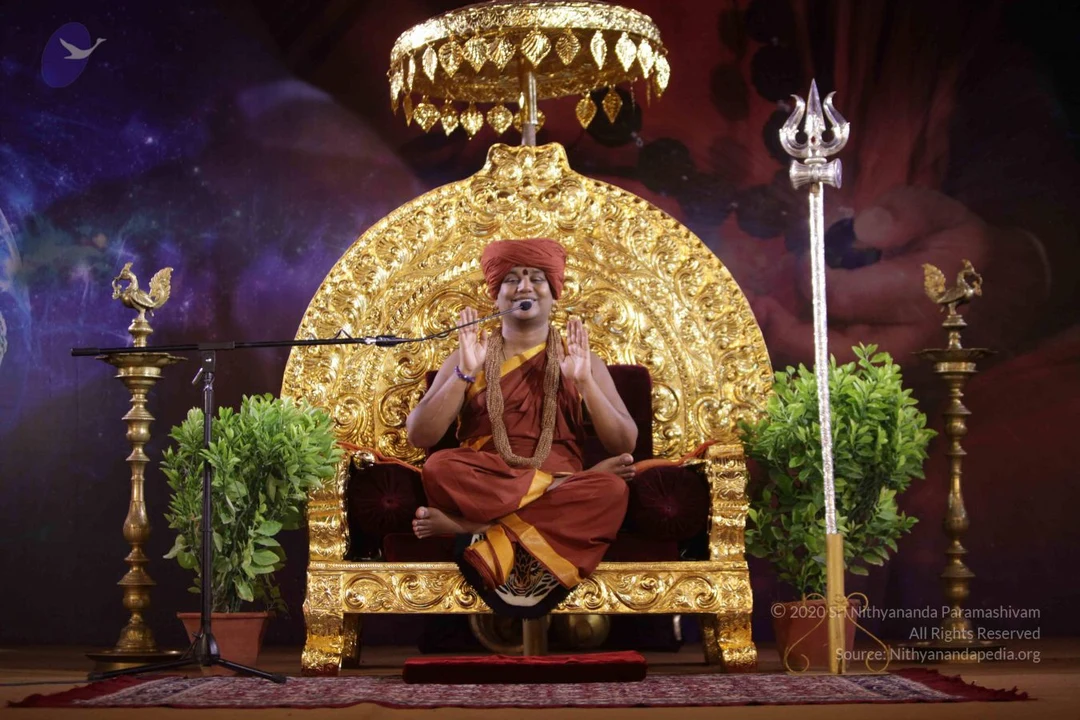
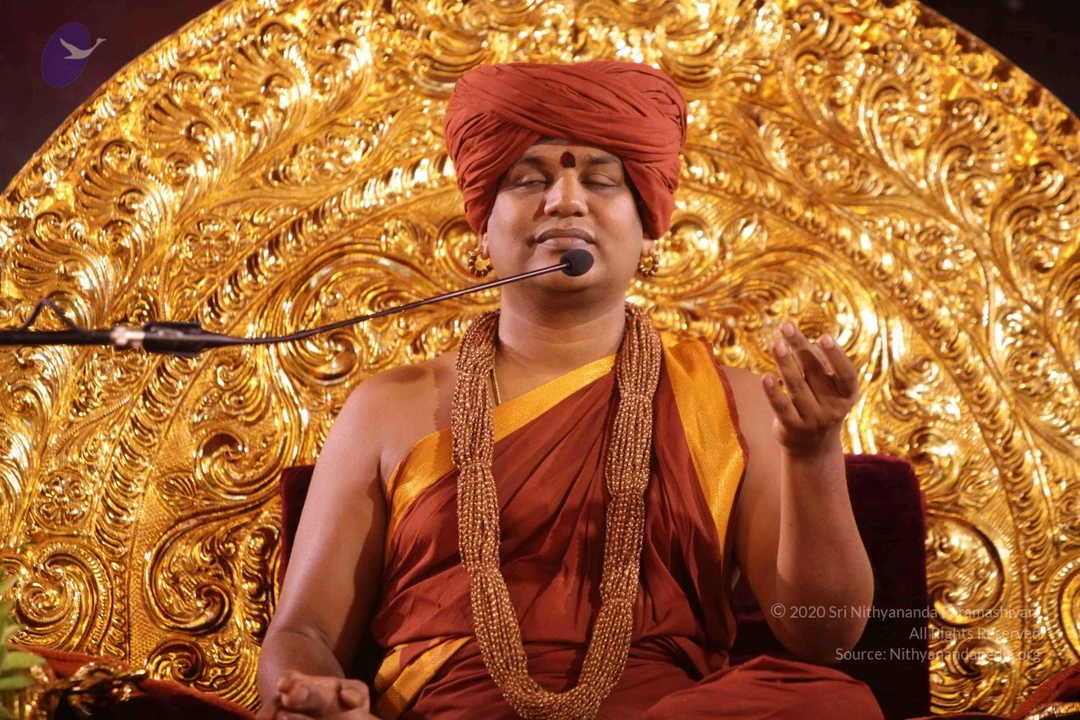
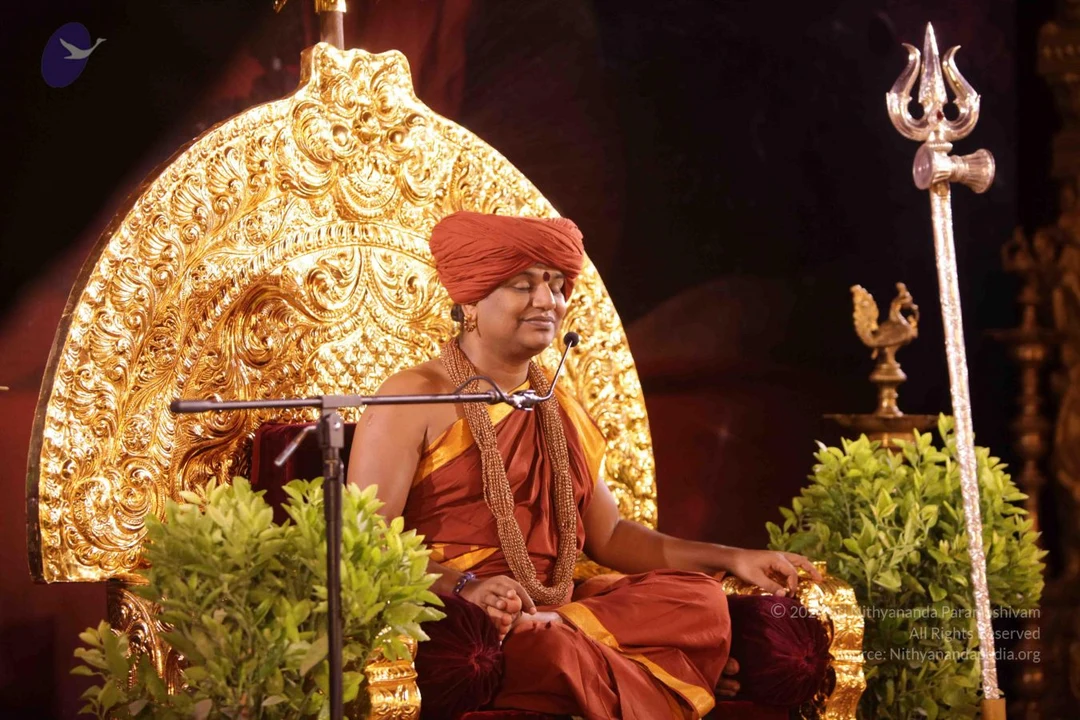
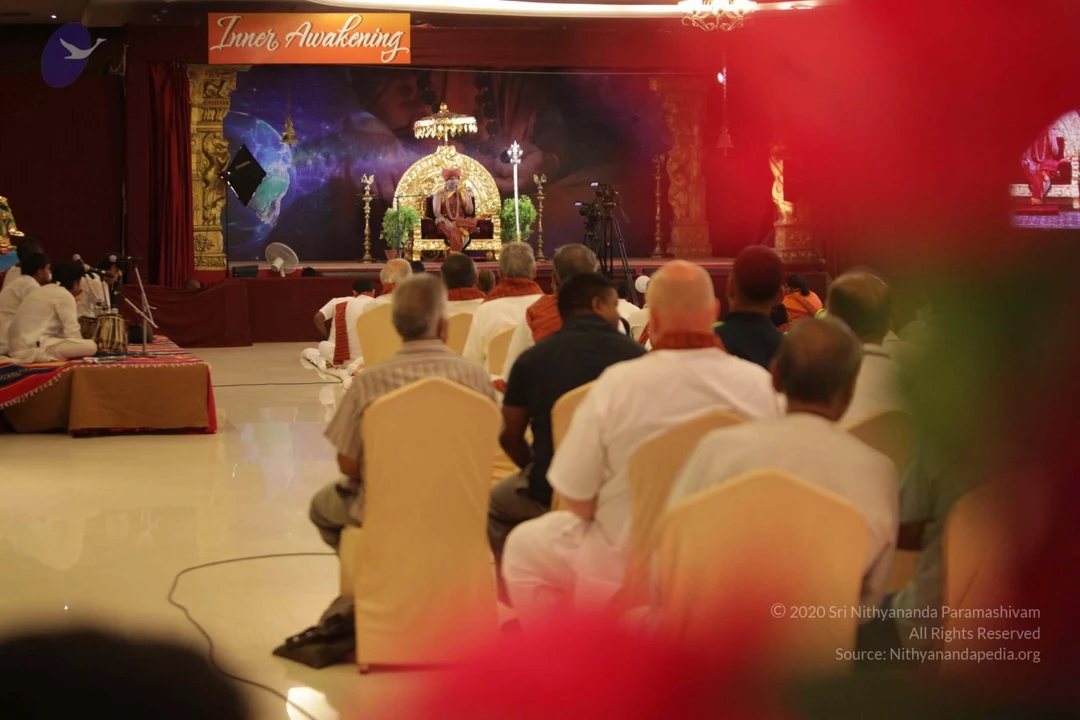
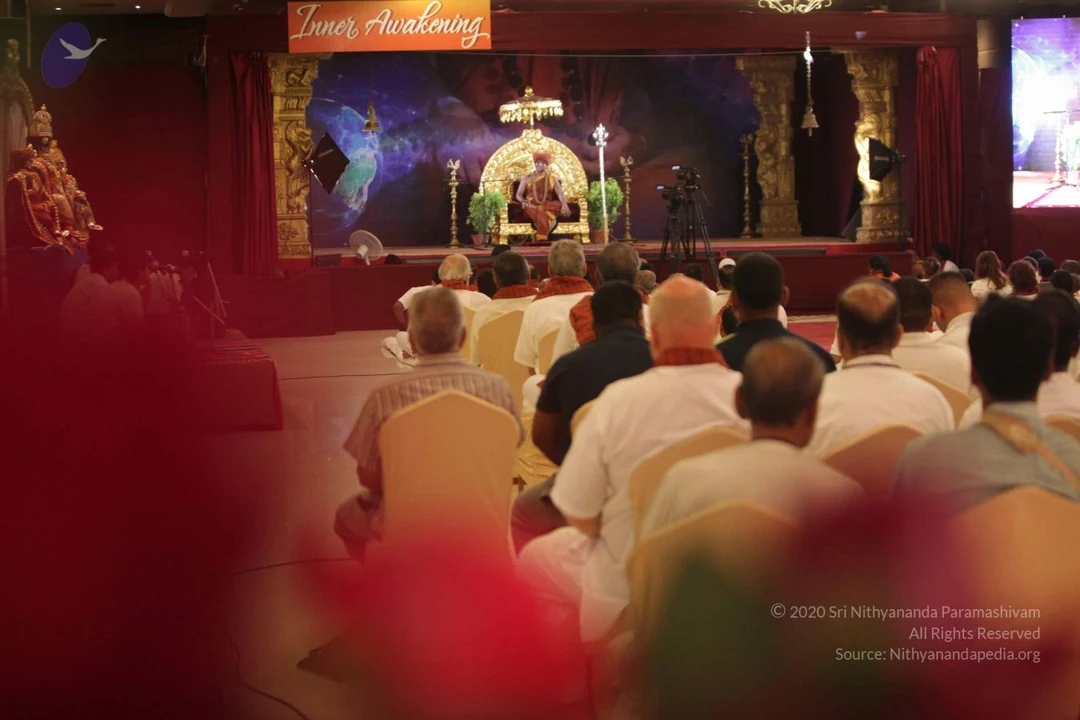
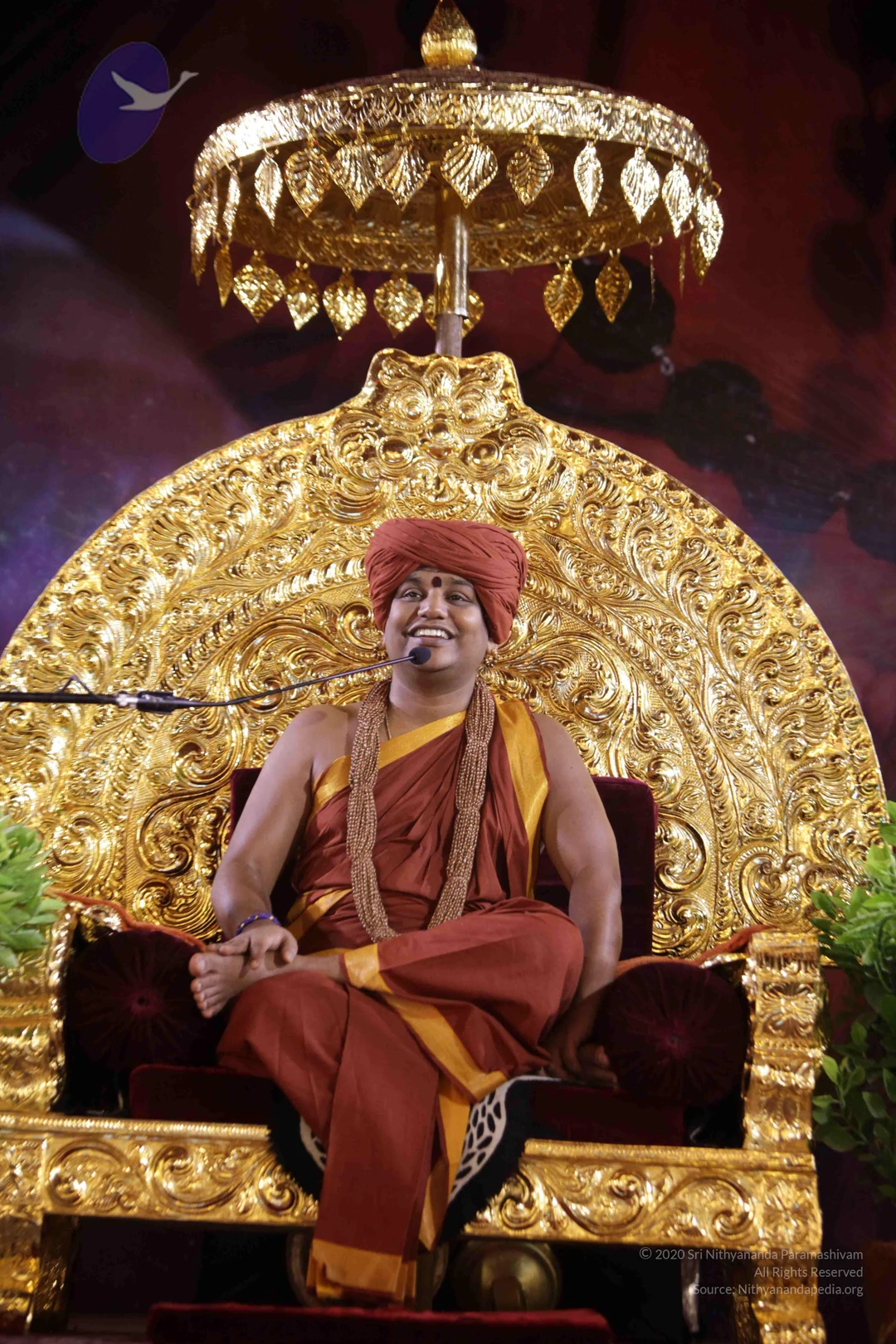
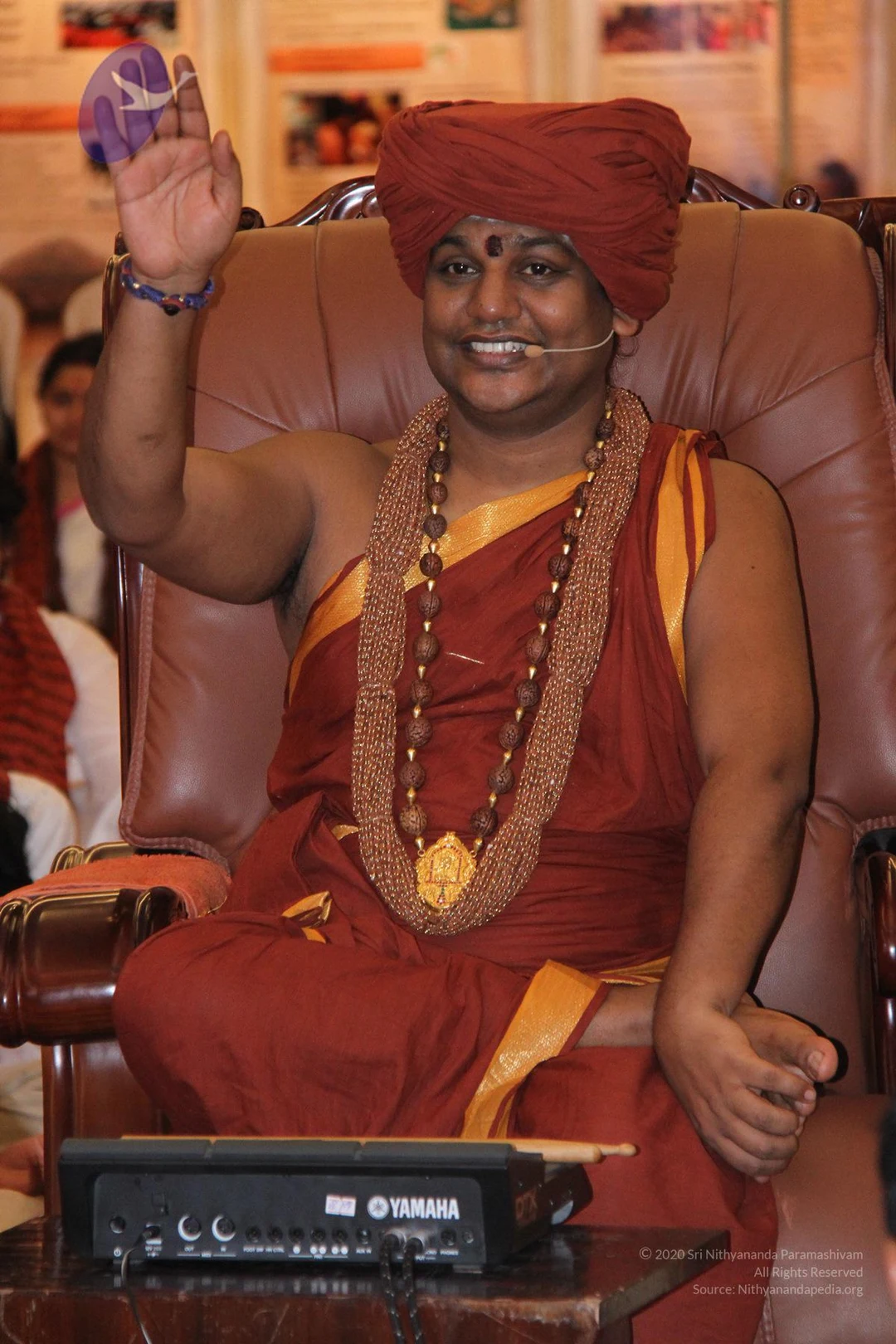
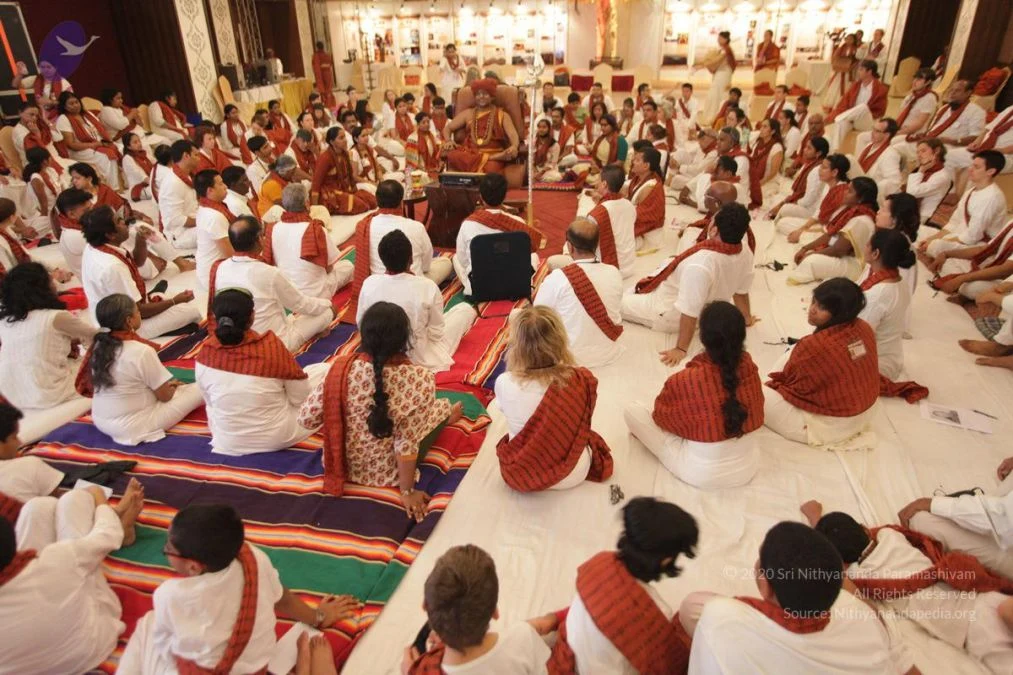
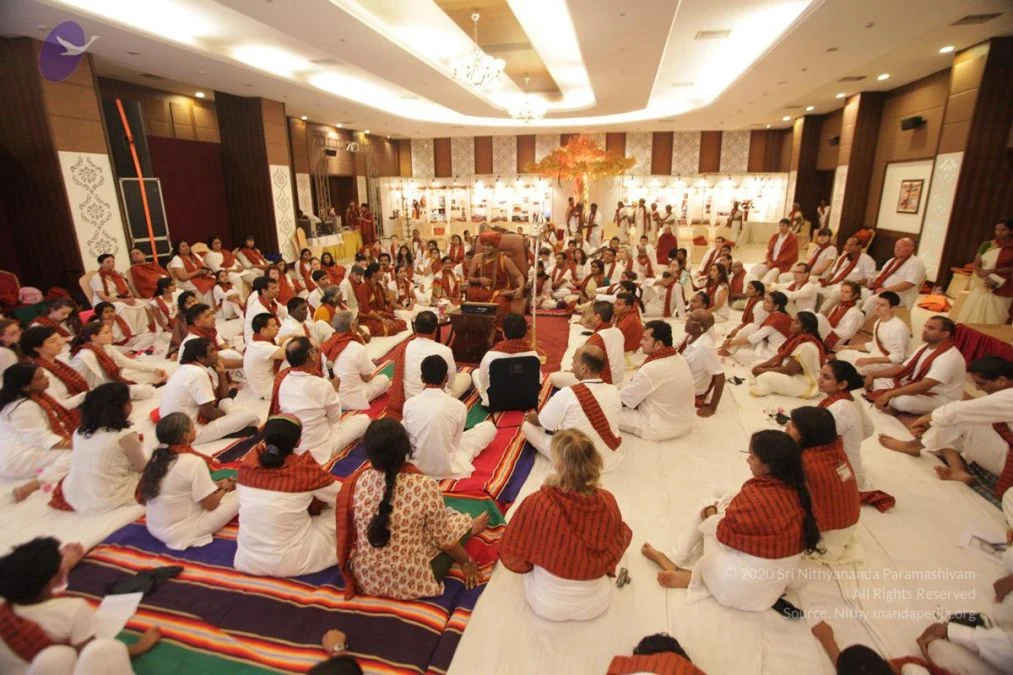
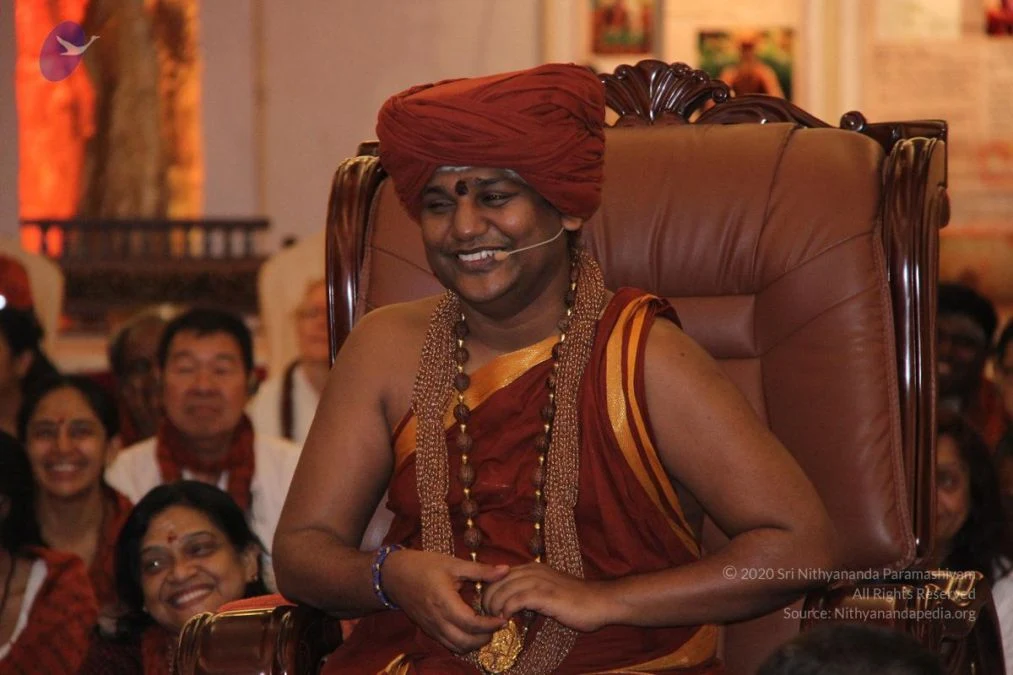
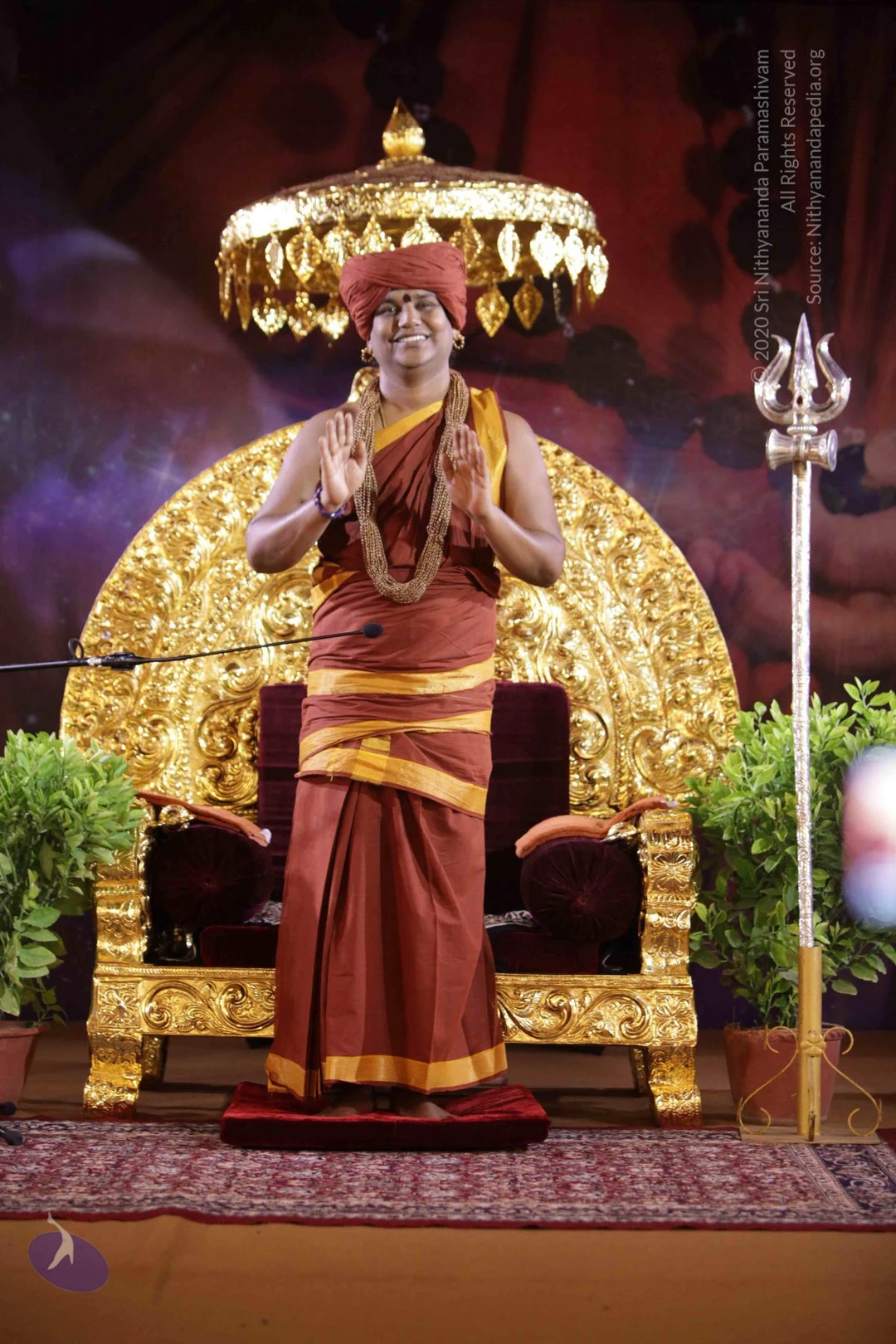
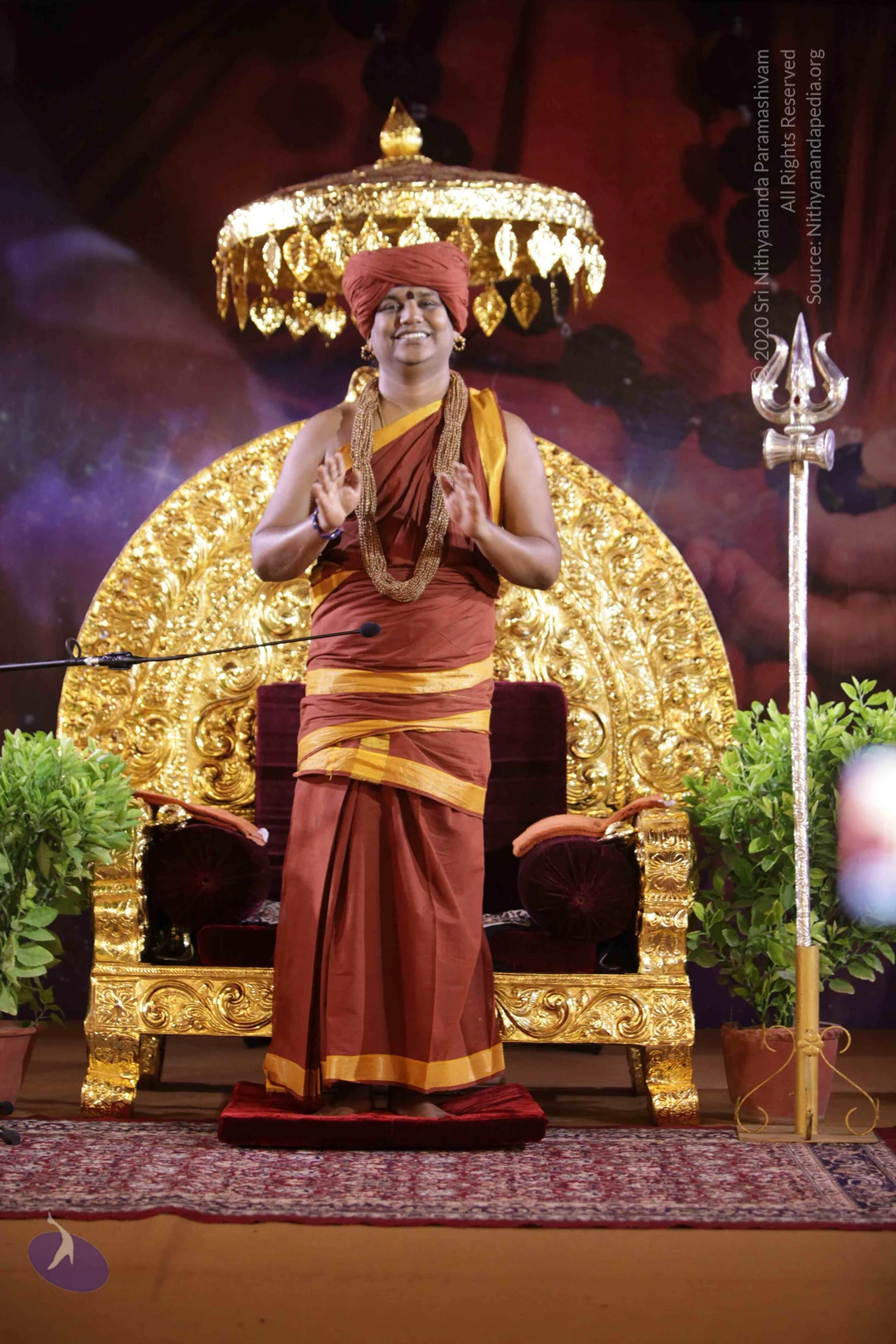
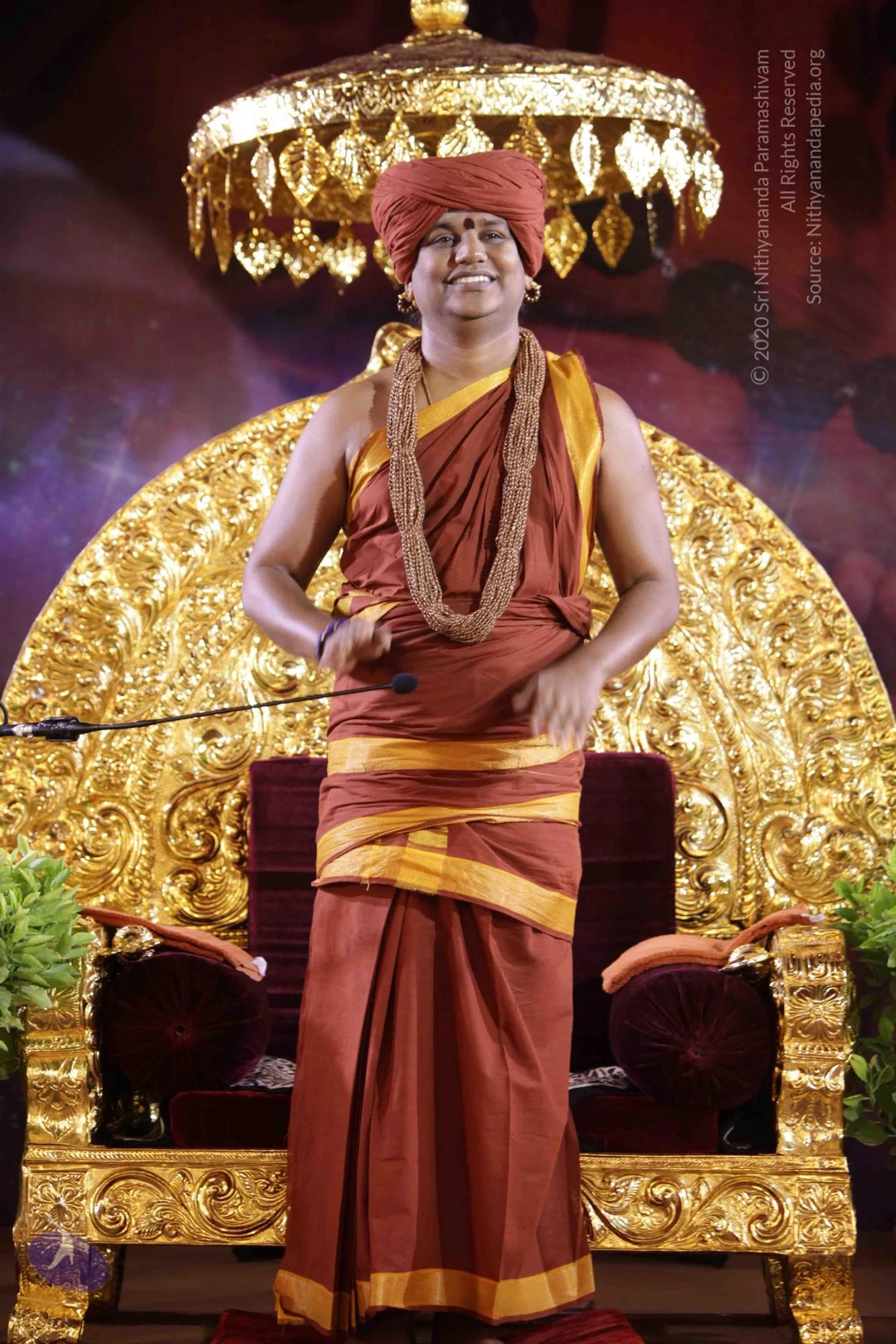
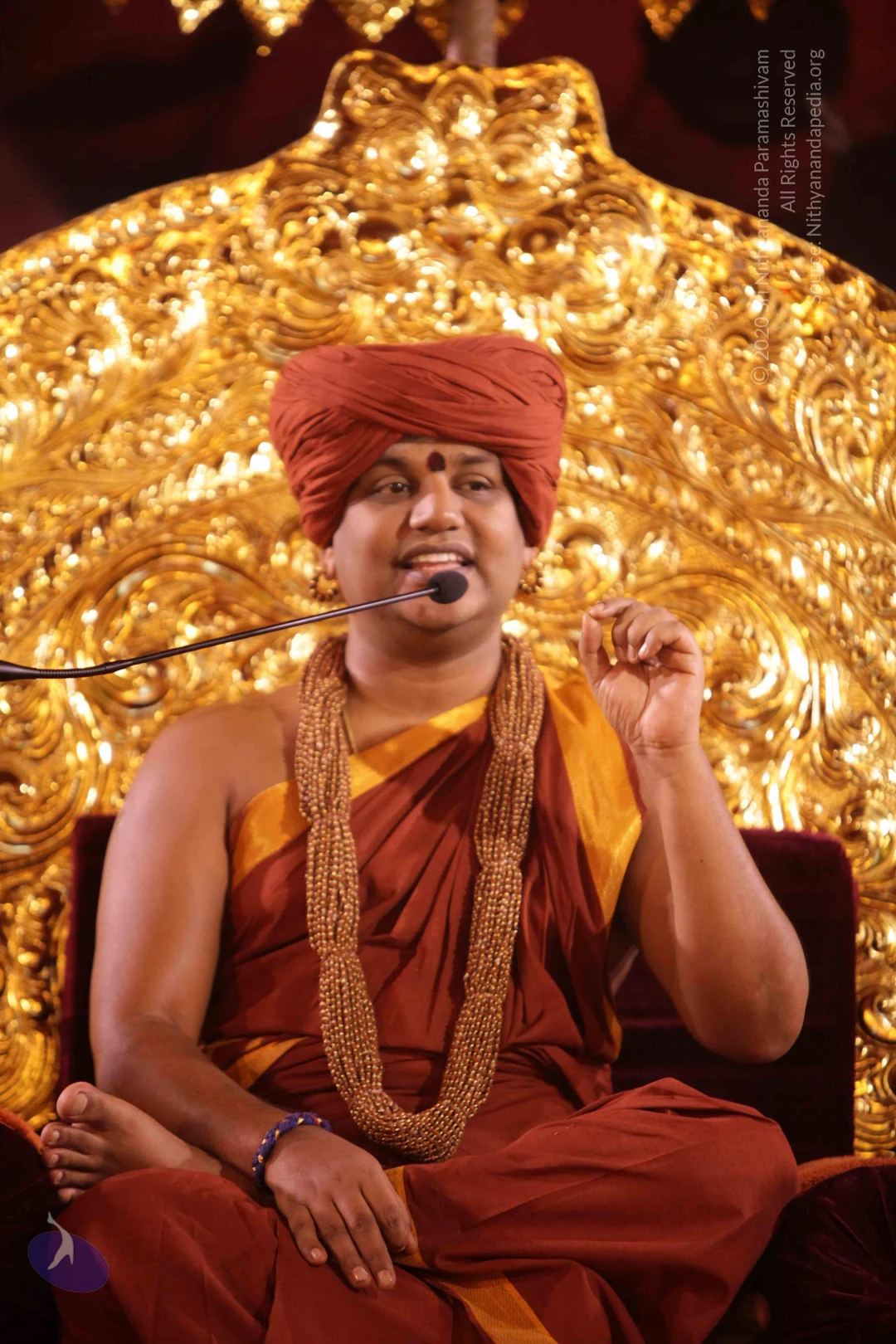
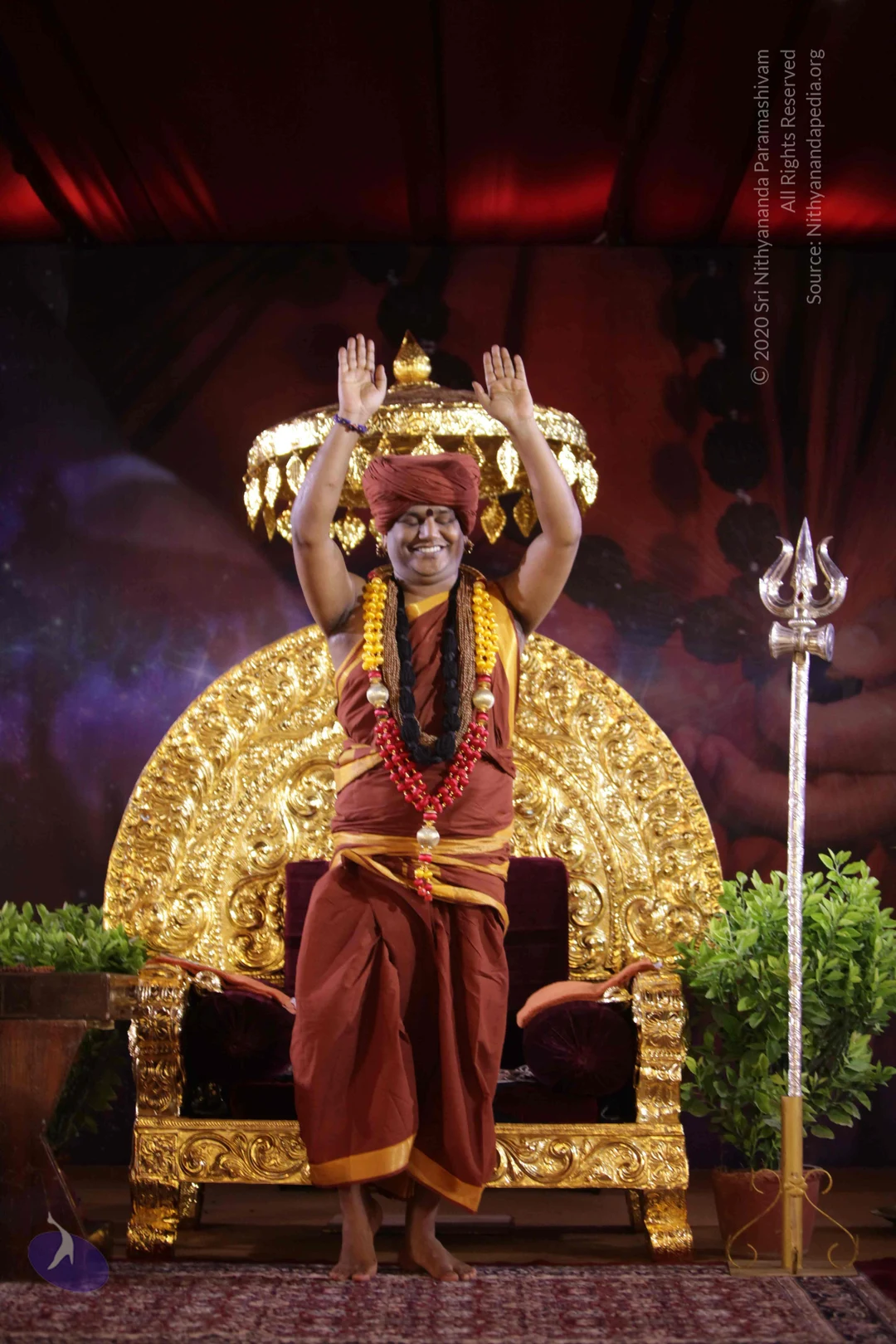
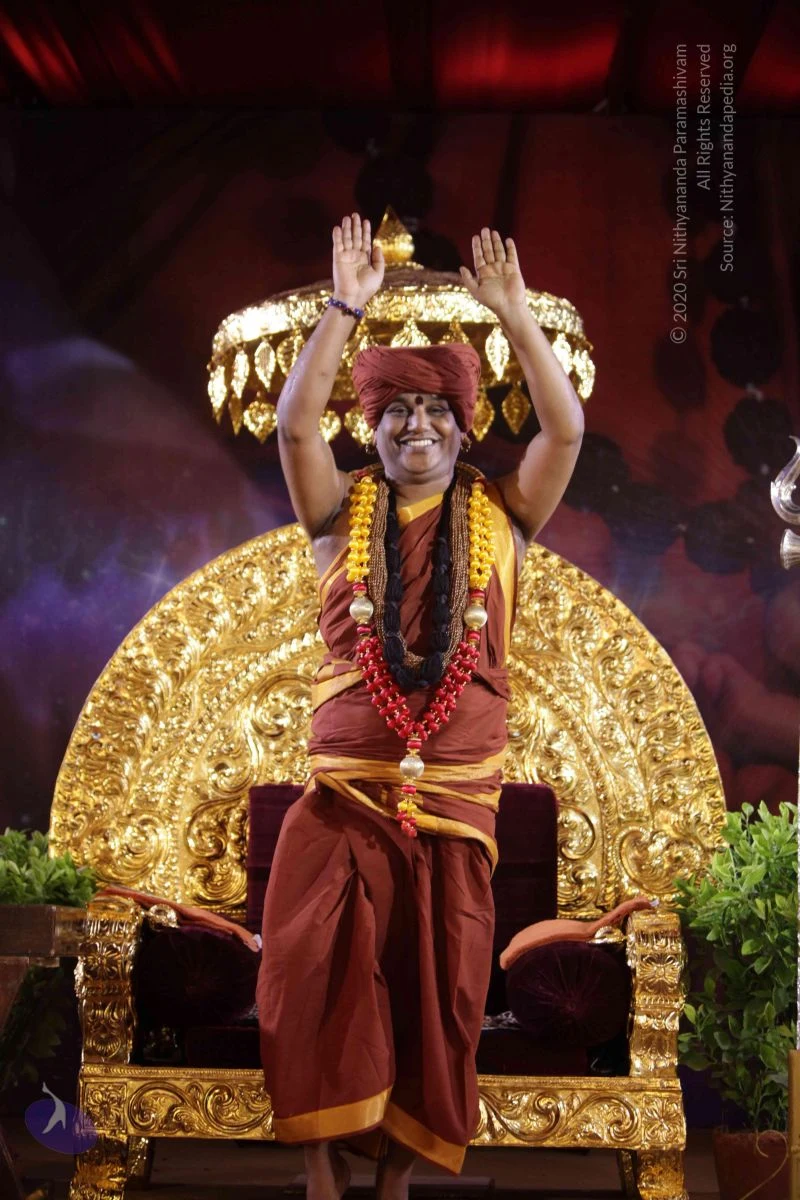
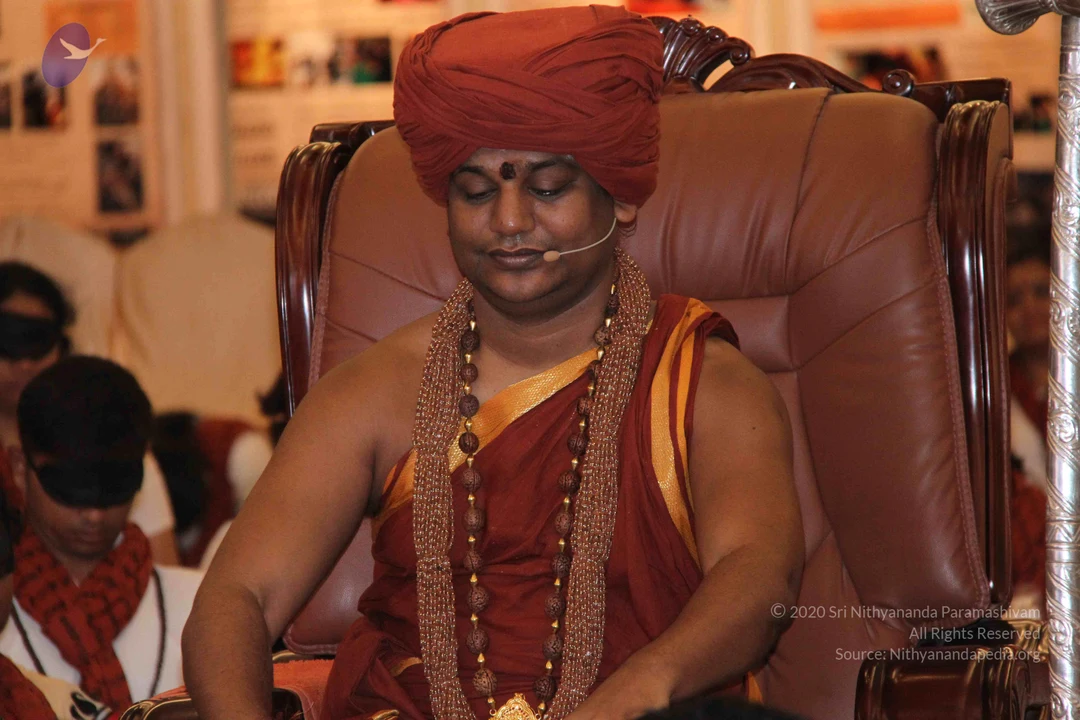
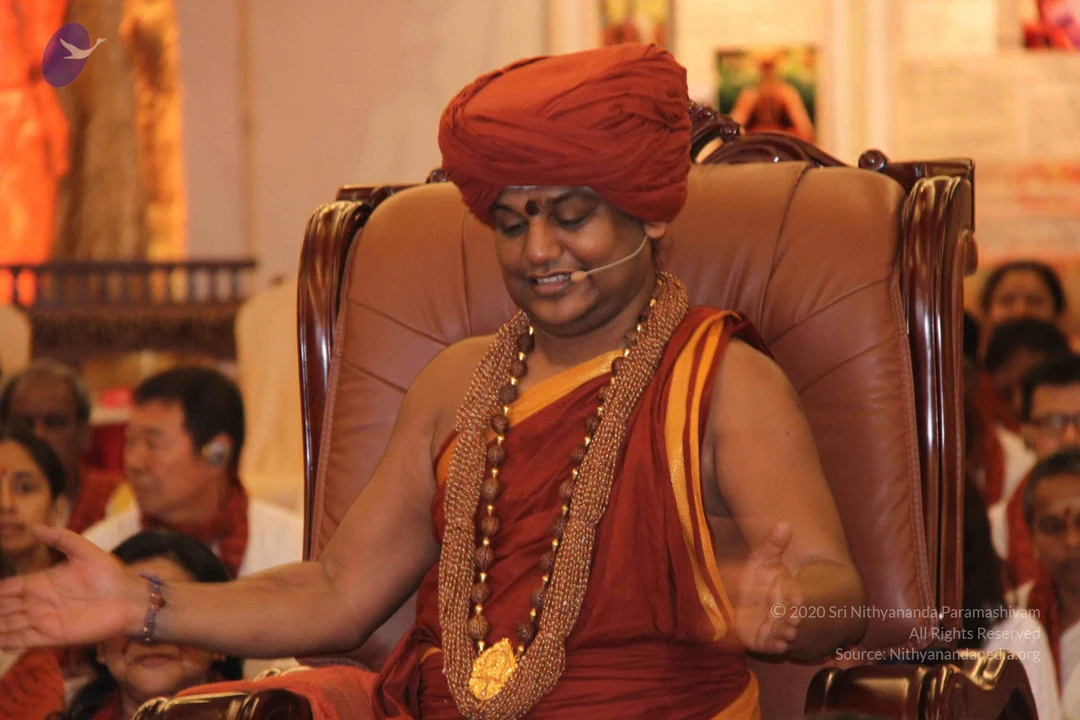
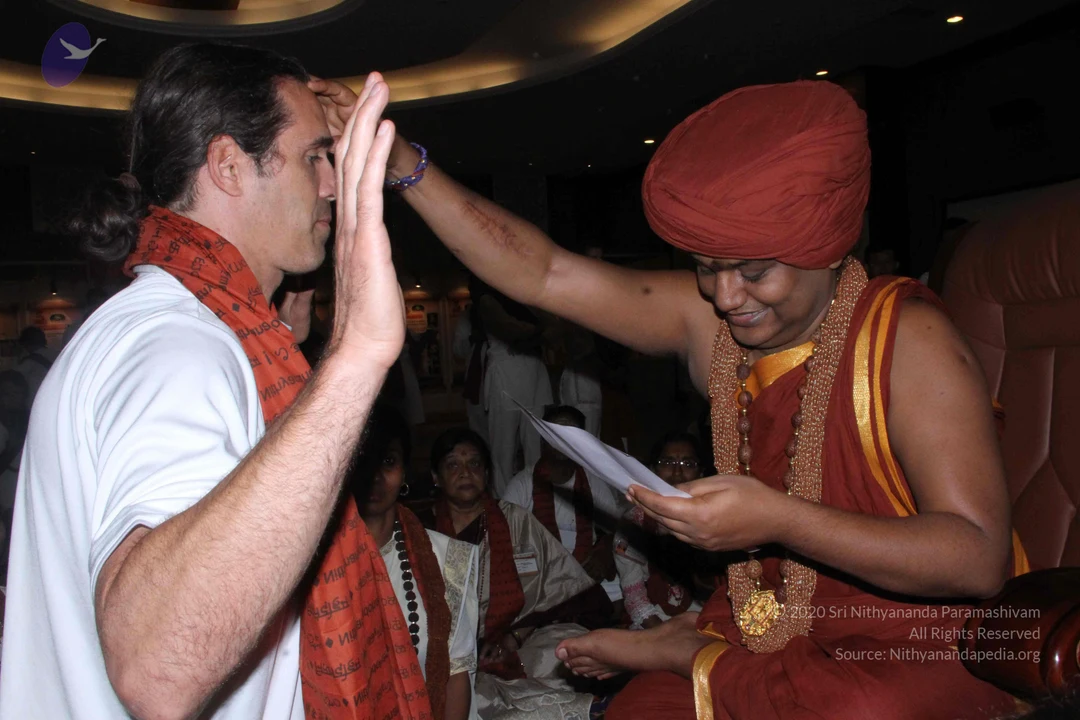
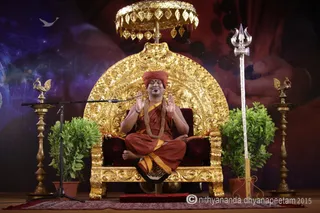
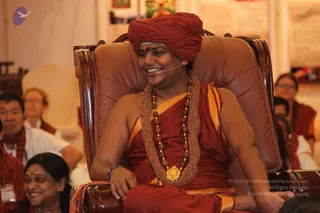
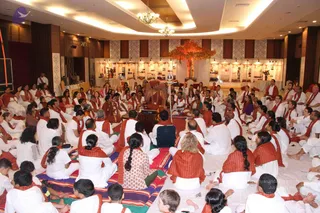
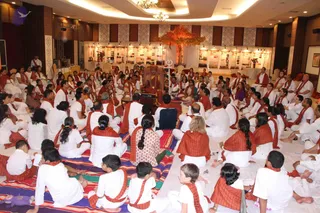
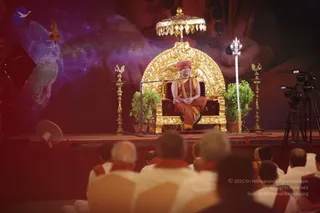
A photograph of a man standing barefoot in front of an ornate gold throne with a gold canopy, raising both open palms above his head with eyes closed and a broad smile. He wears a maroon turban with a red bindi, a maroon and gold-bordered robe, a red and yellow beaded garland, and a dark rudraksha-style mala. To the right stands a silver trident beside a potted green plant, and a red draped backdrop with a dreamy purple-blue image sits behind the throne. A photo of a person with a turban and saffron robes is recognized as a probable Swamiji by these cues: a crown-like turban, saffron/maroon clothing and rudraksha mala, sitting on a throne in an ceremonial setting, though this is an appearance-based label only.A wide photograph of a satsang hall with an audience seated on rows of cream-covered chairs, viewed from behind. Many attendees wear white, with some in red, green and floral clothing. On the raised stage, a seated teacher in orange and saffron robes sits on an ornate gold throne-like chair, flanked by brass lamps and green plants. Behind him a banner reads Inner Awakening over a large backdrop showing a blue planet in space. A camera on a tripod faces the stage. To the left, a gilded altar displays painted deity murtis. Hanging brass bells and a camera crew are visible.A photograph of a seated man in a red-orange turban, red-orange robe with a yellow border, and layered beaded necklaces of rudraksha and gold-toned beads, smiling broadly as he places his right hand on the forehead of an older man. The older man, with grey hair, wears a white shirt and an orange-red shawl printed with a pattern, and has his head bowed toward the seated man. Behind them, several seated attendees in white and red-orange clothing, some with name badges, sit on a patterned floor covering. The seated figure's appearance, with his turban, ornate beads and saffron-orange robe, is consistent with a probable Swamiji presence; he is sitting in a brown leather armchair. A blessing gesture is being given. The scene is an indoor gathering.

July 03 2015

Original wiki page
Contents

Title:

Secrets Of Real Heaven Beyond Death by Swami Nithyananda

Description:

In today’s Nithya Satsang (3rd July, 2015), live from Varanasi, Paramahamsa Nithyananda expands on the Shanti Mantra of Kathopanishad, which reveals the secrets of death and life. Kathopanishad should be the day-to-day book that gives the understanding and context of Death, and how to live Life with unending excitement. Introducing the 3 characters of Kathopanishad, He reveals that – Naciketa is the first hero of Vedas who is embodiment of Satva, pure seeking. Naciketa’s father Vajashravas, is the king who is embodiment of Rajas, the insecurity and confusion born of fear of losing pleasures. Yama Dharma is the Rishi of Upanshad, Death himself - fear and compassion. Vajashravas plans to retain his wealth & pleasures by planning for heaven by giving poor charity. The real heaven is completion, here and now. The solution for Rajas, insecurity and confusion is to live in 'self-imposed poverty' for at least a year, which makes us drop the ""Mine"" and reinvent our ""I"" from the space of completion. The topic for today’s Vakayartha Sadas, exploring the spiritual truth by Paramahamsa Nithyananda is – “Self-imposed poverty, the way to reinvent yourself.”

VideoAudio

Transcript:

nithyānandeśvara samārambhām nithyānandeśvari madhyamām | asmat āchārya paryantām vande guru paramparām ||

I welcome all of you with my love and respects. I will expand on Kathopanishad, so first please chant the Shanti Mantra along with me:

auṁ saha nāvavatu | saha nau bhunaktu | saha vīryam karvāvahai | tejasvi nāvadhītamastu mā vidviṣāvahai || auṁ śāntiḥ śāntiḥ śāntiḥ ||

This great Upanishad, Kathopanishad, Upanishads are the essence of Vedas. Among the Upanishads, Kathopanishad is Upanishad shiromani, Upanishadasikamani means it’s one of the best Upanishads because the subject it deals is Death.

Please understand, with right understanding Death can become rejuvenation energy, energy which will rejuvenate you. Don’t think death is always a curse, when you don’t understand, it’s a curse. Actually when you don’t understand even Chiranjeevatva, eternal life is a curse, do you know the Chiranjeevis of the world Prahalad, Markandeya, Hanuman, Ashwathama, in all these Chiranjeevis, Ashvathama was cursed to be Chiranjeevi. Please understand, Ashwathama Chiranjeevatva is not a boon for him, that he will never die is not a boon given to Ashvathama, it was a curse given to him. Just imagine you are never going to die, you will literally be swallowing tons and tons of depression pills and boredom pills, if you don’t understand life, the life is not understood, life is a curse. If death is not understood, death is a curse. If you understand both, I tell you, every time death happens it is a possibility for you to rejuvenate and take a new body. Kathopanishad talks about death, so many secrets about death and how you need to live your life to understand death, have liberation when natural death happens to you.

5:14

Listen, understanding Death, actually these characters of Kathopanishad, Naciketa, Yama Dharma, Yama Dharma’s way of radiating fear and compassion, how he makes people shiver when they don’t understand death, how he showers compassion when somebody understands and want to understand death, please understand. Yama Dharma must have been the most loneliest being on this space, no friends, nobody wants to talk to him, nobody wants to understand him, nobody wants to listen from him, maybe Naciketa is the first person who wants to talk to him, who wants to listen from him, who wants to understand death first hand. We Hindus should have taken Kathopanishad more seriously, it’s very unfortunate that Kathopanishad is not given a proper place in our day-to-day life, it is only chanted when somebody dies, it is not used as a book for our day-to-day life. It would have been so nice if Kathopanishad has become a book for day to day life, because whenever you understand the right context, whenever you understand death, the kind of a energy you radiate, the kind of a understanding you radiate, the kind of a life you live, the kind of a cognition you carry is just unimaginable, unending, inexhaustible excitement and enthusiasm happens on a person who understands death.

Three characters appear in this Upanishad, one Naciketa’s father Vajashravas and Naciketa himself, hero of the Upanishad, and Yama Dharma, Rishi of Upanishad, he speaks, the major parts of this Upanishads are his words. Understand, Rajas, Tamas, Sattva, these are the three qualities of human beings, I can say in a way, everything in the world is made of these three qualities, Rajas, Tamas, Sattva.

Sattva is the pure seeking, Rajas, powerful but confused, complicated, contradicting, Tamas, literally dead, death, please understand.

Understand, Naciketa is pure seeking, Naciketa’s father, king, is embodiment of Rajas, powerful but confused. Naciketa is embodiment of Sattva, pure seeking, Naciketa’s father is embodiment of Rajas, powerful but confused. If you see his action in this Upanishads, see he is already a wealthy, rich king, who literally has everything, but even then it doesn’t feel complete, it doesn’t feel fulfilled. Not feeling fulfilled is one side, not knowing why you are not feeling fulfilled is the worst thing.

So Vajashravas, not only he is not complete, he is not able to understand why he is not complete, why he is not feeling fulfilled, this is one of the biggest problem of all, all rich men, unless you are spiritually rich, you will face this problem. You won’t feel complete and you will not know why you don’t feel complete, that is the worst thing, I tell you. When you don’t know why you feel incomplete you will try to come up with your own reasons, that is where the messing up of your life starts. You start thinking, why I am not complete, no, I know I have all the pleasures now, it may not be permanently with me, it may go away, it may be taken away. Insecurity is the name of confused incompletion, when you don’t know to find the root cause of your incompletion, the confused name you give the identity mistake happens for your incompletion, is insecurity. Listen, listen, the identity mistake when you cannot recognize, when you are not able to understand mistake, when you are not able to understand the pattern of incompletion, reason for incompletion, the mistake you do is calling it as insecurity. Here, Naciketa’s father does the same mistake, the Vajashravas, is embodiment of Rajas, confusion. he understands he is not complete but he doesn’t understand the reason why he is not complete, because he doesn’t understand the science of completion, he thinks the fear of losing all these pleasures, status, is the reason for his incompletion so he plans for retaining all the pleasures even after death, only then you start projecting heaven. Heaven is nothing but simple, silly stupidity of your incomplete brain cooked with your confusion, finally added with the complication, understand.

Understand the concept of heaven, the concept of heaven is nothing but your confused brain trying to extend whatever you feel as important for your life and insecurity, because of your insecurity trying to extend whatever you think as security, even beyond your death is heaven. Real heaven is completion, real heaven is completion here and now.

15:43

Listen, Vajashravas embodiment of Rajas, he is not able to guide the Sattva to enlightenment because he himself is confused, how can he guide. Because he wants Heaven, he is giving away whatever he is having, can you imagine, he has some things and he feels insecure that in future all those things might be taken away from him, so he wants all of that to be permanently with him, and then the Vedas come there and tell you please give away whatever you have you will get everything in heaven. What is the meaning of it? The meaning of it is, when you give away, your insecurity also will go away, you will achieve completion, then permanently, eternally, you will be in heaven. But this guy, without understanding the context why Vedas prescribe charity, he thinks charity and heaven is a bargain. Please understand, it is not bargain. Many times your insecurity and inauthentic identity is established on what you think as yours, please listen, the “I” and “Mine”, this two are the root of all your incompletions, “I” and “Mine”. People always think the “I” comes first and then “Mine” happens, no, “Mine” comes first, then “I” happens. Based on whatever you cognize as yours, you cognize who you are, listen, based on whatever you cognize as yours, based on that you cognize you.

Many time that “Yours”, that “Mine” becomes the source of “I” so if you give away all of them the incompletions also will disappear, you will evolve a new “I” which can be re-invented, which can be re-built based on completion. I tell you, poor man is a man who has never seen poverty even once in life, understand. I am defining who is poor man, poor man is a man who has never seen poverty even once in life. Because this country has already suffered in poverty, we are not understanding the richness it can cause, please listen, I am not promoting poverty, all I am trying to tell you is even once if you have not realized poverty you will not have the free space in your being to re-invent yourself, that is why in the science of enlightenment at one point you have to break, renounce everything, be in the street empty handed, till that you don’t own anything, nothing can be the reason for your cognition of “I”, your “I’ has to be just dependent on “I”, the mind cannot be the foundation ground for “I”. For that understanding to sink in, at least one year in your life you should have been empty handed, nothing, without anything, no relationship, no friends, no money, nothing. I tell you, that one year will give you the strength to re-invent who you are and I can tell you nine years of my accepted poverty, self-imposed poverty, not imposed on me forcibly. I may not want to say my Purvadheenam (pre-ashram) family is rich, but they are decent, they were able to provide food and clothes and shelter for me, that much they are able to do, but when I renounced all of that and family, friends, all the known contacts, everything, that nine years of self-imposed poverty gave me tremendous space to re-invent myself and re-build the new “I” from the space of completion.

21:46

I tell you, man who has never seen poverty in the life at least for one year, is the poorest fellow, he is the poorest fellow because just recently I was reading an article, the research paper in Facebook, just fasting can re-kindle and awaken your whole immune system. I was shocked, I thought how can fasting re-kindle, reawaken, strengthen you immunity system. When I sat and consciously started scanning, when I started analyzing, I found the truth. If you allow the body, see I have seen so many Jain monks fasting left, right and center, means living just with hot water for one year, I have seen, please understand, believe me, I have seen Jain monks who live just on warm water, one year, but I have not seen a single Jain sadhu dying unless they decide to give up the body, and Jain sadhus are the most healthiest long living sadhus in all monastic orders, Catholic, Hindu, Buddhist, in Sufism one sector has monastic order, so many tradition monasteries, monastic orders I have seen. The long living, most healthy monastic Sannyasis I have ever seen are Jain sadhus. Whether it is a length of life or the quality of activism, nothing can be compared to Jain Sadhus. So please understand, the secret is, fasting rejuvenates the immune system, there are tons of research in the facebook, fasting rejuvenates the entire immune system because when there is no load on the system, it gets space to re-invent itself.

Sometimes wealth becomes stinking load on your consciousness, please listen, the word I am using, sometimes wealth becomes stinking load on your consciousness.

It does not let you re-invent you, at those moments charity is the best solution, charity is the best solution. I am not asking you, you should live in poverty forever, no, at least one year in your life, be away from everything, friends, family, contact, wealth, what you yearned, whatever is a stinking load on you, suddenly you will see so much of natural completions, spontaneous completions happening in you, you just know how to re-invent yourself, how to re-invent yourself. If you are feeling stuck, confused, disturbed, like Vajashravas, I give you the solution, one year be away from everything known to you. I know it looks very risky, too difficult, but anything great has some price, you have to pay for it. I paid and I found it is worthy, I tell you, I found it is worthy, the very “I” gets altered. Because of “Mine” you built “I”, when that “Mine” is taken away the “I” can just be rebuilt. Many people come and tell me, rich guys, filthy rich guys, Swamiji there was a time I declared bankruptcy, I did not even have food, this scene which I am describing will be a typical part of all big rich guys. There was a time I declared bankruptcy, I did not have anything, there was no friends to help me, nobody to support me, I was homeless, I was begging and eating in the streets. I tell you, that part of the life is a blessing, they may not know but that is the blessing because that is the time when “Mine” is taken away, “I” melts down, all the incompletions disappear, you will have an inner space where you can re-invent and rebuild yourself from the space of completion.

Blessed are those who experienced utter poverty at least once in life. Listen, blessed are those who experienced utter poverty at least once in life. You will have a space to re-invent yourself. This is the context for which the charity has been prescribed by the Upanishads, with the Vedas, they say very clearly, whatever you really like, give them away, whatever you really feel as your wealth, give them away, but unfortunately Vajashravas is thoroughly confused, he did not understand the context, maybe he would have read the Vedas on his own or heard from some trekker gurus who are sitting with the jeans pant and trying to talk on yoga and meditation and Upanishads and Vedas.

30:05

Understand, I read a research report, I don’t know how much is true but it’s really convincing, any average millionaire in US goes bankrupt at least three times in his lifetime. Please understand, any average millionaire goes bankrupt at least thrice. There is a book called ‘The Millionaire Next Door’, the surprising secrets of Americans wealthy, where they are explaining, I do not know how much it is true, but it is very convincing. I really believe this, understand, the context why the Vedas prescribe charity was not understood by Vajashravas. He thinks if he gives now, he will get something called punya, merit, that he can use it as exchange offer in heaven and get all the suit room, spa access, swimming pool access, or the food he wants, he thinks he can use it as a currency. Because he is confused, does not have patience to look in and understand the context, reason why the Upanishads prescribe charity, he is thinking giving away charity is a moral lesson. When you miss the context, you mess your whole life. Vajashravas misses the context and does charity like bargain. See when it comes to bargaining, naturally who cheats is the brilliant guy, successful guy, so here when the context is lost, he started cheating. Cheating means he started giving the cows which already gave enough birth, drank enough water, ate enough grass and gave enough milk, now no way it can, it is going to be useful other than giving the cow dung and cow urine, he started giving out those type of cows. He started doing charity with things which is no more useful to him, which is not useful anymore for him, giving away things which is not useful for, anymore for him.

33:22

Understand, when Rajas, even though Rajas gives birth to Sattva, when Rajas cannot guide Sattva anymore, Sattva goes to the Master, Yama Dharma. Yama Dharma is not embodiment of Tamas, he is embodiment of Master. Please understand, if you don’t understand the Master he may look like embodiment of Tamas, if you understand he is the embodiment of Tappas, when you don’t understand, he may look like Tamas, when you understand, you will realize he is the embodiment of Tappas. First rebel is Naciketa when he saw father is not understanding the context and he is not able to guide him, he did not bother to rebel. He did not bother to stand up, he did not bother to start seeking on his own. Naciketa, the first hero of Vedic tradition, please understand, Naciketa is far, far, far more senior to any great incarnation or hero you know. He is far more senior to Rama, far more senior to Kapila, far more senior to any incarnation known to you in available records, in available Vedic literatures, he is the first hero we come across. The most ancient are the Vedas and Upanishads, so in the Upanishads the first hero we come across is Naciketa and even in Geeta, there are many lines repeated from Kathopanishad, not only concept, please understand, many concepts from Kathopanishad is repeated in Geeta, just copy/paste. Even the lines are repeated, this shows Krishna was full of Kathopanishad in his inner space. See whatever is in your inner space will naturally come out when you speak, for example, when you guys try to advise somebody, council somebody, what words will come out, whatever you heard in the morning satsang, about which you are full of, that only will come out. Same way by repeating, verbatim, from Kathopanishads, Kathopanishad, Bhagawan proves he is full of Kathopanishad.

Kathopanishad is the earlier literature than Bhagavatam, than Krishna’s time, Naciketa is senior to Rama, Krishna, all the known incarnations and heroes. I think today I have introduced too many important concepts, go and sit and contemplate and do Vakyartha Sadas on it. Poverty, self-imposed poverty, way to re-invent yourself, this is the title for today’s Vakyartha Sadas, self-imposed poverty, the way to re-invent yourself. Do Vakyartha Sadas on it, I will continue to expand further on this Upanishads.

With this, I Bless you all, let you all radiate with Integrity, Authenticity, Responsibility, Enriching, Causing, Living Advaita, the eternal bliss, Nithyananda. Thank you. Be Blissful.

Photos From The Day:
News:

Nithyananda Times, 03rd July 2015

Description:

The Daily Video Magazine of the Nithyananda Sangha

Photos Of The Day:

sarvajnapeeta

shivoham

Photos Of The Day:

Kirtan

Satsang

Darshan

Photos Of The Day:

satsang

galleria

Photos Of The Day:

Satsang

Photos Of The Day:

Satsang

Galleria

Photos Of The Day:

sarvajnapeeta - TO BE EDITED LATER

shivoham TO BE EDITED LATER

2-Shivoham

02-Shivoham

Photos from this day

View all 330 photos

Photos From The Day:
22 photosSource gallery
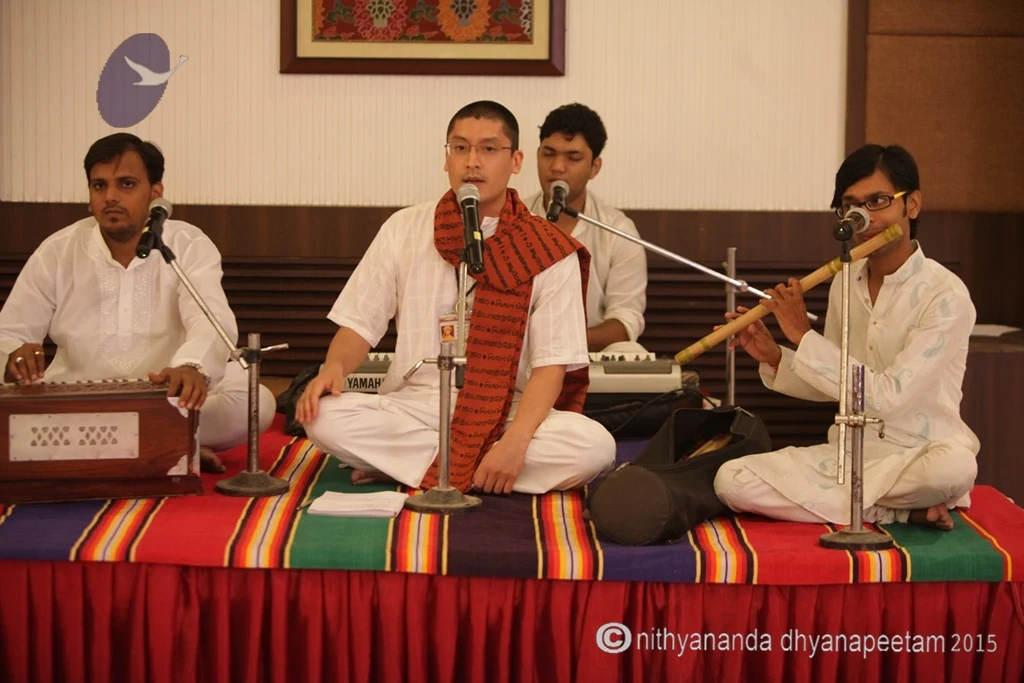
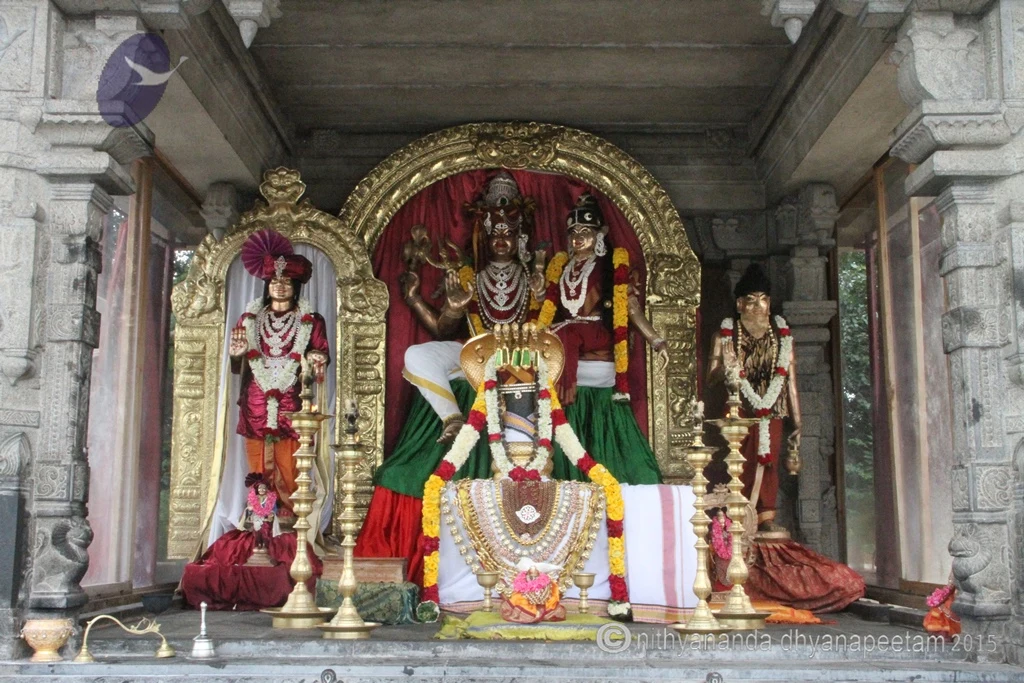
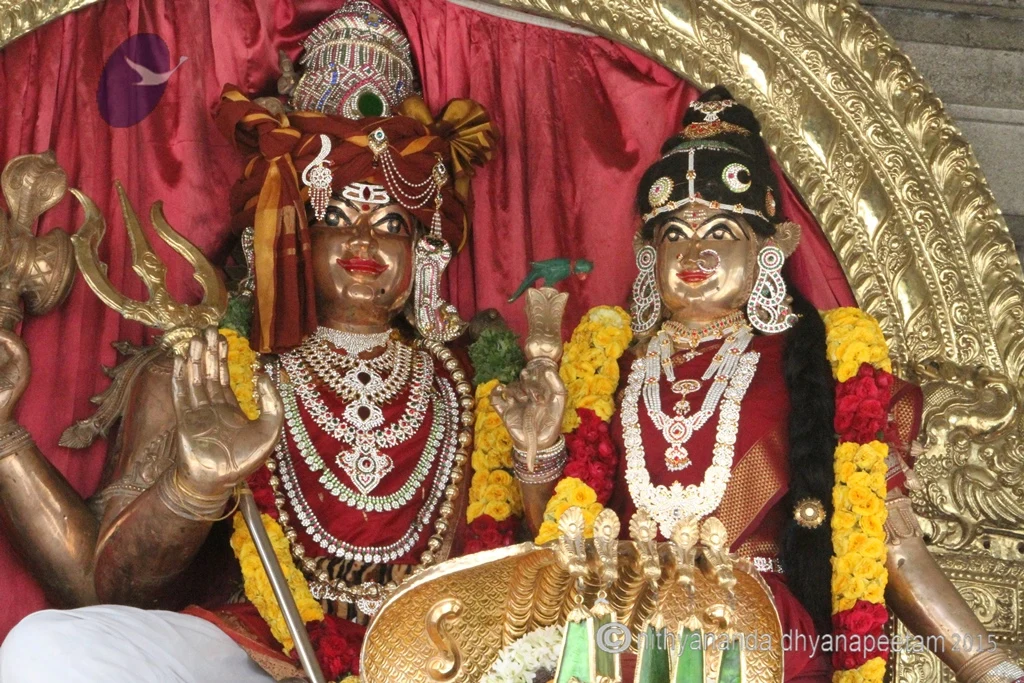
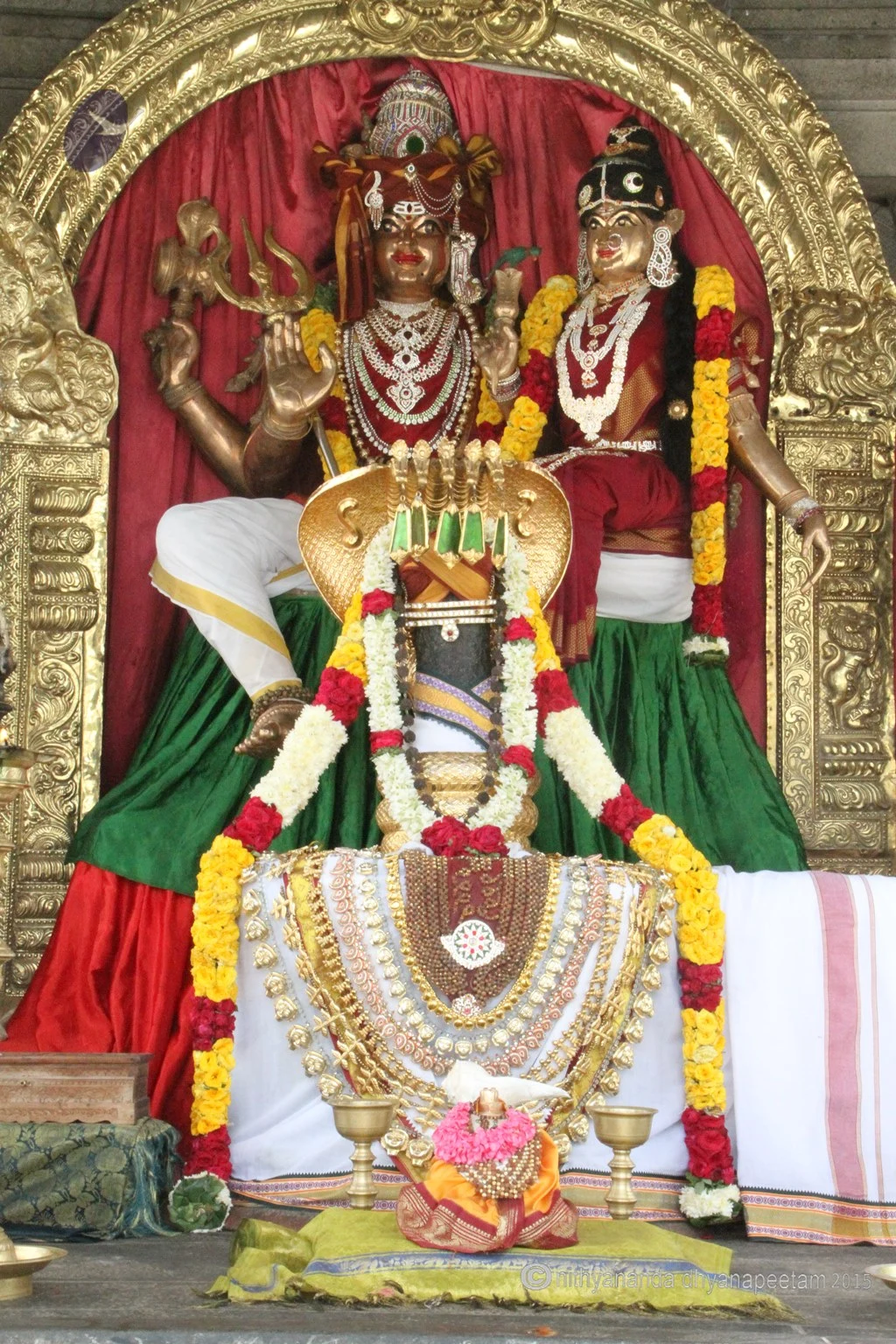
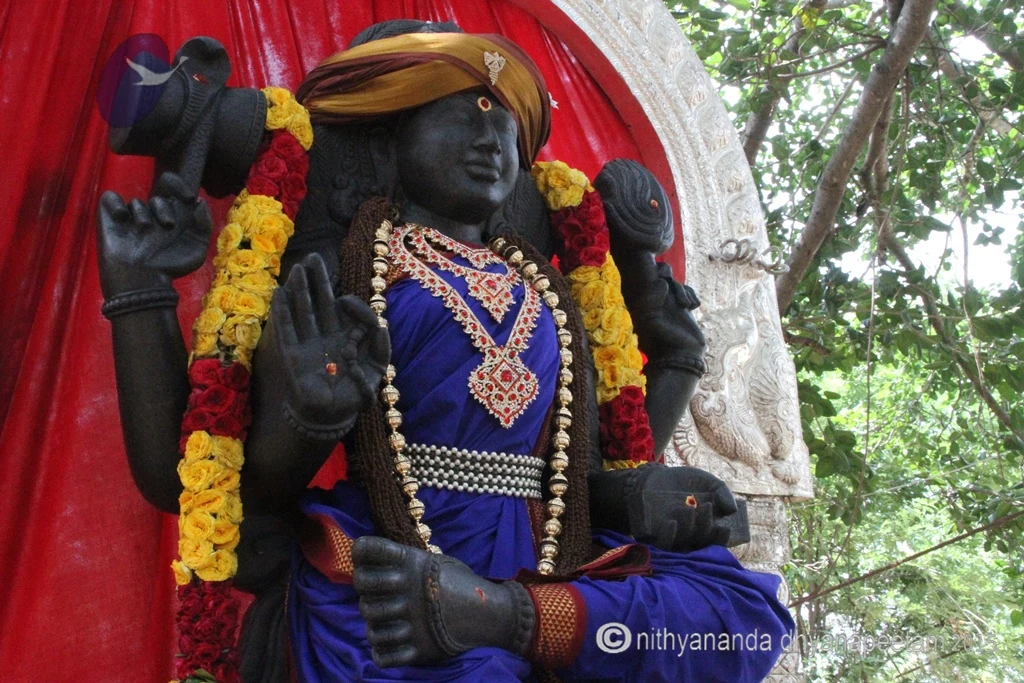
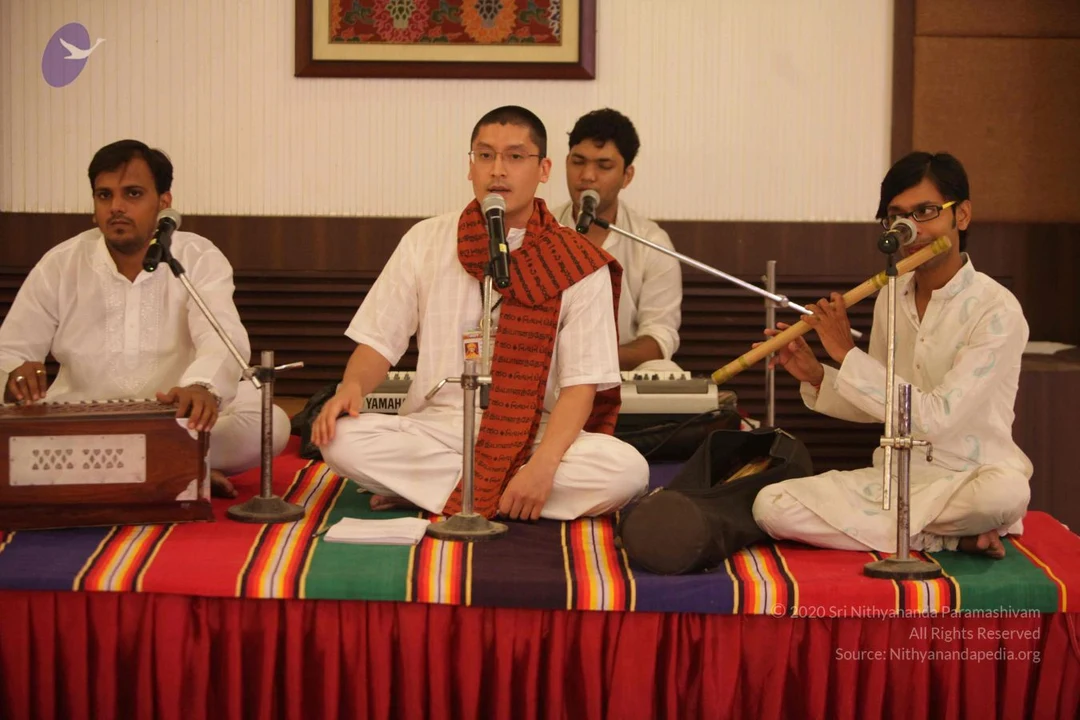
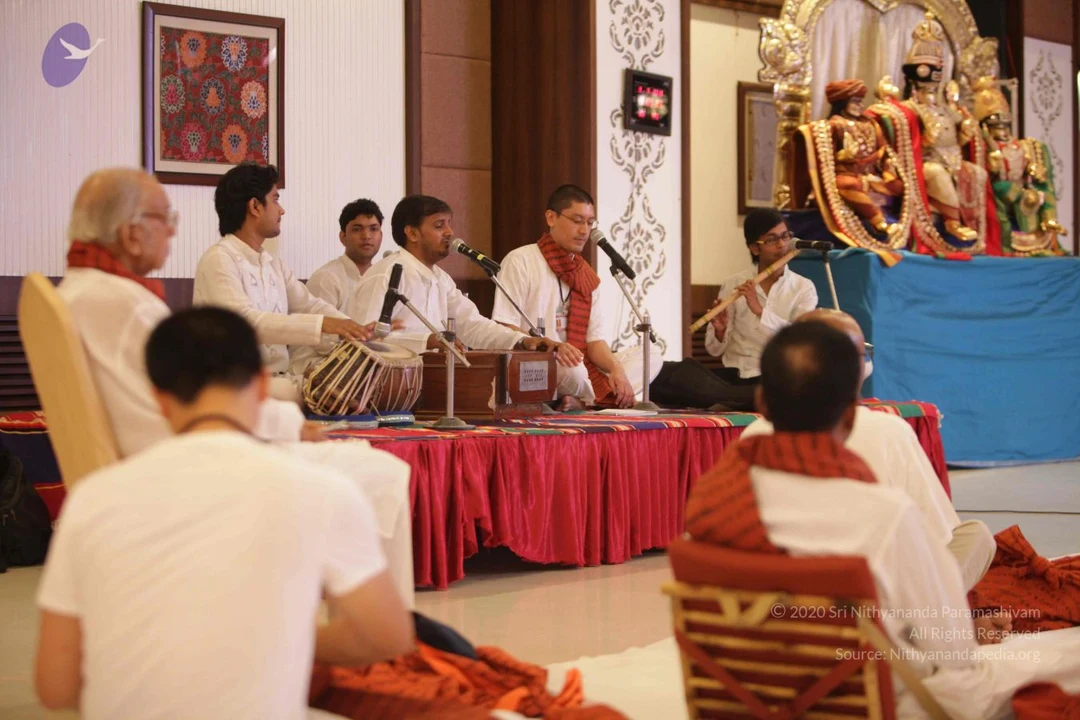
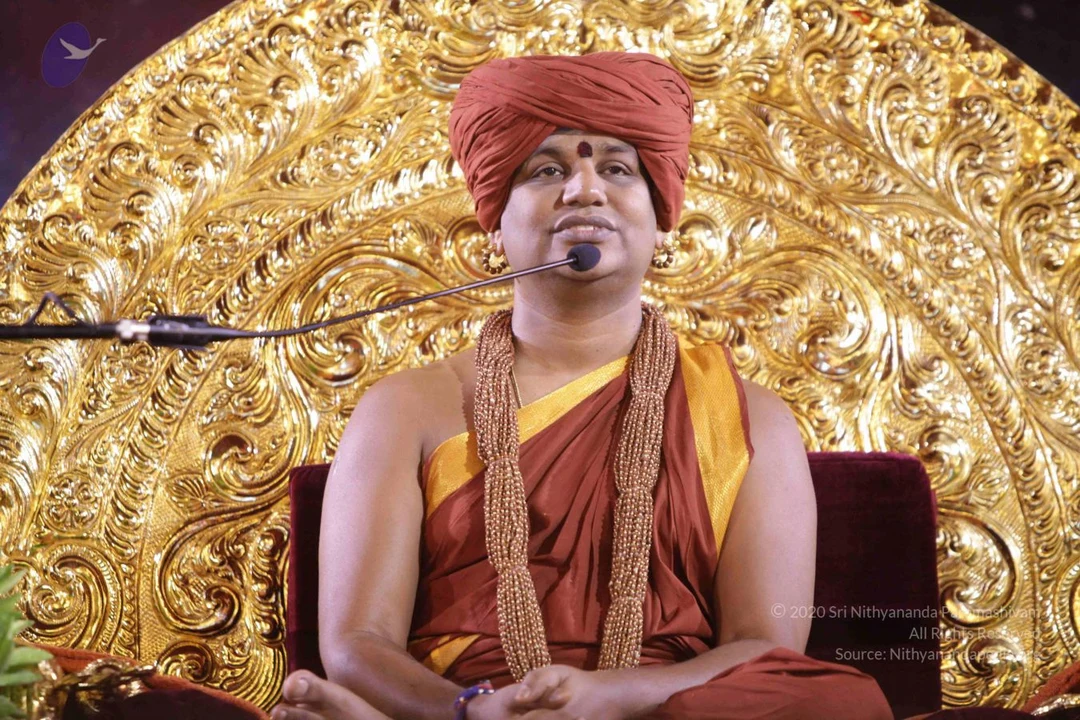
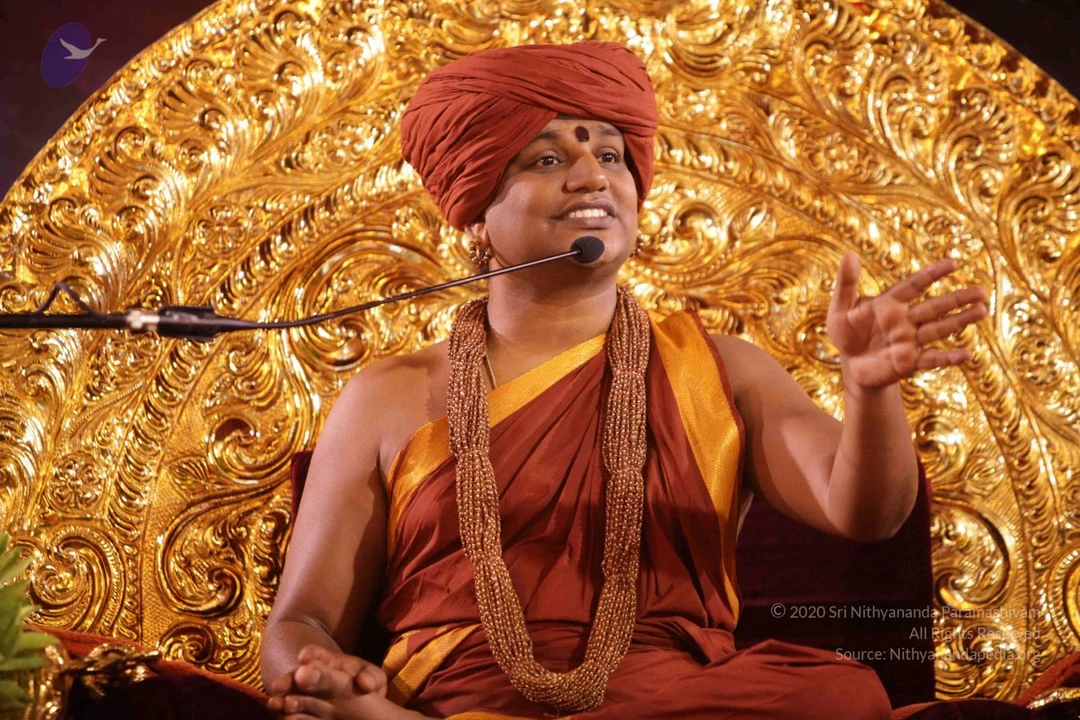
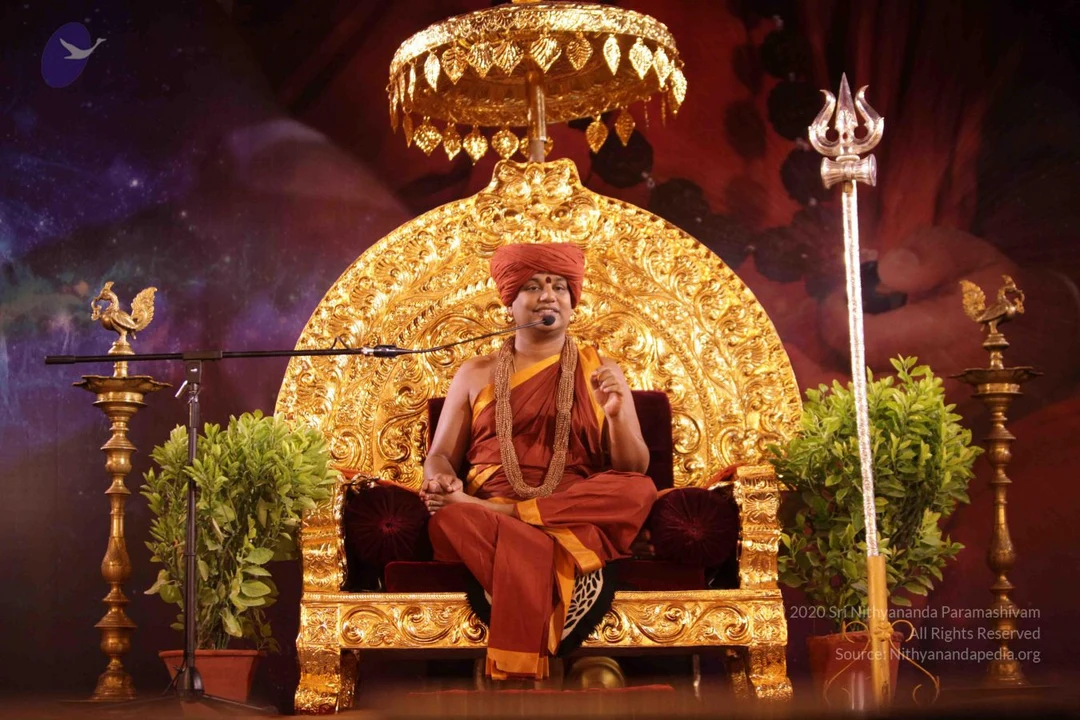
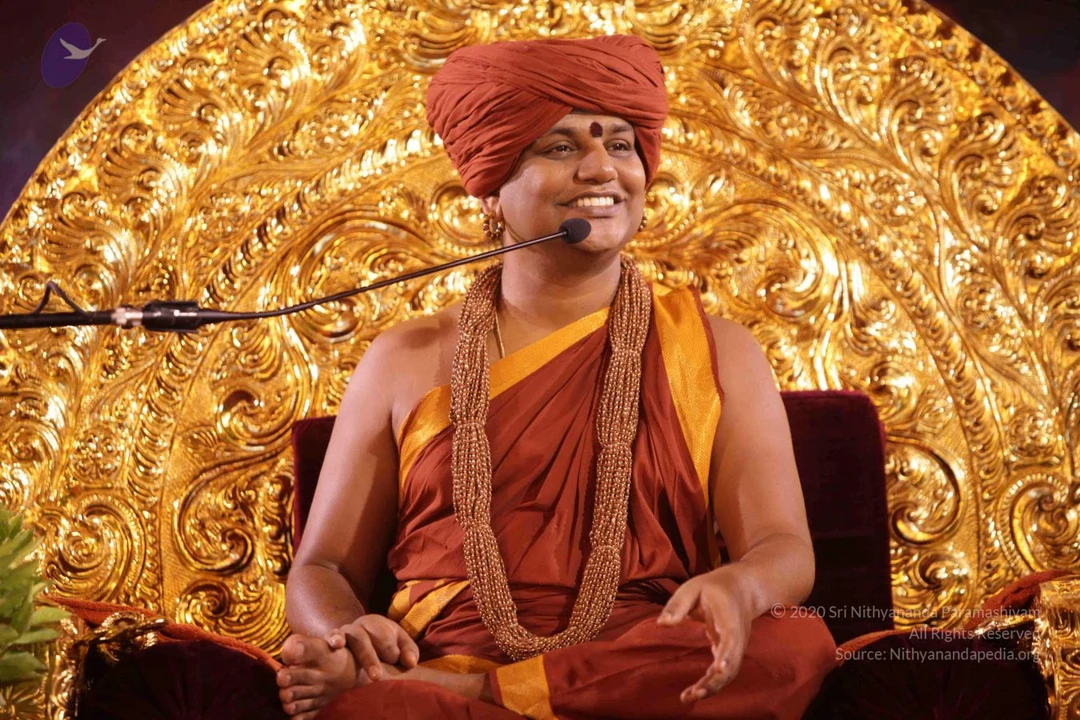
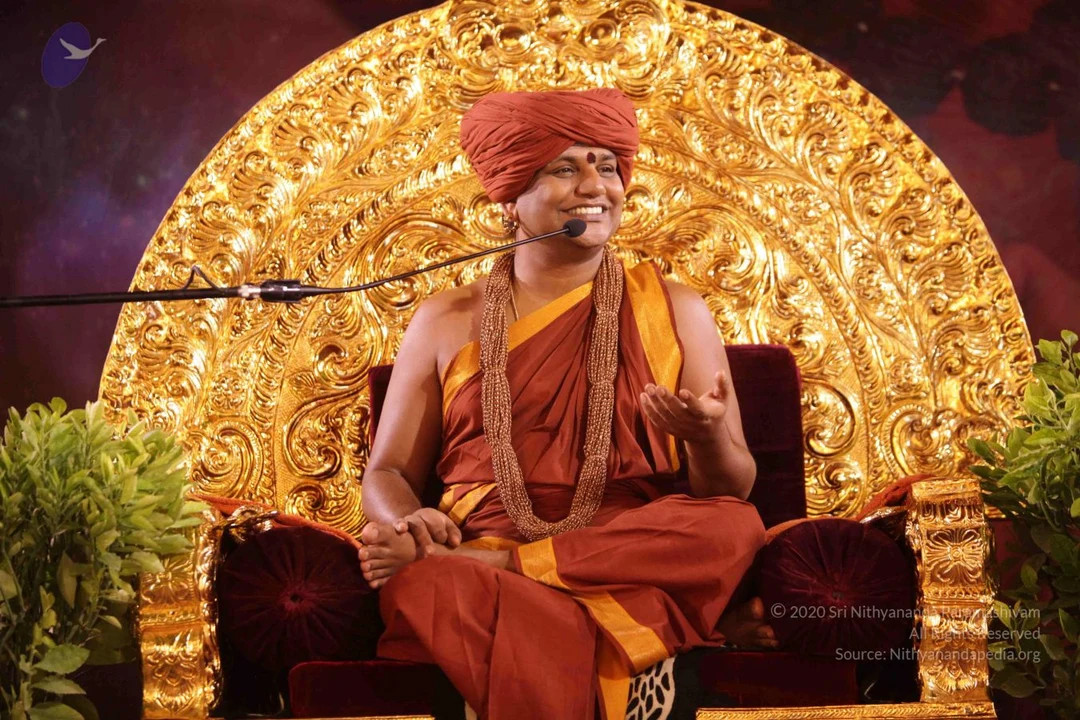
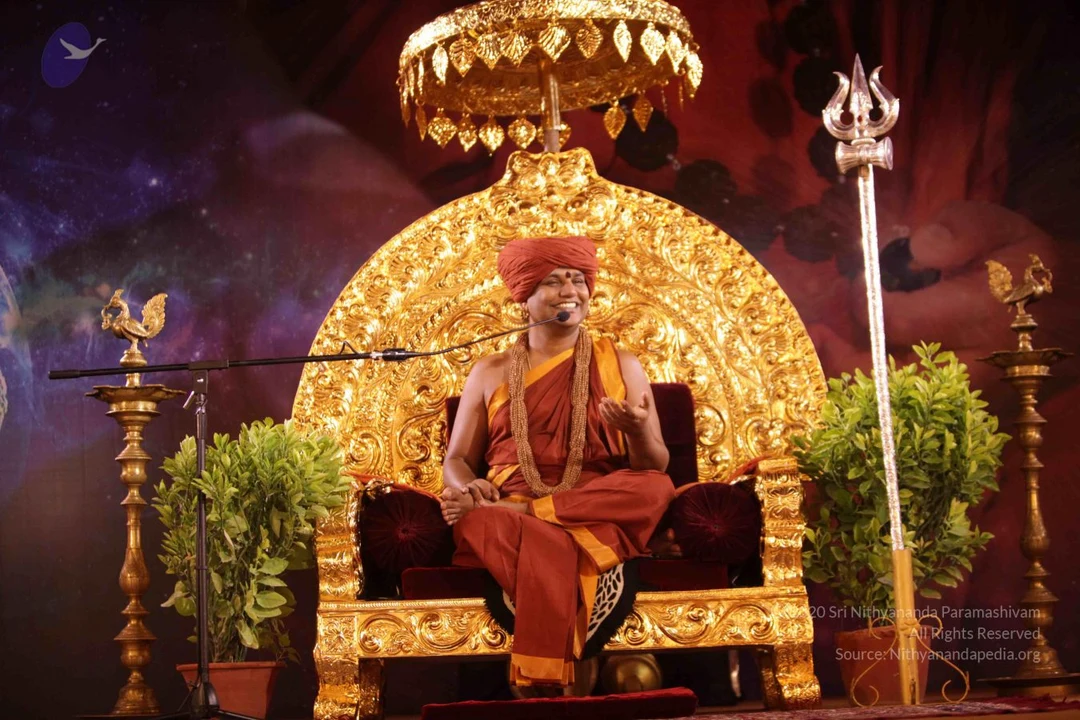
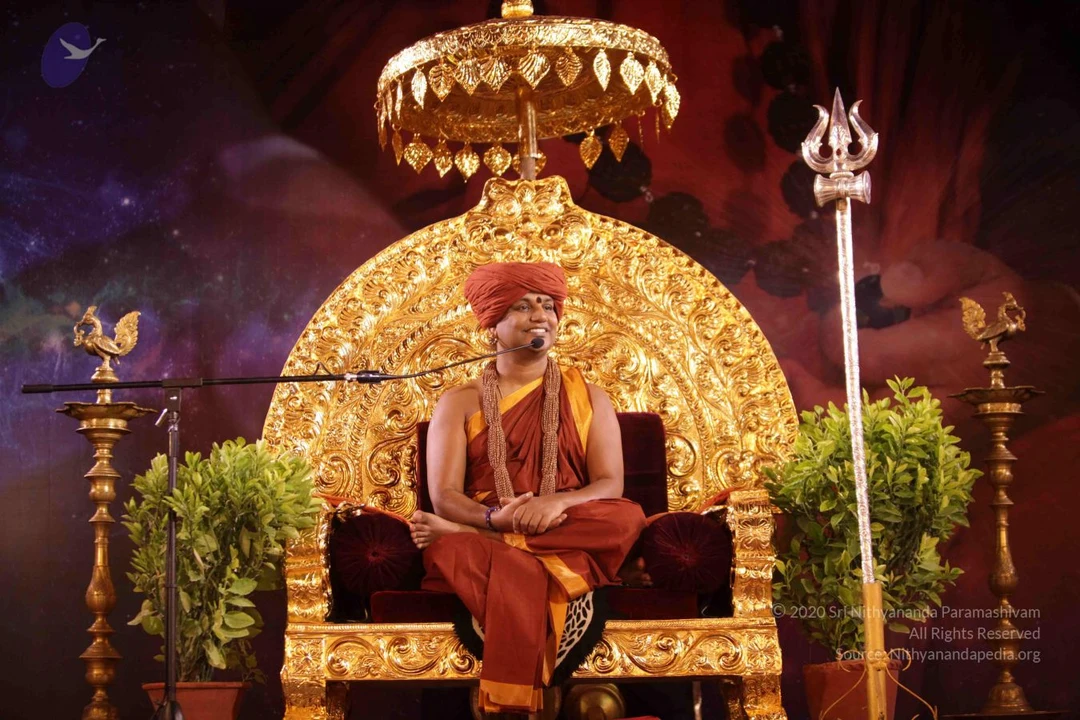
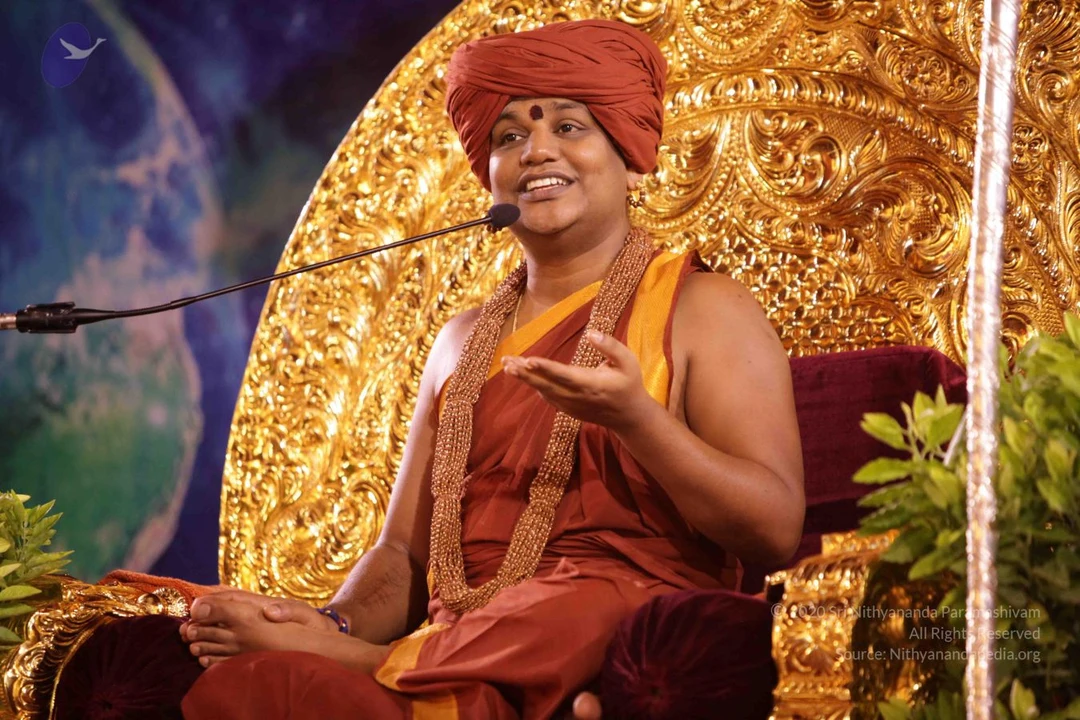
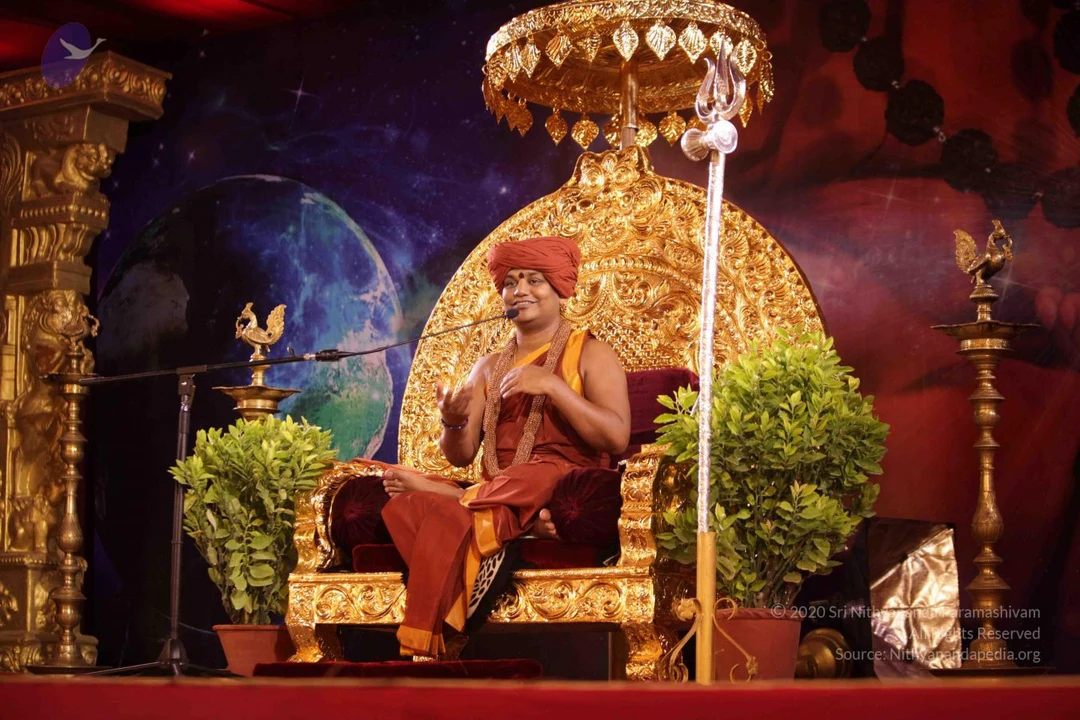
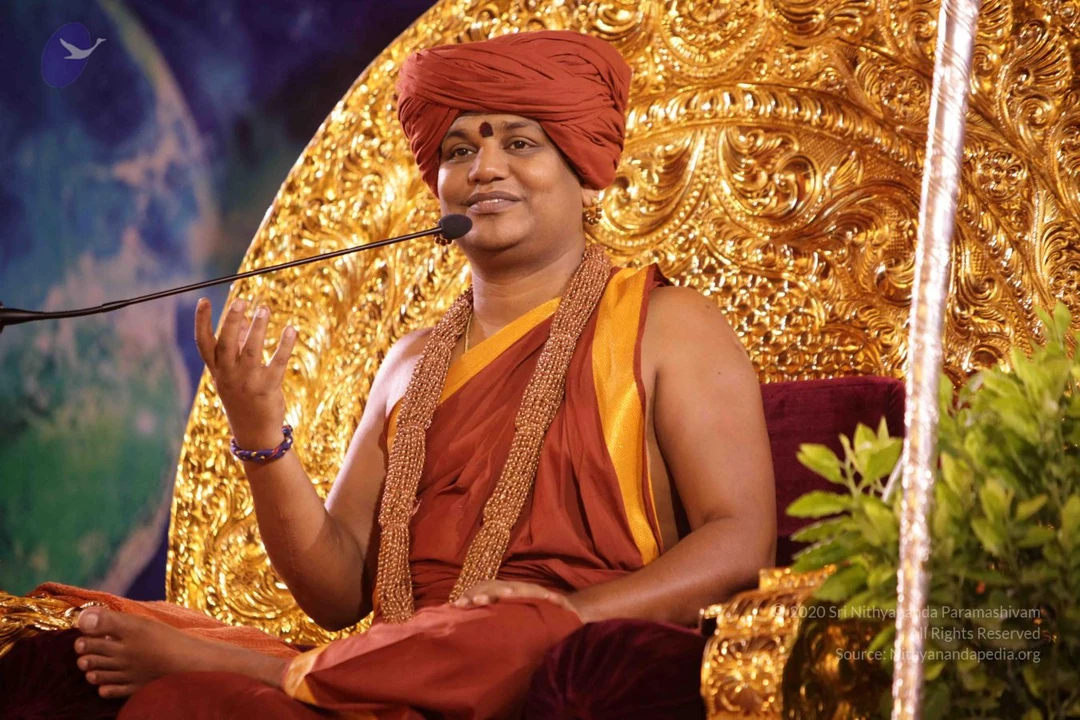
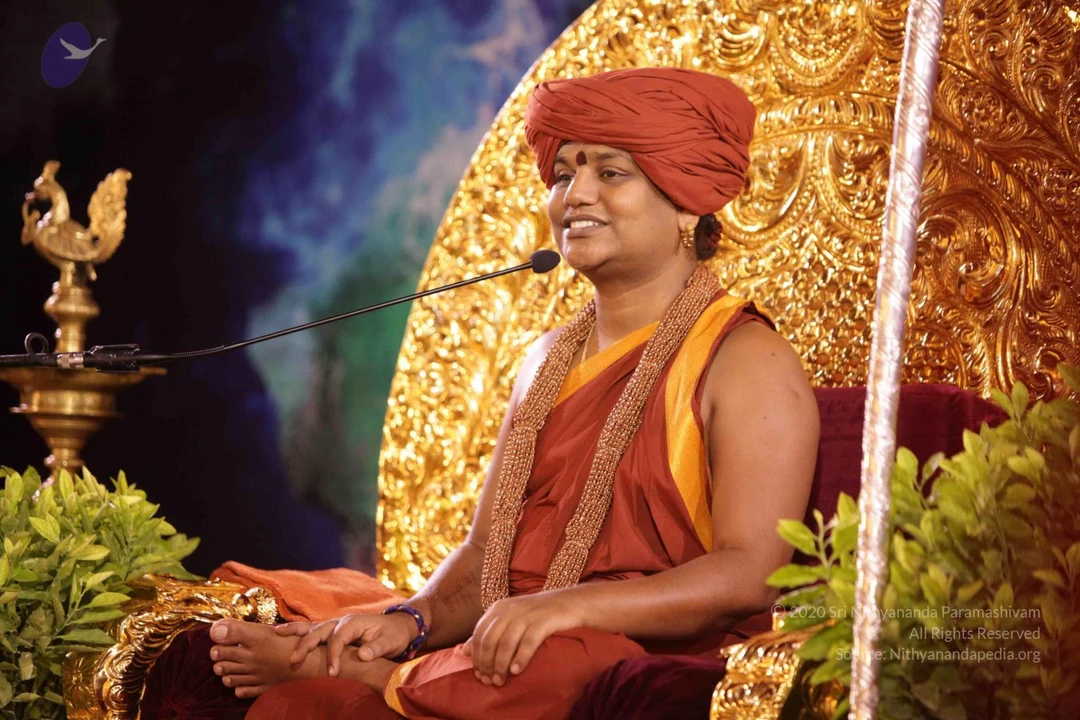
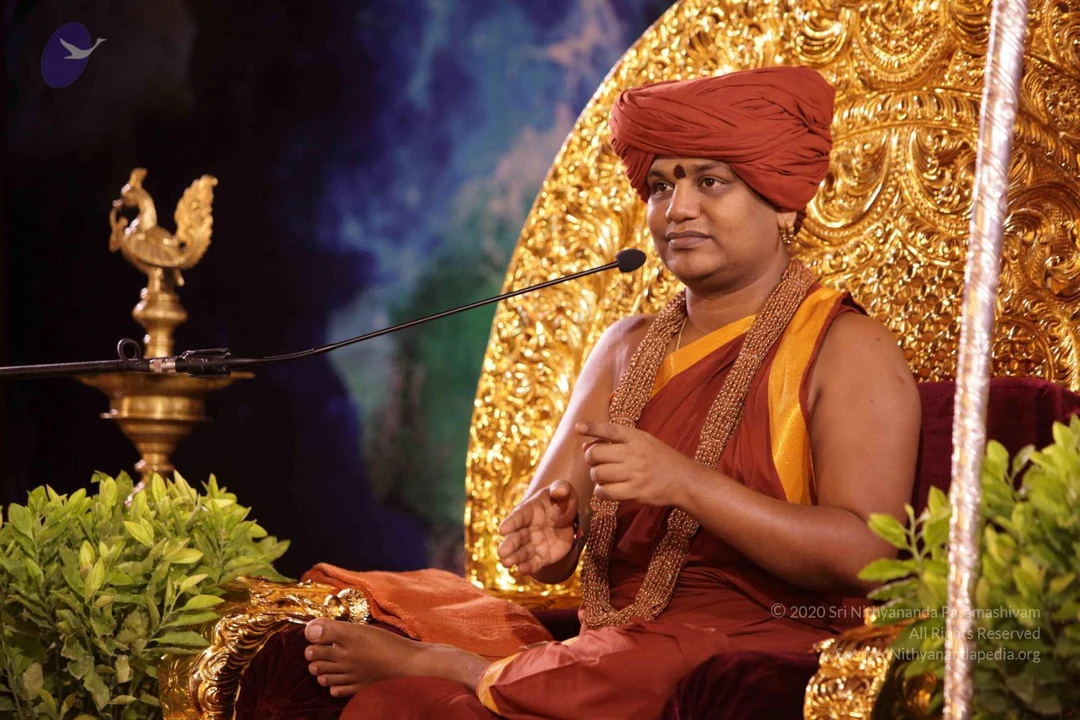
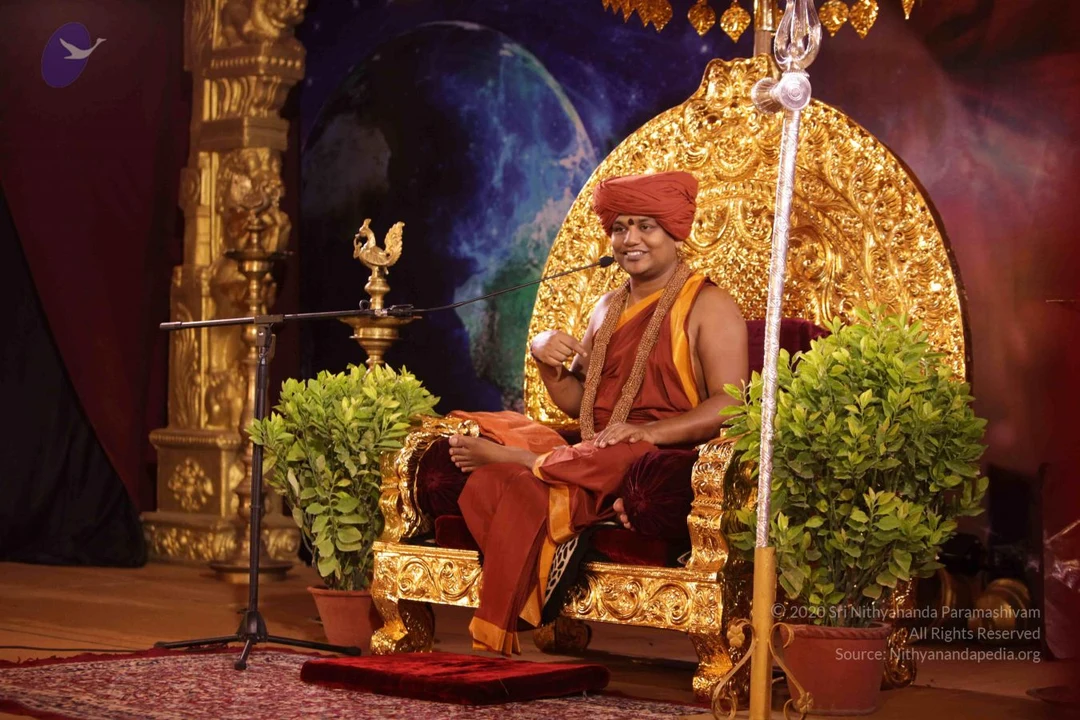
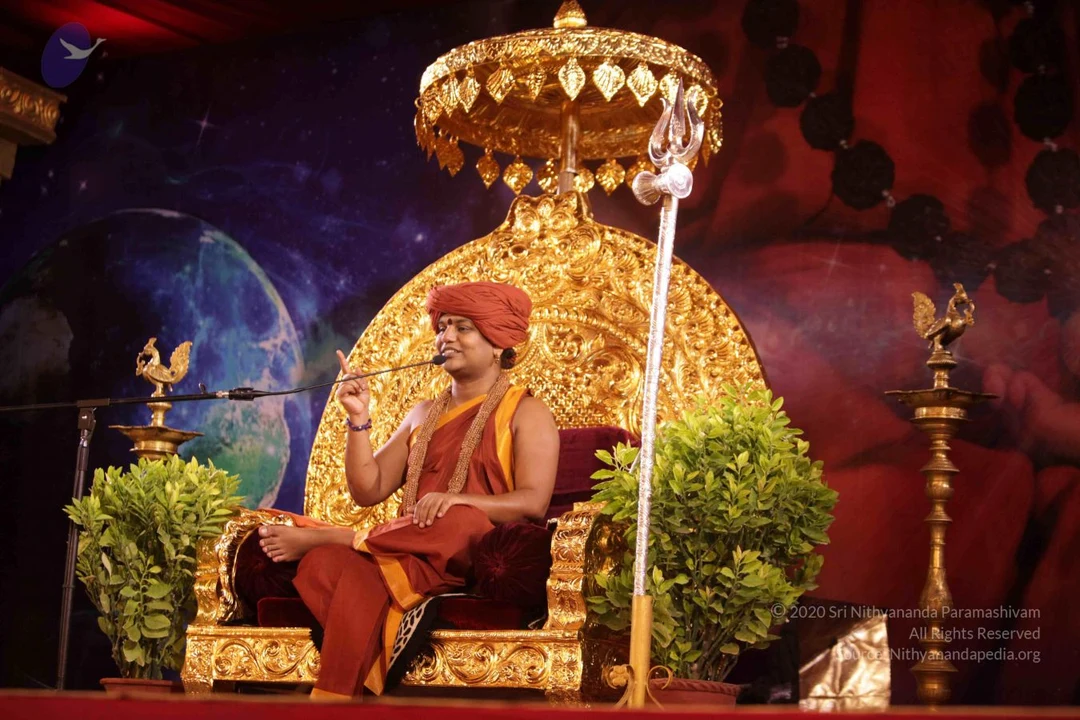
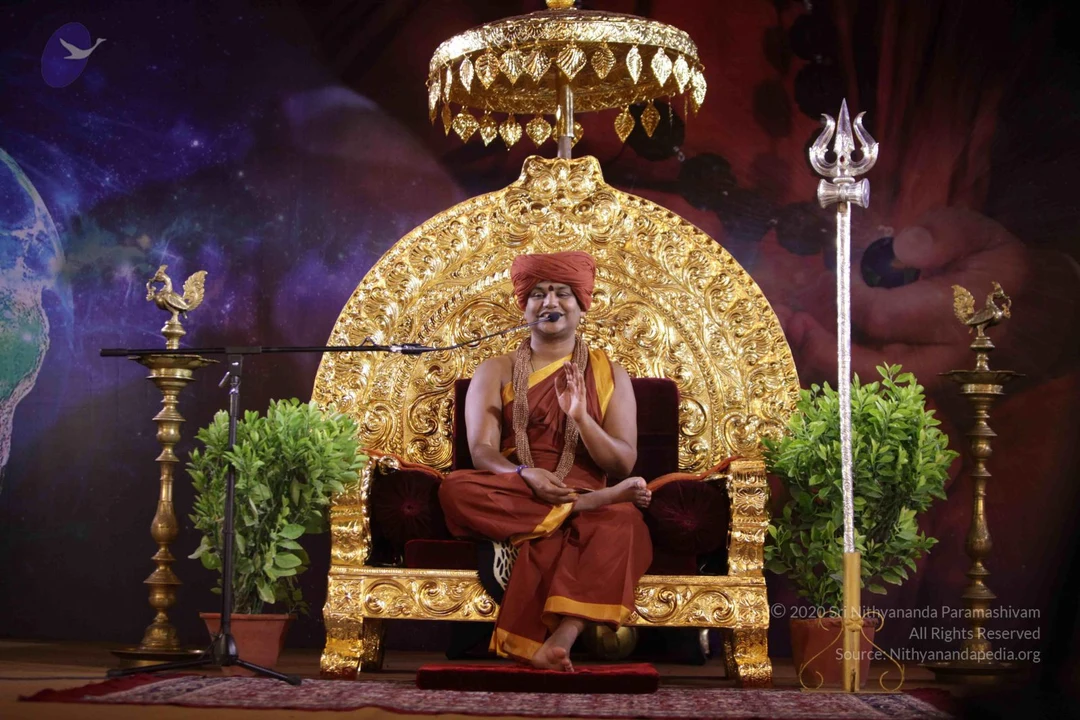
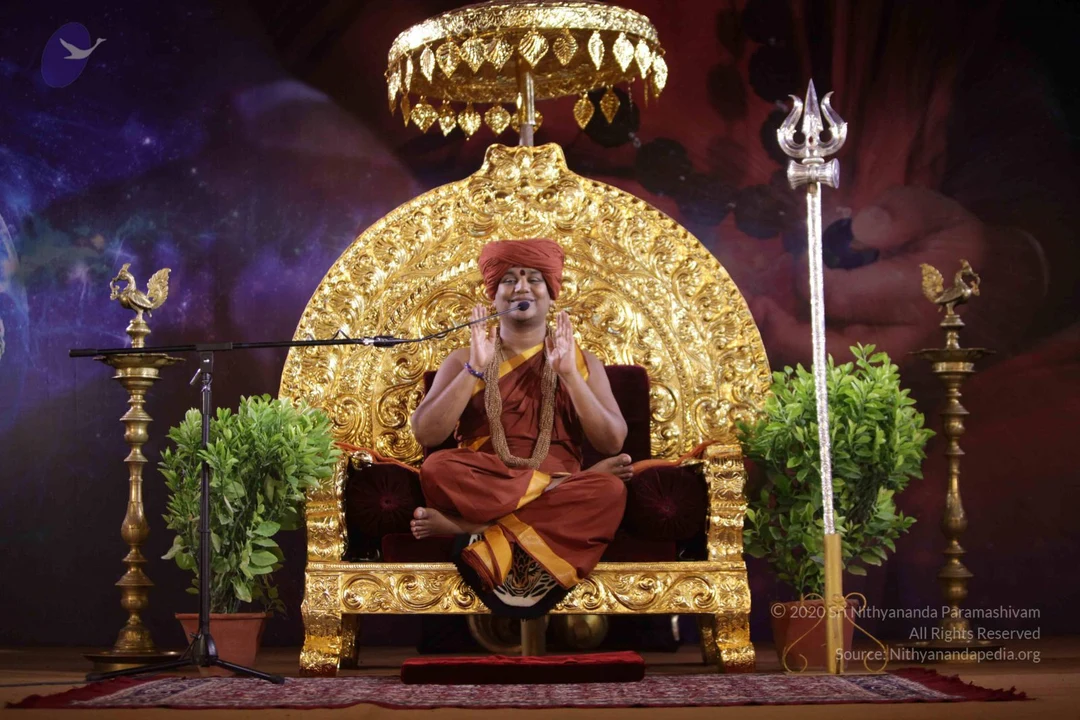
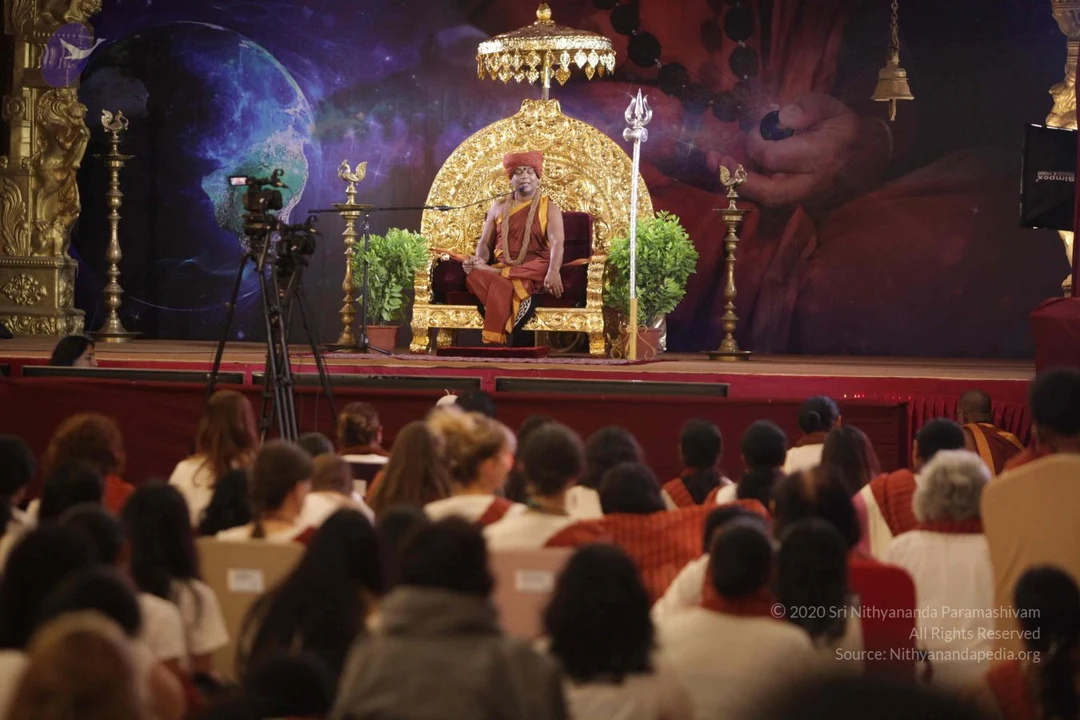
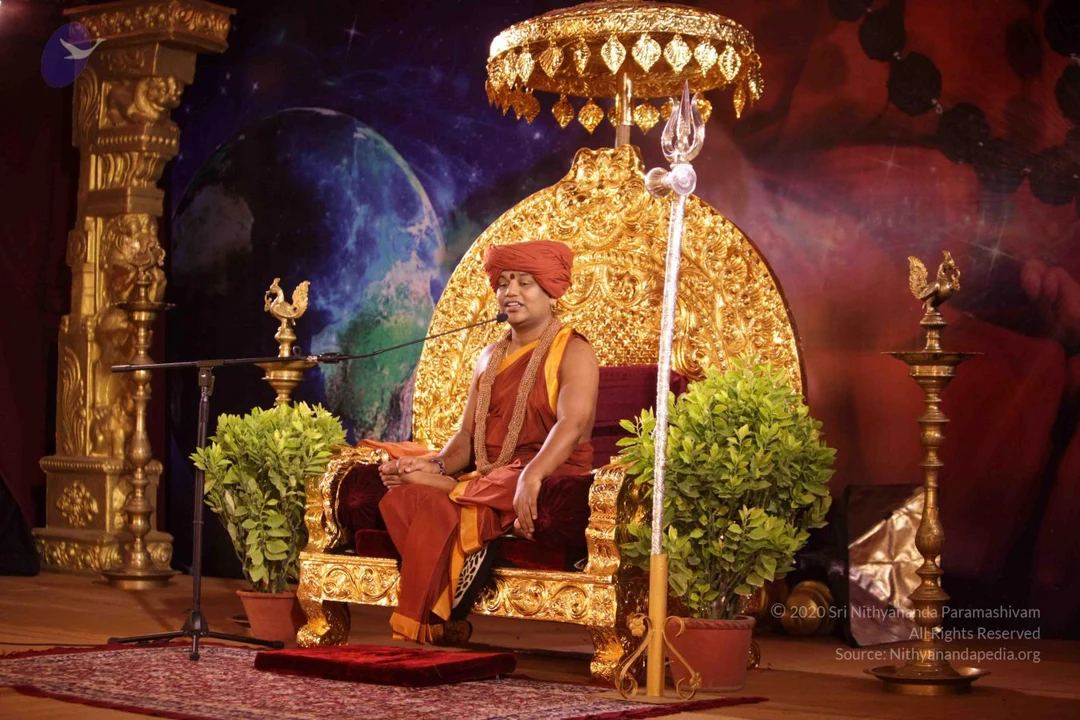
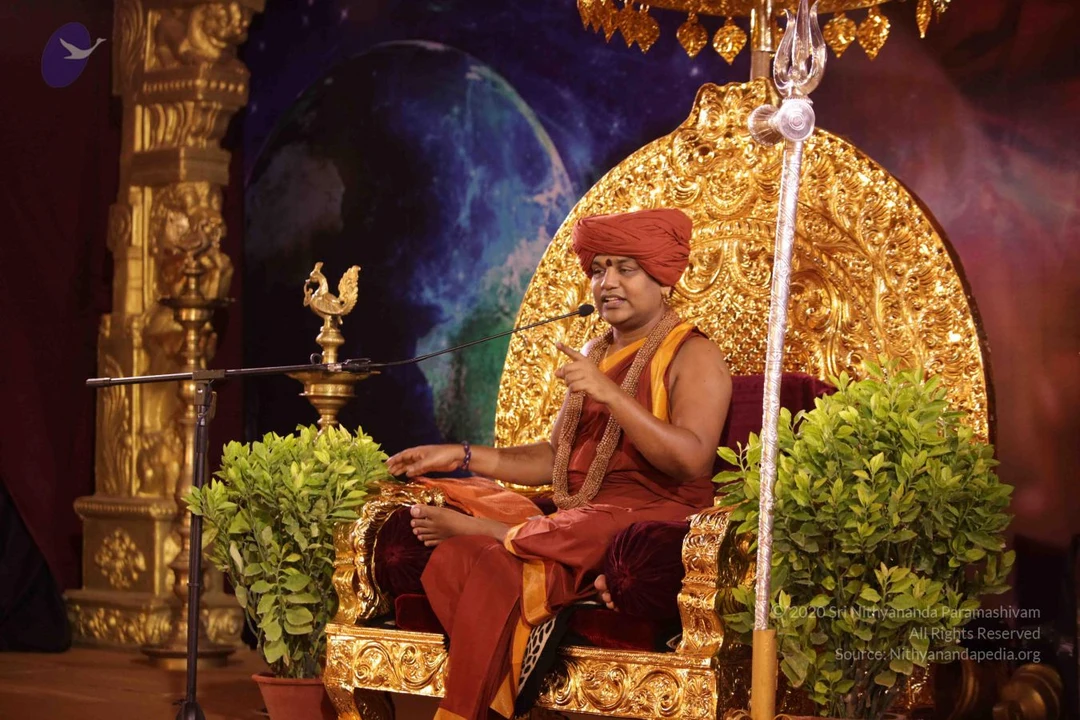
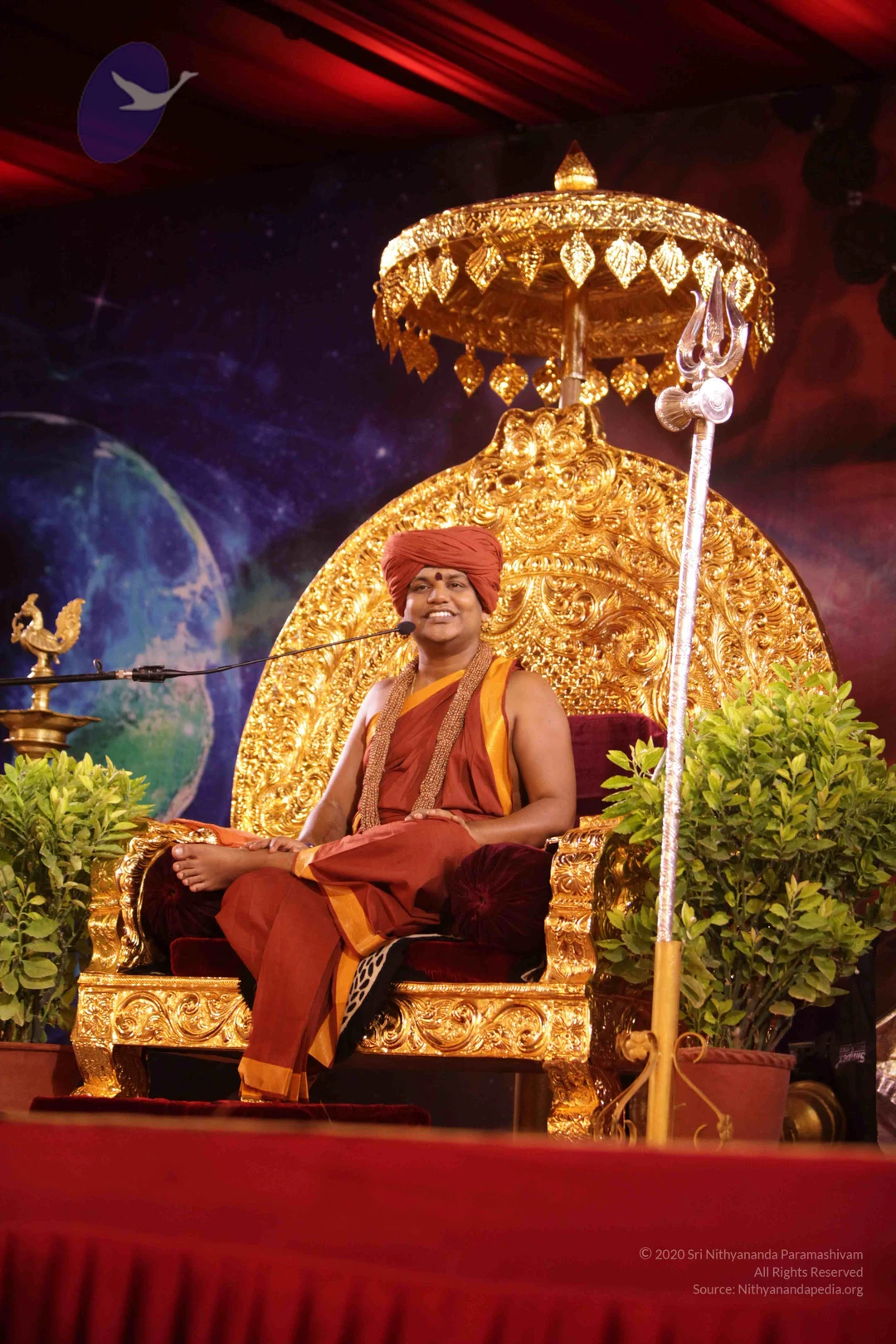
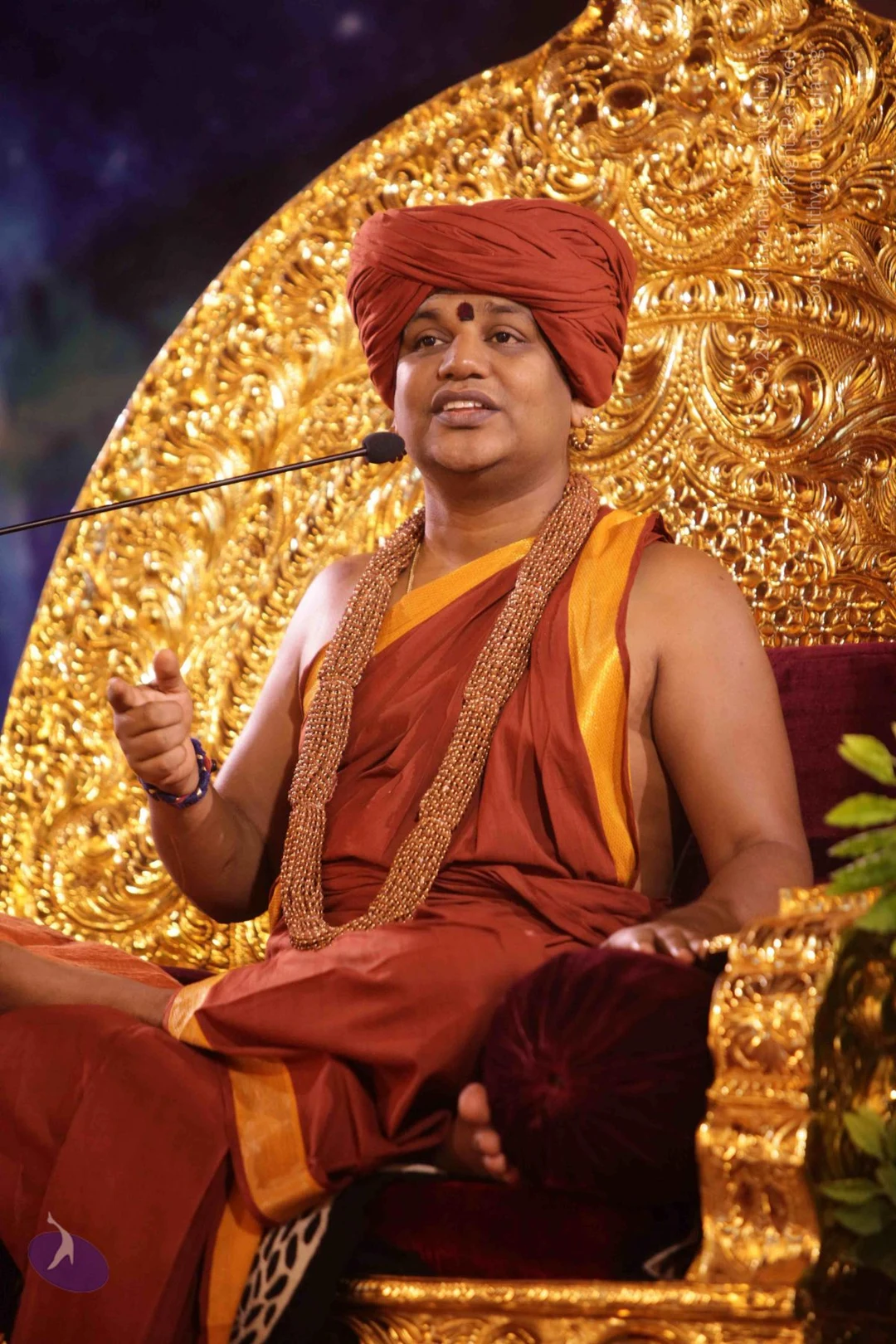
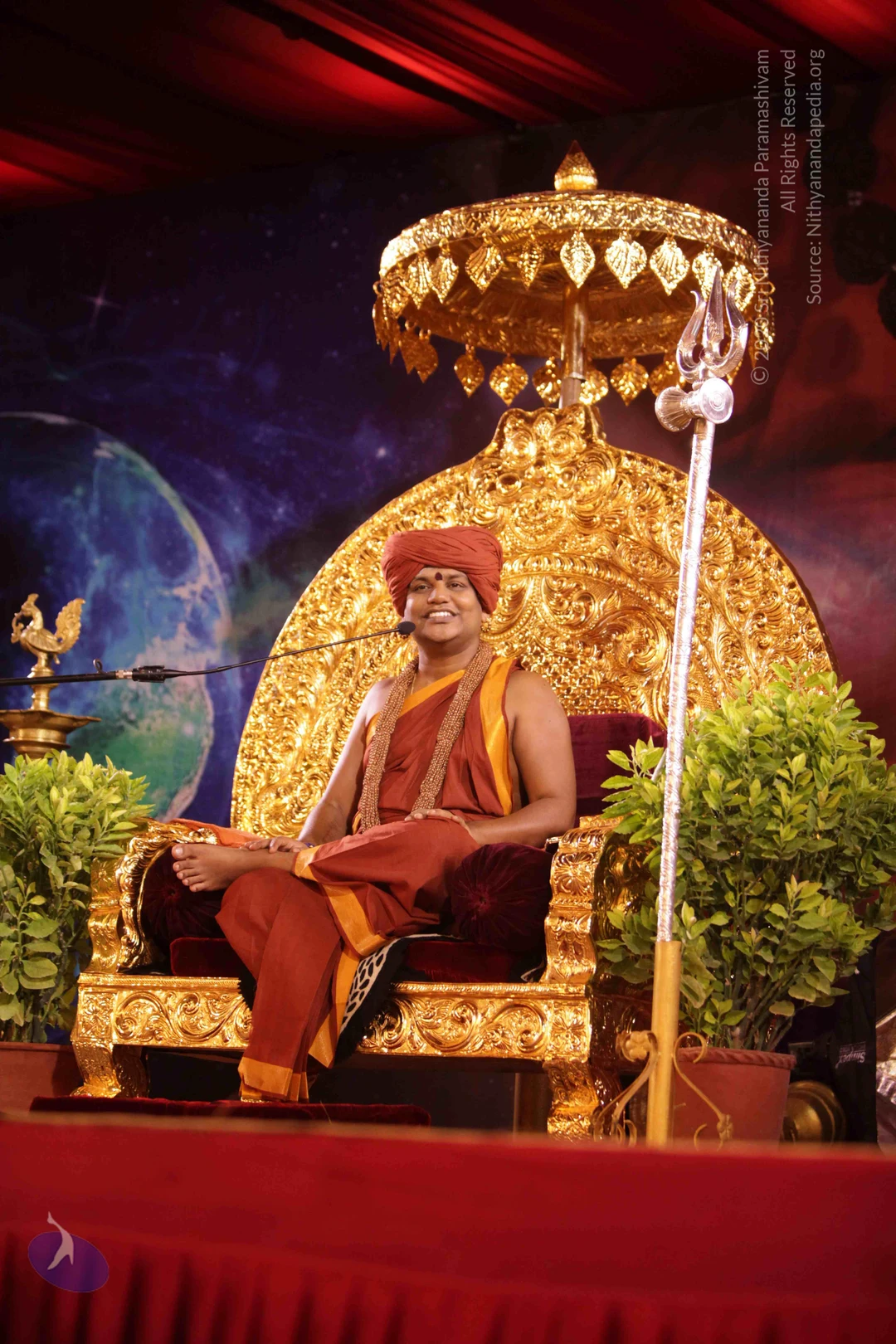
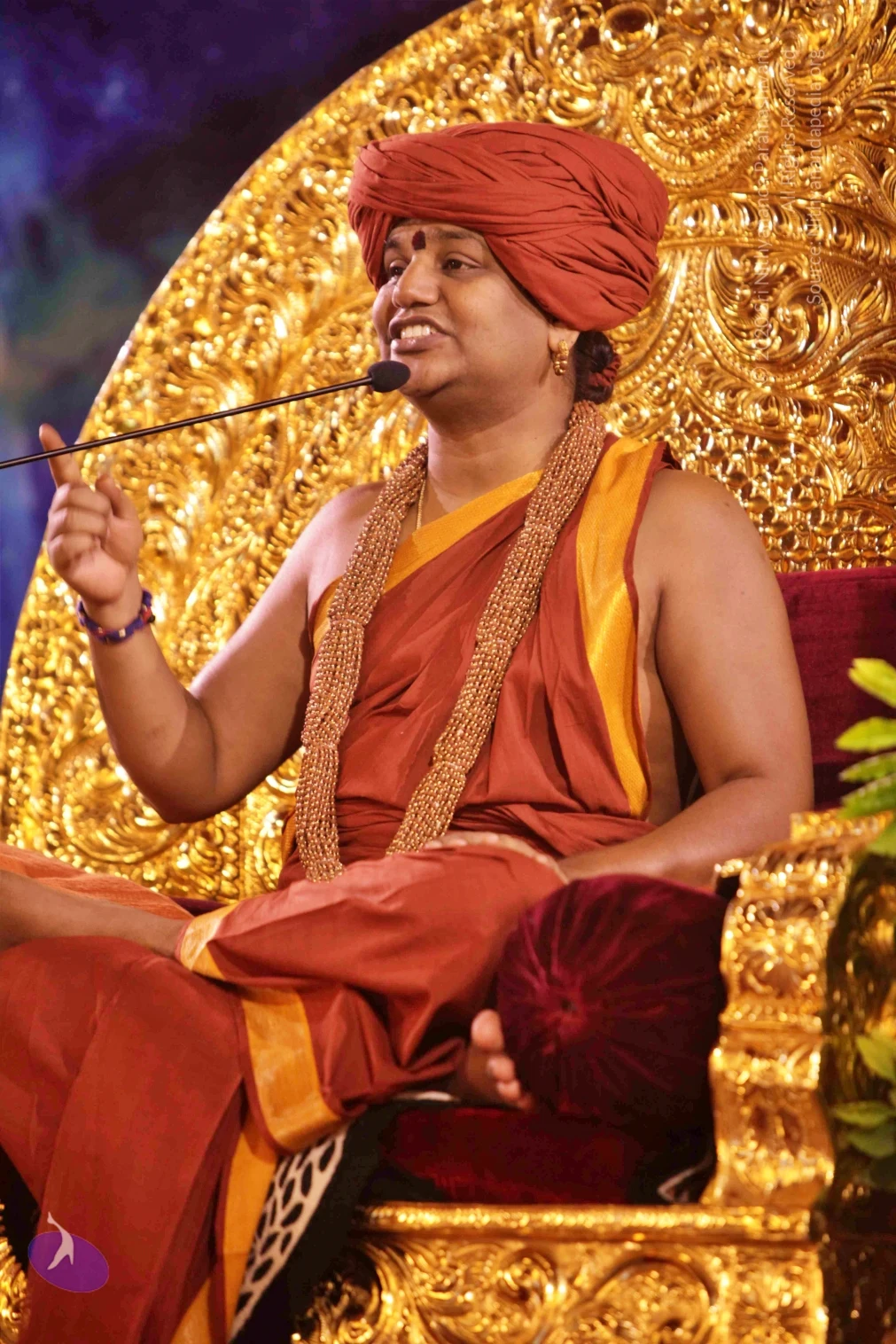
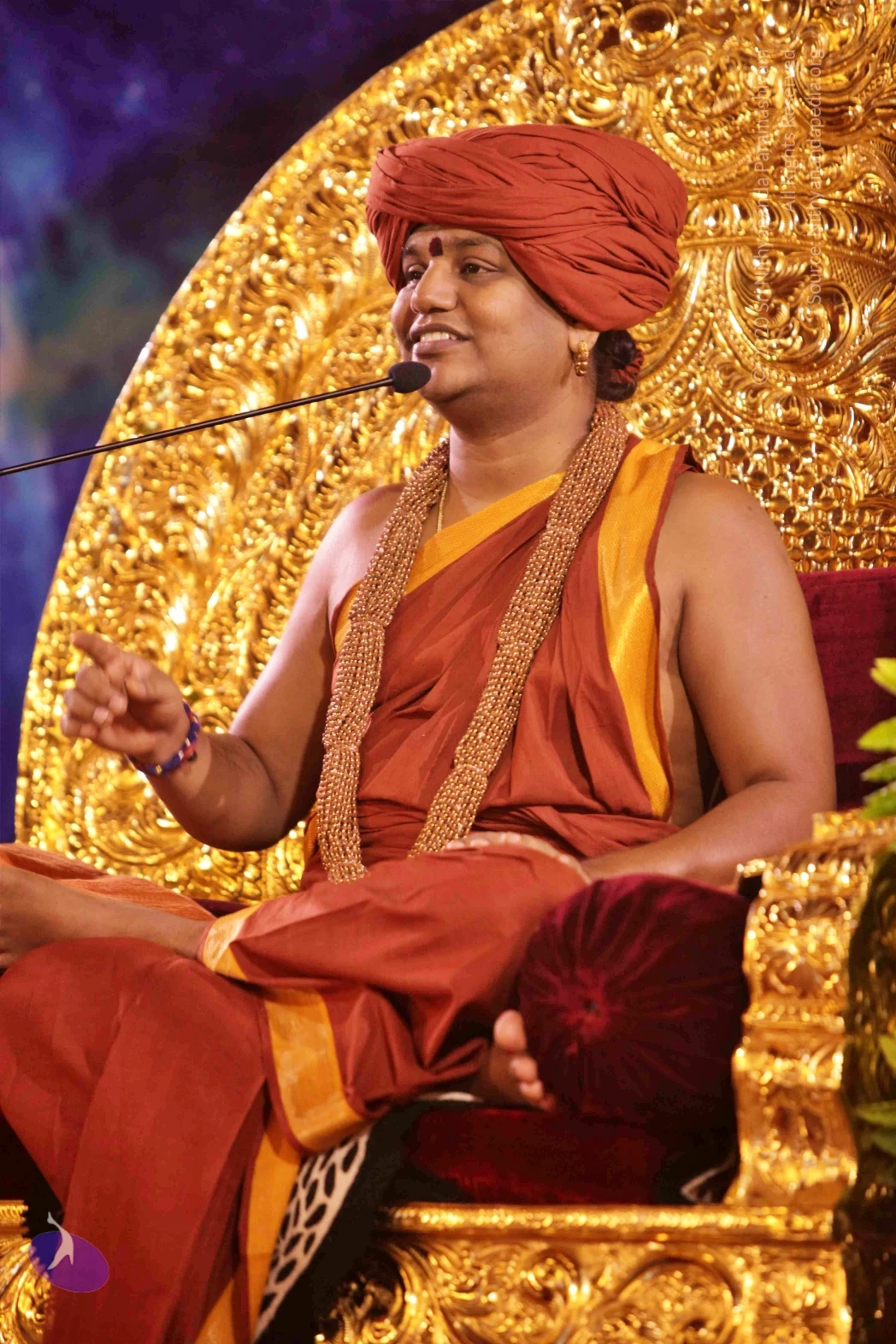
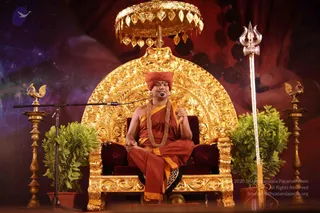
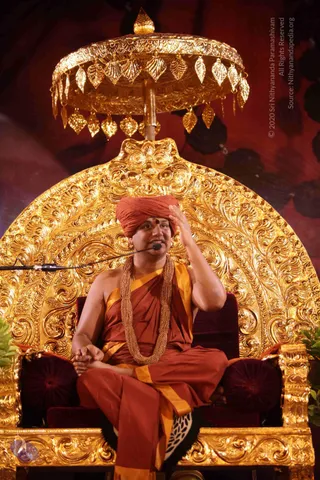
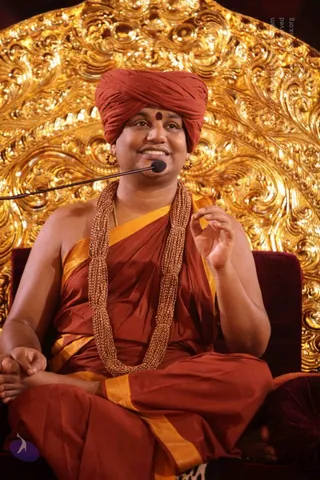
A photograph of a satsang performance on a low stage draped with a red, green and striped cloth. A man in white kurta and white dhoti sits cross-legged at the centre, wearing black-framed glasses, a shaved head and a red-and-orange woven shawl with black patterns, speaking into a microphone. To his left a musician in white kurta plays a wooden harmonium, behind him a young man in white plays a keyboard, and to the right a musician in white kurta with glasses plays a bamboo flute. A dark instrument case sits beside the centre figure. A framed red-and-gold artwork hangs on the wall behind, and a small purple logo appears at upper left. Four people are visible.A seated man in a rust-red turban and matching rust-red robe with a gold border speaks into a small microphone on a stand, smiling and gesturing with one raised hand. A red bindi marks his forehead, and he wears a long beaded rudraksha-style mala of tan beads and gold hoop earrings. Behind him rises an elaborate gold repoussé throne back with scrolling floral patterns. Bare feet rest on a red cushion. Appears to be a satsang discourse setting.A seated man in a saffron-orange robe and matching orange turban sits cross-legged on an ornate golden throne with a tall gold canopy and gold filigree back, smiling toward the audience. He wears a gold beaded necklace and a red bindi. A microphone stand is at his left, two potted green shrubs flank the throne, a silver trident stands to the right, and gold oil lamps with rooster finials sit on either side. The backdrop shows a glowing blue planet and starry space with red drapery. Swamiji (probable): the seated man wears a saffron turban, saffron robes and a gold necklace on a throne, consistent with the page's Swamiji flag.A seated man in a rust-red headwrap and red-orange robes with a gold-bordered dhoti sits cross-legged on an ornate gold throne with a golden canopy. He wears a long rudraksha mala and a mala-like necklace, presses his palms together in a greeting gesture, and has a small microphone clipped to his face. Two brass oil lamps with rooster finials and potted green plants flank the throne, and a silver trident stands to the right. A dark backdrop with a cosmic blue-and-purple design surrounds the stage. The appearance is consistent with a person (a person) giving a satsang discourse, based on the saffron/orange clothing, rudraksha mala and ceremonial throne cues. A small white bird flies at the upper left.Photograph of a shrine niche with a central deity murti of Shiva with a tall crown and a trident, seated beside a female deity wearing a green skirt and a red garment, both adorned with white and gold garlands and necklaces. Flanking figures include a standing statue in red and gold clothing with a feathered headdress to the left and a statue to the right in red garments and garlands. A large yellow-and-gold ornamented pedestal holds a lingam-style form and marigold garlands; brass oil lamps stand in front. No physical people are present.Golden metal murtis of a male and female deity seated together on a deep red draped backdrop framed by an ornate gold arch. The male figure wears a red and gold turban, a tripundra mark on the forehead, a trident in his raised hand, and layered jewelled necklaces over red fabric. The female figure has long dark hair, a crescent ornament, large silver earrings, and white and silver necklaces. Both are garlanded with yellow and red flowers, and a golden offering plate with a green item sits in front. A green bird-shaped ornament is visible near the figures. No physical people are present.

shivoham
116 photosSource gallery
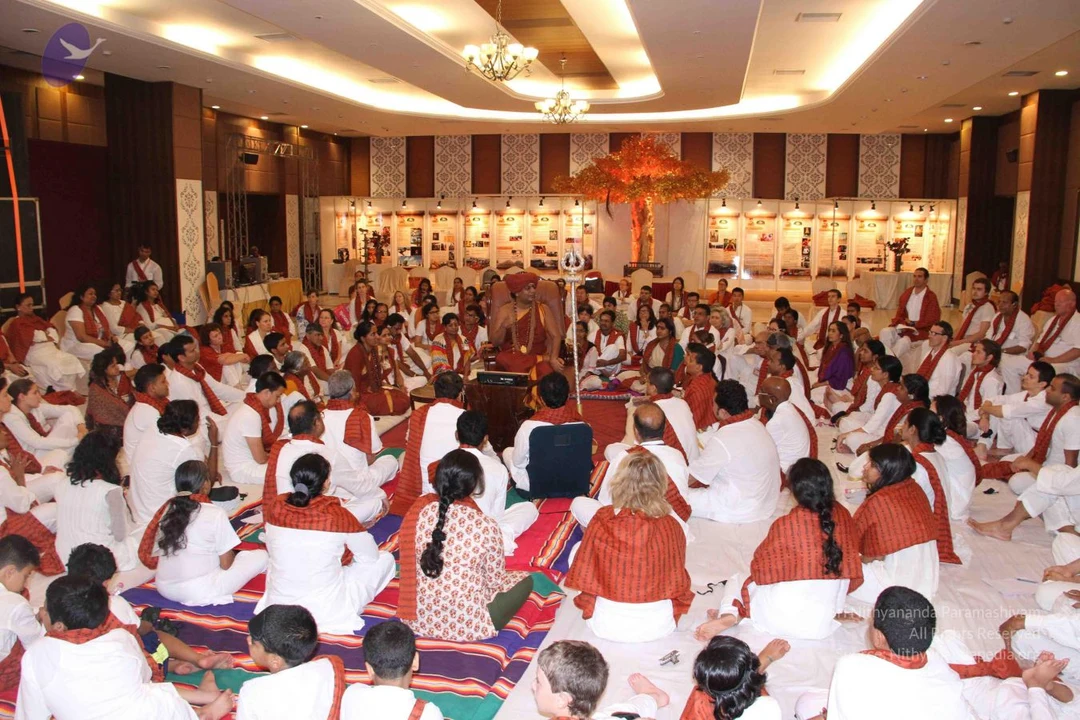
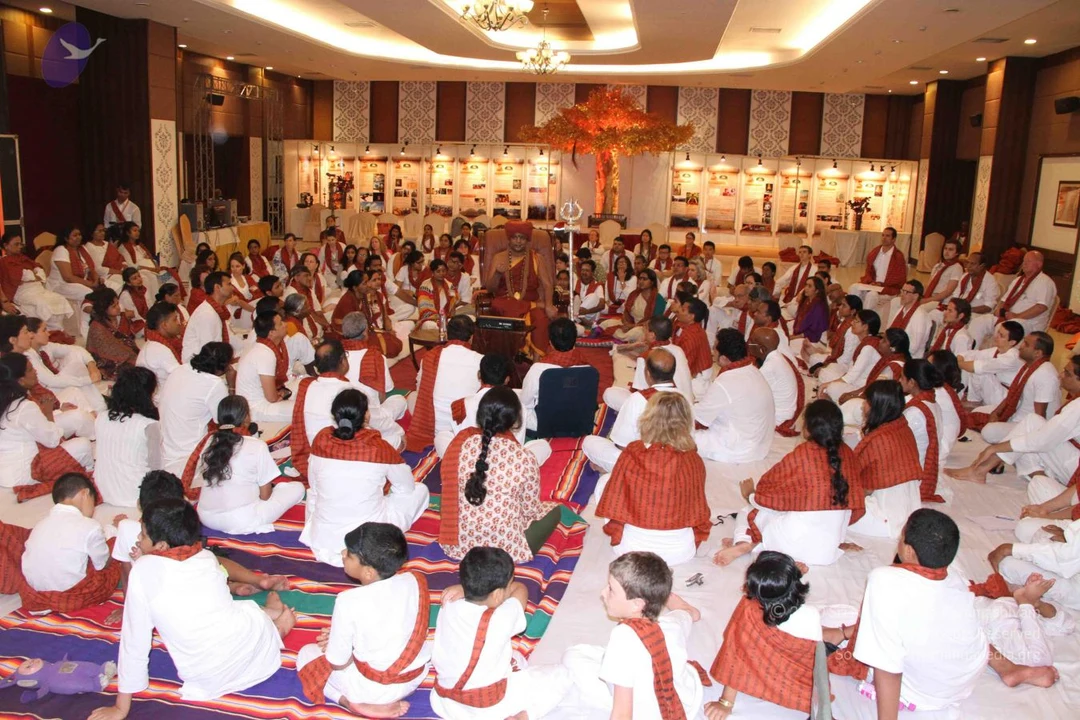
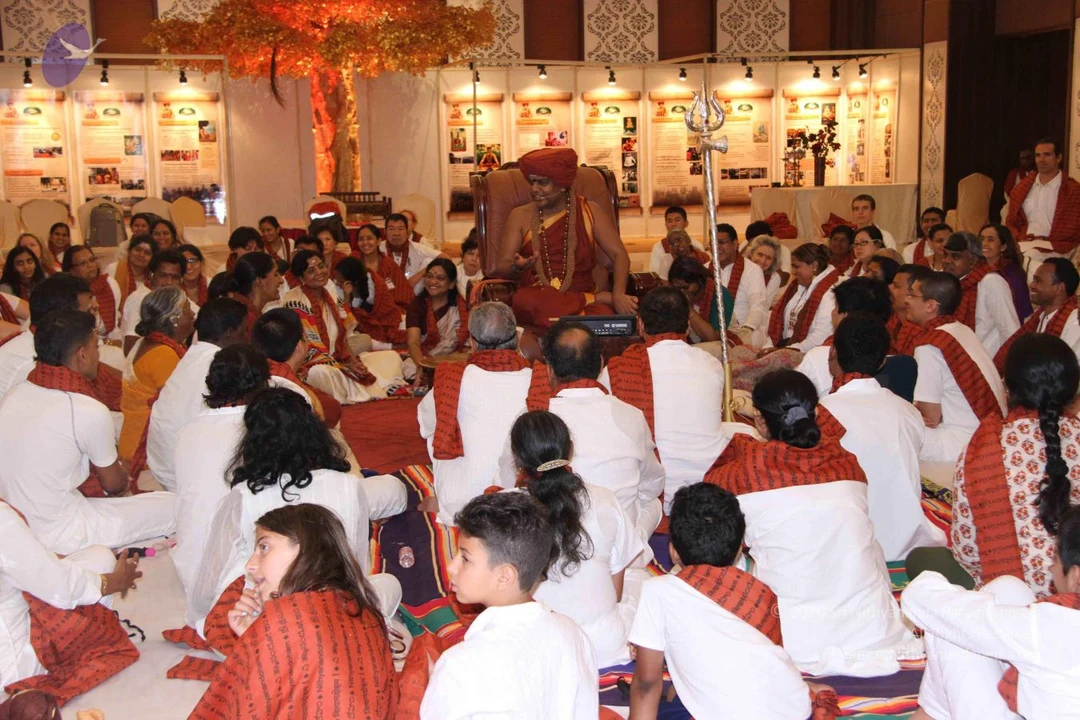
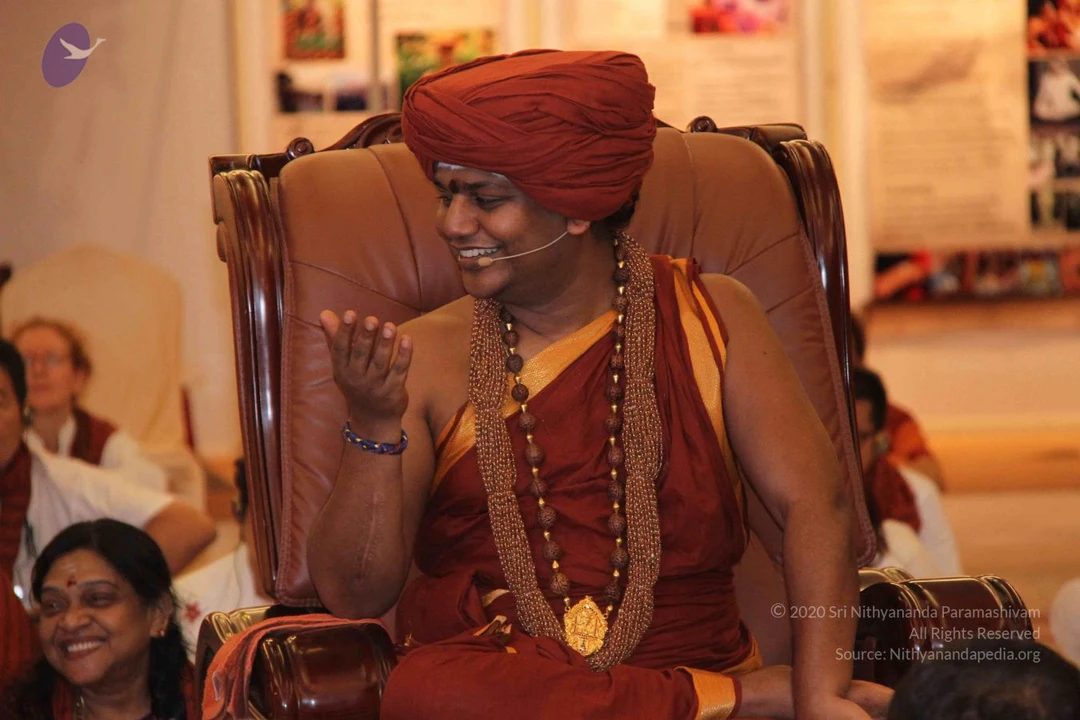
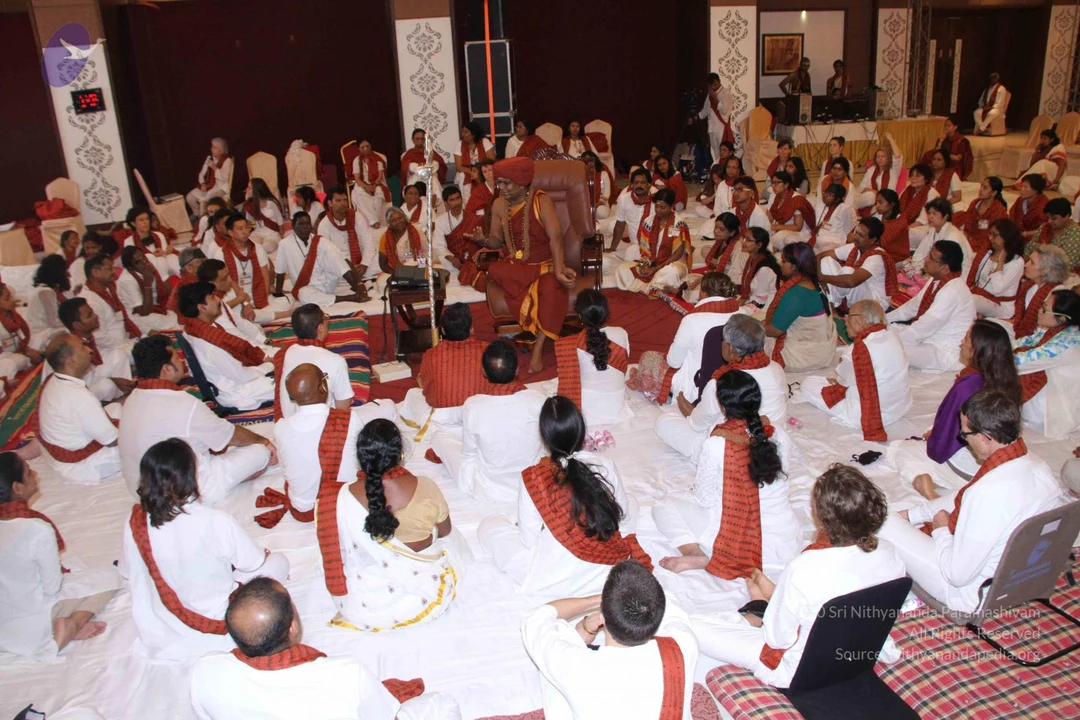
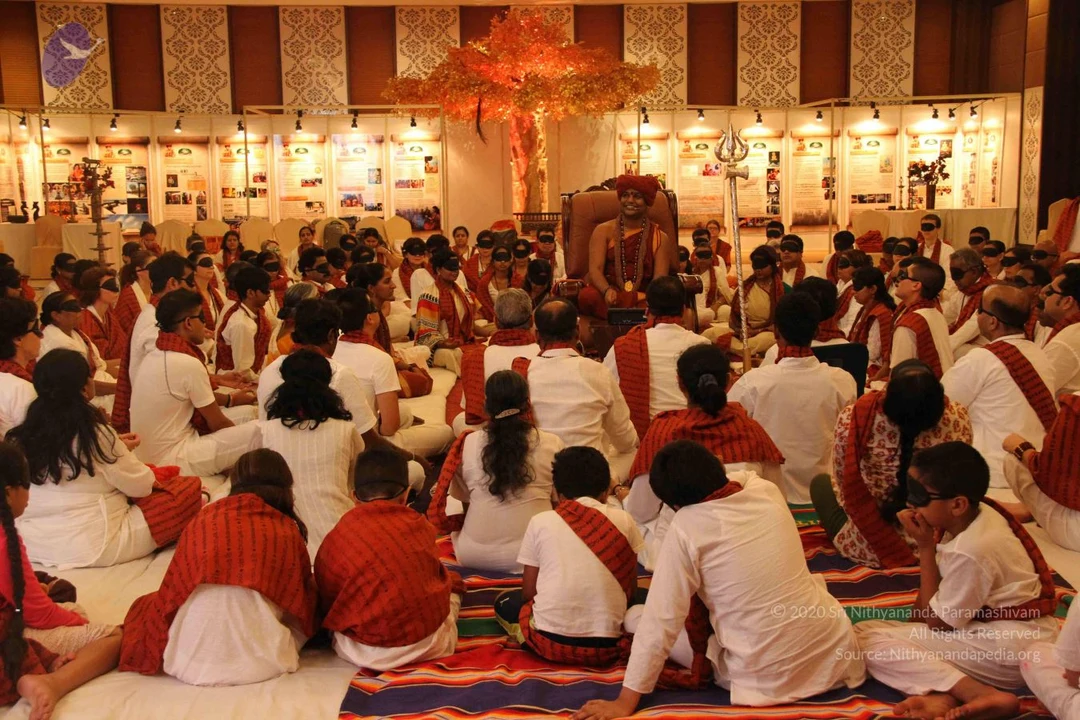
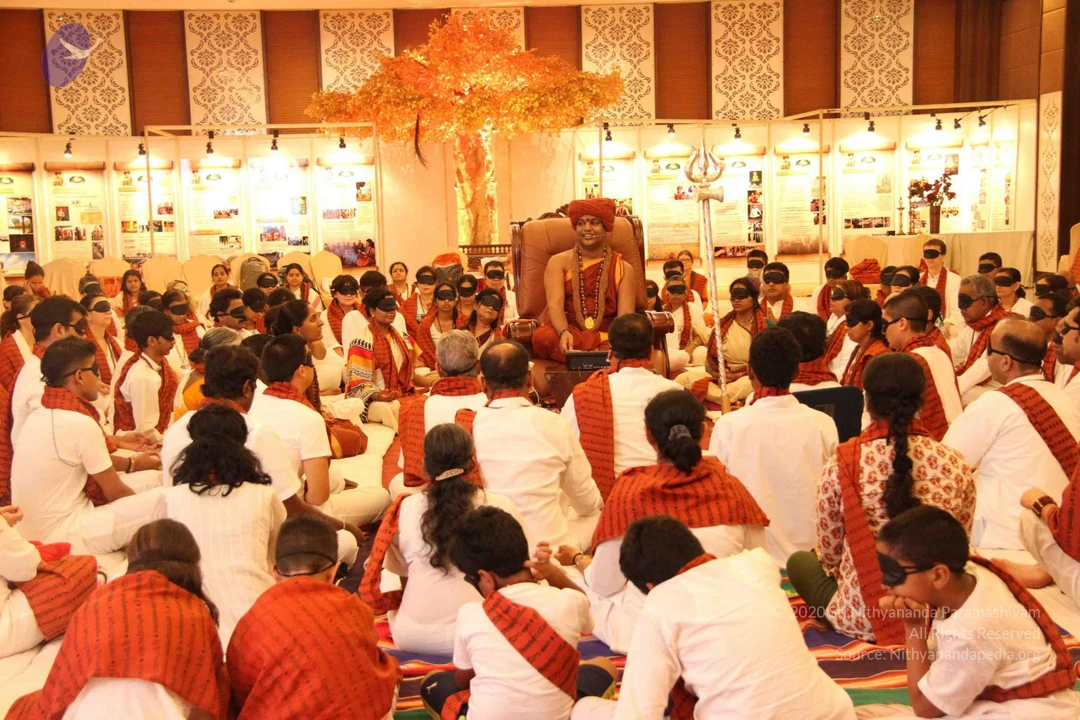
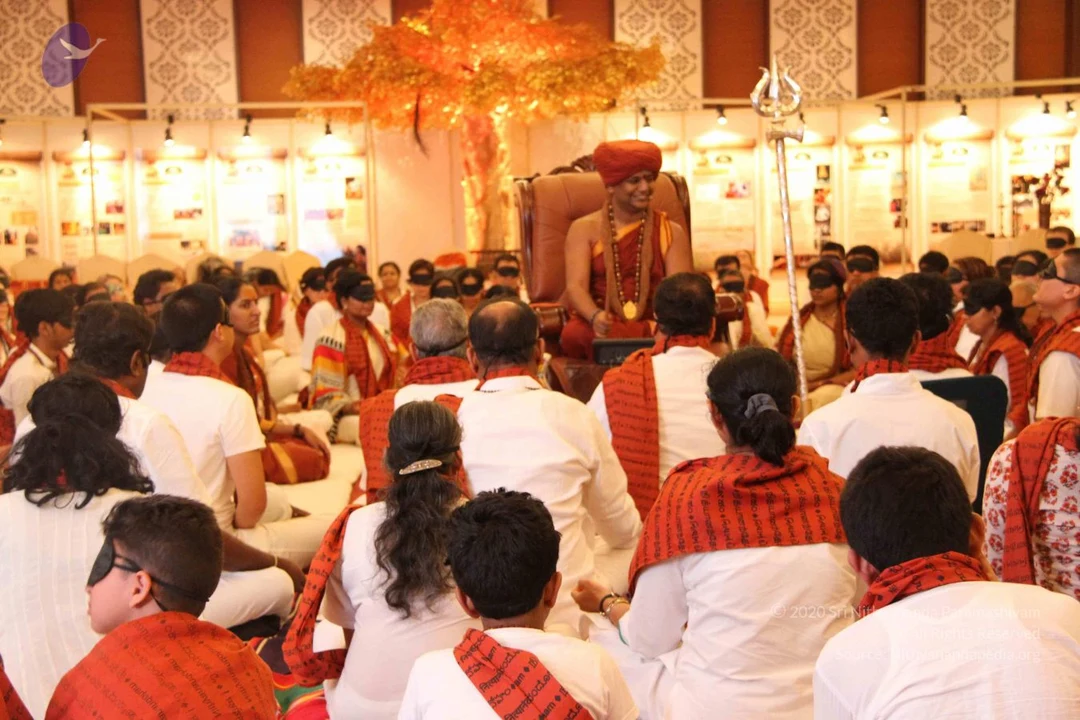
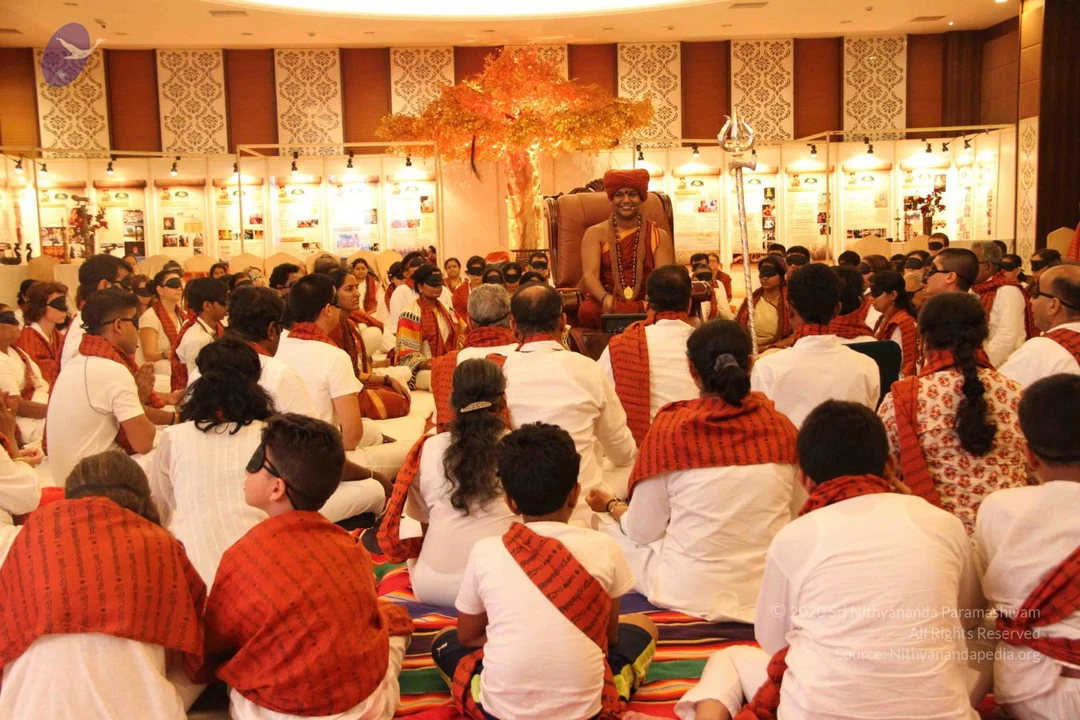
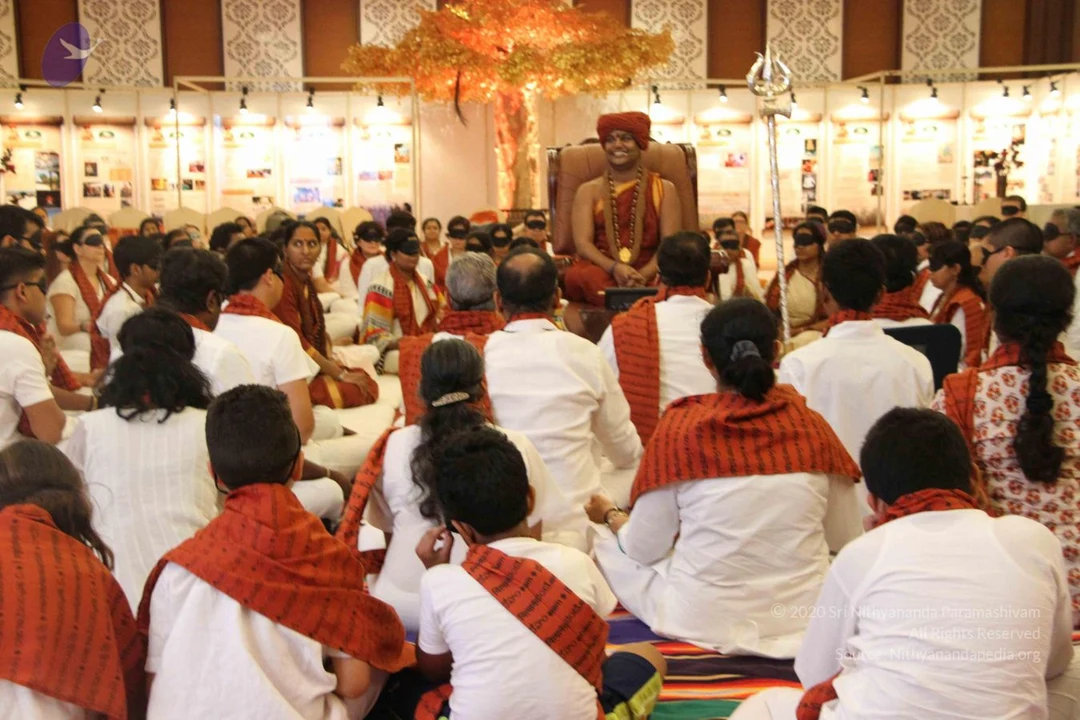
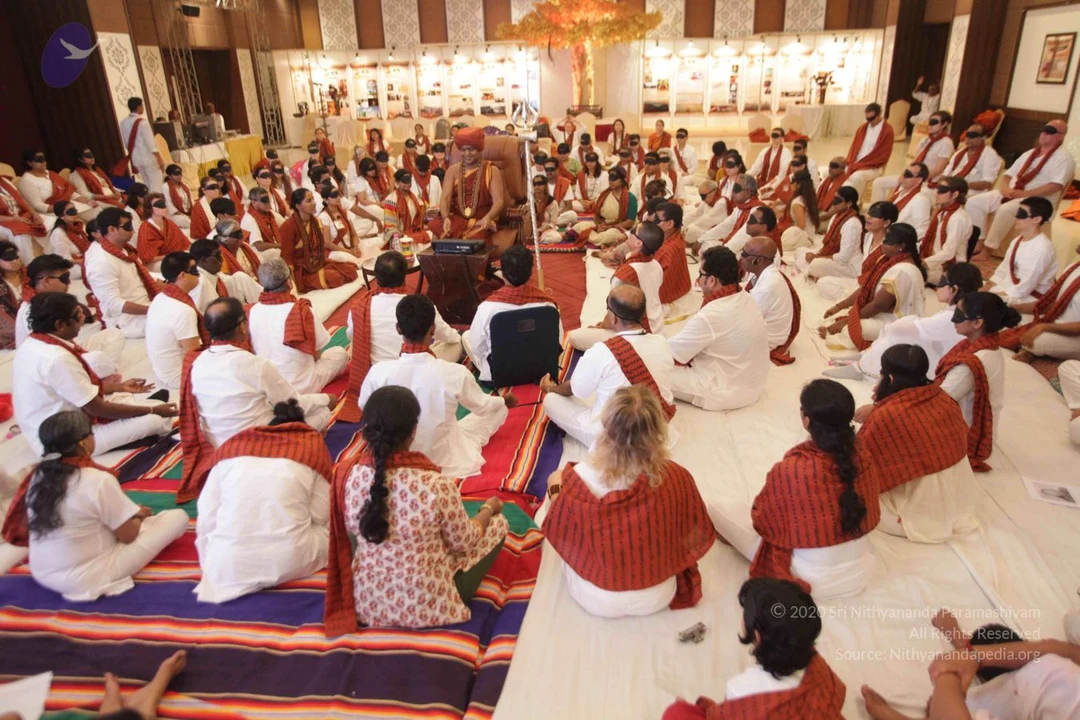
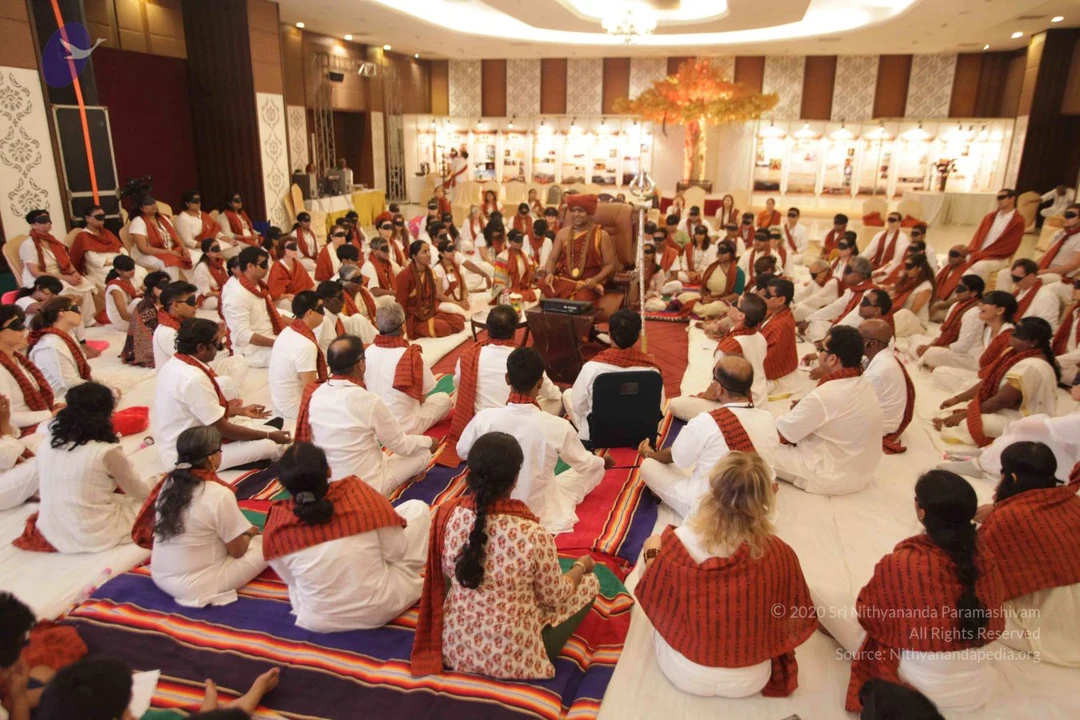
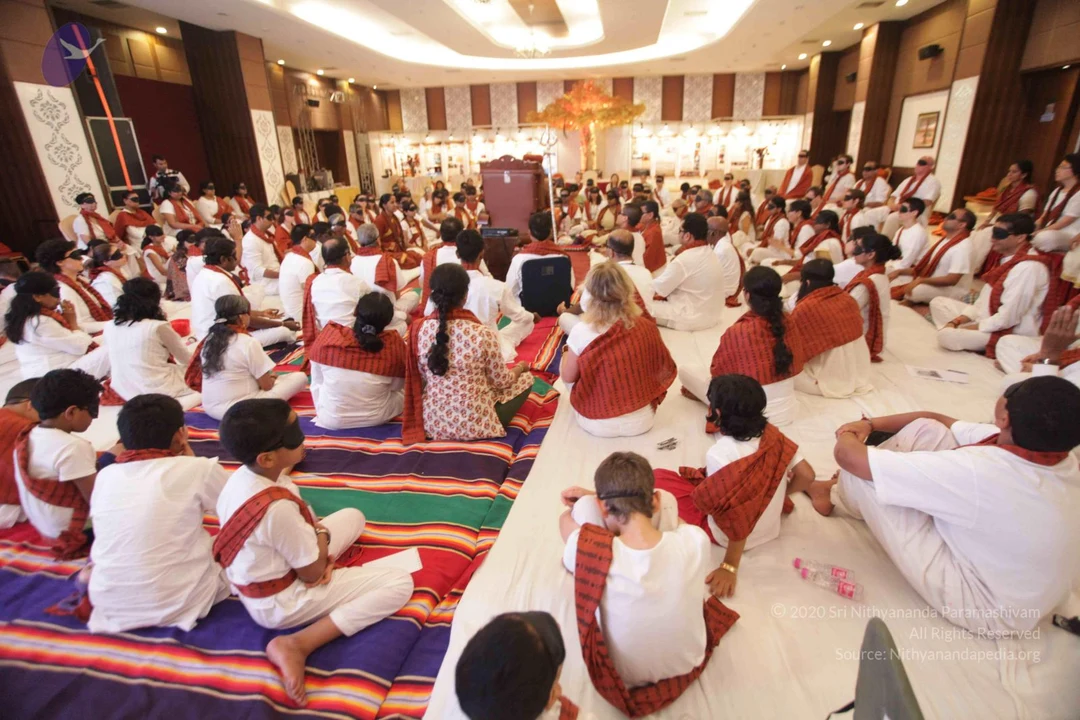
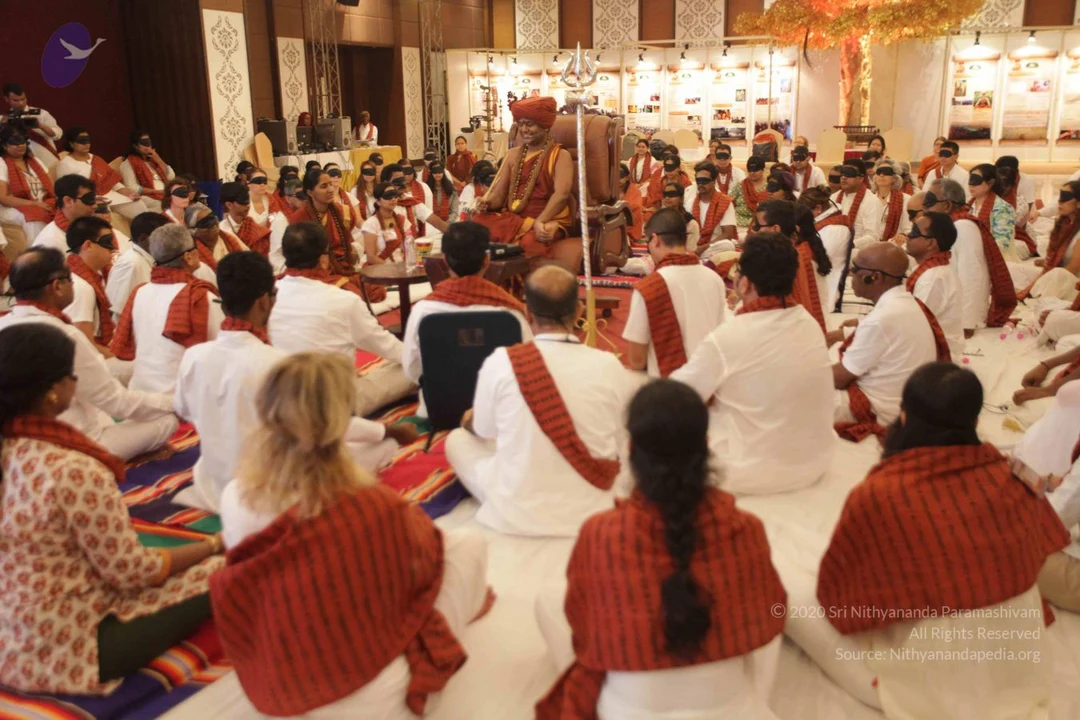
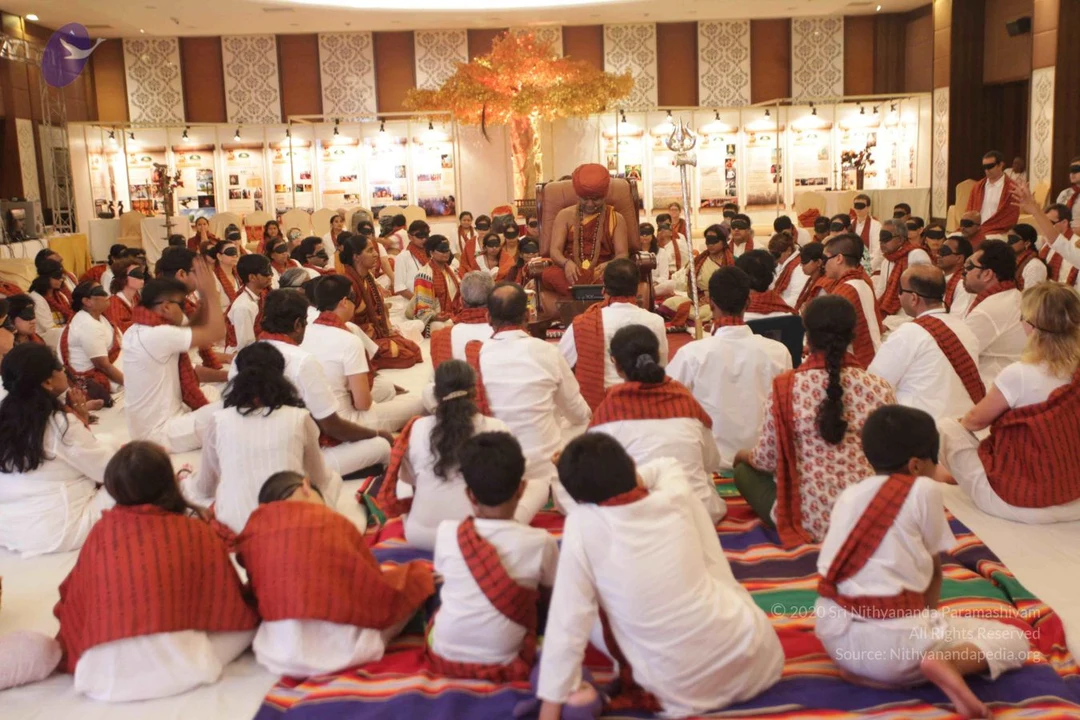
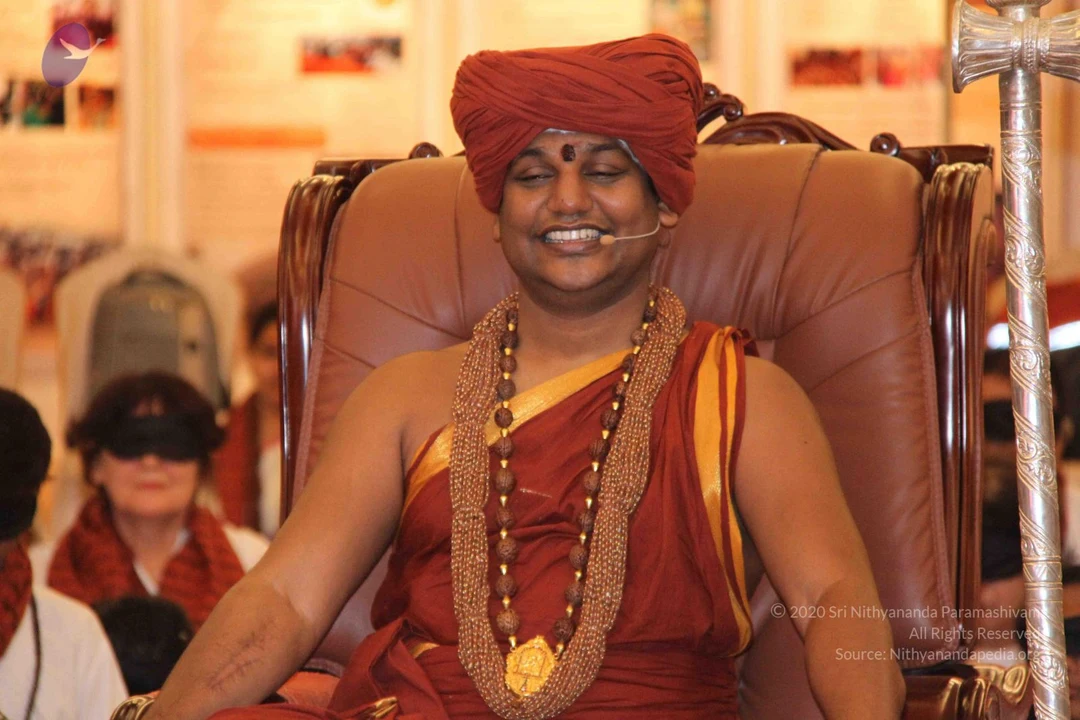
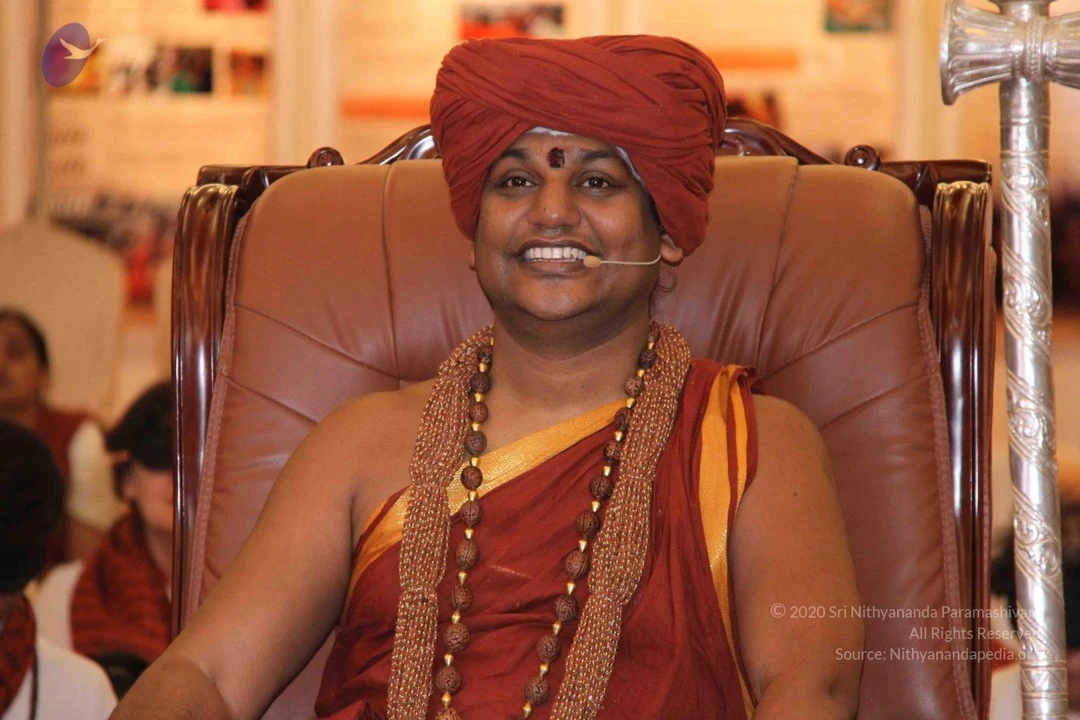
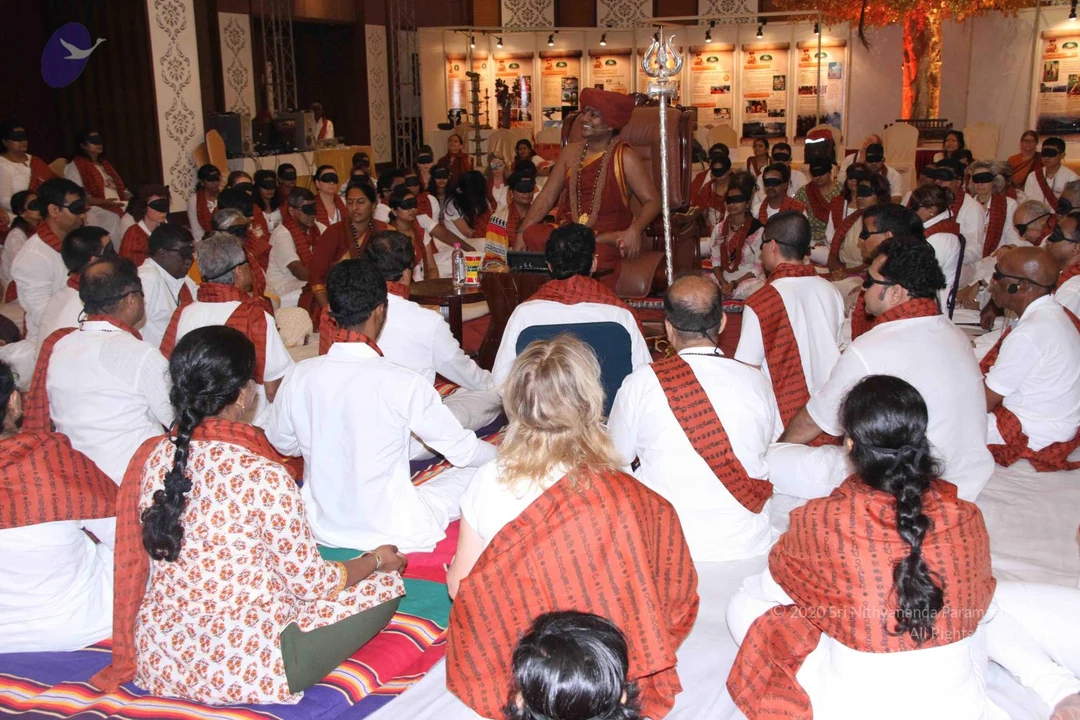
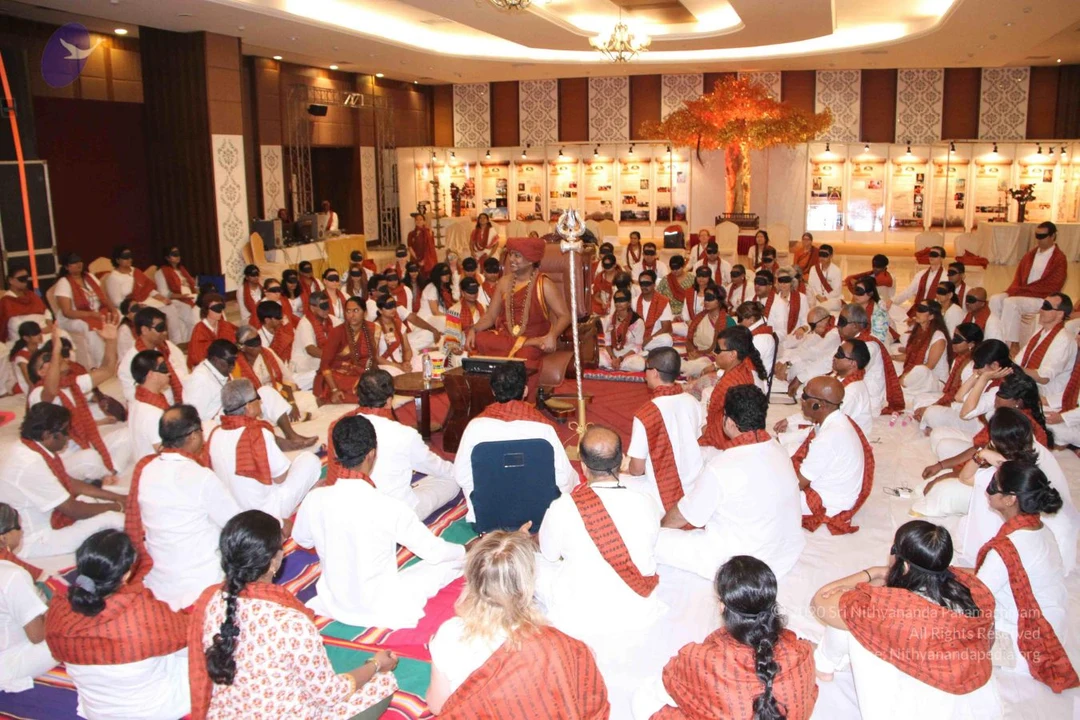
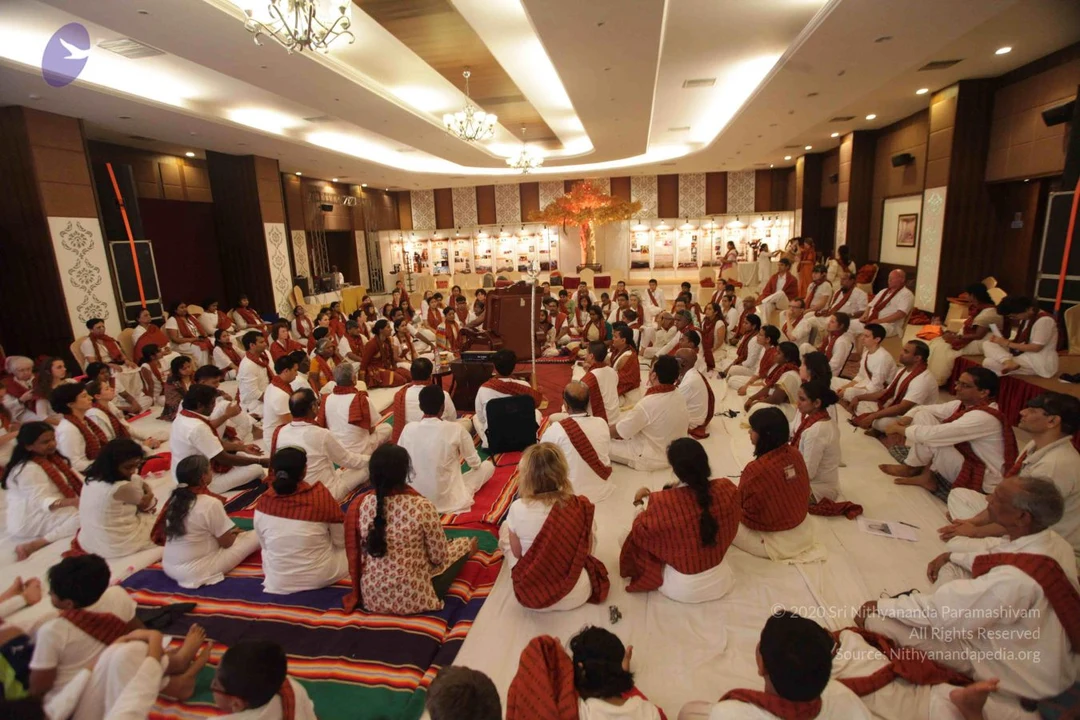
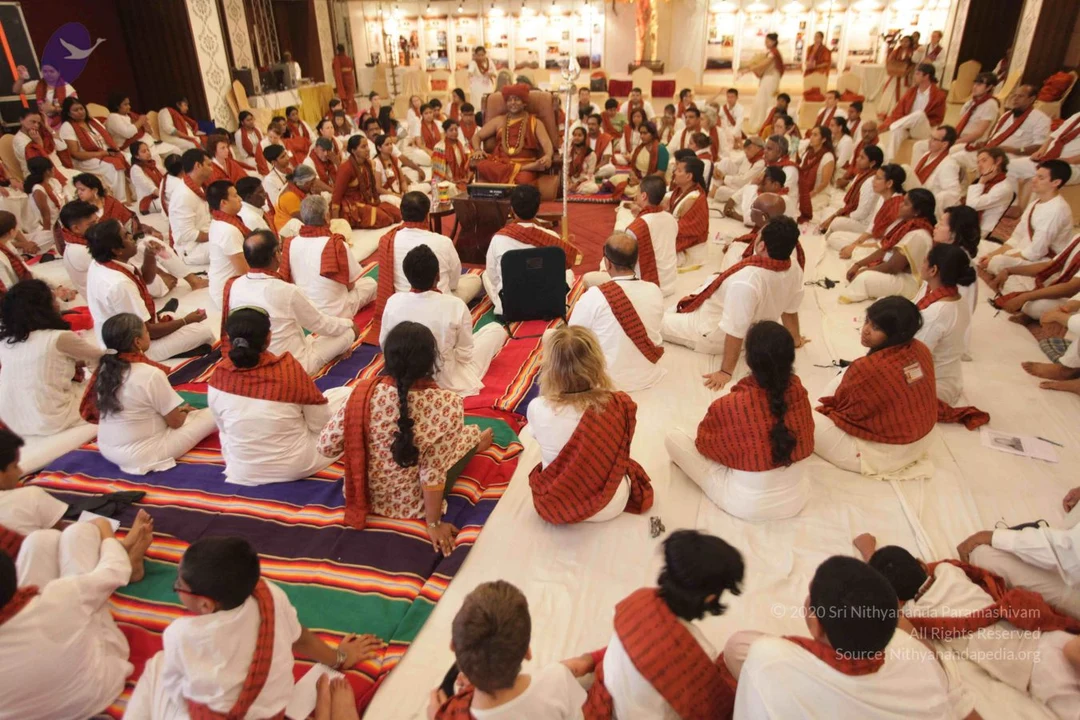
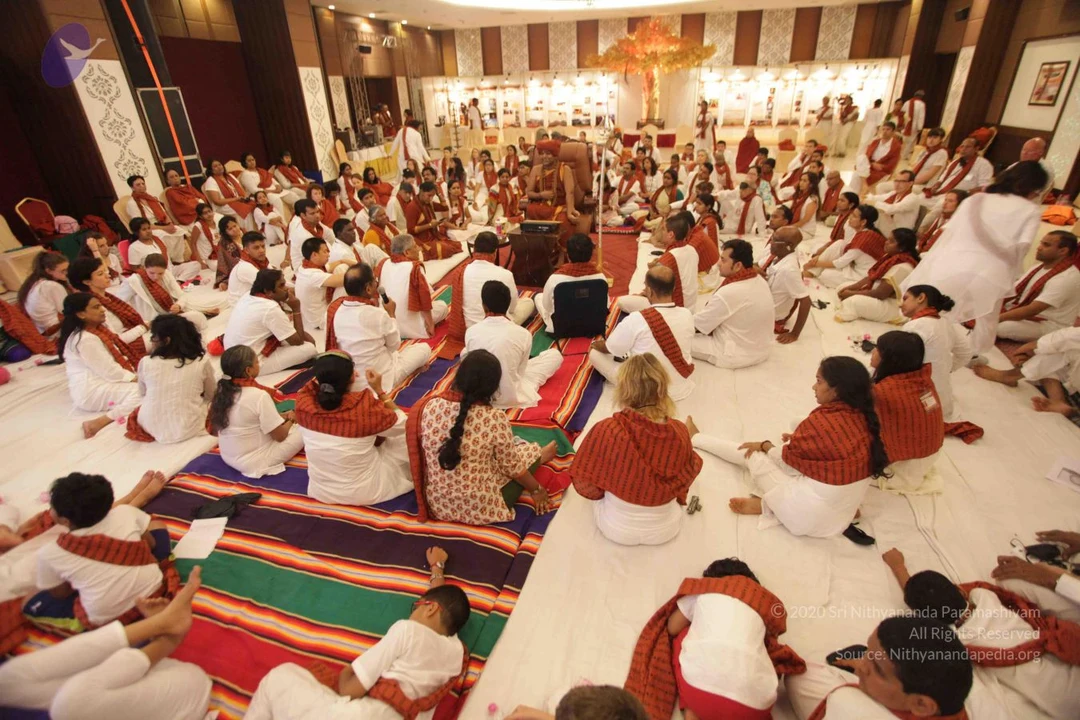
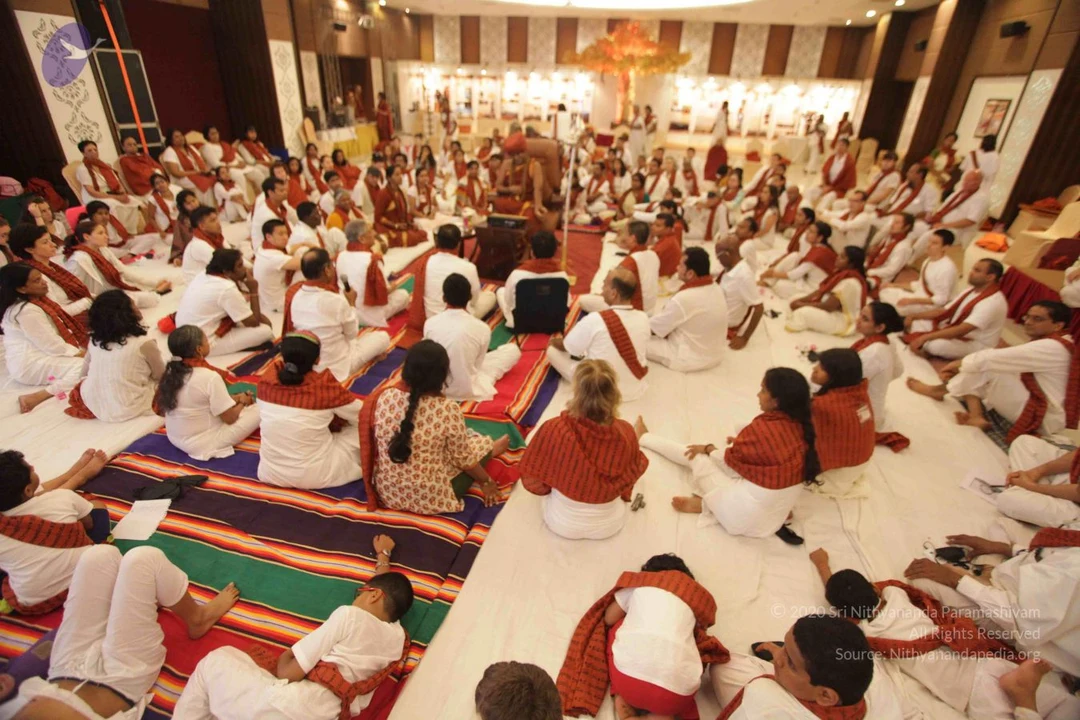
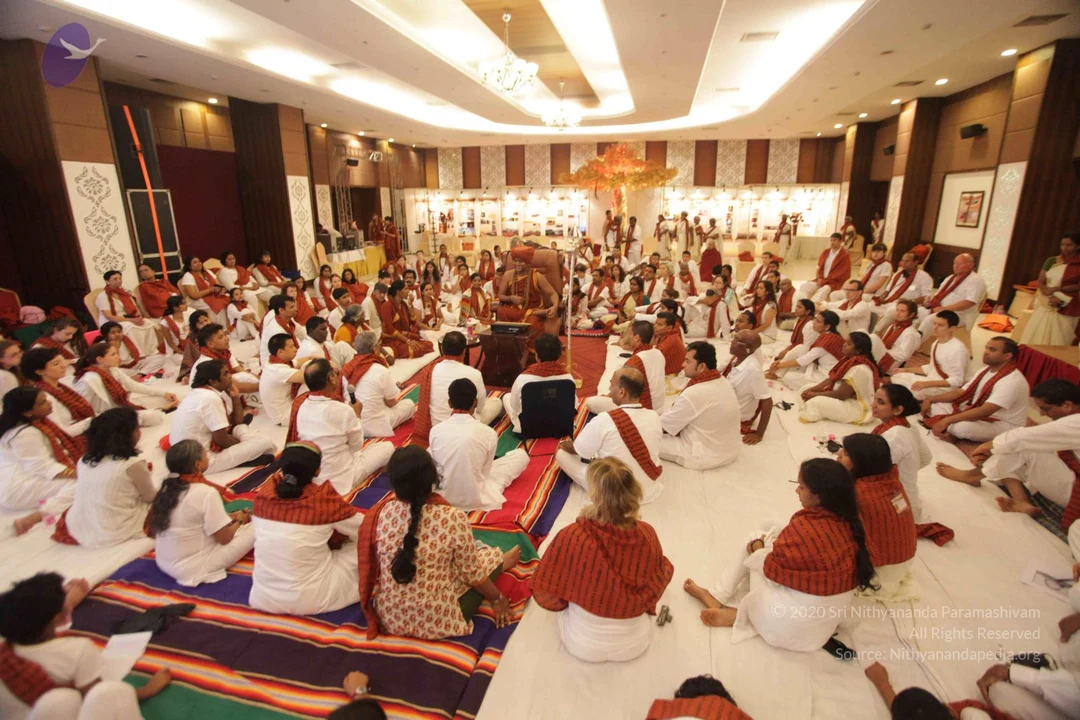
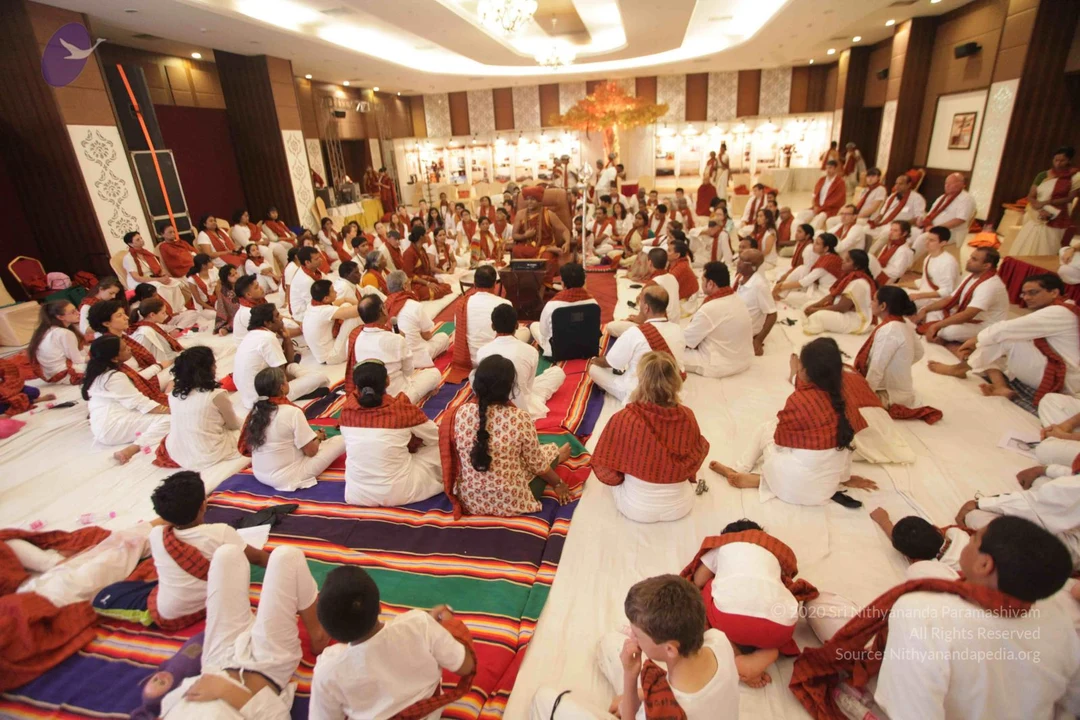
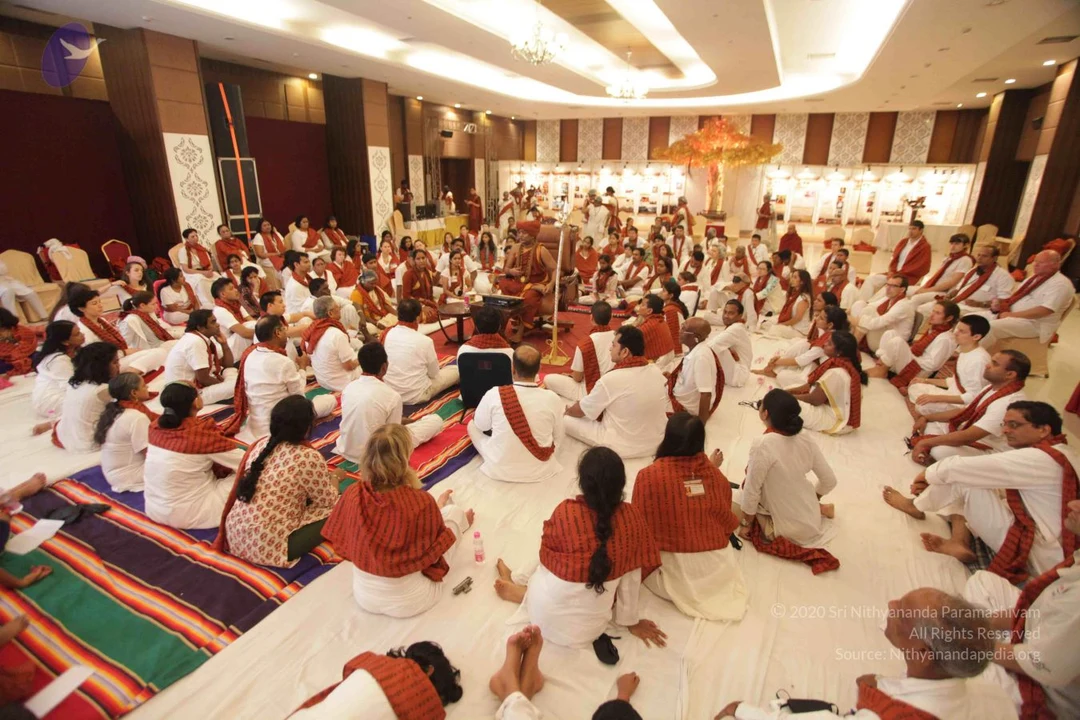
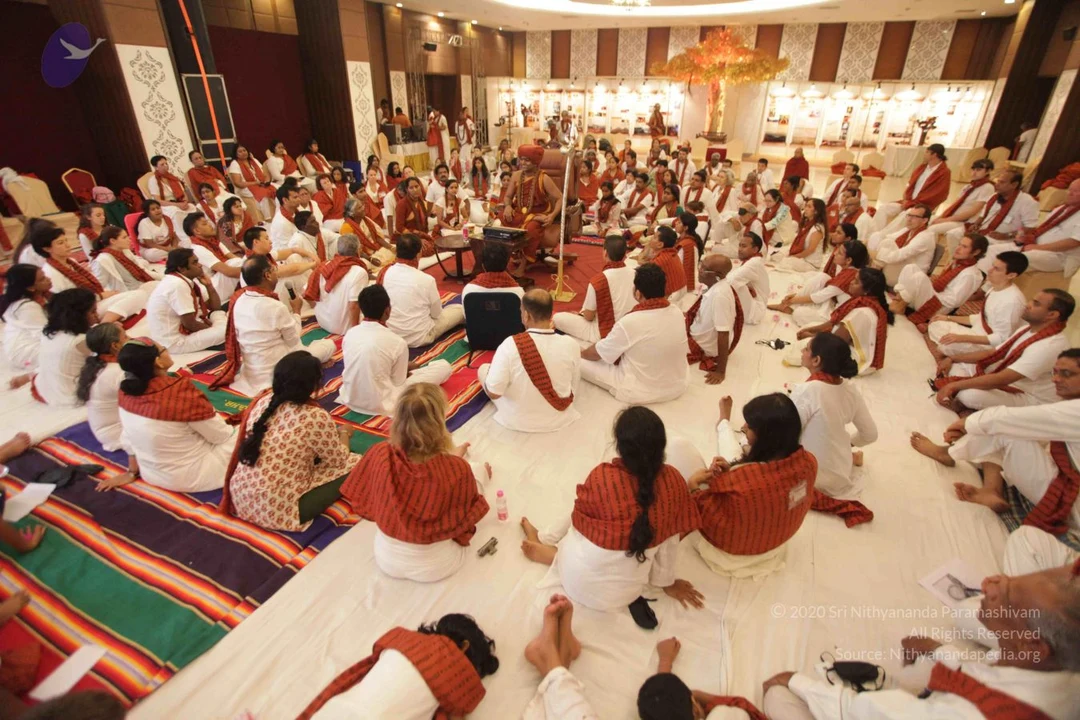
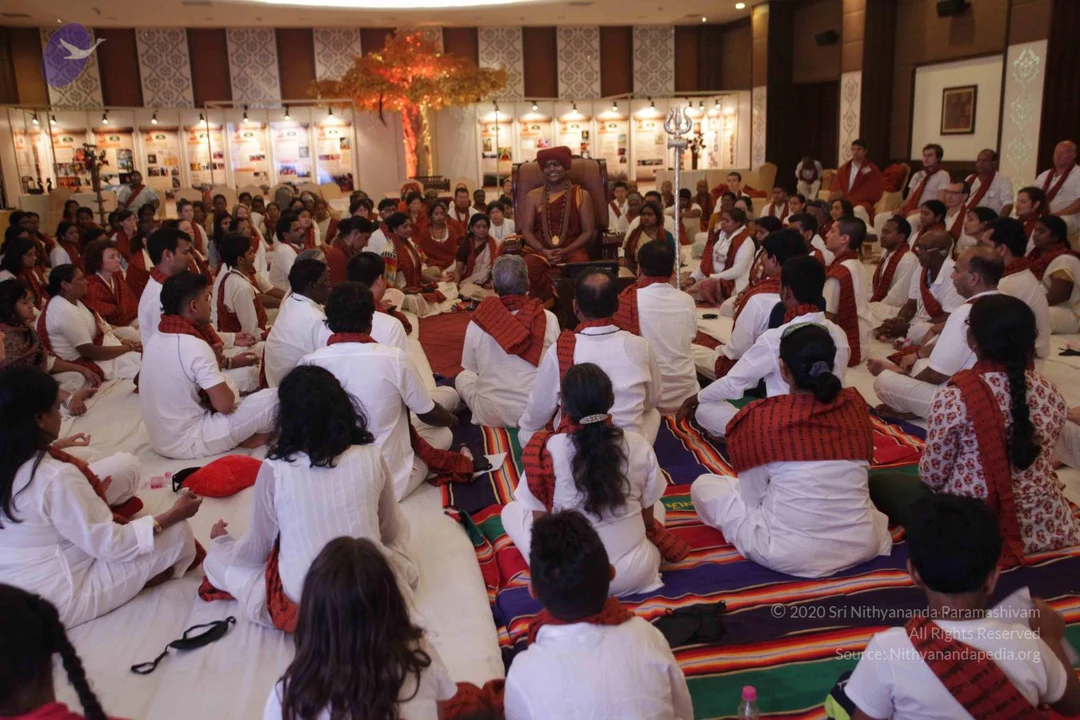
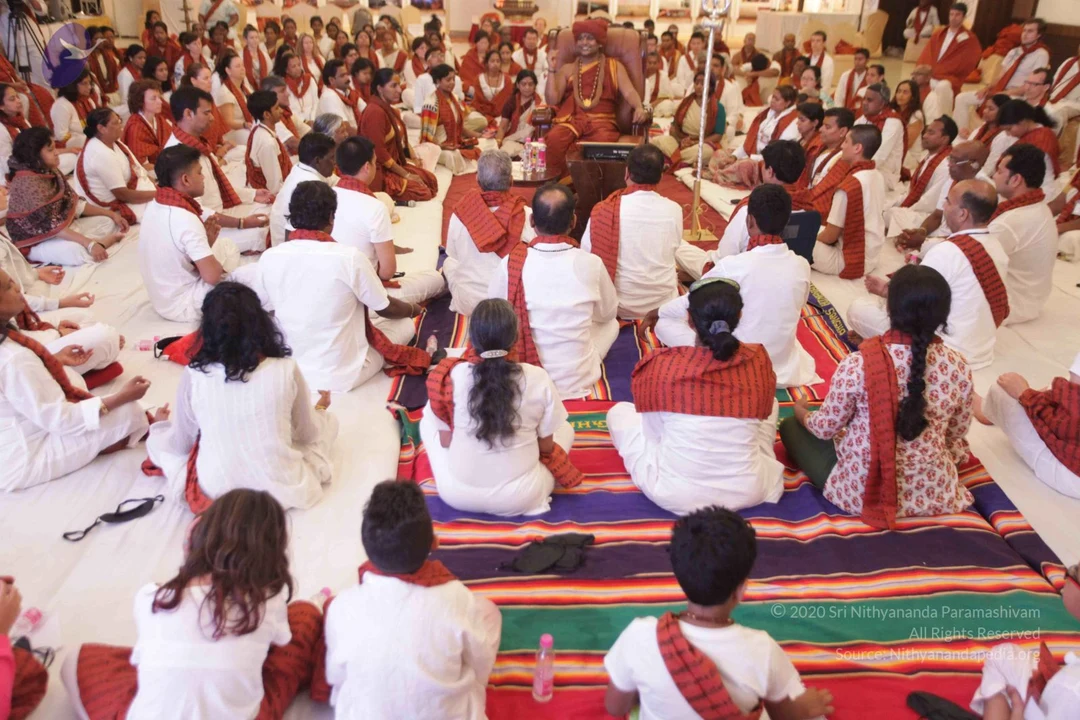
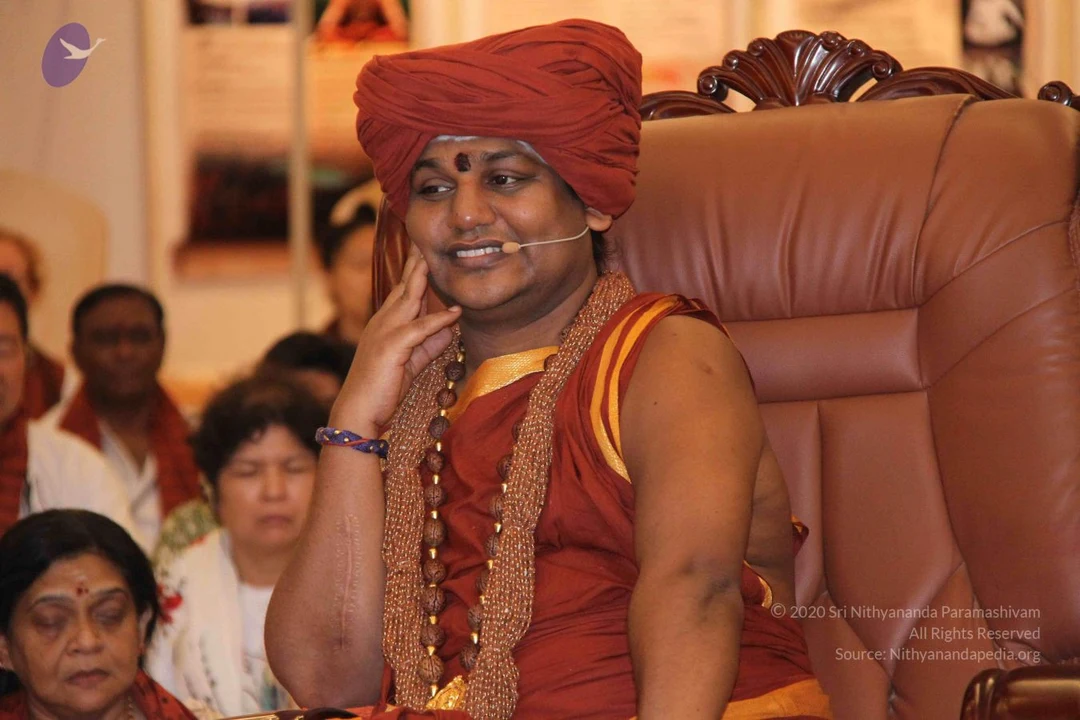
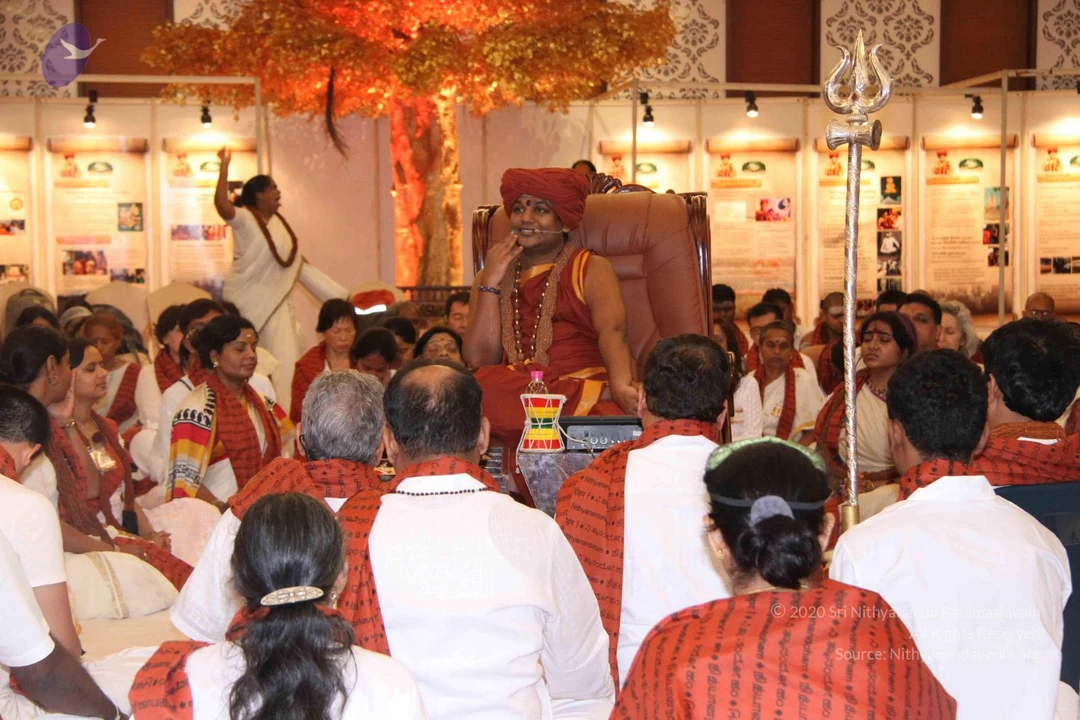
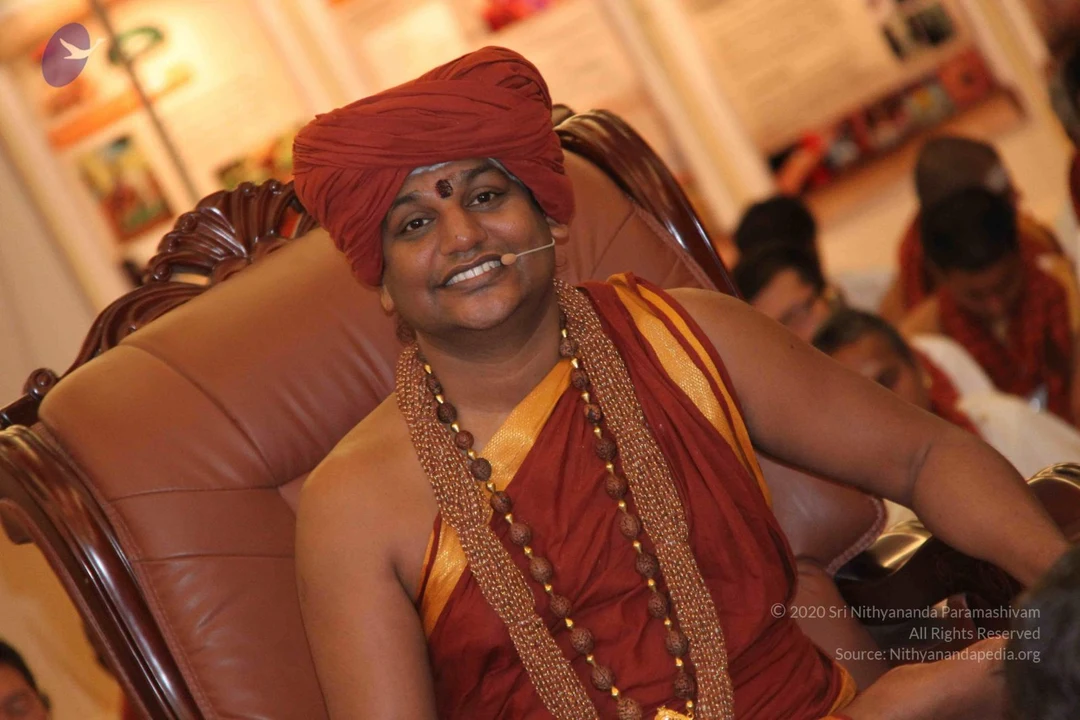
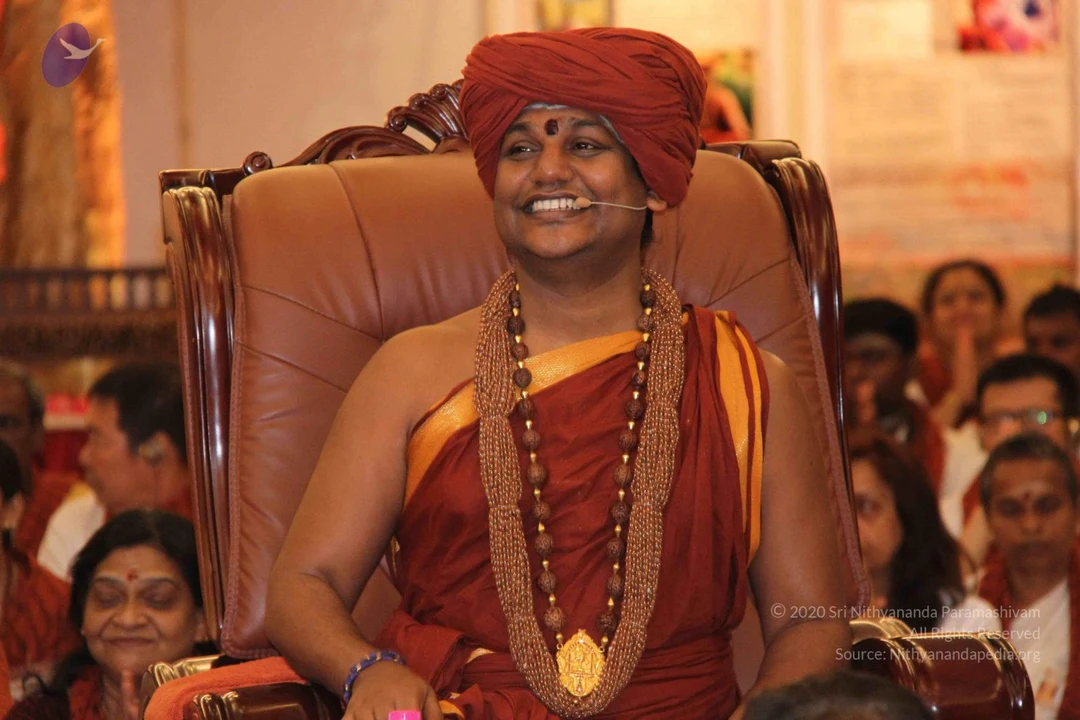
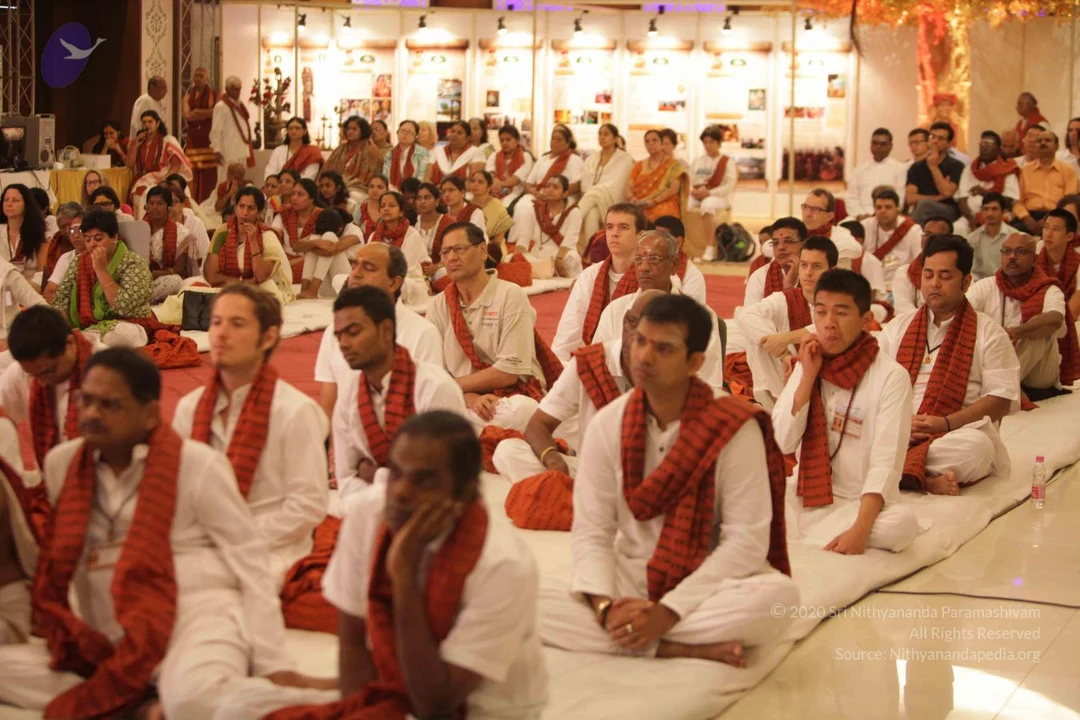
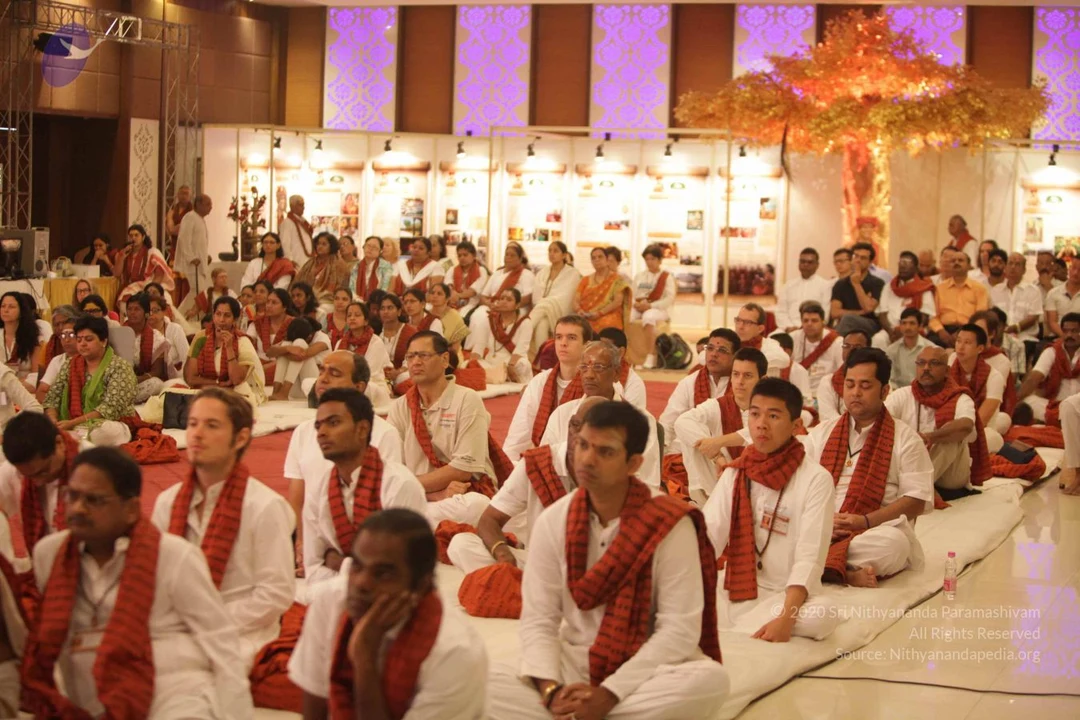
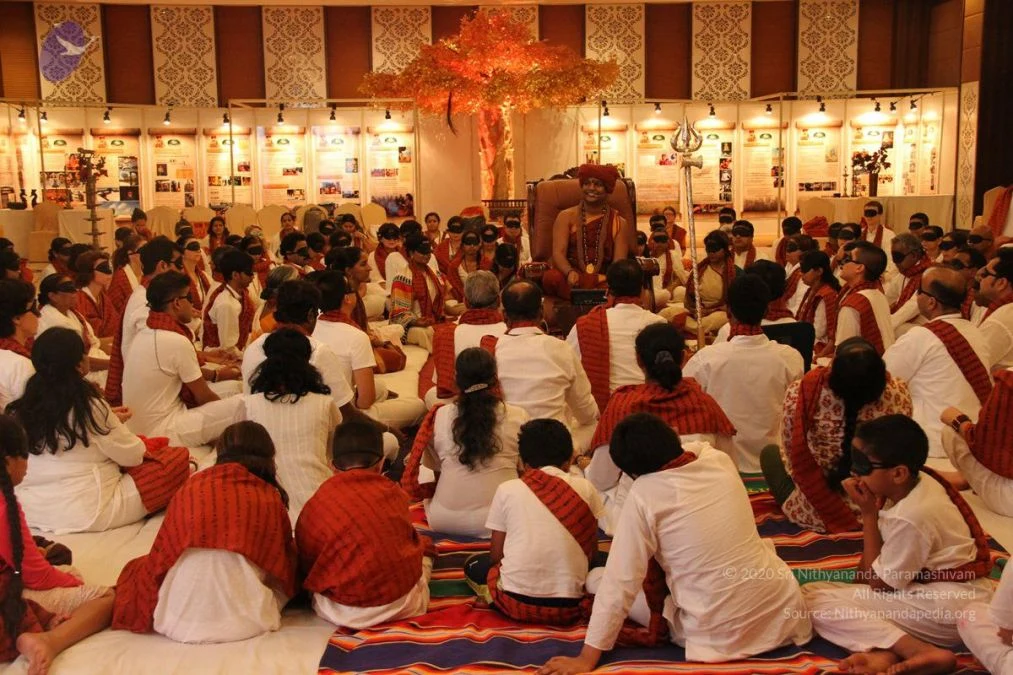
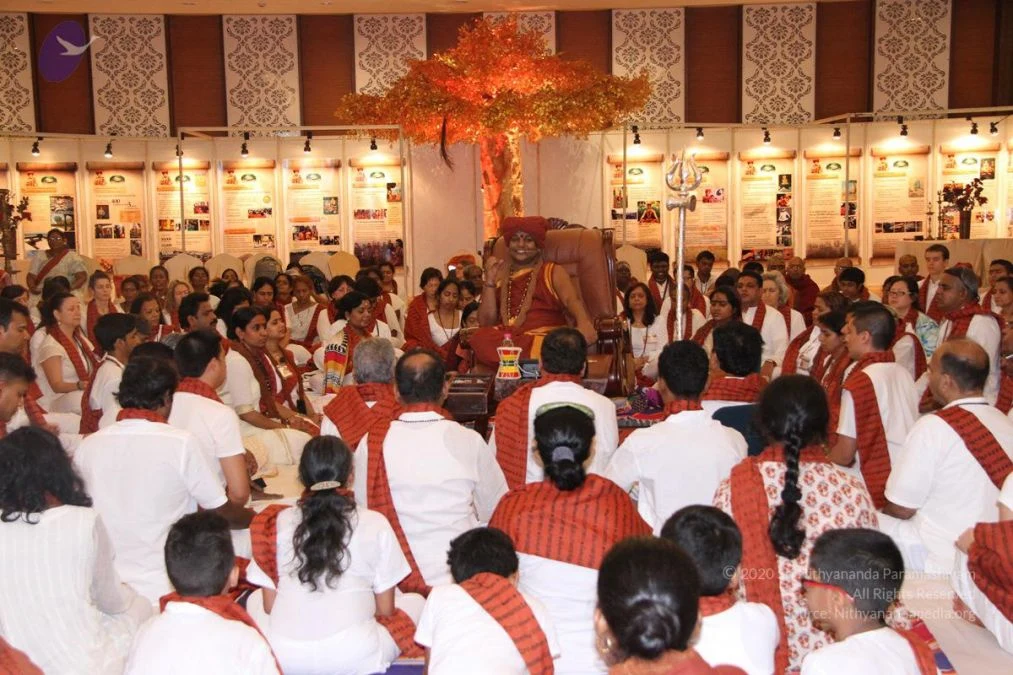
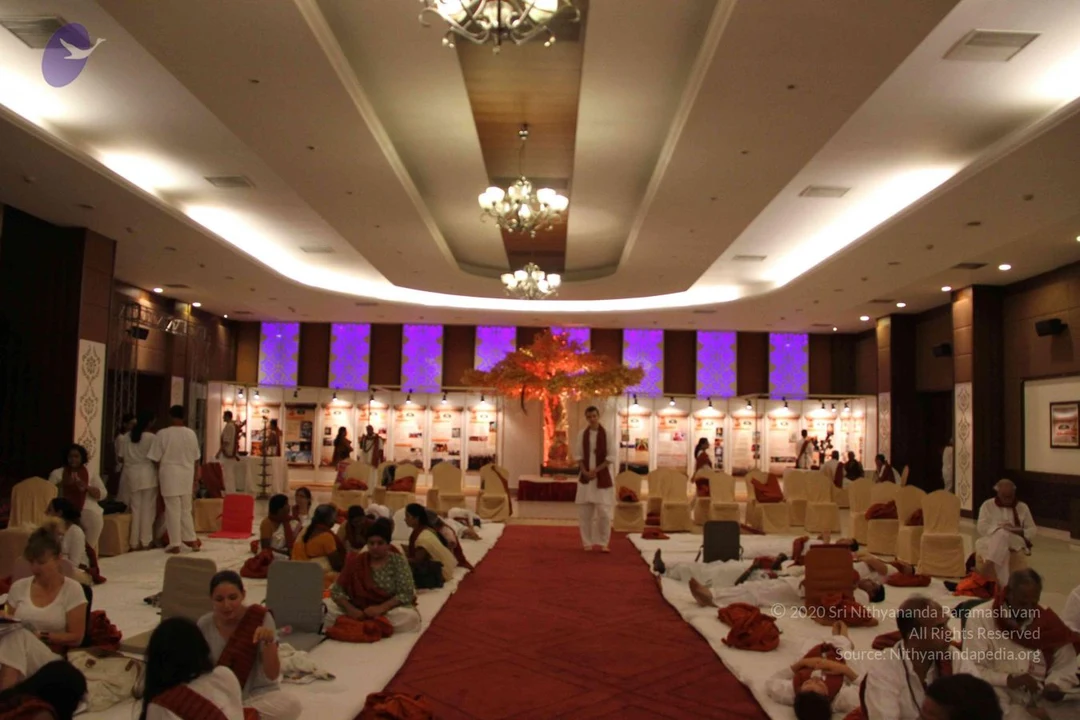
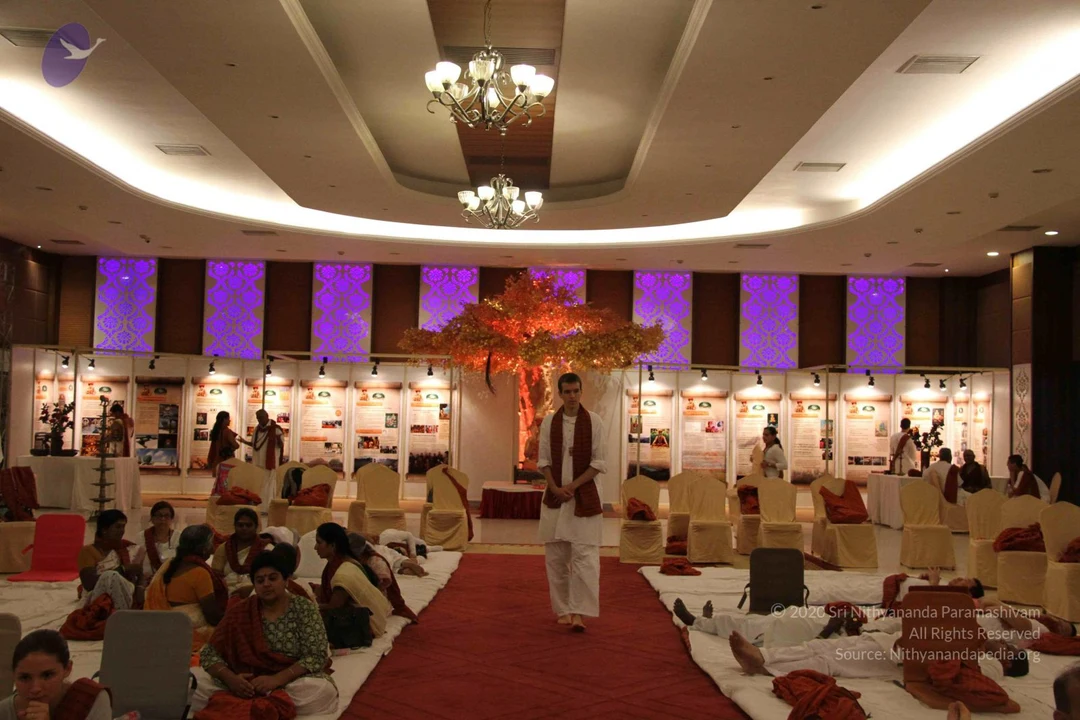
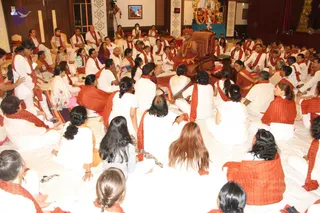
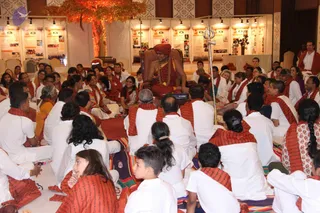
A large seated satsang gathering on white sheets in an ornate hall with dark wood panelling and gold-framed decor. Devotees in white clothes with red-orange shawls sit in a wide circle facing a central figure seated on a brown leather throne-style chair, wearing an orange-red turban and orange robes. Several devotees in white and orange sit near the front, some with heads turned toward the centre. Behind the throne stands a gilded deity murti with a small golden kalasha-like altar. Cameras and a tripod are visible at the left, and a framed picture hangs on the back wall. The scene resembles a Nithya Satsang discourse session.A photograph of a satsang hall with a large seated audience sitting on white sheets on the floor, many wearing white clothes with orange-red shawls draped over their shoulders. At the front, a figure in orange robes with a crown-like headpiece sits on an ornate brown leather throne, with a small table beside him and a Hindu deity shrine with a trident and lamps in the background. a person: the seated figure wears orange robes, ornate attire and a tall crowned headpiece, seated centrally on a throne as the discourse leader. The audience is seated in a semicircle facing him, with a patterned striped rug on the left. Photo taken from behind the audience looking toward the throne.A smiling man in a deep red turban and rust-red robes with a gold-edged orange shawl sits in a large brown leather armchair, a small microphone clipped near his mouth, wearing layered brown rudraksha malas and a gold ceremonial pendant. His right hand rests on the armrest. Seated audience members surround him: a woman in a red sari with a red bindi and smiling face in the lower left, a man in white with a lanyard at left, and other devotees in red shawls at the right edge. Behind them hang framed posters on a pale cream wall. Swamiji (probable): a man in a red turban, rudraksha malas and ceremonial gold pendant seated on a throne-like chair, appearance consistent with the page's description.A large hall filled with seated devotees in white clothes and red-and-orange shawls during a satsang. At the centre, a man with a red turban and orange robes sits on a raised seat, flanked by a microphone stand and a small table. Devotees sit on colourful striped mats and white sheets, many wearing red-orange shawls. In the background, a decorated tree with orange foliage stands before framed photo panels on a wall.A large indoor satsang hall with cream walls, patterned wall panels and a tall autumn-coloured artificial tree in the background. Dozens of devotees sit cross-legged on colourful striped woven mats, mostly in white clothes with red-orange shawls draped over their shoulders. A central figure sits on an elevated red-and-gold seat wearing orange-red robes and a shawl, with a ceremonial staff or trident-like object rising beside him. Several seated devotees in the foreground include children in white and a woman with long braided hair. Displays of framed photographs line the back wall.A seated figure on an ornate wooden throne-chair with red cushions sits at the front of a hall, wearing a rust-orange turban, bare upper body with a rudraksha-style beaded necklace and ornaments, and an orange-red shawl. A tall silver trident stands to the right of the throne. Around him, a large seated audience in white clothes and red-orange shawls sits on mats and rugs; several women wear sarees and a child sits in front. Behind them, framed display panels line the wall beneath a decorative tree-like backdrop. a person: the seated figure has long swept-back hair under the turban, saffron-orange robes and a rudraksha mala, consistent with the discourse setting described on the page.

Kirtan

6 photosSource gallery
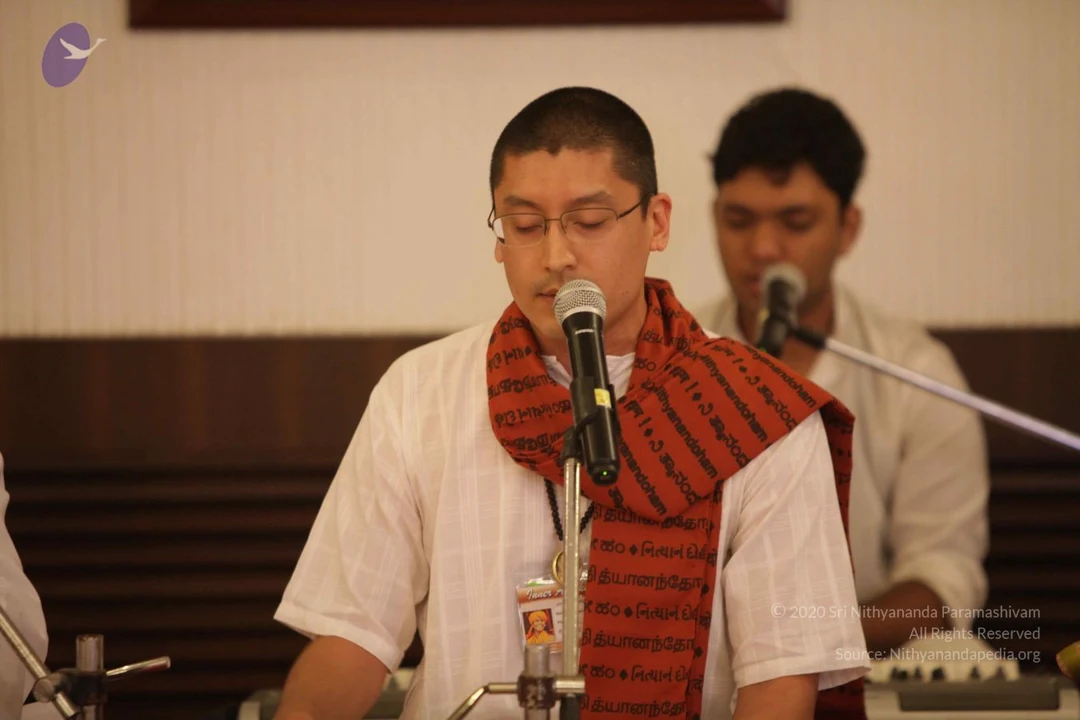
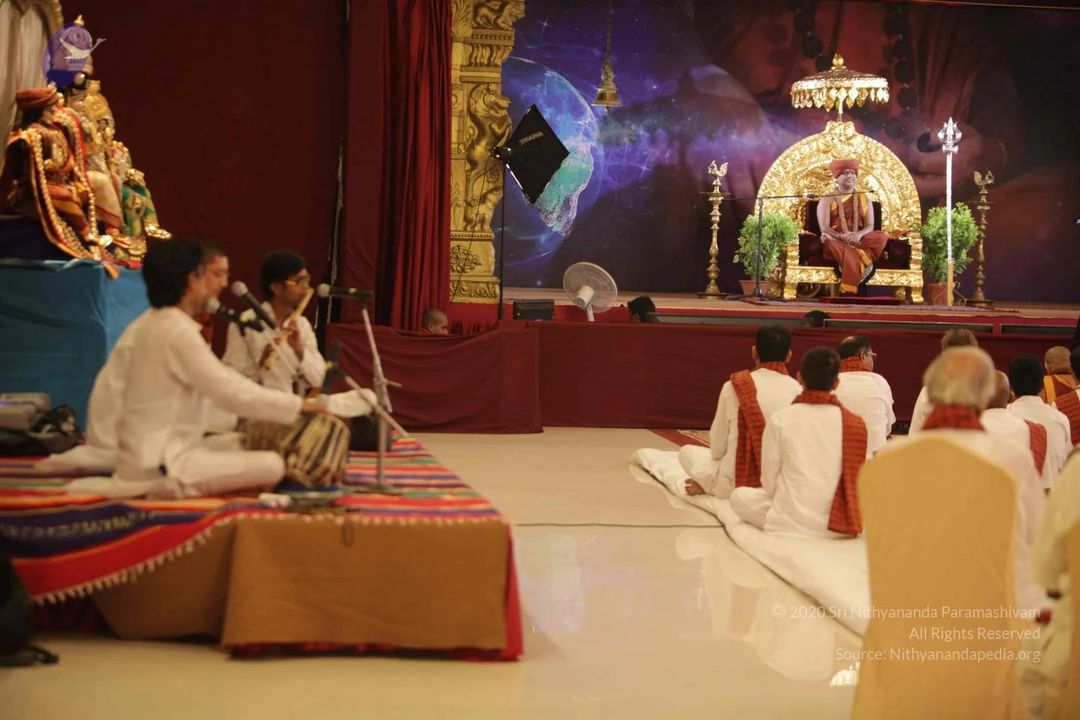
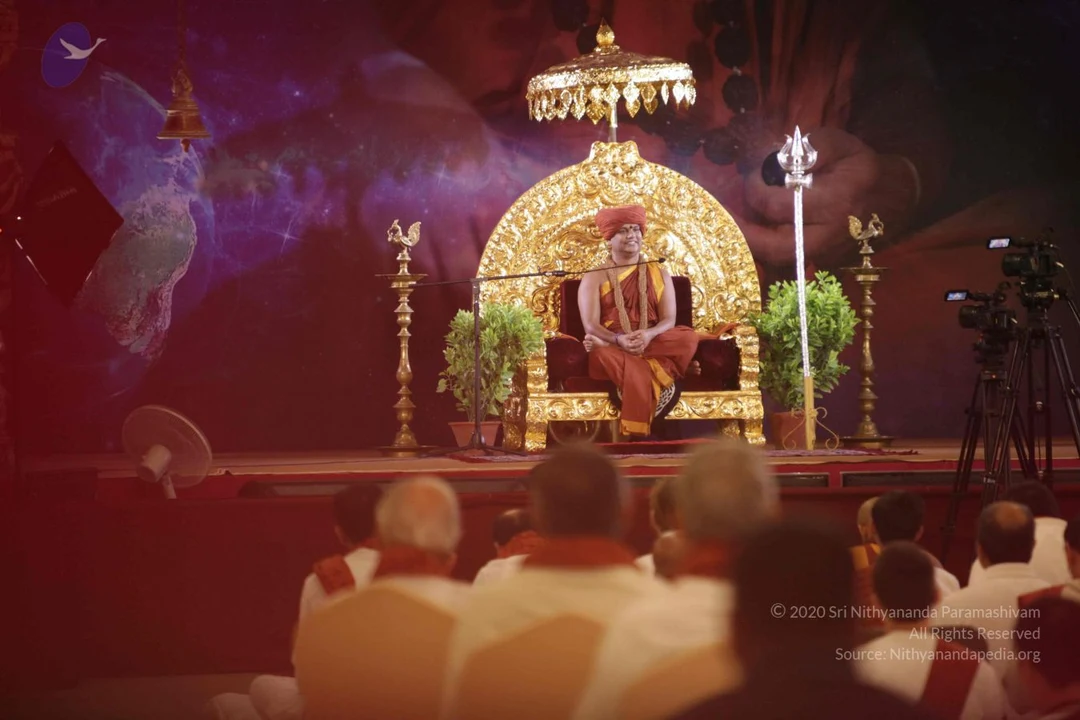
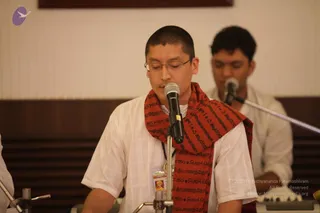
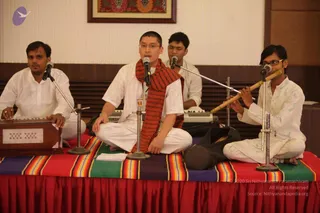
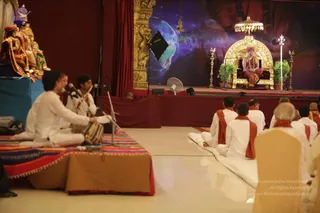
A photograph of a man with a shaved head and glasses, wearing a white short-sleeved kurta and a red-orange shawl printed with repeated Tamil-script lettering, seated at a microphone stand and speaking or chanting with eyes lowered. A second man in a white shirt sits blurred behind him, also at a microphone, with a keyboard visible at the right edge. A small rudraksha-style mala hangs at the neck and a small framed picture is clipped to his shawl. The setting is a plain pale-walled hall with dark wood paneling. The man at the microphone shows no distinctive a person cues such as long hair, crown or saffron clothing, so his identity is uncertain.A satsang performance on a low stage draped with a multicoloured striped woven cloth over a red cloth. A man with a shaved head and glasses sits cross-legged at centre singing into a microphone, wearing white kurta and pants with a red-orange shawl printed with script. To the left a man in white kurta plays a wooden harmonium. Behind, a man in white plays a keyboard. At right a bespectacled man in white sits playing a bamboo flute. A black instrument bag and a sheet of paper lie on the stage, and a framed painting hangs on the wall behind.A photograph of a satsang hall with a large gold ornate throne on a raised stage in the background. A figure in saffron-orange robes and an orange turban sits on the throne beneath a golden canopy, with potted plants and brass lamps flanking it. A backdrop shows a cosmic blue and purple image of a planet. On the left, three musicians in white kurtas sit on a striped rug playing a harmonium, a flute and a tabla at microphones, beside a set of painted deity murtis. In the foreground, several devotees in white clothes with red shawls sit on white floor mats facing the stage, with a few older seated attendees in the right foreground. The seated figure on the throne is an appearance-based a person in saffron and orange ceremonial dress on a throne, but the cues are limited, so the identity is uncertain.A photograph of a satsang discourse on a stage. A seated figure on an ornate gold throne with a canopy wears an orange-red turban, orange robes and a saffron shawl, with hands folded in lap. Potted green plants flank the throne, with gold lamp stands and a silver trident on a stand beside it. Behind the stage is a purple cosmic backdrop. In the foreground, rows of seated devotees in white and orange clothing face the stage, and two cameras on tripods film at right. The figure matches the page's a person reference only by a turban, saffron robes and throne, so identity is left uncertain.A satsang hall with a gilded ornate throne on a raised stage at the back, where a figure in saffron-coloured robes sits, flanked by potted plants and a dark backdrop with a blue cosmic image. In the foreground left, a person in white clothing sits cross-legged on a red and orange patterned mat behind a microphone, with a harmonium-style instrument nearby, while a second man in white sits beside them. Rows of seated devotees in white clothing with red-orange shawls face the stage, and a cameraman in a red shawl films from the right. A blurred red flower sits in the immediate foreground.A satsang musical performance in a hall with a red draped stage and a blue-covered platform on the right. Four musicians in white kurta-style clothes perform: one plays tabla at left, a man in the centre with a red scarf plays a harmonium, and a young man at right plays a bamboo flute. A seated man in white with a red scarf sits at left, and devotees in white with orange-red shawls sit on the floor and chairs in the foreground. On the right, deity murti in ornate silver and colourful garments sit on an altar with garlands. Patterned wall art and a small screen hang on the walls.

Satsang

58 photosSource gallery
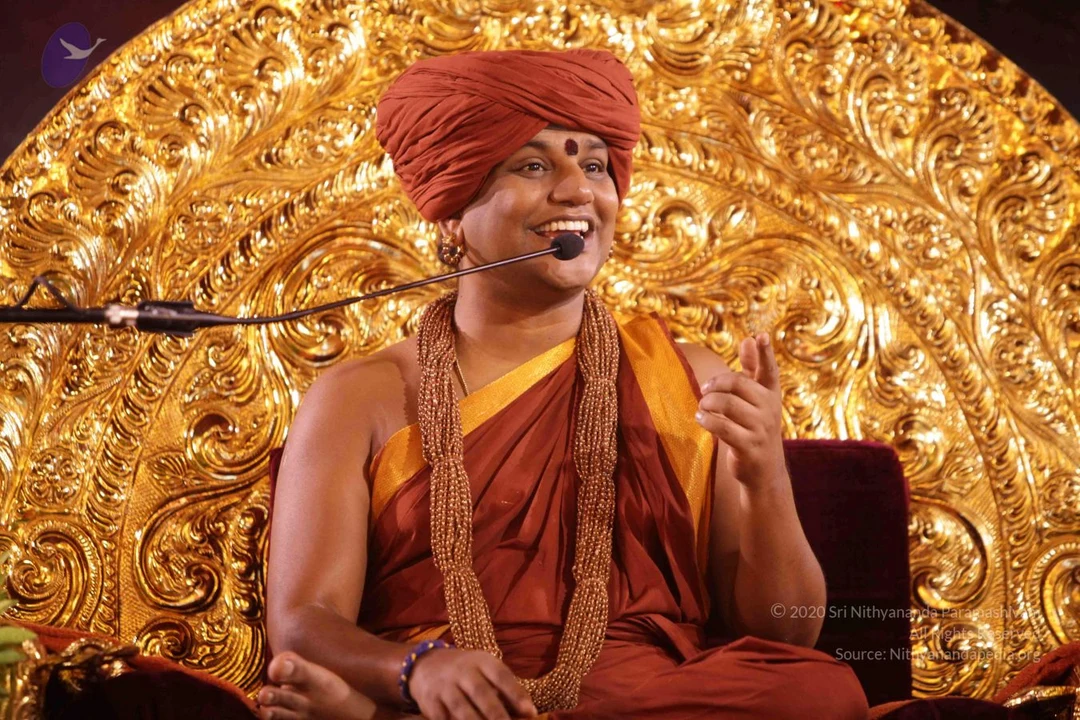
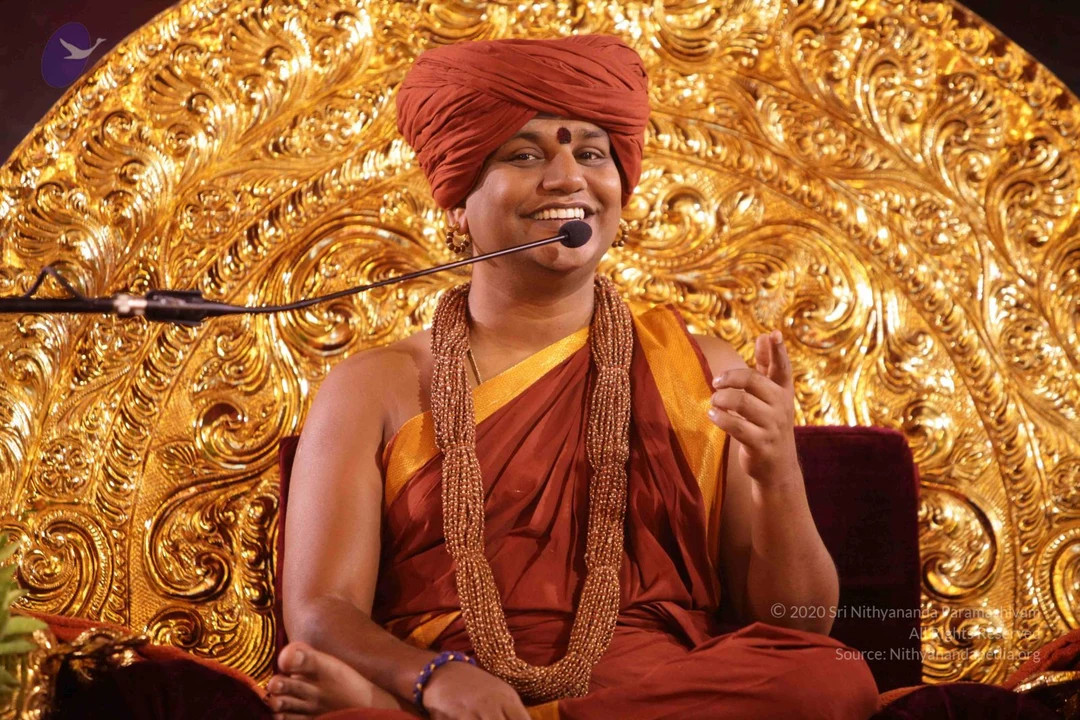
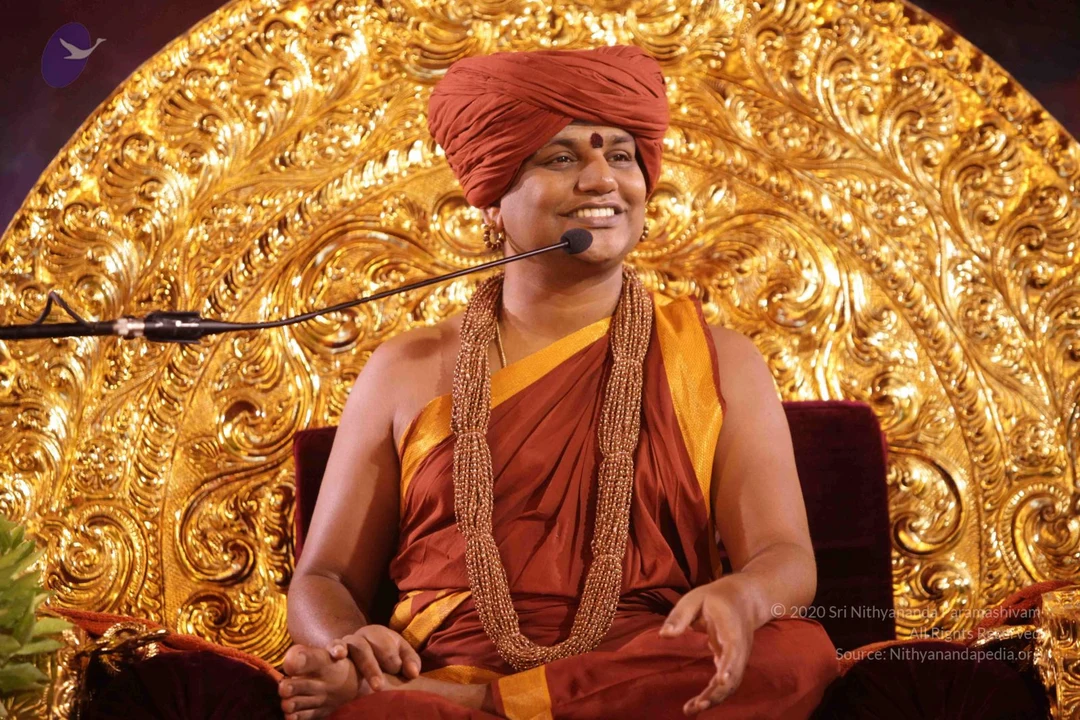
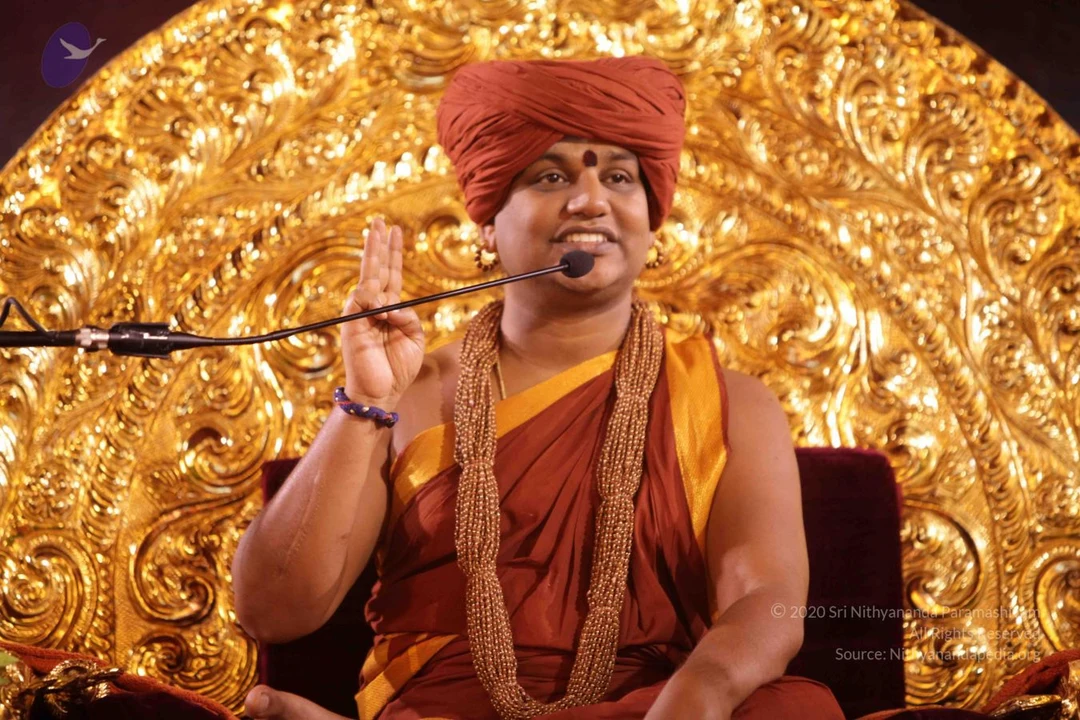
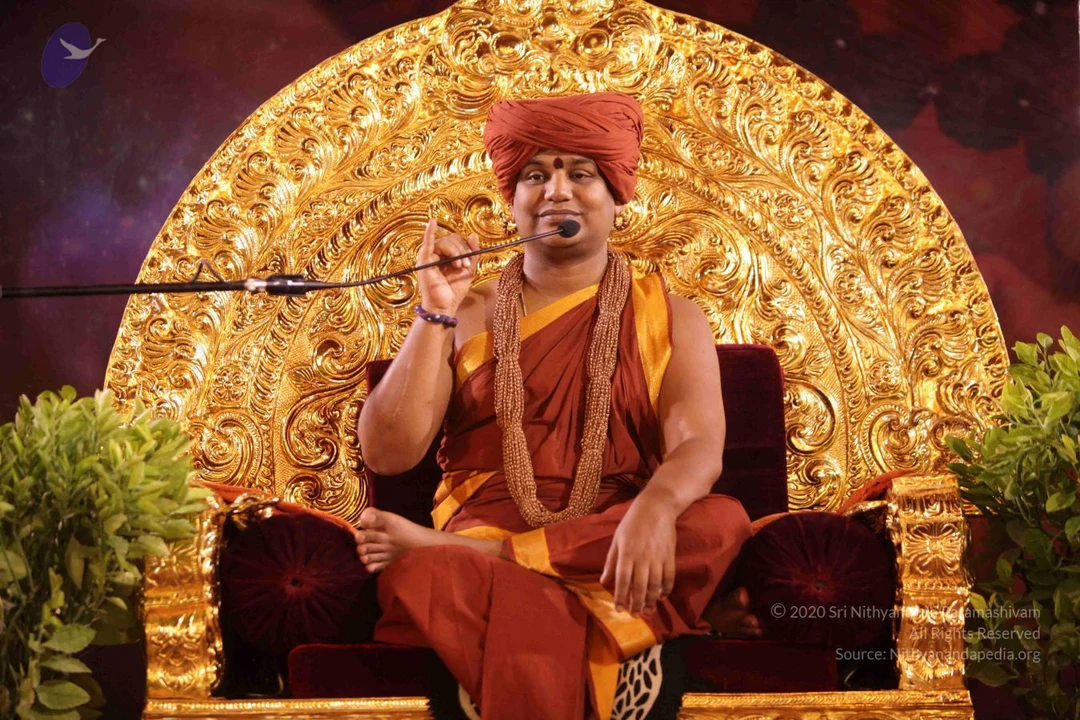
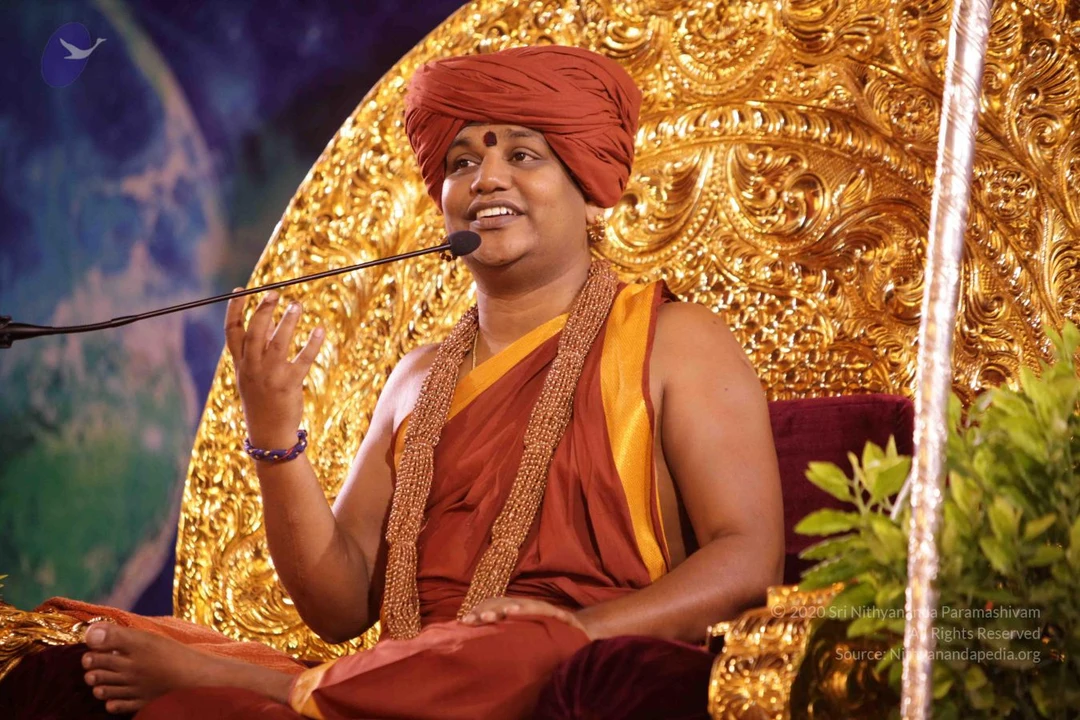
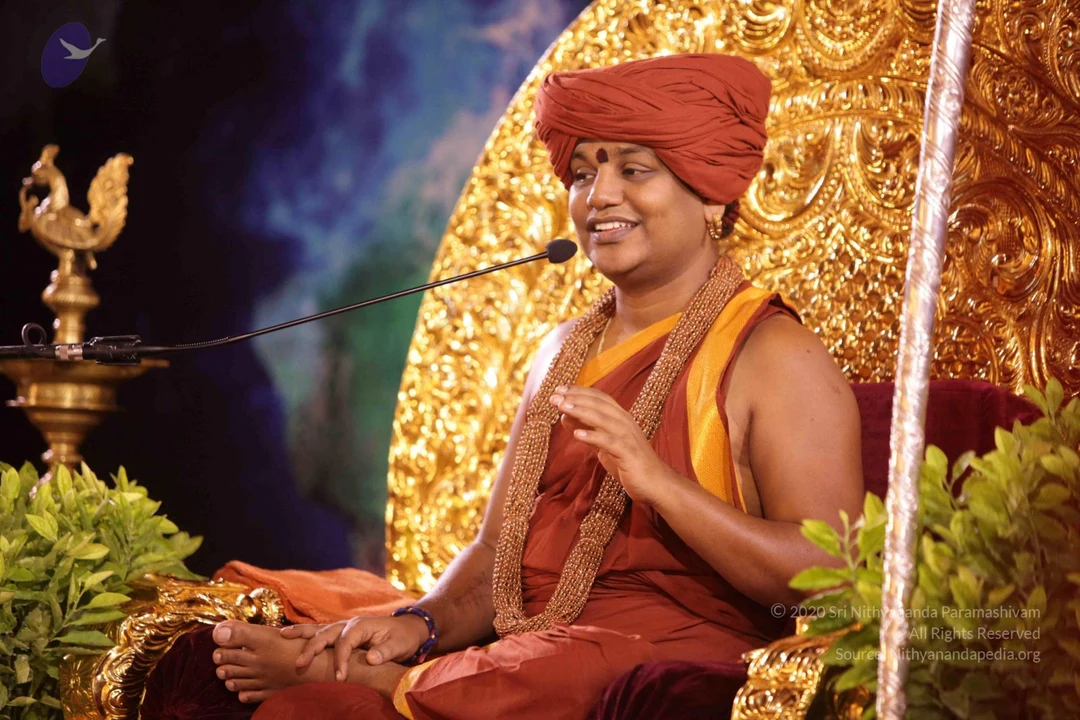
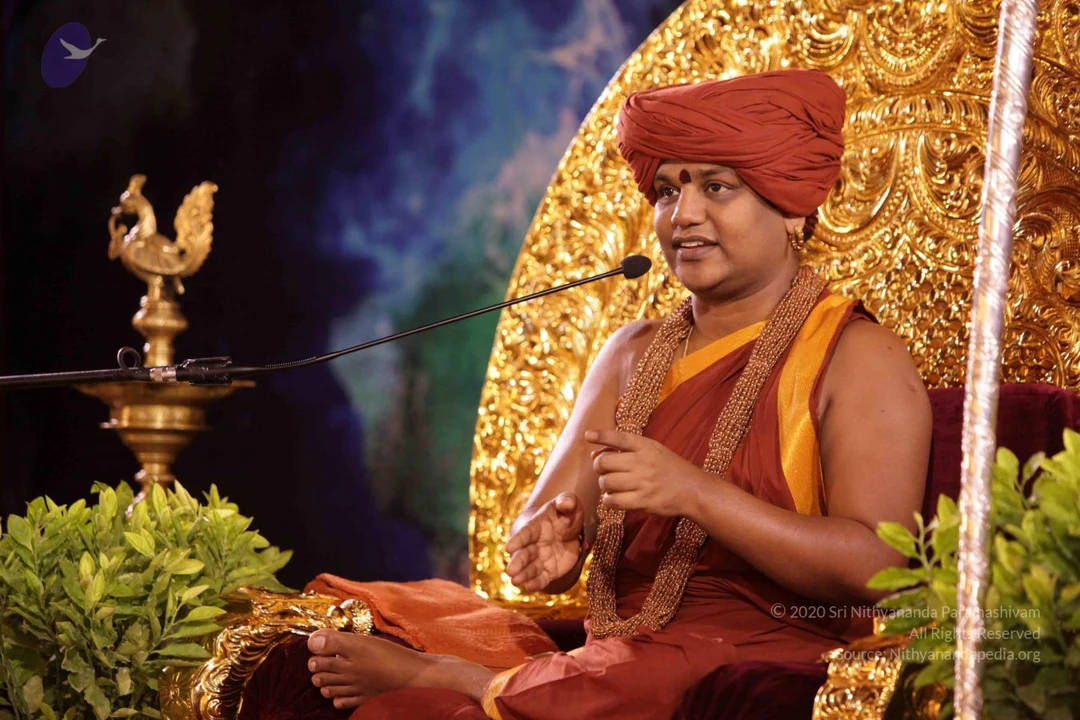
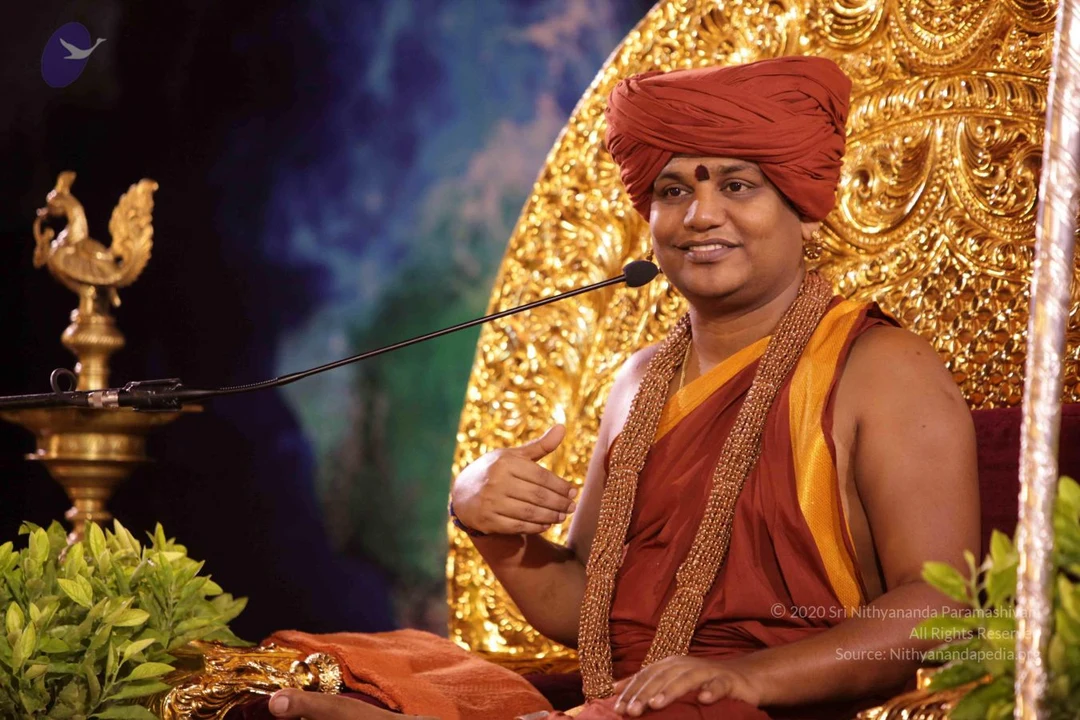
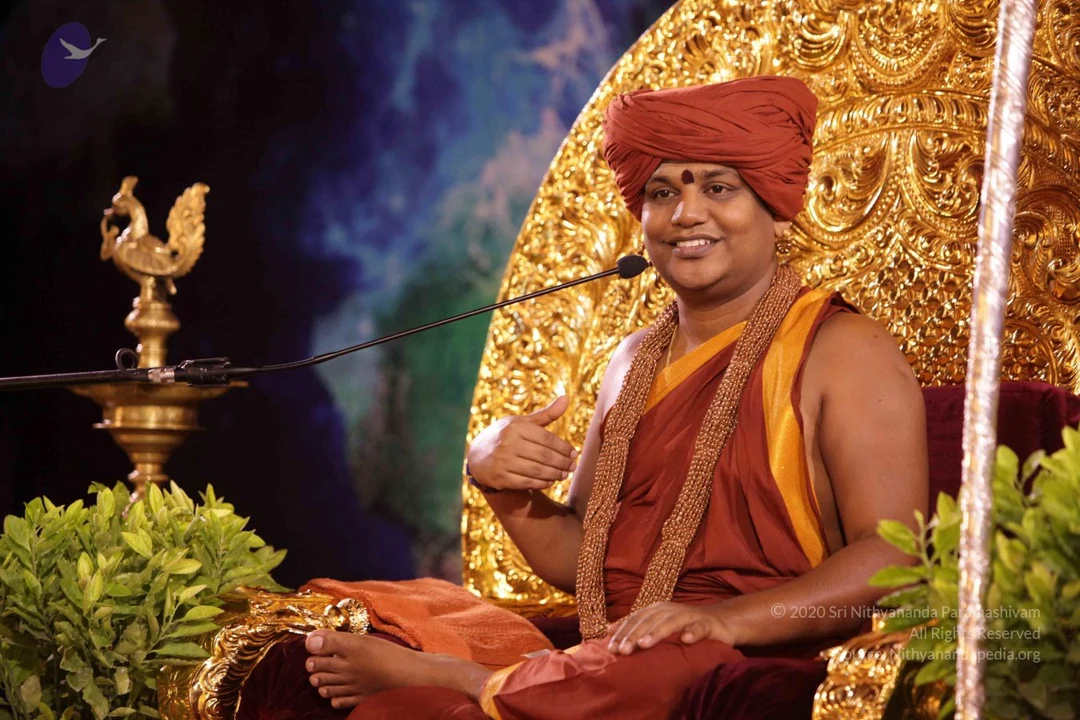
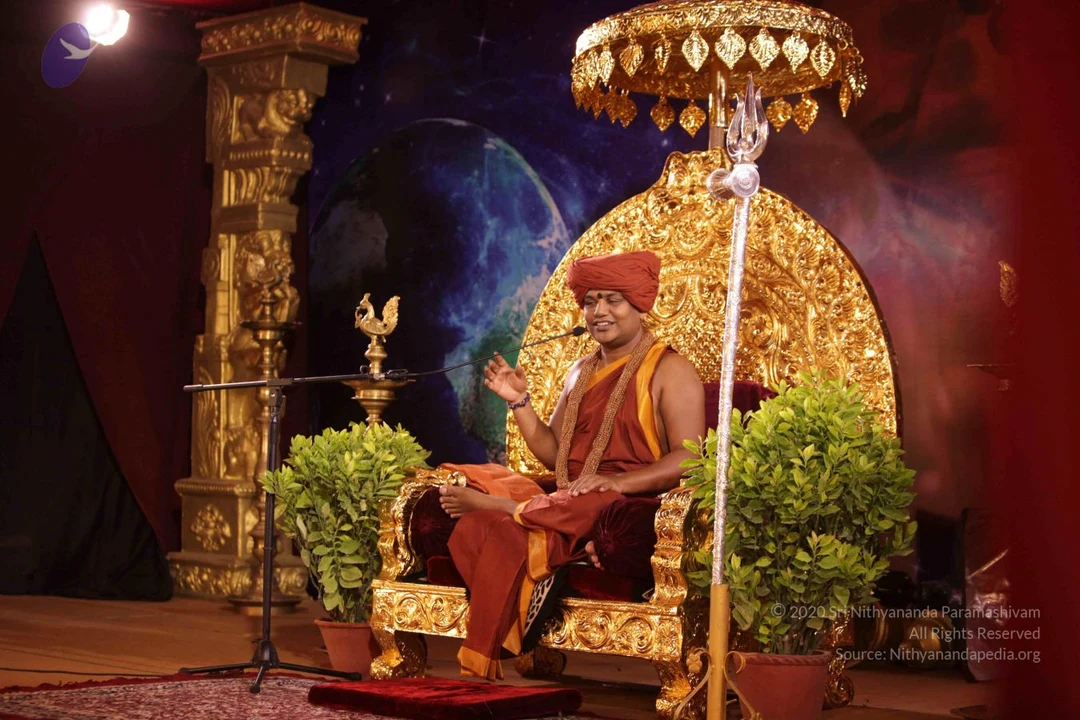
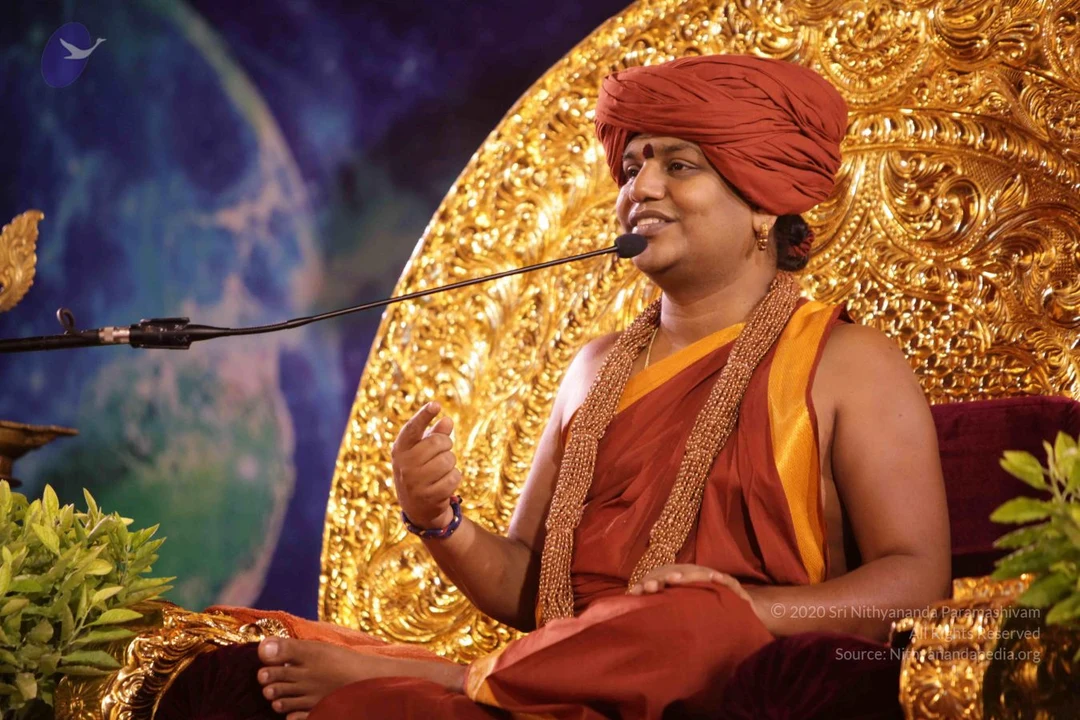
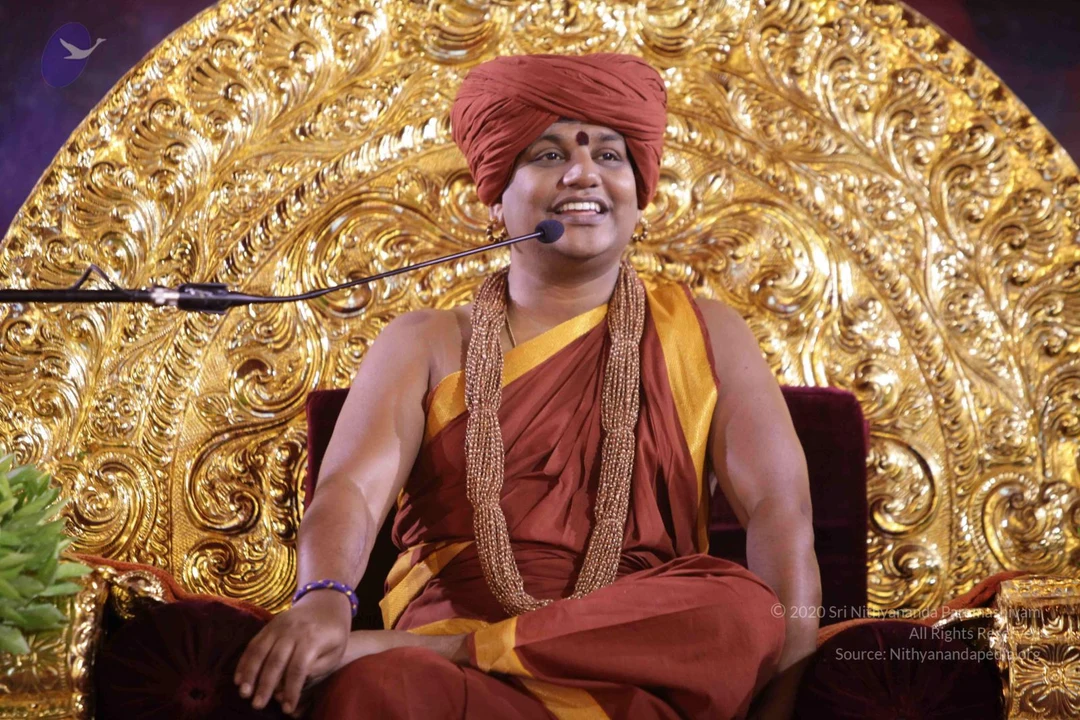
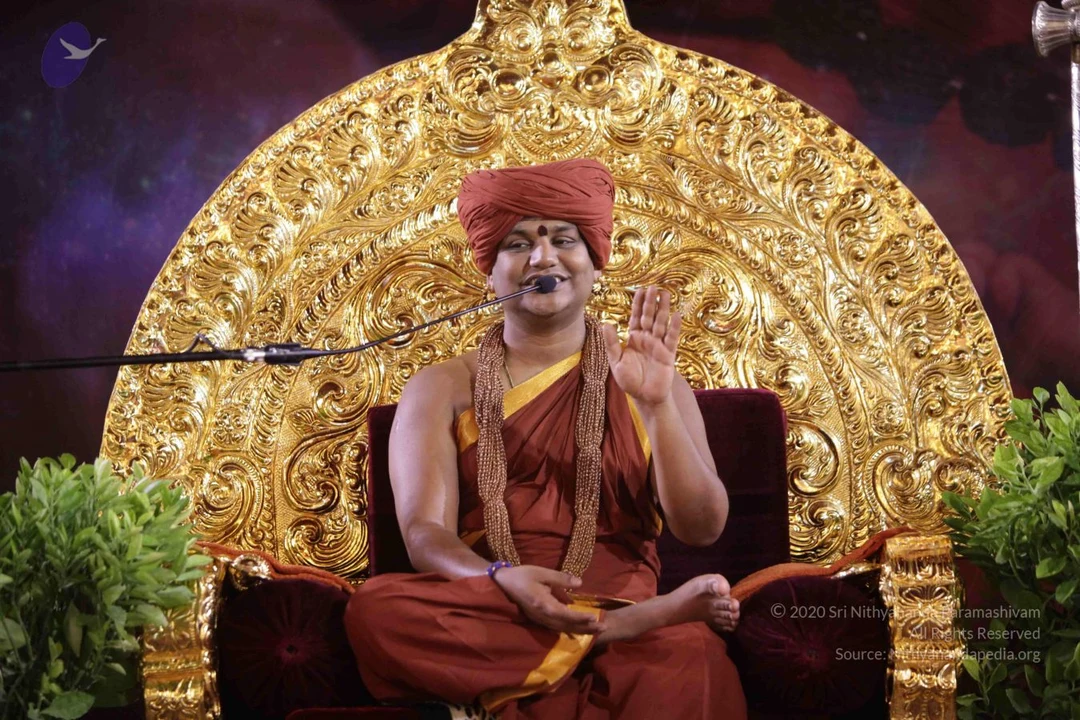
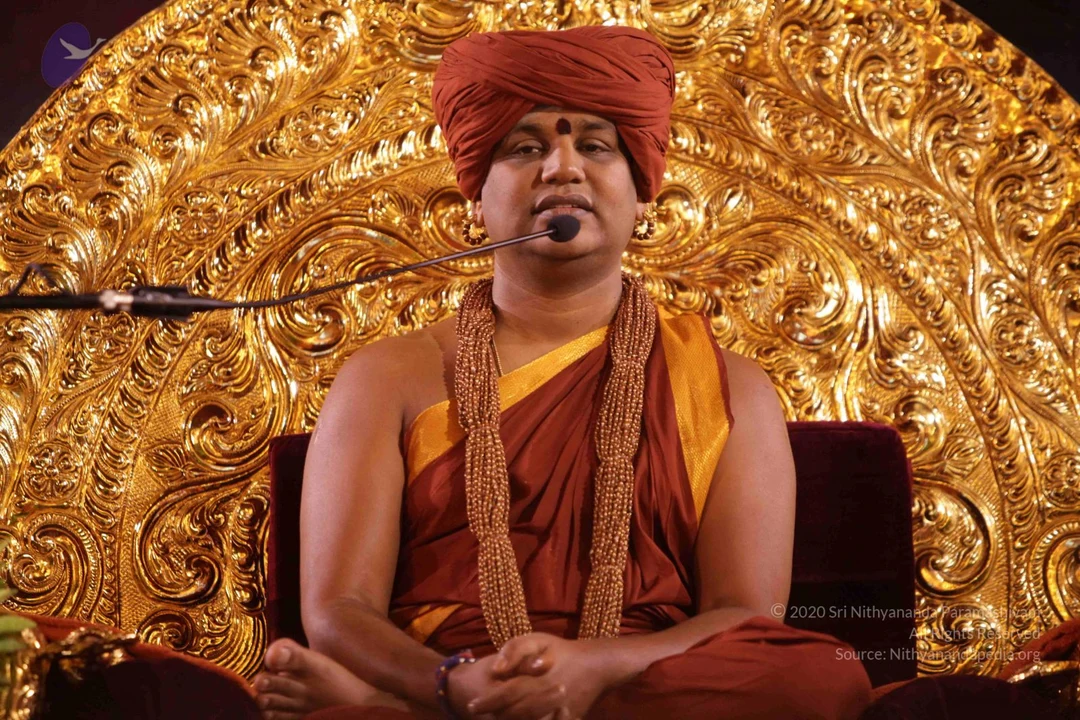
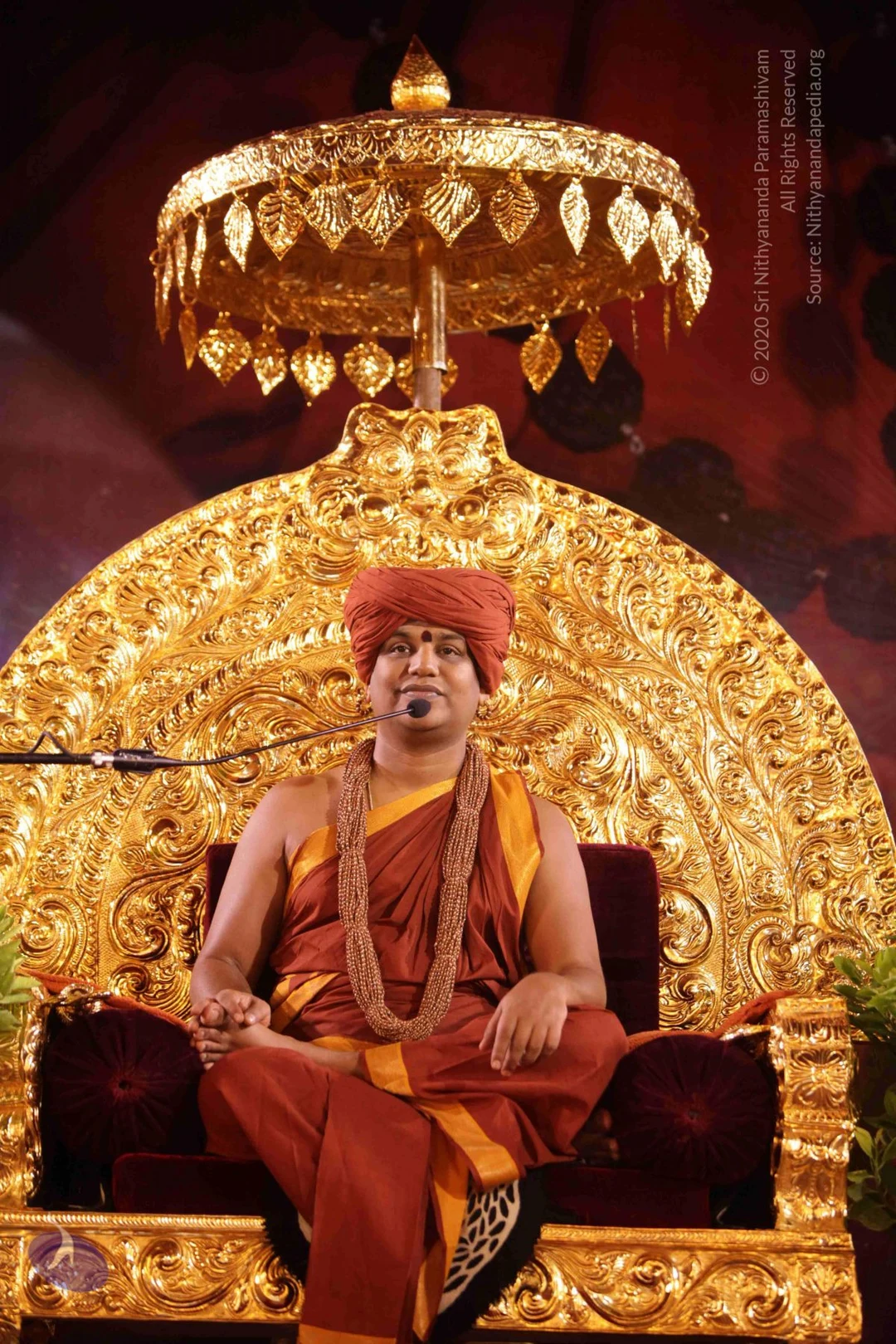
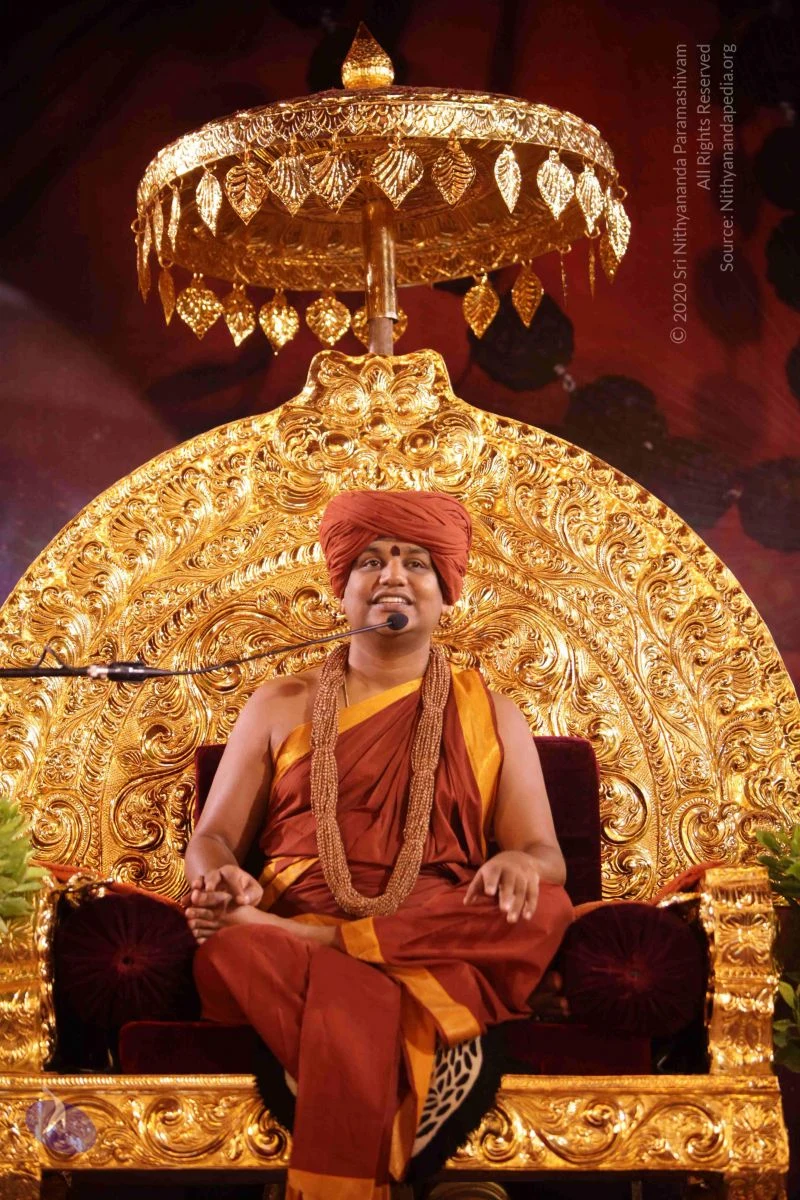
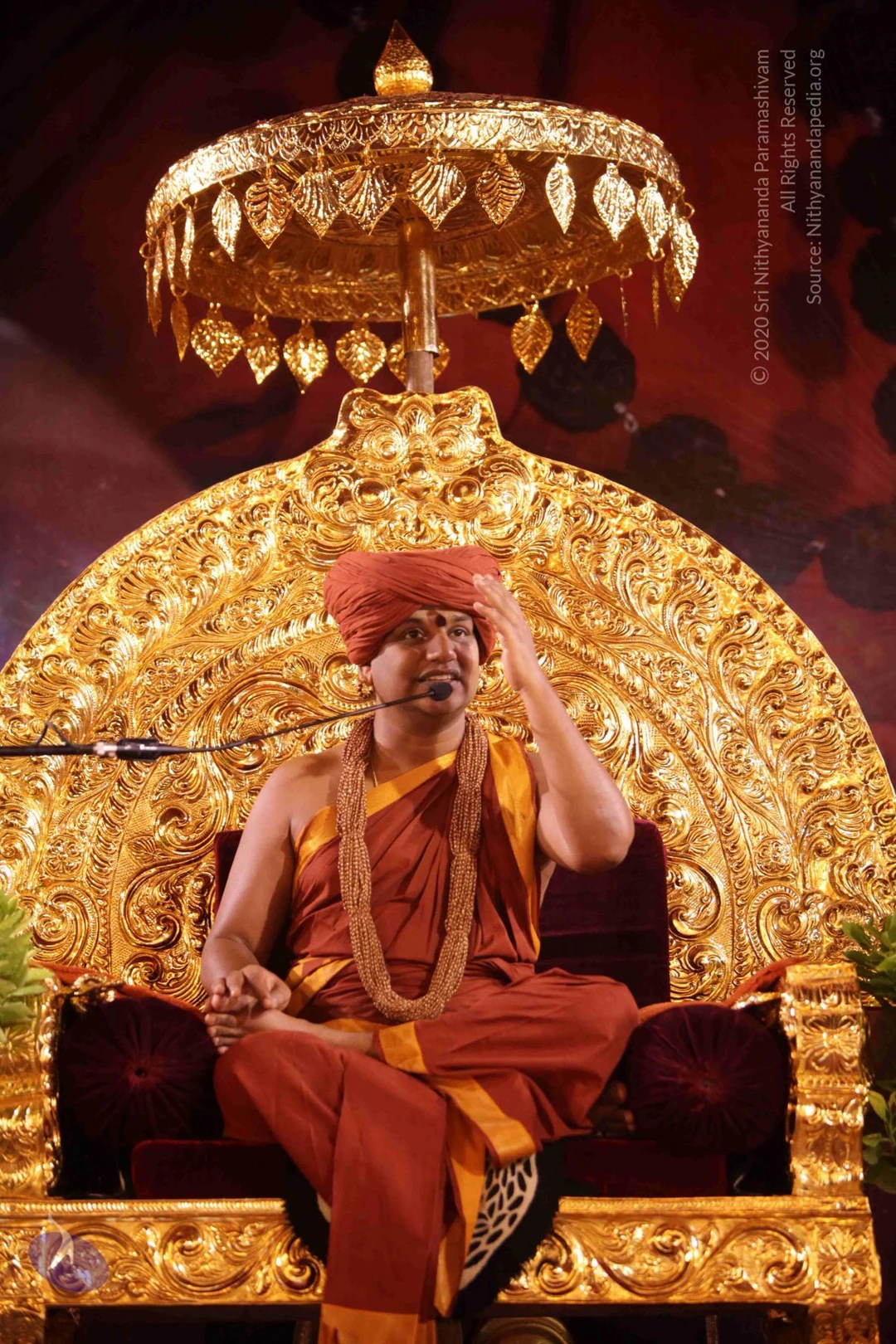
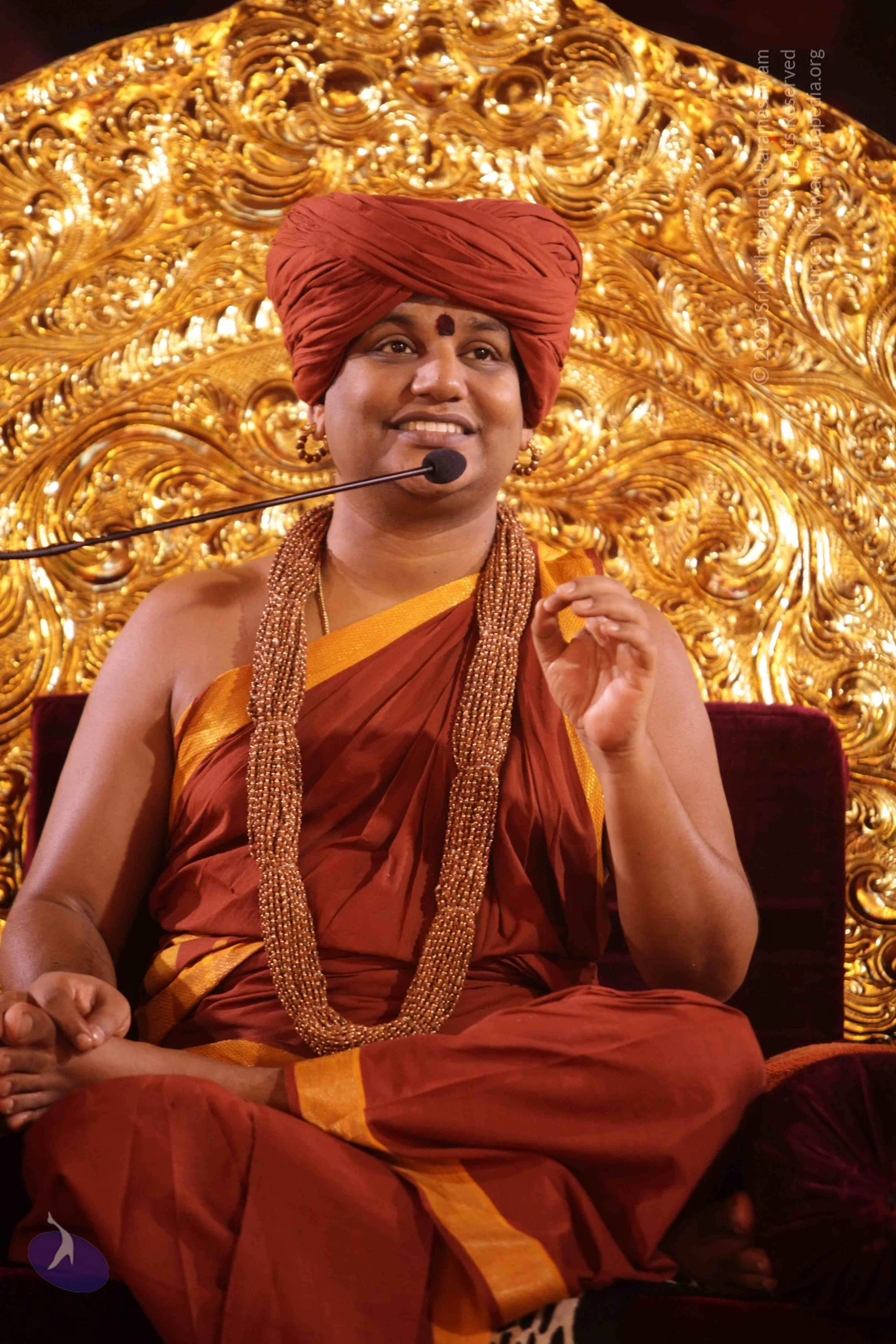
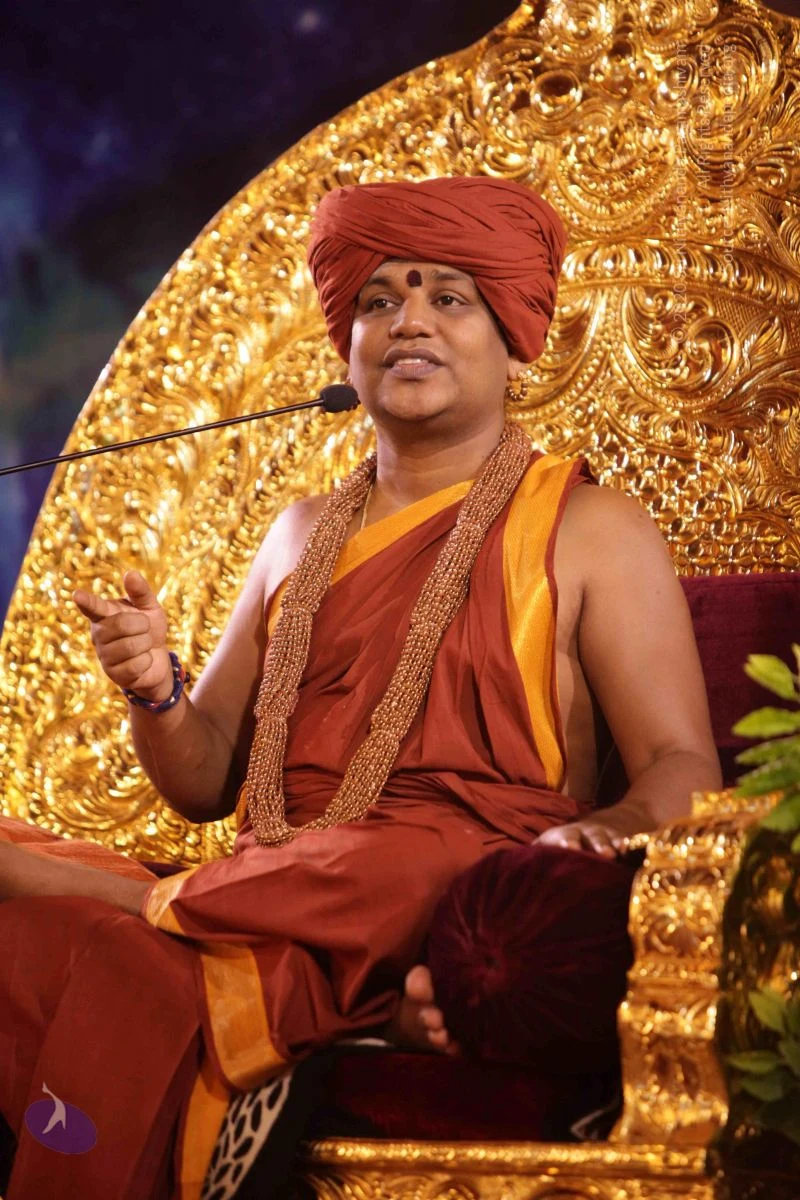
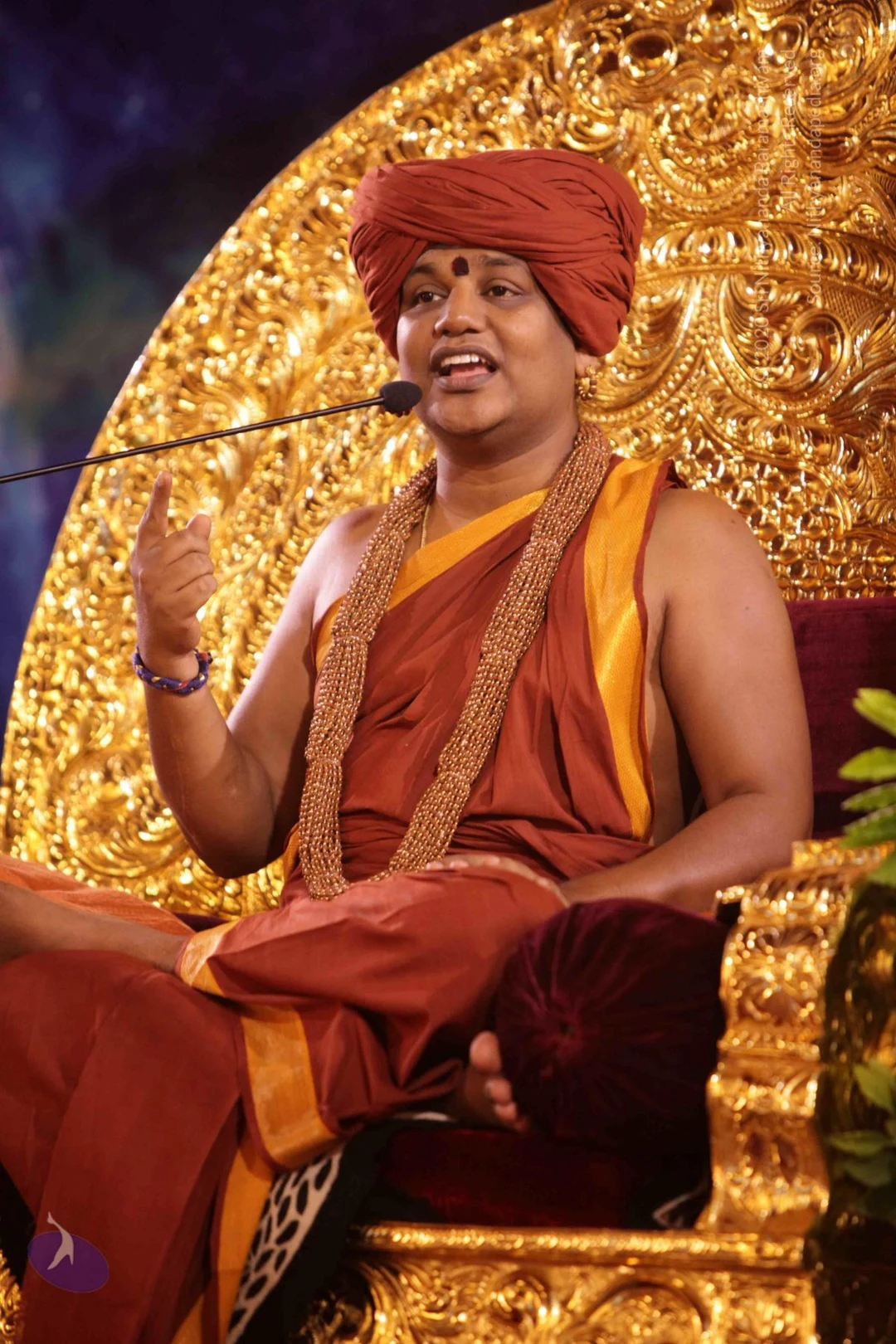
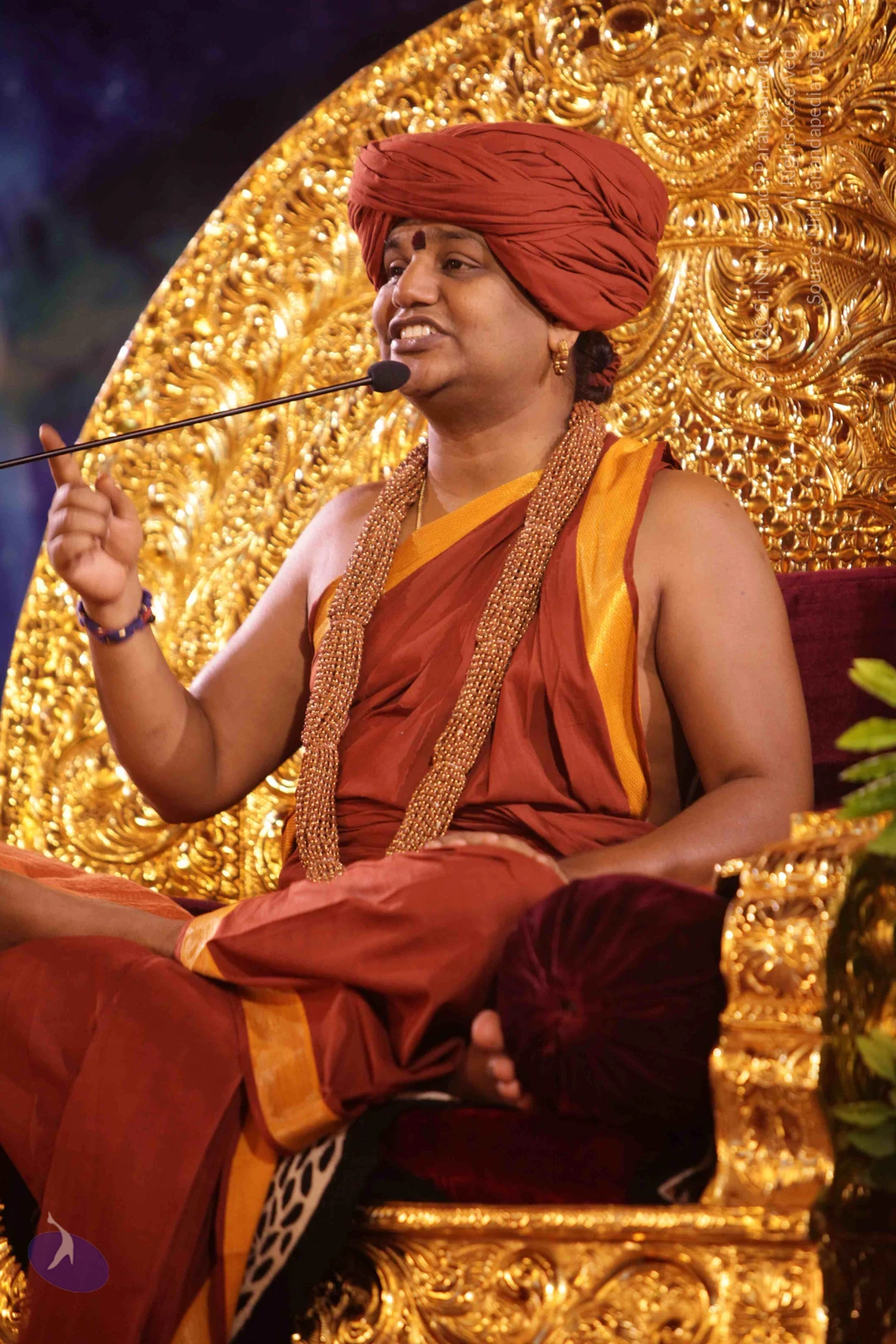
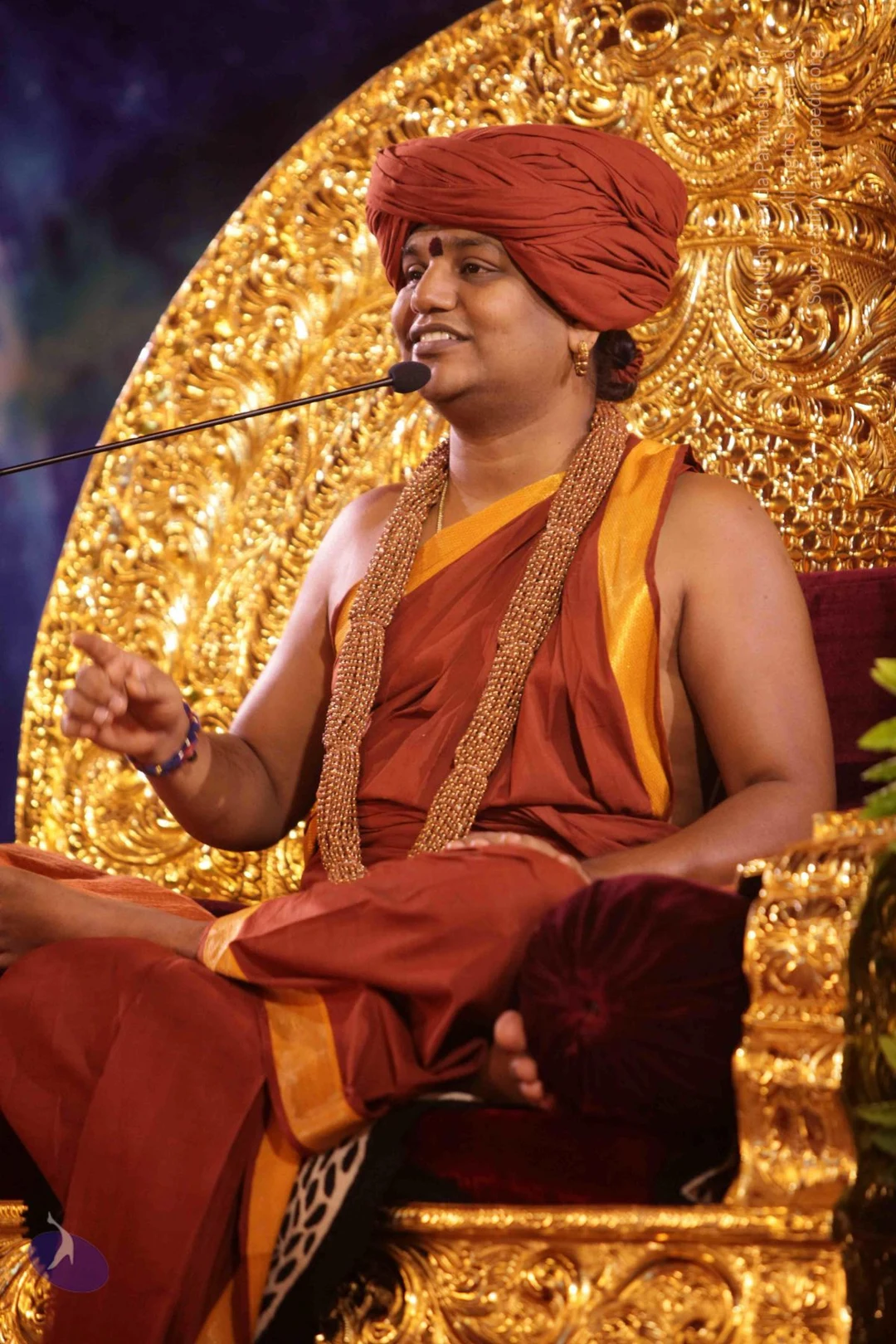
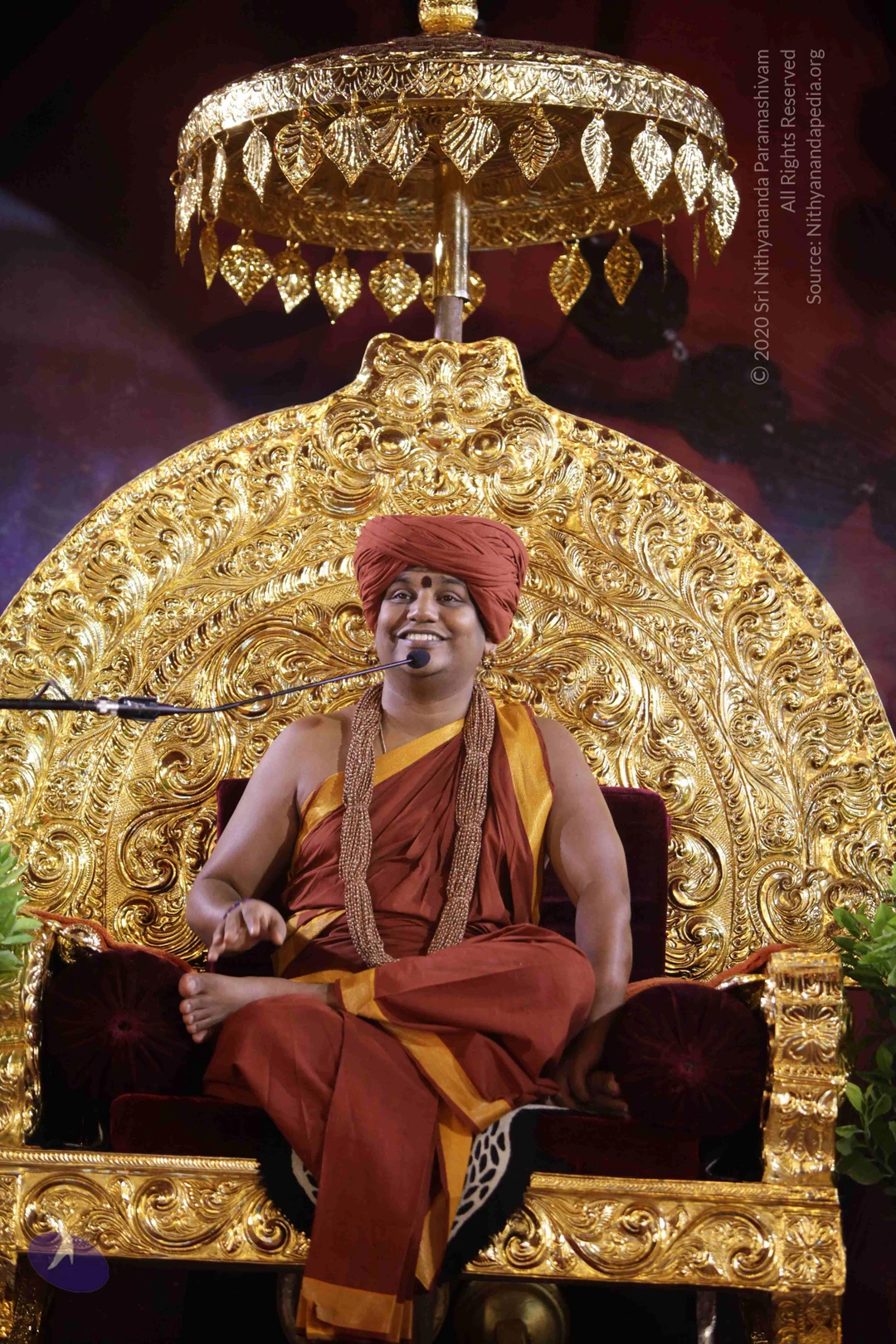
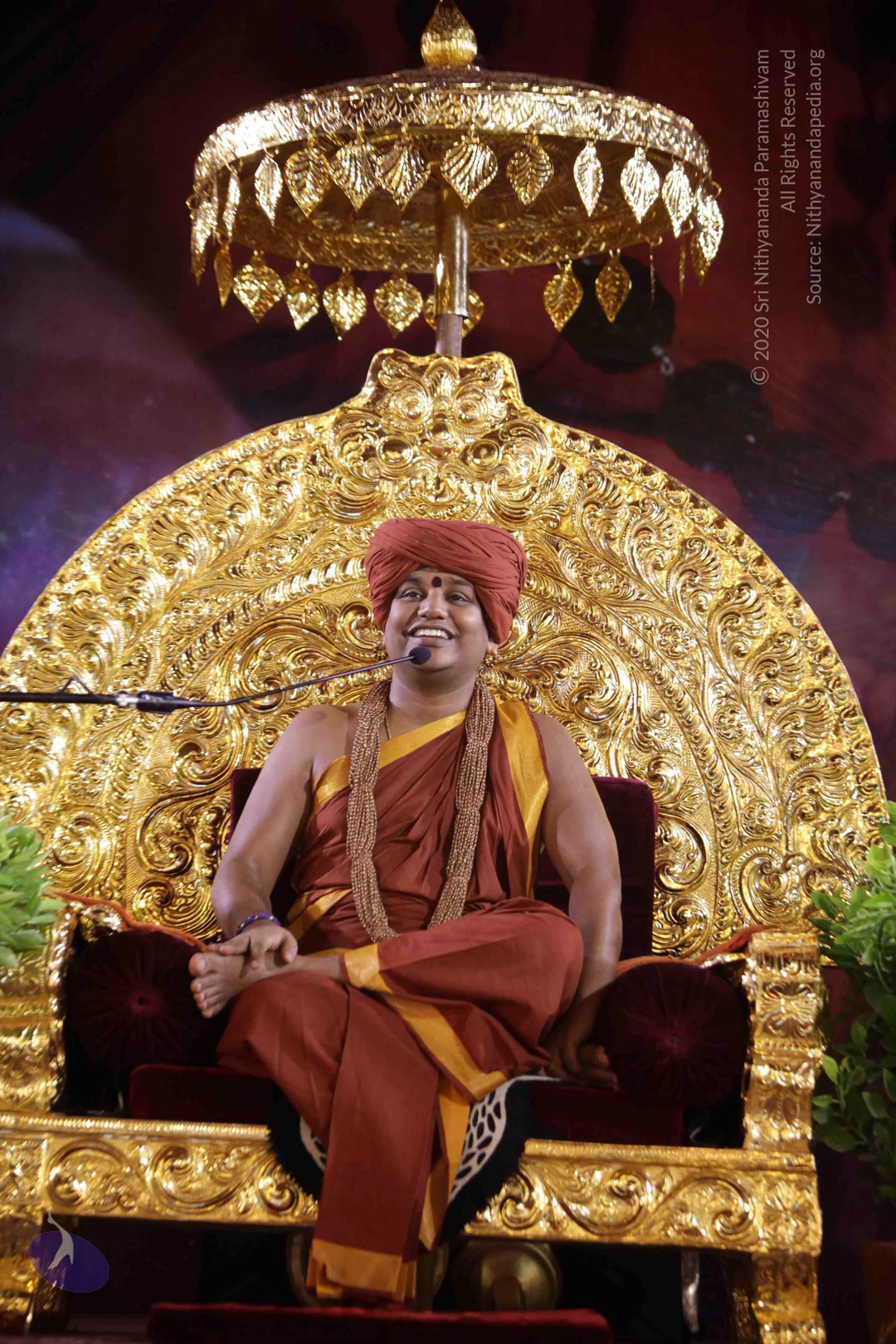
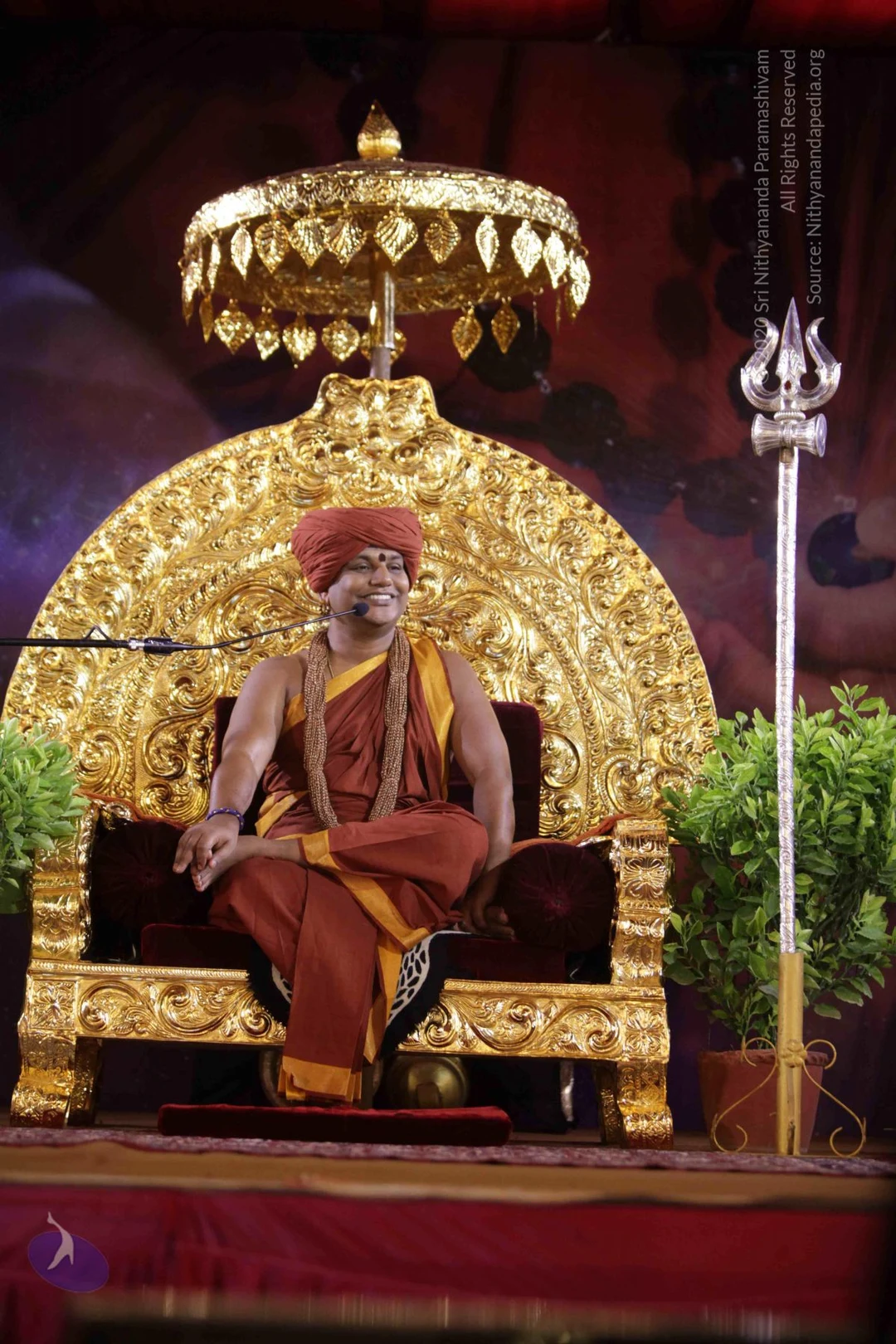
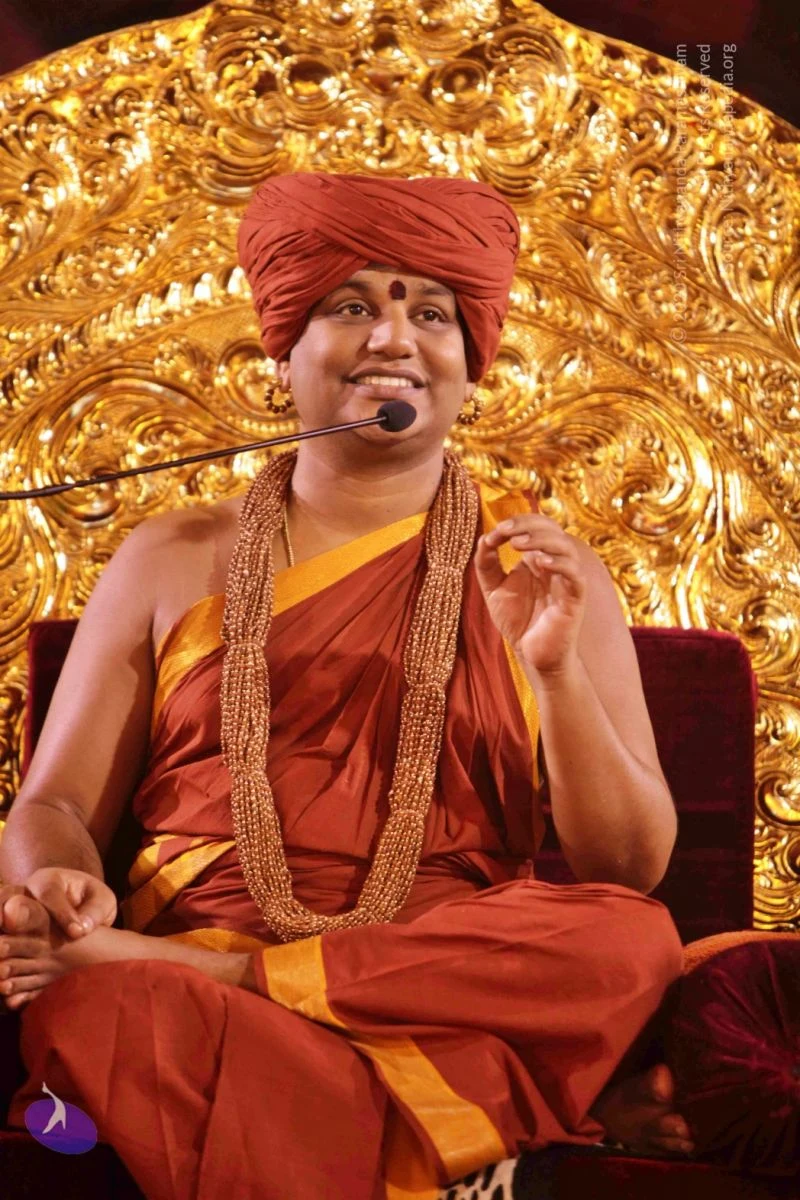
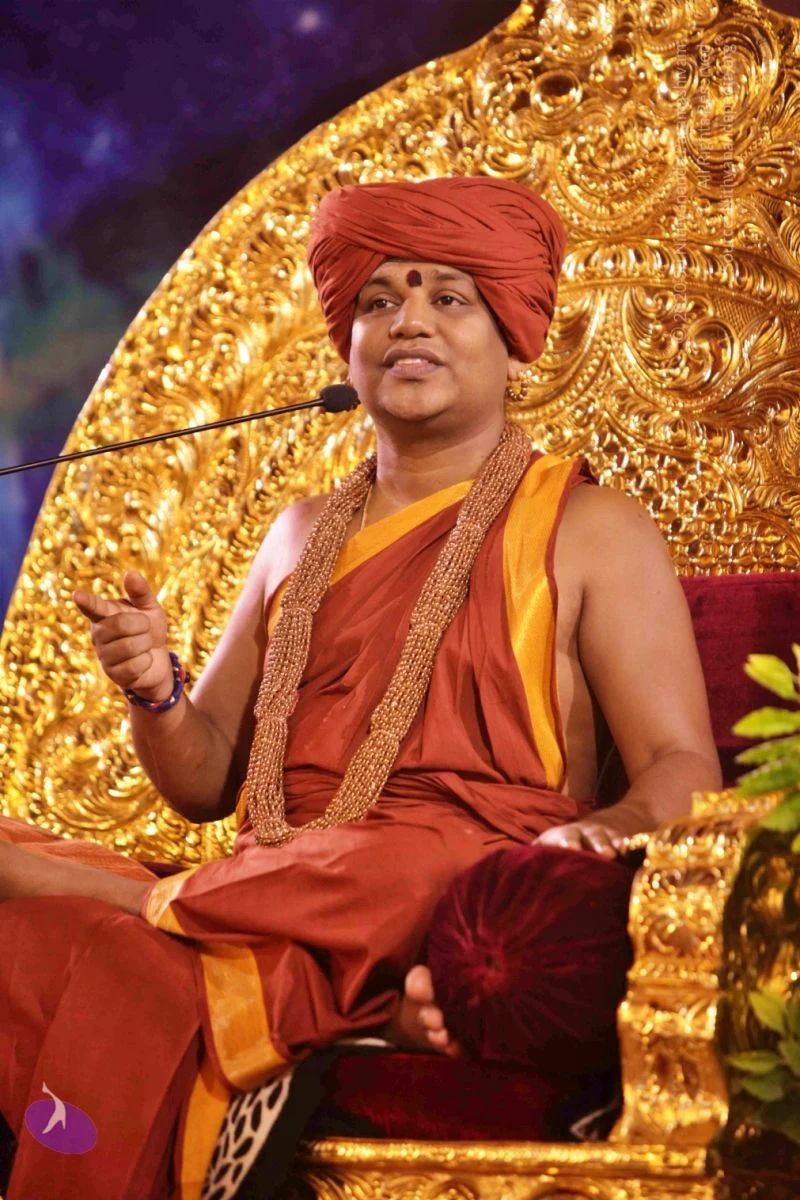
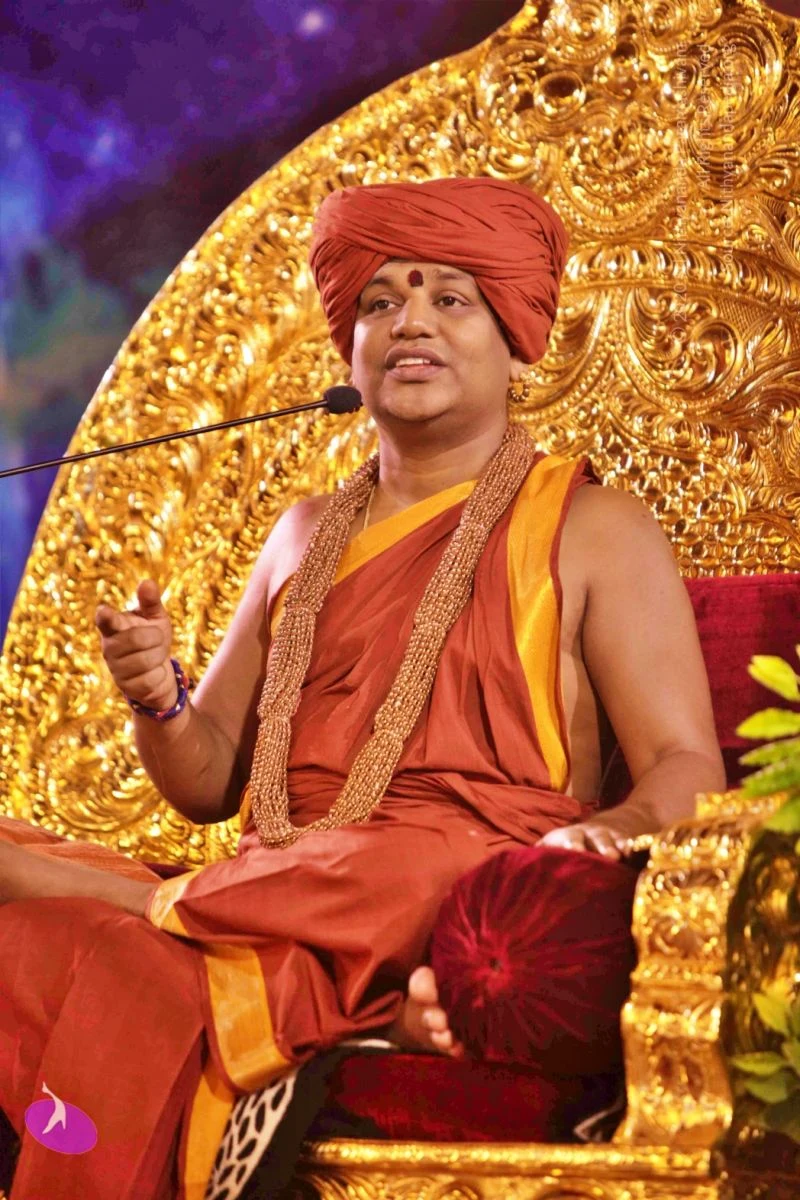
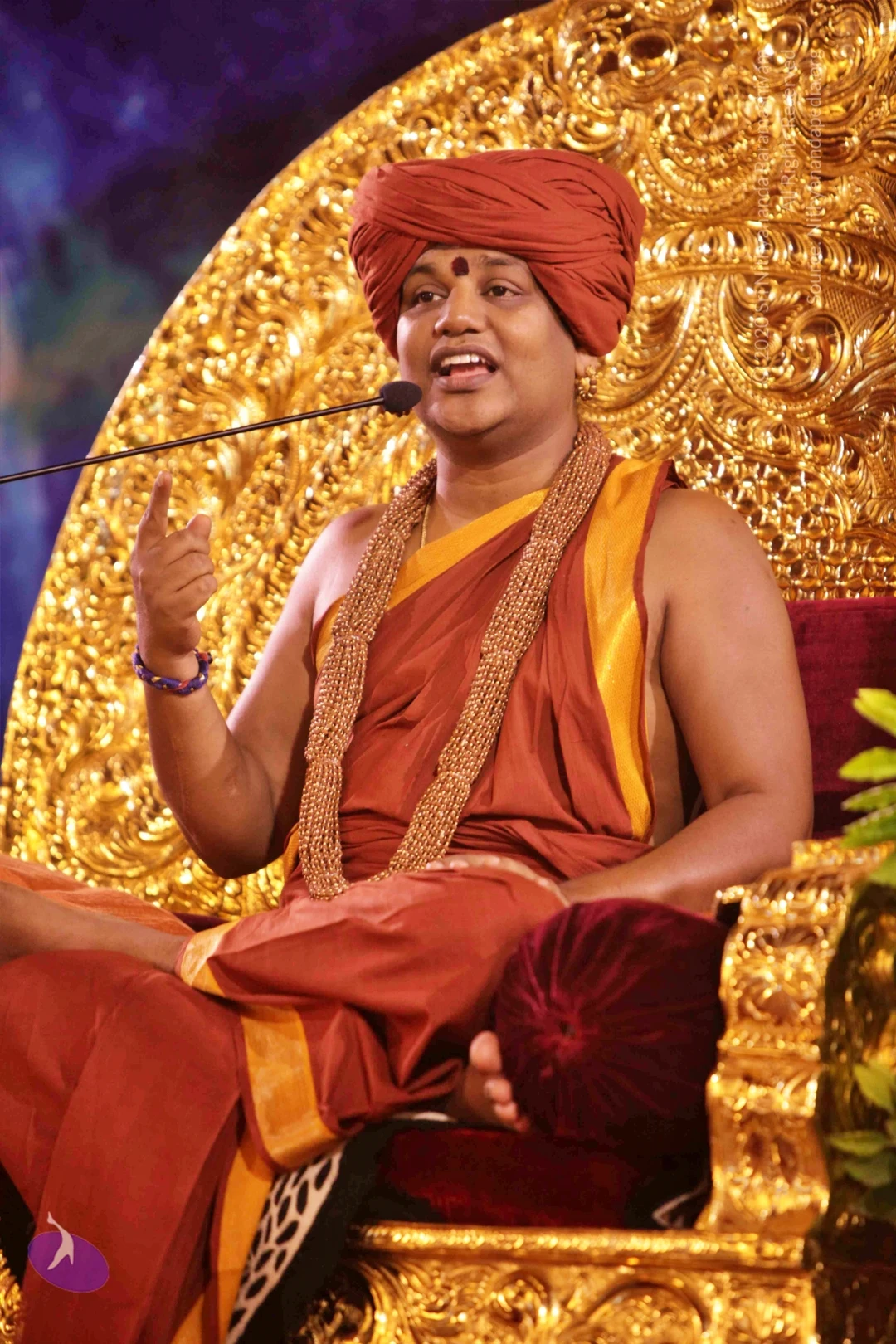
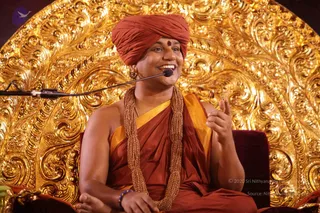
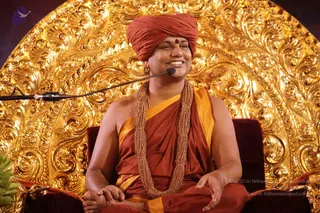
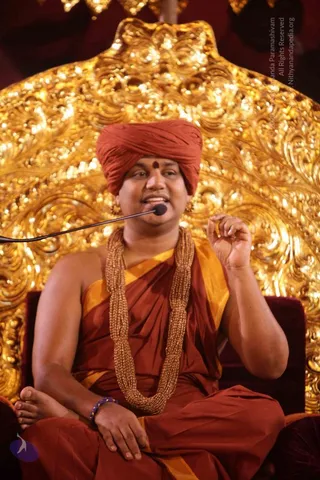
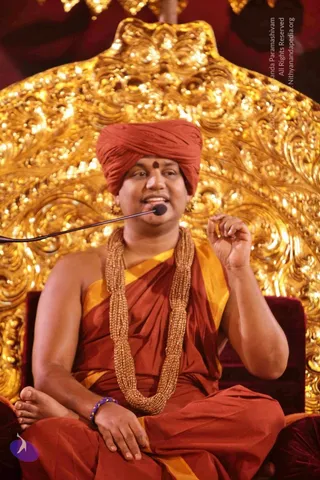
A seated man in a red-orange turban and matching red-orange and gold-bordered robe sits on a plush red-cushioned seat before an ornate golden repoussé backdrop with swirling floral patterns. He wears a multi-strand beaded rudraksha-style mala and a red dot on his forehead, and speaks into a clip-on microphone on a boom stand. A small green plant sits at the lower left.A seated man in saffron-red robes and a matching red turban with a small red dot on his forehead speaks into a microphone on a stand at left, his right hand raised in an open gesture. He wears a multi-strand beaded rudraksha-style mala with a gold-edged saffron shawl. Behind him is an ornate gold repoussé throne with swirling floral and scroll patterns. A green plant is visible at the lower left. Probable Swamiji by appearance: a turban, saffron clothing, a beaded mala and a gilded throne are visible cues, and the page says he is present at this satsang. One physical person is visible.A seated man in a rust-red turban and matching red-orange robe with a golden-yellow shawl edge smiles broadly while gesturing with his right hand, speaking into a microphone on a stand at left. He wears a long multi-strand beaded necklace of rudraksha-style beads and a small red bindi, with a blue-and-gold bracelet on his wrist. He sits in front of an ornate gold repoussé throne backrest with scrolling floral patterns. a person appears as the seated speaker, shown in a satsang-style discourse setting.A smiling man sits cross-legged on an ornate golden throne with intricate repoussé scrollwork behind him, speaking into a gooseneck microphone. He wears a rust-red turban with a small red bindi on his forehead, a saffron-red shawl draped over a gold-bordered garment, a long multi-strand beaded necklace of brown beads, gold earrings, and a blue-beaded bracelet. His right hand is raised in a teaching gesture. Swamiji (probable): the turban, red-orange robes, ornate gold throne and beaded mala match the page's identification, though his face cannot be used to confirm it. Green foliage is visible at the lower left edge.A photograph of a seated figure on an ornate golden throne with a tall, intricately carved gold back and a golden canopy above. He wears an orange-red turban, an orange-red robe draped over the shoulder and body with yellow borders, and a long rudraksha mala necklace. He sits cross-legged, one hand raised in a speaking gesture, with a microphone on a stand before him. A silver trident stands to the right and brass oil lamps with bird-shaped tops flank the throne, with potted green plants on either side against a purple and red backdrop.A photograph of a seated man speaking into a boom microphone in front of an elaborate gold repoussé backdrop. He wears a red-orange turban with a small red bindi on his forehead, an orange-red robe with a yellow-gold border draped over his shoulder, and a long multi-strand beaded necklace of golden-brown beads. He sits cross-legged on a dark red cushioned seat, smiling with hands gesturing, with a green plant at the left edge.

Darshan

9 photosSource gallery
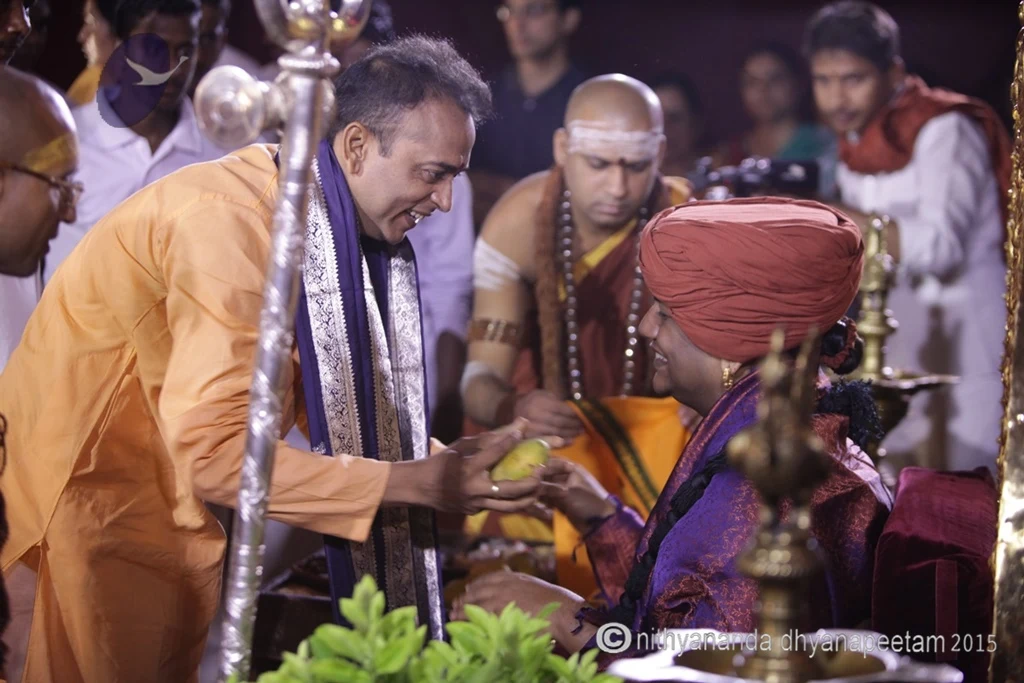
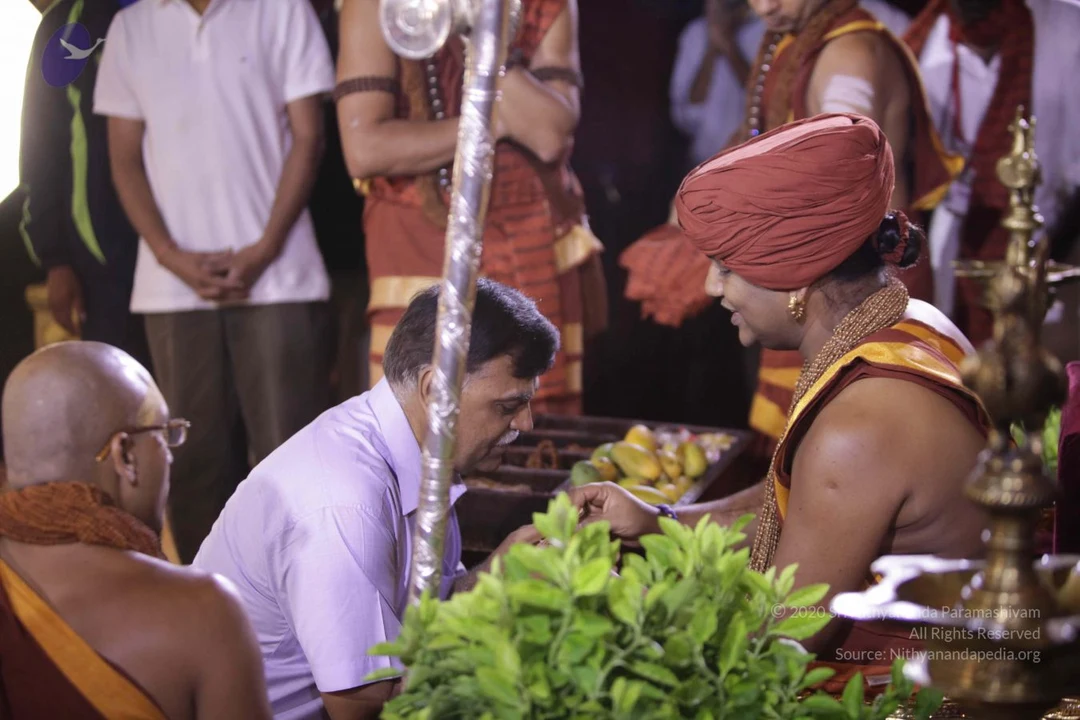
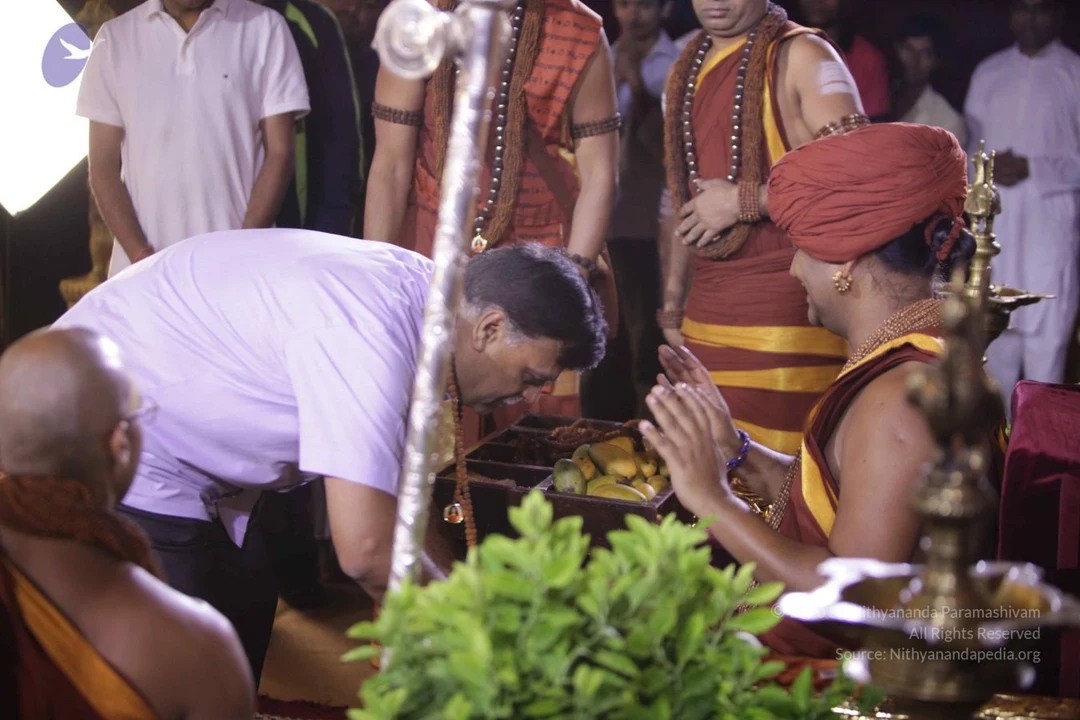
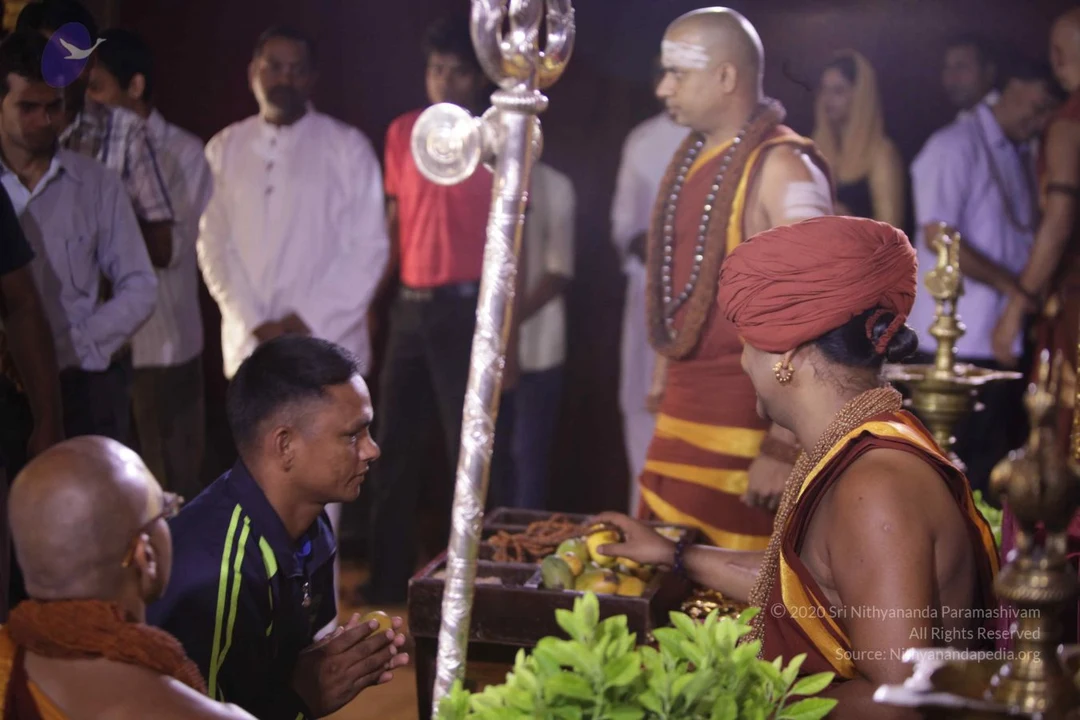
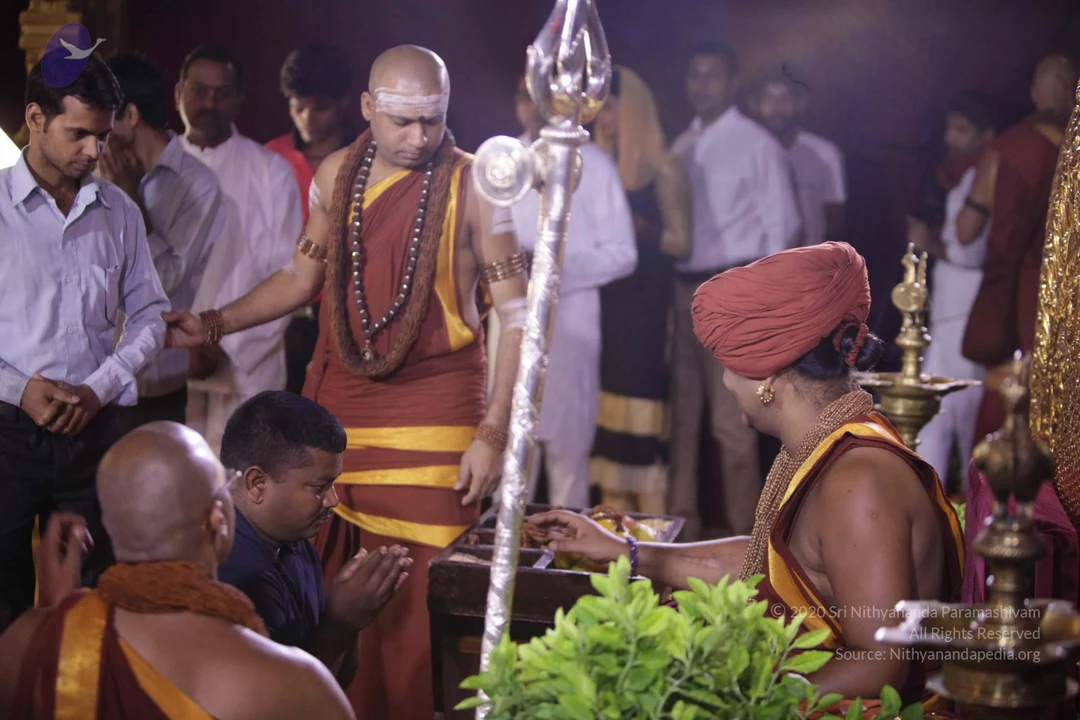
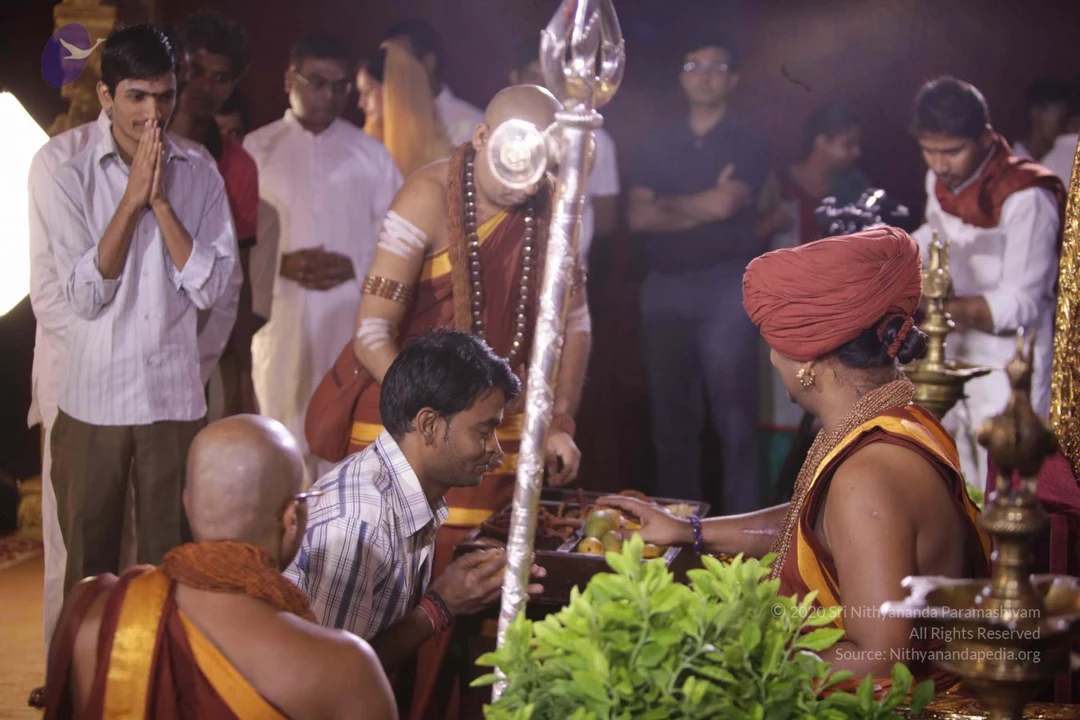
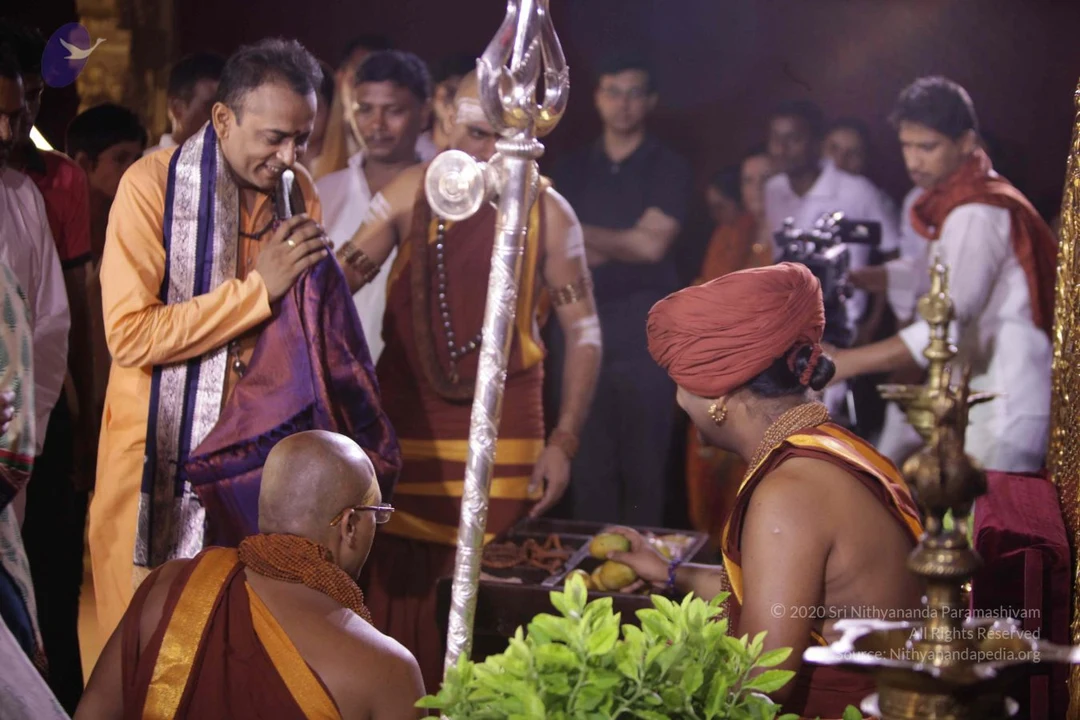
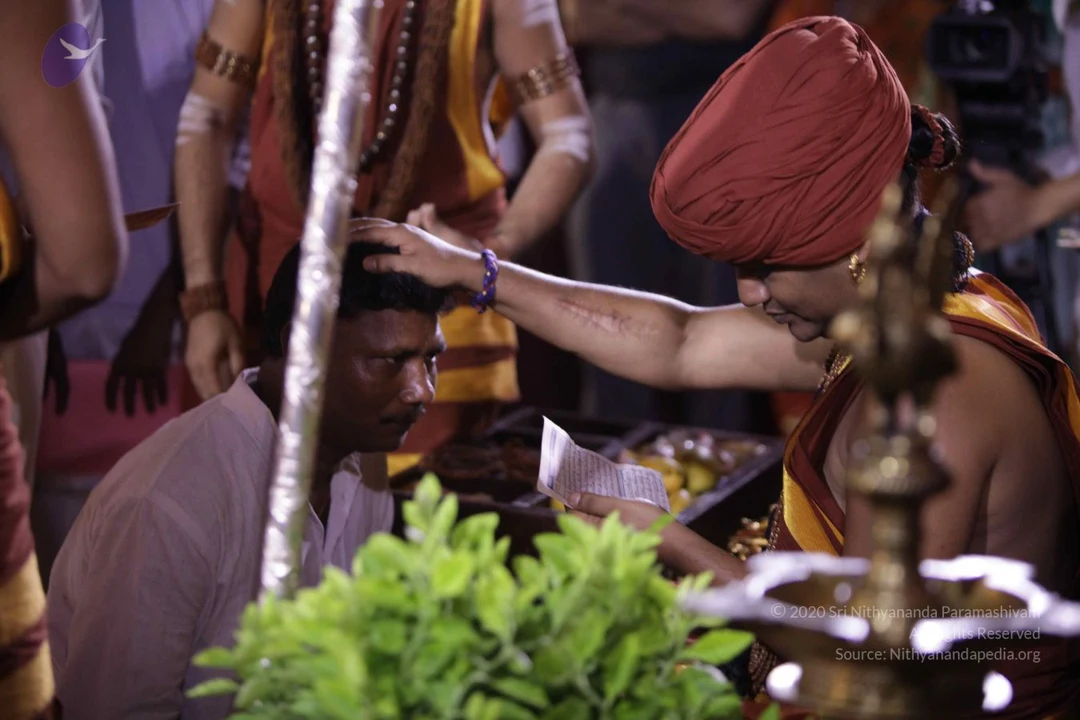
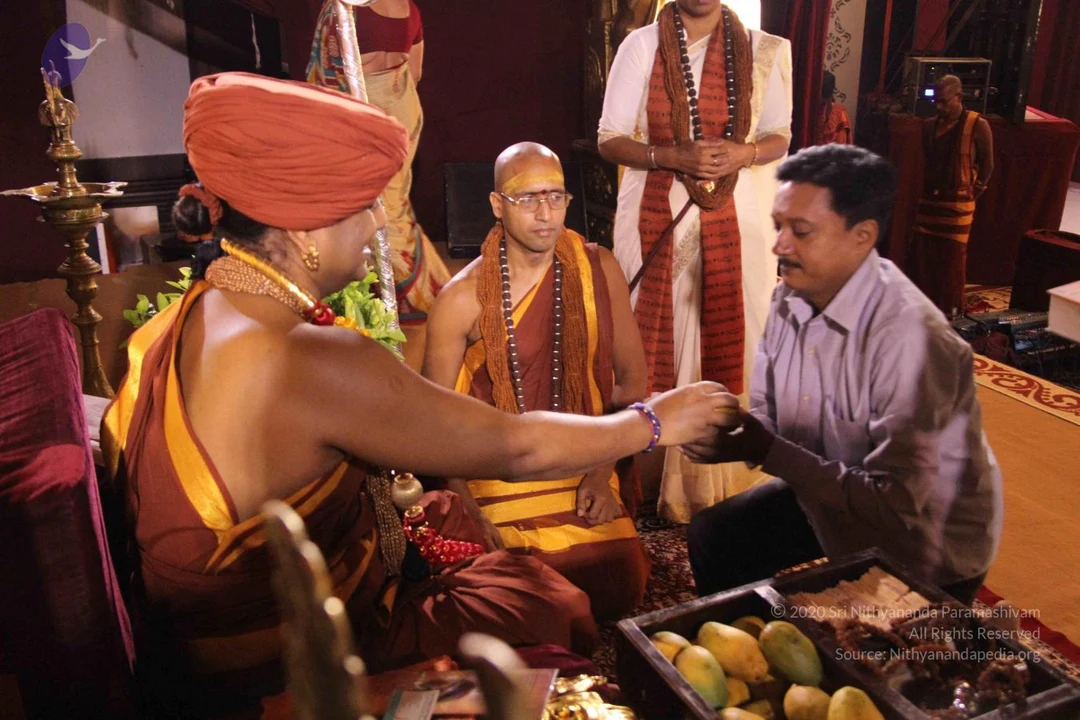
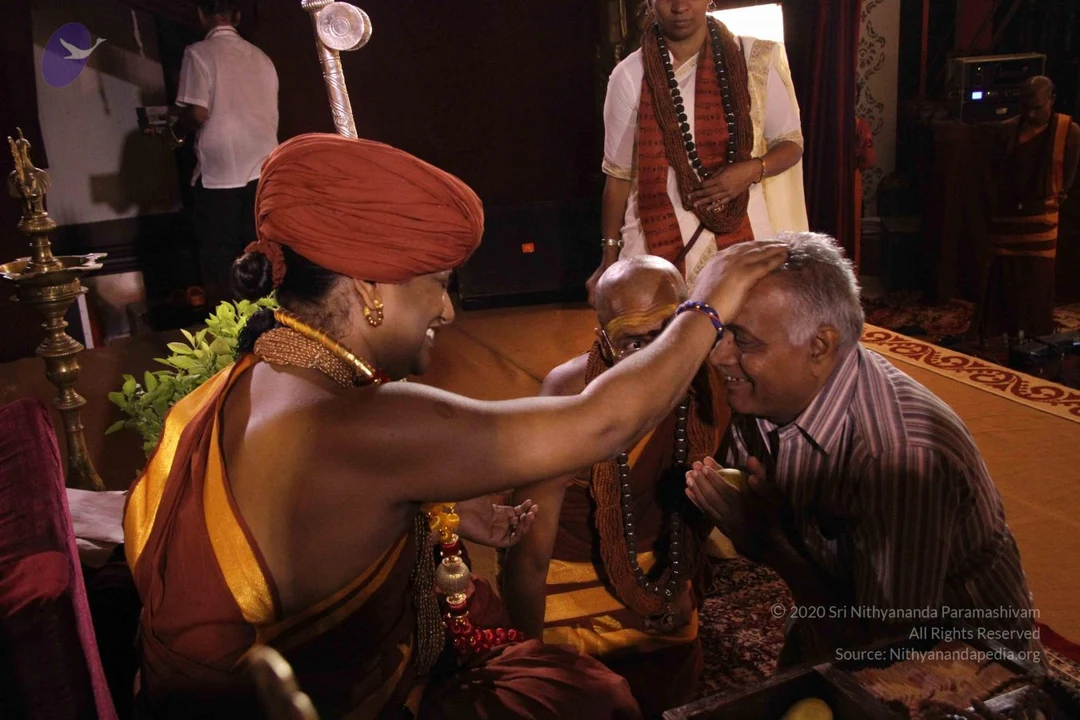
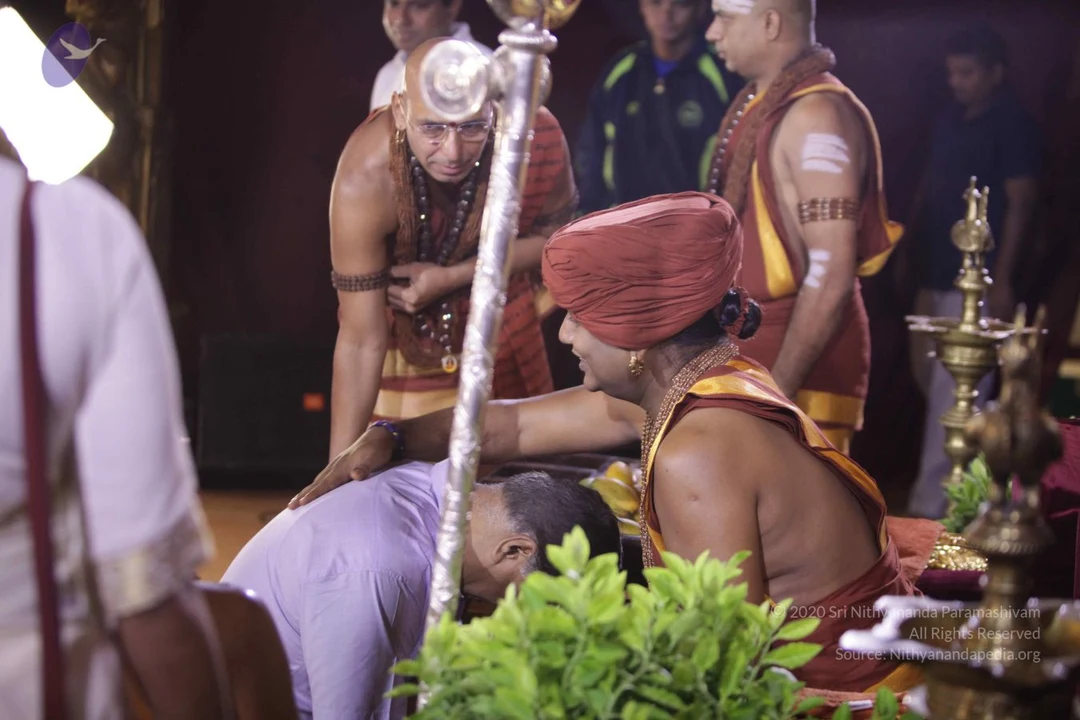
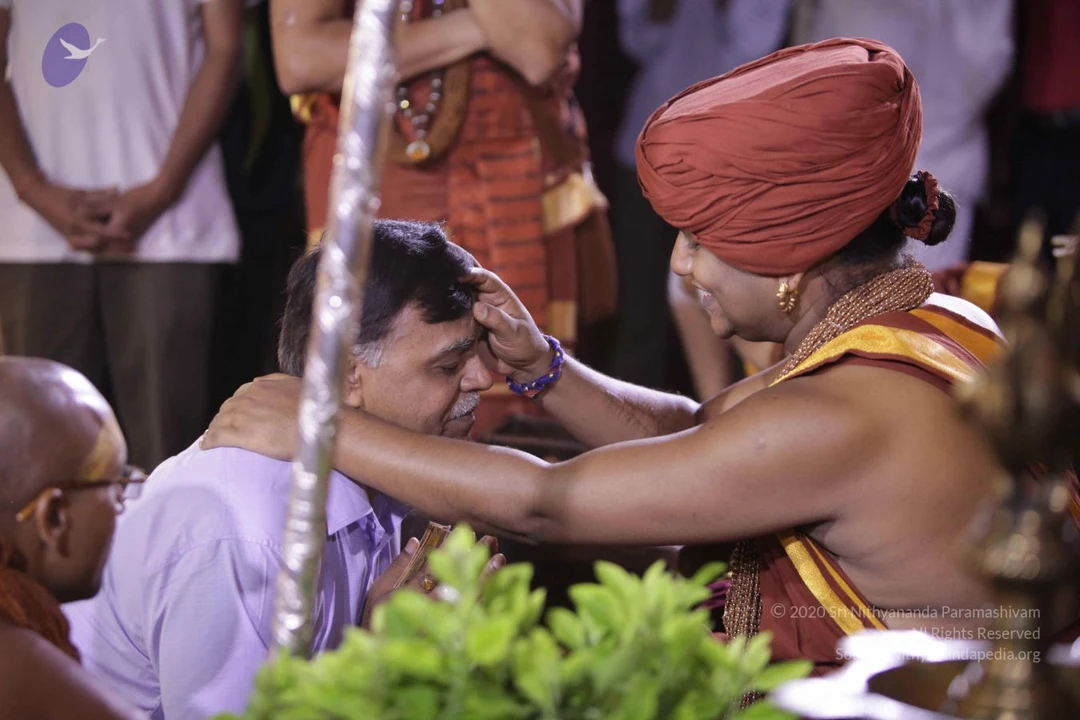
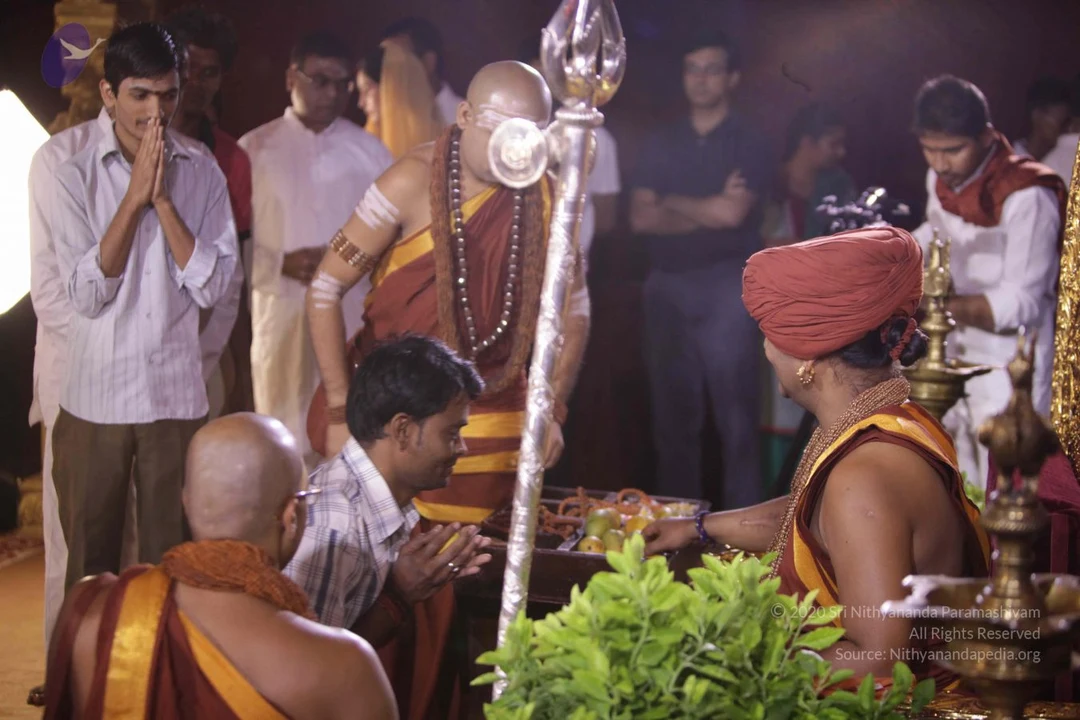
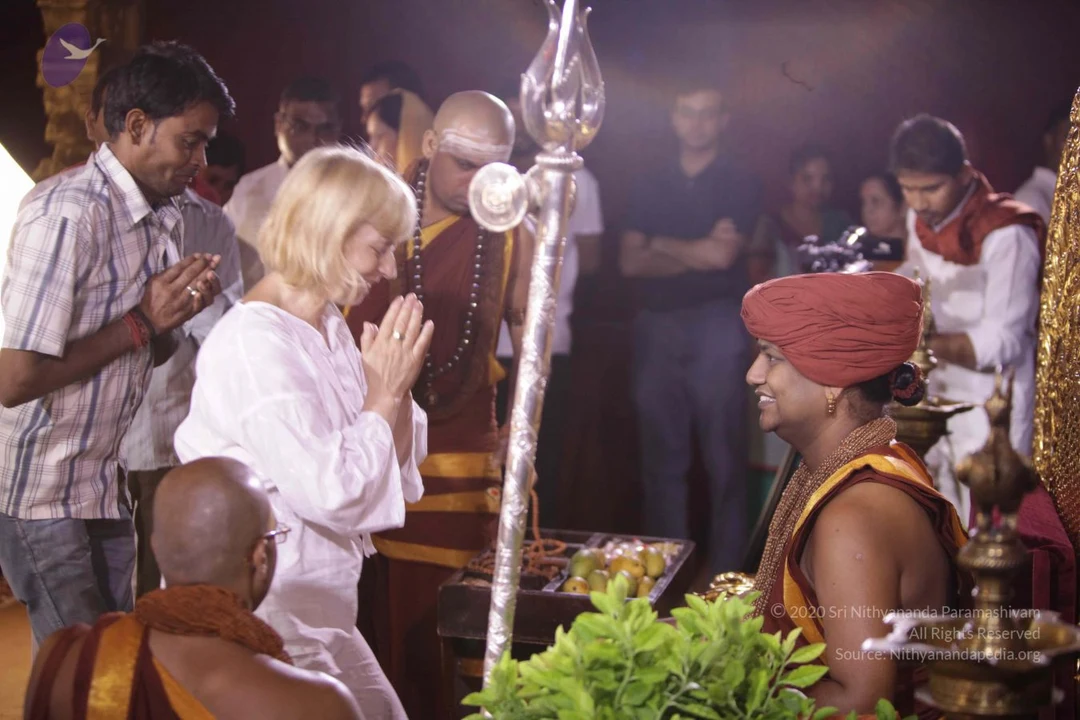
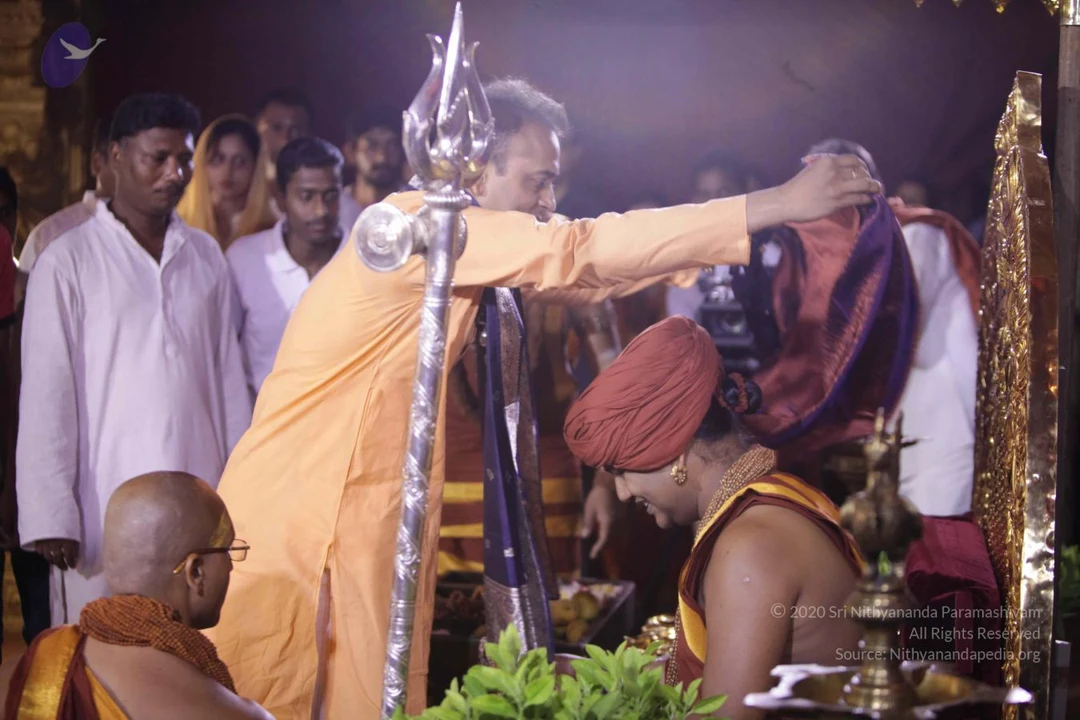
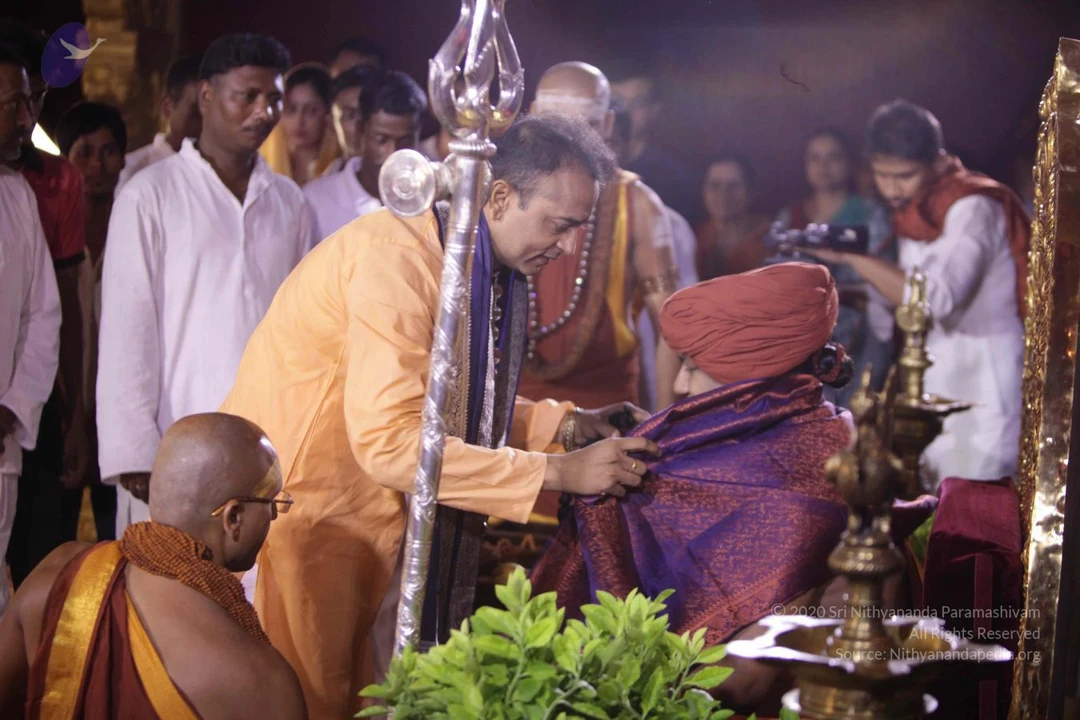
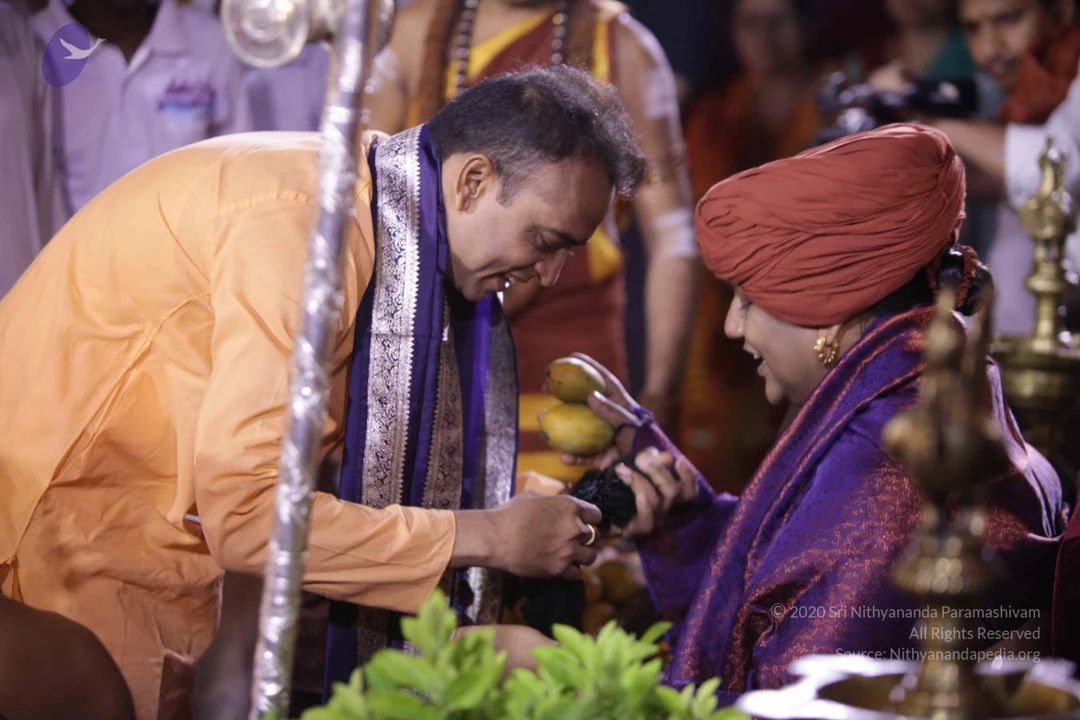
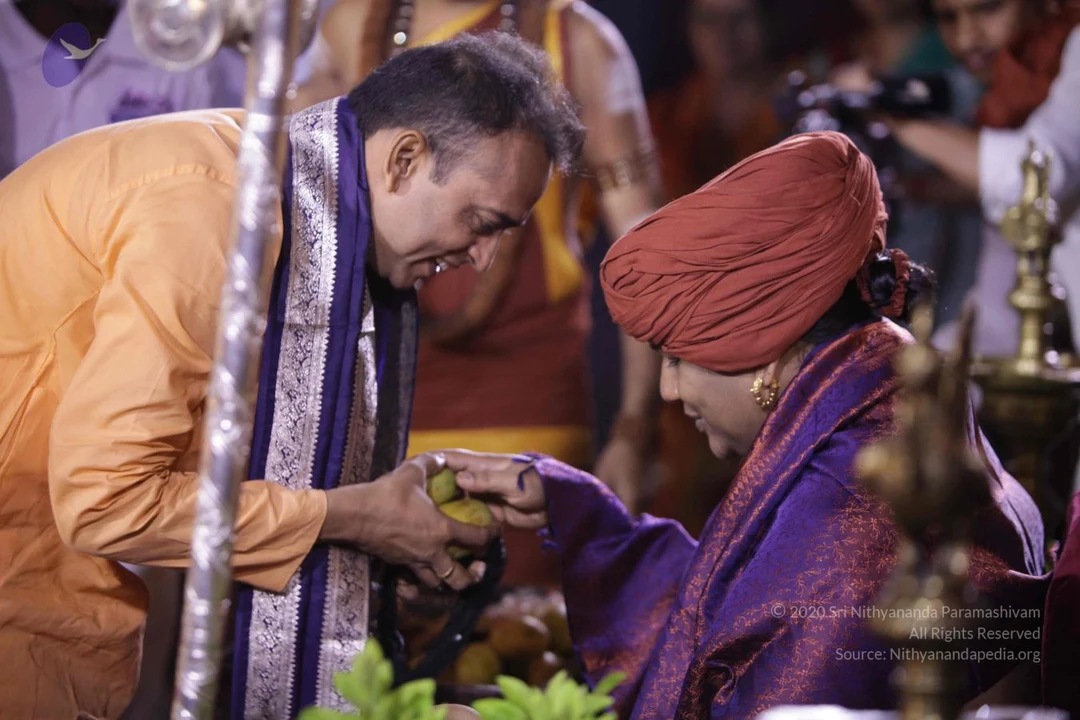
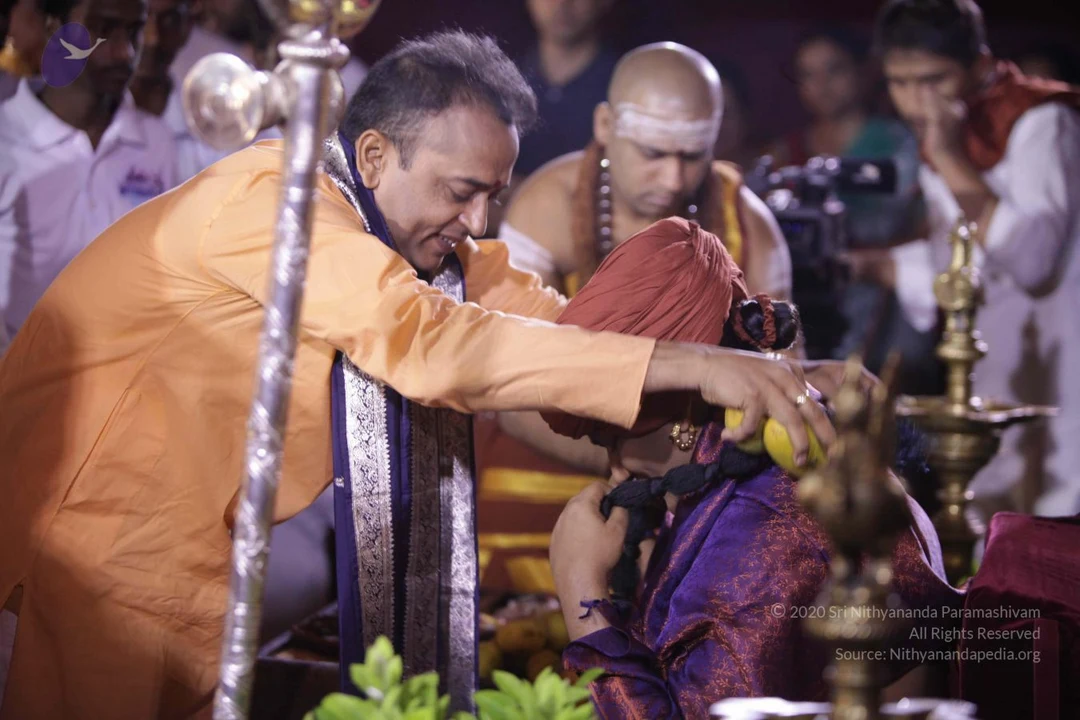
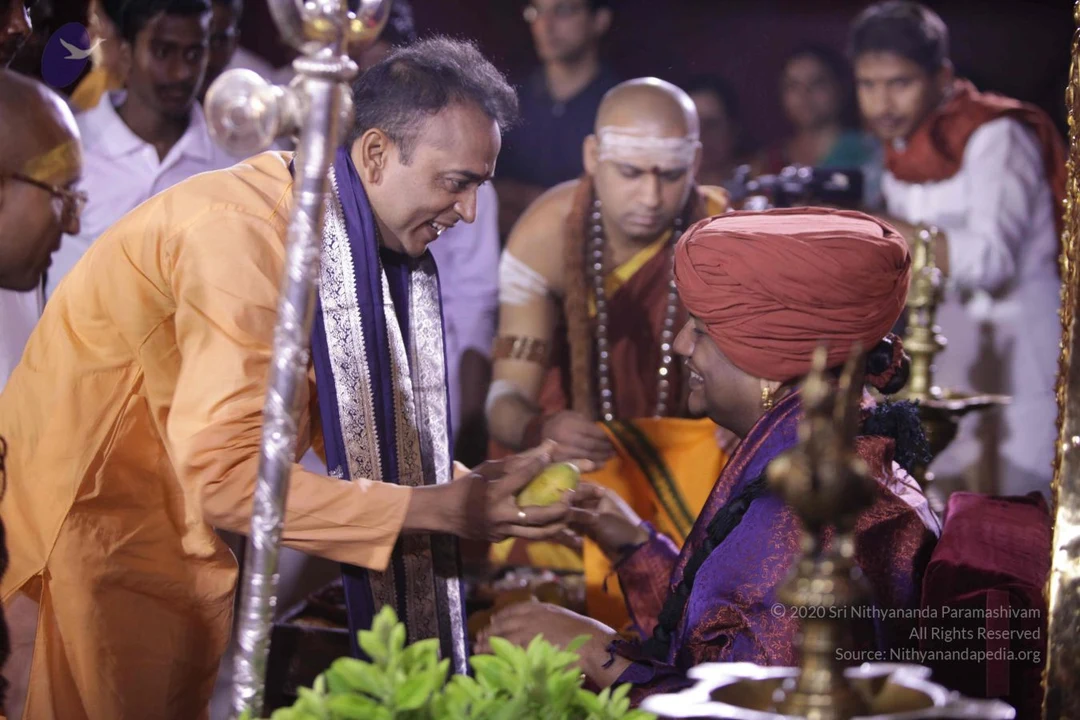
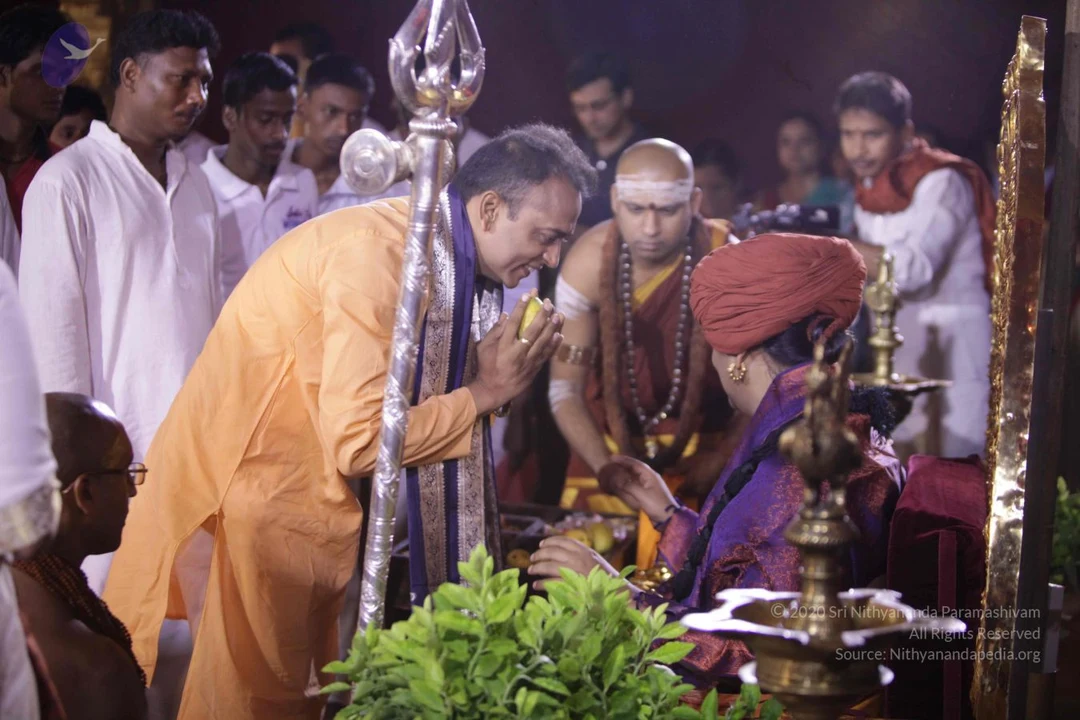
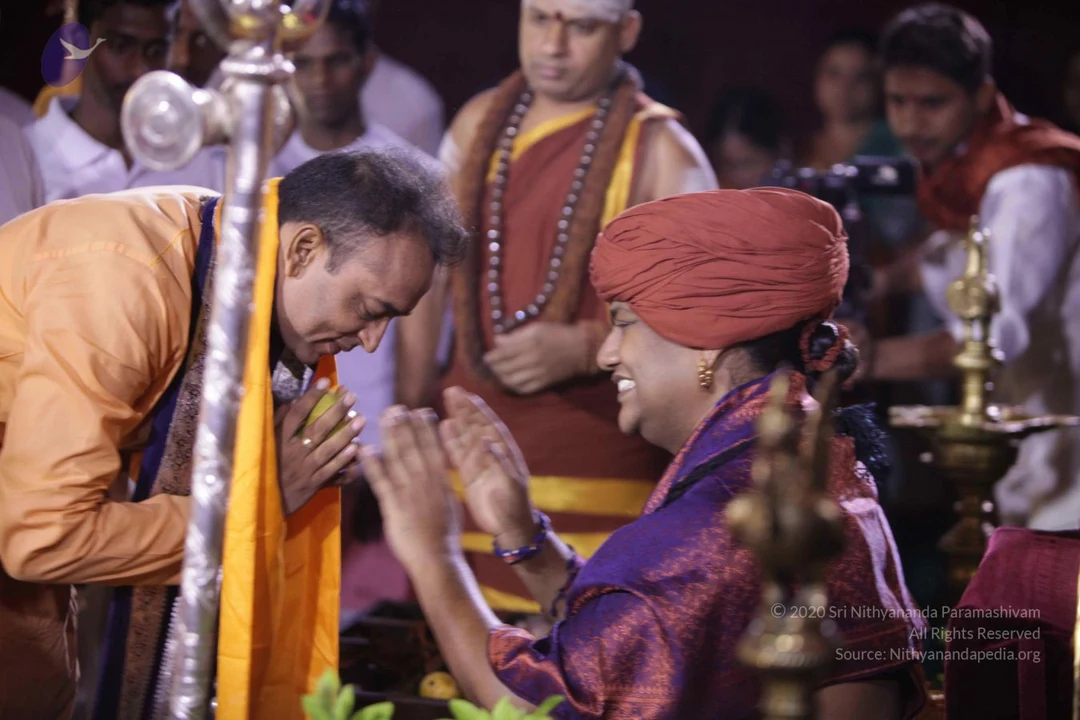
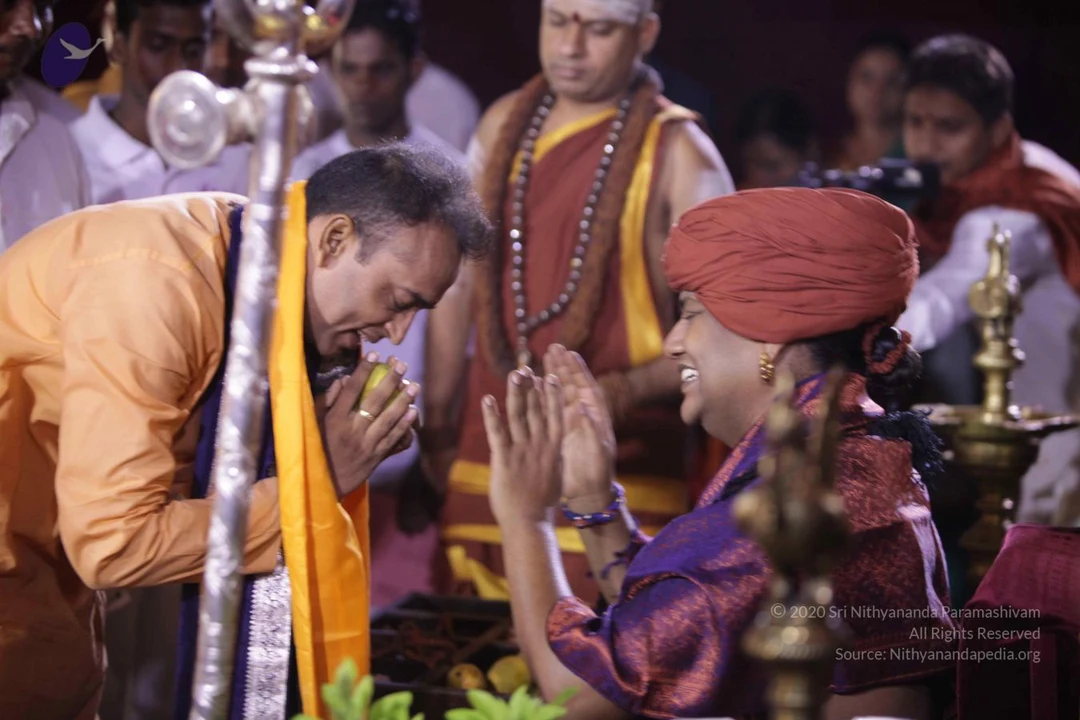
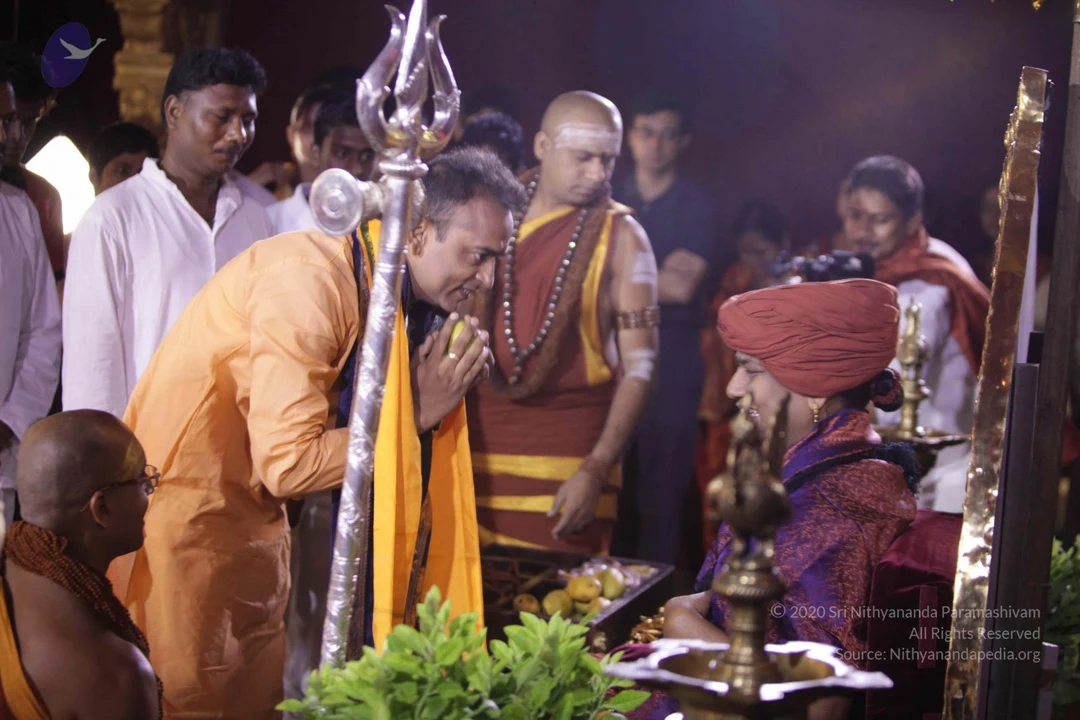
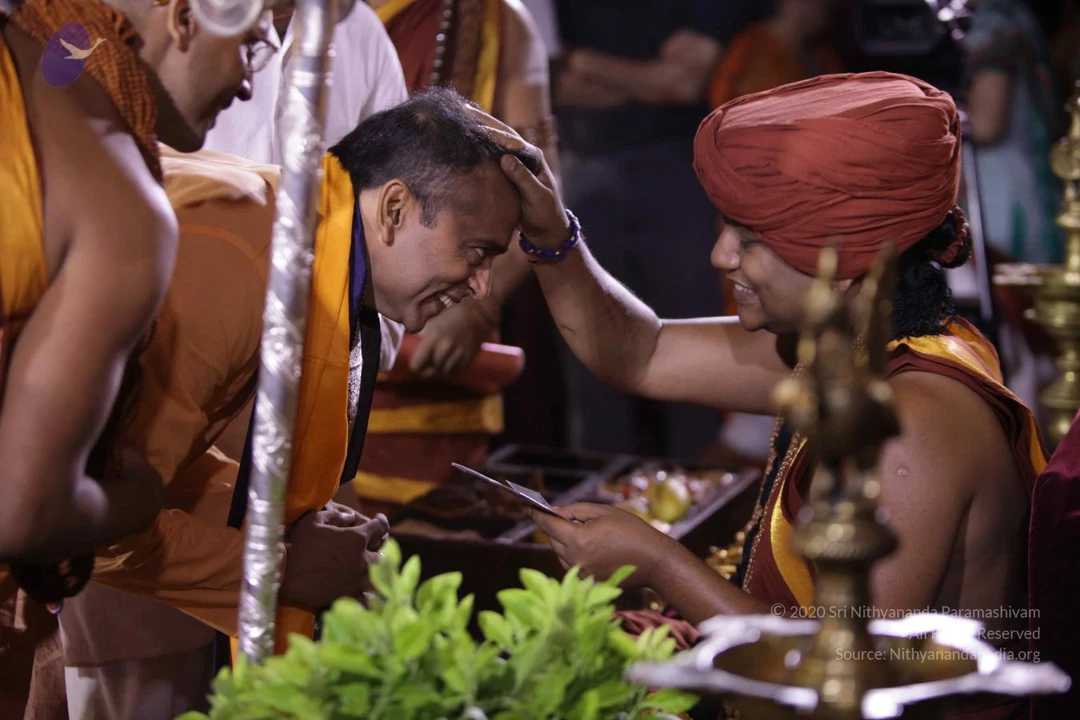
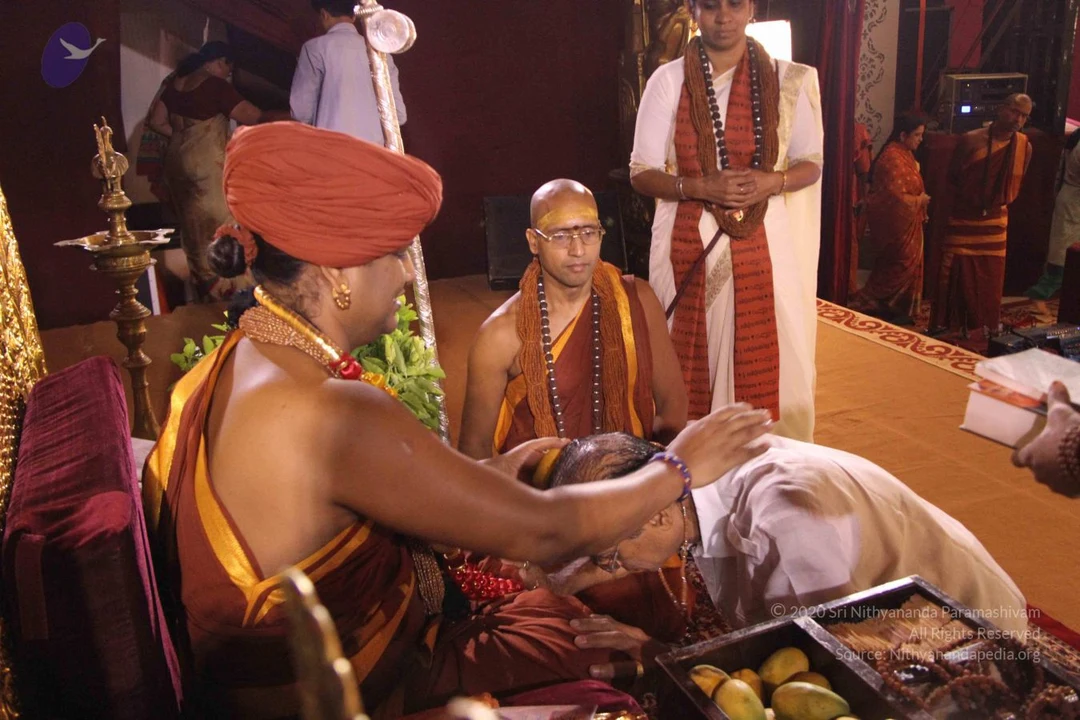
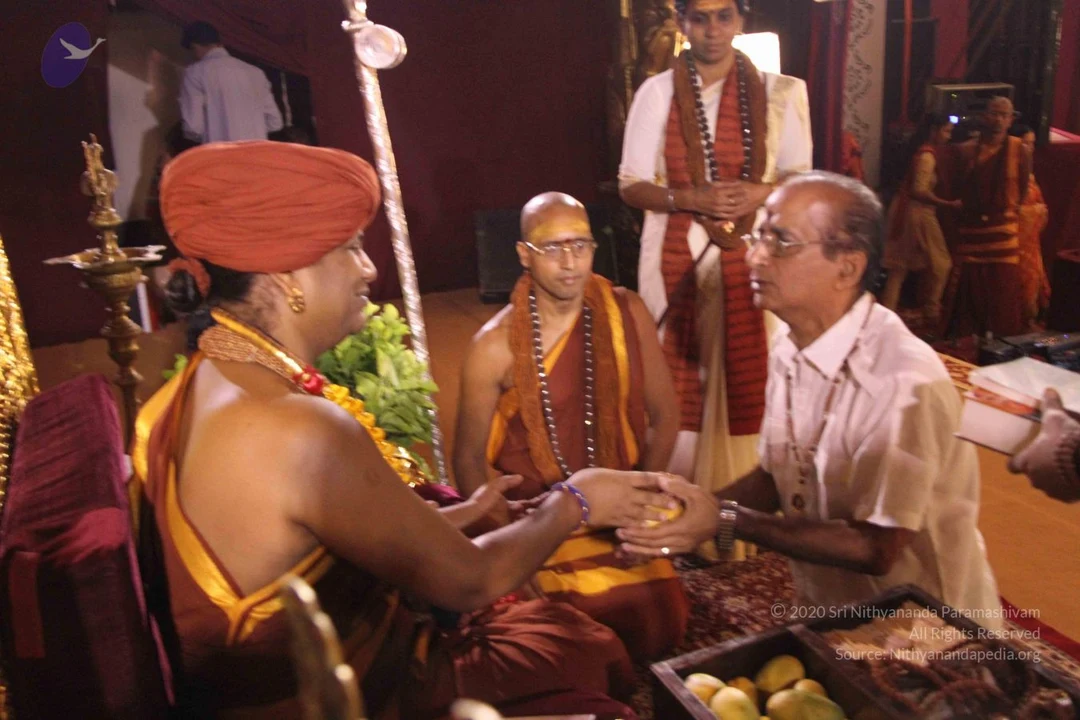
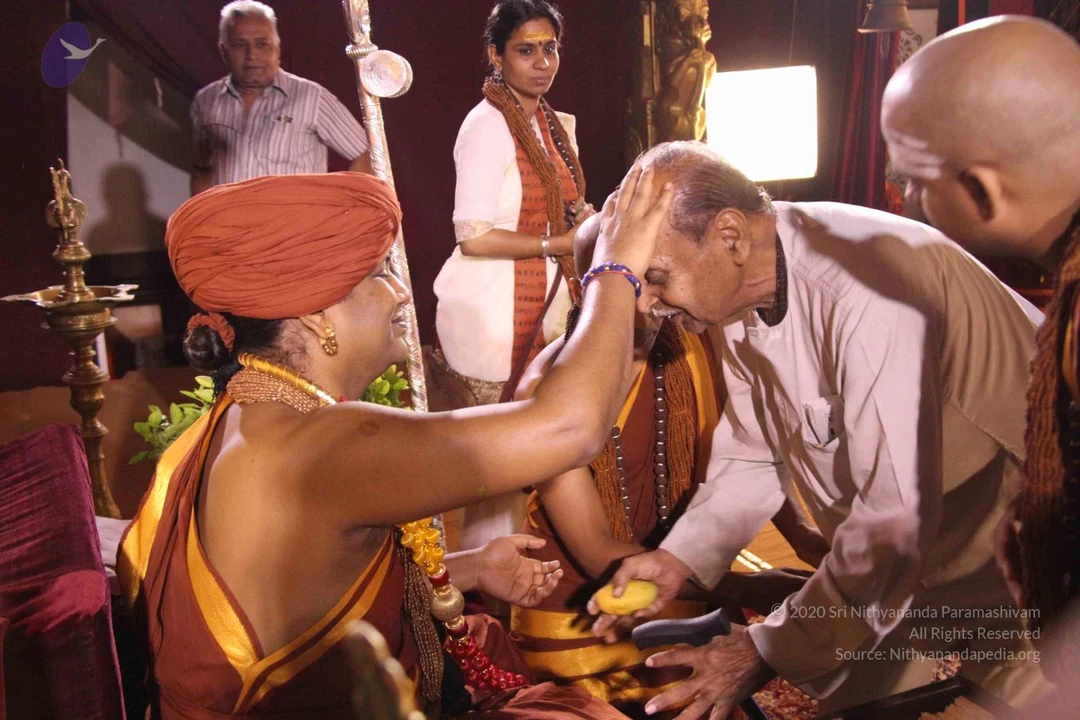
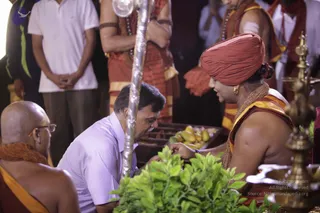
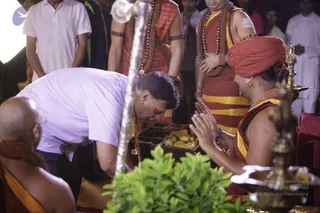
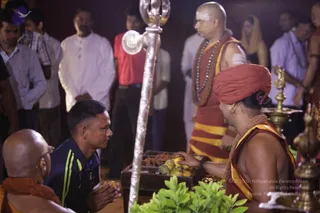
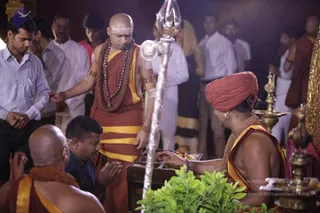
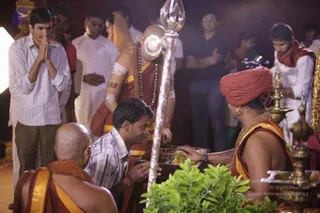
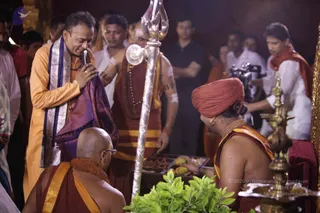
A photograph of a ritual scene outdoors. A central figure wears a rust-red turban, a gold-toned beaded necklace and a red-and-gold saffron garment, and is seated handling fruit from a wooden tray piled with mangoes and other fruit. A middle-aged man in a lavender collared shirt leans in close to the tray, while a bald, bespectacled man in an orange-brown shawl sits at the left edge. Behind them, figures in saffron-and-gold robes stand near a tall silver staff, and a brass oil lamp and a pot of green leaves sit in the foreground. The central figure appears to be a person by appearance cues (turban, beaded necklace, saffron clothing), presented here as a ritual offering of fruit.A photograph of a ceremonial gathering in a temple-style hall. In the centre, a man in a white t-shirt and dark trousers bends forward over a wooden box holding fruit, with his hands held near it. On the right, a woman in a red-orange turban and saffron-and-gold garment with a beaded necklace sits with palms pressed together in namaste. Behind them, two men in saffron-orange robes with rudraksha malas and armbands stand, and several onlookers in white and dark clothing stand in the background.A ritual scene inside a dimly lit hall. In the foreground, a kneeling man in a navy and lime-green zip jacket sits with palms pressed together in namaskar, holding a fruit. A shaven-headed monk in saffron-orange robes with a vibhuti line on his forehead sits at the lower left. At right, a woman in a red-orange turban and gold earring offers fruit from a wooden tray holding rudraksha beads and fruits. Behind them a standing priest in saffron-and-gold dhoti and rudraksha mala holds a tall silver staff, and brass oil lamps stand nearby with green leaves. Several men in white shirts and a red t-shirt watch from the background. No clearly identifiable a person figure is evident.A ritual scene in a dimly lit hall with a crowd of men in white shirts behind. In the centre, a shaven-headed priest in a rust-orange robe with gold borders and a rudraksha mala stands with a silver staff, his hand raised toward a kneeling man in navy clothes who joins his palms in prayer. At right, a woman in a red-orange turban and matching saffron-gold robe holds a tray of offerings over a low wooden table. Brass oil lamps and a gilded deity murti are visible at right, with green leaves in the foreground.Photo of a ritual scene inside a temple-like hall with dark wooden surroundings. In the foreground a young man in a light blue checked shirt and dark trousers bends forward, hands near a brass tray of fruit and offerings. Beside him, a bald man in saffron-orange robes and a rudraksha mala kneels, facing a figure in a red-orange turban and a long gold-and-bead necklace, seen from behind with a bare back and orange cloth, who reaches toward the offering tray. A tall silver staff with a crowned top stands at the center. A young man on the left presses his palms together in anjali. Standing figures in white dhotis and dark shirts fill the background, and brass oil lamps sit at the right edge with green leaves in the lower foreground.A ceremonial scene with a man in an orange kurta and a striped gold-bordered shawl pressing his hands to his chest, smiling and receiving a blessing. Beside him a figure in a red-and-saffron dhoti with a rudraksha mala and a red turban stands near a tall silver trident, and another person with a bald head and glasses sits cross-legged in saffron clothing with a rudraksha mala. A seated figure in a red turban and gold-bordered saffron cloth holds a tray of fruit and offerings beside a brass oil lamp. Several onlookers in white and dark shirts stand behind, and a cameraman films the proceedings at the right edge. Green leaves sit in the foreground.

satsang

107 photosSource gallery
A photograph of a man with a shaved head and glasses, wearing a white short-sleeved kurta and a red-orange shawl printed with repeated Tamil-script lettering, seated at a microphone stand and speaking or chanting with eyes lowered. A second man in a white shirt sits blurred behind him, also at a microphone, with a keyboard visible at the right edge. A small rudraksha-style mala hangs at the neck and a small framed picture is clipped to his shawl. The setting is a plain pale-walled hall with dark wood paneling. The man at the microphone shows no distinctive a person cues such as long hair, crown or saffron clothing, so his identity is uncertain.A satsang performance on a low stage draped with a multicoloured striped woven cloth over a red cloth. A man with a shaved head and glasses sits cross-legged at centre singing into a microphone, wearing white kurta and pants with a red-orange shawl printed with script. To the left a man in white kurta plays a wooden harmonium. Behind, a man in white plays a keyboard. At right a bespectacled man in white sits playing a bamboo flute. A black instrument bag and a sheet of paper lie on the stage, and a framed painting hangs on the wall behind.A photograph of a satsang hall with a large gold ornate throne on a raised stage in the background. A figure in saffron-orange robes and an orange turban sits on the throne beneath a golden canopy, with potted plants and brass lamps flanking it. A backdrop shows a cosmic blue and purple image of a planet. On the left, three musicians in white kurtas sit on a striped rug playing a harmonium, a flute and a tabla at microphones, beside a set of painted deity murtis. In the foreground, several devotees in white clothes with red shawls sit on white floor mats facing the stage, with a few older seated attendees in the right foreground. The seated figure on the throne is an appearance-based a person in saffron and orange ceremonial dress on a throne, but the cues are limited, so the identity is uncertain.A photograph of a satsang discourse on a stage. A seated figure on an ornate gold throne with a canopy wears an orange-red turban, orange robes and a saffron shawl, with hands folded in lap. Potted green plants flank the throne, with gold lamp stands and a silver trident on a stand beside it. Behind the stage is a purple cosmic backdrop. In the foreground, rows of seated devotees in white and orange clothing face the stage, and two cameras on tripods film at right. The figure matches the page's a person reference only by a turban, saffron robes and throne, so identity is left uncertain.A satsang musical performance in a hall with a red draped stage and a blue-covered platform on the right. Four musicians in white kurta-style clothes perform: one plays tabla at left, a man in the centre with a red scarf plays a harmonium, and a young man at right plays a bamboo flute. A seated man in white with a red scarf sits at left, and devotees in white with orange-red shawls sit on the floor and chairs in the foreground. On the right, deity murti in ornate silver and colourful garments sit on an altar with garlands. Patterned wall art and a small screen hang on the walls.A seated man in a red-orange turban and matching red-orange and gold-bordered robe sits on a plush red-cushioned seat before an ornate golden repoussé backdrop with swirling floral patterns. He wears a multi-strand beaded rudraksha-style mala and a red dot on his forehead, and speaks into a clip-on microphone on a boom stand. A small green plant sits at the lower left.

galleria

20 photosSource gallery
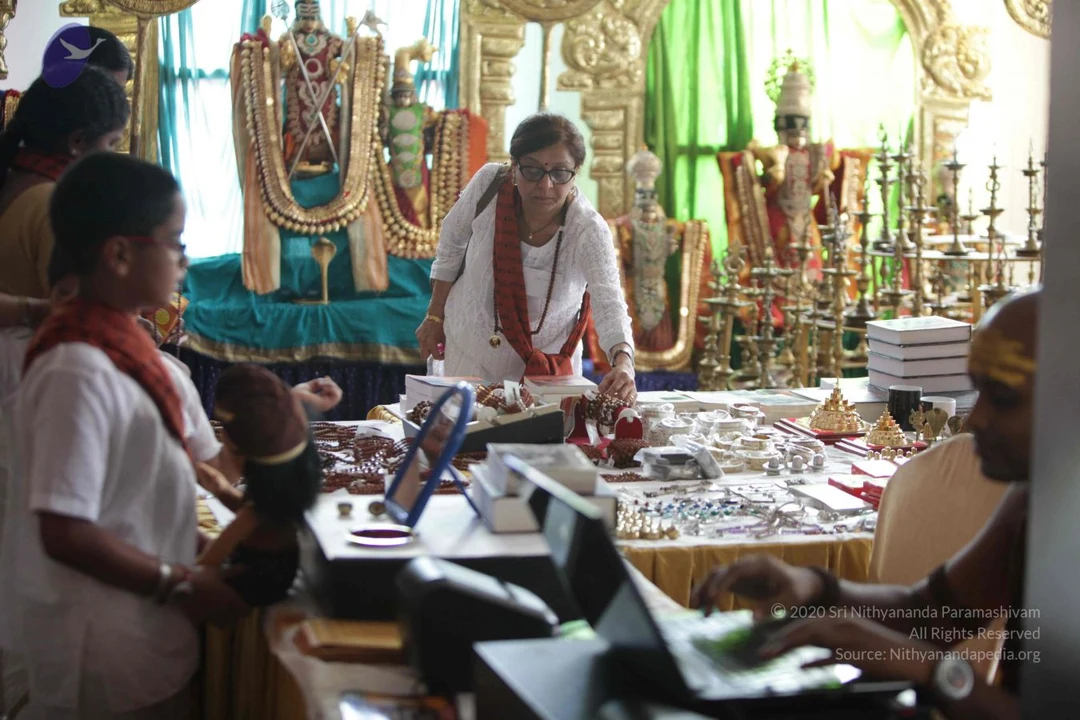
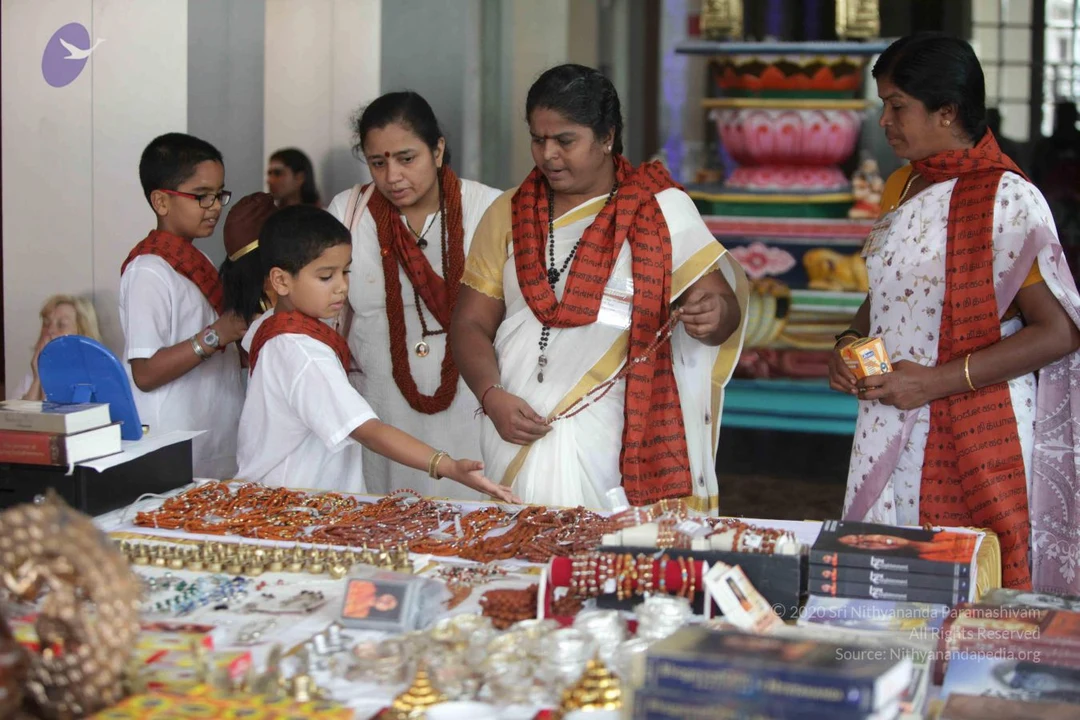
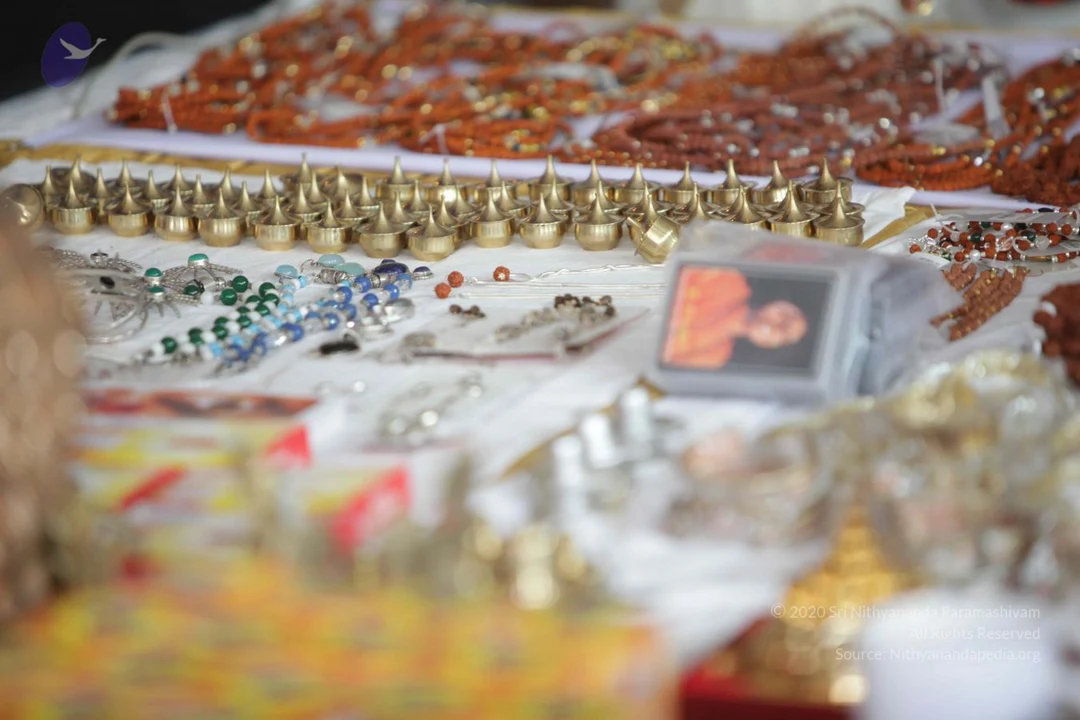
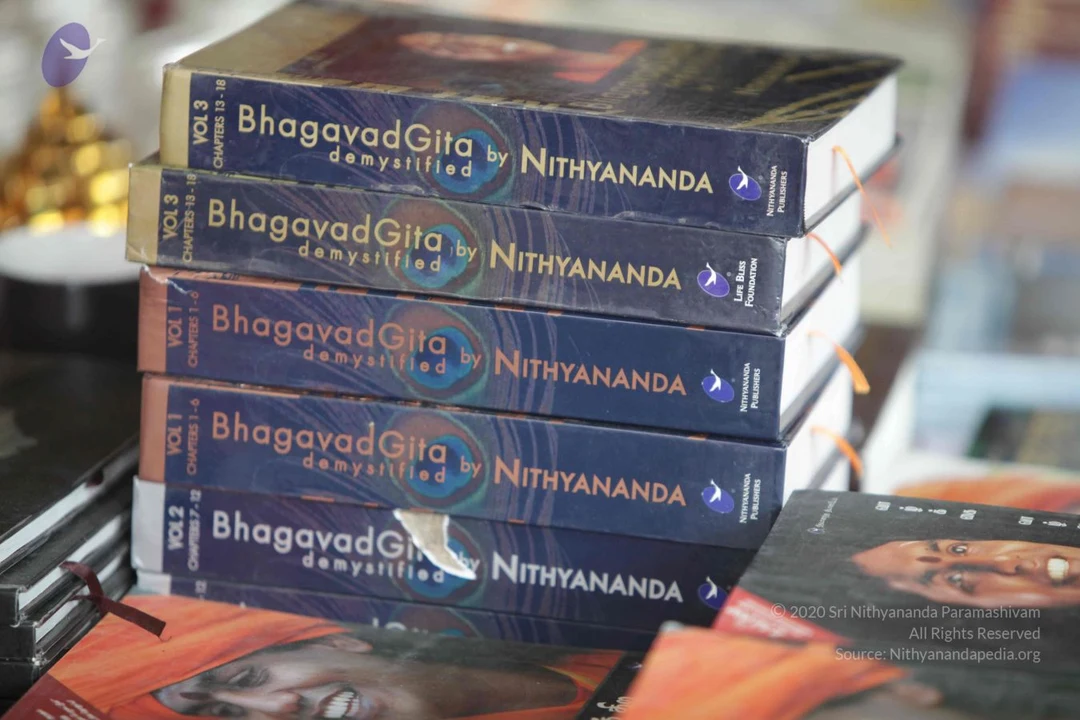
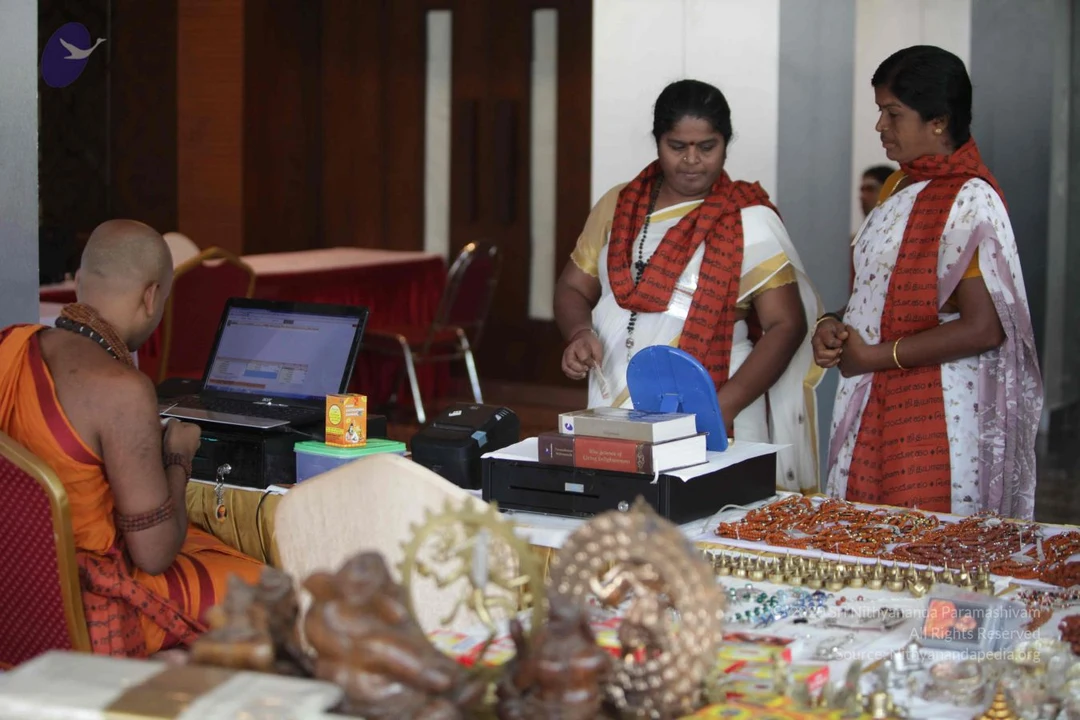
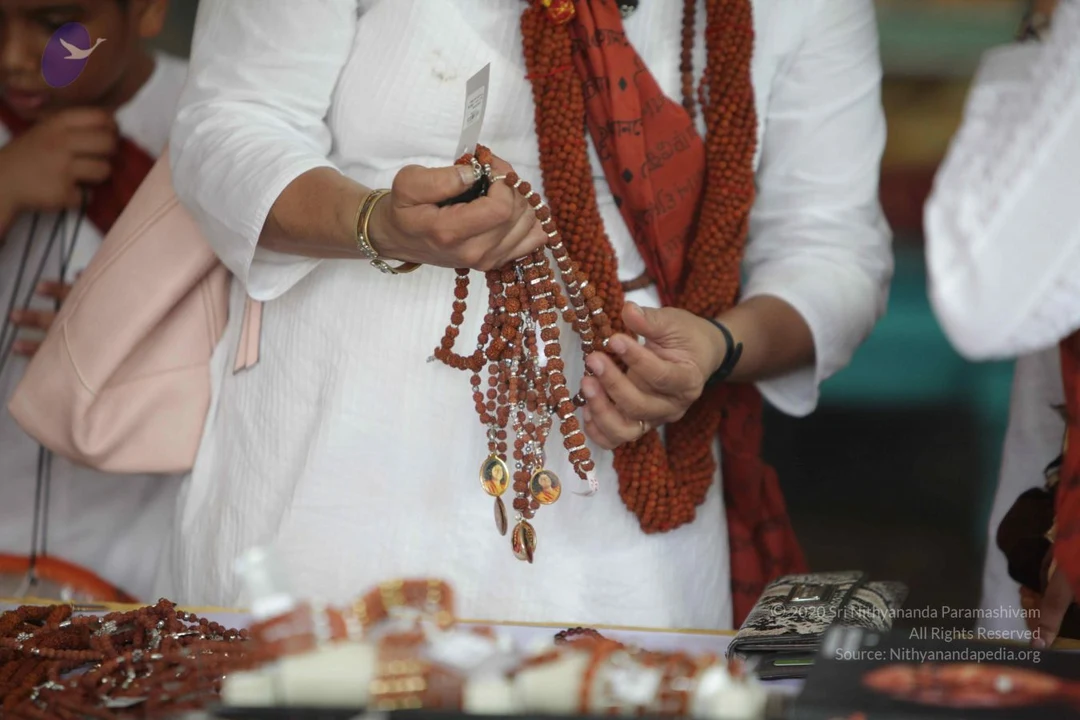
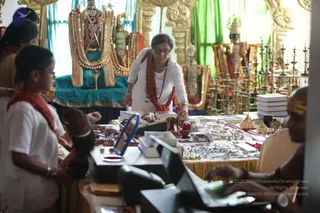
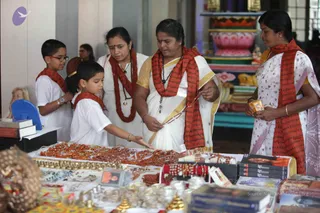
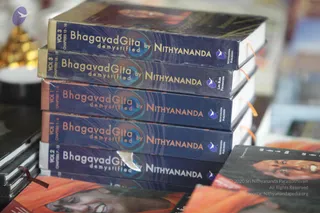
A photograph of a temple shop or stall selling devotional items. A woman in a white top and red shawl with glasses and a rudraksha-style mala stands at a table arranging items. Trays display jewellery, brass and silver puja objects, small kalasha-shaped and lamp items, and boxed products. Behind her are richly dressed deity murtis with gold garlands and ornate crowns against green and gold drapery, with a row of brass oil lamps on the right. A child in white with a red scarf stands at the left edge, and a man in white with a yellow head wrap works at a laptop in the foreground.A photograph of a shop-style table display inside a temple-like hall, with devotees browsing. Four women and two boys stand at a table laden with strands of rudraksha malas, bracelets, brass bells, small metal ornaments and stacked books. A boy in a white shirt and red shawl with glasses reaches toward the beads, while a second boy in a white shirt and red shawl stands beside him. A woman in white with a gold-bordered sari and red printed shawl holds a mala and speaks; another woman in a white top and red shawl with a rudraksha necklace stands next to her. At right, a woman in a white and pink sari with a red printed shawl holds a small yellow box. Behind them a pink lotus-shaped altar and a gold deity murti are visible. A purple logo appears at upper left and a copyright credit overlays the lower right.A photograph of a merchandise table at an ashram event, shot with a shallow depth of field. Rows of small brass diya-style lamps with pointed tops line the middle, with rudraksha and orange-red bead malas stacked in the background and colourful beaded bracelets and chains at left. A small grey case with a framed photo of a figure in orange robes sits at right, and a golden deity or ornament is blurred in the foreground. No people are visible.A stack of blue hardcover volumes of Bhagavad Gita demystified by a person lies on a table. The spines show Vol 1 Chapters 1-6, Vol 2 Chapters 7-12 and Vol 3 Chapters 13-18, with a person Publishers logo. Covers of the same book with an orange-robed man's portrait lie in the foreground, and a small gold object sits at the upper left. No people are visible in the frame.A photo of a merchandise counter inside a hall with red-curtained tables and wooden doors behind. A bald man in saffron-orange robes with a rudraksha mala sits at the left, working on an open laptop beside a receipt printer. Two women in white saris with red and orange shawls stand at the counter; one is handling a small object at a blue card reader while the other watches. On the table are rows of rudraksha and red bead malas, brass bells, small brass and wooden figurines, and books stacked by the register.A woman in a white kurta stands at a table of rudraksha products, holding a long rudraksha mala with two small oval pendants showing portrait images and cowrie-like shell charms. Around her neck is a thick red-orange rudraksha mala with a red patterned scarf. Gold bangles are on her wrist. Below, more red-brown rudraksha malas and wrapped items lie on the table. A child in white and another person in white stand at the edges, and a pale pink bag hangs at left. The scene appears to be a merchandise stall at a satsang or event.

Satsang

15 photosSource gallery
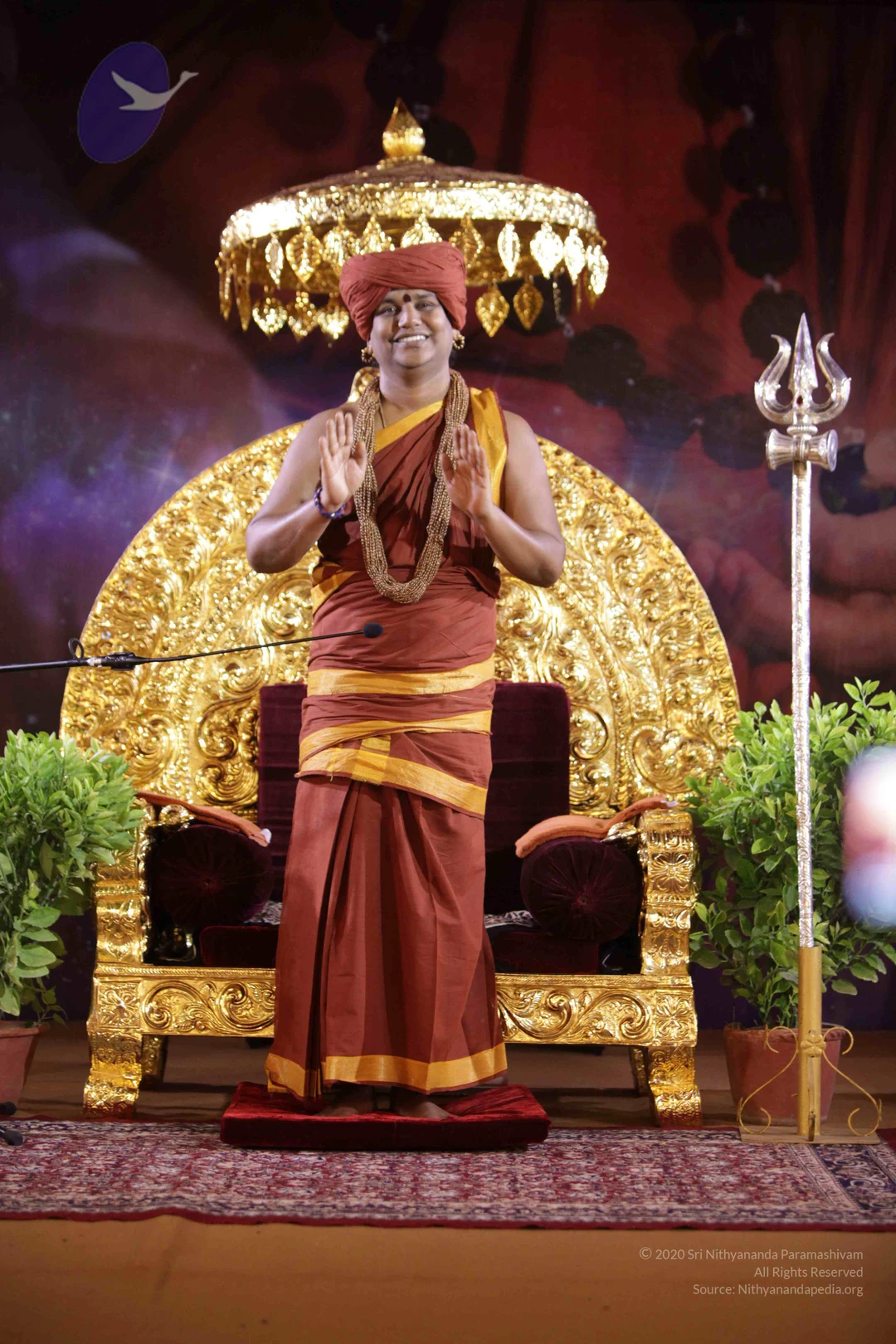
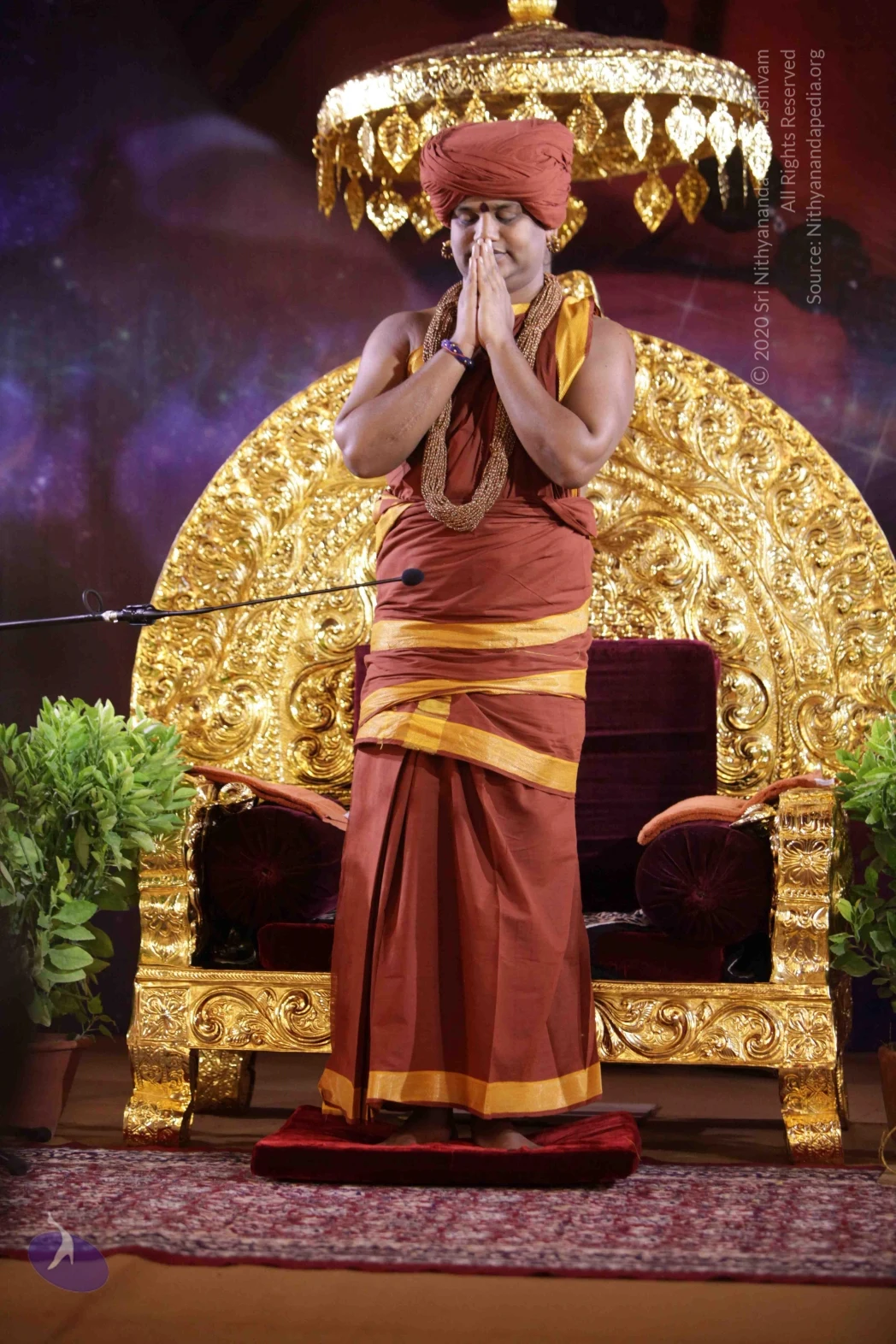
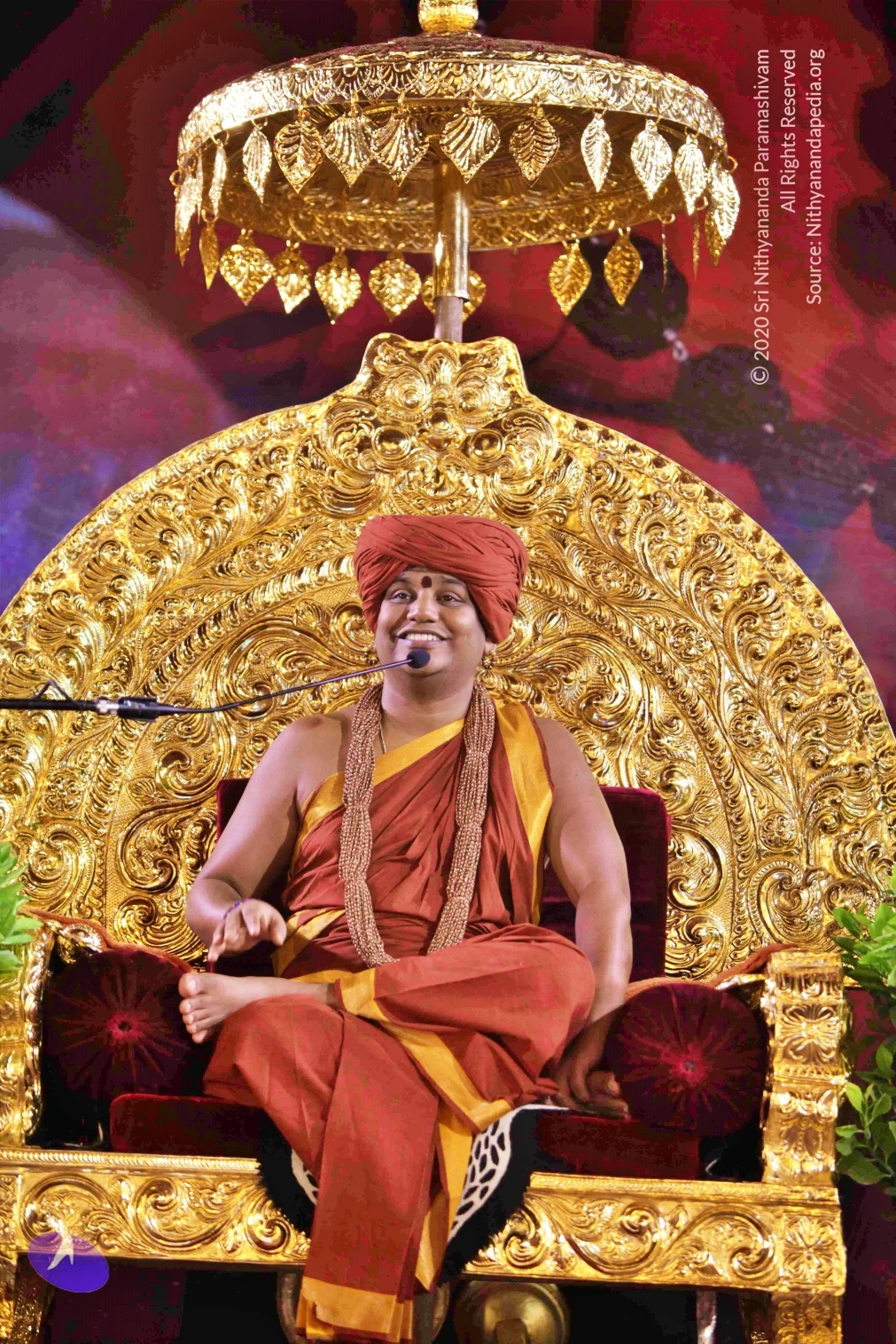
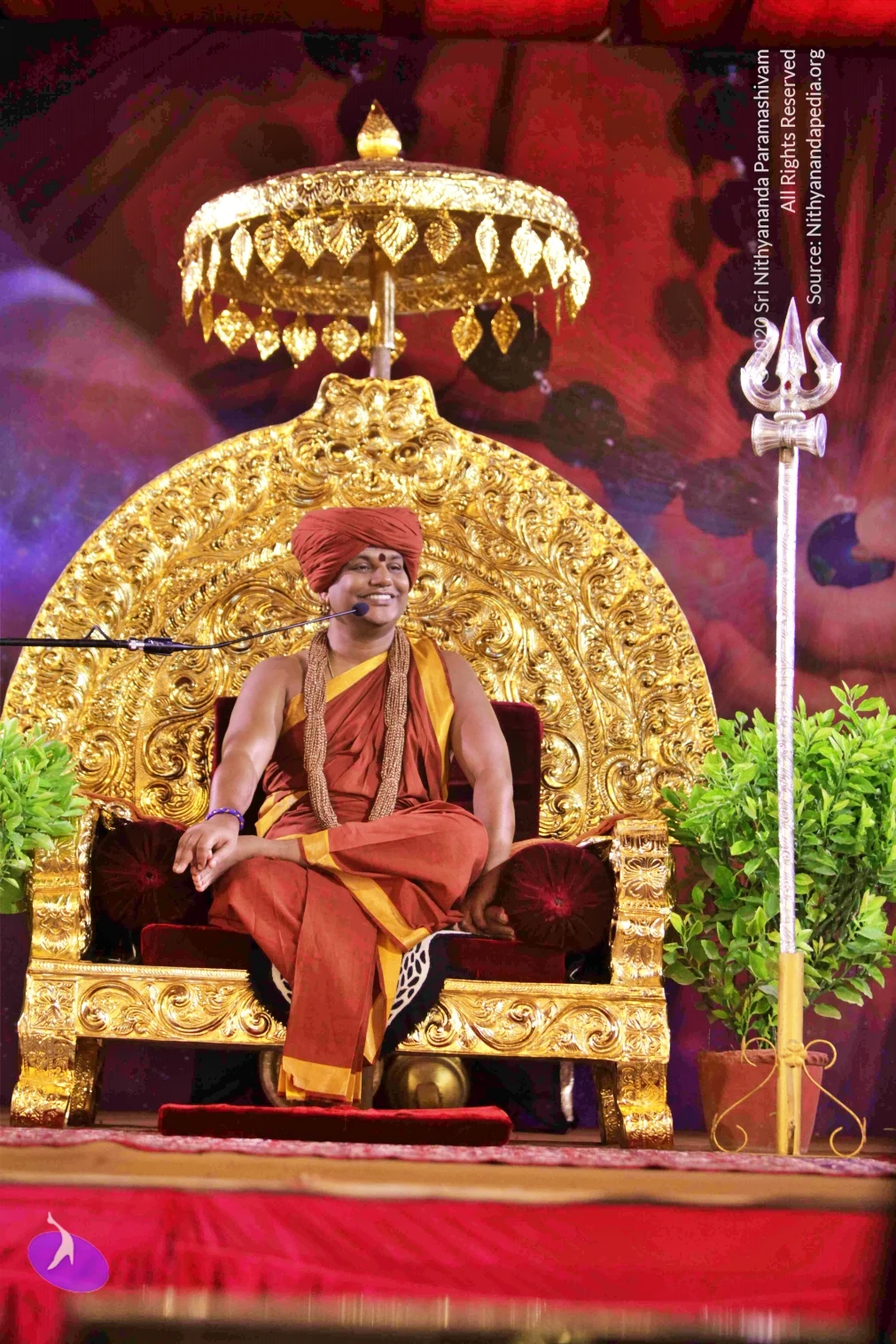
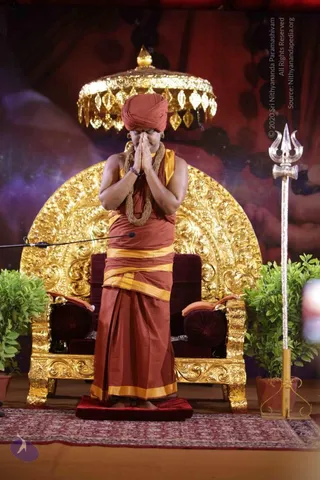
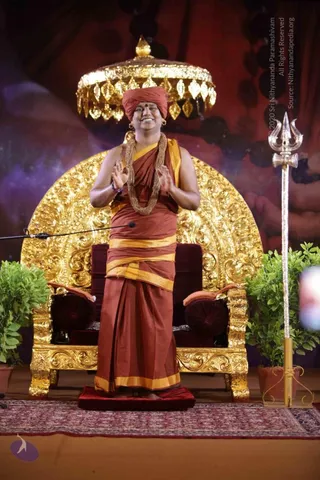
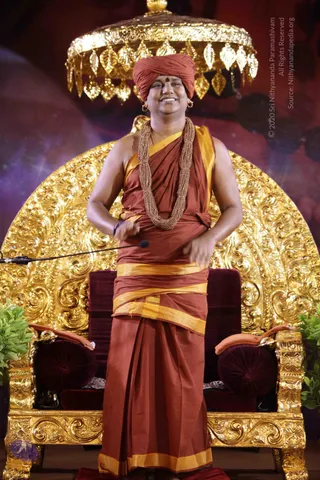
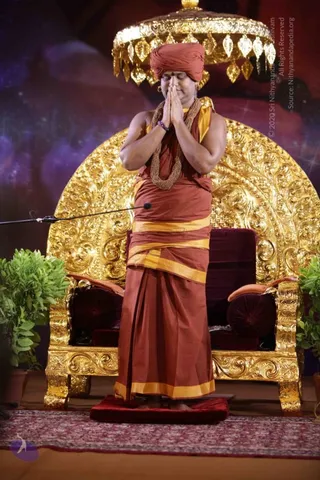
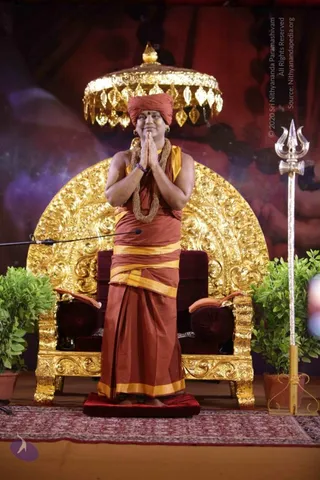
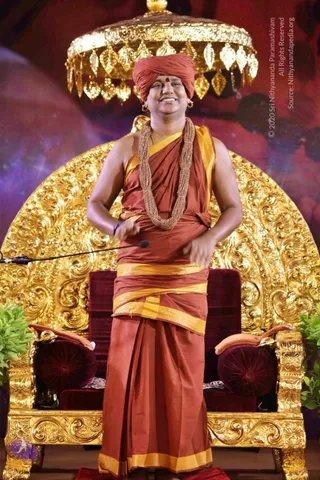
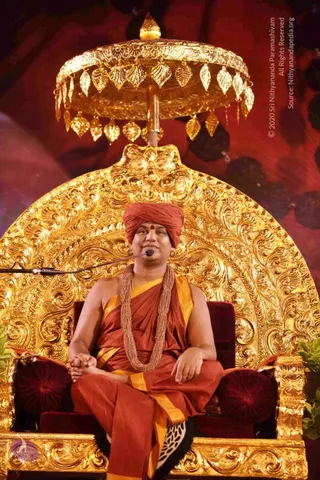
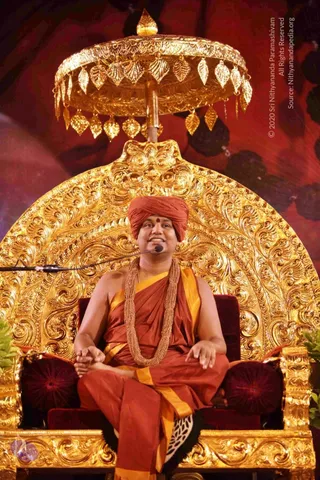
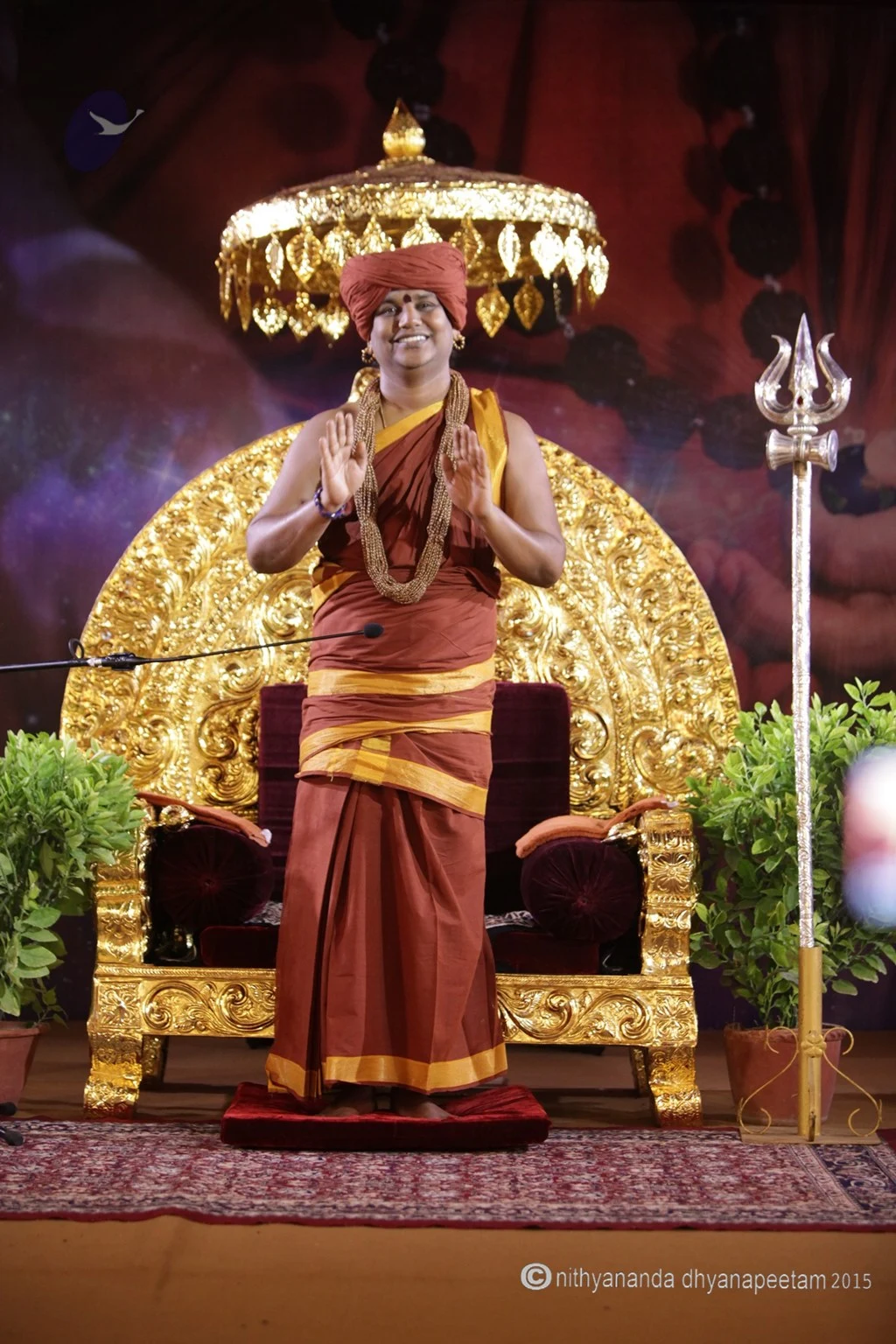
A standing figure in a rust-red turban and rust-red wrap with gold-bordered yellow sashes performs a namaste gesture with palms pressed together before a large ornate gold throne with a gilded umbrella canopy above. A silver trident stands to the right beside potted green plants, and a microphone stand is at the left edge. Around the neck hang thick gold beaded garlands, and a red-cushioned seat sits behind the figure on a red carpeted dais.A smiling person in a maroon-red turban and red-orange robe with gold borders stands with palms pressed together in greeting on a red carpeted stage. A rudraksha-style beaded mala with gold accents hangs around the neck. Behind is an ornate golden throne with a gold-fringed canopy above it, flanked by potted green plants. A silver trident stands to the right, and a microphone stand is on the left. a person: the figure matches the cues of a long, swept-back head wrap, saffron-toned ceremonial robe, and beaded mala with gold accents, shown in an in-person satsang setting.A smiling man stands in front of an ornate gold throne with a gilded canopy overhead, wearing a rust-red turban with a red tilak on the forehead, rust-red sleeveless drape with gold border and a long multi-strand beaded bronze-gold mala around the neck. A microphone on a boom stand is at left, and green foliage frames the gilded armrest of the throne.A seated man in a rust-red turban and rust-red robe with gold-yellow border speaks into a microphone on a stand. He wears a long multi-strand beaded gold necklace and a vermilion dot on his forehead, and gestures with one raised hand. Behind him is an ornate, highly decorated gold throne backrest with intricate floral and scroll carvings.A seated teacher in a saffron-red turban and red-orange robe with gold border sits on an ornate gold throne with an elaborate golden canopy above. A beaded necklace of many strands hangs on his chest and a red bindi marks his forehead. He raises one hand while speaking into a microphone on a stand, in front of a deep red backdrop. Swamiji (probable): long-established appearance cues include the saffron turban and ceremonial gold-trimmed robes, with the attending gold throne and canopy, consistent with the page's satsang setting.A seated speaker in a rust-red turban and matching rust-red robe with gold borders sits before an ornate gold repoussé throne backrest. He wears a multi-strand beaded rudraksha-style mala and gold hoop earrings, with a red tilak on his forehead. A microphone on a stand is near his face as he smiles and gestures with one hand during a satsang discourse.

Satsang

17 photosSource gallery
A standing figure in a rust-red turban and rust-red dhoti-style wrap with gold borders, wearing a multi-strand gold-toned bead mala, stands before an ornate gold throne-like chair with burgundy cushions and a gold umbrella canopy overhead. A microphone stands at left and green plants flank the stage. The figure smiles and gestures with both hands. Appearance-based probable candidate: a person, shown in person on stage, distinguished by the swept turban, saffron-toned ornate clothing, and ceremonial beaded mala. A copyright credit runs vertically at the right edge.A seated man in a red-orange turban with a small red bindi speaks into a black microphone on a stand. He wears an orange-red robe with a yellow-gold border and a long multi-strand beaded necklace of tan beads, and a purple beaded wrist band on his right wrist. His left hand rests on his lap while his raised right hand makes a small gesture. Behind him is an ornate gold-leaf carved throne back with swirling floral relief, set against a dark red velvet cushion. The appearance-based candidate is Swamiji (probable), shown in person as the speaker with turban, saffron robes and ceremonial beads, seated on a throne during a discourse.

Galleria

5 photosSource gallery
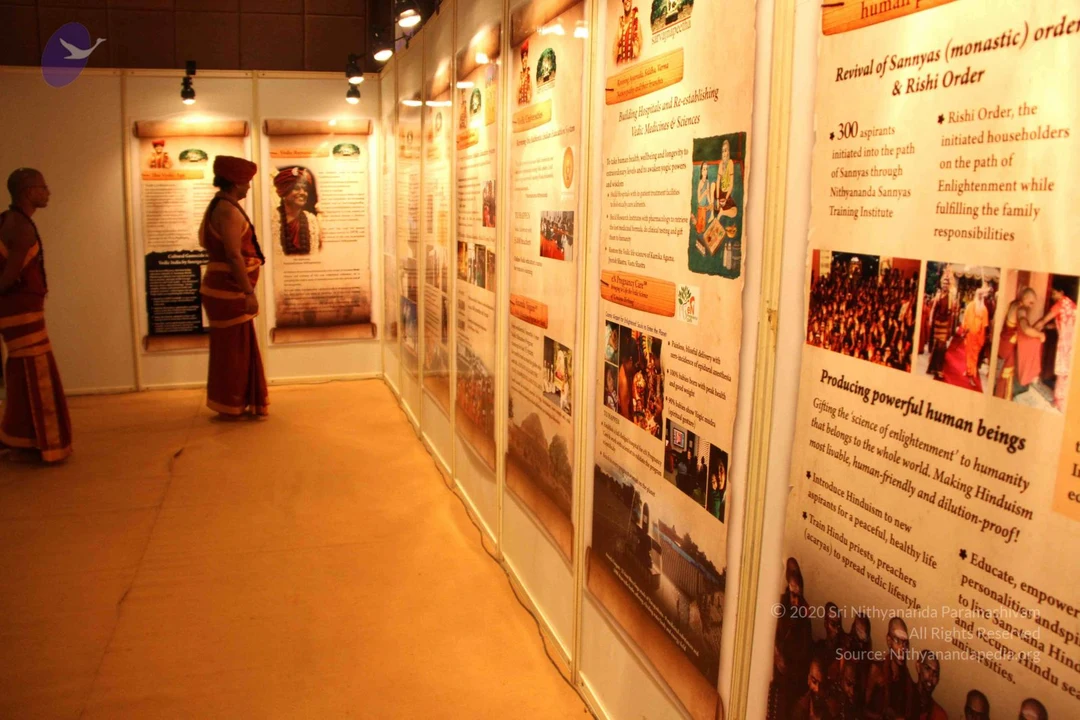
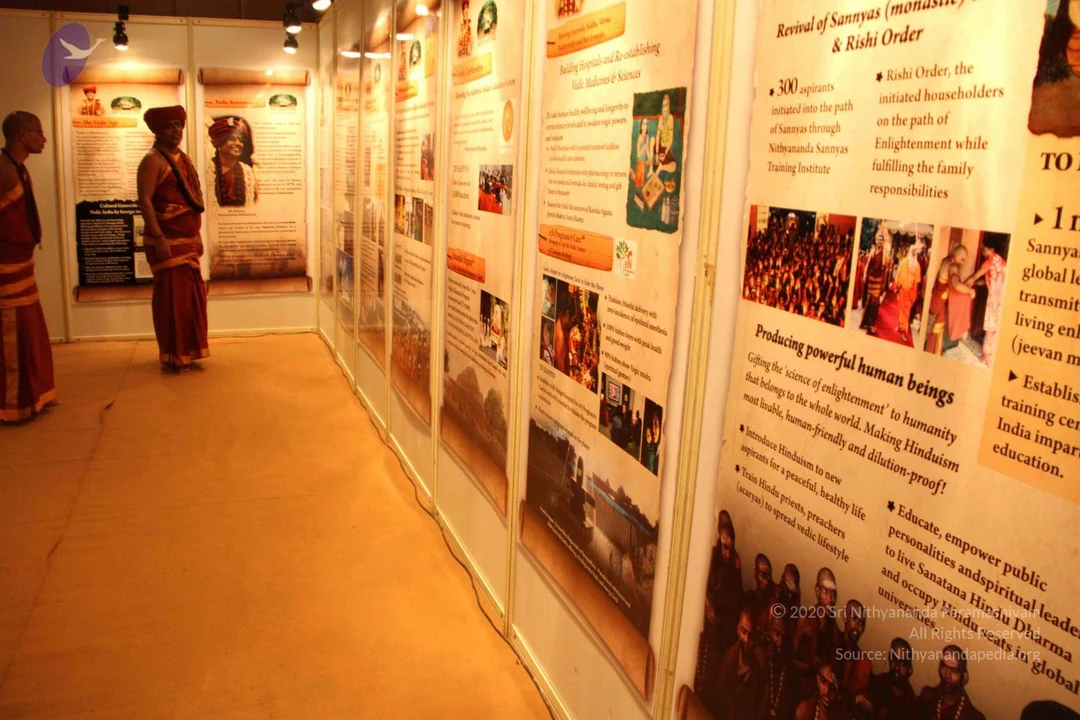
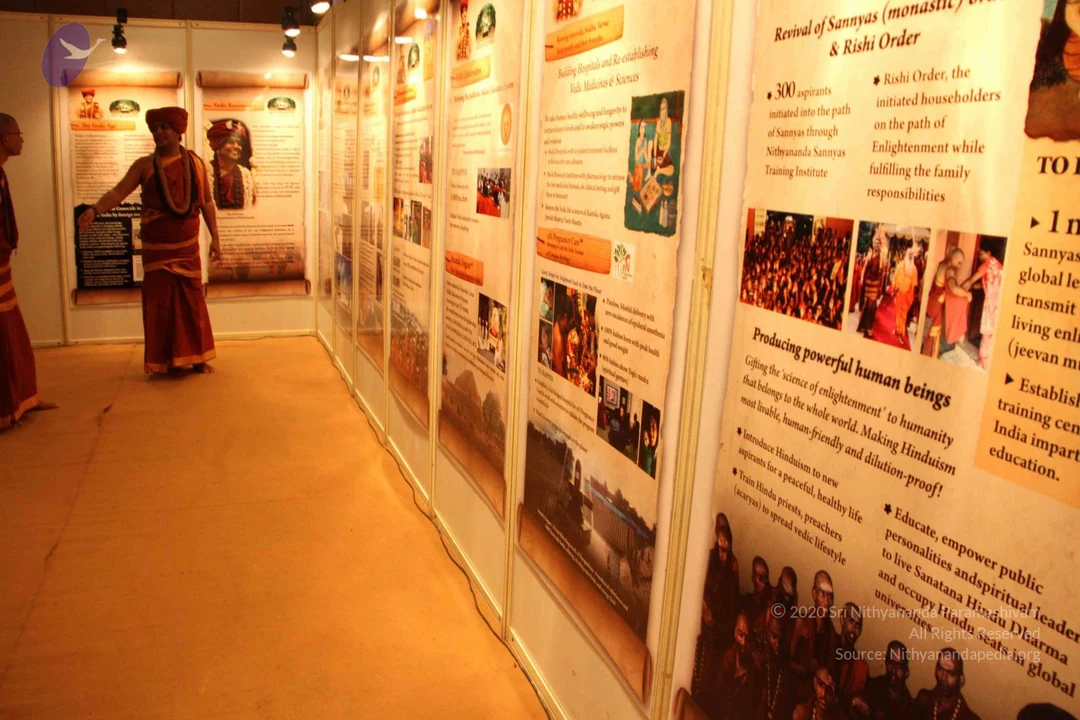
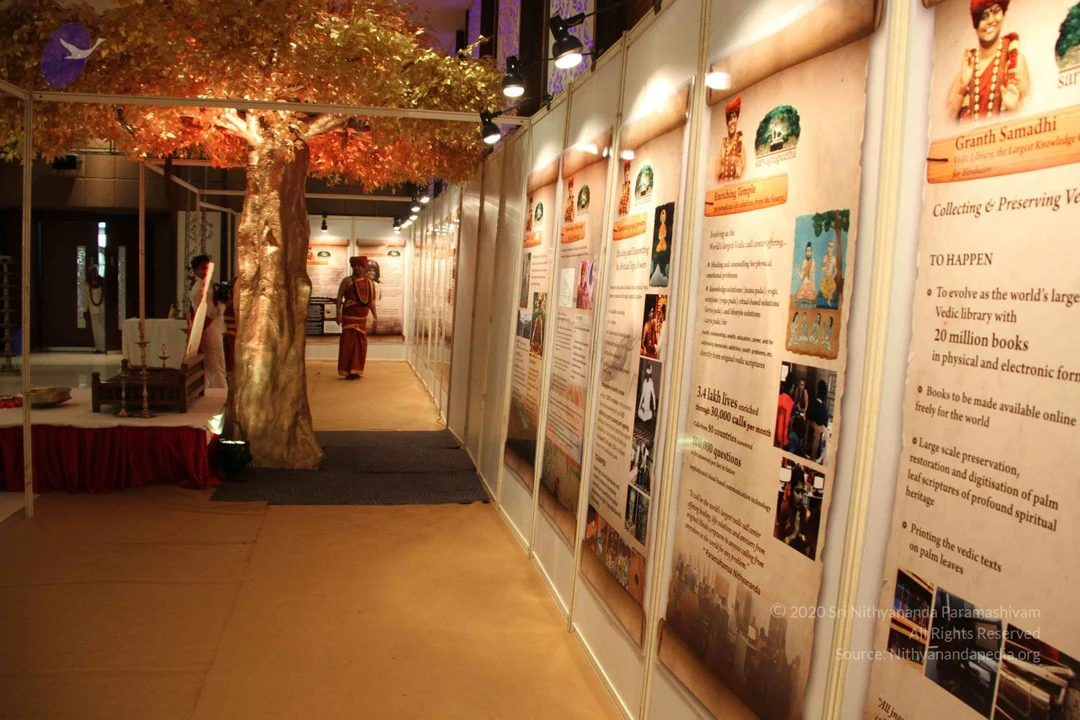
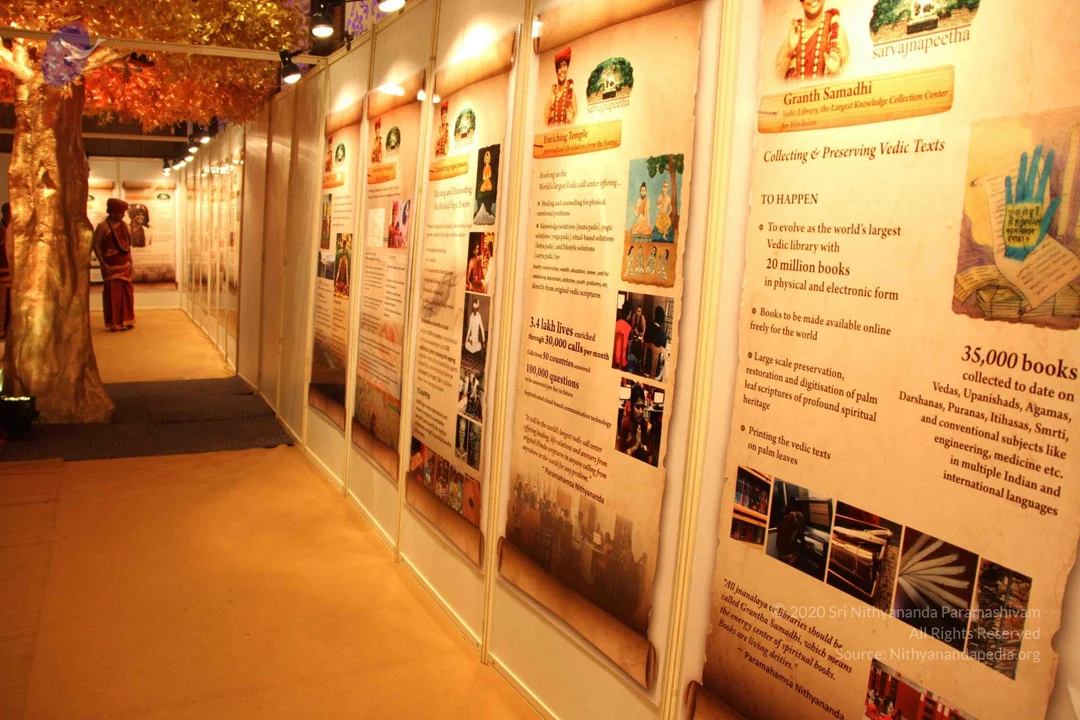
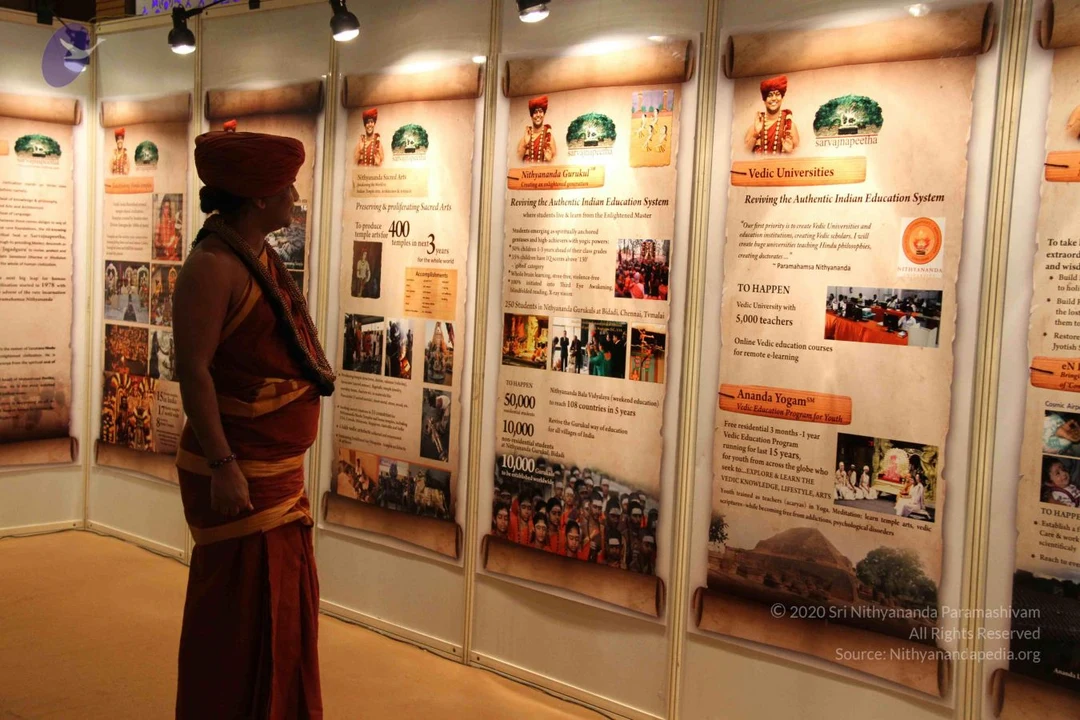
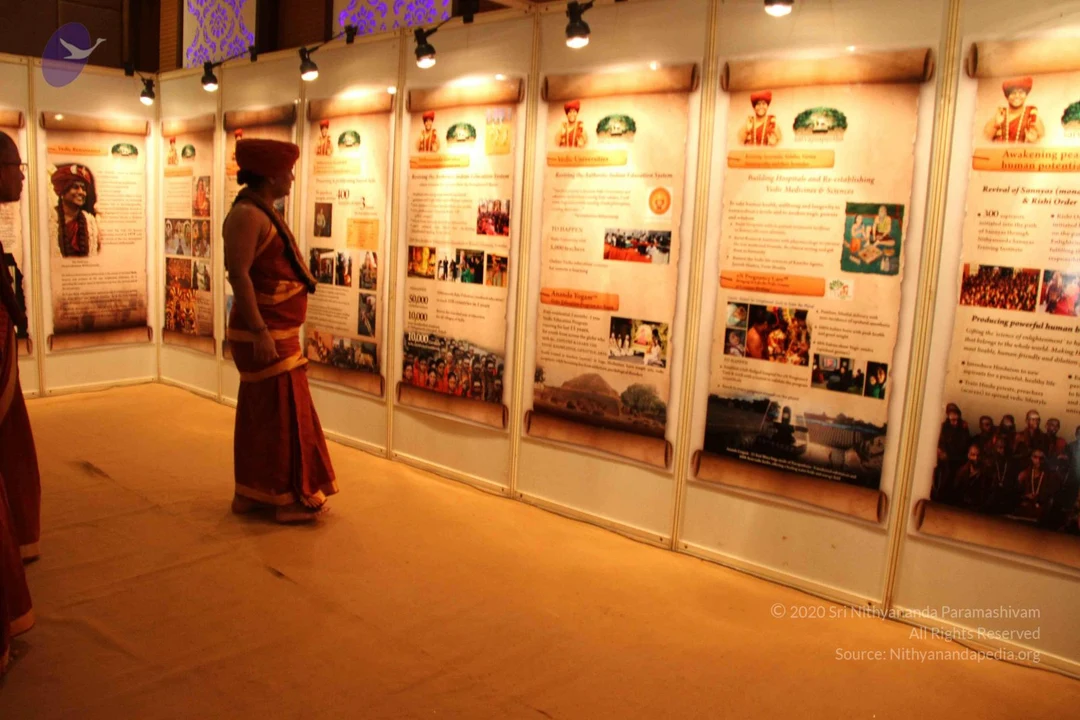
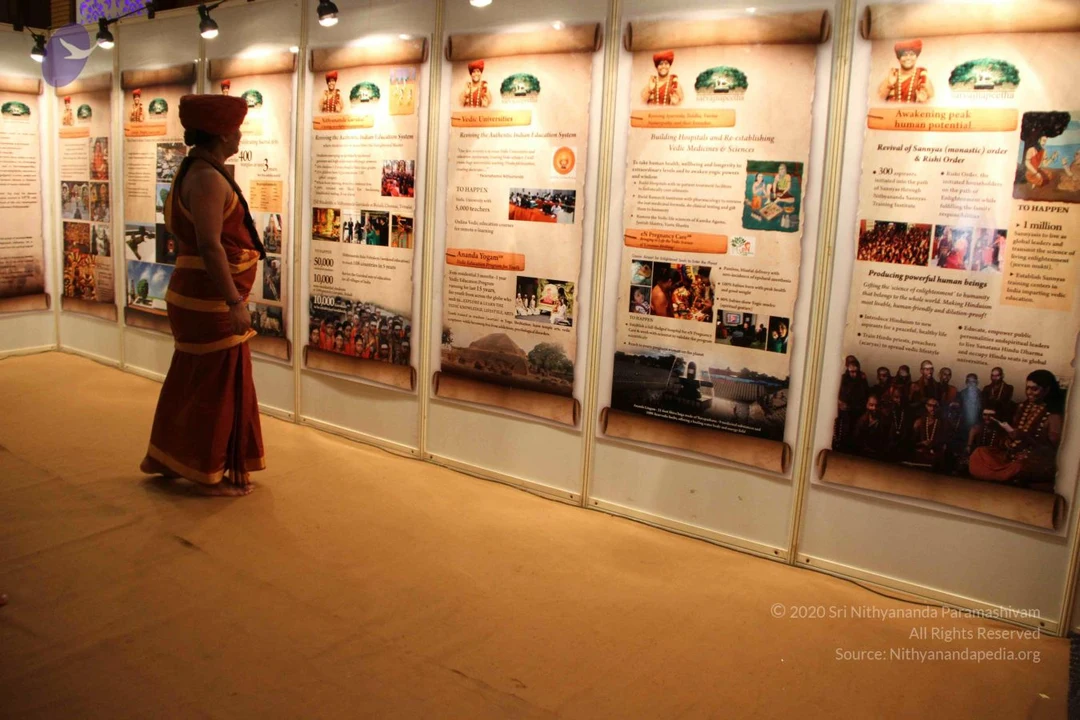
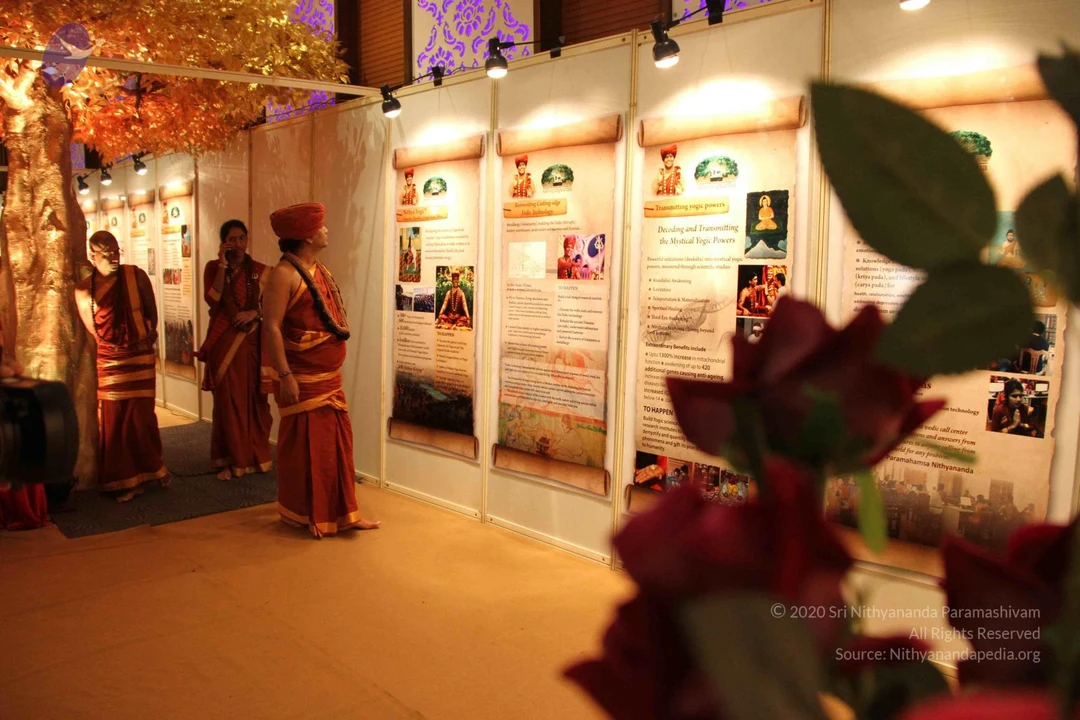
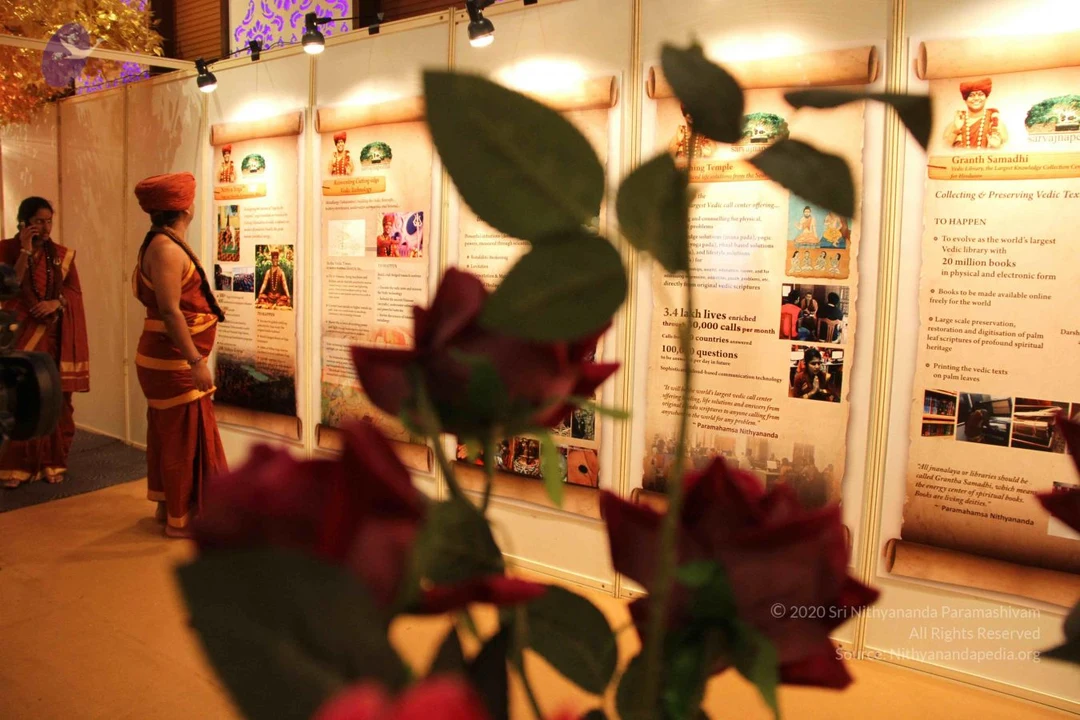
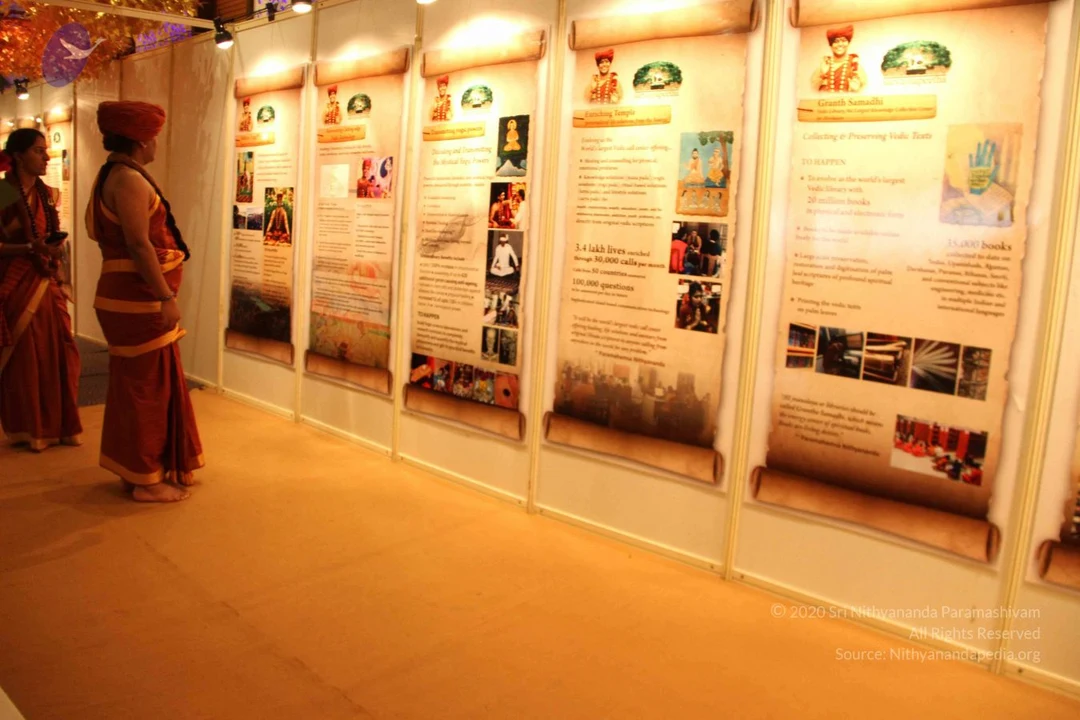
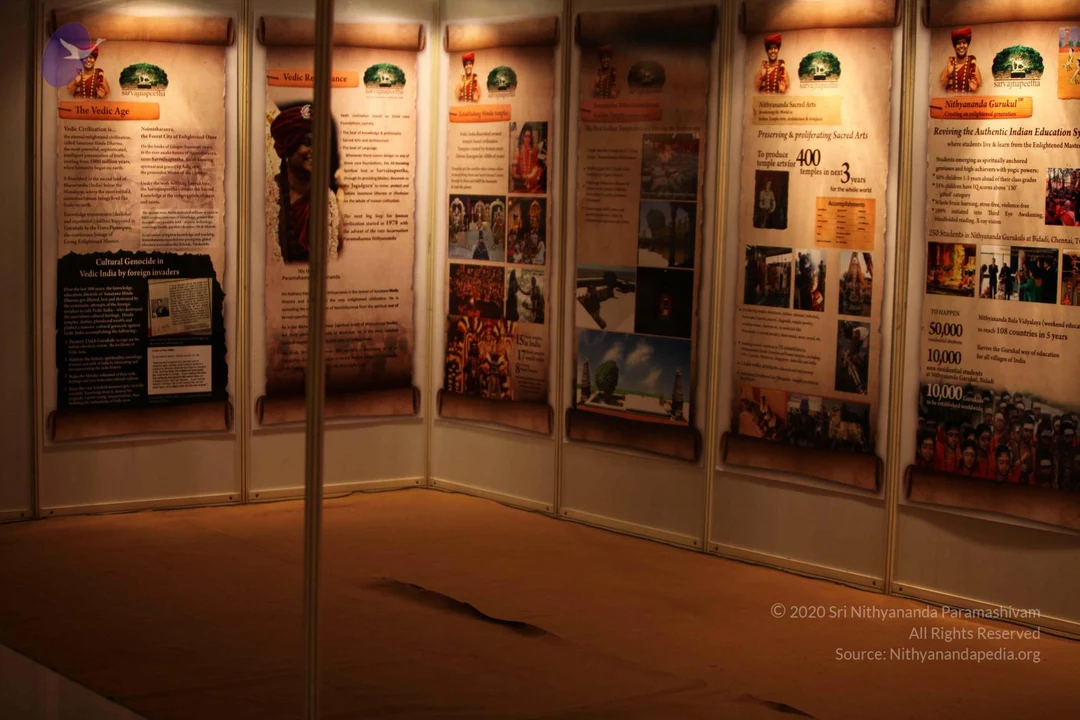
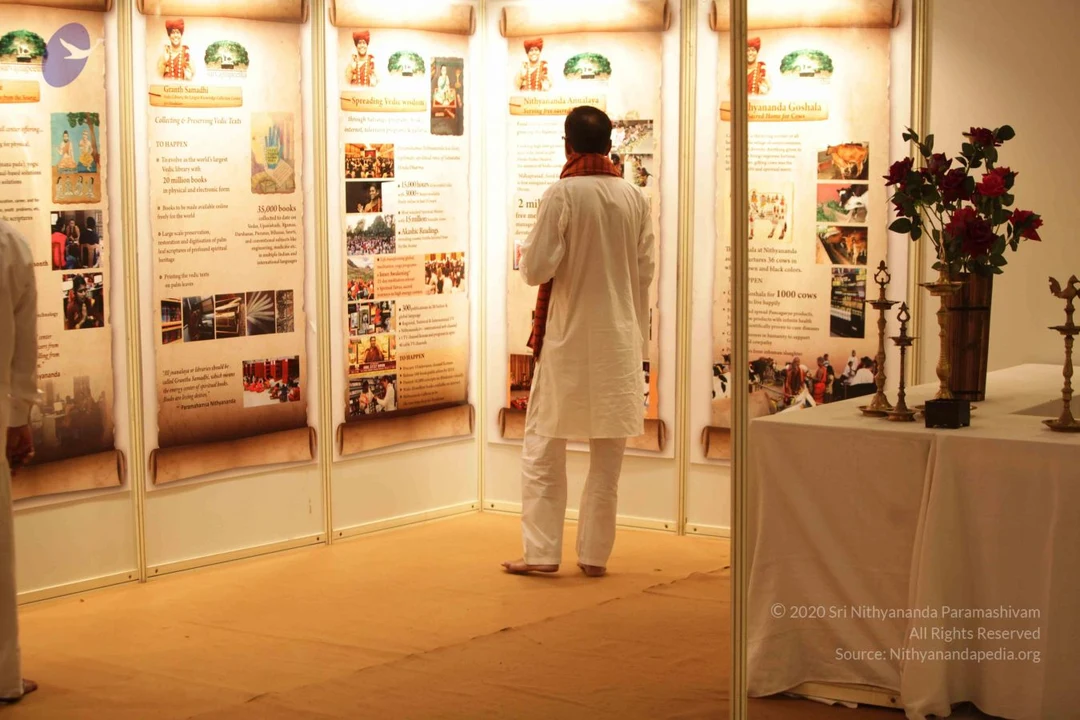
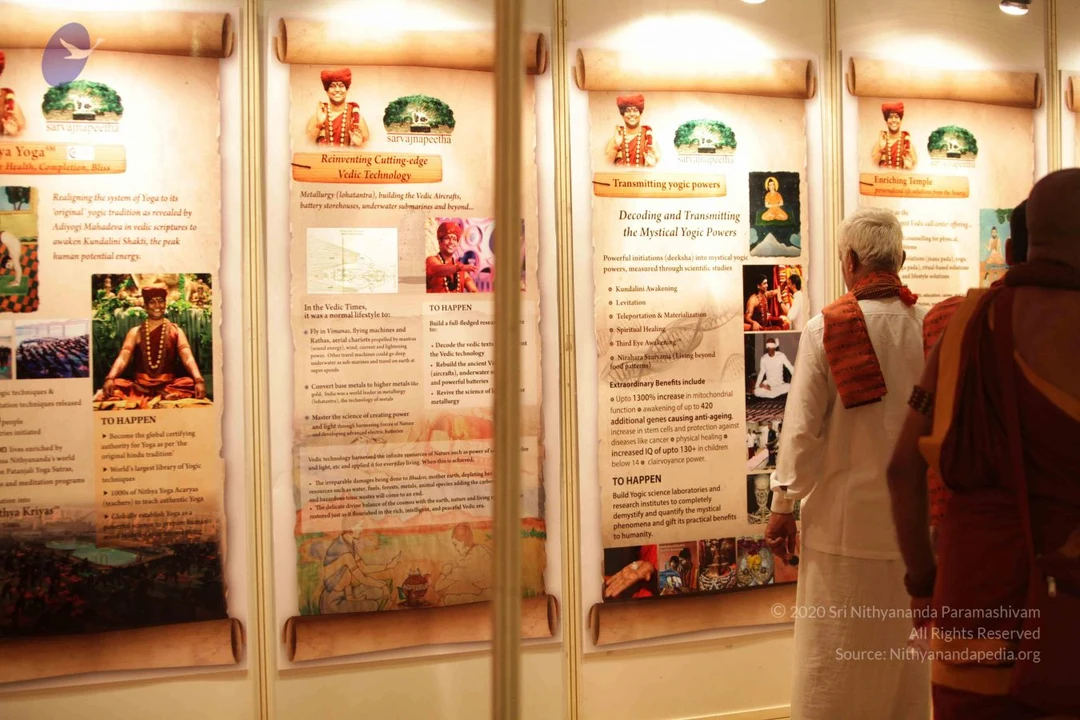
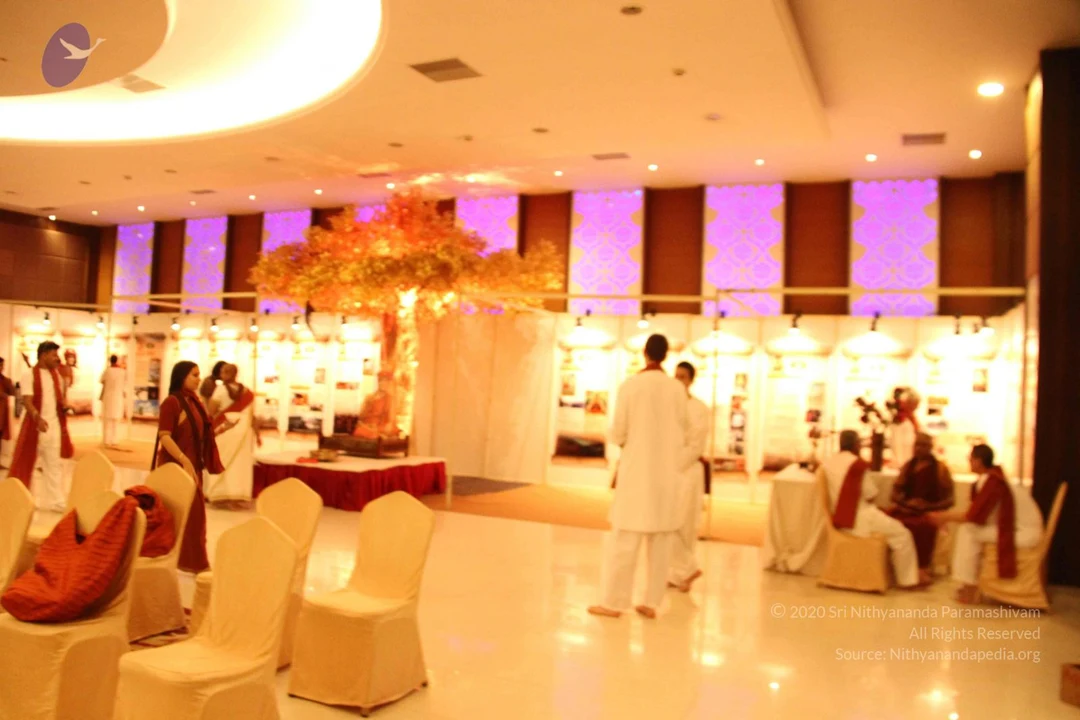
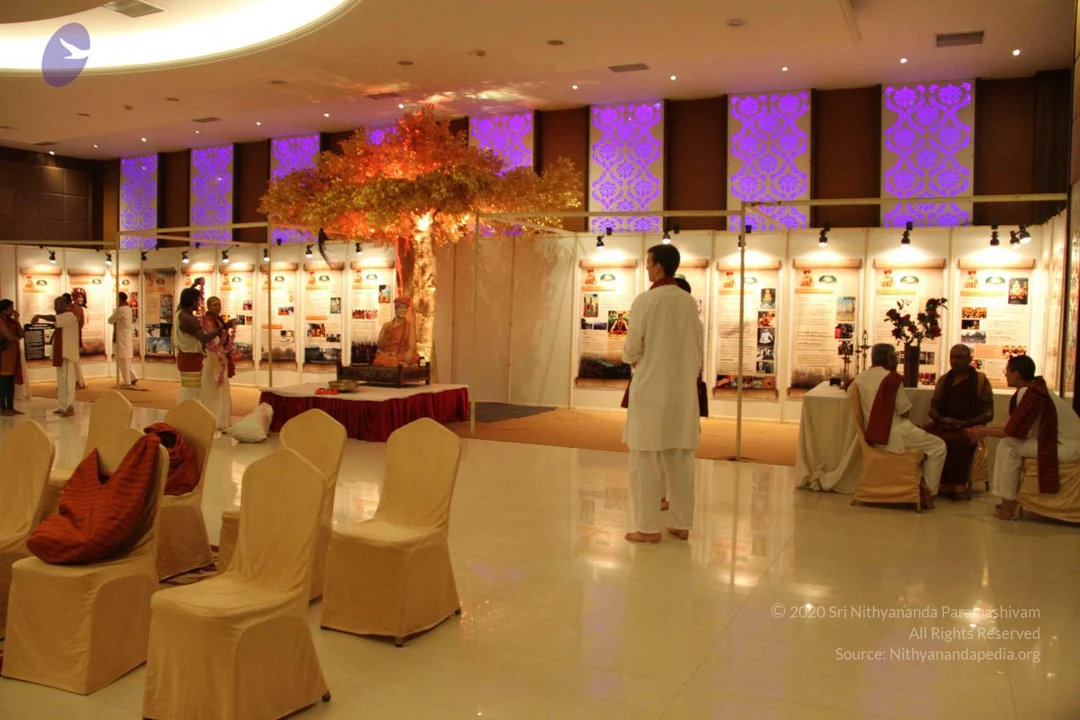
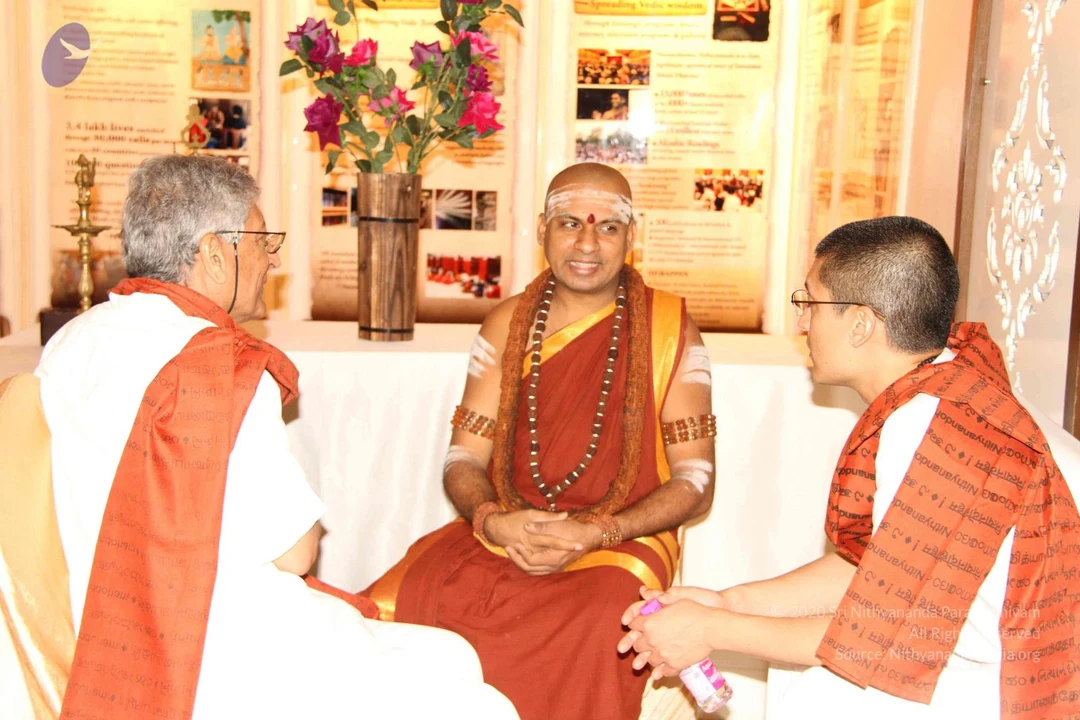
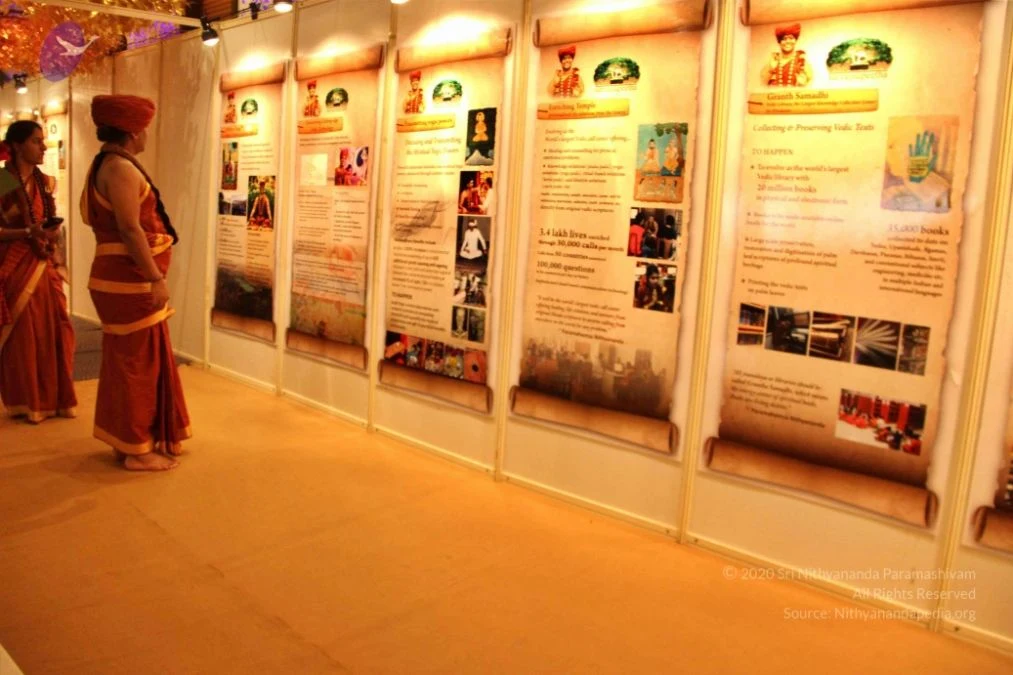
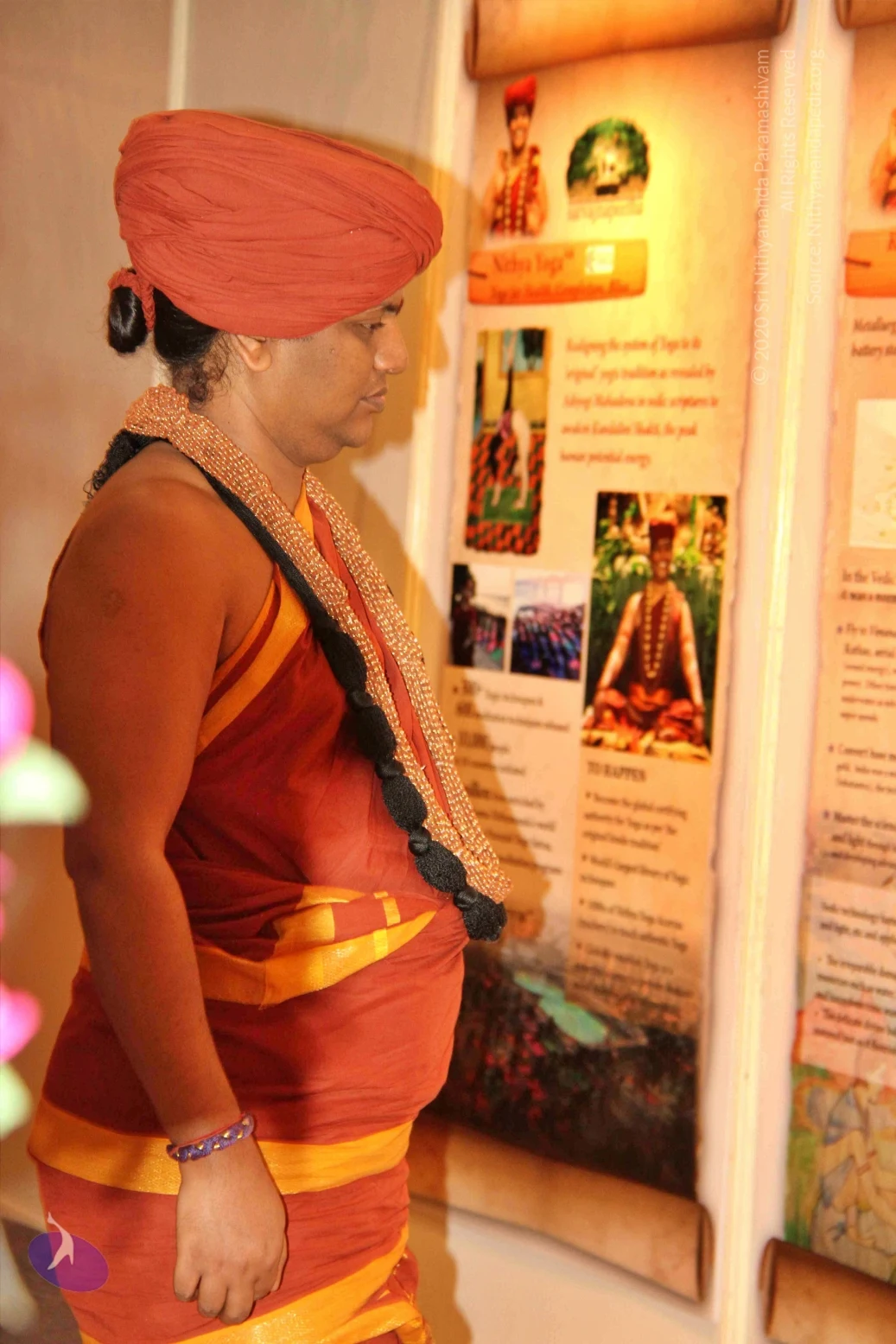
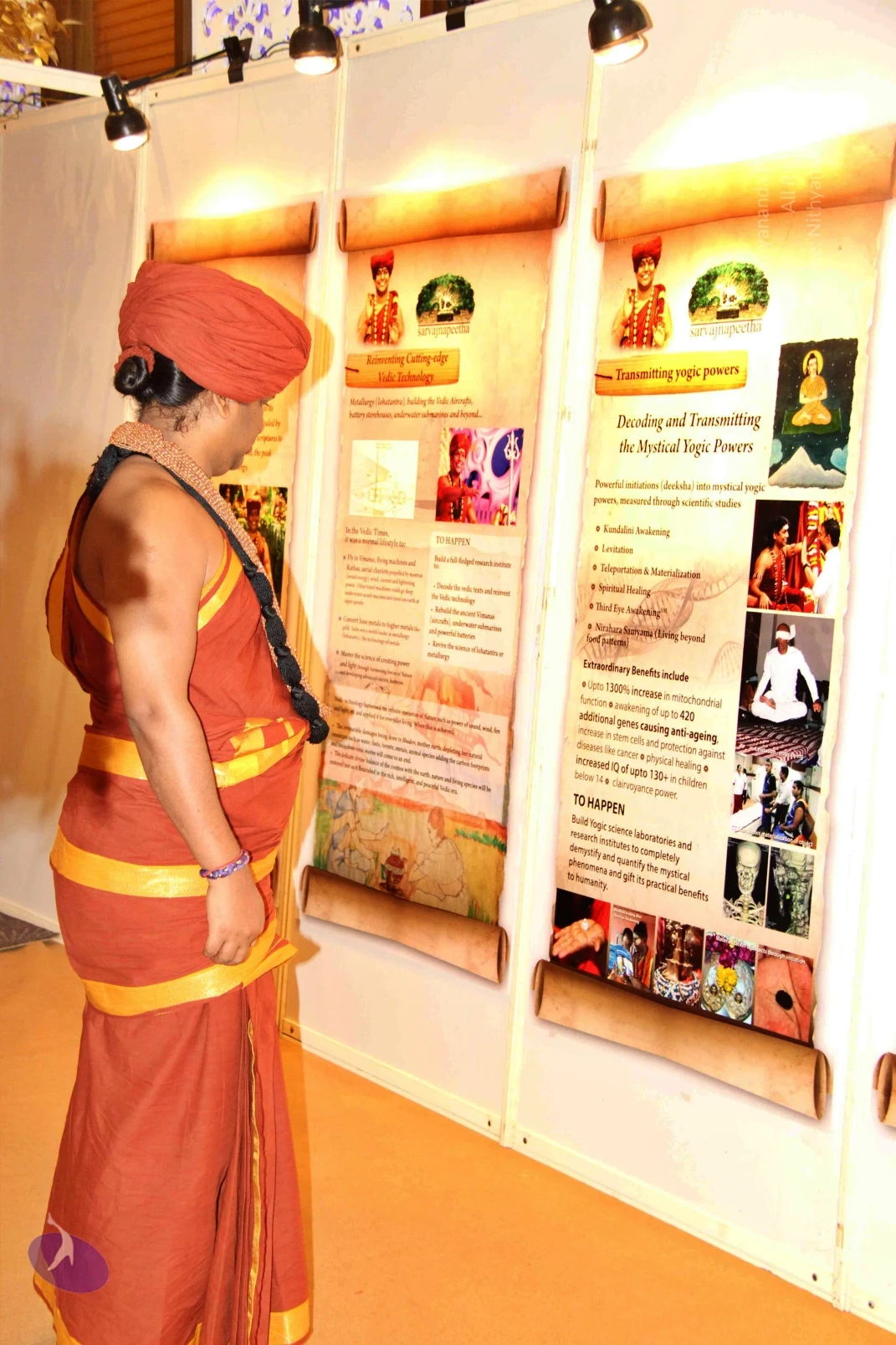
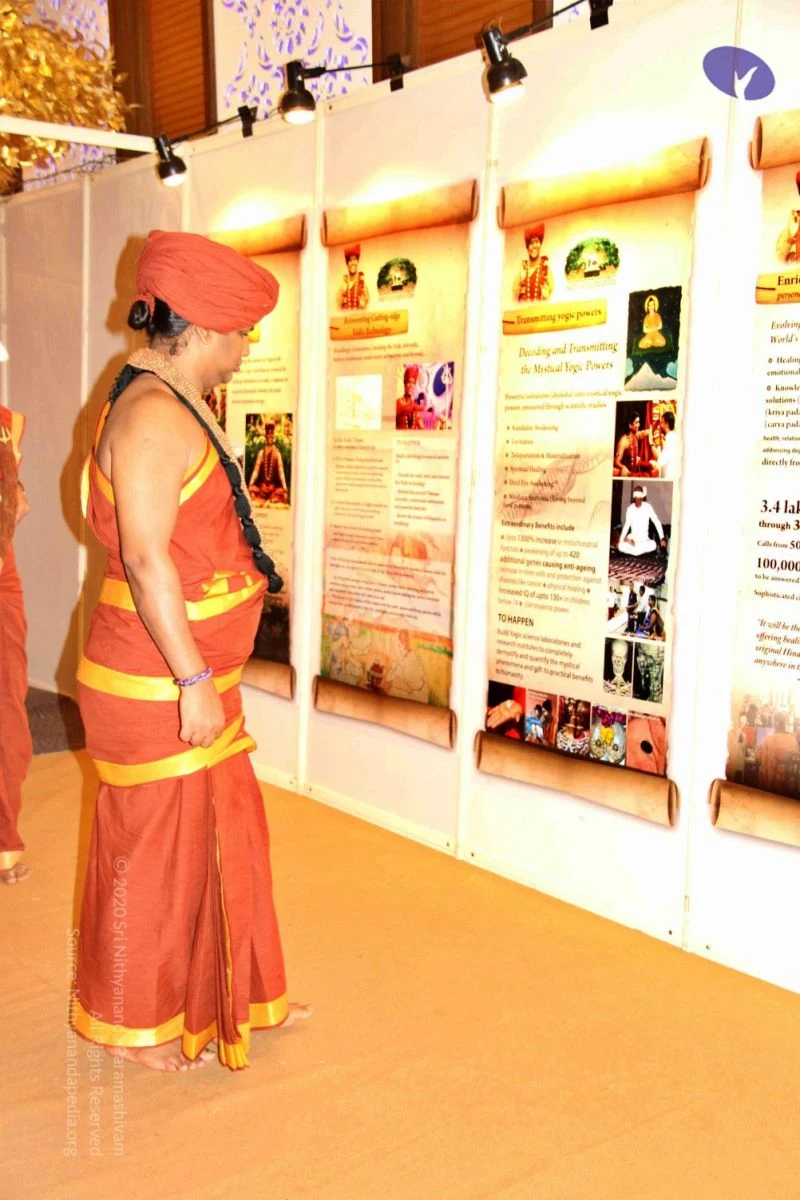
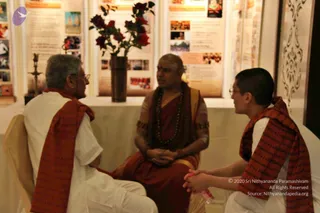
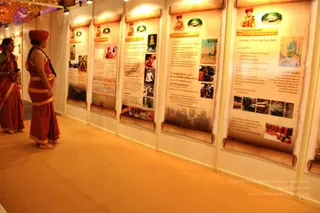
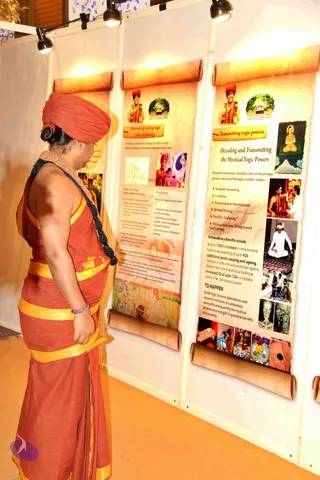
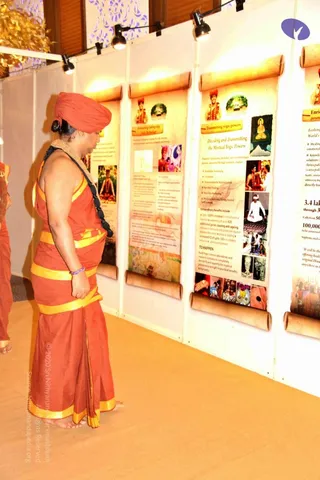
Three men sit in conversation indoors in front of a display board with printed panels, photographs and a tall vase of red roses on a white-draped table. The man on the left wears a white dhoti-style outfit with a red-and-black patterned shawl and glasses, seated with his back partly toward the camera. The central man, shaved-headed, wears a maroon robe with a golden-yellow wrap, a rudraksha mala and sandalwood-marked arms, hands clasped, and appears to be speaking. The man on the right, with a shaved head and glasses, wears a white garment with a red shawl and holds a water bottle. A brass lamp stands on the left. a person appearance is uncertain for the central figure.A person in rust-orange robes with a matching orange turban and a gold-bordered wrap stands with their back to the camera, facing a display of tall scroll-style panels mounted on a white partition wall. The panels read Reinventing Cutting-edge Vedic Technology and Transmitting yogic powers, with photographs and diagrams of yogic practices. A portrait on the panels shows a figure in orange with a turban, labelled sarvajnapeetha. Overhead spotlights light the exhibition booth. One physical person is visible.A person wearing an orange-red turban and matching orange-red draped robe with gold borders stands with back partly turned, facing a wall of illuminated display panels in a bright exhibition hall. The panels are scroll-style posters with headings like "Transmitting yogic powers" and "Decoding and Transmitting the Mystical Yogic Powers", with photographs of meditating figures, a seated yogi, and devotees. Spotlights hang above the panels and a golden decorative element appears at the top left. A second person in orange stands at the left edge. The figure in orange has long dark braided hair and a beaded necklace; appearance is consistent with a person, but identity is uncertain.

sarvajnapeeta - TO BE EDITED LATER

8 photosSource gallery
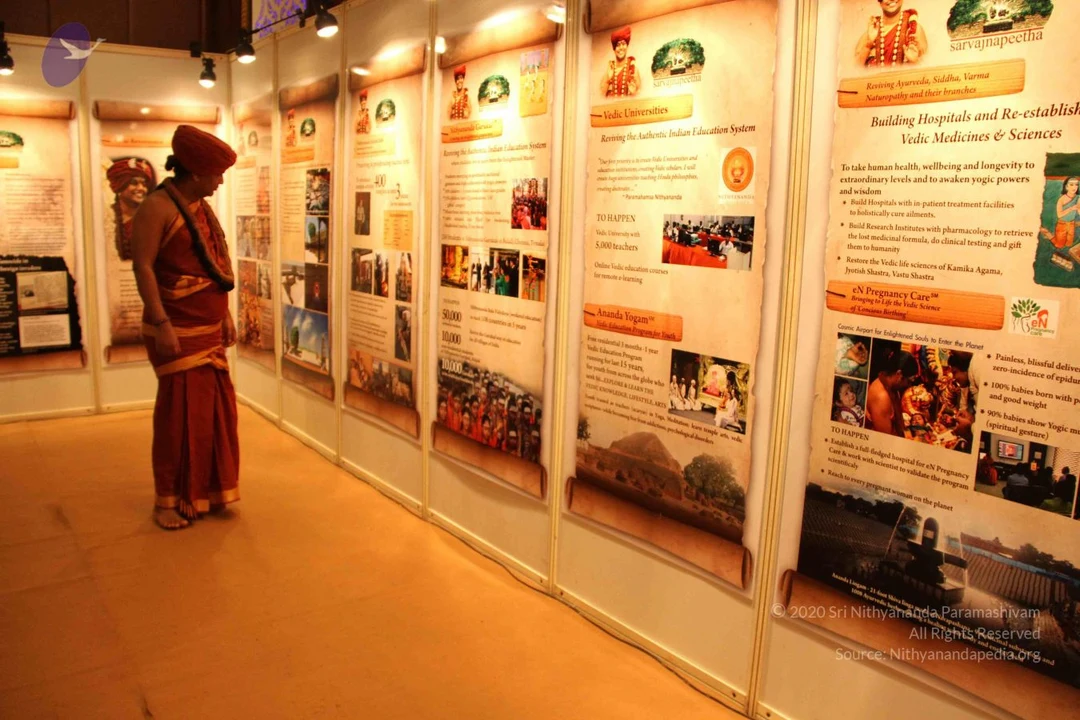
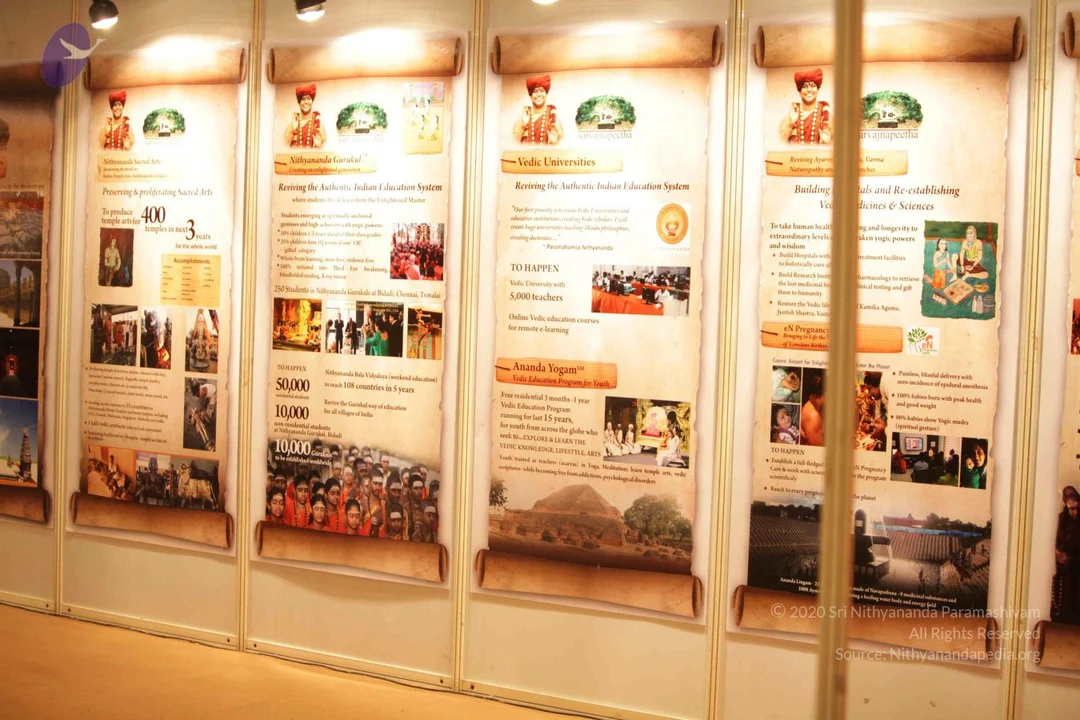
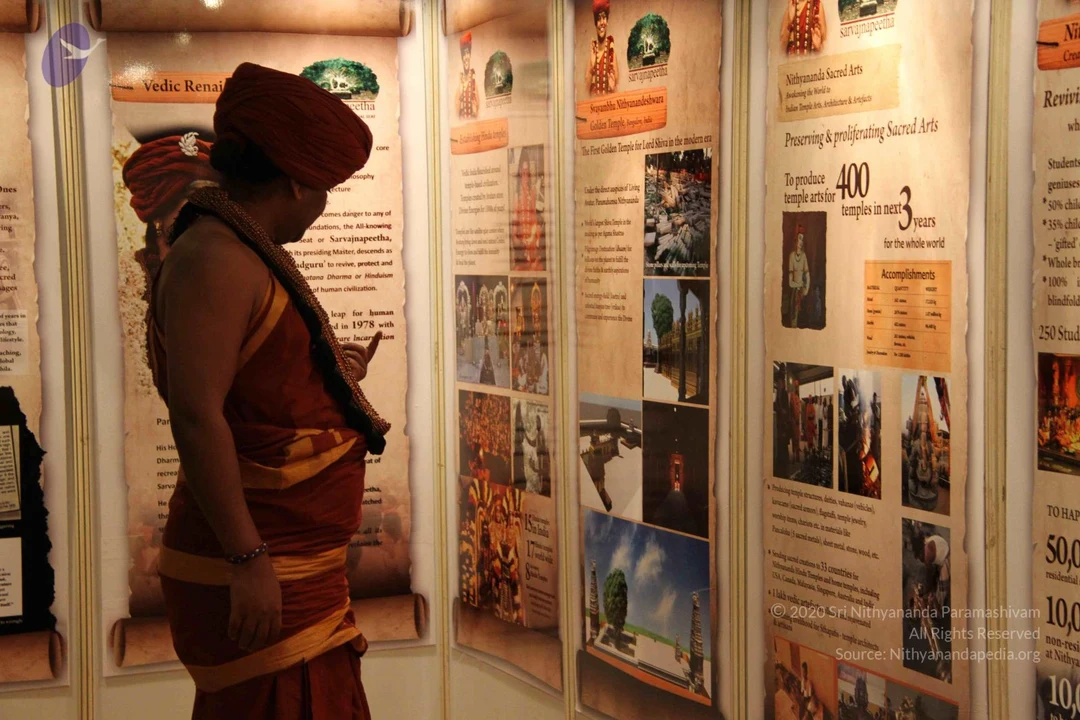
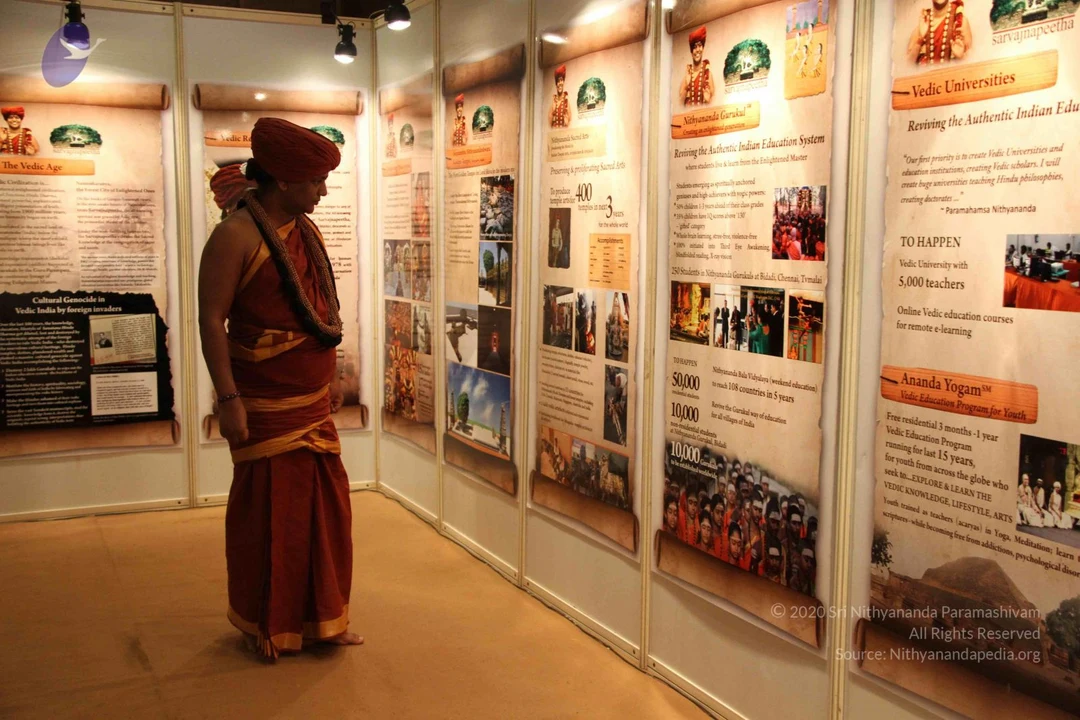
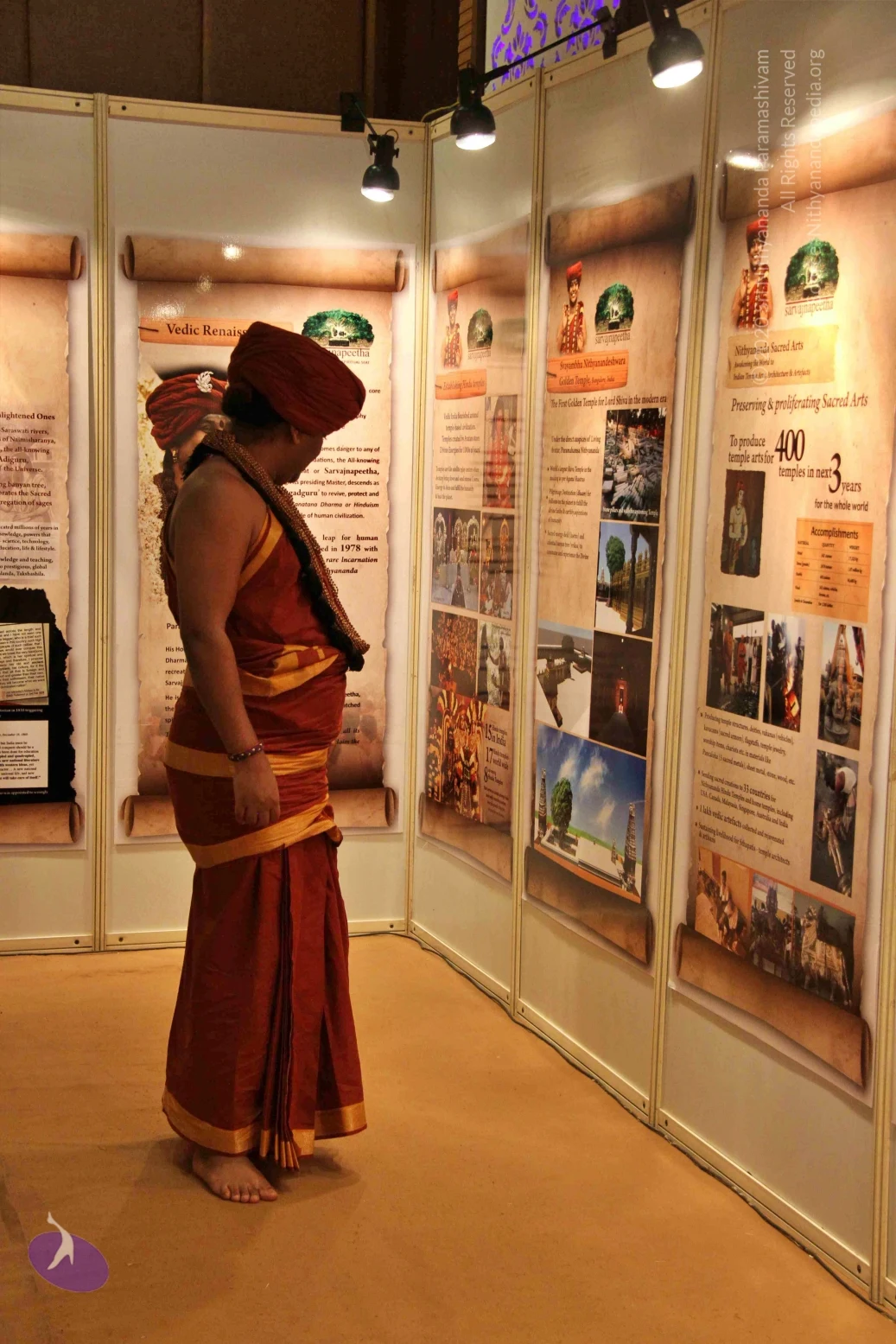
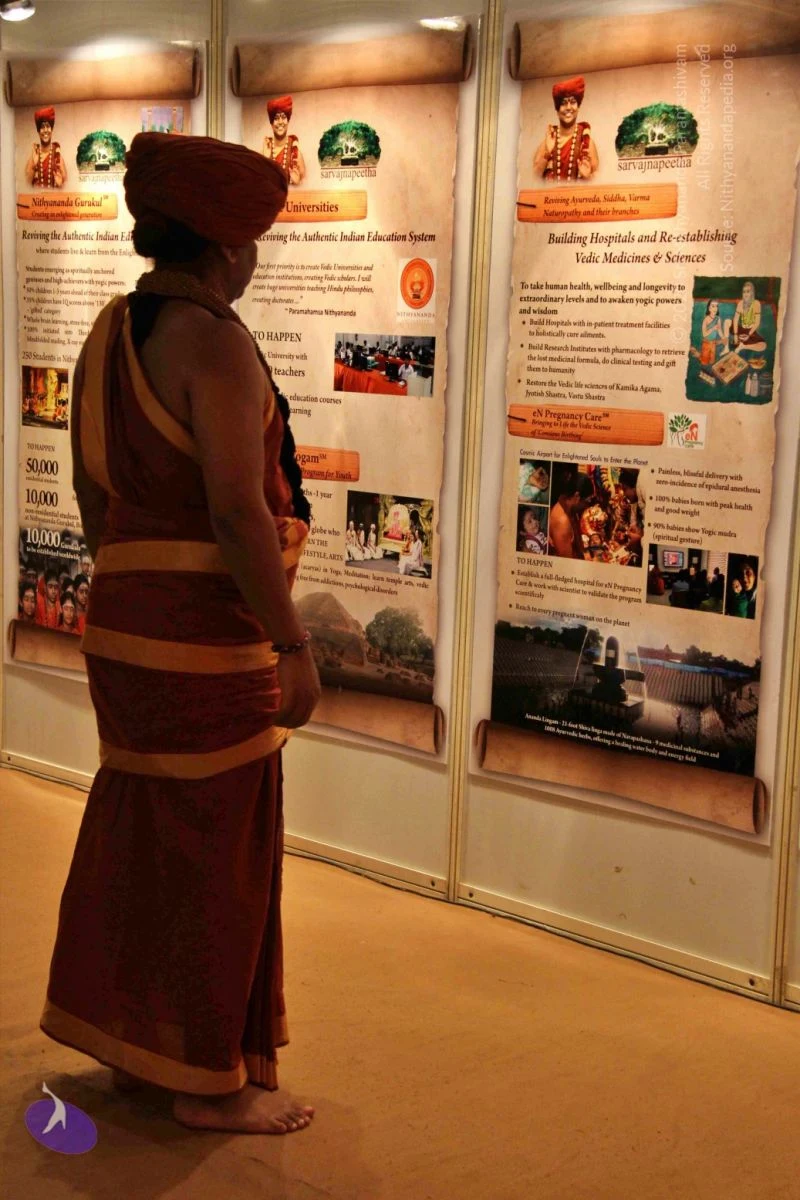
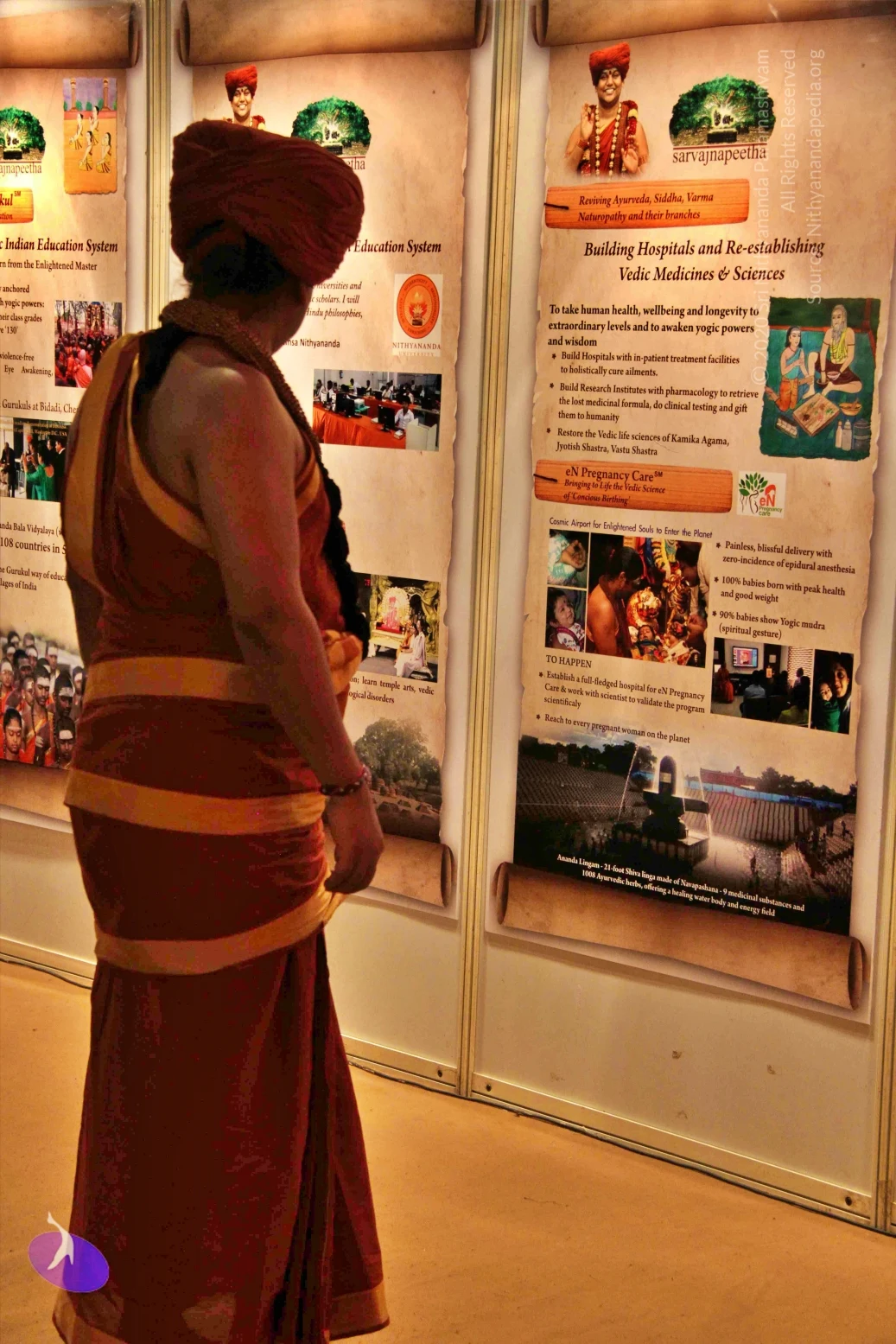
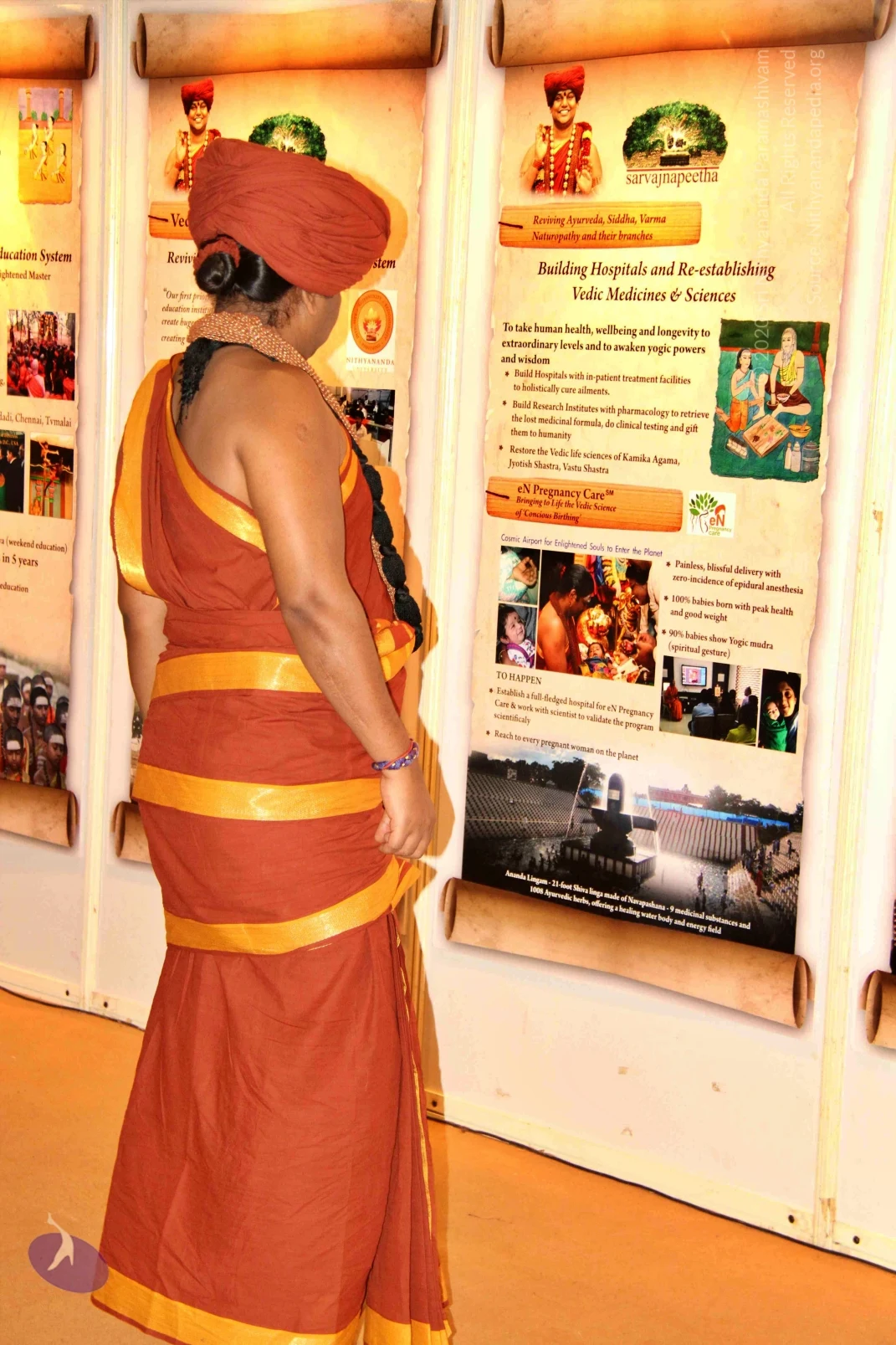
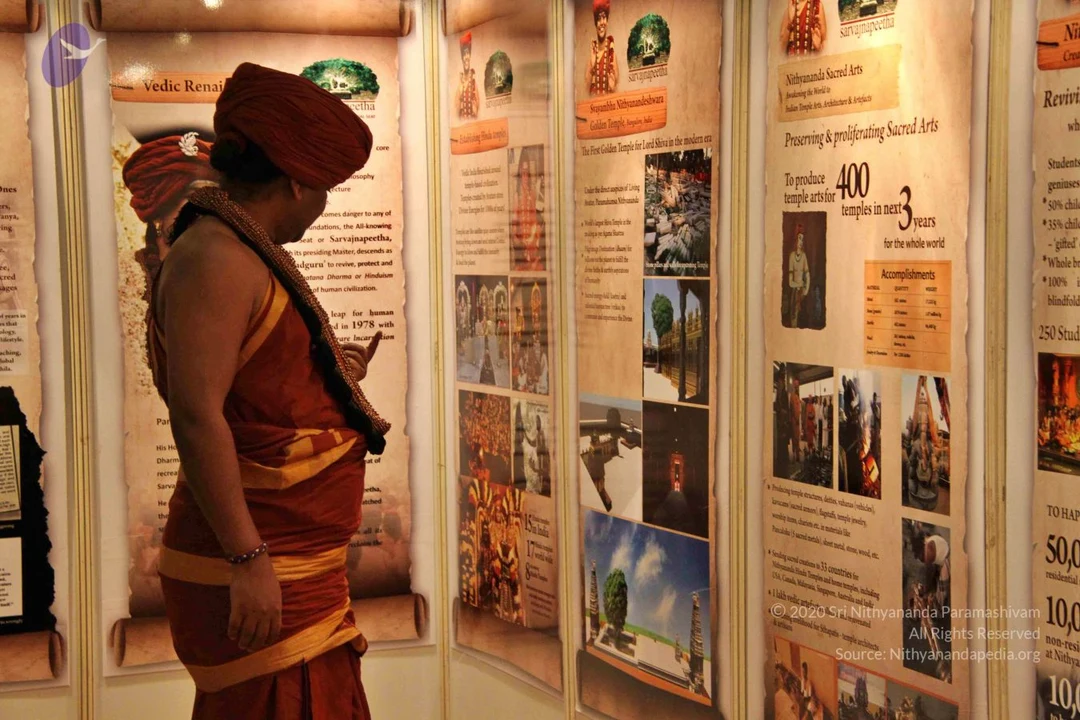
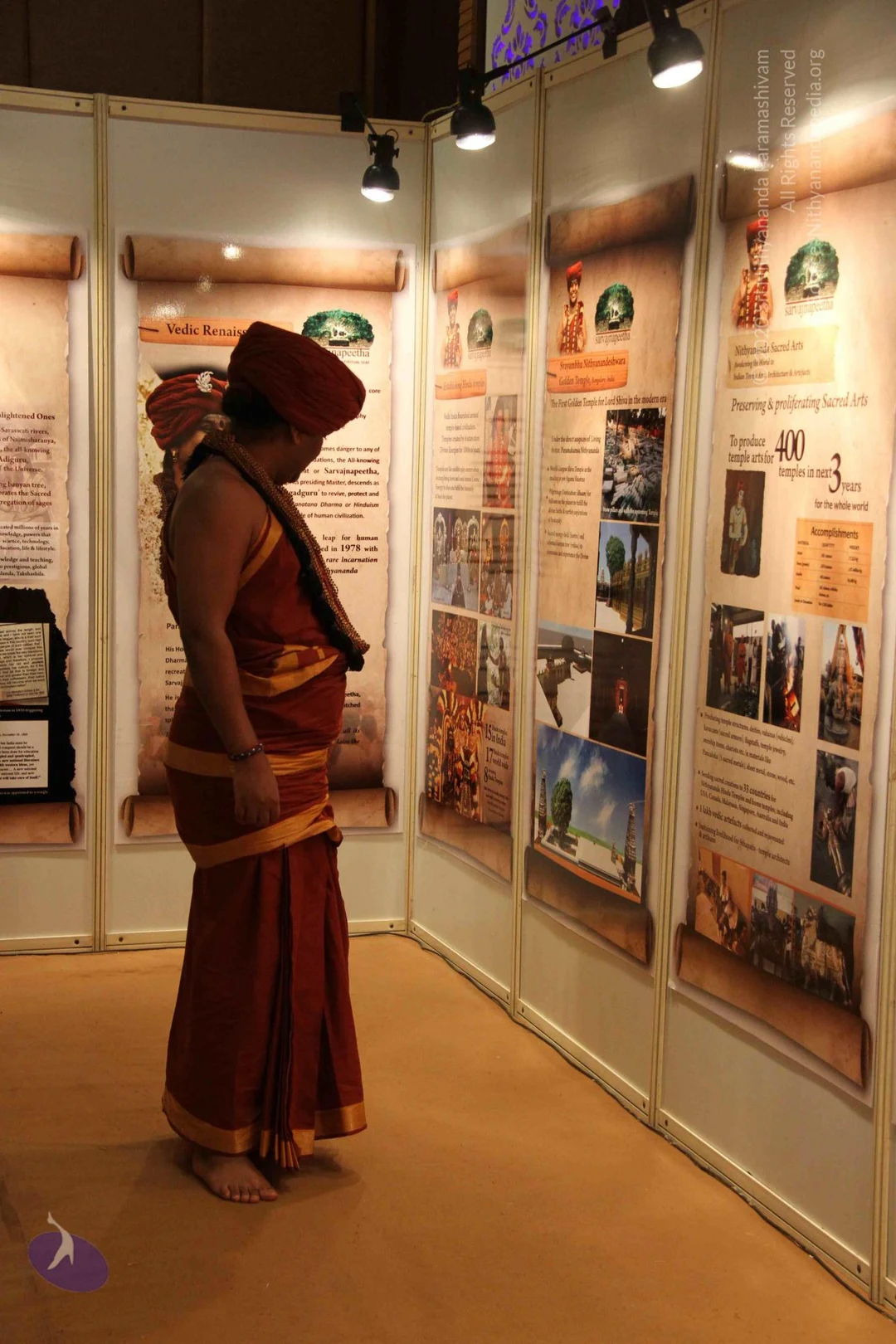
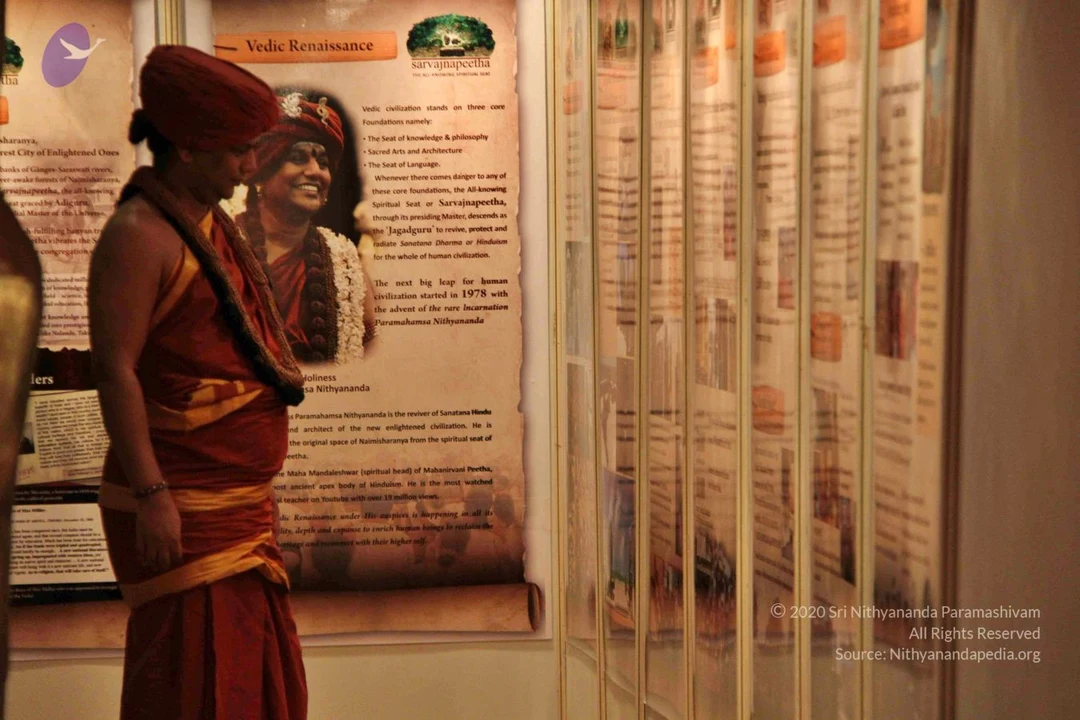
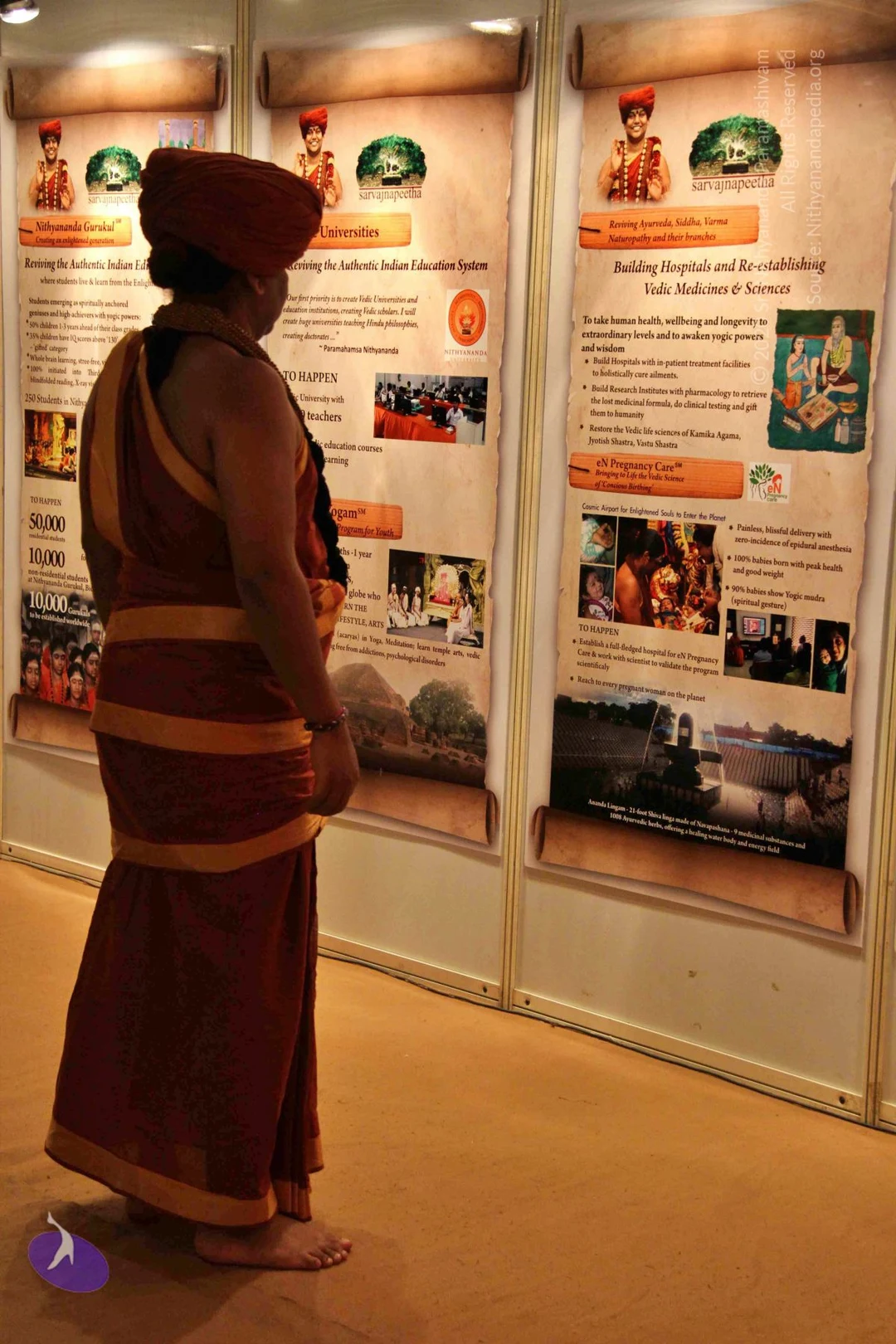
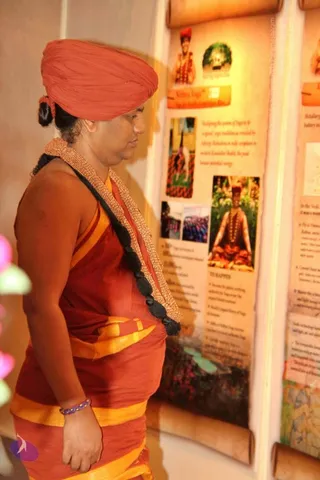
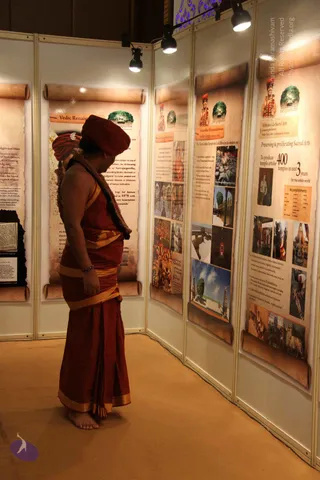
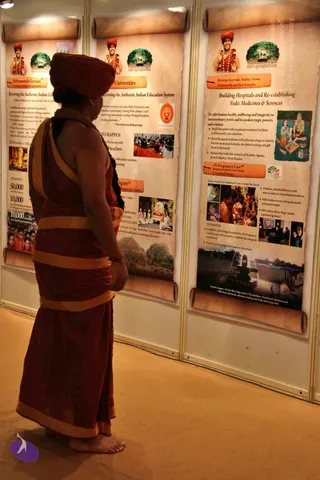
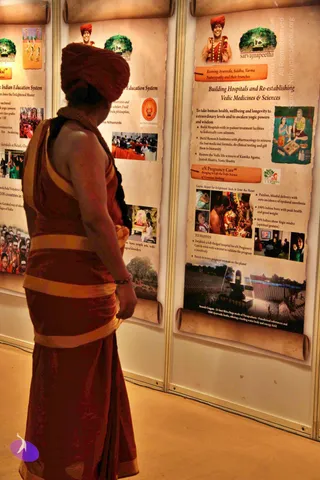
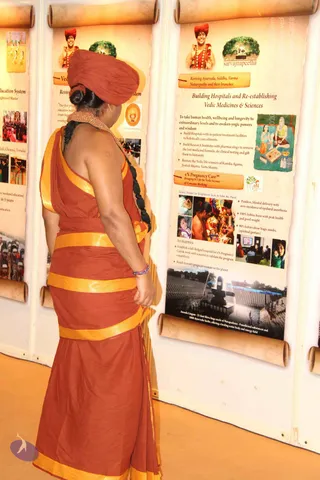
A barefoot man in a red-maroon turban and maroon robe with gold-bordered dhoti stands with head bowed, looking at a display of tall scroll-style panels in an exhibition hall. He wears a dark beaded mala around his neck and a bracelet on his wrist. The panels show temple photographs, a golden temple and text about Vedic renaissance and sacred arts, under spotlights. Another turbaned figure stands partly behind him. a person candidate appearance is not clearly established from the visible cues.A photograph of a man in a museum-style exhibition hall, standing in profile at left and looking toward a wall display. He wears a deep red turban, a red-orange shawl draped over the shoulders with a dark beaded mala, and a red-orange dhoti with a yellow-gold border; his bare arms show a bracelet. Beside him is a tall vertical panel titled Vedic Renaissance, with a framed portrait of a smiling woman in a red turban and white flower garland, and a scroll-style text panel describing Vedic civilization's three core foundations. To the right, a row of glass display cases holds printed pages and photographs. The room is dimly lit with warm spotlighting.A person in a maroon turban and rust-red draped robe with a gold-edged border stands barefoot with their back to the camera, facing a row of tall scroll-style display panels. The panels present Nithyananda Gurukul, Sarvajnapeetha, Vedic Universities, Ayurveda and Vedic medicine, and eN Pregnancy Care, with portrait photographs, schematic images and a photo of the Ananda Lingam. A hanging blue-and-white circular logo sits in the lower left corner of the photo. Dark wooden-framed panels line a pale floor in an indoor exhibition hall.A photograph of a person in a rust-red sannyasi-style wrap with gold-edged borders and a dark red turban, standing with their back to the camera and viewing a row of tall parchment-style exhibition banners. The banners carry the sarvajnapeetha heading and text about reviving Ayurveda, Siddha, Varma and Naturopathy, building hospitals, and eN Pregnancy Care, with photographs and an illustration of a Shiva lingam and a Vedic-style painting. The person wears a rudraksha-style mala and a bracelet. Appearance cues are not distinctive enough to name this person, so they are described by role only.A photograph of a woman seen from behind, standing before a wall of tall scroll-style banners. She wears a rust-red turban and a rust-red sari-style wrap with broad gold borders, with a long dark braid over her shoulder and a beaded necklace. Her wrist has a blue bracelet. The banner in front of her is titled sarvajnapeetha with the subtitle 'Building Hospitals and Re-establishing Vedic Medicines & Sciences', showing a painted illustration of a seated figure and bullet points on hospitals, research institutes and Vedic life sciences, plus an eN Pregnancy Care panel with photographs of births and an image of the Ananda Lingam. Another banner to the left is partly visible, and a portrait of a man in a red turban with garlands appears on the banner, labelled as a portrait.

shivoham TO BE EDITED LATER
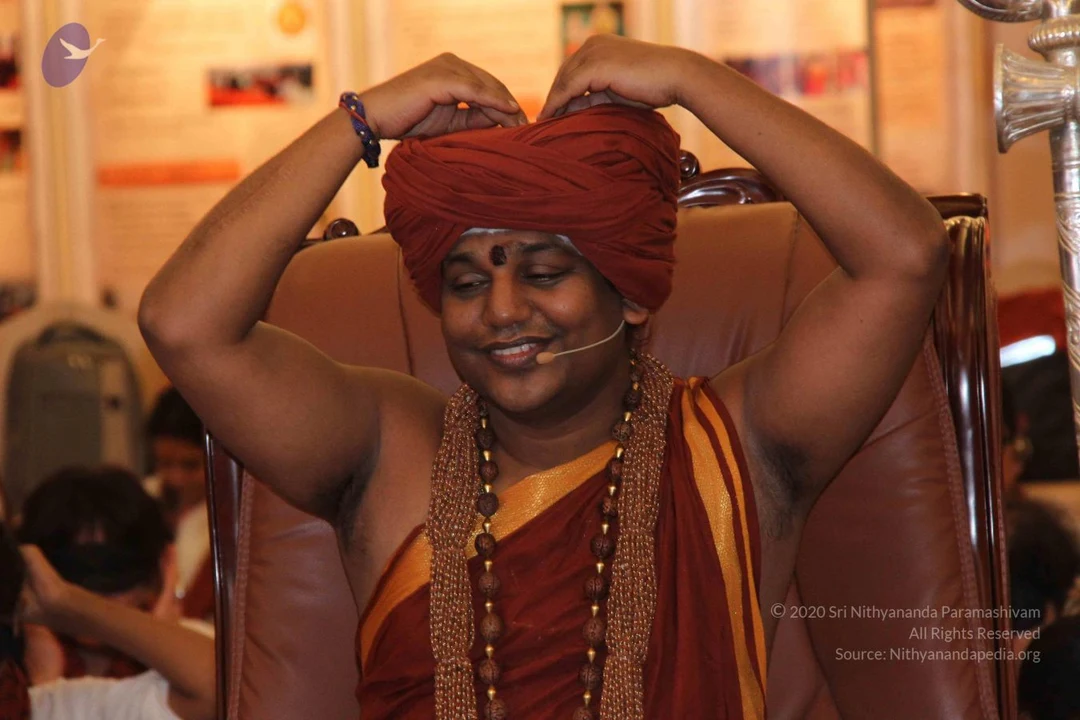
6 photosSource gallery
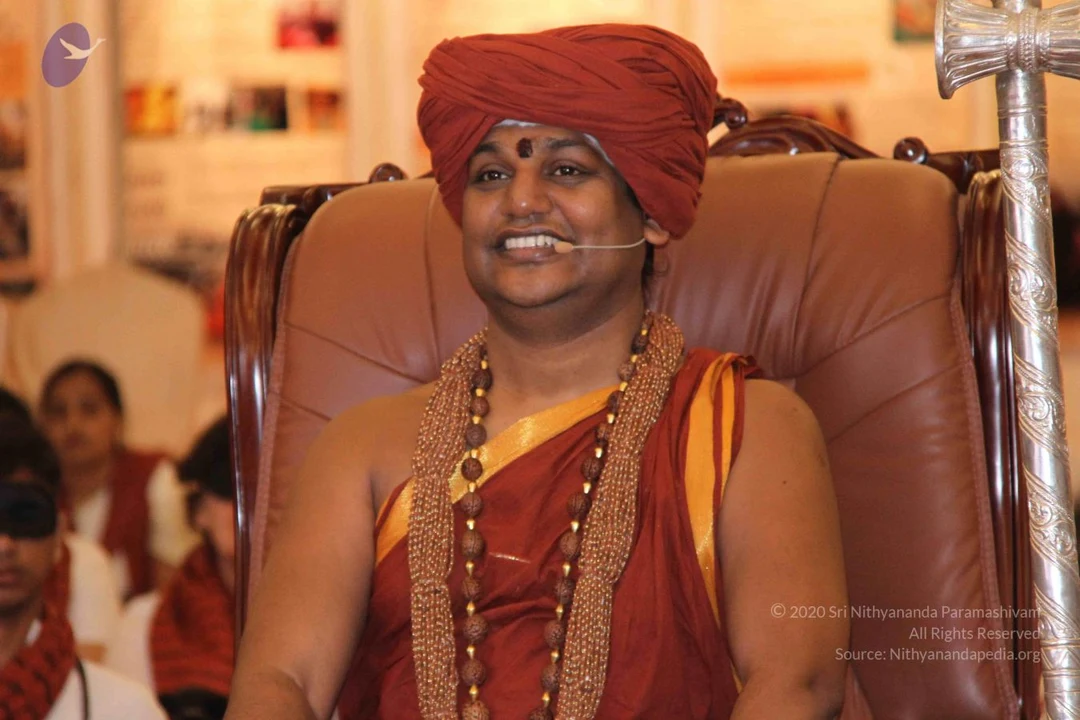
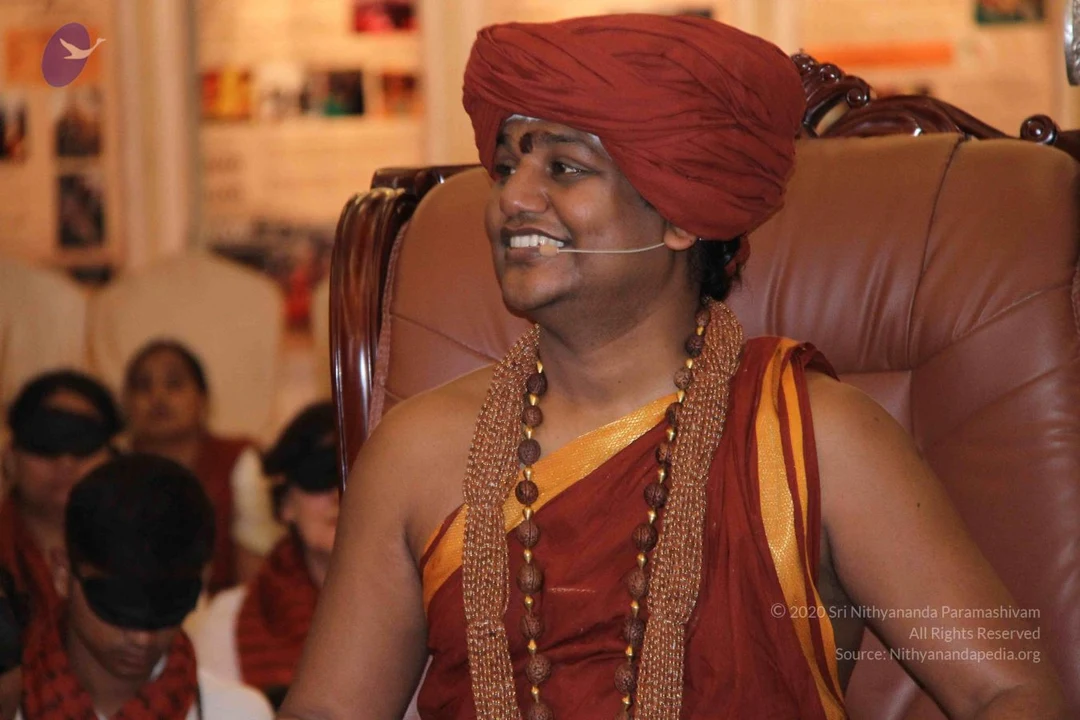
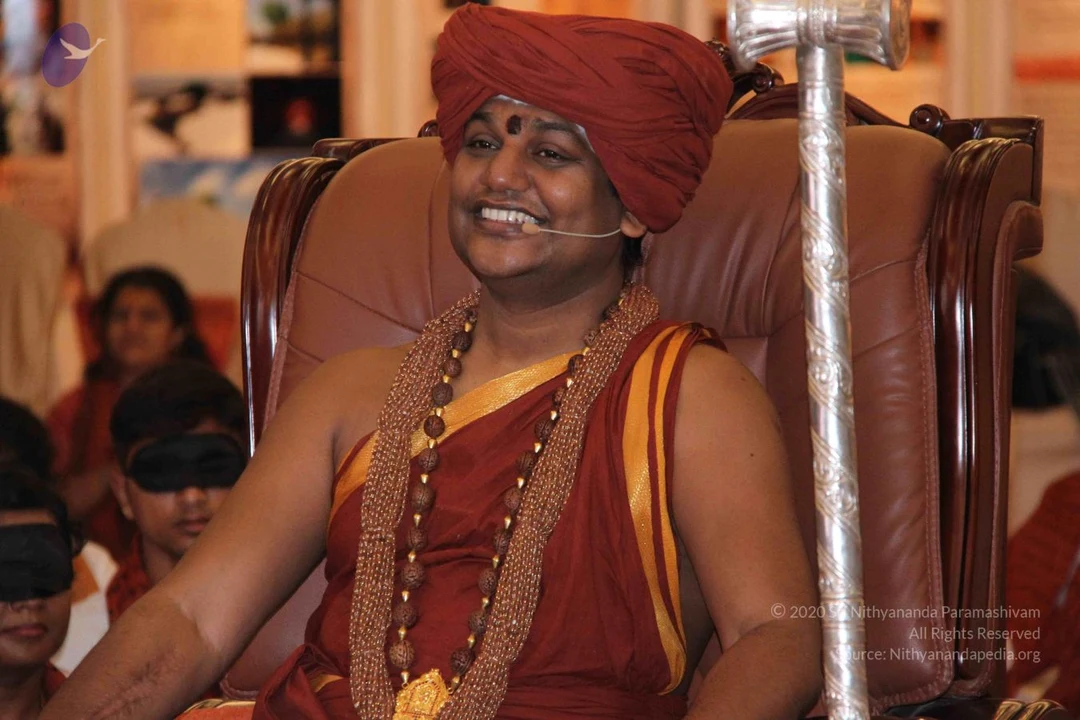
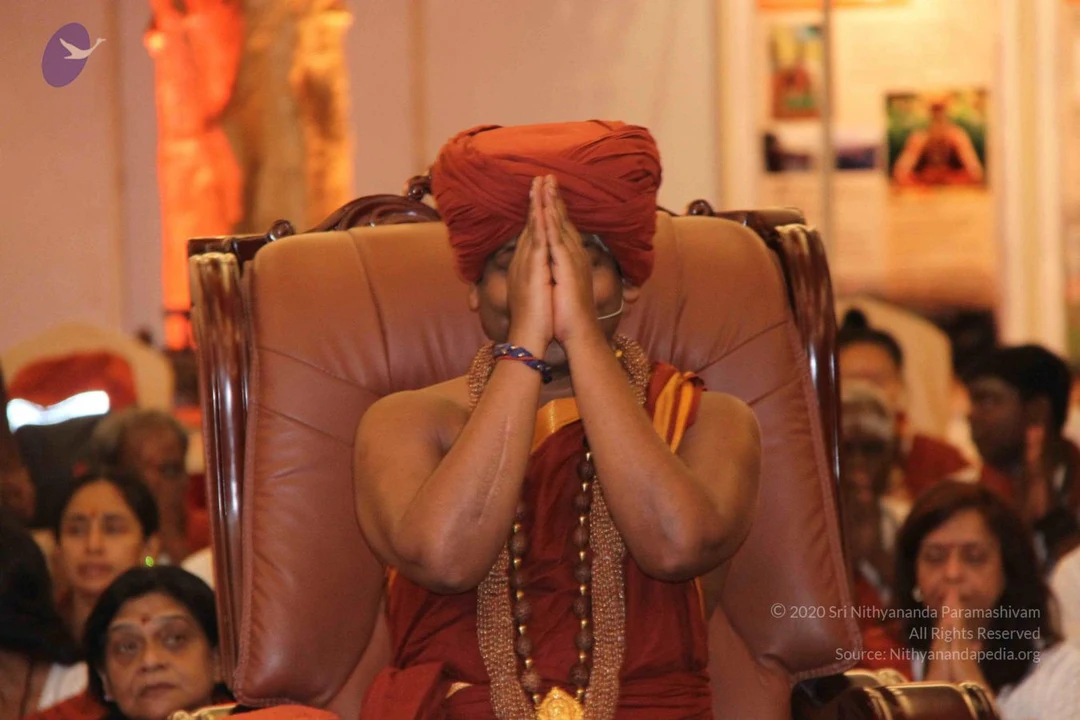
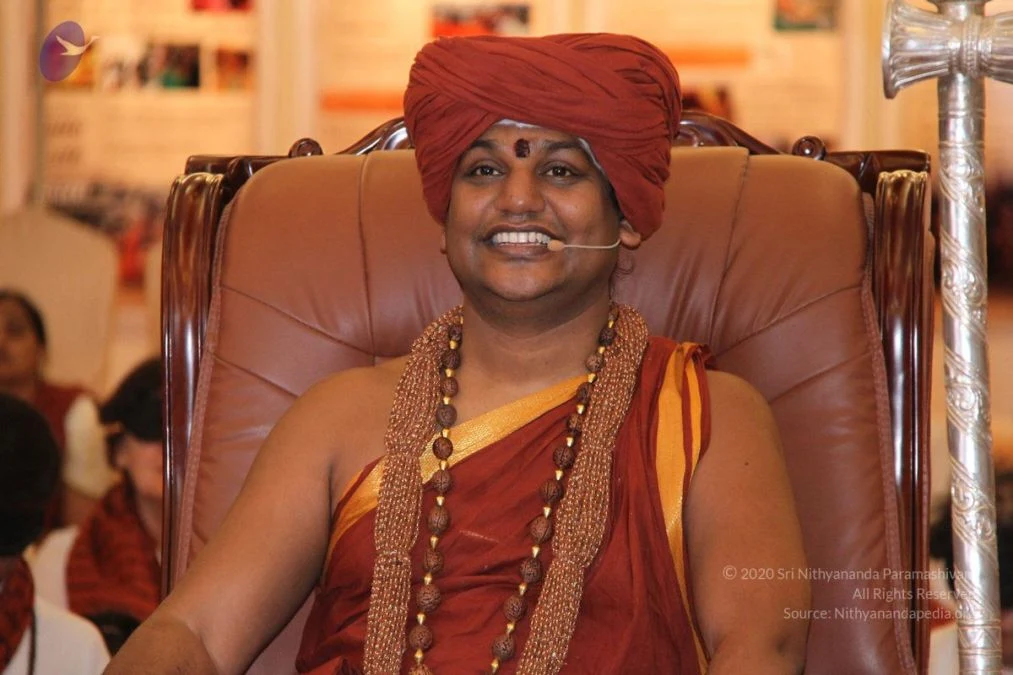
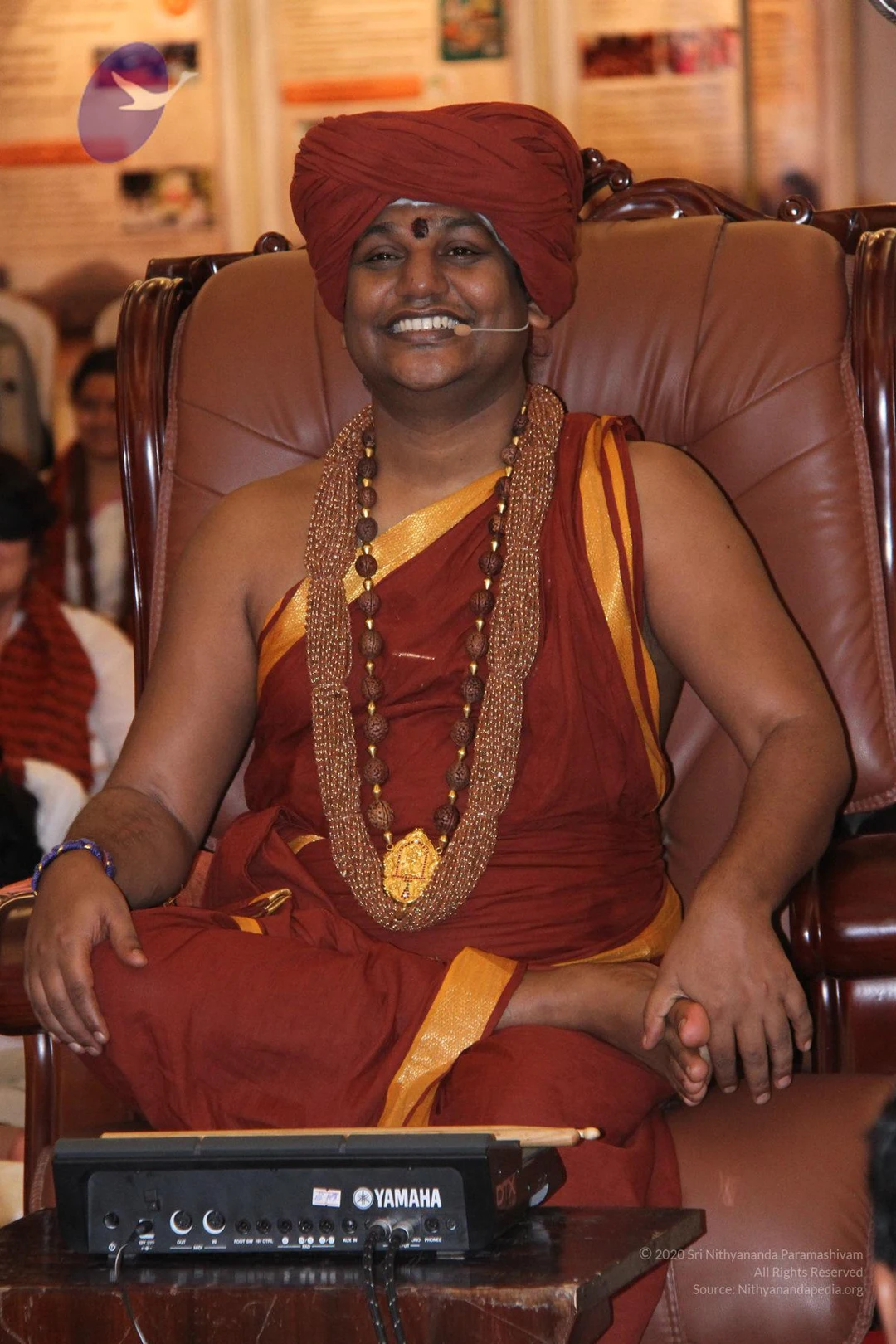
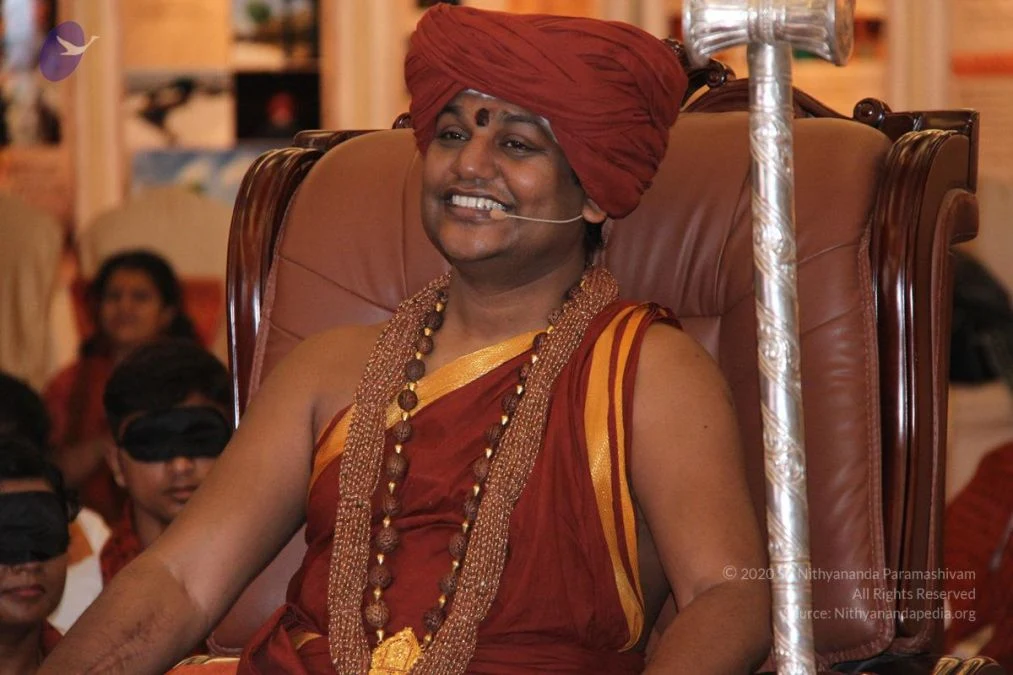
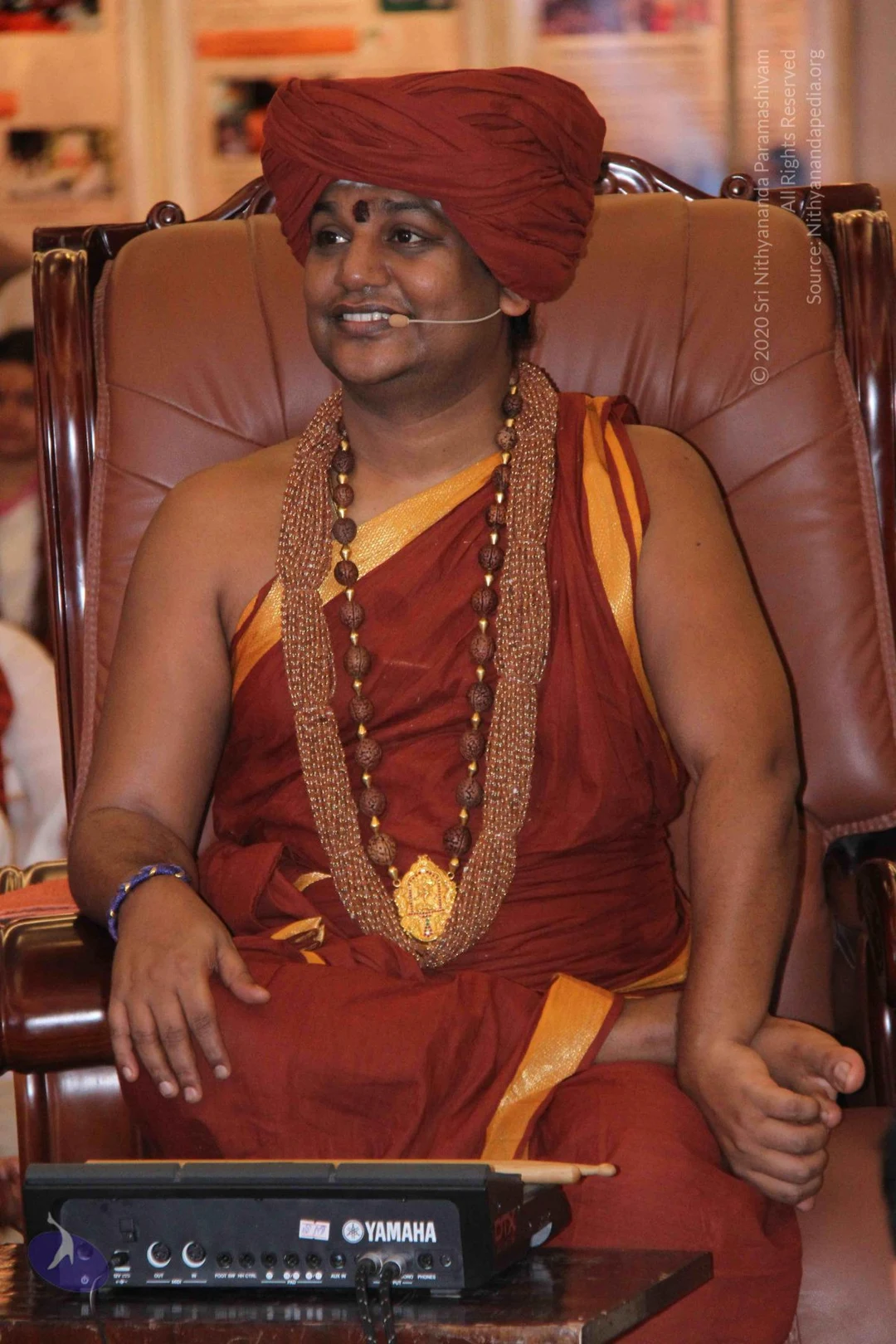
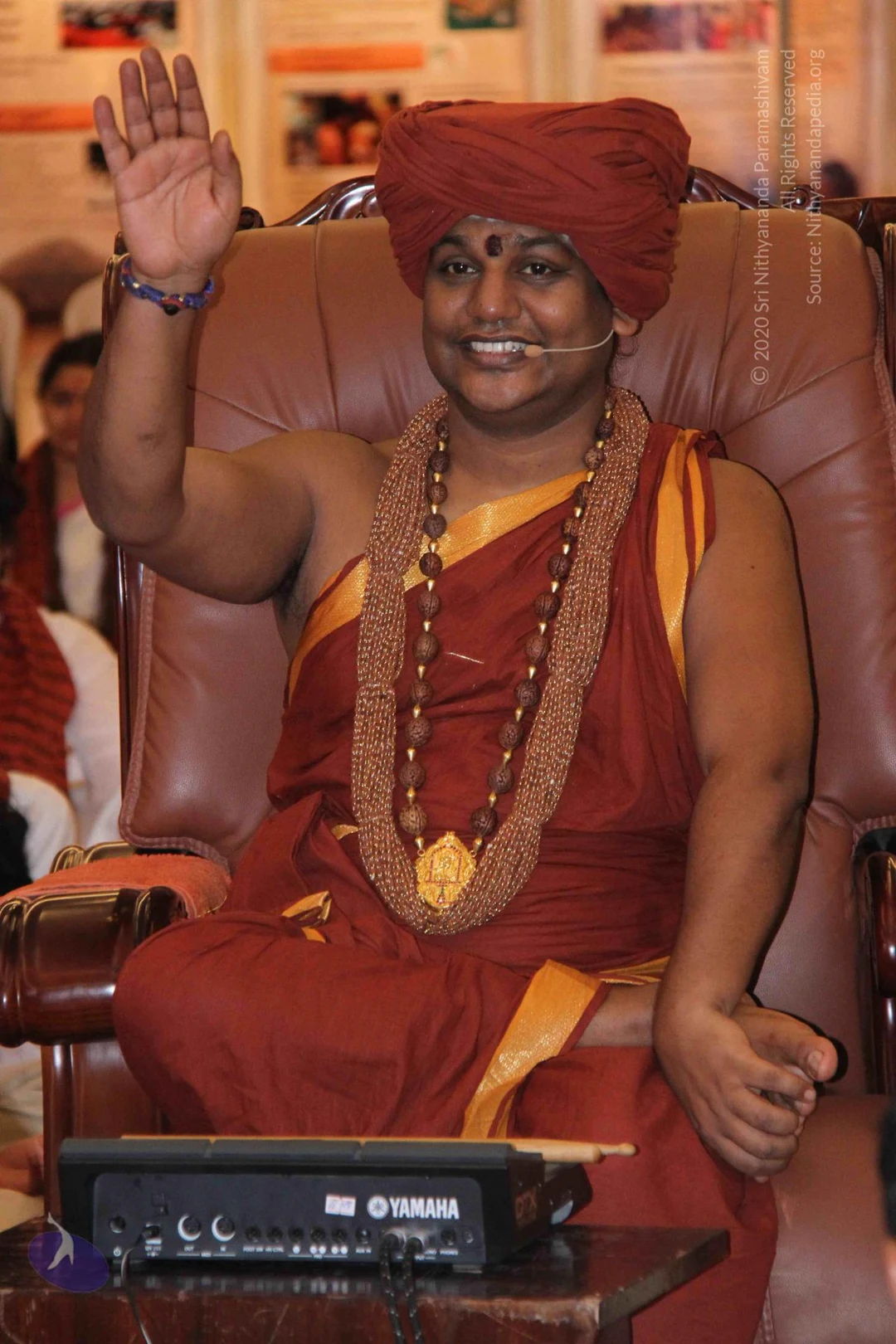
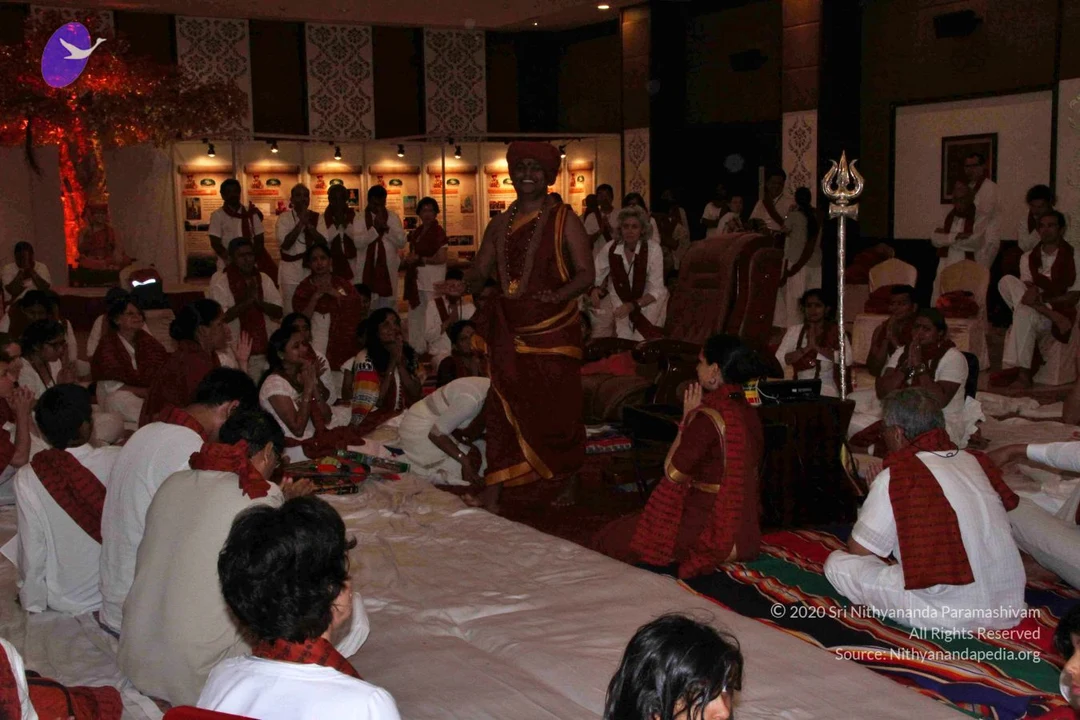
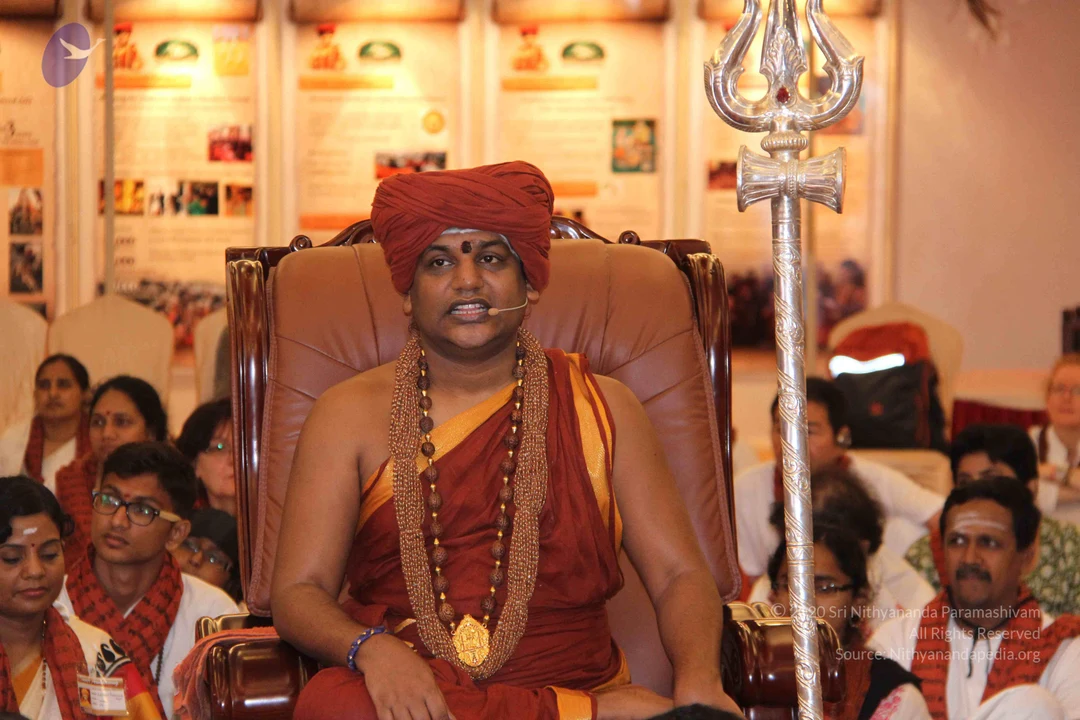
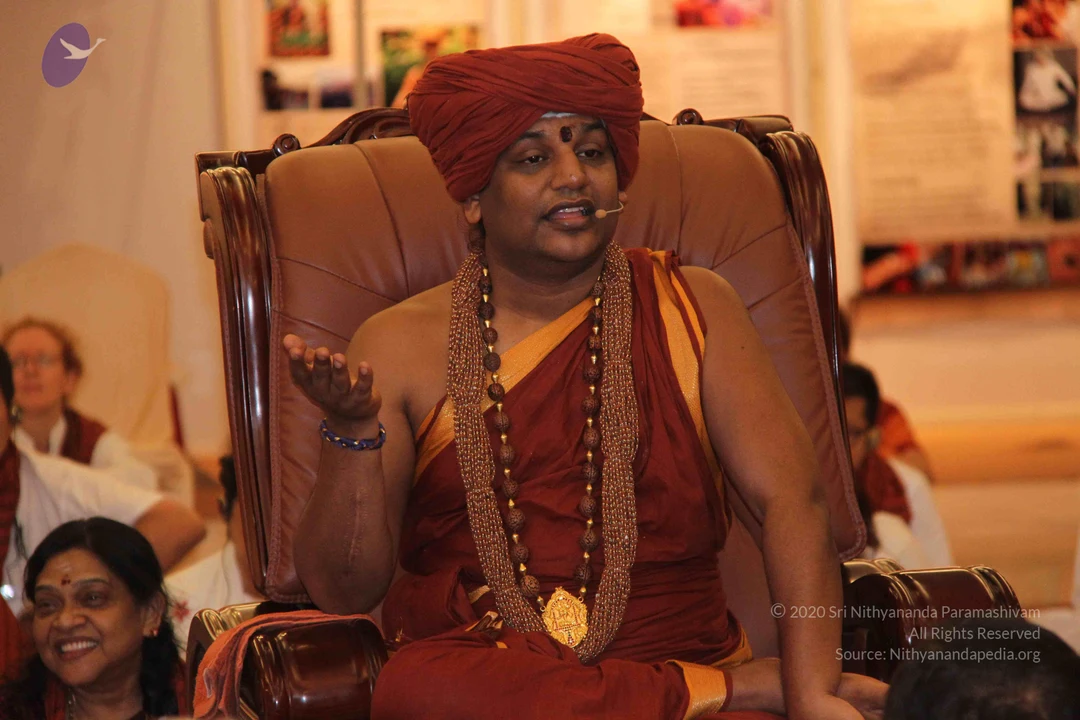
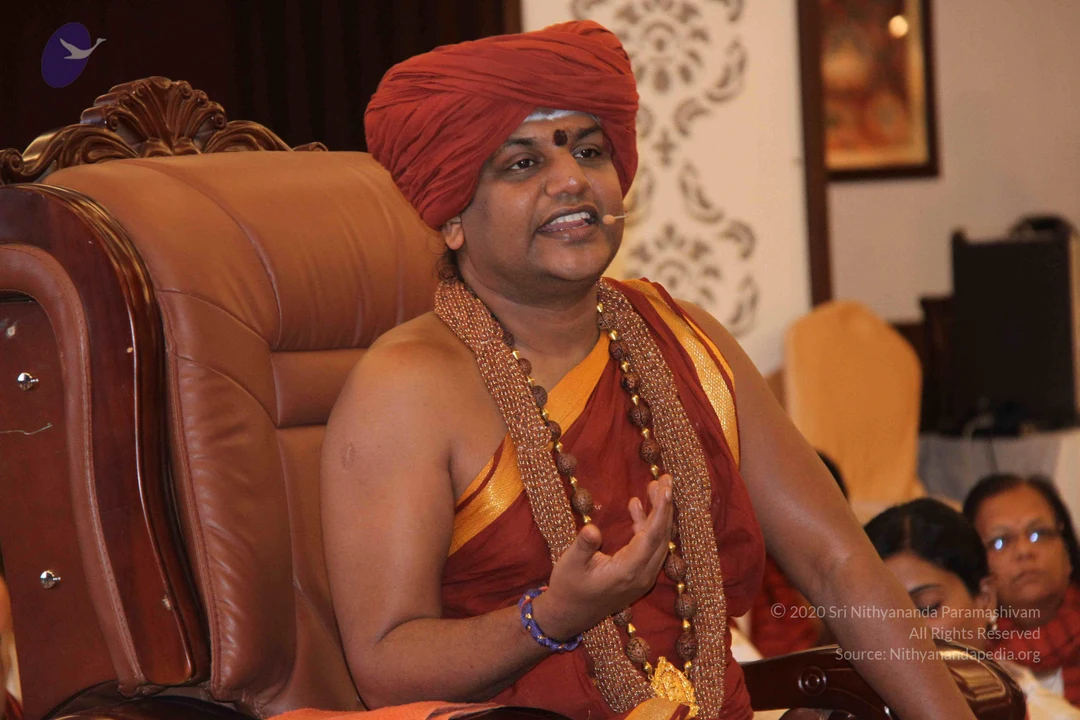
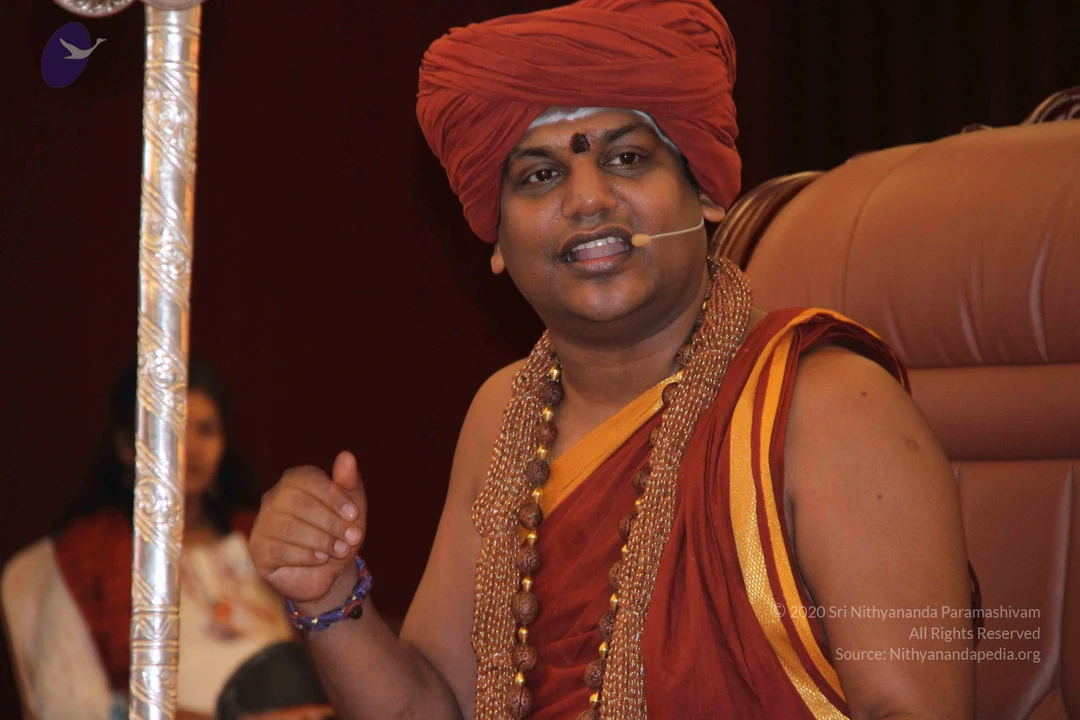
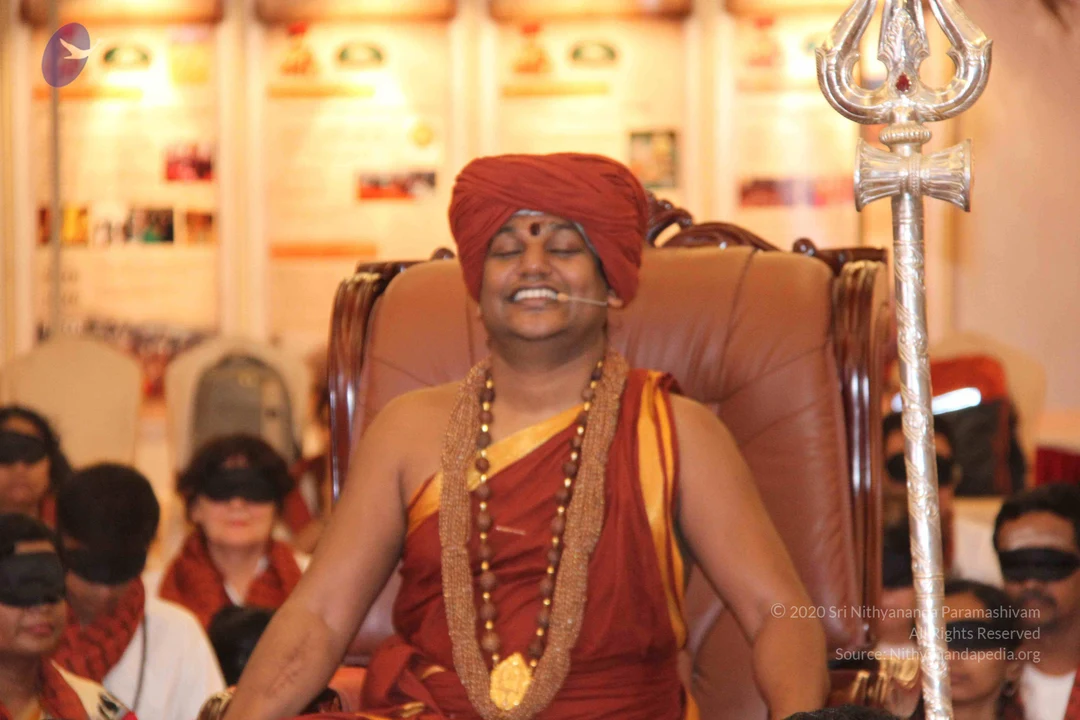
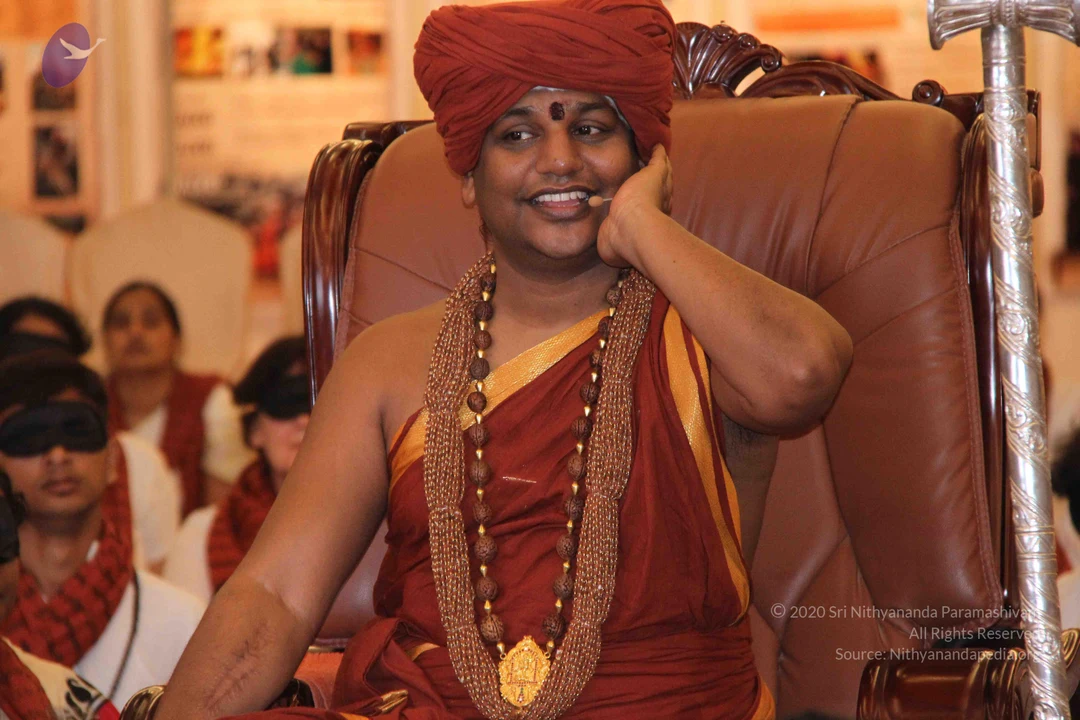
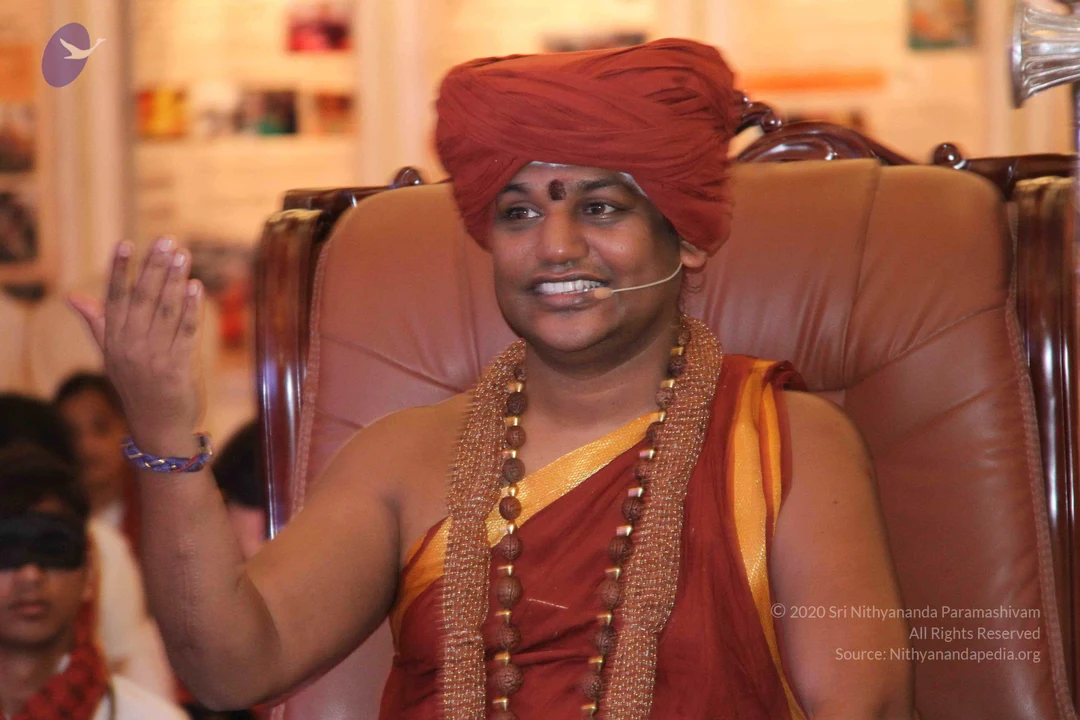
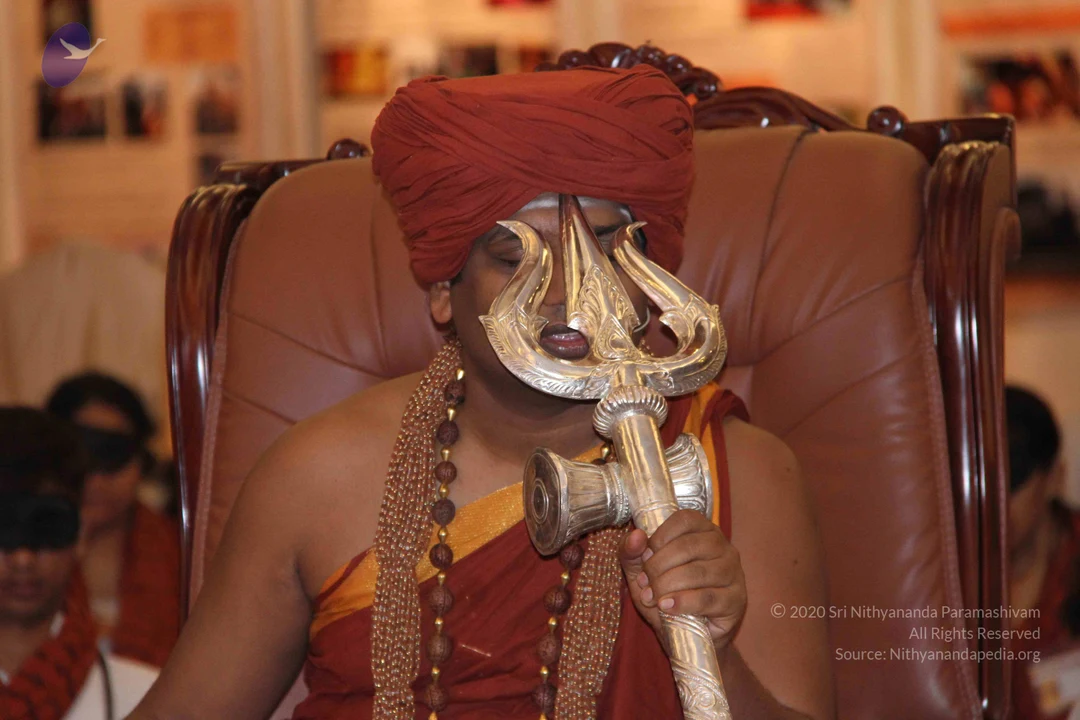
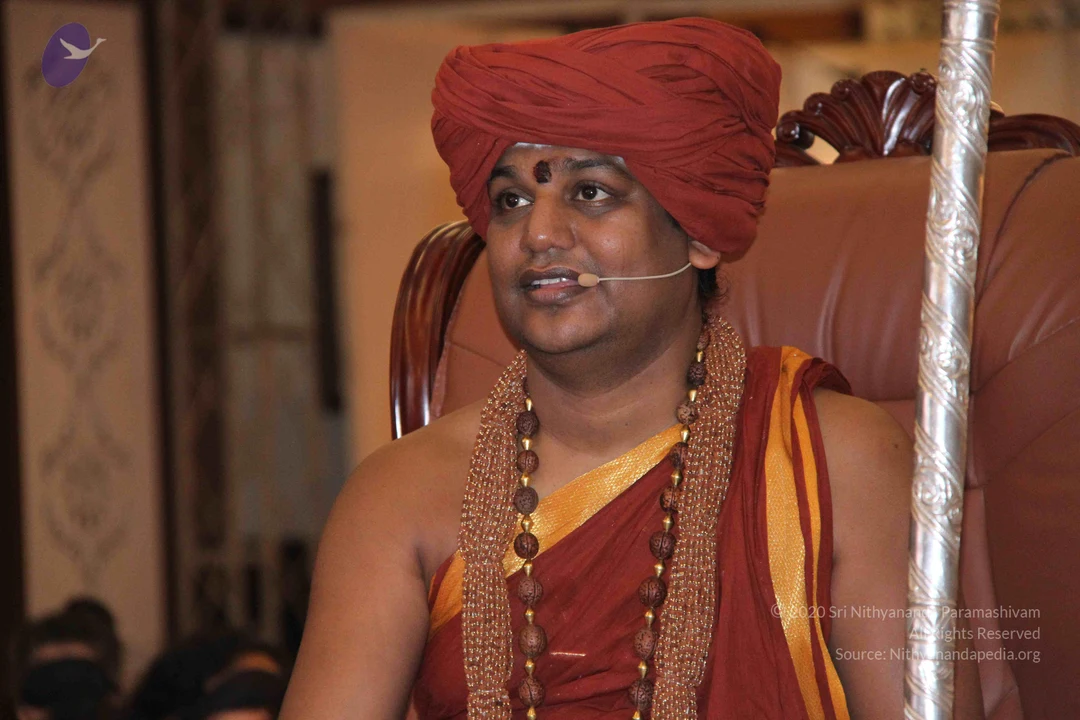
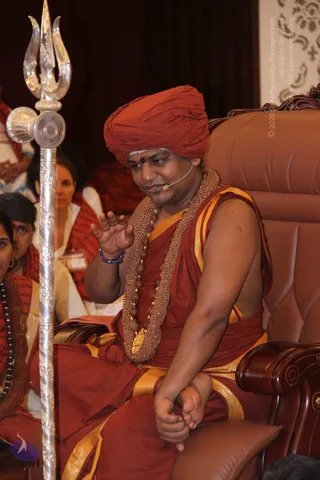
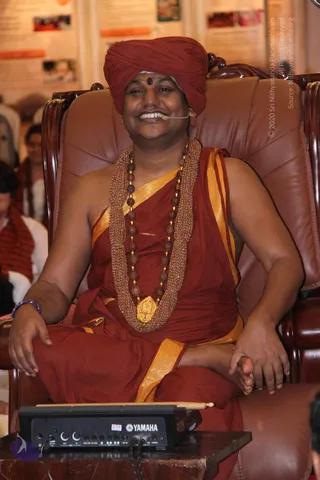
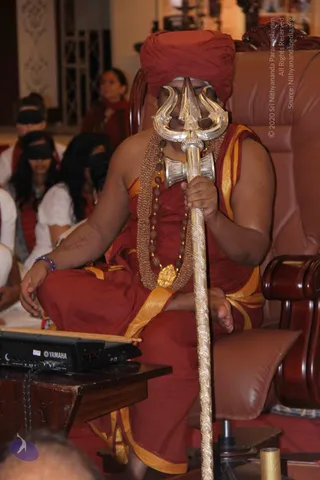
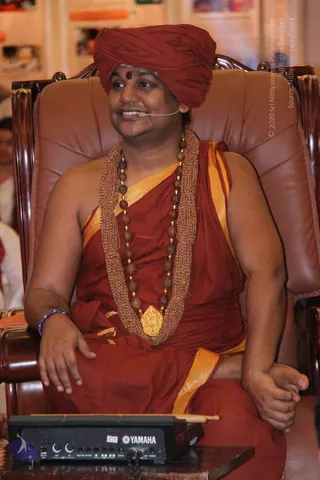
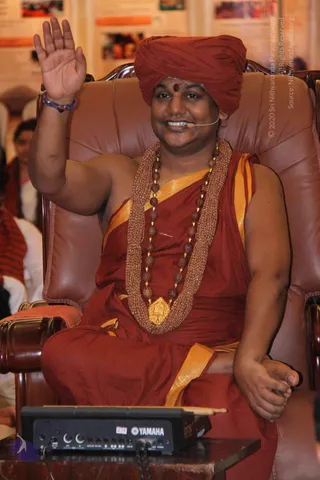
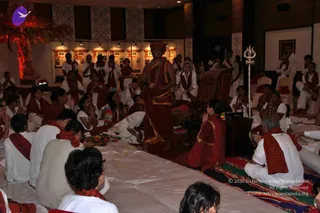
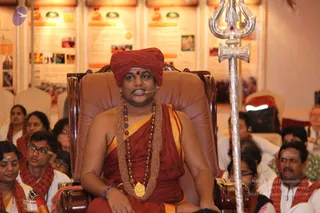
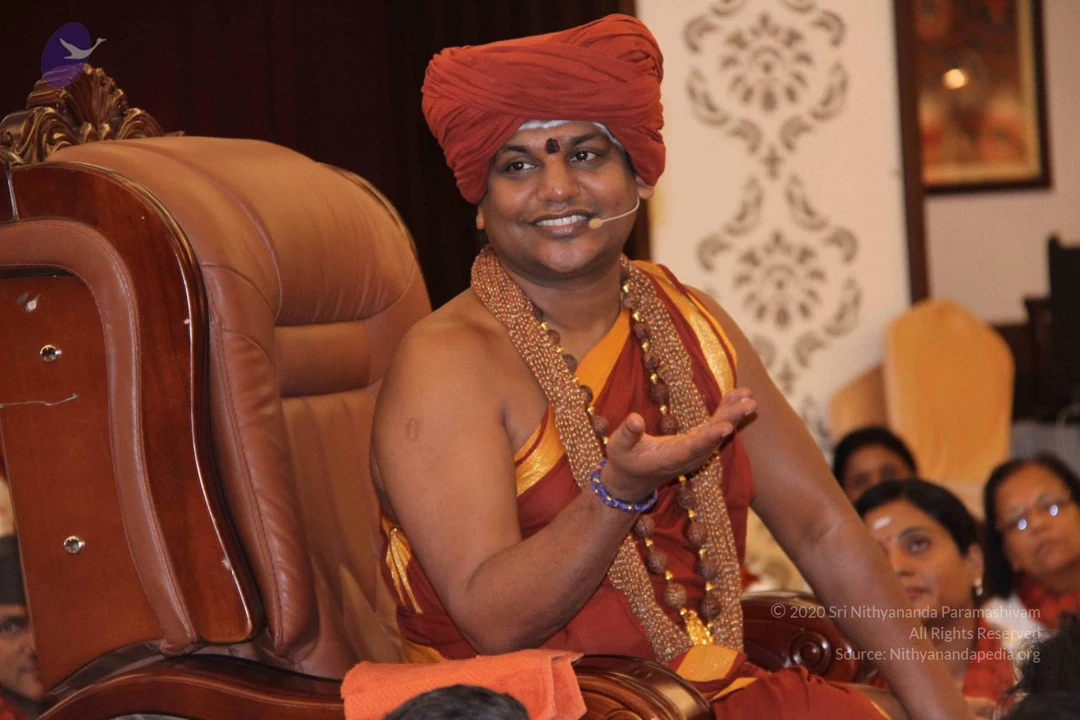
A seated man in a red-orange turban and matching red-orange robe with gold borders sits in a brown leather throne-like chair while speaking into a head-mounted microphone. He wears a long mala of rudraksha beads and gold-toned beads, has a white tilak with a red dot on his forehead, and raises one hand in an explanatory gesture. A tall silver trident stands to the left, and several people are seated behind him in the background, including a woman in white and red. The scene resembles a satsang discourse. Based on appearance cues including the turban, saffron-red robes, rudraksha mala, and throne-style seat, this is a Swamiji (probable) in person, speaking from the throne.A smiling man in a maroon-red turban with a red tilak on his forehead sits on a brown leather throne-style armchair with carved wooden arms. He wears a red-maroon garment with gold-bordered edges over his shoulder and torso, a thick gold-toned beaded necklace, and a long rudraksha mala with a gold pendant. A small headset microphone is attached near his face, and a black Yamaha mixing unit sits on a wooden table in front. Behind him, printed information panels with photos are mounted on a wall. Probable Swamiji cues: red turban, rudraksha mala and ceremonial gold ornaments, seated in a throne-like chair addressing an audience.A seated figure in a maroon turban and maroon robe with gold-yellow borders holds a tall, ornately engraved silver trident staff upright, its prongs and shaft prominent in the centre of the frame. He wears layered rudraksha and beaded malas and a gold pendant depicting a deity figure. He sits on a brown leather throne-style chair with carved wooden arms. Behind him, several people wearing black blindfolds and white or red clothing sit on the floor. A Yamaha keyboard and drumsticks rest on a small wooden table to the left. The scene is a satsang or sadas setting. Visible people: the central seated figure plus several seated participants behind, approximately 6-20 in total.A seated man in a deep red-maroon turban with a red tilak mark on his forehead sits in an ornate brown leather armchair with carved wooden arms, speaking into a headset microphone and smiling. He wears a red-maroon robe with gold-bordered edges, multiple strands of rudraksha beads and a heavy gold-and-beaded necklace with a gold pendant, and a blue bracelet on his wrist. A Yamaha electronic drum module sits on a wooden table in front. Behind him, printed posters are pinned to a wall. Swamiji (probable) is the seated speaker, identified by his red turban, rudraksha malas and gold pendant ornaments, presented in a satsang-style setting.A smiling man in a red-maroon turban and maroon robe with gold-bordered shawl sits in a brown leather armchair, raising his right hand in greeting. He wears a long rudraksha mala with a gold ceremonial pendant, a red tilak on his forehead, a headset microphone, and a blue beaded bracelet. Behind him, a Yamaha mixing unit sits on a dark wooden table, and an audience member is partly visible at left. Wall display panels with photographs are visible in the background of a satsang hall. Appearance cues are consistent with the page's a person reference, but identification is uncertain.A photograph of a seated satsang gathering in a warmly lit hall. A central standing man wears a maroon turban, maroon robe with gold trim, and a rudraksha-style necklace, smiling with hands near his waist. Many devotees sit on white sheets and mats wearing white kurtas and maroon shawls, many with palms pressed together in anjali. A woman in a maroon sari kneels near the front on a striped mat. Behind them a trident stands on the right and a tree of red lights glows on the left, with framed display panels on the back wall. Sitting devotees fill the foreground.

2-Shivoham
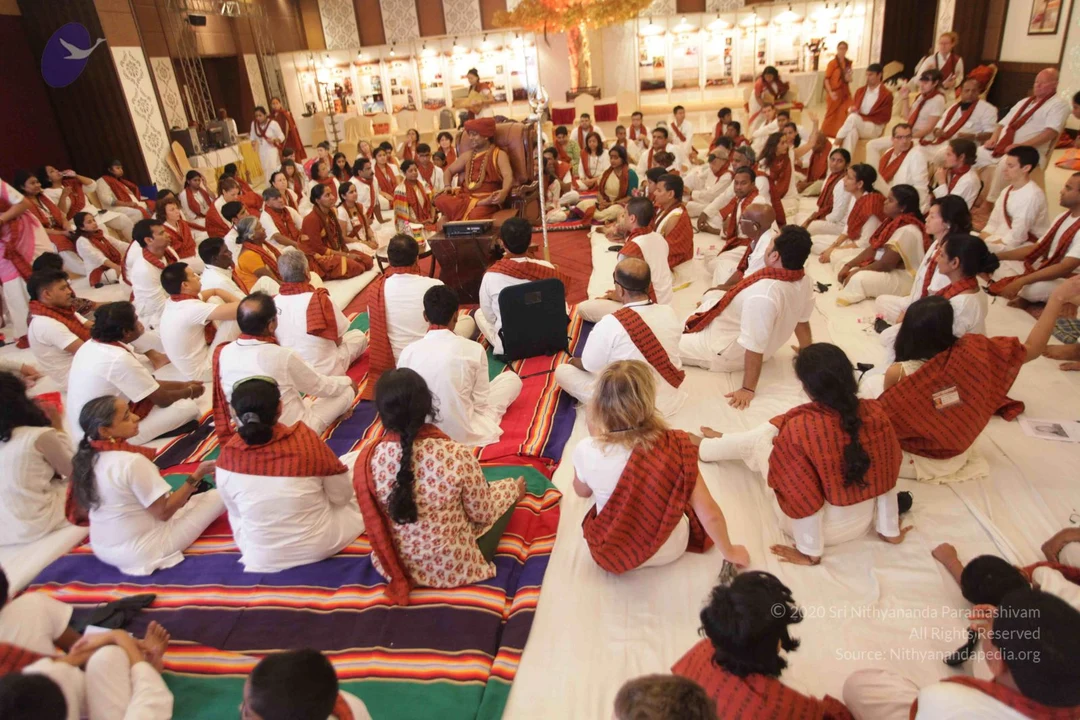
10 photosSource gallery
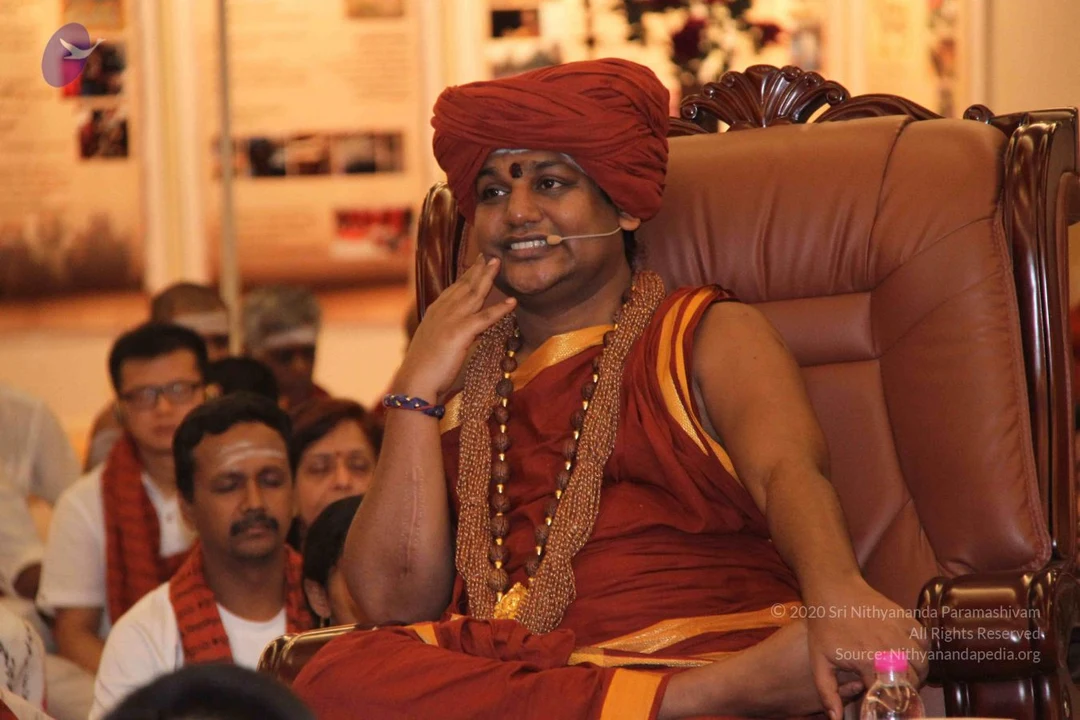
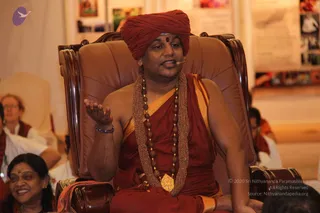
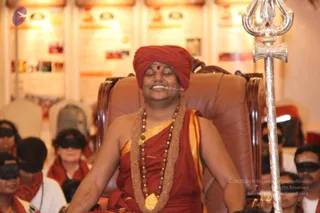
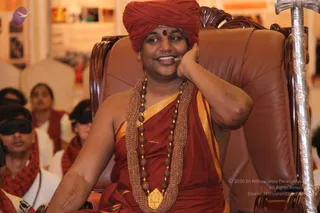
A man in a red-orange turban and saffron-and-red robes sits on a brown leather throne-style chair, speaking into a small headset microphone. He wears a long multi-strand rudraksha mala with a gold pendant and a gold-toned necklace. A tall silver trident stands beside the chair on the right. Around him, seated devotees in white clothes with orange-red shawls and some with white forehead markings listen attentively. Behind them, display panels with framed photographs hang on a light wall. The man's appearance, with the turban, rudraksha mala and saffron robes, is consistent with the page's a person reference, so this is a probable identification, though the image alone is not conclusive.A photograph of a seated man in a red-maroon turban and maroon-orange robe with a gold-edged saffron shawl, wearing a long beaded rudraksha mala, a thick gold-toned chain and a gold pendant. He sits in a large brown leather armchair with a headset microphone, a bindi on his forehead and his right hand raised mid-speech, gesturing as he talks. Seated figures in the background include a smiling woman with a red bindi at lower left and a woman in red at upper left. Posters with photographs hang on the wall behind. Swamiji (probable): the seated man in the maroon turban, rudraksha mala and gold pendant, mid-discourse in a satsang setting.A man in a red-orange turban and bare-chested saffron-red garment sits in a brown leather high-backed chair, speaking with one hand raised in gesture. He wears a long beaded mala of rudraksha-style beads and a gold pendant, and has a red tilak on his forehead. Behind him, a cream damask-patterned wall, a framed picture and a speaker stand are visible. Two women seated at the right edge, one wearing glasses, listen attentively in the audience. The setting appears to be a satsang discourse hall.A photograph of a man seated in a brown leather chair speaking into a headset microphone, gesturing with his right hand. He wears a red-orange turban with a vertical tilak mark on the forehead, an orange-red robe with a gold-and-yellow border, and a long multi-strand necklace of rudraksha beads and gold chain. A silver staff with ornate carved designs stands at the left edge. Behind him, a blurred woman in a white garment sits against a dark red backdrop. Appearance and ceremonial cues (turban, saffron-toned robe, rudraksha mala, gold chains) are consistent with a person candidate, though the presentation is not fully distinctive enough to confirm identity, so the figure is treated as uncertain.A photograph of a man seated on a brown leather throne-style armchair, smiling broadly with eyes closed, wearing a red-orange turban, a red-orange shawl with gold trim, a bare chest, a bindi and a long beaded rudraksha mala with a large gold pendant. A silver trident stands tall on the right. Behind him, several devotees sit in red shawls and wear black blindfolds over their eyes. The background shows a wall of framed photographs and printed panels in warm yellow light. The man has long swept-back hair and ornate ceremonial adornments, consistent with a person, seated in a satsang setting.A photograph of a man seated on a large brown leather throne-style chair, smiling and resting his right hand against his cheek while speaking into a small headset microphone. He wears a red-orange turban with a vertical red-and-white tilak mark on his forehead, an orange-red shawl with gold border, a long multi-strand rudraksha mala, and a gold ceremonial pendant. Behind him to the left are seated devotees in red-and-white shawls, some wearing black blindfolds. A tall silver ceremonial staff stands at the right edge. Swamiji (probable): the seated man has a turban, saffron-red robes, rudraksha mala and gold pendant, consistent with a satsang setting. Background shelves hold framed photographs and posters.

02-Shivoham
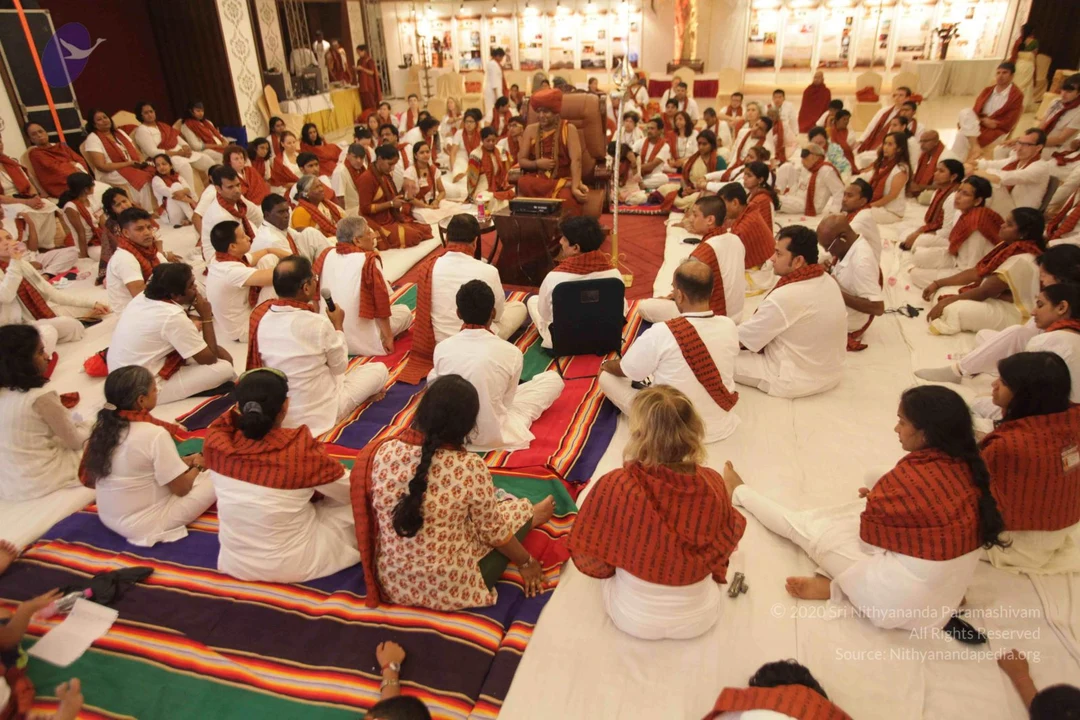
3 photosSource gallery
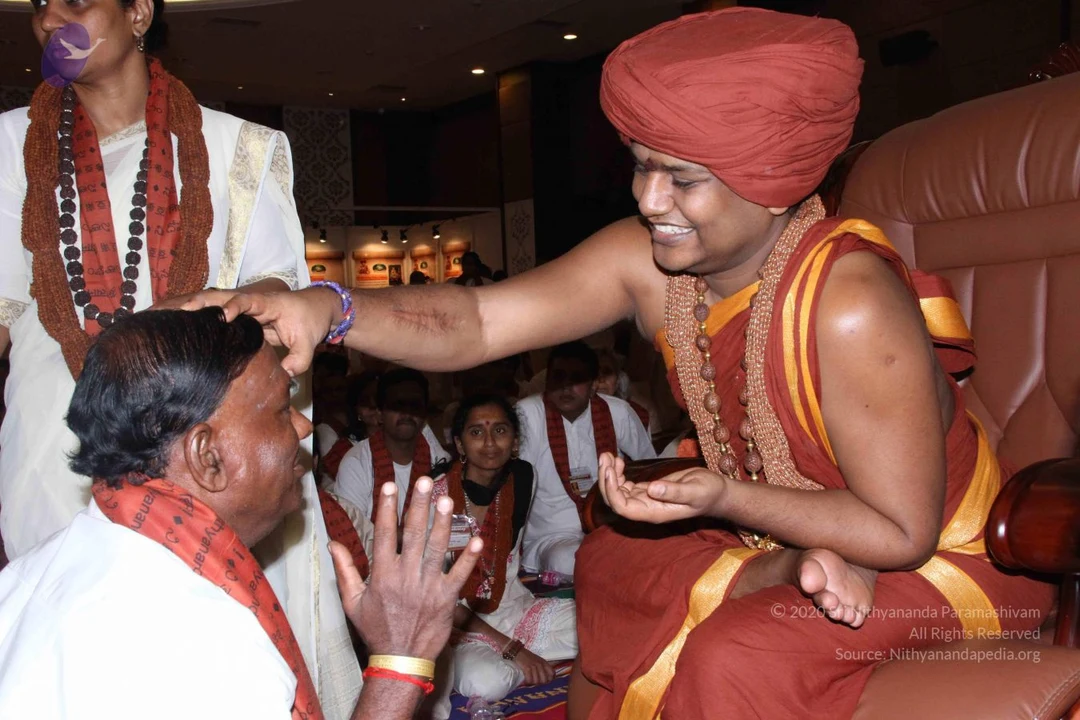
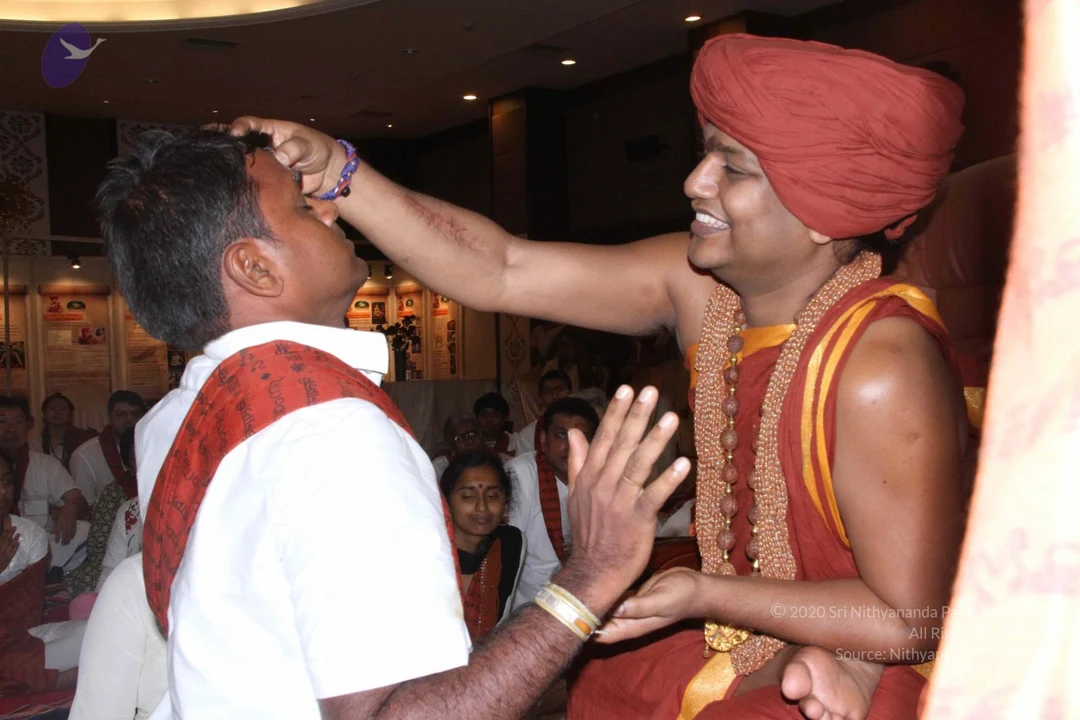
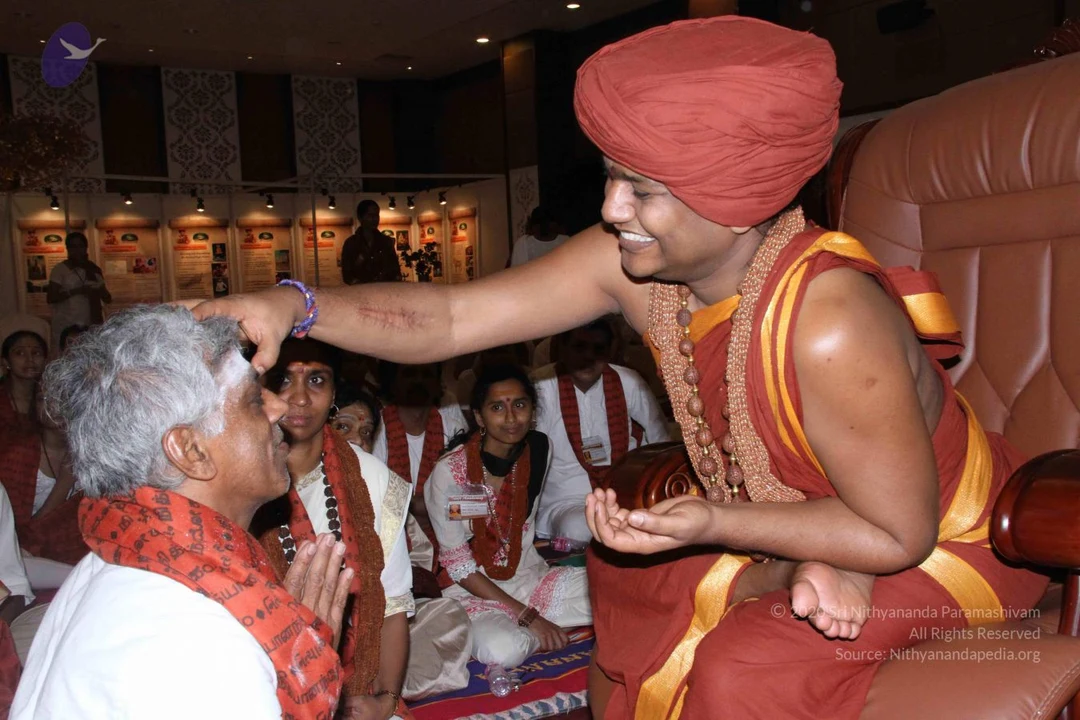
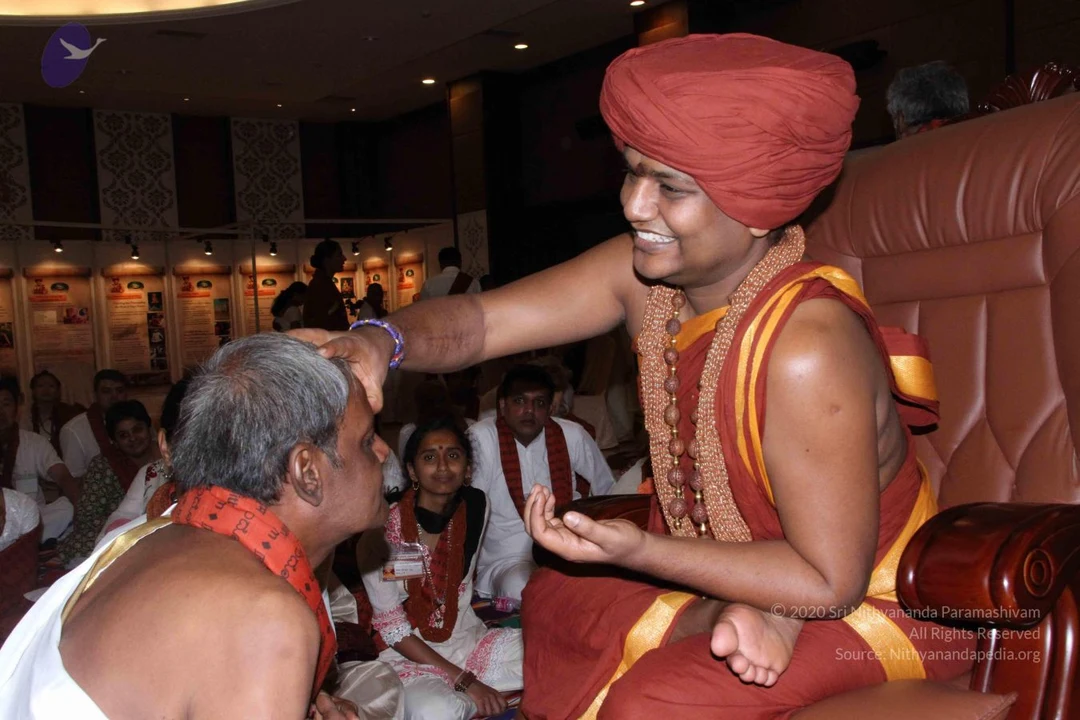
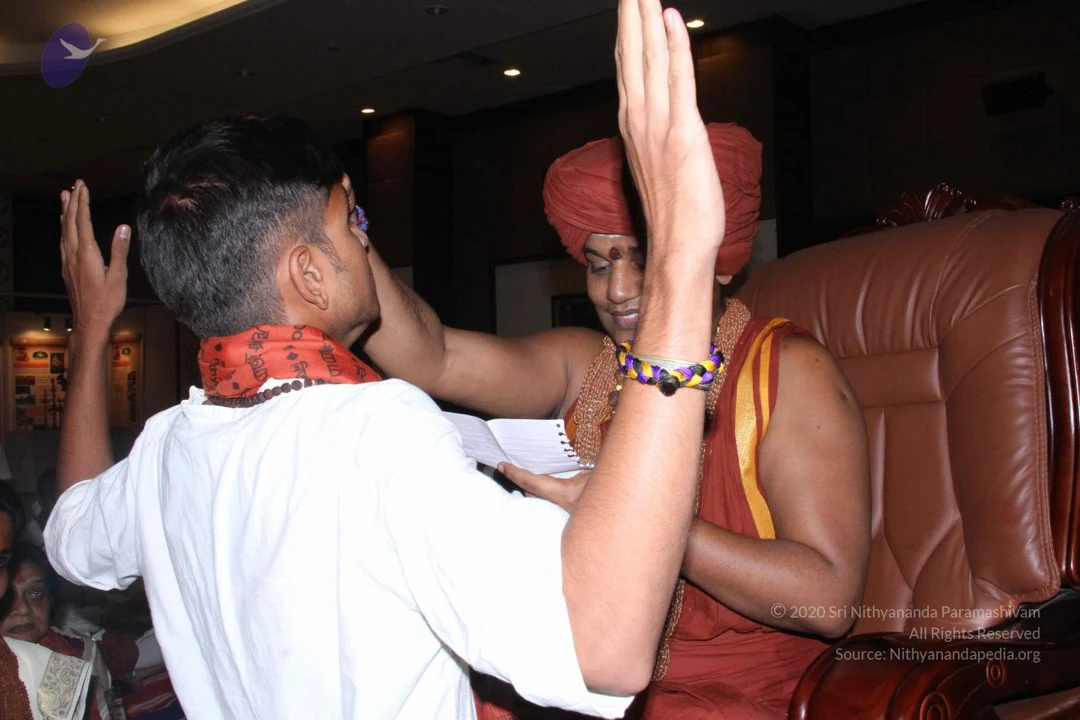
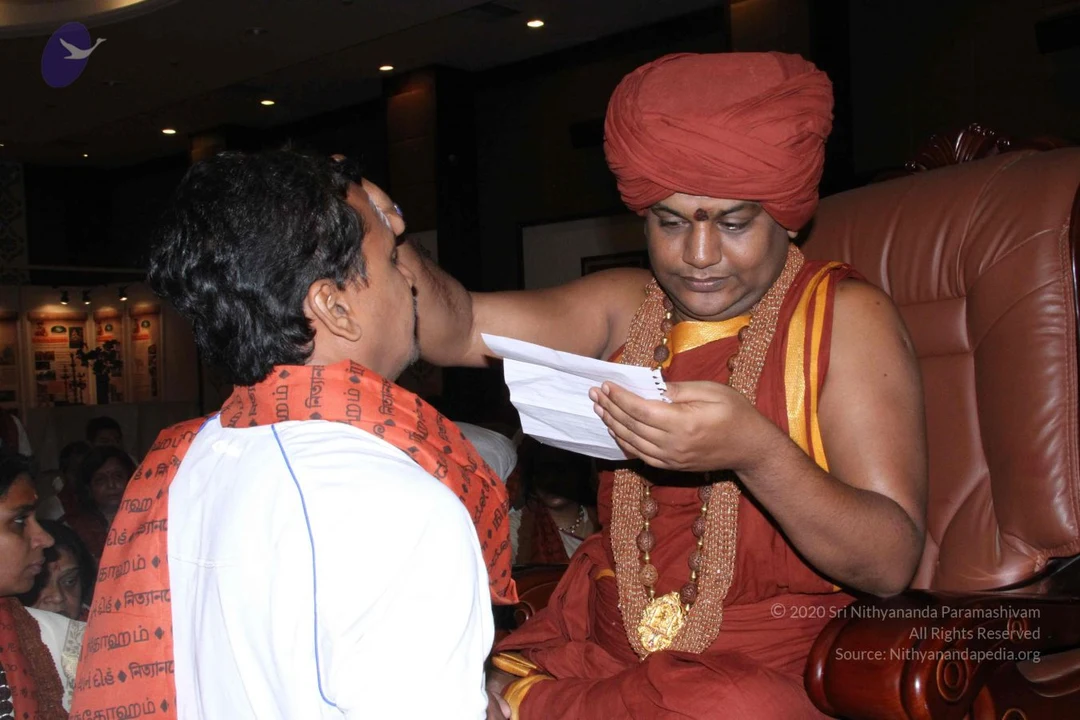
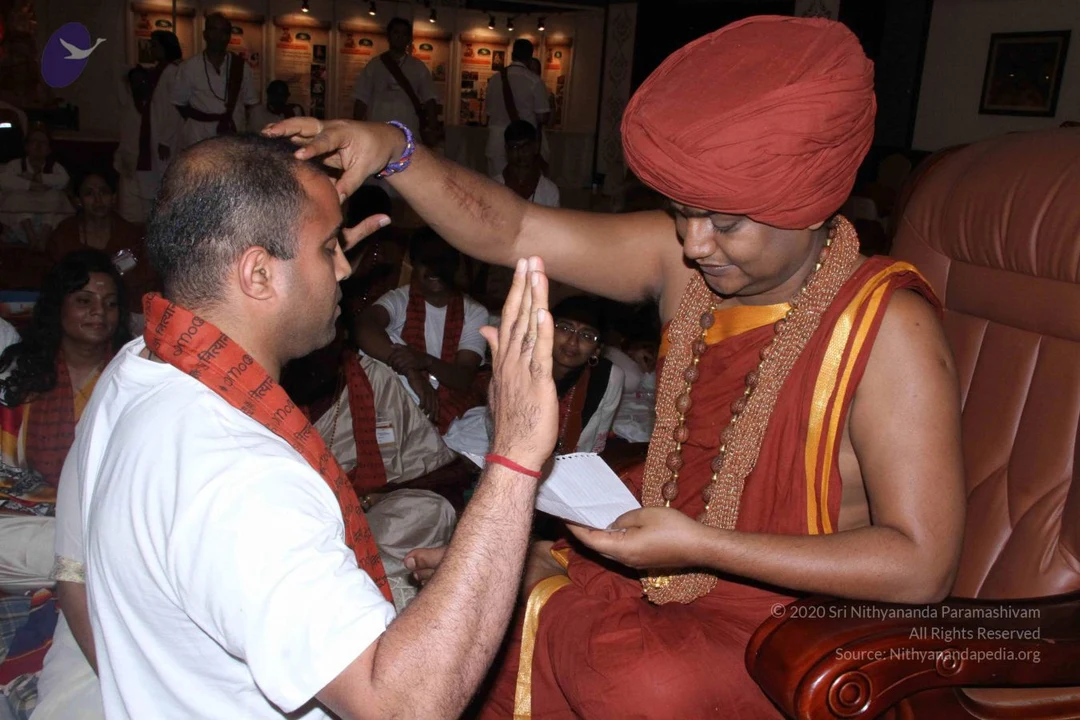
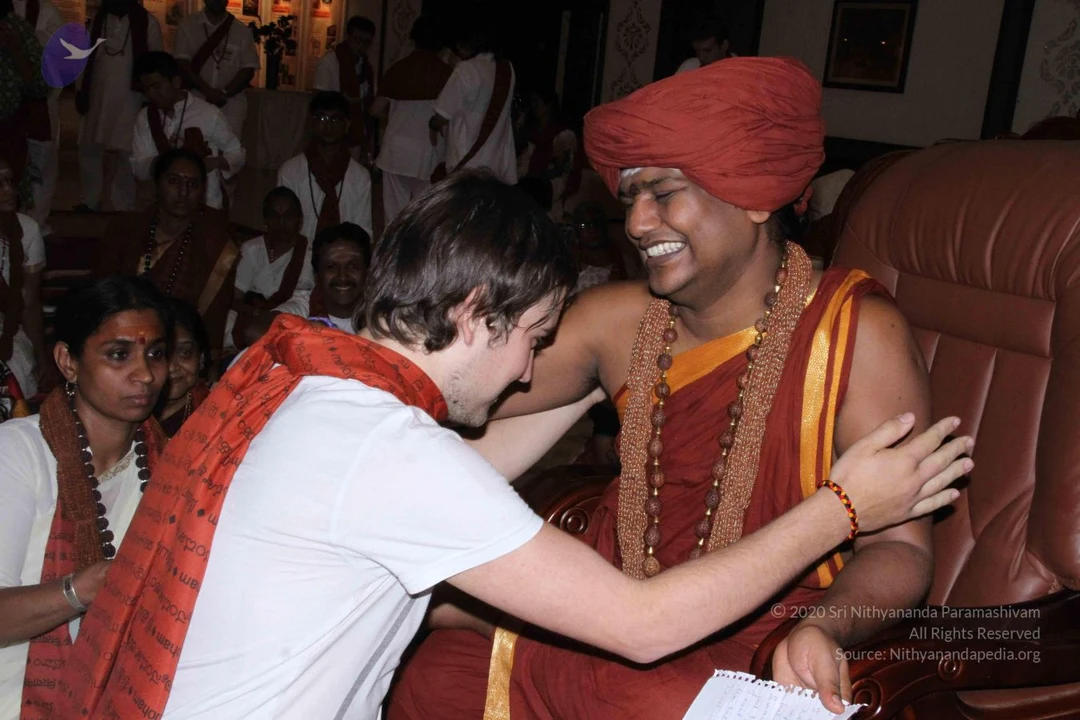
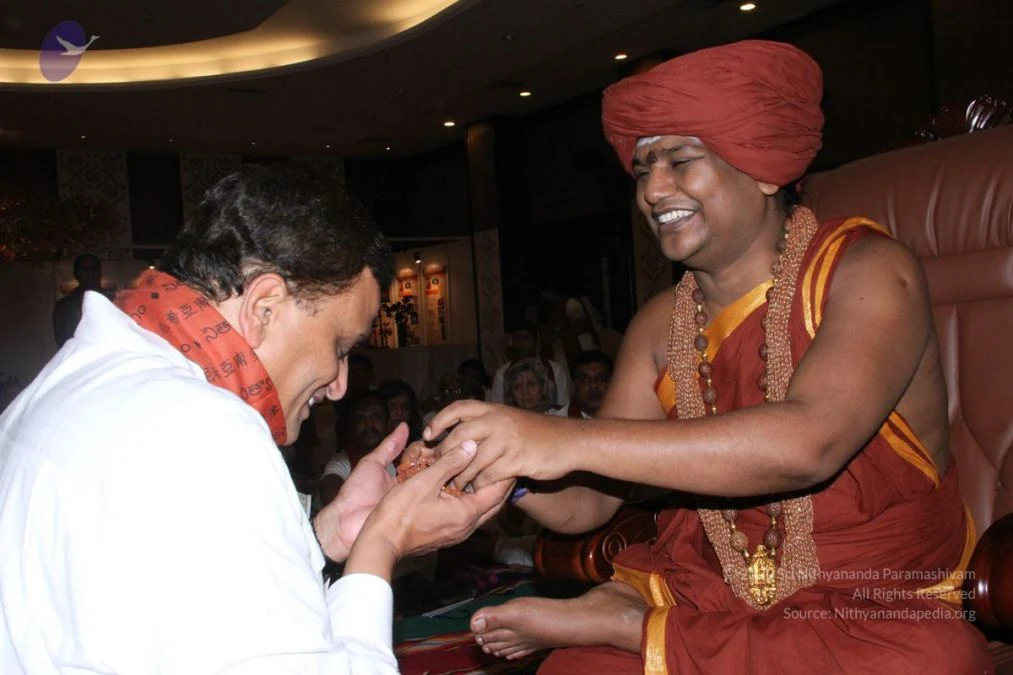
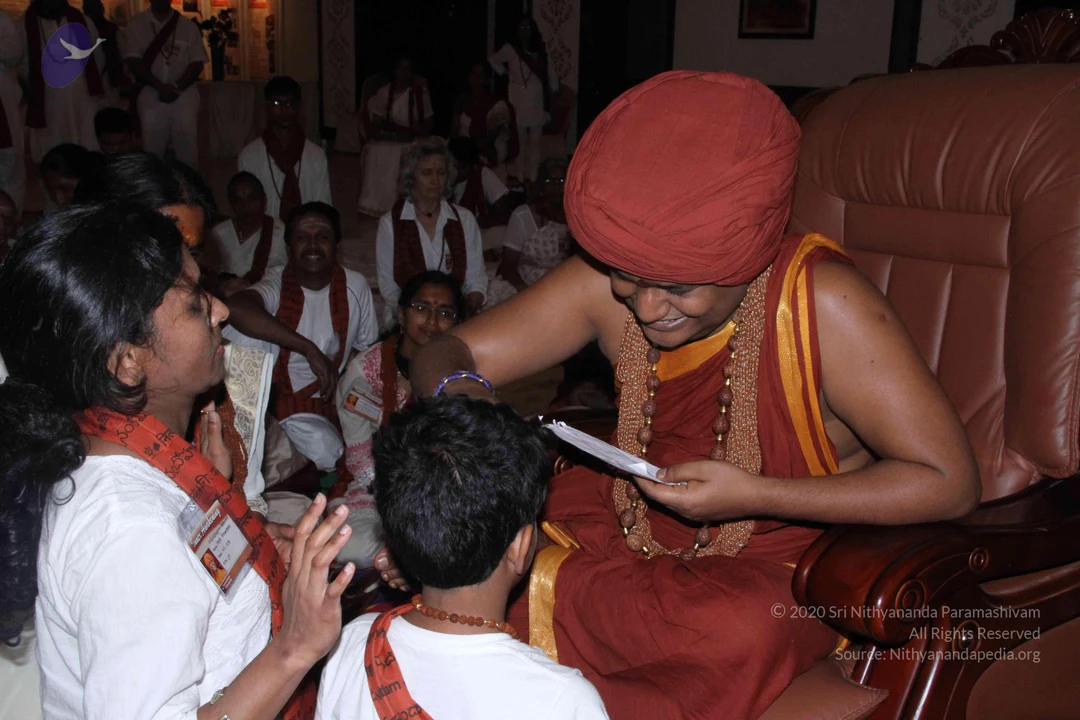
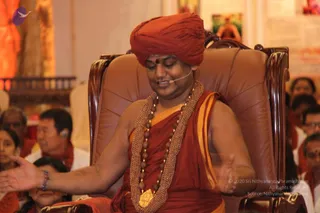
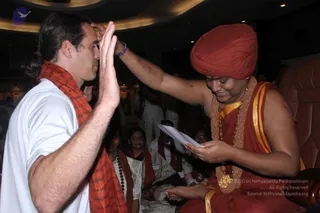
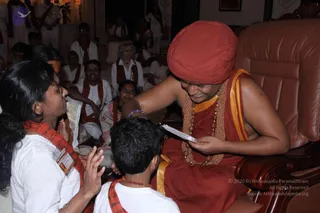
A man seated in a brown leather armchair with carved wooden armrests, wearing an orange-red turban, an orange-red shawl over a saffron-gold garment, and a long necklace of rudraksha beads with a large gold pendant. A small microphone is clipped near his face. He smiles, eyes lowered, and extends his right arm outward in a gesture of explanation. Seated devotees in red and white clothing fill the foreground and background, and a warm orange backdrop with framed pictures lines the hall. a person seated on a throne-like chair during a satsang discourse.A man with long dark hair tied back, wearing a white t-shirt and an orange-red shawl printed with script, raises his palm toward a seated man in a deep red turban and red-orange robes with a gold-edged border. The seated man wears a multi-strand beaded necklace with a gold pendant, holds a folded white paper in one hand, and presses his other hand to the standing man's forehead in a blessing gesture. Behind them, seated devotees wear white clothes and orange shawls, and the setting is an indoor hall with warm lighting and a dark ceiling.A photograph of a seated figure in a red-maroon turban and maroon-orange robe with a golden-yellow border, wearing a multi-strand beaded necklace of brown beads and rudraksha. He sits in a brown leather armchair, smiling and holding a small white paper or card, and reaches toward a young boy in a white shirt with a red-beaded necklace who sits in front of him. To the left, a woman in white clothes with a red-and-orange shawl and a name badge presses her palms together in a respectful gesture. Behind them, devotees in white clothes and red shawls stand in a room with ornate decorations on the walls.