Skip to content
Saturday

4 July 2015

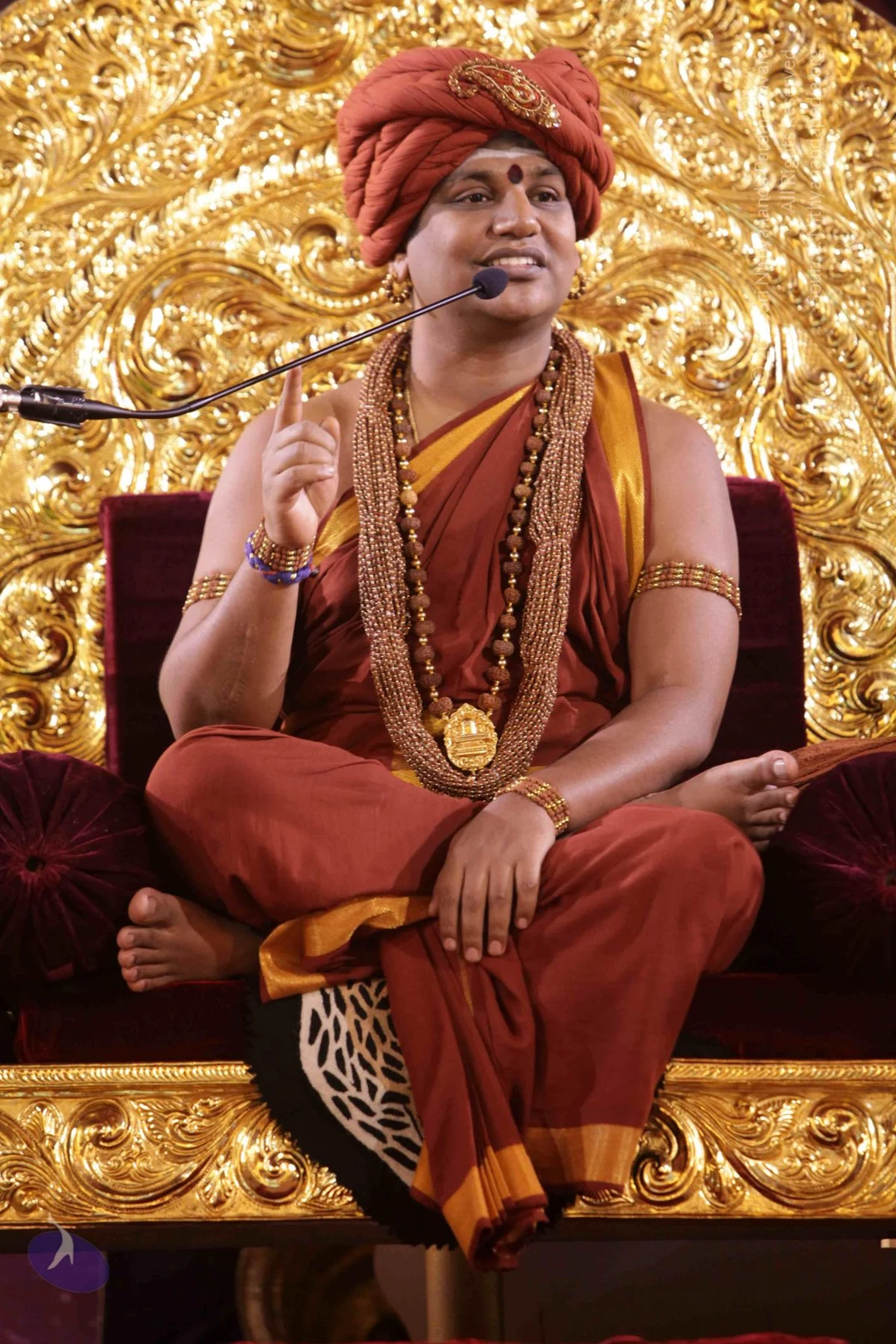
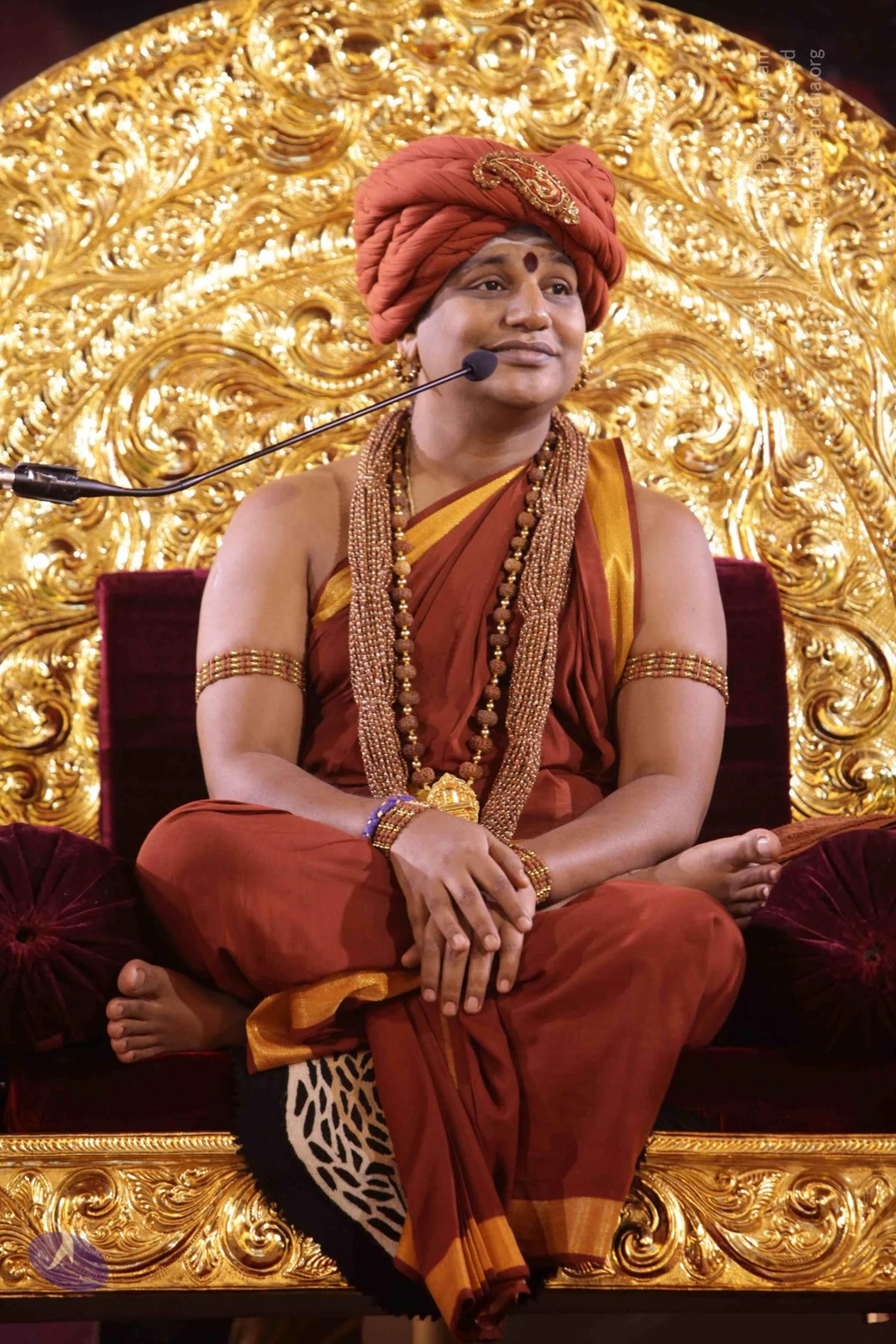
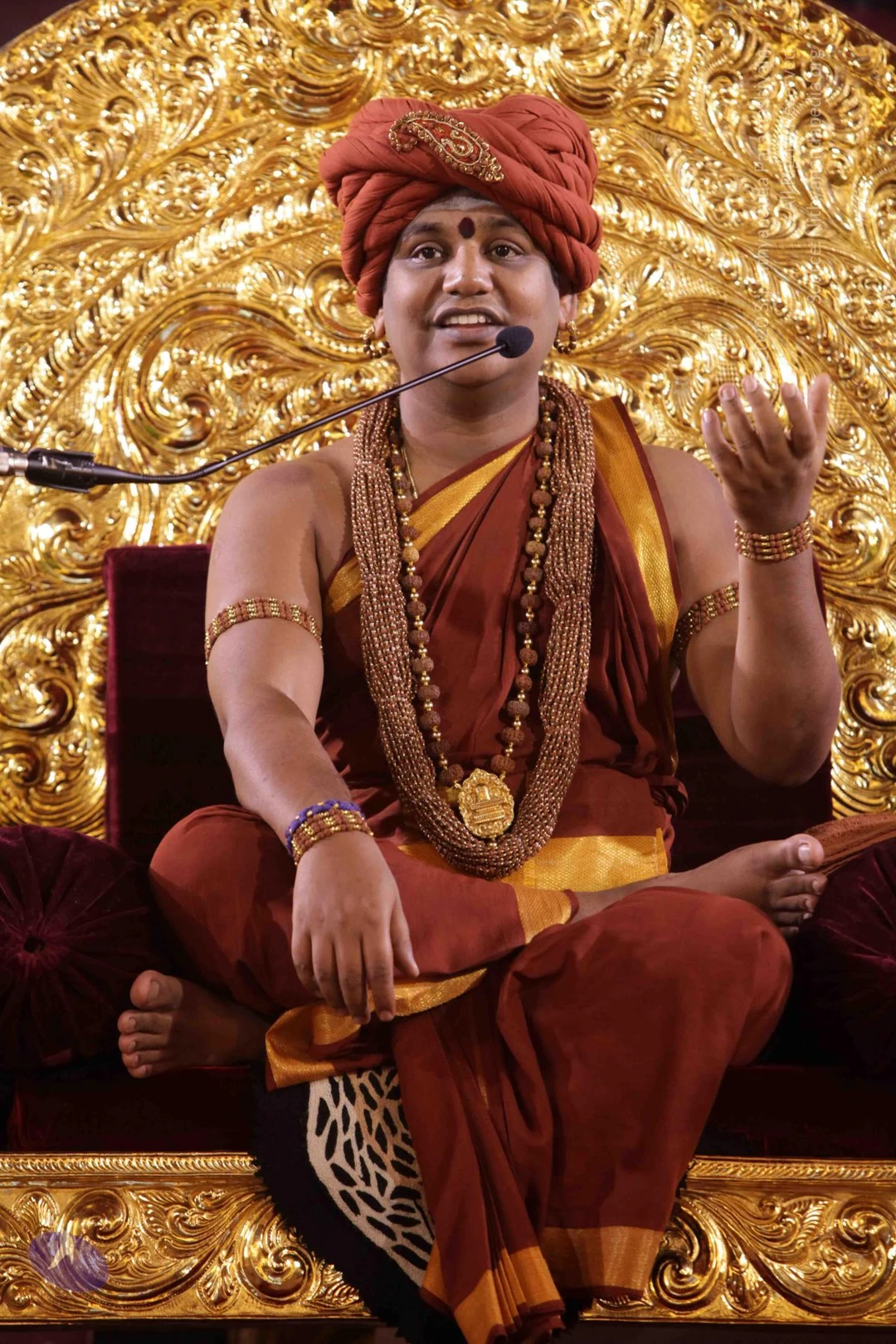
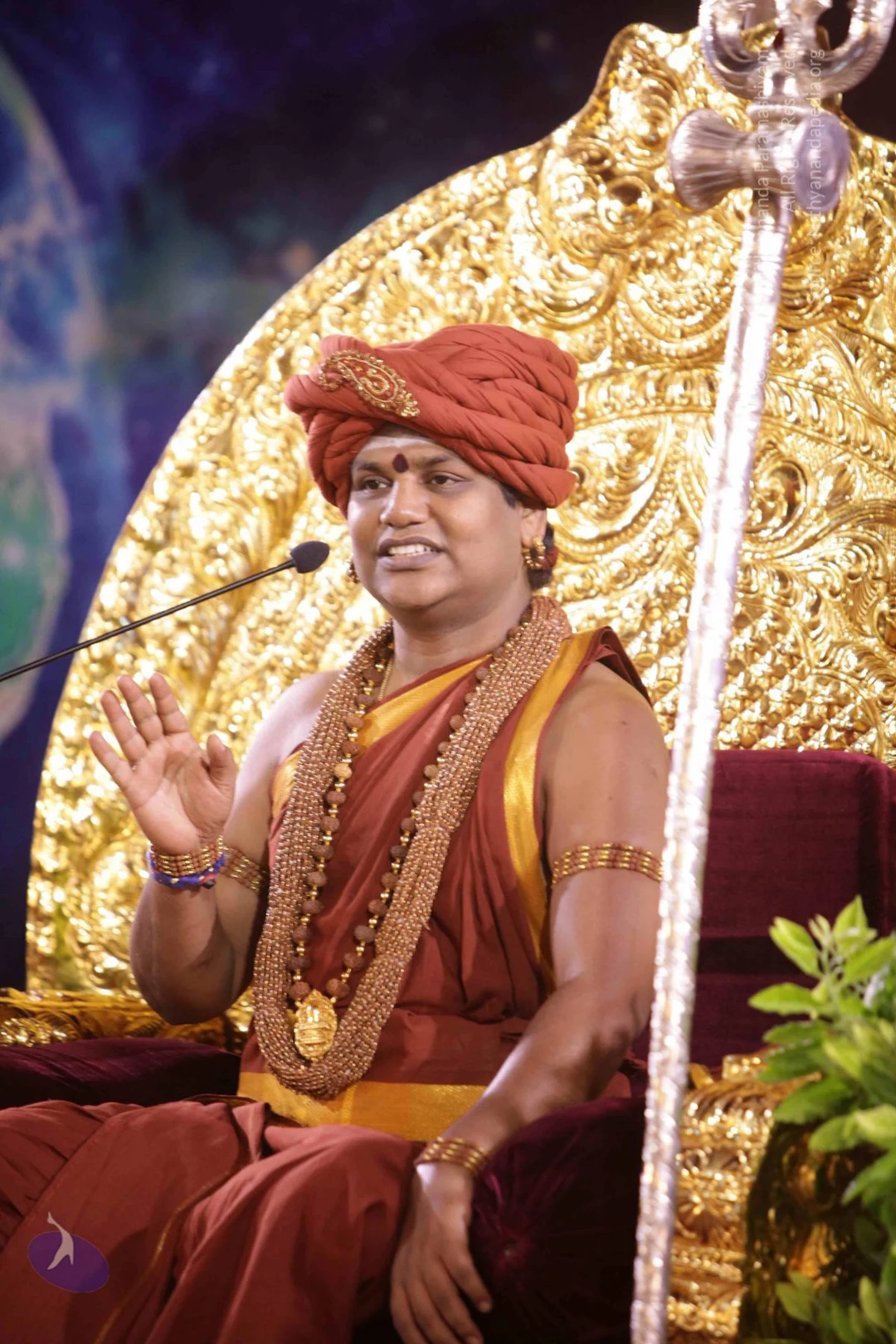
Revival Of Satya Yuga, The Golden Vedic Era by Nithyananda

Dated photos
390
Source pages
1
Media
3
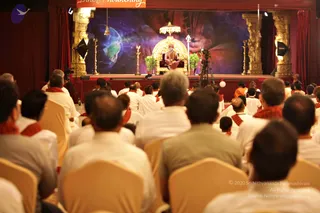
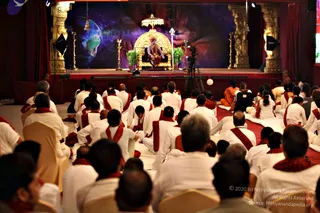
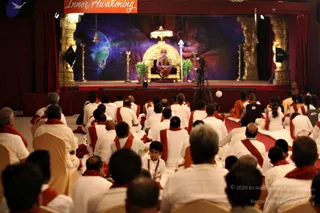
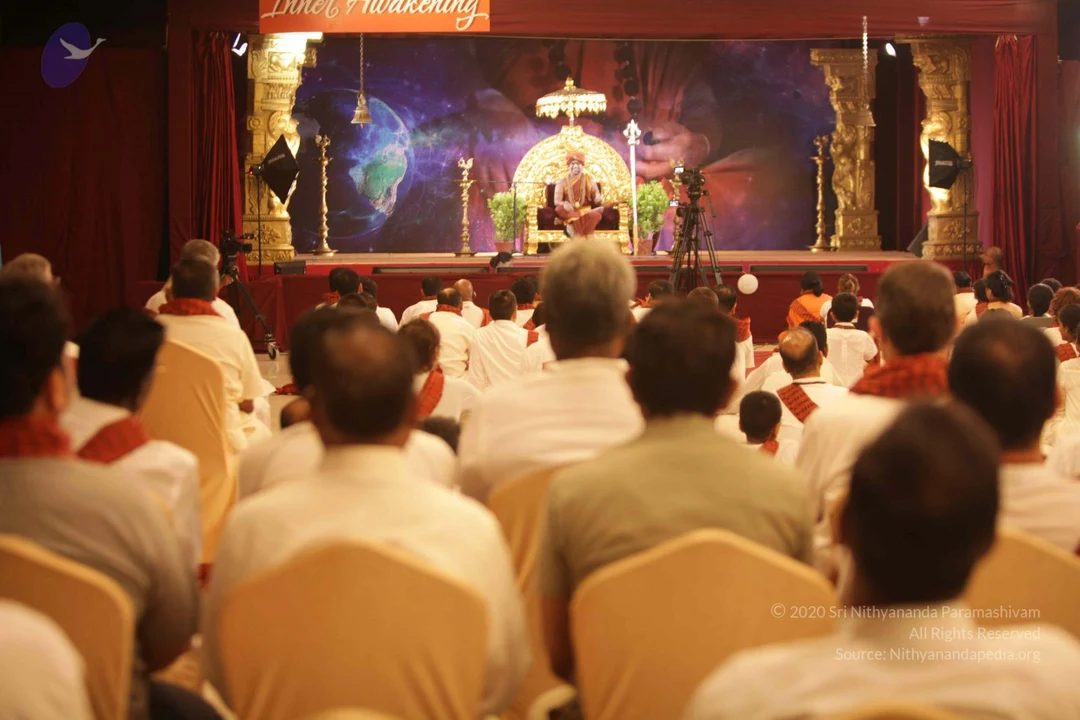
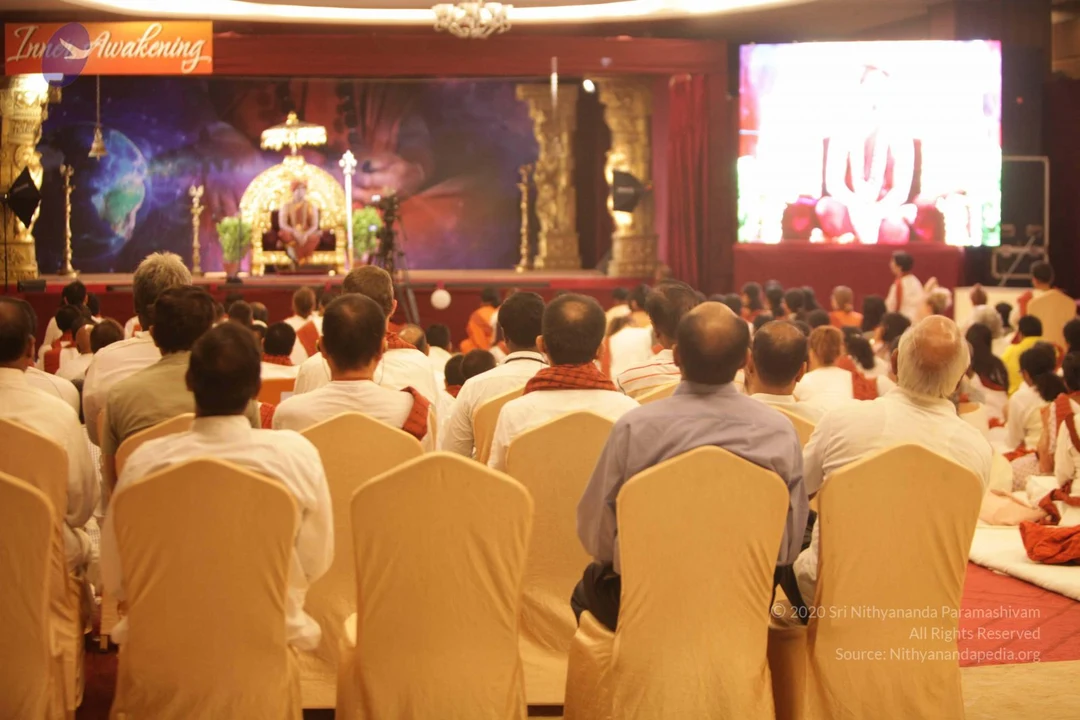
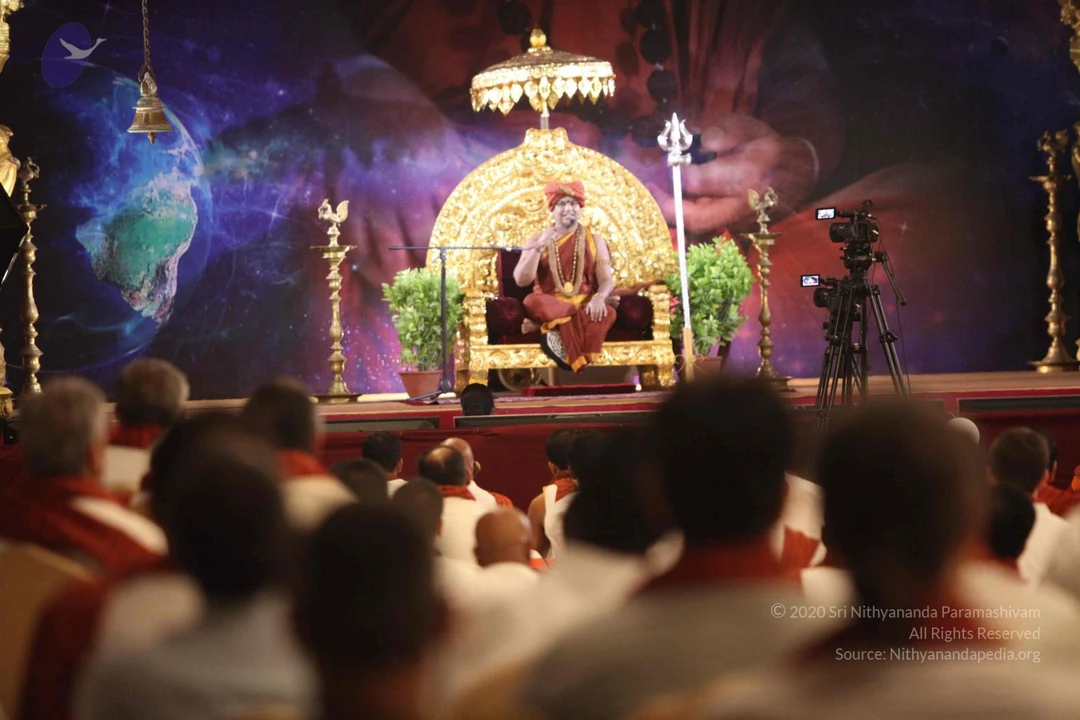
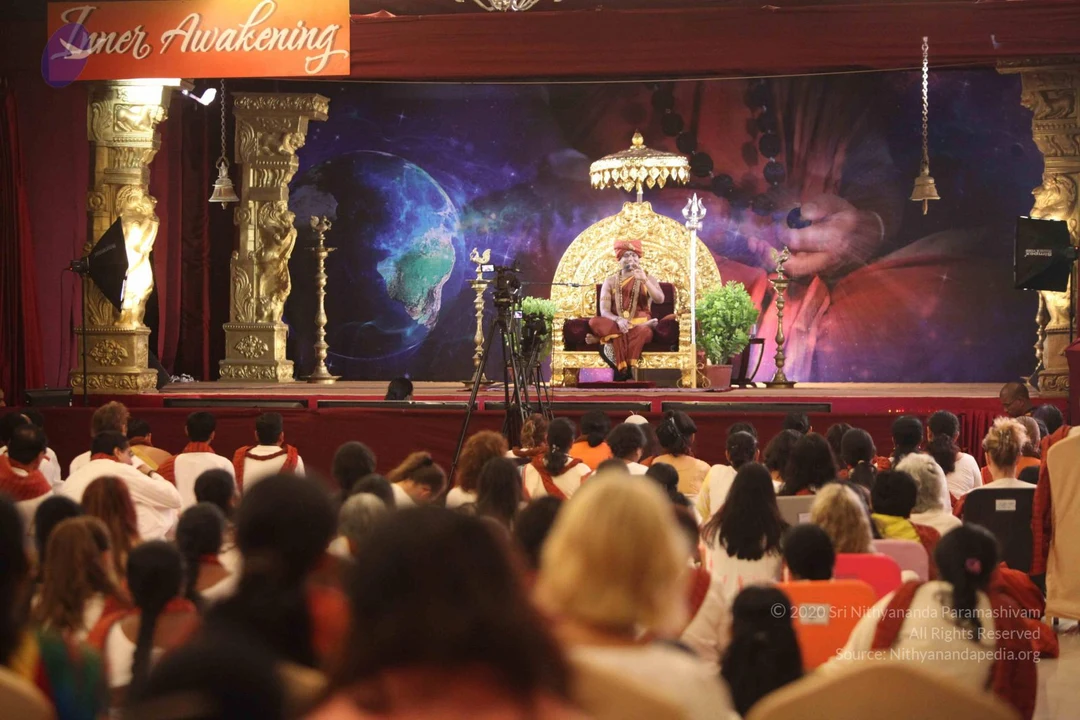
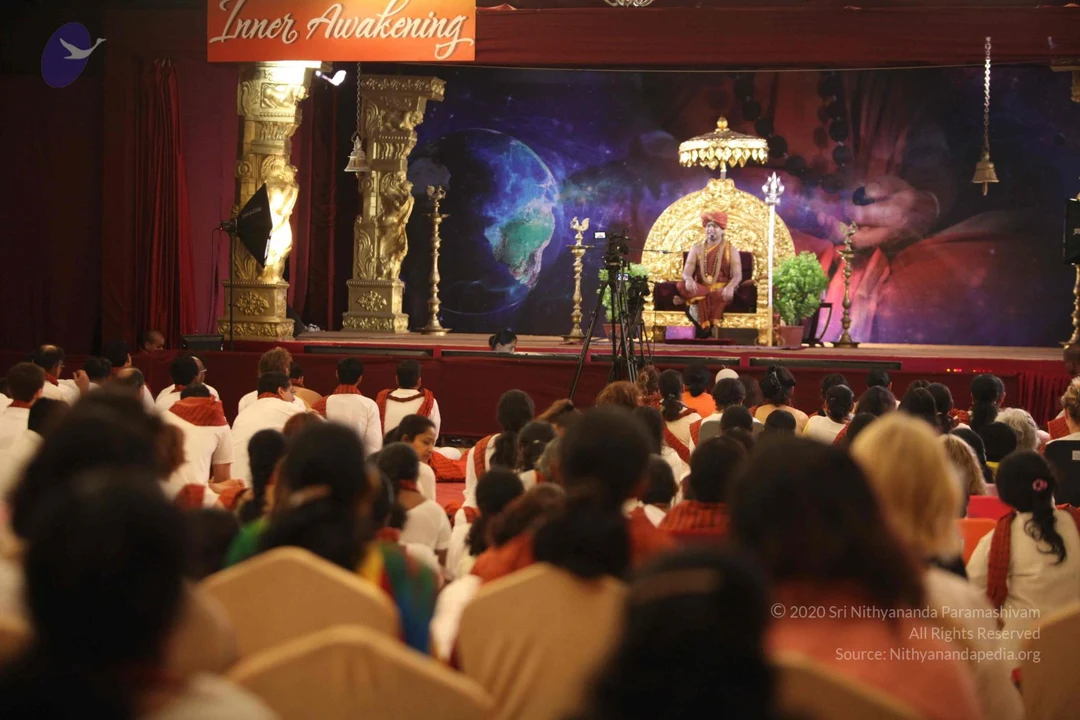
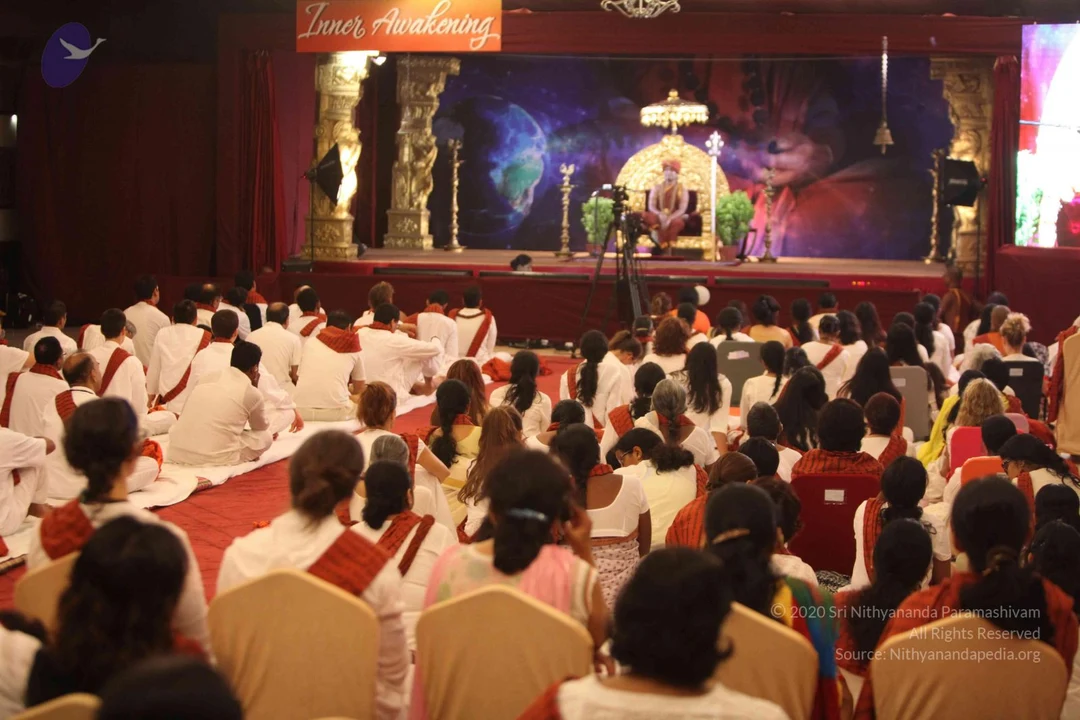
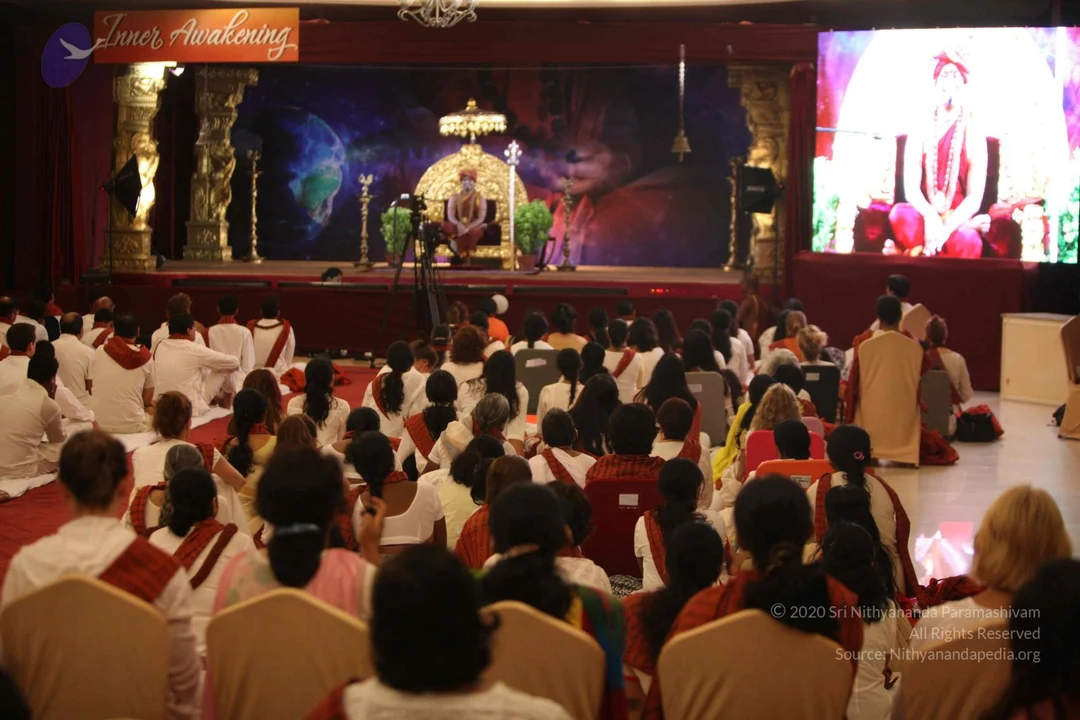
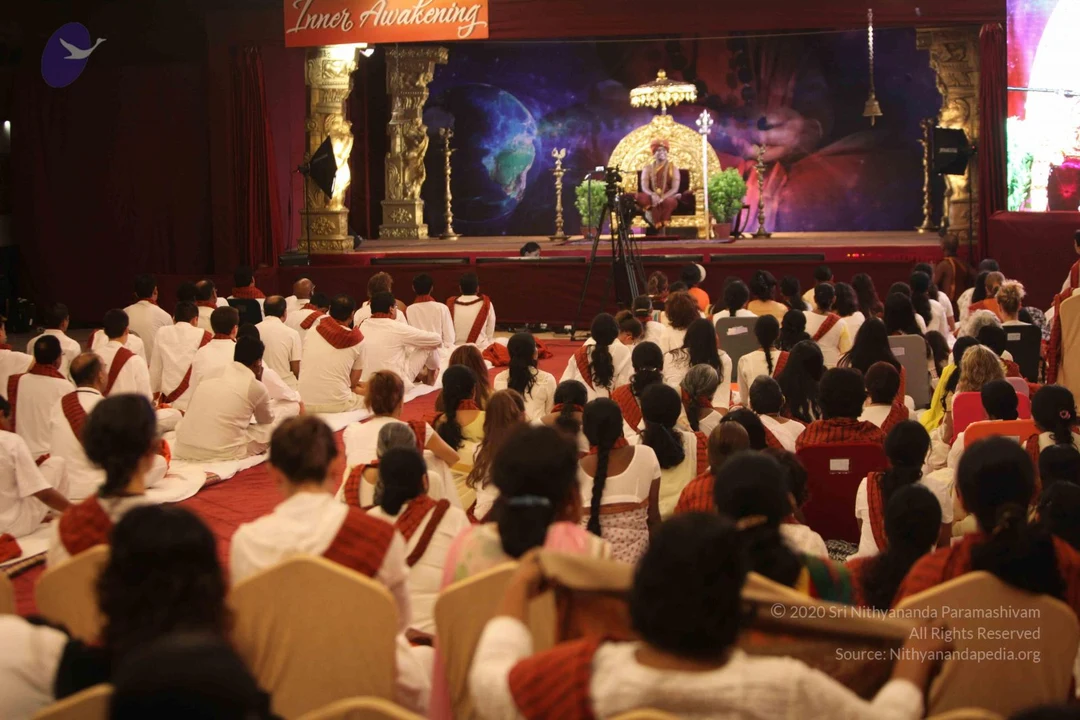
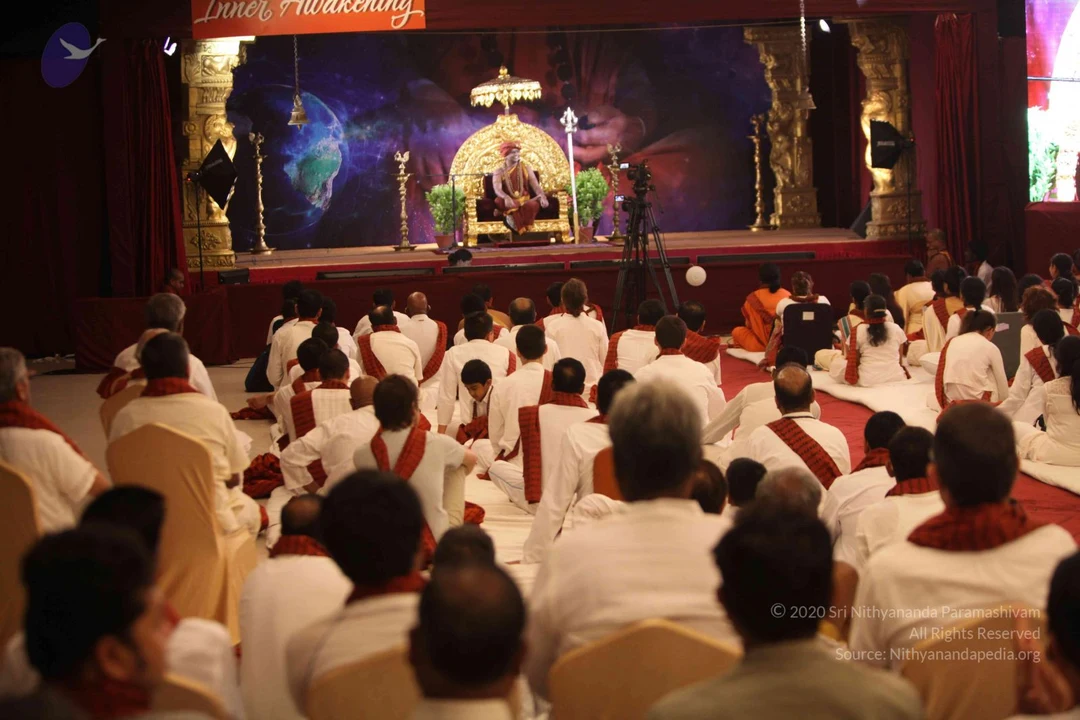
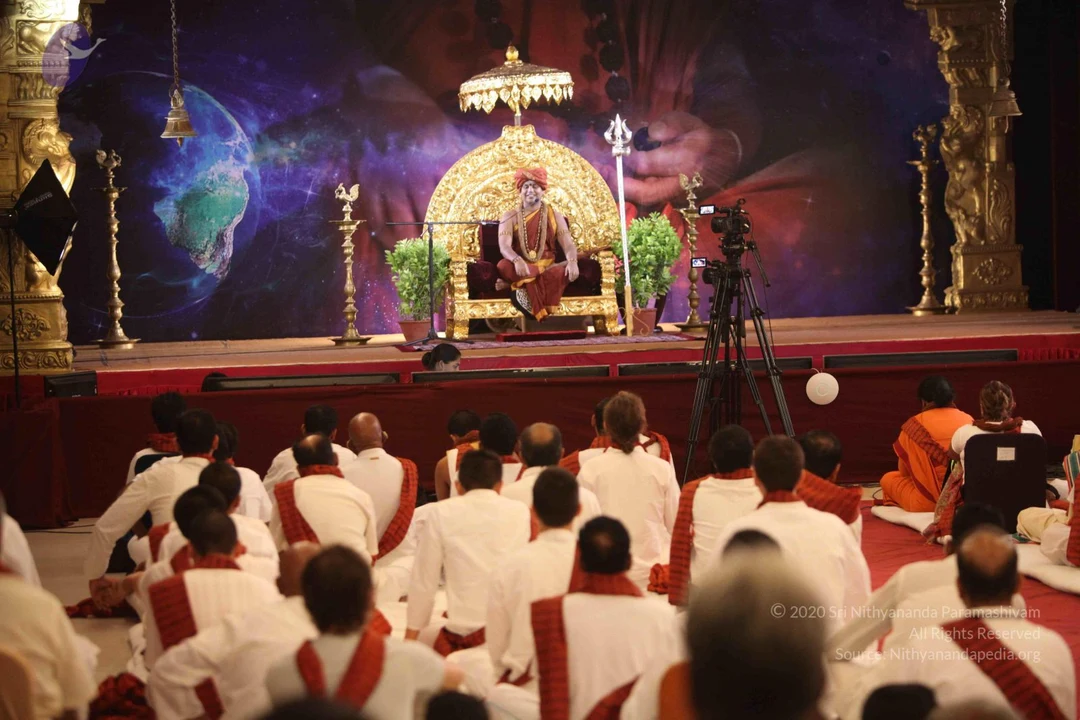
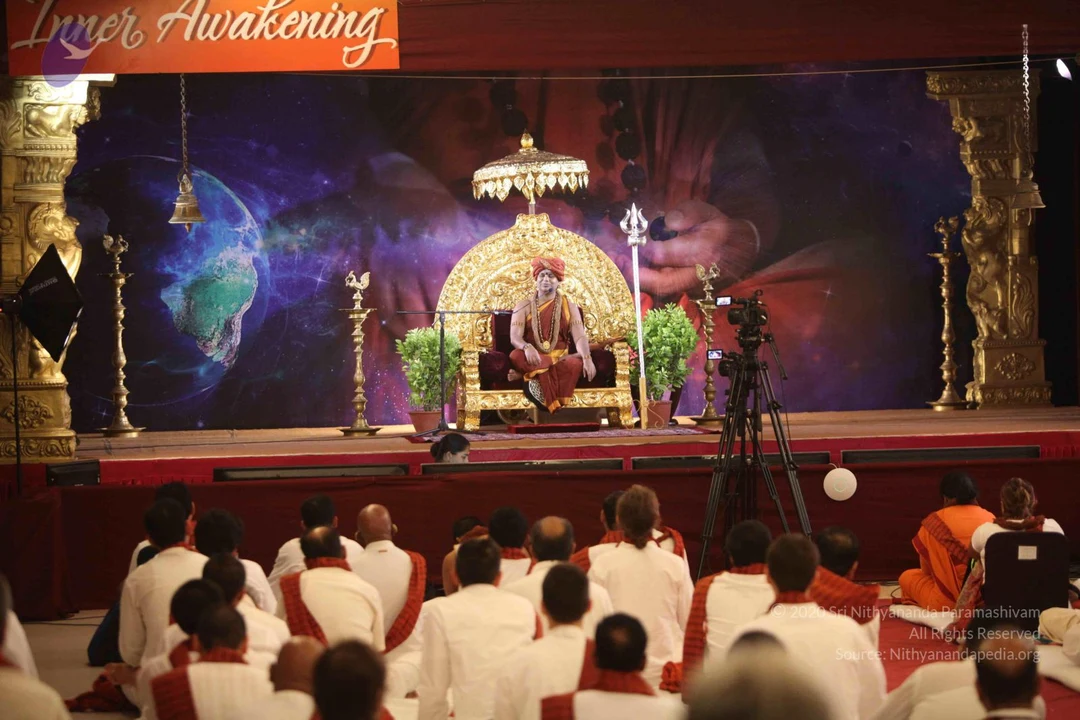
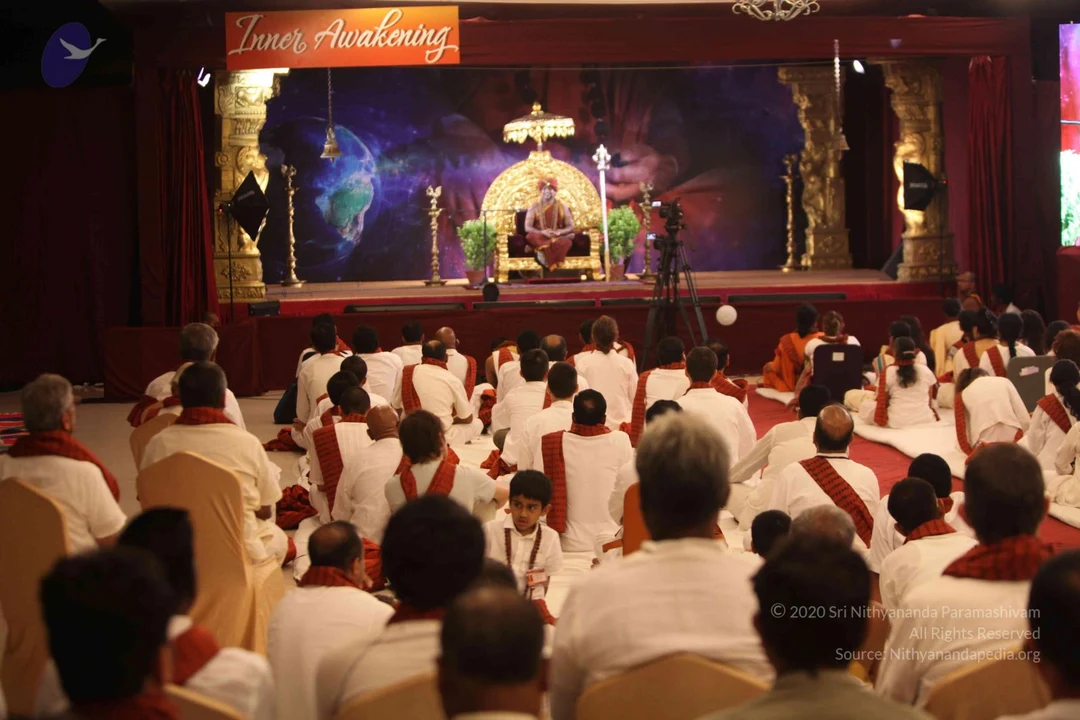
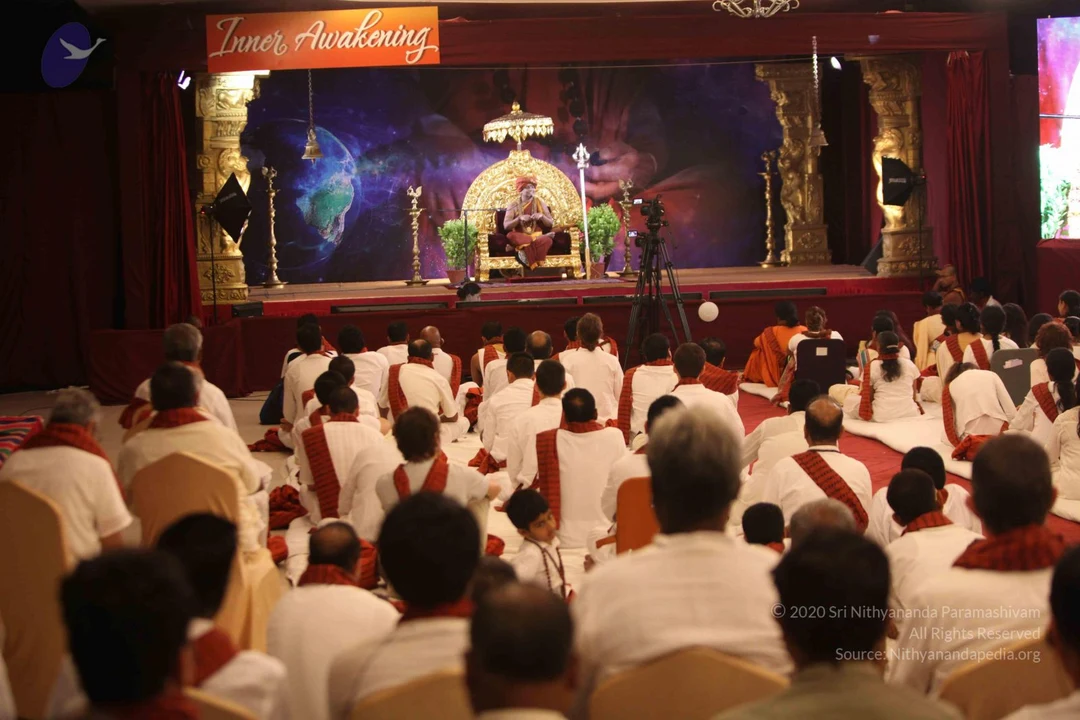
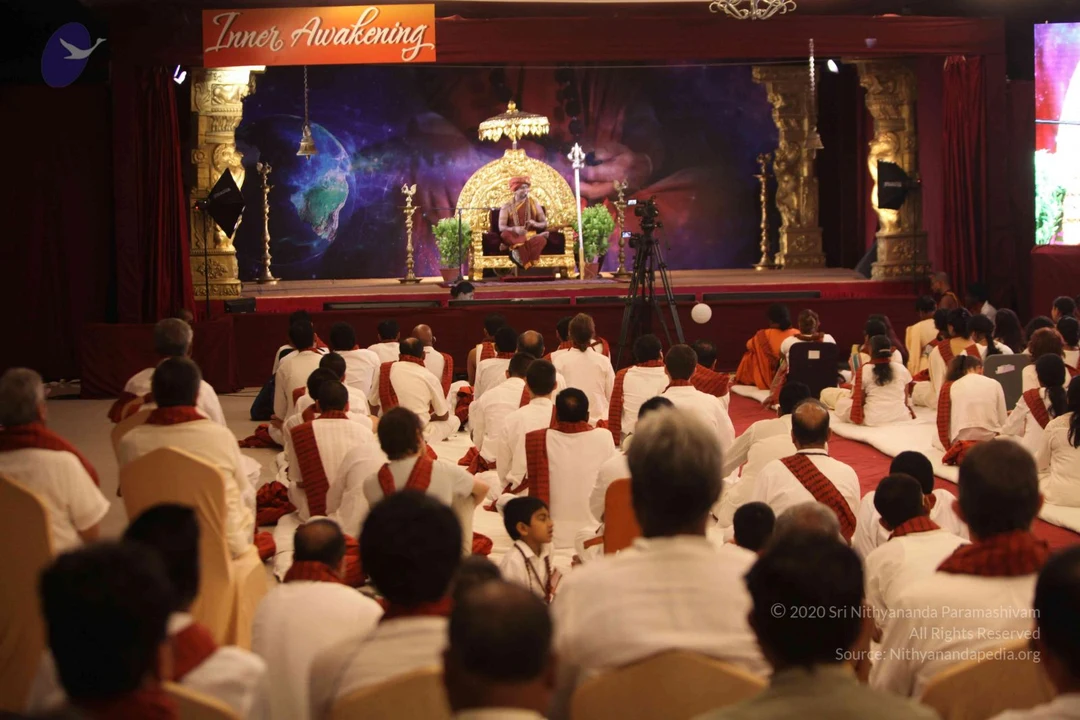
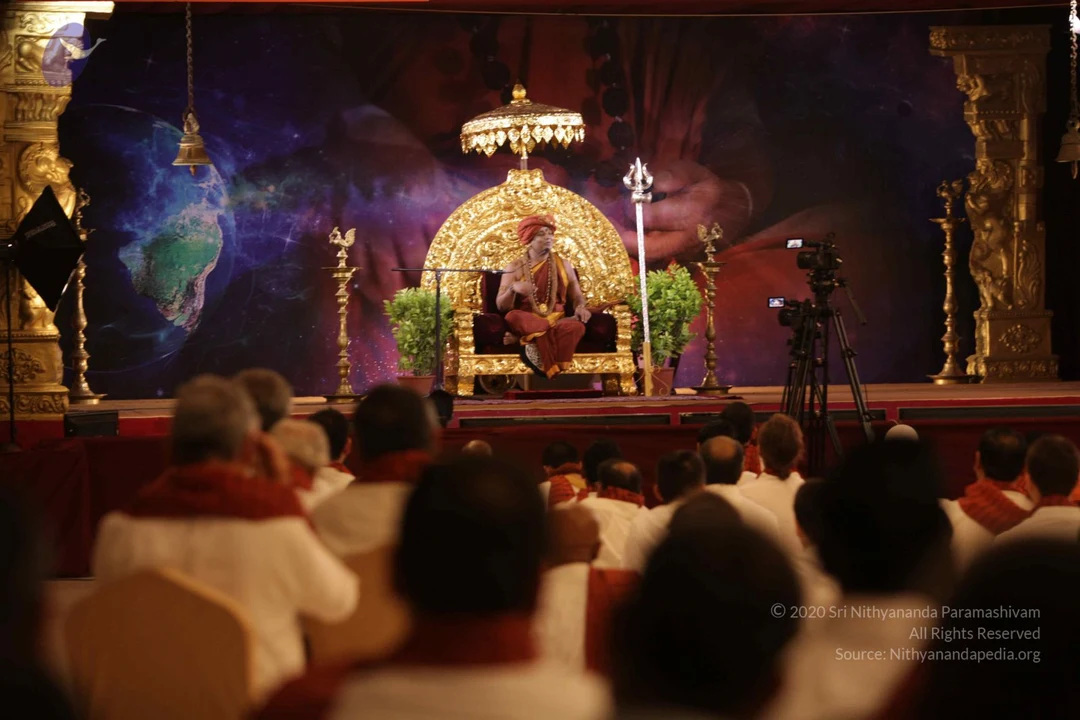
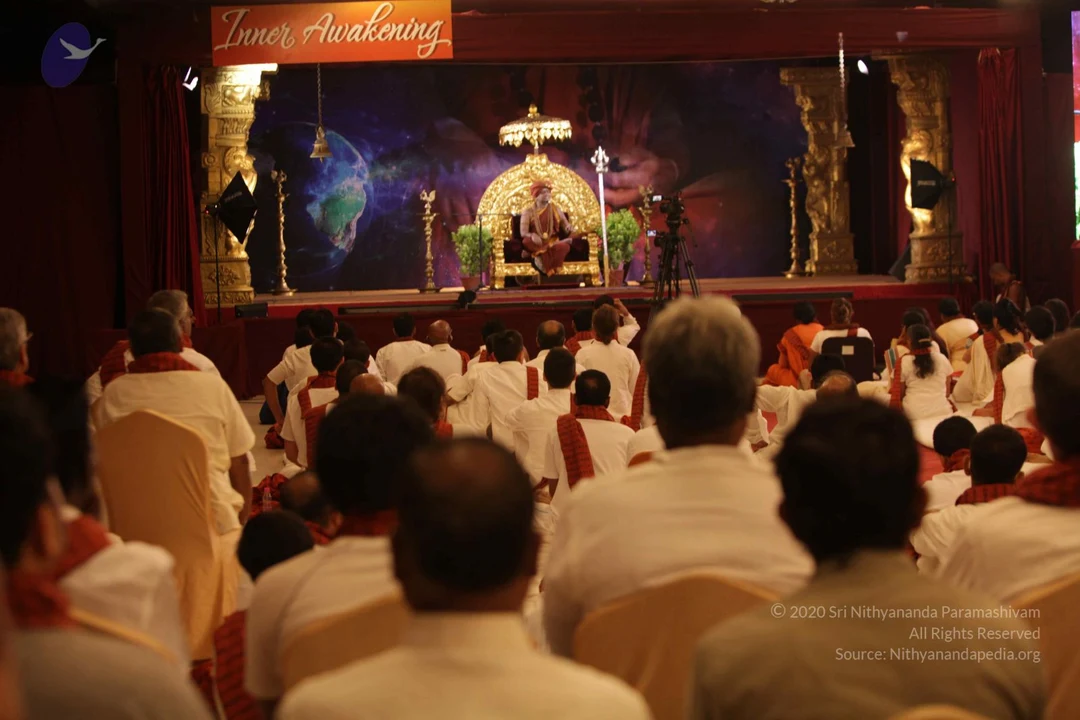
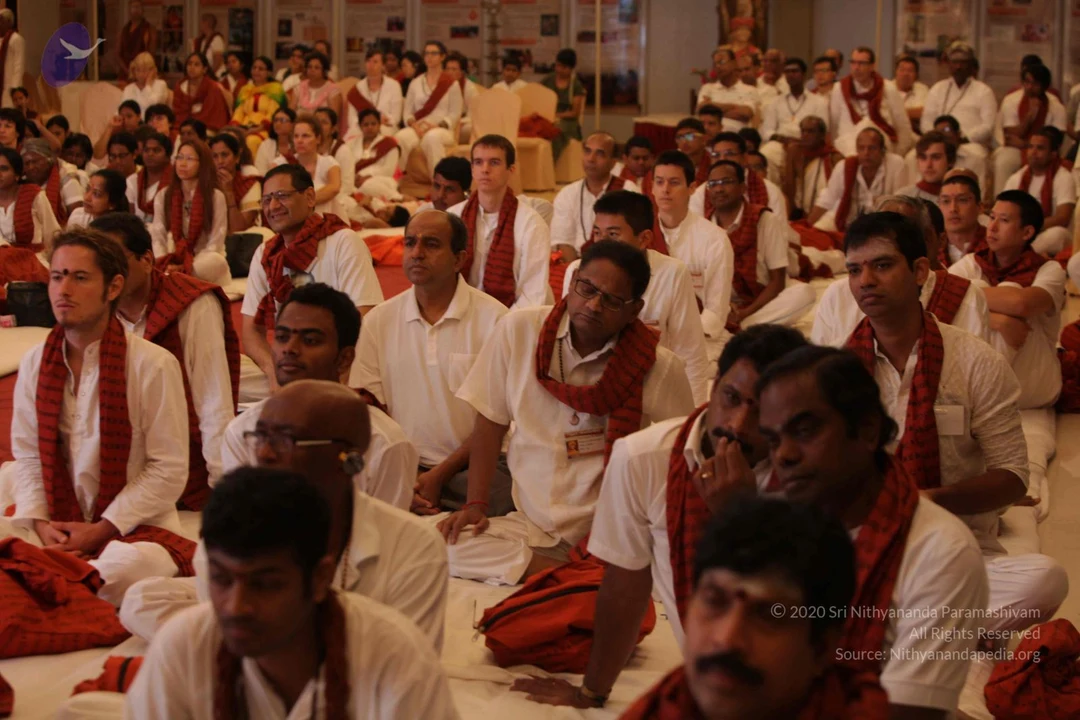
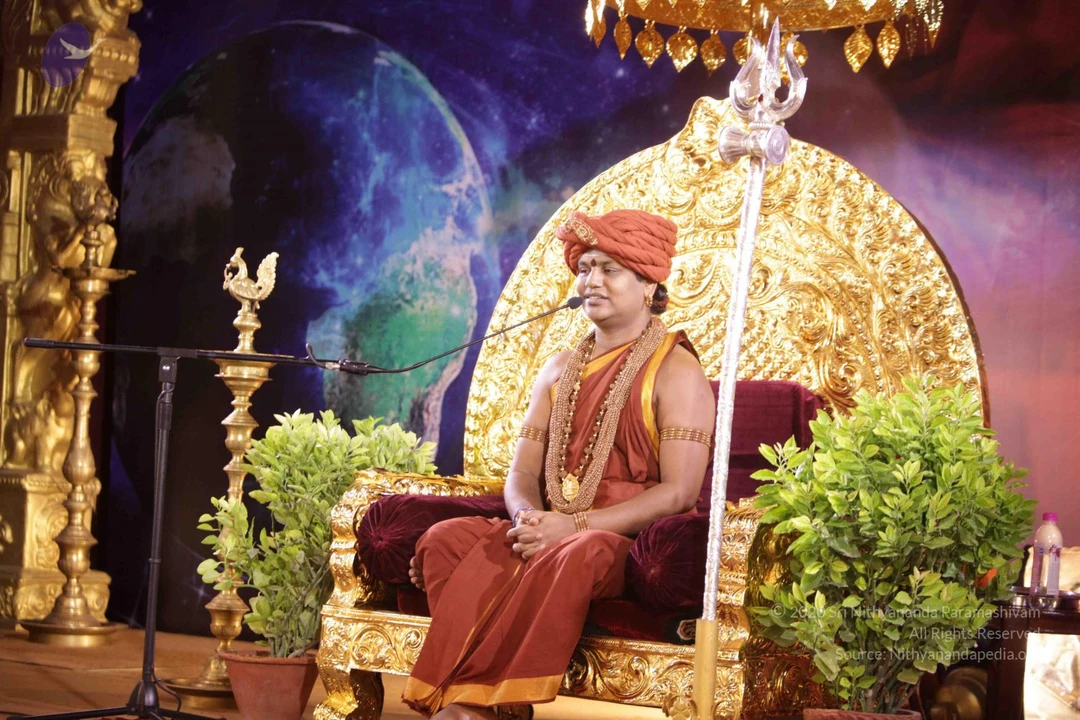
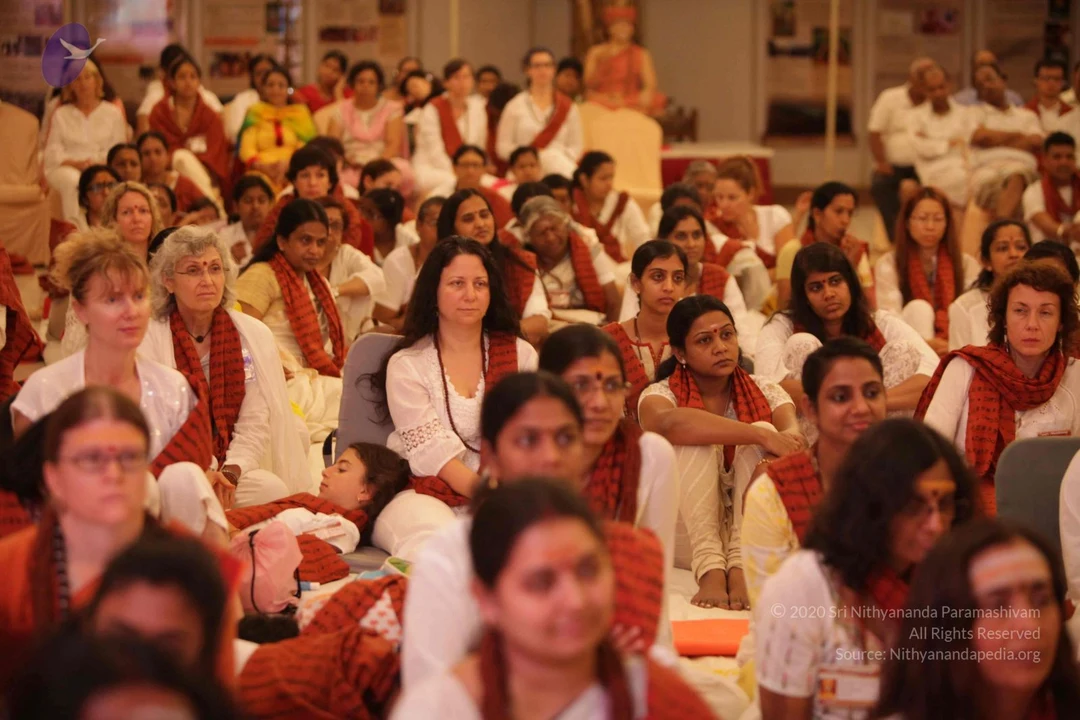
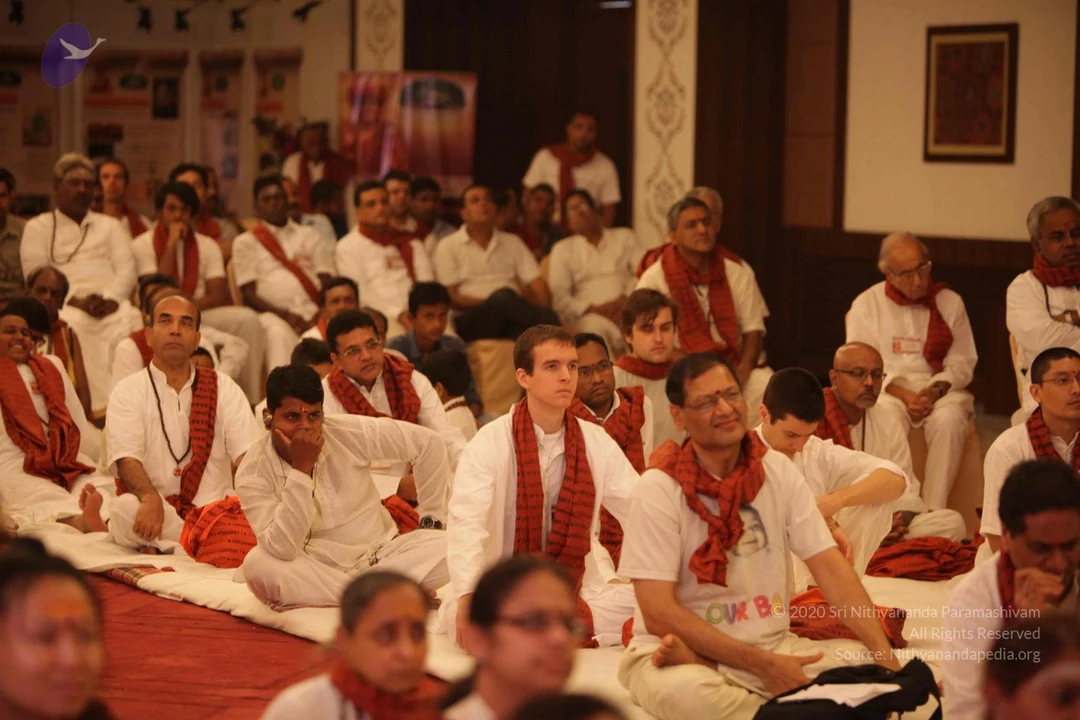
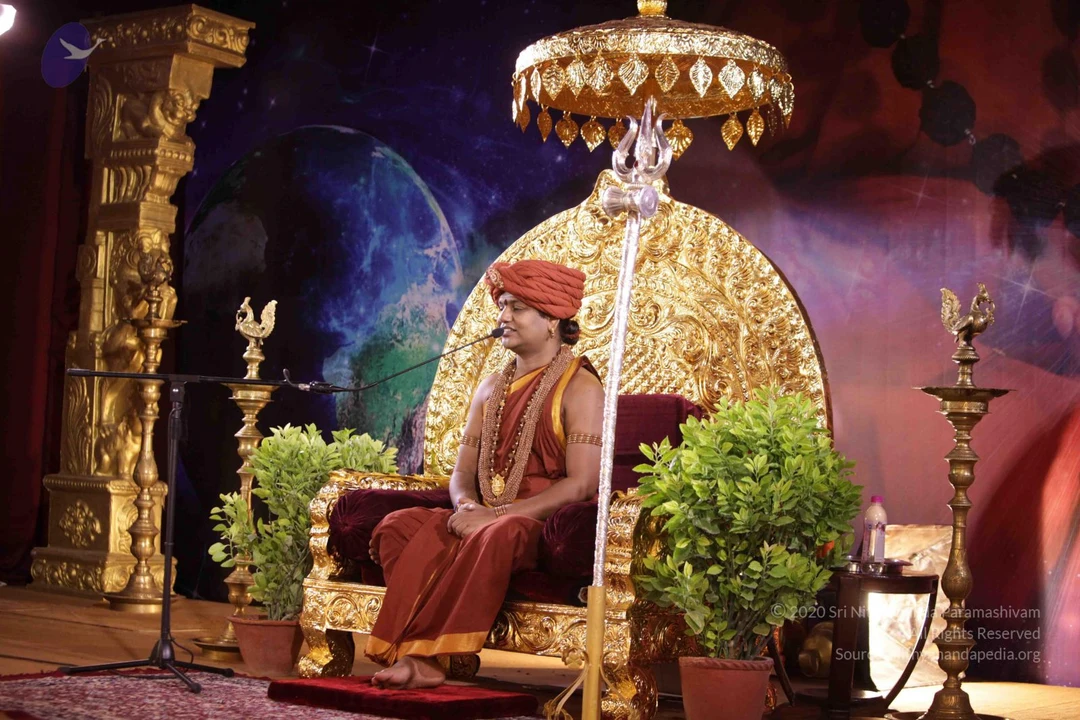
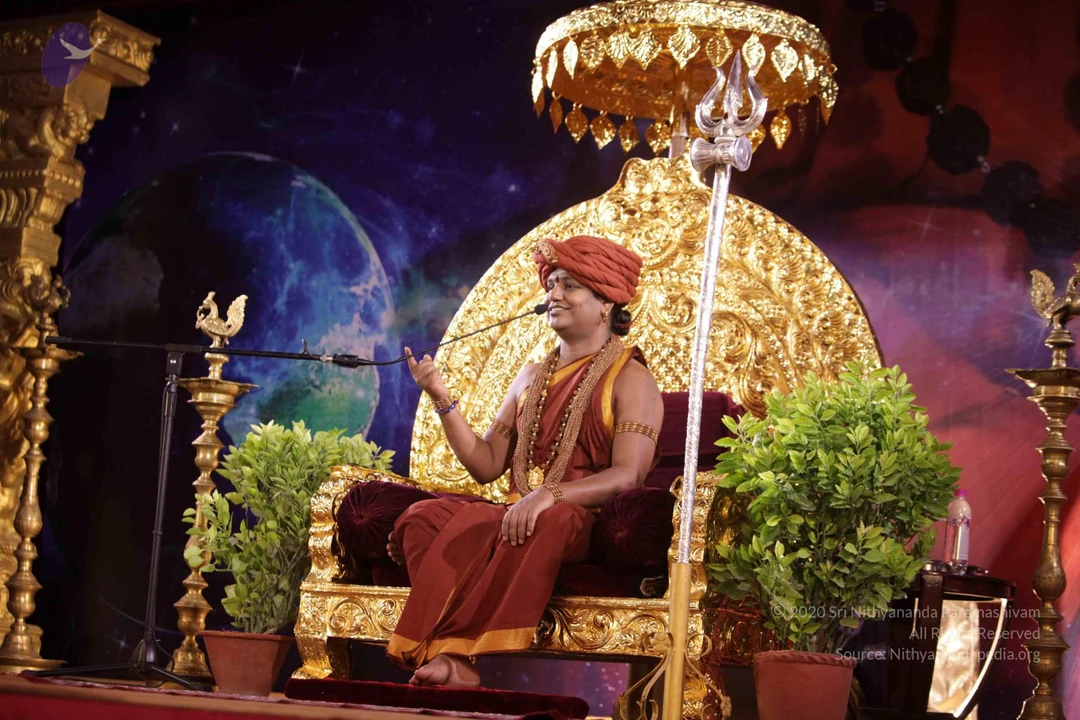
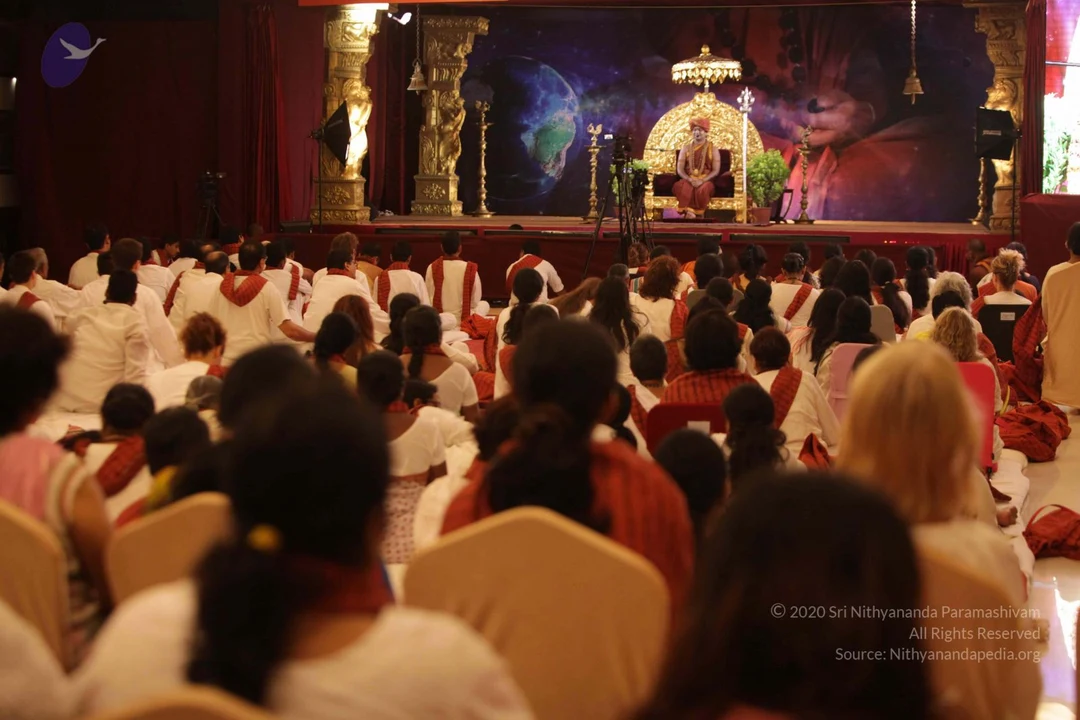
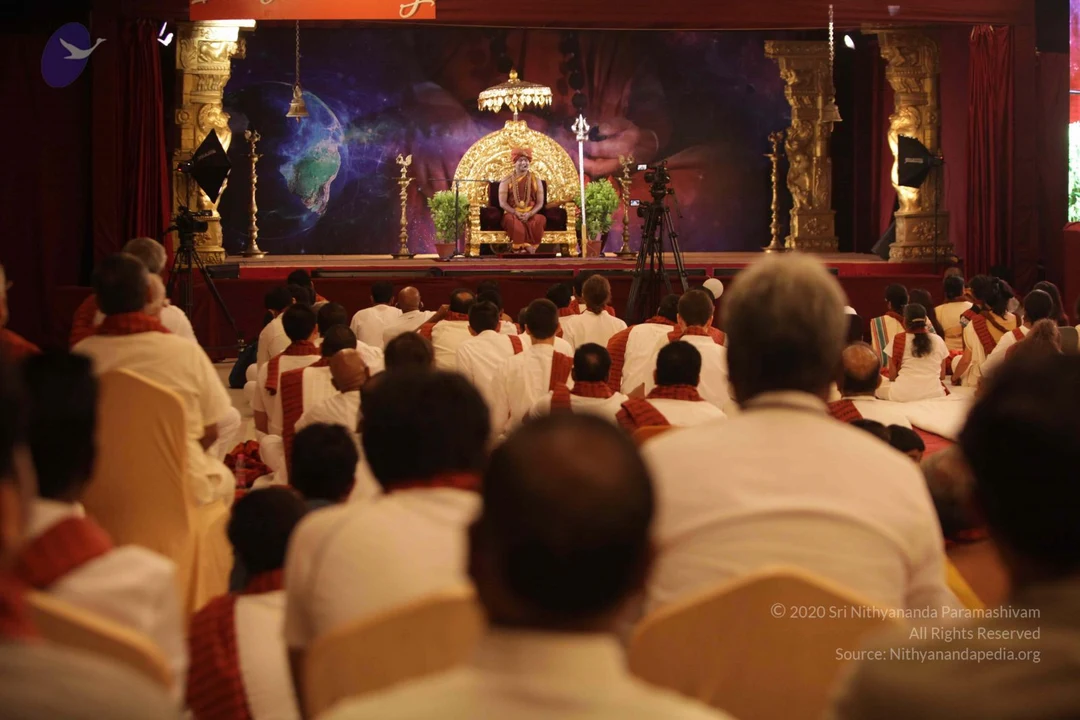
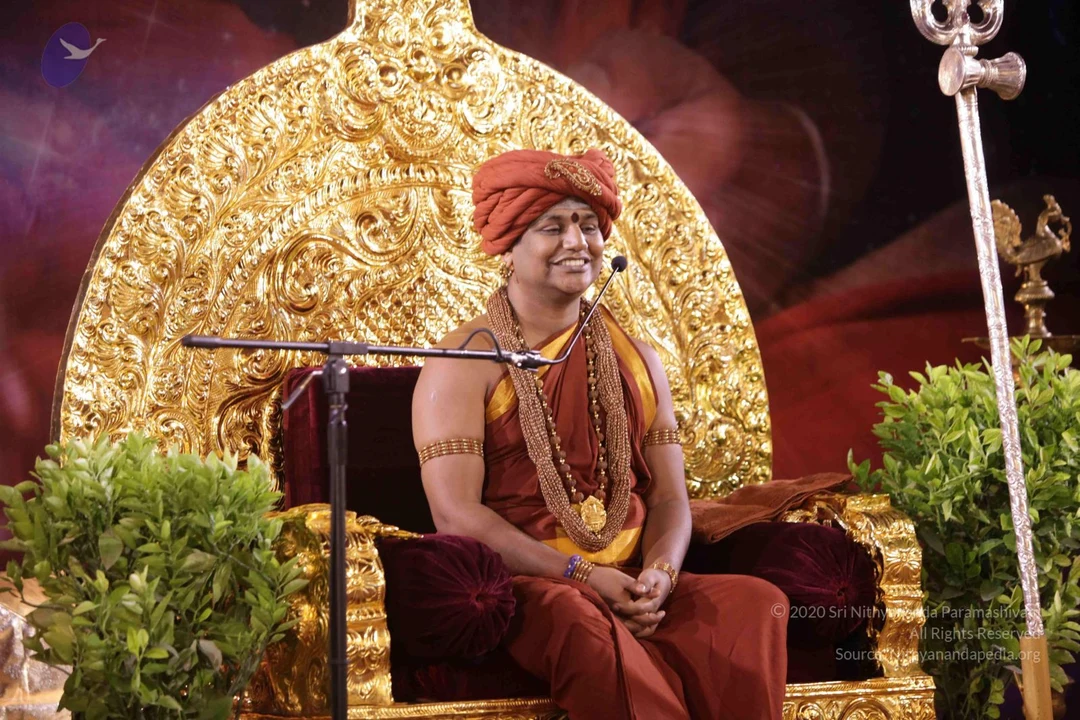
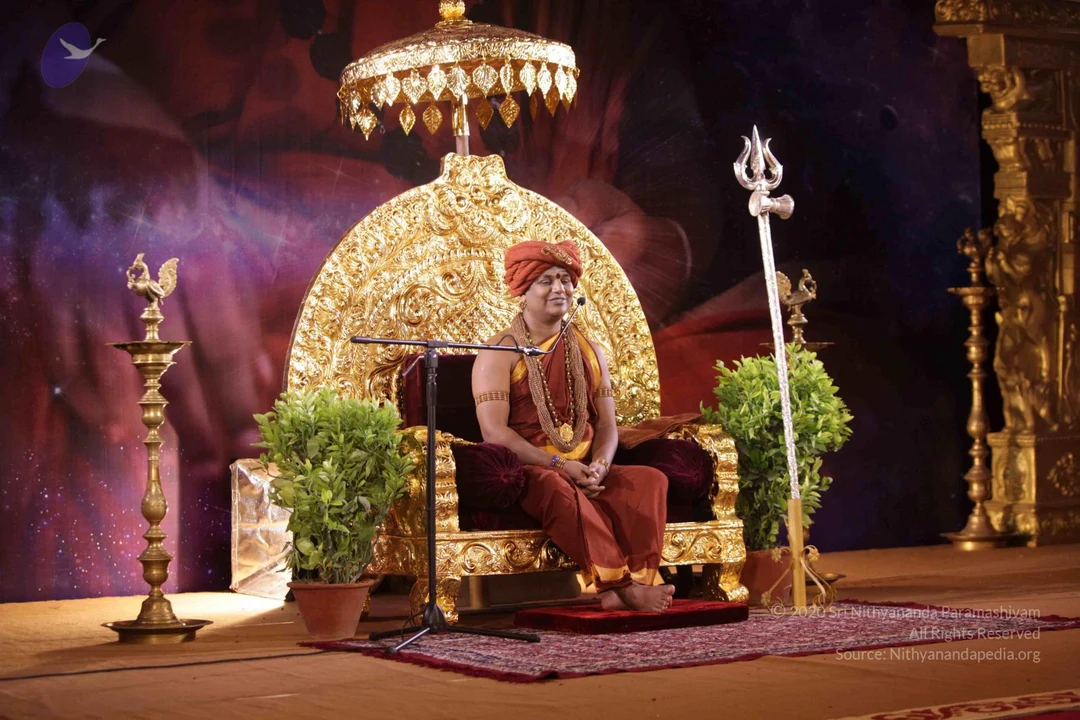
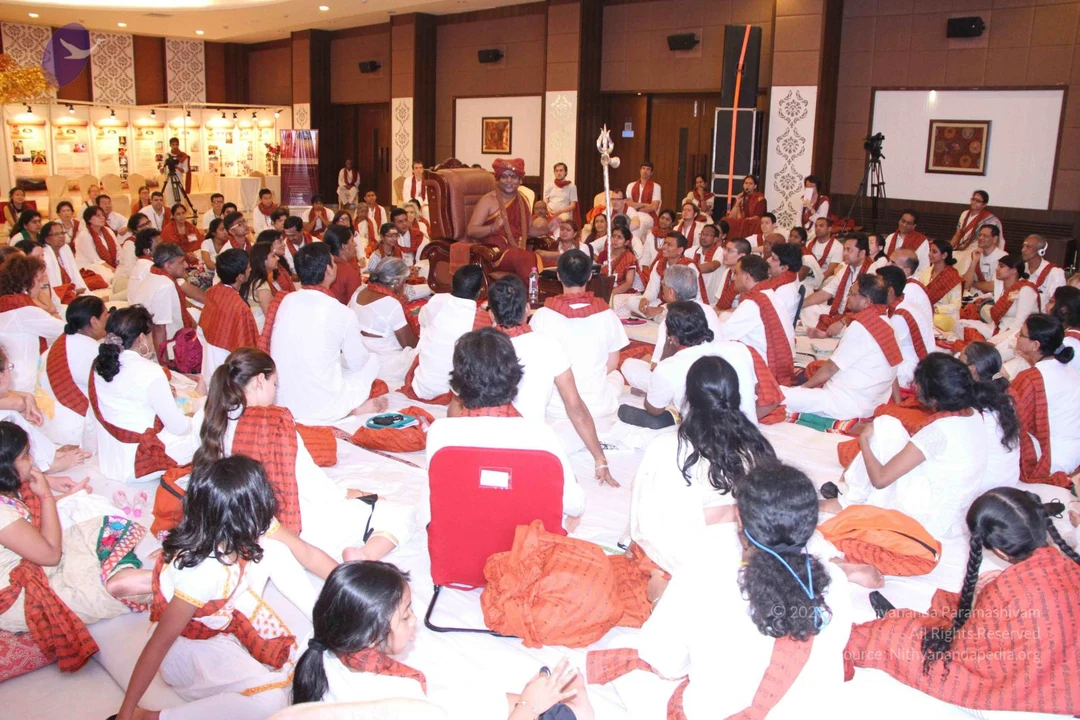
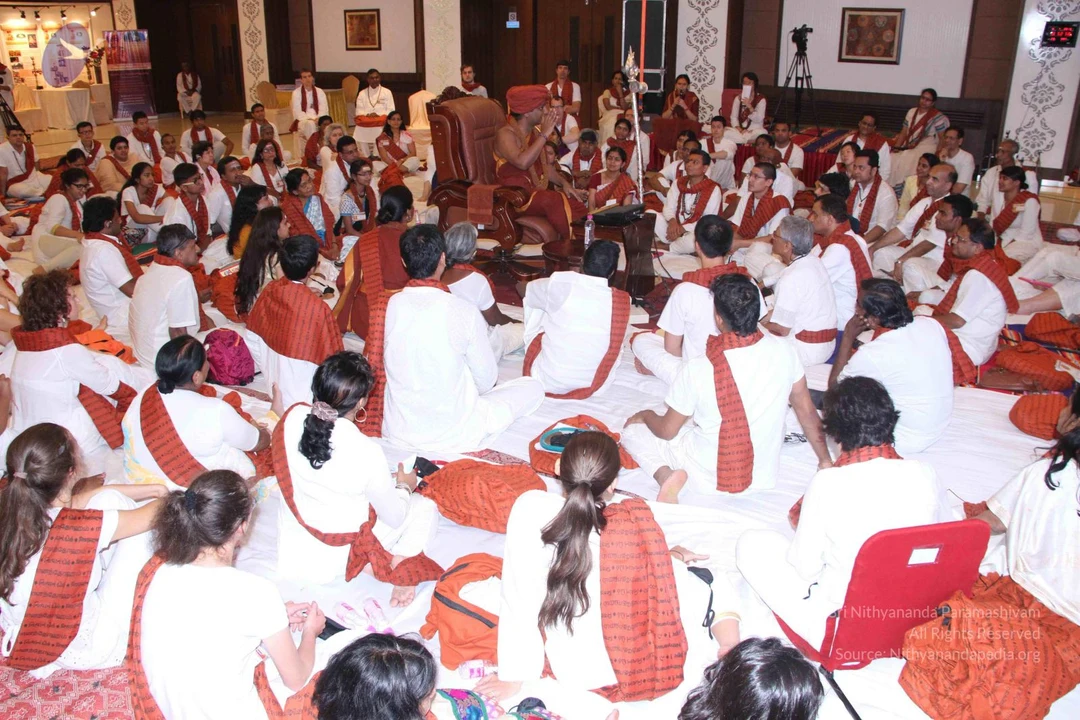
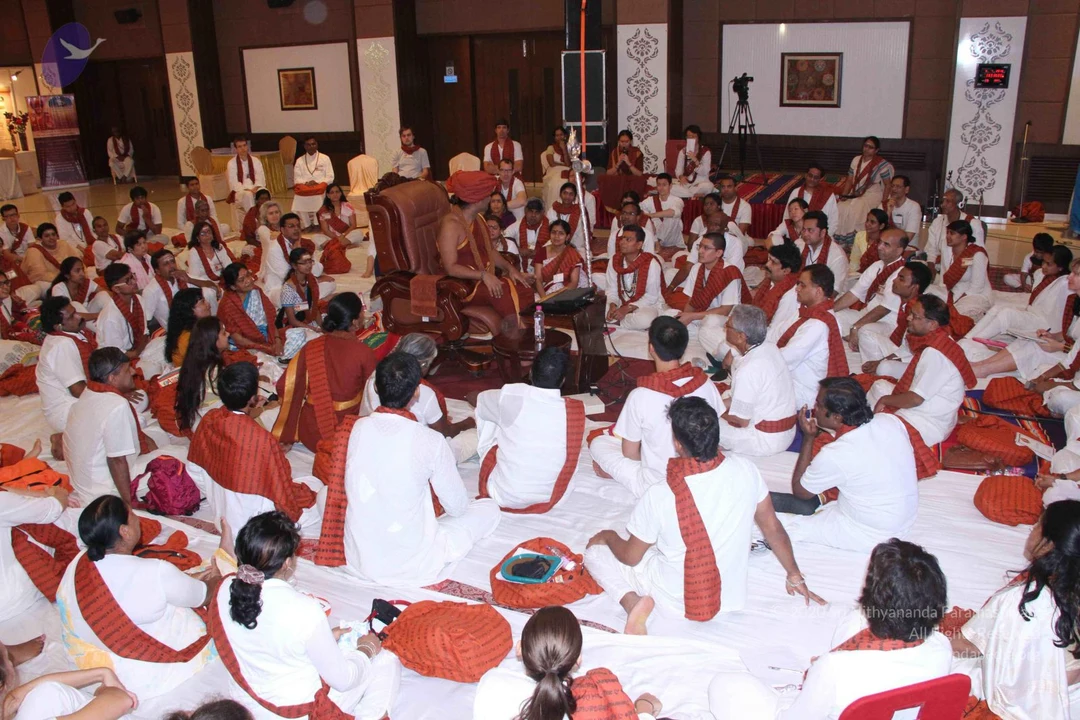
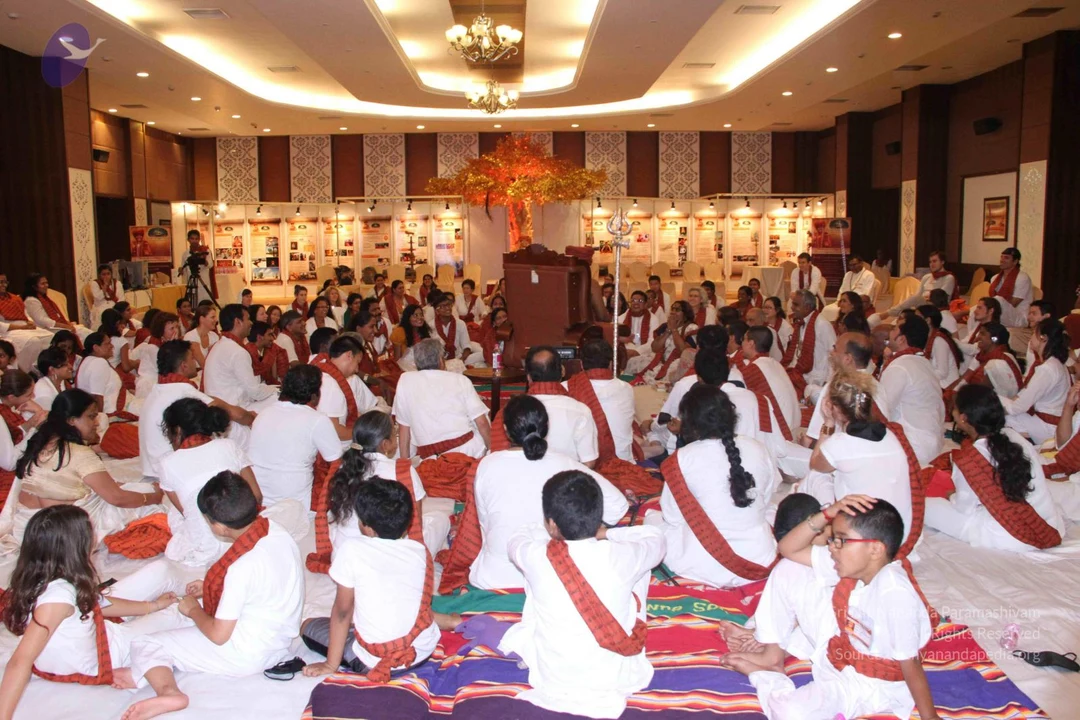
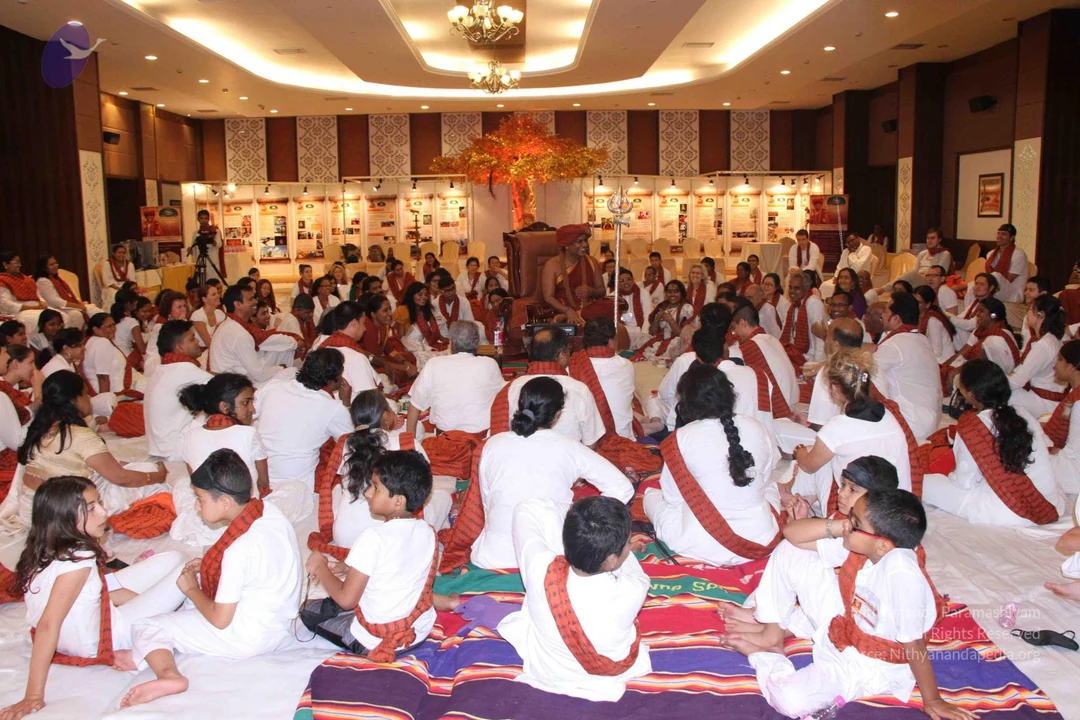
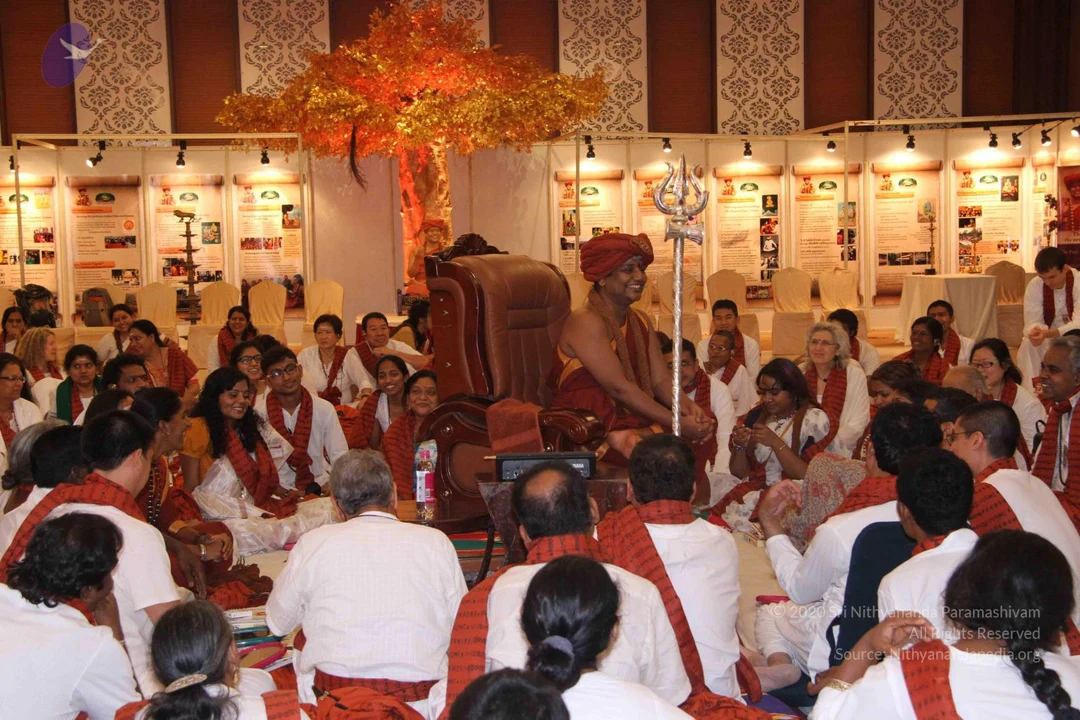
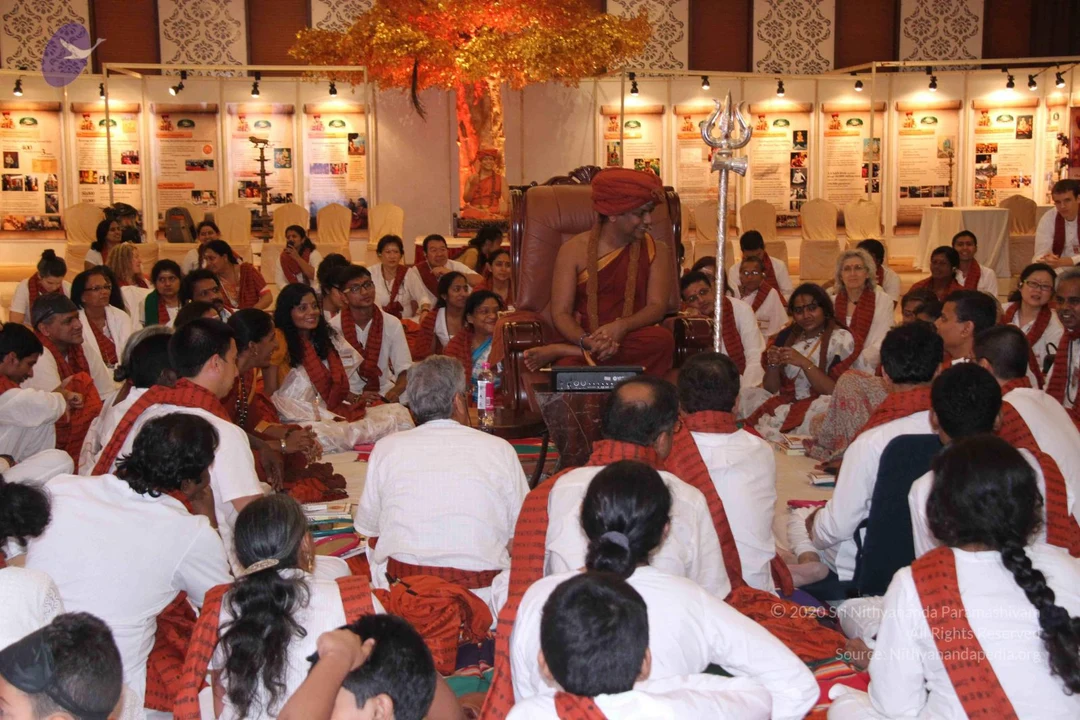
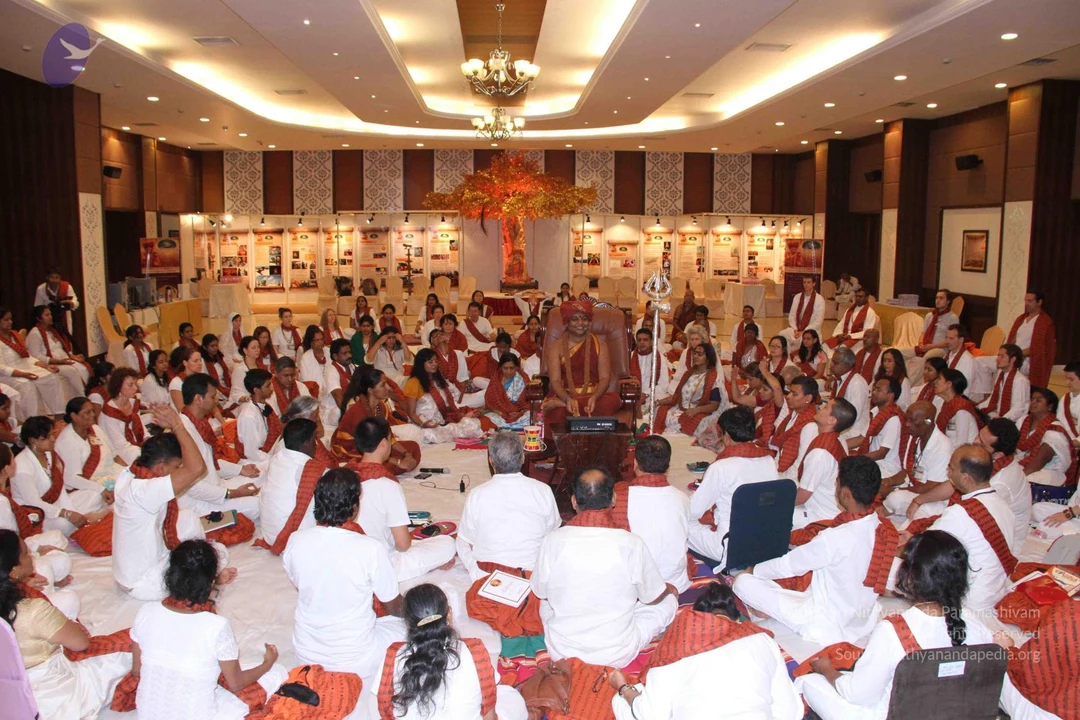
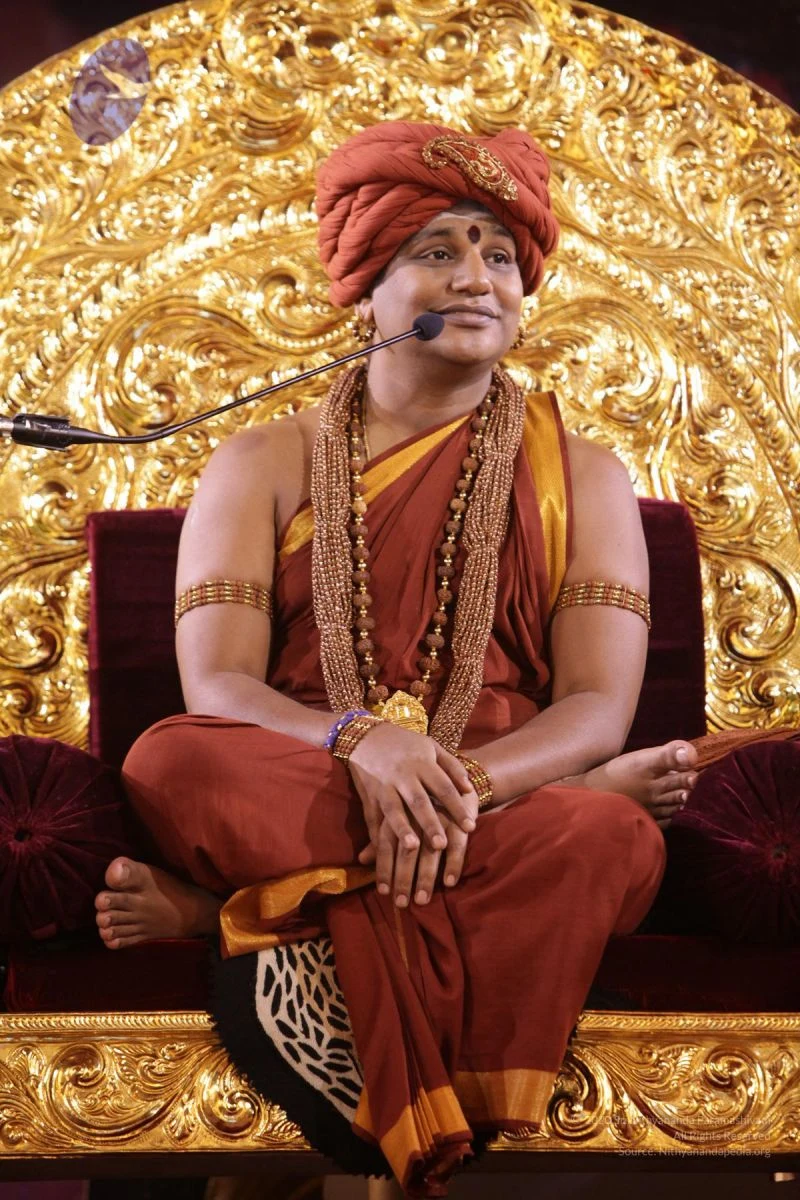
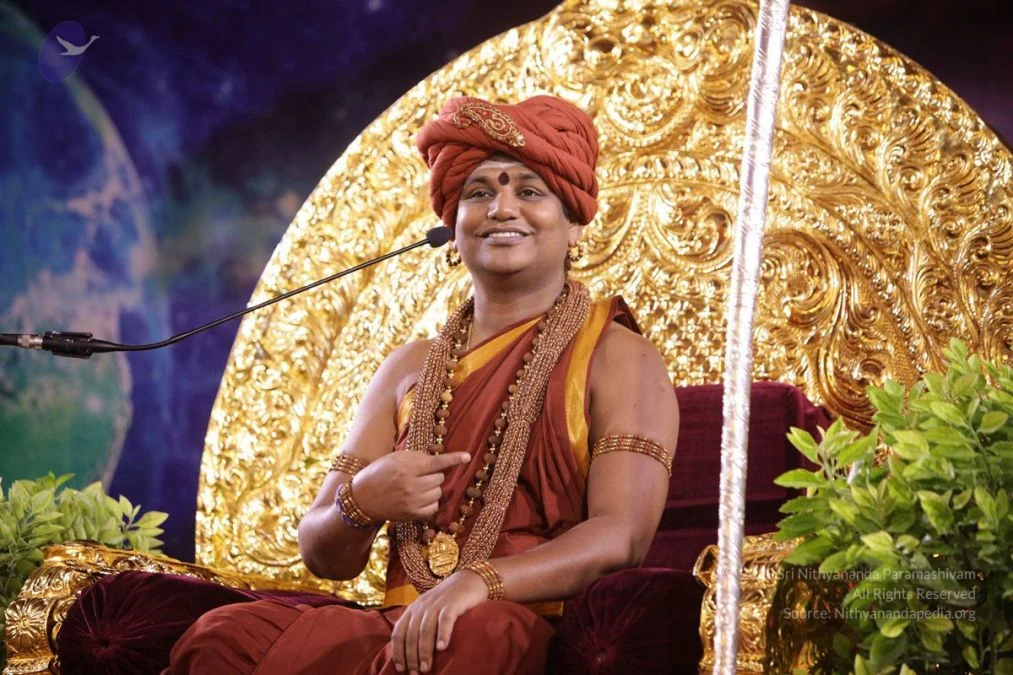
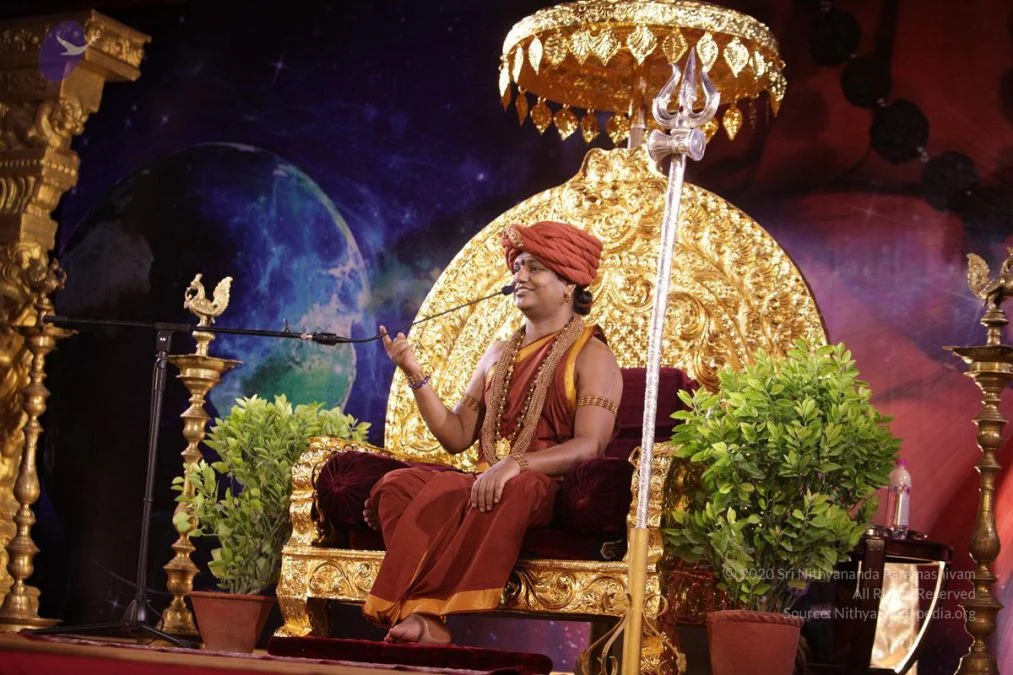
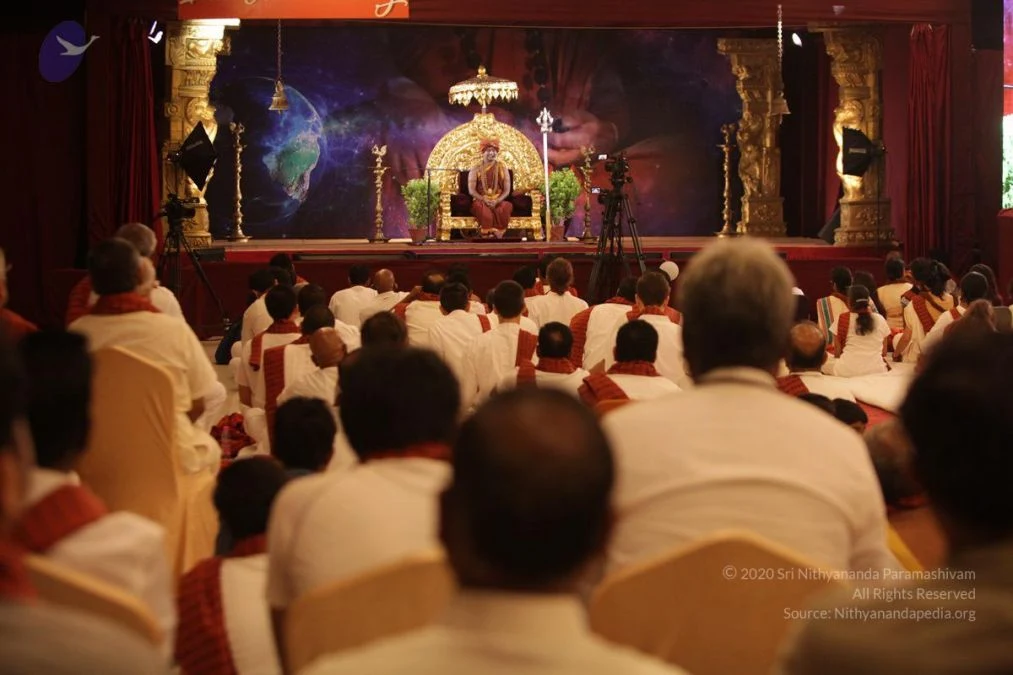
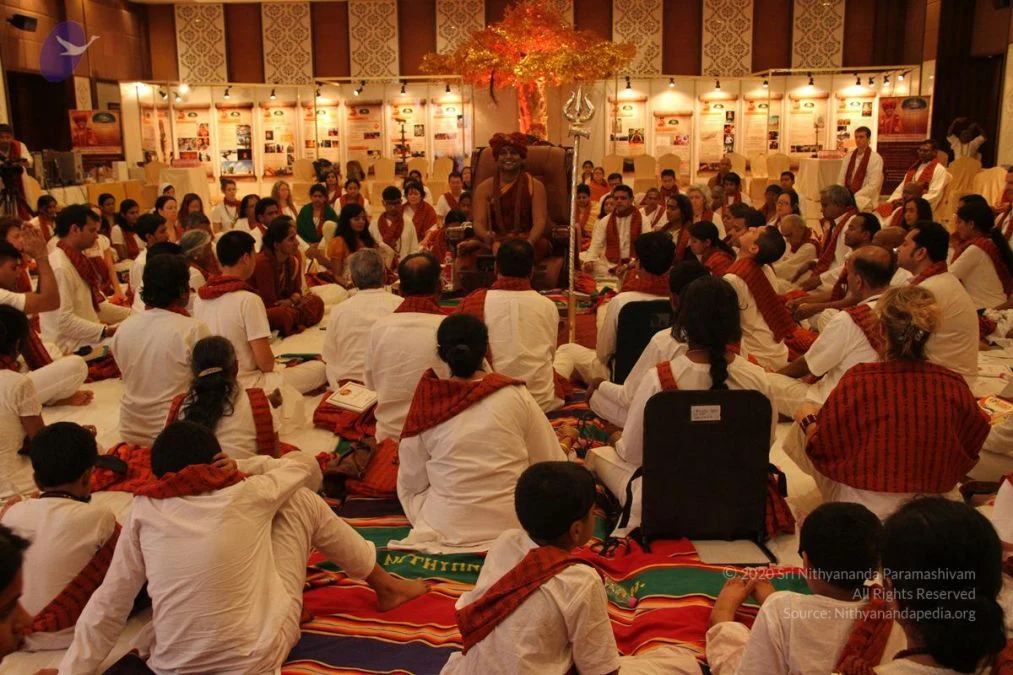
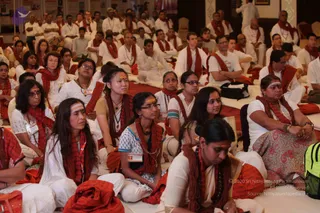
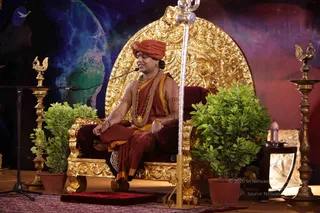
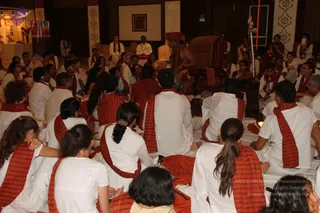
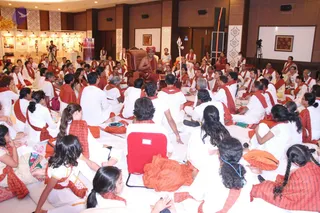
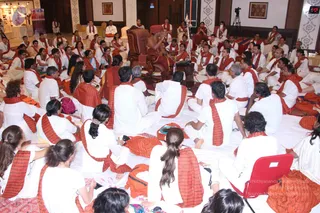
Photograph of a seated audience facing a stage at a hall with red draped curtains and gold pillars. A figure in orange and saffron clothing sits on a gilded throne with a canopy, flanked by potted plants and brass lamps. A large backdrop shows a glowing Earth in space. Audience members in white kurtas and red-orange shawls sit on gold-covered chairs in the foreground, with a camera on a tripod filming the stage. A partially visible sign reads Live Awakening at the top left. The figure on the throne shows distinctive orange and ornate cues but the appearance is uncertain from this distance.A large hall with a stage backdrop showing a glowing Earth and cosmic imagery, framed by golden pillars. A seated figure in an orange and red turban and orange robes sits on an ornate gold throne with a canopy at centre stage, flanked by potted plants, brass lamps and a camera on a tripod. Rows of devotees in white clothes with red-and-white shawls sit cross-legged on white floor mats and gold chairs, facing the stage. Some sit in the foreground with their backs to the camera, and a few people in orange robes sit at the right side of the stage. Attendance appears to be in the dozens.A photograph of a large hall audience seated on the floor and in chairs, viewed from behind. Most attendees wear white clothes with red shawls. On a raised stage, a seated figure in orange and red sits on a gold throne with a canopy, flanked by potted plants, brass lamps and a tripod camera. The backdrop shows a glowing globe-like image of the Earth in space. A gold-framed orange banner reading Inner Awakening hangs above the stage. The attendees include a small child in white near the centre.

July 04 2015

Original wiki page
Contents

Title:

Revival Of Satya Yuga, The Golden Vedic Era by Nithyananda

VideoAudio

Description:

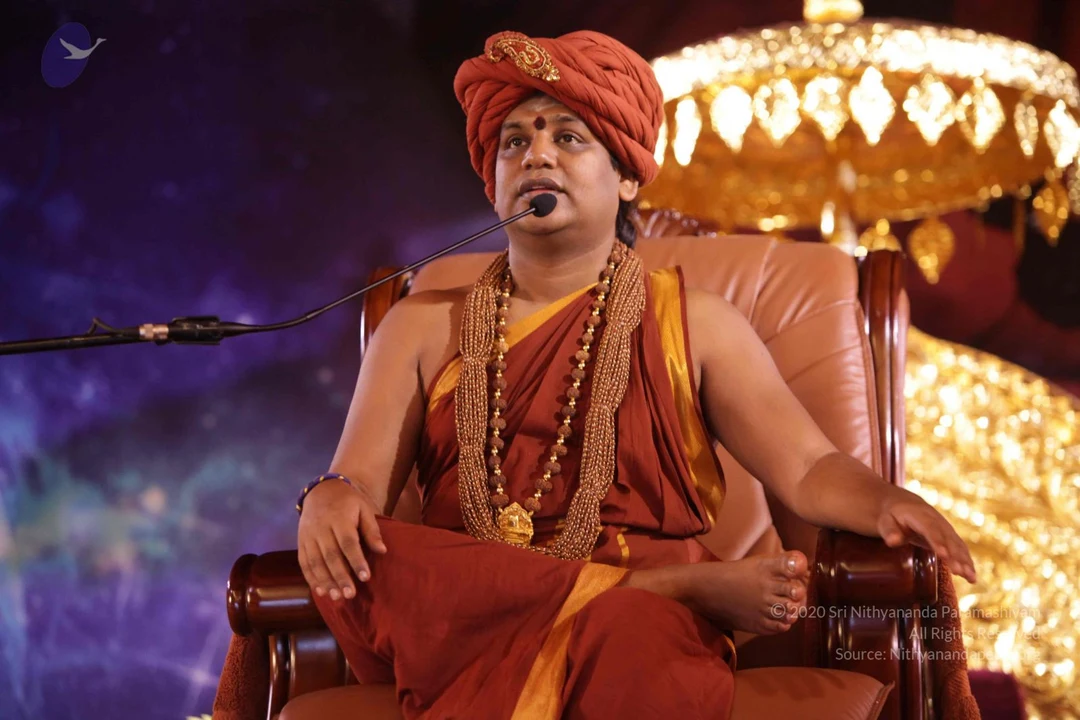
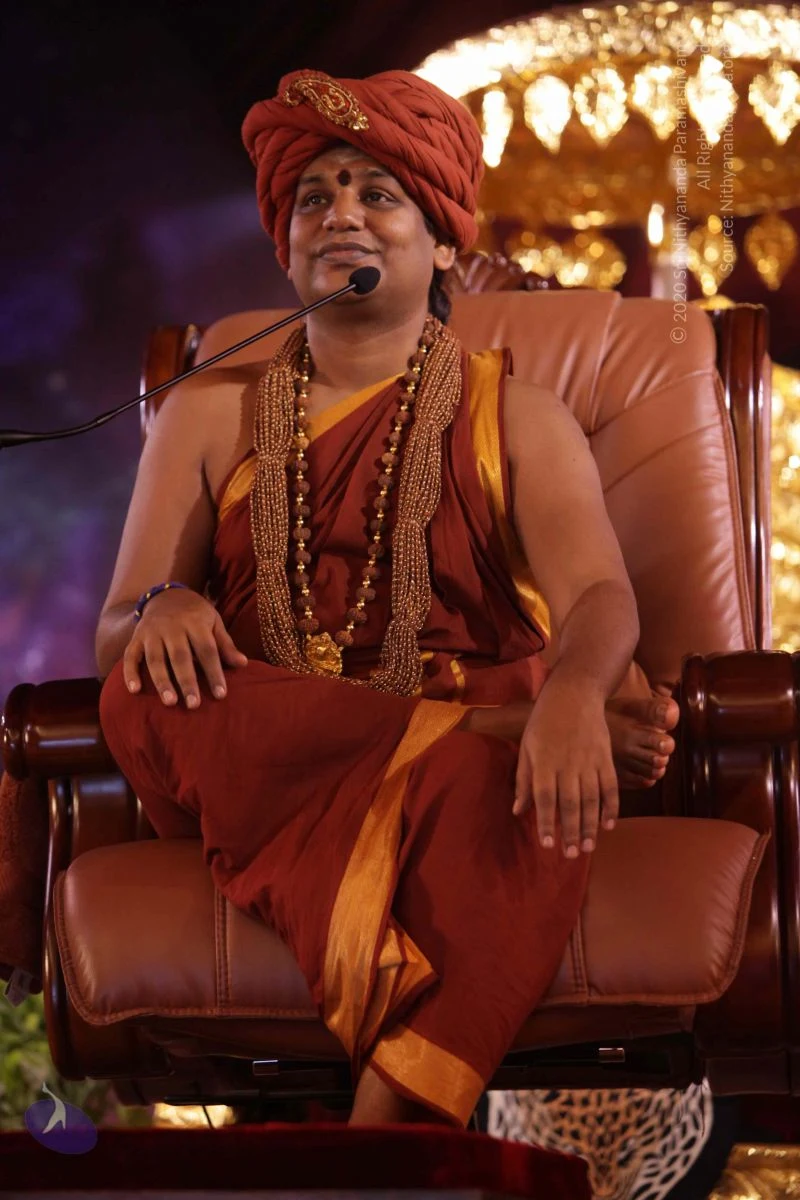
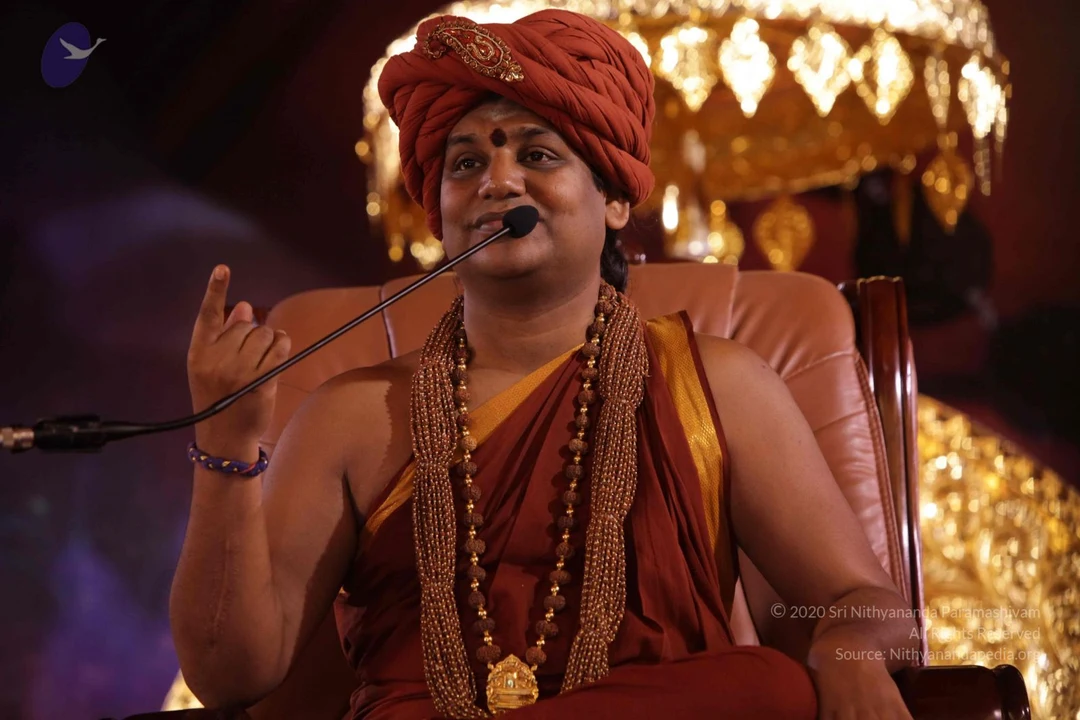
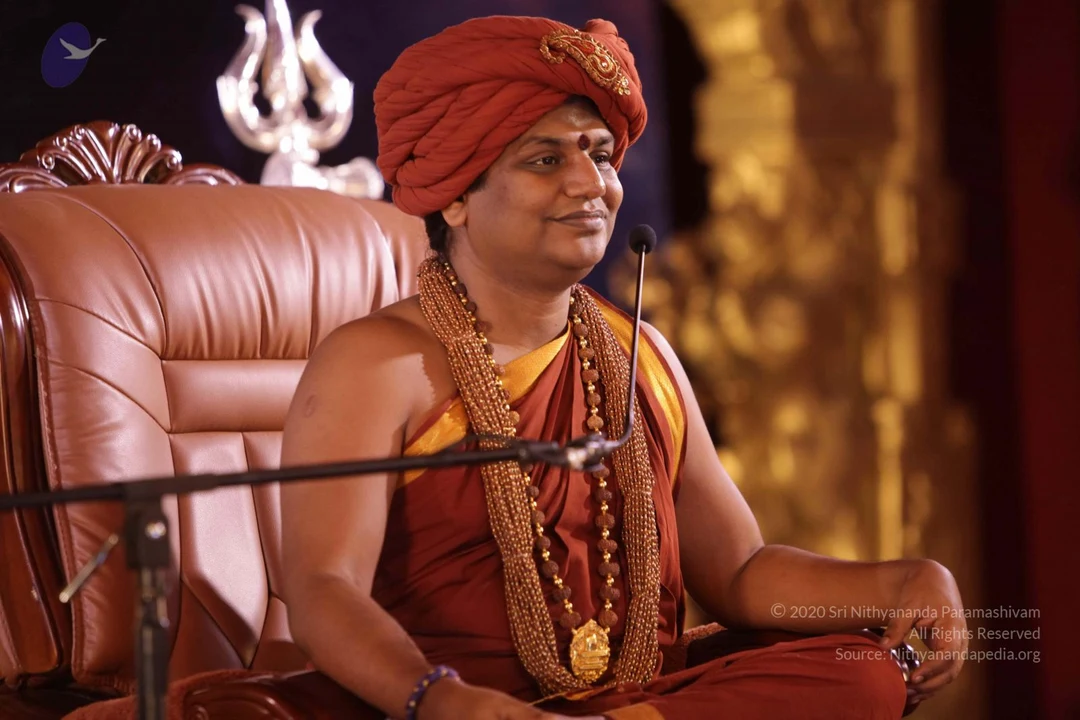
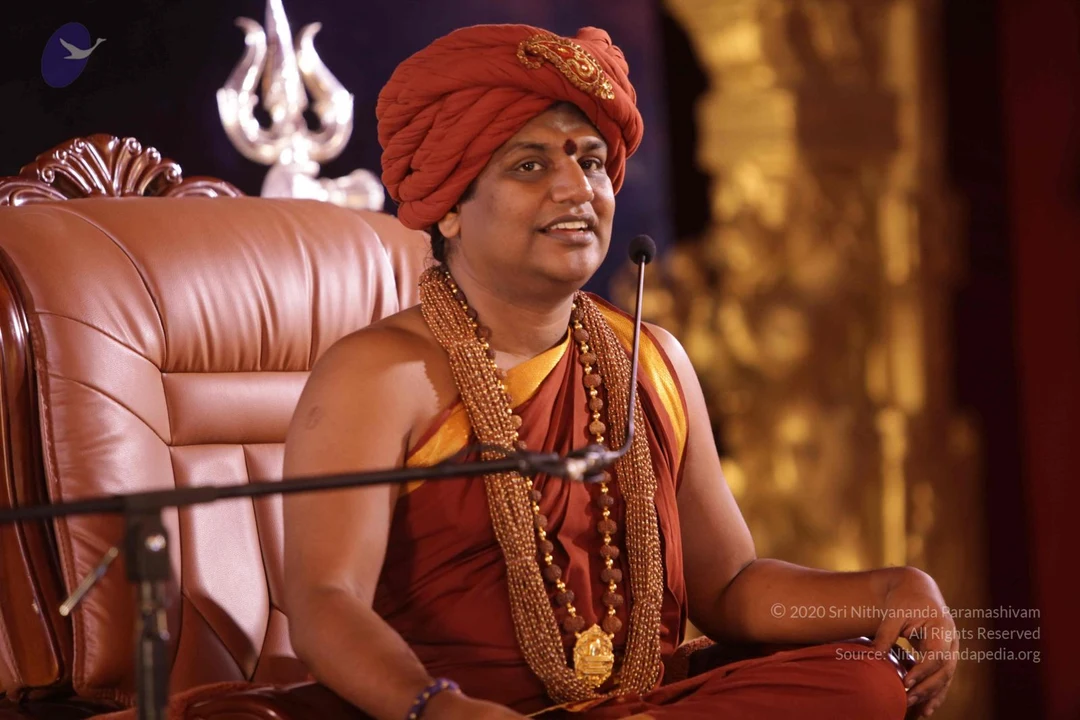
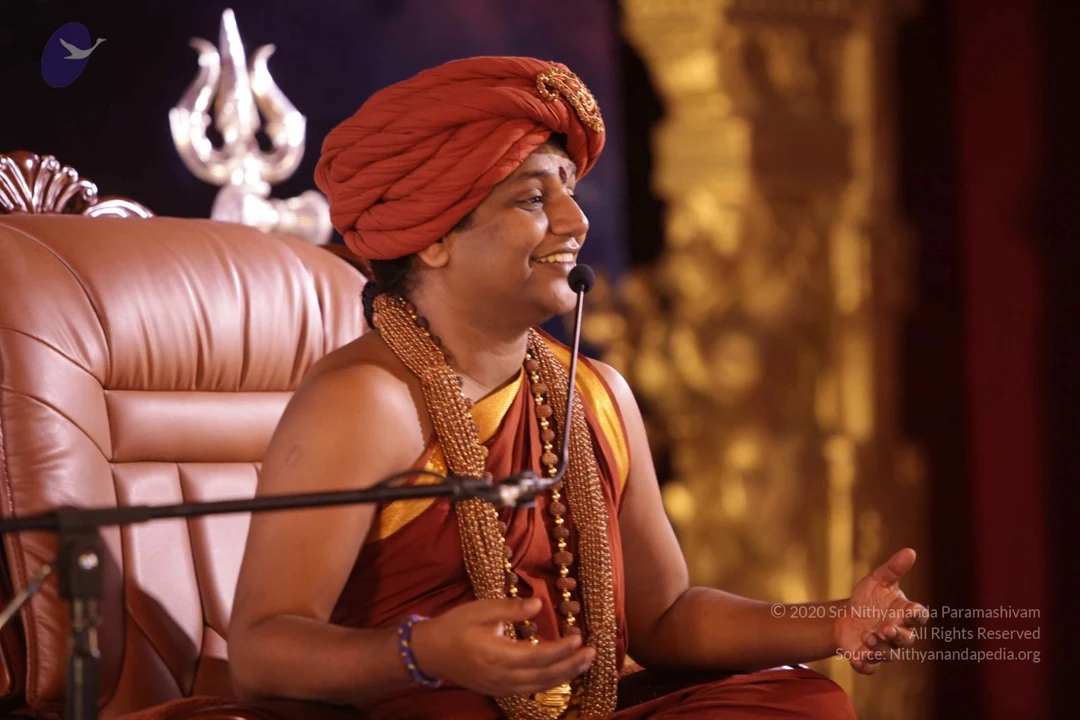
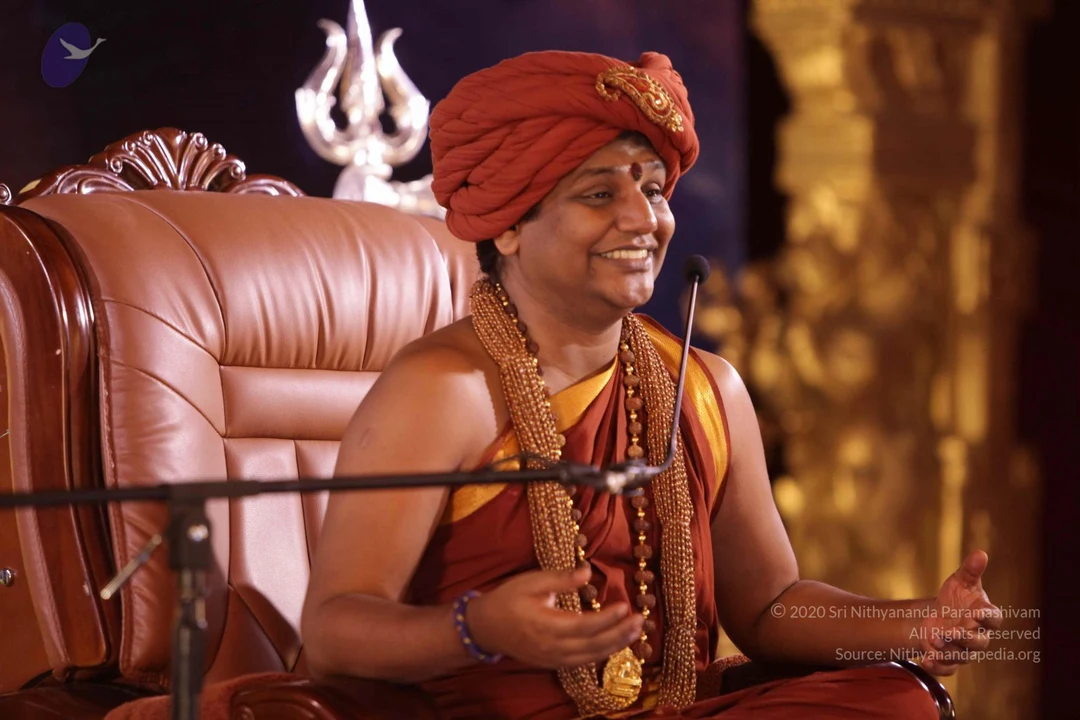
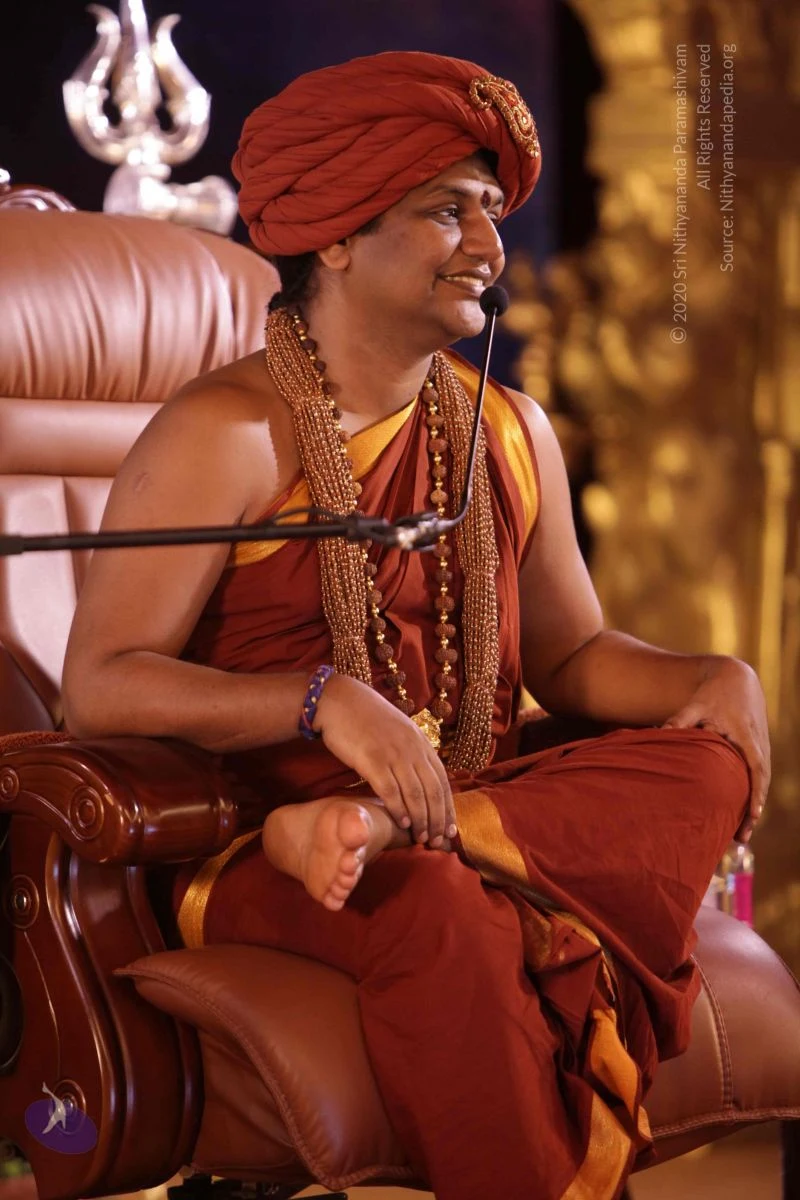
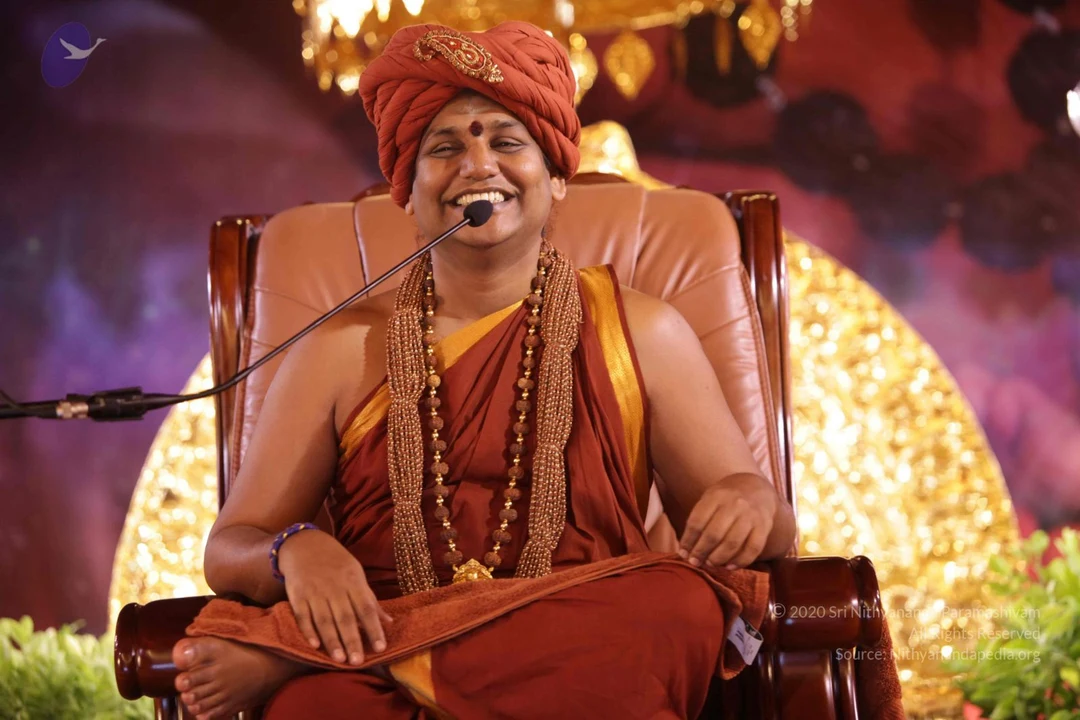
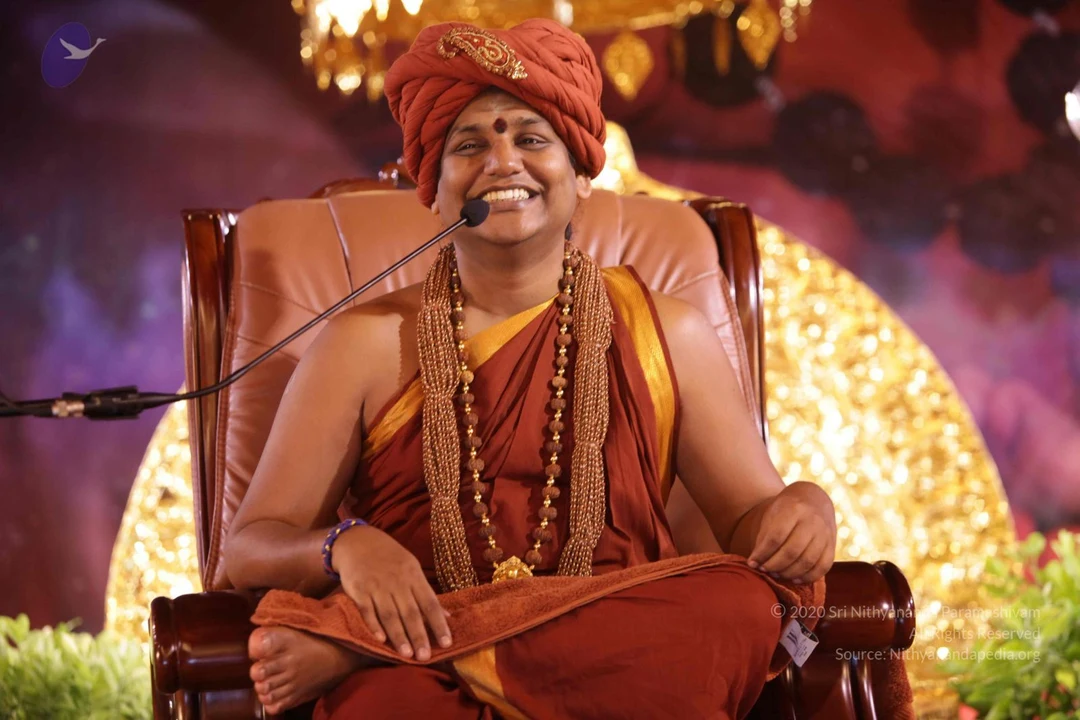
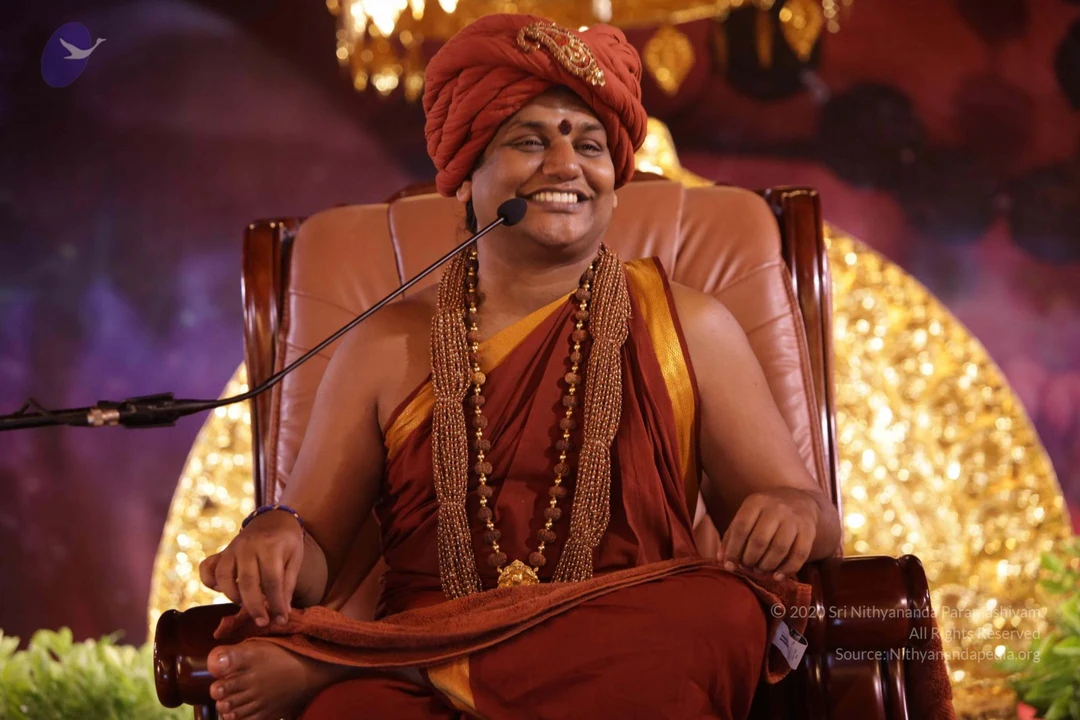
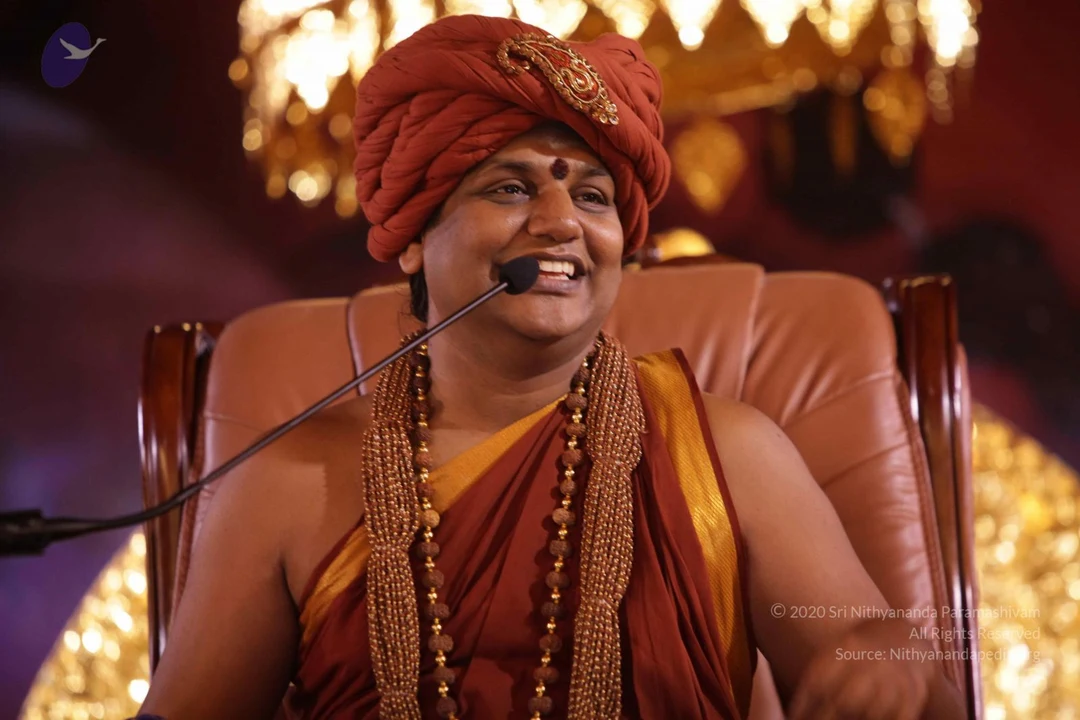
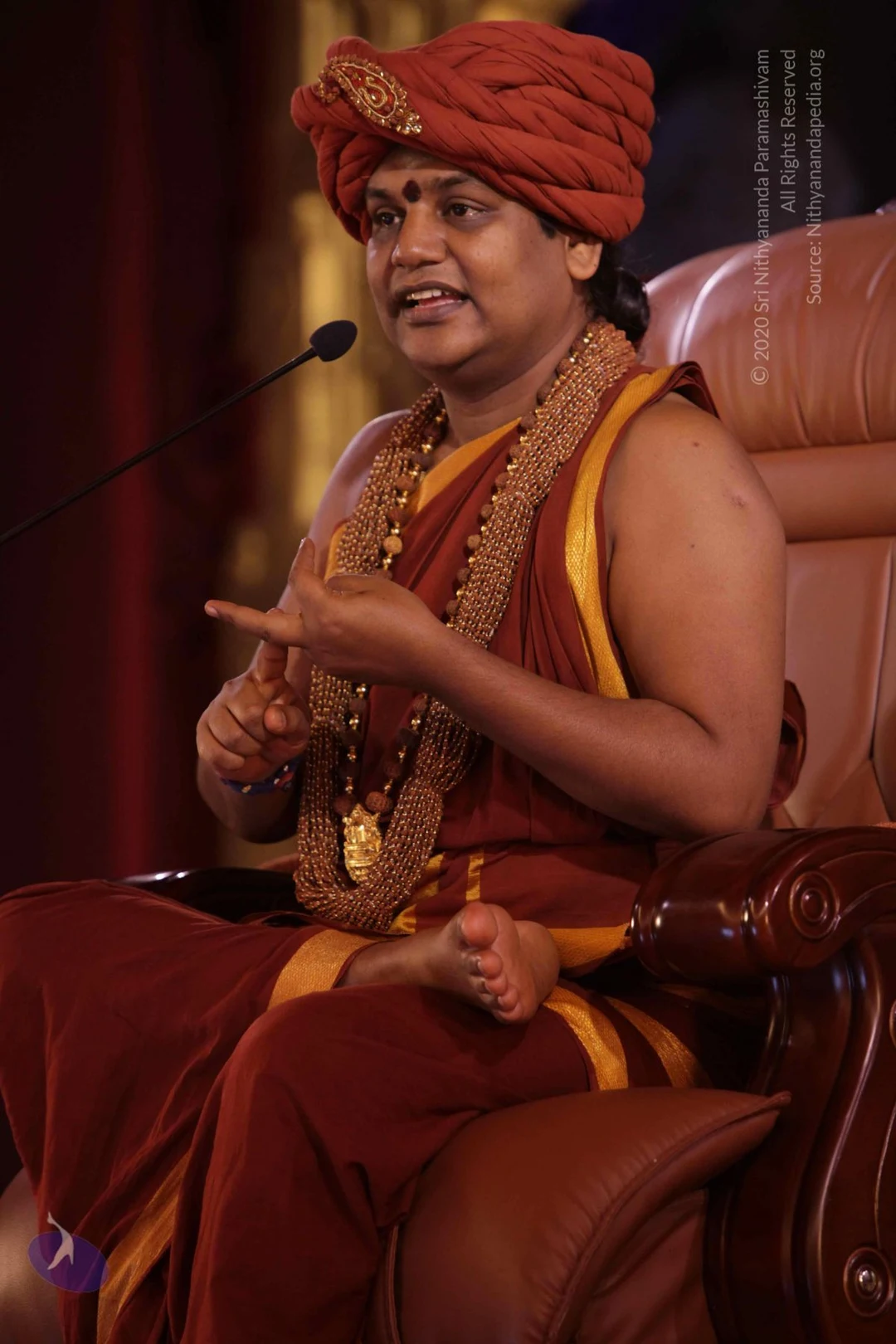
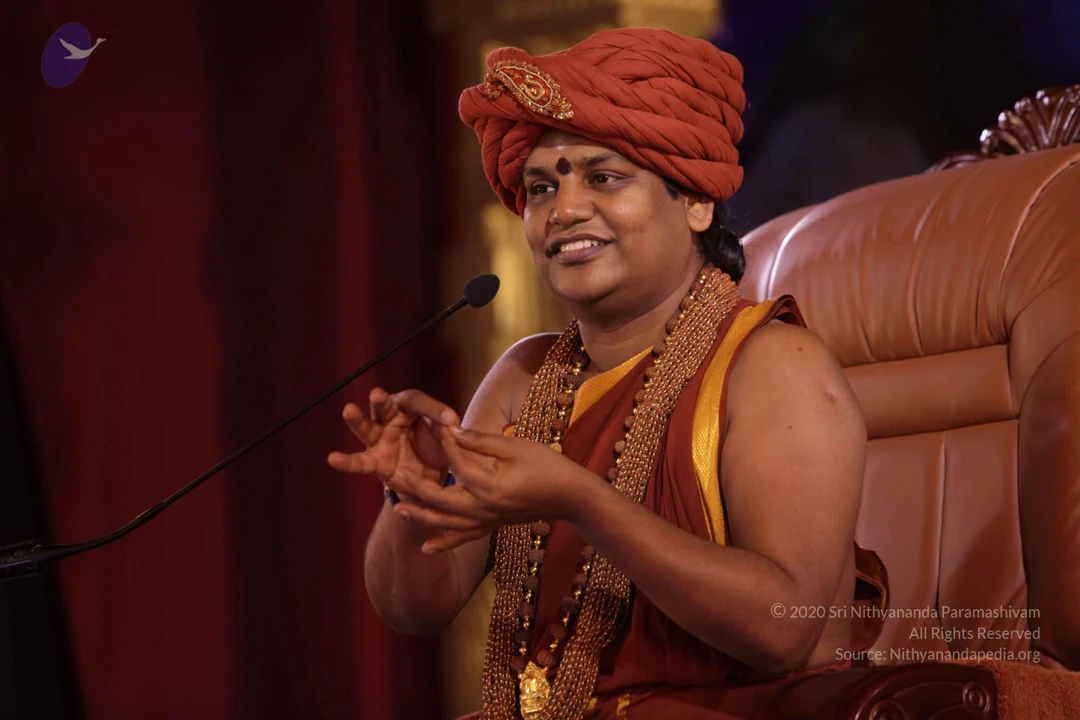
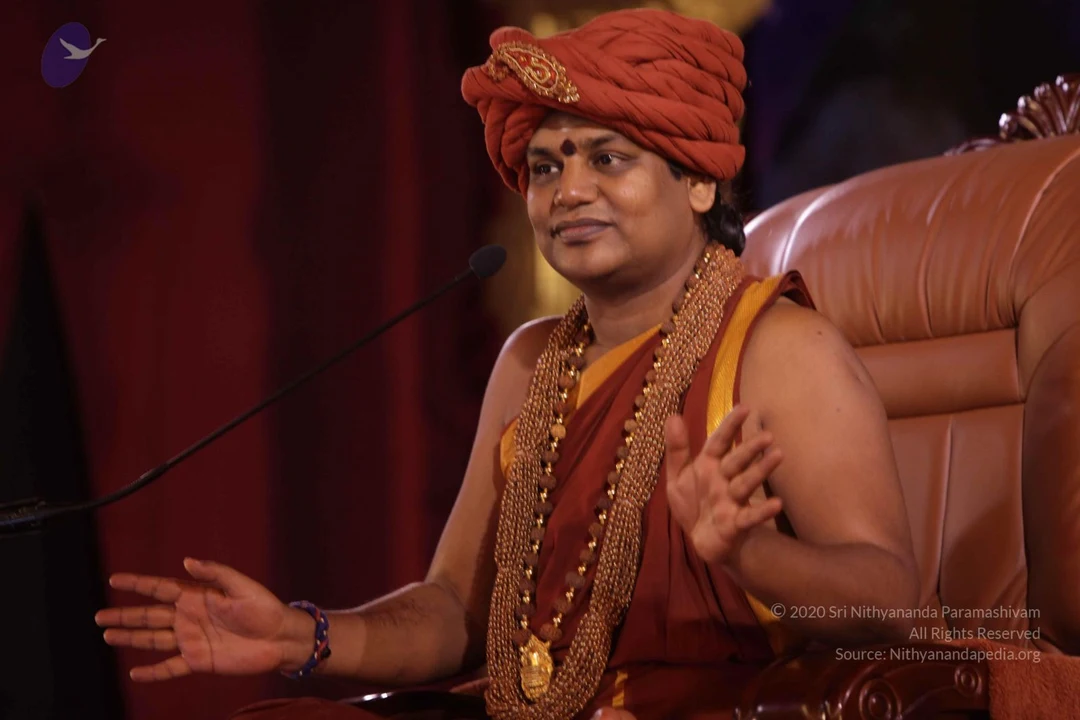
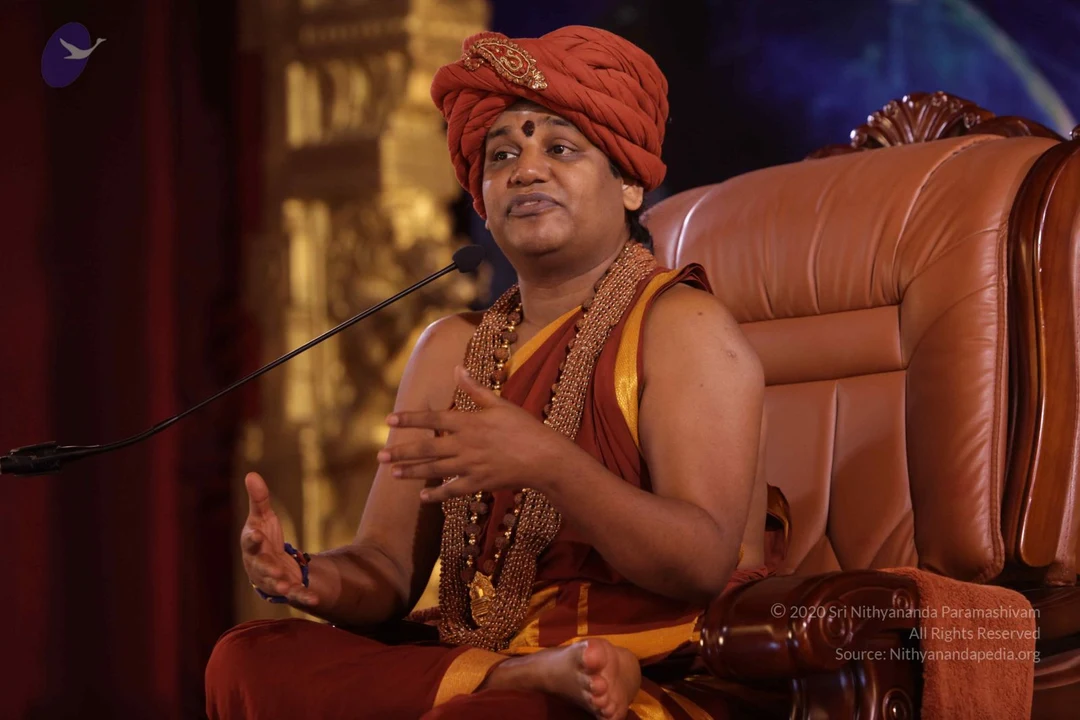
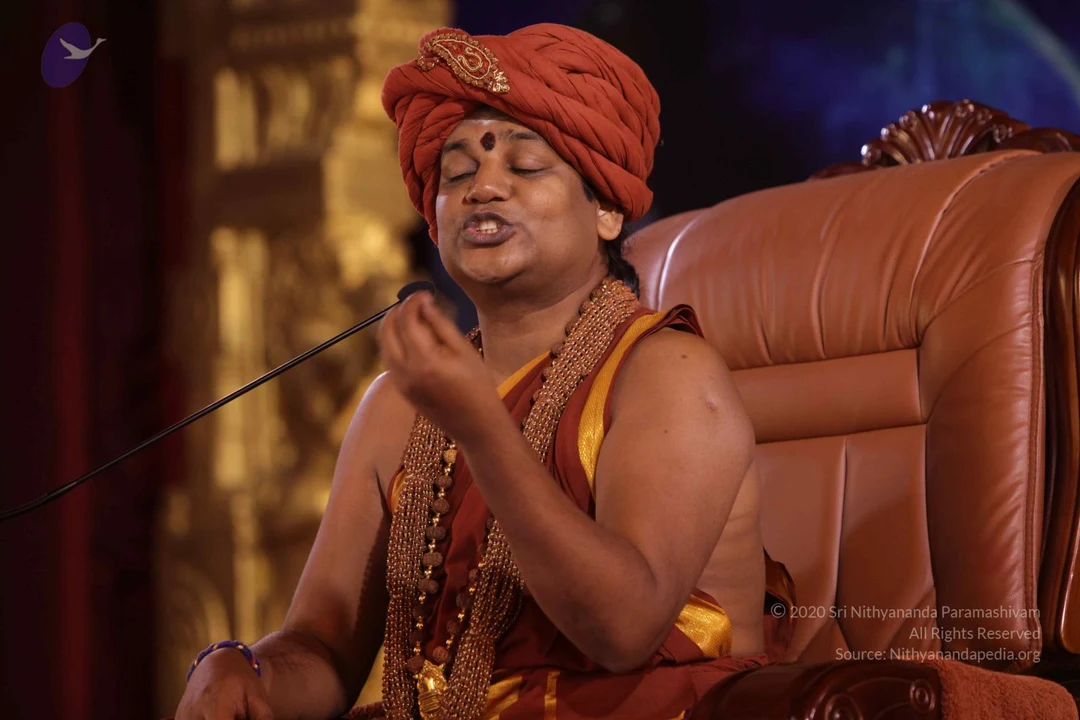
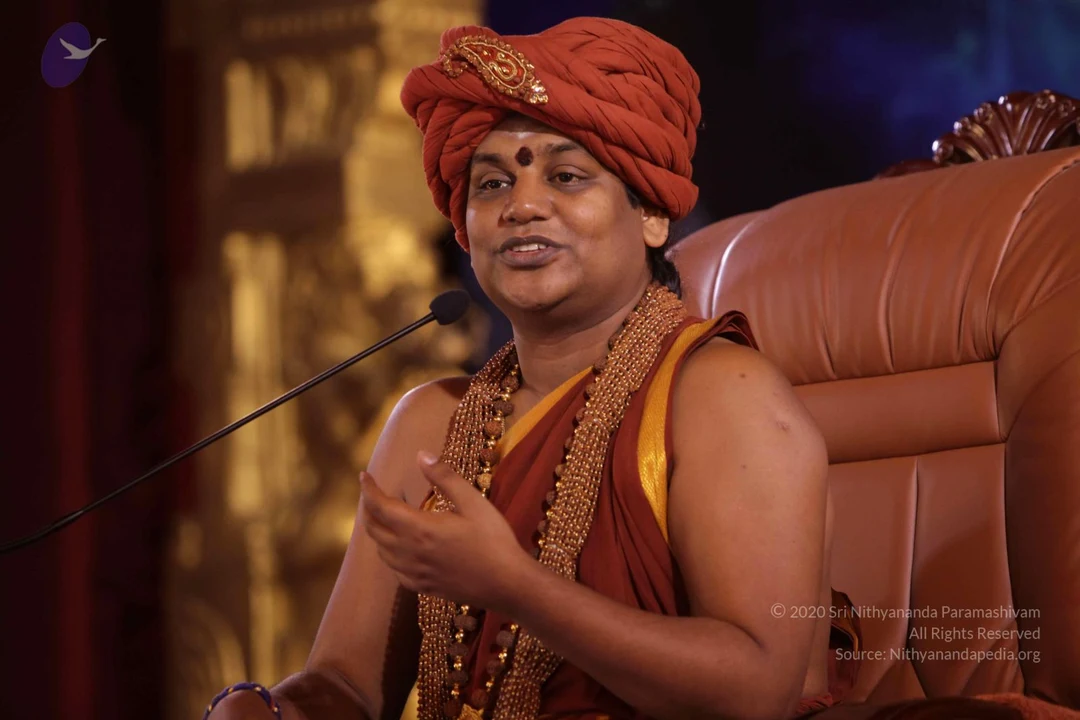
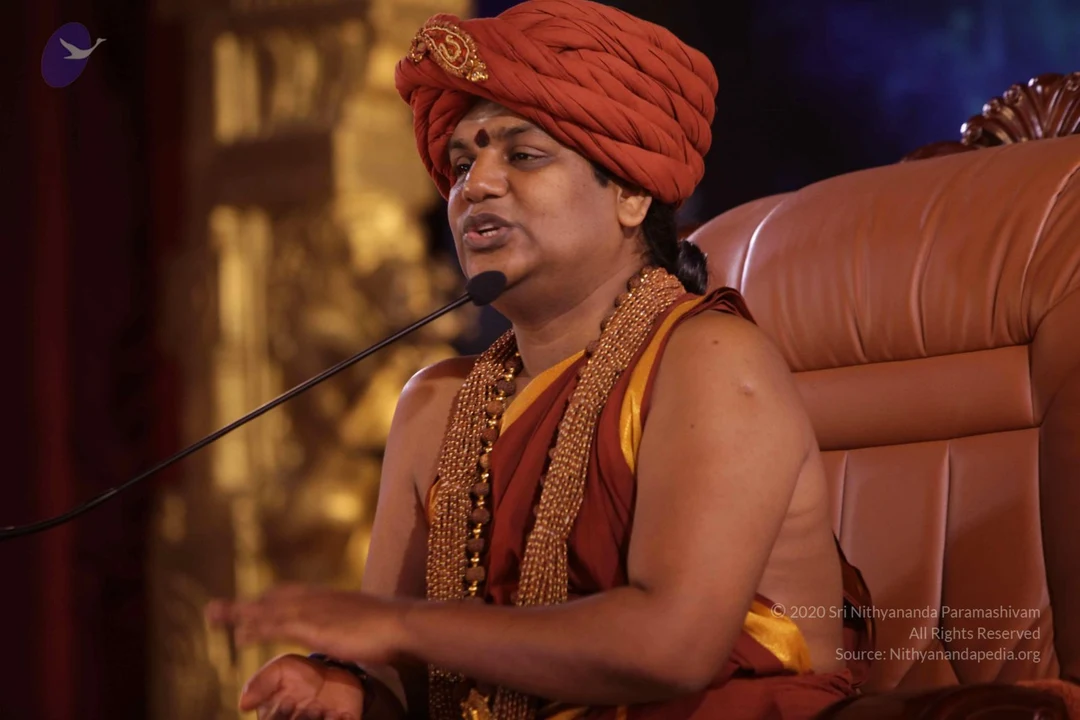
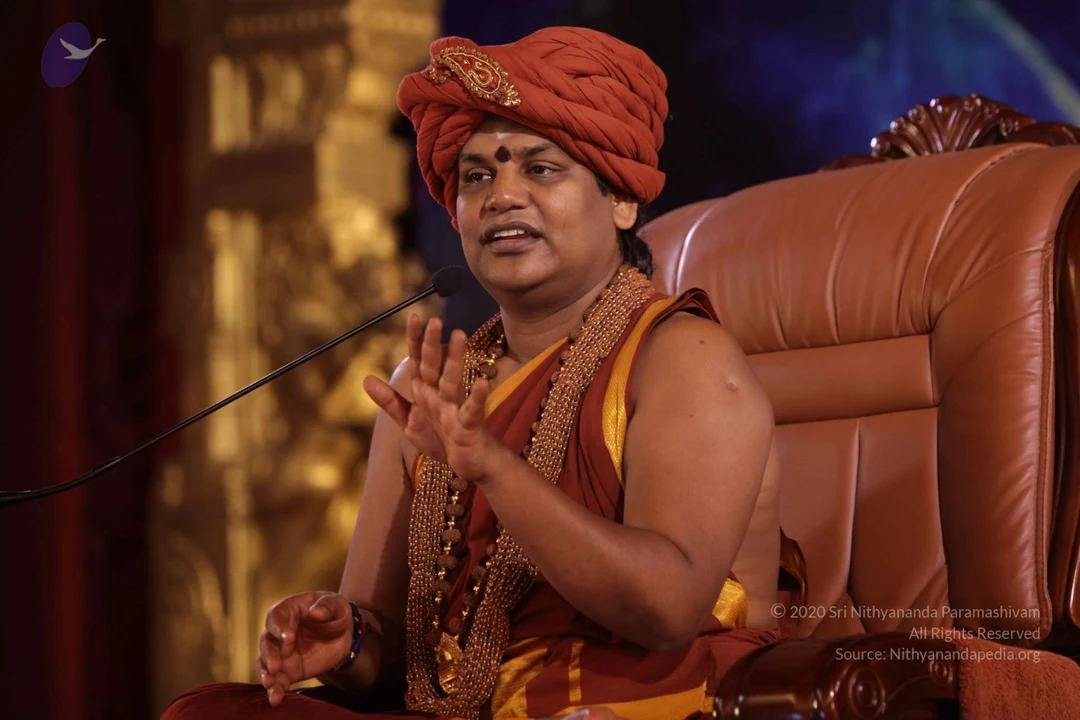
In today's awakening Nithya Satsang (4 July 2015), Paramahamsa Nithyananda gives the introduction to secrets of Katha Upanishad - the time when aliens were not aliens to us. From the space of Advaita, inter planetary travels happened during the time of Kathopanishad. Vedic tradition explains 4 major powers of human society: knowledge, weapons, wealth and land. Vajashravas, the king and father of Naciketa, out of his powerlessness and insecurity, was confused of what would fulfill him and thus, developed the business metal set-up unsuitable for a ruler, who already owned the wealth. Giving the whole vedic scene, He declared the restarting of the Satya Yuga, the Vedic Golden Age of Enlightenment now. As a humble offering to the Vedic Rishis, He declared to use the modern science to keep the unique DNAs developed through 'Gotras ' that were ifted to the world by our Rishis. ""Gotra"" is the code for inserting DNA layers to retain the different knowledge branches, sciences and bio-memories and now allow genetic disorders. The misinterpreted concept of caste discrimination was imposed by the foreign invaders on Indian lands, who invaded India to steal the best developed DNAs. There are profound references of Great Sages like Veda Vyasa being born from a Shudra, working class fisherwoman. Also, the Sati system was never part of Indian system, but was forcibly imposed by the invaders as they had brutally attacked the Indian women, who gracefully chose to exit life by burning their body. By the grace of Mahadeva, not only the Upanishads will be revived, the whole Vedic tradition will be revived with all its spiritual possibilities. The age of controlling humans is over. It is the time of knowledge, of seeking, exploring in the Internet and IT Revolution, thanks to the youth, who are now exploring knowledge. Knowledge seeking is forbearer of Vedic Civilization. Watch, Share and Subscribe to our channel to be notified of the next upload click http://www.youtube.com/subscription_center?add_user=lifeblissfoundation to subscribe. visit: http://www.nithyananda.org http://www.nithyananda.tv http://www.innerawakening.org https://www.youtube.com/user/LifeBlissFoundation https://twitter.com/SriNithyananda https://www.facebook.com/ParamahamsaNithyananda https://plus.google.com/104086565286265959836/posts

Tags:

Paramahamsa Nithyananda, Kathopanishad, Katha Upanishad, Naciketa, Satya Yuga, Golden Age, Age of Enlightenment, Gotra, DNA Layers, Y-Chromozome, Advaita, Inner Awkening, Varanasi, Sati System, Foriegn Invasion, Vedic India, Veda Vyasa, Dalits, IT Revolution, Internet Revolution, Knowledge Age, Aliens, Mahadeva

Transcript:

nithyānandeśvara samārambhām

nithyānandeśvari madhyamām |

asmat āchārya paryantām

vande Guru paramparām ||

I welcome all the devotees, disciples, samajis, satsangis, owners of Sarvanya Peetha, everyone sitting with us all over the world, through Nithyananda TV, Sadhana TV, 2-Way video conferencing, having Nayana Deeksha. Cities sitting with us having 2-way video conferencing having Nayana Deeksha: Los Angeles Aadeenam, Toronto Aadeenam, Seattle Aadeenam, Mexico City, St Louis Aadeenam, Kuala Lumpur Aadeenam, Oklahoma Aadeenam , Oman Aadeenam, Guadaloupe Aadeenam, Phoenix Aadeenam, Ohio Aadeenam, Charlotte Aadeenam, Rubini, Singapore Aadeenam, Hyderabad Aadeenam, Rome Italy, Hyderabad Guptakashi, Indrani New Jersey, Dubai Aadeenam, Trinidad Tobago, Houston Aadeenam, Pudavai Aadeenam, Doncaster UK, Saint Louis Manchester, and some more cities … Nithyananda Nagara Bidadi, Singapore Aadeenam. Some more cities are joining…

I welcome all of you, with my love and respects.

I will expand on Kathopanishad, the introduction story. Please understand, it’s a very beautiful story, the introduction story.

(2:49)

There was a time aliens were not aliens to us. Please understand. When your mind divides, divides, divides, even the other country people are called aliens. No, this is the extreme stupidity some of the so called developed countries call the other country citizens as aliens. The abusive nature and arrogant nature. See, I am not saying that what India is suffering by the Bangladeshi invaders, that should be allowed. No, I am not supporting that. See, if someone wants to come from Bangladesh and live here, be part of our society, I don’t think I have any right to oppose. But when they come here, try to harm our villages, run a riot, do criminal acts, then we have all the right to protect ourself. But no way we have a right to give them the title ‘aliens’. We have no right to give the title ‘aliens’.

(4:30)

There was a time when we were so vast in our heart. The Satya Yuga, even aliens were not aliens, they were able to smoothly, easily come and go. We were able to go to their space and come.

That was the time this story happened, where a seven year old kid can straight walk up to Yama’s abode …Yama comes, showing his form clearly. Aliens were not aliens in those days. I hope again, the same space will come back.

(5:24)

This story, beautiful story, I’ll just give an outline of the story and then explore the meaning, sacred secrets hidden in this story. The outline of the story is, one Vajashravas, King, became very old, he had a son Naciketa, just seven year old kid, less than seven year old kid. This King wants to have heavenly pleasures after he dies due to his insecurity about life, and the priest, Vedic priest recommends certain ritual from the Vedas, to be done to achieve the heaven. But unfortunately this king, who is so greedy, who is not ready to understand the context of the ritual, started doing the ritual more in a business sense, because he does not understand the context. He was trying to do more as business, instead of giving away the best things he has, he started giving away the cows which were literally useless for the person who receives, because they can’t give milk, they can’t give birth anymore, they have become really old.

(7:50)

In Hindu tradition, we don’t kill the cows even if they have become old, we maintain them. So he gave away the cows which are really old, which is in the space, stage where you need to maintain them. So he started giving away those kind of cows. Upanishad poetically describes,’ the cows have drank enough water, and no more power to drink, they have finished eating grass enough and thus have aged, they can’t eat any more, and their milk has been milked, and they cannot yield anymore milk, and they have lost their power of senses and organs to give birth’. So he started giving that kind of cows. Without context he was trying to do the ritual. So Naciketa, his son, fortunately who has not yet developed any root pattern, goes and talks to the father and asks him about this whole thing, this is the scene.

(9:11)

Upanishad describes, now I will explain the every sacred secret Upanishad is trying to describe through this story, introduction story. The very space with which Upanishad describes this story, is so beautiful. Even though we have divided ourself so deeply, we moved far away from the Advaita. See, the whole society, human society, claiming that people from other planets are aliens is like a very big drop from the Advaitic space, space of Oneness. Then in that, you claiming people from other countries as aliens is a one more big drop. And then you claiming people from other community or religion as aliens is one more drop. This is the way we go into the lower and lower worlds, we are becoming a lower and lower world. Even though we moved far away from the original Advaitic space, the story is still relevant to us.

(11:00)

First Naciketa, hero of the Upanishad, filled with sattva, the pure seeking…less than seven year old kid, who has not even developed root pattern. Vajashravas, the king who has mastered all the tactics of ruler, who has conquered many smaller kingdoms, and who knows all the nuances of business, I tell you, King should establish his authority only by power, never through business, sucking the citizens and sucking the wealth out of citizens. When this two overlaps that is abuse of power. Vedic tradition is very clear, all the four major powers of the human society, one: knowledge, second: weapons, third: money, wealth, fourth: land. All these four was kept separately, to different four groups, so that the de-centralization of the power was always maintained. There is no centralization, there is no authoritative governance. There is always a democracy. Even if there is a King, he is always has to be a benign ruler, benign authority, benign autocracy. He can’t be just doing what he wants, because knowledge is with a different group, wealth is with a different group, weapons are with a different group, and land is with a different group.

(14:41)

But when the King tries to play the game of a businessman, he messes up his life and the life of the citizens. Here this fool, Vajashravas, he’s trying to do business, he developed stupid business mentality, maybe he must have been a powerless guy. Internally he must have never felt fulfillment being a King. He must have been still feeling empty. So that is why, trying to encroach upon the space of wealth, and developed foolish business mental set-up, I tell you, you need to really, really dig in, look in, and find out whether the knowledge is going to give you fulfillment, or wealth is going to give you fulfillment, or weapons - the power, is going to give you fulfillment, or having the large land is going to give you fulfillment. You need to take clear decision.

(16:14)

But this guy, I can say a typical King who is confused, he himself is confused about what is going to fulfill him. He is not clear about what is going to fulfill him, what fulfills him. Otherwise a King developing a business mentality is the most cheapest thing. He should know he owns people who own wealth. Understand, when you are fulfilled with knowledge, you know you own people who owns wealth, you own people who owns land, you own people who own political power. You just know, that is the power of knowledge. Same way, when you are fulfilled with the power of weapon, the political power, you just know you own the people who own knowledge, you own the people who own wealth, you own the people who own land.

(17:57)

When you feel empty inside, insecure, “who knows these fellows with wealth, I don’t think they will listen to me, I don’t think I really own them, better let me own the wealth directly.” That is when the mixing of castes happens as Krishna mentions in Gita. Understand, He says, mixing of castes, Jaatinastha, chaos in the Varnaashram Dharma, confusion in the Varnaashram Dharma, happens when one guy feels insecure and tries to possess the other mental set-ups.

(19:00)

Varnaashram Dharma is the most abused concept in Hinduism. All the anti-Hindu forces used these four or five concepts to attack Hinduism left and right, abuse Hinduism left and right. One is: Varnaashram Dharma, another one is Sati: the women committing suicide when the husbands die. We need to look in a little bit. You won’t find a single reference of a Hindu king, even if he conquers others kingdom, disrespecting women or raping them, imprisoning them, or abusing them, or using them. You won’t find a single reference. Look into the history. Our women carried the best DNA, developed by our Rishis. Our Gotra is nothing but the code word for the special DNA layers. Please understand, our Rishis have mastered the science of inserting the specific bio-memory, into a specific DNA layers. So our Gotra is the code word for those special DNAs. When a child is born in certain Gotra, this set of knowledge is already learnt by him - you just need to provide that ambience, he will recover, he will start expressing everything.

(21:16)

Please understand, when I was seven, I started reciting the whole Ramayana, Mahabharat, all the twenty-thirty thousand verses of Devaram Tiruvasanam by heart. When I was seven I started reciting all these. I did not even learn language or script. I did not even know Tamil script or Devanagari script, in which all this knowledge is there. I was not even able to read Devanagari script or Tamil script, but I can recite all the thousands of verses, from Valmiki Ramayana, from Vyasa’s Mahabharat, from Devaram Tiruvasakam. The moment that ambience was provided, whatever was in the DNA, in the bio-memory, started expressing. So, the Gotras are the code word for DNA.

(22:31)

Stealing our women was the worst stealing done. That is the worst conspiracy done against Hinduism … because the best DNA, which our ancestors built, with so much of sacrifice. This is what Krishna wants:

adharmābhibhavāt kṛṣṇa praduṣyanti kula-striyaḥ | strīṣu duṣṭāsu vārṣṇeya jāyate varṇa-saṅkaraḥ || 1.40 ||

By prevalence of impiety, O Krishna, the women of the family become corrupt, and women becoming corrupted, O Vaarshneya, there arises intermingling of castes.

saṅkaro narakāyaiva kula-ghnānāṁ kulasya ca | patanti pitaro hy eṣāṁ lupta-piṇḍodaka-kriyāḥ || 1.41 ||

Confusion of caste leads to hell of the slayers of the family, for their forefathers fall, deprived of the offerings of the Pinda, the rice ball and water.

There are many verses about this in the Gita. These words are uttered actually by Arjuna to Krishna, but this was the common prevalent concept in those days. Please listen, we need to look into this whole community system with the idea of investigation, not with the idea of abusing. Be very clear, we are a civilization created for Enlightenment. When somebody is not complete in this janma (birth), he will take the birth in the next janma, in the same family and ambience and will start where he has left, and continue his journey. So our civilization is created for that. These invaders, if you don’t believe in next janma, who are you to talk about our civilization. Anti-Hindu forces are the most dangerous forces for planet Earth, because neither they have knowledge nor they are interested in investigating. All they know is the brutal weapons, turning their weapons to the people who are investigating, contemplating. I tell you, I tell you all the fellows who conquered this world with weapon and torturing this world with weapons, your time is over!

(26:24)

Thanks to the internet revolution, thanks to the next generation youngsters who started seeking, investigating … when a human society largely starts seeking, investigating, that is the age for us, people with knowledge. All the barbaric techniques, tactics - gone, over. Neither your atomic weapons nor your chemical weapons are going to be useful. It is waste of your resource. Producing more and more may give you little pseudo-security. But neither all these are going to be useful nor you are going to achieve anything with all this. The age of controlling the human population through weapons is over, thanks to next generation that started seeking knowledge. Thanks to the next generation that started questioning. Thanks to internet revolution. Thanks to all the IT industry, for making knowledge as a foundation for lifestyle.

(28:09)

So now, even a middle class person, if he wants to know about anything as simple as where to buy organic vegetable to how to awaken your third eye, straight they go for ‘googling’. So the humanity has started looking in the direction of investigation. I tell you, this is the best thing can happen to humanity. Please understand, sitting in the land which has suffered most number of invasions and brutal attacks, like Hinduism. This city is the most brutally attacked, invaded city in the history. We are the largest, oldest, highest in all aspect civilization, even before two thousand years. Largest, highest, oldest… of course still we retain the title oldest and highest. But we lost the title largest because of constant invasions … constant invasions.

(31:11)

It is time now, world is ready to listen to us. I tell you, this International Yoga Day, is marking of Satya Yuga (golden vedic era) started. It is actually a marking of Satya Yuga starting. I am really going to put a lot of effort on studying these Gotras and DNAs, why those traditions of Gotras need to be maintained. And I will also prove, scientifically establish, picking up the kids from the Gotras and making them demonstrate that knowledge branch and prove that those memories are stored in that layer of DNA of each Gotra.

(32:34)

I know that is the reason those anti-Hindu forces are terrorized by me, who doesn’t have anything other than this four inch tongue. I do not have any weapon, I don’t have anything, just the four inch tongue where Mahadevi, Sarasvati is sitting. I will contribute to the world, by reviving these great truths, why our Rishis established this Gotra system and community system. Please understand, this discrimination of community system itself was imposed on us by invaders. Please understand, the Gayatri Mantra which is chanted by all the Brahmins, is revealed by a Kshatriya, Vishvamitra. The Vyasa who is worshipped by all the Brahmins is the son of a fisherwoman, Shudra.

(34:08)

If we want the Brahminical superiority to be established, don’t we have that much of intelligence just to change the history? Instead of fisherwoman, we could have said: ‘one great Brahmin lady, Brahmin virgin lady’, was sitting in the boat along with fisherwoman, Vyasa was born from that lady. How much time would it have taken us to change the history two line?

We were not interested in Brahminical supremacy. Understand, we were not interested in establishing any supremacy or authority. We were simply straight.

(35:05)

Please understand, in every temple, all the Adi Shaivas have to worship - Adi Shaivas are the purest Brahmins and respected even by Brahmins as higher than the Brahmins - please understand, the Adi Shaiva Brahmins are respected by the whole Brahmin community as higher than the Brahmins because they take care, maintain temple and do the seva to the gods, goddesses directly. So Adi Shaivas are respected, higher than the Brahmins … means, they’re even in the Brahmin community they are step higher. They have to worship every day the saints of Hindu tradition, in that saints at least twenty of them are dalits. Understand, I just wanted to tell the India’s dalit brothers and sisters, Hinduism never alienated you. You have been taught wrong history and you have been poisoned. This whole thing actually needs to be re-visited. How the Sati was forced on us - why will a Rajput queen, till yesterday she lived as a queen, respected, revered even by King, please understand, in the saptapadi (seven steps that are 7 vows in a vedic wedding), the fourth vow is: you will not force yourself on the other person physically or psychologically whenever the other person is not ready: the fourth vow in the saptapadi. When she has been living like that, even in the marriage, treated with so much respect in sacred way, why will she want to live being tortured brutally, raped, abused, tortured by the beast fully drunk - why will she want to live facing that kind of a torture every day? So burning herself was the best option she was left out. Sati was forced upon our women by the rapist invaders. Please understand, our women are so graceful. There is a clear writing, in the Rajputs’ history, why they chose of burning themself, instead of drinking poison, drinking poison and all could have been a very less painful death. Burning is the worst painful death. Why they chose that worst painful death of burning themself. They are giving a clear answer: even after death no one should touch our body. If we drink poison and die, there is a possibility, and you need to know, very recently I was talking to my doctor, she was telling me some of the government hospital secrets. In the mortuary when dead bodies are brought, some of the workers …imagine … I’m just leaving the ____ ___ ___!

(40:08)

Understand, our Rajput women, they’re very clear - and they know these devils will do anything because they are so filled with lust and uncontrollable violence - they don’t want their body to be touched even after death, they don’t want their body to be touched even after death, that’s why they burnt themself. Sati was forced on us. The caste discrimination concept was forced on us. Please understand, the Gotra system was created to properly protect and keep and protect the Y-chromosome and avoid genetic disorders, understand, to avoid the genetical disorders and to protect and preserve Y chromosome, and above all, to protect all the major knowledge branches. Many of the knowledge branches have been preserved in the DNA.

(42:17)

By God’s Grace, Mahadeva’s grace, we are almost there … we are almost there. We just need to establish the laboratories and collect right people in those different fields to establish what I am talking about, because as far as the power is concerned, the power needed to awaken the DNA layer and power needed to awaken your third eye is one and the same. The energy which I am directing towards your Ananda Gandha, sorry, towards your Third Eye now, the same energy if I direct it towards your Ananda Gandha, your DNAs will open. So the energy required for your Third Eye Awakening, energy required for your DNA awakening, is one and the same.

(43:13)

There’s nothing different … so as far as the spiritual energy’s concerned, Mahadeva is graceful enough to already shower us with that spiritual possibility. We just need to develop the right outside infrastructure and establish what I am saying. I tell you, I can pick up kids from each Gotra, below seven, and make them recite the whole Veda branch, belongs to that Gotra, who has not read any script or heard anything from anybody. Just opening the DNA, I can make the kid recite the whole Veda of that branch. Each Gotra took the responsibility of preserving one shakha (branch) of Vedas. I can make them recite. I will do it. I will do it, and show.

(44:17)

Till now anything I have claimed I have not missed it. I took little time, but I demonstrated it, now I’ll do this. This is the way I will also bring all the lost Vedas back. Whatever shakha, whatever knowledge branches were lost, I will bring them back. I’ll put it on record. I will get them all out. It is possible. I am not talking something about something which is not possible. The Gotra system, and the whole community system, has a deep meaning. By the time I complete my satsangs on Upanishad, I will explain each aspects of Vedic tradition.

I have not come just to revive Upanishads, I have come to revive the whole Vedic tradition. Everything should be revived. I also commit with you guys, I will bring back the Gotras and have semen bank of Gotras so that the future can decide which Gotra they want, what kind of kids. I will use the modern science to keep this unique DNAs developed and gifted to the world by our Rishis. This is my humble offering to the Rishis.

(46:22)

Now the whole science is available. It is time we revive these sacred truths and gift it to the world. I tell you, many of the major developed countries will be interested in what I am doing. Because many of the major countries which are interested in education, investigation and exploring have started turning towards the knowledge and sacred things, because all the developed countries have understood: you can’t control the human beings anymore by weapon. That age is over, that age is over. It is time we start developing the new humanity, new generation, by providing all the best things we had and we have. I self-impose time commitment of just two years, reviving this whole Gotra and DNA connection. Establishing, because I need the infrastructure, for that only I’m saying two years, otherwise I would have decided less time, but, I tell you, I will do it, I will really do it. Only then, the world will understand why we had a community system, why we had a Gotra system, why we marry only between some Gotras and not between some Gotras.

(48:53)

Don’t think I have spoken many things which is out of the Kathopanishad subject. No, I am describing the exact situation where Kathopanishad happened. I am describing the stage where this ‘leela’ happened, only then I can describe the ‘leela’. If I have not described the stage, you will not understand the whole Upanishad. So I am describing the stage, I am not out of subject or out of context. I am talking about the subject and context which looks like out of context or out of subject, but which is really not. Actually, many of the foreign invaders came to India, not just for gold, wealth - that was their second priority, not just for gold and diamond: DNA, our women, who are the storehouse of DNA. The best DNA developed, the highest civilized evolved DNA, it is for that they invaded.

(50:59)

I will continue to expand on these great truths… not only expand, experientially establish, soon, all these truths I am revealing.

I bless you all, let you all … let you all radiate, with integrity, authenticity, responsibility, enriching, causing, Living Advaita, the eternal bliss, Nithyananda.

Photos From The Day:
News:

Nithyananda Times, 04th July 2015

Photos Of The Day:

IA-Varanasi

Photos Of The Day:

Inner-Awakening-Session

Shivoham

Energy-Darshan

Photos Of The Day:

IA-Varanasi

Photos Of The Day:

Shivoham

Photos Of The Day:

Energy-Darshan

Photos Of The Day:

shivoham

Photos Of The Day:

IA-Varanasi

Photos from this day

View all 390 photos

Photos From The Day:

18 photosSource gallery
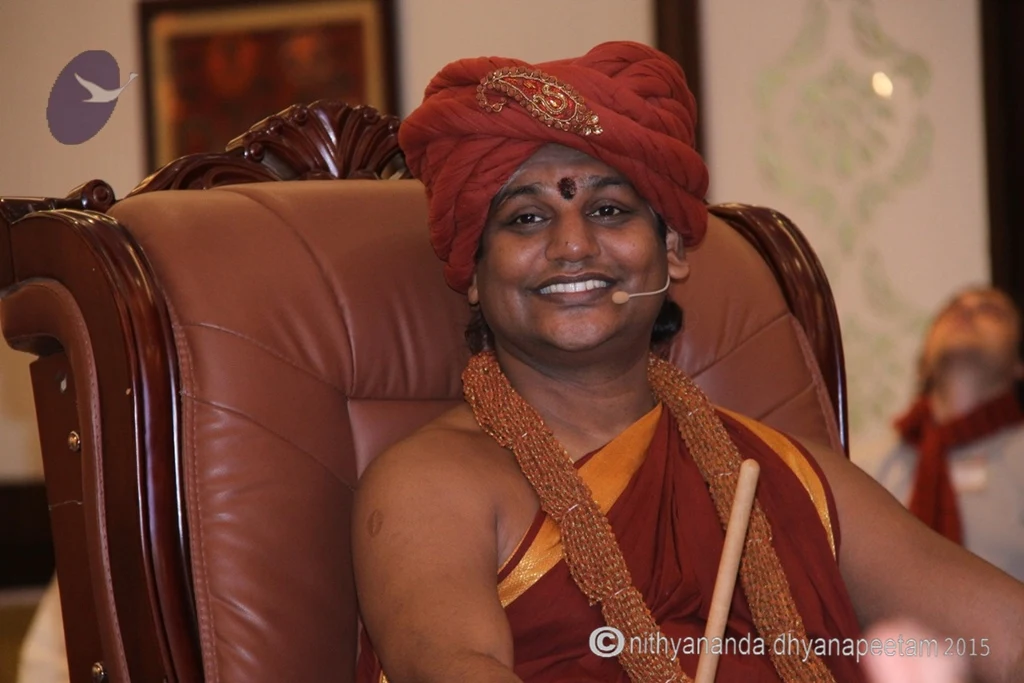
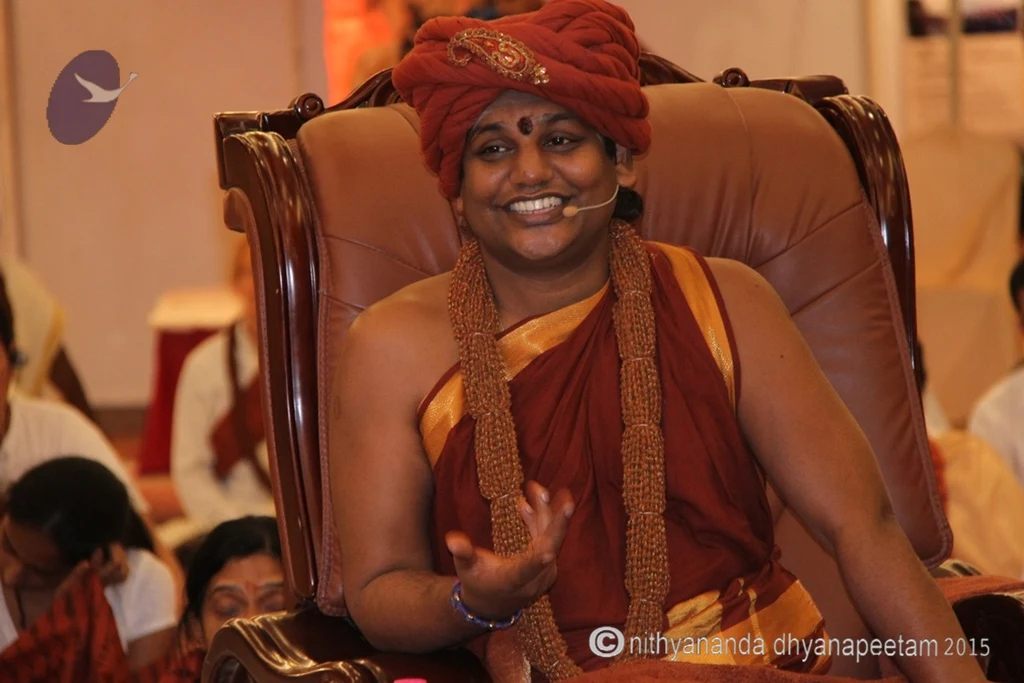
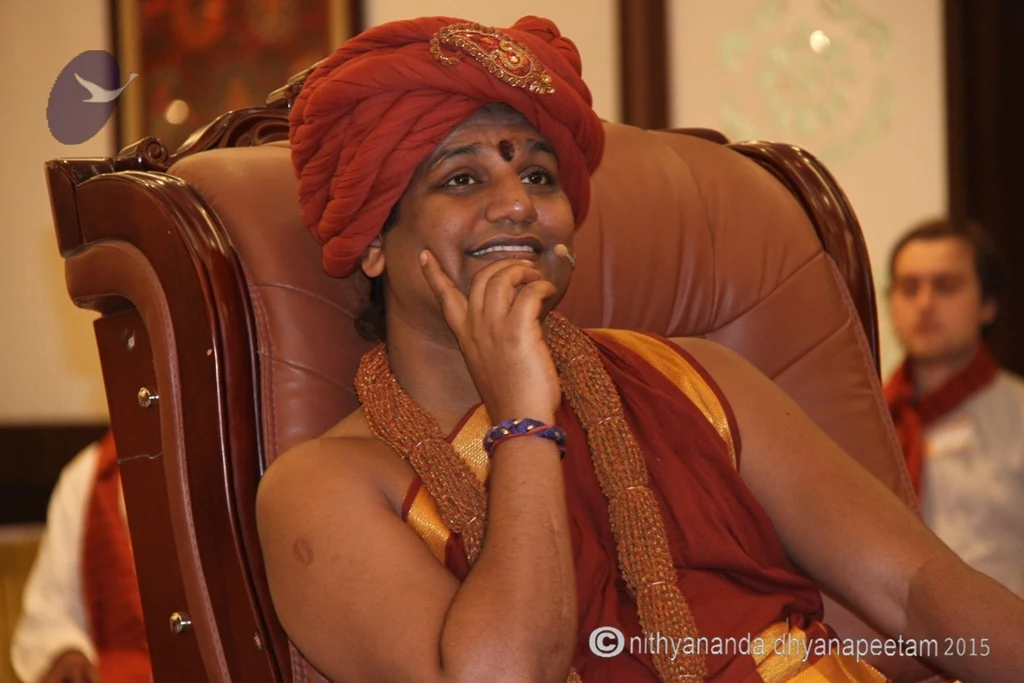
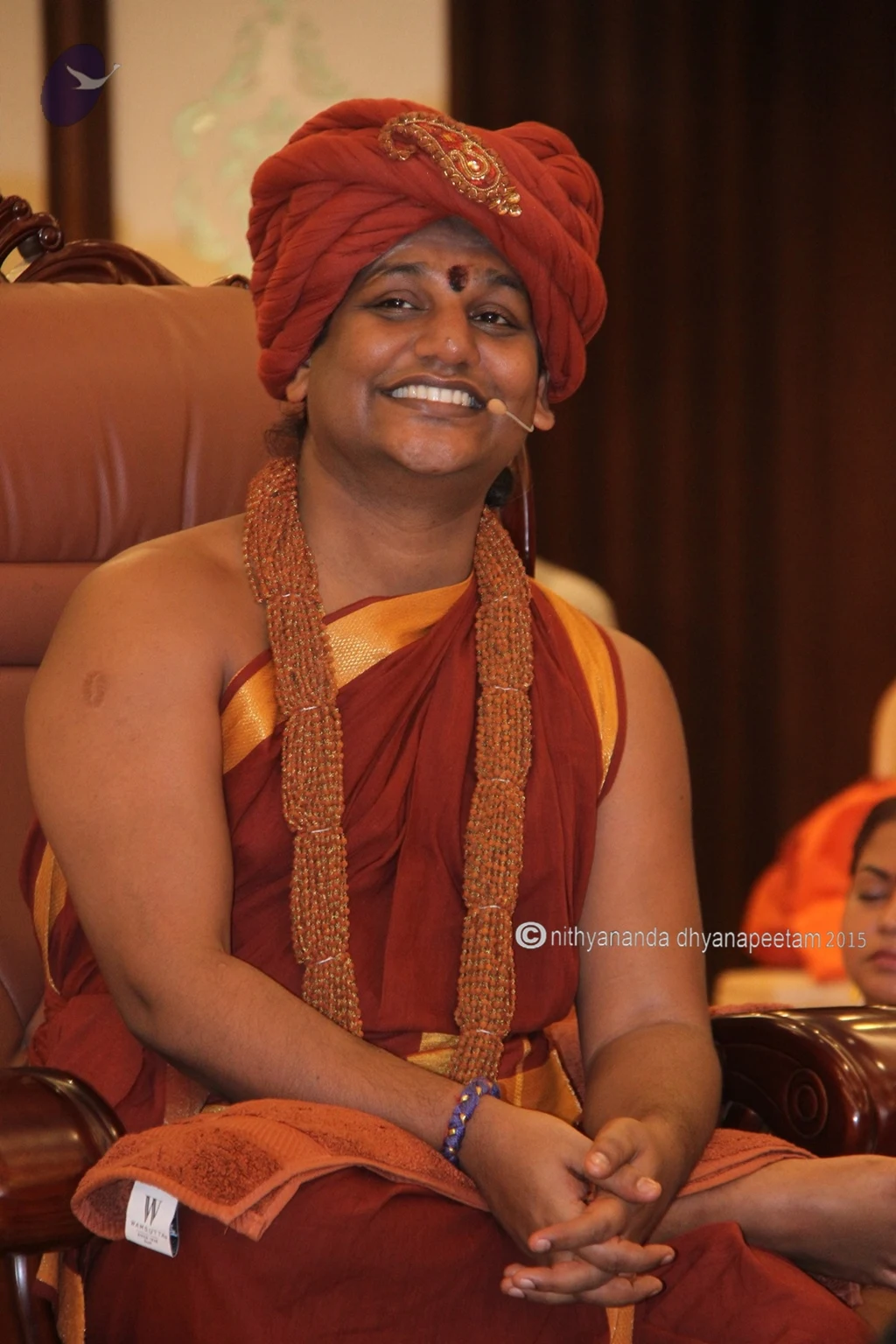
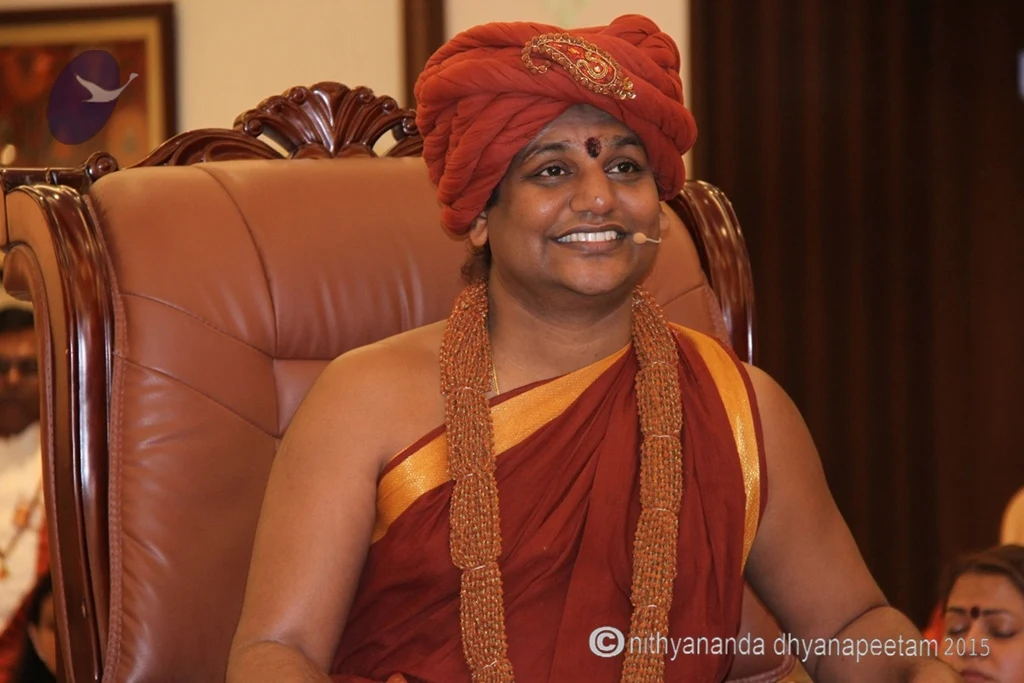
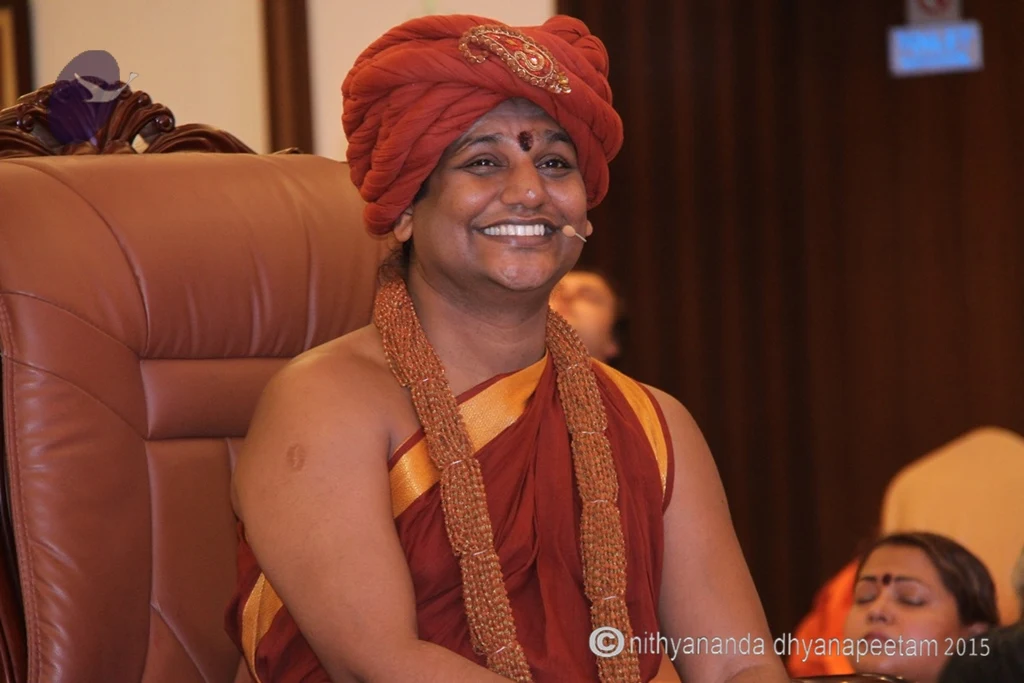
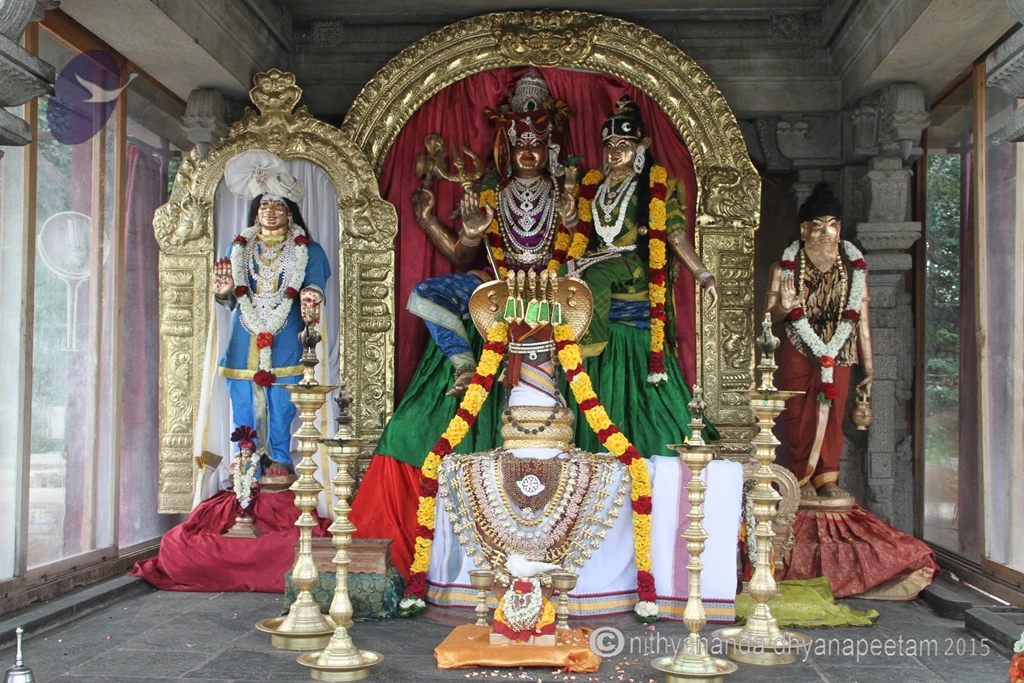
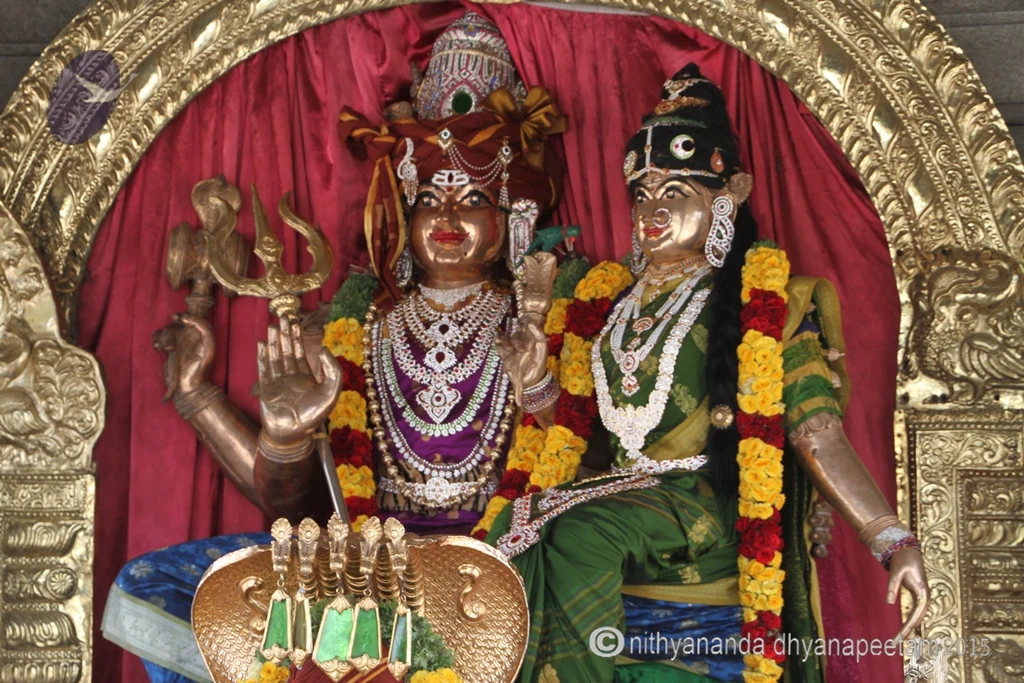
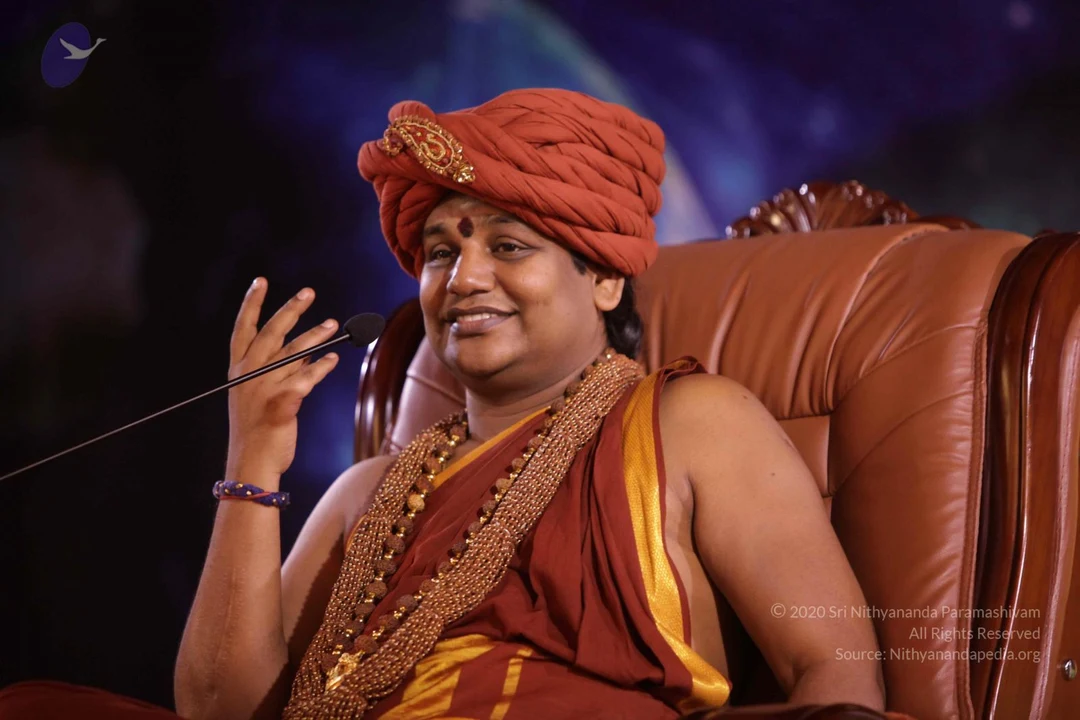
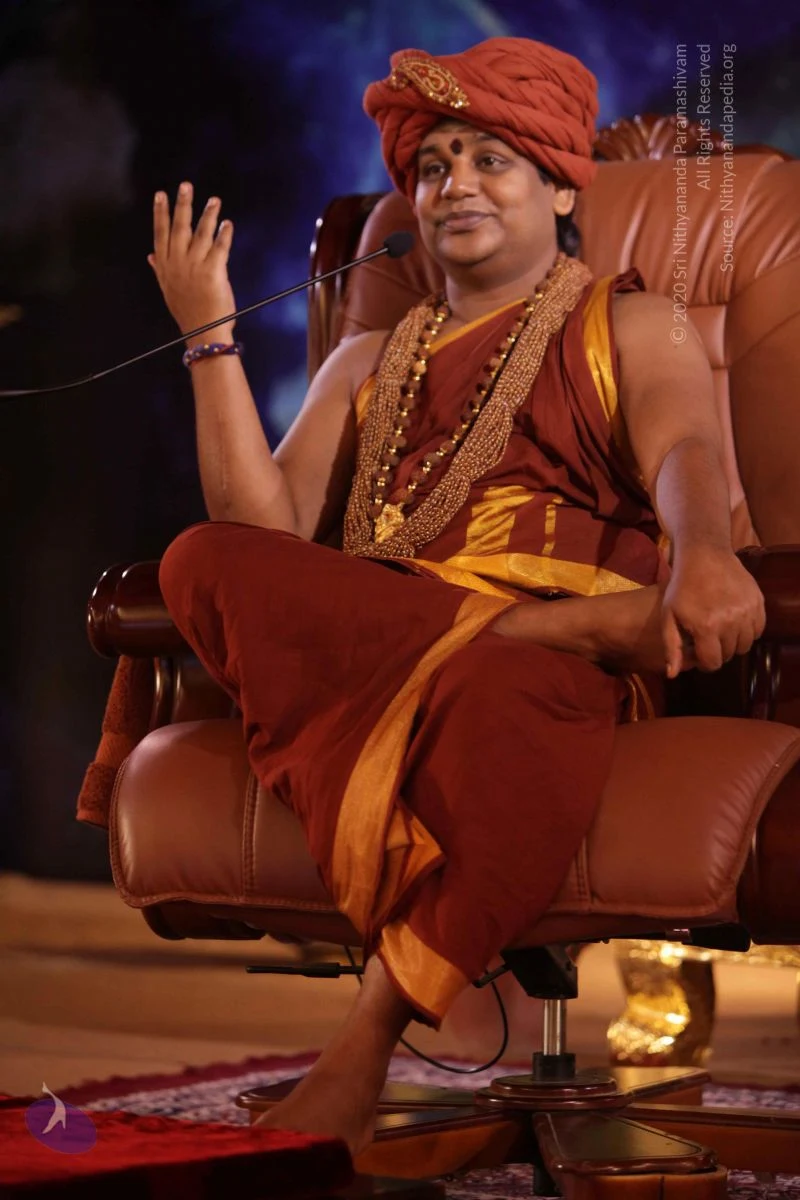
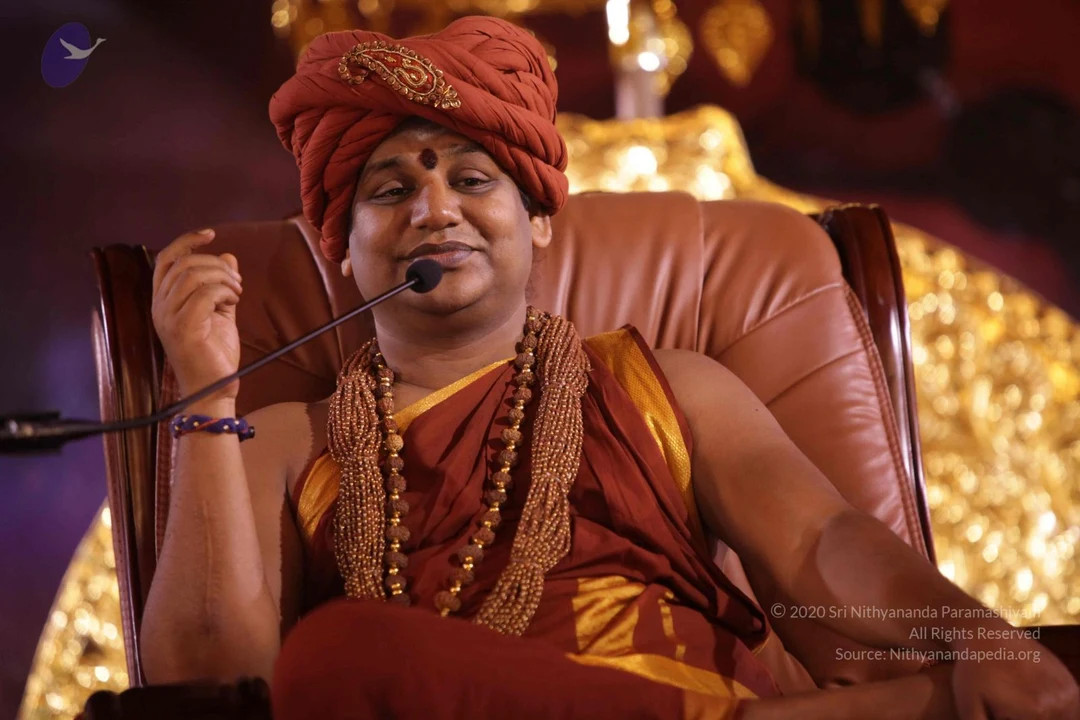
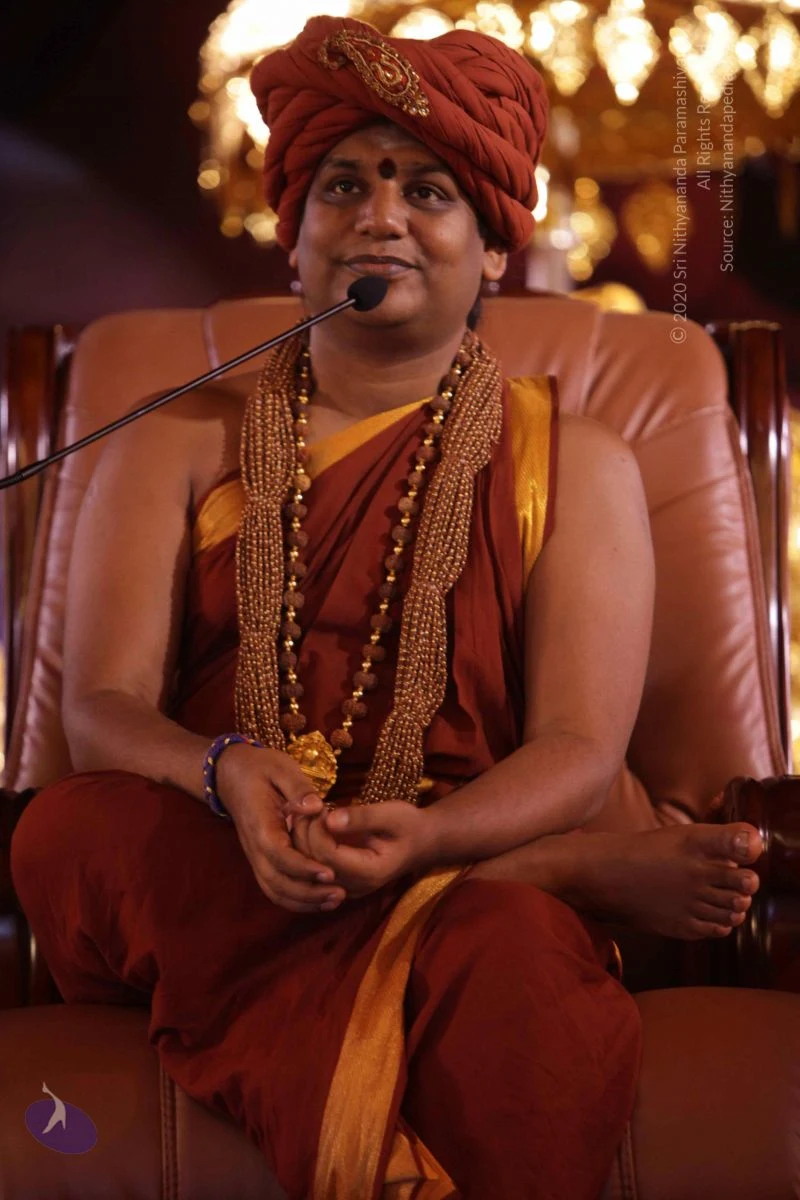
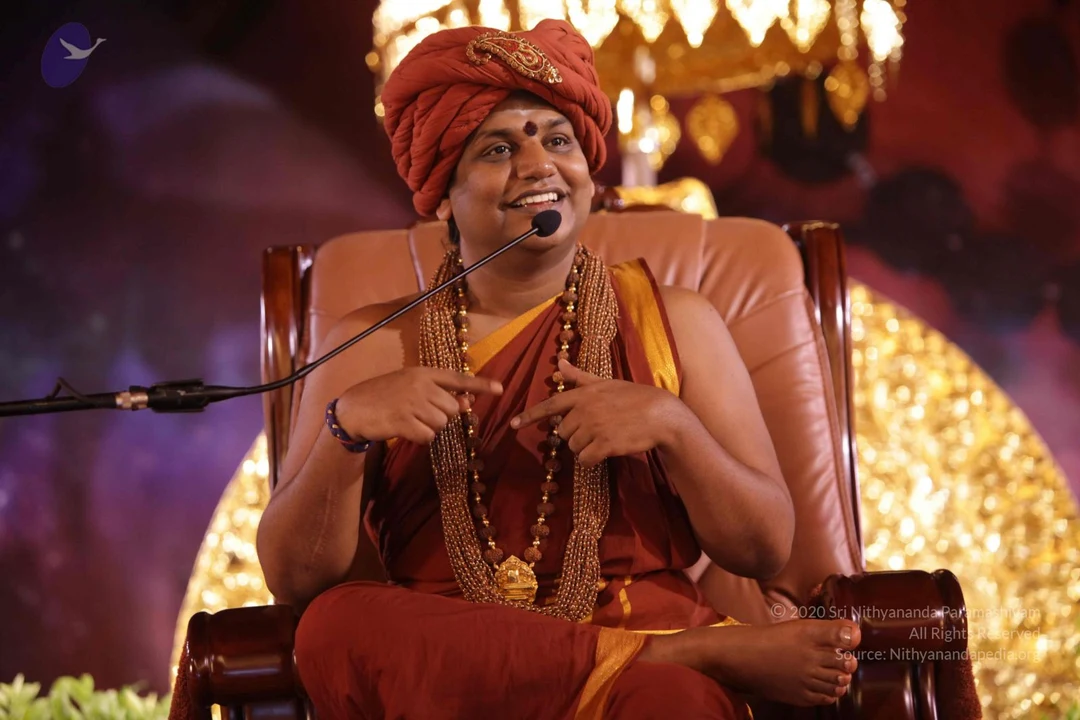
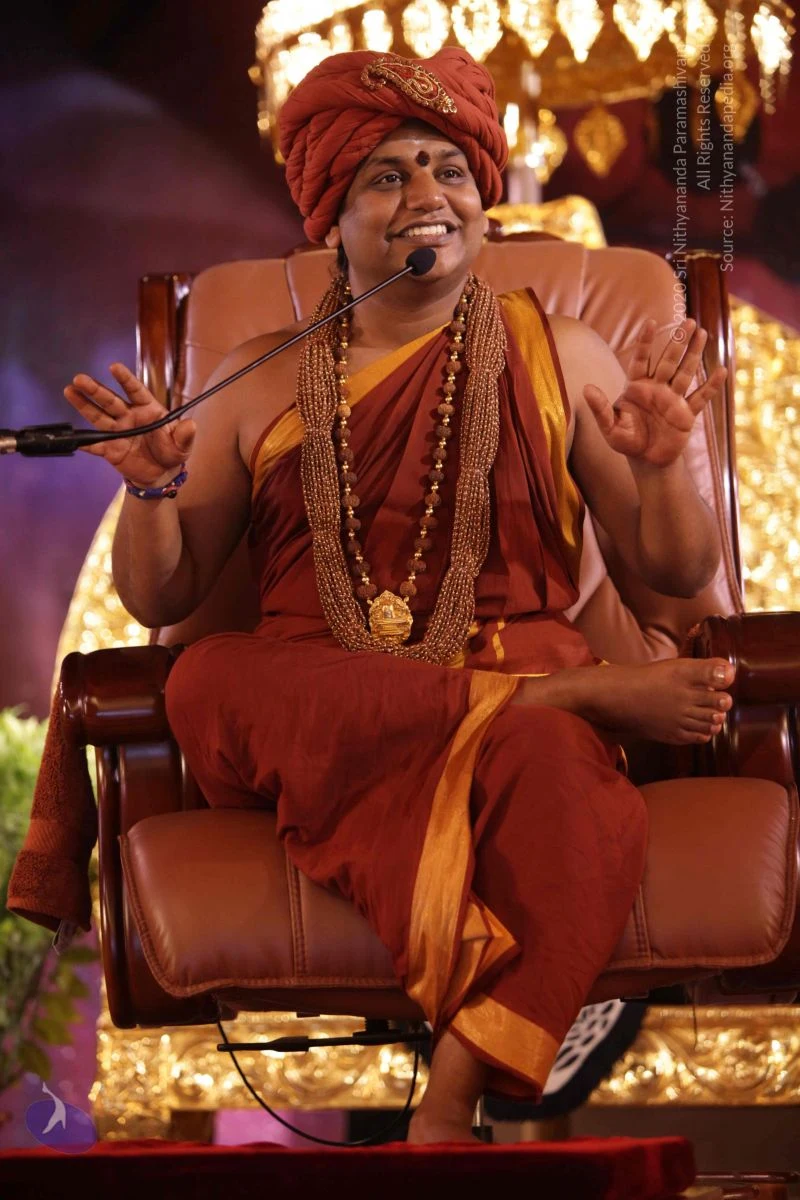
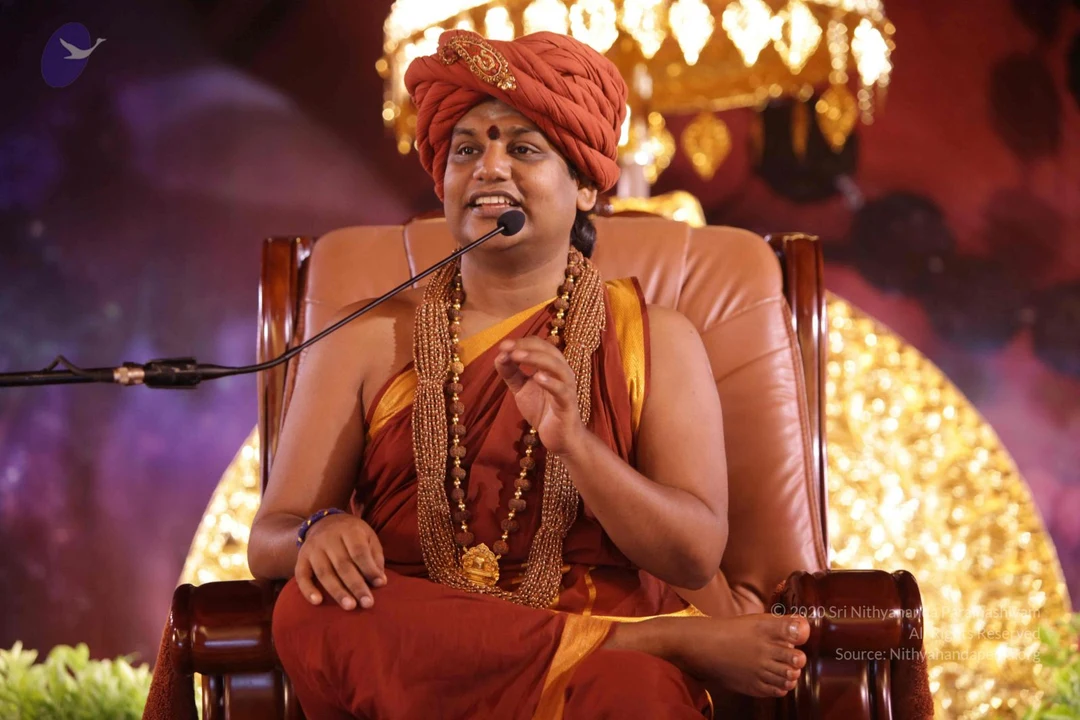
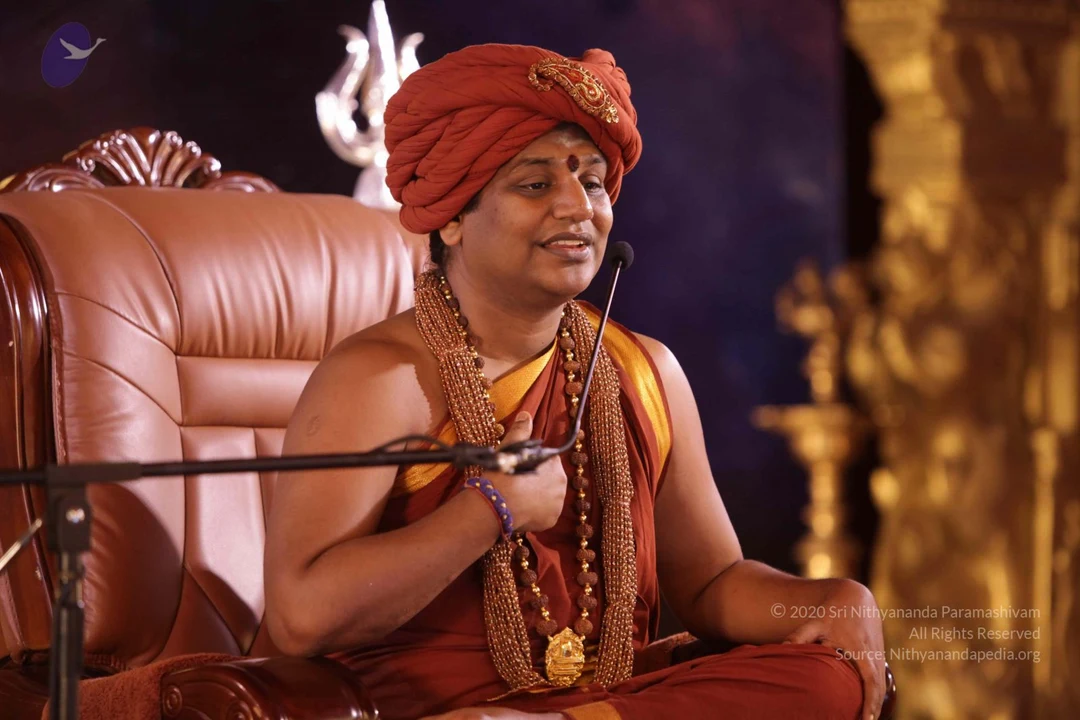
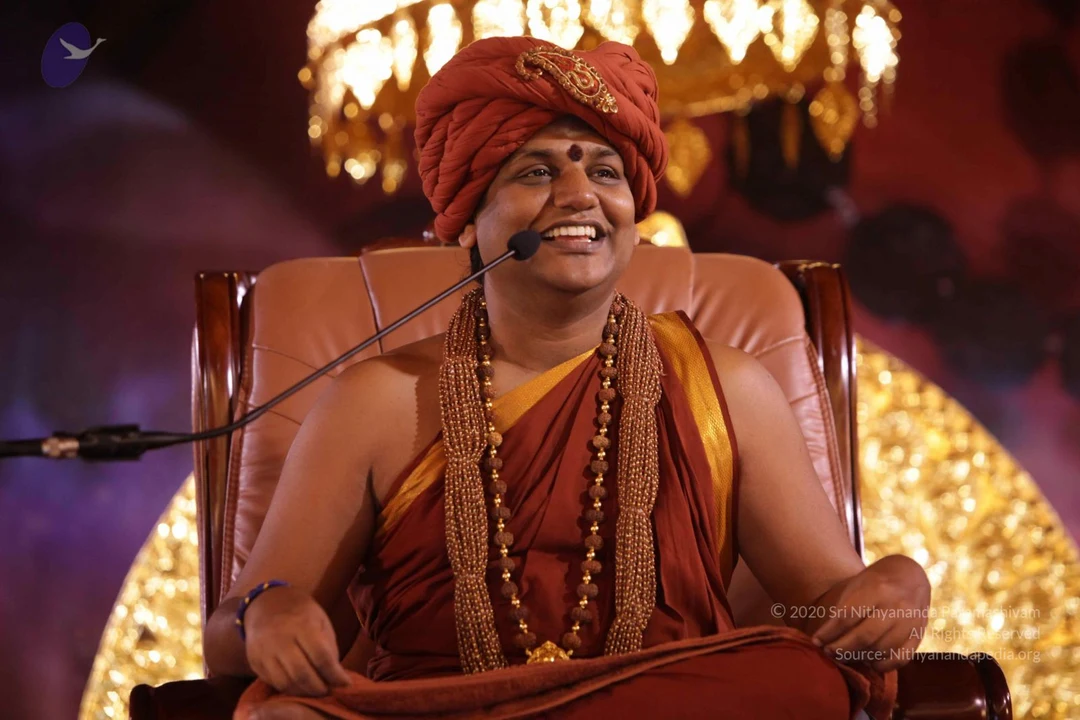
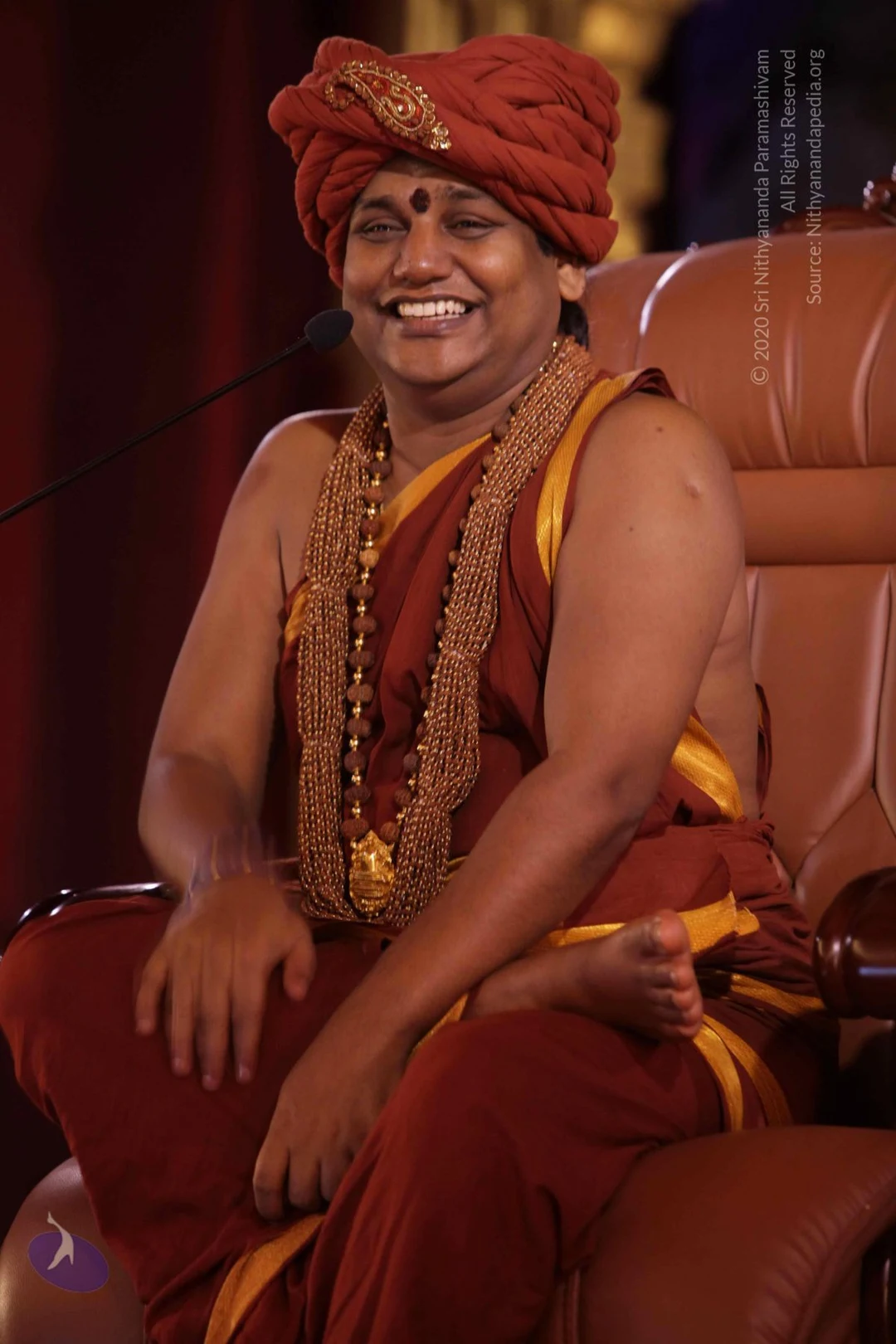
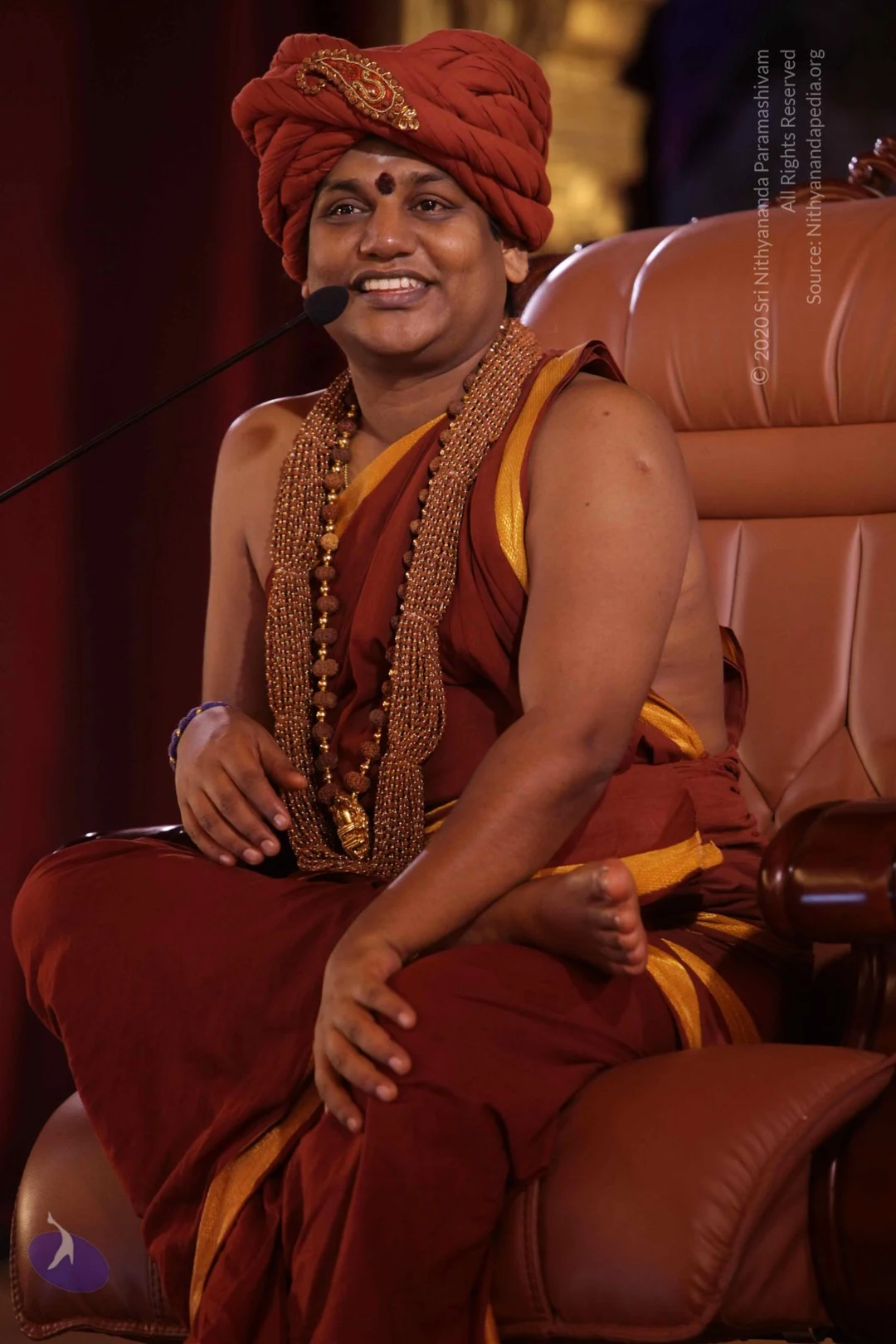
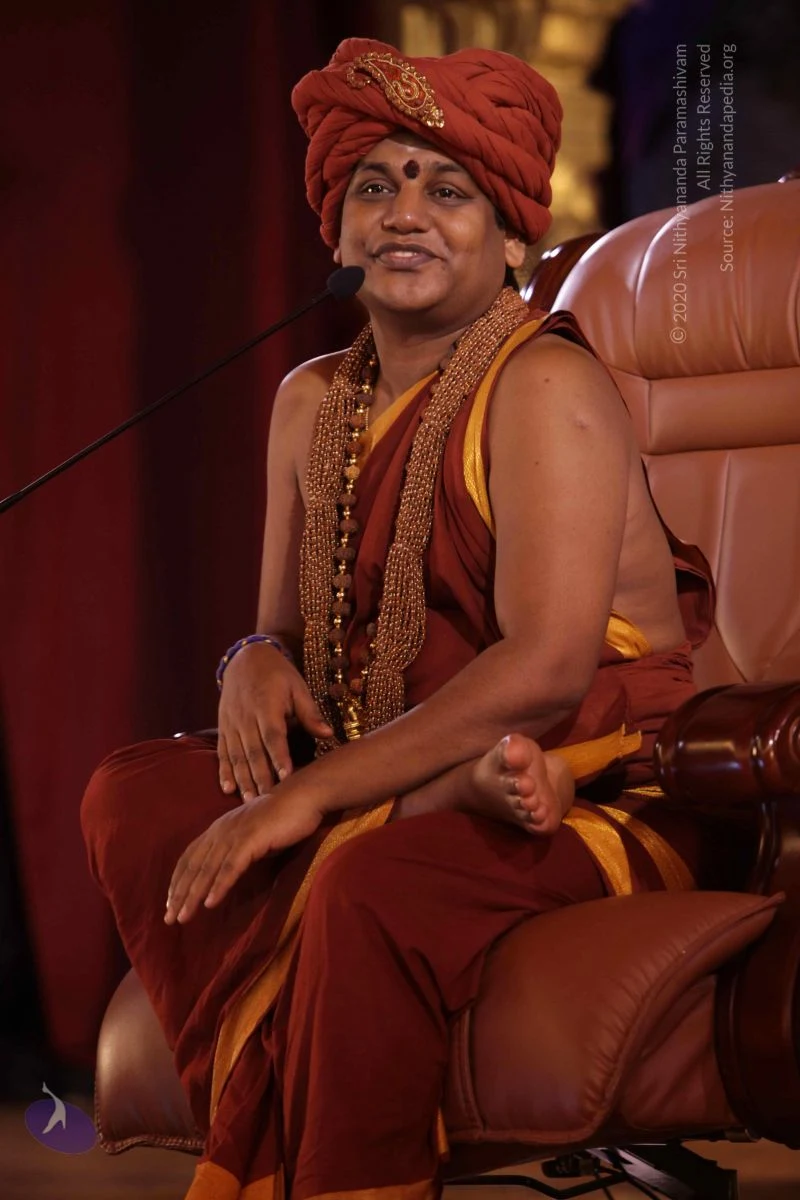
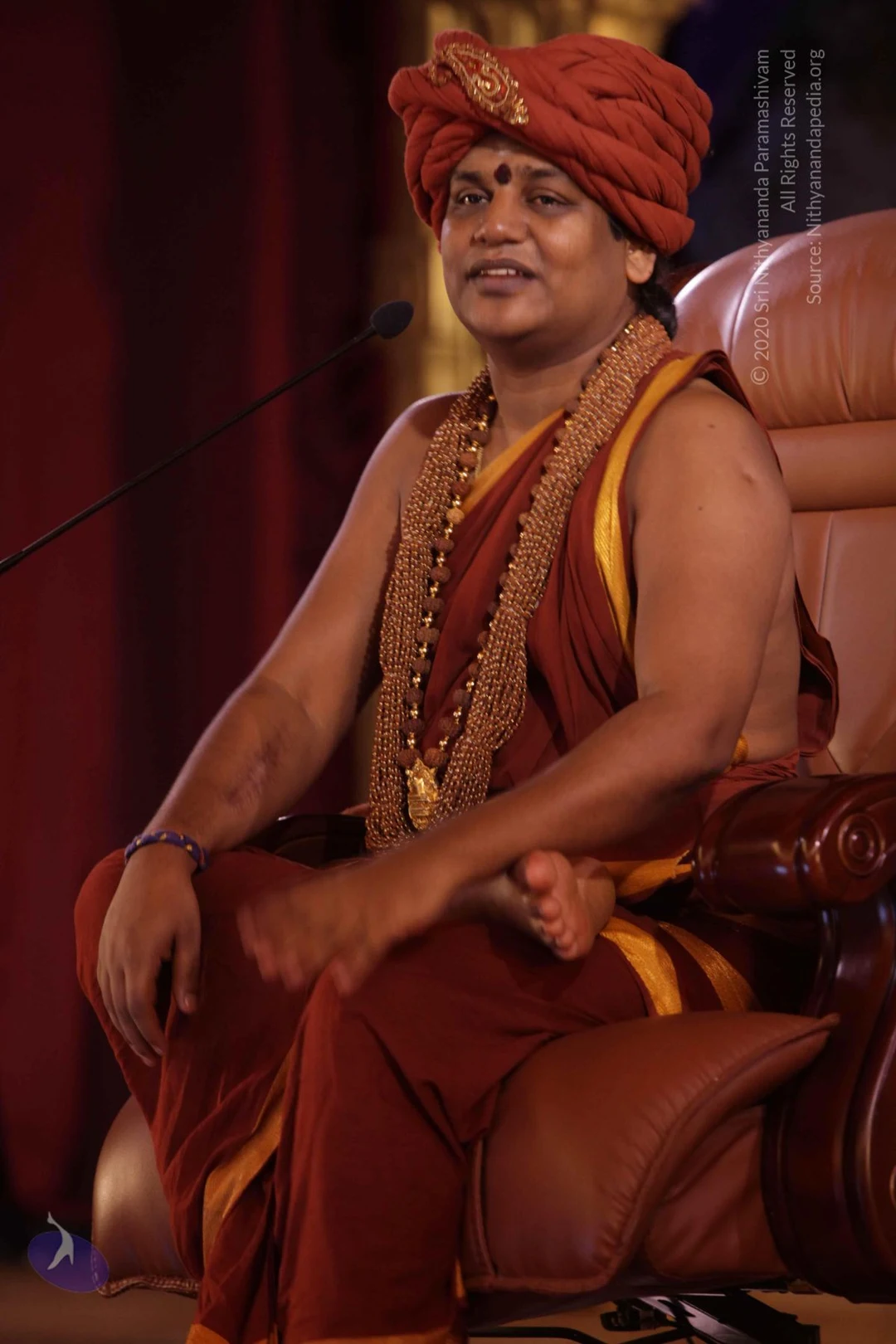
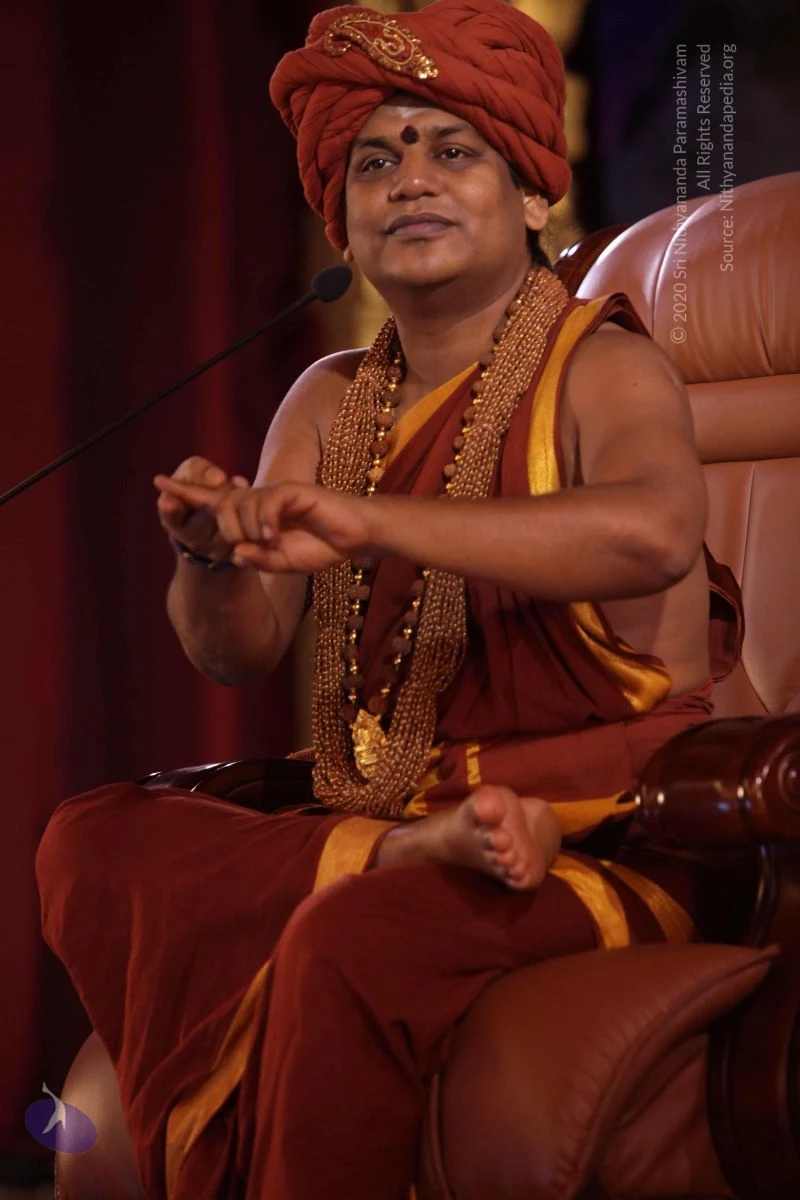
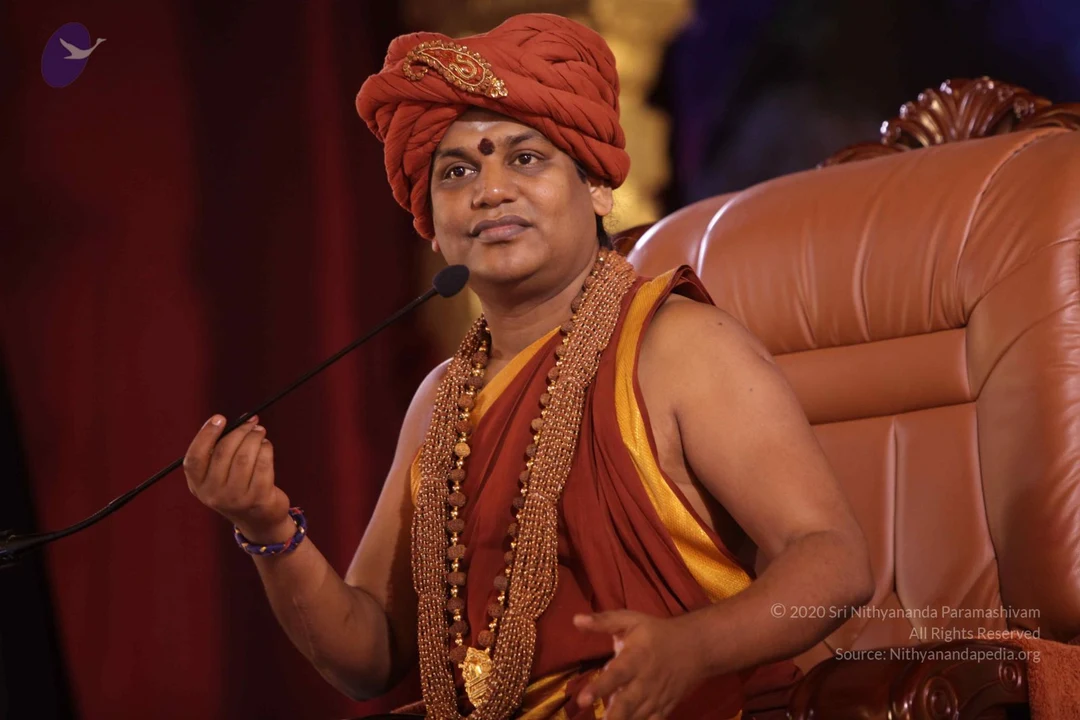
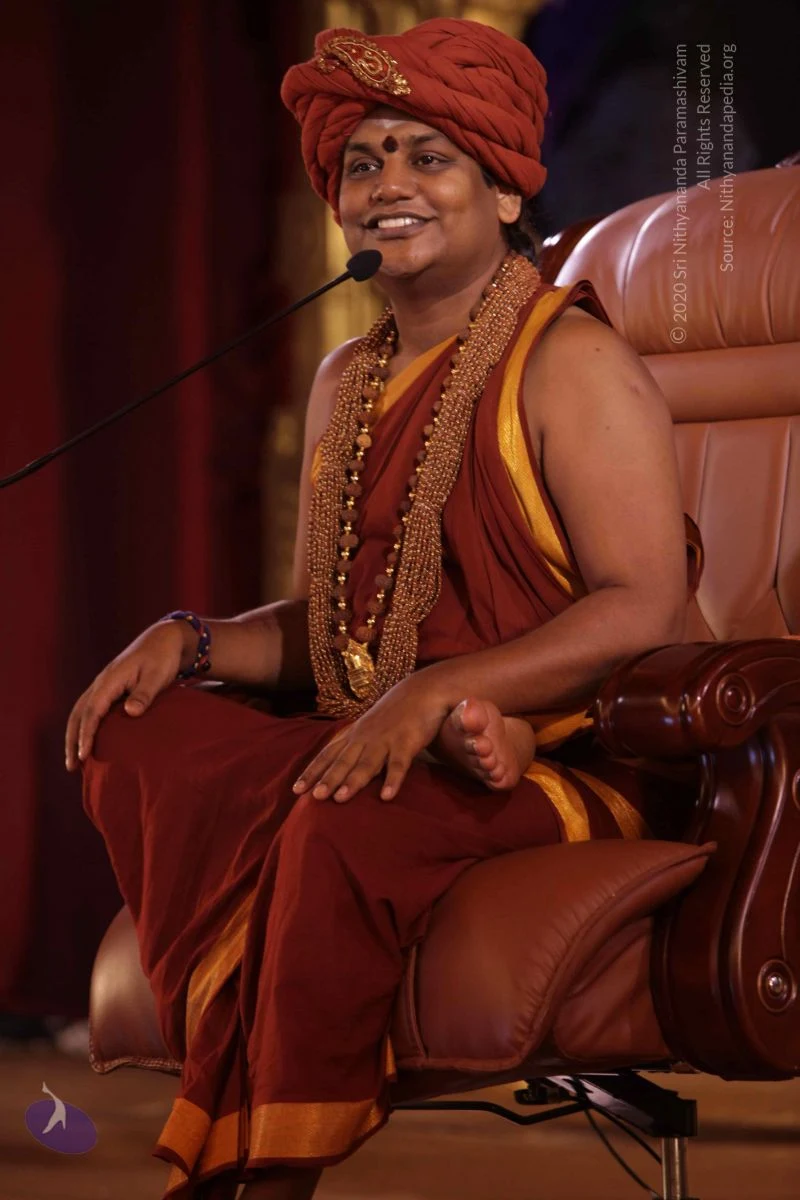
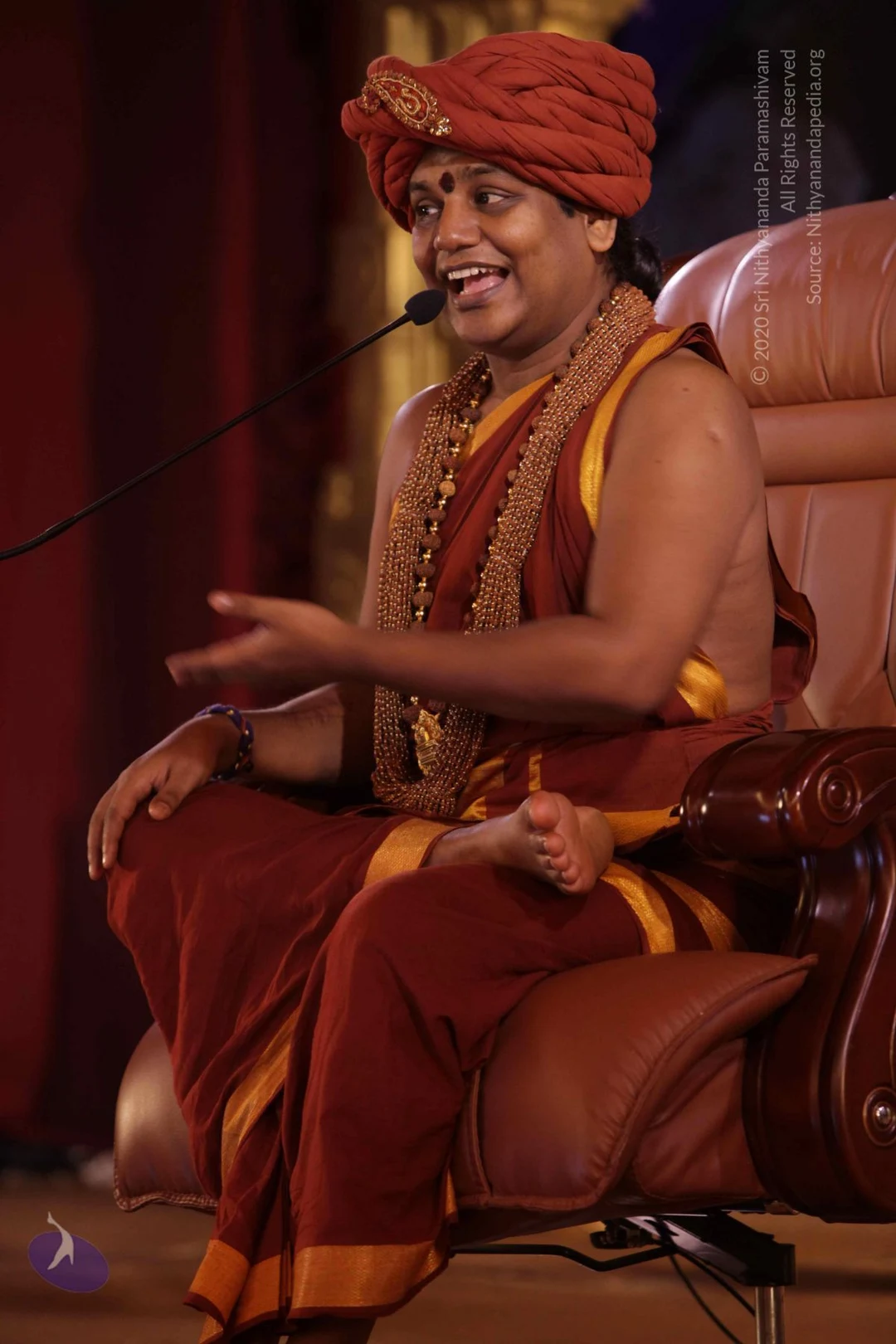
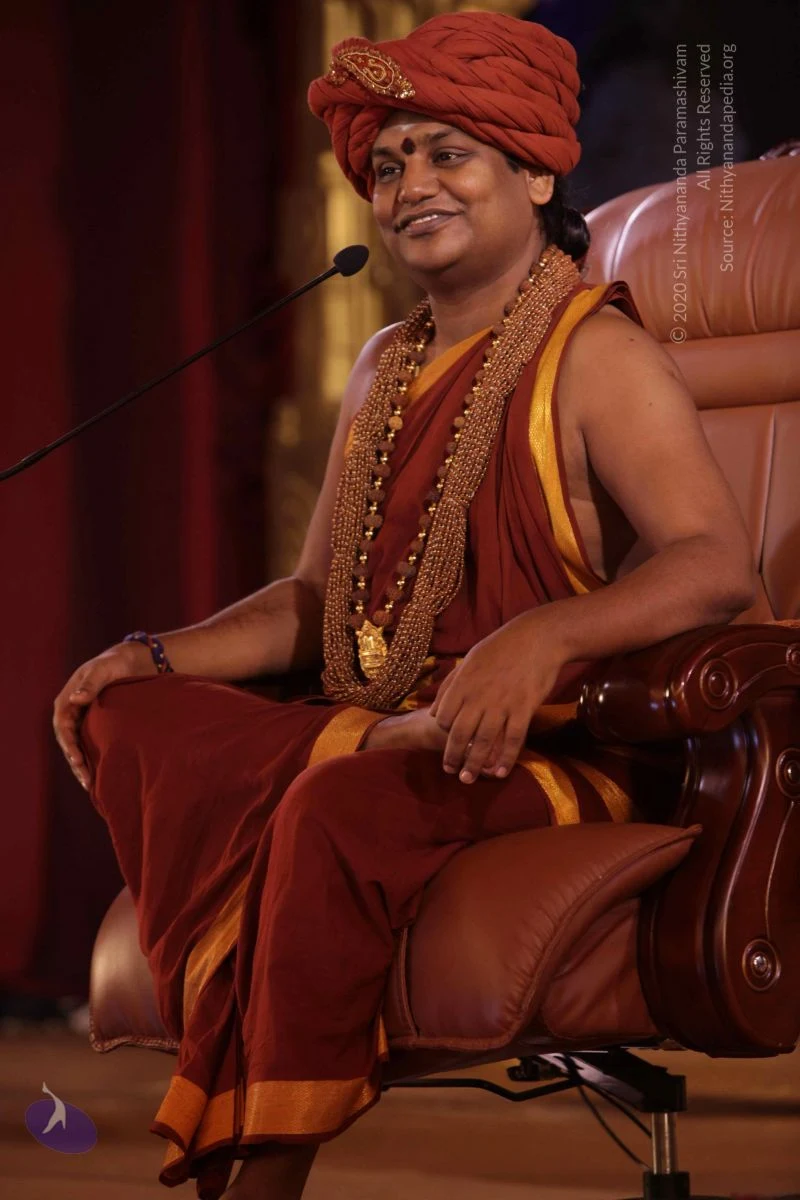
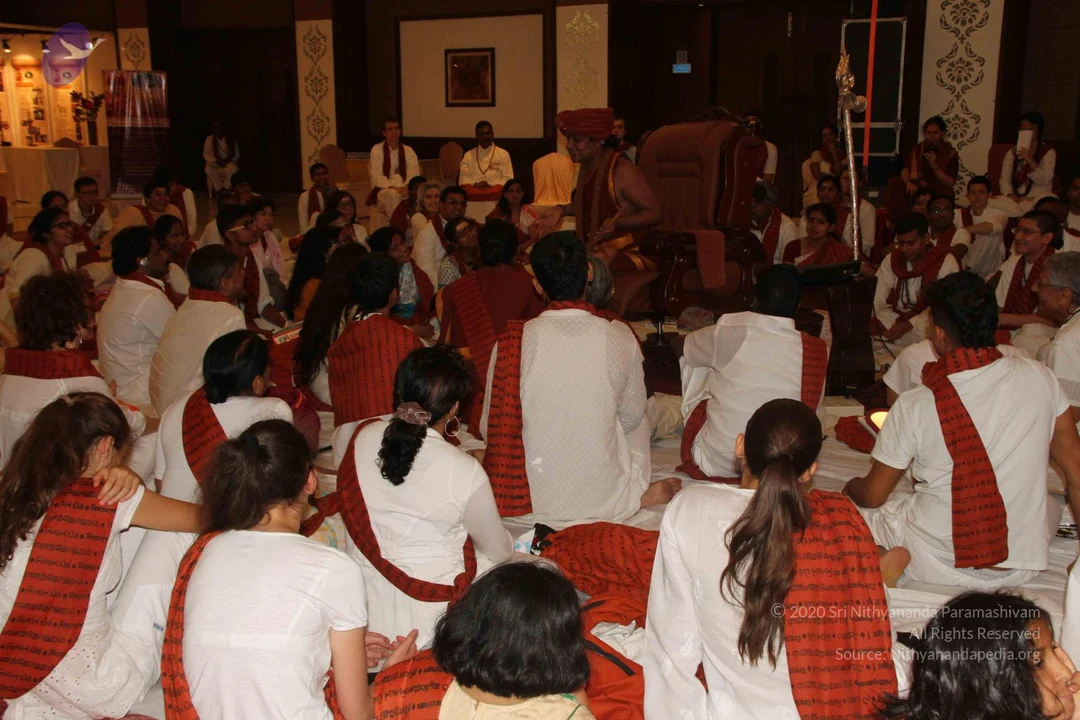
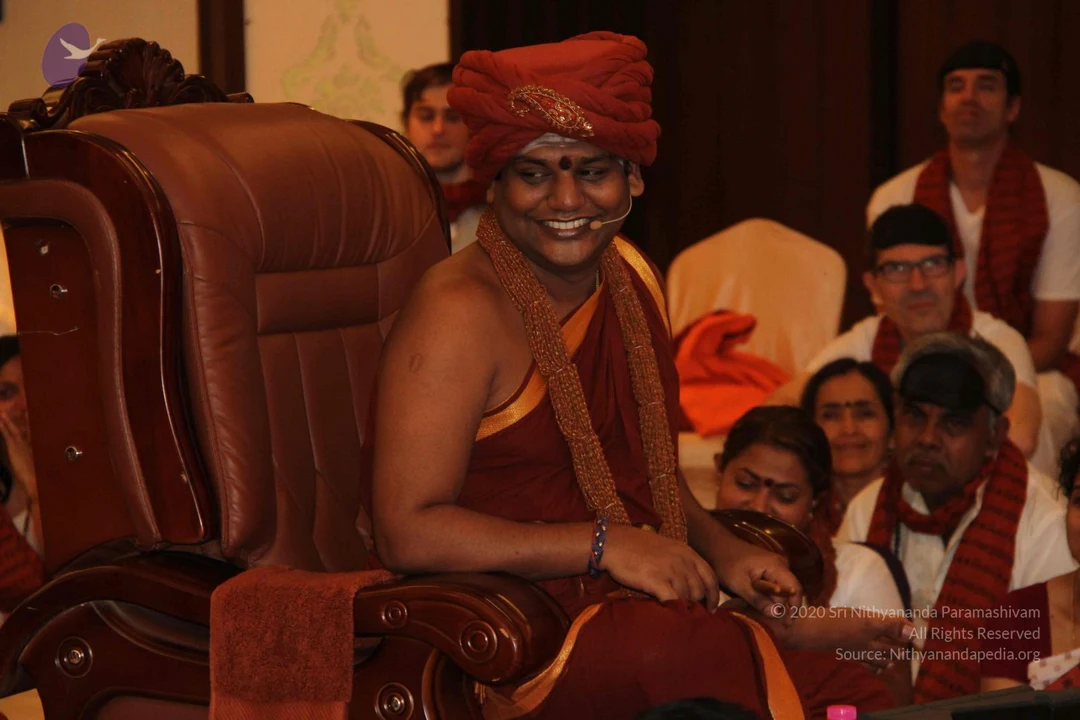
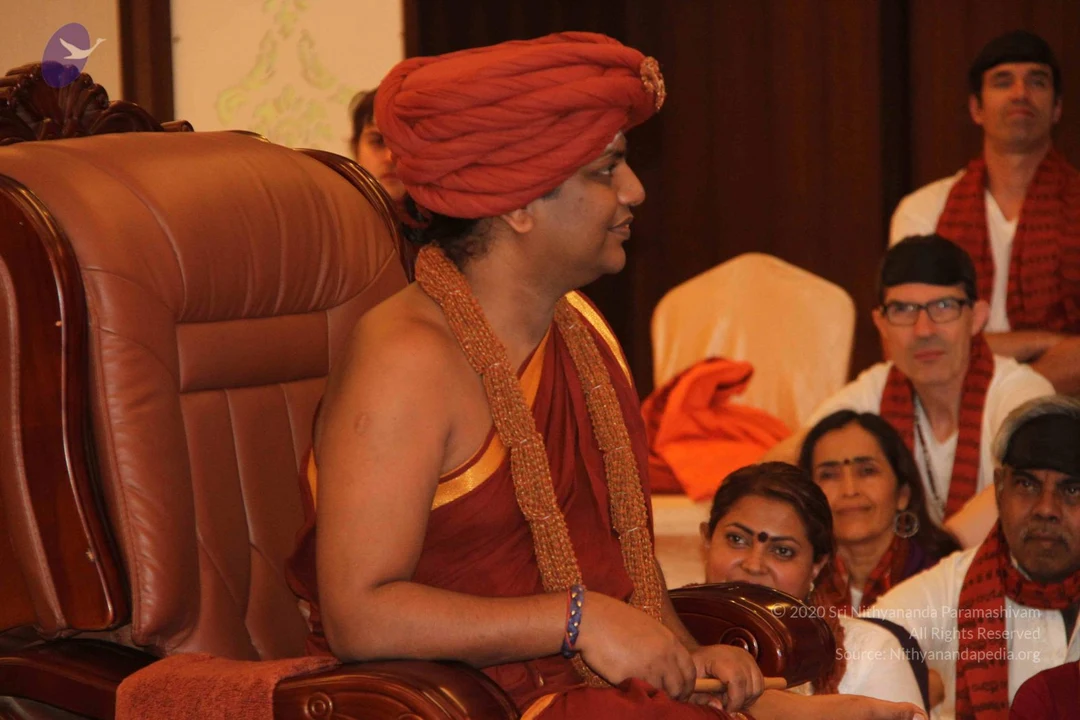
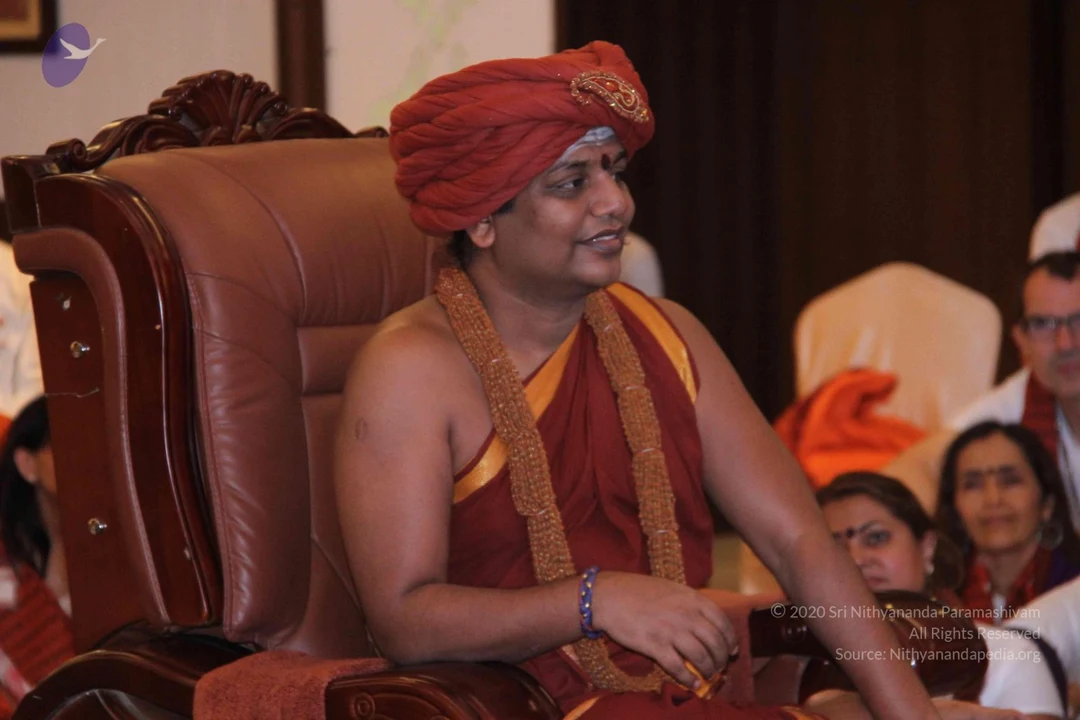
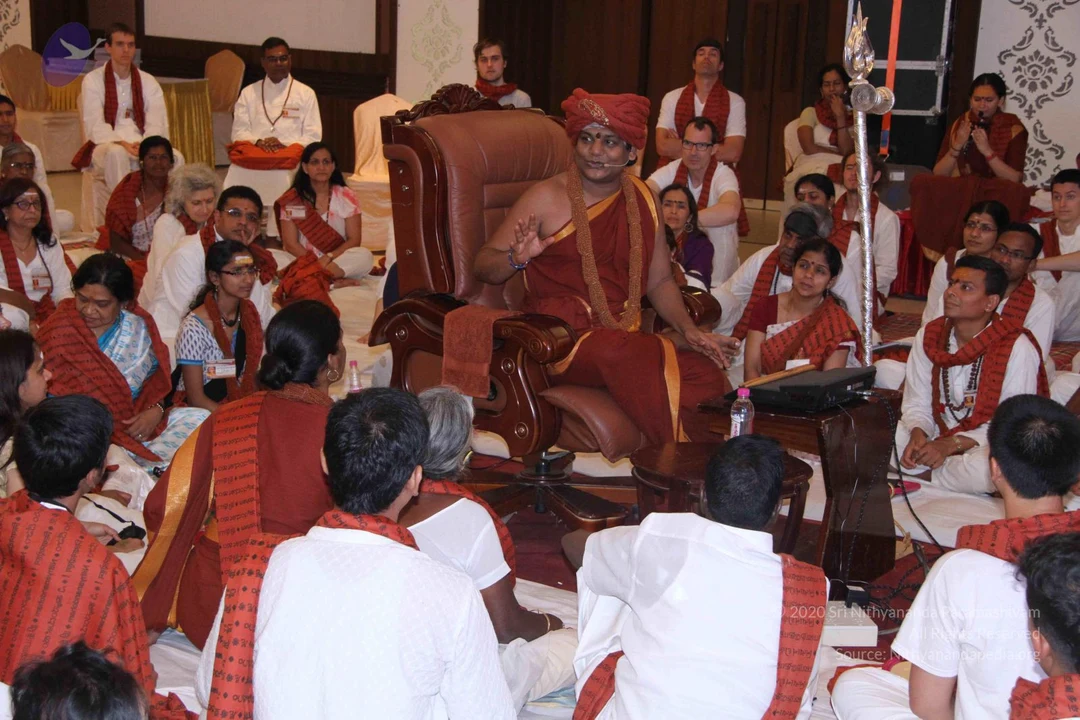
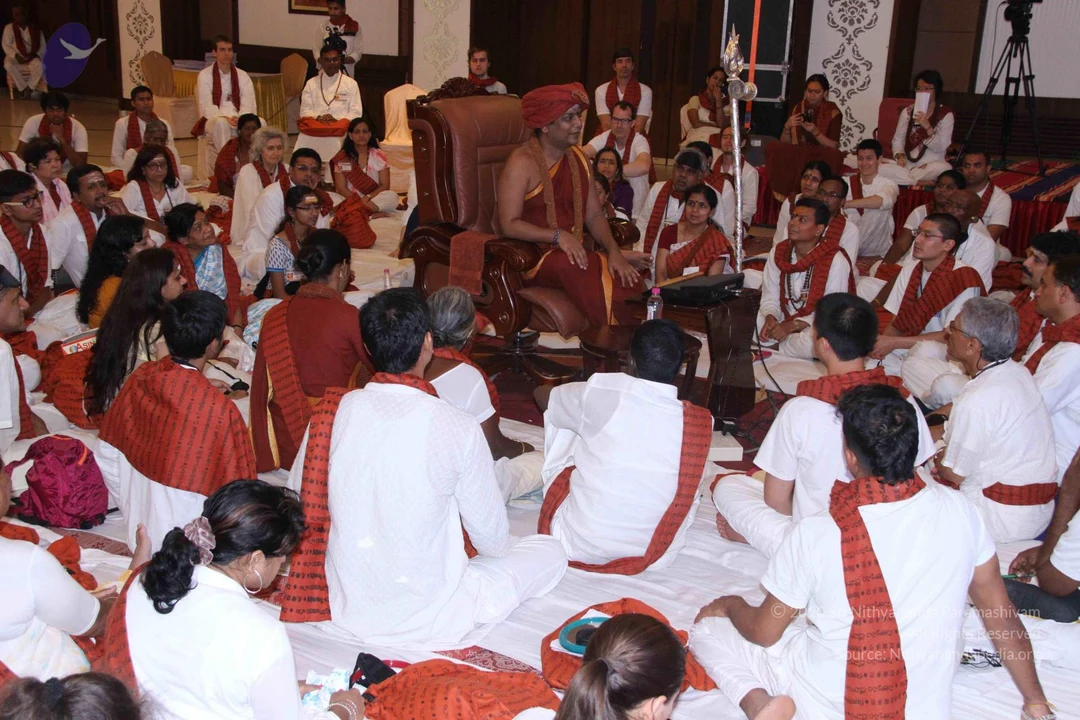
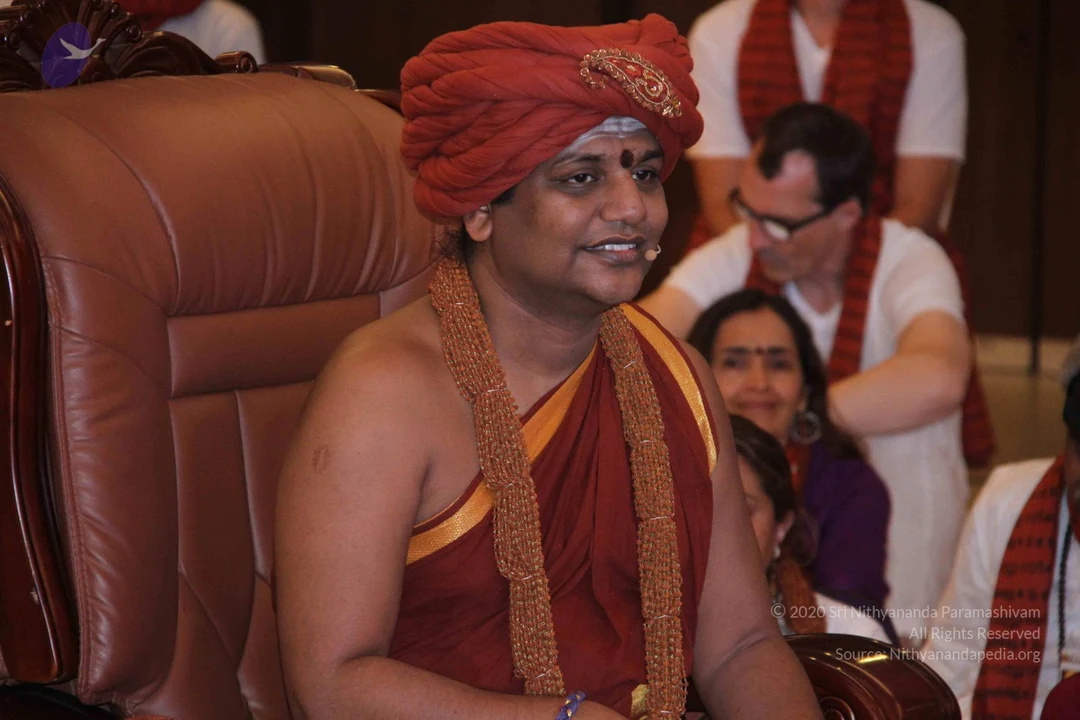
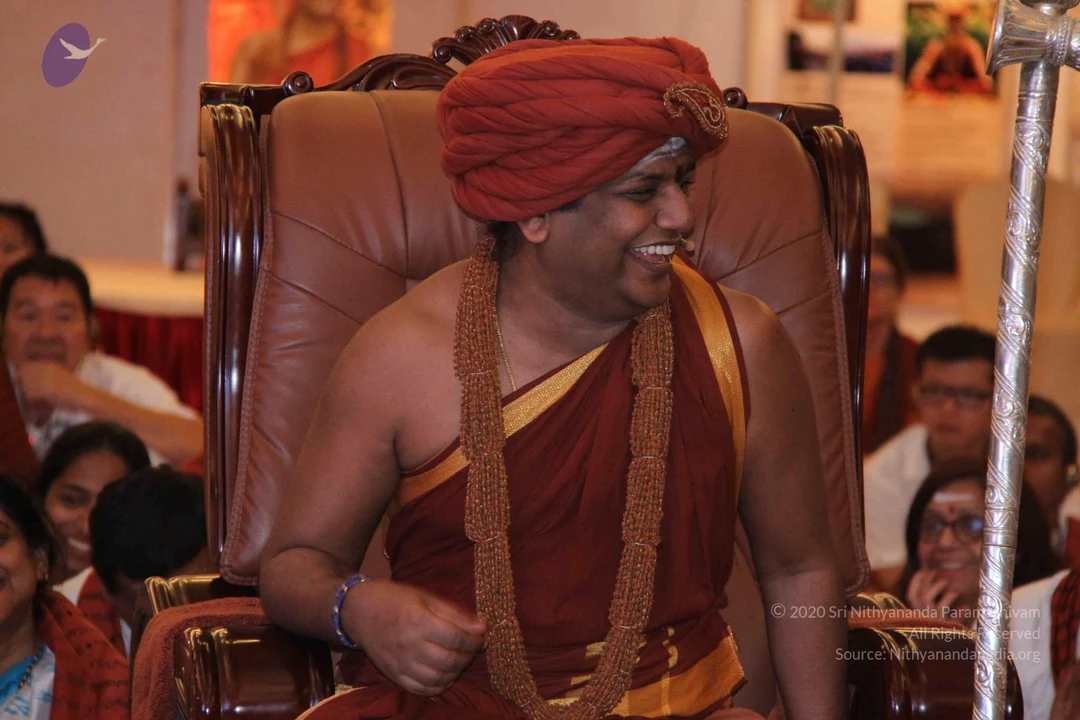
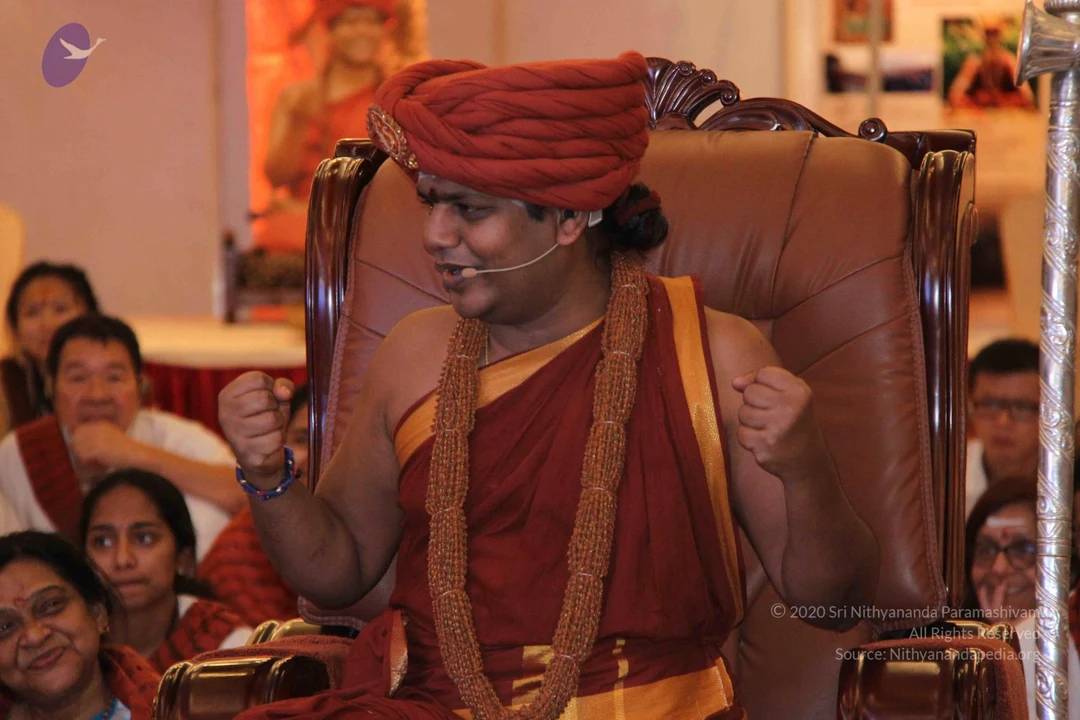
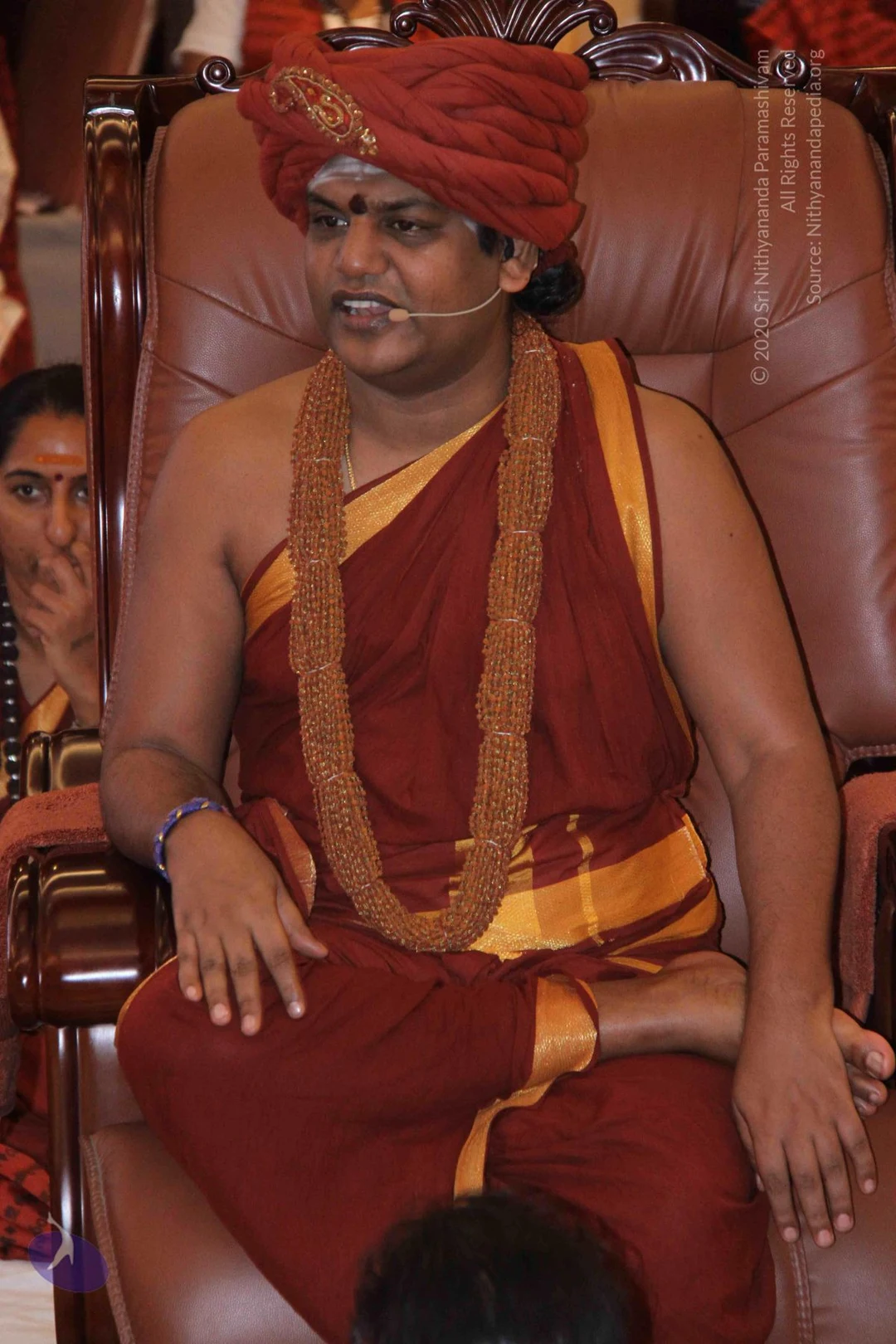
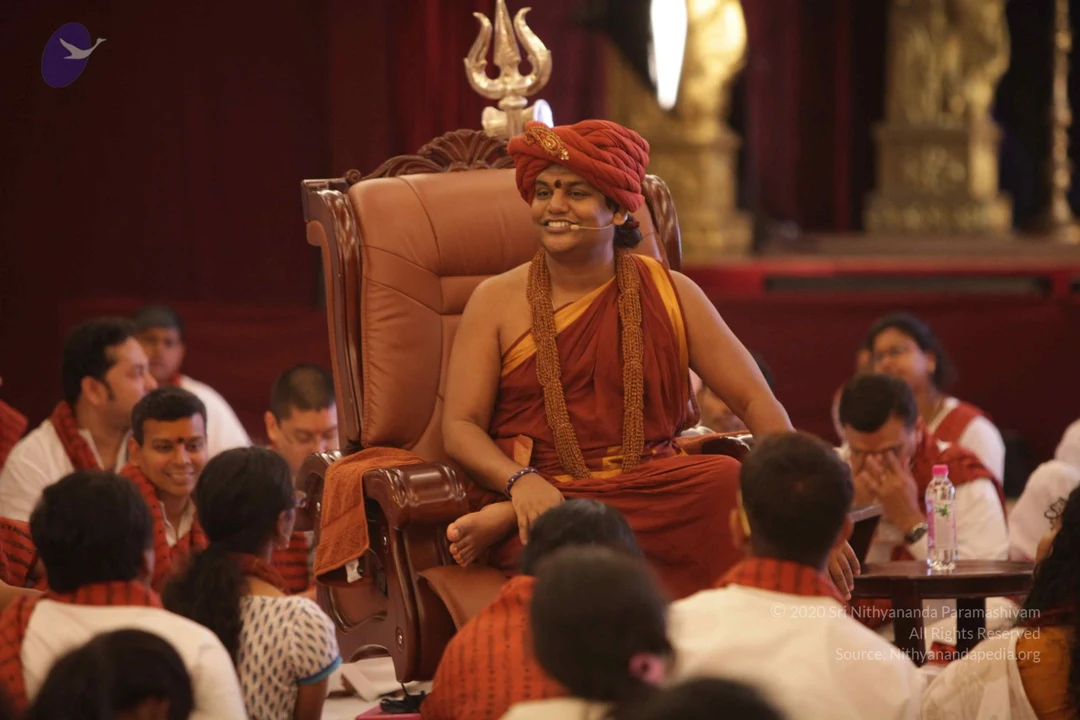
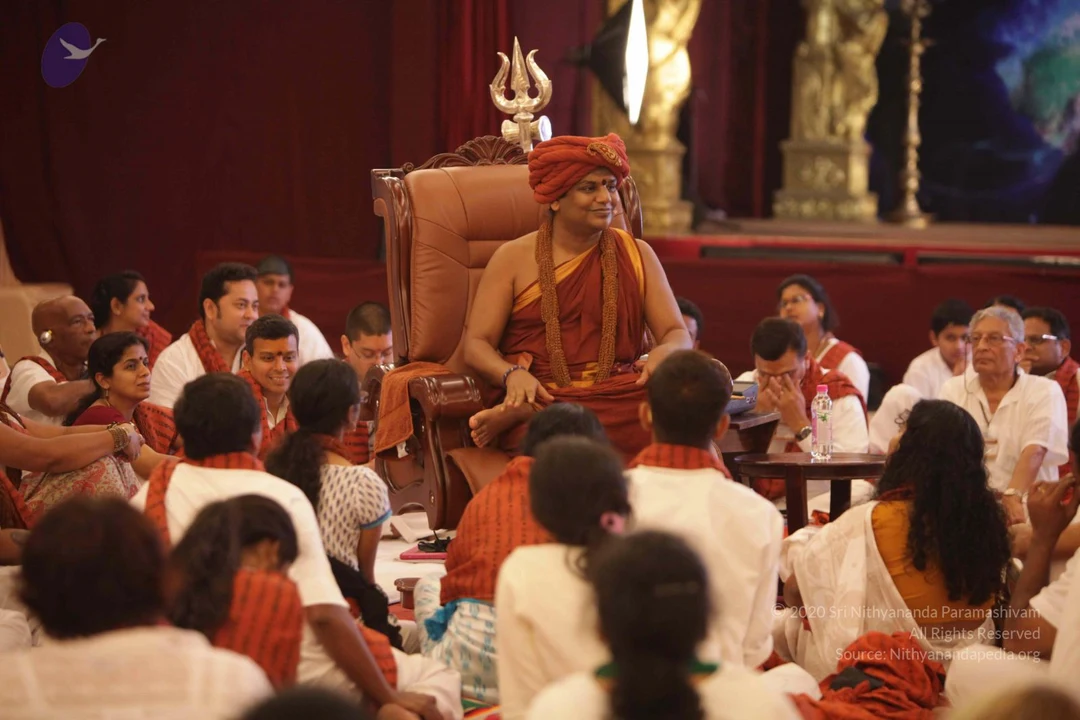
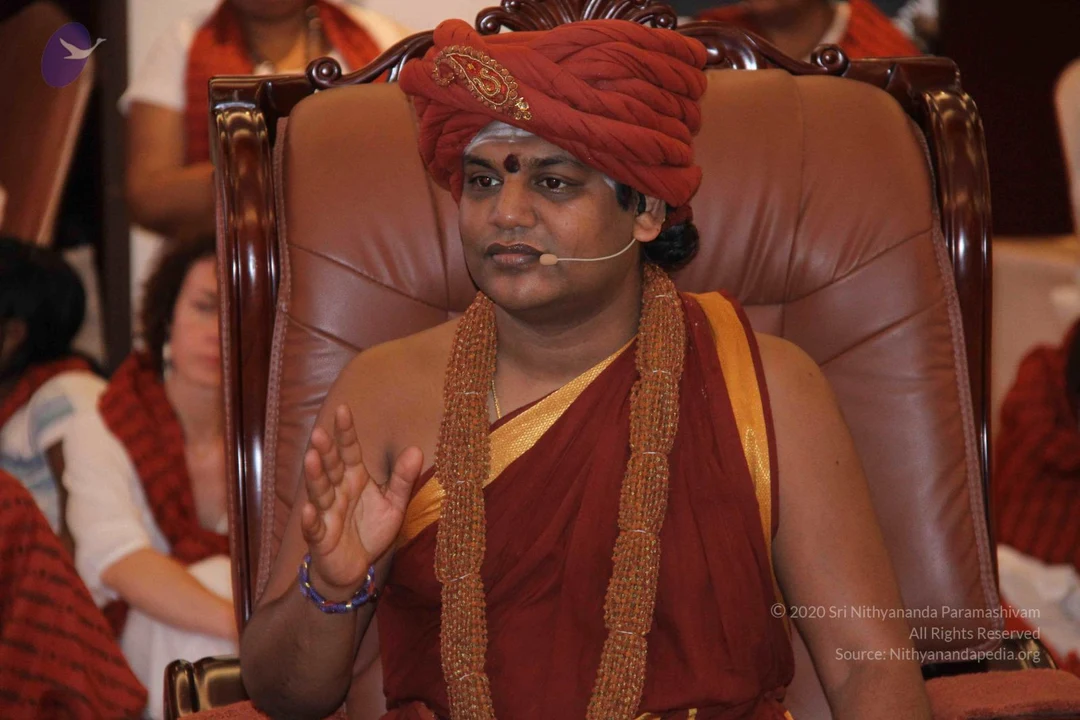
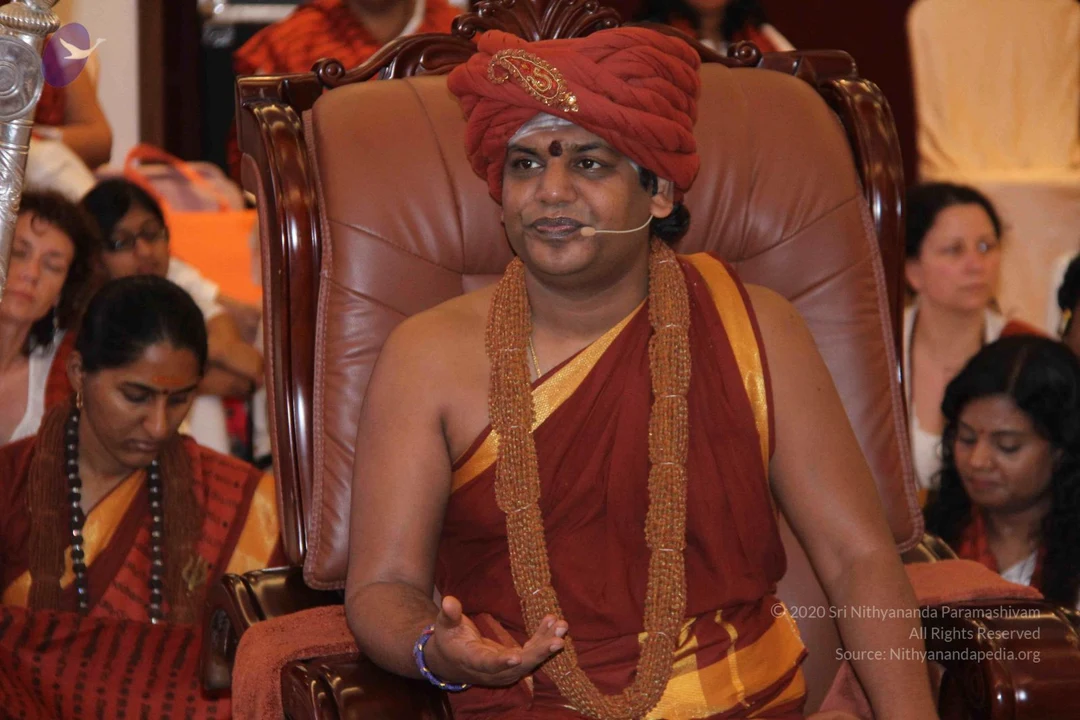
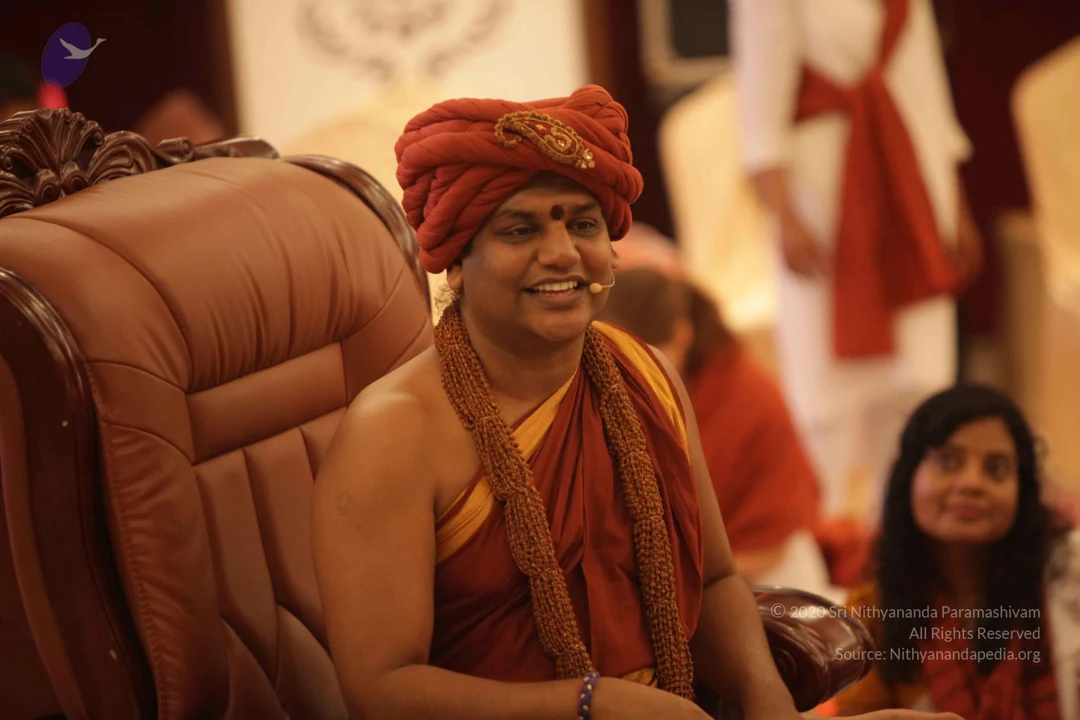
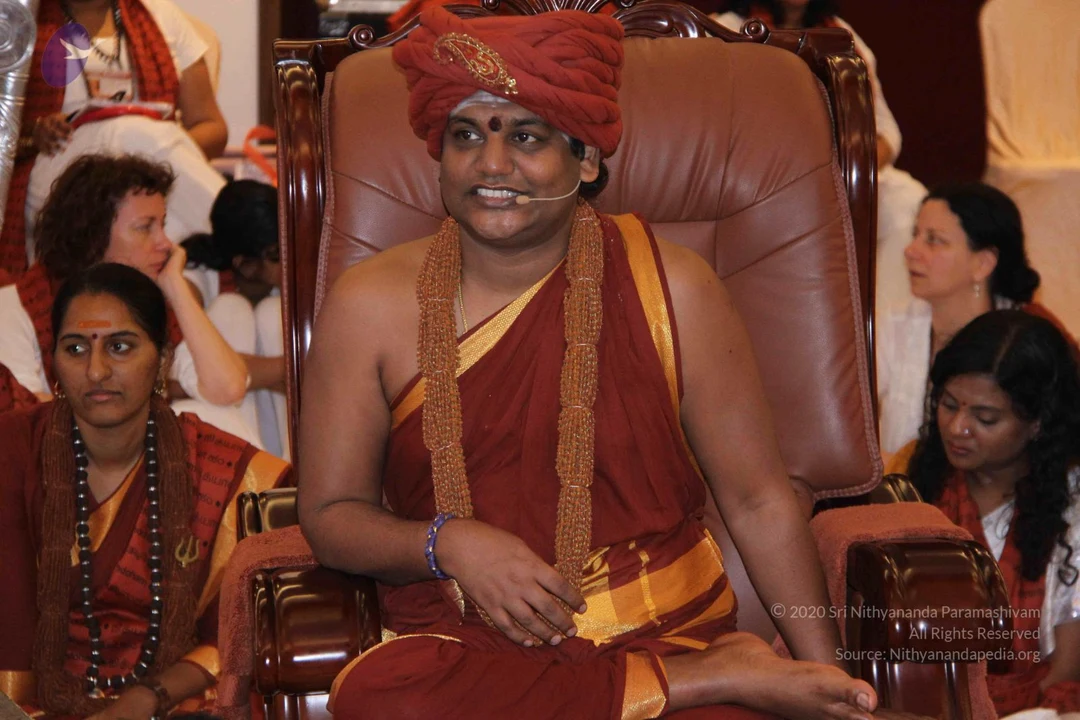
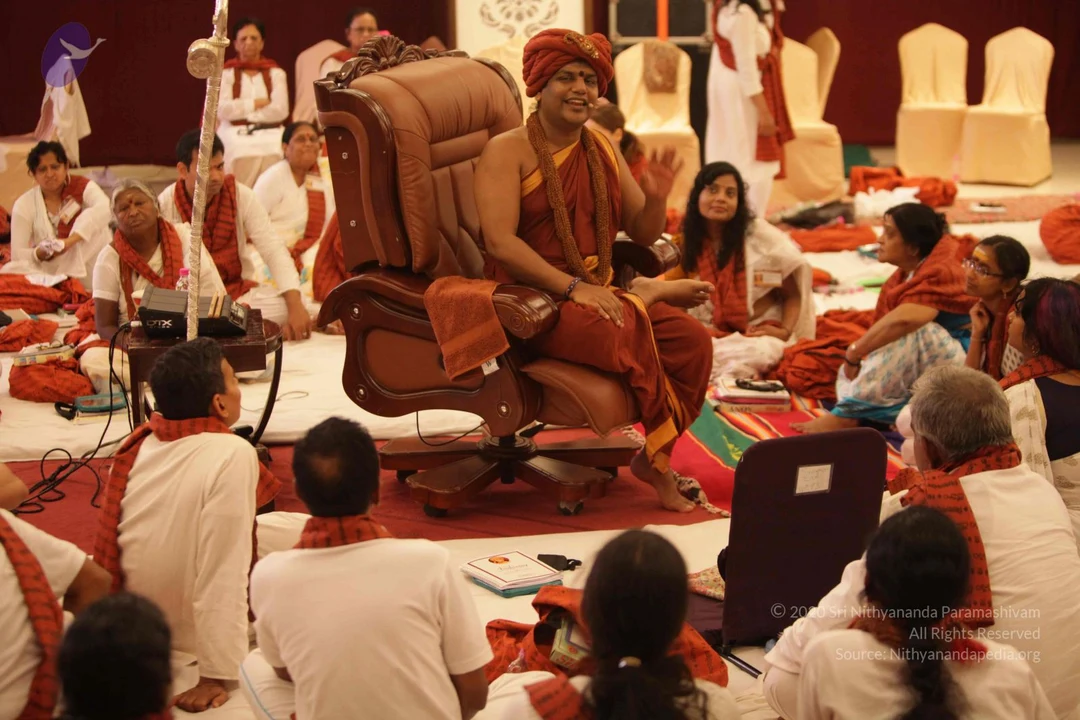
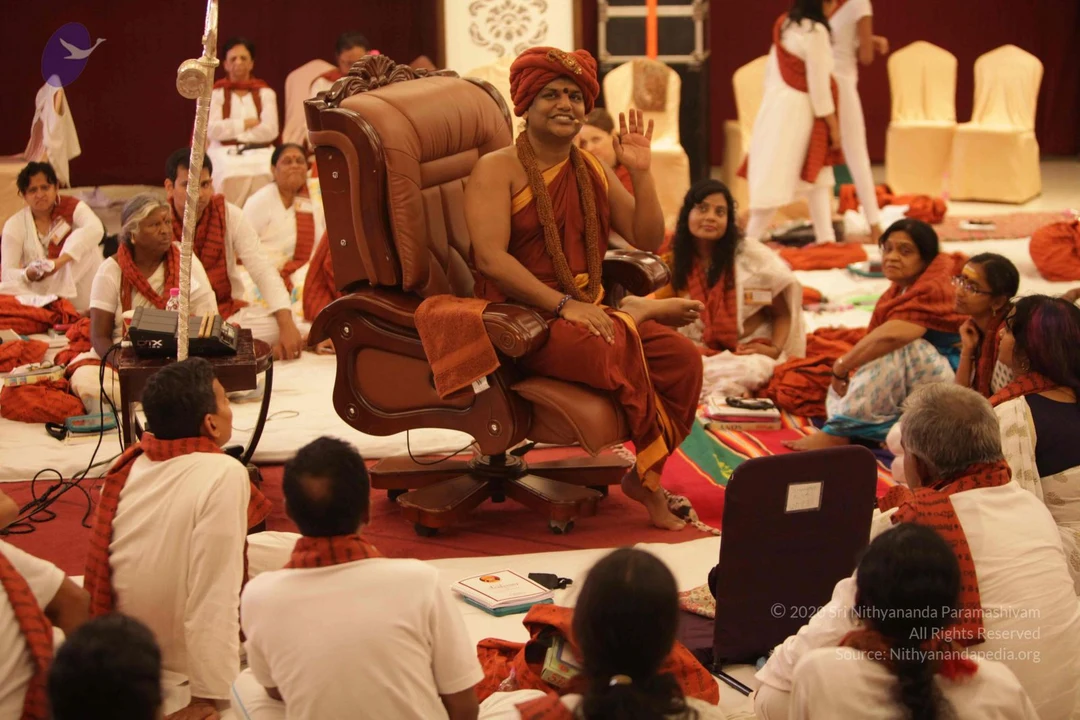
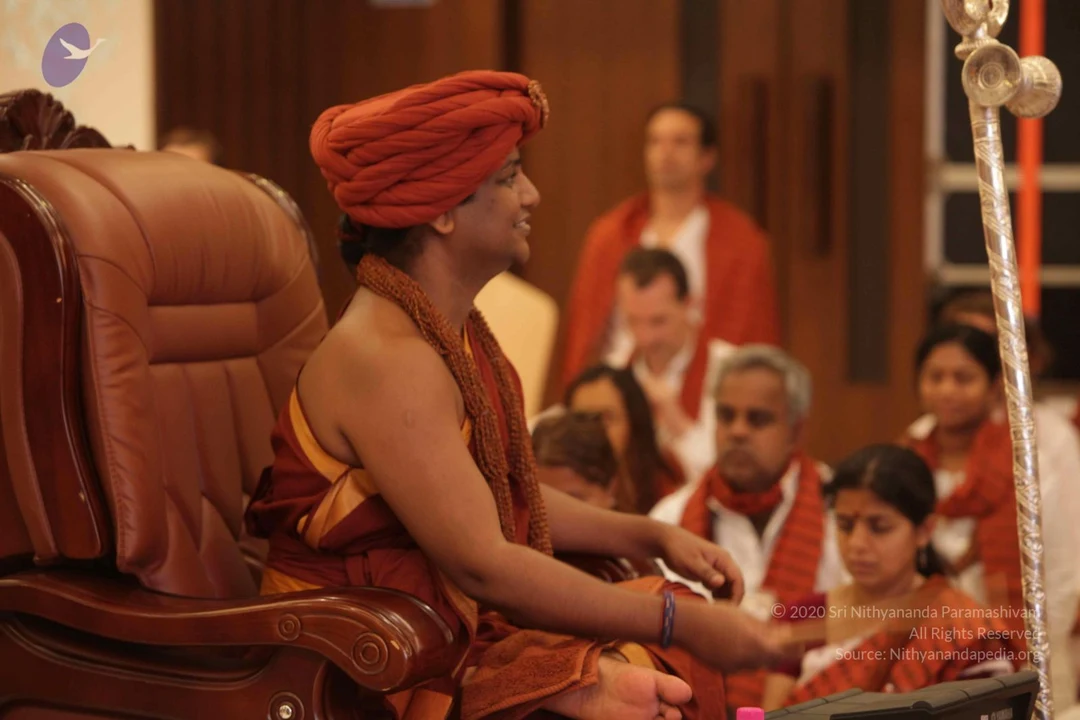
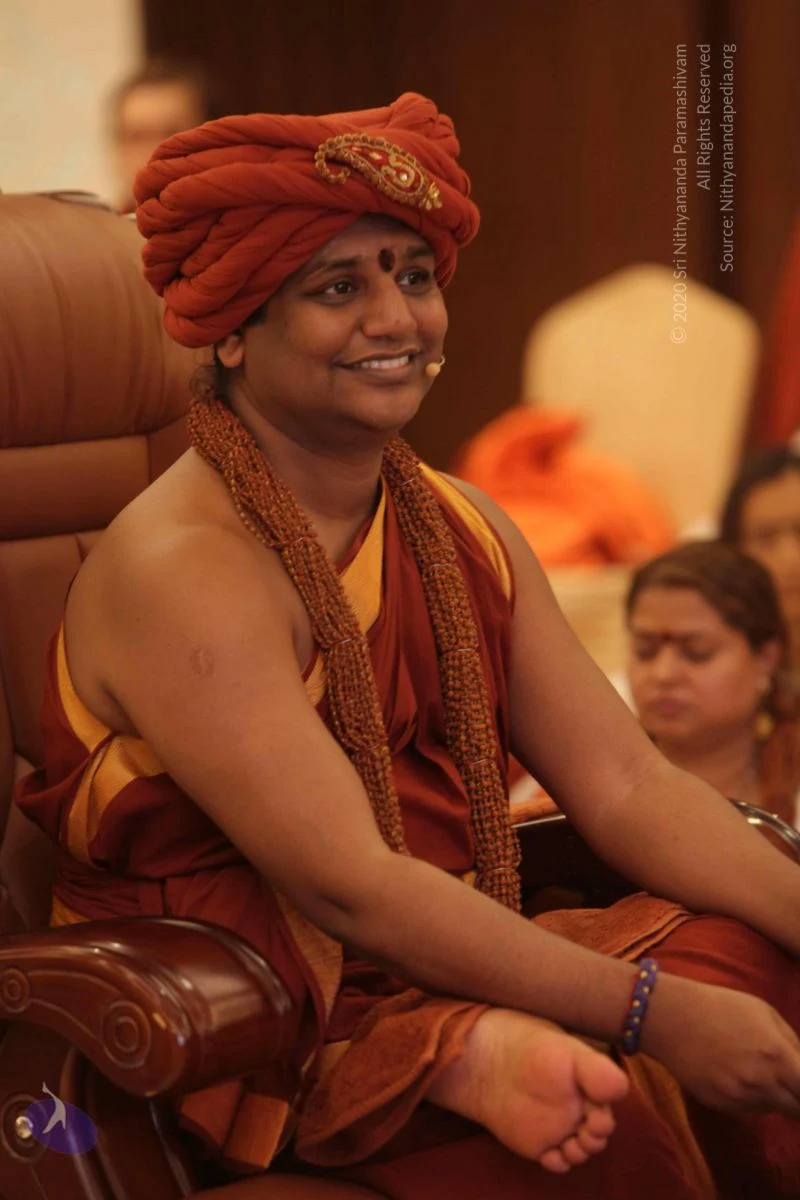
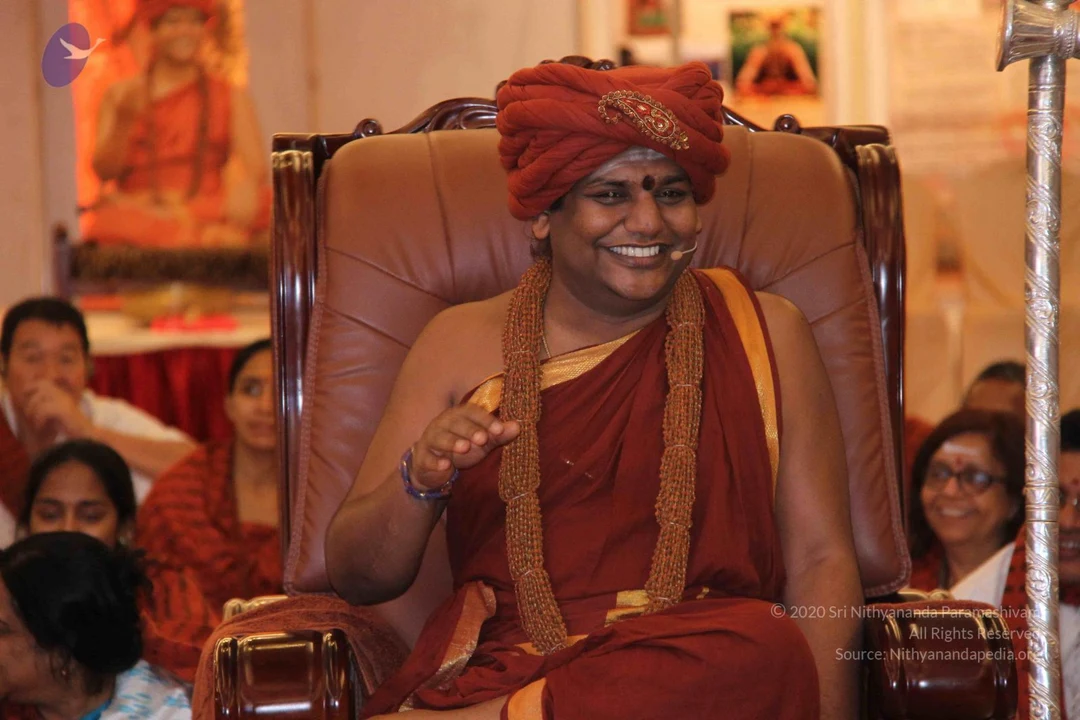
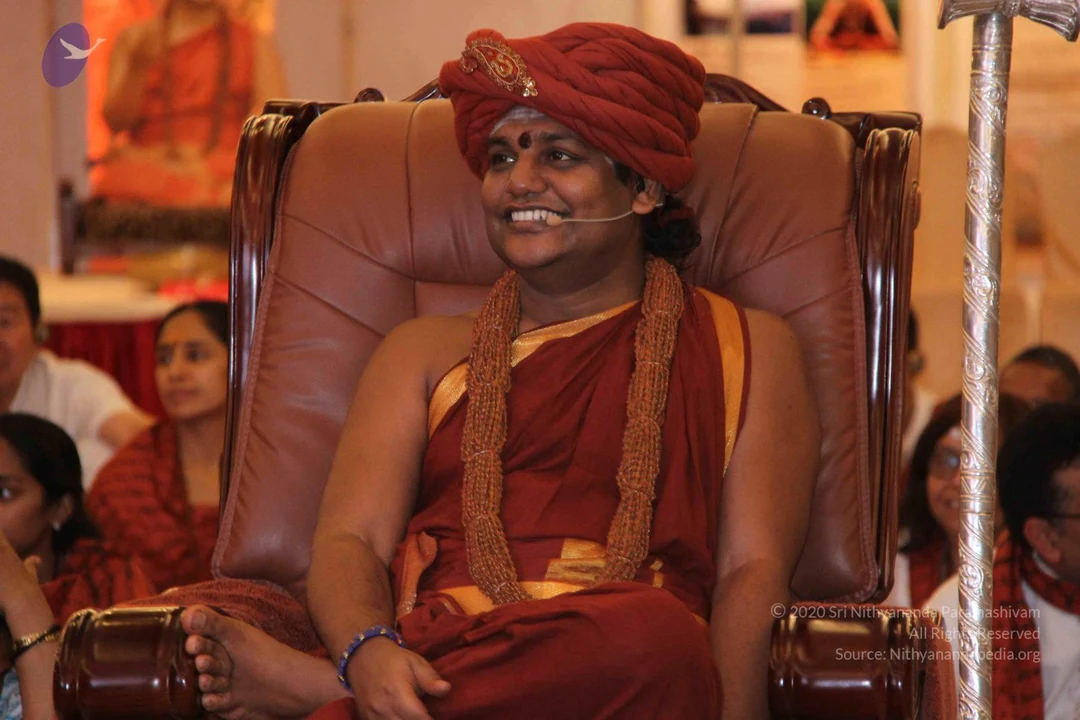
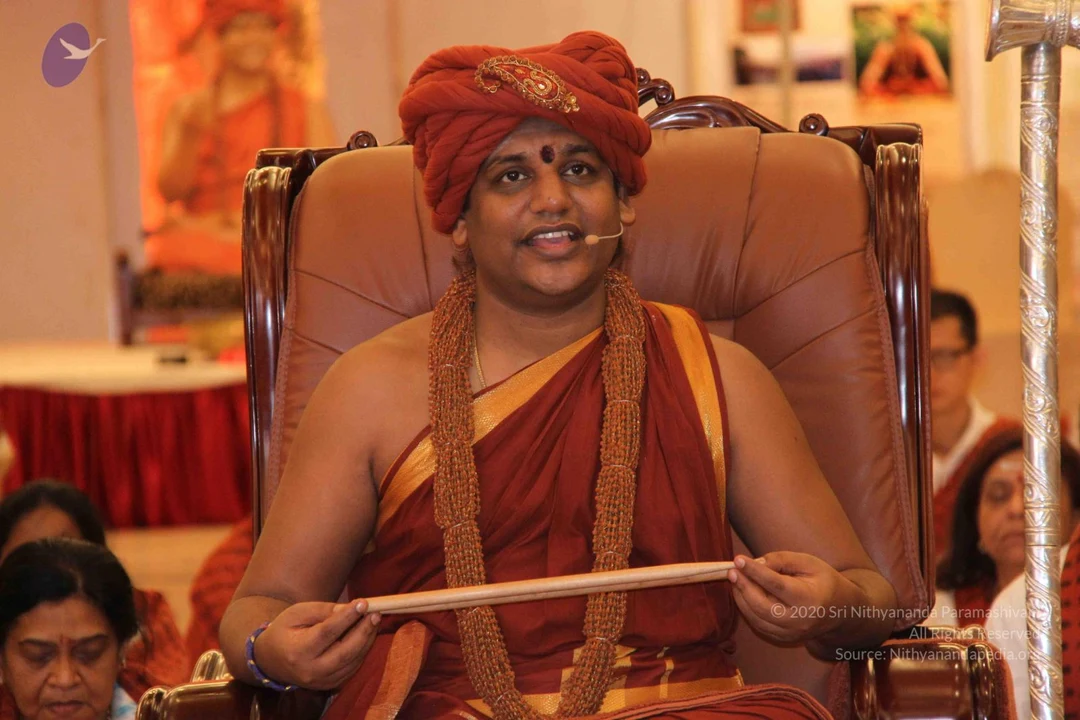
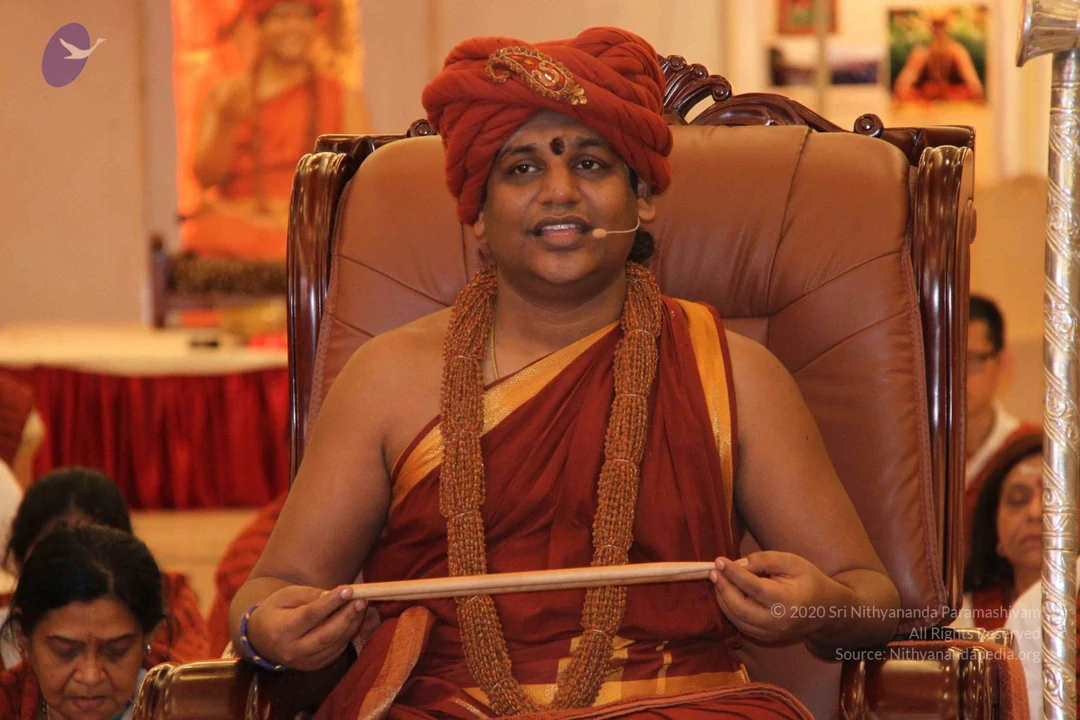
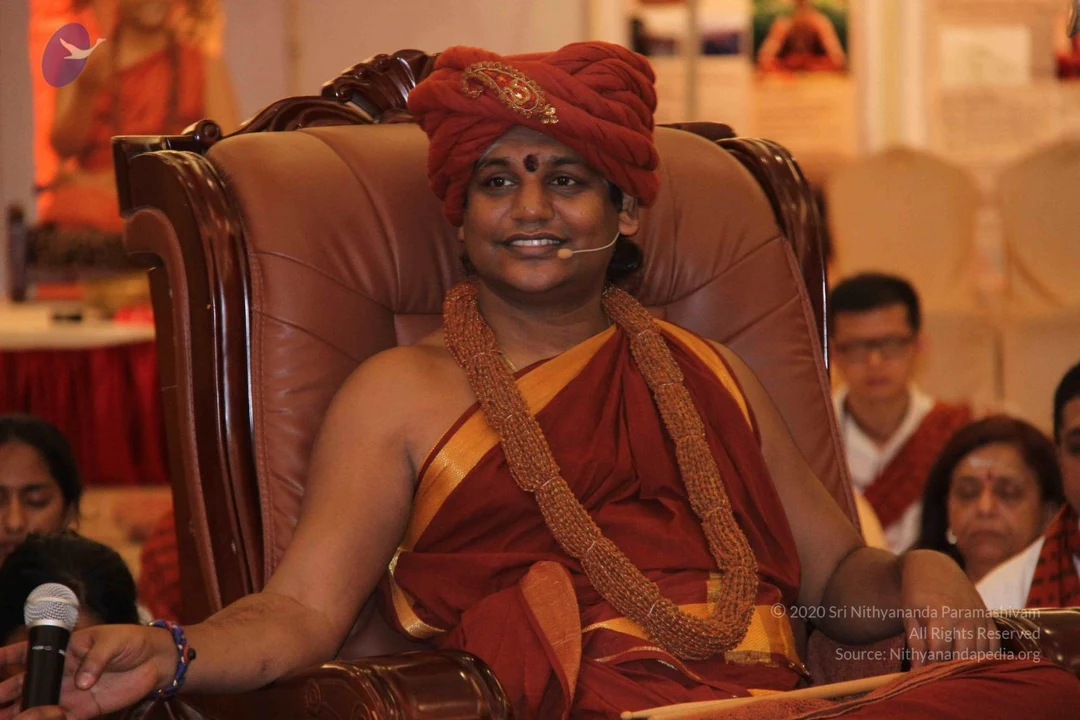
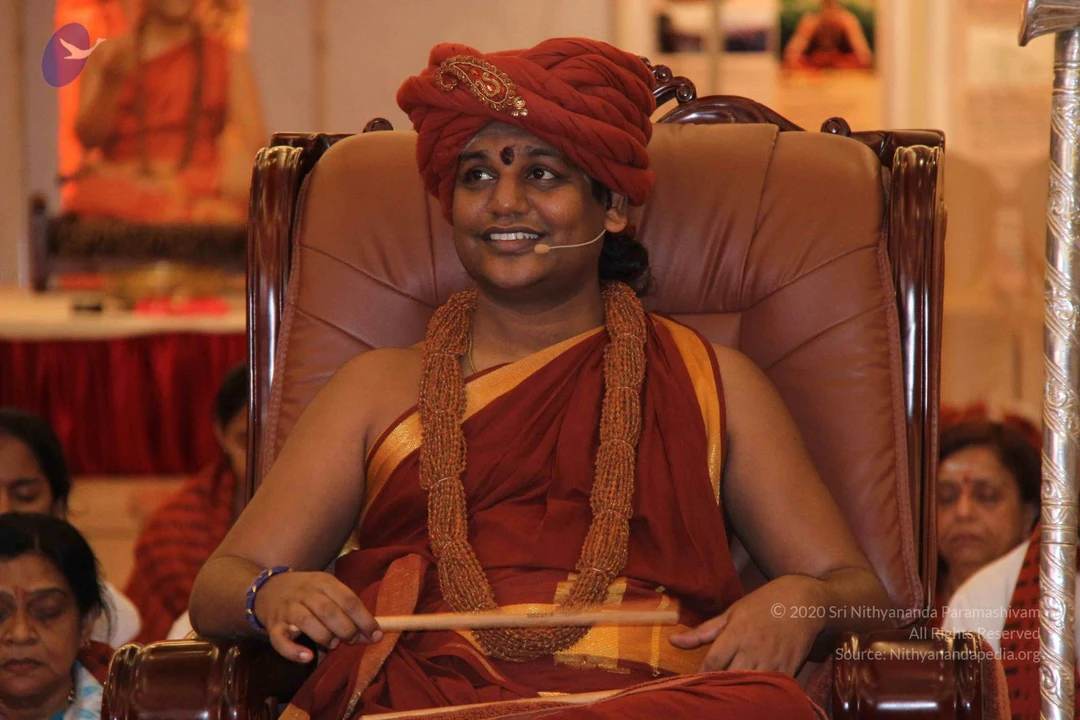
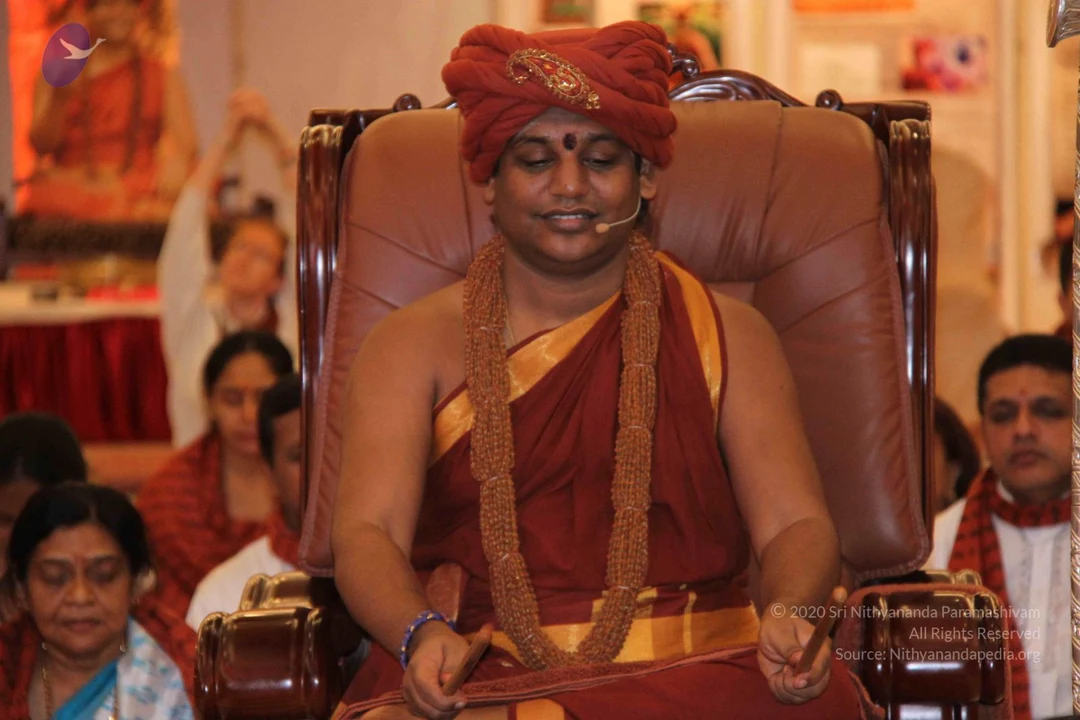
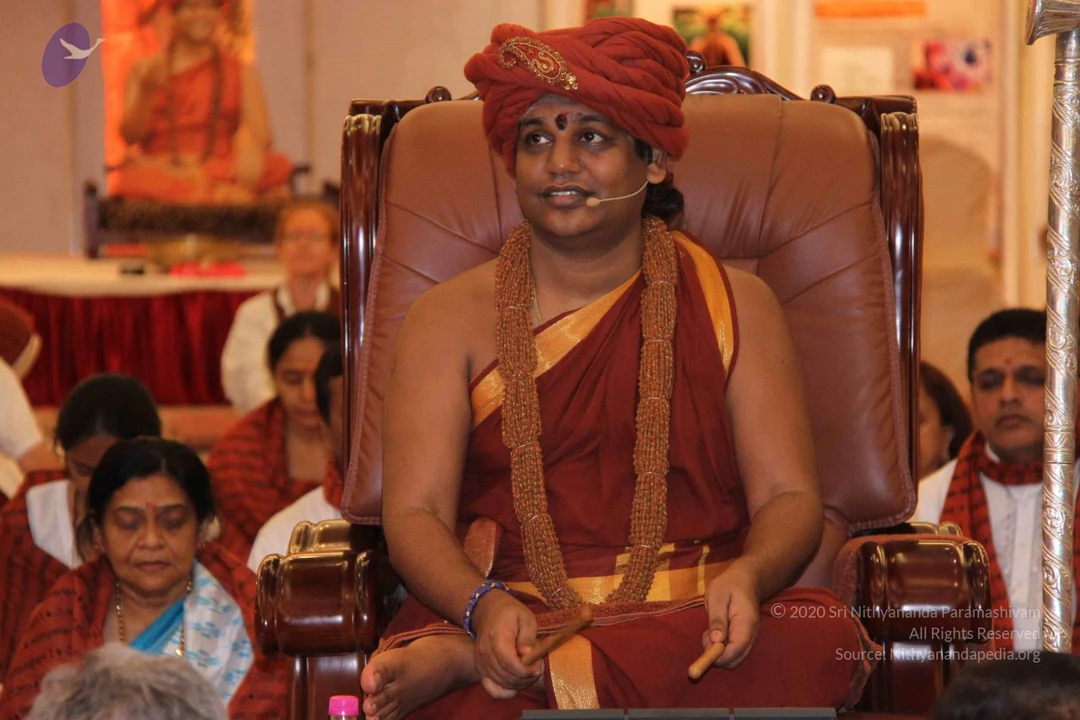
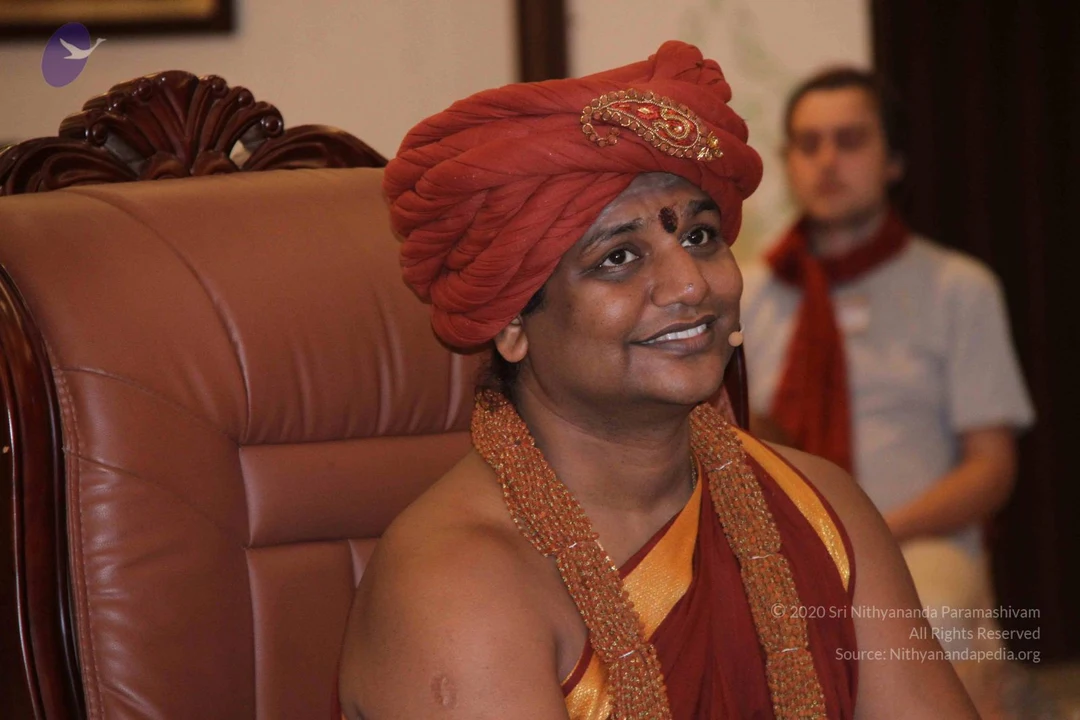
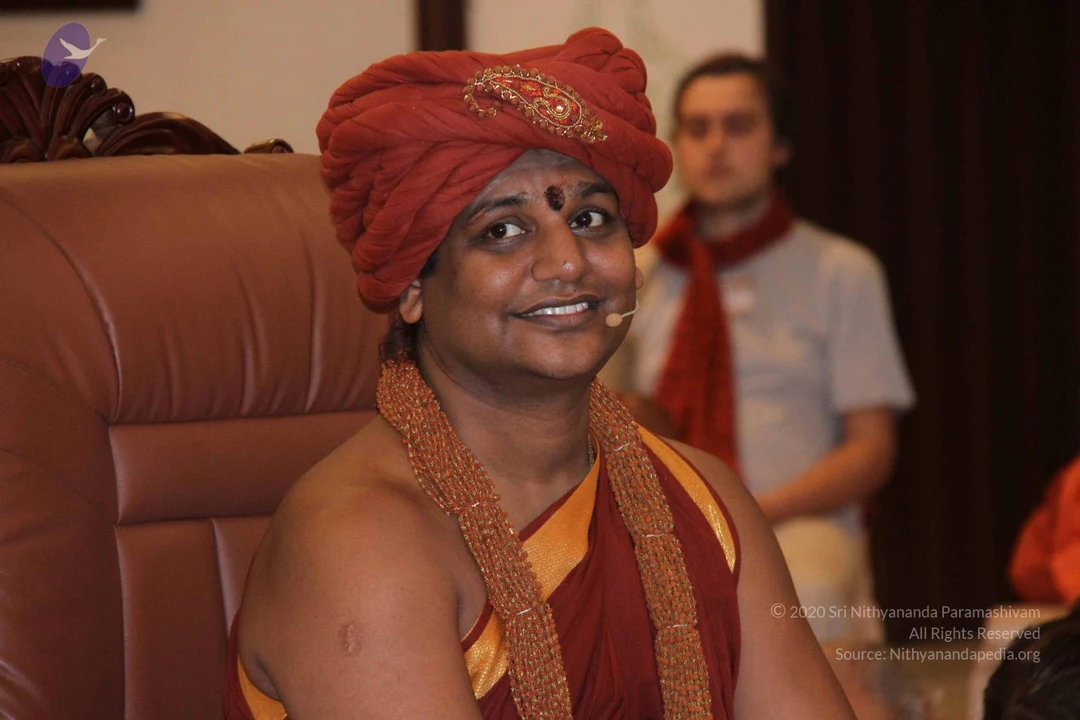
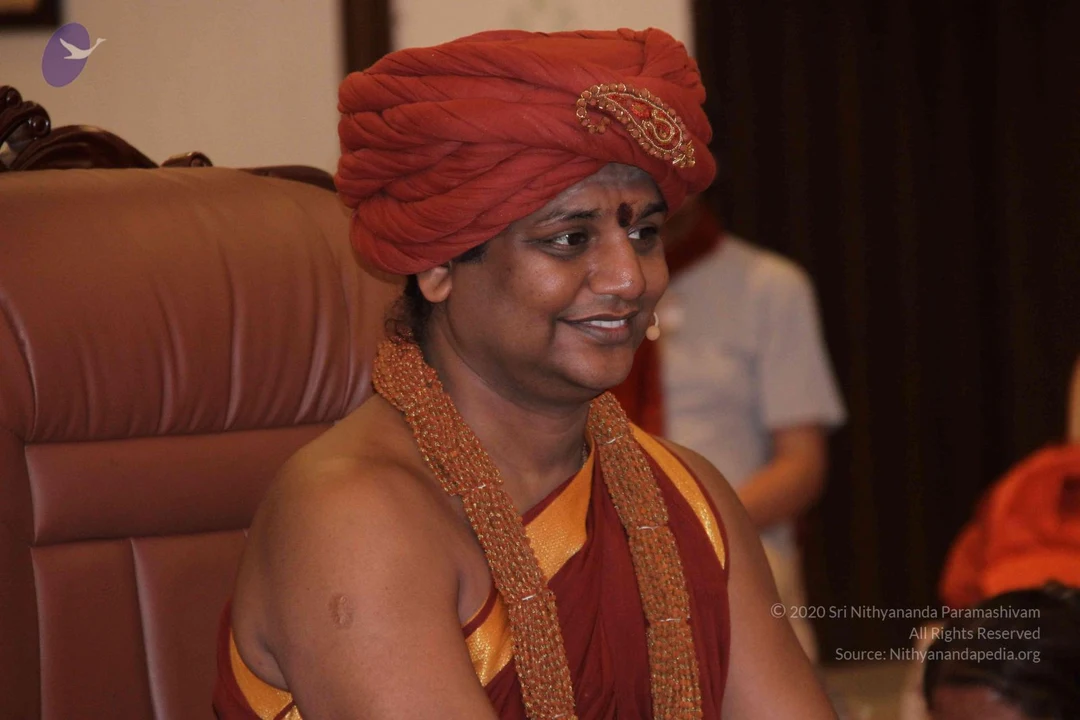
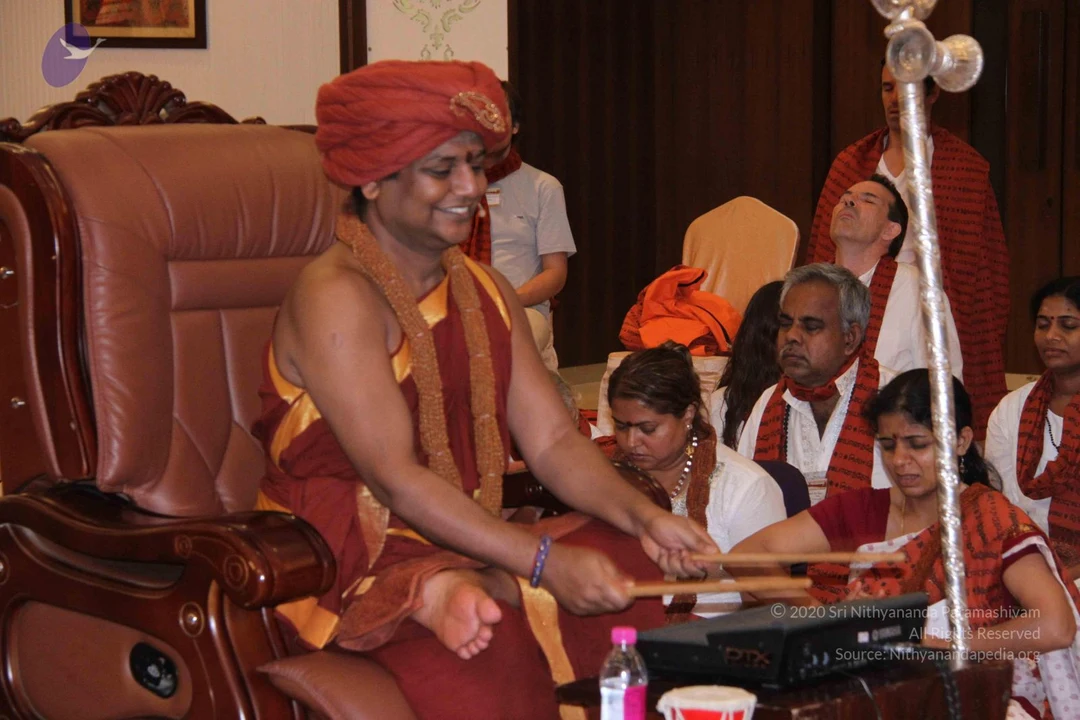
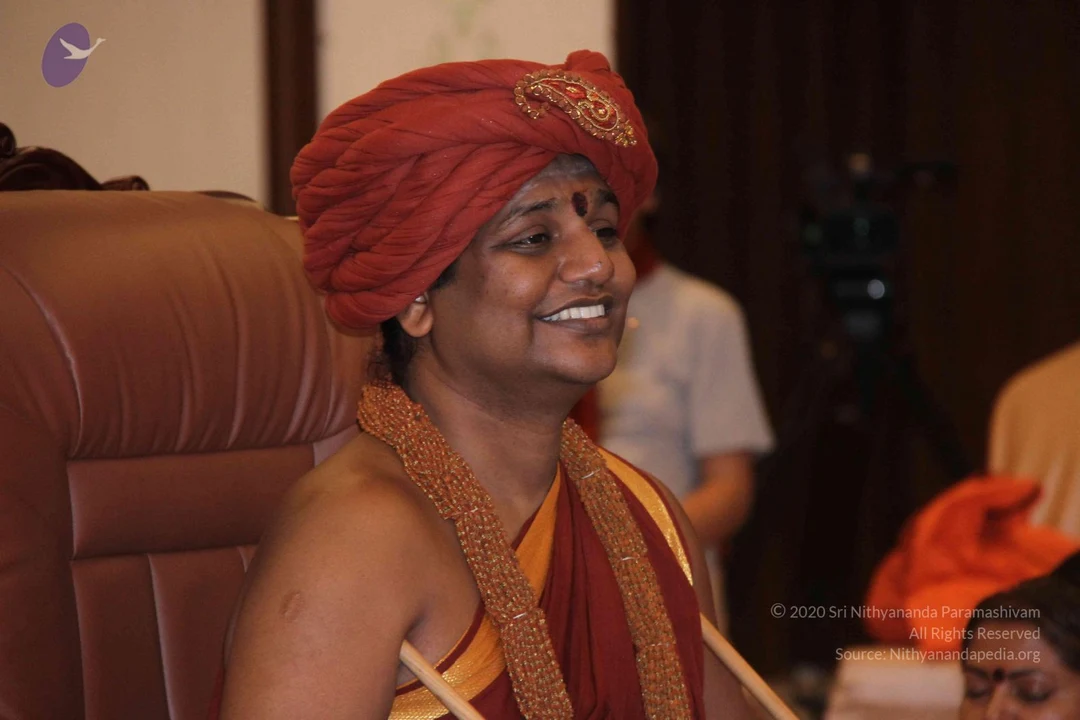
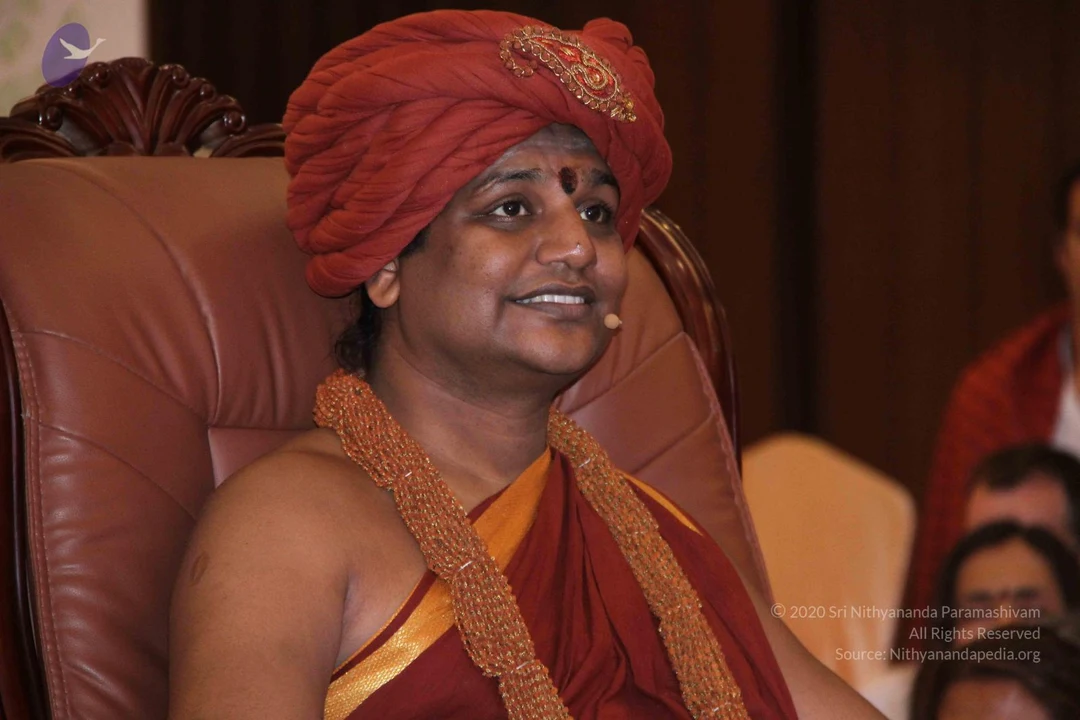
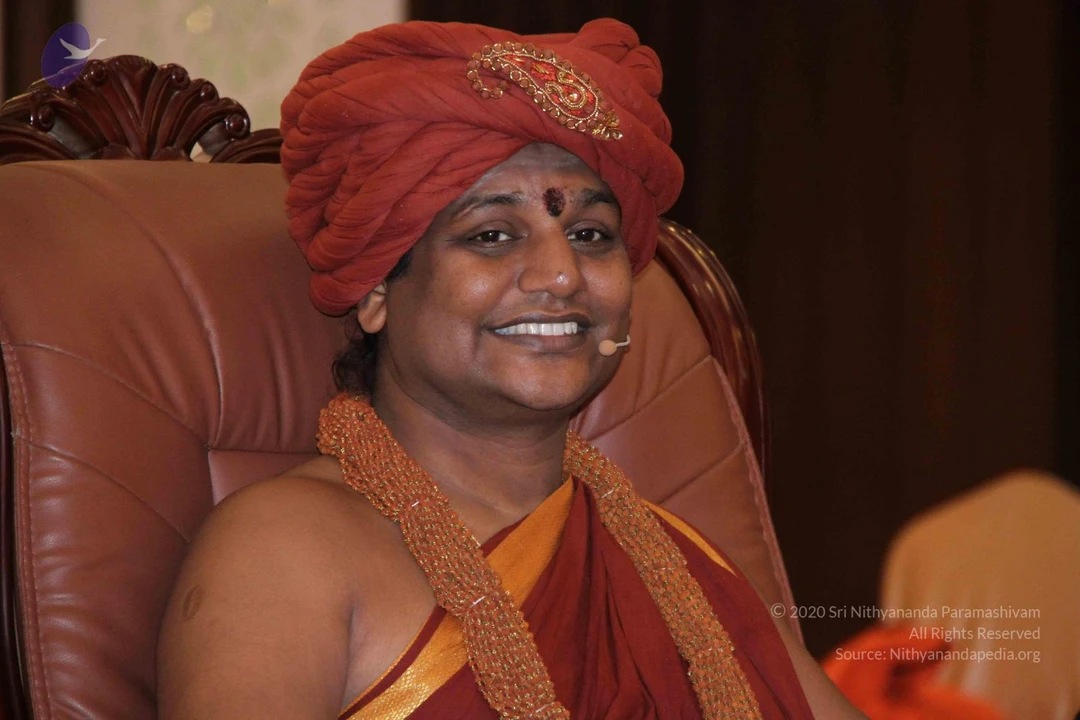
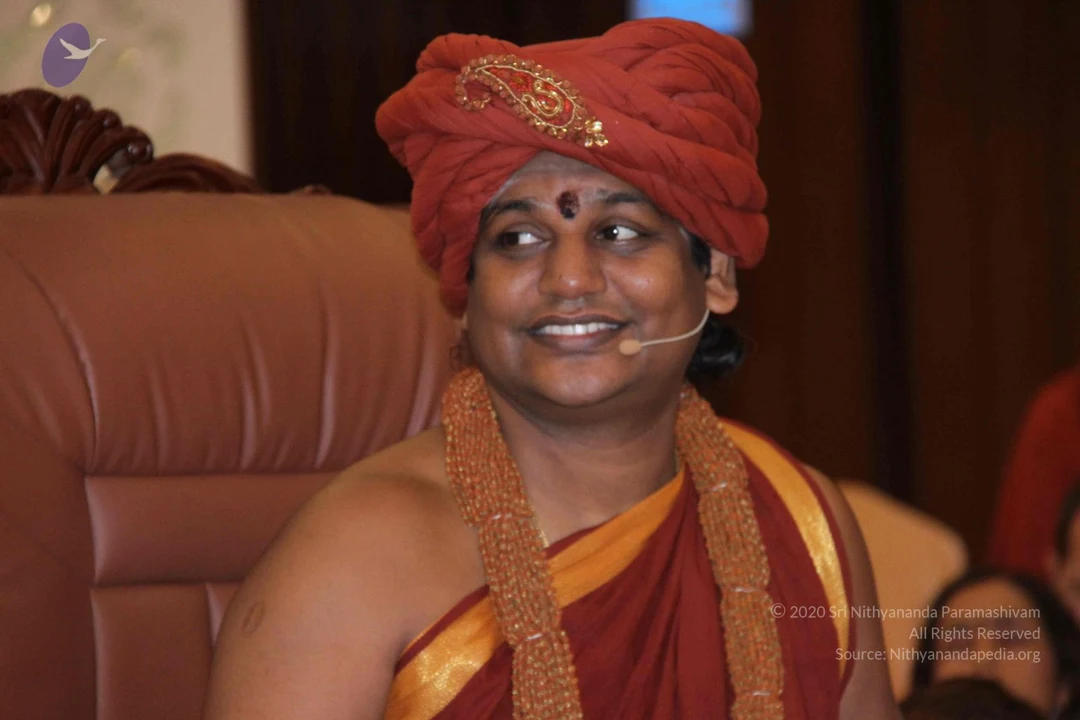
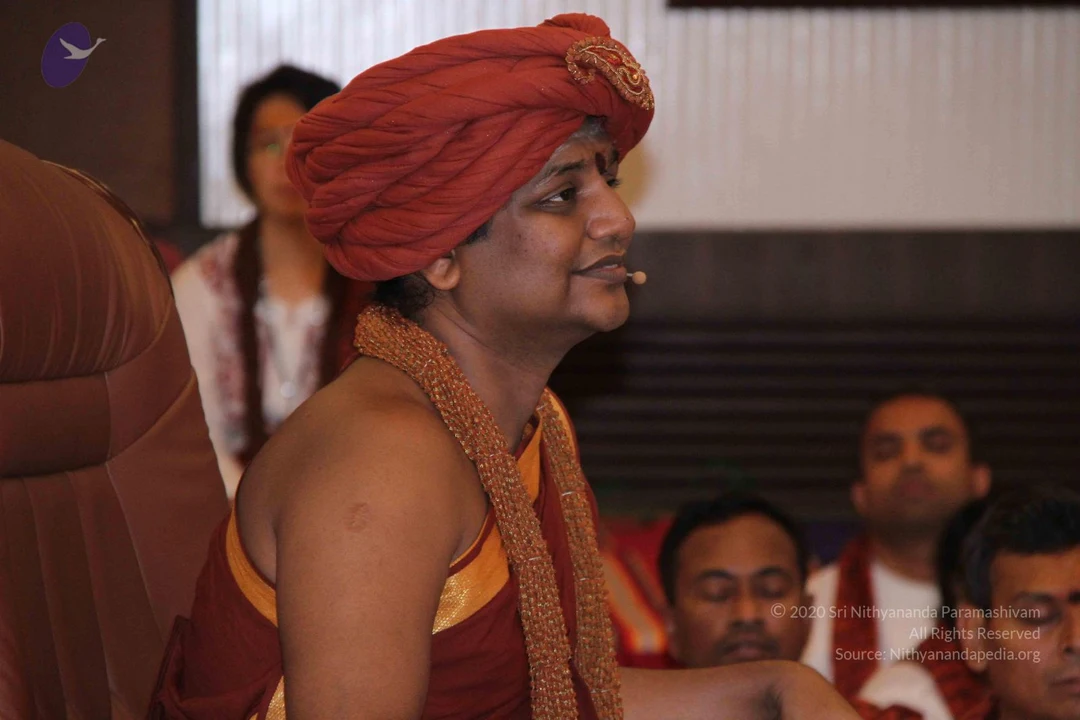
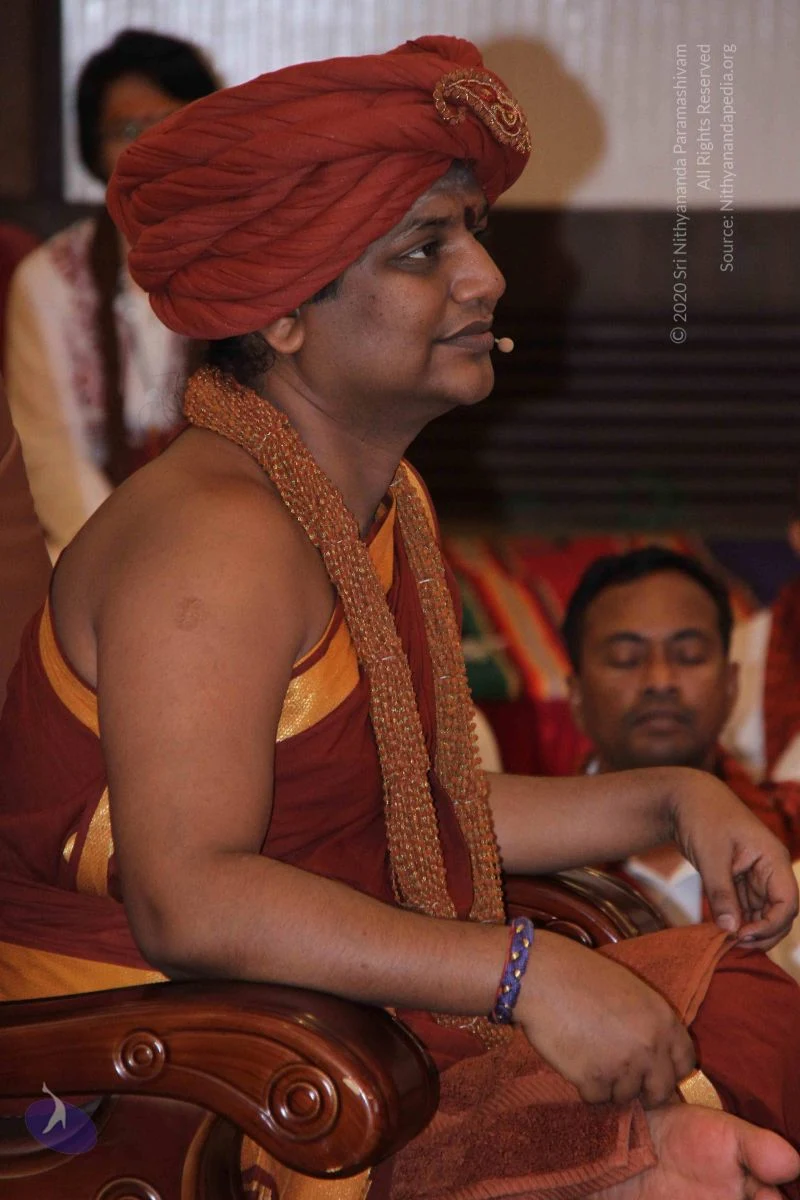
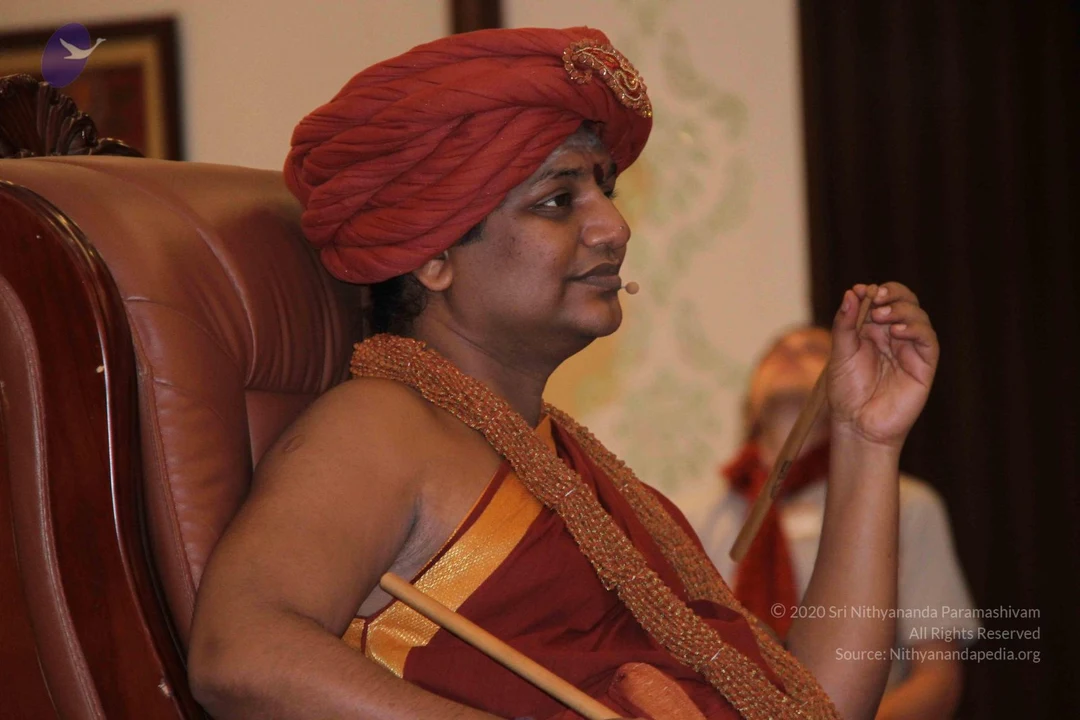
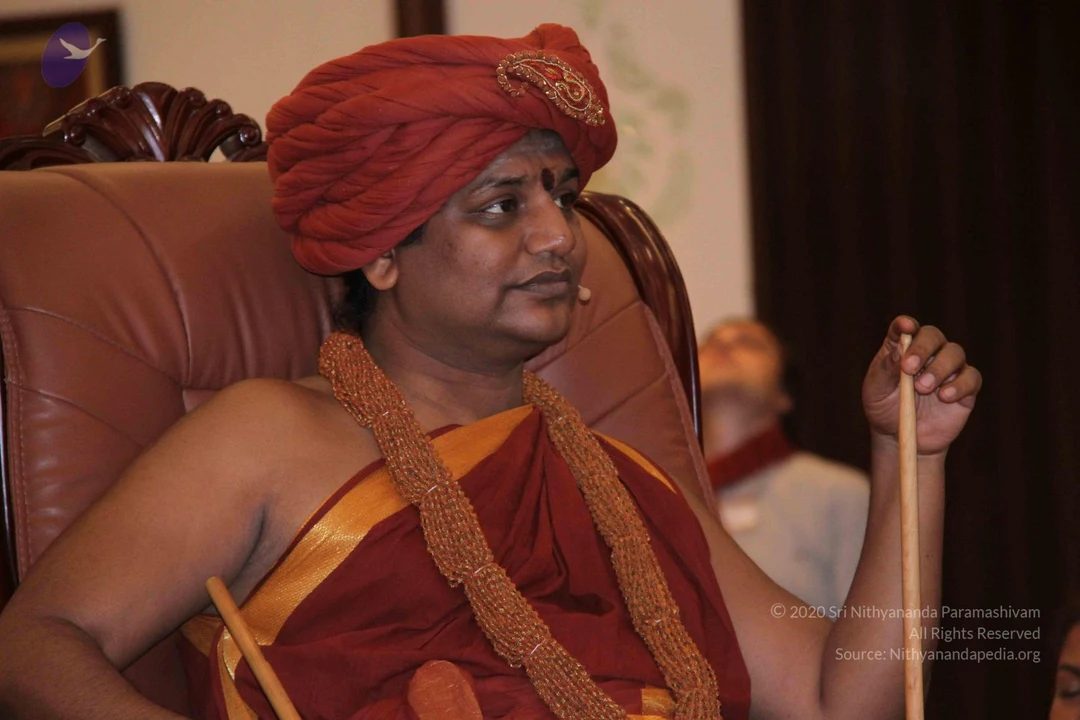
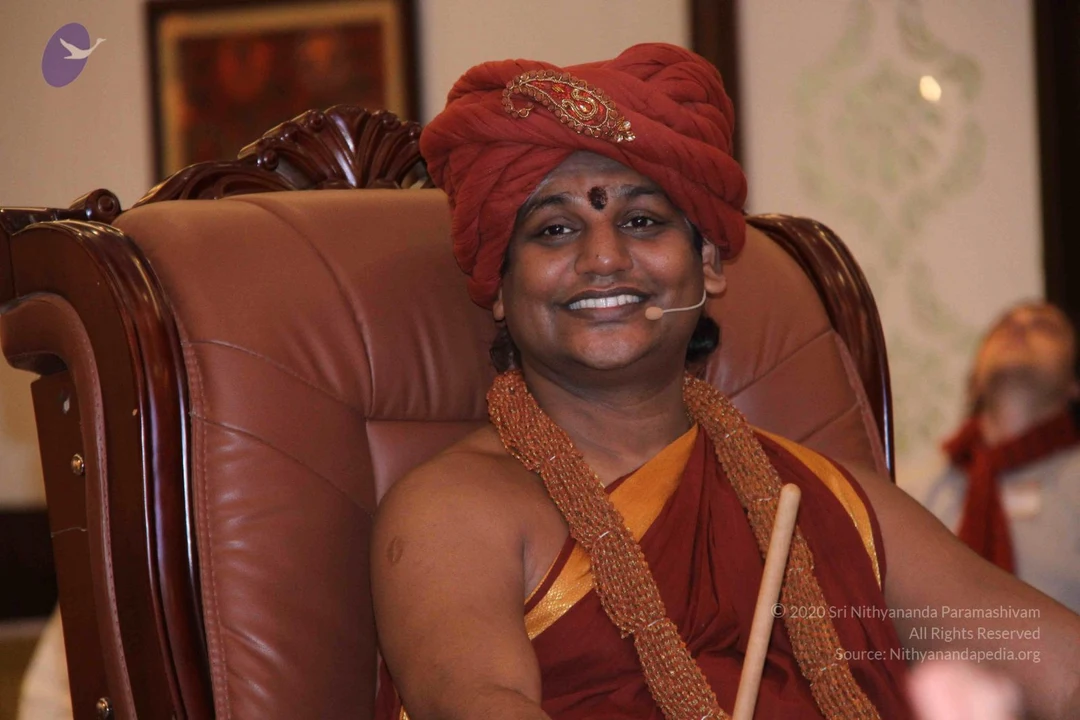
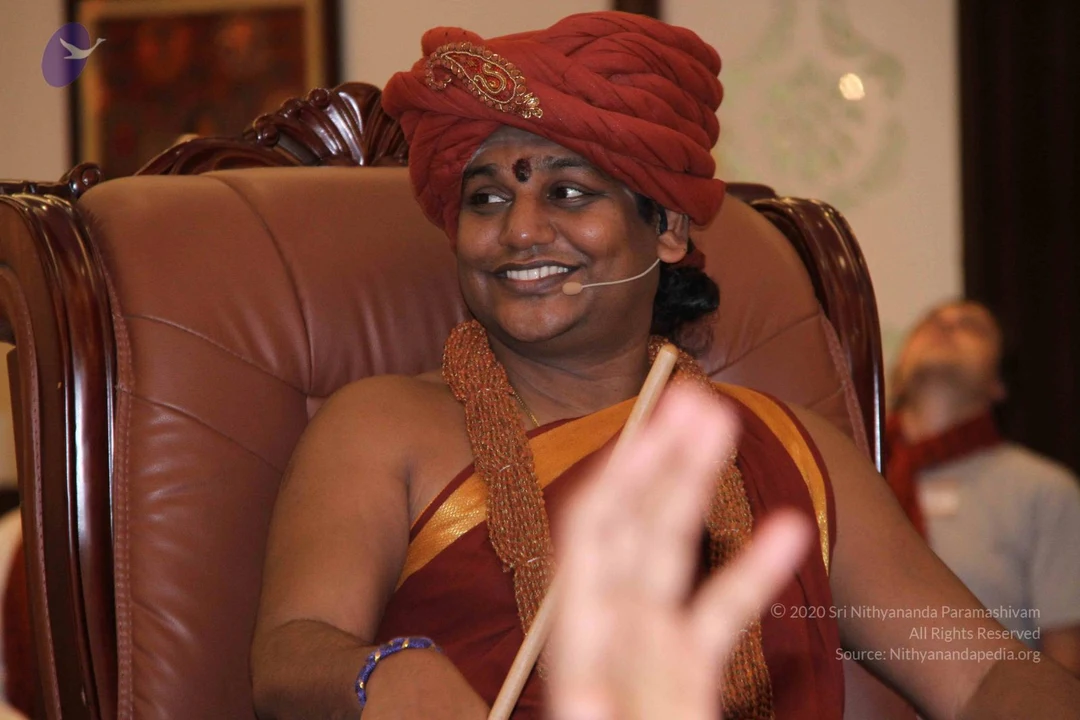
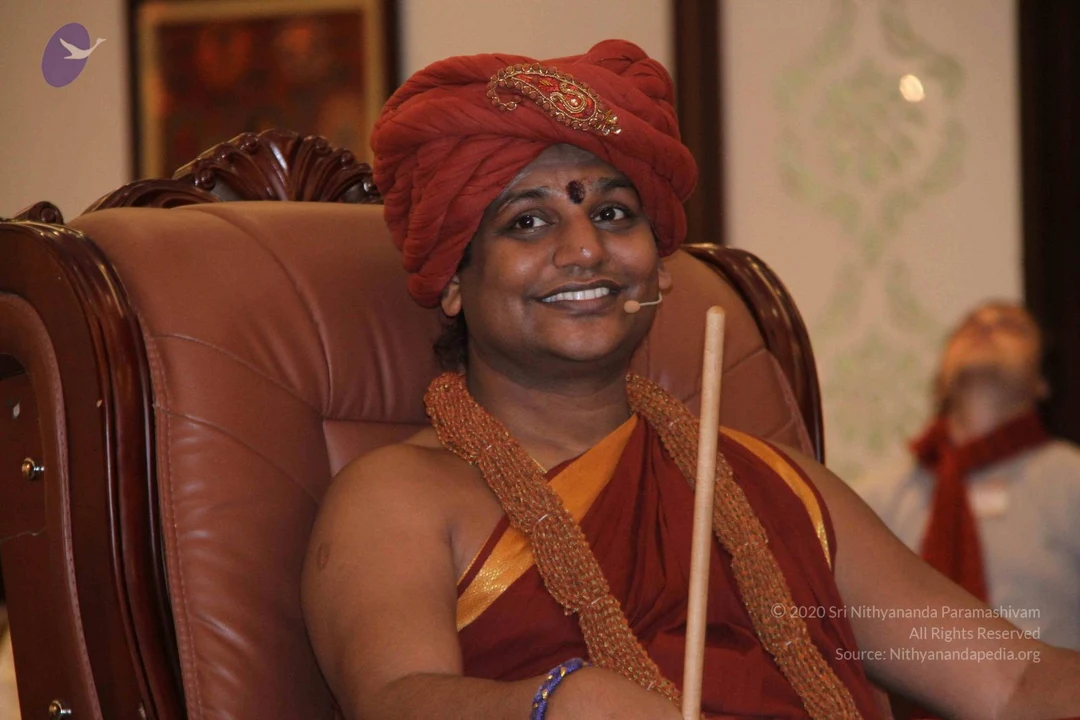
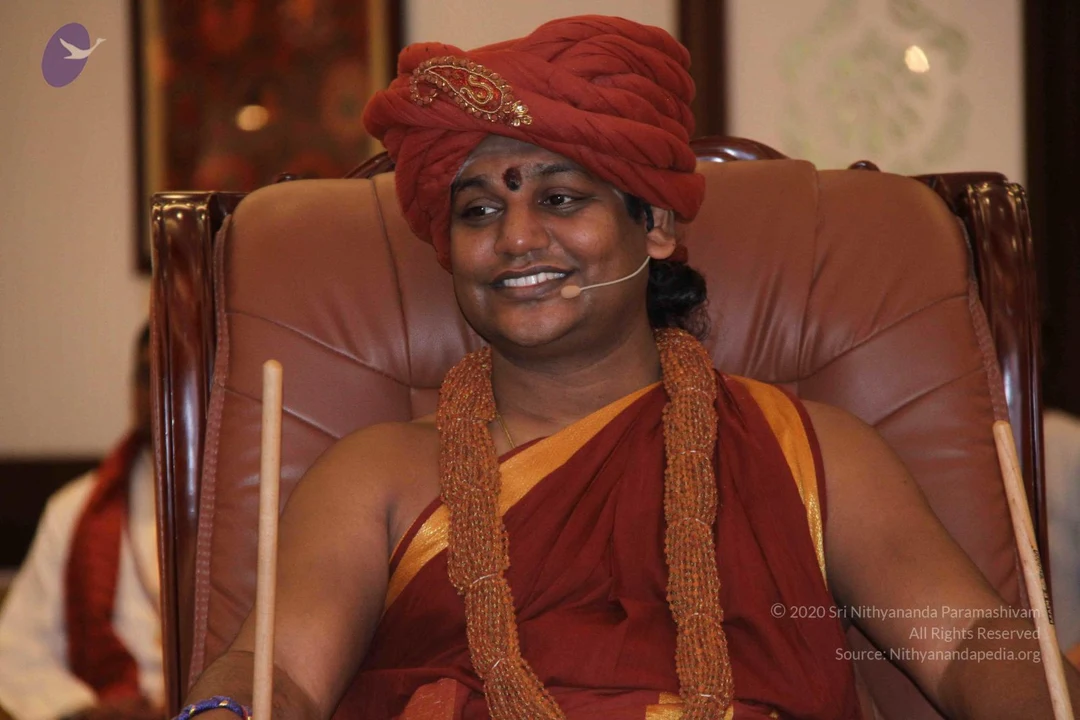
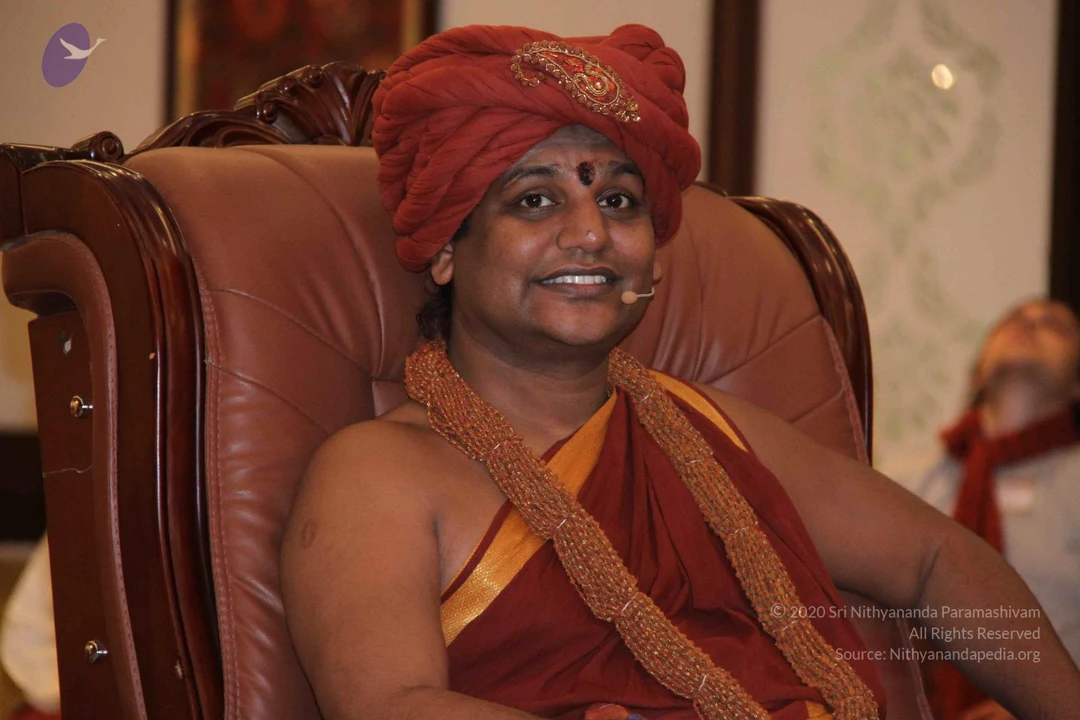
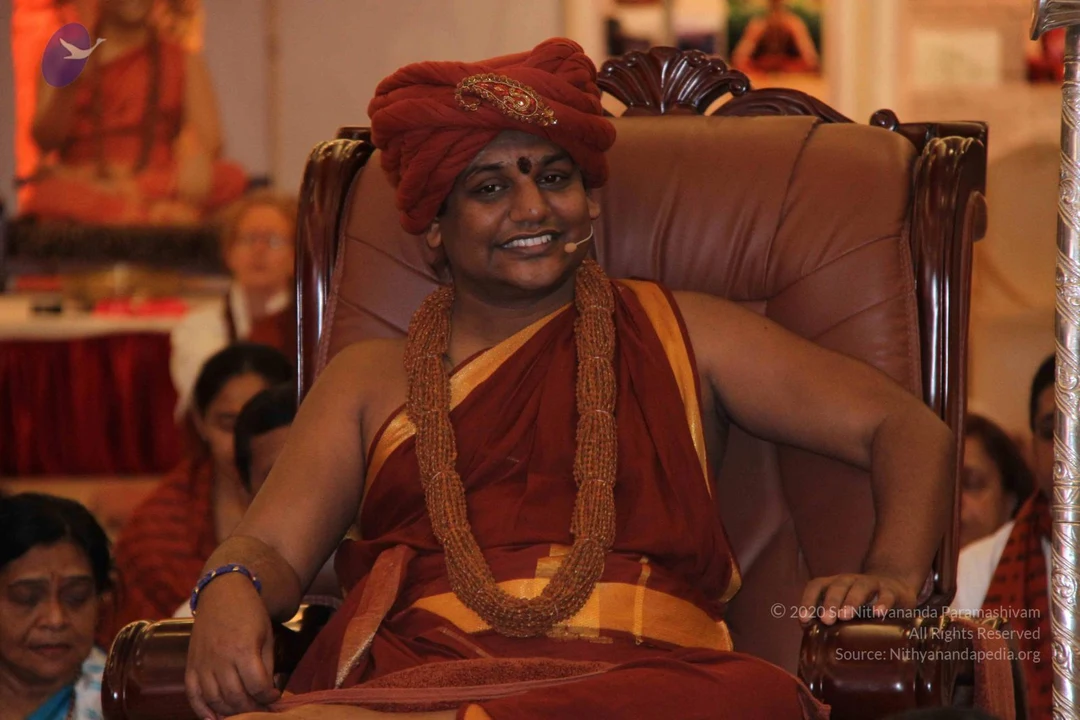
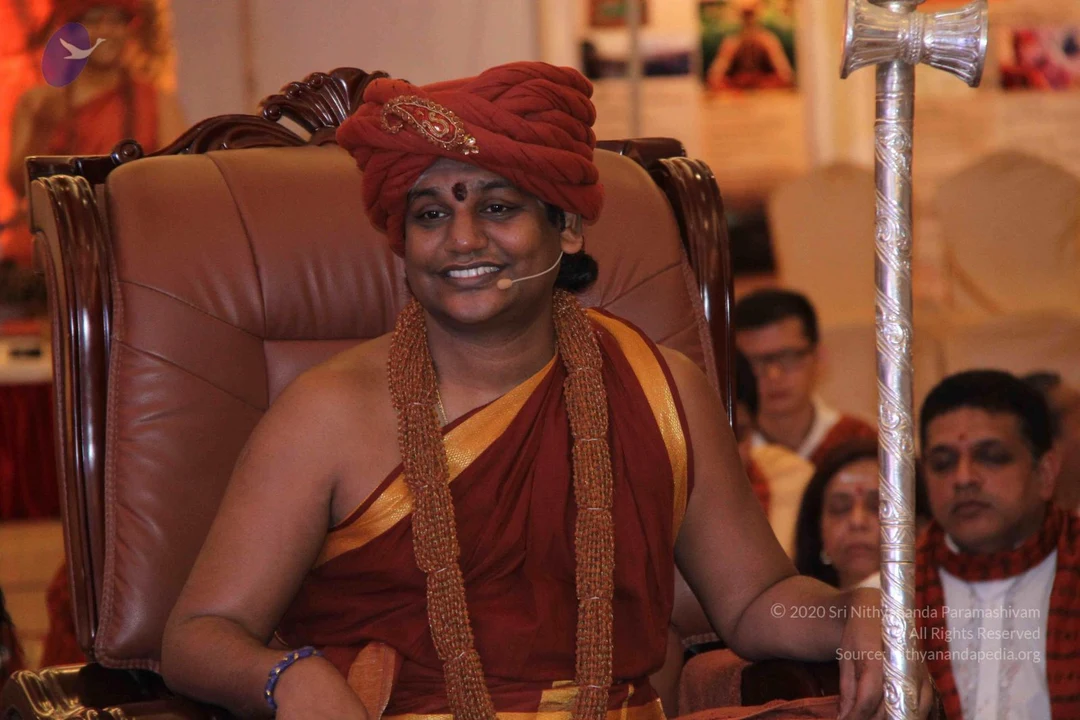
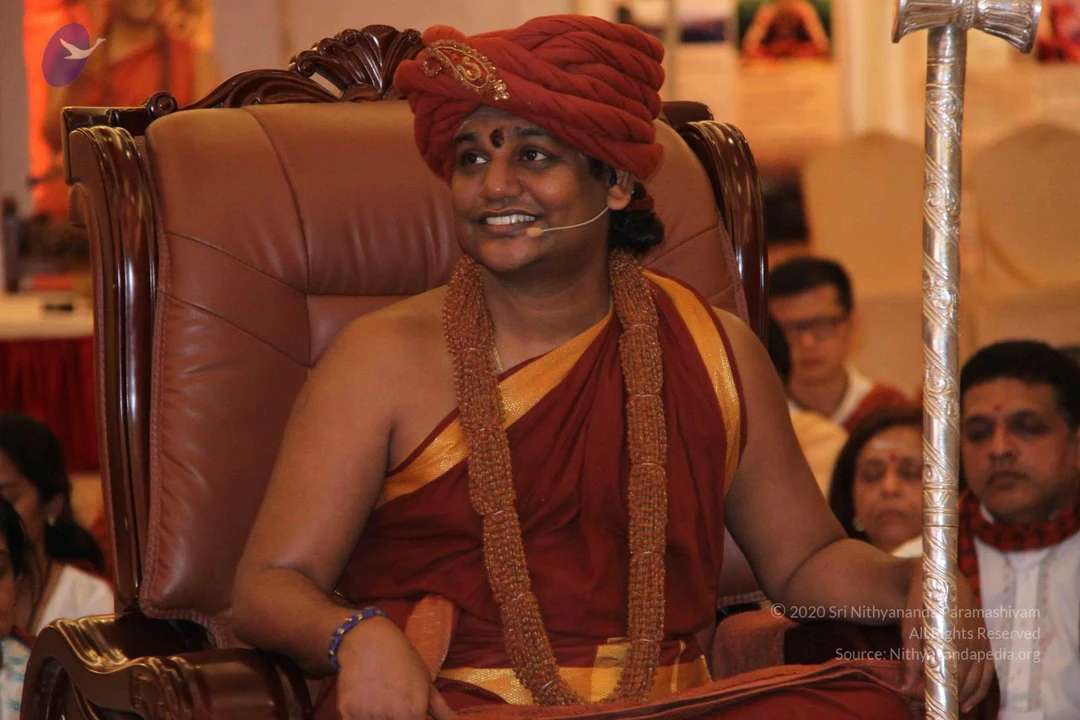
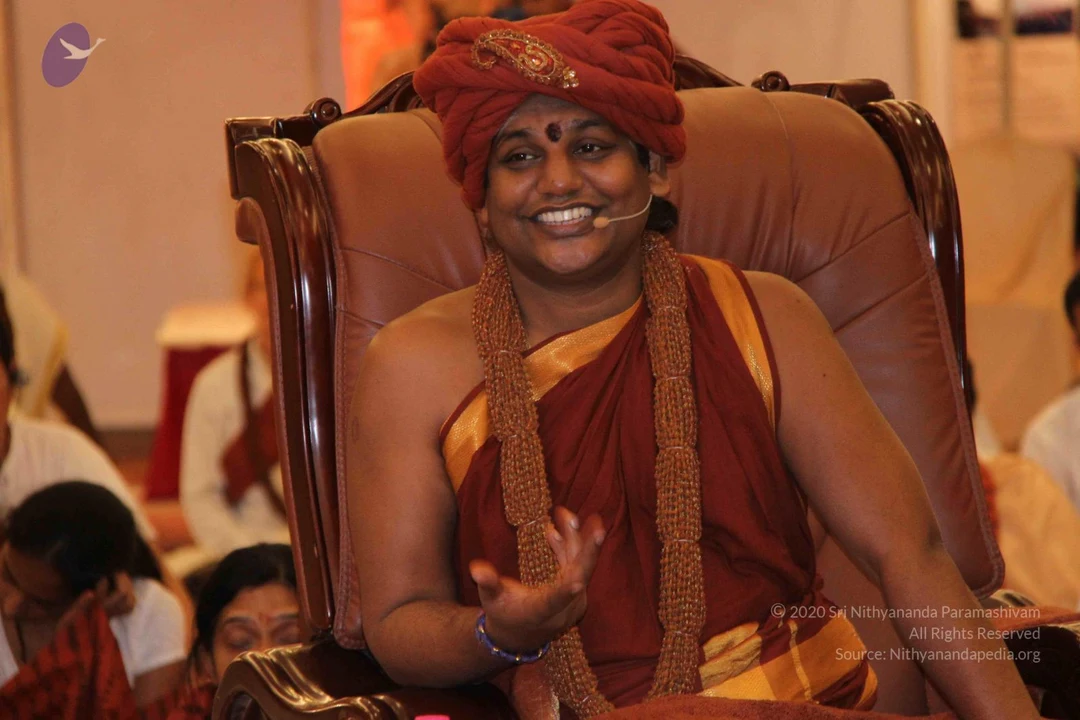
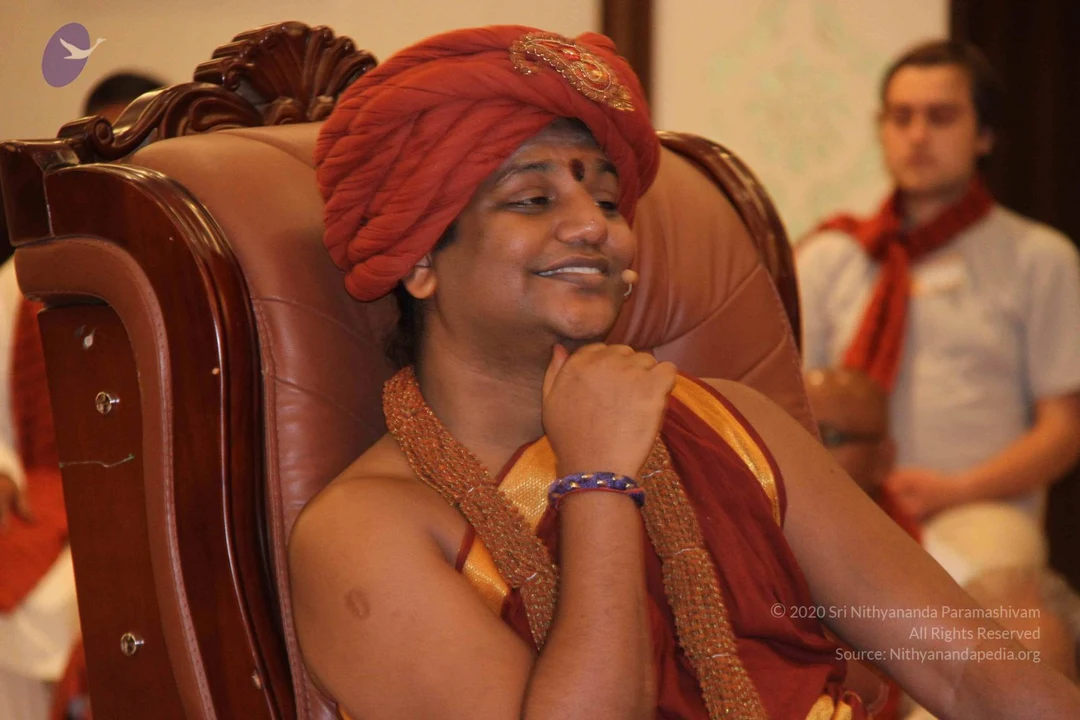
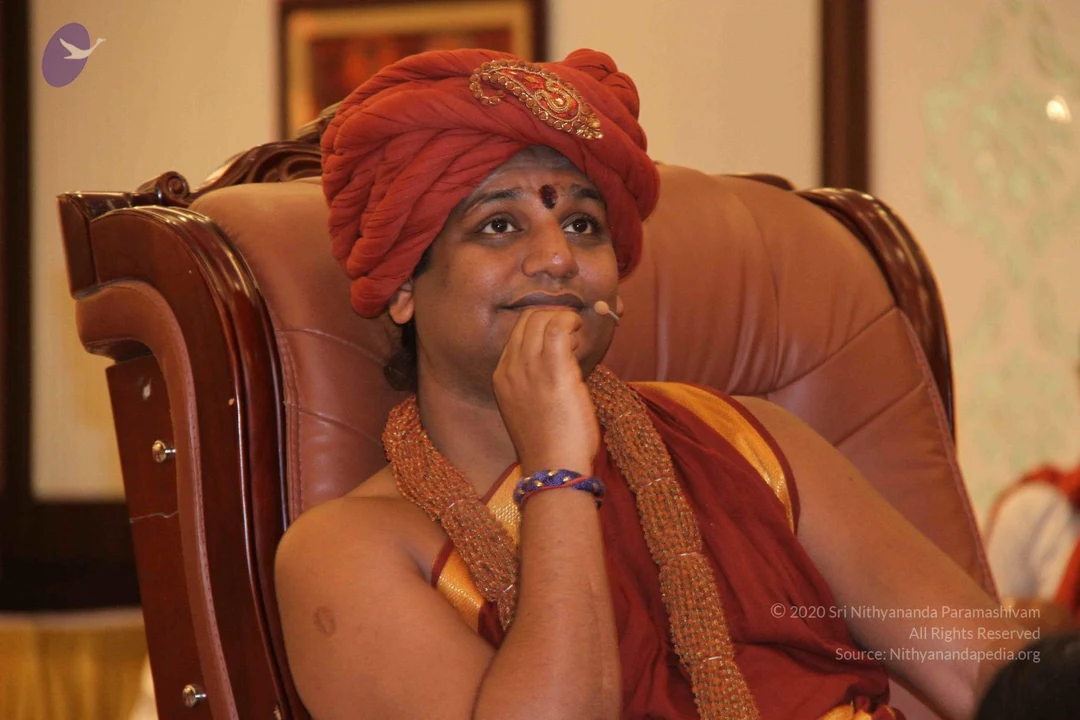
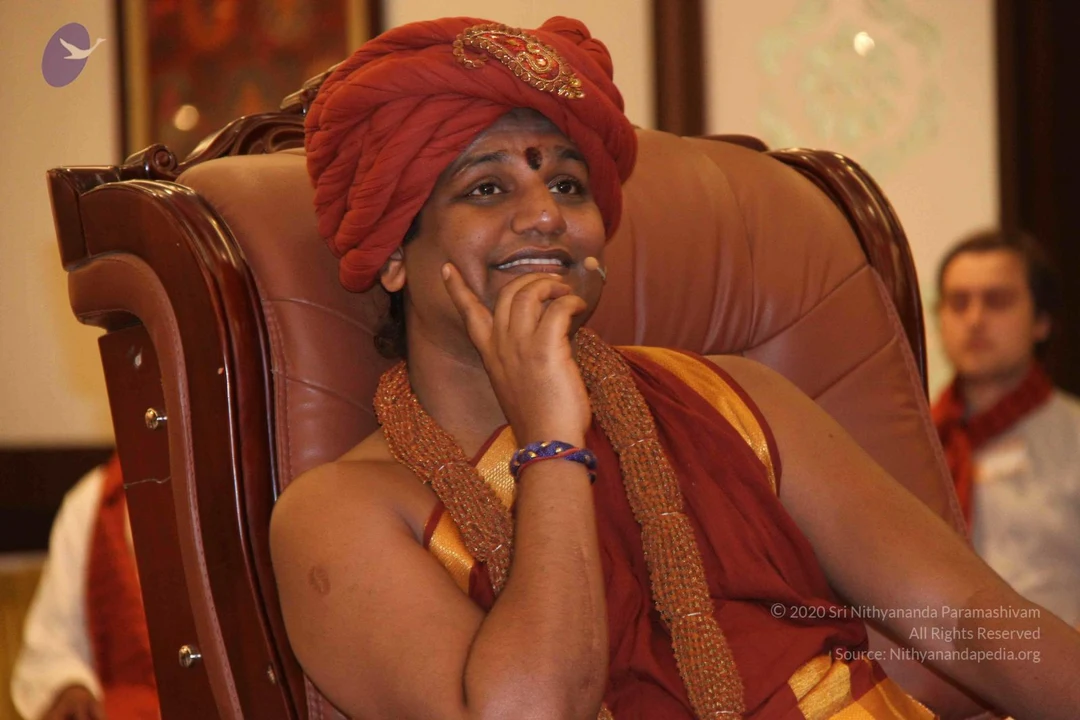
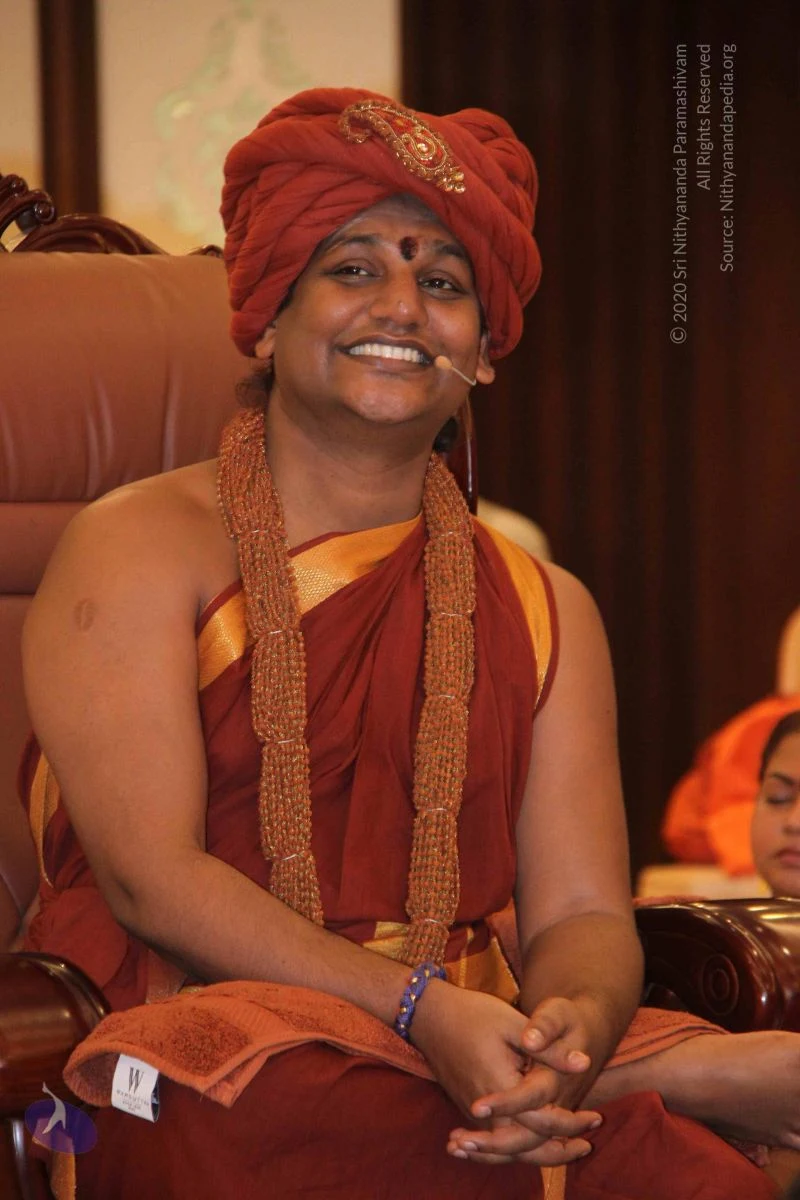
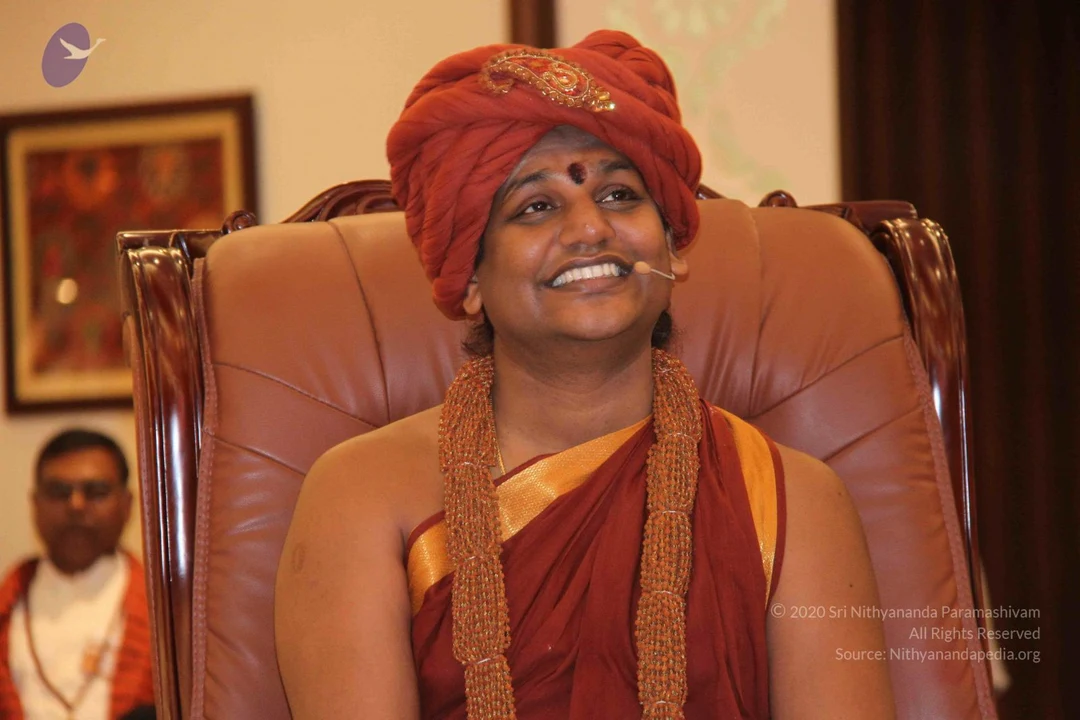
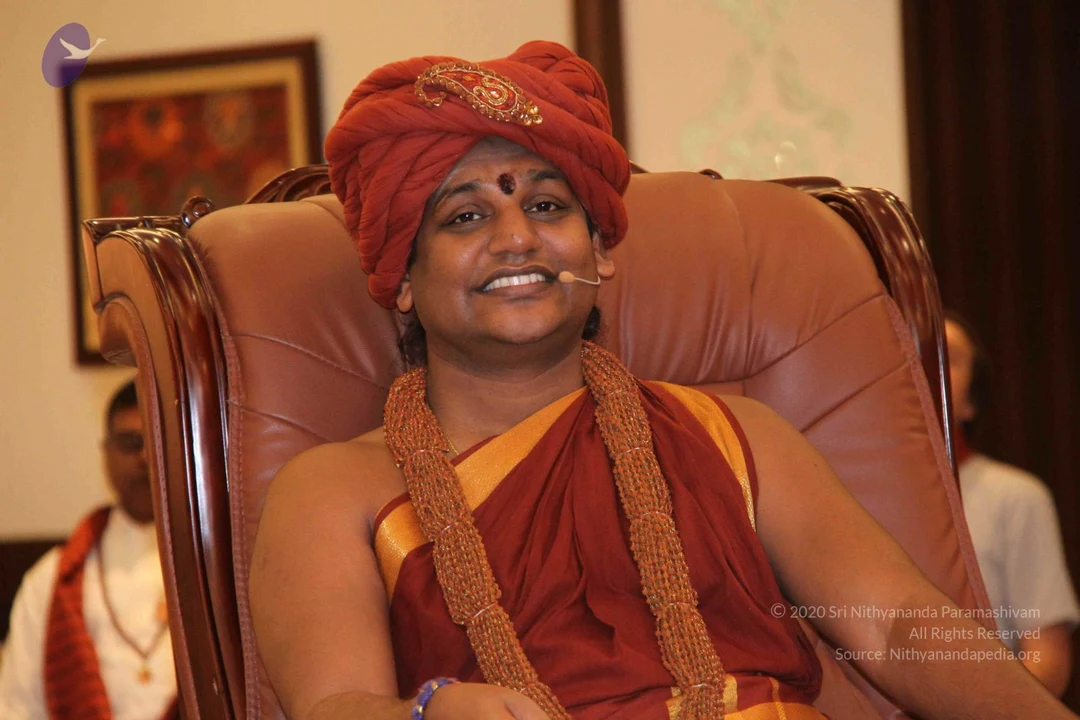
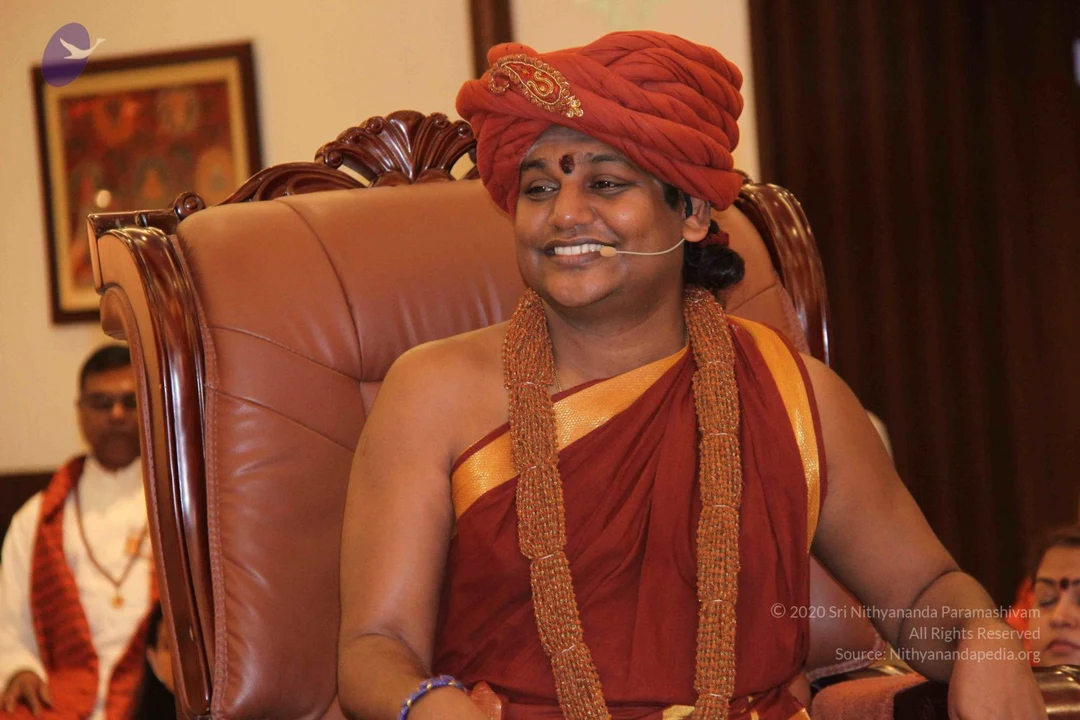
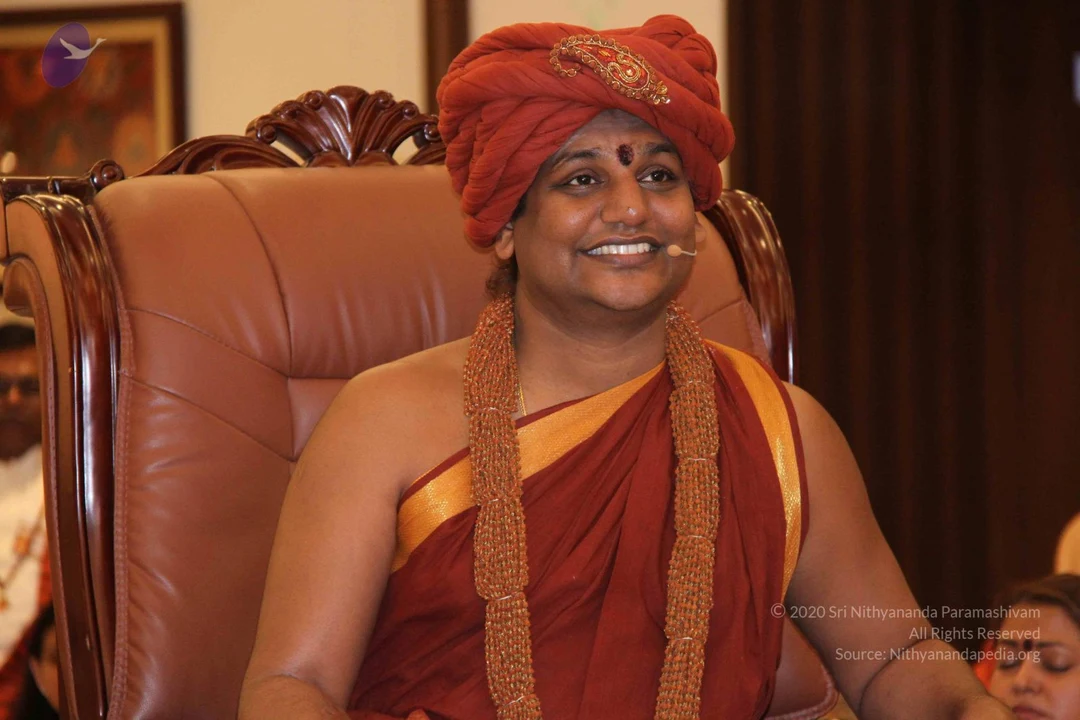
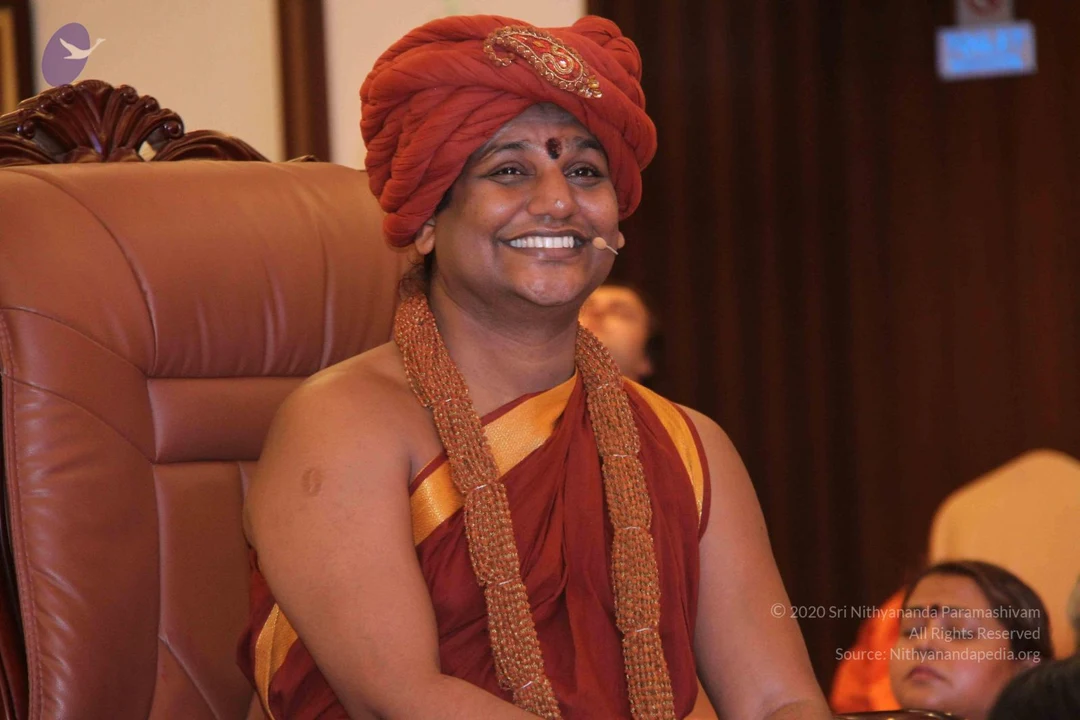
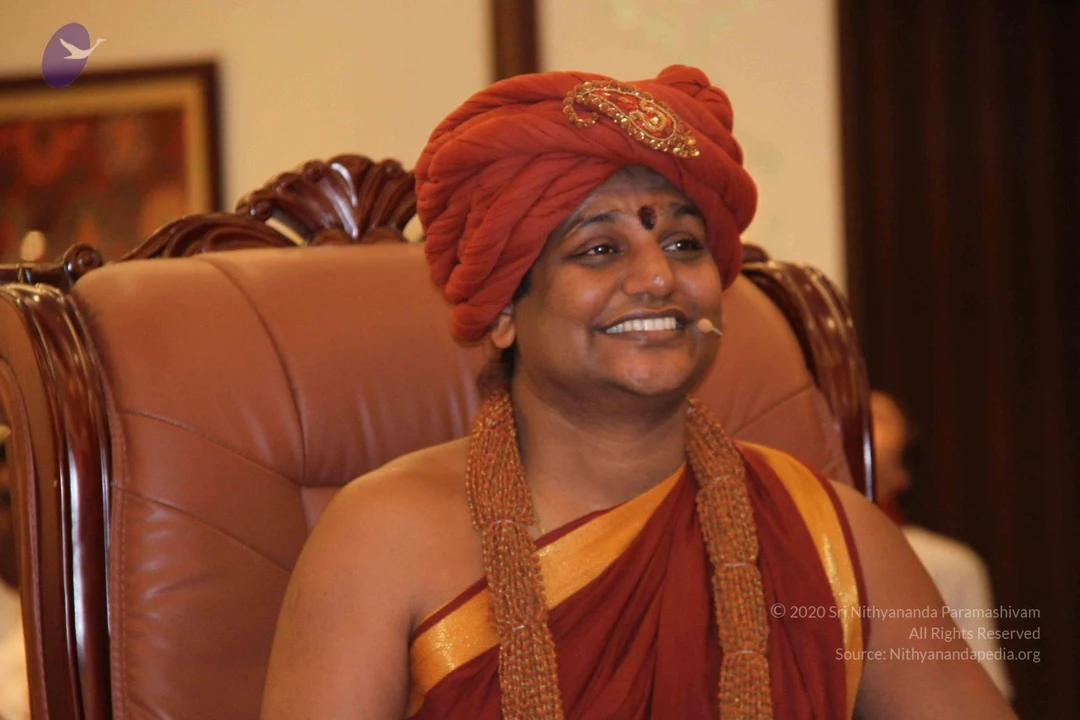
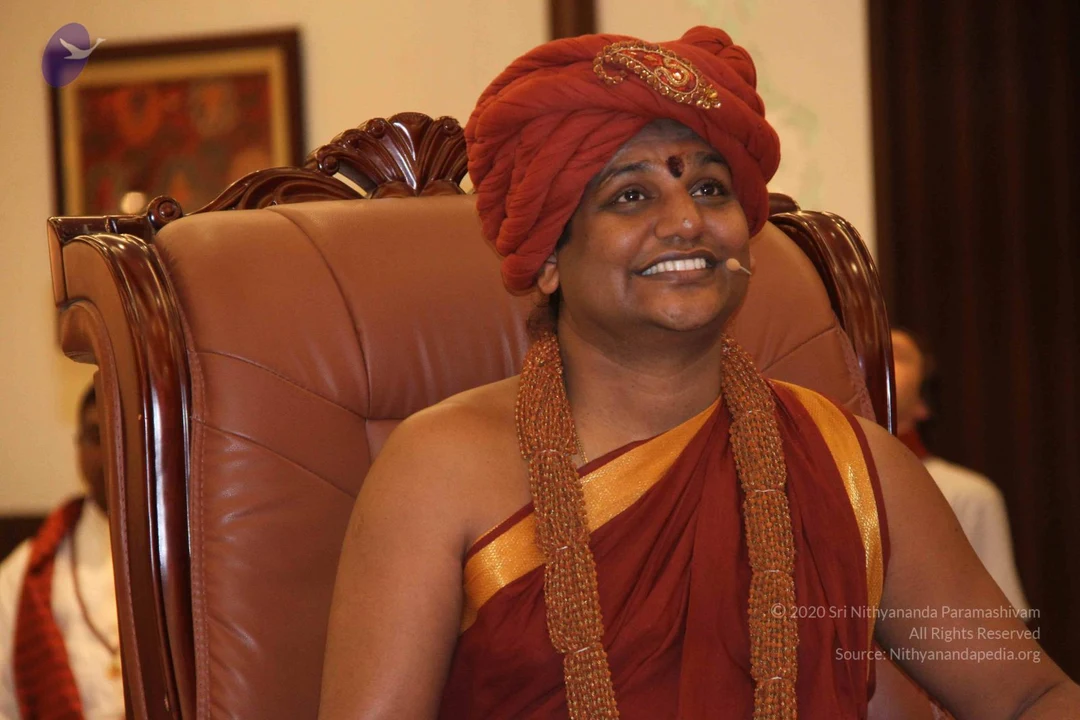
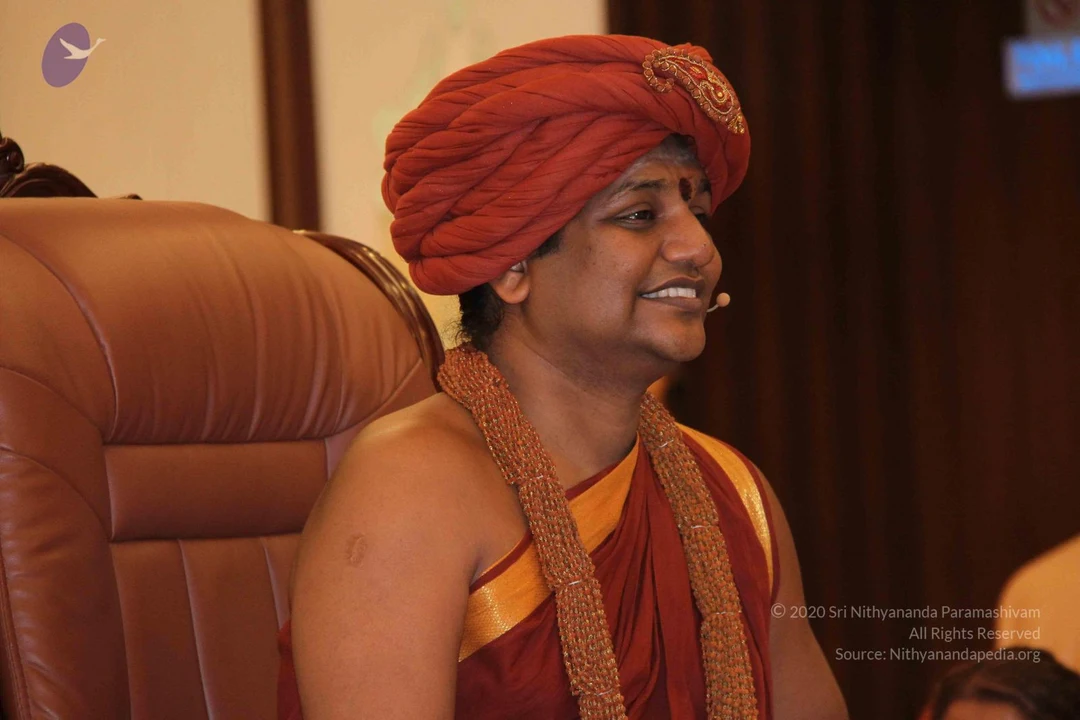
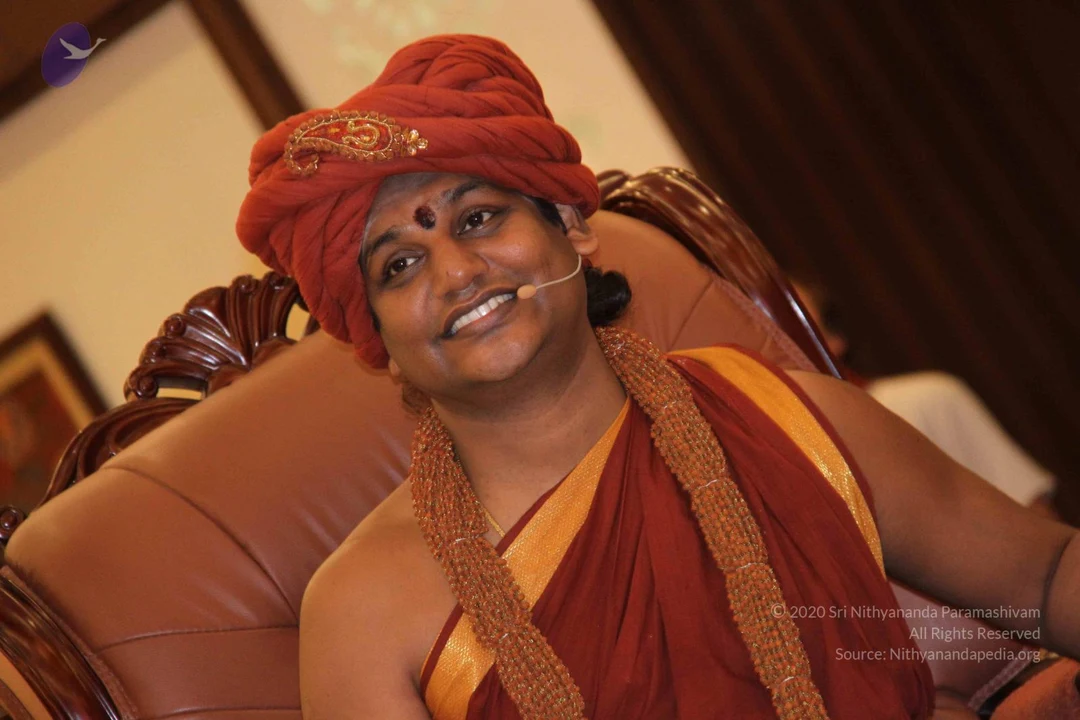
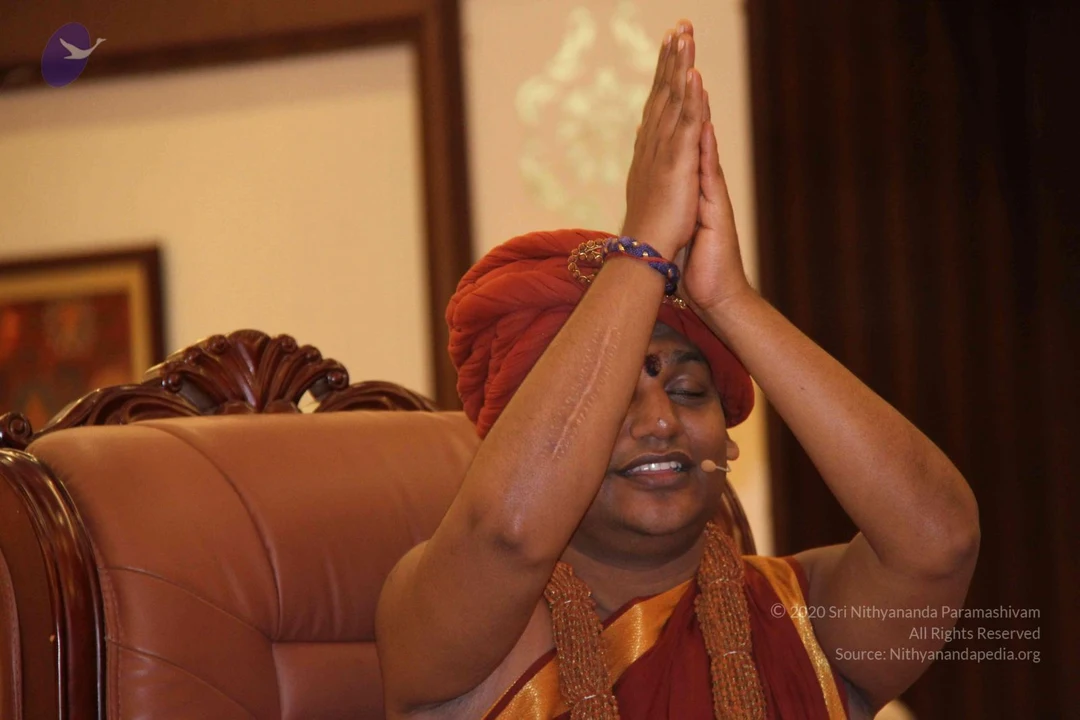
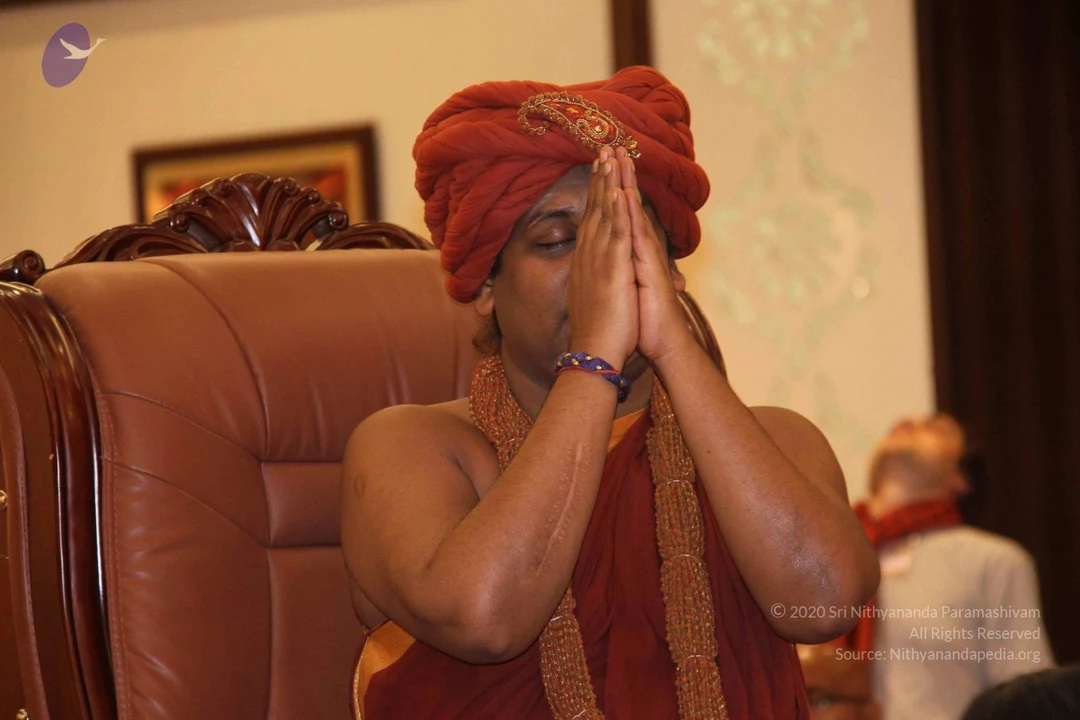
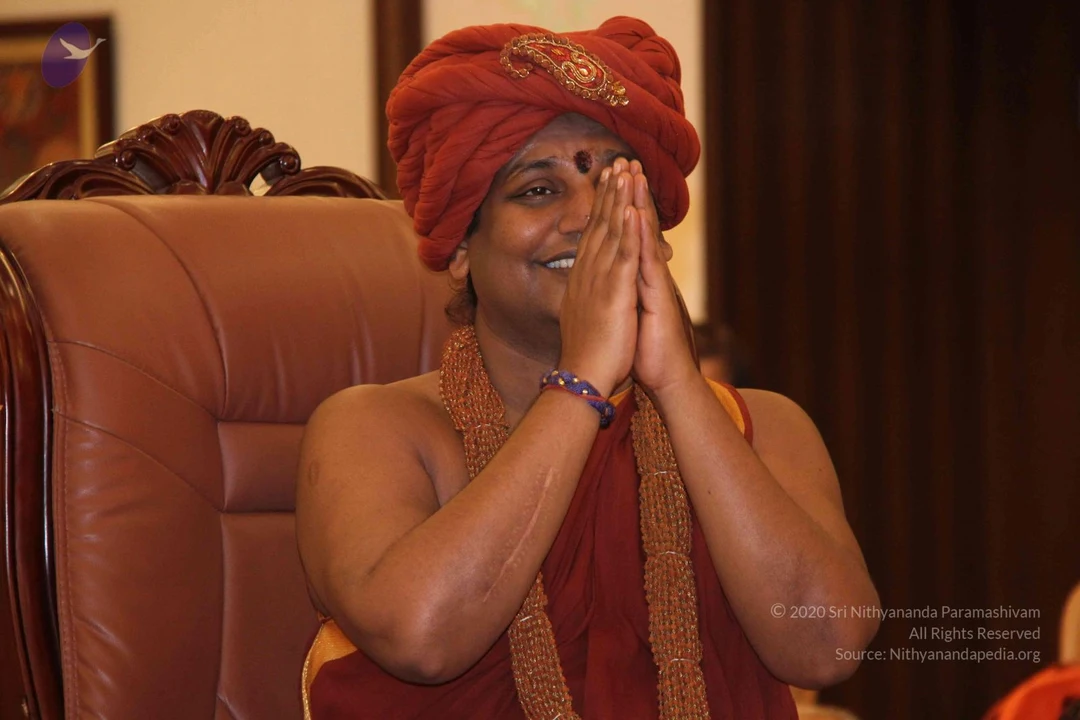
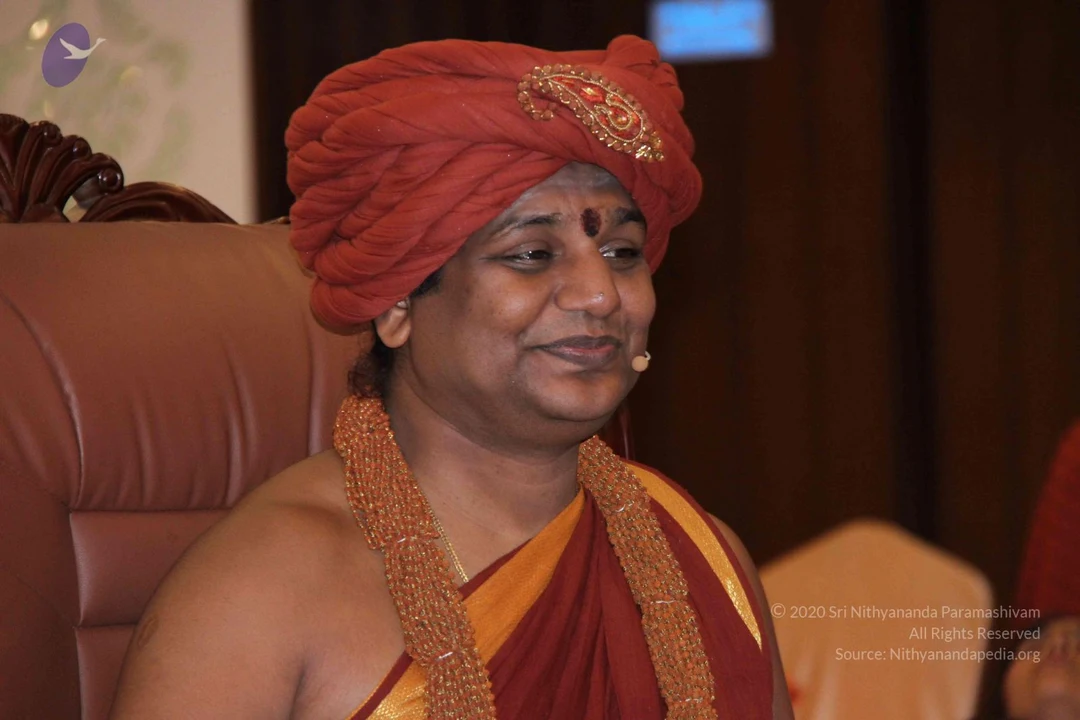
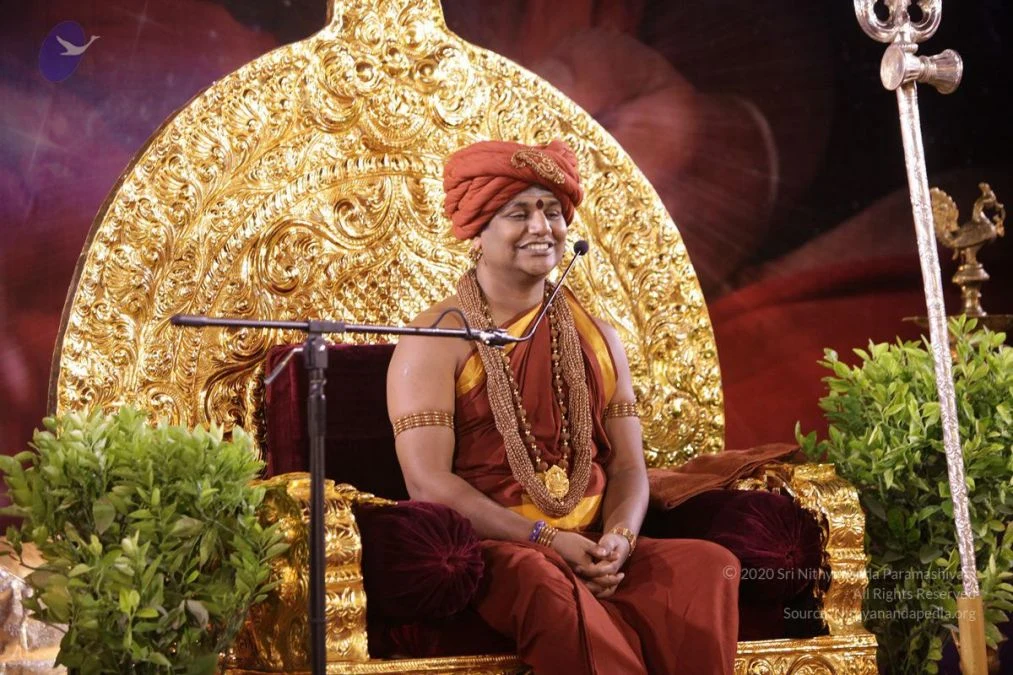
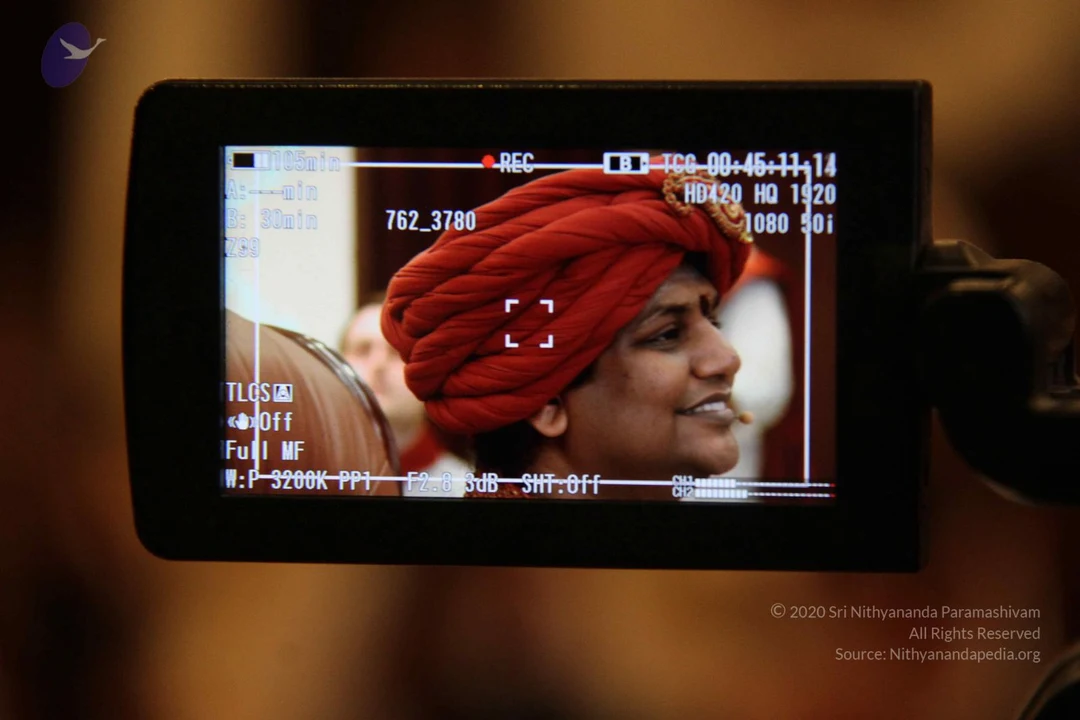
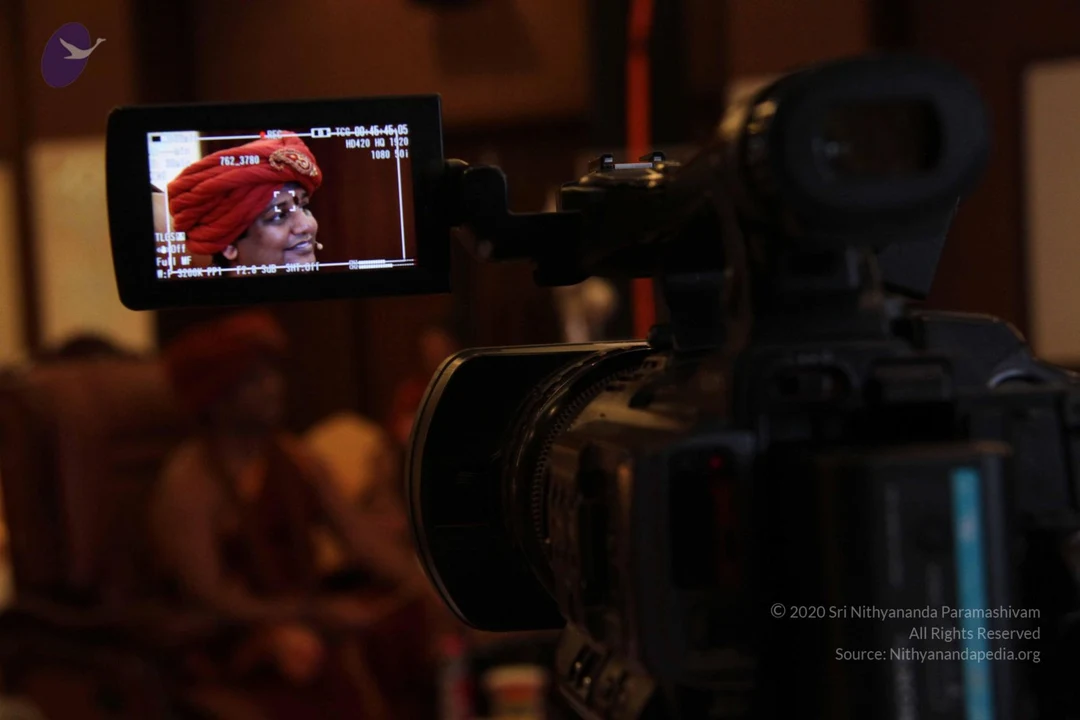
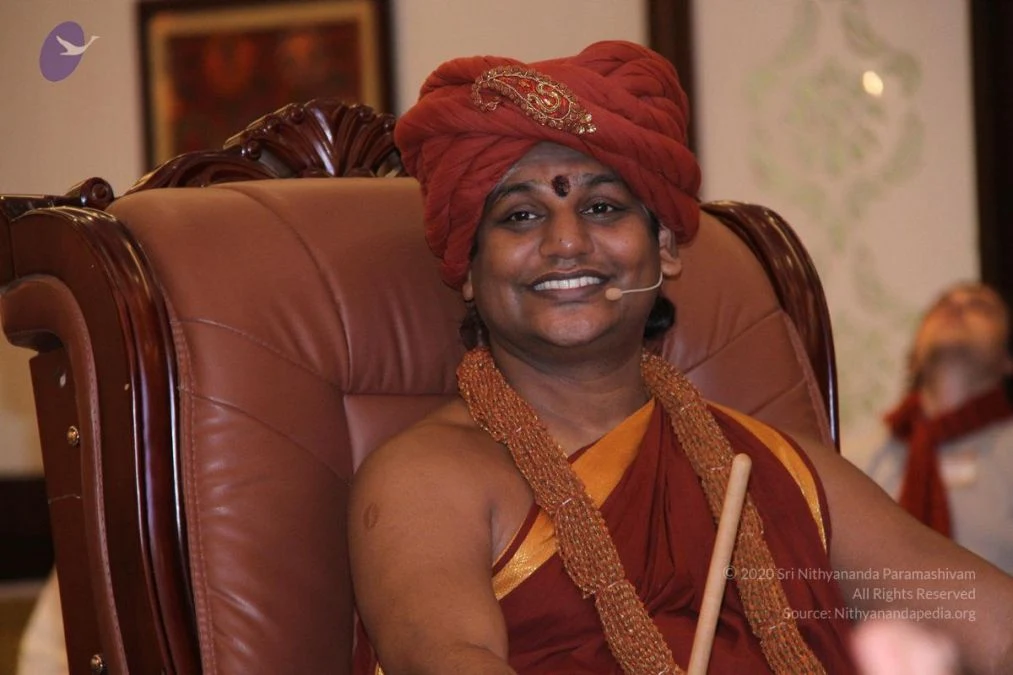
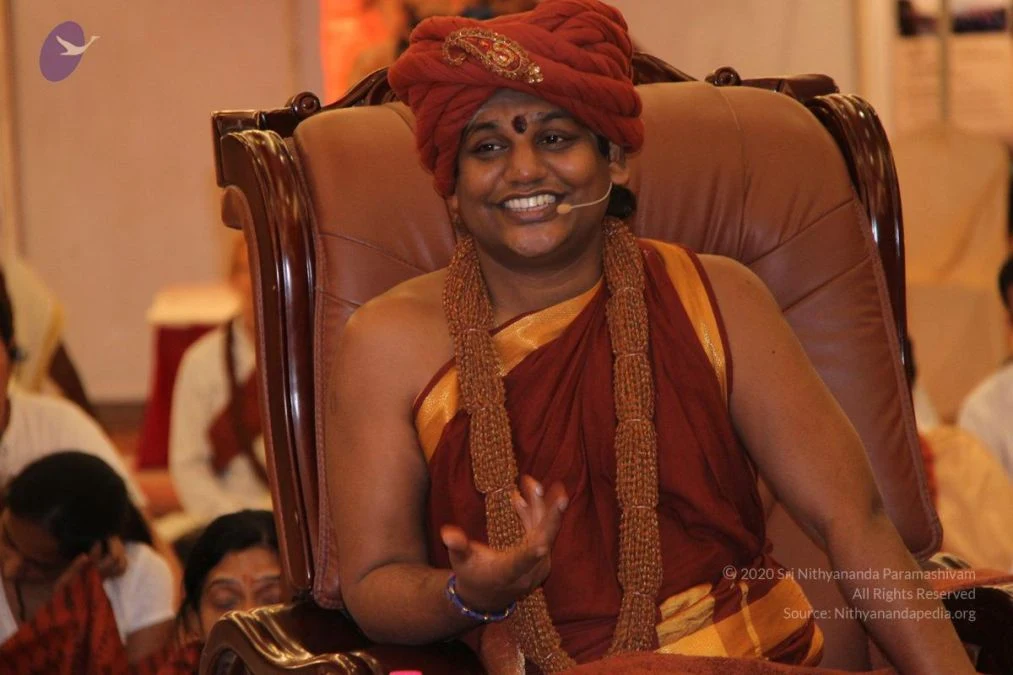
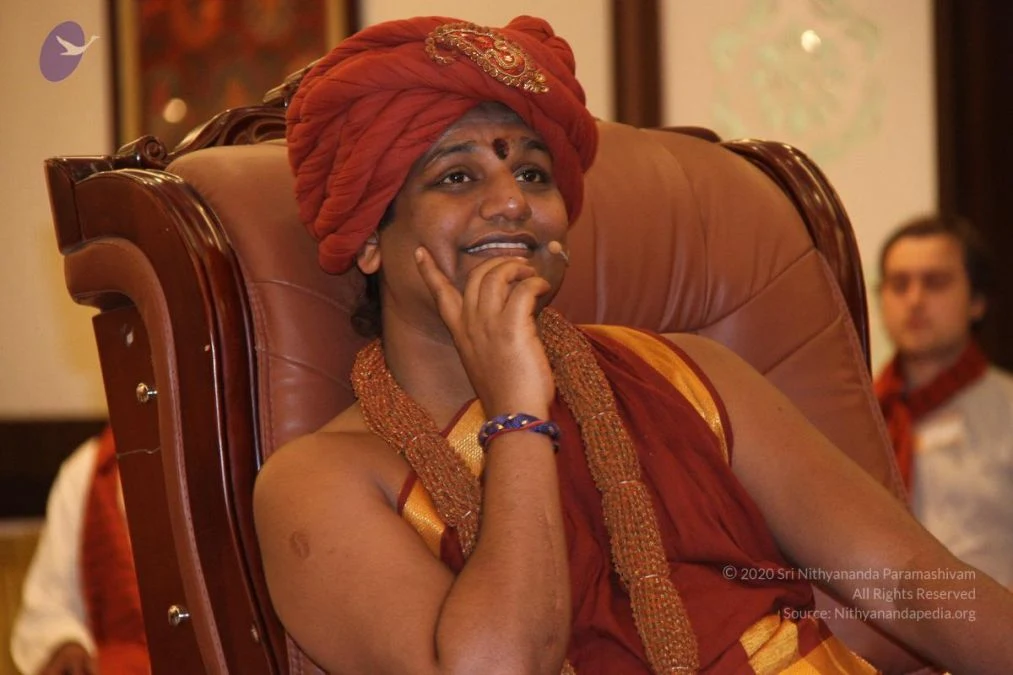
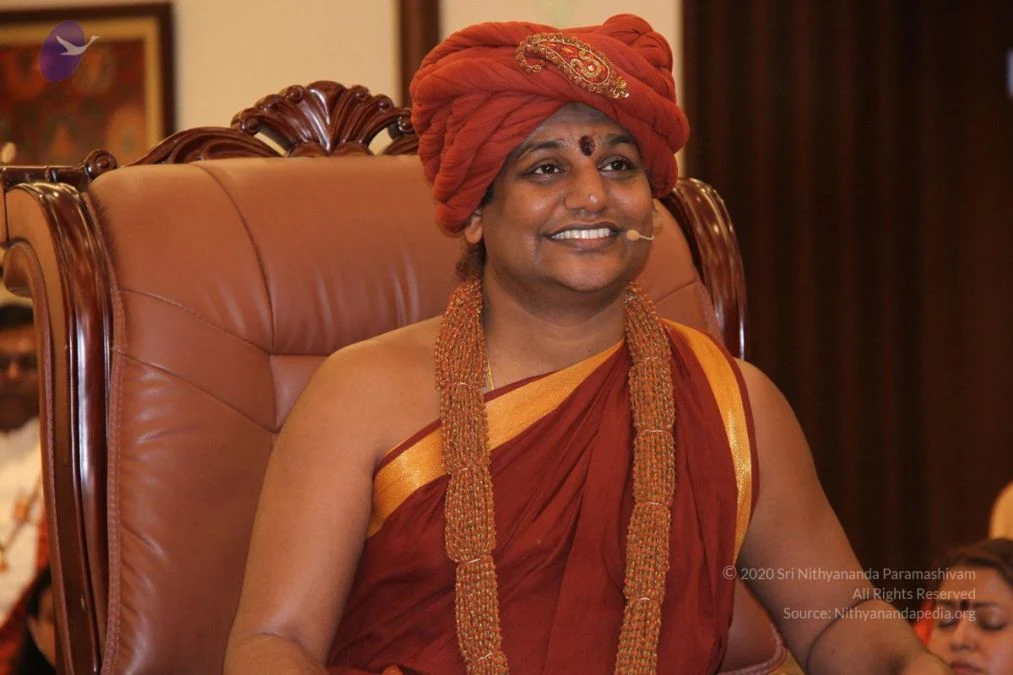
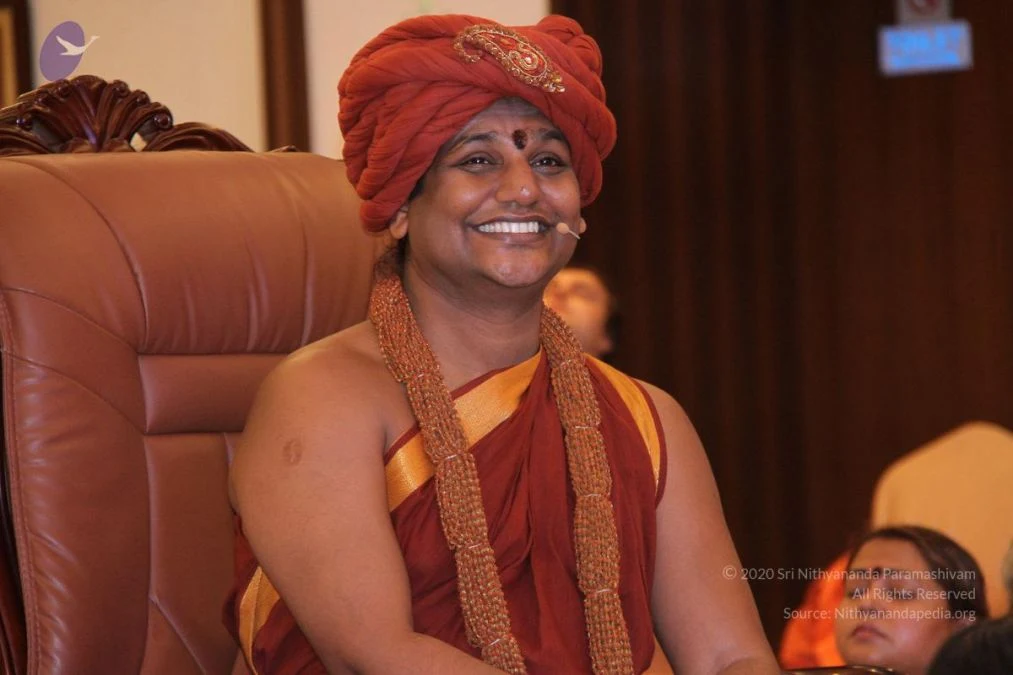
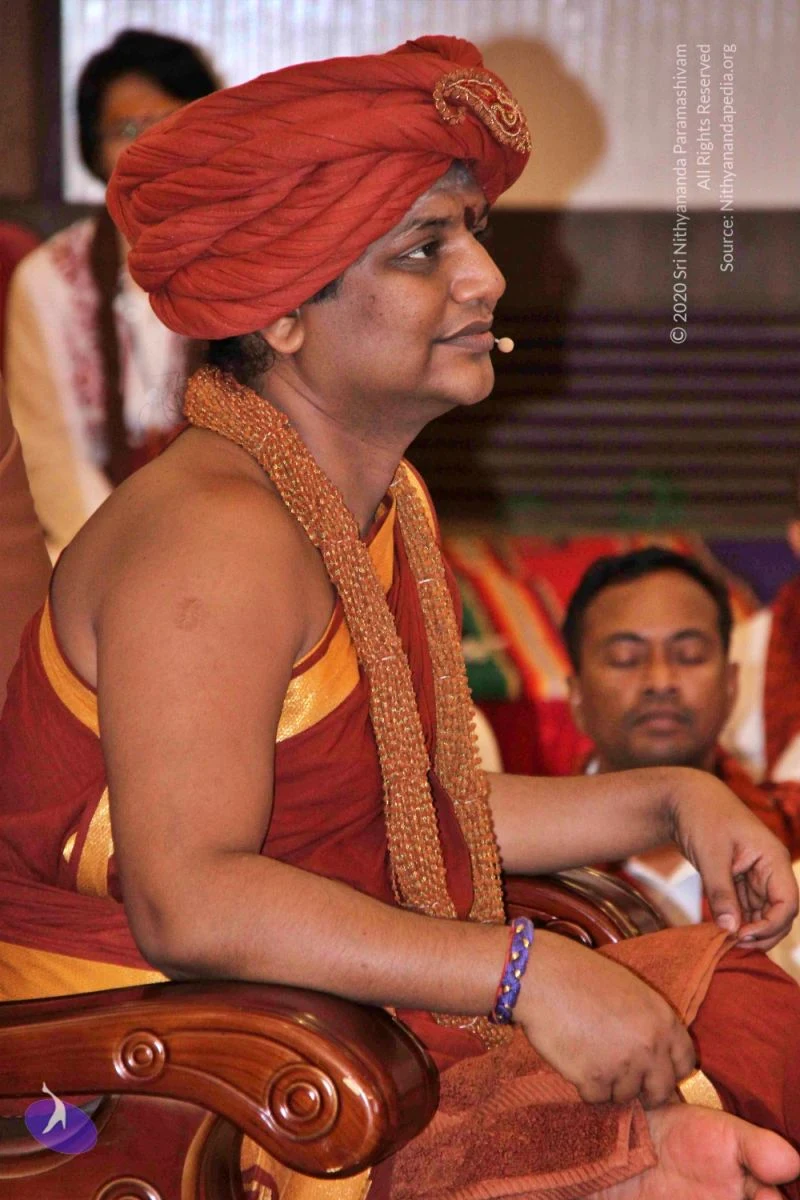
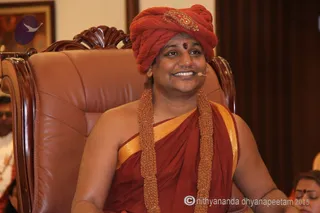
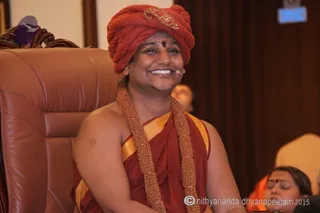
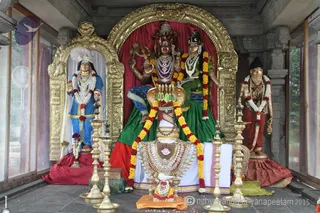
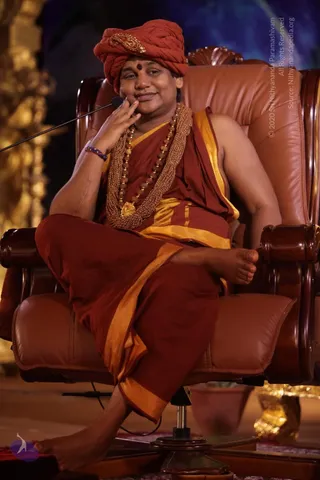
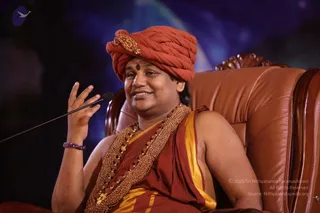
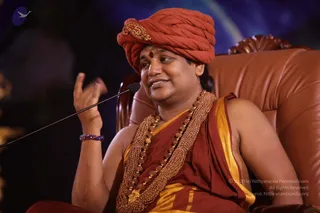
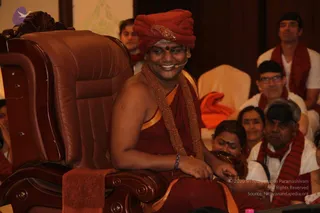
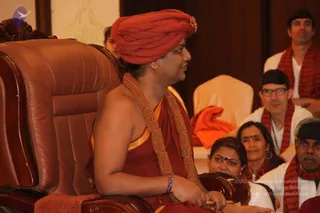
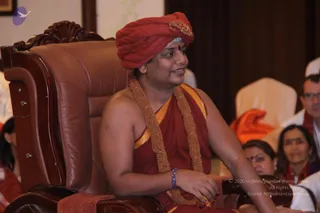
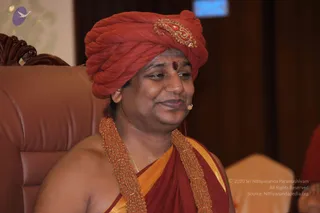
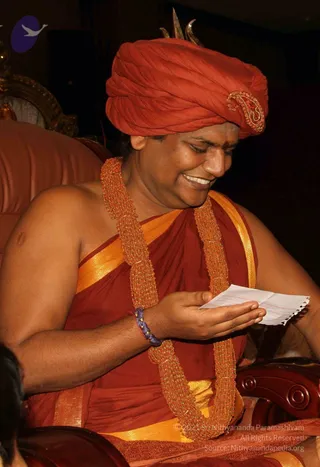
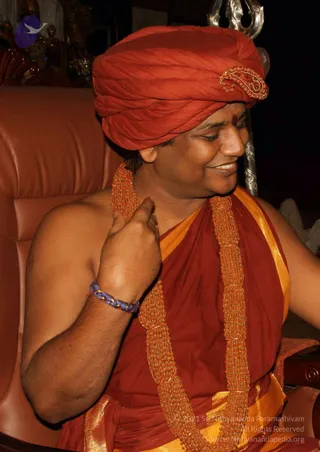
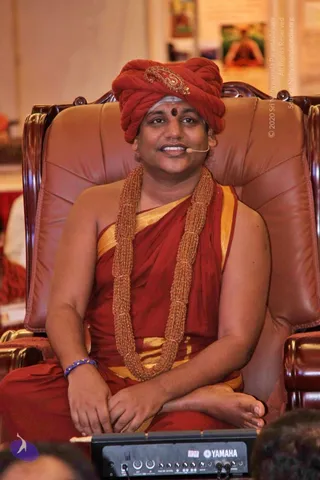
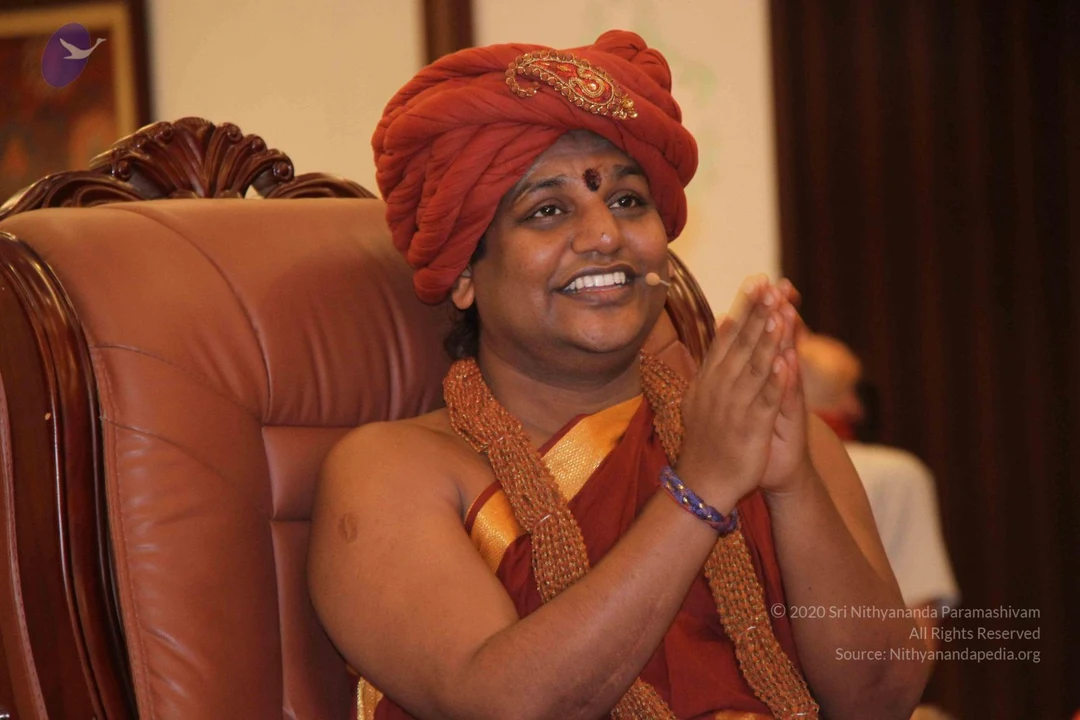
A smiling man seated in a brown leather chair with carved wooden armrests, wearing a red turban with a gold paisley ornament, a red forehead mark, a small clip-on microphone, and a red and saffron-bordered robe with a long gold-beaded necklace. He holds a thin wooden stick across his lap. Another man in a red scarf sits blurred at the right edge, and a framed picture hangs on the wall behind. Swamiji (probable) appears in person, seated on a throne-like chair at a satsang setting, identified by the turban, robe and beaded necklace.A smiling man in a red-maroon turban with a gold paisley ornament and a small red bindi sits in a brown leather armchair during a satsang. He wears a red-maroon robe with gold borders, a long beaded rudraksha-style mala, and a blue beaded bracelet, with a small headset microphone at his ear. His right hand is raised in a gesture while he speaks. Blurred seated devotees in white and red clothing are visible at the lower left and right edges.A smiling man in a brown leather armchair rests his chin on his hand during a satsang. He wears a red-orange turban with a gold embroidered motif, a red bindi, a gold-and-orange shawl draped over bare shoulders, a beaded orange necklace and a blue-and-red bracelet, with a small headset microphone at his ear. A second man in white with a red-orange scarf sits blurred at right, and a partial figure appears at left. Swamiji (probable): the orange-red turban, beaded mala and ornate ceremonial clothing are visible cues of a sannyasi presentation, and the page names him as present. The image carries a Nithyananda Dhyanapeetam 2015 copyright line.A smiling man in a deep red turban with a gold ornament at the front sits in a large brown leather armchair with carved wooden arms. He wears a red-orange shawl with gold borders over a bare-chested upper body and a long rudraksha-style beaded necklace, with a small red tilak on his forehead and a small headset microphone near his mouth. Behind him a framed painting hangs on a cream wall beside dark wood panelling. At the lower right, a woman with a red bindi and eyes closed is partly visible. Swamiji (probable): the red turban, saffron-toned shawl and beaded necklace are visible cues of a seated speaker at a satsang-style event.A smiling man in a red-orange turban with a gold embroidered motif sits in a brown leather high-backed chair. He wears a red-orange shawl with gold border, a rust-coloured dhoti-style wrap, and a long rudraksha-style beaded mala with a small red bindi on his forehead. A small clip microphone is attached near his ear. Behind him, a woman with a red bindi and eyes closed sits in profile beside a dark wooden wall, and a partially visible person sits at the back. Probable Swamiji is seated as the speaker at a satsang, with the cues of saffron-red turban, ornate shawl and beaded mala.Photograph of a temple shrine with a dark-faced seated deity pair under a gilded arch with red drapery. The central figure wears a crown, trident and rudraksha-style necklaces; the consort wears a green skirt and garland. Flanking figures stand in gold and red garments with garlands. Brass oil lamps stand in front, and a large golden lingam-like form with jewelled necklaces sits on a white cloth at the base, with marigold garlands and scattered petals. No living people are visible.

IA-Varanasi
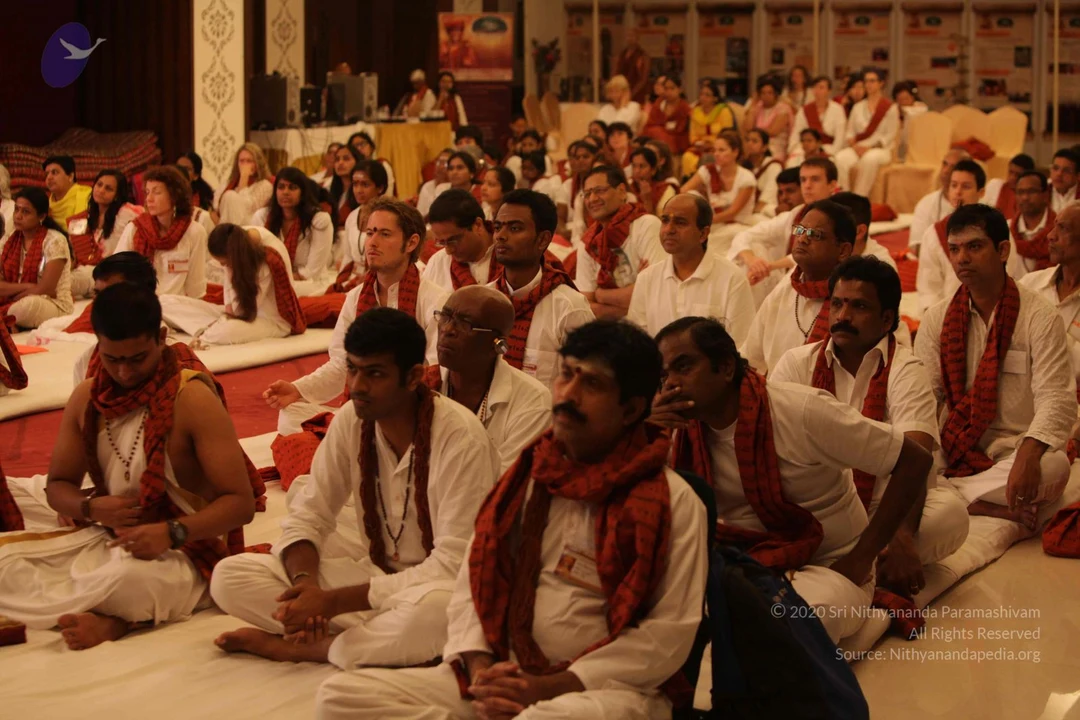
67 photosSource gallery
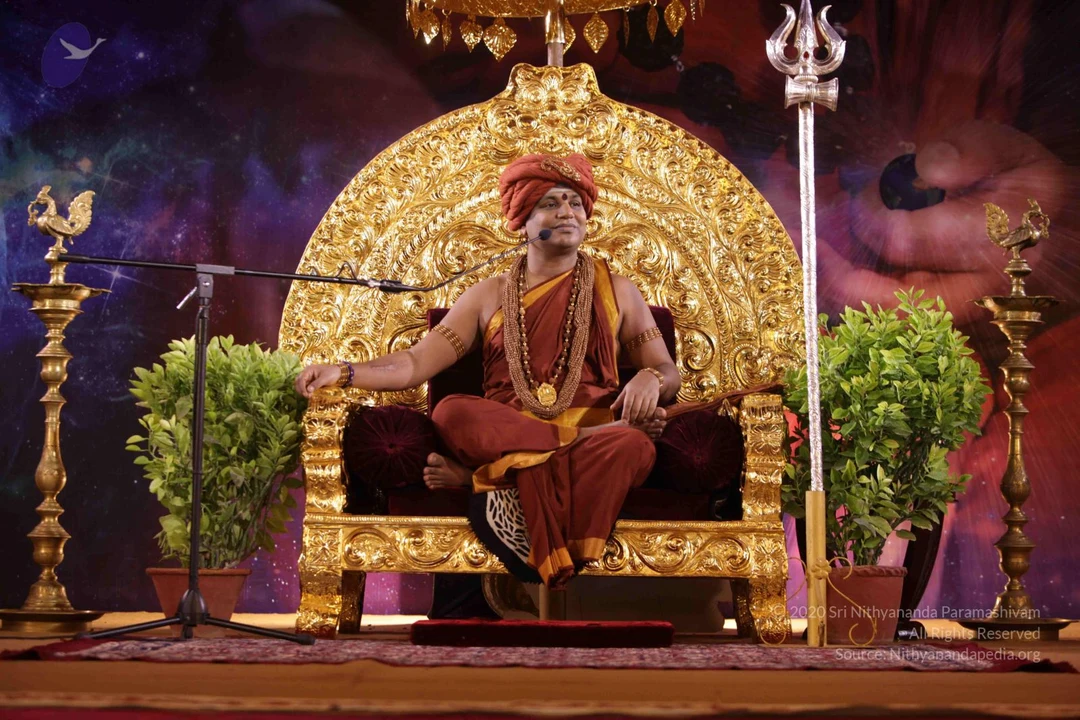
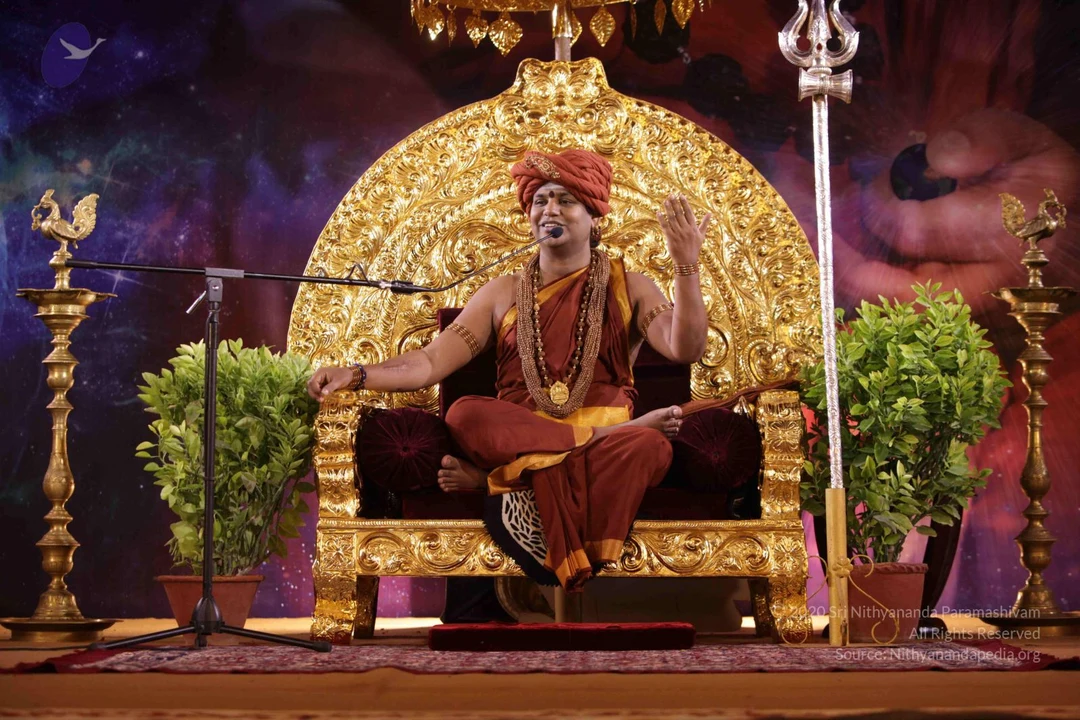
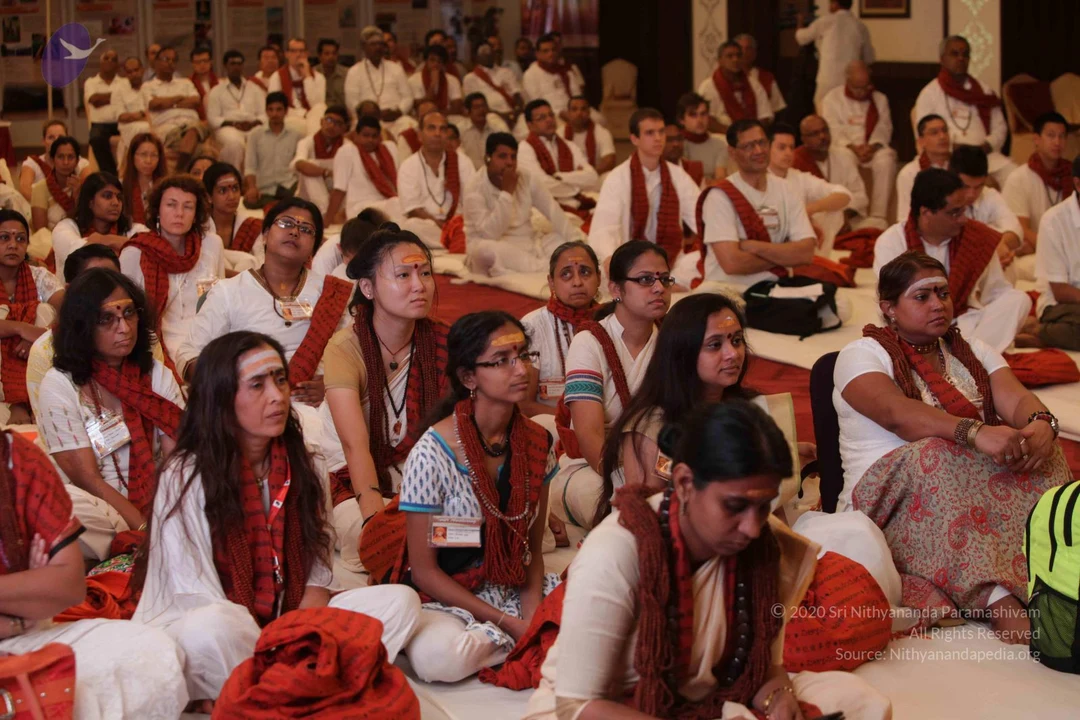
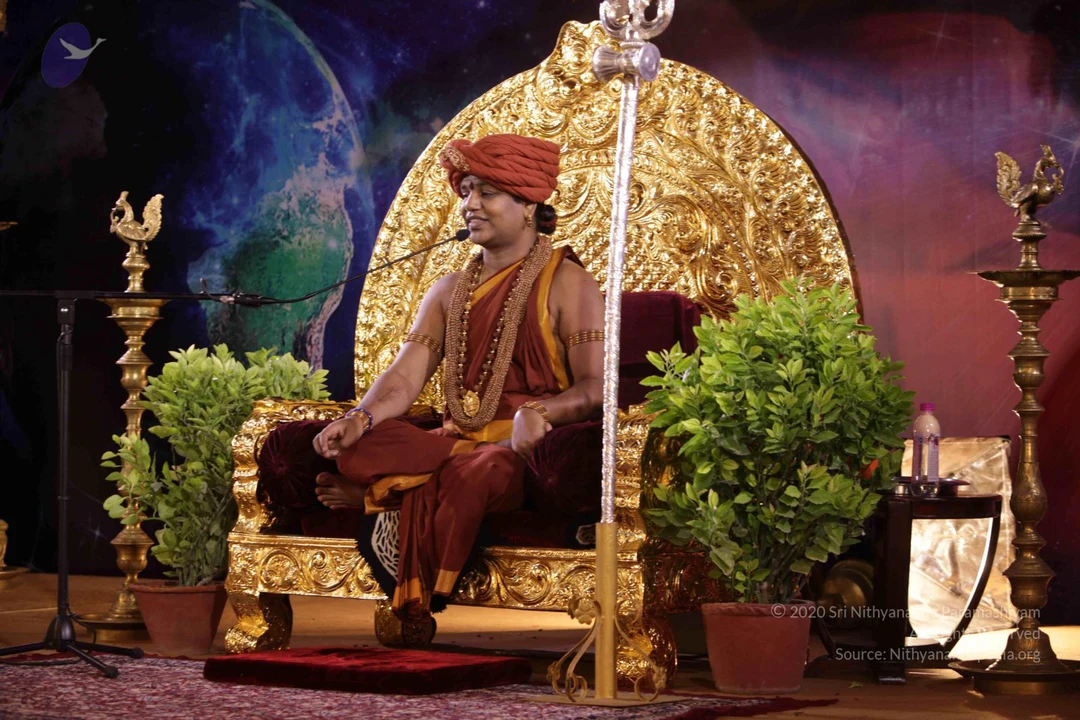
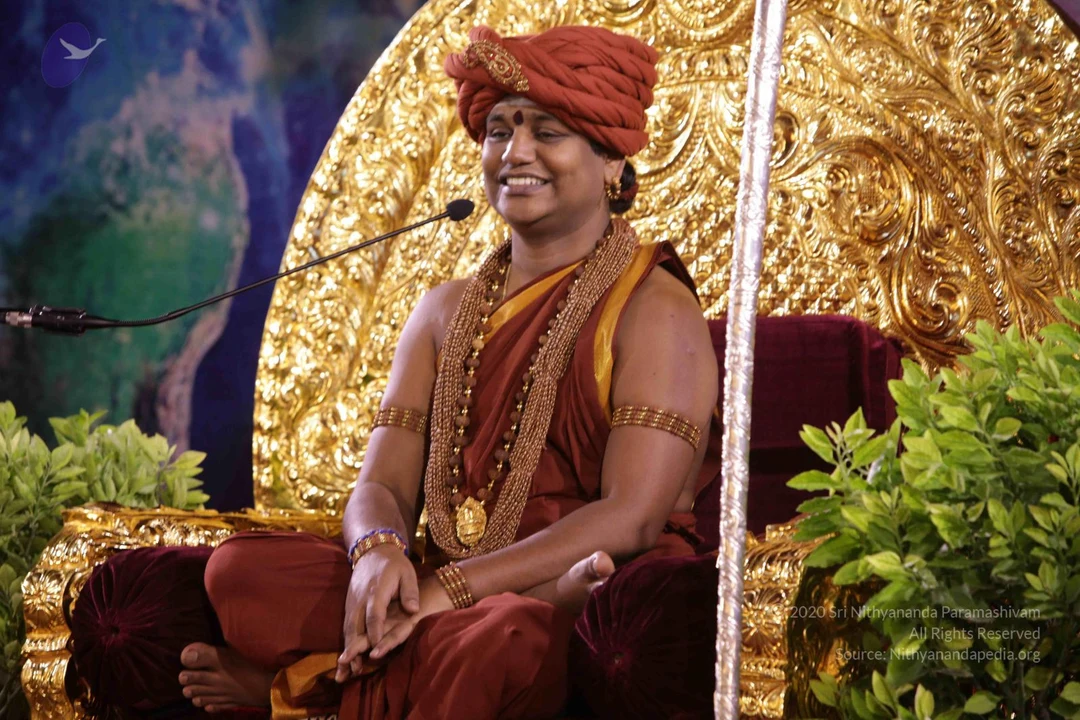
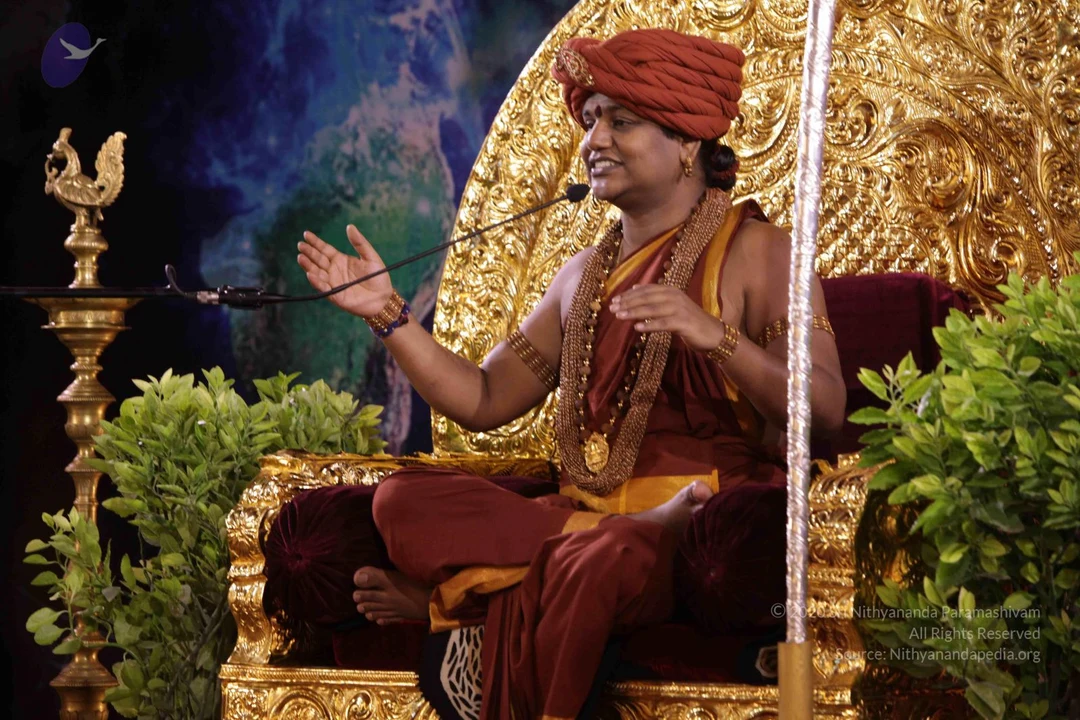
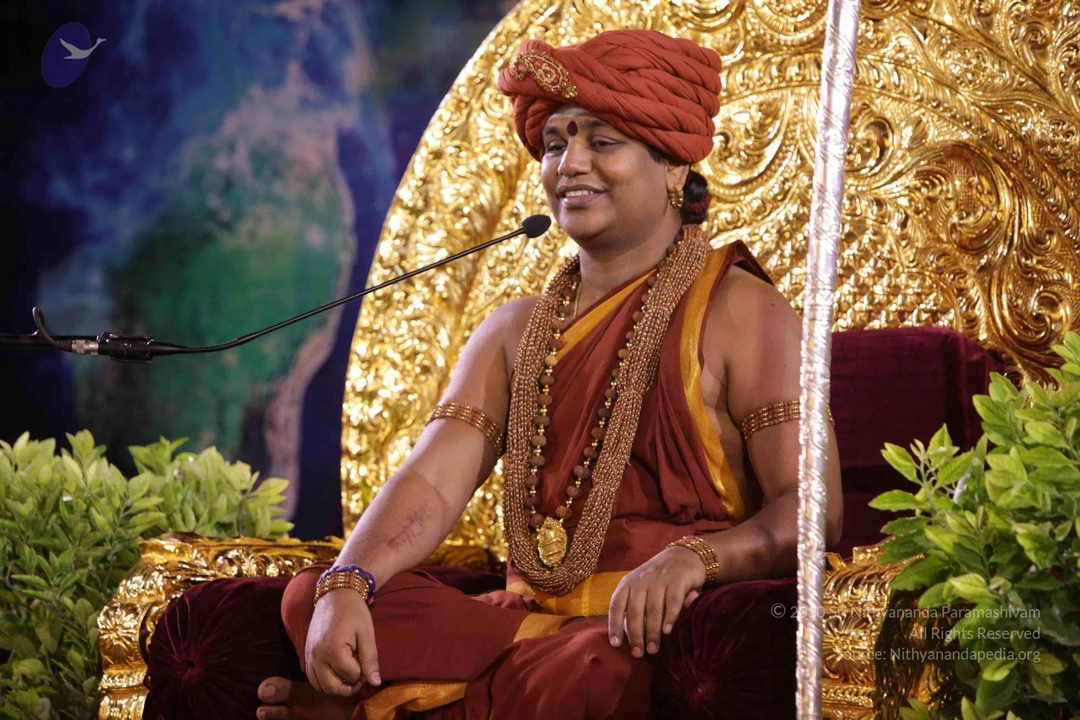
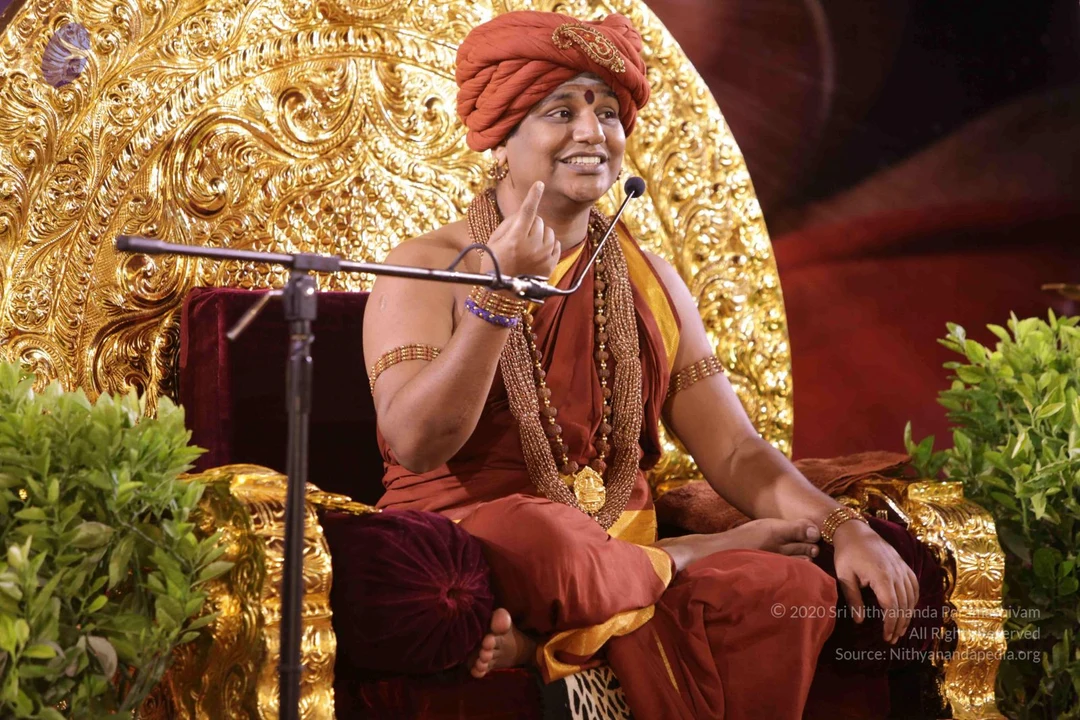
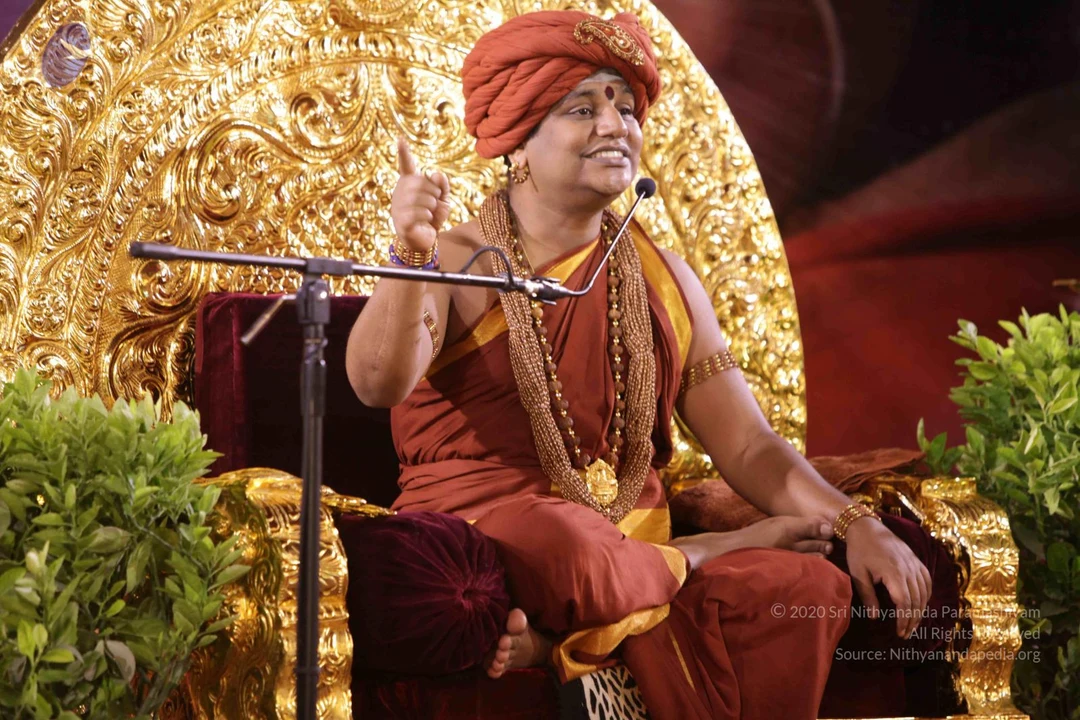
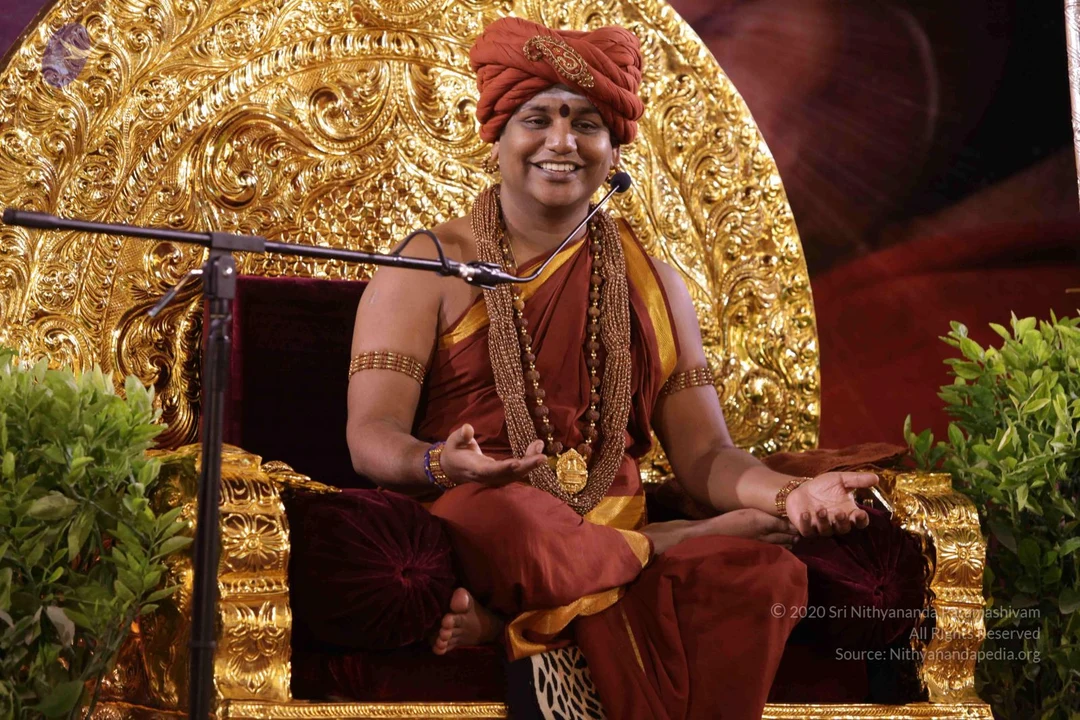
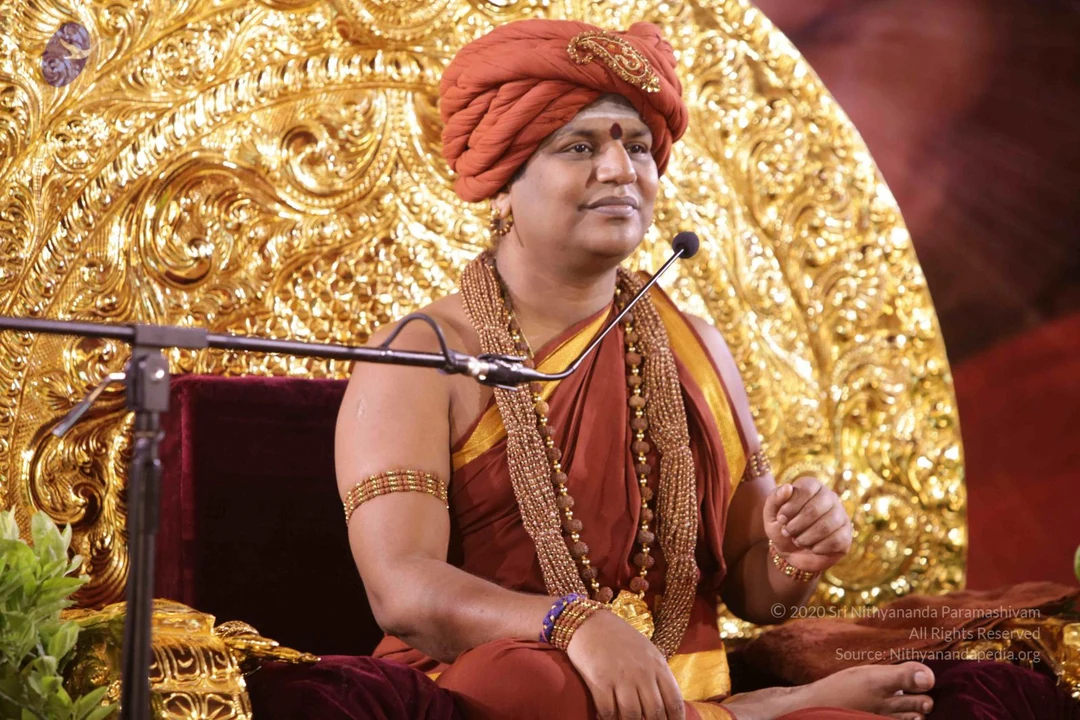
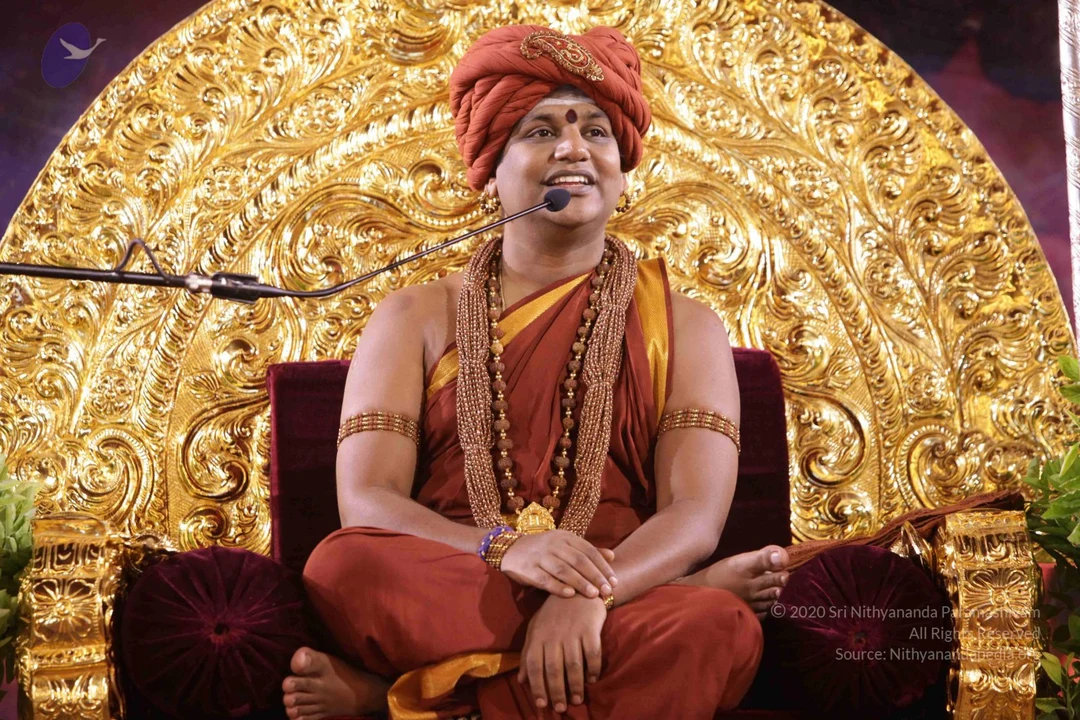
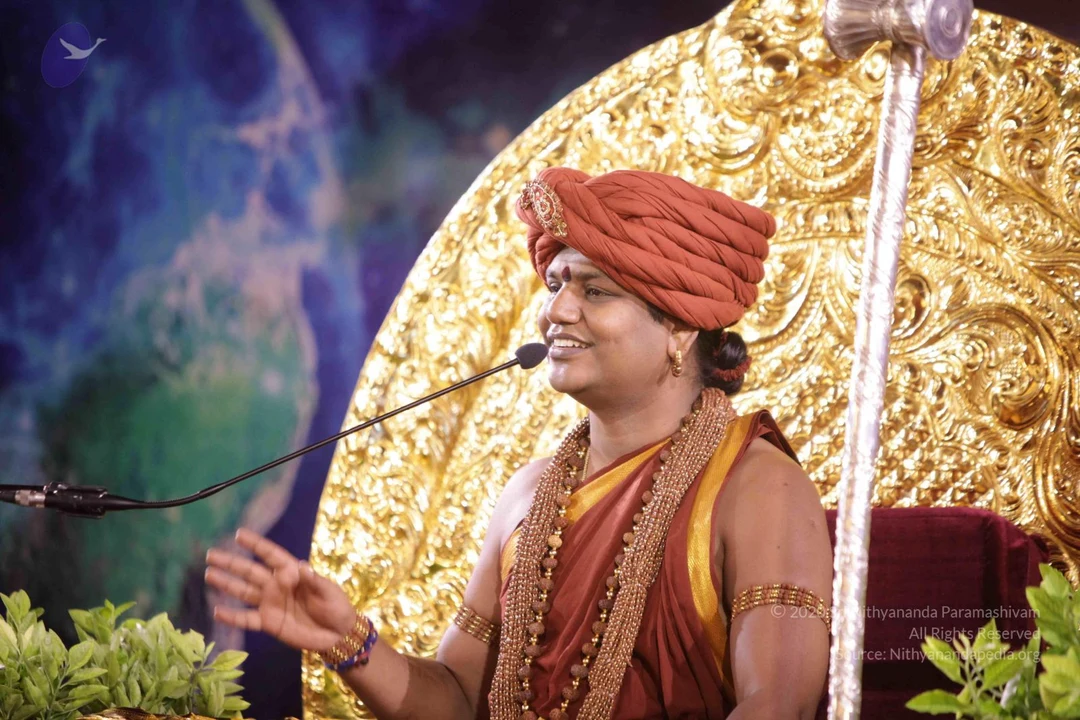
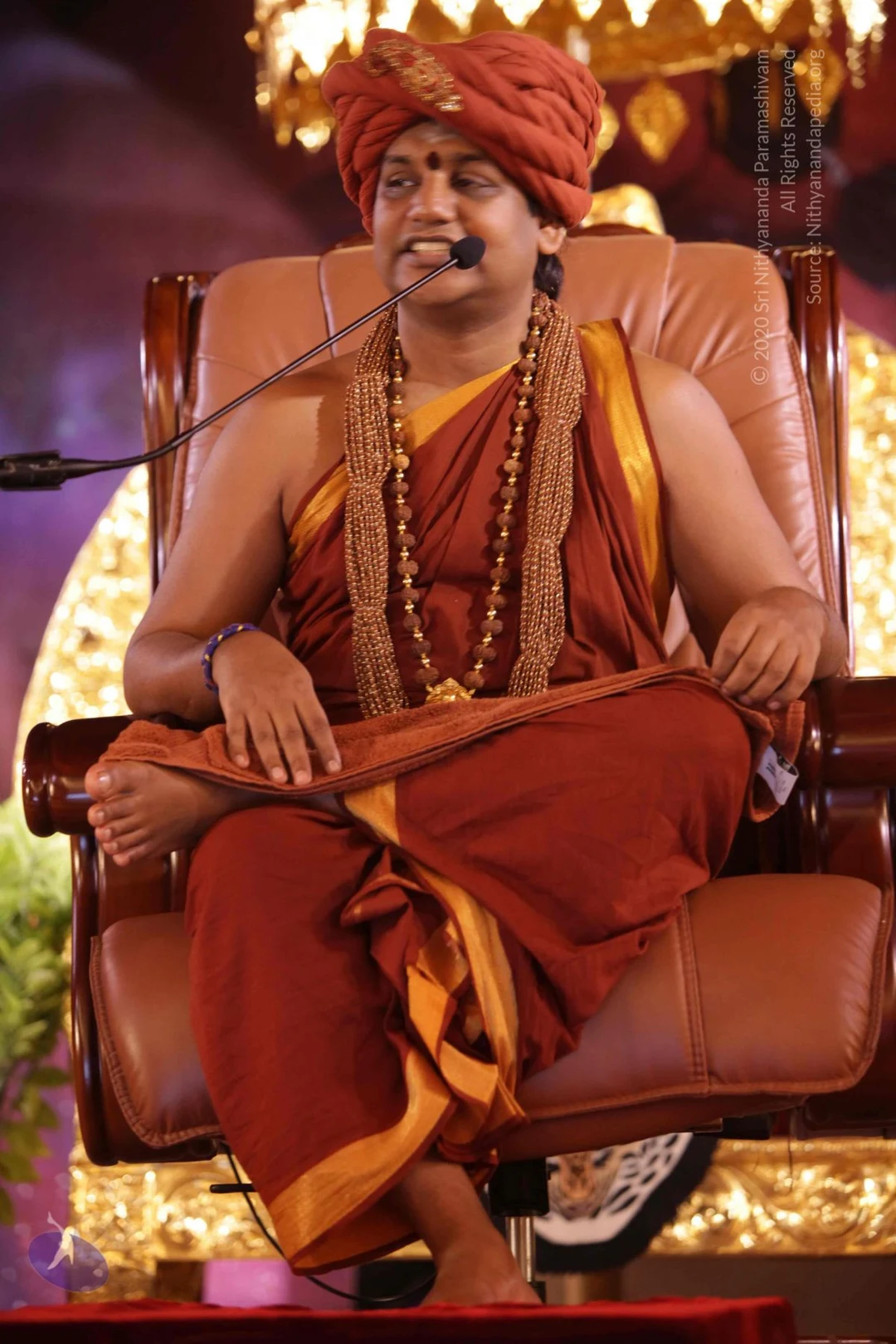
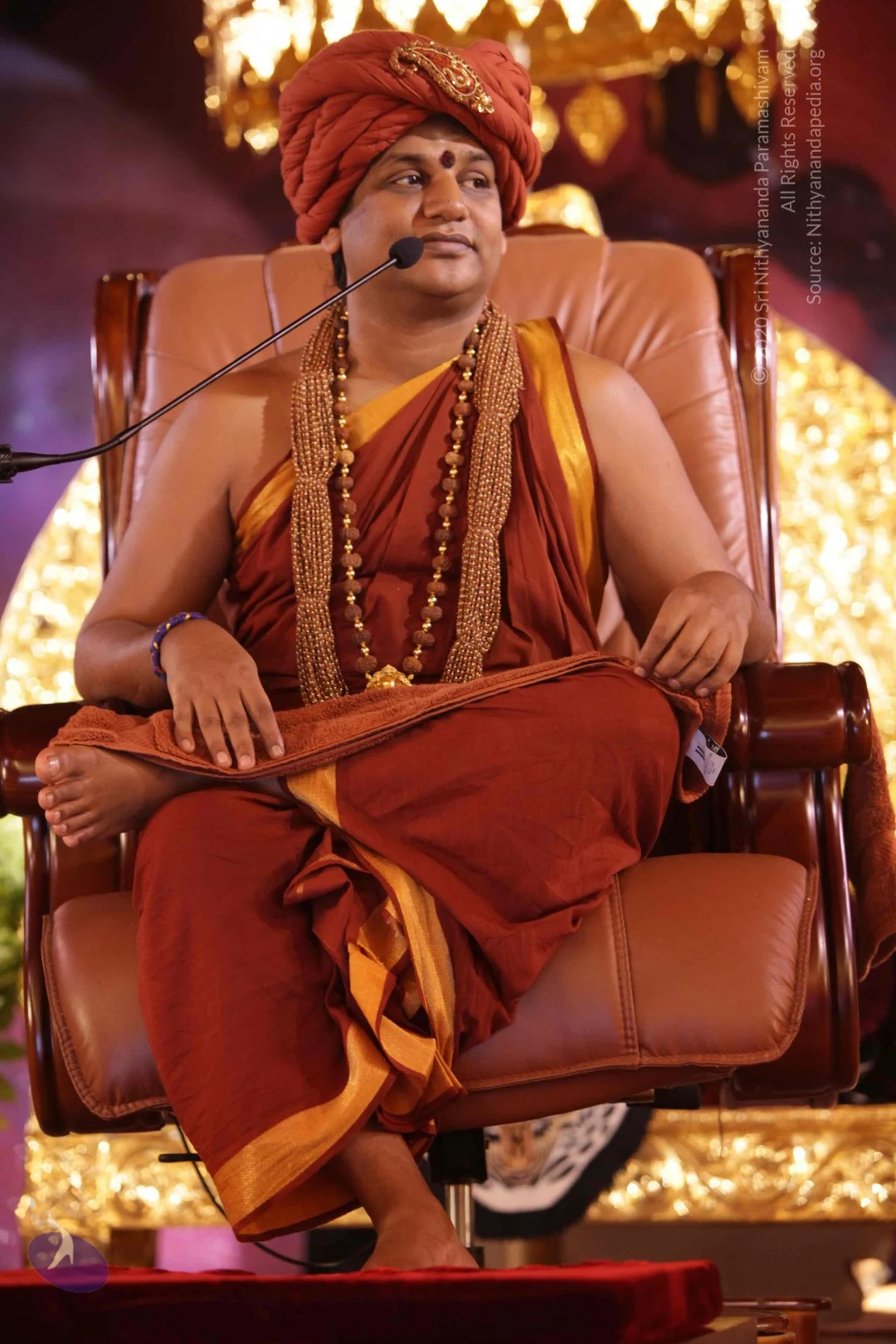
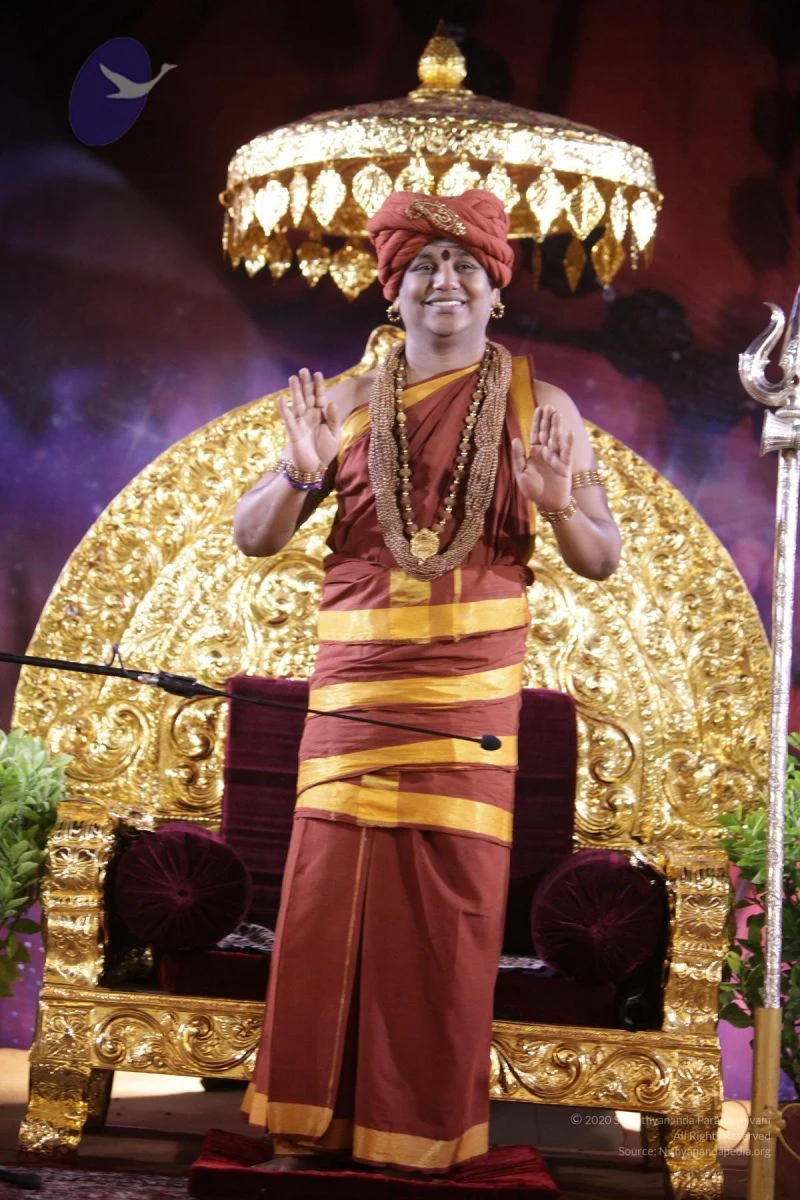
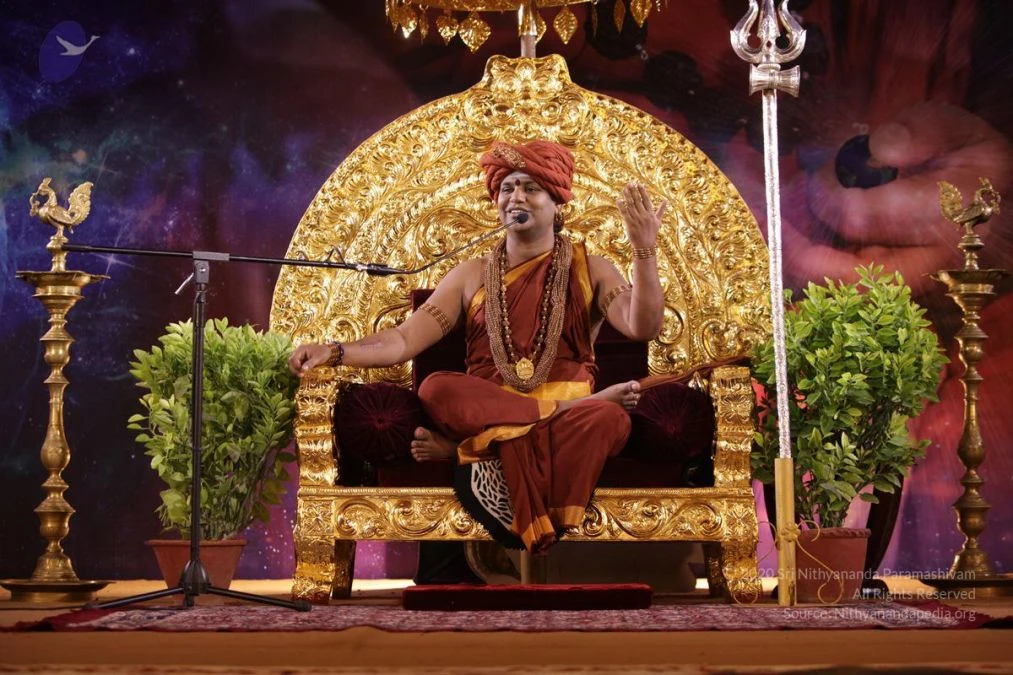
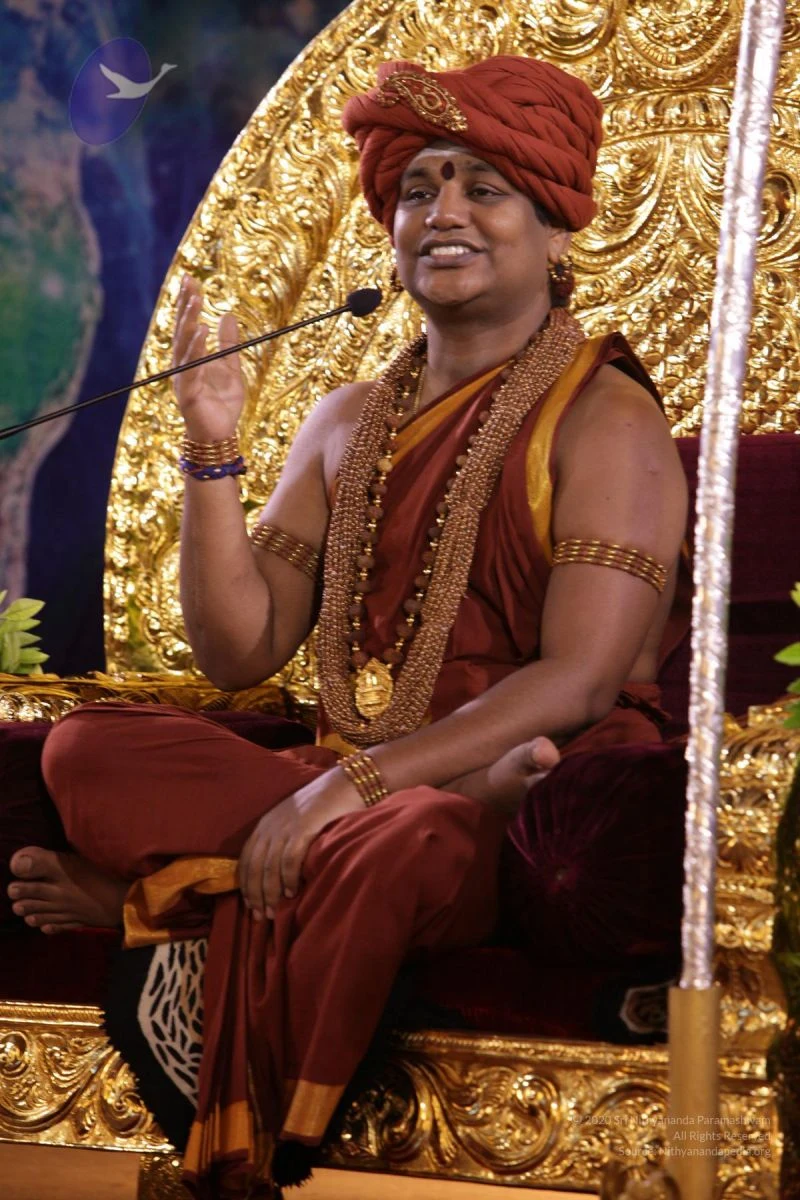
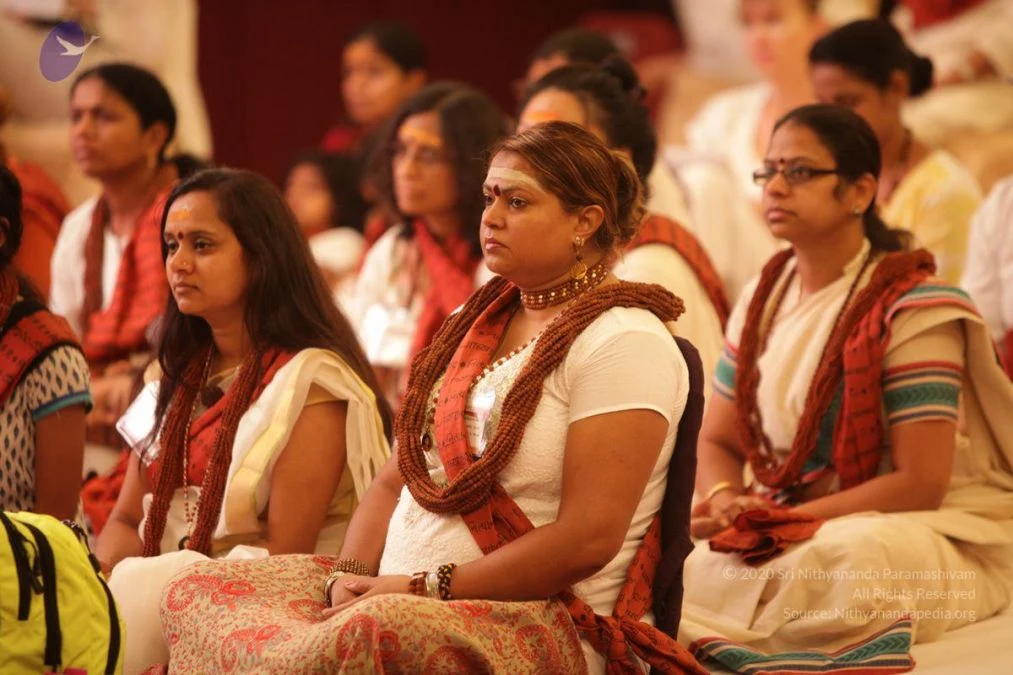
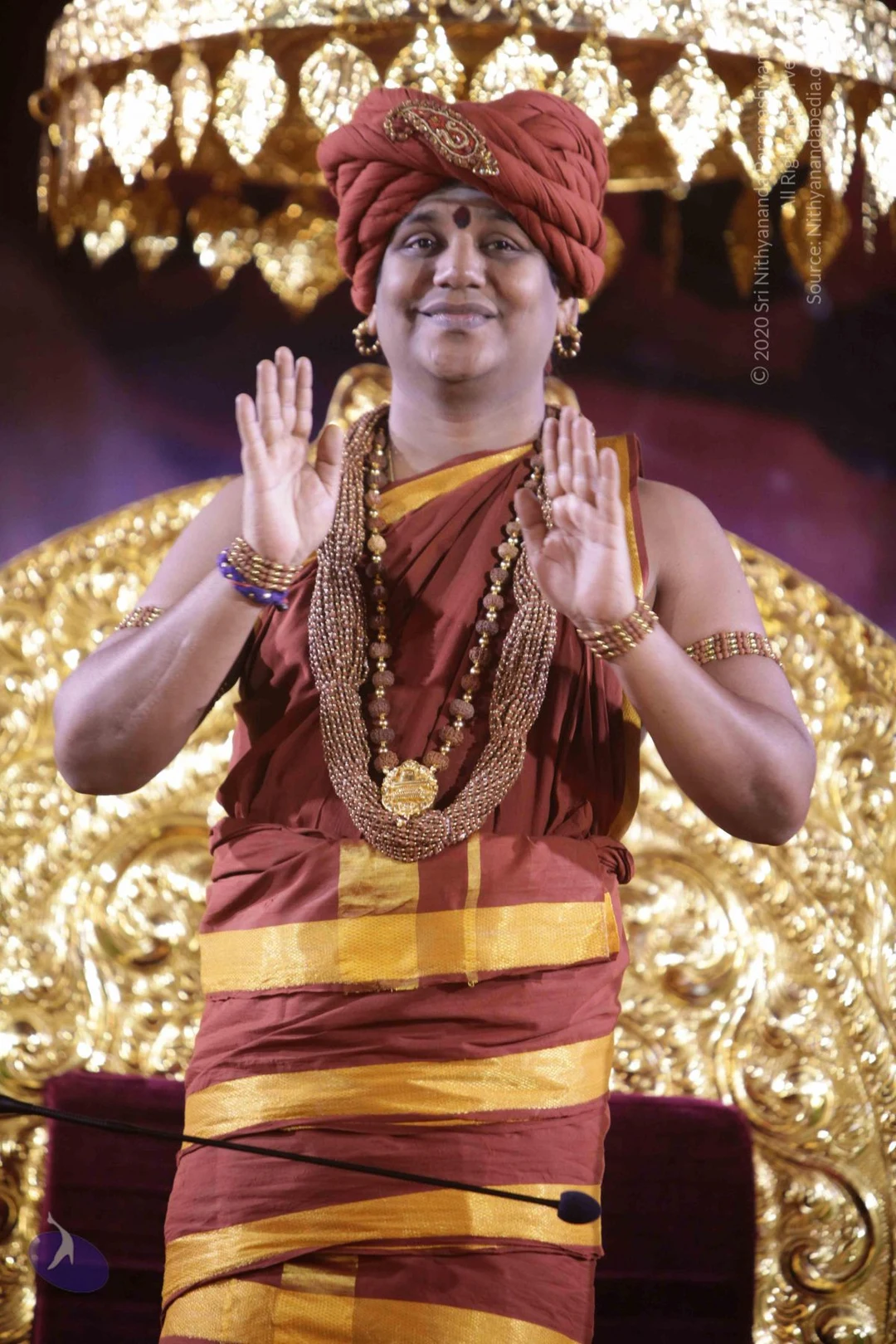
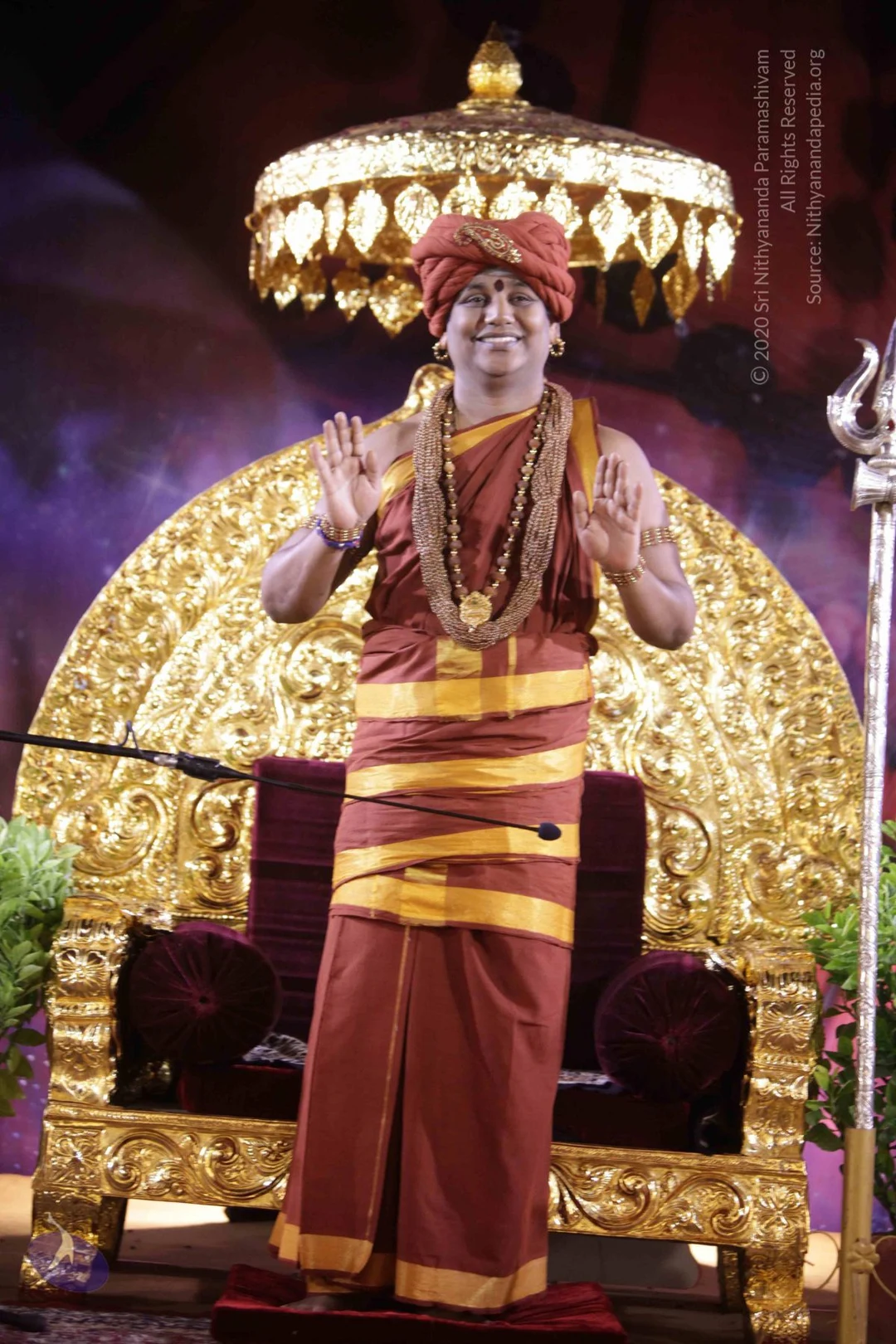
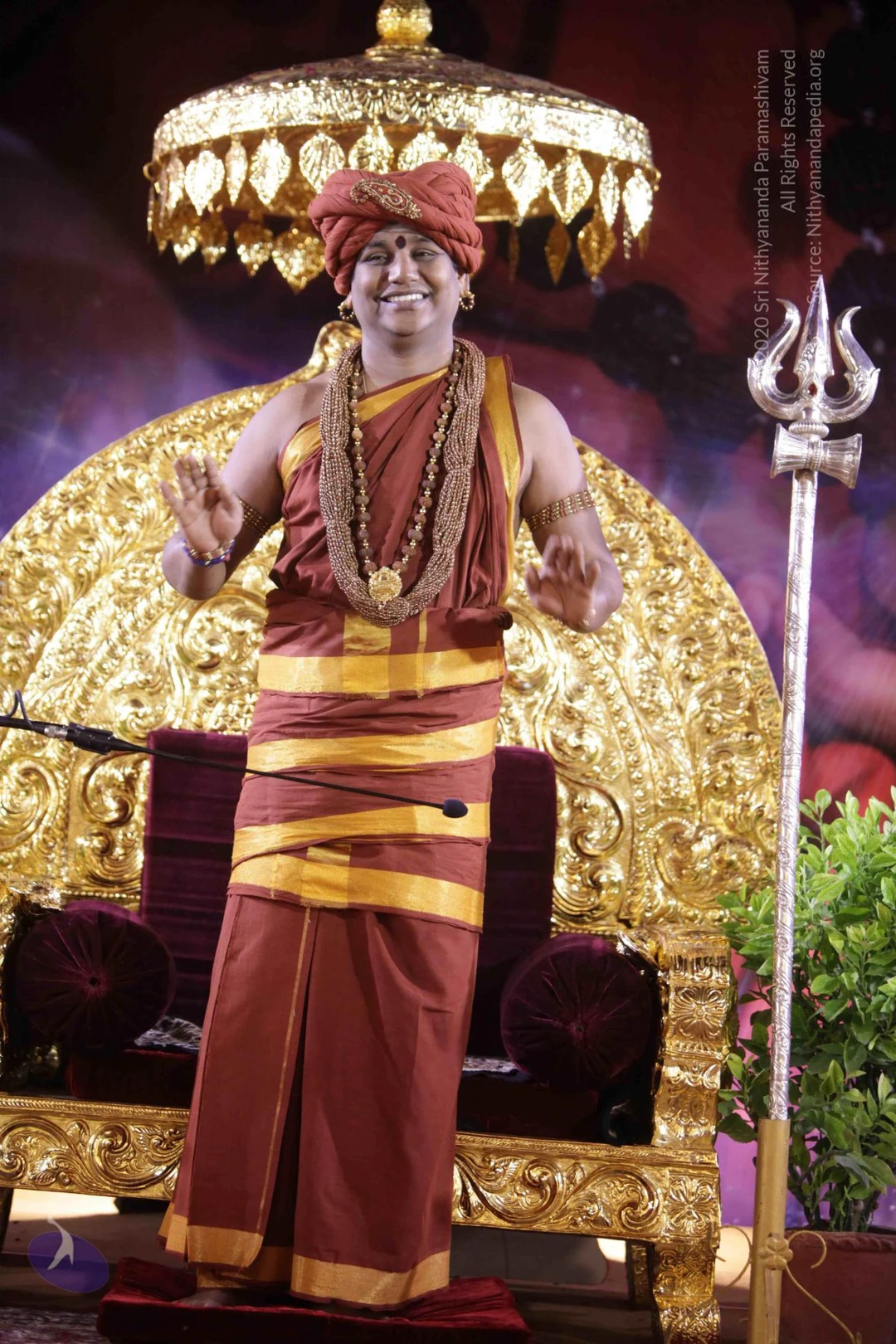
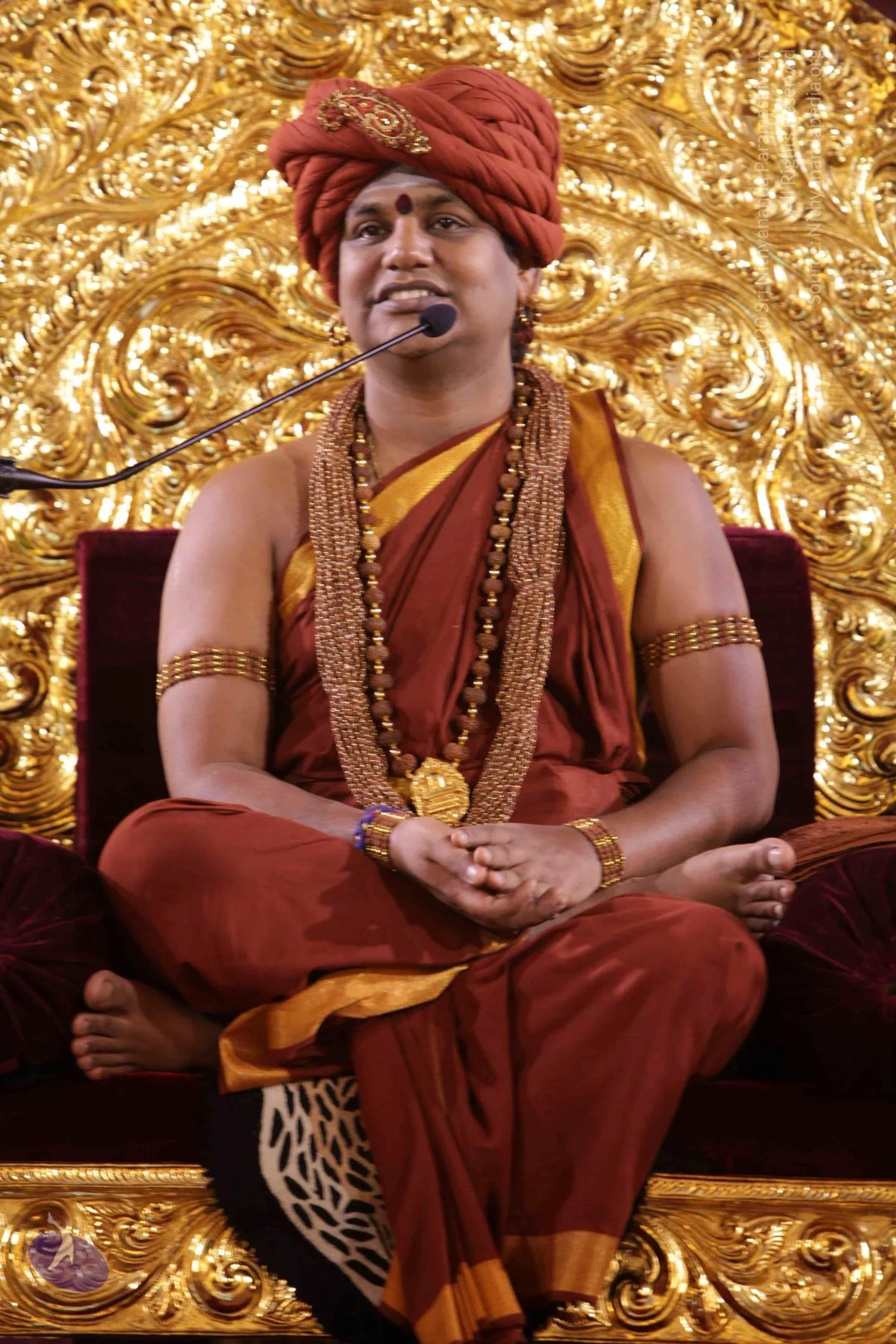
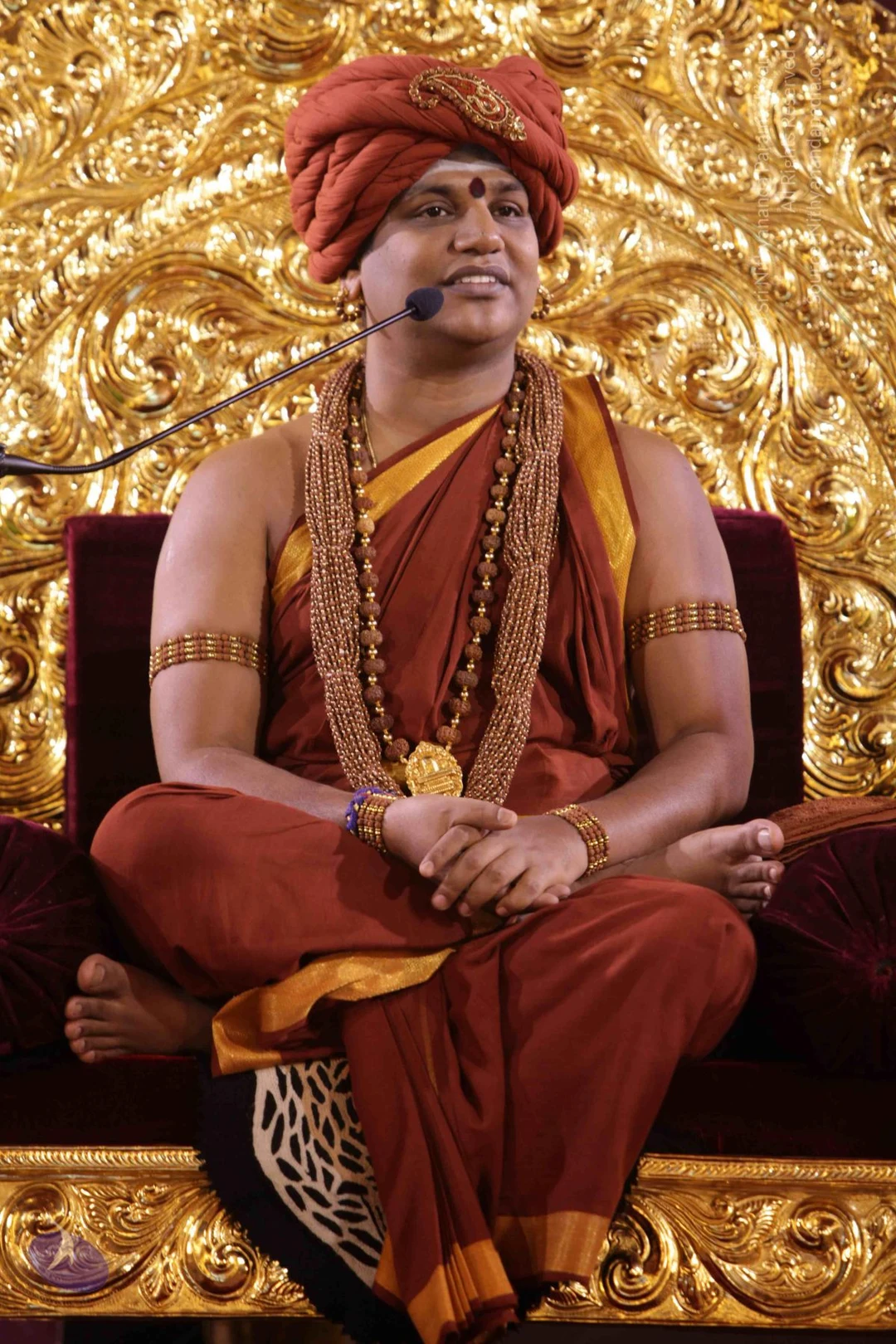
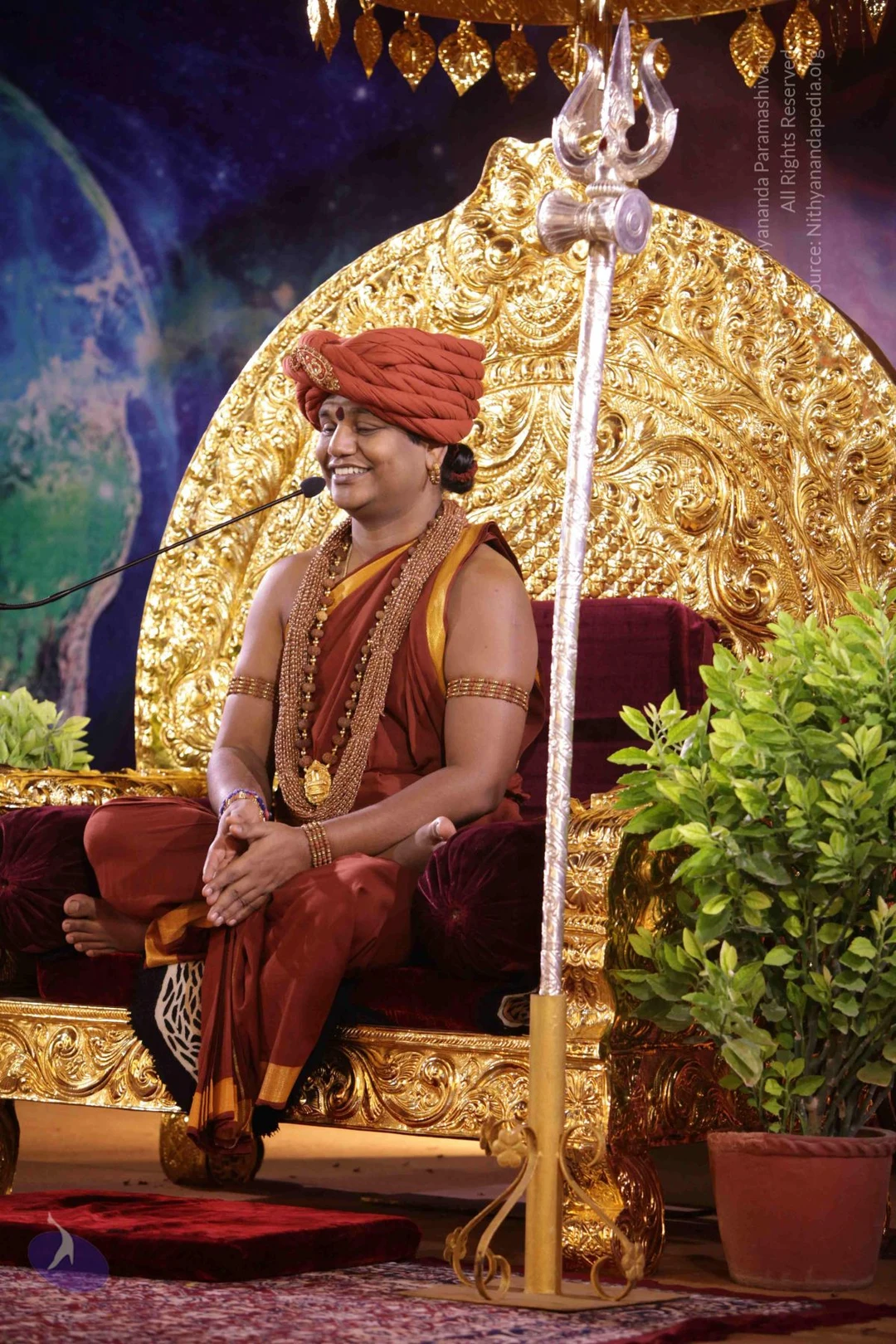
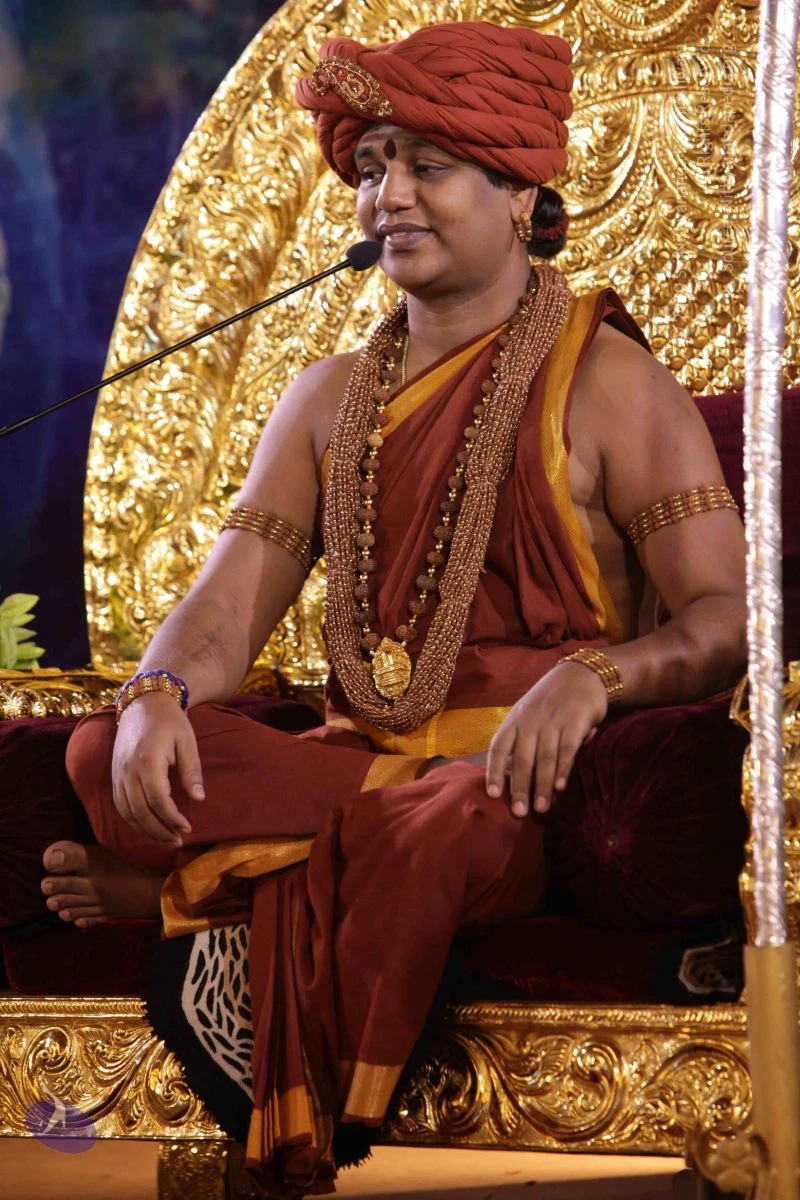
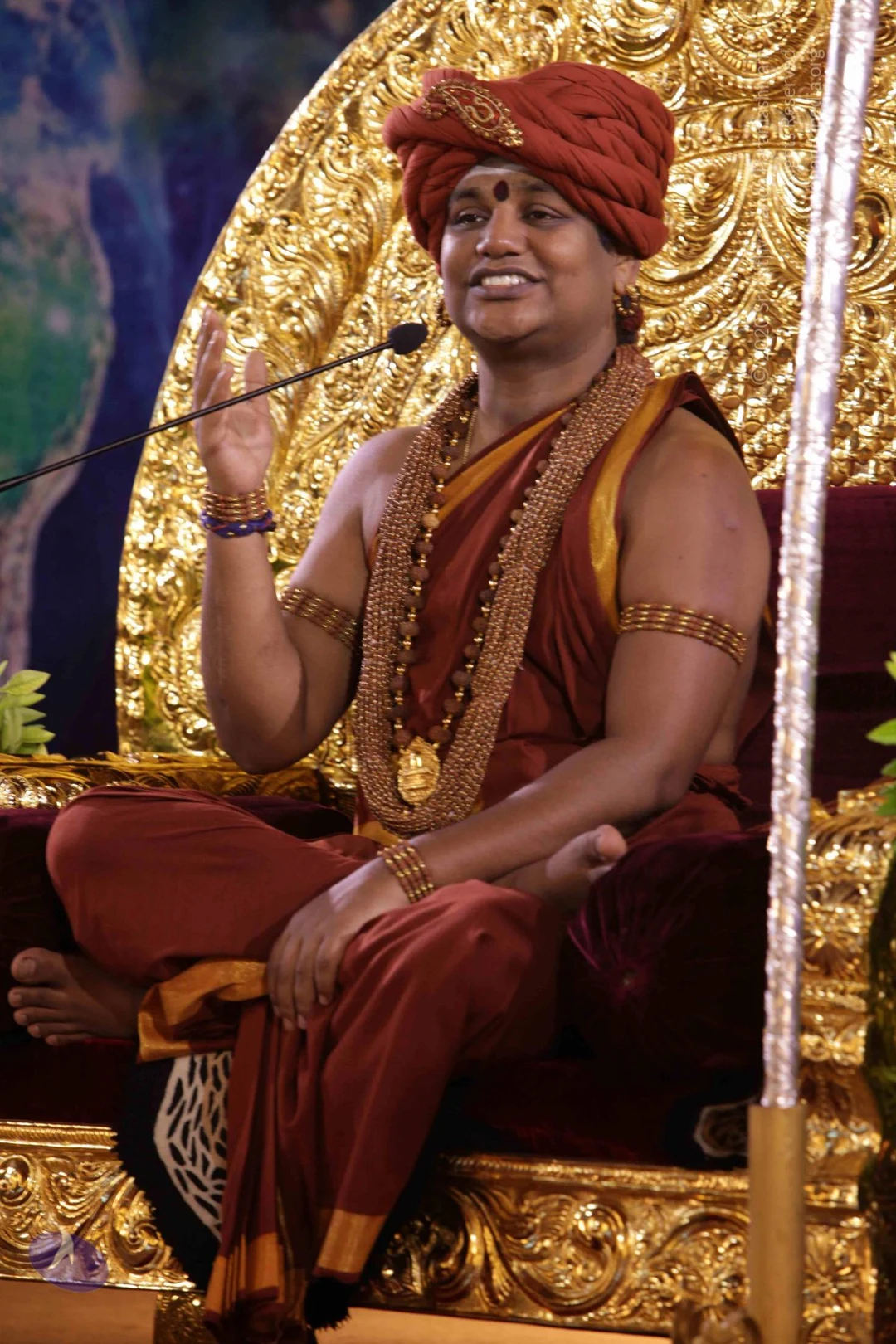
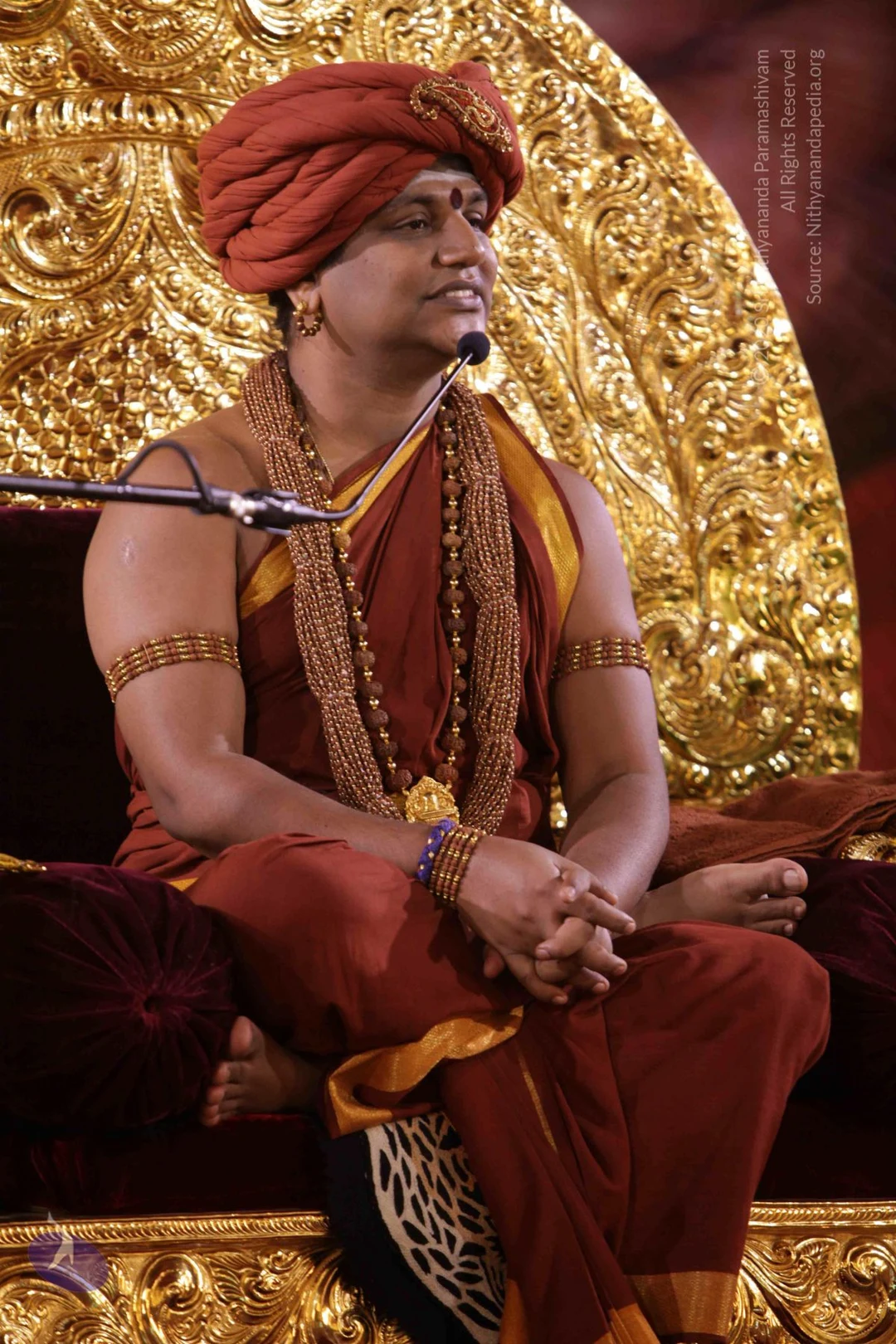
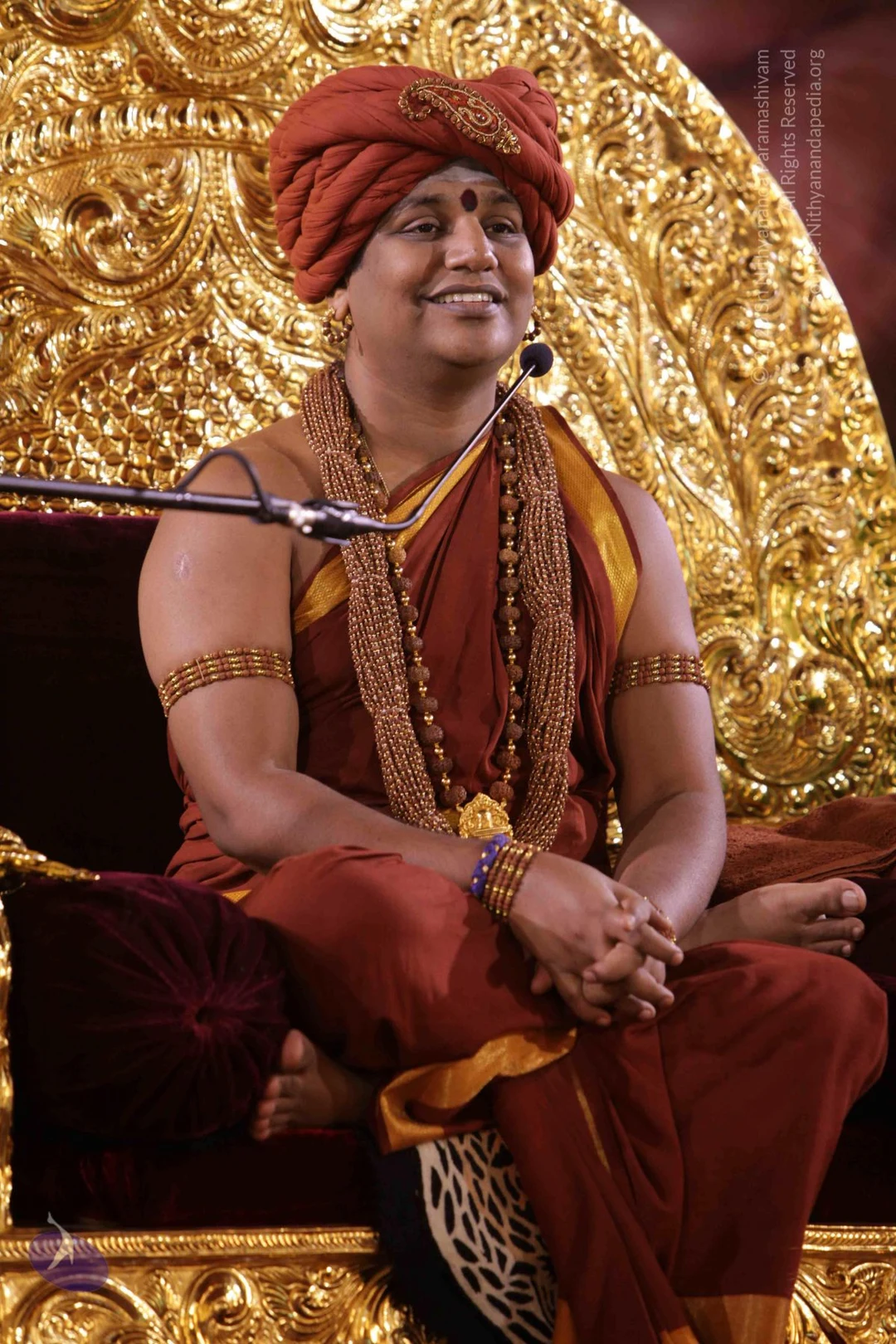
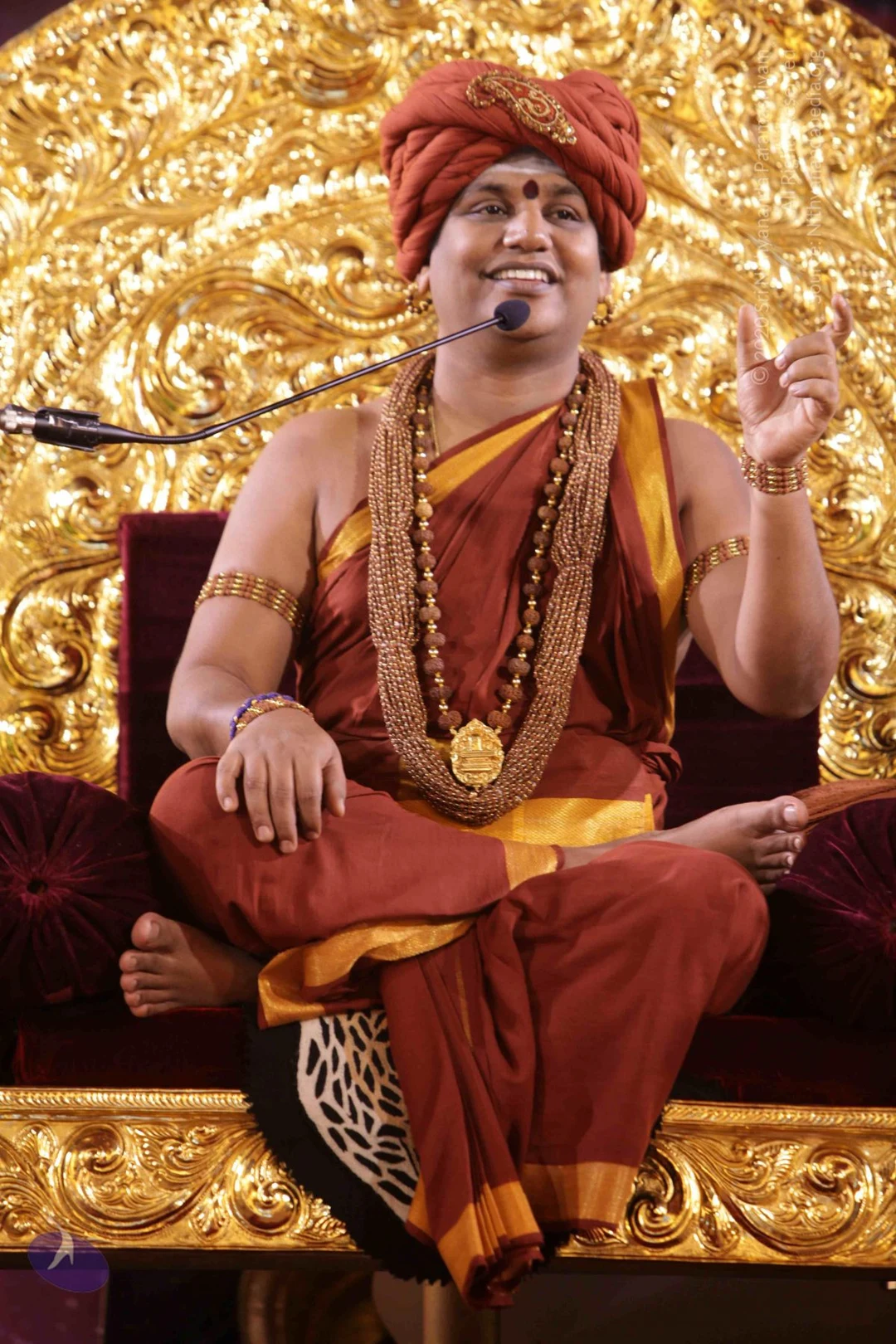
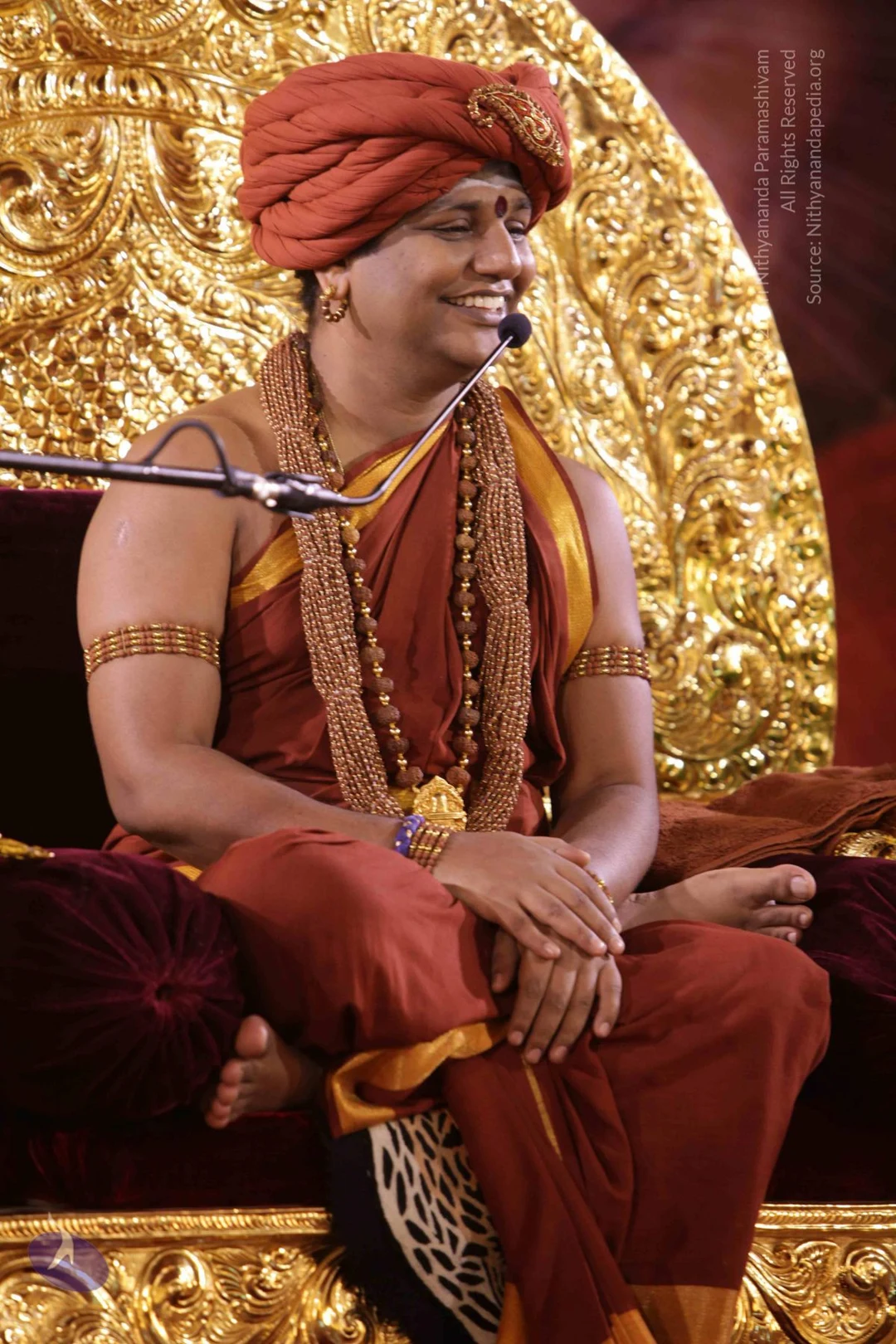
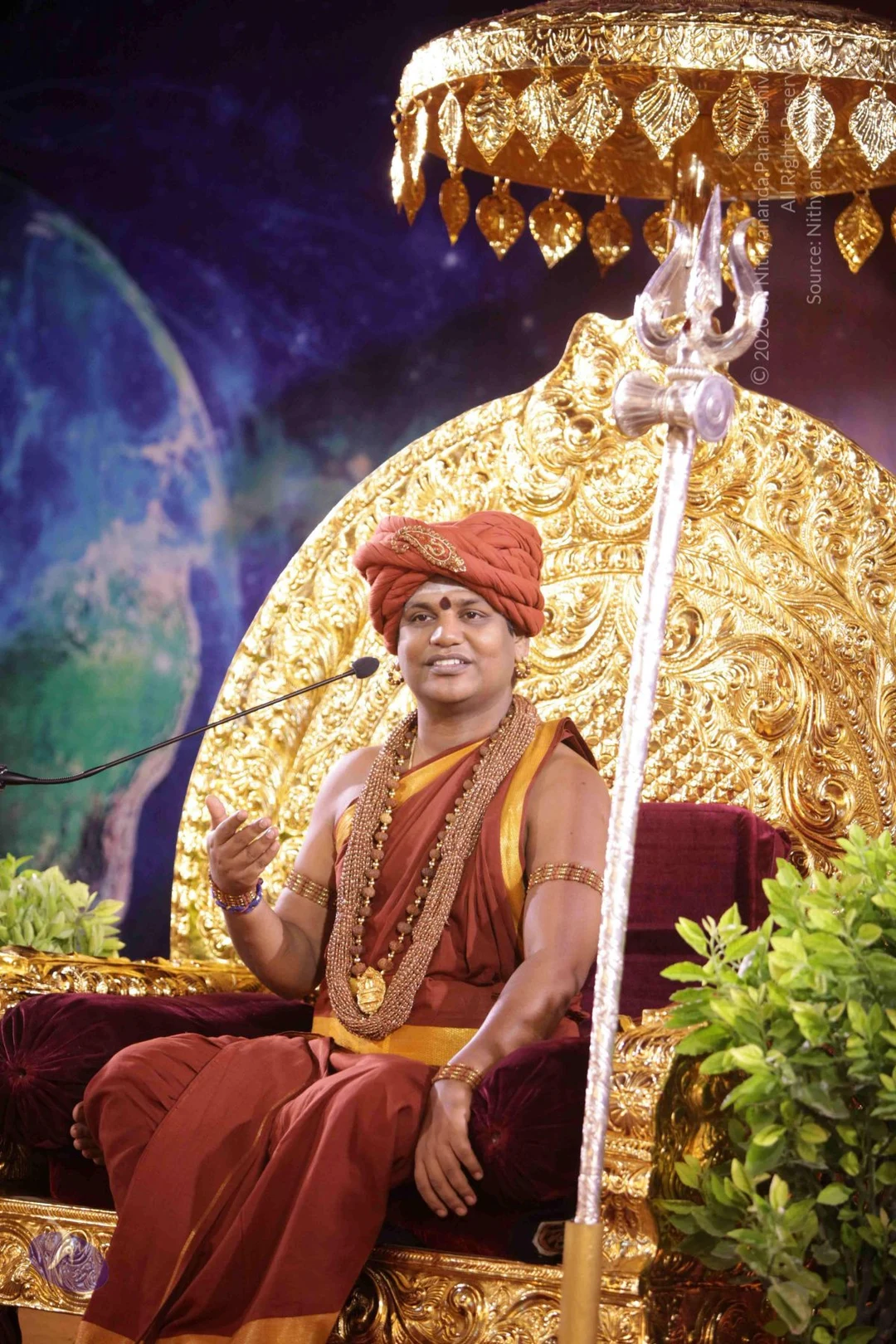
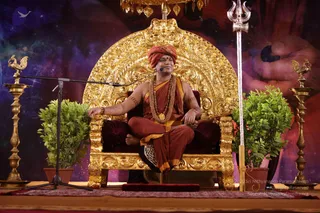
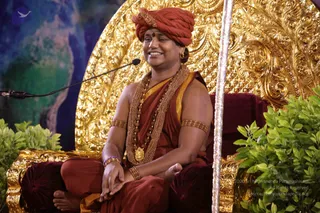
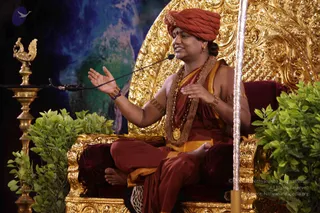
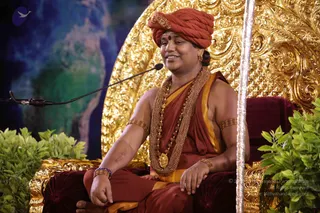
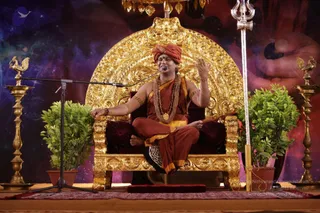
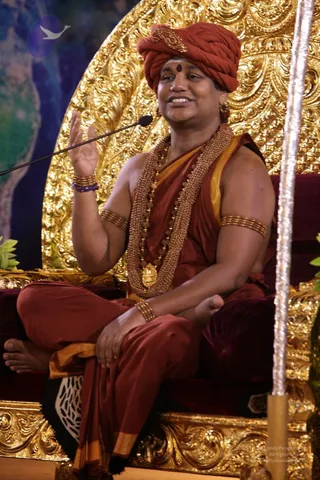
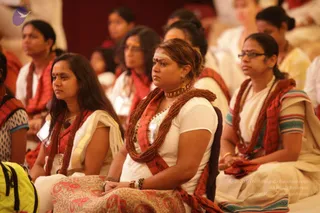
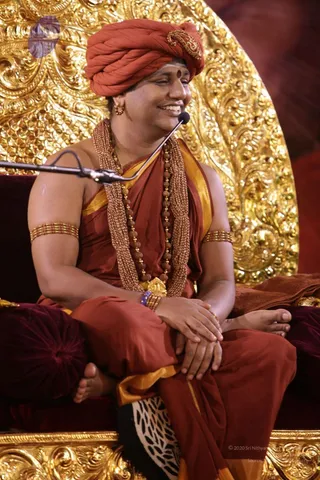
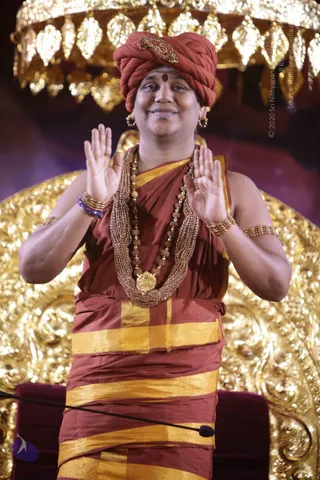
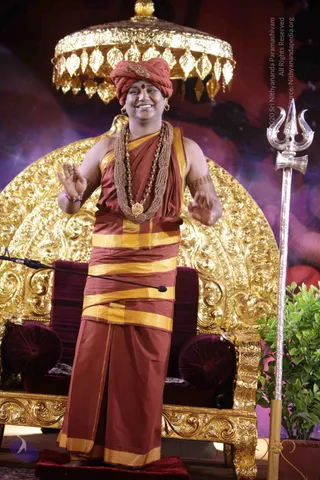
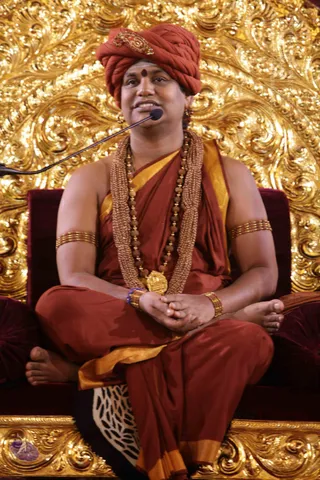
A man in rust-red and saffron robes sits on an ornate gold throne with carved floral backrest and red cushions, bare feet on the platform. He wears a red-orange turban, a multi-strand rudraksha mala with a gold pendant, and gold armlets, and a small microphone is clipped near his face. A trident stands to the right beside a potted green plant, and a gold oil lamp with a bird-shaped finial flanks the left side, with a microphone stand nearby. The backdrop shows a deep purple cosmic nebula. Swamiji (probable) appears to be in the seat, identified by the rudraksha mala, turban, saffron-toned robes and ceremonial gold ornaments, seated on a throne during a satsang-style talk.A seated congregation fills a hall during a satsang, with devotees sitting on white mats and cushions. Many wear white kurtas or saris with red-orange shawls and red-orange stoles, and several have vertical tilak marks and orange-red vibhuti on their foreheads. Some hold rudraksha malas and wear red beaded necklaces. A woman in the foreground with long hair and forehead markings sits looking forward, while a young woman in a white and blue patterned dress wears a red beaded necklace. Attendees wear name badges. Informational display panels line the back wall, and a man in white stands at the upper right. No a person candidate is clearly visible in this frame.A seated figure in a maroon-red turban and rust-orange robe with a gold-toned shawl sits cross-legged on an ornate gold throne with carved backrest, hands resting in lap, eyes lowered and smiling. A rudraksha mala and a gold necklace hang on his chest, with gold armlets and bracelets. A microphone stand is at left, a tall silver trident stands at right, and brass oil lamps flank the throne. Potted green plants sit in front and a red cushion lies on the floor. Behind is a backdrop of a blue and purple space-like image with a globe. a person appears in person, seated on the throne during a satsang discourse.Photograph of a smiling man seated cross-legged on an ornate golden throne with an elaborately carved gilded backrest. He wears a rust-red turban with a gold ornament, a red-orange garment over a yellow undergarment, a multi-strand gold beaded necklace with a gold pendant, and gold armlets. A microphone on a stand is at left, green foliage frames the right side, and a blue-green globe-like backdrop stands behind him. a person is shown in the seated teaching position, with the turban, gold ornaments and ornate throne as distinguishing cues.A photograph of a man seated on an ornate gold throne with a carved gold backrest, speaking into a microphone with one hand raised open. He wears a rust-red turban, a saffron-orange and red robe, a heavy chain of gold beads with a pendant, gold bangles and armlets, and gold earrings. Swamiji (probable): long dark hair knotted at the back, a crown-like red turban, ornate gold necklaces and saffron clothing. Behind him is a blue and green backdrop resembling a globe, with a gold lamp stand and green potted plants on either side and a gold-topped staff at right.A seated man in a deep red-orange turban and matching saffron-orange robe sits on an ornate gold throne with carved floral relief and burgundy velvet cushions. He wears a long multi-strand gold necklace with a large gold pendant, gold armlets and bangles, and a red bindi on his forehead. A microphone on a boom stand is at left, green foliage flanks the throne, and a blue-green backdrop behind him. A silver-toned staff stands at right. Appearance-based cues (red turban, saffron-orange clothing, ceremonial gold necklaces and armlets) are consistent with a probable Swamiji (probable) seated for a satsang discourse, though the face is not used for identification.

Inner-Awakening-Session

77 photosSource gallery
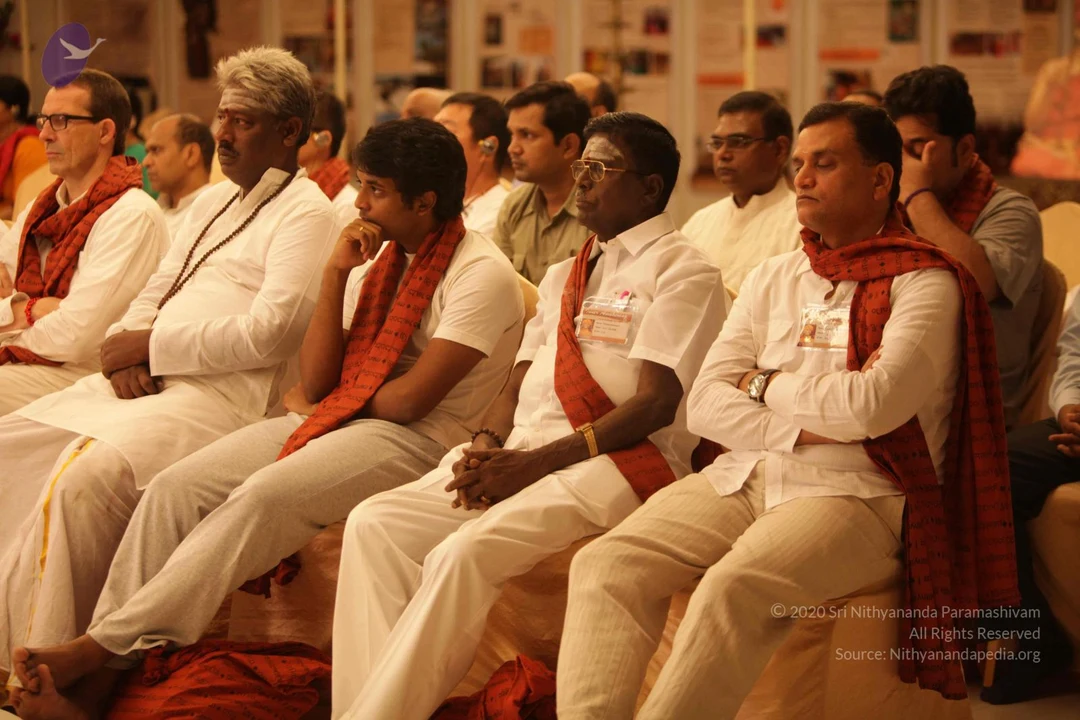
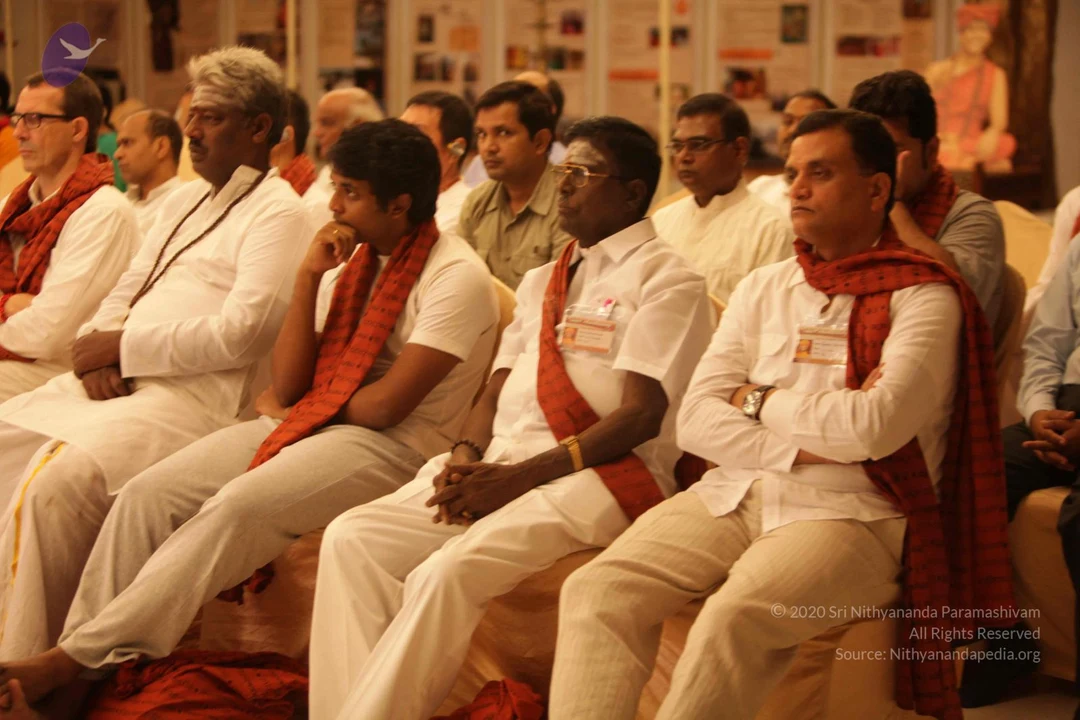
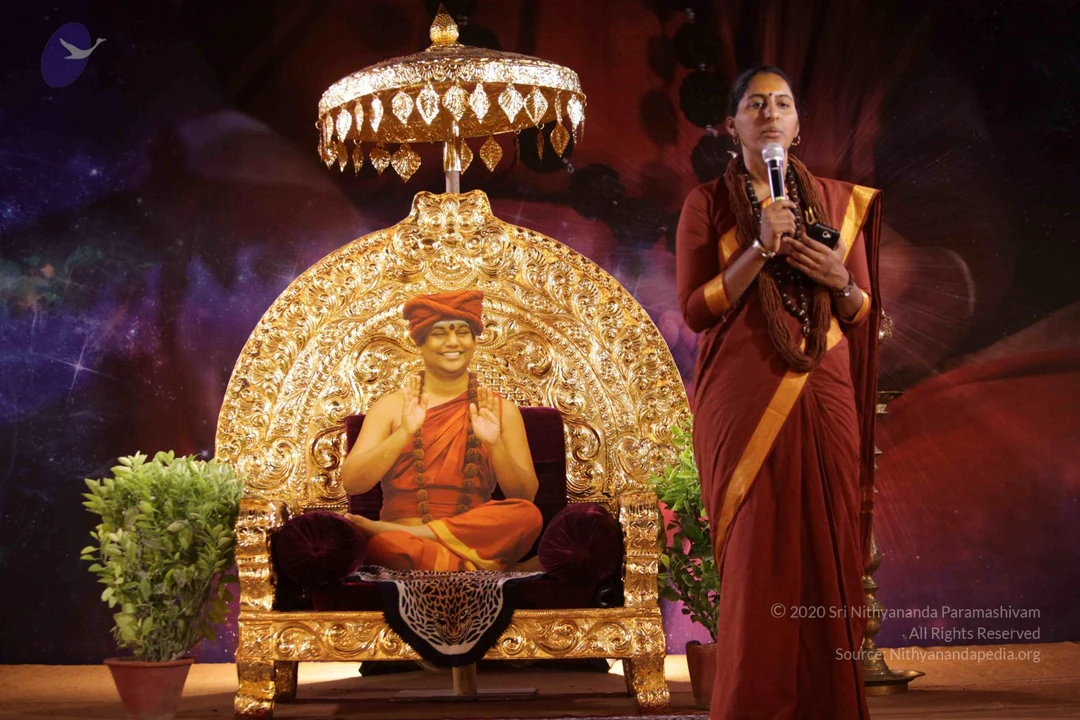
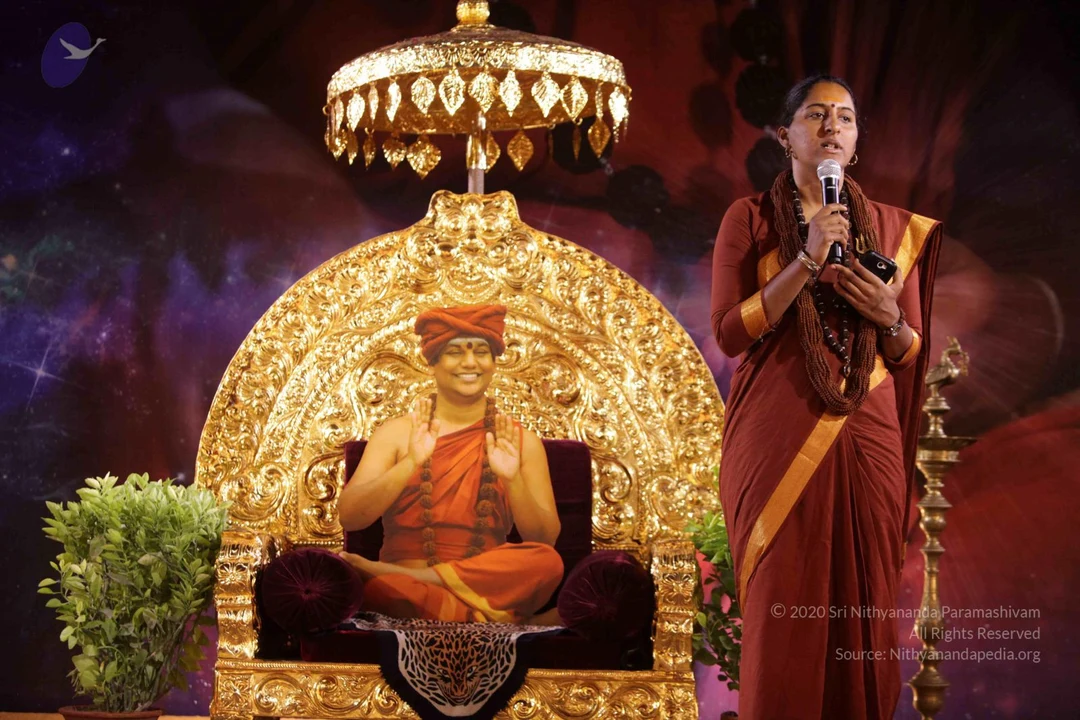
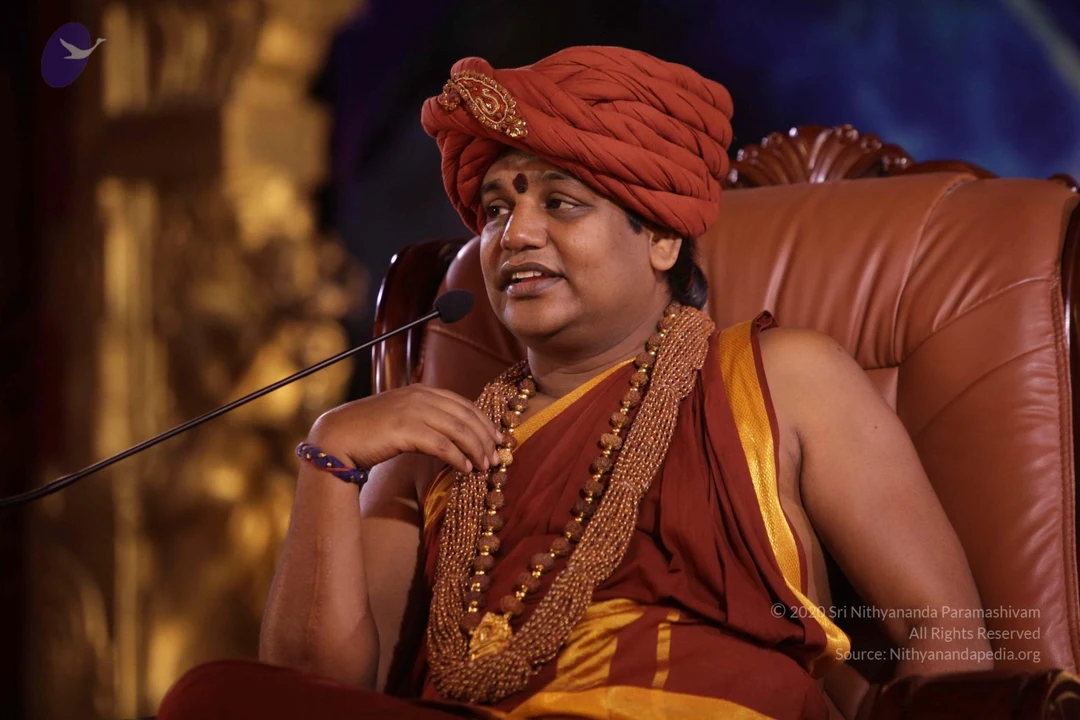
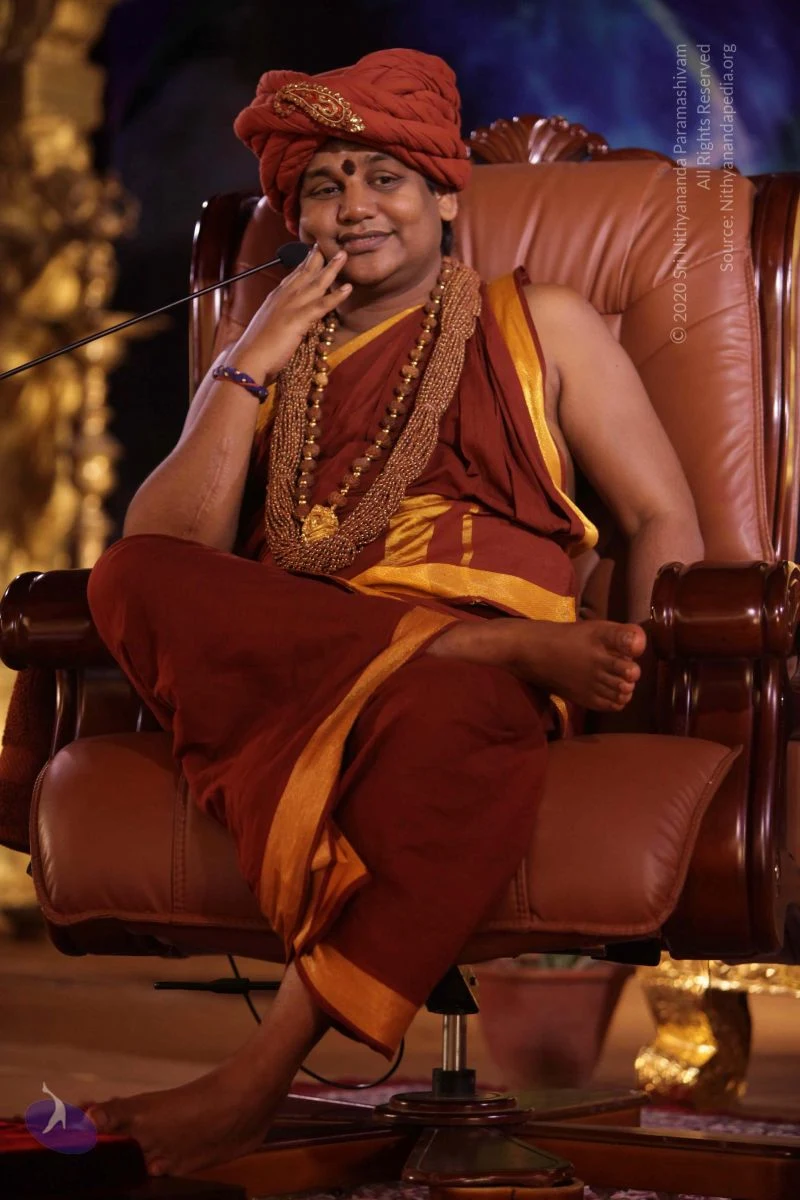
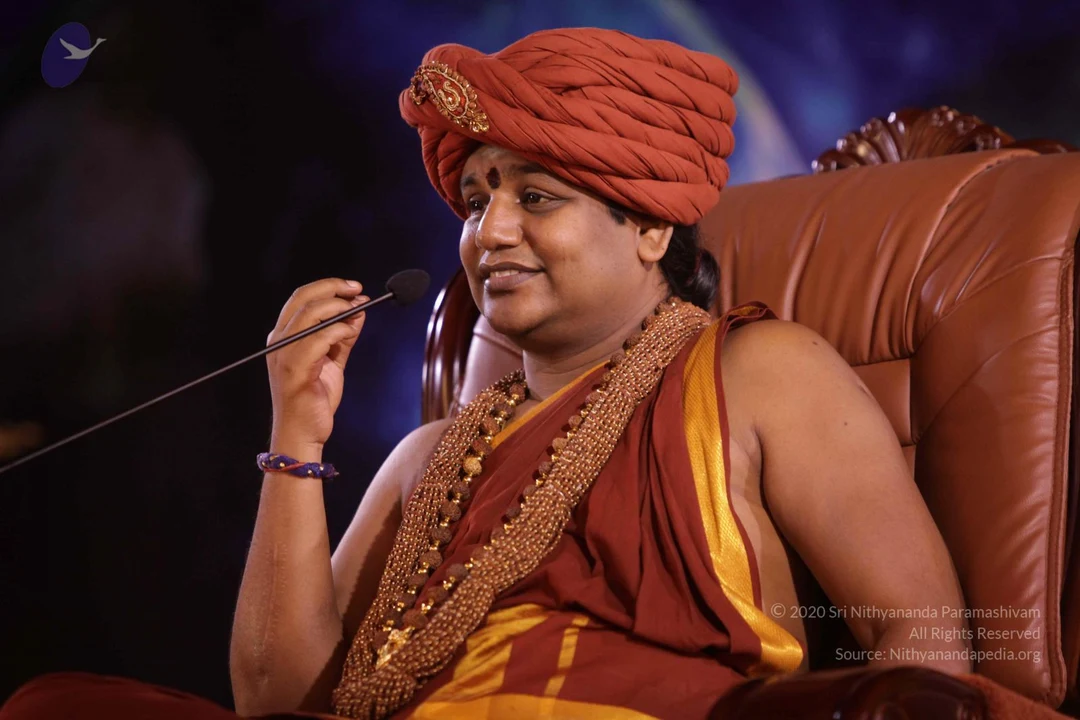
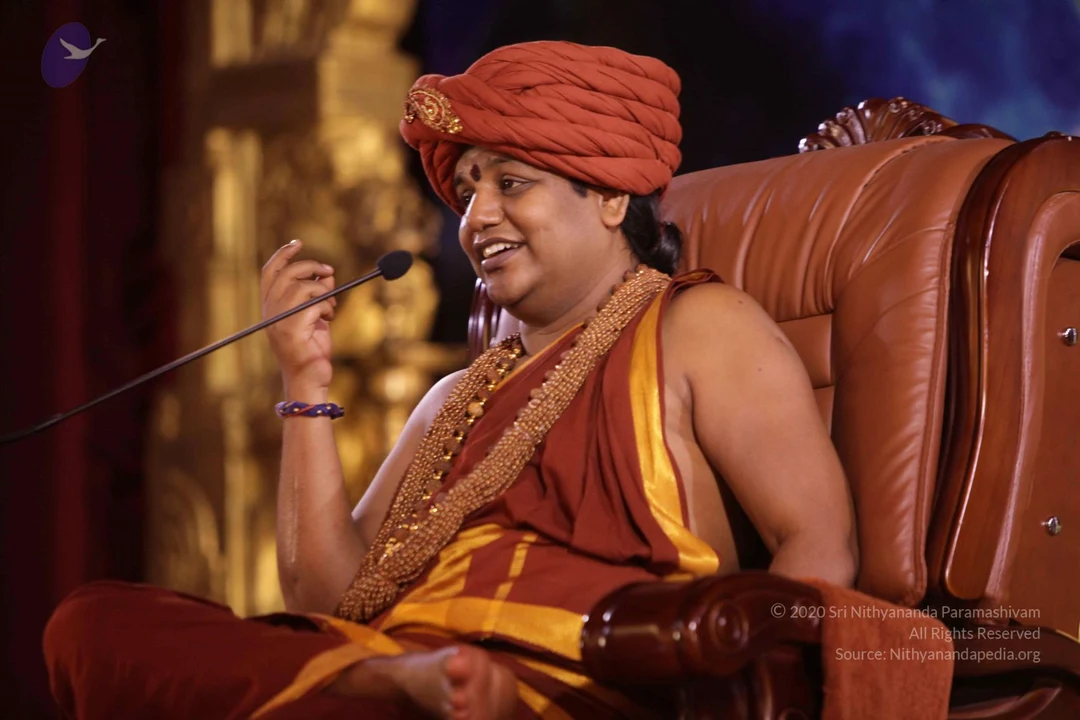
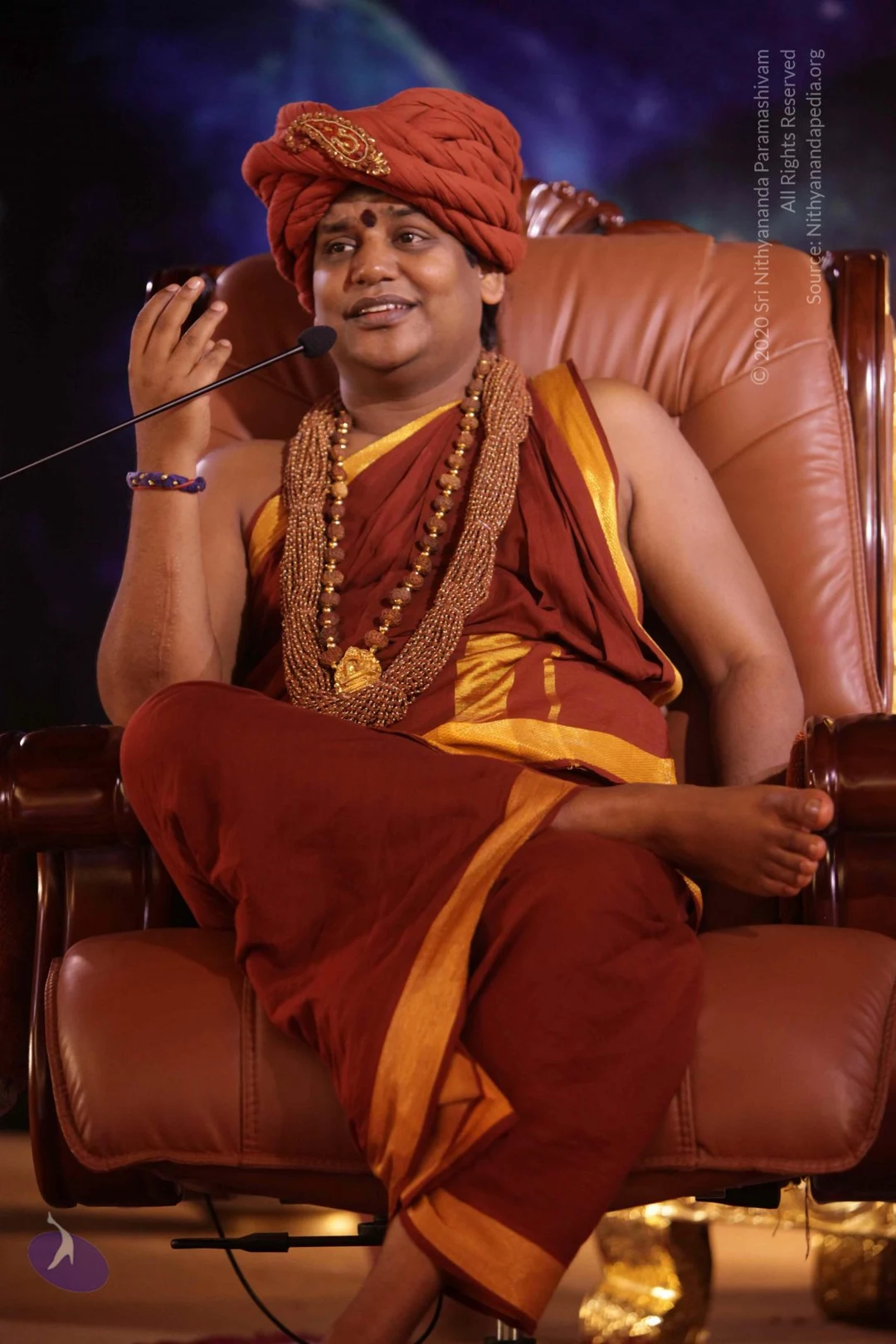
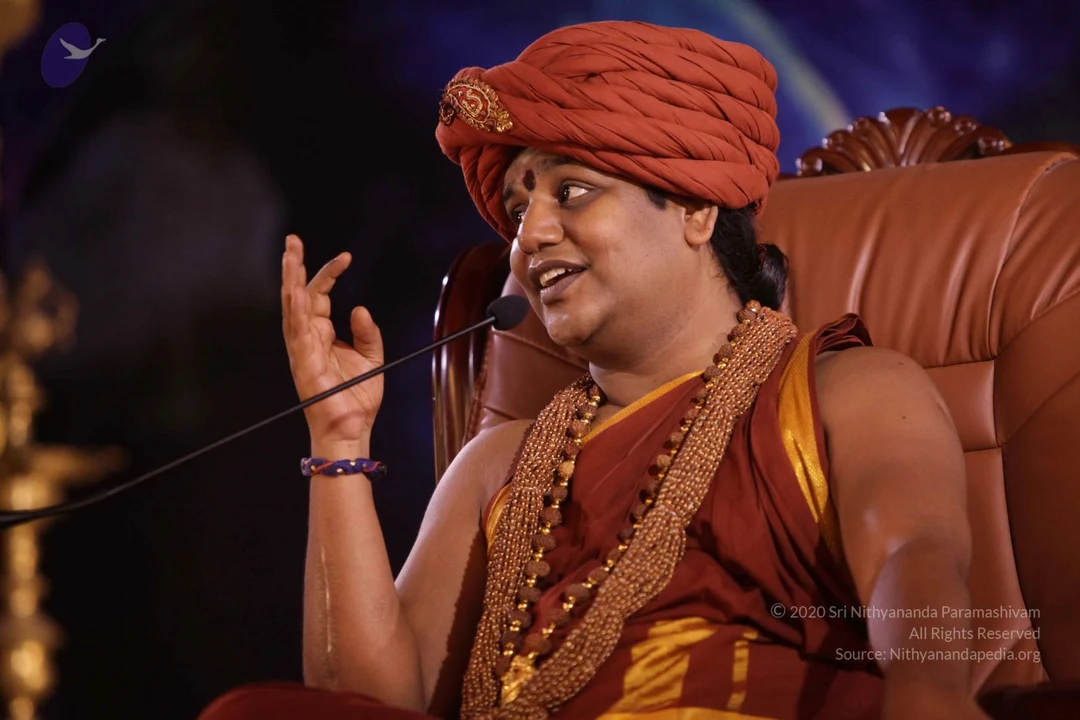
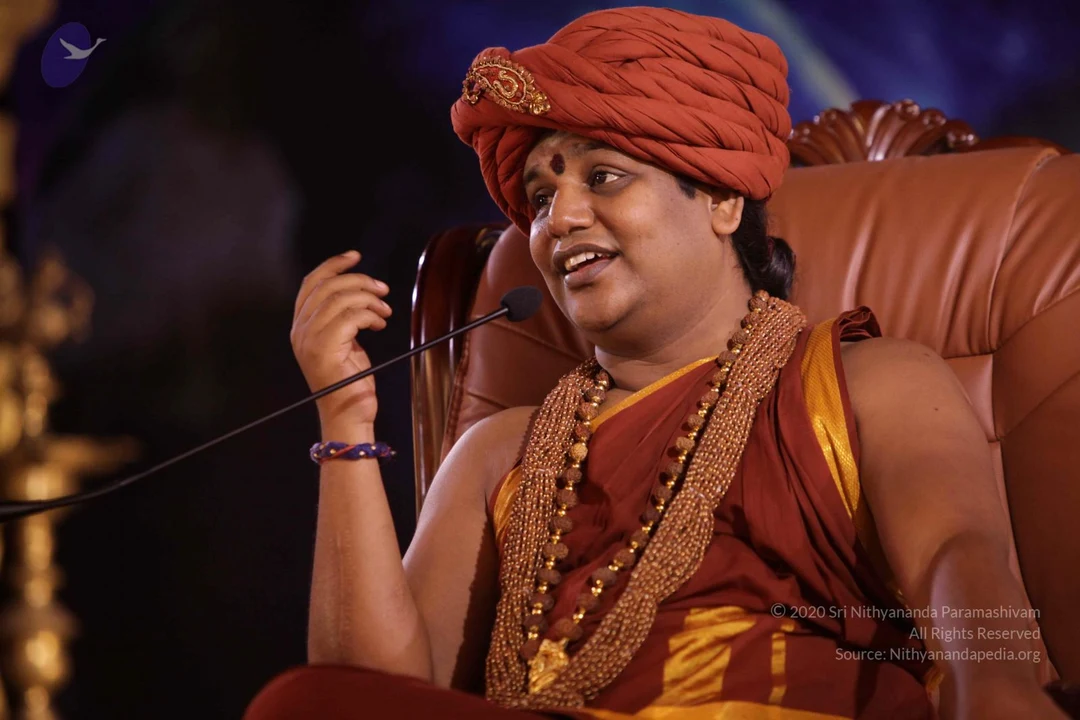
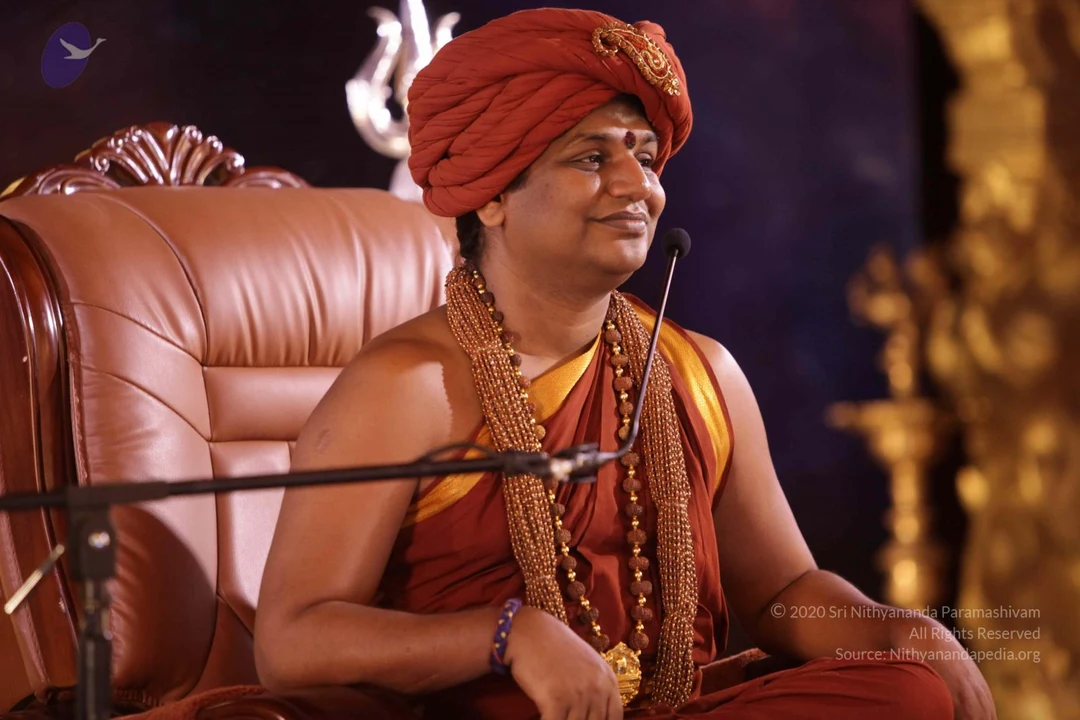
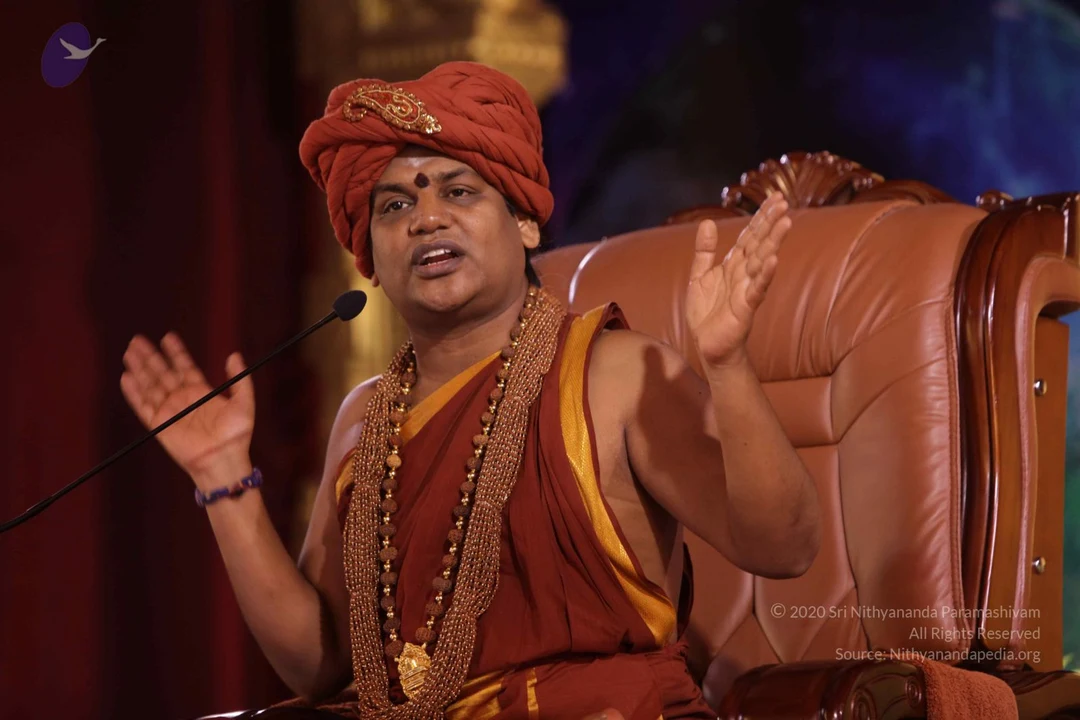
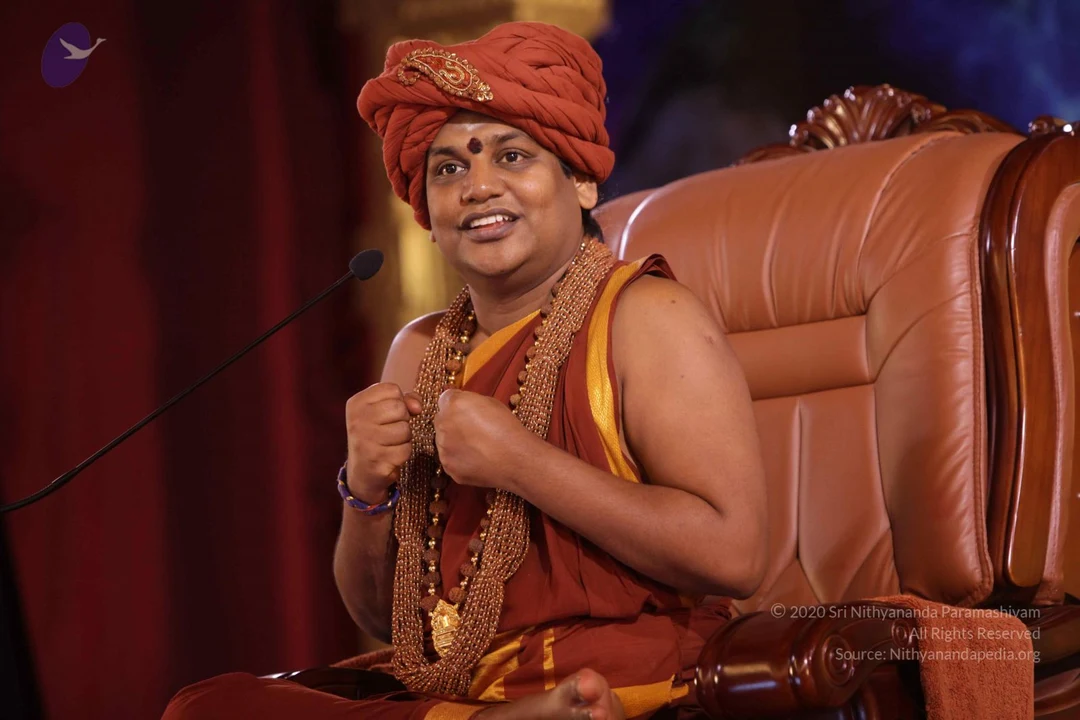
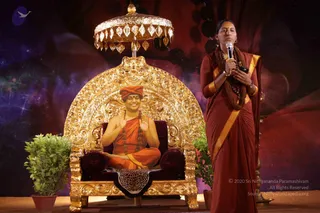
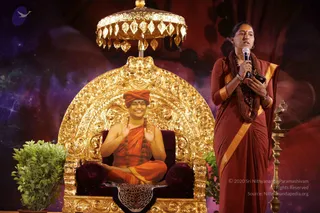
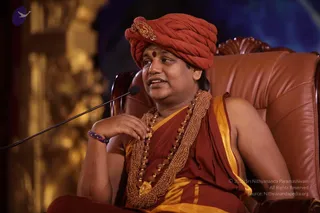
A woman in a deep red sari with gold borders stands at right holding a microphone and a small phone, speaking to an audience. Behind her, on an ornate gilded throne with a gold umbrella canopy, a man in saffron-orange clothing and a saffron head wrap sits in a meditative pose with palms raised, wearing a rudraksha mala. The figure on the throne is a printed photograph or screen image rather than a physical person in the scene. Potted green plants flank the throne against a purple cosmic backdrop with a brass lamp at right.A woman in a rust-red saree with a gold border speaks into a handheld microphone on a stage, holding a small device, with a rudraksha mala draped over her shoulders. Beside her stands an ornate gold throne with a gold canopy; seated on it is a printed portrait of a smiling figure in a saffron-orange robe and orange turban, hands raised in blessing and a rudraksha mala around the neck, labelled as a portrait on the throne. A leopard-print cloth lies over the throne's base, potted green plants flank it, and a brass oil lamp stands at the right edge against a purple cosmic backdrop.A man seated in a brown leather armchair speaks into a small microphone on a boom stand, during what appears to be a satsang or discourse. He wears a rust-orange turban with a gold ornamental brooch and a red vermilion dot on his forehead. He is bare-shouldered in a rust-orange cloth with a gold border, and wears layered beaded rudraksha-style malas and a gold pendant. His right hand rests near his chest and a blue-and-purple beaded bracelet is visible on the wrist. The background is dark blue with a blurred golden architectural column on the left. Swamiji (probable): the figure wears a turban, rudraksha malas, ornate gold necklace and saffron-orange clothing, seated in a throne-like chair at a discourse.A man in a red-orange turban with a small gold ornament and a red bindi sits in a brown leather throne-style armchair with carved wooden armrests. He wears a rust-red and saffron-gold draped garment, a long layered brown rudraksha-style bead mala with a gold pendant, and a purple beaded bracelet. His right hand rests near his cheek while he smiles, and a microphone stand is at left. Gold draperies and a dark blue backdrop fill the background.A man seated in a large brown leather armchair speaks into a small microphone held at left, his raised hand gesturing mid-discourse. He wears a rust-orange turban with a gold ornamental brooch and a small red bindi on his forehead, a rust-red and gold shawl draped over a bare shoulder, and a long layered gold and beaded necklace. A blue-violet band of cloth is tied on the wrist of the gesturing hand. The dark blue backdrop is softly lit. Appearance cues include the orange turban, gold necklace and ceremonial clothing, consistent with a satsang discourse setting; the page associates this event with Swamiji.A man seated in a brown leather armchair speaks into a boom microphone, his right hand raised in a gesture. He wears a saffron-orange turban with a gold ornamental clasp, a red bindi, a dark red and gold-bordered wrap over bare shoulders, and a long layered rudraksha-style mala and gold beaded necklace. A blue-and-gold bracelet is on his wrist. The background is dark blue with a faint arc of light. Swamiji (probable): the saffron turban, ornate gold-bordered wrap, and multiple beaded malas match the appearance cues for the page subject, a satsang speaker seated on a throne-like chair.

Shivoham

93 photosSource gallery
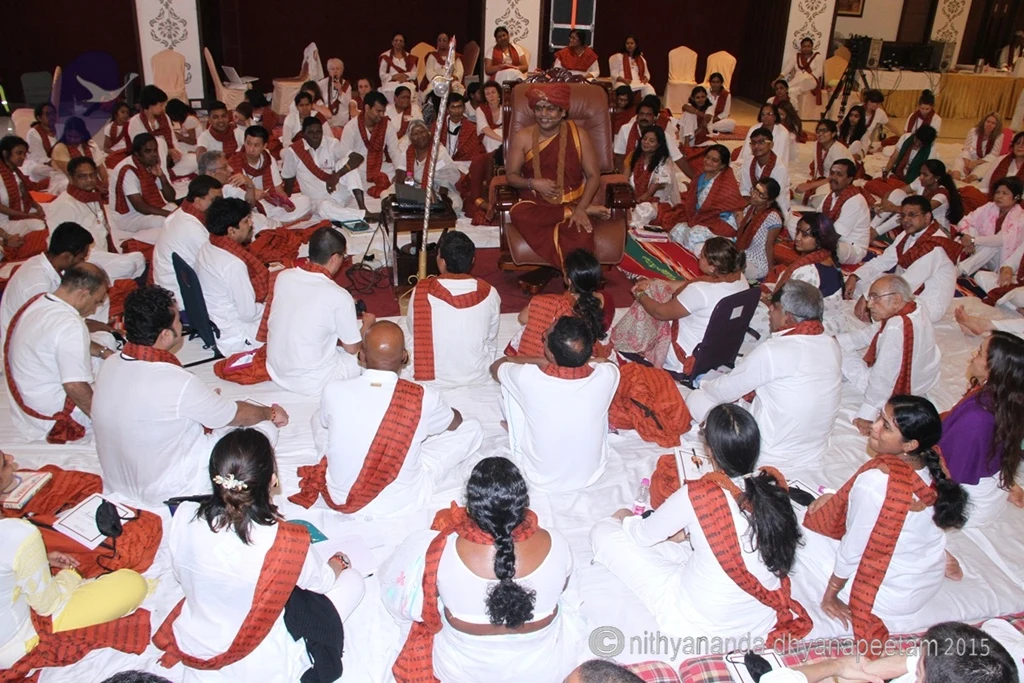
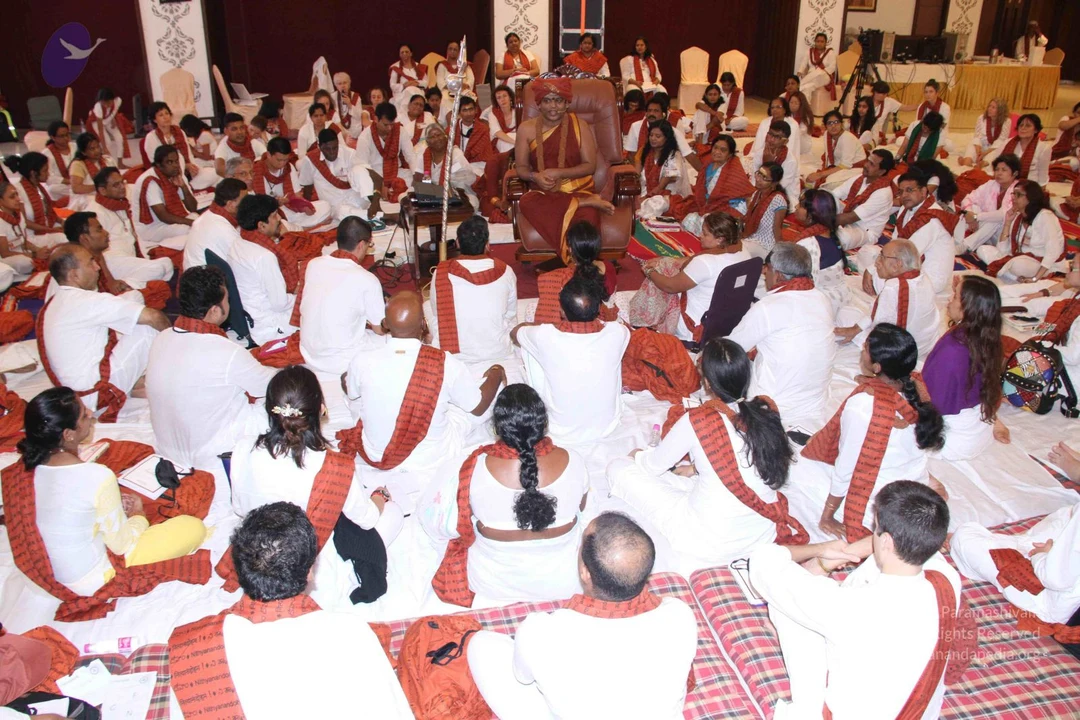
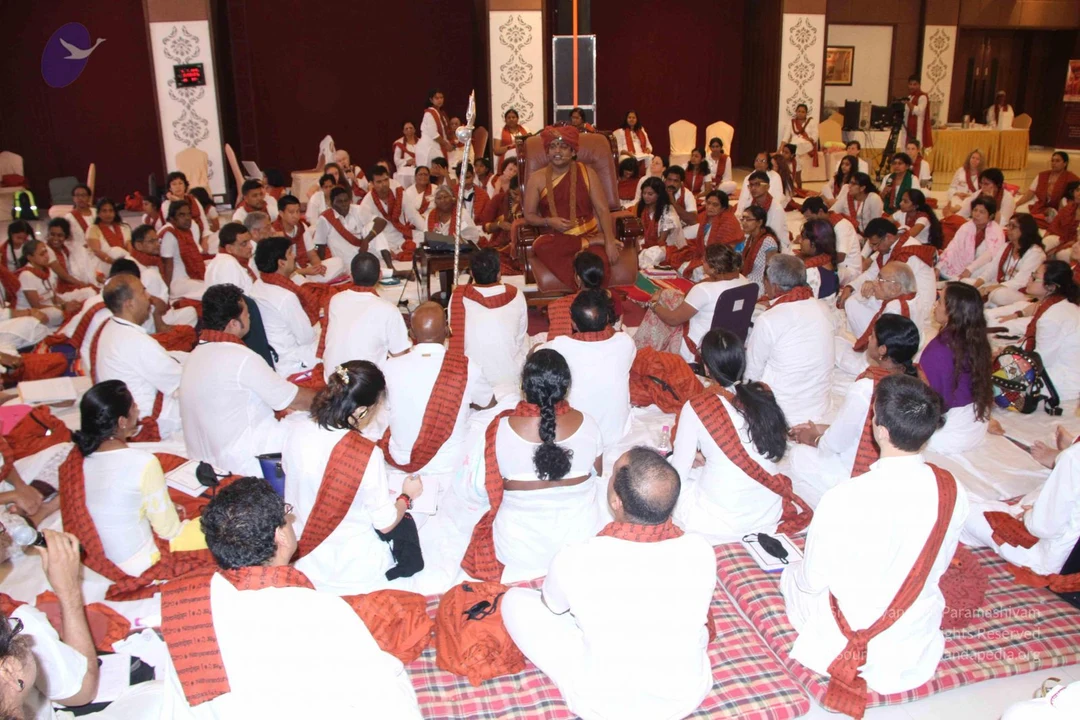
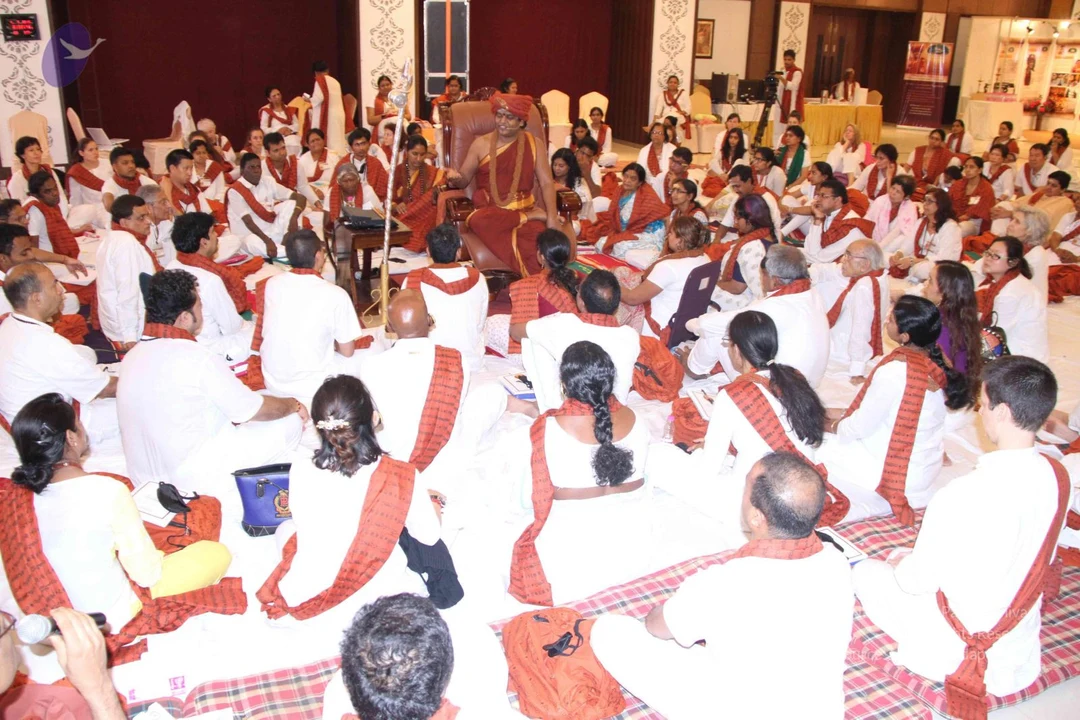
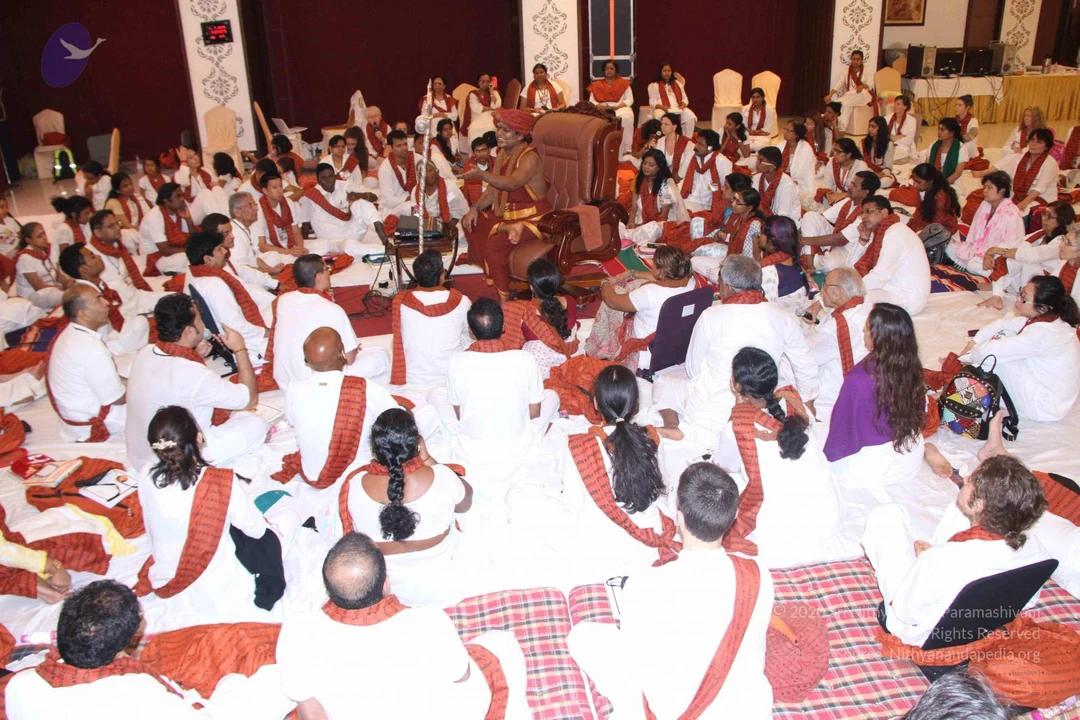
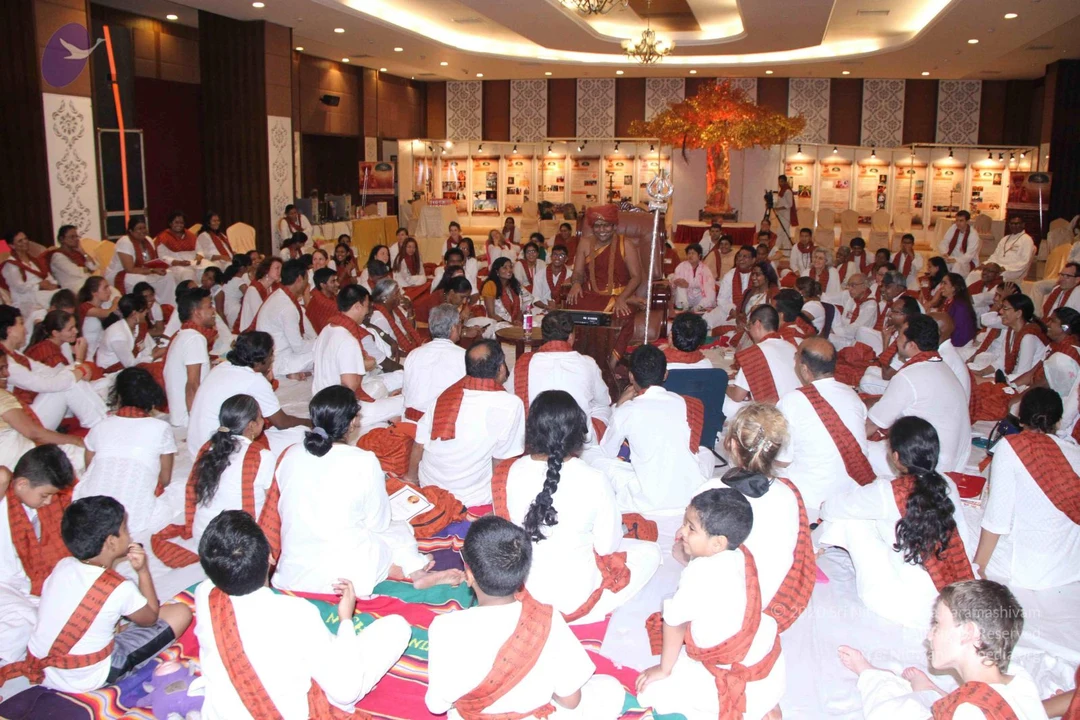
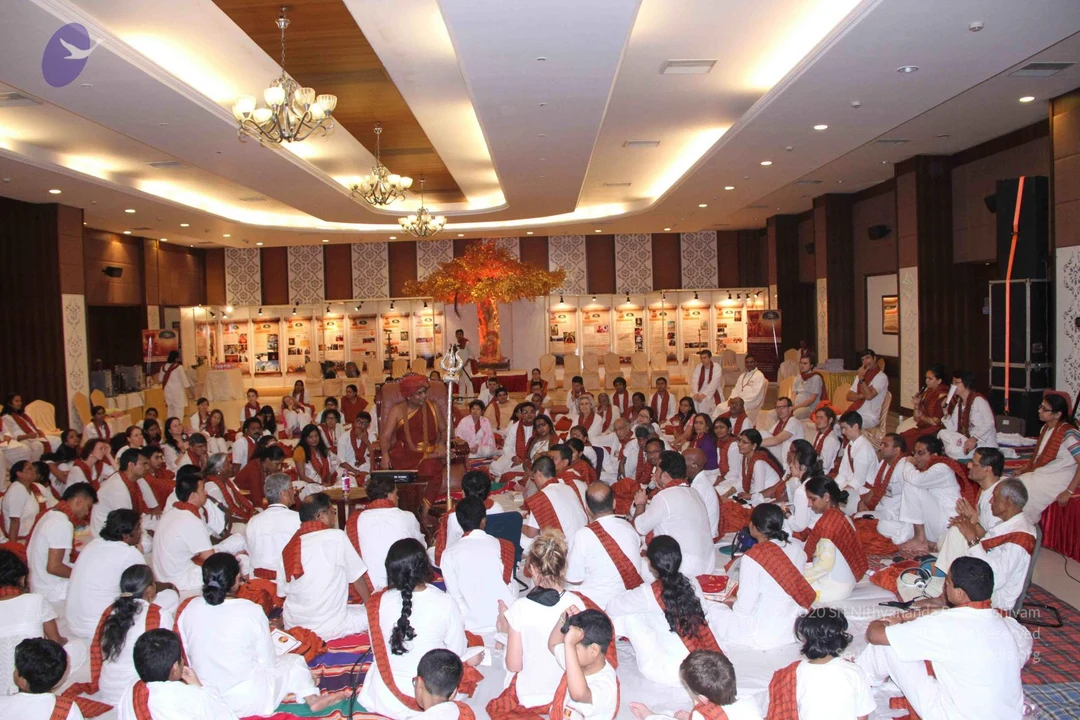
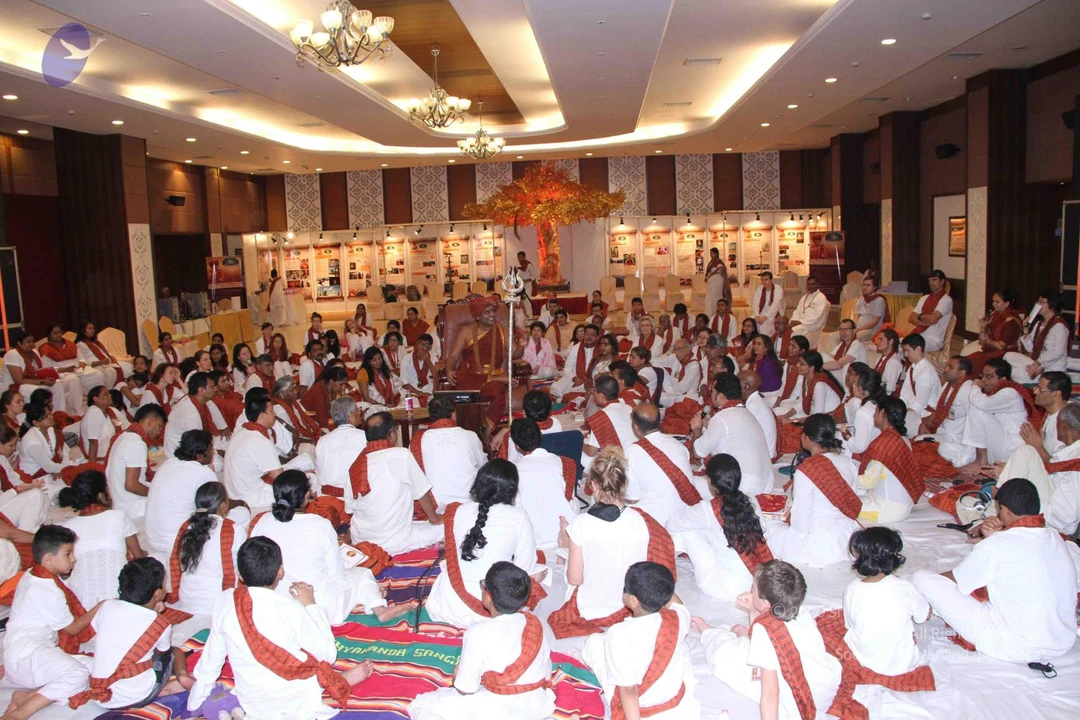
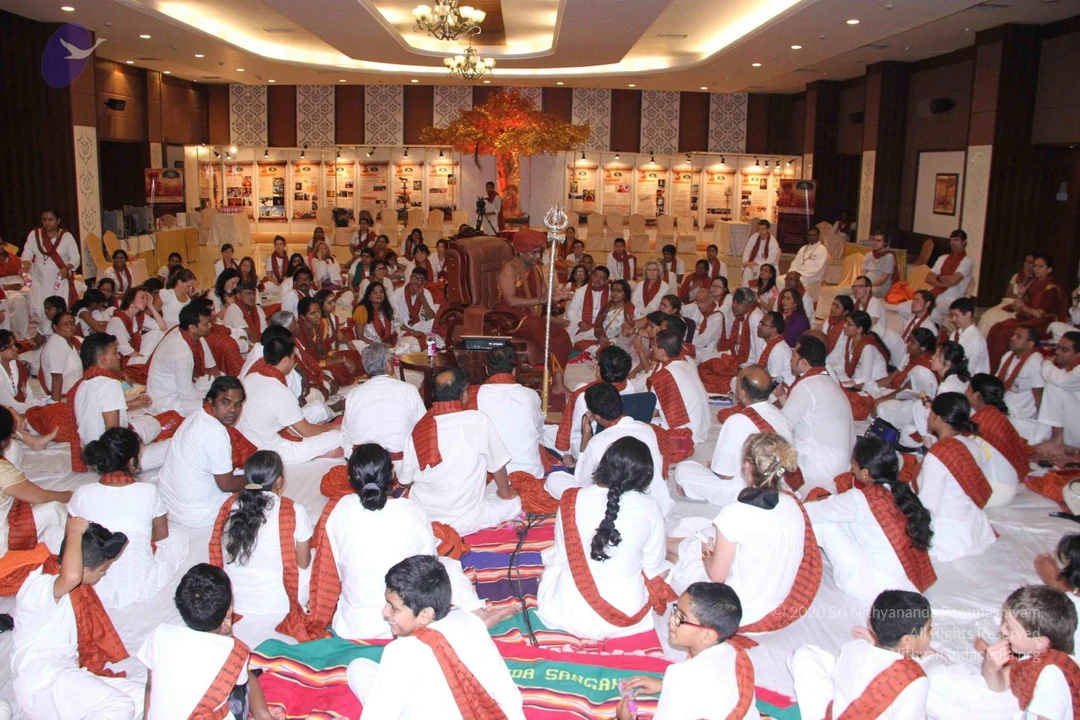
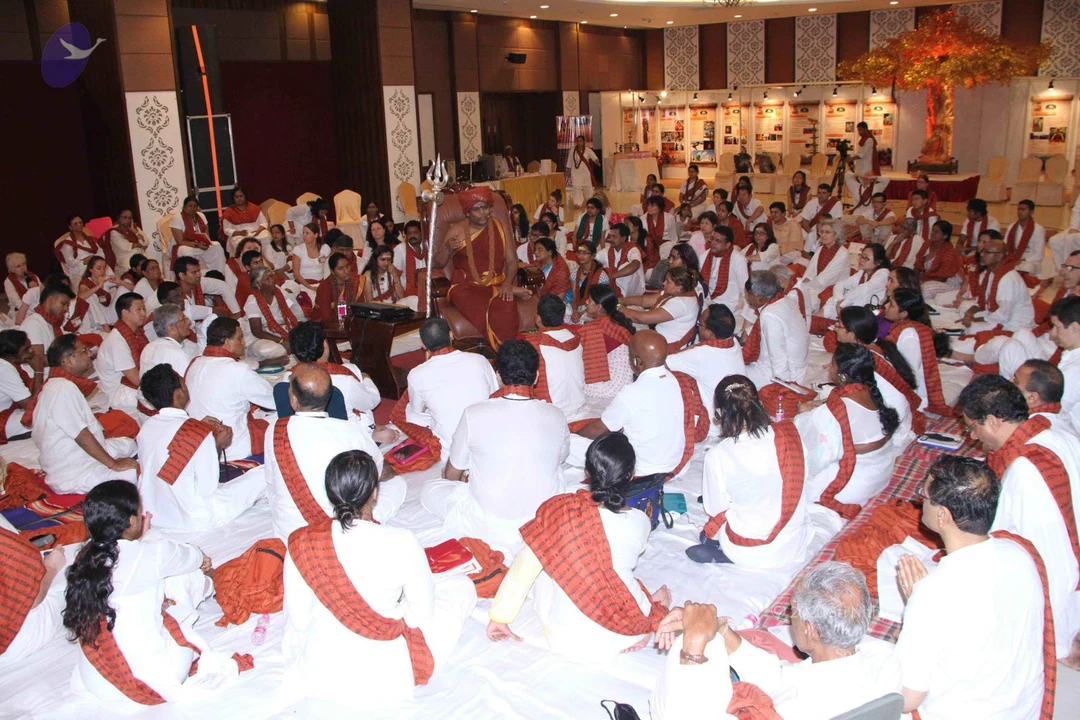
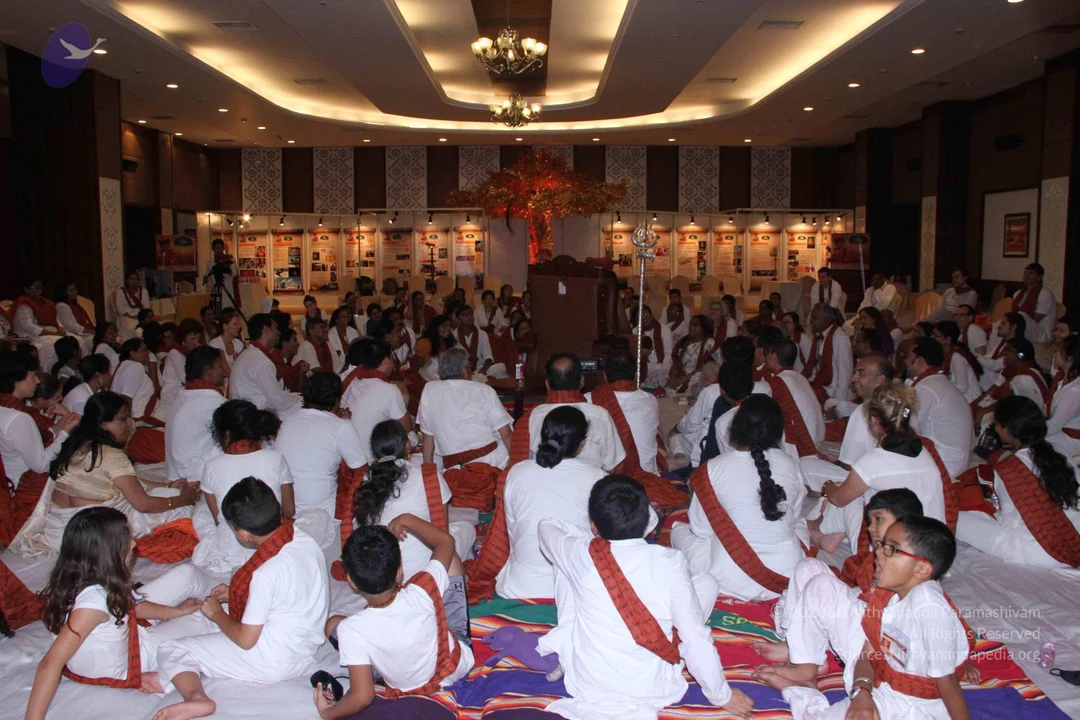
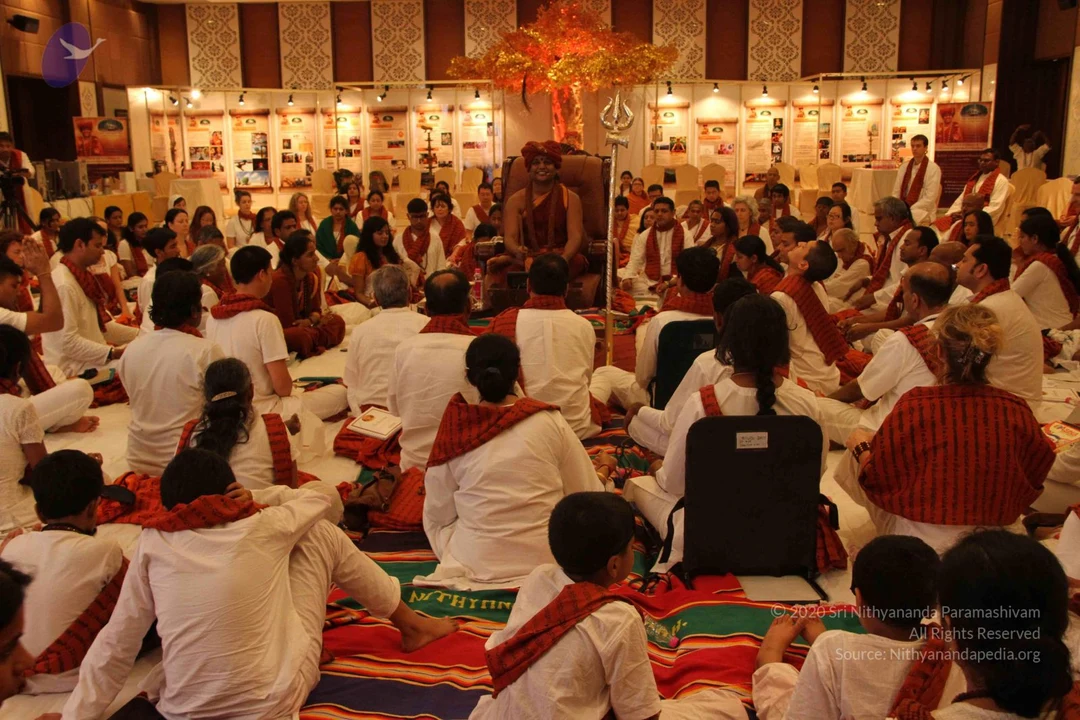
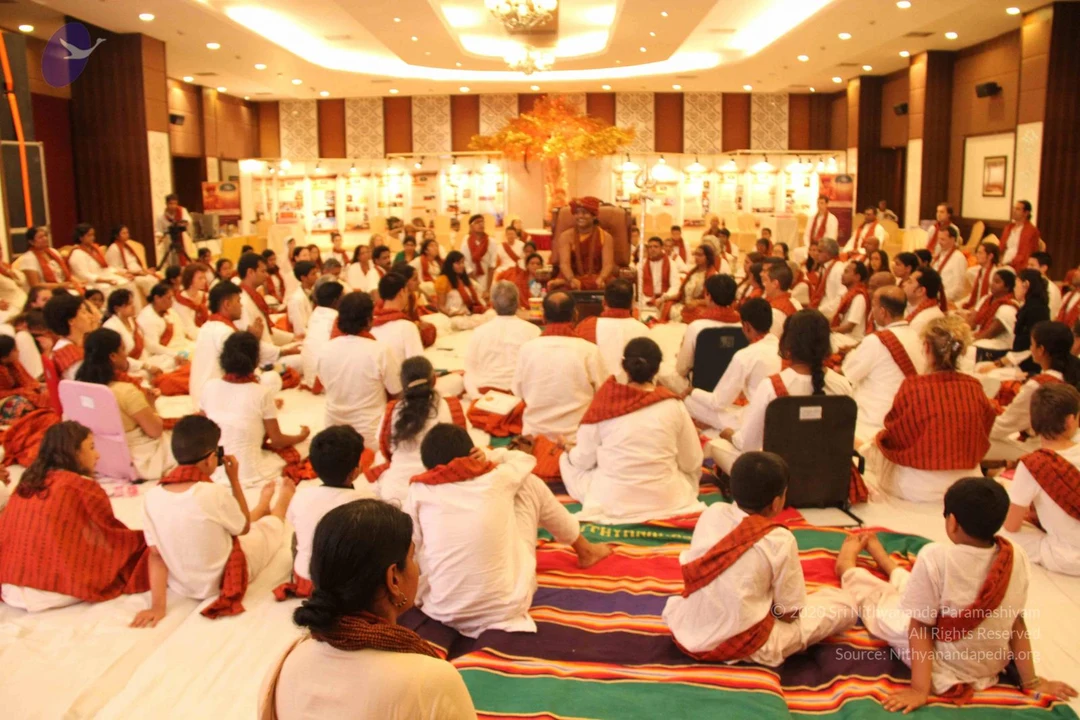
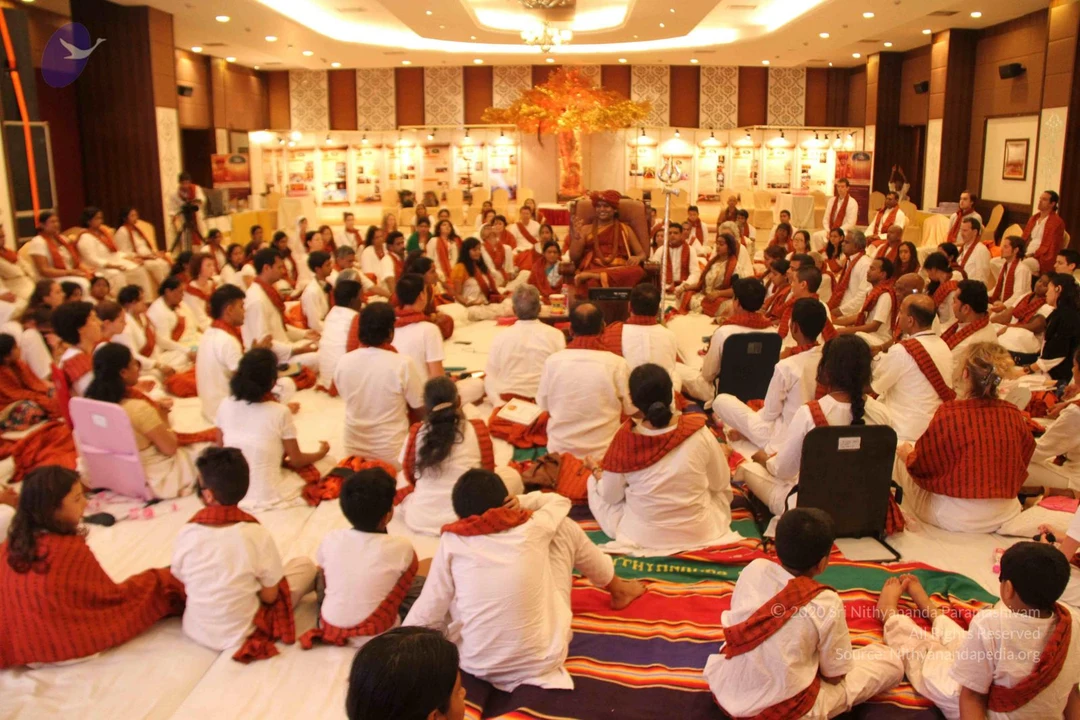
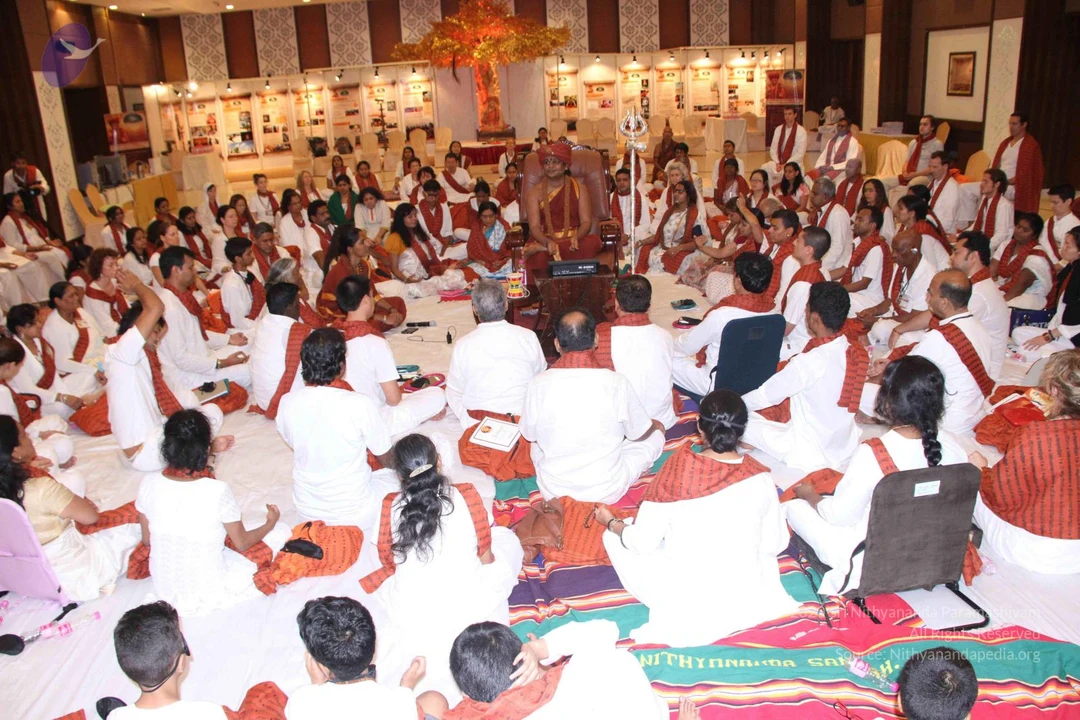
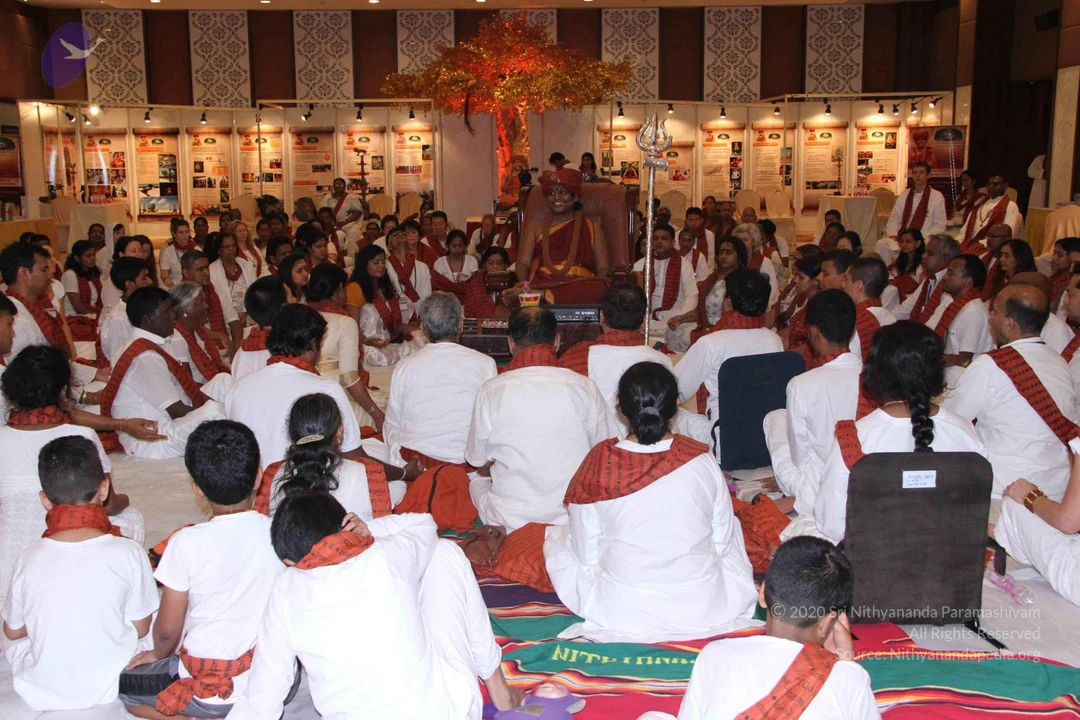
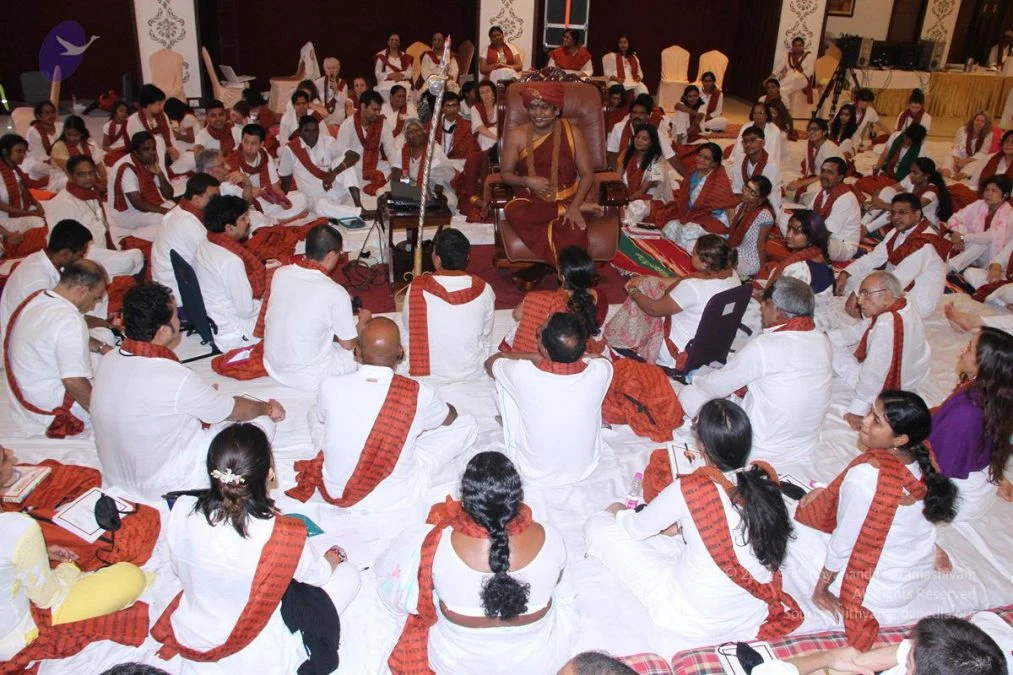
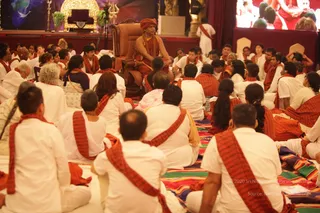
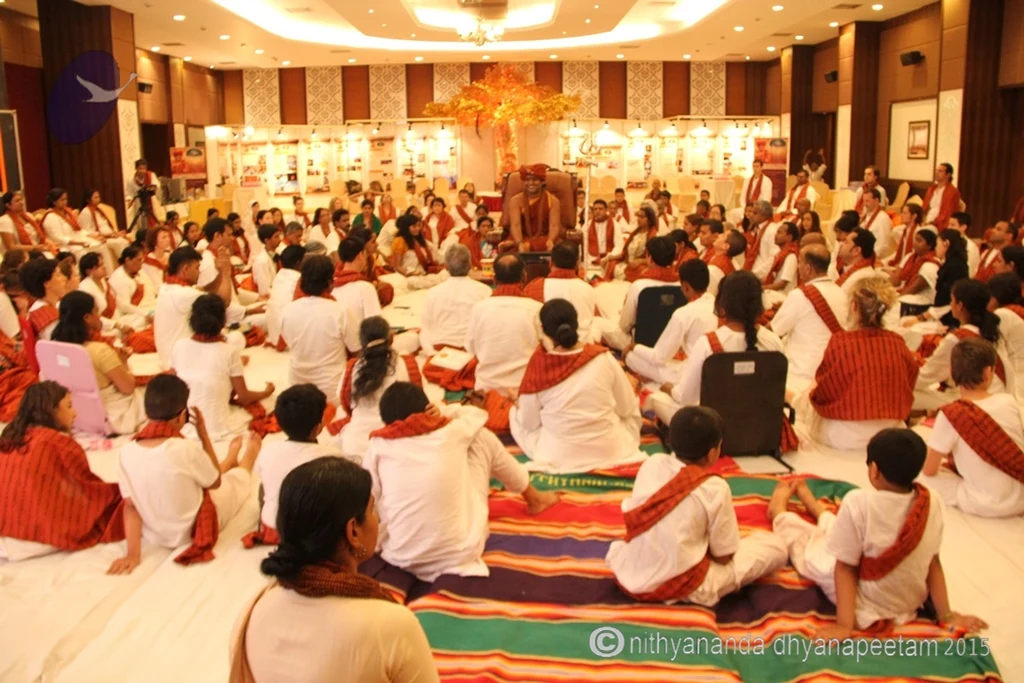
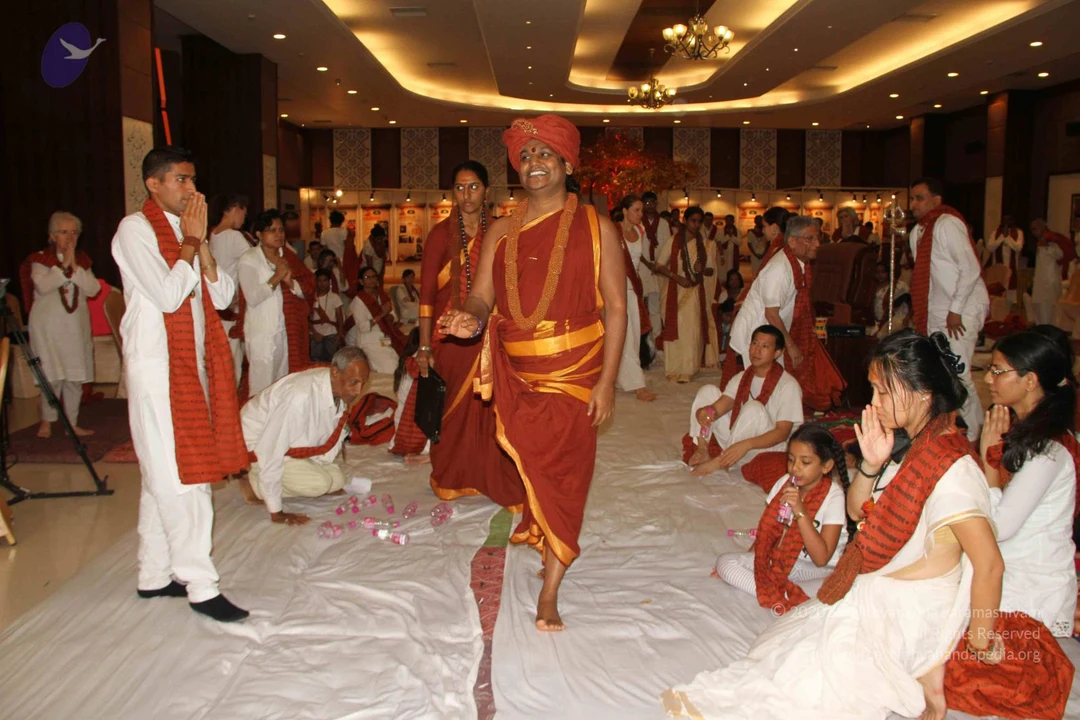
A satsang hall where a central seated teacher in an orange-red turban and saffron-orange robe sits in a brown leather armchair on a raised platform, with a golden decorated backdrop and a trident-topped stand behind him. Seated devotees fill the foreground and middle, many in white kurtas and white clothes with orange-red shawls draped over one shoulder, sitting on colourful striped woven mats. Some women wear sarees and one woman has long braided hair. A large screen at upper right shows a red-clad figure, and a gold chair stands empty at the top left. The teacher is described here as a probable Swamiji by his orange-red turban and saffron robe, seated centrally in a throne-like chair before the assembly.A photograph of a satsang hall where a seated figure in saffron-red robes and a red turban sits on an ornate dark wooden throne-style chair, with a tall ceremonial staff beside him. Around him, a large seated audience in white kurtas and white clothes with red-and-orange shawls sits on the floor; many have their backs to the camera. A wall screen and carved panels decorate the hall. The turbaned figure matches the appearance cues of Swamiji (probable), with saffron-red clothing, a red turban and ceremonial staff, and is presented as the discourse speaker, though the face is partly obscured. Roughly two dozen to forty people are visible.A smiling man in a red-orange turban and matching saffron-red robe with gold border sits in an ornate brown leather chair on a stage, wearing a gold-beaded necklace and a small headset microphone. Behind him, seated audience members in white shirts with red shawls watch; a woman in the foreground wears a red top and bindi, and an older man in a grey cap sits at right. A red cloth lies draped over a chair behind, and the room has cream walls with a dark wood panel.A man seated on an ornate brown leather throne-style chair, wearing a large red turban with a small gold ornament, a red-orange robe with gold trim, and a long beaded necklace of brown beads. He sits upright with his hands resting on the chair arms, looking toward the left. Behind him, several seated audience members wear white shirts and red shawls; a woman in a dark outfit with a red bindi sits at the front, and an older man with a grey head covering is at the right edge. Orange cloth lies on a chair in the background. The scene suggests a satsang gathering.A photograph of a man seated in a large brown leather throne-style chair at an indoor satsang. He wears a red-orange turban with a gold embroidered ornament, a maroon robe with a gold-yellow border, a long beaded rudraksha-style mala with ceremonial gold tassels, and a blue beaded bracelet. A white tilak marks his forehead and a red bindi sits between his eyebrows. He sits upright, smiling, with his hands resting on the armrest. Behind him to the right, seated devotees in red and white clothing listen, including a woman in a red top with a red bindi and a man in glasses. Wooden paneling and a dark curtain form the backdrop. Probable Swamiji wearing saffron-toned turban, maroon robe and ornate mala; seated on a throne in a satsang setting.A photograph of a large satsang gathering in a hall with a dark wooden throne-style chair at the front. A seated figure in orange and saffron robes with a red head wrap sits on the throne, with a tall trident-like staff beside him. Many devotees in white clothes with orange-red shawls sit on white floor mats in front of him, some with bare heads and some with long dark hair, and several girls sit in the foreground. Behind them are display stands, a small exhibition area and video cameras on tripods.

Energy-Darshan

38 photosSource gallery
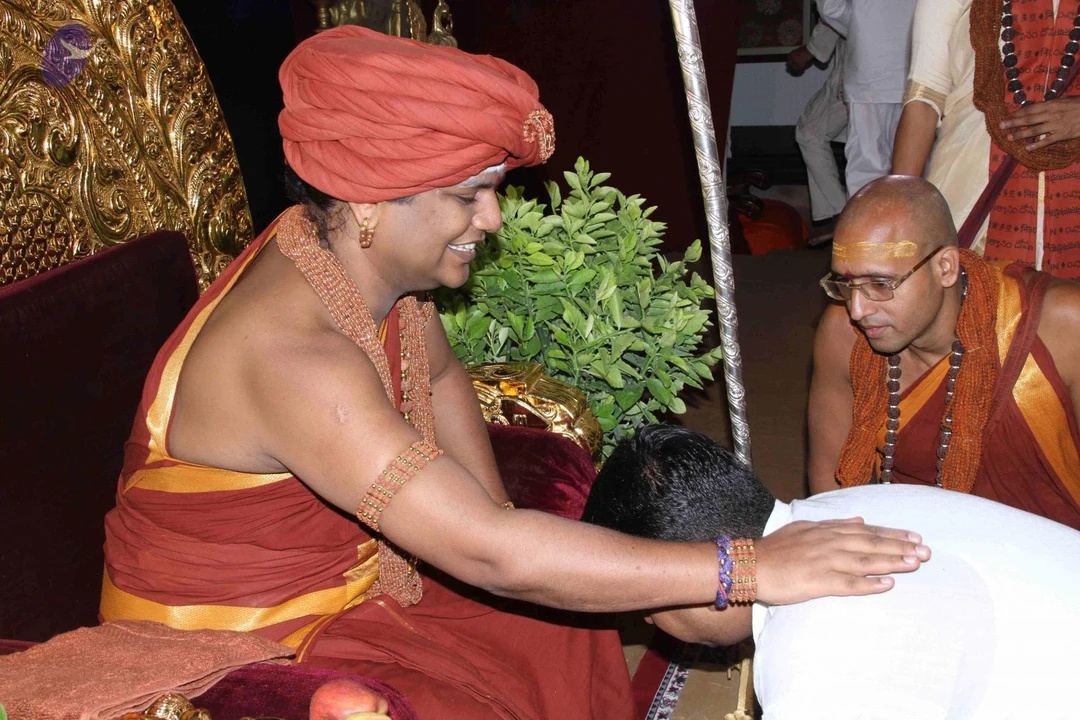
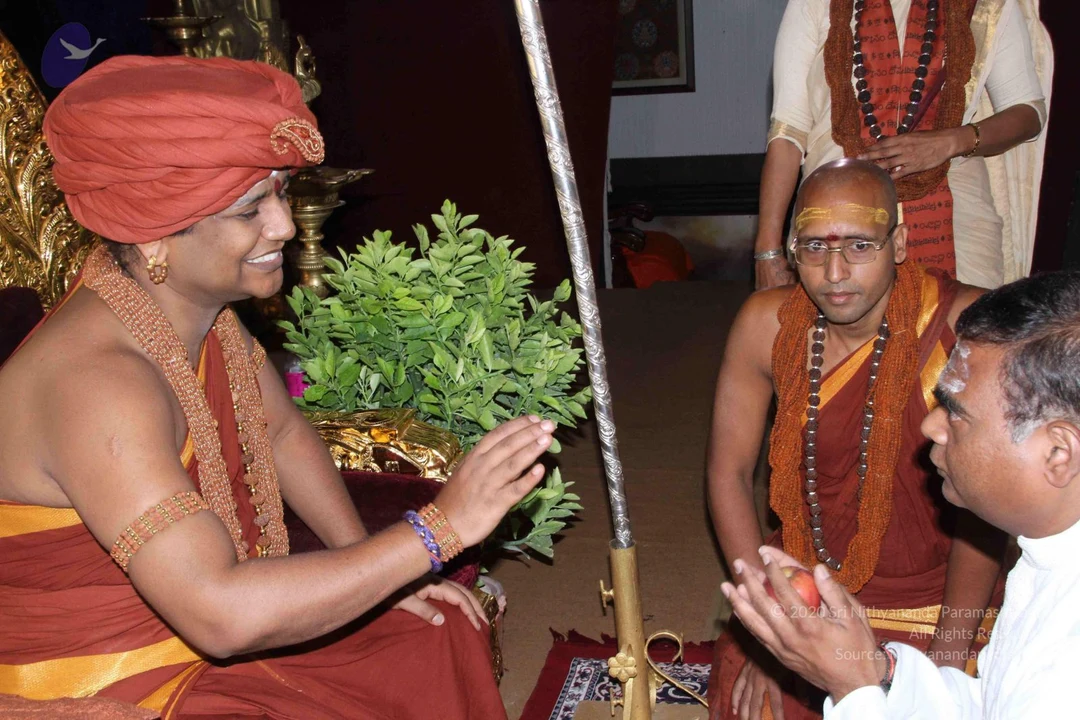
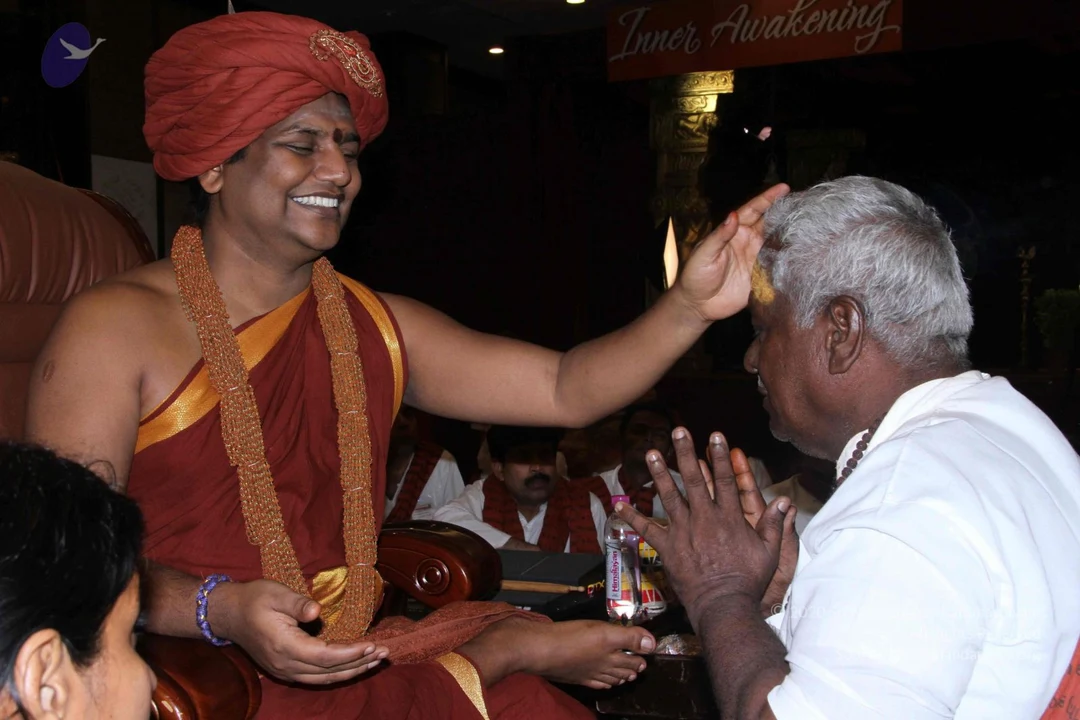
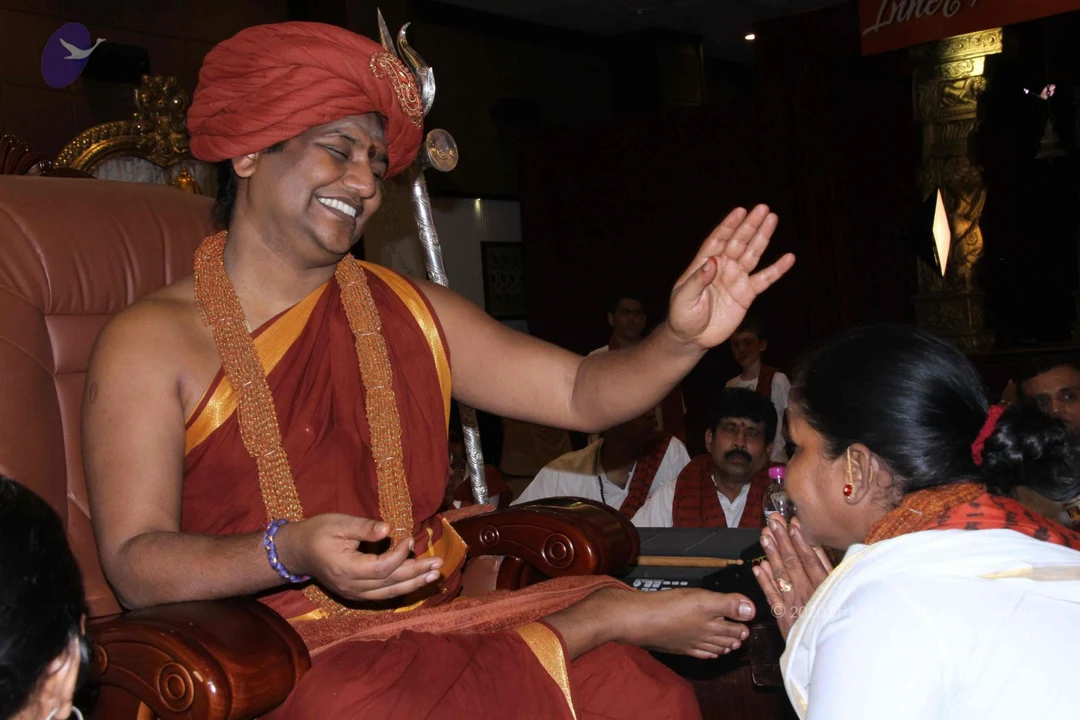
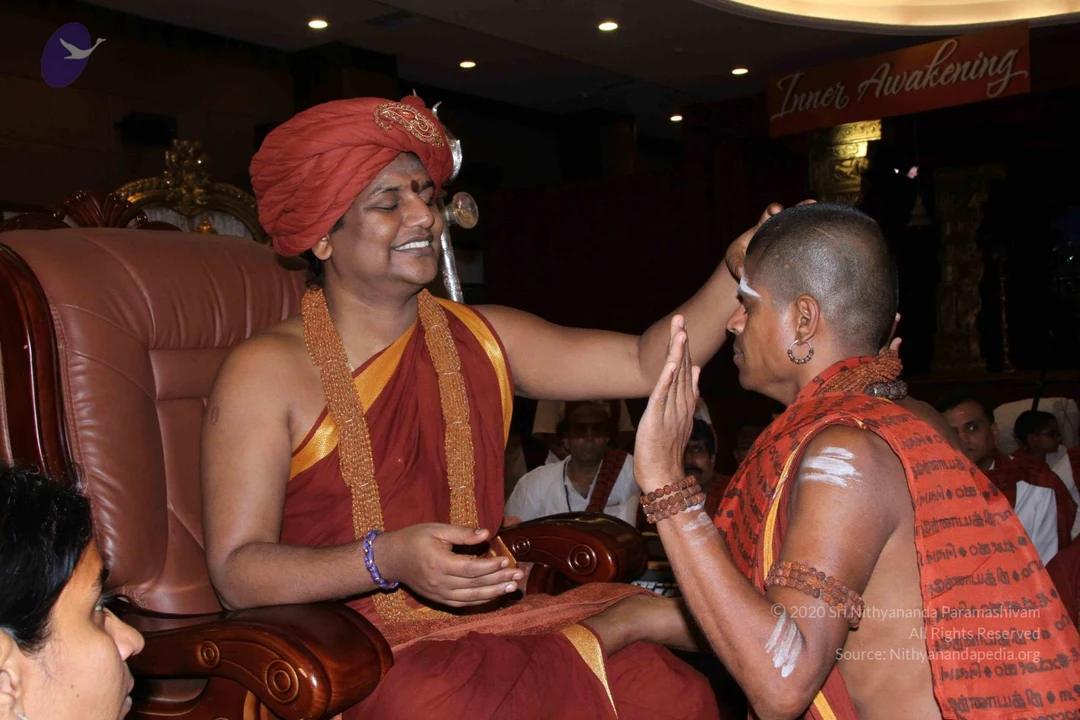
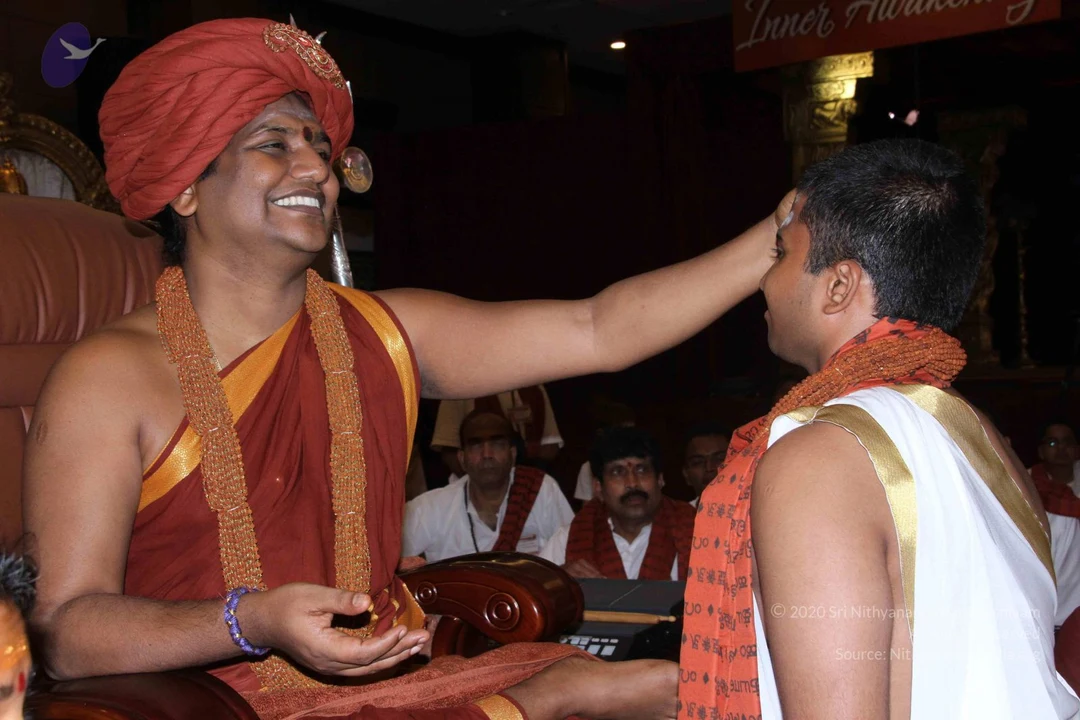
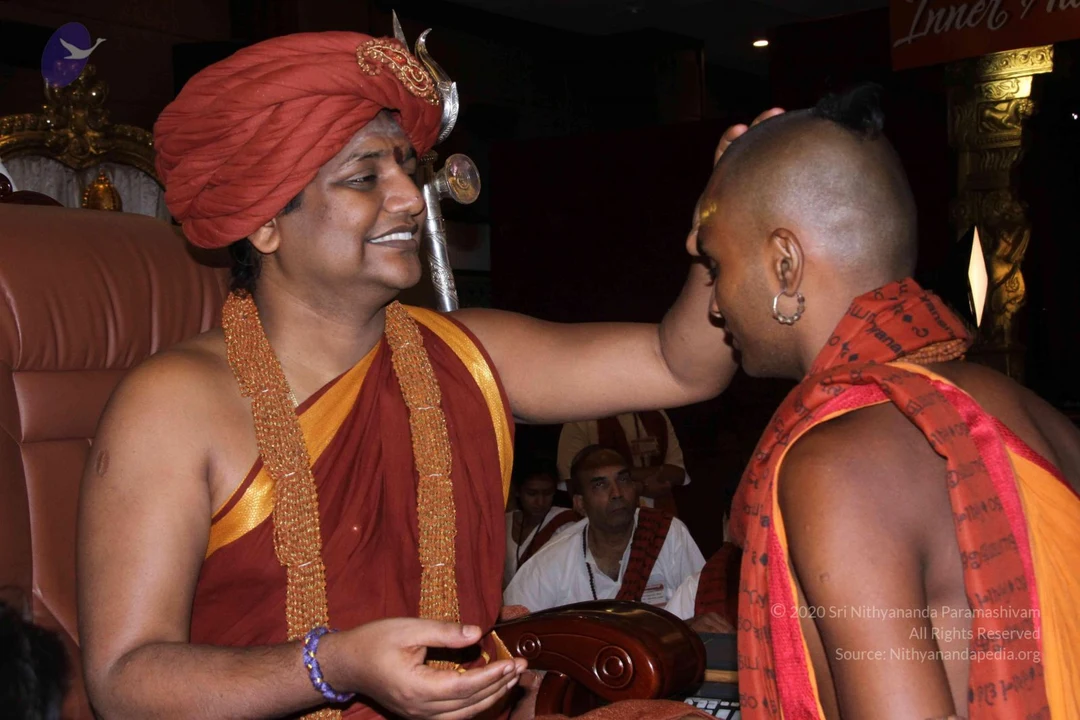
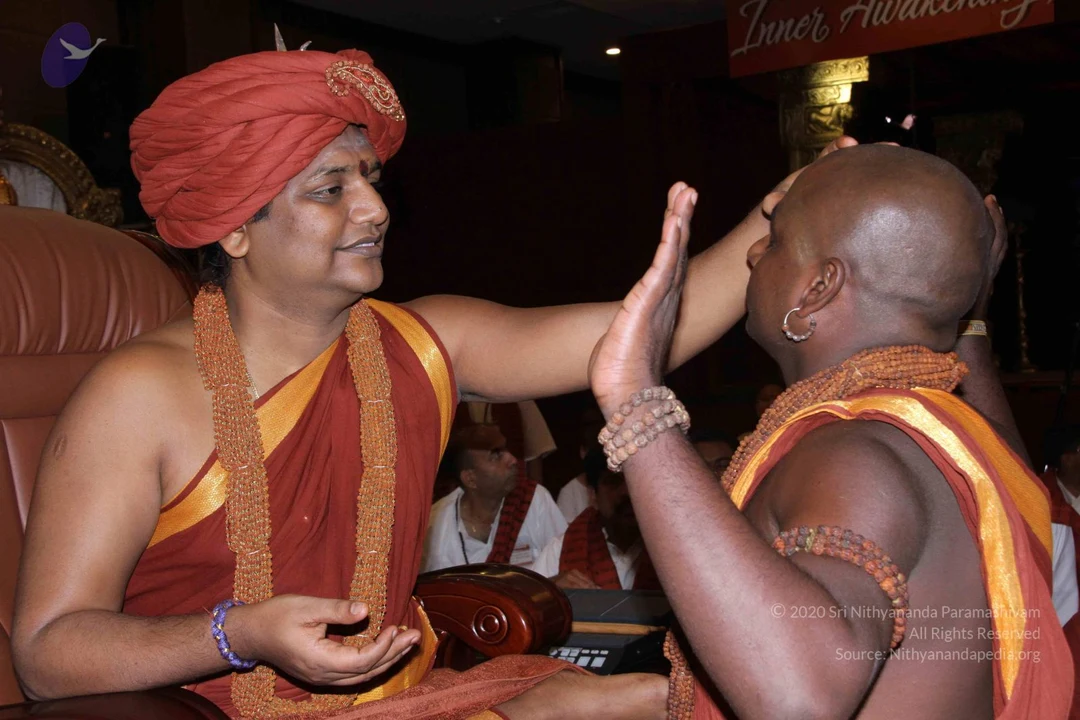
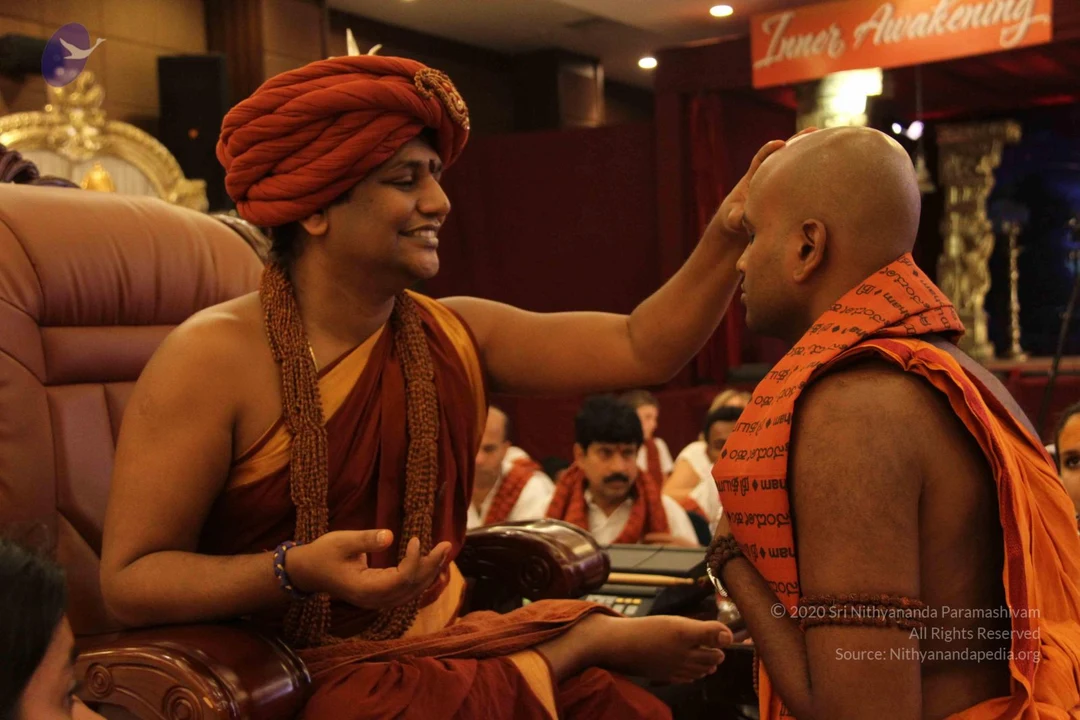
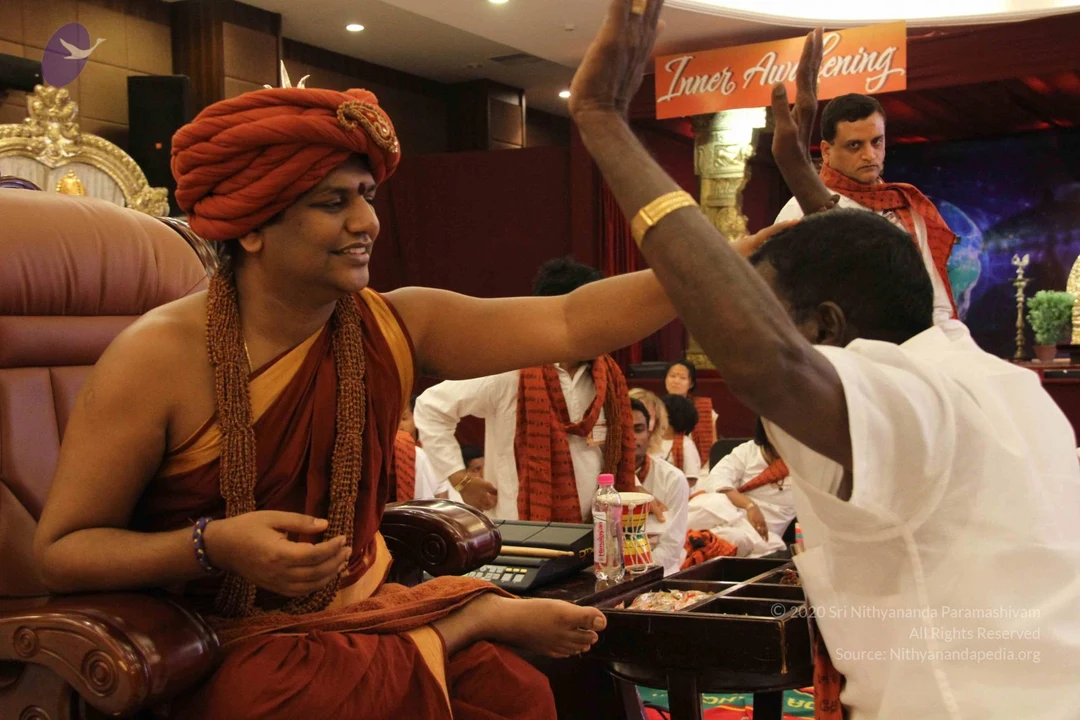
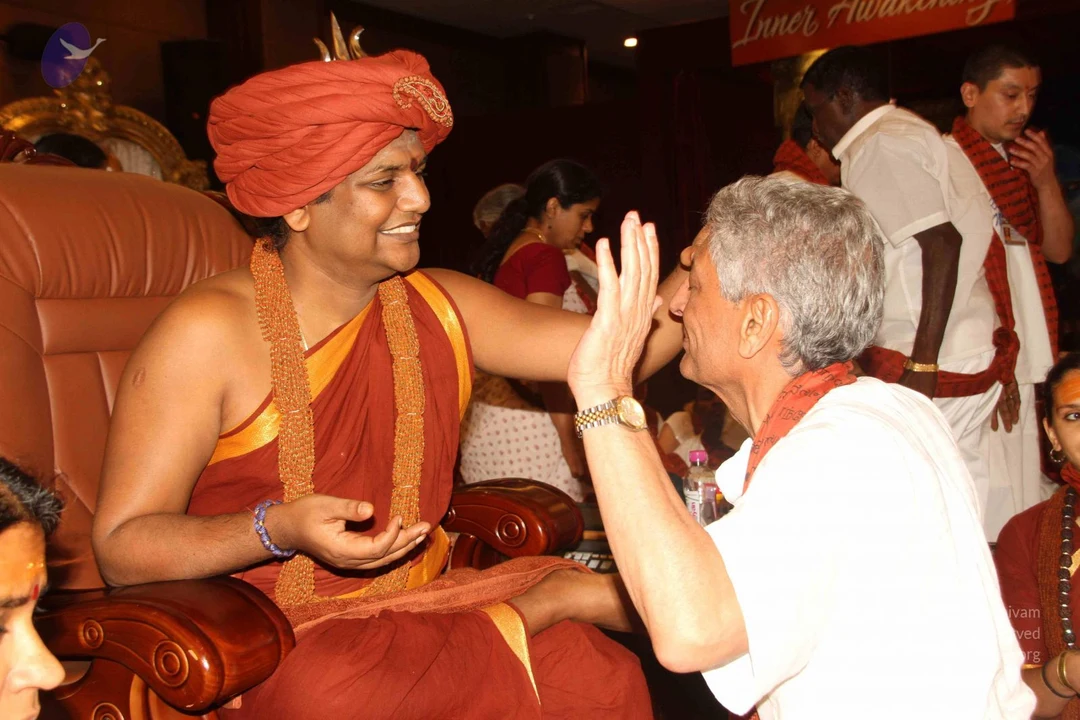
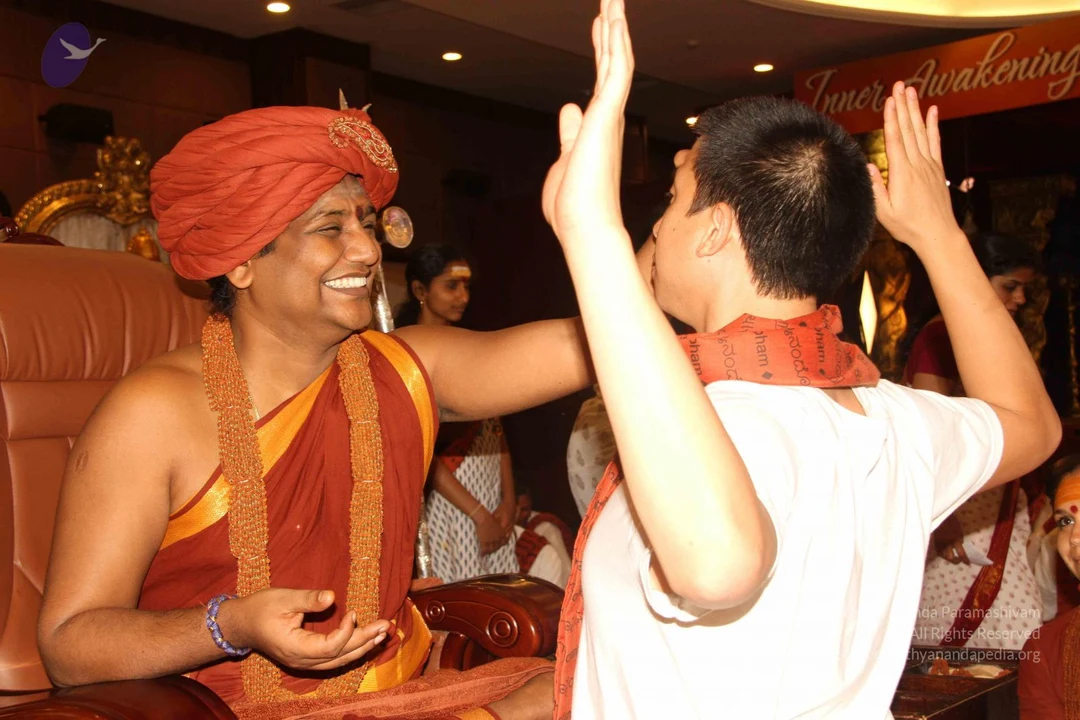
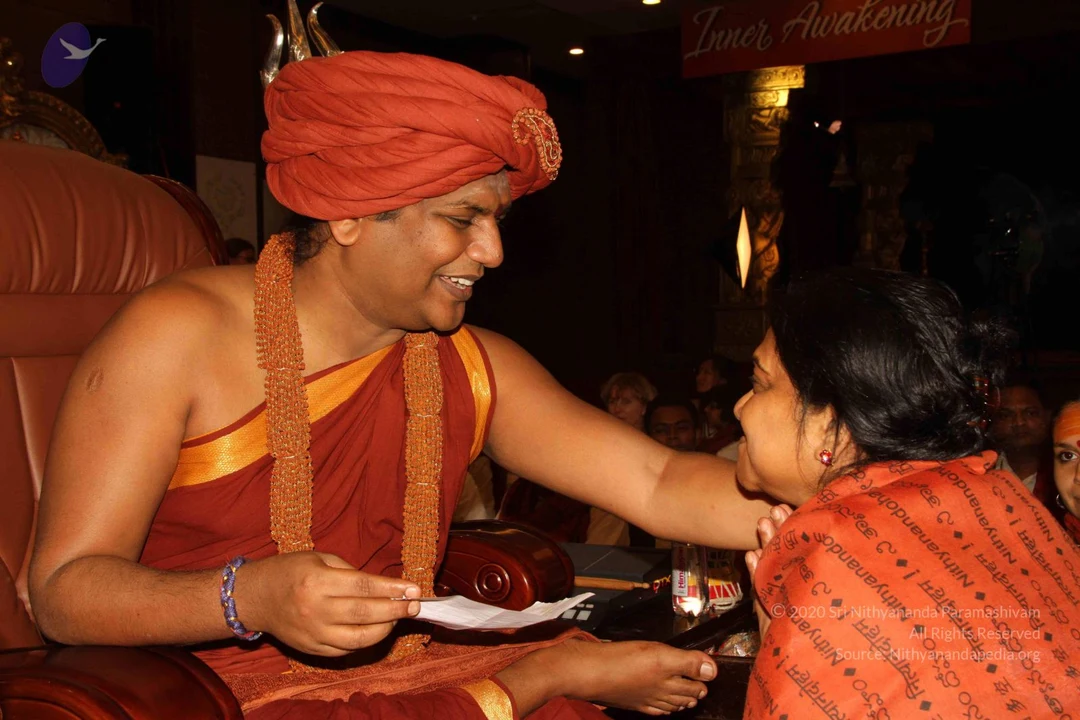
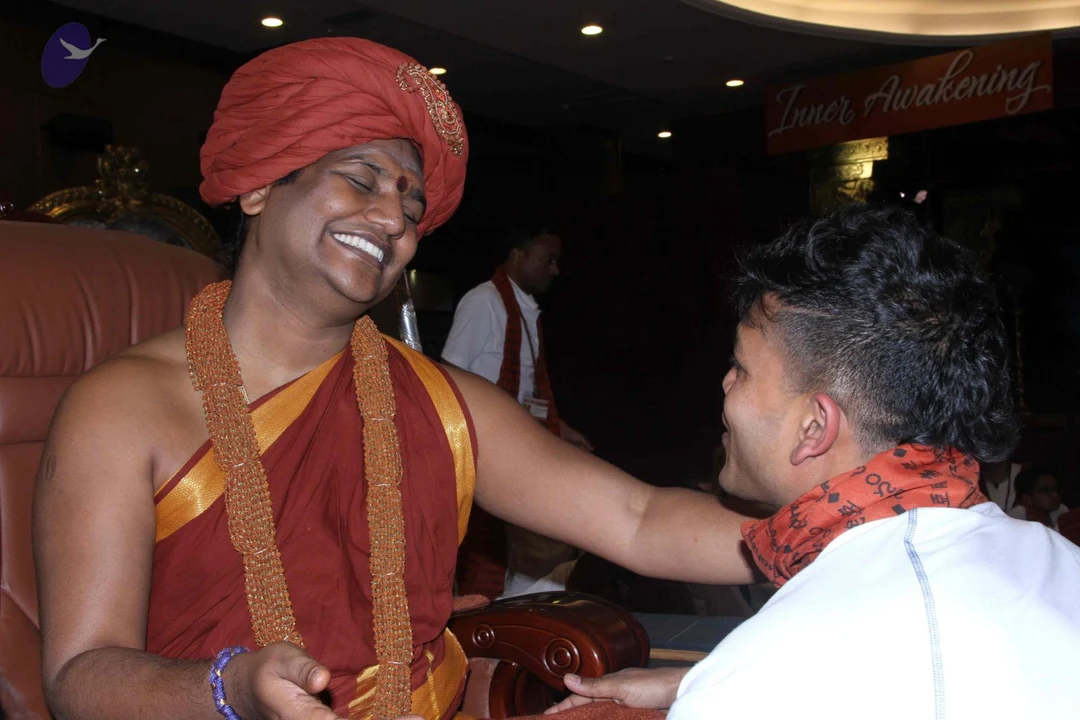
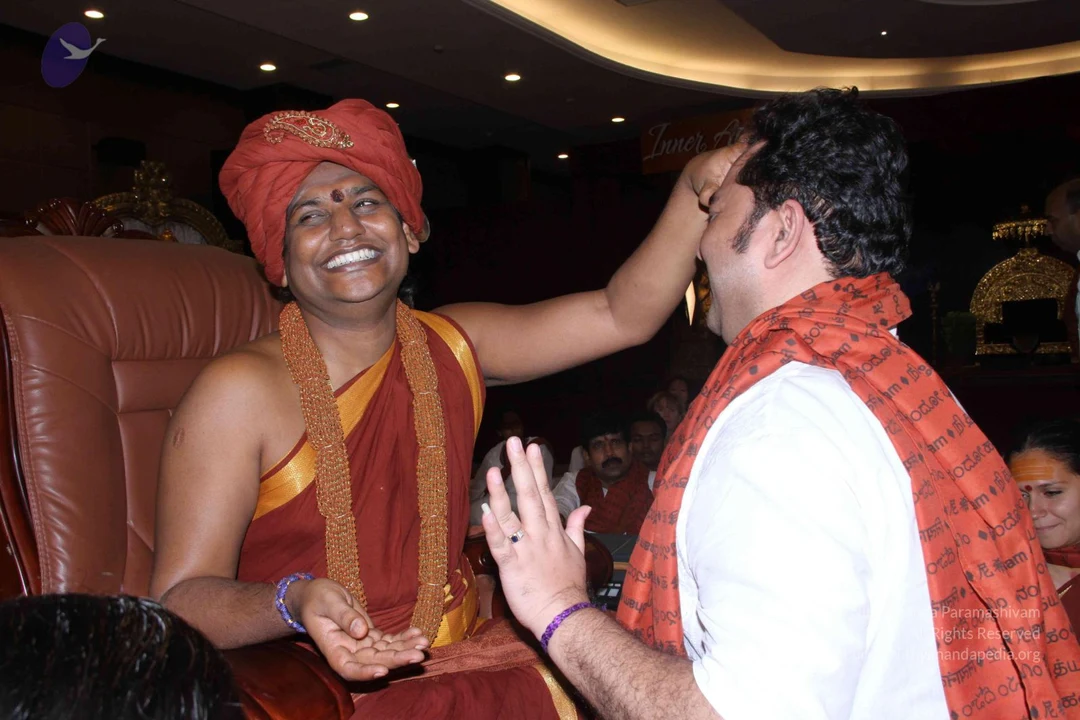
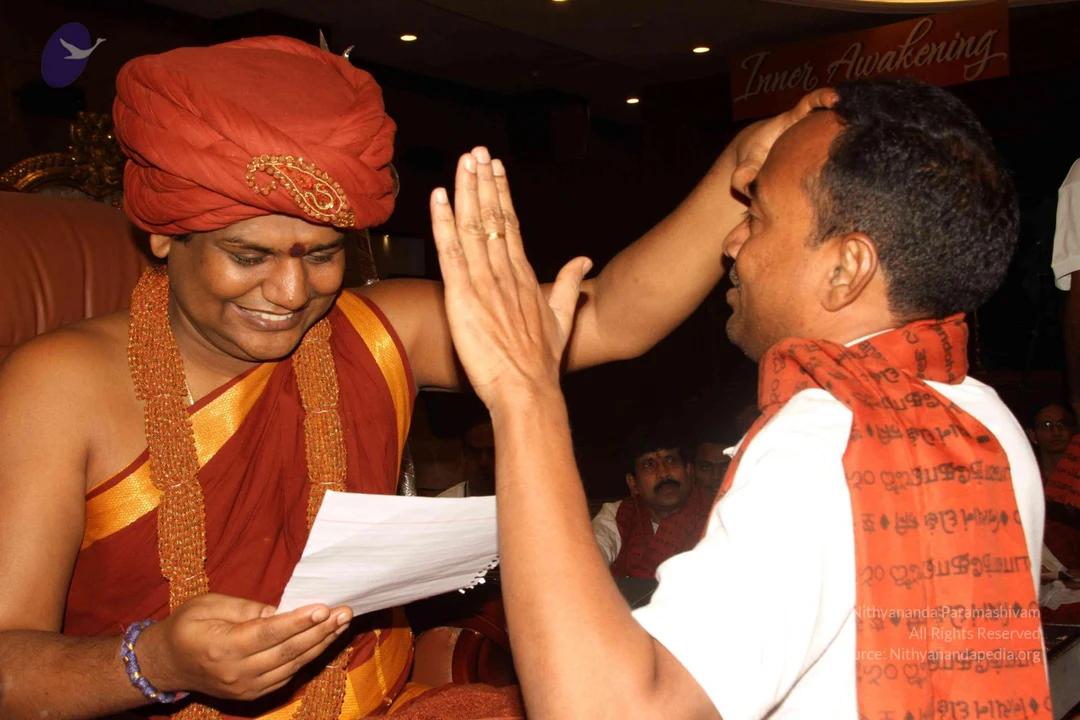
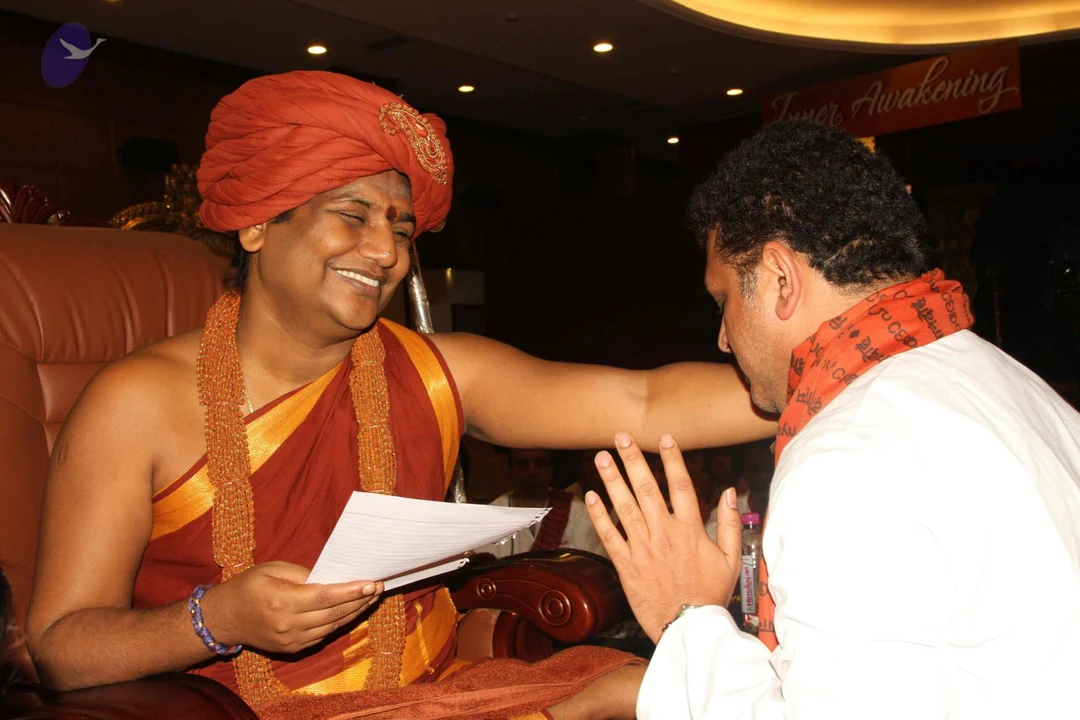
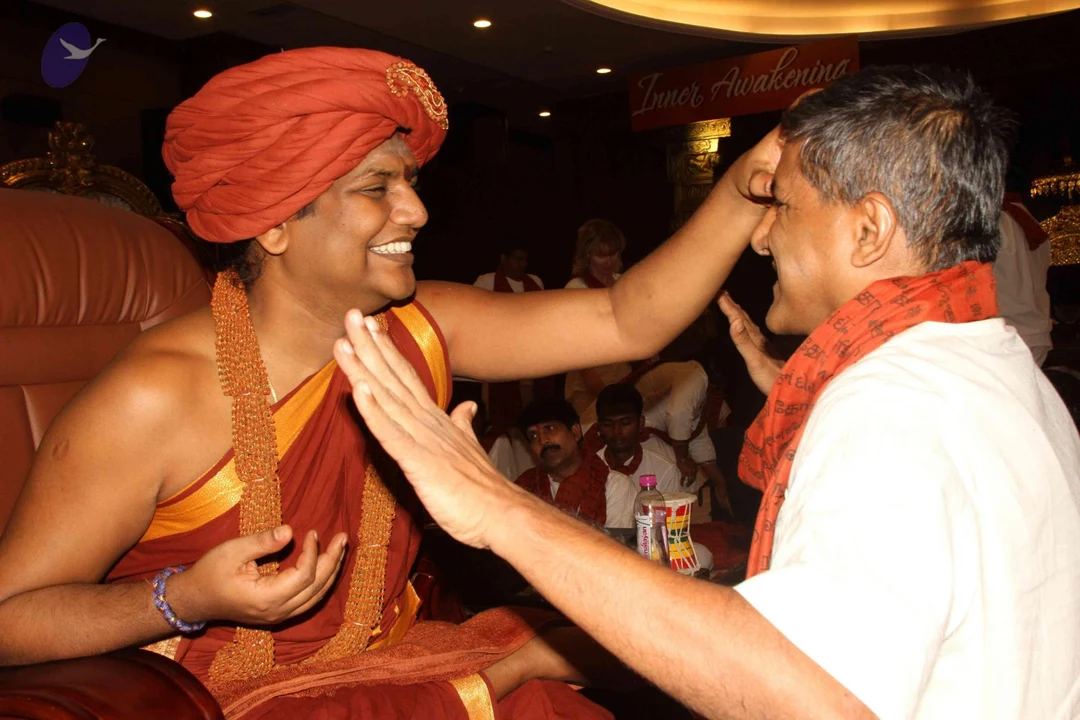
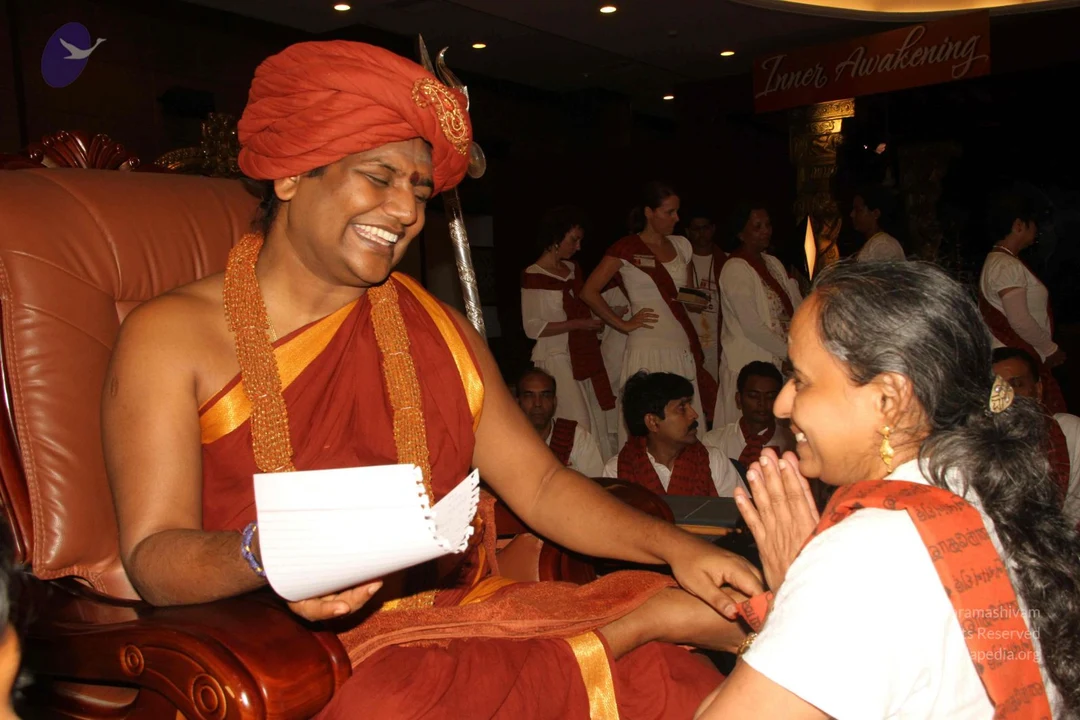
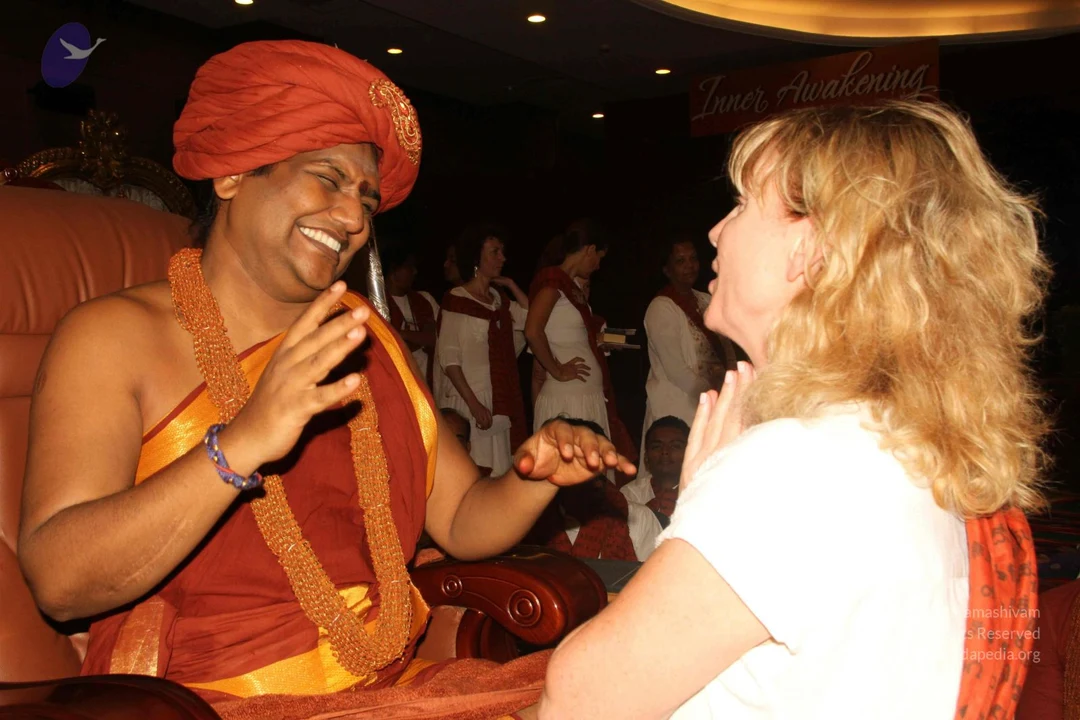
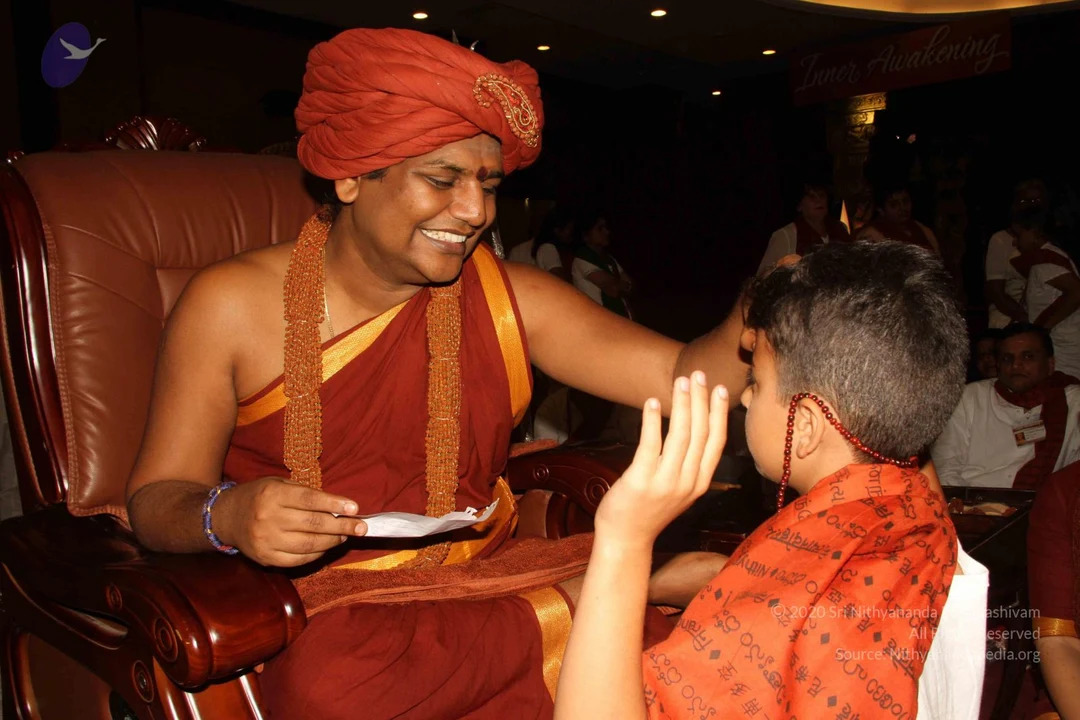
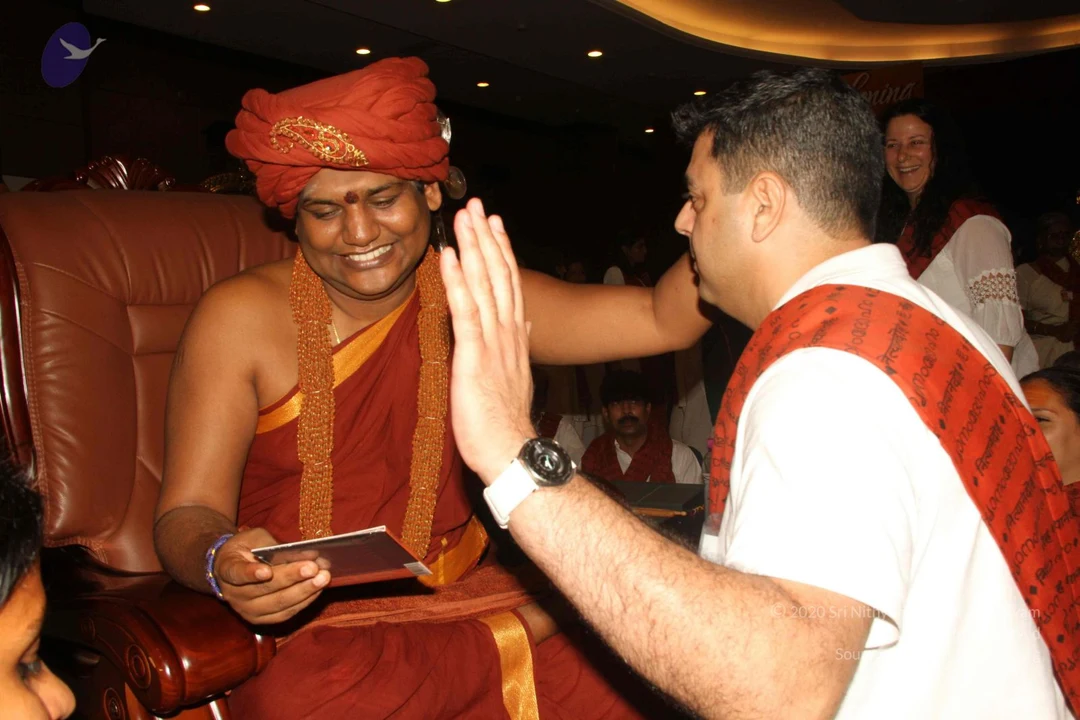
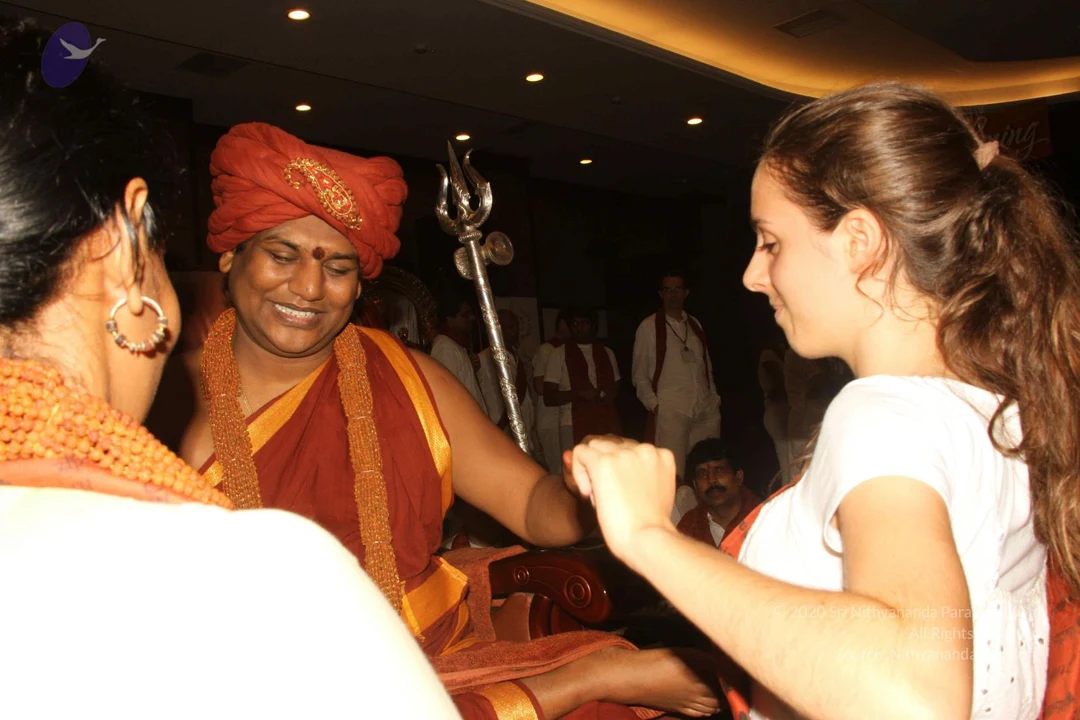
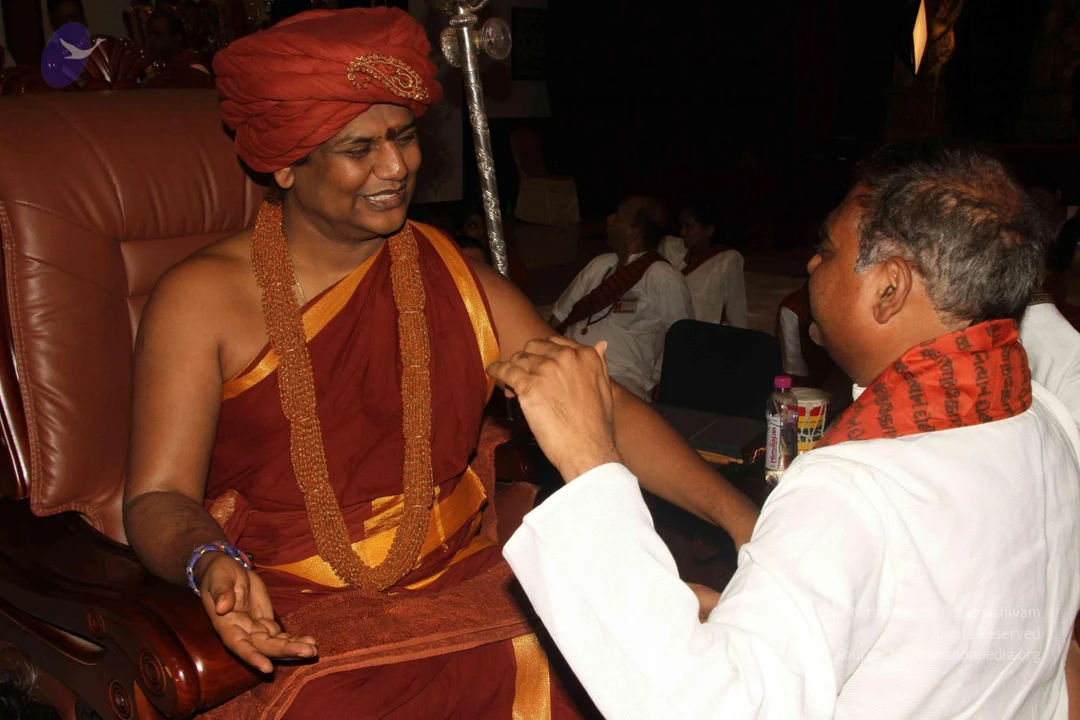
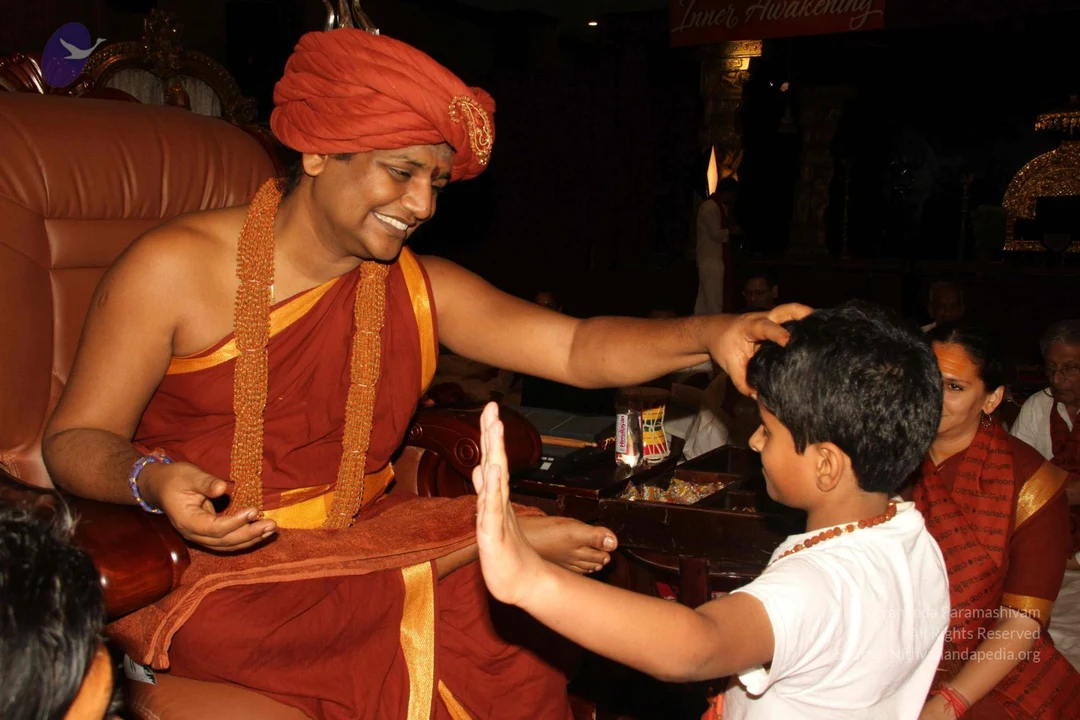
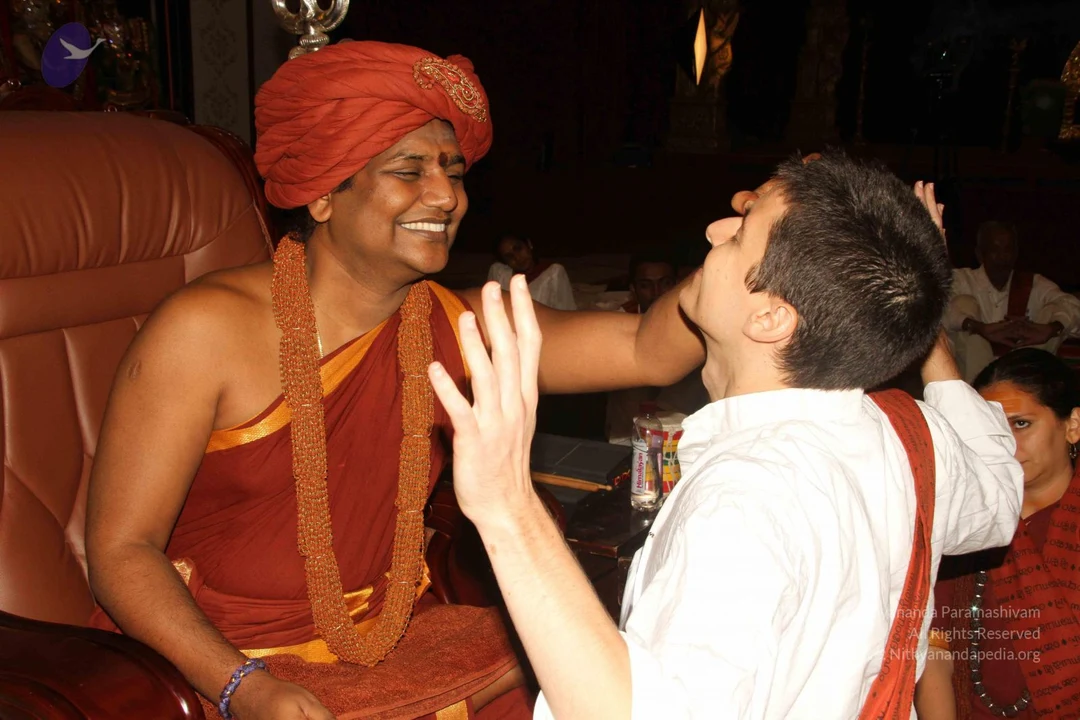
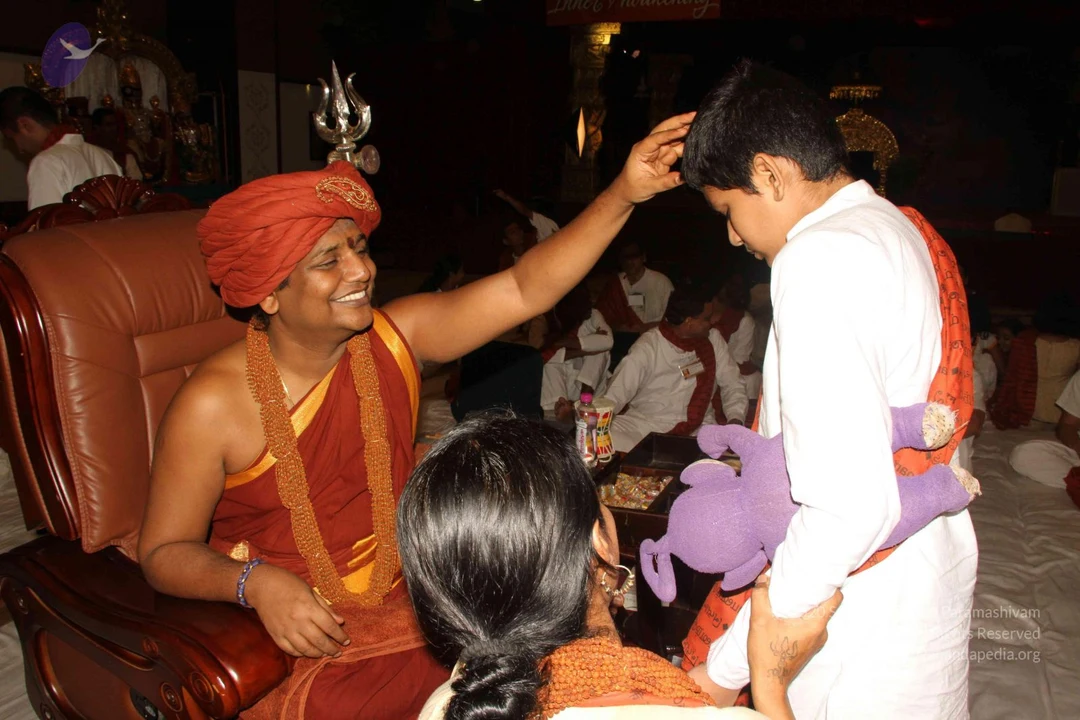
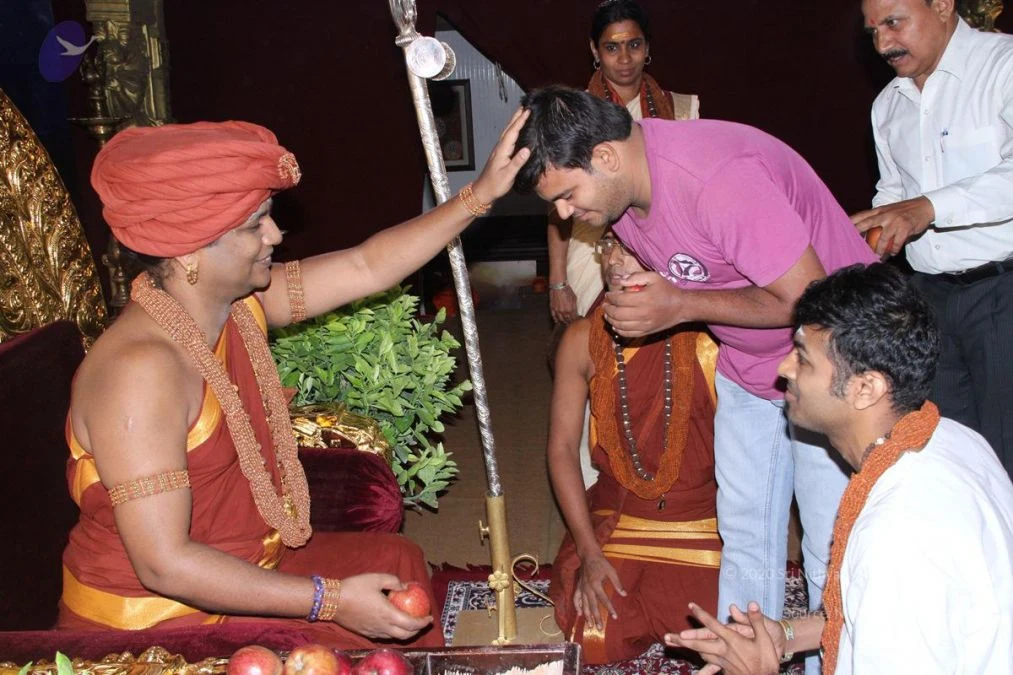
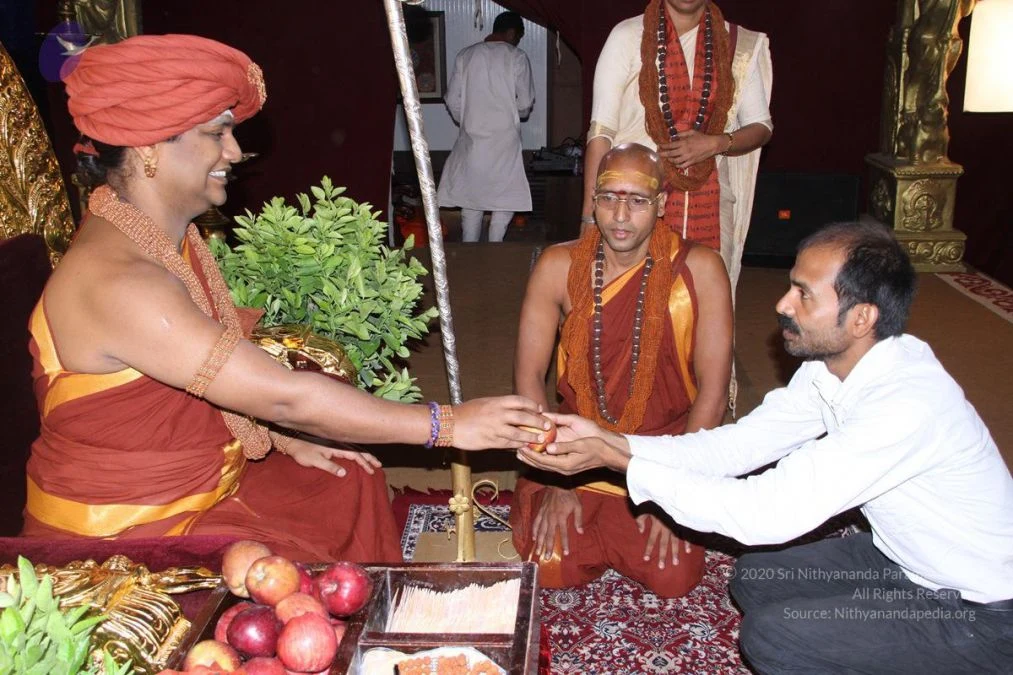
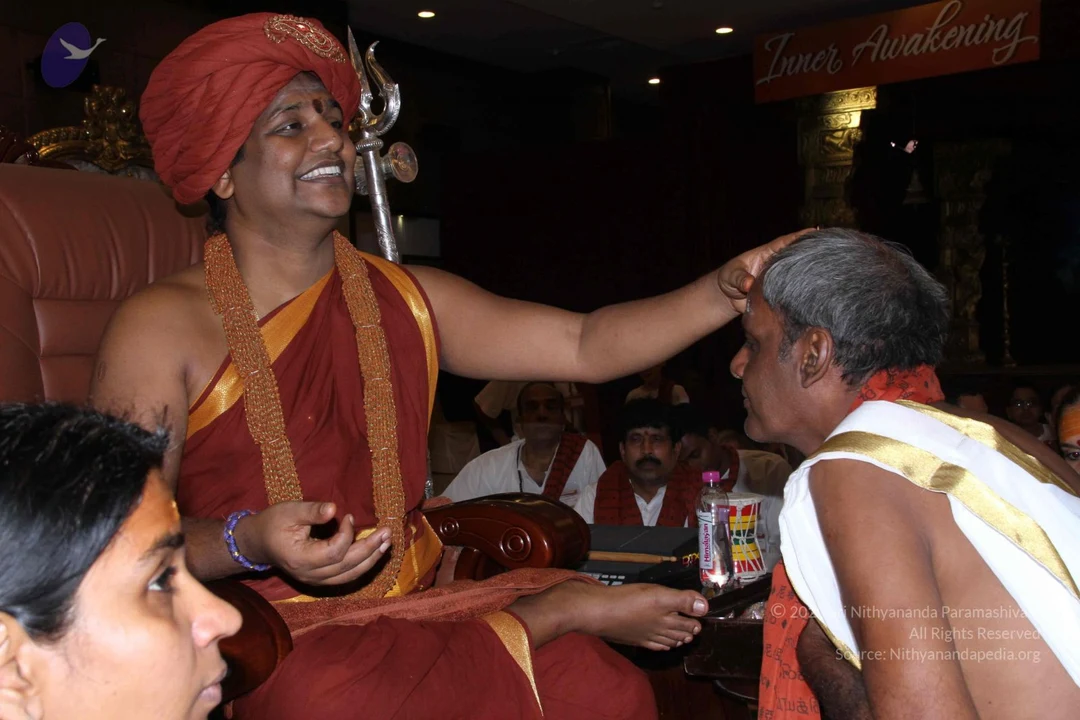
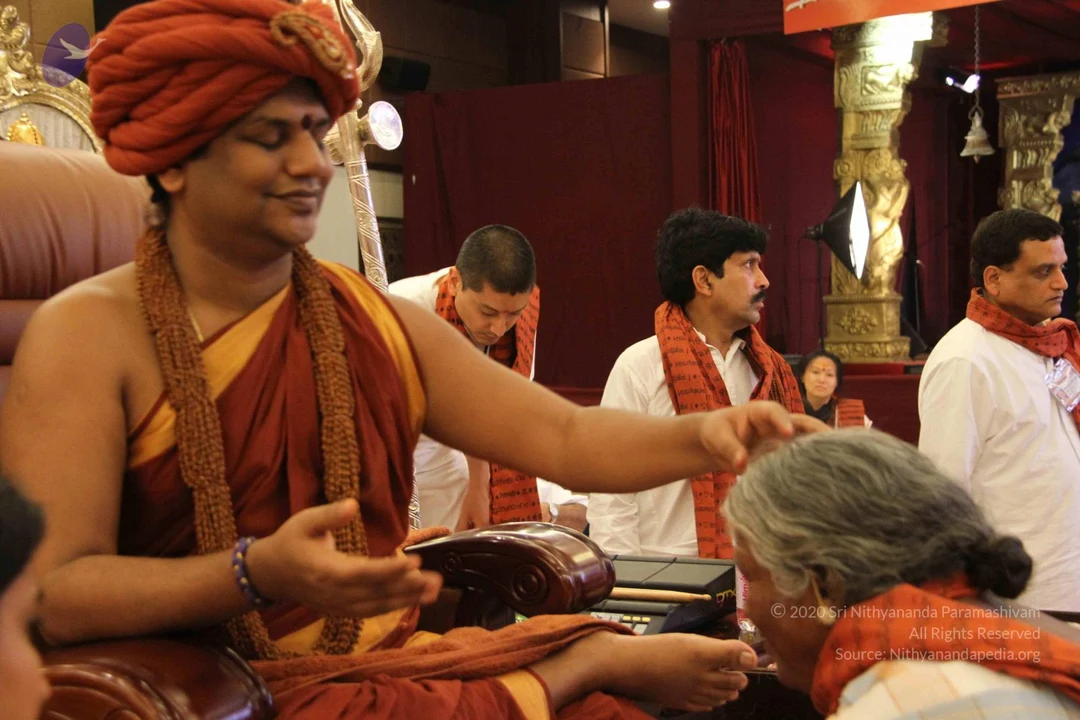
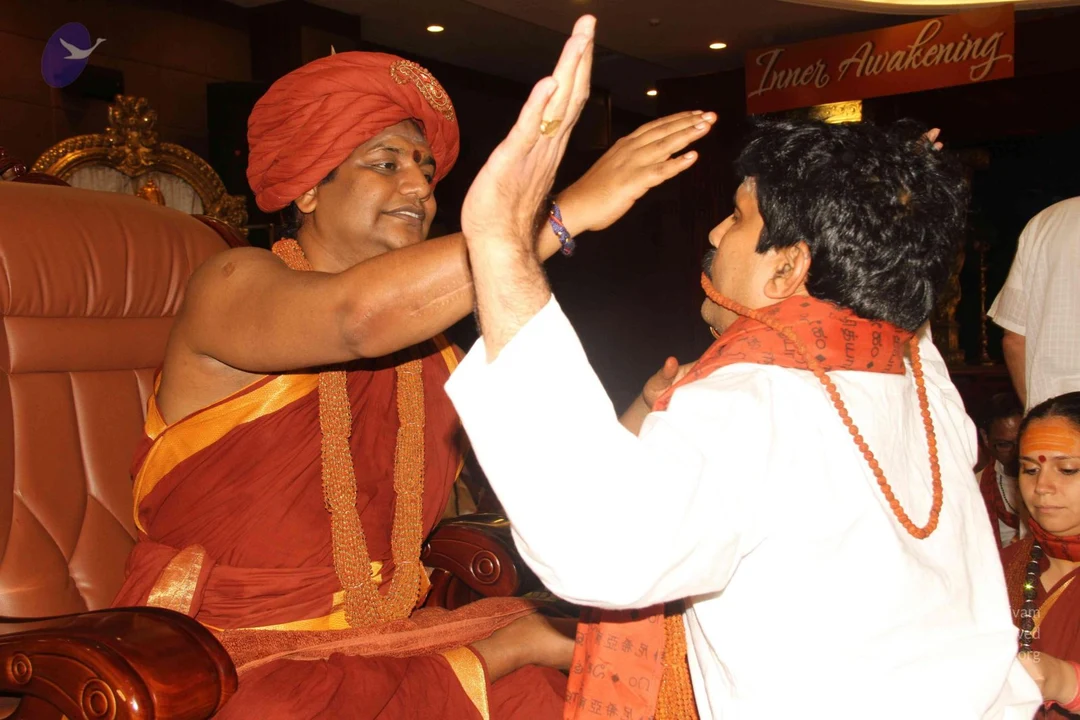
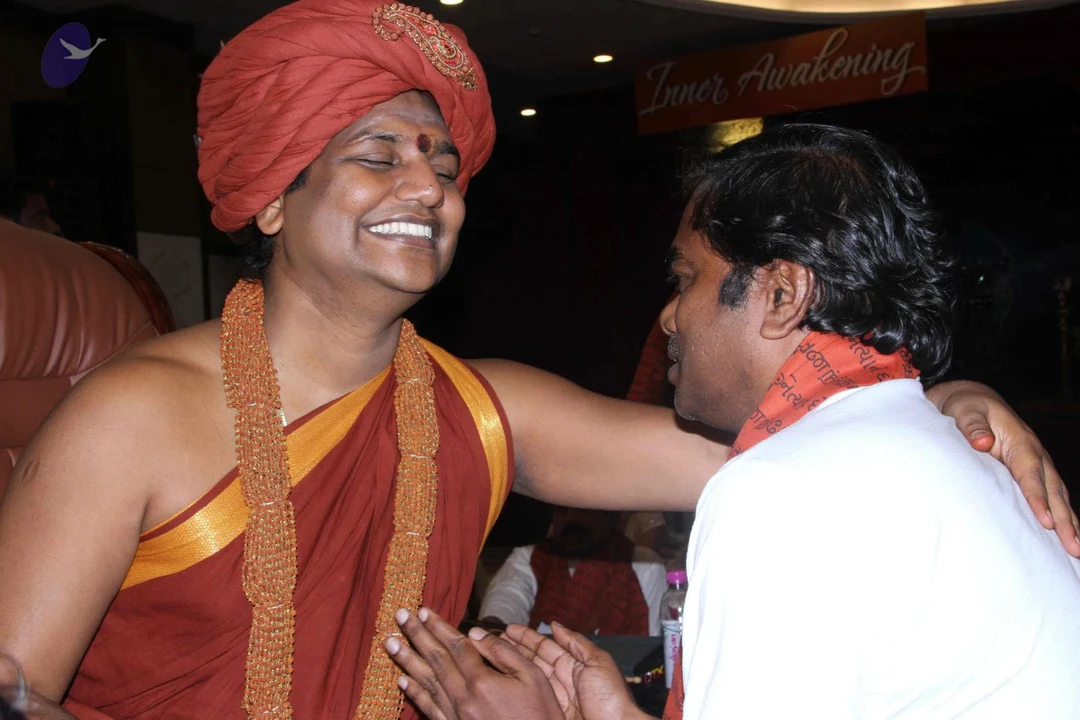
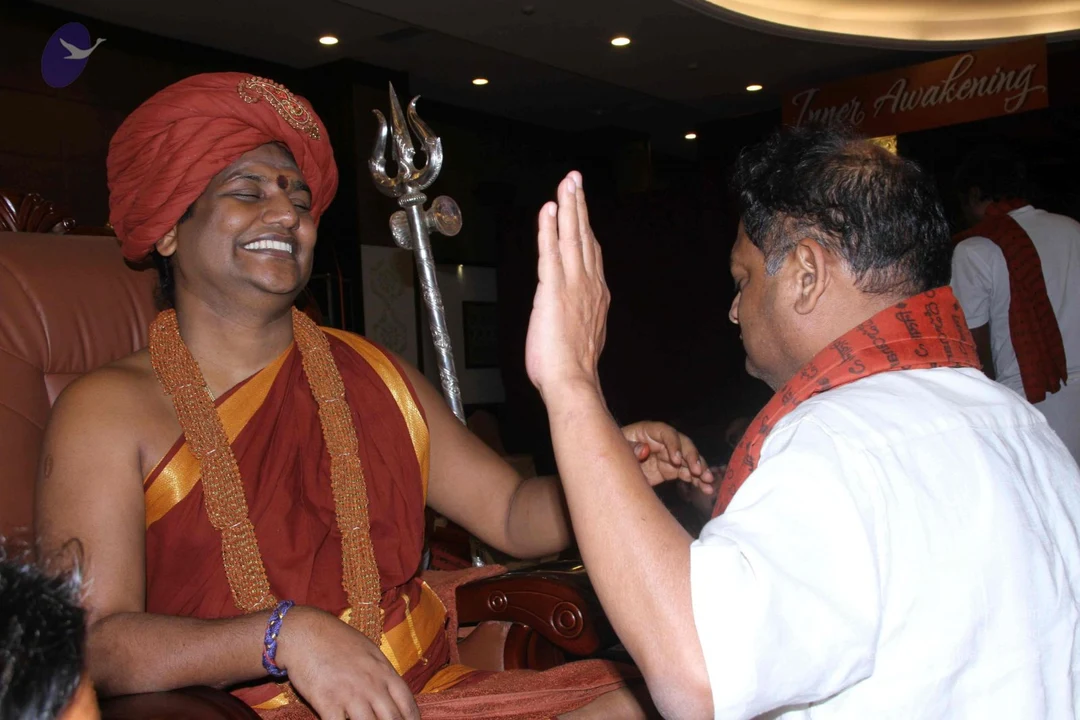
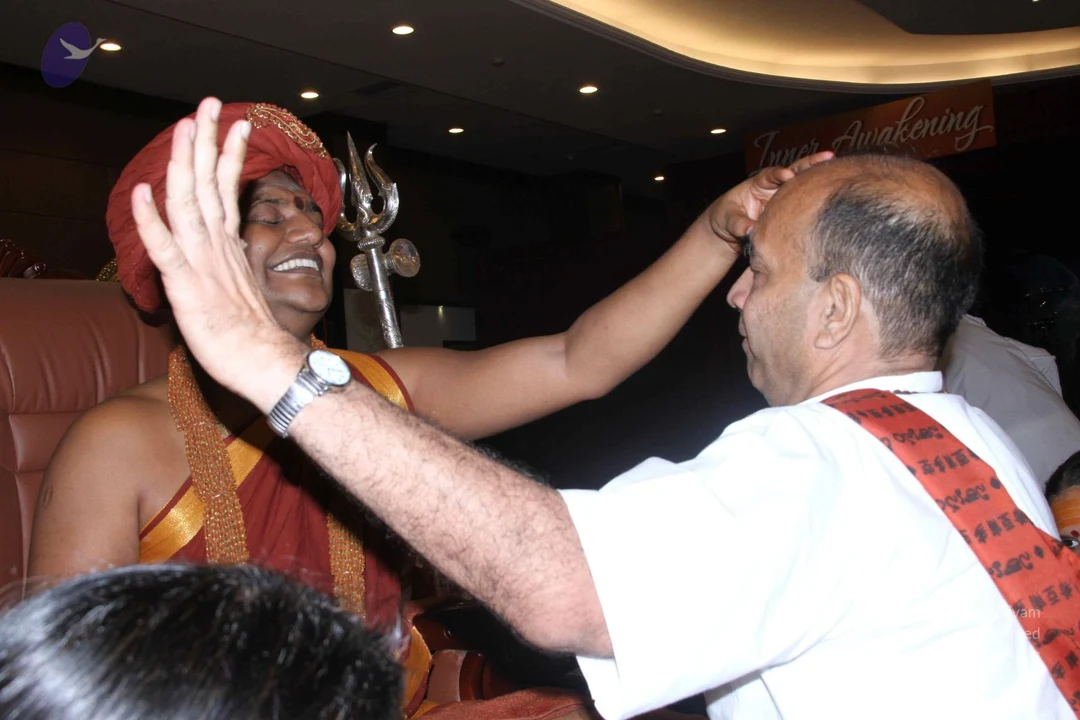
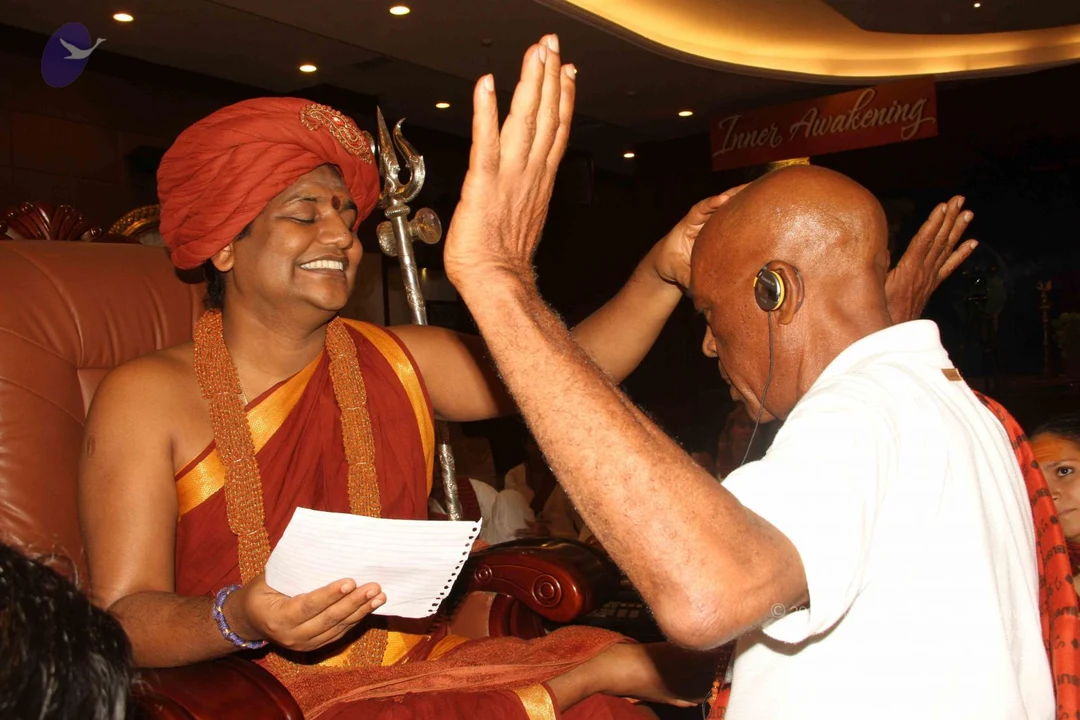
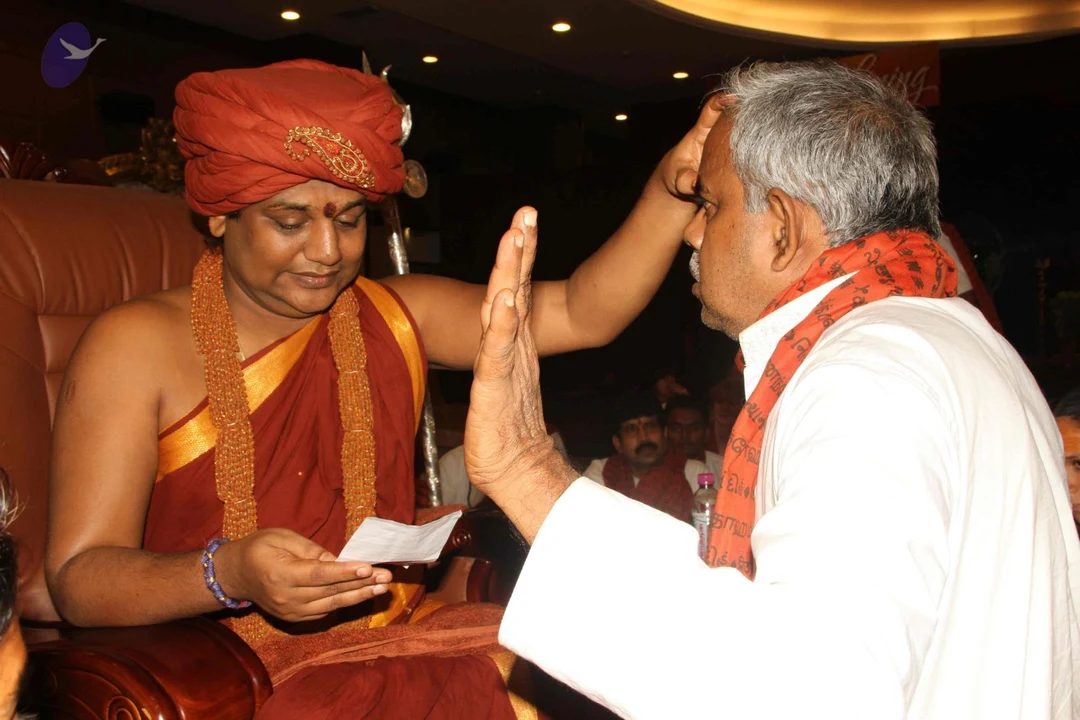
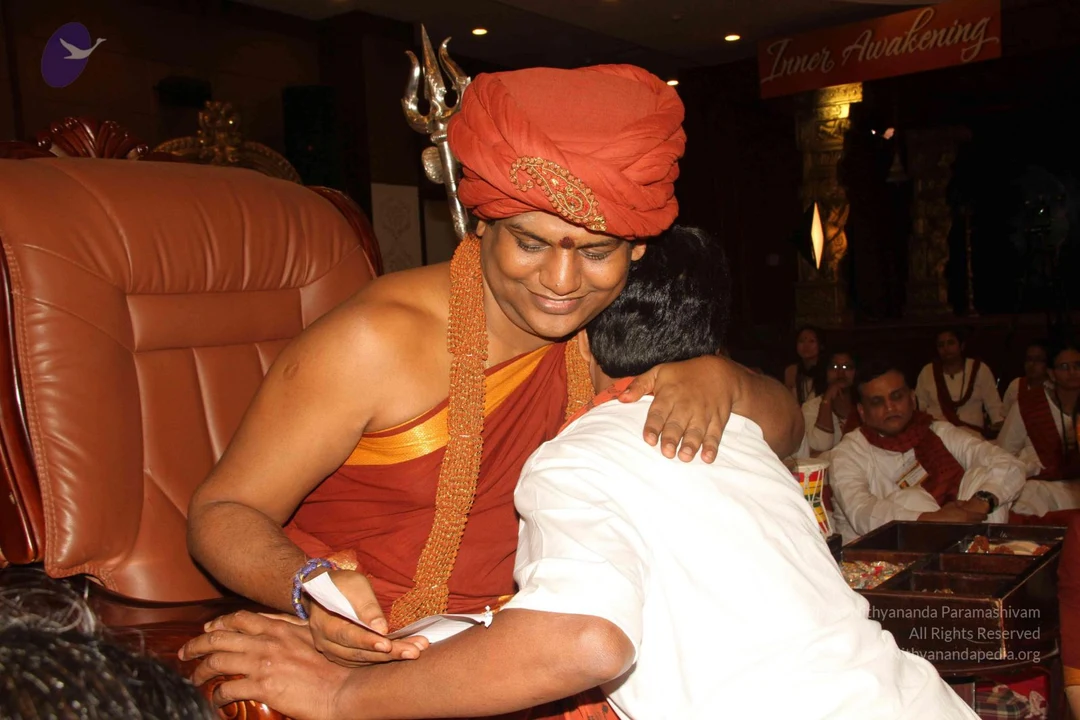
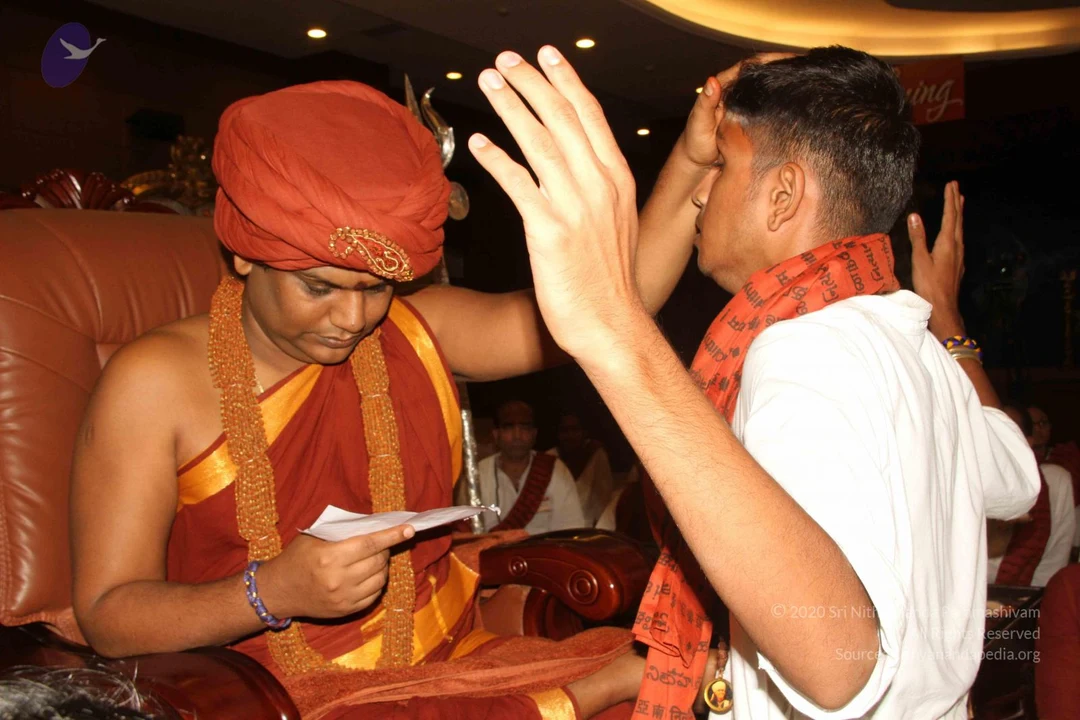
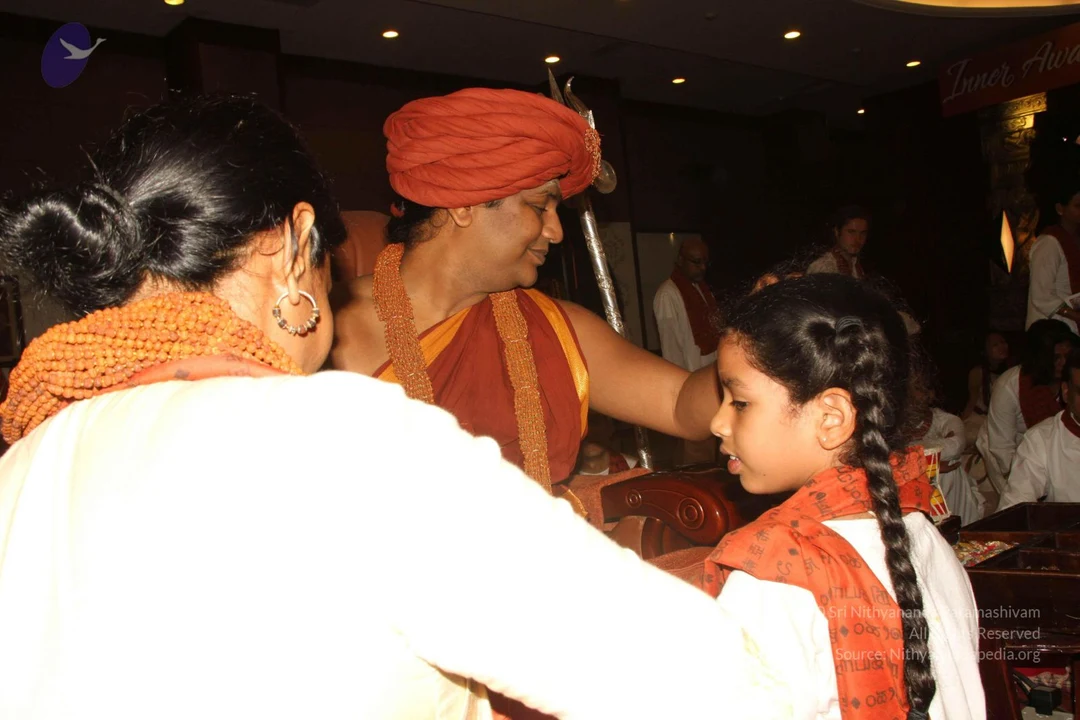
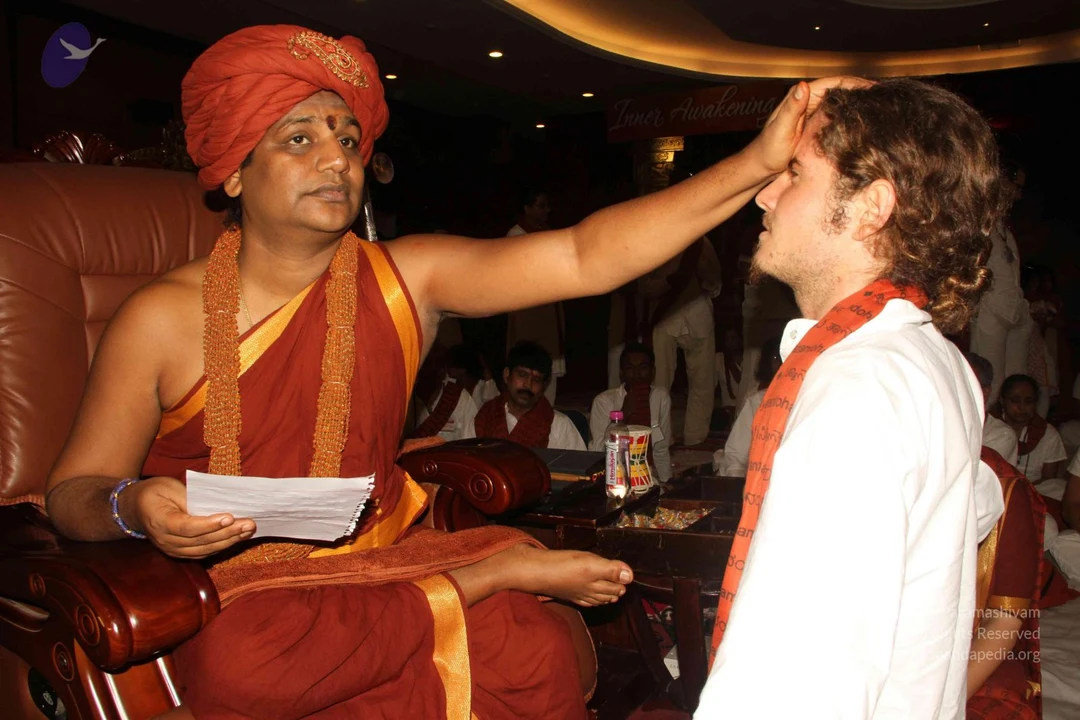
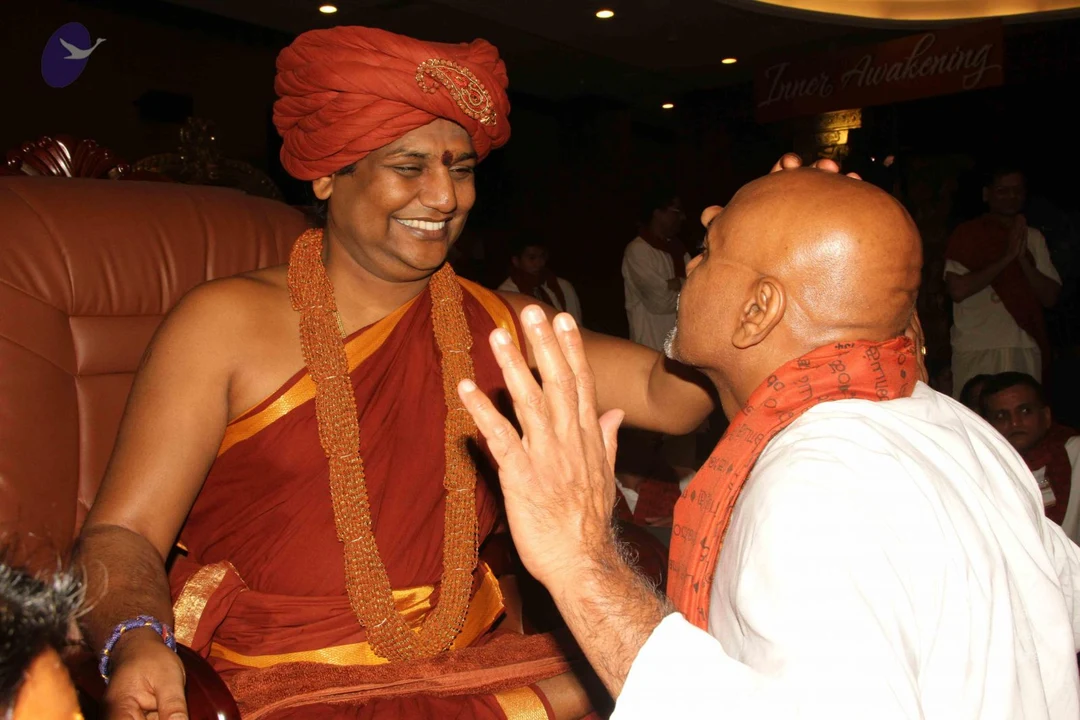
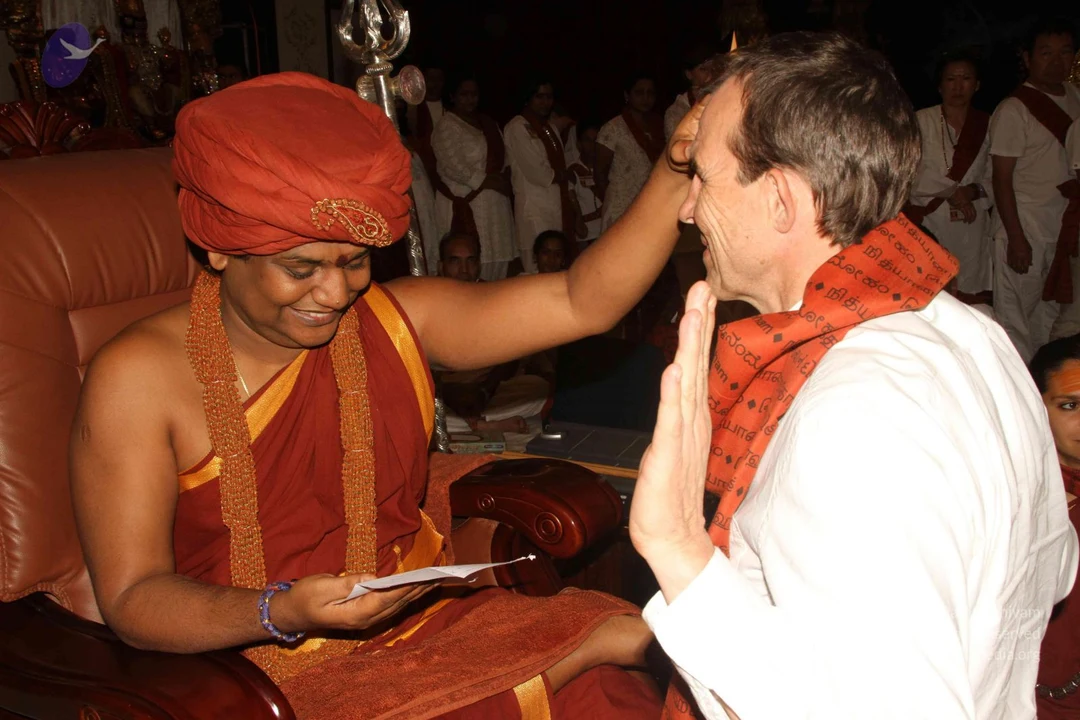
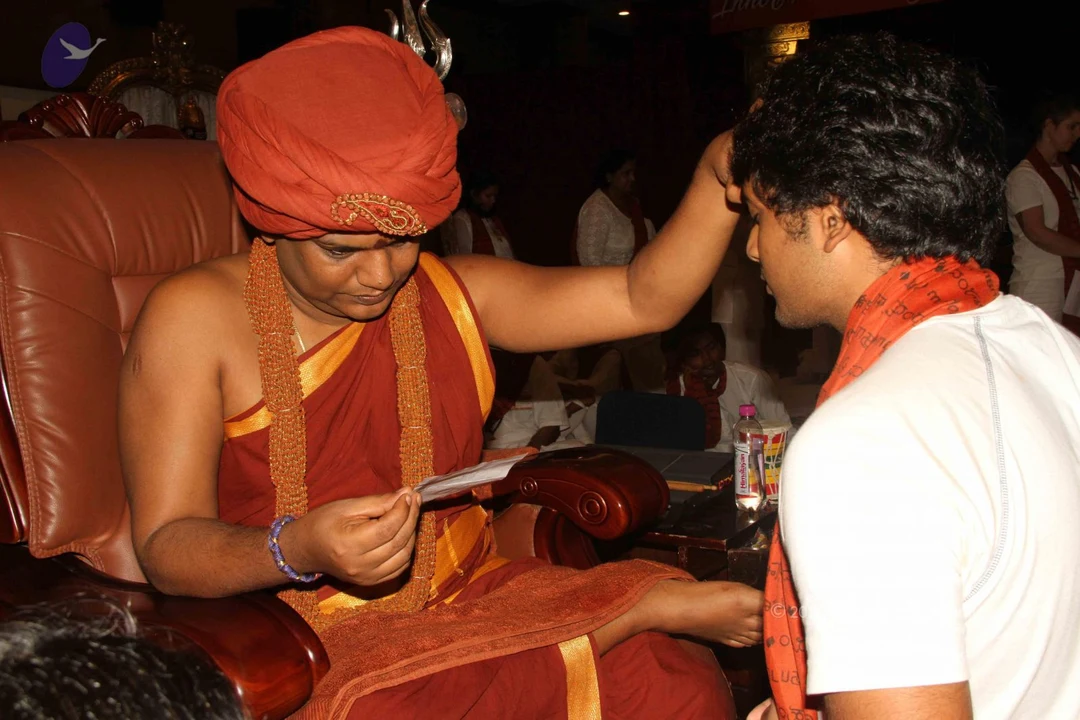
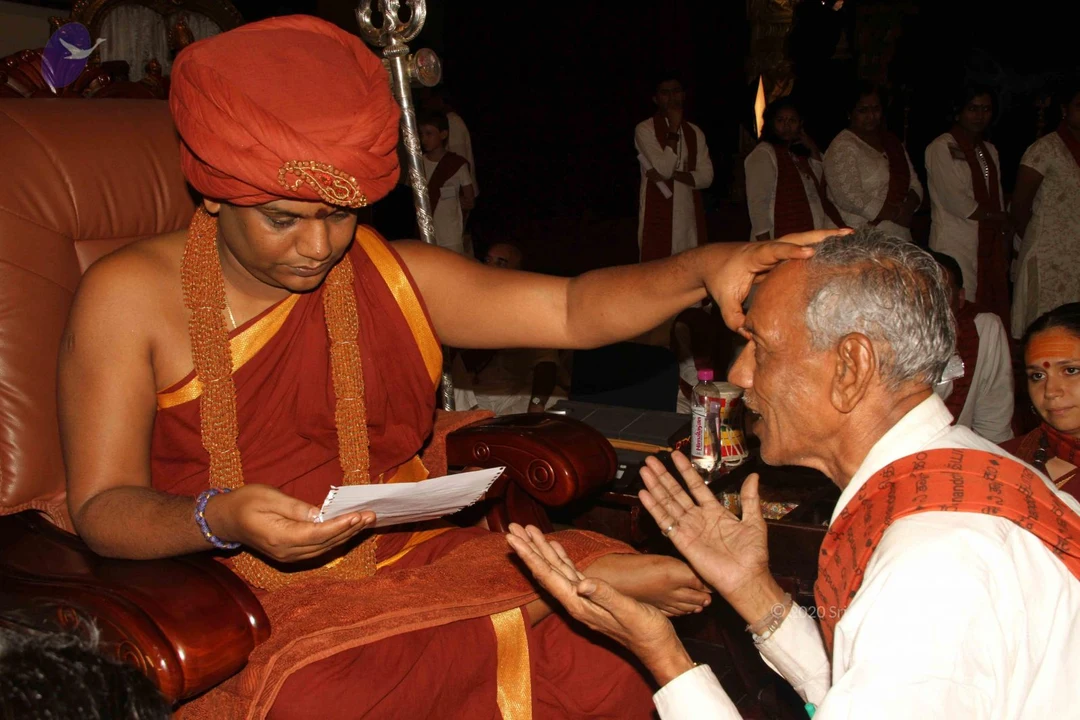
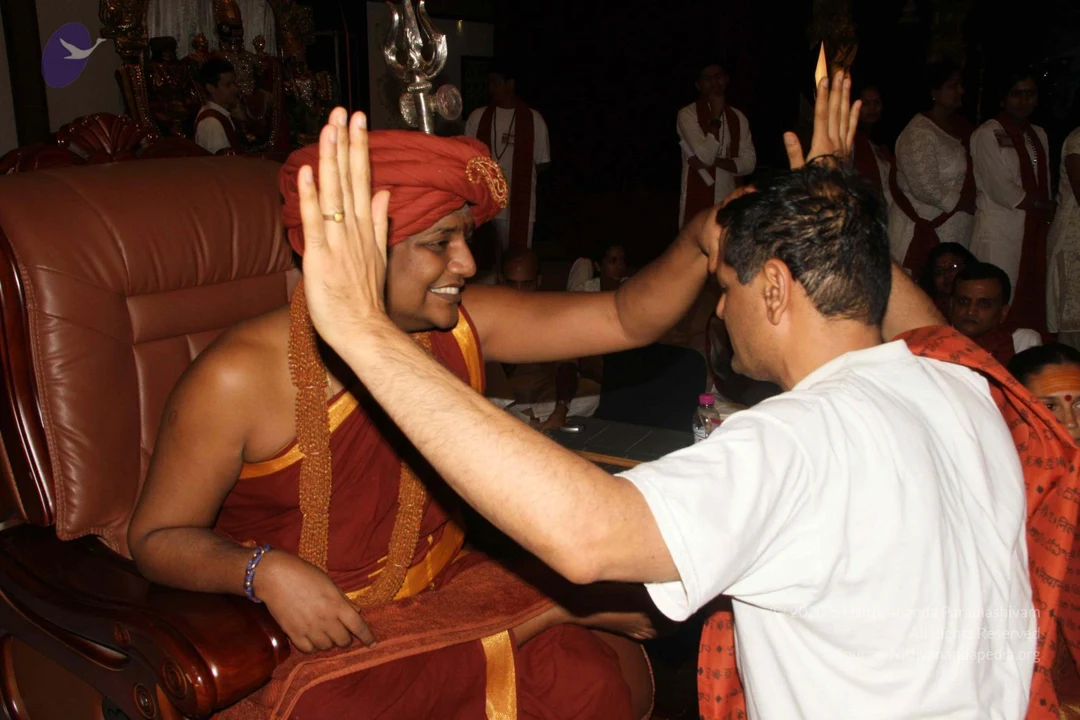
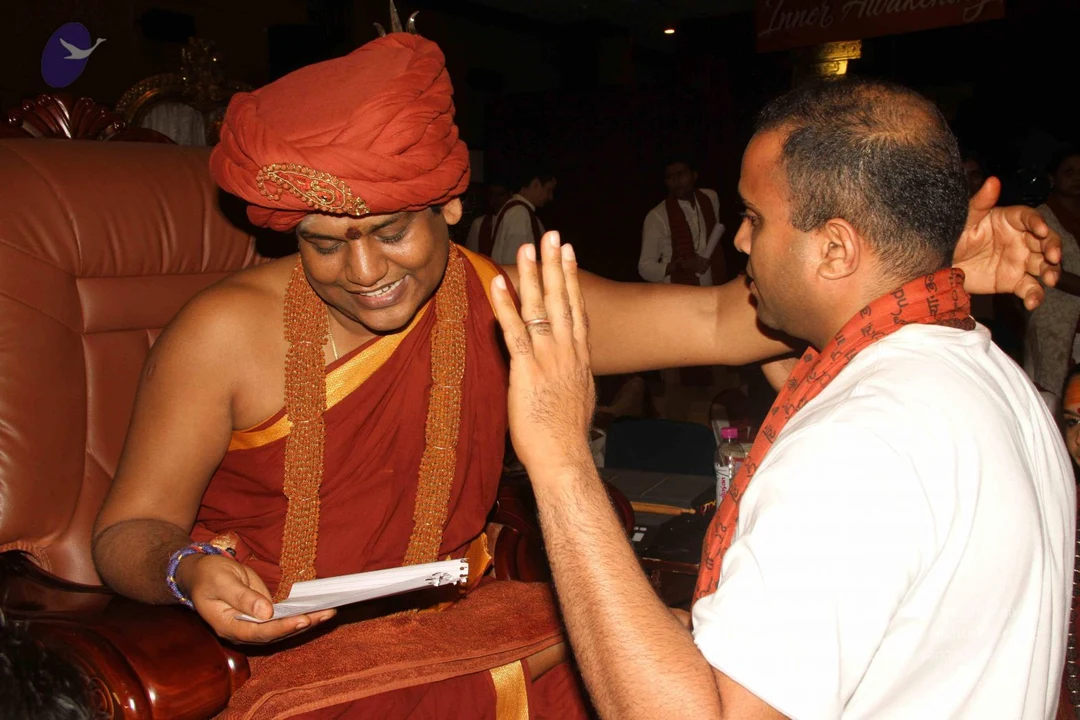
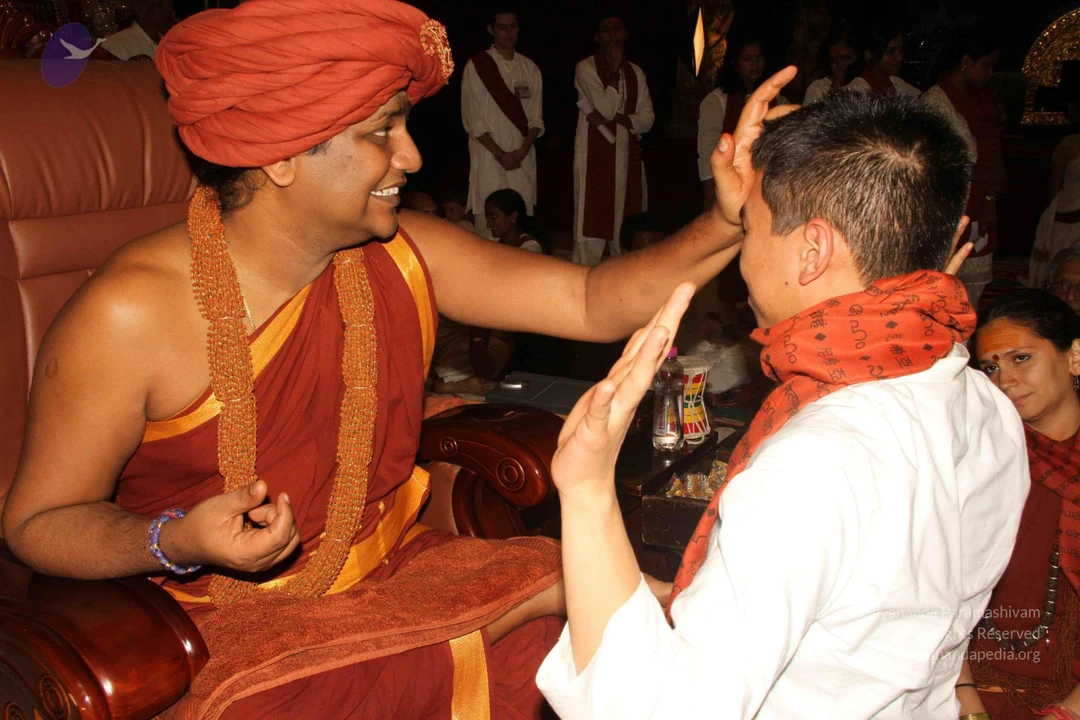
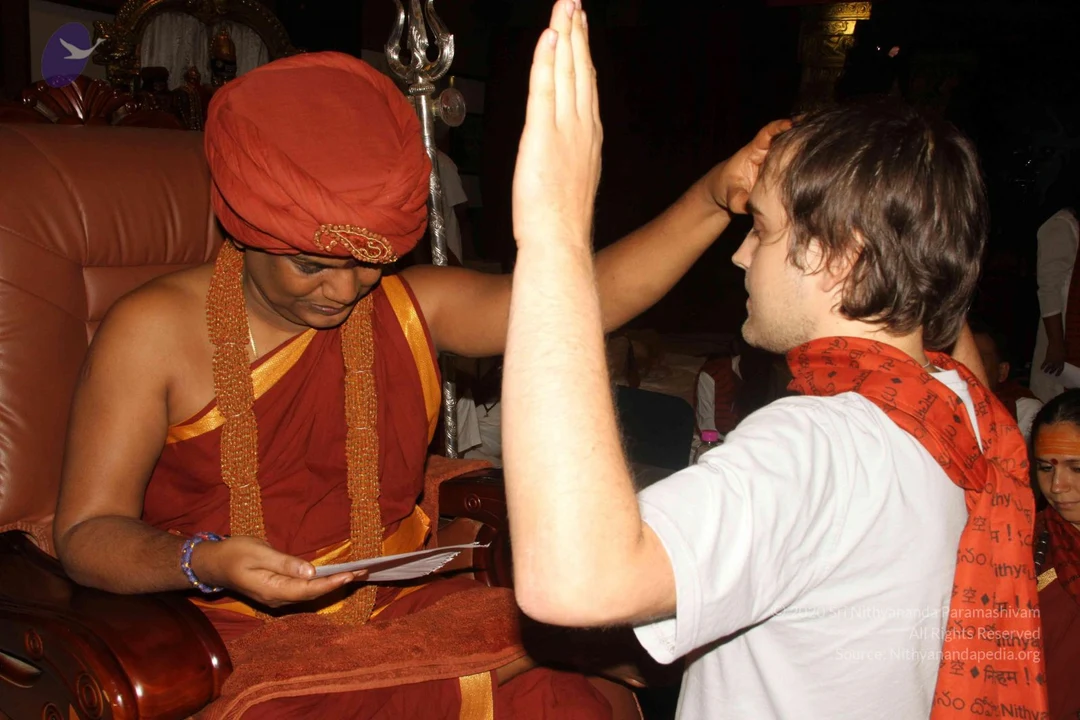
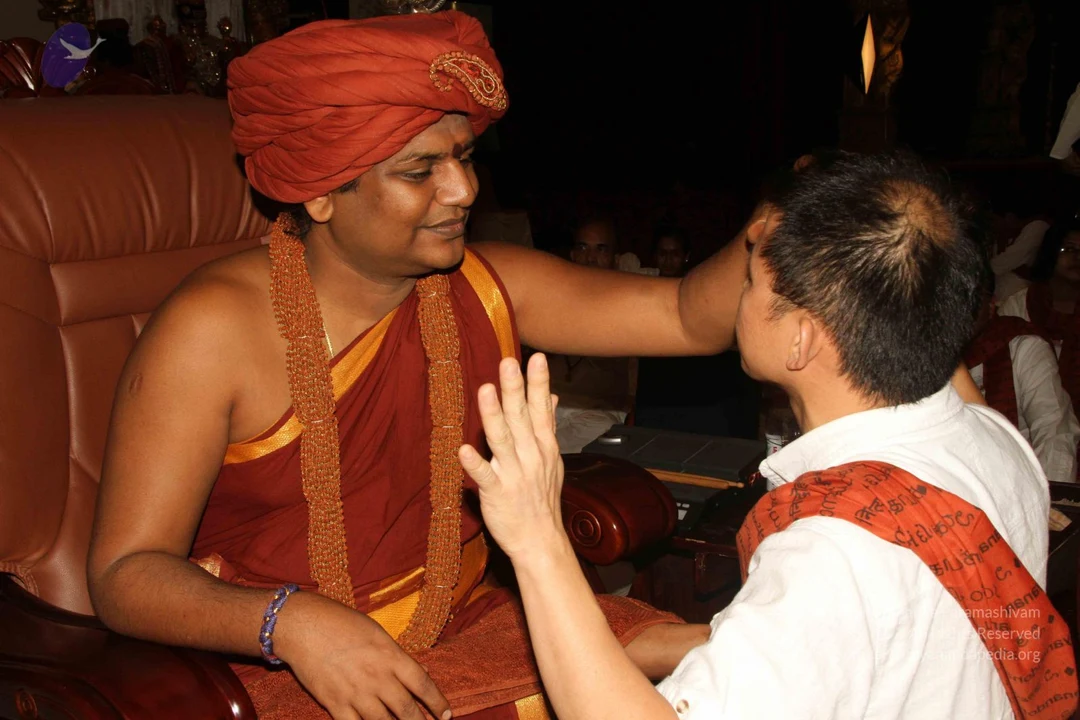
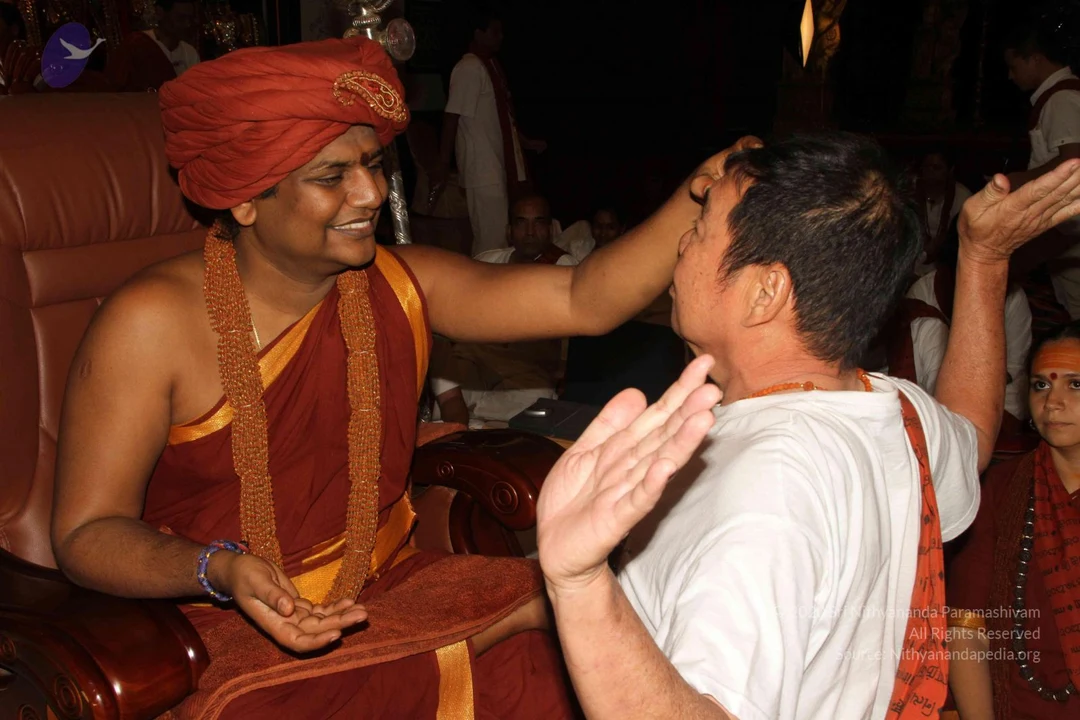
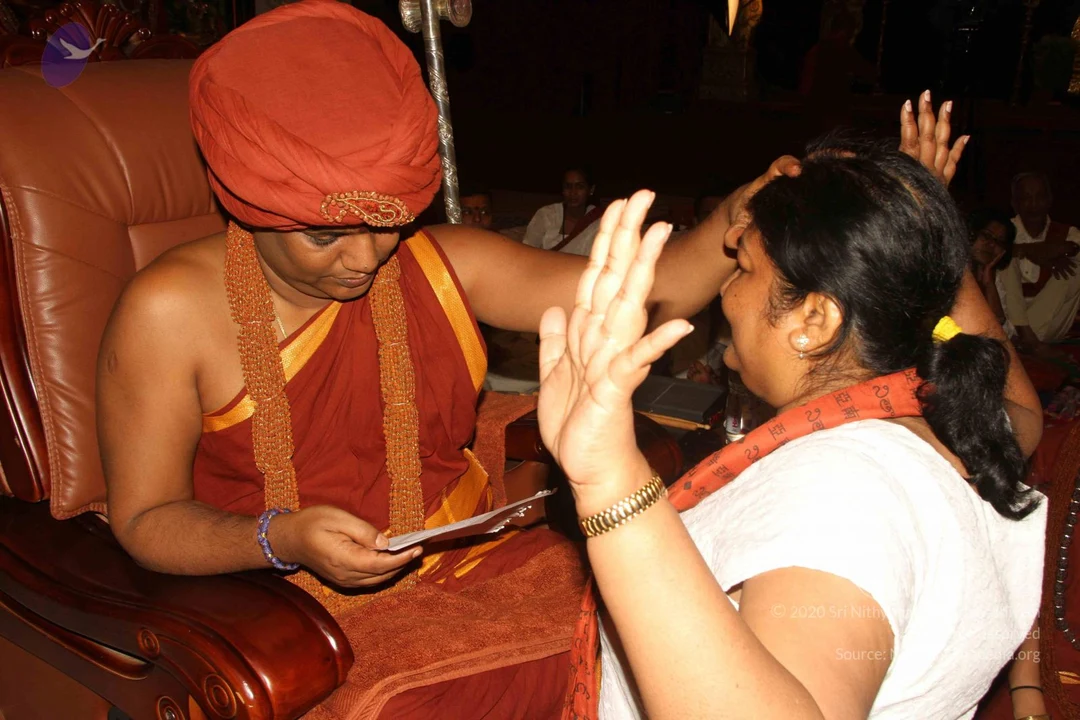
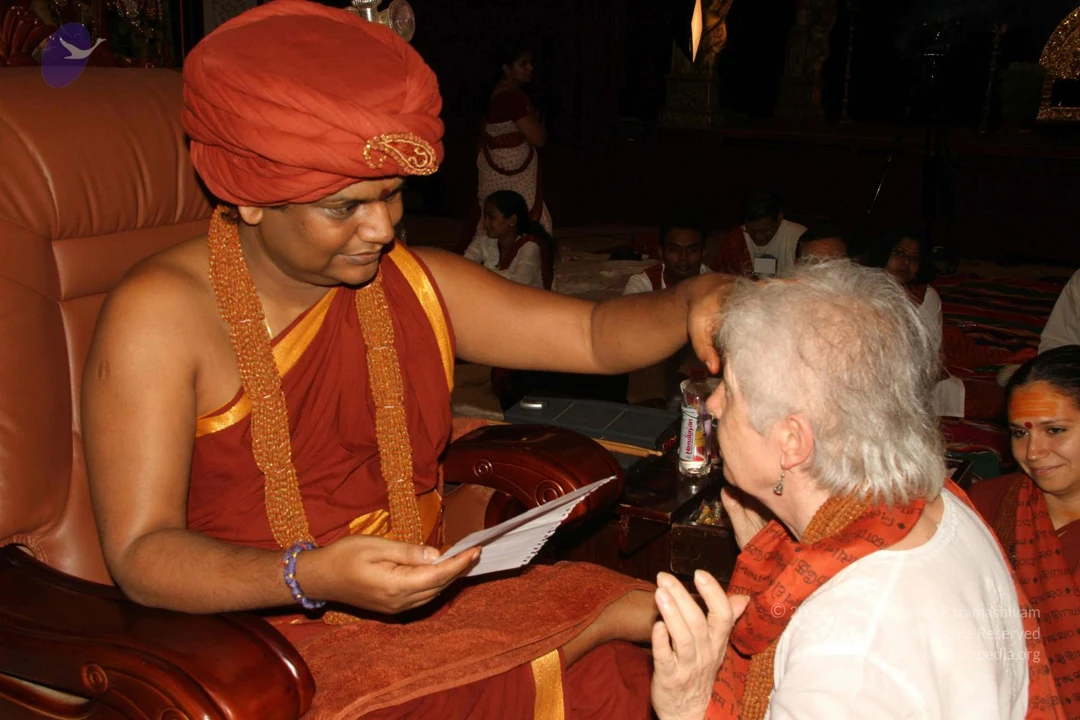
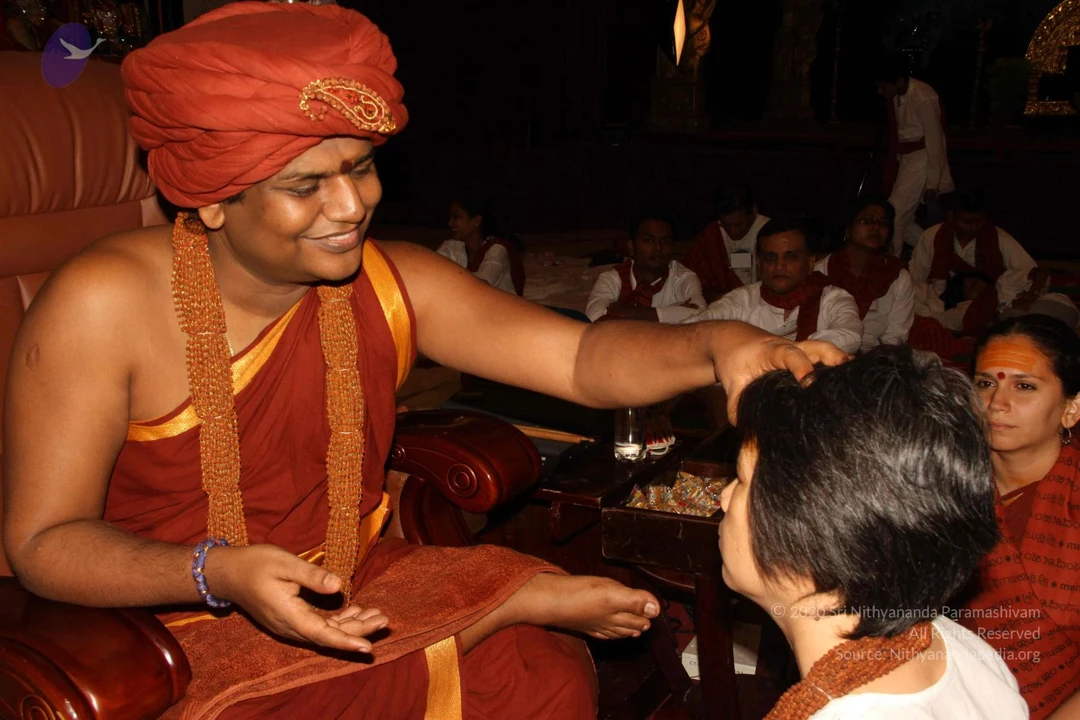
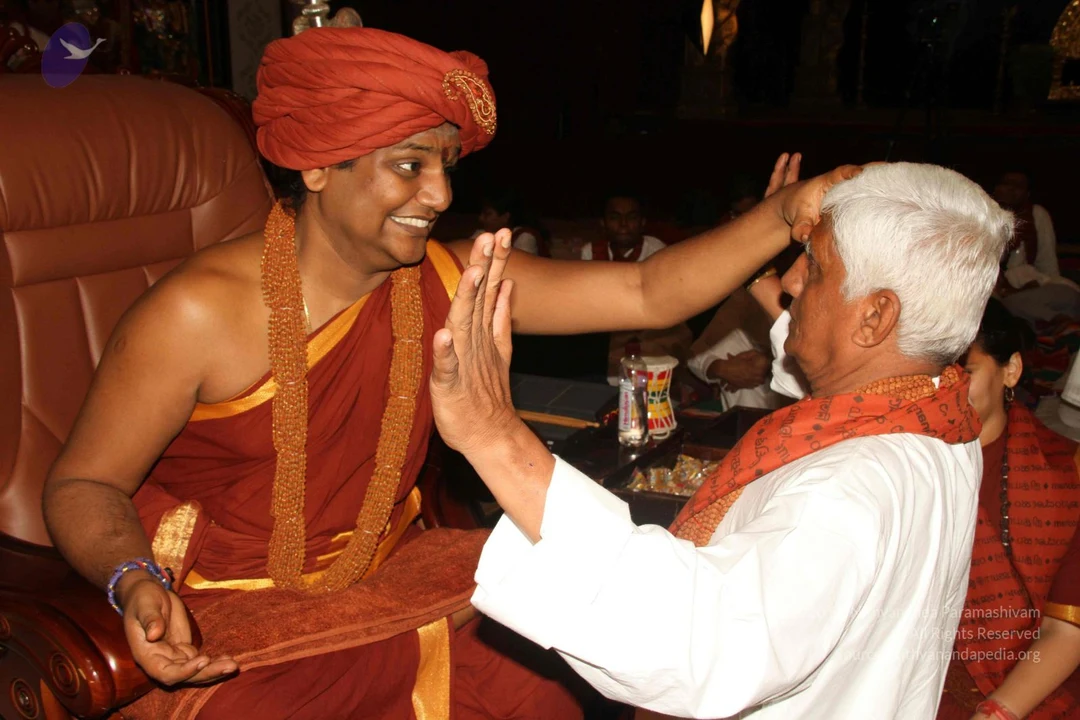
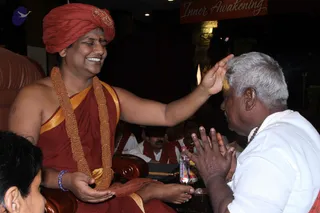
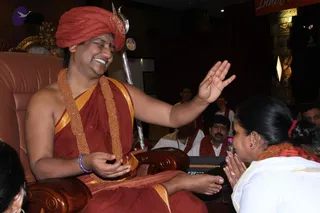
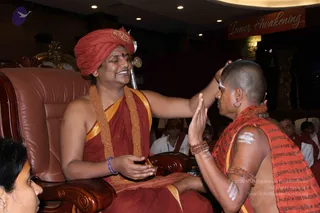
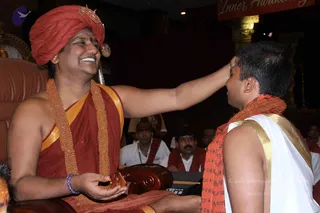
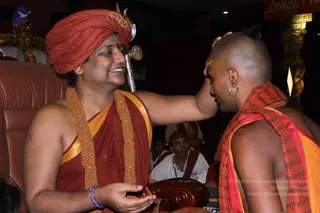
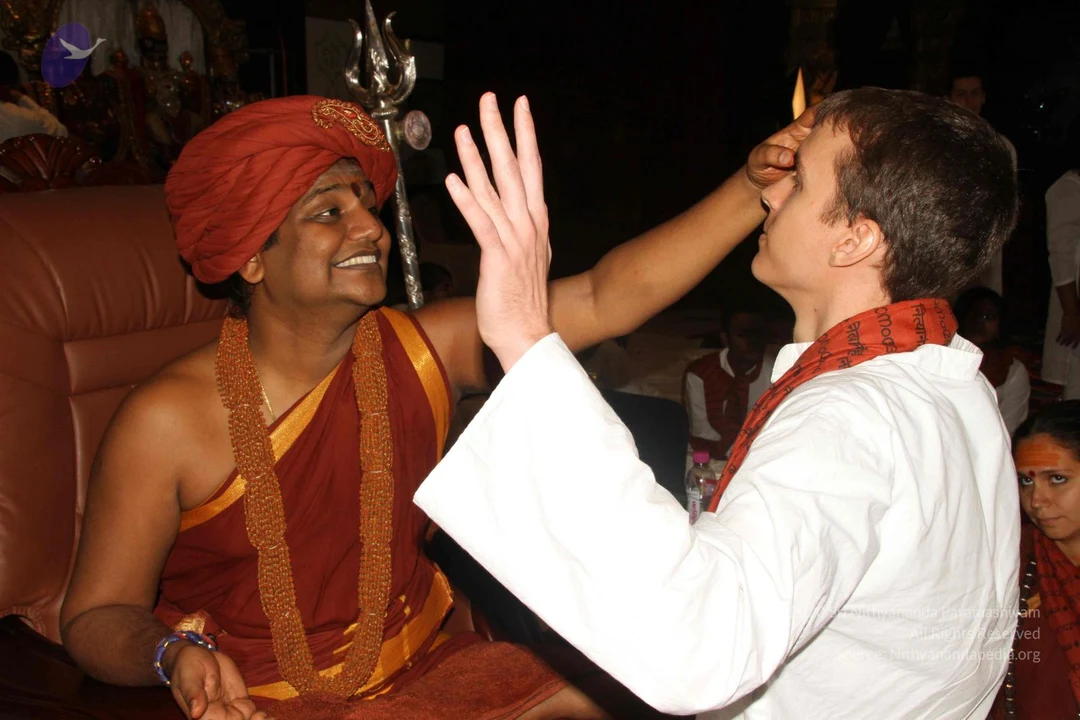
A photograph of a seated man on a brown leather chair at a satsang, smiling slightly with his gaze turned to the side. He wears a deep red-orange turban with a gold ornamental brooch, a small red bindi on his forehead, a small clip-on microphone near his face, and a bare-shouldered maroon and saffron-orange drape with multiple beaded orange rudraksha-style malas around his neck. Behind him is a dark wooden-panelled wall, and a partially visible person in red sits at the right edge. Long hair and ornate saffron clothing with malas match the appearance-based cues for a person, seated in a teaching role.A smiling man in a red-orange turban and matching red-orange robe with gold trim sits in a leather armchair, wearing a long orange-beaded necklace and a purple bracelet. He extends his right hand to touch the forehead of an older man with grey hair, who wears a white shirt, a beaded mala, and a yellow tilak mark, and whose hands are pressed together in reverence. Behind them, several seated men in white with red shawls watch. A water bottle sits on the table, and a sign on the wall reads Inner Awakening. a person: the seated man in the turban and orange-beaded necklace, presiding and blessing a devotee.A smiling man in a red-orange turban and red-orange robe with a gold-edged sash sits on a brown leather throne-like chair, wearing long orange-beaded necklaces and a blue beaded wristband. He raises one hand in blessing toward a woman in a white top and orange shawl who sits with her palms pressed together in namaste. A silver staff with a trident-like top stands beside him. Behind them, several men in white with red shawls sit in a room with dark red curtains and an ornate gold-lit pillar. A cropped wall-mounted sign is partly visible at the top right. The man is appearance-consistent with the Swamiji candidate (red turban, saffron robe, rudraksha-style beaded necklaces, ceremonial staff, throne), so he is labelled Swamiji (probable) with a role of seated teacher giving darshan.A seated man in a red-orange turban, red robe with gold-yellow border, and long beaded rudraksha-style necklaces sits on an ornate brown leather throne with carved wooden armrests, smiling with eyes closed as he raises his right hand to touch the forehead of a shaved-headed man kneeling before him. The kneeling man is bare-chested with white sacred markings on his chest and forehead, wears a red-orange shawl printed with script, multiple rudraksha bracelets, and earrings, and holds his palms together in namaskar. Seated and standing devotees in white and red attire watch in a hall with a red backdrop; a banner reading Inner Awakening hangs at upper right. The seated figure is a person by appearance cues: turban, ceremonial gold-toned necklaces and saffron-red robes, shown in an act of blessing.A smiling man seated on a brown leather throne-like chair wears a red-orange turban with a gold ornament, saffron-red robes with gold borders, and a long ceremonial necklace of orange rudraksha beads. He extends his right hand to touch the forehead of a younger man kneeling before him, who wears a white dhoti-style garment with gold edging and an orange shawl printed with script. Behind them, seated devotees in white with red shawls watch, and a banner in the background reads Inner Awakening. The probable Swamiji is the seated figure, identified by the distinctive turban, ornate necklaces and saffron robes, while the kneeling man is a devotee receiving blessing.A seated man in a red turban with a silver ornament and a gold-beaded mala necklace touches the head of a shaved-headed young man who kneels before him. The seated man wears a red and gold saffron wrap and smiles; he holds a small object in one hand. The kneeling man has a shaved head with a tilak mark, hoop earring, and an orange-red shawl printed with dark script. Behind them, a man in white ritual clothing with a mala sits, and other devotees are seated in a dark room with red walls and a gilded pillar. Appearance-based candidate: Swamiji (probable), identified by the red turban, gold mala necklace and saffron wrap, seated in a ceremonial chair while blessing the kneeling disciple.

IA-Varanasi
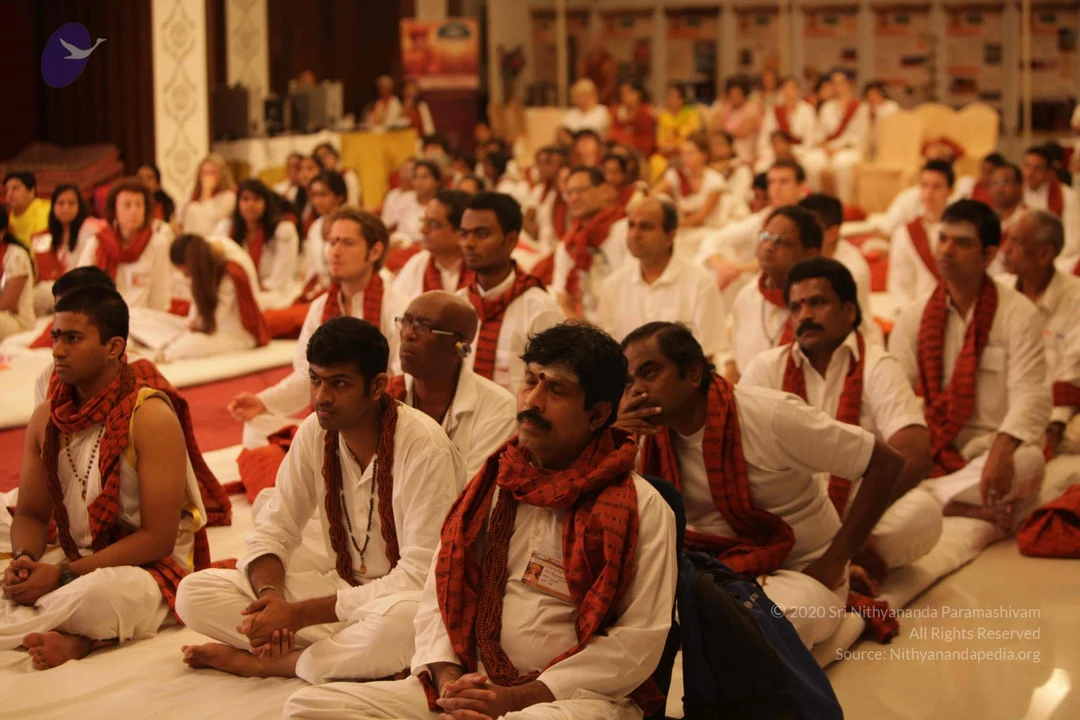
13 photosSource gallery
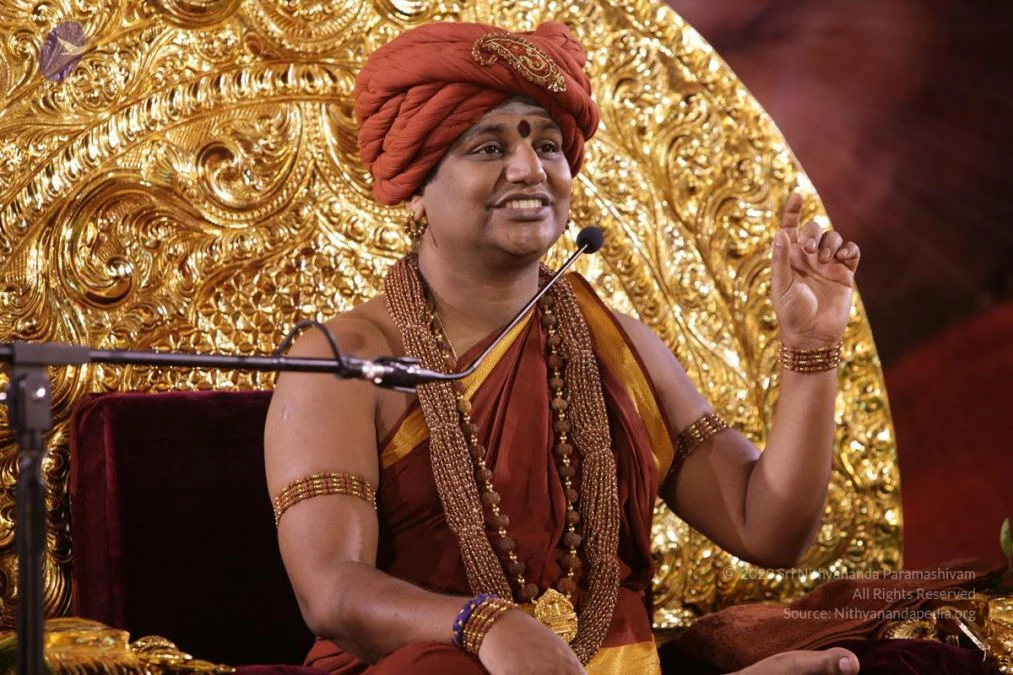
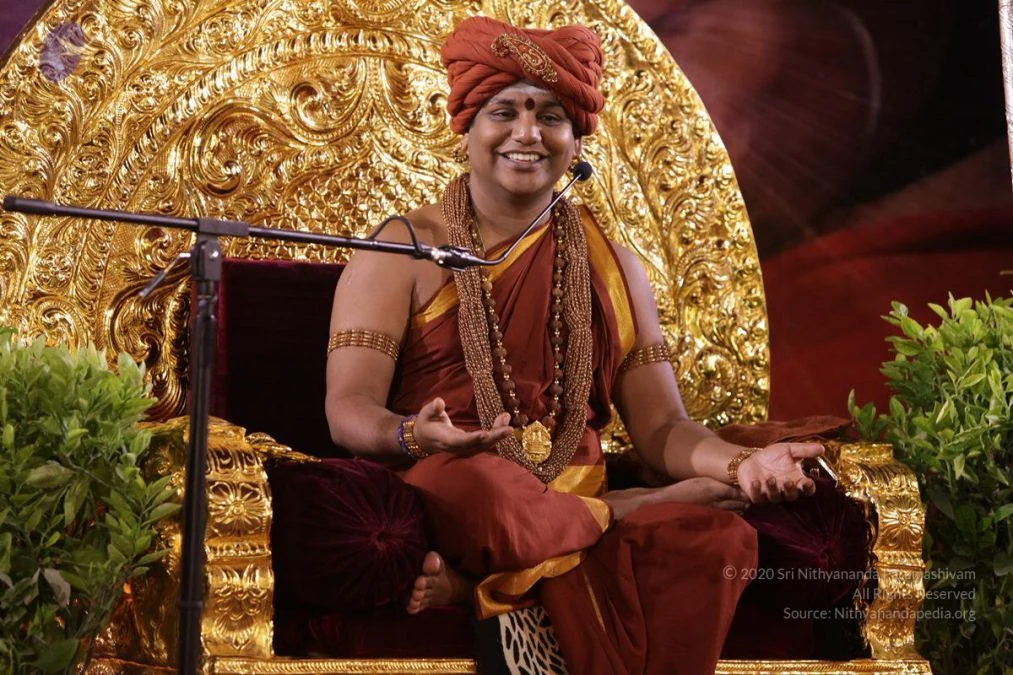
Photograph of a smiling man seated cross-legged on an ornate golden throne with an elaborately carved gilded backrest. He wears a rust-red turban with a gold ornament, a red-orange garment over a yellow undergarment, a multi-strand gold beaded necklace with a gold pendant, and gold armlets. A microphone on a stand is at left, green foliage frames the right side, and a blue-green globe-like backdrop stands behind him. a person is shown in the seated teaching position, with the turban, gold ornaments and ornate throne as distinguishing cues.

Shivoham

172 photosSource gallery
A photograph of a satsang hall where a seated figure in saffron-red robes and a red turban sits on an ornate dark wooden throne-style chair, with a tall ceremonial staff beside him. Around him, a large seated audience in white kurtas and white clothes with red-and-orange shawls sits on the floor; many have their backs to the camera. A wall screen and carved panels decorate the hall. The turbaned figure matches the appearance cues of Swamiji (probable), with saffron-red clothing, a red turban and ceremonial staff, and is presented as the discourse speaker, though the face is partly obscured. Roughly two dozen to forty people are visible.A smiling man in a red-orange turban and matching saffron-red robe with gold border sits in an ornate brown leather chair on a stage, wearing a gold-beaded necklace and a small headset microphone. Behind him, seated audience members in white shirts with red shawls watch; a woman in the foreground wears a red top and bindi, and an older man in a grey cap sits at right. A red cloth lies draped over a chair behind, and the room has cream walls with a dark wood panel.A man seated on an ornate brown leather throne-style chair, wearing a large red turban with a small gold ornament, a red-orange robe with gold trim, and a long beaded necklace of brown beads. He sits upright with his hands resting on the chair arms, looking toward the left. Behind him, several seated audience members wear white shirts and red shawls; a woman in a dark outfit with a red bindi sits at the front, and an older man with a grey head covering is at the right edge. Orange cloth lies on a chair in the background. The scene suggests a satsang gathering.A photograph of a man seated in a large brown leather throne-style chair at an indoor satsang. He wears a red-orange turban with a gold embroidered ornament, a maroon robe with a gold-yellow border, a long beaded rudraksha-style mala with ceremonial gold tassels, and a blue beaded bracelet. A white tilak marks his forehead and a red bindi sits between his eyebrows. He sits upright, smiling, with his hands resting on the armrest. Behind him to the right, seated devotees in red and white clothing listen, including a woman in a red top with a red bindi and a man in glasses. Wooden paneling and a dark curtain form the backdrop. Probable Swamiji wearing saffron-toned turban, maroon robe and ornate mala; seated on a throne in a satsang setting.A photograph of a large satsang gathering in a hall with a dark wooden throne-style chair at the front. A seated figure in orange and saffron robes with a red head wrap sits on the throne, with a tall trident-like staff beside him. Many devotees in white clothes with orange-red shawls sit on white floor mats in front of him, some with bare heads and some with long dark hair, and several girls sit in the foreground. Behind them are display stands, a small exhibition area and video cameras on tripods.Photograph of a satsang hall with a large seated crowd in white clothes and orange-red shawls sitting on white floor mats. At the front, a central figure in an orange-red turban and orange-red robe sits on an ornate dark brown throne-style chair with hands raised in greeting, a ceremonial staff visible beside him. Seated devotees fill the foreground and middle, many with long hair and some holding small items. Ornate white panels and a video camera on a tripod appear in the background.

Energy-Darshan

3 photosSource gallery
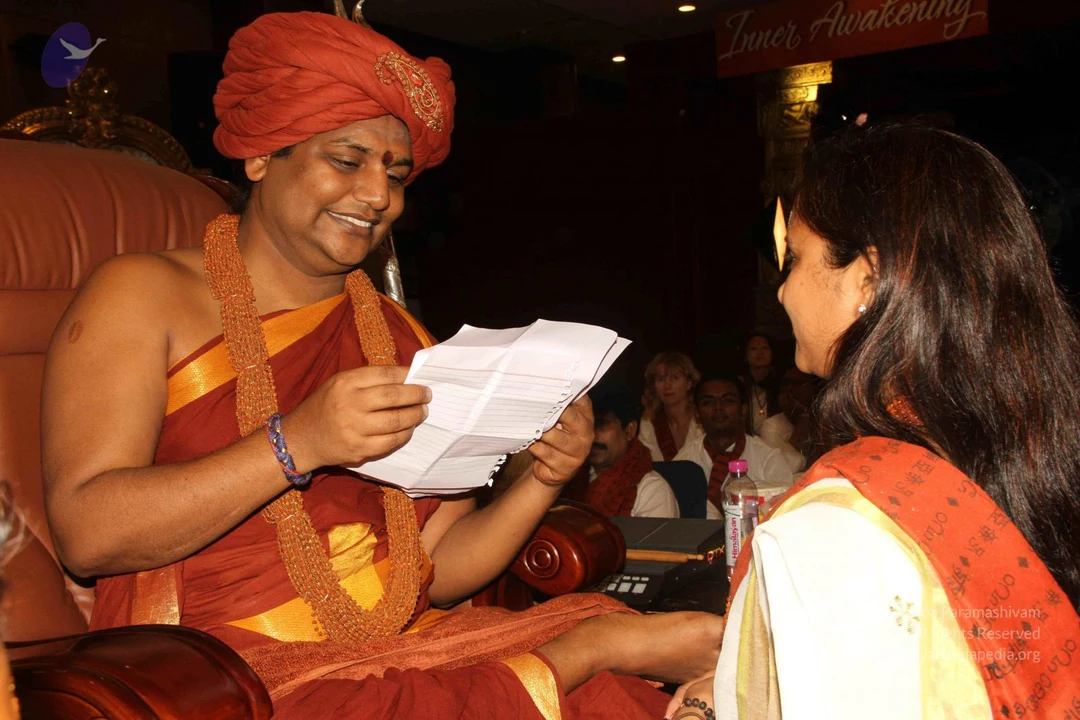
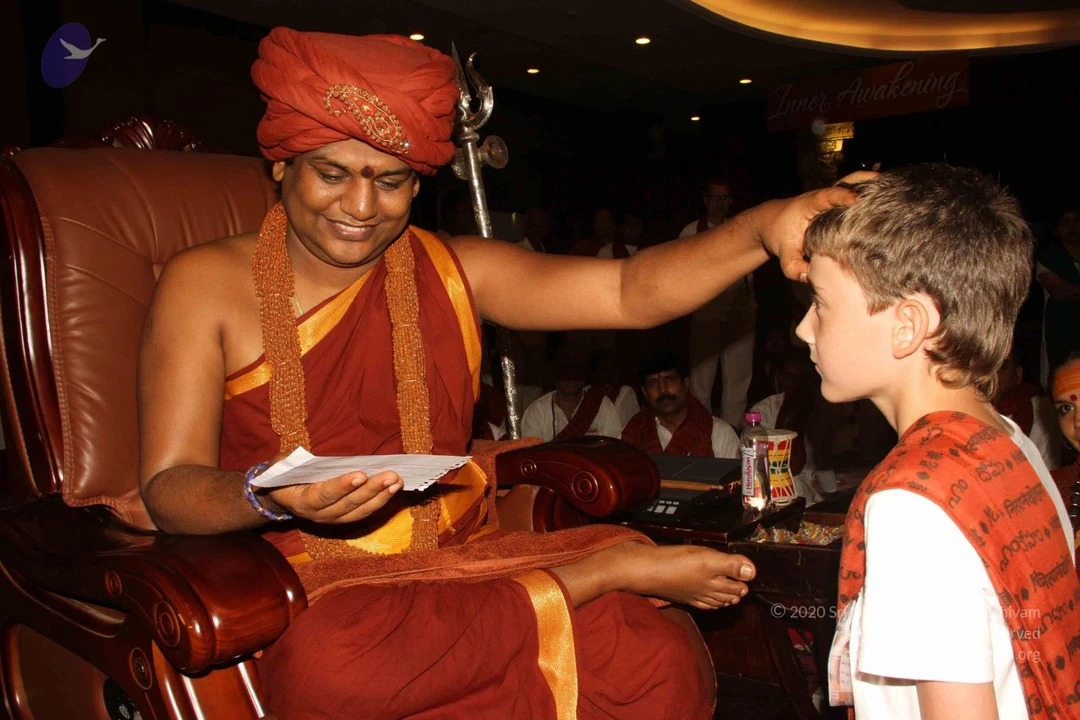
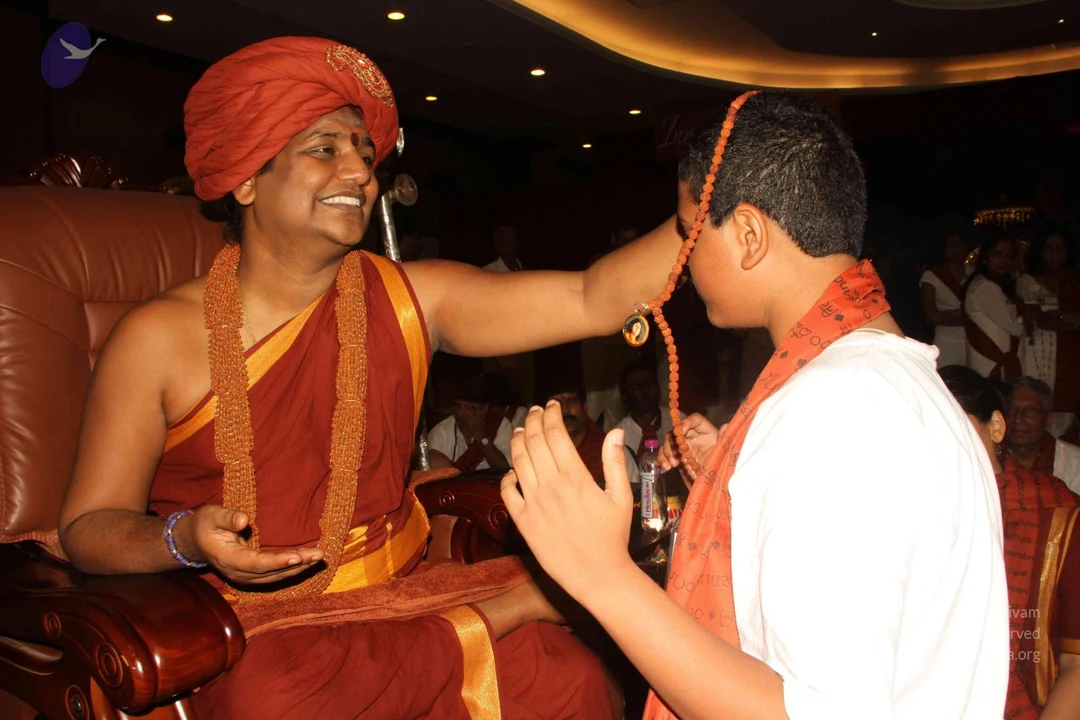
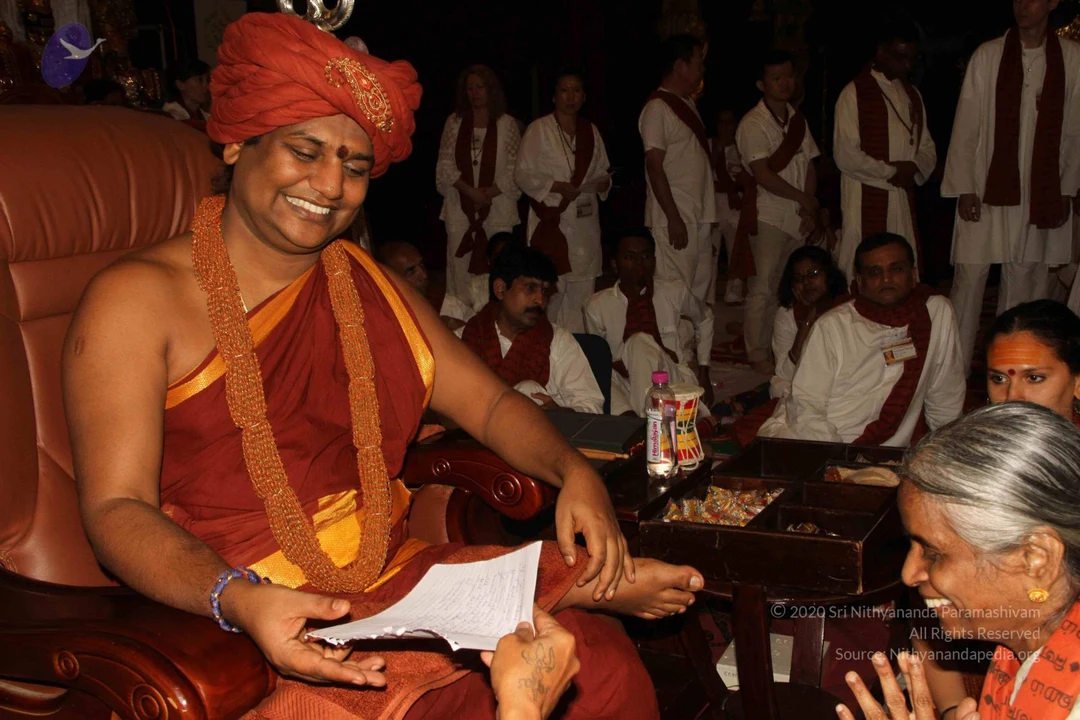
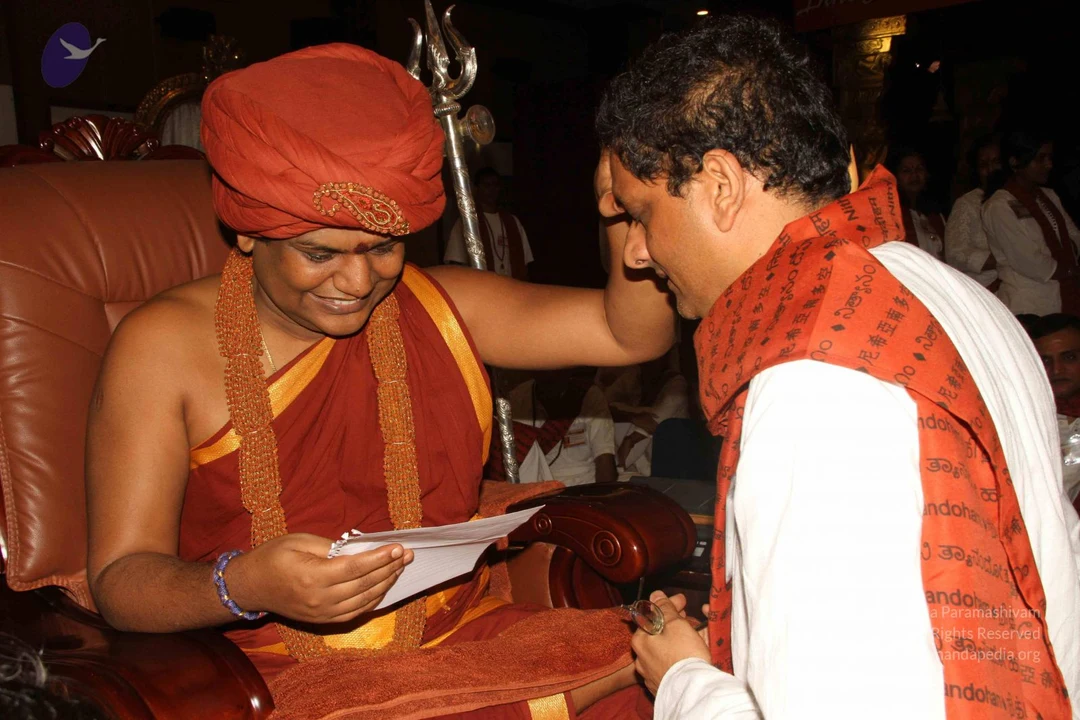
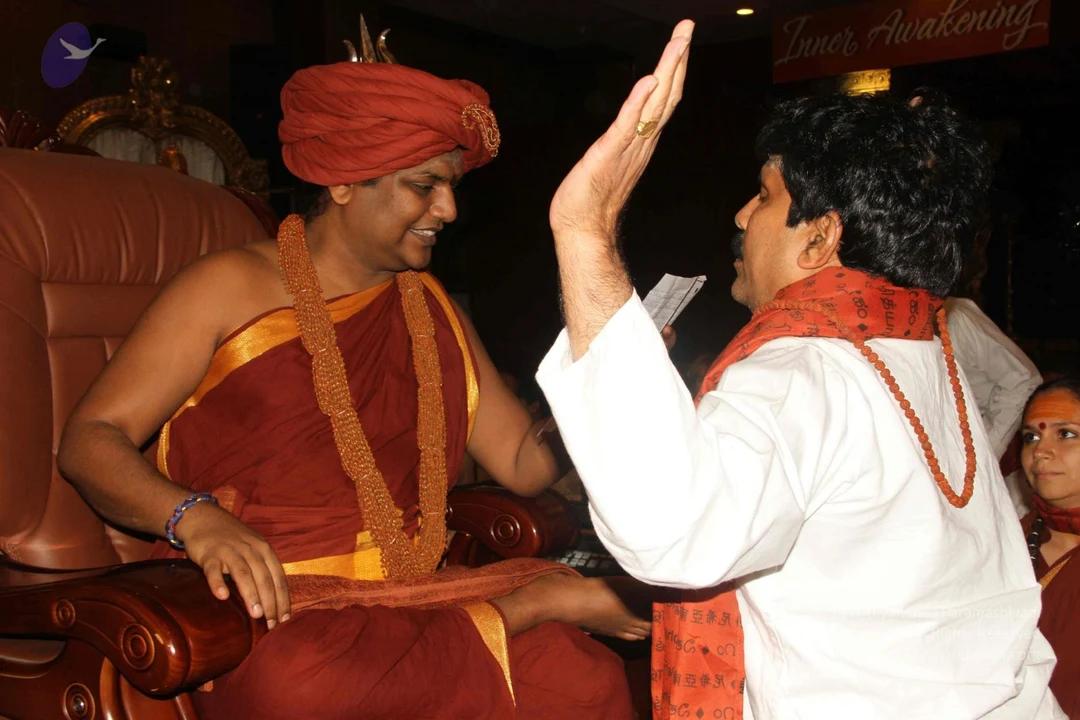
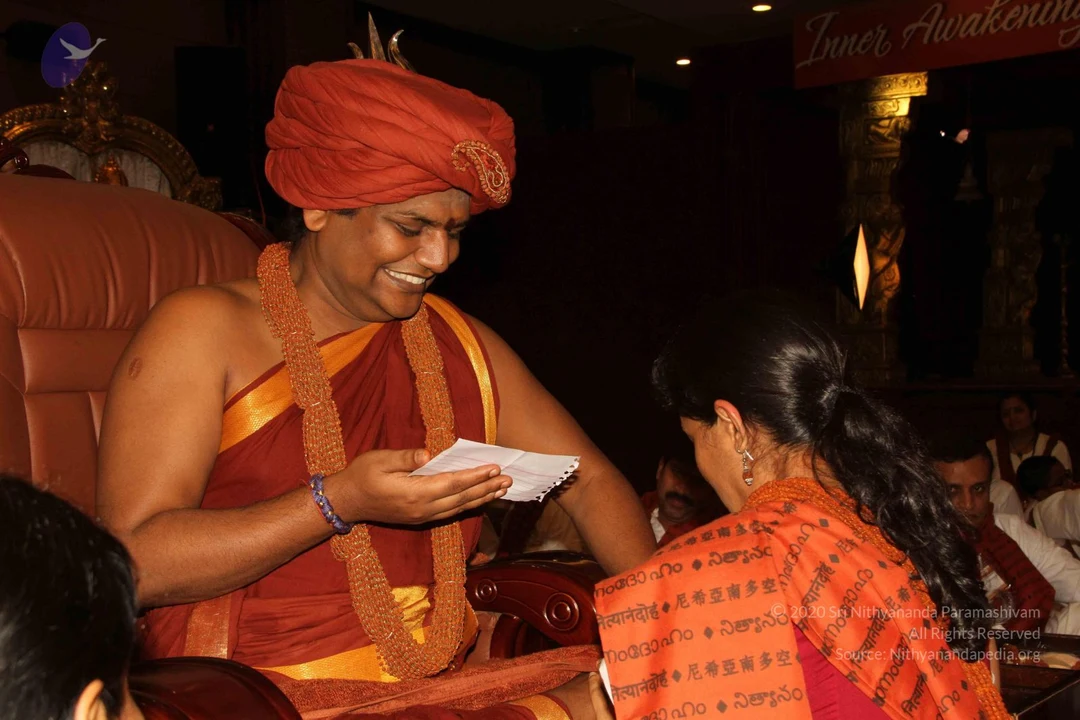
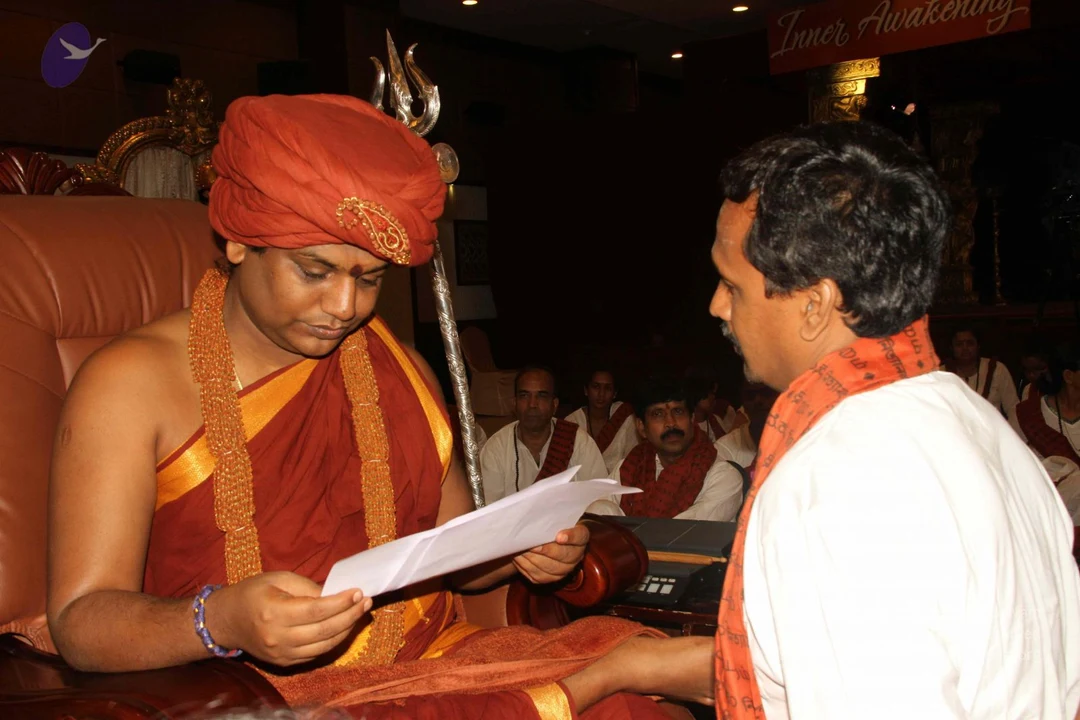
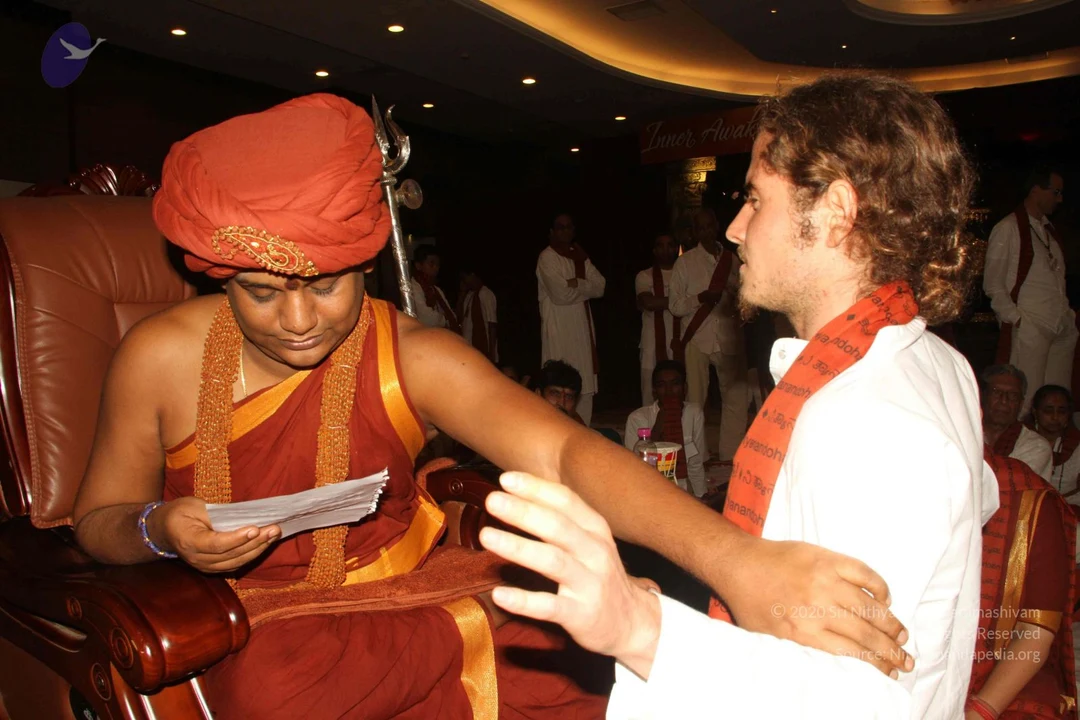
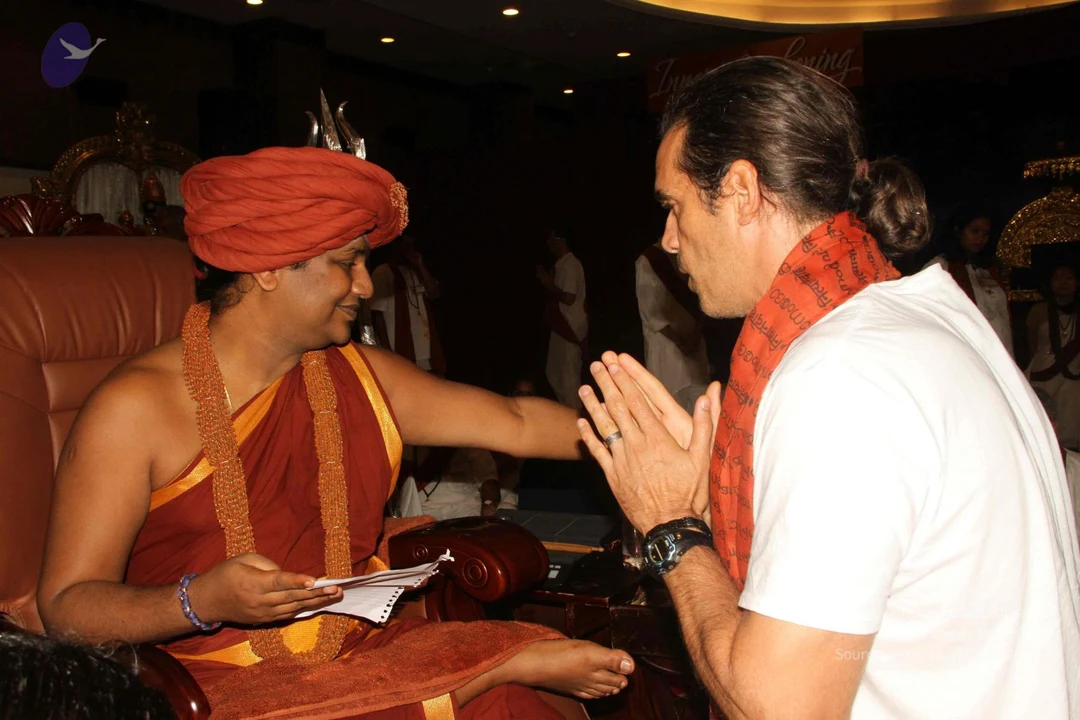
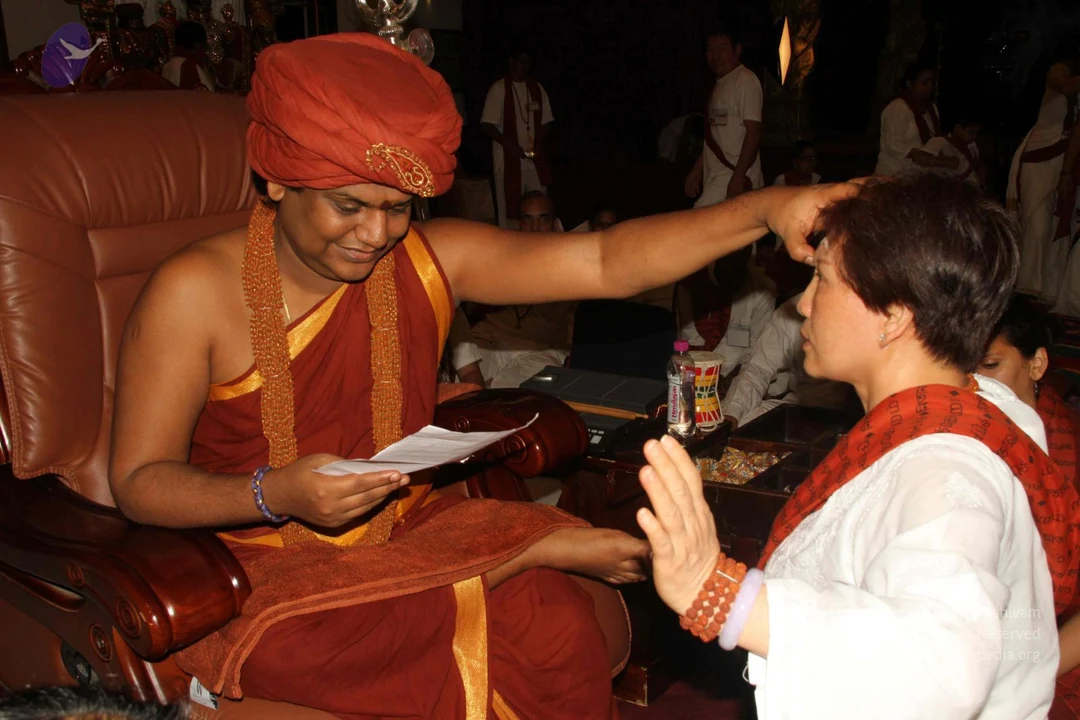
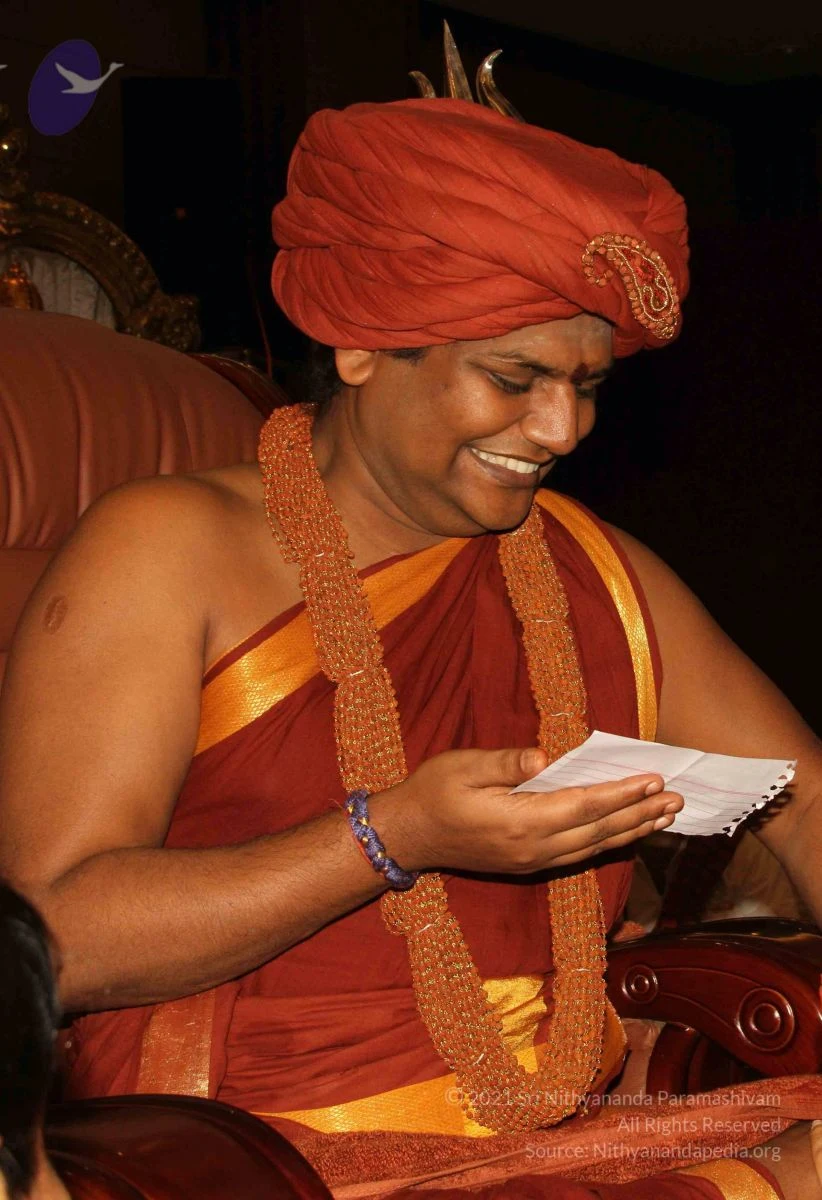
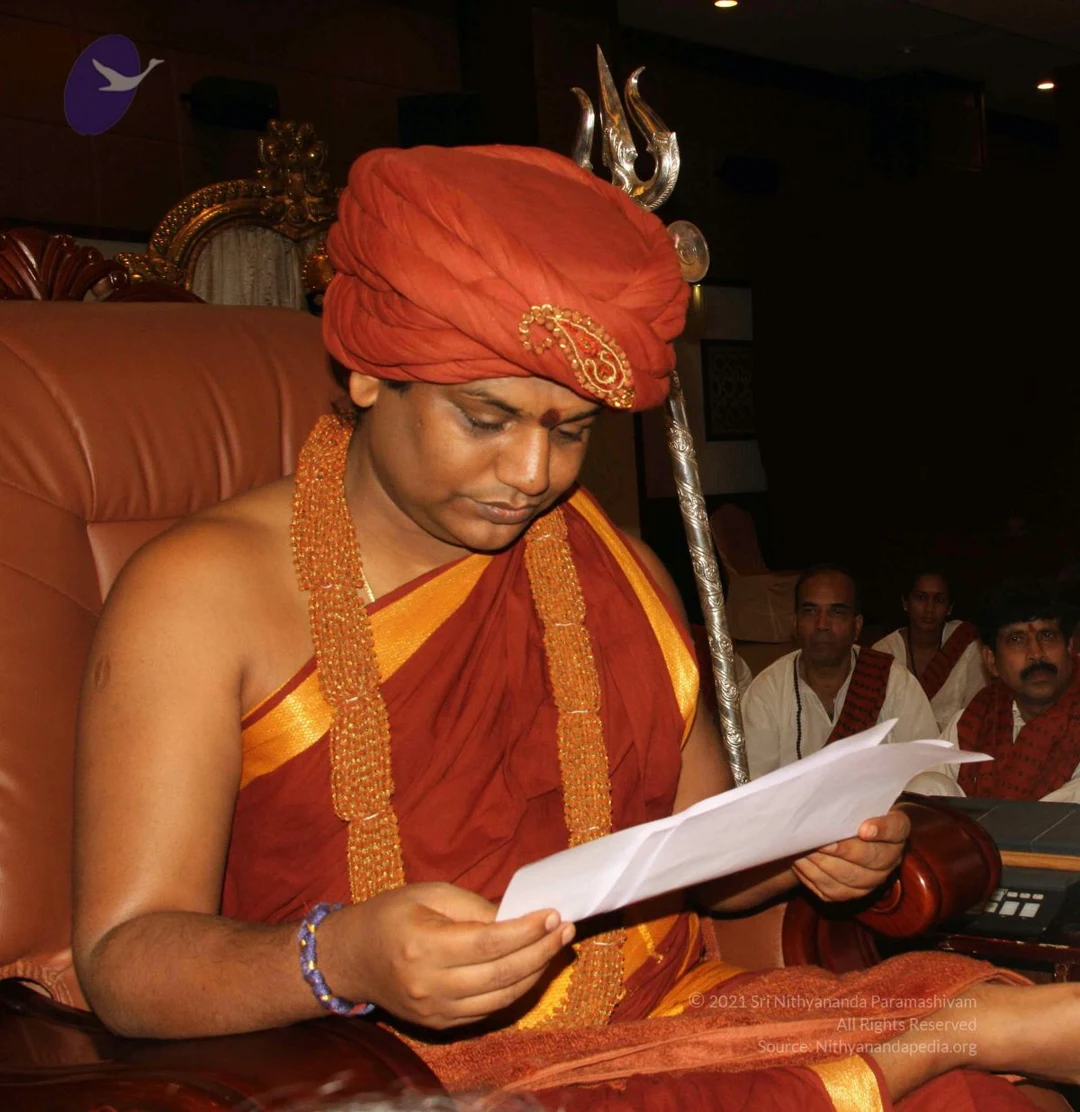
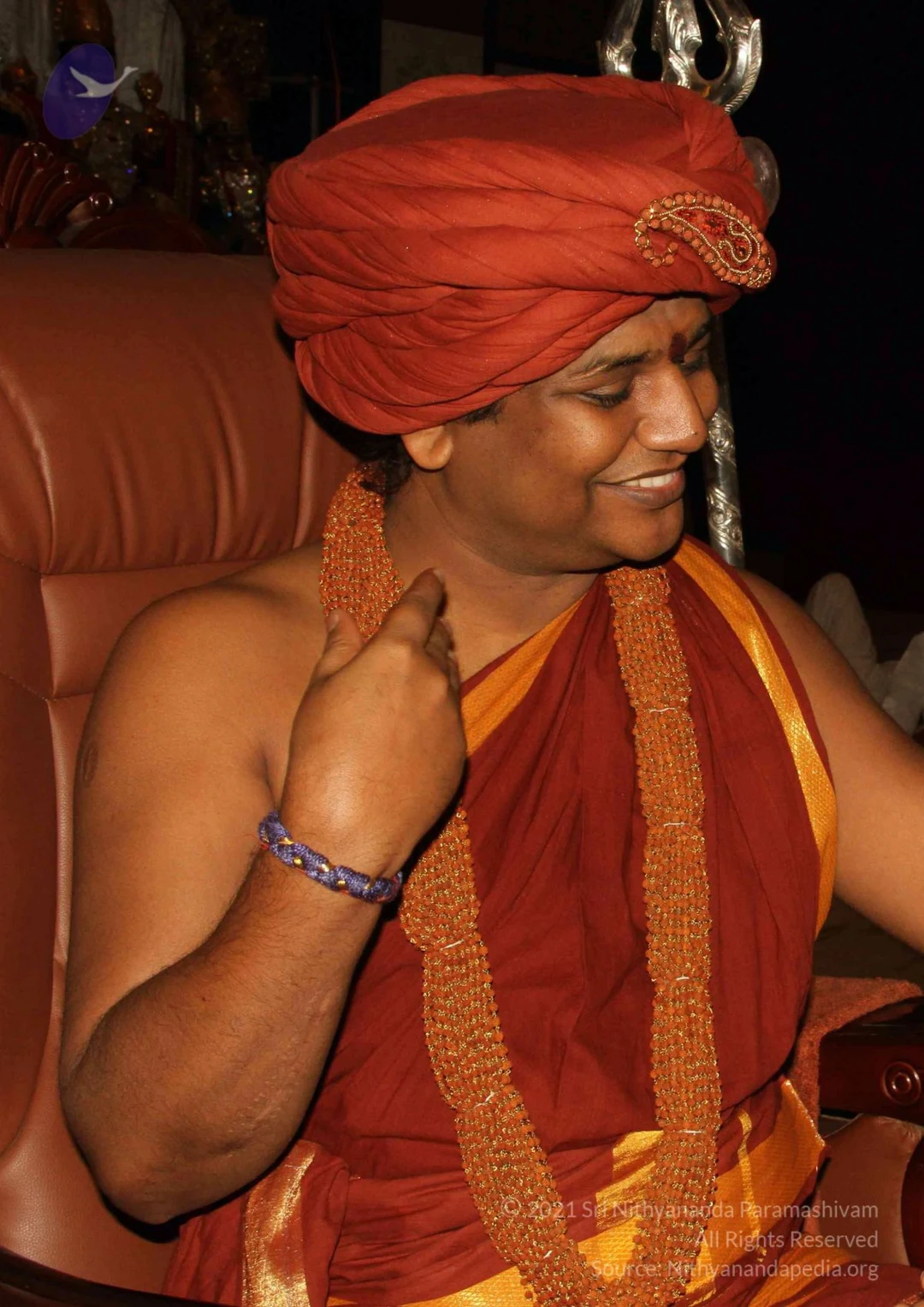
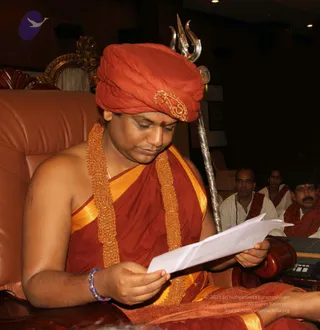
A smiling man seated in a brown leather chair reads a small handwritten paper held in his open hand. He wears a red-orange turban with a gold paisley brooch and a golden-tipped ornament at the top, a red-maroon garment draped over one shoulder with gold borders, a long orange-gold beaded garland, and a blue-and-white wrist cord. The chair has carved wooden arms and an ornate gilded backdrop behind him, with a dark background. The lower left shows another person's head partly visible at the edge of the frame. Appearance-based label: a person, seated and reading a note during a satsang setting.A man seated in a brown leather armchair reads a sheet of white paper. He wears an orange-red turban with a gold embroidered paisley motif and a red bindi, plus a red-orange shawl edged with gold and a long gold beaded necklace. A silver trident stands behind his shoulder. A blue and purple beaded bracelet is on his wrist. Behind him, several men in white kurtas and red-orange shawls sit in a dim hall, and a wooden table with a black electronic device is at right. The turban and garments make him a probable Swamiji by appearance, and the page places him at this satsang, so he is in person. Counted people: five.Photograph of a smiling man seated in a brown leather armchair, wearing a deep red-orange turban with a gold paisley embroidered ornament, a red tilak on his forehead, and a red-and-gold draped shawl over bare shoulders. He wears long orange-gold beaded necklaces and a blue braided bracelet, and his right hand rests near his chest. Behind him are a silver trident and a dark background.

shivoham

1 photoSource gallery
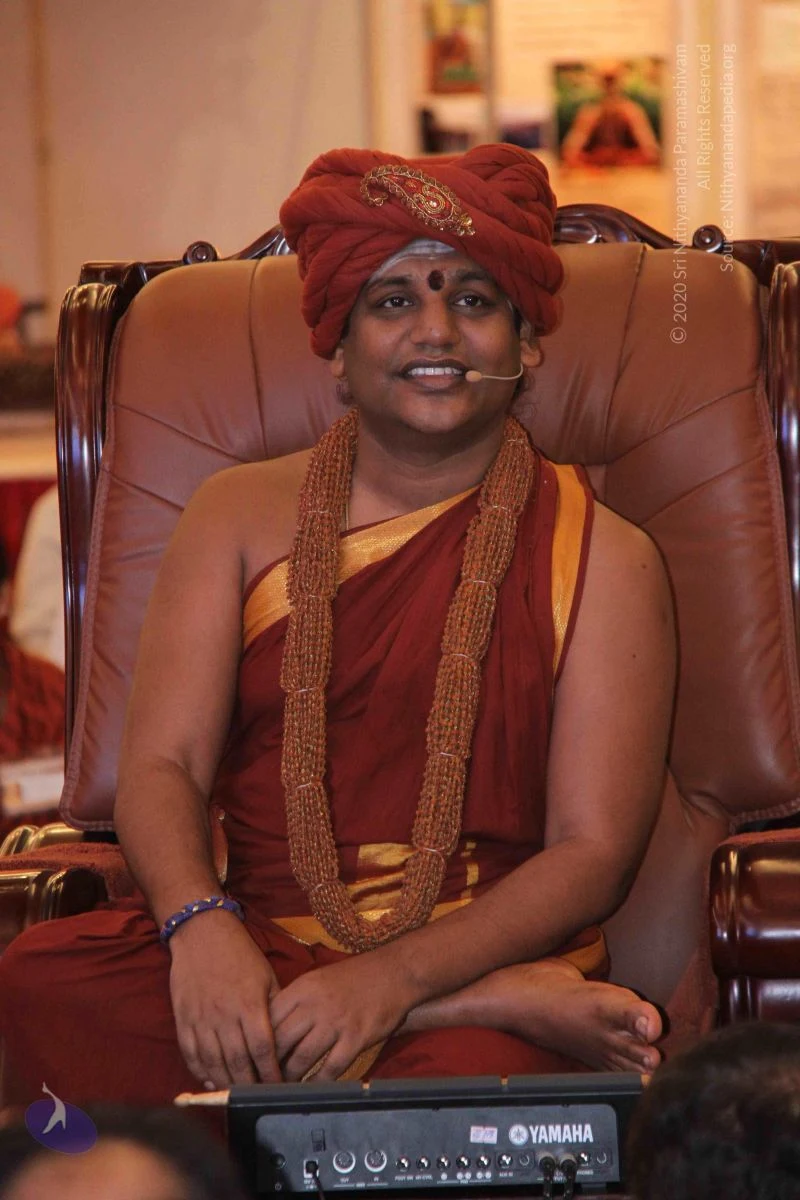
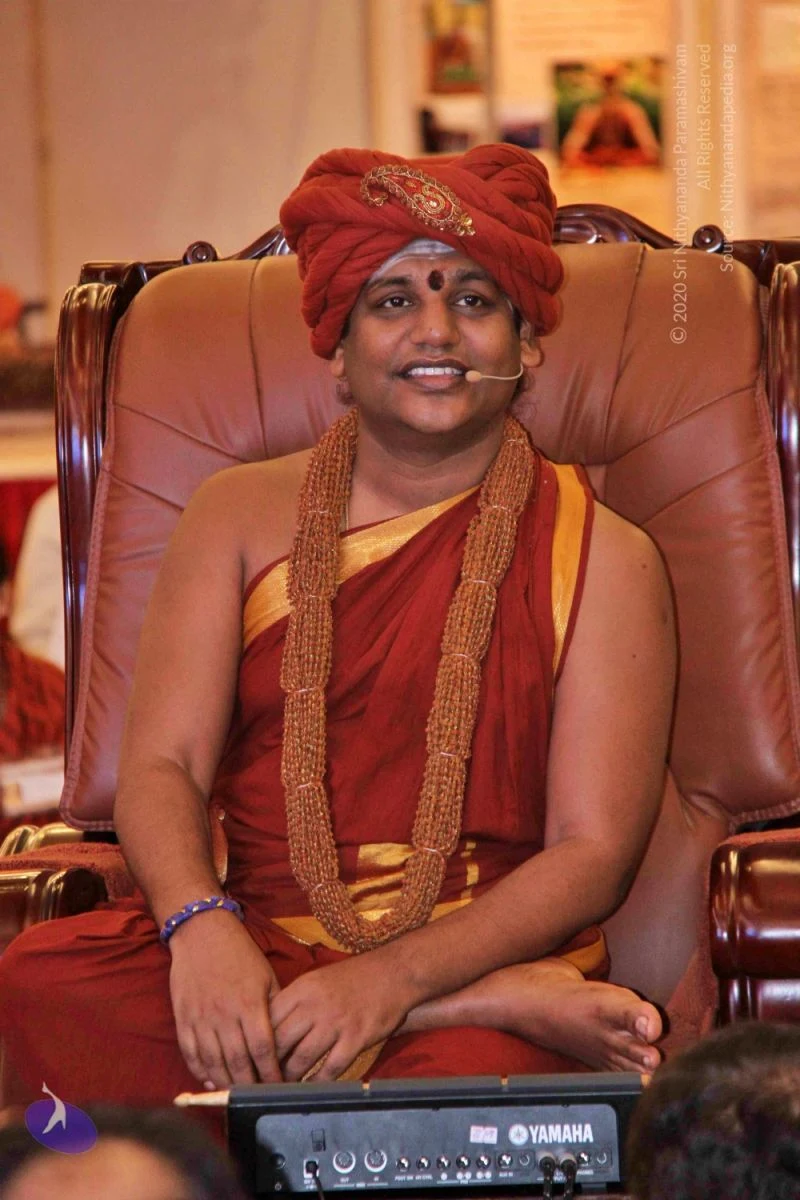
A seated man in a large red turban with a gold paisley ornament and a red bindi sits in a brown leather throne-style chair. He wears a red and gold-bordered draped garment over a bare shoulder and a long rudraksha mala around his neck, with a blue beaded bracelet on his wrist, and a small headset microphone at his mouth. a person is shown in this seated pose on the throne, with a Yamaha mixing console in the foreground and a blurred audience at the bottom edge. Behind him are framed posters and a soft-lit hall.

IA-Varanasi
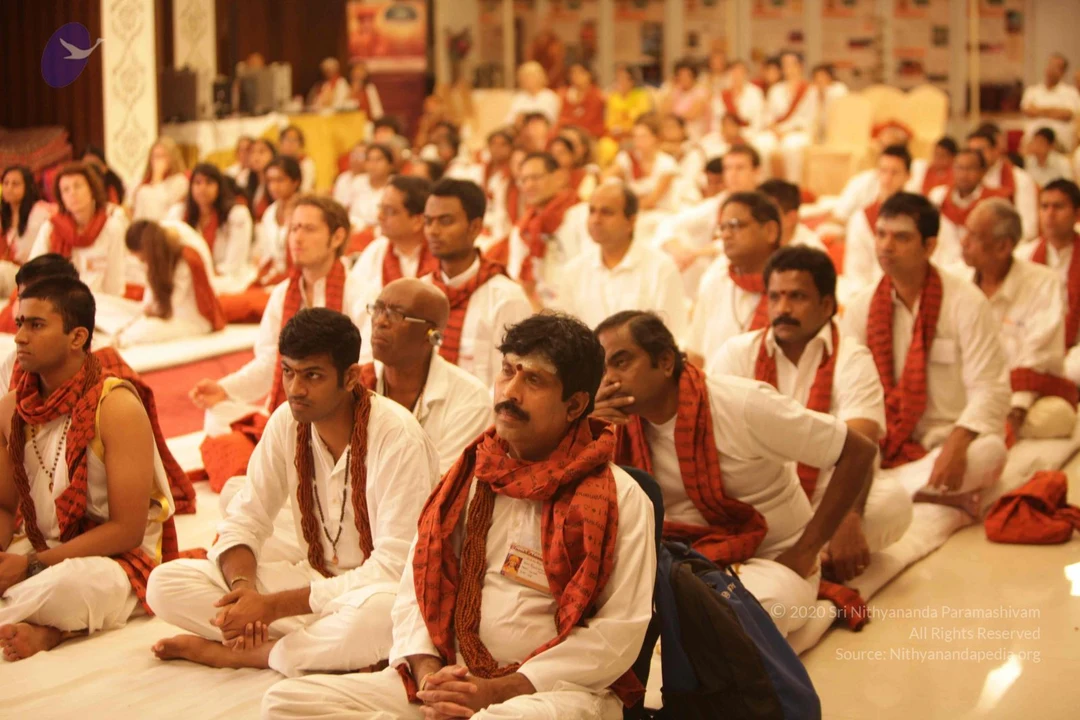
17 photosSource gallery
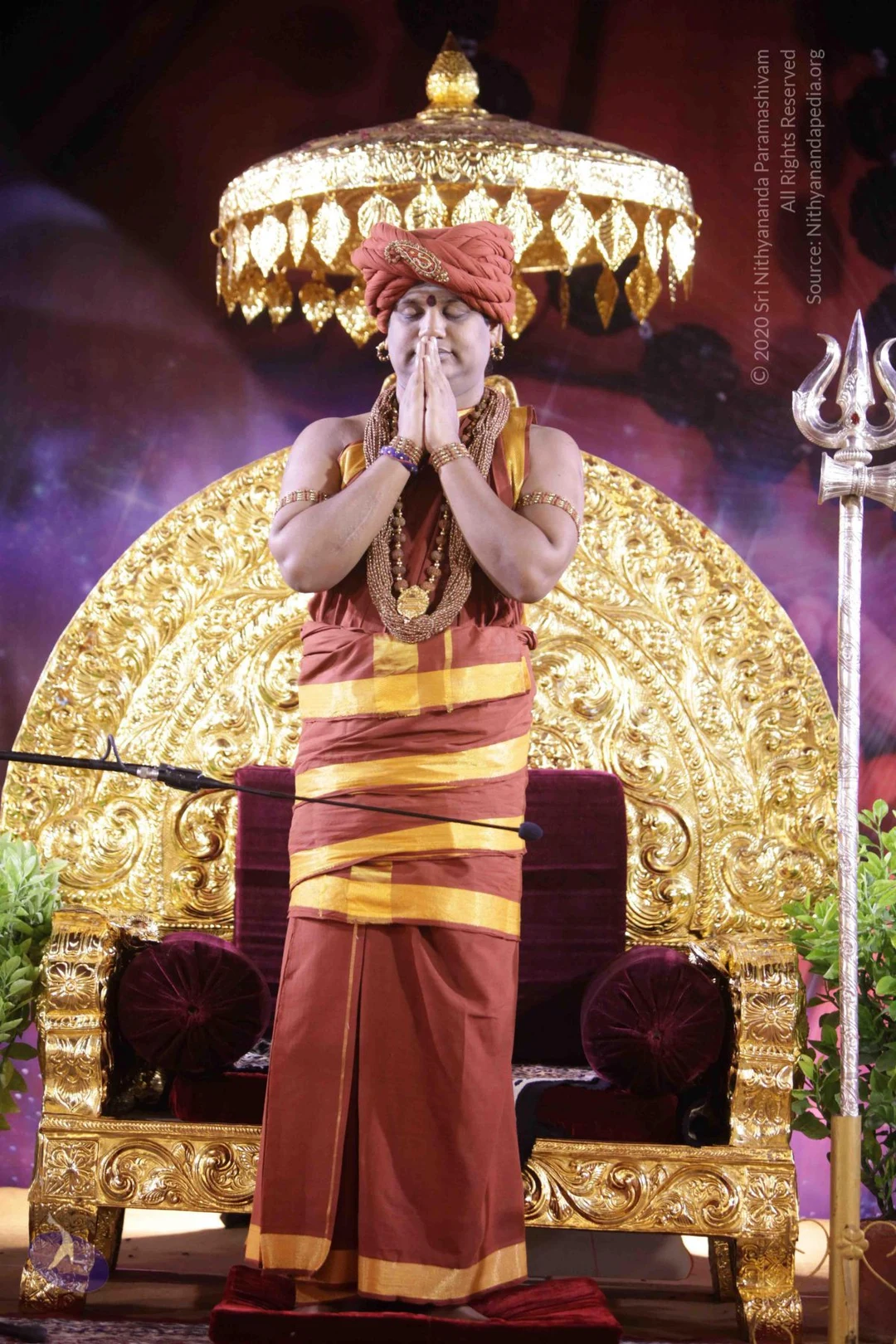
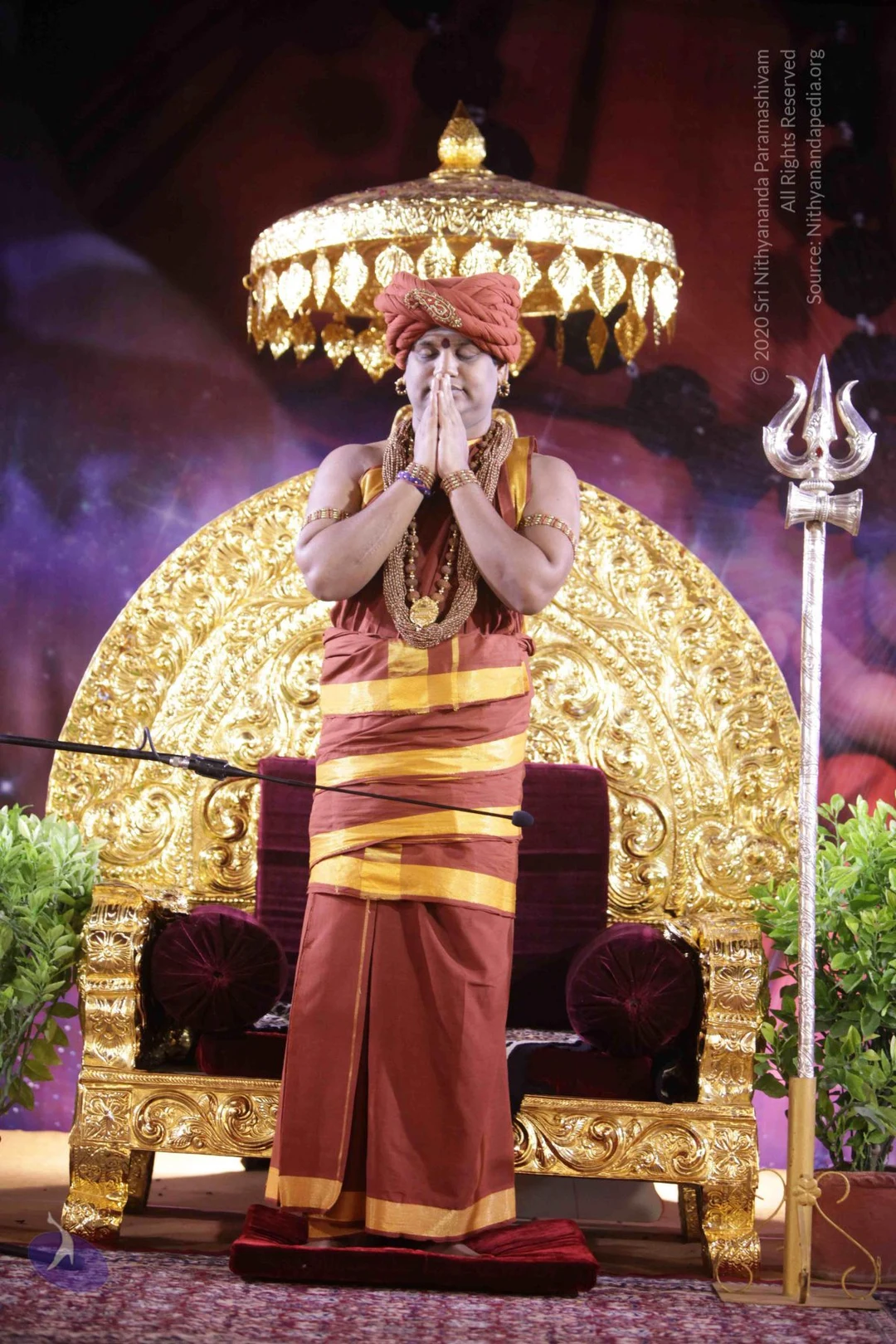
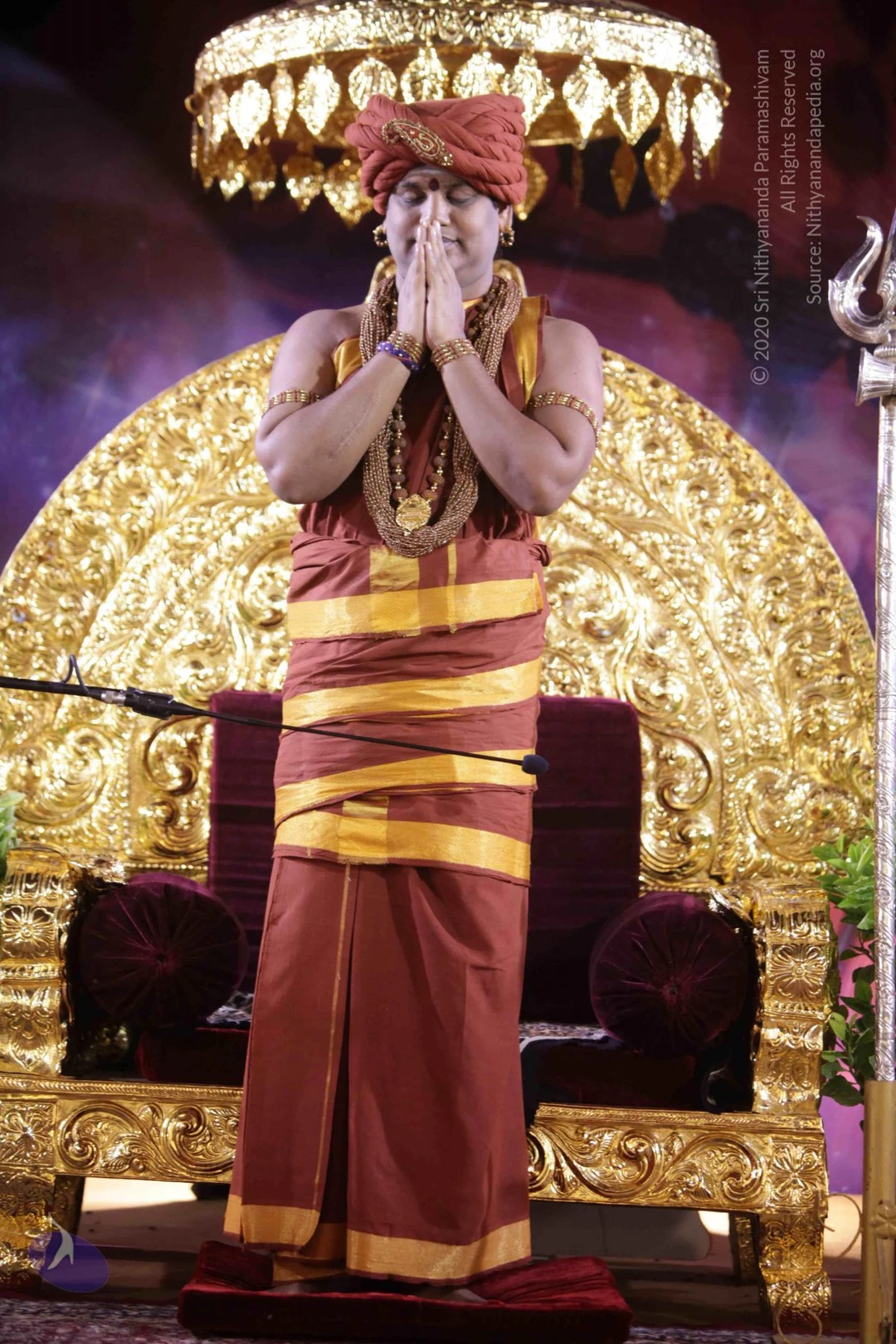
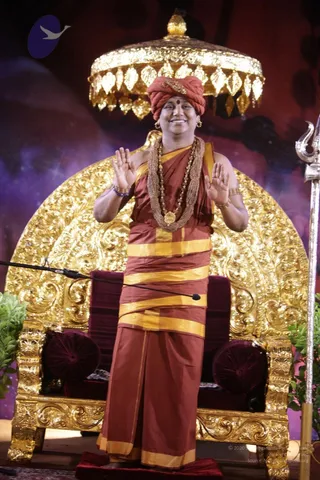
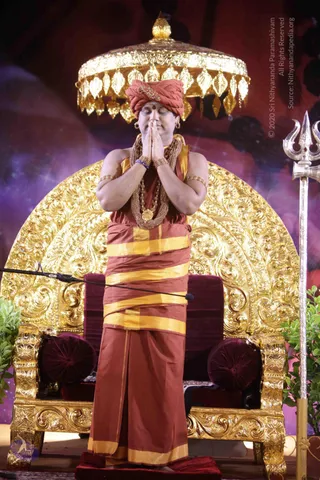
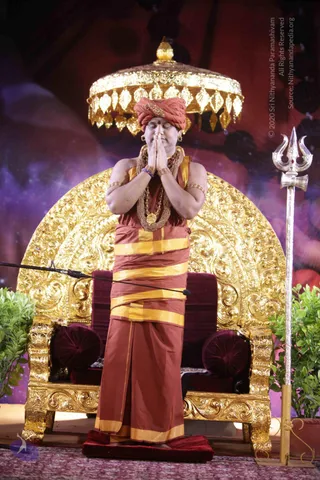
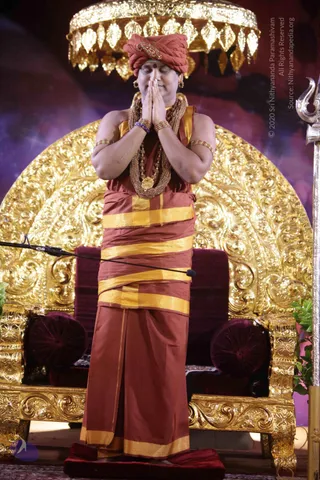
A person stands in front of an ornate golden throne with a gold-embossed backrest and a gold canopy above, in a stage setting with purple backdrop and green plants. The standing person has palms pressed together in anjali mudra with eyes closed, wearing a rust-red turban with a gold ornament, a rust-red garment with gold borders wrapped around the body, multiple beaded rudraksha-style malas and a gold pendant, and gold armlets and bangles. A large silver trident stands at the right edge. A microphone stand is visible at left. Two people are not present; this is one physical person.A photograph of a man standing on a red cushion in front of an ornate gold throne with a gold canopy above. He wears a maroon-red turban, a maroon-red dhoti and shawl with gold borders, gold armlets, and layered gold beaded necklaces, with palms pressed together in namaste and eyes closed. A silver trident stands to the right, and green plants frame the stage. Purple and red backdrop lighting fills the background.A photograph of a single man standing in front of an ornate gold throne with a deep red velvet seat and cushions. He wears a rust-red turban with a gold emblem, a red-and-gold draped garment with gold borders, multiple strands of brown beads, gold armlets and bangles, and a red tilak on his forehead. He stands with palms pressed together in namaskar, eyes closed. A silver trident stands at the right edge, and a crystal-and-gold canopy hangs above. Appearance cues are consistent with the page's a person label, but the face and presentation are not distinctive enough to confirm identity, so the figure is described by role as a man performing namaskar before a throne.A standing man in a maroon-red turban with an embroidered gold motif and a red bindi, wearing maroon robes with gold-bordered draping, multiple strands of rudraksha beads and gold-bead malas, a large gold pendant, gold bangles and armlets, and gold earrings. He raises both palms toward the viewer in a blessing gesture while smiling. Behind him stands an ornate gold throne with carved golden panels and a crystal-draped chandelier above. A microphone stand is visible at lower left. Appearance-based candidate: Swamiji (probable), shown in person with ceremonial cues of turban, rudraksha malas, and gold ornaments.A smiling man stands on a red-carpeted dais in front of an ornate gold throne with a gold canopy and a plum velvet cushioned seat. He wears a maroon turban with a gold ornament and red bindi, a maroon-and-gold draped garment with gold-striped waistcloth, a multi-strand beaded necklace with a gold medallion, gold armbands and bangles, and raises both hands in an expressive gesture. A silver trident stands to his right beside green potted plants, and a microphone is clipped to the draping. a person: the ceremonial maroon-and-gold attire, ornate gold throne setting, beaded mala and gold necklace are consistent with the page's reference to a person at this satsang.A seated man in a deep red-orange turban with a gold ornament and a red bindi speaks into a microphone on an ornate gold throne. He wears a rust-red and gold-bordered shawl, long rudraksha and gold-beaded necklaces, a large gold pendant, gold armlets, and bangles, sitting cross-legged with hands clasped in his lap. The gilded carved backdrop and red velvet seat frame him.
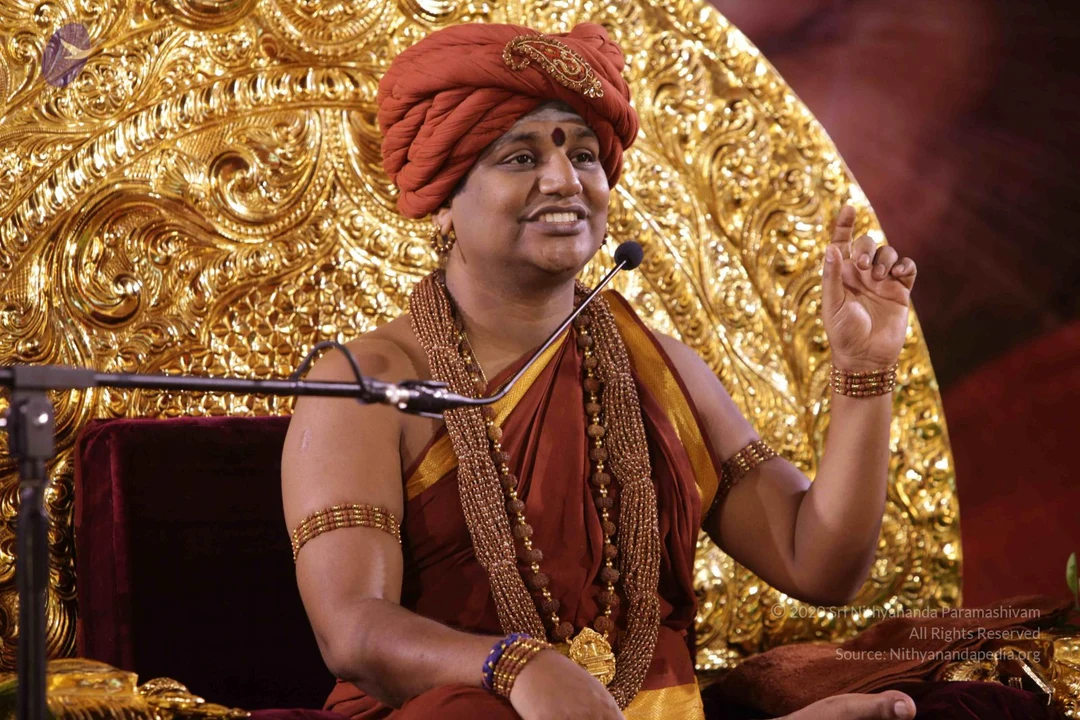
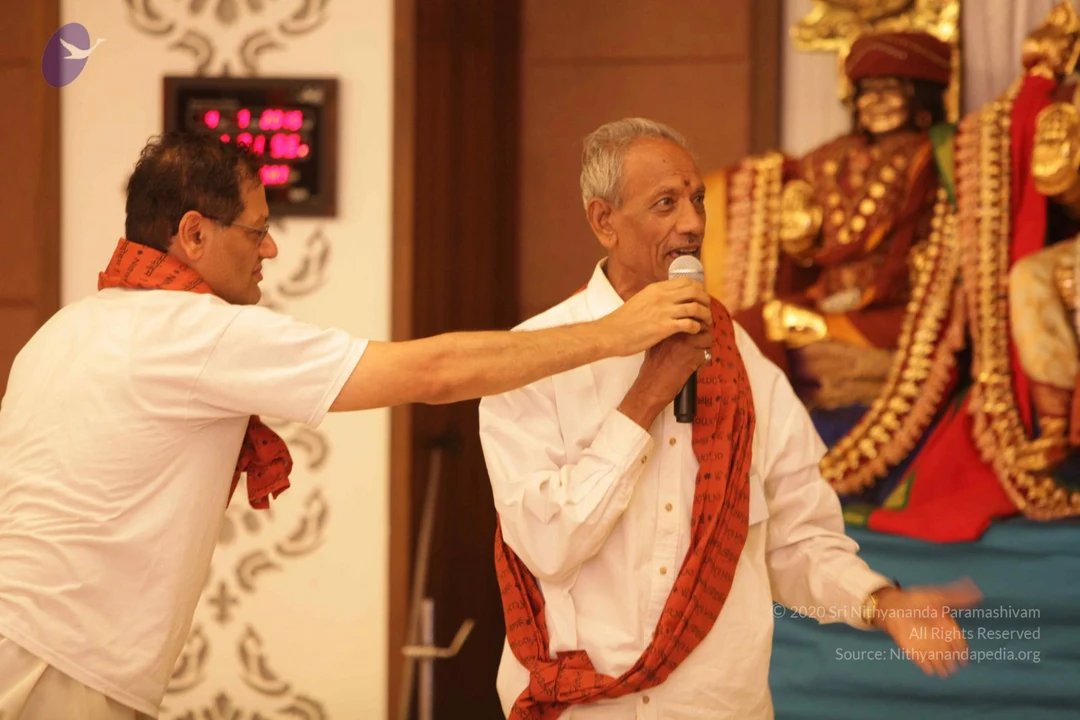
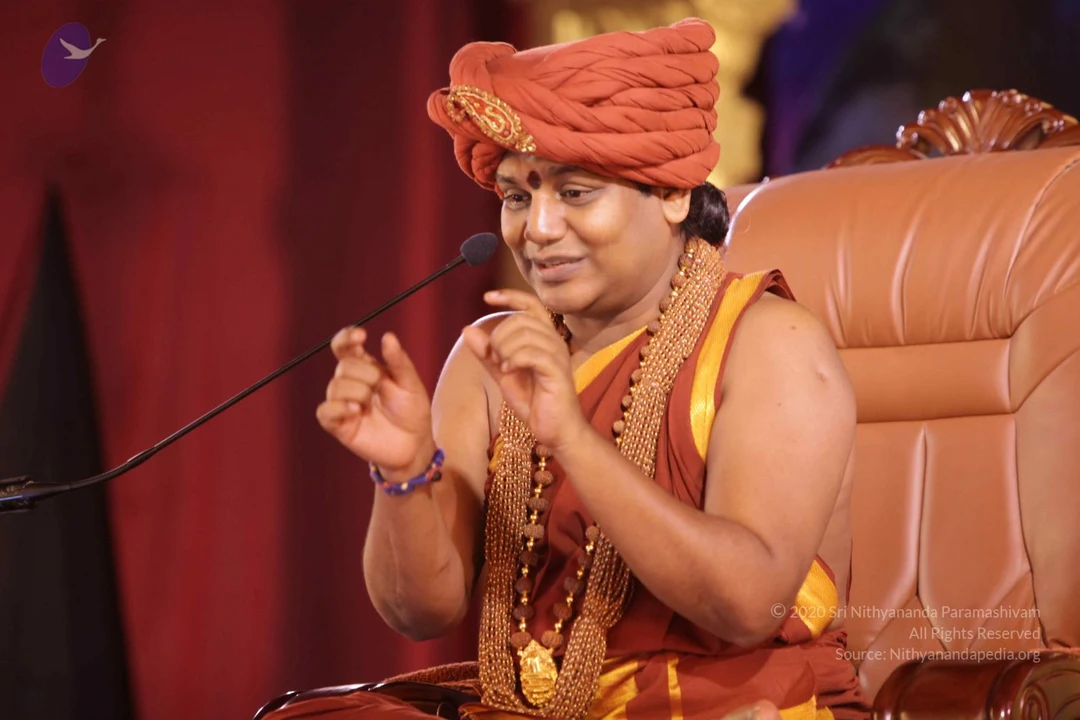
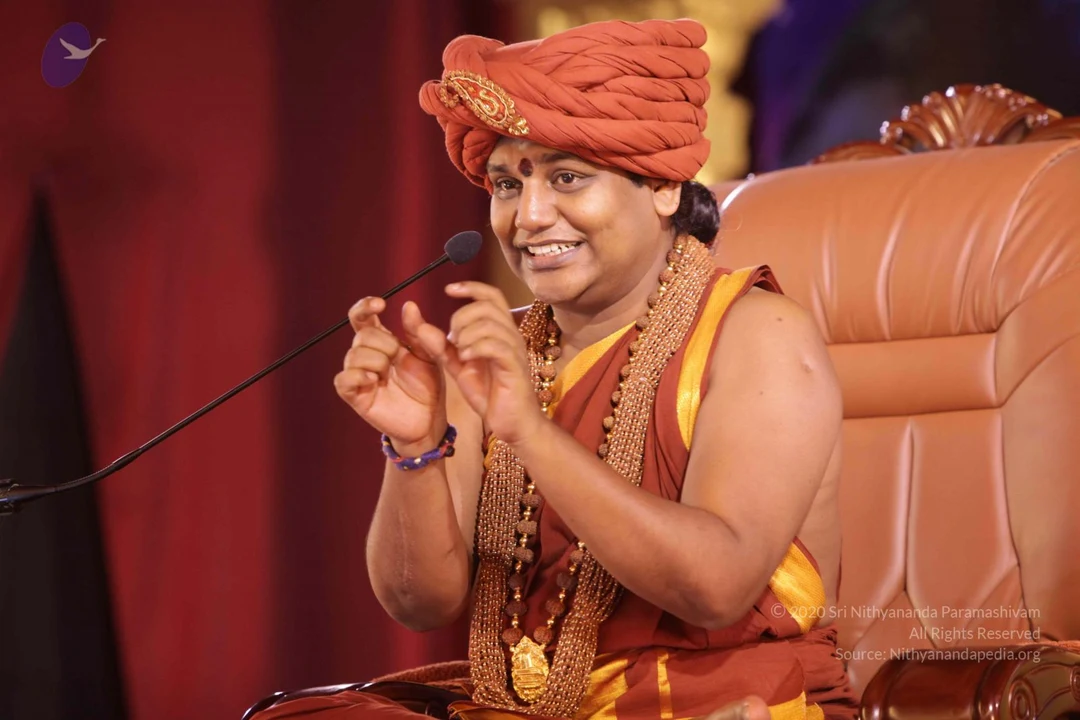
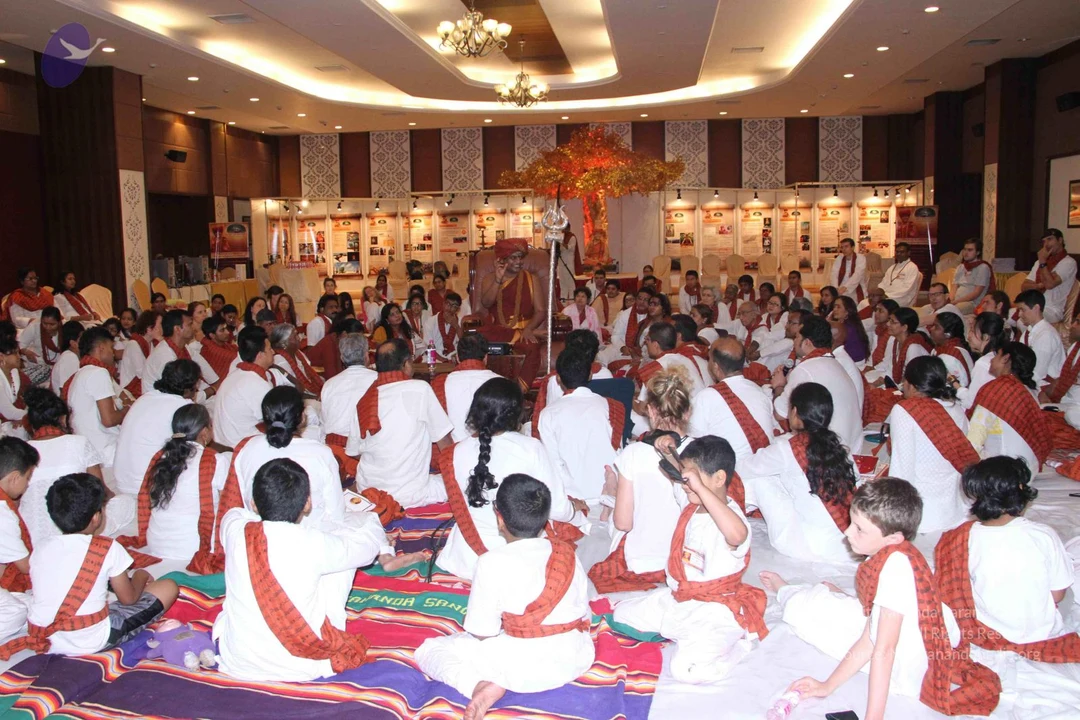
2015-July-04

3 photosView all
Photograph of a seated audience facing a stage at a hall with red draped curtains and gold pillars. A figure in orange and saffron clothing sits on a gilded throne with a canopy, flanked by potted plants and brass lamps. A large backdrop shows a glowing Earth in space. Audience members in white kurtas and red-orange shawls sit on gold-covered chairs in the foreground, with a camera on a tripod filming the stage. A partially visible sign reads Live Awakening at the top left. The figure on the throne shows distinctive orange and ornate cues but the appearance is uncertain from this distance.A large hall with a stage backdrop showing a glowing Earth and cosmic imagery, framed by golden pillars. A seated figure in an orange and red turban and orange robes sits on an ornate gold throne with a canopy at centre stage, flanked by potted plants, brass lamps and a camera on a tripod. Rows of devotees in white clothes with red-and-white shawls sit cross-legged on white floor mats and gold chairs, facing the stage. Some sit in the foreground with their backs to the camera, and a few people in orange robes sit at the right side of the stage. Attendance appears to be in the dozens.A photograph of a large hall audience seated on the floor and in chairs, viewed from behind. Most attendees wear white clothes with red shawls. On a raised stage, a seated figure in orange and red sits on a gold throne with a canopy, flanked by potted plants, brass lamps and a tripod camera. The backdrop shows a glowing globe-like image of the Earth in space. A gold-framed orange banner reading Inner Awakening hangs above the stage. The attendees include a small child in white near the centre.