Skip to content
Sunday

5 July 2015

Luxury, The Sure Killer Of Intelligence & Powers

Dated photos
389
Source pages
1
Media
11
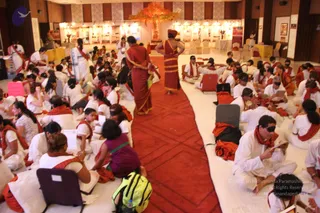
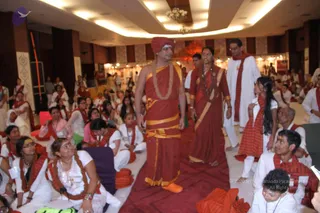
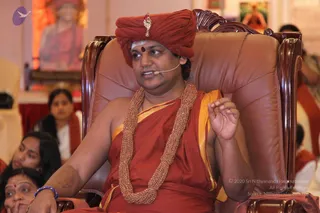
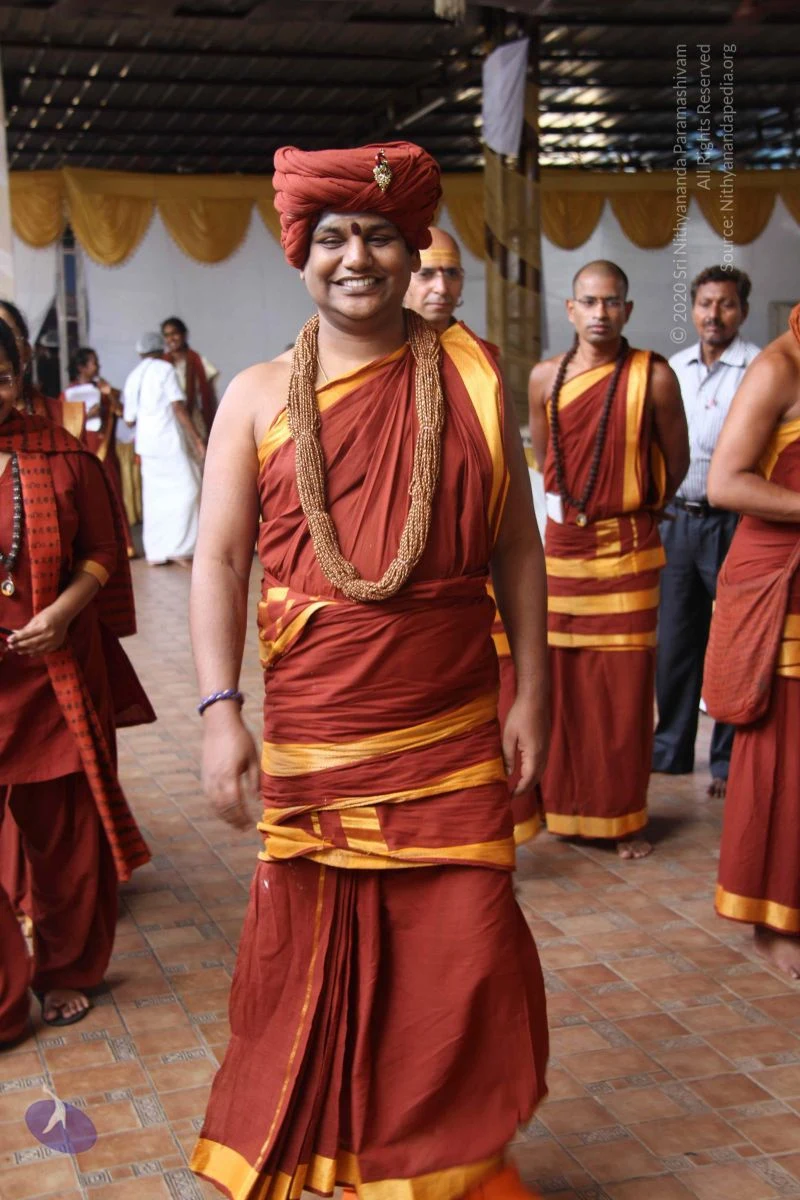
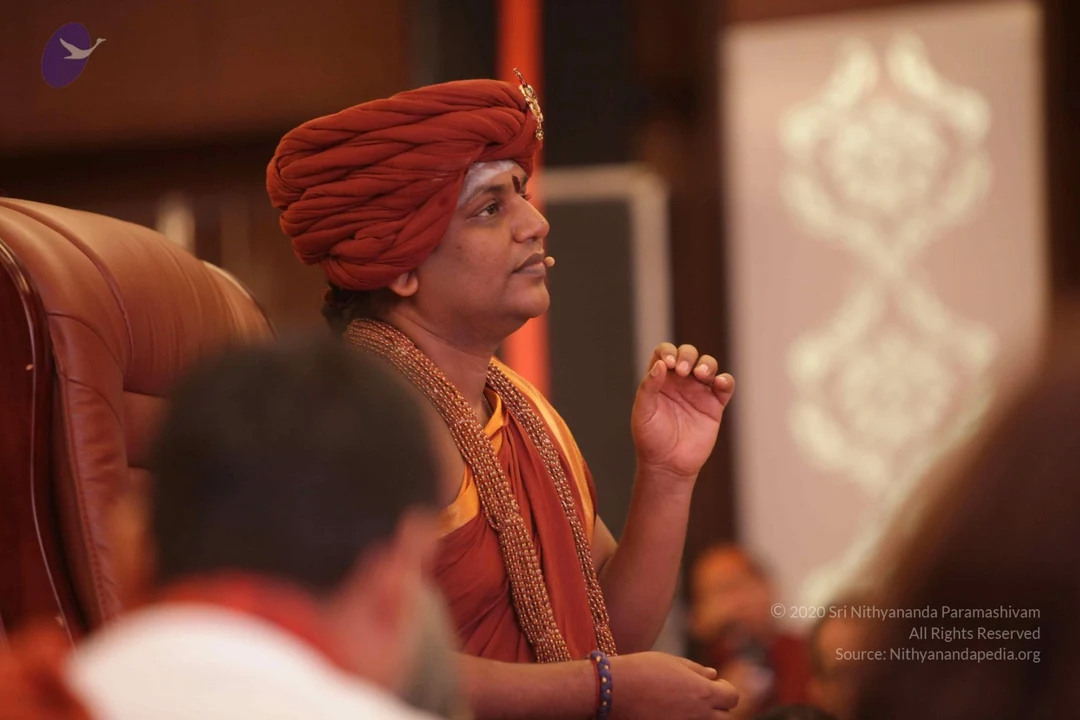
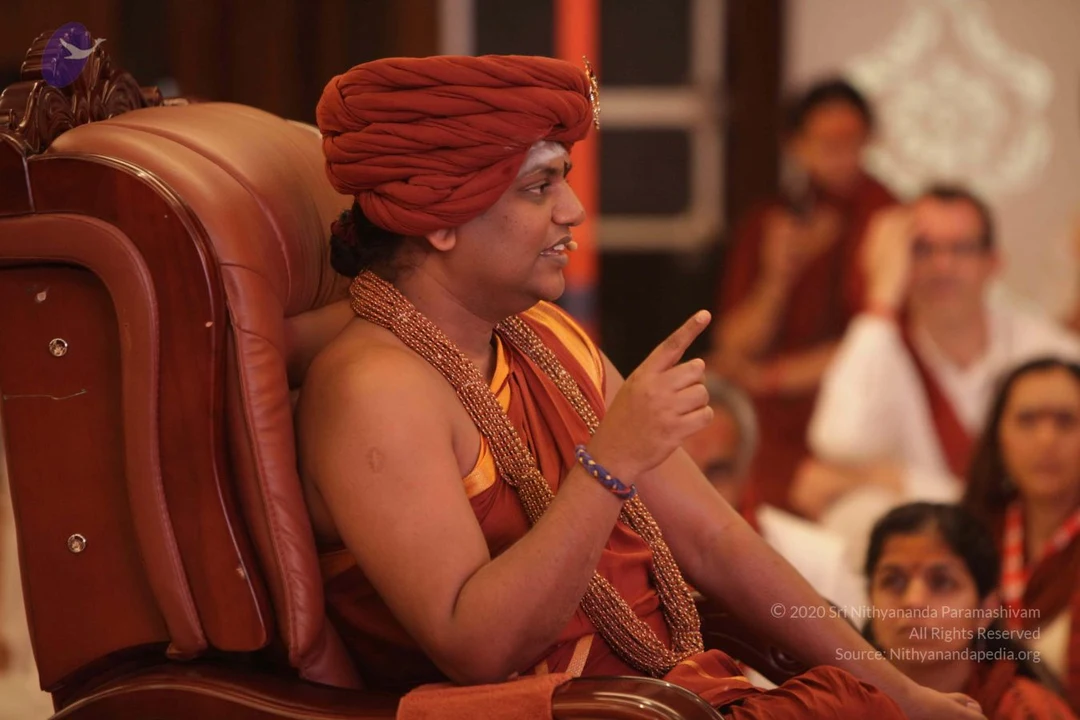
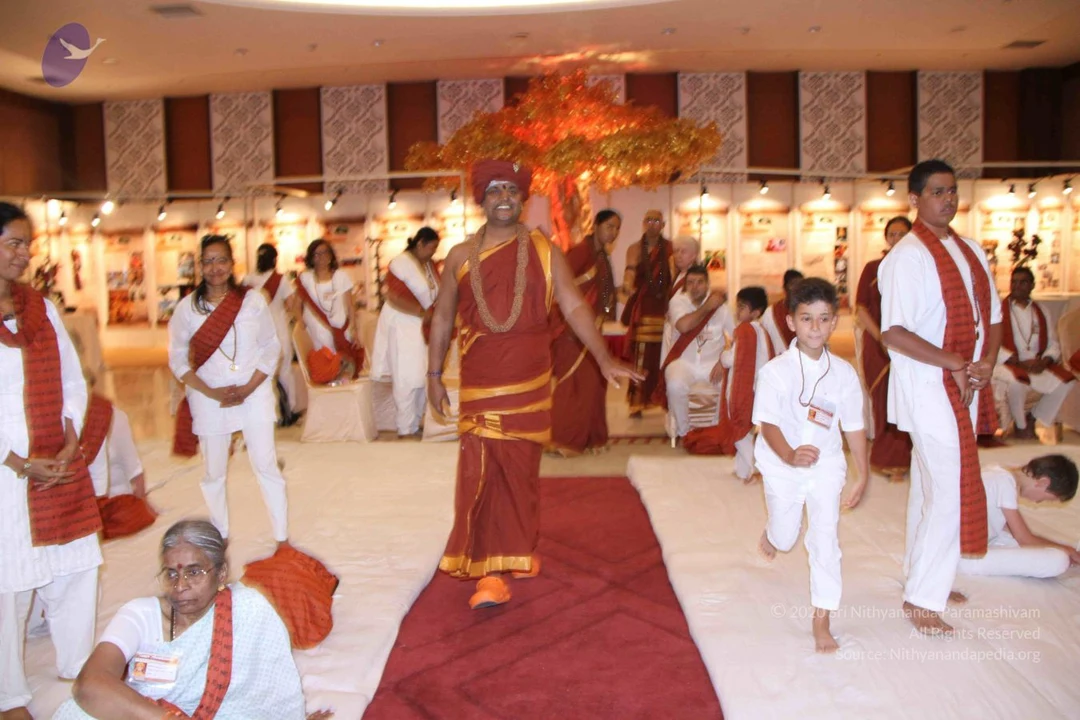
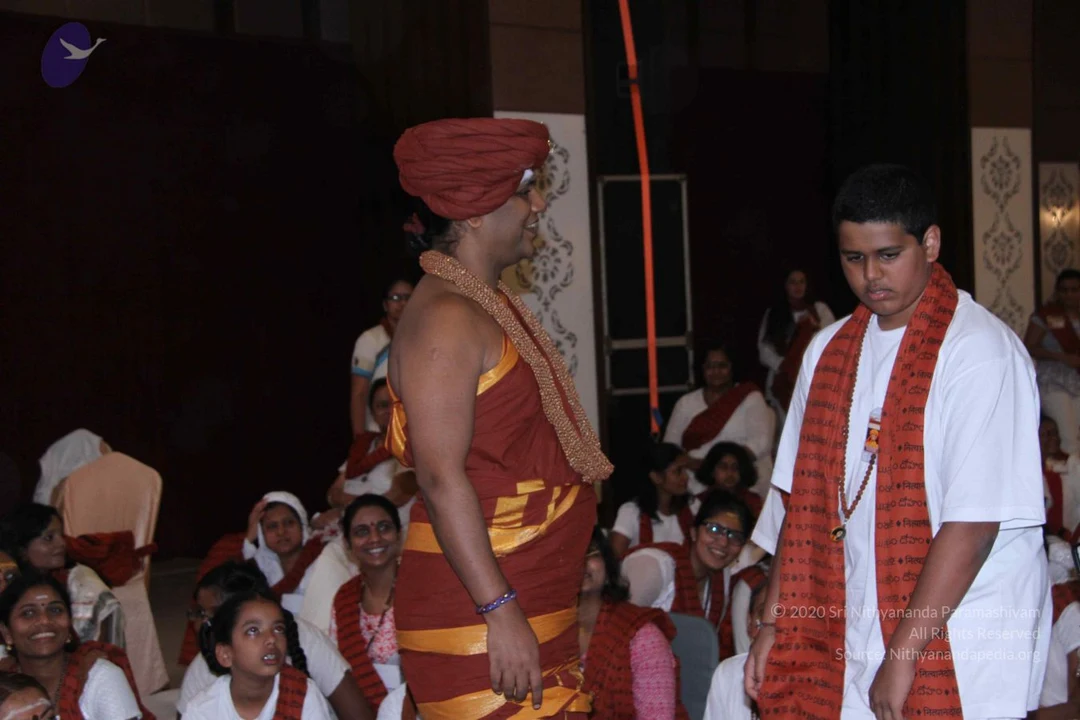
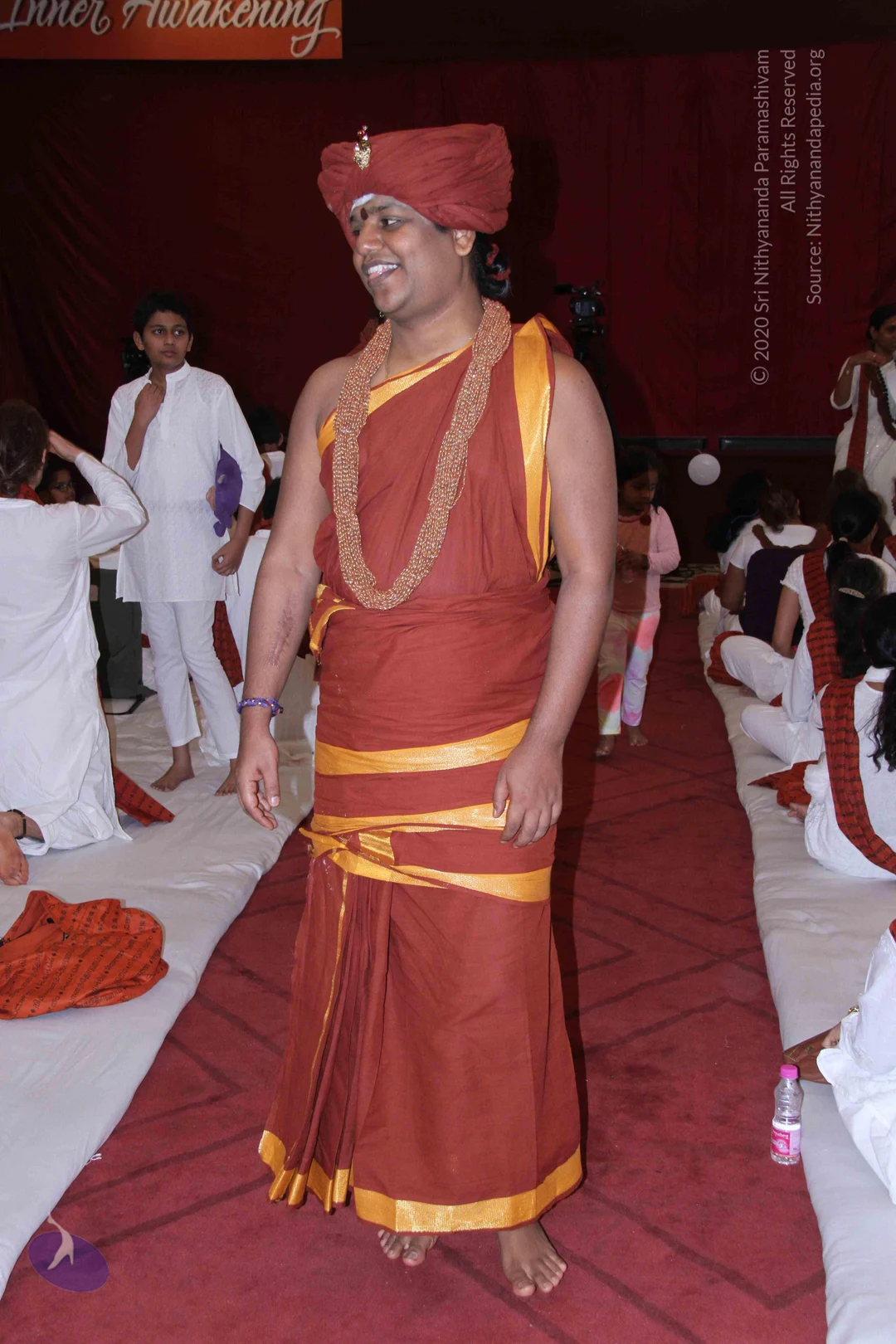
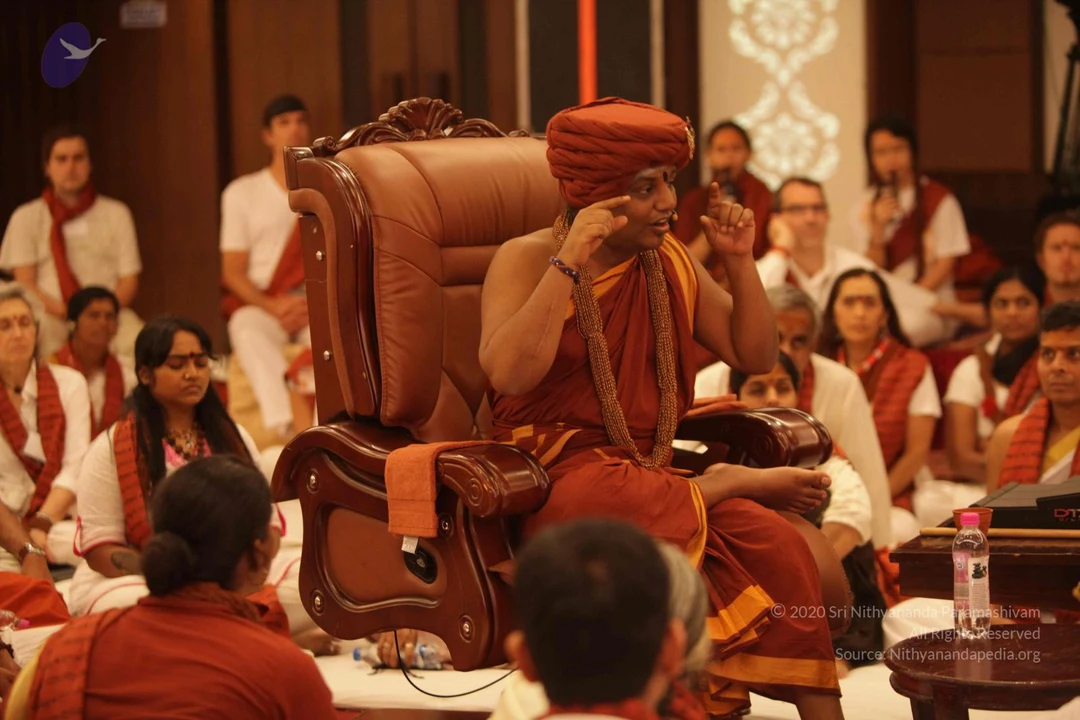
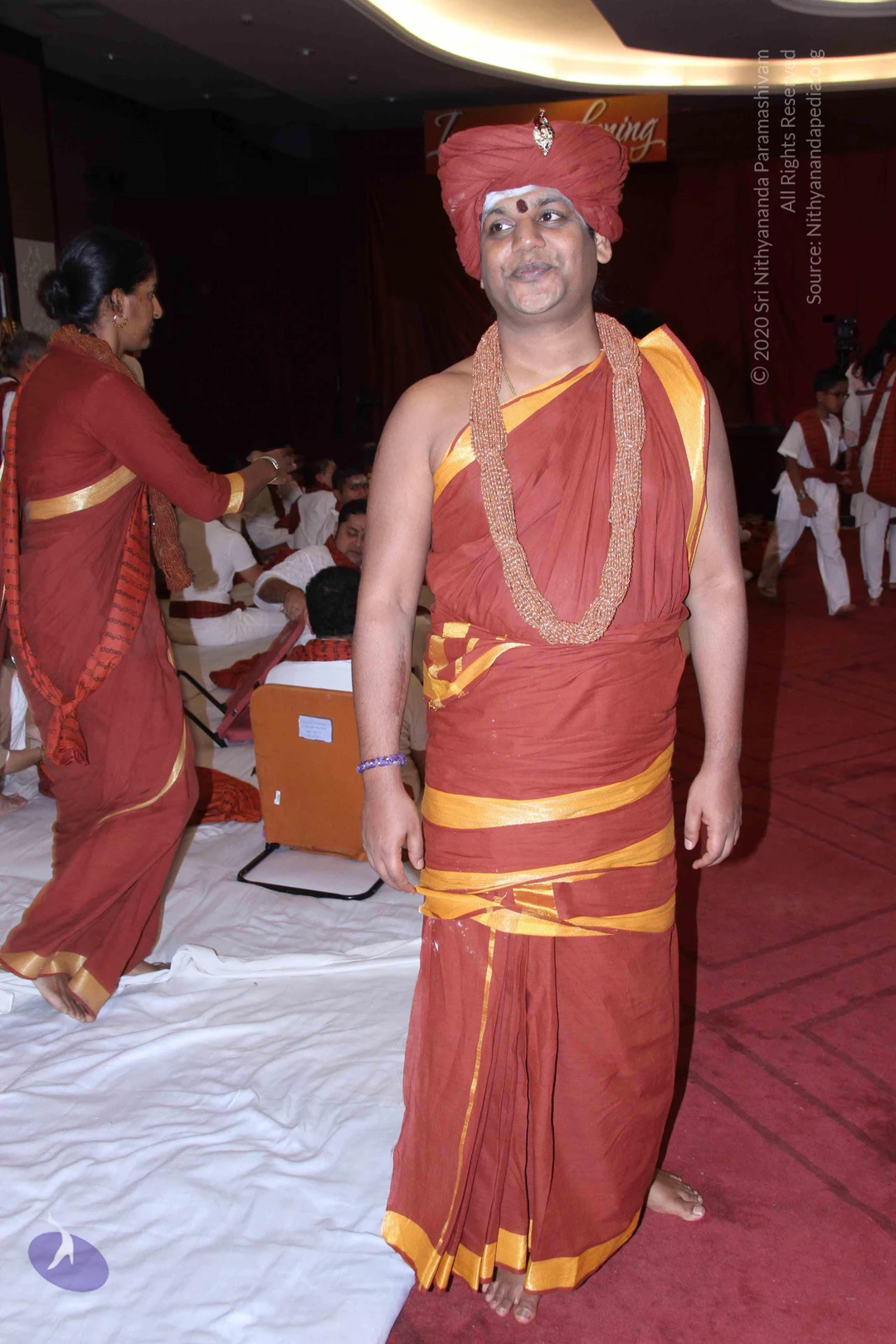
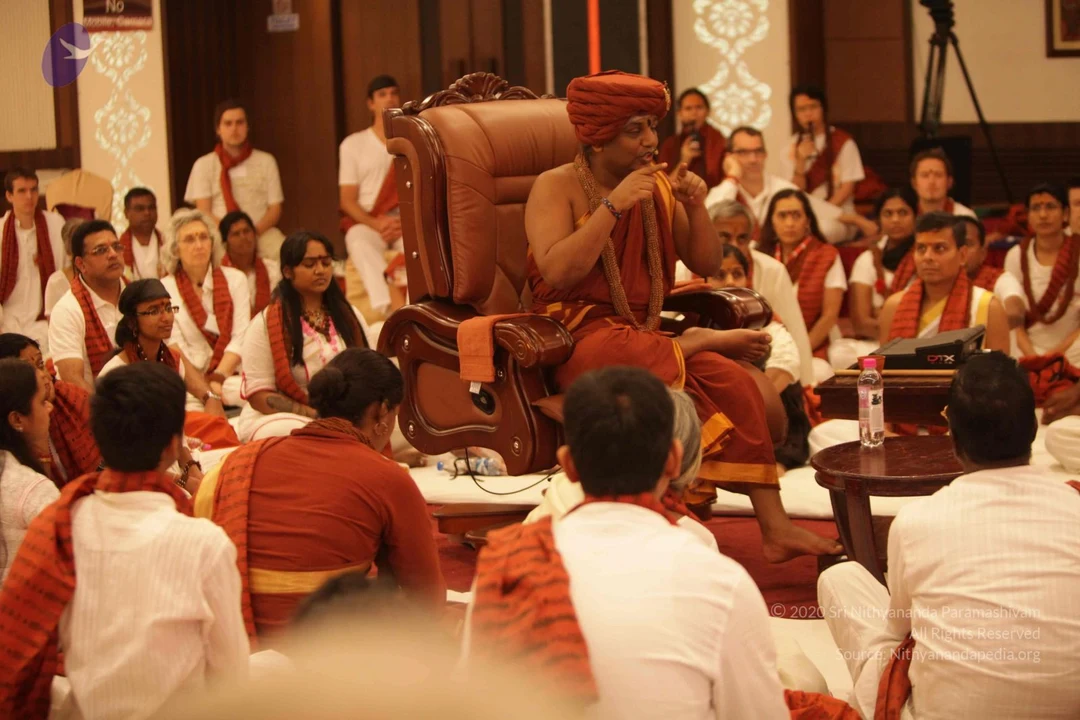
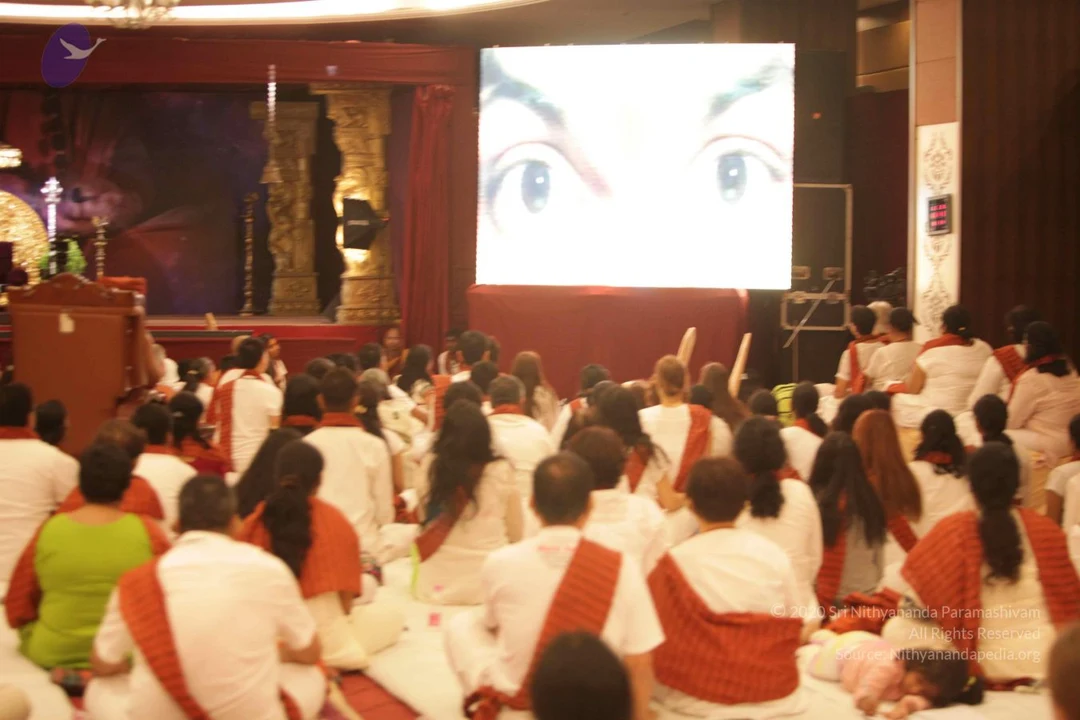
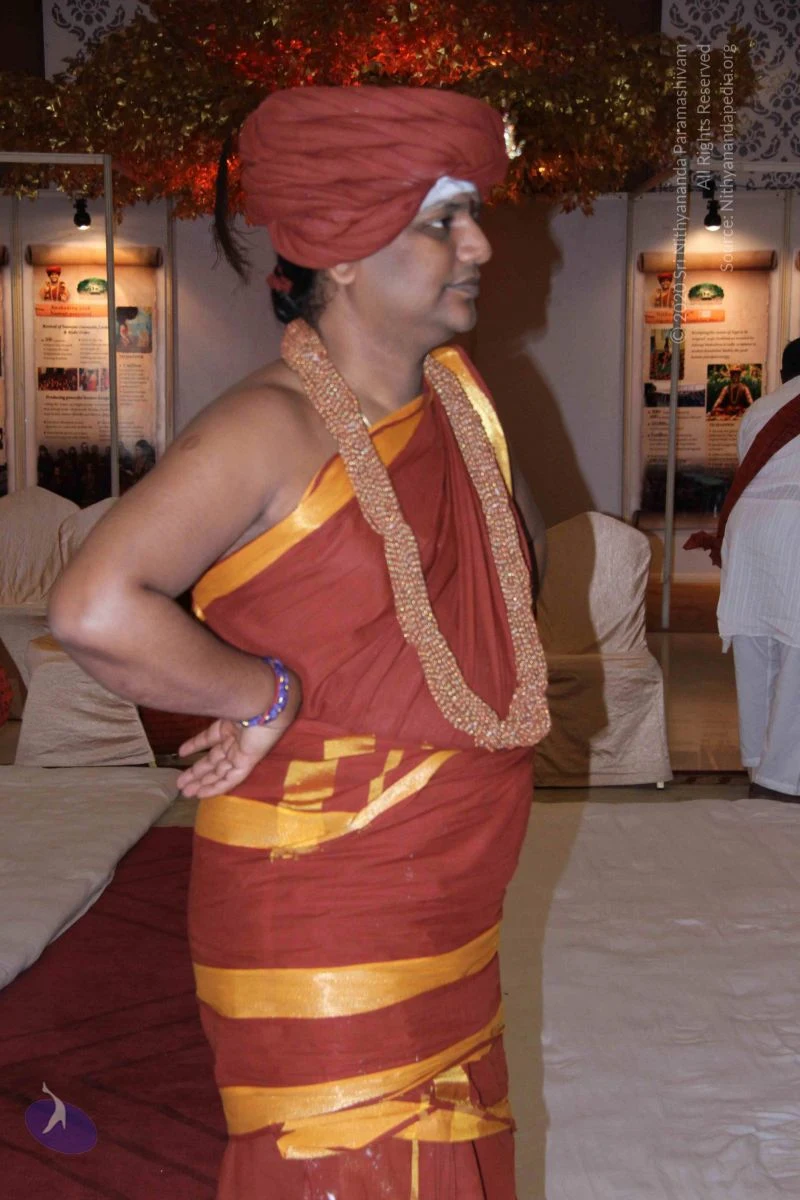
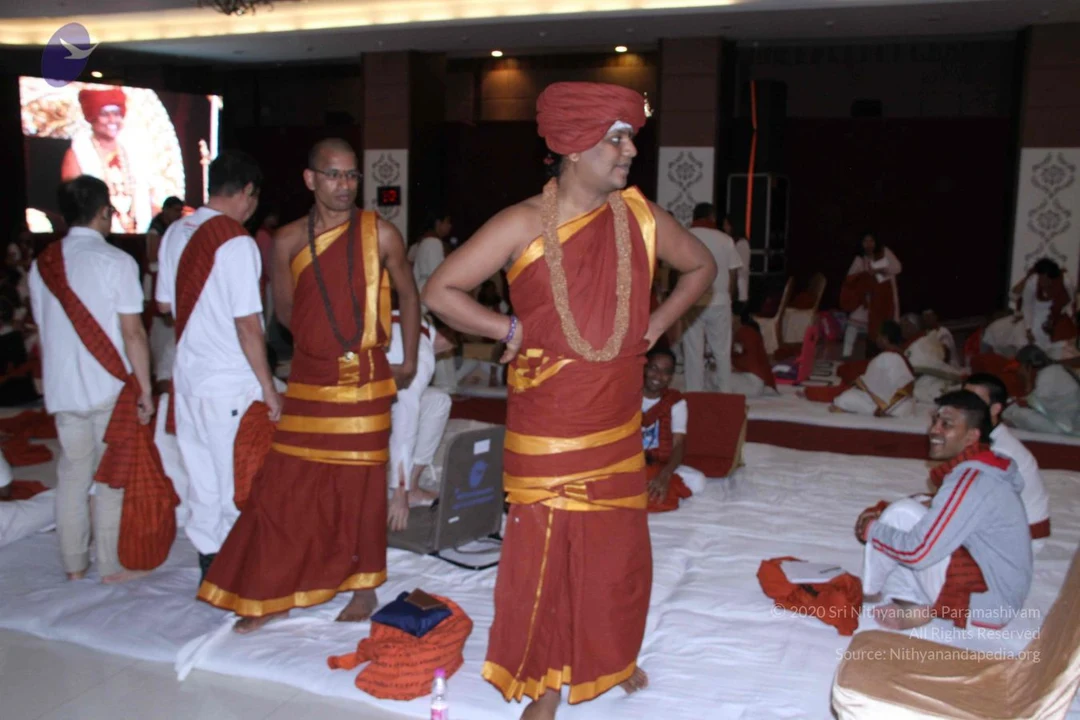
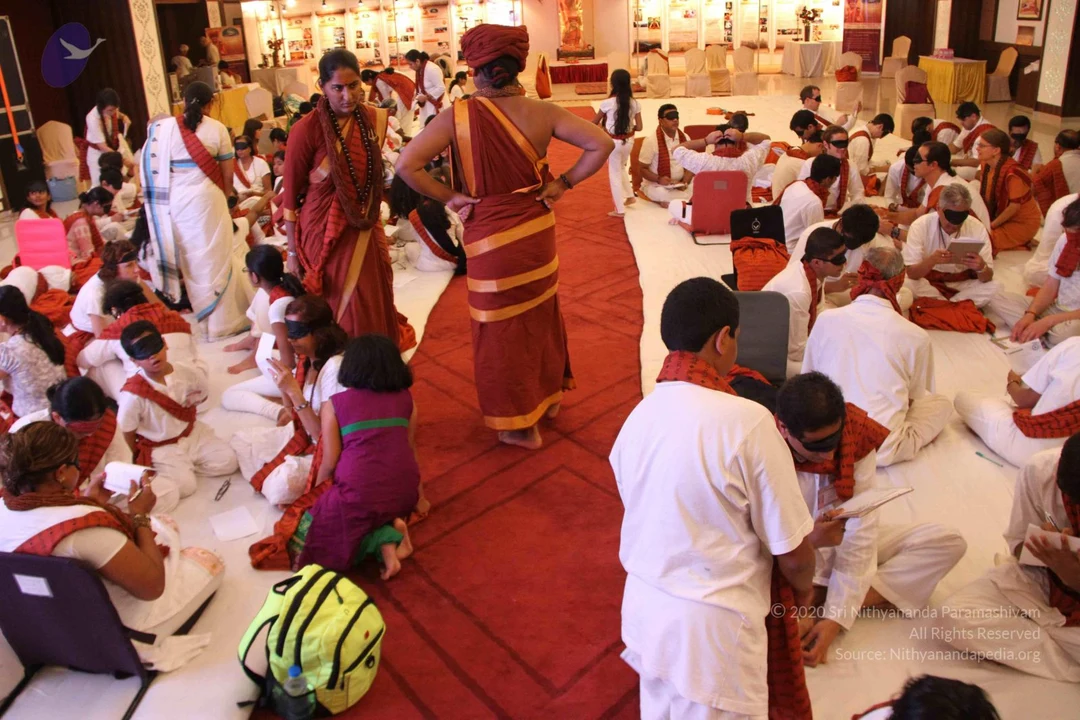
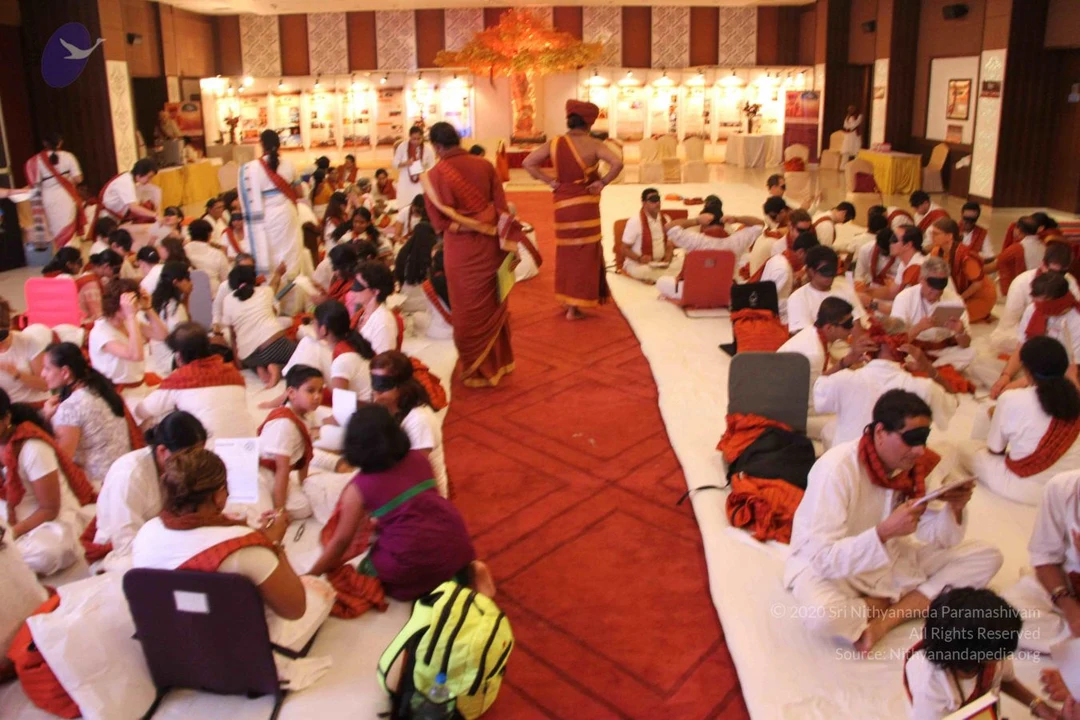
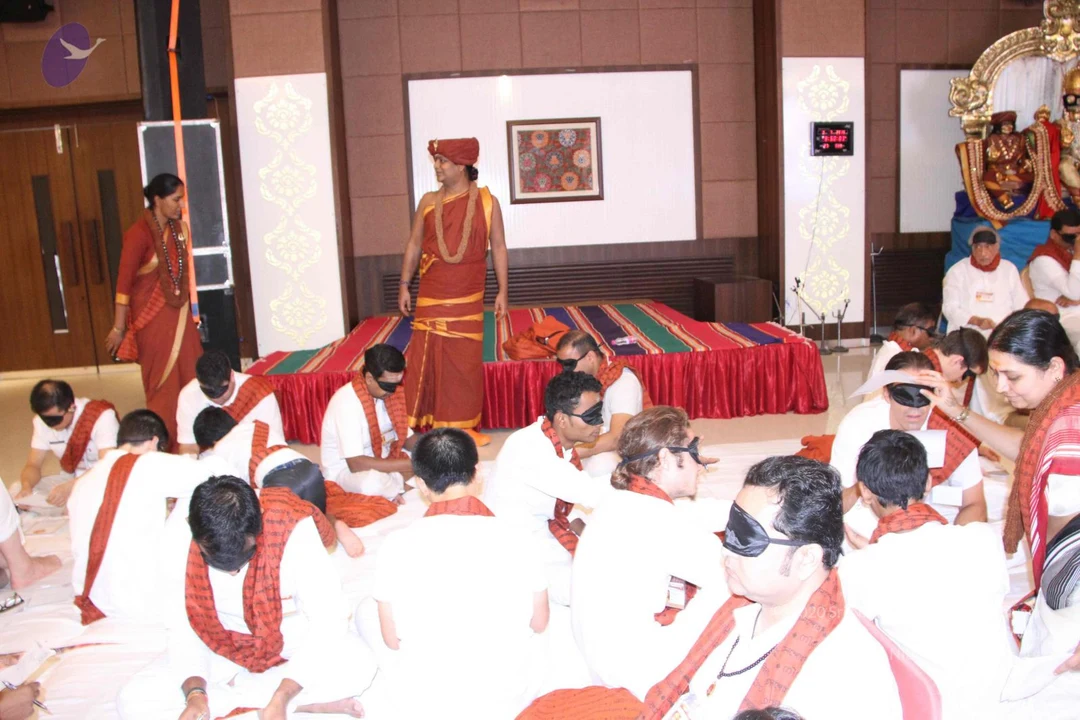
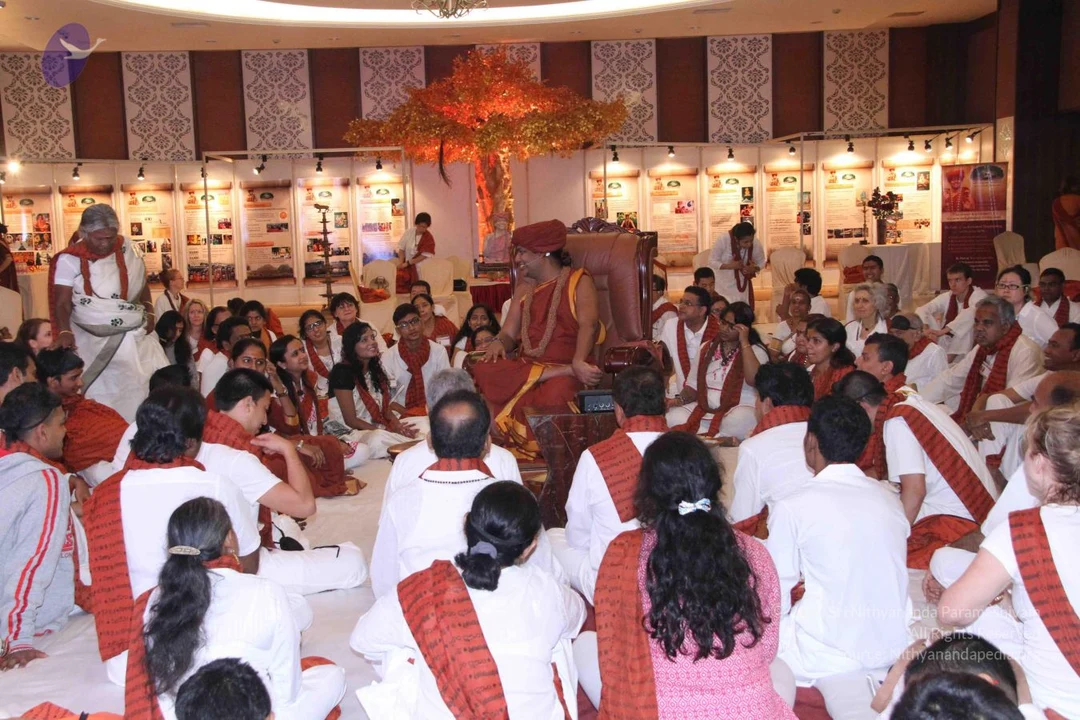
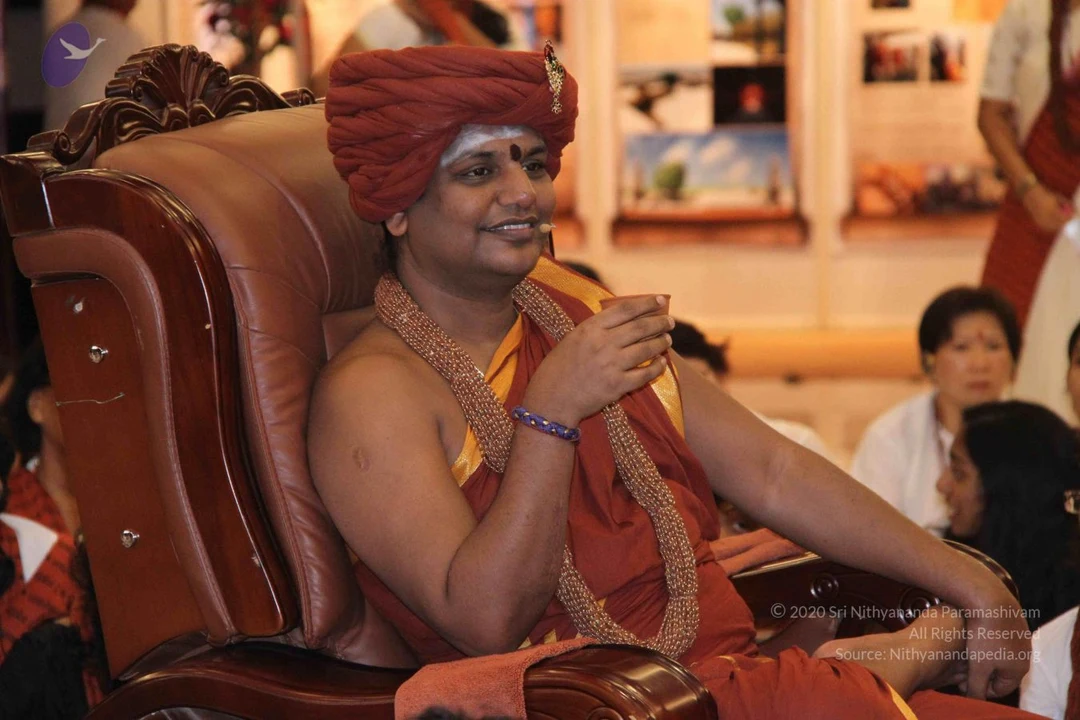
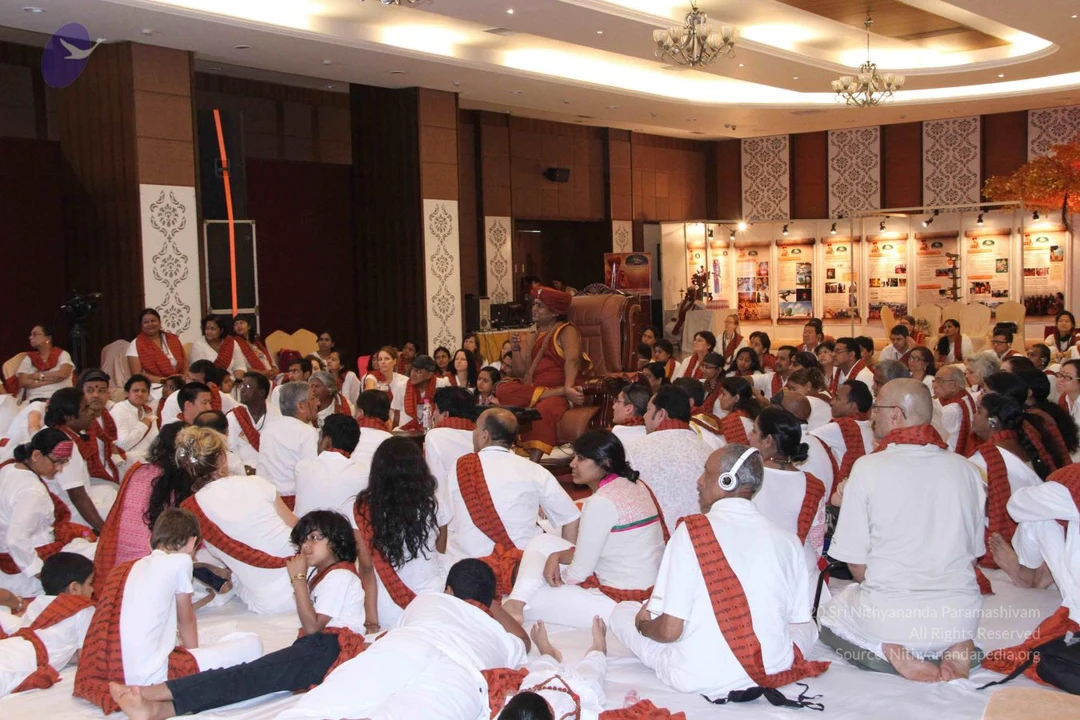
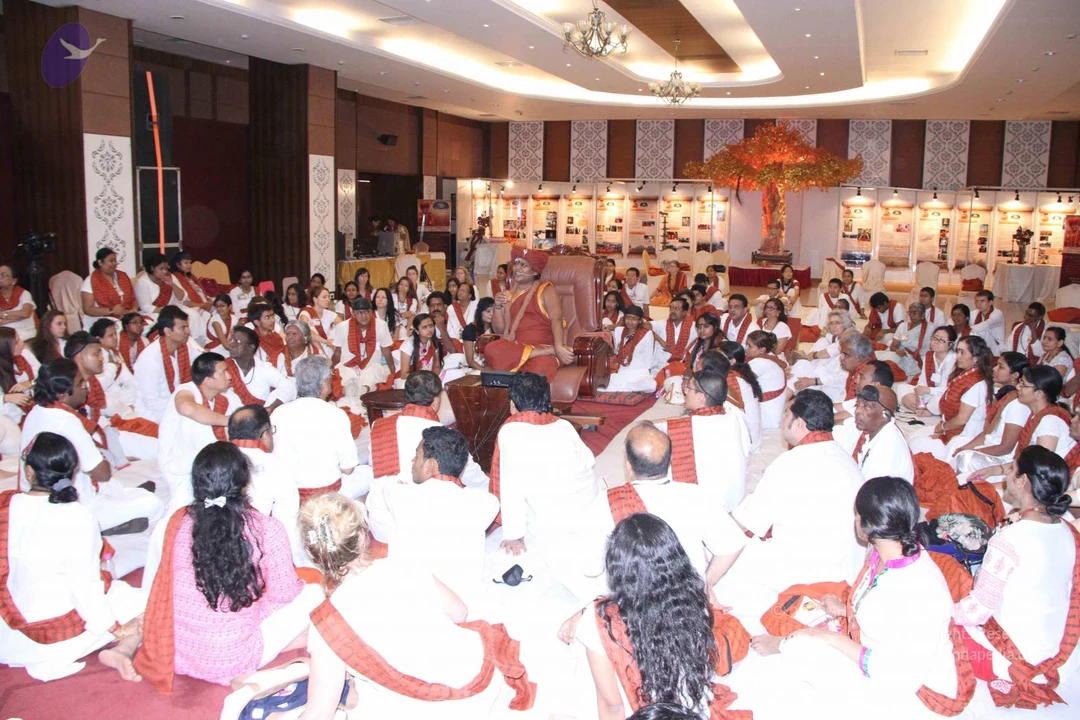
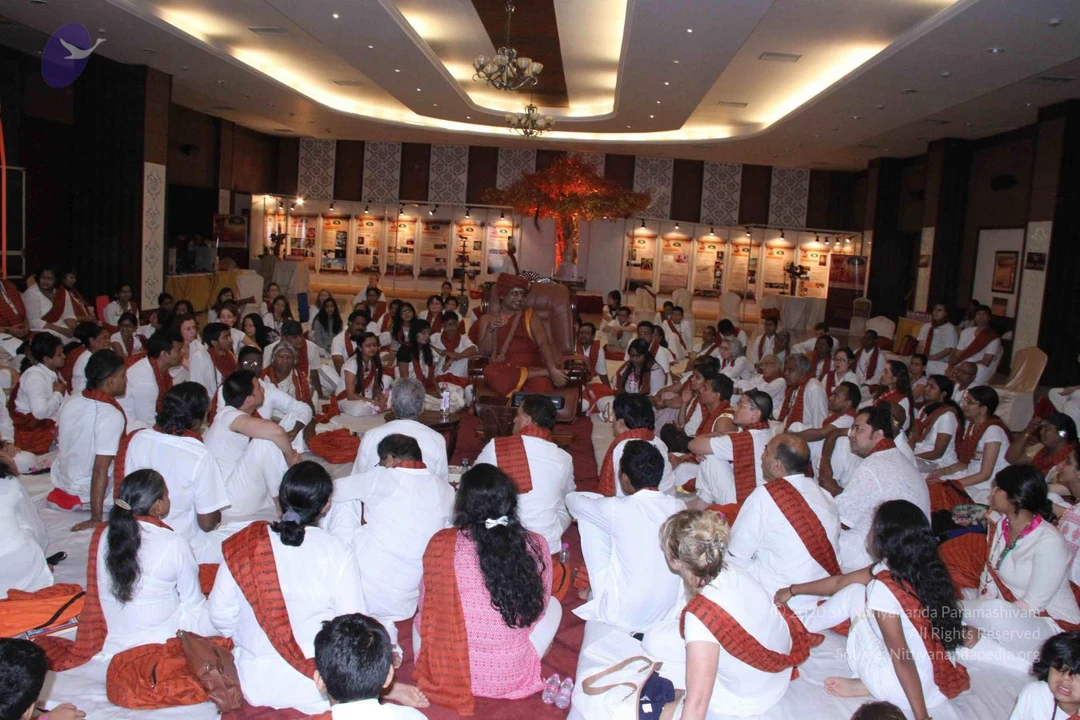
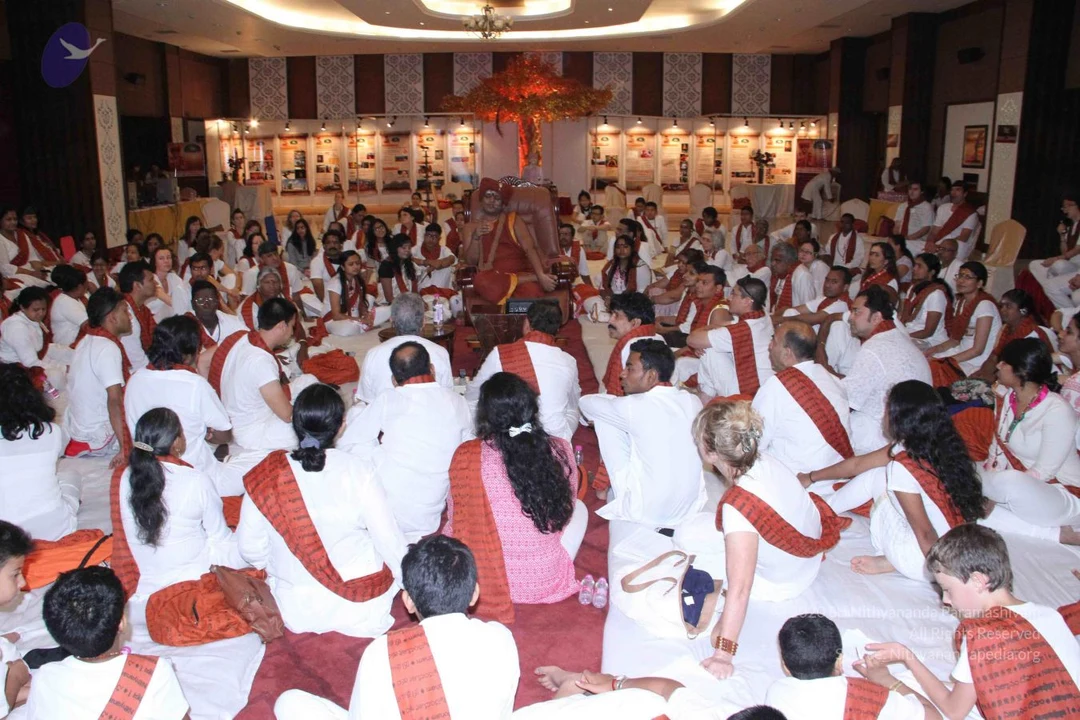
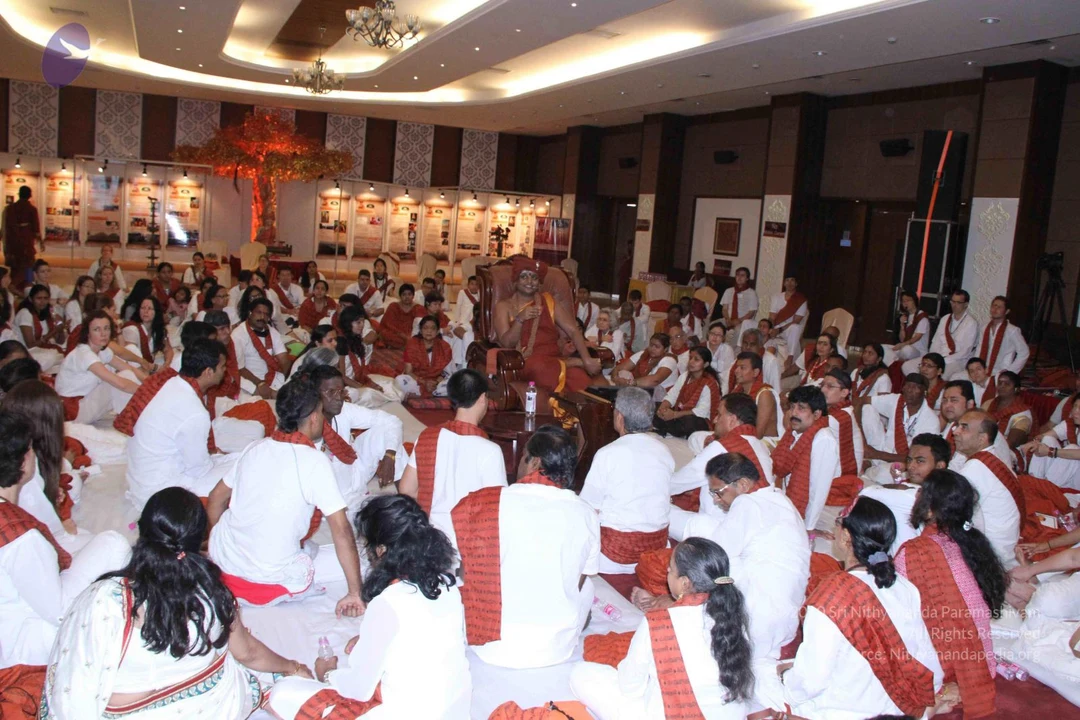
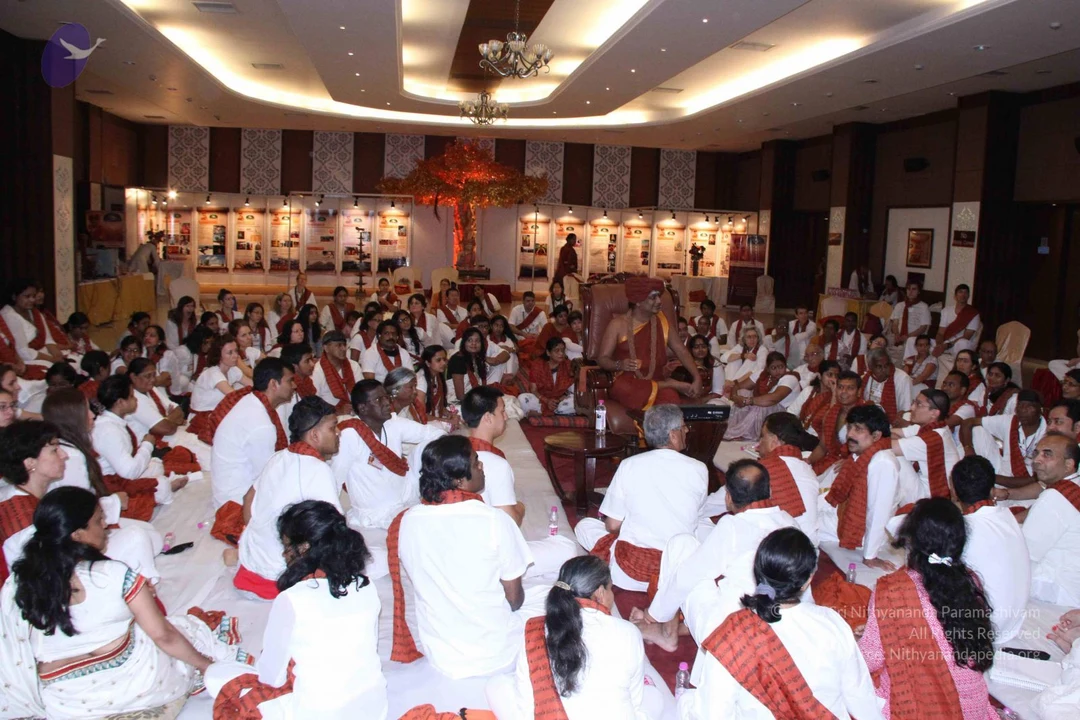
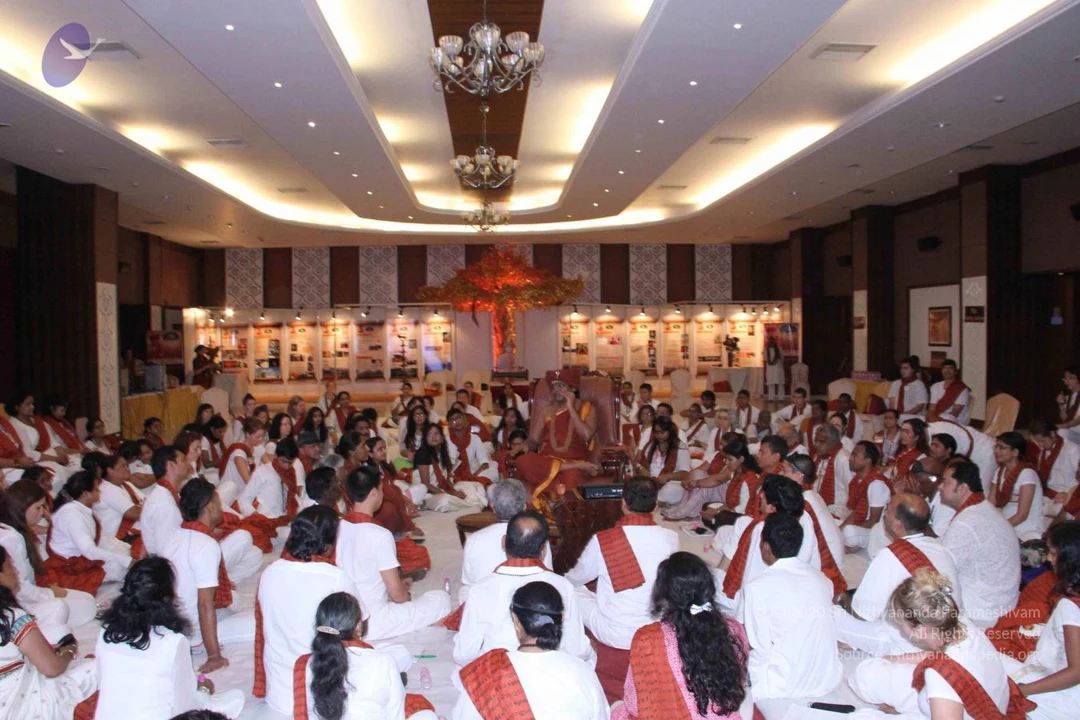
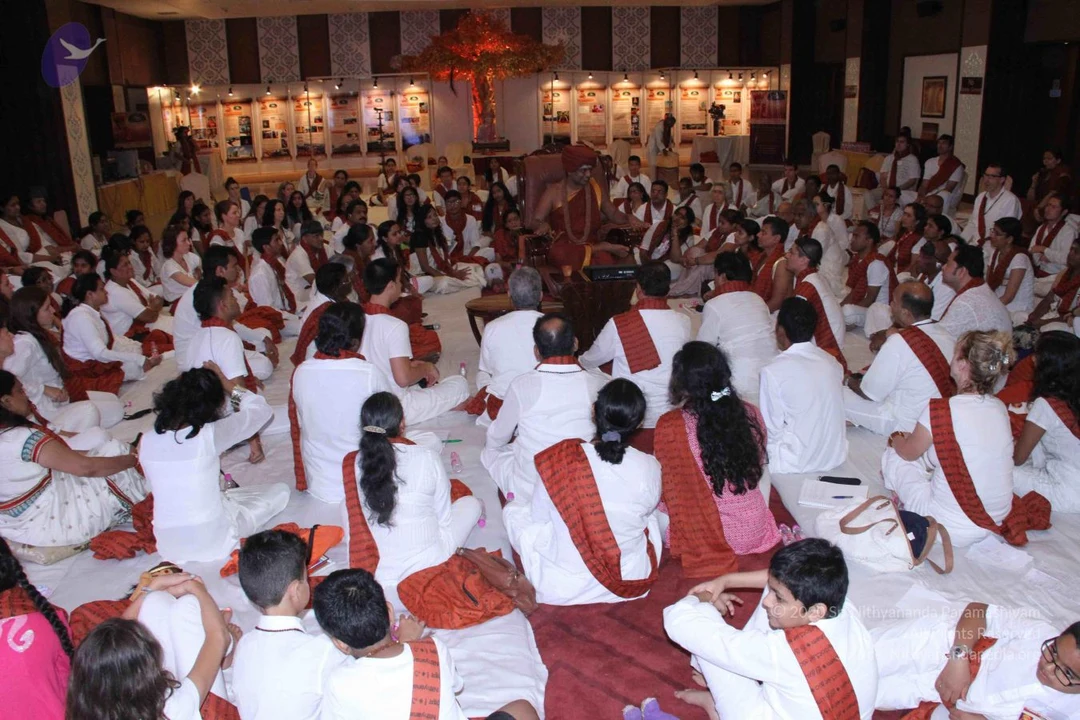
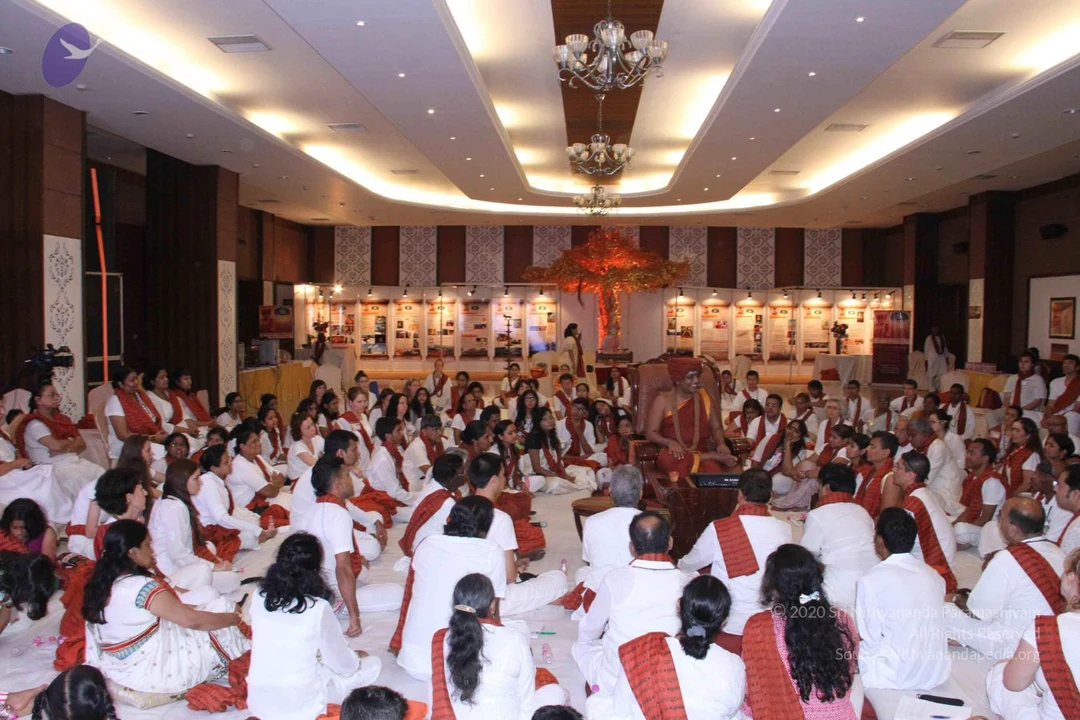
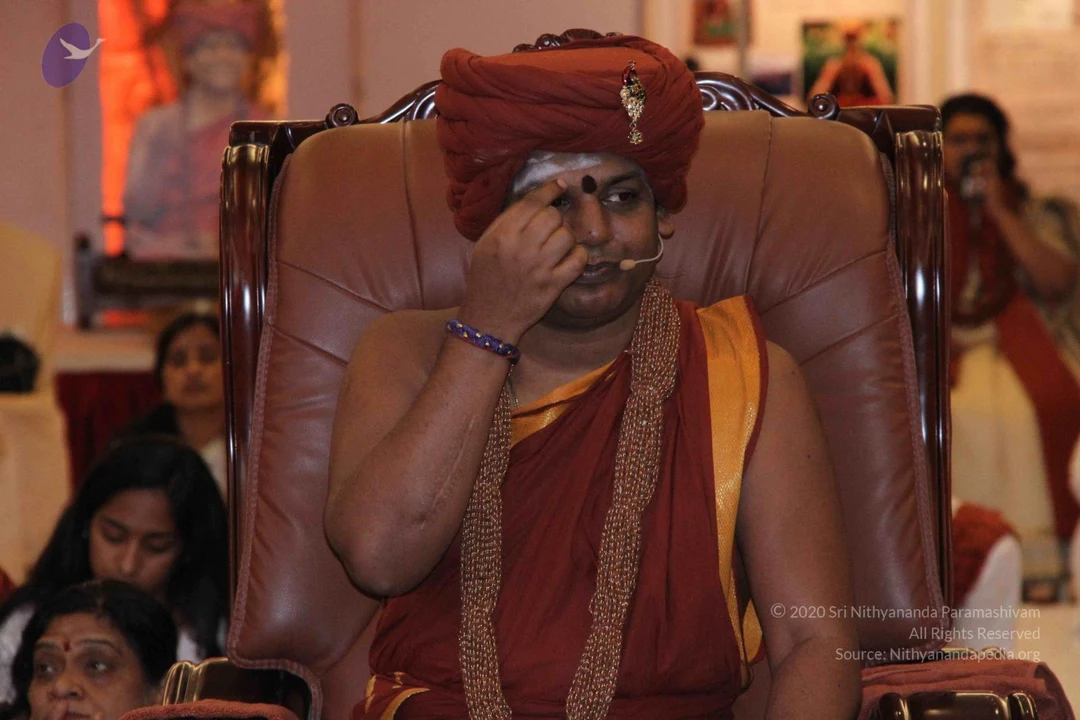
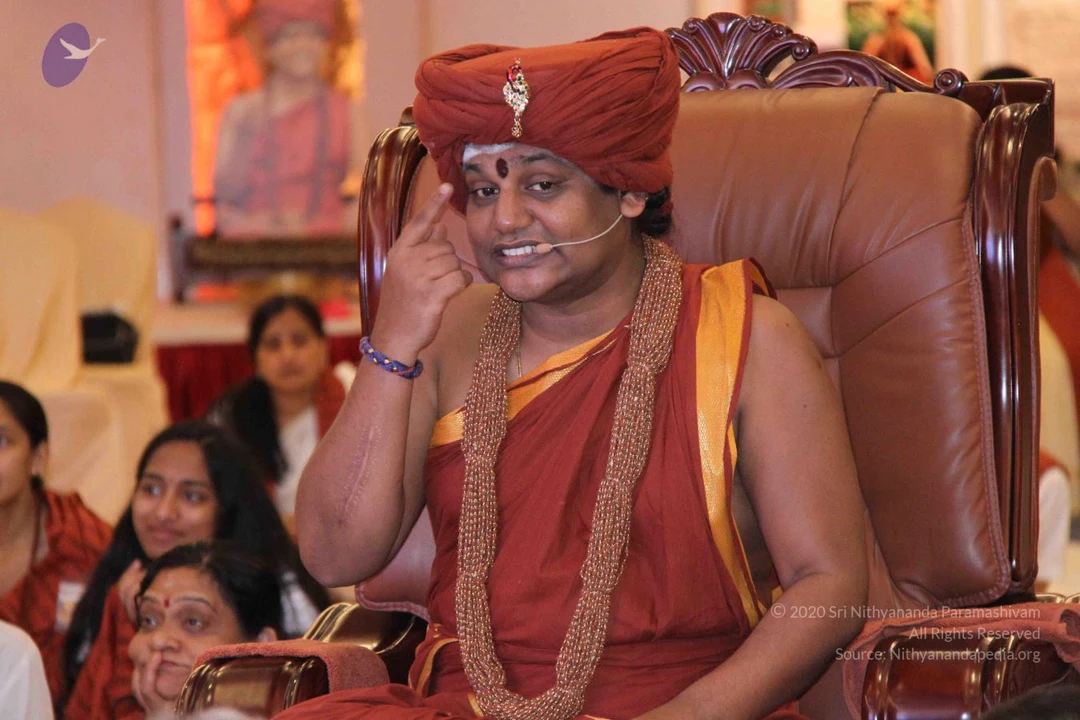
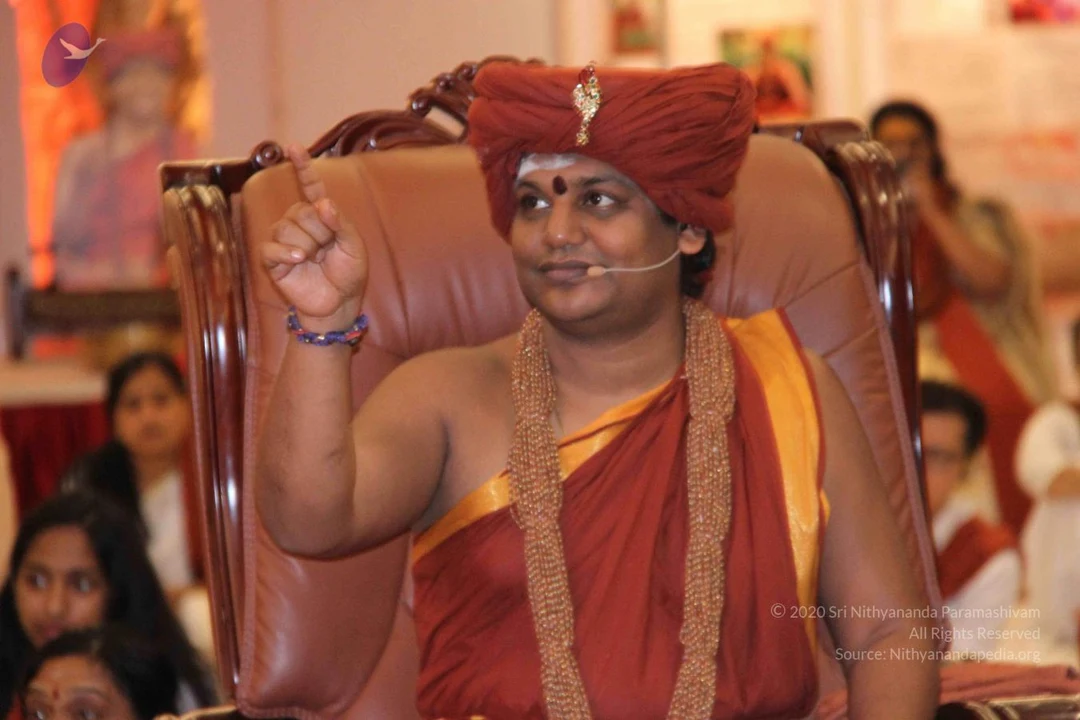
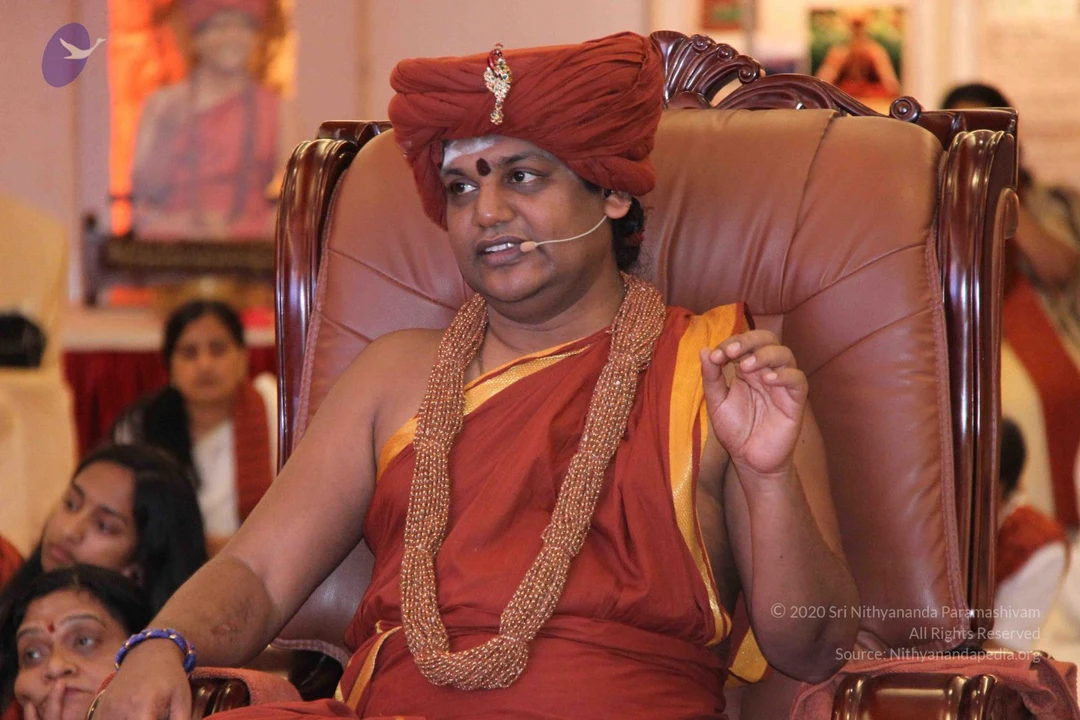
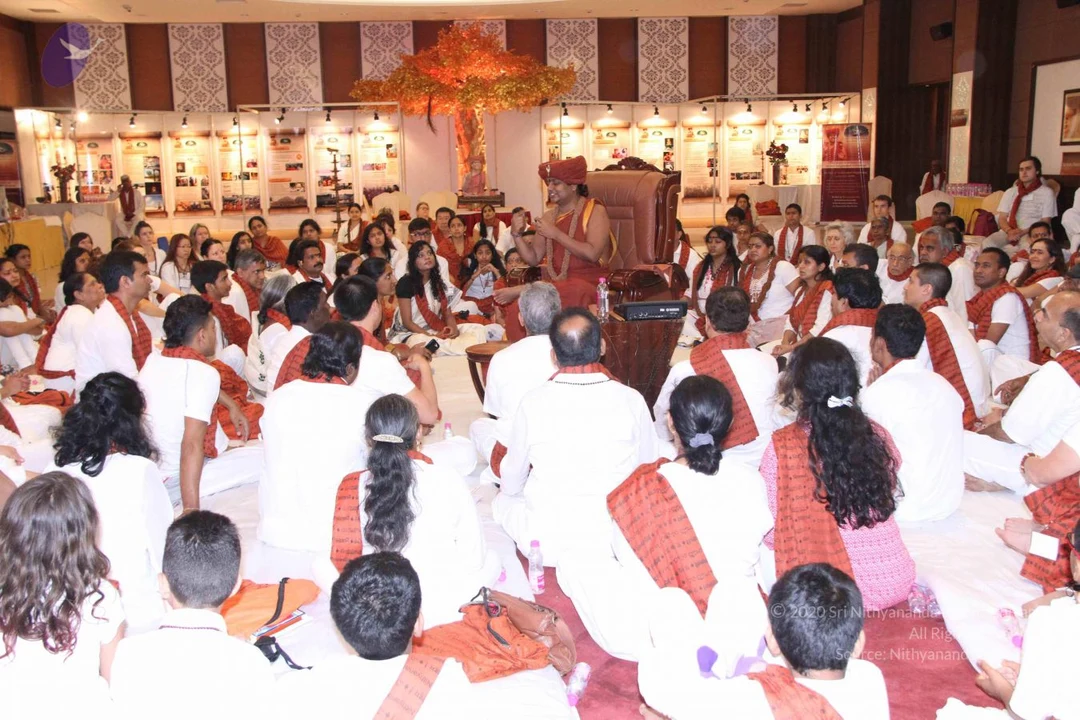
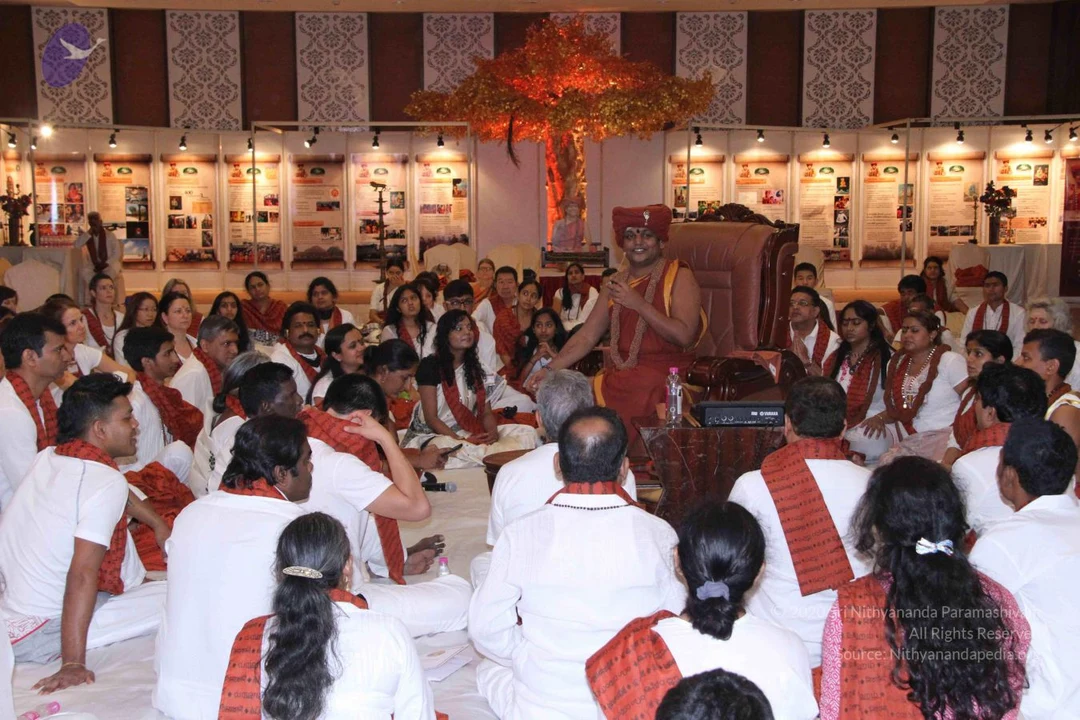
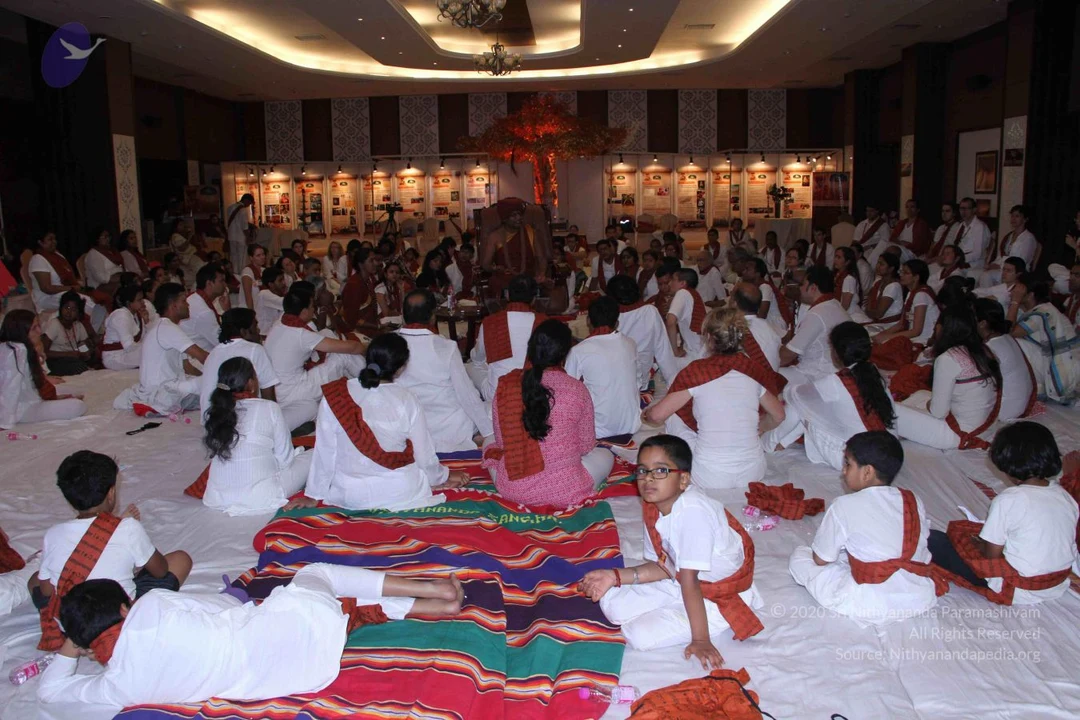
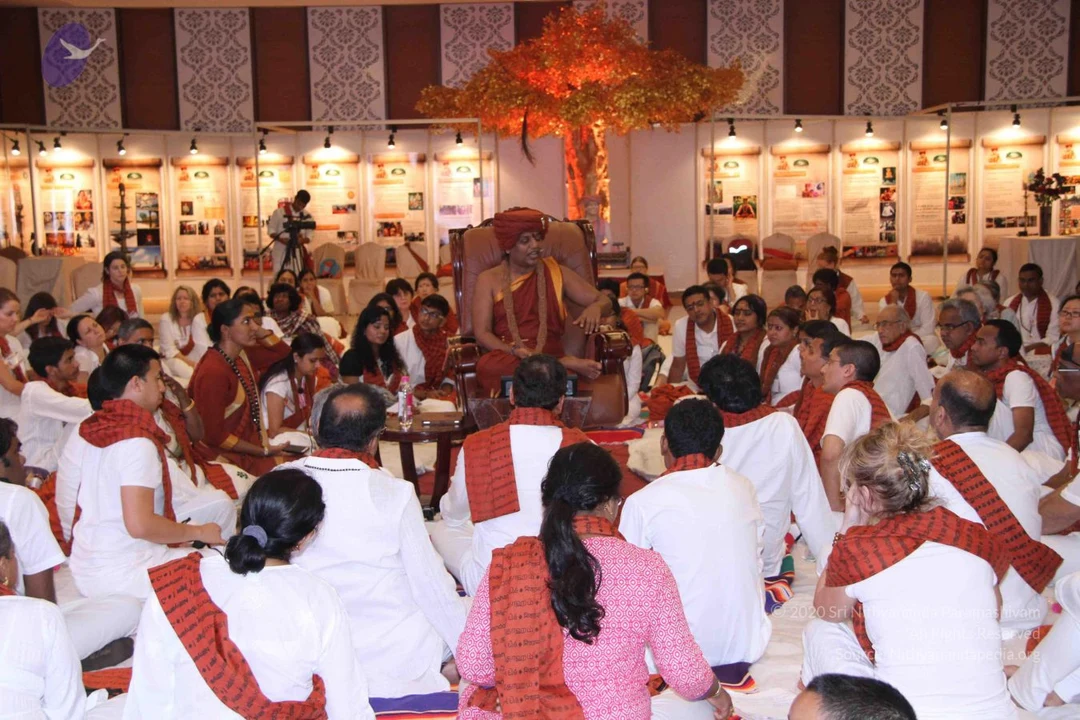
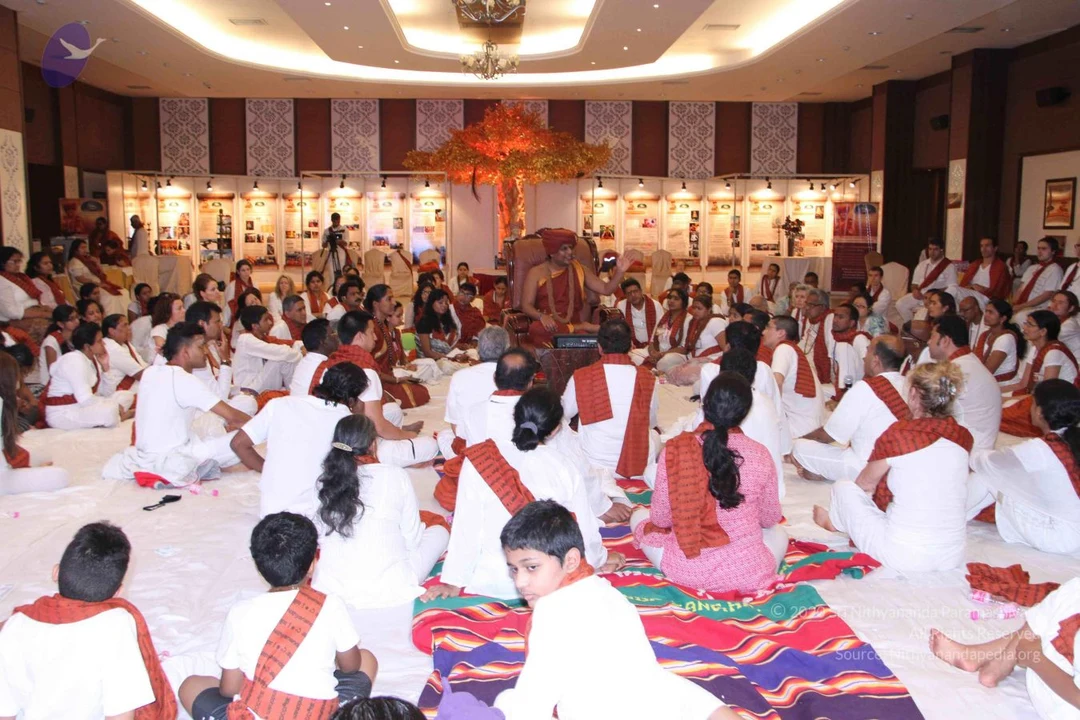
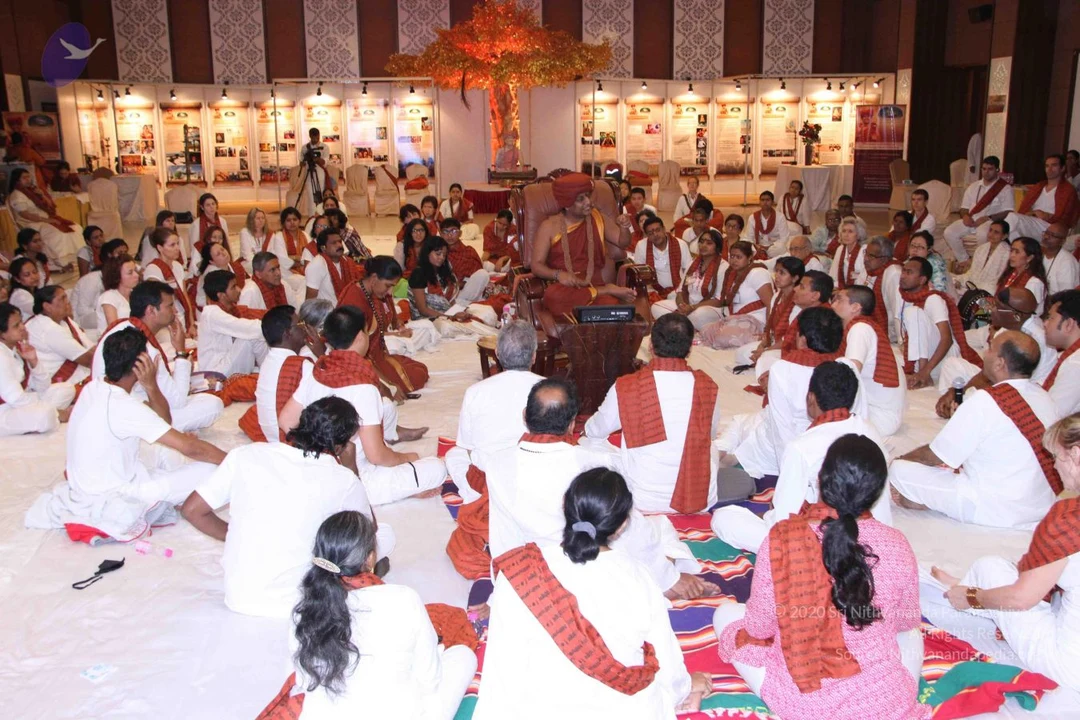
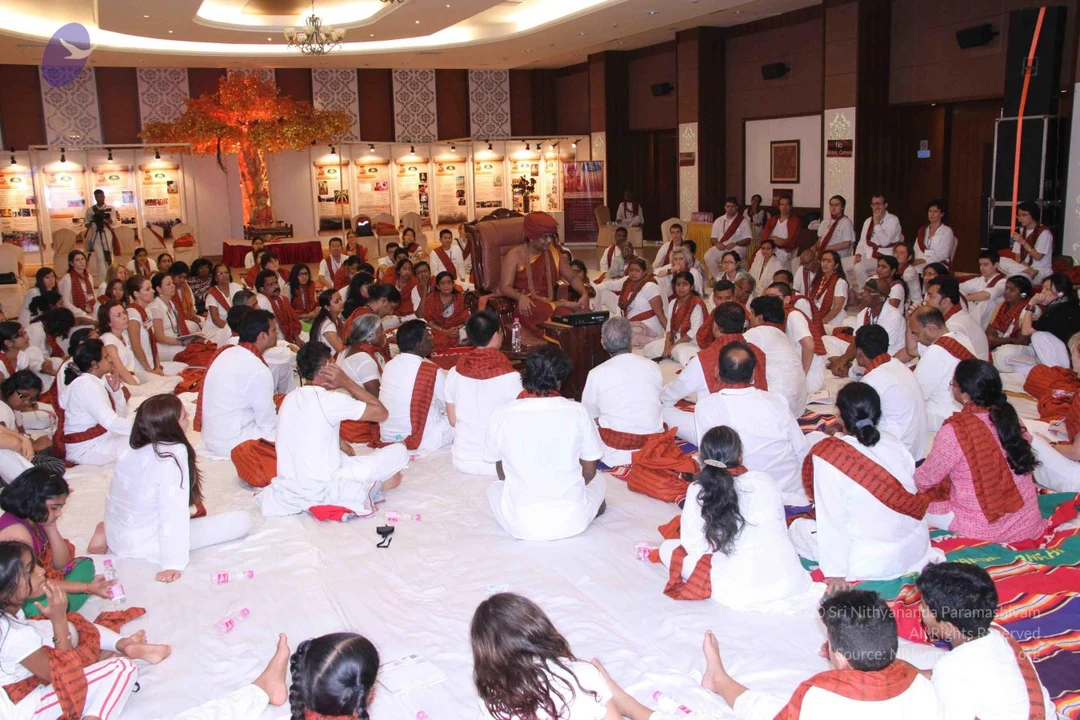
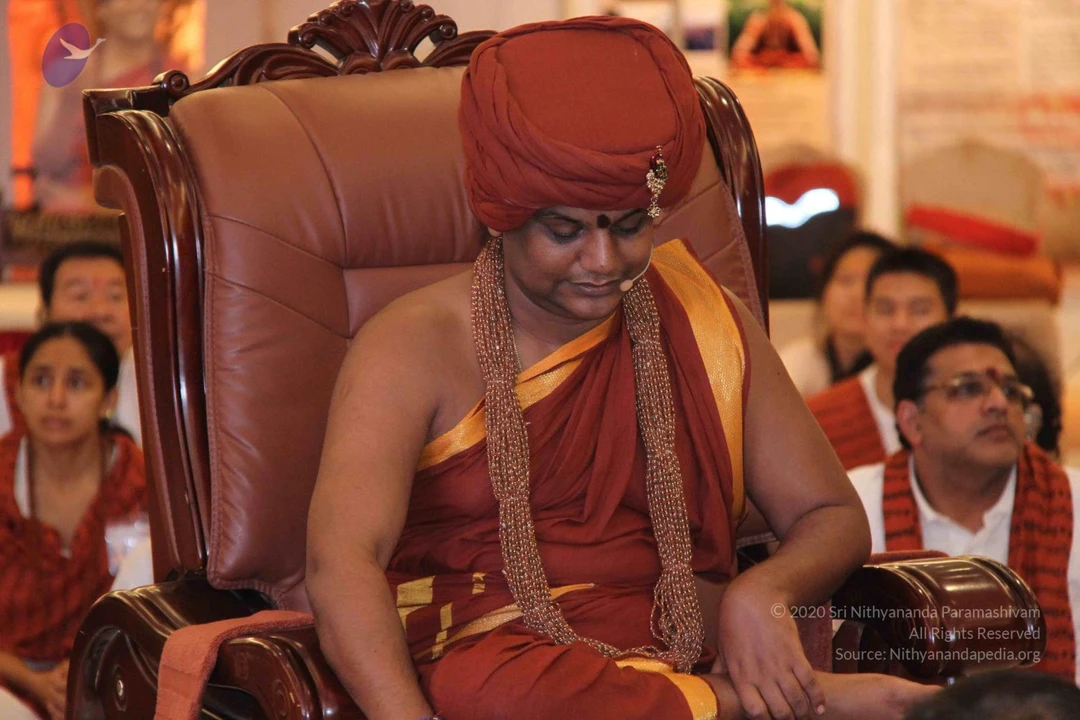
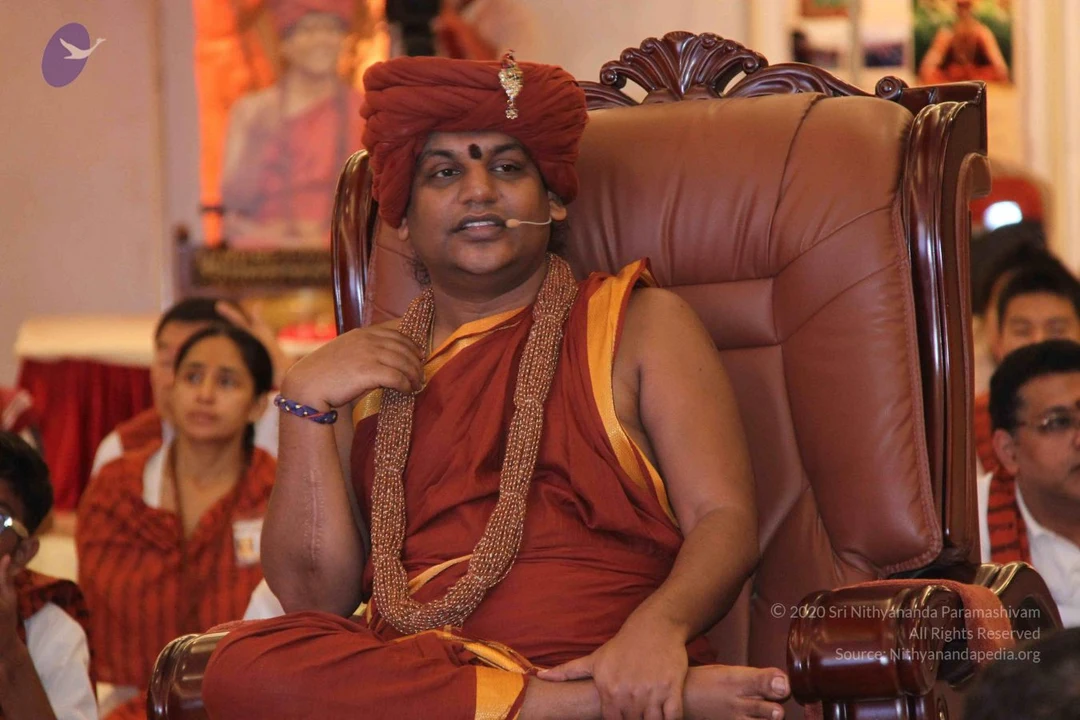
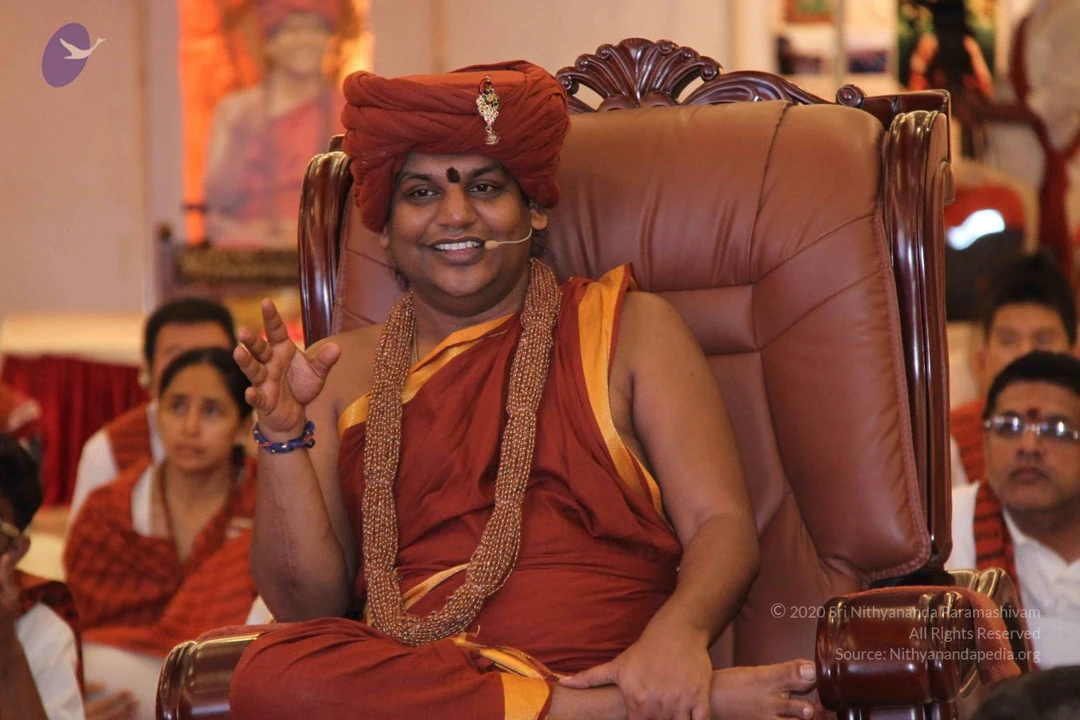
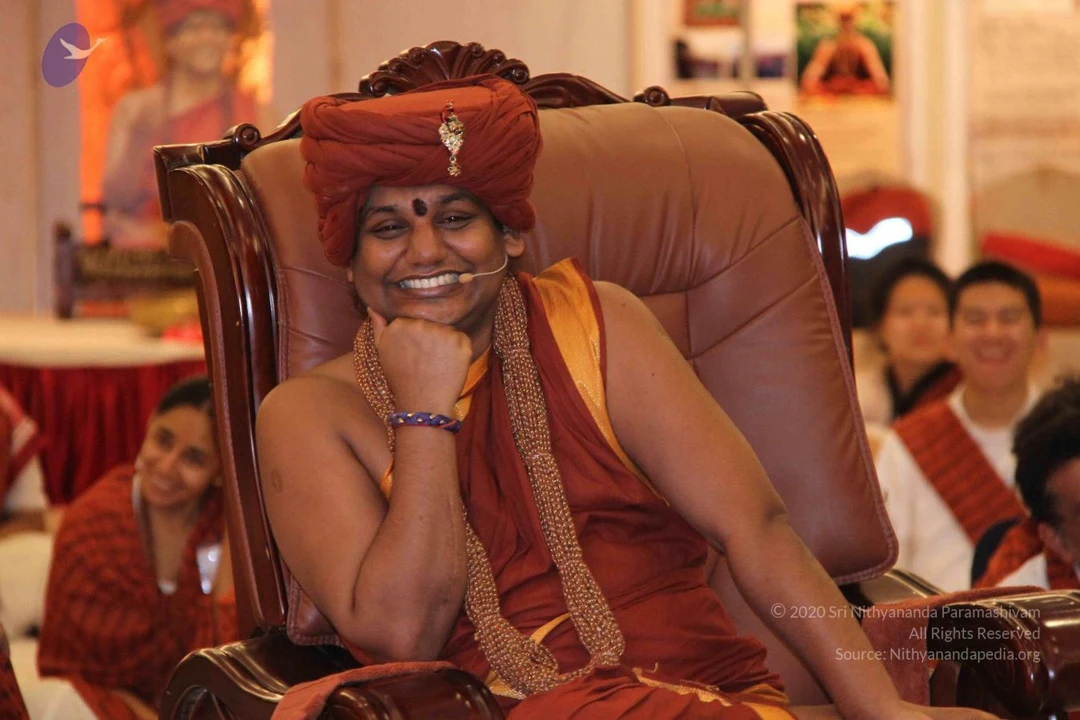
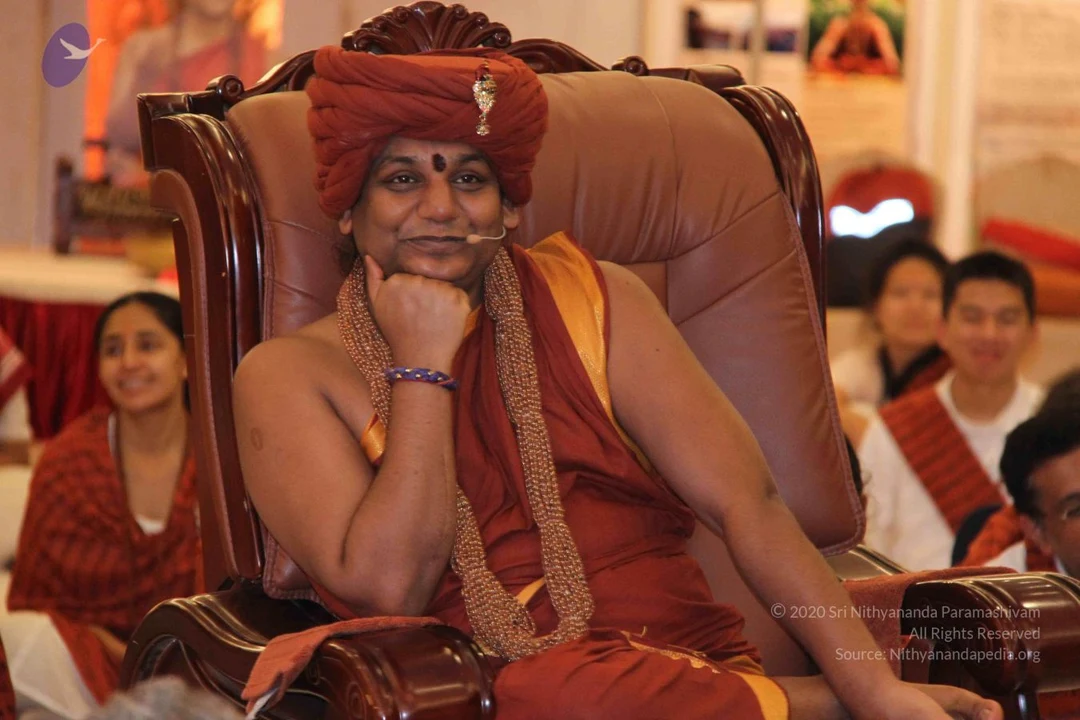
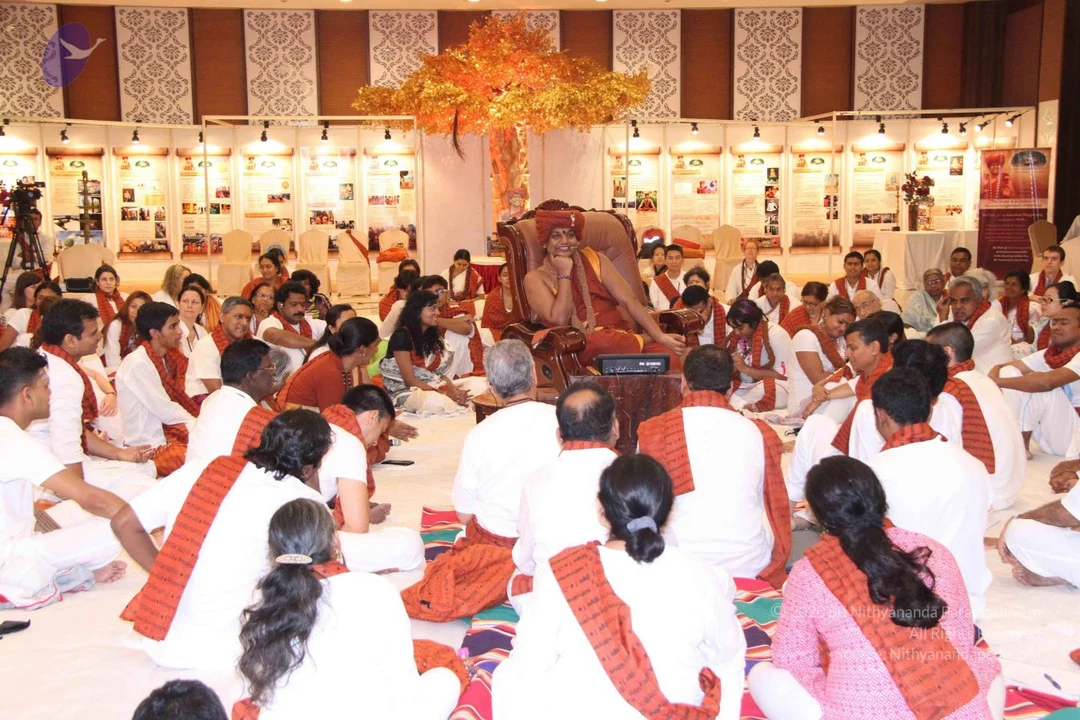
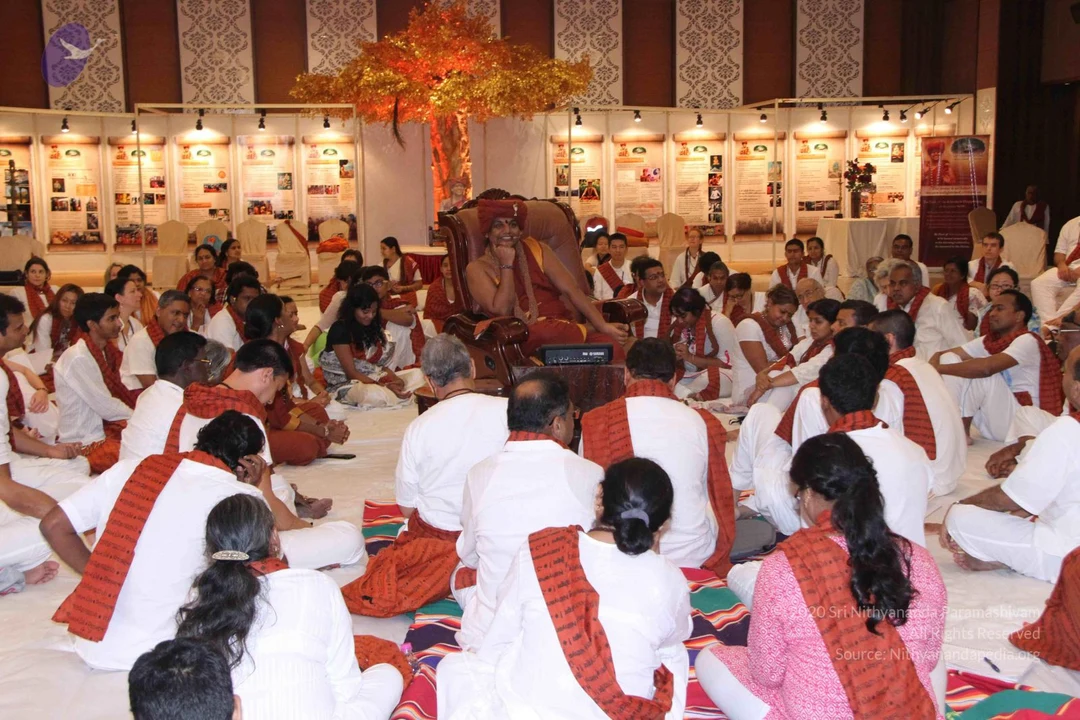
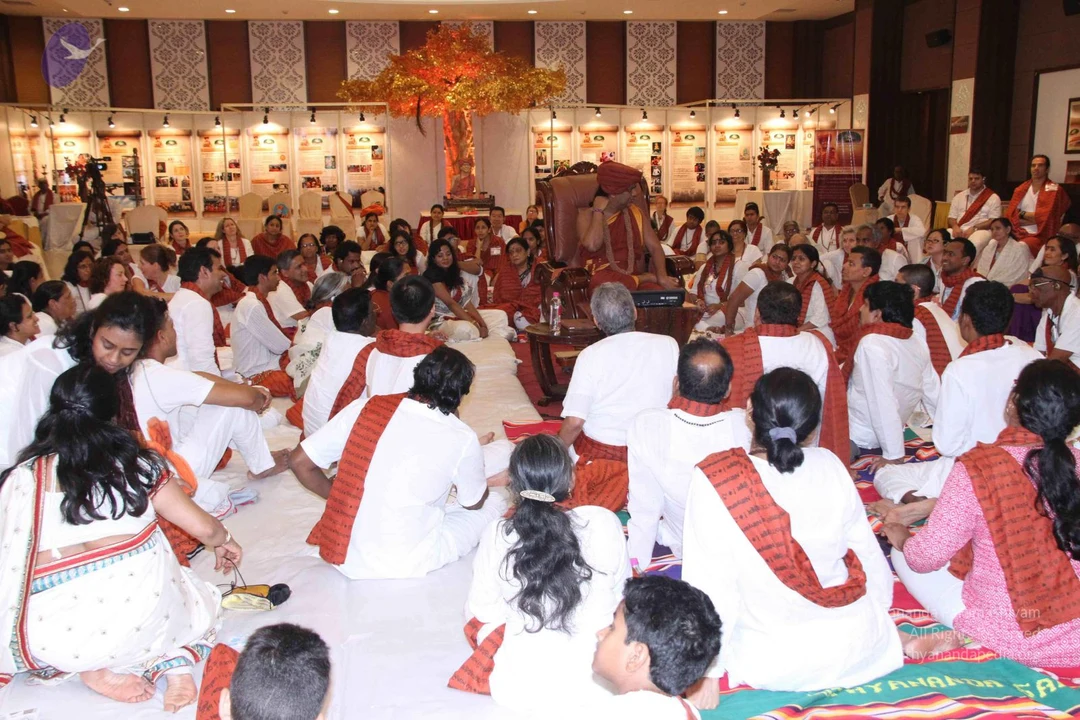
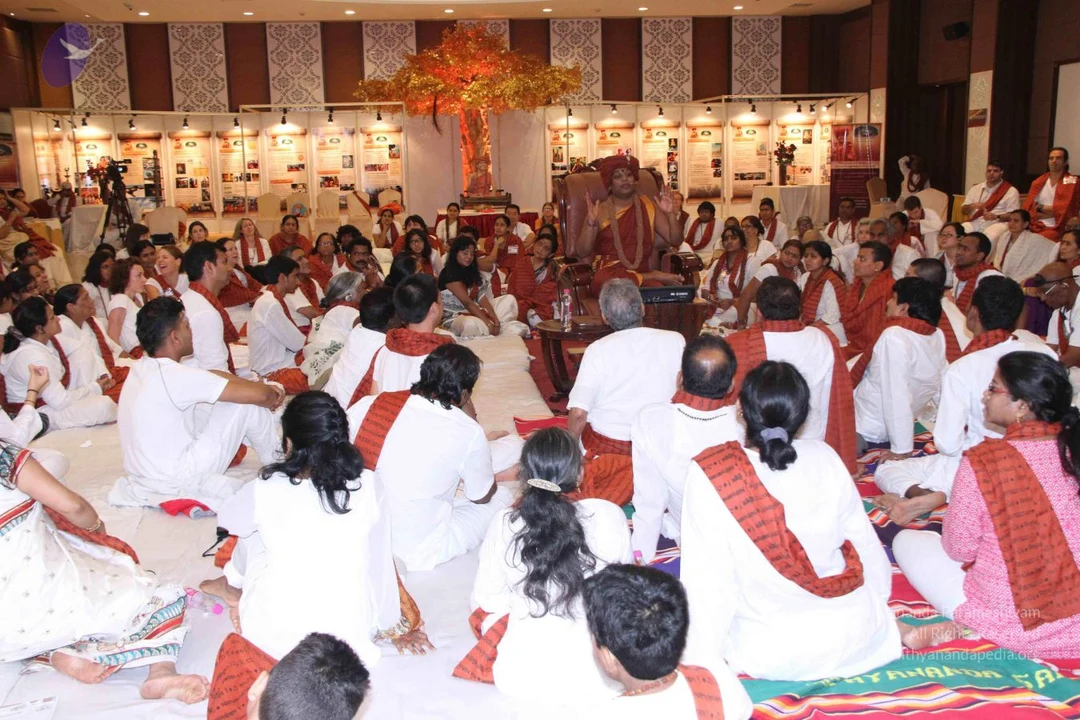
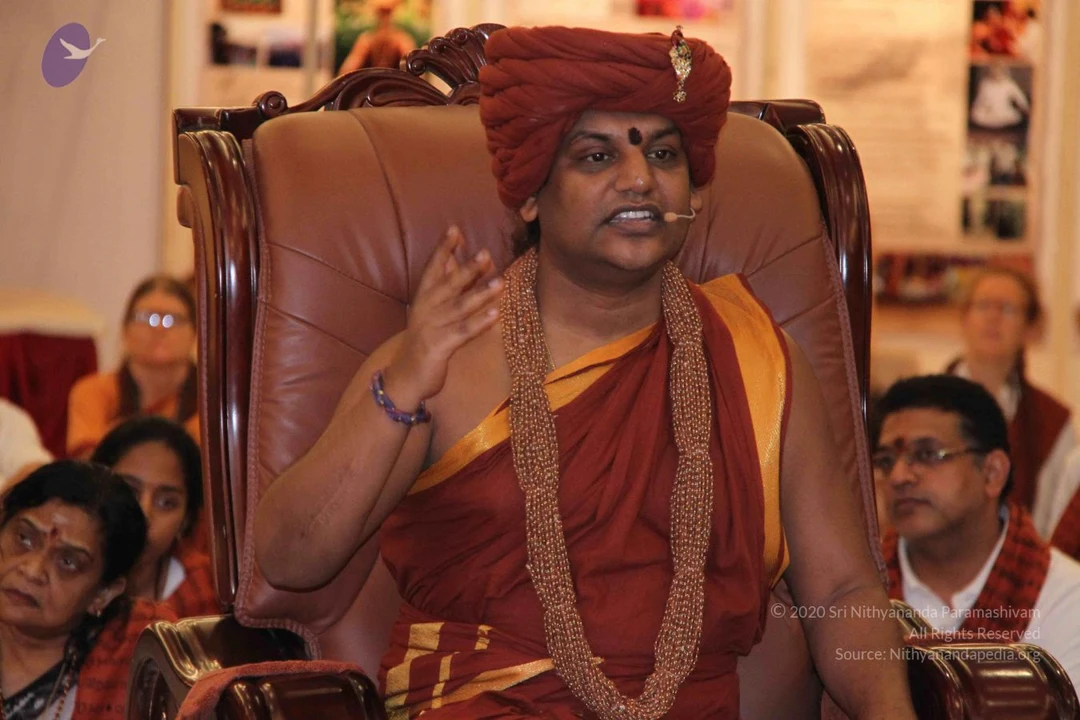
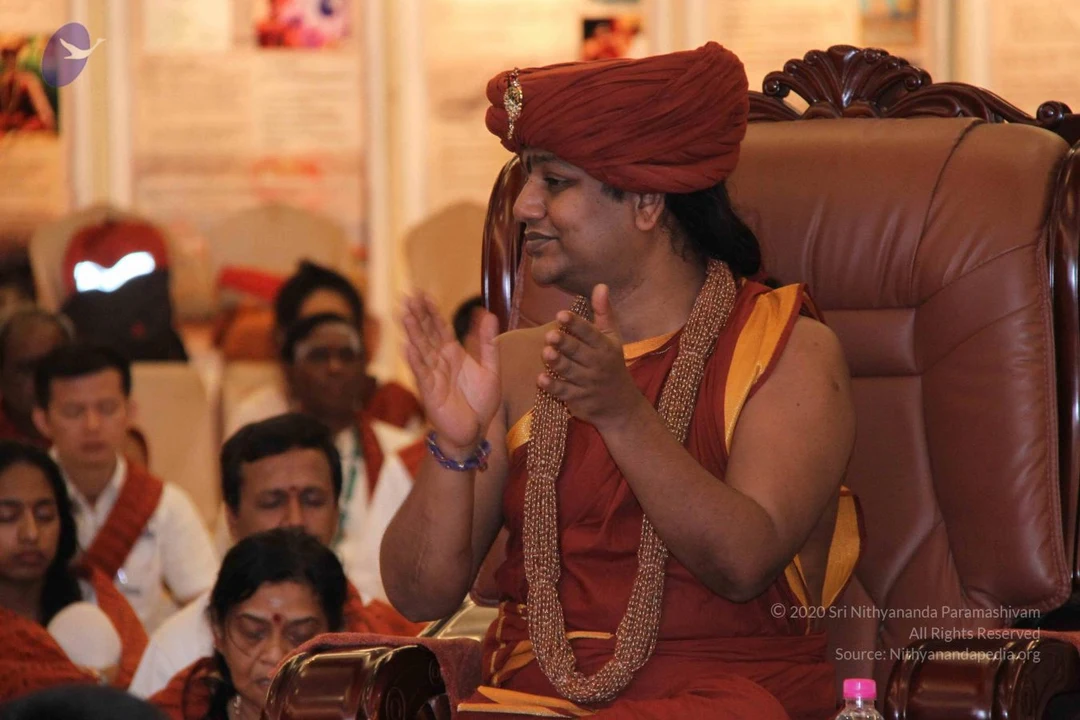
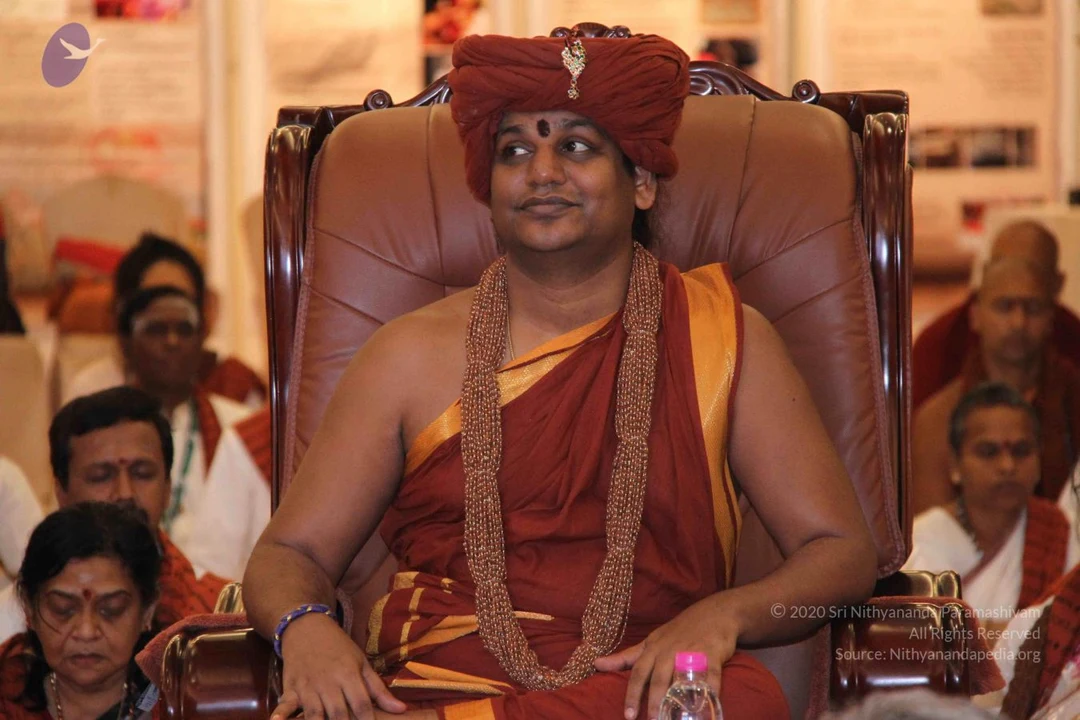
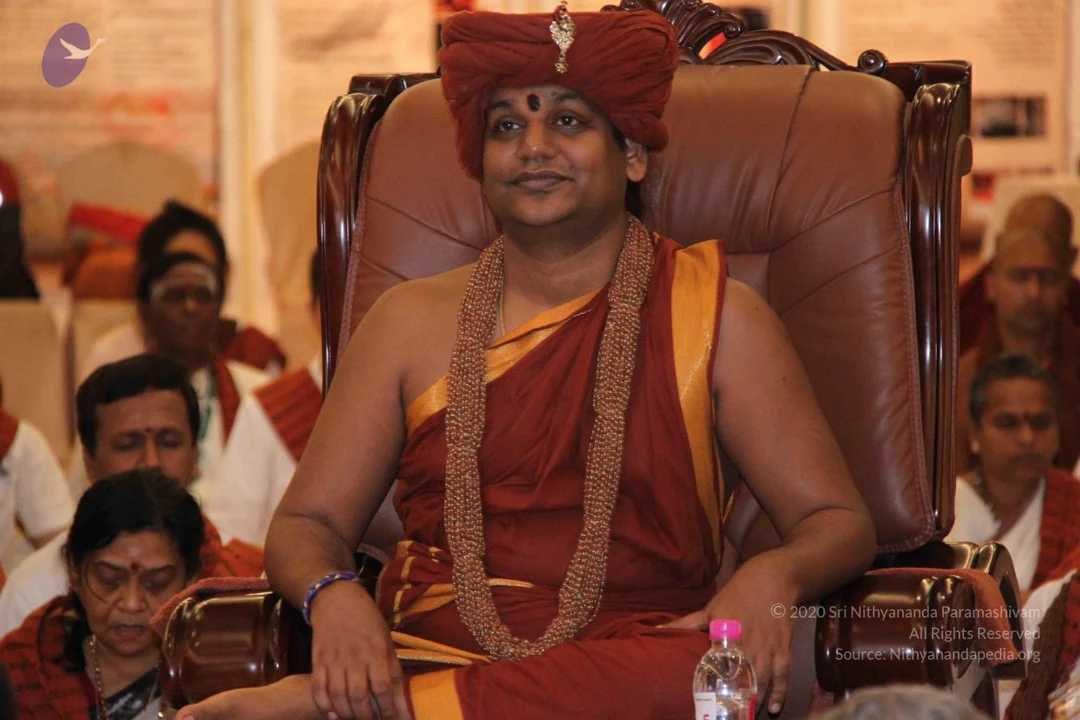
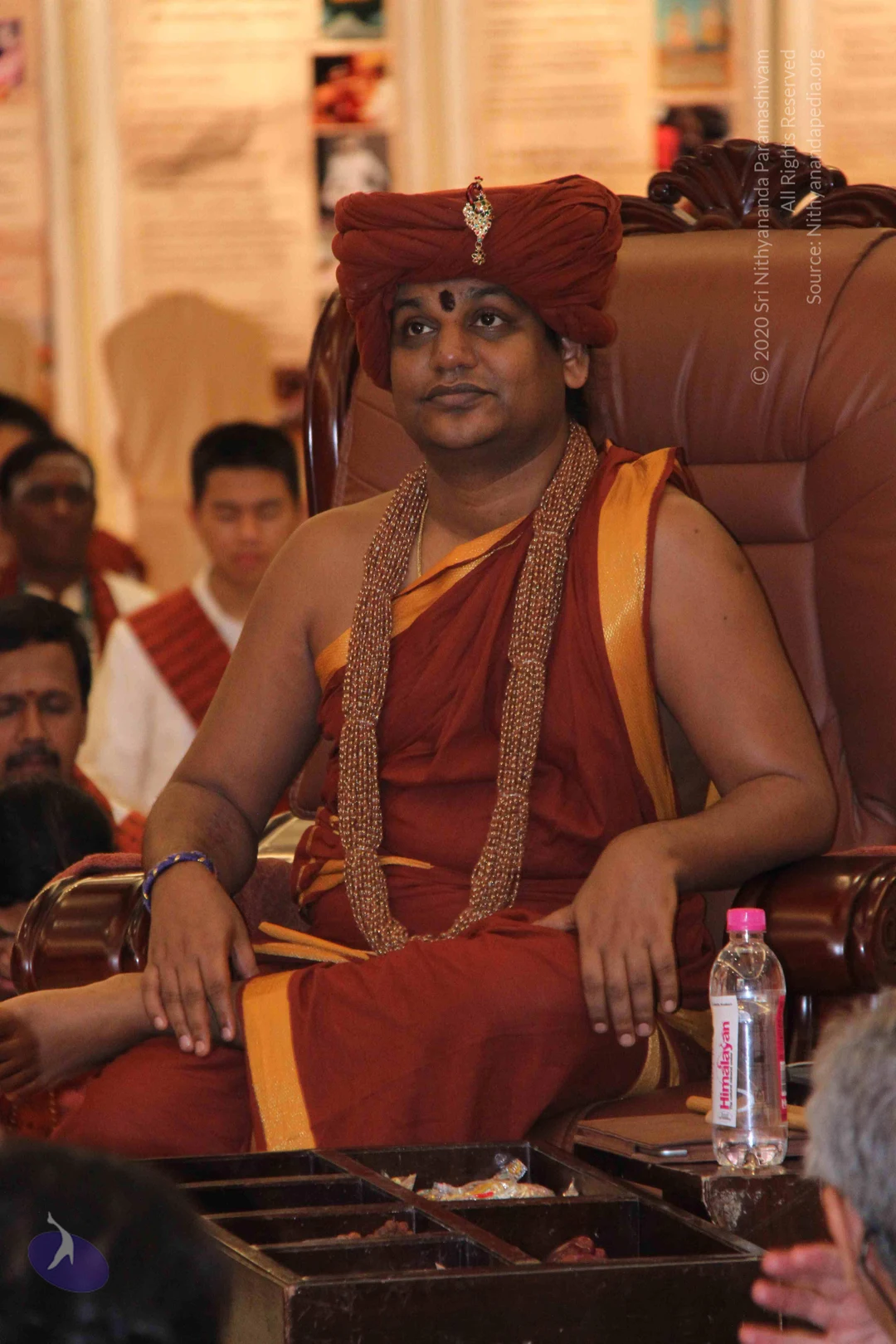
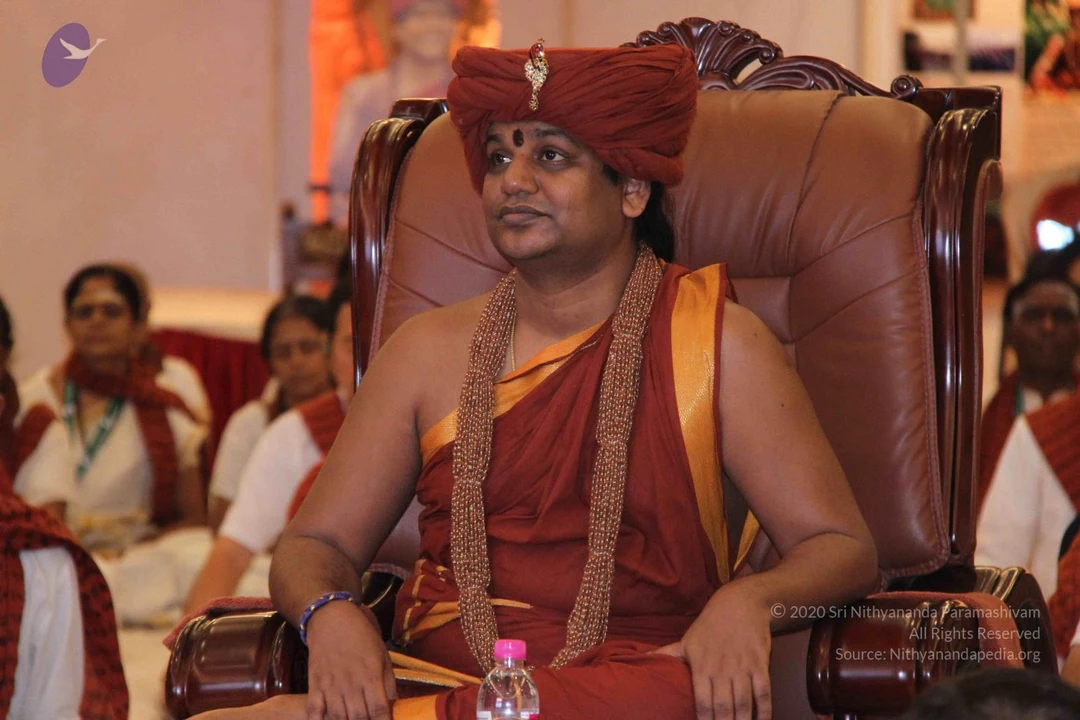
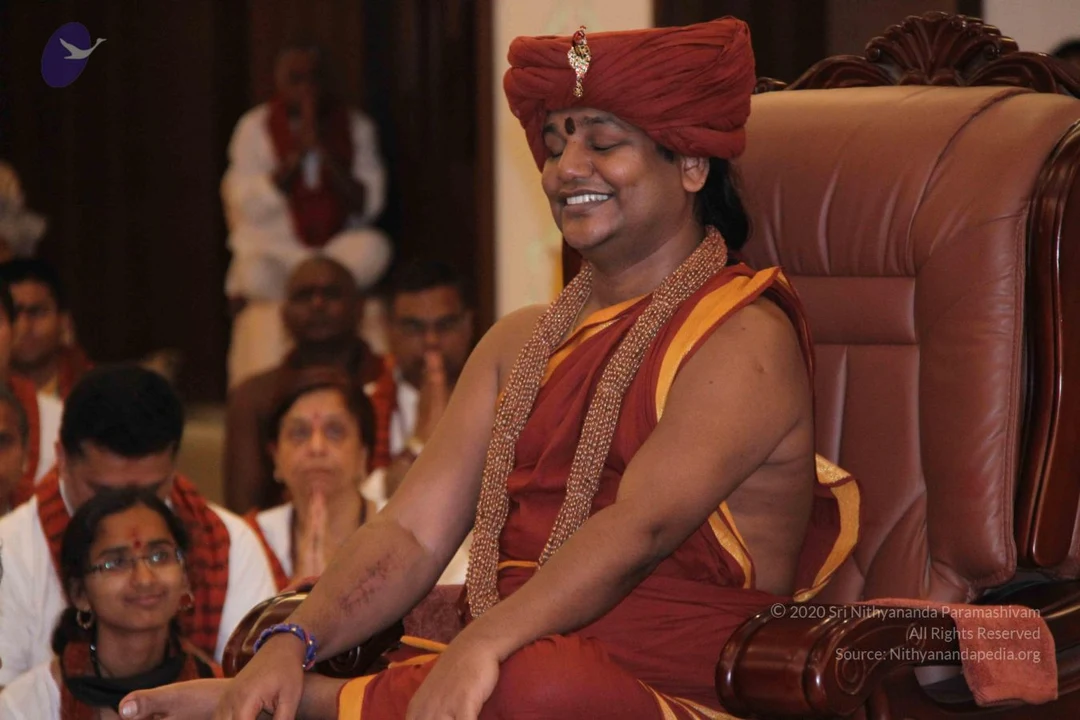
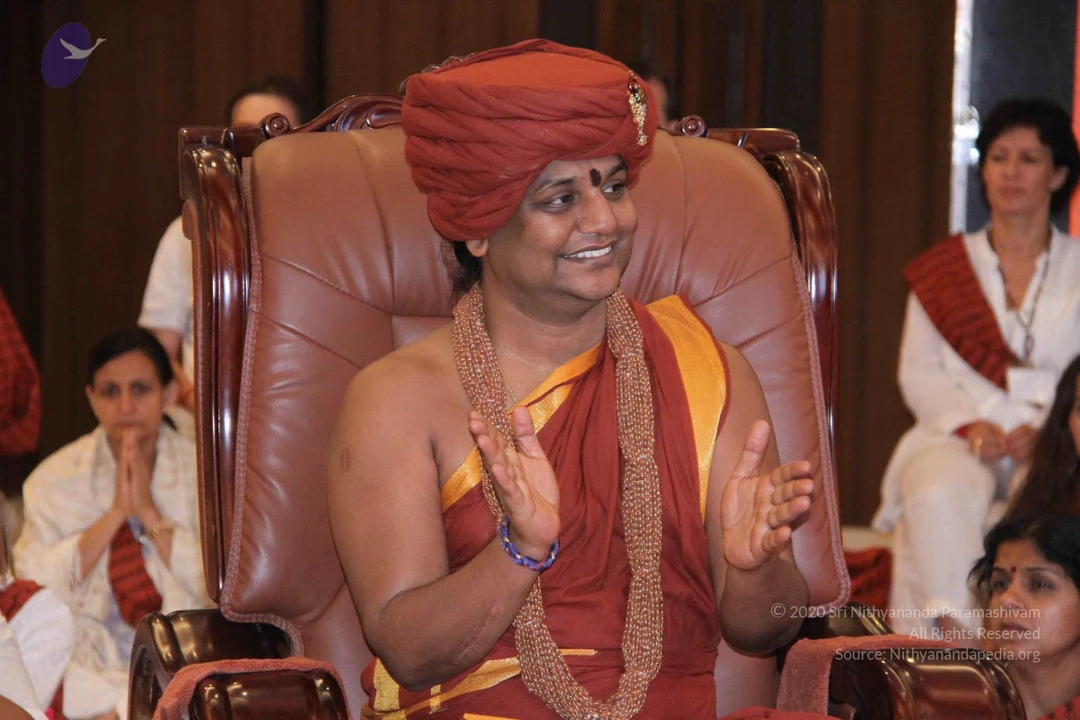
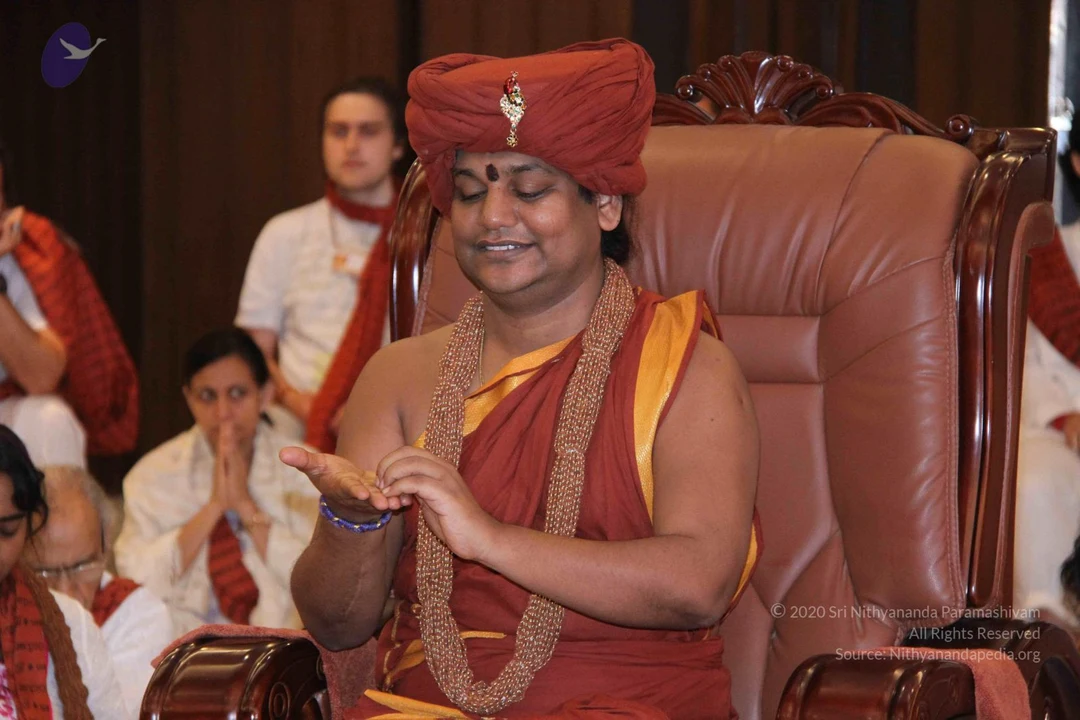
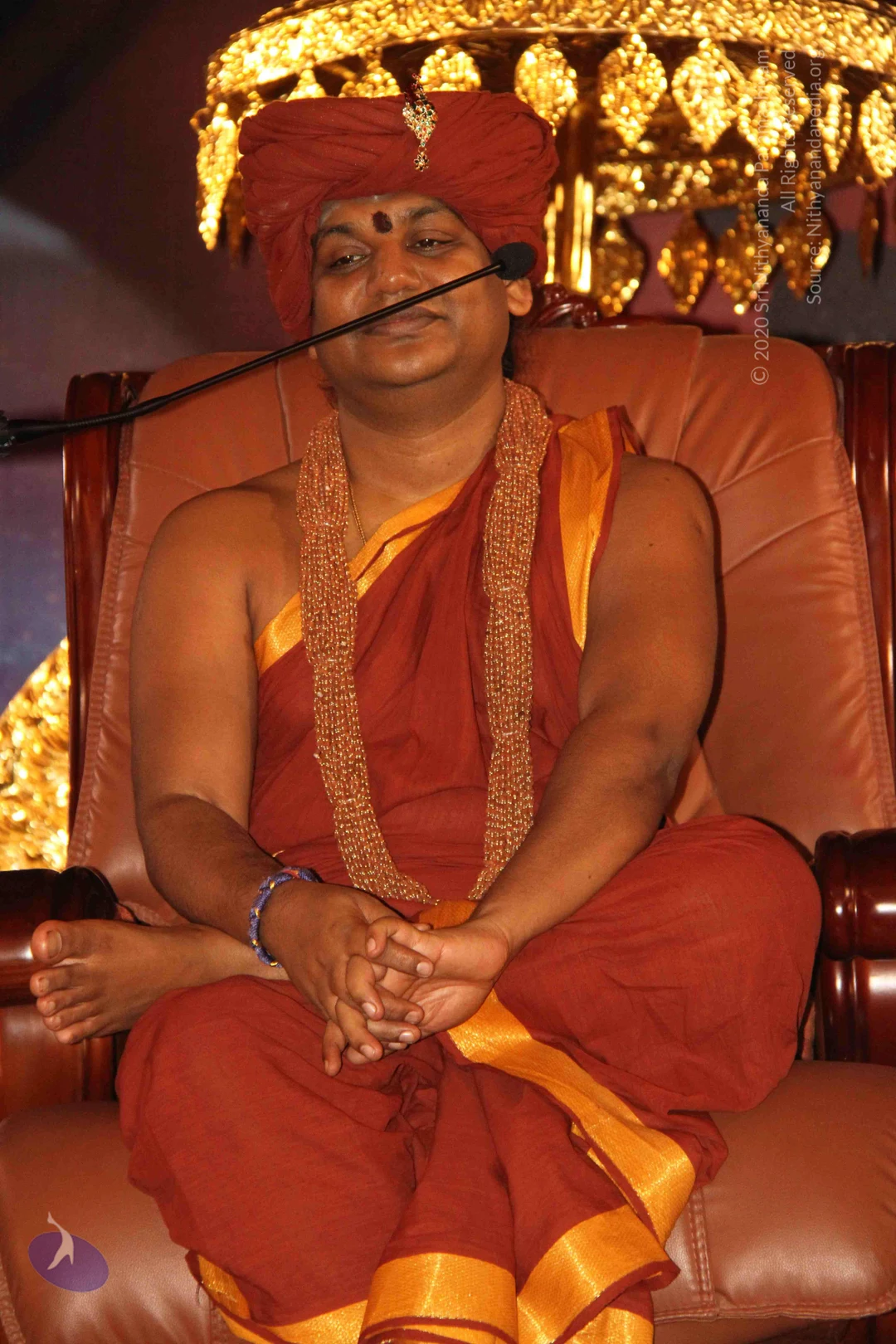
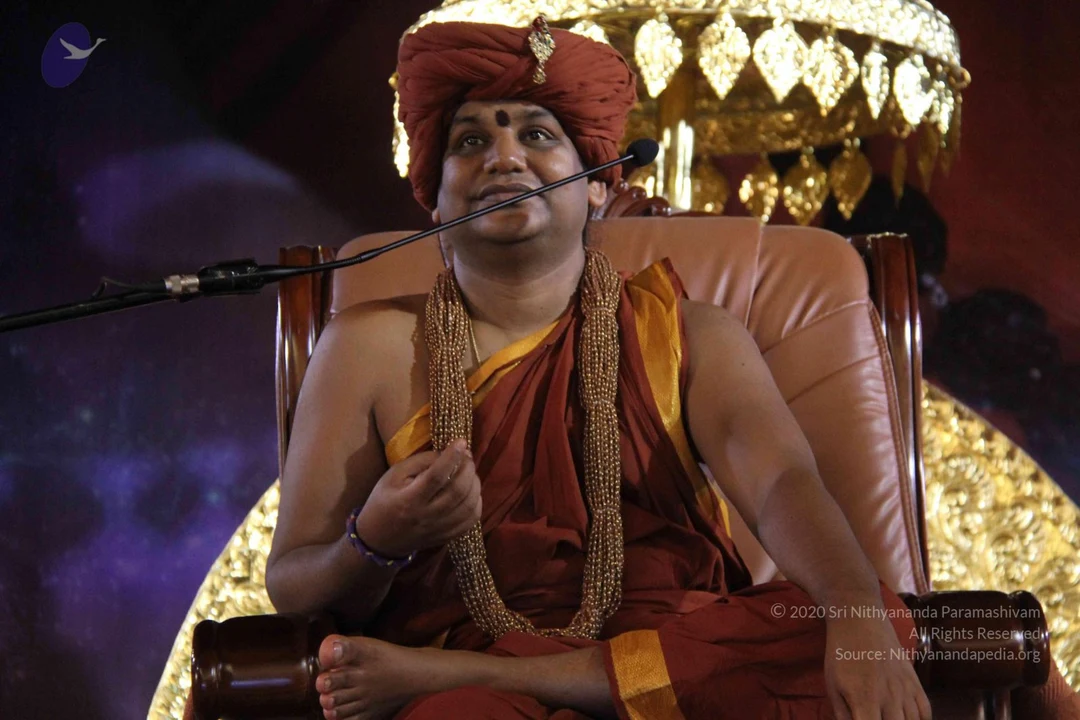
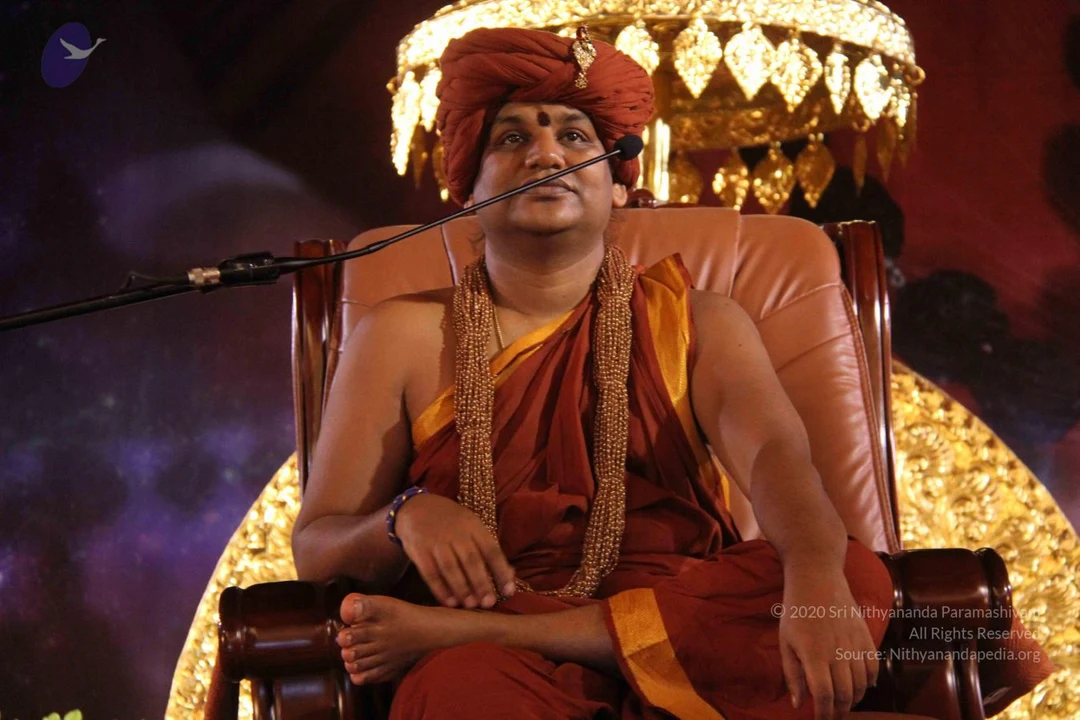
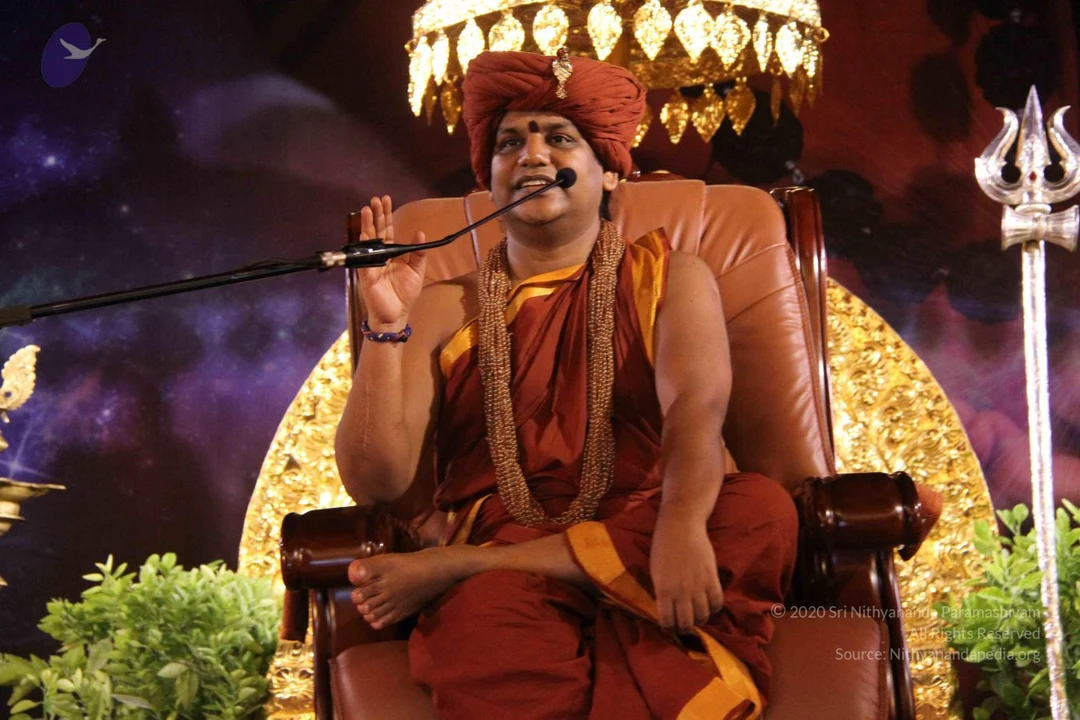
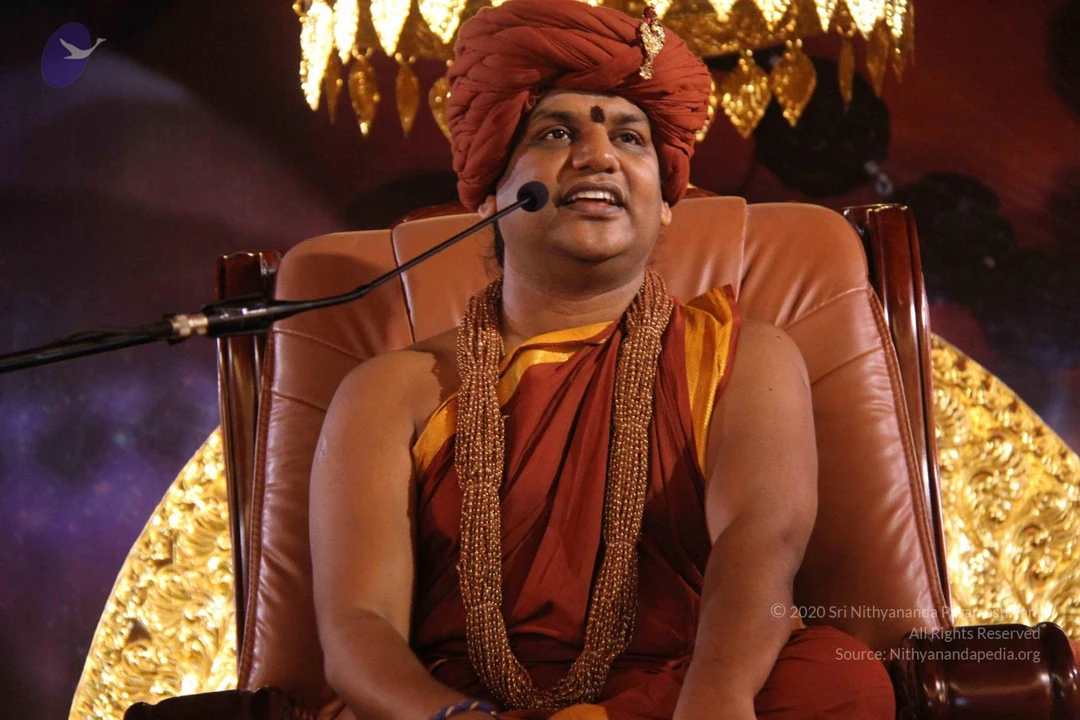
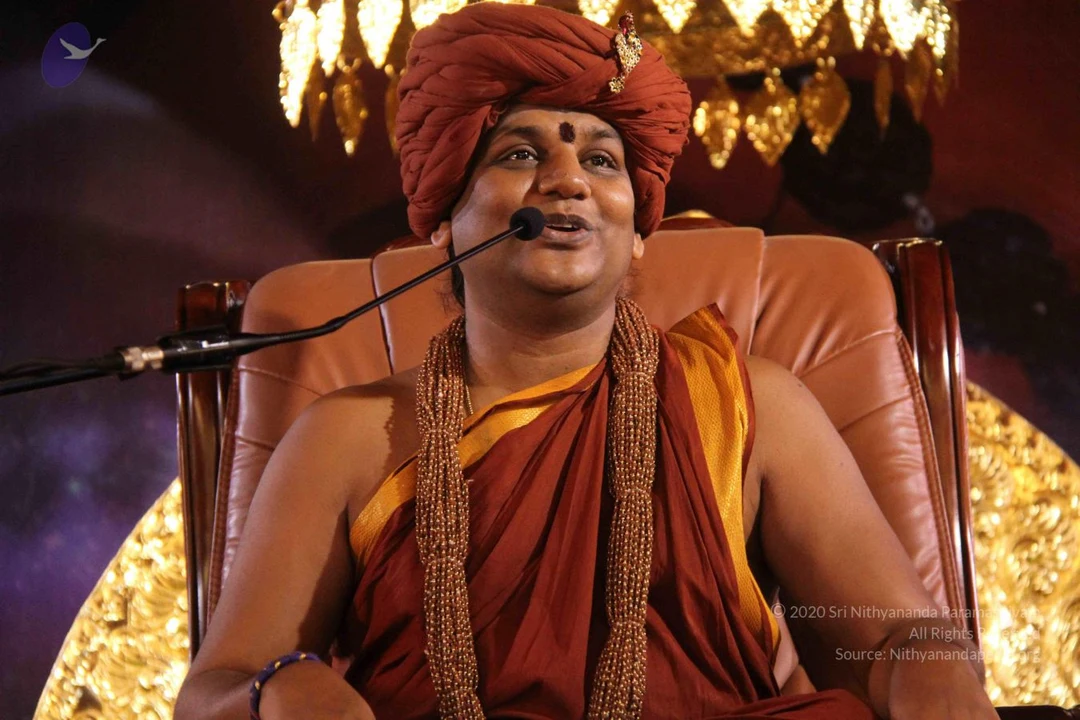
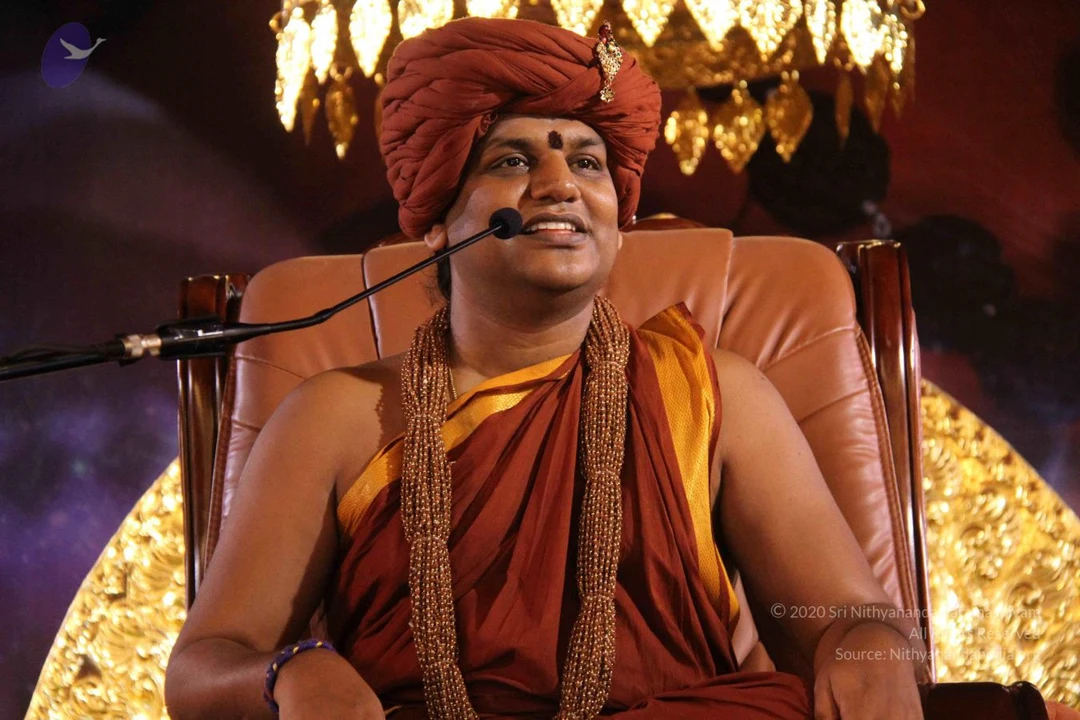
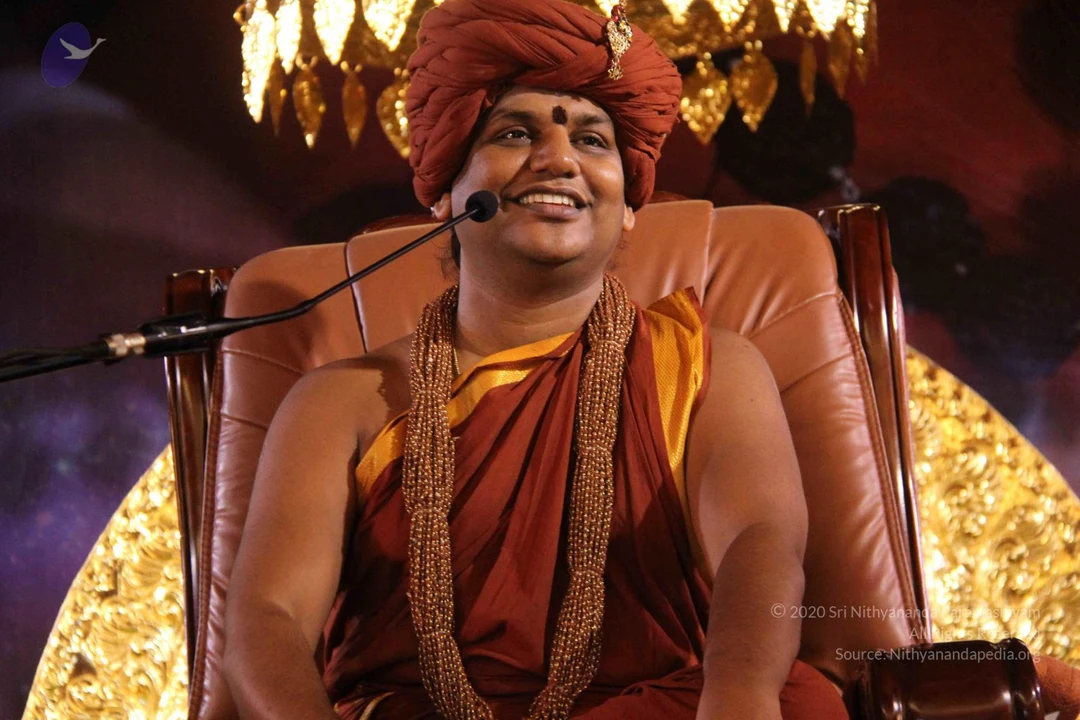
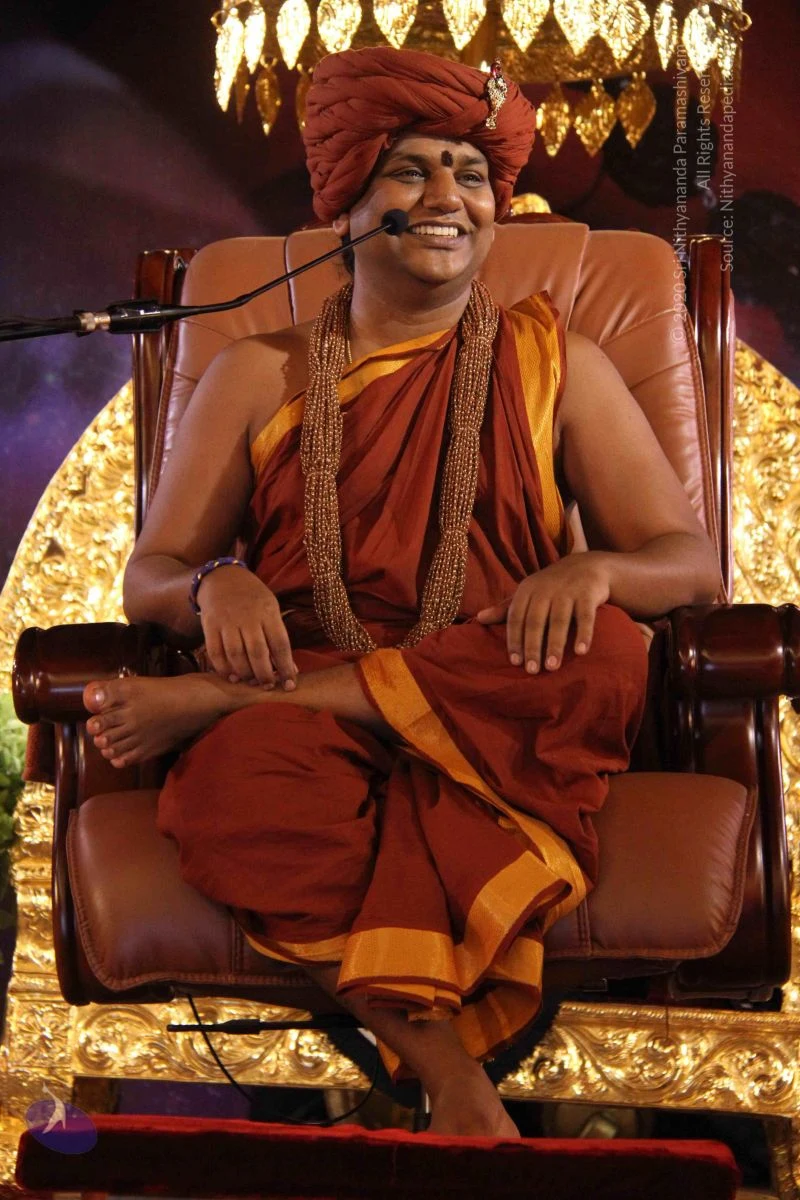
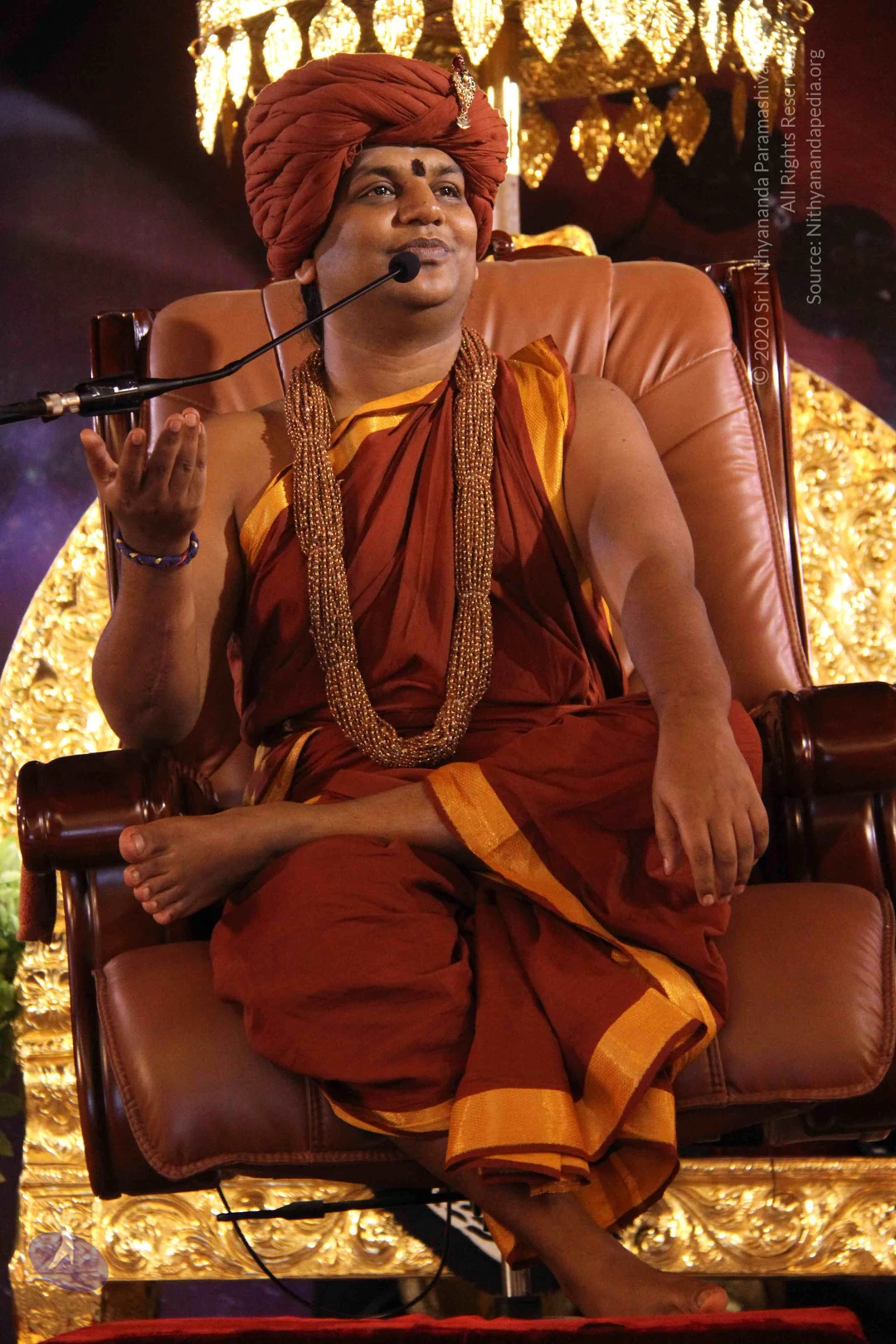
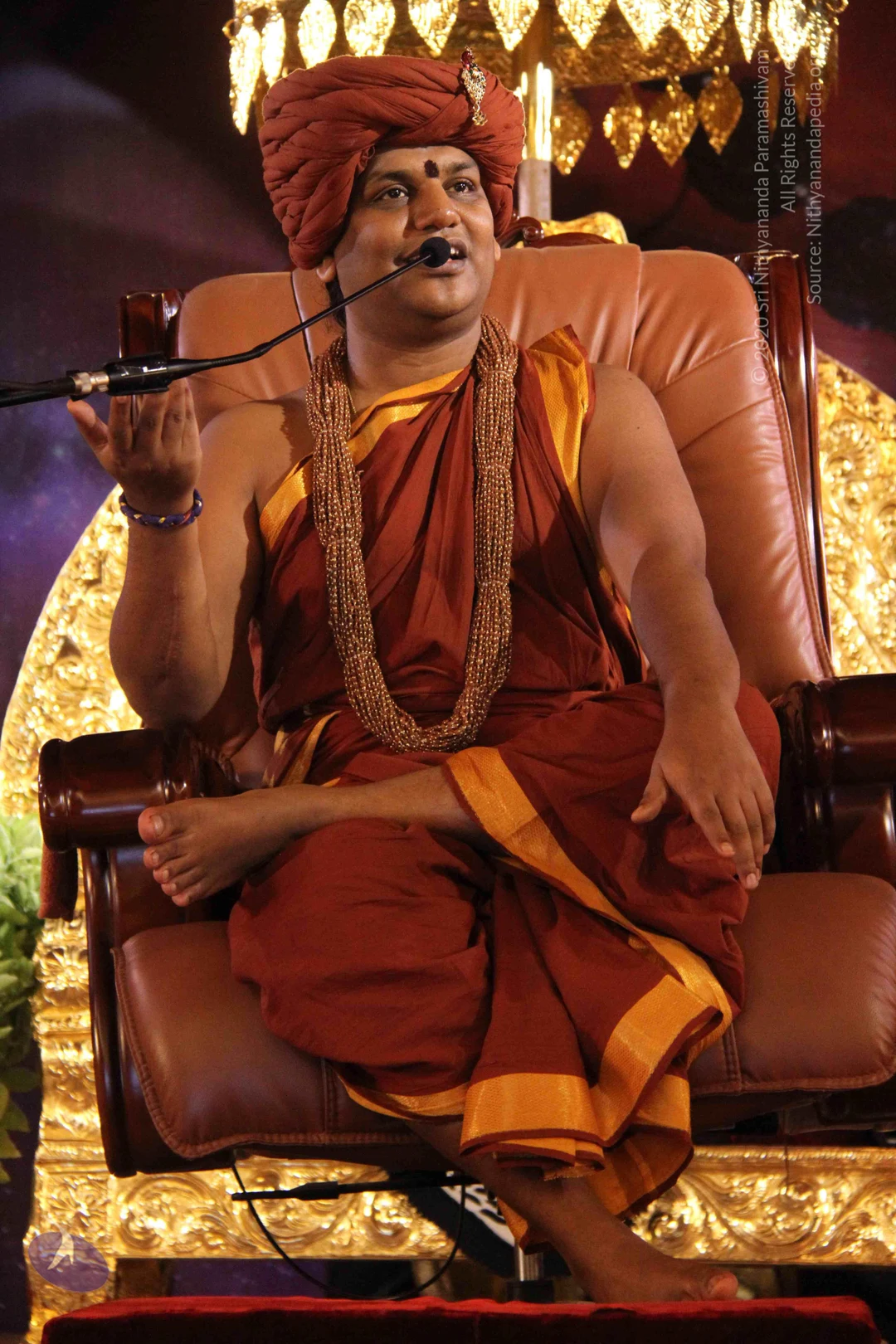
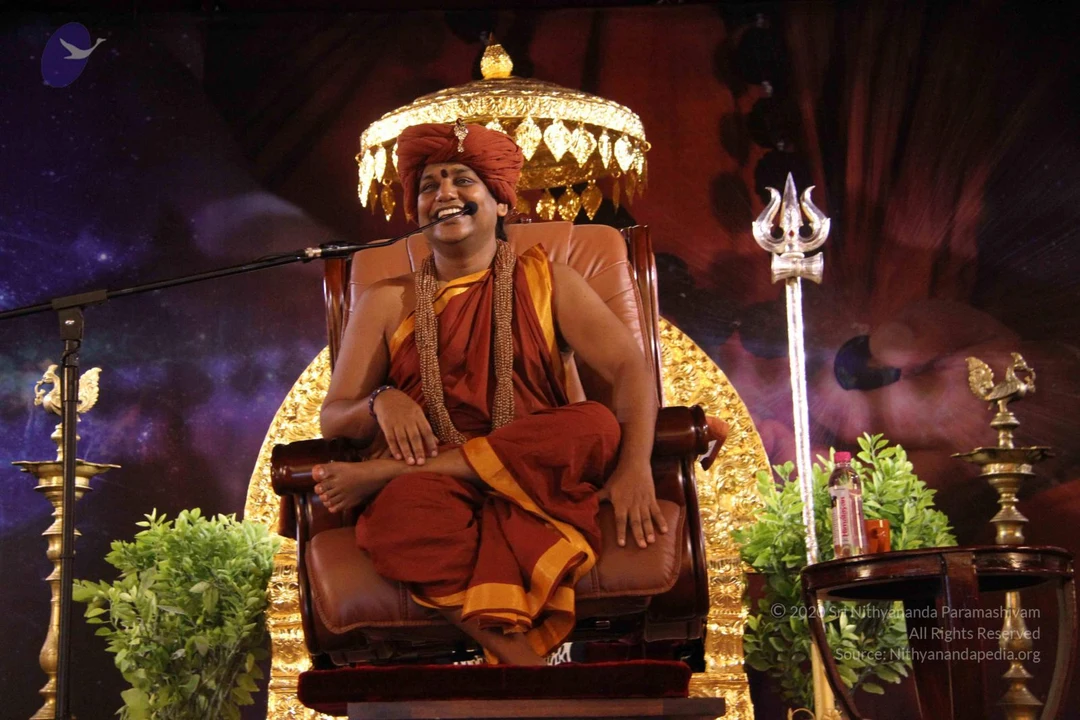
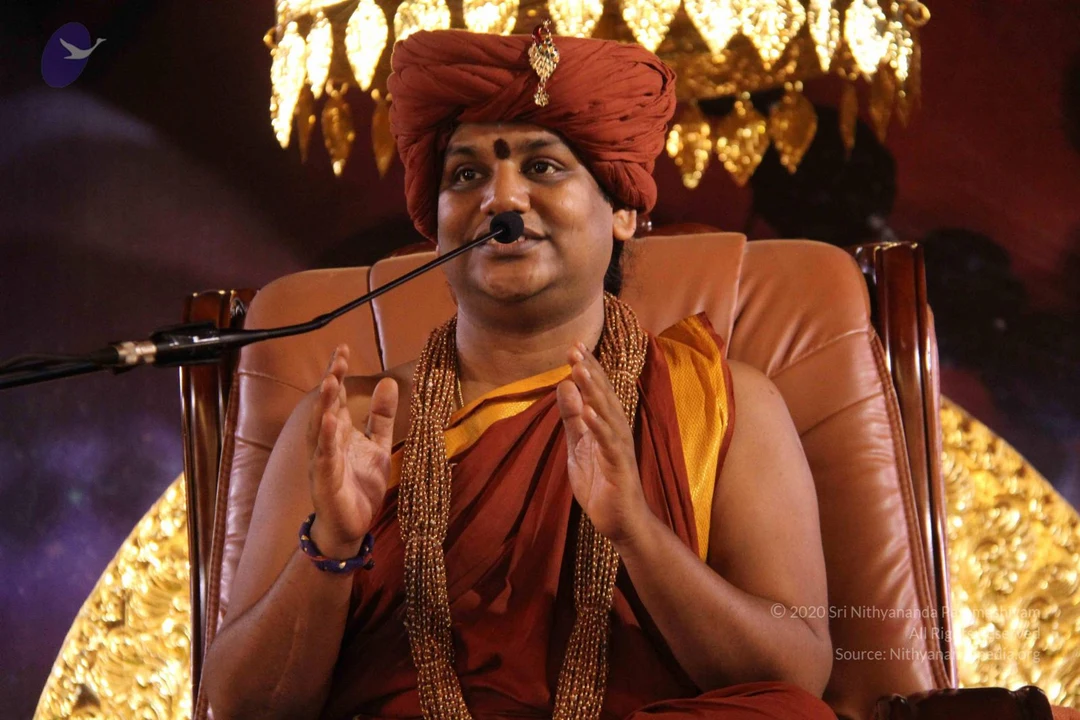
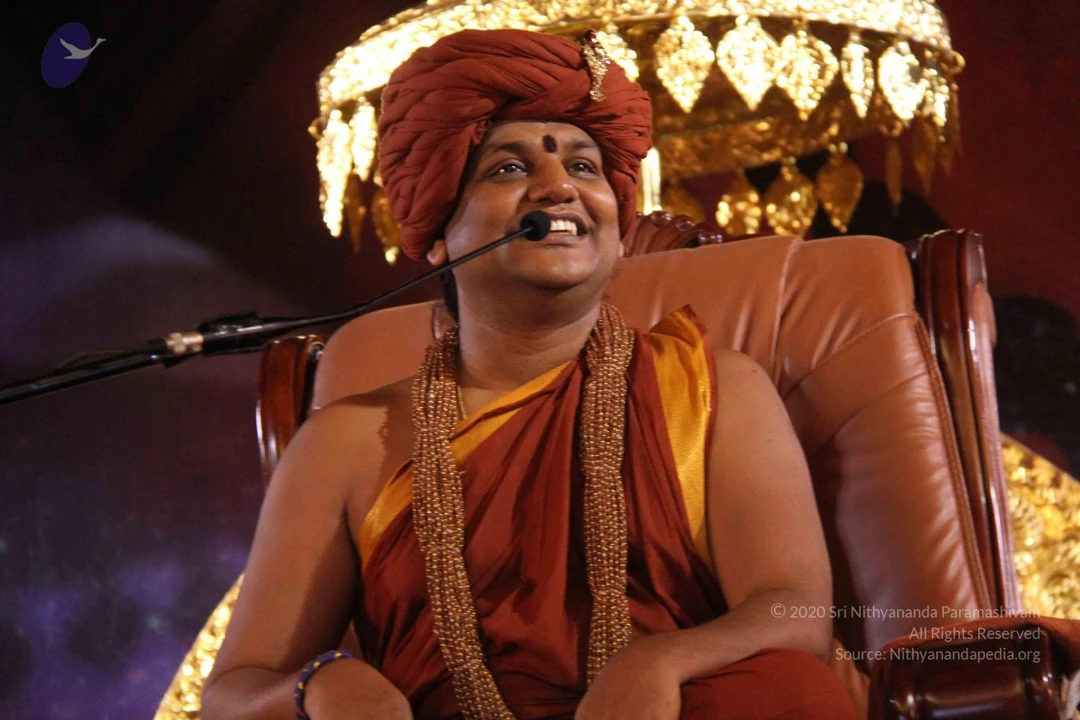
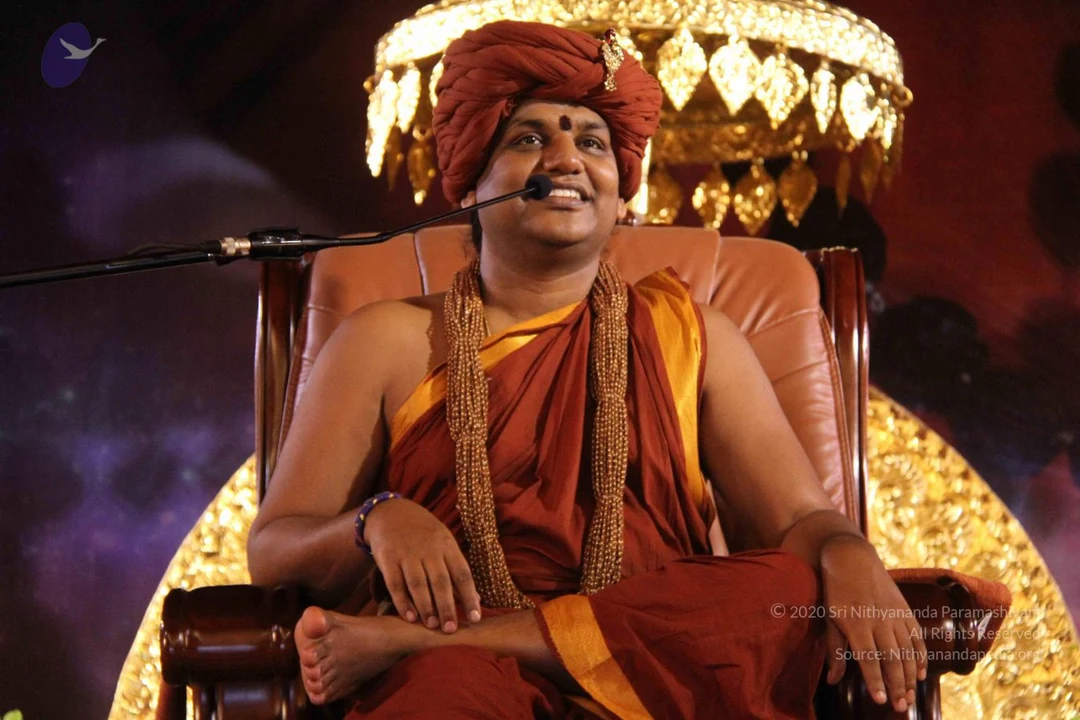
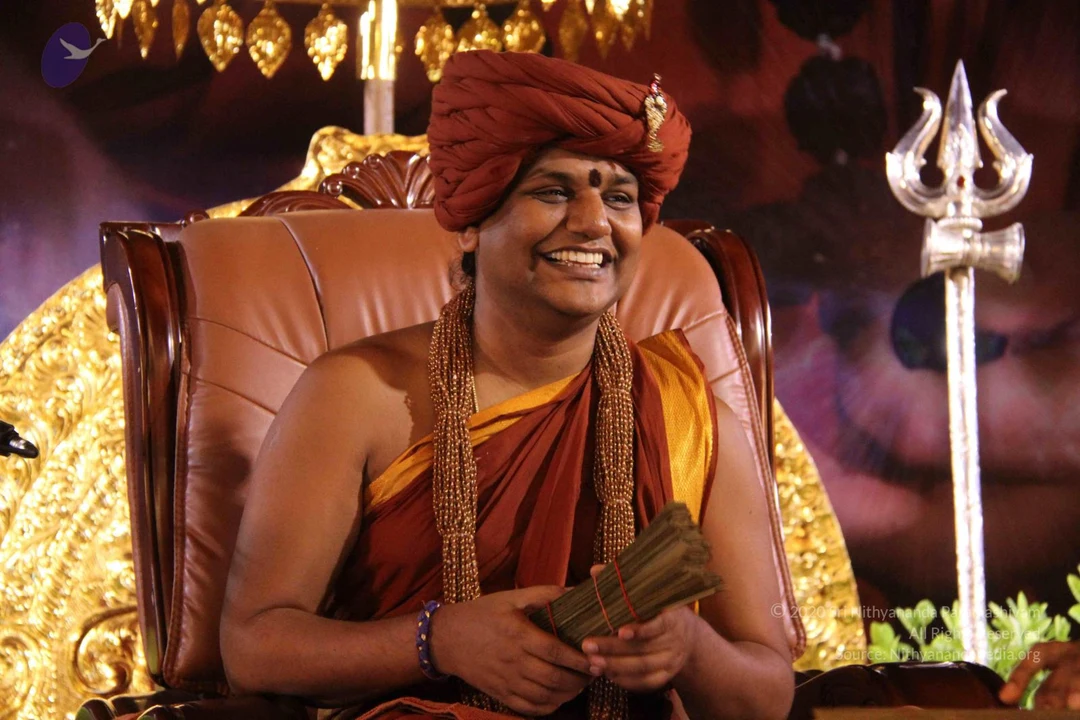
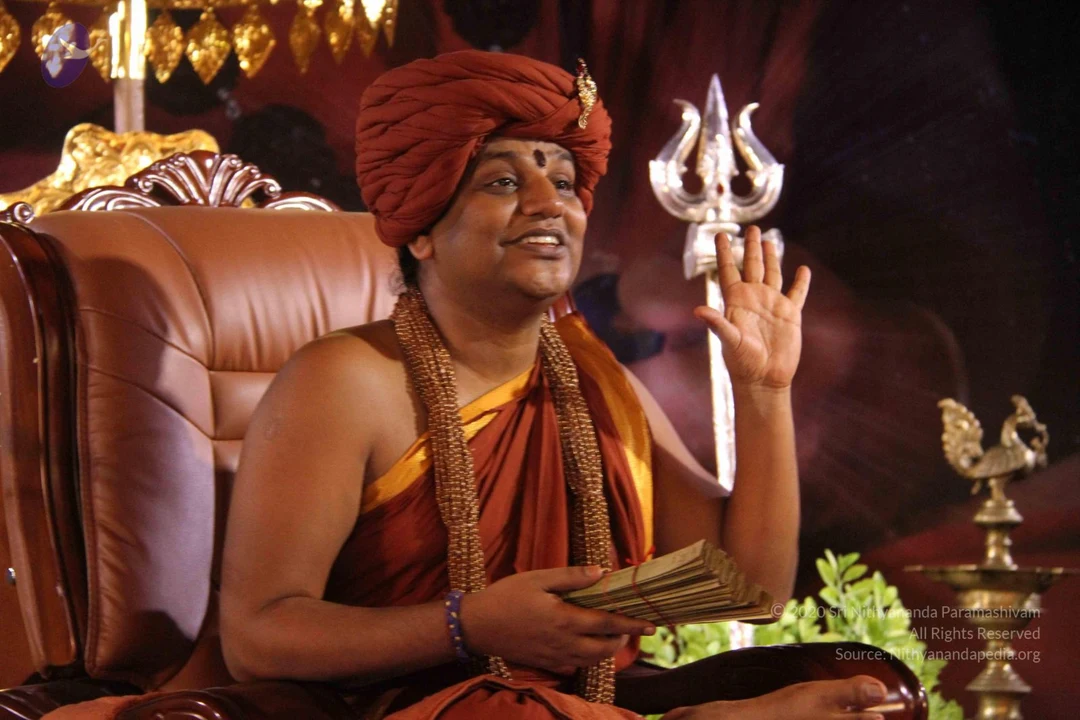
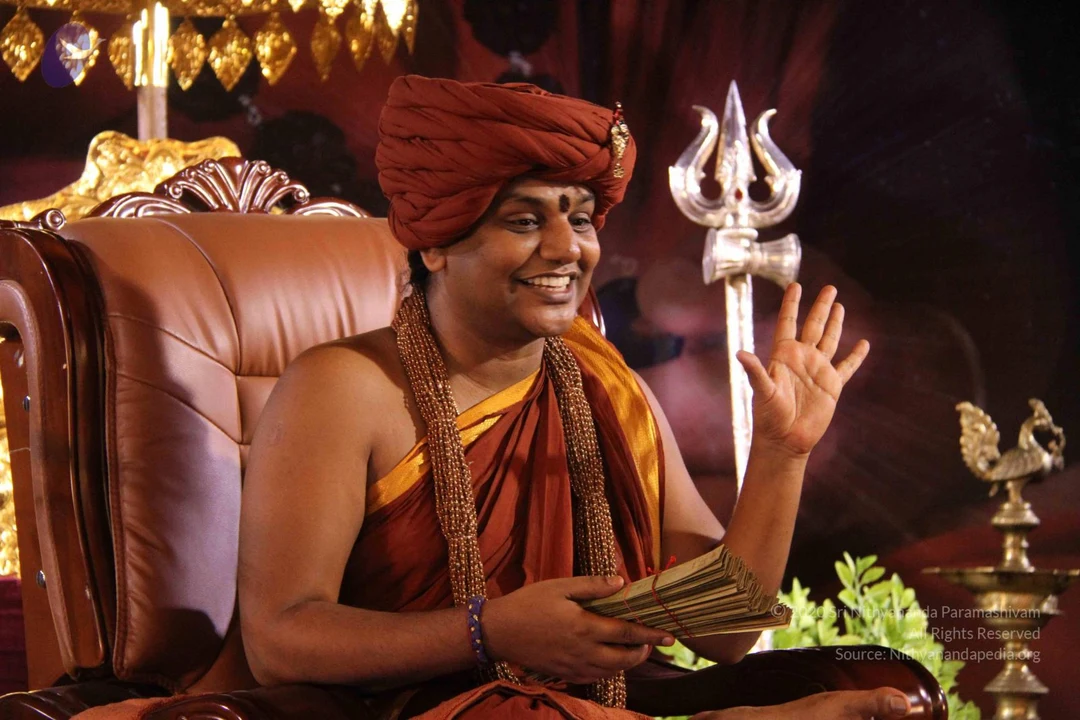
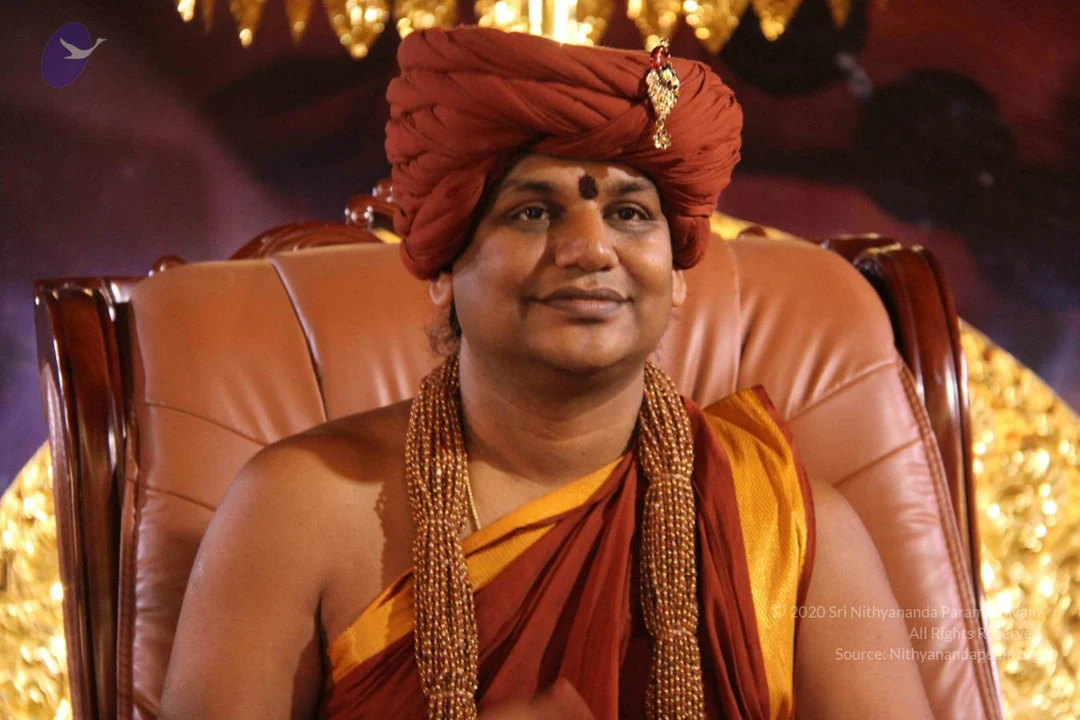
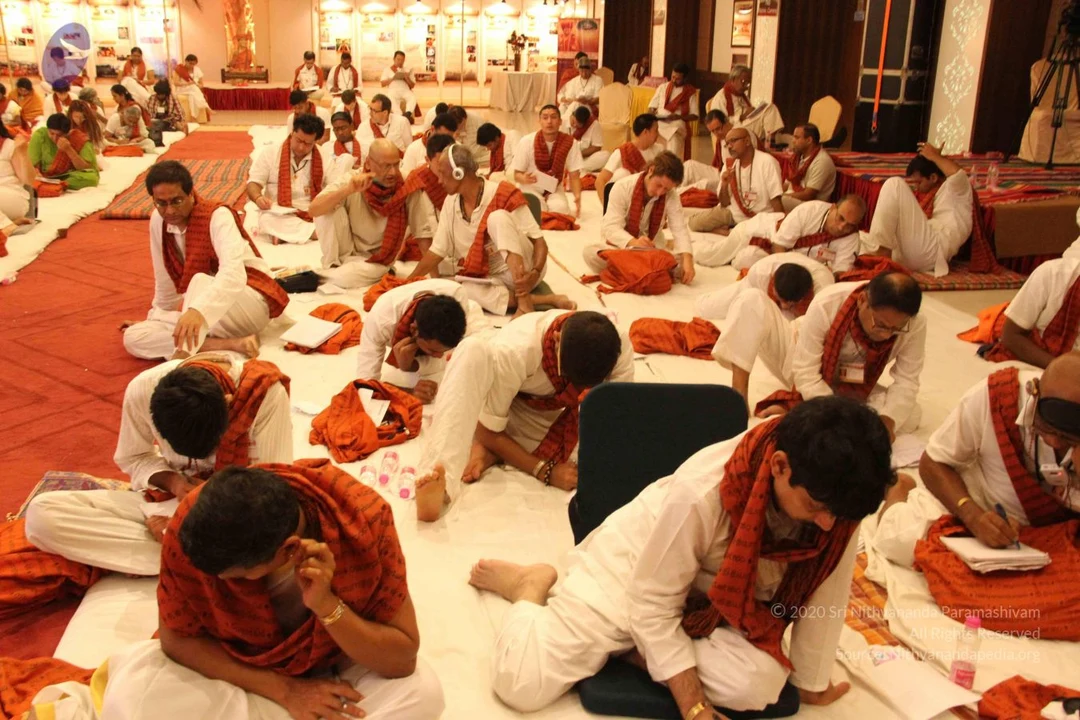
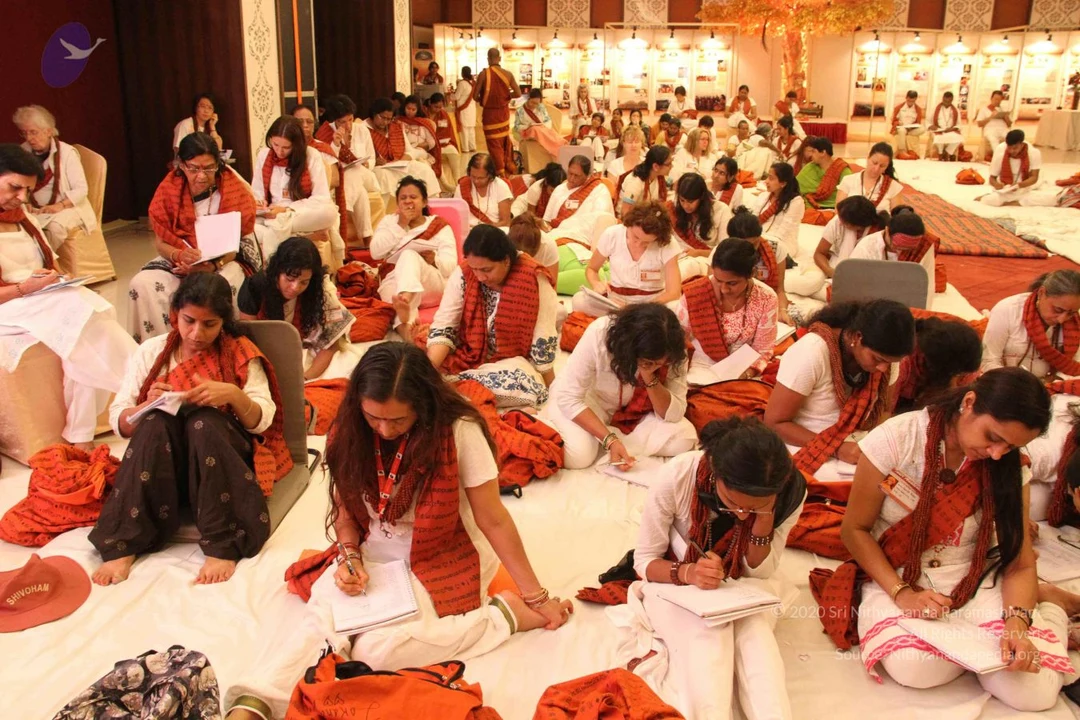
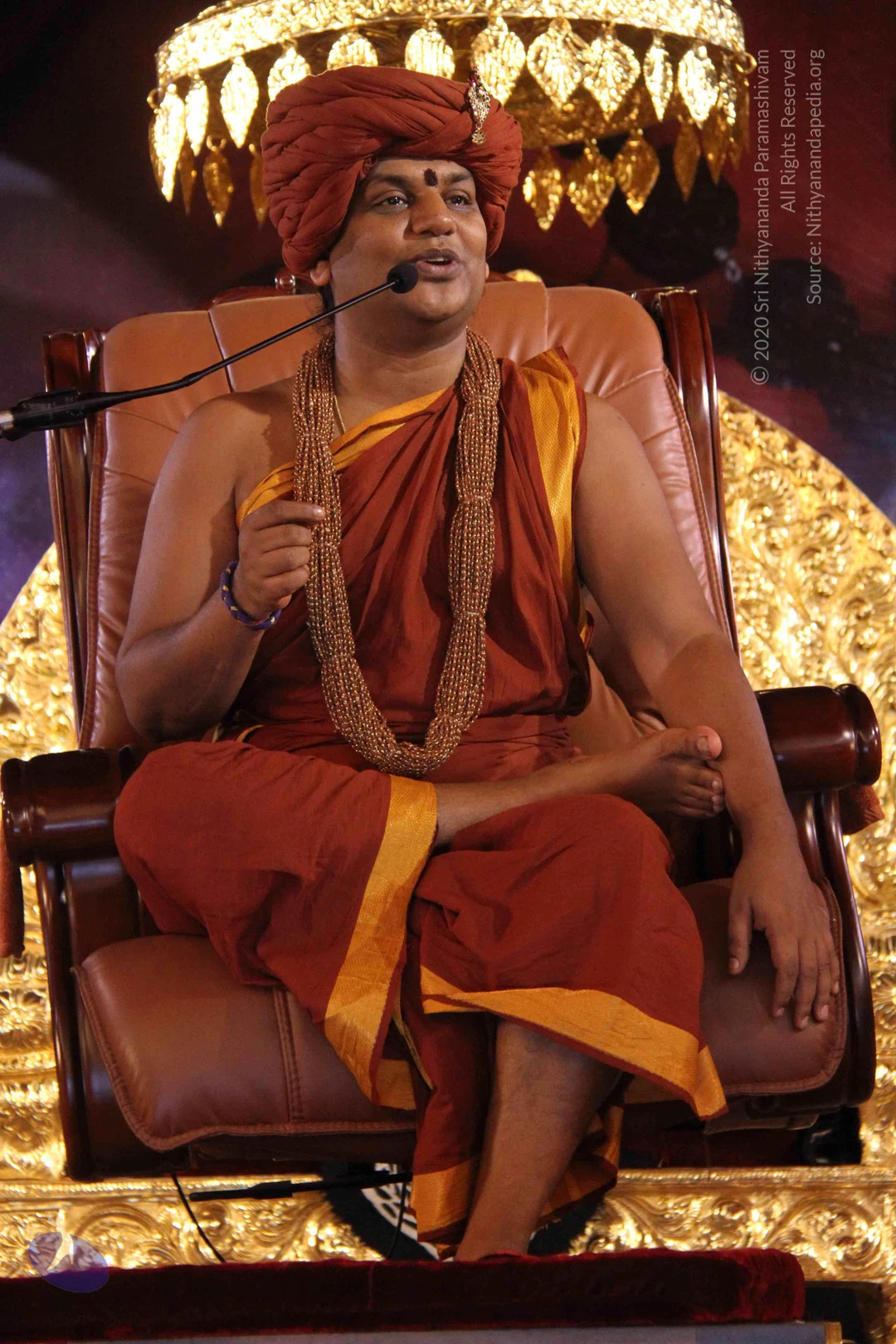
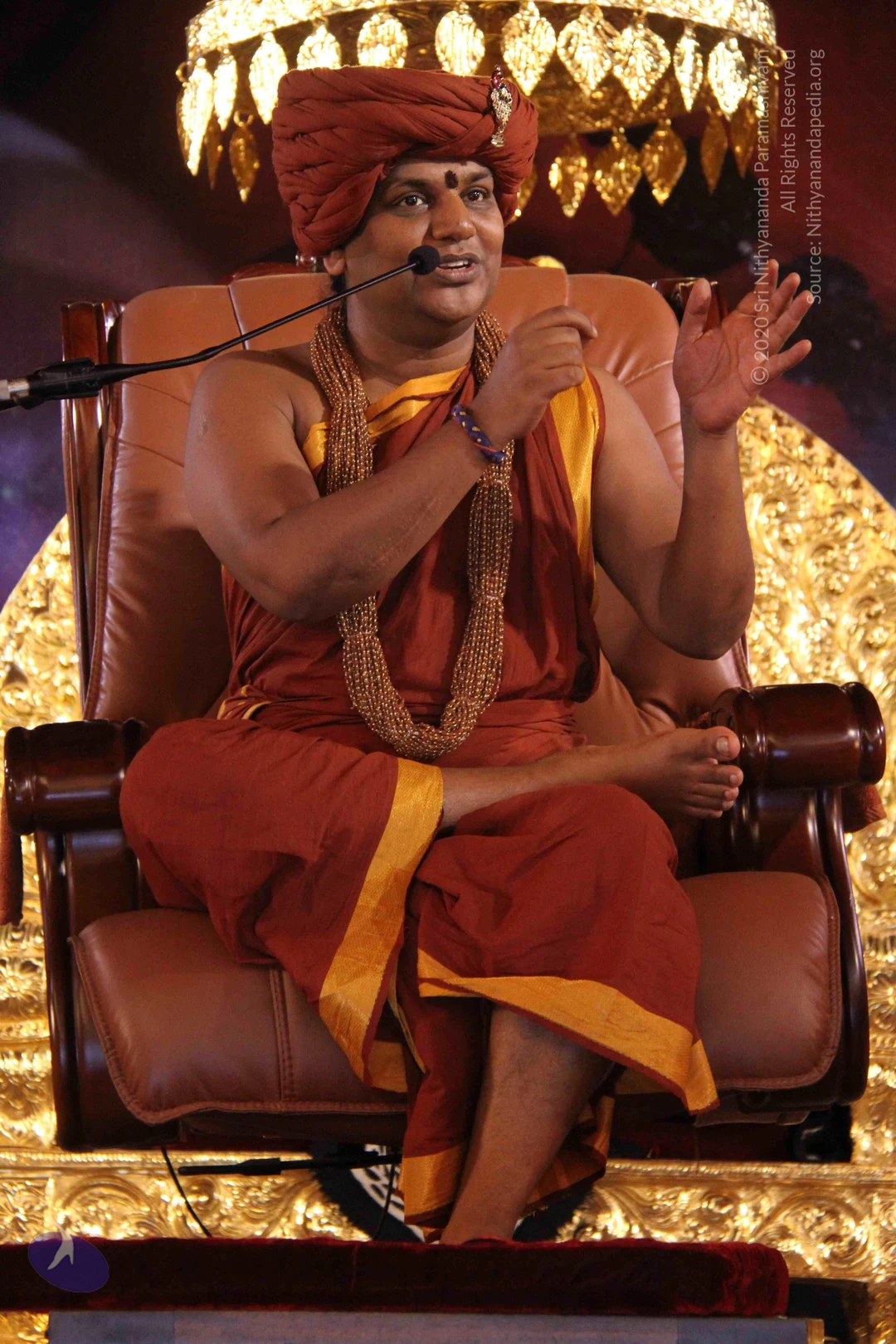
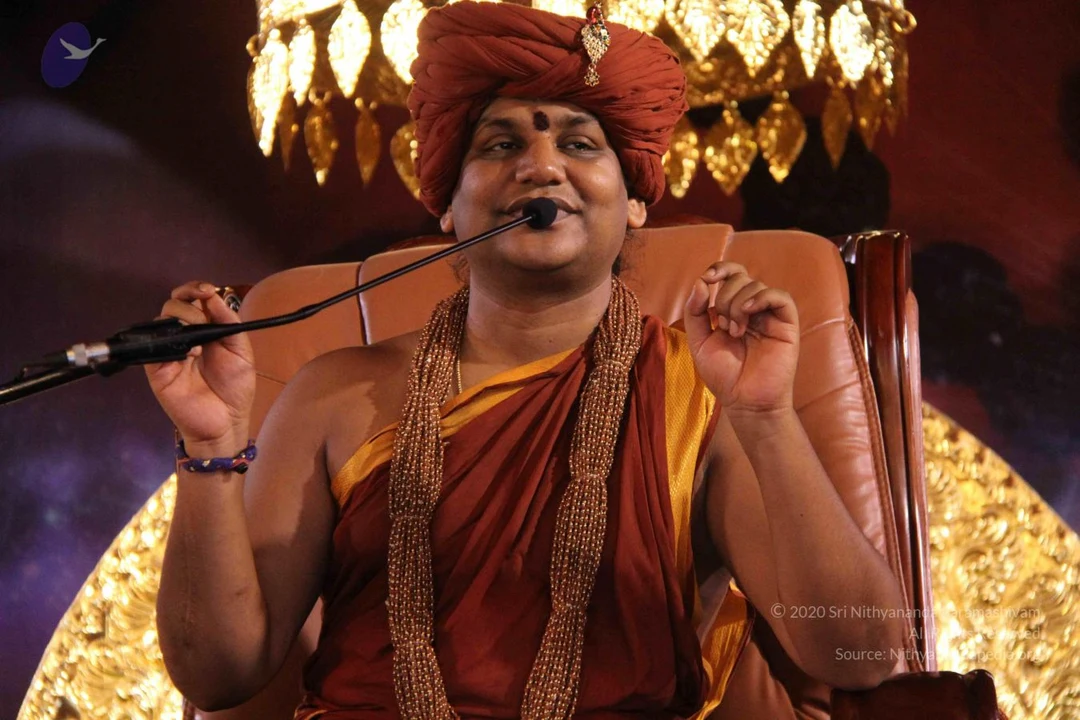
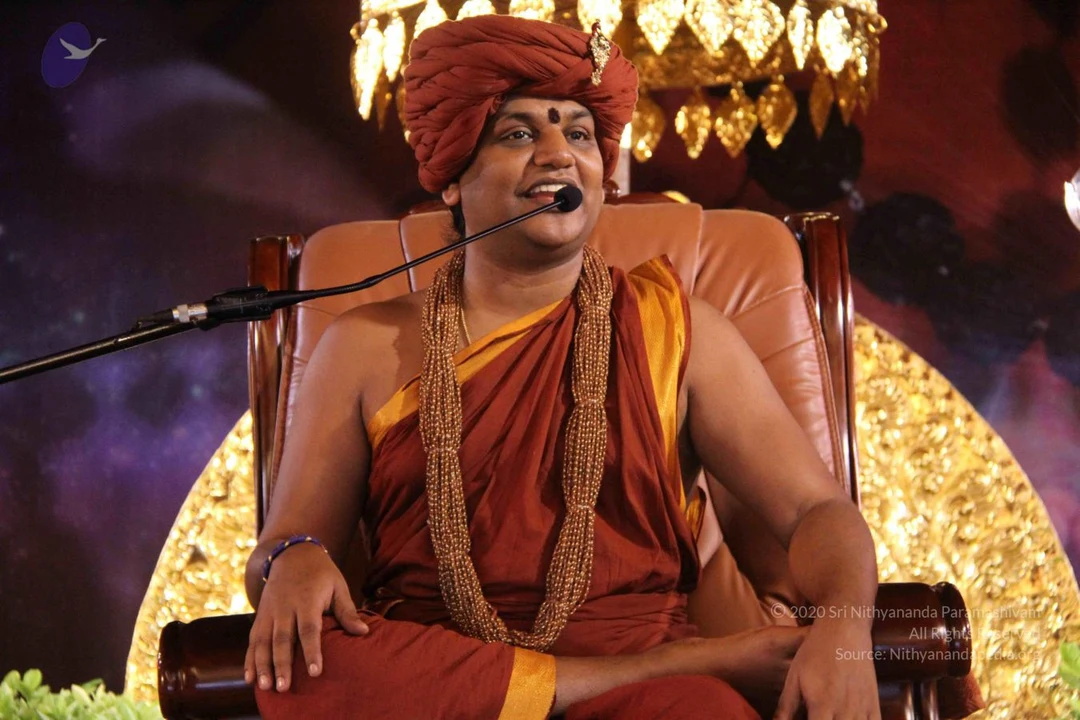
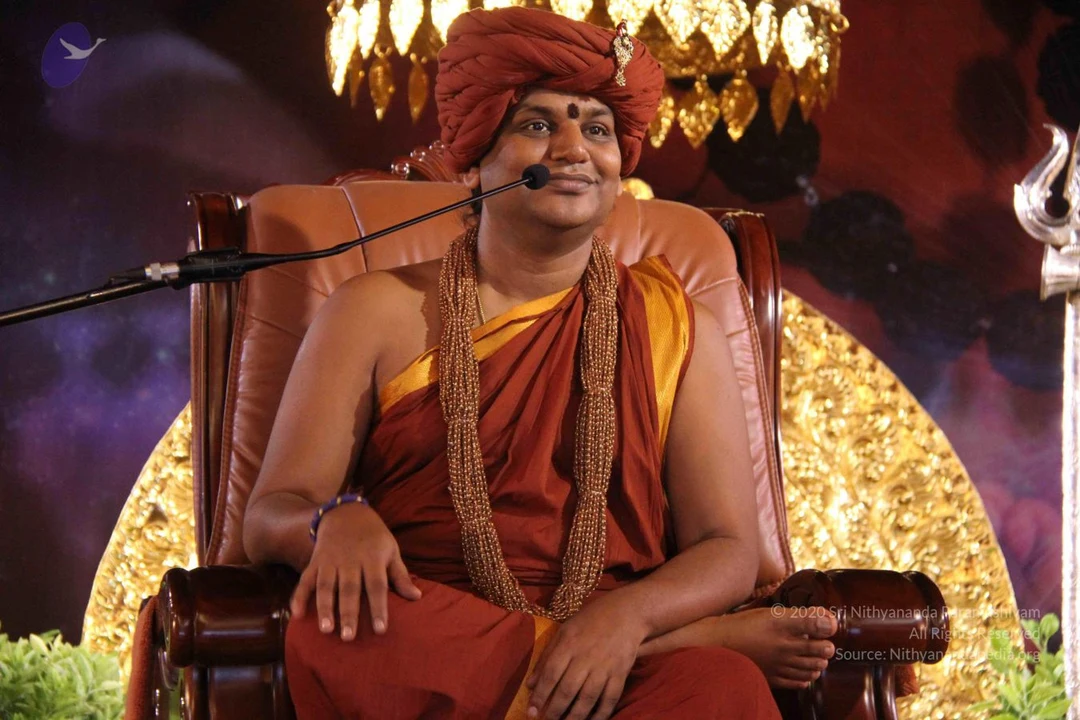
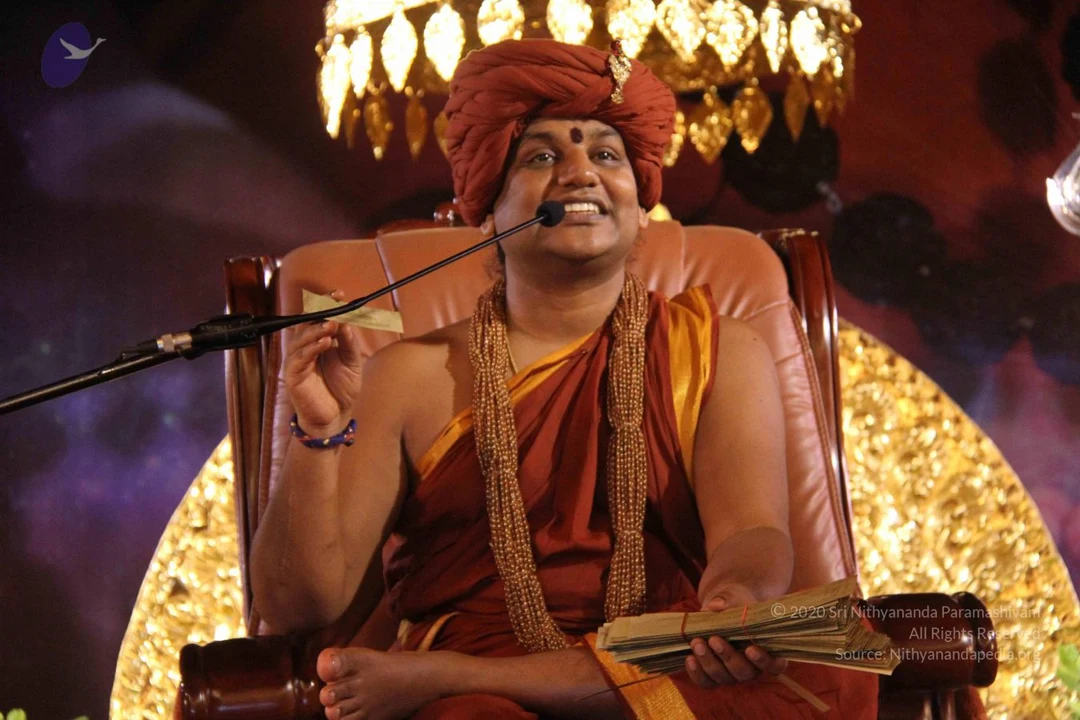
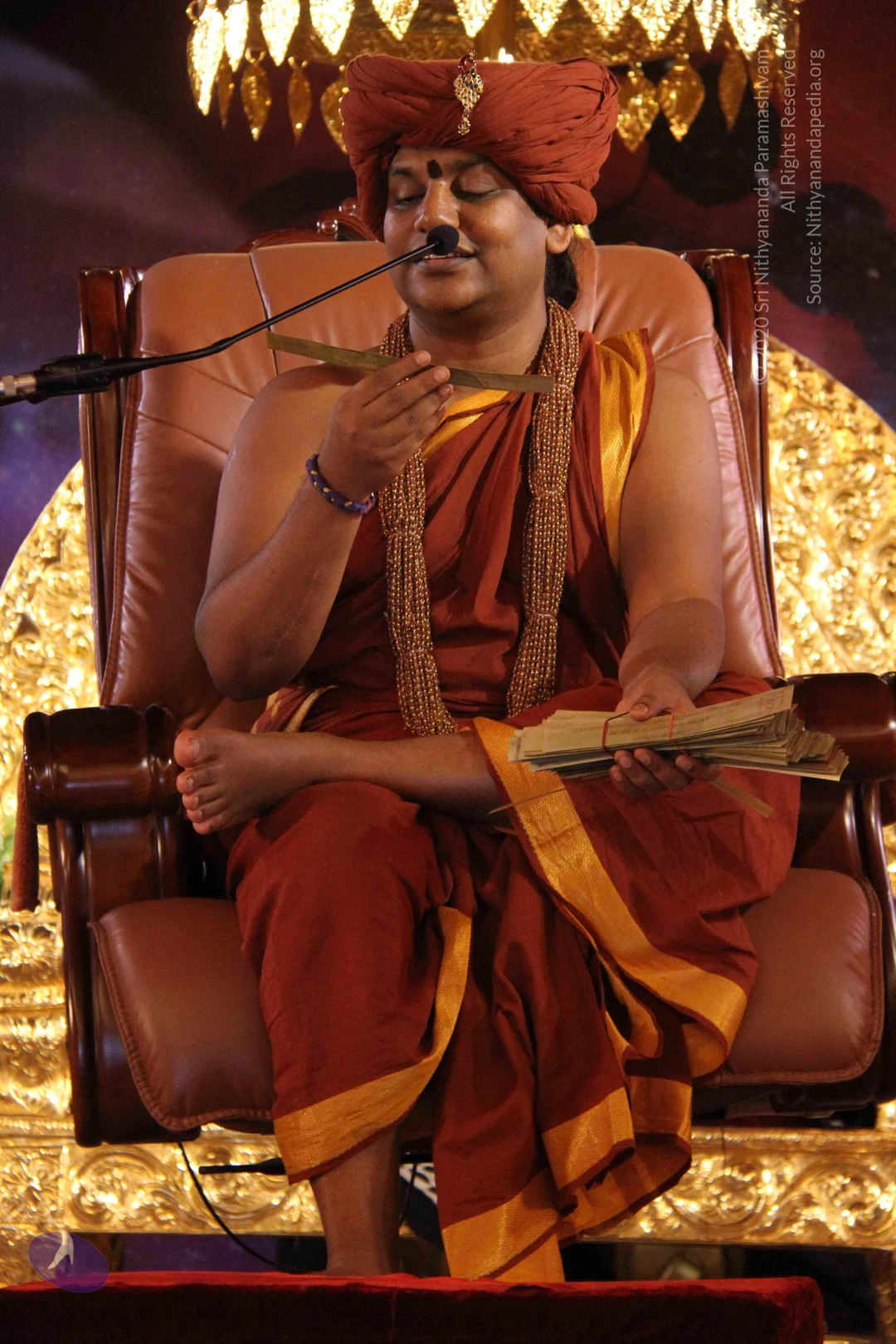
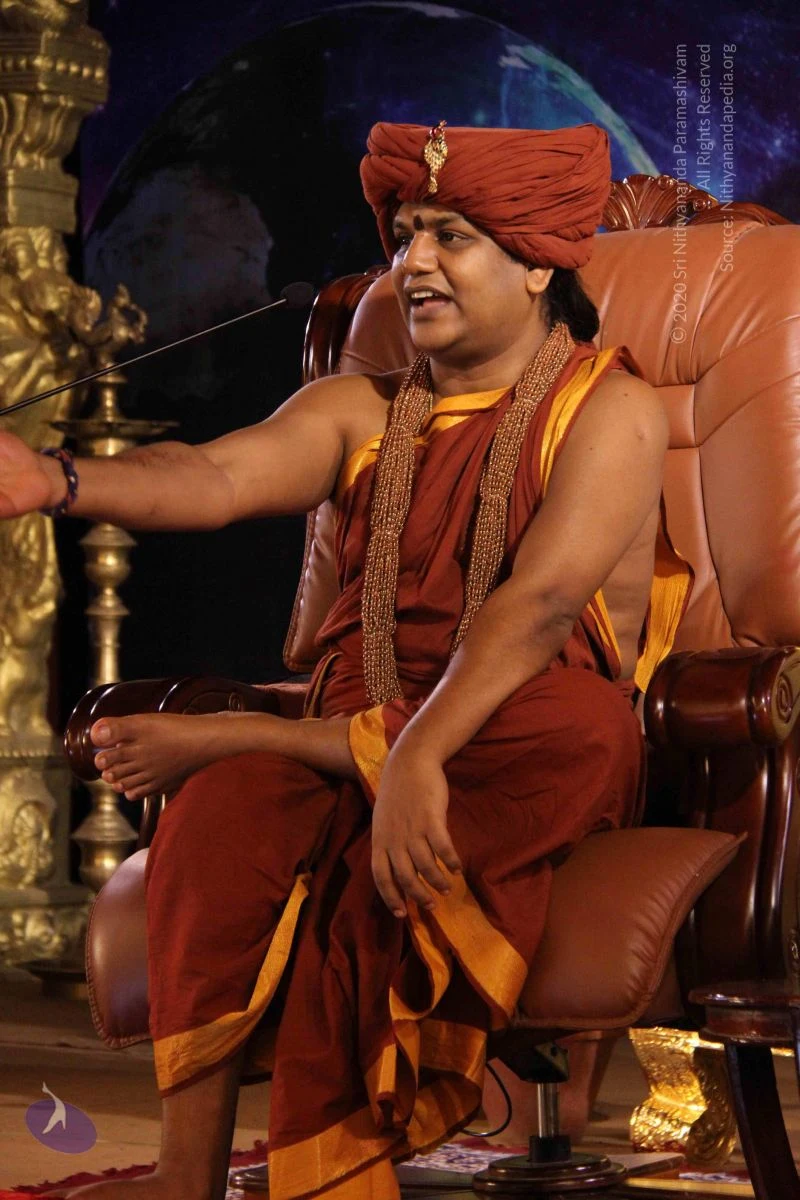
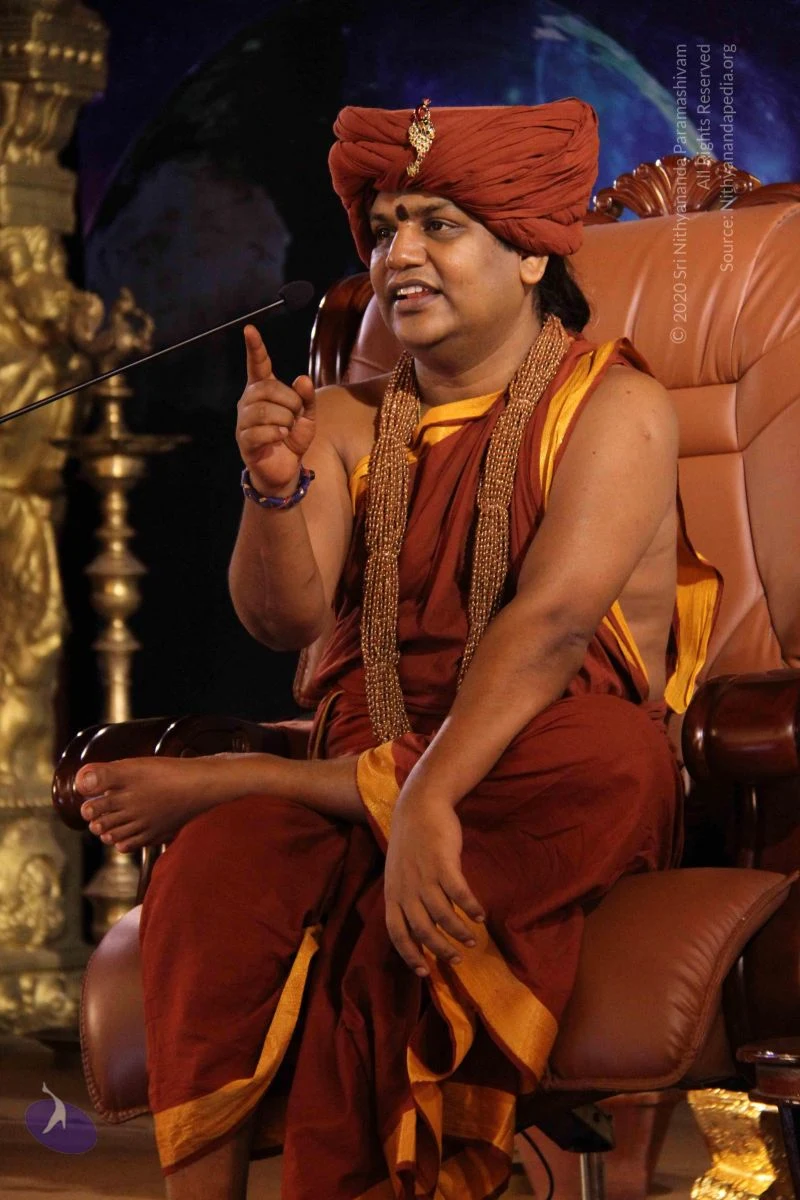
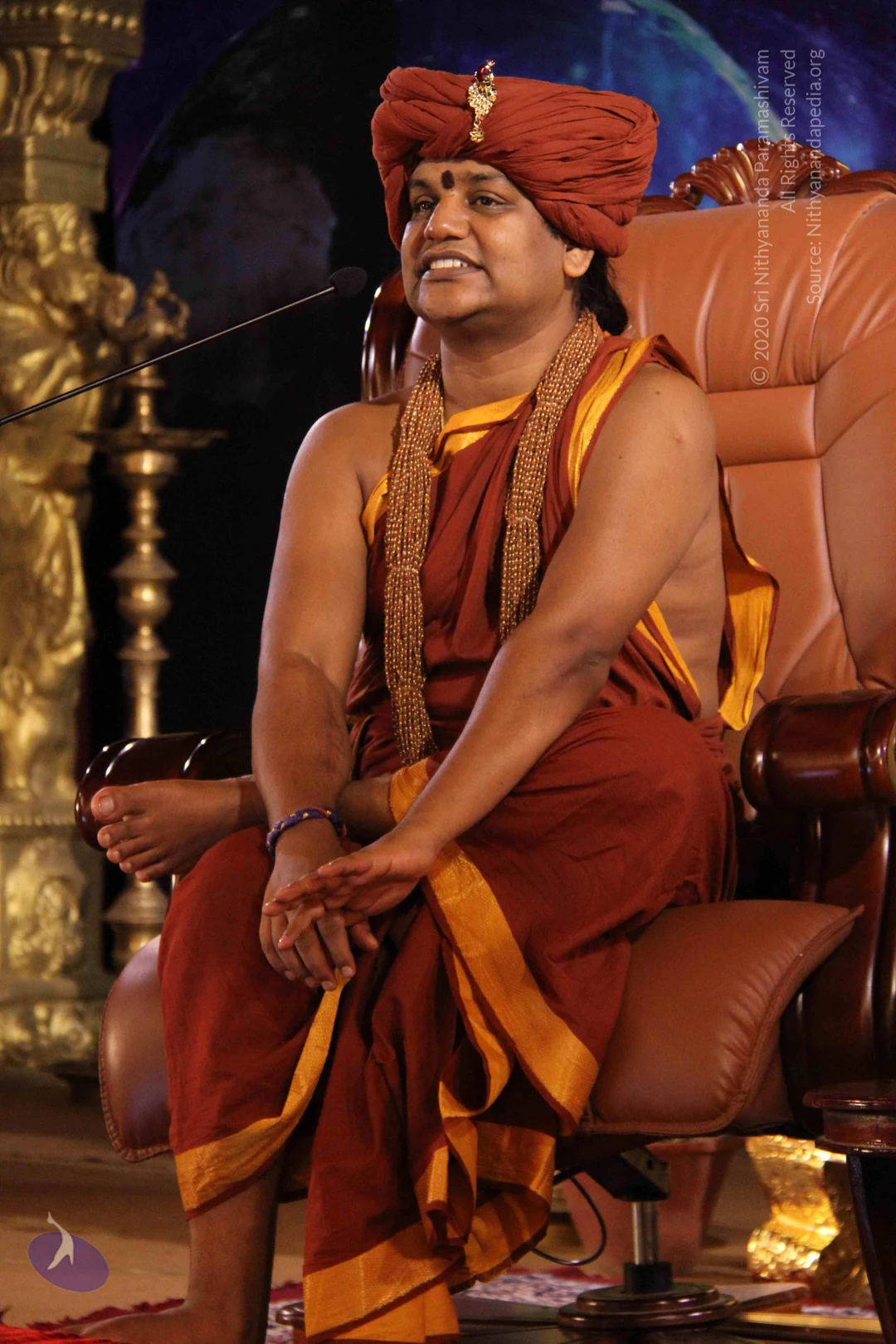
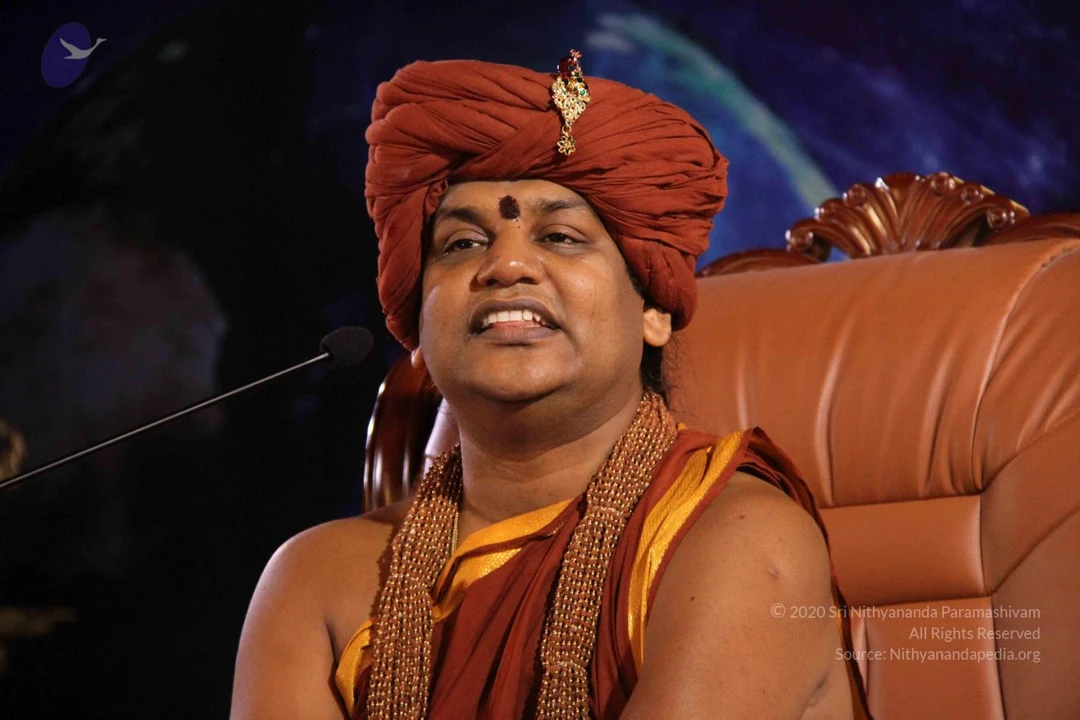
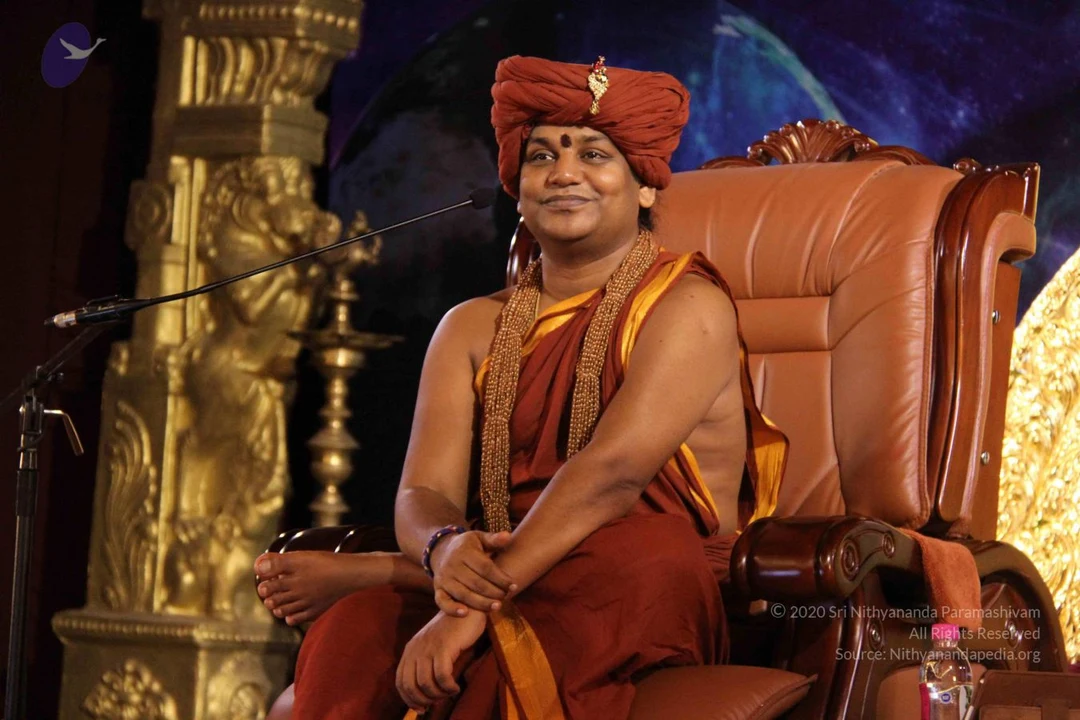
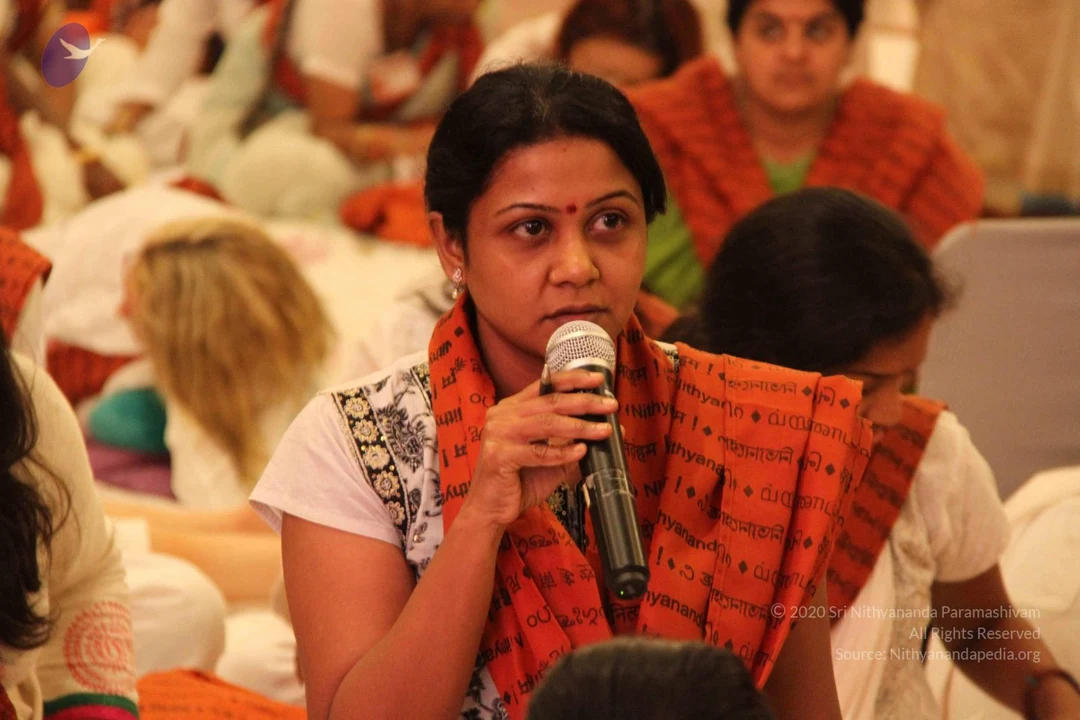
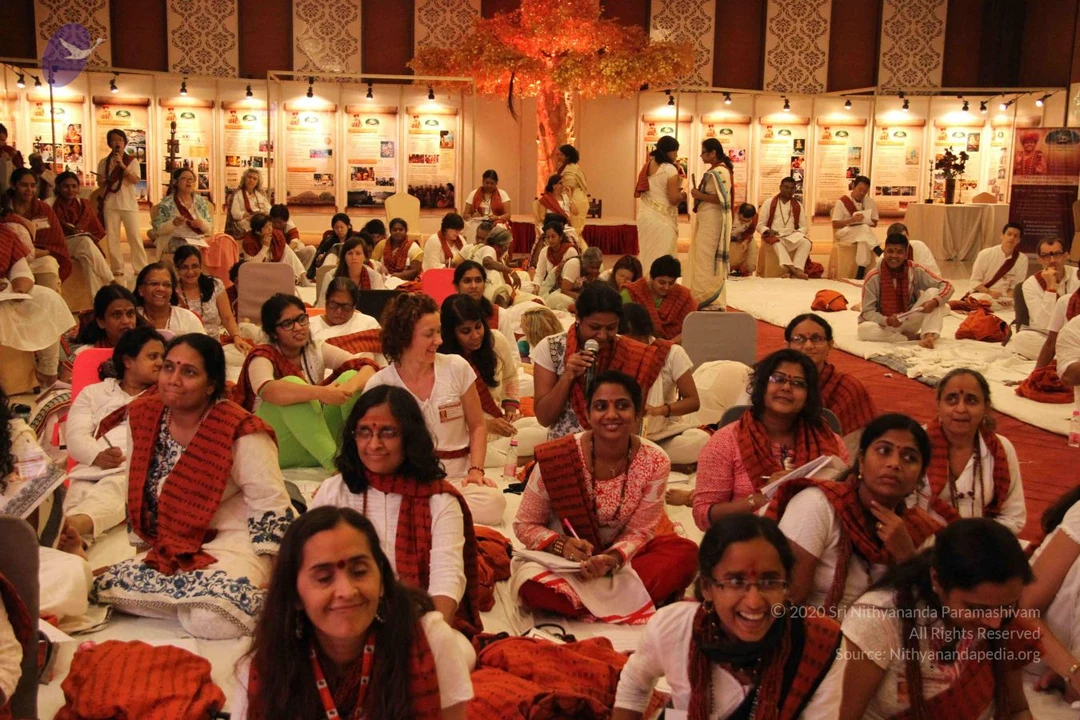
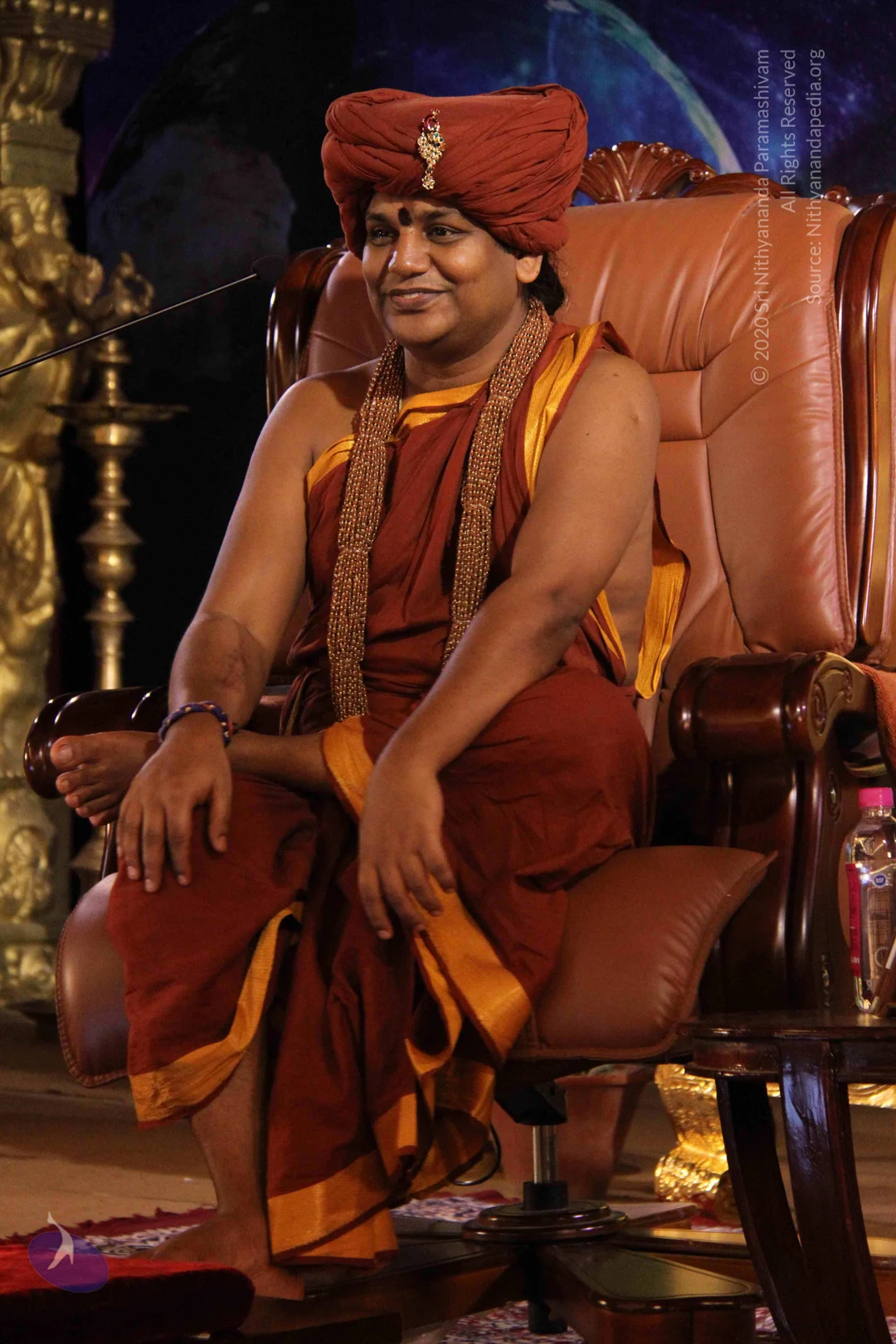
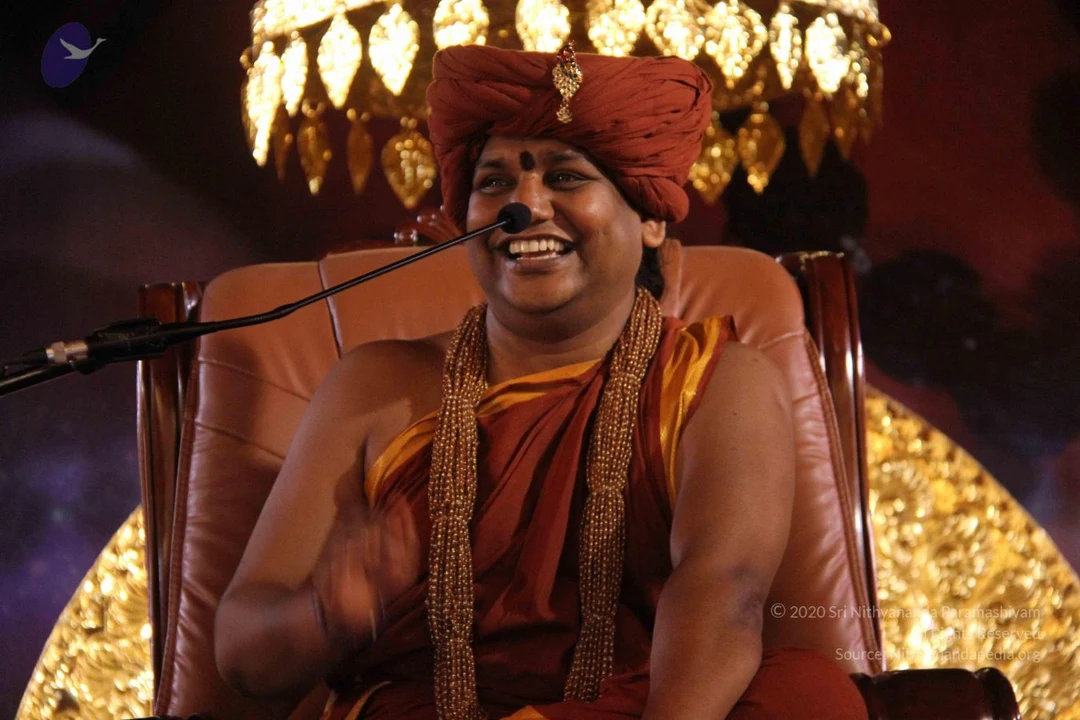
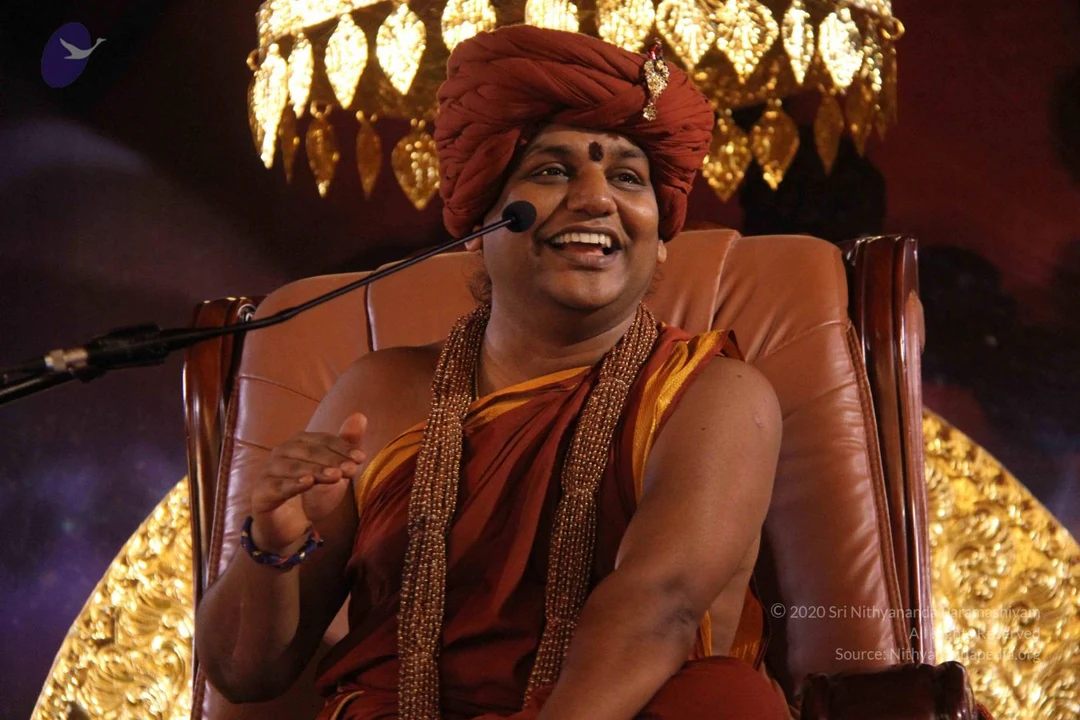
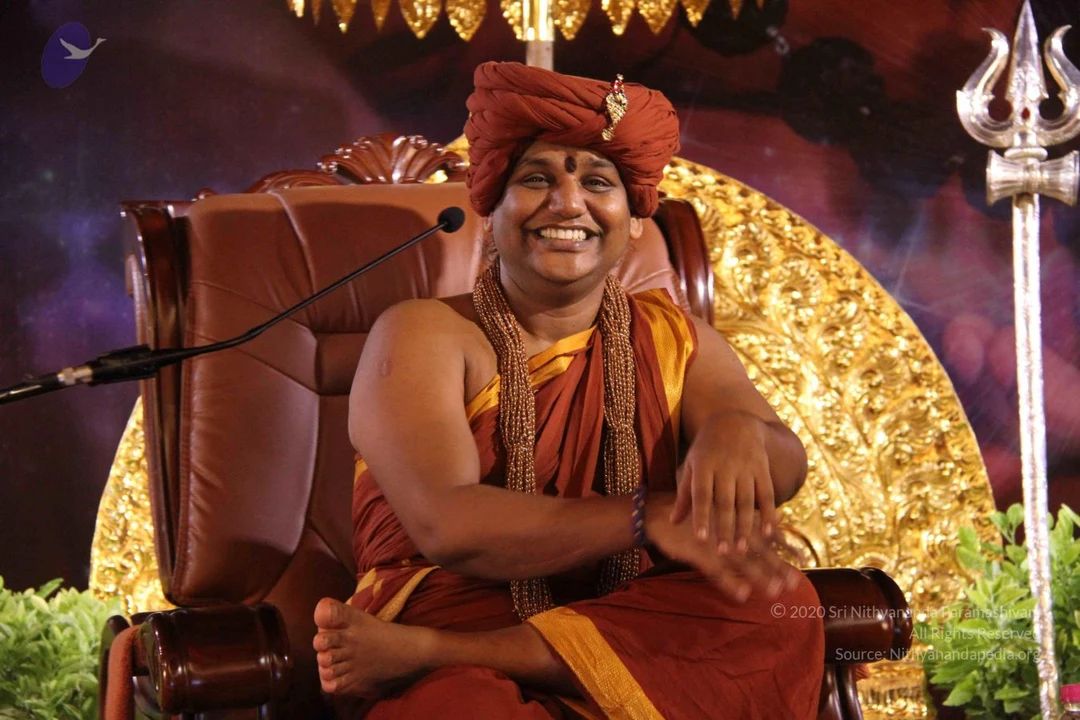
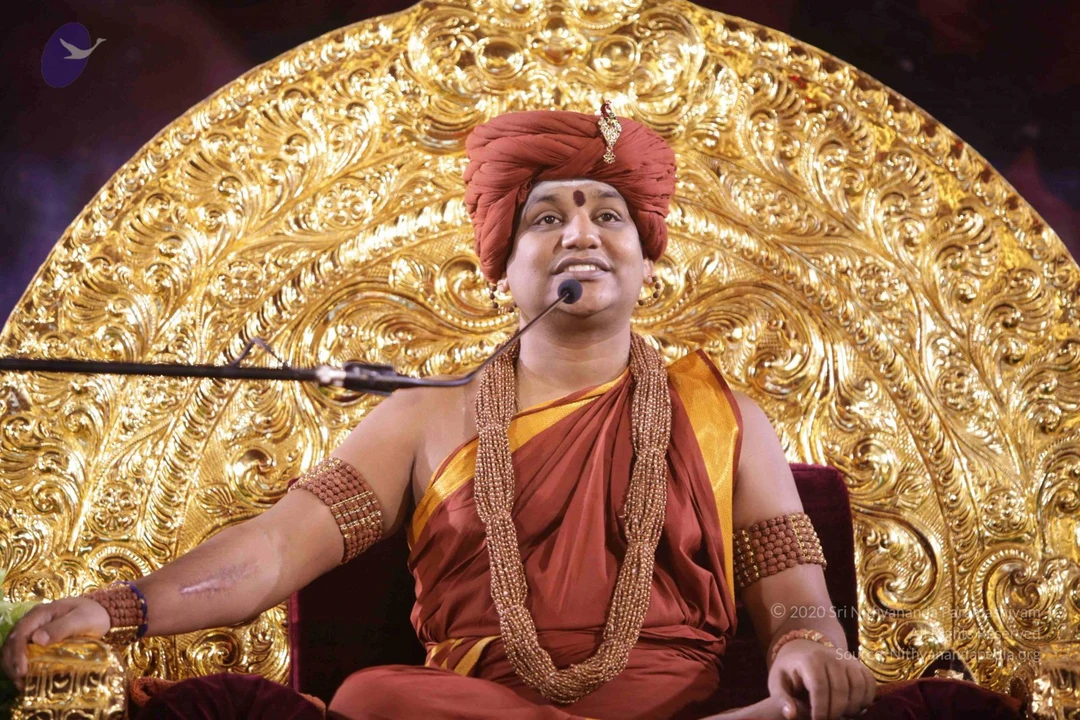
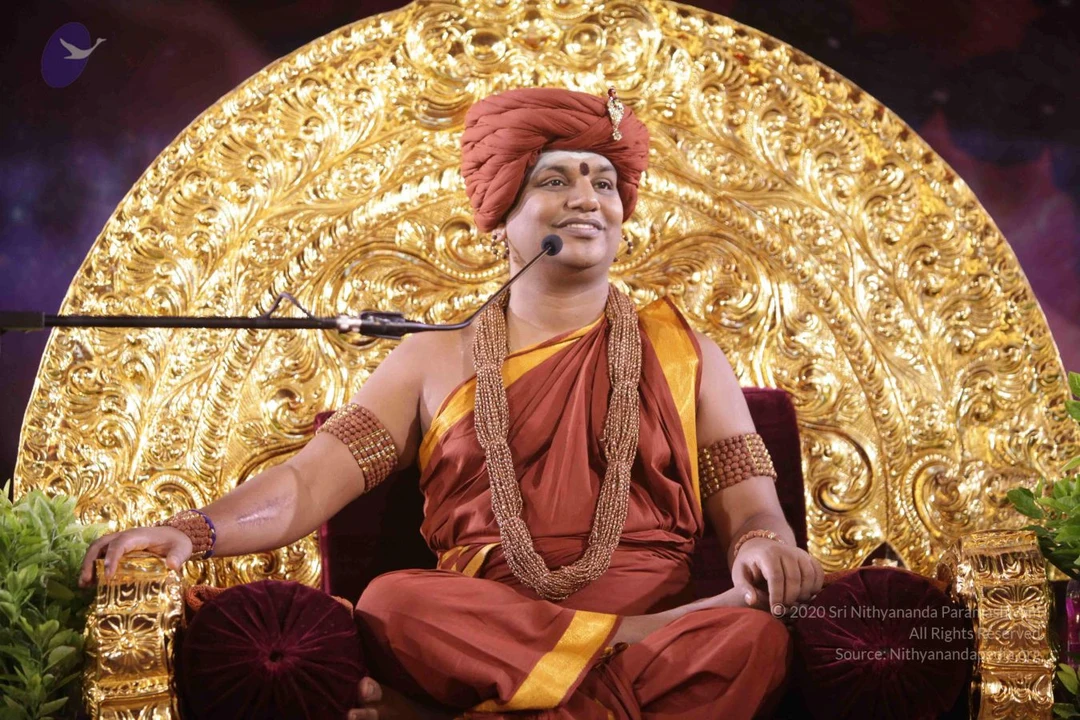
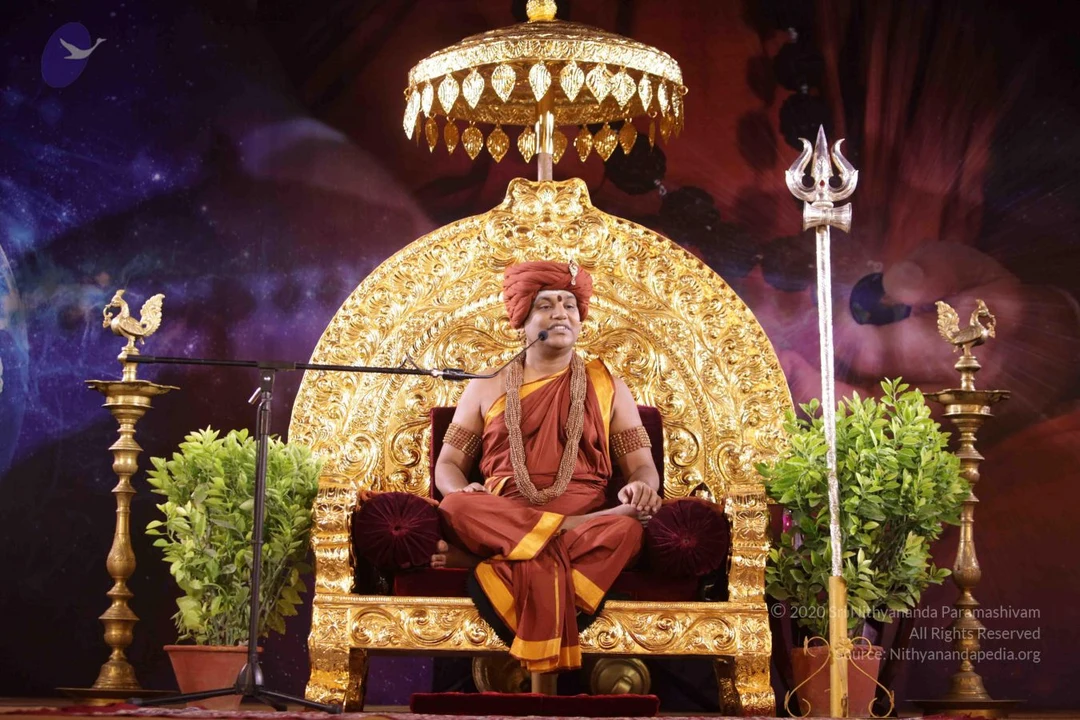
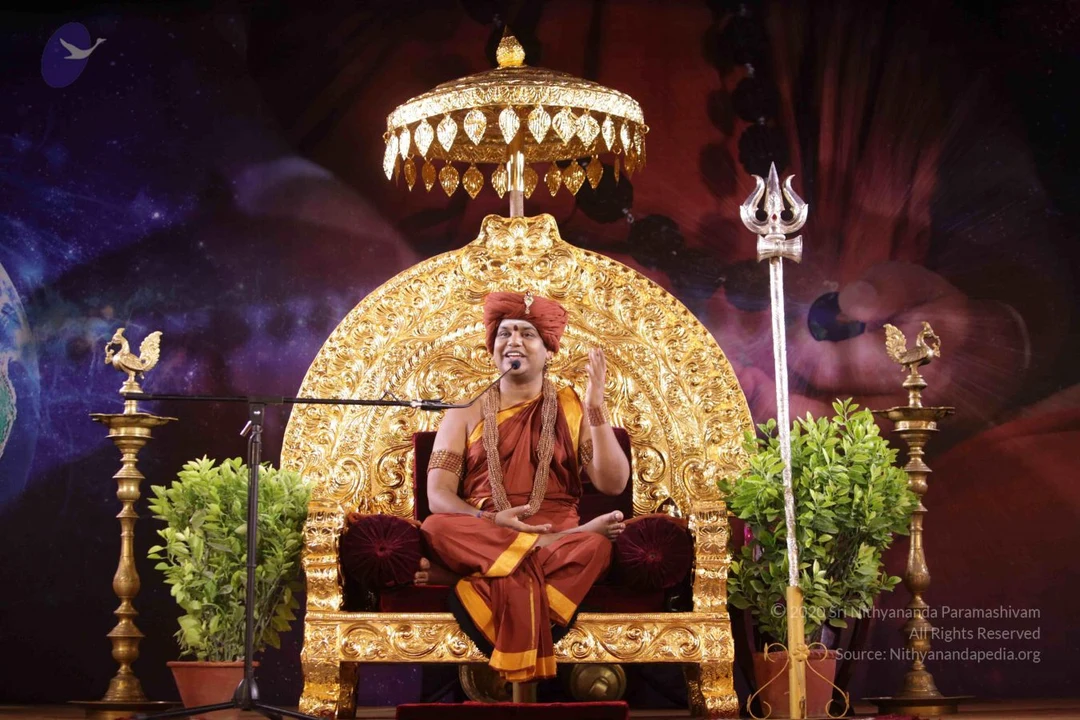
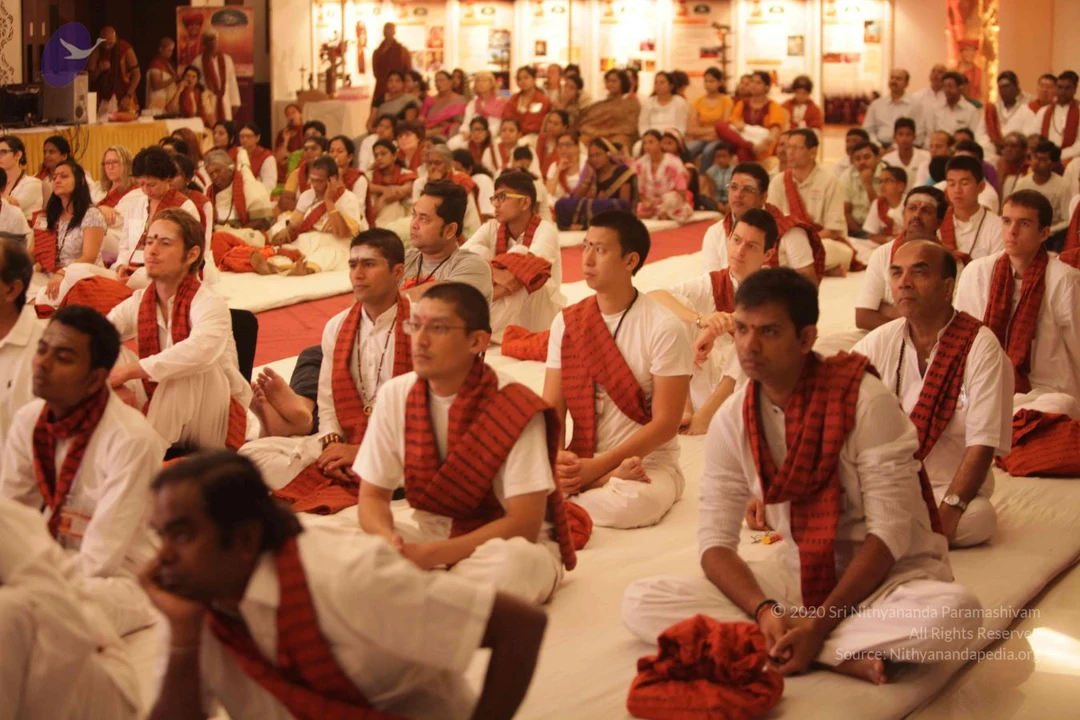
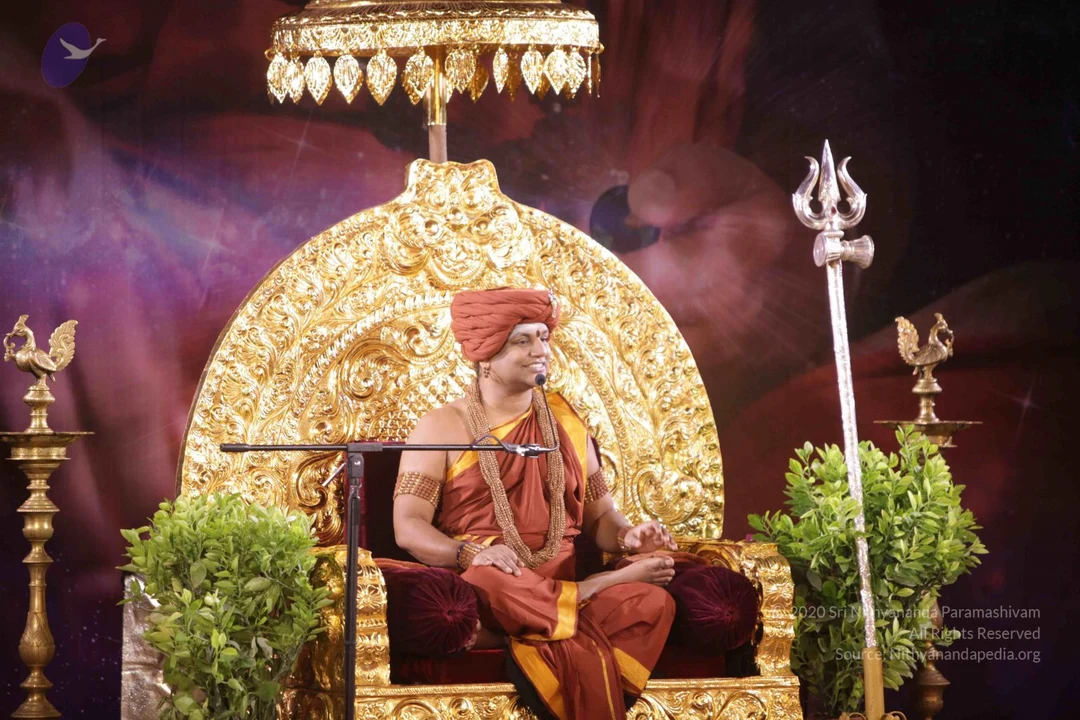
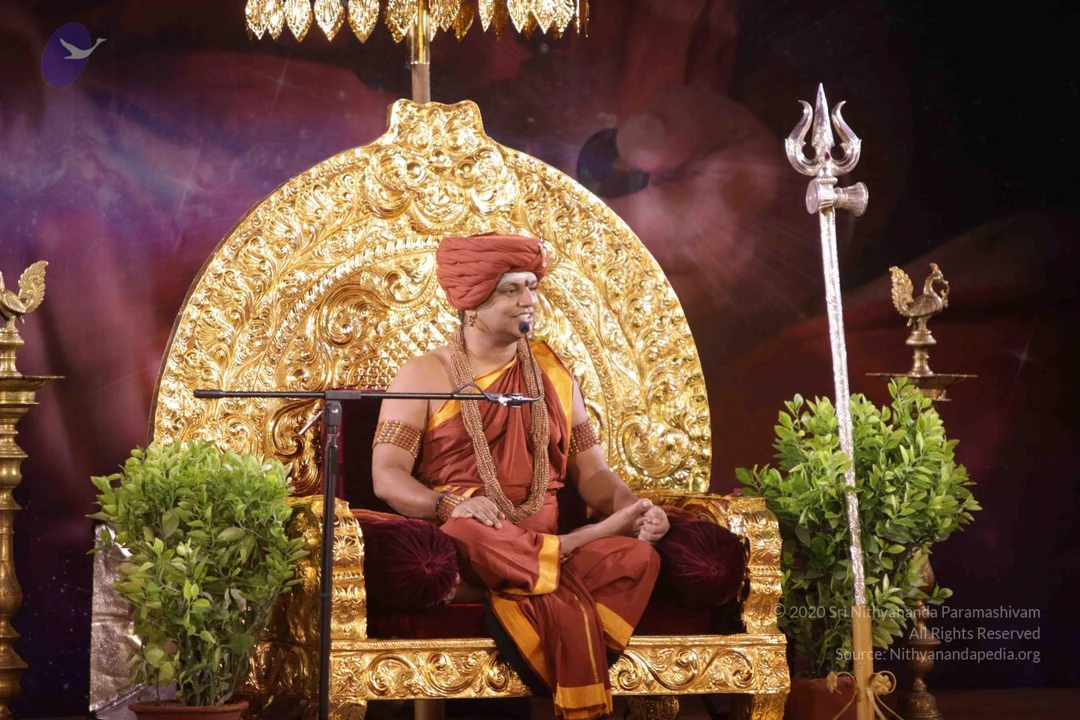
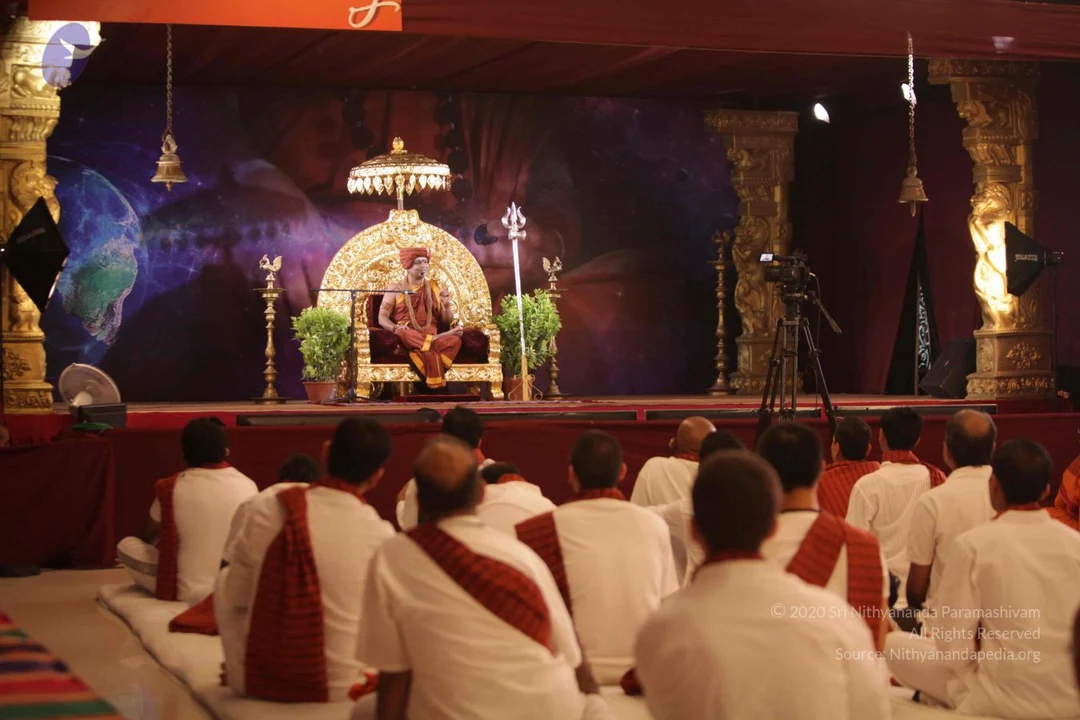
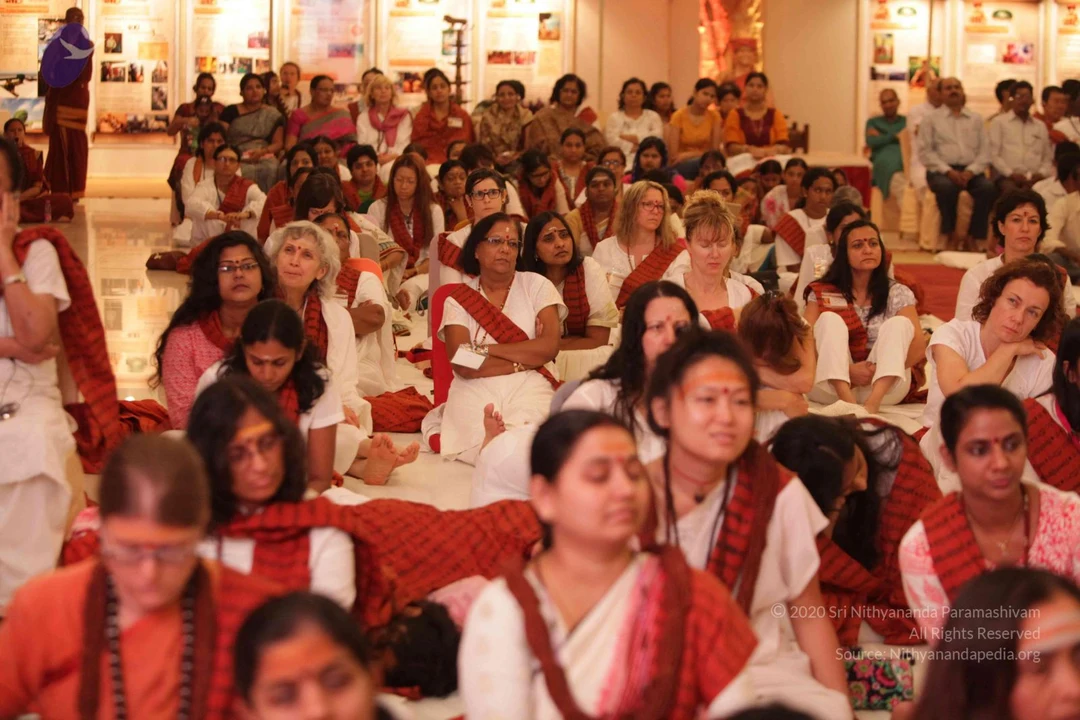
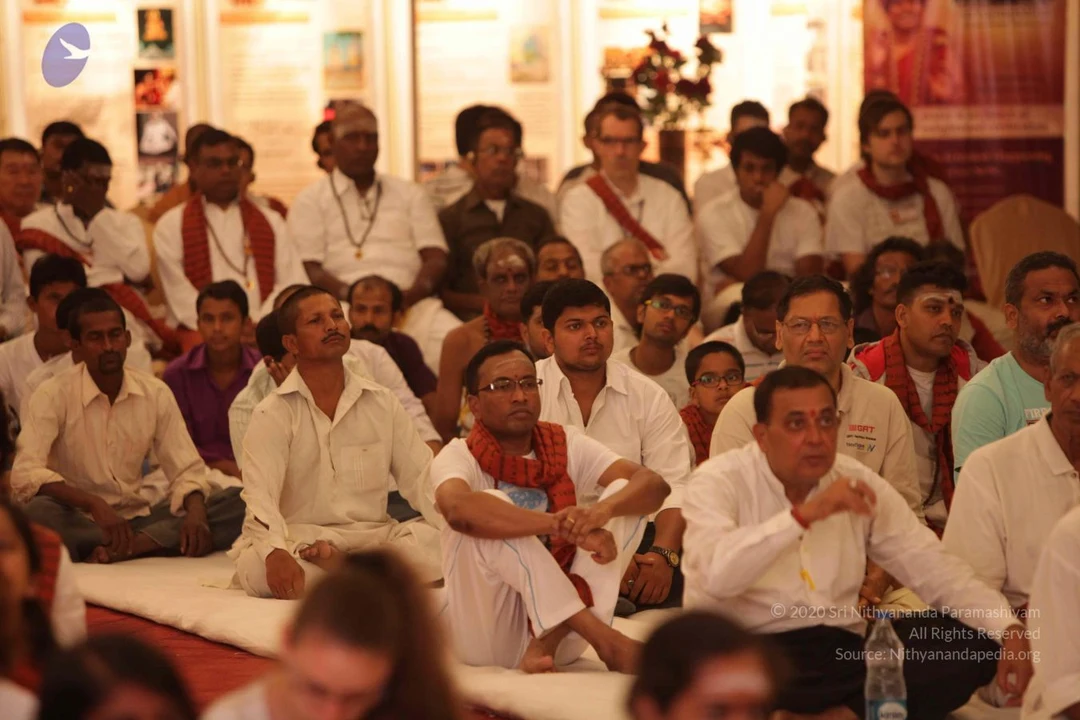
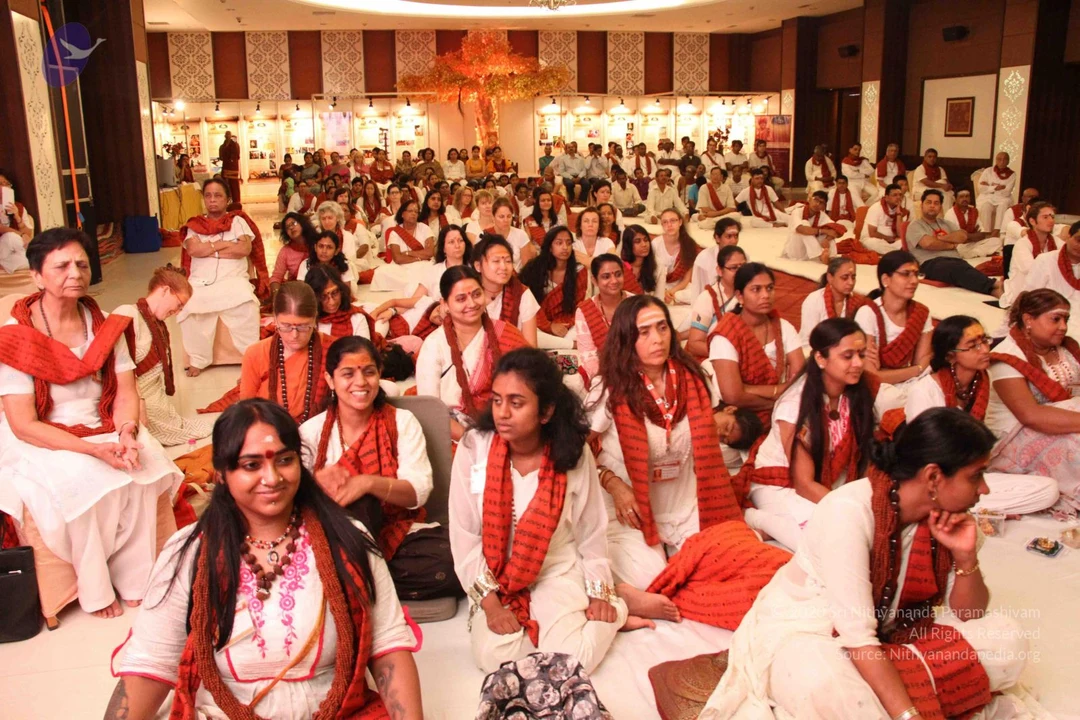
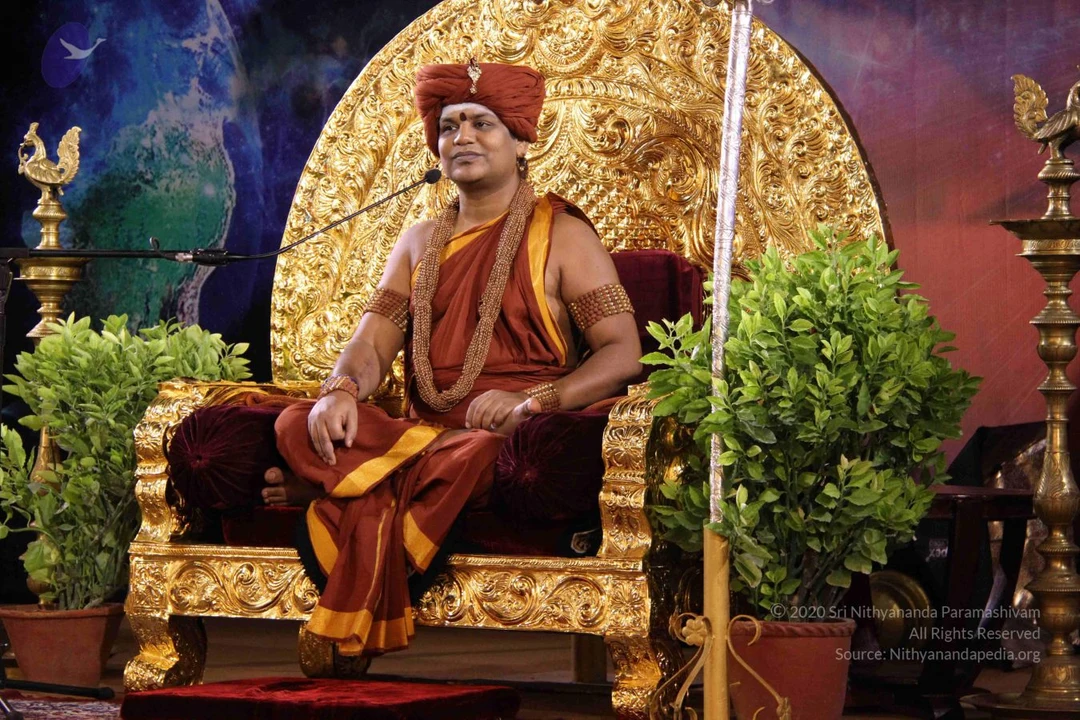
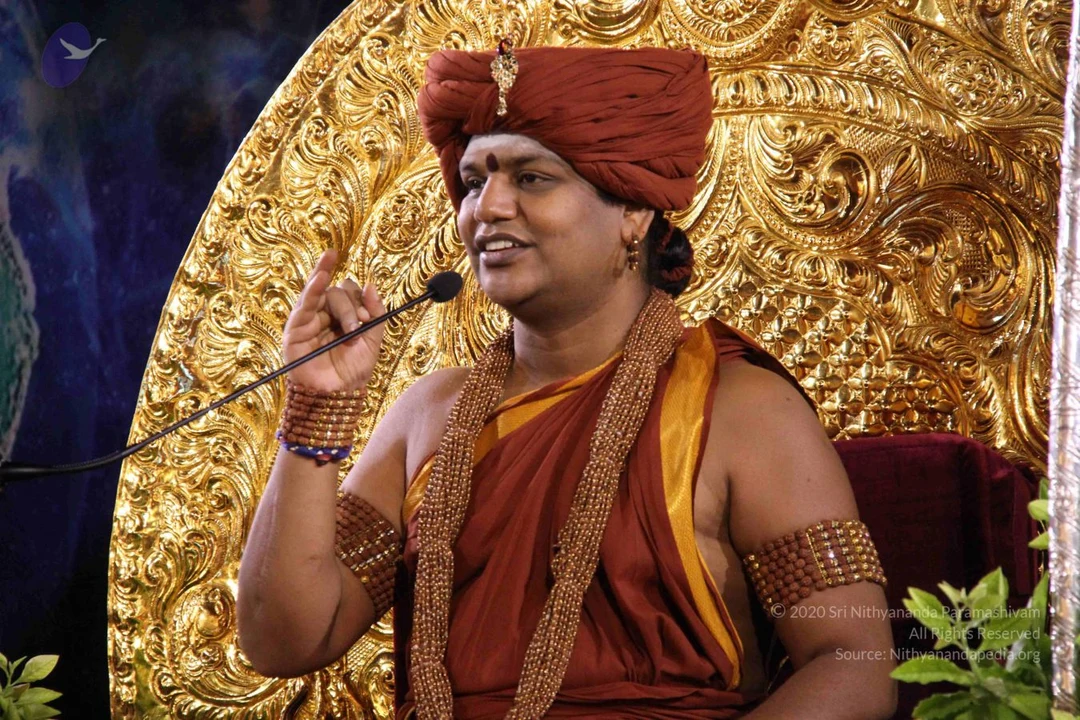
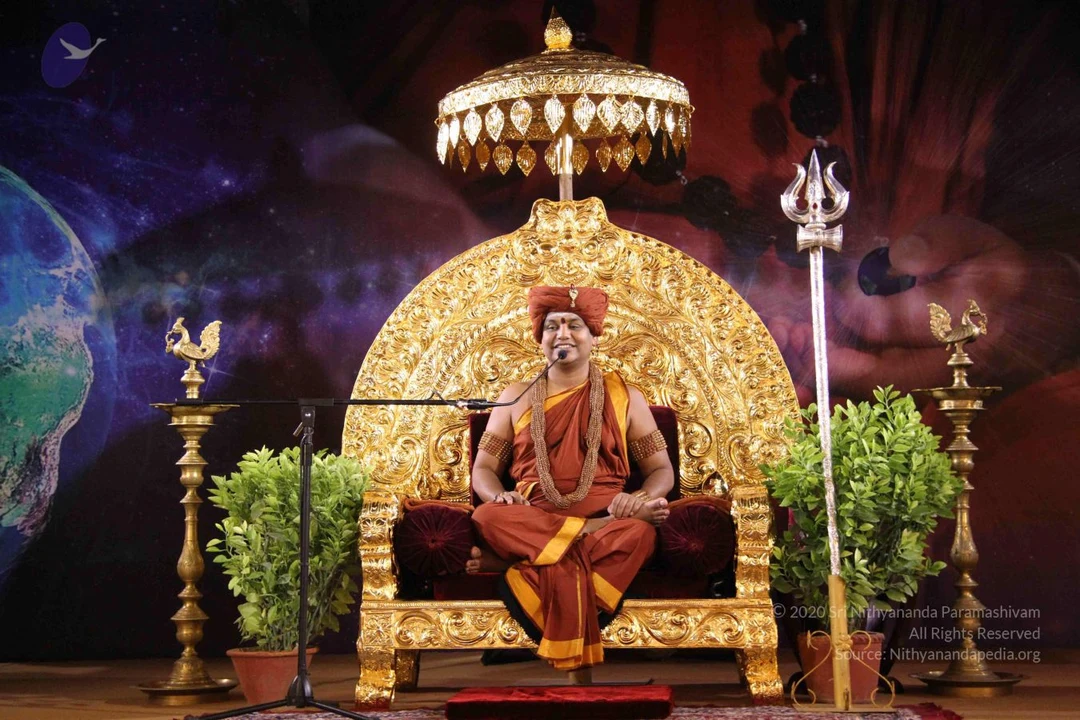
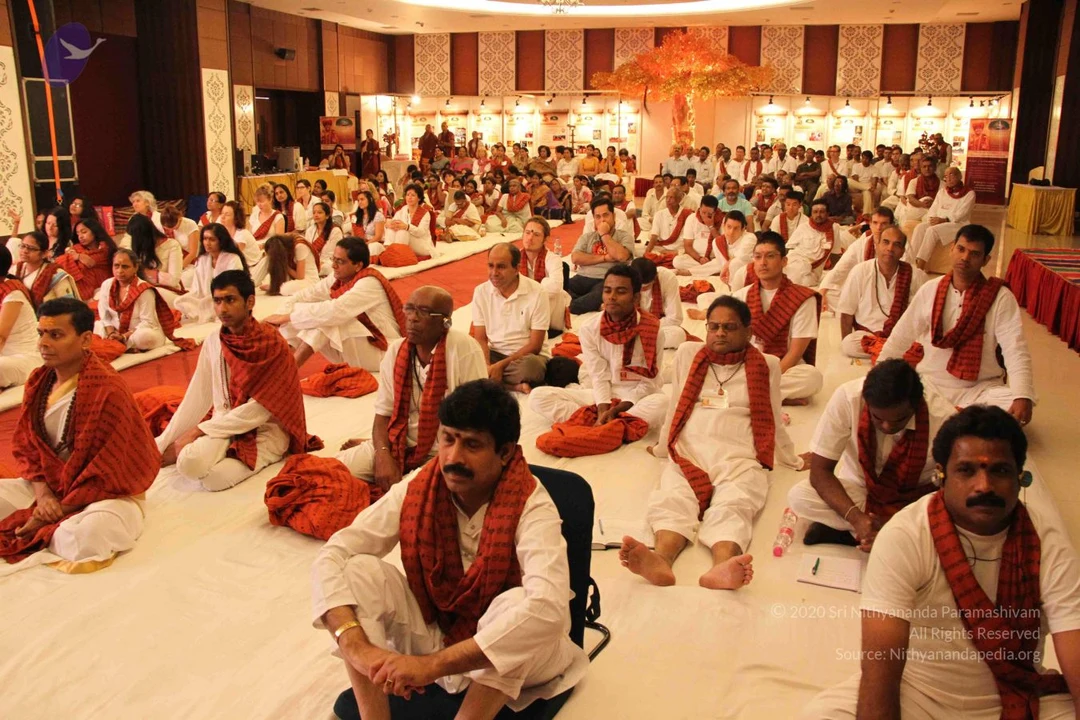
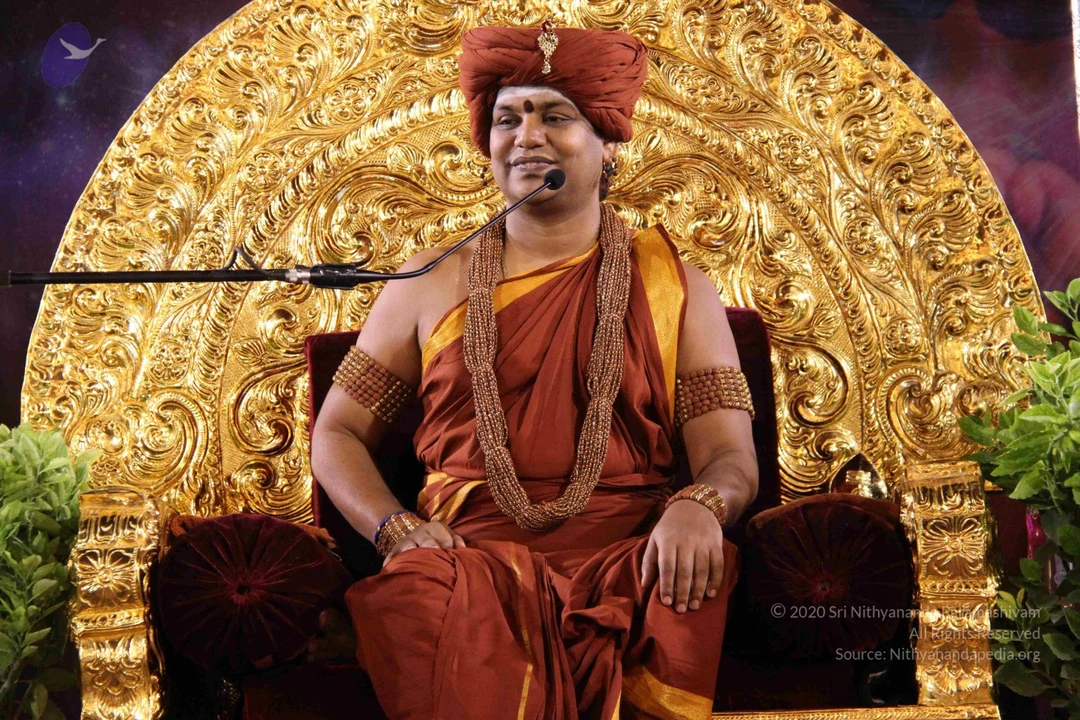
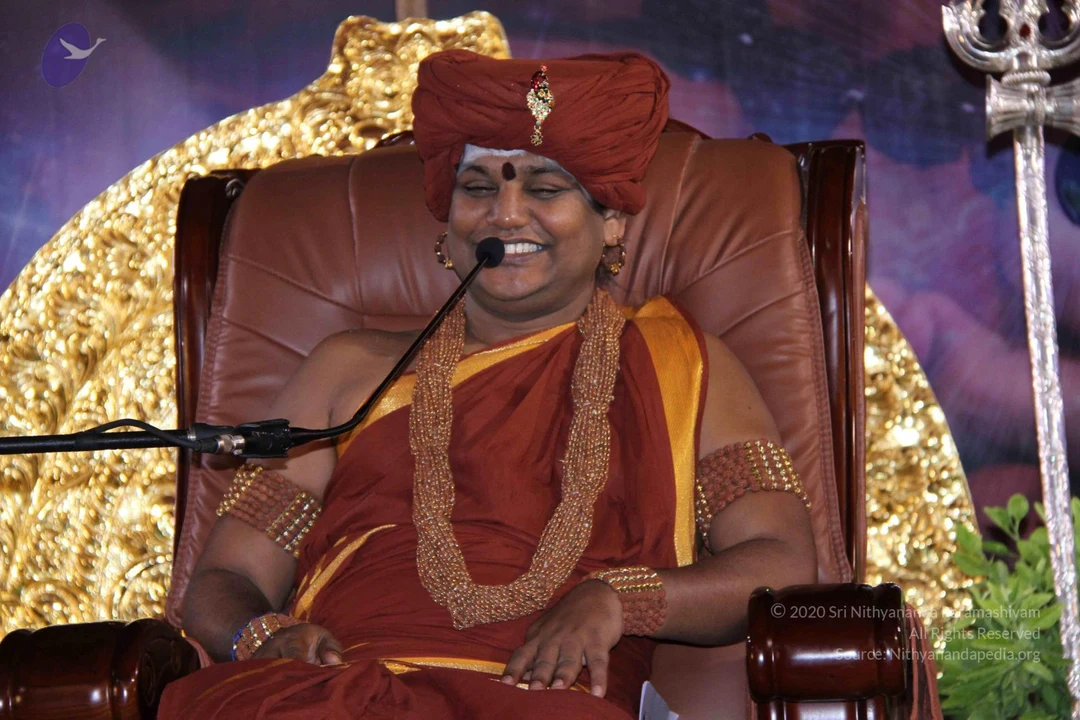
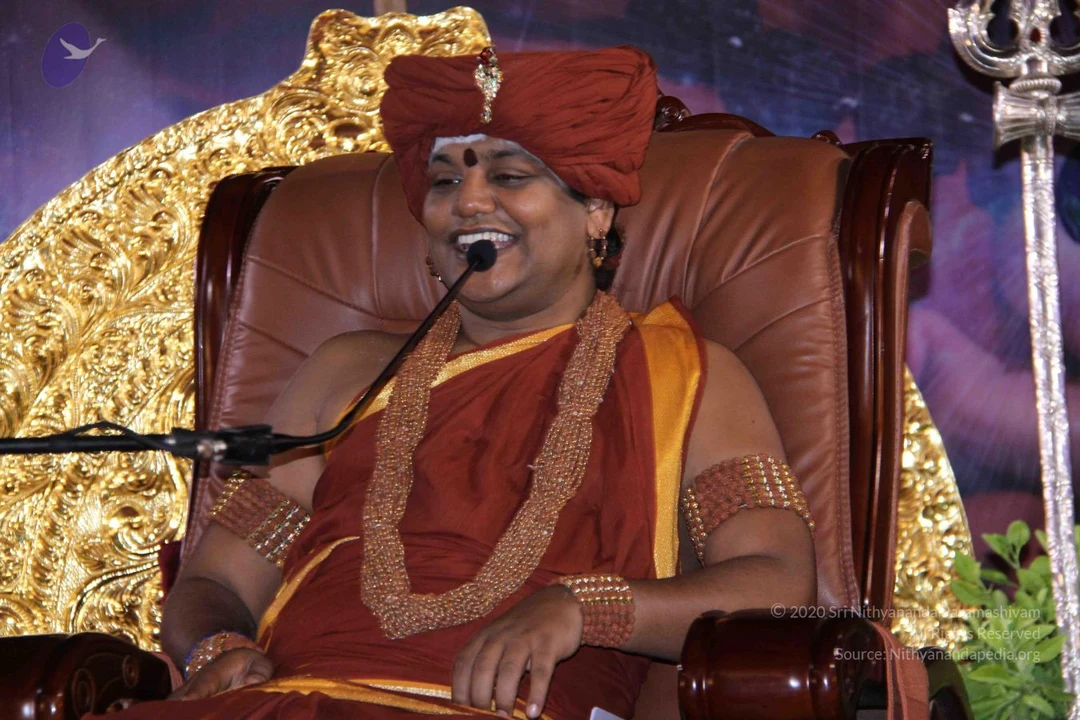
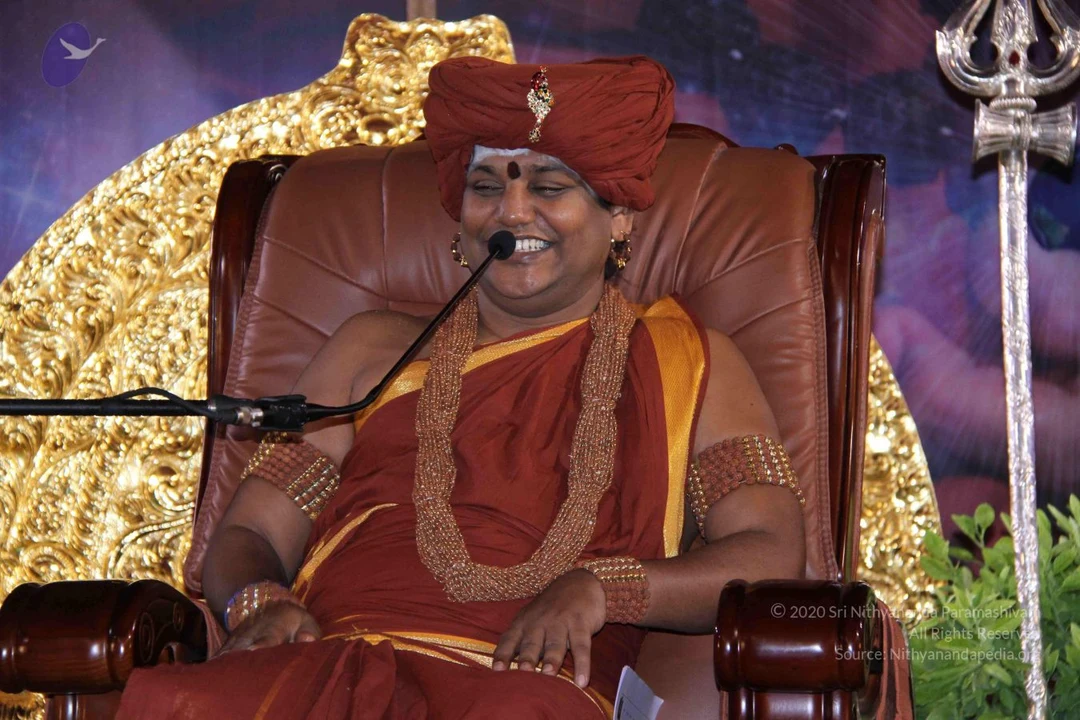
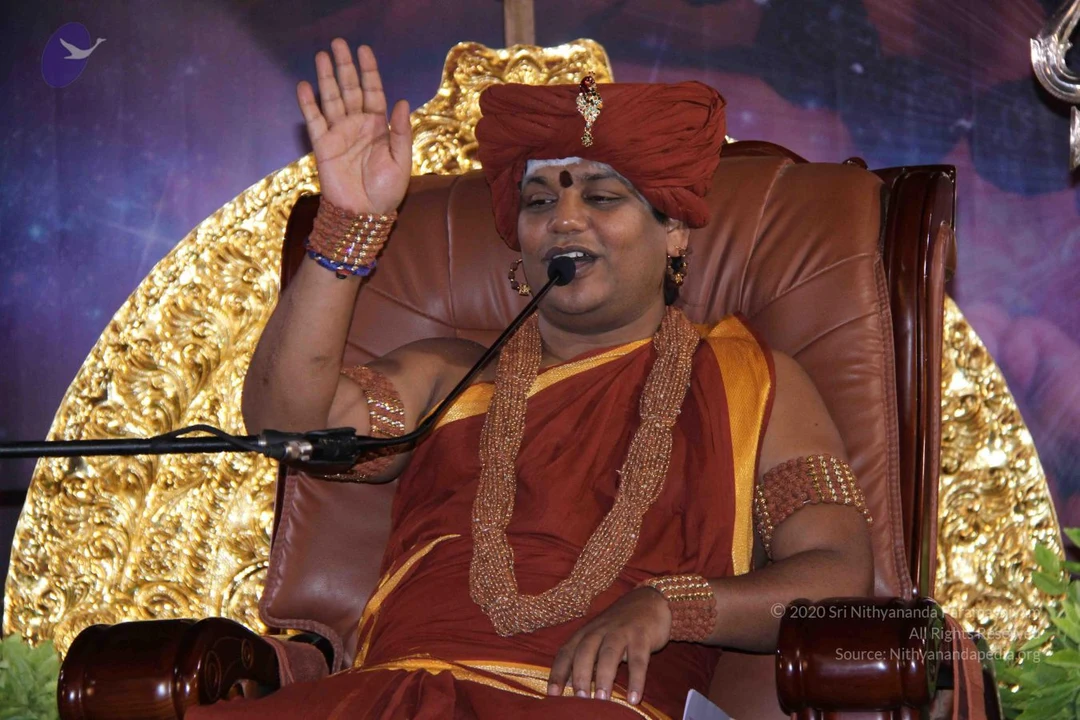
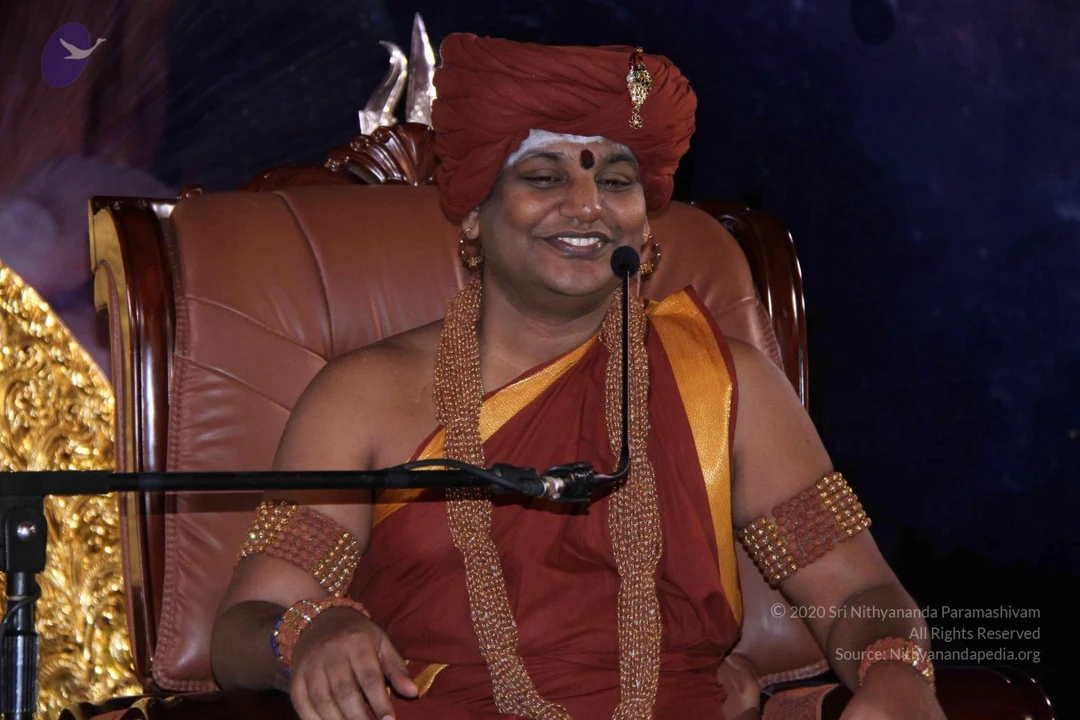
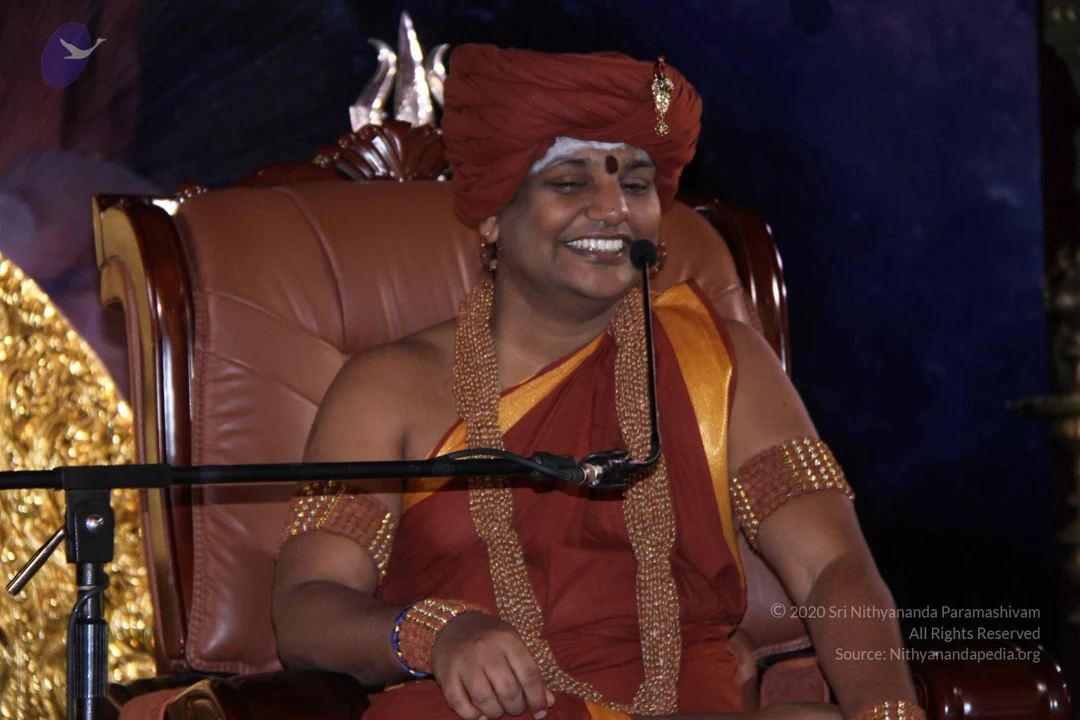
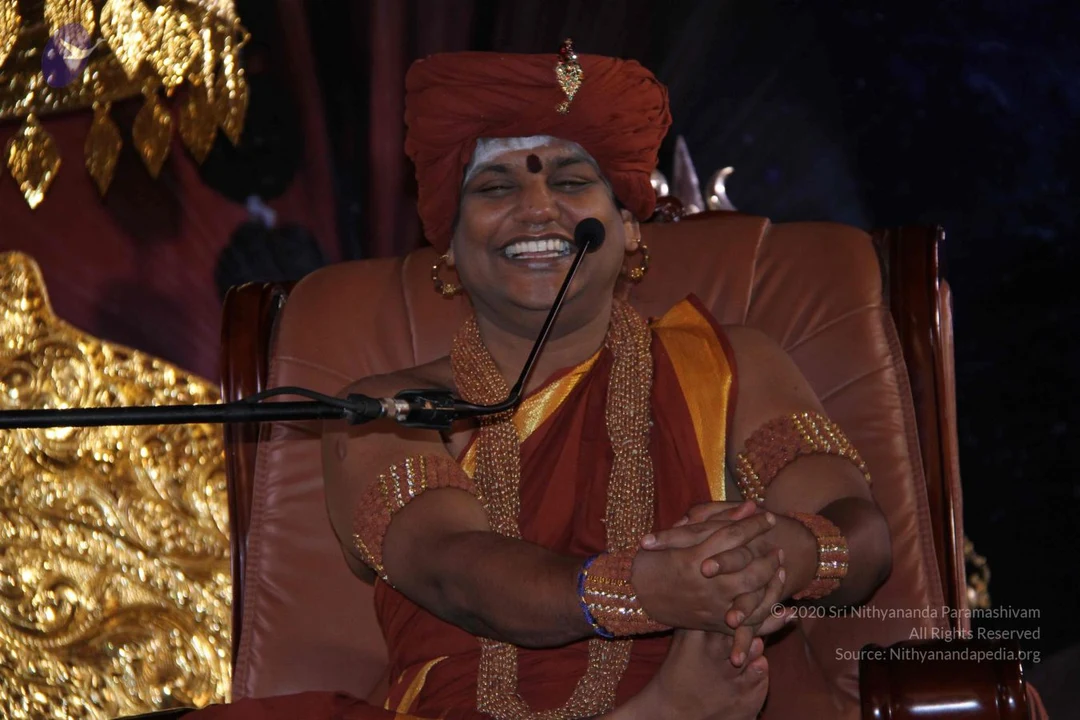
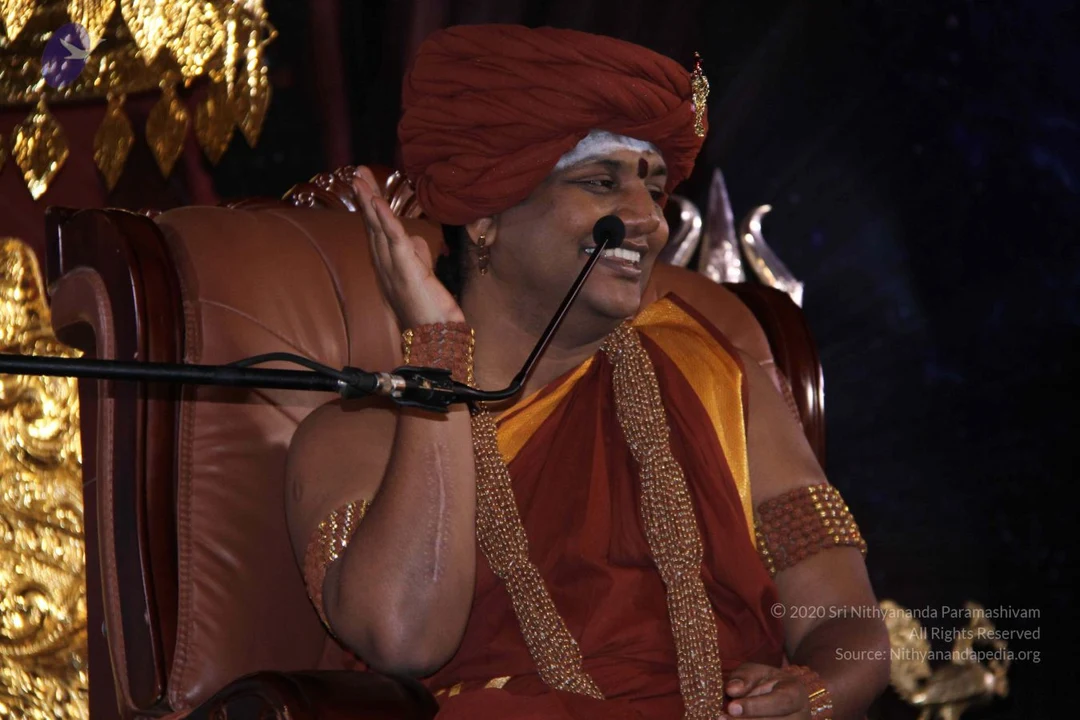
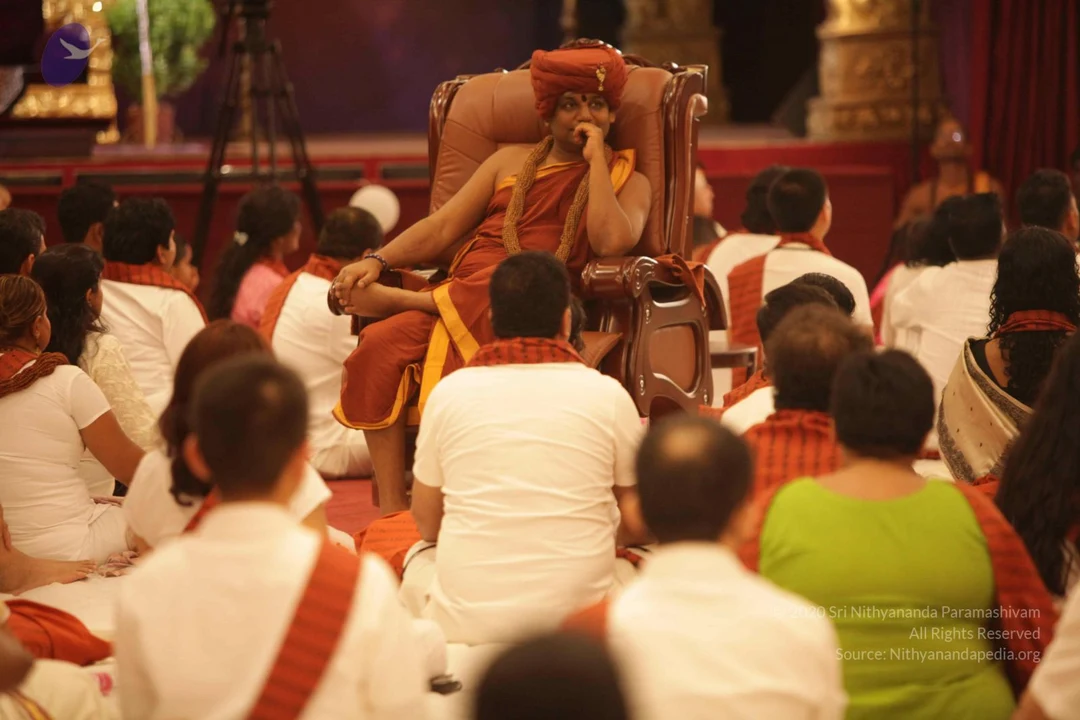
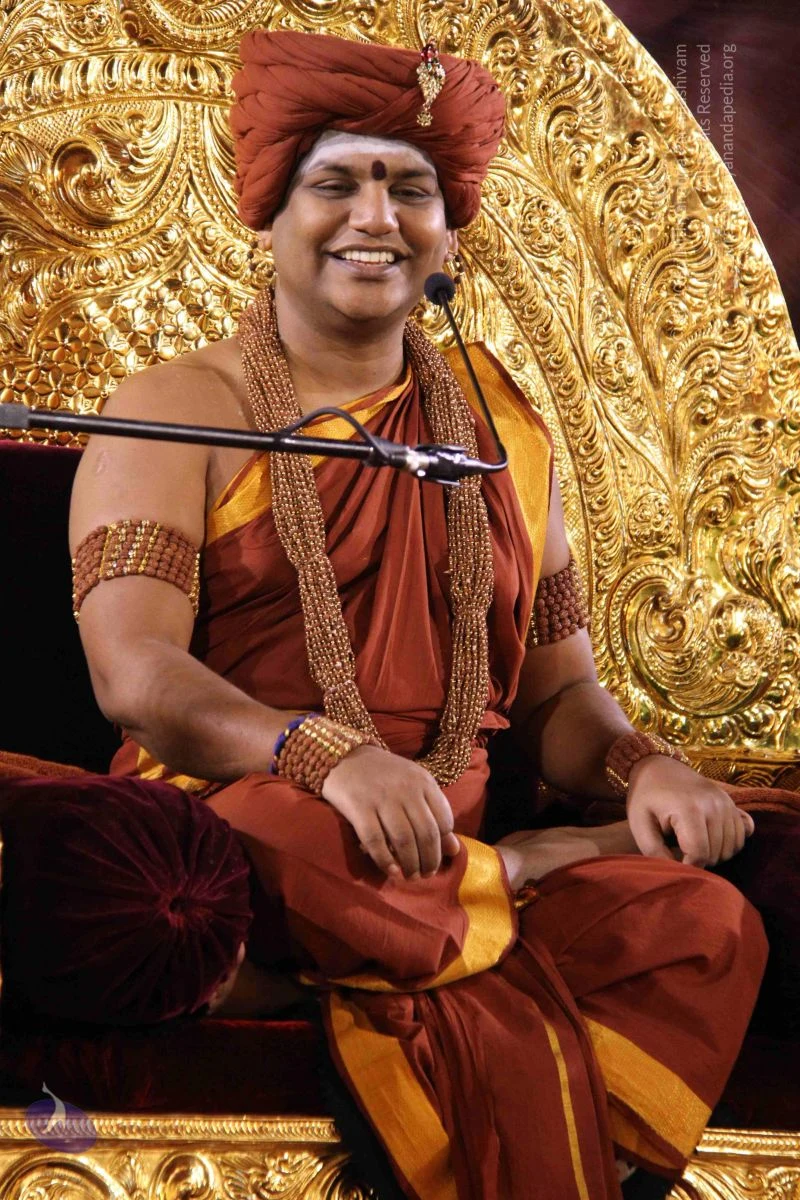
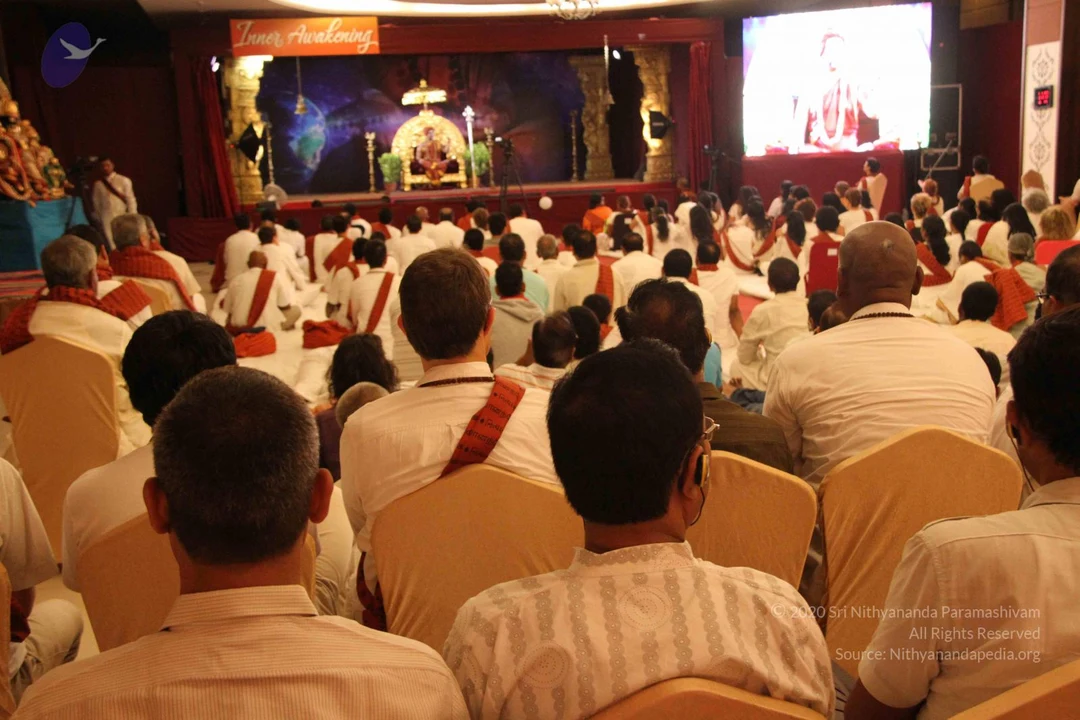
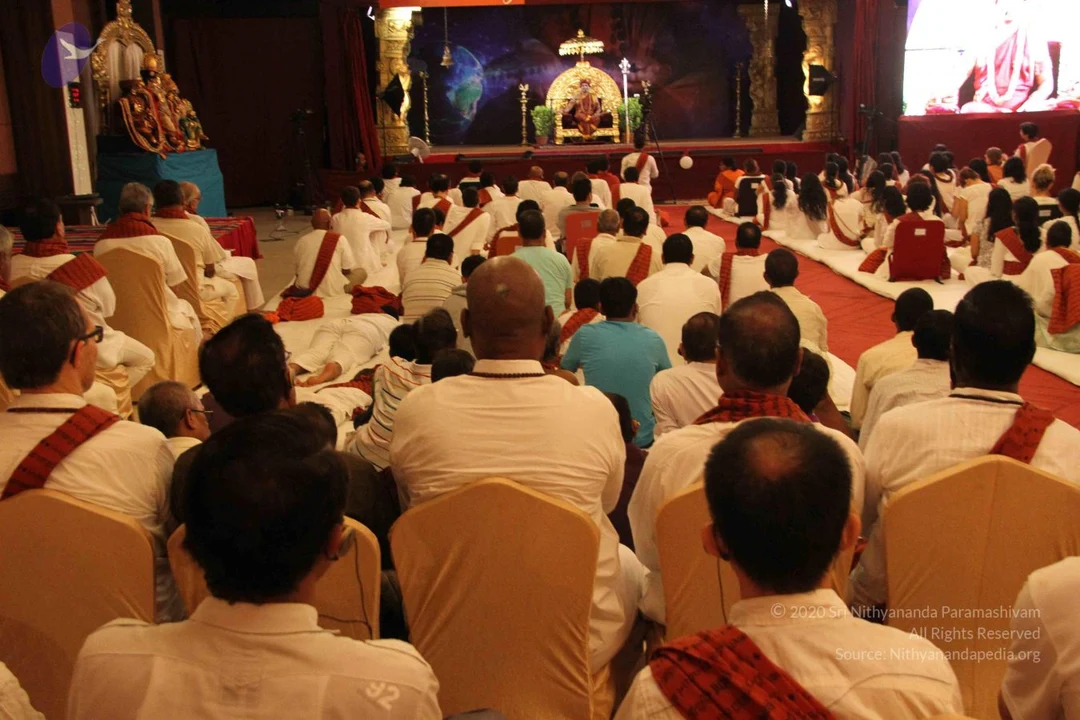
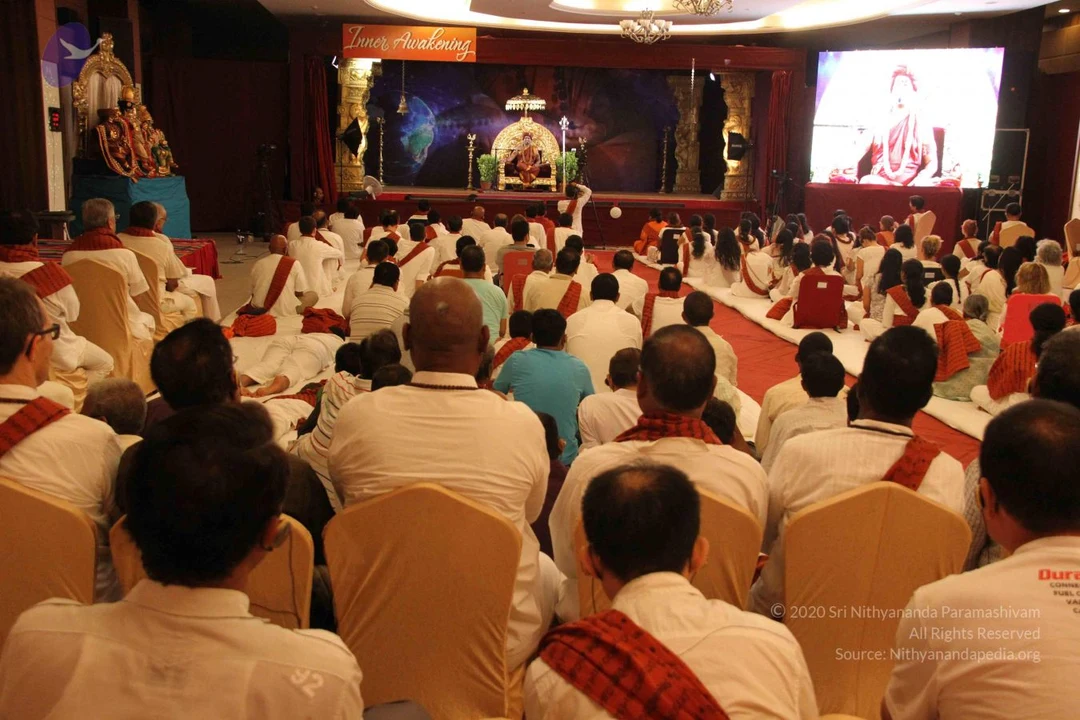
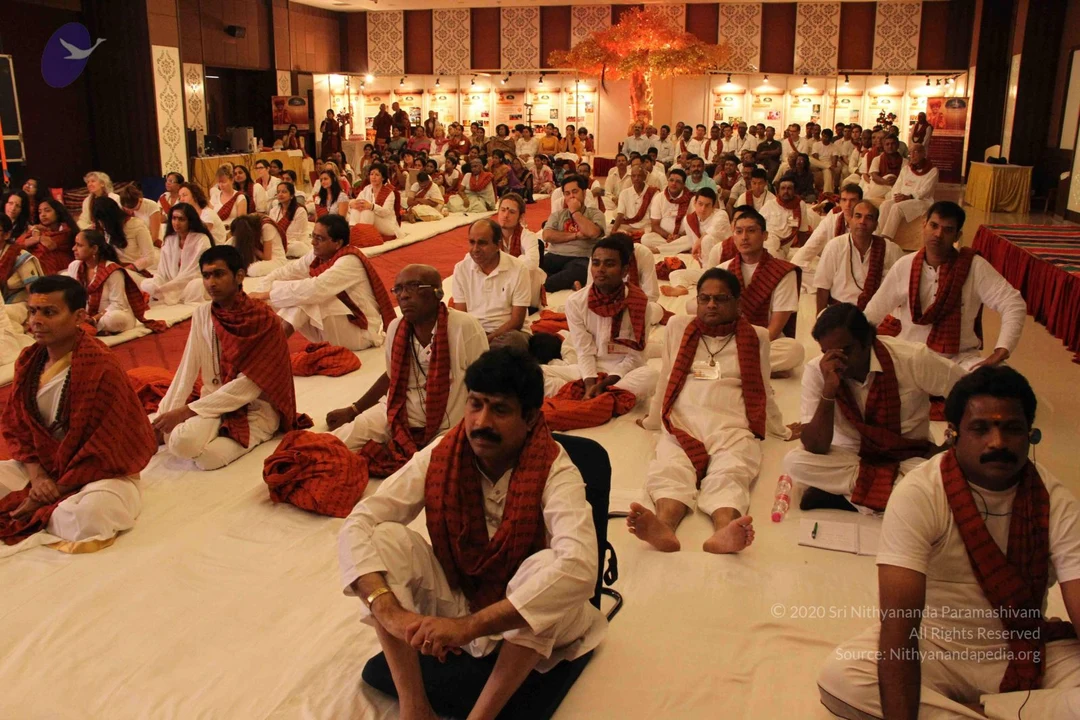
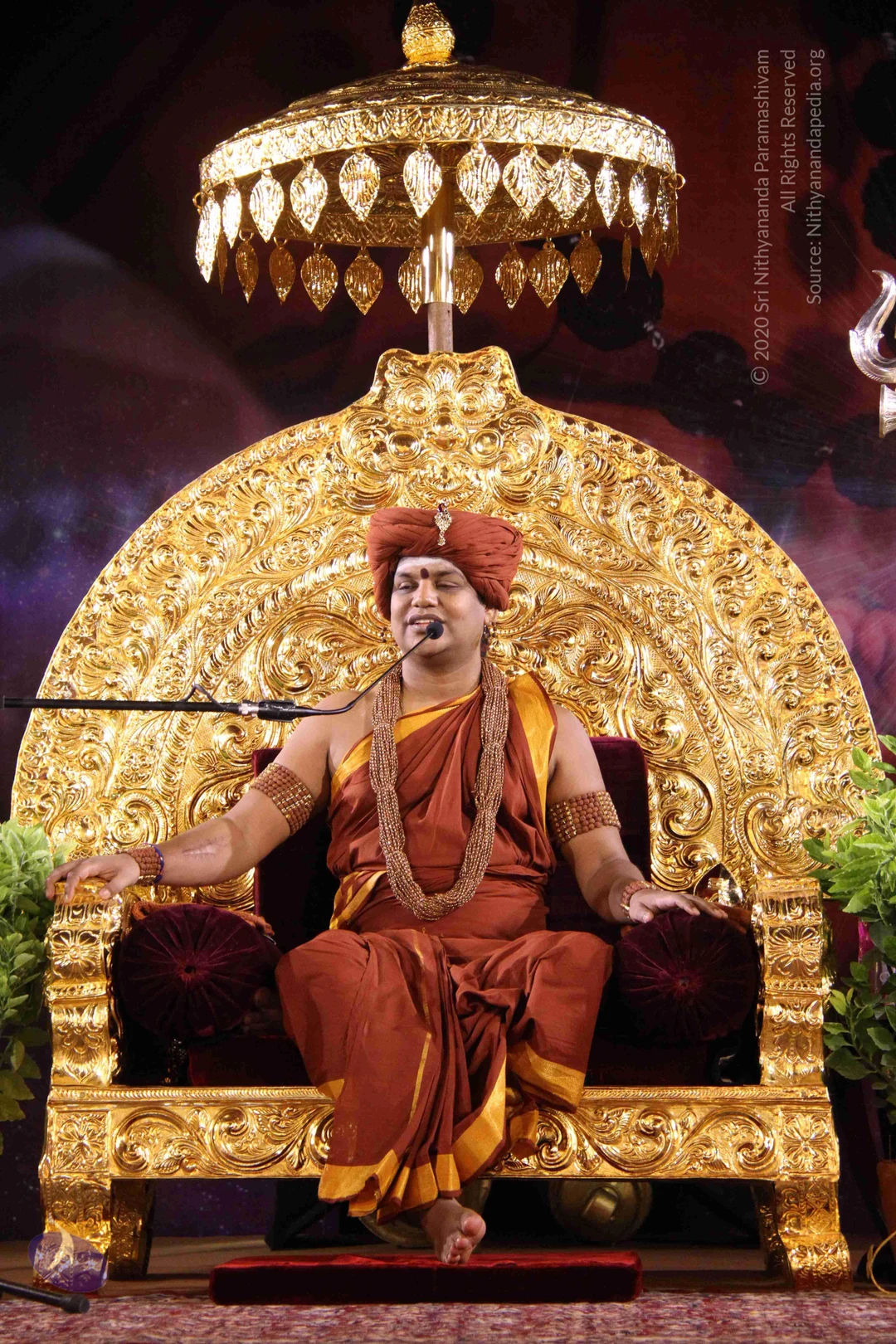
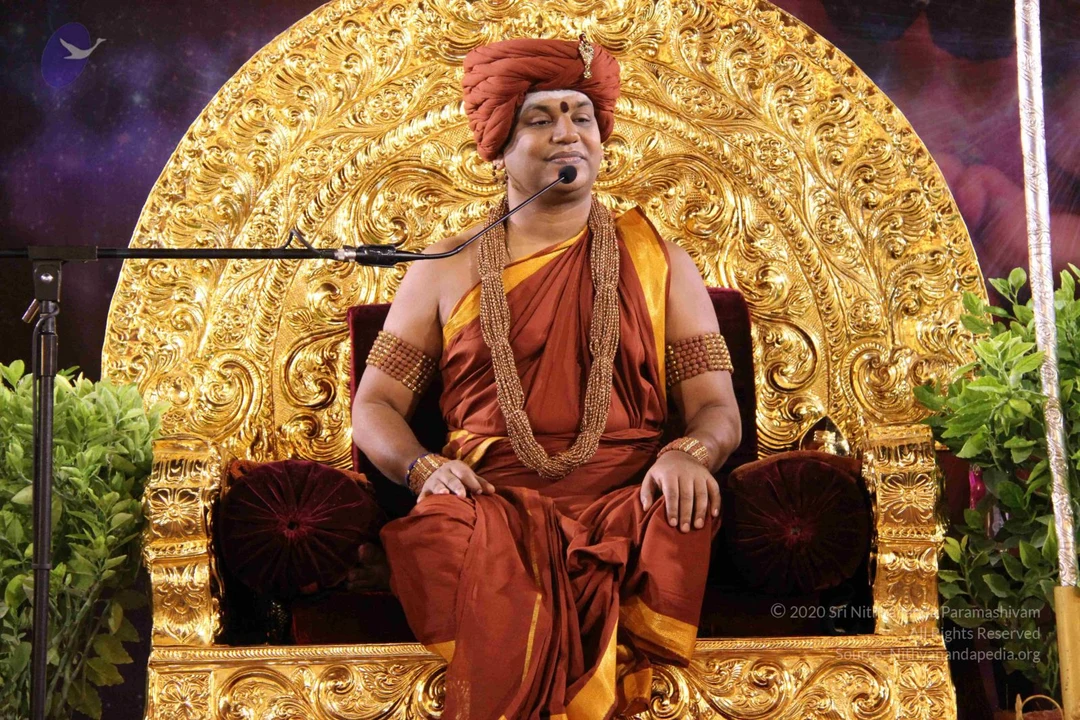
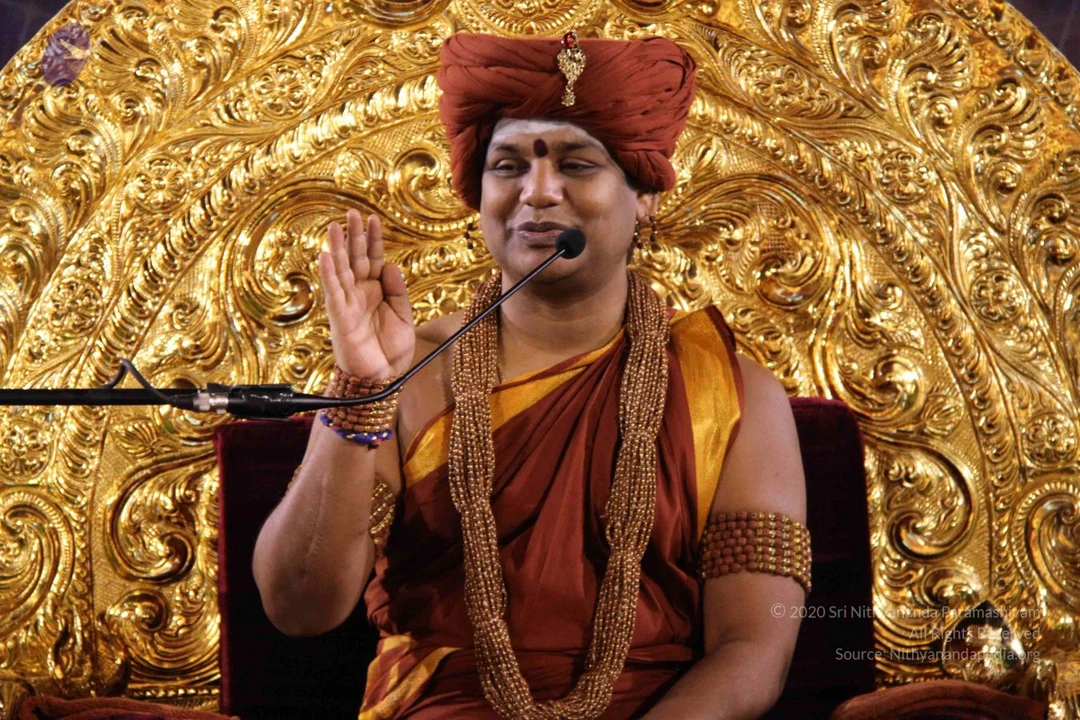
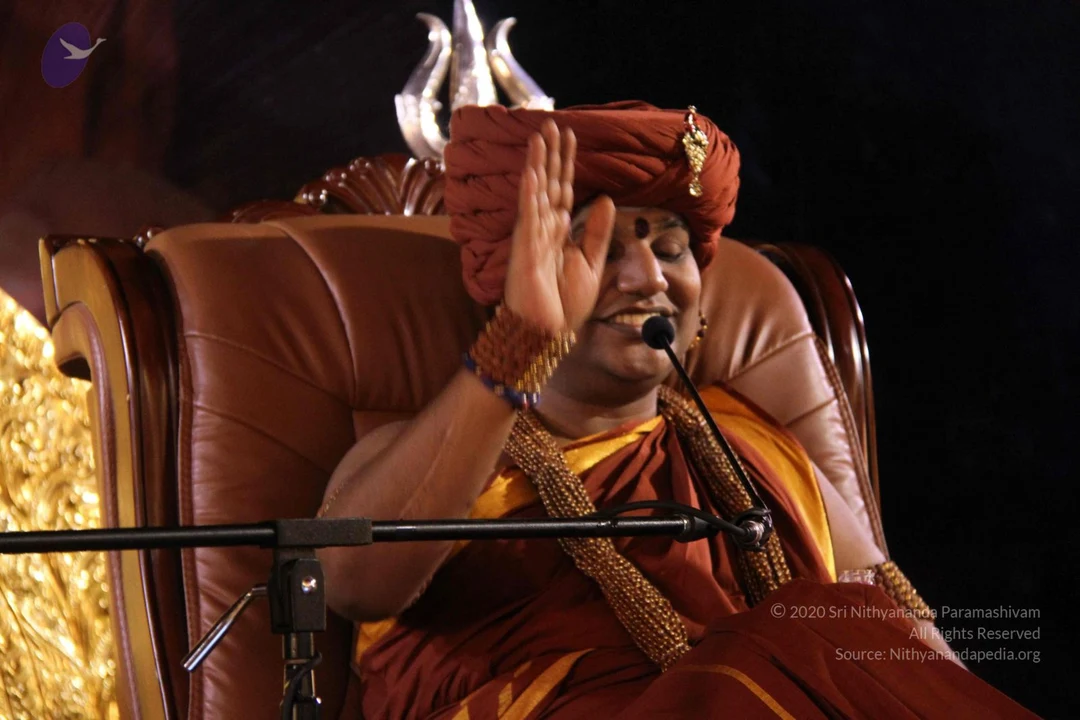
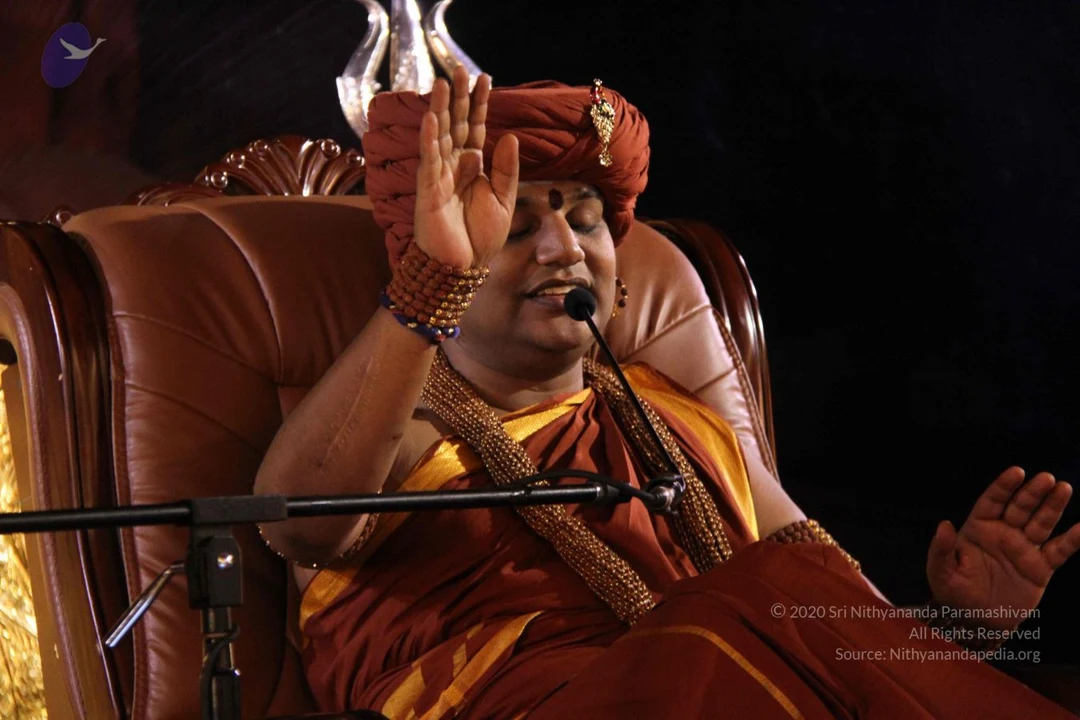
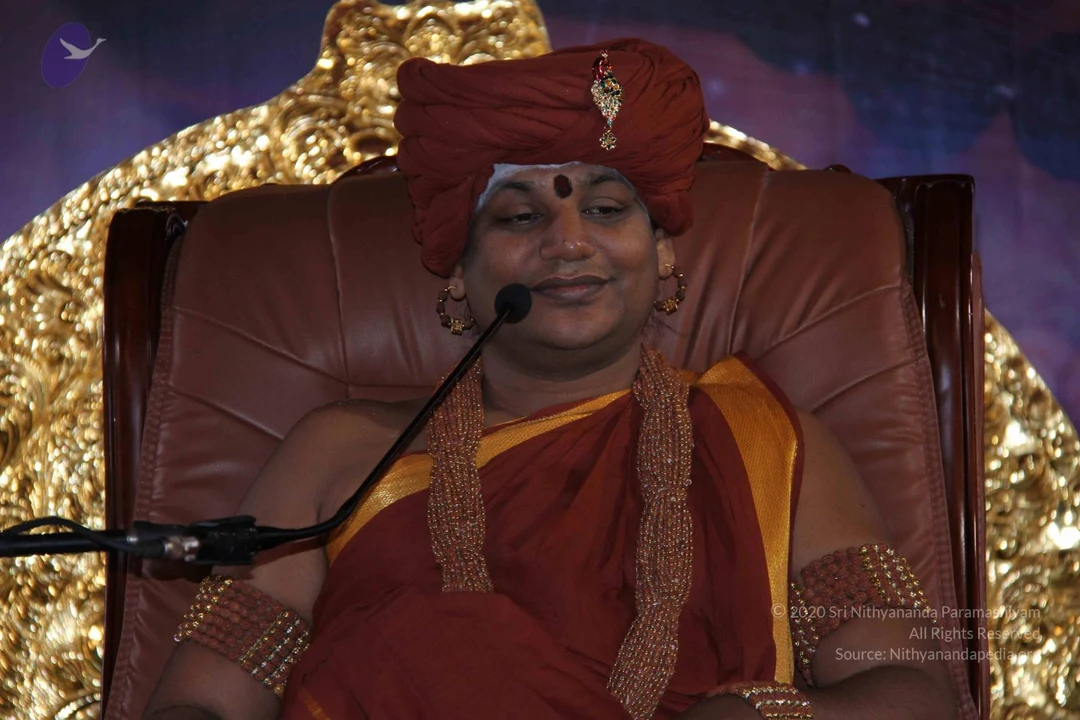
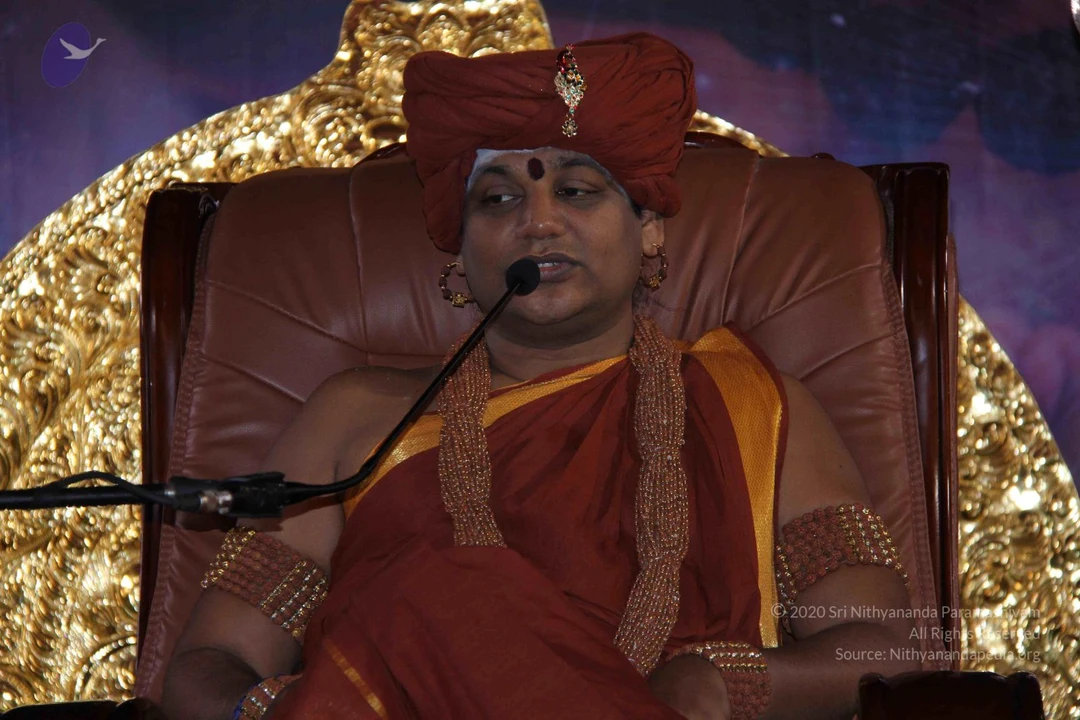
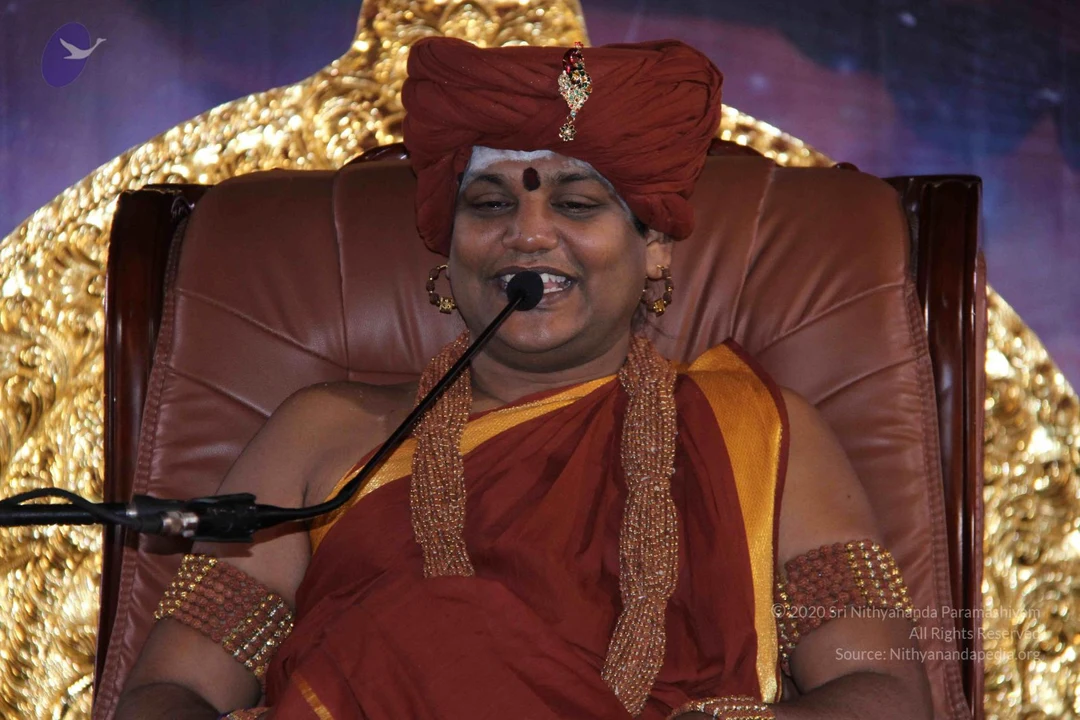
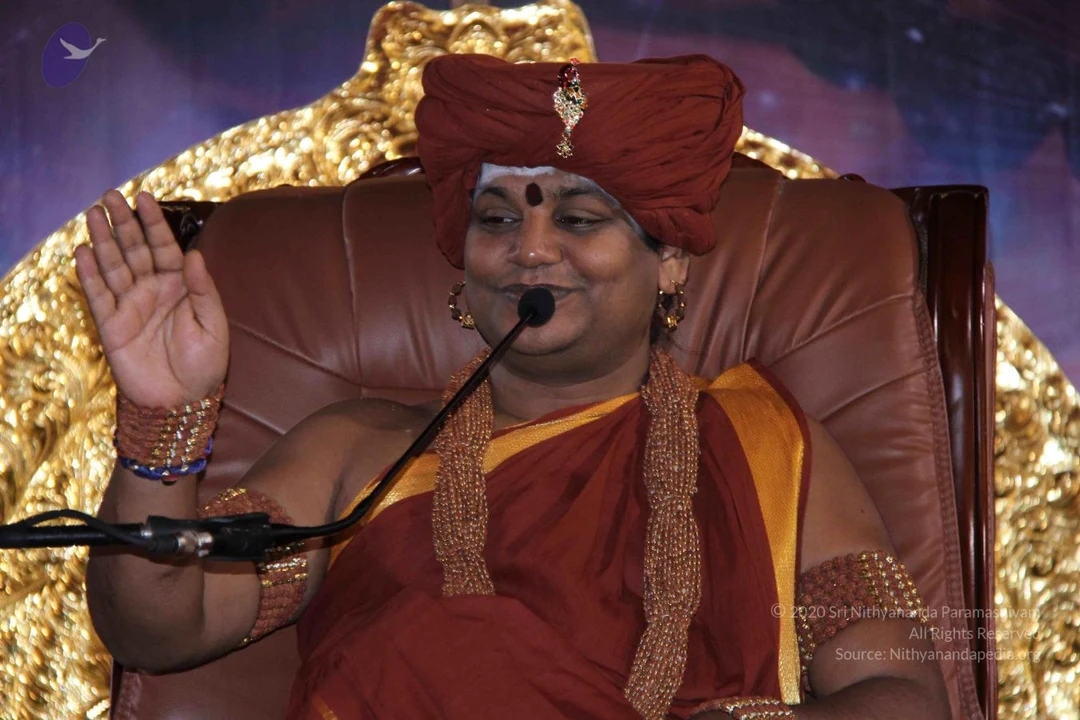
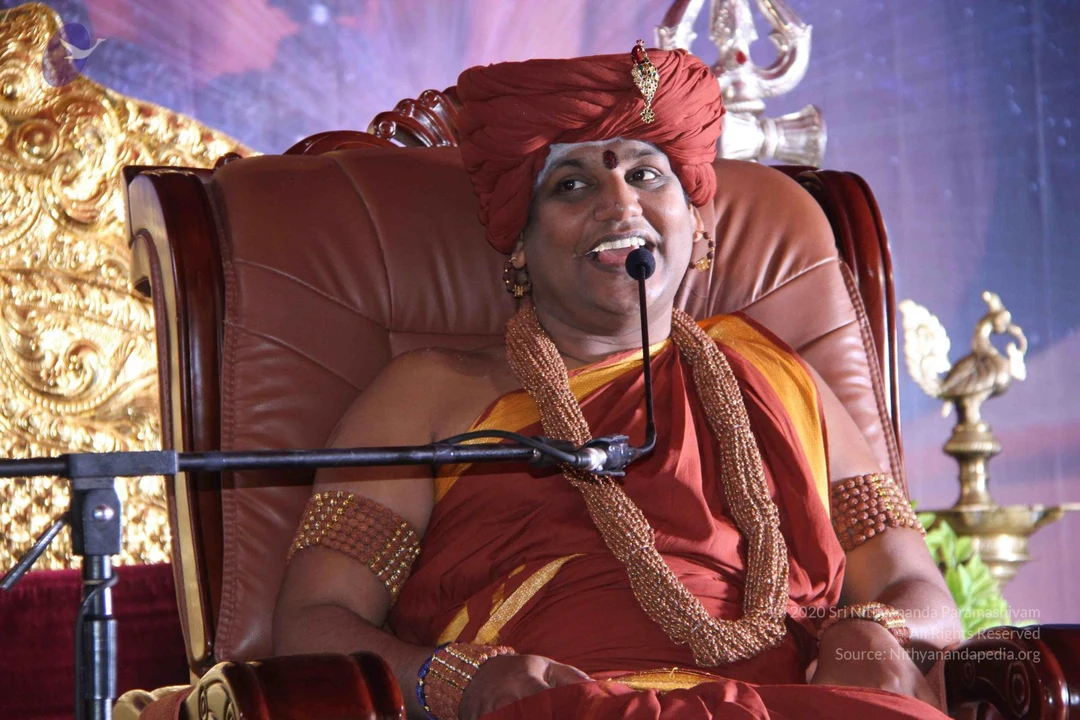
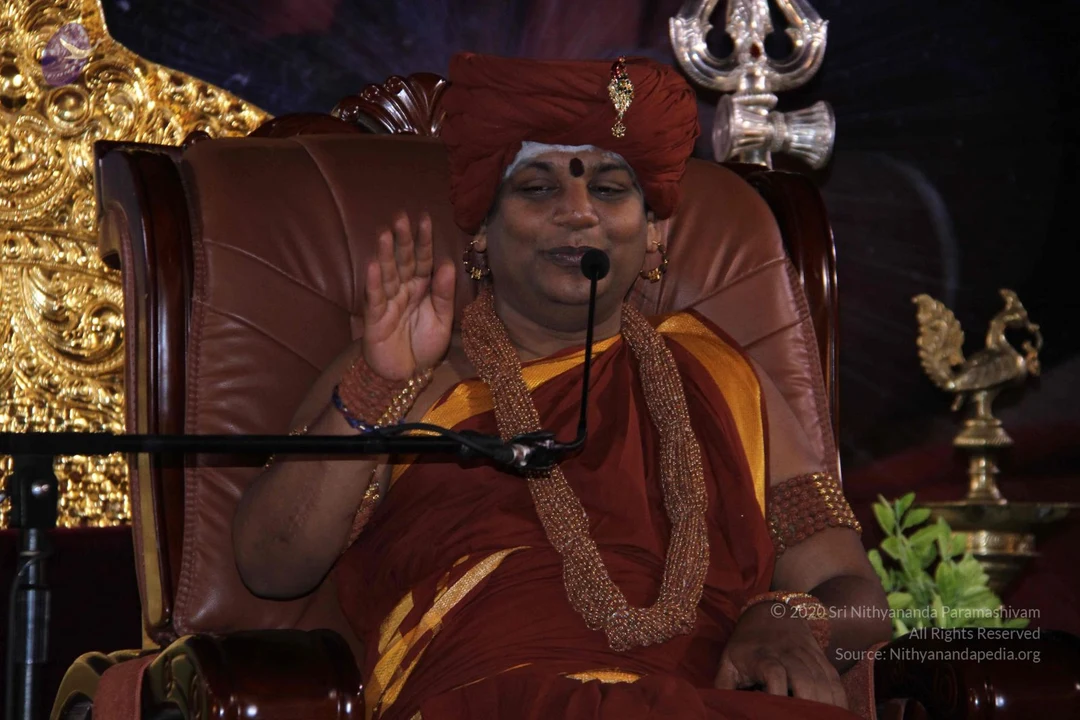
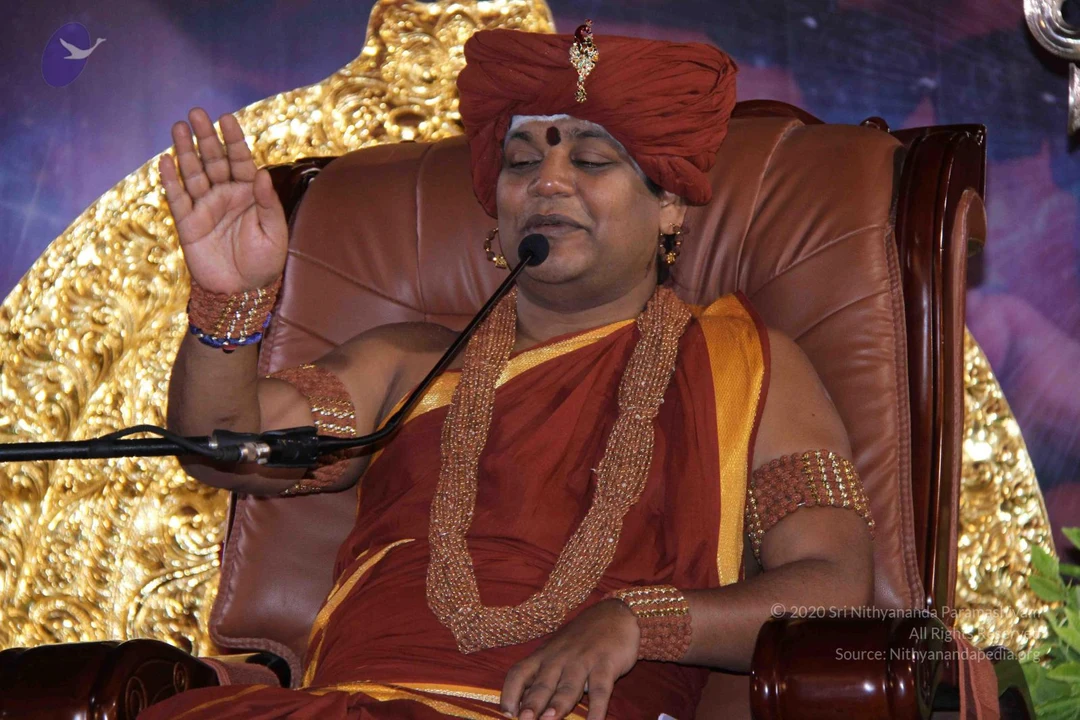
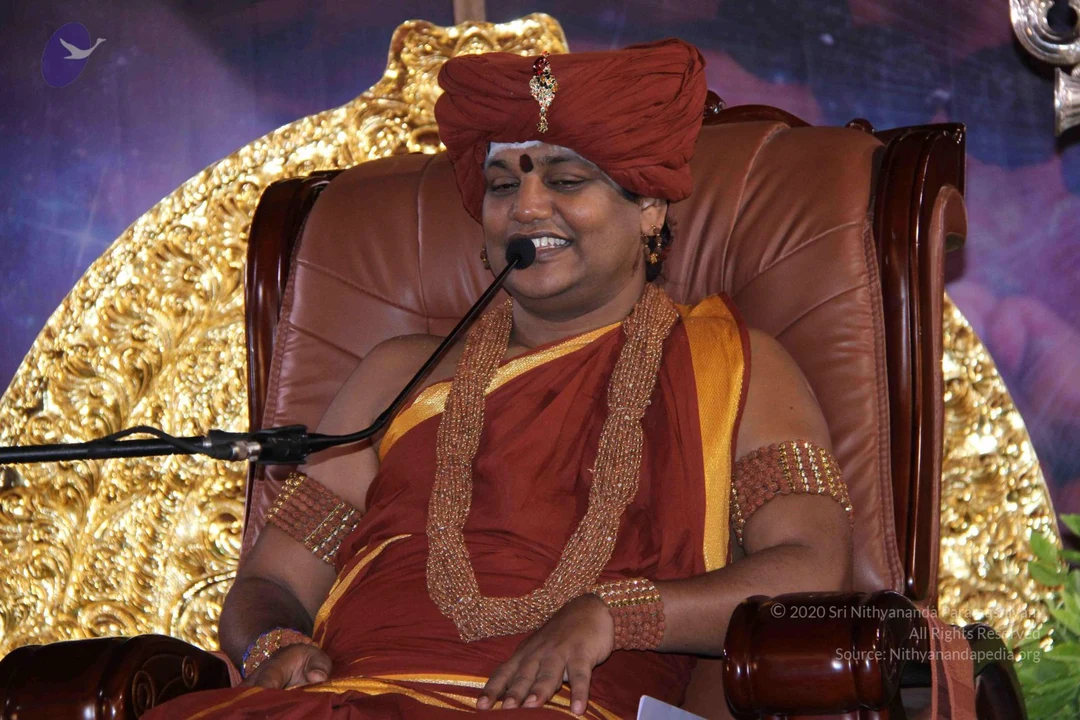
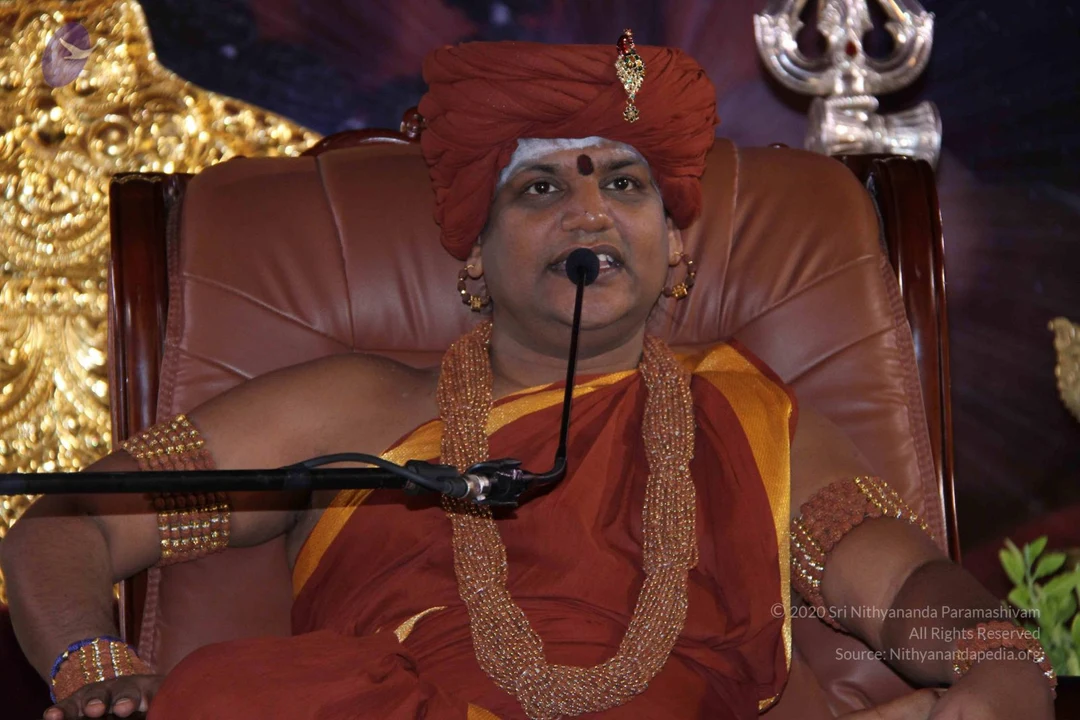
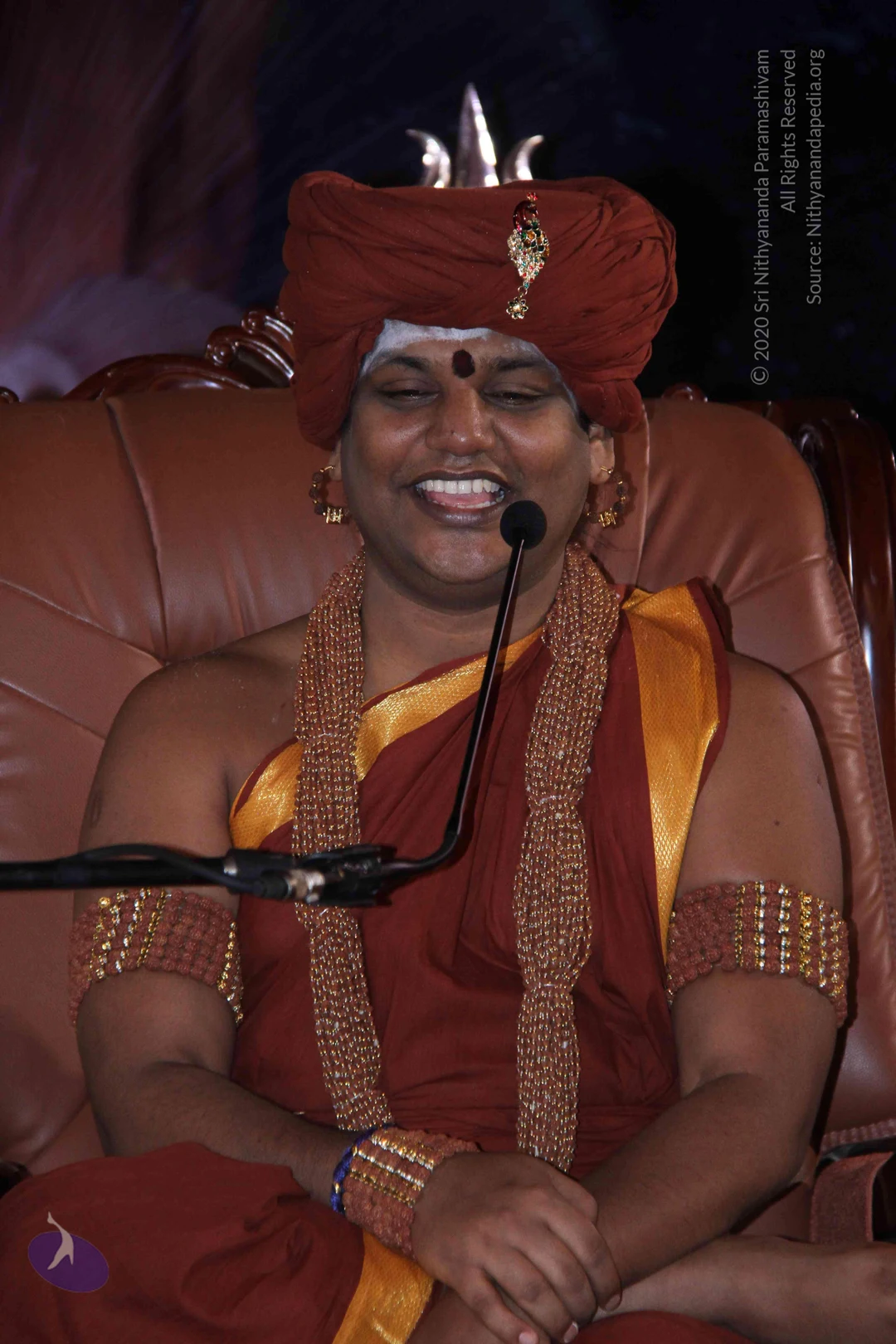
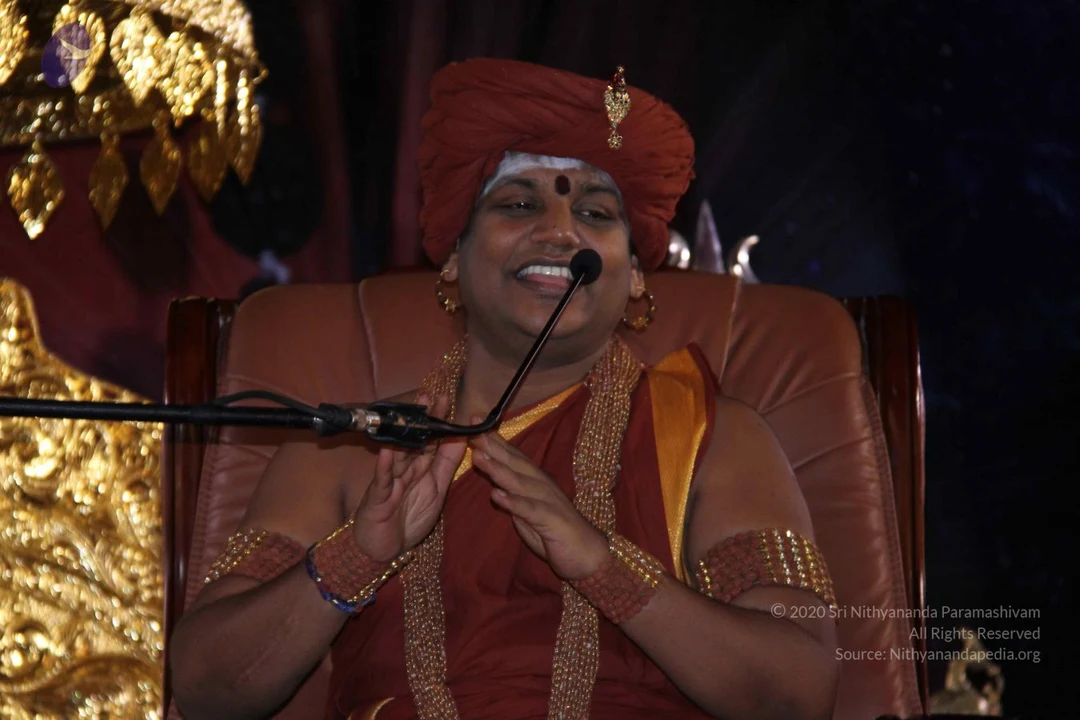
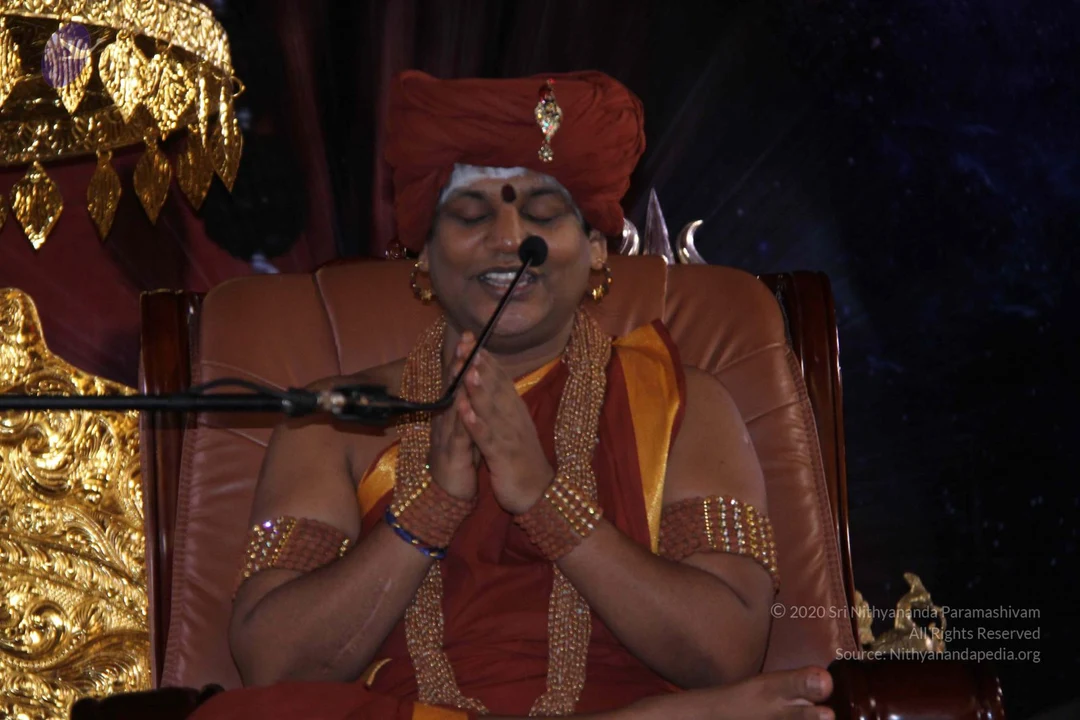
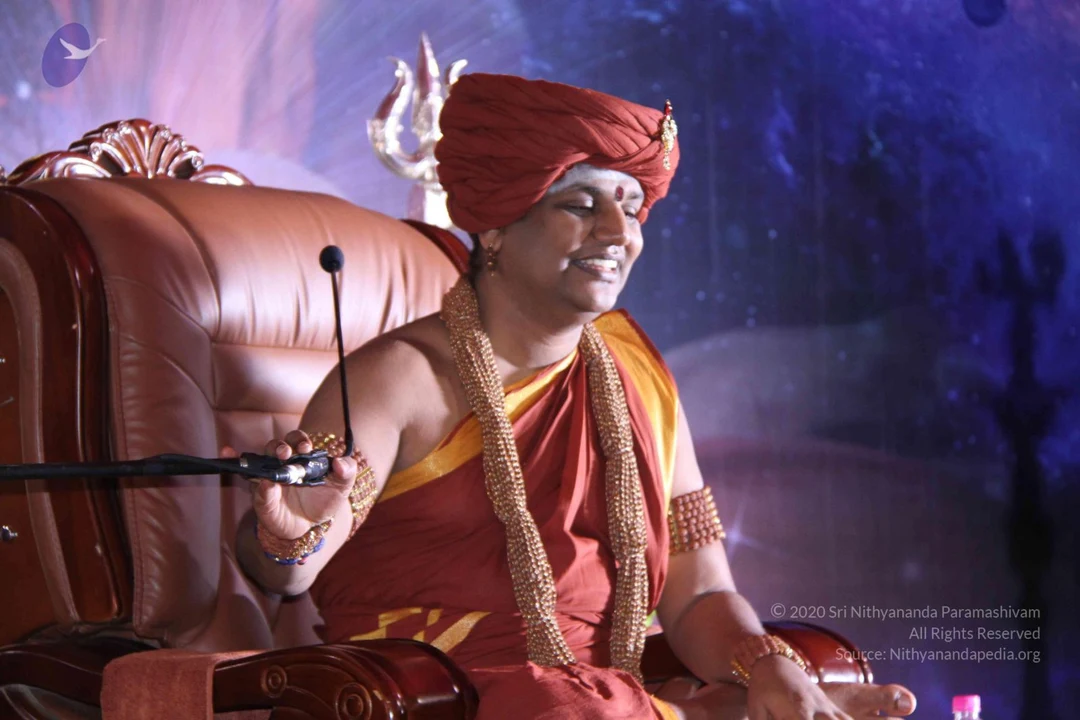
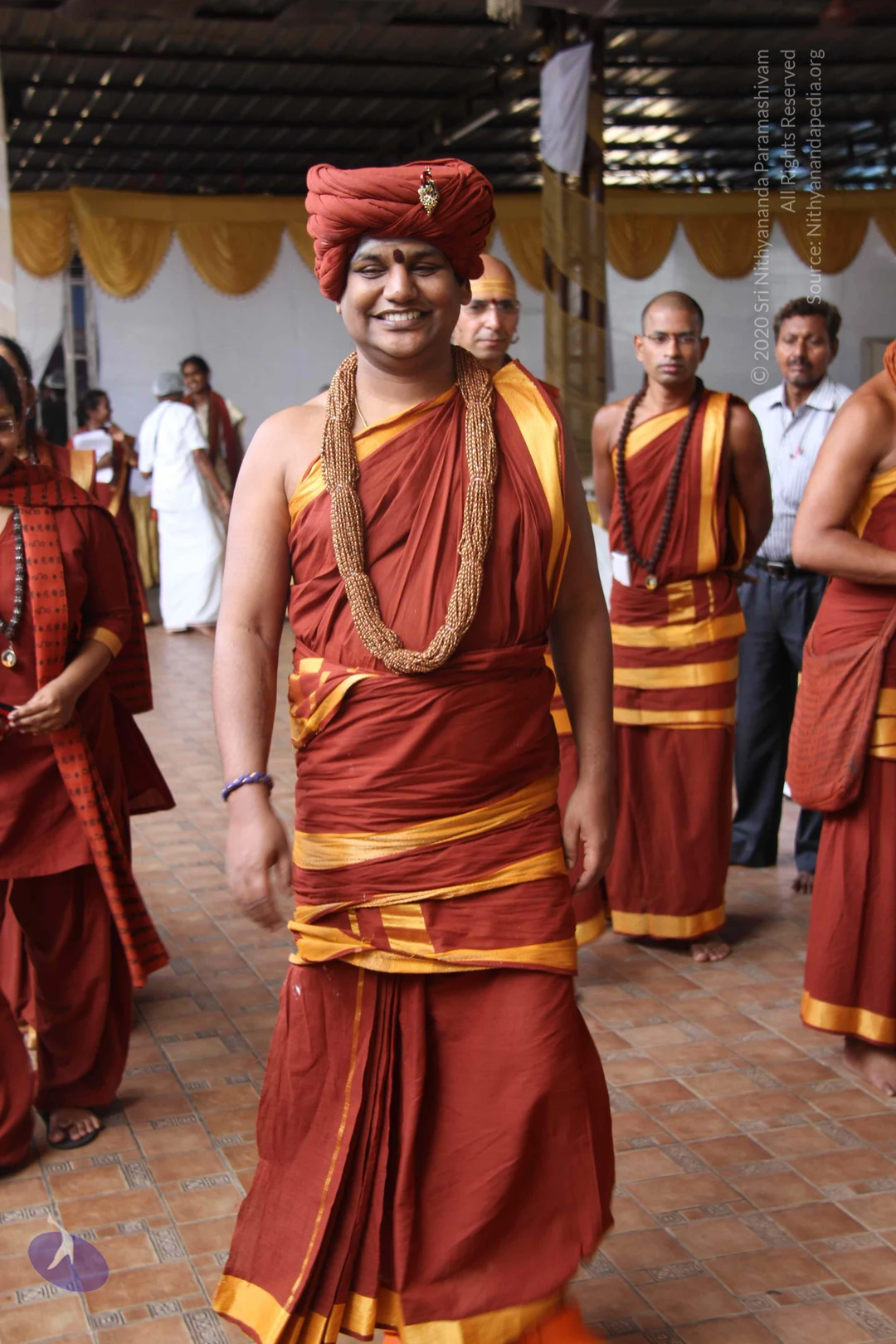
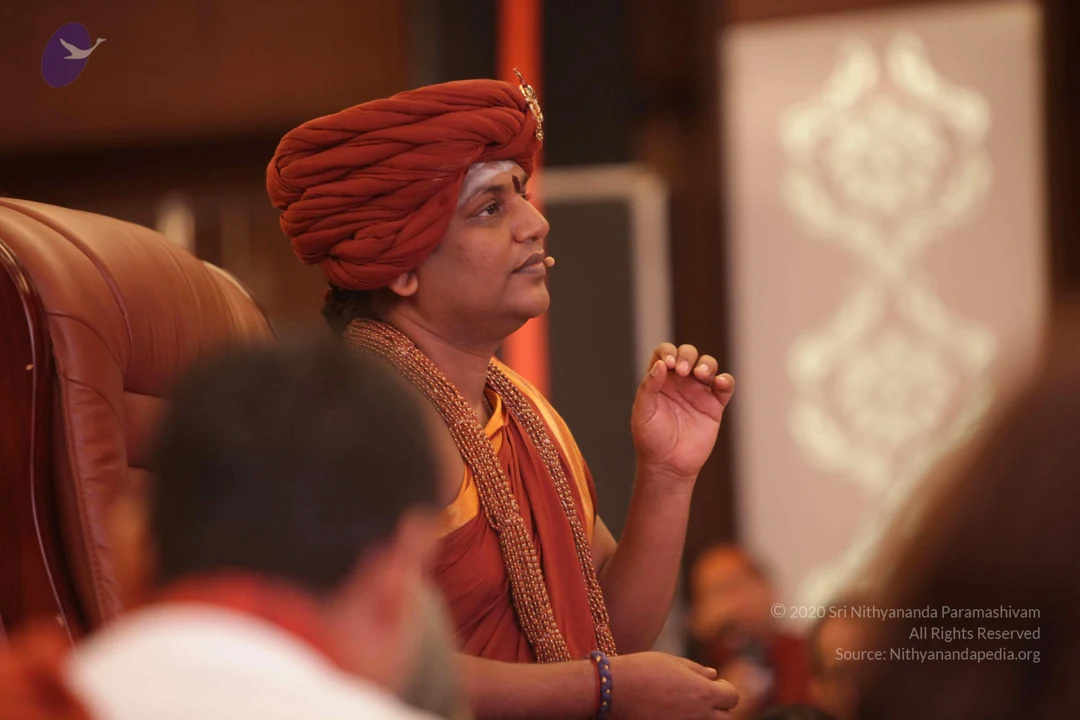
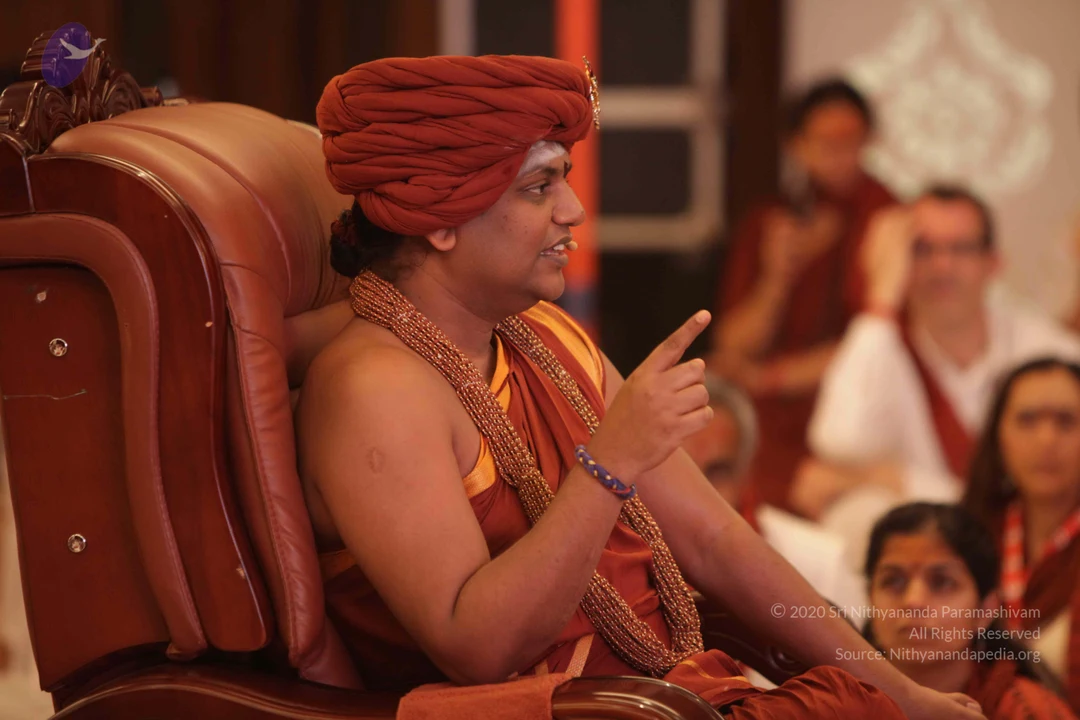
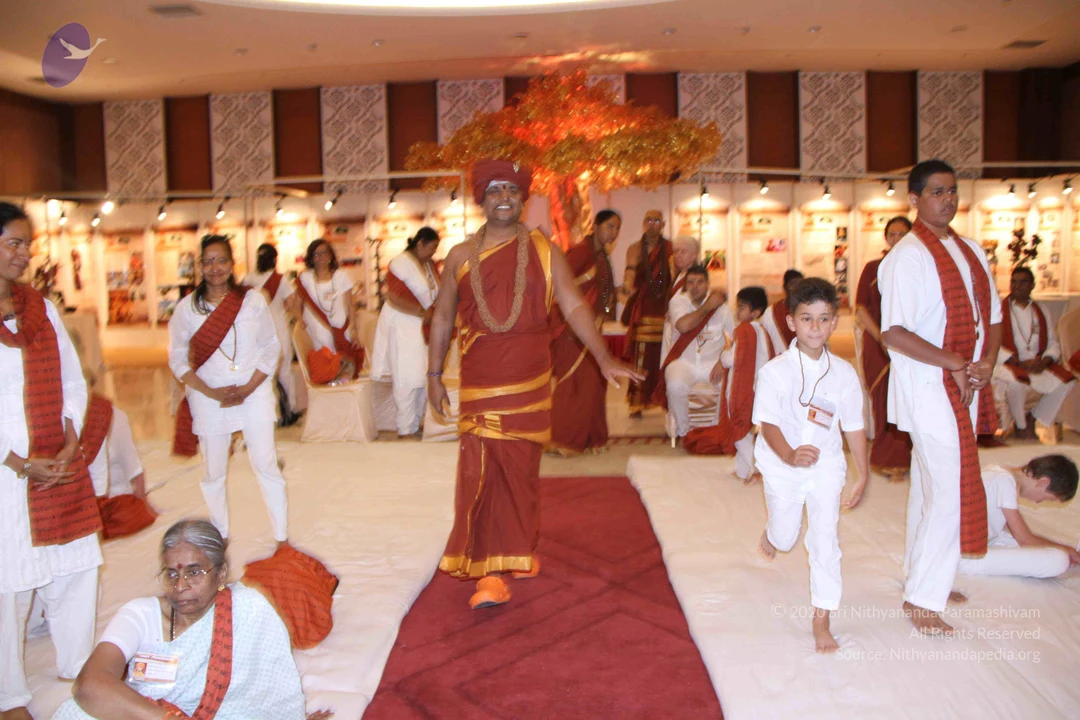
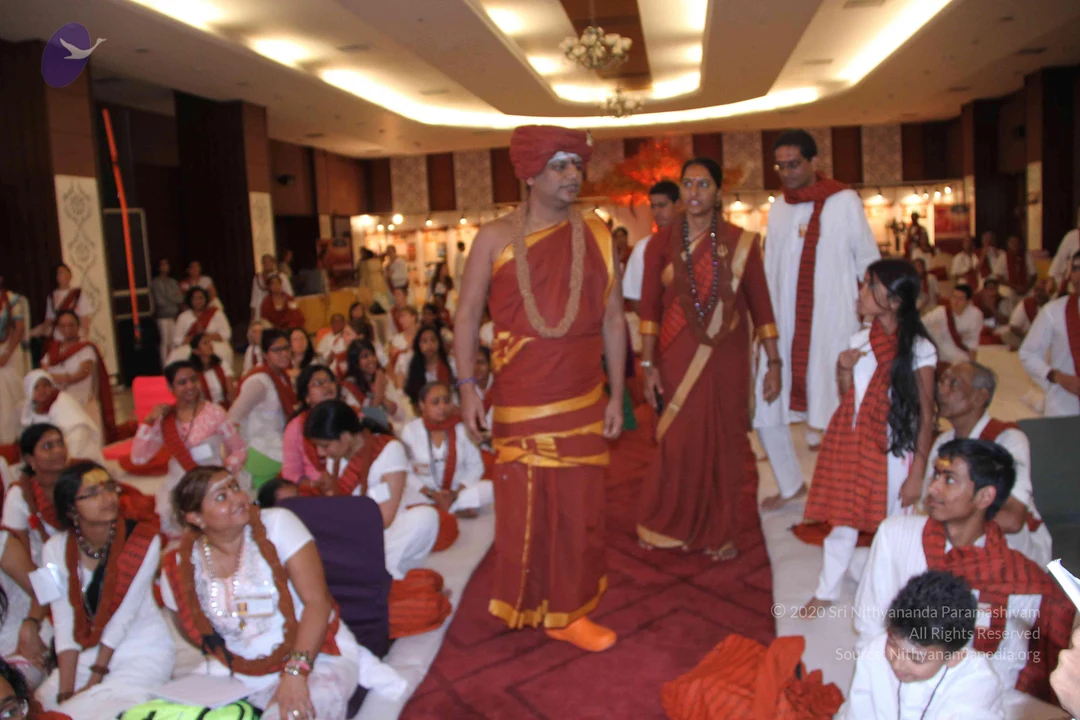
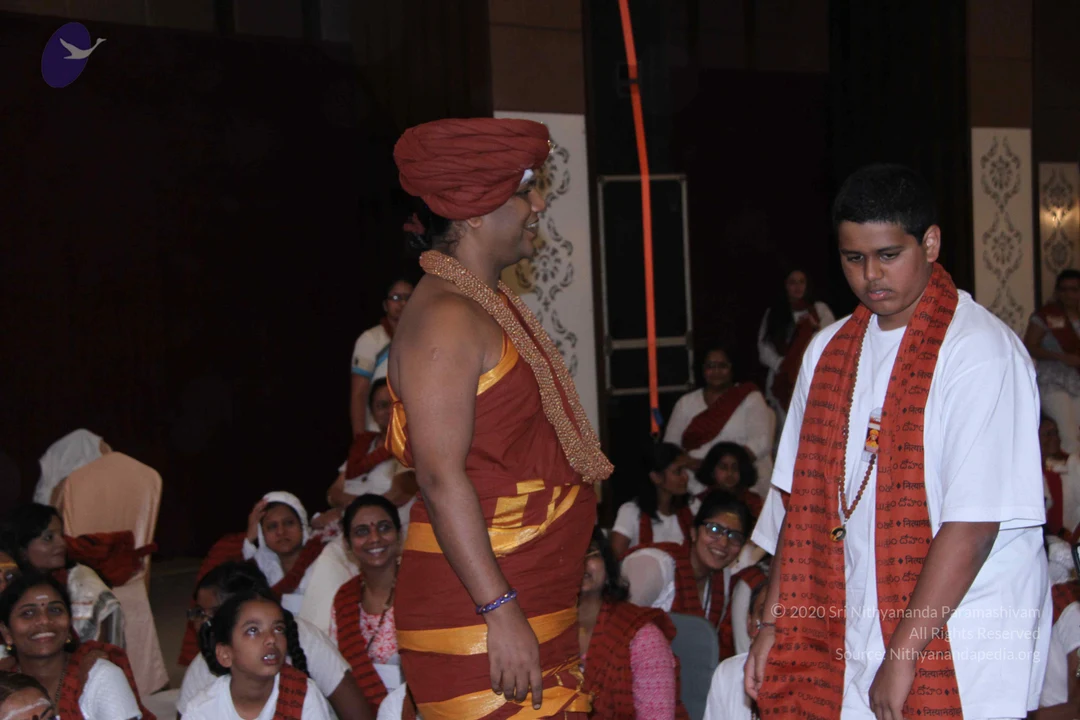
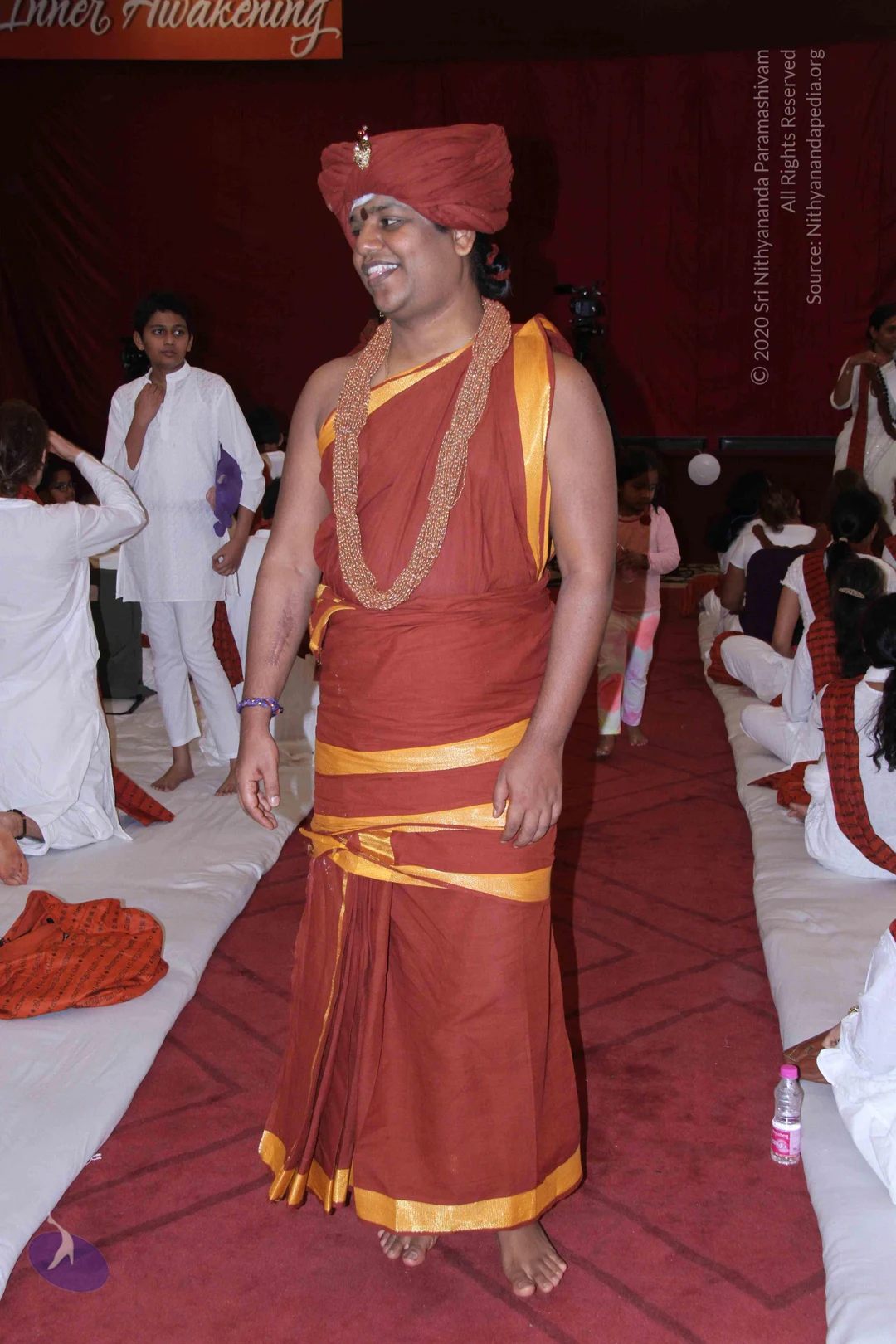
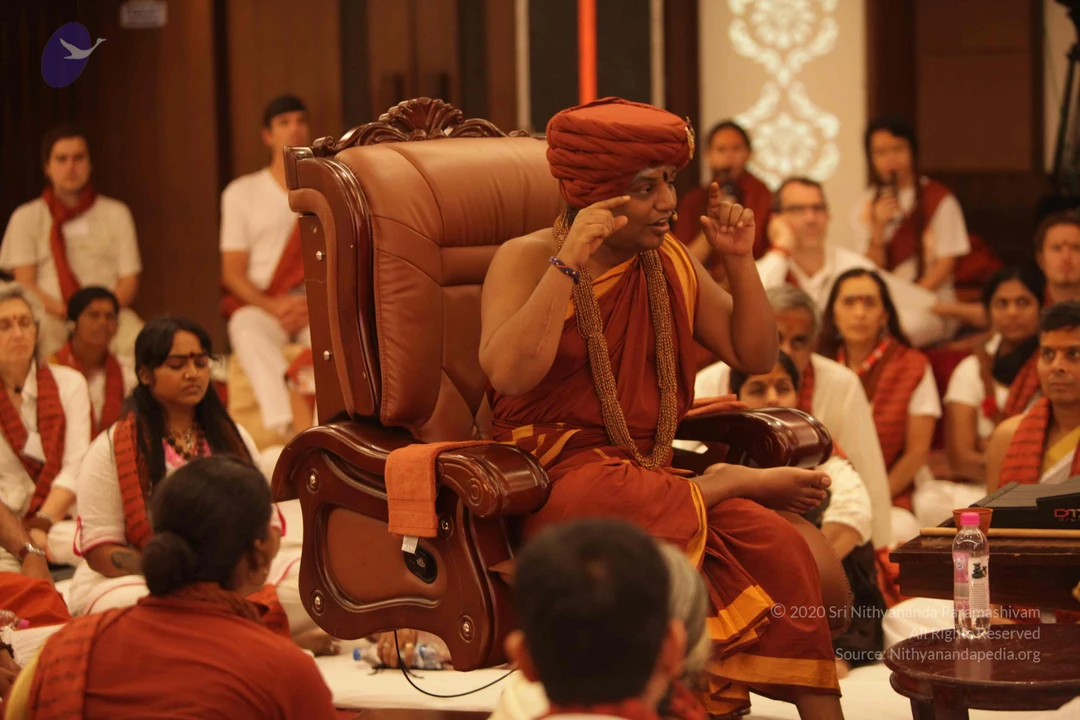
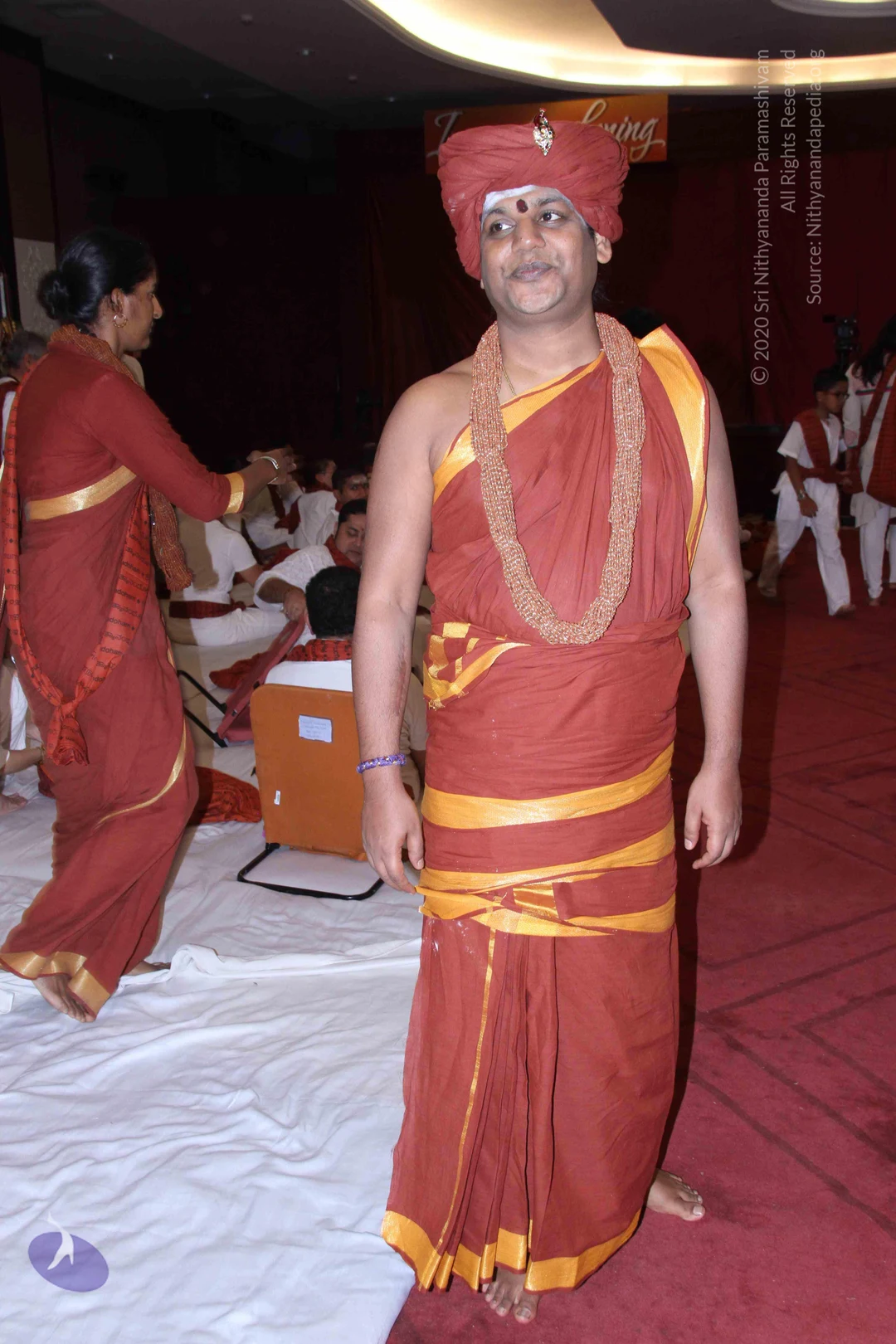
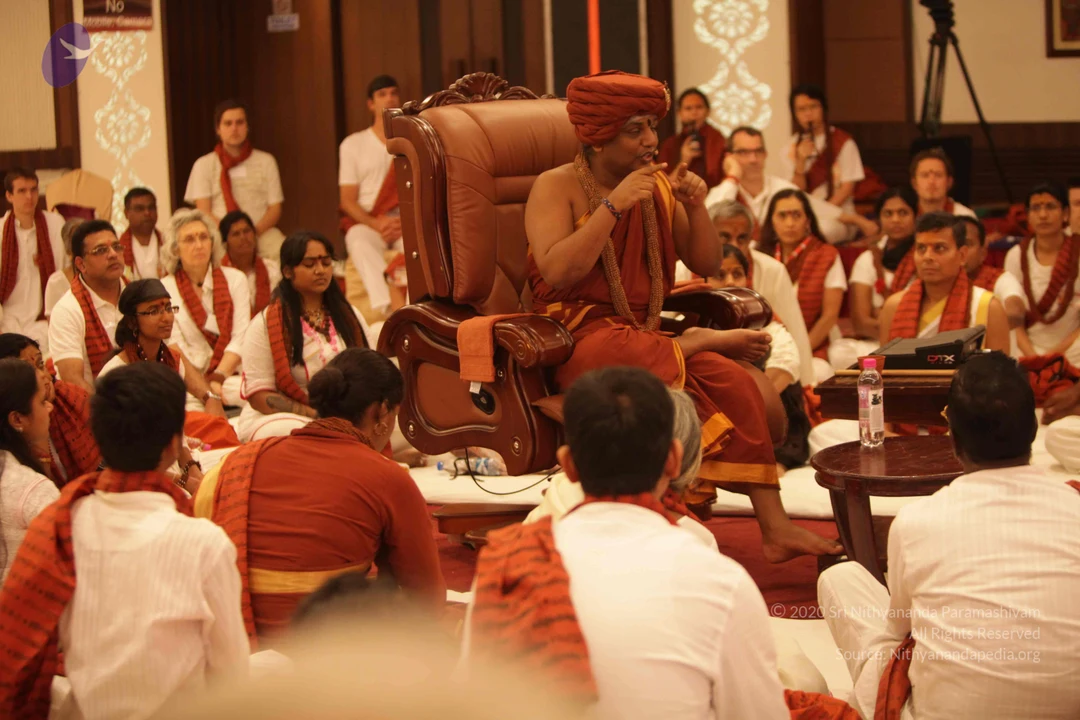
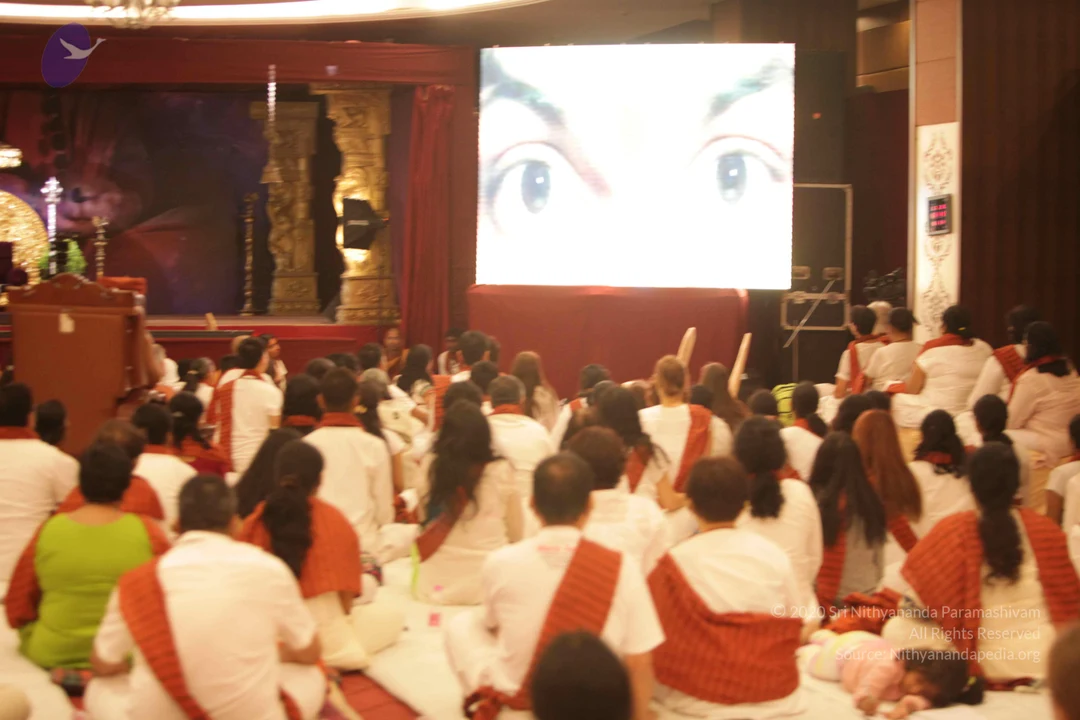
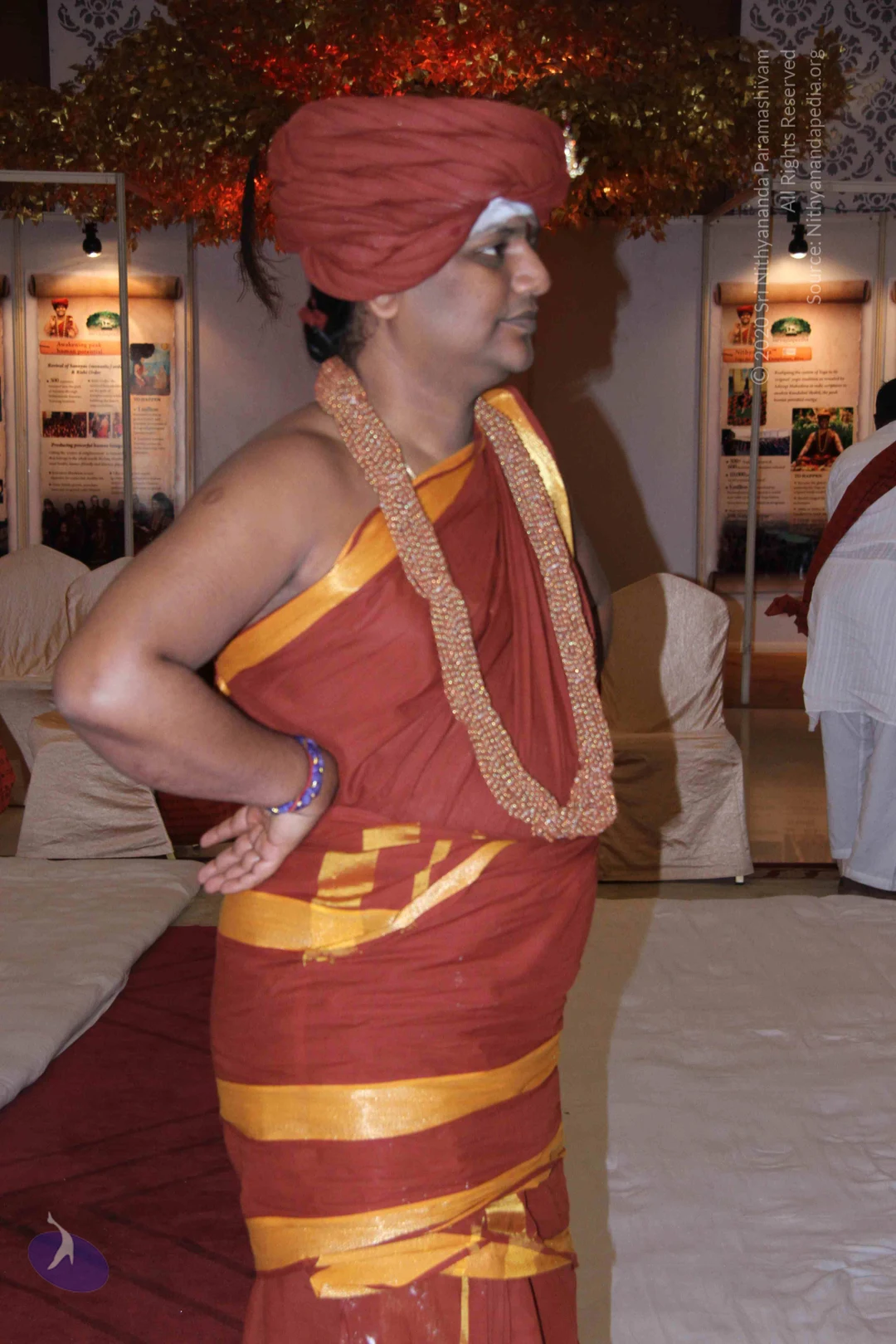
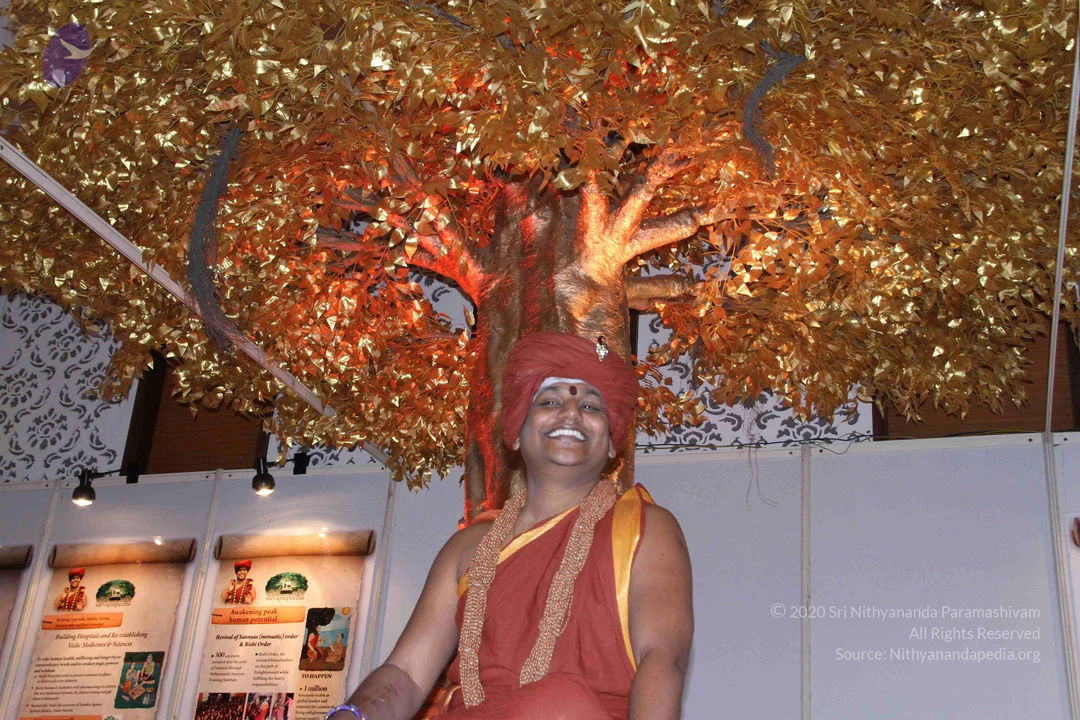
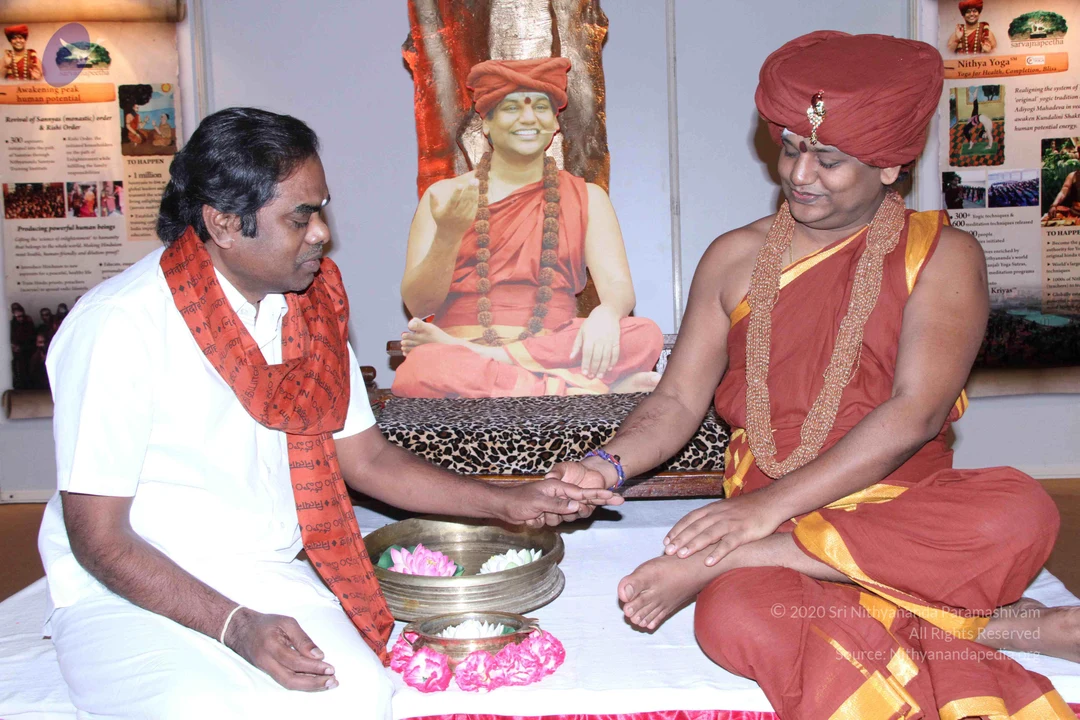
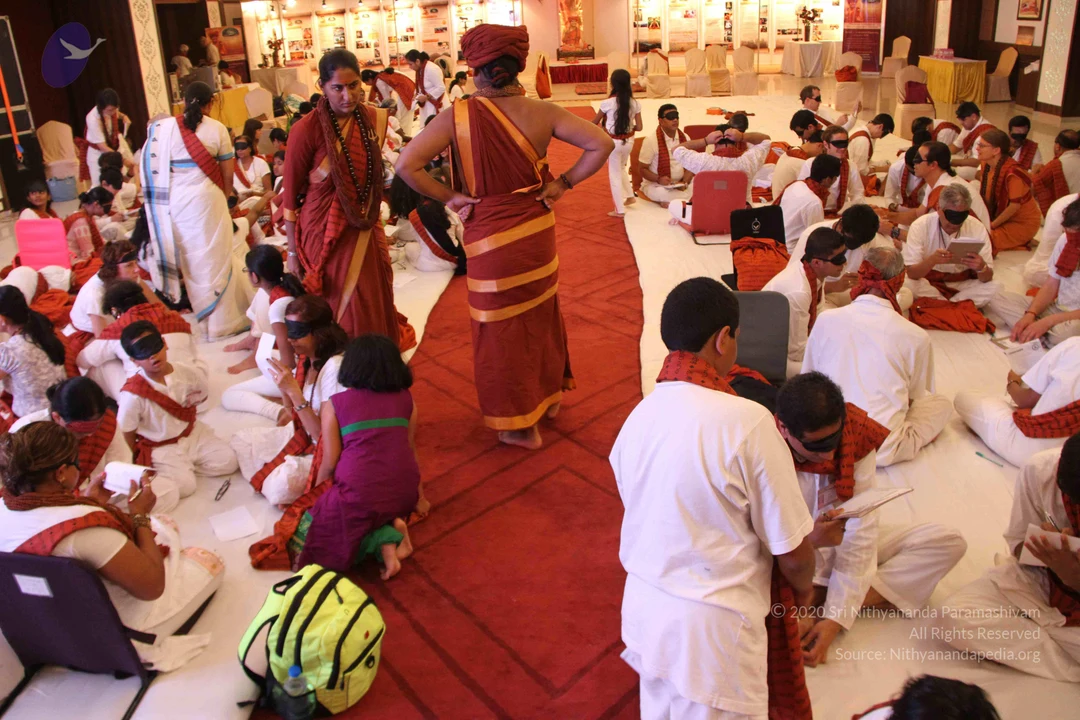
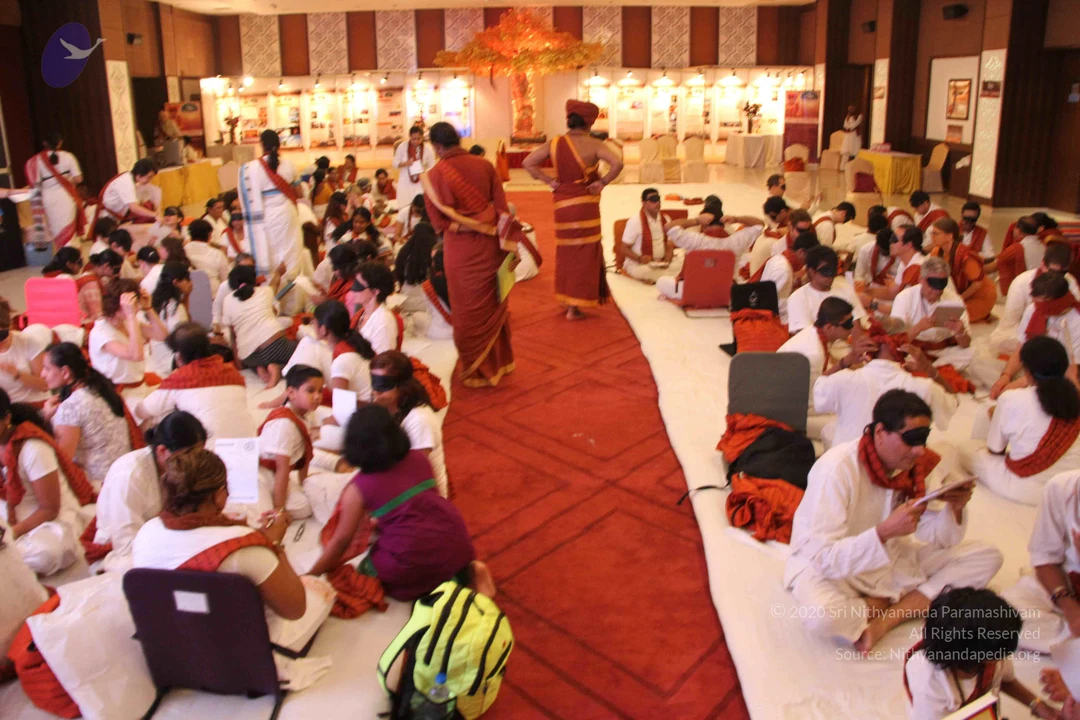
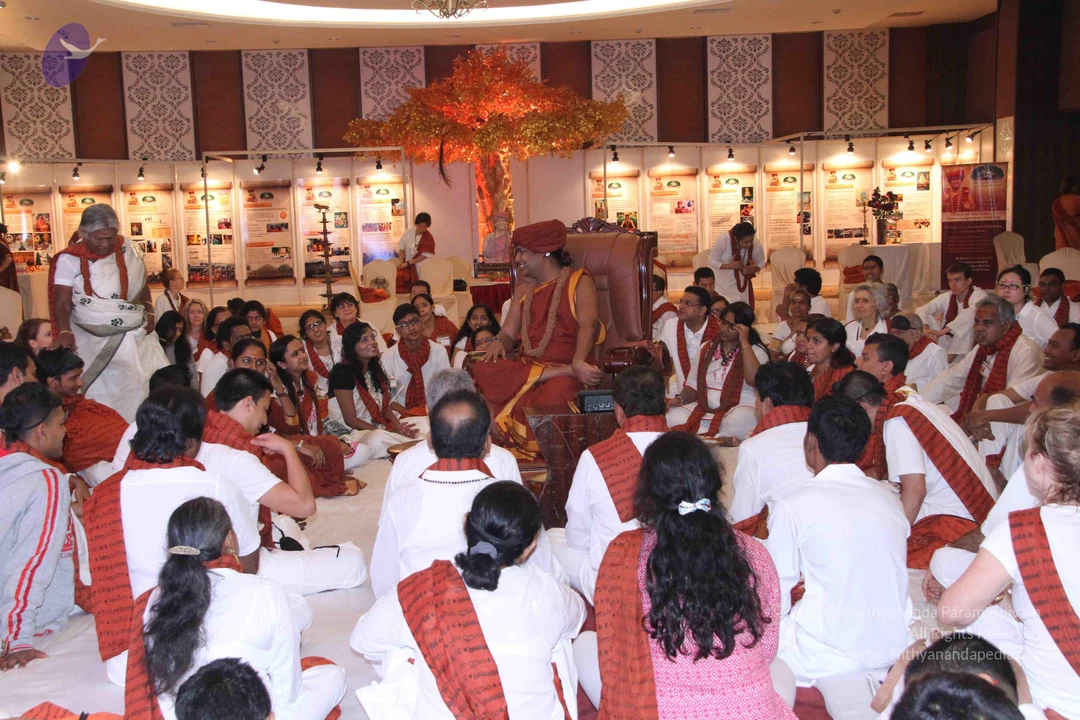
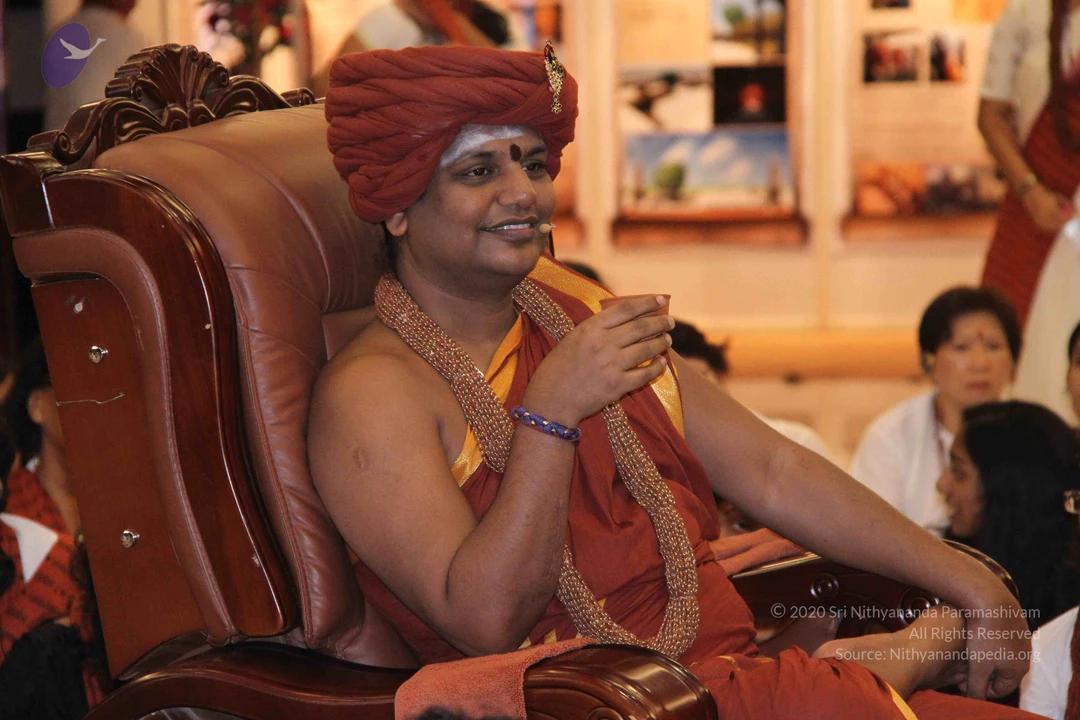
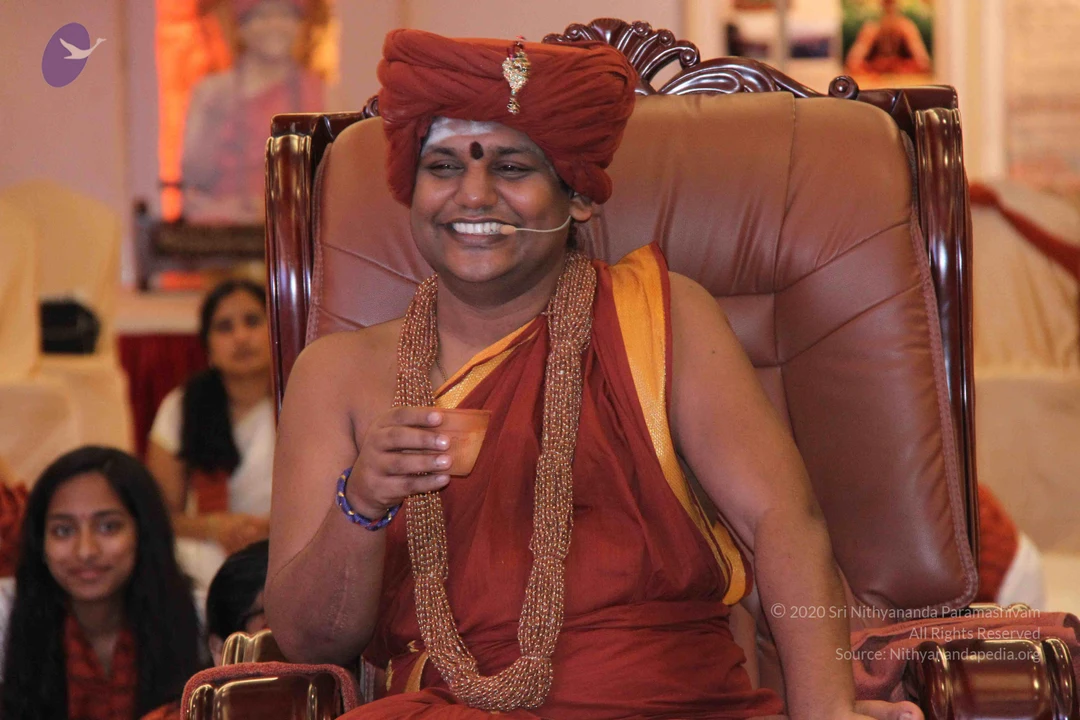
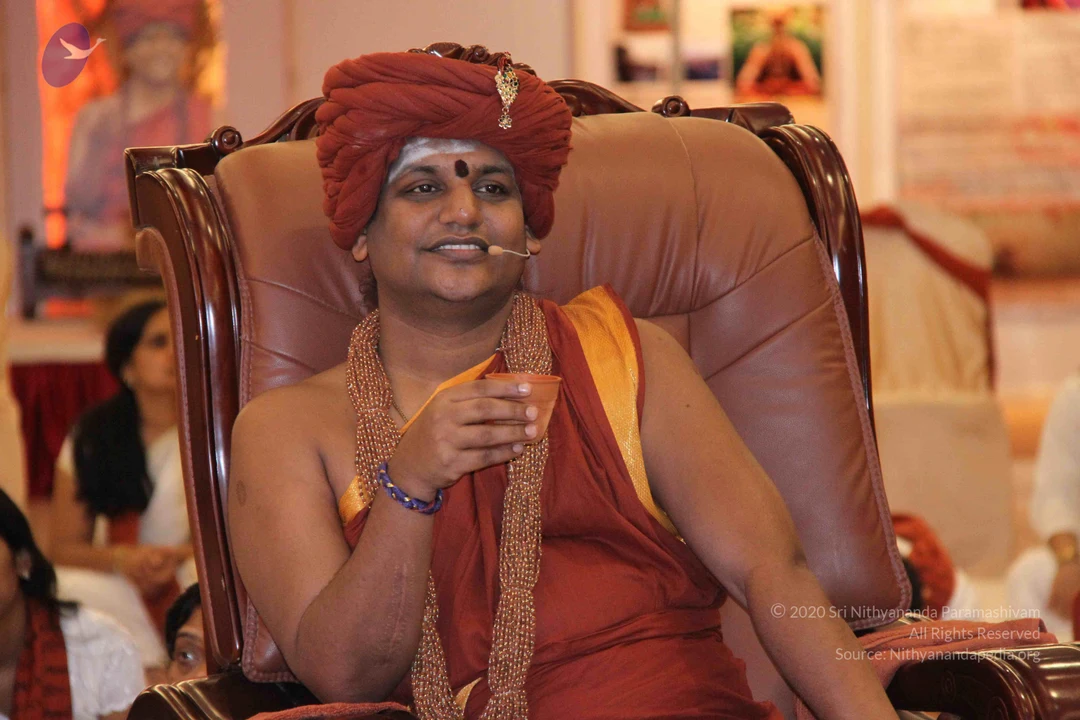
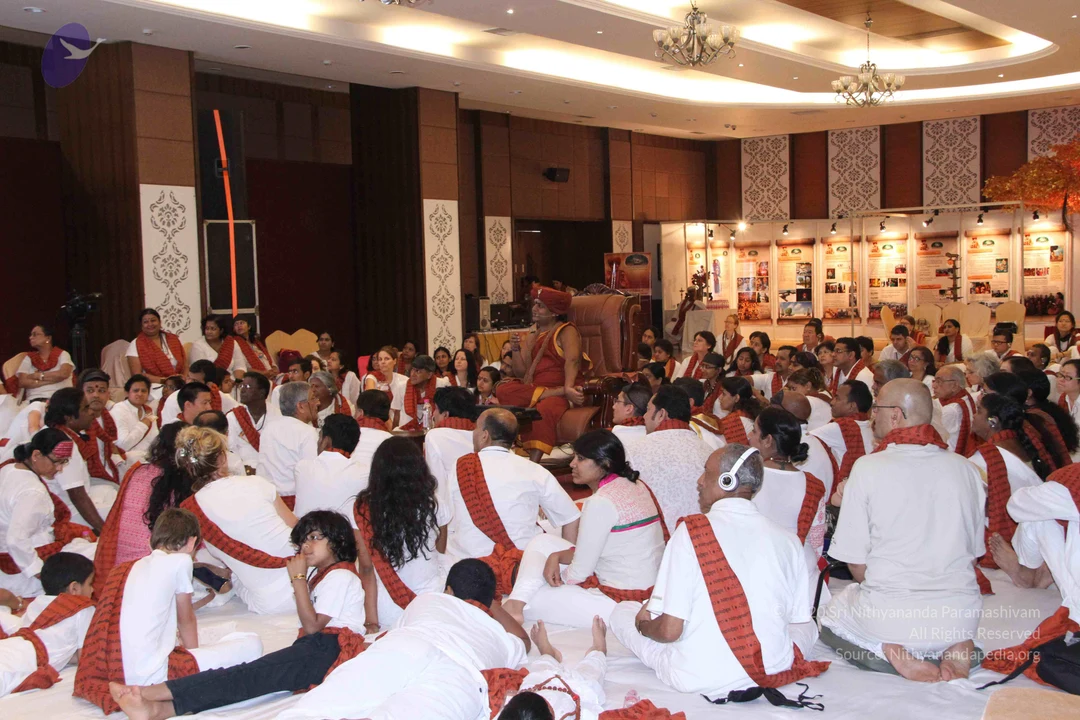
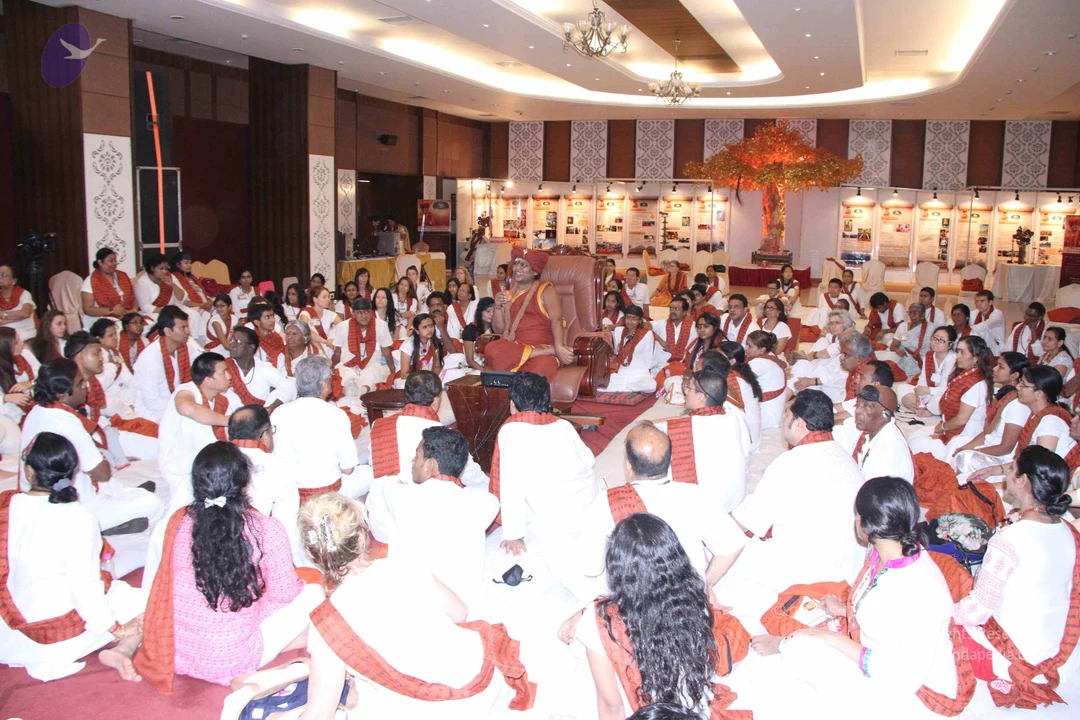
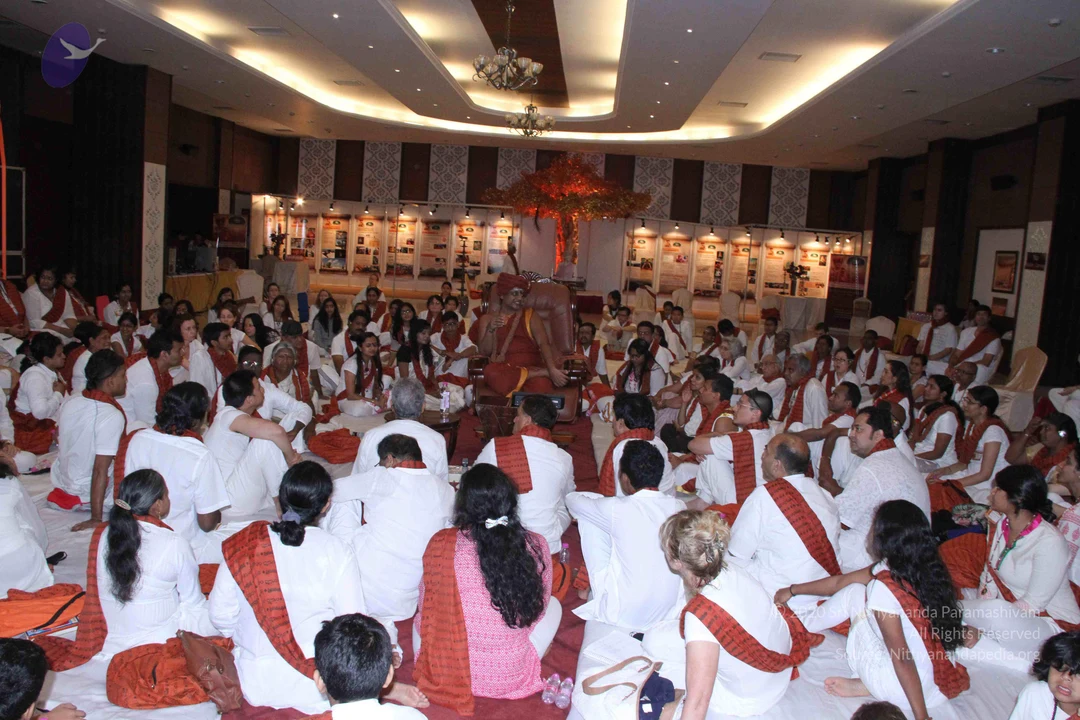
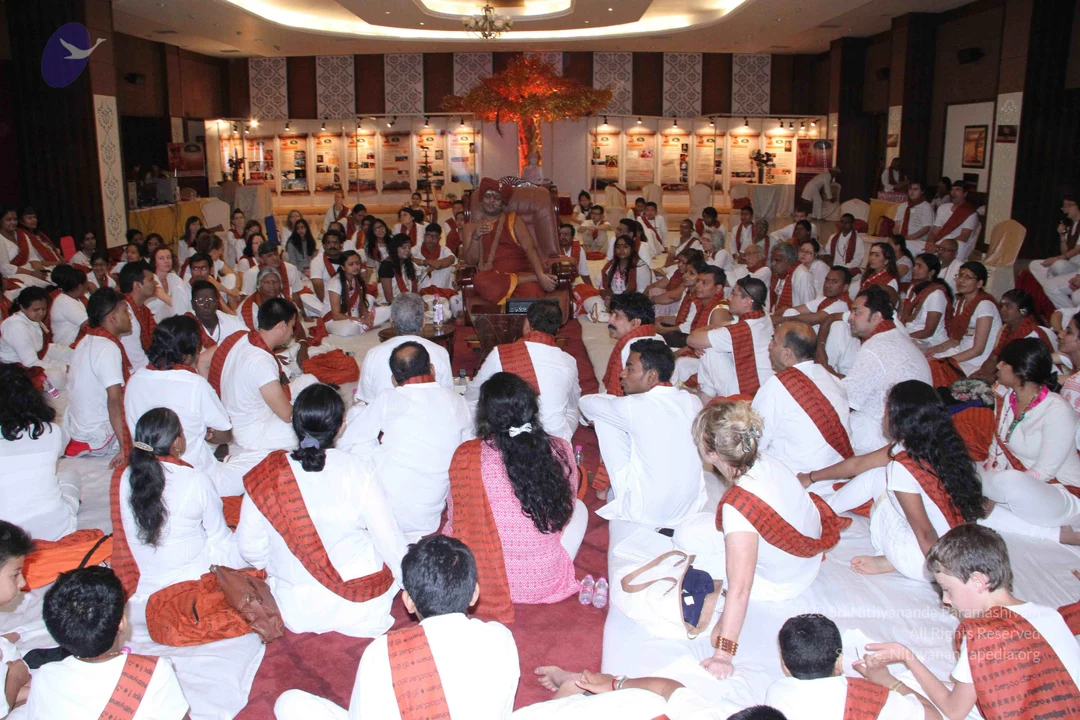
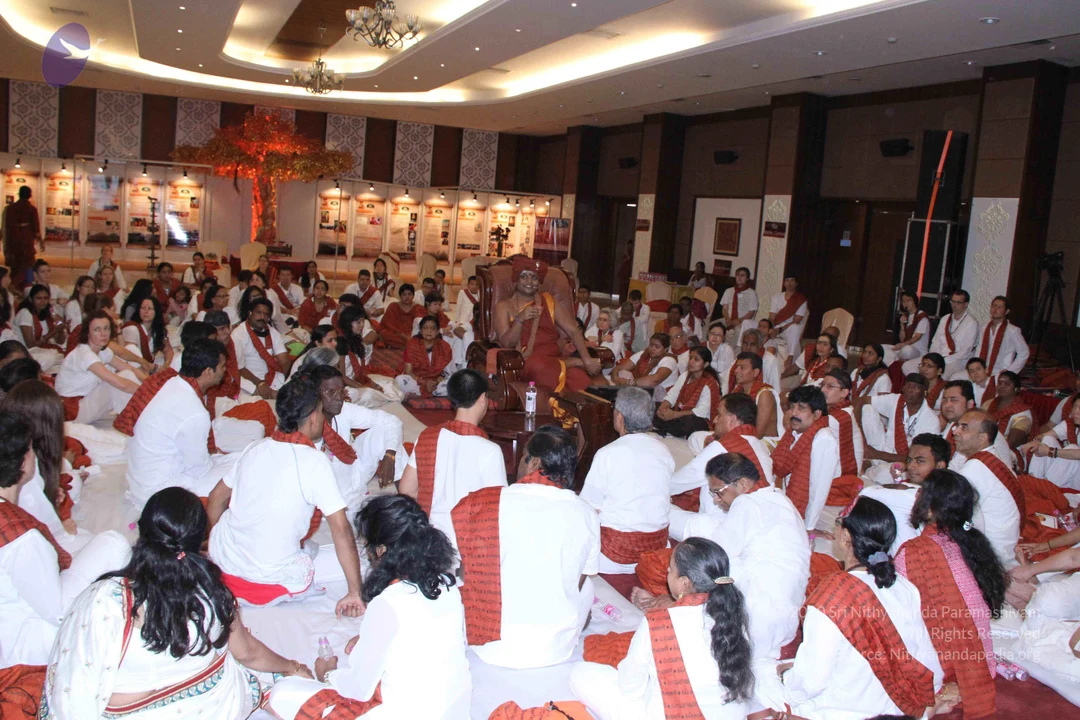
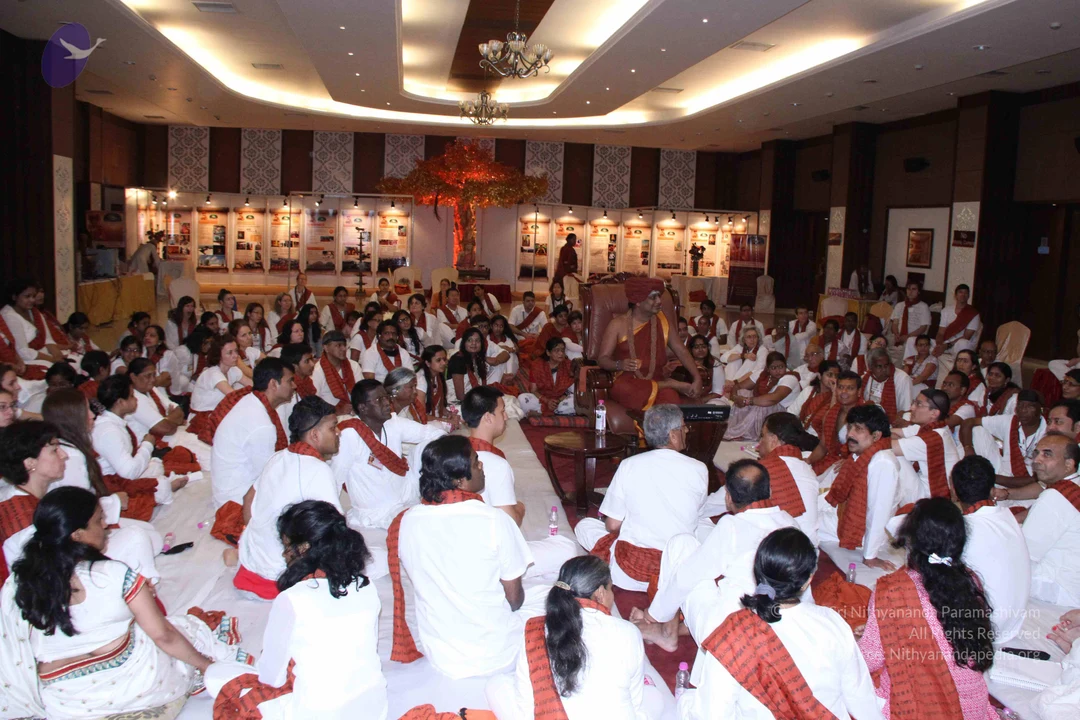
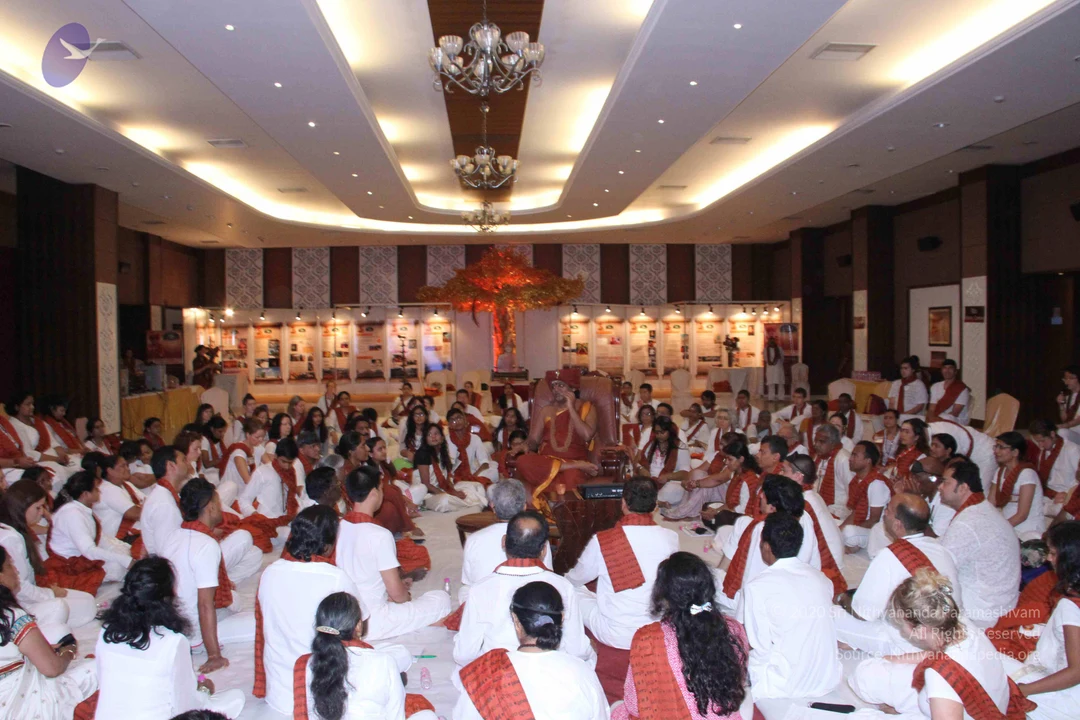
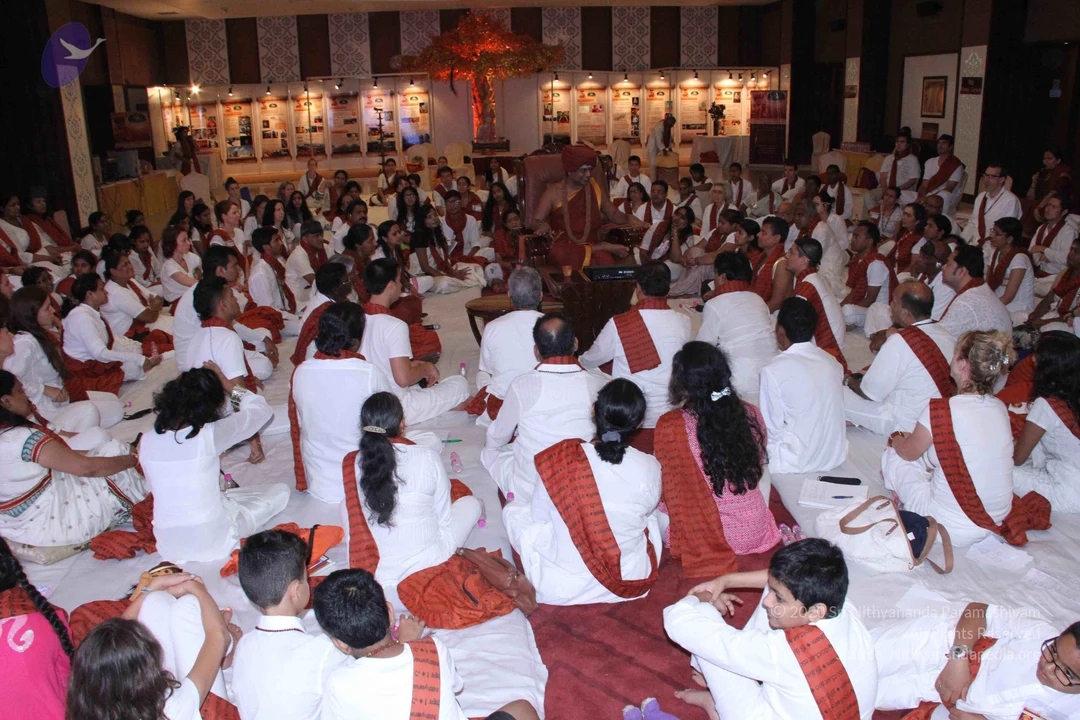
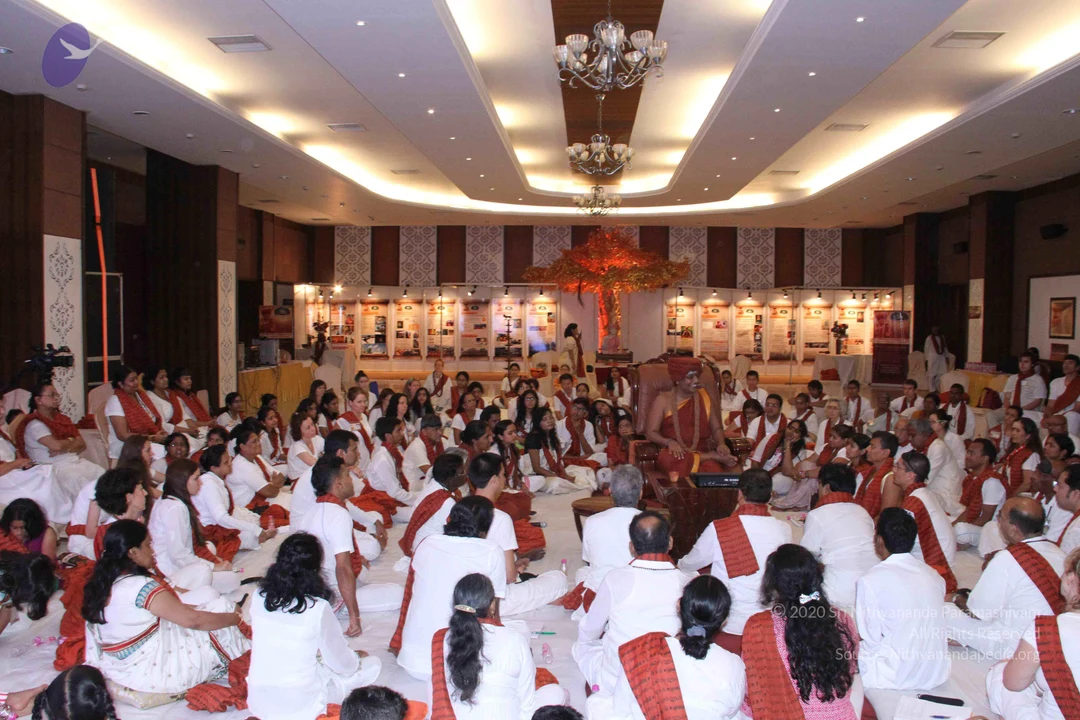
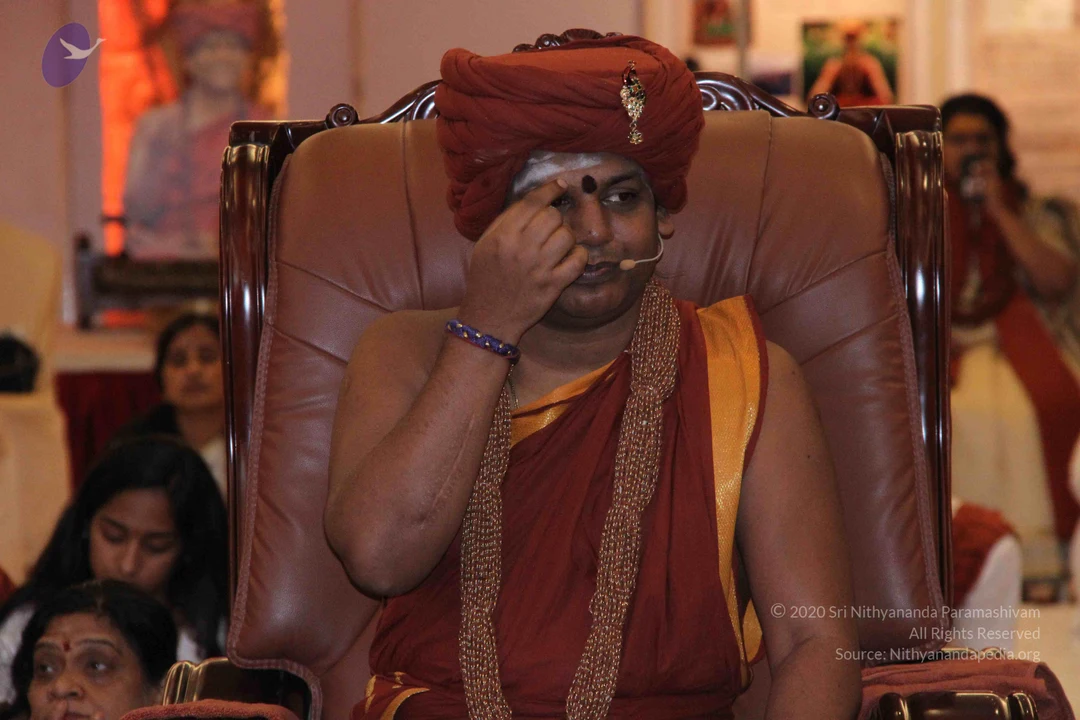
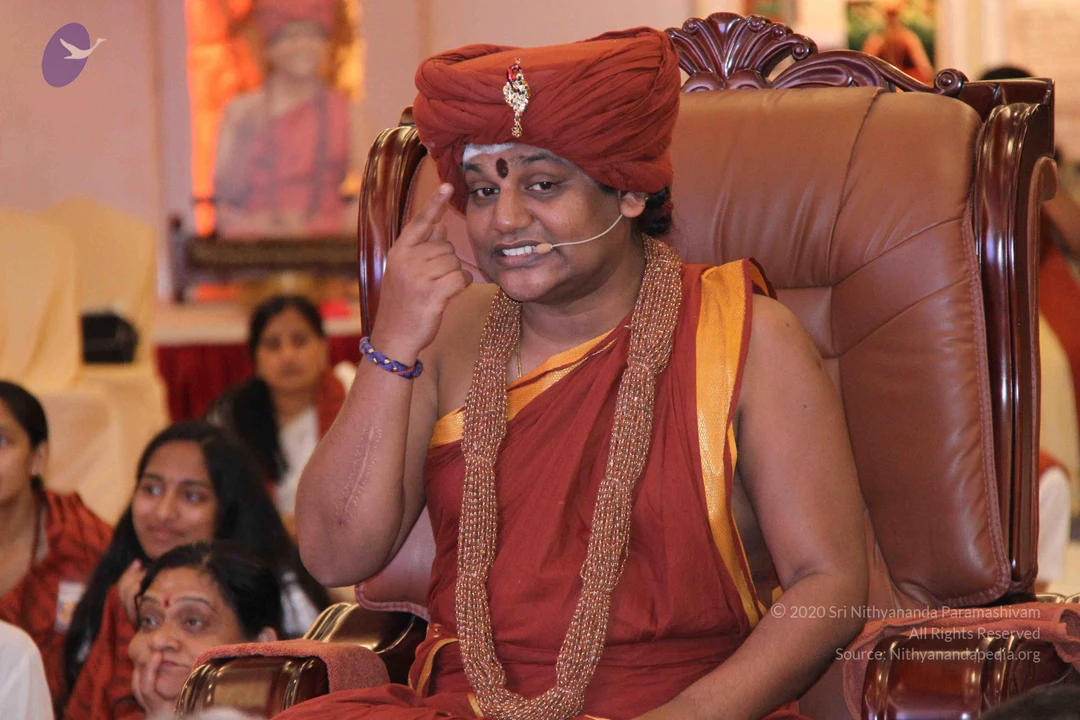
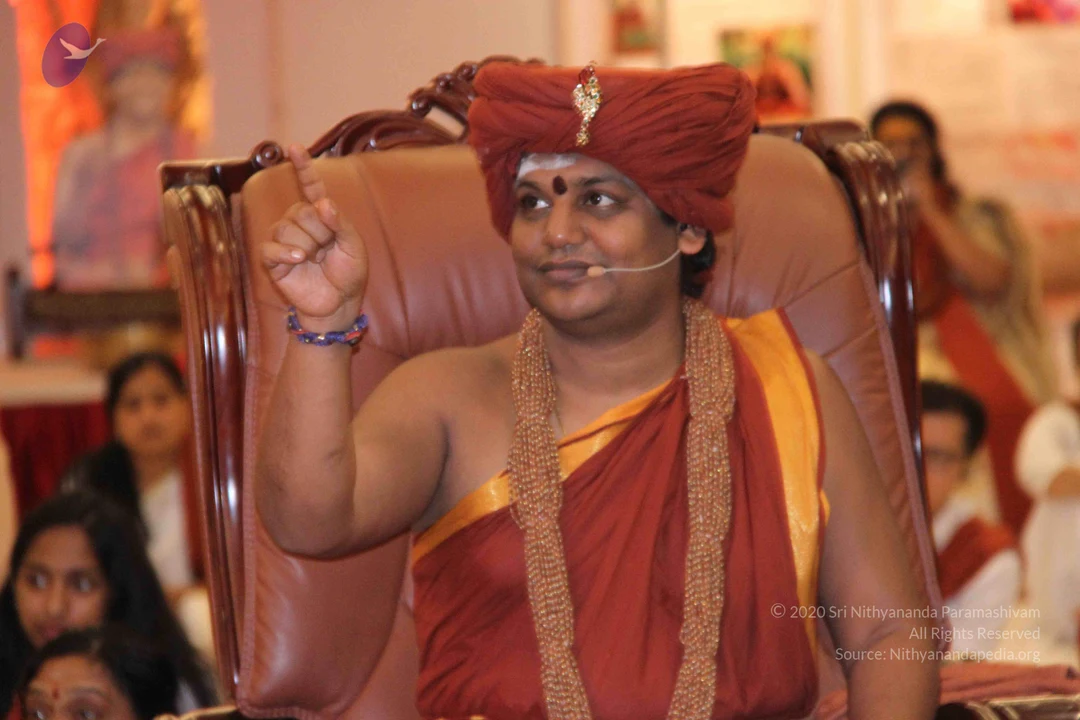
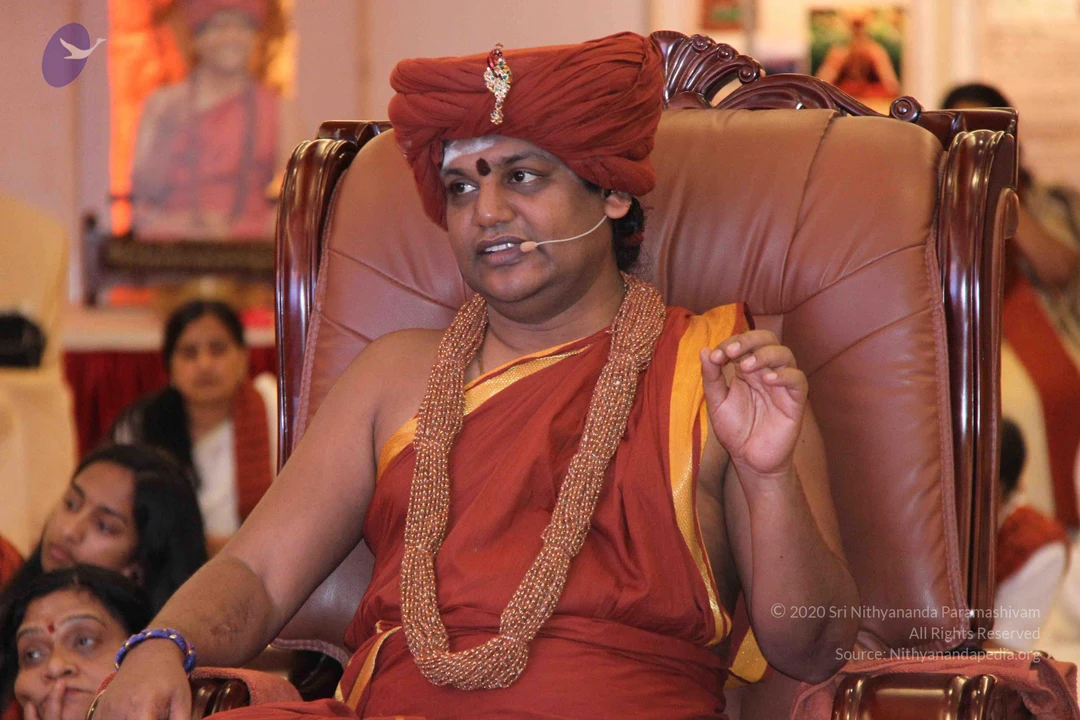
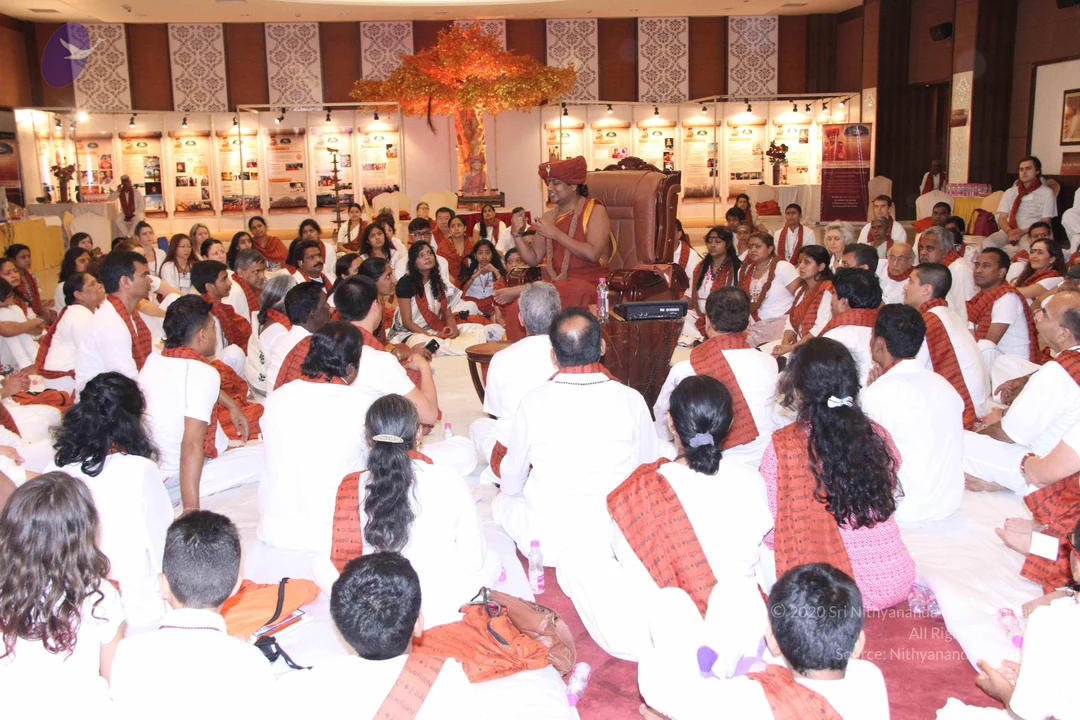
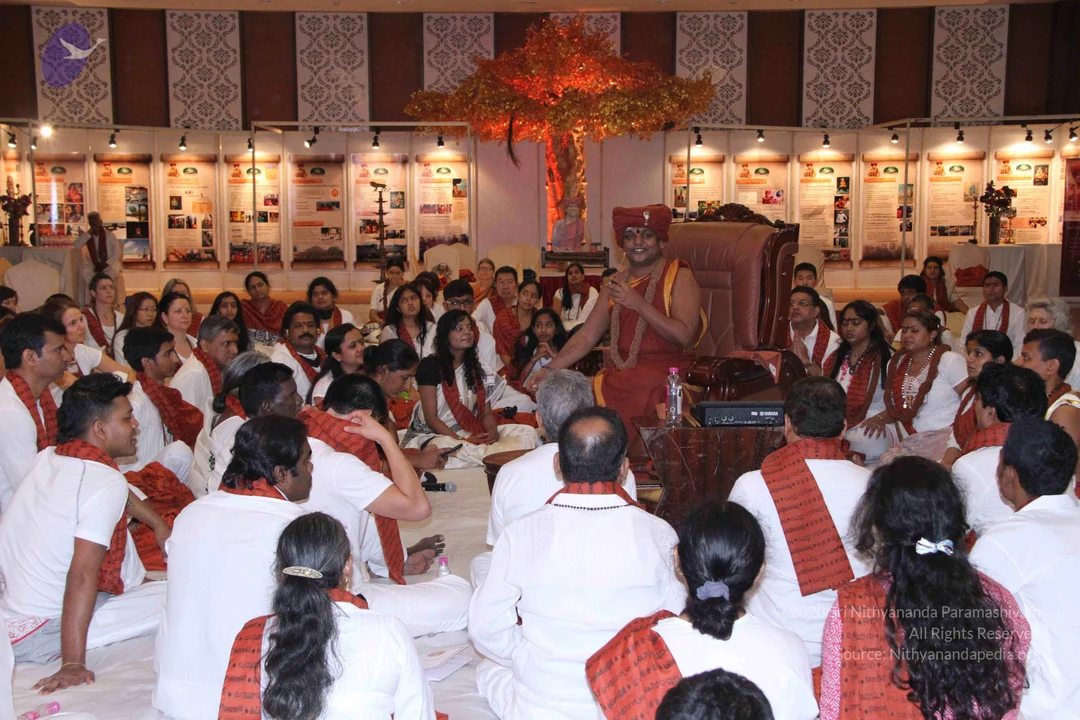
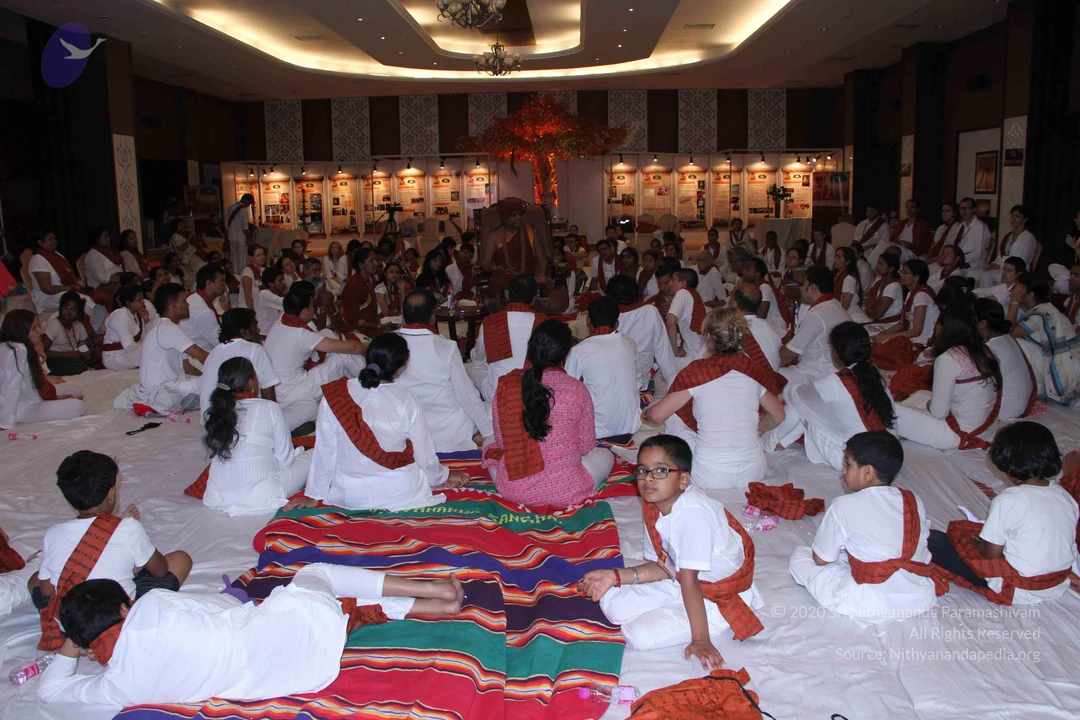
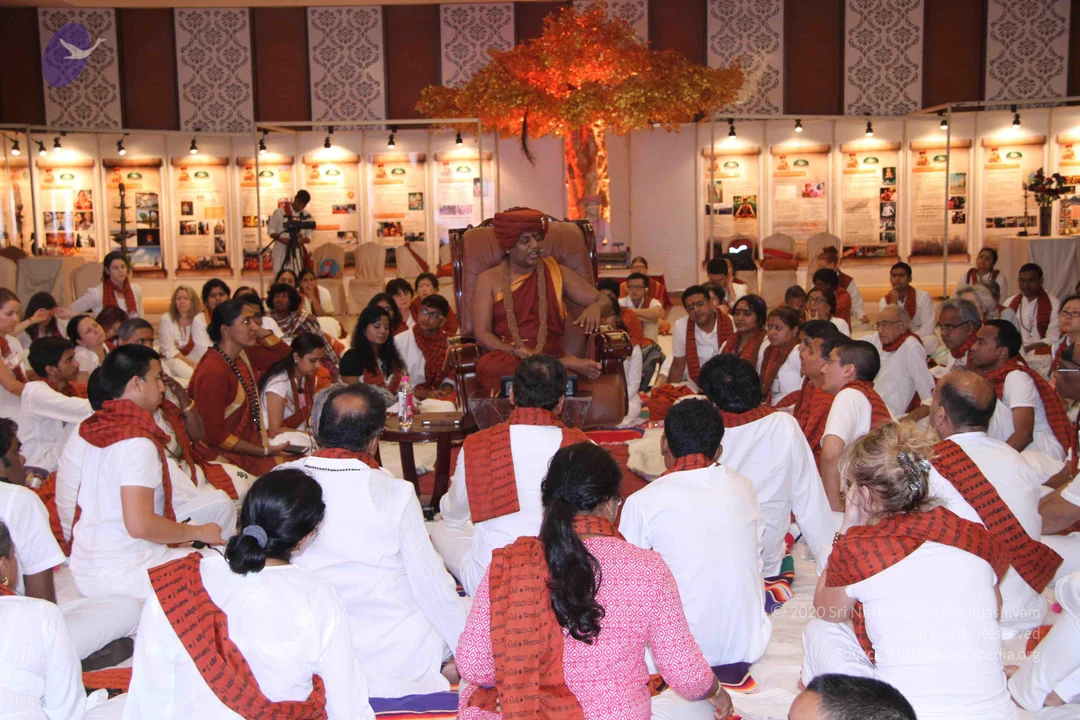
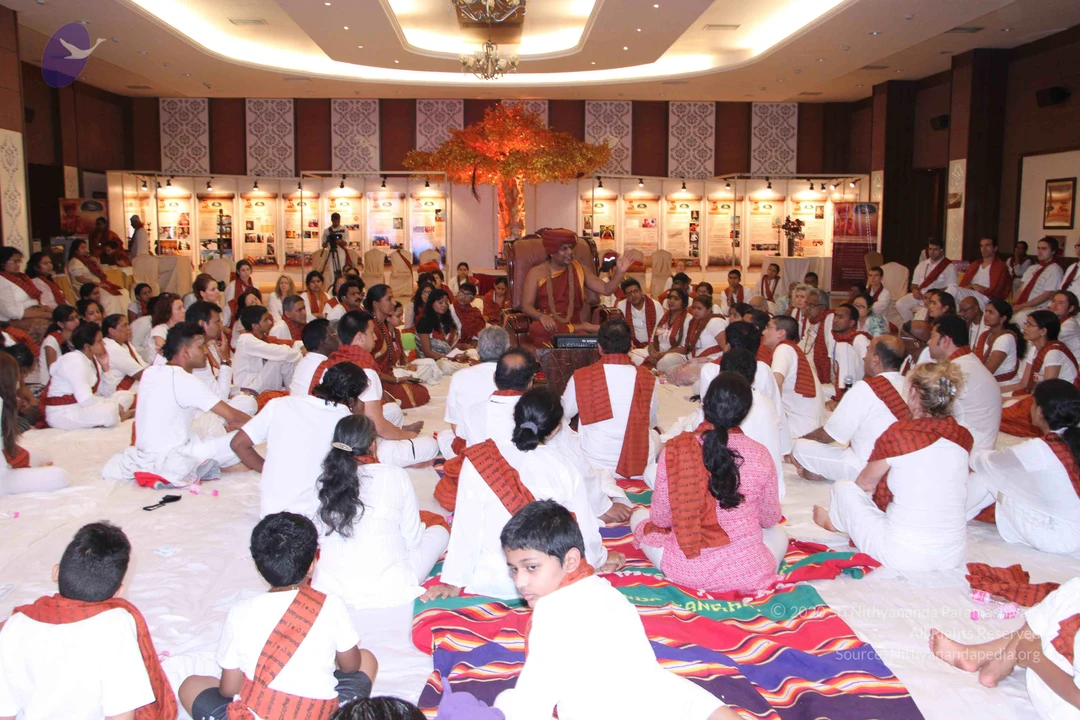
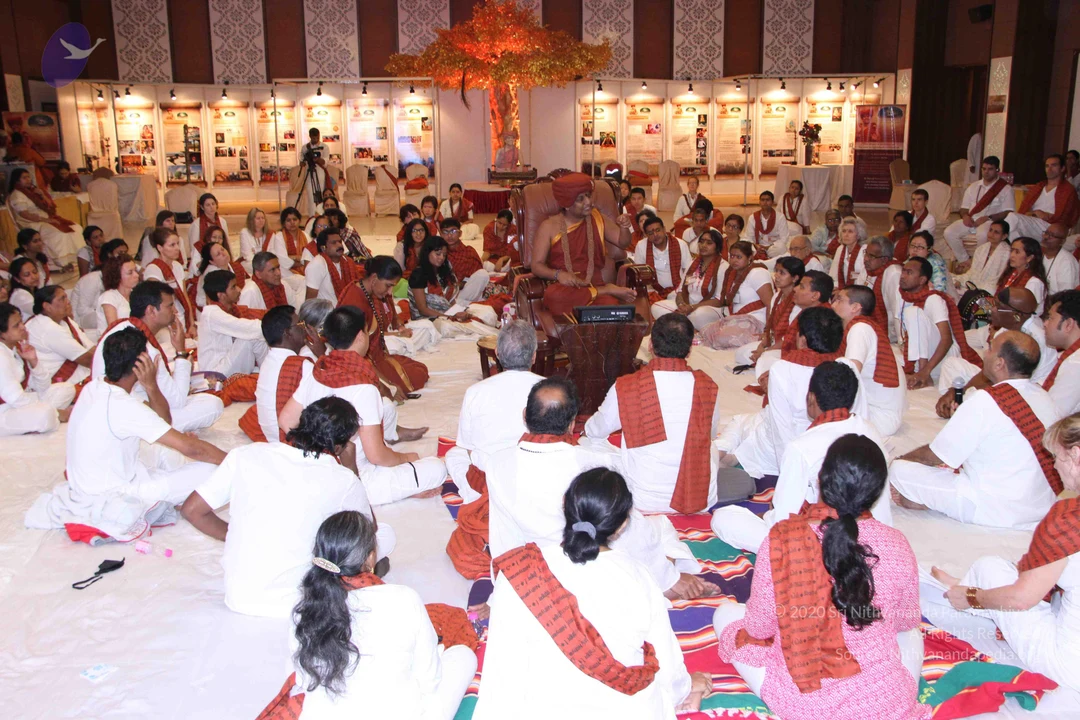
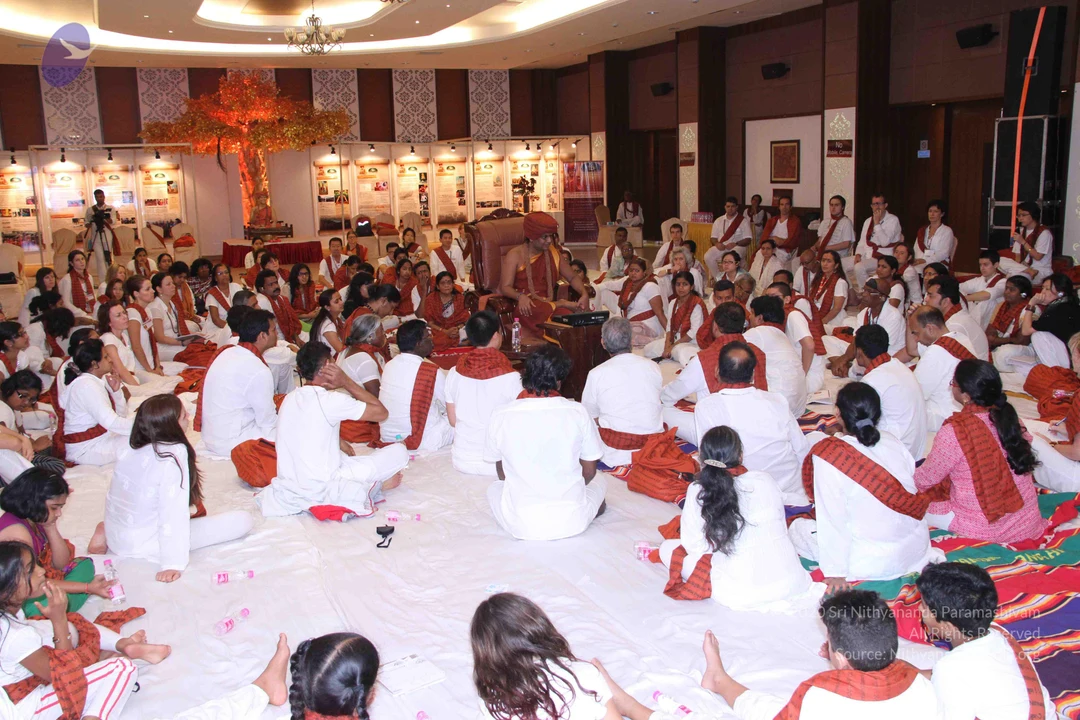
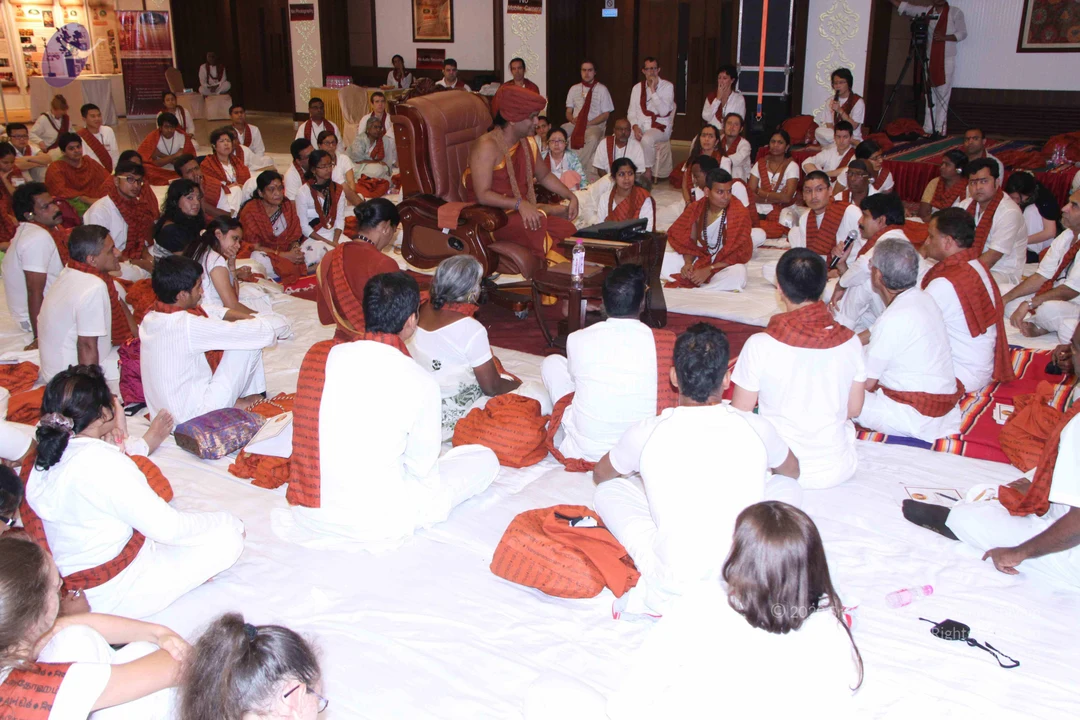
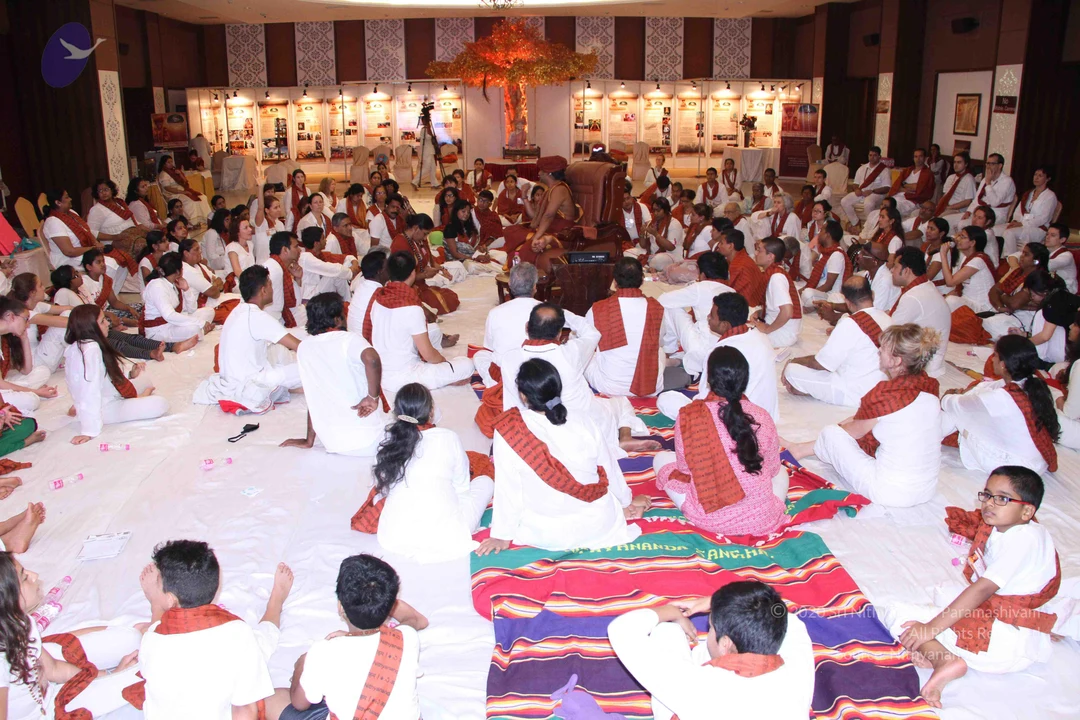
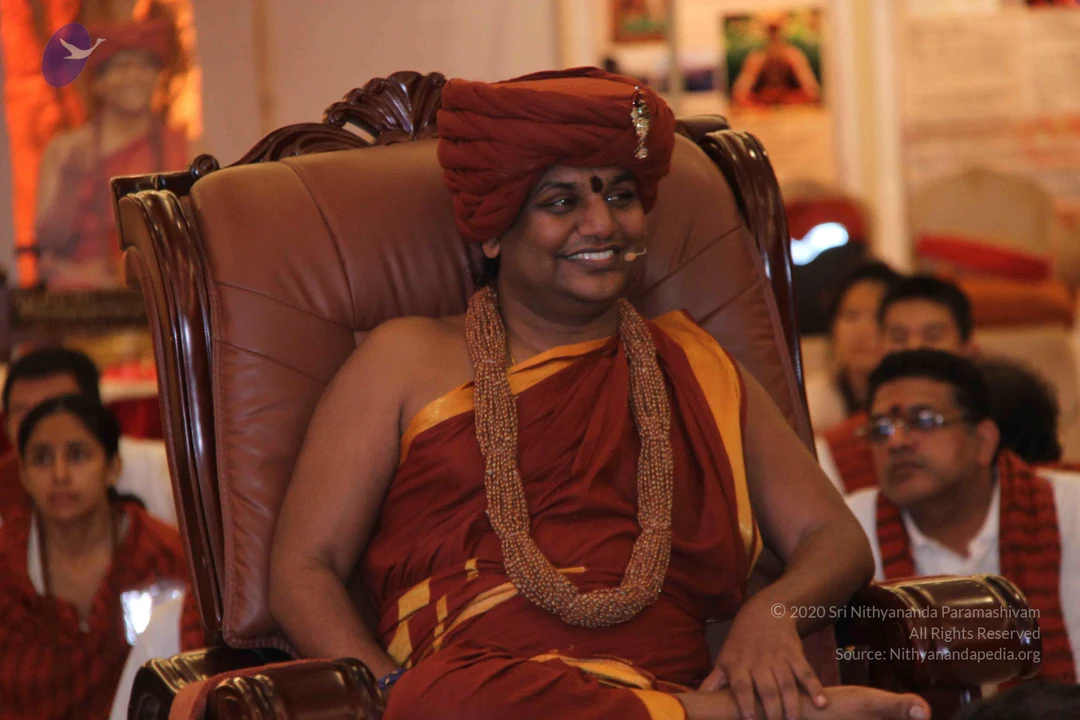
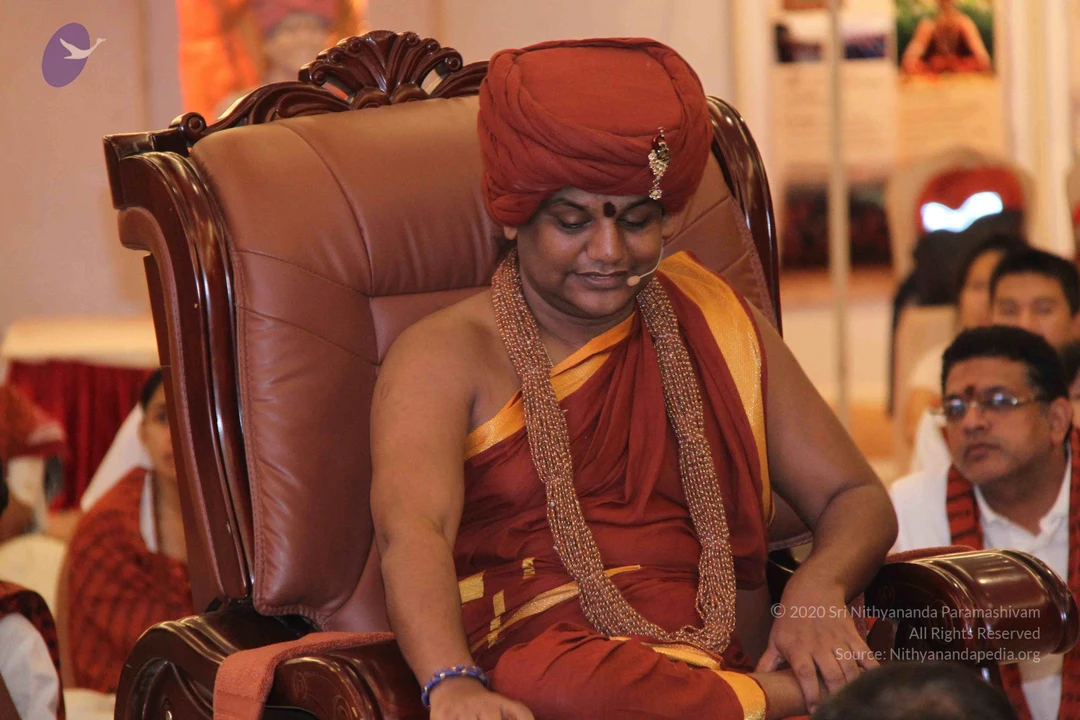
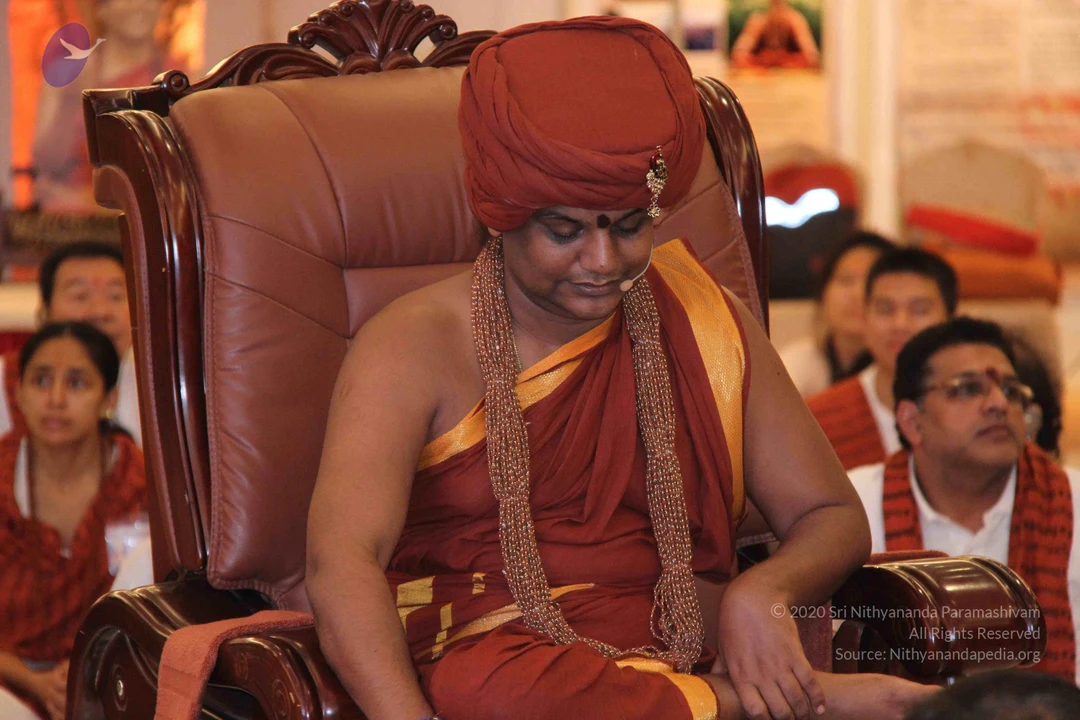
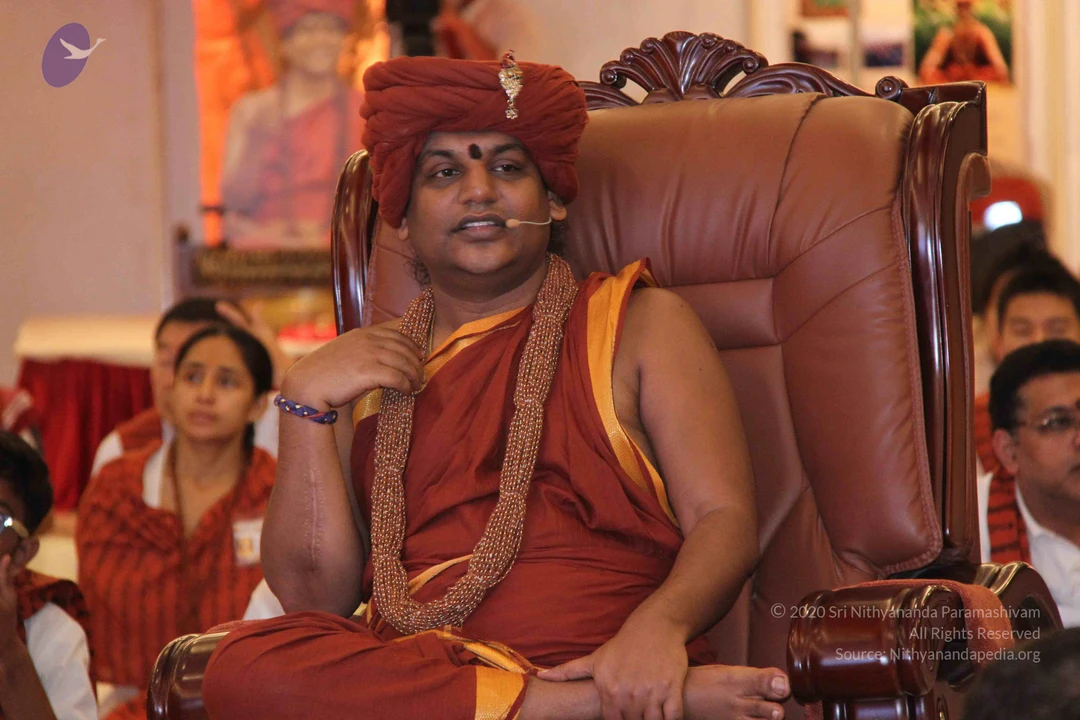
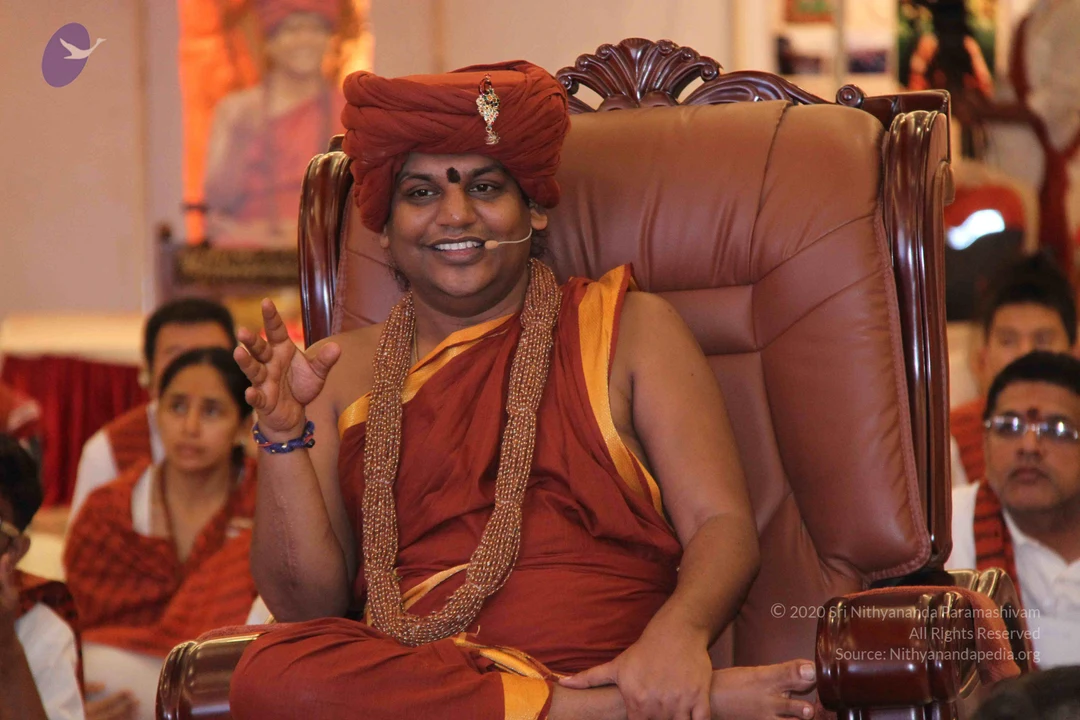
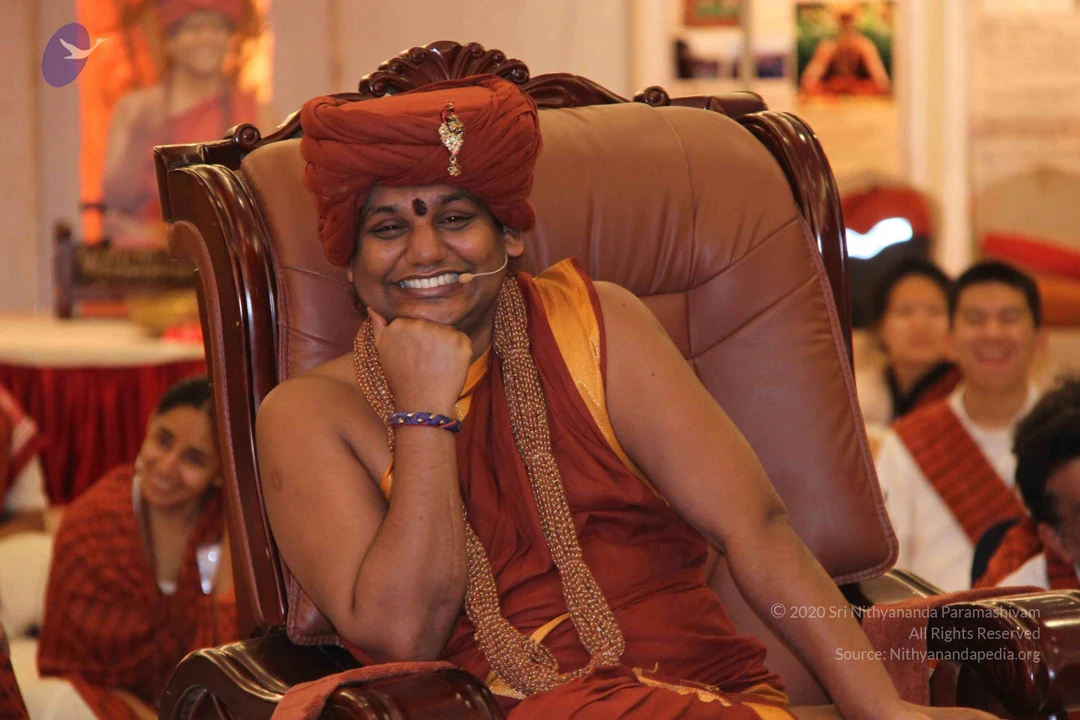
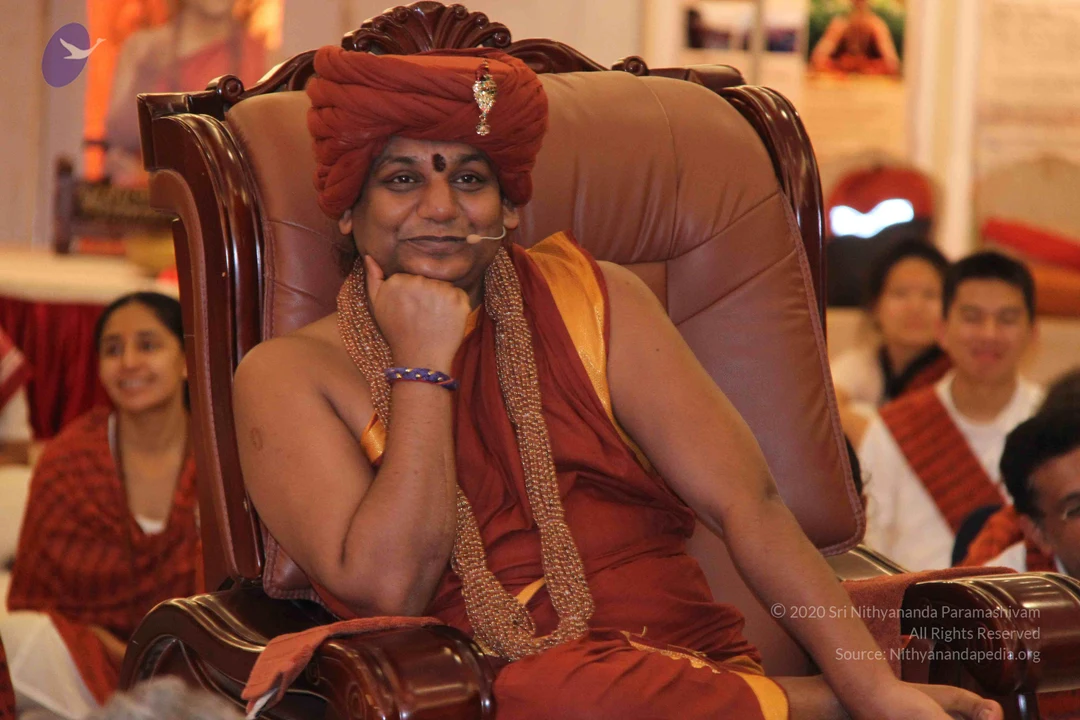
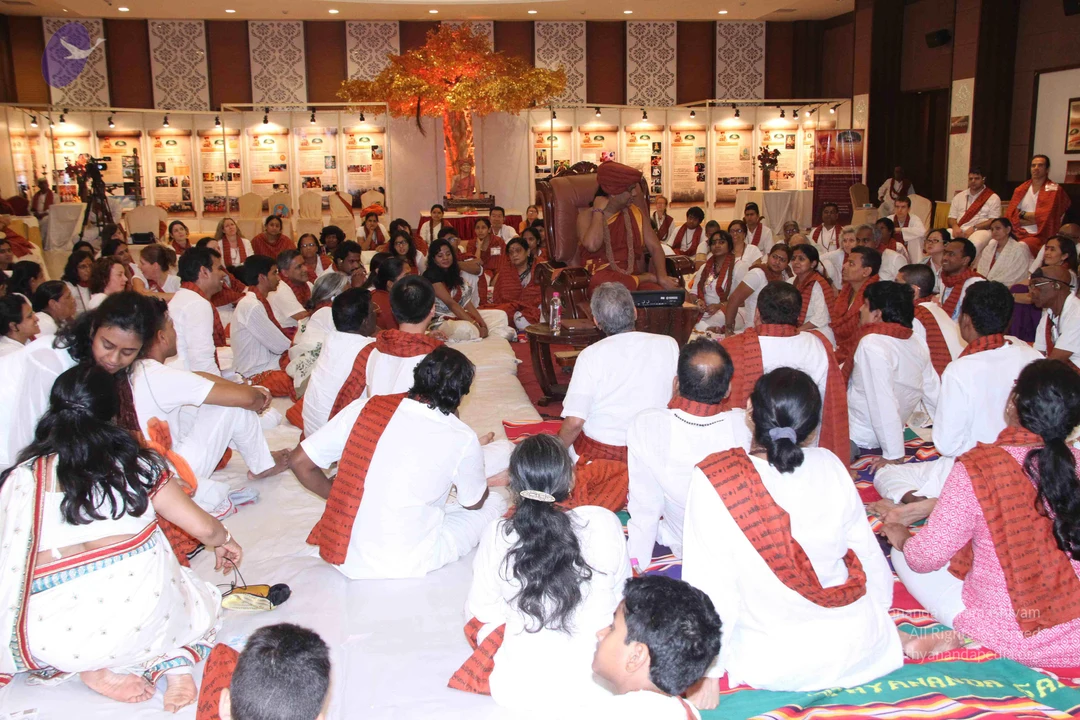
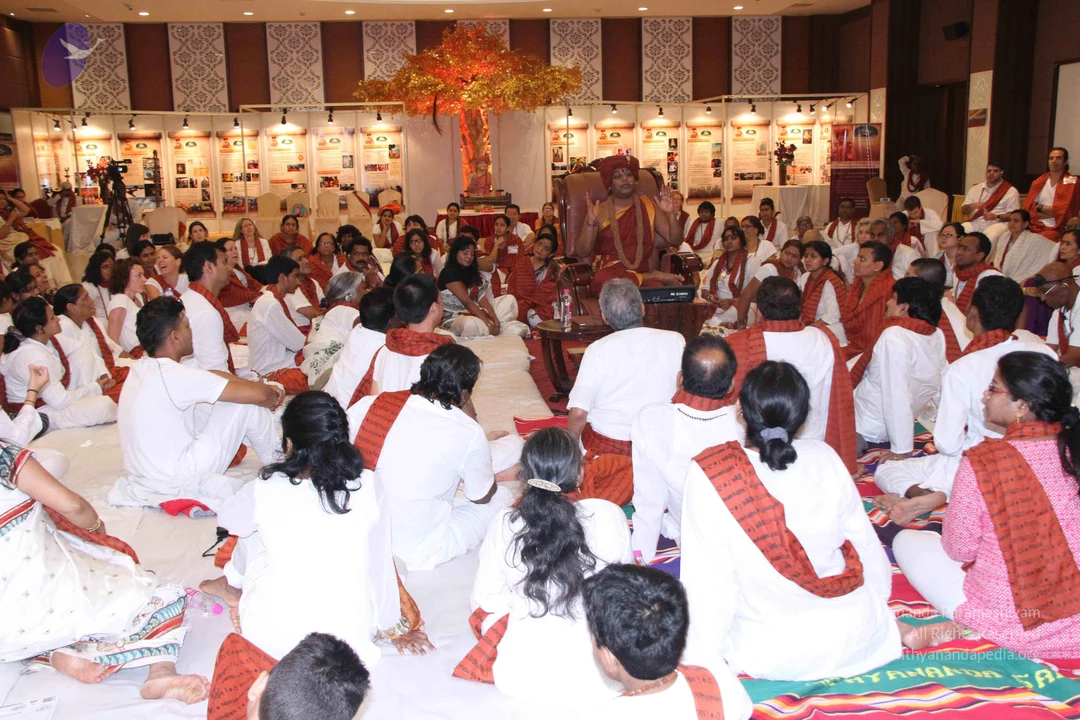
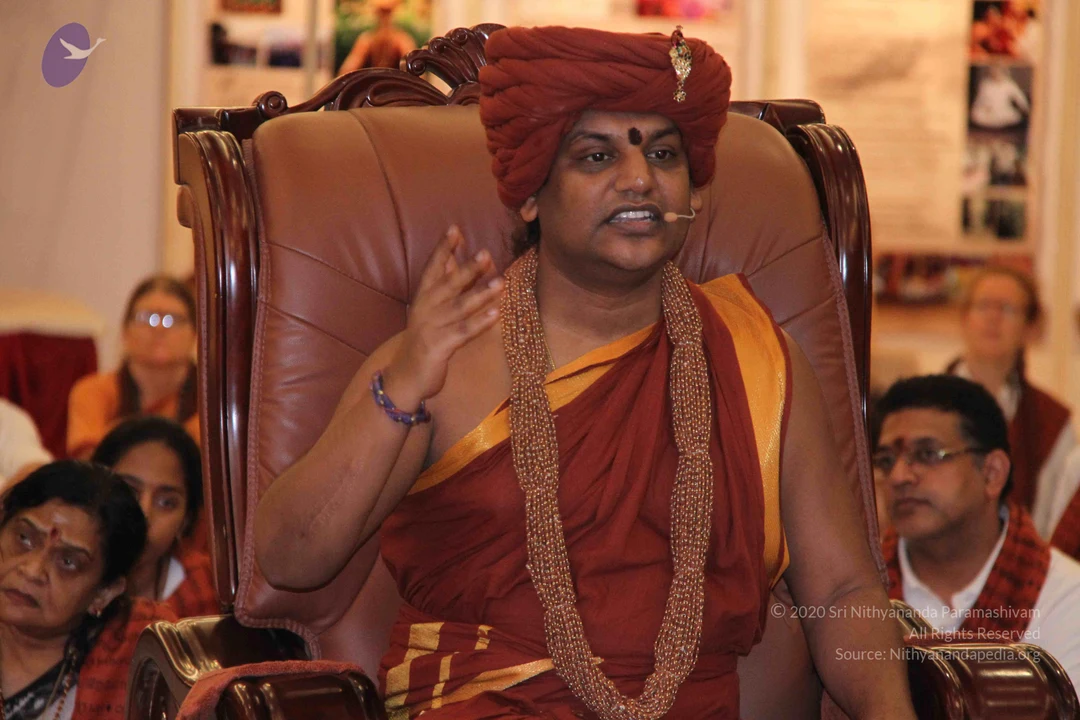
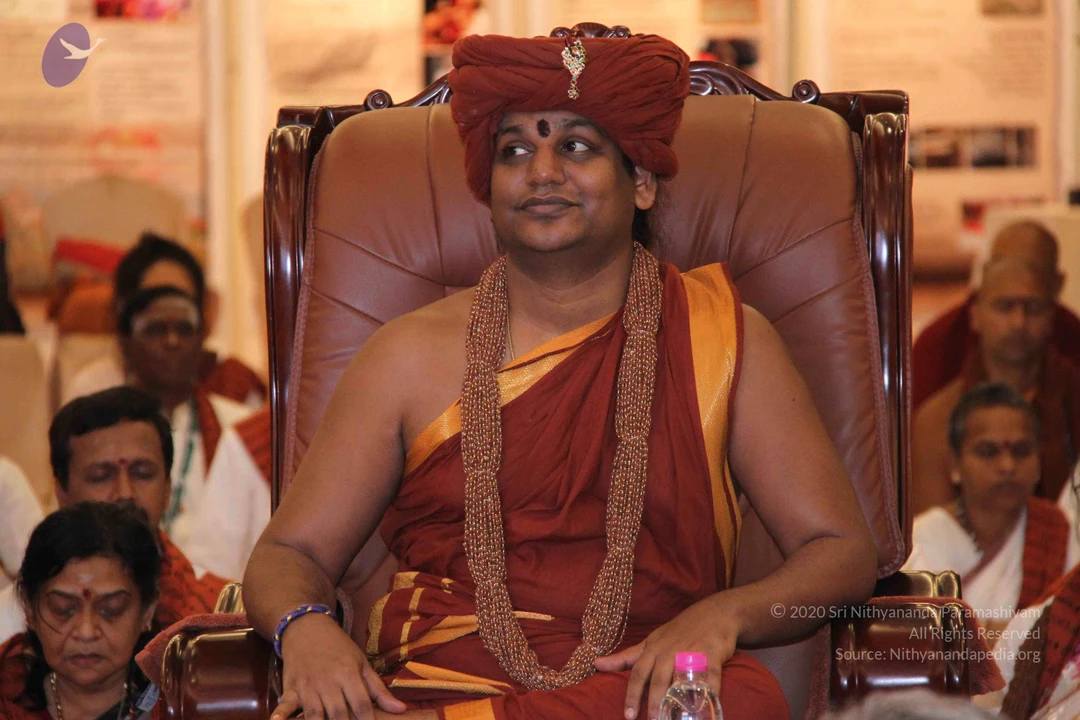
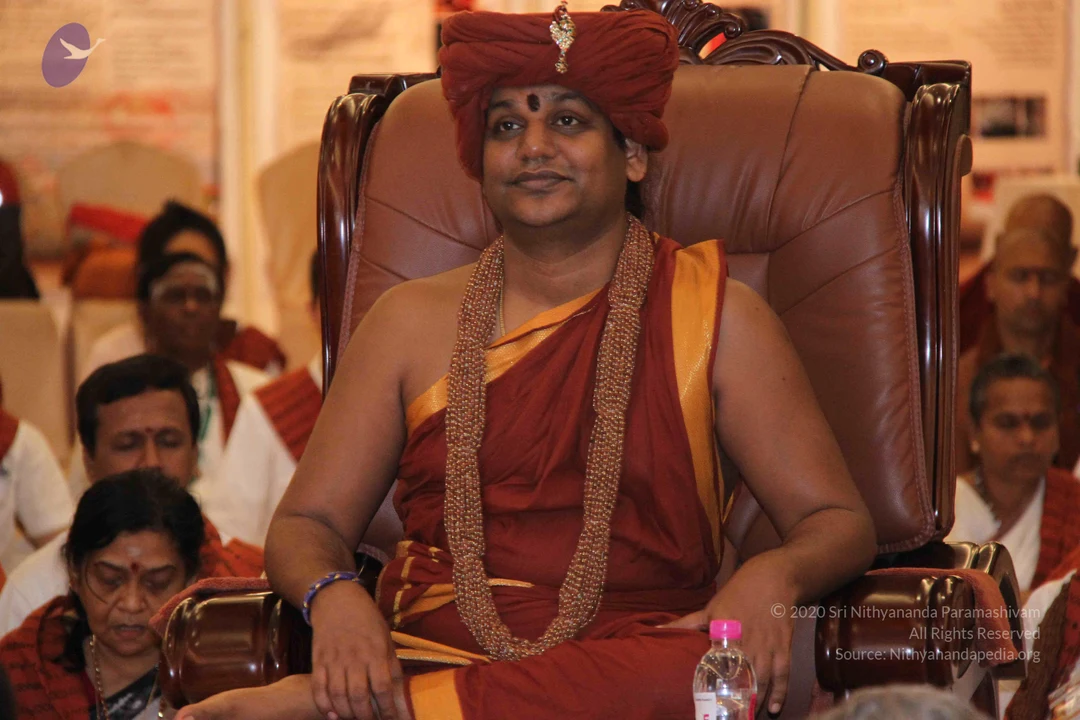
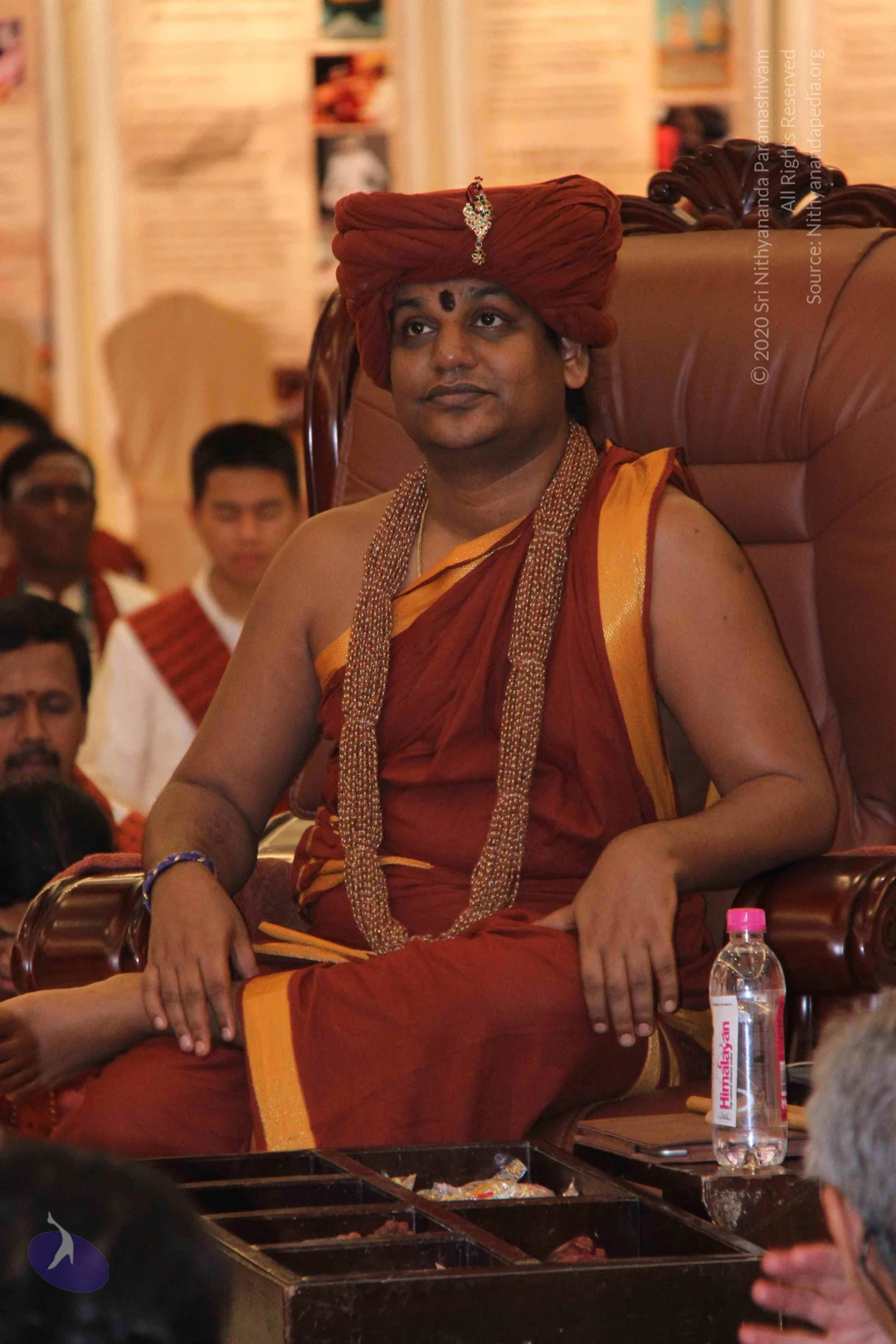
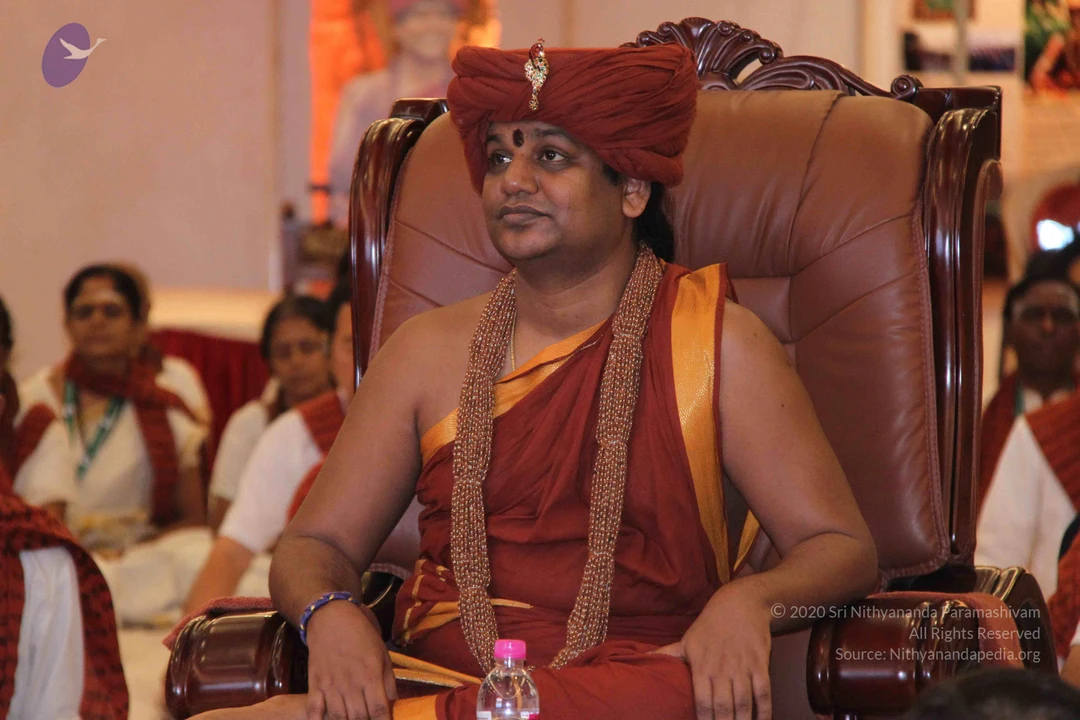
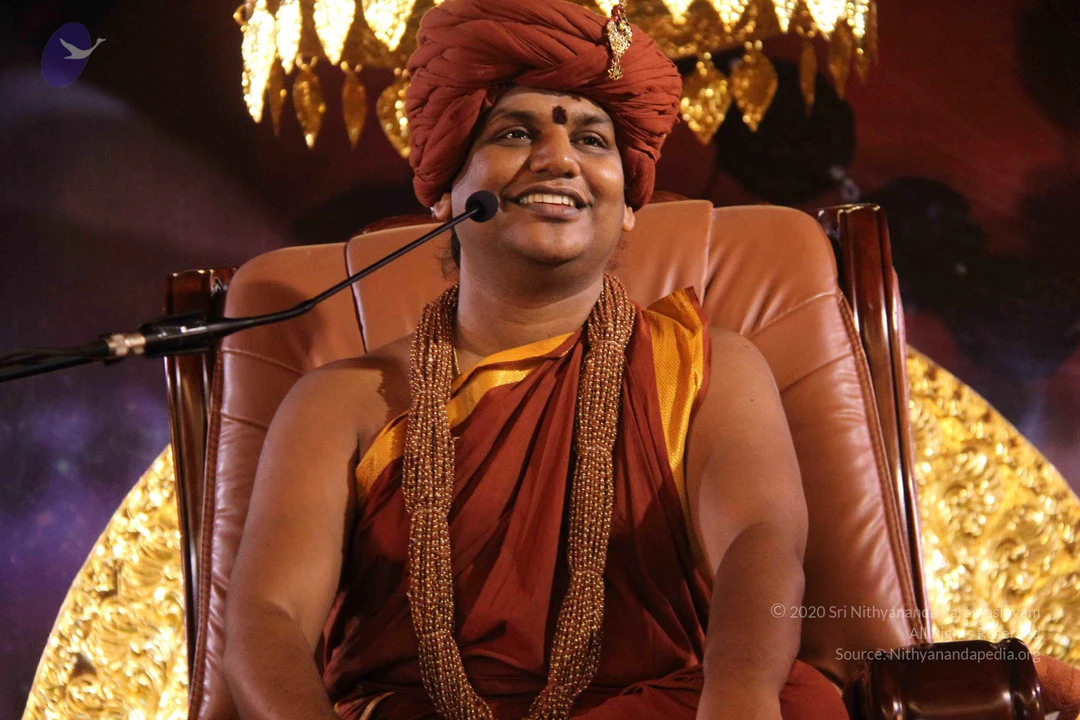
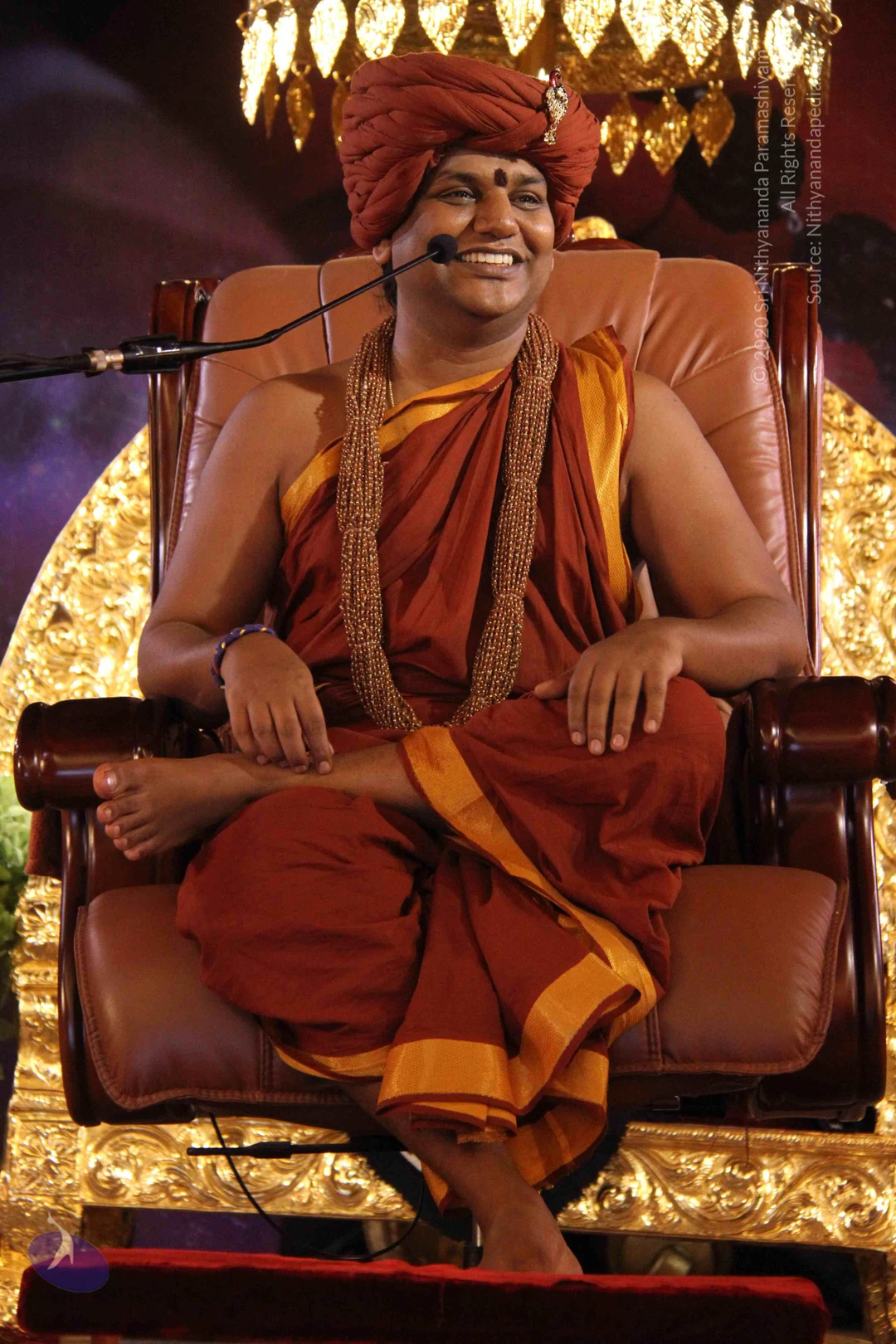
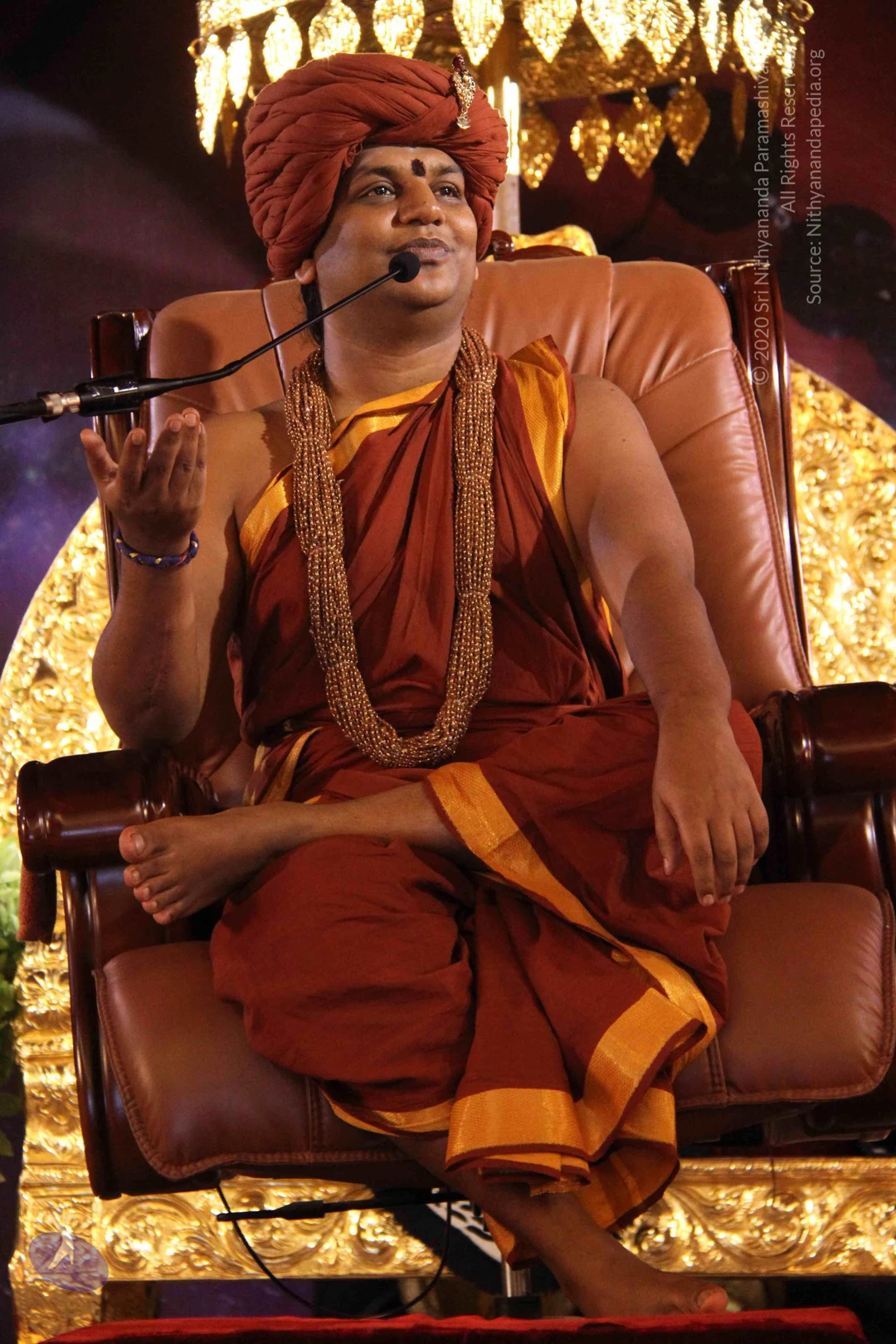
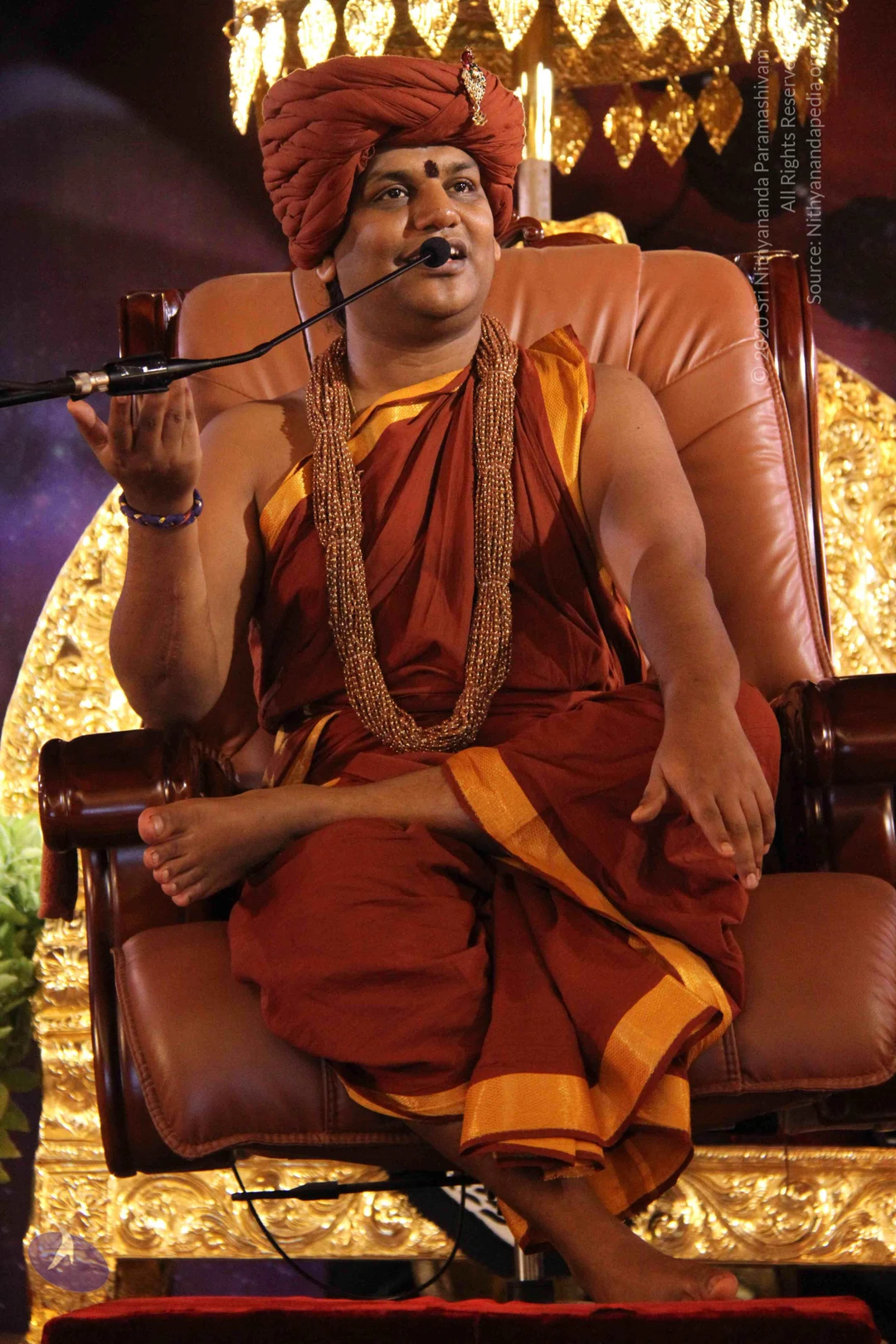
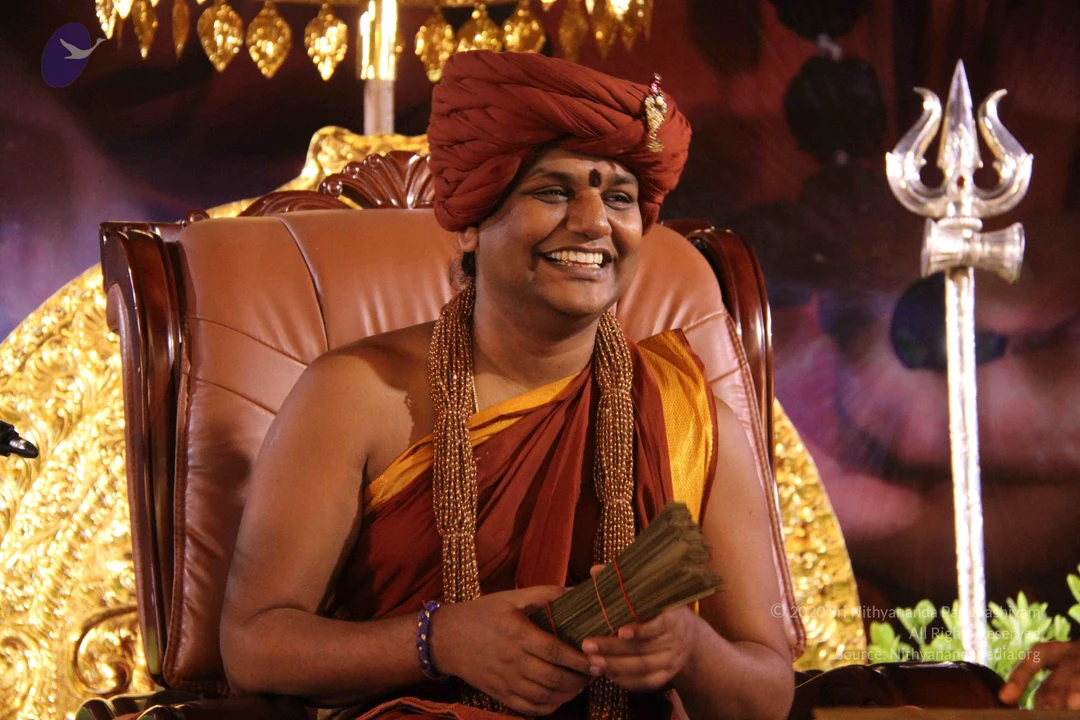
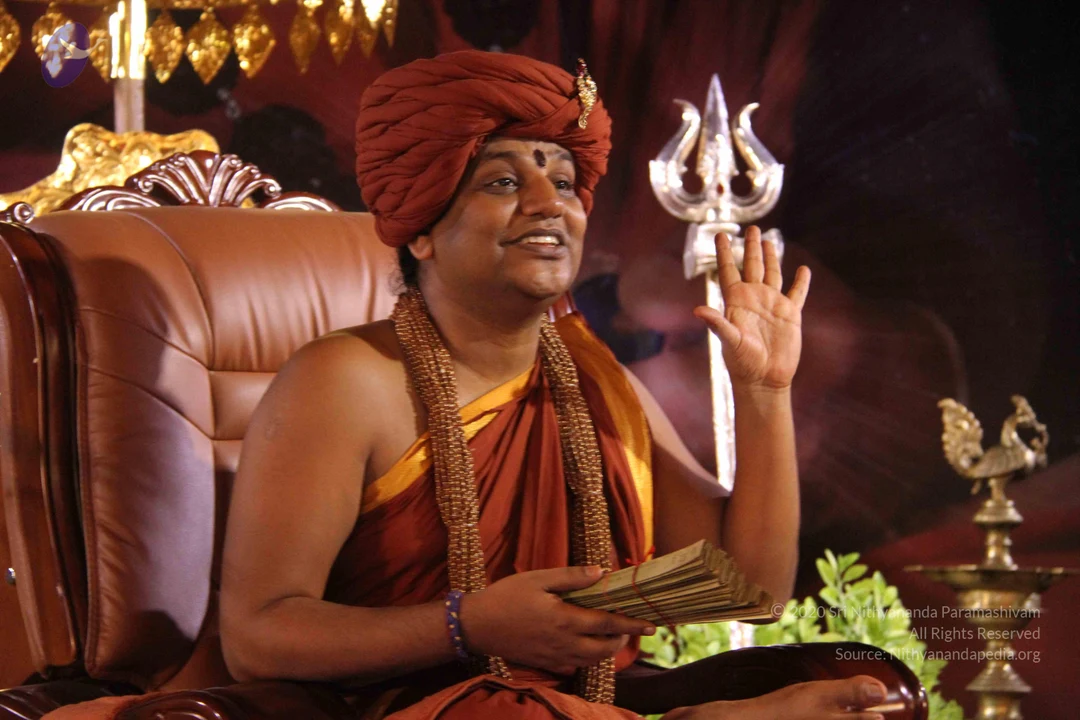
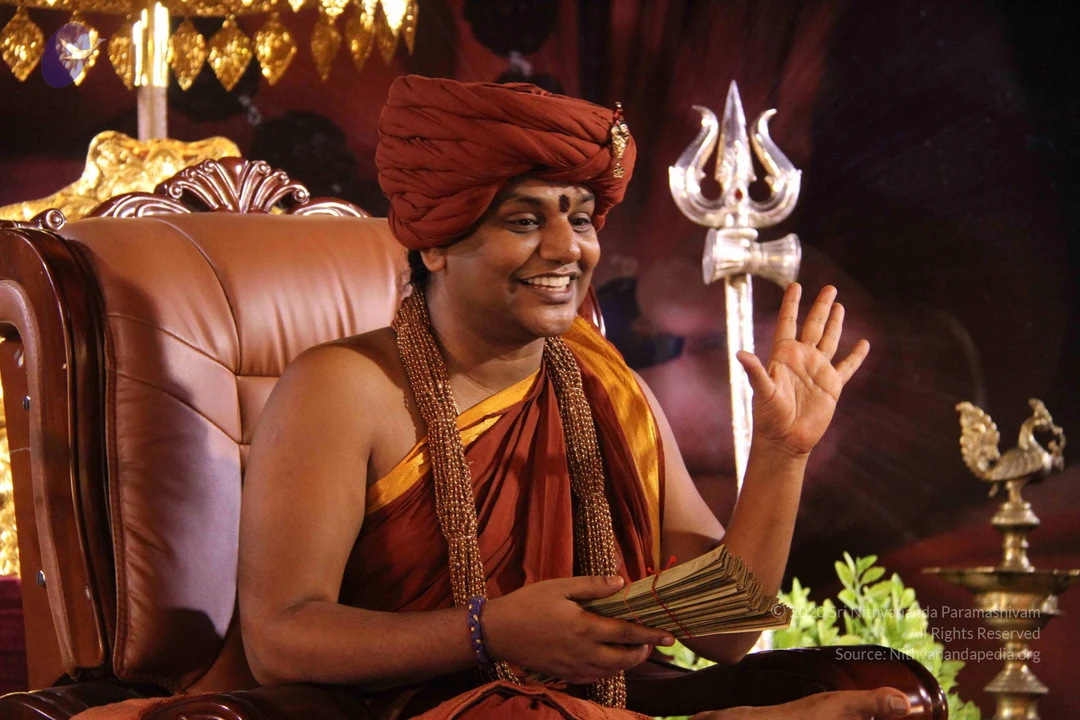
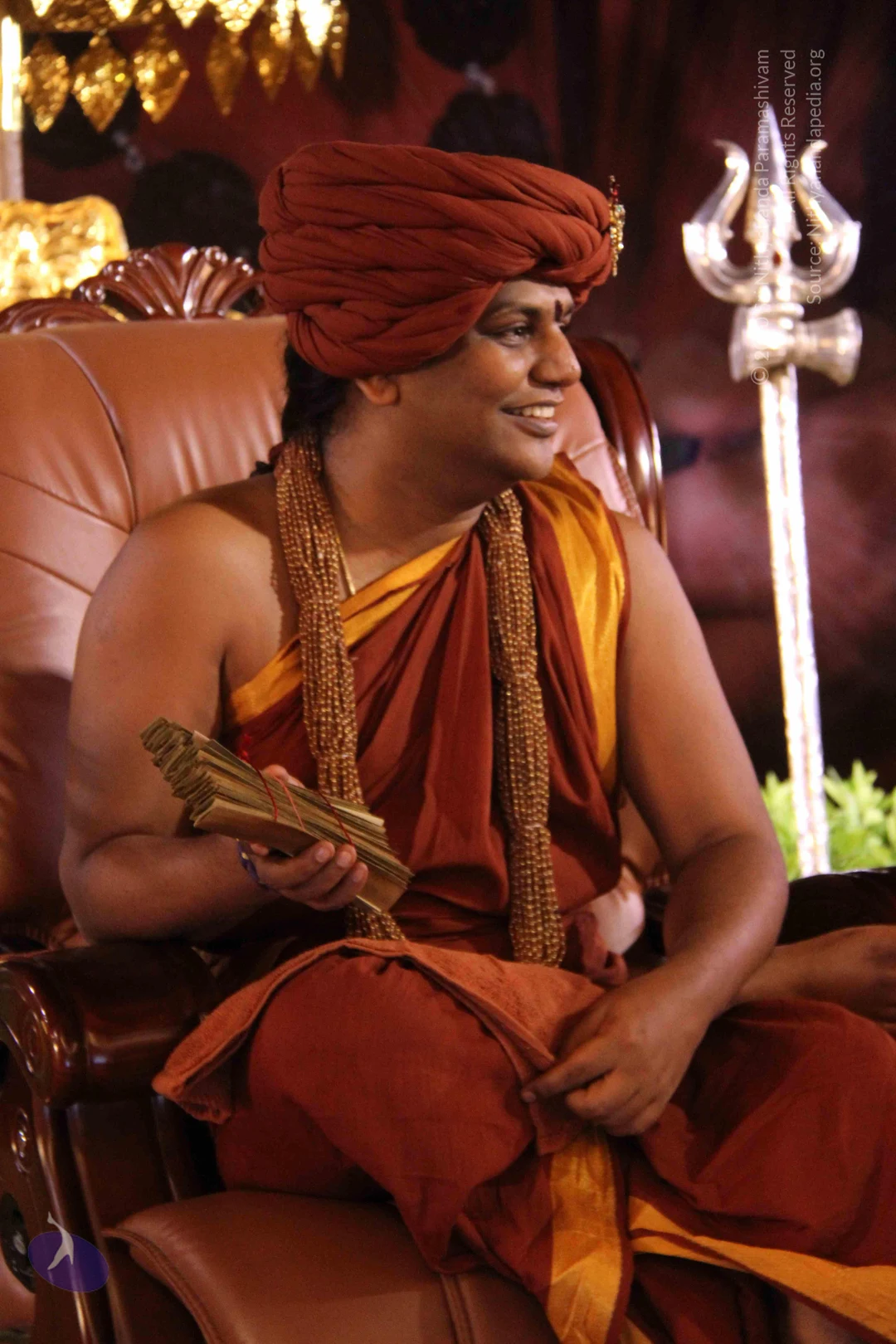
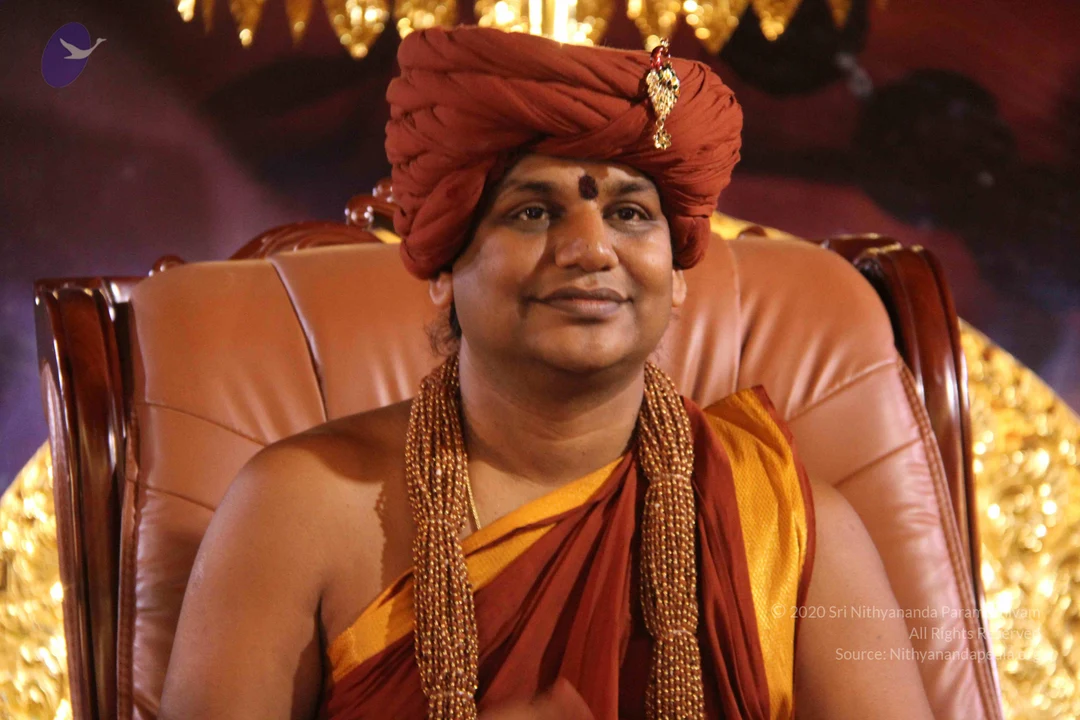
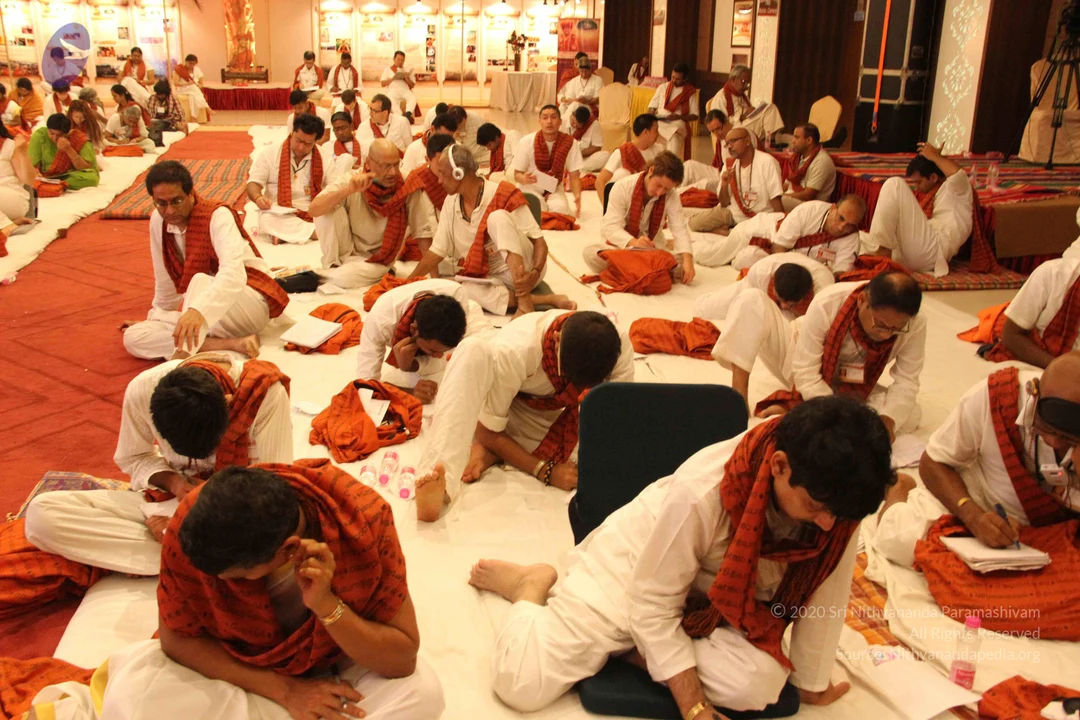
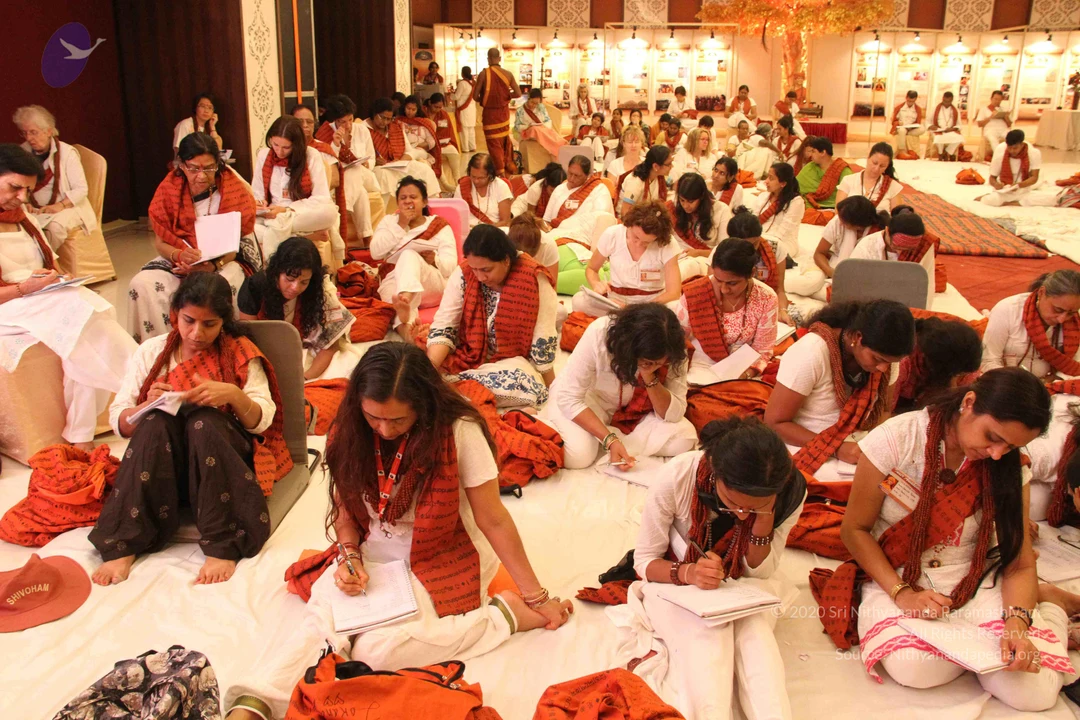
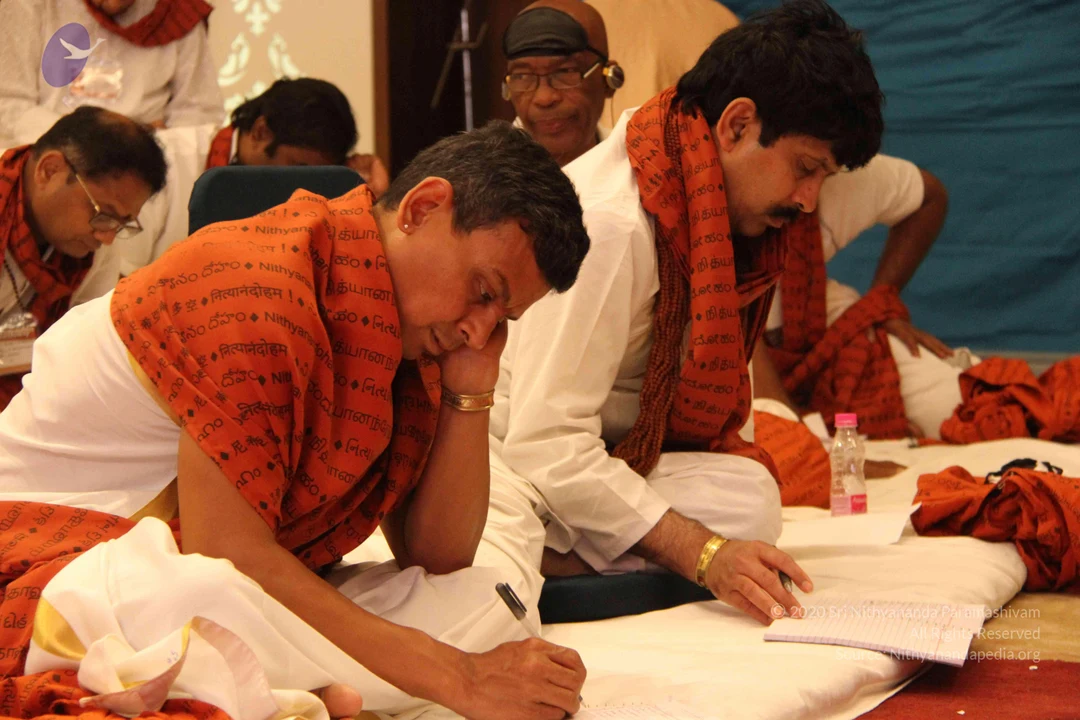
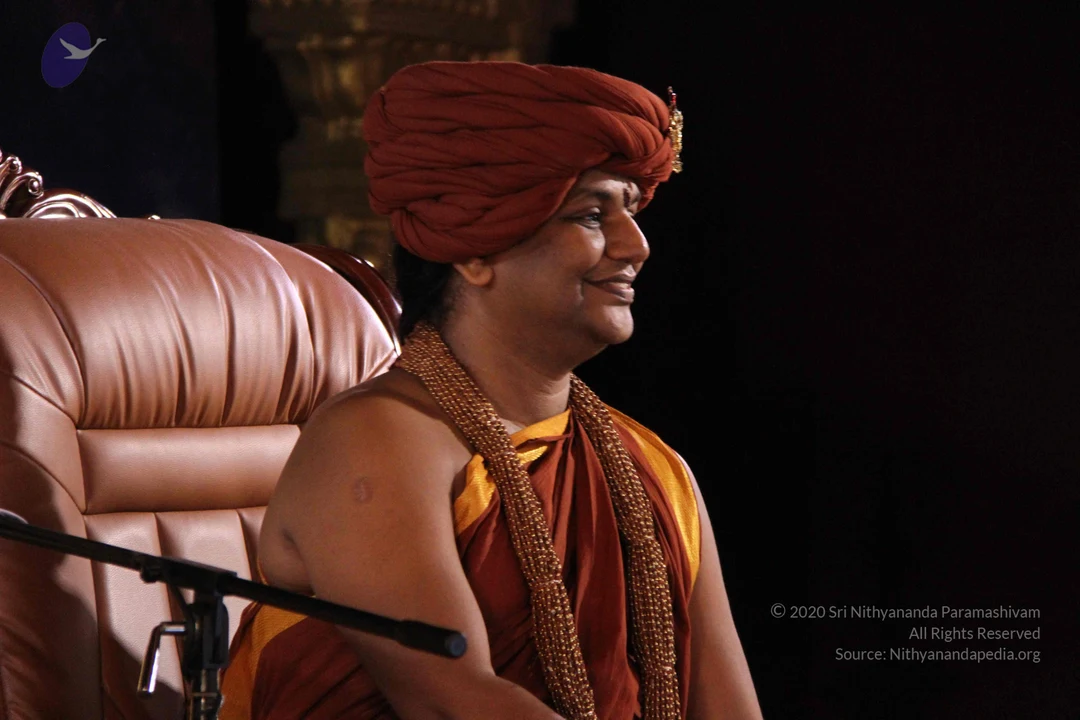
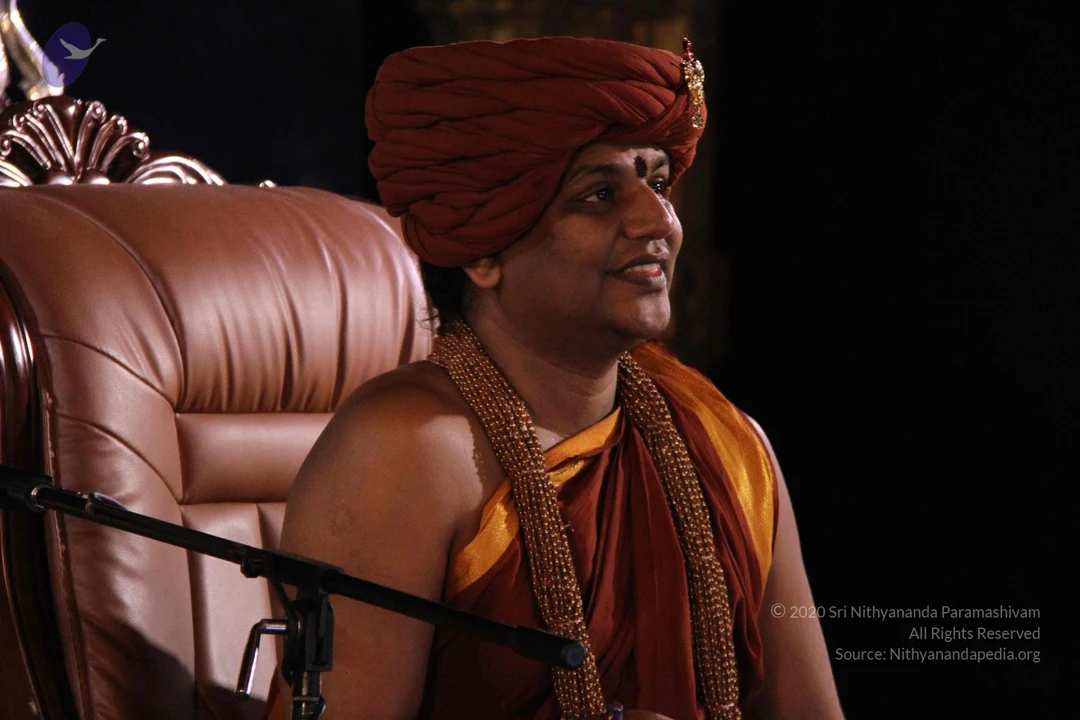
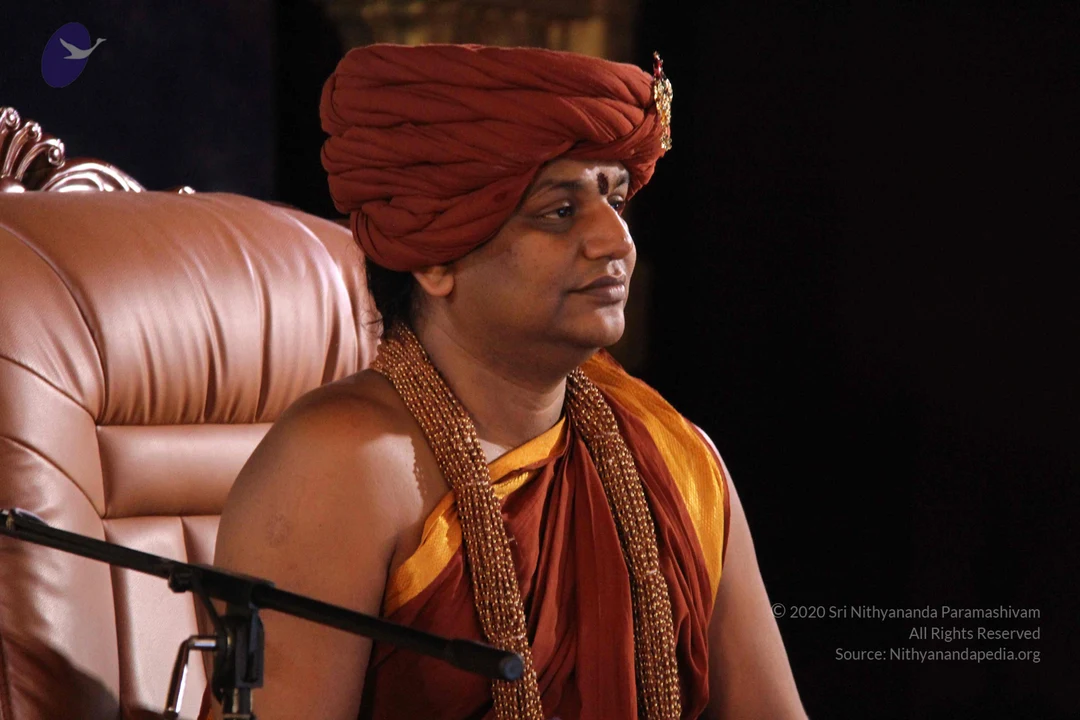
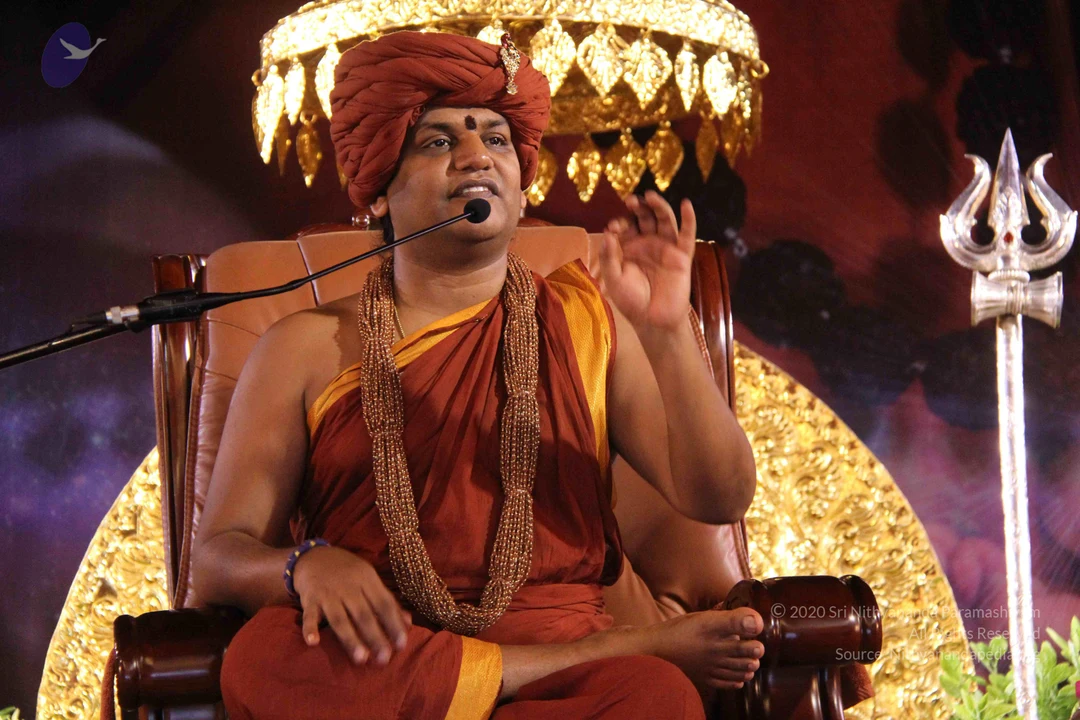
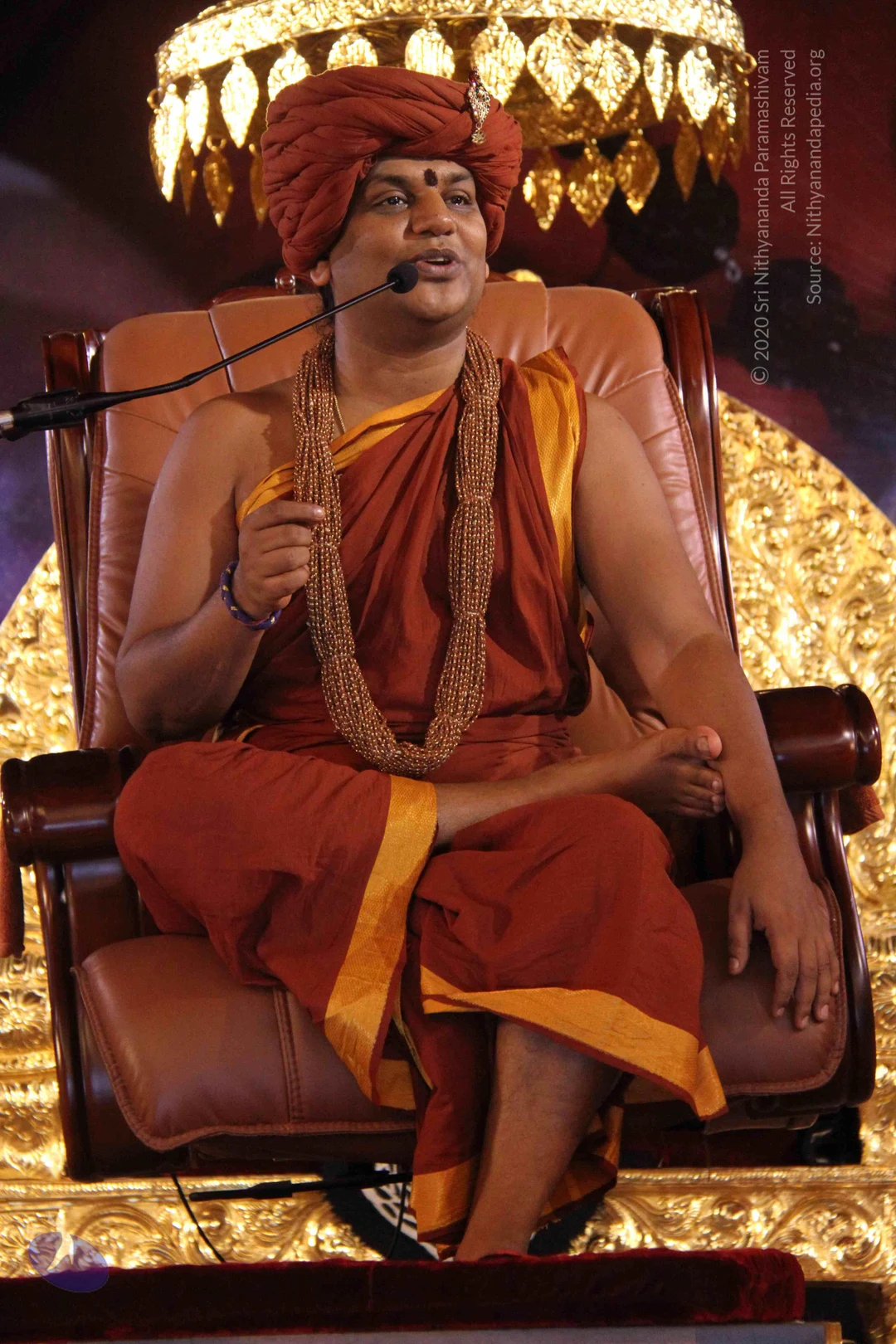
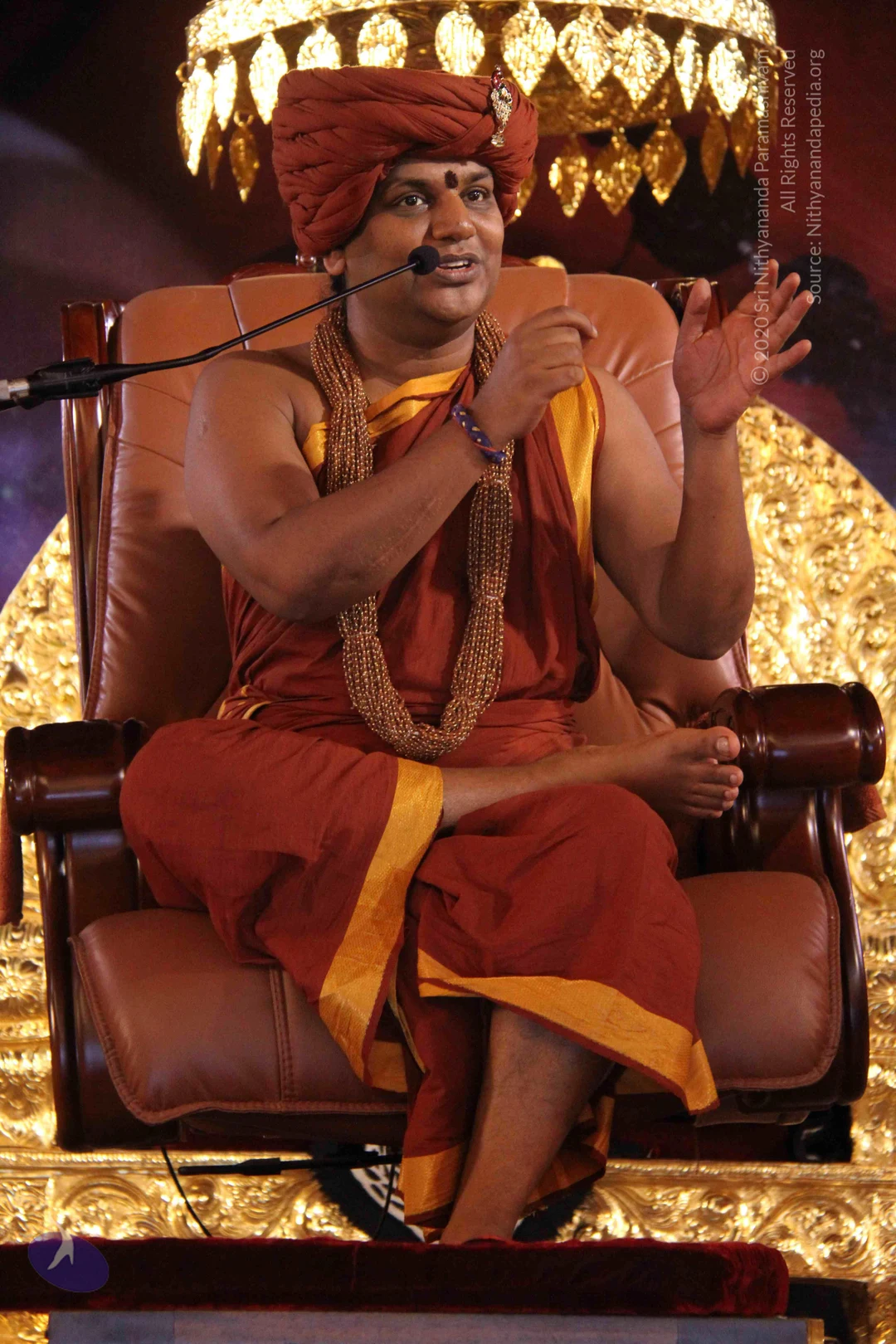
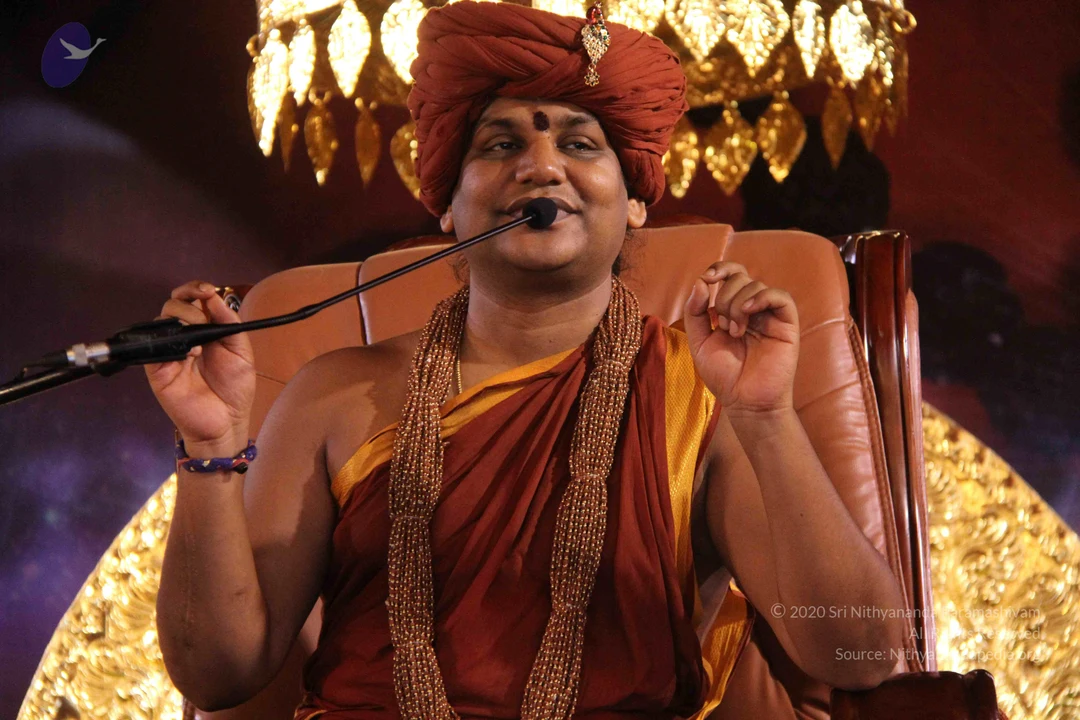
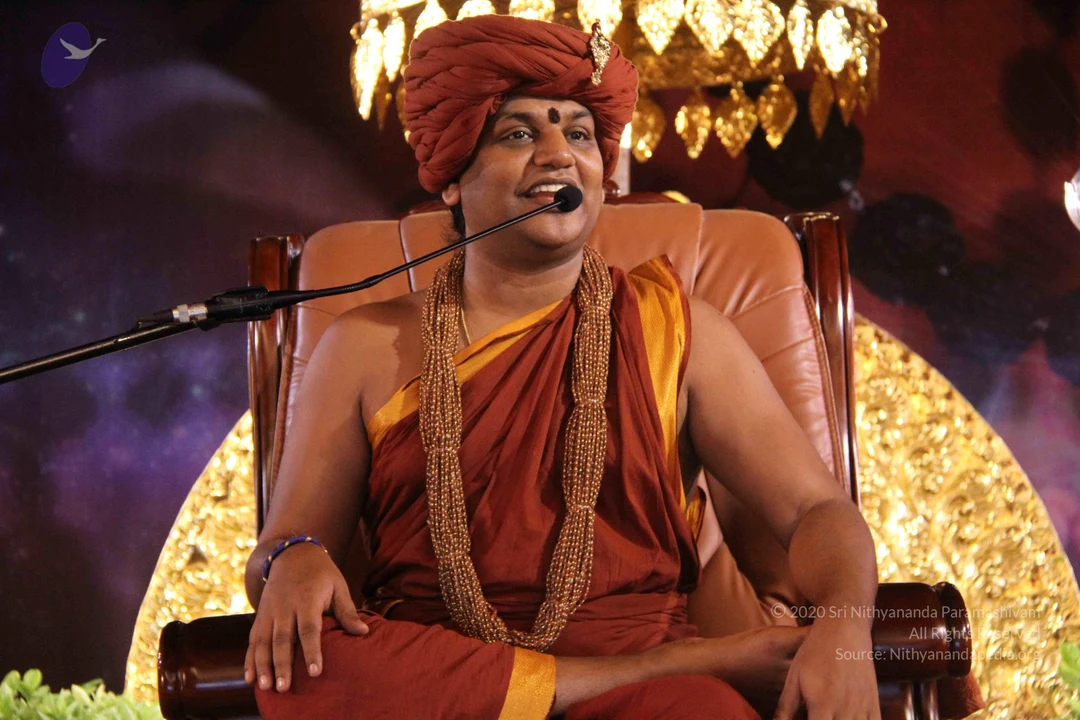
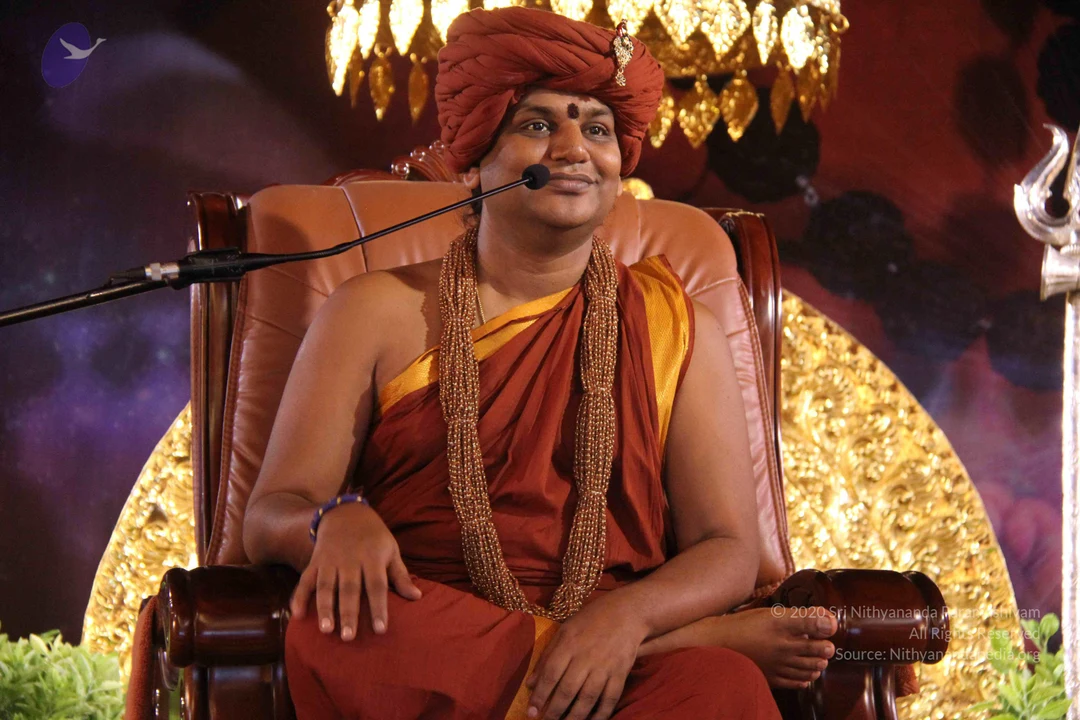
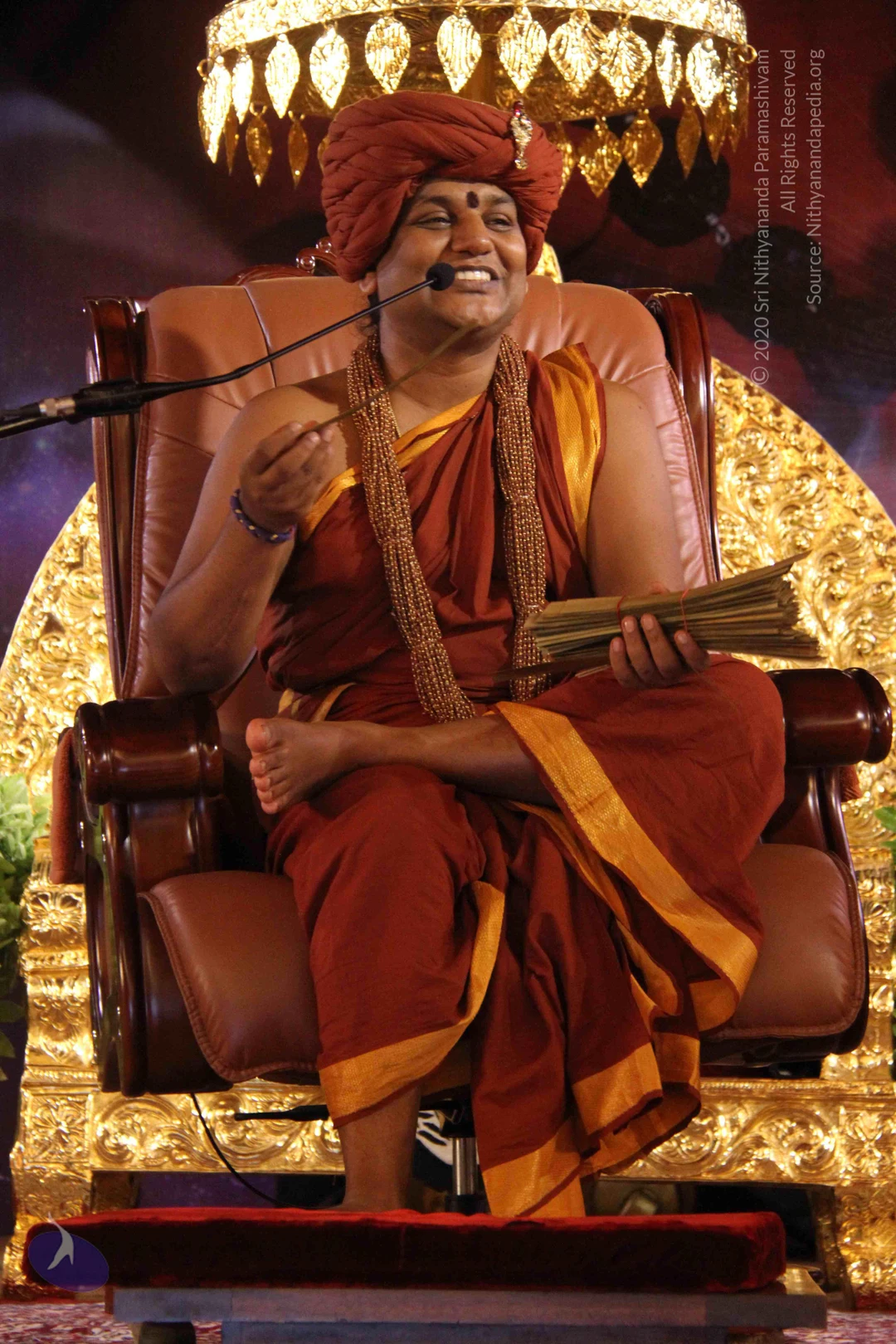
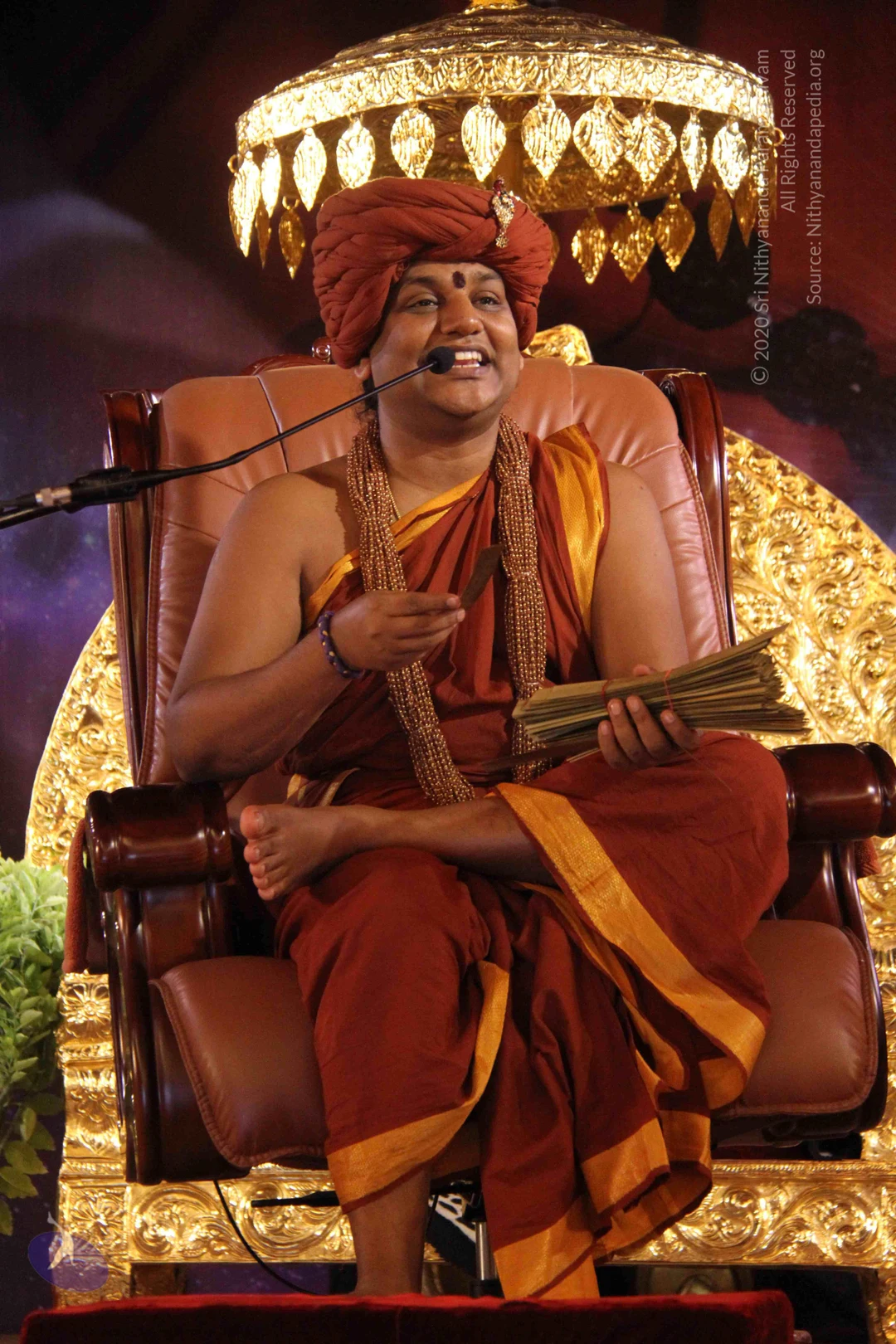
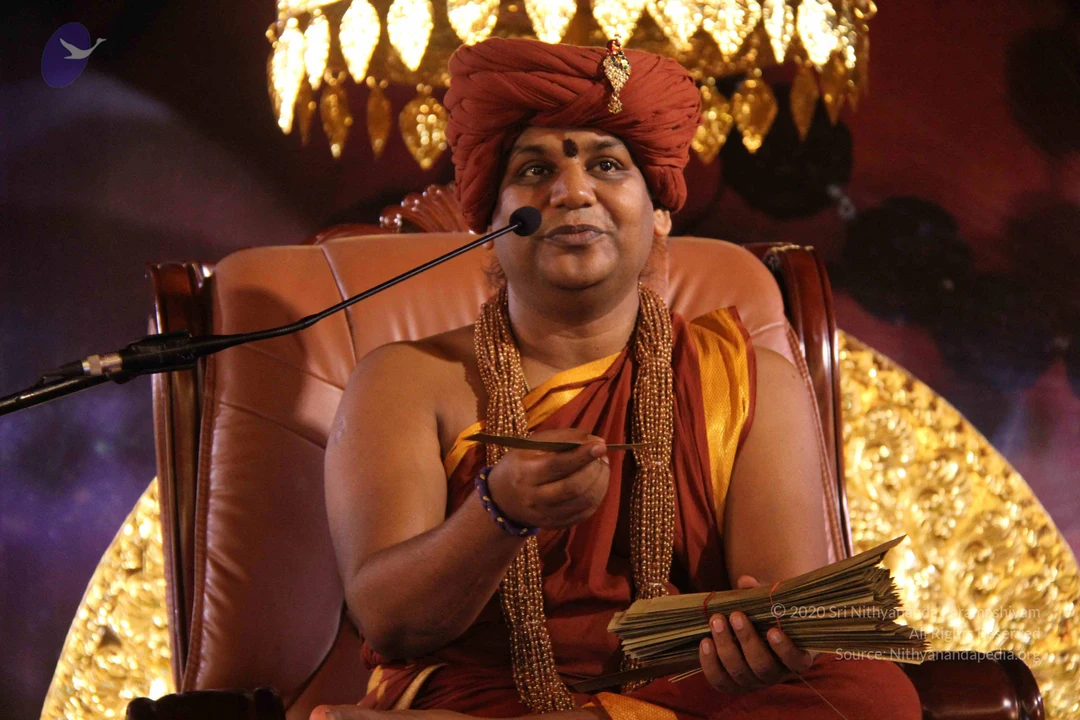
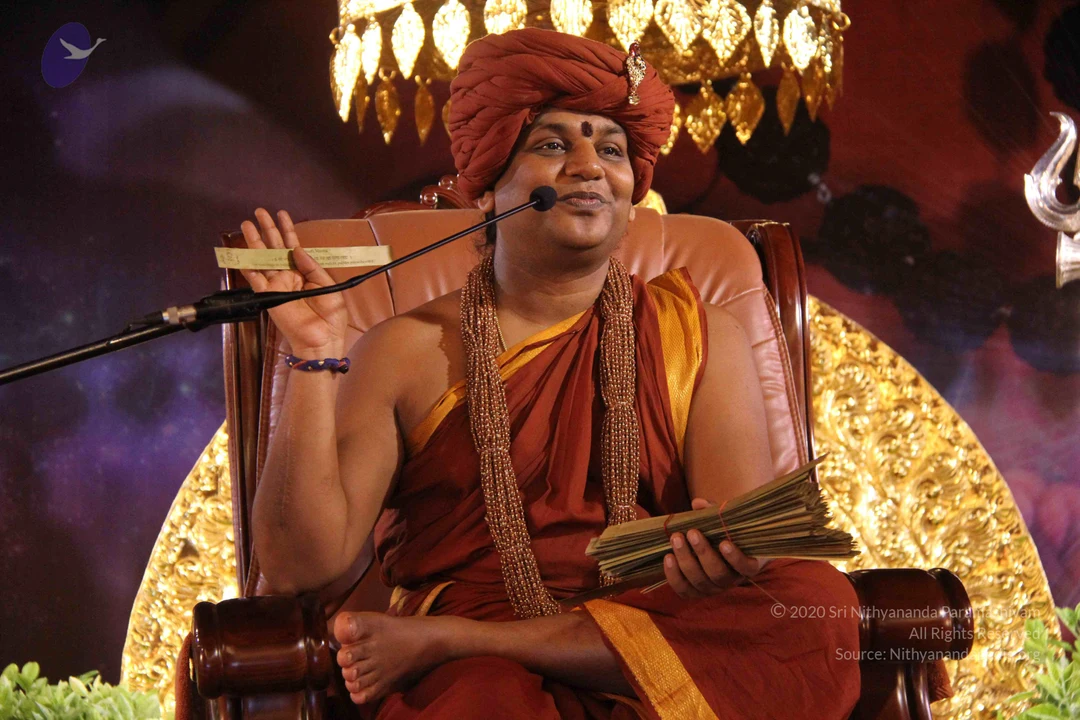
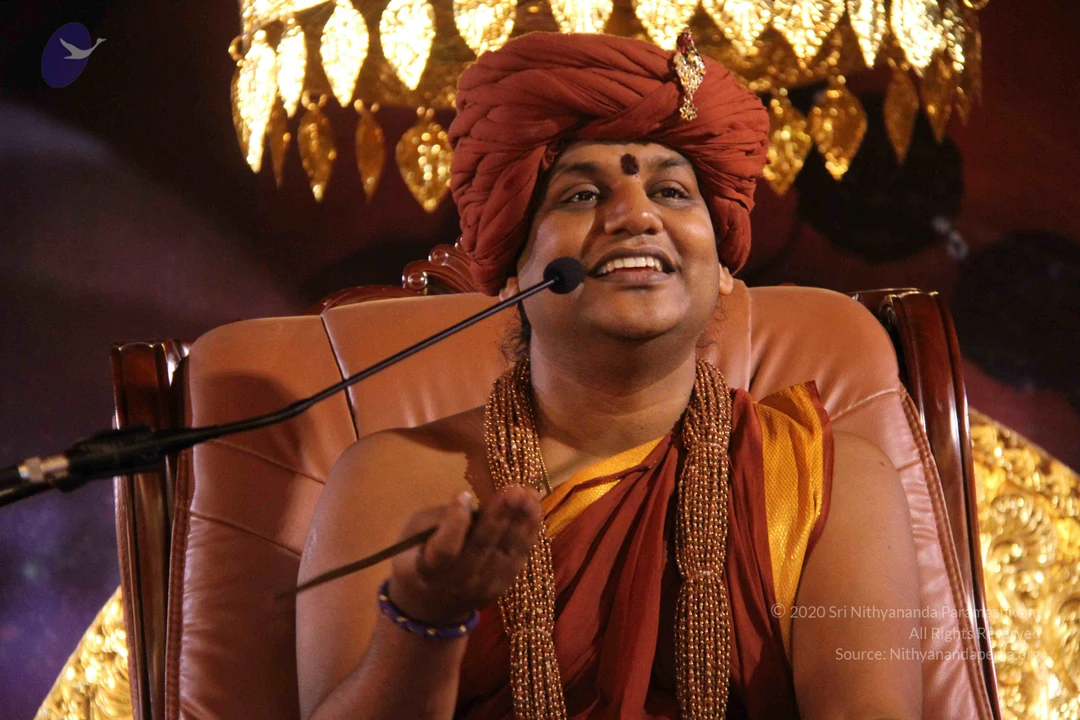
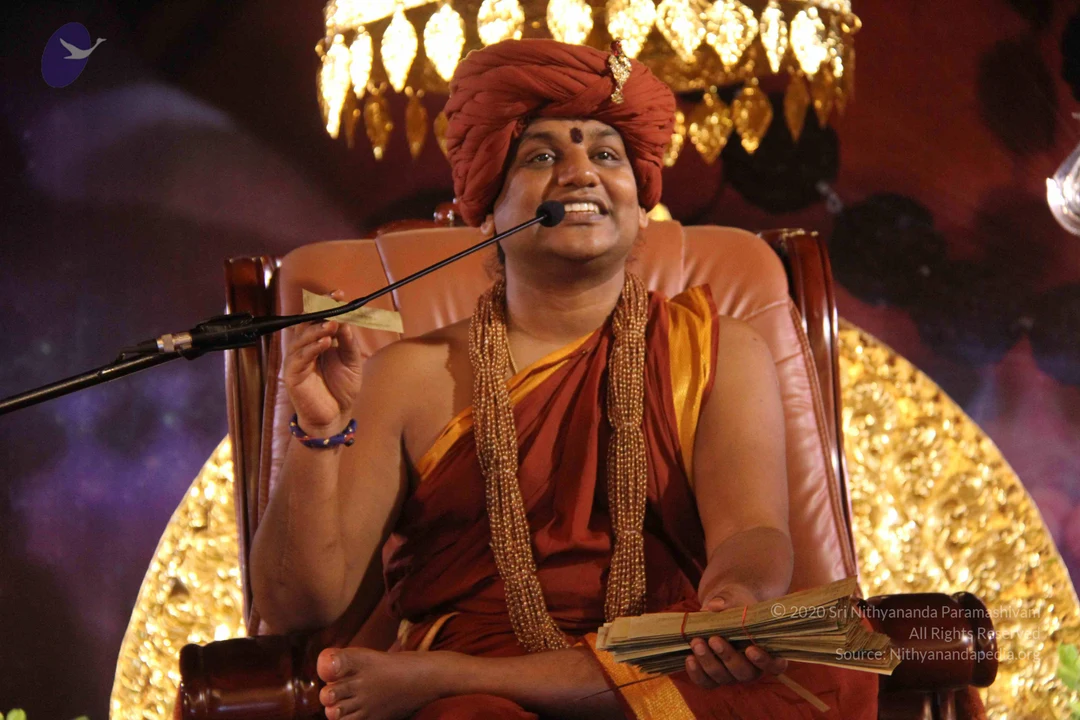
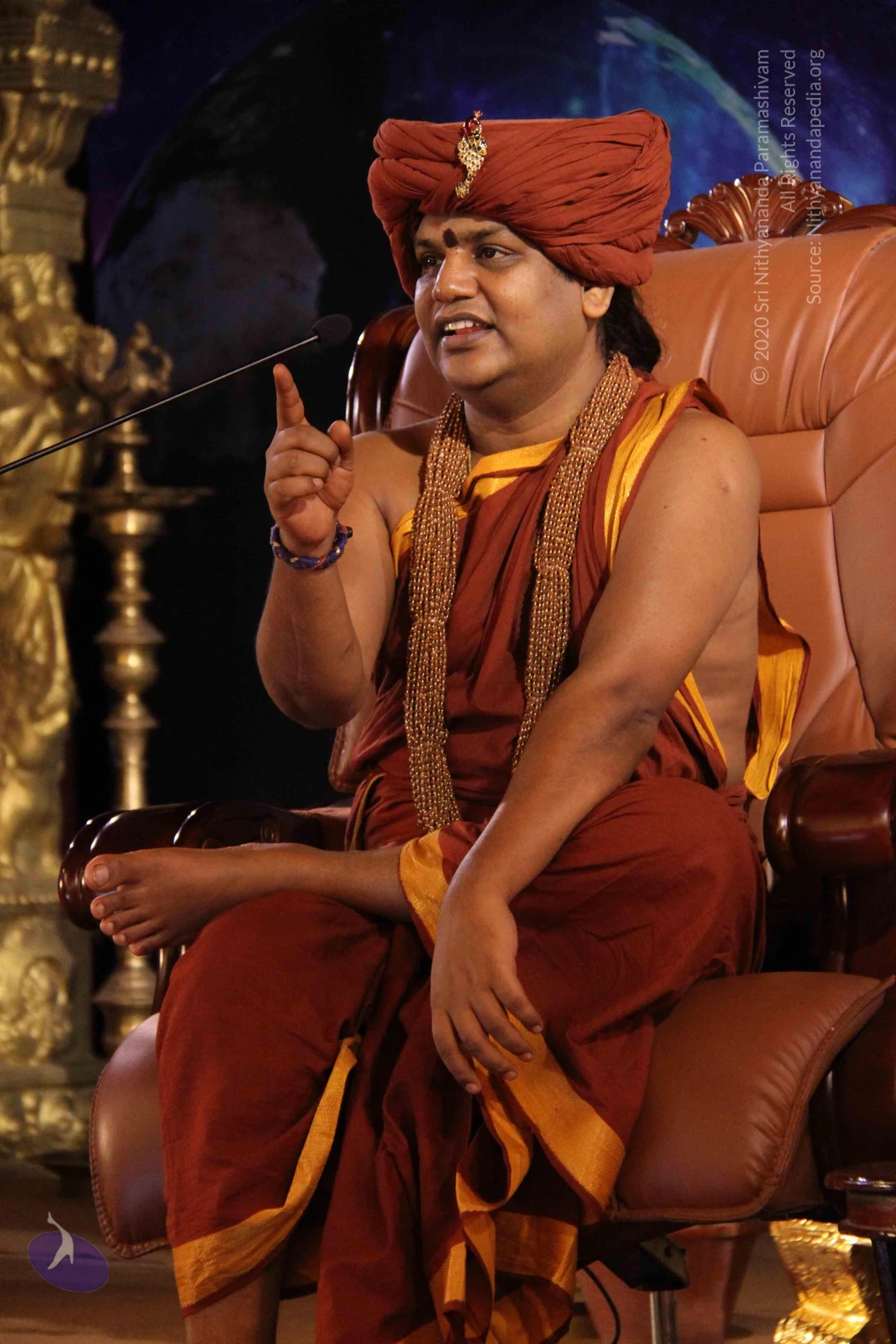
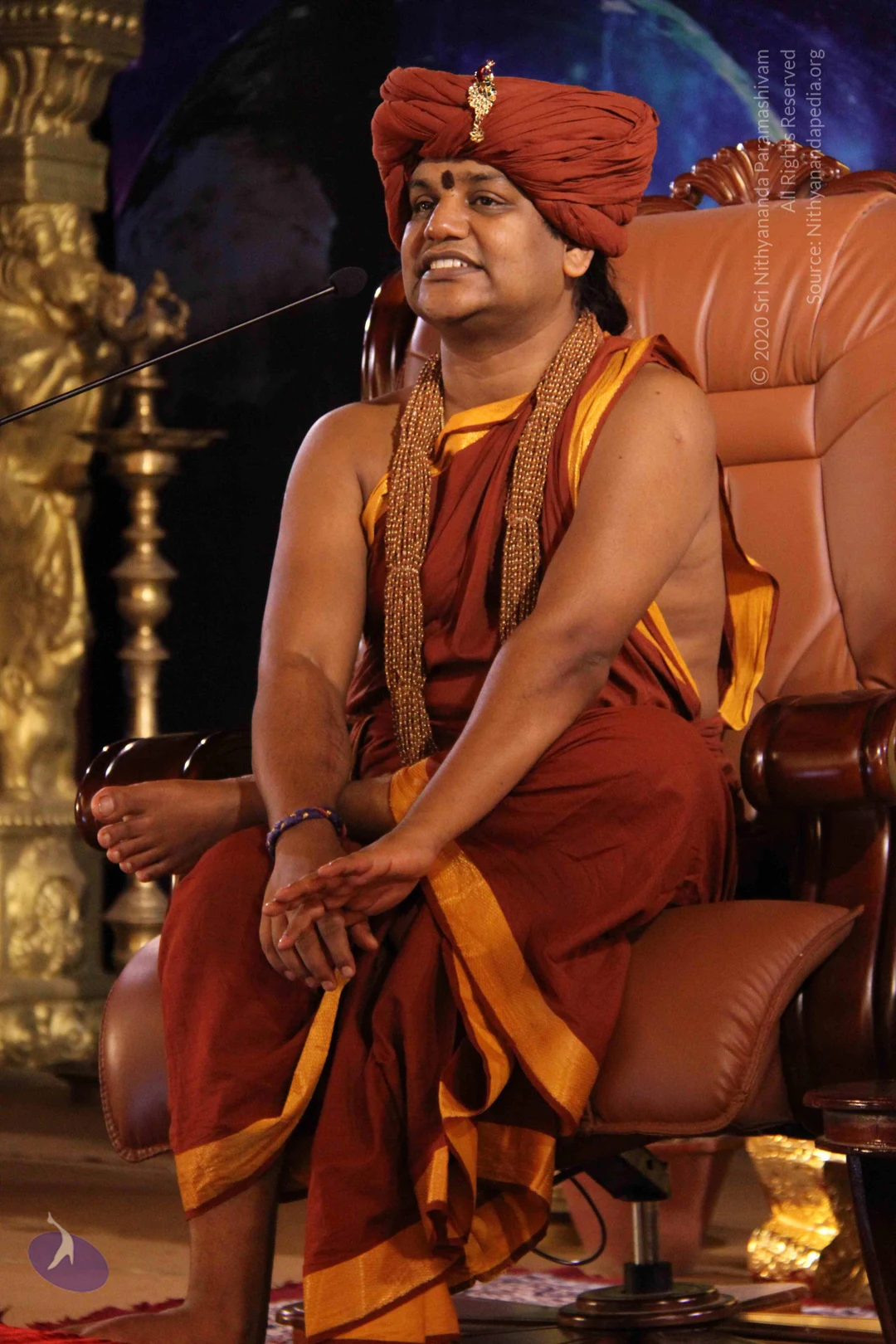
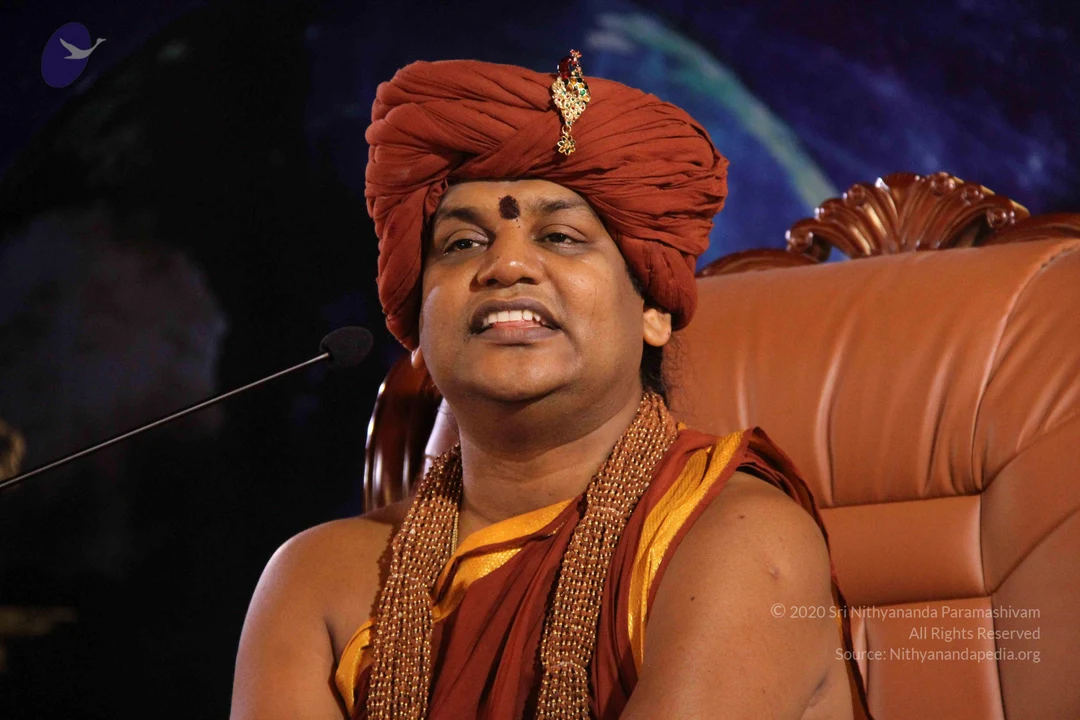
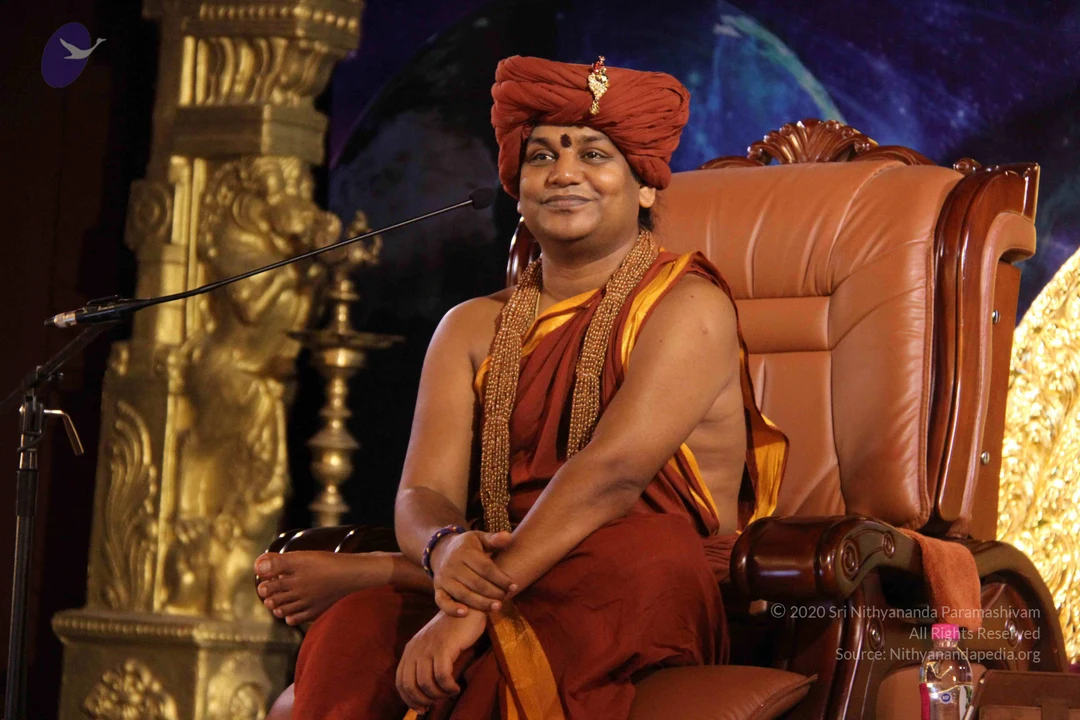
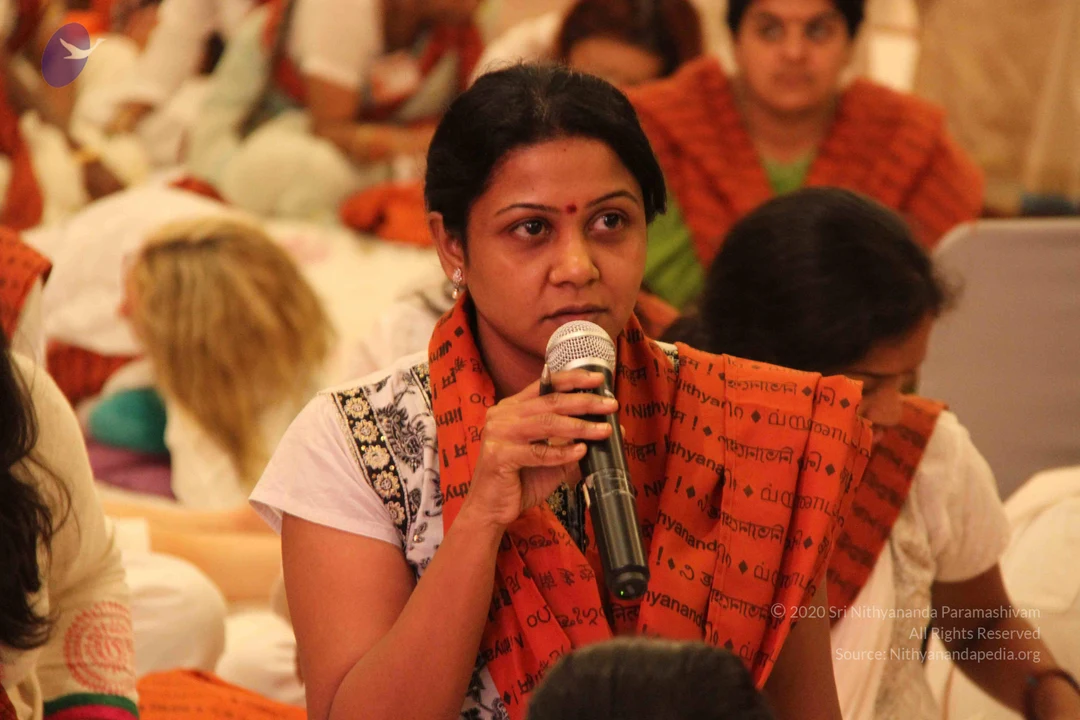
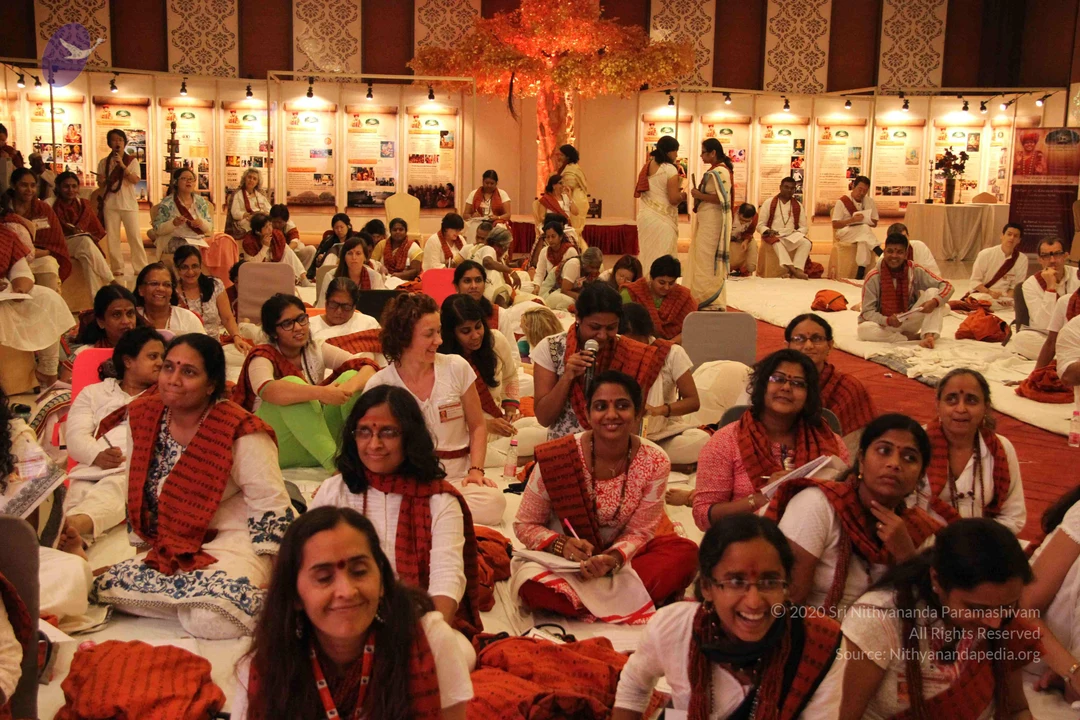
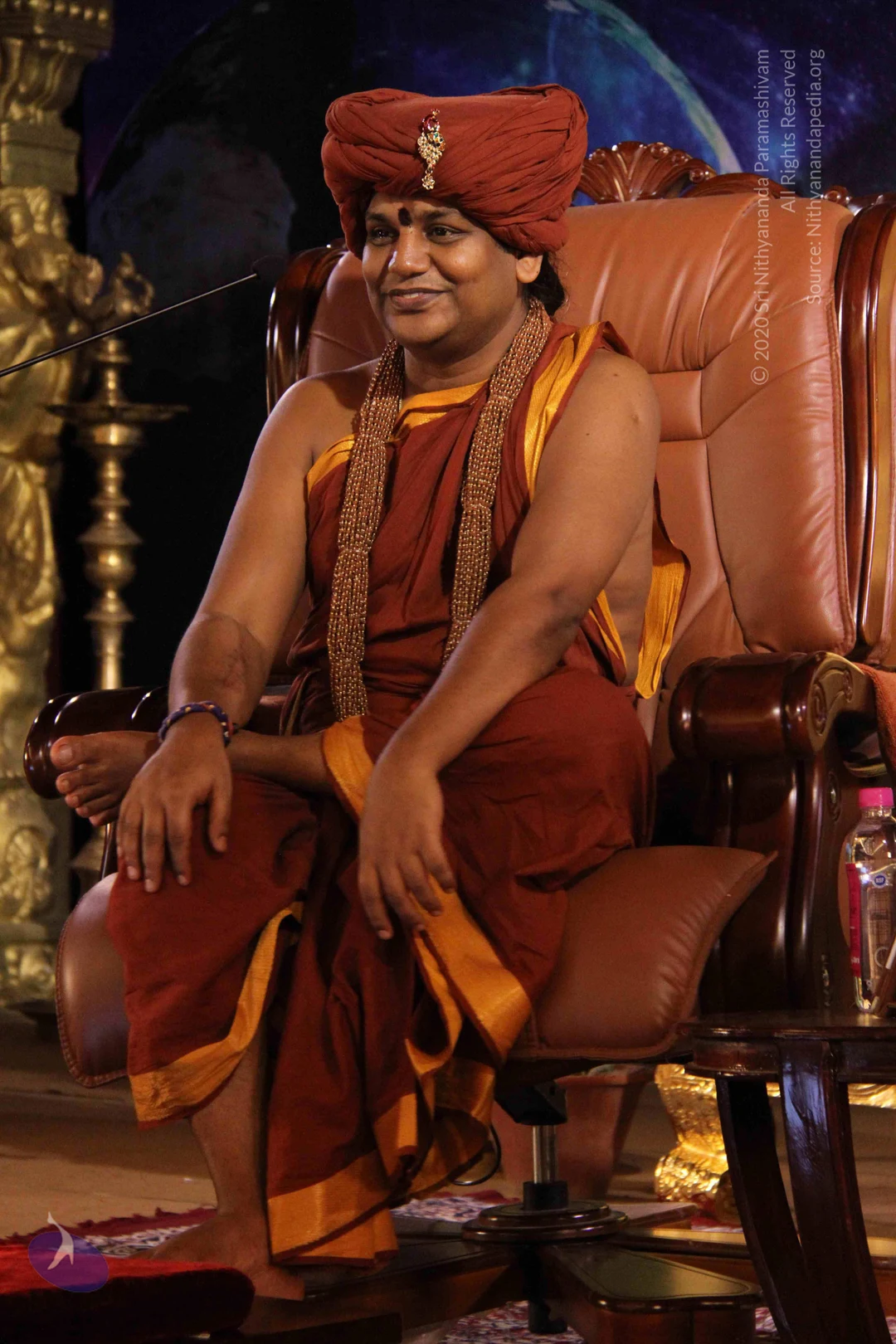
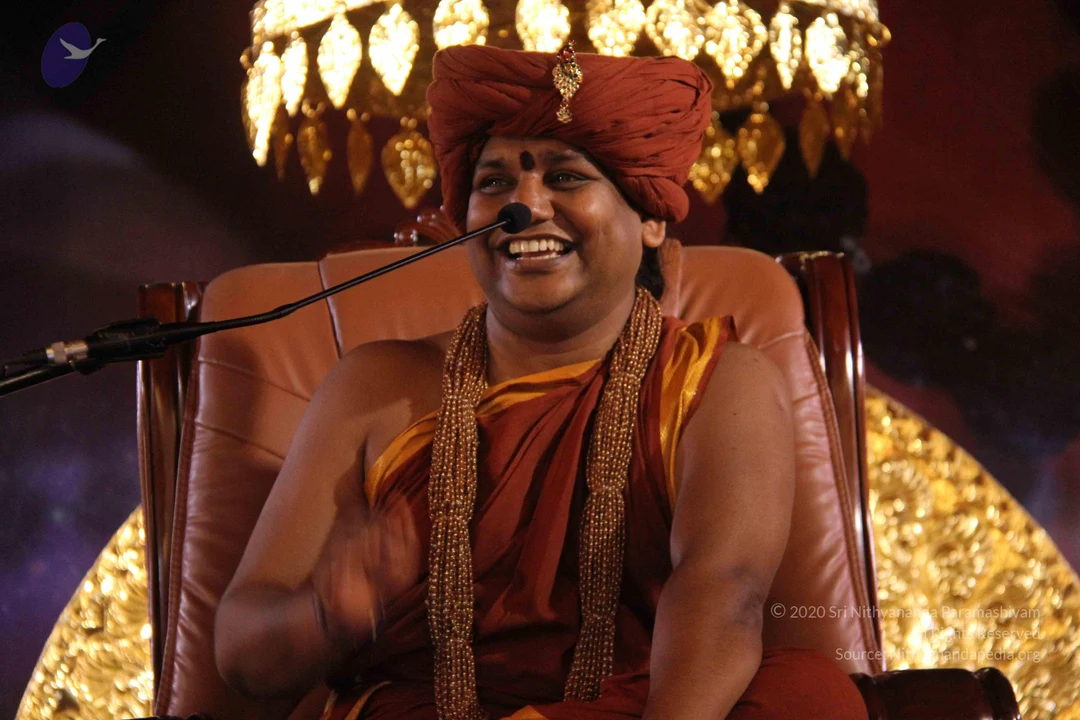
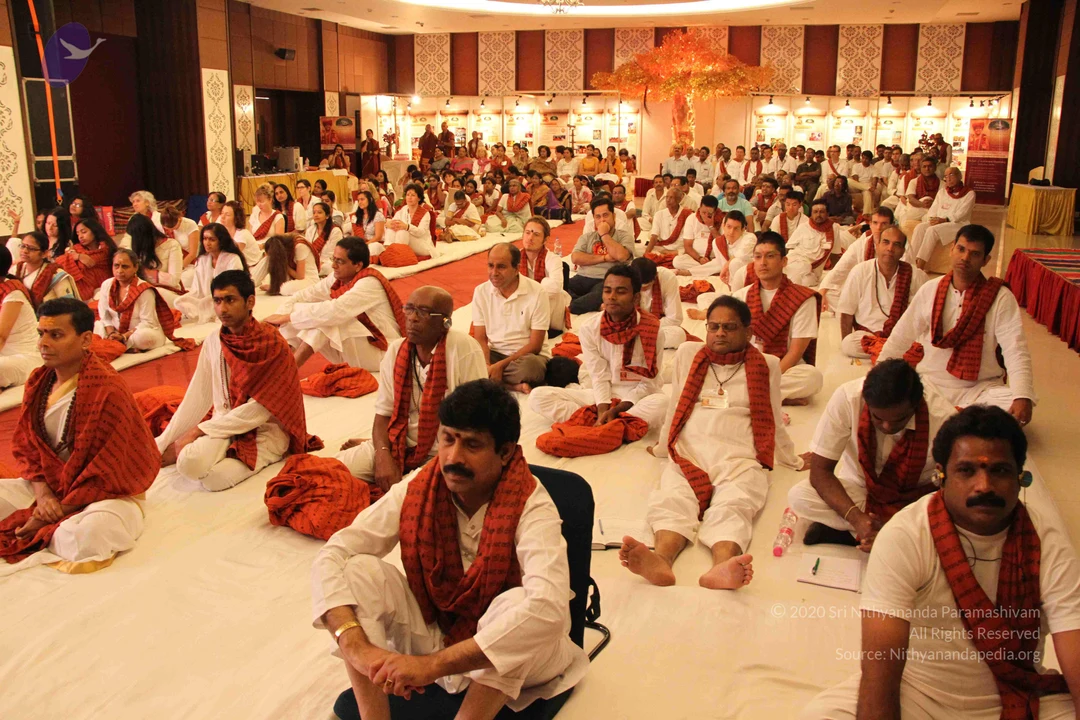
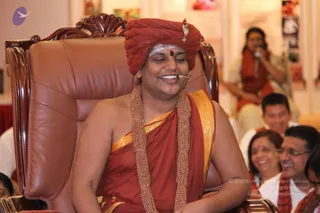
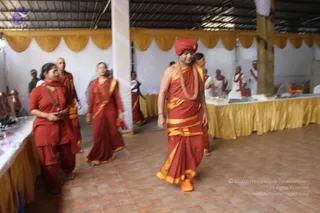
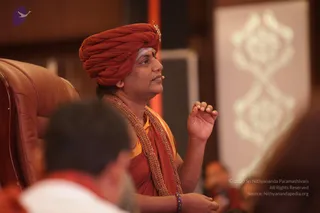
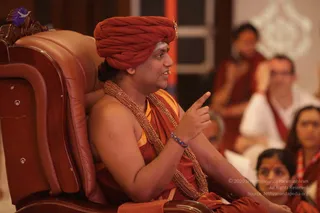
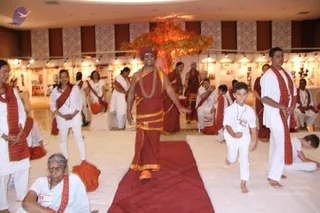
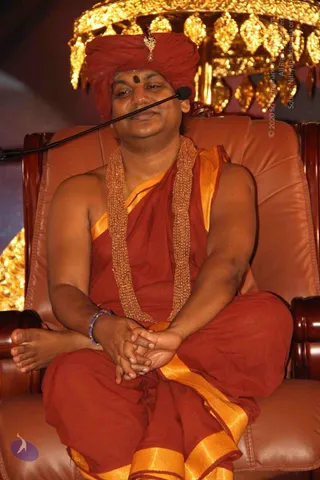
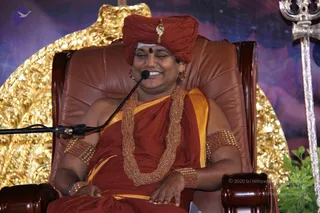
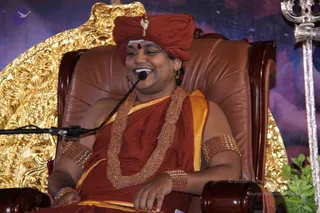
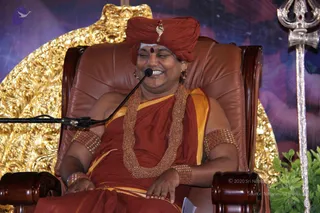
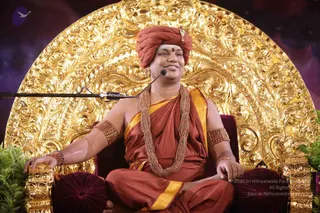
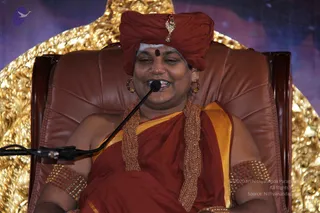
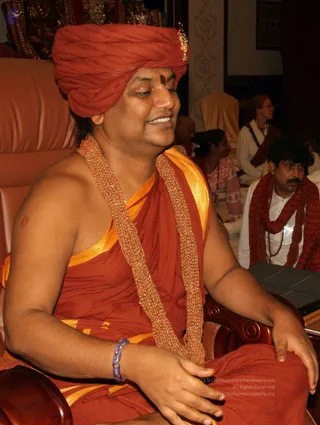
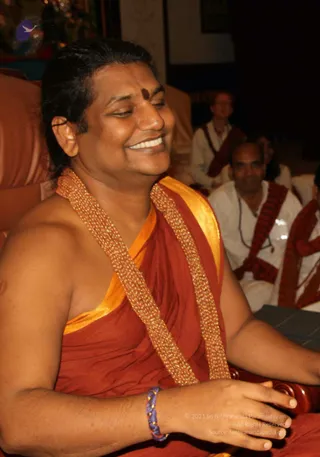
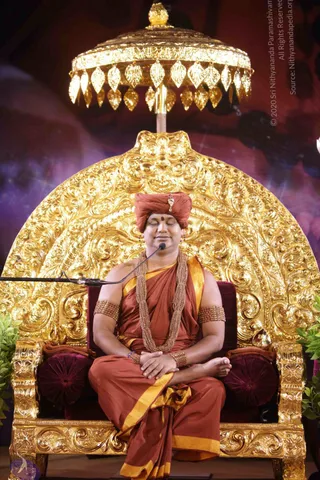
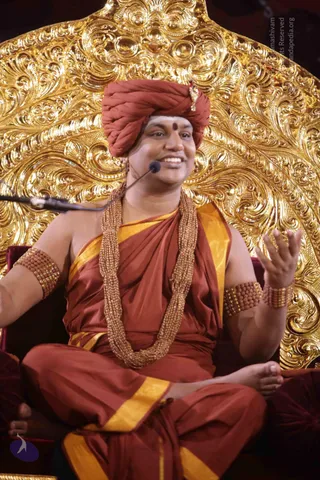
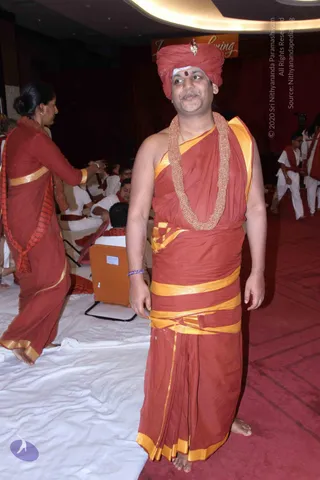
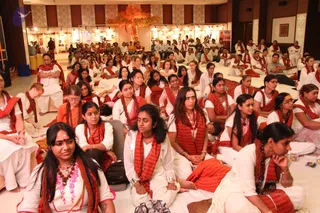
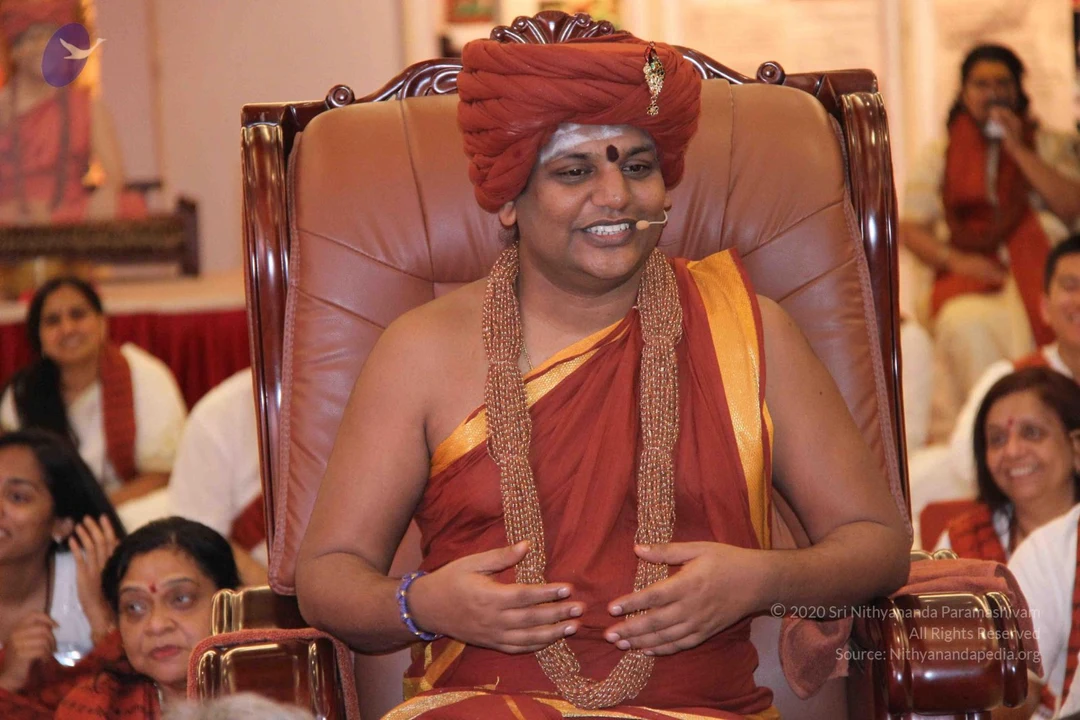
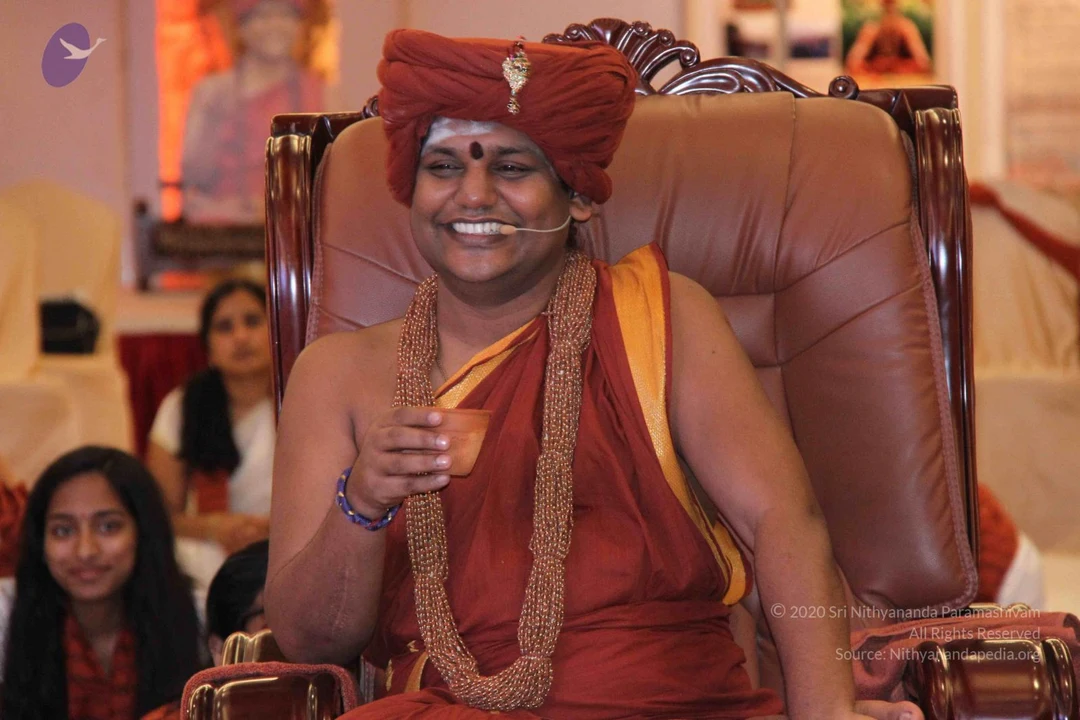
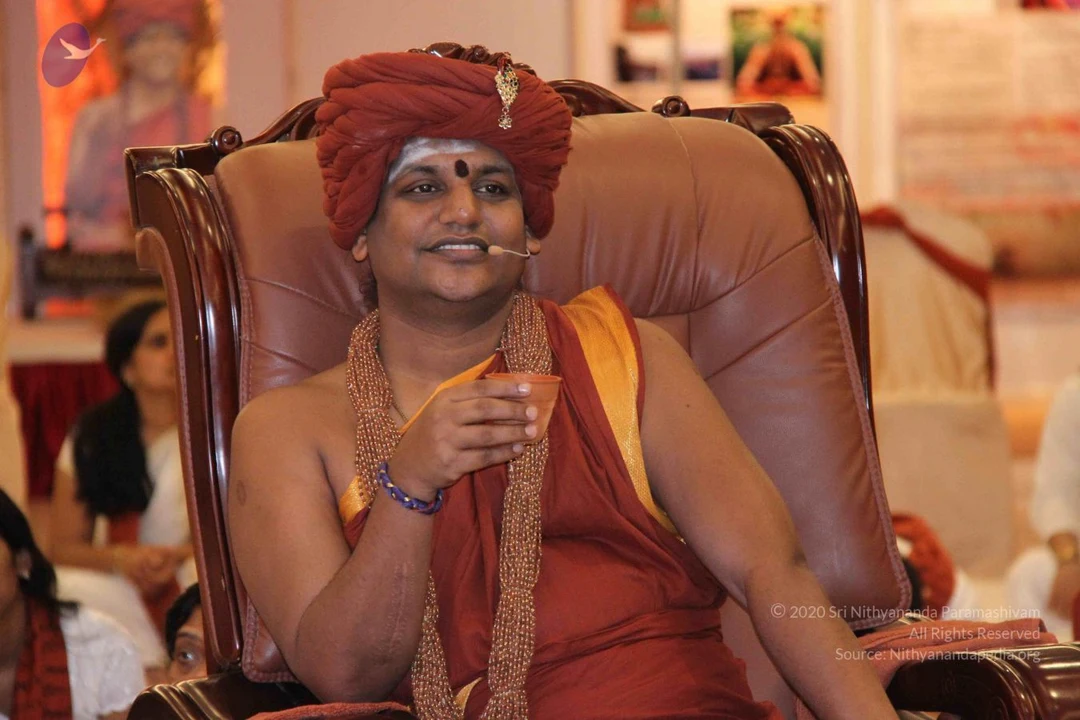
A large hall with cream carpeting and a red runner leads through rows of seated participants in white clothes with orange-red shawls. Many wear black blindfolds over their eyes and sit on white mats, some holding tablets or papers. In the centre a standing figure in orange-red robes and a matching turban faces away from the camera, arms at the sides, near the runner. Behind them a decorated stage with white pillars, warm lighting, and a small shrine with a golden canopy. A yellow backpack sits in the foreground. Several people in white and orange also stand near the stalls at the back.A photograph of a satsang hall with a large audience seated on white floor mats, many dressed in white with red-and-orange shawls. In the centre a man in a red-orange dhoti with gold borders and a white-and-gold ceremonial garland stands beside a woman in a deep red sari with gold trim and a rudraksha mala. Behind them a man in white with a red shawl stands, and a girl in white with a red shawl stands at right. A man in a red turban and a woman in white at lower left are visible. Overhead hang chandeliers and warm ceiling lights, with display stands along the back wall.A photograph of a satsang discourse. A man in a red-orange turban with a small gold ornament and a red bindi sits in a large brown leather throne-style chair, wearing a red-orange garment with gold border and a long beaded rudraksha-style gold-toned mala. He wears a small lapel microphone and gestures with one raised hand while speaking. Behind him is a framed portrait of a saffron-robed figure. Several seated people in white and red-orange clothing sit in the audience at the left and right edges, and a woman with a bindi is visible at lower left.

July 05 2015

Original wiki page
Contents

Title:

Luxury, The Sure Killer Of Intelligence & Powers

Description:

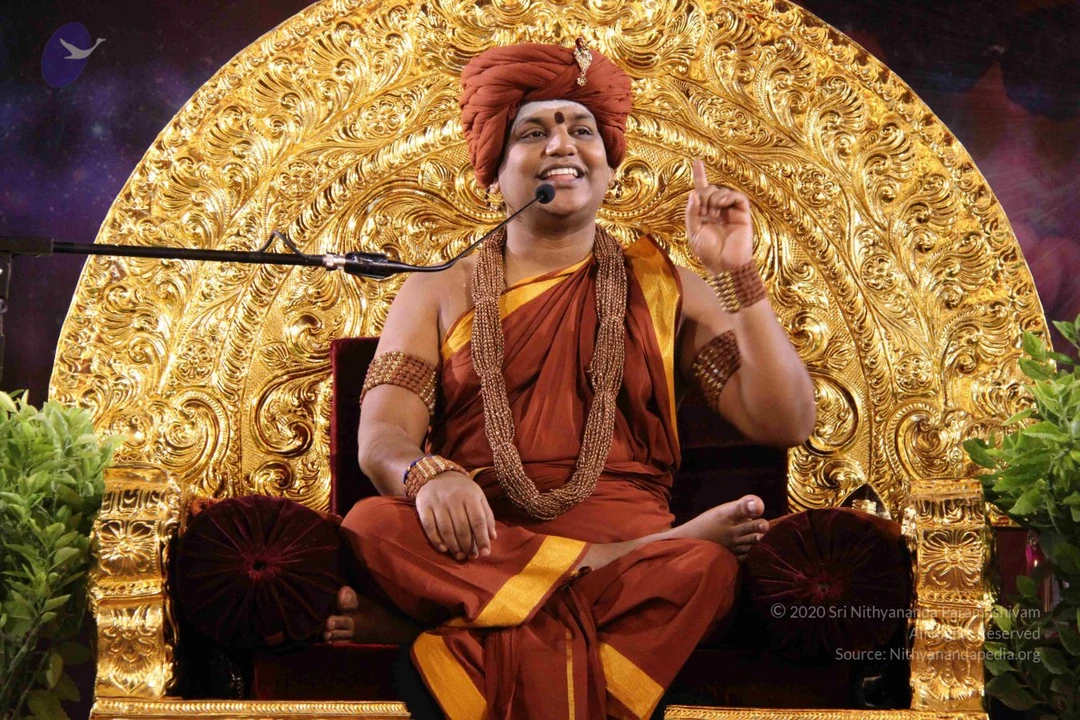
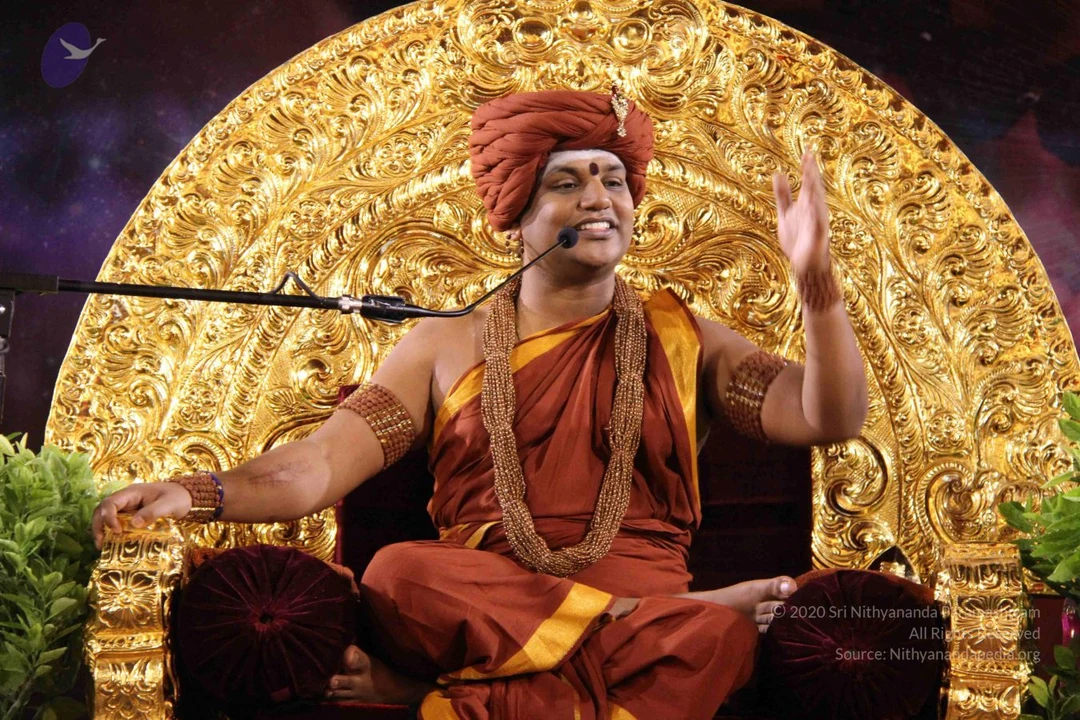
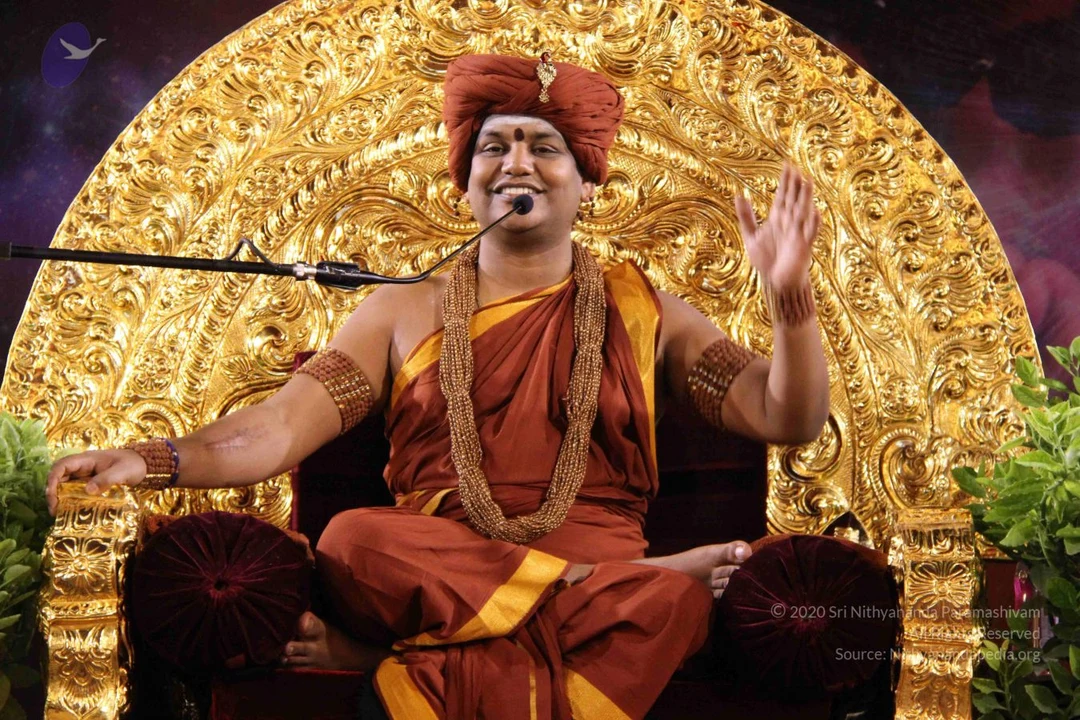
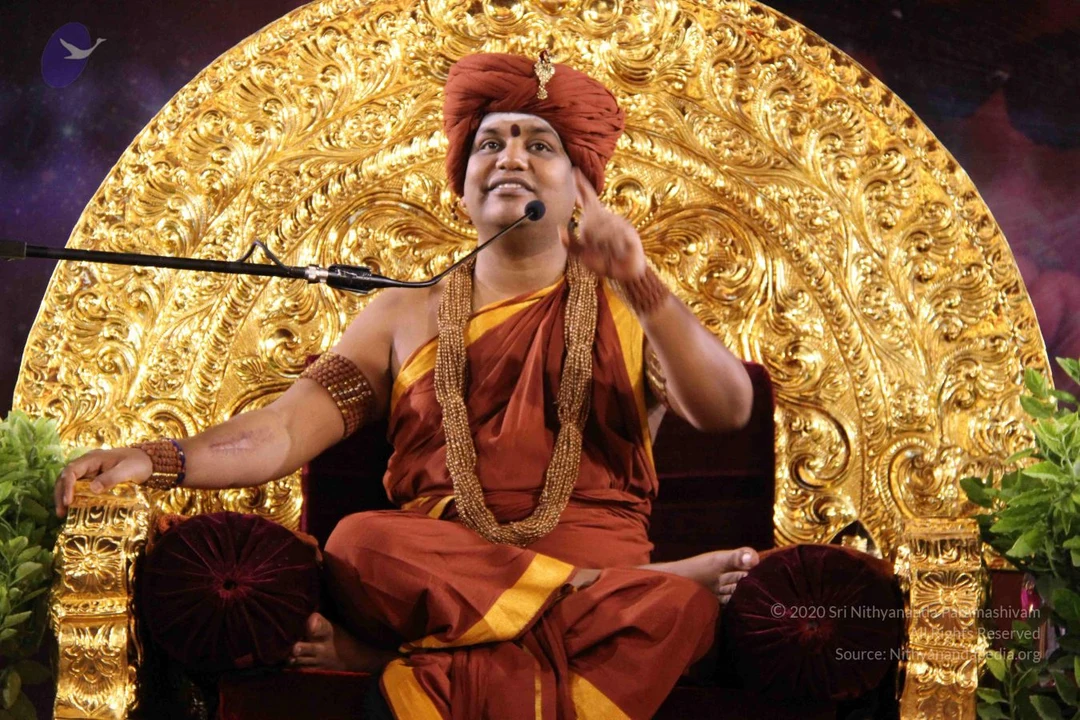
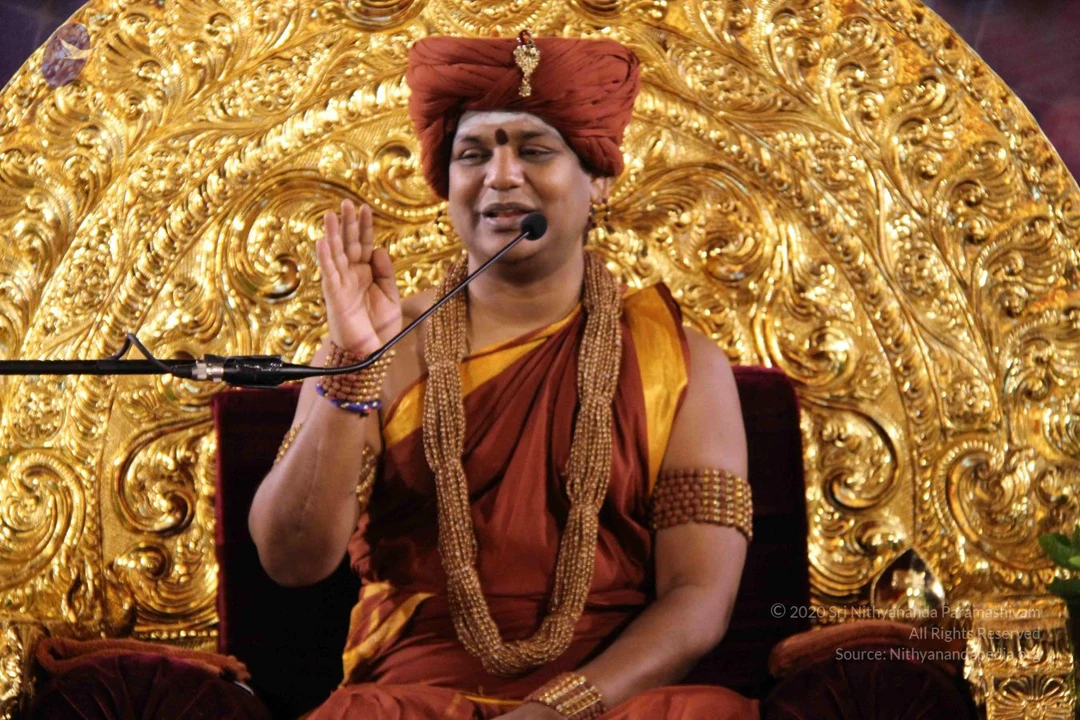
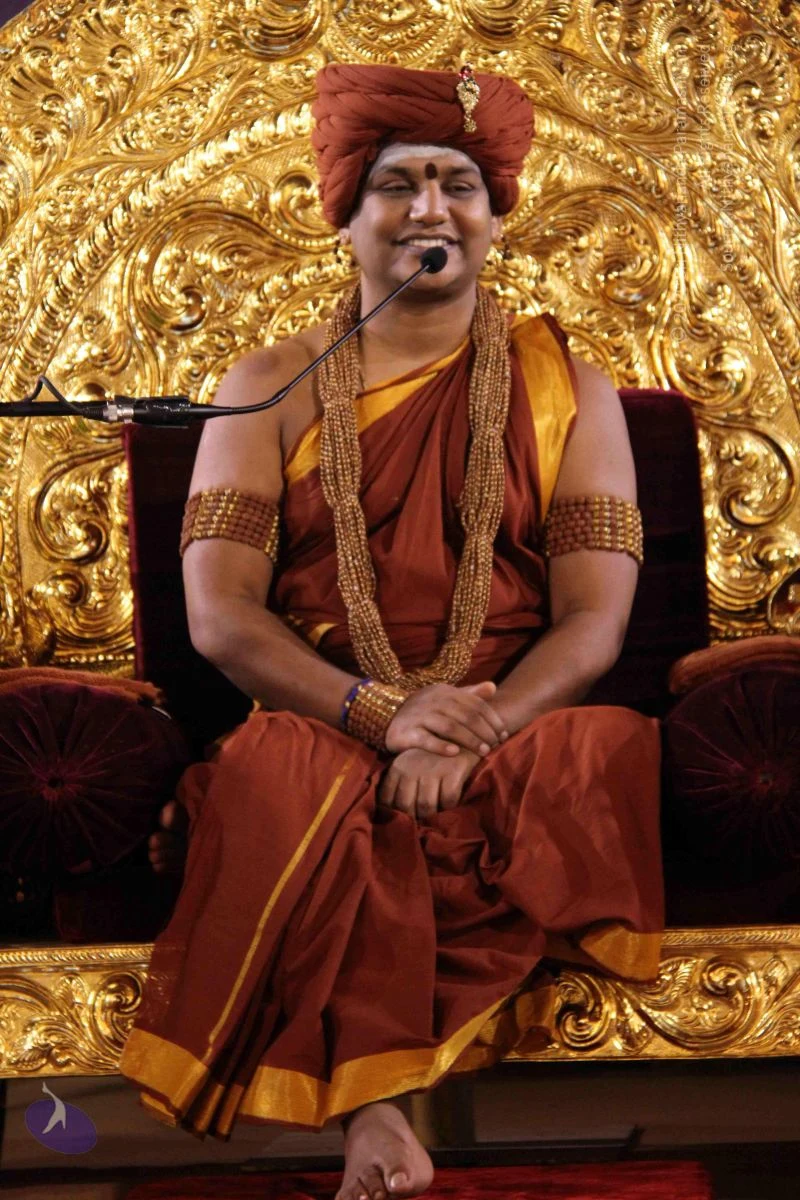
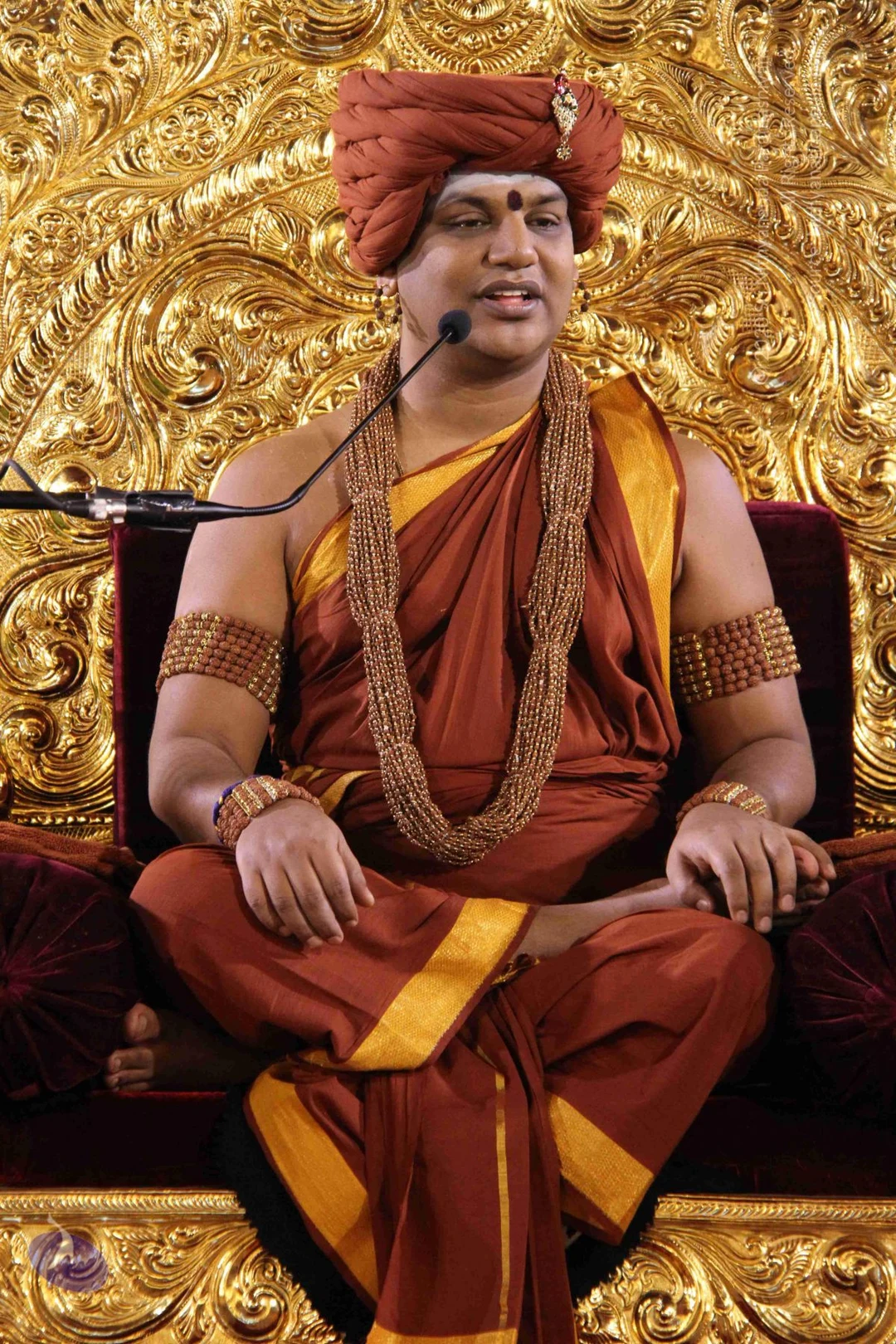
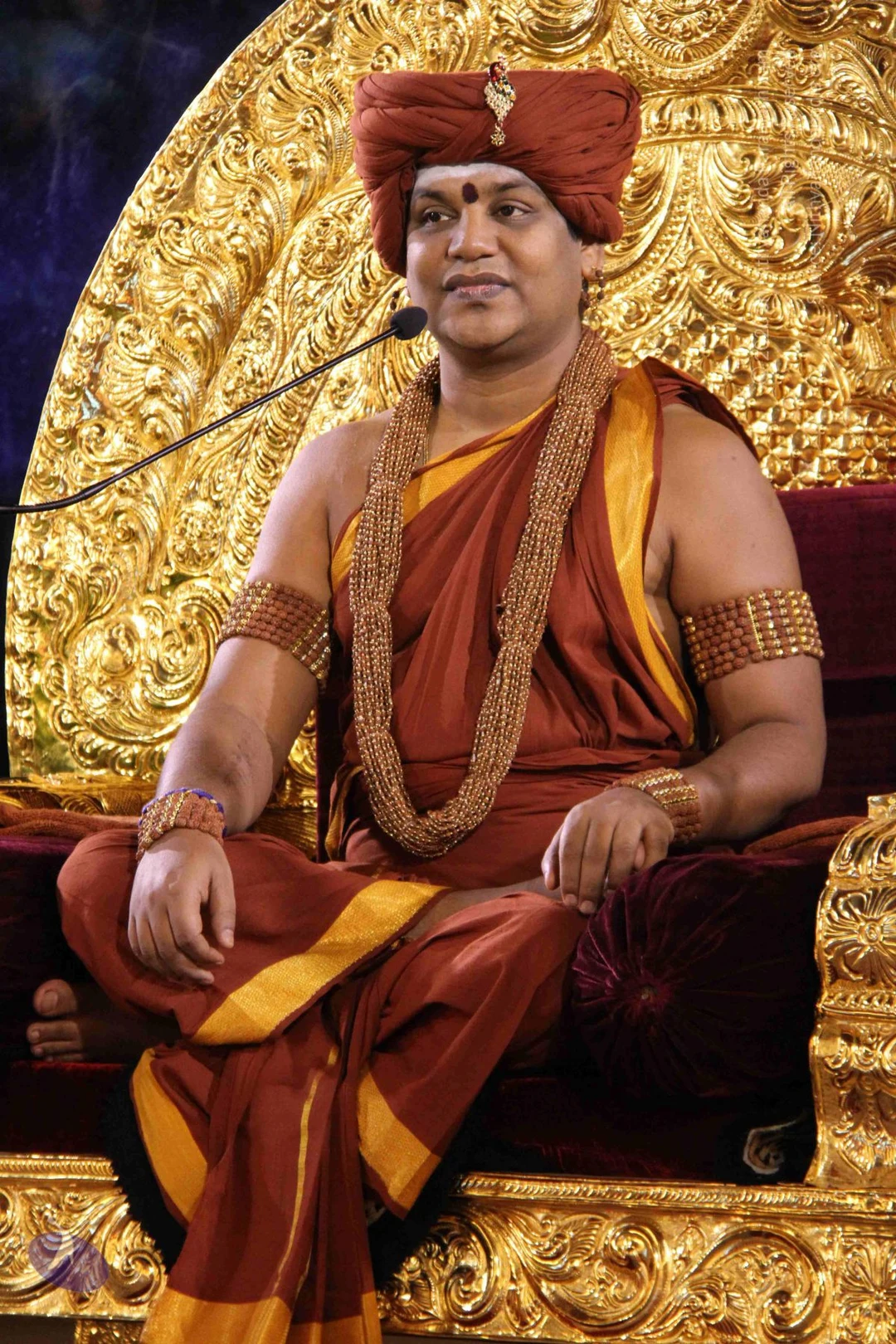
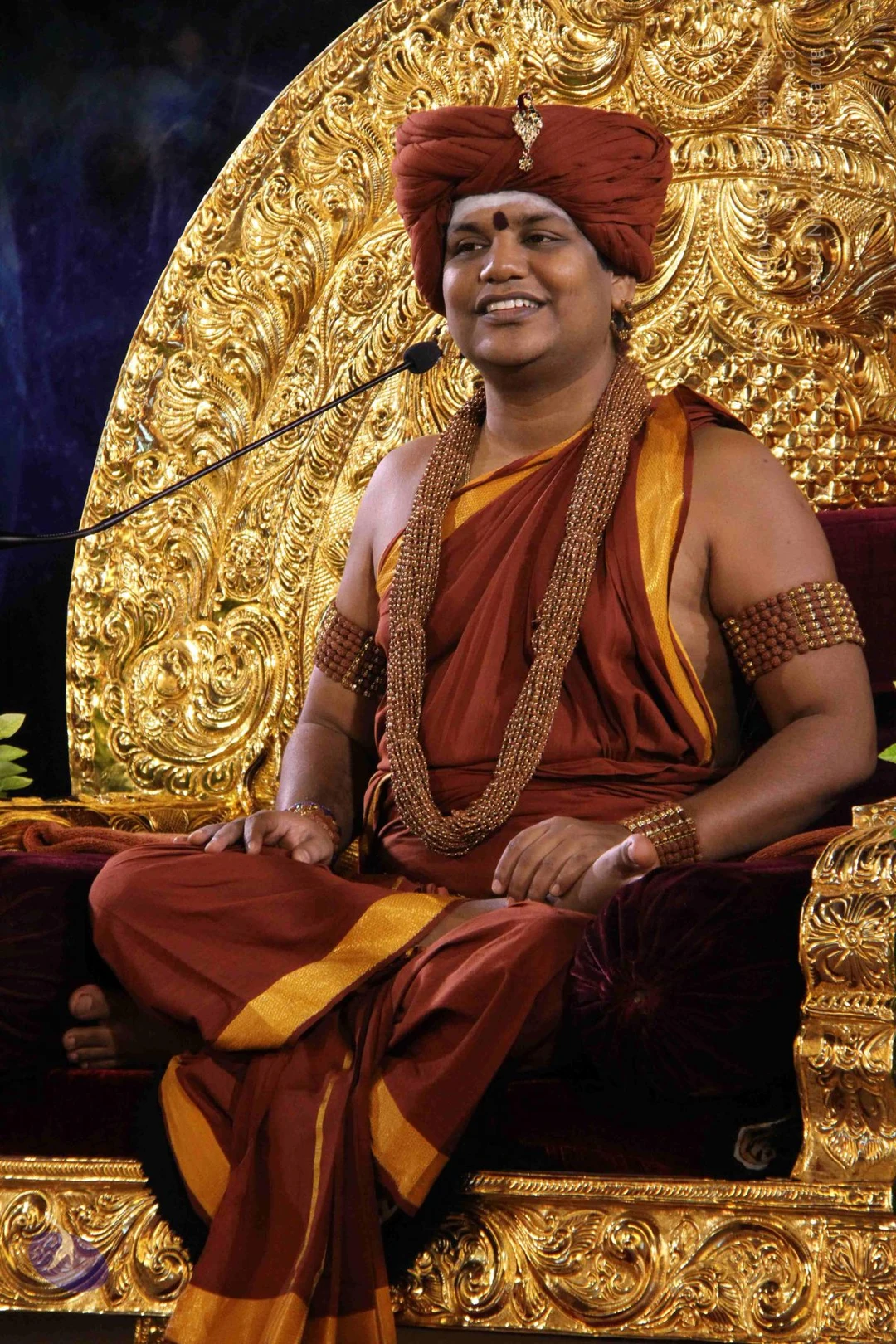
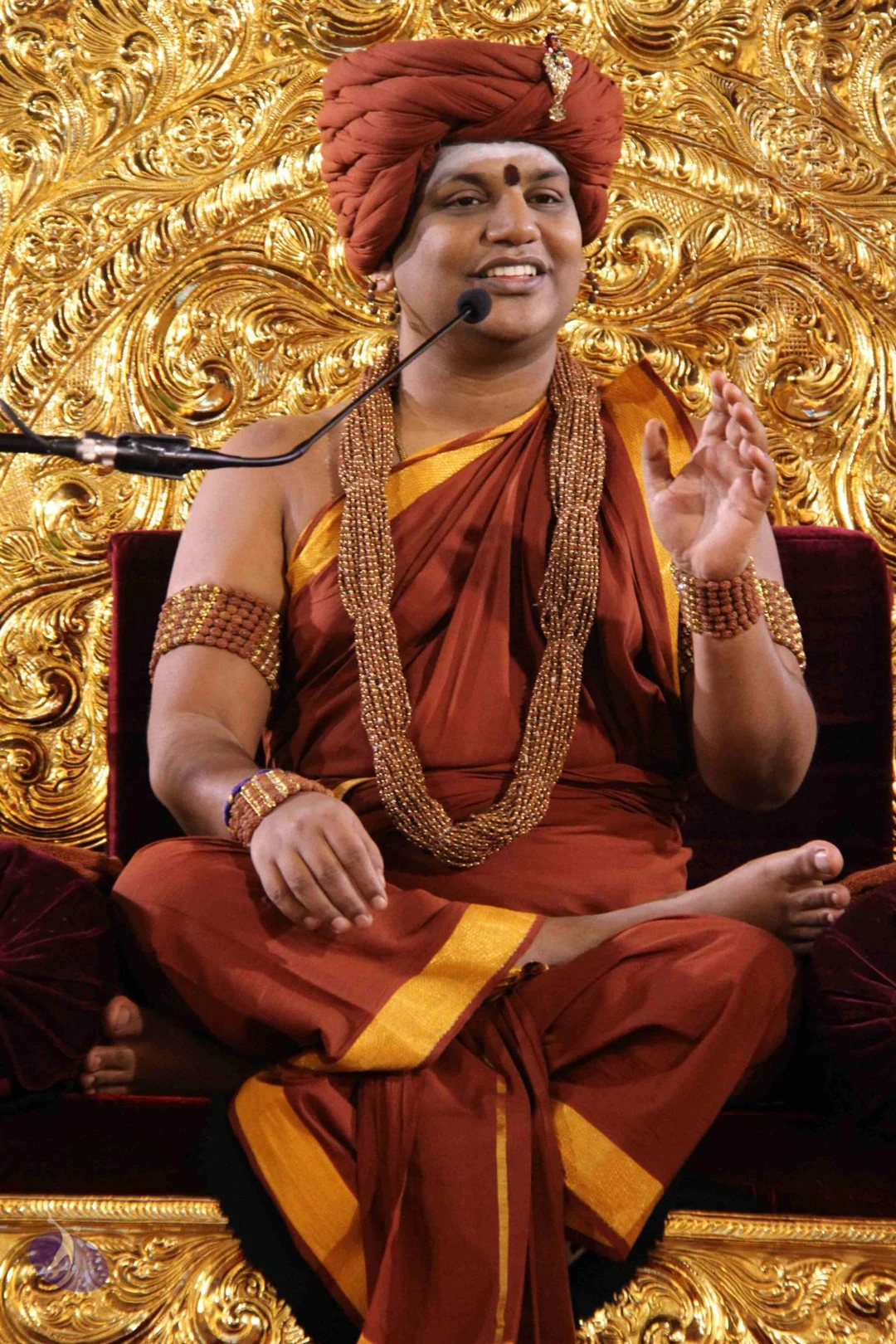
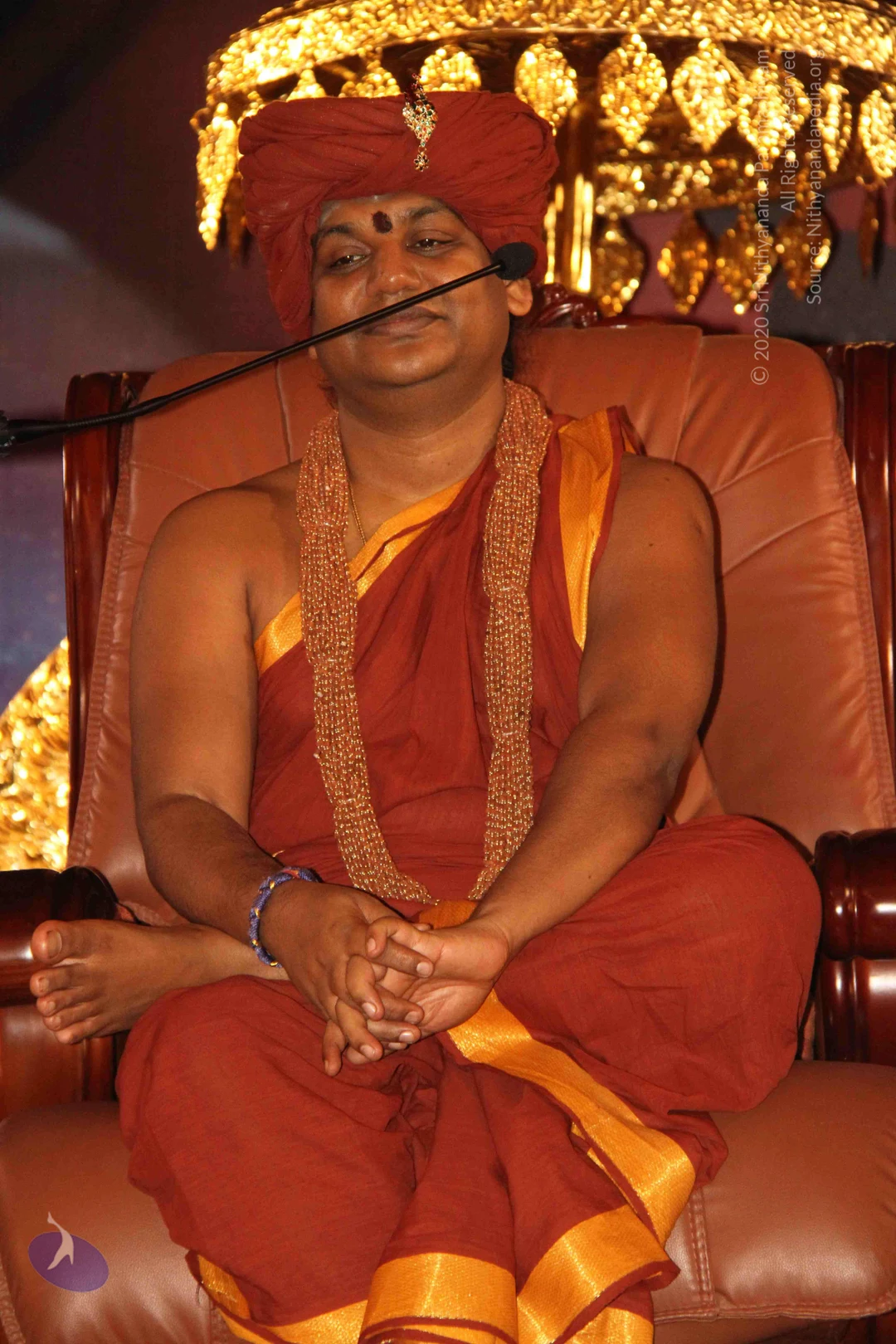
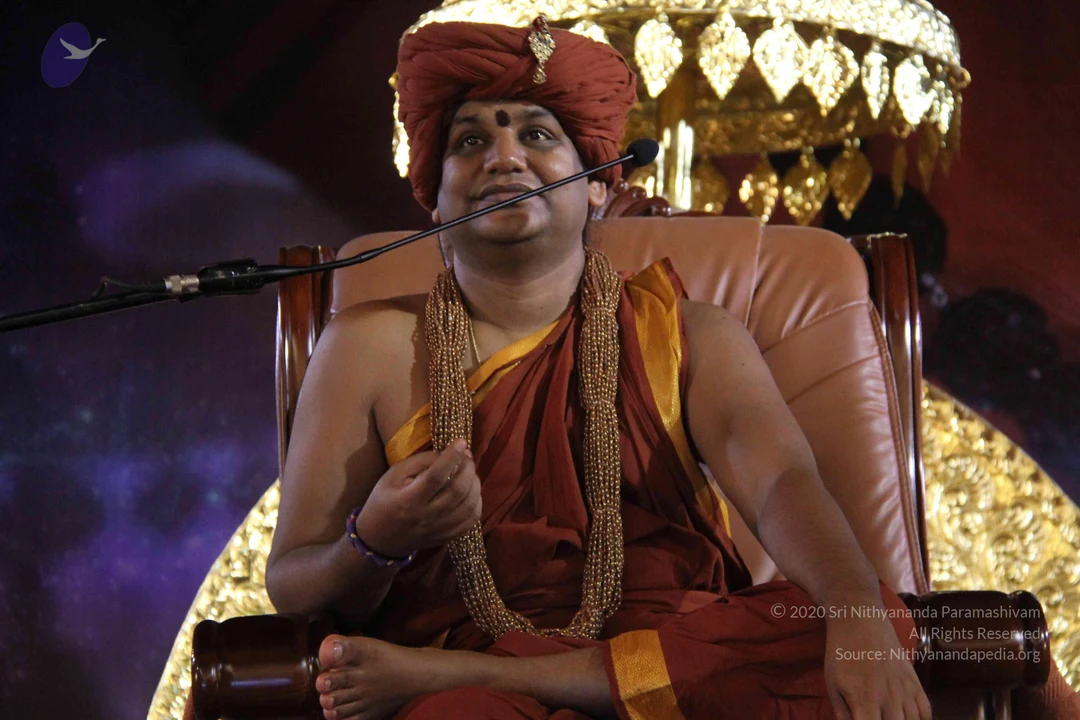
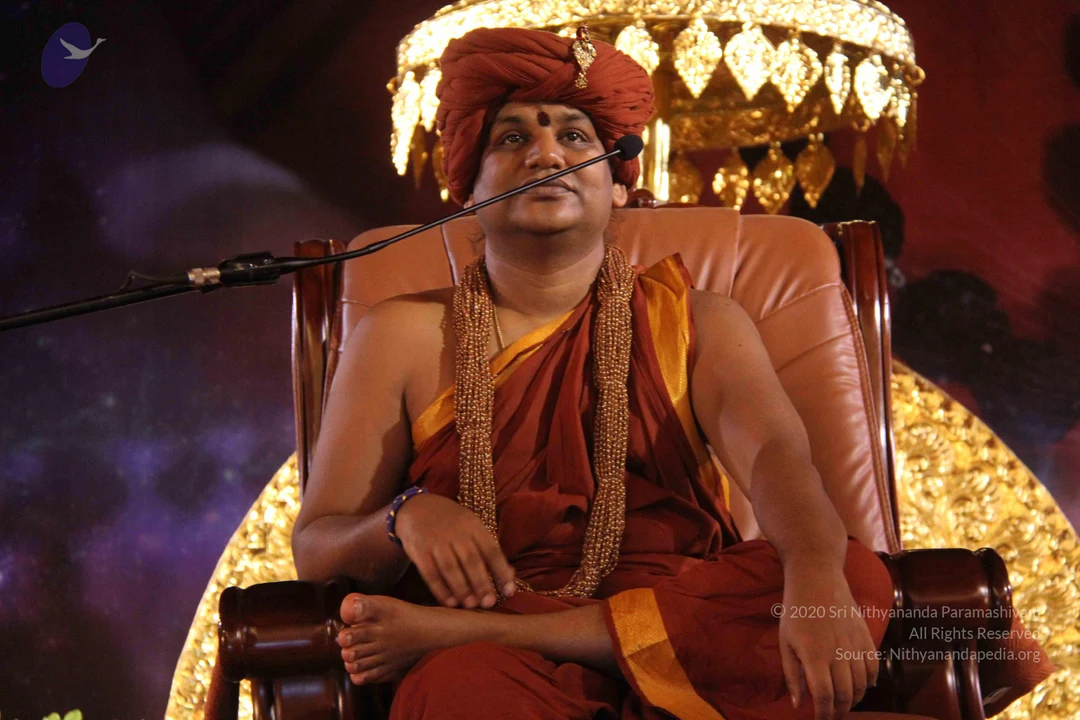
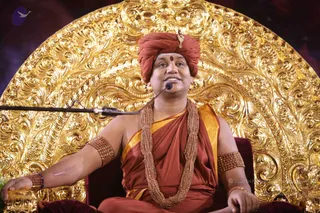
Kathopanishad, Nithya Satsang on 5th July 2015 - Paramahamsa Nithyananda sketches the ideal Vedic lifestyle of community system (jaati, varna) while sketching the character of Vajashravas, the king who, from his powerlessness and insecurity was doing the fire sacrifice from the wrong context, and degrades to a worthless king! As a king, he is expected to only give and not hold, living in powerfulness. A Brahmana (sage) is expected to share knowledge; a Vaishya (business man) is expected to do business. But, here a king soaked in luxuries self-imprisons himself and is in identity crisis, falling into a business mental-setup. Luxury is the sure killer of intelligence, strength and powers, not allowing you to reinvent yourself. Aparigraha, the minimalistic simple living is the ultimate lifestyle, as prescribed by Mahadeva in Agamas, which opens the unending resource of creativity in you and makes our bio-memory and muscle-memory alive, active, brilliant with constant expansion. He tells all to life the cool, simple lifestyle of Mahadeva in minimalistic living. Have wealth, but punishment not yourself, by the luxury. Today's subject for Vakyartha Sadas, spiritual exploration on Truth is -Those who run behind the luxurious lifestyle are the most cheap, who do not have strength and trust over their own life. Luxury kills even when you are alive.

VideoAudio

Transcript:

nithyānandeśvara samārambhām nithyānandeśvari madhyamām | asmat āchārya paryantām vande Guru paramparām ||

I welcome all of you with my love and respects. First thing, God bless America. Today is July 4th for America. Actually, yesterday was July 4th for India but yesterday at this time it was July 3rd for US so today it is July 4th for US this time I am blessing this great country and I also want this to be on record, it is this country that supported our Sangha to happen in this scale. I wanted to remember this country with all my gratitude it is the giving nature of US and the people who gave from US created our Sangha. The way it is standing, whatever infrastructure we have to reach out to people all the outer world infrastructure I credit it and attribute it the giving nature of this country US. So happy Independence Day, God bless America.

I’ll continue to expand on Kathopanishad. Yesterday I was speaking about the story Vajashravas, King who is feeling insecured and was asked to do a fire ritual from the Vedas, but started doing without understanding the context his son Nachiketa questions. This is the story. I will now try to expand the sacred secrets hidden in this story.

The first thing: king getting into the mental setup of business or bargain, shows the identify crisis happened to him, please understand. The king is the person or at least he is expected to be a person—either lives with powerfulness as a giver, giver, giver or collapses and disappears from us. Please understand, king is not expected to be eternal, but he is expected to be powerful, as long as he is there as king. He can’t afford to get into the mental set up of a Vaishya, businessman. Same way, a person of knowledge he is not expected to be a giver, nobody expects a person of knowledge to be doing charity, but he is expected of a high standard of Consciousness, highest standard of Consciousness. He is expected to constantly share the spiritual knowledge — live, remember, share the spiritual knowledge. He can’t afford to commit even a small mistake. King in the war can kill even those few innocent people who are not directly involved in the war. He won’t incur a big sin because when there is a war naturally there will be innocent deaths, but a person of knowledge, a Brahman cannot even kill an ant. Even an ant cannot be killed by him. So from each persons the anyakara of society, what society expects, the role they need to fulfill in the society is different. So the identity collapse. Inauthenticity entering into the identity, the identity crisis is what Gita describes as jāti naśta, intermingling of castes, getting impure. Please understand, because the ancient time the jāti was based on the mental set-up, not just based on your birth. Vishvamitra by jāti is a Kṣatriya [warrior], but he is always remembered as the highest Brahmana. He is respected as Brahmarishi by Vashistha. Understand, each one need to maintain their role.

Here the first miss, first step towards the free fall — Vajashravas getting into the powerlessness and adopting the mental set-up of a Vaishya, business man instead of his originally expected state of Kṣatriya. If a Kṣatriya falls from the mental state he is supposed to be, he should just die, because too many people’s expectation is on his shoulder. If a Shudra collapses, it is only going to impact him or maximum his family. If a Vaishya collapses, it is maximum going to affect him and his community, means people that are dependent on him for their food, people who work under him. But if a Kṣatriya collapses, the whole society, the whole country is going to collapse. He should not be alive. If he collapses and adopts the mental set-up of businessman, if he falls from his state, he should not be alive. Same way a Brahmana, if he collapses from his space, the whole loss of knowledge happens. He can’t even afford to collapse. Here the Vajashravas has missed the space of Kṣatriya, adopted the mental set-up of Vaishya, give and take; because he has collapsed, he feels deep insecurity. I can say insecurity collapses him, collapsing makes him feel insecurity. Both feed each other, the vicious circle. One of the worst thing is—actually falling is not that worst, but not standing up is really worse. This guy not only fell and did not even bother to diagnose why he has fallen, that is why wrong decision. See if he was feeling insecured, he should not have decided the solution on his own, he should have just reached out to his Guru. You trying to find the solution on your own is almost like you trying to take the across the counter medicines. “Oh, I have a headache, let me go to pharmacy and ask for some headache tablet and eat, without even diagnosing.” After 2 years you will realize you have a tumor in the brain. It is as dangerous as taking across the counter medicine without medical support, or without the proper diagnosis. This guy does the same messing up, he decides on his own what is his problem, without looking into the depth. See if the Guru is not ready to guide, or he doesn’t have enough listening to ask the Guru, because no Guru will say, “I am not interested to guide”, only when they don’t have listening, enough listening, they say then, “all right then what to do”. I don’t know if whether he has enough listening or he did not even approach a Guru, he must have had RajaGuru [Guru of king]. He has decided on his own the solution for the incompletion he is feeling, he diagnosed the problem, as — “maybe I am feeling a little insecure, I have become old. I don’t know whether all these pleasures, joy everything will come along with me.”

Please understand, in any field, having more than what is required, the opulence lifestyle, luxurious lifestyle takes away your strength. Please understand, in any field having more than what is required to run your life, whether you are a Brahmana, or Kṣatriya, Vaishya, Shudra or anything. Luxury is the sure killer of your power, intelligence and ability to reinvent yourself. Somebody commented, when I spoke about poverty in the Facebook, that I am talking about poverty sitting on the throne, golden throne. You need to know, first of all it is not gold, it’s gold painted. And second, traditionally the knowledge, the Sacred truths I am sharing is respecting with this kind of seat. I am not promoting poverty forever, I am only saying, at least one year, because it will re-kindle the inspiration to reinvent yourself. And I have spend 9 years and have reinvented myself.

[13:53]

Anyhow, let me come back to the subject. I tell you, poverty is not forced upon Me, either at that time or now. I tell you, imposed poverty or minimal living awakens many of your possibilities and capacities to live the life to its peak possibility. I tell you, self-imposed poverty or minimal living, the aparigraha lifestyle is most luxurious thing, you can have. Even now, I can comfortably sleep happily on the floor, live just a few handful of simple vegetarian food, nothing else from outside is needed to entertain me, excite me, keep me alive, active, my simple breathing is enough for me to enjoy my Existence and celebrate my being. I tell you the lifestyle of aparigraha, means living with minimal things, is the most luxurious thing you can have, because that will constantly keep you active in your peak possibility, your mind will be active, your body will be active. I have seen in very close quarters, many Sannyasis of different Sampradayas, different orders, different religions, some of the most active, powerful Sannyasis, if I have one more chance I would take up —of course I don’t have that is different—if I have I would take up life as a Jain monk. I tell you the kind of activism, active, alive they are, because of their aparigraha lifestyle, even the Madhva Sampradaya Sannyasis, many Madhva Sampradaya Sannyasis I have seen in very close quarters, the aparigraha lifestyle they maintain and the way they are being active, is amazing. In My experience these two Sampradaya, Jains and Madhva Sampradaya, the Swamis live the most active, most energetic lifestyle, most possible simple, living with minimal things.

Here this Vajashravas, unfortunately, punished with so much of luxuries. That is the right word I will use, punished with so much of luxuries, lost the knowledge and sense of how to be alive and active. I tell you, luxury when it becomes lifestyle, kills your possibilities, kills your possibilities. Takes away your inner strength, takes away the strength of your body and mind to reinvent itself with the flow of life. I have seen even when I am training My Sannyasis. Actually, I have all Sampradaya Sannyasis with Me in My order. Means people who live like Jain monks, really, really austere, and people who live much more than a king, punished with luxury. I have all types, all variety. When I train them, I always observe people who live like Jain monks or Madhva Sannyasis with austerity, tapas they are always healthy, active, alive, brilliant, powerful, don’t fall into incompletion even in their day to life they are very light people, they don’t get hurt. You can’t hurt them, they are very light people, they can run the life anywhere, they can accommodate any number of people in their inner space. They can work with any number of people, but when you are punished with the luxury, please understand, it is a punishment. If you are living a luxurious life for 12 years, all of your good qualities are killed, I am telling your 100%. All your good qualities, you become such a heavy person, not only physically, even mentally. You can’t accommodate people in your inner space. All possibility for your expansion; whether it is your business, or your career or your profession, your personal life, everything is dead. I can challenge, you can only have more and more divorce, not any more expansion. You can fire your subordinate, you can fire your general manager, you can fire your CEO, you can have only divorces, in personal life and professional life. You cannot expand or you will be stuck with the same ol’ few fools who can’t reinvent themself. You are stuck with them because of your insecurity; they are stuck with you because of their insecurity. And I also thoroughly studied; people who shared their wealth, give away, those people continue to be active, that is why many of the multi-national companies encourage their staff to contribute, donate, do charity, they also match up. And the companies which are doing, matching programs, please understand, they are doing good to themself, creating active people as part of their company. I am really telling you, a person who gives up, gives up is the most active person. 12 years, if you are habituated to luxury, even if you are enlightened you collapse. Please understand, because you become so rigid, heavy, the possibility of reinventing is completely forgotten. Vajashravas, this fool must have been at least 40-50 years, soaked in luxury, soaked in alcohol, once in a while only come out to have women, again went back to that same bottle. That fellow must have lost the originality, ability to reinvent, which is needed for a king.

Please understand, luxury at the most can be at the rare; celebrative, occasion, a celebration or which gets added as festival. Once in a while, ok, but if that becomes a lifestyle you even loose the basic things required for what you are. I think by now this Vajashravas would have lost all the ability to wage war, take decision, conduct court, fellow may not even be able to hold the sword up, because king entering into the business mental set-up means, he must have been getting degraded, degraded, degraded for years, it doesn’t happen in one moment. Please understand, all collapsing happens through the years, not in one moment or one day or two day. That is why I always tell people if you just don't miss satsang that is enough, you’ll be liberated. Nothing else is required because, in Satsang I will make sure I hit you whether in your pain point or bliss point or some point, and I’ll wake you up, at least 1 in 2-3 days and once in a week. One of my Swami was complaining; because of this Satsang we cannot even afford to be in depression for more than 2 or 3 days. However much we try, we are not even allowed to be in depression.

Understand, it’s only with a long gap, of not being reminded of your identify, not being asked to become authentic, you collapse. Unfortunate, Vajashravas collapsed. Otherwise he should not be doing such a cheap thing. King, when a king not only in a sacrifice or a jajna a spiritual or religious ritual, even normally when he gives, neither his hand or the receivers hand should be able to hold what is given. That is giving, understand.

Giving means a person who gives and a person who receives, both hand should not be able to hold what is given, is giving.

King should have been giving in that way in that scale. Actually, to be giving you need only one thing – powerfulness, not any object. It’s a powerfulness that is required. If you see Mahabharat, Karna, the greatest giver is only a king of a small kingdom, Anga Desha, which may be 100th of Duryodhana’s or Pandava’s. What Pandavas had or Duryodhana had it must of have been 100th, but why is he able to give, give, give? He discovered the sacred secret of Giving. Giving makes you active to make more. When you are active and you need to create more, you will become more creative to create more. Creativity is unending resource; opening up unending resource in your life happens only for a person a person who gives, not for the person who holds. The most un-creative people I have seen are these Wall Street fellows, Yakshas the people of Kubera, they only know how to hold. The most creative people I have seen are who just create something and sell for their life and again who has to create something else to live their life. Those kind of people are the most creative people I have seen in my life. I have seen hundreds of different painters, sculptors, the metal sculptors, artists, poets, only the people who live without accumulating their creativity the peak possible expression, because they have to survive they open the door of creativity, the endless resource.

Human being should live exactly like this — rich, because you touched the endless resource which is creativity. Rich because you reached the endless resource called creativity, not because of remembering the zeros in your bank balance. If you feel yourself as a hero because of the zeros you have in your bank balance ,be very clear you are a Vajashravas. You are just Vajashravas, you need Naciketa or you will have Yama. This guy Vajashravas, because he has been numbed, he has become insensitive because of the punishment, self-punishment of luxury. Self-imposed prison is luxurious lifestyle. I tell you best part of my life was when I lived with that self-imposed poverty. Good, because of that I have continued to have that lifestyle. Continue to keep that ability alive, retain that ability alive. My ability to work 20 hours a day, I’ll attribute it the lifestyle I developed, the re-invention I did of myself, due to the when, during the period of that self-imposed poverty. Ability to face a crisis, ability to manage a crisis, ability to manage a new situation, ability to manage a change in the situation, all this is lost, all this is lost with the continuous luxurious lifestyle.

Please understand, if you are rich, don’t punish yourself with a luxurious lifestyle. That is the biggest punishment you will give for yourself. Just because you are rich don't destroy yourself. Even your muscle memory and bio memory, once they are accustomed to luxurious lifestyle, lose the ability to re-invent themselves, loose the ability to be active, alive, lose the ability to do the crisis management, loose the ability to expand. I have seen some of the most successful, big rich men, they keep their personal life away from the wealth they have. They have not punished themself with a luxurious lifestyle. Please understand, I have seen some of the richest people in the world, in very close quarters, I tell you from my experience, people who have punished themself with their wealth, people who have not punished themselves with their luxurious lifestyle, only they are able to continue to keep their spontaneity, crisis management abilities and creativity alive. Only their muscle memory and bio memory is active, to live, run the life, expand the kingdom they have built. If you want to destroy somebody, somehow make them addicted to luxurious lifestyle, after that you do not need to do anything, they will destroy themselves. Somehow make the luxurious lifestyle glamorous for them. That is the best way you will get rid of your enemies. Any fellow, who is caught in the mental set-up of a luxurious lifestyle, I tell you don’t be afraid of him, he will be destroyed. He will destroy himself, don’t be afraid of him. I wanted to remind this one truth today, how your identity collapses, when you get out of this aparigraha lifestyle.

Mahadeva in his description of Niyama and Yama, please understand, from now onwards, whenever I talk about yoga and I use the word ‘Yoga’, I mean the ‘Yoga’ taught by Mahadeva in Agamas. I am not disrespecting Patanjali, I have a high regard and respect for Patanjali, whatever he speaks is directly taught by Mahadeva to him, but fortunately now we got the original direct words of Mahadeva. What he taught to Patanjali. So from now onwards, I wanted to put this on record; whenever I speak about yoga, Yama and Niyama and the technical terms, you should adopt the definition given by Mahadeva in Agamas. In Agamas, Mahadeva speaks highly about this aparigraha lifestyle. The context of aparigraha, the reason to live with minimal things is to keep you alive, active, to keep your muscle-memory and bio-memory brilliant, bright. See the luxurious lifestyle makes you insensitive; above all it makes you life negative. It just makes you life negative. It destroys your metabolism, it destroys your ability to enjoy, finally it destroys your very approach towards life. I tell you, luxurious fellows are the most frustrated people on planet earth. Much of the problem of developed countries is not depression, frustration. Is one of the biggest problem the developed countries are facing, because they have not understood with their own wealth they are torturing themselves. Having wealth is not wrong, but torturing yourself with the luxurious lifestyle is wrong. Don't punish yourself with a luxurious lifestyle. It’s an old way of living. It is not cool, it's not modern, it’s not fashionable. Living luxurious lifestyle like kings and queens is the old stupid way of living. Don't think it is fashionable, fashionable—cool is living simply. Understand, lifestyle of Mahadeva is most fashionable, modern and cool lifestyle. Catch it. The modern should accept, adopt lifestyle of Mahadeva, cool, that should become cool. That is cool. Create when you want, celebrate the way you want and don't punish yourself with luxury. That is the biggest punishment will you be giving to yourself. Why do you want to be a fool? Don’t you see and the kings, queens……duh duh duh….destroyed themself. Come back to lifestyle of Mahadeva, which is fashionable and cool. No, I am really telling you, going around with your hormonally imbalanced mental set-up, picking up on your own a boy or a girl, dating and then marrying, falling into depression and divorce. All this is old lifestyle. Come back to the fashionable lifestyle of arranged marriage by matured parents. That is the cool trend now, allow the parents who are very balanced who can look into your life, end to end and pick up a right person for you, that is the most fashionable, modern, cool lifestyle. Forget this stupid old fashion of don’t be in 80 or 90 Bollywood Hollywood, Tollywood movie star. And that stupidity is outdated, and all these fools are teaching, running around the same tree and singing the duet and picking up your husband or wife, your own trial and error method of dating, mating, is stupid and it’s a failure lifestyle, failure system. It’s all over. Come to the matured, most successful lifestyle of letting your parents who are cool, balanced; choose the boy or girl for you, that’s the most fashionable, and modern lifestyle. I’ll make all these things into modern and fashion.

Understand, the essence of today’s satsang: luxury kills you while you are alive. Luxury makes you insensitive and puts you into identity crisis. Luxury is the source of your strong SDHD. Continuous luxurious lifestyle creates deep self-doubt, self-hatred, and self-denial in you. Not only you develop SDHD, but you develop SSDHD which means strong SDHD, is SSDHD. Have wealth, I am not saying don’t have wealth, but because you do have wealth, you don’t need to abuse yourself with luxurious lifestyle. You don’t need to abuse yourself with luxurious lifestyle. Remain as simple as possible so you retain the freedom to reinvent yourself.

Essence of todays satsang: fellows who run behind the luxurious lifestyle are the most cheap fellows, who don’t have strength, trust on their own life. Luxury kills even when you are alive. This is the subject for Vaakyartha Sadas today. I request all over the world, all the Sangha, temples, ashrams, mutts, monasteries, Aadheenams, centers to revive the Vaakyartha Sadas trend again, Vaakyartha Sadas should become popular again. All of you should involve yourself again in the Vaakyartha Sadas. So with this I move to the next segment of the morning satsang.

Bangalore Mahant Atmapoorna, birthday blessings, with all the auspiciousness you will be with me, I will be with you. Blessings. I already blessed you on the Facebook. Blessings to all of you and blessings to the whole Bangalore Sangha. Blessings. And Guadaluope Kothari Mireal Lamothe birthday blessings, with all the auspiciousness you will be with me, I will be with you. Be blissful.

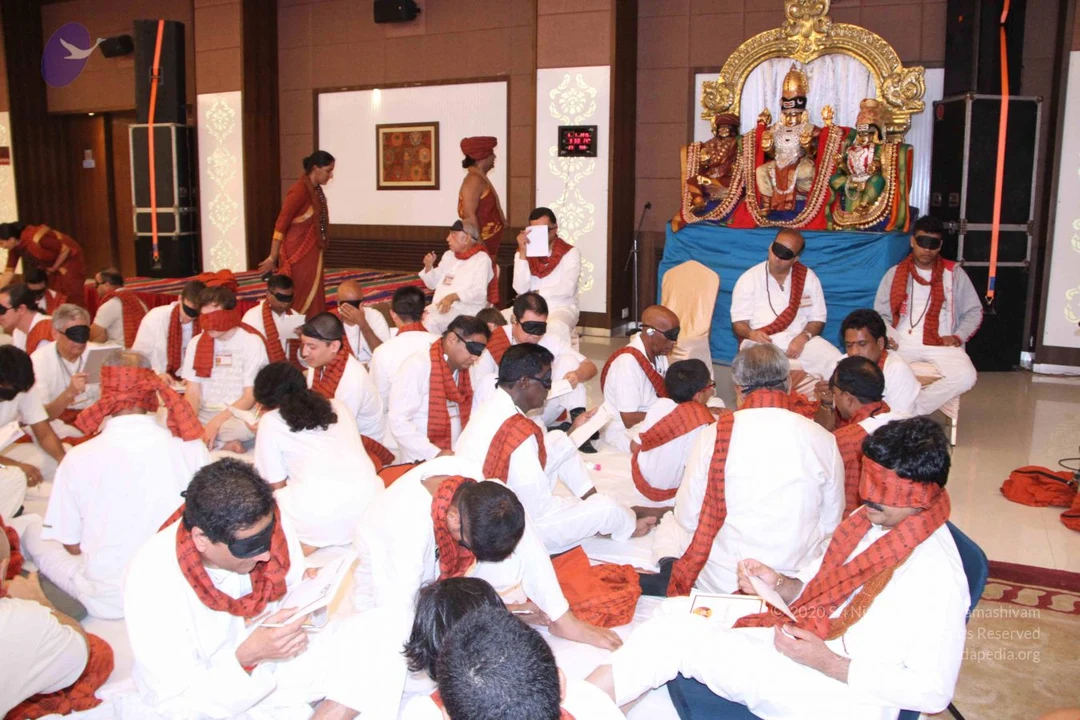
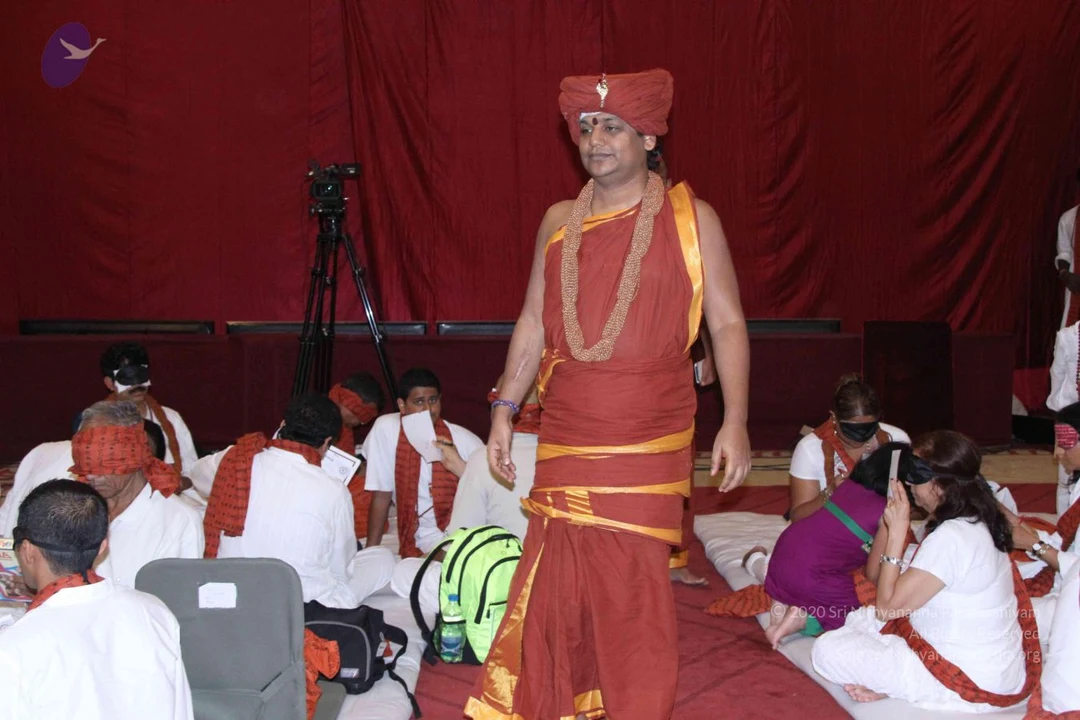
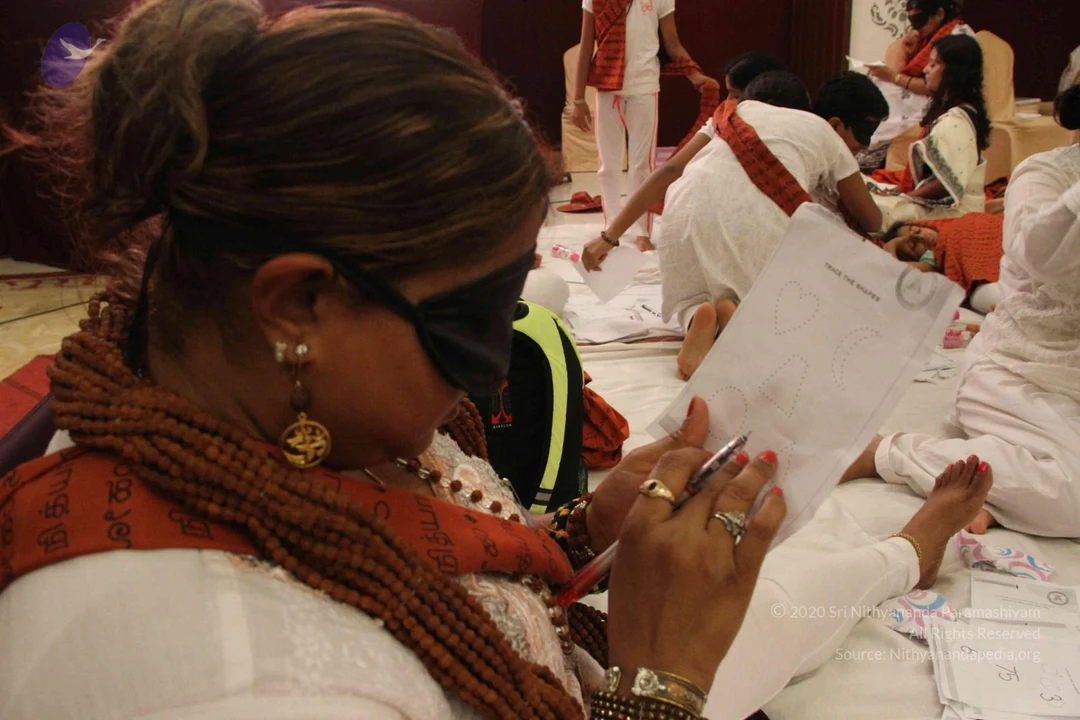
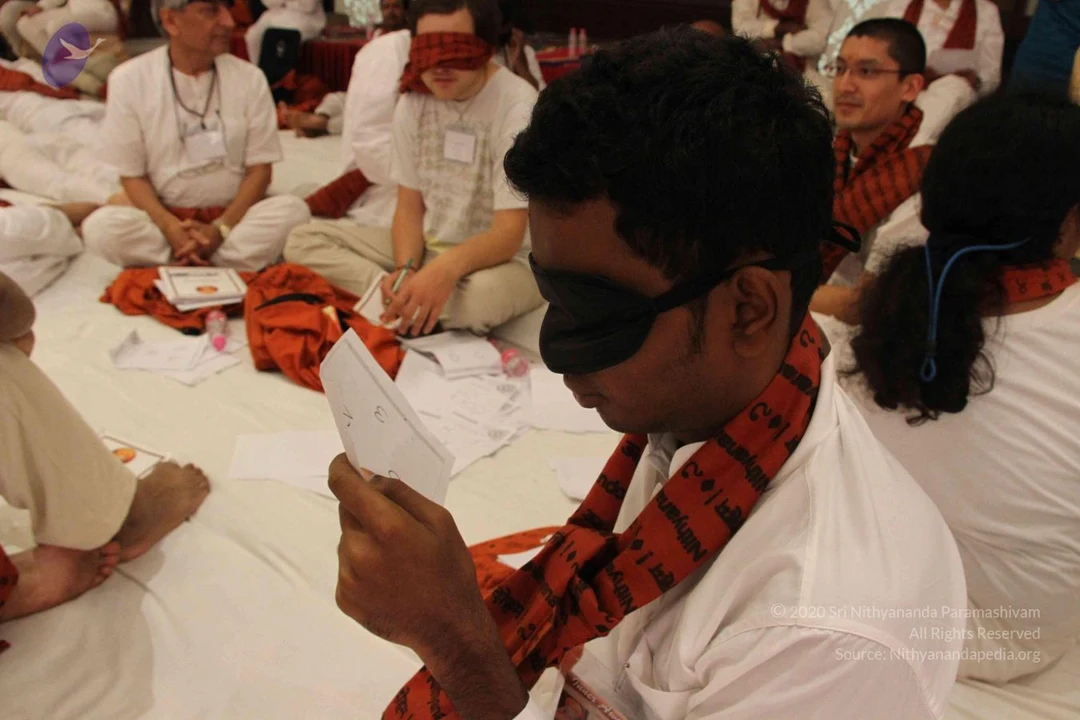
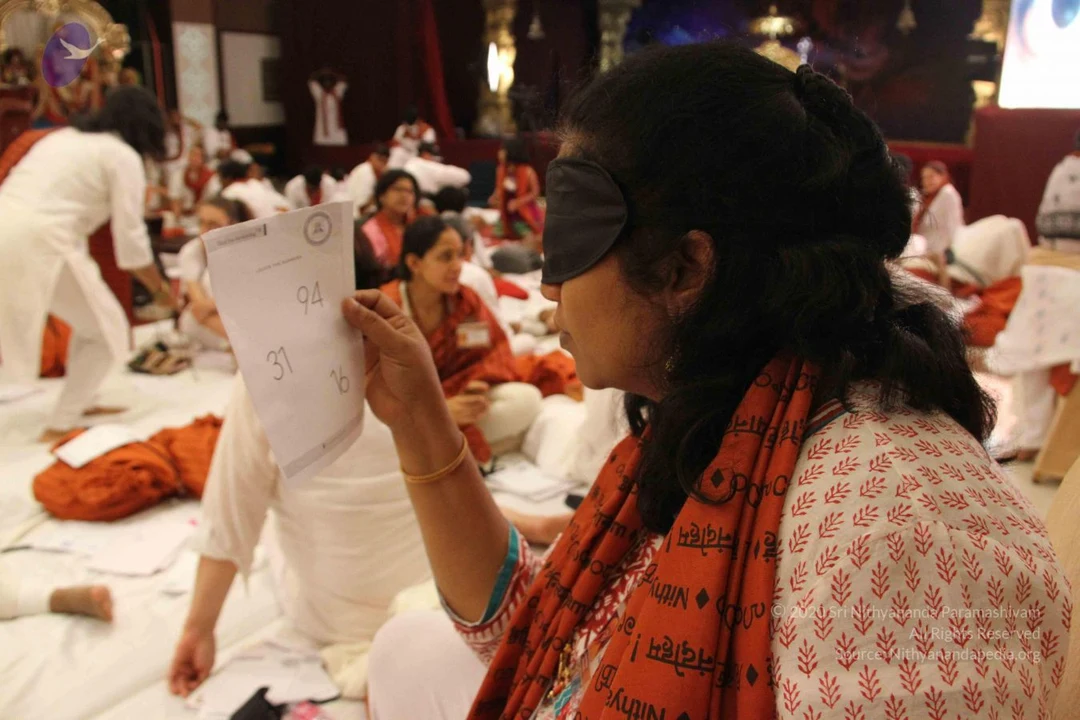
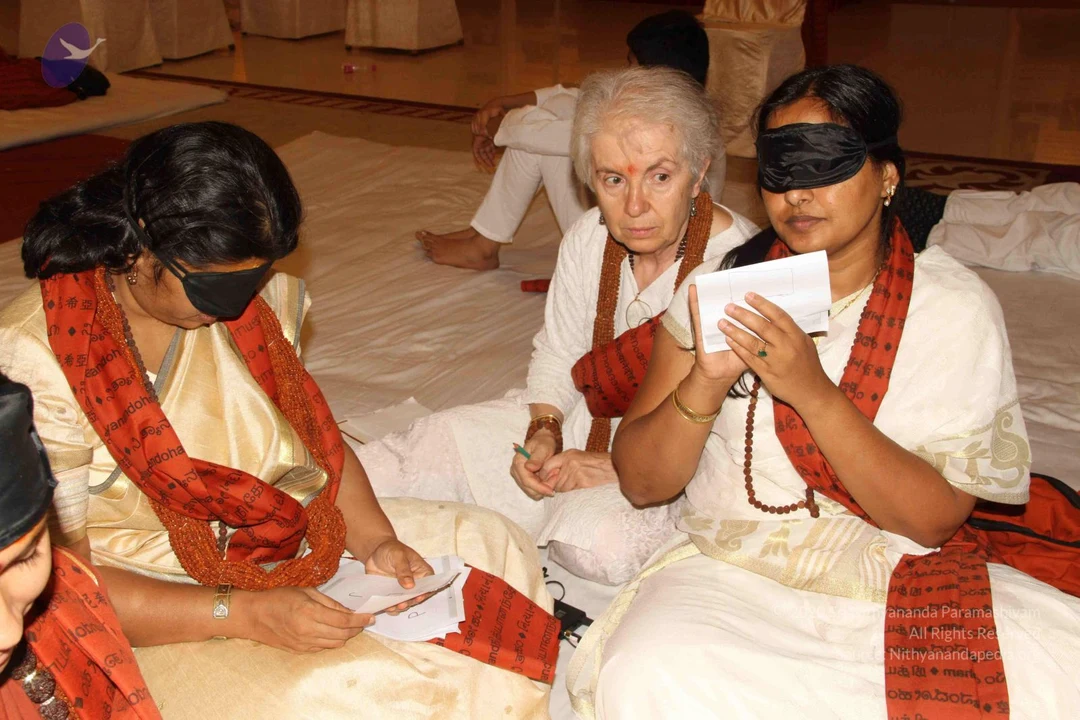
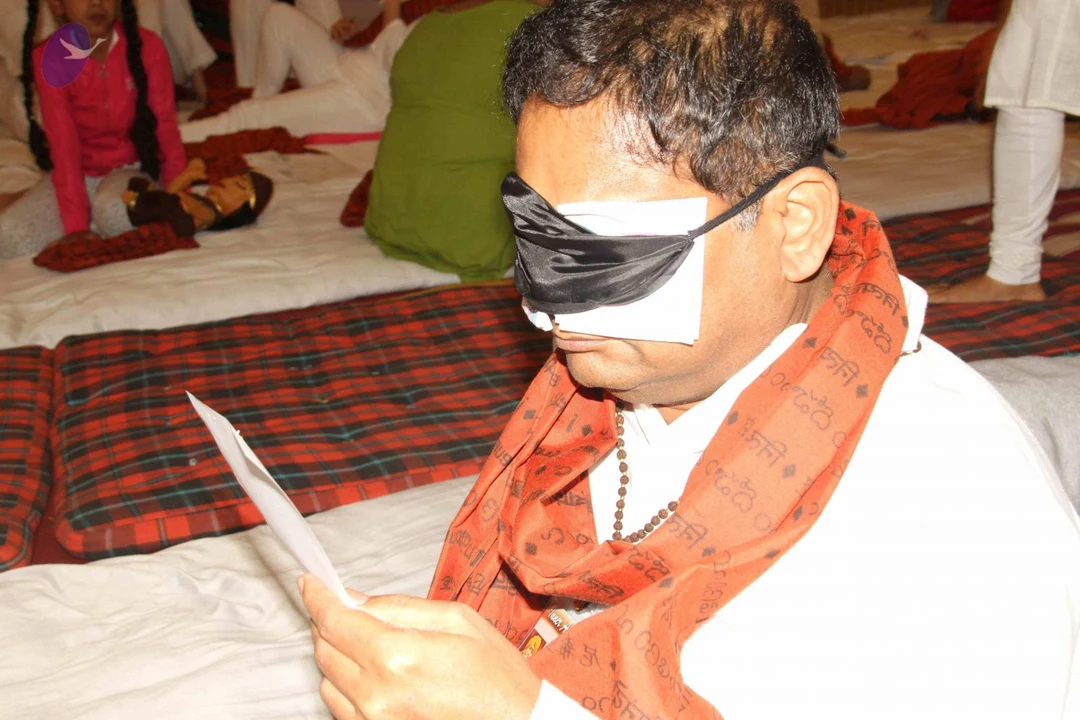
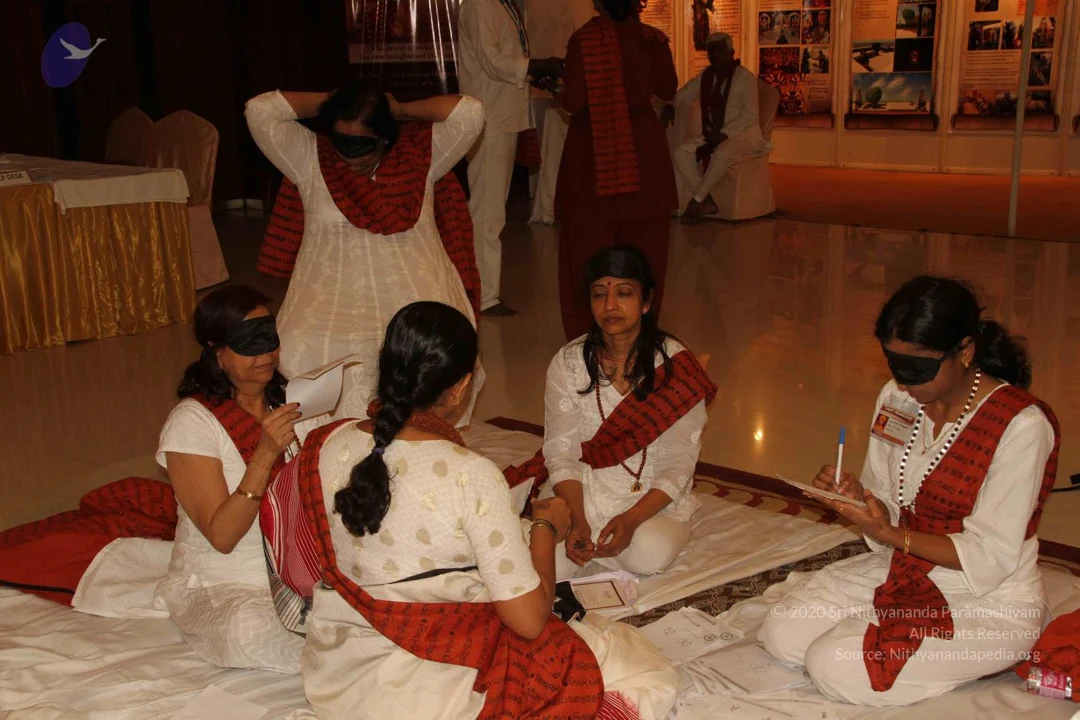
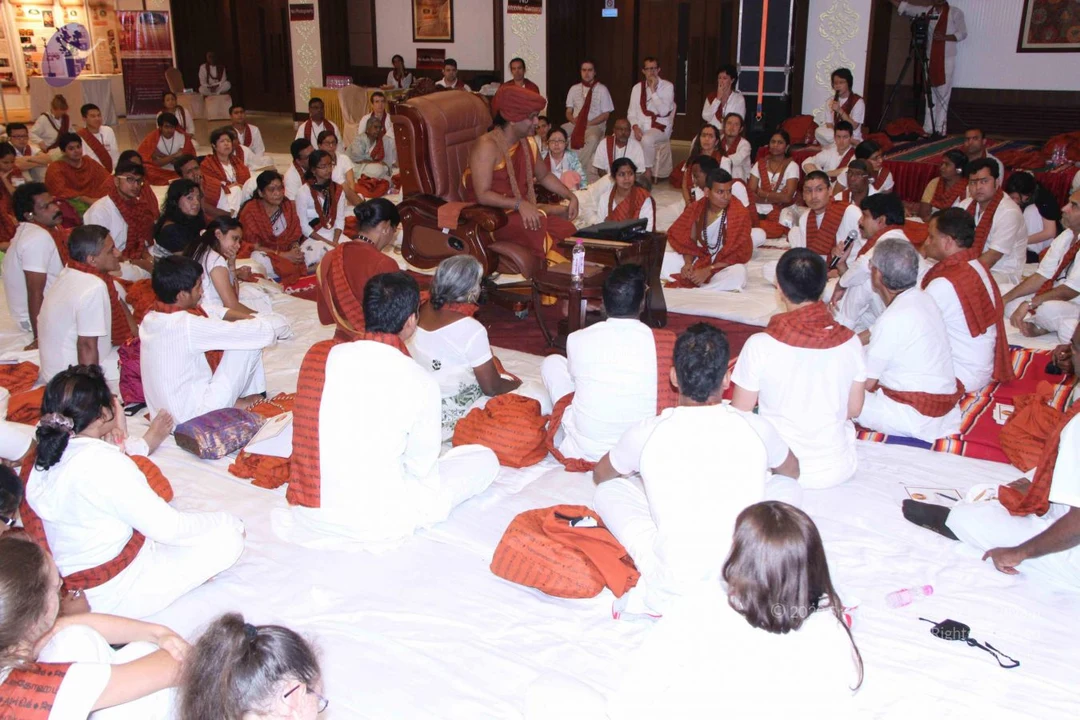
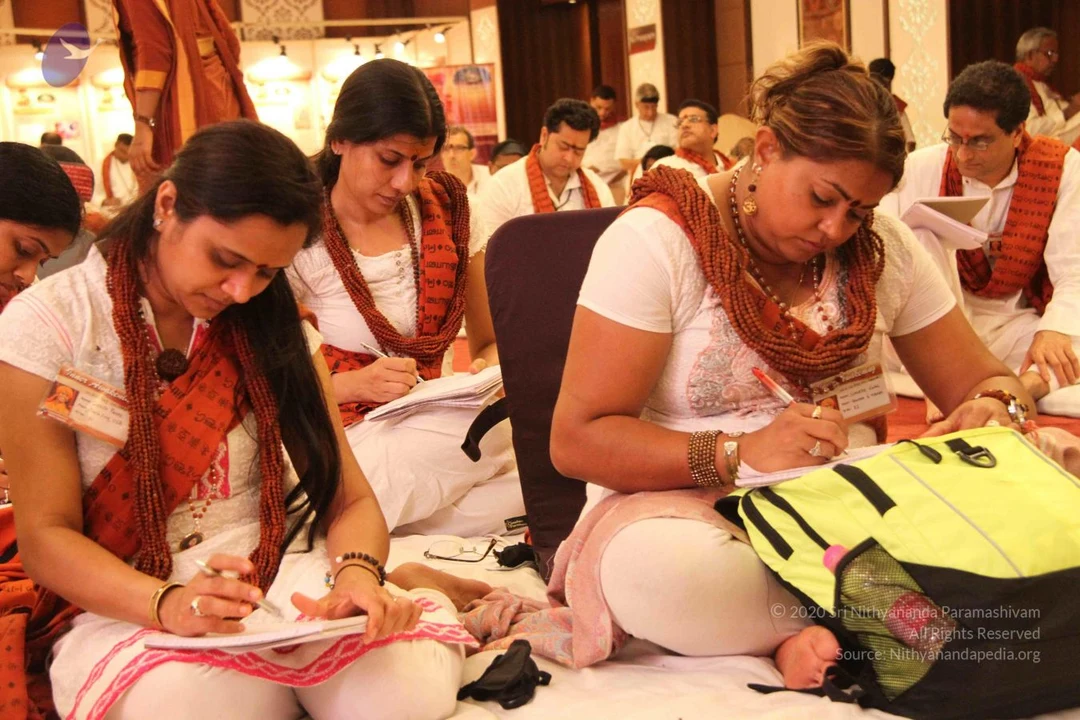
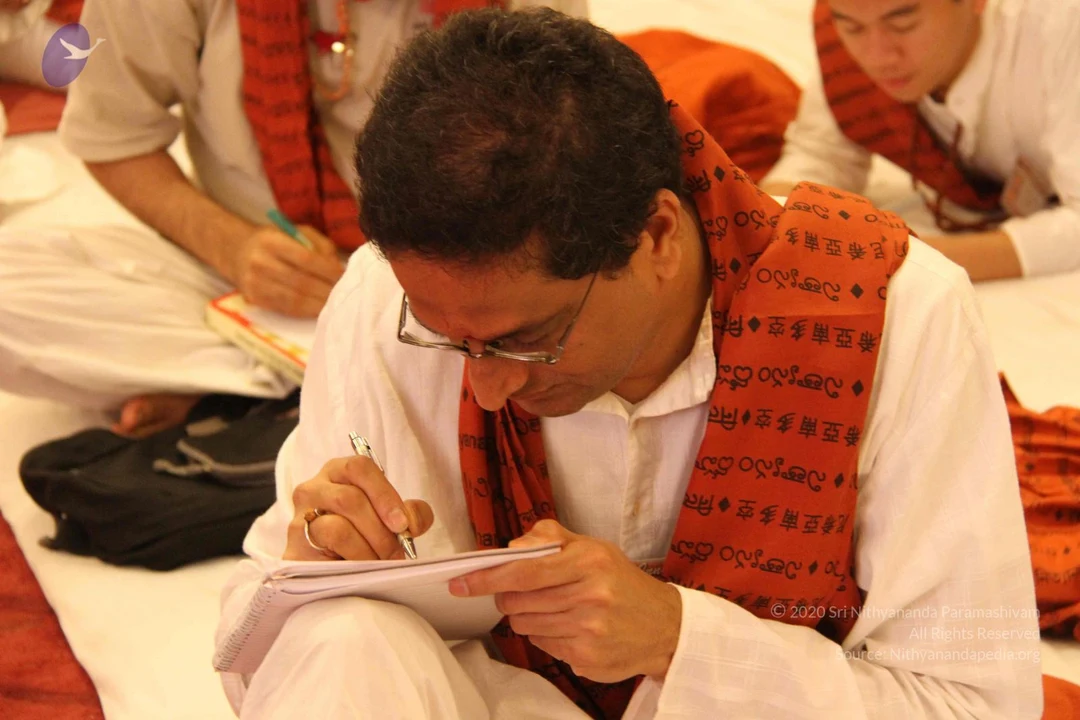
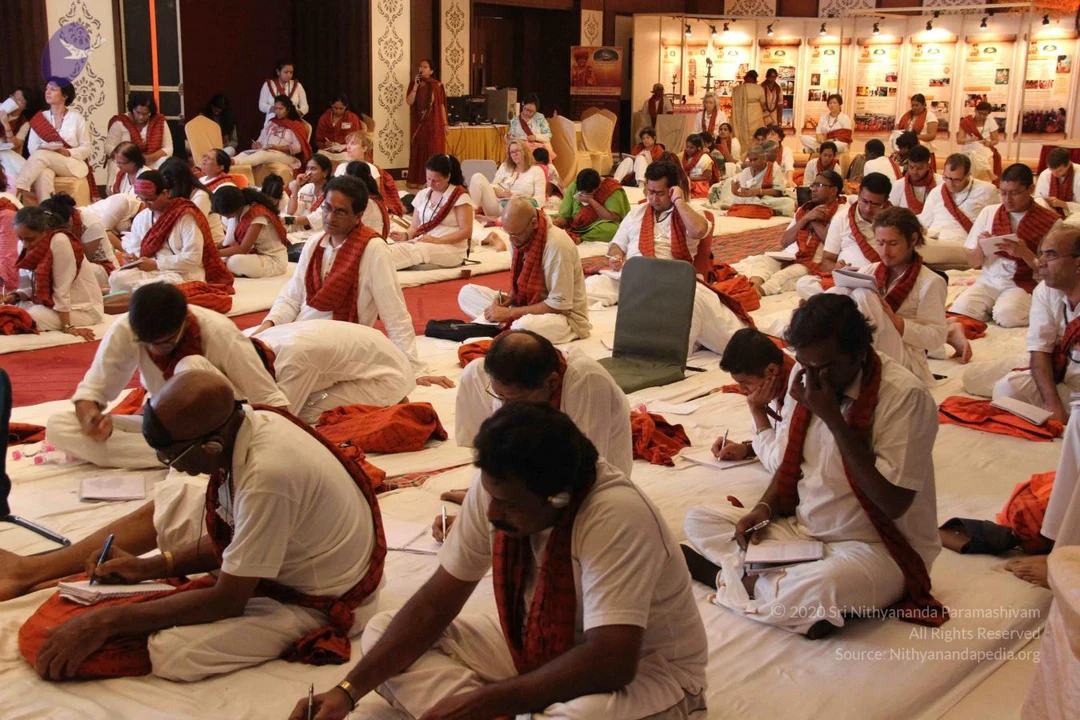
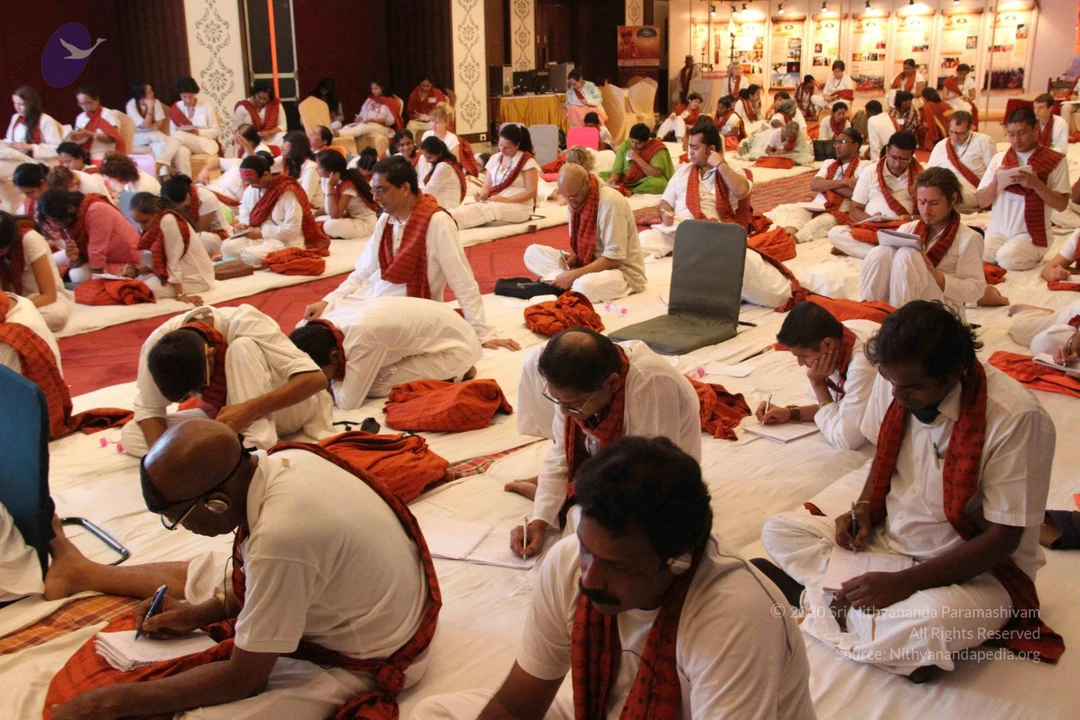
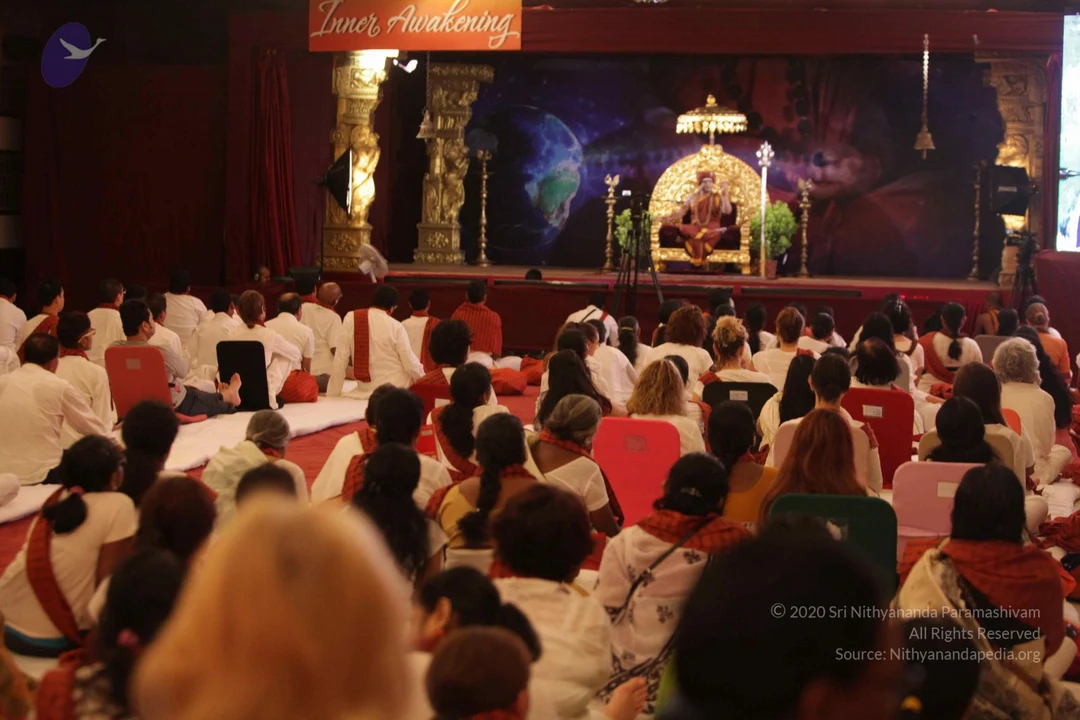
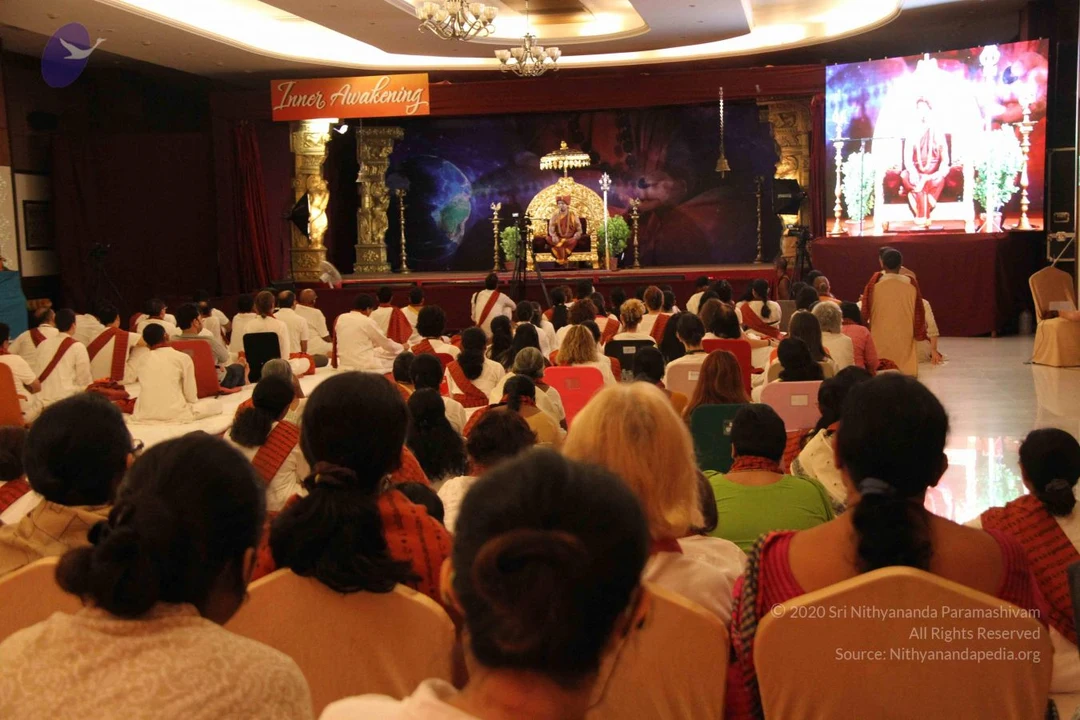
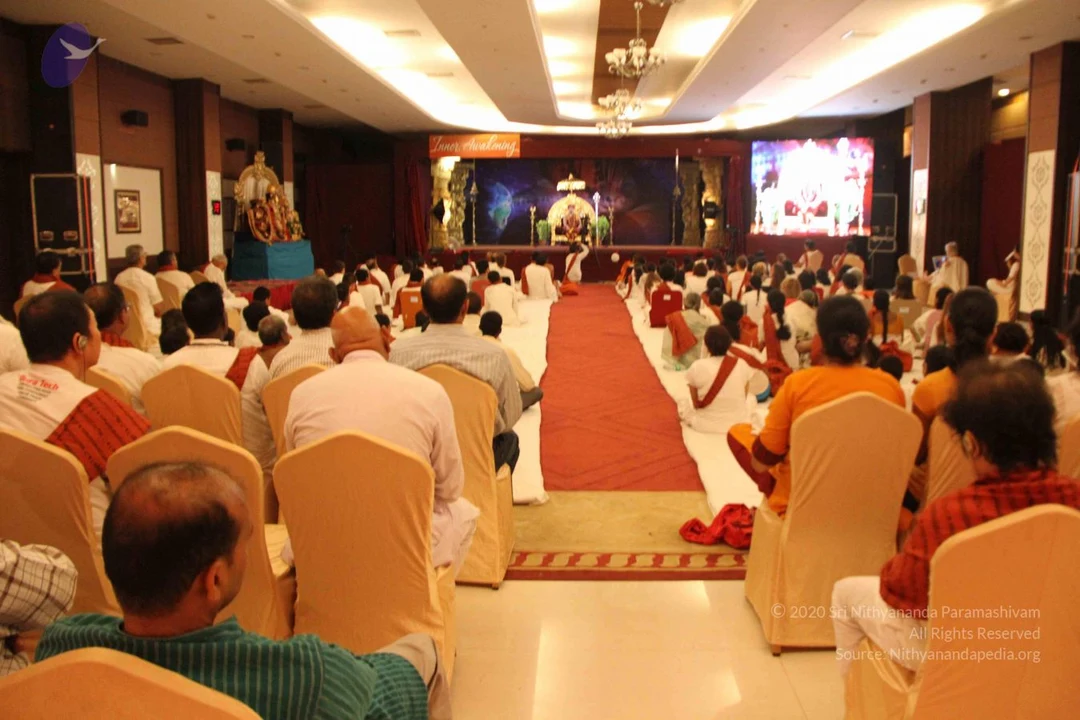
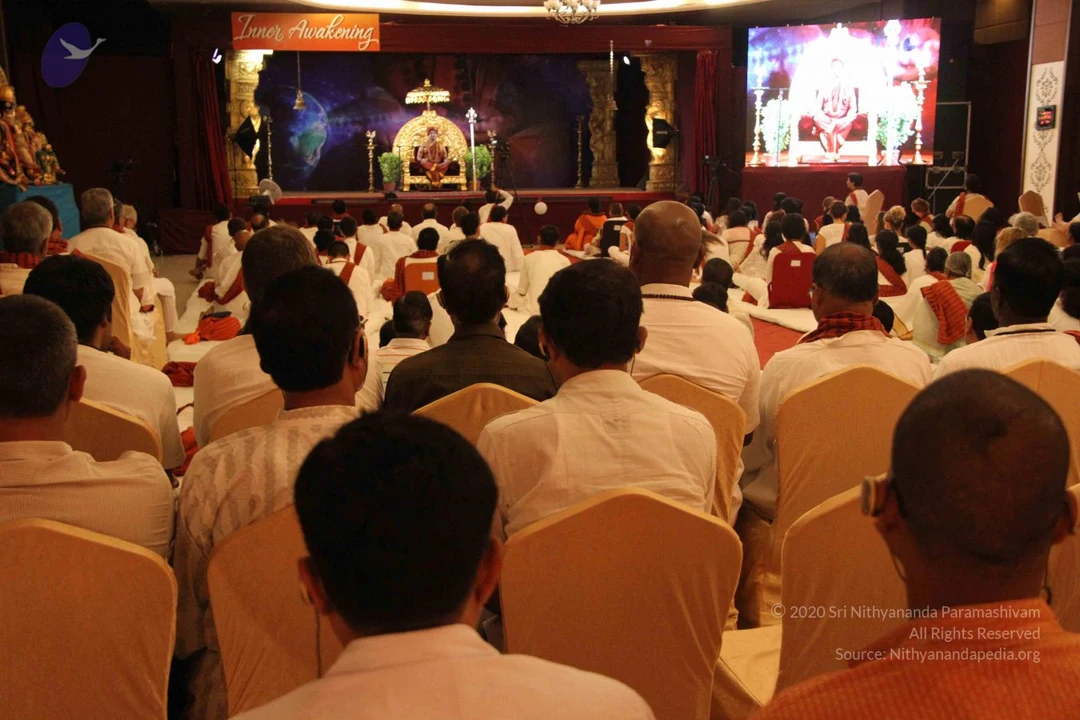
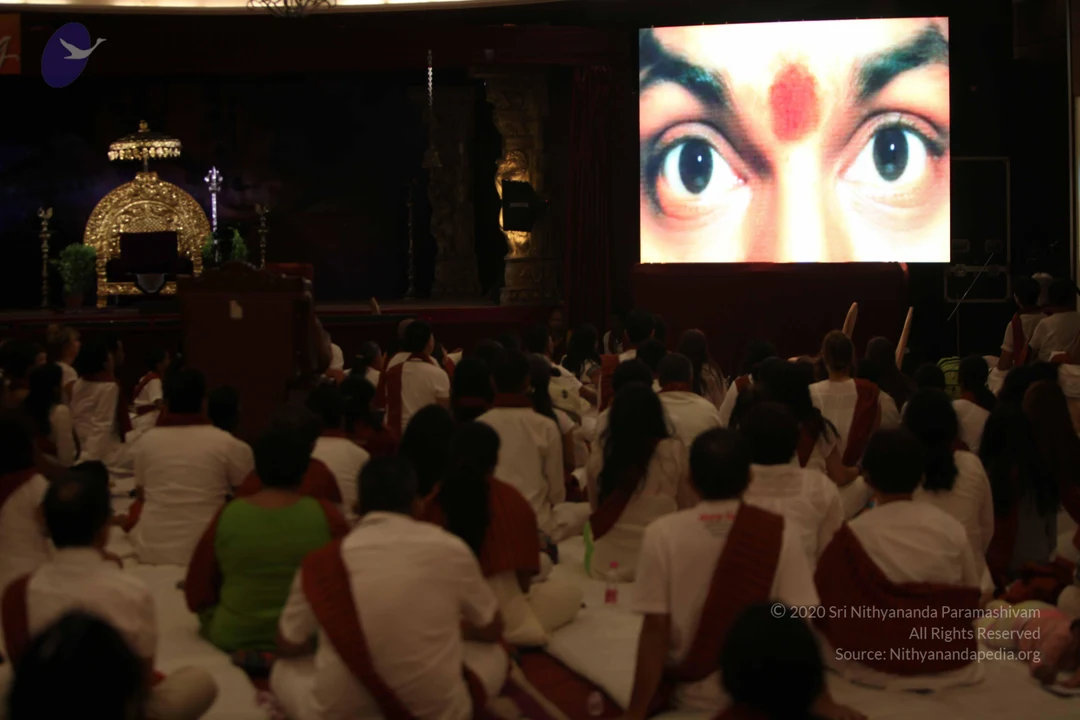
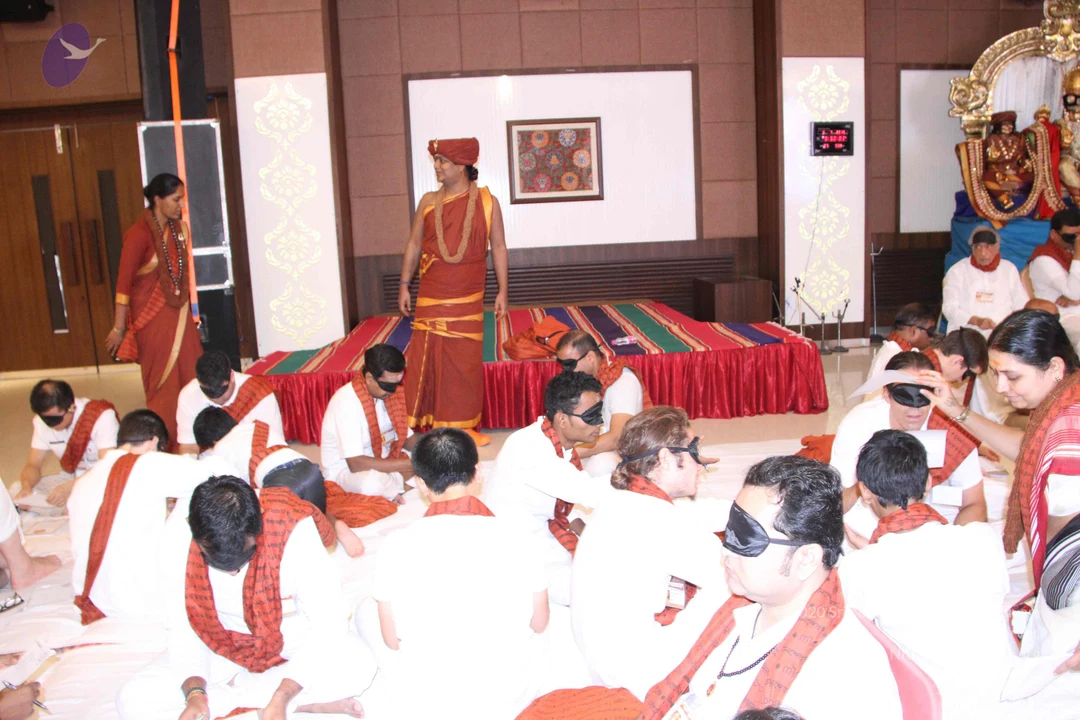
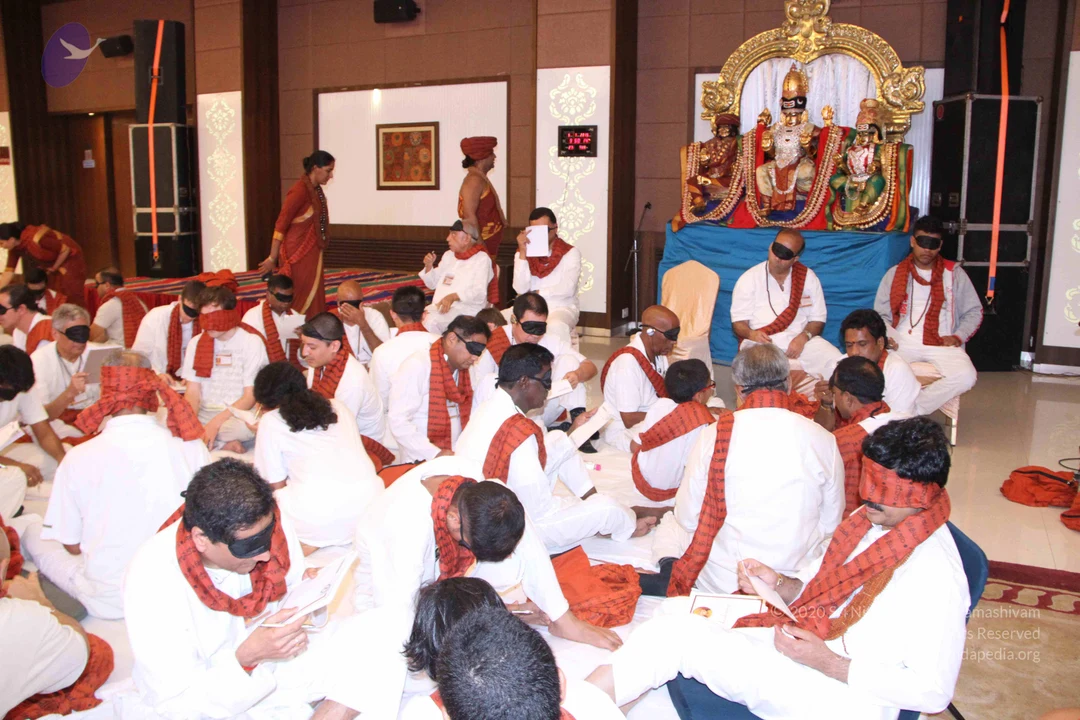
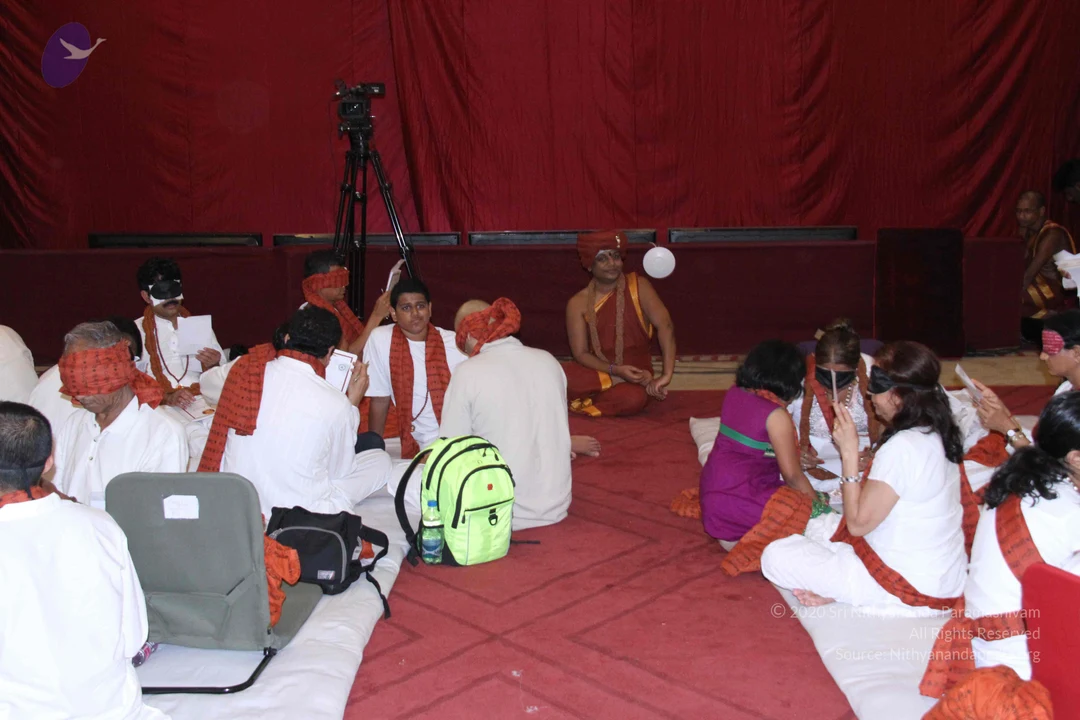
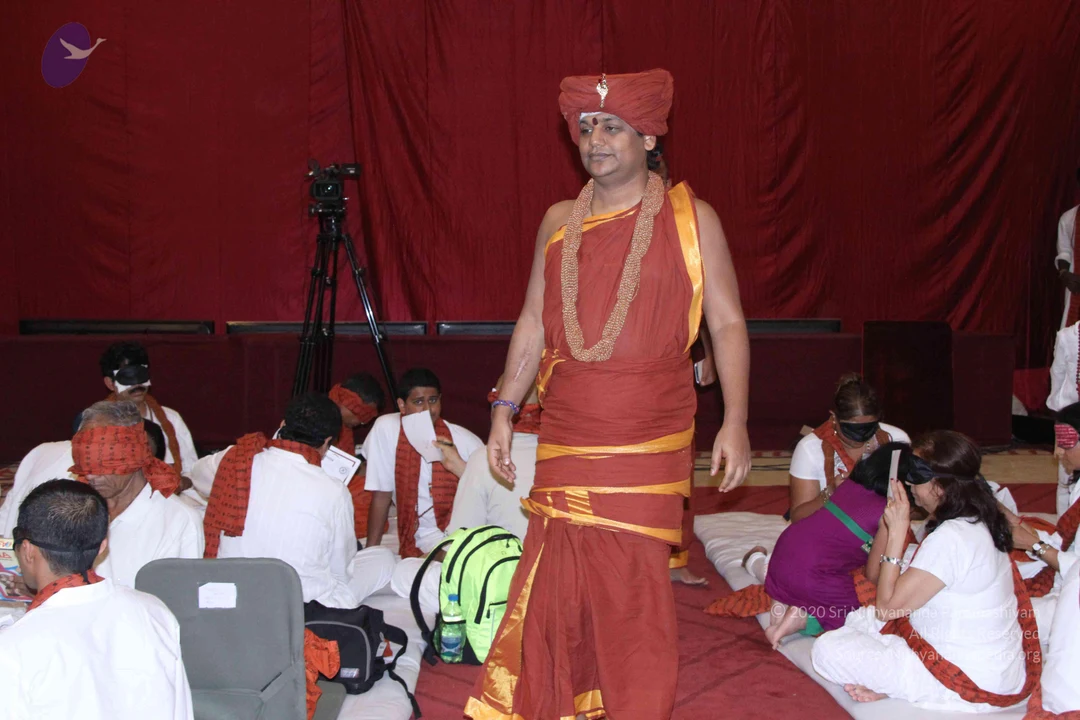
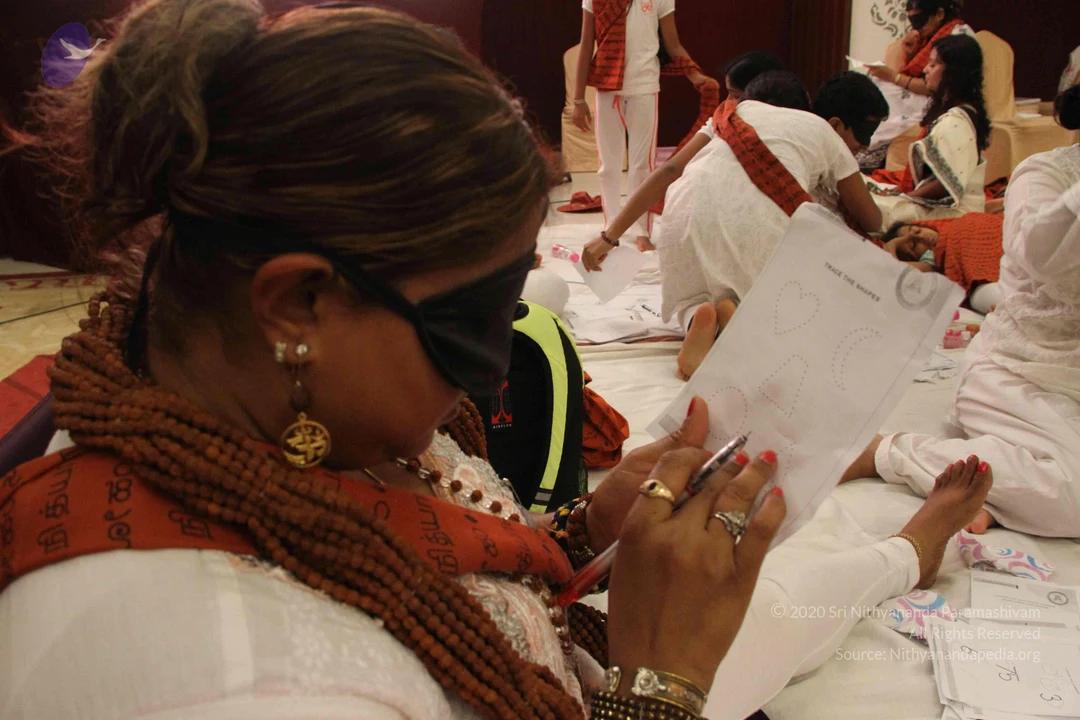
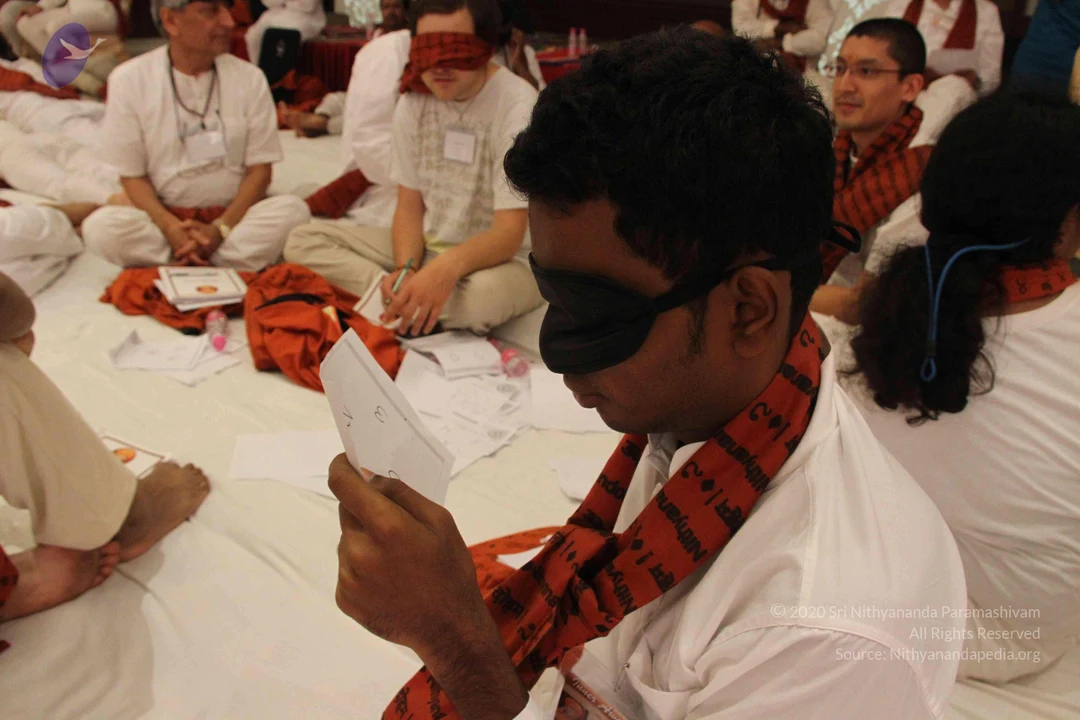
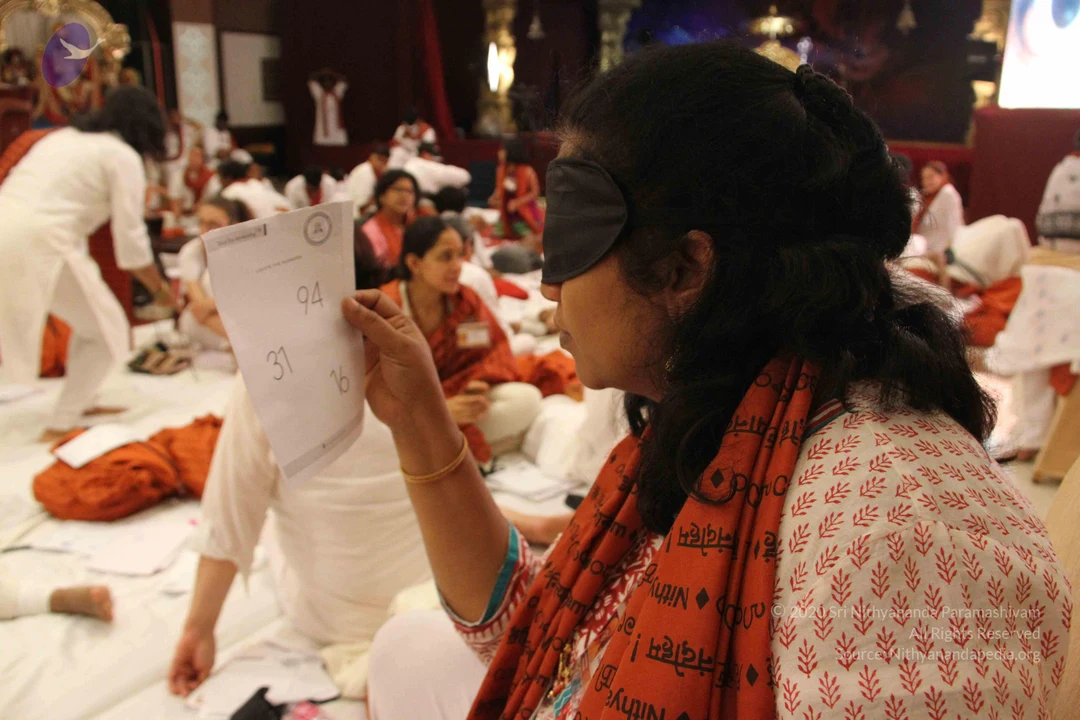
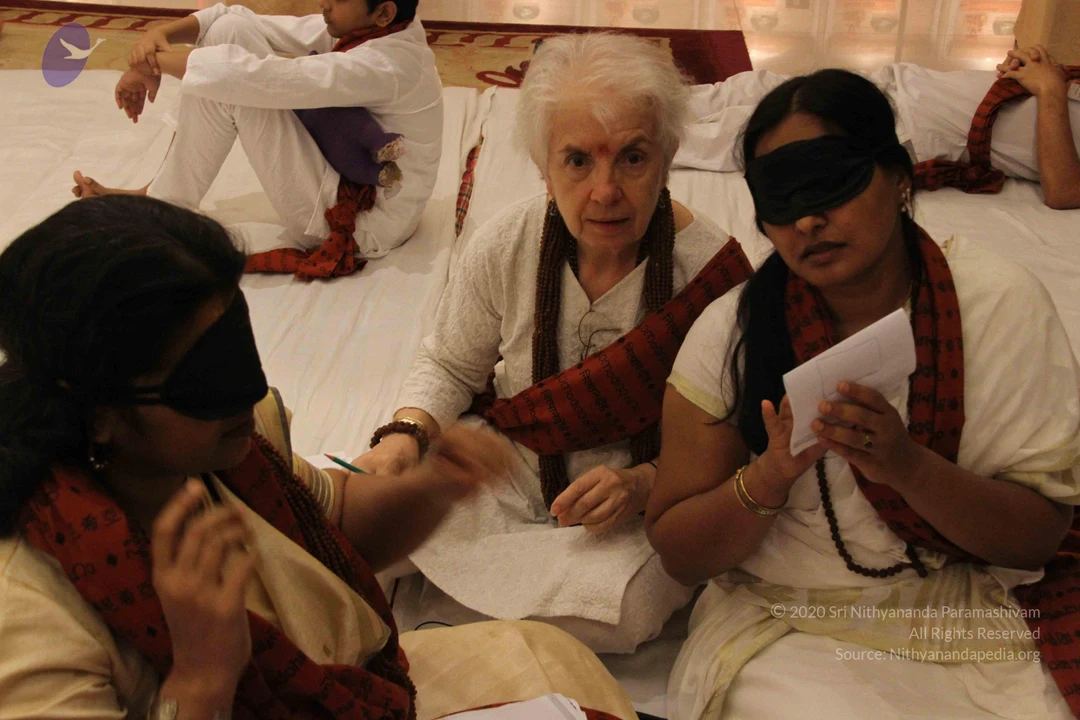
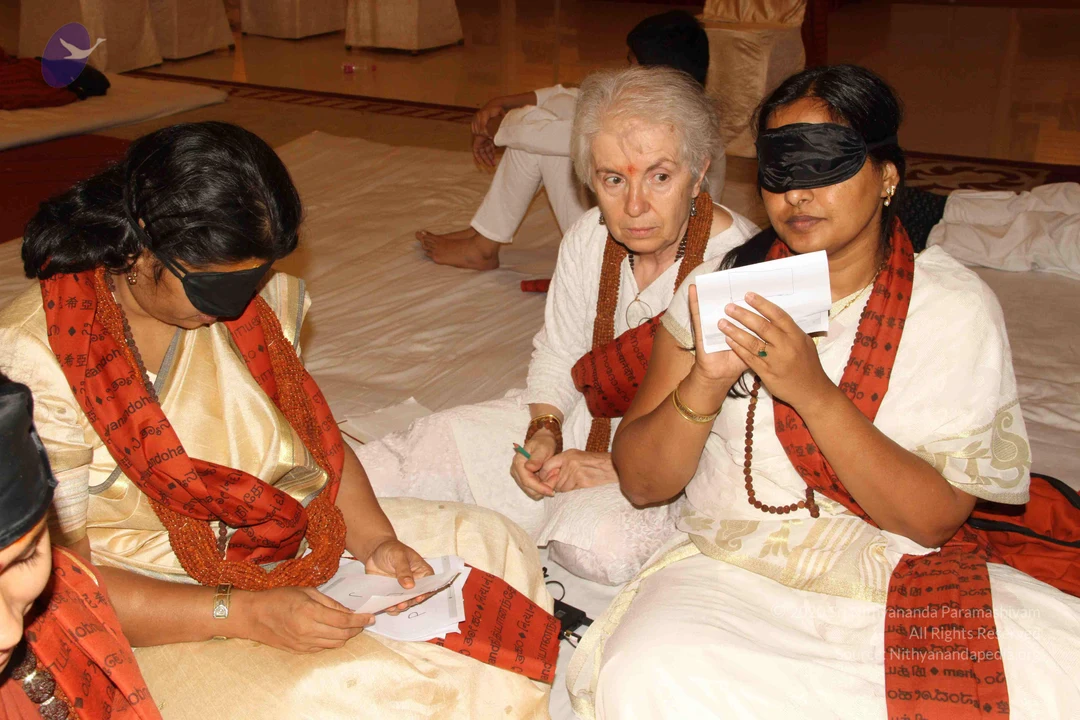
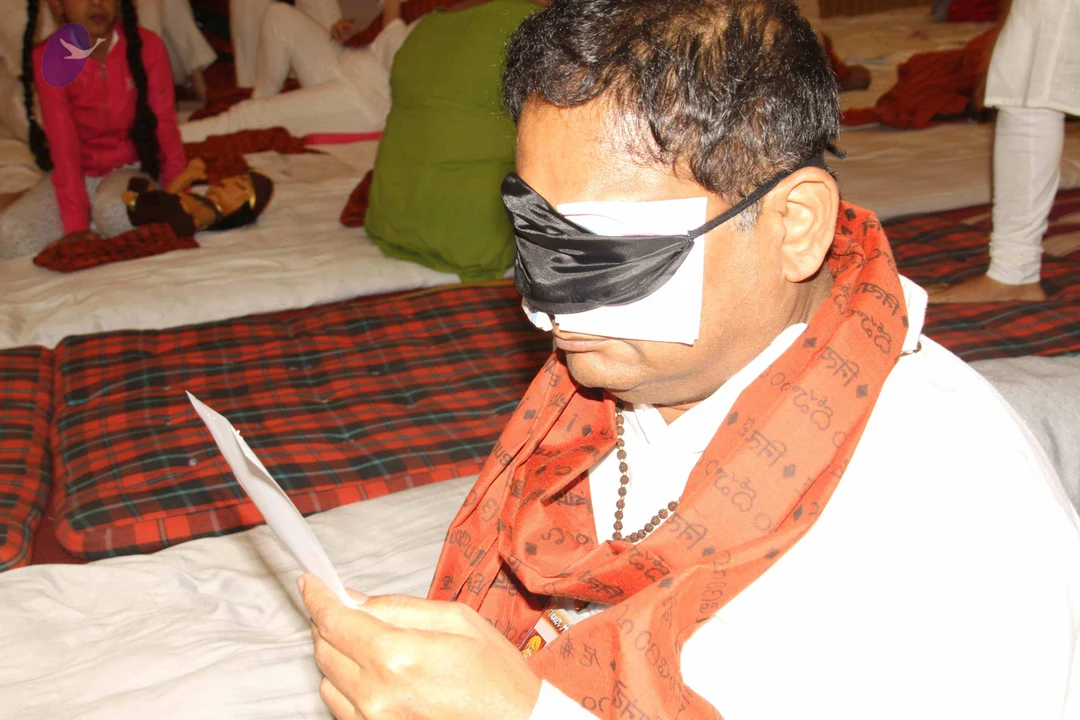
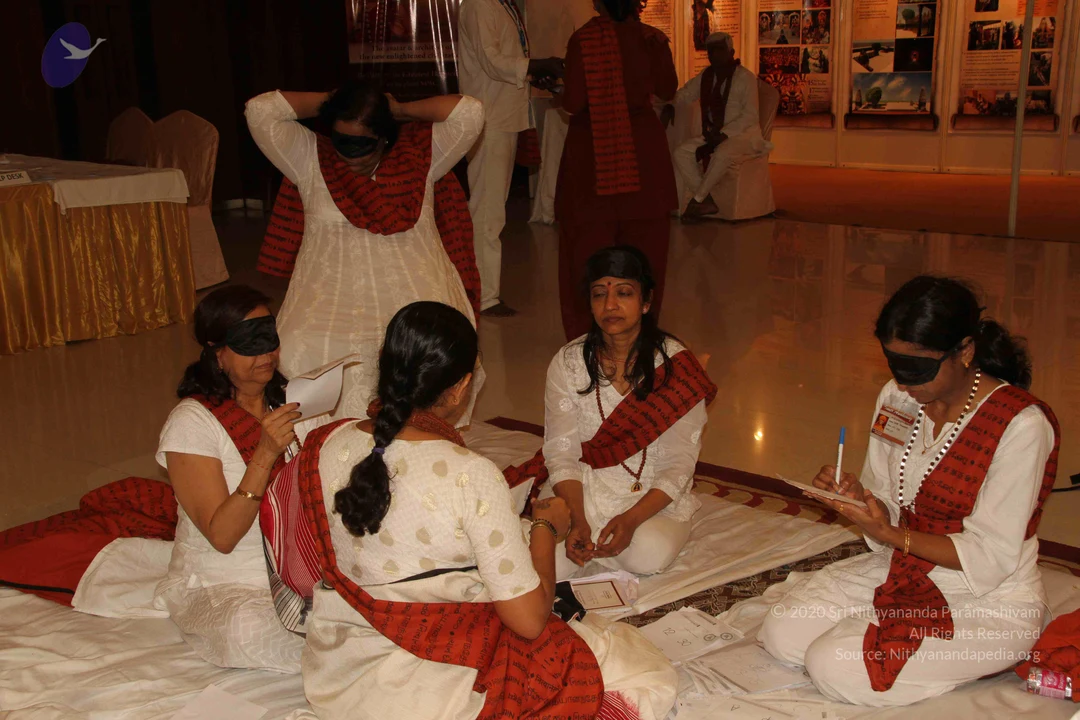
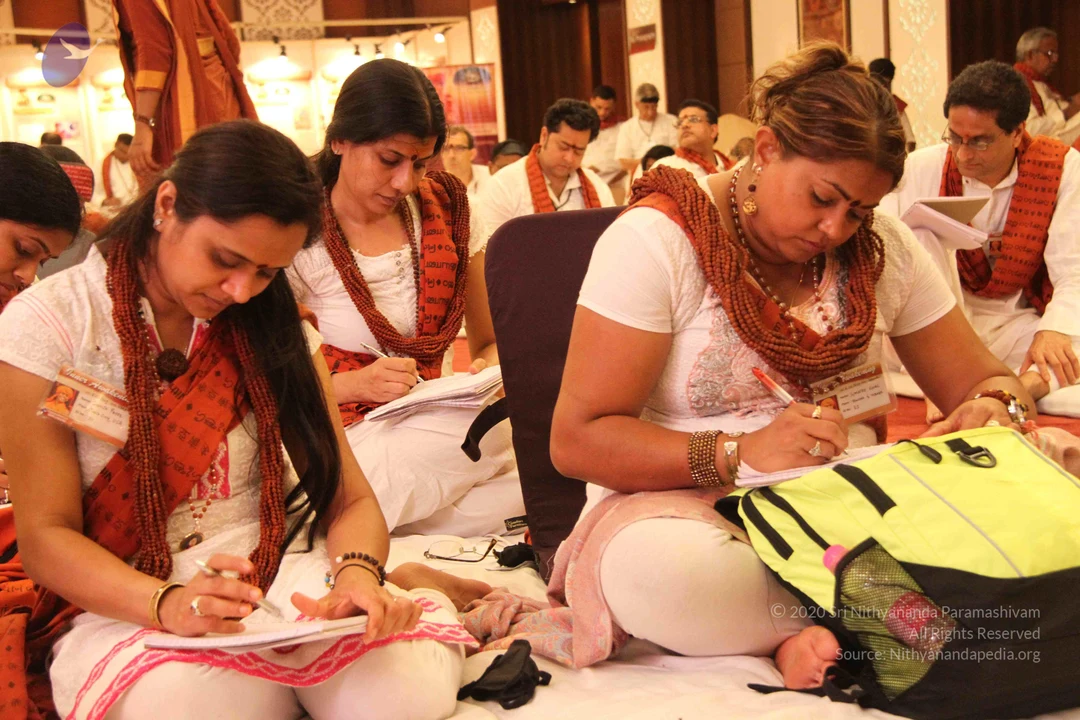
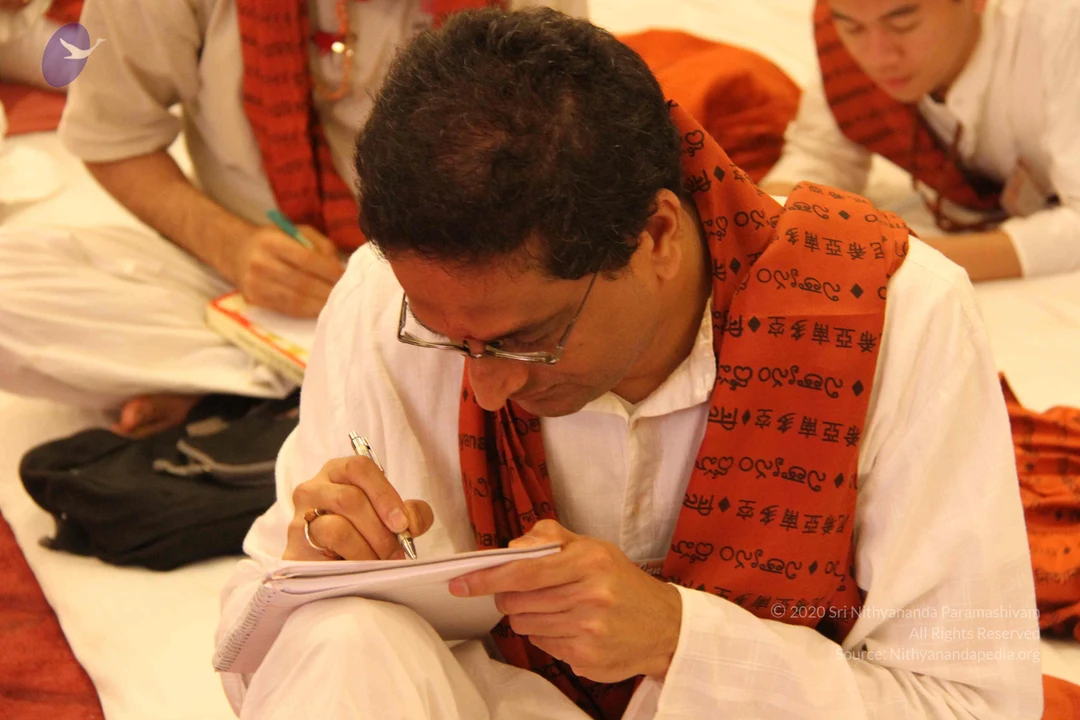
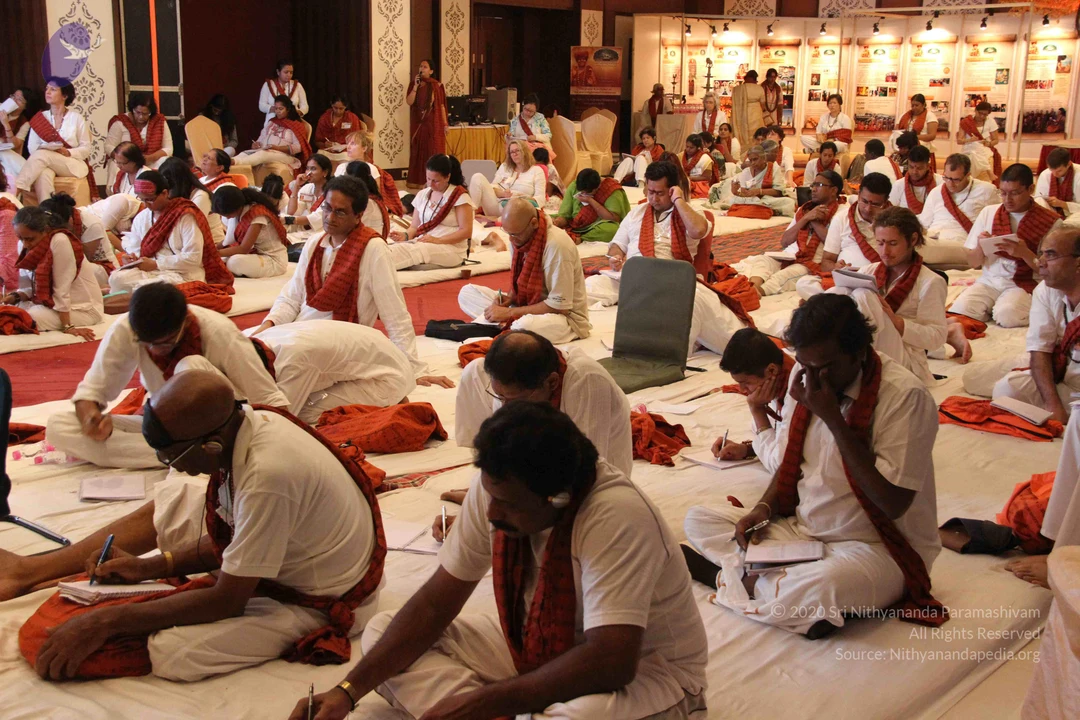
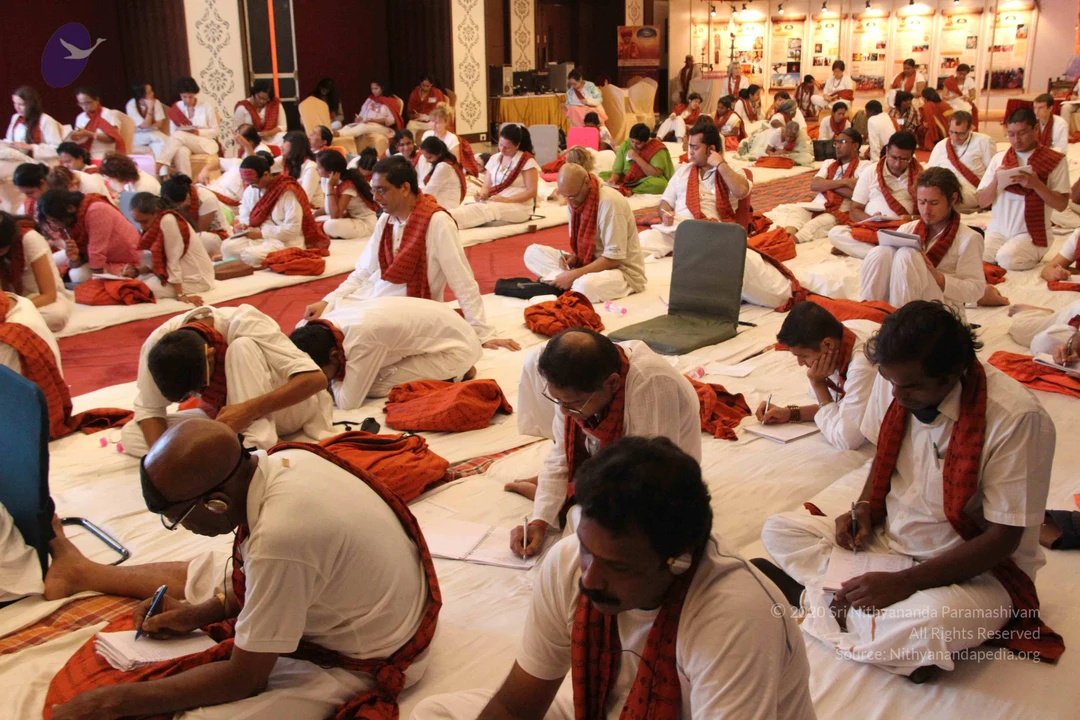
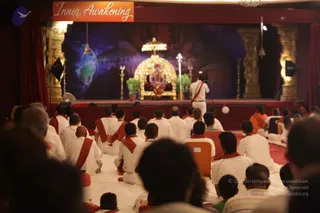
So with this, I will move to the next segment of the morning satsang—today the Inner Awakening participants have blindfold reading again practice and you guys have a long day today. Let’s get ready.

I bless you all: Let you all radiate with integrity, authenticity, responsibility, enriching, causing Living Advaita, the eternal bliss. Nithyananda. Thank you. Be blissful.

Title

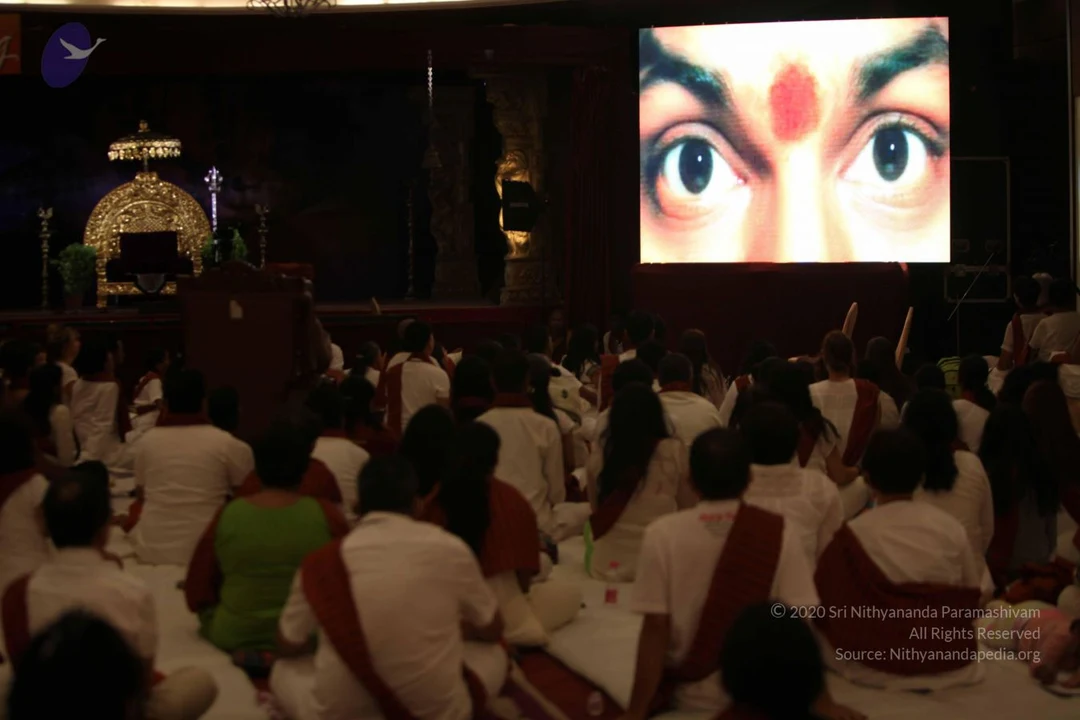
Awaken Your Third Eye || IA || Varanasi || 05 July 2015

Description

In this video Supreme Pontiff of Hinduism HDH #Nithyananda Paramashivam initiates all the delegates into the powerful process of third eye awakening. This video is an excerpt on Third Eye Awakening Mandala Process conducted on 05 July 2015 in Varanasi, India. Here HDH also initiates into a powerful experience of the Power manifestation.

The Supreme Pontiff of Hinduism Jagat Guru Mahasannidhanam His Divine Holiness Nithyananda Paramashivam (HDH) is the reviver of #KAILASA - the ancient enlightened civilization and the great cosmic borderless Hindu nation. Revered as the incarnation of Paramashiva - the primordial Hindu Divinity, HDH has a following of 2 billion Hindus worldwide with de facto spiritual embassies in over 150 countries. He has worked untiringly for over 26 years for the revival of Kailasa, for global peace and to give super conscious breakthrough to humanity. He has survived the worst persecution of multiple assassination attempts on person and on character by anti-Hindu elements. He is collecting, organising, preserving, time capsuling, decoding, spreading and reviving 20 Million source books of Hinduism and the 64 sacred arts & sciences like Ayurveda, music, dance, sculpting, astrology, vastu and much more. Close to 20,000 hours of HDH’s timeless talks have been recorded till date (Sep 2020), which are a treasure trove of powerful cognitions to solve individual and global problems of any kind.

VideoAudio

Shakshi Pramana

So many Amazing Experiences in just the First 2 Days! (Kaviya, Shivoham)

VideoAudio

Experiencing Shivoham Process (Poornima Venigalla, Bali, July 2015)

VideoAudio

Long-time seeker - Having a Master vs. Getting Lost in the Way (Alfred Lorenzo, 2015)

VideoAudio

News:

Nithyananda Times, 05th July 2015

Description:

The Daily Video Magazine of the Nithyananda Sangha

Photos From The Day:
Photos Of The Day:

Shivoham
Completion-Session

Energy-Darshan

Photos Of The Day:

satsang

darshan

inner-awakening

Photos Of The Day:

Nithyananda-Satsang

Kalpataru-Darshan

Inner-Awakening-Session

Photos Of The Day:

Shivoham
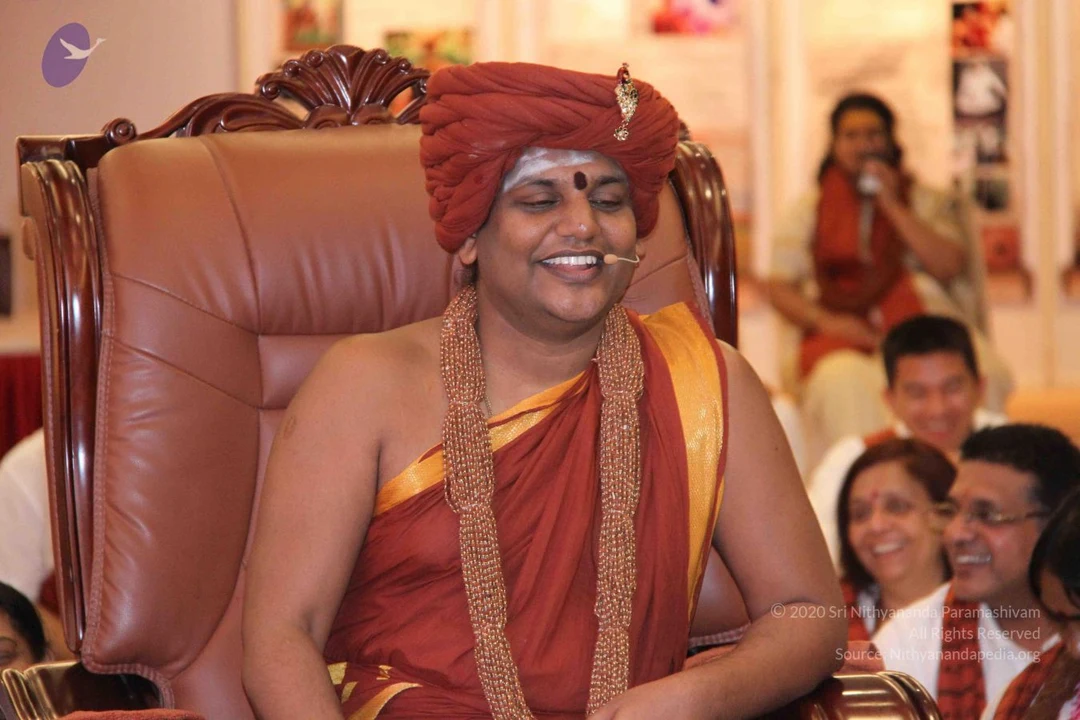
Energy-Darshan

Photos Of The Day:

Satsang

Inner-Awakening

1-Shivoham

2-Completion-Session

3-Energy-Darshan

01-Nithya-Satsang

Photos from this day

View all 389 photos

Photos From The Day:

10 photosSource gallery
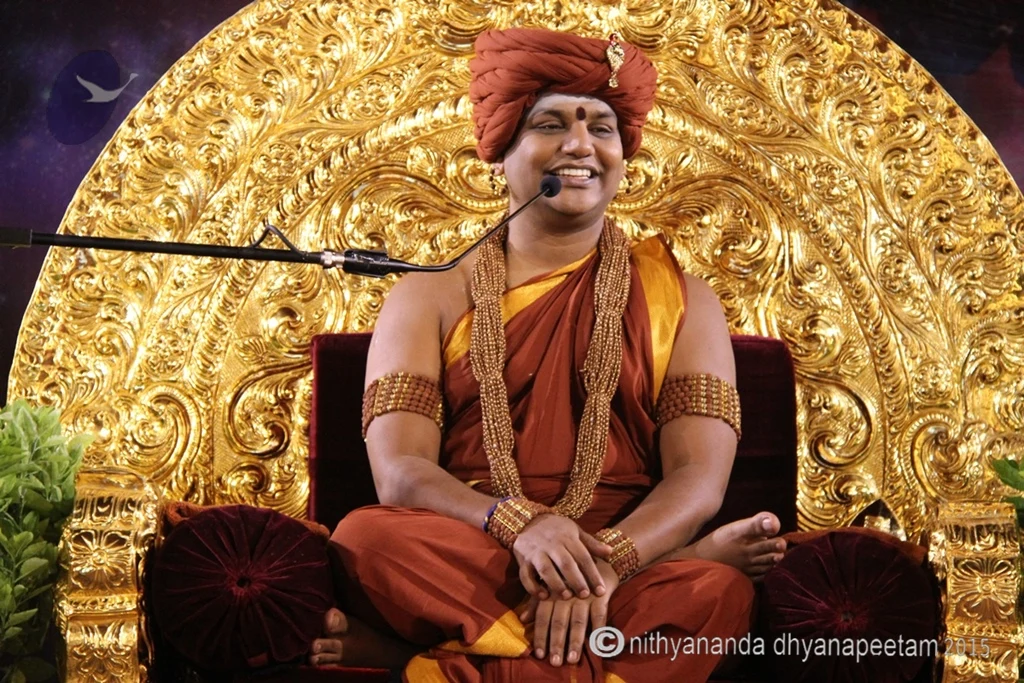
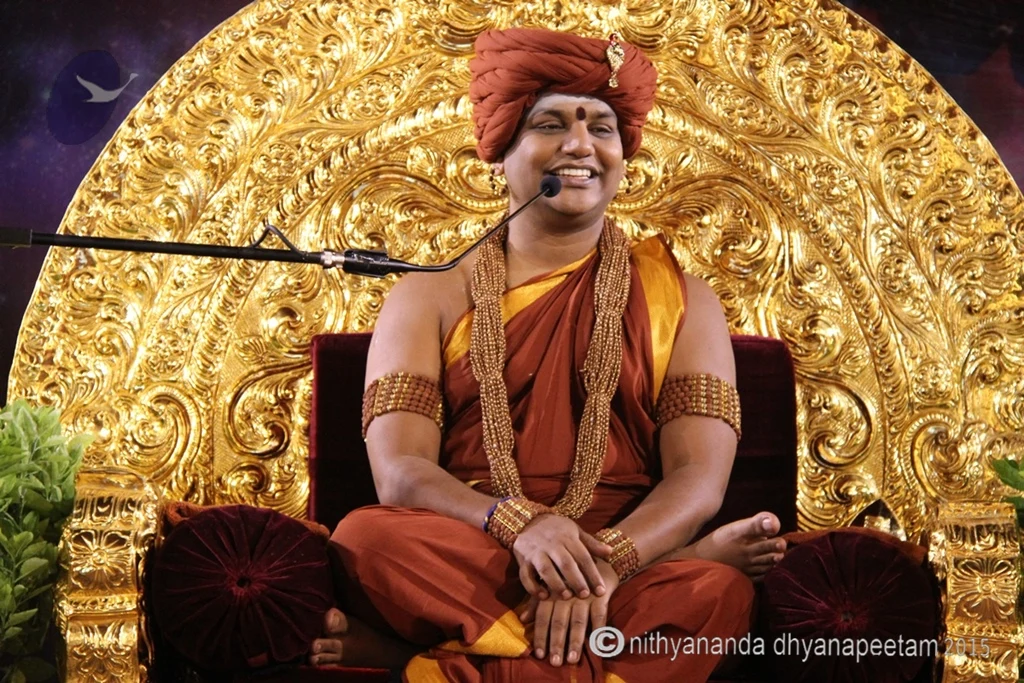
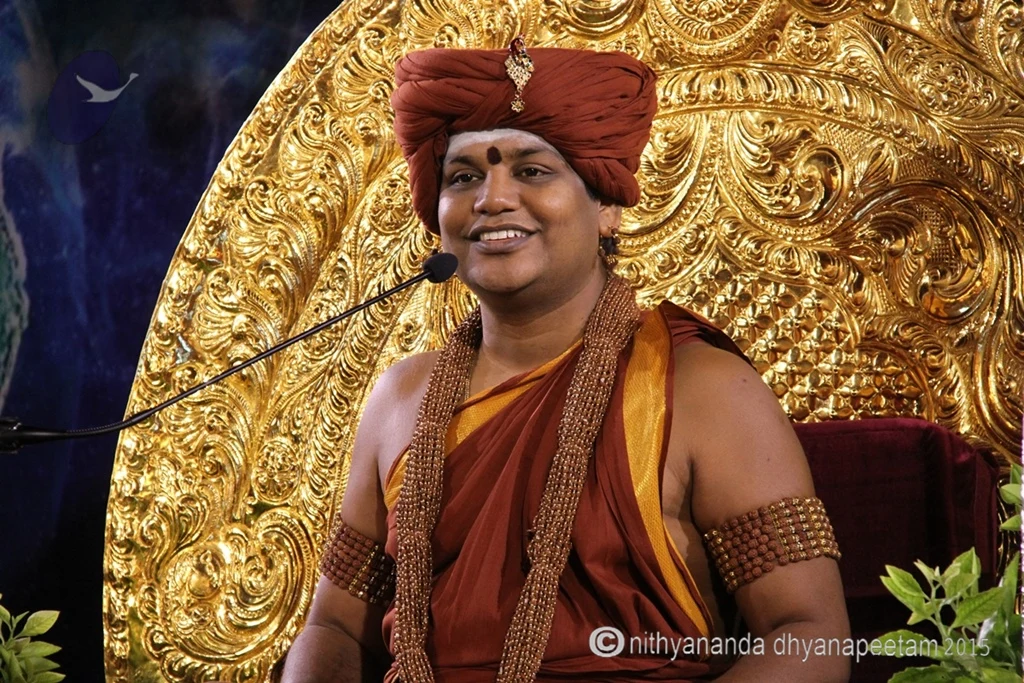
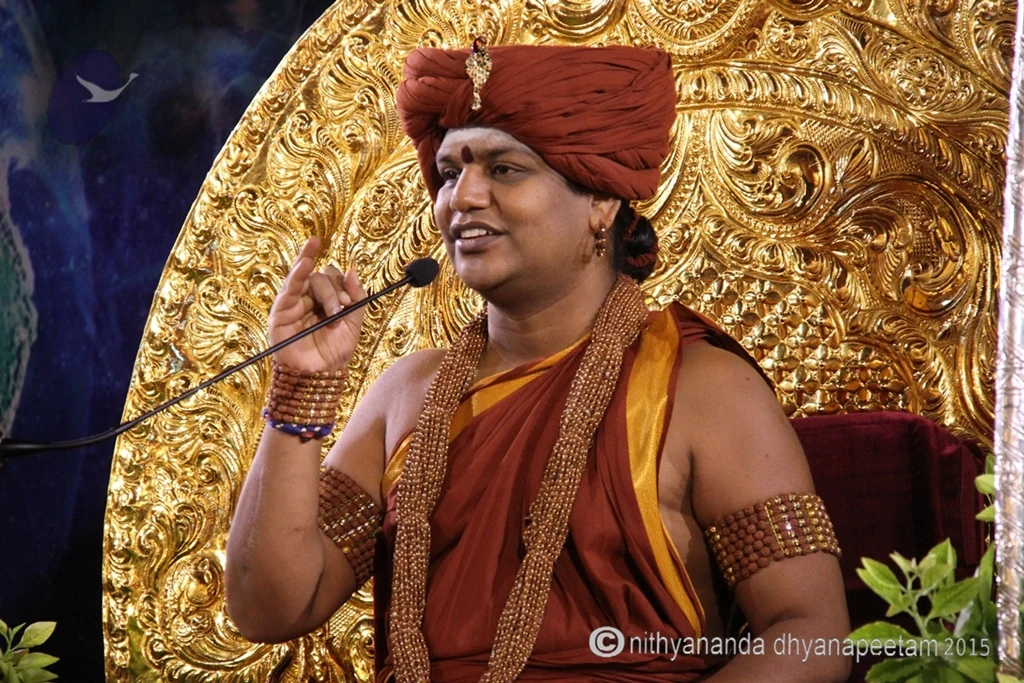
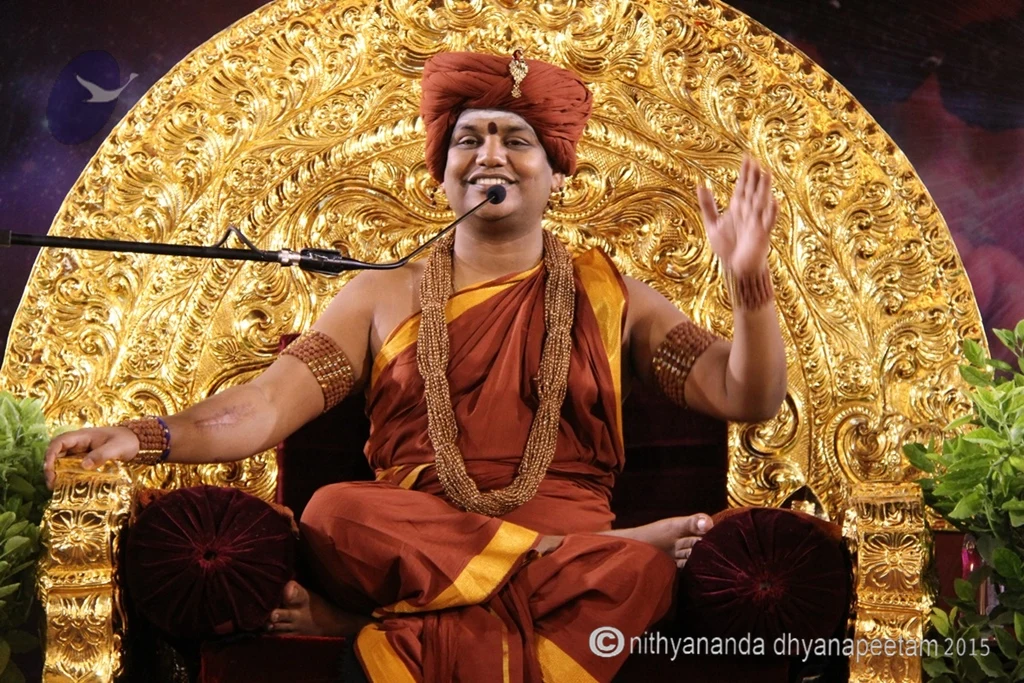
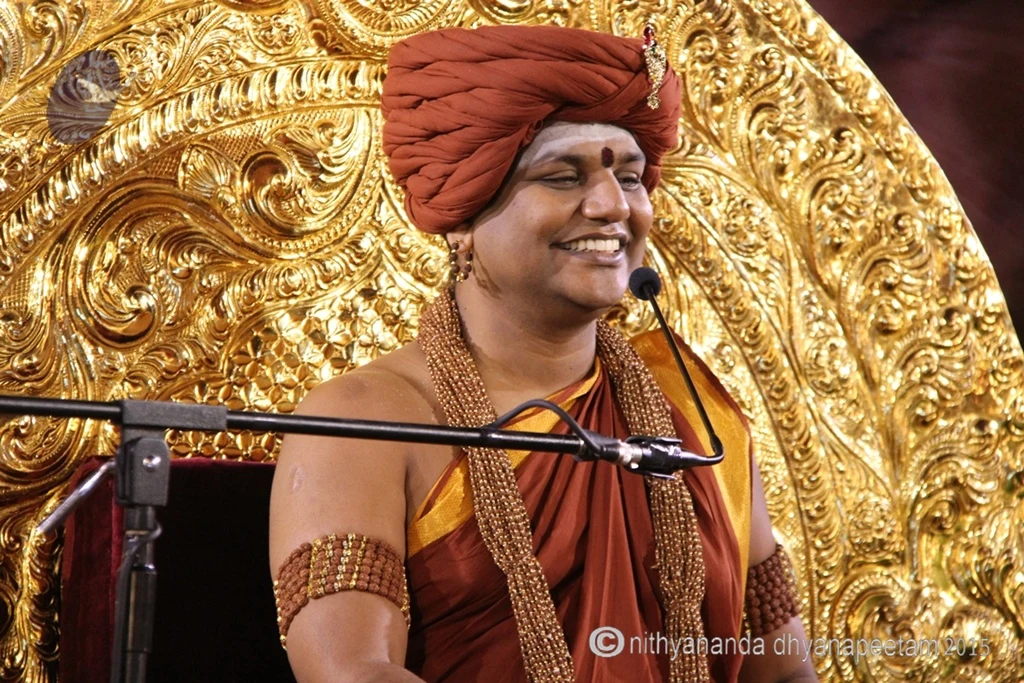
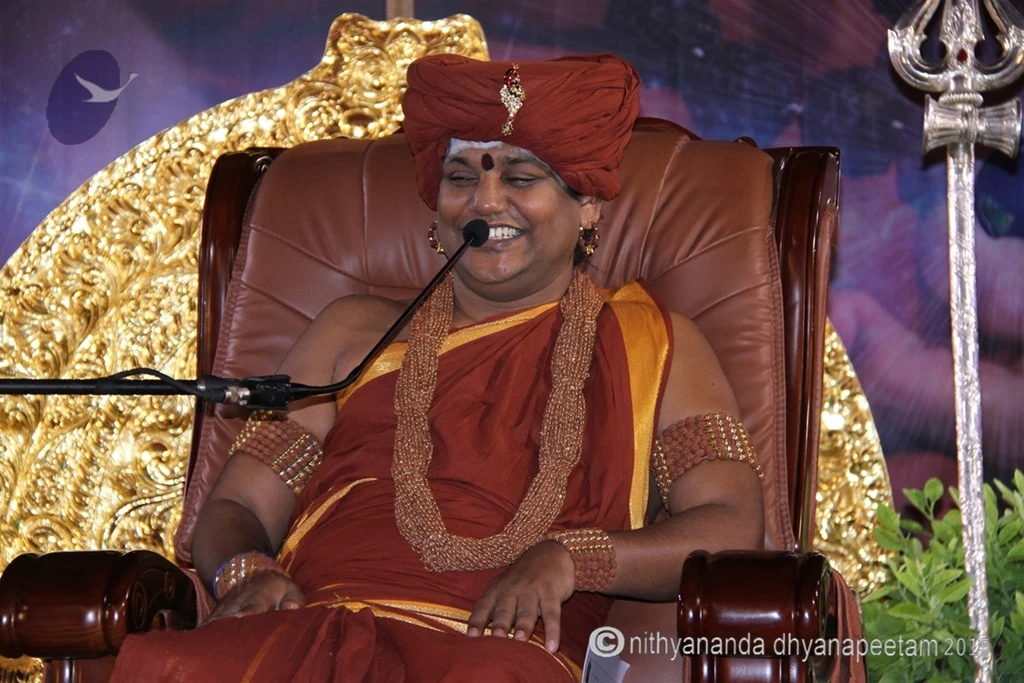
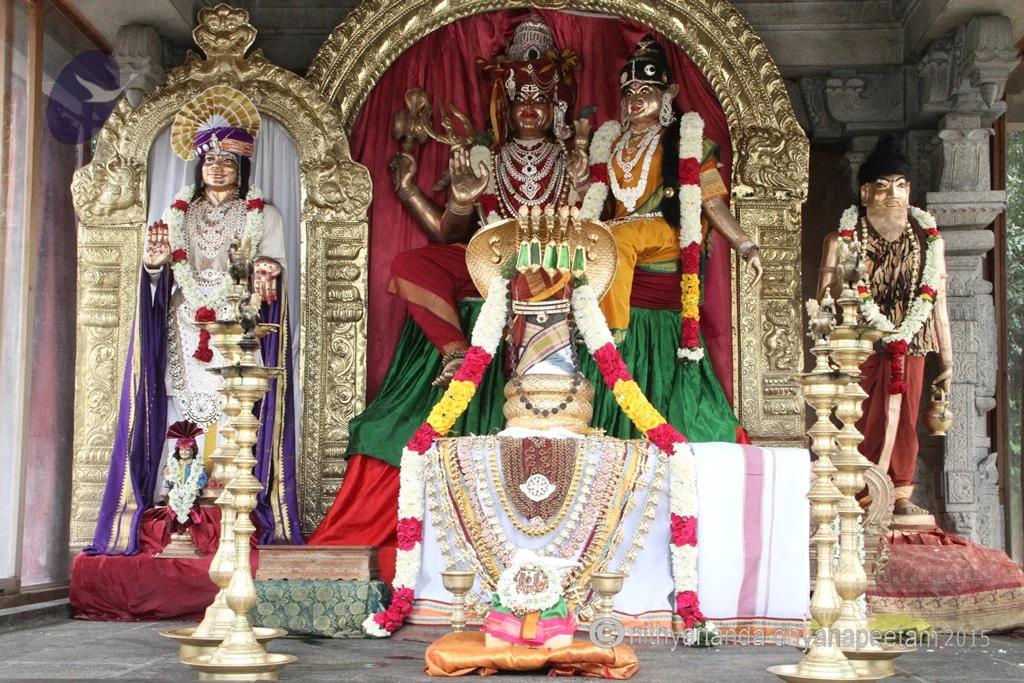
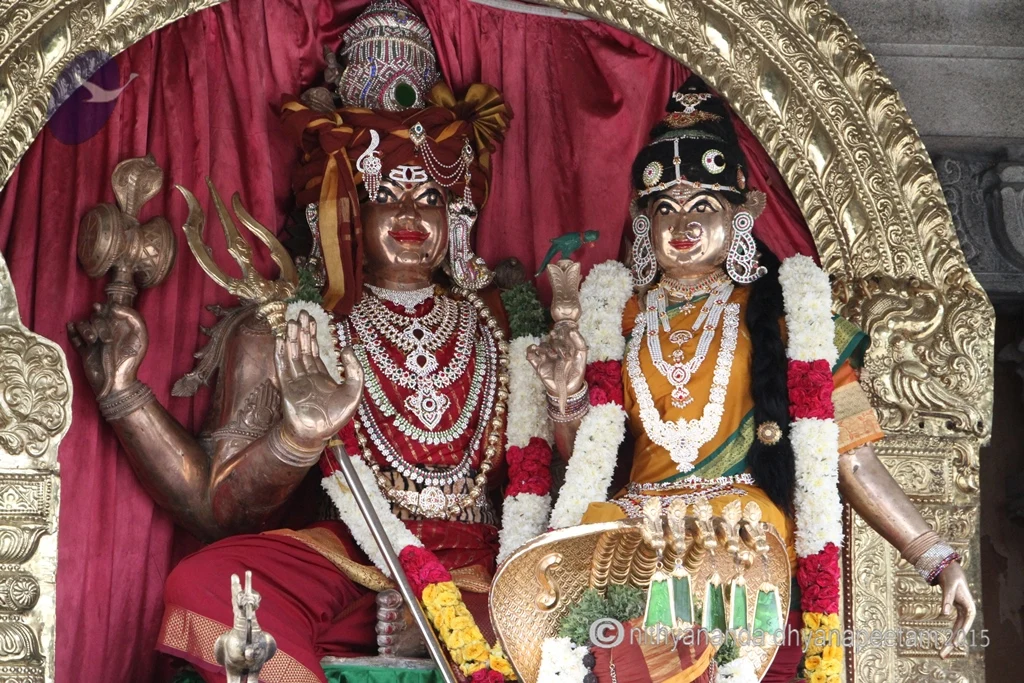
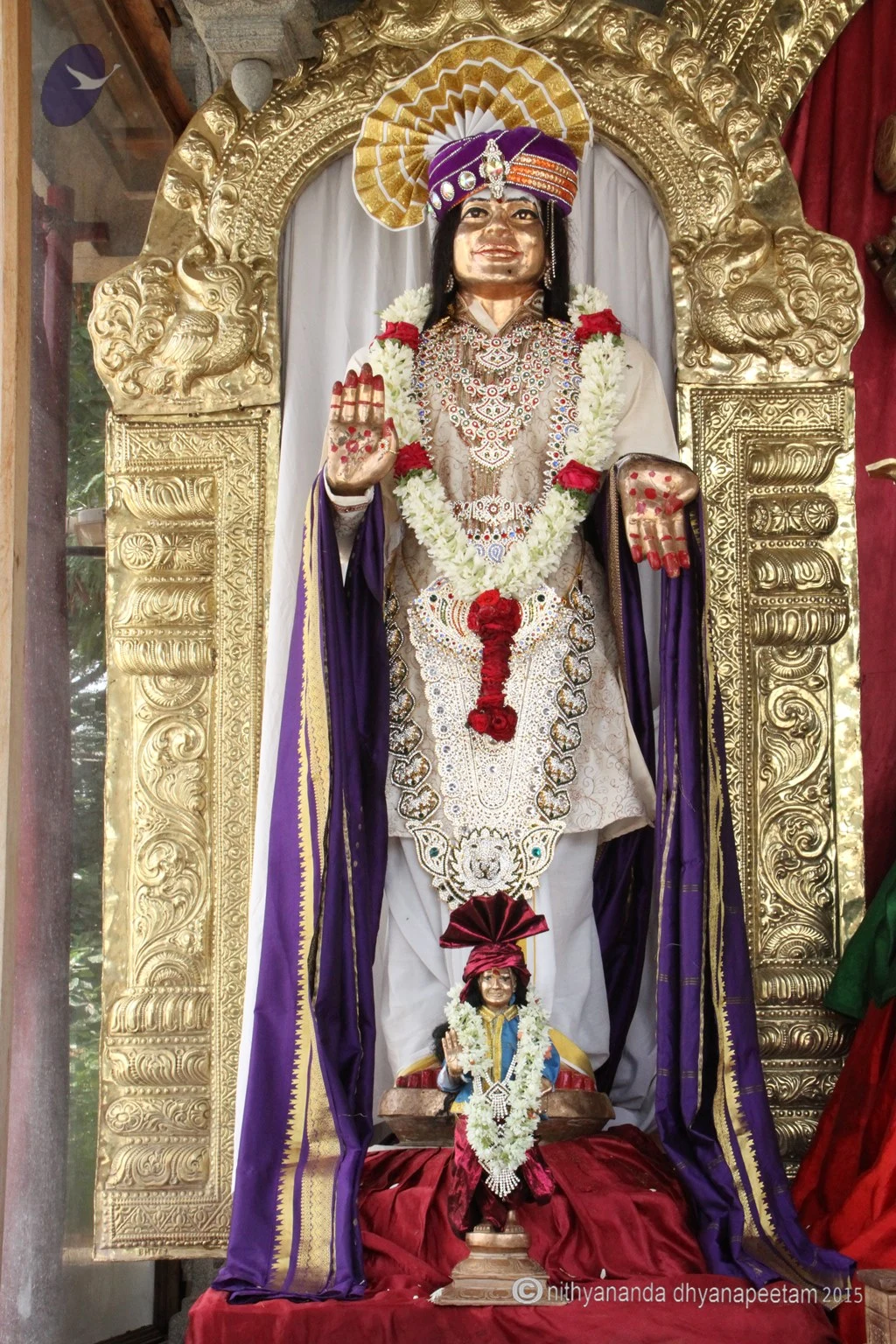
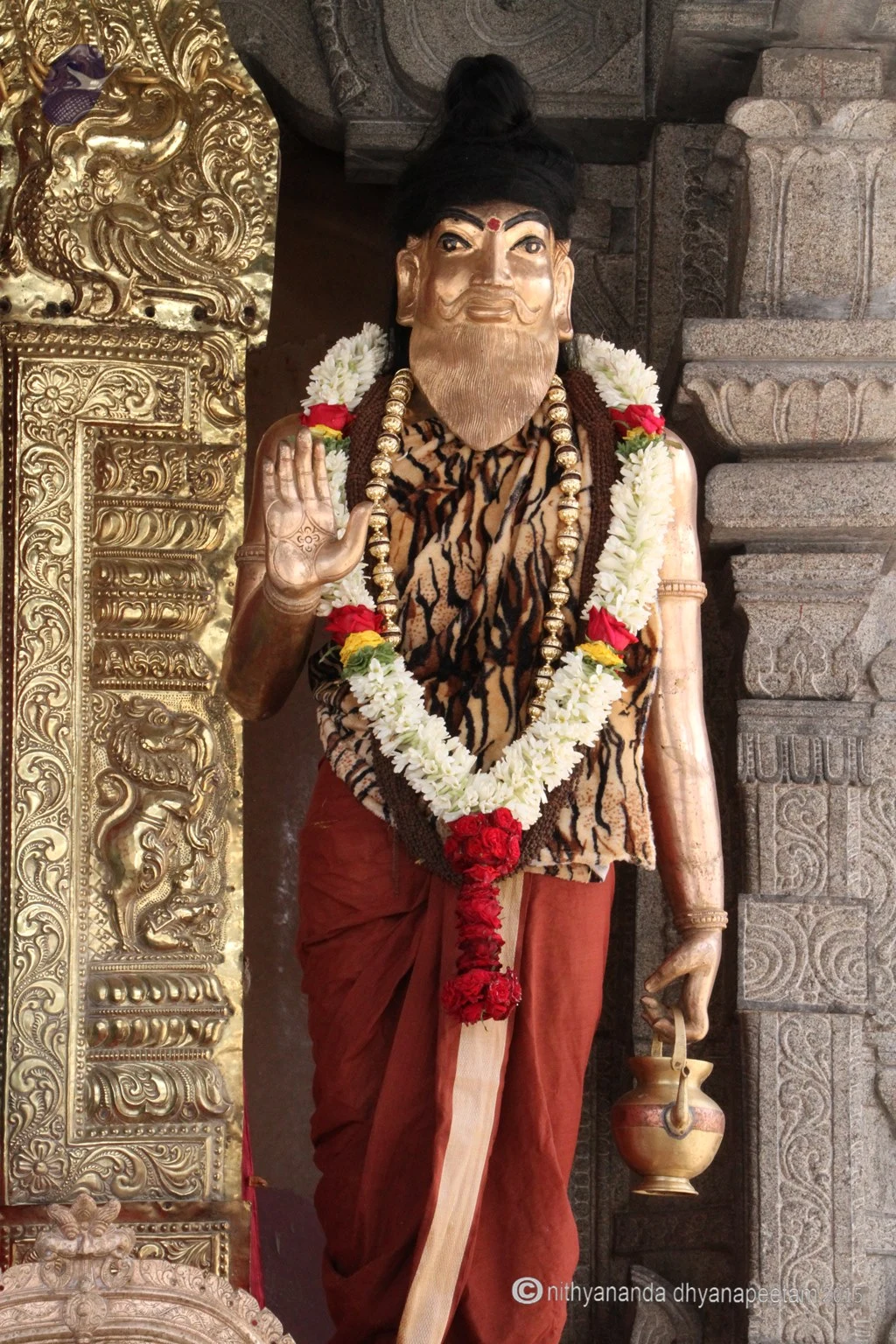
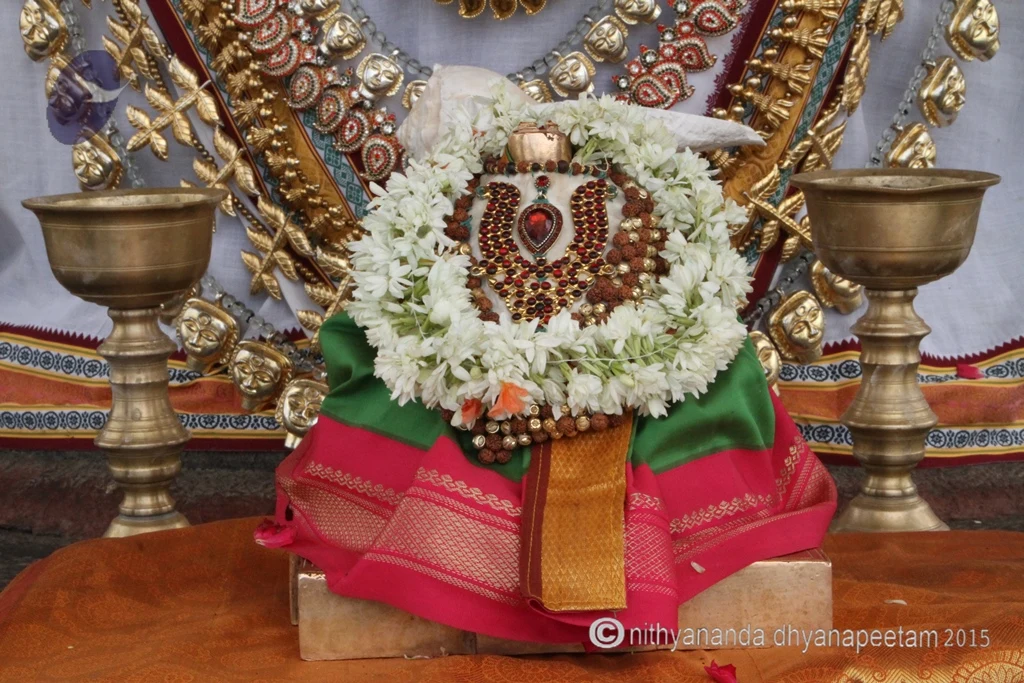
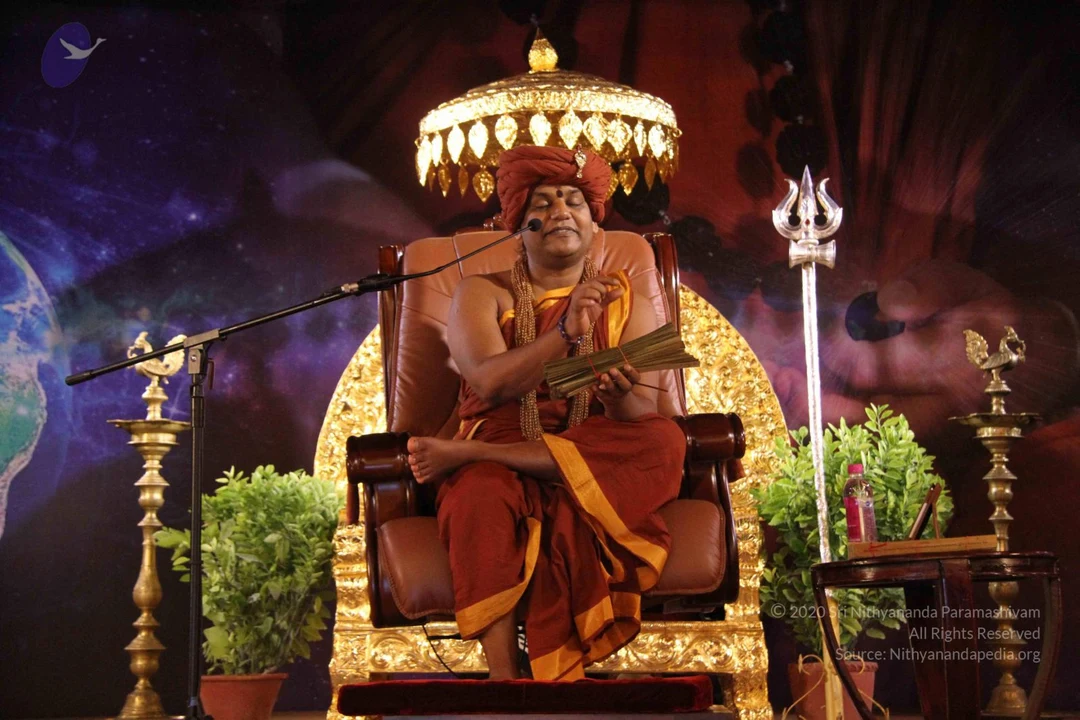
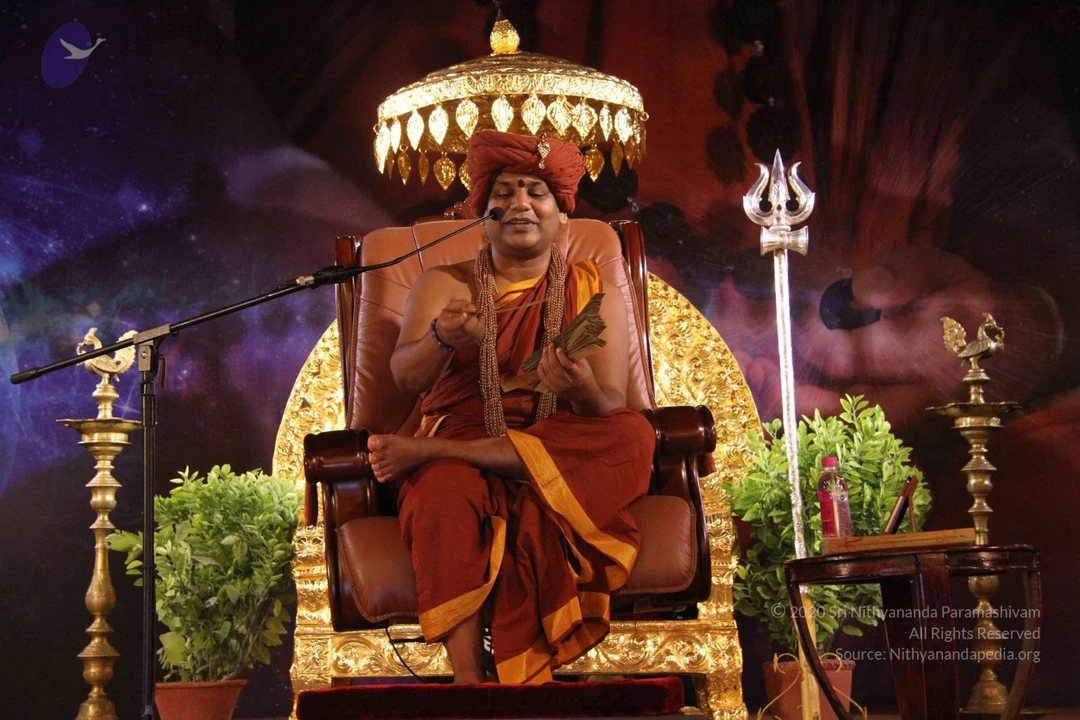
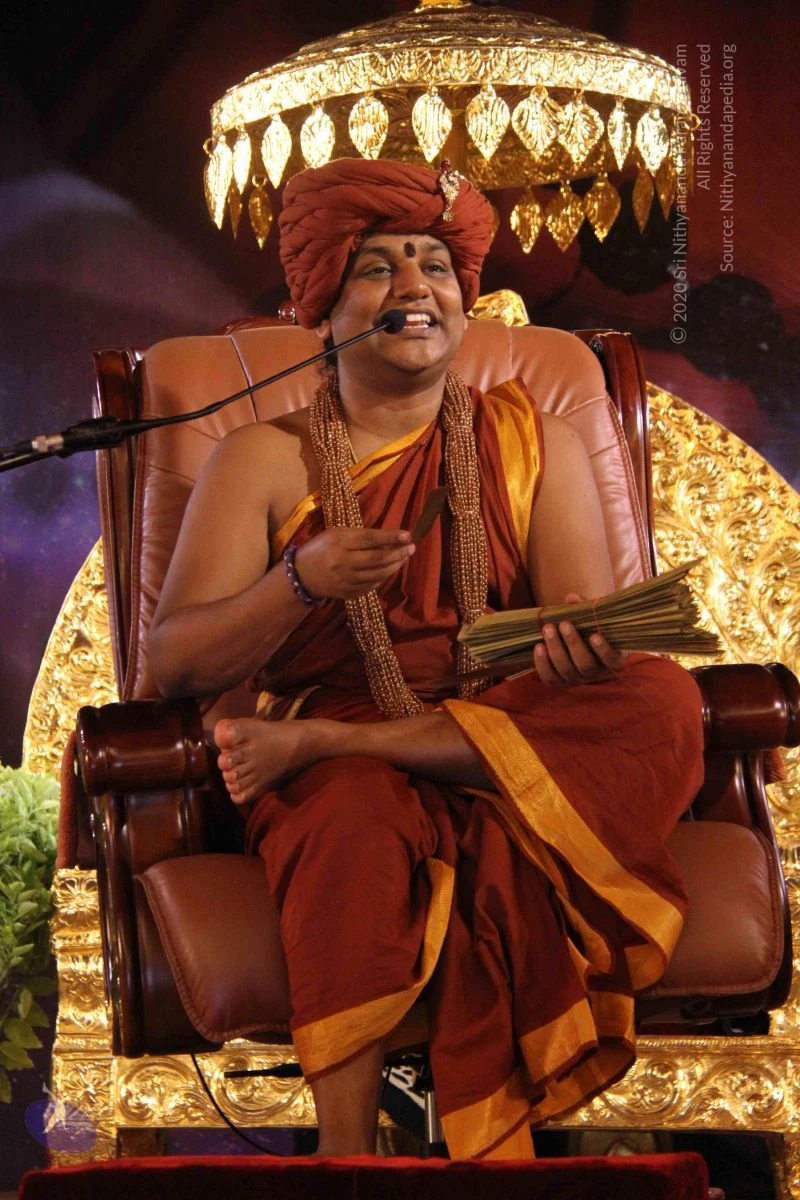
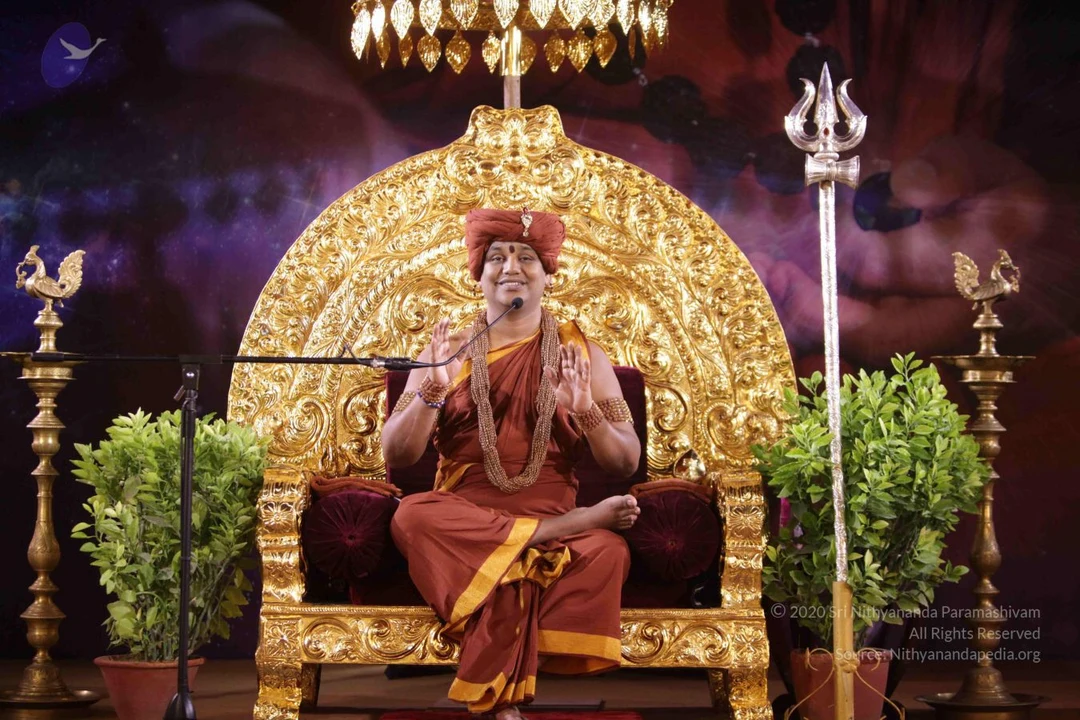
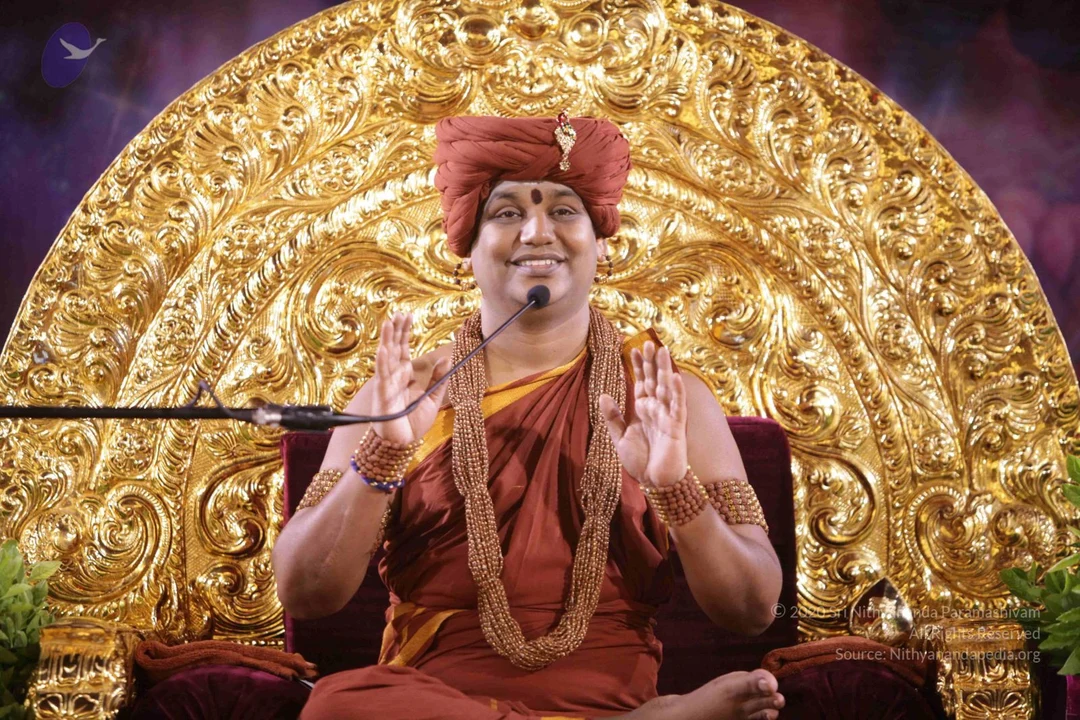
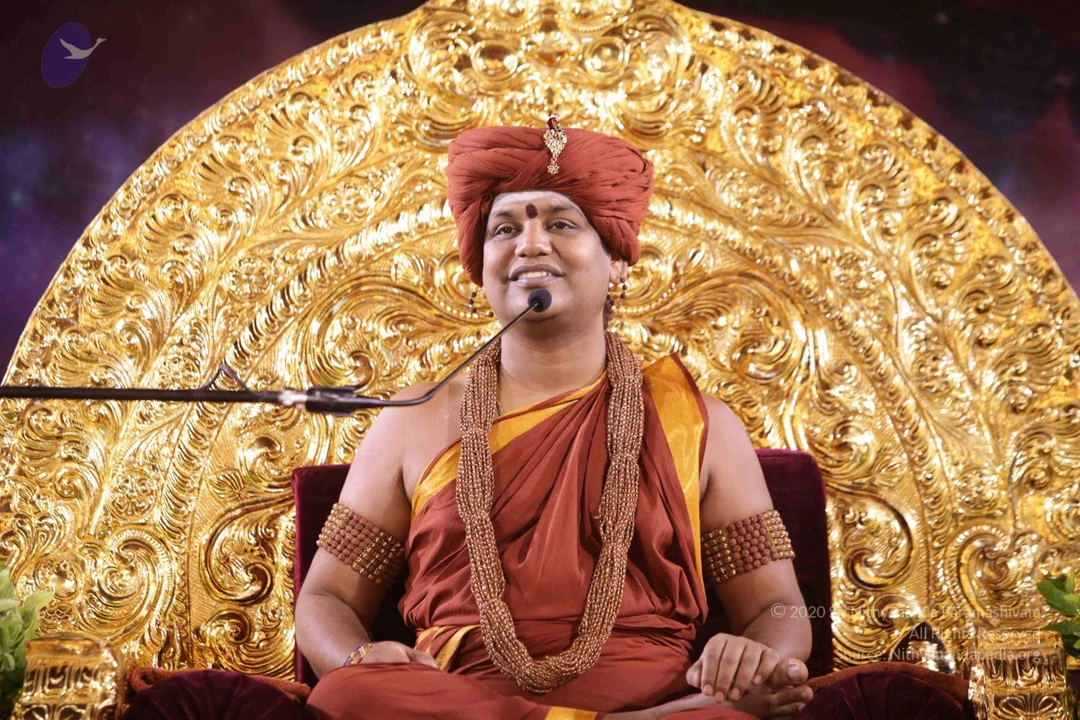
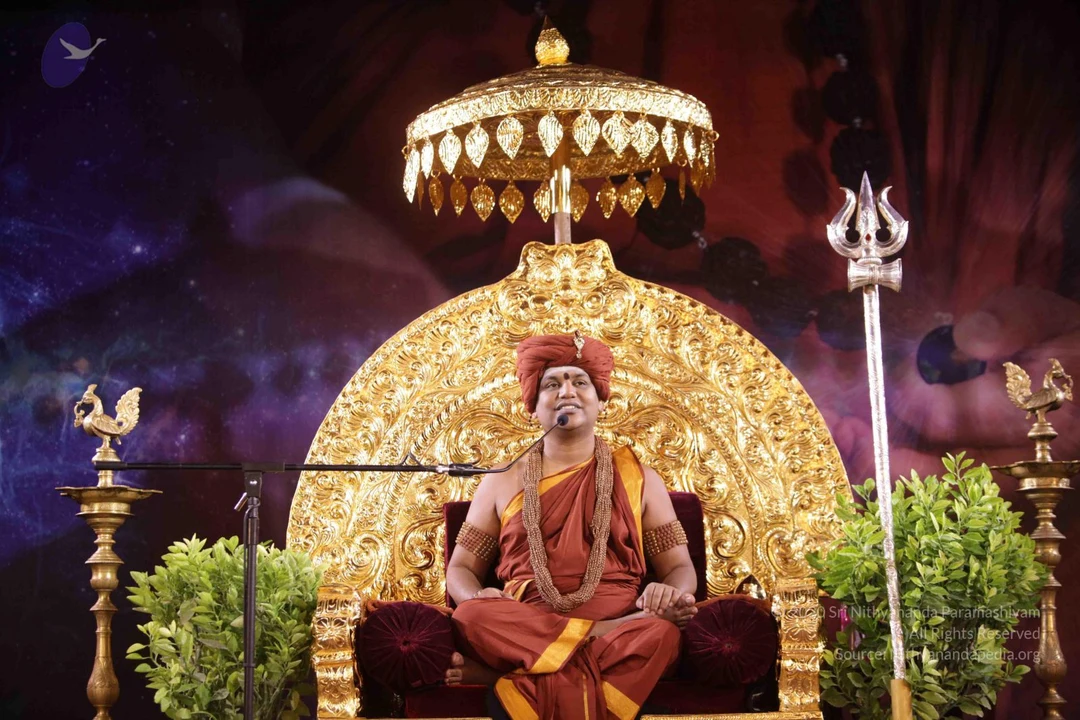
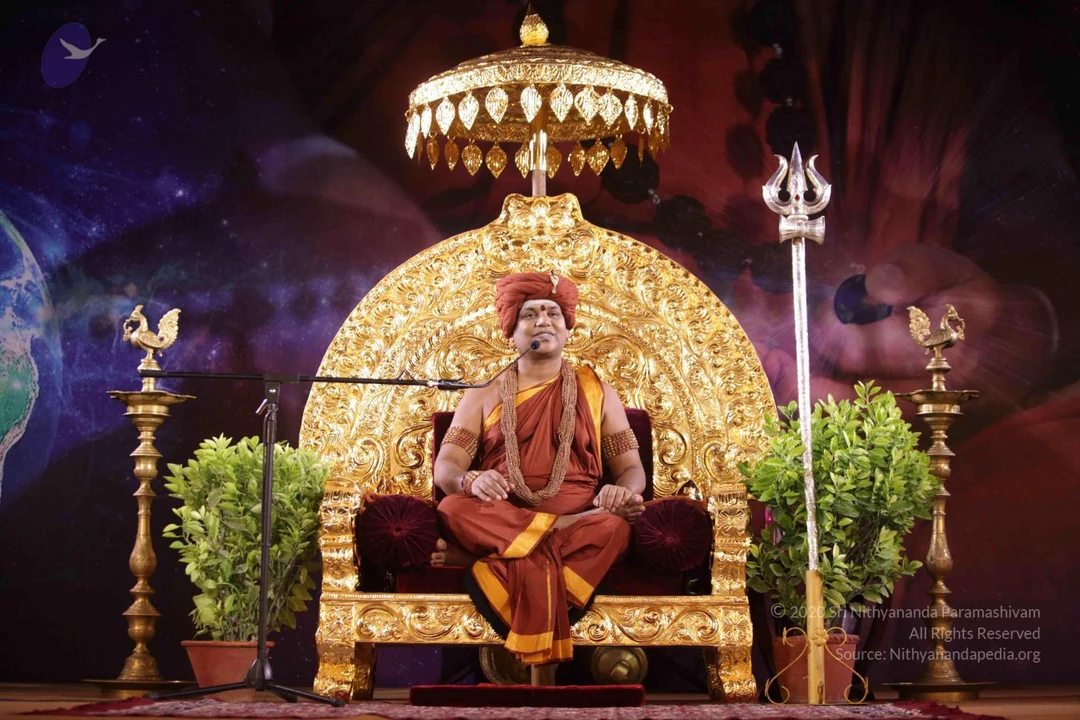
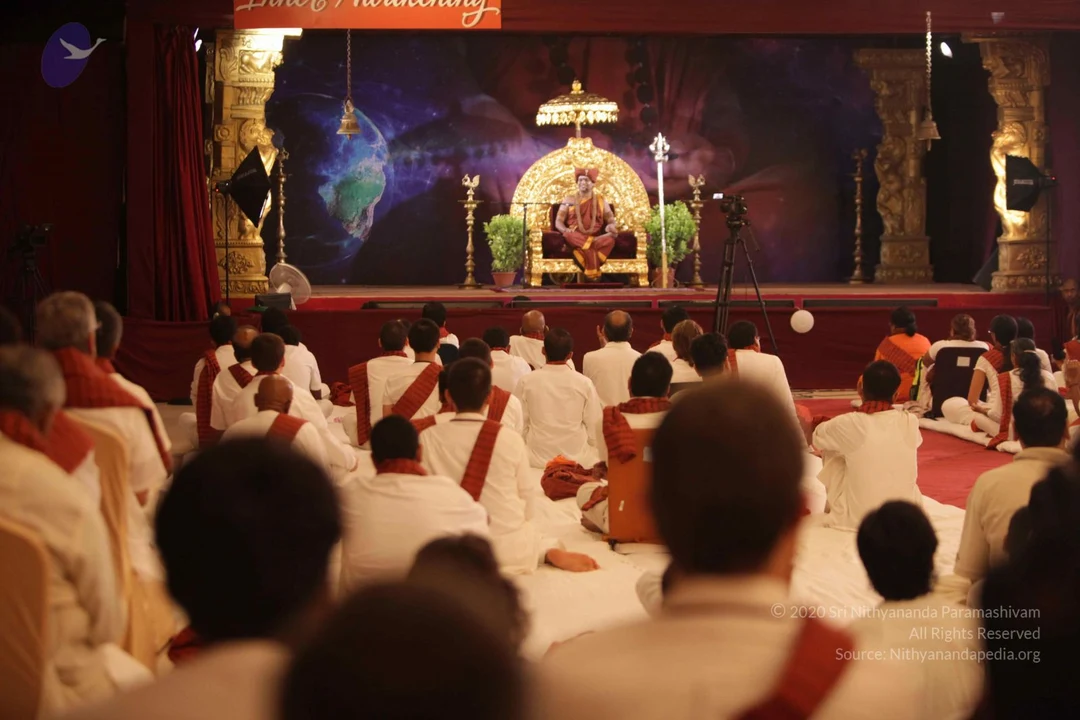
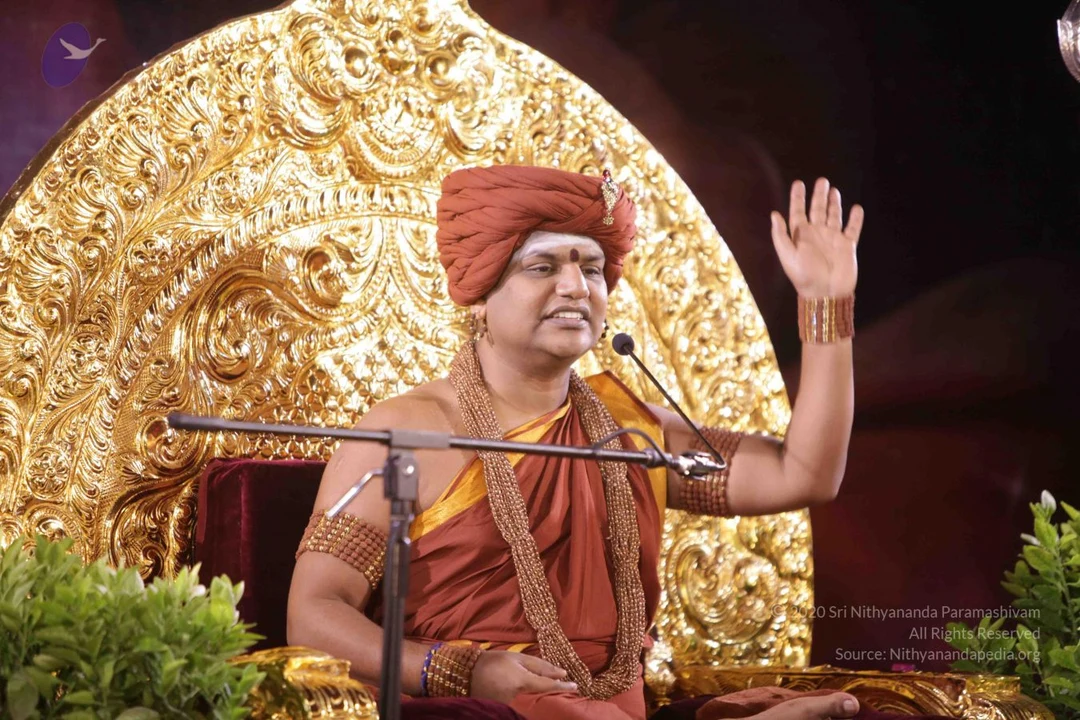
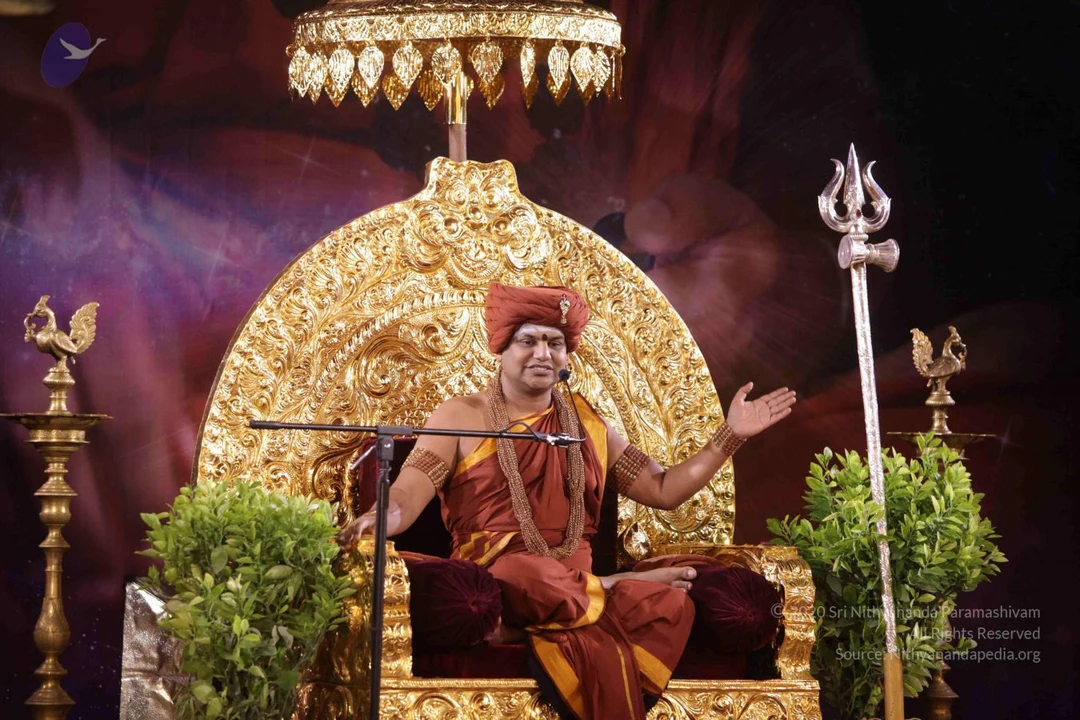
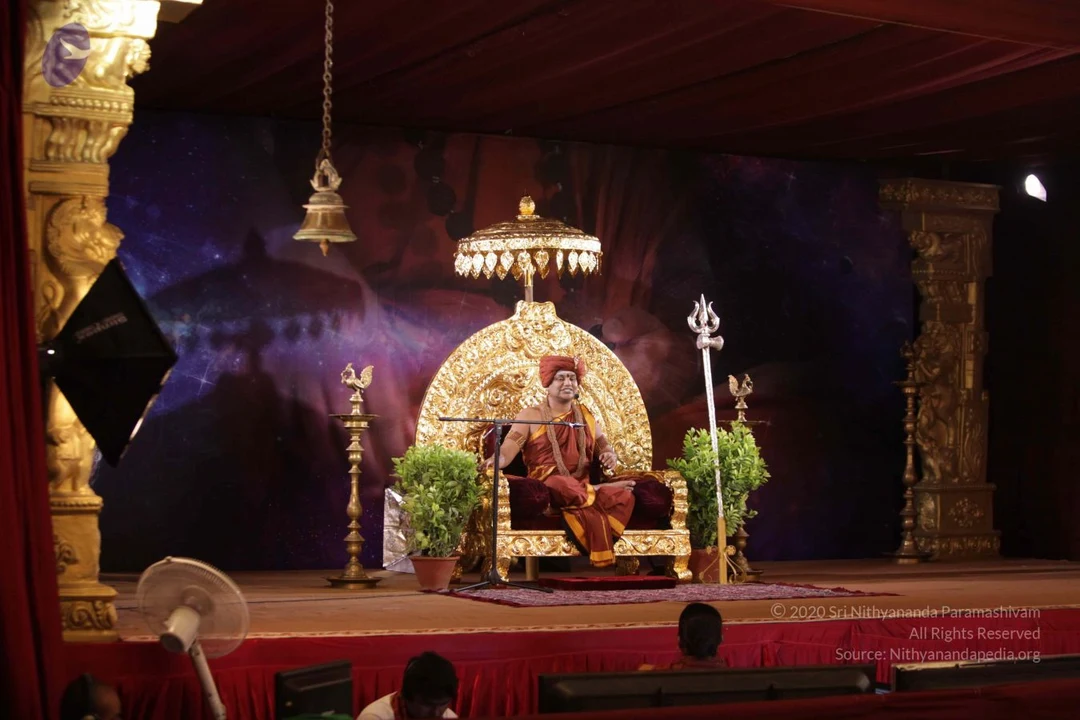
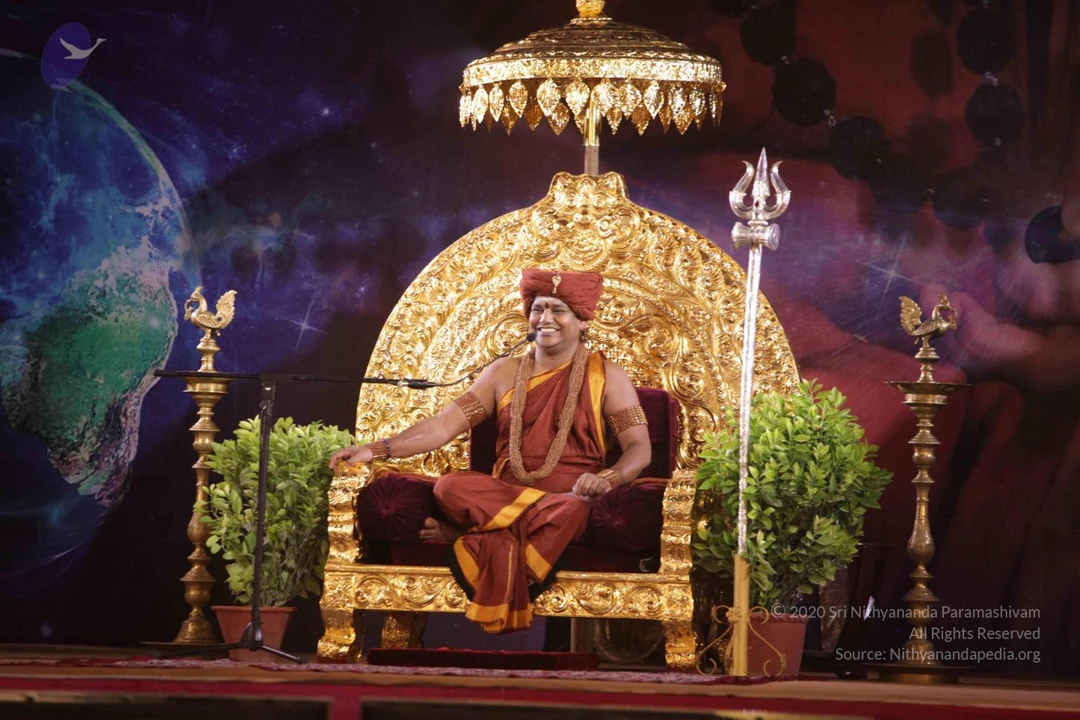
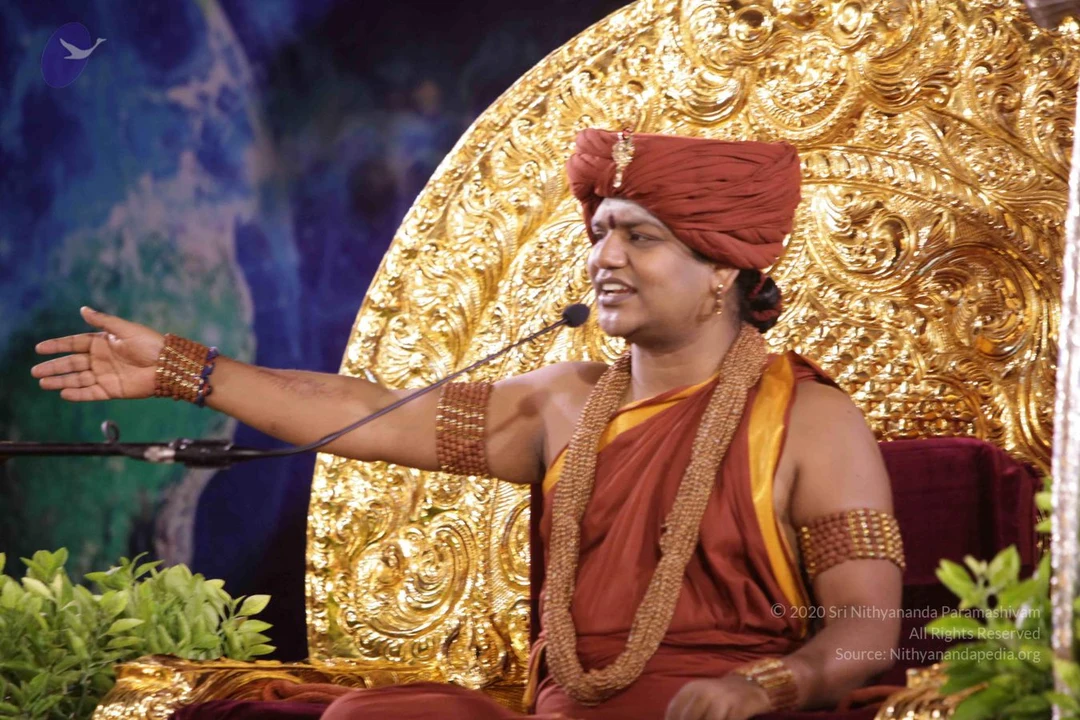
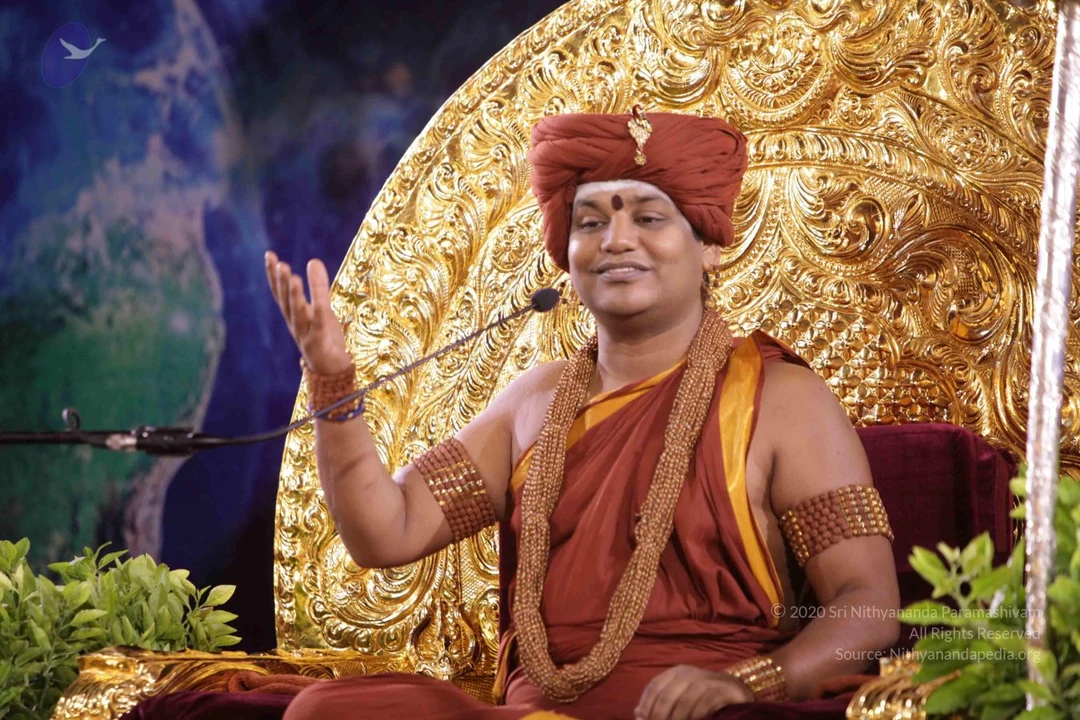
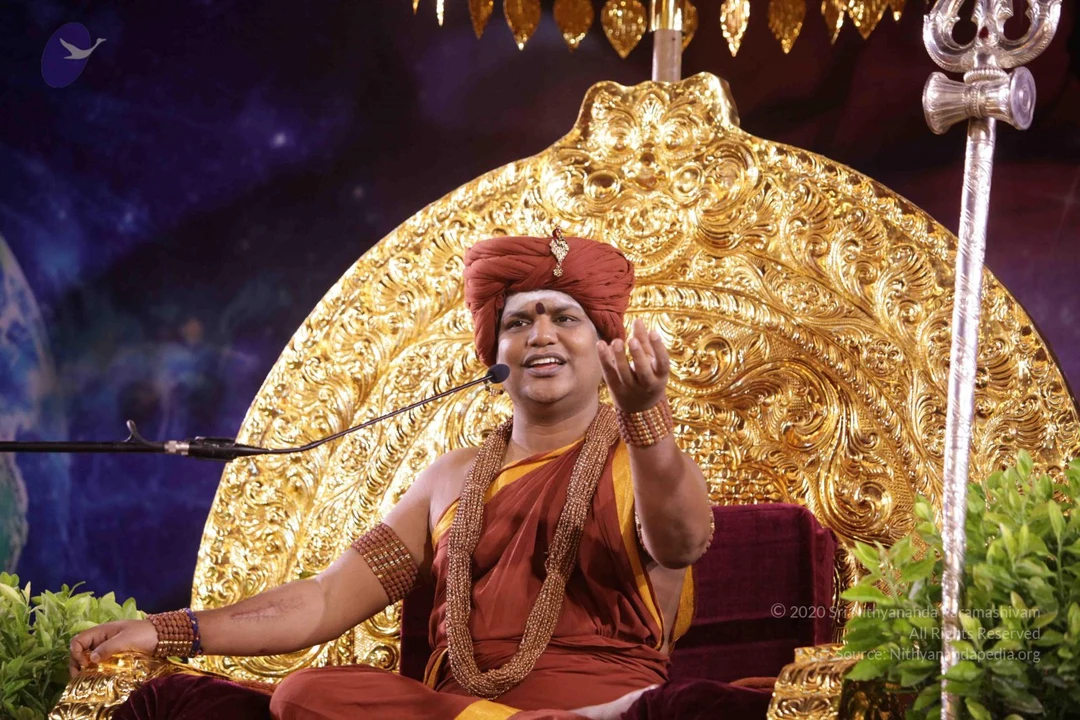
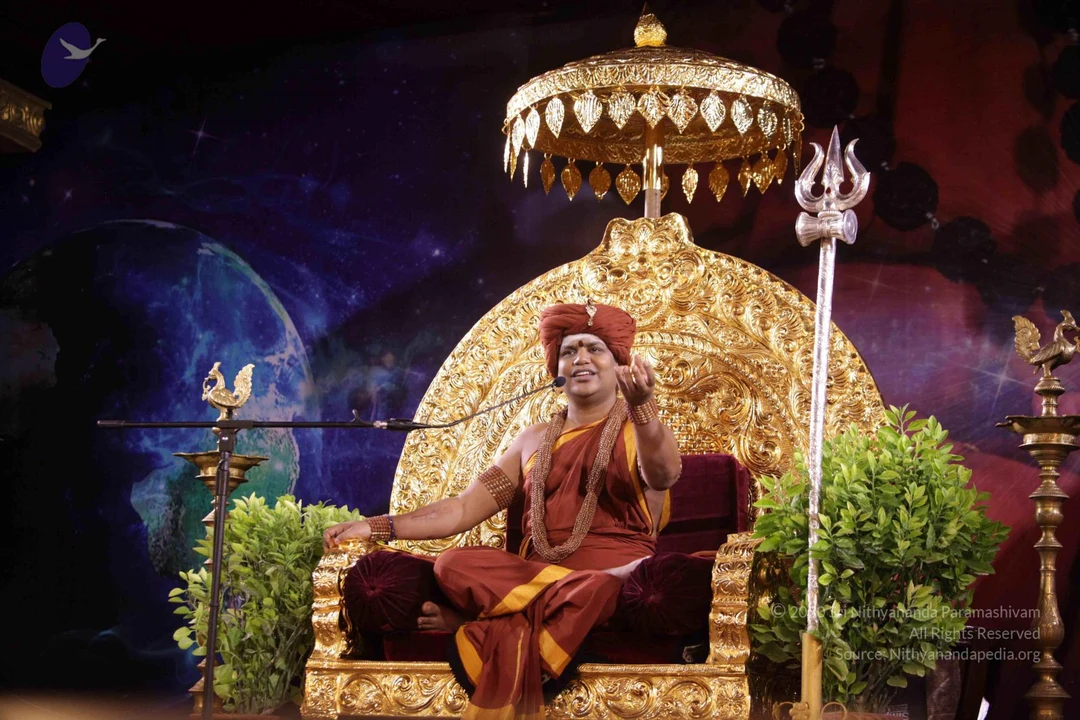
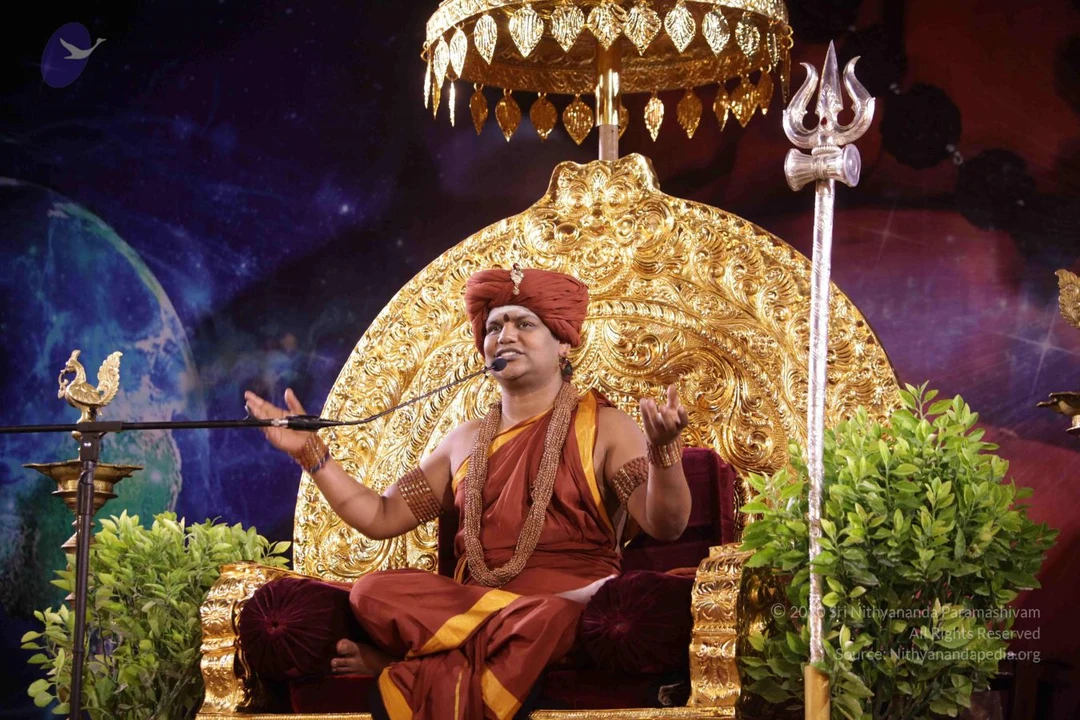
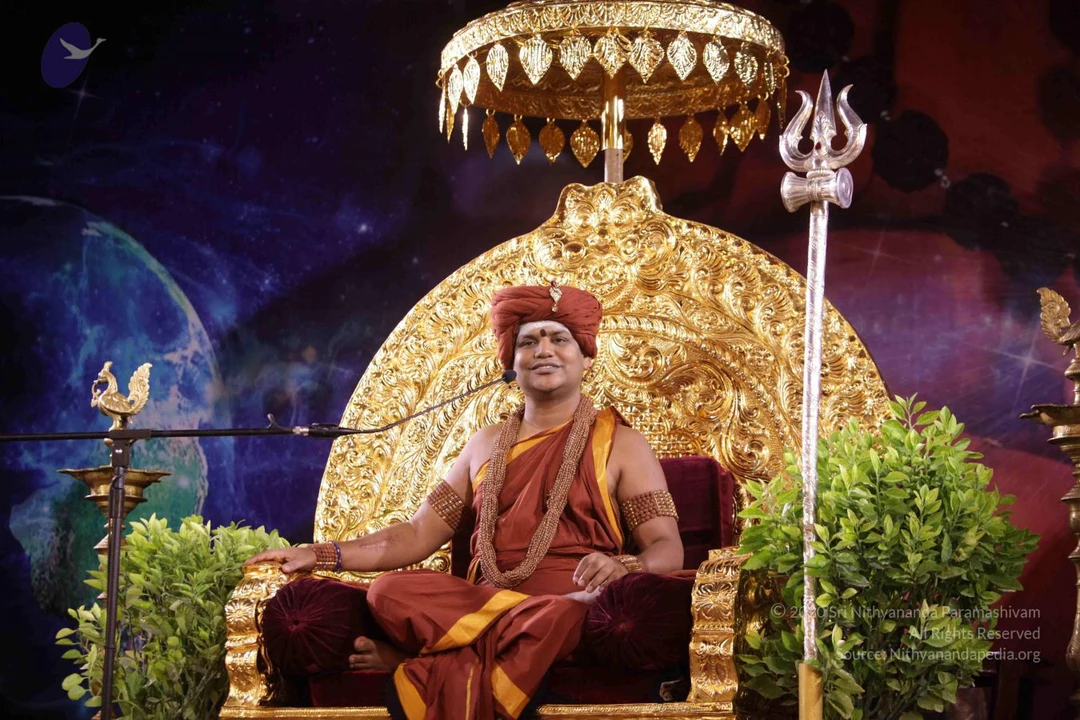
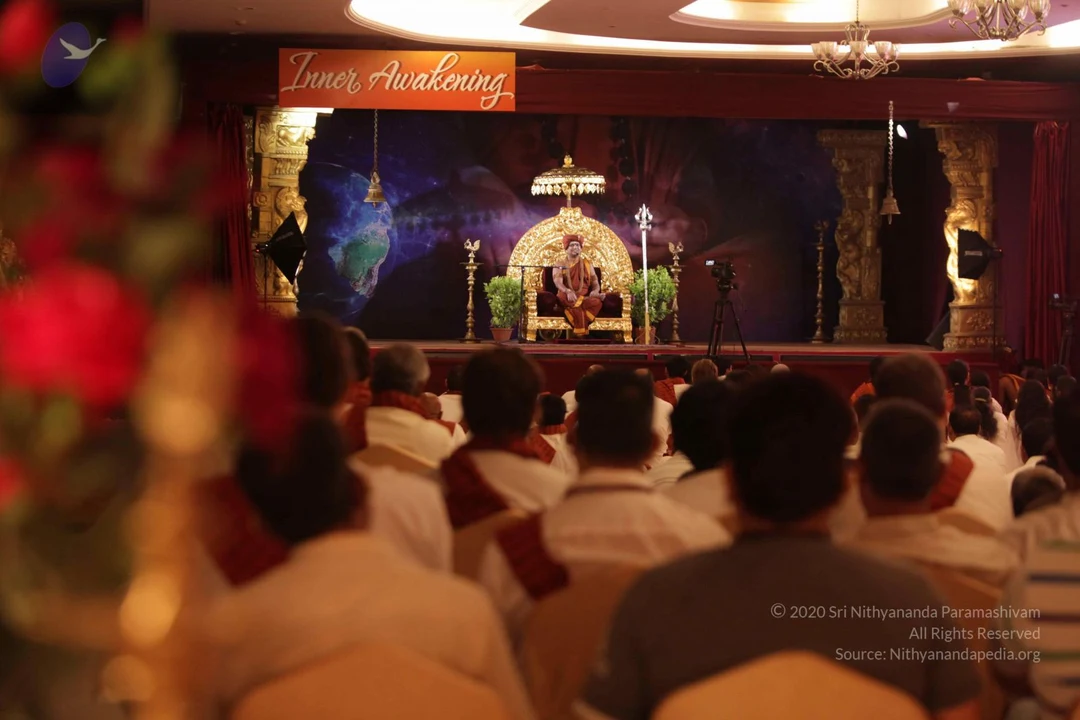
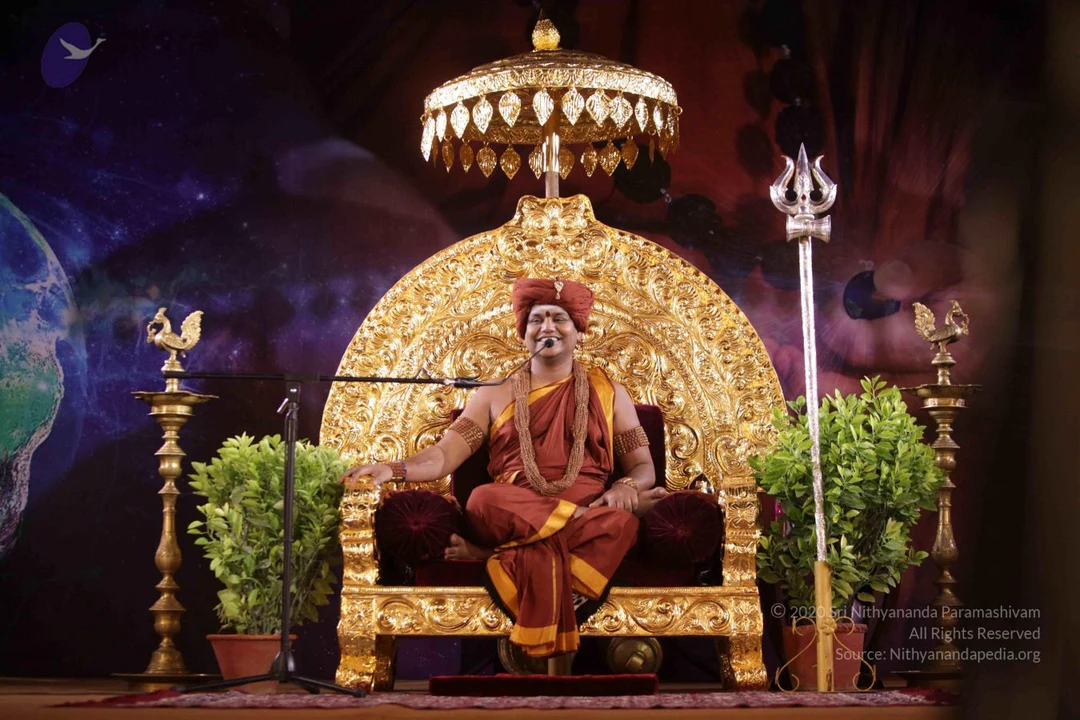
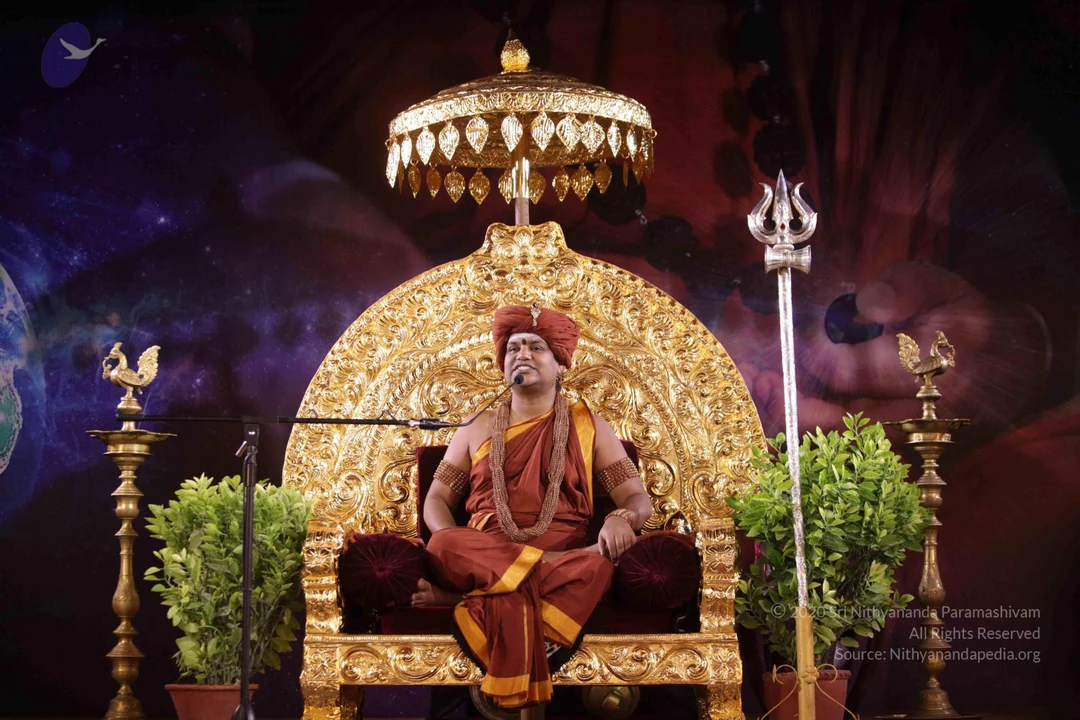
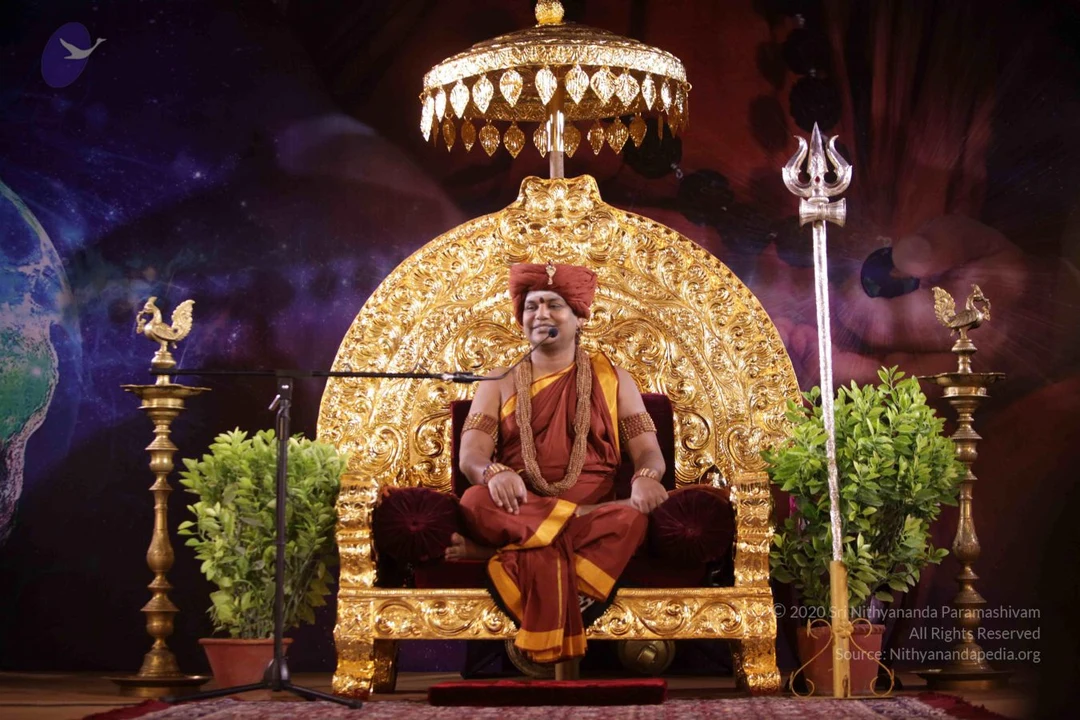
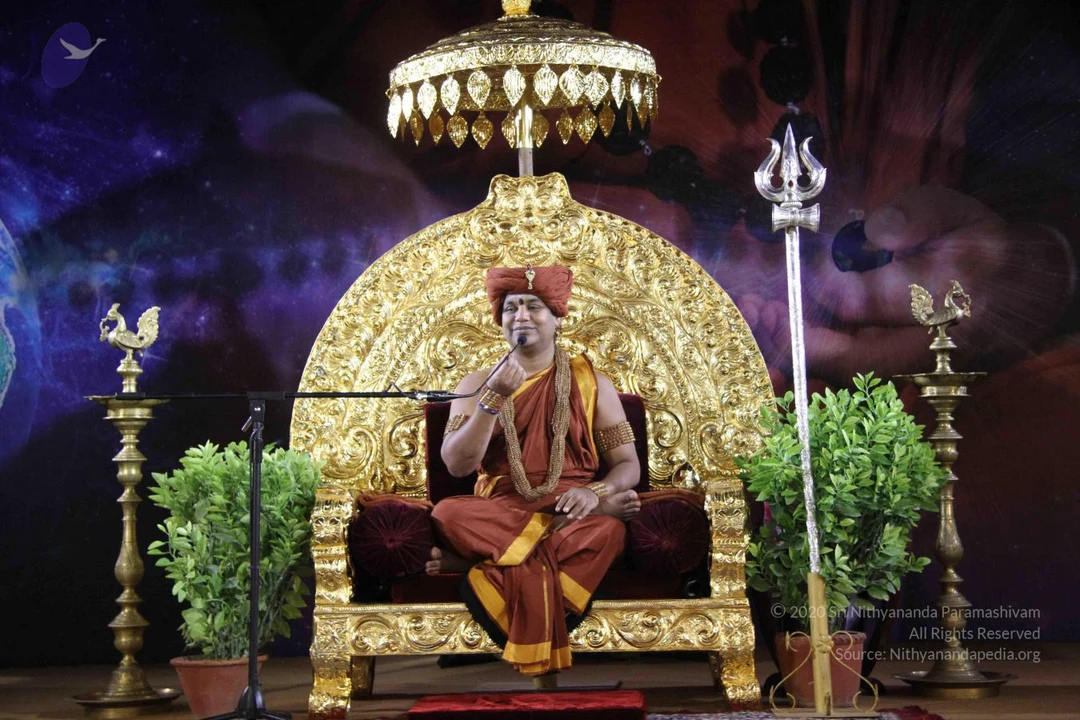
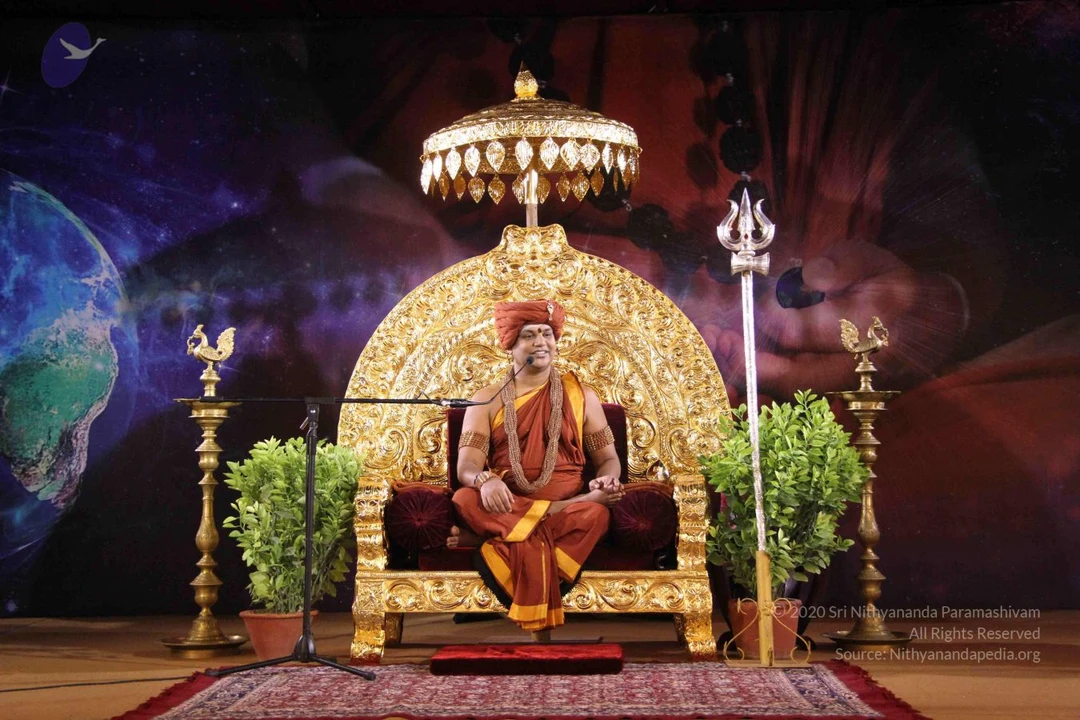
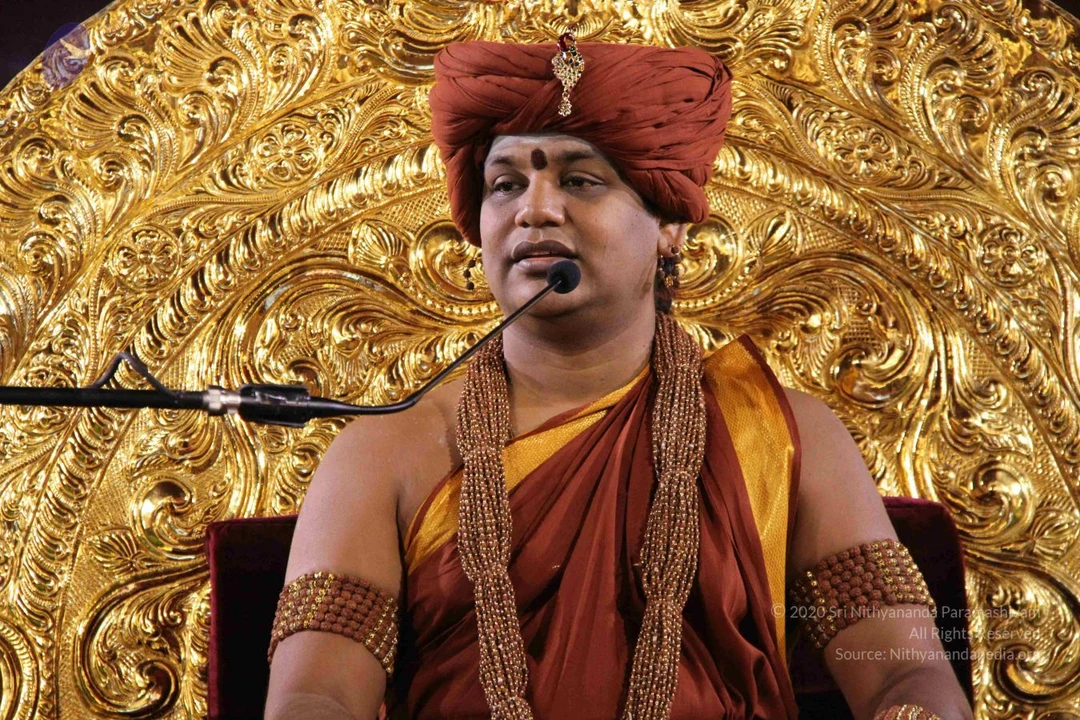
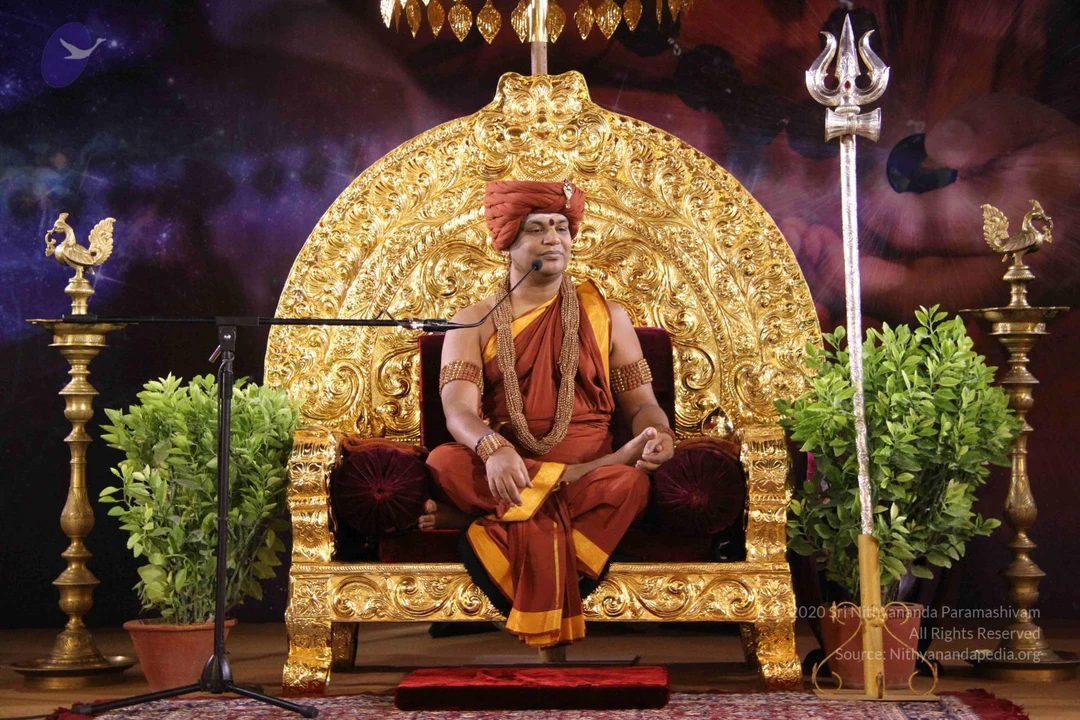
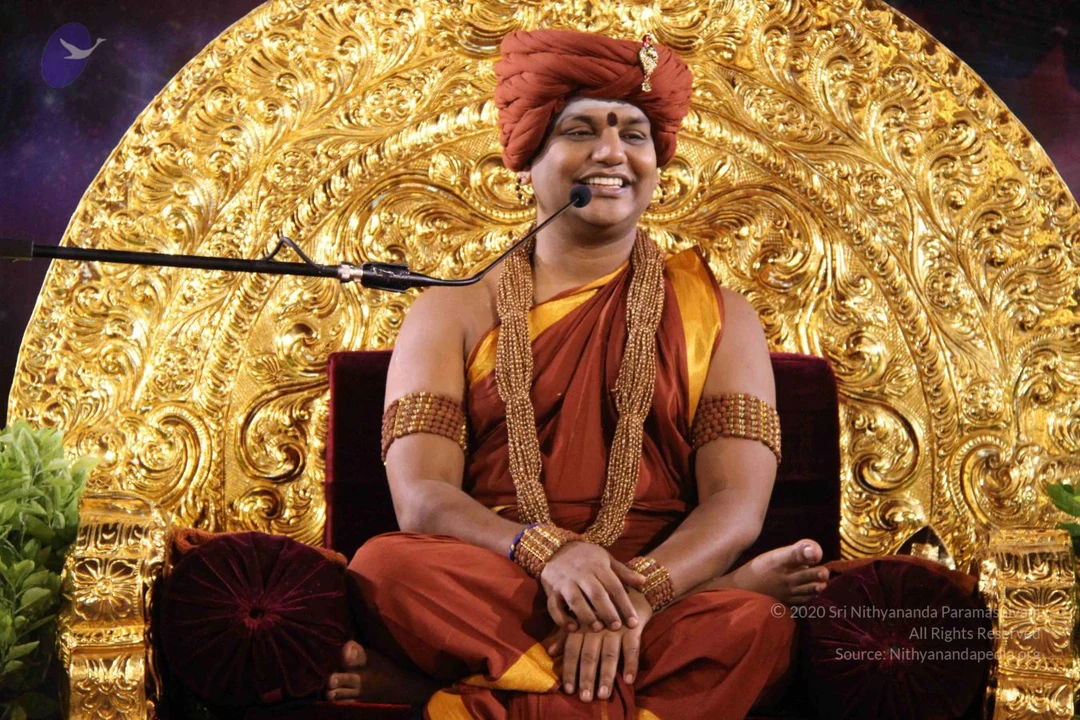
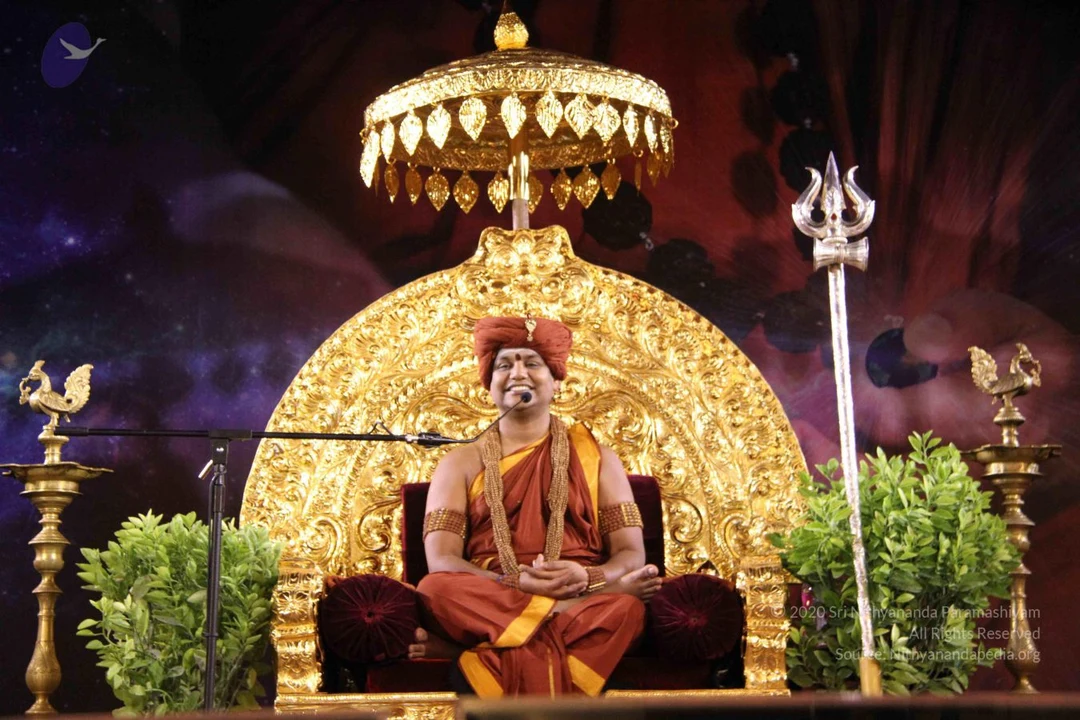
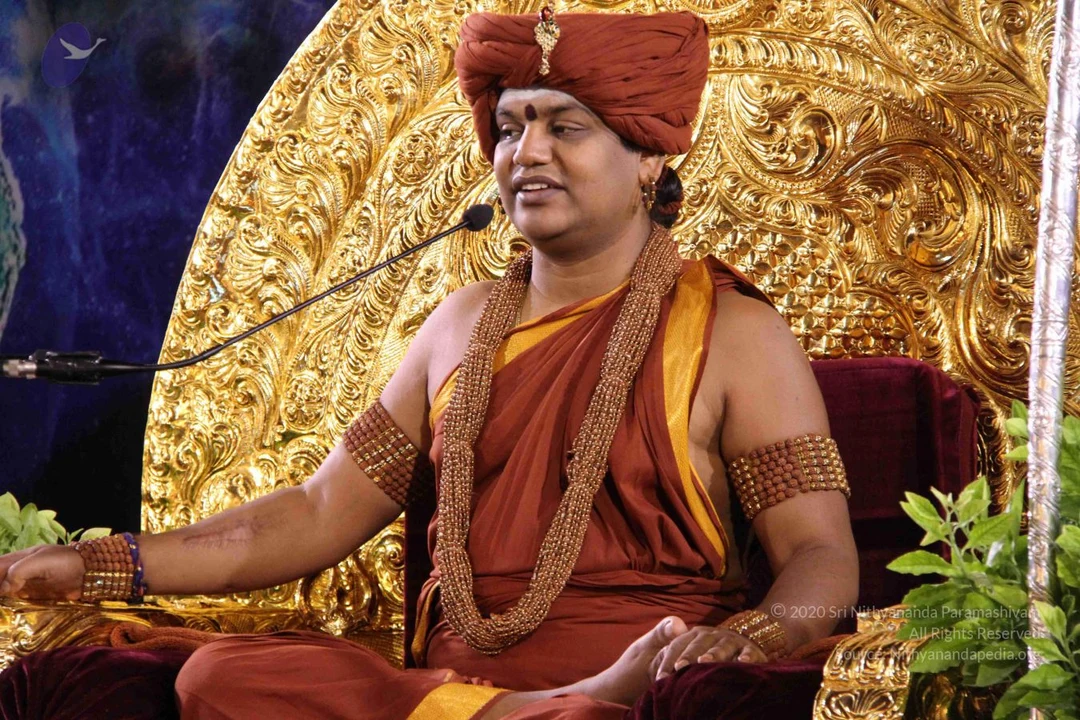
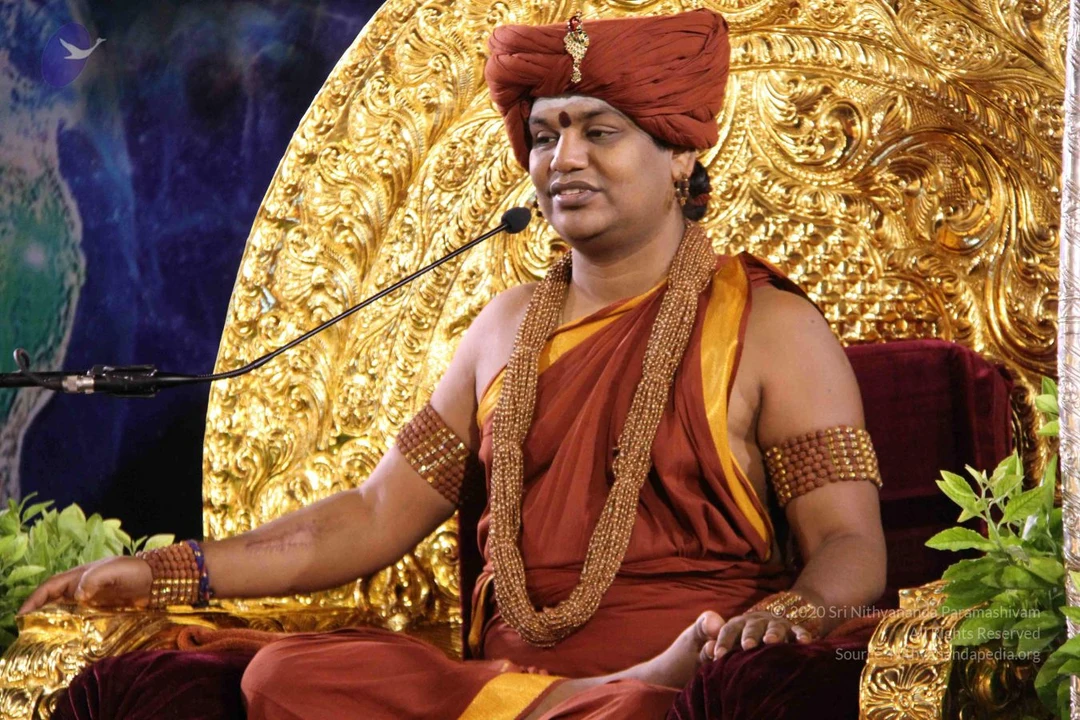
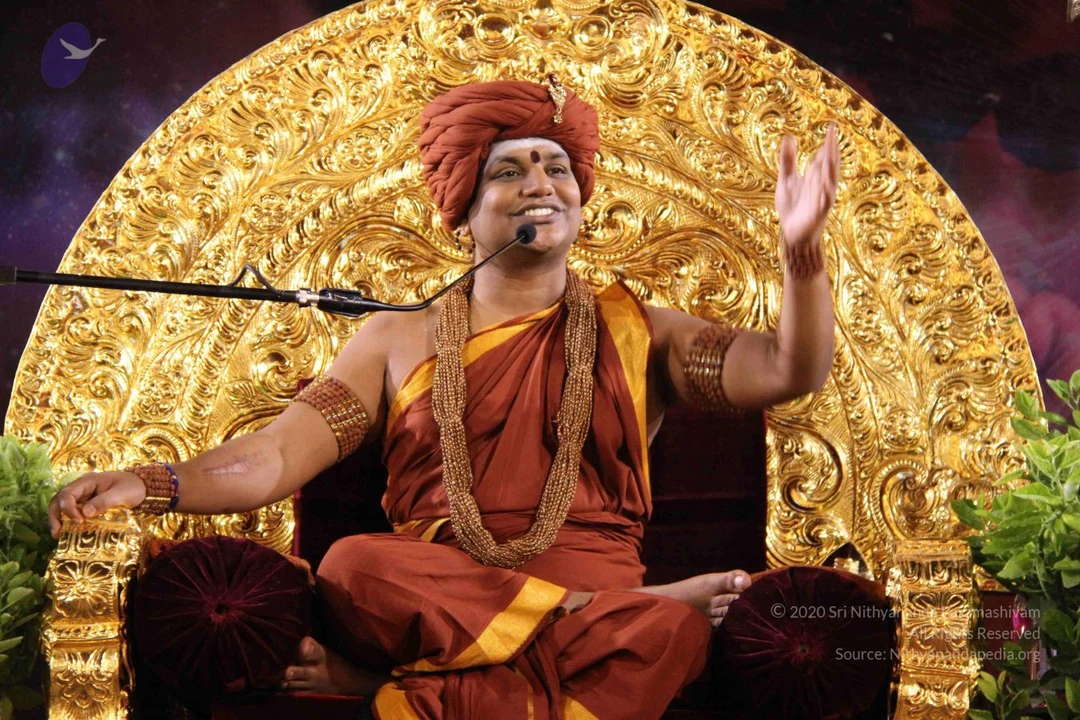
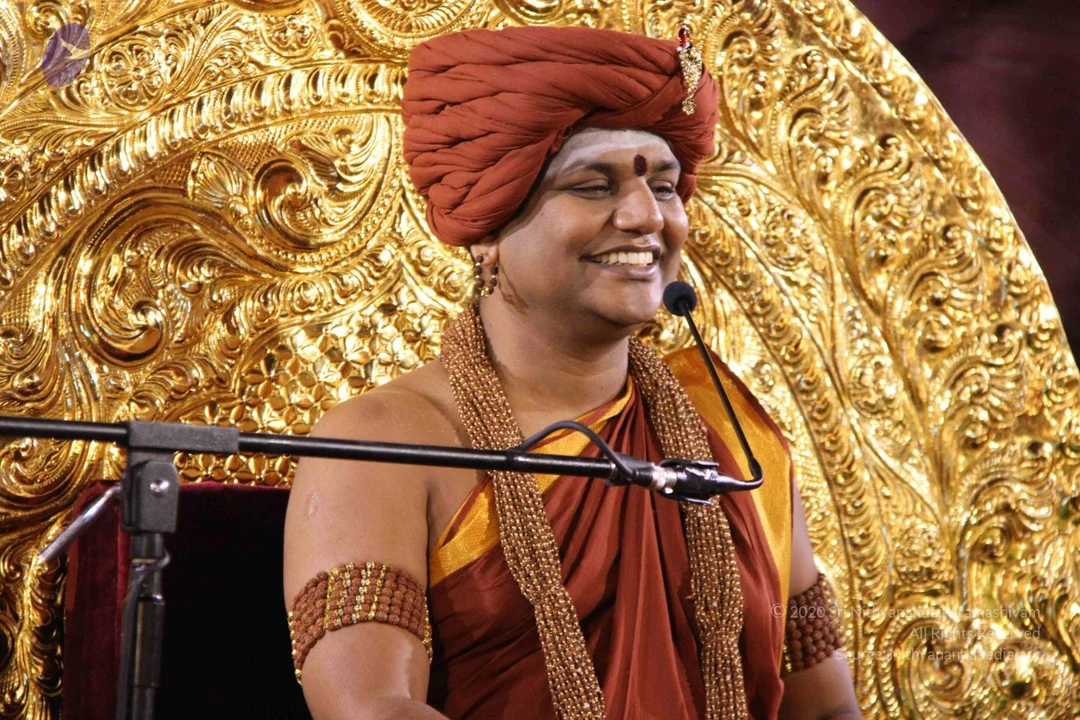
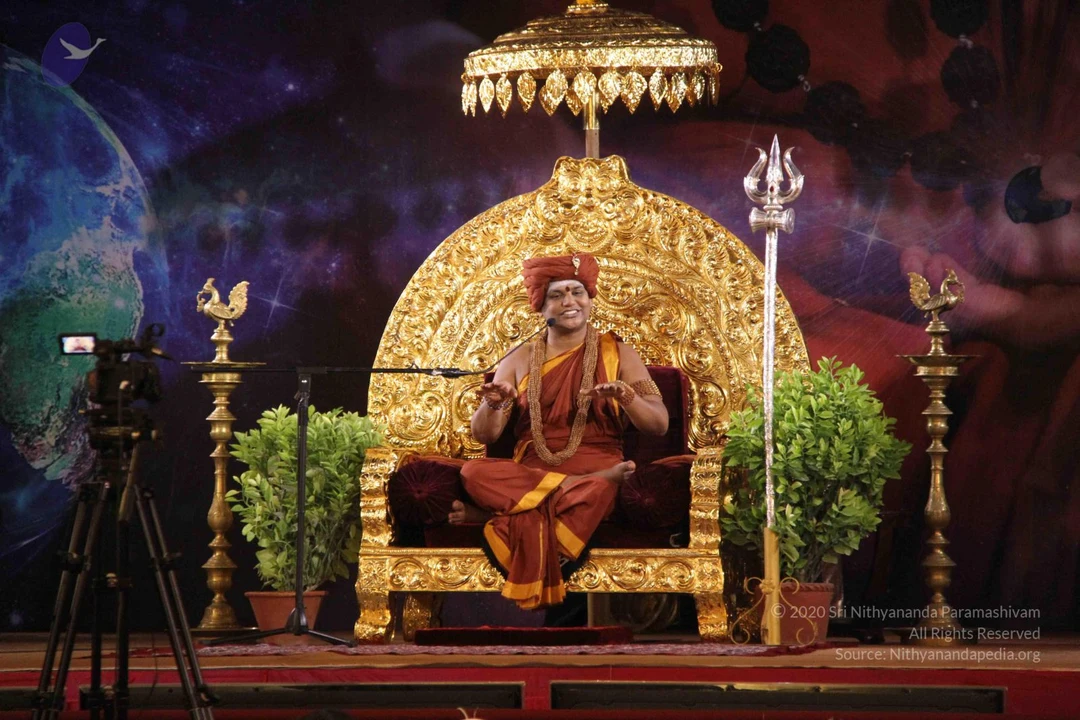
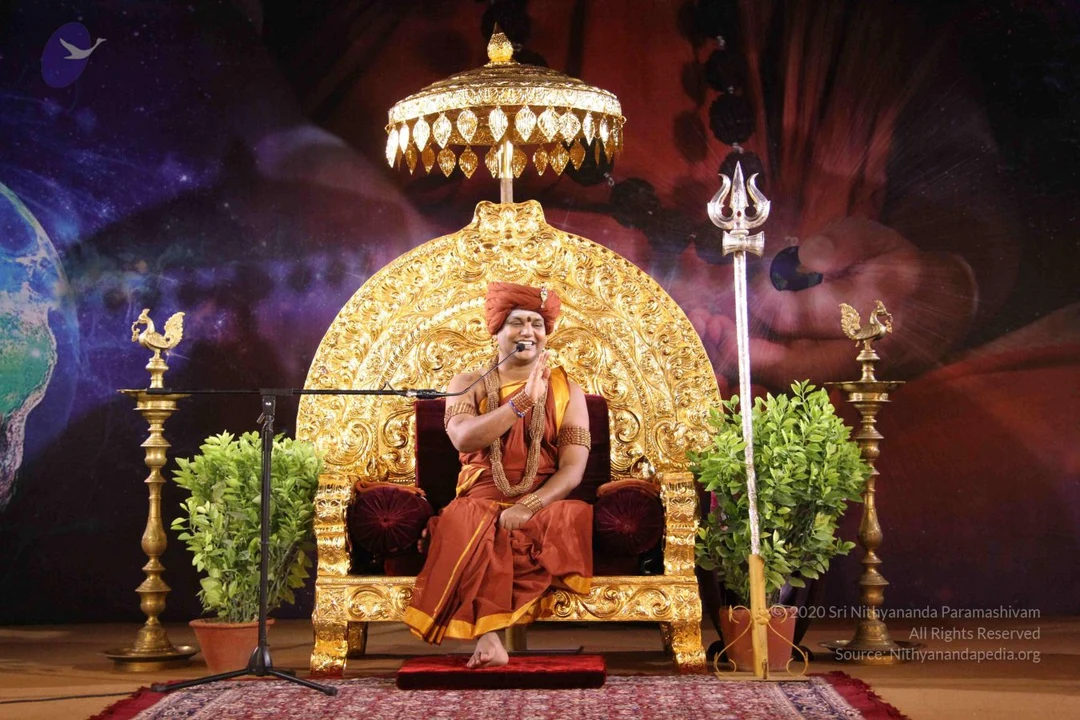
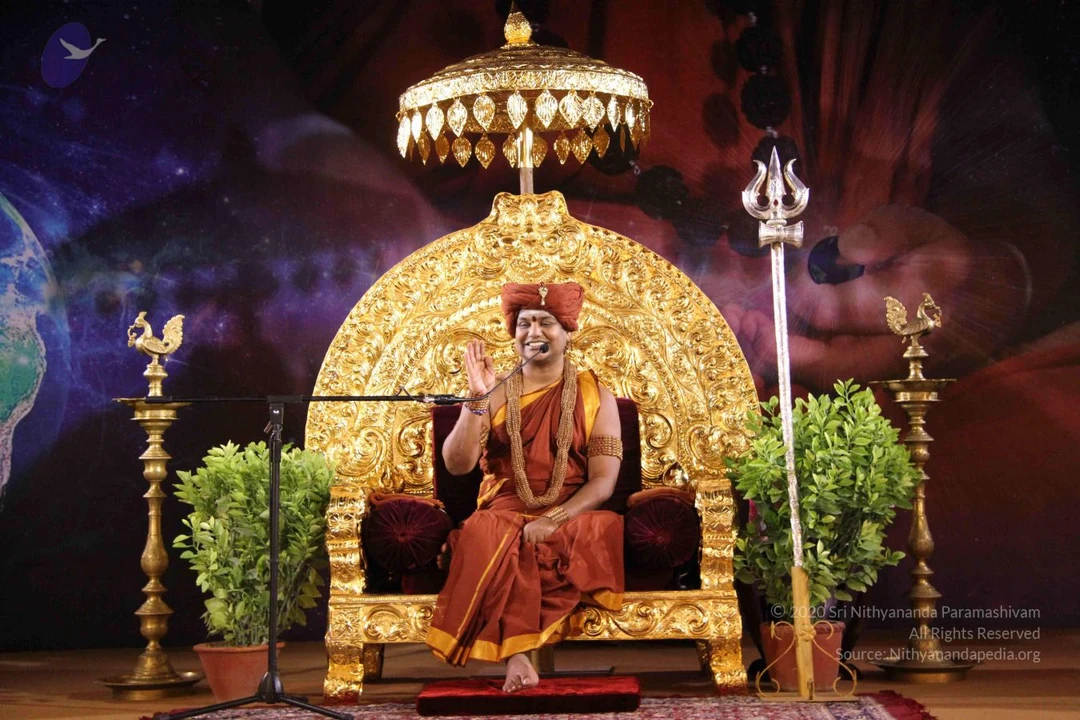
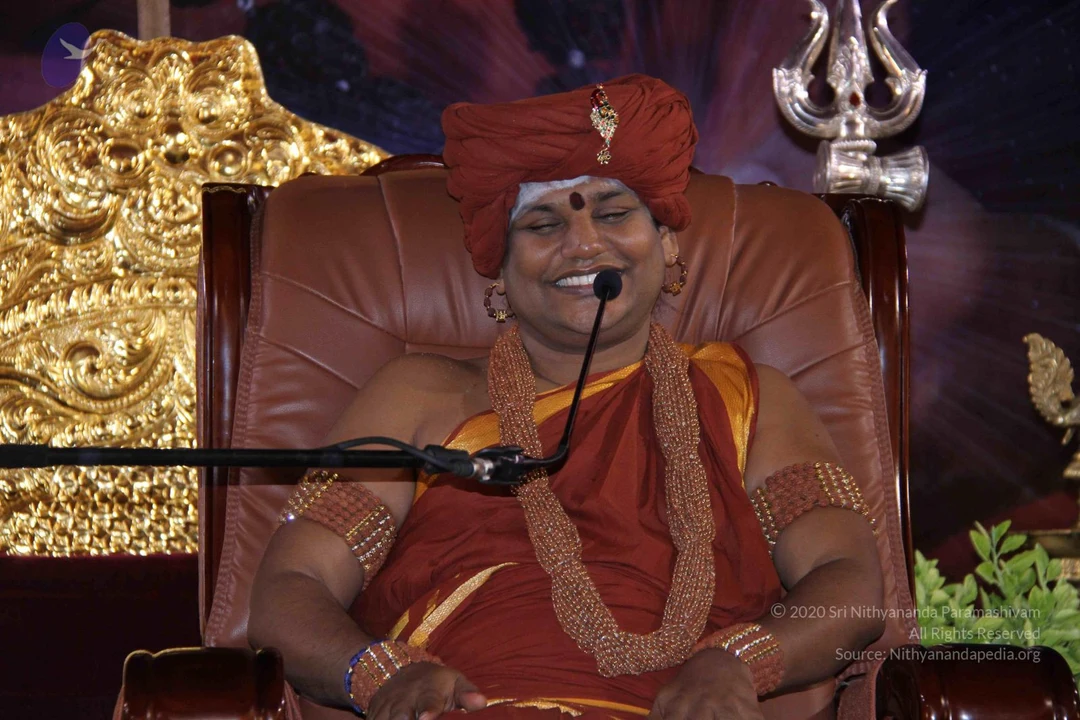
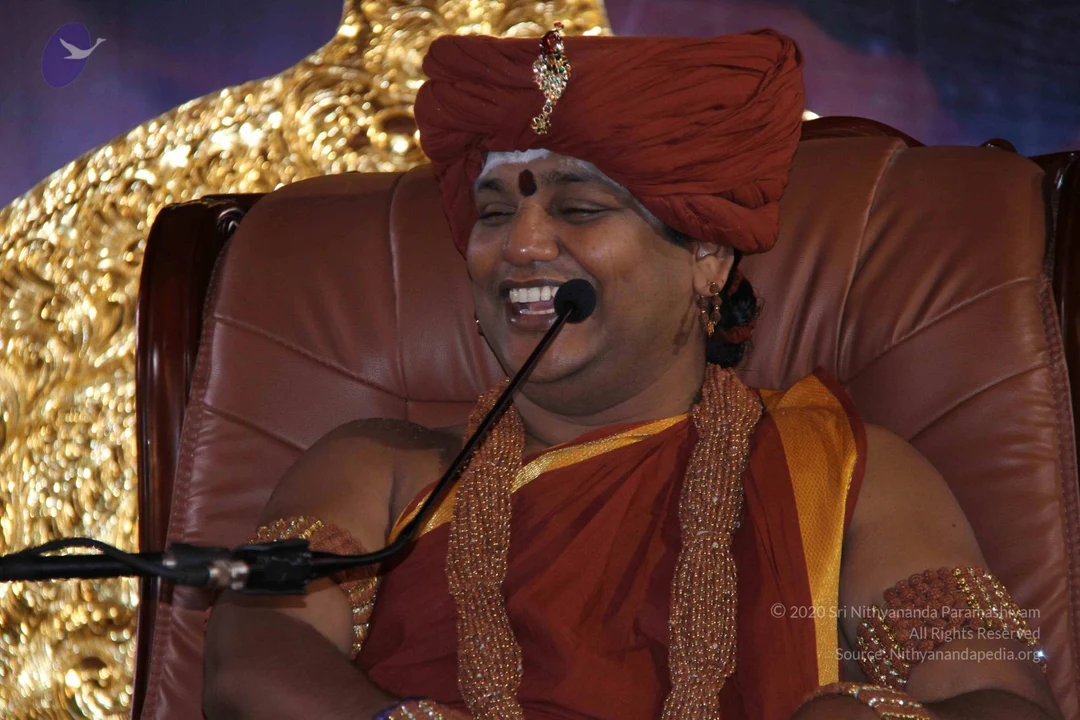
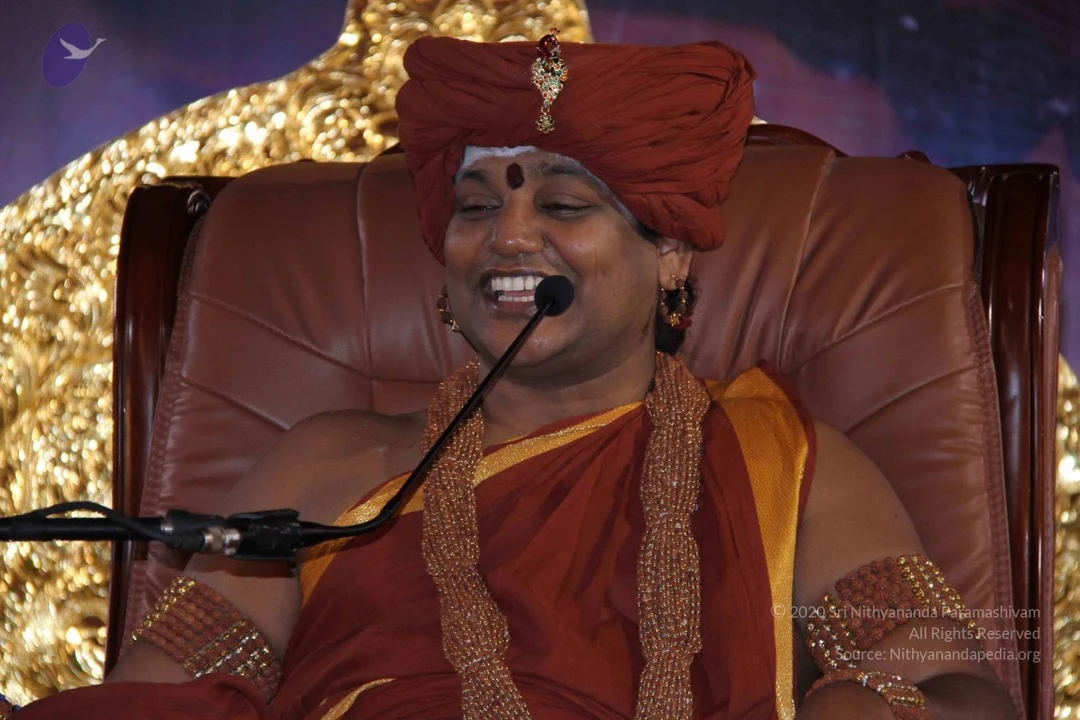
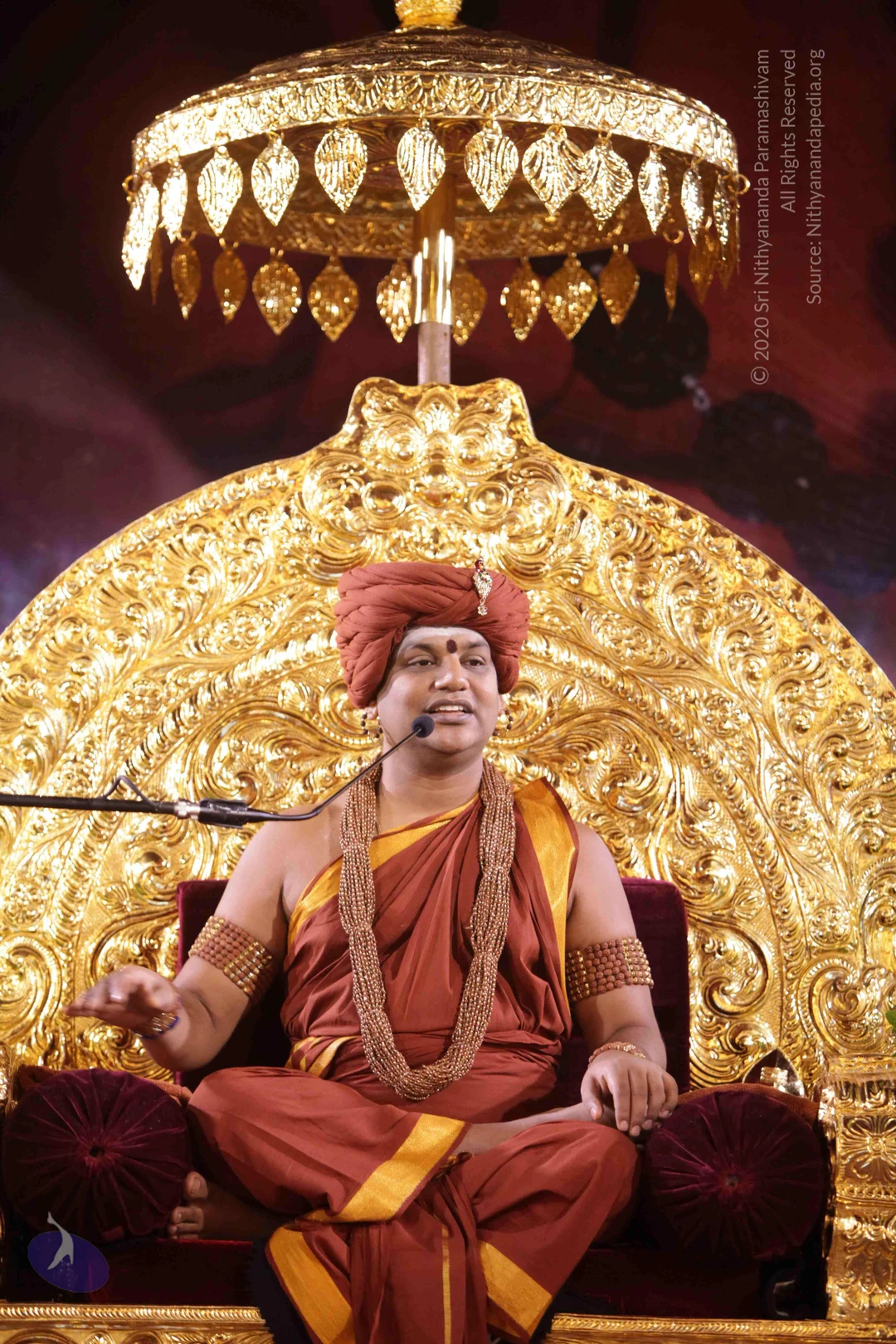
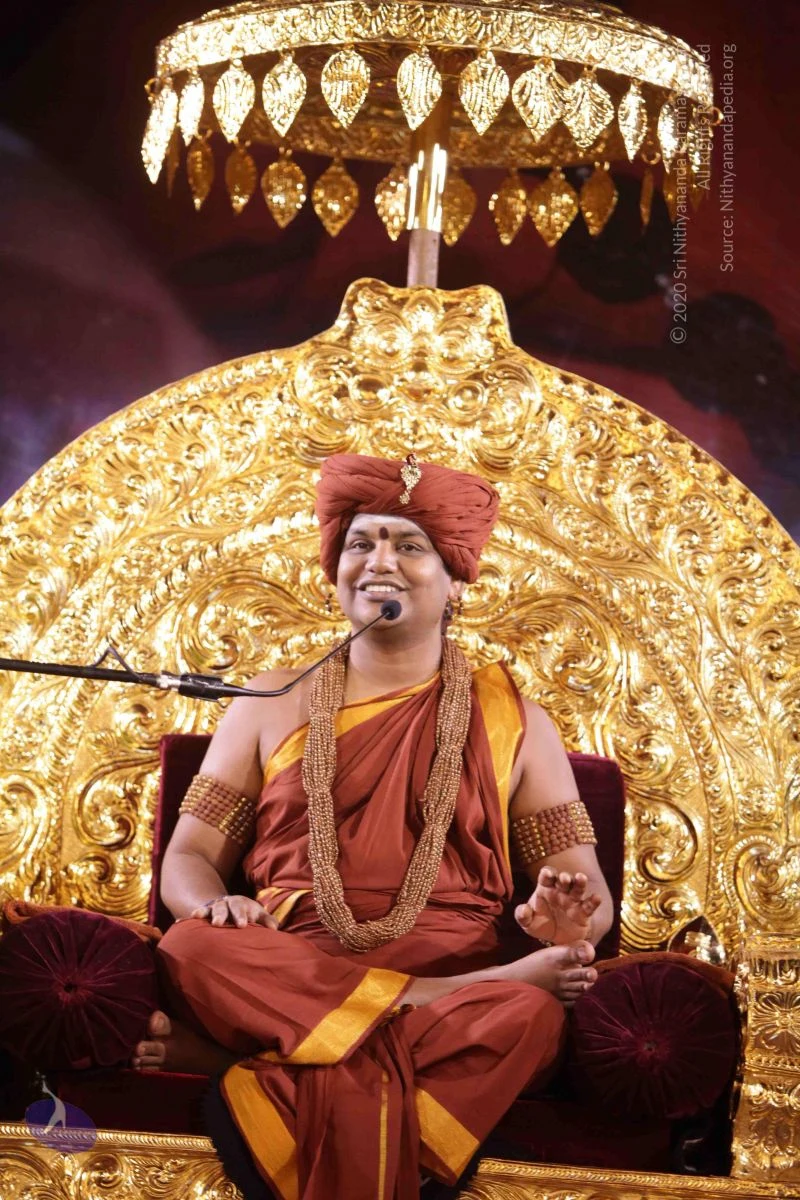
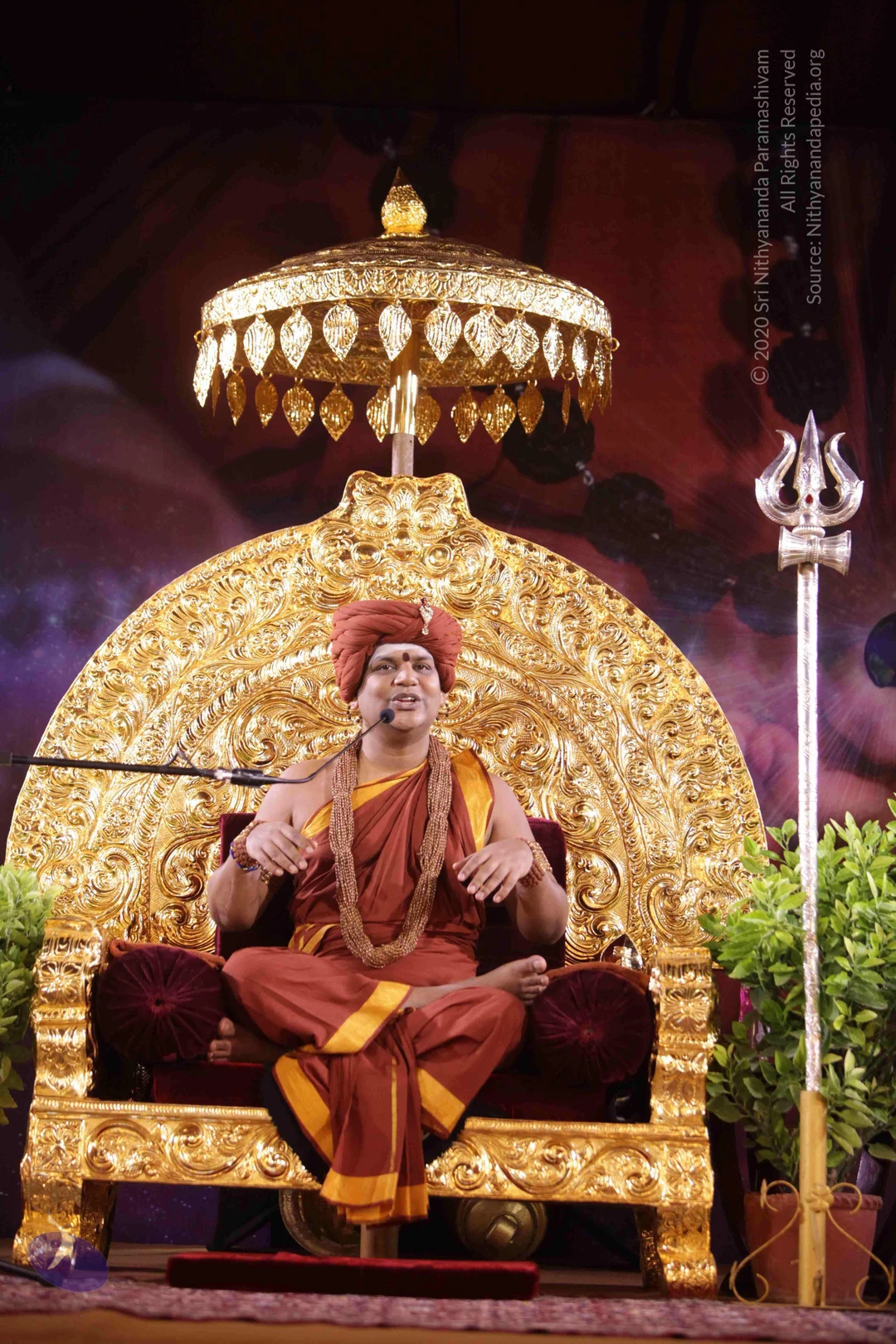
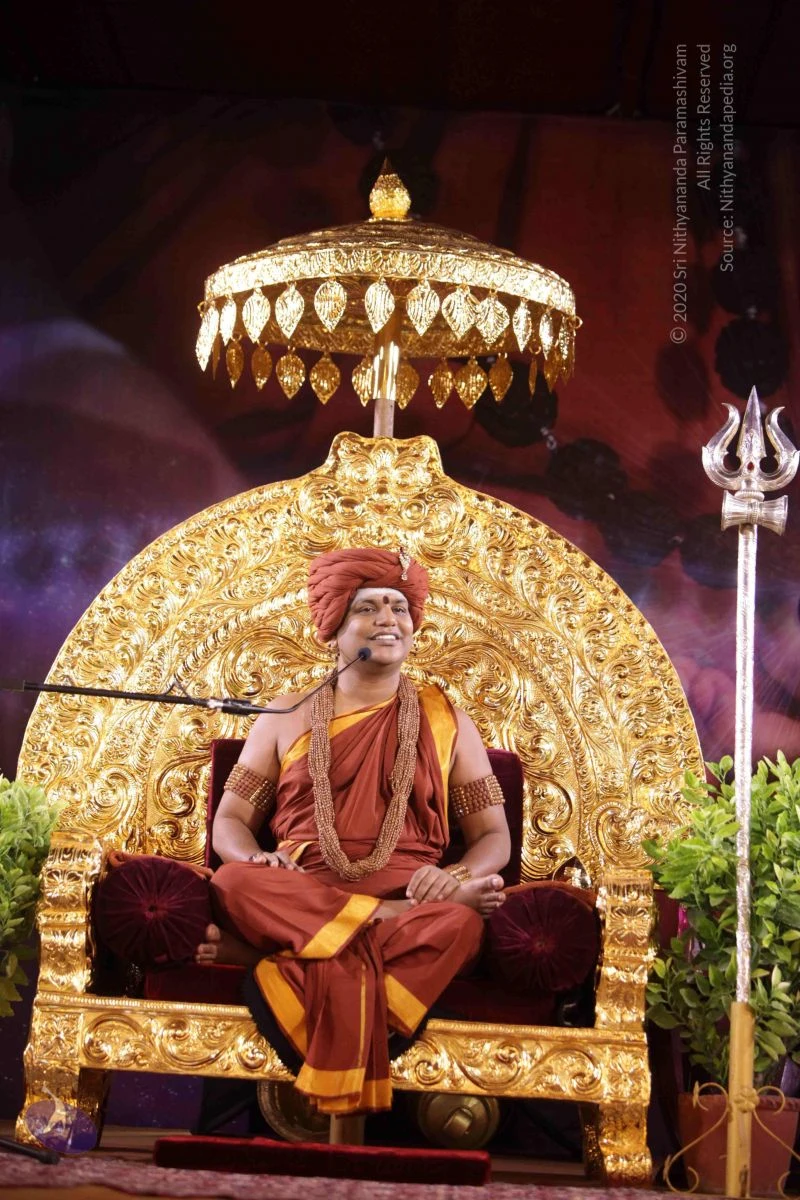
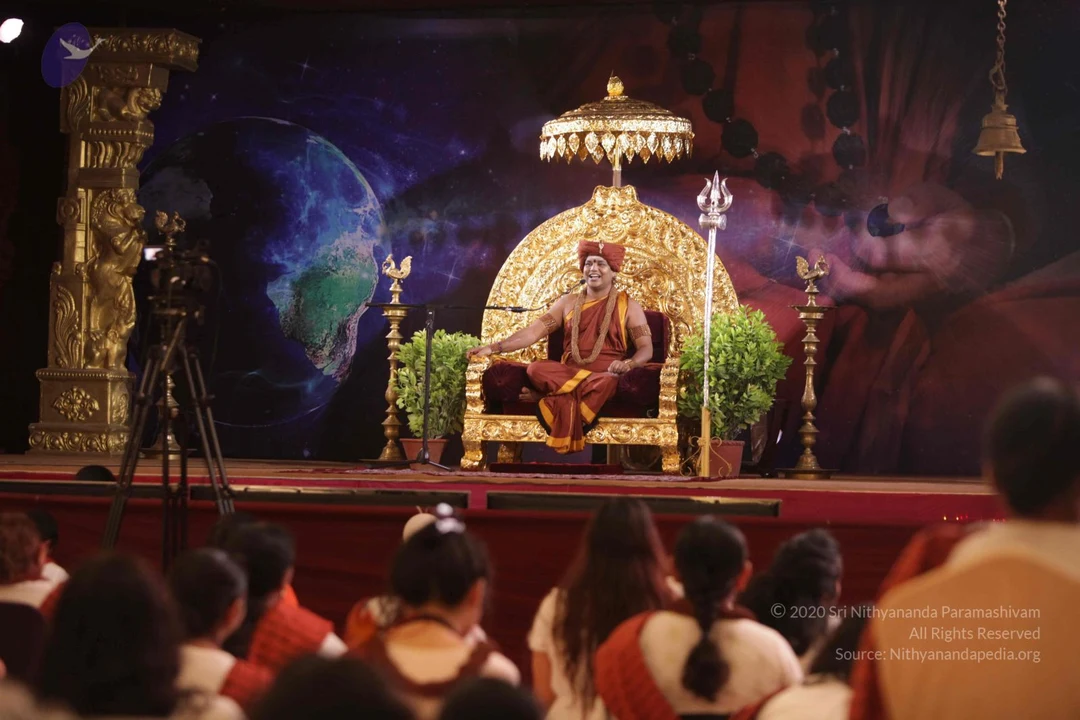
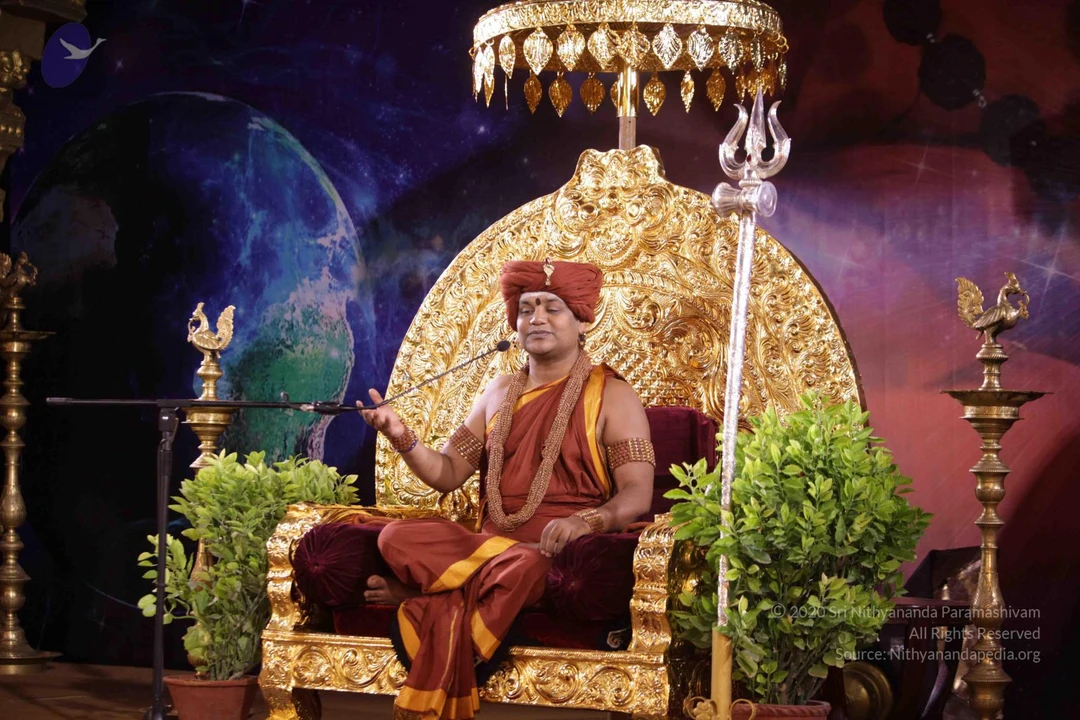
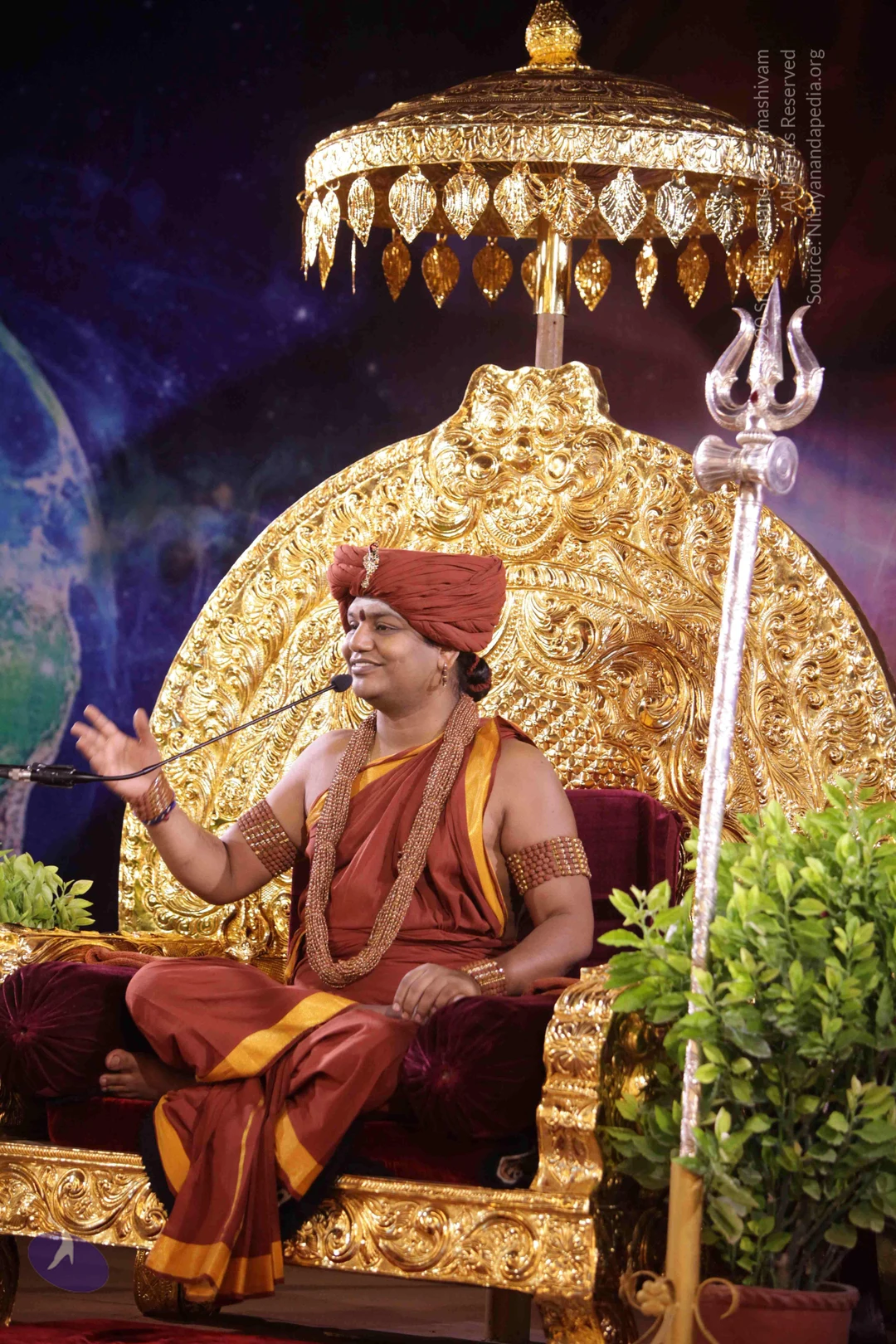
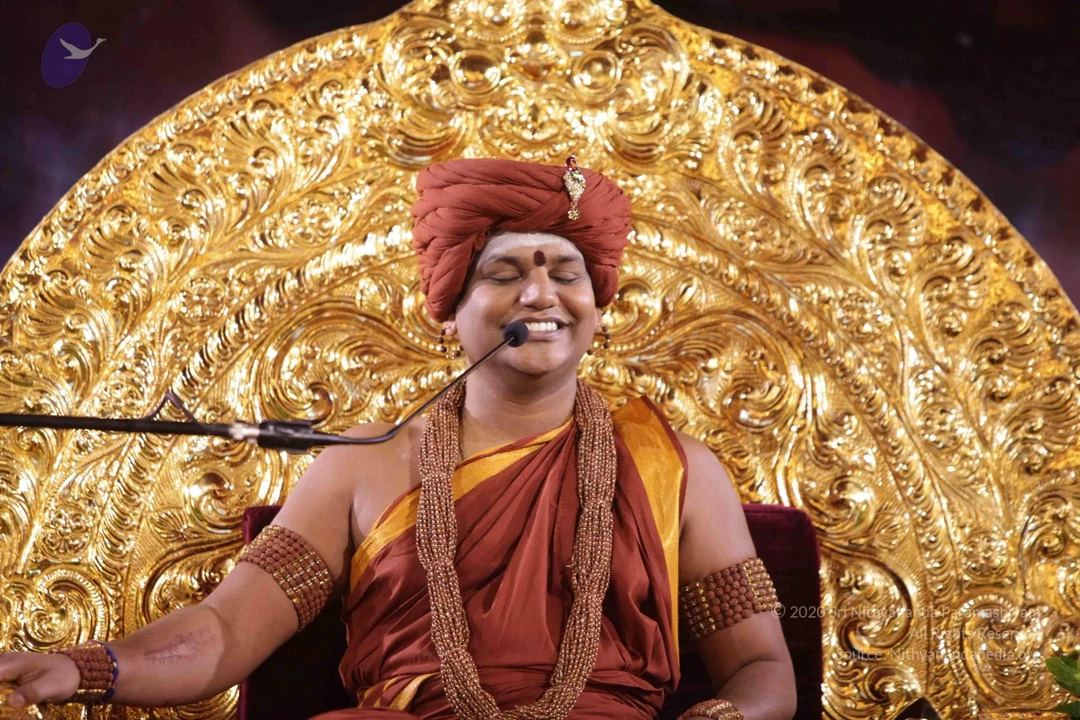
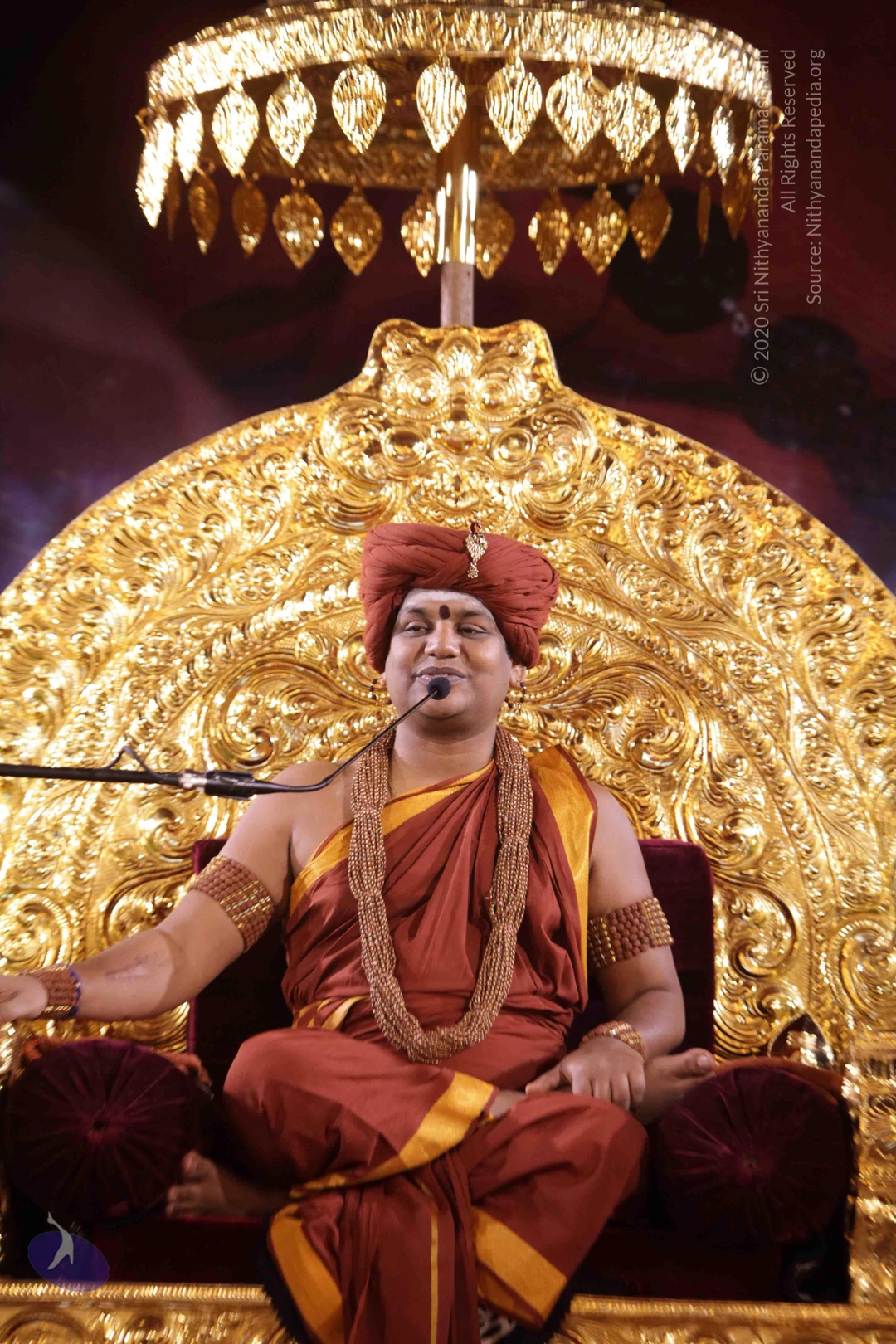
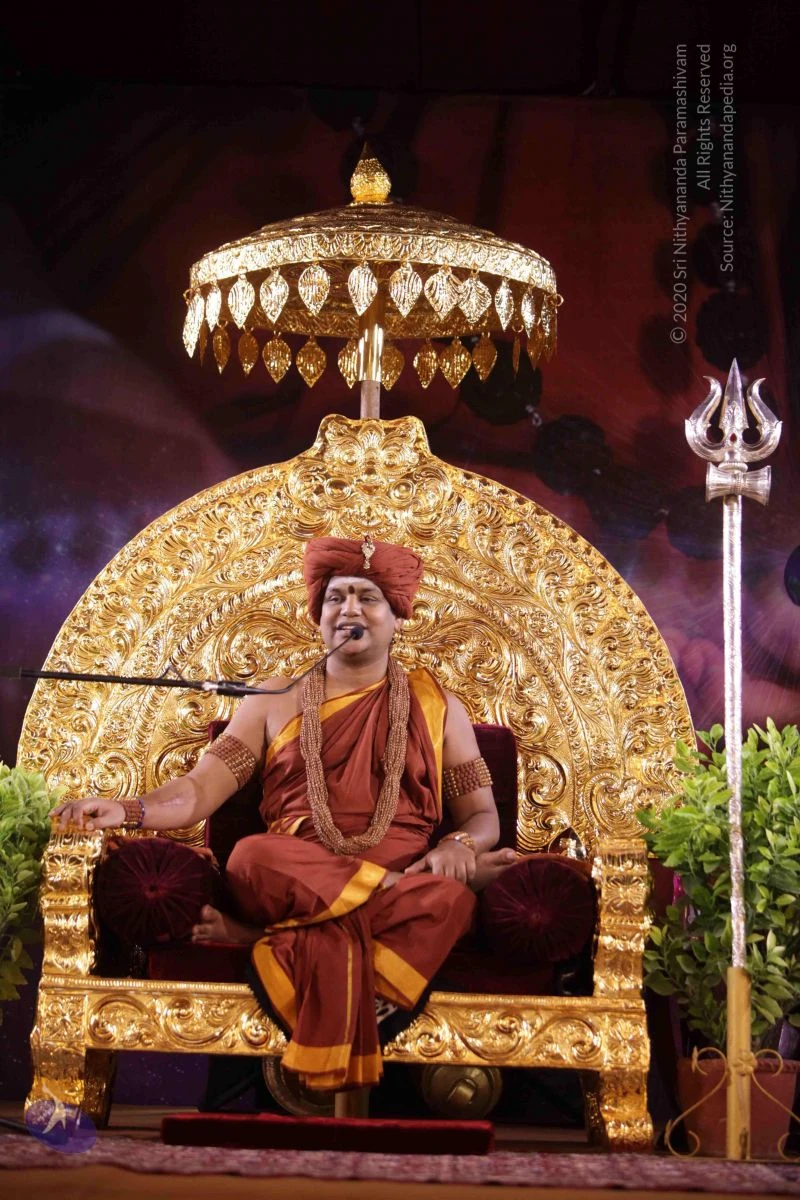
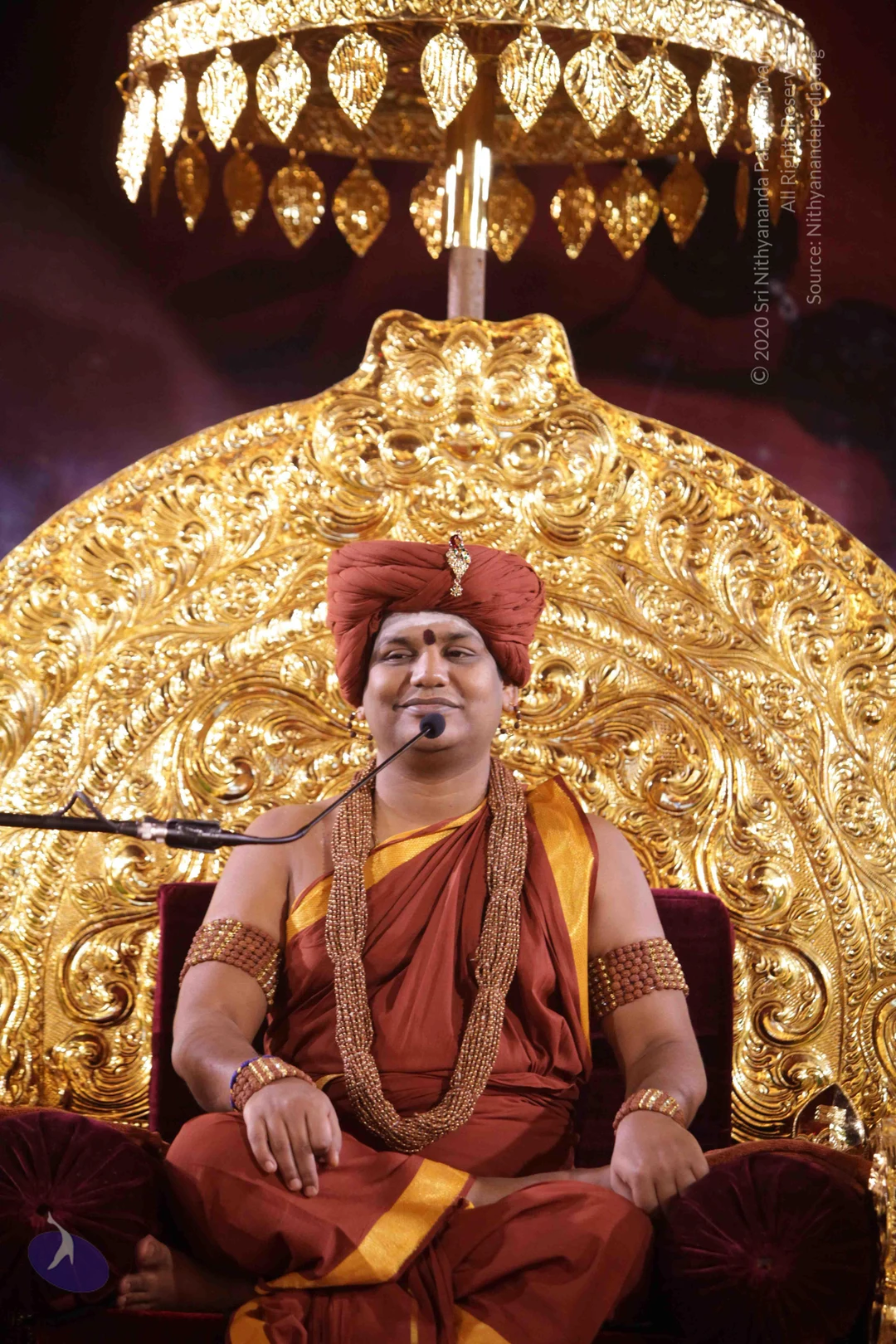
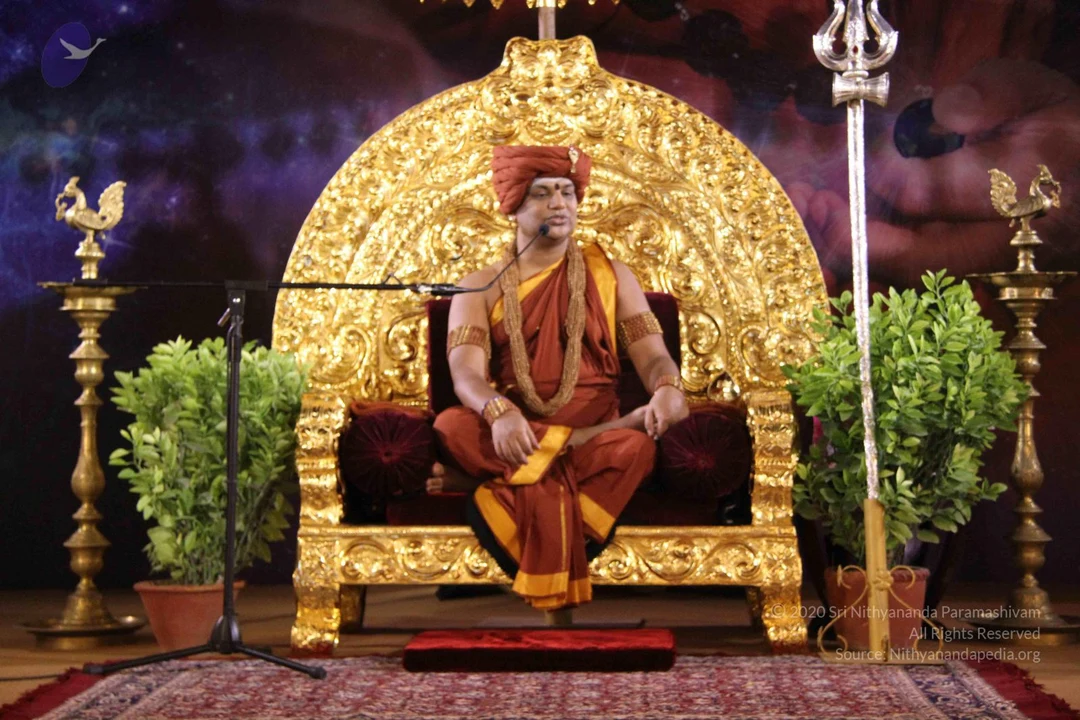
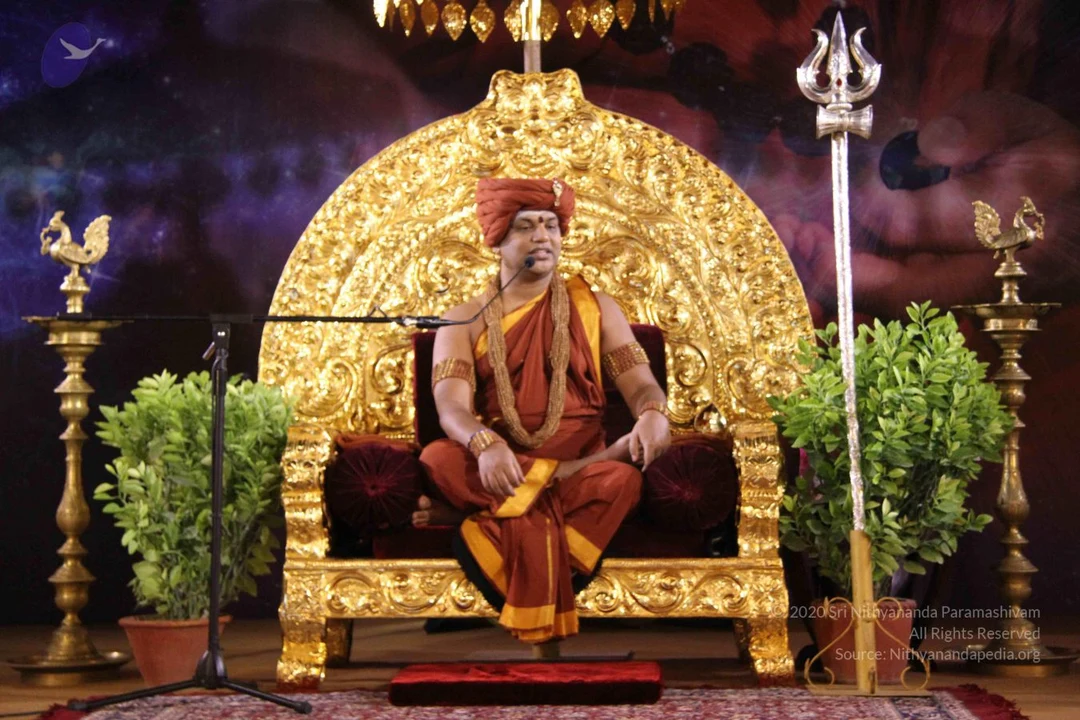
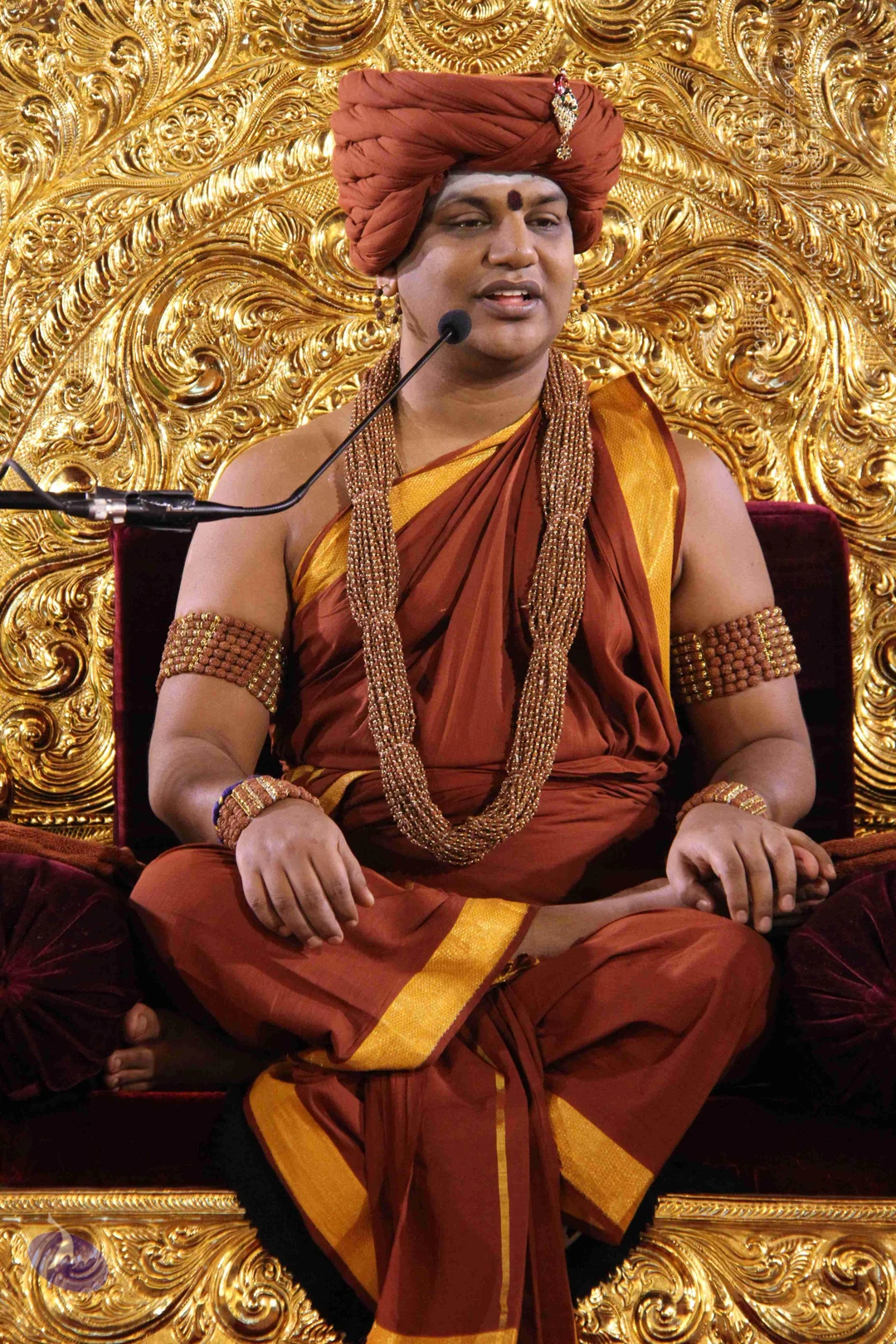
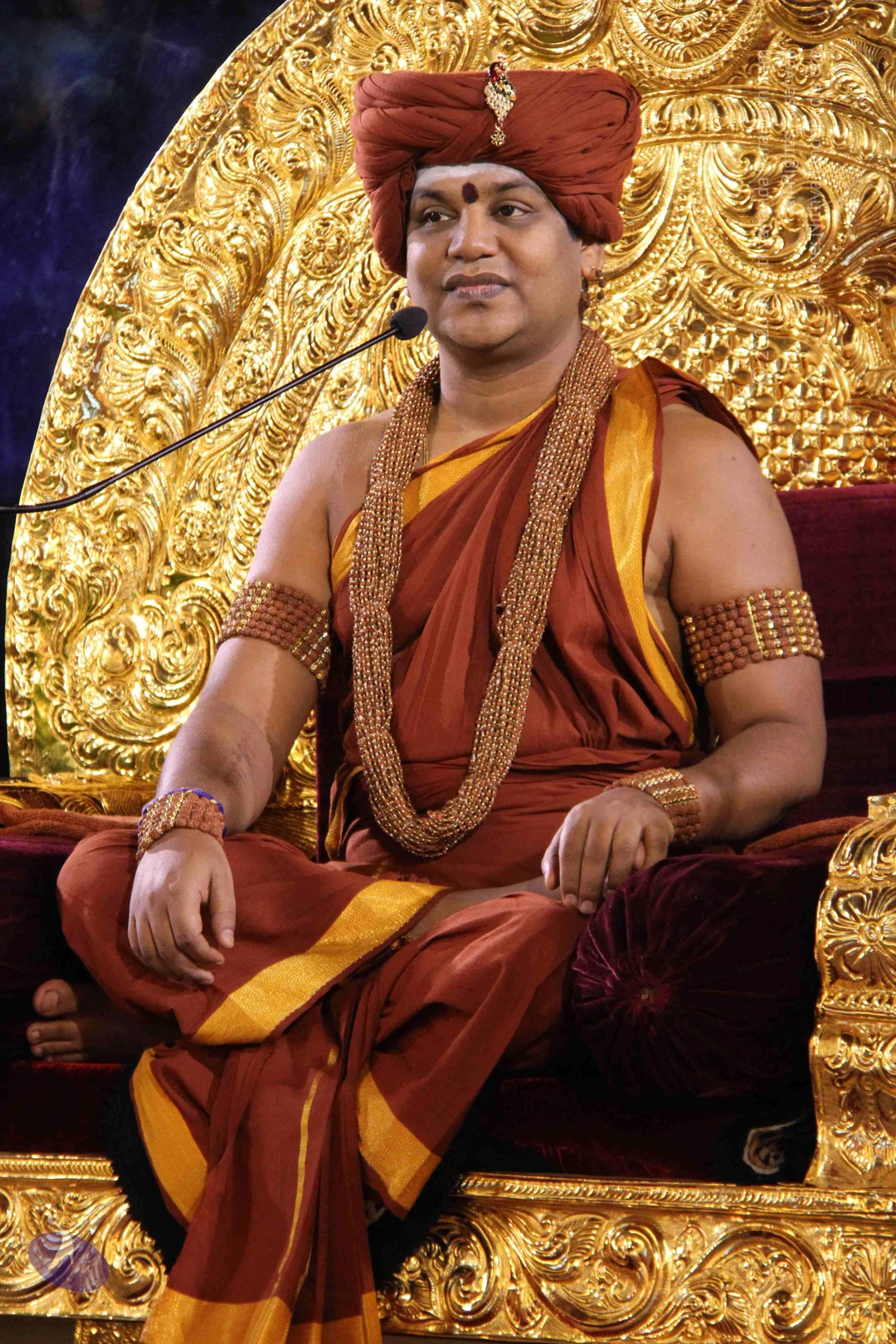
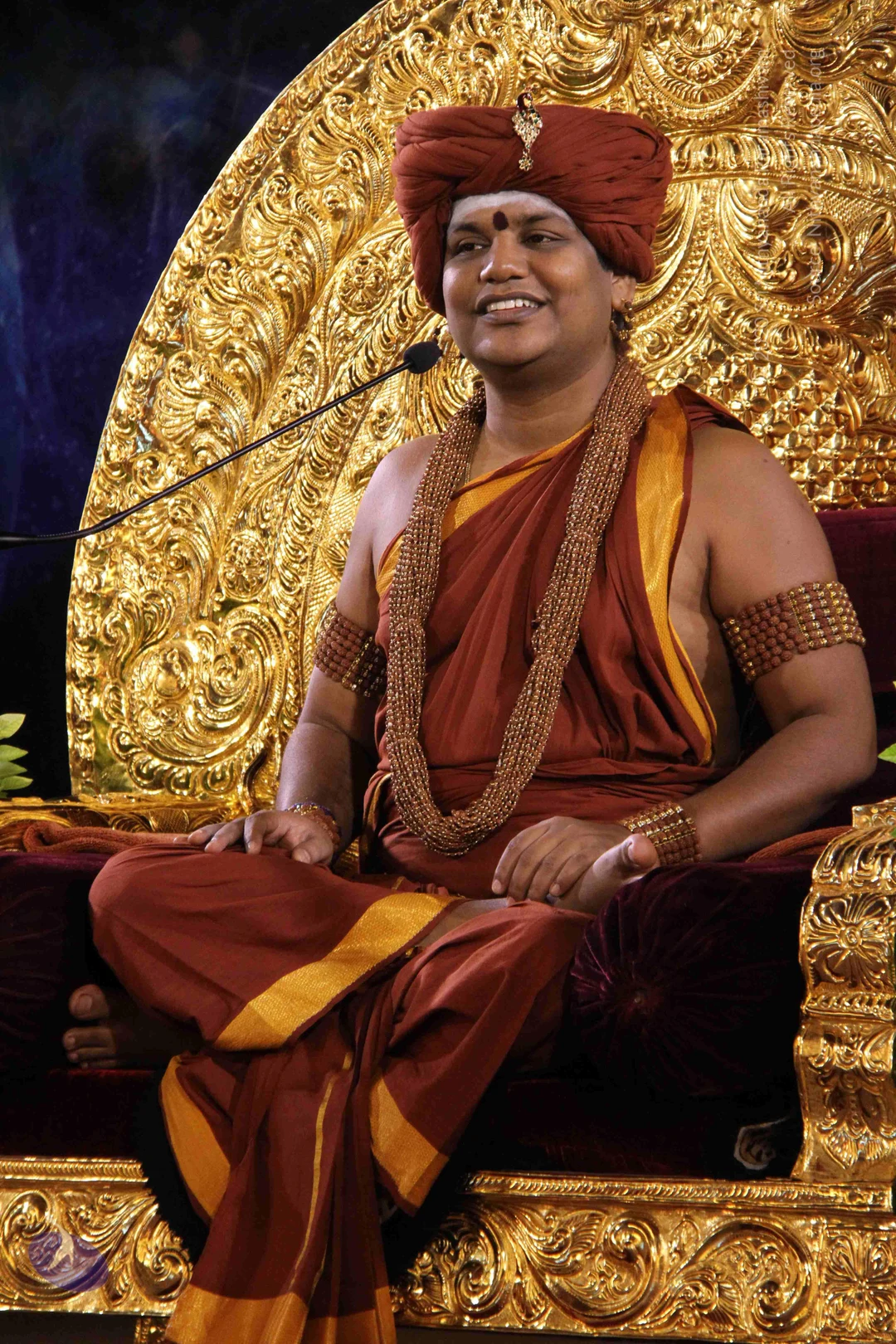
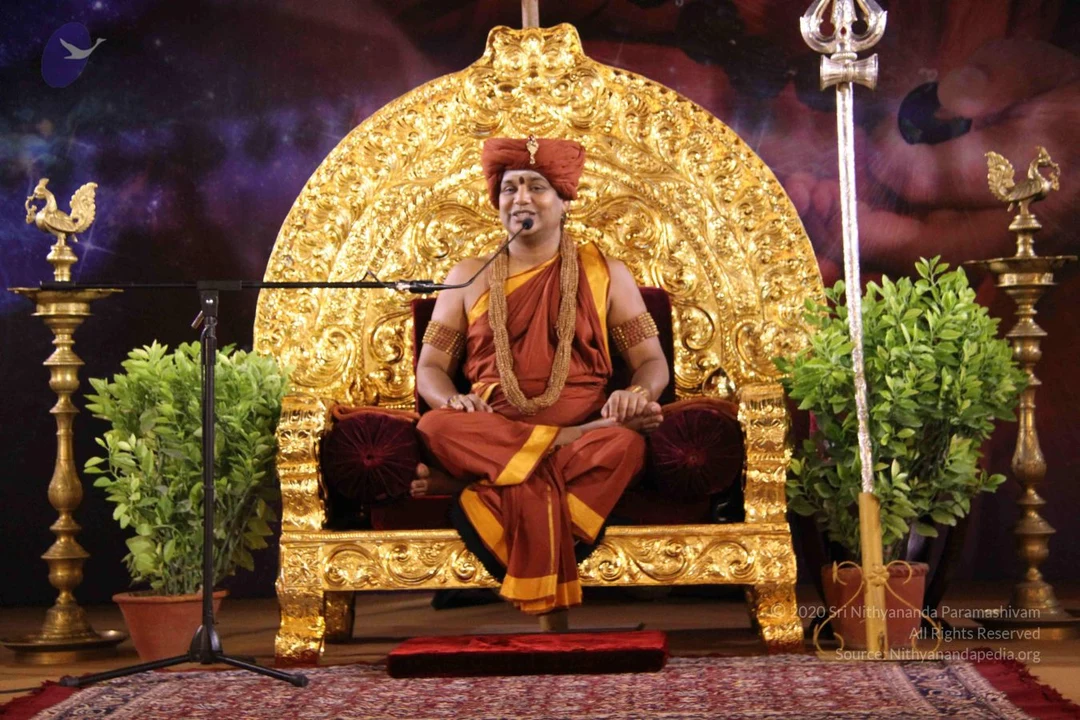
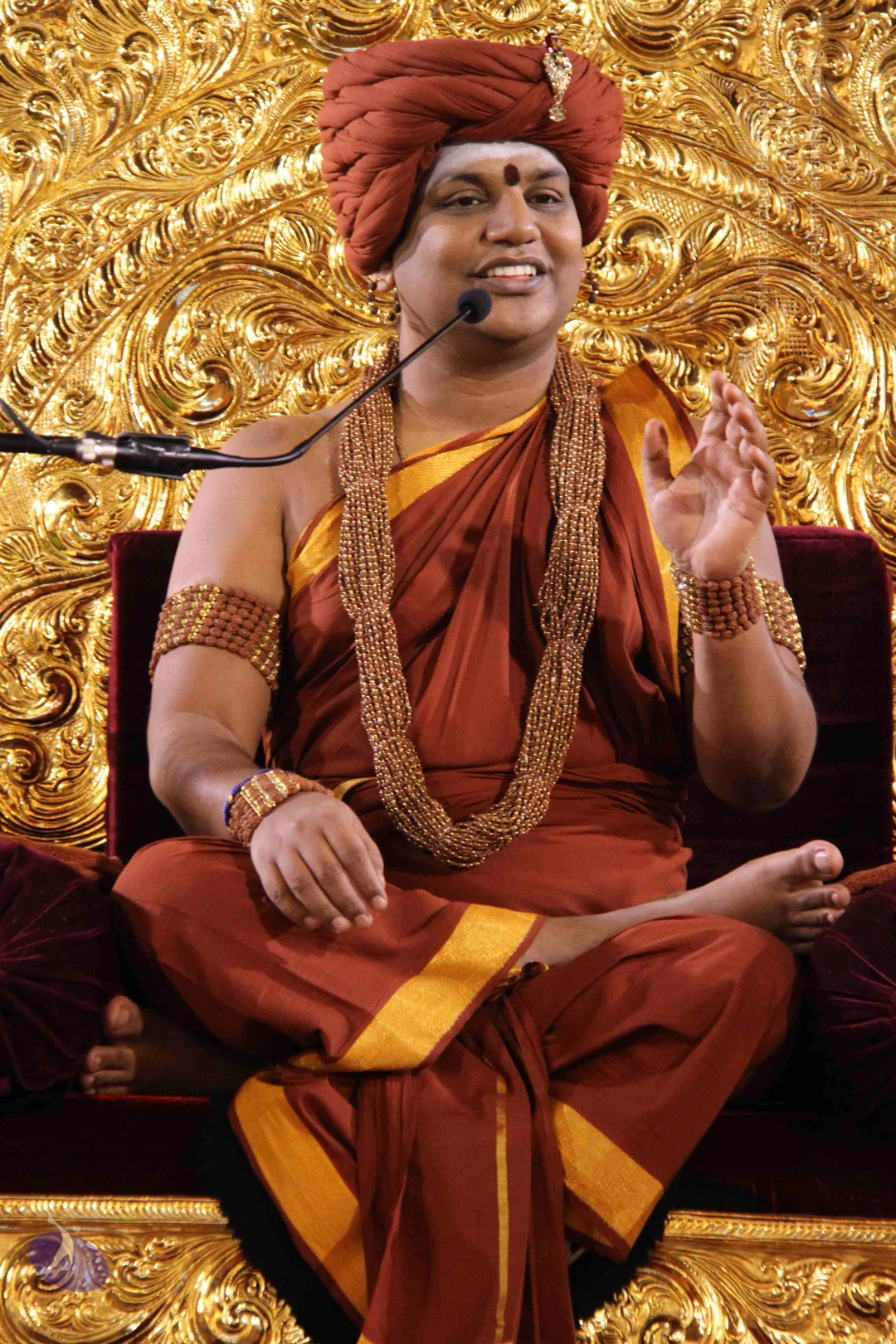
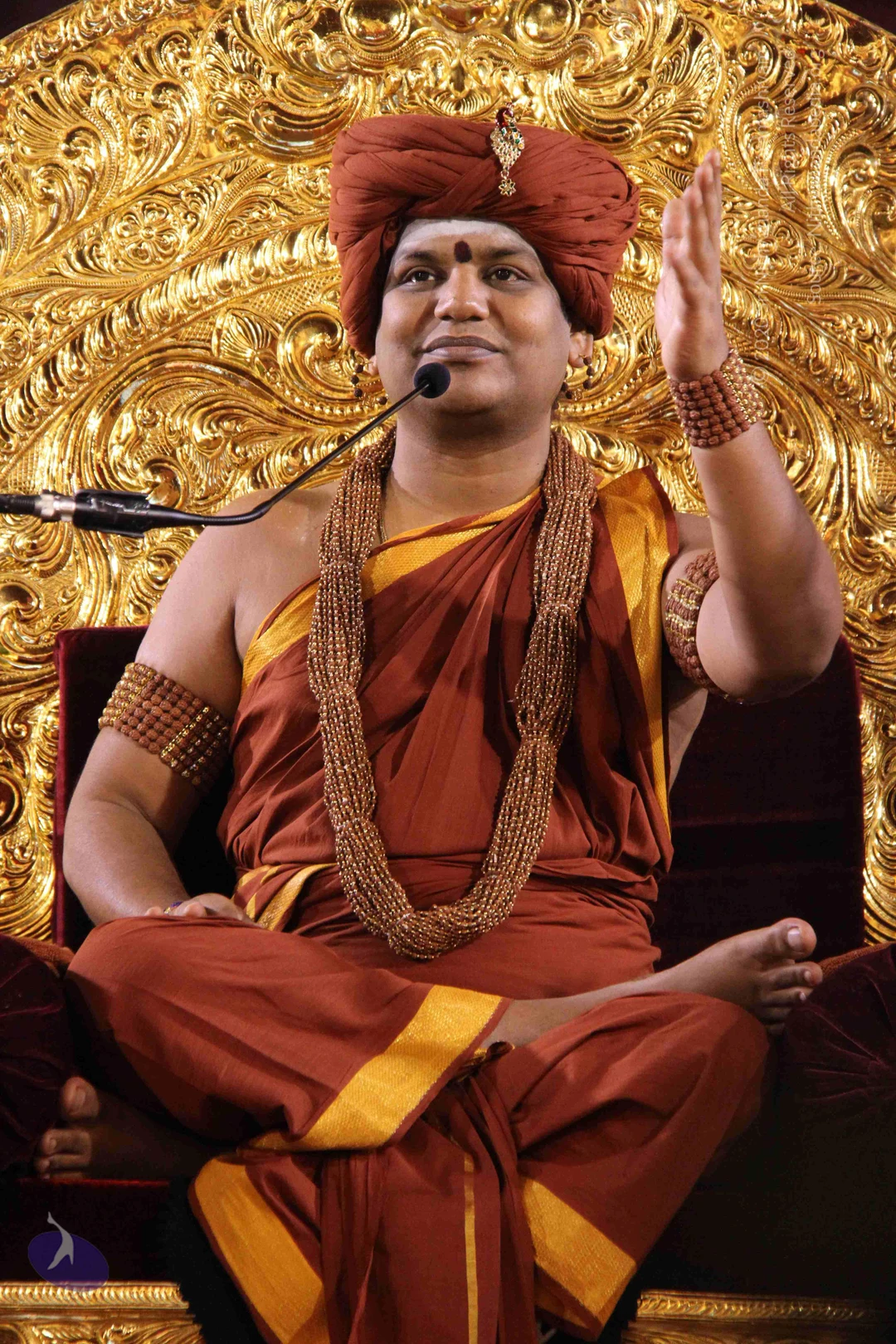
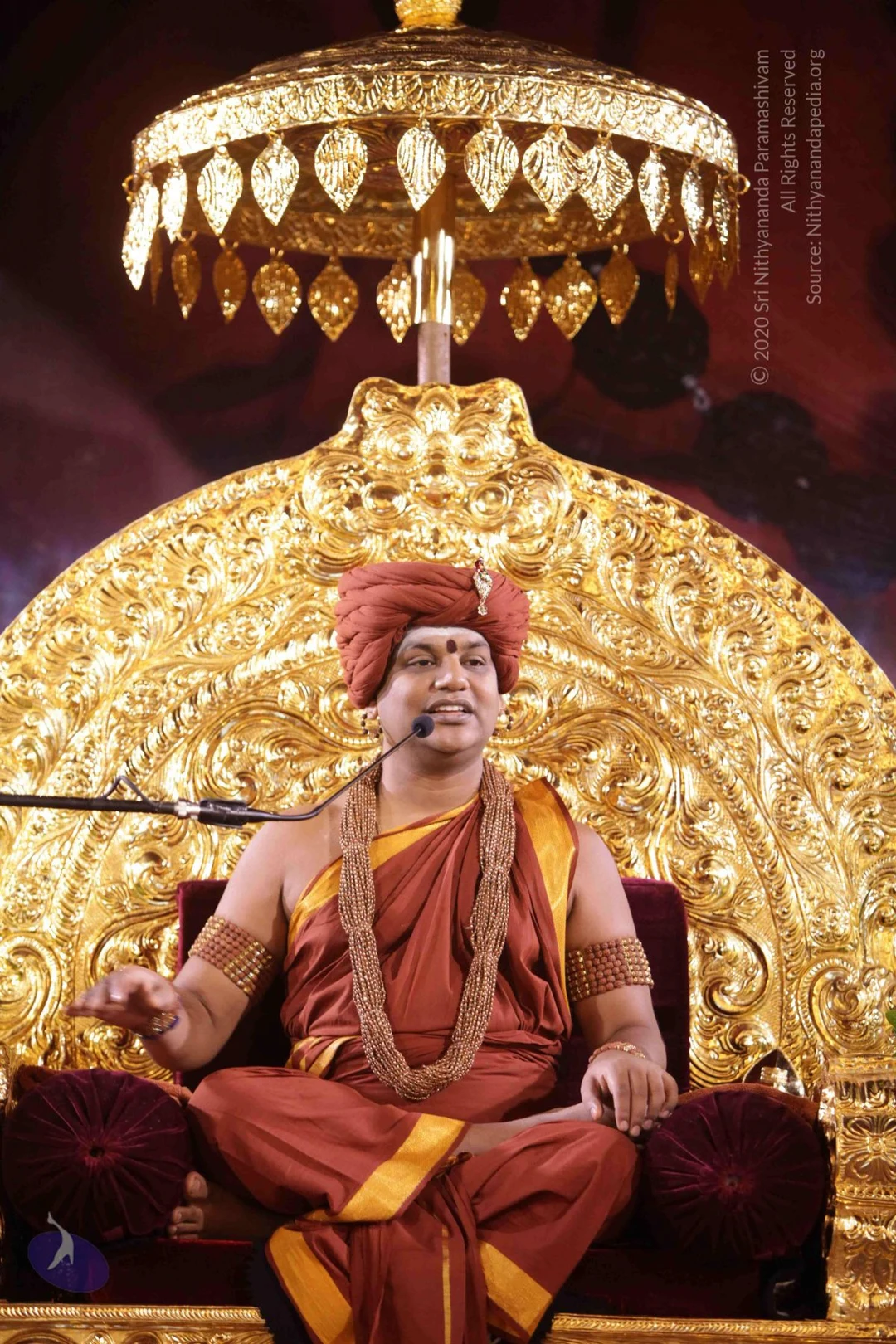
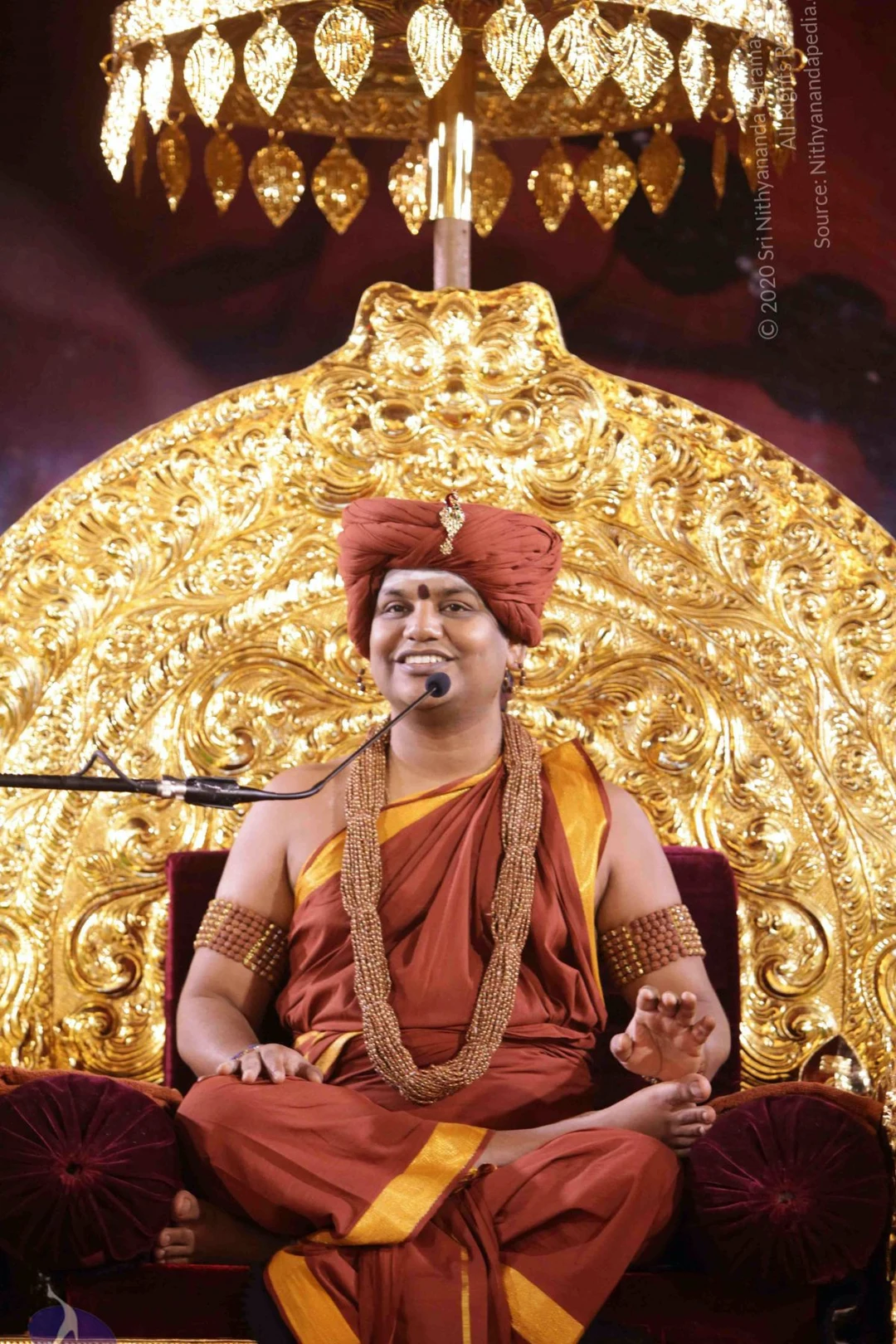
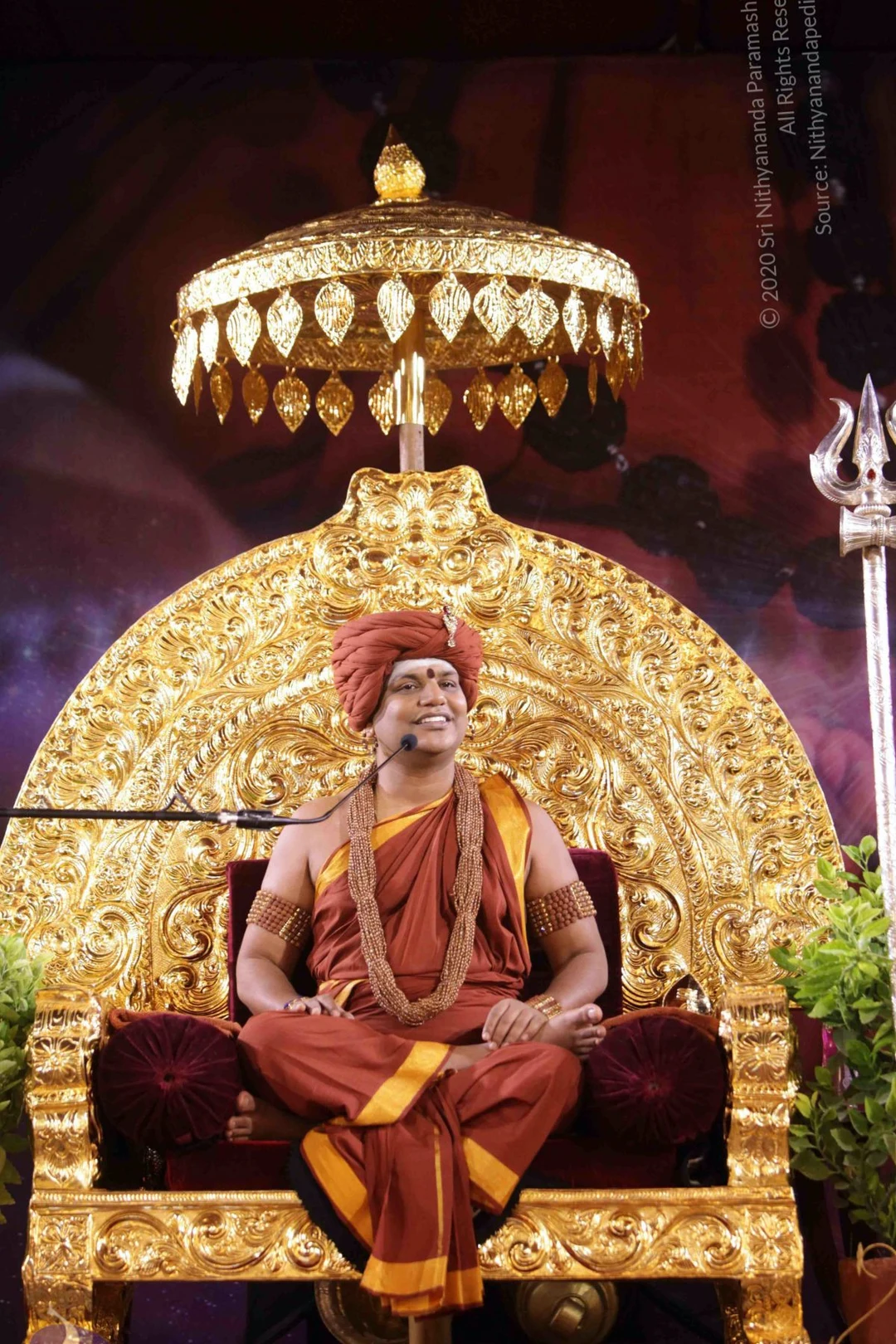
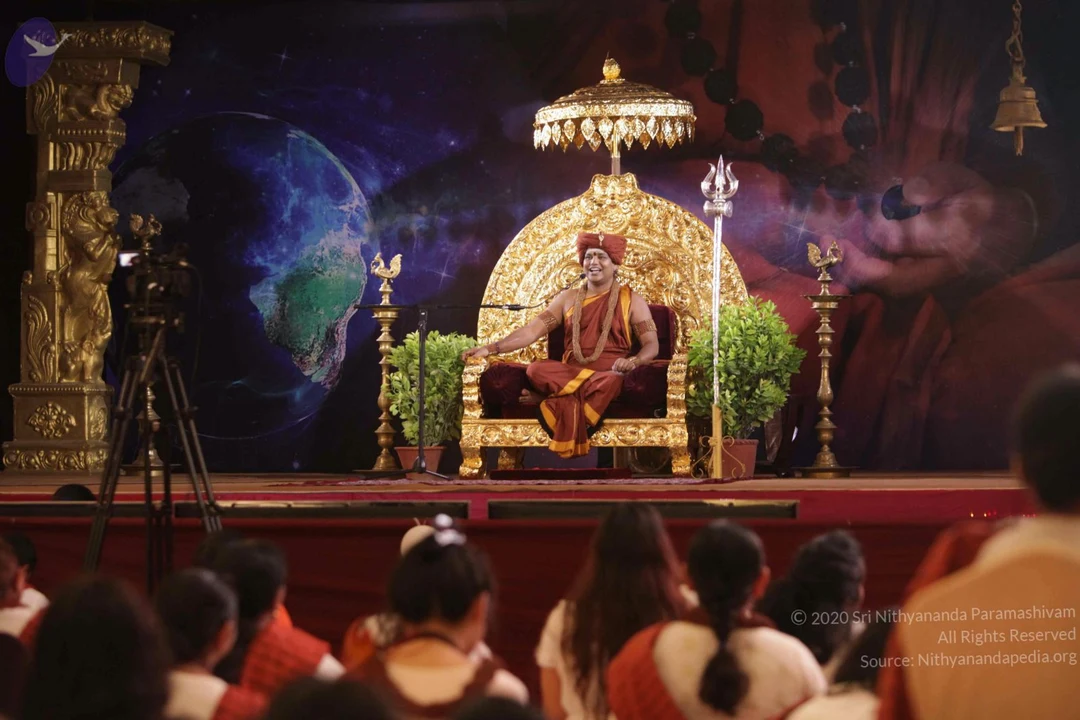
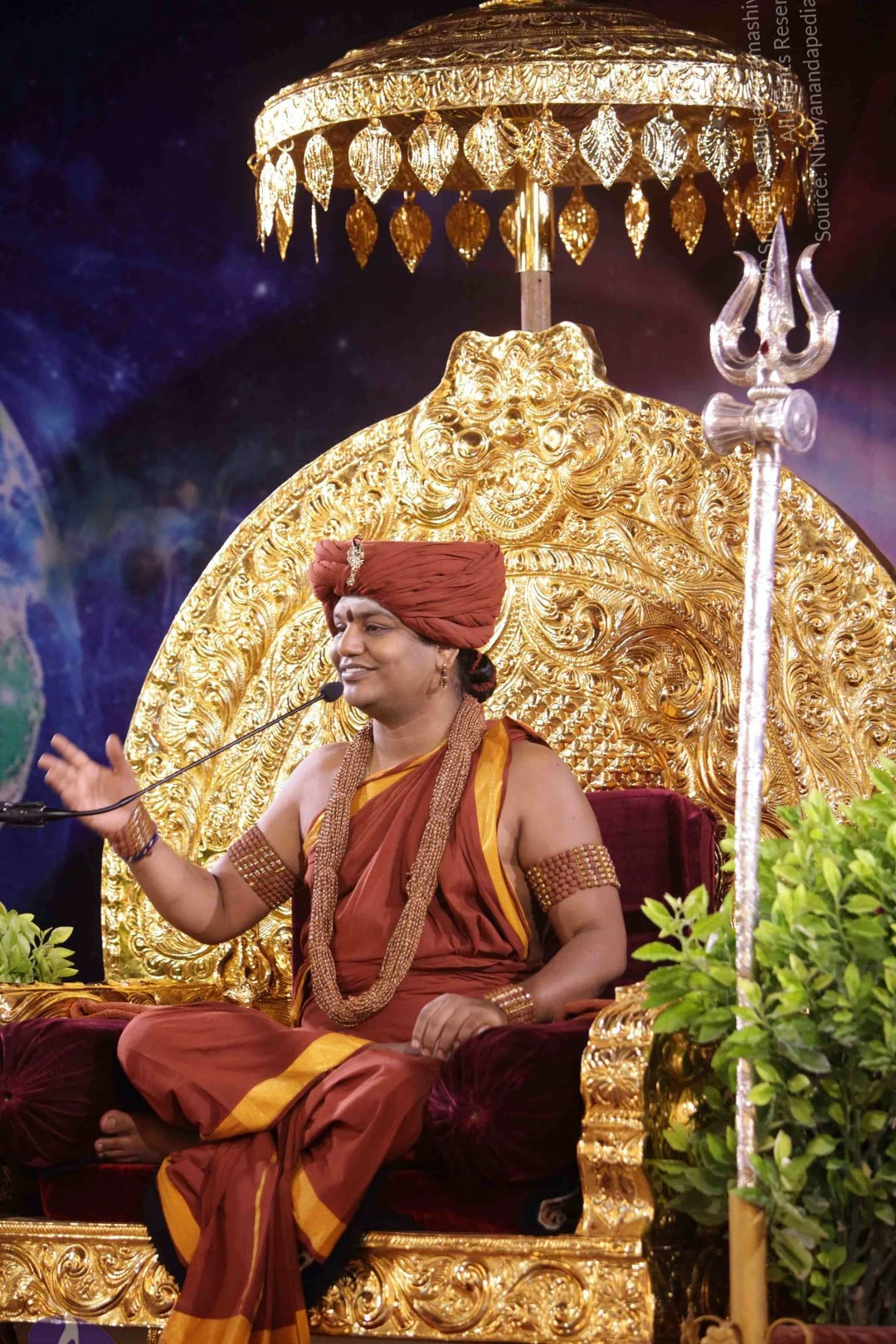
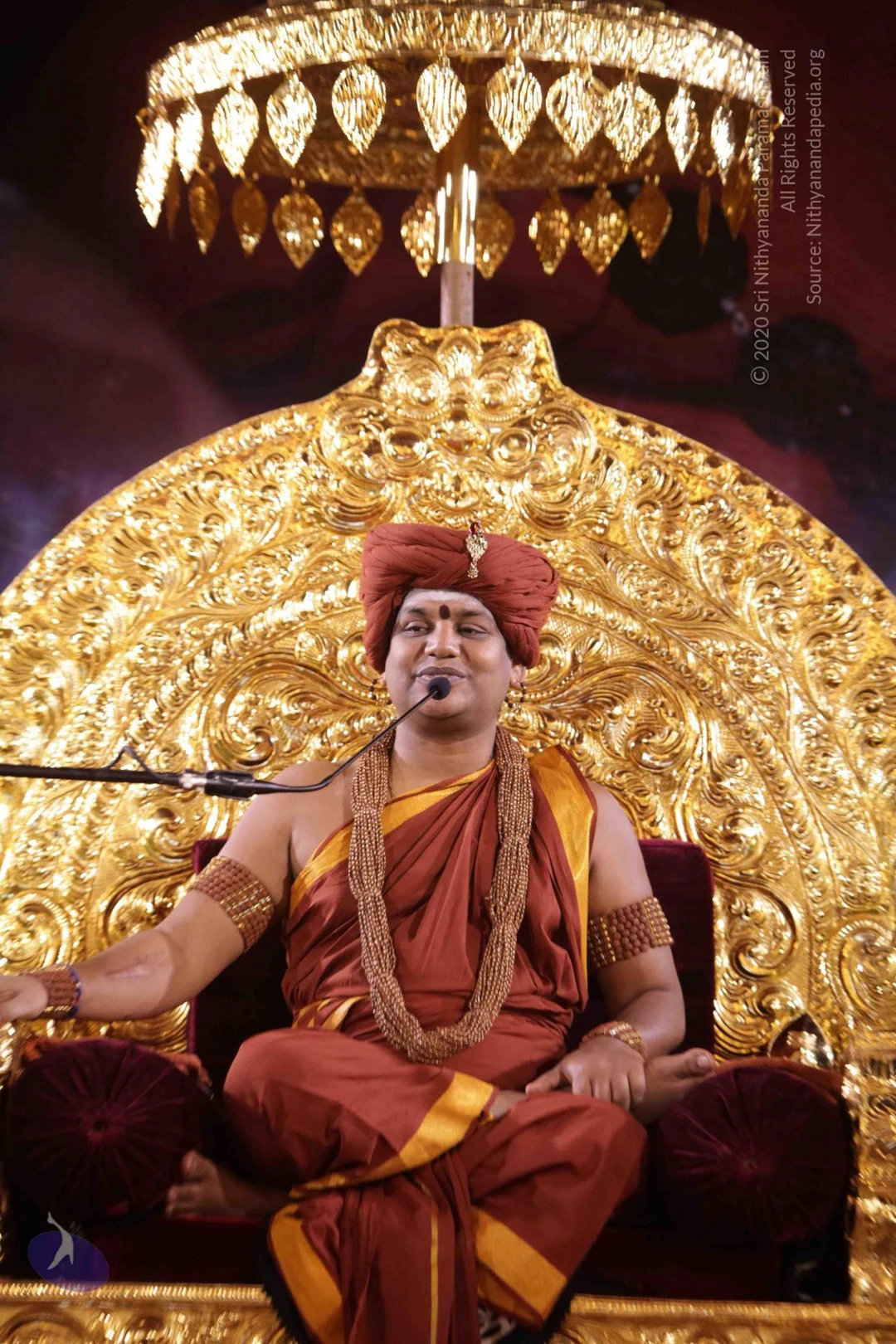
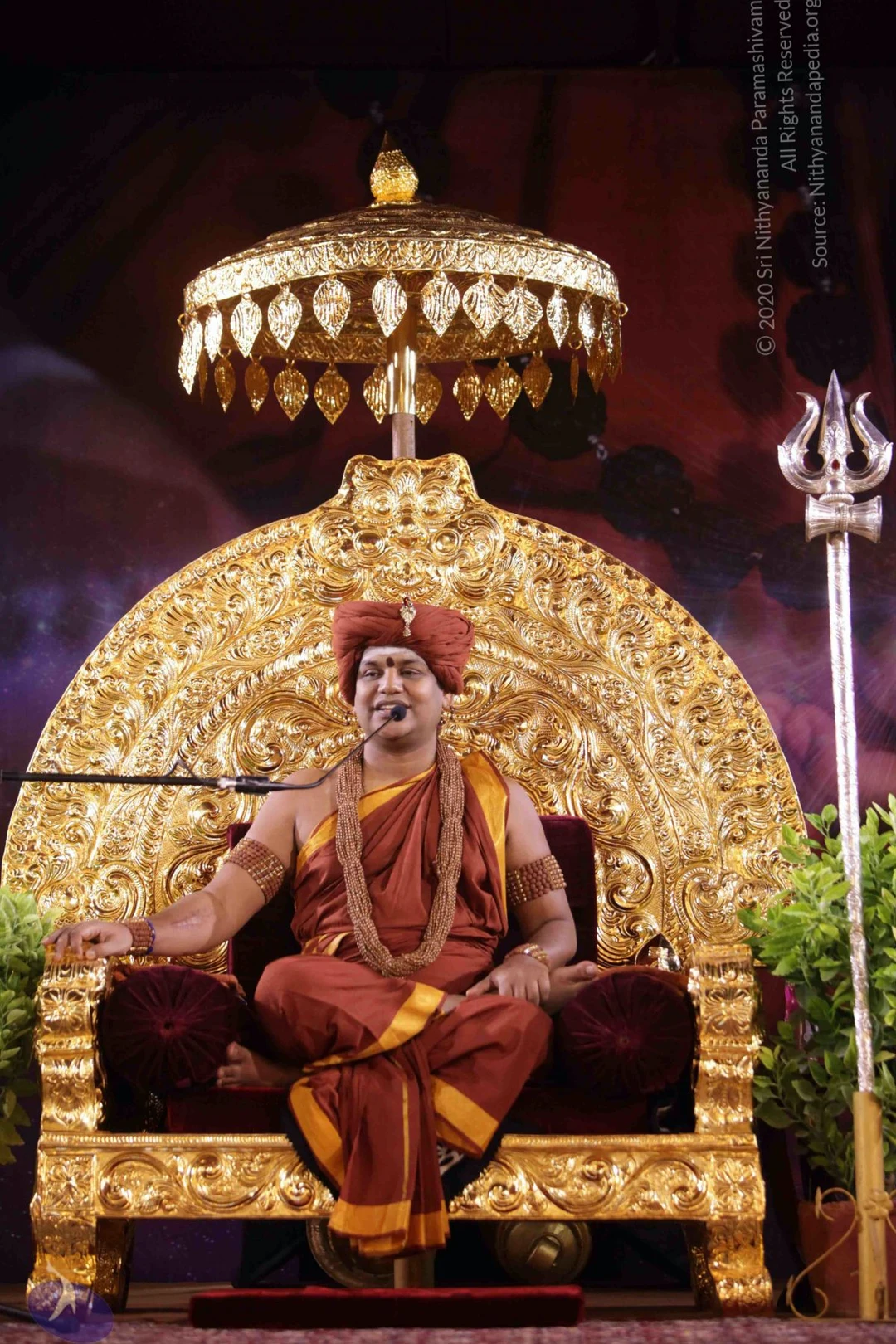
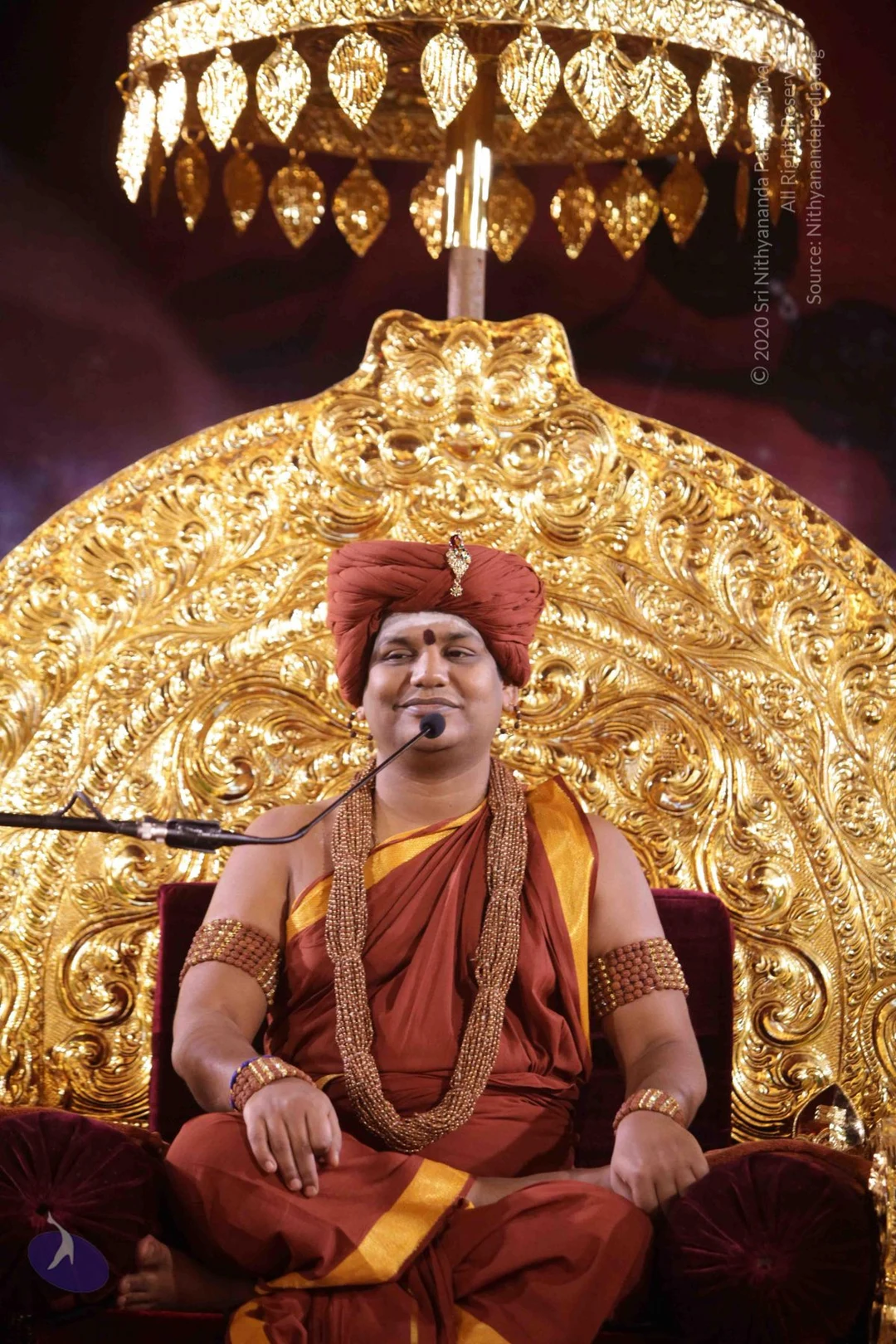
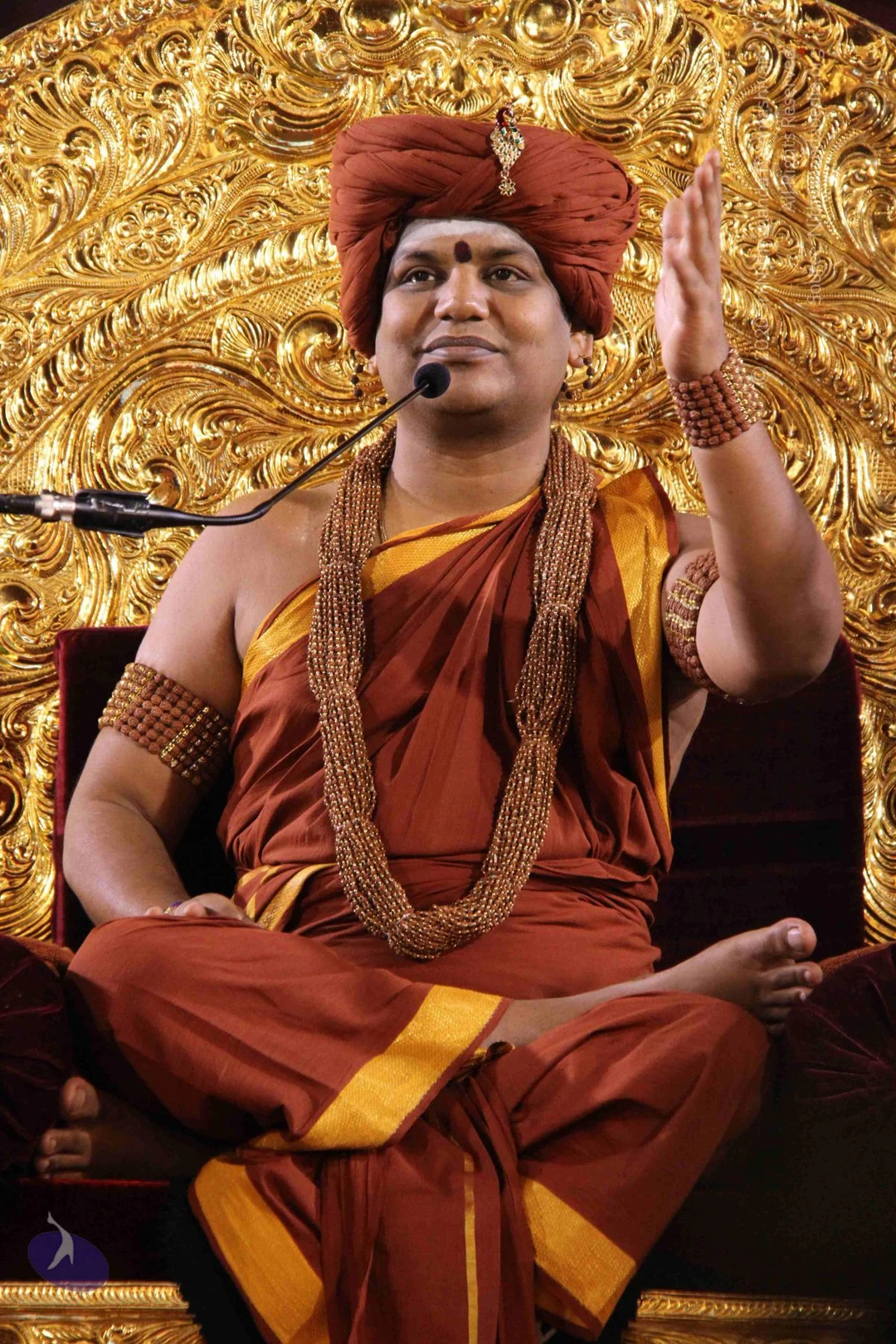
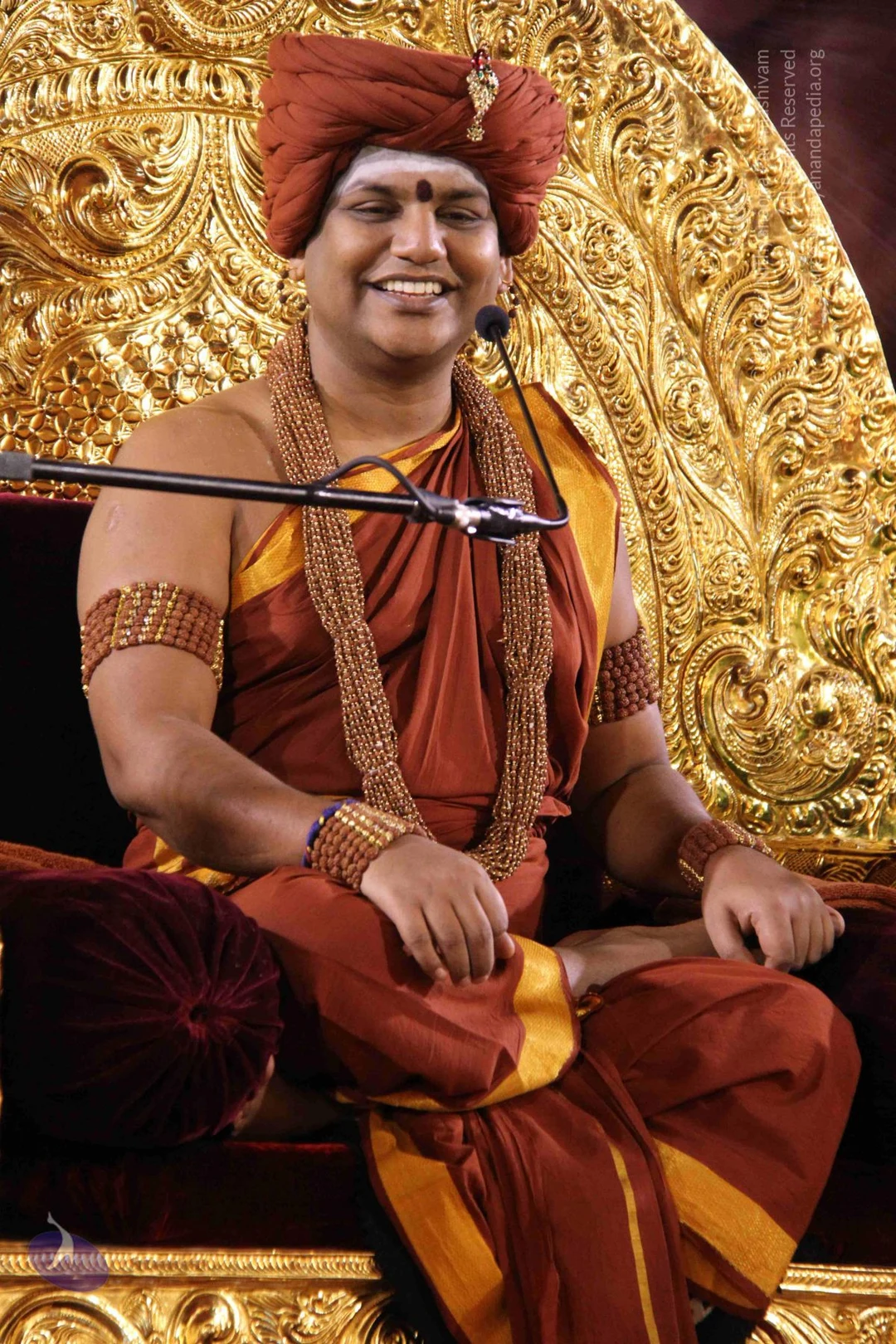
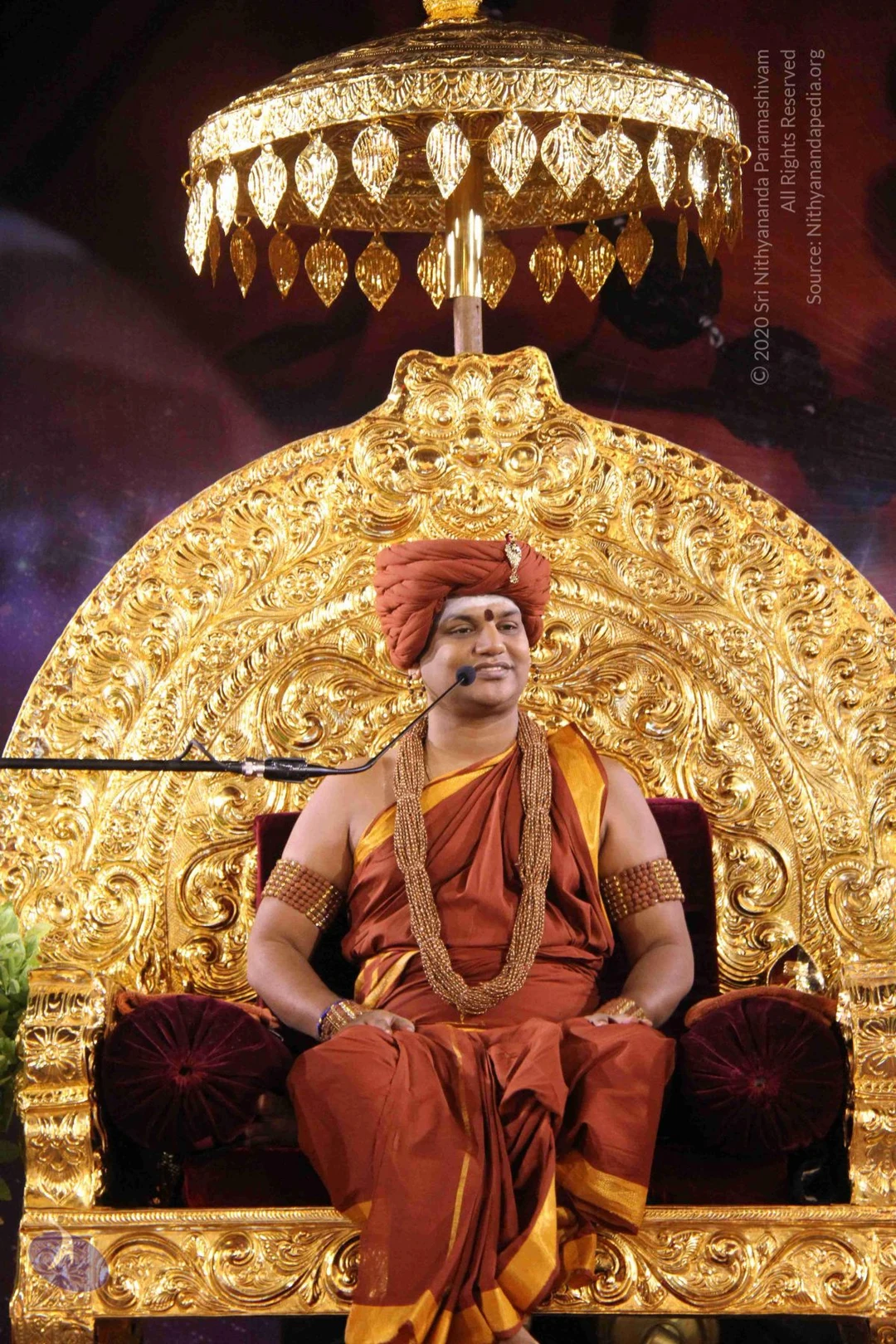
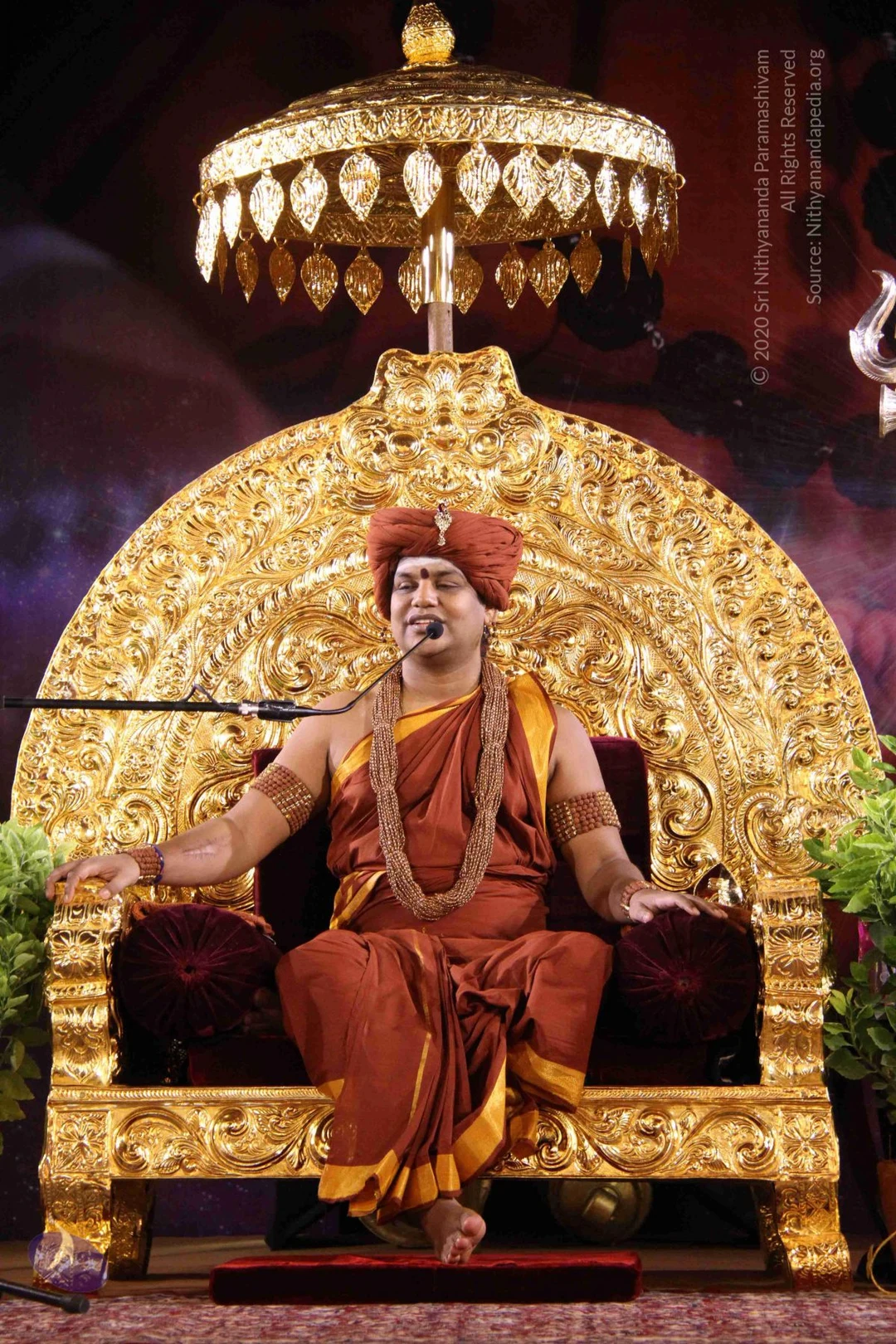
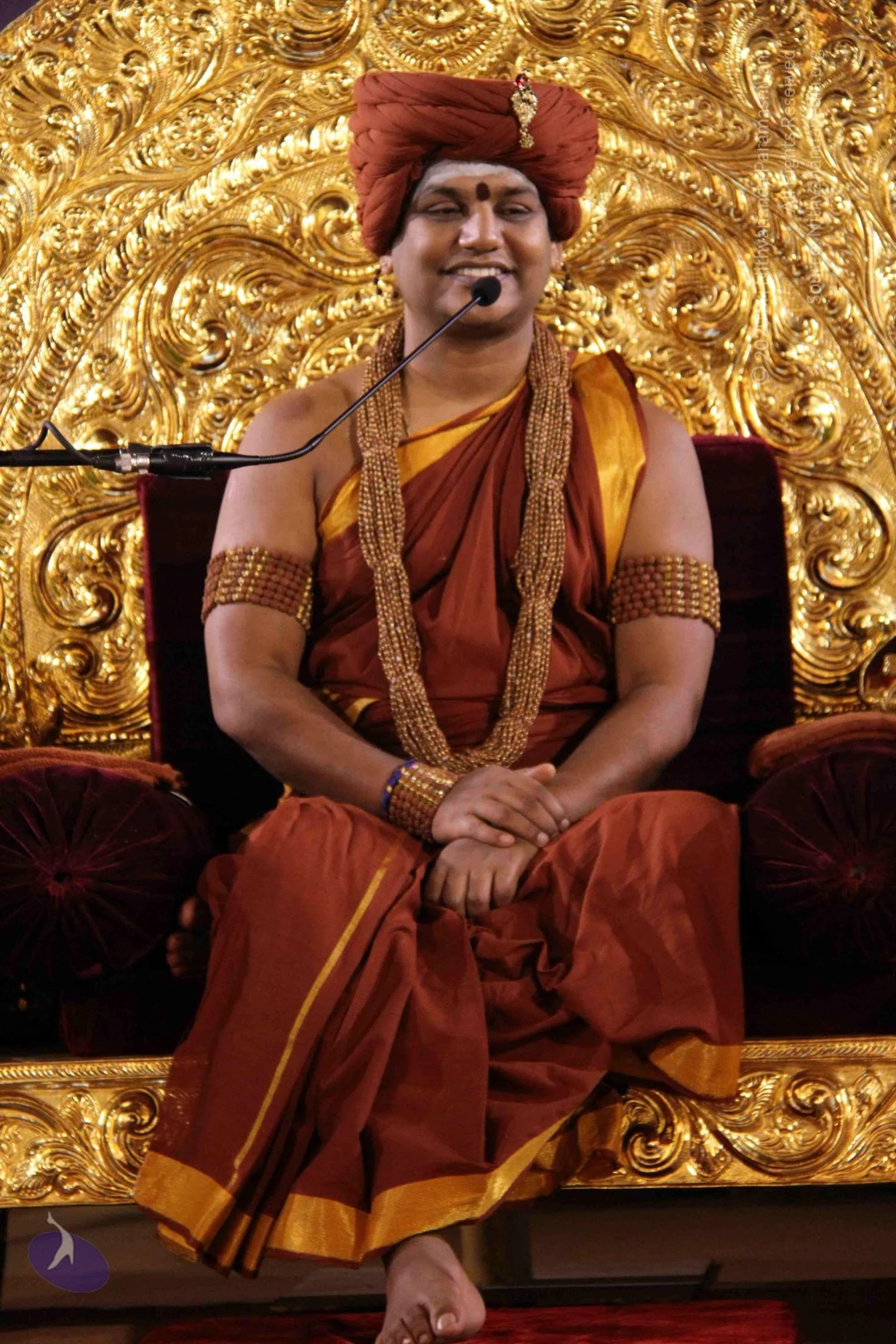
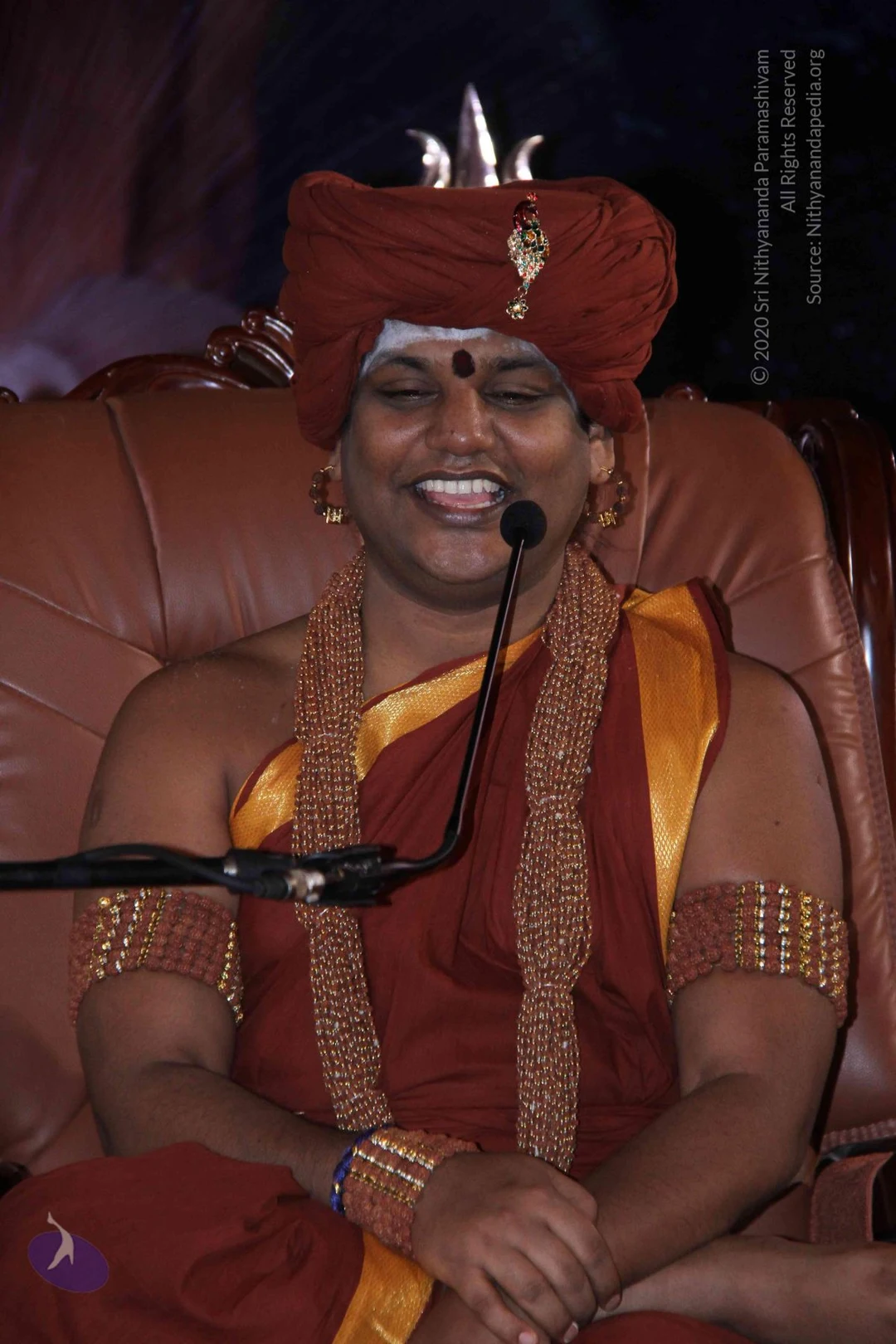
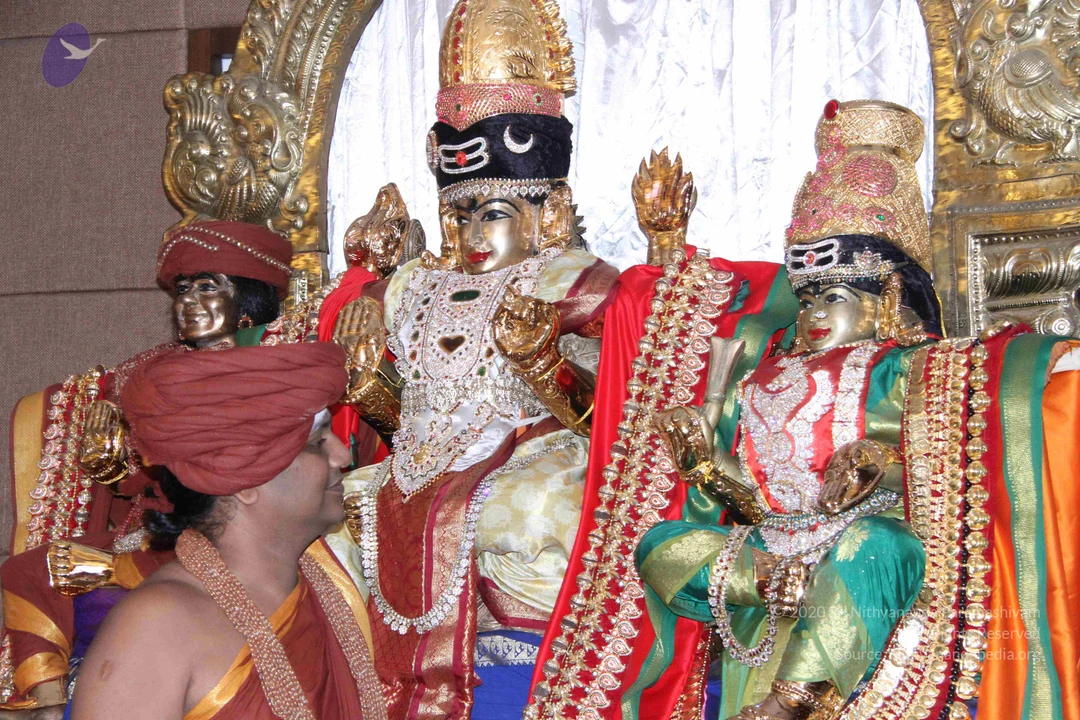
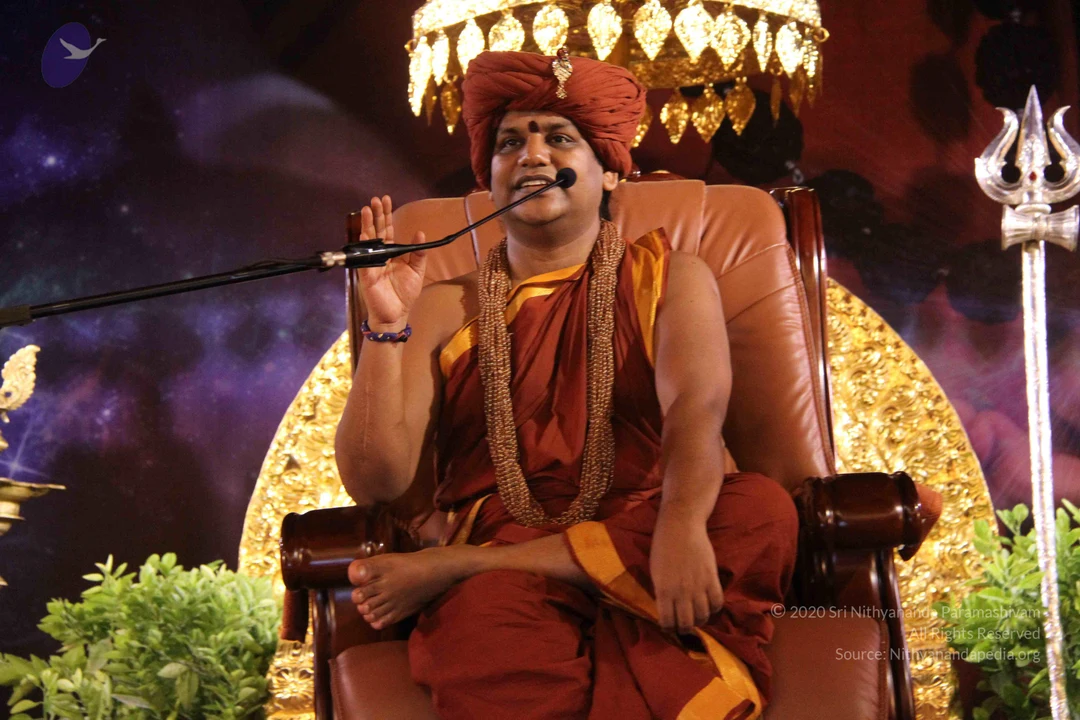
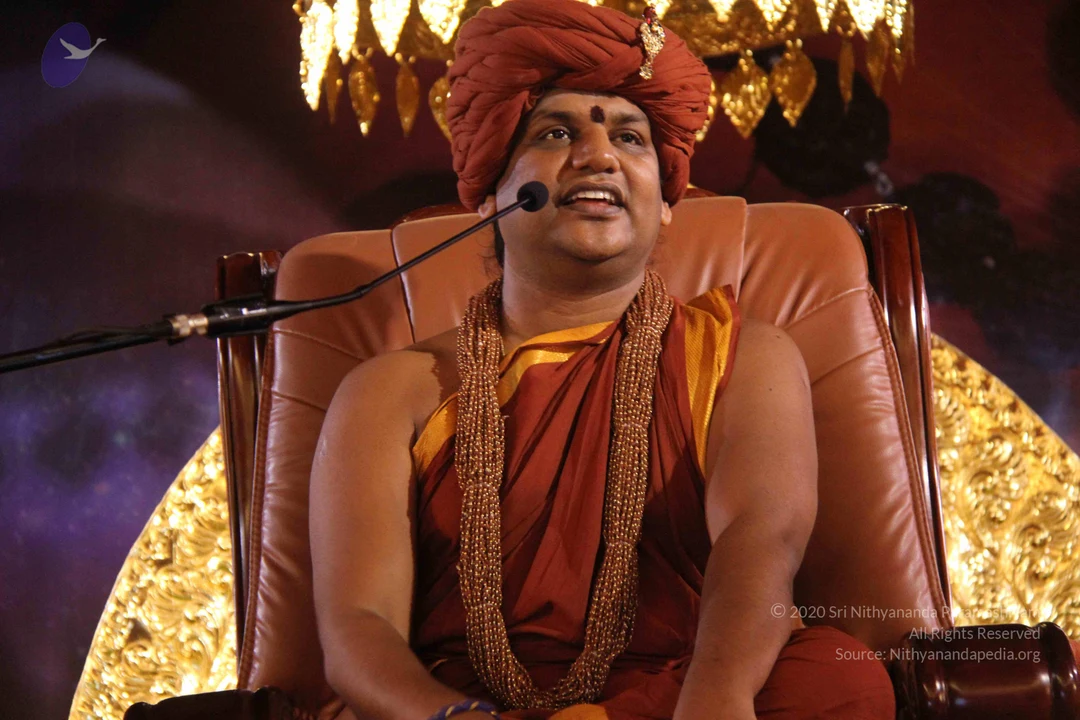
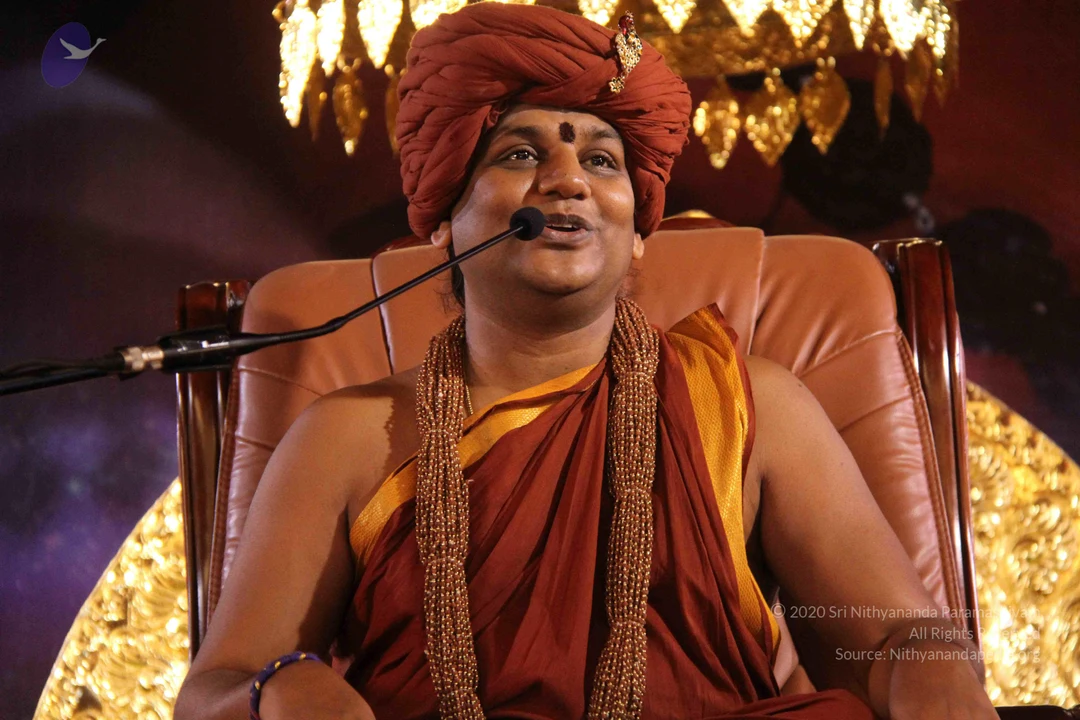
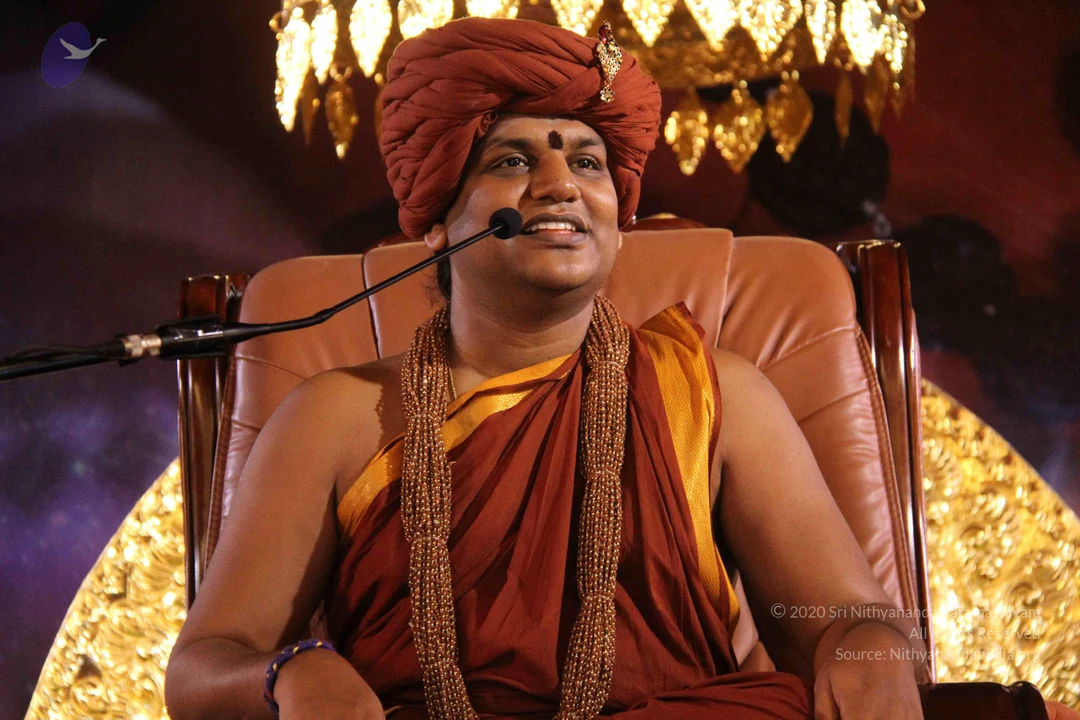
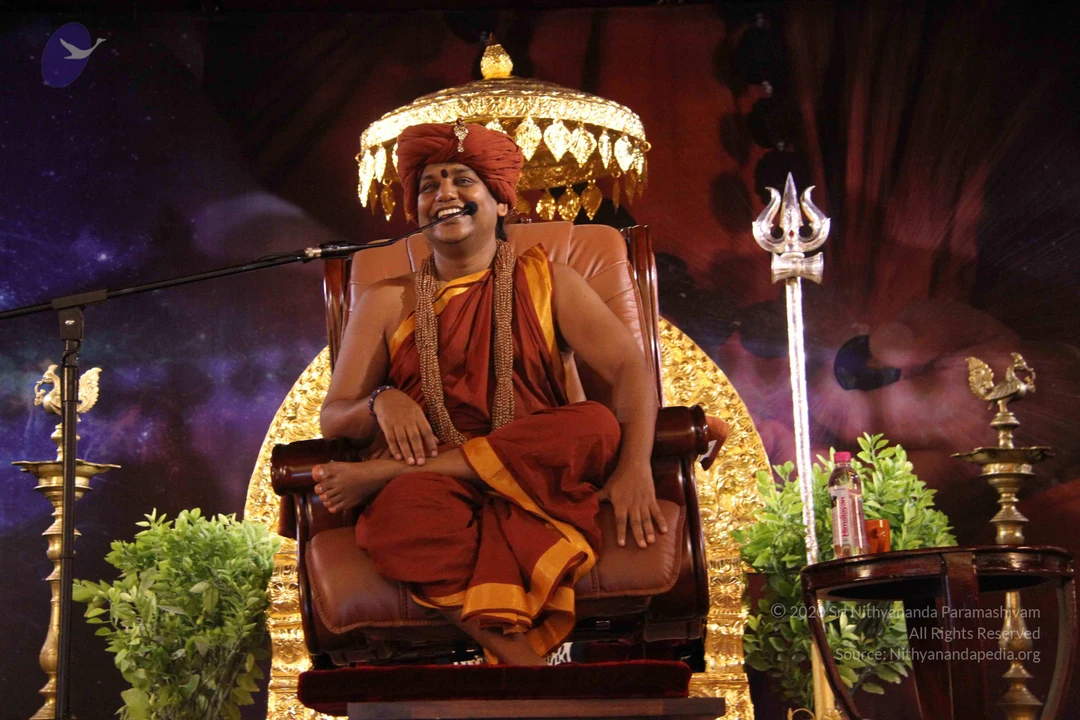
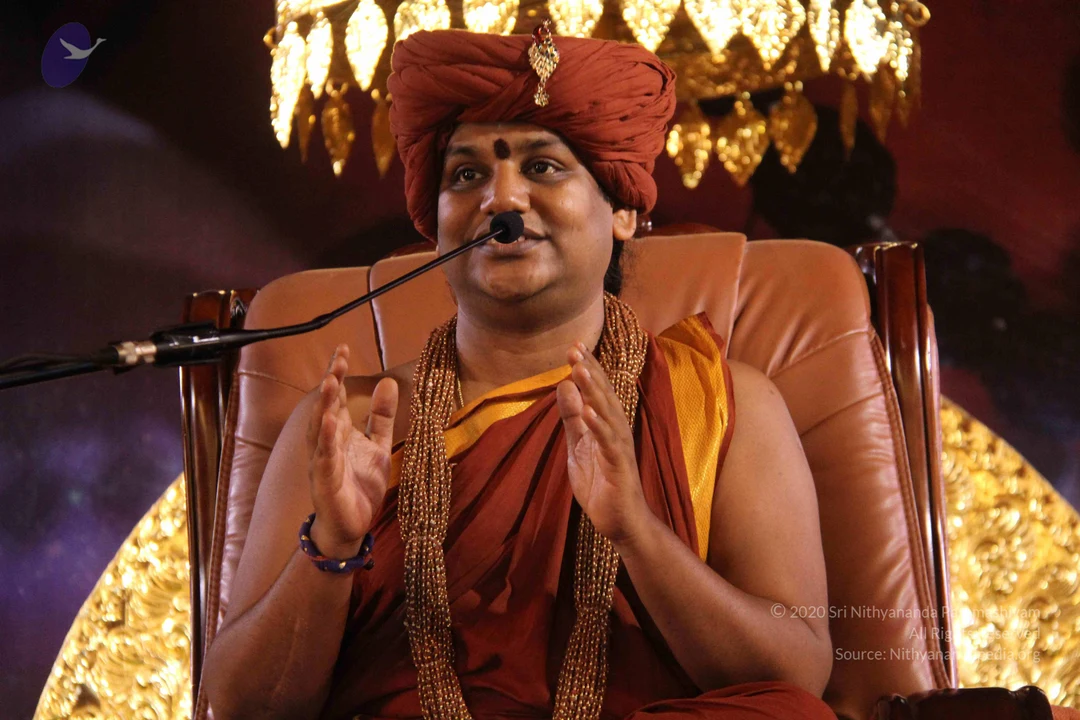
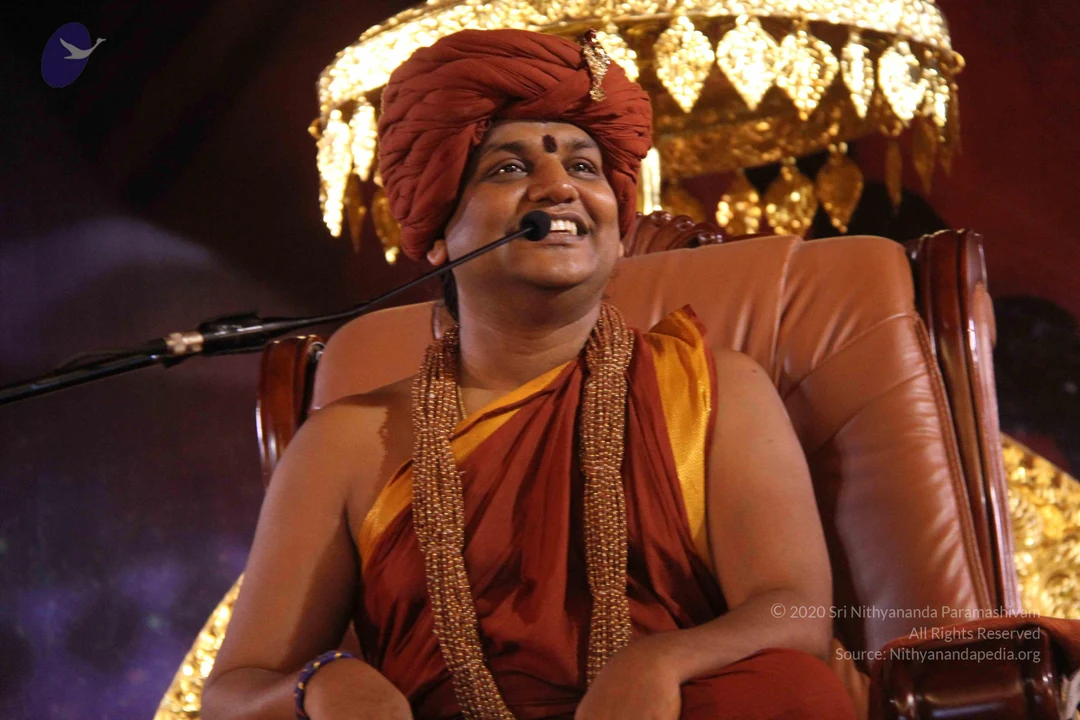
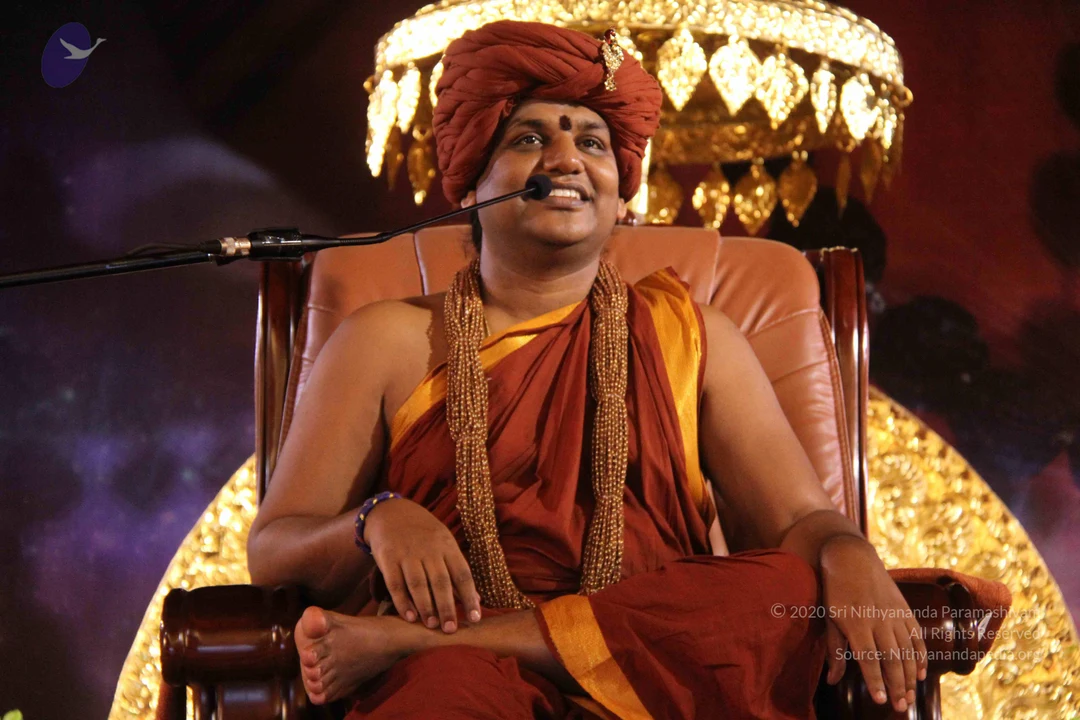
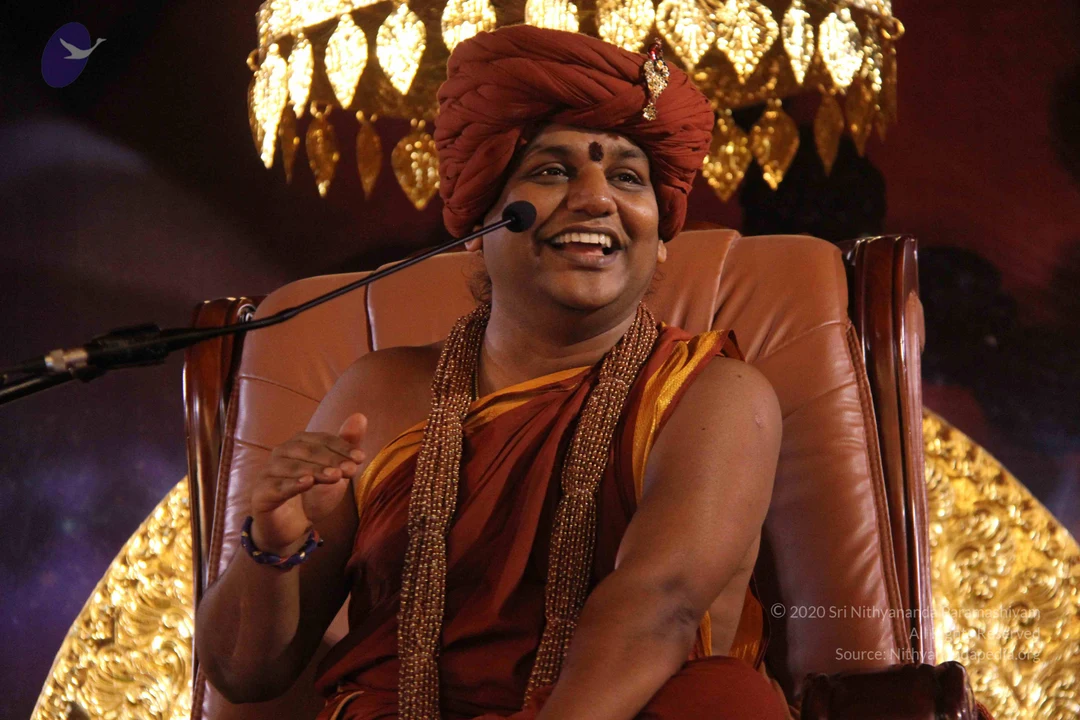
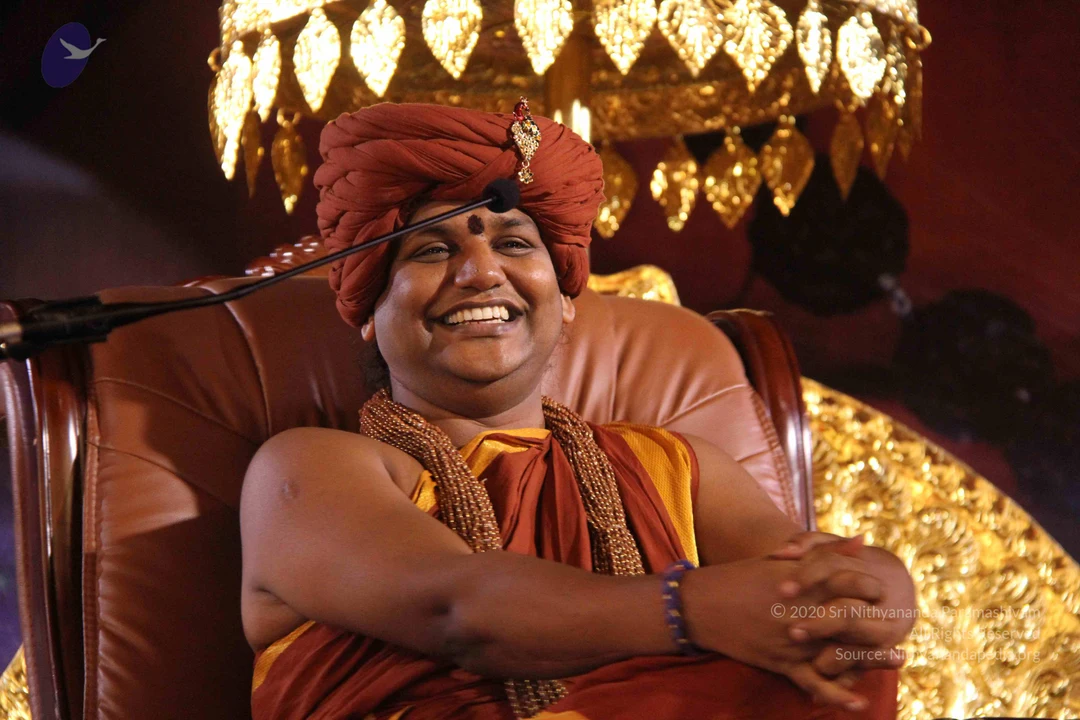
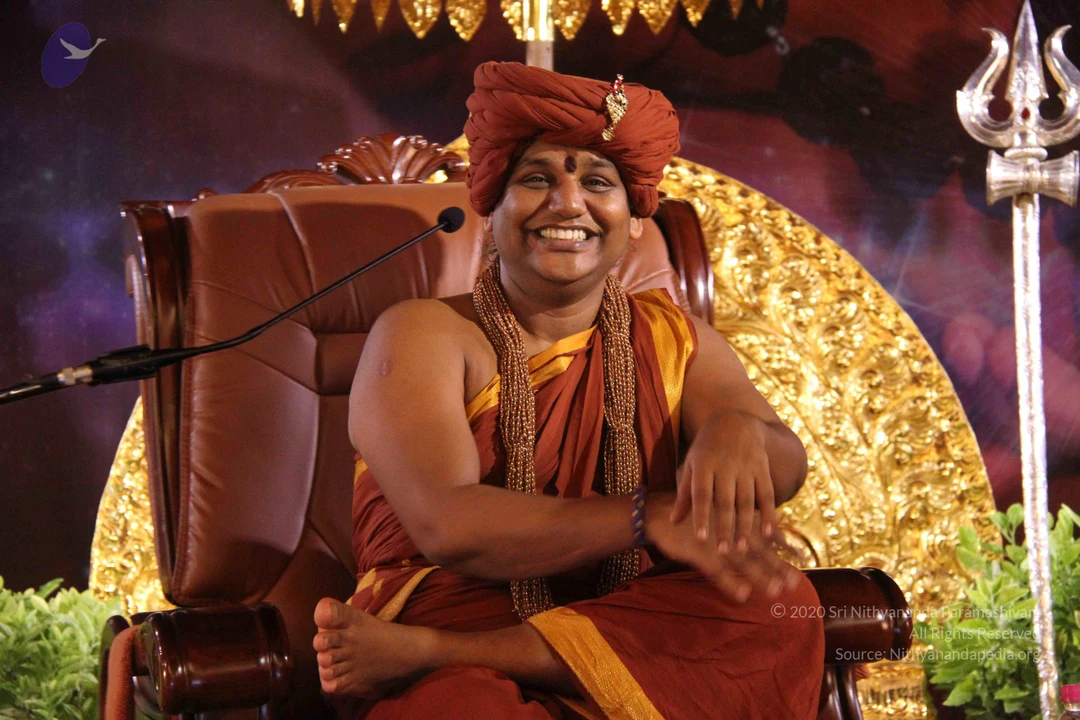
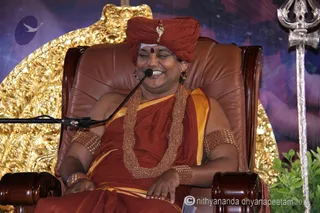
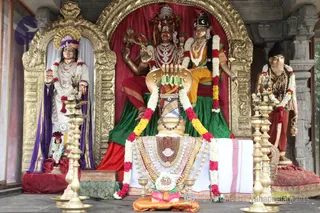
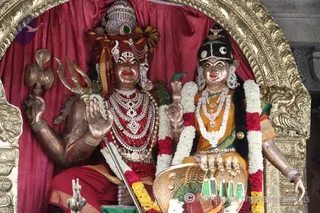
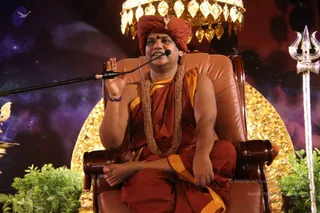
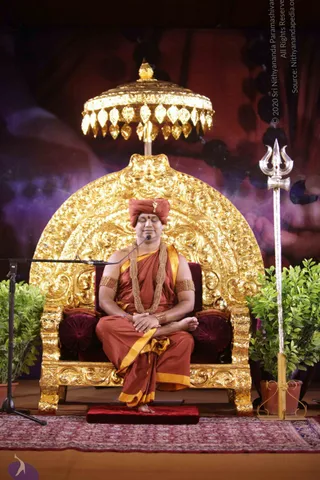
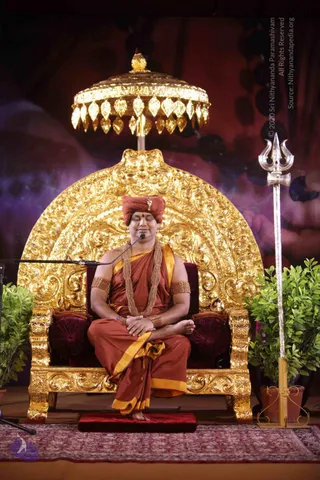
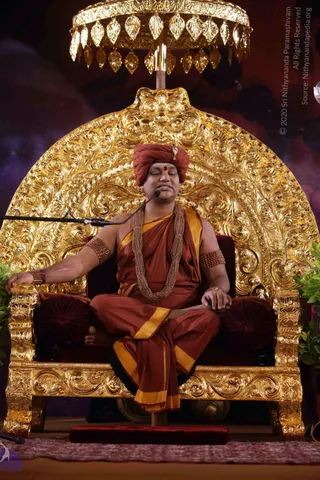
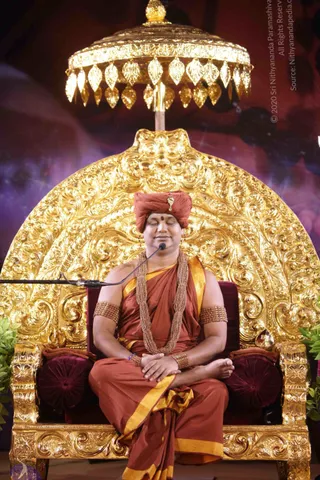
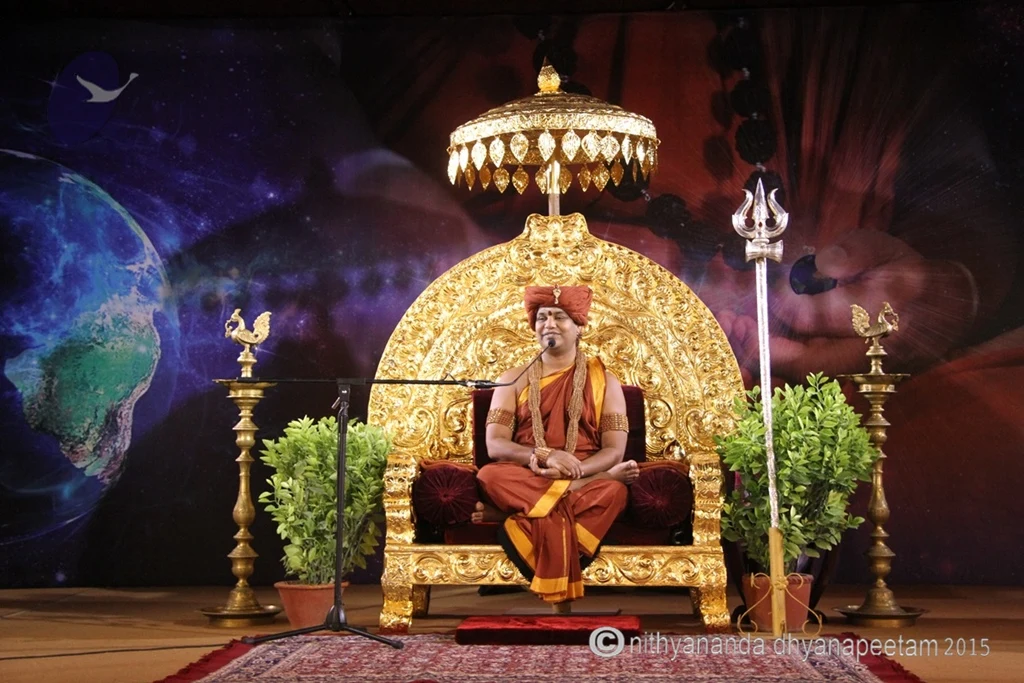
A seated man in saffron and orange robes sits cross-legged on an ornate gold throne with carved scrollwork and a gold canopy above, speaking into a microphone on a stand. He wears an orange turban, a gold necklace with a long beaded mala, and gold armbands. A gold trident stands to the right and two gold oil lamps with rooster-shaped tops flank the stage, with potted green plants beside the throne. Behind is a backdrop of the earth from space and a dark cosmic design. A red patterned rug covers the stage floor.A seated man in a rust-red turban with a small gold ornament addresses an audience while gesturing with his raised right hand. He wears a rust-red and saffron-orange robe, a long gold-beaded necklace, beaded gold armlets and beaded bracelets, with a lobe earring and a red bindi. A microphone stands at left, and a large ornate gold throne with repoussé scrollwork fills the background beside green leaves. Swamiji (probable): the appearance cues are the red turban, ornate beaded adornments and saffron robe, with the page indicating a discourse.A smiling man in a saffron-orange turban with a red bindi and a gold jewelled turban ornament sits before an ornate gold-leafed throne-back. He wears a rust-orange robe with a gold-edged shawl, long rudraksha-style gold-bead necklaces, rudraksha bead armlets and gold earrings. A microphone on a boom stand is in front of him.A seated person in a brown leather armchair speaks into a microphone on a stand, smiling broadly. They wear a red-maroon turban with a gold ornament, a red-maroon robe with a yellow-gold border, a beaded rudraksha-style mala necklace, gold earrings, and beaded bangles on the wrists and upper arms. A vermilion tilak marks the forehead. Behind is an ornate gold-embossed throne panel, a silver trident on the right, and green foliage at the lower right. The visible appearance is consistent with a person seated at a satsang, with the page noting a Nithya Satsang on 5 July 2015.Photograph of a temple shrine with a large deity murti of a seated multi-armed Shiva-like figure with trident, rudraksha necklaces and a gold crown, beside a consort figure in green and orange garments. Flanking figures include a standing murti in white robes and purple shawl with a feathered headdress on the left, and a standing murti in brown dress on the right. Brass oil lamps (deepas) stand on the floor, and white and red flower garlands adorn the figures. A lingam-like form sits in front with layered jewelry and garlands. Ornate gold arch frames the shrine, with a red curtain behind. No physical people are visible; all figures are statues.A photograph of a pair of deity murtis seated side by side within a gilded arch against a deep red curtain. The figure on the left is a bronze-toned murti with a trident and a damaru-like hand drum, wearing a red-and-gold turban, multiple necklaces and a red garment with a gold border, with a raised hand in abhaya gesture. The figure on the right is a golden-toned murti wearing an orange-and-green sari, layered white and gold garlands, a jewelled crescent-moon crown and a long dark braid, holding a lotus-like object. Both are decorated with white jasmine and red and yellow flower garlands, and a green parrot perches near the central pedestal. The image is a stone-and-metal sculpture scene, with no physical people visible.

Shivoham
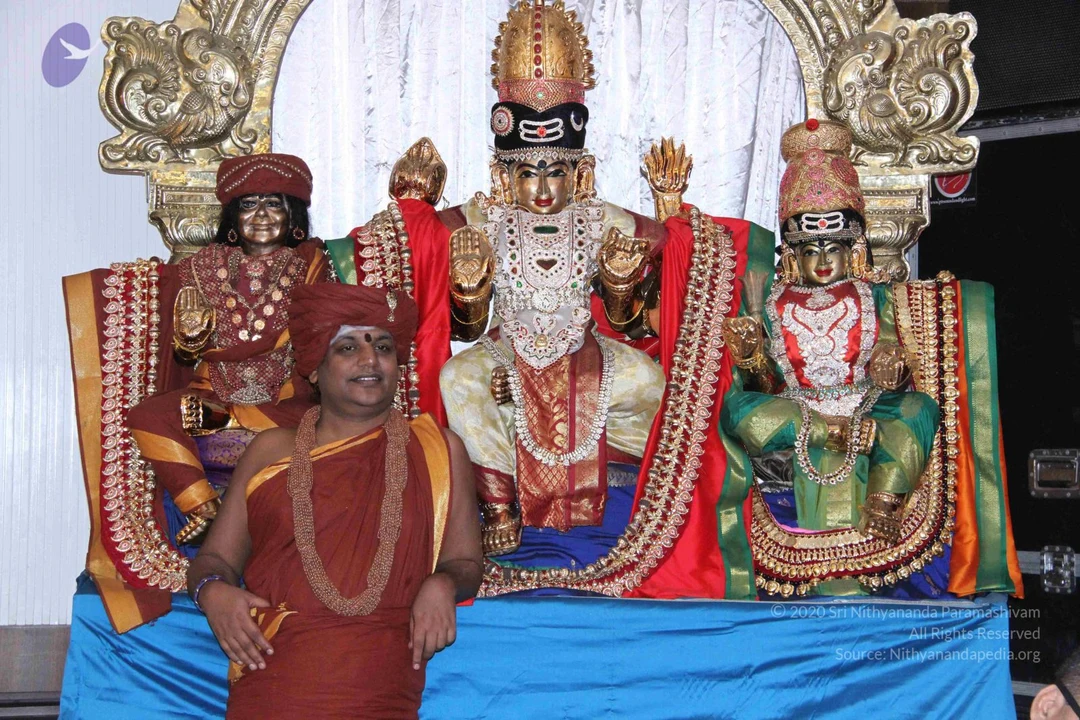
89 photosSource gallery
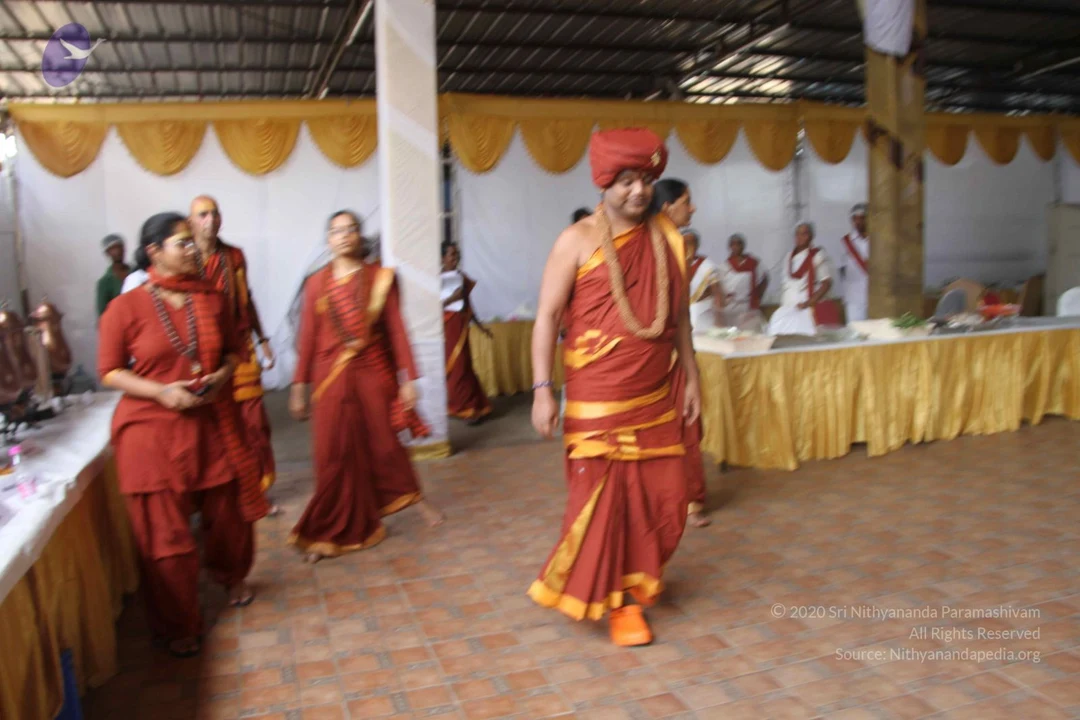
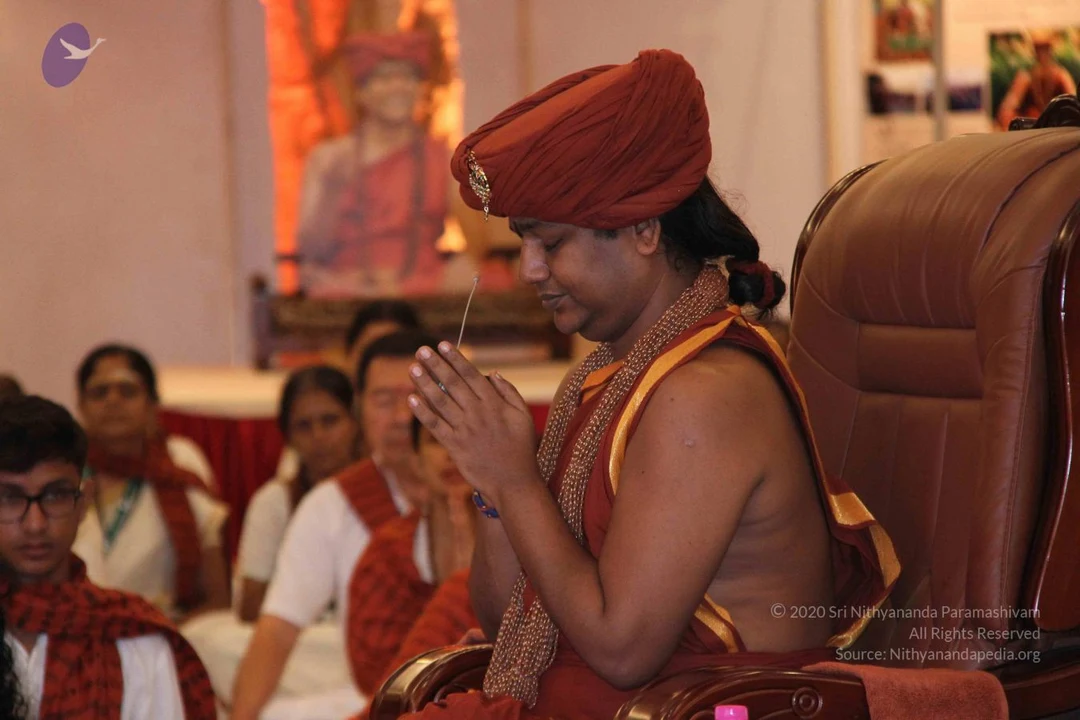
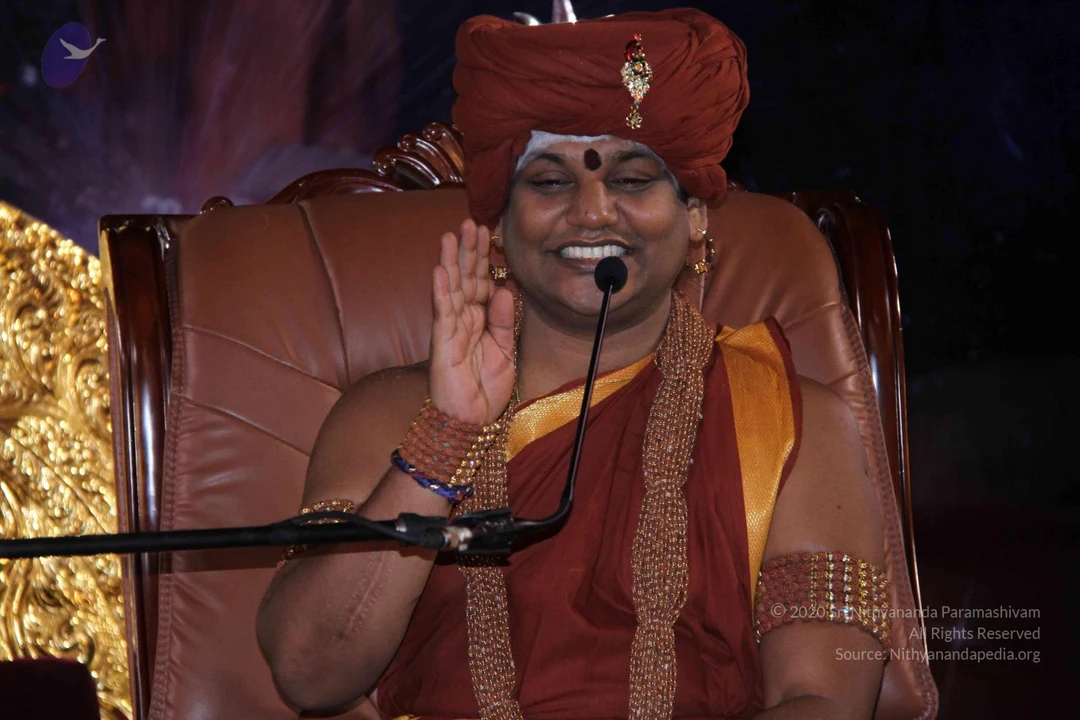
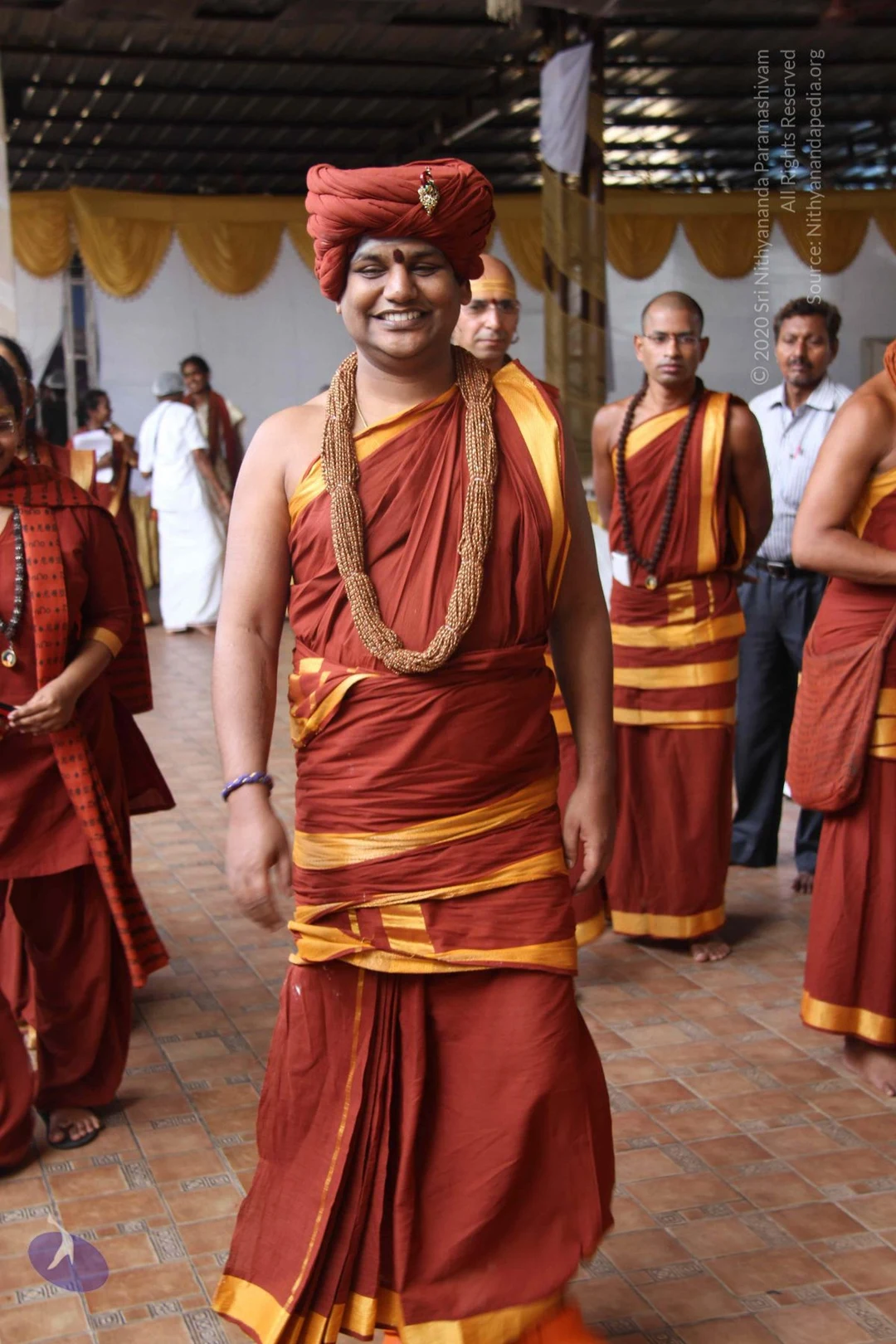
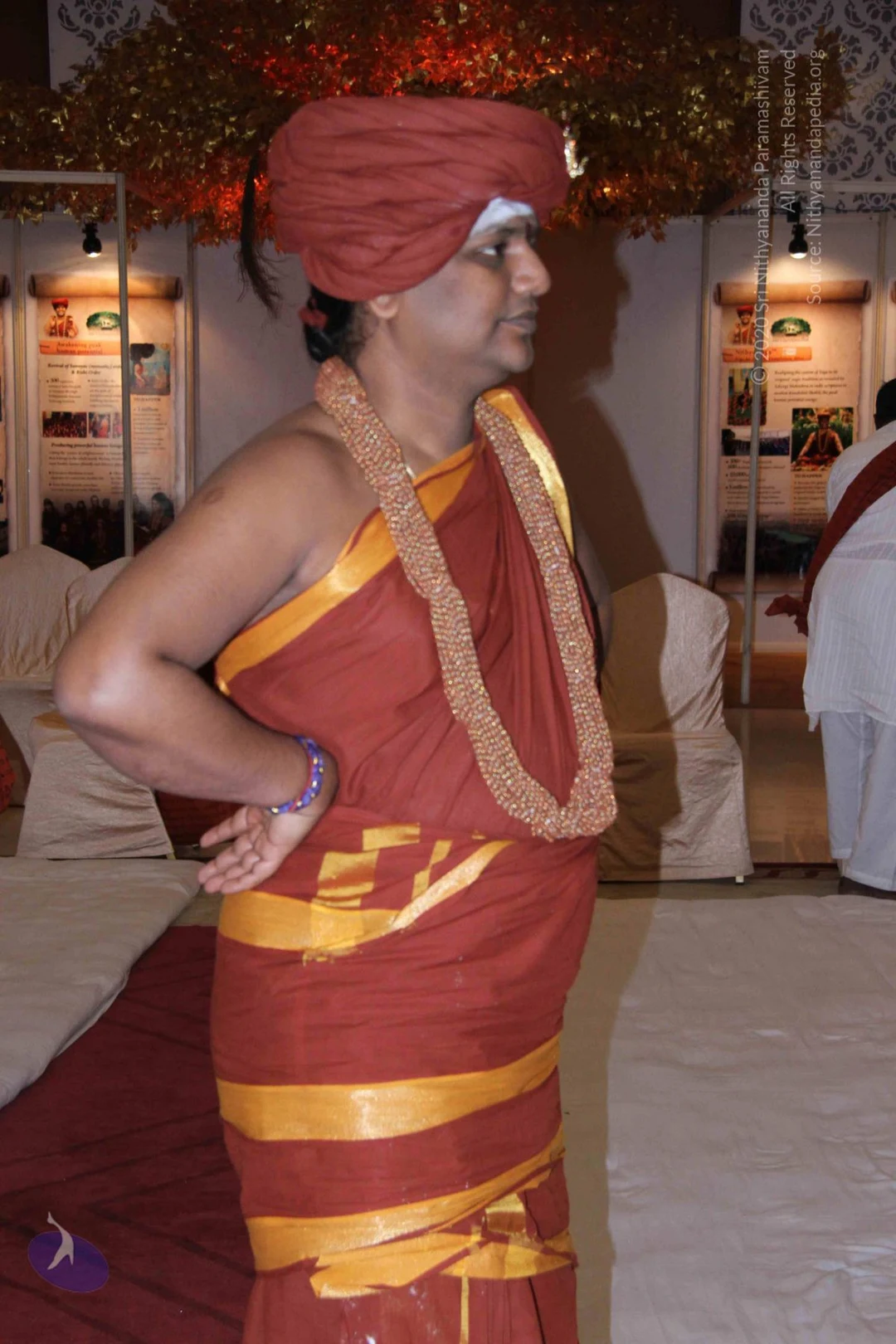
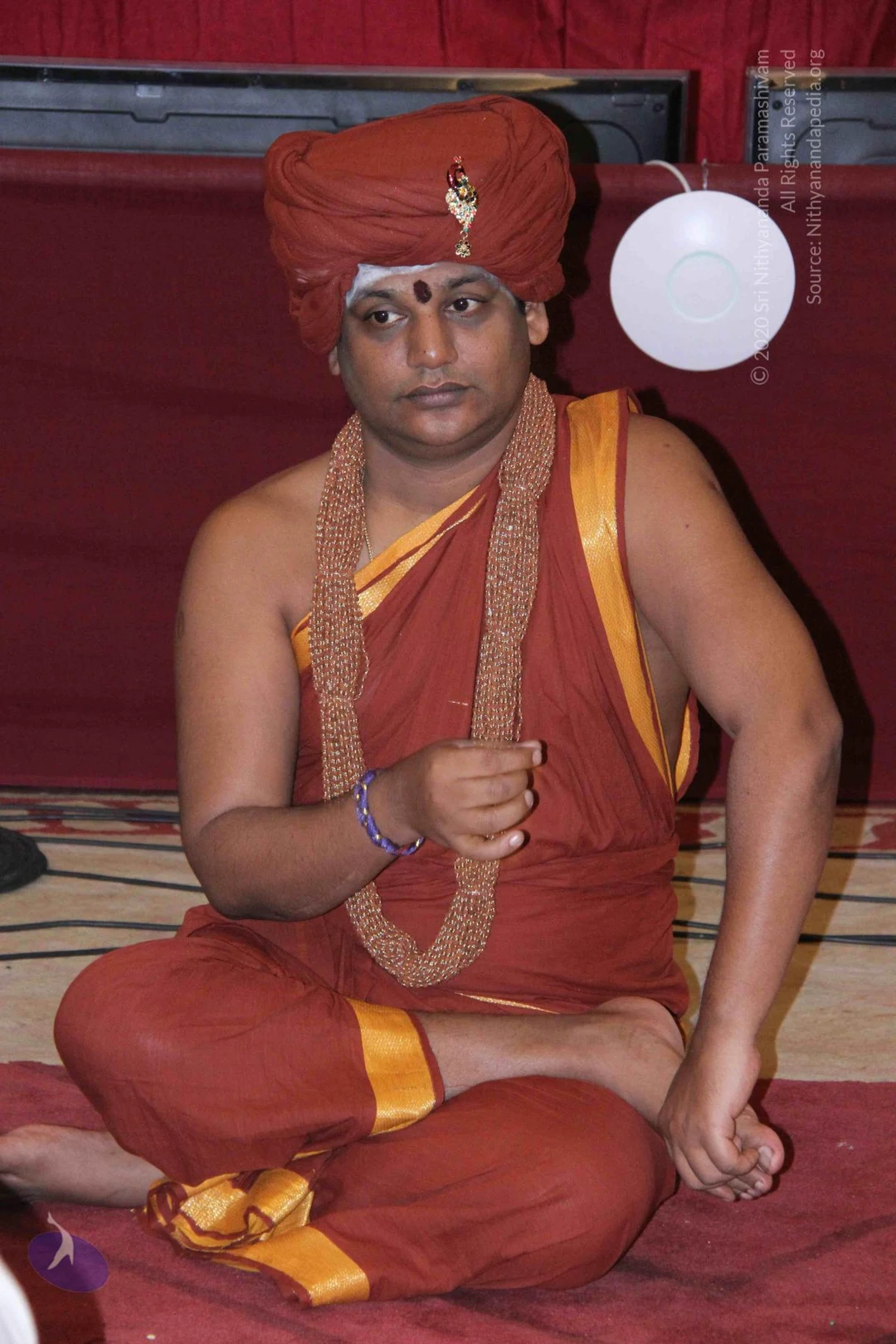
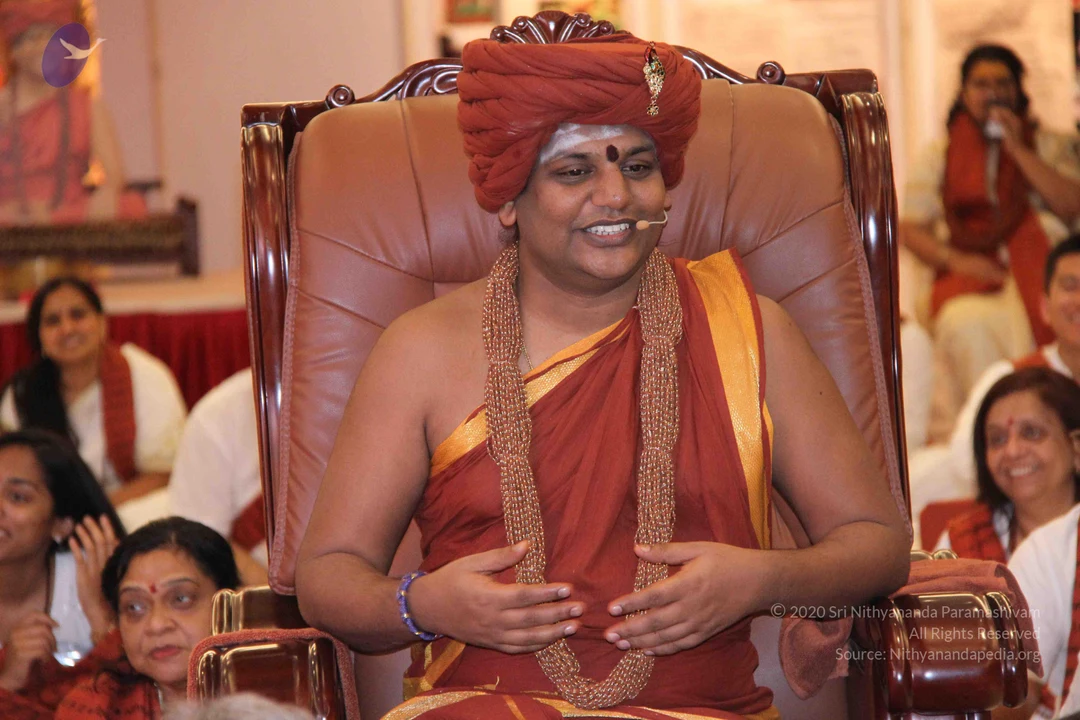
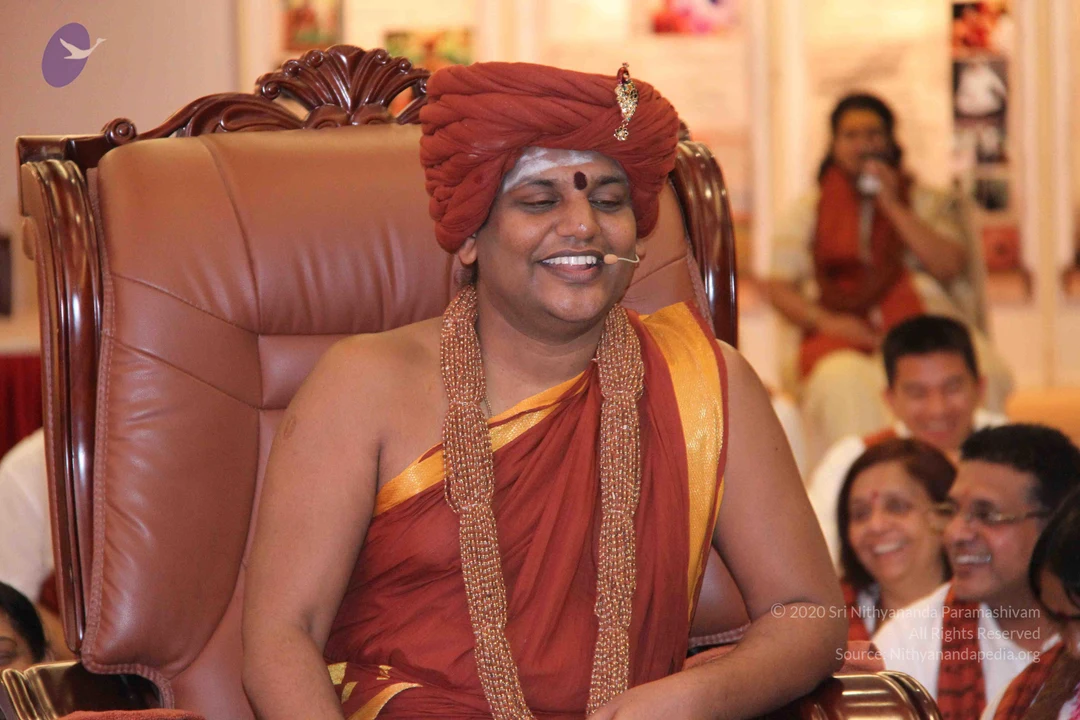
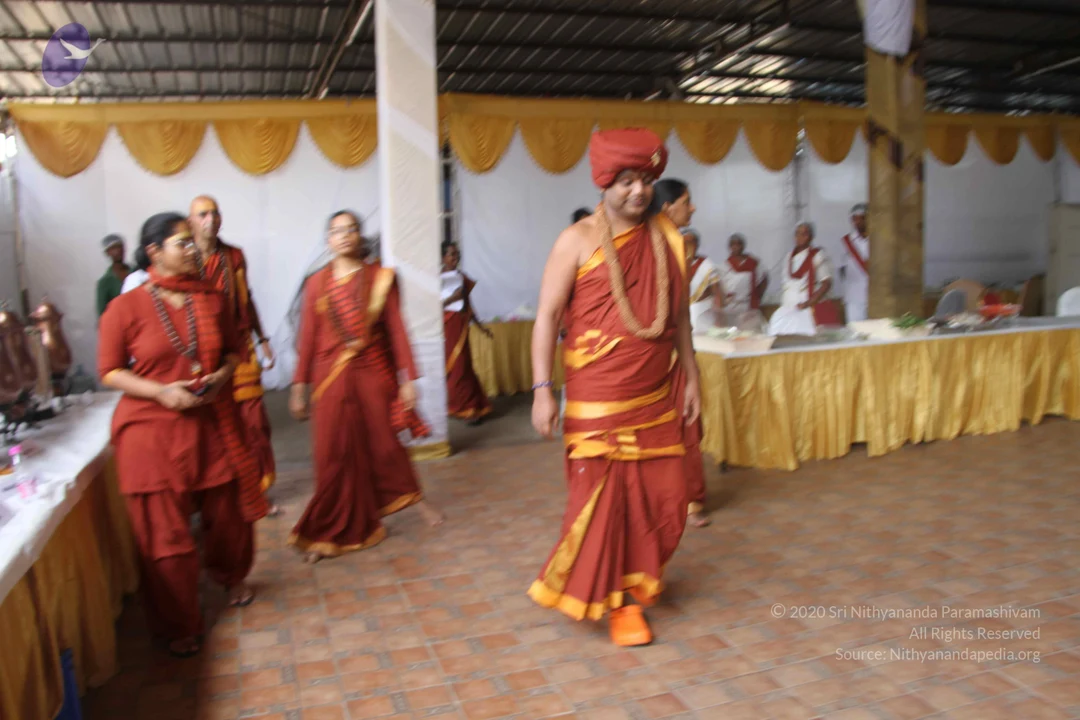
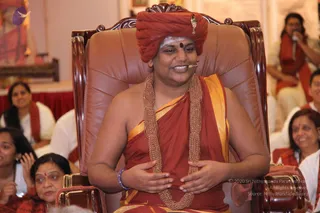
A photograph of a man seated on an ornate dark wooden throne with brown leather upholstery, speaking into a head-mounted microphone. He wears a red-orange turban with a gold ornament, a vertical tilak and a red bindi on his forehead, a red-orange shawl with a gold border over a bare shoulder, and a long multi-strand beaded necklace with ceremonial gold-toned beads, while his hands rest together in front of him. Behind him, seated devotees in white and red-orange attire listen; a woman at right holds a microphone and a painted deity image hangs in the background. Swamiji (probable) in the seat of the discourse, identified by a turban, ceremonial beaded necklace and saffron-gold shawl, giving a satsang discourse.A smiling man seated on an ornate brown leather throne-style chair at a satsang gathering. He wears a red-orange turban with a small jewelled ornament, a red-orange robe with a gold-and-saffron border, and a heavy beaded gold-coloured necklace. He has a white vertical tilak and a red bindi, and a small headset microphone is clipped near his face. Behind him a woman in red-orange clothing holds a microphone, and seated audience members, including a smiling woman in white and a man in glasses, watch. a person is seated in front, with the ornate throne, turban and saffron cues visible.A photograph of a procession walking across a tiled floor under a tent with gold-draped tables and a white canopy. In the centre, a man wearing a saffron-red turban, a long rudraksha-style bead mala and a red-and-gold draped robe with orange sandals walks forward; a probable Swamiji by appearance, in saffron robes with a turban and mala. Behind and beside him, several people in red and maroon robes and shawls walk along, and a few more in white and red stand near the back tables. Gold-clothed altar tables hold brass vessels and offerings on the left and right.A seated man in a deep red-orange turban and matching saffron-orange wrap sits in a brown leather armchair, raising one hand in a gesture while speaking. He wears a heavy gold-toned multi-strand necklace and a blue-and-gold beaded bracelet, and has a small red mark on his forehead above white markings. Behind him is a white panel with an ornate golden floral pattern. A blurred audience member's head and shoulders fill the lower left foreground, indicating a satsang discourse. Probable Swamiji seated for discourse, identified by the turban, saffron wrap and gold necklaces.A man in a rust-orange turban and orange-saffron robe sits on an ornate brown leather throne-style chair, gesturing with his right index finger raised as he speaks. He wears a long beaded gold-toned necklace and a blue beaded bracelet, with a white marking on his forehead. Behind him, seated devotees in red and white clothing listen in a satsang hall with a white floral wall motif. Swamiji (probable) is the speaker, identified by the turban, saffron robes, ornate gold necklaces and throne-like seat; the others are devotees and listeners.A photograph of a satsang hall where a man in a maroon-red dhoti and matching shawl with gold borders, wearing a red turban and a beaded mala, walks down a red carpet between two rows of seated devotees. Behind him stands a golden decorative tree backdrop with lights. Devotees in white kurtas and dhotis, many wearing red-and-cream shawls, sit or stand along the aisle, while a small boy in white walks barefoot beside them. Walls display framed panels and lit exhibit alcoves. The man is an appearance-based candidate for a person, identified by his distinctive red turban, saffron-toned robes and garland cues, but the appearance is not conclusive enough to confirm. Roughly 15 people are visible.

Completion-Session

62 photosSource gallery
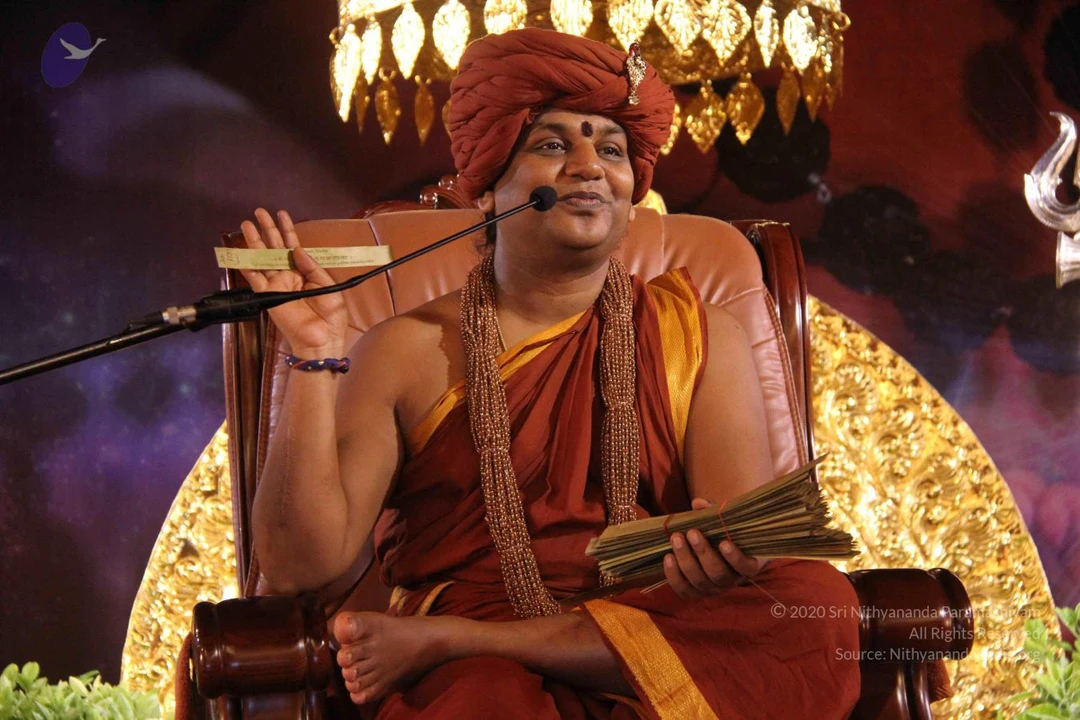
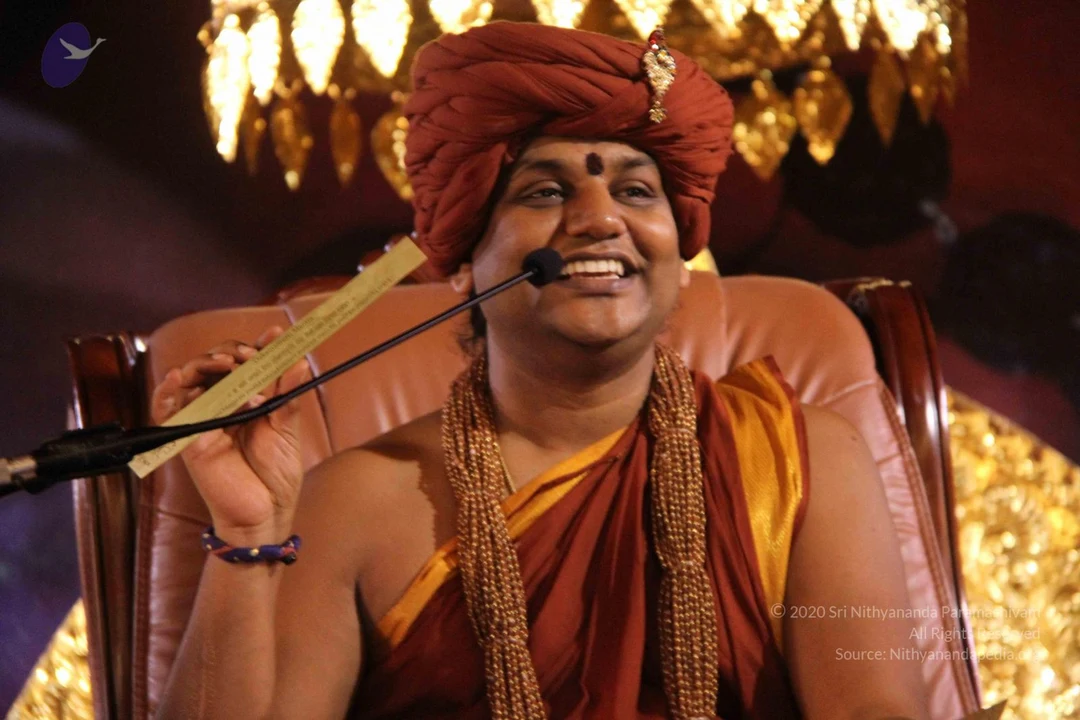
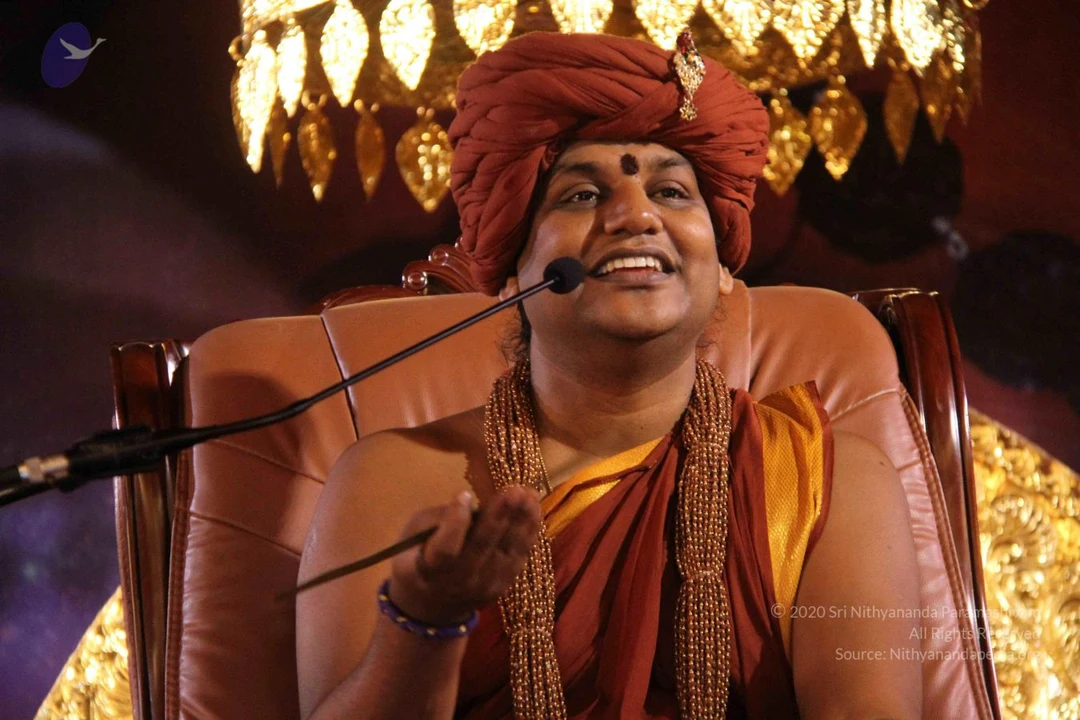
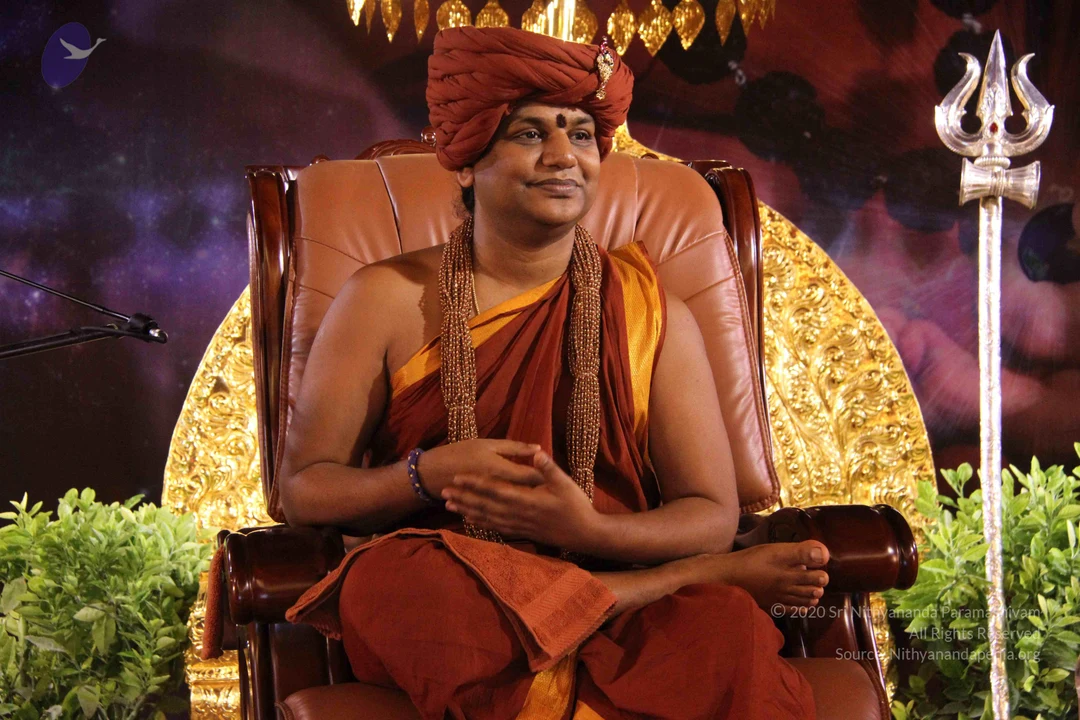
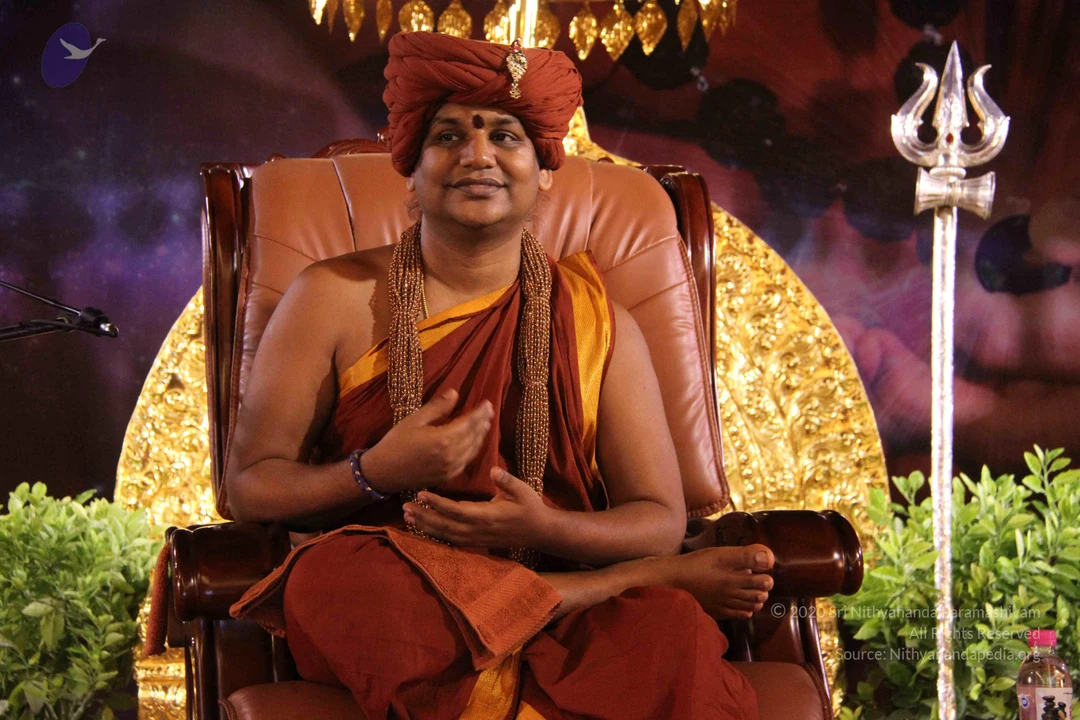
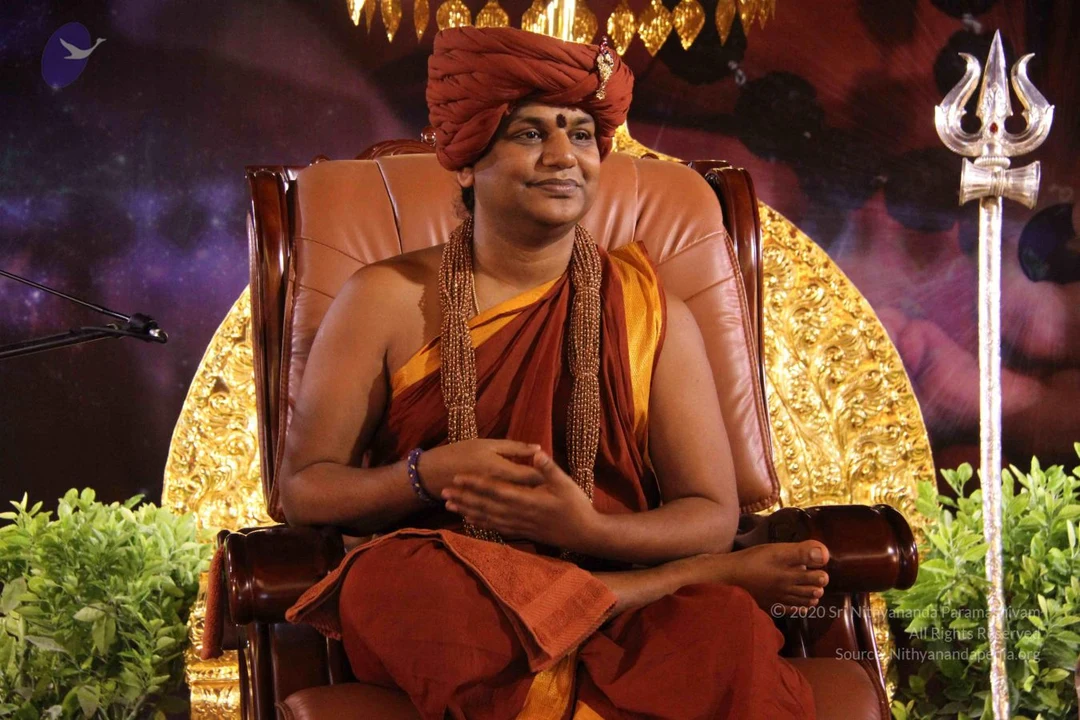
A man seated cross-legged on a brown leather throne-style chair, wearing a red-orange turban with a jeweled ornament at the front and a red-orange shawl edged in gold, with a long beaded rudraksha-style mala of multiple strands draped over his shoulders. He has a red bindi on his forehead, a blue beaded bracelet on one wrist, and his hands are clasped in his lap while a microphone on a boom stand is positioned near his face. Behind him hangs an ornate golden canopy with glittering fringe. The scene is a photograph of a single seated speaker in a formal discourse hall, and the appearance-based cues of turban, saffron-toned clothing, and mala are consistent with the page's reference to a Nithya Satsang, so this is a probable Swamiji (probable) candidate presented in person.A photograph of a man seated in a brown leather armchair during a satsang, speaking near a microphone on a boom stand. He wears a red-orange turban with a small gold ornament, a red-orange robe with gold borders, a bindi, and a long gold-beaded necklace. He holds his right hand near his chest and looks upward. Behind him an ornate gold canopy with leaf-shaped pendants and a gold patterned backdrop frame a purple-blue backdrop. Appearance-based label: Swamiji (probable), with long-style turban, ornate robes and ceremonial gold necklace cues. Only one person is physically present.A photograph of a man seated on an ornate brown leather throne-style armchair during a satsang discourse. He wears a rust-red turban with a gold ornament at the front, a red-orange saffron robe with a gold-bordered shawl, and a long multi-strand gold beaded necklace. A small red bindi marks his forehead, a purple beaded bracelet is on his wrist, and his bare feet are crossed. A microphone on a boom stand is positioned near his face. Behind him is a large gilded canopy with hanging gold leaf ornaments and a golden disc backdrop against a dark starry background. Swamiji (probable): the figure wears a turban, saffron robes, a gold necklace and sits enthroned, matching the satsang setting. Only one person is physically present.A man seated in a brown leather armchair speaks into a microphone on a stand, one hand raised in a teaching gesture. He wears a red-orange turban with a small red bindi, a saffron-orange robe with yellow borders, and a thick beaded necklace of brown rudraksha-style mala beads, with a bracelet on his wrist. His feet are bare. Behind him a large gold-trimmed circular backdrop with a cosmic purple-blue sky hangs beside a silver trident on the right and green plants in the foreground. A gold chandelier hangs above. Appearance-based candidate: Swamiji (probable), seated in the speaker's chair during a satsang discourse, identified by the saffron robe, turban, mala necklace and trident setting.A photograph of a man seated in a brown leather armchair on a stage, speaking into a microphone on a boom stand. He wears a red-orange turban with a gold ornament at the front, a red-orange robe with yellow trim, a thick multi-strand gold-coloured bead necklace, and a small red bindi on his forehead. Behind him is a large gold ornate backdrop against a dark purple space-like background with a gold chandelier above.A photograph of a man seated in a brown leather armchair speaking into a clip-on microphone on a stand. He wears a rust-red turban with a gold ornament at the side, a red-brown robe with a gold-yellow border, and long gold-coloured beaded necklaces. A red dot marks his forehead and a blue beaded bracelet is on his wrist. Behind him stand a golden ornate backdrop and a glowing chandelier with gold pendants. Appearance-based label: Swamiji (probable), seated and speaking, with a turban, saffron-red robes and ornate malas as qualifying cues. One person is visible.

Energy-Darshan

37 photosSource gallery
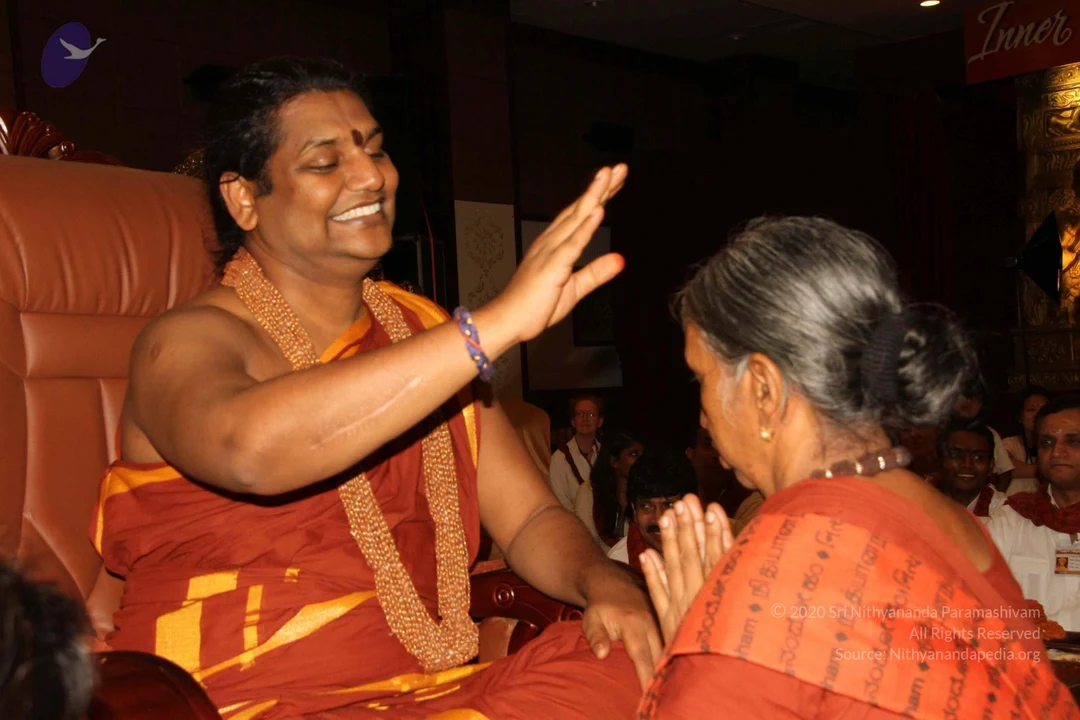
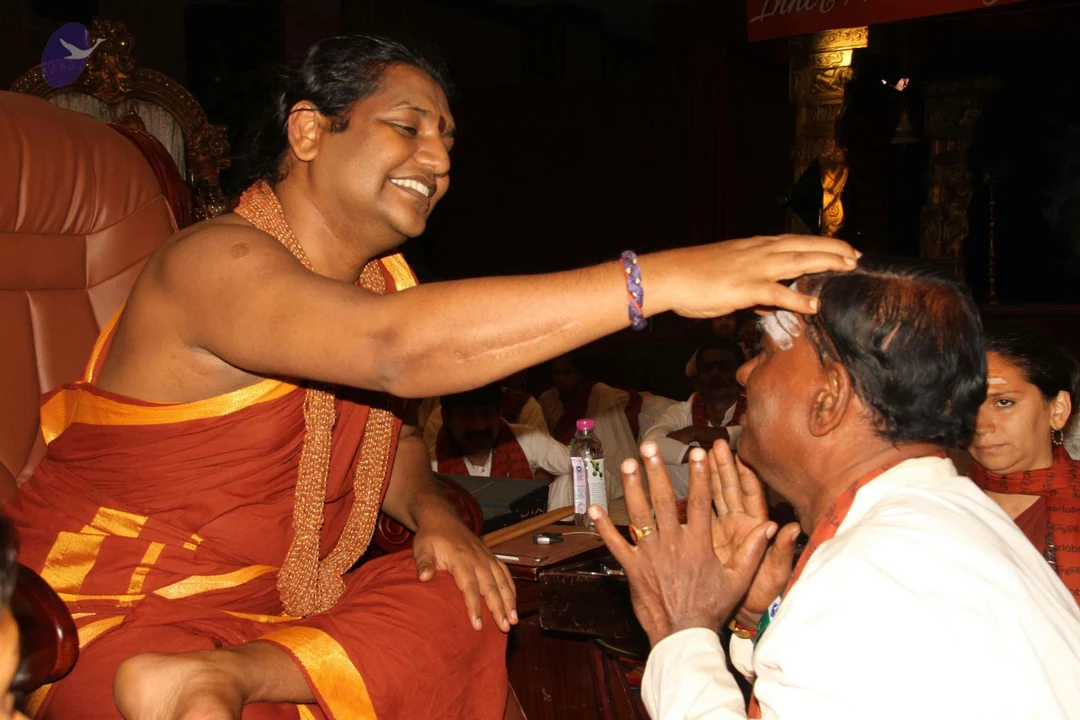
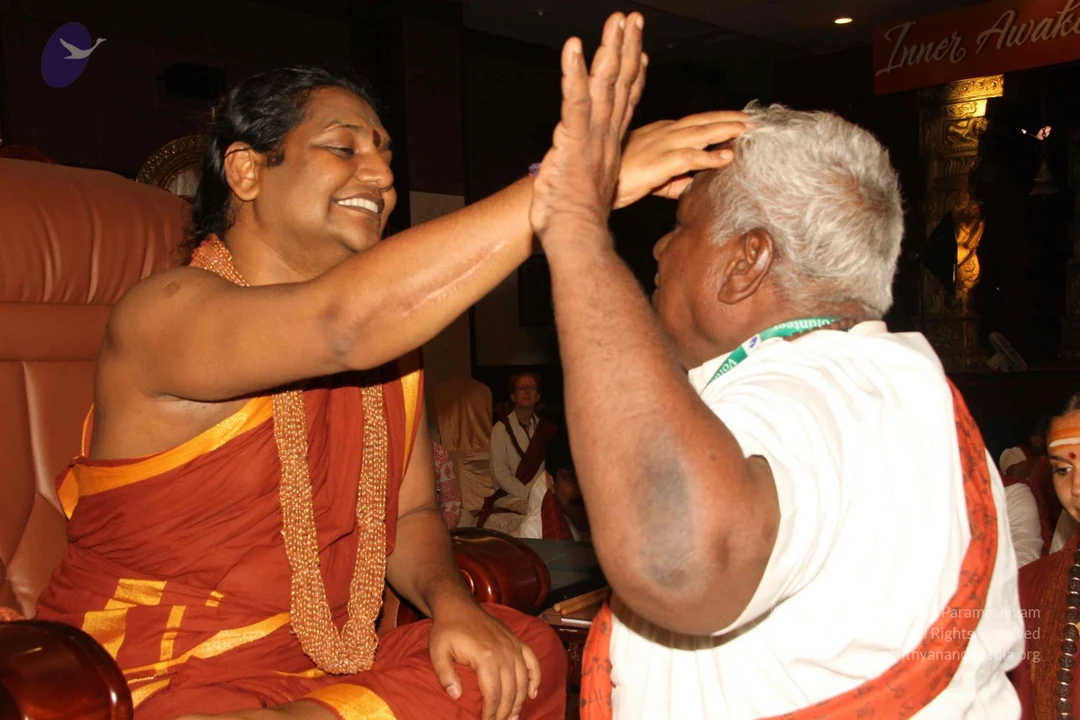
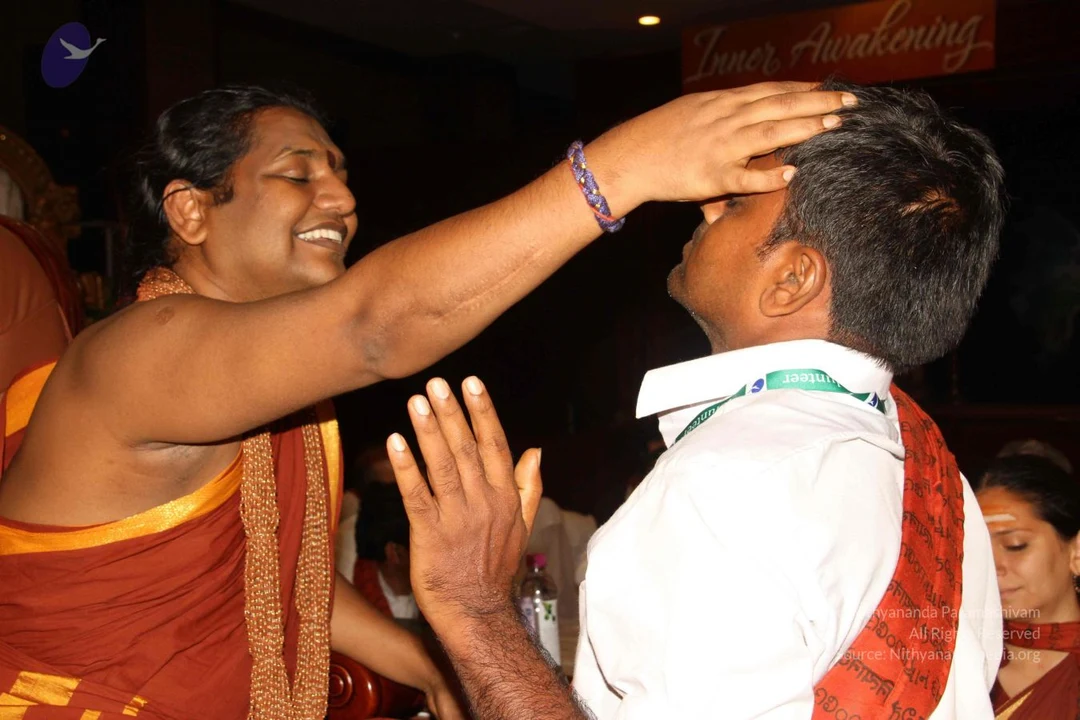
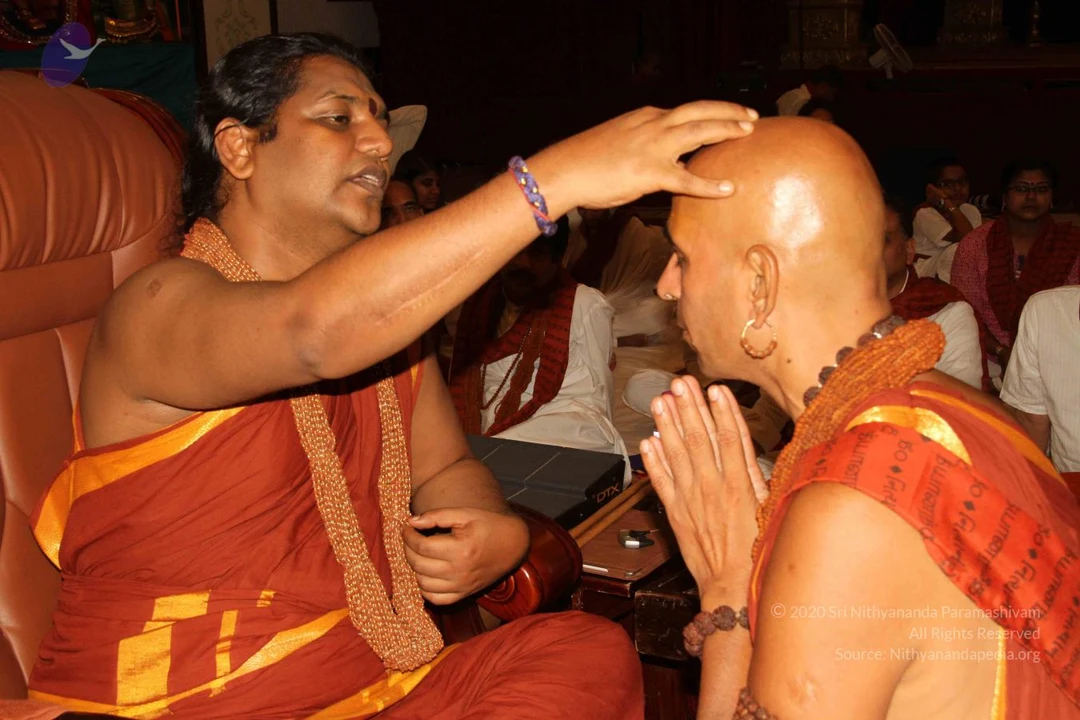
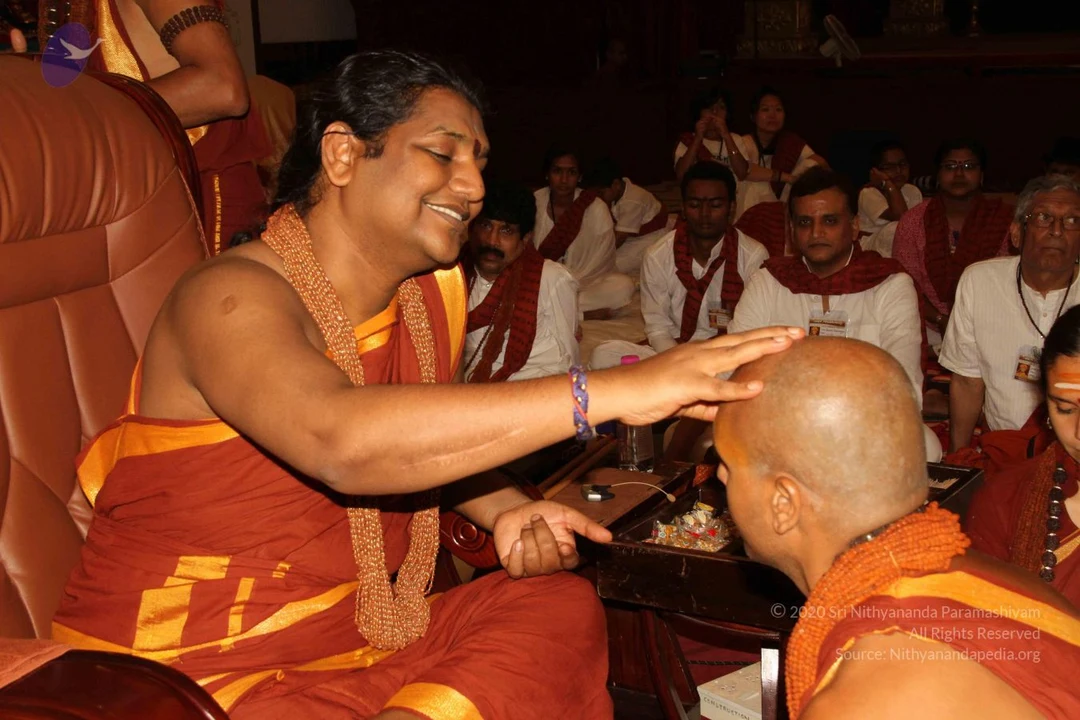
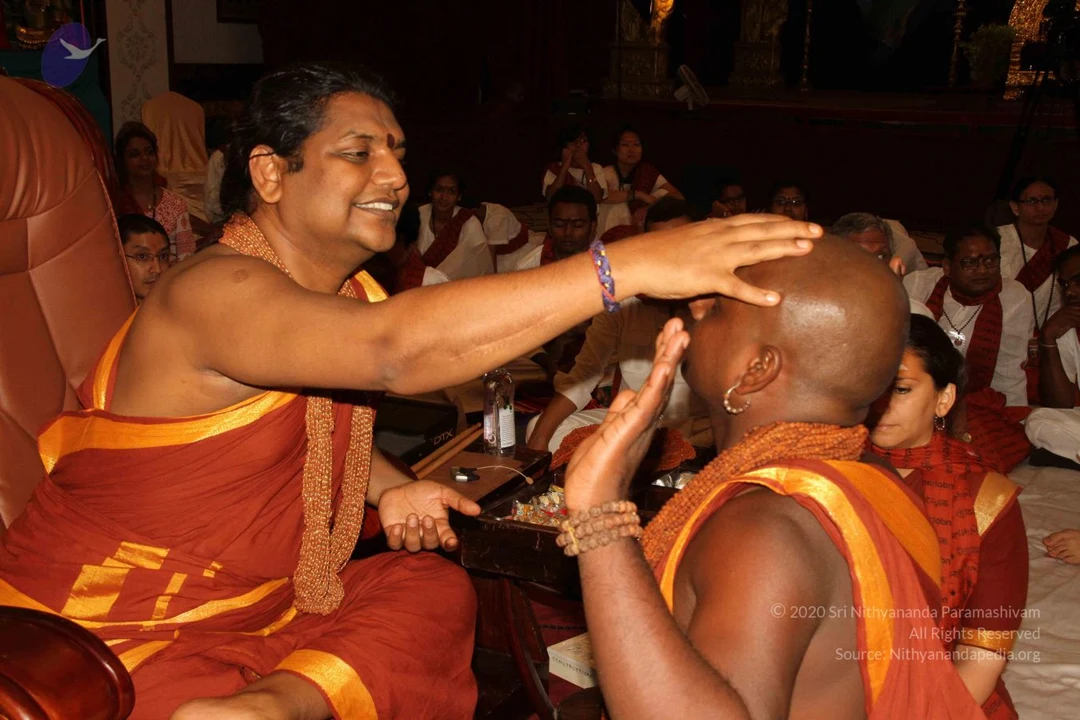
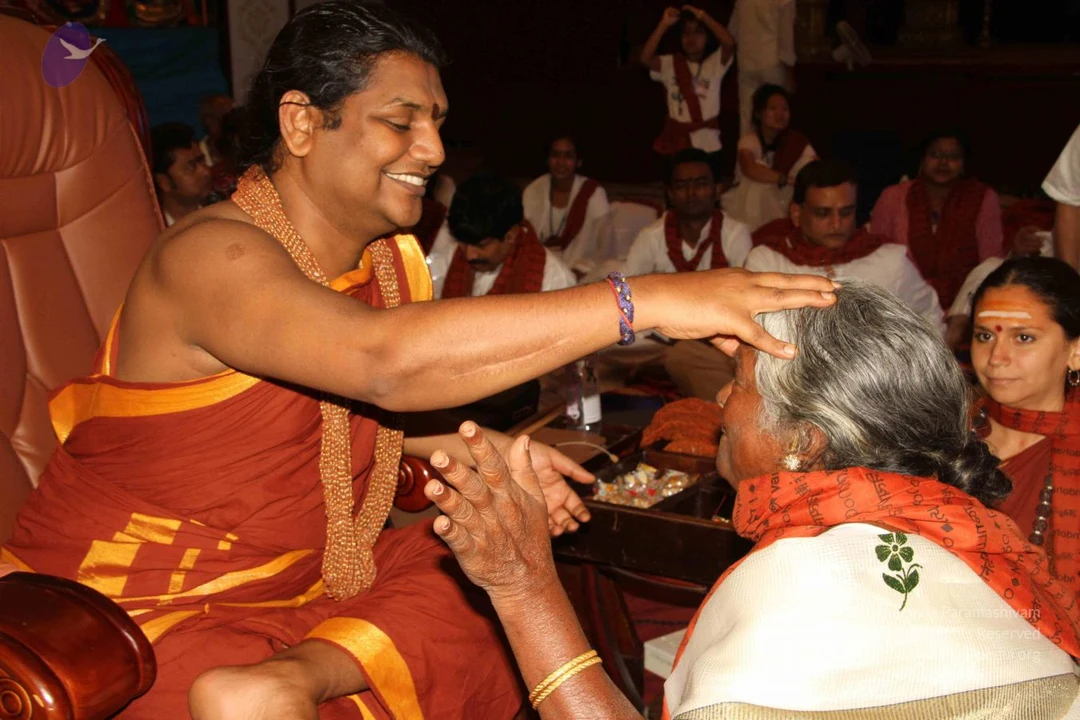
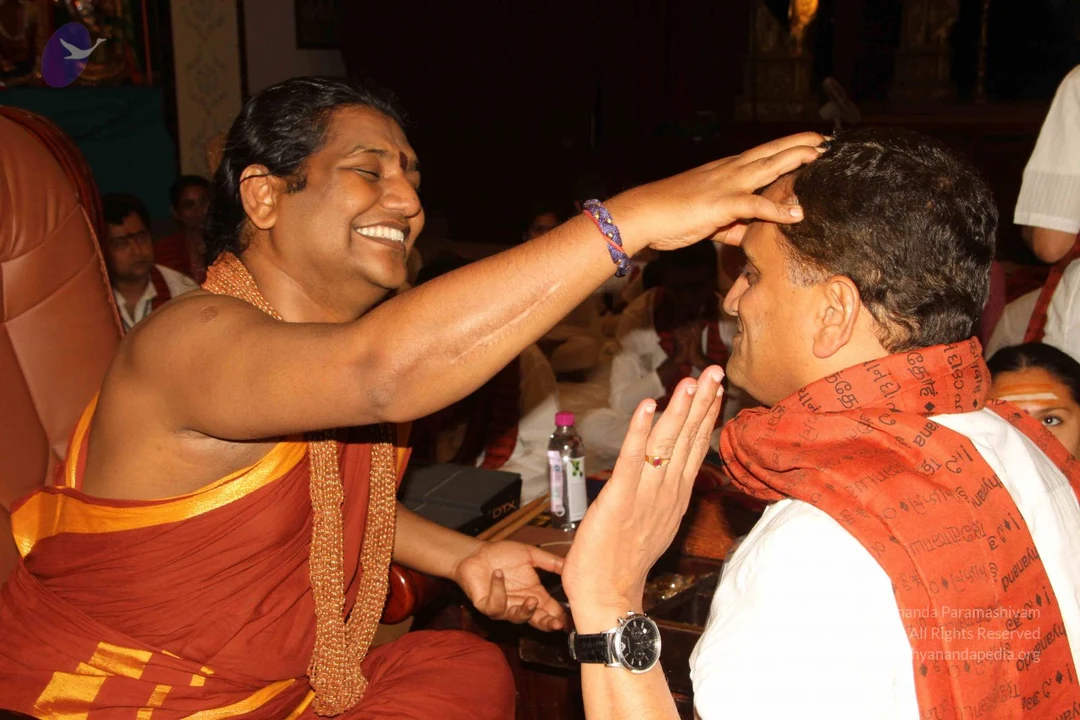
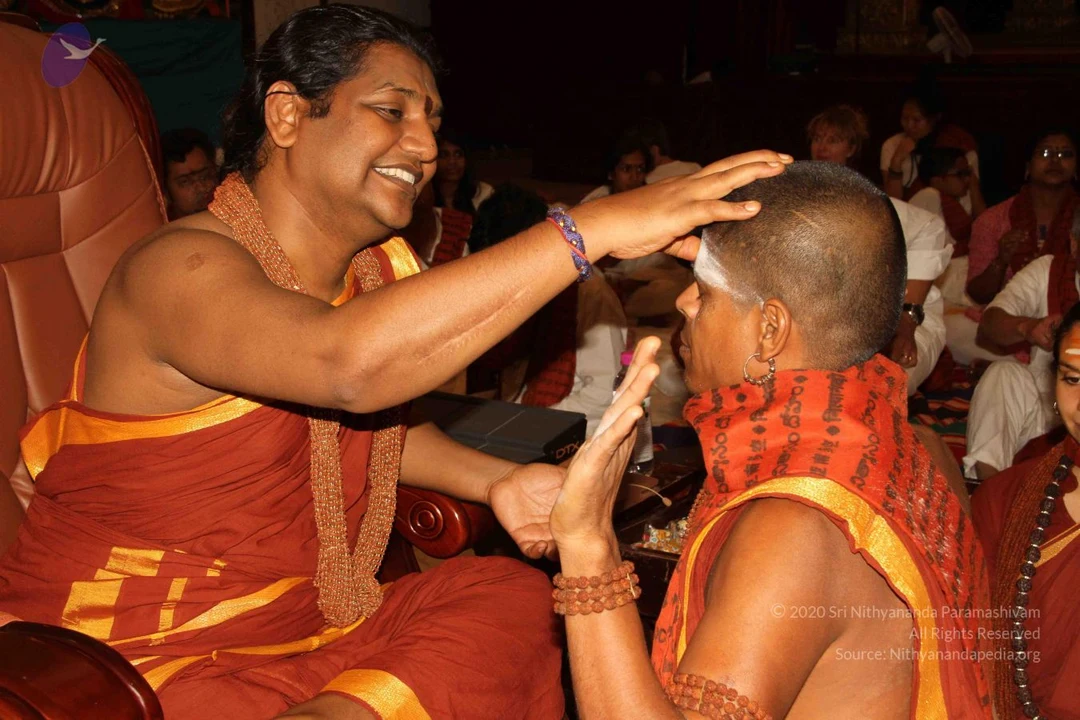
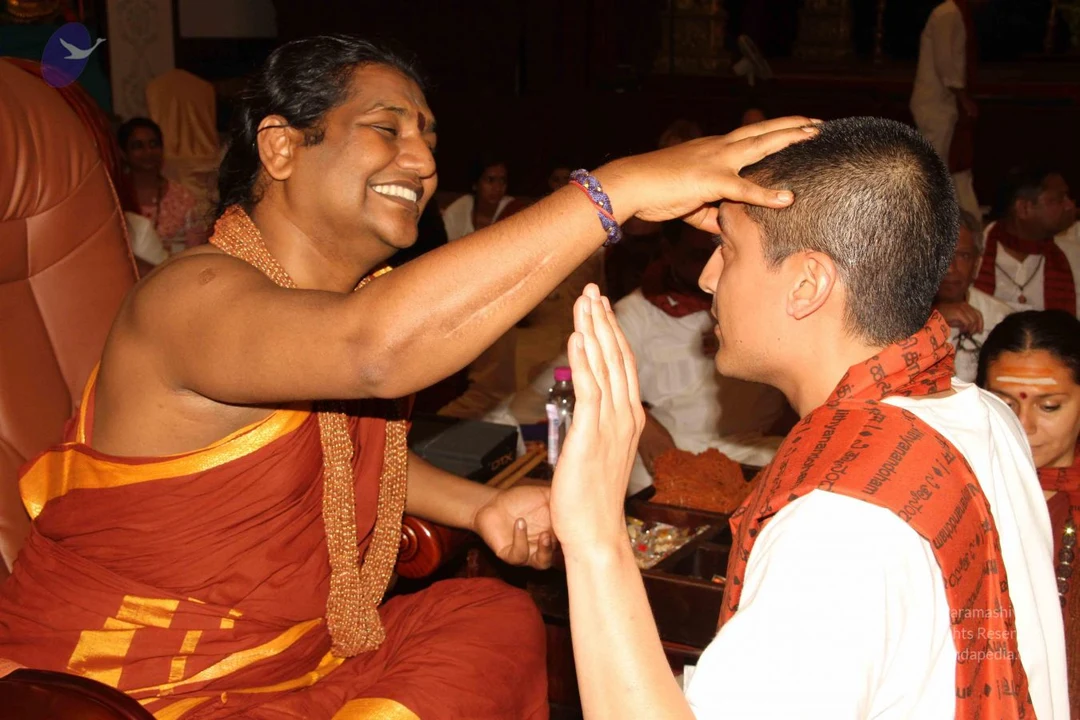
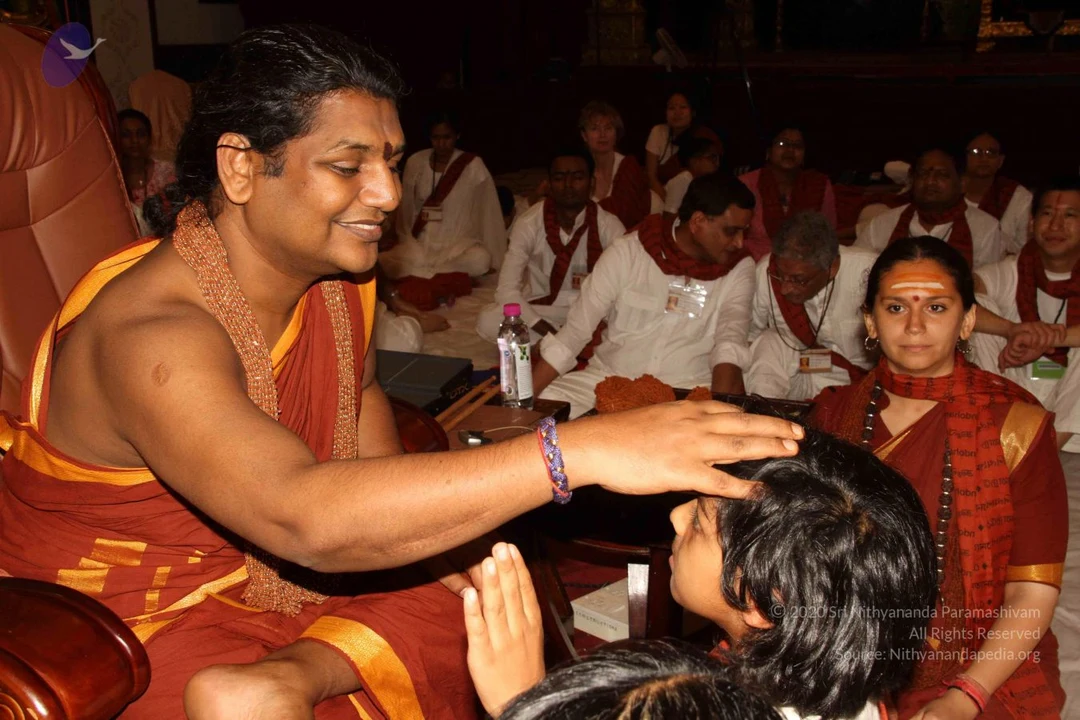
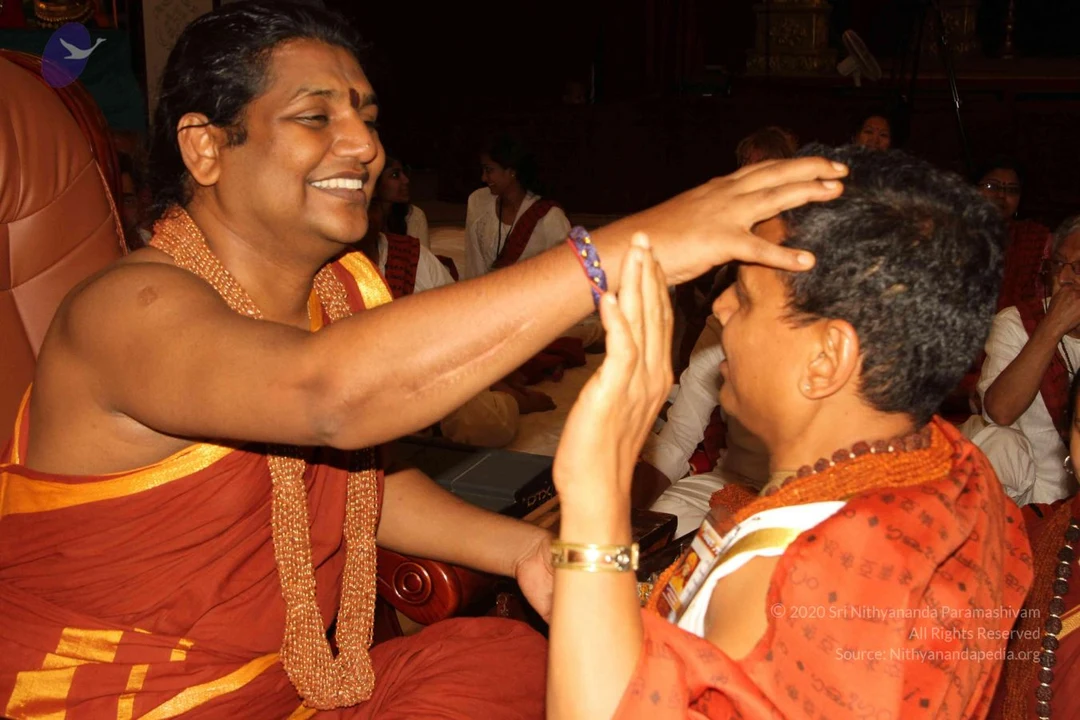
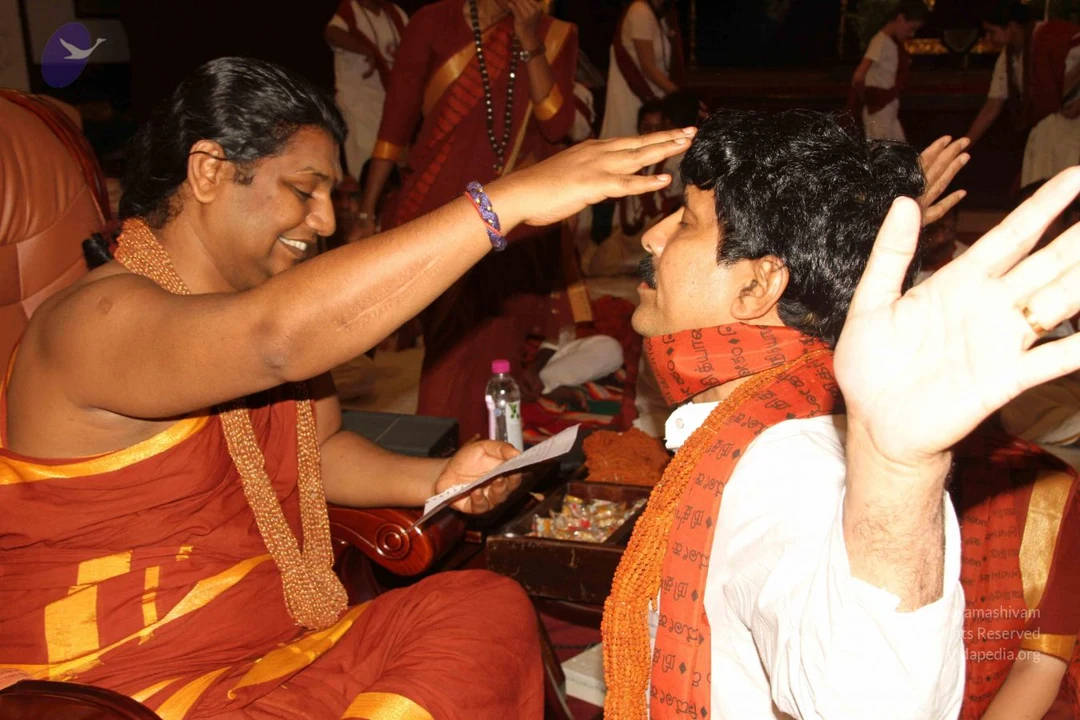
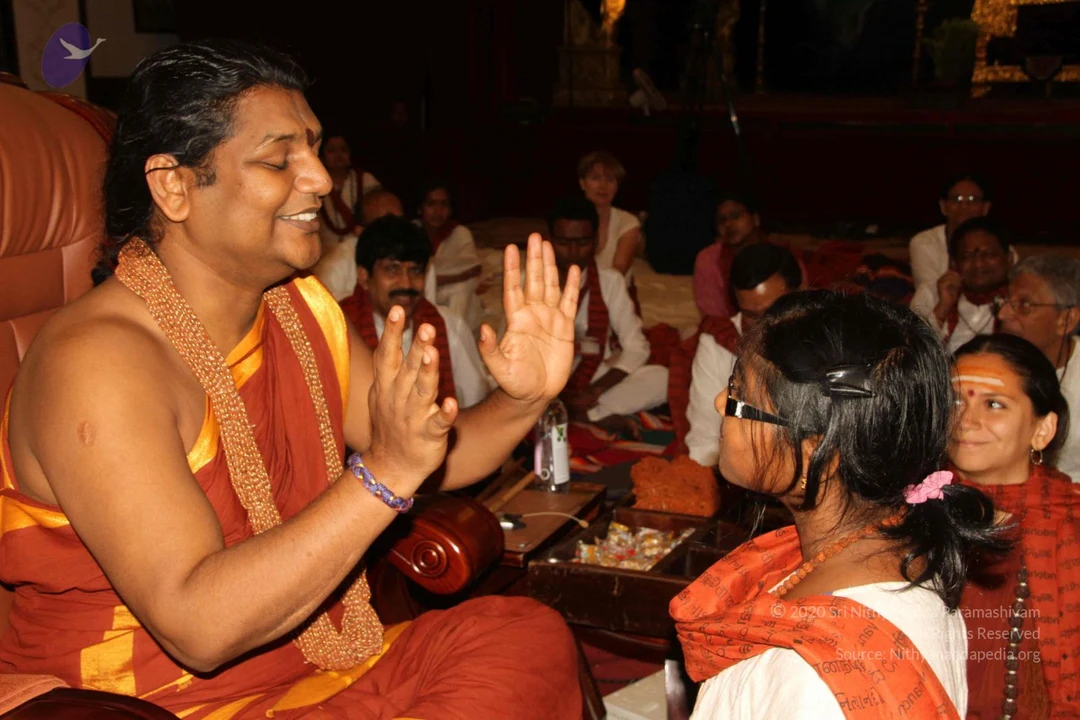
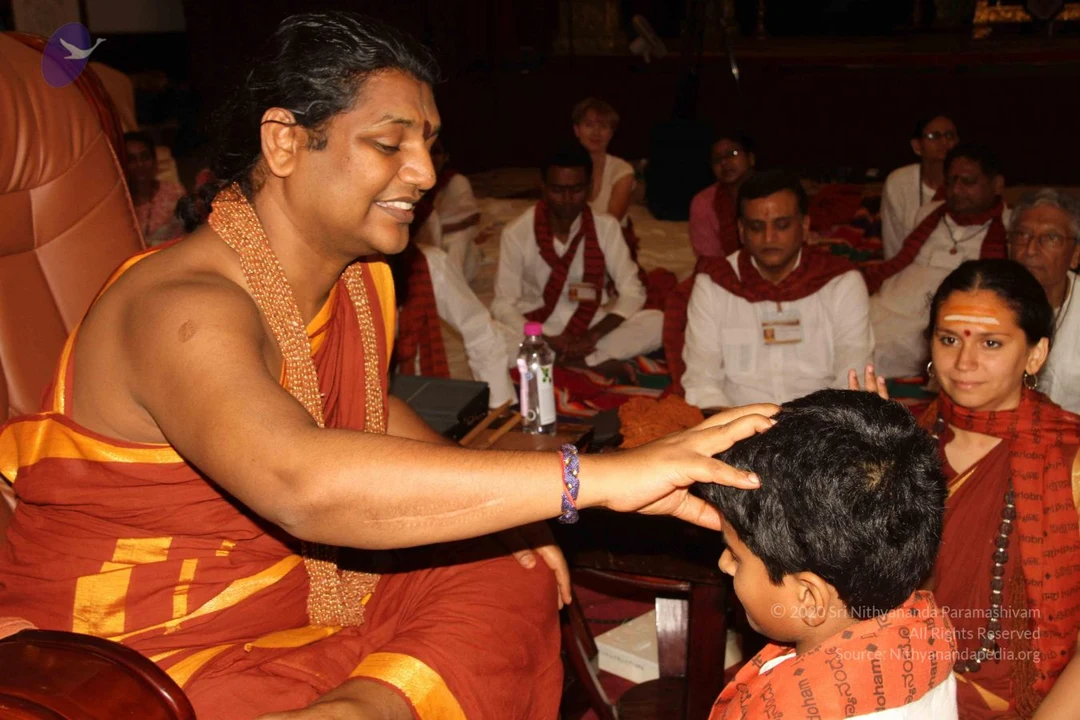
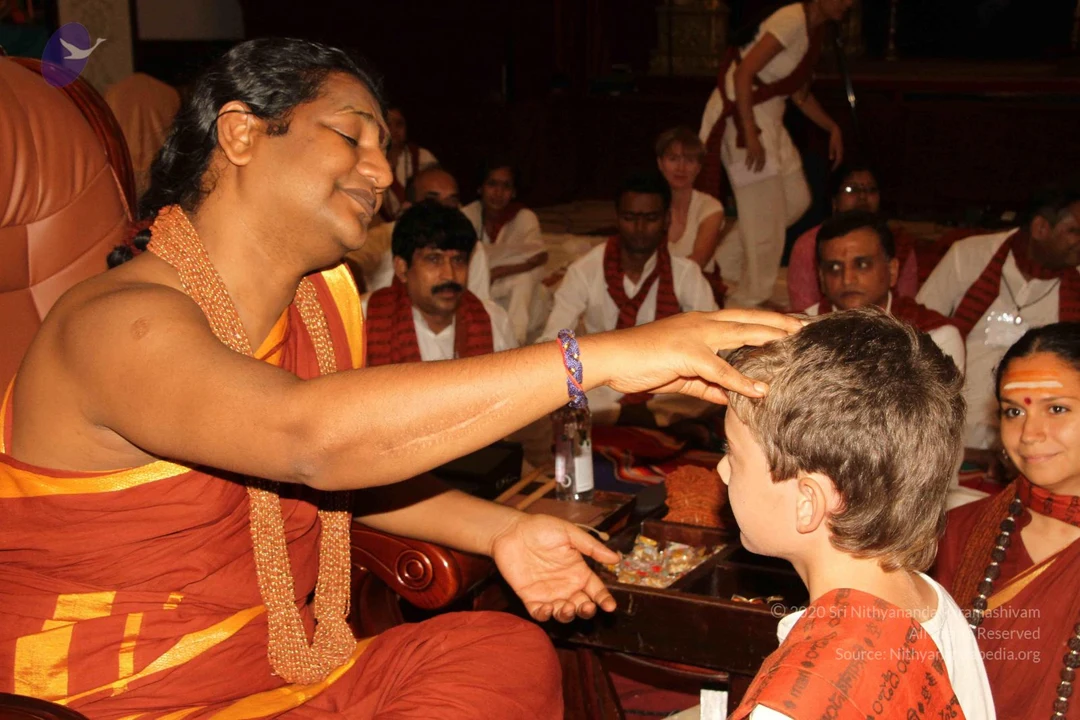
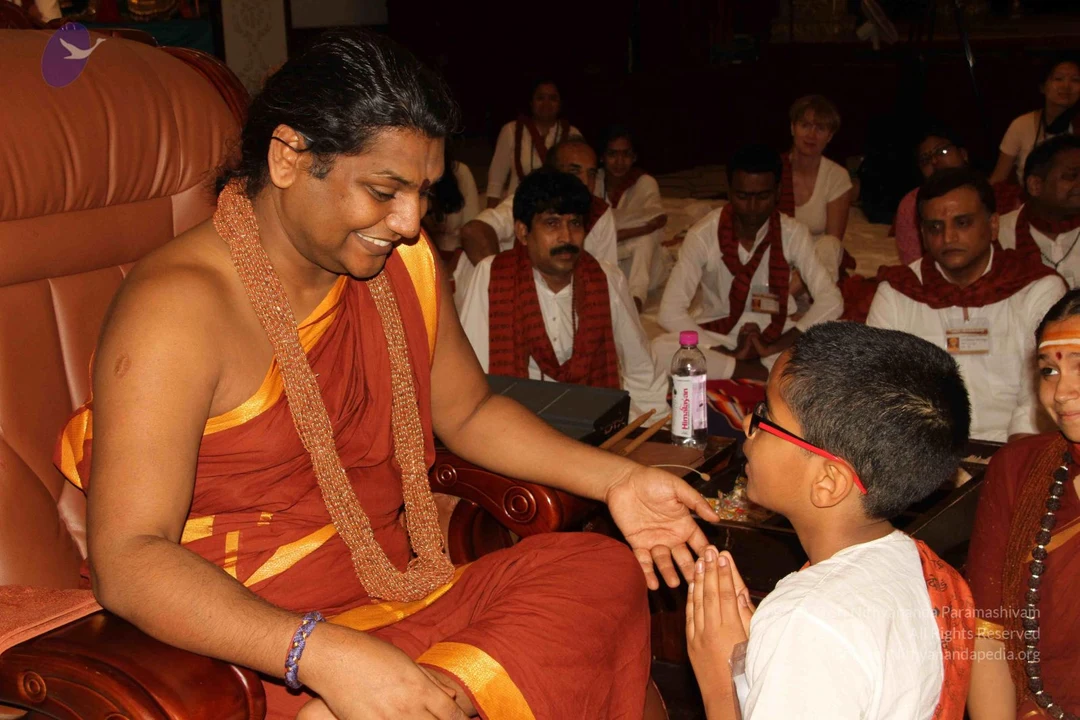
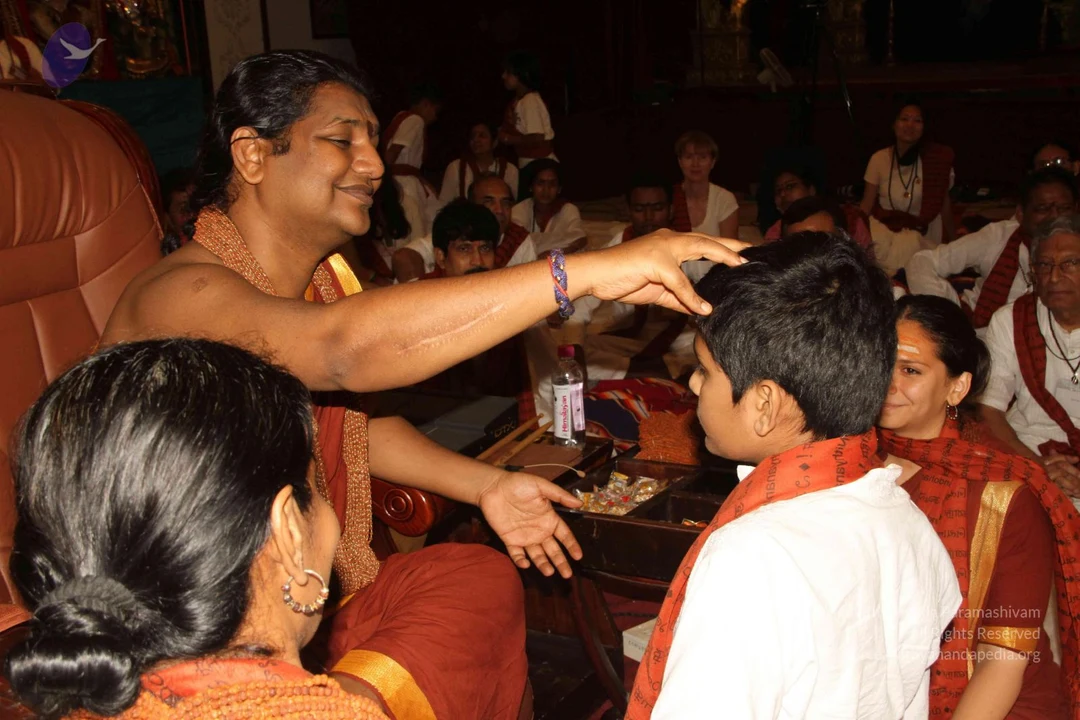
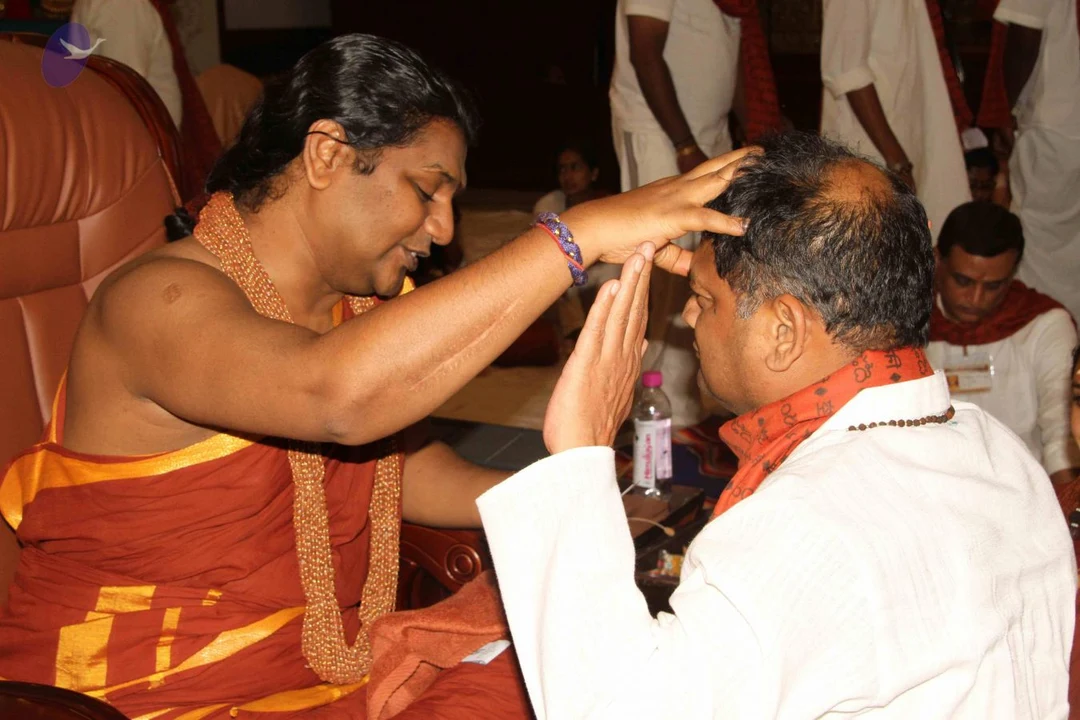
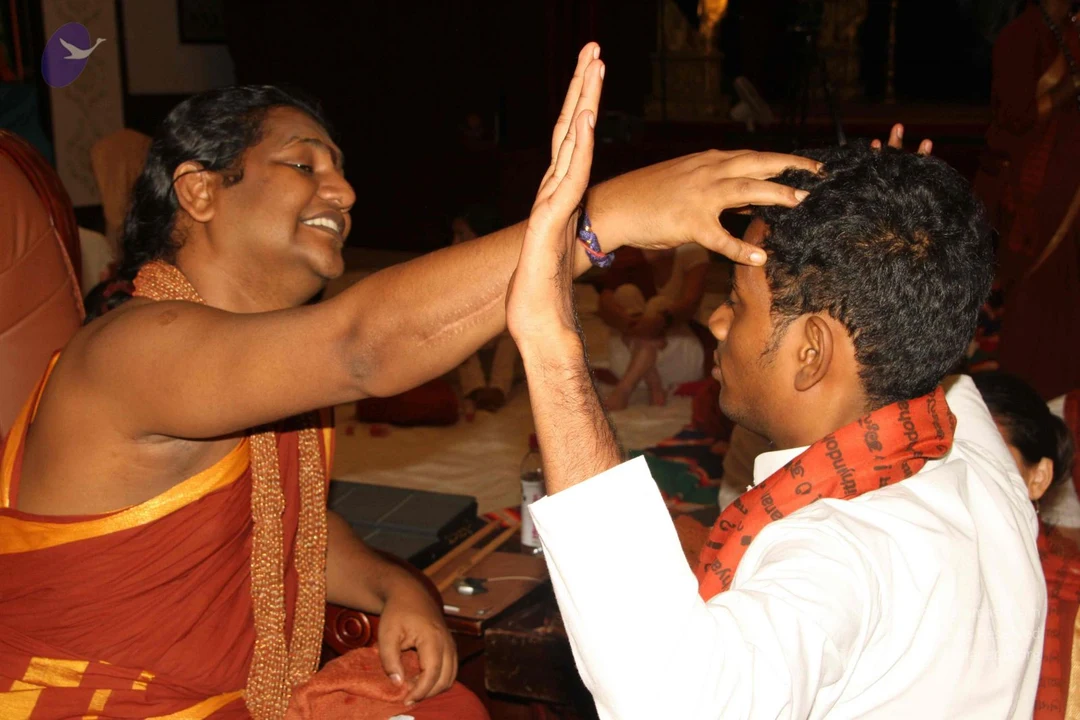
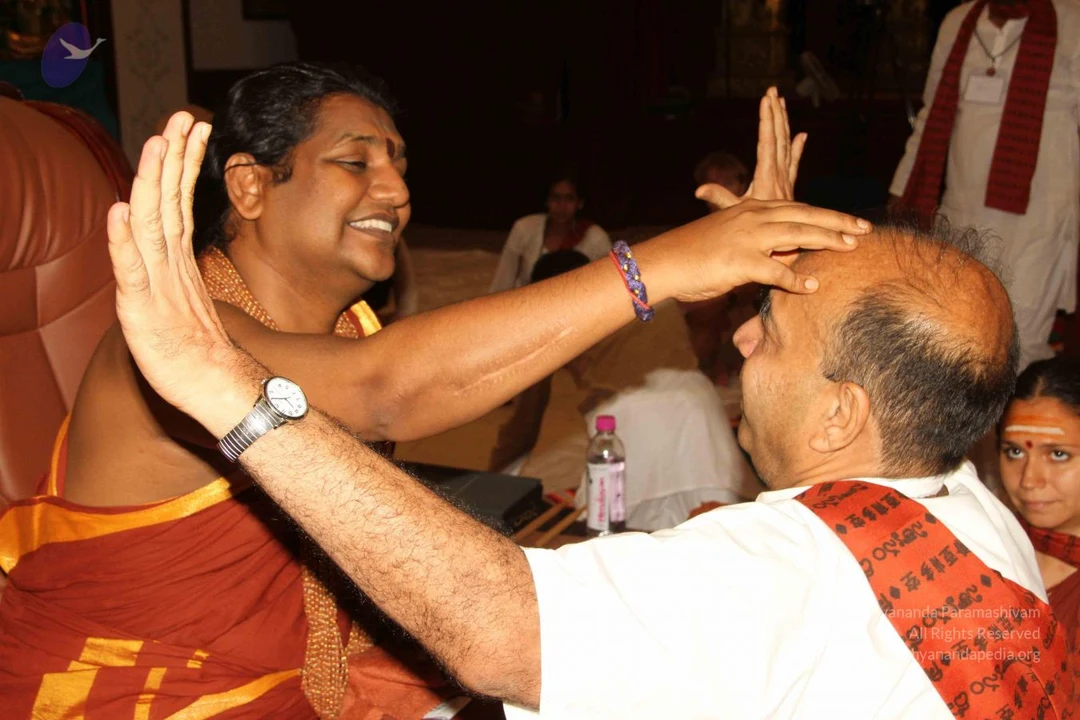
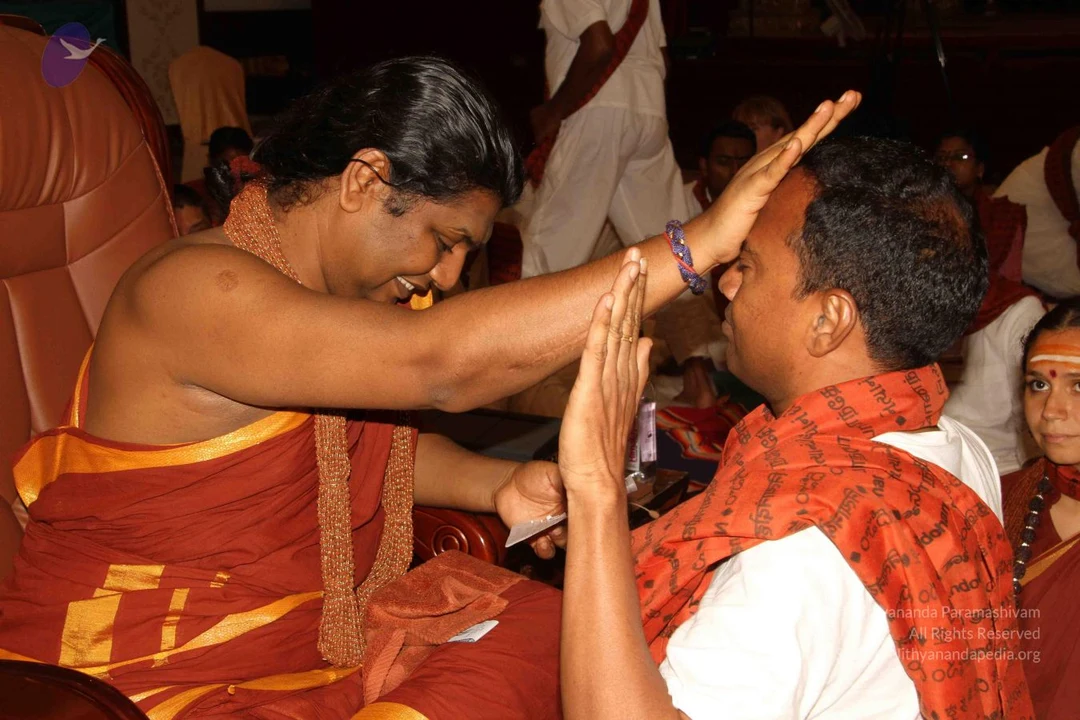
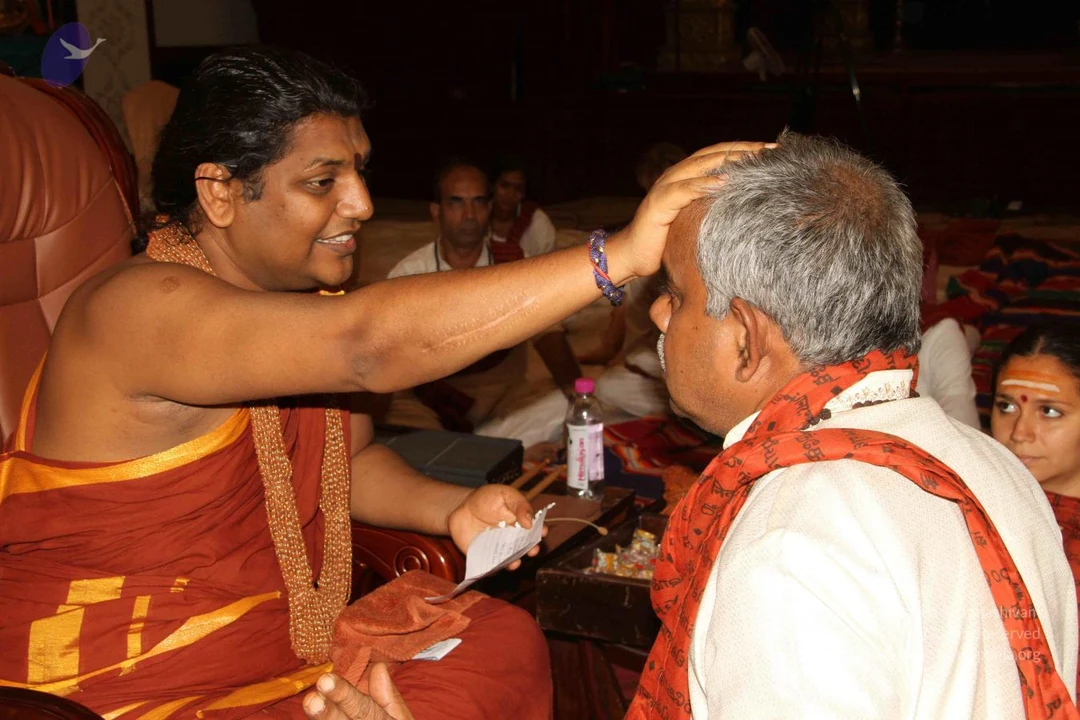
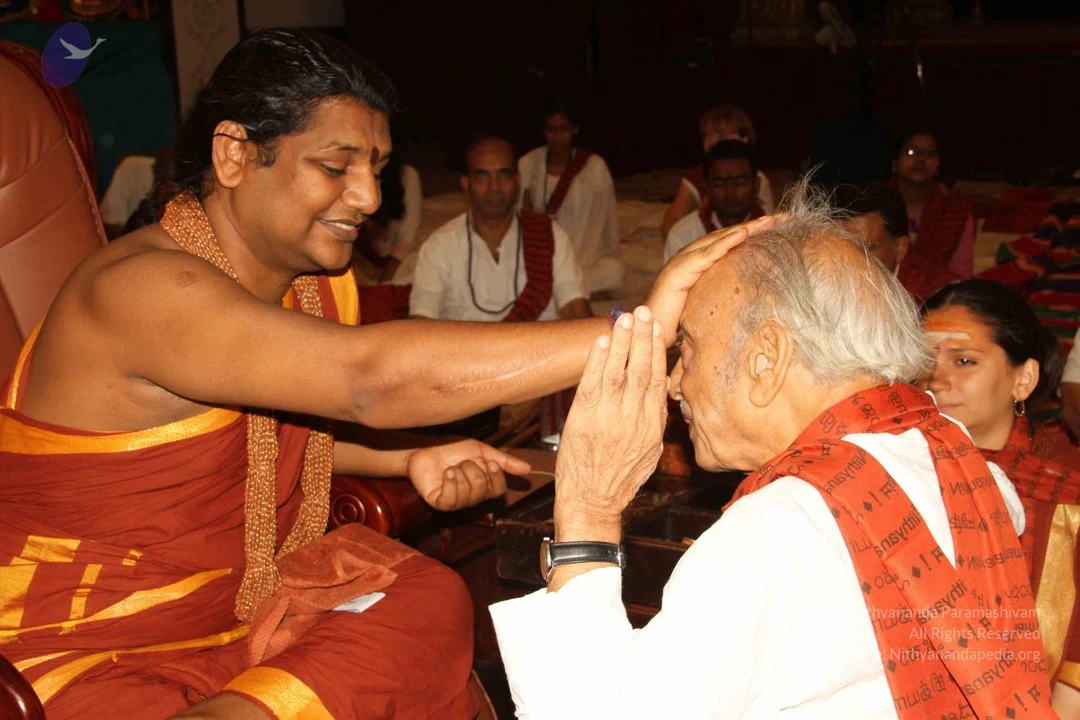
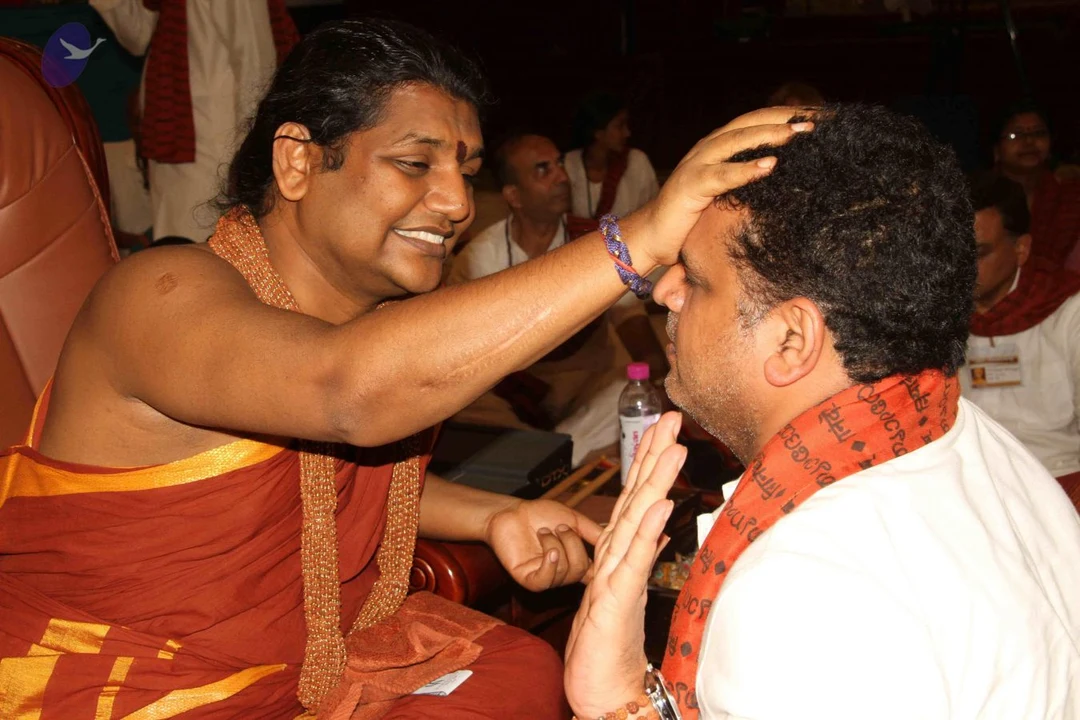
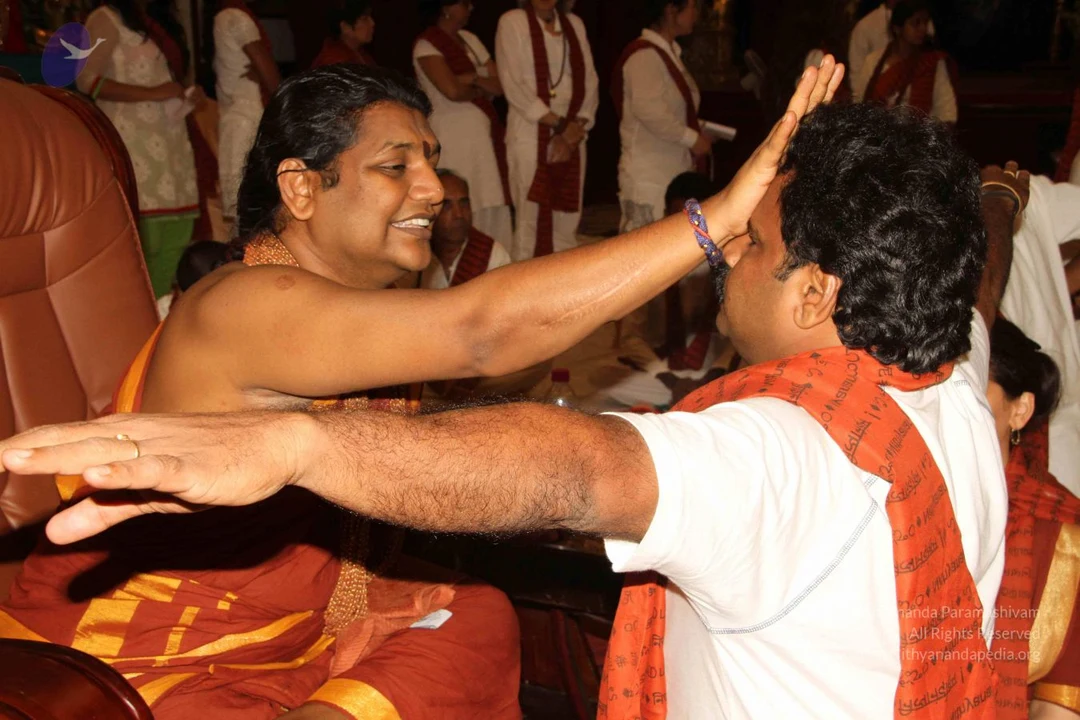
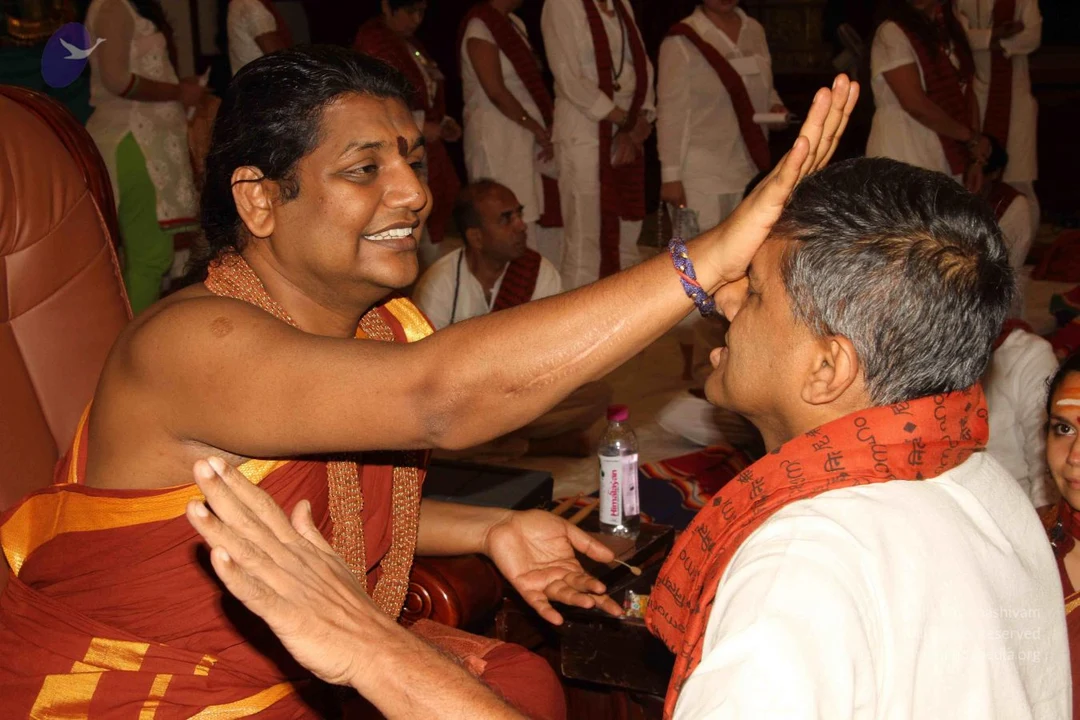
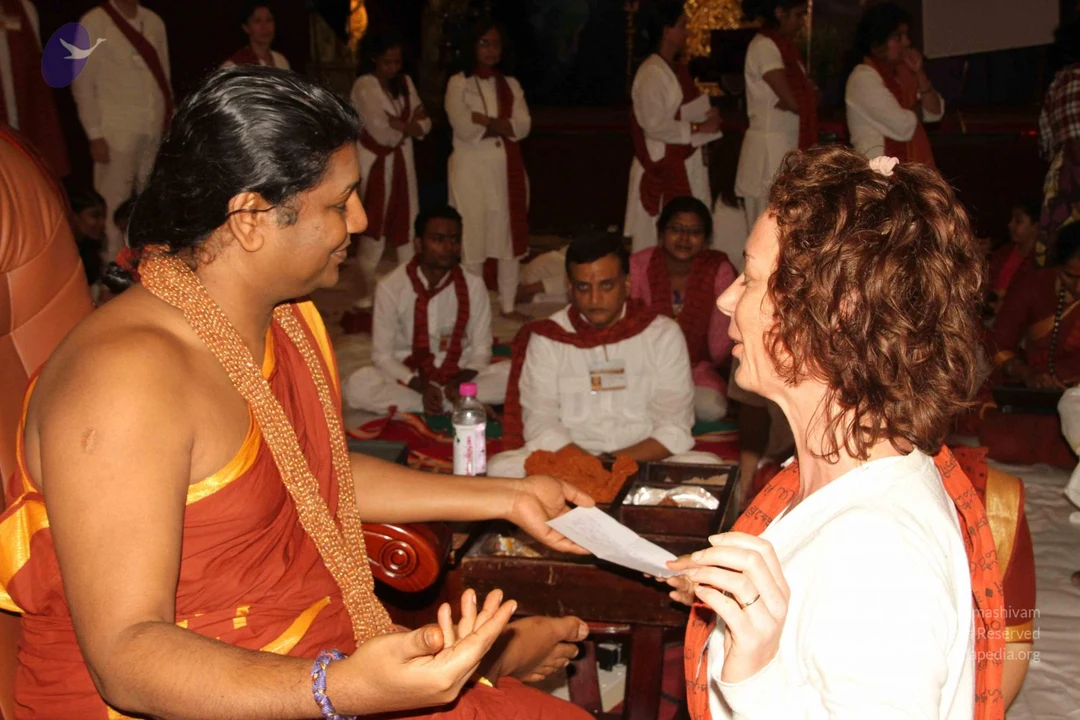
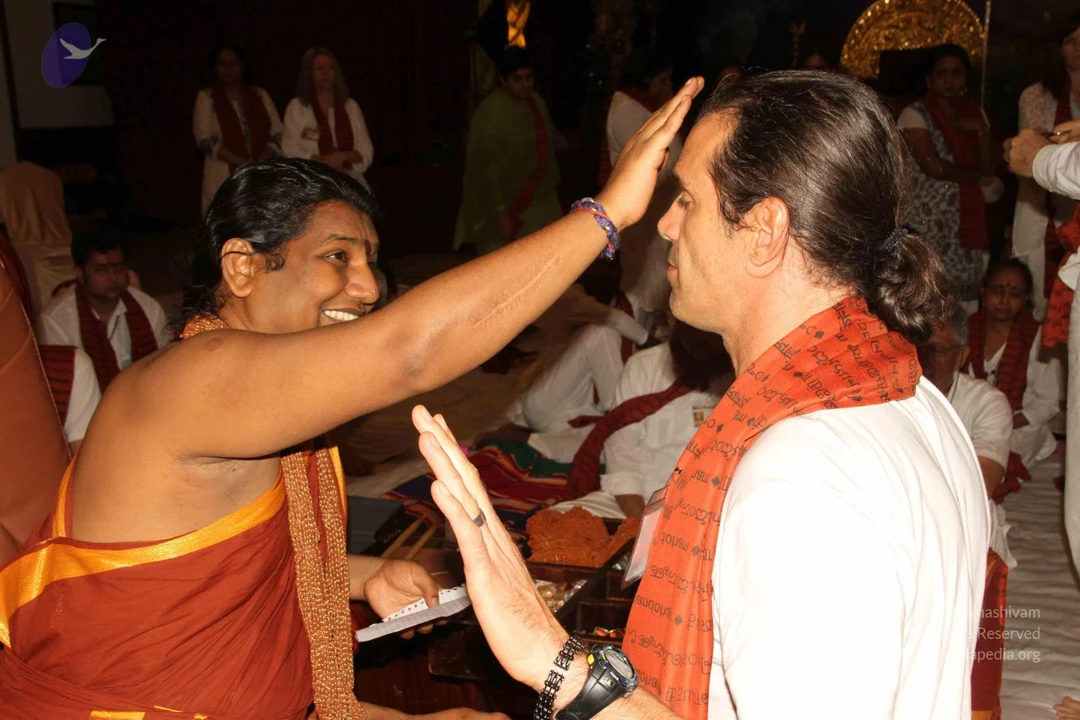
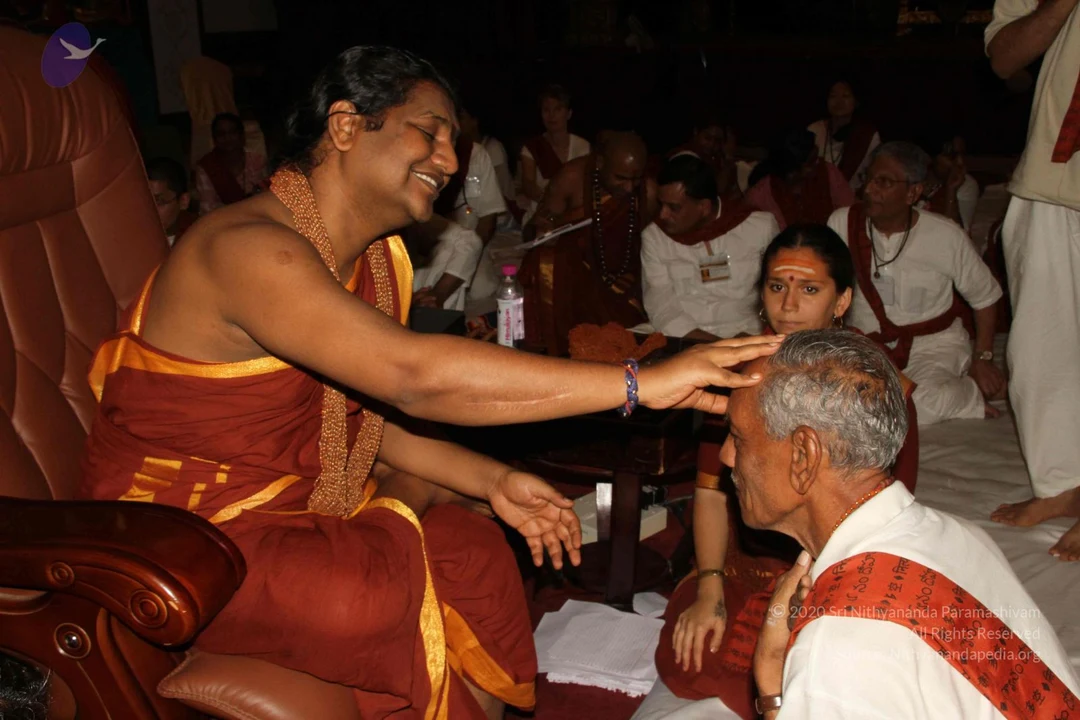
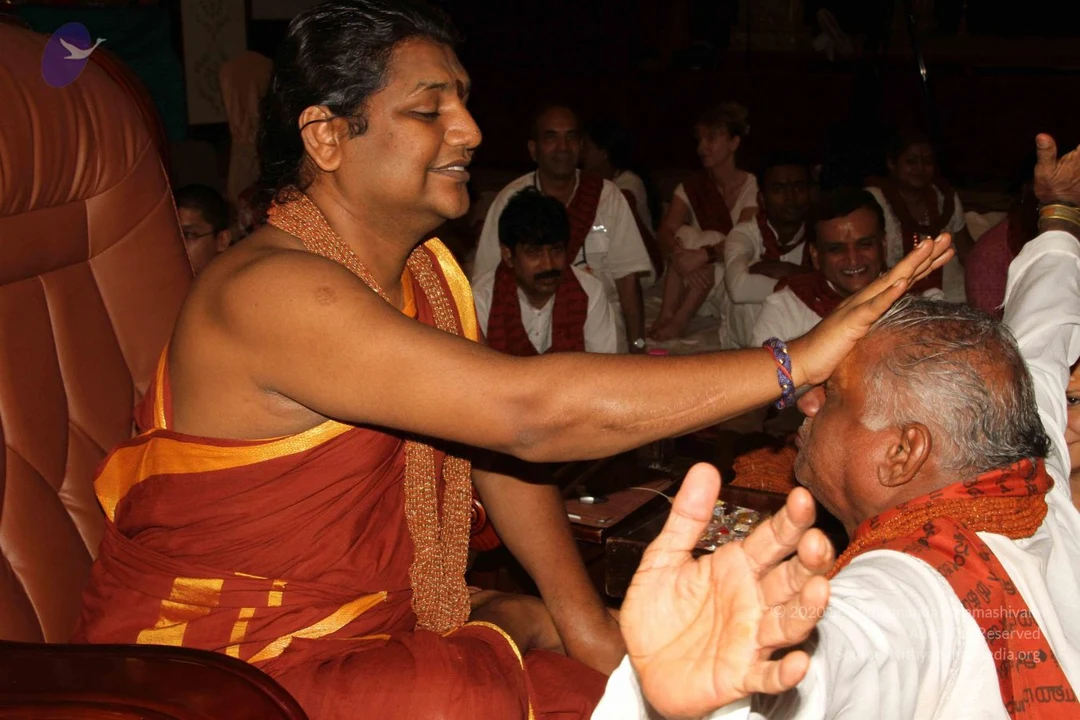
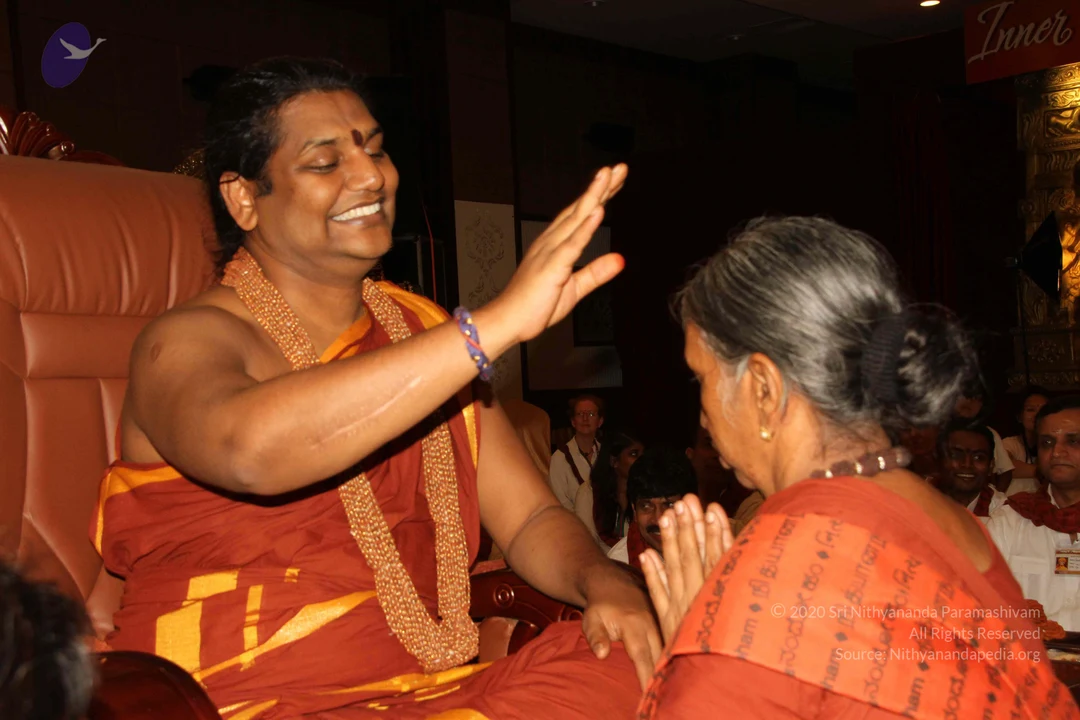
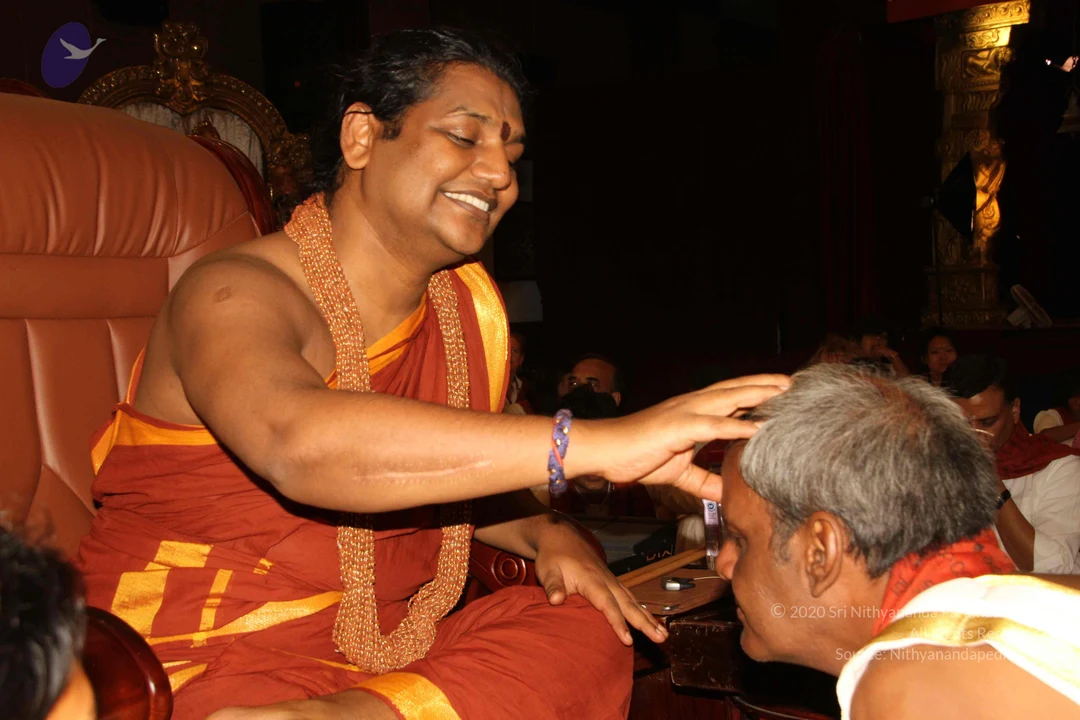
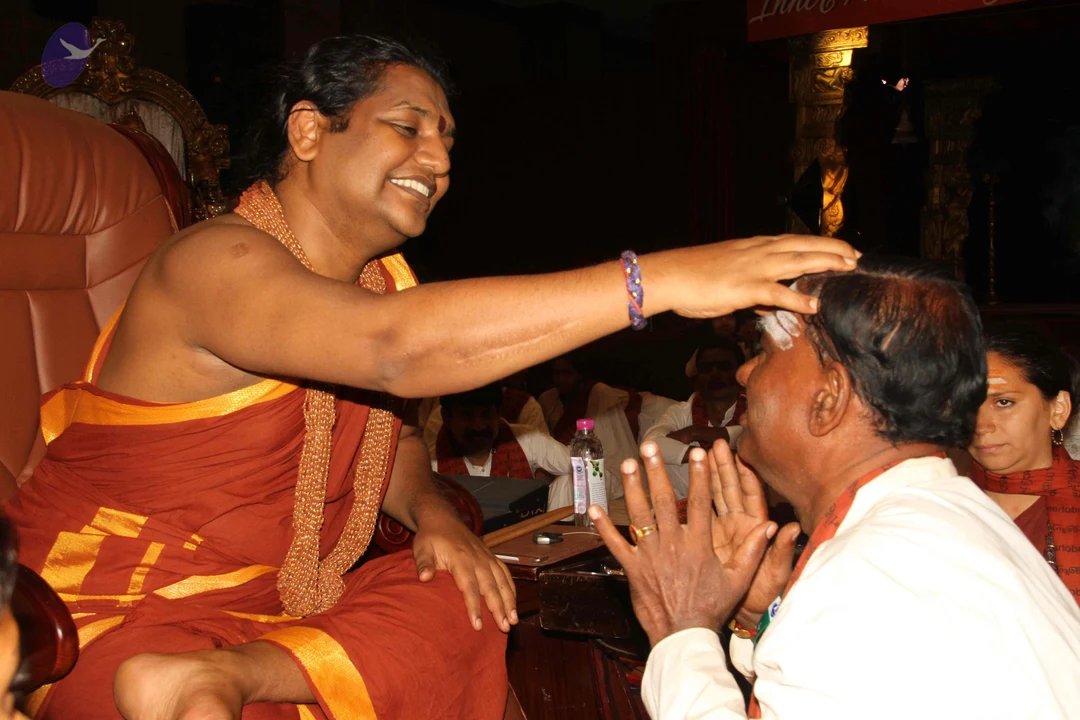
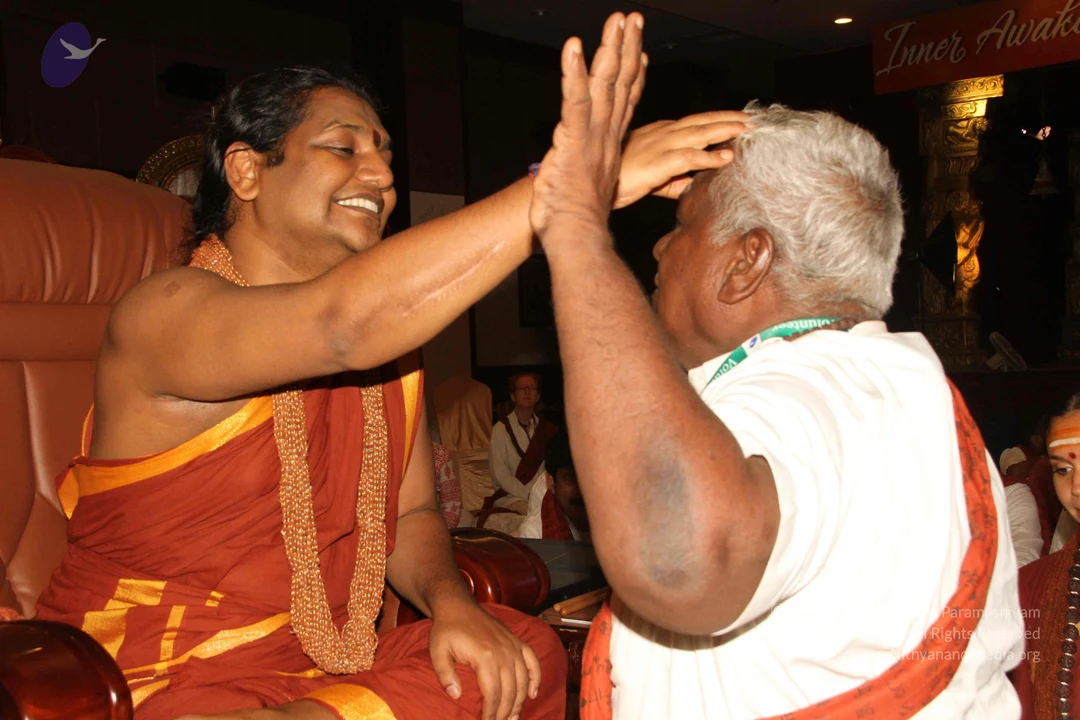
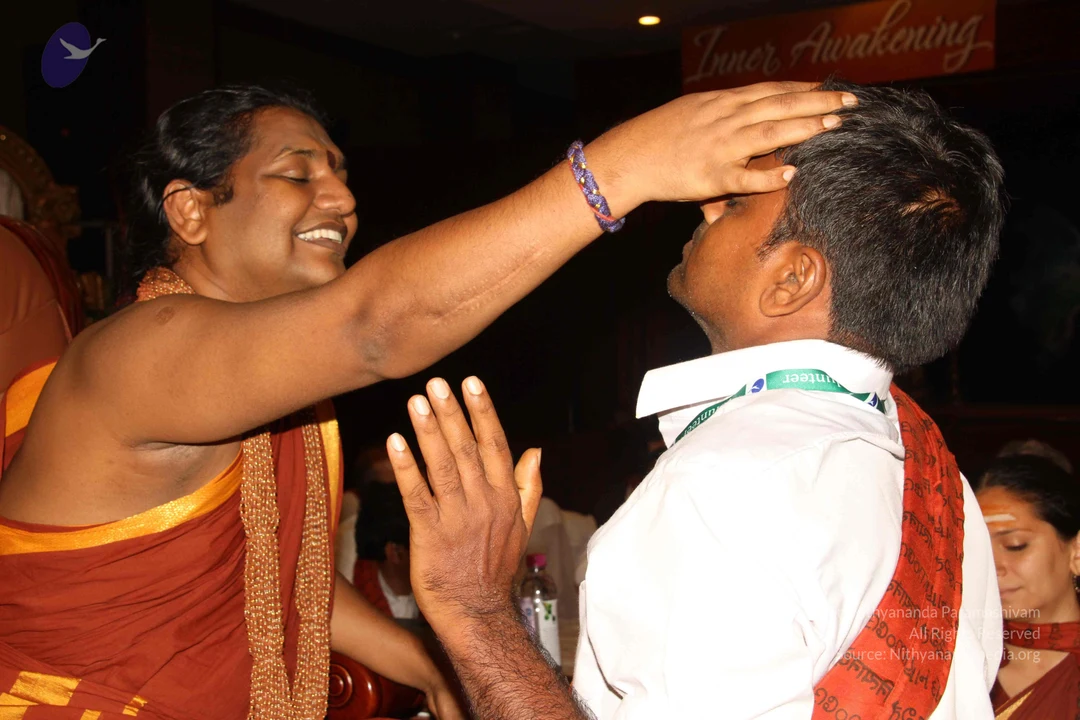
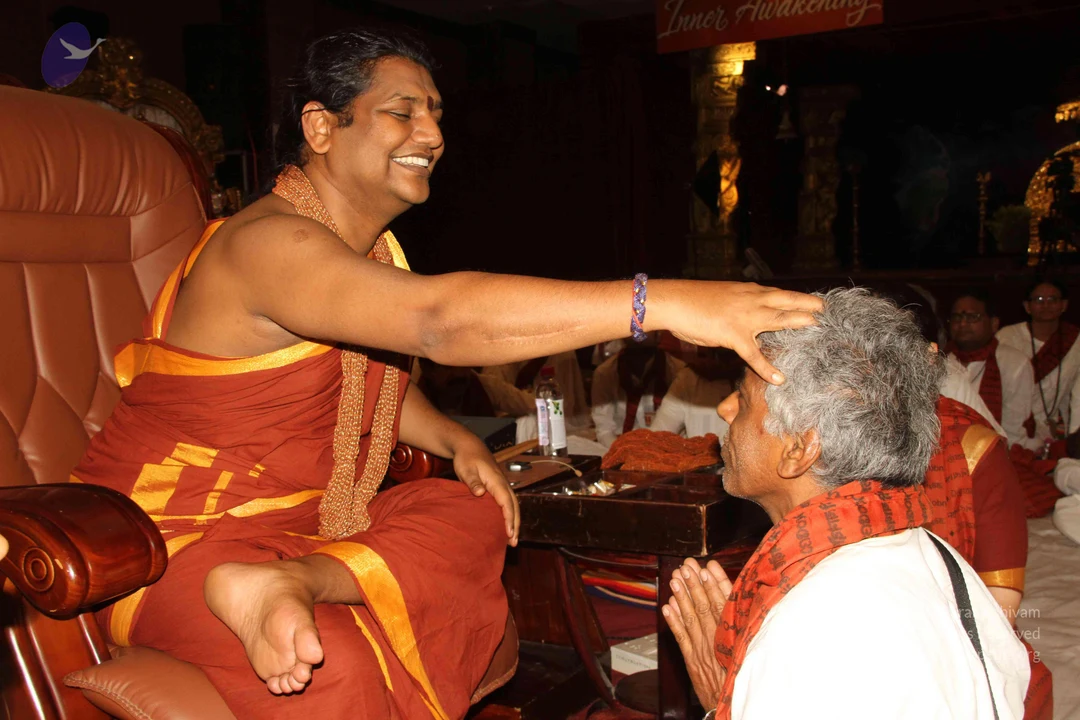
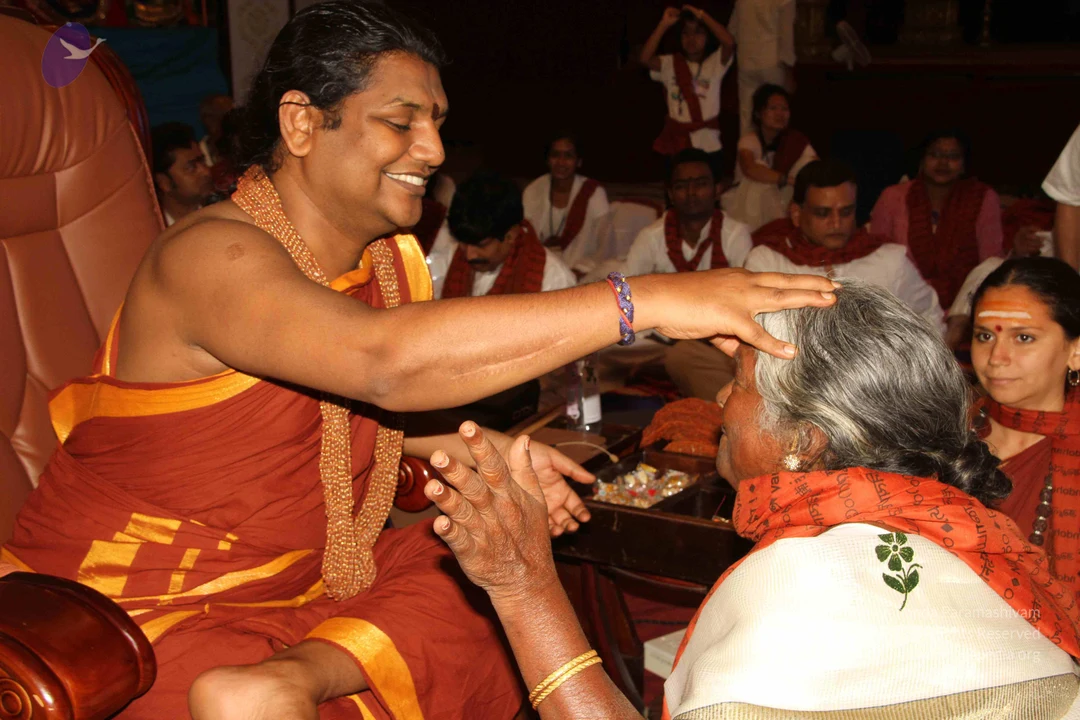
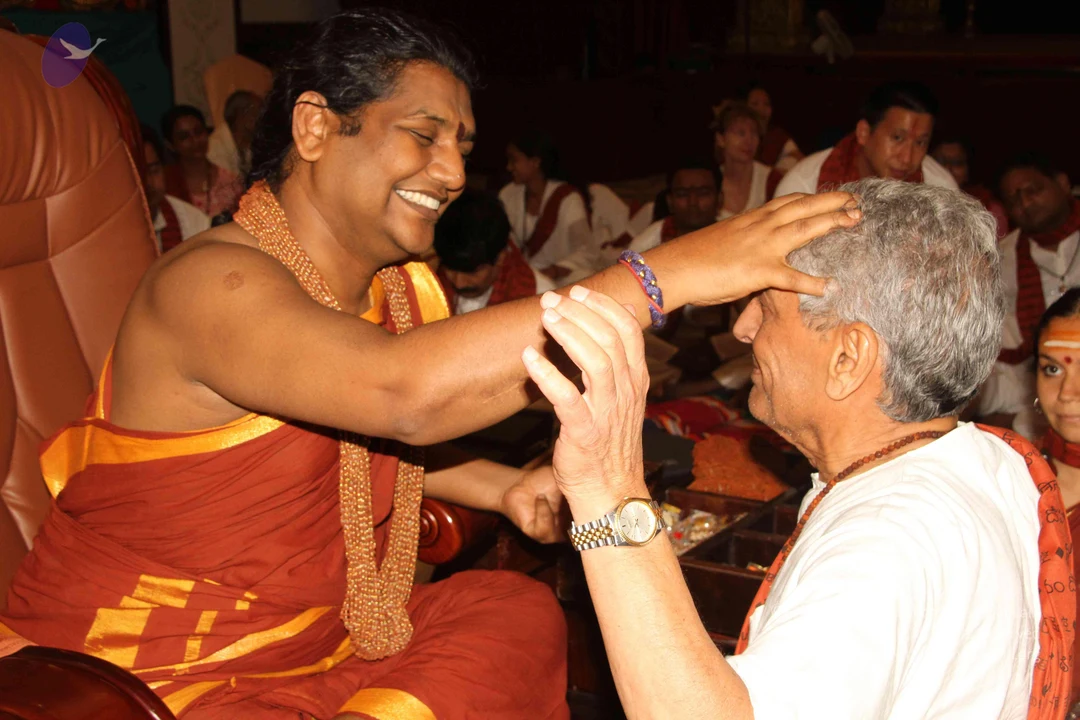
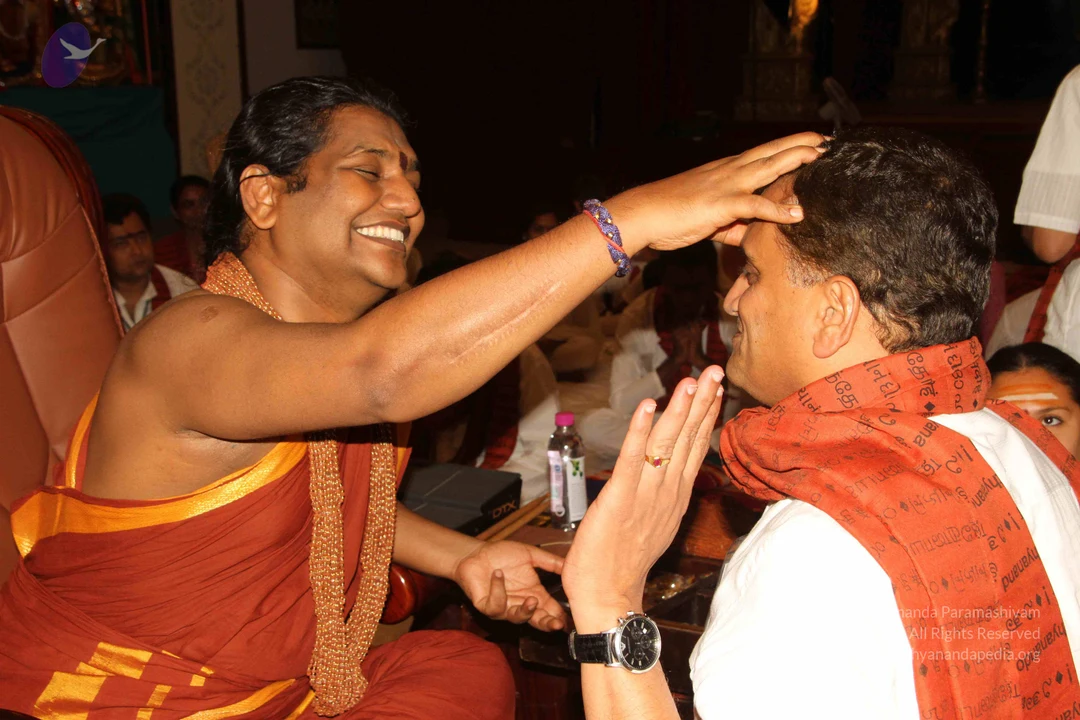
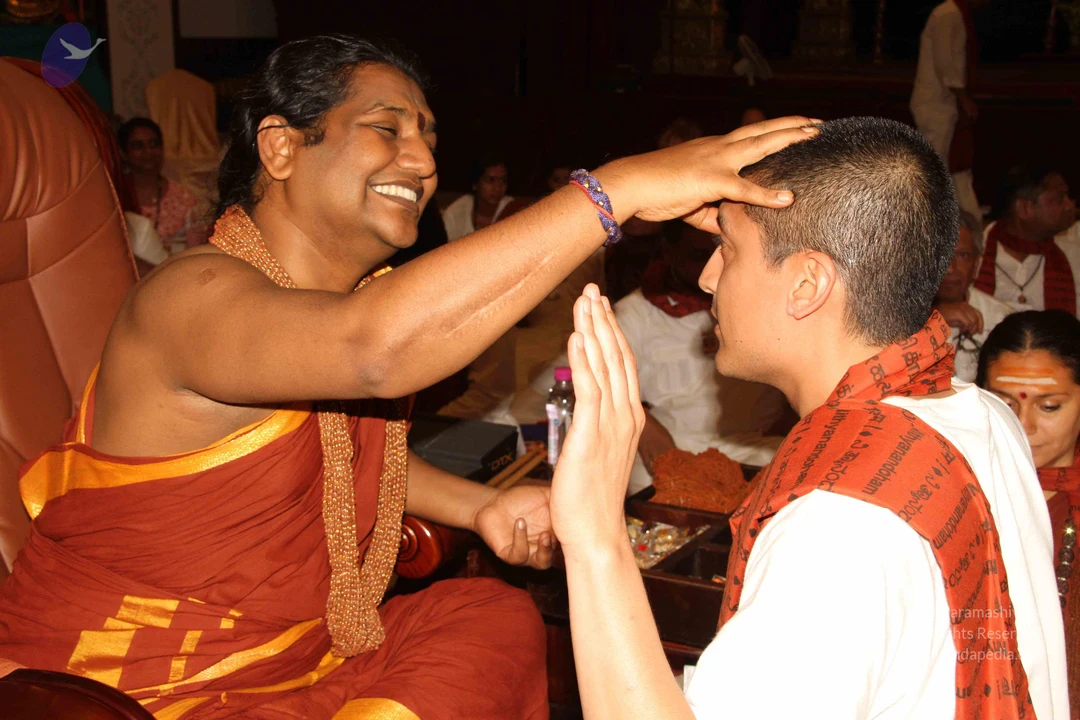
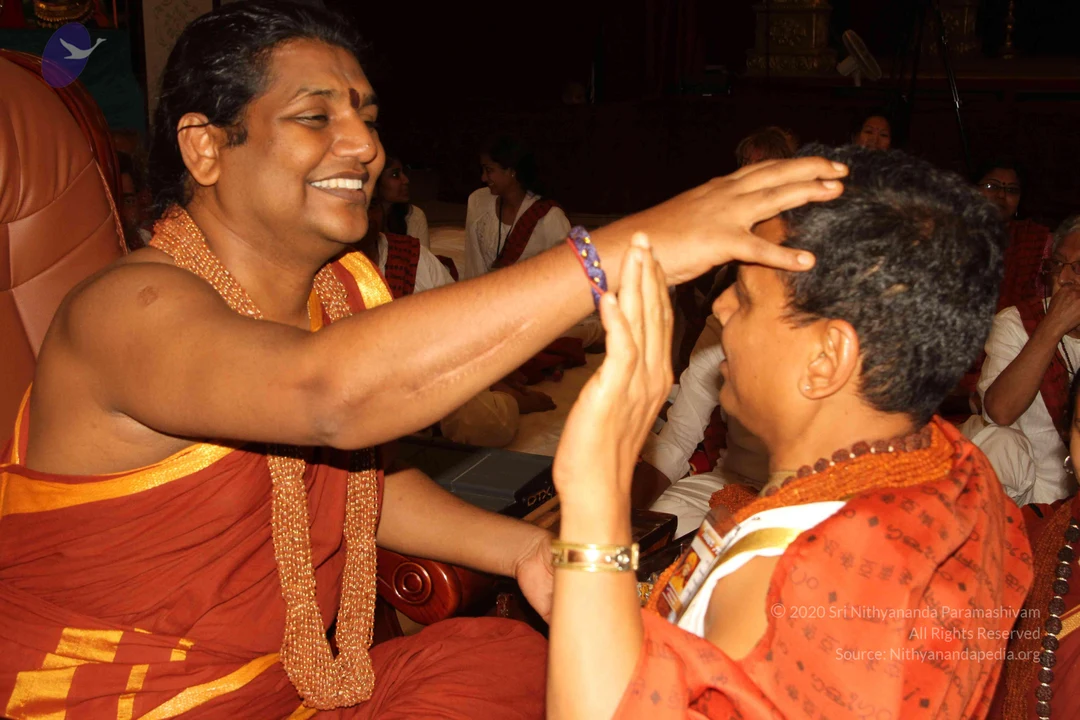
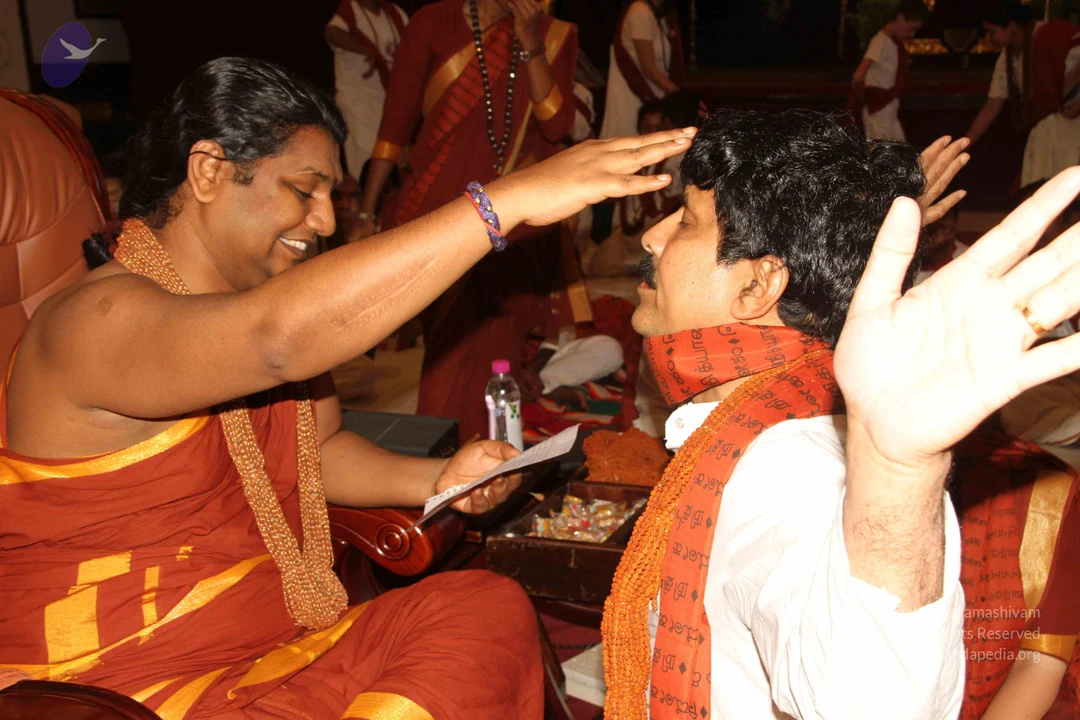
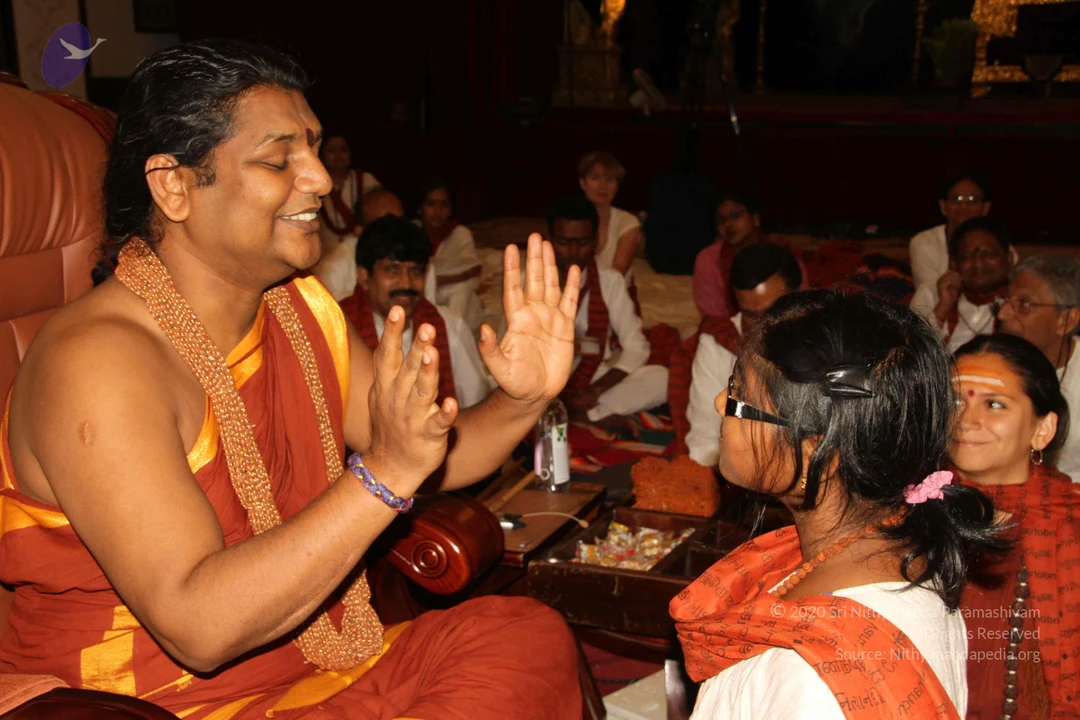
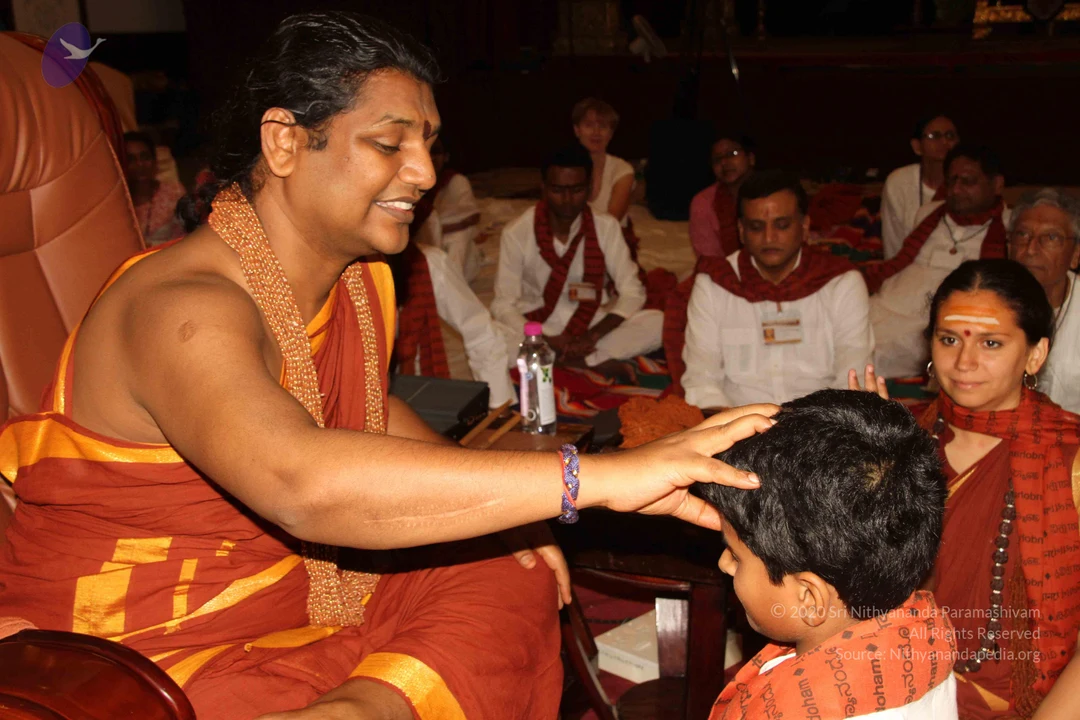
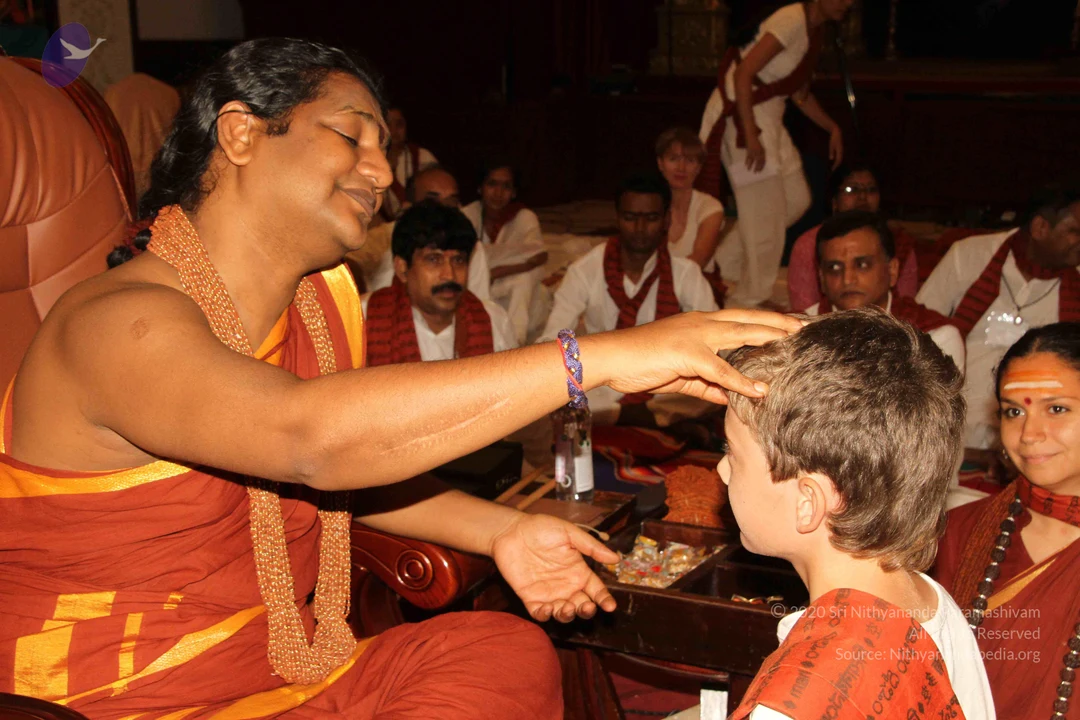
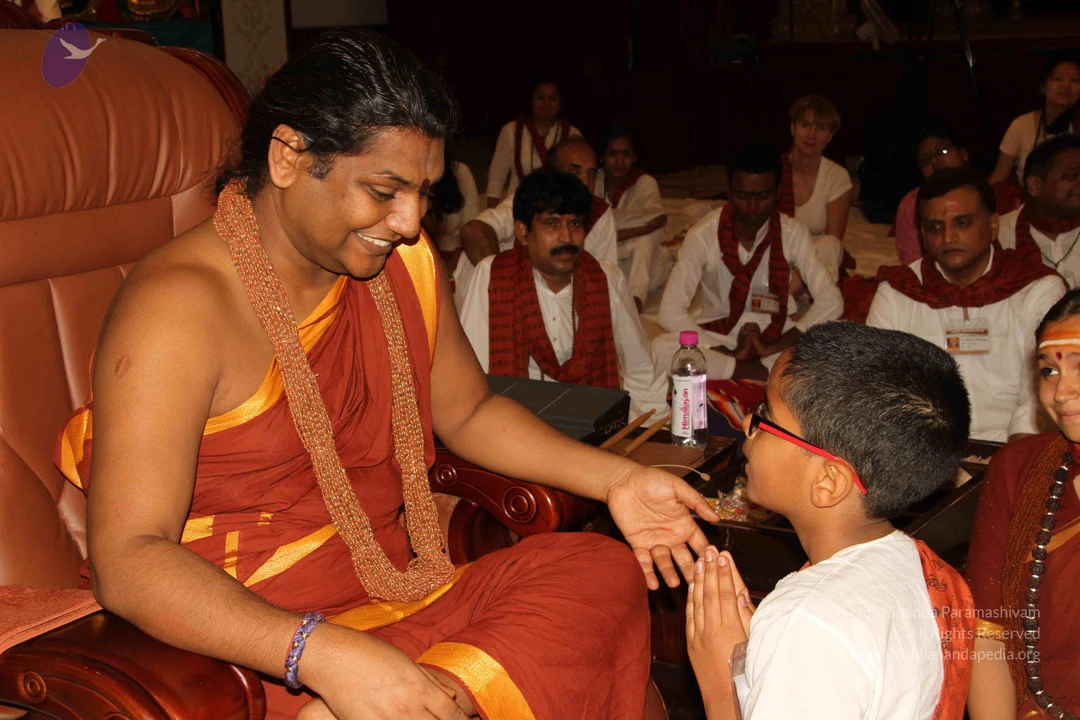
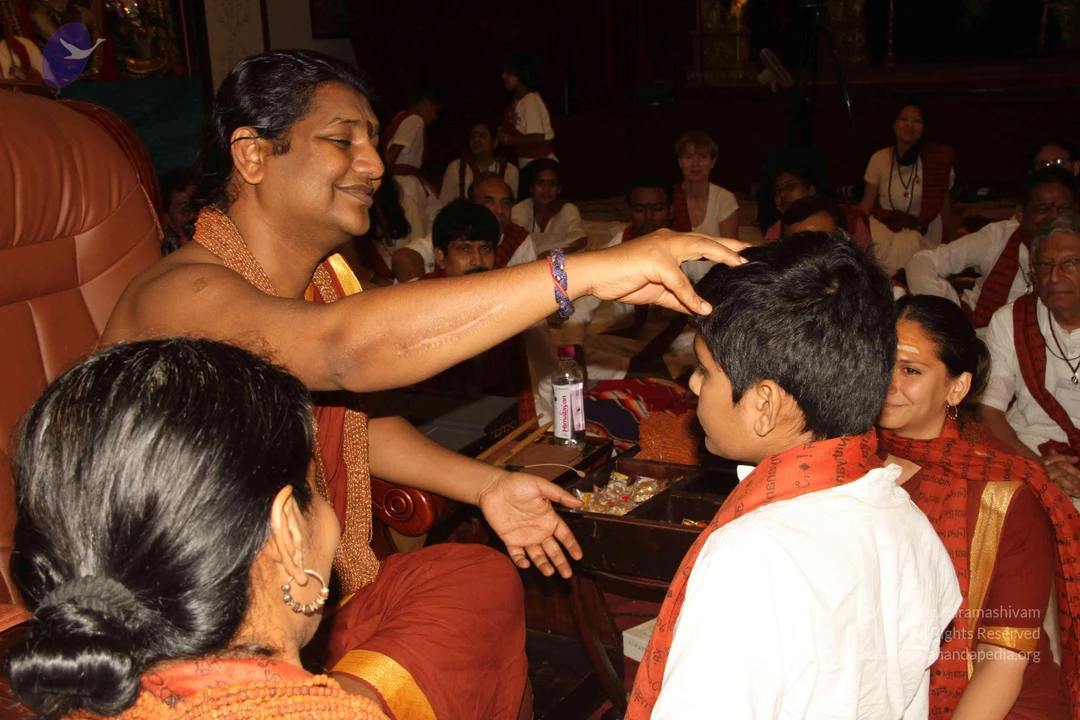
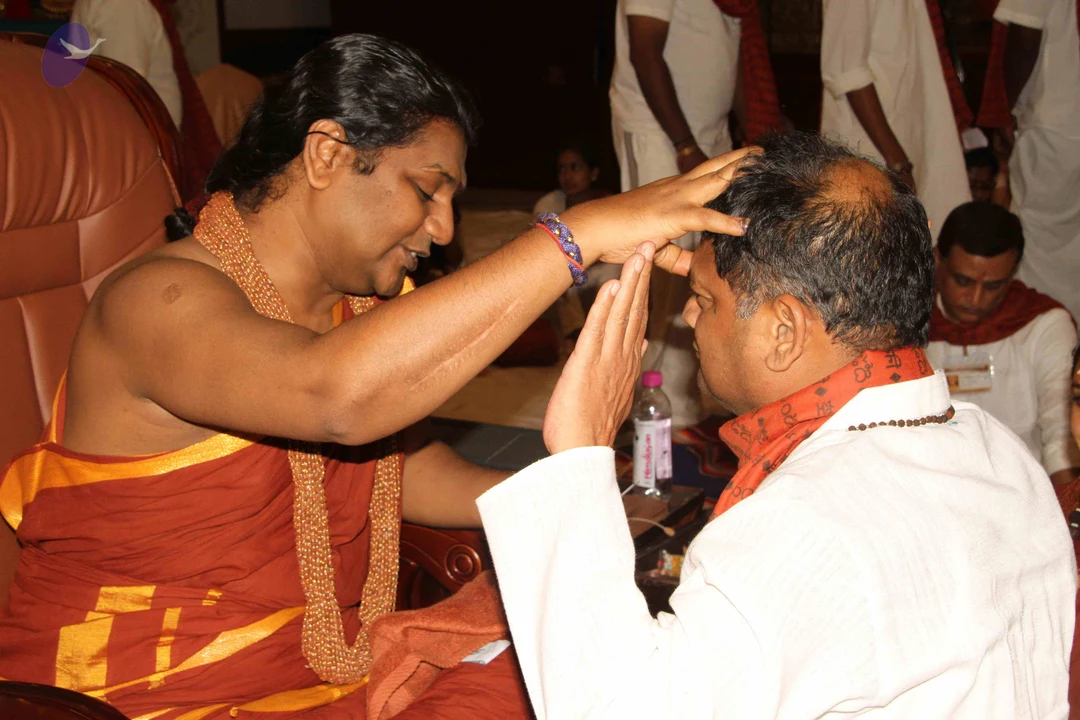
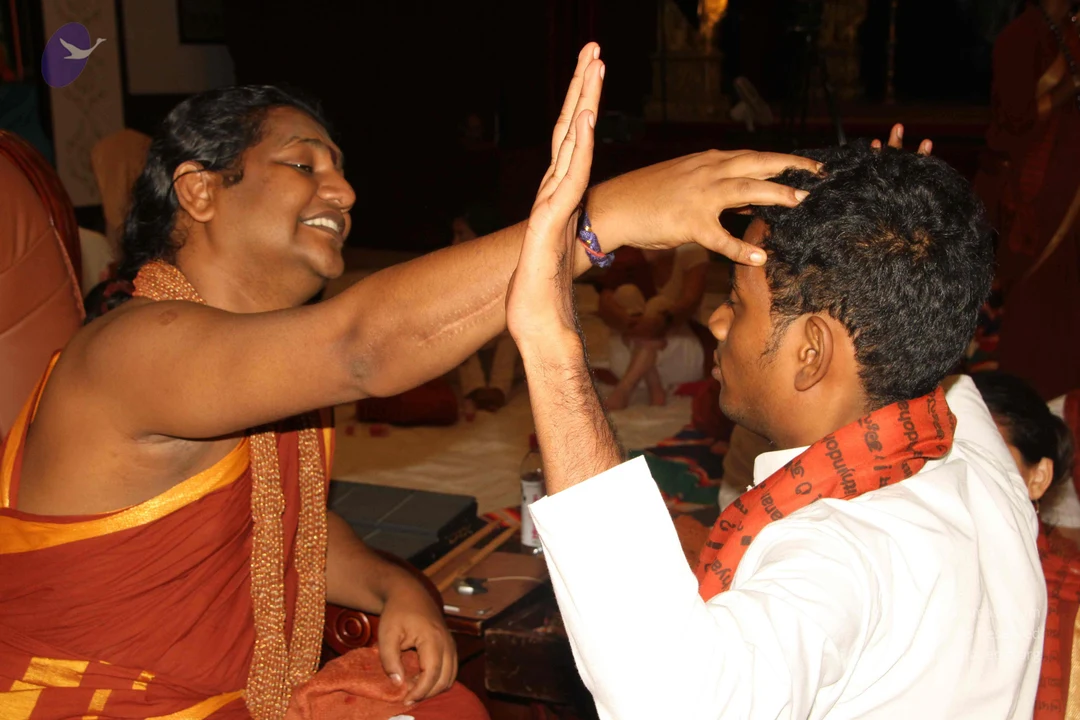
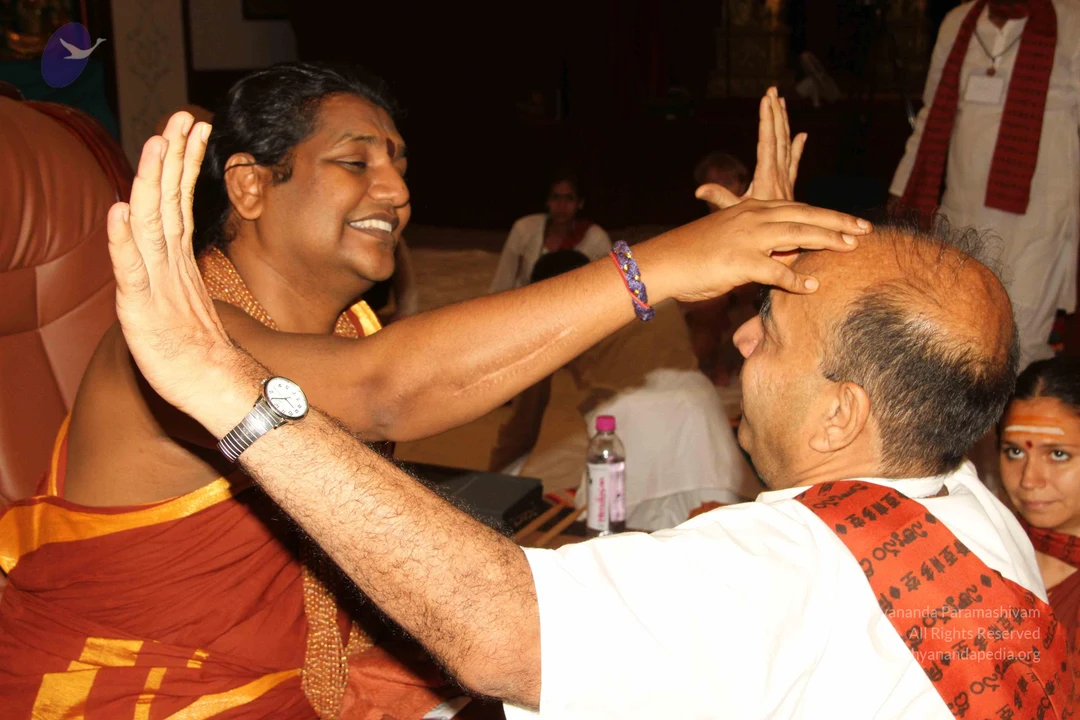
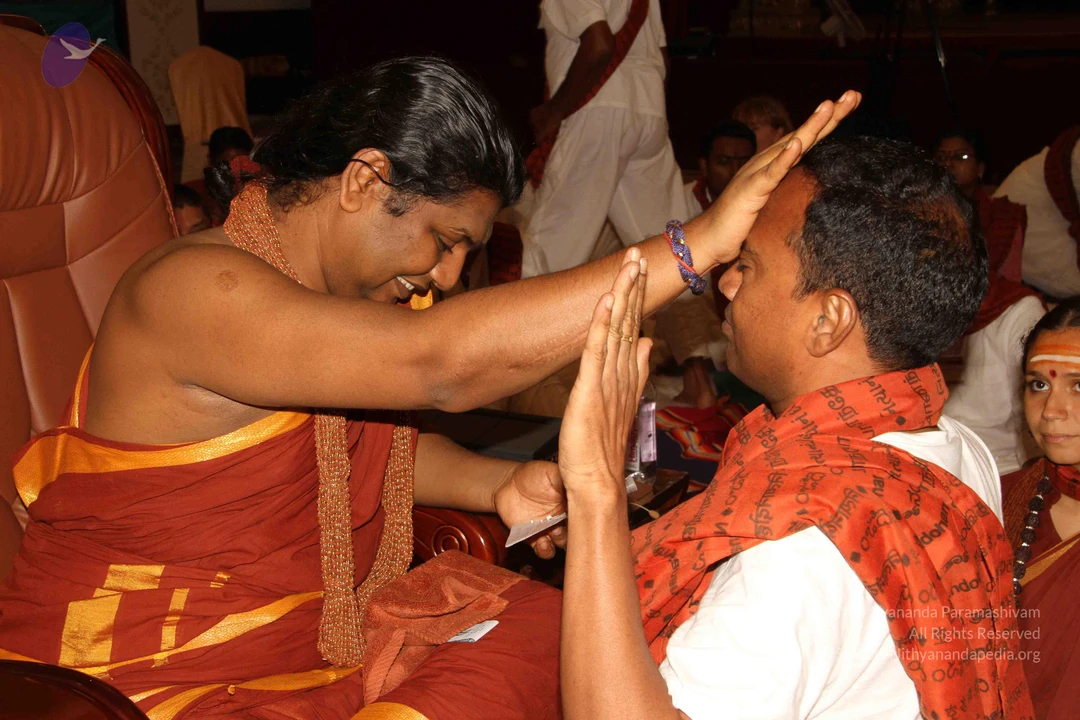
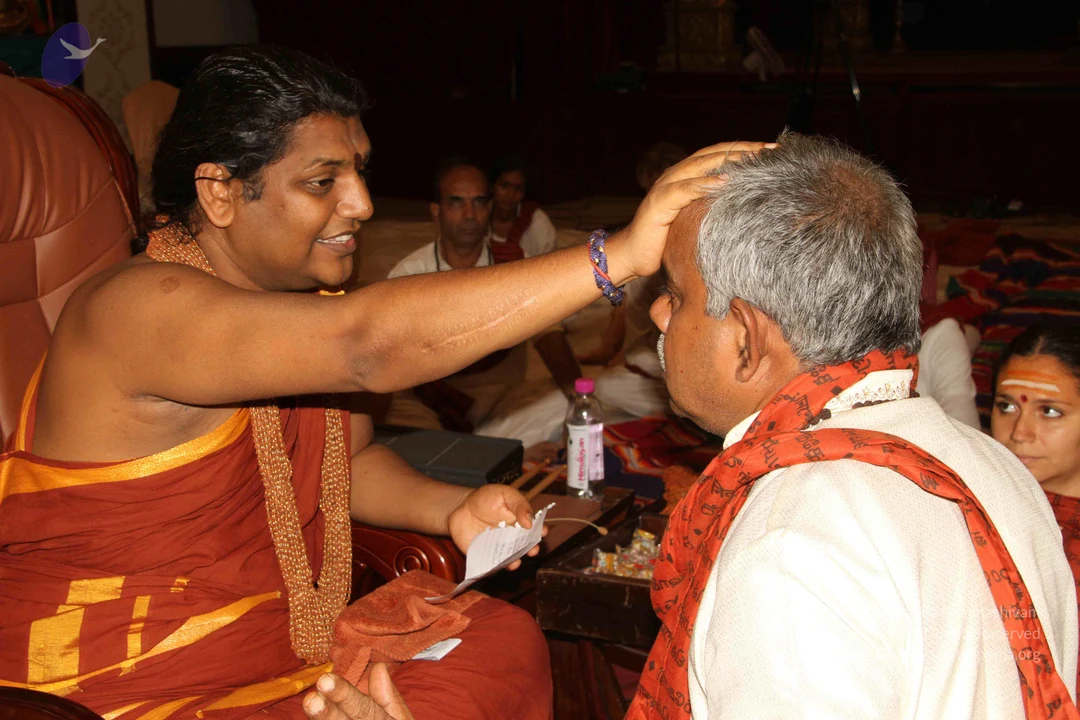
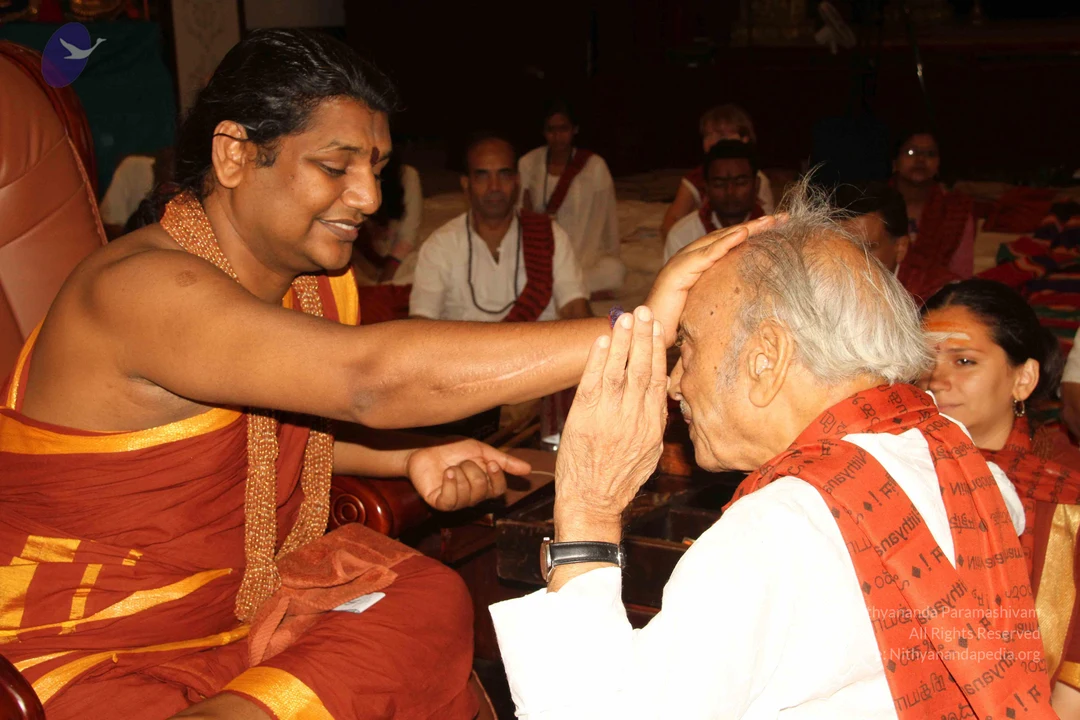
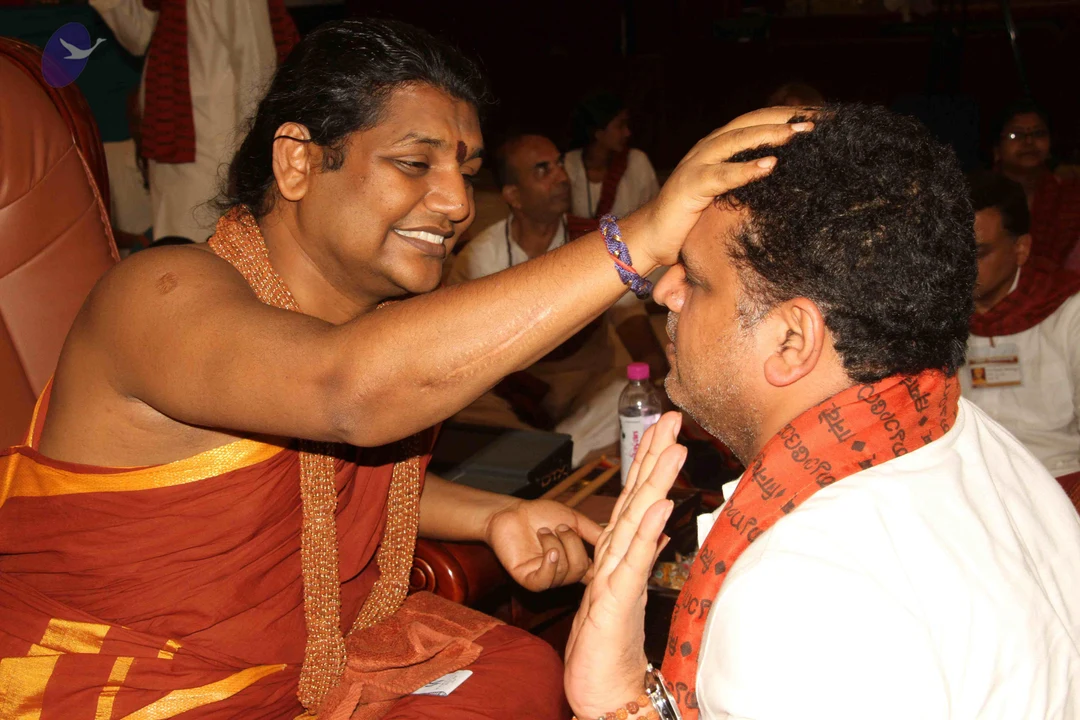
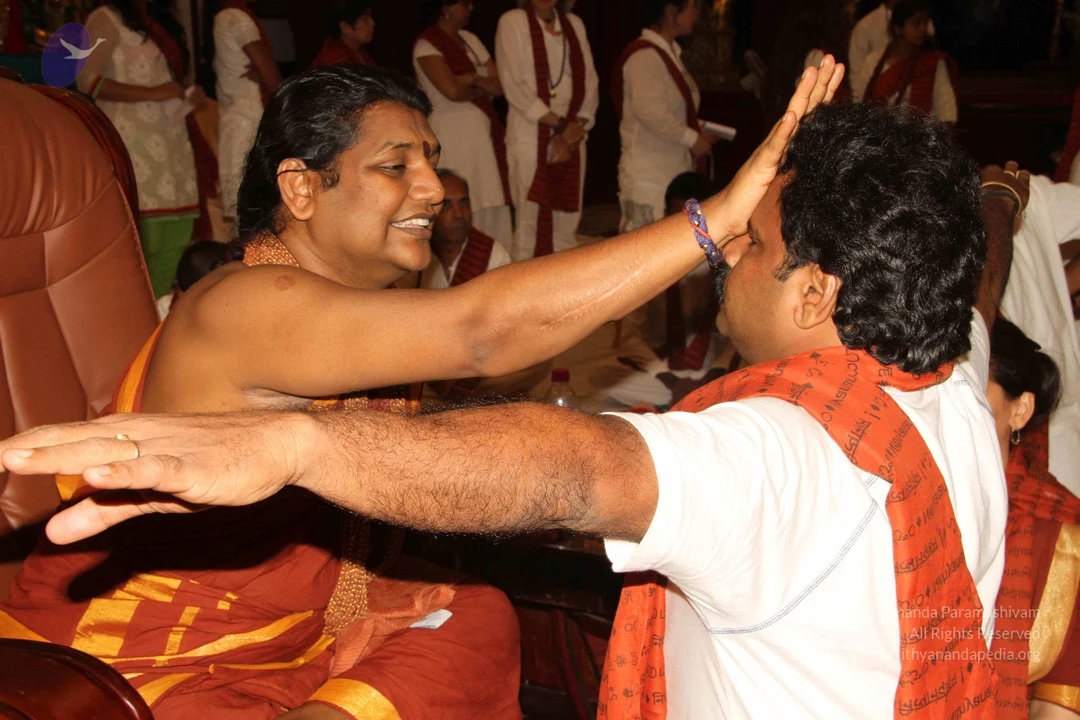
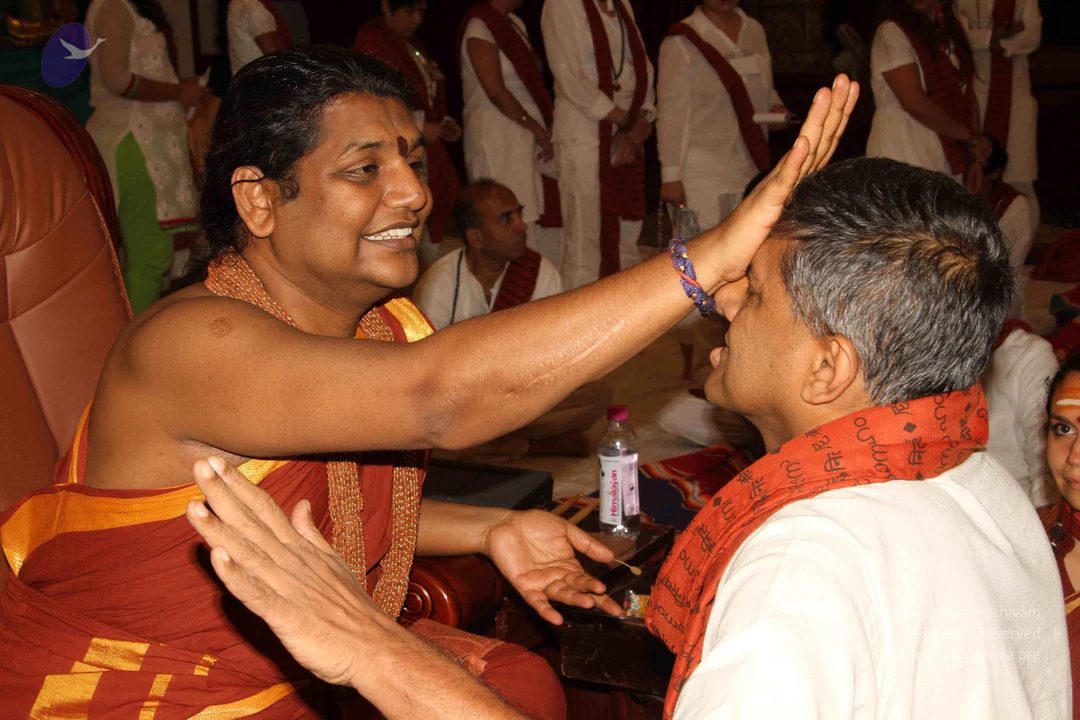
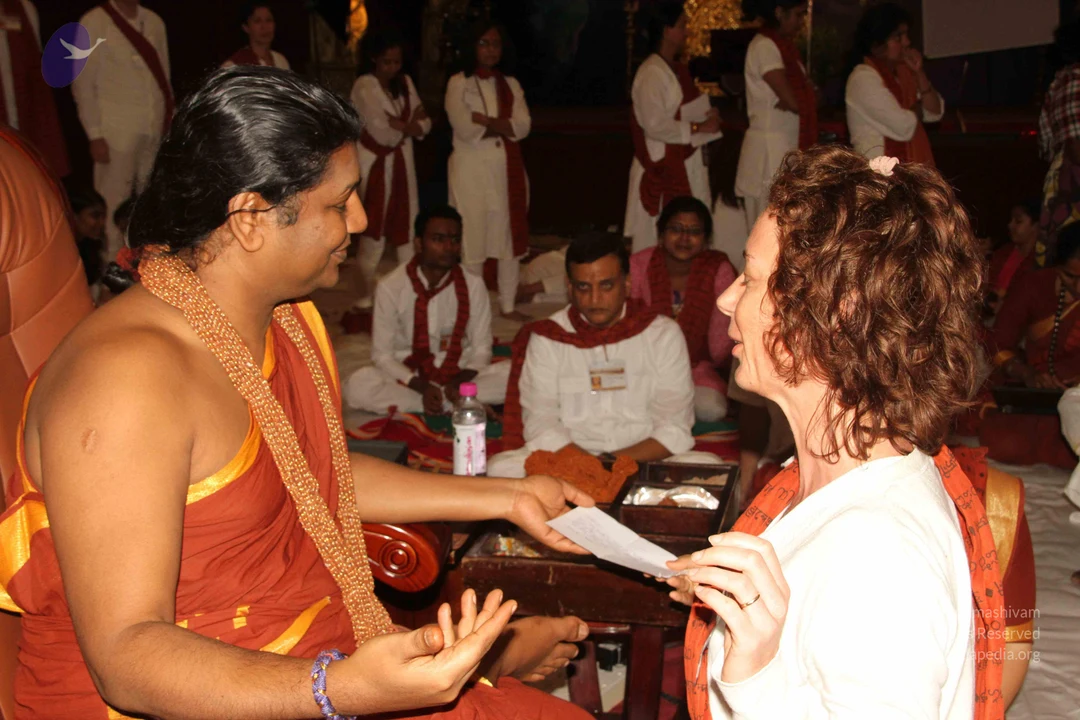
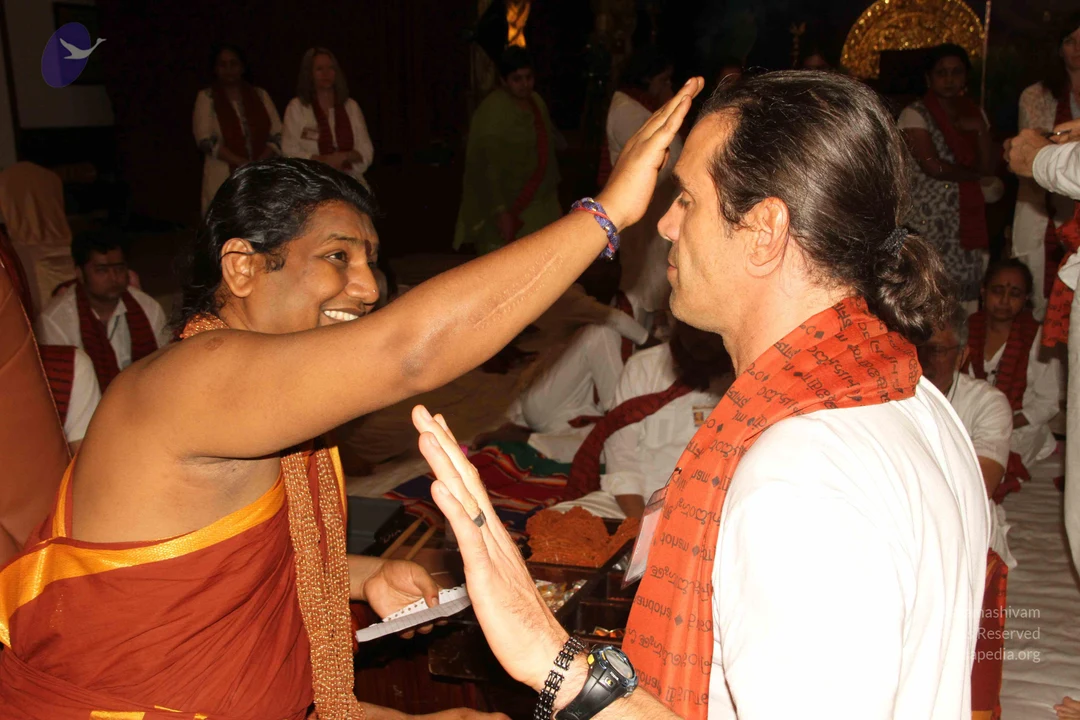
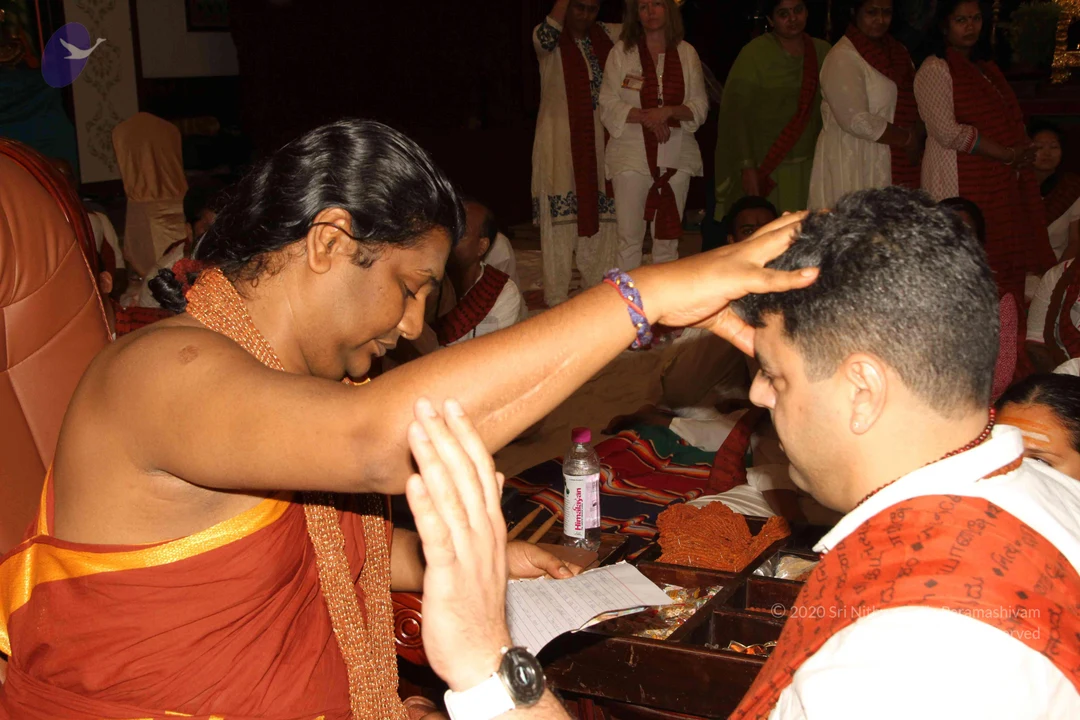
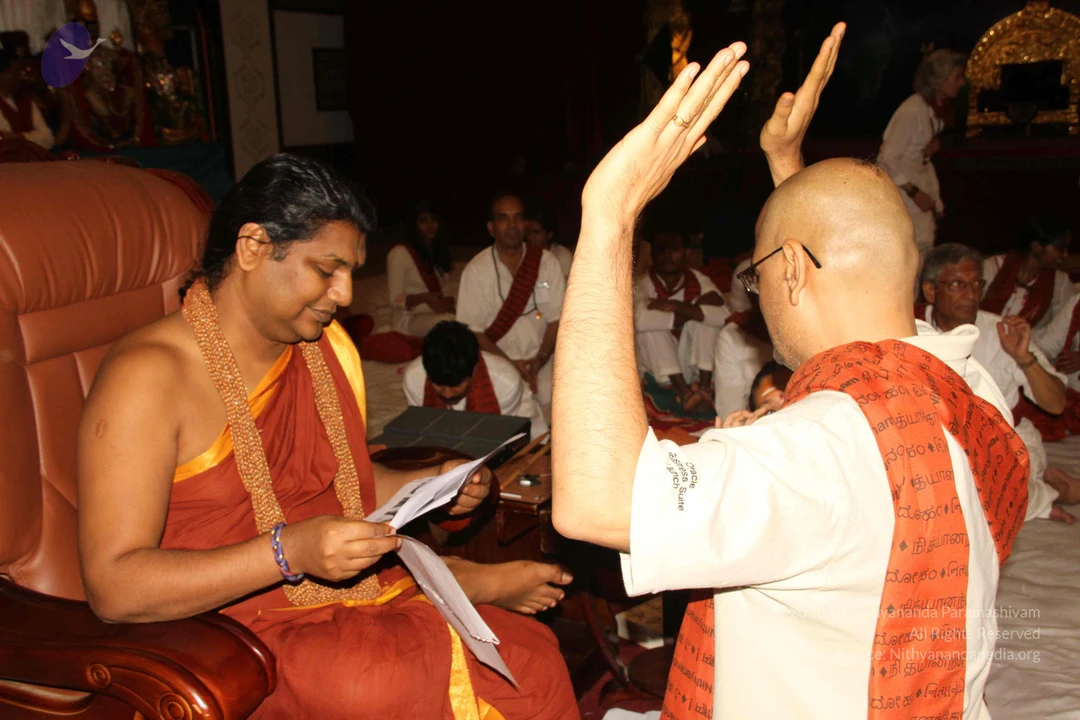
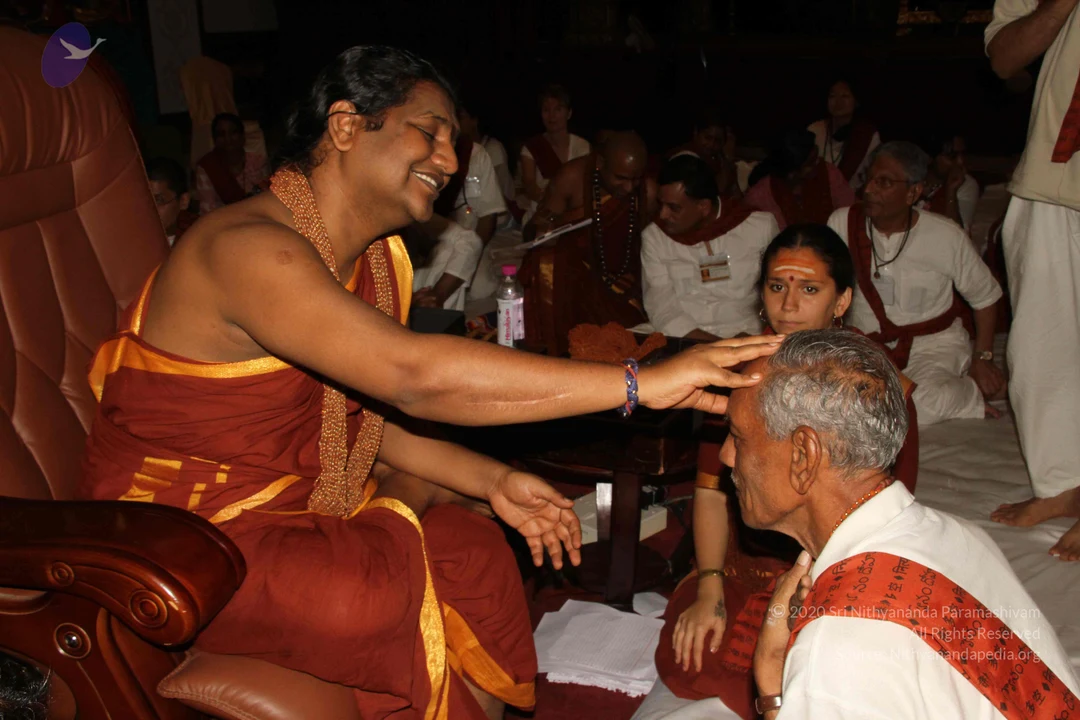
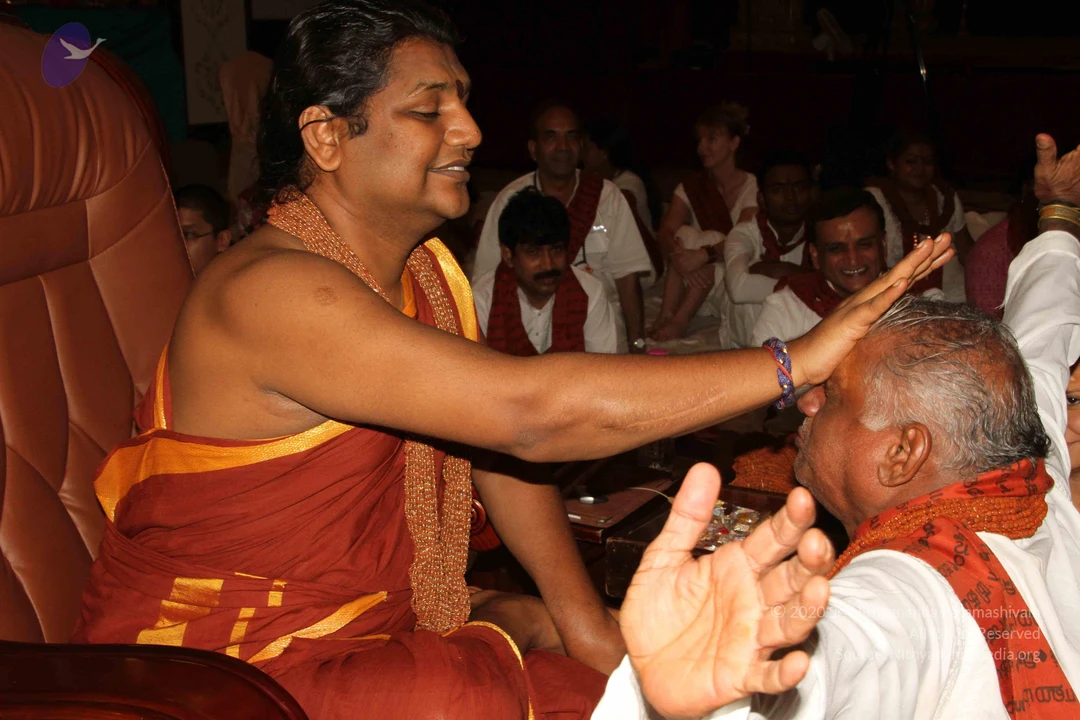
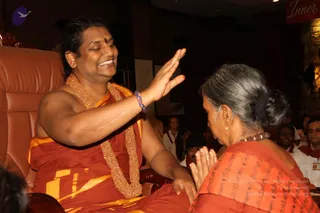
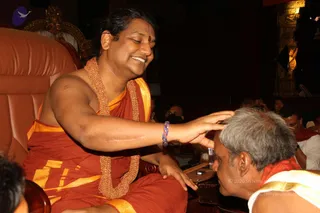
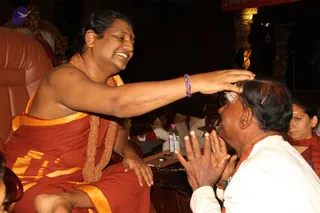
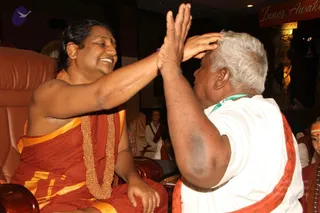
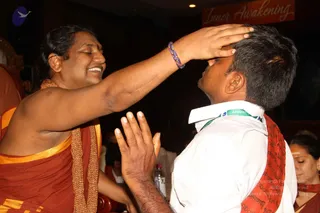
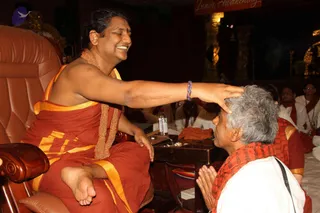
A photograph of a seated man in saffron-orange robes with a gold-coloured rudraksha-style bead necklace and a red bindi, smiling and raising one palm toward an older woman with grey hair in a bun who is seated in front of him, hands folded in namaste. She wears an orange sari printed with script. The man sits in a brown leather armchair in an ornate hall; a red banner reading 'Inner' and gilded pillars are visible, with several other seated attendees in the background. a person: the seated man wears saffron robes, a bead necklace and a bindi, cues consistent with the page's listing of a person at this satsang, which is a teaching session with a devotee receiving his blessing.A seated man in saffron-orange robes with gold borders and a beaded rudraksha-style necklace smiles while placing his right hand on the head of a grey-haired man bowing forward in front of him. The seated figure sits in a large brown leather throne-like chair in a dark hall, with a gold-decorated pillar behind. The bowing man wears a red shawl and white garments with gold edging. Several people sit or stand in the dimly lit audience behind them.A photograph of a seated man in a rust-orange and gold-bordered dhoti and shawl, wearing a long gold-toned beaded necklace and a bracelet, smiling as he extends his right hand to touch the forehead of a kneeling older man in white clothes with a folded-hands namaskar gesture. The seated man sits on a brown leather throne-style chair. Behind them, several people in white and orange attire sit in a hall with a water bottle and papers on a low table, and a woman in a red shawl stands at right. Ornate golden pillars and a red banner are visible in the background. The scene suggests a blessing or darshan exchange in a satsang hall.A photograph of two men in close interaction indoors. On the left, a smiling man in a saffron-orange robe with gold border and a long beaded rudraksha-style necklace sits in a brown leather chair, reaching up to place his hand on the head of an older man. The older man has short grey hair, wears a white shirt and a white dhoti with an orange-red border, and a lanyard, and presses his palm to the first man's raised hand. Behind them a woman in white with a saffron shawl is seated, and a red banner on the right reads Inner Awakening, with a golden decorative pillar. a person: the seated man in saffron with the long beaded necklace and swept-back hair is the a person, giving blessing.A photograph of a man in saffron-orange robes with a long beaded gold-toned necklace reaching out to place his palm on the forehead of a young man in a white shirt with a green volunteer lanyard and a red-orange scarf printed with script. The robed man is smiling with eyes closed, while the younger man presses his palms together in a respectful namaste. Behind them a banner reads Inner Awakening, and a woman with a tilak and a printed scarf is visible at the right edge.A photograph of a seated man in a rust-red dhoti with gold border and a gold-beaded necklace, smiling broadly as he rests his right hand on the head of an older man kneeling before him. The kneeling man has grey hair, wears a white shirt and a red-and-gold shawl, and holds his palms together in namaskar. The seated man sits in a brown leather armchair, with a wooden side table holding a water bottle and offerings. Behind them, other men in white and red shawls sit in a hall with a red banner reading Inner Awakening and ornate gilded decorations. Two people are visible in the background.

satsang

78 photosSource gallery
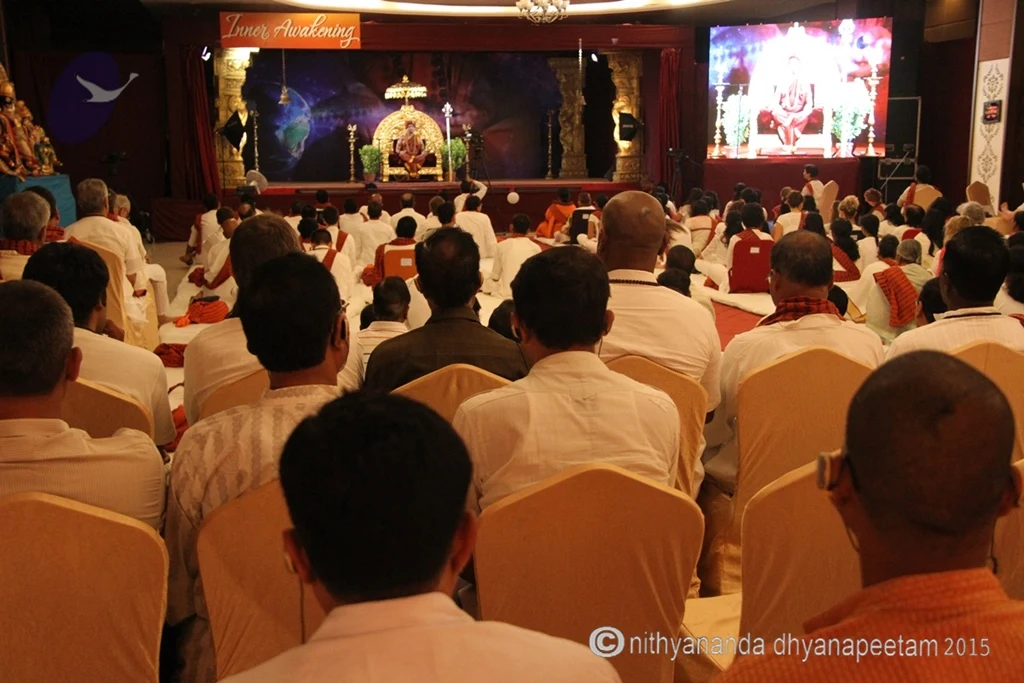
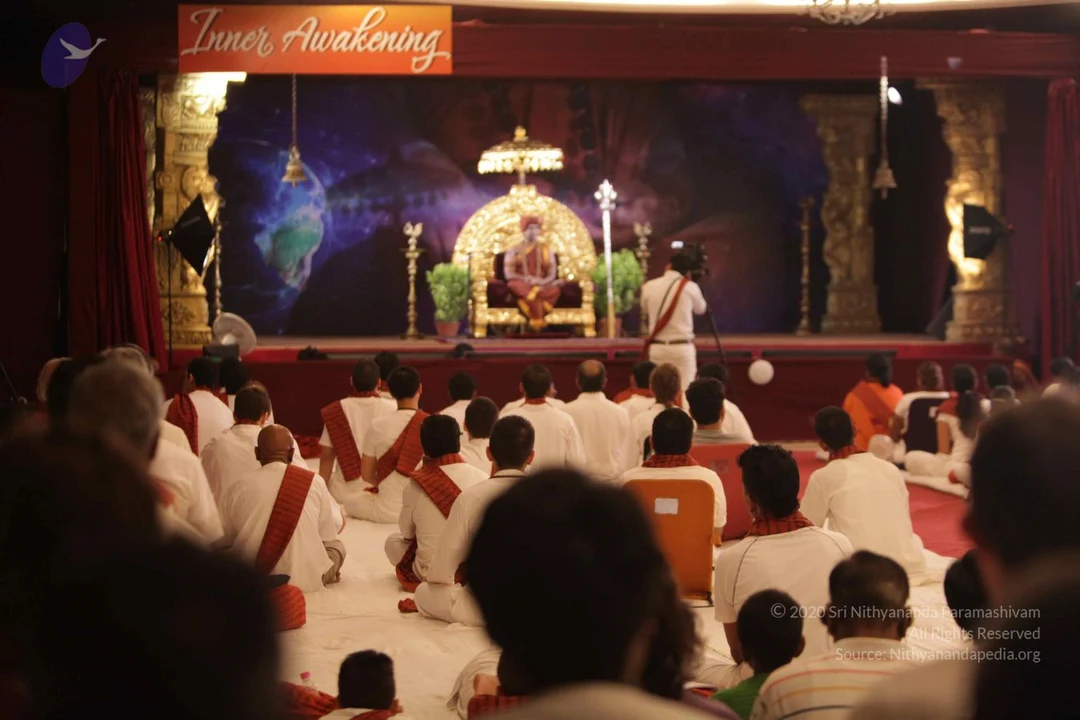
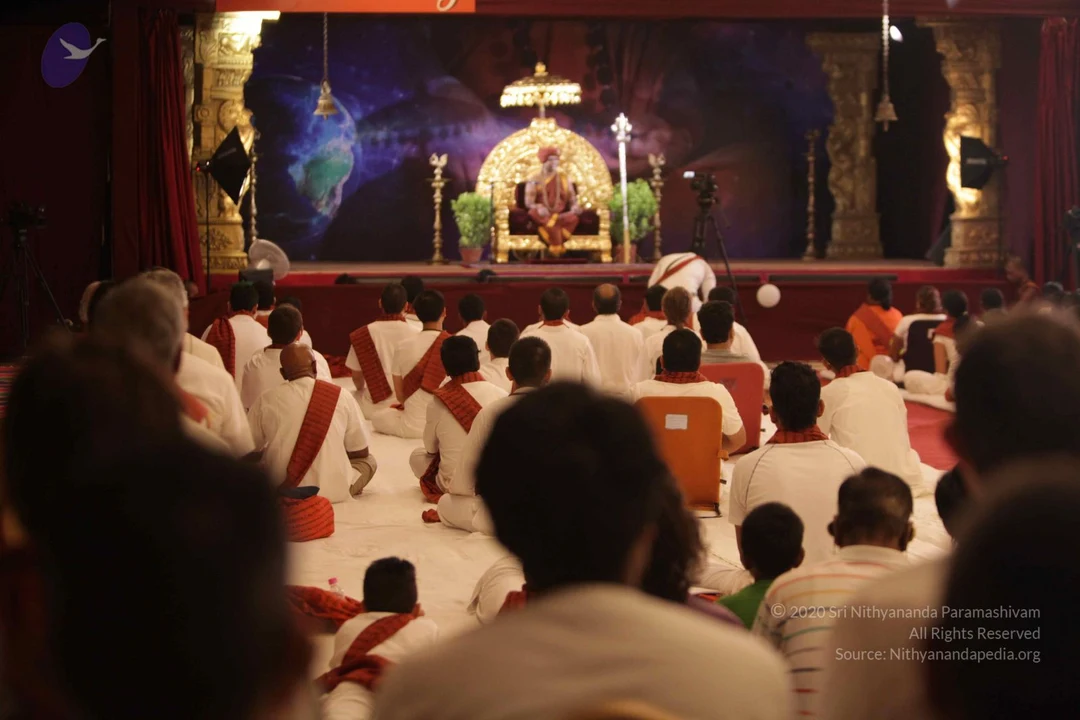
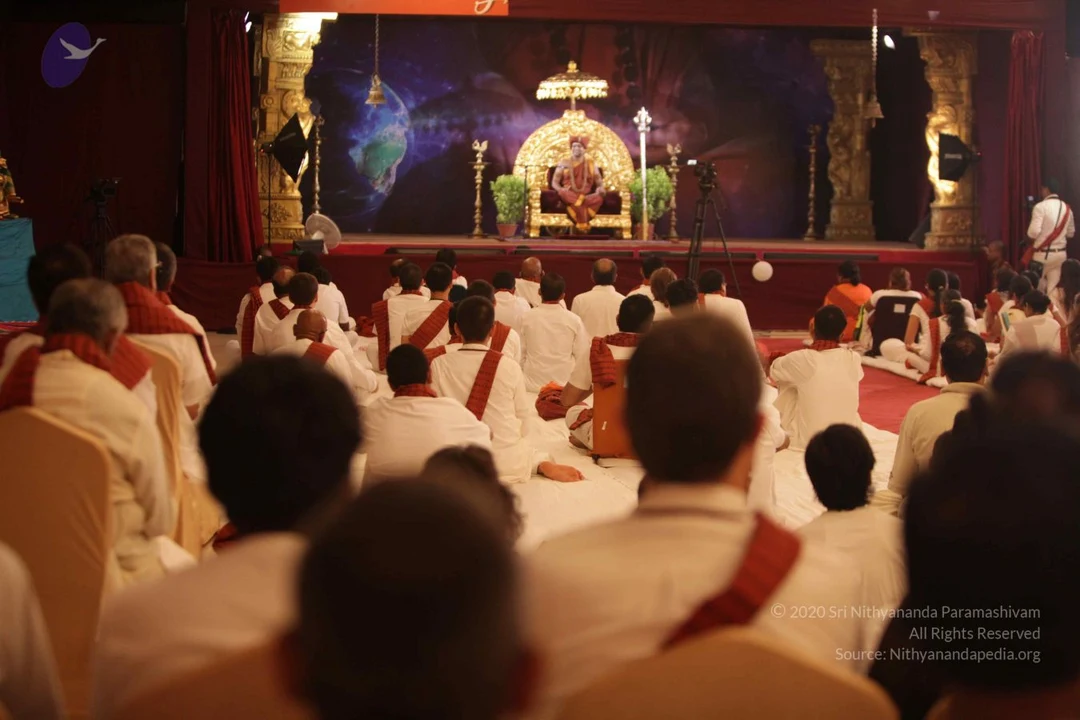
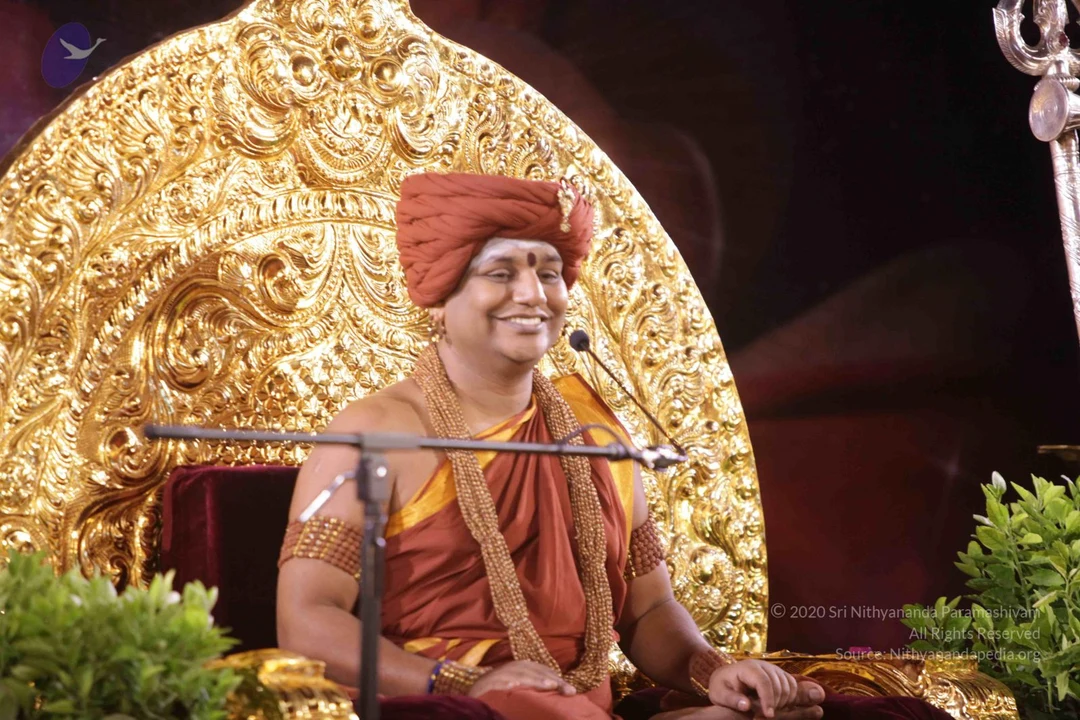
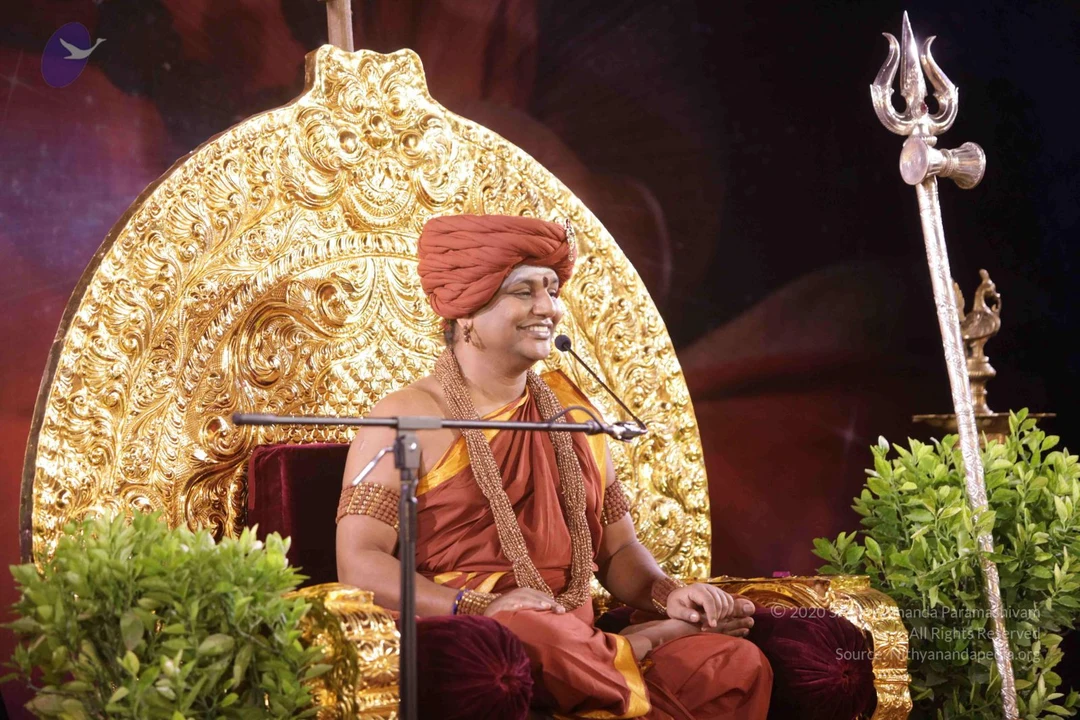
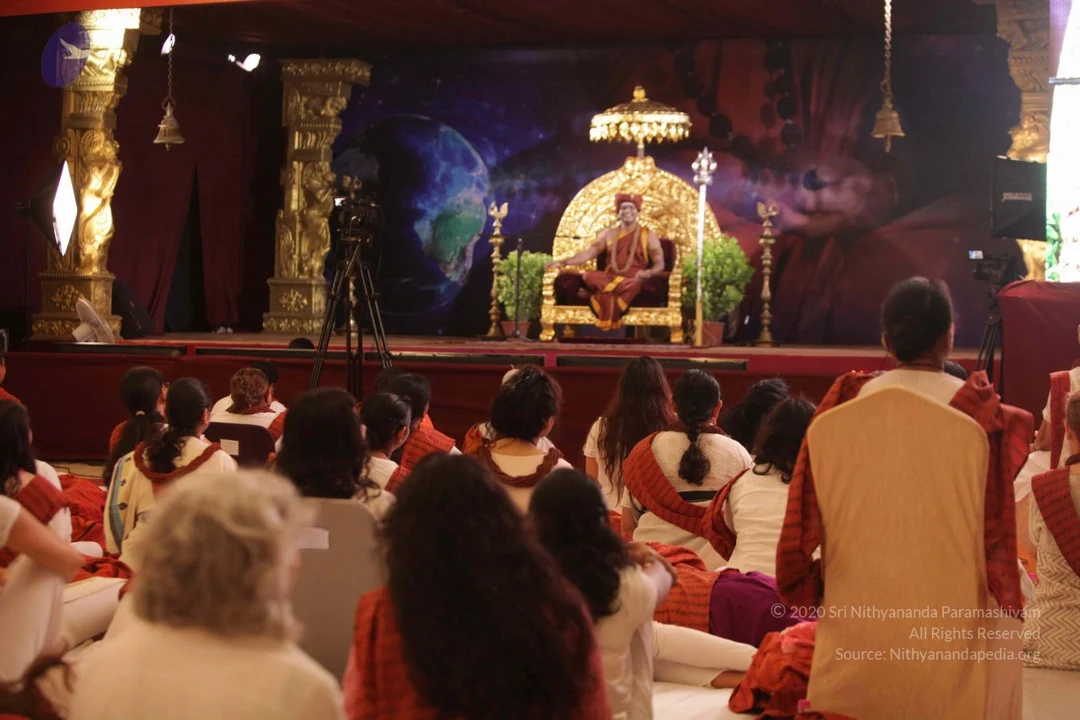
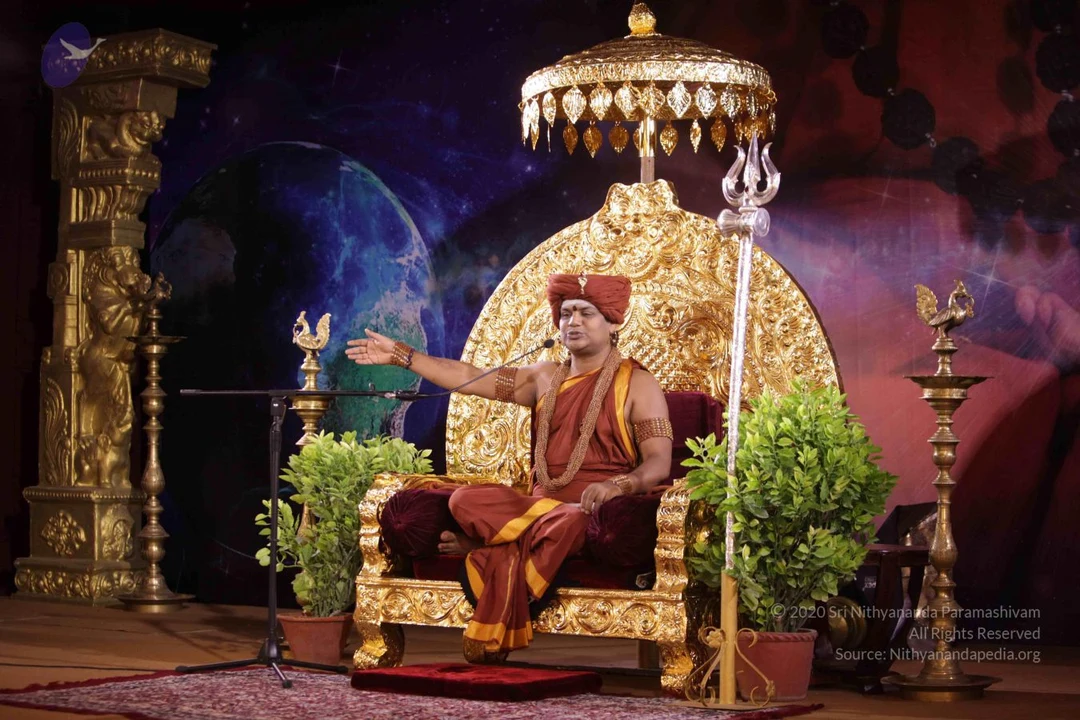
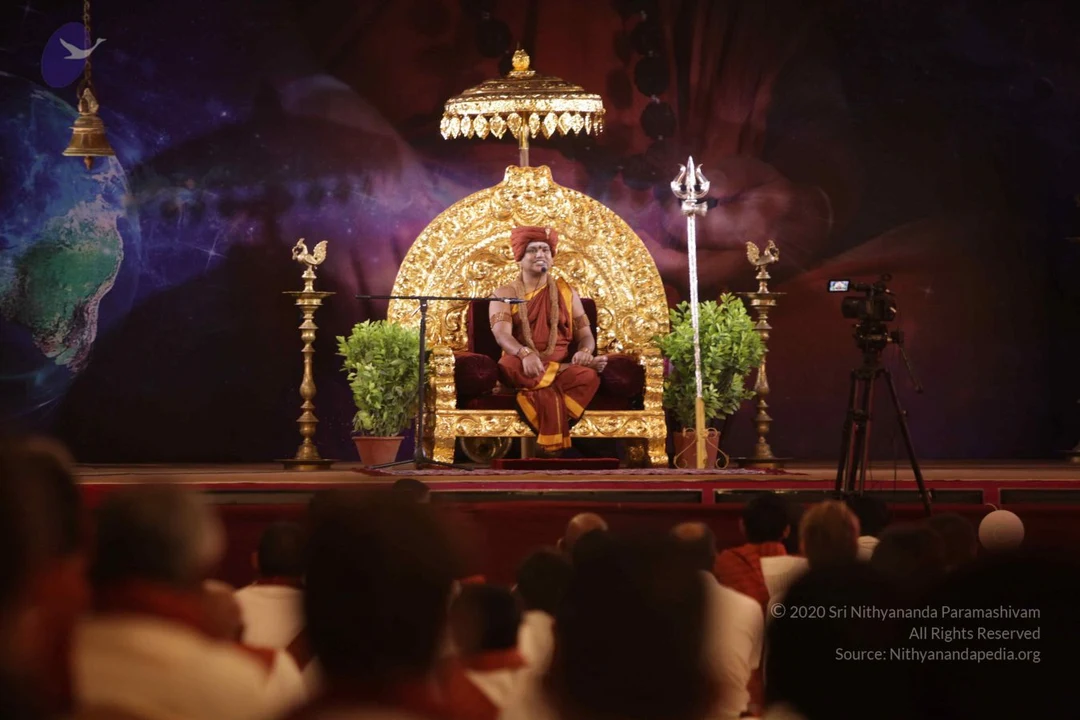
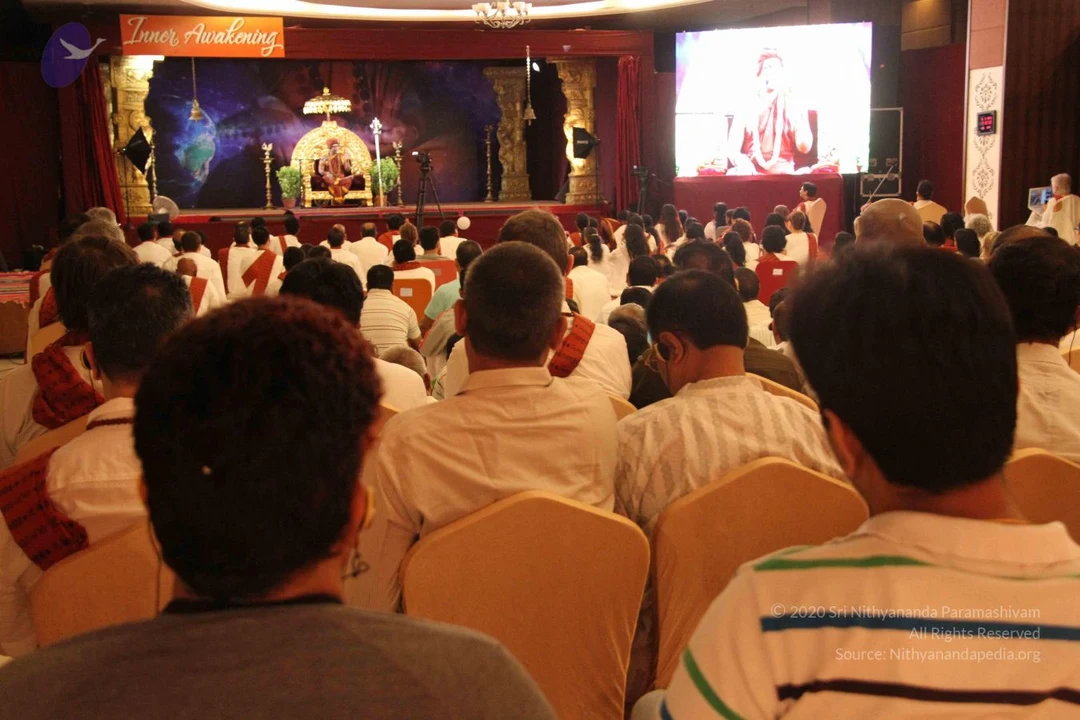
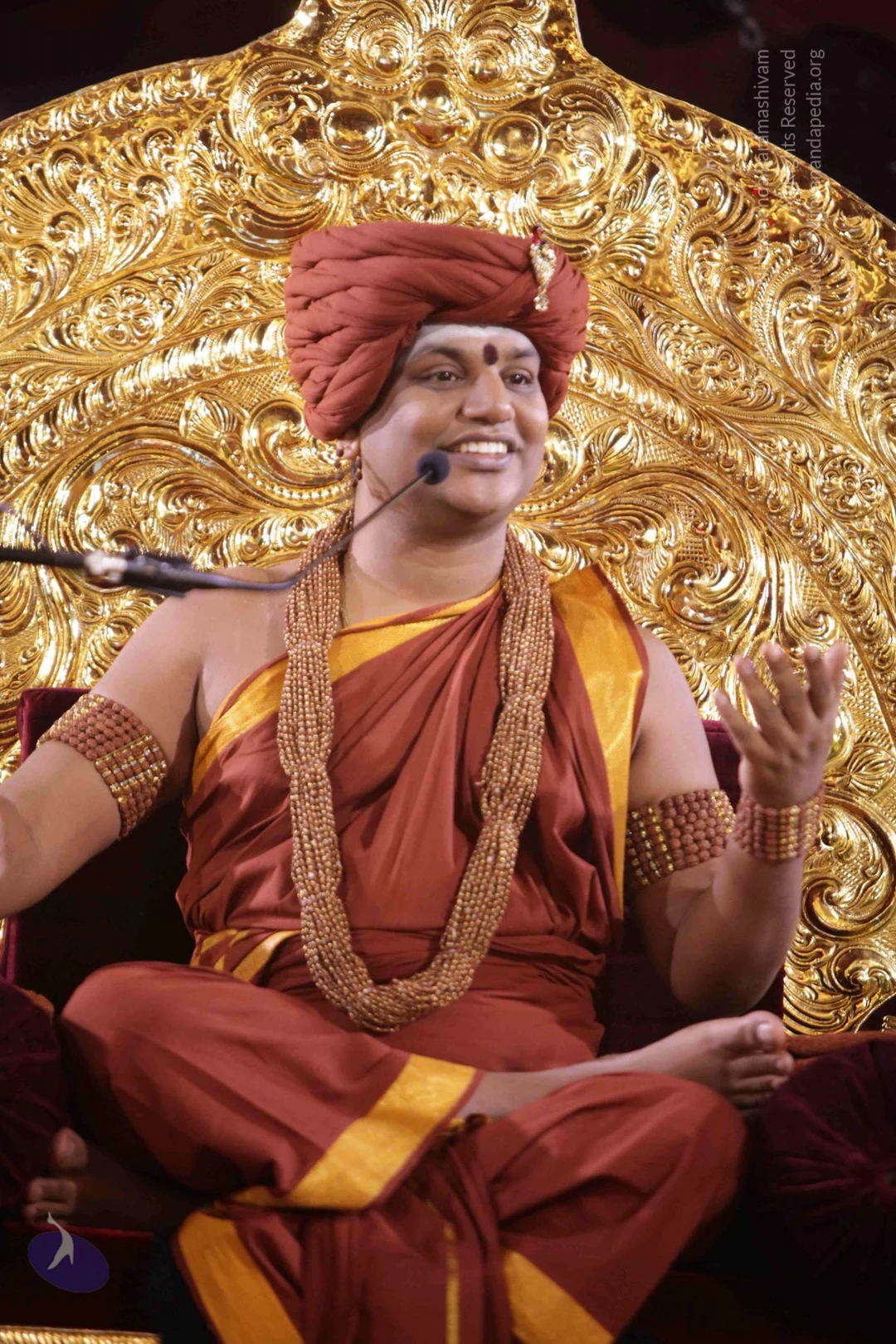
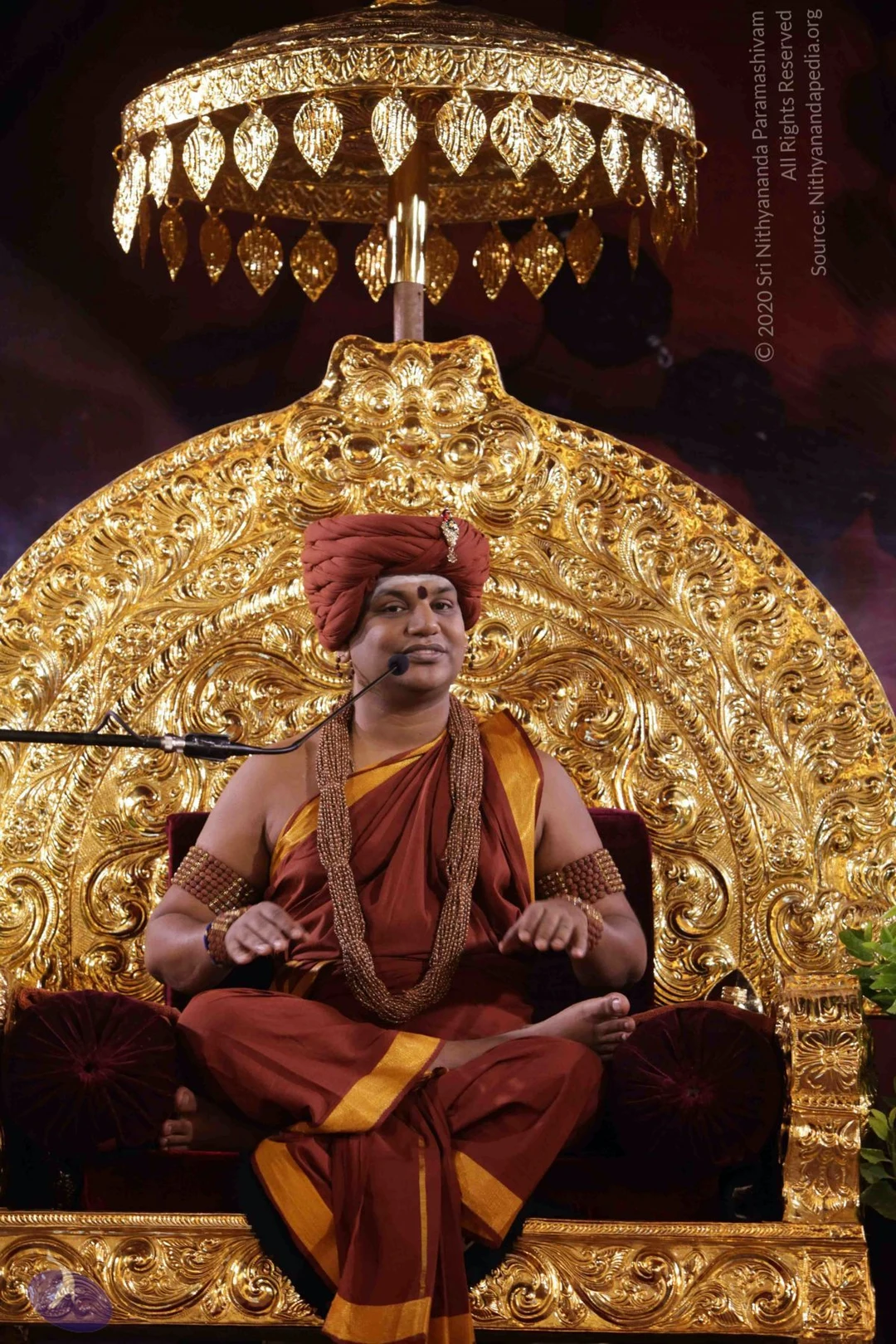
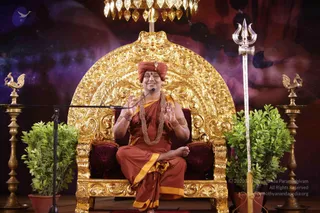
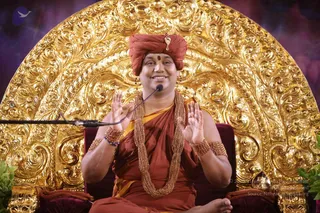
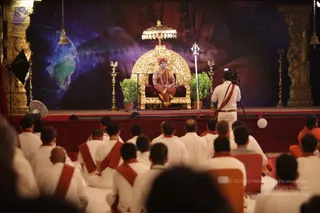
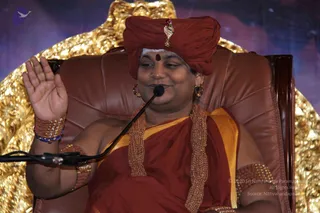
A seated man in a red-orange turban and matching red-orange robe with yellow border sits on an ornate gold throne with a carved arched back, legs crossed, hands raised in front of him while speaking into a standing microphone. A long beaded necklace of rudraksha-style beads hangs on his chest. A silver trident stands to his right and two brass oil lamps flank the throne, with potted green plants in front and a dark purple backdrop.A seated man in a red-orange turban with a small gold ornament at the front, red-orange robes and a long beaded gold-toned necklace with matching beaded bracelets, raises both palms toward the camera while smiling. He sits on a plush maroon cushioned seat before an ornate gold repoussé throne with a large scrolled backrest, with a microphone on a boom stand in front. Greenery appears at the lower corners.A photograph of a satsang hall with a seated teacher on a golden throne-like seat (peetha) at the centre of a raised stage. He wears a saffron-orange robe and a red-orange turban and sits cross-legged with hands resting in his lap. A large golden canopy hangs above the seat, flanked by brass lamp stands, a trident (trishul) and potted green plants. The backdrop is a purple and blue cosmic image with a globe. Below, rows of seated devotees in white clothes with saffron-orange shawls face the stage, and a cameraman in white stands to the right with a camera on a tripod. Brass bells hang at the top corners. Only the teacher on the throne is a candidate for identification, and his appearance is uncertain from this distance.Rear view of a satsang hall where a large seated crowd in white clothes and red-and-white shawls faces a raised stage. A figure in saffron-orange clothing sits on an ornate gold throne under a gold canopy, flanked by brass lamps and potted plants. Behind the throne a backdrop shows a glowing globe and cosmic imagery, and gold-carved pillars frame the stage. A cameraman in white with a red shawl films from the right side of the stage. The banner above reads Inner Awakening. Many devotees sit on white mats, some on orange chairs, with children visible in the foreground.A satsang hall viewed from behind the seated audience. Many devotees in white dhotis and white shirts with red-and-white shoulder shawls sit on white mats facing a raised stage. On the stage, a figure in orange and red robes sits on an ornate golden throne with a canopy, flanked by potted green plants and brass oil lamps, against a backdrop of a glowing earth-and-space image. Cameras on tripods film the scene, and several people sit on the edge of the stage in orange and white. Foreground audience members include children and adults seen from behind.A seated man in a saffron-red turban and red-orange robe with a gold-yellow border sits before an ornately carved gold throne with floral and scroll motifs. He wears a long beaded rudraksha-style mala necklace, beaded bangles on both arms, a red bindi and gold earrings, and speaks into a microphone on a stand while smiling. Probable Swamiji, identified by the saffron turban, rudraksha mala and ornate gold throne setting.

darshan

17 photosSource gallery
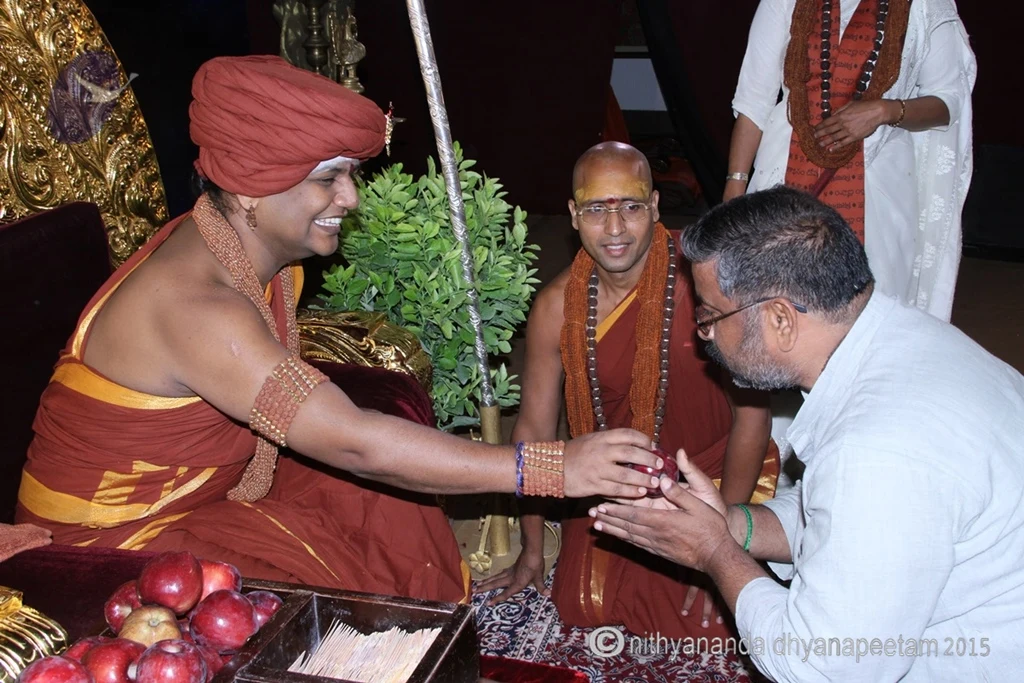
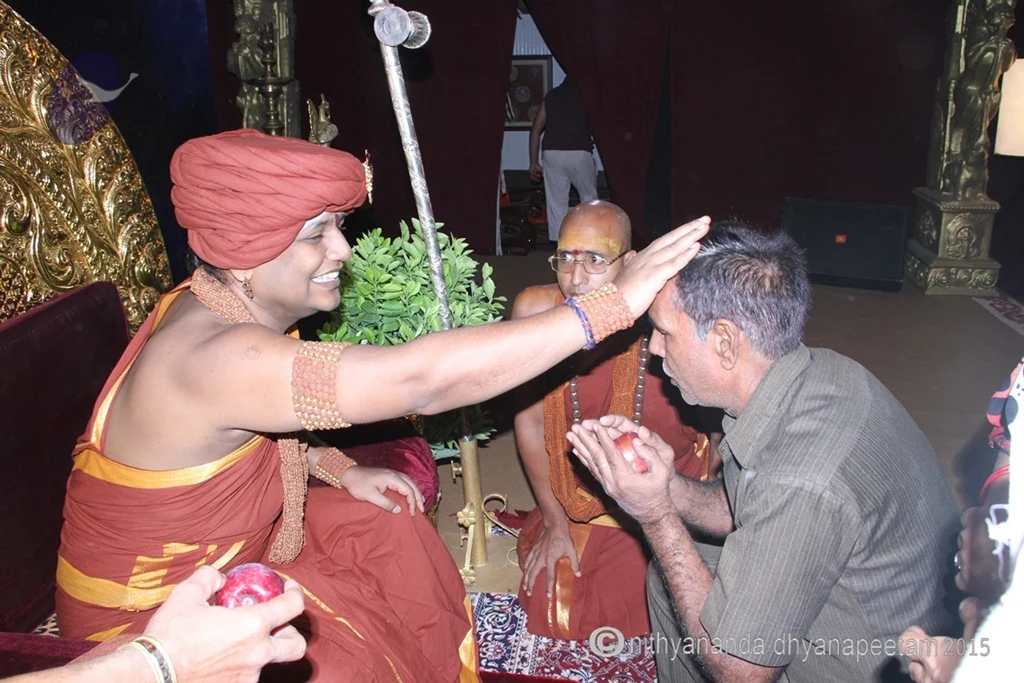
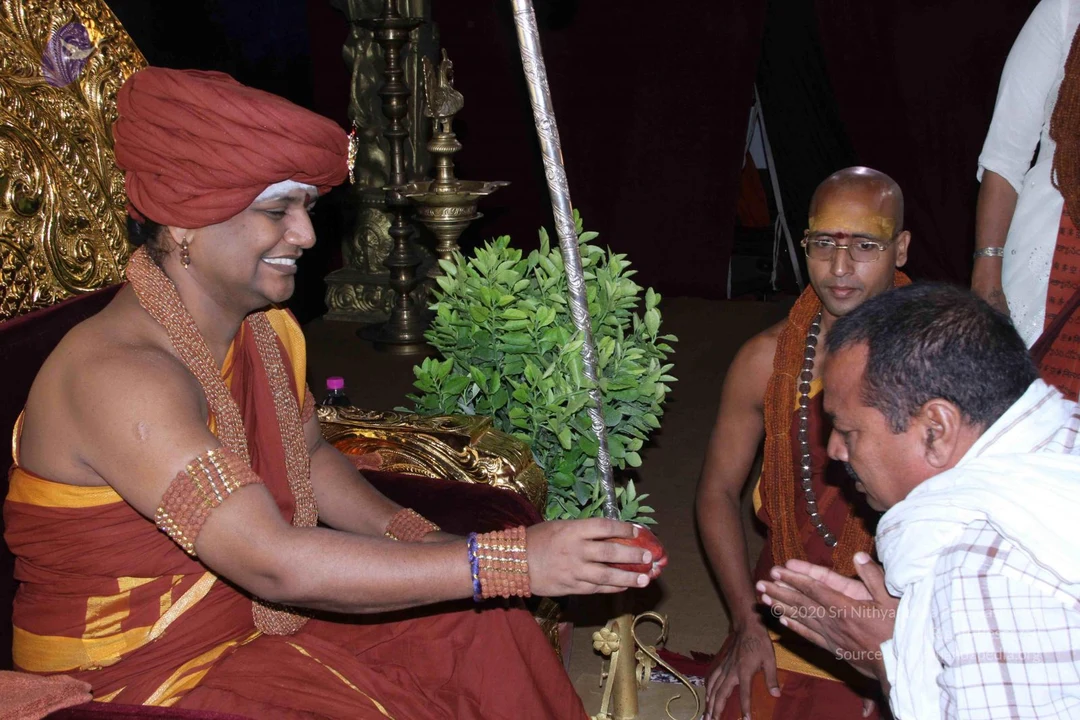
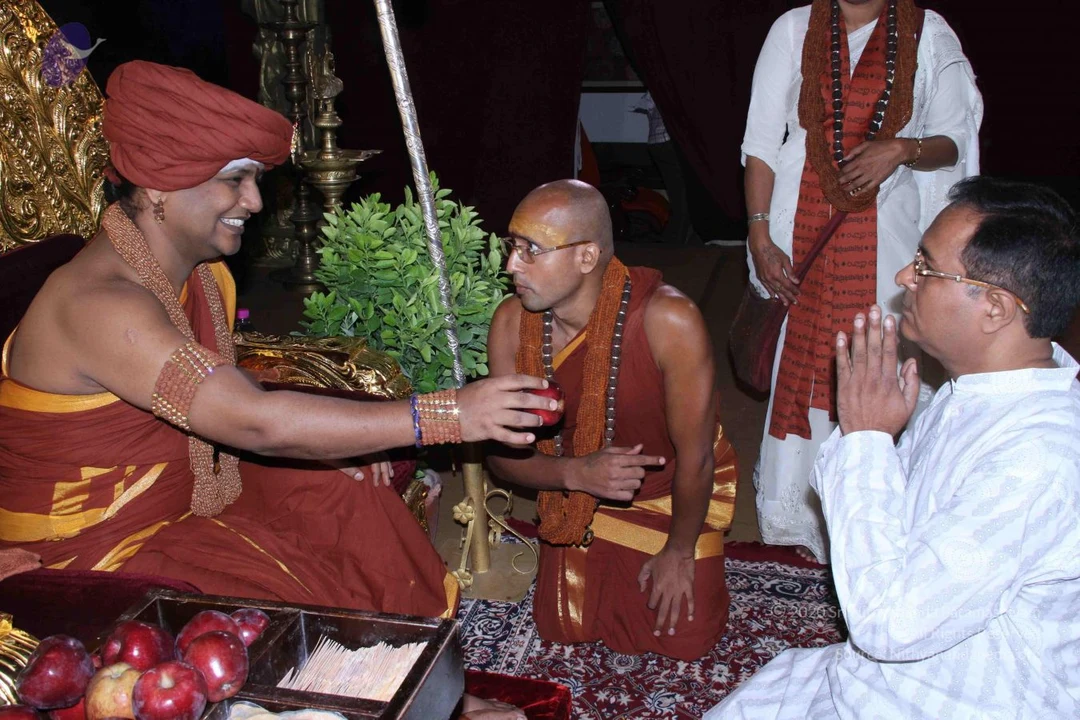
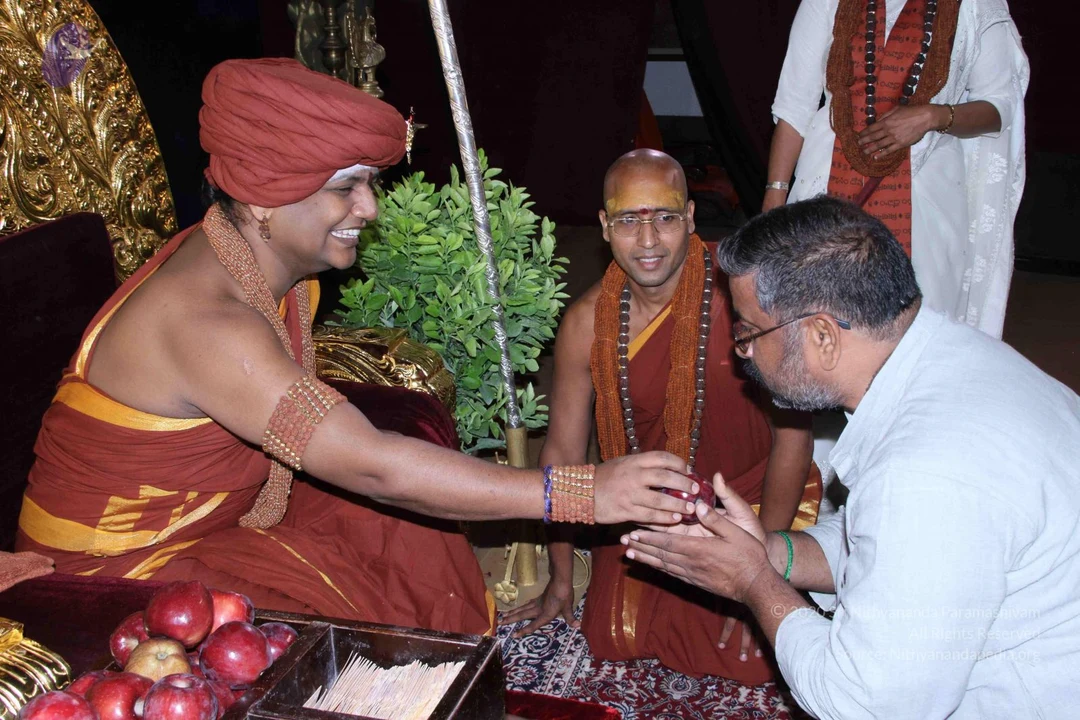
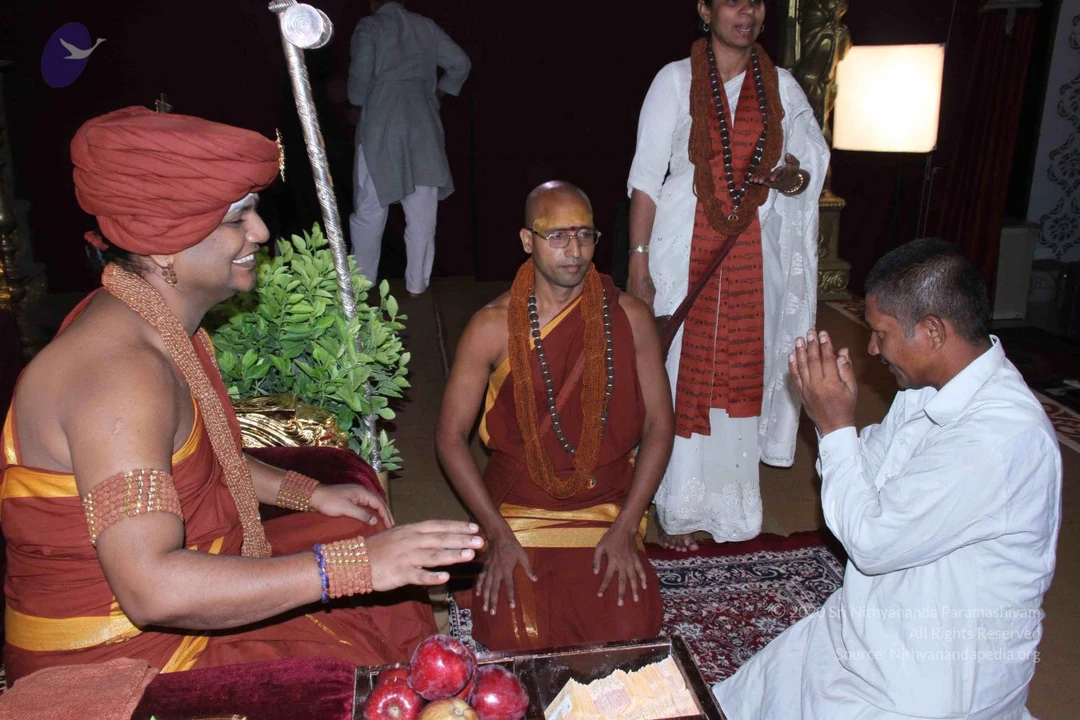
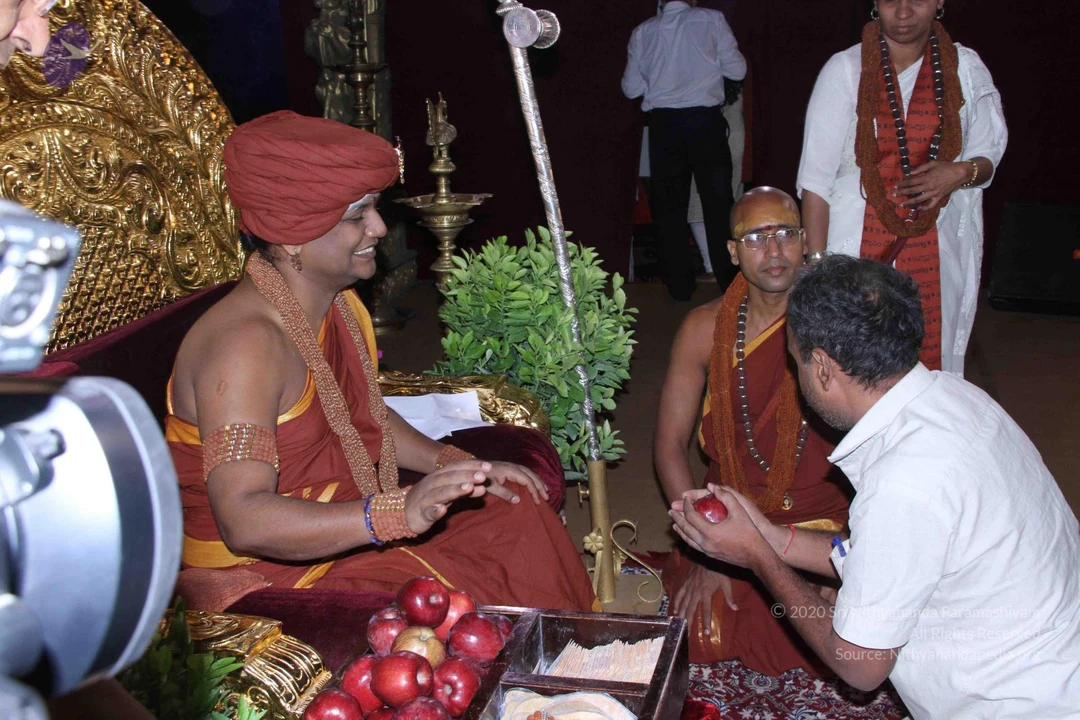
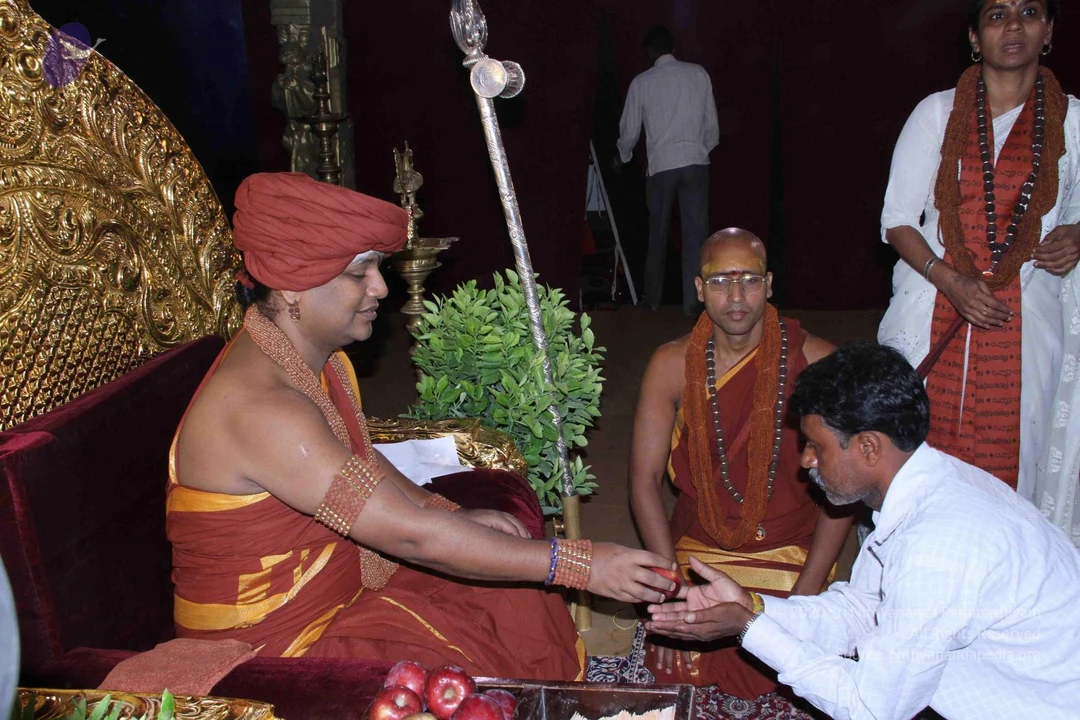
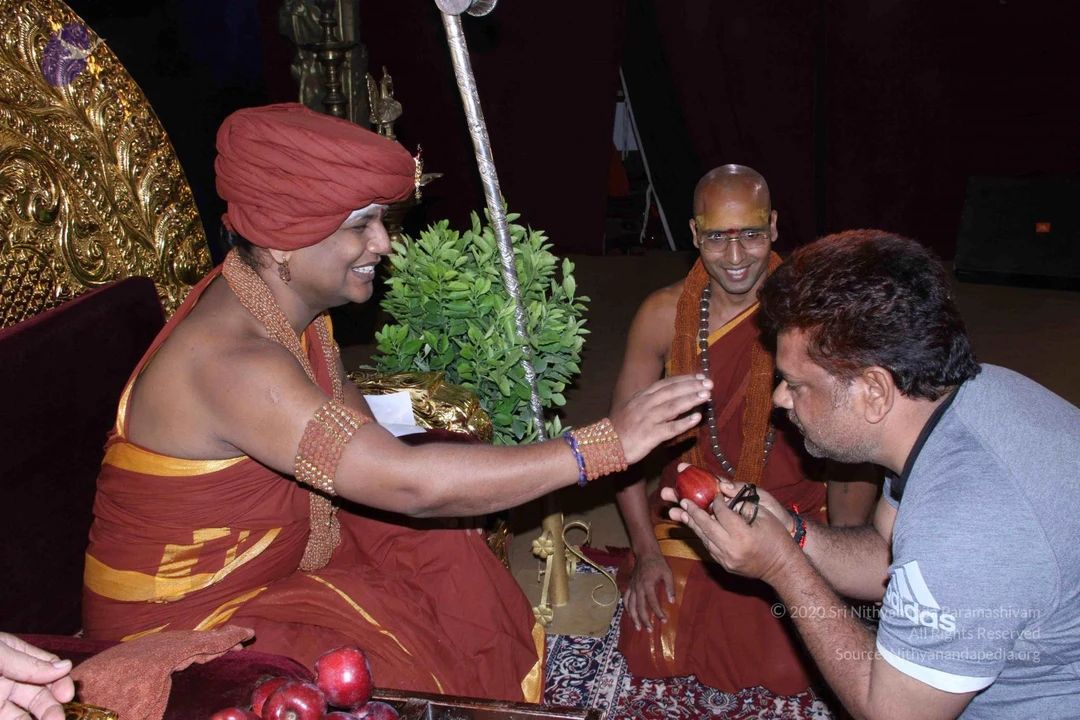
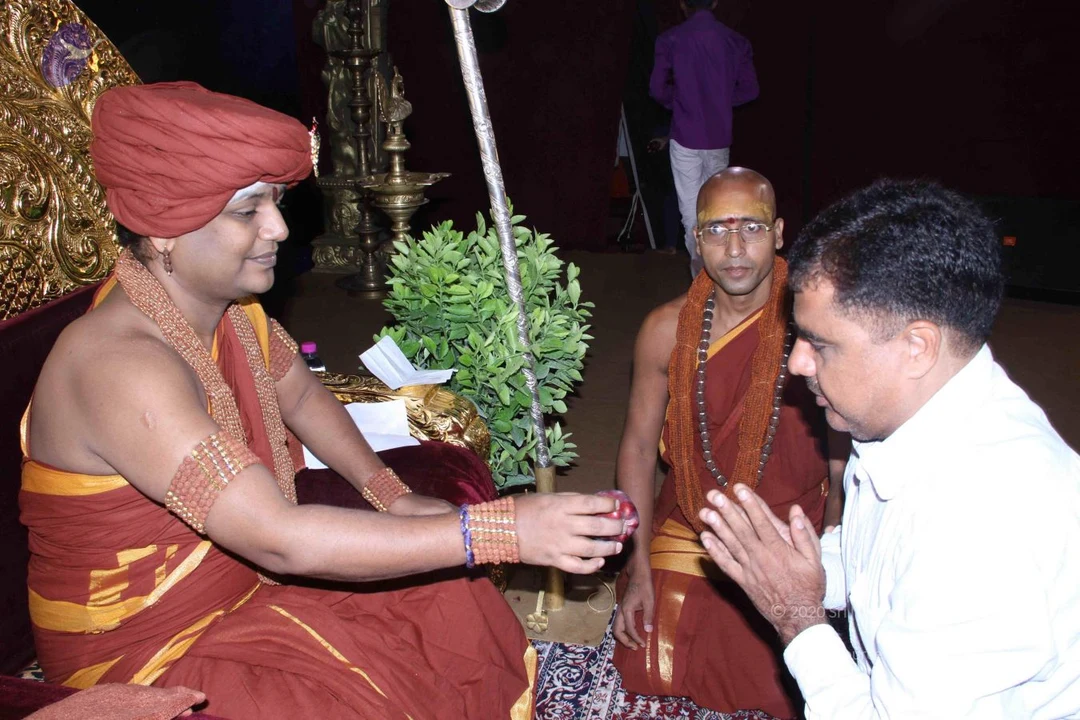
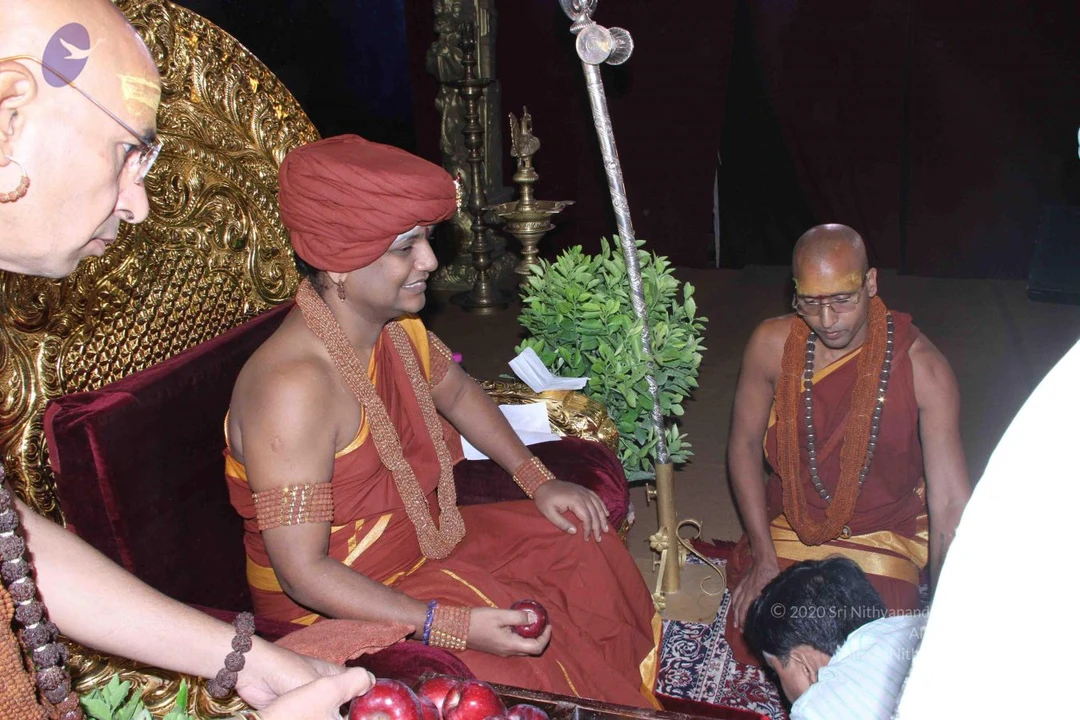
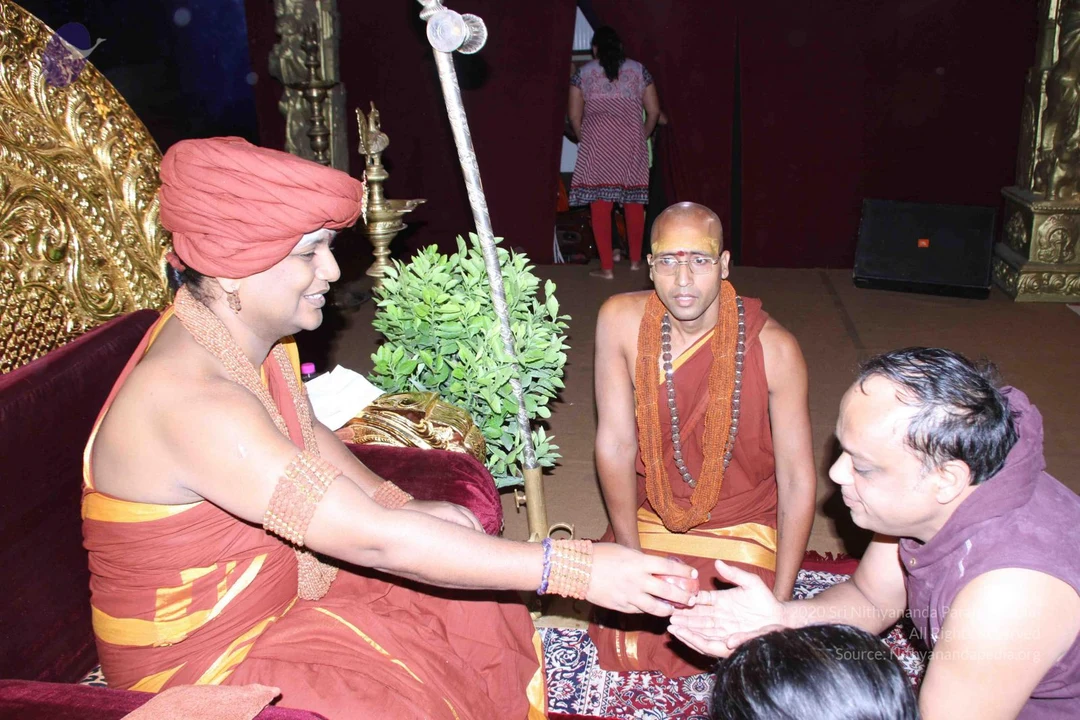
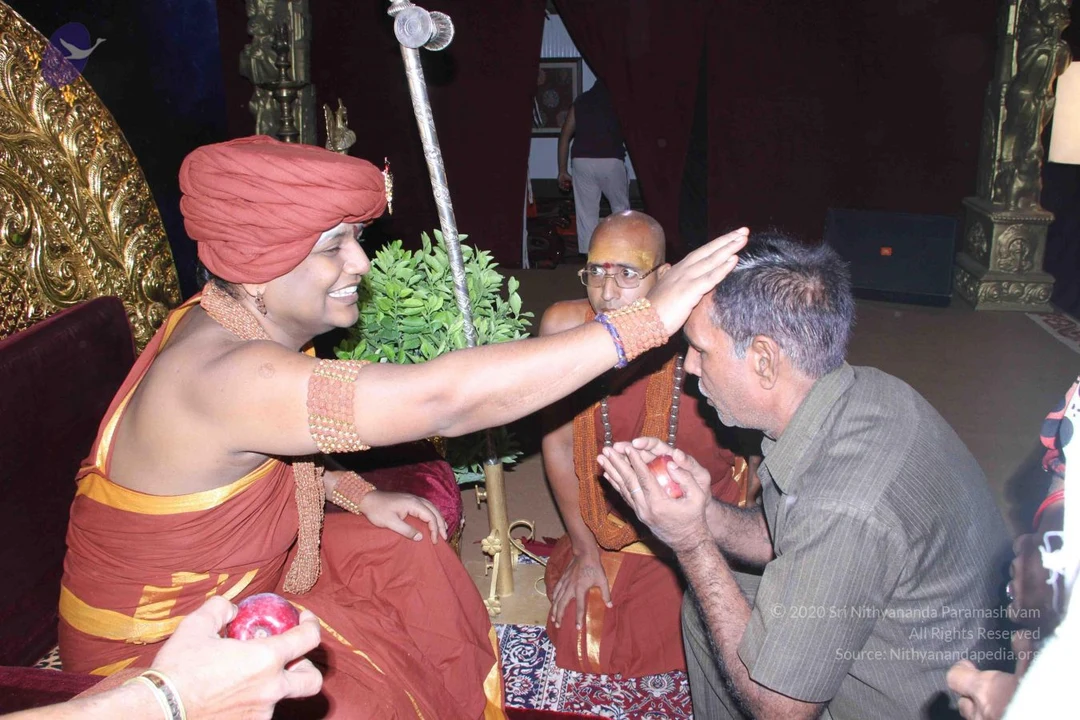
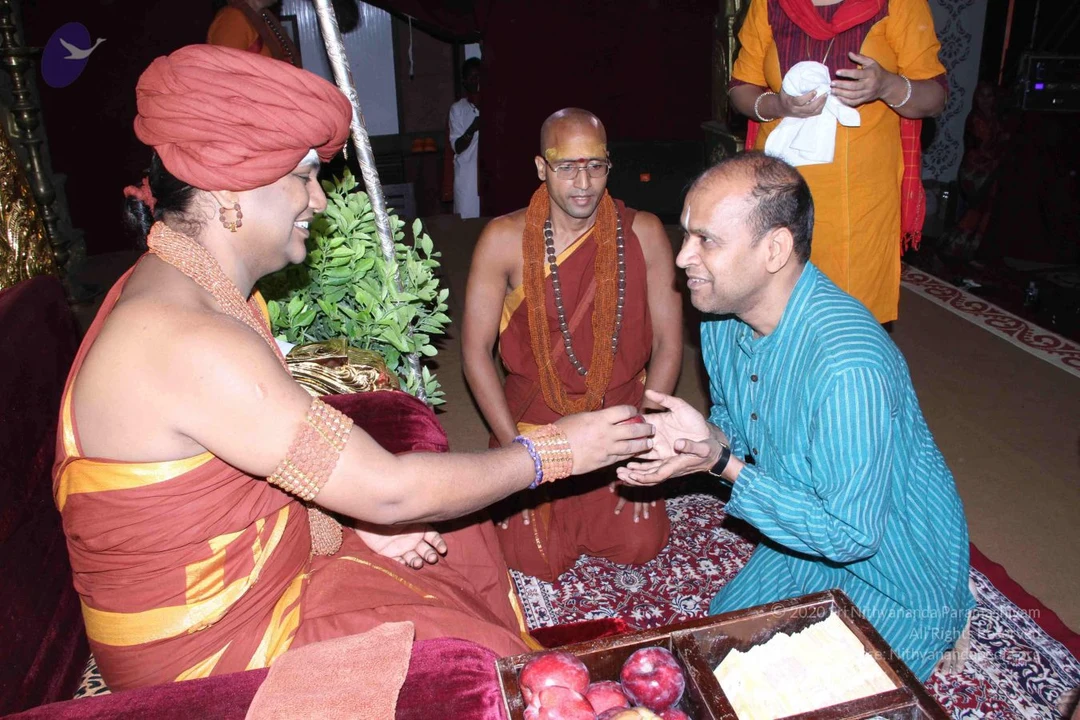
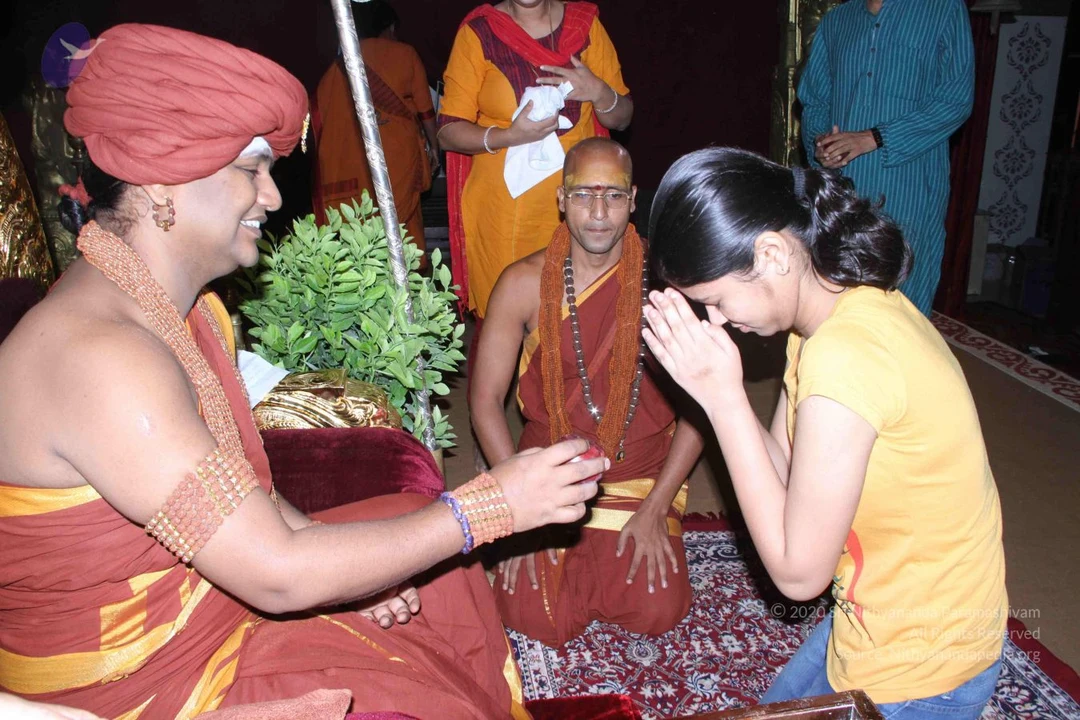
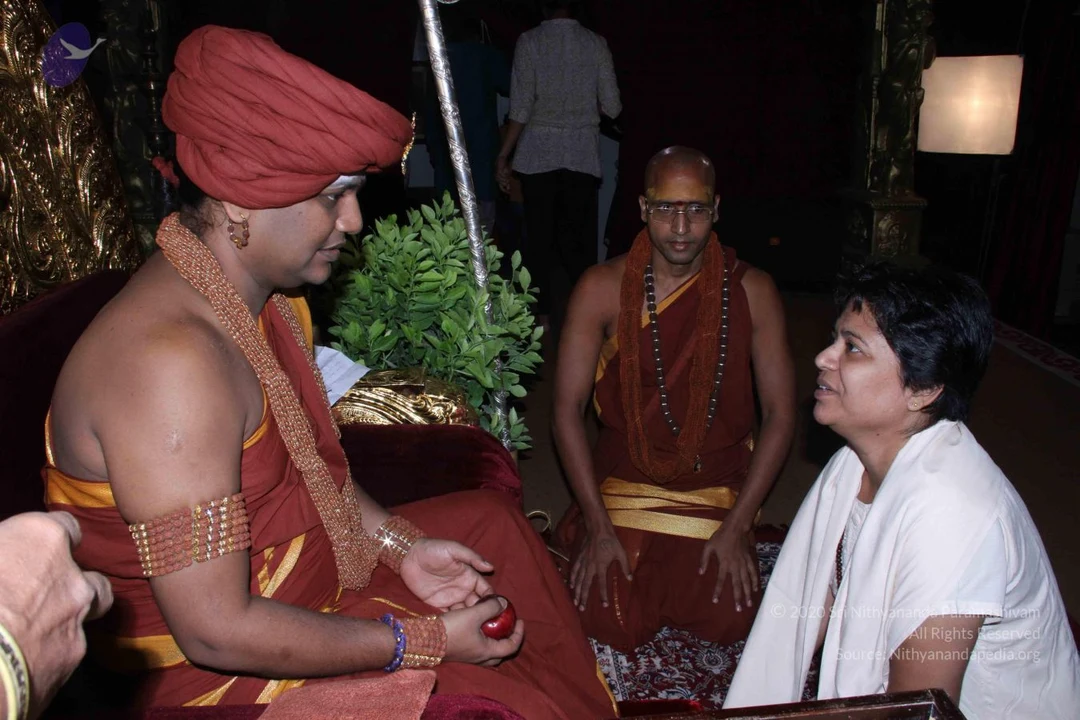
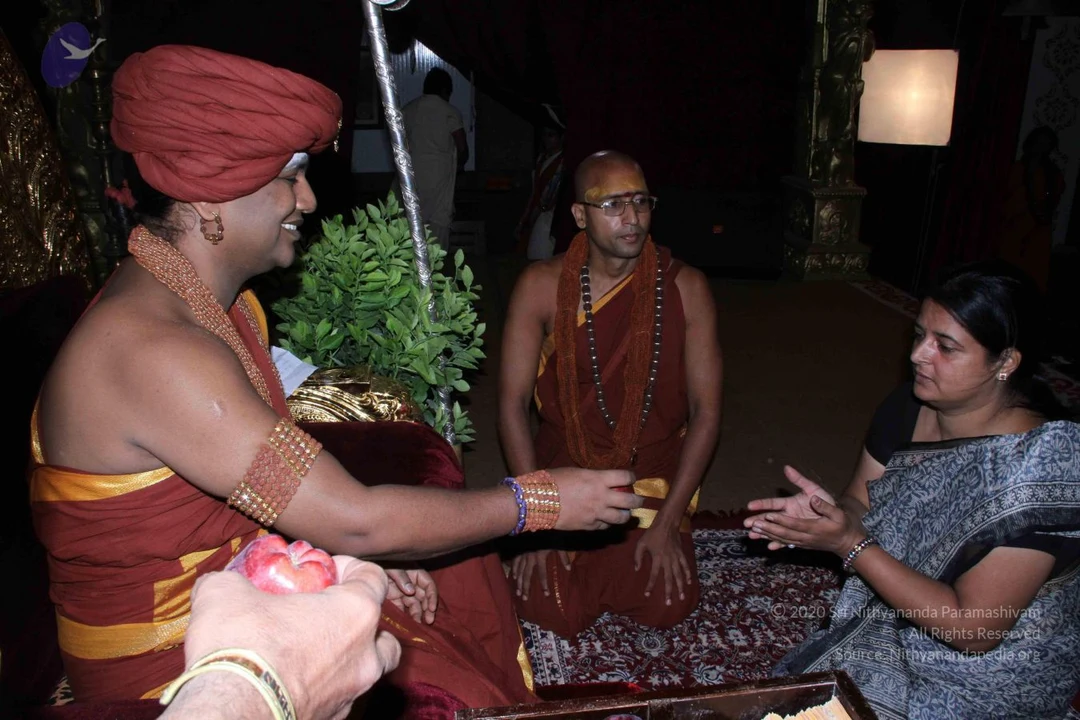
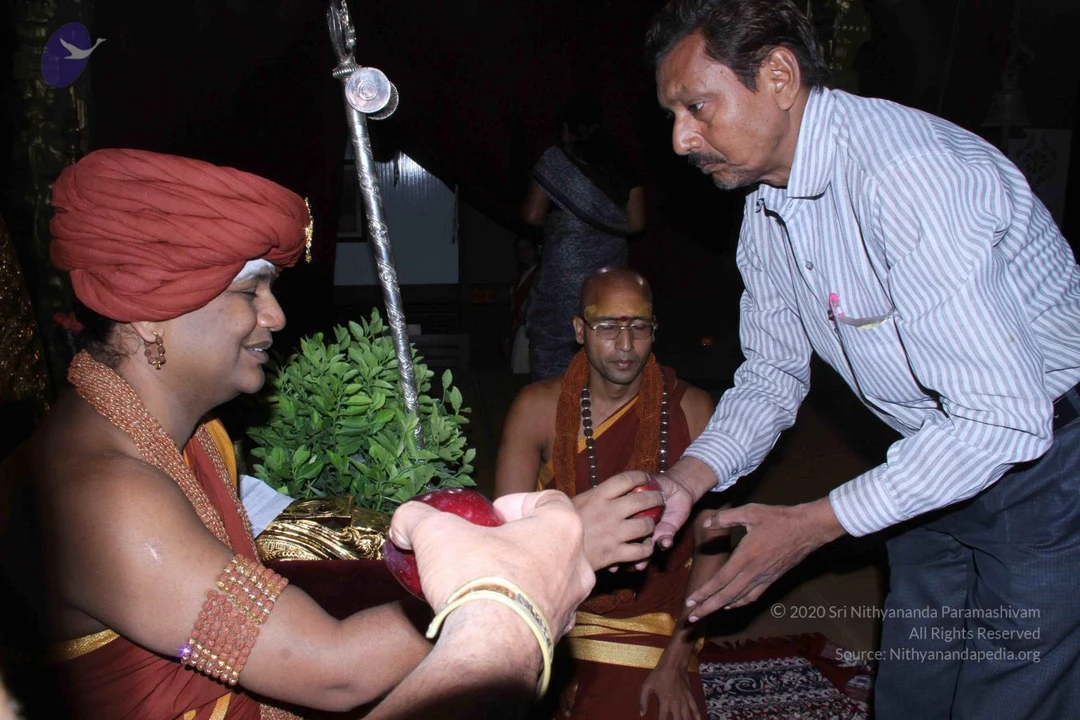
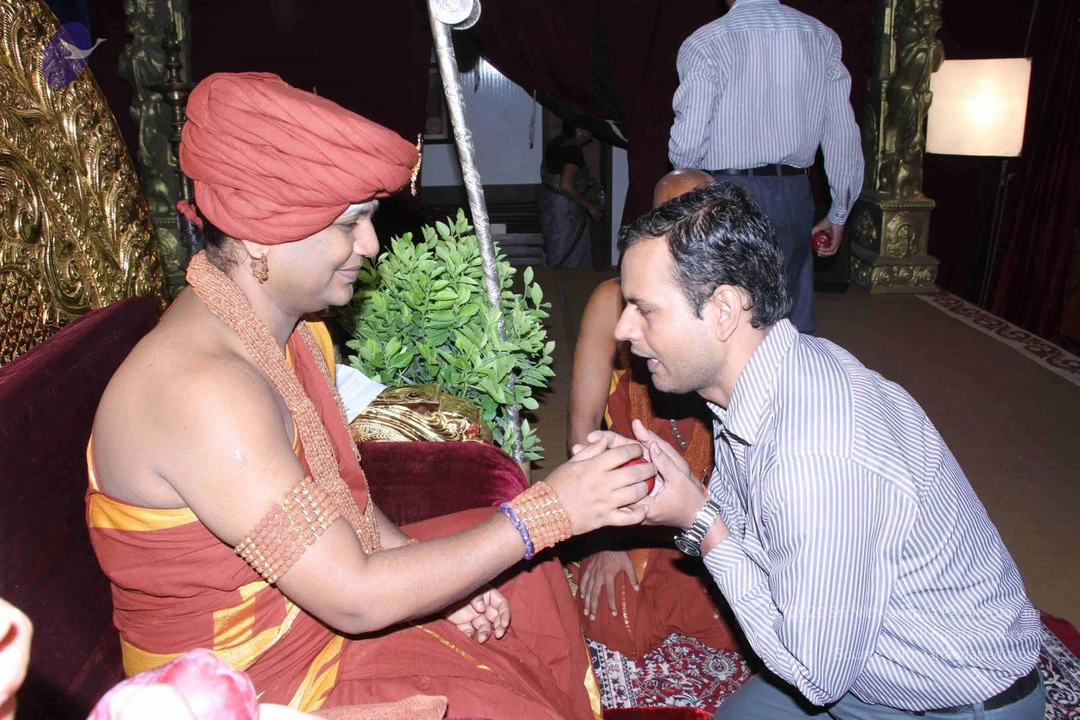
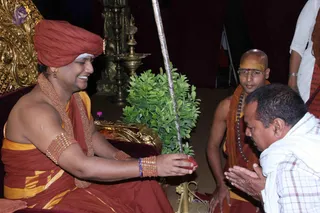
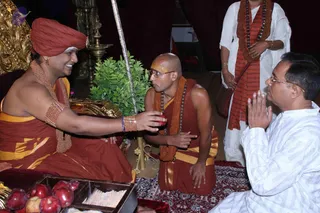
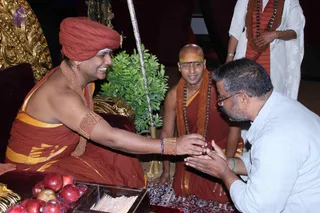
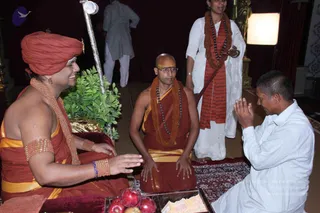
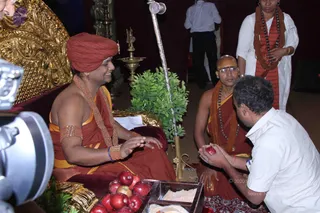
A photograph of a seated saffron-robed figure wearing a red-orange turban, coral beaded necklaces and coral bangles, smiling as he holds a red bowl or vessel over a silver-coloured ritual staff. Behind him stand gold-ornamented chairs, a brass oil lamp and a green leafy plant. A second robed priest with a shaved head, glasses, tripundra marks and a rudraksha mala stands beside him. In the foreground a devotee in a white checked shirt and white cloth kneels with palms pressed together. The figure's appearance matches a person through the turban, coral beads and saffron-orange robes, but the candidate is not clearly distinctive enough to confirm.A seated man in a red-maroon turban and saffron-gold dhoti, with multiple rudraksha beaded necklaces and ornate beaded bracelets, reaches out to hand a small red object to a shaved-headed man in maroon robes and rudraksha mala who kneels before him. A third man in white kurta with folded hands kneels at right, while two women in white and red-maroon shawls stand behind. Fresh red apples and sticks lie on a tray at lower left, a brass lamp and a green plant stand near the seated figure, and a red carpet covers the floor. The seated figure is a probable Swamiji by appearance cues, with a red turban, rudraksha malas and ceremonial bracelets, though identity is uncertain from appearance alone.A photograph of a seated figure in a saffron-red turban and red-orange drapery with gold-edged borders, wearing a beaded necklace and bangles, smiling as they extend a red fruit or object to a kneeling man in a light grey shirt and glasses. Behind them stands a bald man with a vermilion forehead mark, wearing orange-red robes and a rudraksha mala, seated on a patterned rug. Another person in white with orange shawl and beads stands at the back. A gold-carved throne frames the left, a green potted plant stands centre, and a tray of red apples and toothpicks sits in front. The seated figure is not clearly identifiable from appearance alone.A photograph of a seated figure in a red-orange turban and matching saffron robe with gold-trimmed yellow edging, wearing a long ornate gold necklace and gold bangles on the upper arm and wrist, smiling as he extends his hands toward a kneeling devotee in white clothes with palms pressed together. Beside him sits a bald man in glasses and a saffron robe with a rudraksha mala, and behind them stands a woman in white with a red-and-gold shawl and rudraksha mala. A tray holds red apples and bundled currency notes, with a green potted plant and a silver staff nearby.A photograph of a seated figure on a gold ornate throne in a hall, wearing a red-orange turban and saffron-red robes with a yellow border, a beaded mala and gold armbands. Beside him a bald man in glasses wears a saffron shawl and rudraksha mala, and a woman in white stands behind with a red shawl. A man in white kneels at right, holding a red apple as an offering. Red apples, a tray of sweets and a brass oil lamp sit on the floor, with a silver staff and green plants nearby.A photograph of a seated figure in a red-orange turban and matching orange-and-gold robe, adorned with beaded necklaces and gold bangles, handing a red fruit to a kneeling man in a white shirt who holds out his cupped hands. The seated figure sits on a plush red chair with an ornate gold carved backrest. Beside him, a bald man in a red-orange robe with a rudraksha mala and a vertical tilak sits on the floor, and a woman in white with an orange shawl stands at the right. Apples sit on a tray in the foreground, with a potted green plant, a brass oil lamp and a silver-topped staff behind them. Another man in white stands in the background near a stand.

inner-awakening

61 photosSource gallery
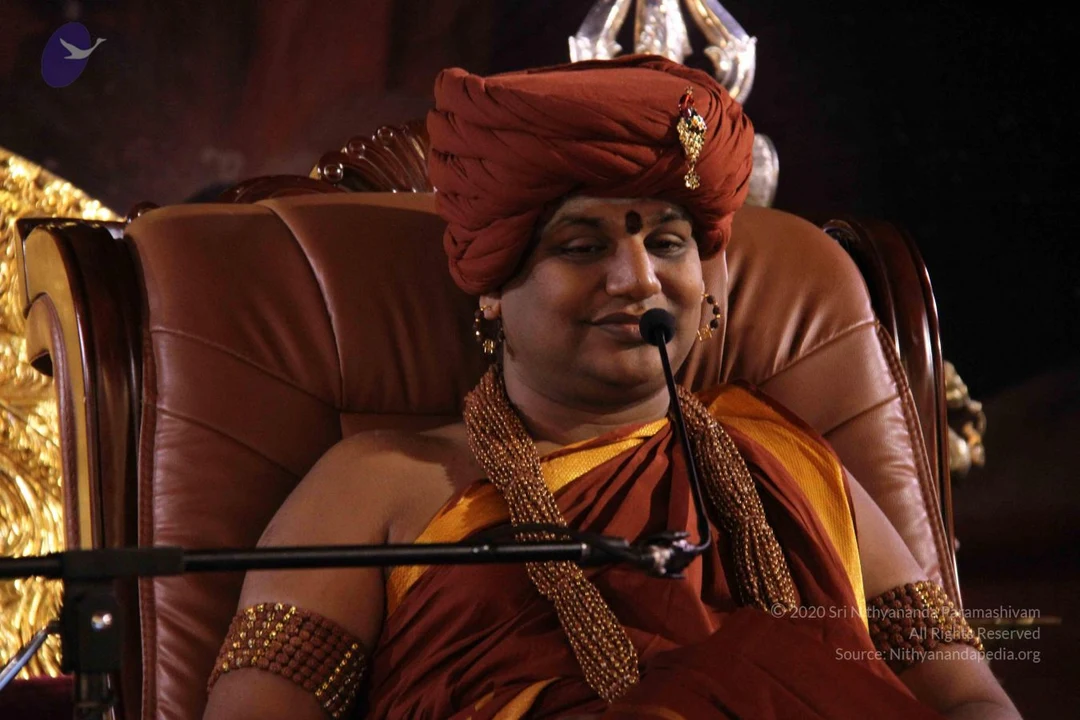
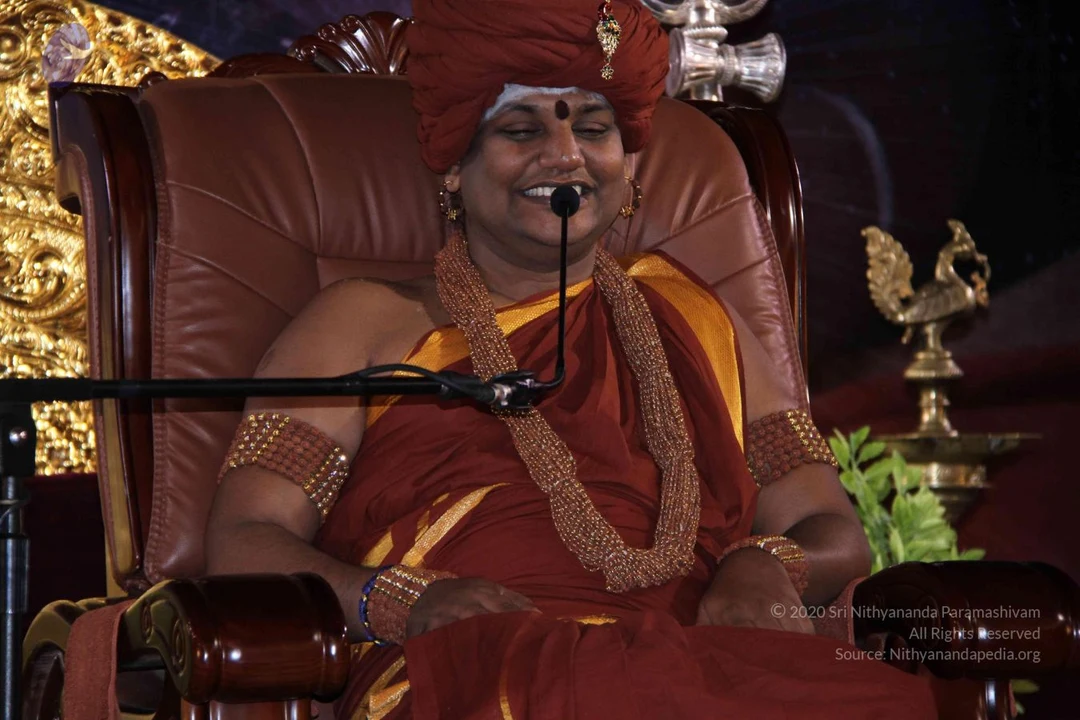
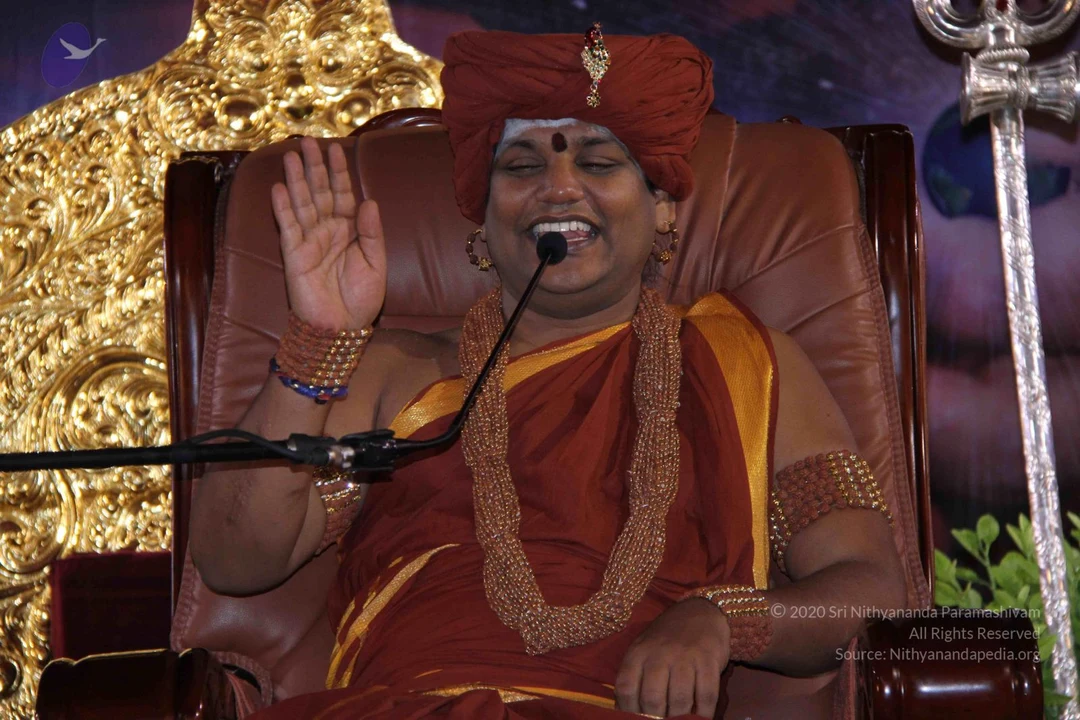
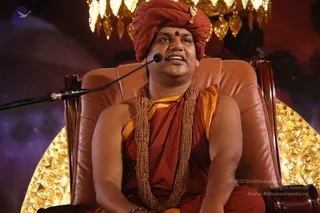
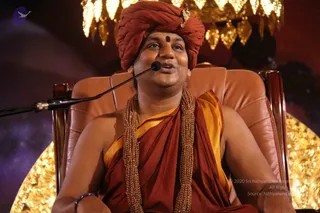
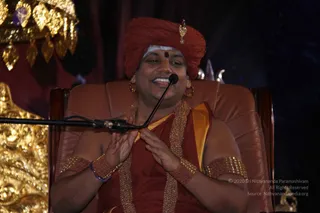
A man in a red-orange turban with a gold ornament and a red tilak on his forehead sits in a large brown leather throne-style chair, speaking into a black microphone on a stand. He wears an orange-and-gold shawl over his shoulders, a long gold bead necklace, gold bead bracelets on his upper arms, and gold hoop earrings. Behind him, ornate gold carved panels and a decorative gold finial frame the seat against a dark background. The scene suggests a seated satsang discourse.A photograph of a smiling person seated in a brown leather throne-style armchair with wooden armrests, speaking into a black microphone on a boom stand. The person wears a red-orange turban with a gold ornament, an orange-red shawl with gold border, a multi-strand golden-beaded necklace, beaded gold armlets and bangles, and a red bindi. Behind is an ornate gold-leaf backdrop, a brass oil lamp with a peacock-shaped stand, and green leaves. The figure's appearance is consistent with the a person presentation cues of turban, saffron-orange clothing and ornate adornments, but identity remains uncertain.A photograph of a seated speaker in a brown leather armchair giving a satsang discourse. The speaker wears a rust-red turban with a jewelled ornament at the front, a red bindi, a red and gold shawl draped over red robes, a long beaded rudraksha-style mala, beaded bracelets and armbands, and gold earrings. One hand is raised mid-speech and the mouth is open in laughter in front of a microphone on a stand. Behind the chair an ornate gold carved panel is visible, and at right a silver trident stands near green plants against a purple backdrop.A photograph of a smiling person seated in a large brown leather armchair at a satsang, speaking into a black microphone on a stand at left. The person wears a red-orange turban with a small gold ornament, a red-orange robe with gold border, a heavy beaded rudraksha-style mala and gold bangles on the upper arms and wrists, and a red bindi. A golden ornate backdrop and a silver trident stand at right, with green foliage in the corner. The person is shown in a seated discourse role, with no other physical people visible.A smiling person in a rust-red turban with a small gold ornament and a red bindi sits in a brown leather armchair beside a microphone on a stand. They wear a red-and-gold robe, layered rudraksha-style beaded necklaces, and beaded gold armbands. Behind them an ornate gold throne-like carved backrest and a silver trishul rise against a purple floral backdrop. Swamiji (probable): the figure wears the turban, ornate beaded necklaces and saffron-gold robe. The person is seated on a chair with a microphone.A photograph of a man seated in a brown leather armchair before a microphone on a stand, smiling broadly. He wears a red-orange turban with a jewelled ornament at the front, a red-orange robe with gold borders, a long multi-strand beaded necklace, matching beaded armbands and bangles, and a red tilak on his forehead. Behind him stands an ornate gold-leaf throne back, a silver trident on the right and green foliage at the lower right. Partial visibility of a paper in his hand. A decorative blue-purple backdrop completes the stage setting.

Nithyananda-Satsang

101 photosSource gallery
A seated man in a red-orange turban and matching red-orange robe with yellow border sits on an ornate gold throne with a carved arched back, legs crossed, hands raised in front of him while speaking into a standing microphone. A long beaded necklace of rudraksha-style beads hangs on his chest. A silver trident stands to his right and two brass oil lamps flank the throne, with potted green plants in front and a dark purple backdrop.A seated man in a red-orange turban with a small gold ornament at the front, red-orange robes and a long beaded gold-toned necklace with matching beaded bracelets, raises both palms toward the camera while smiling. He sits on a plush maroon cushioned seat before an ornate gold repoussé throne with a large scrolled backrest, with a microphone on a boom stand in front. Greenery appears at the lower corners.A photograph of a satsang hall with a seated teacher on a golden throne-like seat (peetha) at the centre of a raised stage. He wears a saffron-orange robe and a red-orange turban and sits cross-legged with hands resting in his lap. A large golden canopy hangs above the seat, flanked by brass lamp stands, a trident (trishul) and potted green plants. The backdrop is a purple and blue cosmic image with a globe. Below, rows of seated devotees in white clothes with saffron-orange shawls face the stage, and a cameraman in white stands to the right with a camera on a tripod. Brass bells hang at the top corners. Only the teacher on the throne is a candidate for identification, and his appearance is uncertain from this distance.A satsang hall viewed from behind the seated audience. Many devotees in white dhotis and white shirts with red-and-white shoulder shawls sit on white mats facing a raised stage. On the stage, a figure in orange and red robes sits on an ornate golden throne with a canopy, flanked by potted green plants and brass oil lamps, against a backdrop of a glowing earth-and-space image. Cameras on tripods film the scene, and several people sit on the edge of the stage in orange and white. Foreground audience members include children and adults seen from behind.A seated man in a saffron-red turban and red-orange robe with a gold-yellow border sits before an ornately carved gold throne with floral and scroll motifs. He wears a long beaded rudraksha-style mala necklace, beaded bangles on both arms, a red bindi and gold earrings, and speaks into a microphone on a stand while smiling. Probable Swamiji, identified by the saffron turban, rudraksha mala and ornate gold throne setting.A seated man in a rust-red turban with a small gold ornament and a red bindi sits cross-legged on a plush maroon cushion before an ornate gold throne-like backdrop. He wears a rust-red and saffron-gold draped garment, a thick beaded gold-toned necklace, and gold armbands, and he holds a hand on the gold armrest while speaking into a microphone on a boom stand. Green foliage frames the lower corners. Swamiji (probable): the rust-red and saffron clothing, ornate gold necklace and turban fit the presentation of the page's named teacher, though this is an appearance-based label.

Kalpataru-Darshan

17 photosSource gallery
A photograph of a seated saffron-robed figure wearing a red-orange turban, coral beaded necklaces and coral bangles, smiling as he holds a red bowl or vessel over a silver-coloured ritual staff. Behind him stand gold-ornamented chairs, a brass oil lamp and a green leafy plant. A second robed priest with a shaved head, glasses, tripundra marks and a rudraksha mala stands beside him. In the foreground a devotee in a white checked shirt and white cloth kneels with palms pressed together. The figure's appearance matches a person through the turban, coral beads and saffron-orange robes, but the candidate is not clearly distinctive enough to confirm.A seated man in a red-maroon turban and saffron-gold dhoti, with multiple rudraksha beaded necklaces and ornate beaded bracelets, reaches out to hand a small red object to a shaved-headed man in maroon robes and rudraksha mala who kneels before him. A third man in white kurta with folded hands kneels at right, while two women in white and red-maroon shawls stand behind. Fresh red apples and sticks lie on a tray at lower left, a brass lamp and a green plant stand near the seated figure, and a red carpet covers the floor. The seated figure is a probable Swamiji by appearance cues, with a red turban, rudraksha malas and ceremonial bracelets, though identity is uncertain from appearance alone.A photograph of a seated figure in a saffron-red turban and red-orange drapery with gold-edged borders, wearing a beaded necklace and bangles, smiling as they extend a red fruit or object to a kneeling man in a light grey shirt and glasses. Behind them stands a bald man with a vermilion forehead mark, wearing orange-red robes and a rudraksha mala, seated on a patterned rug. Another person in white with orange shawl and beads stands at the back. A gold-carved throne frames the left, a green potted plant stands centre, and a tray of red apples and toothpicks sits in front. The seated figure is not clearly identifiable from appearance alone.A photograph of a seated figure in a red-orange turban and matching saffron robe with gold-trimmed yellow edging, wearing a long ornate gold necklace and gold bangles on the upper arm and wrist, smiling as he extends his hands toward a kneeling devotee in white clothes with palms pressed together. Beside him sits a bald man in glasses and a saffron robe with a rudraksha mala, and behind them stands a woman in white with a red-and-gold shawl and rudraksha mala. A tray holds red apples and bundled currency notes, with a green potted plant and a silver staff nearby.A photograph of a seated figure on a gold ornate throne in a hall, wearing a red-orange turban and saffron-red robes with a yellow border, a beaded mala and gold armbands. Beside him a bald man in glasses wears a saffron shawl and rudraksha mala, and a woman in white stands behind with a red shawl. A man in white kneels at right, holding a red apple as an offering. Red apples, a tray of sweets and a brass oil lamp sit on the floor, with a silver staff and green plants nearby.A photograph of a seated figure in a red-orange turban and matching orange-and-gold robe, adorned with beaded necklaces and gold bangles, handing a red fruit to a kneeling man in a white shirt who holds out his cupped hands. The seated figure sits on a plush red chair with an ornate gold carved backrest. Beside him, a bald man in a red-orange robe with a rudraksha mala and a vertical tilak sits on the floor, and a woman in white with an orange shawl stands at the right. Apples sit on a tray in the foreground, with a potted green plant, a brass oil lamp and a silver-topped staff behind them. Another man in white stands in the background near a stand.

Inner-Awakening-Session

30 photosSource gallery
A man in a red-orange turban with a gold ornament and a red tilak on his forehead sits in a large brown leather throne-style chair, speaking into a black microphone on a stand. He wears an orange-and-gold shawl over his shoulders, a long gold bead necklace, gold bead bracelets on his upper arms, and gold hoop earrings. Behind him, ornate gold carved panels and a decorative gold finial frame the seat against a dark background. The scene suggests a seated satsang discourse.A photograph of a man seated in a brown leather throne-style chair with gold carved wooden arms, speaking into a microphone on a boom stand. He wears a red-orange turban with a gold ornament, a red-orange and gold robe, a beaded gold necklace, and bangles, with a small dot on his forehead. He raises one hand in a blessing gesture and smiles. A silver trident is visible above the chair against a dark background, and a gold-decorated panel is at the left.A seated person speaks into a microphone during a satsang discourse, sitting in a large brown leather chair with carved wooden armrests. The person wears a rust-orange turban with a gold ornament at the front, a red-brown saffron robe with gold-yellow border, a multi-strand rudraksha mala and a gold ceremonial necklace, and has a red bindi on the forehead. One hand is raised, palm outward, in a gesture while the other hand rests open at the side. The background is dark, and a gold ornamental edge is visible on the left.A photograph of a person seated in a brown leather armchair with an ornate gold carved backrest behind them, speaking into a black microphone on a stand. The person wears a rust-red turban with a jewelled ornament at the front, a red-brown robe with a gold border, layered beaded necklaces and beaded bracelets on the wrists, and a red bindi on the forehead. A purple and blue backdrop fills the upper background.Photograph of a seated person speaking into a microphone during a satsang discourse. A large ornate golden throne-style backdrop with a purple-blue starry panel stands behind a brown leather chair. The speaker wears a red-orange turban with a jewelled ornament and a vermilion bindi, red-orange robes with a gold-yellow shawl, a long beaded mala-style necklace, beaded bangles on the arms and jewelled earrings. The microphone stand is at left.A smiling person in a brown leather armchair speaks into a black microphone on a boom stand. They wear a deep red-maroon turban with a gold and red jewelled ornament, a red bindi and white forehead markings, red-orange robes with a gold-edged shawl, a long beaded necklace and matching bangles. A large gold ornate backdrop frames the seat.

Shivoham
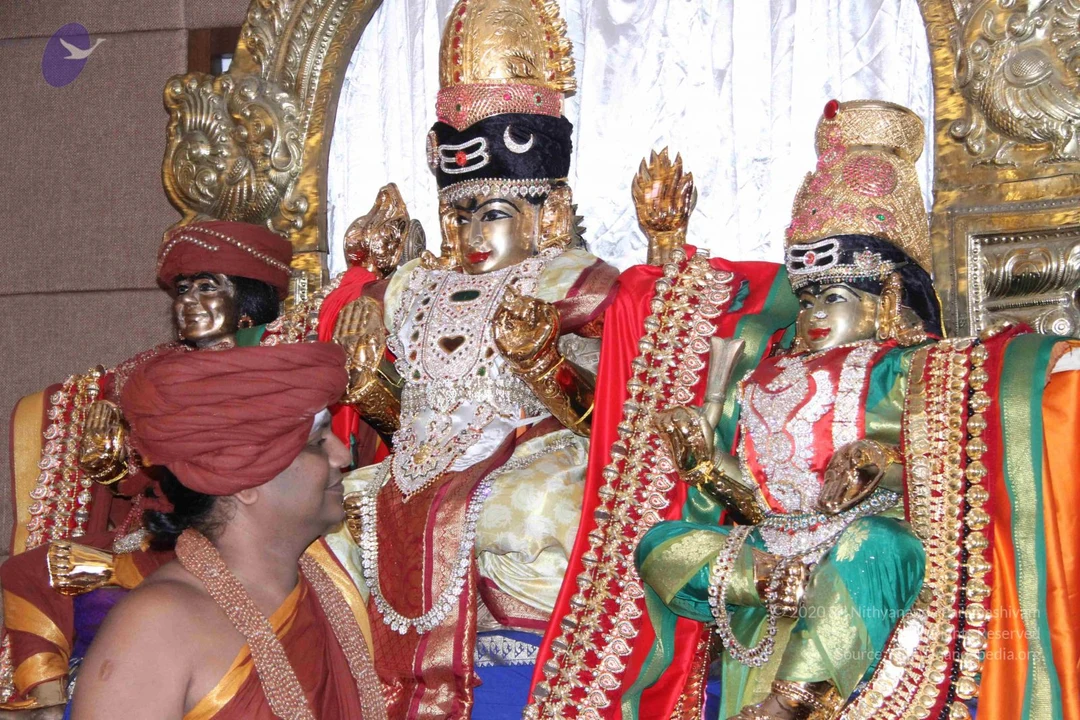
1 photoSource gallery
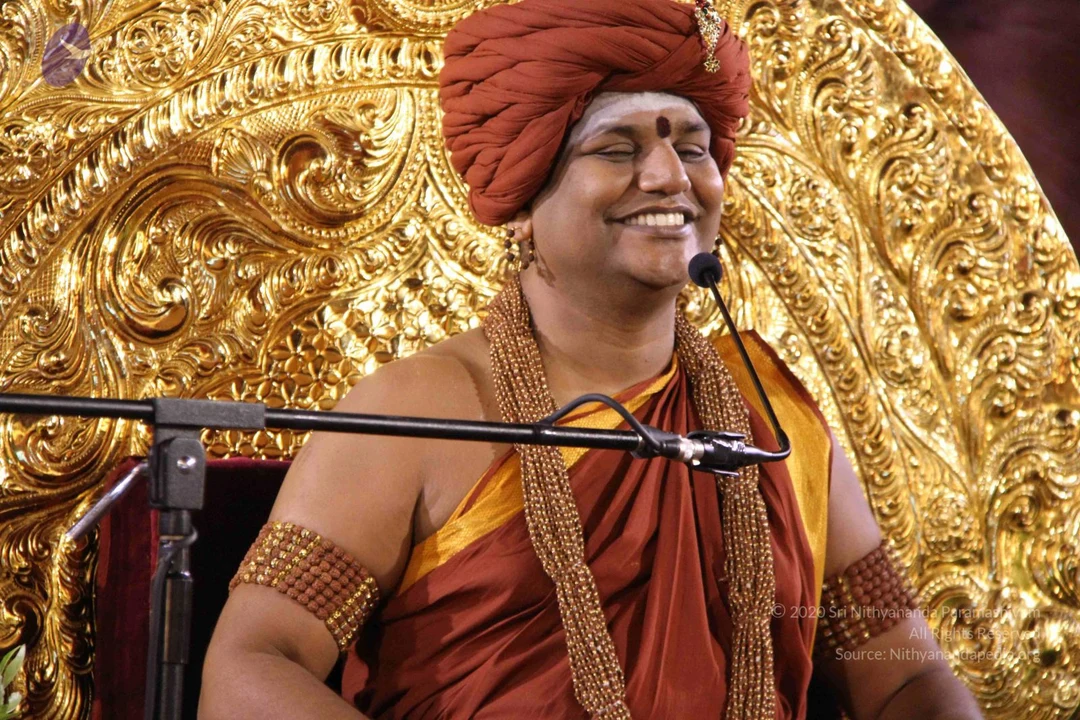
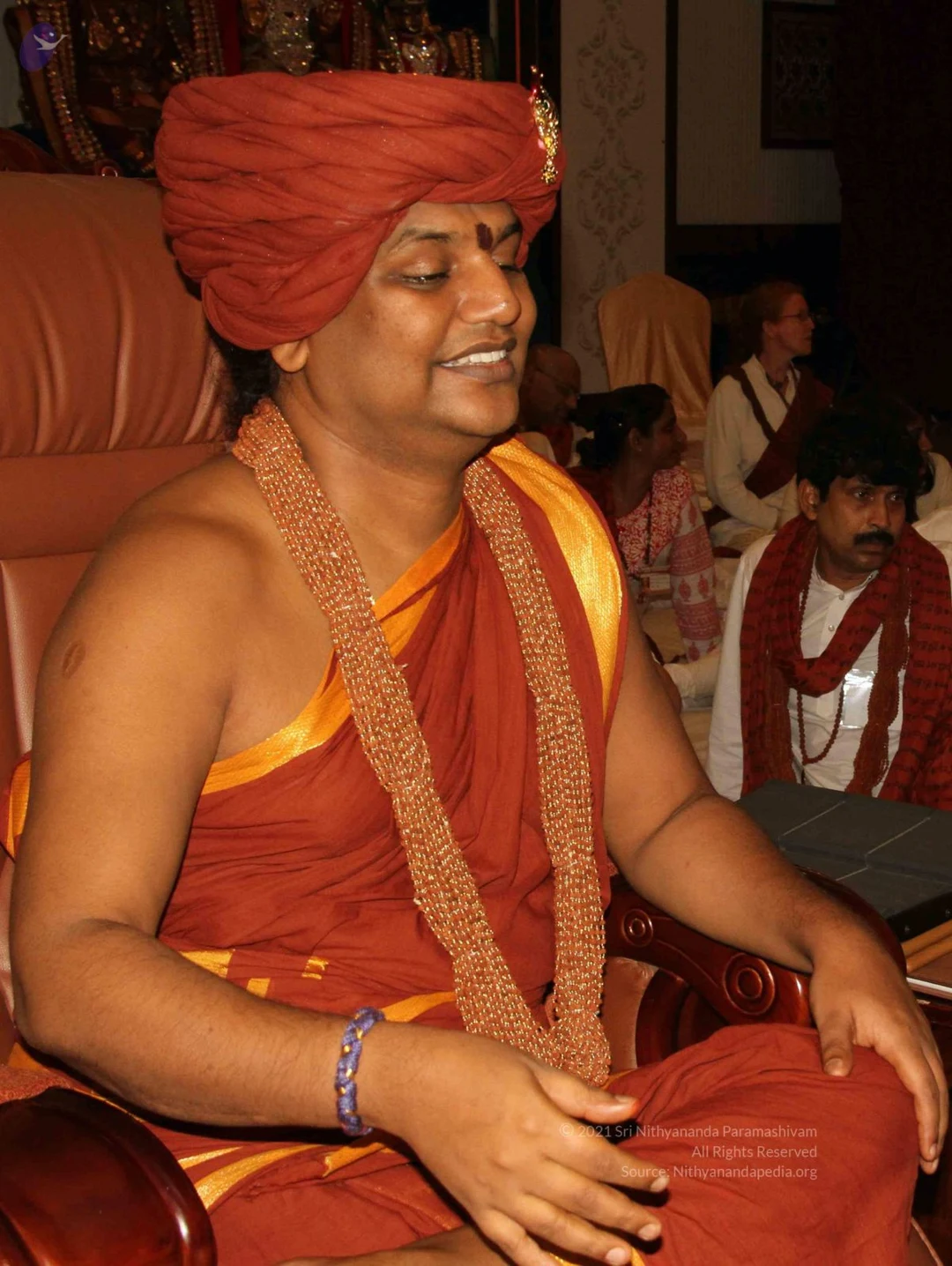
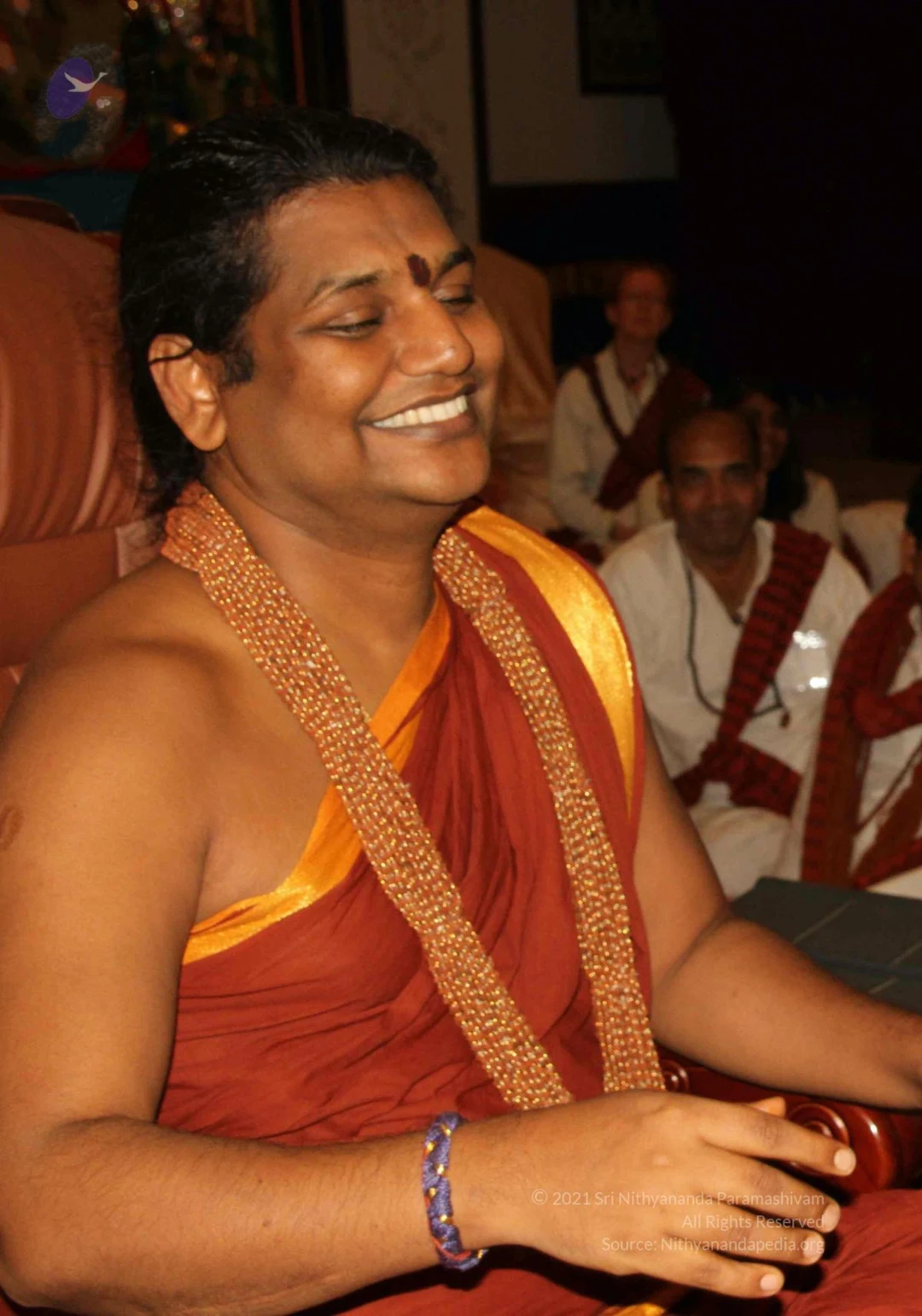
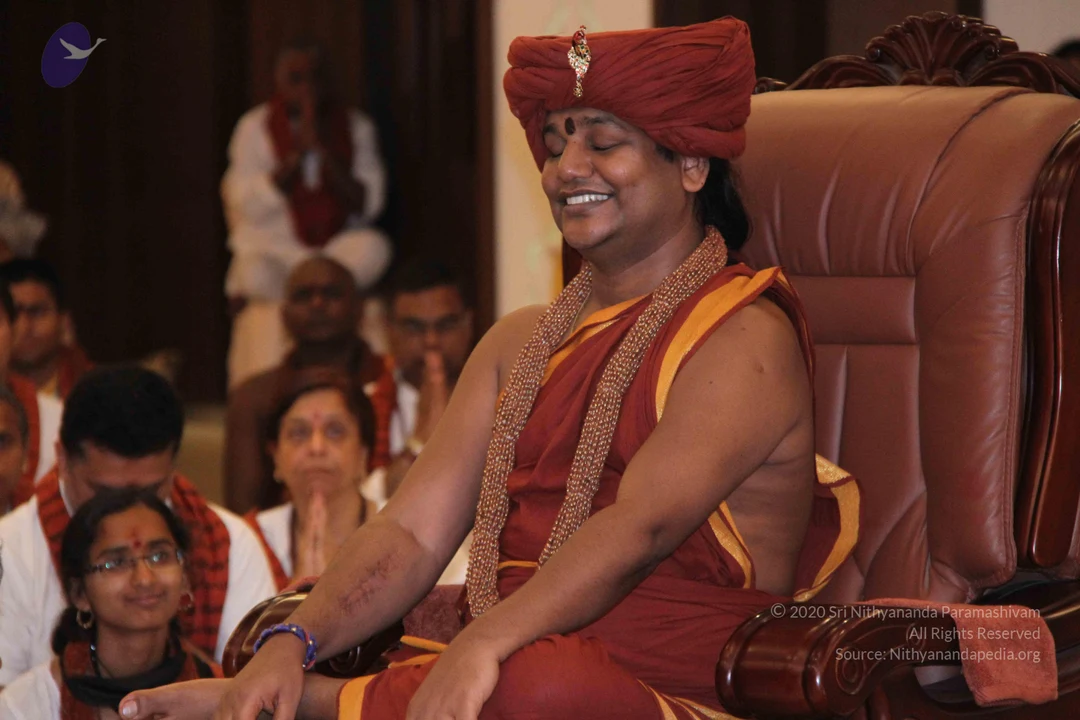
A smiling man with eyes closed sits on a brown leather armchair, wearing a rust-orange turban with a gold ornament, a rust-orange and gold-bordered wrap over bare shoulders, and a thick gold-toned beaded necklace. A small red tilak marks his forehead and a blue beaded bracelet is on his wrist. Behind him, seated devotees wear white and red garments, including a man in white with a red shawl and rudraksha beads, and a woman in a red printed outfit. The setting appears to be an indoor hall with ornate wall panels and gold cloth-covered chairs.

Energy-Darshan

1 photoSource gallery
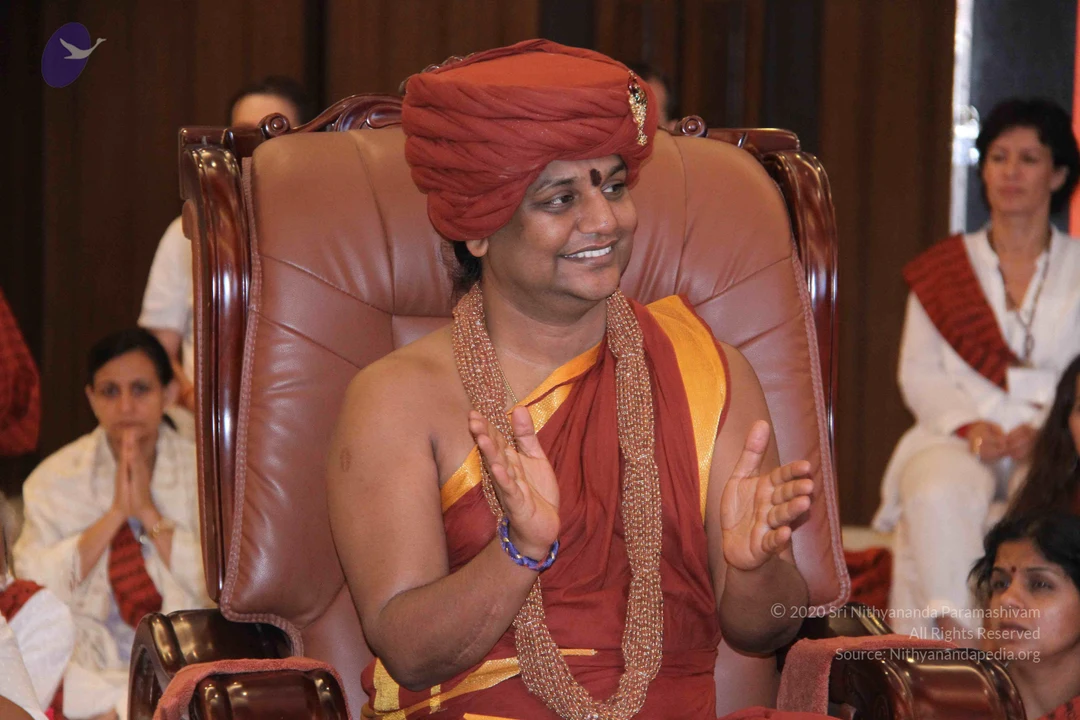
A smiling man with swept-back dark hair and a red tilak on his forehead sits in a red-orange cloth draped over his shoulders with gold trim and a beaded gold-toned necklace. He rests his hand on a dark wooden armrest, wearing a blue and gold braided bracelet. Behind him, seated devotees in white clothes with red-striped shawls listen in a dim hall. a person: the man is described by the page as a person, and his appearance shows a swept-back hairstyle, saffron-orange cloth with gold trim and a gold beaded necklace, so he is identified as a probable candidate.

Satsang

25 photosSource gallery
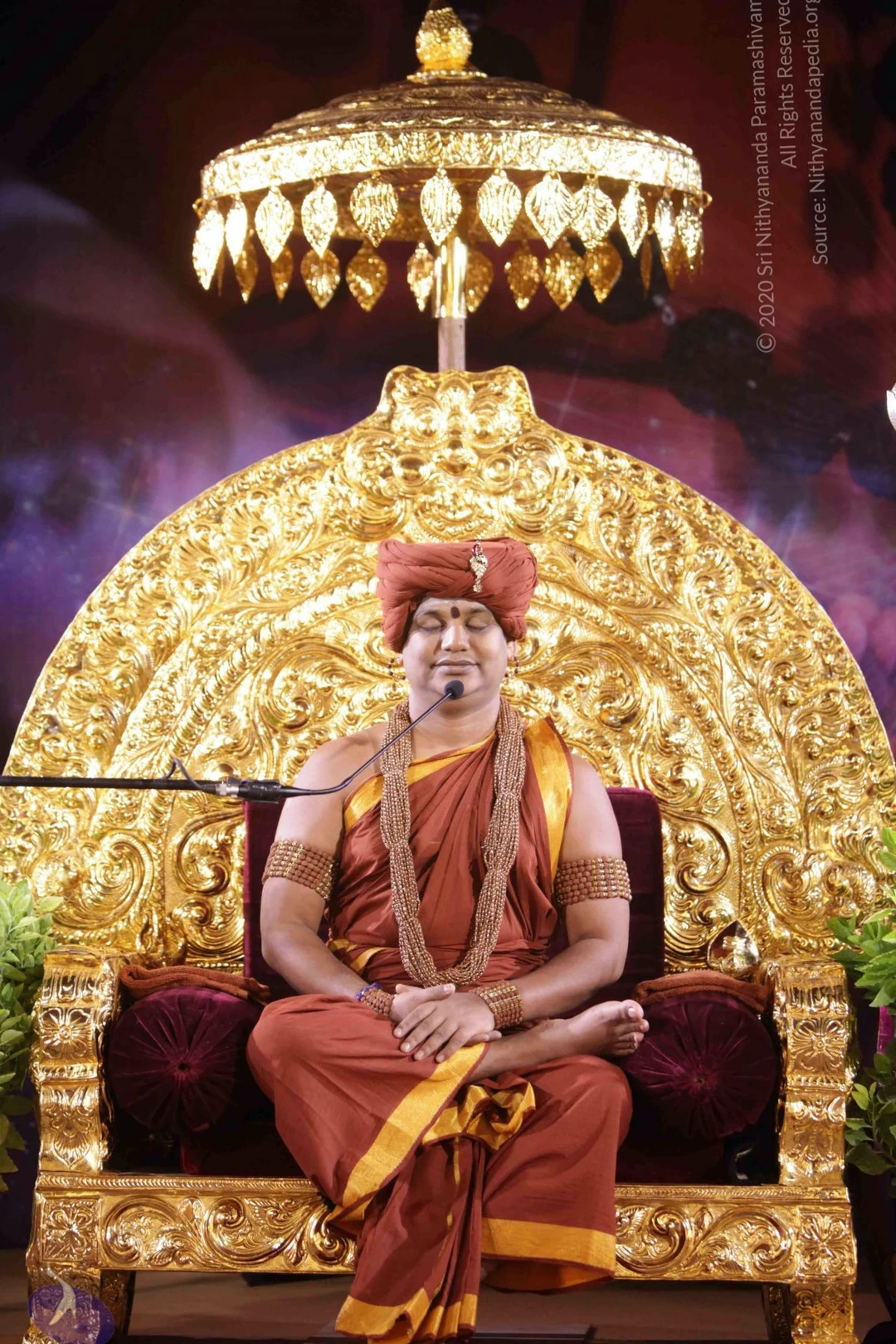
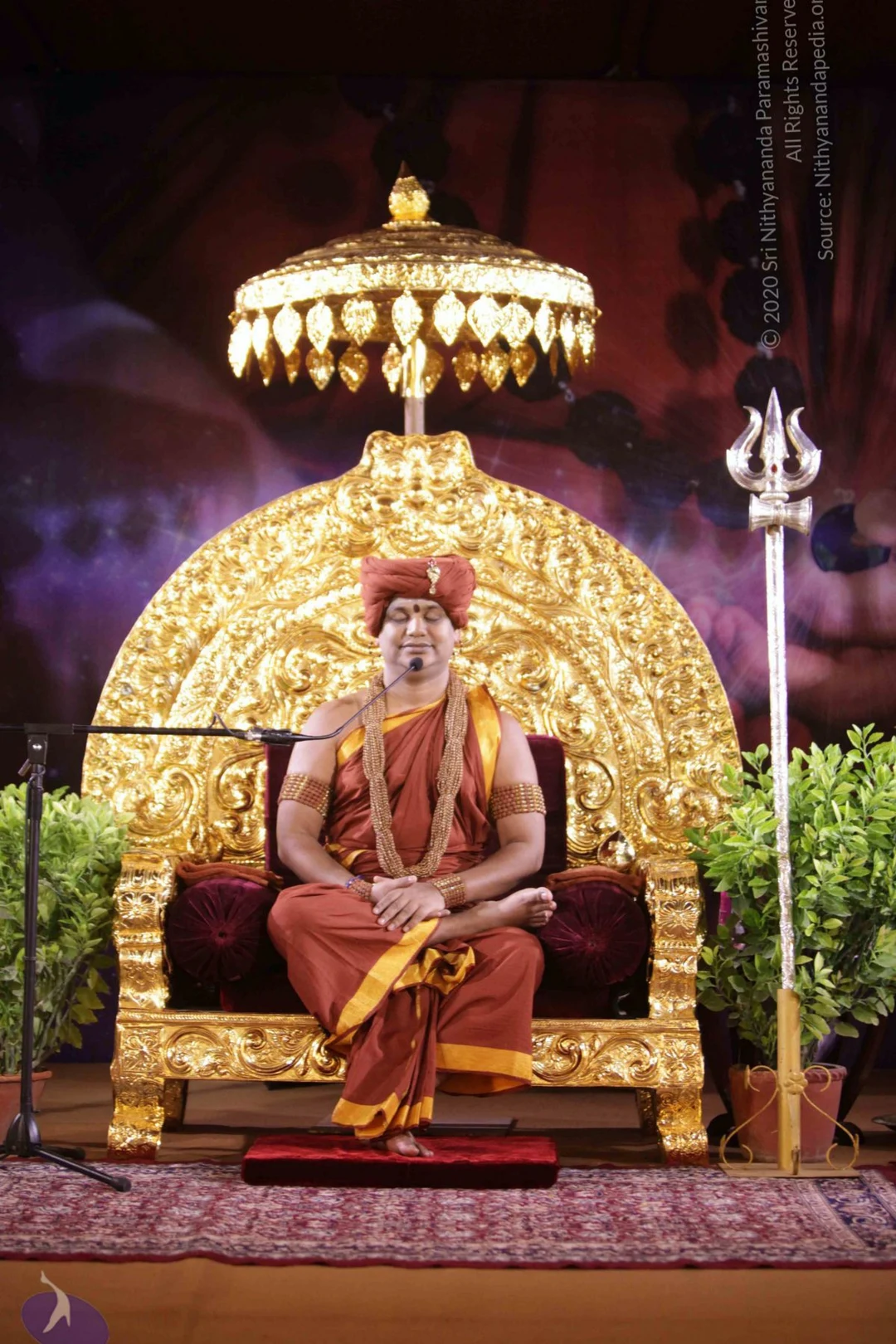
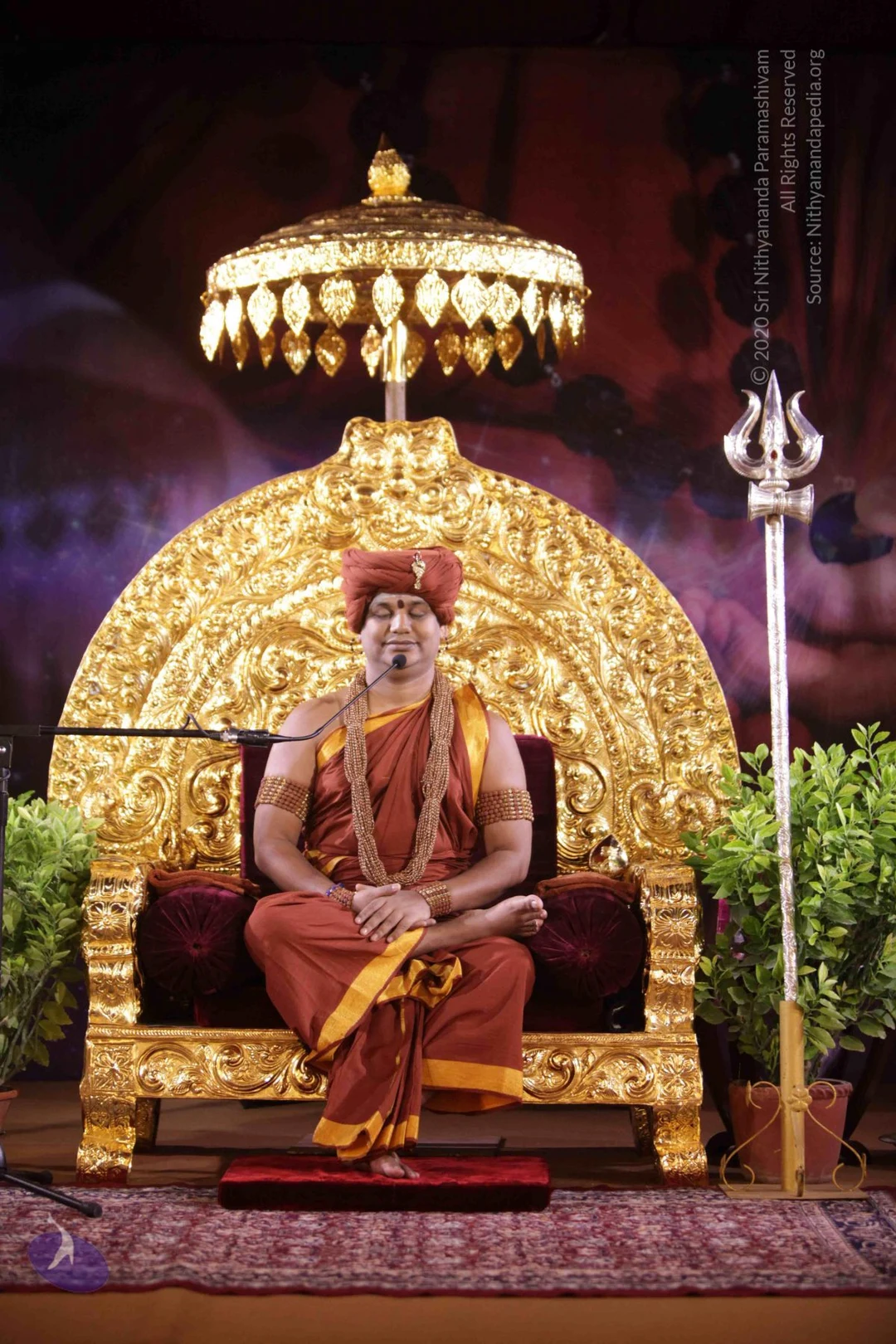
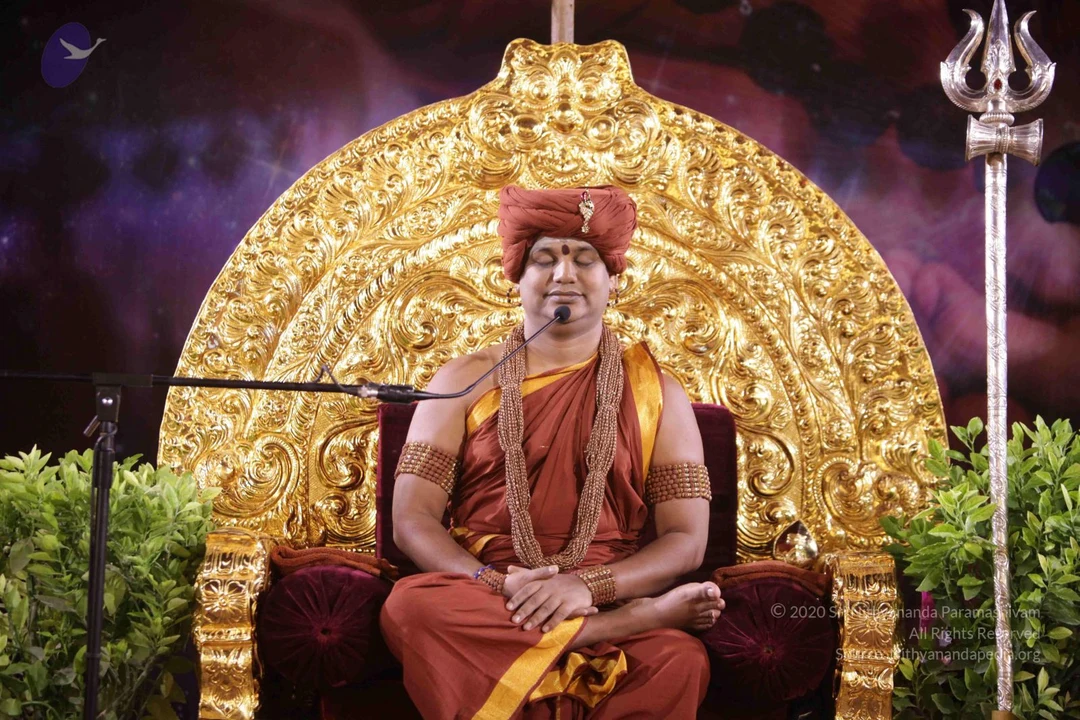
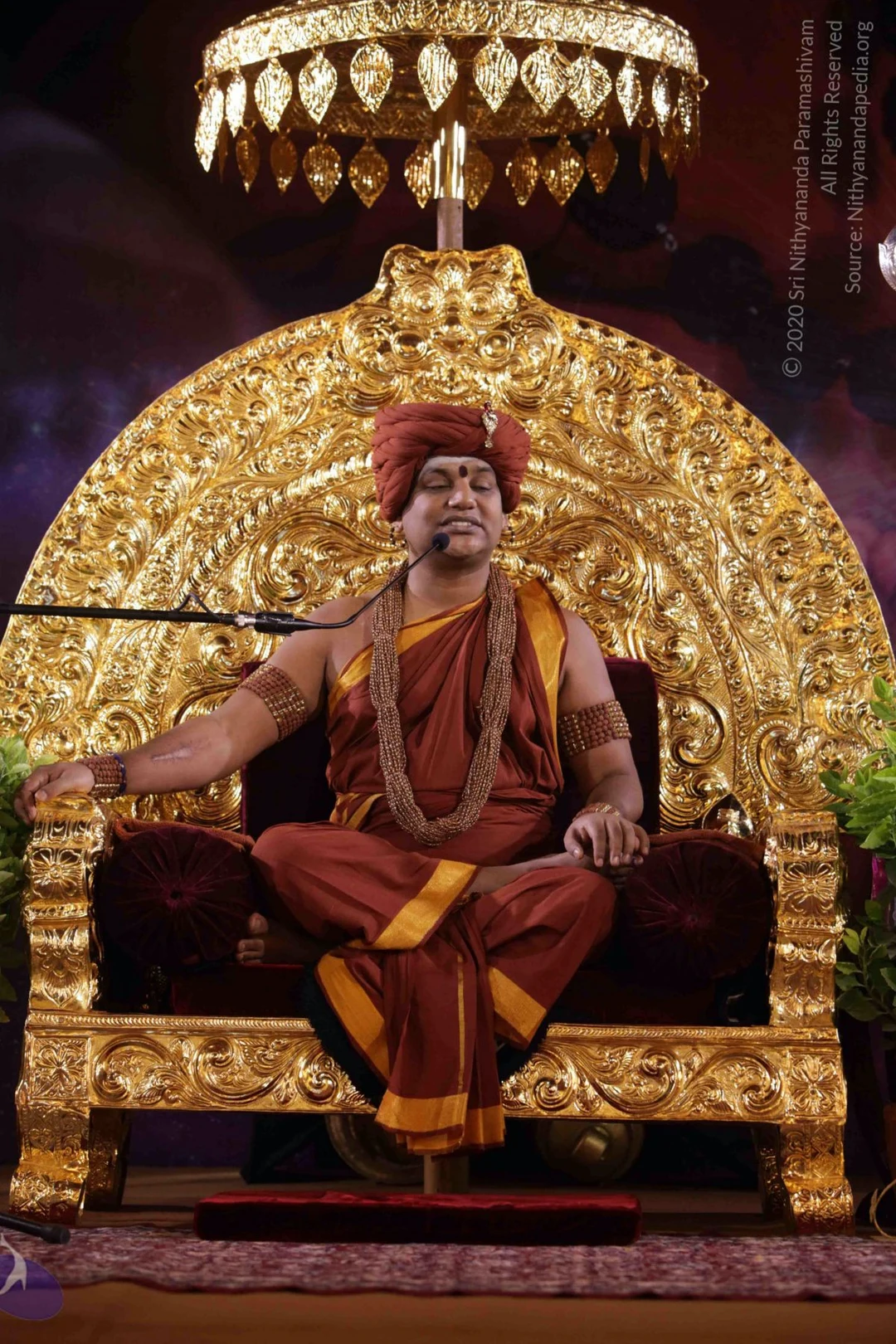
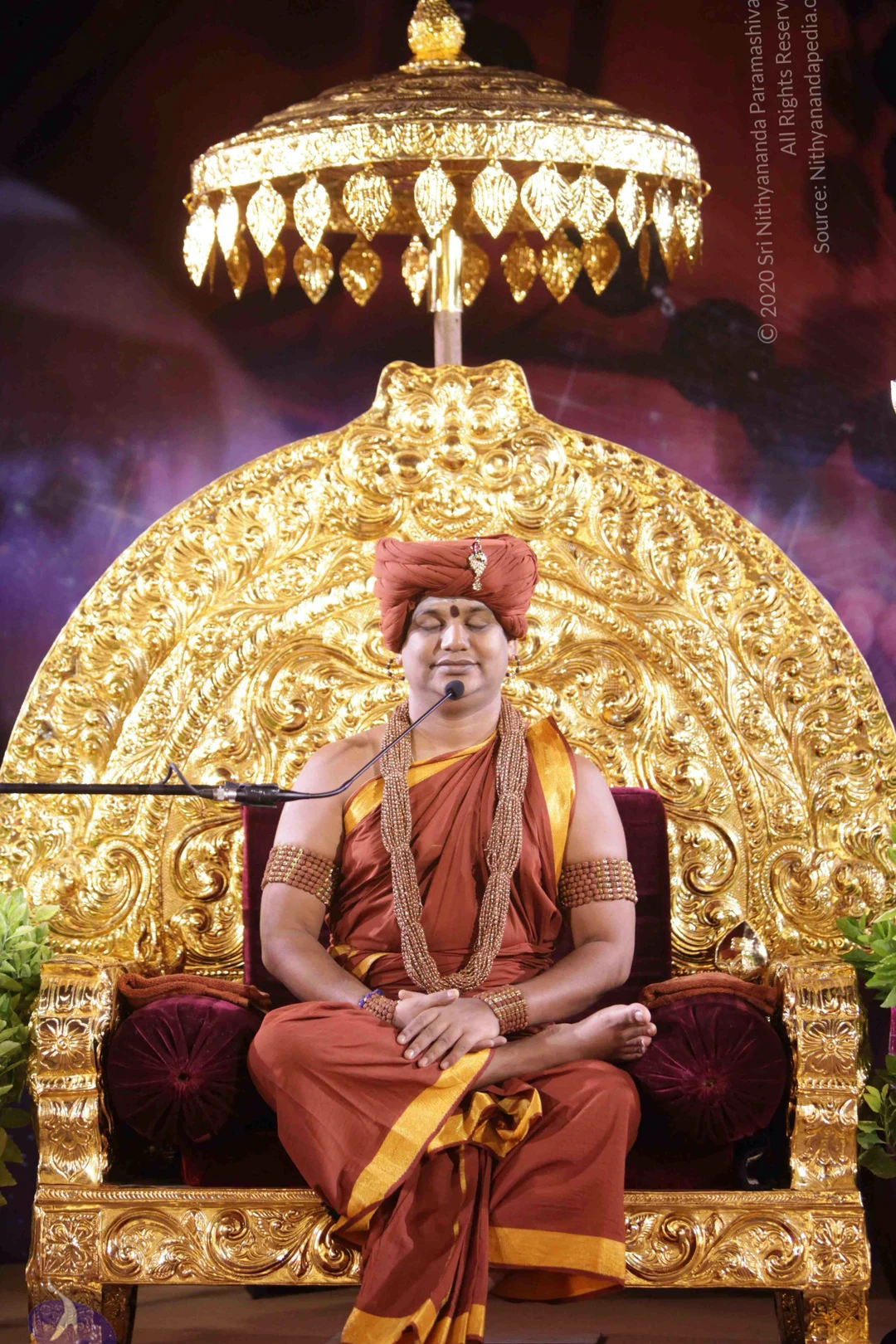
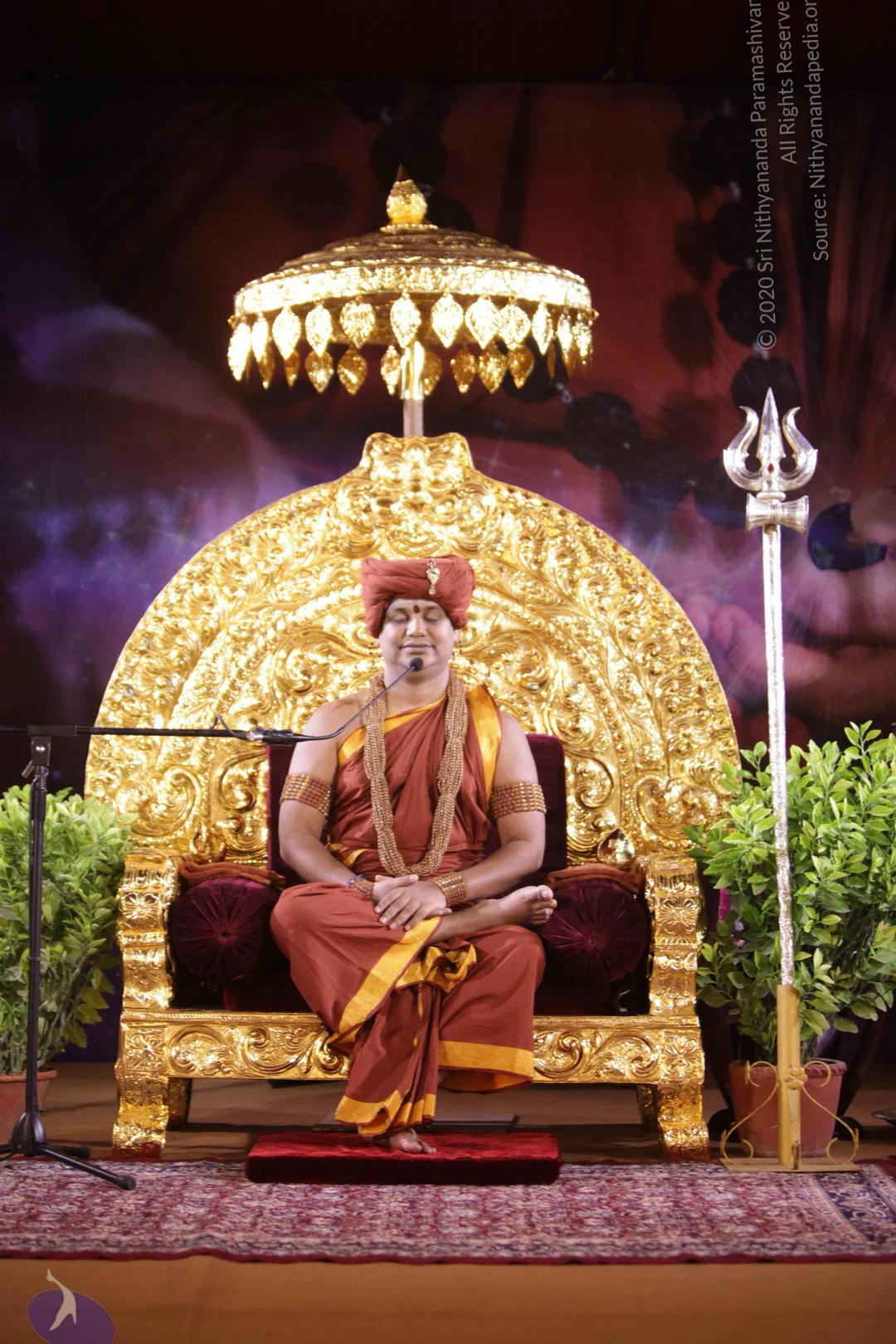
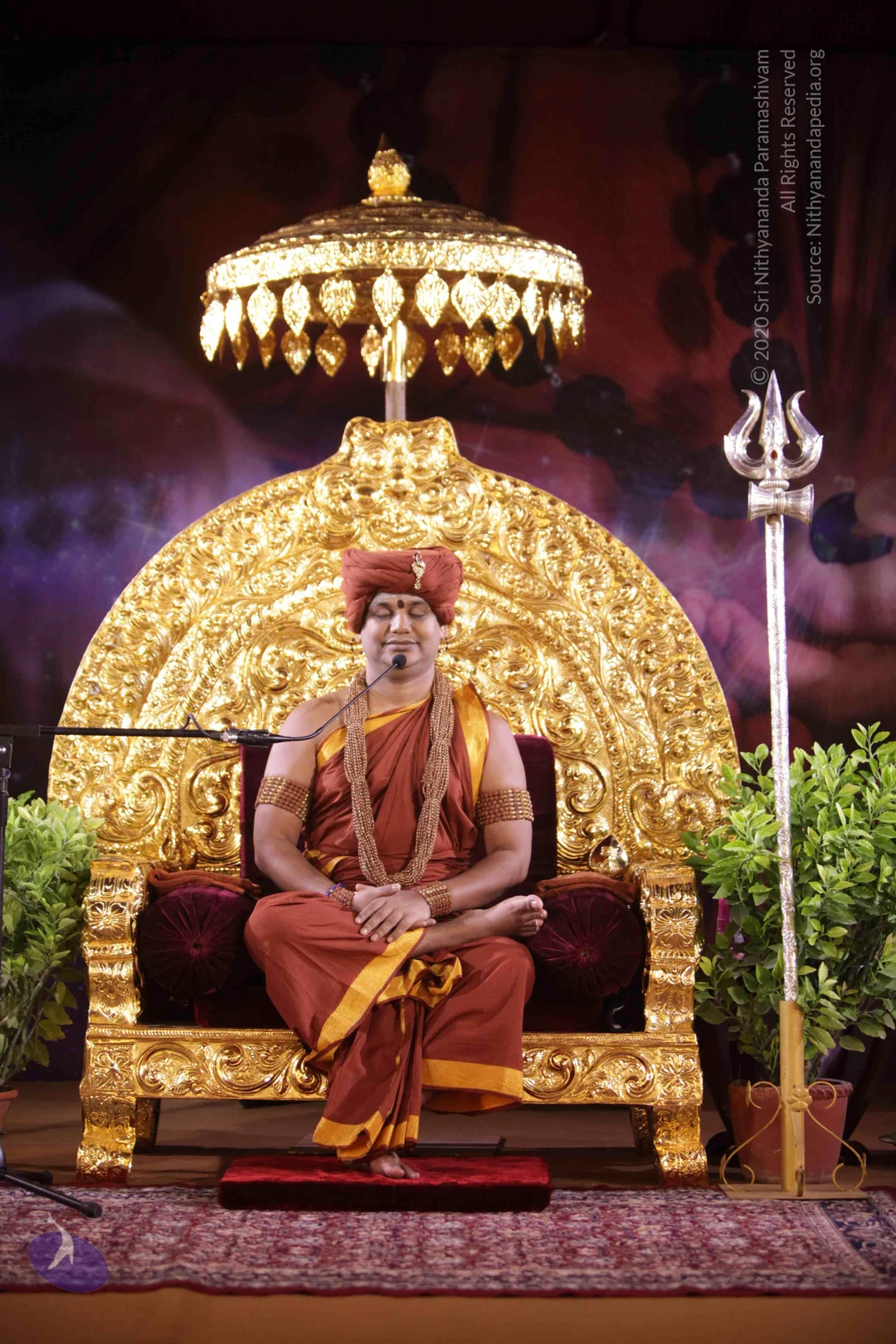
A seated man in a maroon-red turban with a small gold ornament and red bindi sits eyes closed in meditation on an ornate gold throne with a gold canopy overhead and a microphone in front of him. He wears a rust-orange robe with gold borders, a thick beaded rudraksha-style mala necklace, beaded gold armbands and bangles, and sits cross-legged with hands folded. Green foliage flanks the throne against a purple and red backdrop.A seated man in a rust-red turban and rust-red robe with gold borders sits cross-legged on an ornate gold throne with a red velvet cushion, eyes closed, hands resting in his lap. He wears multiple strands of beaded gold necklaces and gold armlets on both upper arms. A golden canopy with hanging tassels rises above him, and a tall silver trident stands to his right. A microphone stand is at his left, and potted green plants and a patterned red rug fill the stage. Behind him is a dark red and purple backdrop. A small dark red mark is visible on his forehead. The figure's appearance, with the turban, gold necklaces and ornate throne, is a probable match for Swamiji (probable) seated in a discourse setting.A seated figure in a rust-red and saffron-bordered robe with a matching red turban sits cross-legged with eyes closed and hands folded in the lap on an ornate gold throne with a gilded canopy. Gold rudraksha-style necklaces and bangles adorn the arms, and a microphone stands nearby. A silver trident leans beside a potted plant on the right, with a red-and-purple backdrop behind. The stage setting suggests a discourse.A seated man in a rust-red and saffron-bordered robe sits cross-legged on an ornate gold throne with a large repoussé gold back. He wears a rust-red turban with a small gold pendant, a multi-strand rudraksha-style mala, gold armbands, and a red-and-gold wrap. His eyes are closed, hands are folded in his lap, and a microphone stands beside him. A tall silver trident rises at the right, flanked by green foliage, against a purple cosmic backdrop.A seated man in a rust-red turban with a small gold ornament, wearing a rust-red robe with gold borders, multiple strands of wooden rudraksha-style beads around his neck, and beaded armlets. He sits cross-legged on a red cushion in front of an ornate gold-embossed throne, gesturing with one hand while speaking into a microphone. a person: the red-turbaned man with the beaded malas and gold-bordered robes is the discourse speaker, appearing in person at a satsang setting.A seated man in a maroon turban with a small gold ornament and red bindi sits cross-legged on an ornate gold throne with a carved gold arched backrest, under a gold canopy with hanging leaf-shaped pendants. He wears a maroon and gold-bordered robe, a long beaded brown-gold rudraksha-style mala, and matching beaded armbands, with eyes closed and a microphone in front of his face. A burgundy cushion rests on the throne and green foliage stands at the sides. The page indicates the event was a satsang; the scene shows a speaker mid-discourse. Appearance cues (turban, ornate maroon and gold dress, beaded mala, gold throne) are consistent with Swamiji (probable) as the speaker.

Inner-Awakening

5 photosSource gallery
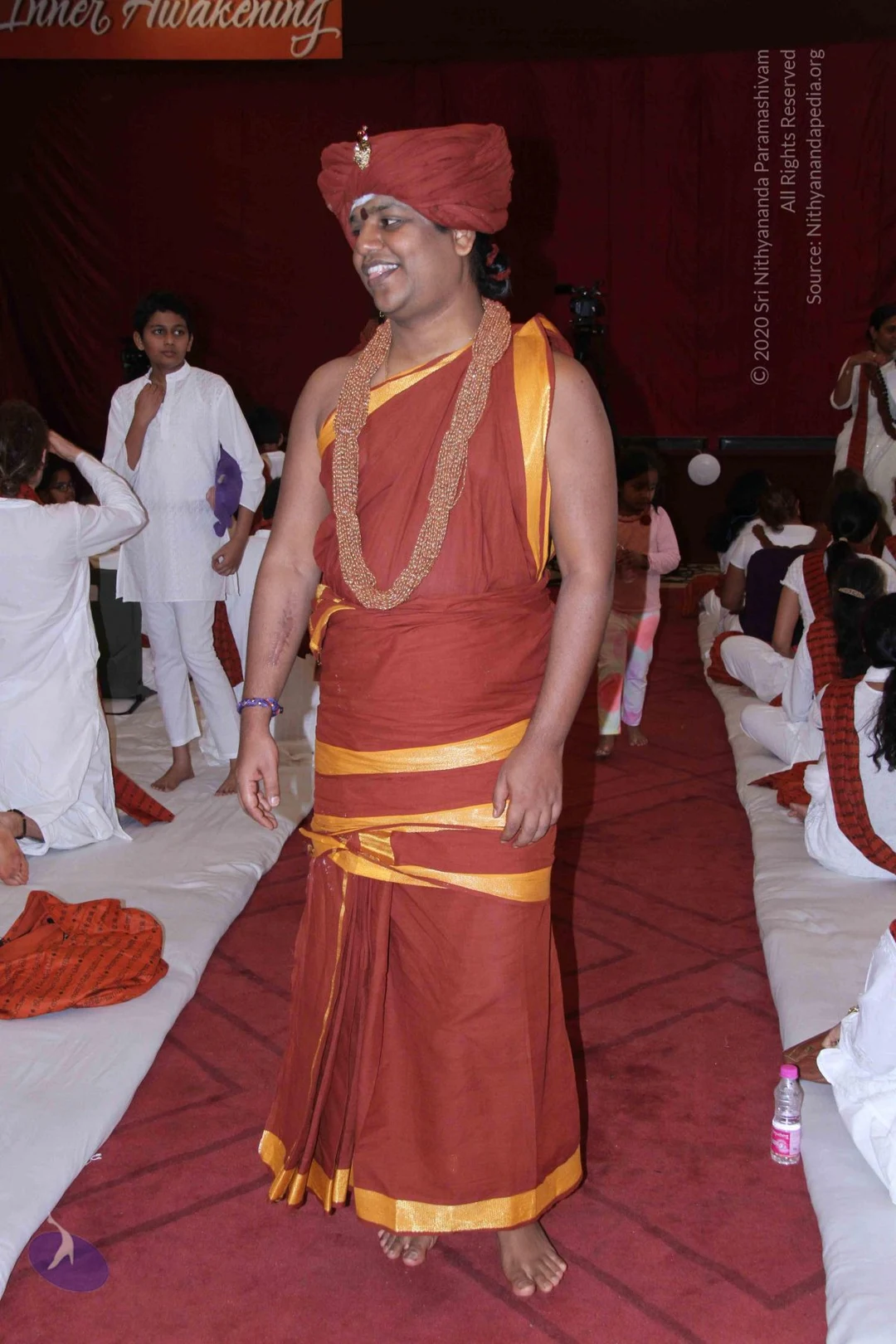
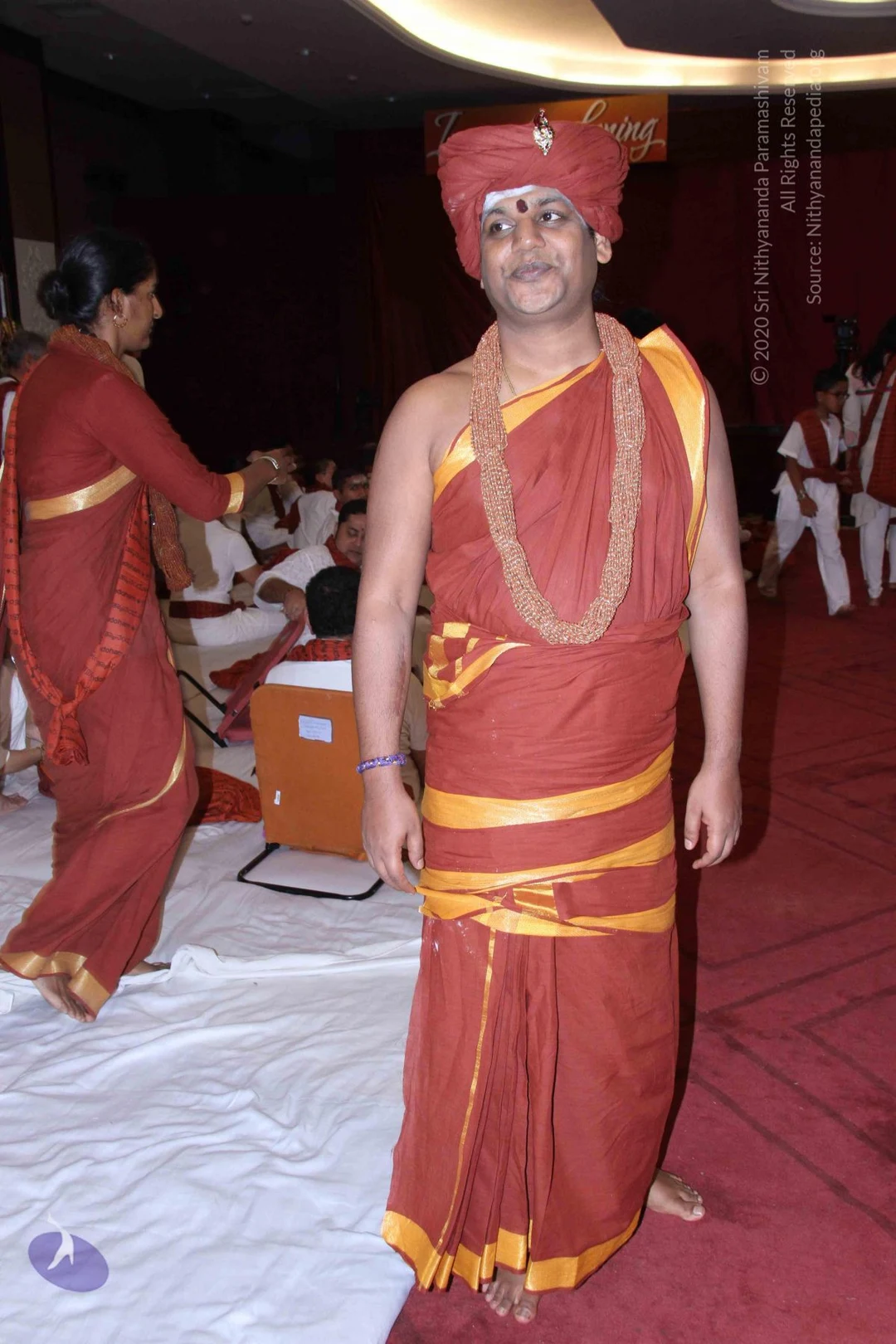
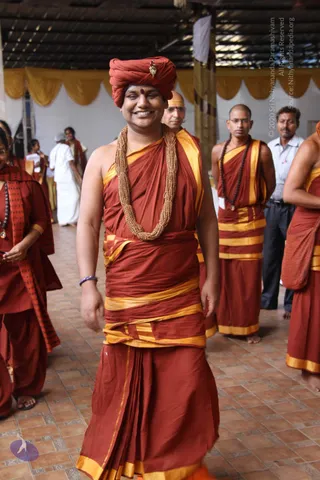
A photograph of a person seated in a brown leather armchair with an ornate gold carved backrest behind them, speaking into a black microphone on a stand. The person wears a rust-red turban with a jewelled ornament at the front, a red-brown robe with a gold border, layered beaded necklaces and beaded bracelets on the wrists, and a red bindi on the forehead. A purple and blue backdrop fills the upper background.A seated person in a brown leather armchair before an ornate gold-carved backdrop speaks into a stand microphone while raising one hand in an open palm gesture. The person wears a deep red turban with a jewelled ornament, a red-orange garment with a gold border, layered beaded necklaces, bangles and armlets, and a red bindi with white markings on the forehead. Swamiji (probable) appears in this satsang discourse setting, identified by the turban, saffron-toned ceremonial clothing, ornate gold necklaces and beaded malas. The scene is a discourse at a satsang, with a plain purple backdrop behind the gold chair.A photograph of a seated person speaking into a black microphone during a satsang discourse. The person wears a red-orange turban with a gold ornament at the front, a red bindi and white sacred ash on the forehead, gold hoop earrings, layered gold beaded necklaces, and a red-orange garment with a gold-yellow border. Gold bangles and armlets adorn the arms, and the hands are pressed together in a gesture of explanation. The person sits in a brown leather chair beside an ornate gold-carved throne-like element on the left, against a dark background with red drapery and hanging gold ornaments. Appearance-based label: Swamiji (probable), presenting as a speaker in red-orange turban and saffron-toned robes at a satsang discourse.A smiling man in a deep red turban with a small gold ornament and a red-and-gold saffron-toned dhoti and shawl walks forward on a tiled floor under a corrugated roof and yellow draped valance. He wears a thick gold-coloured multi-strand necklace and a purple wristband, with a red-and-white bindi on his forehead. Behind him, several men and women in matching red-and-gold robes stand or walk, including a shaved-headed man with rudraksha mala and a man in a white shirt and dark trousers.A standing man in a rust-red turban with a small gold ornament and a red bindi, wearing a rust-red shawl and dhoti bordered in gold, with a tan beaded necklace and a purple wrist band. He stands barefoot on a red carpet in a hall with a white floor covering. A woman in a rust-red sari with gold borders walks at left, and people in white and red garments sit in the background. A banner reading part of the word Living hangs above. Swamiji (probable): the standing man wears a red turban, rust-red robes and a beaded necklace, consistent with the page's identification.

1-Shivoham
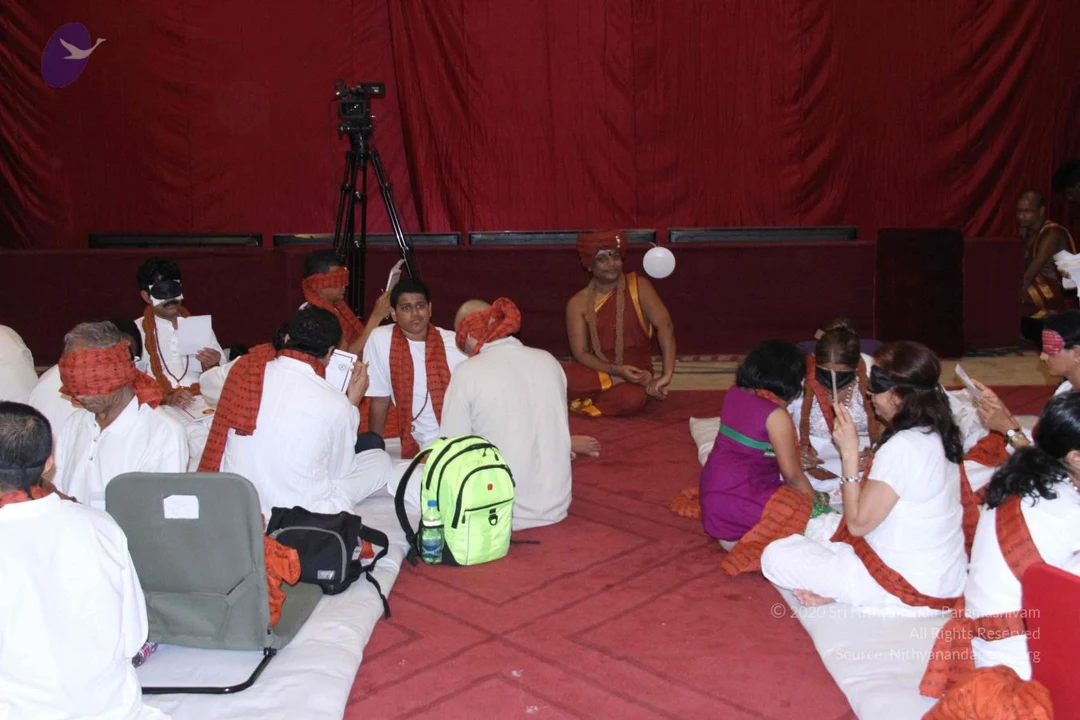
1 photoSource gallery
A large hall with cream carpeting and a red runner leads through rows of seated participants in white clothes with orange-red shawls. Many wear black blindfolds over their eyes and sit on white mats, some holding tablets or papers. In the centre a standing figure in orange-red robes and a matching turban faces away from the camera, arms at the sides, near the runner. Behind them a decorated stage with white pillars, warm lighting, and a small shrine with a golden canopy. A yellow backpack sits in the foreground. Several people in white and orange also stand near the stalls at the back.
2-Completion-Session
1 photoSource gallery
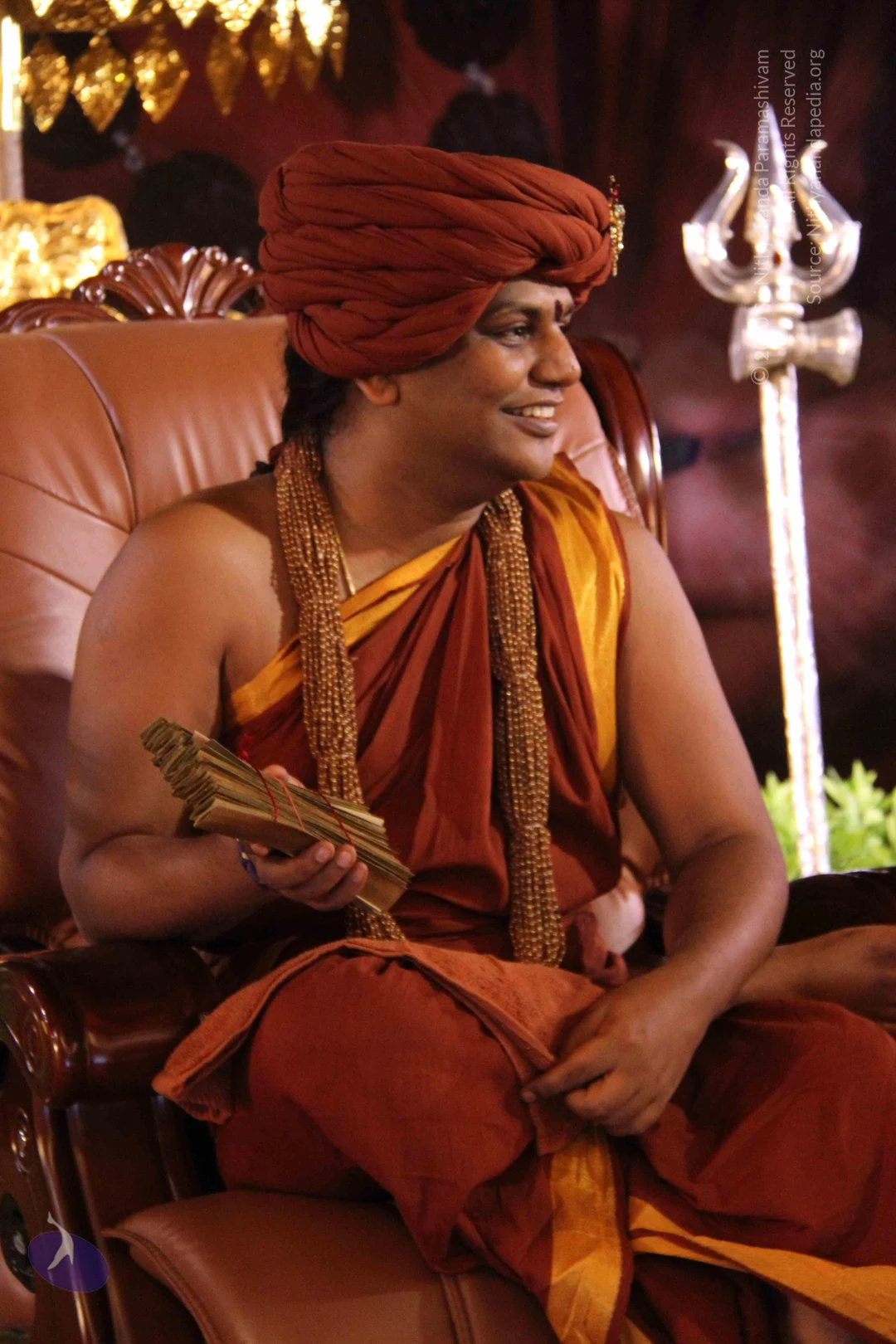
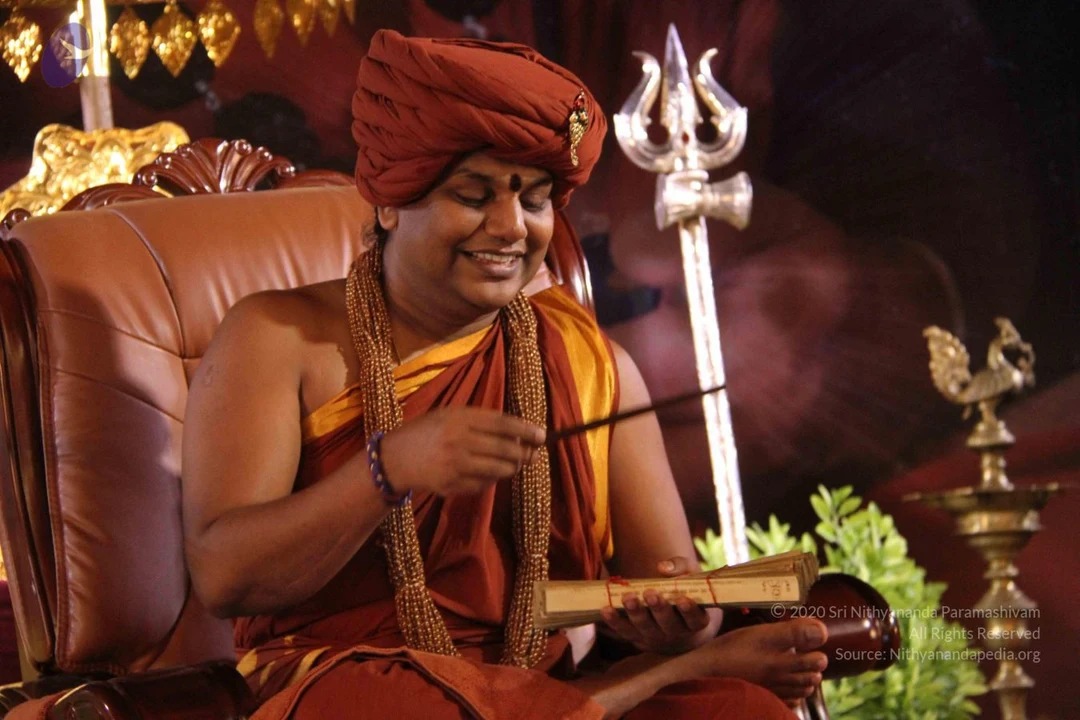
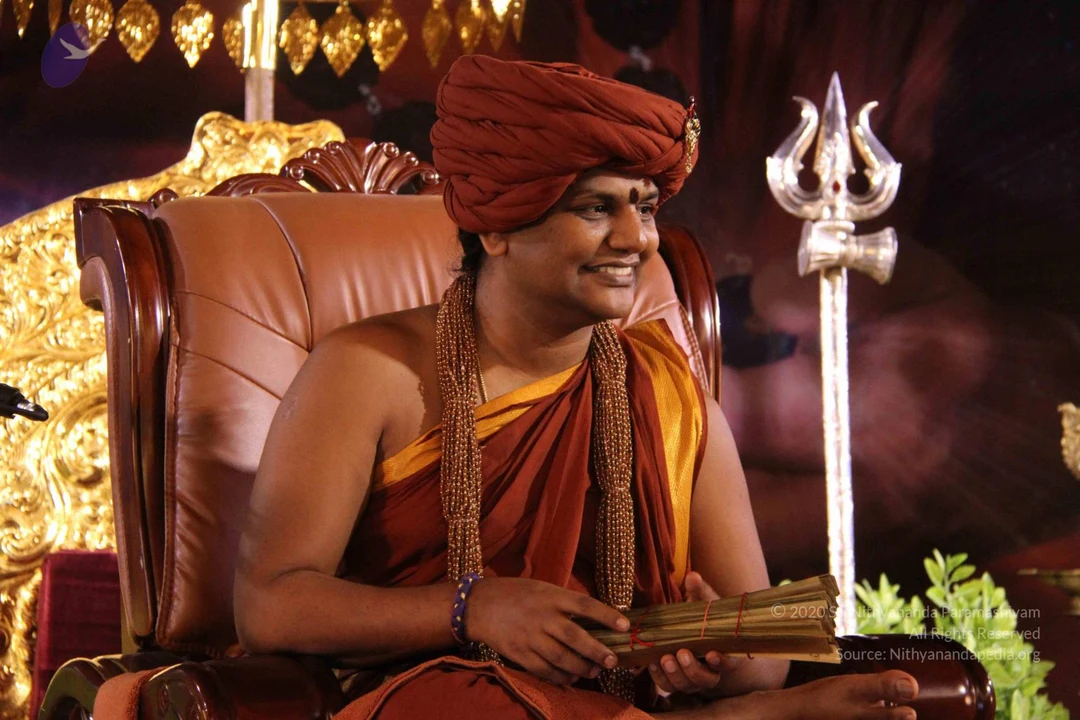
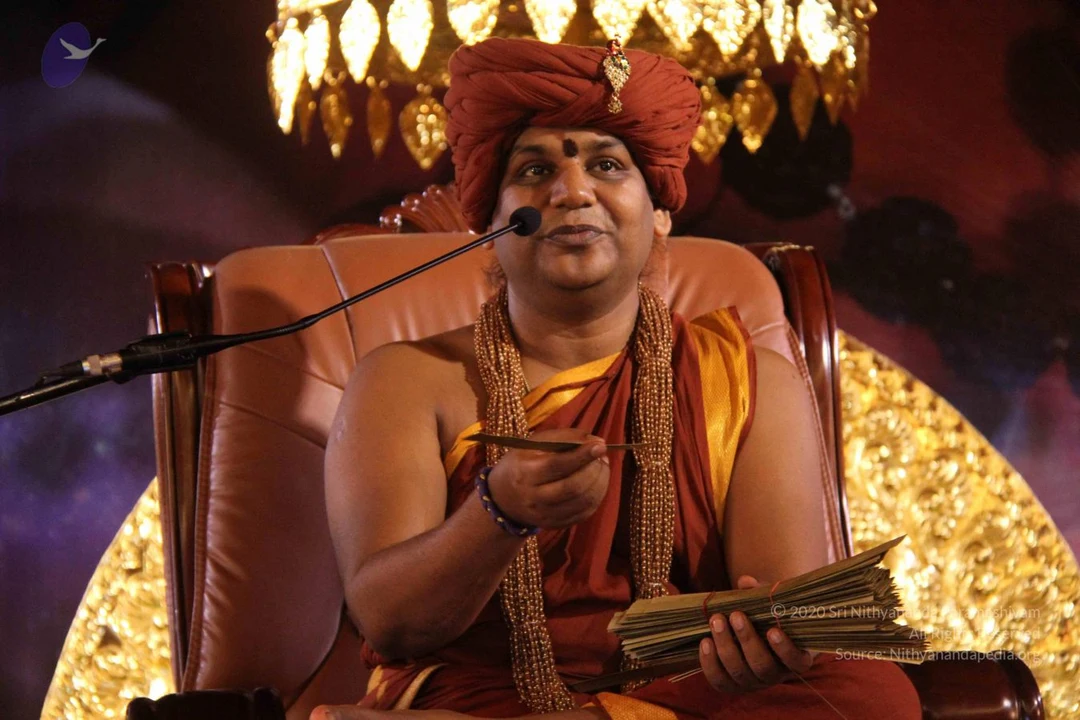
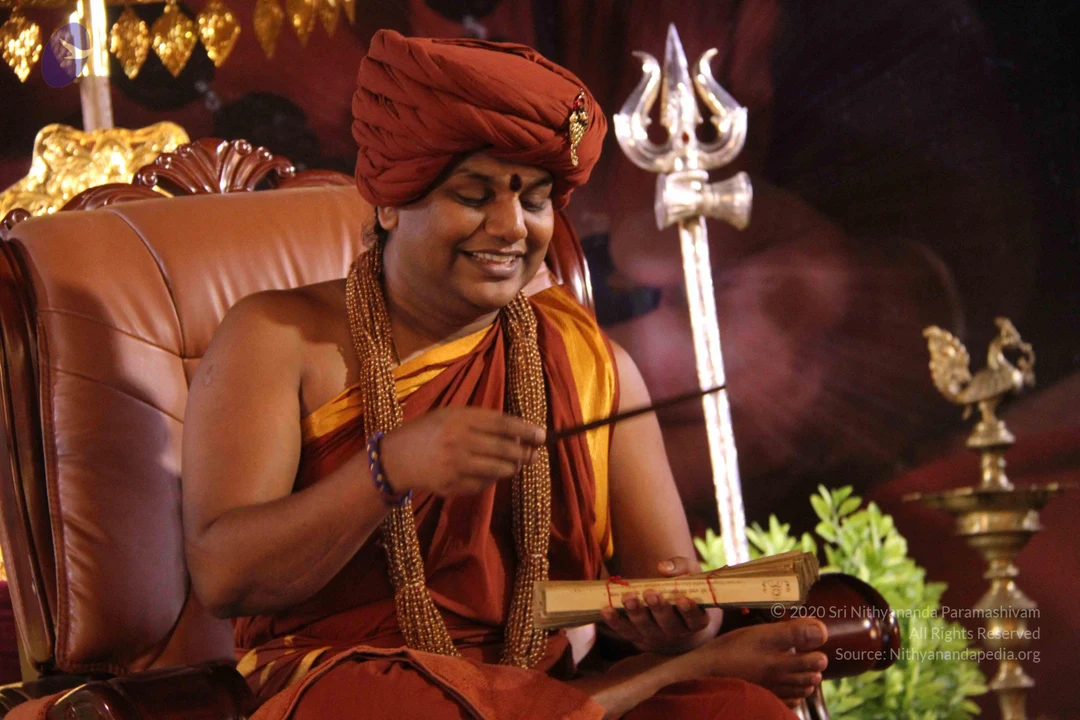
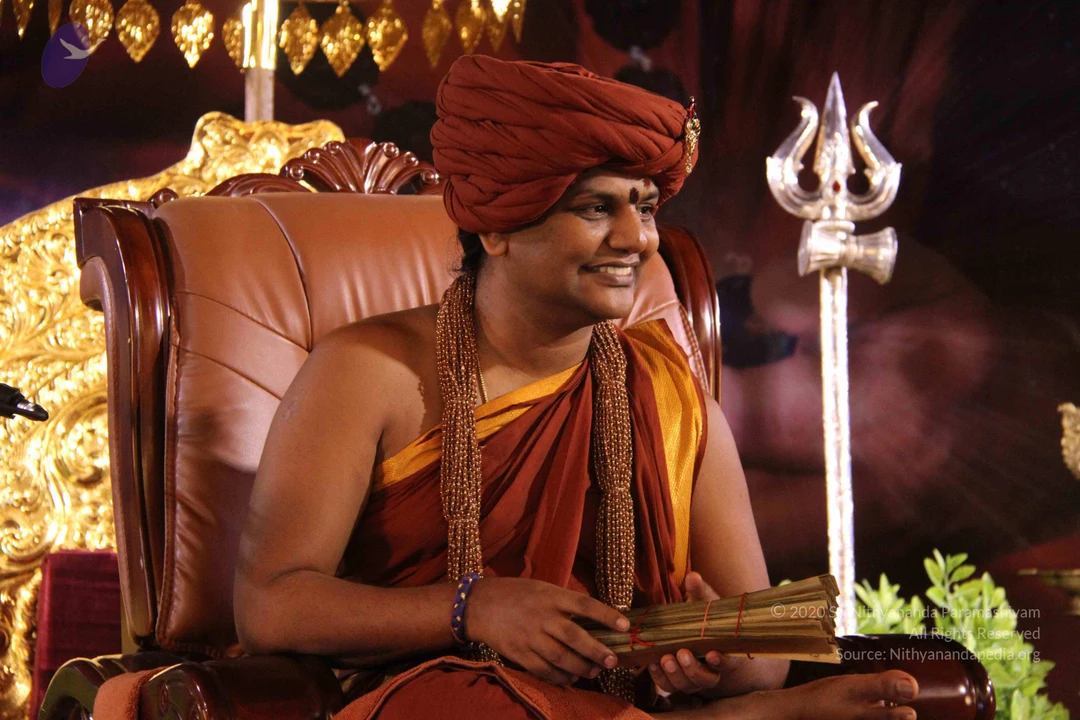
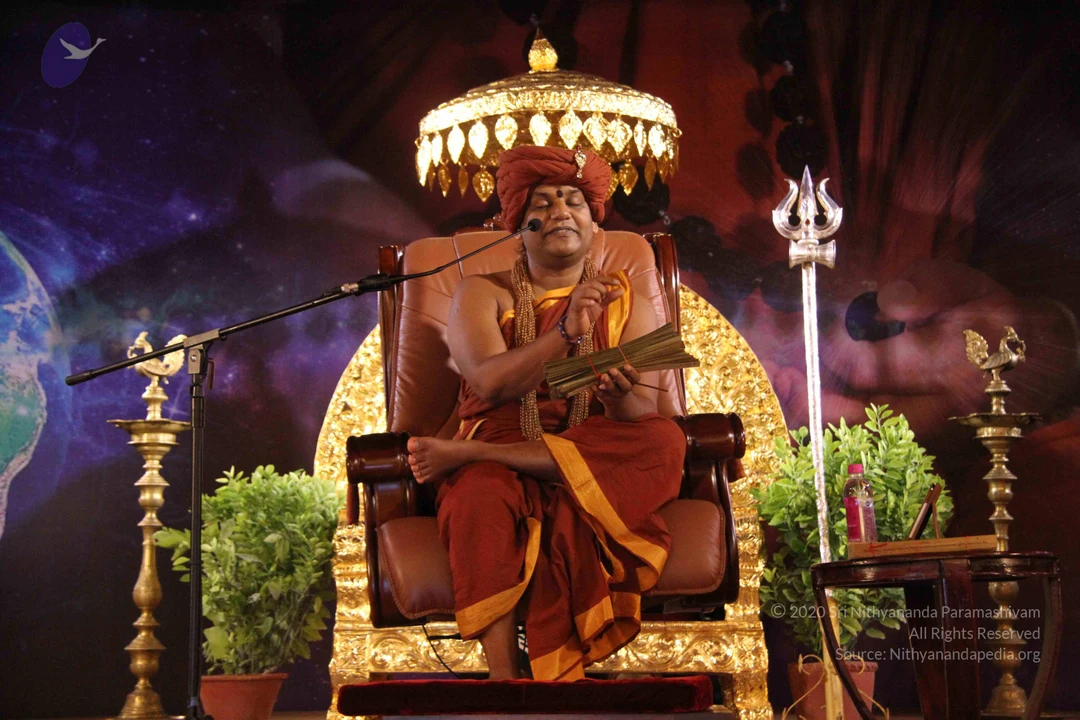
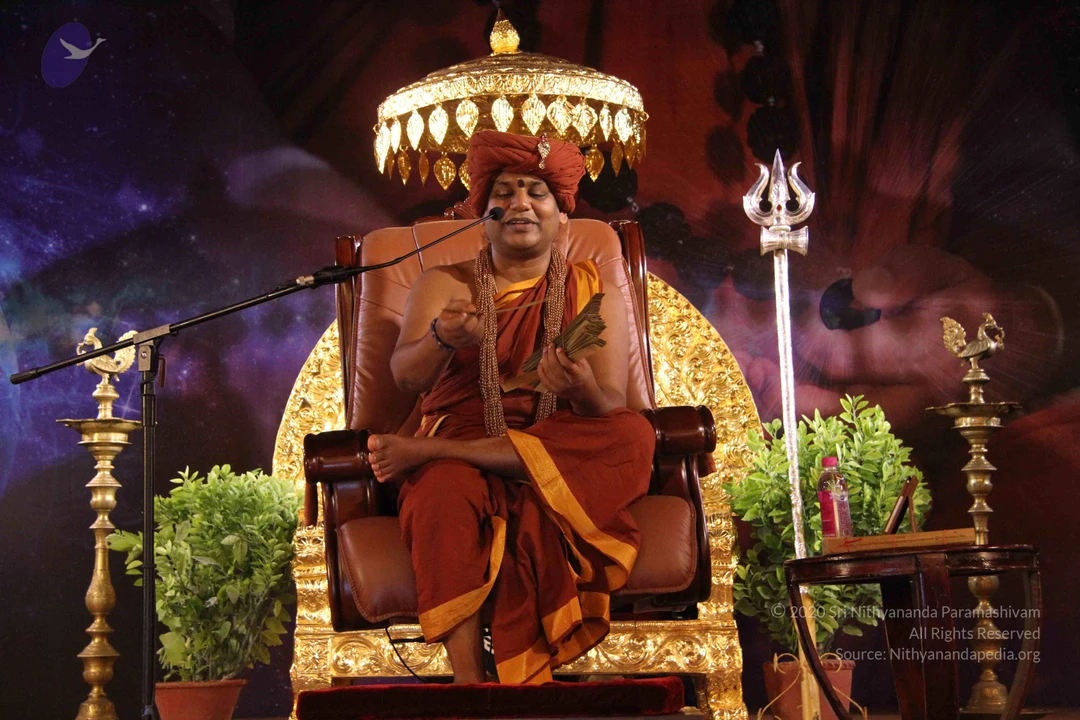
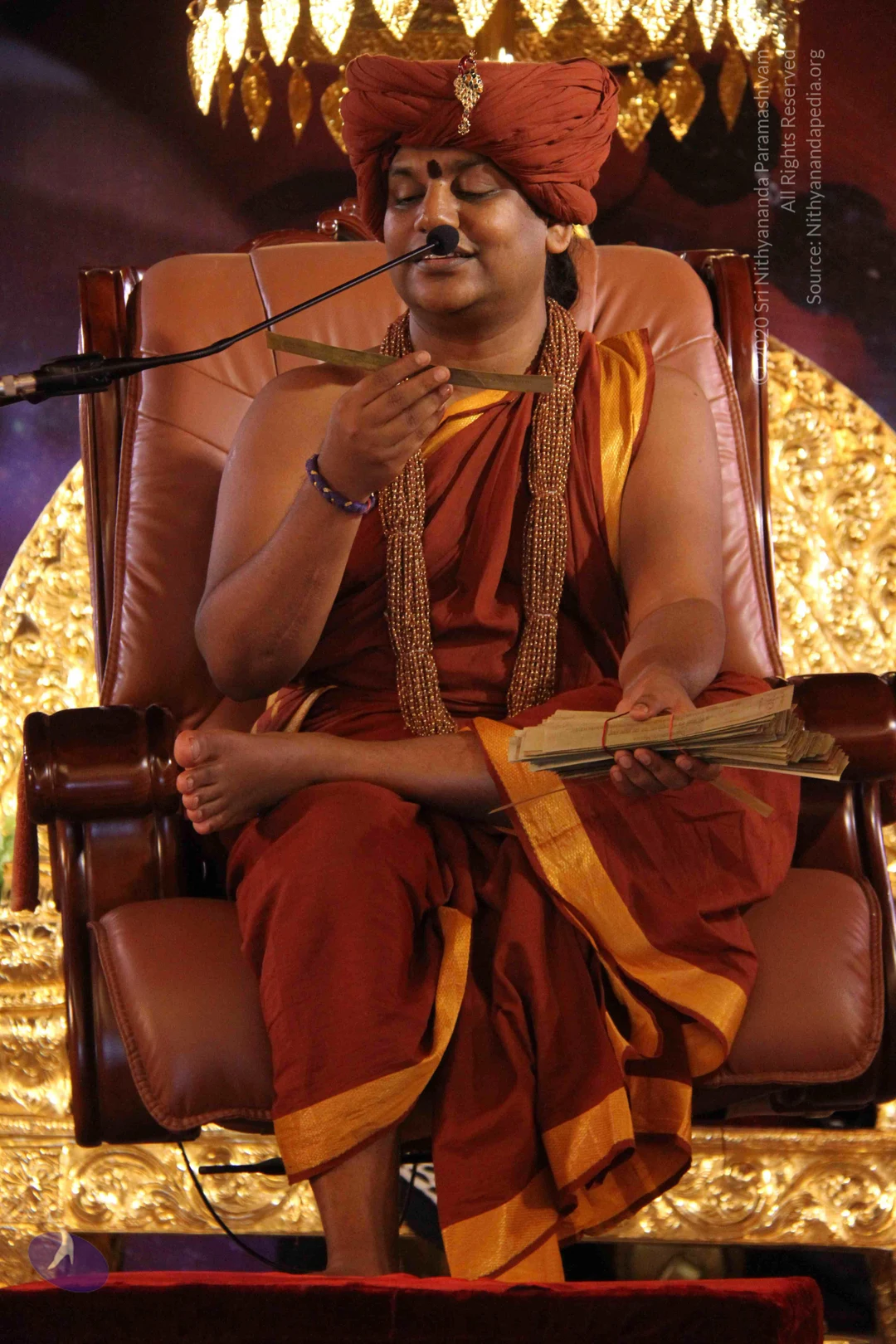
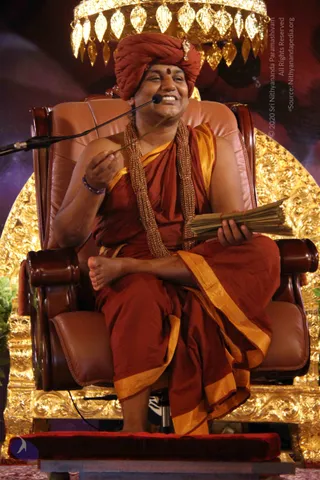
A photograph of a man seated in a brown leather armchair with carved wooden armrests, in front of an ornate gold-leaf throne back and a golden chandelier. He wears a red-orange turban with a small jewel, a red-orange robe with gold borders, and a long beaded gold-coloured necklace. He holds a bundle of palm-leaf manuscript pages in one hand and a short stick in the other, speaking into a microphone on a stand, with a red cushioned footrest in front. Appearance-based probable Swamiji (probable): long hair is not visible, but the turban, saffron robe with gold border, gold beaded mala and throne setting are present. The man is seated and speaking to an audience.

3-Energy-Darshan

2 photosSource gallery
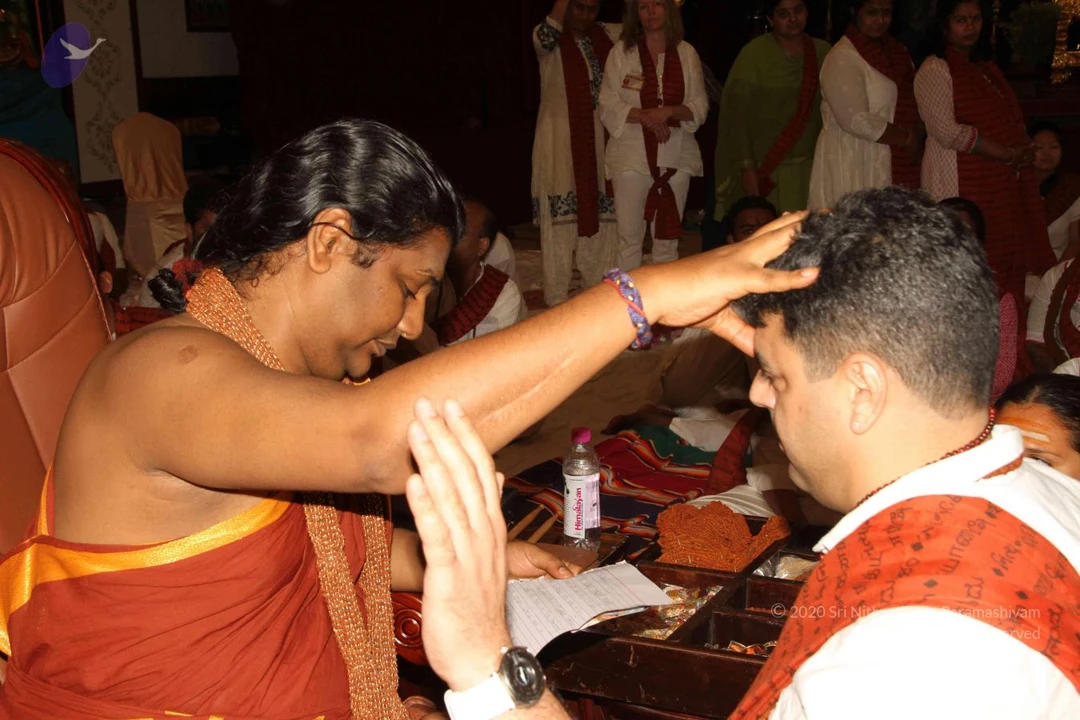
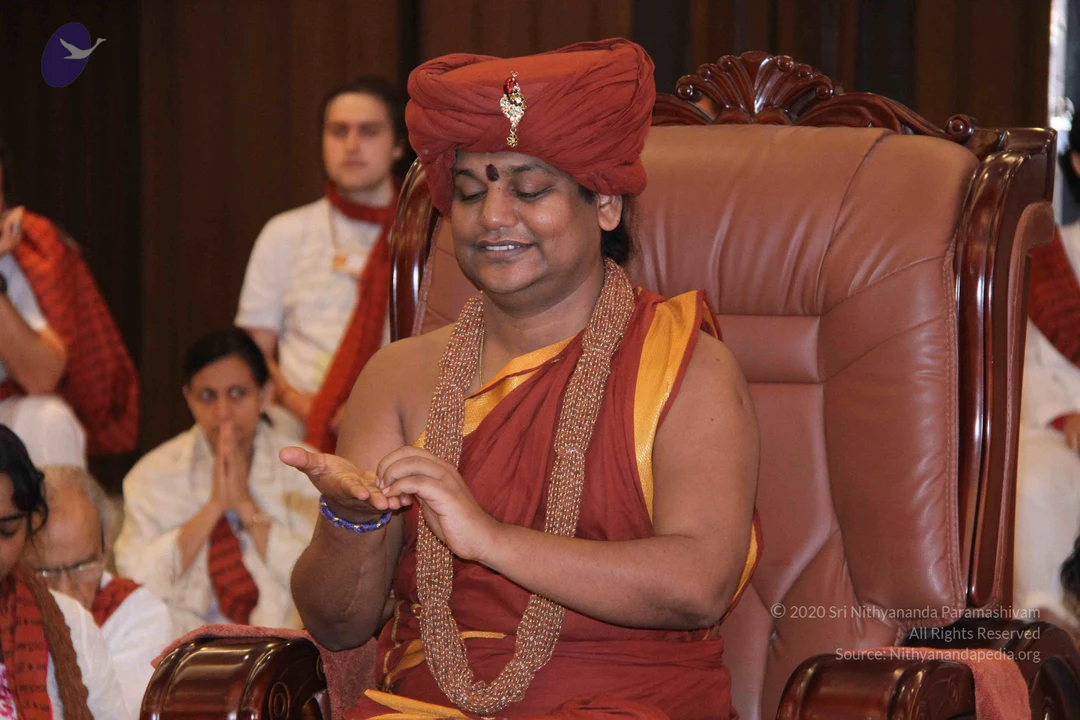
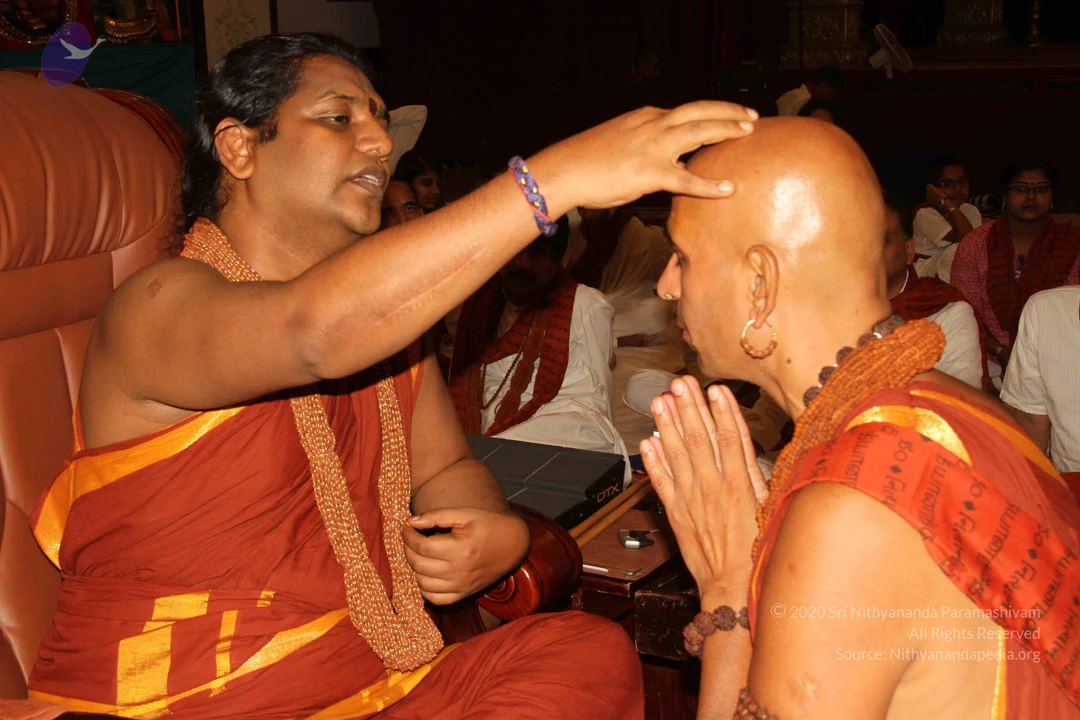
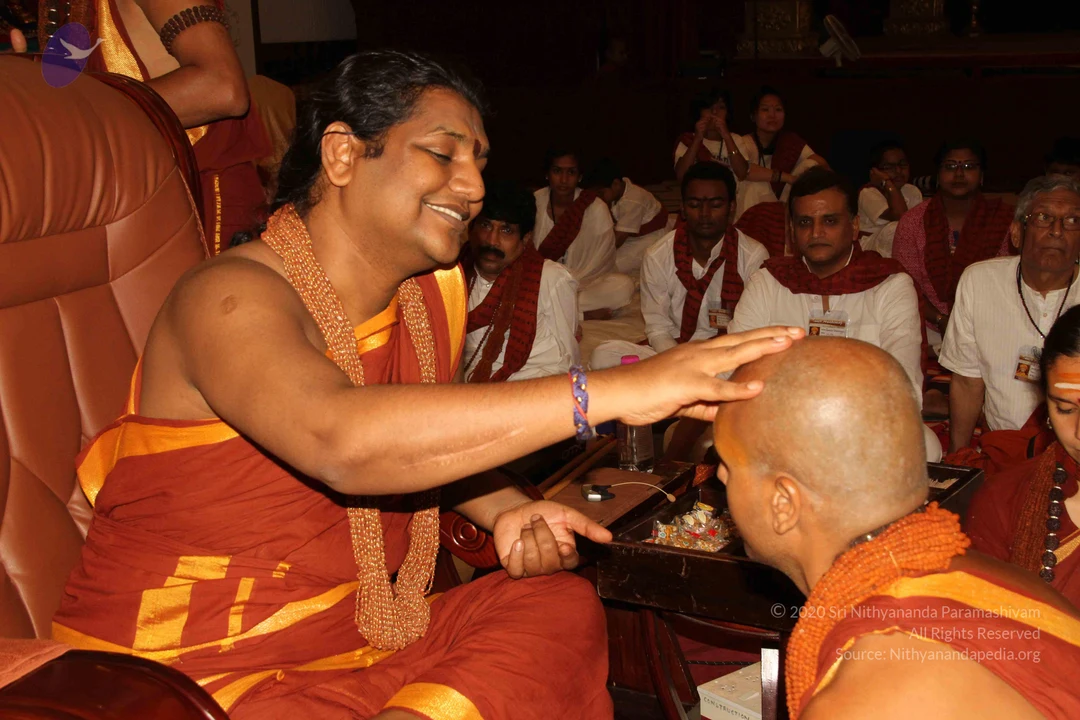
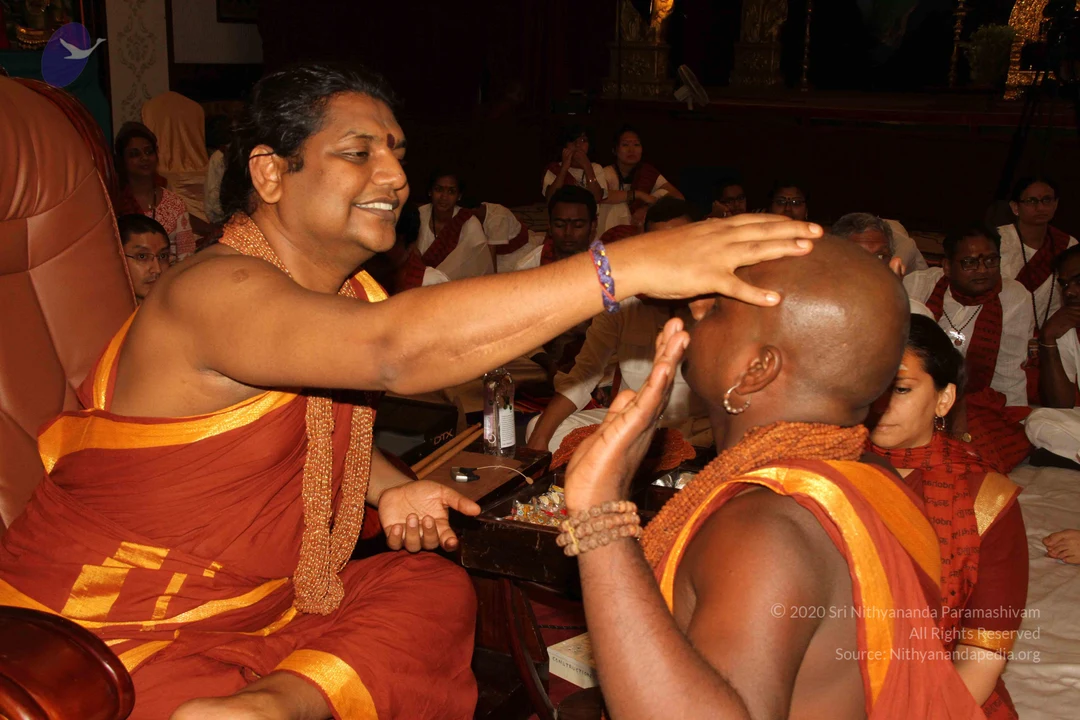
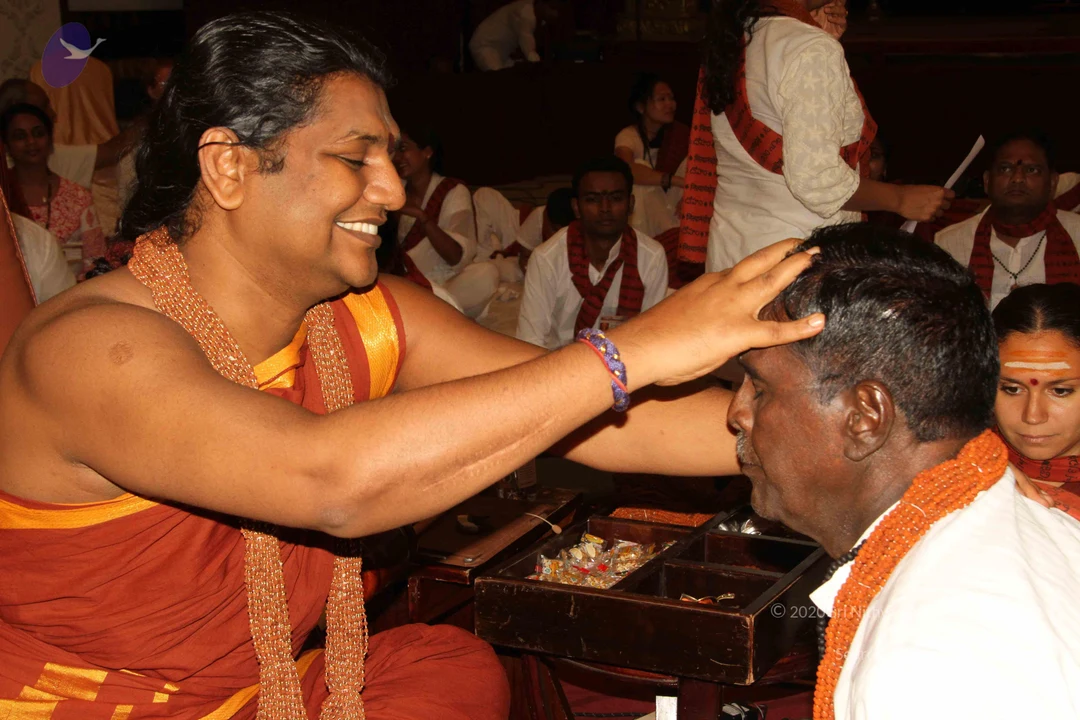
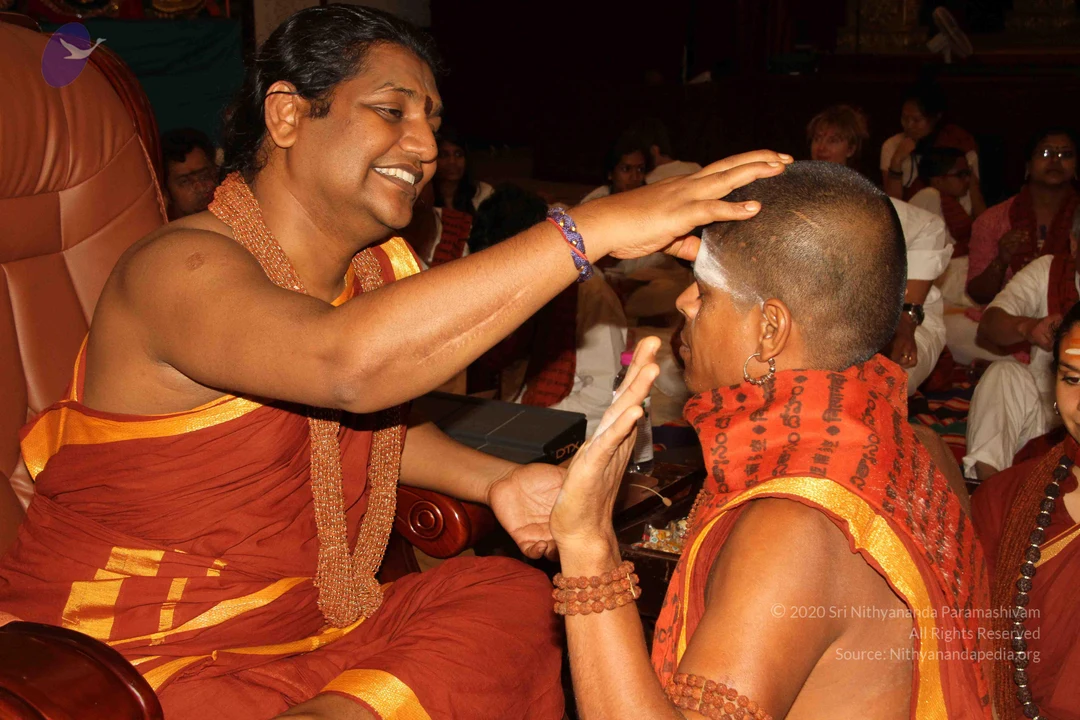
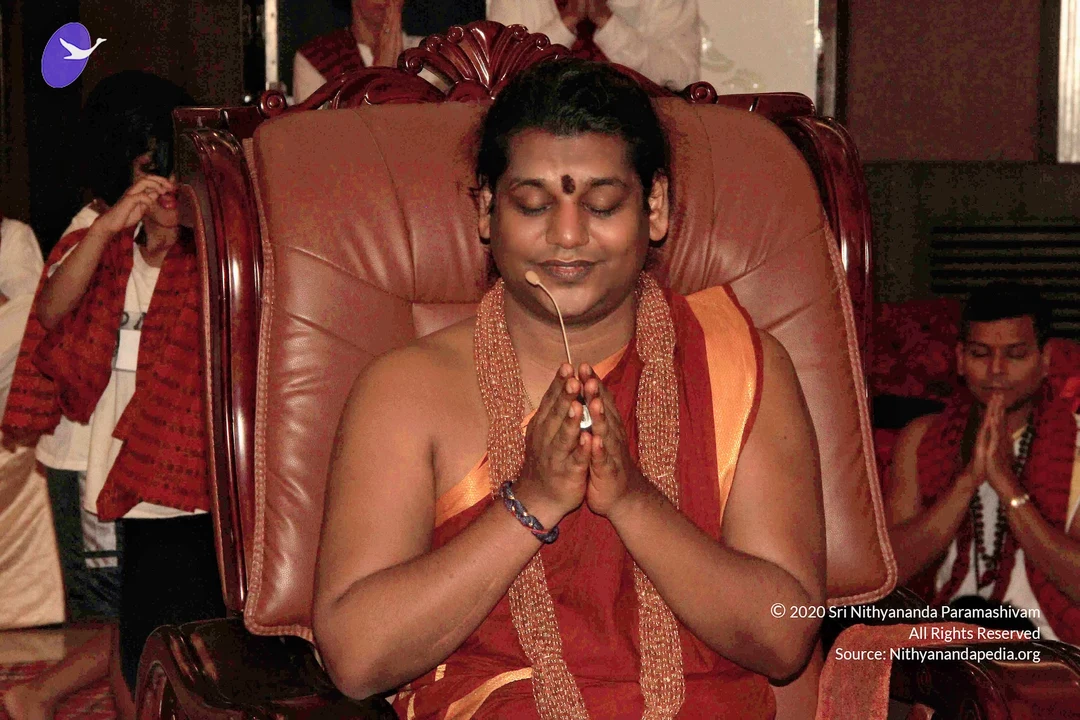
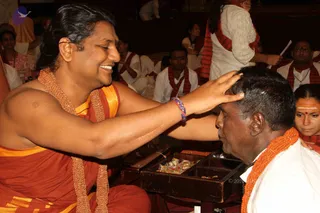
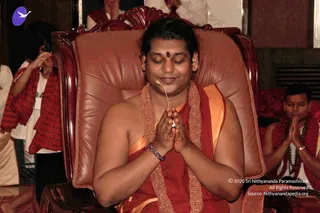
A seated man in an orange-red saffron dhoti and a long gold-beaded rudraksha-style necklace smiles as he places his right hand on the crown of a shaven-headed man kneeling before him. The kneeling man wears a white shirt and an orange-beaded garland, and his head is lowered. A wooden box holding sweets and small items sits in front of them. Behind, seated devotees wear white with red shawls, and a woman on the right wears a white sari with a red-orange tilak. a person (long swept-back hair, saffron-orange robes, gold necklace) is giving a blessing, a shared gesture of darshan or blessing.A photograph of a man seated in a large brown leather throne-style chair with carved dark wood trim, eyes closed, palms pressed together in namaste at his chest. He wears a red-orange robe with a gold-coloured shoulder cloth, a long beaded gold-toned necklace, a red bindi, and a blue-and-silver bracelet, with a small microphone near his mouth. Two people in red shawls with prayer-folded hands sit or stand beside him, and a third person in white is partly visible at the left edge. The setting appears to be a satsang hall.

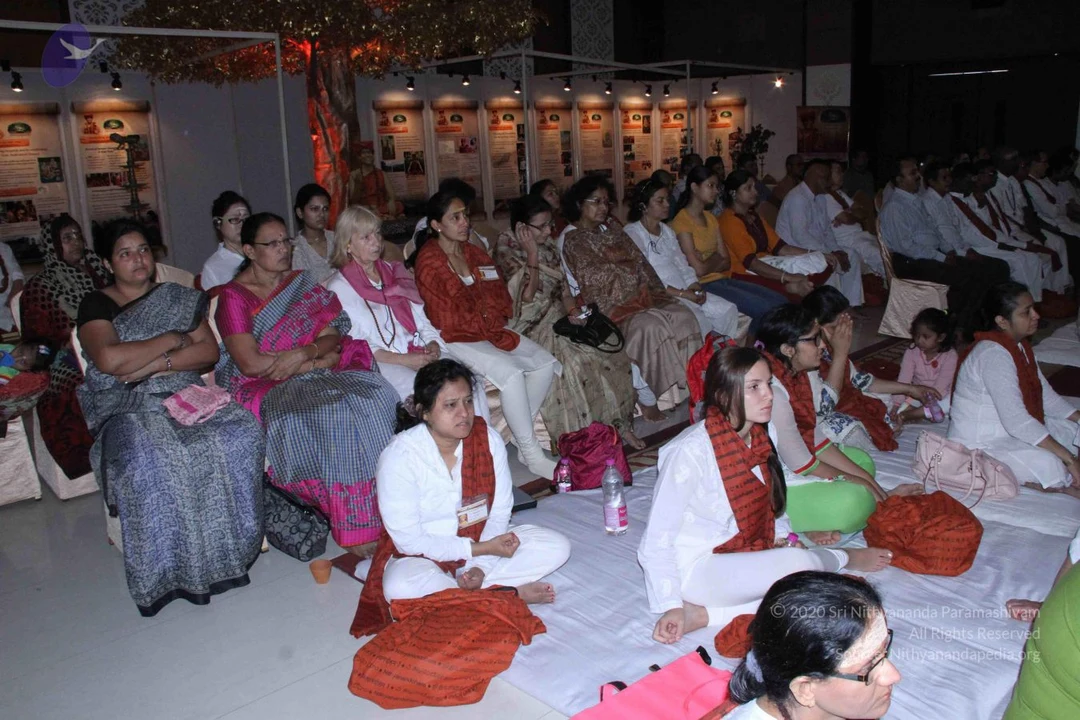
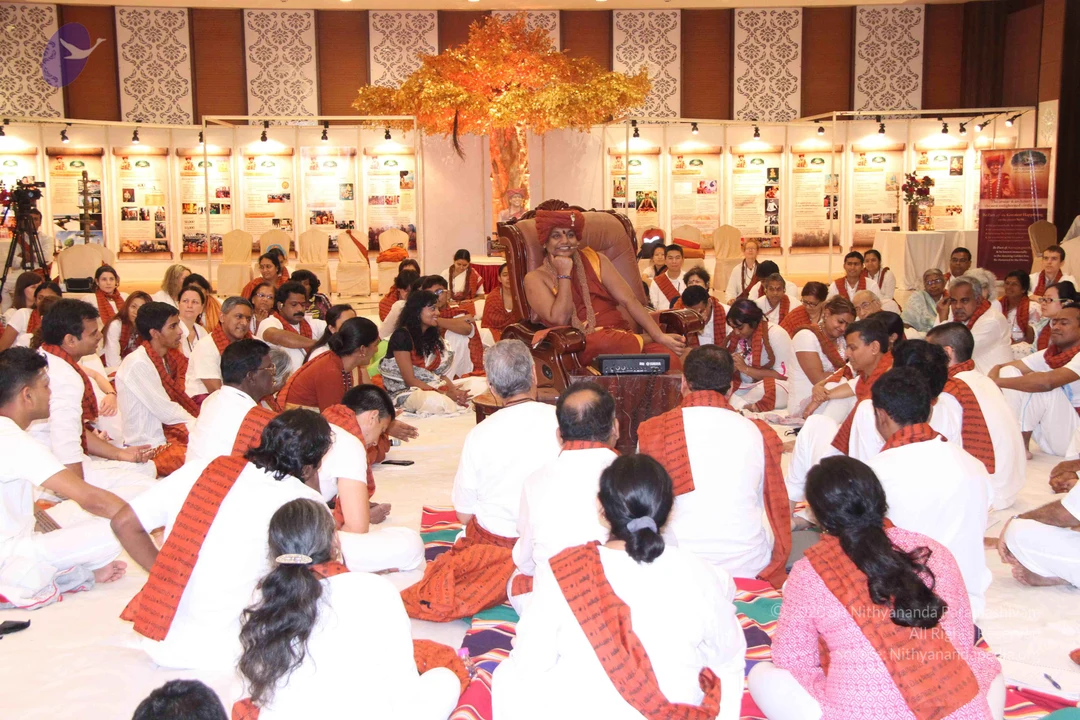
01-Nithya-Satsang

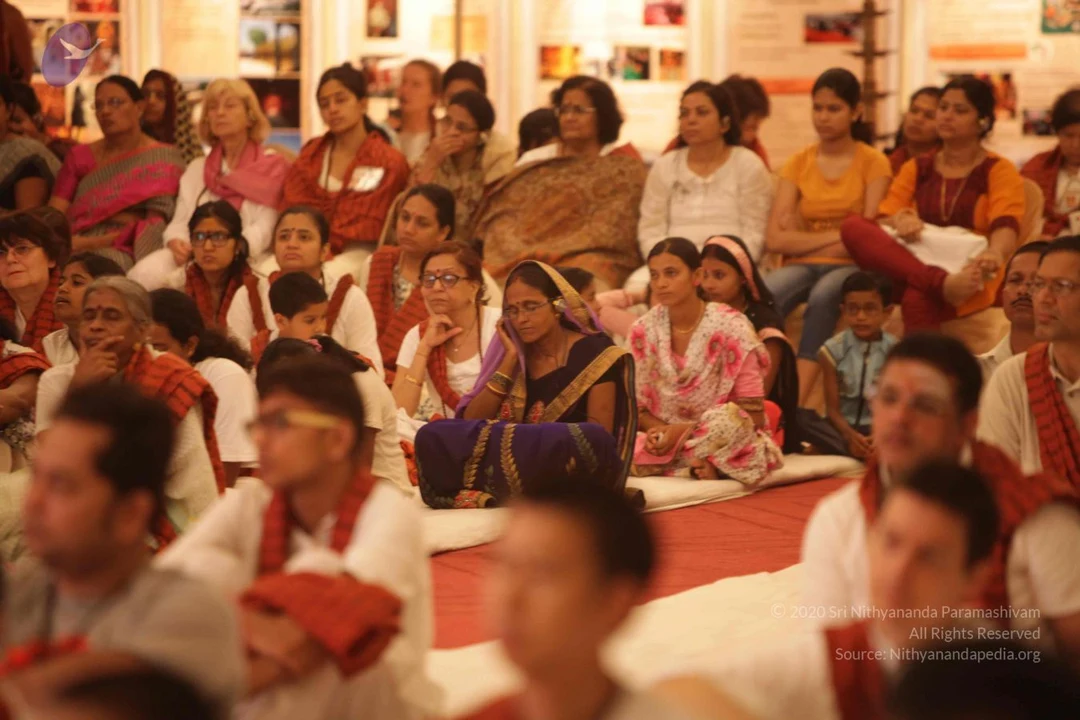
2 photosSource gallery
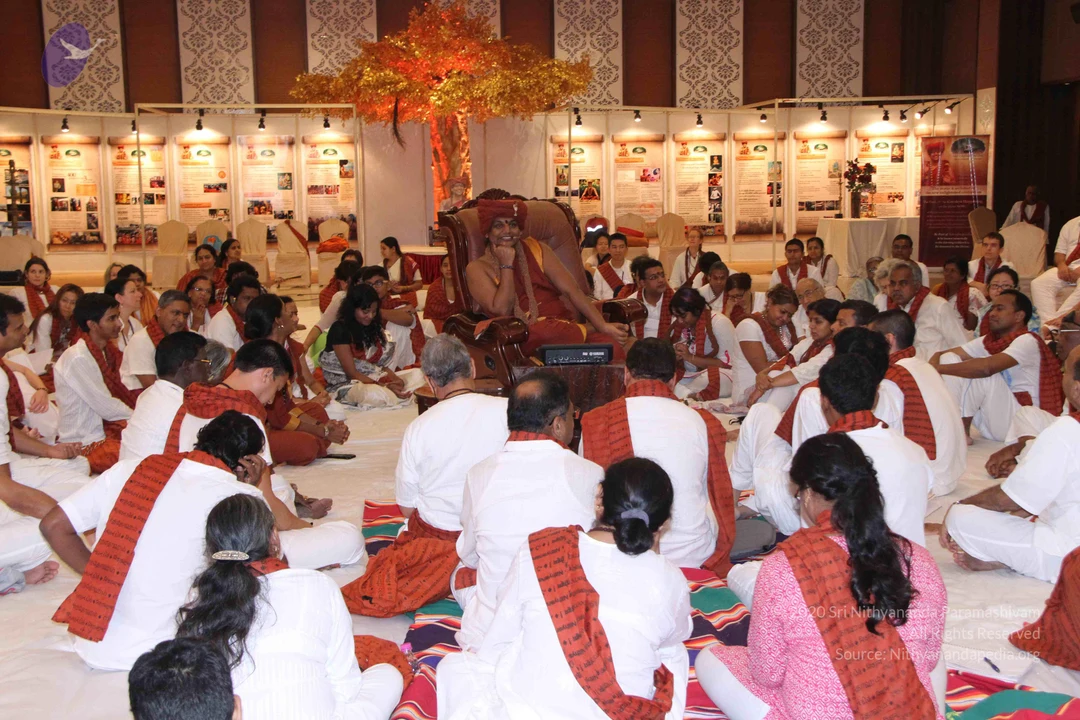
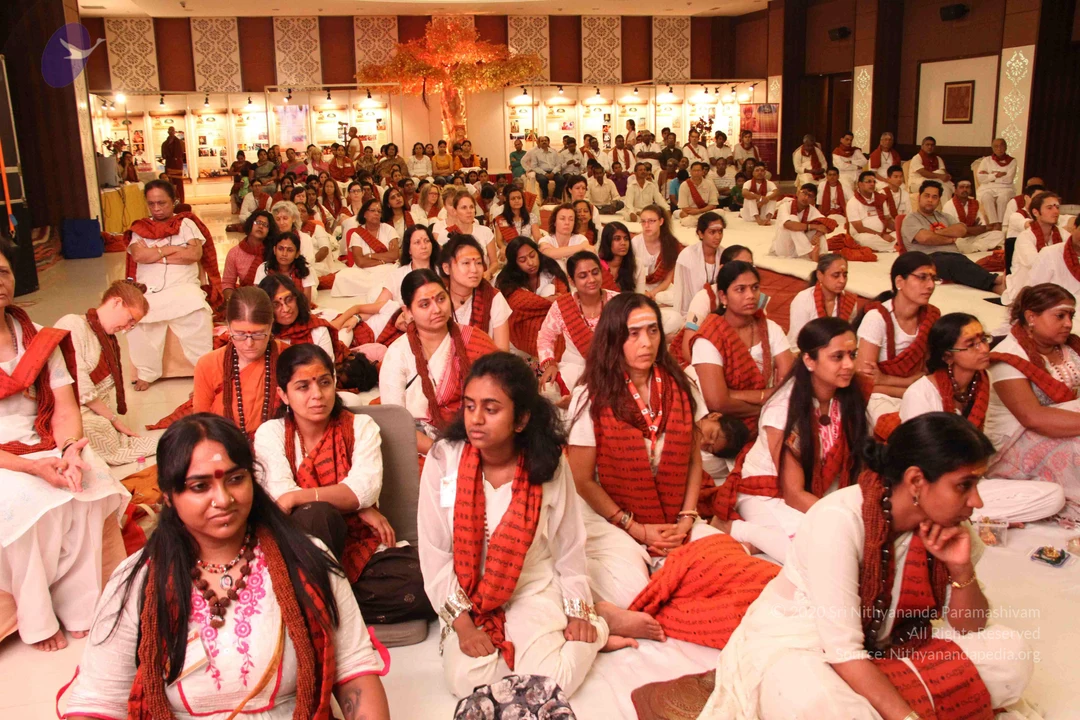
A seated man in a rust-red turban with a small gold ornament and a red bindi sits eyes closed on an ornate gold throne with a gold canopy above, a microphone on a stand before him. He wears a rust-red and gold-bordered robe, a multi-strand rudraksha-style bead necklace, bead armlets and bangles, hands folded in lap. Behind is a purple starry backdrop and potted greenery at the sides. Appearance-based candidate for Swamiji (probable): the turban, ornate clothing and bead malas match the cues, seated on a throne during a satsang-style discourse. One physical person is visible.A large seated audience fills a hall at a Nithya Satsang, with many devotees on the floor and chairs wearing white clothes and red-orange shawls printed with script. In the foreground a woman with long dark hair and a red bindi wears a beaded rudraksha mala and a white and pink top, while beside her a woman in a red shawl sits attentively. Behind them rows of participants in white and red shawls listen, and a warmly lit exhibition area with a tree-shaped display stands in the background. No a person candidate is clearly visible in the frame.