Skip to content
Friday

5 July 2013

Dated photos
226
Source pages
1
Media
2
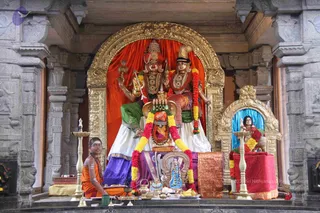
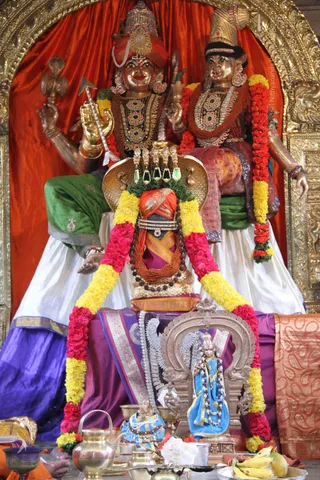
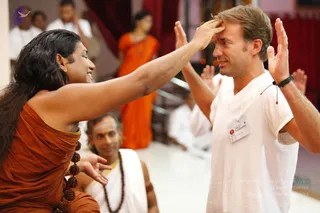
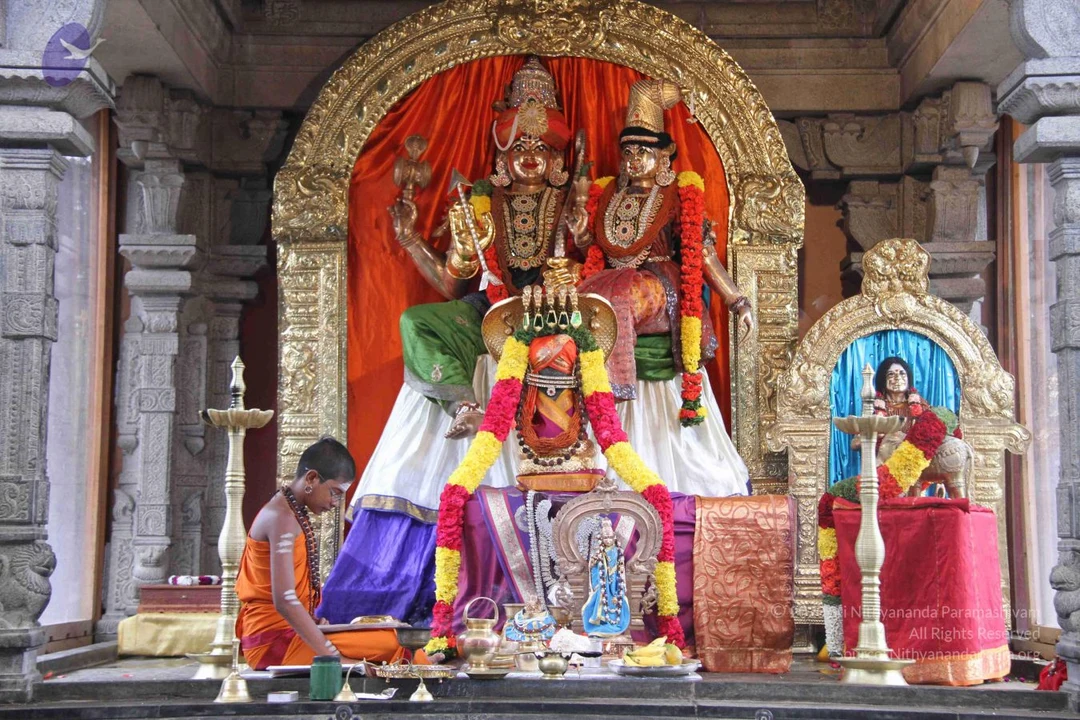
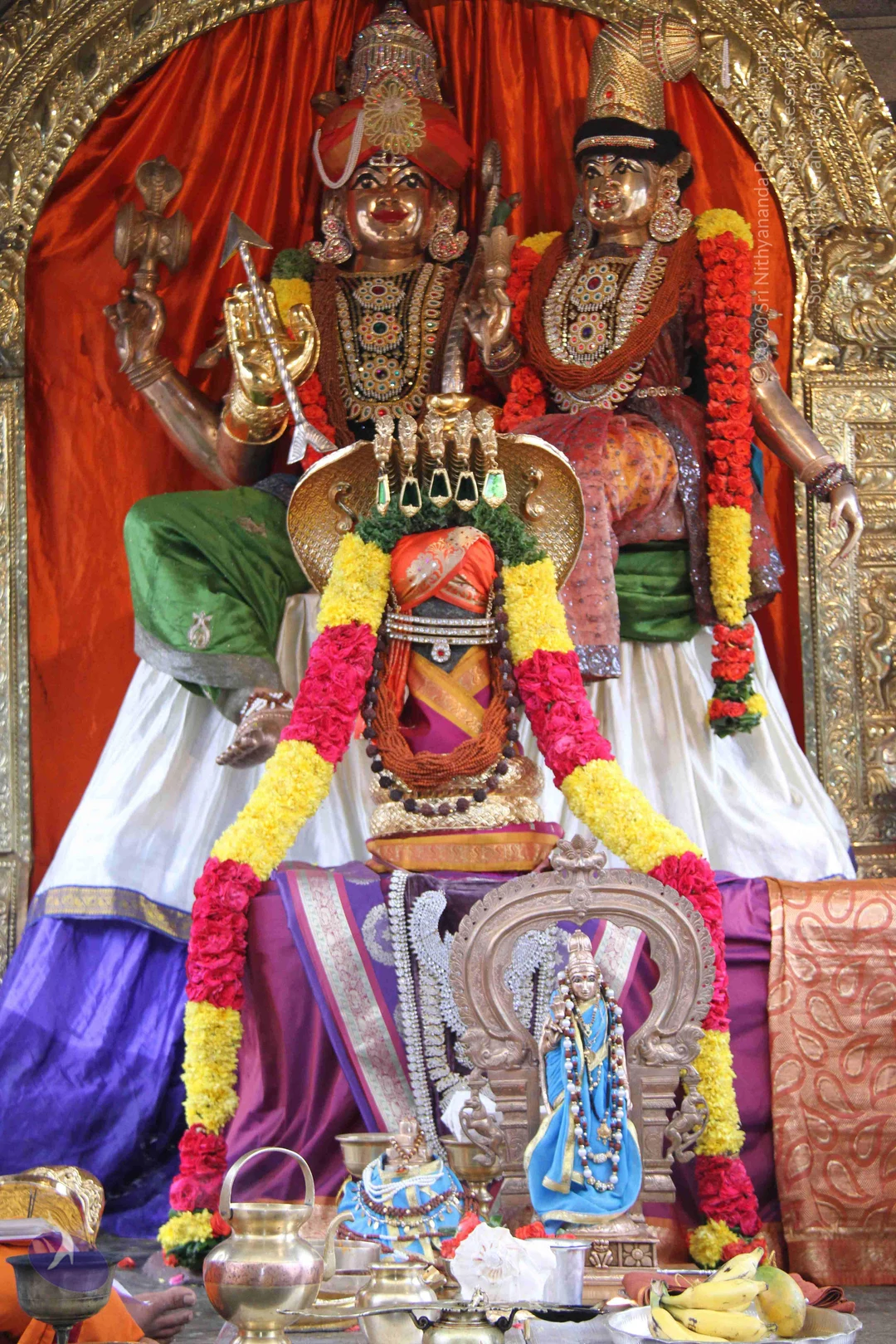
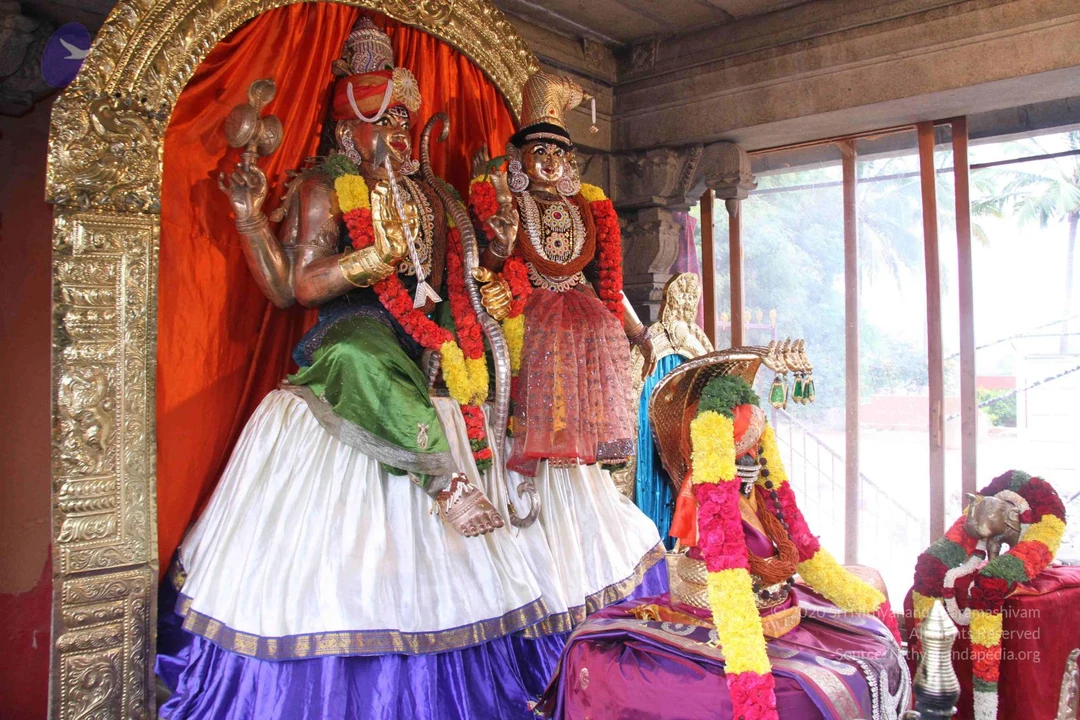
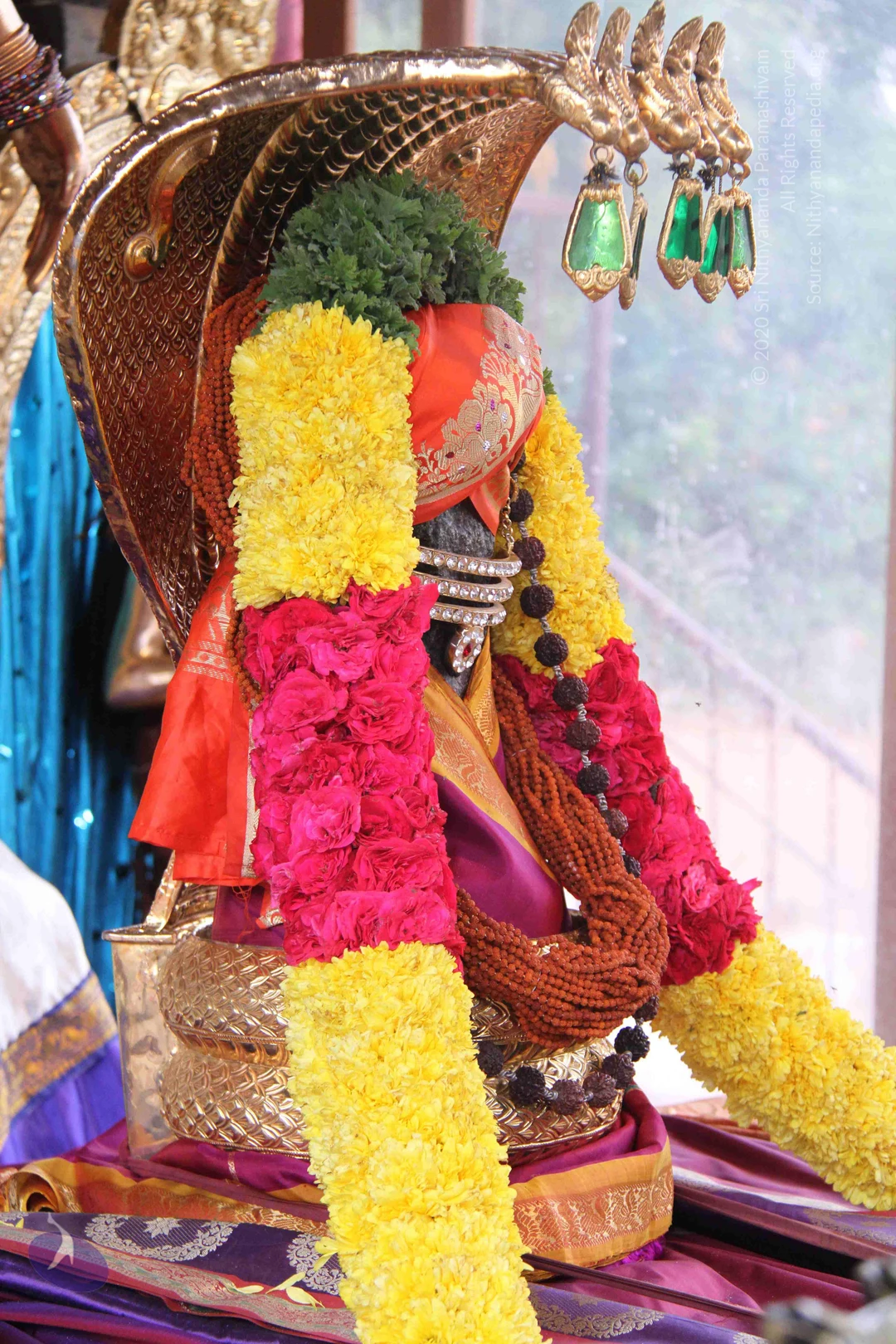
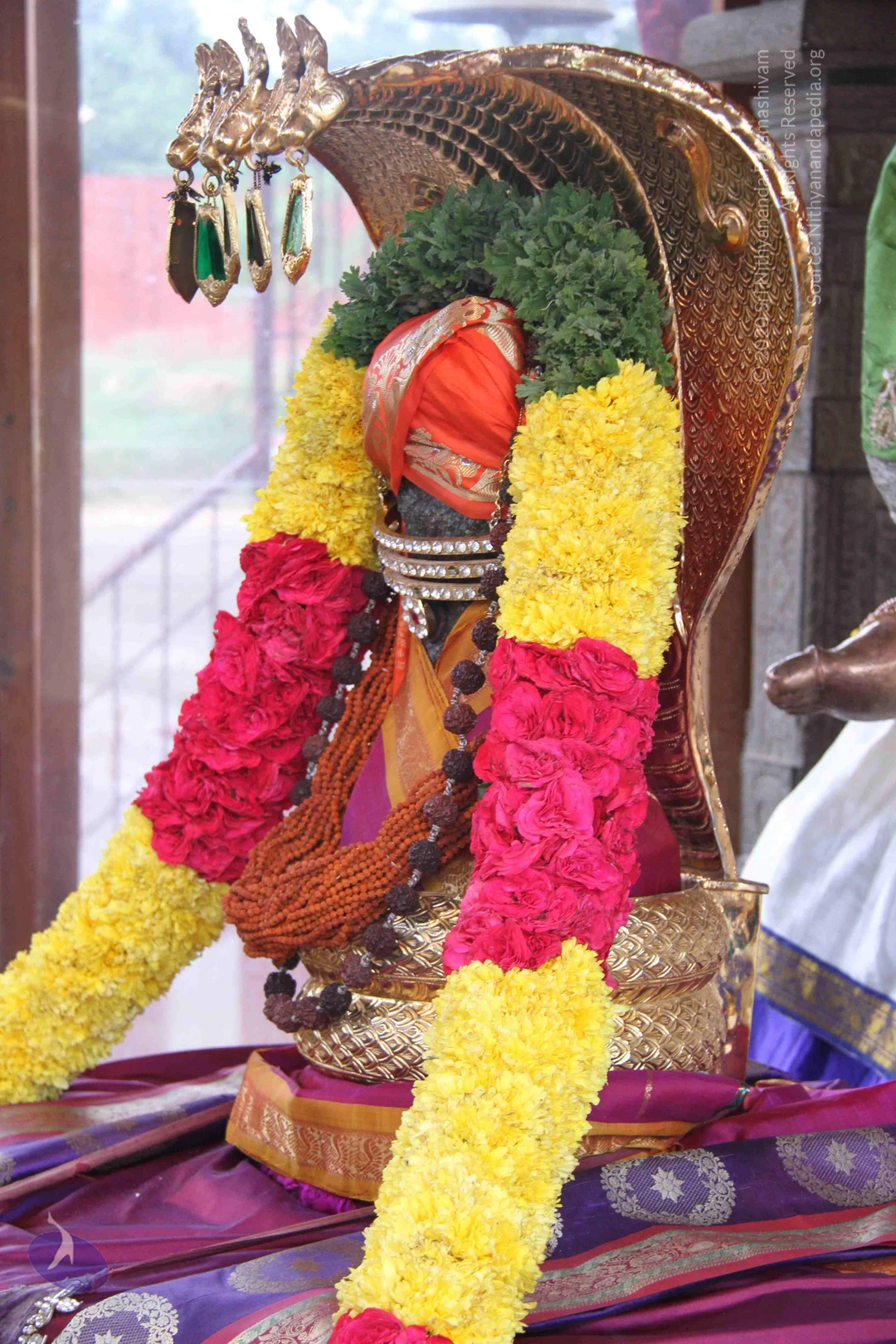
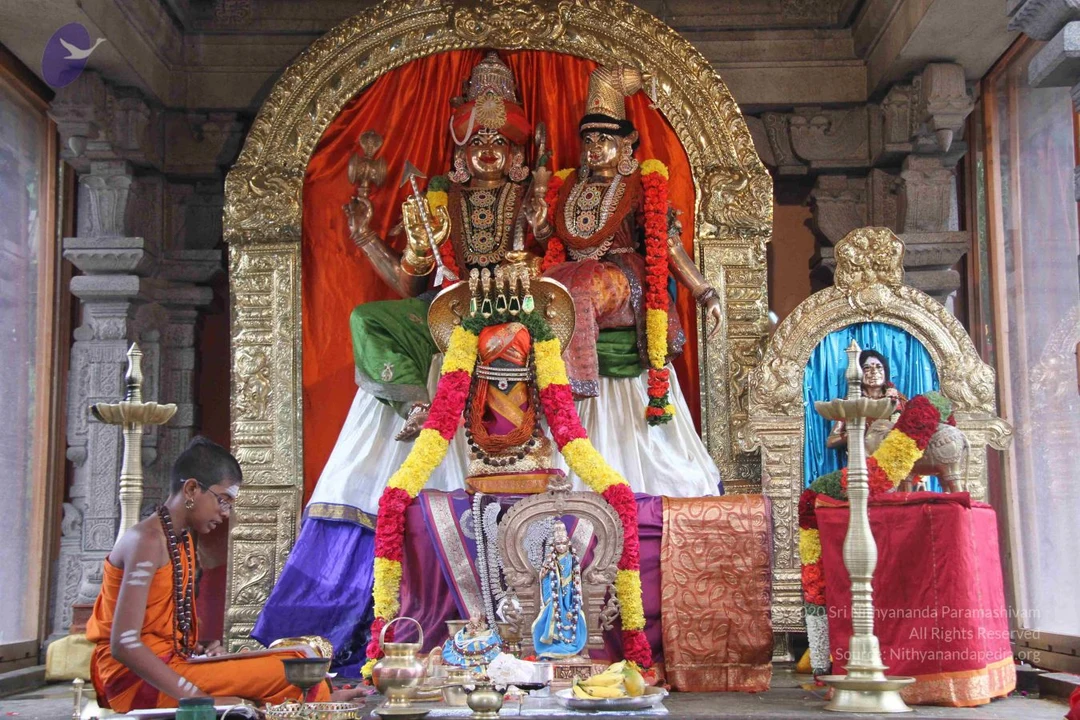
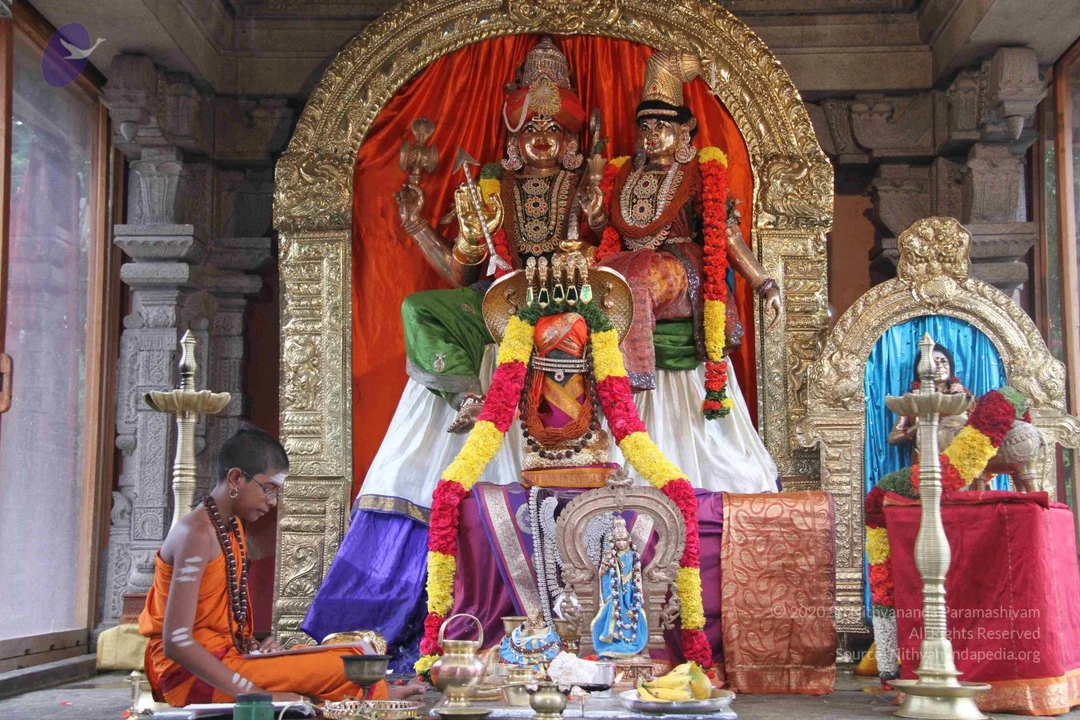
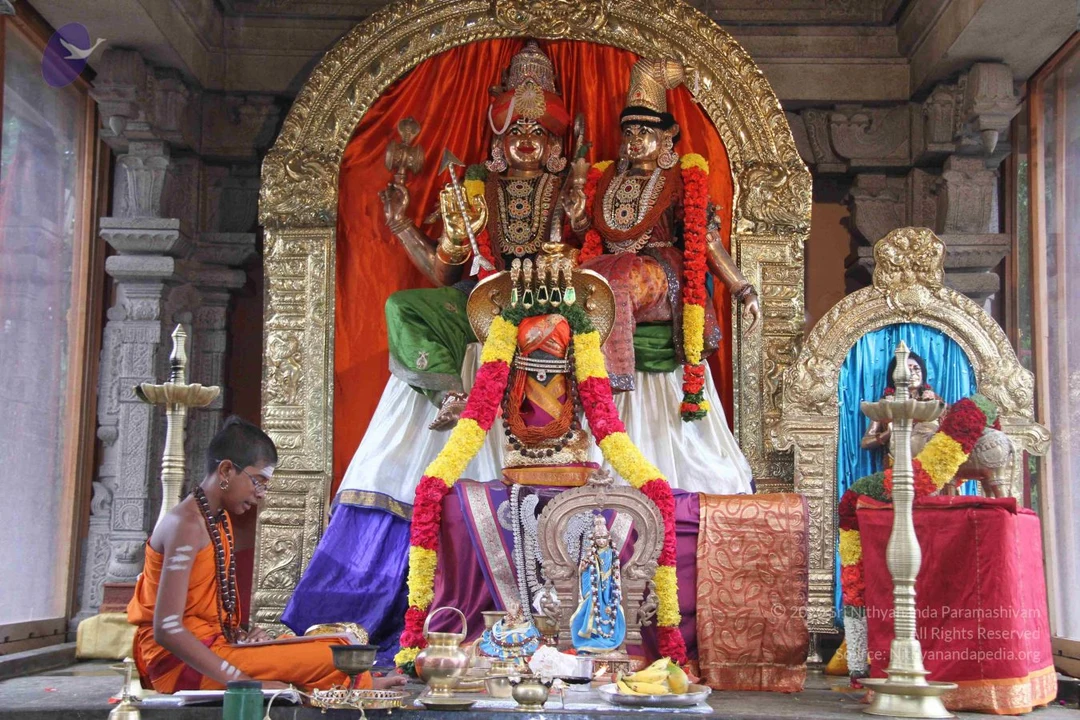
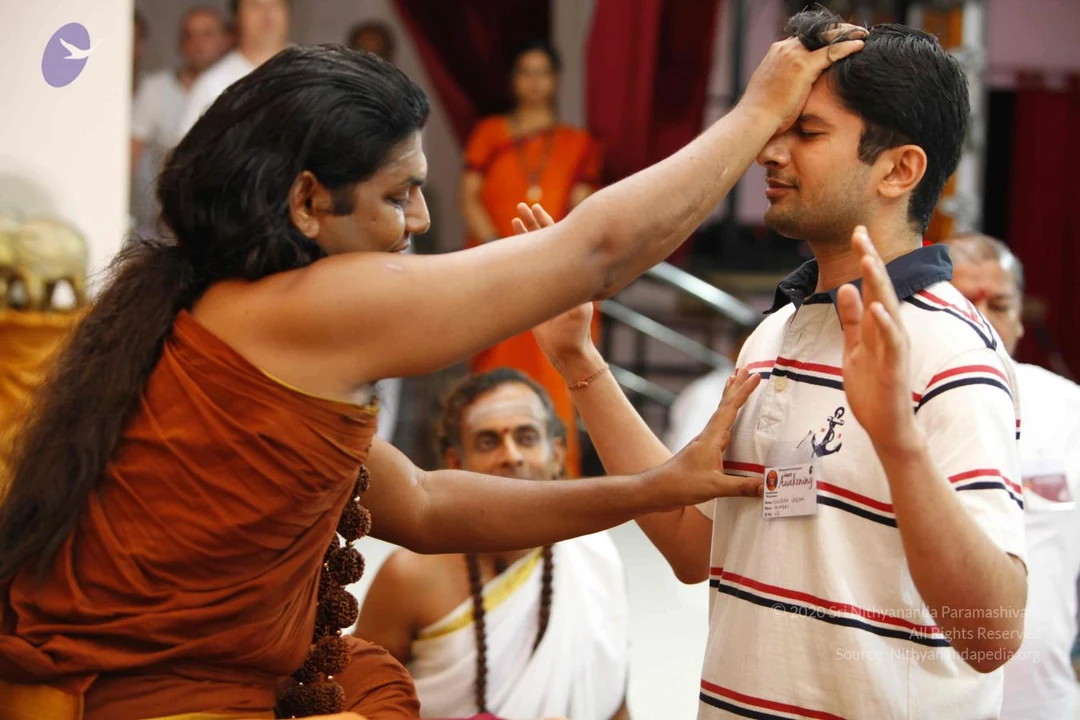
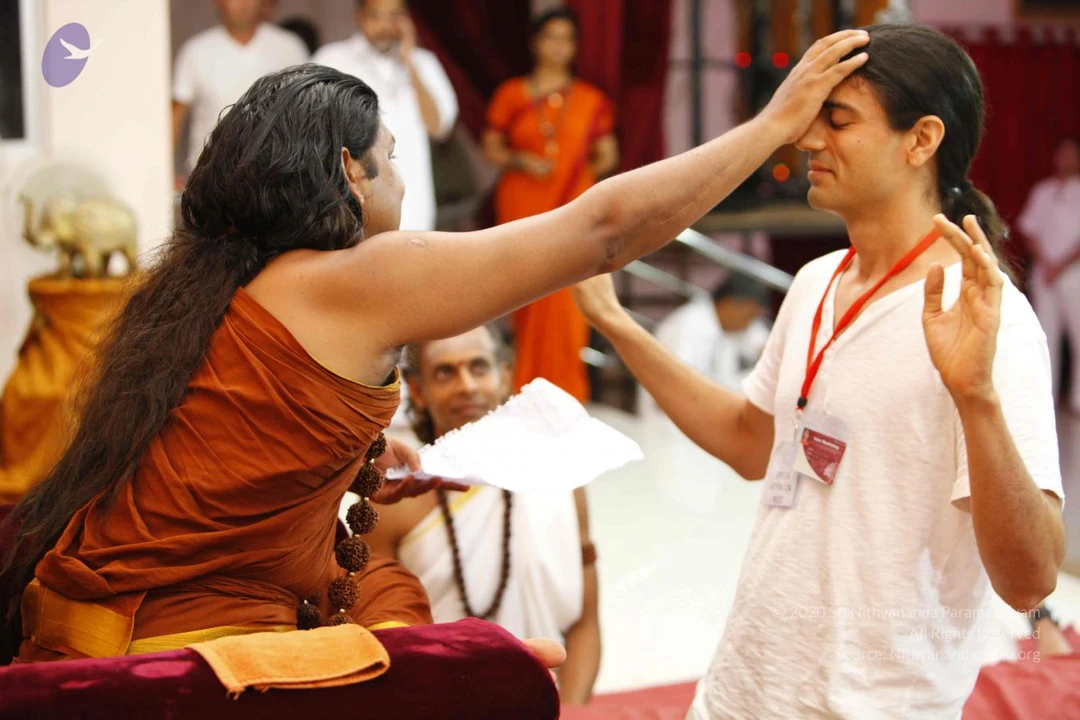
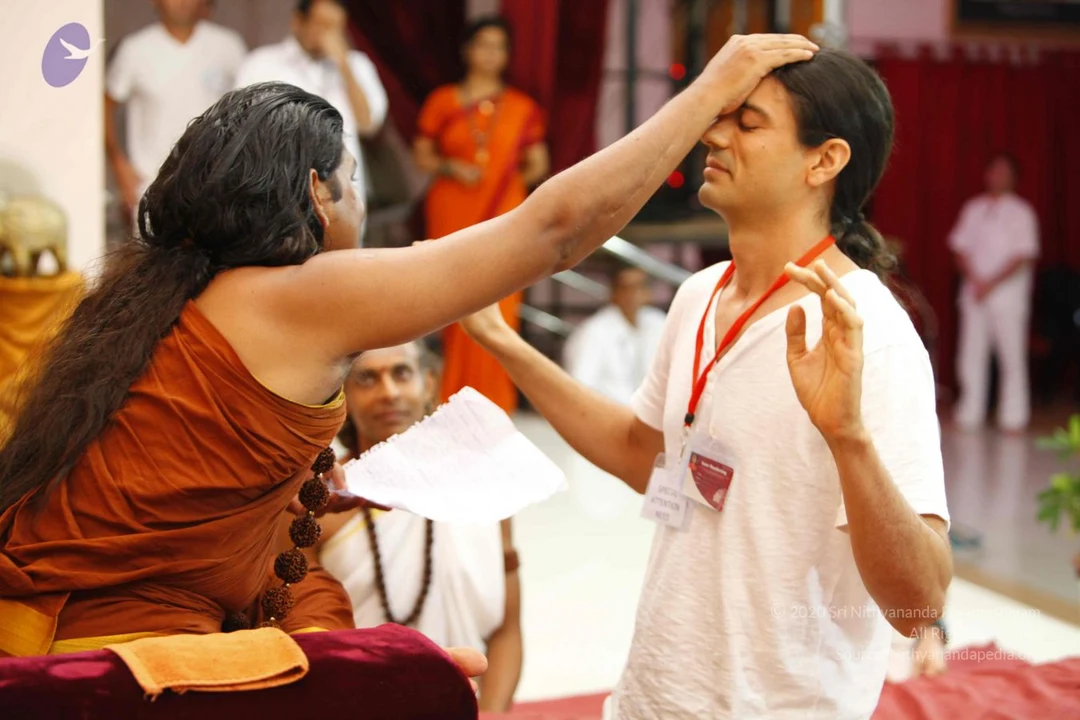
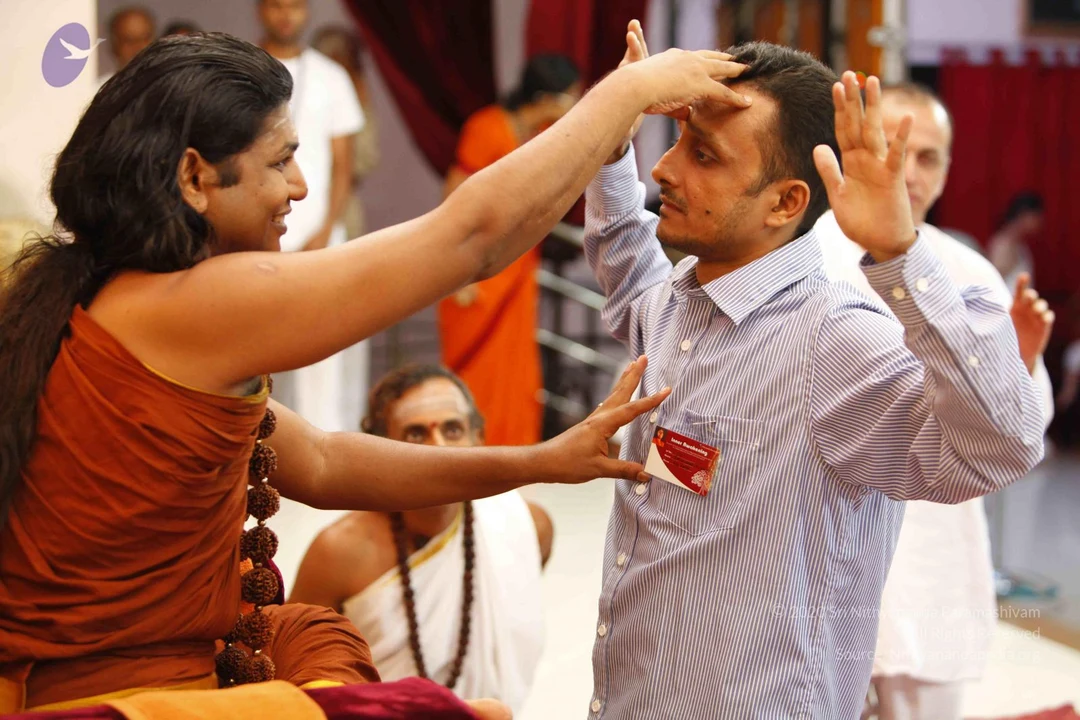
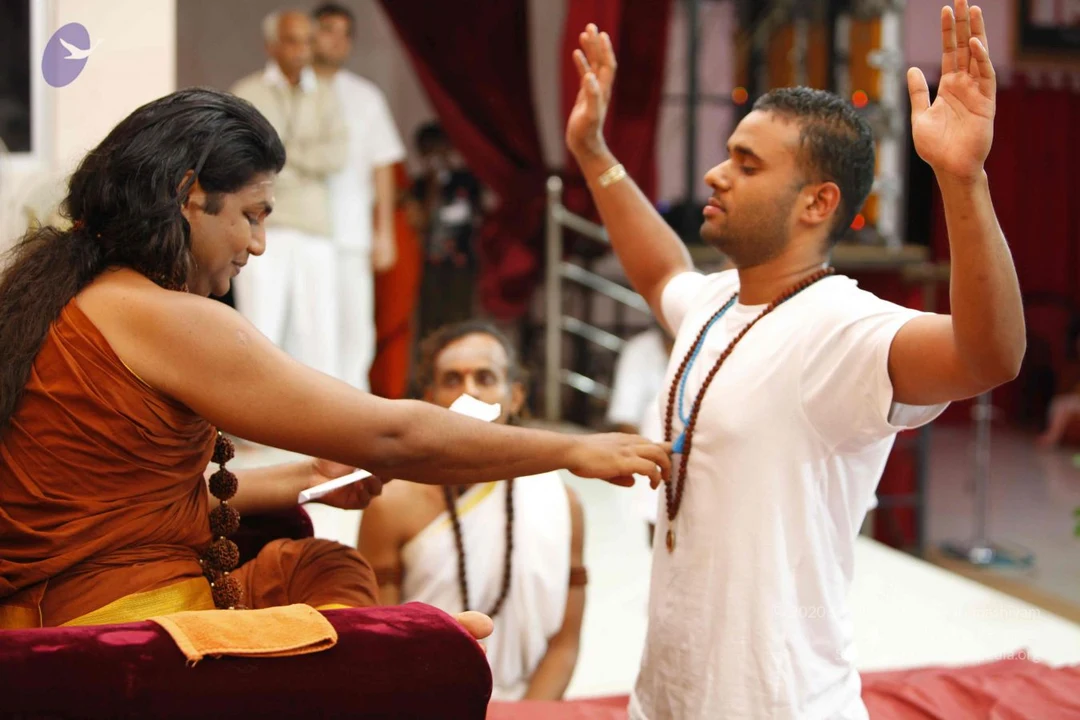
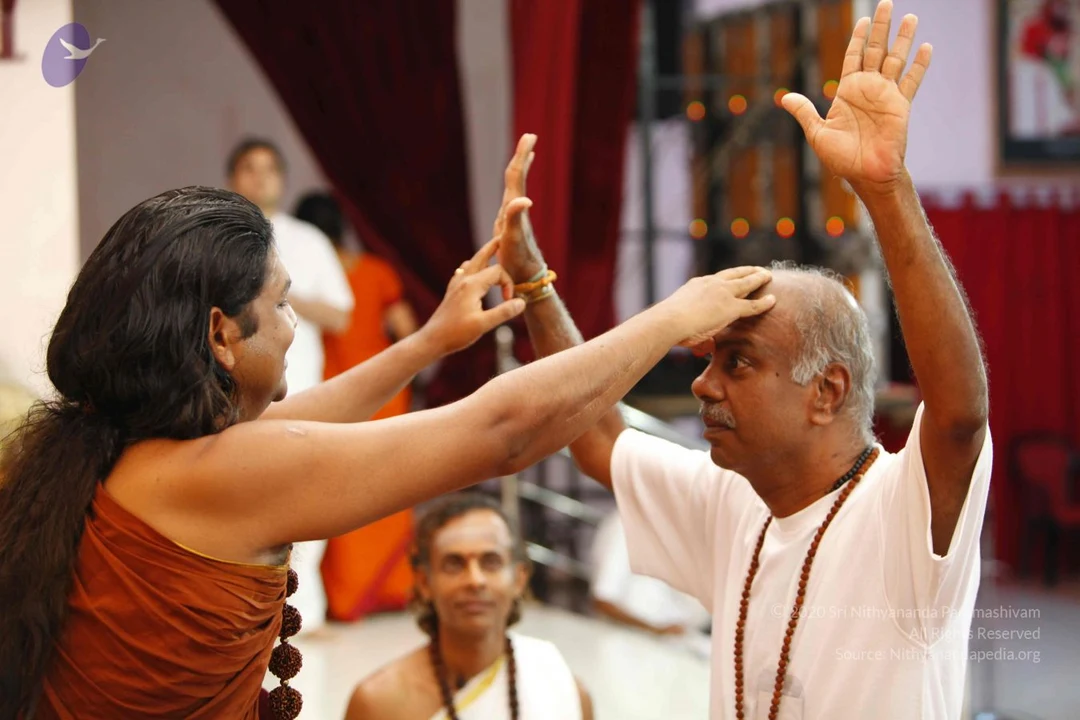
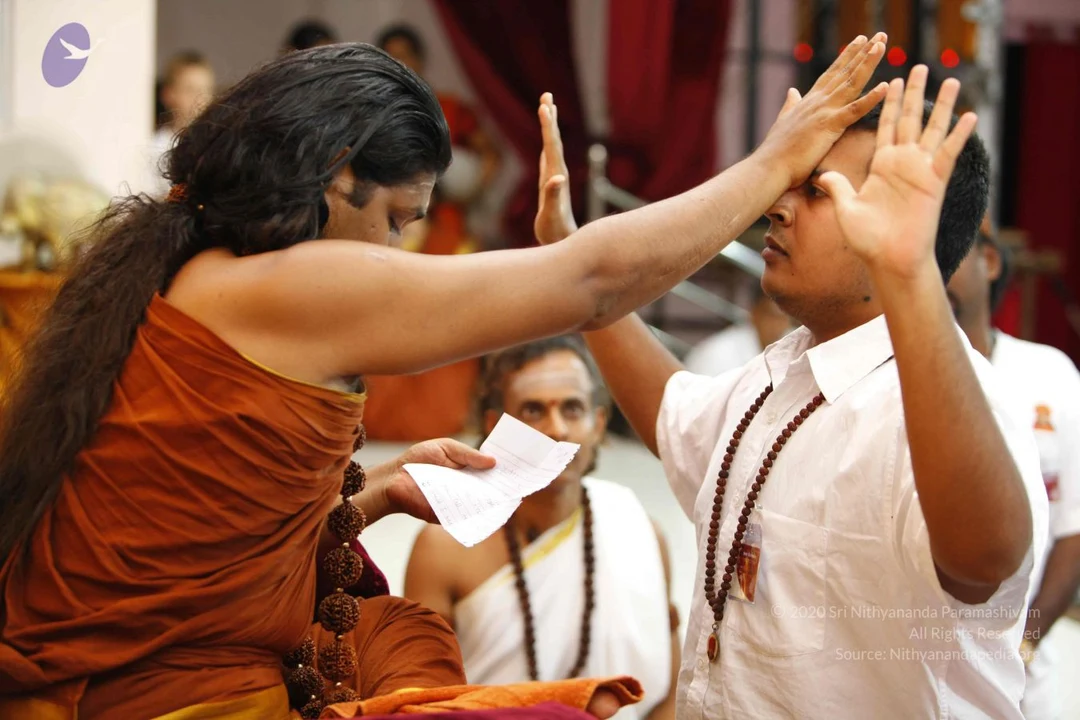
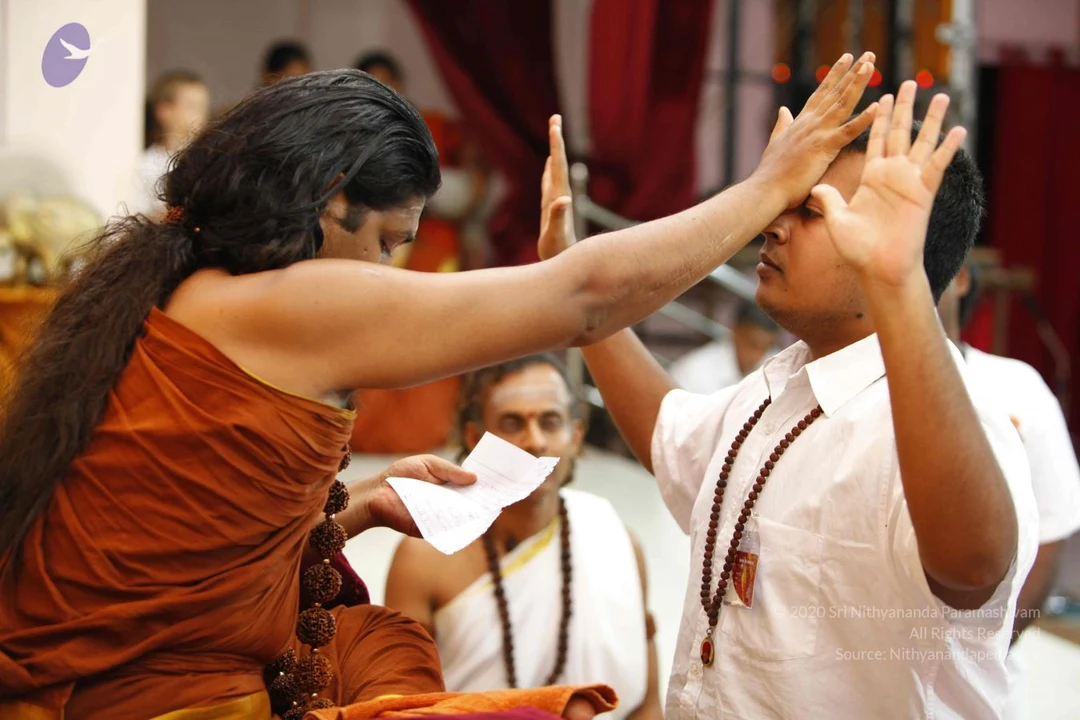
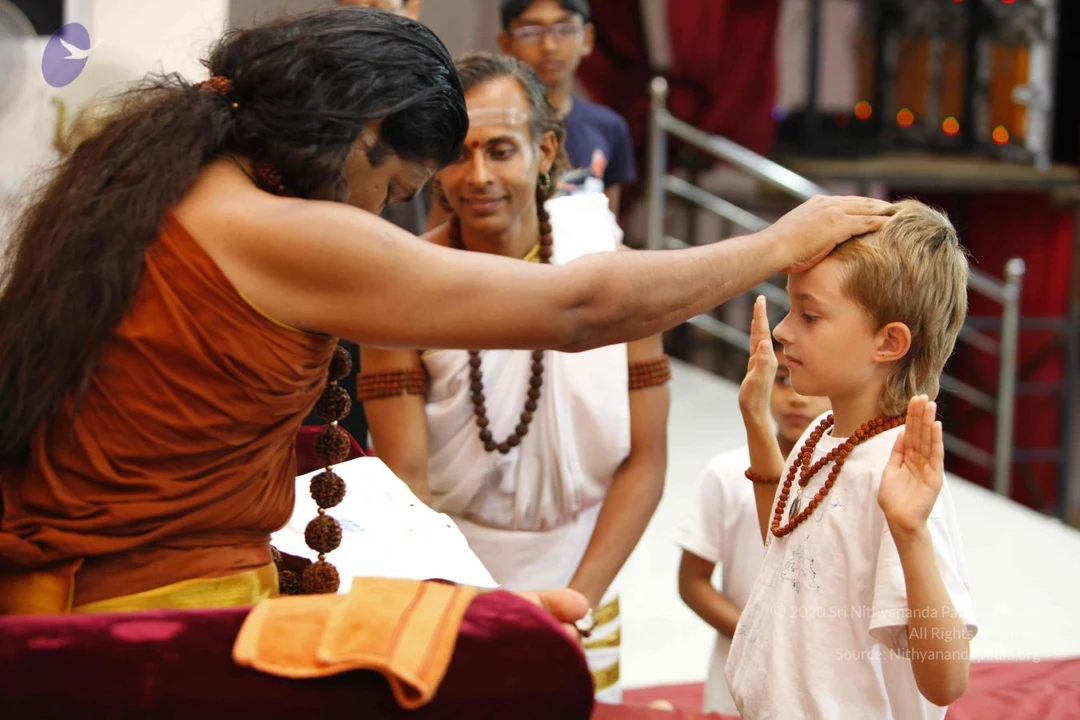
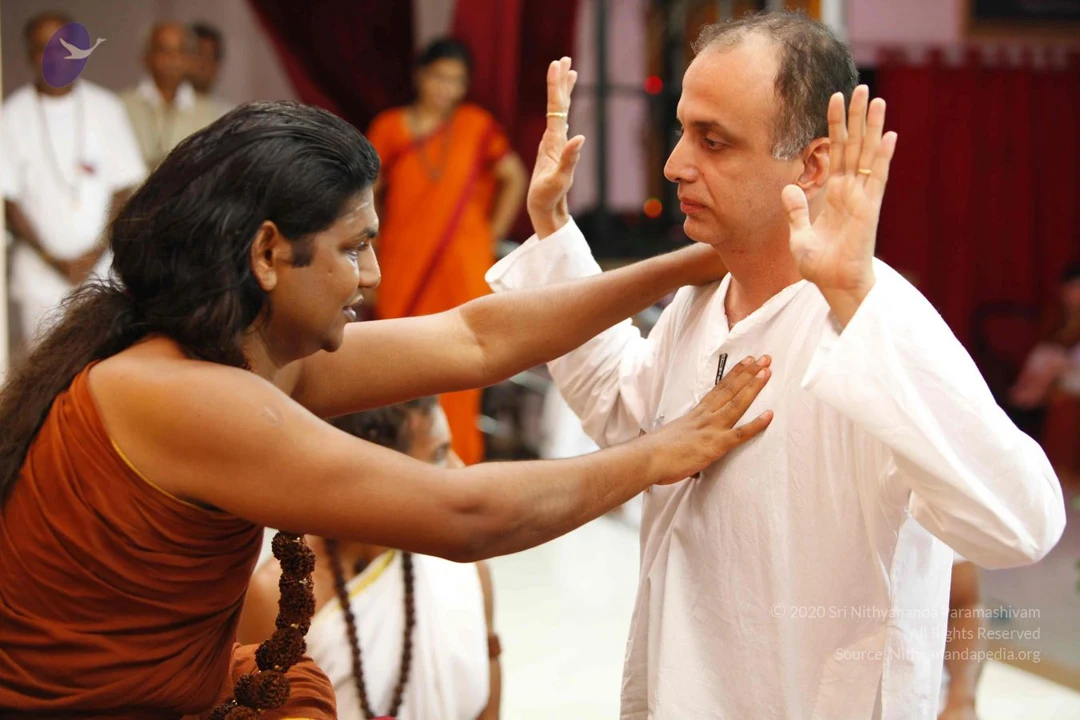
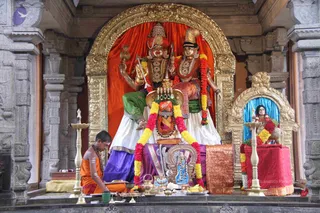
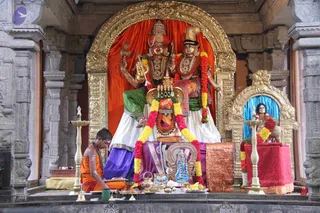
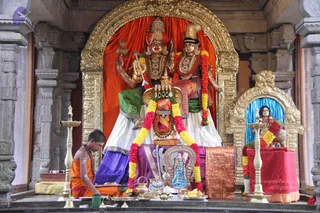
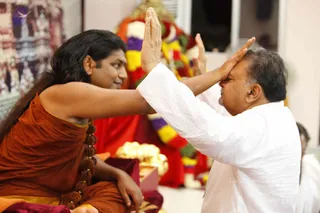
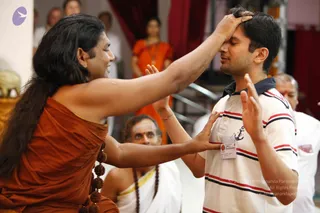
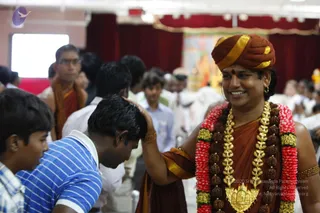
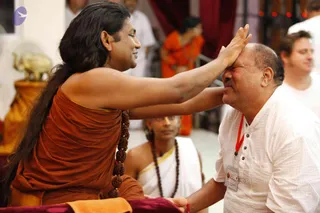
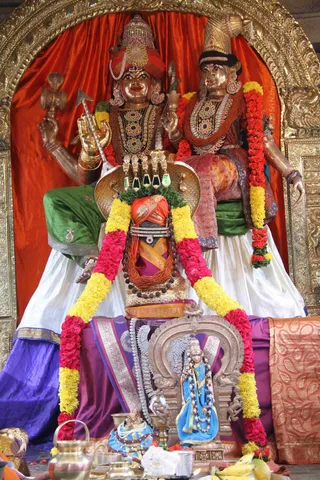
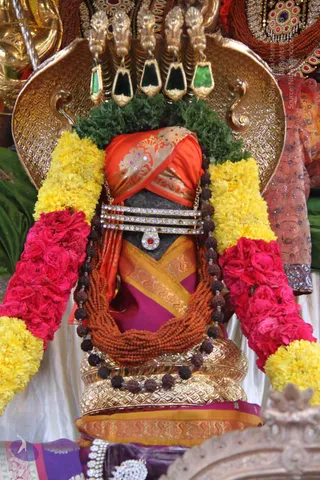
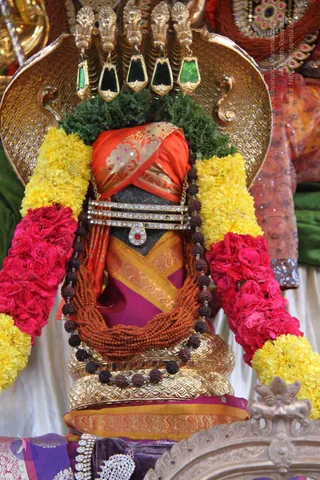
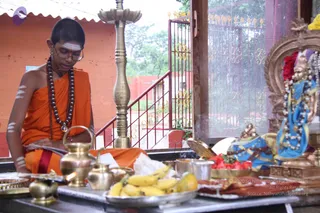
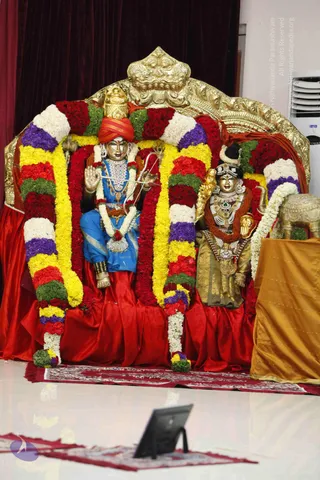
A temple shrine with a large gilded arch framing two painted deity murtis seated on a raised platform. The central figure holds a trident and other implements and wears a red crown with a garland of red and yellow flowers. The female figure beside him wears a golden crown and jewelled necklaces with a red garland. Brass oil lamps stand on either side, and a kalasha and puja vessels sit before the murtis. A young priest in saffron cloth with a rudraksha mala and white sandalwood markings on his forehead sits at left beside a brass lamp. Red and gold drapery and carved grey stone pillars surround the shrine.A photograph of a decorated temple shrine with a pair of metal deity murti seated under a red curtain within a gilded arch. The taller figure wears a red and gold turban and a jewelled necklace and holds a trident-like staff, while the figure beside them wears a tall crown, layered jewellery and a red patterned garment. A large lingam-like form sits in front, draped with a red cloth, garlands of yellow and red flowers, and a jewelled crown. Beside it stands a small blue-robed metal figure in a brass archway, with brass vessels, a kalasha pot, a plate of bananas and flower petals on the altar. Offerings and puja items are arranged at the base, and no people are visible in the scene.A photograph of a satsang-style blessing. A woman with long dark hair, wearing an orange-saffron garment with a rudraksha mala, reaches forward and places her palm on the forehead of a man in a white t-shirt with a lanyard badge. The man has his hands raised beside his head. Behind them, a seated man in white with a rudraksha mala and other people in white and orange are visible, with red drapes in the background.

July 05 2013

Original wiki page
Contents

Title

What is Real feredom?

Description:

In today’s morning Satsang, Paramahamsa Nithyananda explains that lifestyle philosophy, art, architecture, and language are the requirements for a civilization to be alive. He wants us to understand that the strength of a civilization is stability which brings specialization. The stability of Indian civilization lead to the specialized knowledge and perfection of the Vedic sciences. For over twenty thousand years, the Vedic tradition has been perfected in the areas of lifestyle philosophy, art, architecture, and language. Over the past several decades, the stability of India has been compromised because Indian youth has been moving away from the traditional ways of knowledge transfer. We can reverse the degradation in the structure and lifestyle of India by reviving the Vedic tradition!

VideoAudio

Transcript:

0:36

I welcome all of you with my love.

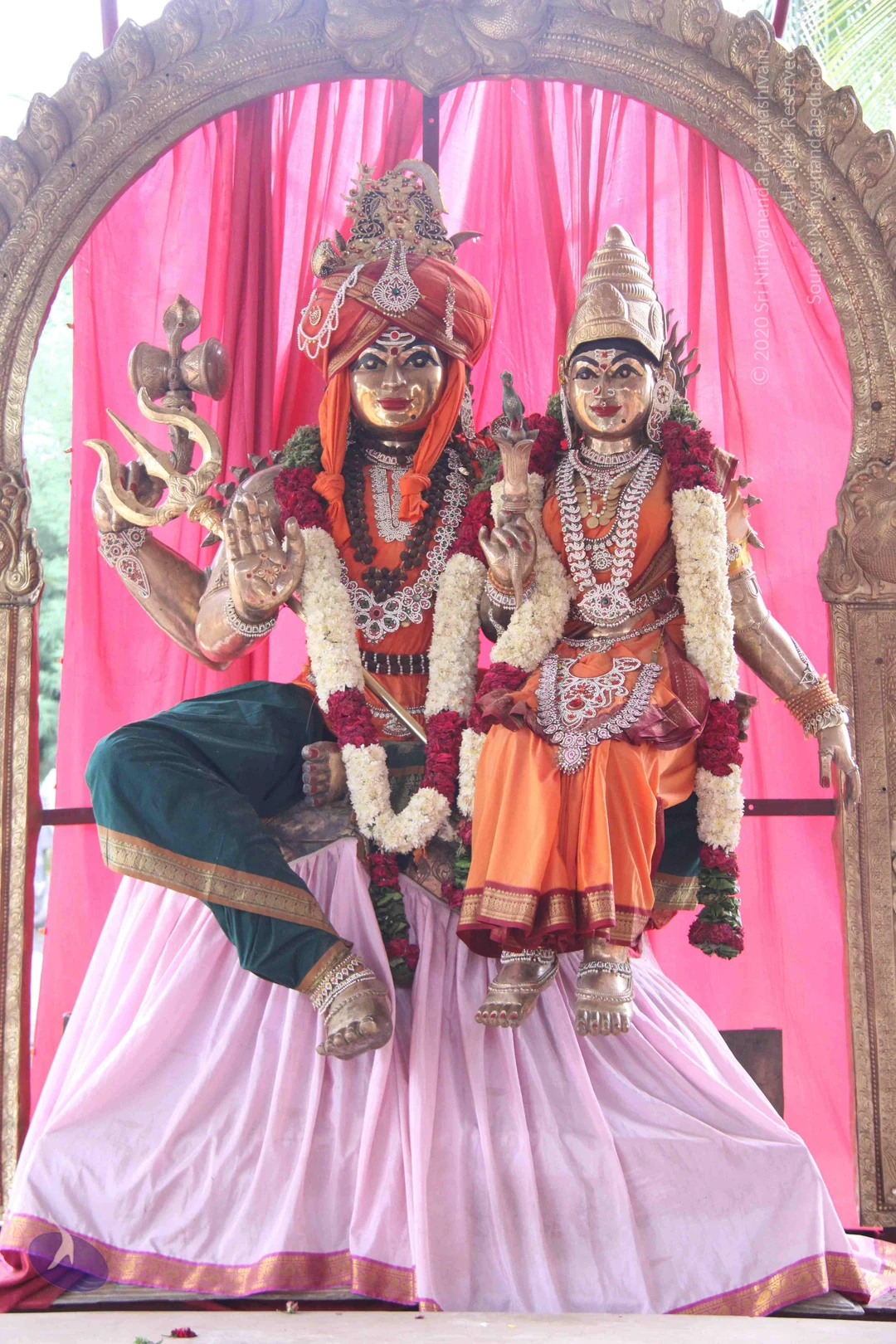
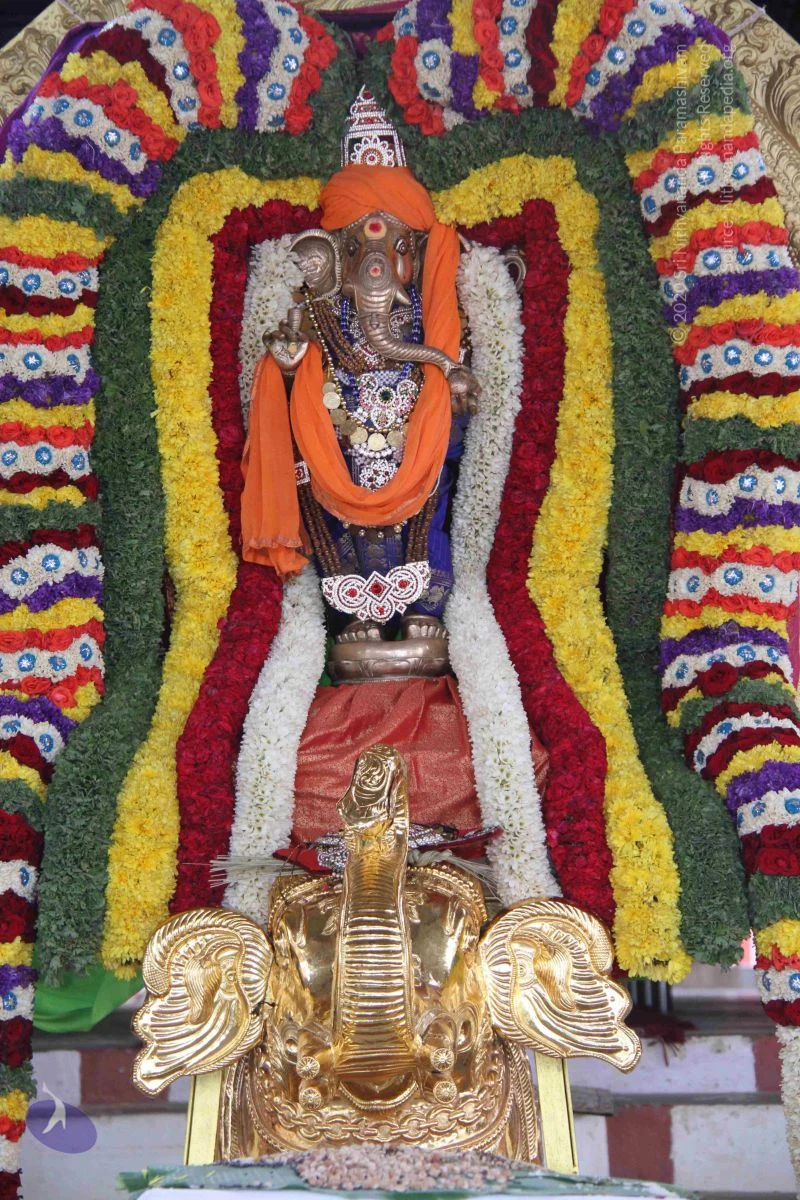
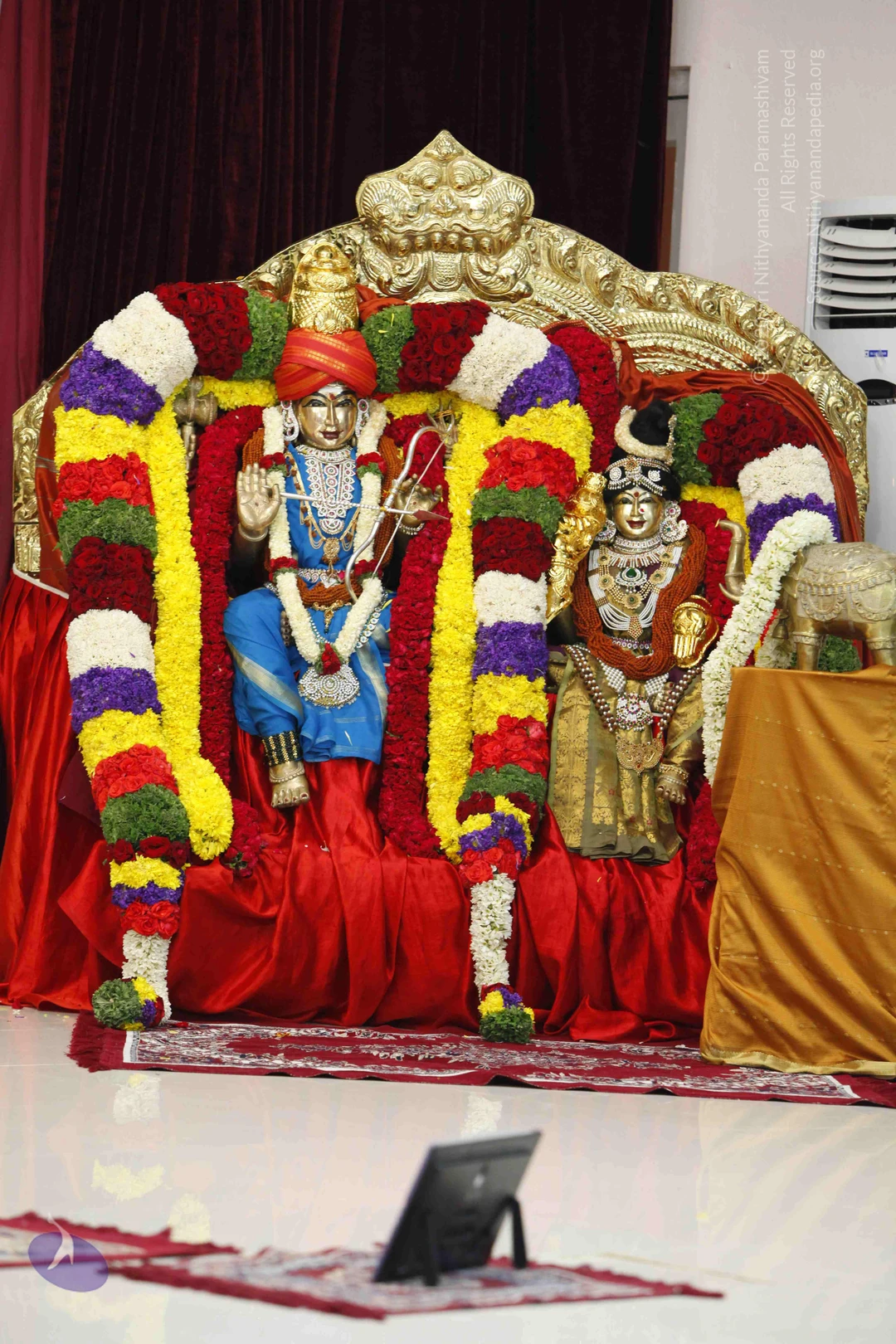
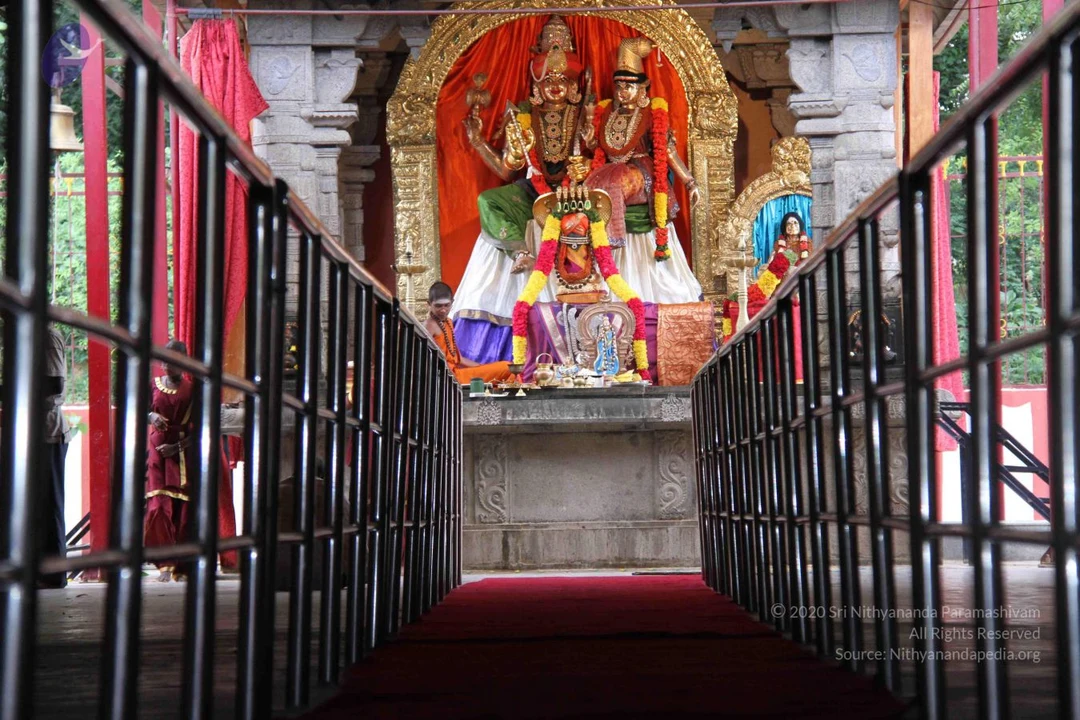
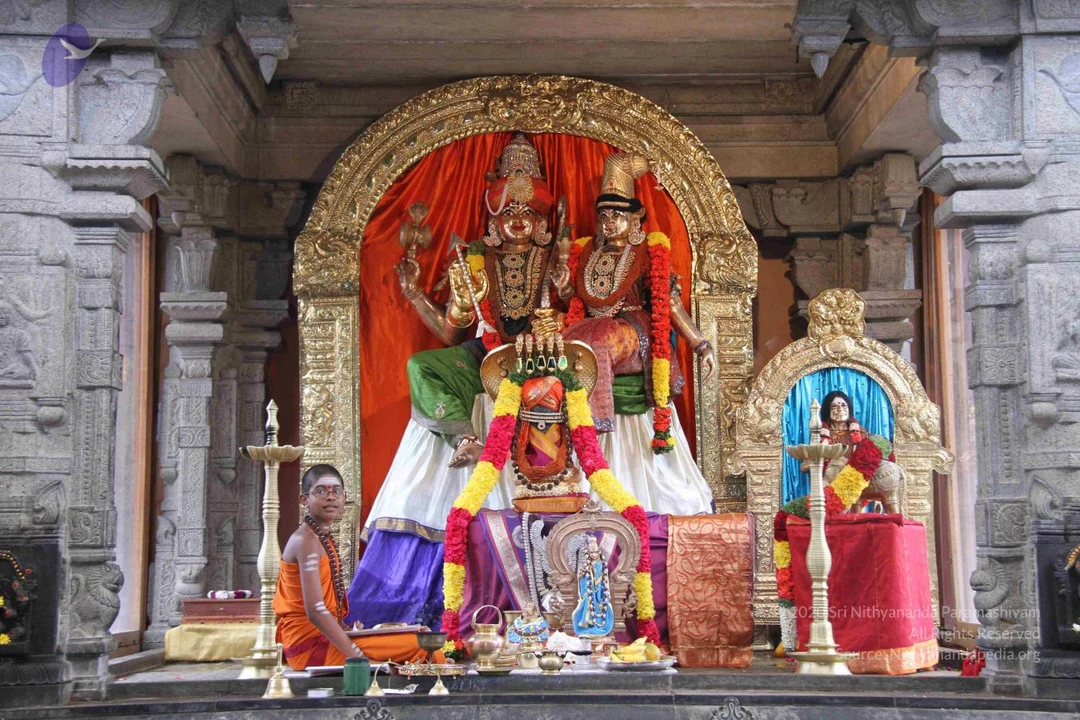
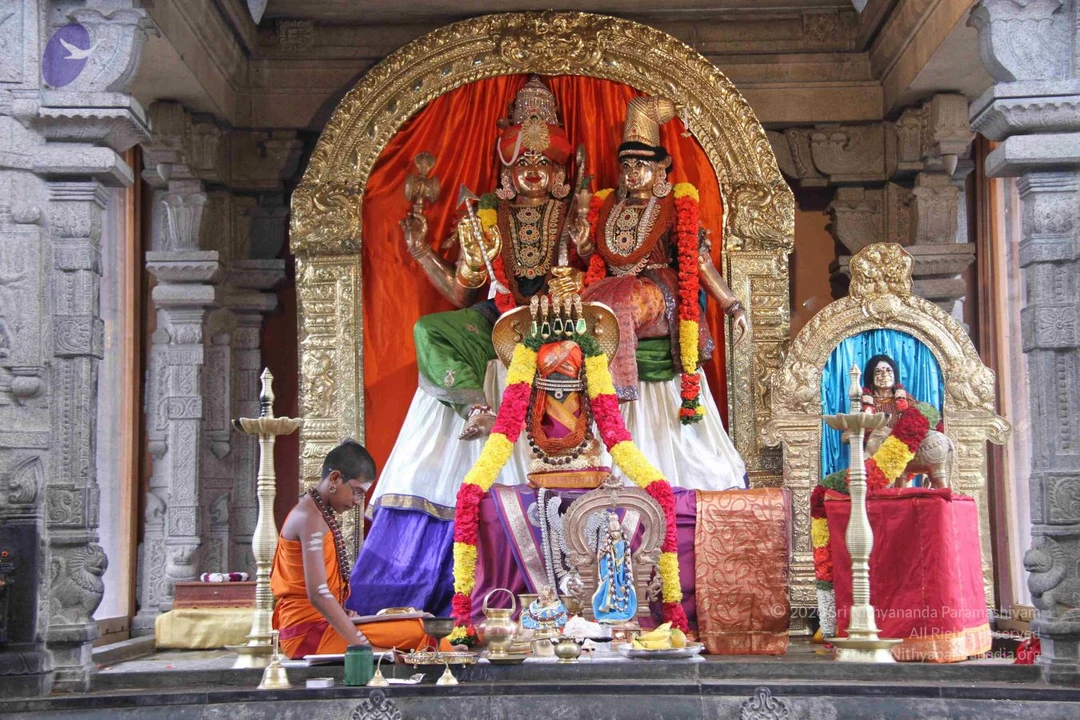
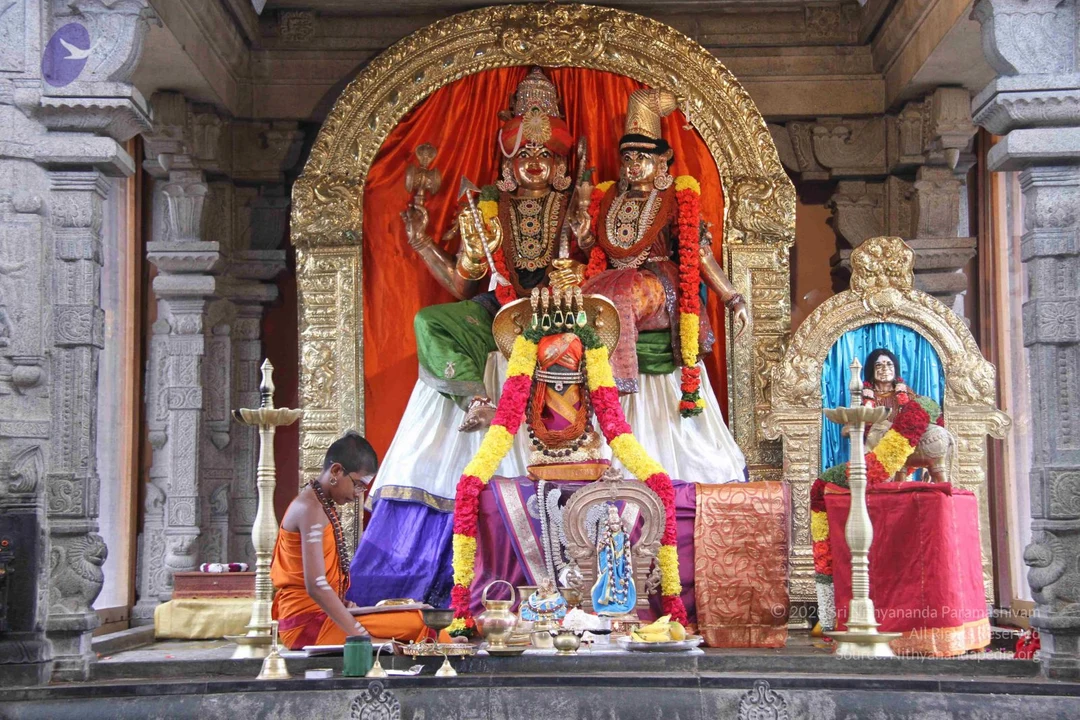
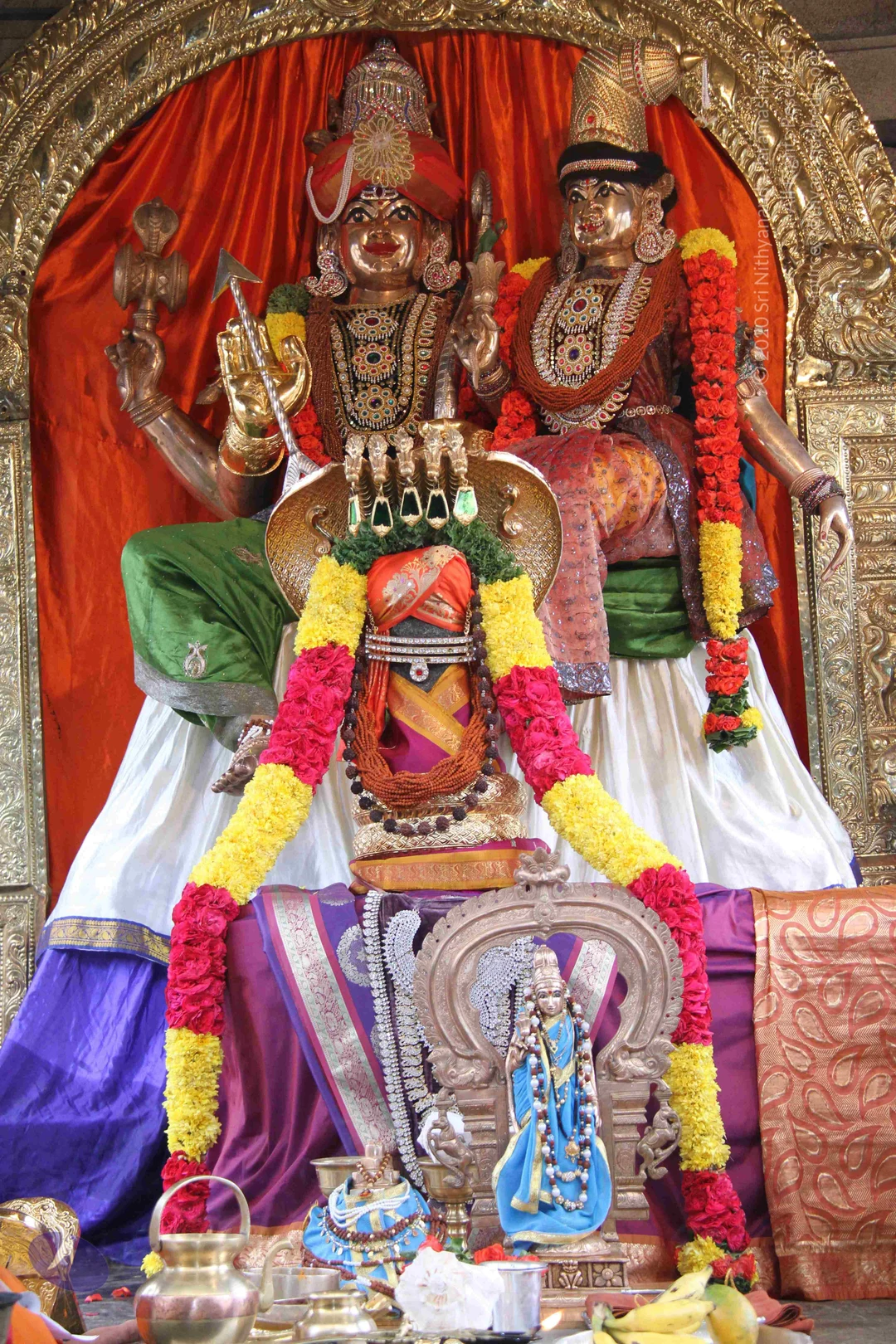
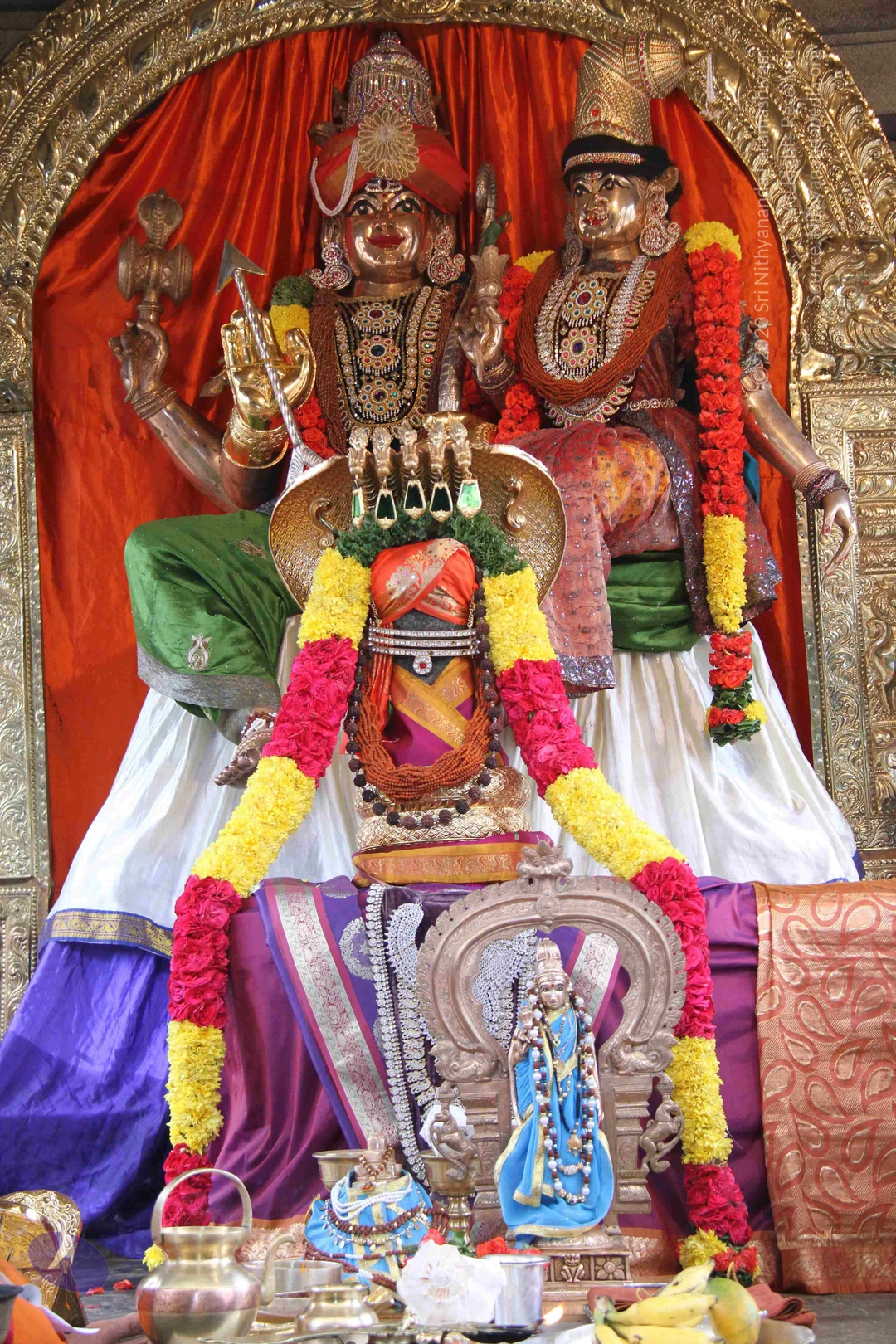
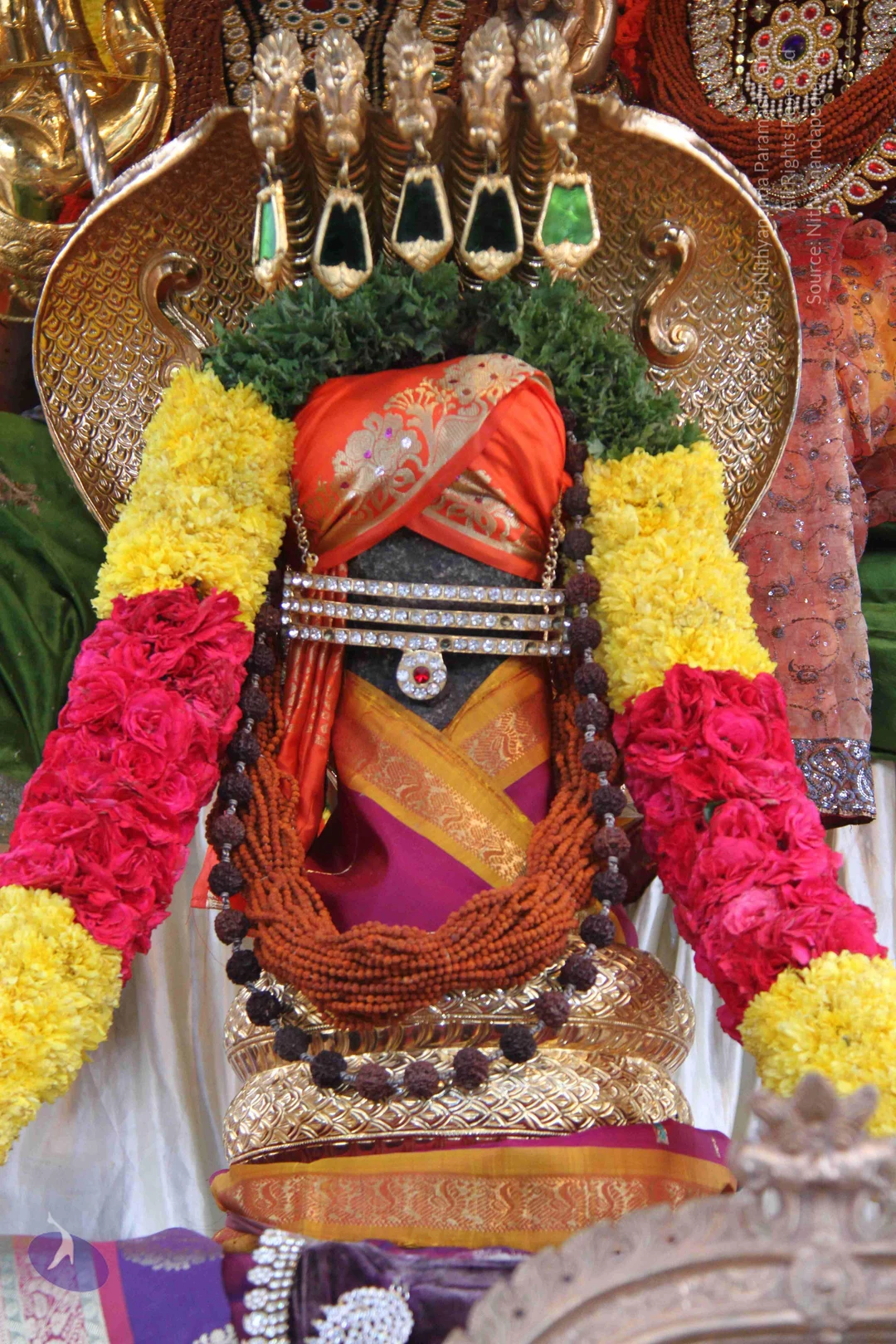
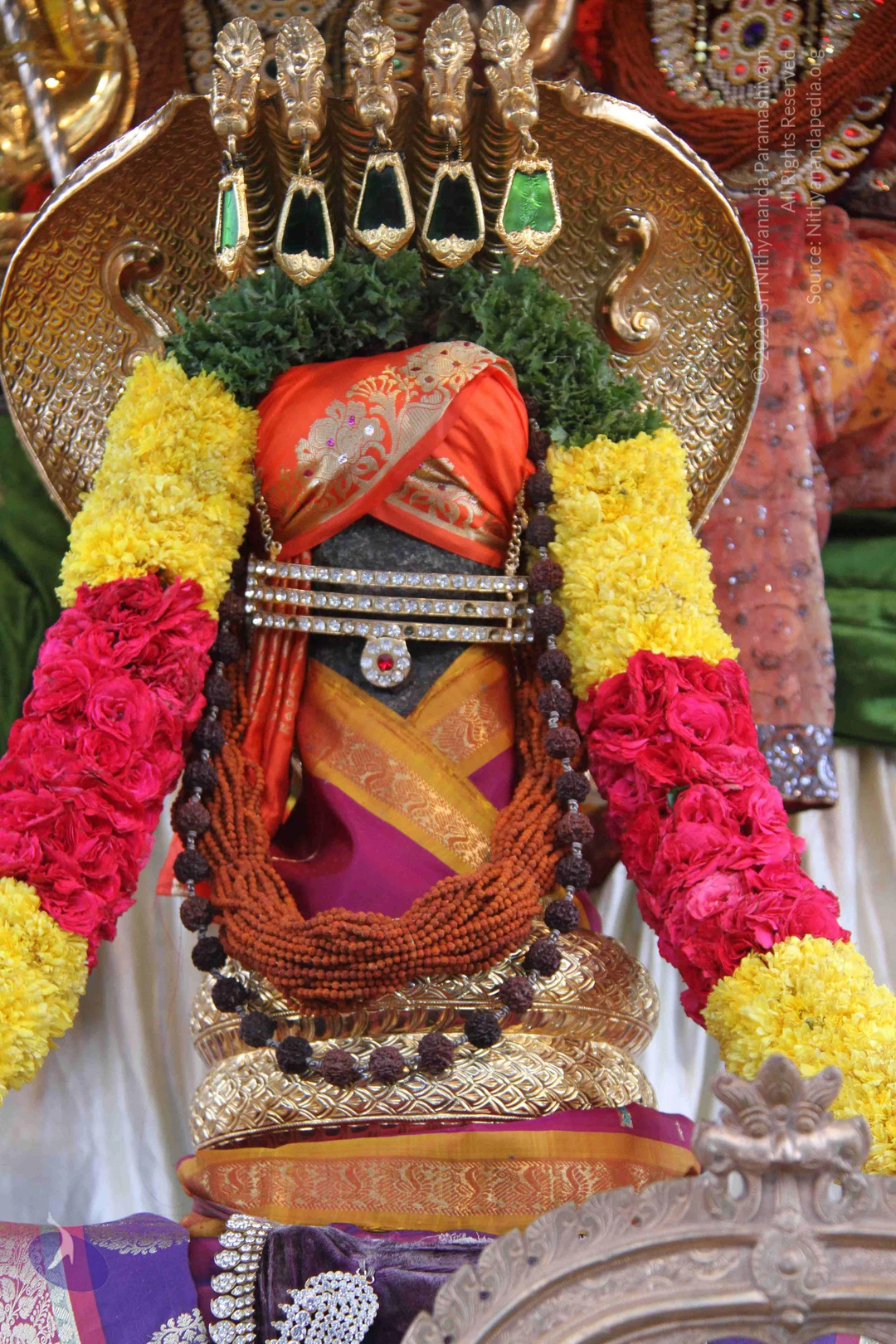
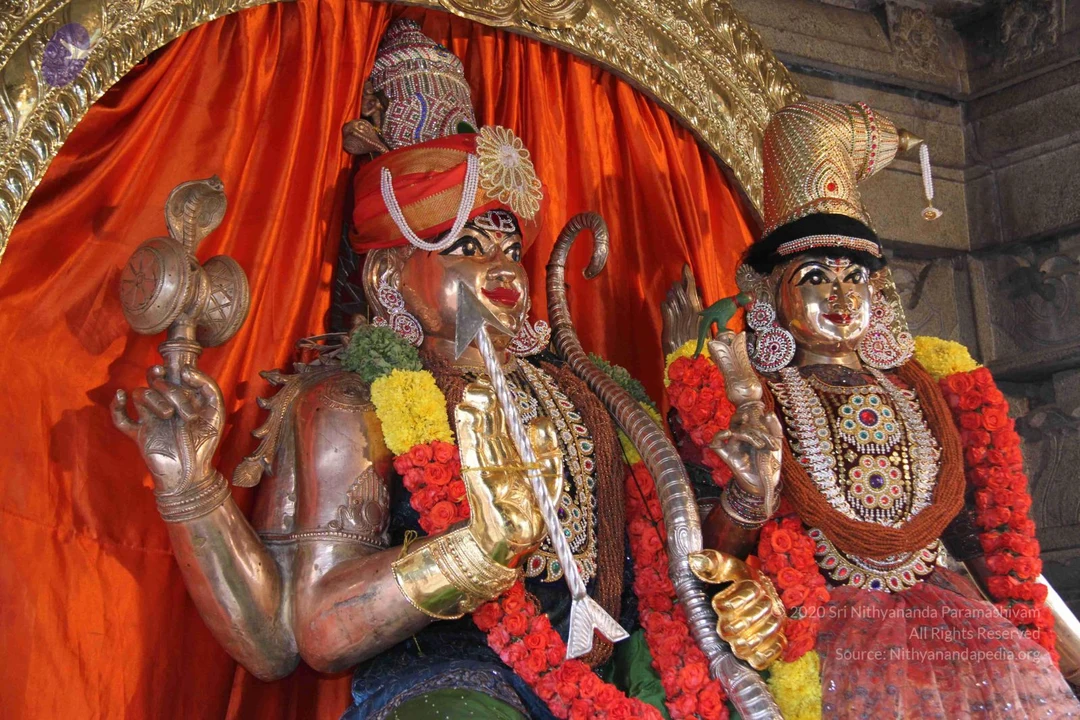
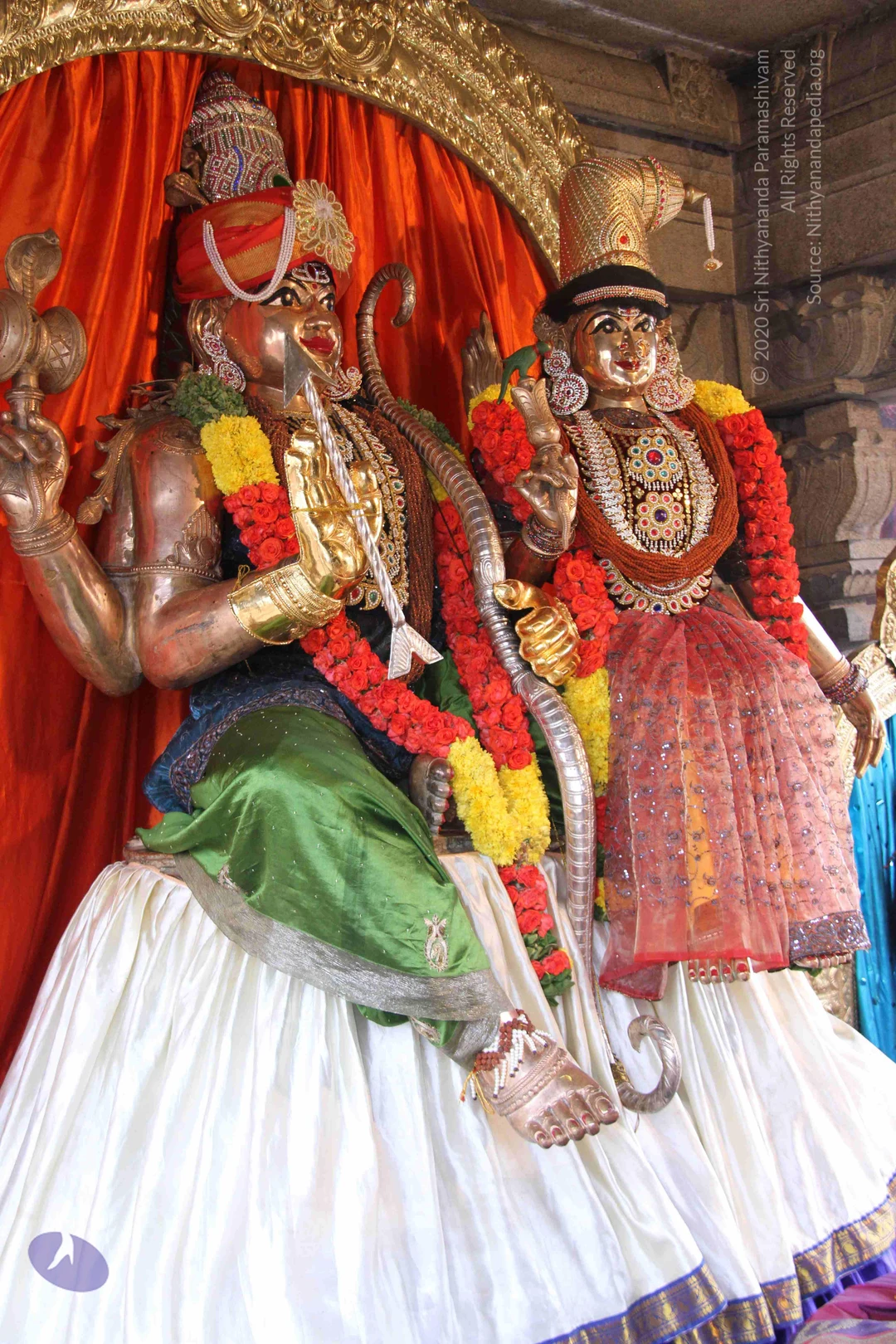
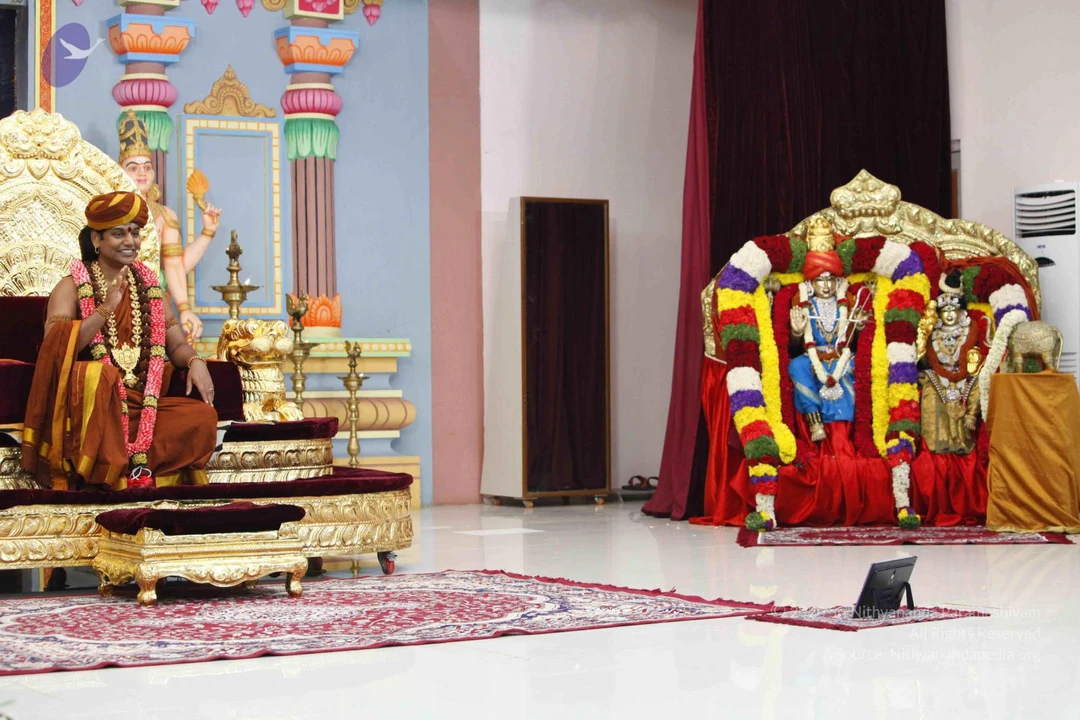
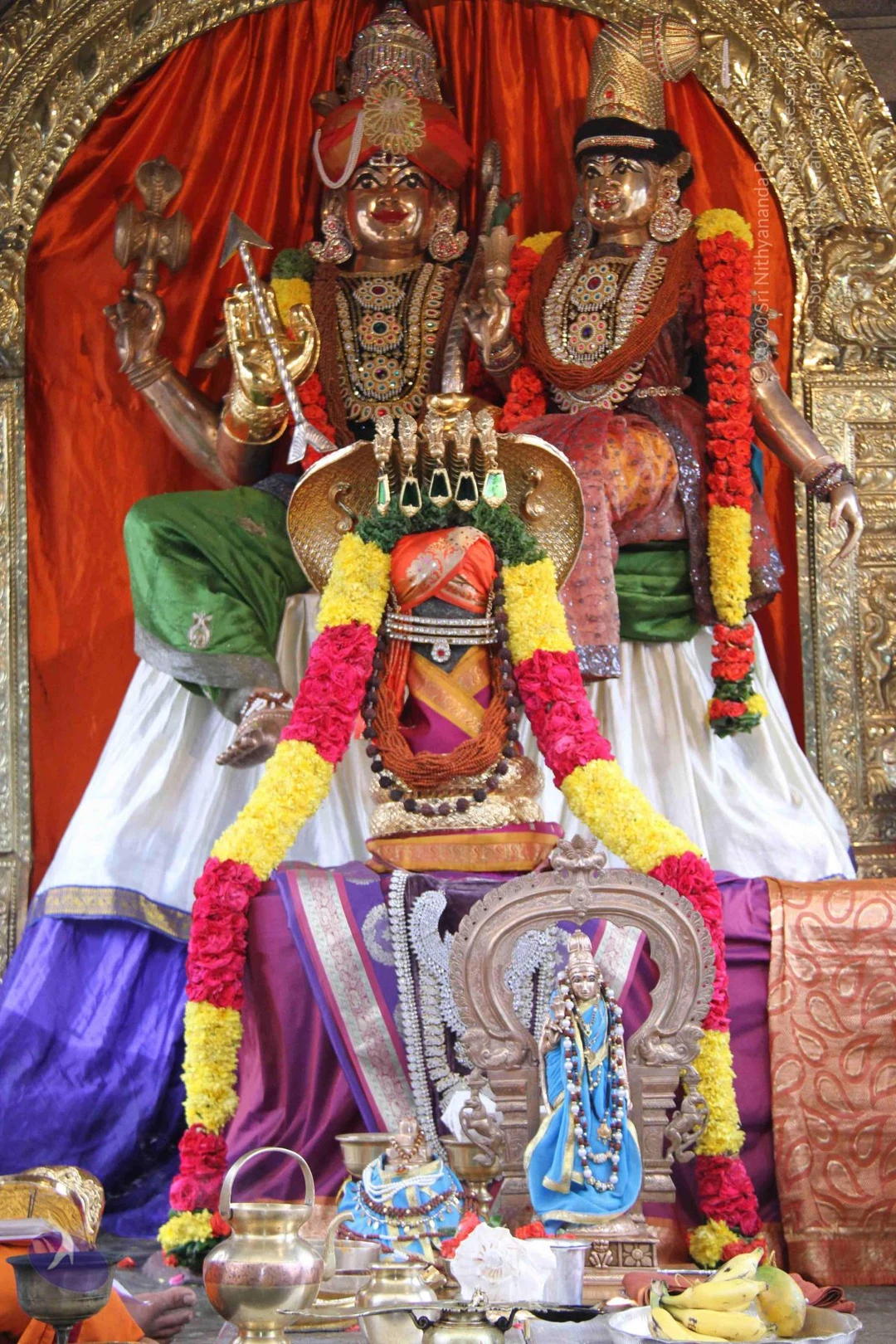
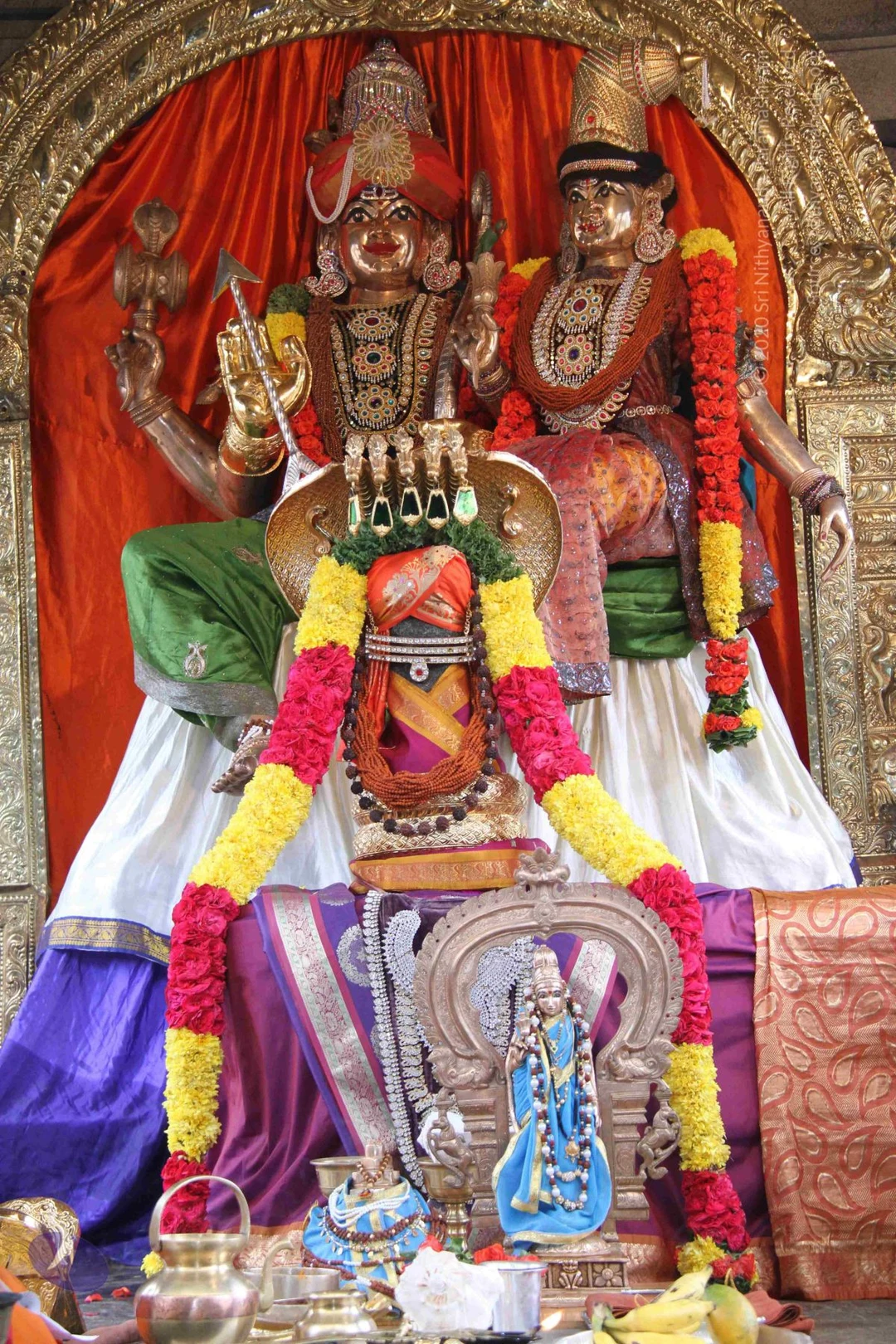
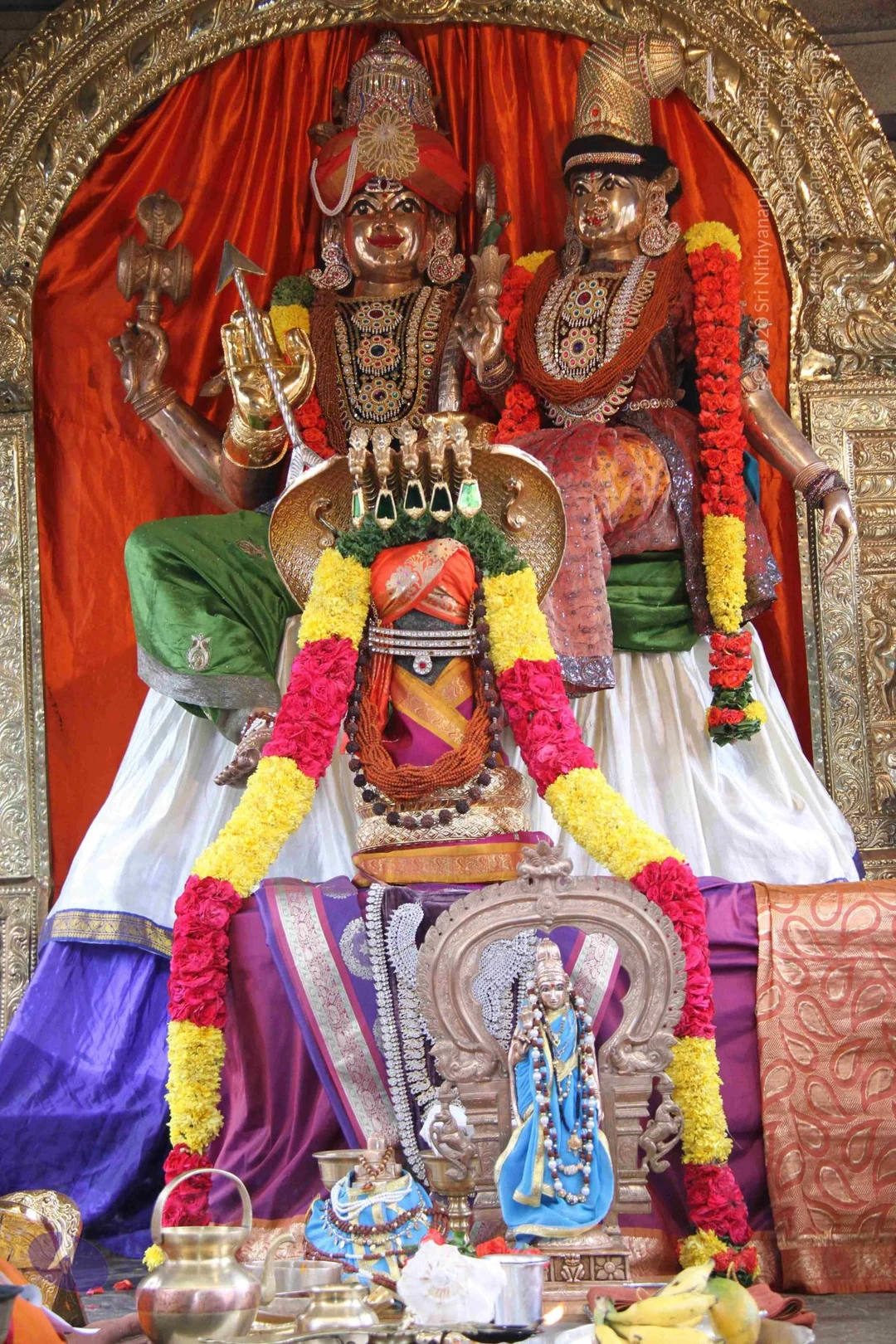
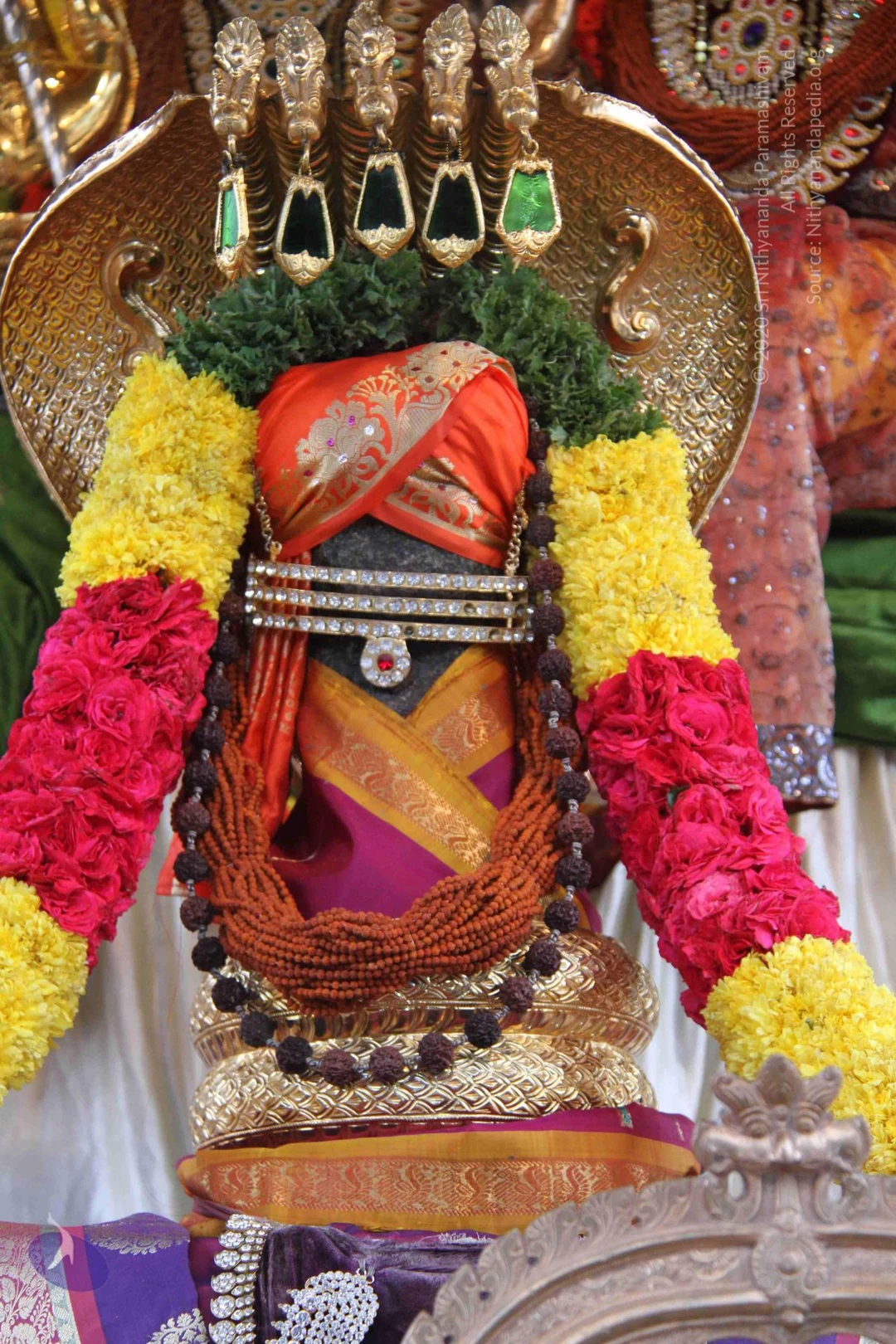
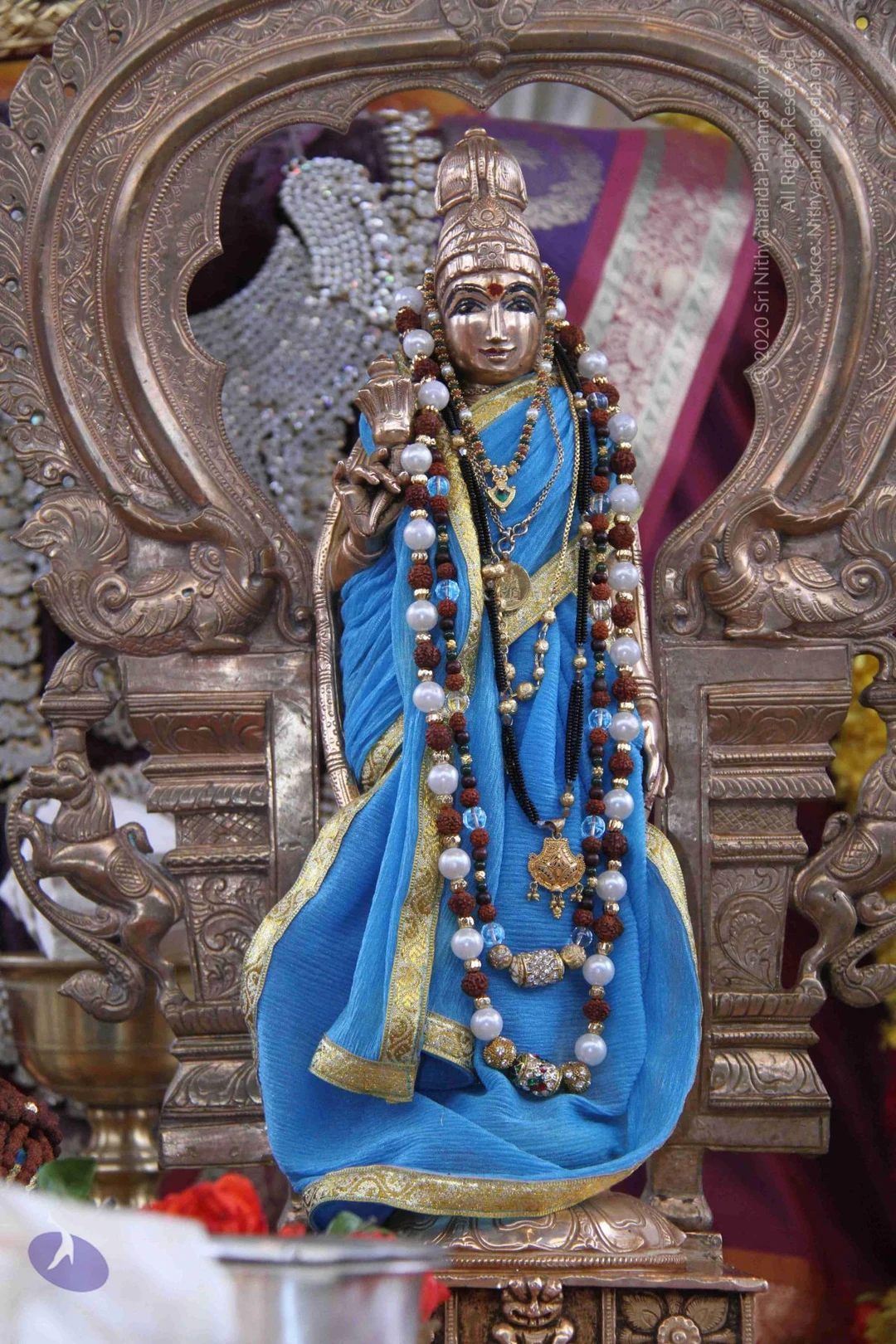
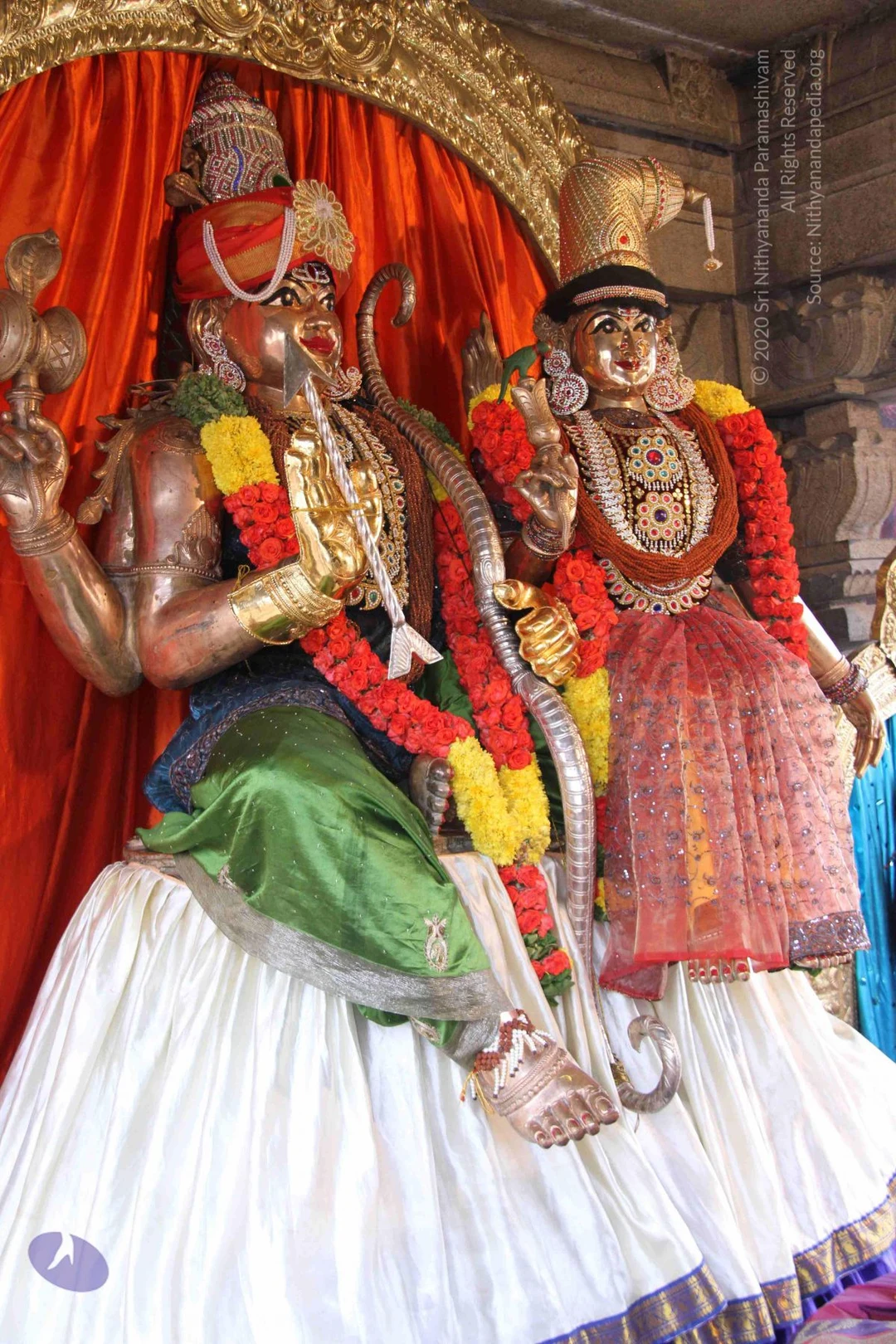
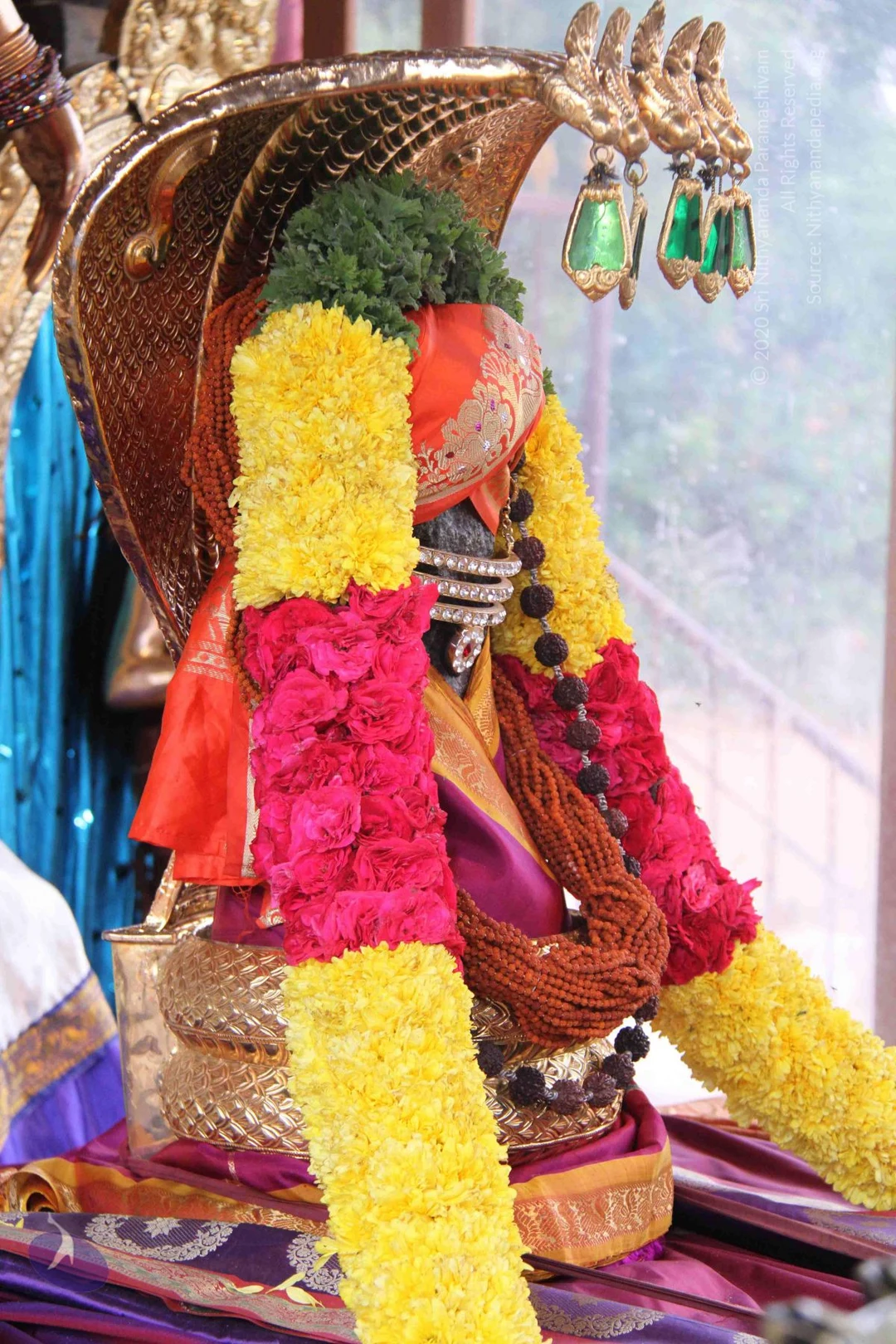
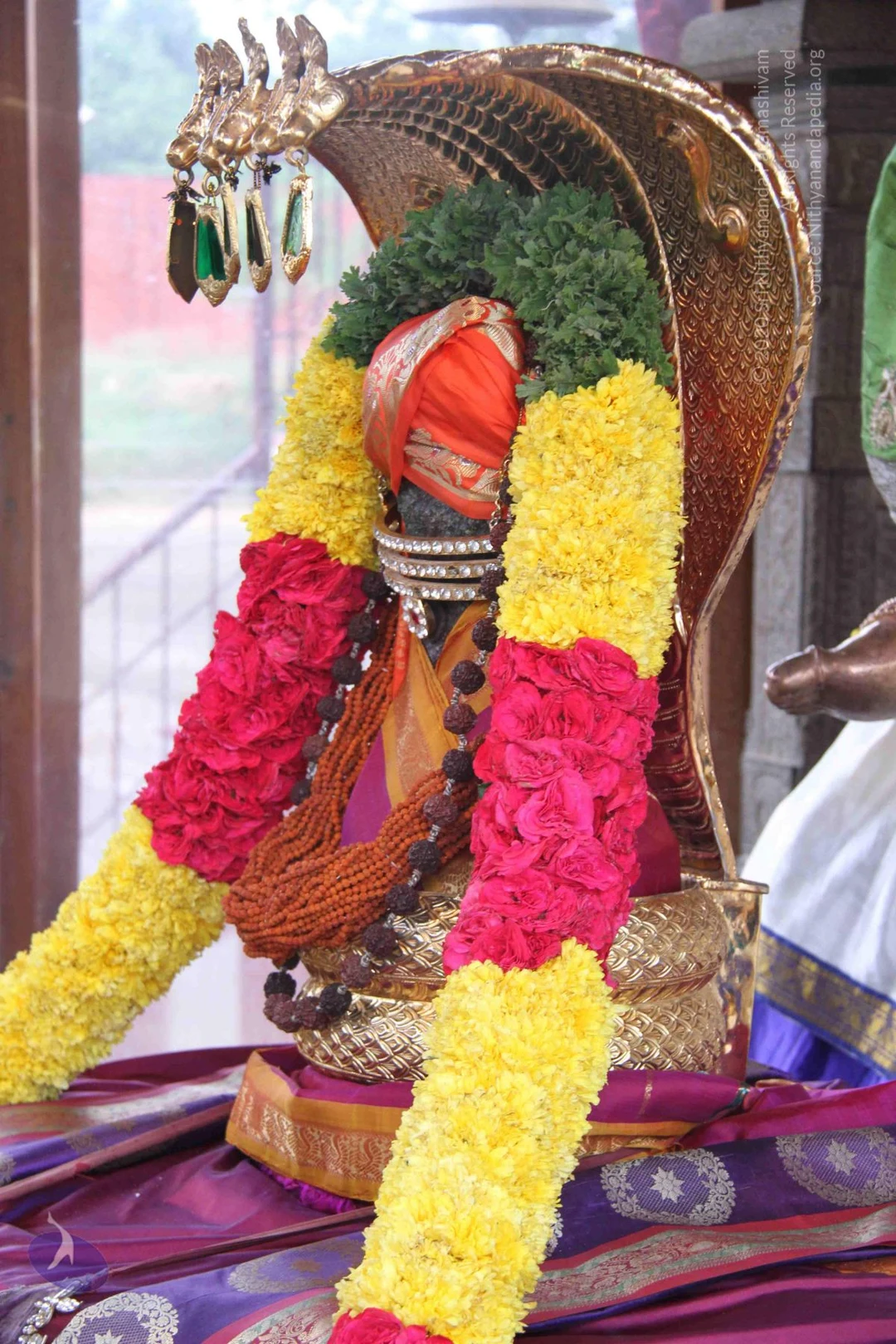
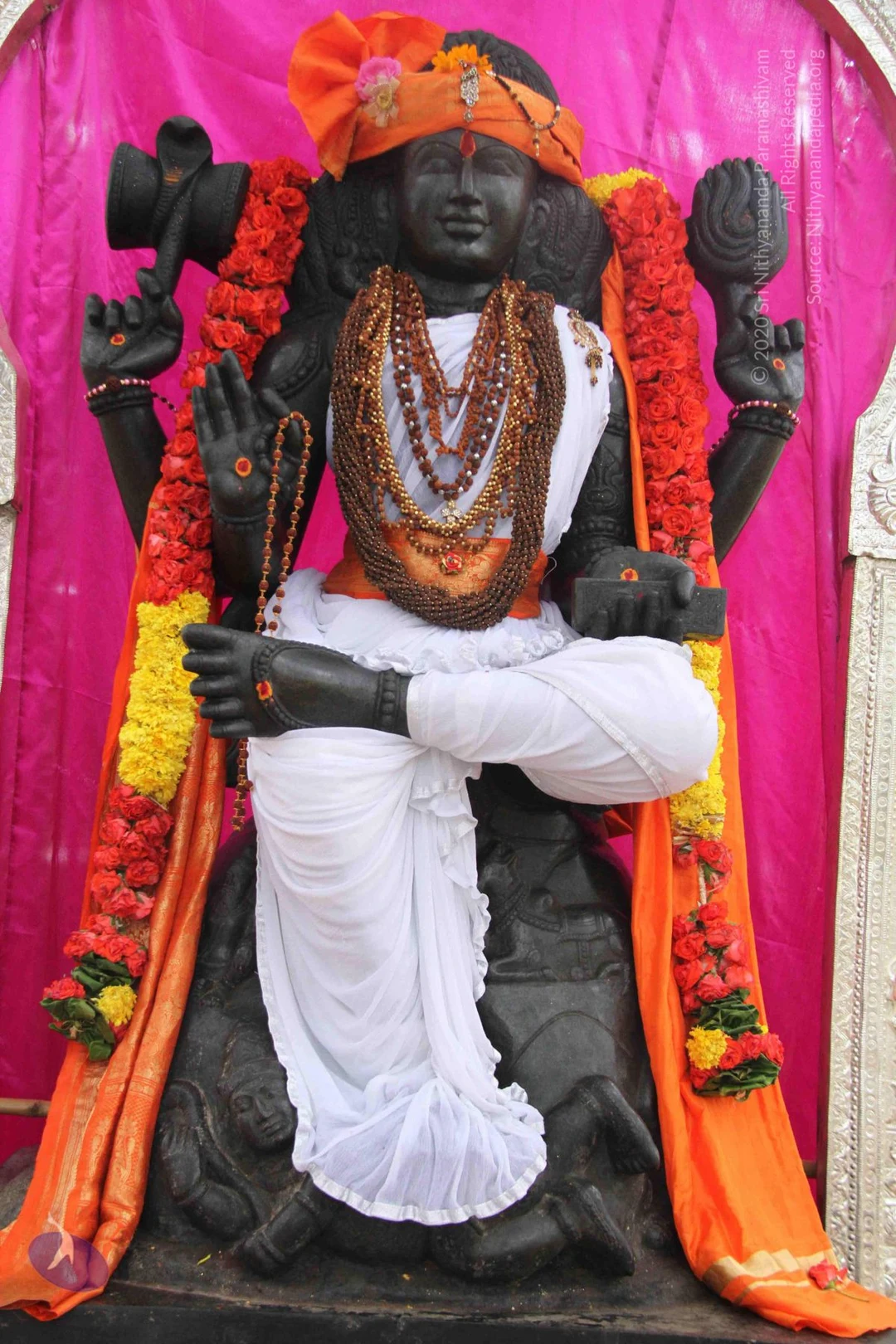
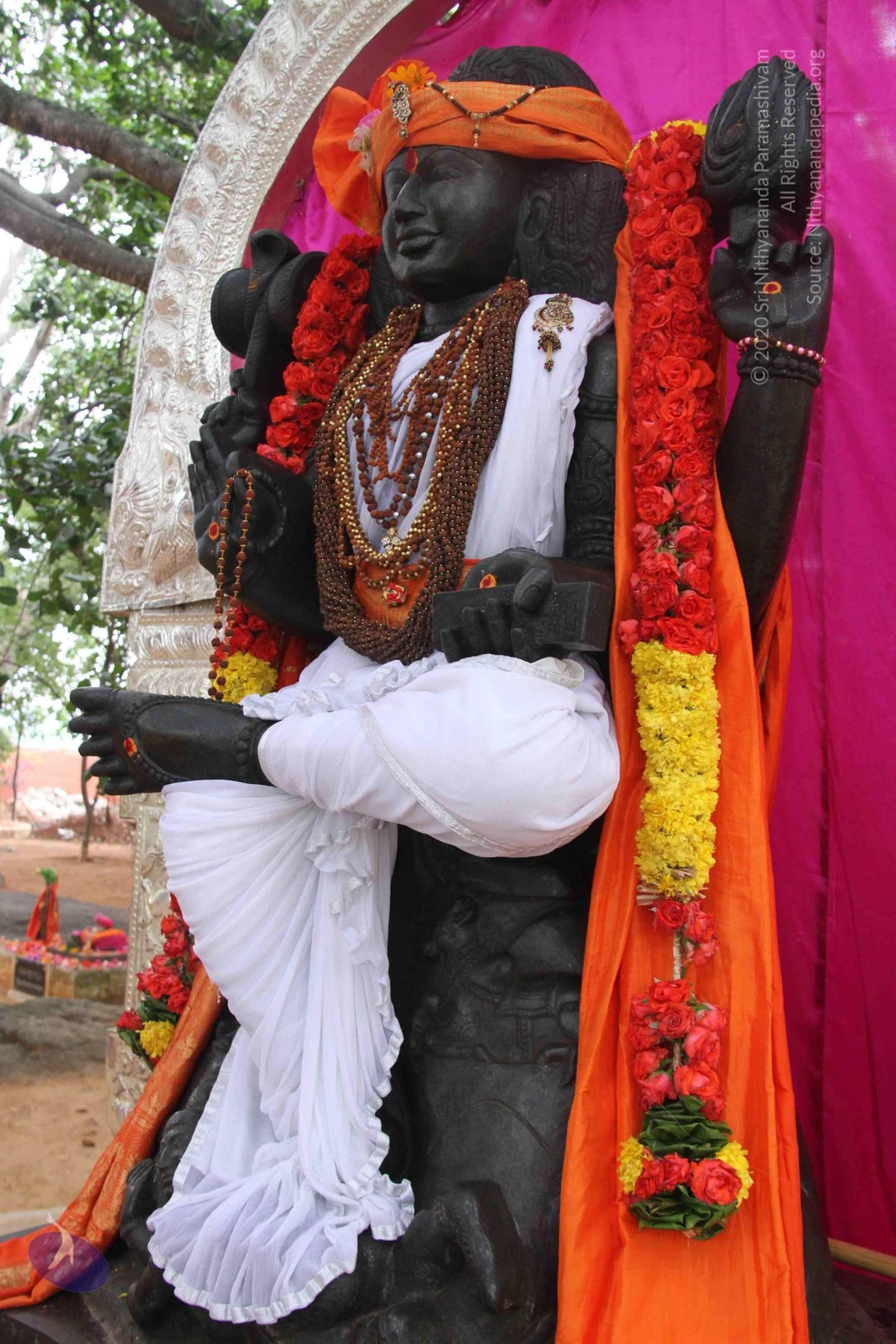
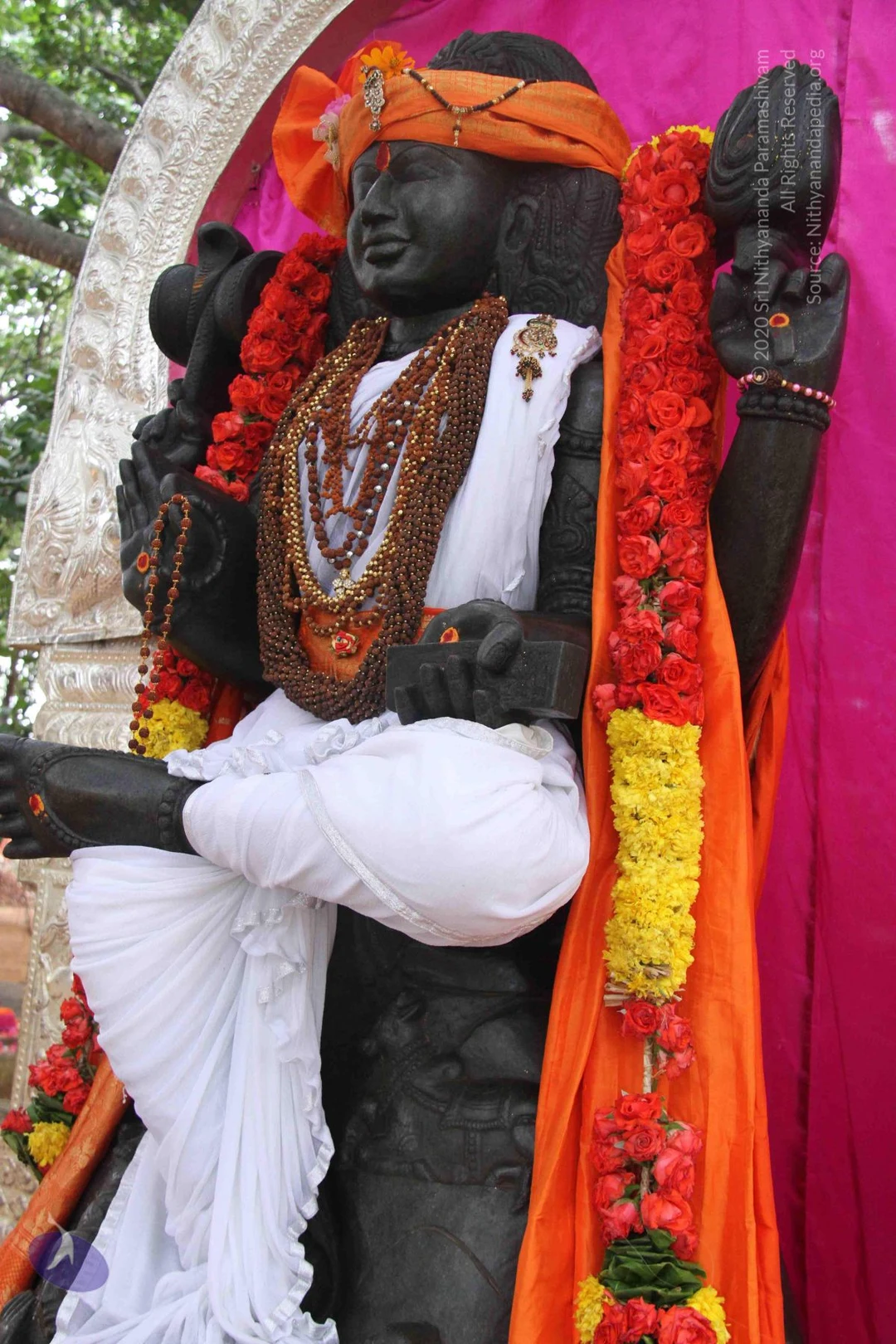
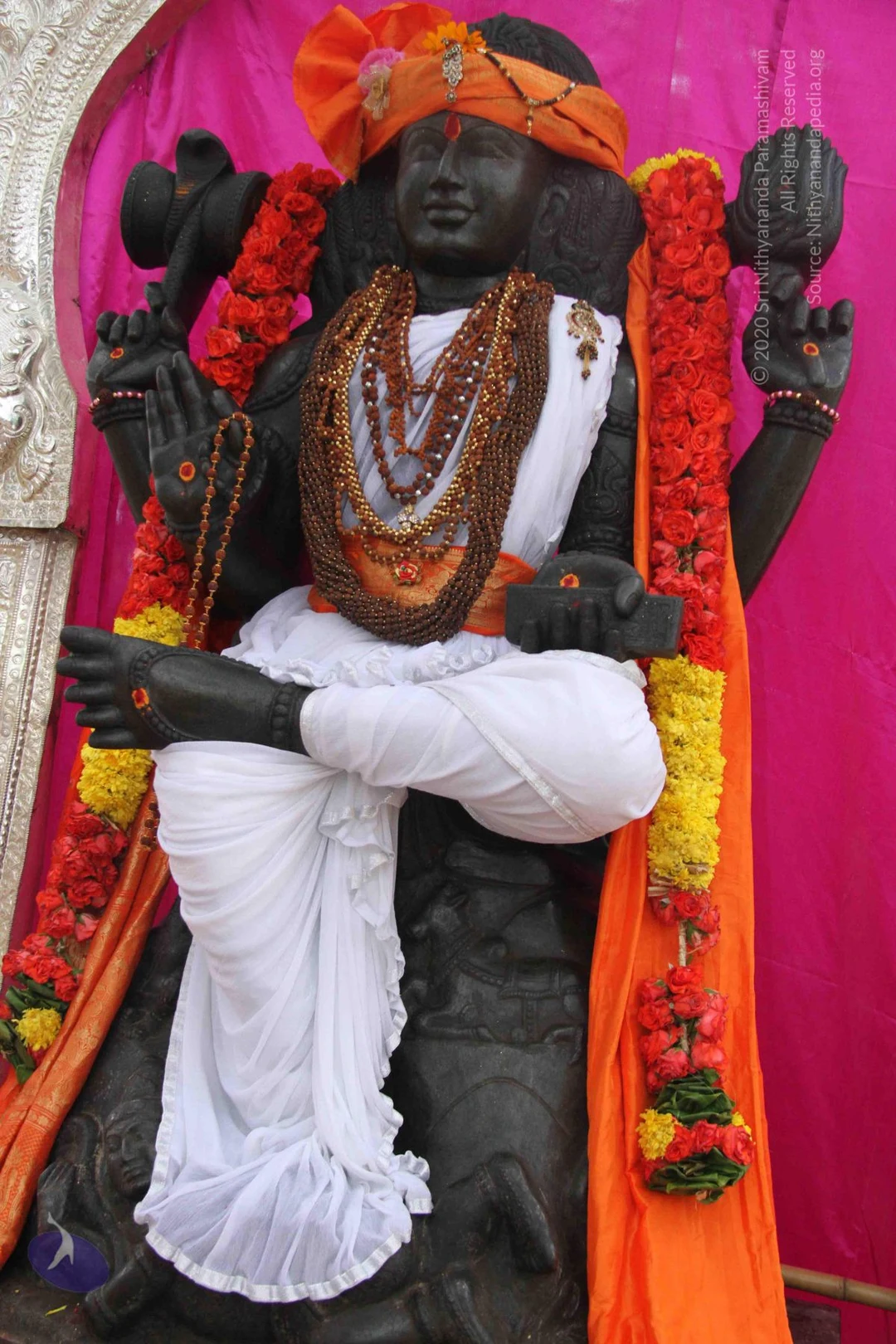
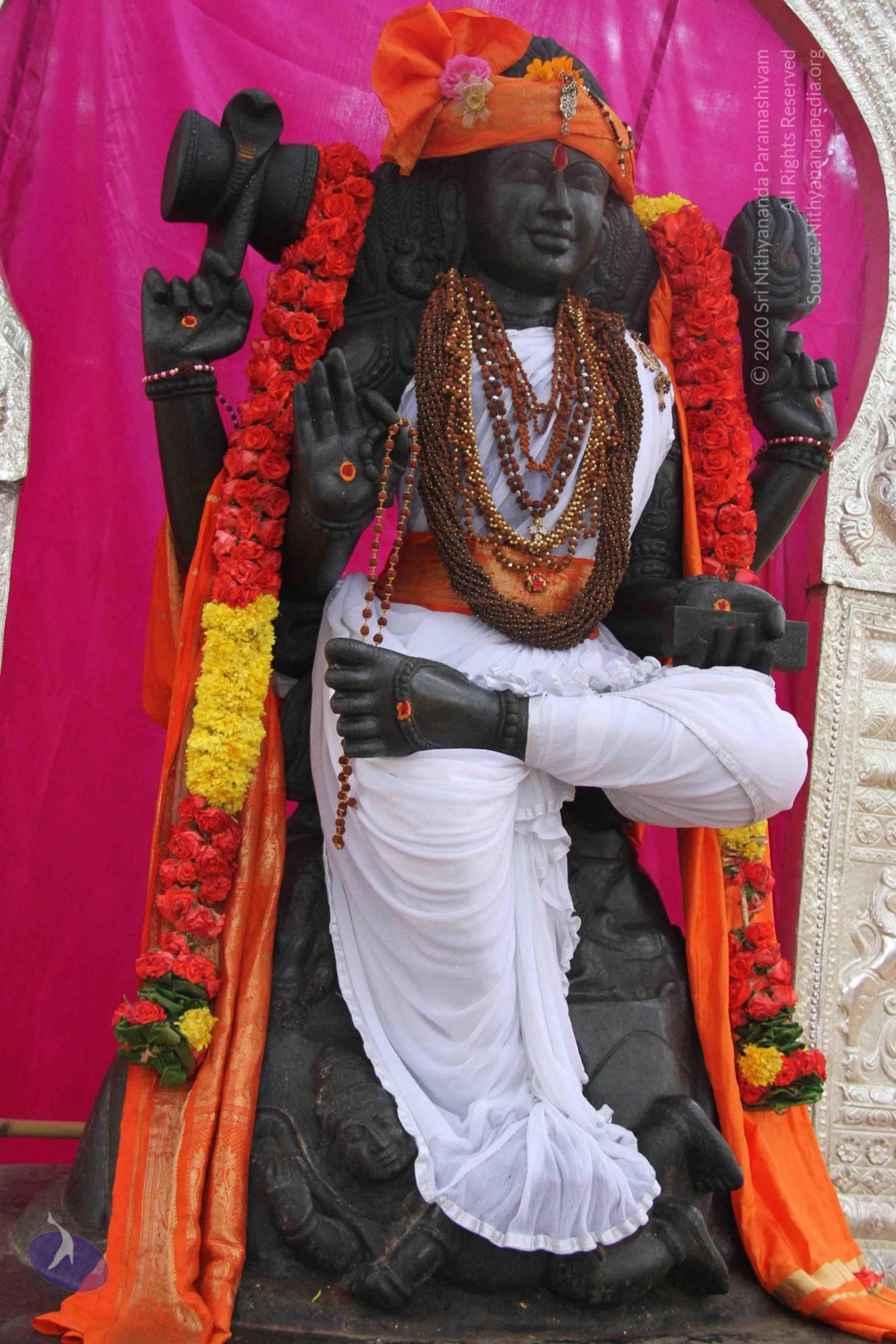
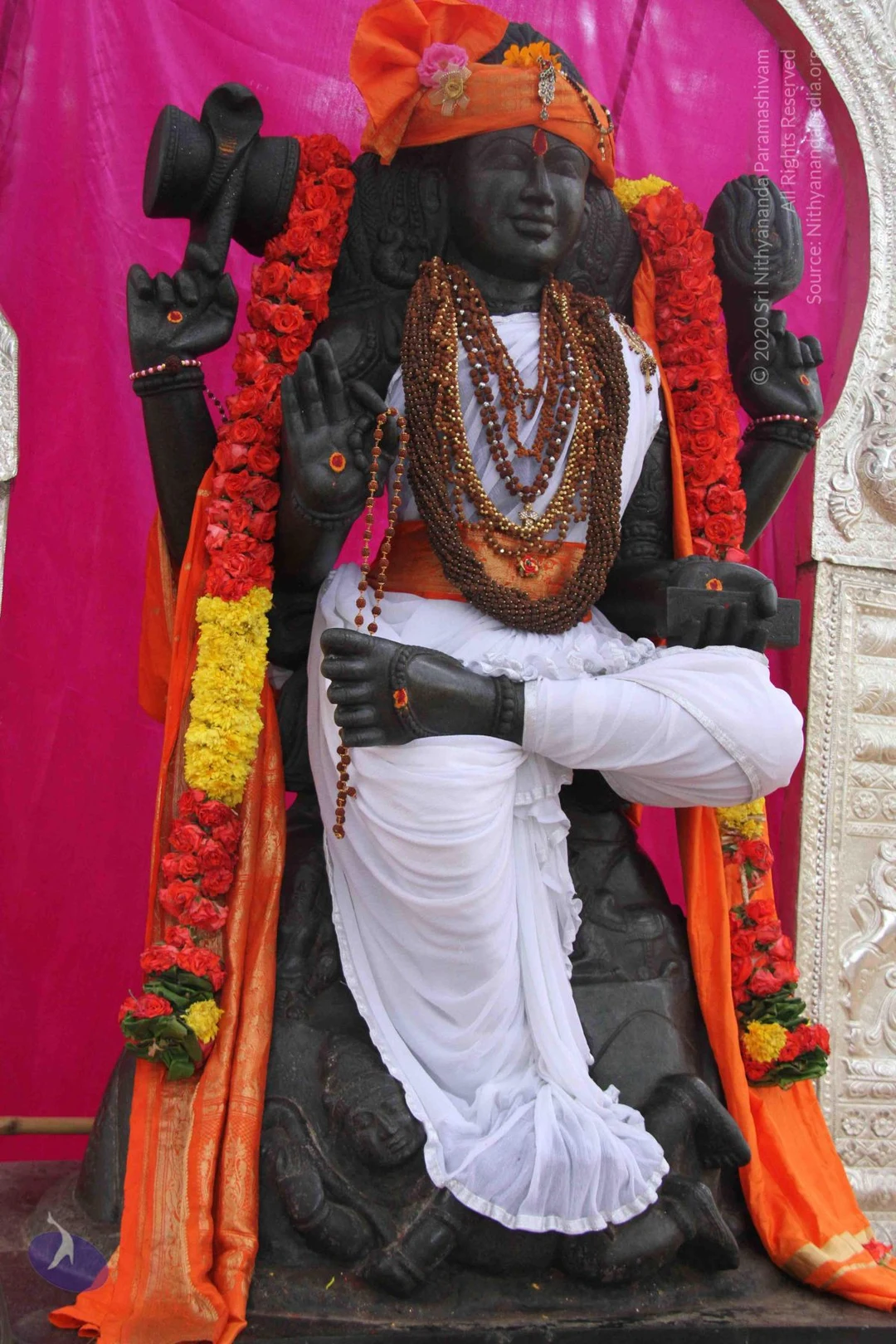
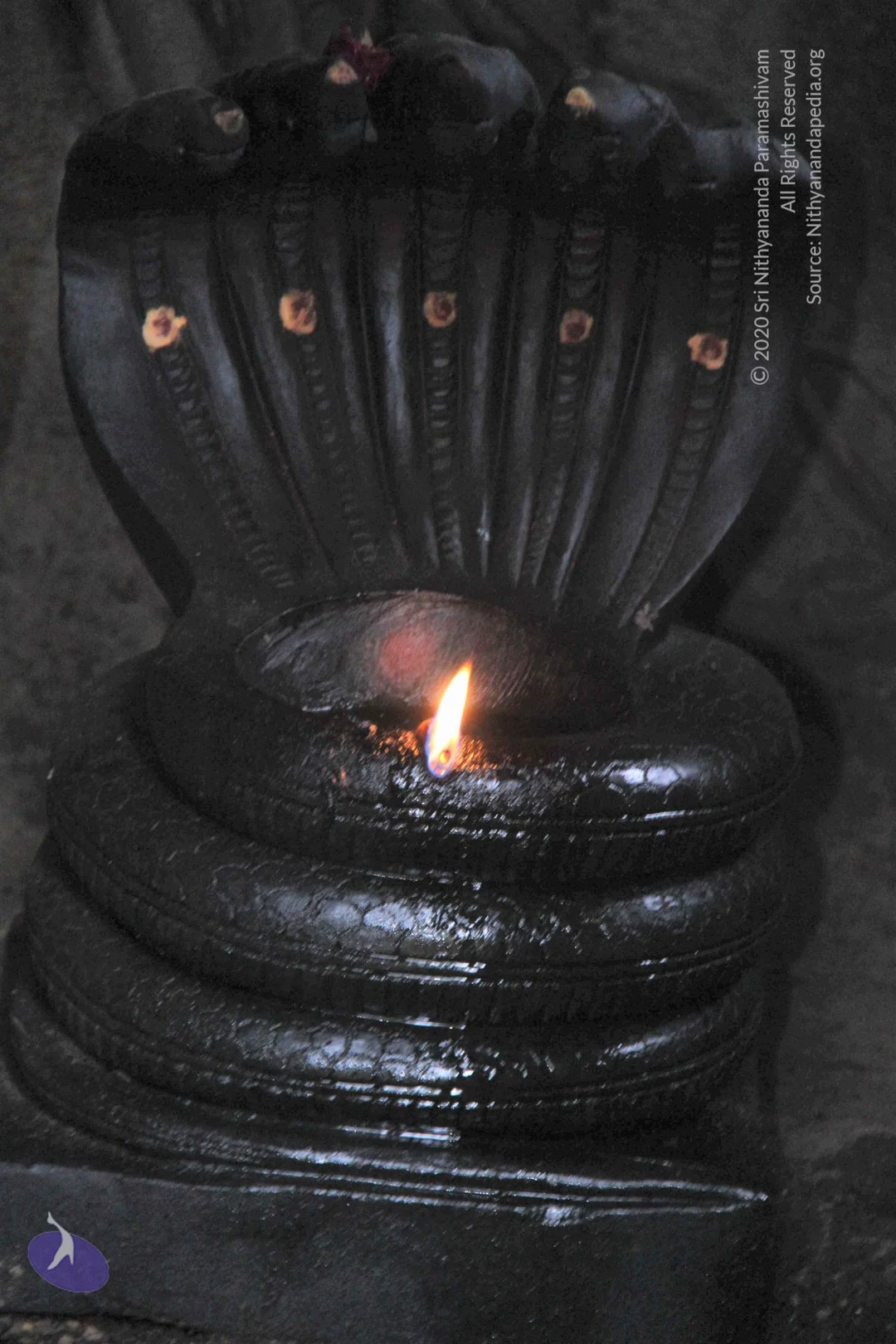
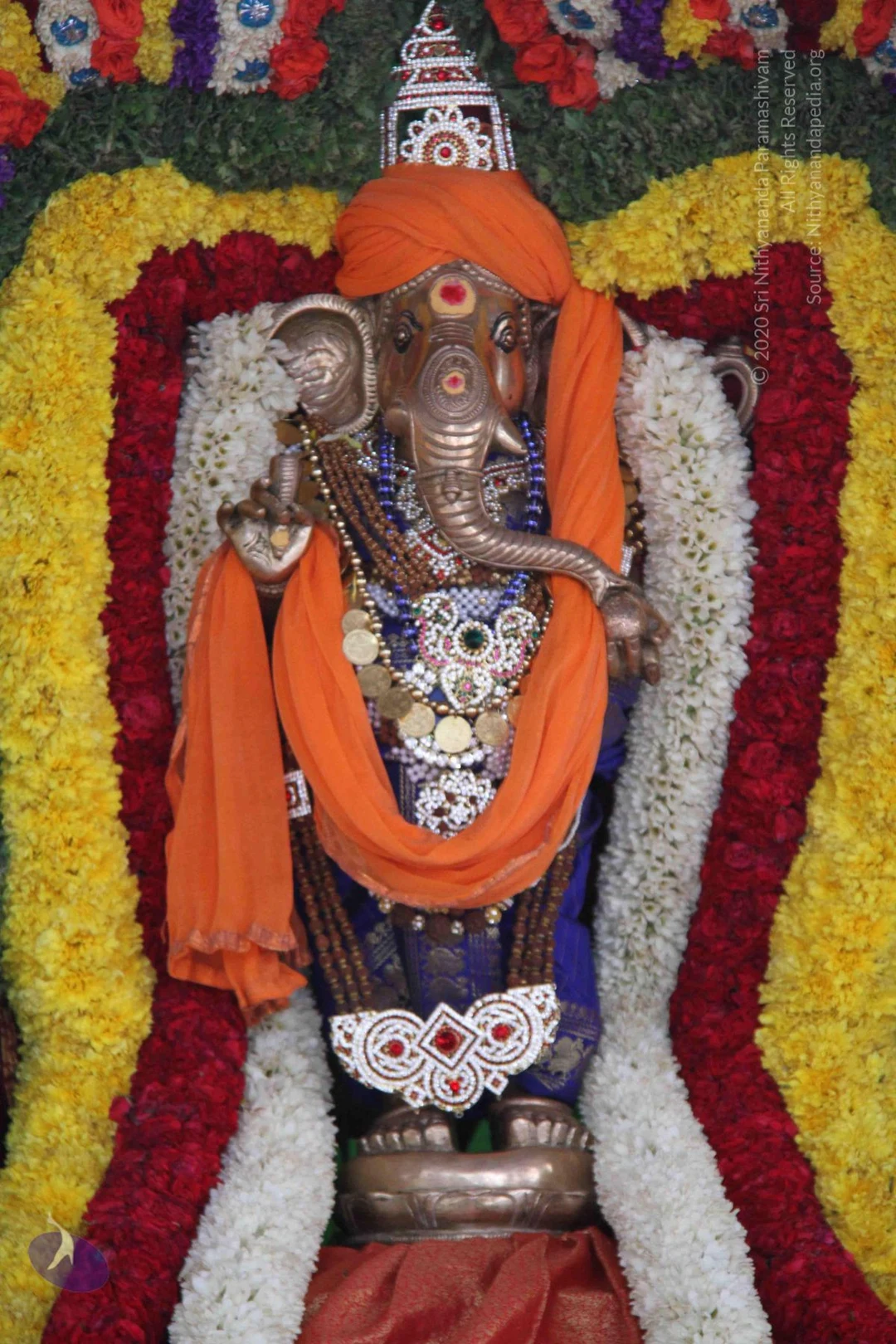
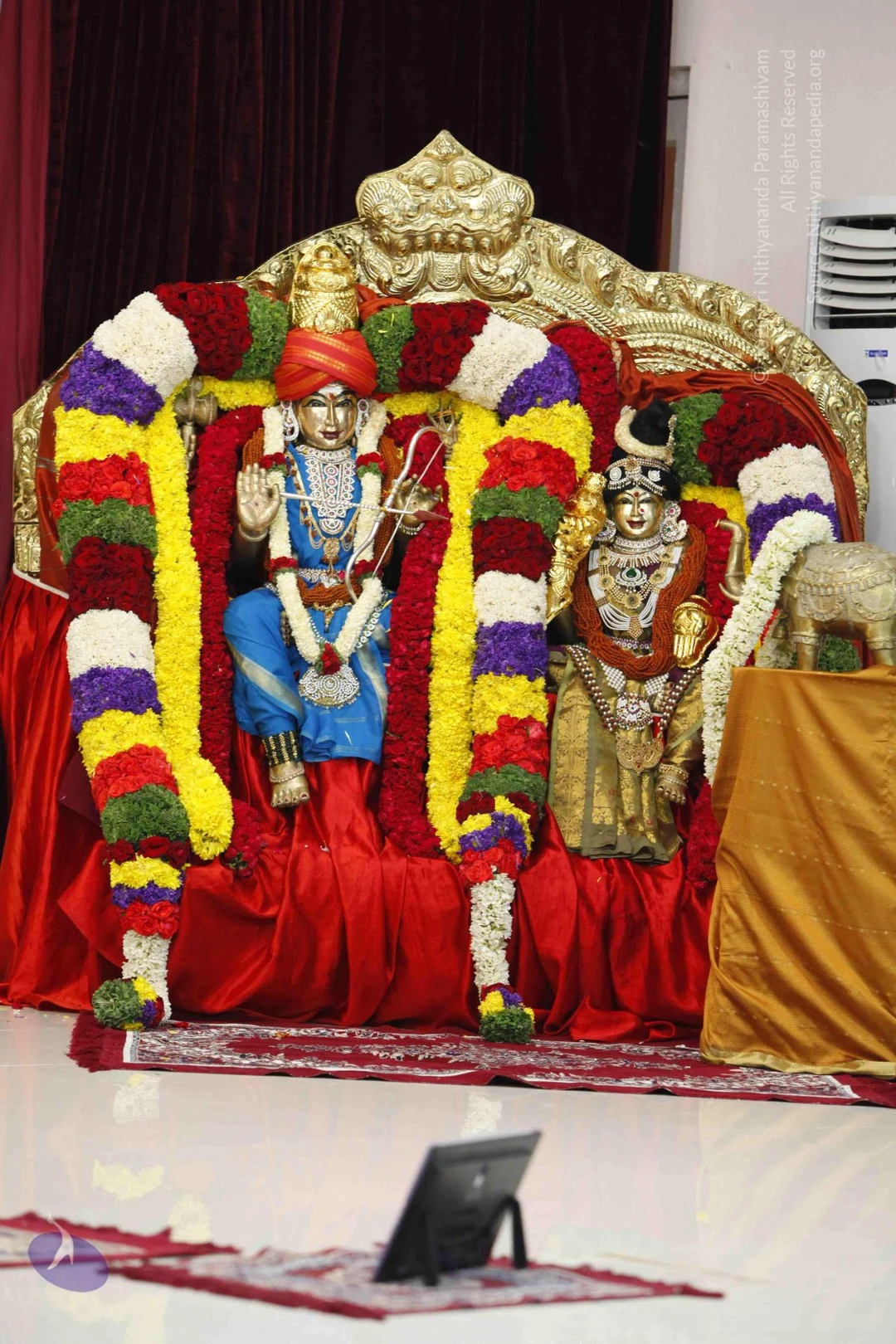
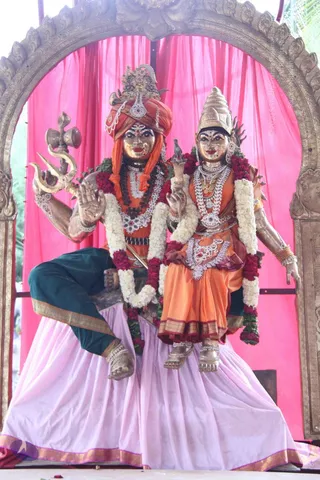
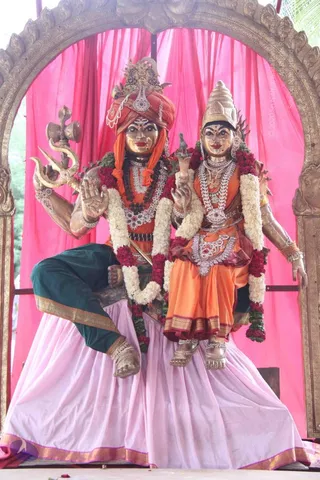
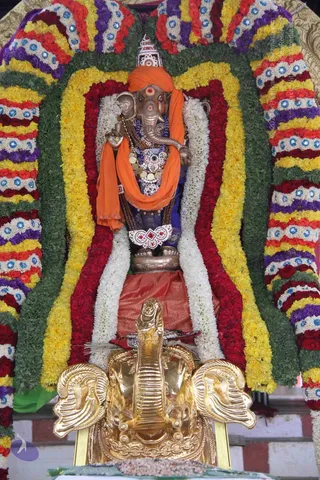
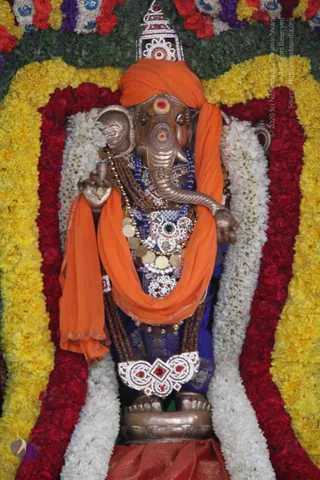
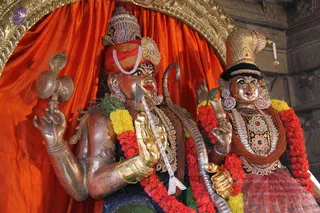
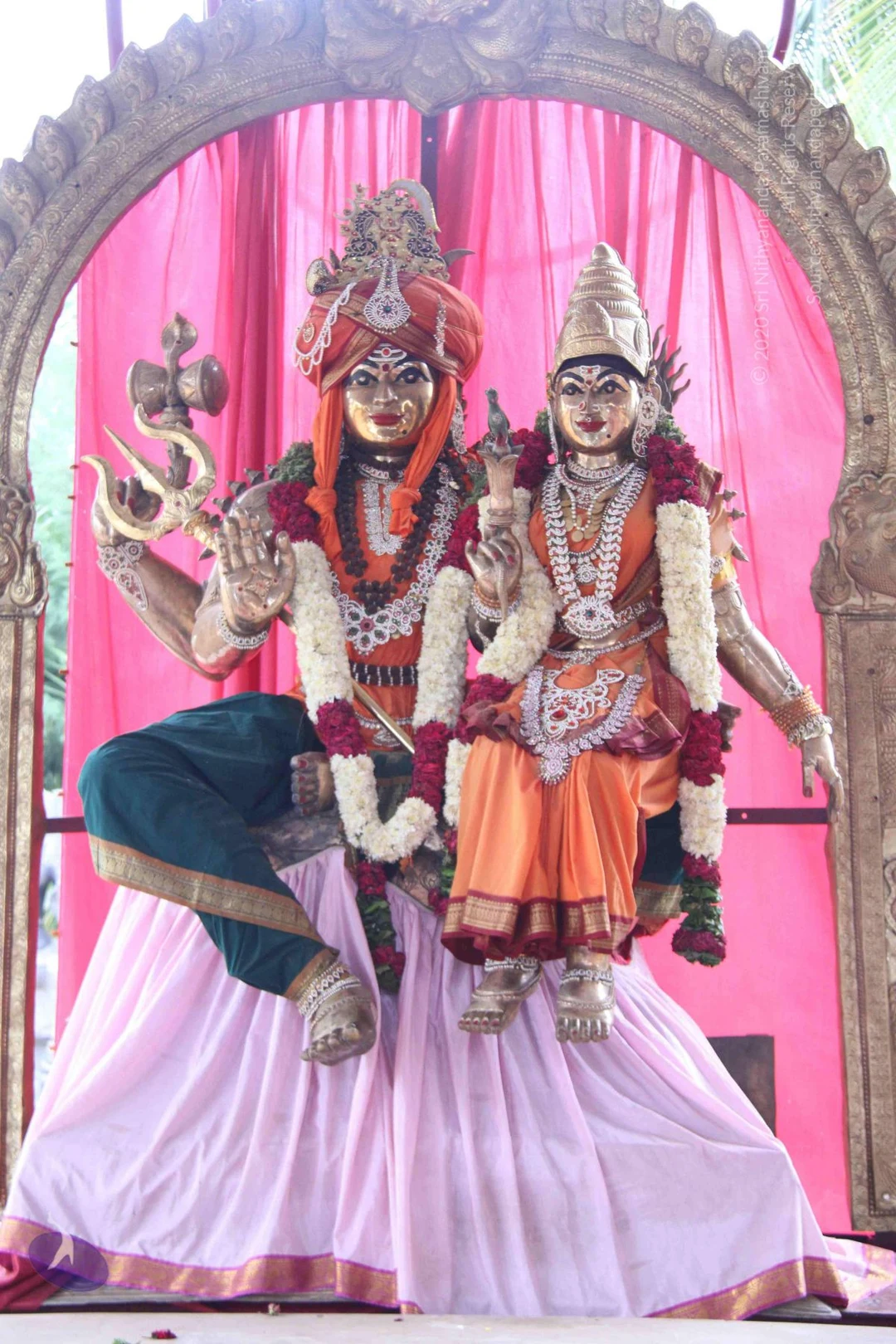
Today, Mahadeva is gracing us with the alankara of ‘Yaanai Eidha Padalam’, means the, ‘vanquishing the devilish rogue elephant’.

The Chola king who was neighbor of the Pandya King in those days; Pandya was practicing Shaivism, Chola was practicing Jainism. Practicing Jainism is not wrong, it’s ok. But somehow he got influenced by the pseudo Jain priests who were black magicians, and they performed black magic ritual and sent a illusory elephant. Please understand, actual elephant you can kill it easily. They sent a illusory elephant, seeing which all the elephants, army, everything started running. Not a single animal or human-being is ready to attack that elephant, because it is illusory, just like our patterns and incompletions seeing it you run, run, you don’t want to attack. But you don’t understand it is illusory. So, the devilish illusory elephant entered the Pandya’s army and the whole Pandya’s army ran away.

And Mahadeva has promised all the three he will take care, all the three seats he created – one, the Seat of the Kingdom; other the Seat of the Tamil Language; then the Sarvagjna Peetha, Madurai Adheenam. He promised whenever degradation happens in any one of these, he himself will come down and restore revive, revive it back to its glory. So as per his promise, see, Mahadeva promises in Arunachala he will always be available to the world in these three form – the deity in the temple, and the hill, and an enlightened being from that place. And same way, Mahadeva also promised whenever there is a degradation in these three seats, and you also need to know, whether fortunately or unfortunately, in the course of time, all these three seats have been merged into one, and only one is alive, that is Sarvagjna Peetha. So that takes the responsibility of ruling, teaching, and keeping the language alive, all the three. So, Mahadeva has committed whenever there is any problem, he himself will assume the human form and revive it.

4:10

As per his promise, Mahadeva appeared and, as a dark-skinned hunter. The exact description is the modern-day translation, the modern-day you call ‘tall, dark, handsome’. That is the exact word with which the poet is describing how the Mahadeva appeared as a hunter with bow and arrows. And just by the one arrow, the elephant dies. Because it is not elephant actually; it is a delusion. It is a delusion. And the story says, Narasimha himself comes and offers, ‘May I be of some seva for you?’ Narasimha himself becomes a arrow and the elephant was killed. That is the way Mahadeva protected the Pandya’s Kingdom. You are seeing that scene only in today’s alankaar.

5:47

Let me enter into today’s subject. Today’s subject for Nithya Satsang: ‘STABILITY’. I will continue, I will continue on Stability.

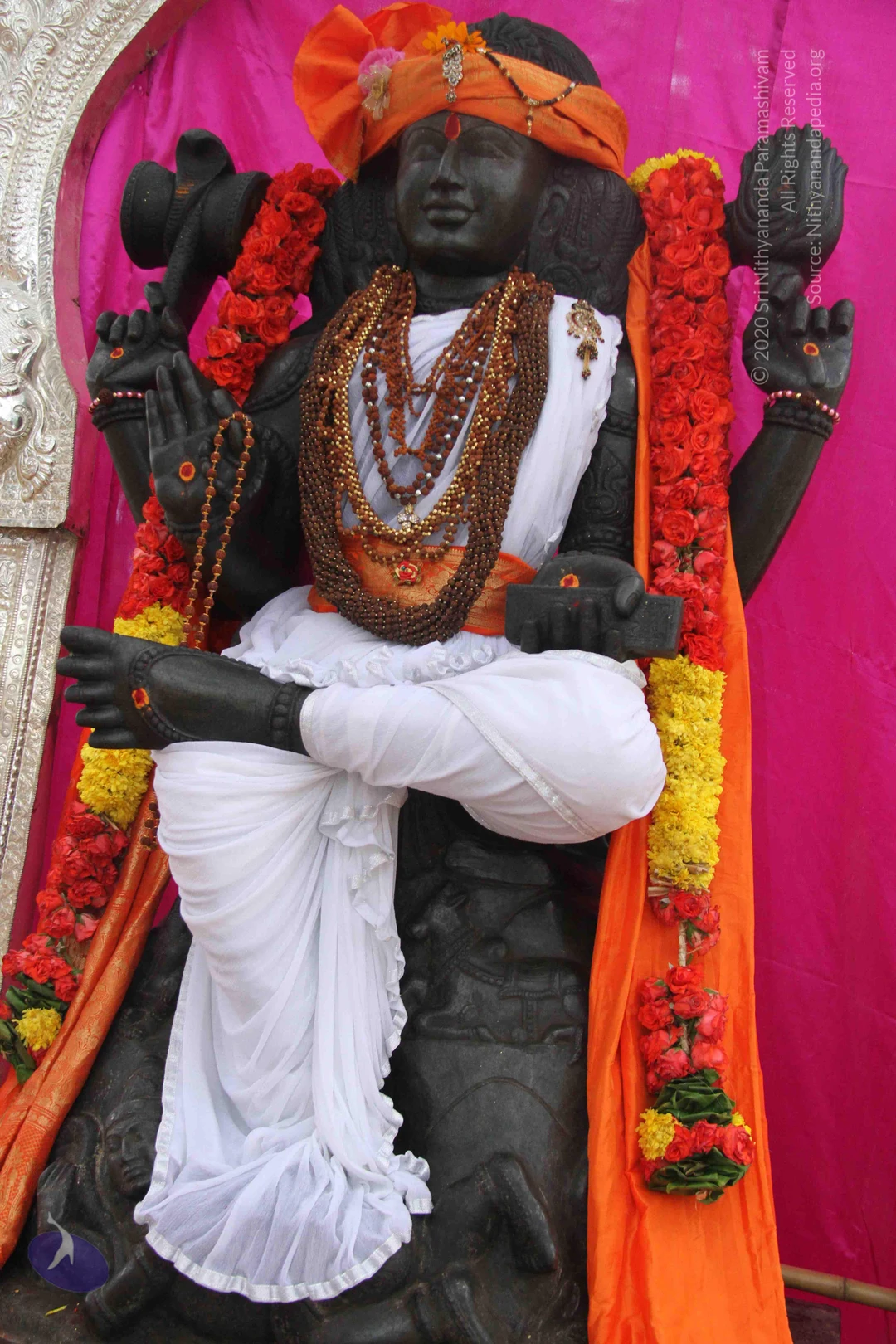
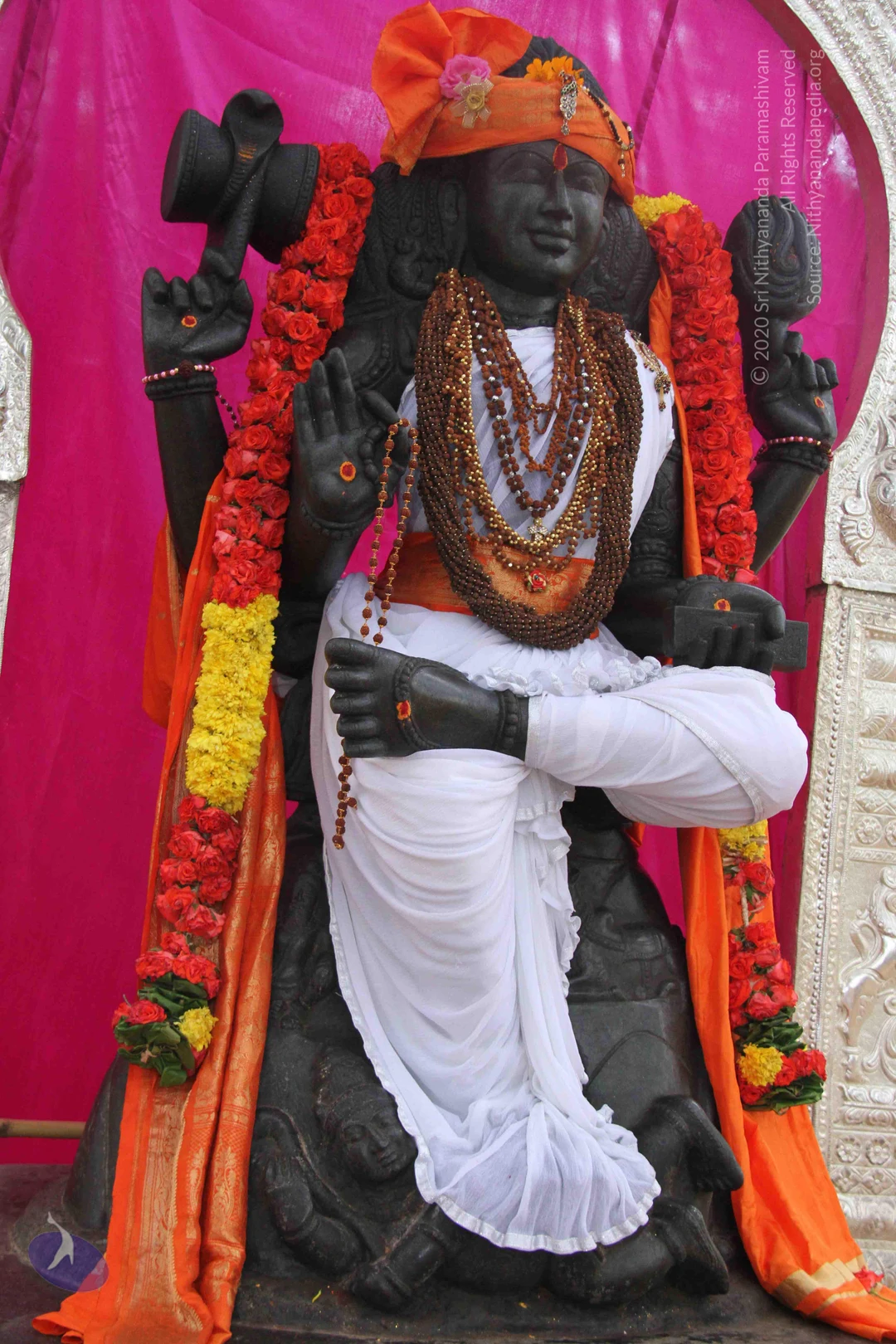
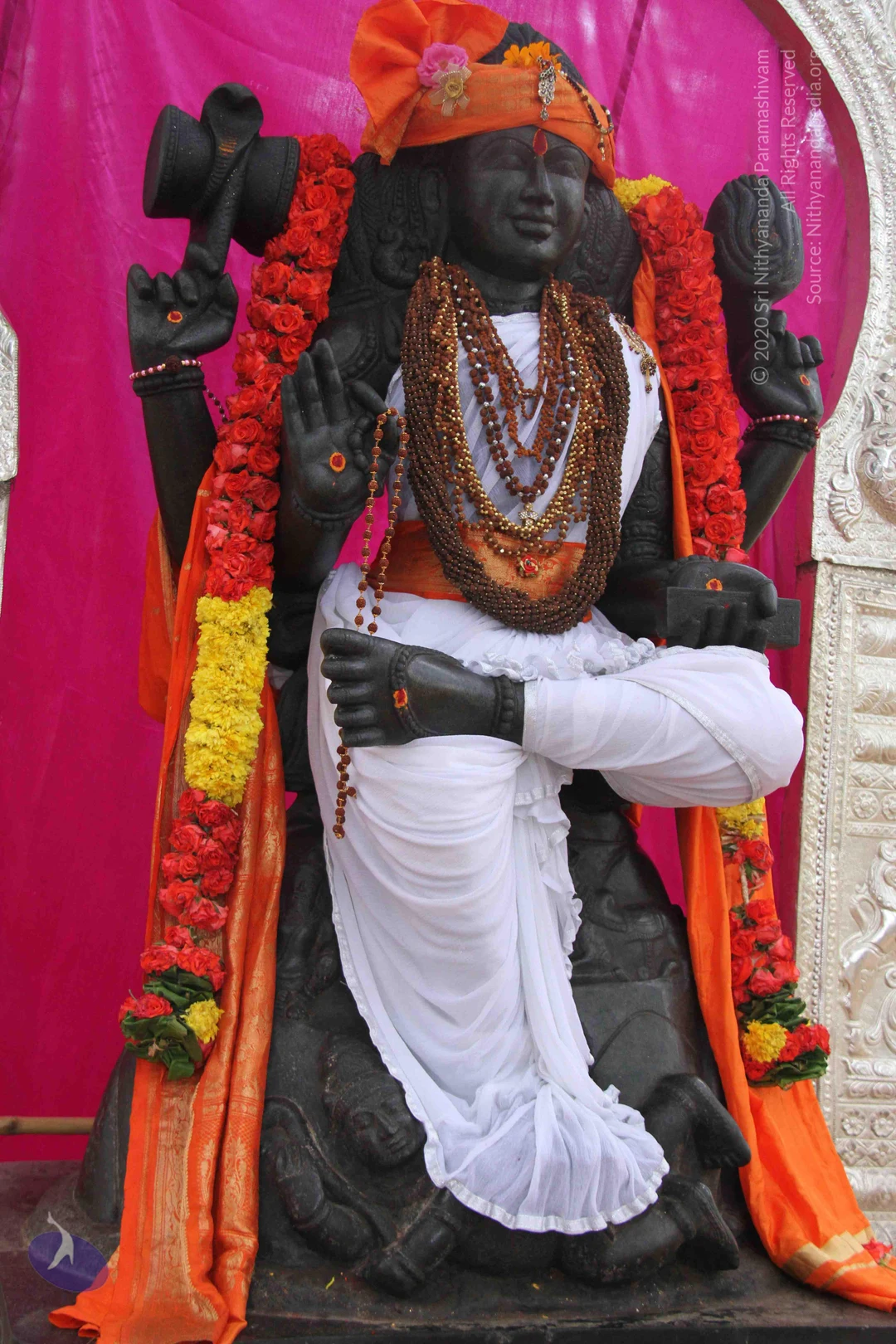
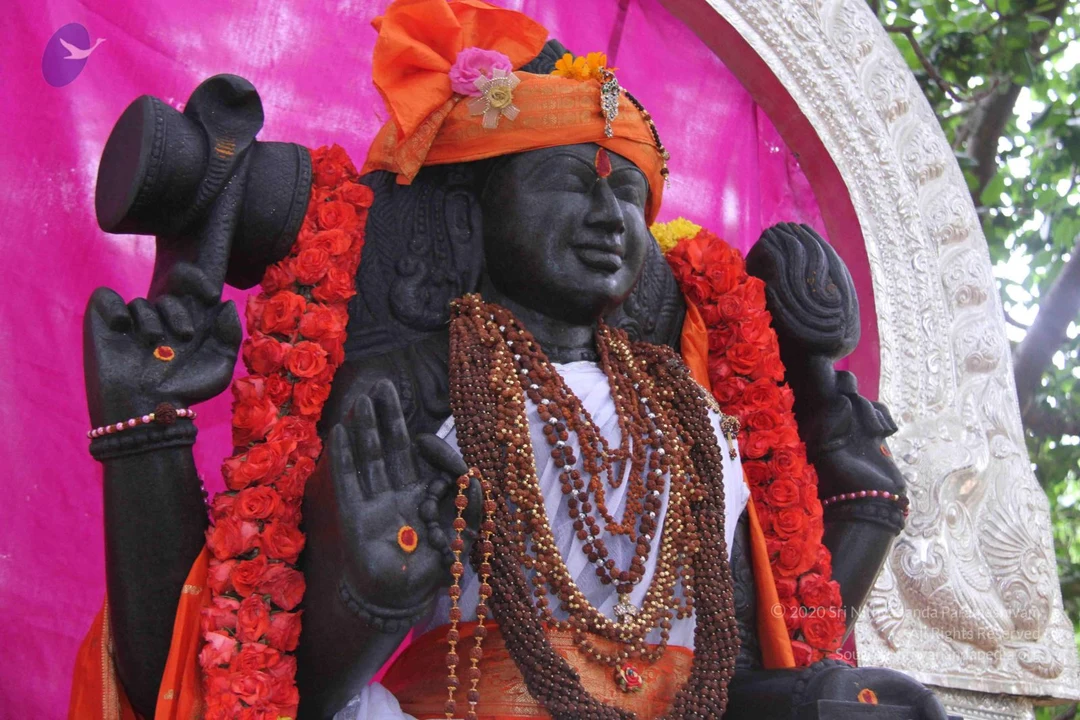
Even all these things, the deities, decorations, art, all these things inspires stability.

Please understand, understand this one example. Come to the listening space. Understand this one example: Oxford, Harvard universities, I think now, more than hundreds of years old. Those universities last hundreds of years, I don’t know, hundred or may be hundred to two-hundred years old, all these institutions, due to the hundreds of years of experience, educating generations of people, they mastered the art of educating.

Please understand, the perfection which can never come by one or two generation. All of you are getting it? Suddenly, you somehow poison all those administrators mind and make that whole both the places into monastery. Can they excel, compete with us, with the traditional monastery, helping people to achieve completion and enlightenment? No. Any specialization happens by stability. Please understand, when you are stable in that department and continues to expand in that field, specialization happens. And I wanted also you to know one more thing: Stability does not mean ‘stuck’. So we started believing, ‘Stability means ‘stuck’. So, let us not bother about stability and our tradition.’

8:39

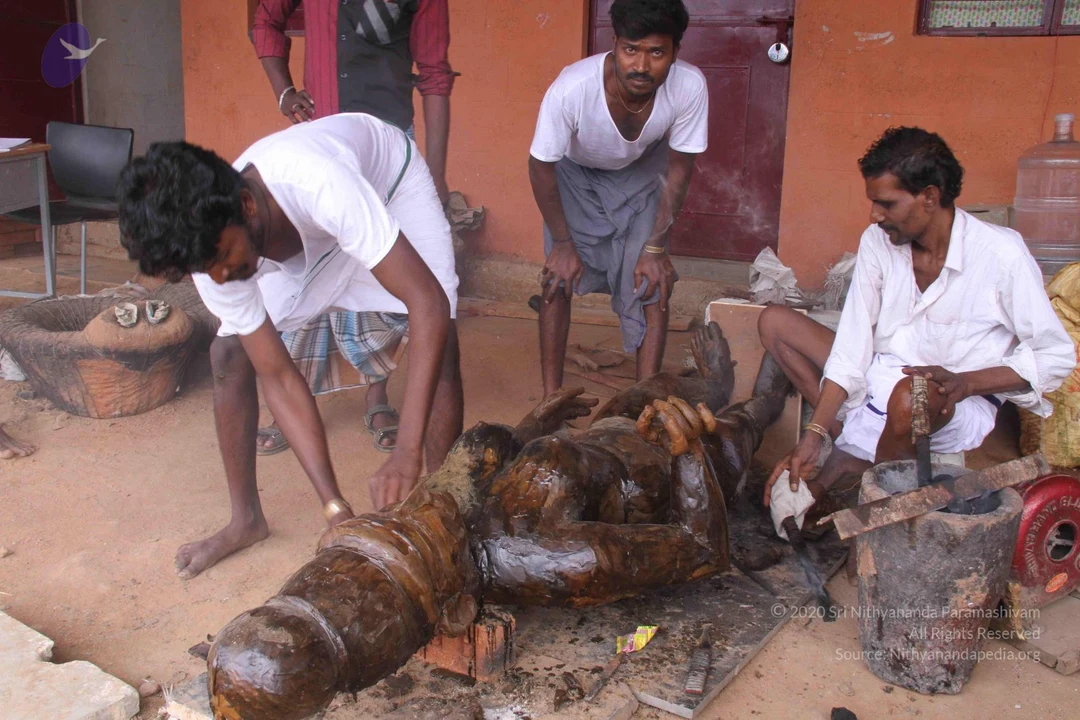
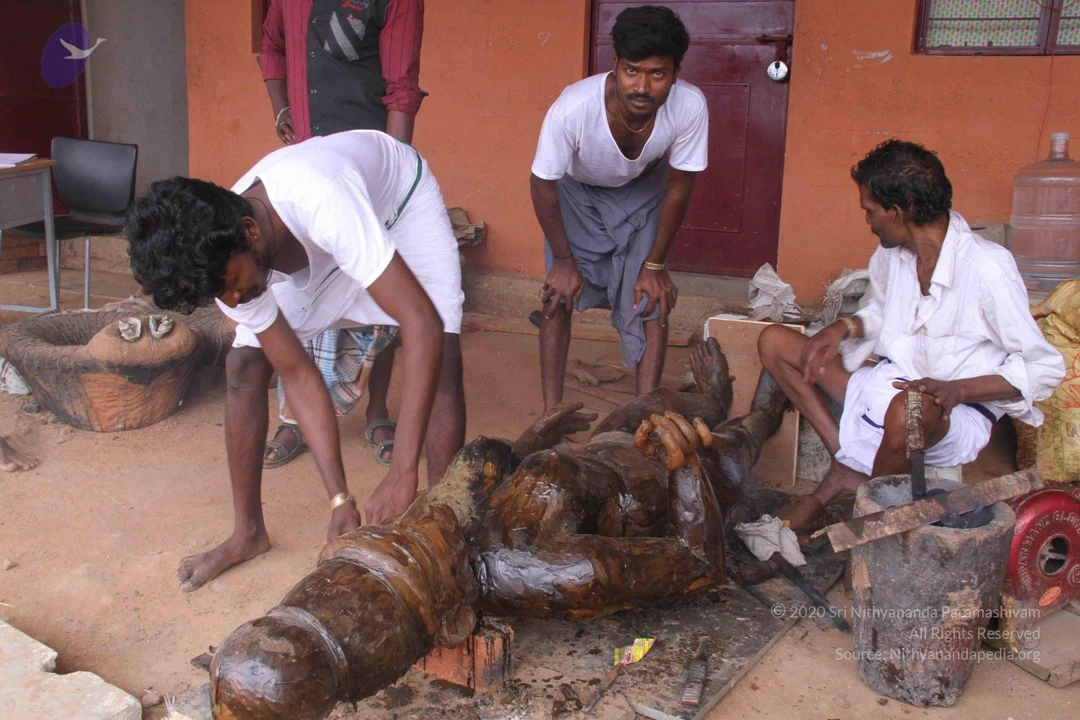
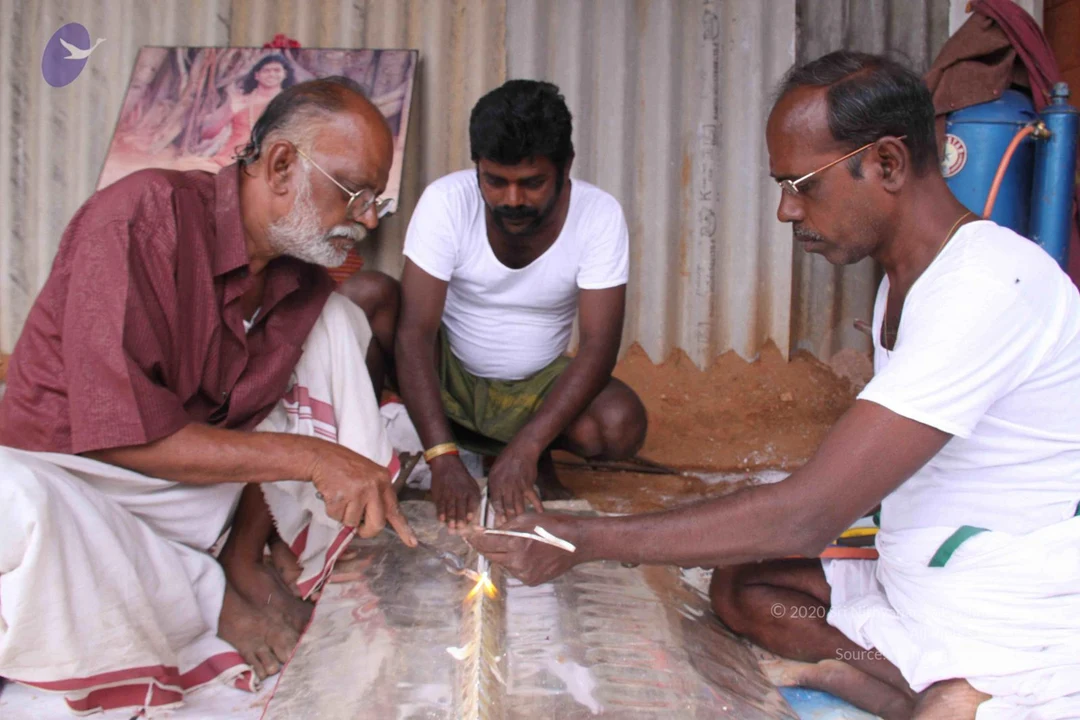
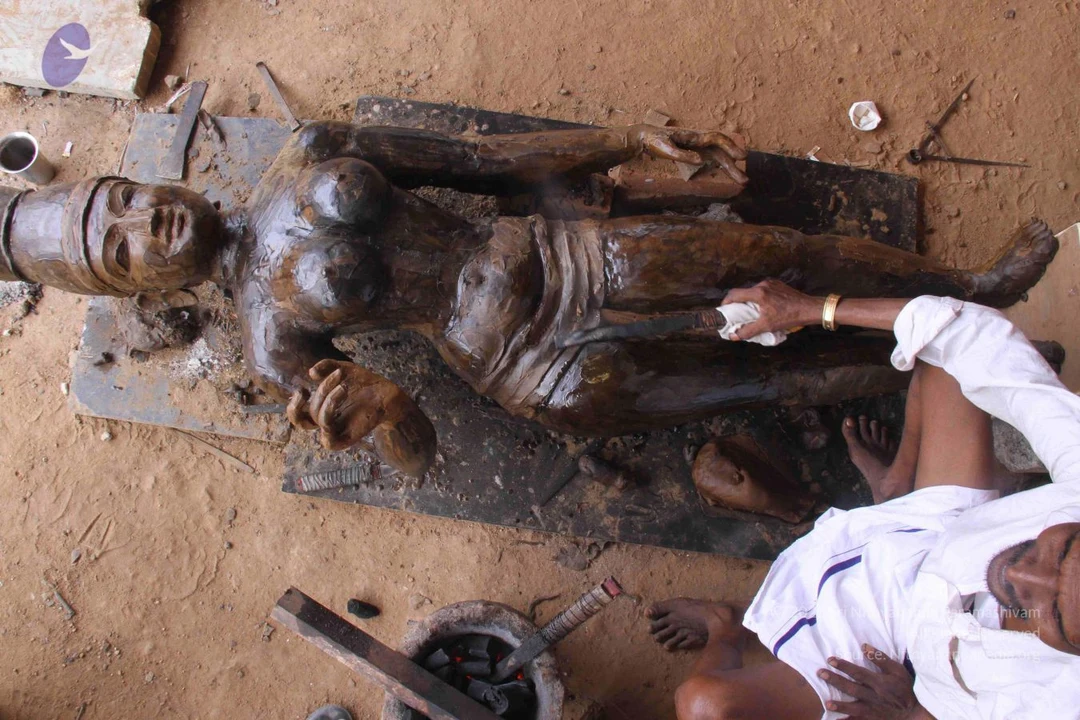
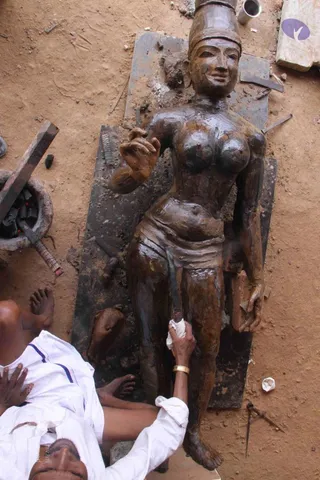
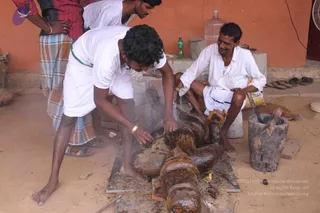
The Sthapathi, means, the traditional artist, Sthapathis are people, like they know the architecture, building, making deities and science of medicine, all the art, they will know. The Sthapathi, means the traditional scholar of medicine and architecture and art, who did our Shiva Linga, our Ananda Linga in Bidadi ashram, he was a ninth generation Sthapathi. Fortunately, he learned from his father and he made this Shiva Linga. Even now, if the water moves on that Shiva Linga for ten second, the water does not get spoiled for six months. And if the milk moves on that Shiva Linga for ten seconds, it does not get spoilt for fifteen days, even now. And it is so unfortunate, the science is dead now. He was crying to me that his sons are not ready to learn from him. His sons are interested only in BBA, MBA. It is not that his sons after doing BBA, MBA, one has studied the modern architecture, that they are making more money than the father, the Sthapathi who made this Shiva linga. No. Just a modern fantasy and disrespect to the family tradition. ‘Why? Why? Just because my father is a Sthapathi, why should I be Sthapathi?’

The amount of disgrace brought on our traditional professions like farming, agriculture by this British. Most of you guys from India may not have even seen agriculture happening with your eyes, means, that ploughing, weeding, planting. You might have seen only tractor plowing. Anyhow; so it is so unfortunate the science is lost. Now it can’t be done anymore. And that Sthapathi was literally having ‘blood tears’ in his eyes. He told me, ‘Swamiji, I am old.’ He was 92 when he left the body; at least, above 80. It is so unfortunate. I don’t know now anybody else can do. I have some little medicines stored. I may be able to make some forty. For that much we have. After that, that’s all. Over!

12:38

Such powerful science, such powerful science! I have hundreds and hundreds of people testifying. After taking bath in that water comes from Shiva Linga, skin diseases healed, depressions healed, the whole body-related pains healed; Hundreds of people giving testimonials. It is so unfortunate, now over. It can’t be done anymore. Why? Because stability is lost, stability is lost. See, it’s like only on the stable material you can make carvings, art, paintings which are going to be for eternal, for long time. And the mud, if you make an art – I am not saying you can’t make – but it won’t be there. On the beach sand if you make an art, it won’t be there more than few days. But if you make an art on the stone, it can be there for years.

(HINDI)

It is so unfortunate, our respect for stability is taken away. See this is the right example. Understand.

Hundreds of years old universities, who have mastered the art of teaching people, if you suddenly make them lose respect on teaching and convert them into a monastery, they won’t be able to help people to complete and achieve enlightenment. Same way, the biggest thing done to India is worst thing, our life was robbed from us, our soul was robbed from us. Our soul was robbed from us Somehow our soul was taken away from us.

(HINDI)

16:45

Somehow we are made to believe into the pseudo freedom concepts, medicines, art, architecture, cloth, everything. Do you know, every hundred kilometer in India, we have a different way of cooking? Just travel hundred kilometer, you will have a different kind of cooking. Because we live on the same land, what grows from that land we eat. We build houses out of that mud. What grows from that land, out of that we make our clothes. Means, literally our whole energy was with that land. Even in the monasteries, only when the stability is there the greater truths, the science, mystical sciences can be transmitted, can flourish.

I tell you, because all these sciences take generations to perfect. And even after transmitting, it takes generations for people to excel. Unfortunately Indian laws are completely against stability. They are built on the pseudo freedom concept. People are there, they are neither stable in education, nor stable. See, by the time you choose what should be your career, what should be the line you should start studying, you even start thinking about it only after twenty-one. Only after twenty-one you plan for your career. That is one of the biggest mistake.

At the age of three, when the ‘naamakarana’, naming happens; this is an important thing you need to know. We don’t have the habit of naming the child at the seventh day or eighth day, there are enough of references; third year only child is named. Means, child is allowed to live without language, to settle in the body without language. At the age of three, when they name the child itself, the career of the child is told to the child.

I tell you, if you need to choose, decide about your career at the age of twenty-one – almost every one of you choose around the age of twenty-one about your career – even if you have chosen earlier, you change. Even after twenty-one, you are in dilemma. Literally the age of learning is wasted.

21:00

Understand, learning happens between

• 0 to 7 – 100%, • 7 to 14 – 80%, • 14 to 21 – 40%, • After 21 – 0%.

After twenty-one, no question of learning is possible. After that you multiply, you just do the mathematical game, add, deduct, multiply; you do all that games, divide; but, please understand, learning itself is over at the age of twenty-one. What an unfortunate thing. When you decide about your career, the possibility of learning is over. You decide about your career when you are about to go to the graveyard. No. That is what we are doing. That is what we are doing.

I will show you in ten years. I’ll show you in ten years, my Krama Brahmacharis how they excel. My Krama Brahmacharis who are showing the stability, I will show you the best sannyasis of Hinduism. No, really, because it takes a generation to perfect anything. When a child decides, when a child is taught, see, I am nothing but the perfection of my masters. Then understand my perfections, how it will be. No. The kids whom I am bringing up specially for sannyas, when they take sannyas you will see they will be authentic teachers, authentic players of energy. They will be just playing with energy. Because I am perfection of my predecessors, they are going to be the perfection of me.

See, in any art, in any field, stability brings specialization.

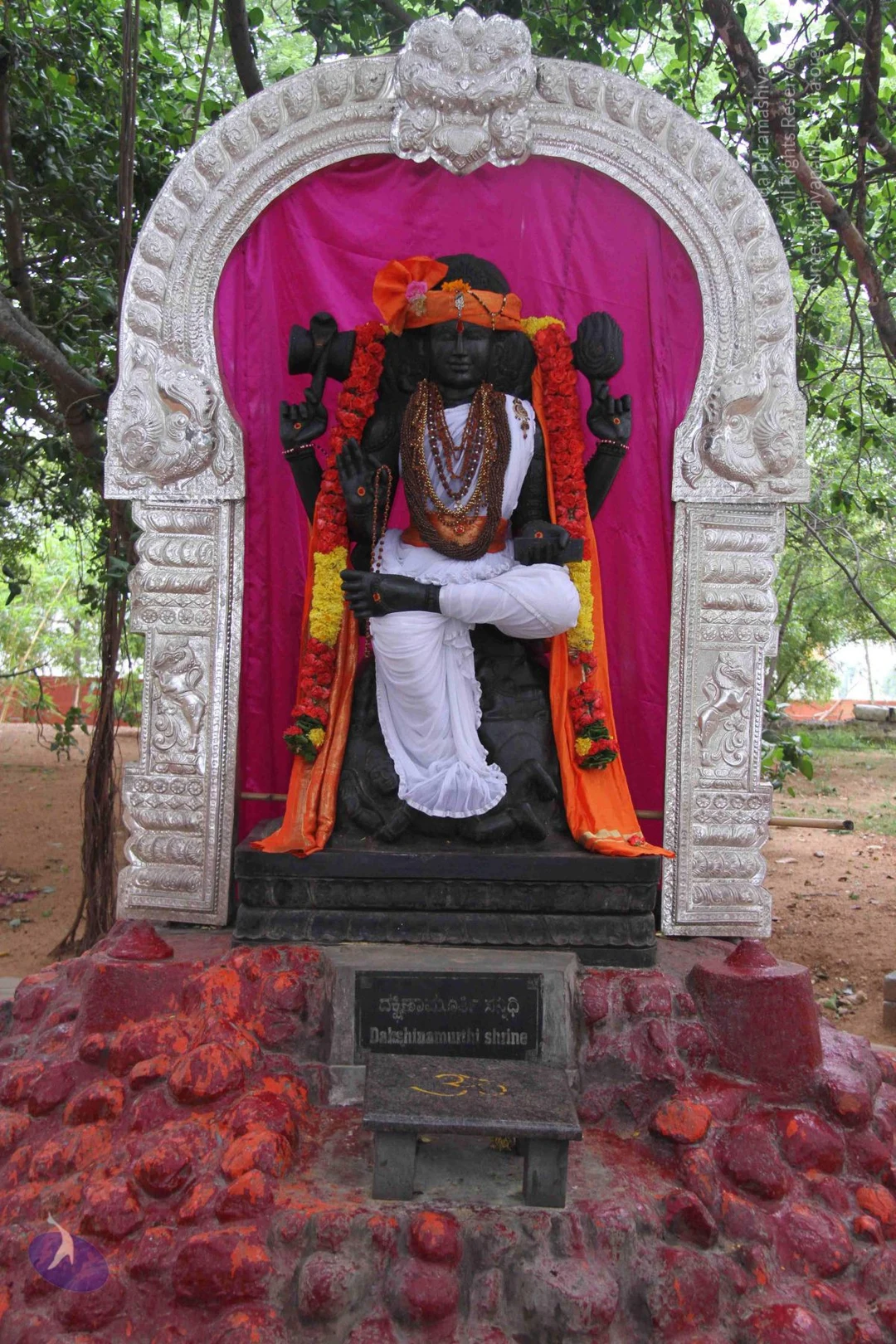
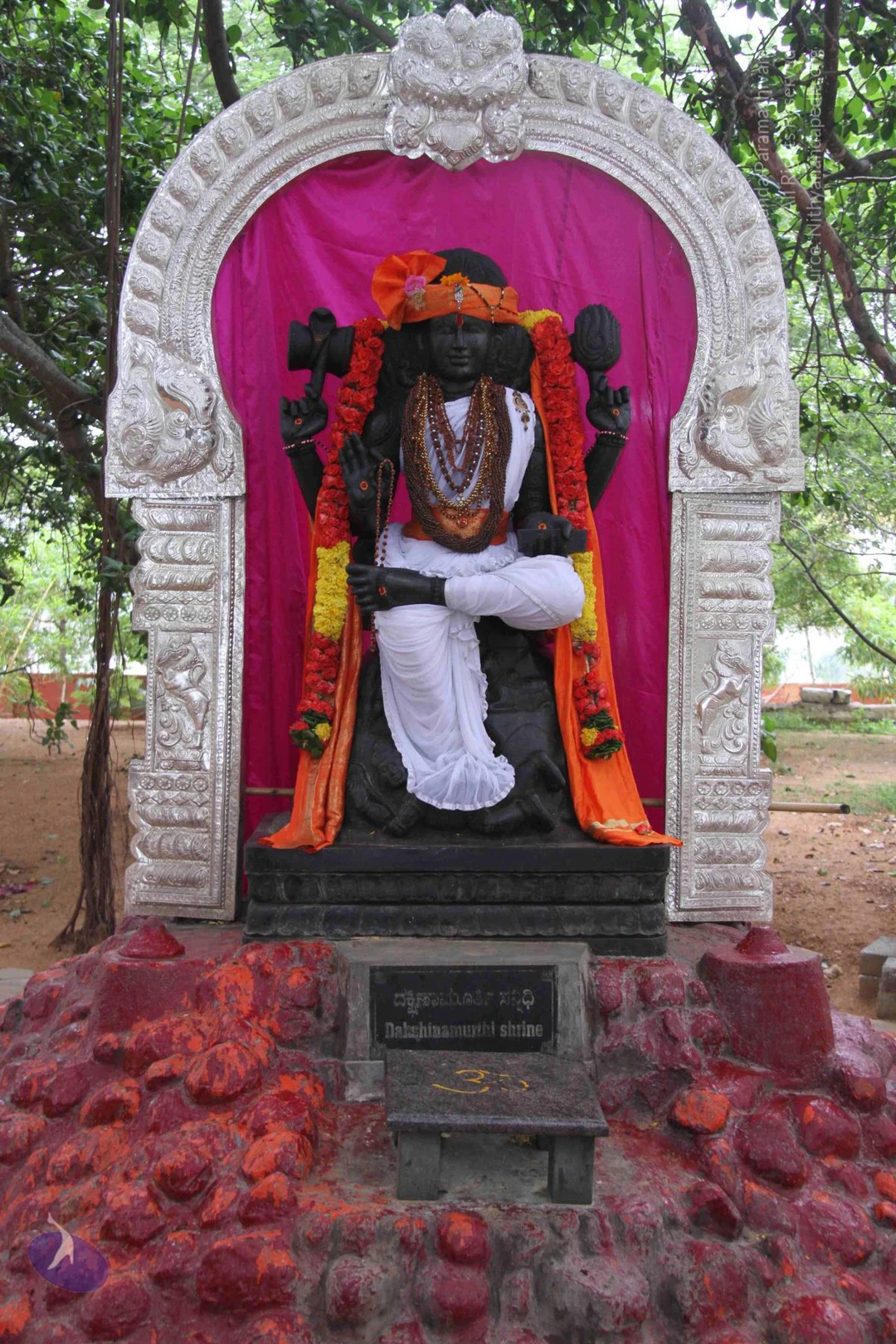
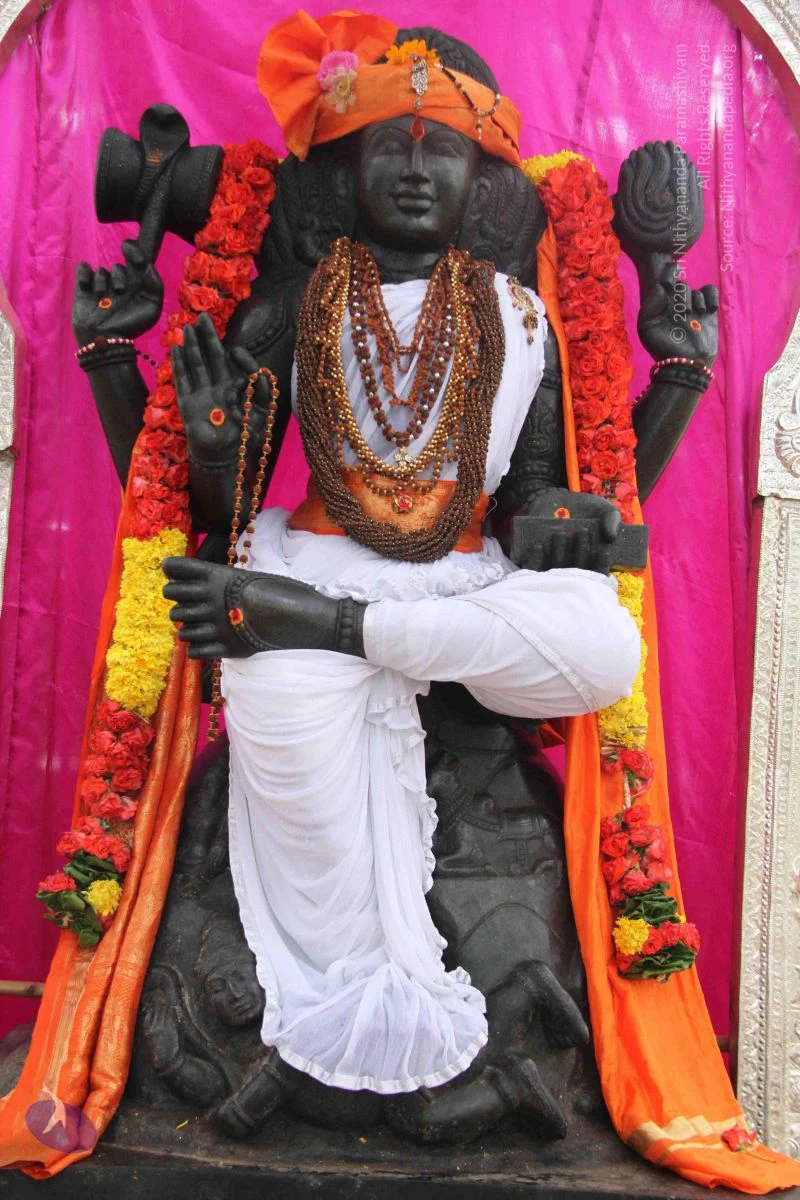
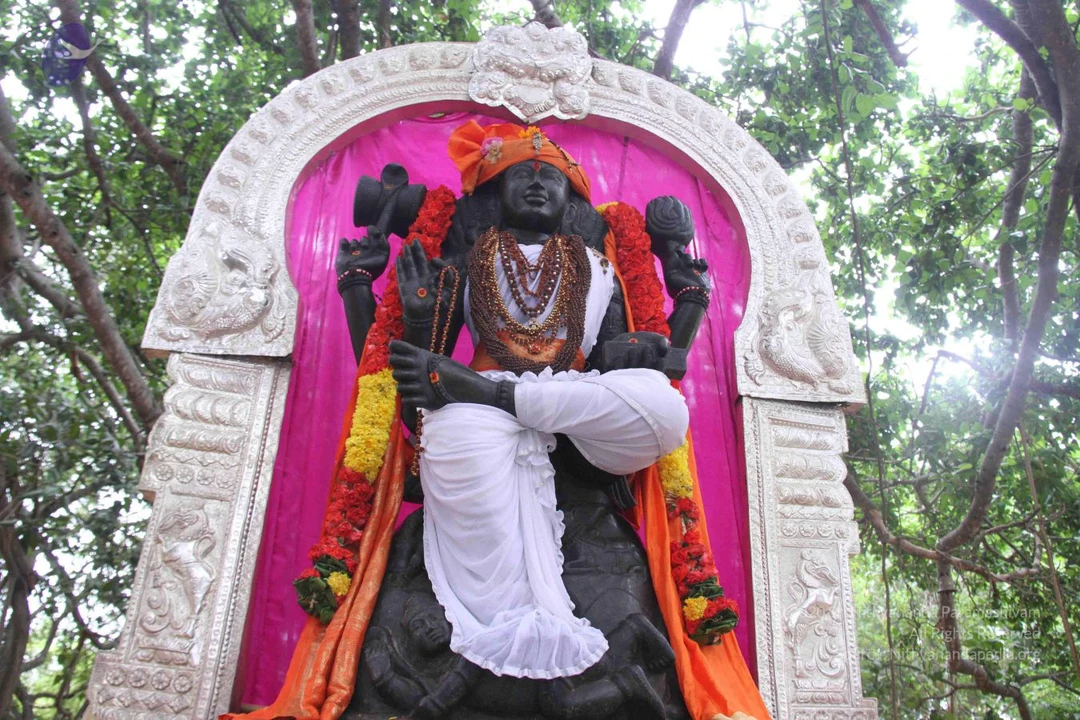
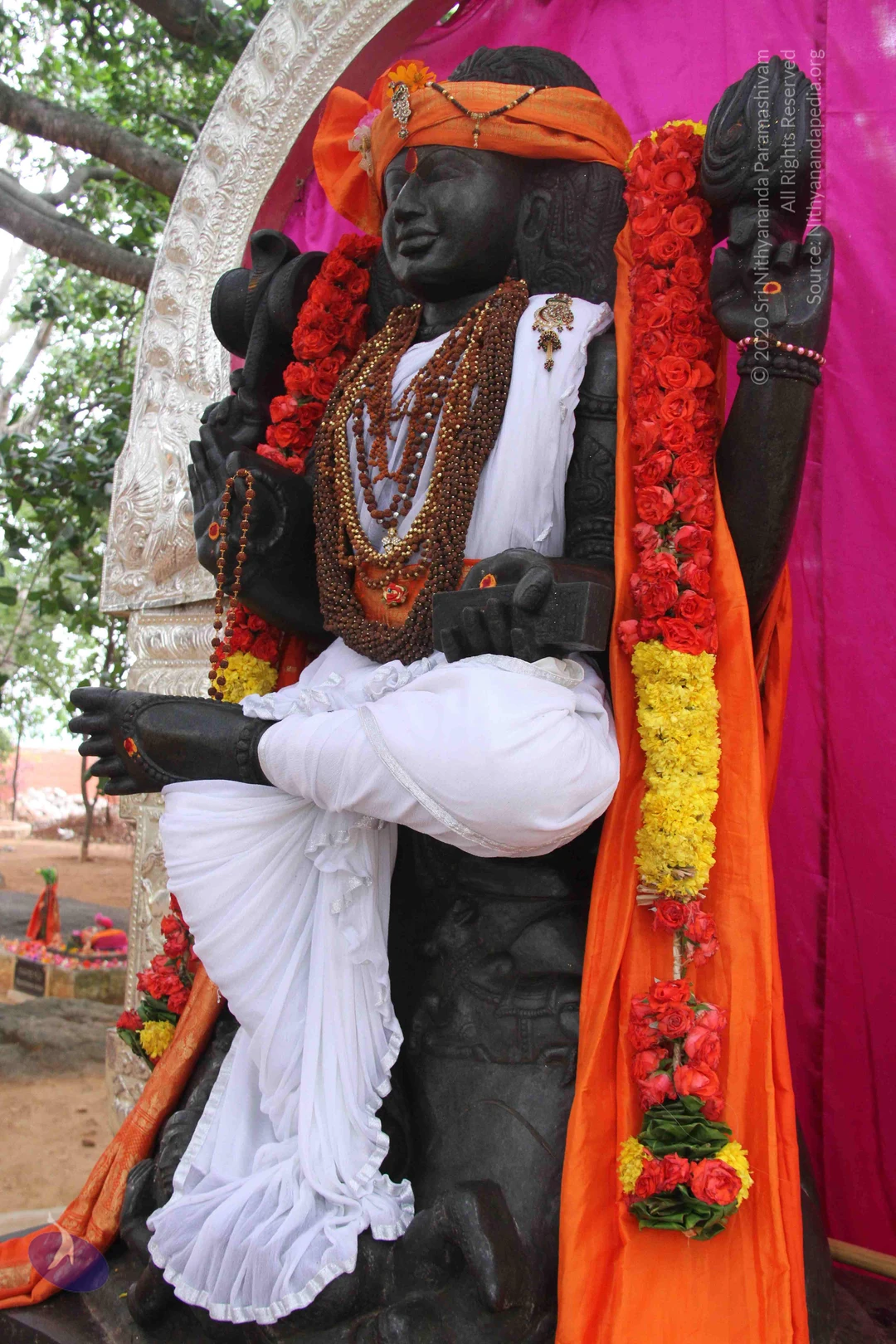
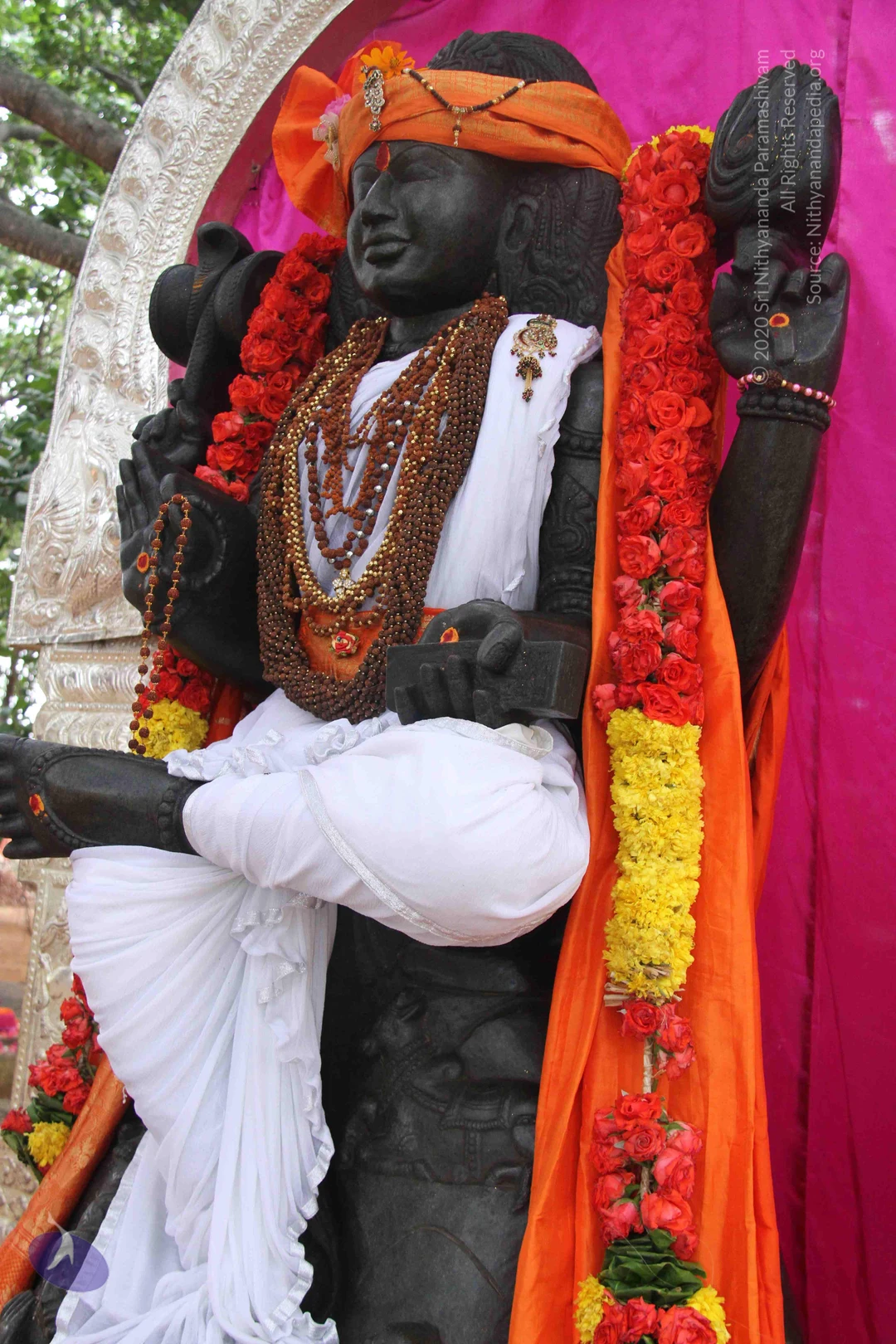
Many people come and tell me, ‘How, Swamiji, in these modern days your deities are so perfect? I have never seen this type of perfect, beautiful deities anywhere in the modern temples. May be in the old, ancient temples like Madurai Thiruvannamalai, we see this kind of deities.’ especially our Nithyanandeshwara in main temple. ‘How, how is it possible?’

I tell them, ‘I always pick up the artists who have learnt from their parents traditionally, not from any colleges and school.’

We have in the modern day some schools and colleges. I never pick up graduates; I pick up the people graduated. I never pick up graduates; I pick up people who graduated. Graduates does not mean they graduated. That is why the perfection in the deities, the grace in the deities; because, in any field, stability is required for specialization. Stability is required for specialization. It is so unfortunate, so unfortunate, we lost stability.

26:40

Just look around. We don’t have the carpenters of the standard we had fifty years before. Whether it is science of creating food, creating clothes, creating dwellings, creating life, creating knowledge, anything, it is stability that brings specialization. Our civilization, strength of our civilization is stability. But when they attacked that, we lost the soul. Of course, I will not allow. I will bring the soul back to the body, make the body alive again. We need universities to be established in all these three. For any civilization to be alive, these three is required. In these three you will see the achievement of that civilization.

• One, the Lifestyle Philosophy. • Second, Architecture and Art. • Third, Language.

O, Veda Matha, I commit with you with my integrity and authenticity, I will make university for all these three to keep you alive. And I will do what it takes, I will do what it takes to create stable people. And establish all these three.

See, for all these three, you need stable people, not just money or land; stable people. Only then the mastering, that perfection can go on and on and on.

30:13

I will show you through my Krama Brahmacharis when they take sannyas. This country law doesn’t allow to give sannyas before 18.

See the perfection delivered by Kanchi Paramacharya, Chandrashekhara Saraswathi. Why? Because, at the age of seven he received sannyas. At the age of seven he knows this is going to be his life, so better perfect it. Earlier, better for you and the world. Almost a century he graced that Peetha. And see his contribution to the Hindu tradition, Vedic tradition. Fortunately, those days, we did not have a law you can’t give sannyas before eighteen. If the children know at this age – age of seven, six – that what is going to be their future and start evolving, learning, imbibing, standing with that, you will have the masterpieces.

See, till the age of eighteen you don’t decide about your career itself is a sickness. If you don’t decide about your career till eighteen, you know, see in India, normally till you finish the plus two, plus two is the high school, am I right or higher Secondary School, till you finish the higher secondary school you don’t think about your career. It means what you know? You are planning for your career which is confusion. See, what you do till eighteen will be your career. Till eighteen you are in the mode of postponing and confusion, after that that continues.

I tell you, O India, till you come back to the Gurukul system, where during the naming ceremony the child is told its career, you are going to live and die in confusion and worry and postponing. Of course, I will not let you die. I will bring you back.

What a foolish, third-rate concept of freedom. Freedom is not freedom to have either you can work on mud, or on stone, or on cloth, or on business, or on computer. That is not freedom. That is a very small piece of freedom given to you, and you are cheated without having the real freedom. Real freedom is free to be. What do you call as freedom in the modern day? If you can just get a B.E. Degree or a computer certificate and become an IT Engineer, you call it as freedom? You are squeezed. Last drop of your blood is squeezed. Morning 6 o’clock you run to the office, 8 o’clock you come back and drink the alcohol, have a girlfriend and party, 12 you drop dead on your bed. Again morning 6 you are there in the office. You call this as freedom? And by 45, fuse over. Heart attack. Tup. Monday morning blew up. You call this as freedom?

34:54

I am also taking one more responsibility. I am going to set a new trend by training all my staff members and workers working on all our campuses. Now I am creating this new consciousness. I made a clear understanding; we are going to enroll two-thousand staff. The first thing is they have to attend morning satsang. From the dress code to the lifestyle, everything, everything has to be based on the spiritual strength and they have to live four tattvas. And I am giving them Inner Awakening free. We are going to continuously train them to be Spiritual Activist. Work, and be paid for their work.

Please understand, I pay them for their growth. It is a new trend I am setting now. With this introduction only I am enrolling. By the end of this year, we wanted to enroll two-thousand staff. I invite all the Nithyananda TV, Sadhana TV, Lotus TV viewers, whoever wants to be Spiritual Activist working with our Sangha and getting paid, being paid for your work, immediately reach out to us. Email us at [email protected] or call us on +91 80 2727 9999. We need people with all kinds of work background and skill sets. IT engineers, lawyers, cooks, drivers, mechanics.

I am creating a Law Firm inside the campus to defend Hinduism continuously in the media. See, really.

I will continue on ‘Stability’ tomorrow also.

Now I will move to the Nirahara Samyama.

(HINDI)

I request all of you to do the Nirahara Samyama Kriya. Sit straight, close your eyes. Cognize you have become Bidadi Kalpavruksha. Inhale through both the nostrils and the mouth as deeply as possible and hold as long as possible. Slowly exhale only through both the nostrils. Do this kriya continuously for 21 minutes. With my integrity, authenticity, responsibility and enriching

Photos Of The Day:

leela deity alankar
temple
paduka puja

Nithya Satsang

gurukul instrument

sarva darshan

final blessing

Inner Awakening day 5

sacred arts & constructions

Photos Of The Day:

Deity-Darshan

Leela-Deity-Alankar

Paduka-Puja

Gurukul-performance

Satsang

Sarva-Darshan

IA

IA-Darshan

Sacred-Arts

Photos Of The Day:

Deity-Darshan

Leela-Deity-Alankar

Paduka-Puja

Satsang

Sarva-Darshan

IA

IA-Darshan

Photos from this day

View all 226 photos

leela deity alankar

4 photosSource gallery
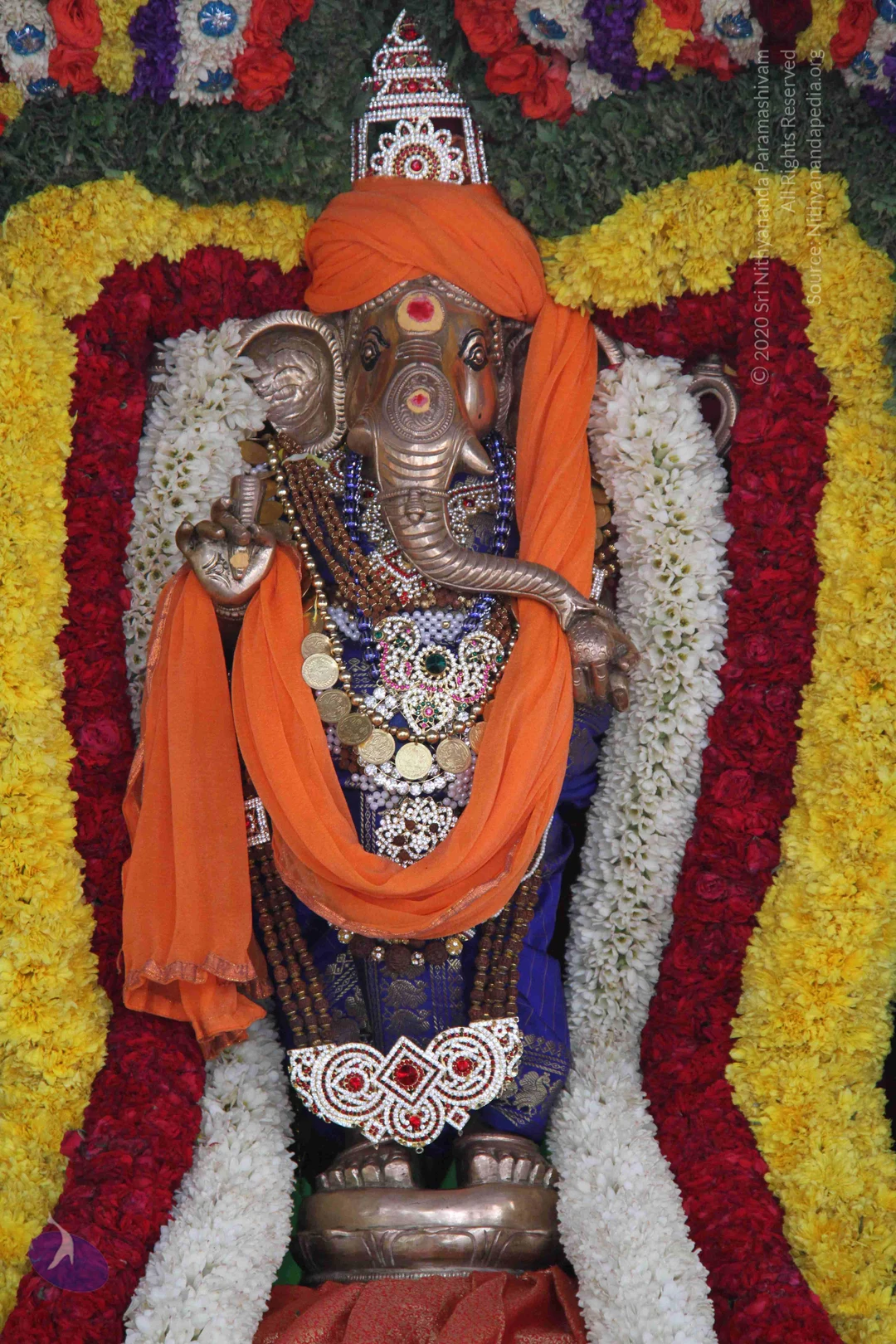
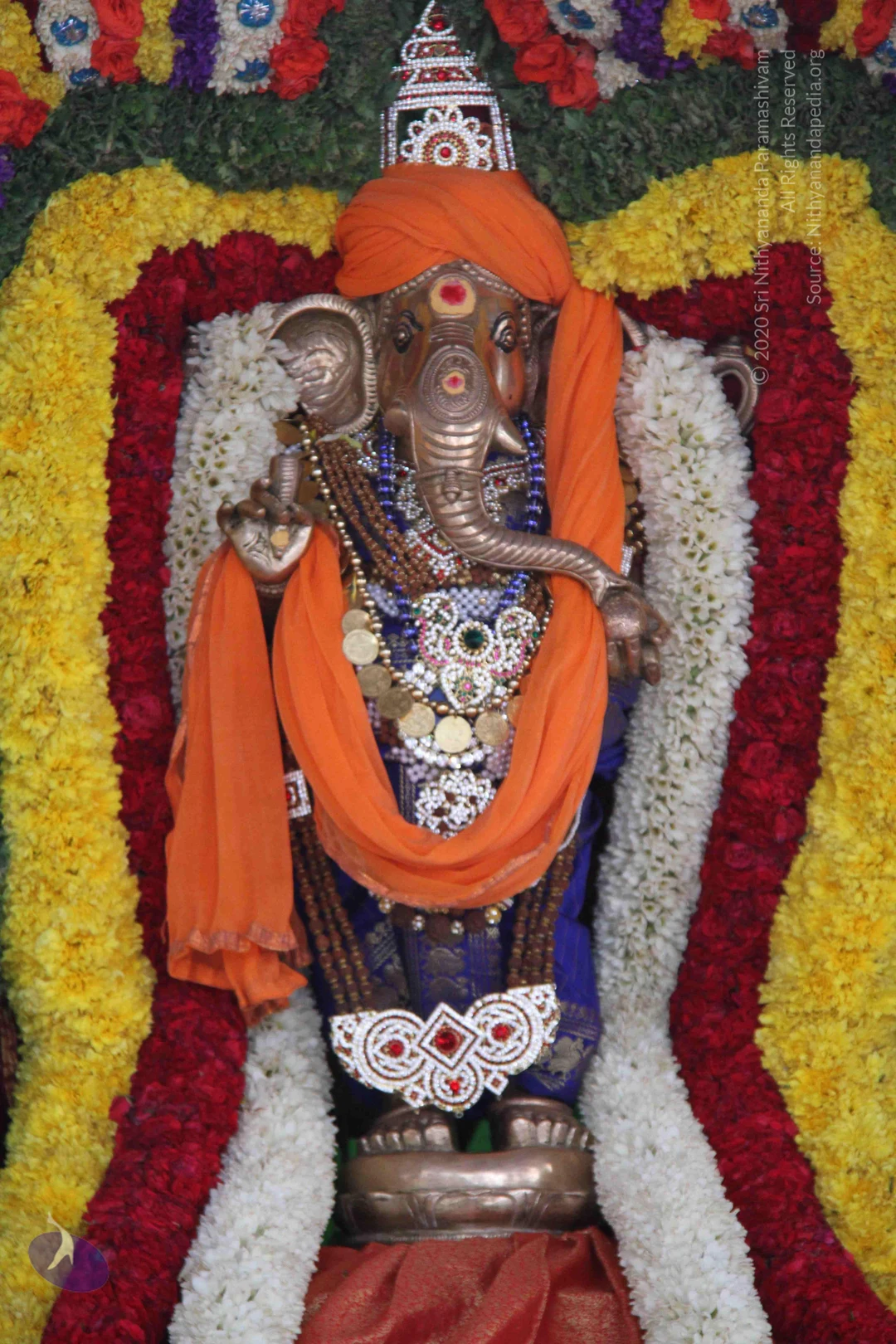
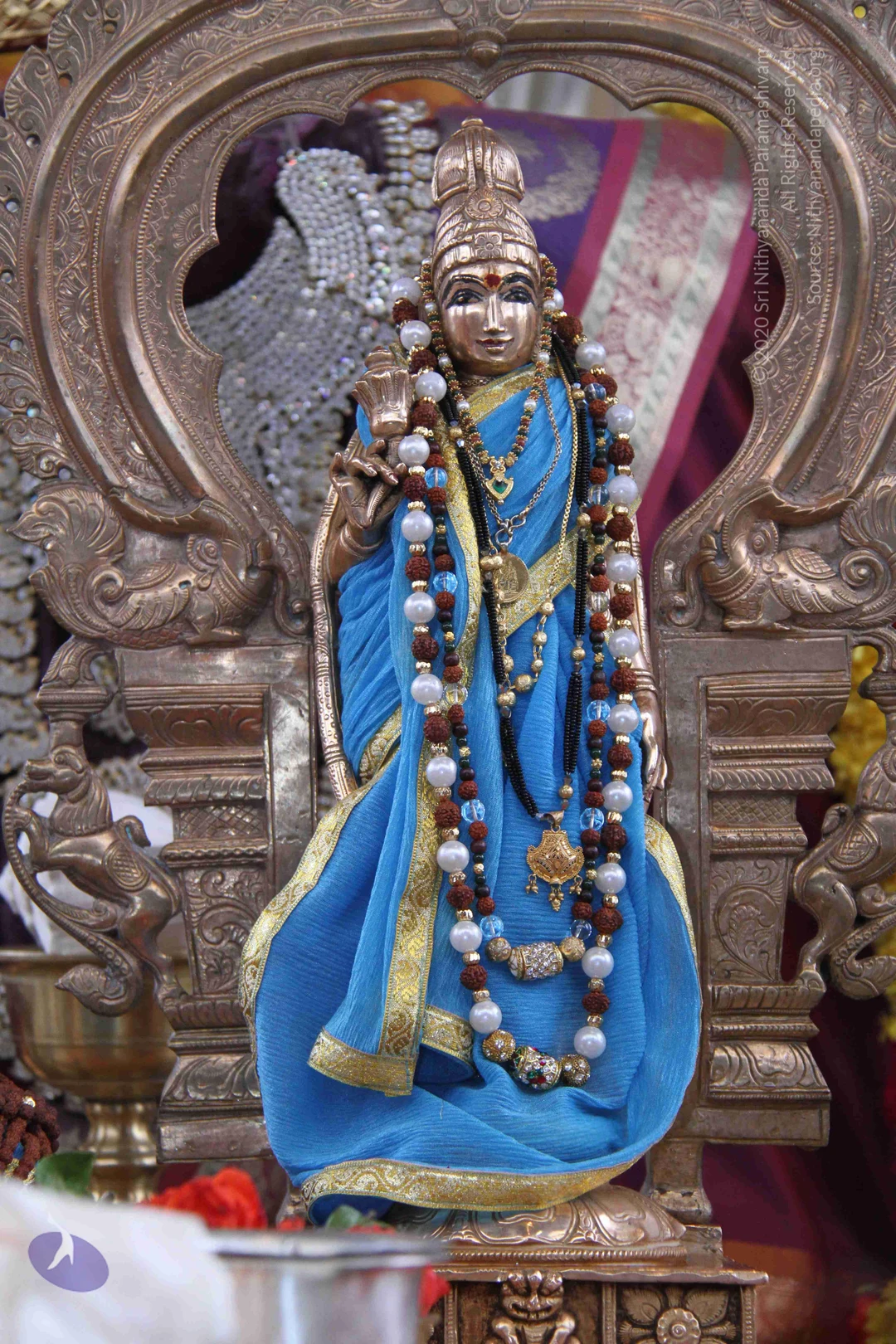
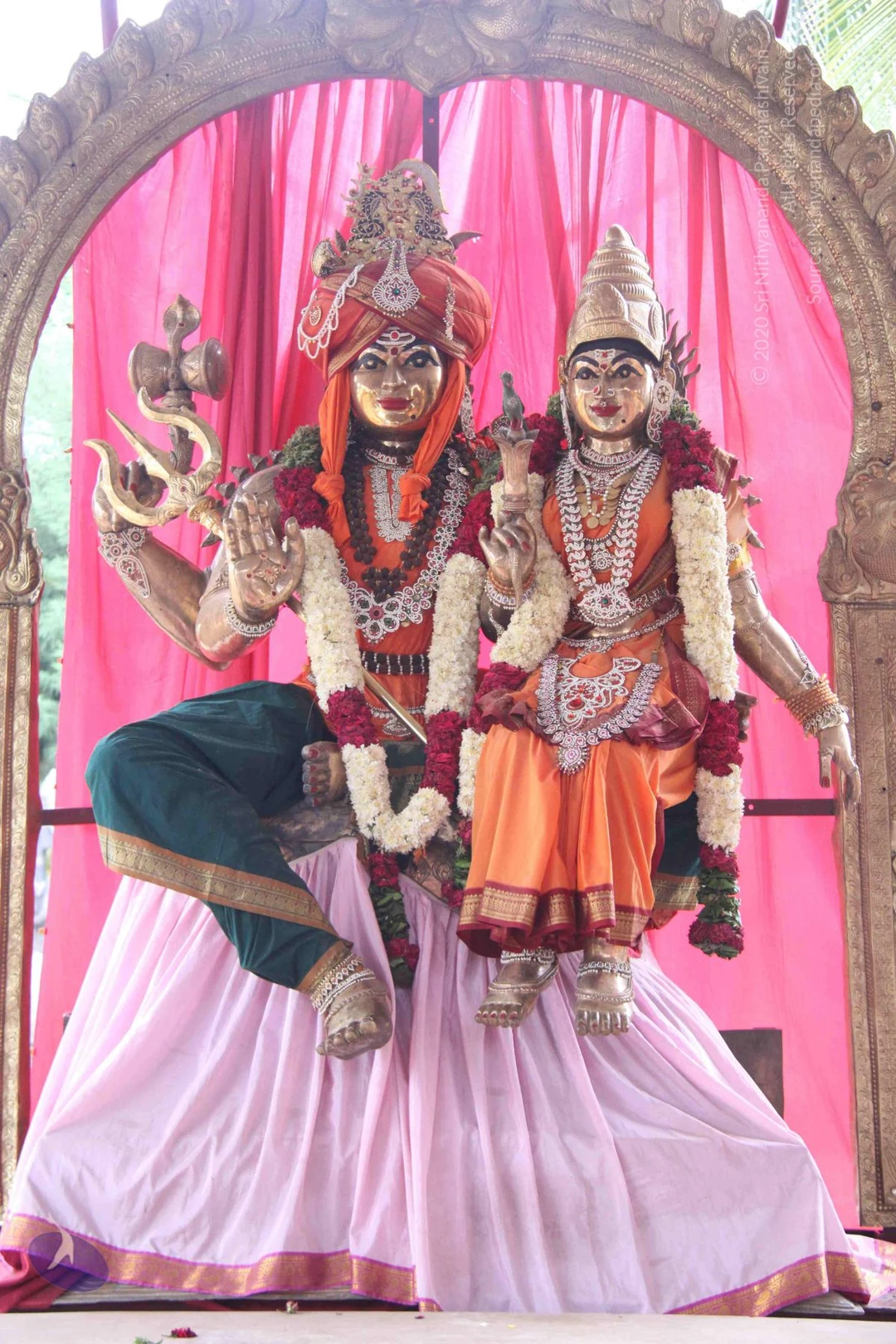
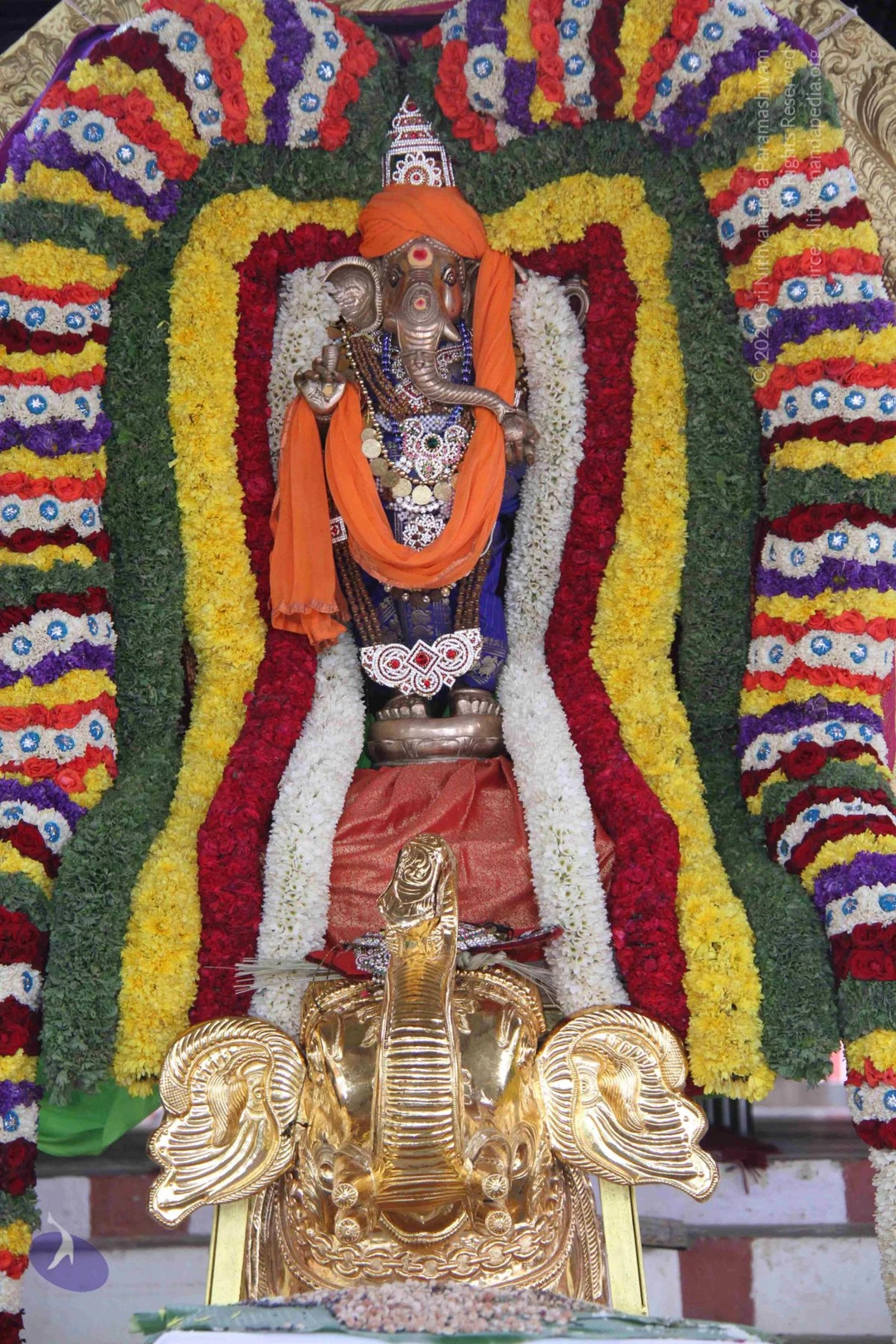
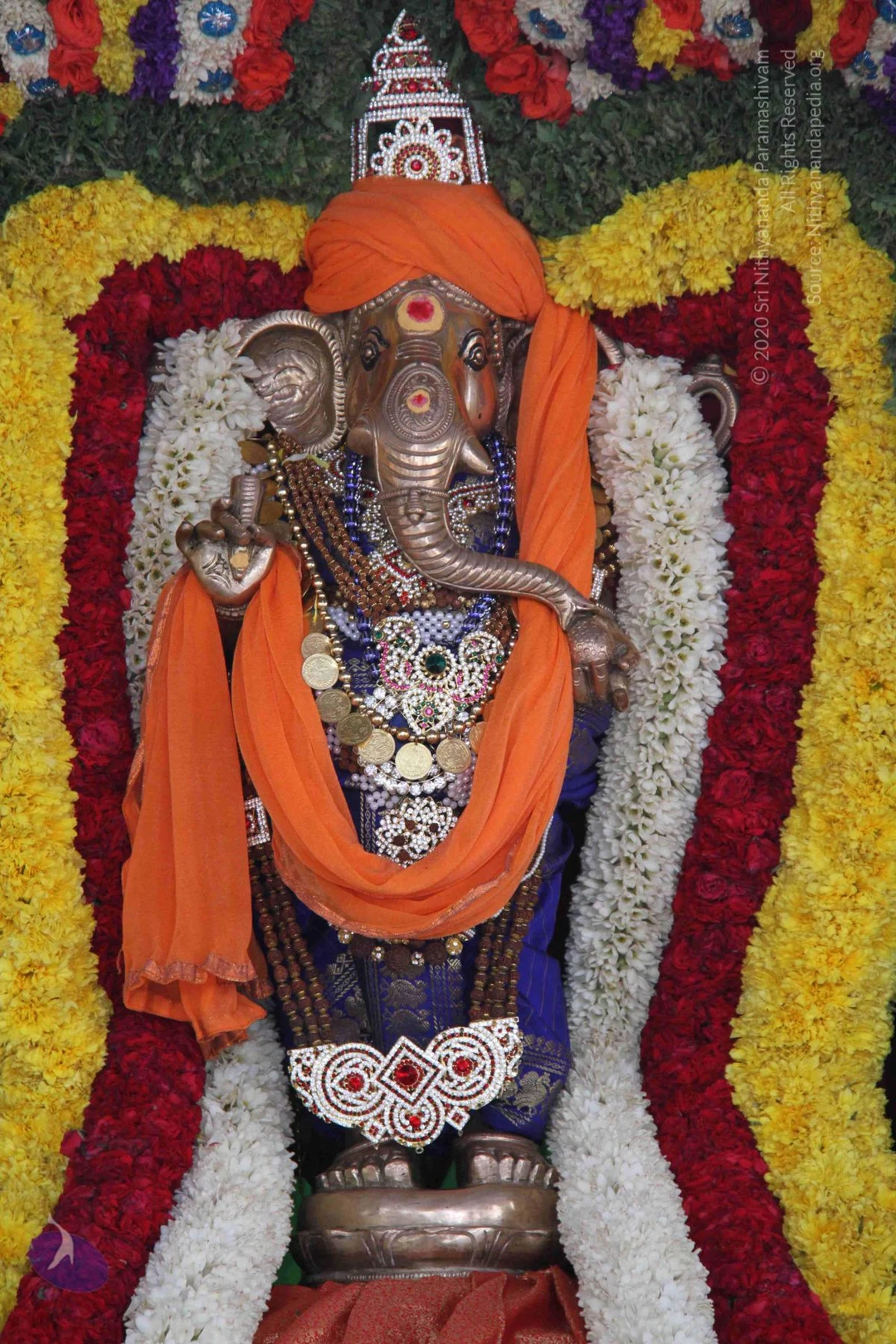
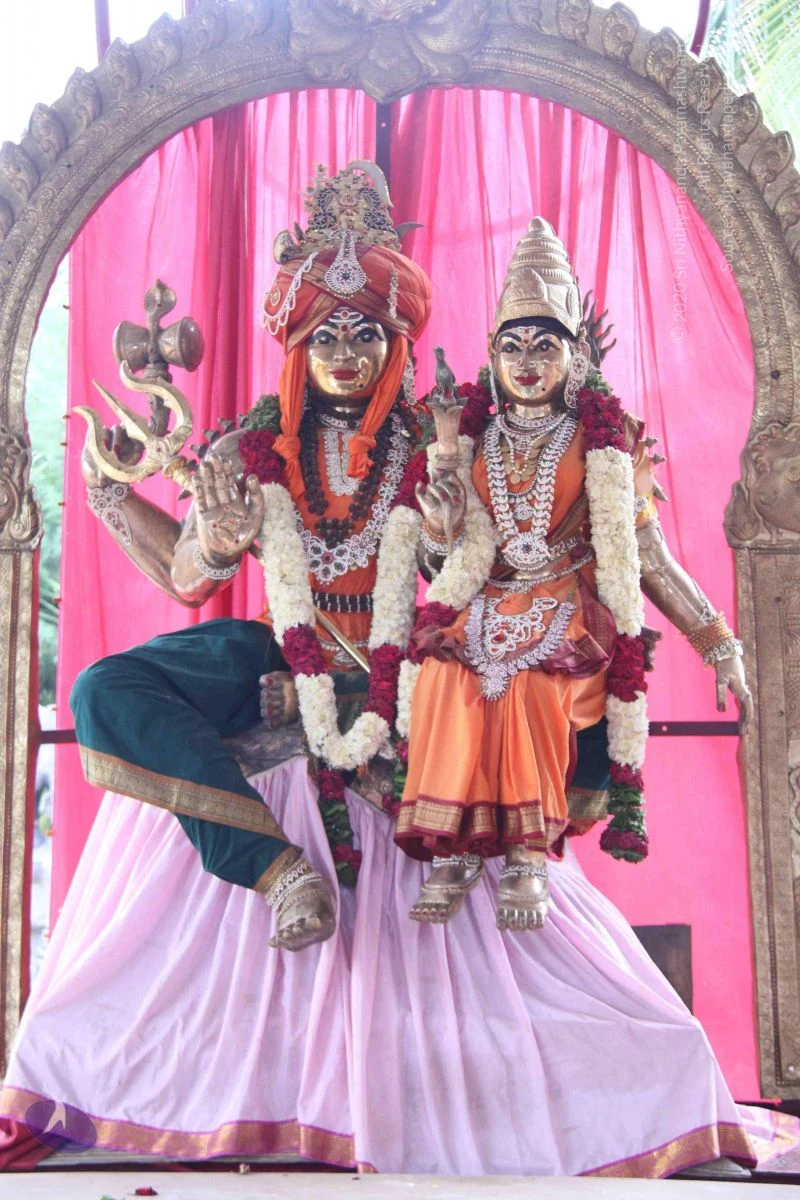
Two painted metal or bronze-finished deity murti are seated side by side on a pink-draped stage beneath an ornate golden arch. The figure on the left, a male deity, wears an orange turban, a dark green dhoti, and a trishul in one raised hand, with a rudraksha mala and white garlands. The figure on the right, a female deity, wears an orange sari, a golden crown, layered white and silver necklaces and red flower garlands. Both are adorned with red and white flower garlands and sit on a pink and lavender draped platform. No living people are visible.Two gilded processional murtis of Shiva and Parvati seated side by side on a raised platform under an ornate gold arch draped with pink cloth. The Shiva figure wears an orange turban and orange garment with a dark green lower cloth, holds a trident and a rudraksha mala, and is garlanded with white jasmine and red roses. The Parvati figure wears an orange sari with silver jewellery, a tall gold crown, and holds a small bird-topped staff. Both have silver necklaces and red garlands. A dark-green lower cloth and pink skirt-like draping fall below. No living people are visible.A metal Ganesha murti stands in a niche decorated with layered garlands of yellow marigolds, red roses, white jasmine and blue-and-white flower strands. The deity wears an orange shawl draped over the shoulders, a jeweled blue-and-gold necklace, a crown-like headpiece with red stone accents, and a rudraksha-style bead mala. Its trunk curls to one side and a small red tilak marks the forehead. In front stands a large gold elephant-headed ornament with curled tusks, and a red cloth lies beneath the murti. No people are visible.A bronze deity murti of Ganesha, the elephant-headed god, stands in a flower-framed niche. The figure wears an orange turban with a jewelled crown and an orange shawl draped over its shoulders, with multiple strands of rudraksha-style beads, a blue garment, and an ornate white and red jewelled necklace. A trunk curls around the figure's side, and the base is decorated with white and red jewelled ornaments. Garlands of yellow marigolds, red roses and white jasmine frame the image on all sides.

temple

29 photosSource gallery
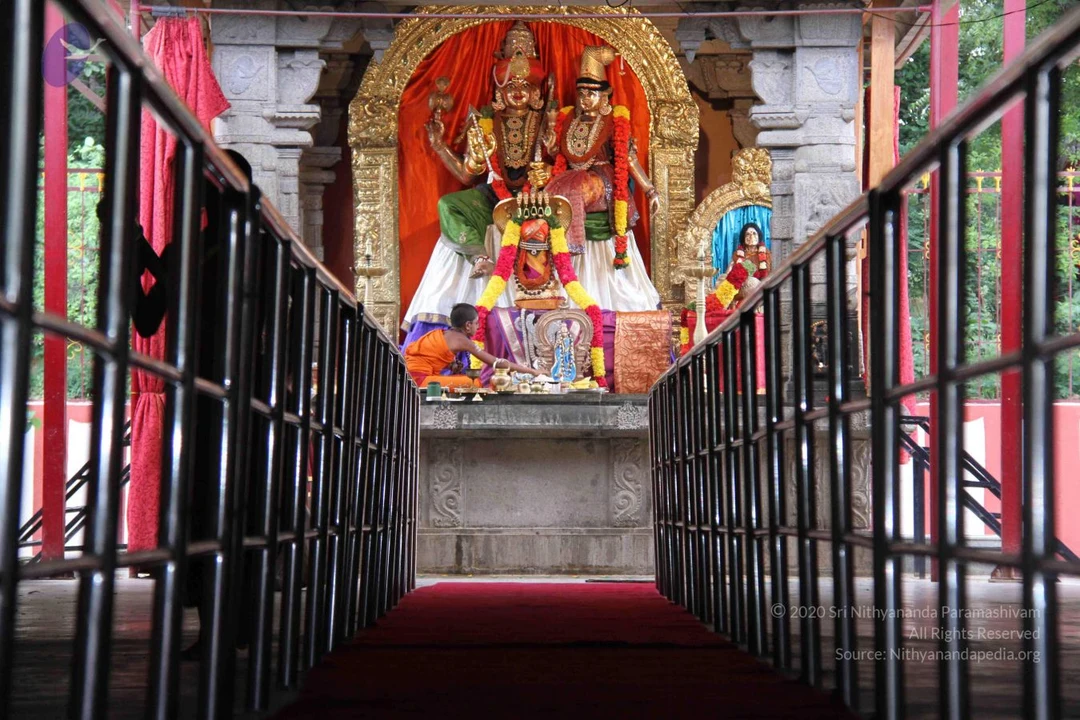
Interior of a temple shrine viewed down a narrow aisle lined with black metal railings and a red carpet. At the far end stands a large deity murti pair seated on a raised dais, adorned with gold crowns, marigold garlands and a gold-bordered orange backdrop. A man in a saffron-orange robe kneels at the altar base, tending brass lamps and ritual vessels in front of a small framed image. Red-painted pillars and greenery are visible beside the shrine. No other people are visible.A photograph down a narrow aisle lined with black metal railings and a red carpet leading toward a shrine. At the far end, a pair of deity murtis stand on a grey stone pedestal, adorned with red and orange garlands, a golden kalasha-like vessel and oil lamps set in front. The murtis wear white and green draped garments with gold ornaments and crowns. Red and pink curtains frame the shrine, and a small figure in orange and gold sits at the left side near the altar. A standing person in red and gold clothing is visible at the far left edge, while the shrine area otherwise shows no other people clearly.A temple shrine with a large gilded arch framing two painted deity murtis seated on a raised platform. The central figure holds a trident and other implements and wears a red crown with a garland of red and yellow flowers. The female figure beside him wears a golden crown and jewelled necklaces with a red garland. Brass oil lamps stand on either side, and a kalasha and puja vessels sit before the murtis. A young priest in saffron cloth with a rudraksha mala and white sandalwood markings on his forehead sits at left beside a brass lamp. Red and gold drapery and carved grey stone pillars surround the shrine.A photograph inside a temple shrine showing a large golden-framed alcove with an orange backdrop, housing two deity murtis seated on a raised platform. The central figure holds a trident and other implements, wears a crown and a rudraksha-style necklace, and is draped in green and white; the figure beside holds a flower garland and wears a tall crown and white-and-gold attire. Decorated with yellow and red marigold garlands, a kalasha-like vessel sits in front, along with brass oil lamps and offerings of fruit. A young priest in saffron-orange cloth with white body markings sits at the lower left, tending the puja. A smaller deity image appears in a blue-curtained niche at the right.Inside a temple shrine, two large painted deity murti stand under a gilded arch against a bright orange drape, adorned with garlands of yellow and red flowers, rudraksha-style necklaces and ornate crowns. A shaved-headed young priest in saffron-orange cloth and a rudraksha mala sits cross-legged at lower left, tending offerings and a plate of fruit before the altar. Brass oil lamps stand on either side, and a smaller deity figure appears in a blue-curtained niche at right. No a person candidate is clearly visible, so the seated priest is described only by role.Inside a gilded temple shrine, a large pair of deity murti stand together with a red-orange backdrop: the figure on the left has four arms, red face and a crown and holds a trident, while the figure on the right wears a tall crown and a chain of beads. Both wear garlands of red and yellow flowers and white dhotis with coloured borders. In front, a seated kalasha-like brass vessel and a small smaller murti are decorated with garlands. A young boy in an orange robe and rudraksha mala kneels at a brass plate of offerings, with oil lamps and bananas nearby, performing puja. A second, smaller shrine on the right holds a seated murti in a blue niche with a garland. No a person candidate is visible.

paduka puja

27 photosSource gallery
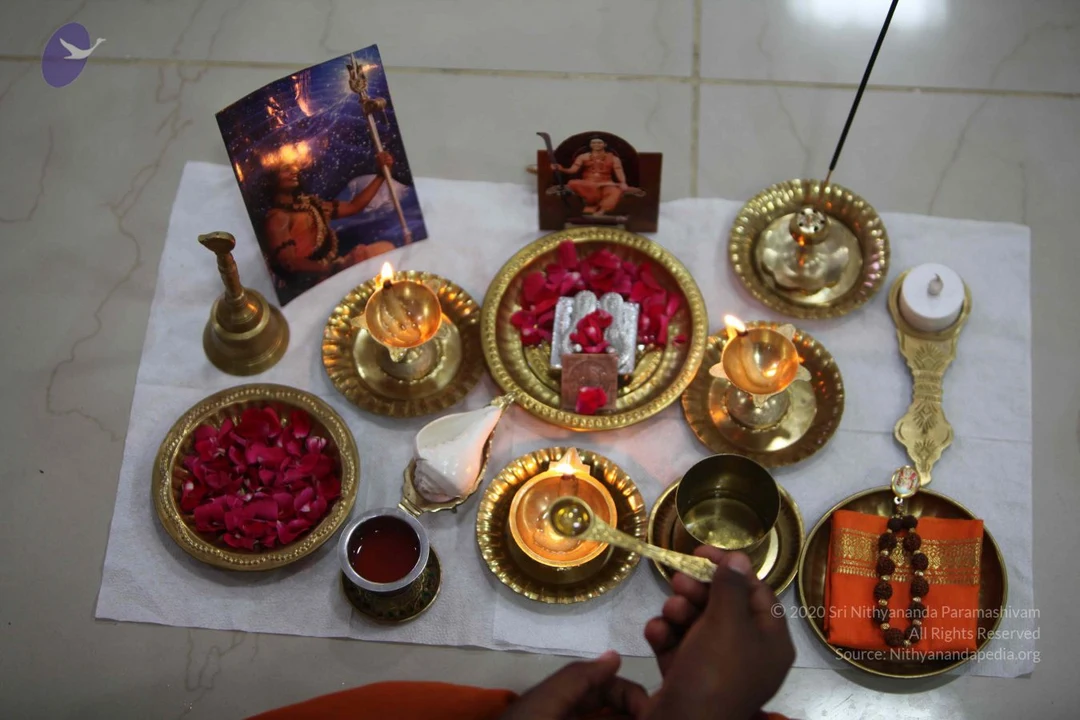
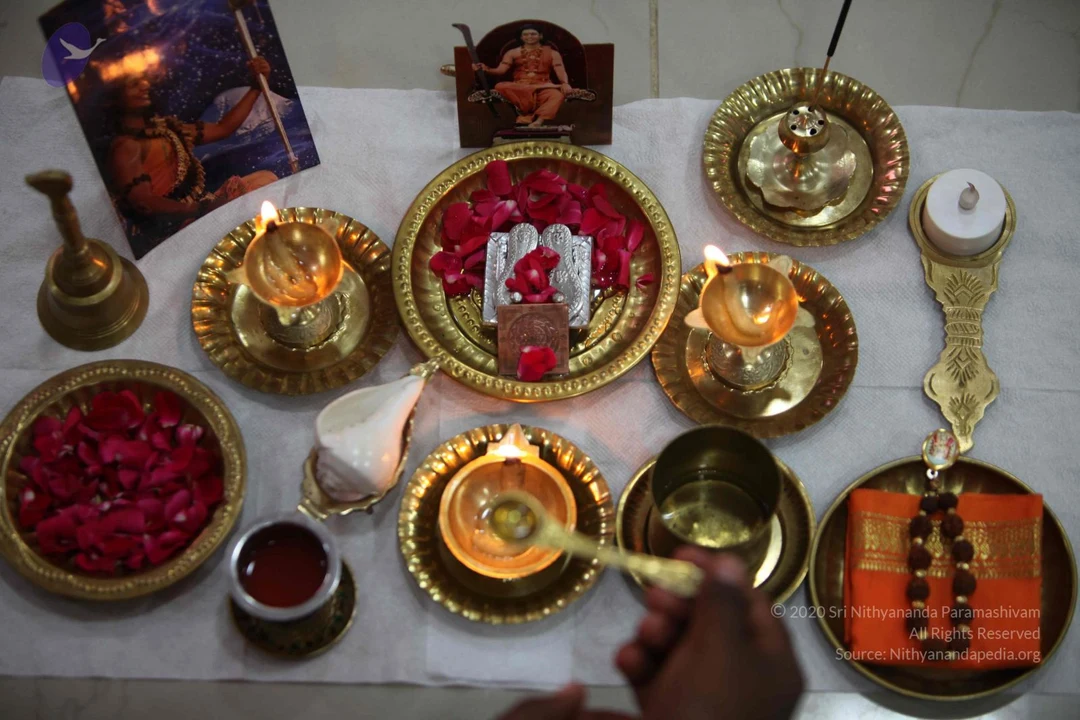
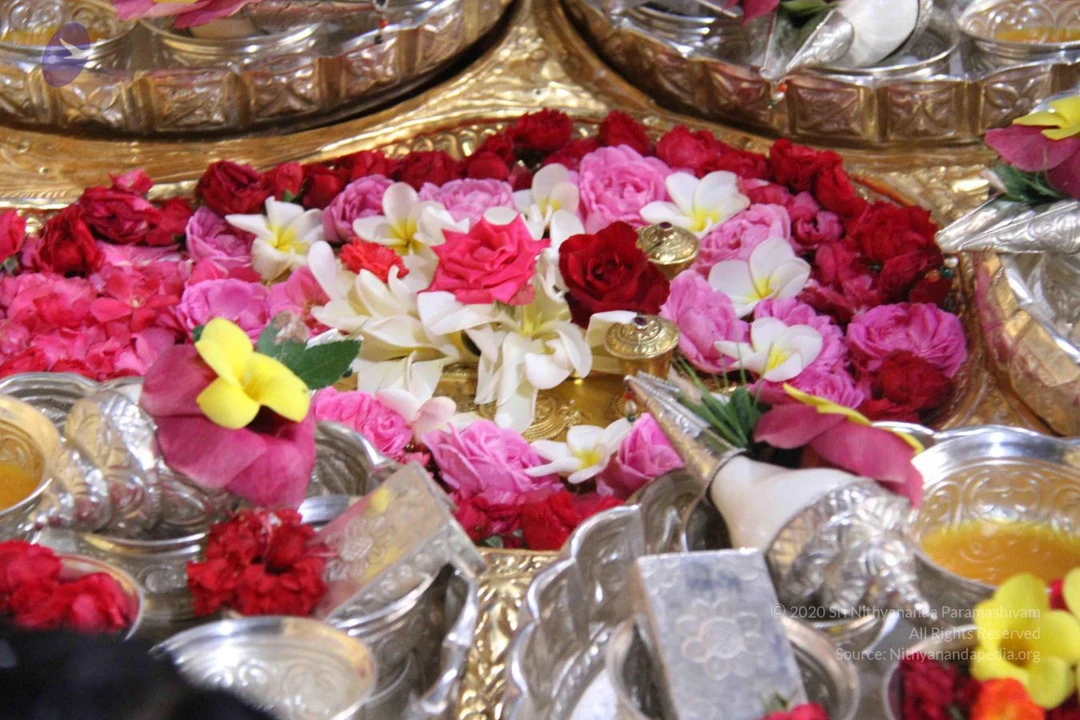
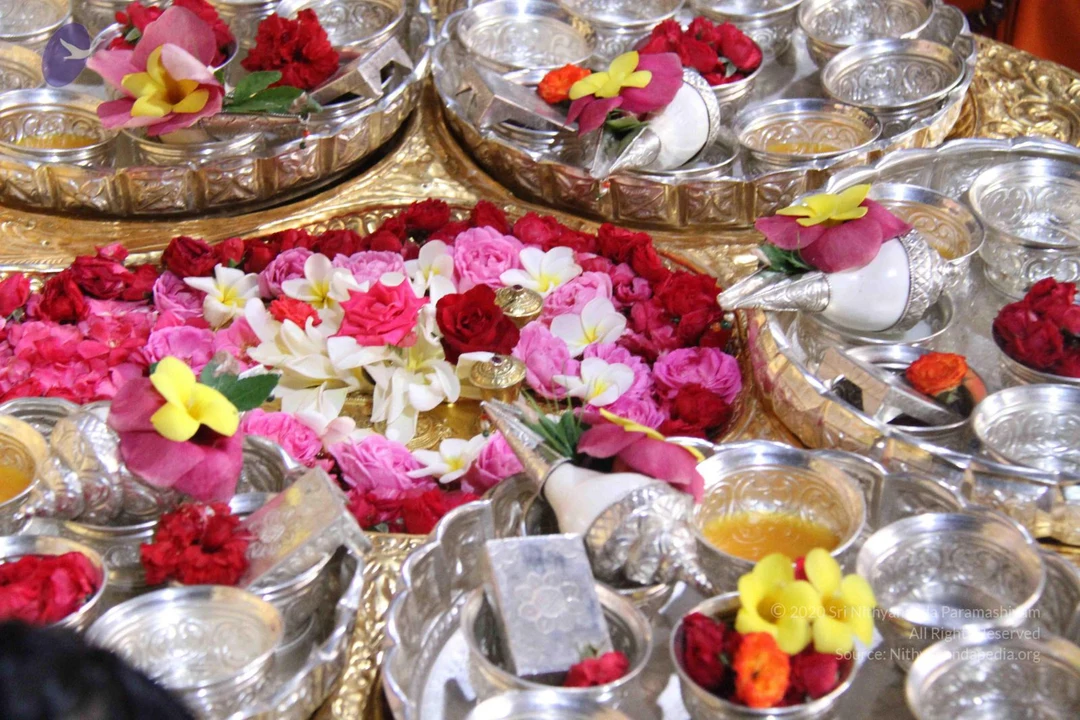
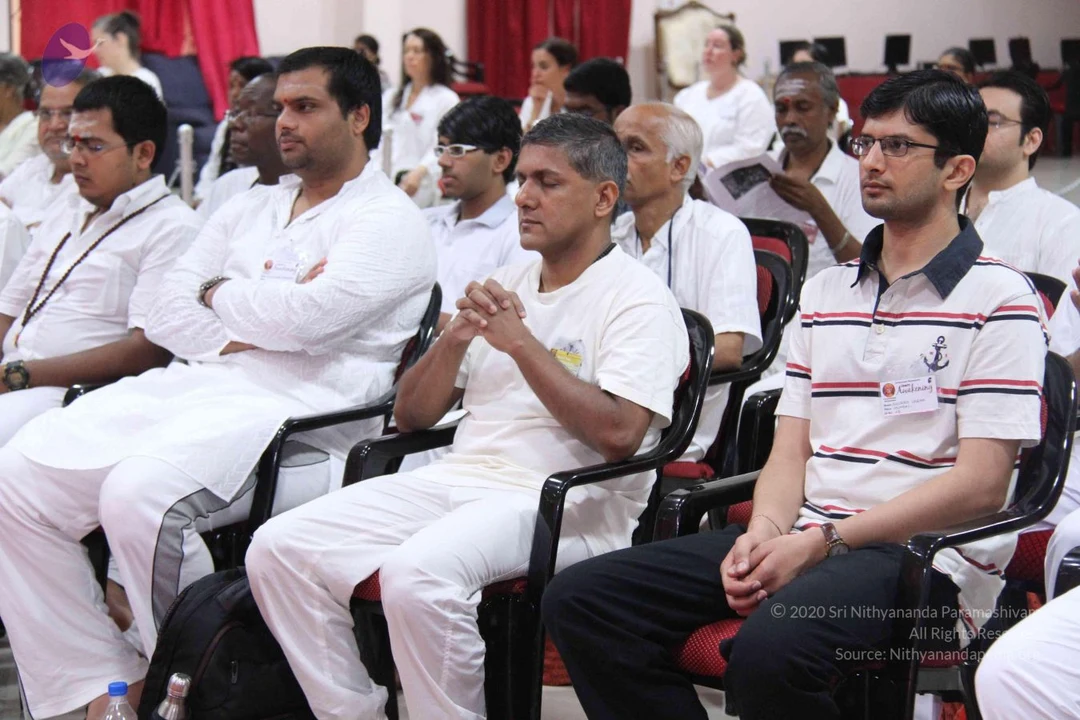
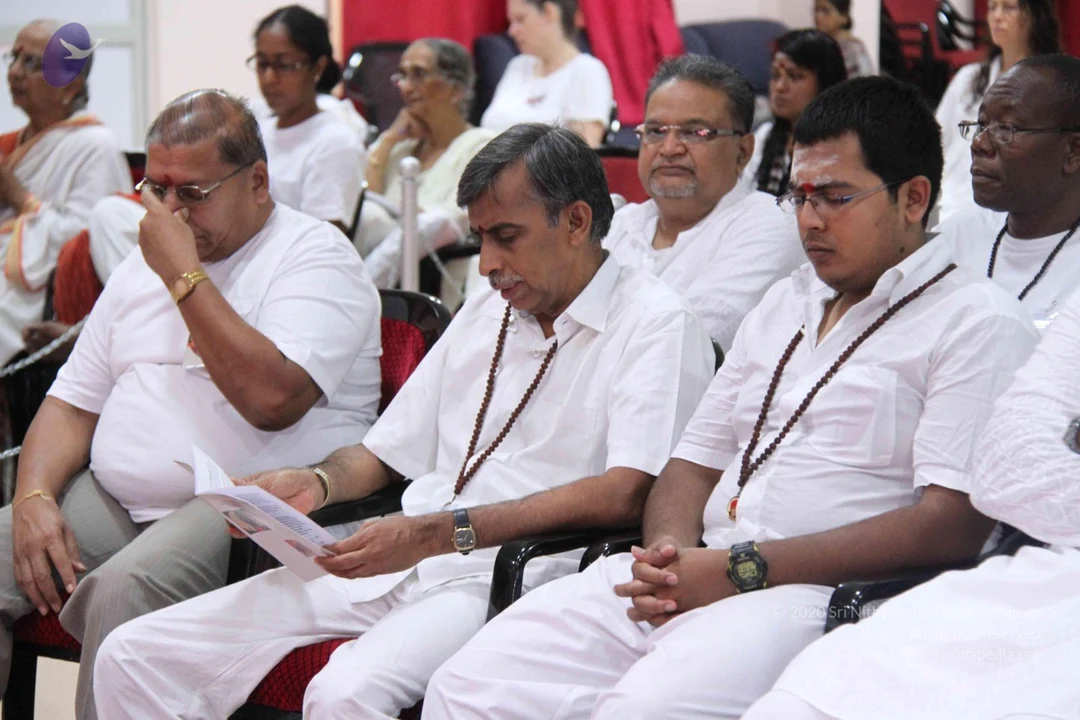
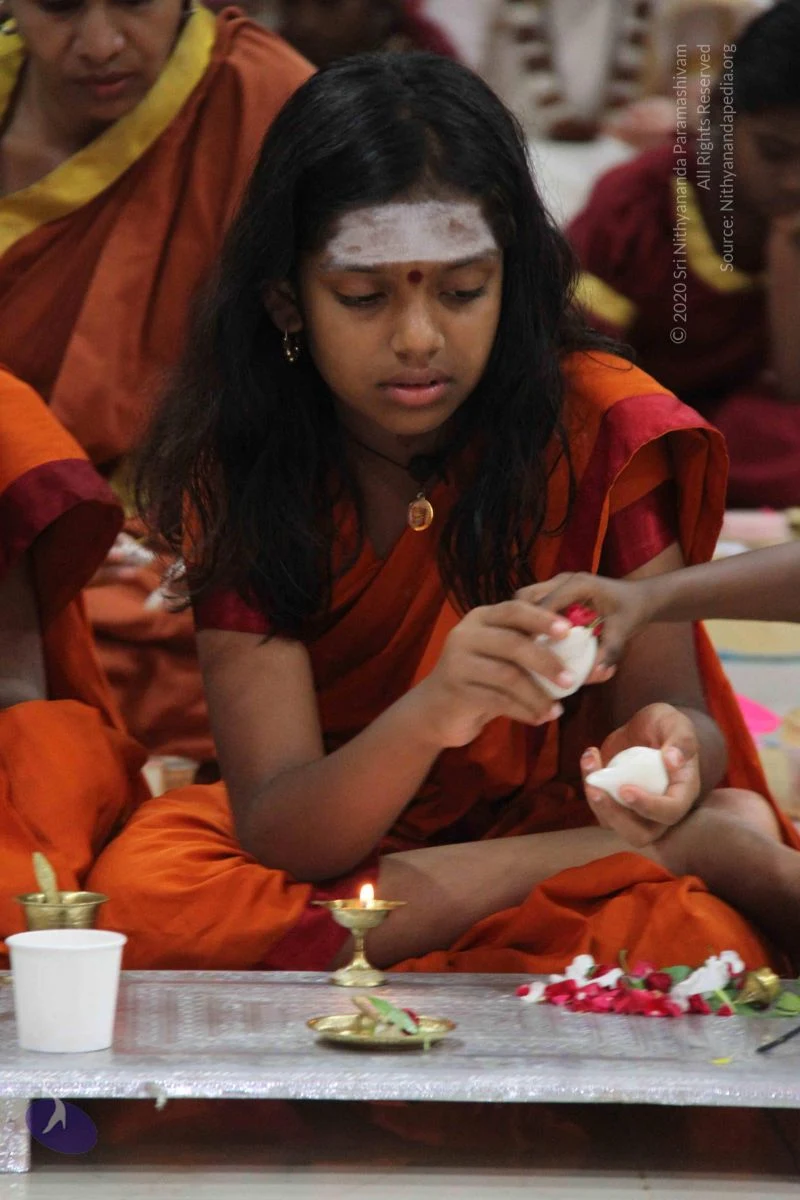
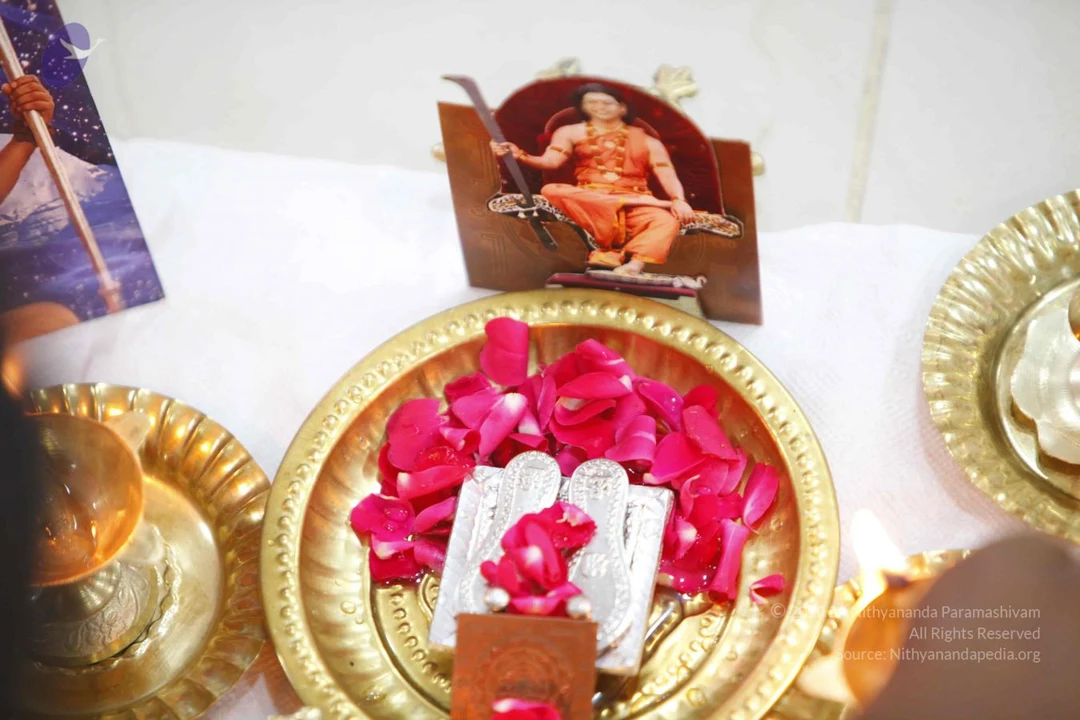
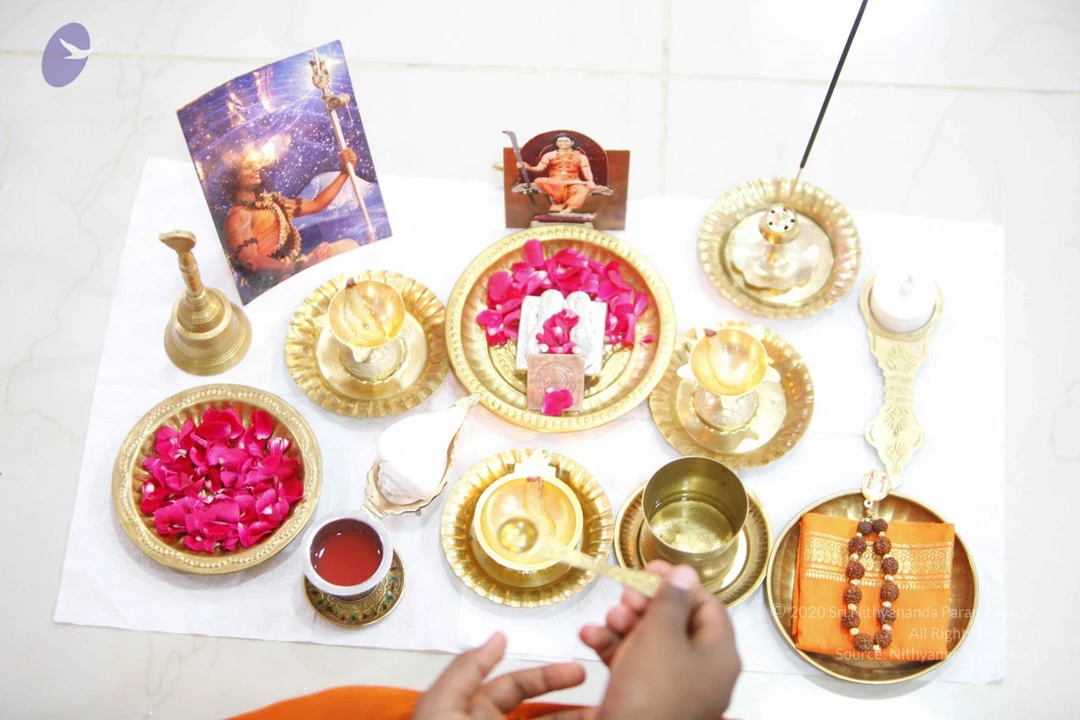
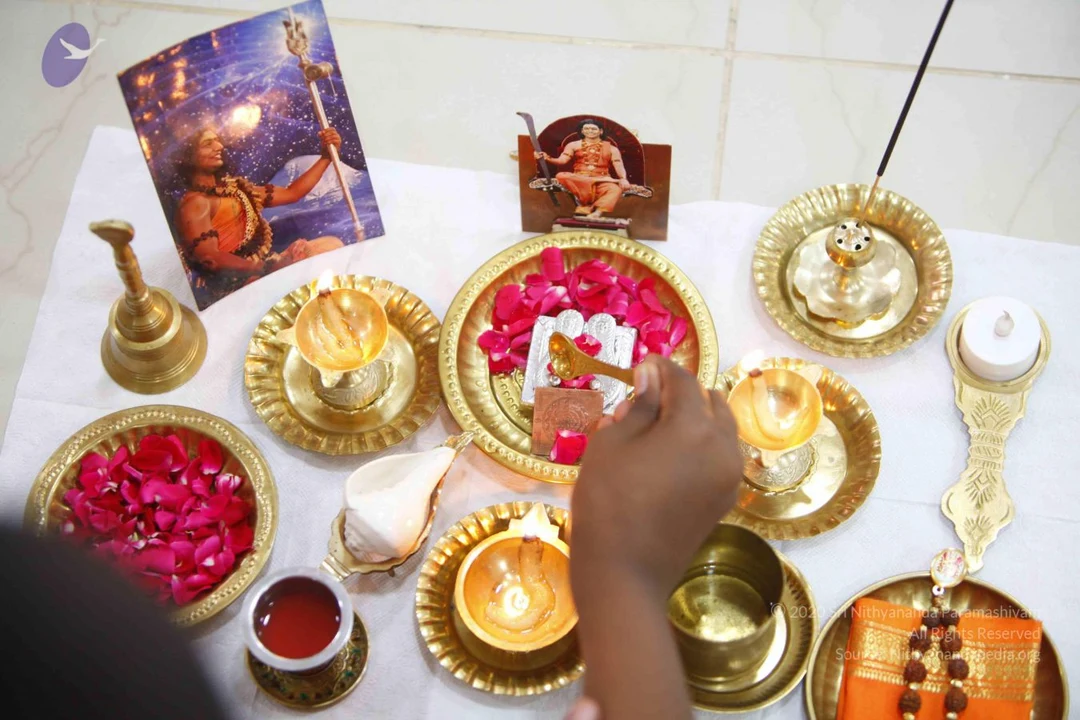
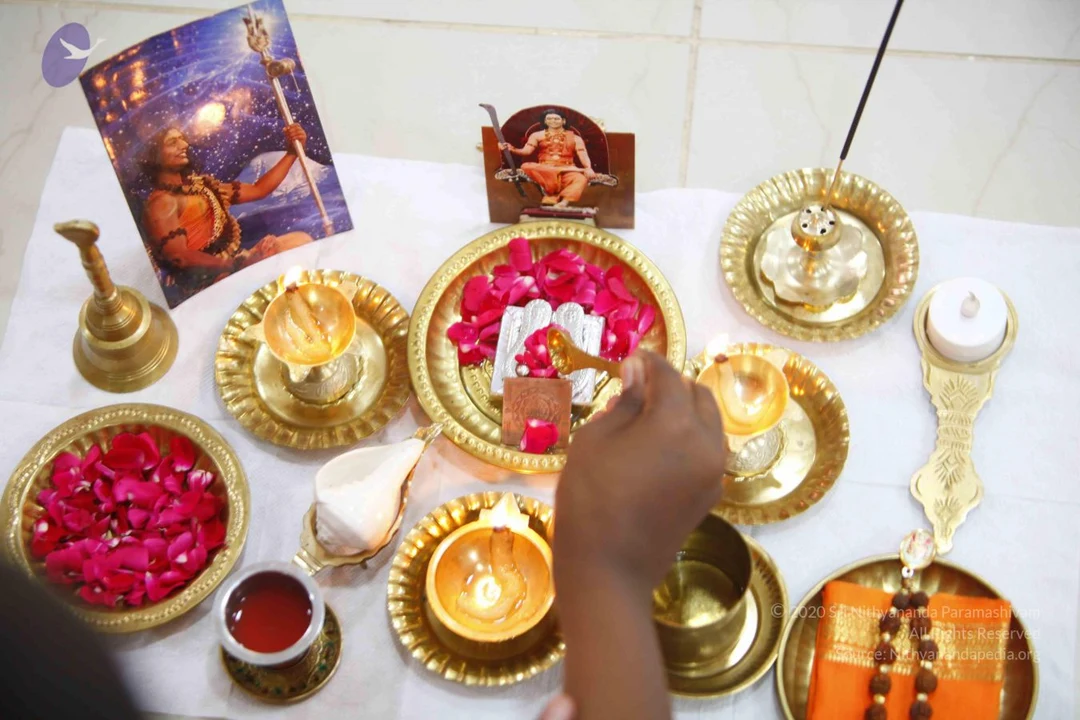
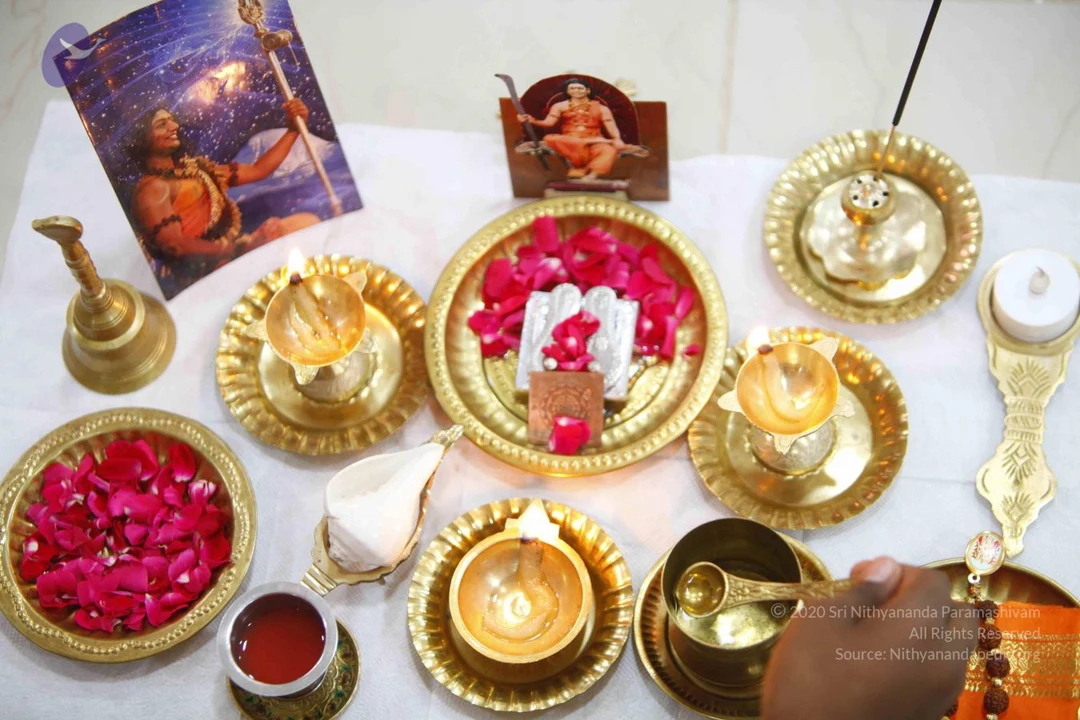
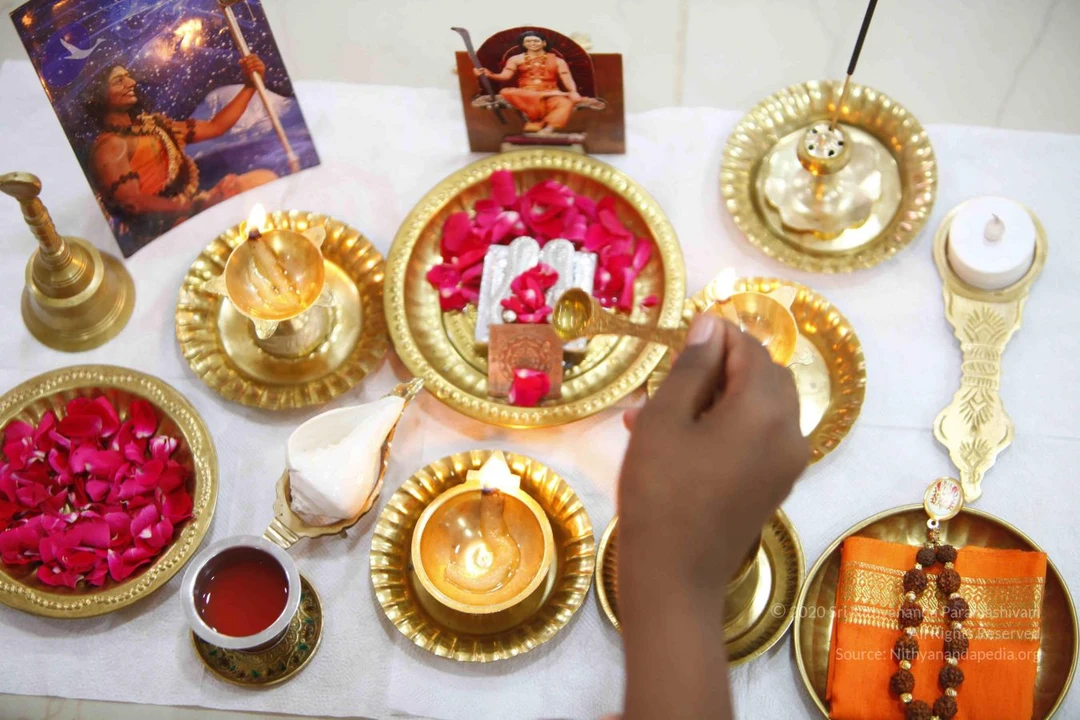
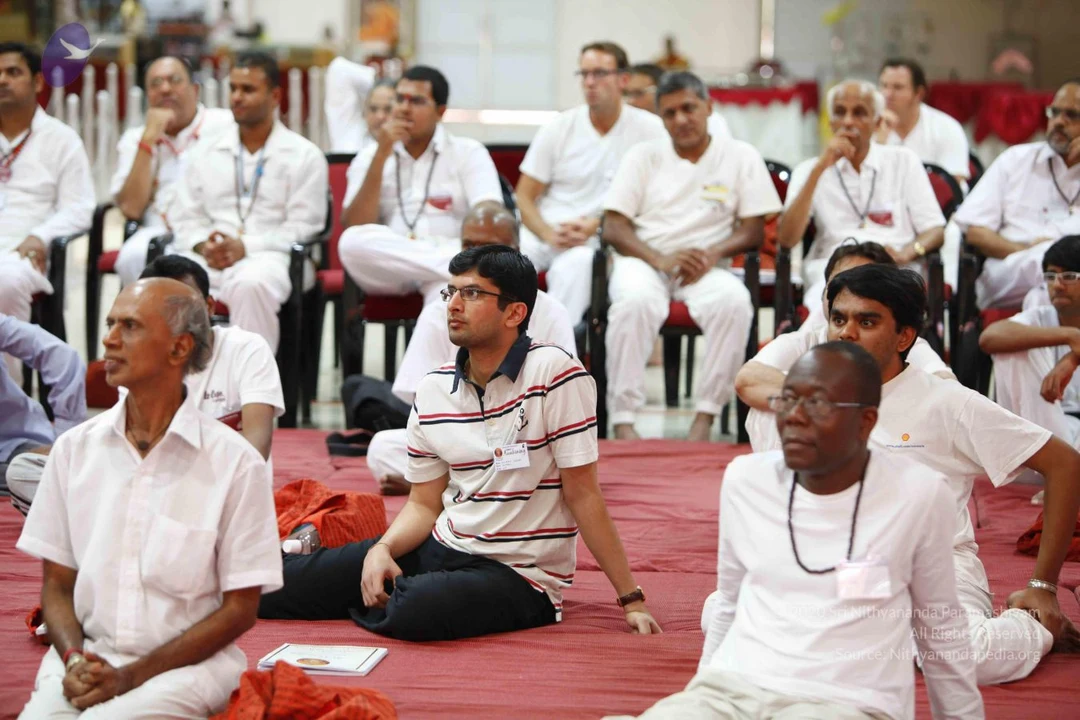
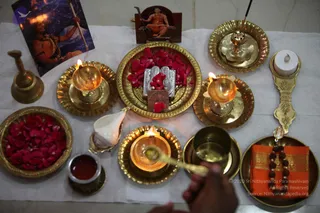
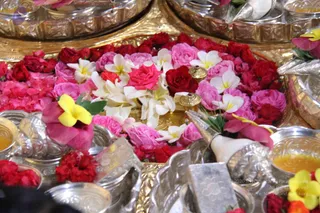
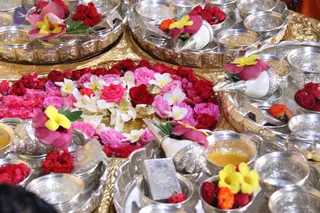
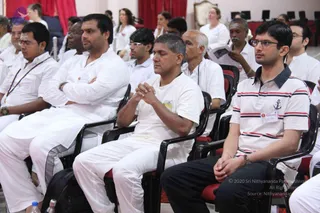
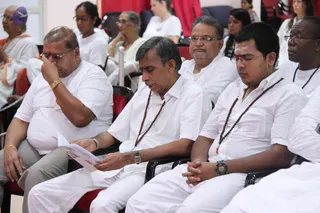
Overhead view of a puja arrangement on a white cloth over a marble floor. Brass plates hold lit oil lamps, red rose petals, a conch shell, a small bell, a brass spoon in a bowl, a brass incense holder with a stick, and a folded orange cloth with a rudraksha mala. A small wooden stand holds a figure of a seated deity, and a printed picture shows a figure holding a staff against a night sky. A hand holding a spoon is visible at the bottom edge, with orange cloth below. The scene is a ritual setup of puja items with lamps and petals.Overhead photo of a puja setup on a white cloth. Several brass lamps with lit flames, a brass plate of red rose petals with a small silver deity murti, a conch shell, a brass bell, a brass incense holder with a stick of incense, a bowl of red petals, a small red liquid cup, a brass tray with a rudraksha mala draped over an orange cloth, and a brass ritual spoon held by a hand at the bottom edge. A printed image of a figure with a staff and a small framed figurine on a wooden stand sit at the top. No people are visible apart from the partial hand.Close-up of a ritual arrangement on a gilded tray: a dense ring of red roses, pink roses and white frangipani (plumeria) flowers surrounds a small brass oil lamp, with rose petals scattered beside it. Silver puja vessels with embossed floral designs, a silver spoon and a silver container hold yellow liquid and offerings, with yellow and red flowers at the edges. No people are visible; this is an offering arrangement for worship.Close overhead view of a ritual arrangement on a gold-toned tray: silver bowls filled with golden liquid, silver cups and a silver-rimmed conch-shaped vessel, all surrounded by heaps of red roses, pink roses, white plumeria and yellow-orange marigold-like blossoms. Yellow flowers are scattered over the offering. No people are visible apart from a dark sleeve at the lower left corner.A seated audience at a satsang hall, mostly men in white kurtas and white shirts, with a few women in white in the background. In the foreground a man with a rudraksha mala and crossed arms sits beside a man with hands clasped in prayer, eyes closed, and a man in a white-and-red striped polo with a name badge on the right. Red-cushioned black chairs fill the rows, a water bottle sits on the floor at left, and a red curtain hangs behind the room. No speaker is visible in the frame.Seated devotees in white clothing at a satsang, listening with eyes closed or lowered. In the foreground a man in a white shirt holds an open printed booklet, another in a white shirt and rudraksha mala sits with hands folded, and a man at the left wipes his brow with a hand. Behind them, rows of seated attendees in white and a woman in a white sari with orange border. The setting is an indoor hall with red chairs and a red curtain in the background.

Nithya Satsang

19 photosSource gallery
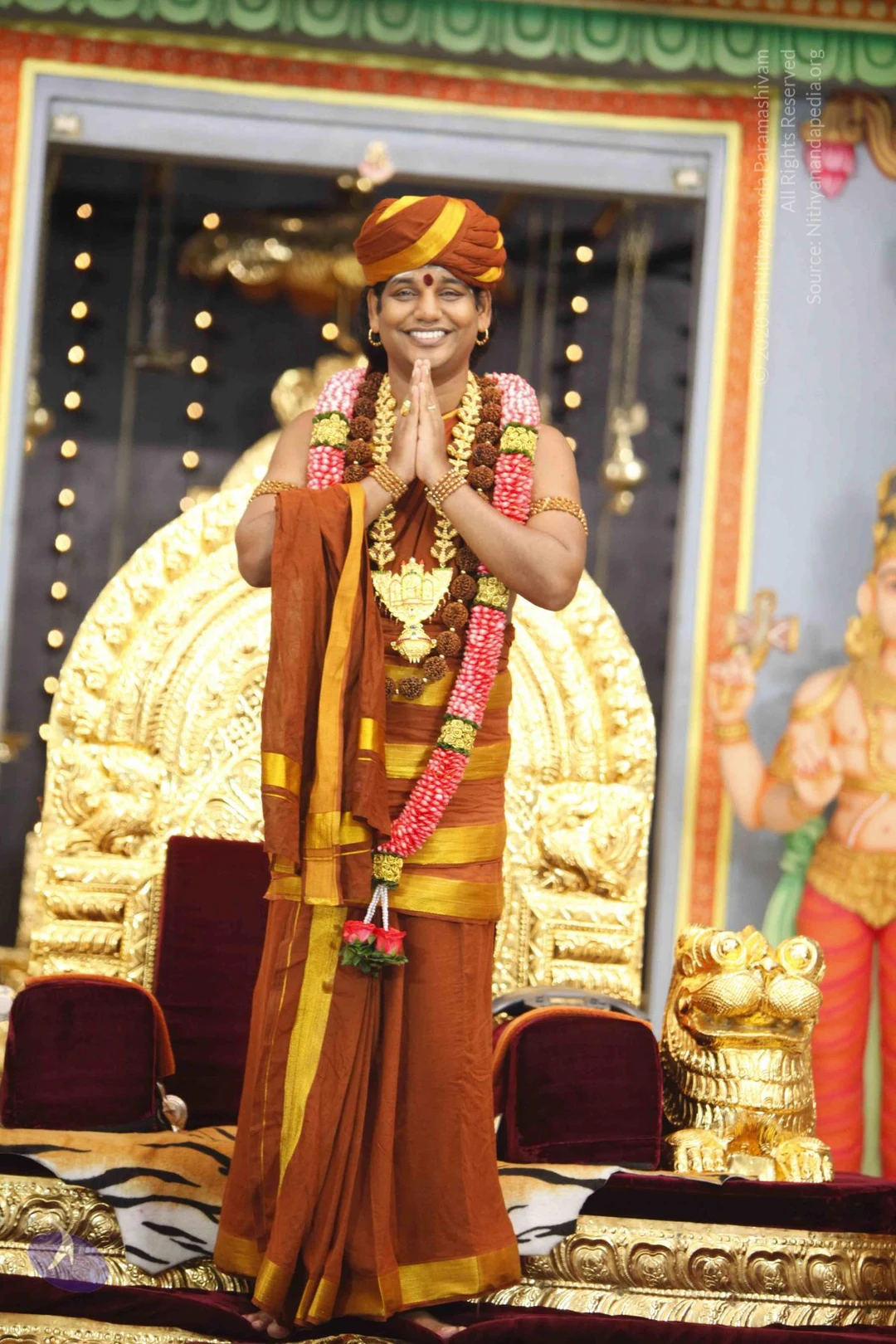
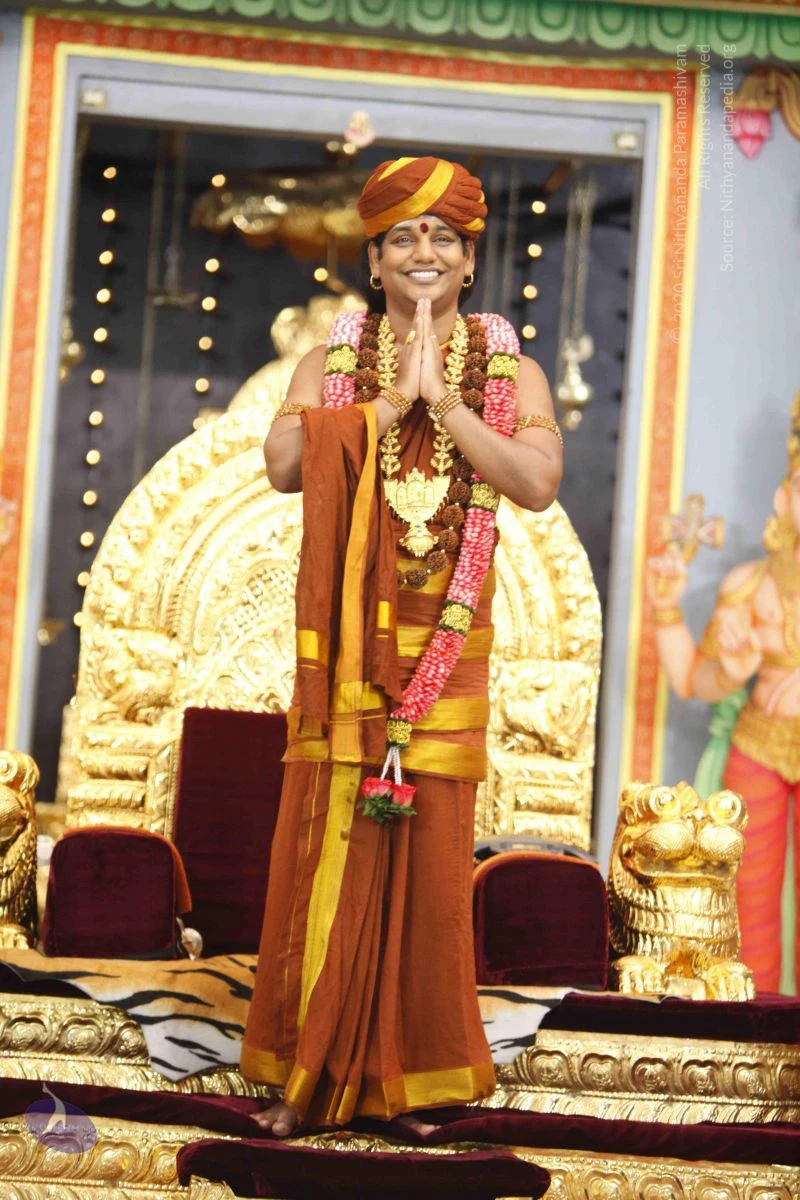
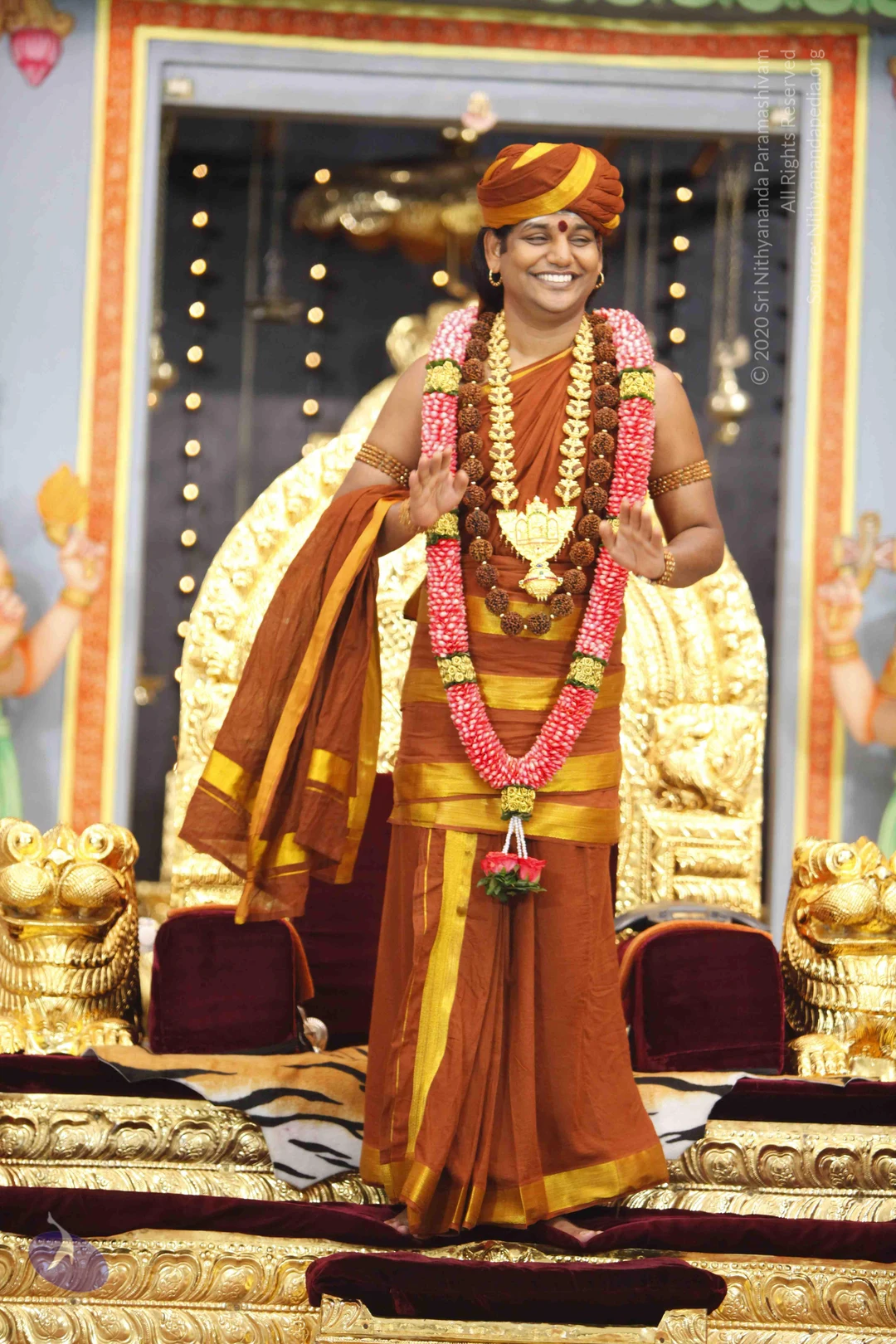
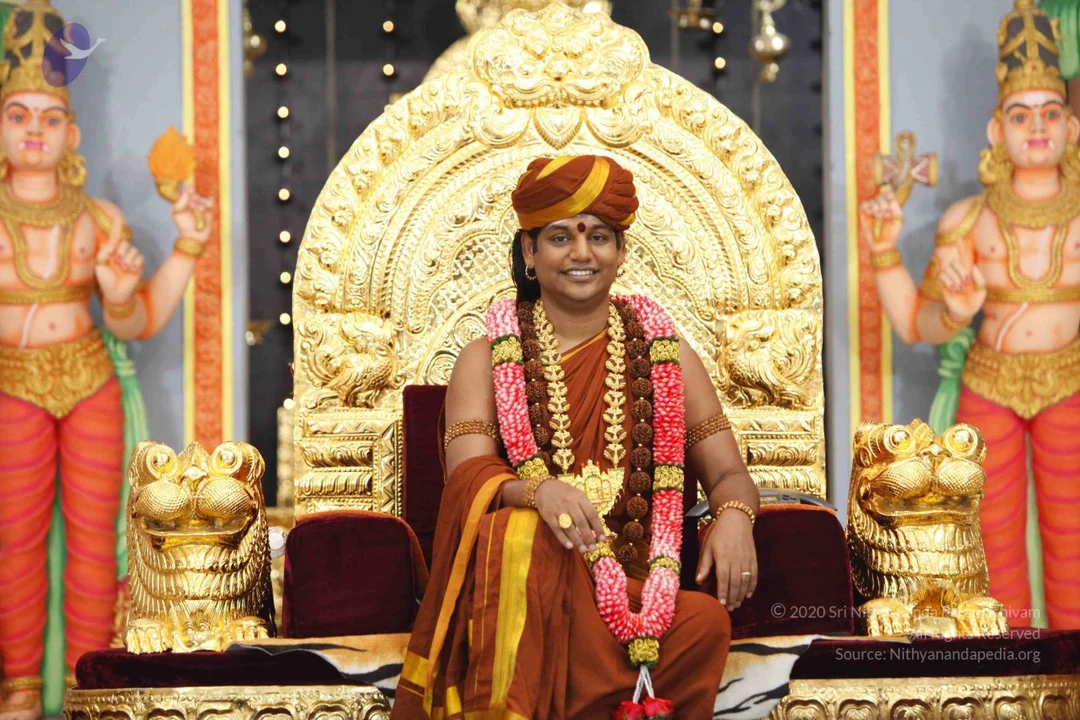
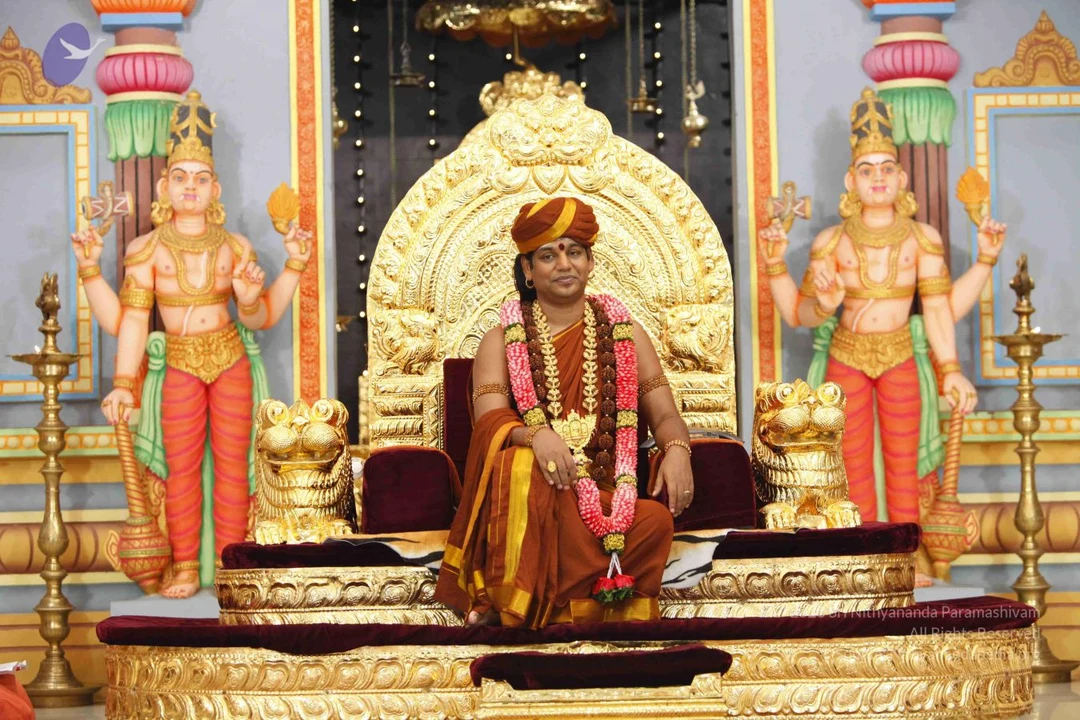
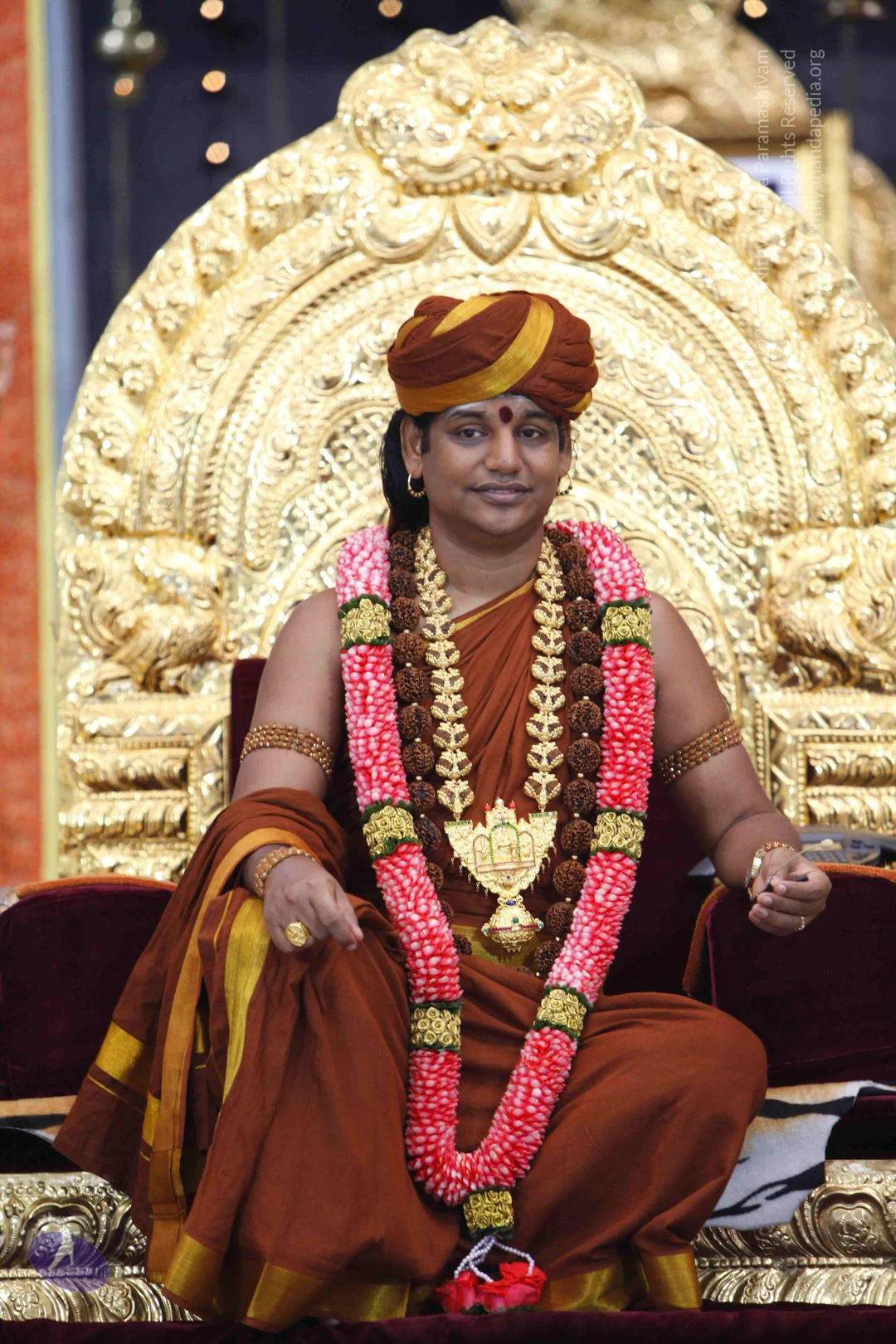
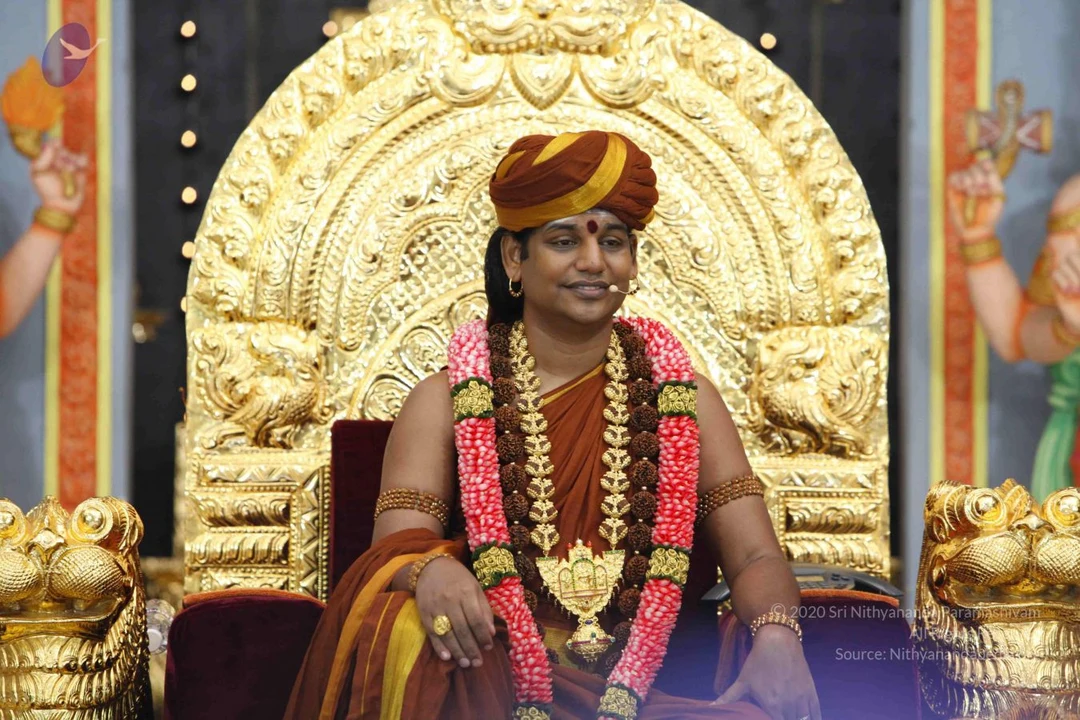
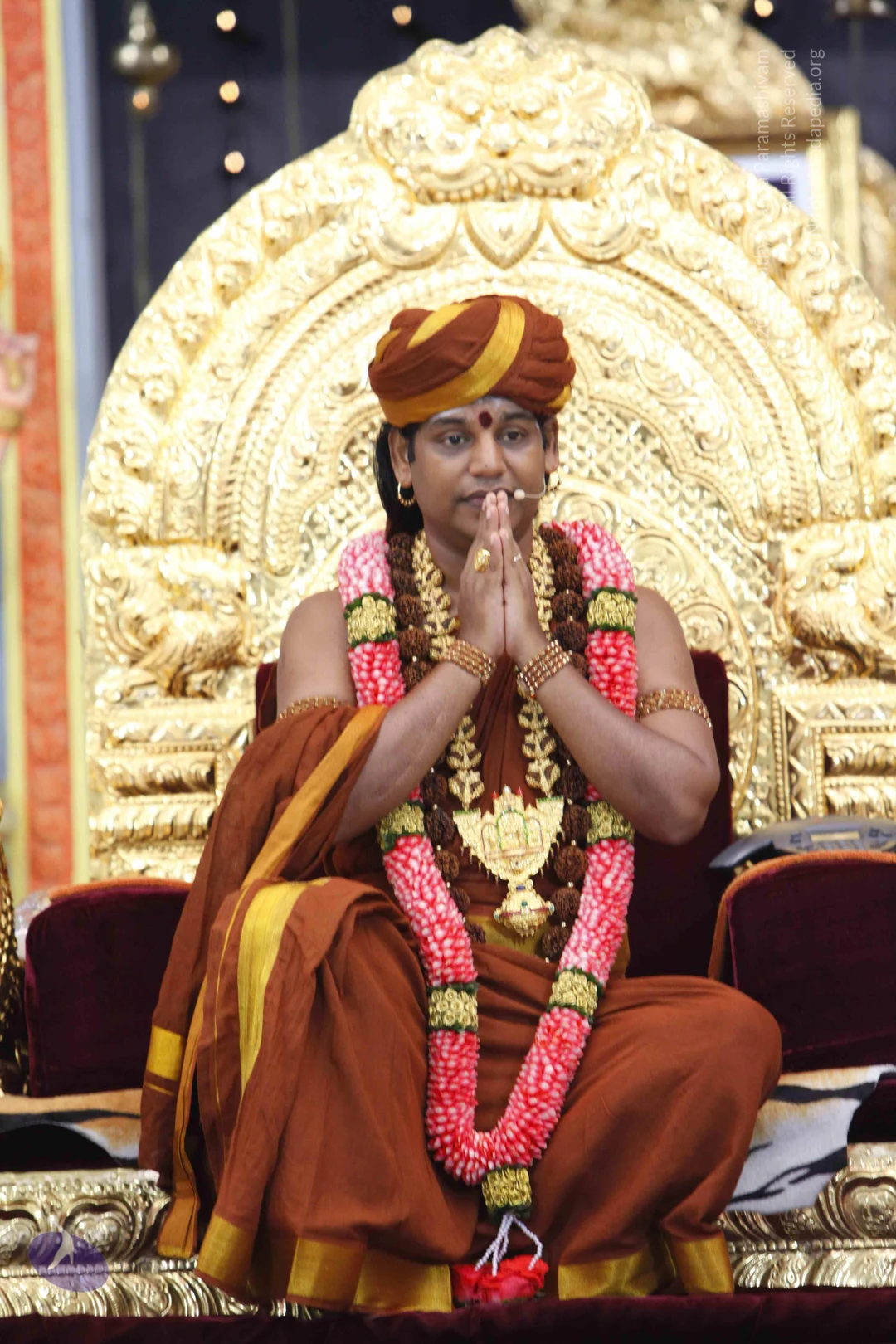
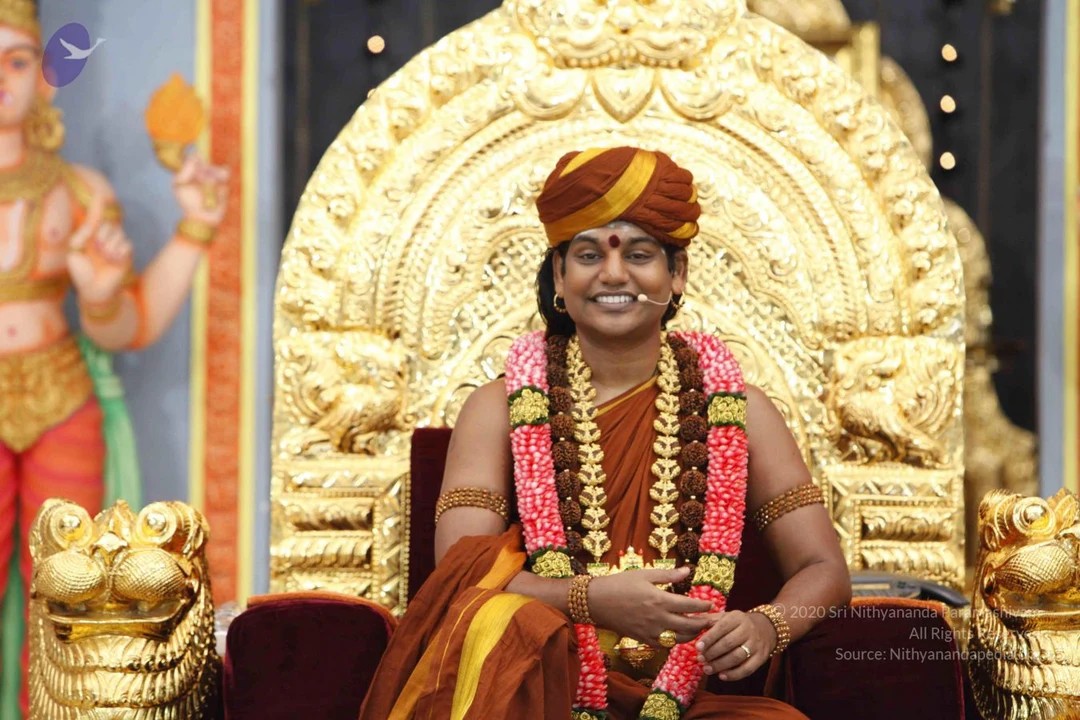
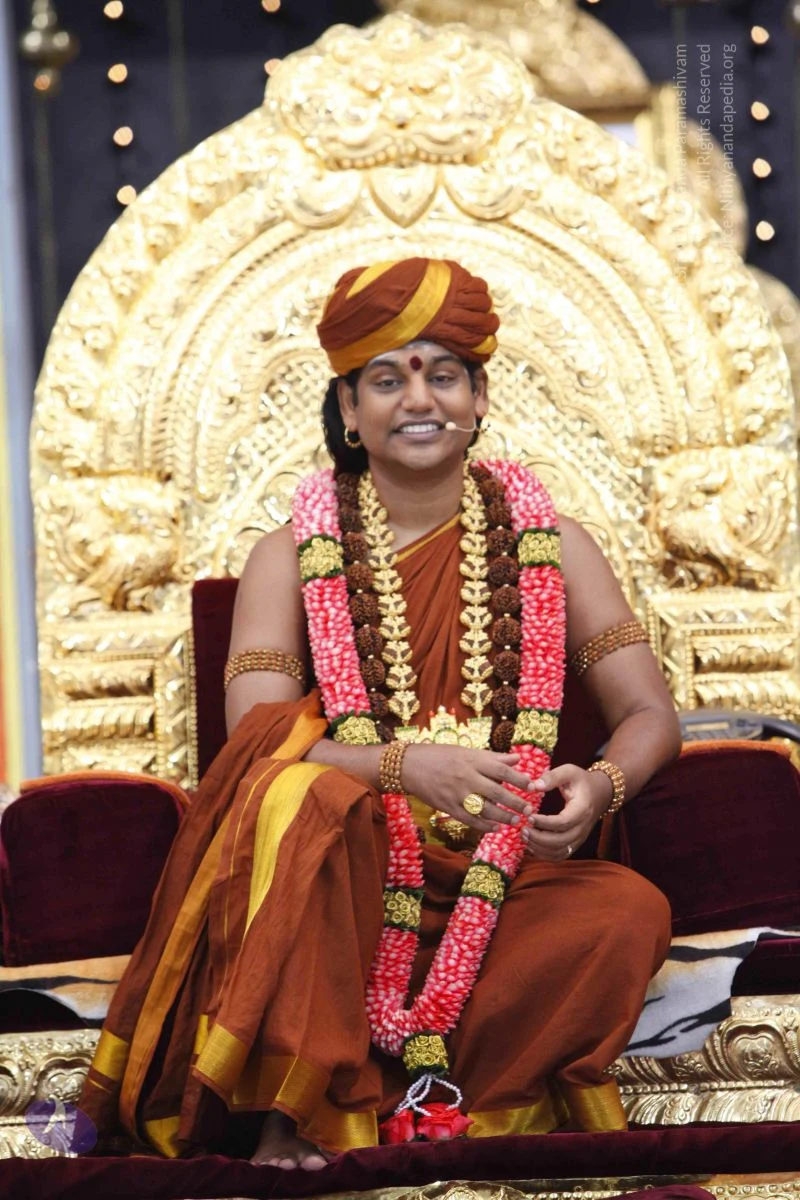
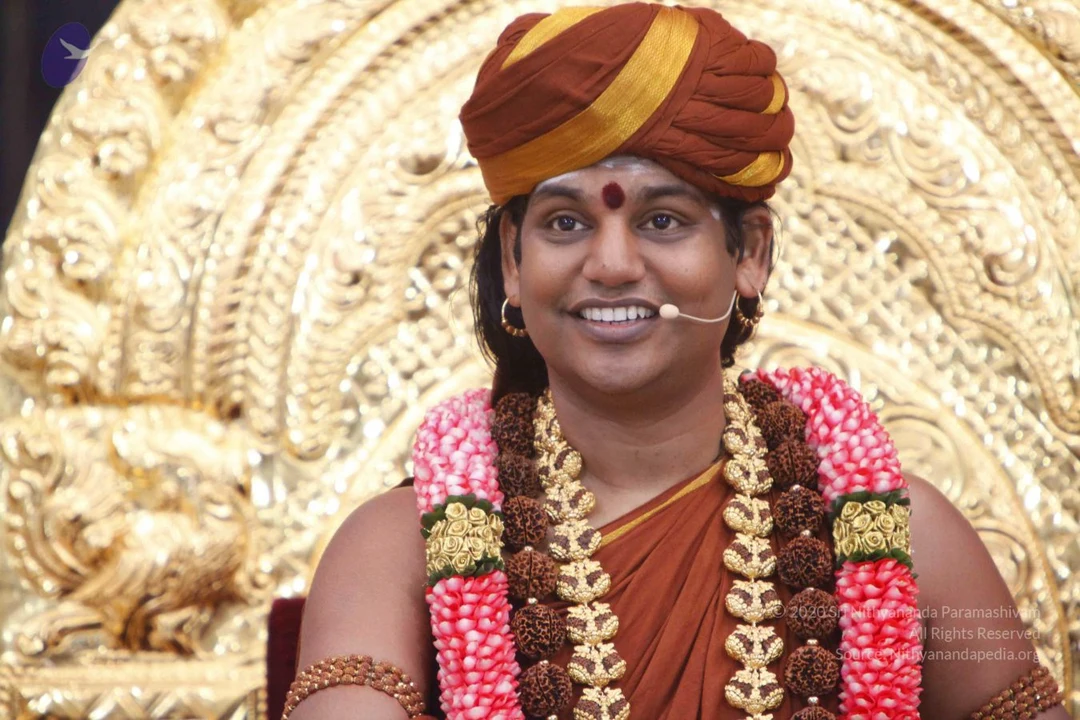
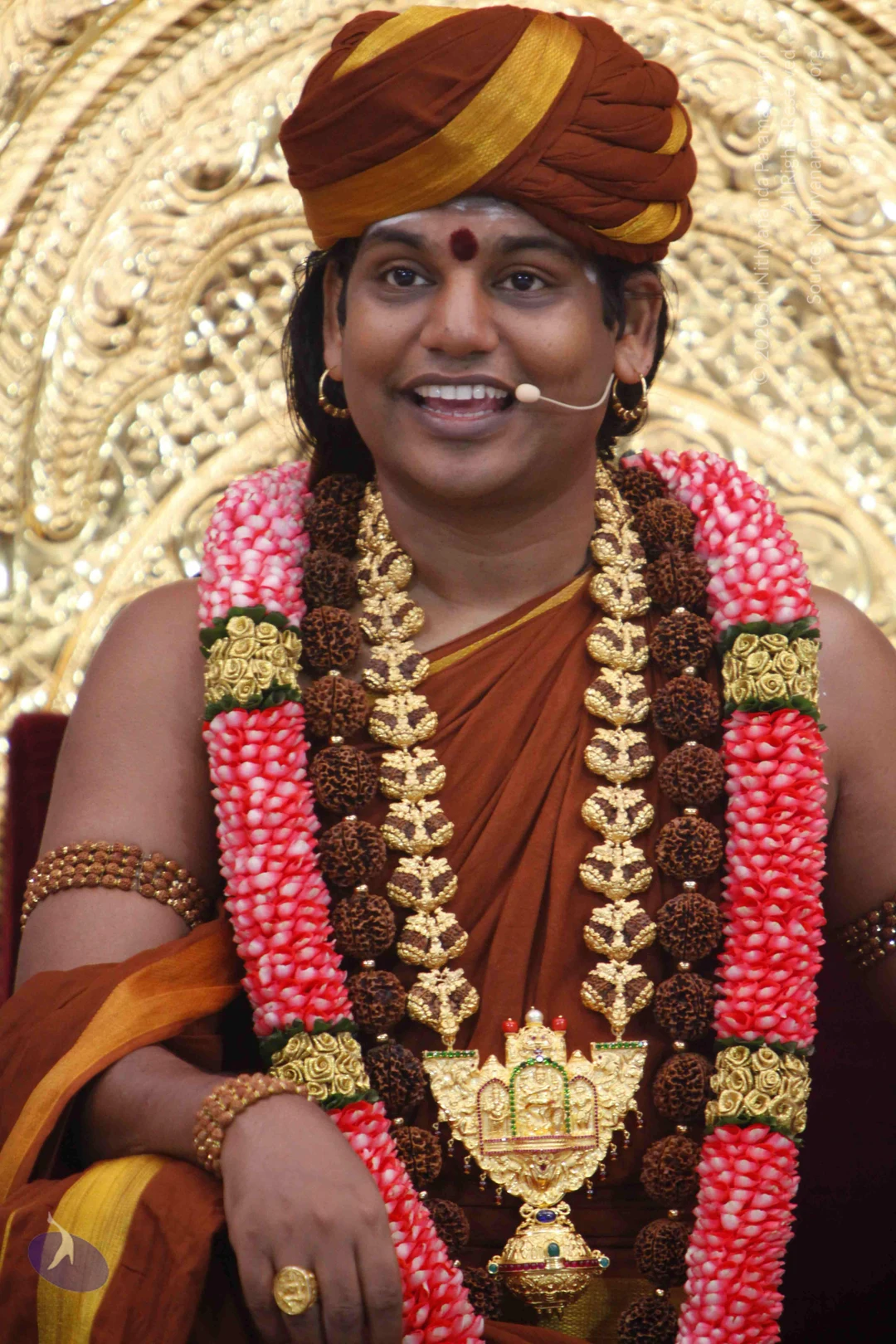
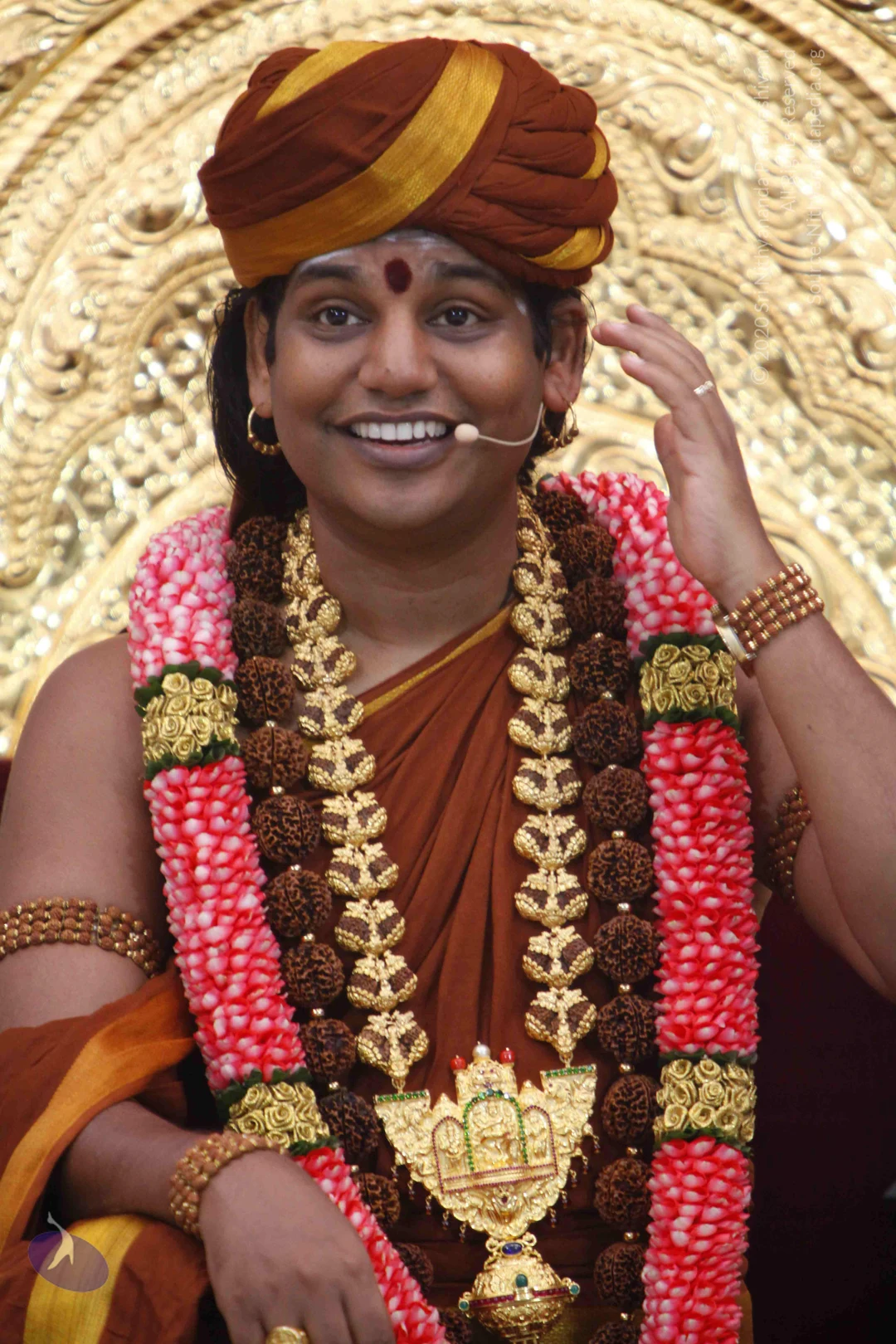
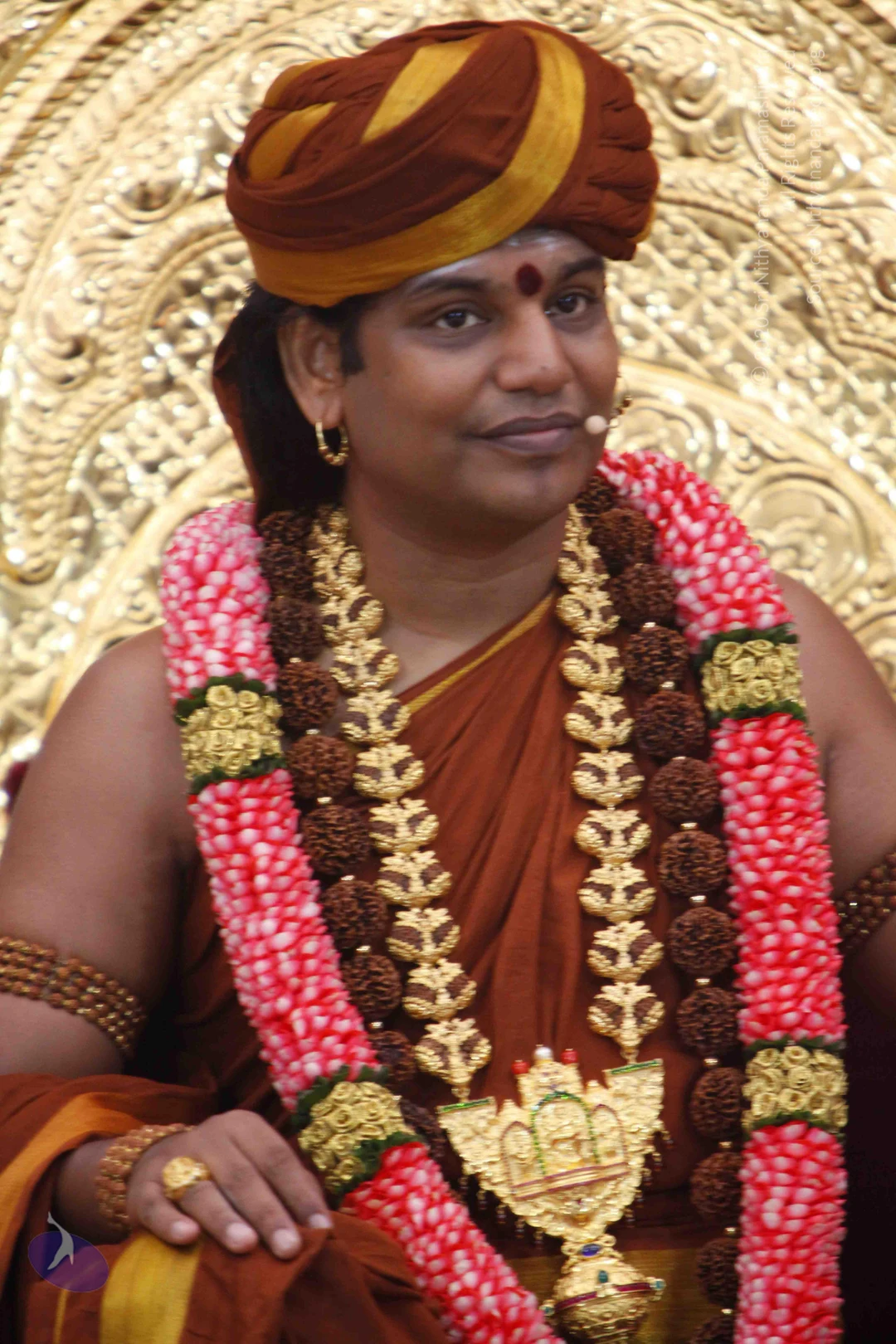
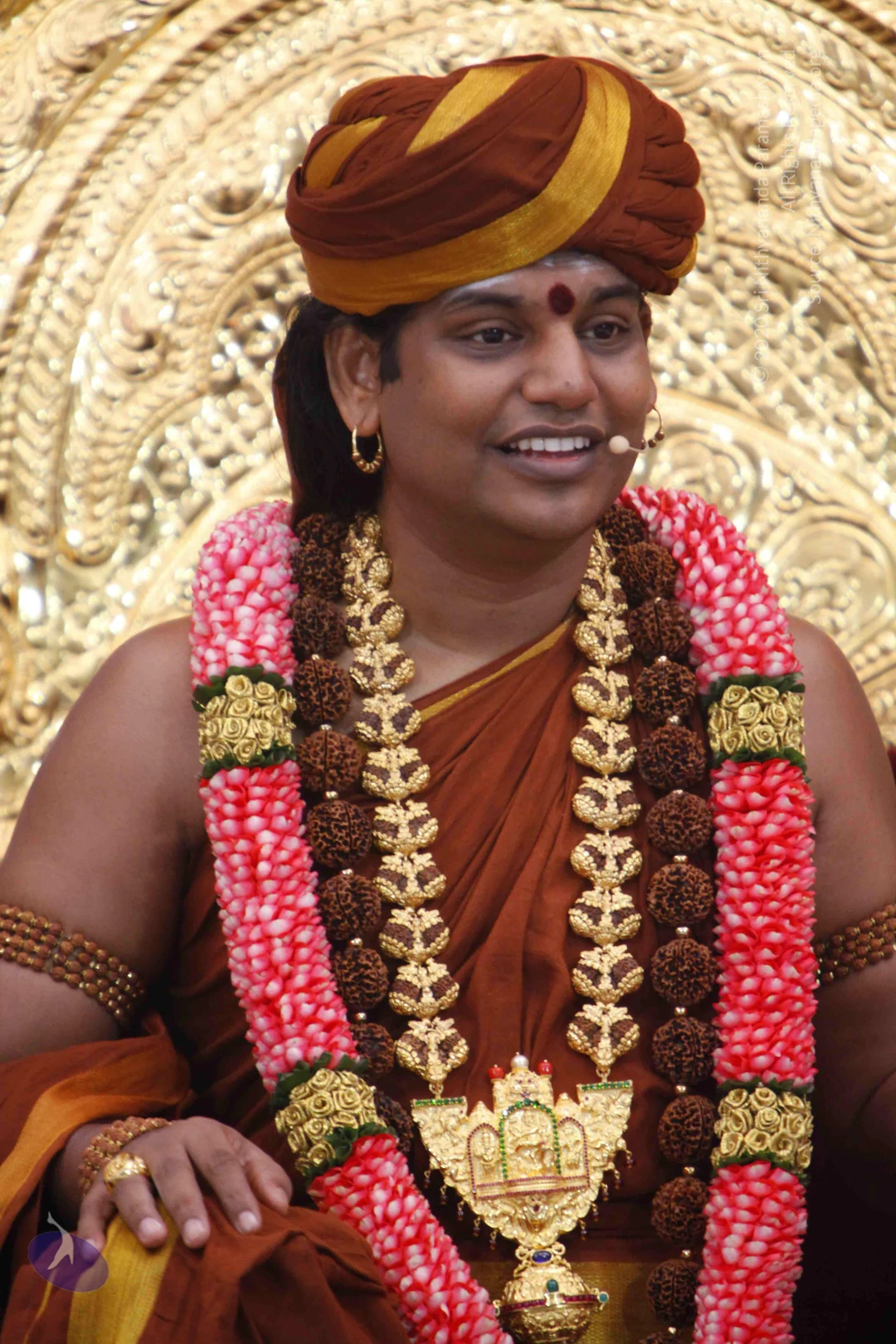
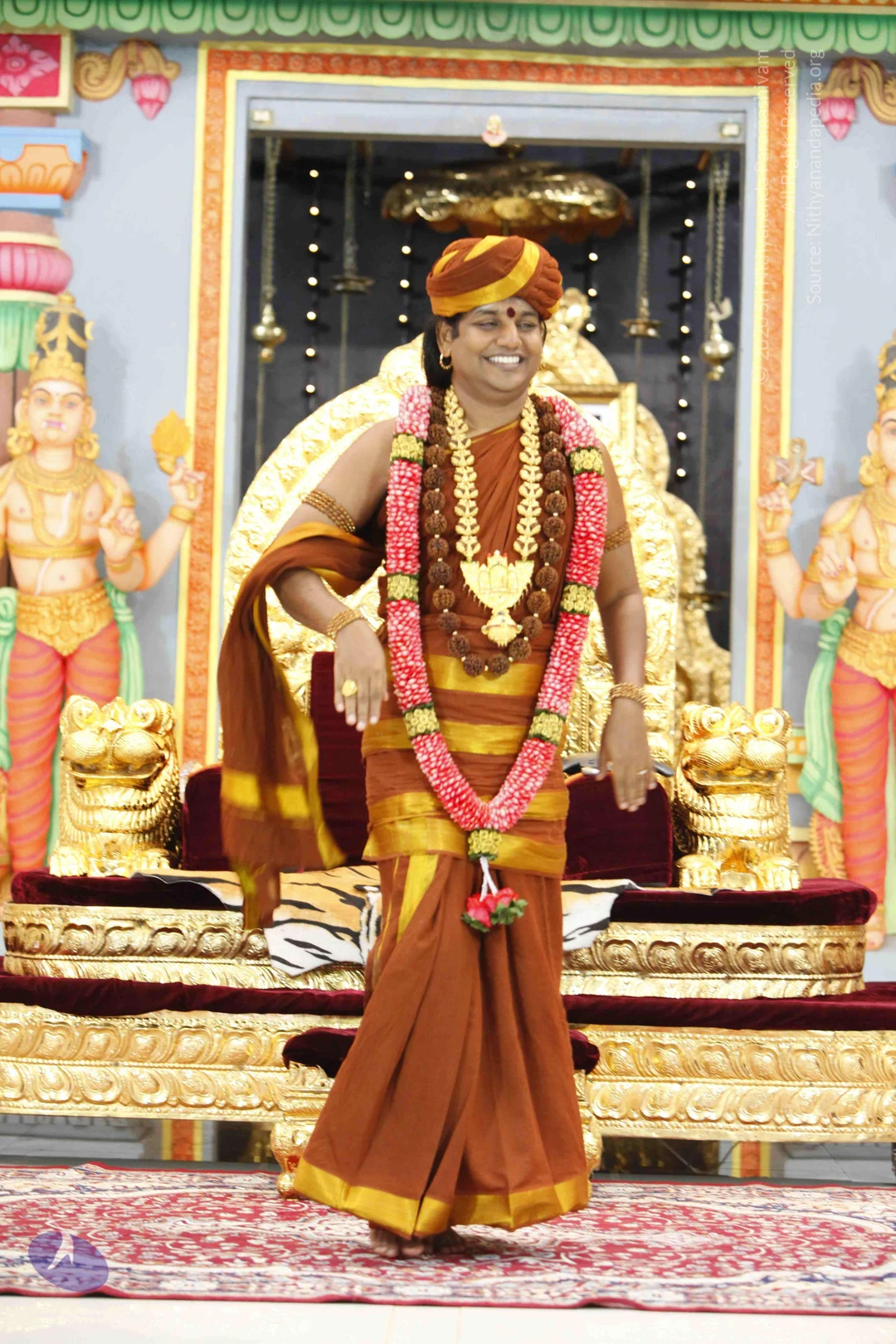
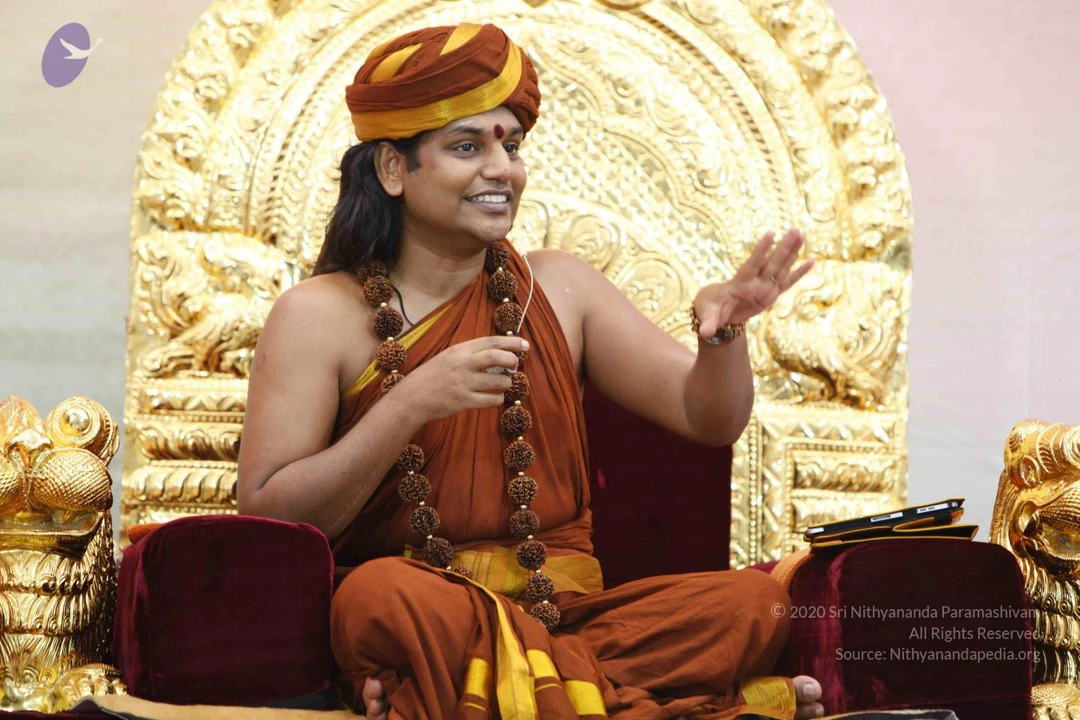
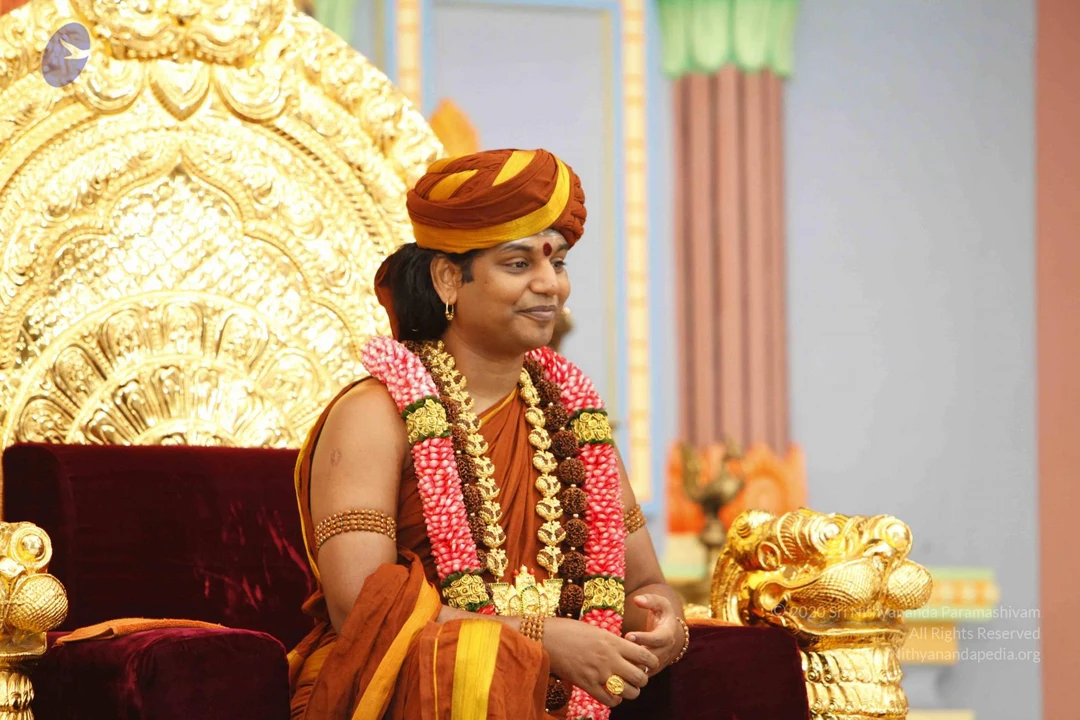
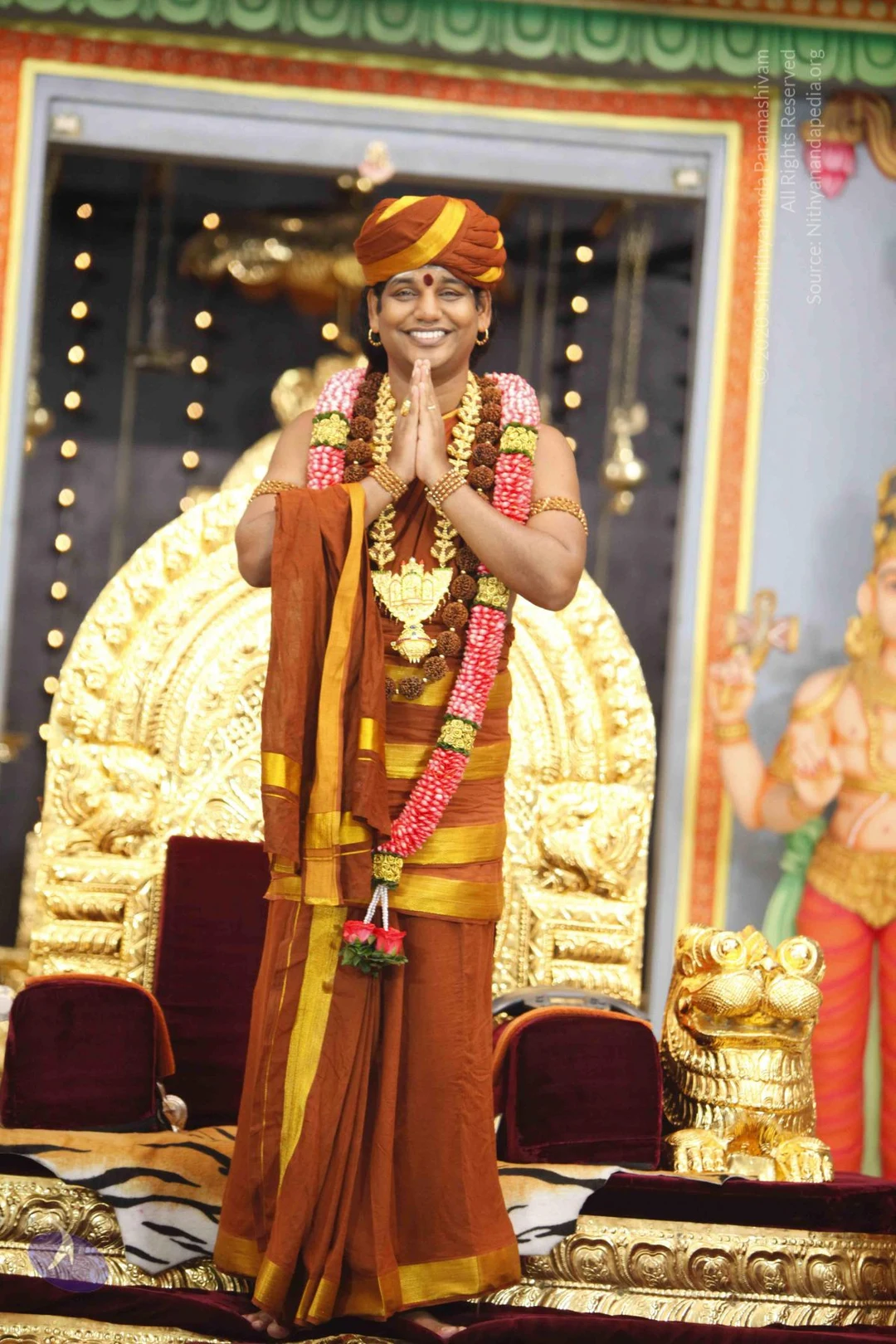
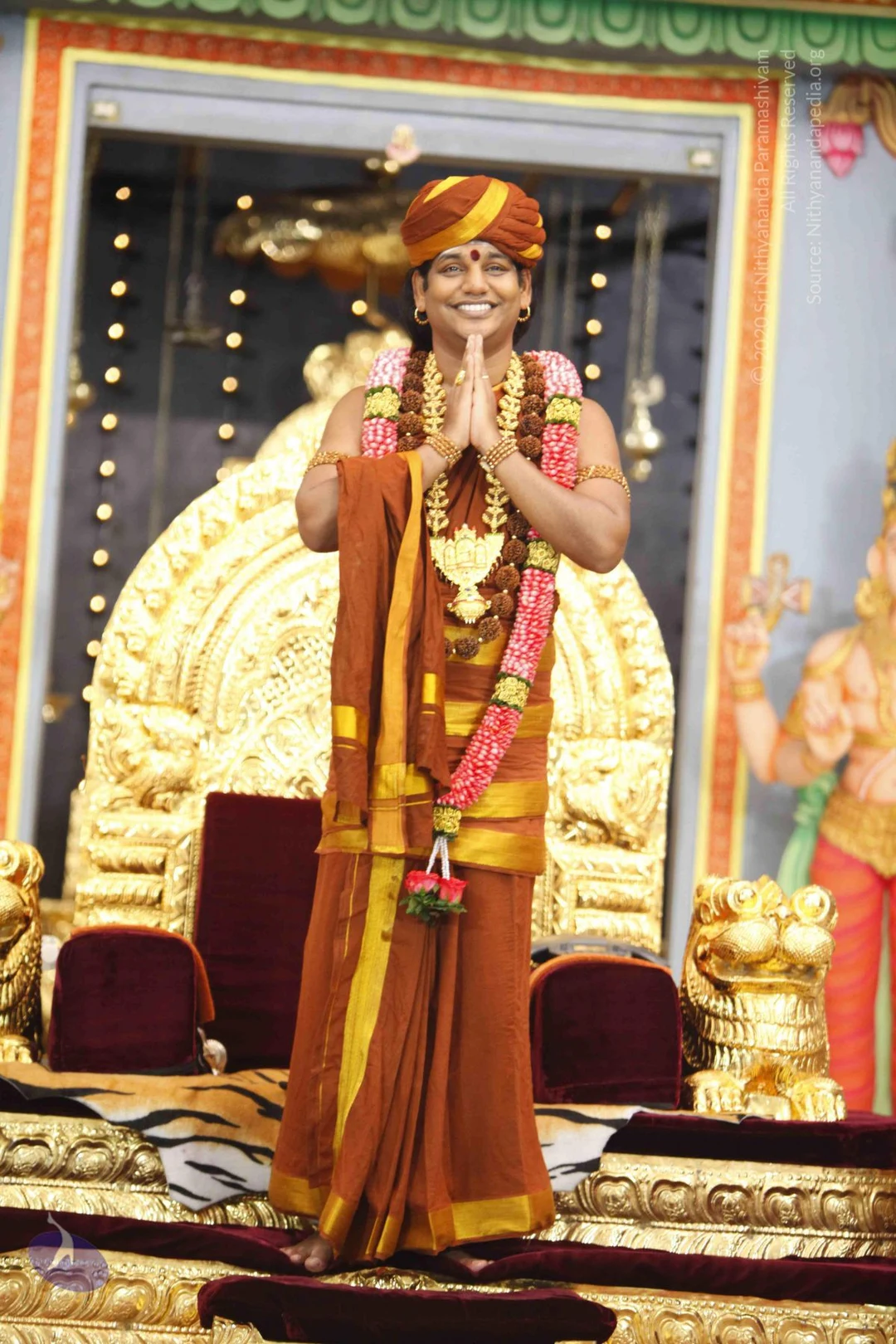
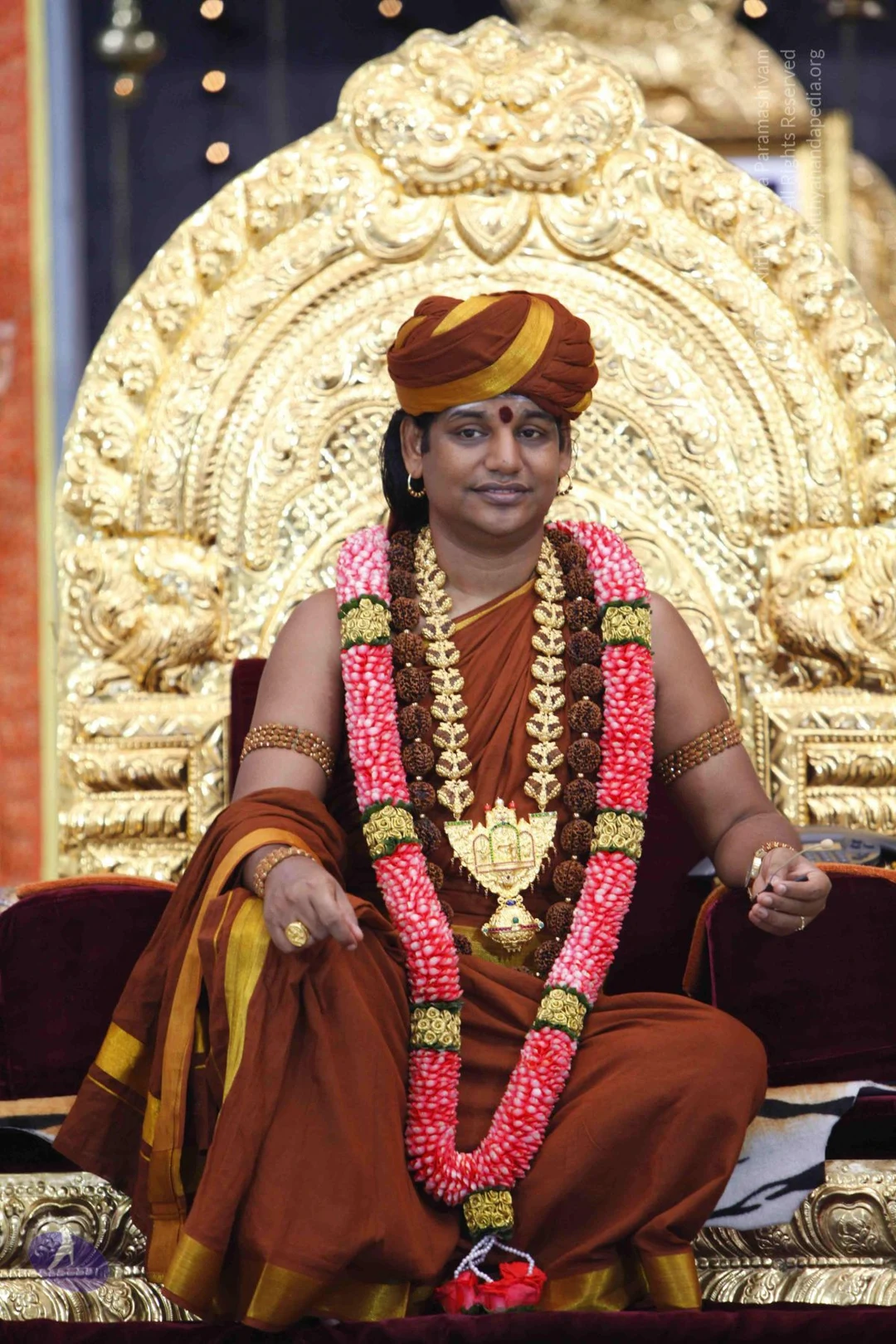
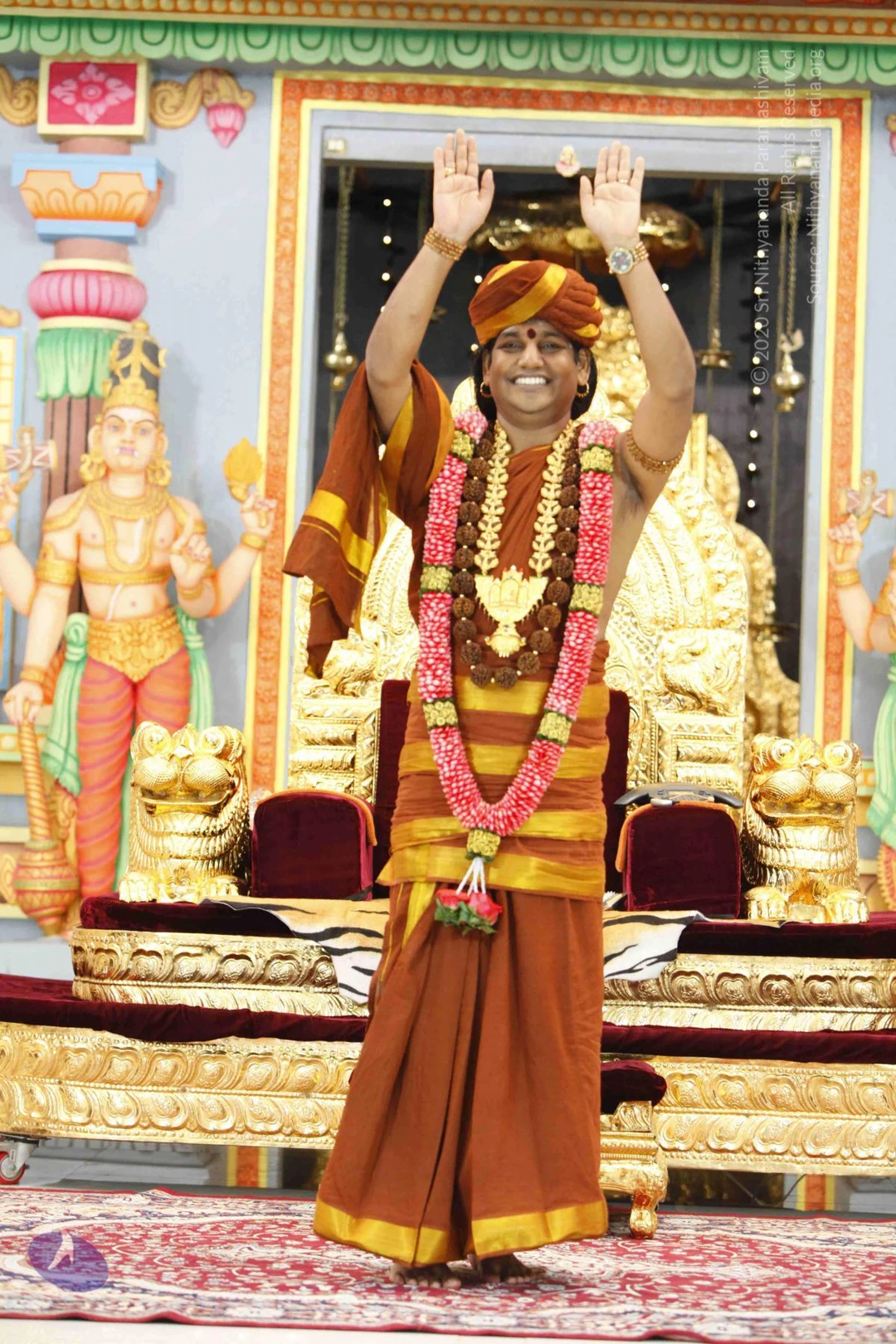
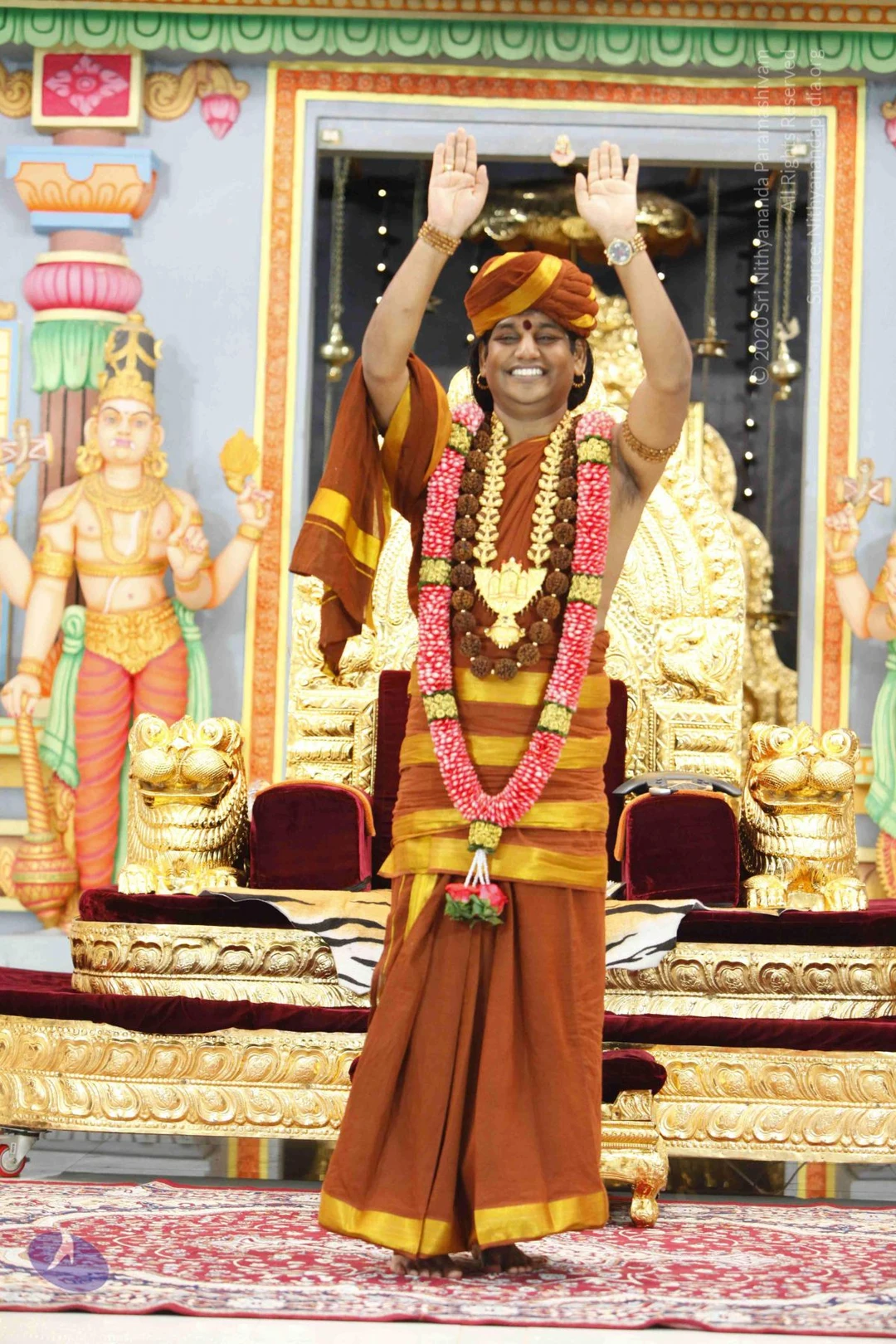
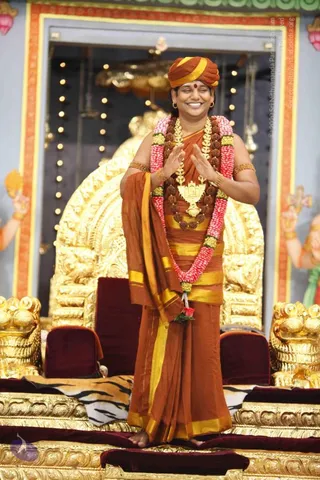
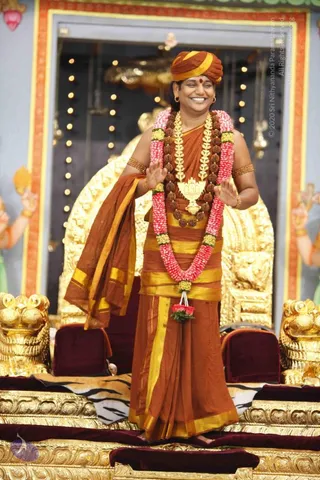
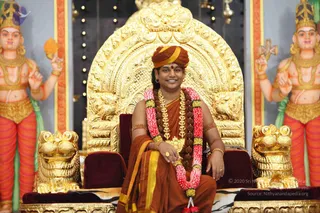
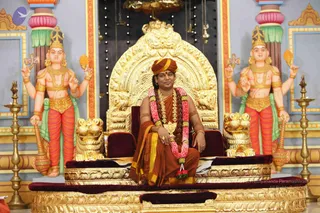
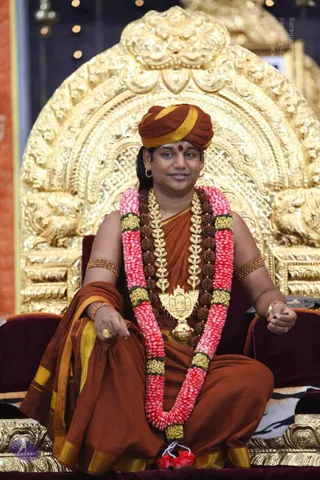
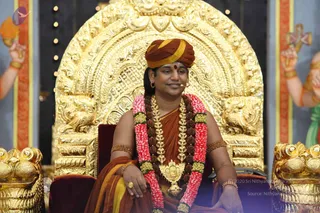
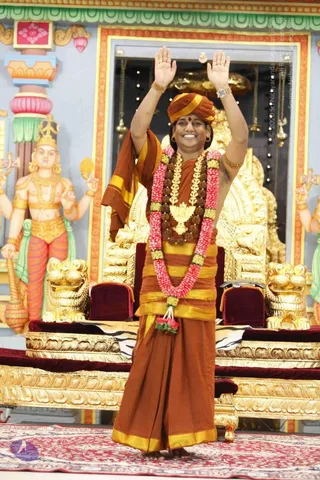
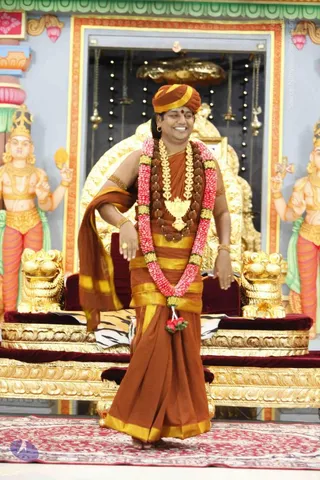
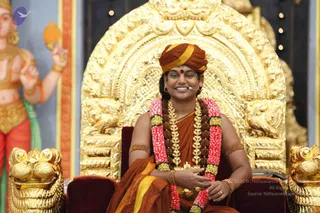
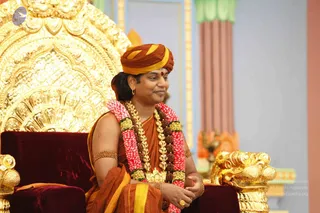
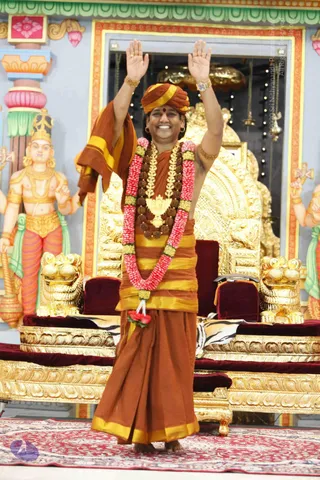
A smiling man stands barefoot with palms pressed together in namaste on a raised platform in front of a golden throne. He wears an orange-saffron turban with a red tilak, a saffron-brown dhoti and shawl with gold borders, a rudraksha mala, a gold pendant, gold armlets and a long pink-and-white flower garland. Behind him are gold-carved seats, lion-head armrests and a tiger-striped cloth, with a gilded arch and deity murti figures at the edges. Appearance-based candidate: Swamiji (probable), identified by the saffron turban, rudraksha mala, gold ornaments and ceremonial garland.A smiling man stands on a raised gold-and-velvet stage with palms raised, wearing a saffron-orange turban with gold border, an orange-brown dhoti and shawl with gold borders, multiple rudraksha mala strands, a gold ceremonial pendant necklace and a red-and-white flower garland. Behind him is a gold throne with lion-shaped armrests and a tiger-skin rug, with gold-framed doorway and string lights. This is a probable Swamiji portrait: the saffron turban, rudraksha malas and ornate gold necklace fit the page's description of him, but the face is not used for identification.A smiling man in an orange-brown turban and saffron robe sits on an ornate golden throne with lion-shaped armrest supports, wearing a pink, white and green flower garland over a rudraksha mala and gold necklaces. Two painted, gold-jewelled deity murti guardians stand on either side holding ritual objects, and a golden kalasha-style finial rises above the throne. The throne sits on a red velvet platform with gold lion figures in front, and the backdrop is gold-accented with hanging lamps.A seated man in an orange-saffron robe and matching orange turban sits on an ornate gold throne with a maroon velvet cushion. He wears multiple rudraksha malas, a gold ceremonial necklace, bracelets and a pink-and-white flower garland. Flanking him are two large painted deity statues with four arms, gold jewellery and orange-and-green lower garments, and gold lion-shaped throne supports. Brass oil lamps stand at the sides of the stage, and the shrine backdrop is gold and blue.A seated man in an ornate golden throne with a carved arched backrest. He wears a rust-orange turban with a gold stripe, an orange-brown robe, rudraksha mala beads, a pink-and-white flower garland with gold accents, a gold ceremonial necklace and a gold pendant. He has a red bindi and rests one hand on his knee while the other hand is raised near his chest. Behind him are carved gold panels and warm lights. Appearance-based candidate: Swamiji (probable), seated on a throne with rudraksha, garland, turban and orange robes.A man seated on a red velvet throne in front of an ornate gold arched backdrop with carved lion-head armrests. He wears a maroon and gold turban, saffron-orange robes, a red and white flower garland, multiple rudraksha malas and a gold ceremonial pendant, with gold bangles on his arms. A small red bindi marks his forehead and a headset microphone is clipped near his face. Painted panels with figures in orange and red flank the throne. Swamiji (probable) is seated as a discourse speaker, with his distinctive turban, saffron robes and rudraksha malas as the qualifying cues.

gurukul instrument

2 photosSource gallery
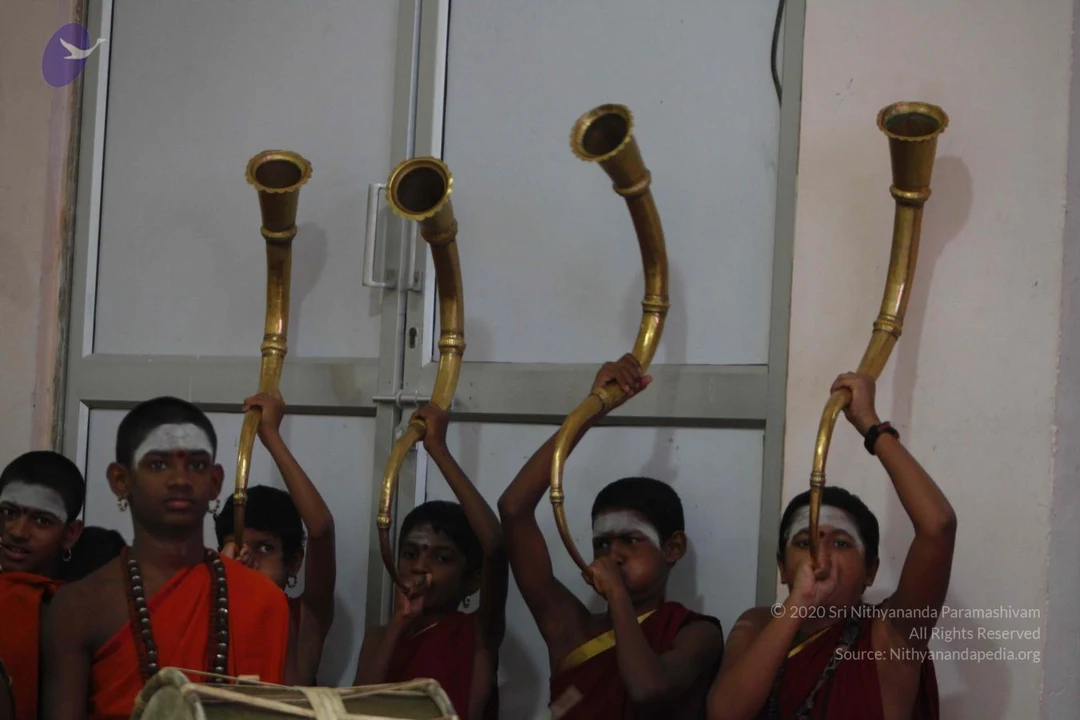
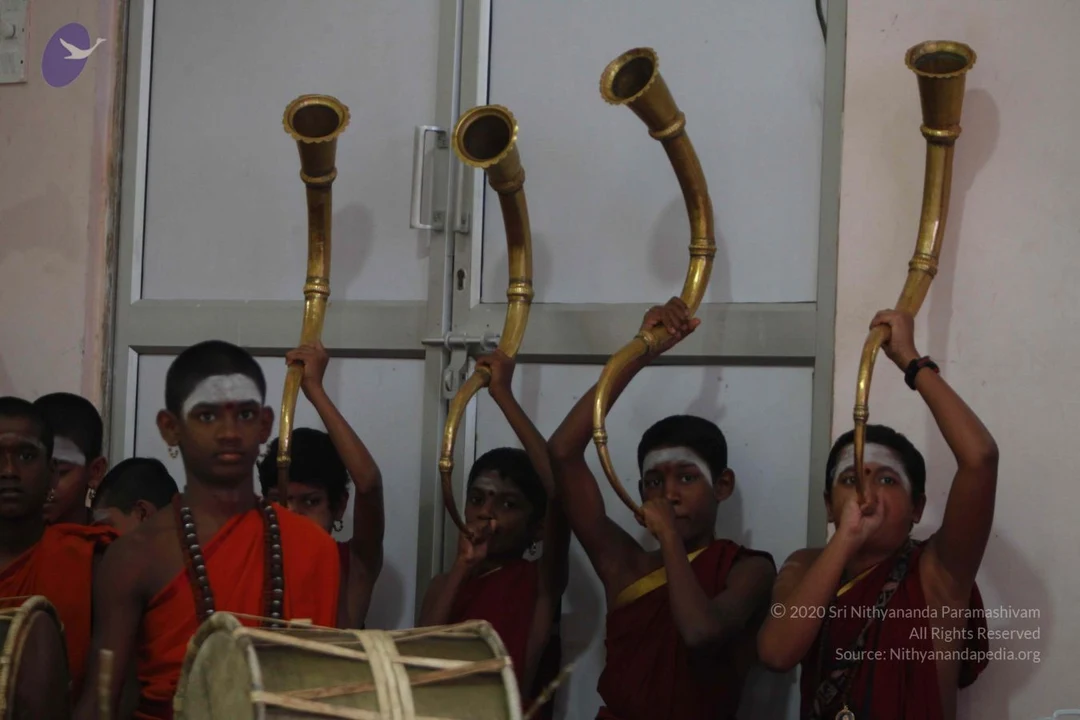
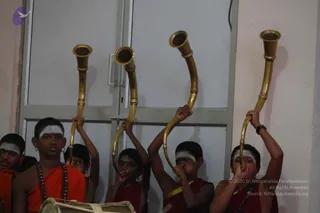
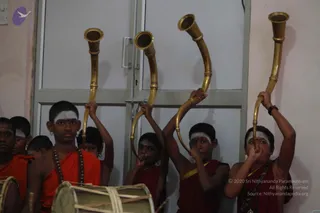
A photograph of several young boys in orange-red robes playing long curved gold brass horns raised overhead, with white vertical tilak marks on their foreheads and rudraksha malas around their necks. A drummer's drum edge is visible at the lower left, and a white door with a metal frame stands behind them against a pale wall.Several young boys in orange and red saffron-toned cloths perform music at an indoor event against a white door with glass panels. Four boys play long curved golden horns held overhead or at mouth level, one is blowing into his horn. Two drums with rope-laced skins are visible at lower left, and the boys wear white forehead markings and rudraksha beads. Some boys are bare-chested with saffron or red cloth wrapped at the waist, and one wears a dark rudraksha mala. The setting appears to be an ashram or temple hall with pale walls.
sarva darshan

8 photosSource gallery
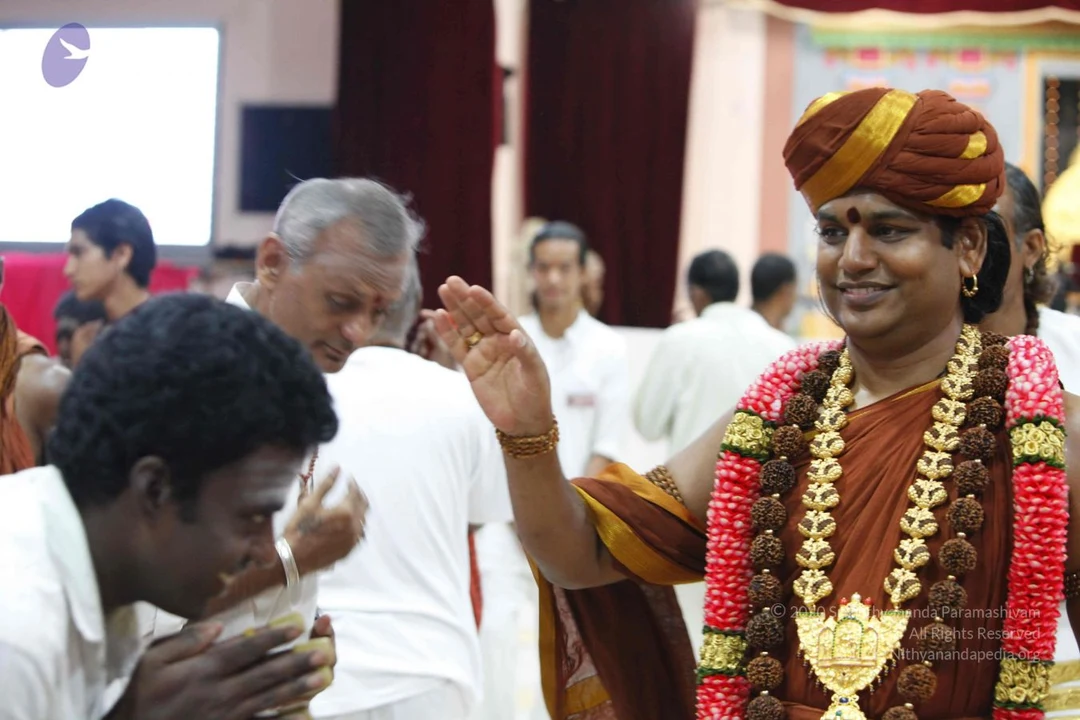
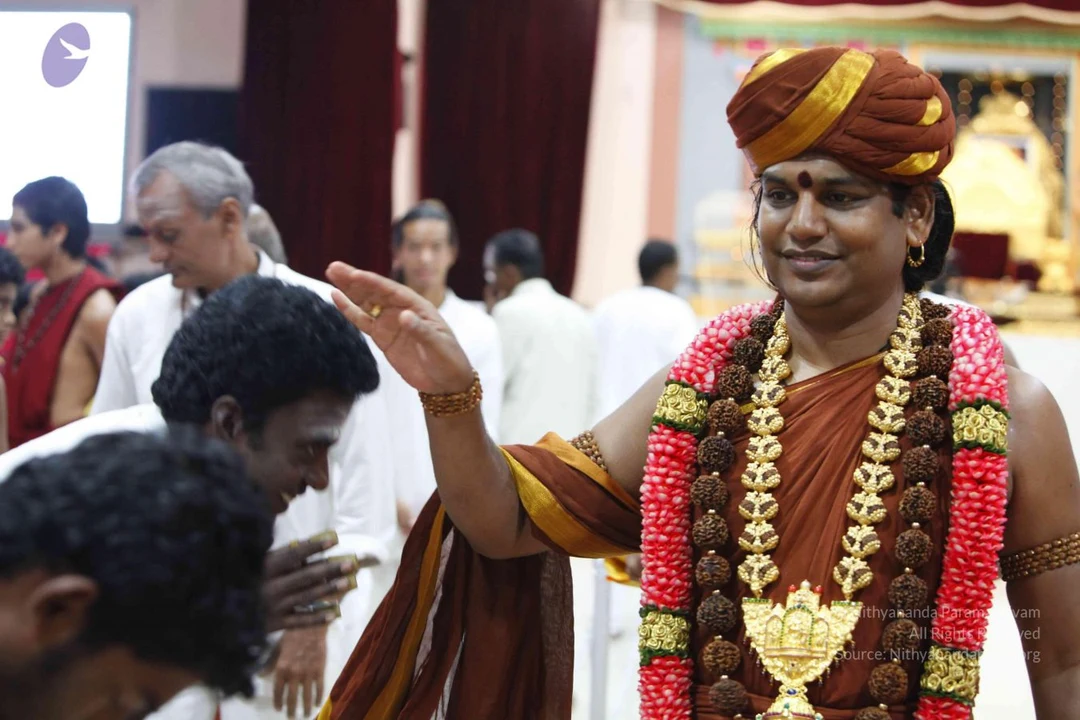
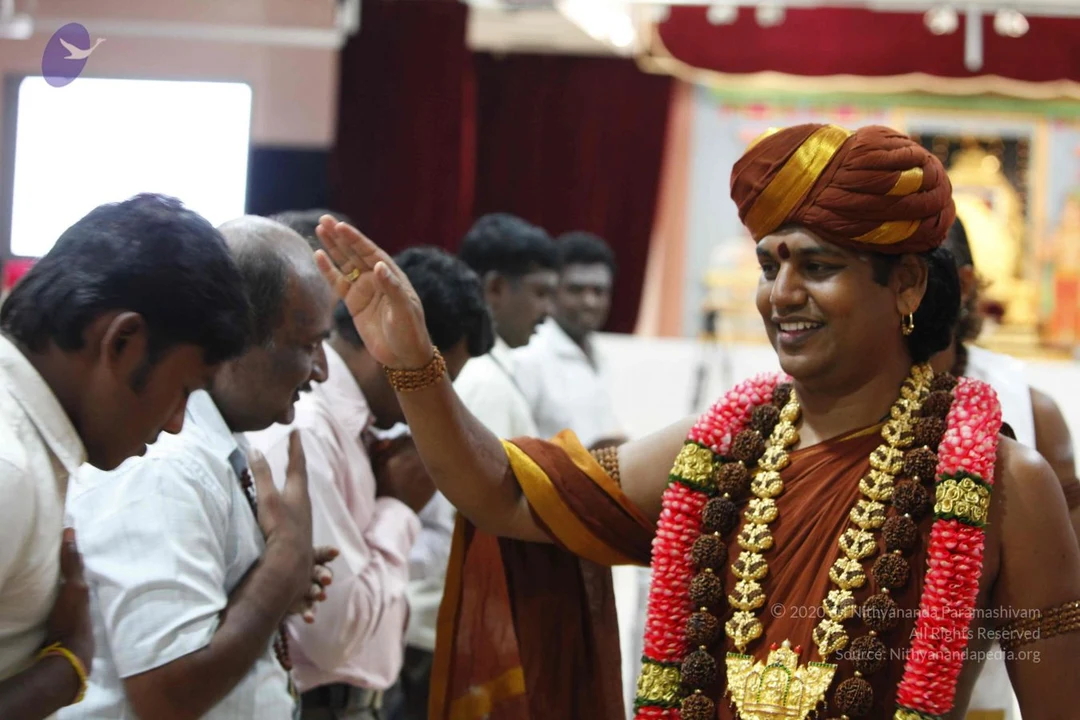
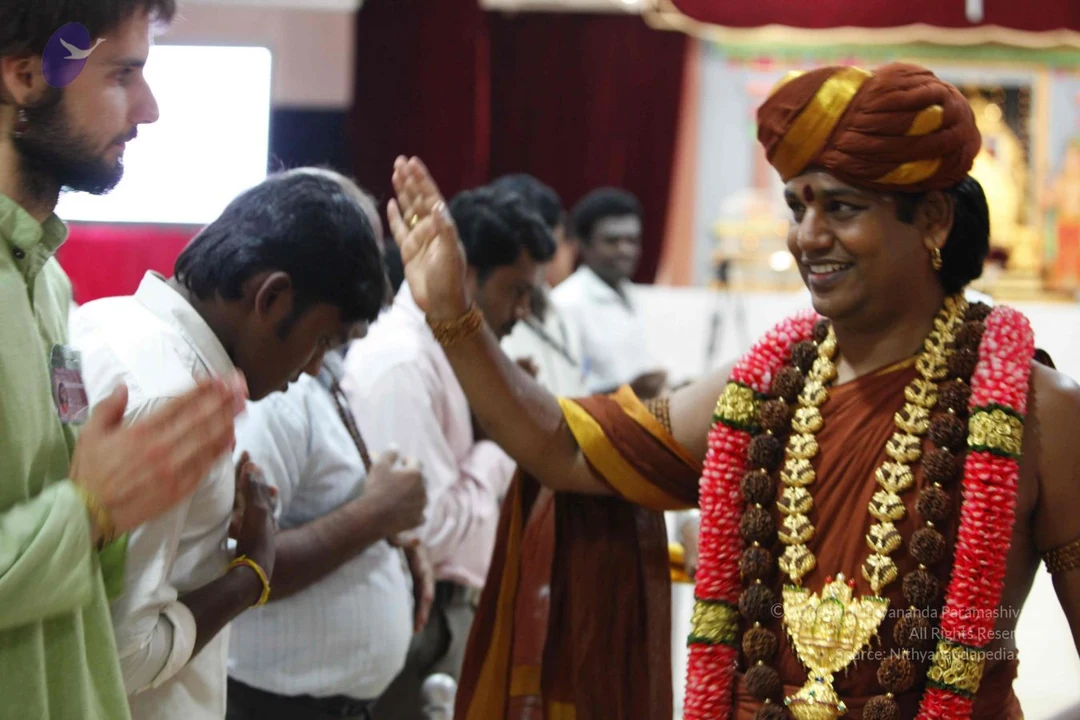
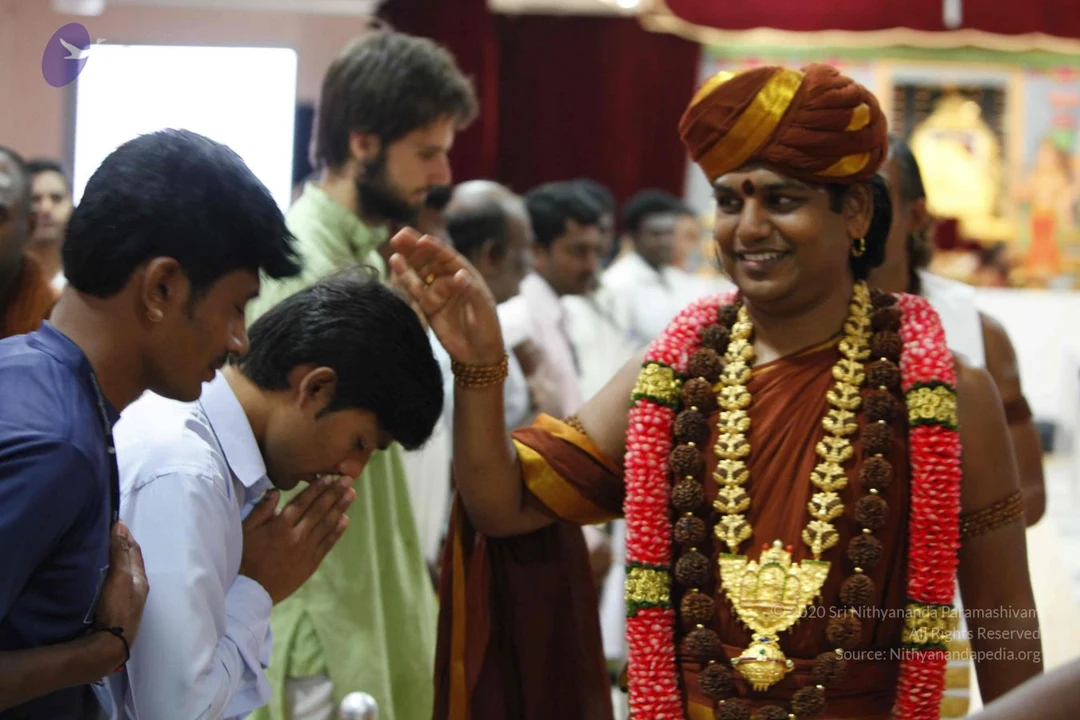
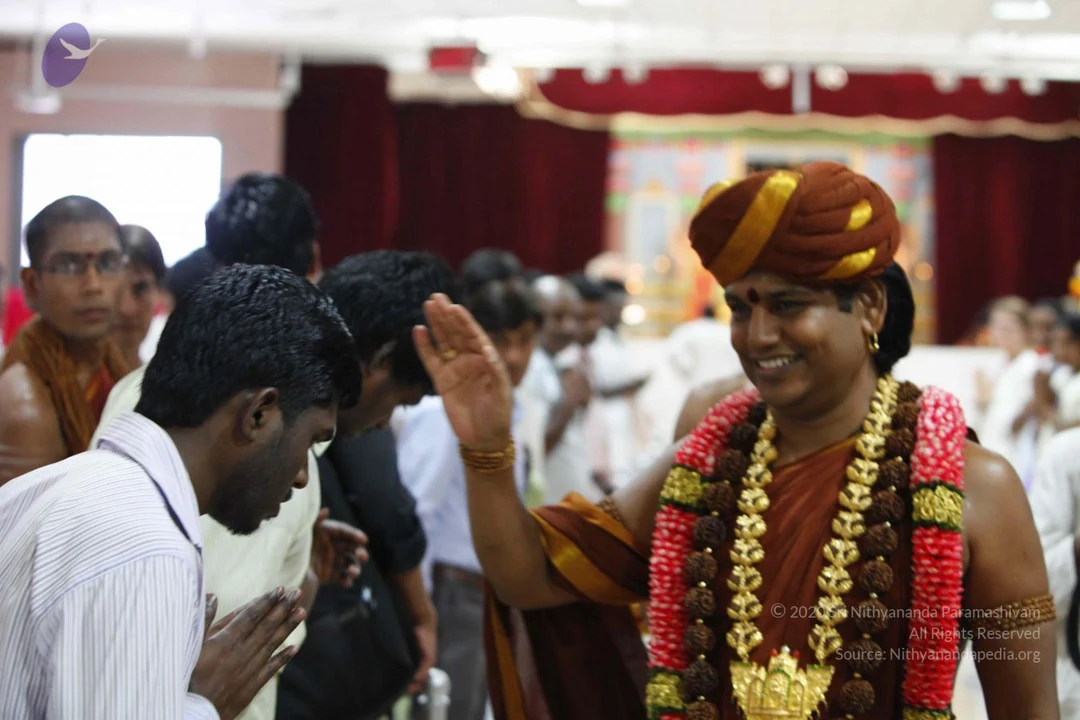
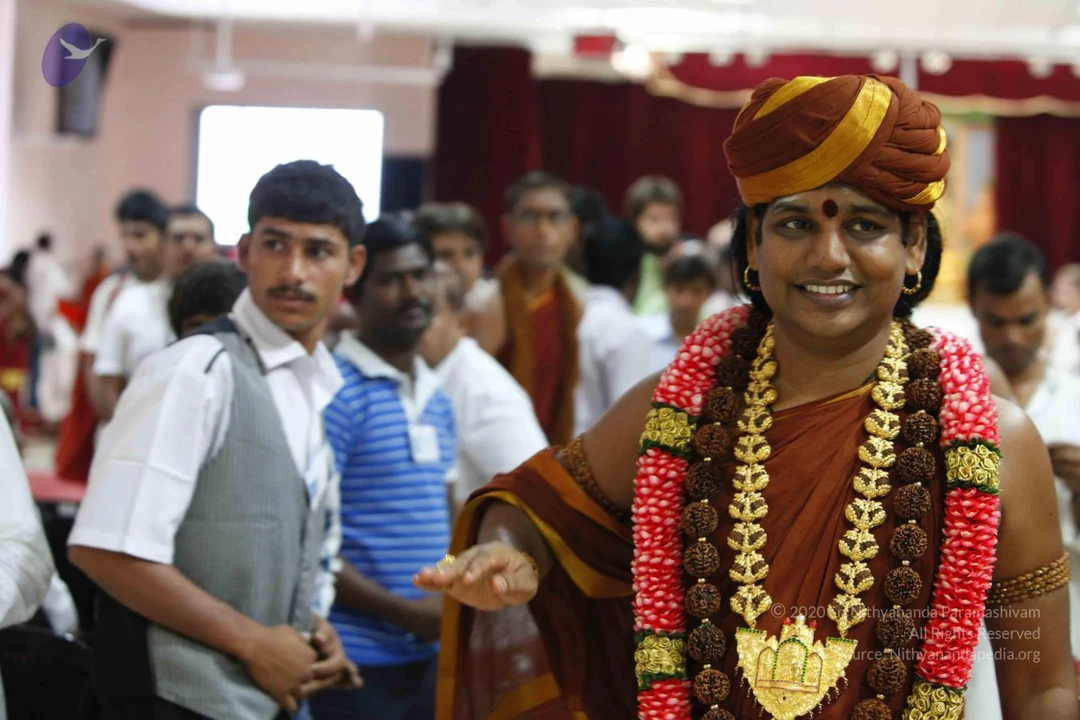
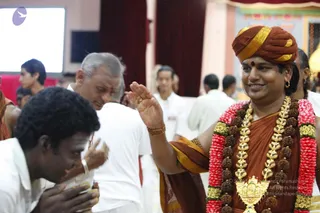
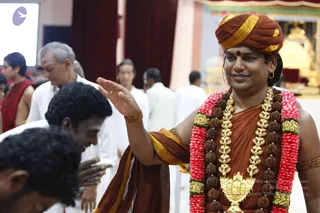
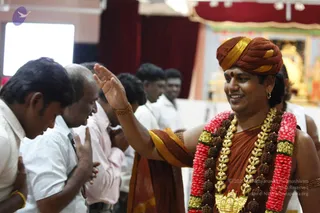
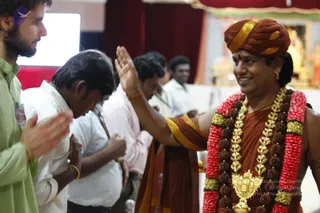
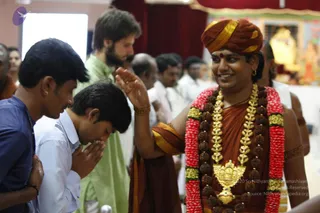
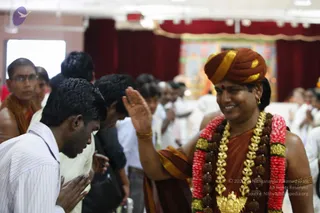
Photograph of a satsang hall where a man in a rust-orange and gold turban, rust-brown robe, and a long layered garland of red-and-white flowers and rudraksha beads raises his right hand in blessing toward a seated devotee at the lower left. He wears a gold pendant necklace and gold bangles, with a red bindi on his forehead. The devotee, wearing white, bows with hands pressed together. Behind them, several people in white clothes stand in a room with red drapes and a large screen on the left wall.A photograph of a man in an indoor temple hall, raising his right hand in greeting. He wears a brown-orange turban with gold stripes, a brown-orange shawl with gold border, a red-and-white flower garland, and a long rudraksha mala with a large gold ceremonial necklace and a gold pendant. A red bindi is on his forehead and he has gold hoop earrings. Behind him, devotees in white clothes and a man in red stand among red curtains, and a golden shrine or throne is visible at right.Photograph of a satsang-style gathering in a hall. A man in a rust-orange turban with gold border and an orange-saffron robe, wearing rudraksha malas, a gold ceremonial necklace and a red-and-white flower garland, stands at right with one hand raised in greeting and a broad smile. Several men to the left, in white shirts and pale pink shirts, bow or fold their hands in respect. Behind them stands a row of men in white, and a golden deity shrine with a red curtain and decorated backdrop is visible in the background.A photograph of a satsang setting where a bare-chested man in a saffron-orange turban and orange-brown cloth, wearing a long necklace of gold, a red and pink flower garland, and rudraksha beads, smiles and raises one hand in blessing toward devotees. A man in a light green kurta on the left stands with hands pressed together, while a devotee in white shirt bows with folded hands. Several other men in white and pink shirts stand behind, with a gold-decorated deity shrine and a red canopy visible in the background.A photograph of a man in an orange-brown saffron-toned robe and a matching rust-orange turban, wearing a long red and pink flower garland, a gold ceremonial necklace with a large gold pendant, and multiple rudraksha beads. He raises one hand in blessing toward a young man in a blue shirt who bows with palms pressed together and head lowered, while another bearded man in a pale green kurta and several other devotees in white and light clothing stand nearby. Behind them, a red curtain and a golden deity image are visible in an indoor temple or hall setting. Appearance-based label: Swamiji (probable), shown in person giving blessings, identified by the turban, saffron robe, rudraksha malas and ceremonial gold necklace.Photograph of a smiling man in an orange-brown turban with gold stripes, a dark orange-brown robe, a red and white flower garland and a long gold necklace with rudraksha beads, raising his right hand in greeting as he walks through a hall. A young man in a striped white shirt in the foreground presses his palms together in namaste. Behind them, other people in white and dark clothing stand in a crowd near a red curtain and a decorated shrine-like backdrop. The man in the turban shows distinctive ceremonial adornments and orange robes; the page identifies him as Swamiji, and his appearance is consistent with that, so this is a probable candidate. The photo shows a satsang-style gathering.
final blessing

3 photosSource gallery
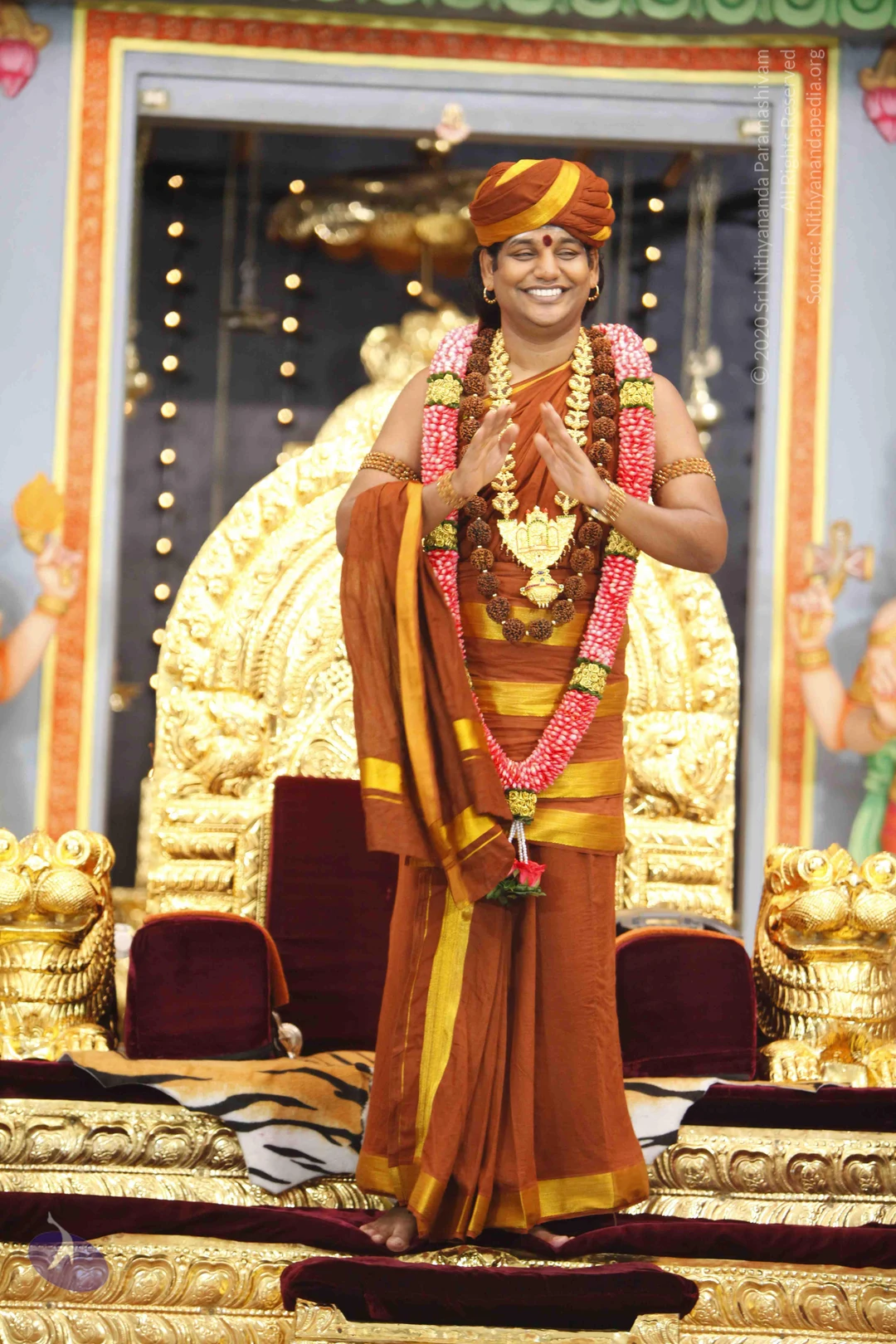
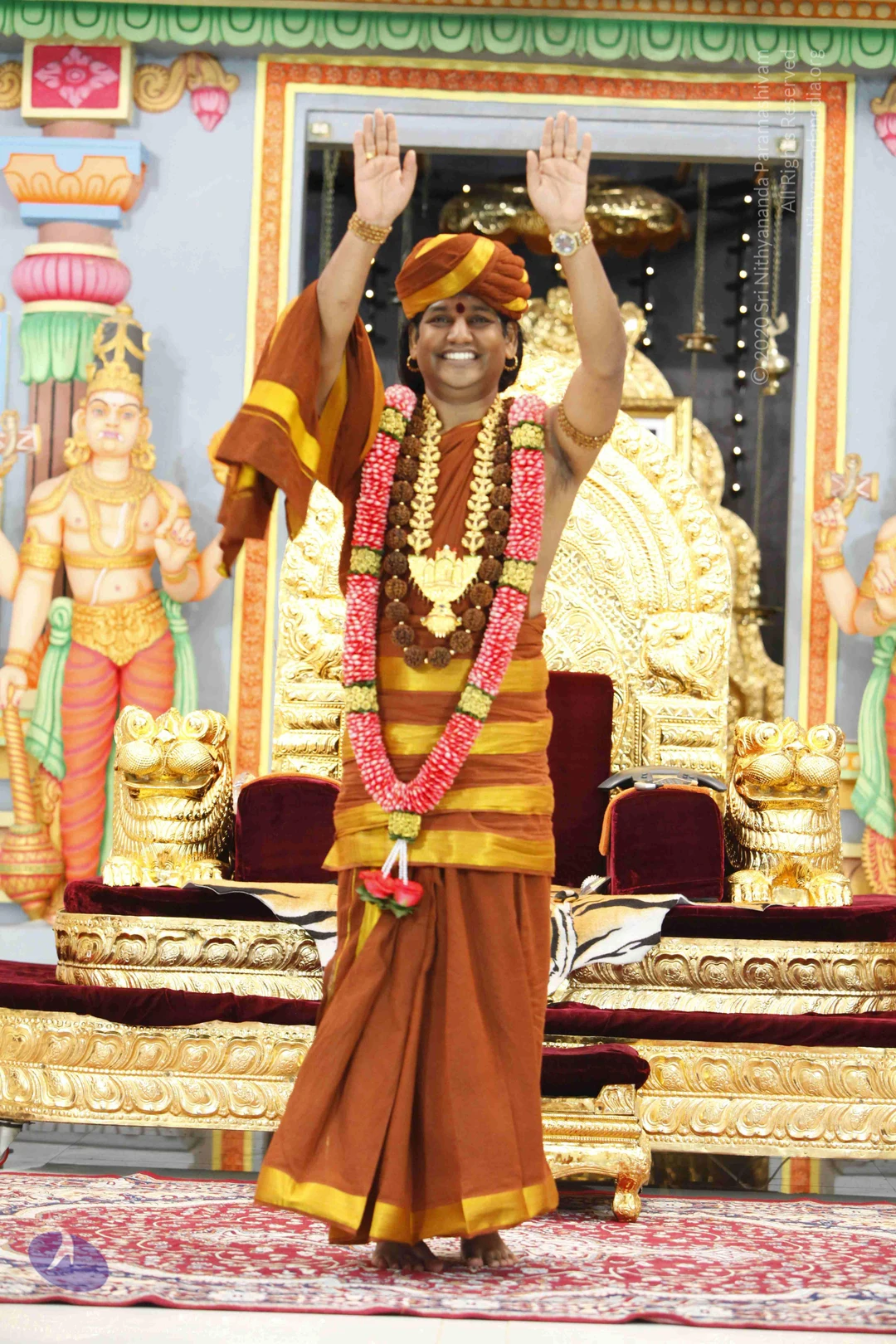
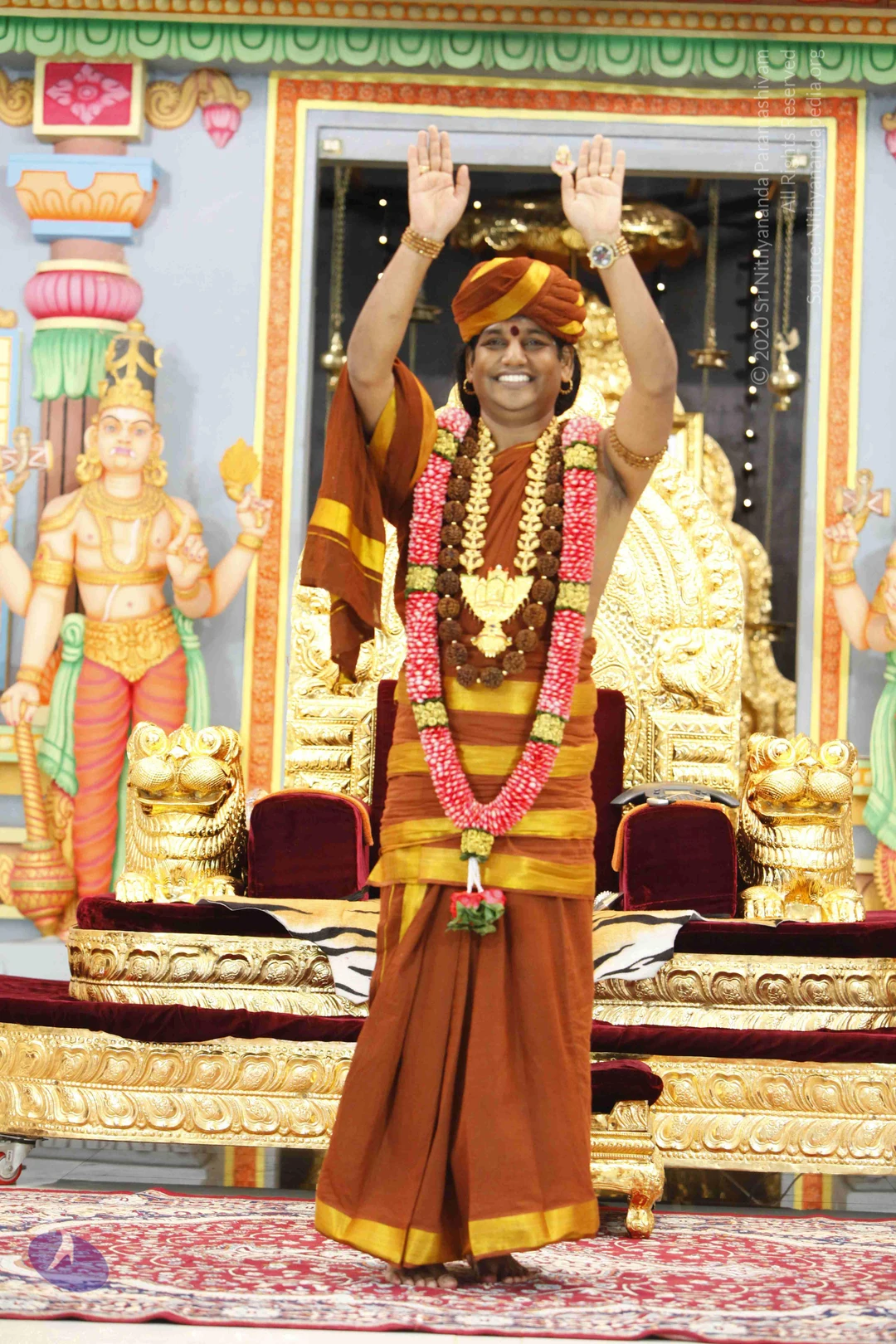
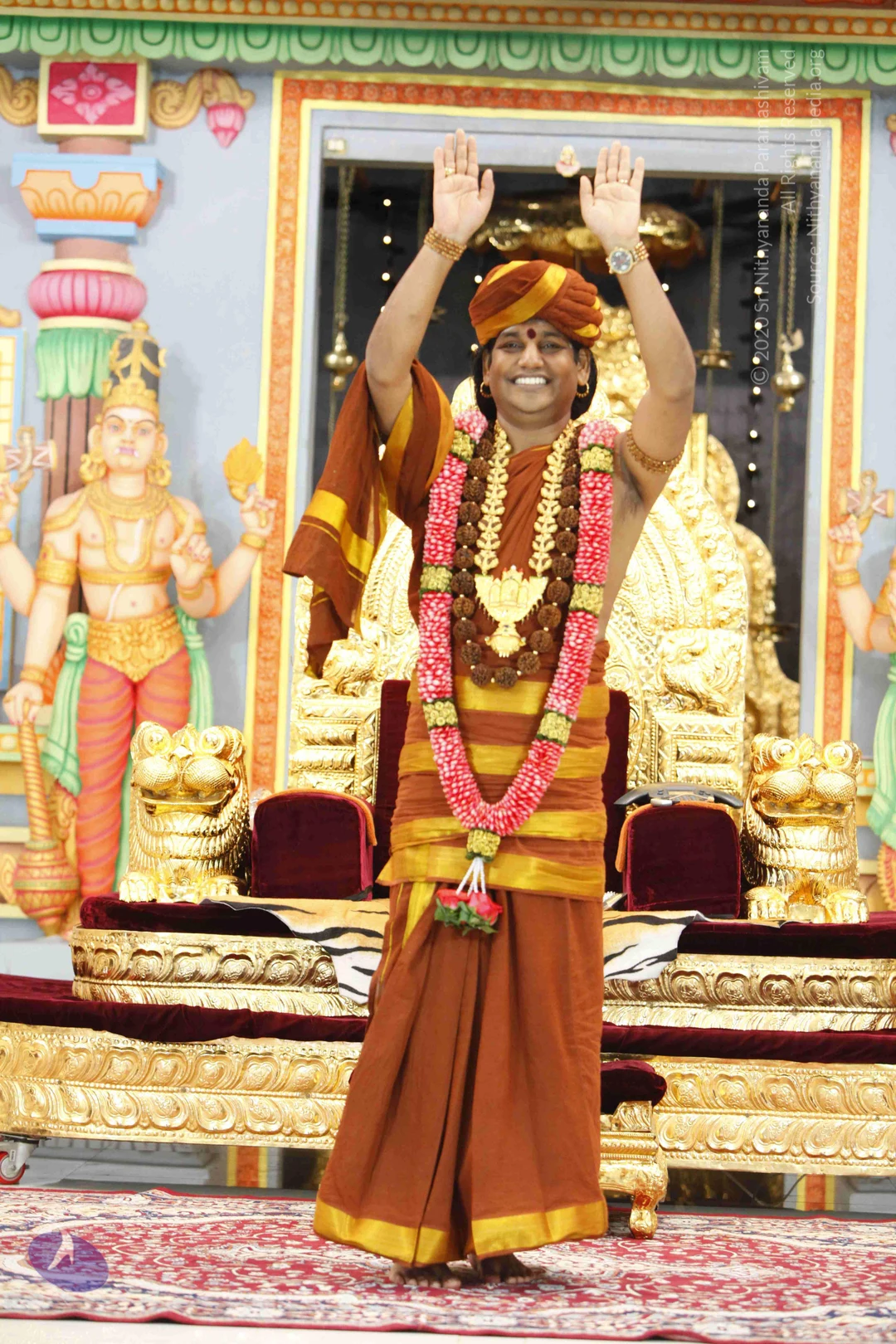
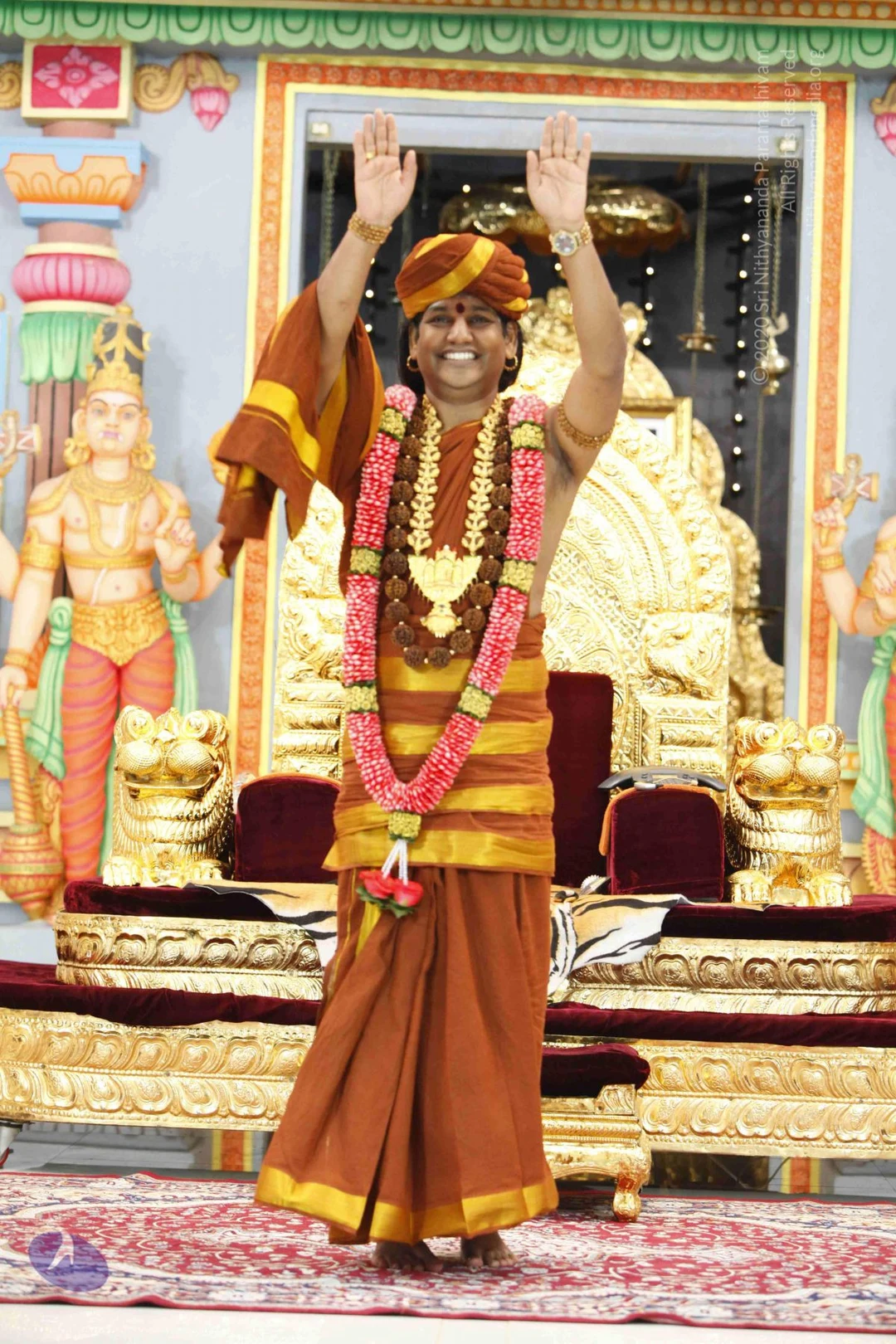
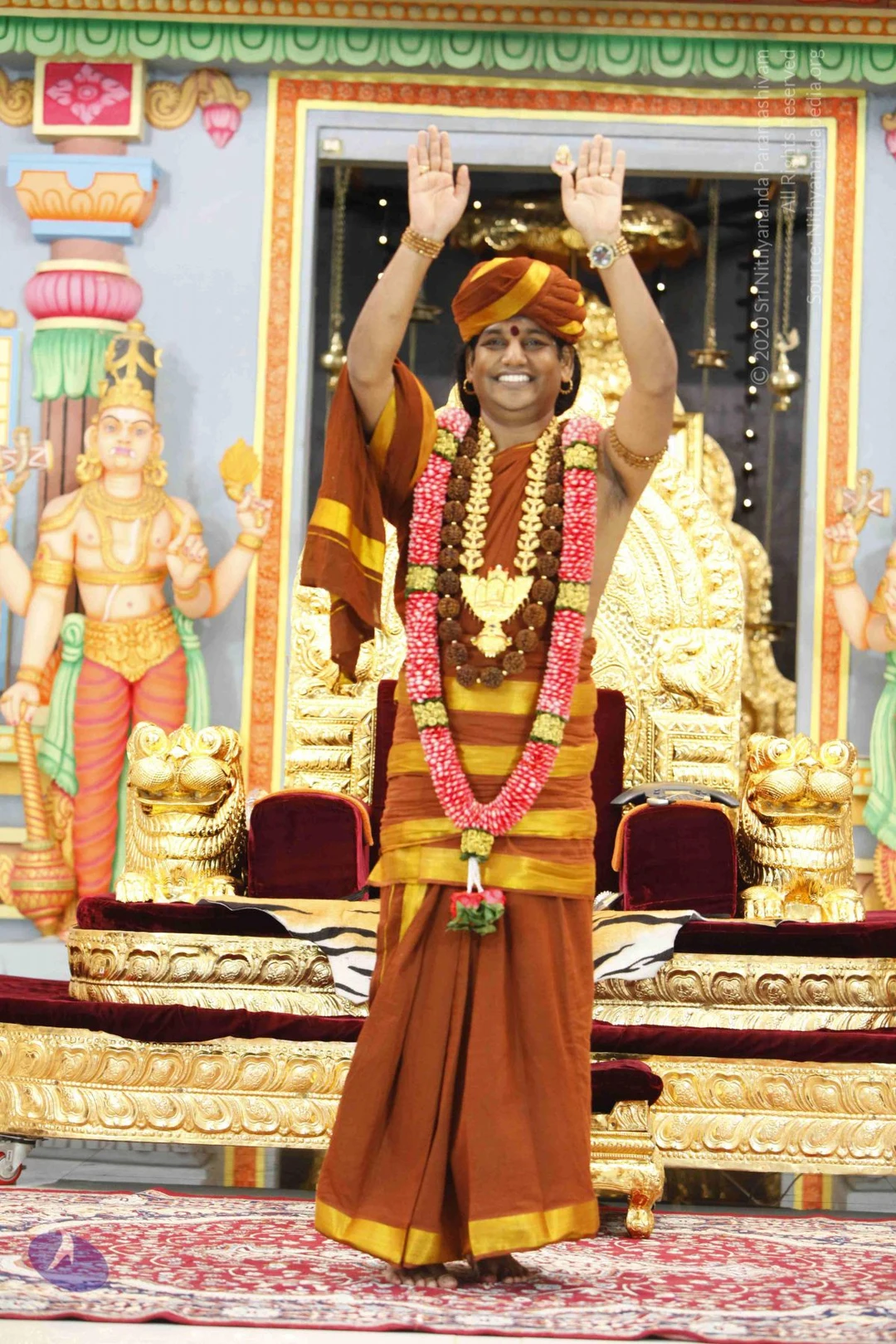
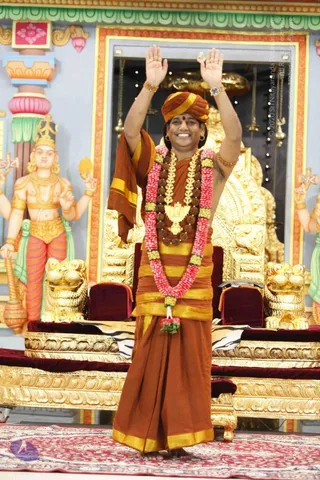
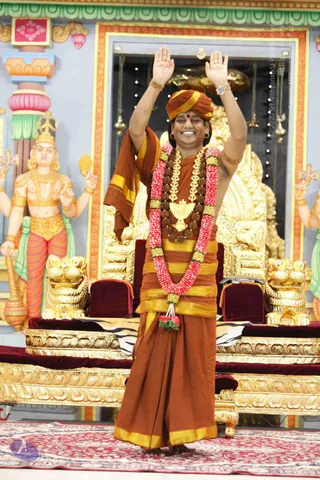
A standing man in saffron-orange robes and a matching orange turban raises both hands in greeting while smiling. He wears a long red-and-white jasmine garland, a rudraksha mala with a gold ceremonial pendant, gold bangles and a wristwatch. Behind him stand a golden throne with lion-head armrests and a tiger-skin draped seat, flanked by a painted multi-armed deity murti with a crown and a colourful pillar. A red patterned carpet covers the floor.A smiling man in saffron-orange robes with gold-and-yellow borders stands barefoot on a red patterned rug, raising both hands in greeting. He wears an orange turban, a red bindi, a rudraksha mala and a long pink-and-white flower garland, plus a gold ceremonial pendant necklace. Behind him is an ornate gold throne with lion-head armrests draped with a striped tiger-skin cloth, flanked by a painted deity figure with four arms and a club, and a gilded doorway hung with bells. The appearance-based candidate is a person, a figure in ceremonial saffron clothing and rudraksha beads standing before the throne.A smiling man stands barefoot on a red carpet in front of a gilded throne with a red velvet cushion and golden lion-head armrests. He wears a rust-orange turban with gold stripes, a rust-orange robe edged with gold, a rudraksha mala with a gold ceremonial pendant, and a long red and white flower garland. Two painted deity figures flank the throne, and an ornate gold canopy hangs in the background.

Inner Awakening day 5

83 photosSource gallery
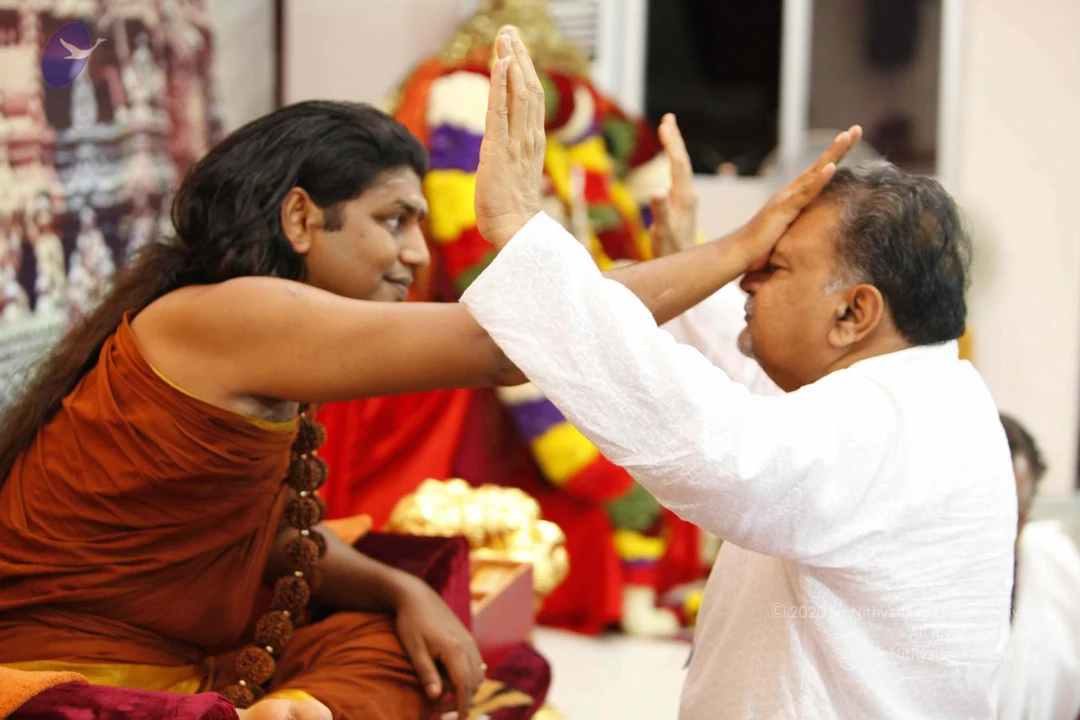
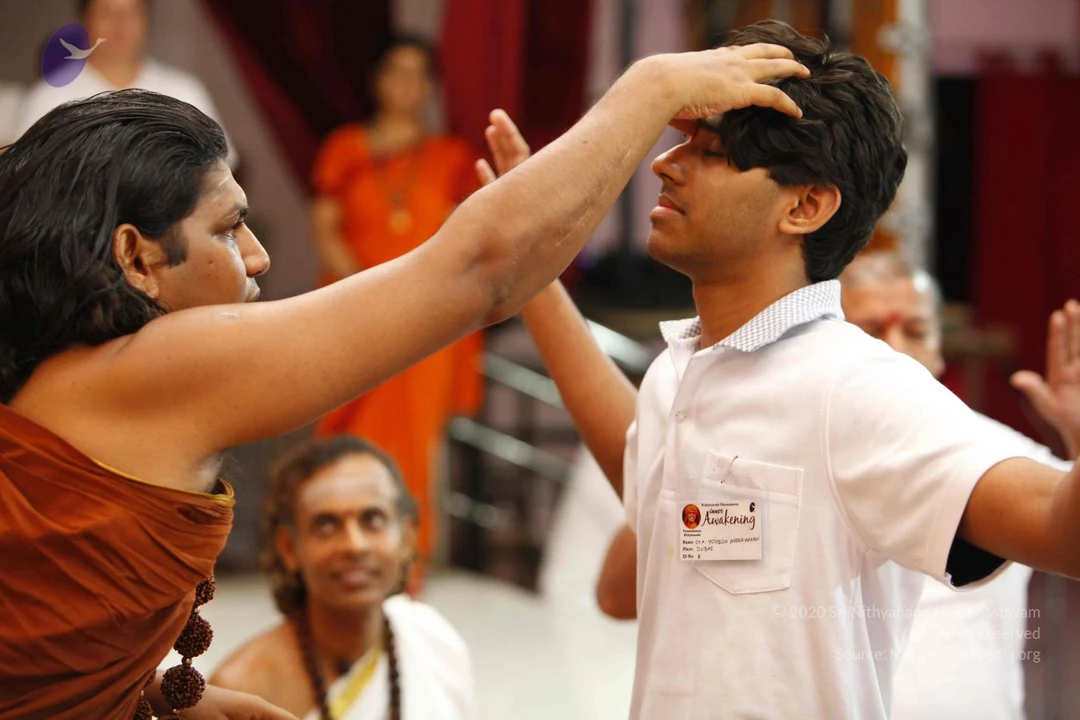
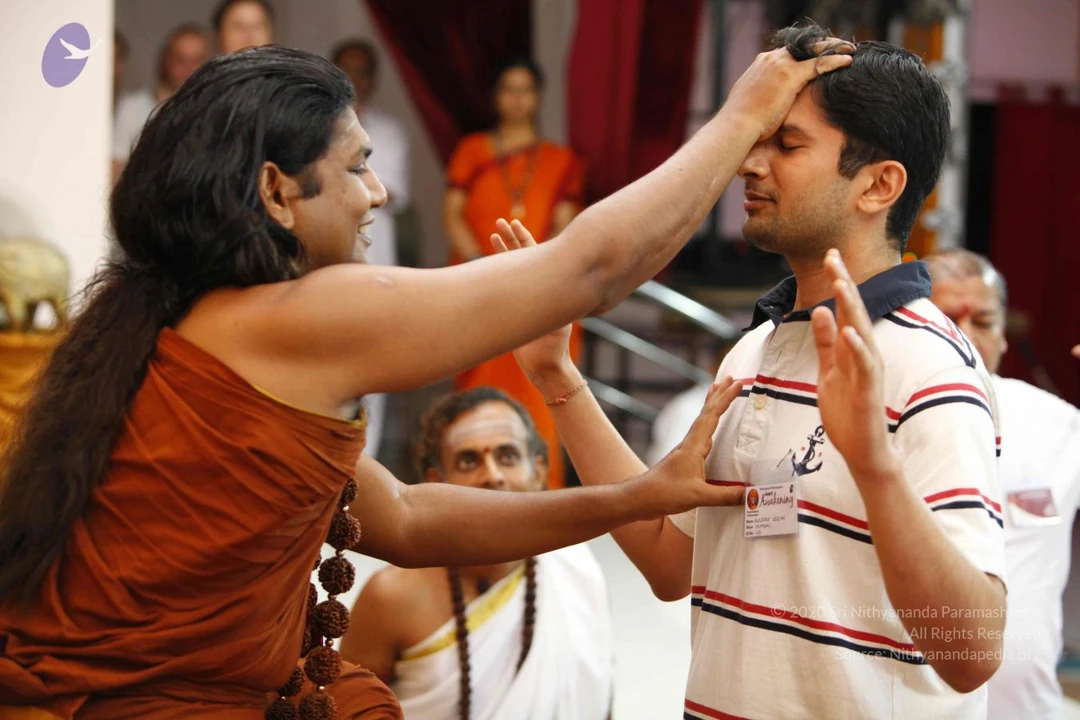
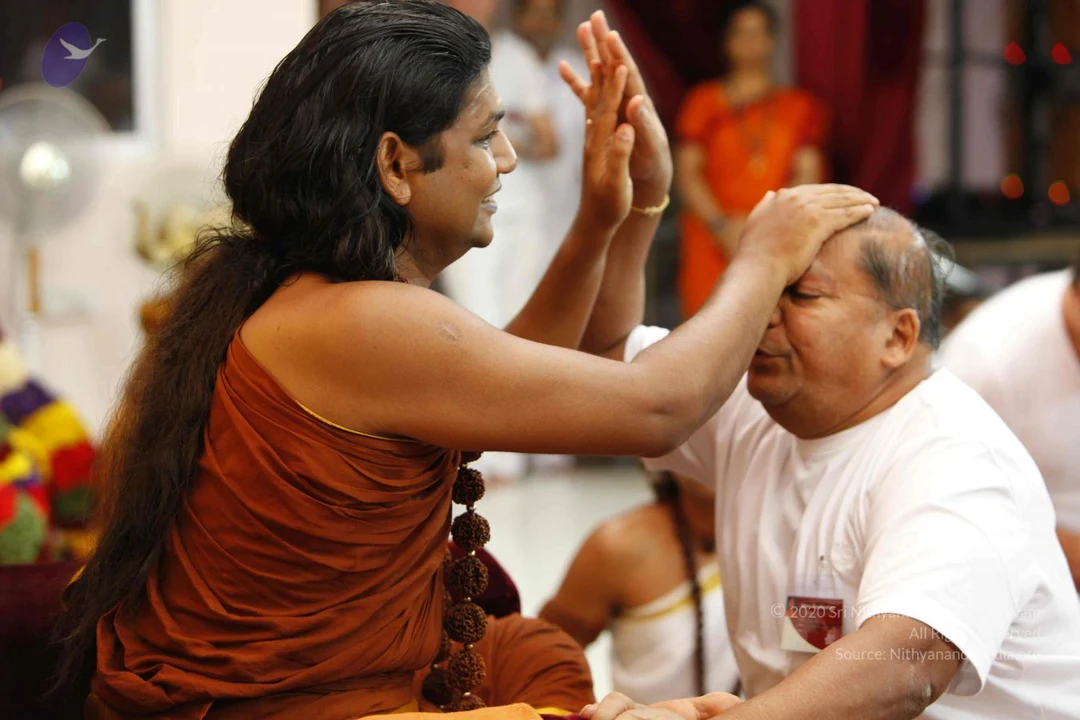
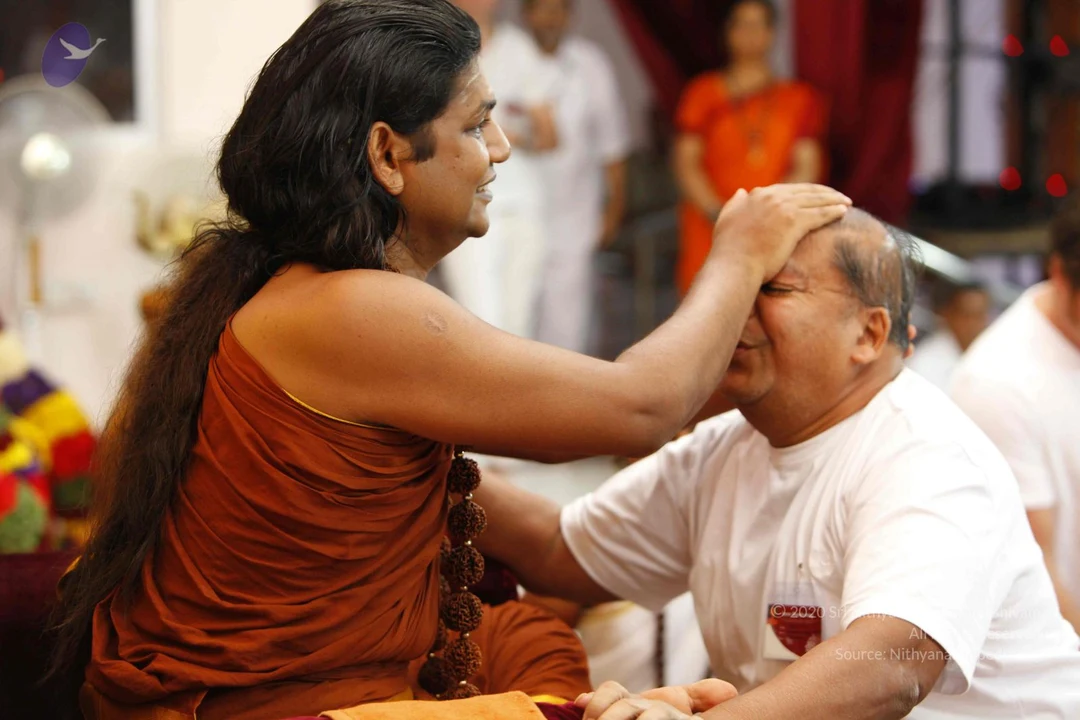
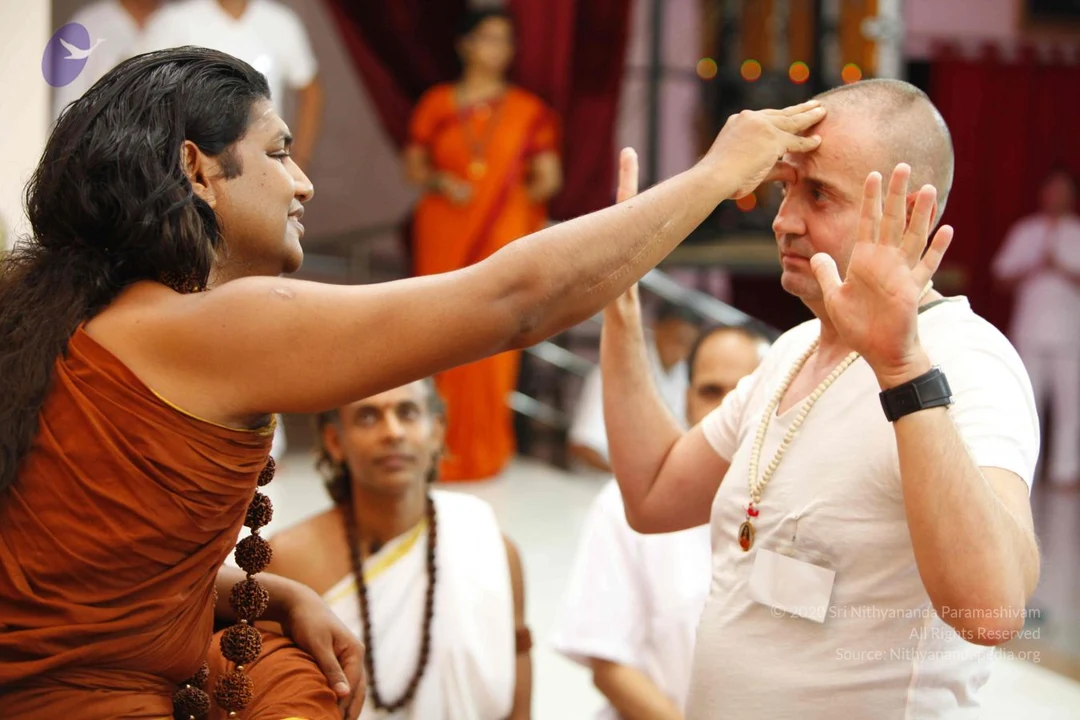
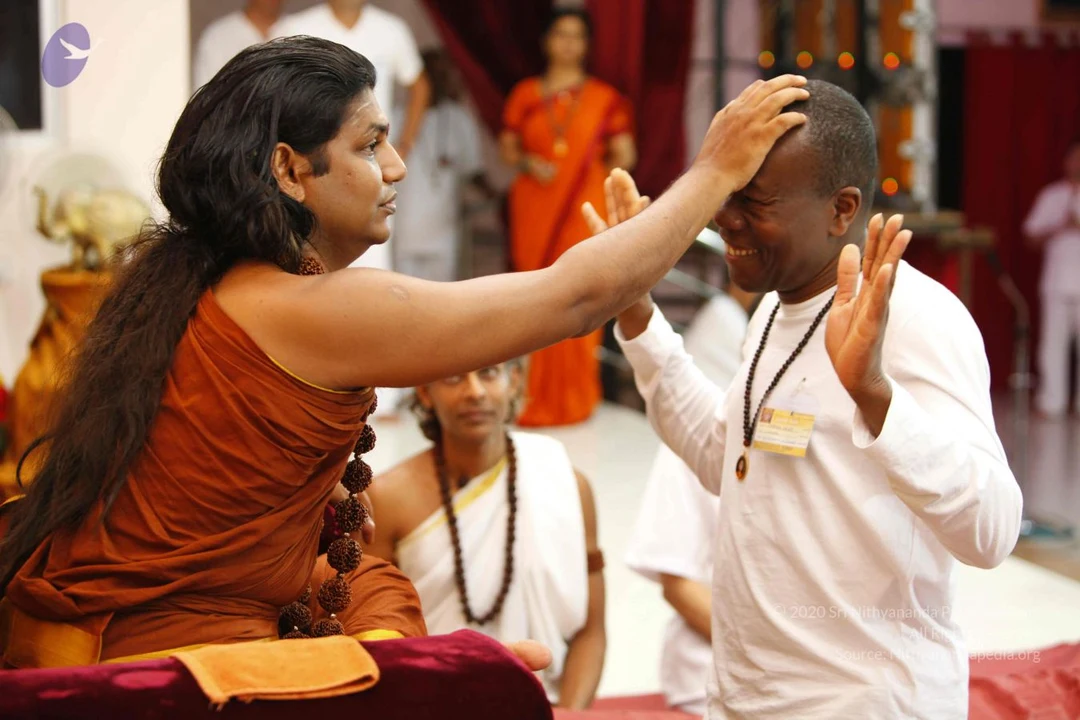
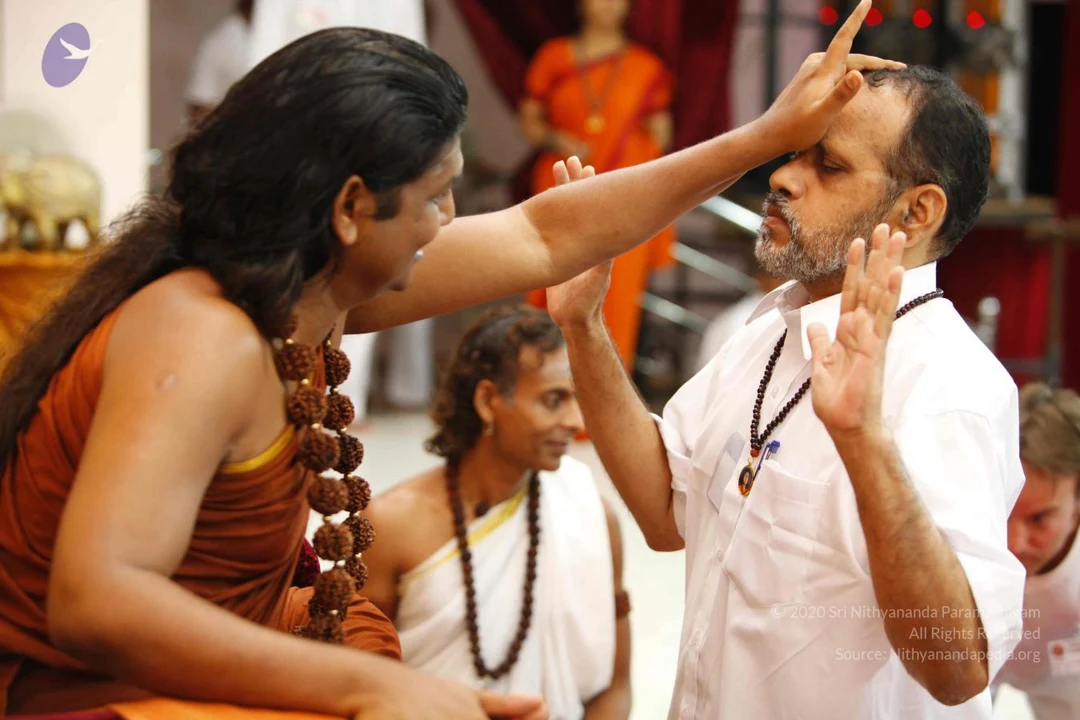
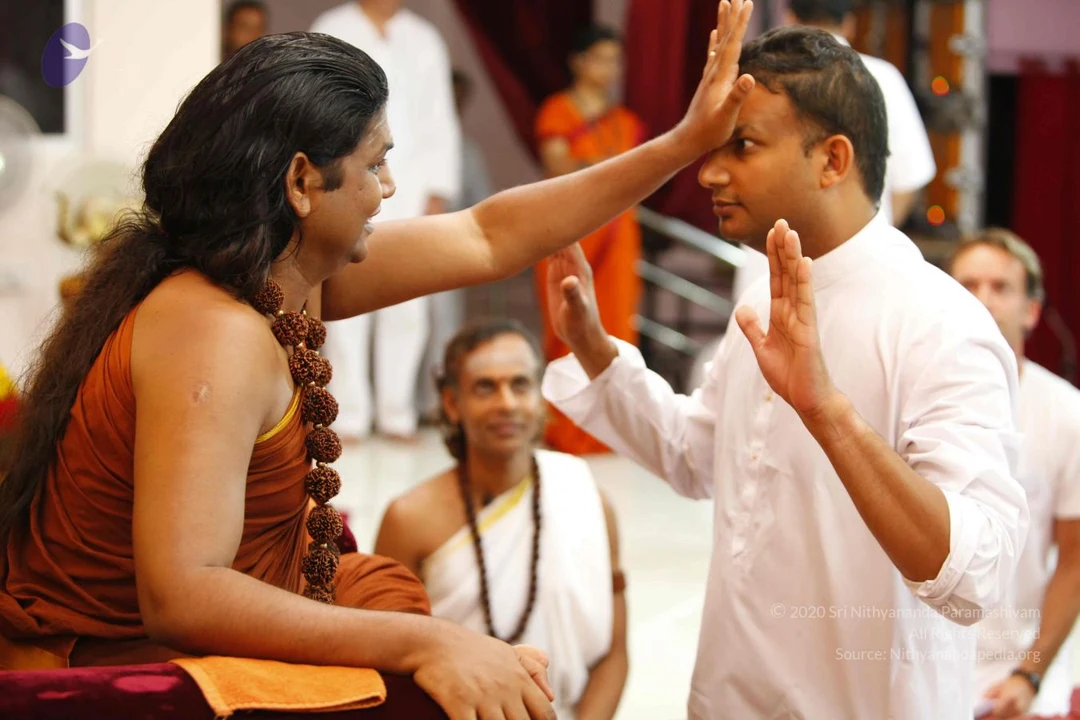
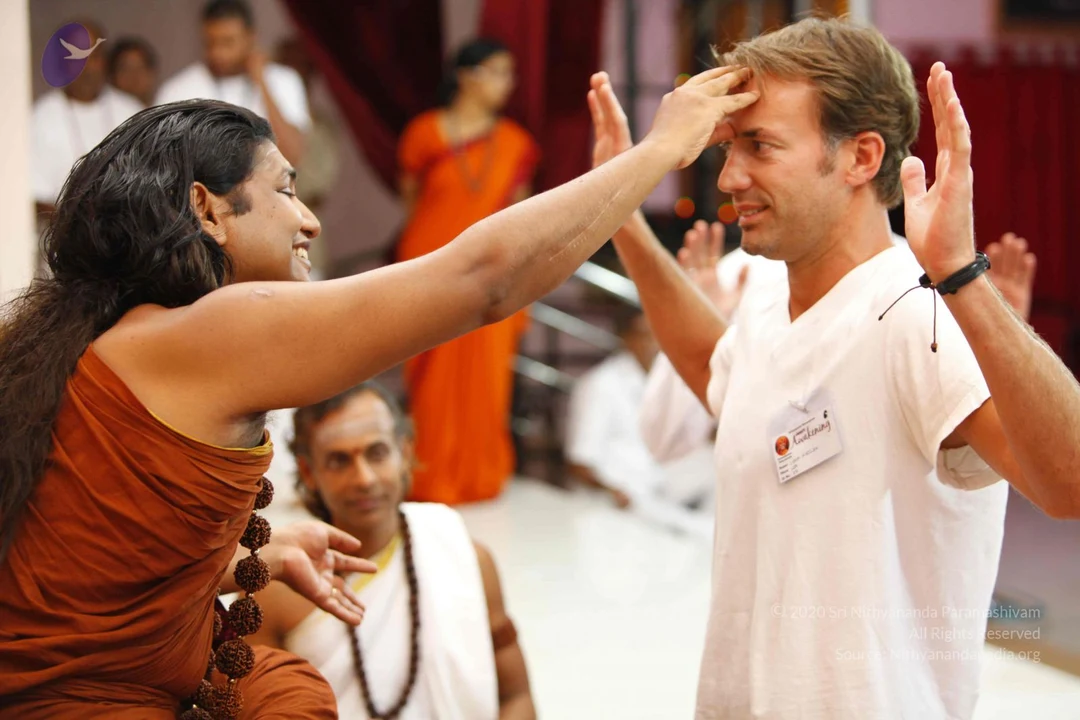
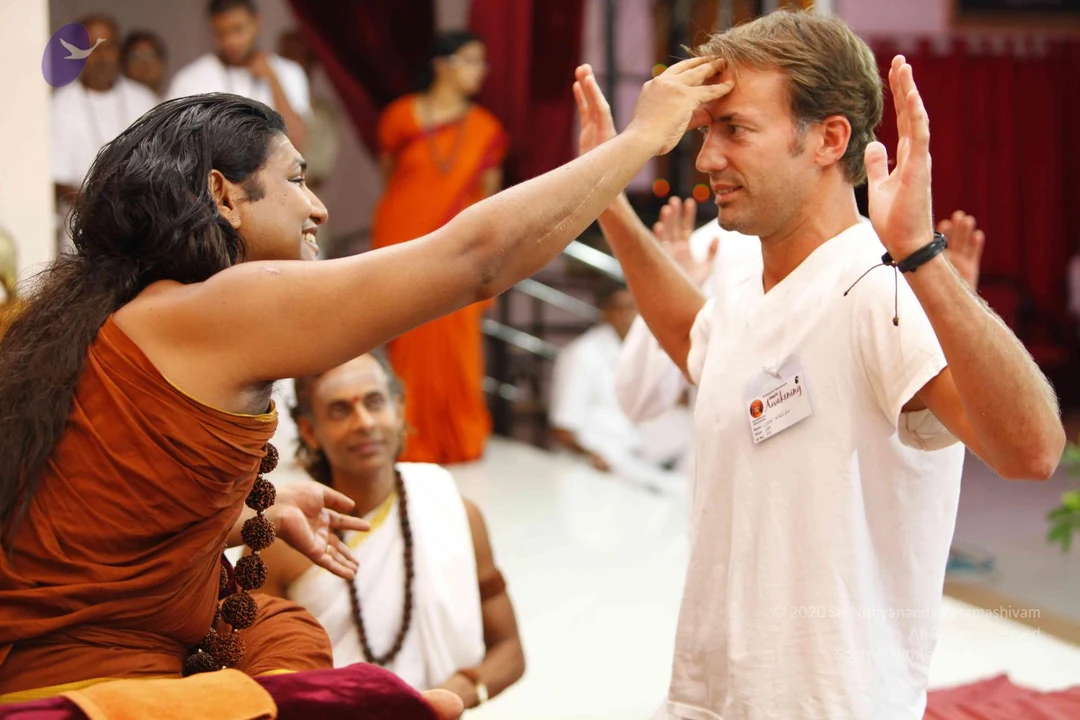
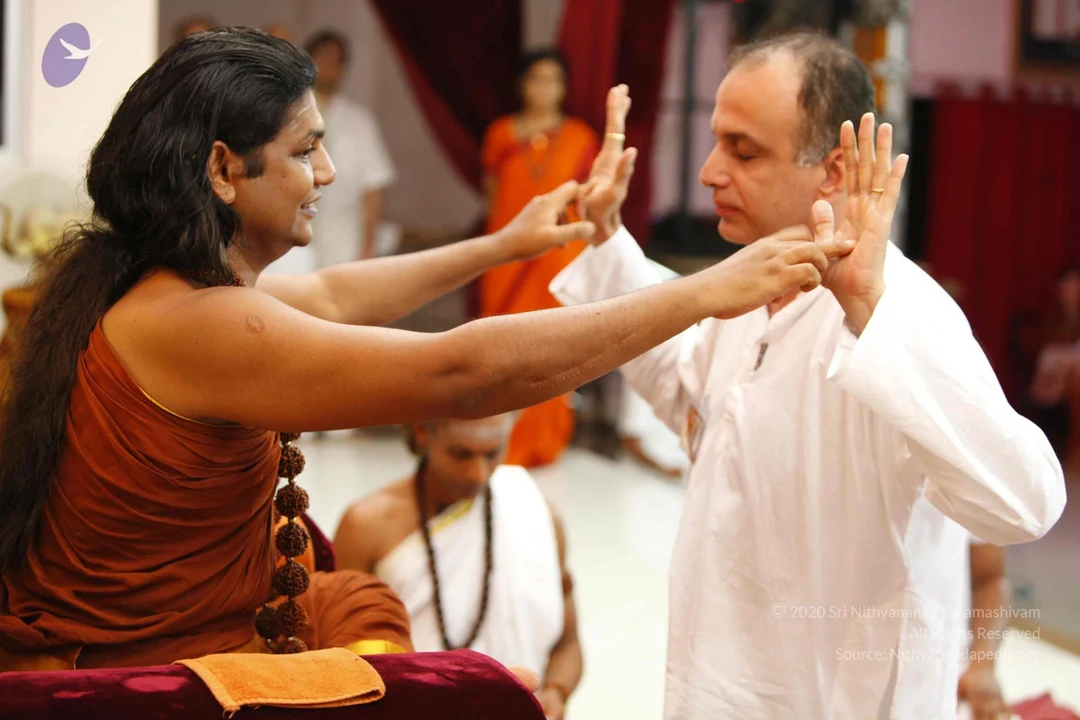
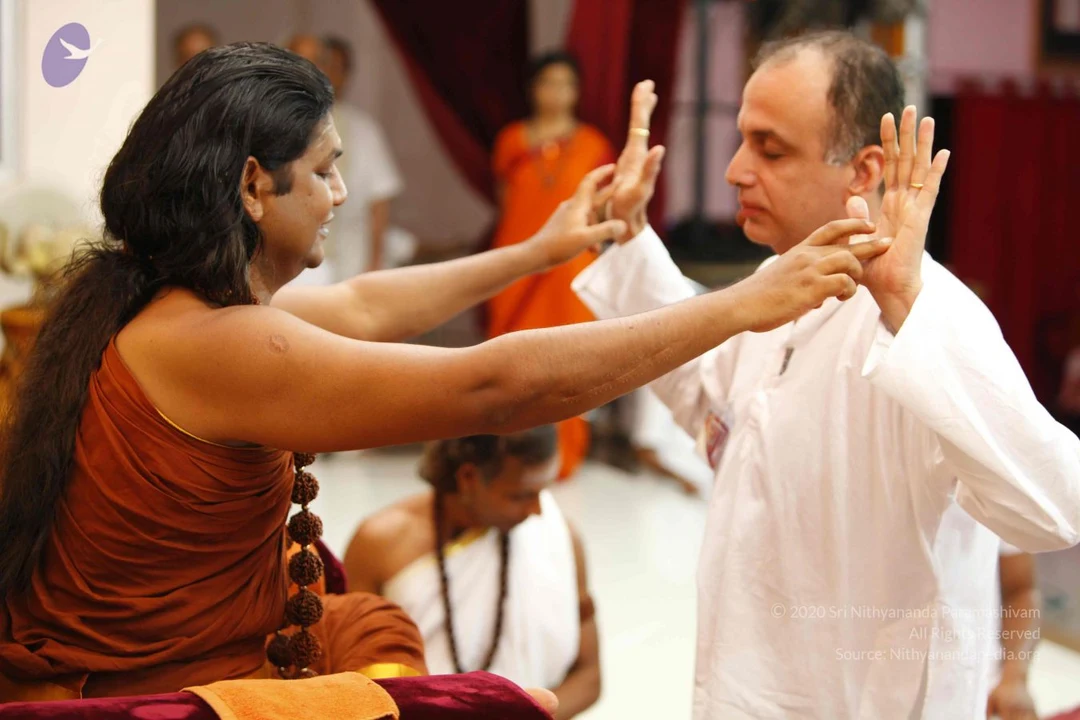
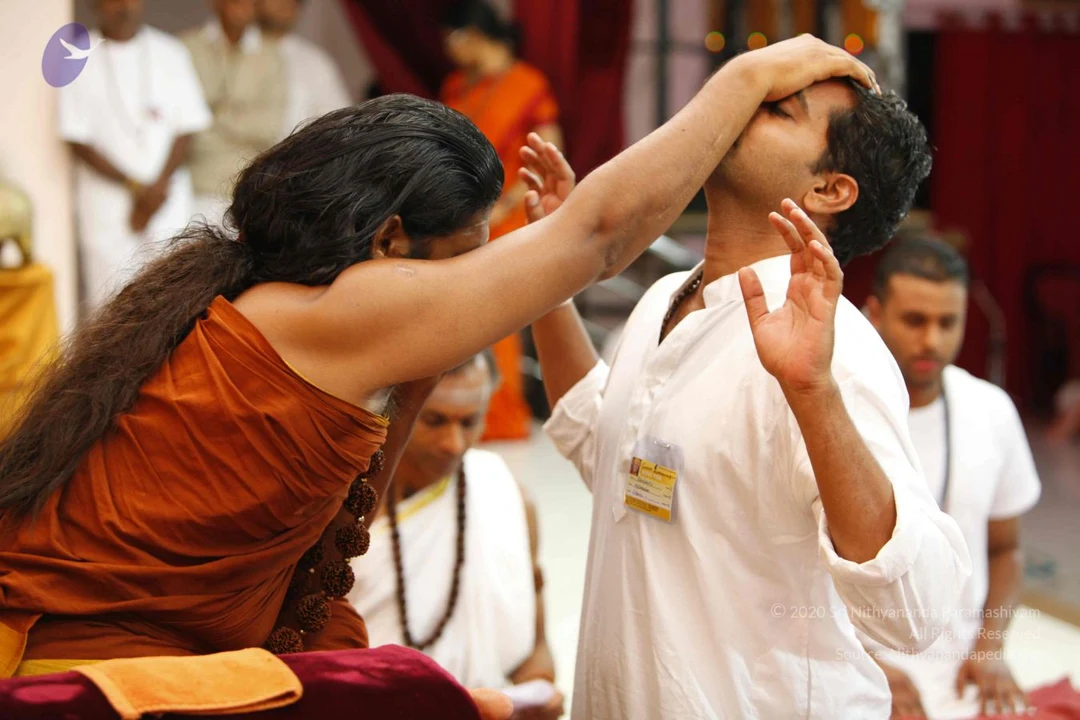
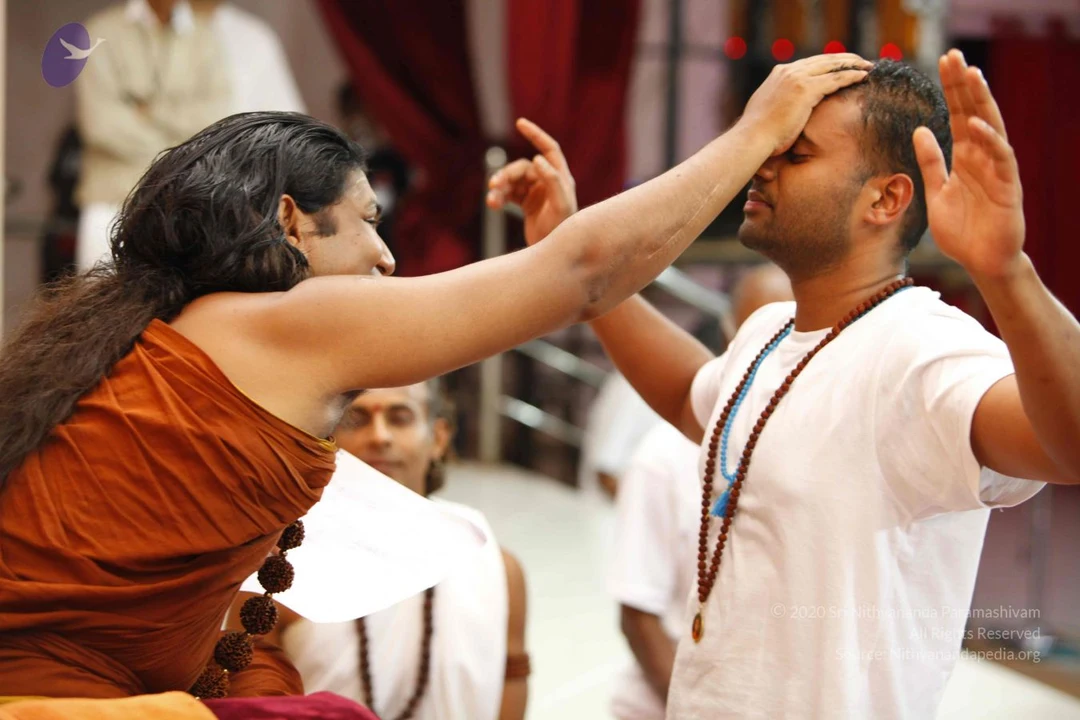
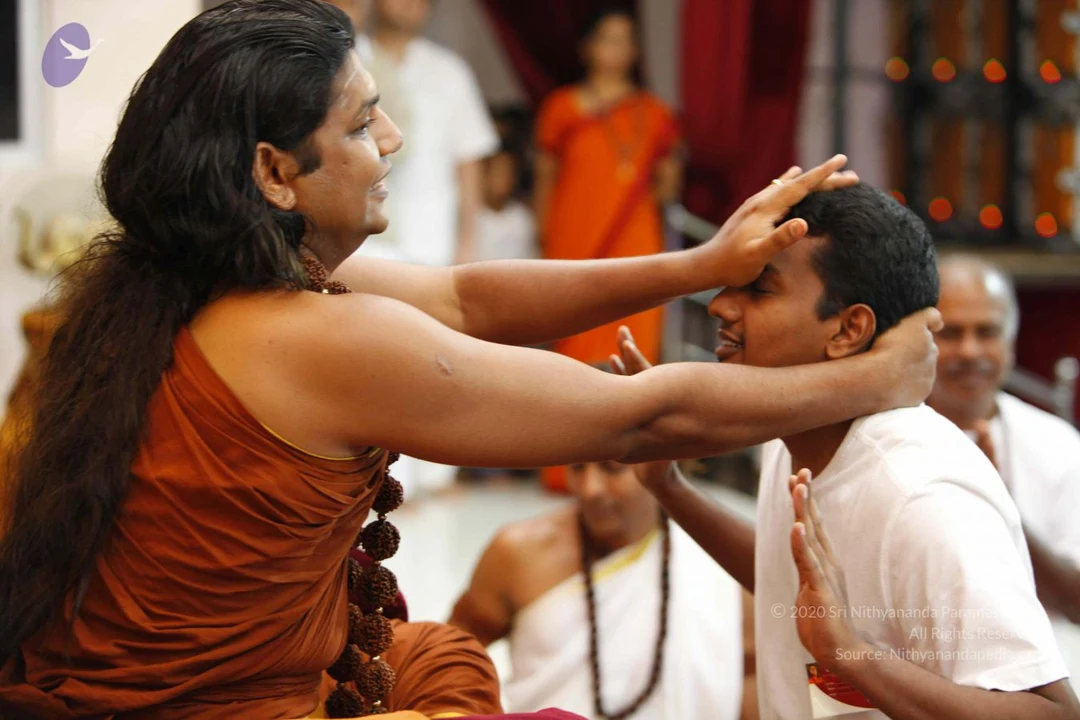
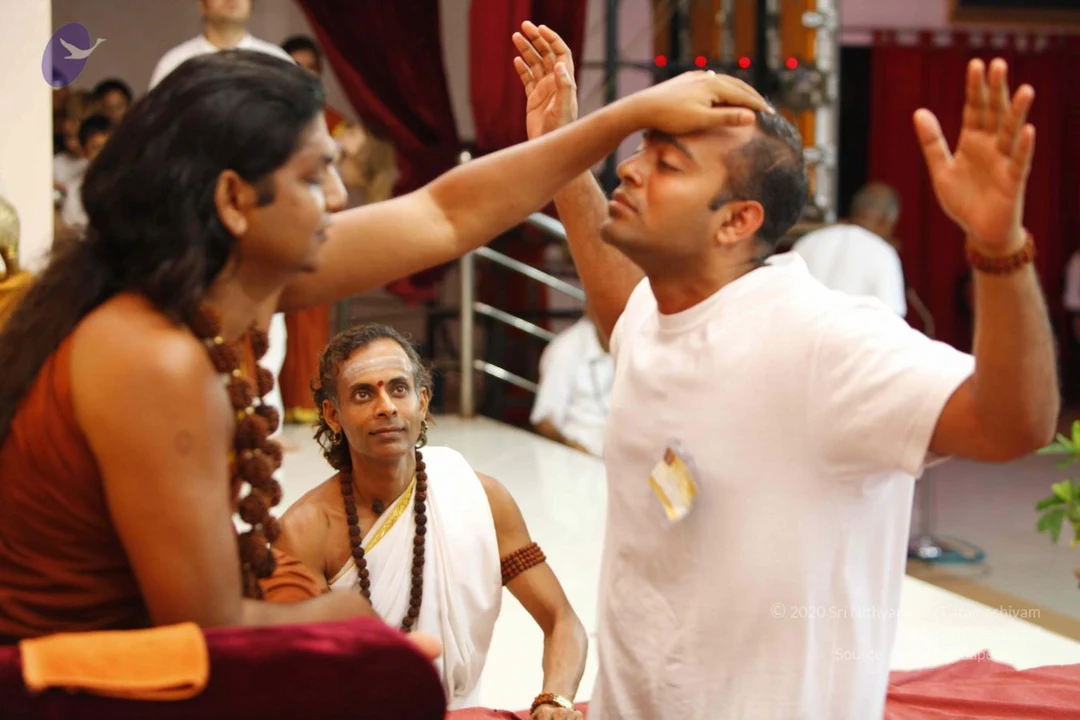
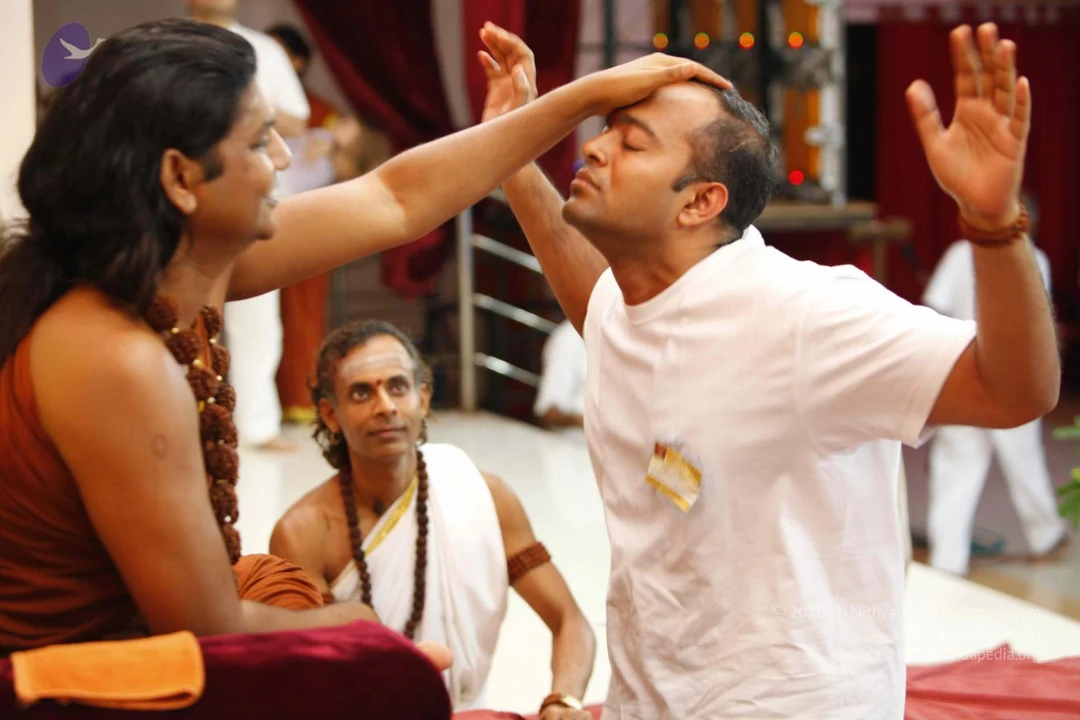
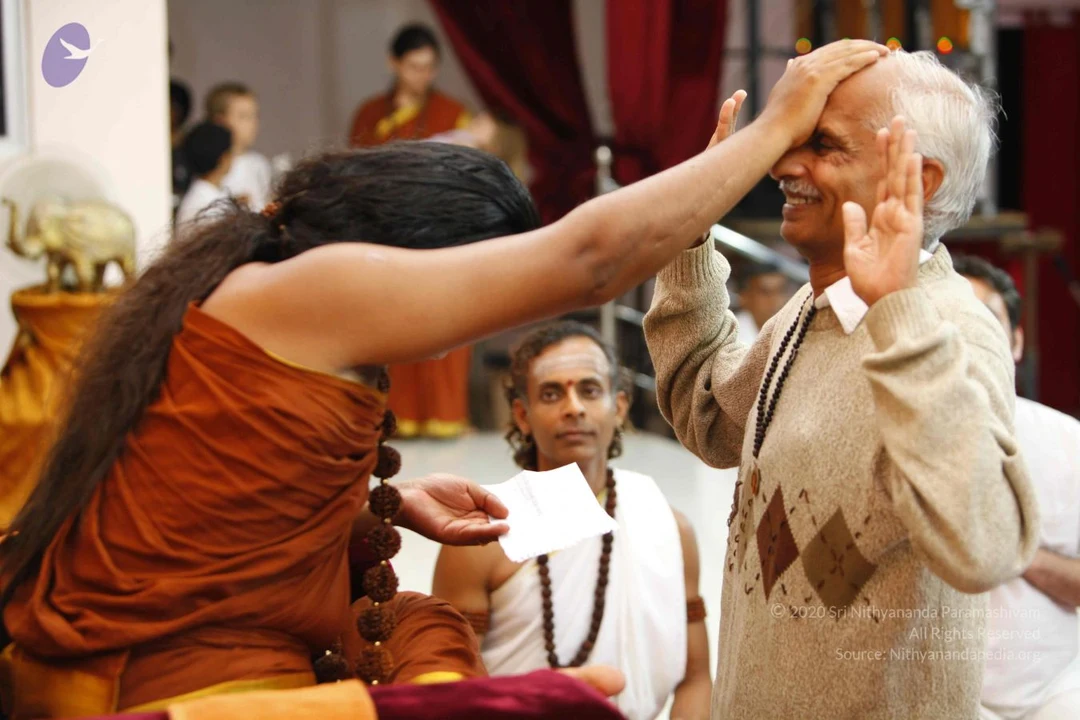
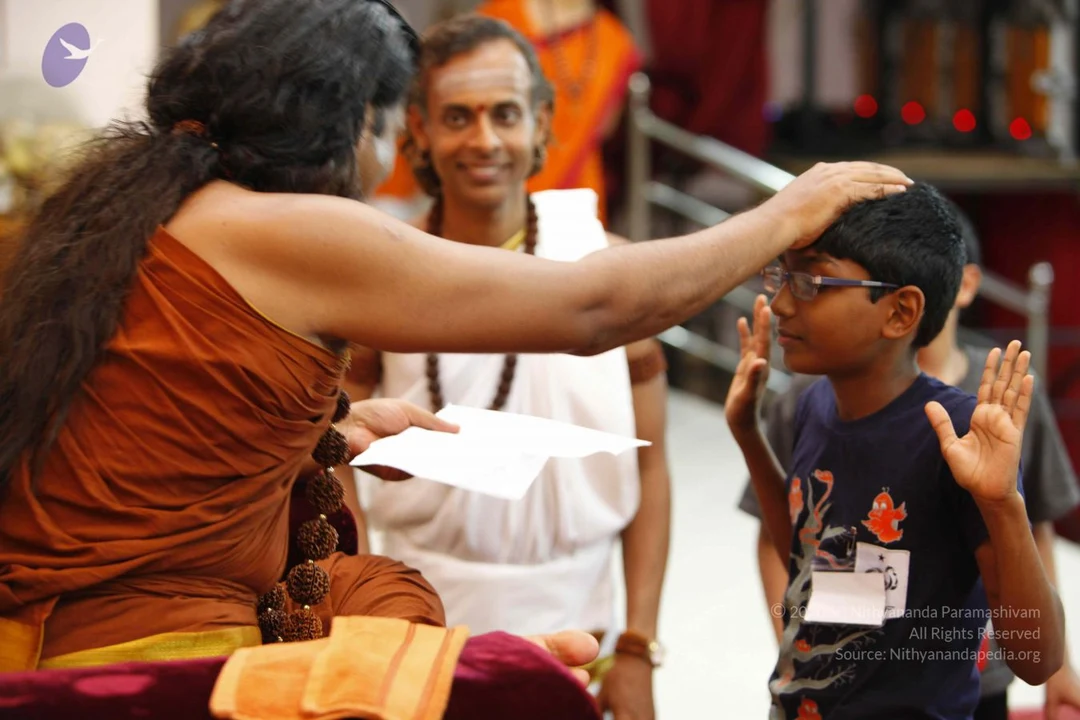
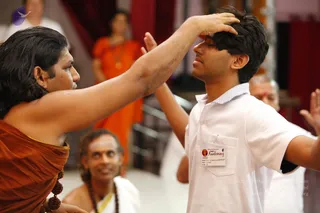
A photograph of an in-person blessing. A long-haired man in an orange-saffron robe with a rudraksha mala sits on a red-and-maroon cushion, his right hand raised and pressed to the forehead of a man in a white kurta-style garment with long sleeves. Behind them stands a deity murti draped in a red, yellow, purple and green garland, with a gold-colored object and an ornate temple-style painting on the wall.A photograph of a participant in a white collared shirt with a name badge reading Awakening receiving a blessing. A man in an orange-brown shawl with long dark hair and rudraksha beads presses his right hand to the participant's forehead. Behind them a woman in an orange sari stands by a red curtain, and a seated man in white with a bare torso and tilak watches and smiles at lower left. The setting is an indoor hall with a pale floor.A photograph of a long-haired figure in an orange-brown wrap and a necklace of large rudraksha beads placing a hand on the forehead of a young man in a white-and-red striped polo shirt with a name badge. The man has his eyes closed and a palm raised. Behind them, a man in white dhoti with a braid and a sacred thread sits, and a woman in orange sari stands near red drapes and a gold elephant figure. Several other people are in the background of an indoor hall.A long-haired figure in a rust-orange saffron wrap and dark rudraksha beads presses a palm to the forehead of a young man in a white-and-navy striped polo shirt with a name badge, while the man's eyes are closed and his other hand is raised palm-outward. Behind them, a bearded man in white ritual dhoti with a yellow border and a woman in orange sari stand near red curtains and a golden lamp stand. The setting appears to be a satsang or blessing gathering, with several onlookers in the background.A photograph of a long-haired figure in a saffron-orange draped robe and a rudraksha mala with large beads, seated and raising both hands in a blessing gesture while placing a palm on the head of a bald-headed man wearing a white t-shirt with a lanyard badge who kneels with eyes closed. Behind them a woman in orange stands in a bright room with a fan and garlands. Appearance-based candidate in saffron robe with rudraksha mala and long hair: Swamiji (probable), giving blessing to a devotee.A photograph of a seated long-haired figure in saffron-orange robes with a rudraksha mala draped over the shoulder, placing a palm on the forehead of a balding man in a white T-shirt who has closed his eyes and bowed his head. Behind them, another person in orange and several people in white stand in a room with a red curtain and a bright floral offering in the lower left.

sacred arts & constructions

17 photosSource gallery
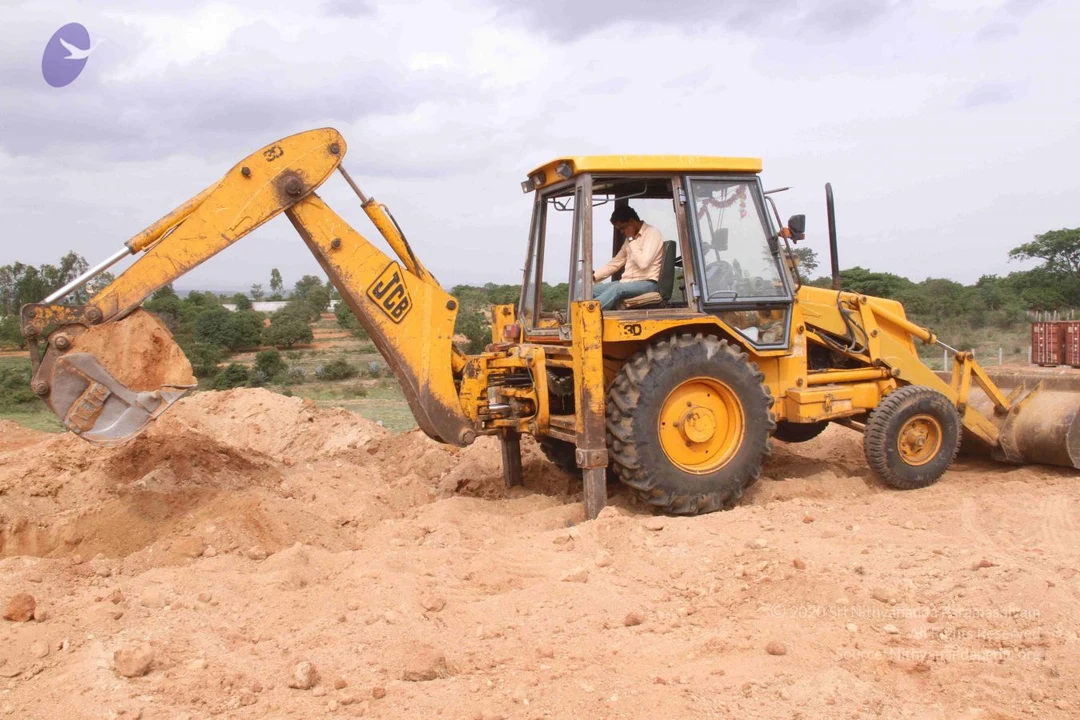
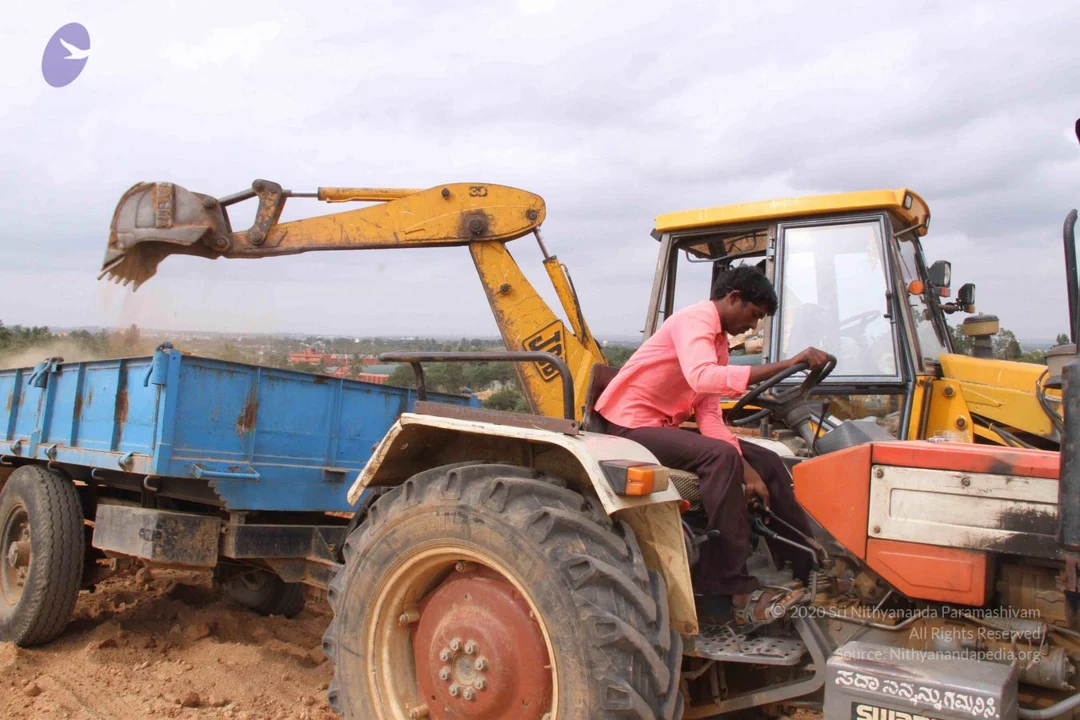
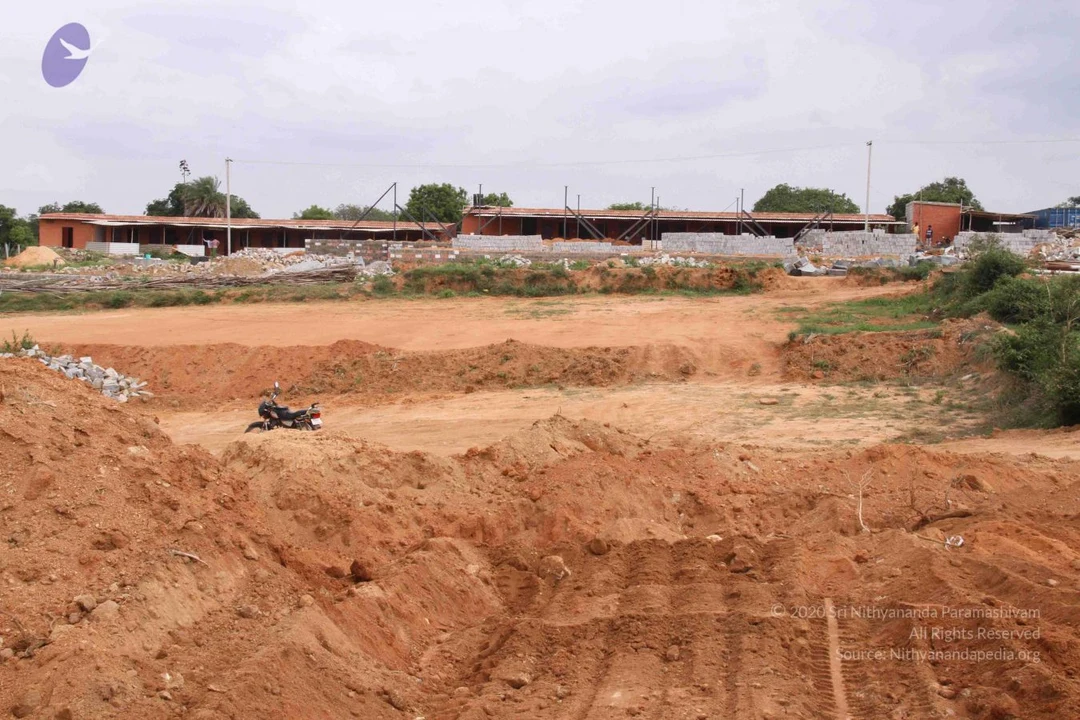
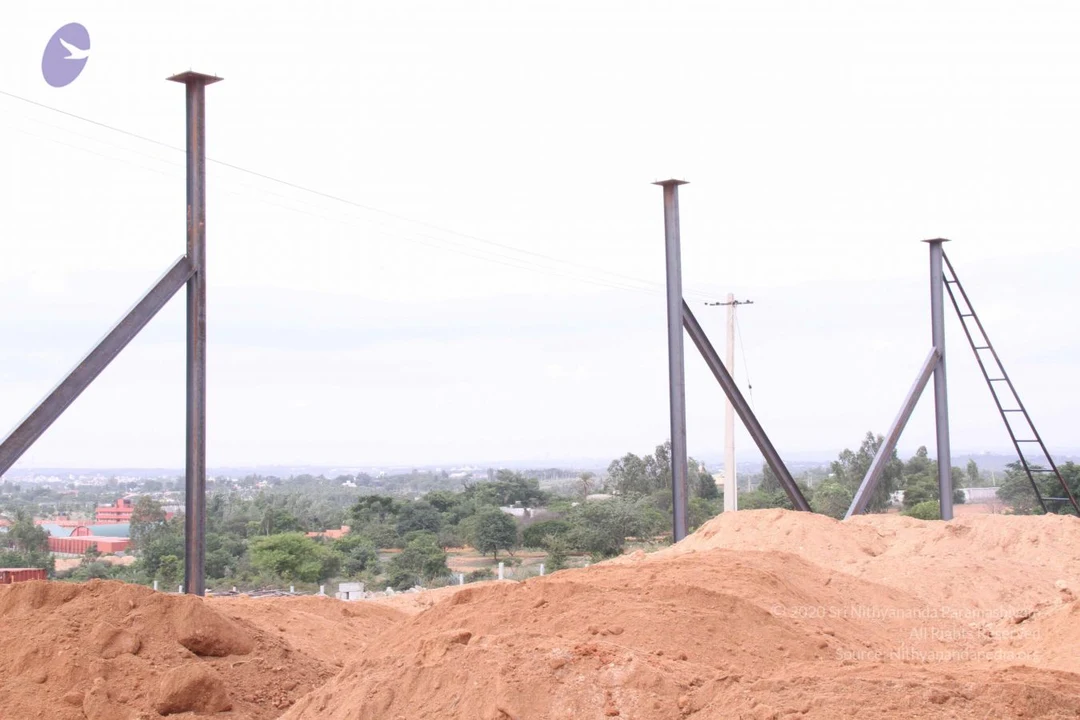
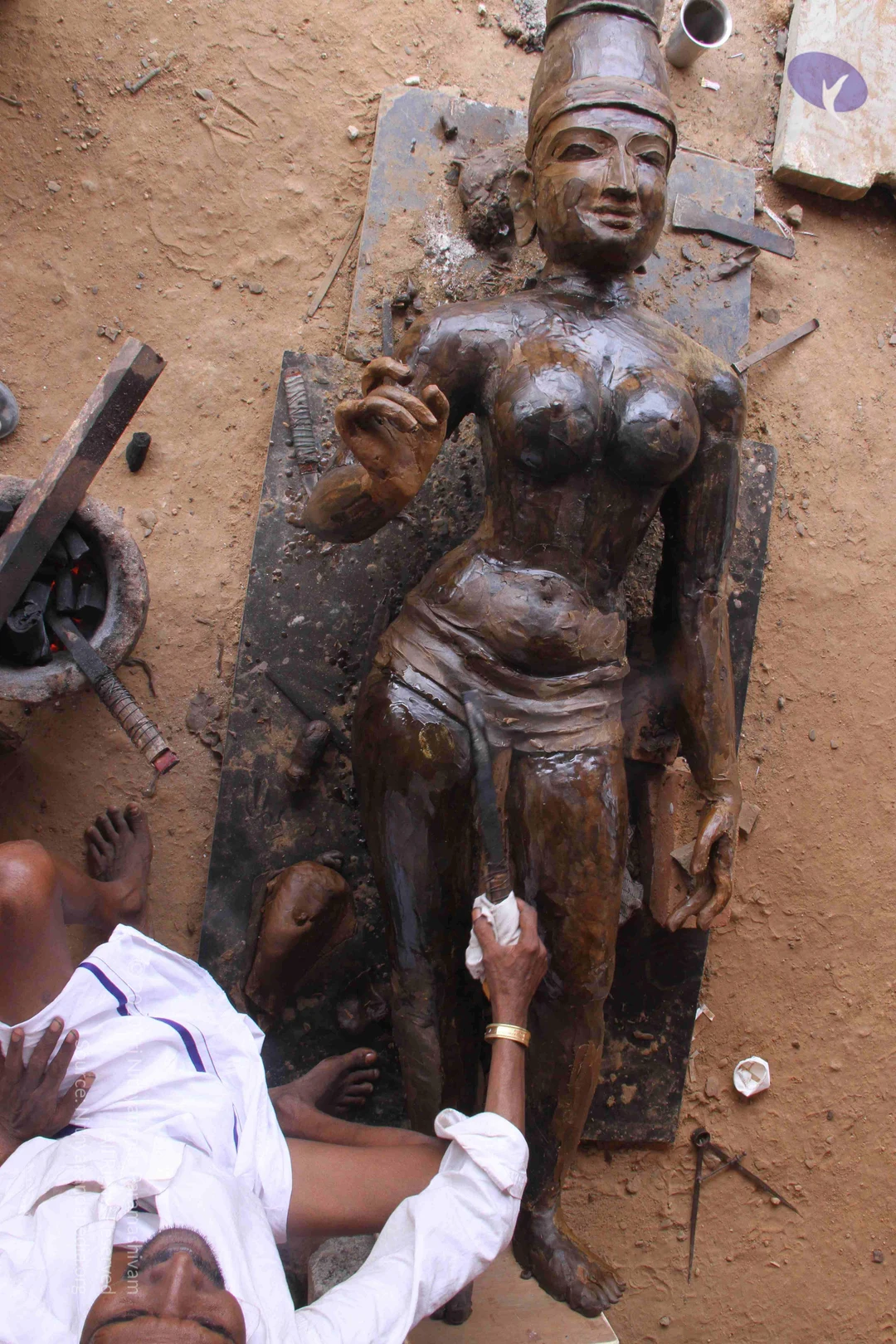
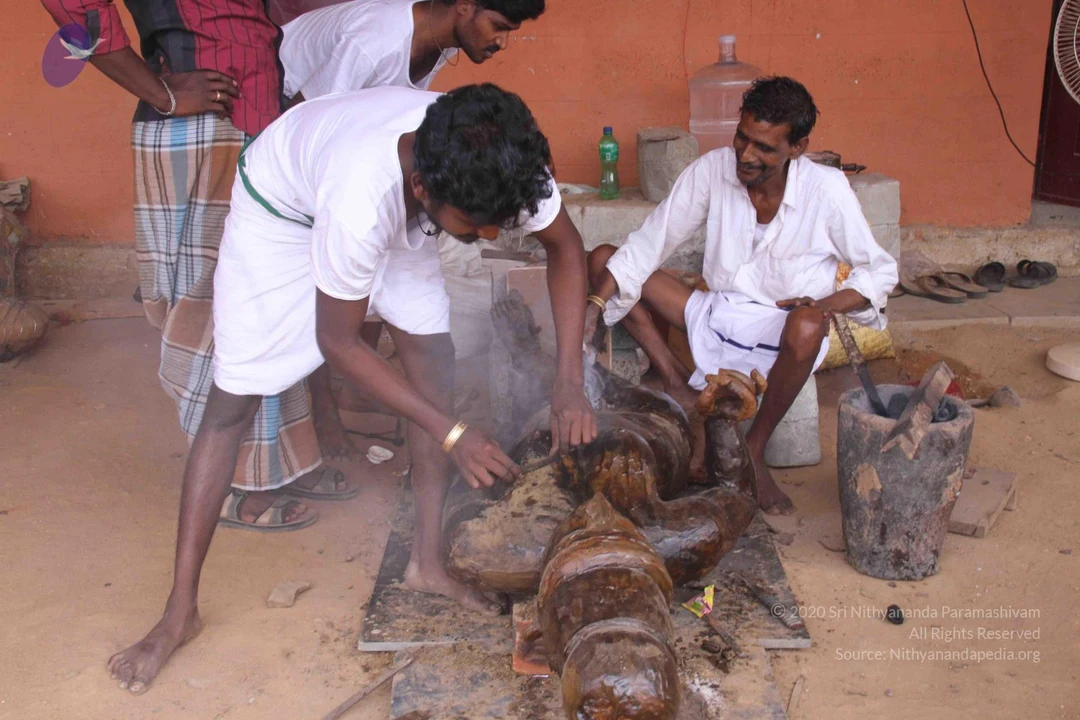
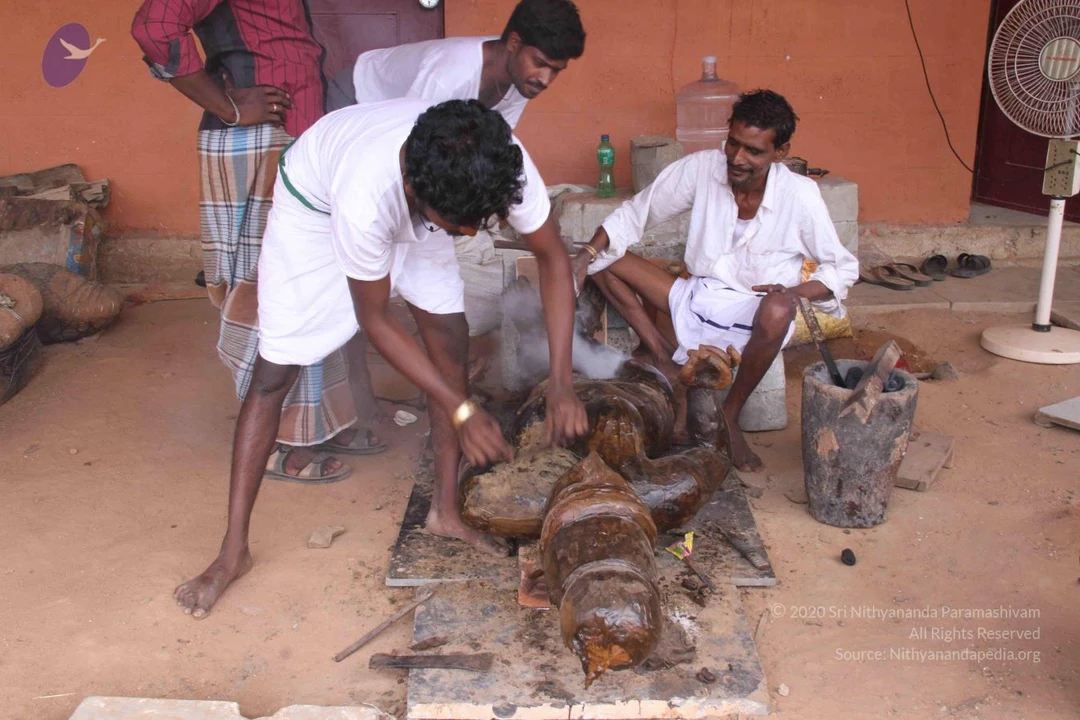
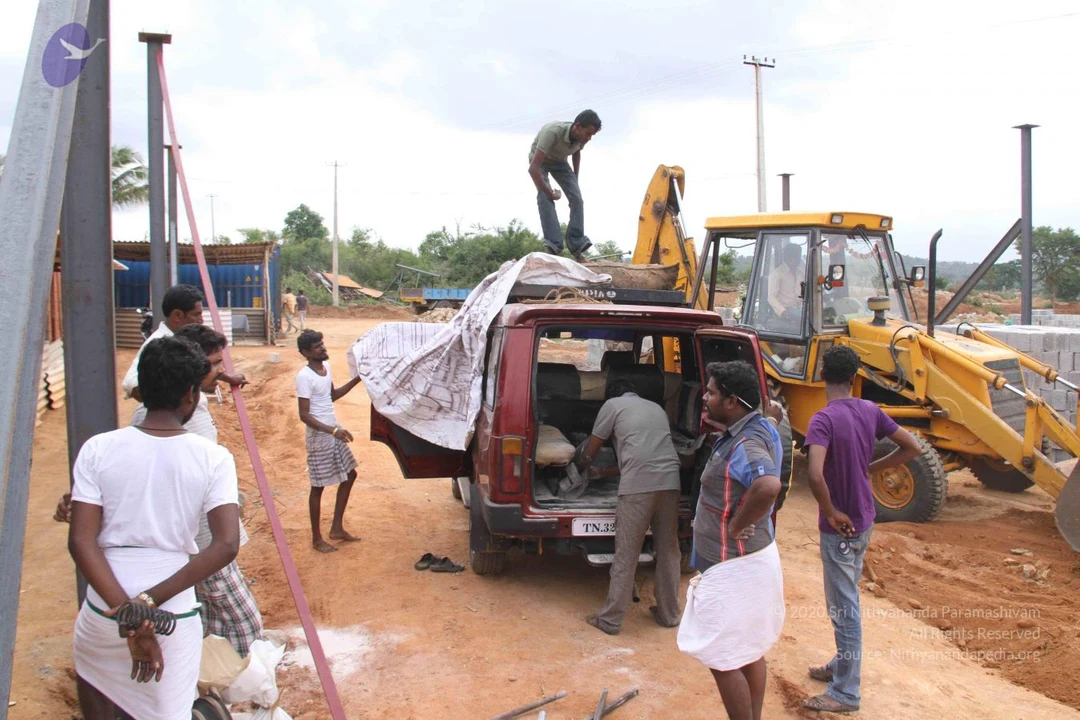
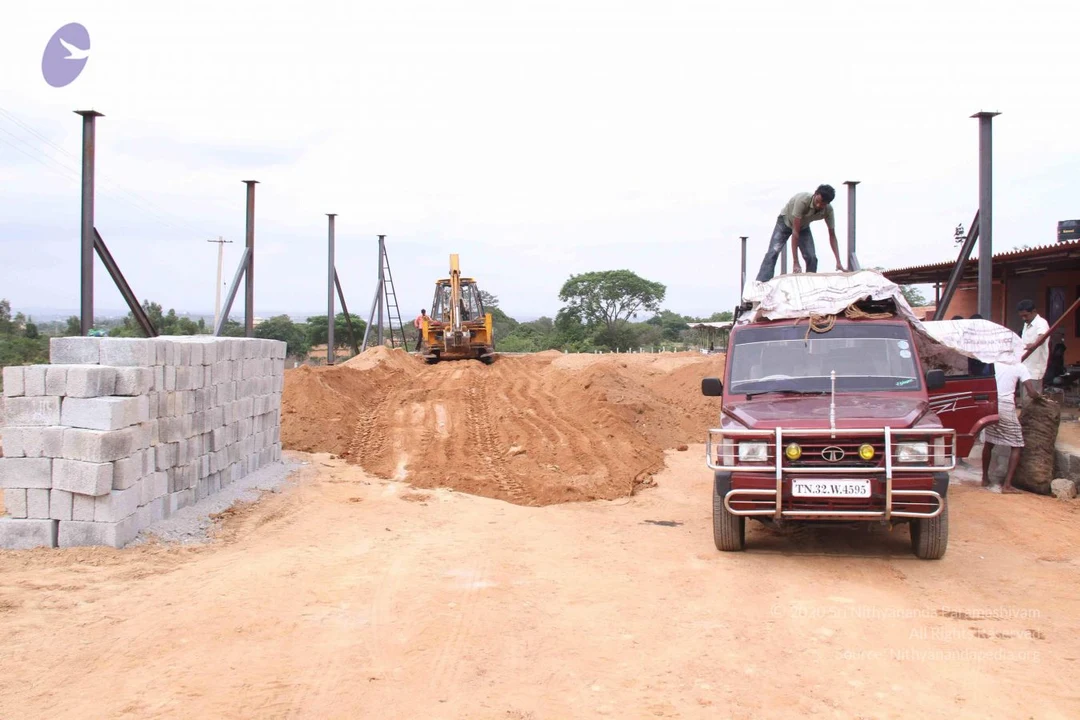
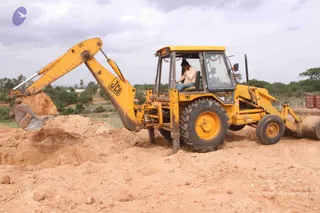
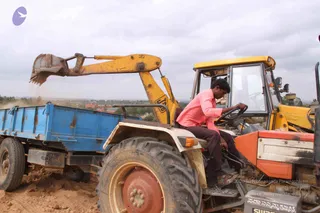
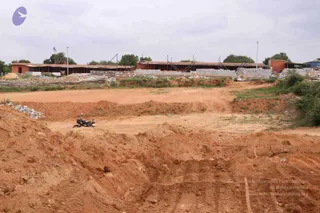
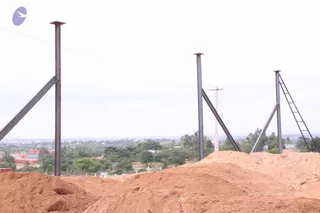
A yellow JCB backhoe loader digs in a dusty red-brown earth site under an overcast sky, with its bucket raised over a pile of excavated soil. A man in a white shirt sits in the open operator's cab at the wheel, with a red-and-white garland hanging from the cab's upper frame. Green trees and scrub stand in the background, and a stack of shipping containers appears at the right edge.A man in a pink shirt and dark trousers sits at the controls of a yellow and orange backhoe loader tractor, operating its raised bucket arm over a blue dump trailer on a dusty, unpaved hillside. Loose red-brown soil spills from the bucket into the trailer, with a grey overcast sky and distant green trees behind. The tractor's cab and orange body panel are visible, and a sign on the machine reads in Kannada script. No ritual, a person, or devotee activity is visible; the scene shows ground-levelling or earth-moving work.A dusty red-earth construction site under an overcast sky. Two long single-storey buildings with orange-tiled roofs and unfinished breeze-block walls stand in the background, with scaffolding poles and stacked bricks around them. In the foreground, excavated soil forms ridges and tyre tracks, and a parked motorbike sits on the dirt. Scattered rubble and a few trees and shrubs line the edges of the plot. No people are visible.A construction site on a hilltop with raw red-brown earth mounds in the foreground. Three tall grey steel poles with angled diagonal braces stand upright, and a steel ladder leans against the rightmost pole. Behind them stretch a hazy landscape of green trees, scattered low buildings with red and tan roofs, a utility pole with power lines, and distant town rooftops under a pale overcast sky. No people are visible.A large clay or bronze-coloured sculpture of a standing female deity figure, shown in progress on a dusty ground with metal tools and a coal brazier nearby. The figure wears a tall cylindrical crown and a short waist cloth, with one hand raised. In the lower left, a worker in a white shirt and cloth is partly visible, one hand touching the sculpture's base while another hand holds a cloth and tool against the figure's leg. No a person candidate is present; the statue is an unfinished work-in-progress.Outdoors in a sandy courtyard before an orange wall, workers in white dhotis and shirts handle a large reddish-brown carved stone murti laid on a wooden board. One young man in a white shirt and dhoti bends forward with his hands on the sculpture, while another in a plaid lungi and a man in white sit and stand beside it. A stone mortar and pestle, a water jug and a plastic bottle sit nearby, with a stone trough and a fan on the wall behind. The scene suggests preparation of a deity murti for ritual work.

Deity-Darshan

19 photosSource gallery
Interior of a temple shrine viewed down a narrow aisle lined with black metal railings and a red carpet. At the far end stands a large deity murti pair seated on a raised dais, adorned with gold crowns, marigold garlands and a gold-bordered orange backdrop. A man in a saffron-orange robe kneels at the altar base, tending brass lamps and ritual vessels in front of a small framed image. Red-painted pillars and greenery are visible beside the shrine. No other people are visible.A photograph down a narrow aisle lined with black metal railings and a red carpet leading toward a shrine. At the far end, a pair of deity murtis stand on a grey stone pedestal, adorned with red and orange garlands, a golden kalasha-like vessel and oil lamps set in front. The murtis wear white and green draped garments with gold ornaments and crowns. Red and pink curtains frame the shrine, and a small figure in orange and gold sits at the left side near the altar. A standing person in red and gold clothing is visible at the far left edge, while the shrine area otherwise shows no other people clearly.A photograph inside a temple shrine showing a large golden-framed alcove with an orange backdrop, housing two deity murtis seated on a raised platform. The central figure holds a trident and other implements, wears a crown and a rudraksha-style necklace, and is draped in green and white; the figure beside holds a flower garland and wears a tall crown and white-and-gold attire. Decorated with yellow and red marigold garlands, a kalasha-like vessel sits in front, along with brass oil lamps and offerings of fruit. A young priest in saffron-orange cloth with white body markings sits at the lower left, tending the puja. A smaller deity image appears in a blue-curtained niche at the right.Inside a temple shrine, two large painted deity murti stand under a gilded arch against a bright orange drape, adorned with garlands of yellow and red flowers, rudraksha-style necklaces and ornate crowns. A shaved-headed young priest in saffron-orange cloth and a rudraksha mala sits cross-legged at lower left, tending offerings and a plate of fruit before the altar. Brass oil lamps stand on either side, and a smaller deity figure appears in a blue-curtained niche at right. No a person candidate is clearly visible, so the seated priest is described only by role.Inside a gilded temple shrine, a large pair of deity murti stand together with a red-orange backdrop: the figure on the left has four arms, red face and a crown and holds a trident, while the figure on the right wears a tall crown and a chain of beads. Both wear garlands of red and yellow flowers and white dhotis with coloured borders. In front, a seated kalasha-like brass vessel and a small smaller murti are decorated with garlands. A young boy in an orange robe and rudraksha mala kneels at a brass plate of offerings, with oil lamps and bananas nearby, performing puja. A second, smaller shrine on the right holds a seated murti in a blue niche with a garland. No a person candidate is visible.Two metal murti of deities stand side by side before a bright orange silk backdrop framed by gold-embossed arch. The figure on the left, in silver-toned metal, wears a red and white turban, pearl garland, and gold armour, holding a trident and a small hand drum with a serpent motif; flower garlands of yellow marigolds and red roses drape the figure. The figure on the right, in gold-toned metal, wears an ornate golden crown, jewelled necklaces, large earrings and a red rose garland, holding a lotus-like object. Both are richly adorned as deity murtis in a temple setting.
Paduka-Puja

25 photosSource gallery
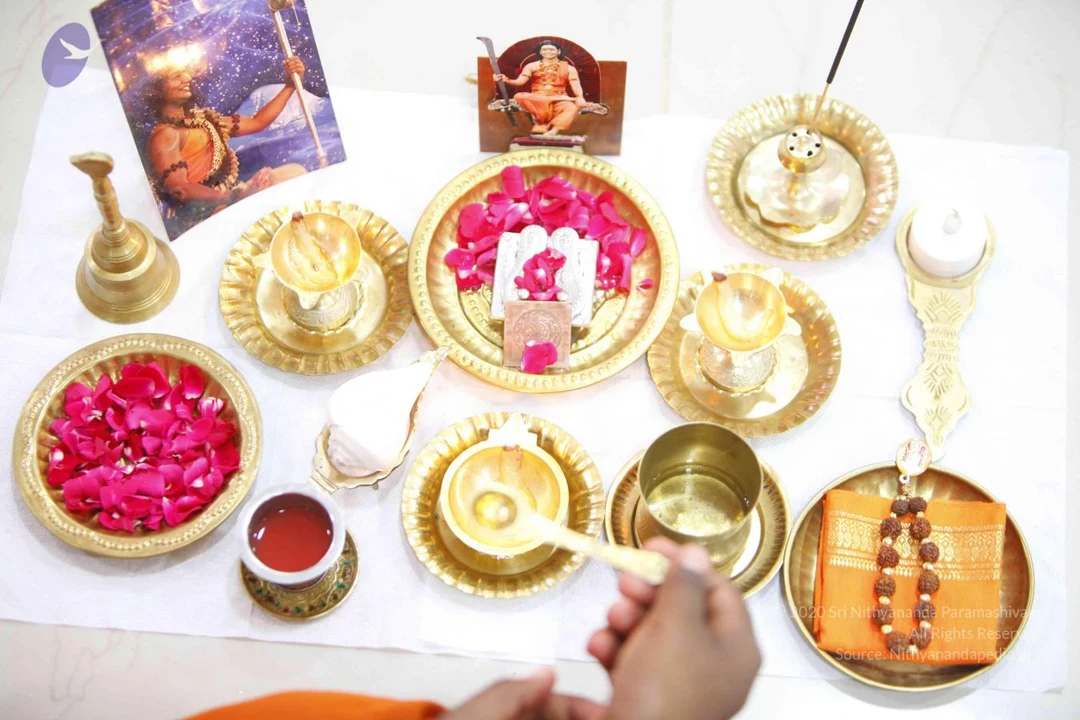
Overhead view of a puja arrangement on a white cloth over a marble floor. Brass plates hold lit oil lamps, red rose petals, a conch shell, a small bell, a brass spoon in a bowl, a brass incense holder with a stick, and a folded orange cloth with a rudraksha mala. A small wooden stand holds a figure of a seated deity, and a printed picture shows a figure holding a staff against a night sky. A hand holding a spoon is visible at the bottom edge, with orange cloth below. The scene is a ritual setup of puja items with lamps and petals.Overhead photo of a puja setup on a white cloth. Several brass lamps with lit flames, a brass plate of red rose petals with a small silver deity murti, a conch shell, a brass bell, a brass incense holder with a stick of incense, a bowl of red petals, a small red liquid cup, a brass tray with a rudraksha mala draped over an orange cloth, and a brass ritual spoon held by a hand at the bottom edge. A printed image of a figure with a staff and a small framed figurine on a wooden stand sit at the top. No people are visible apart from the partial hand.Close-up of a ritual arrangement on a gilded tray: a dense ring of red roses, pink roses and white frangipani (plumeria) flowers surrounds a small brass oil lamp, with rose petals scattered beside it. Silver puja vessels with embossed floral designs, a silver spoon and a silver container hold yellow liquid and offerings, with yellow and red flowers at the edges. No people are visible; this is an offering arrangement for worship.Close overhead view of a ritual arrangement on a gold-toned tray: silver bowls filled with golden liquid, silver cups and a silver-rimmed conch-shaped vessel, all surrounded by heaps of red roses, pink roses, white plumeria and yellow-orange marigold-like blossoms. Yellow flowers are scattered over the offering. No people are visible apart from a dark sleeve at the lower left corner.A seated audience at a satsang hall, mostly men in white kurtas and white shirts, with a few women in white in the background. In the foreground a man with a rudraksha mala and crossed arms sits beside a man with hands clasped in prayer, eyes closed, and a man in a white-and-red striped polo with a name badge on the right. Red-cushioned black chairs fill the rows, a water bottle sits on the floor at left, and a red curtain hangs behind the room. No speaker is visible in the frame.Seated devotees in white clothing at a satsang, listening with eyes closed or lowered. In the foreground a man in a white shirt holds an open printed booklet, another in a white shirt and rudraksha mala sits with hands folded, and a man at the left wipes his brow with a hand. Behind them, rows of seated attendees in white and a woman in a white sari with orange border. The setting is an indoor hall with red chairs and a red curtain in the background.

Gurukul-performance

2 photosSource gallery
A photograph of several young boys in orange-red robes playing long curved gold brass horns raised overhead, with white vertical tilak marks on their foreheads and rudraksha malas around their necks. A drummer's drum edge is visible at the lower left, and a white door with a metal frame stands behind them against a pale wall.Several young boys in orange and red saffron-toned cloths perform music at an indoor event against a white door with glass panels. Four boys play long curved golden horns held overhead or at mouth level, one is blowing into his horn. Two drums with rope-laced skins are visible at lower left, and the boys wear white forehead markings and rudraksha beads. Some boys are bare-chested with saffron or red cloth wrapped at the waist, and one wears a dark rudraksha mala. The setting appears to be an ashram or temple hall with pale walls.
Satsang

7 photosSource gallery
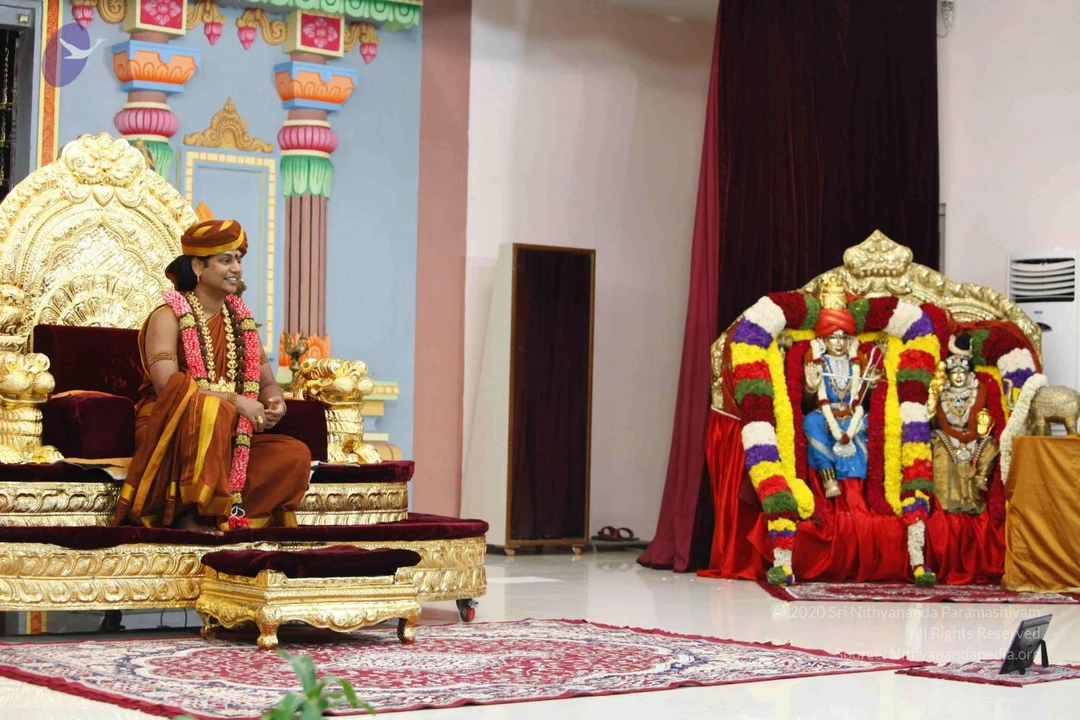
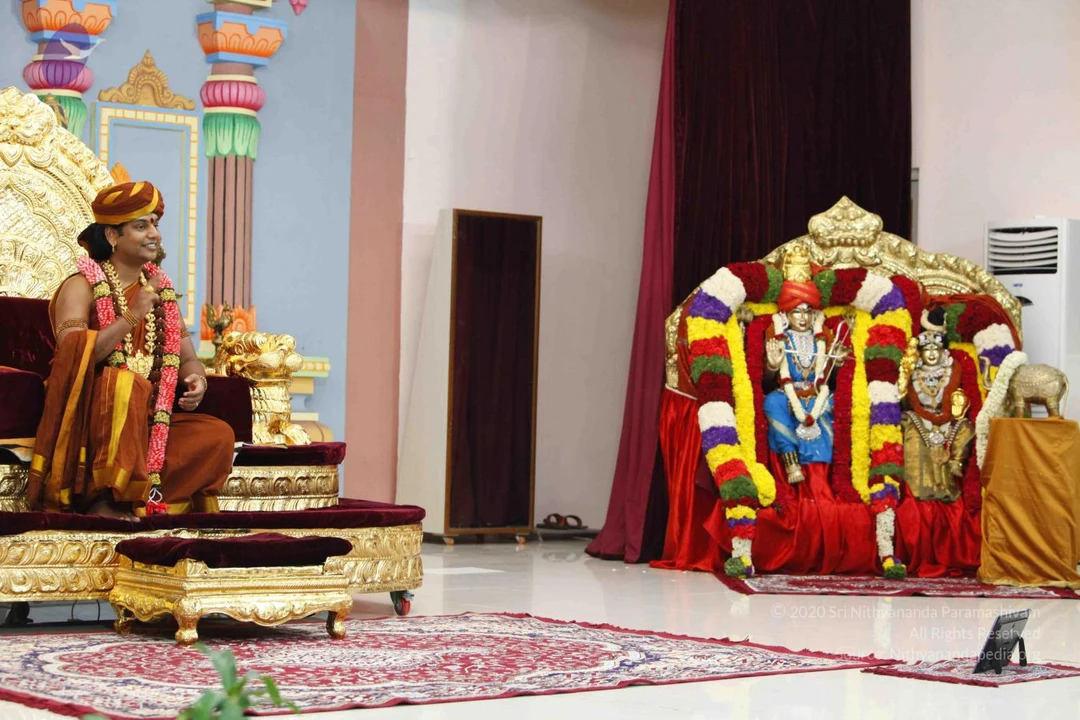
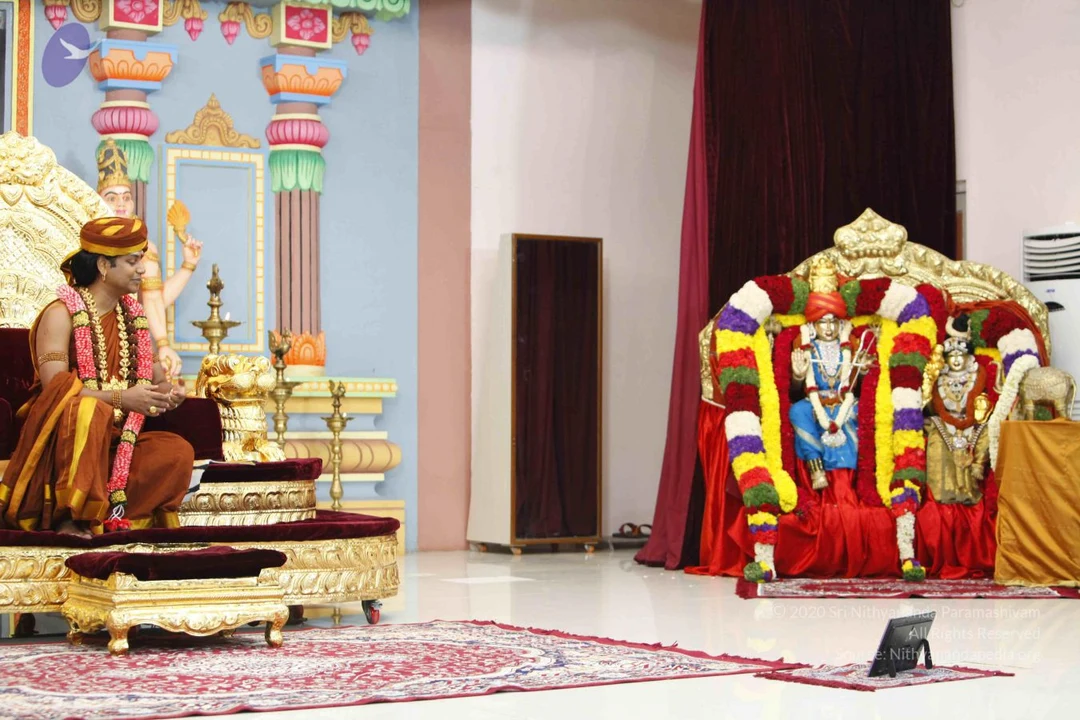
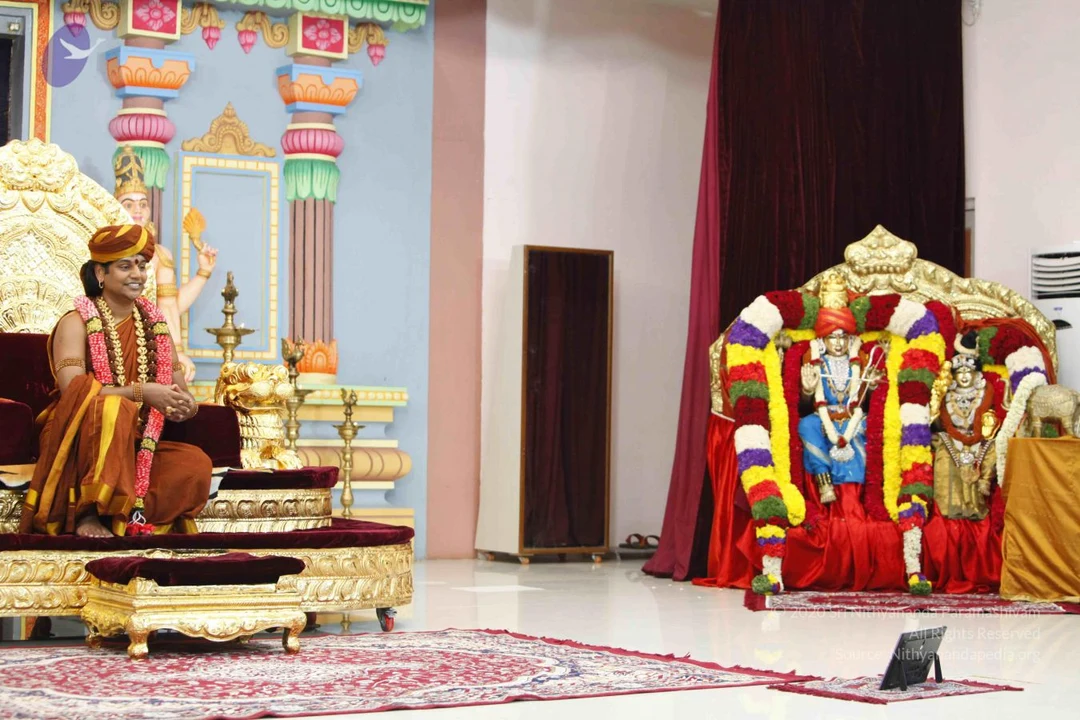
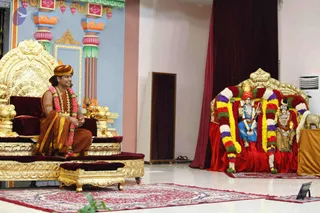
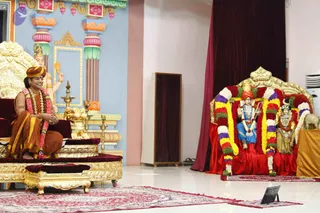
A smiling man in an orange-brown turban and saffron robe sits on an ornate golden throne with lion-shaped armrest supports, wearing a pink, white and green flower garland over a rudraksha mala and gold necklaces. Two painted, gold-jewelled deity murti guardians stand on either side holding ritual objects, and a golden kalasha-style finial rises above the throne. The throne sits on a red velvet platform with gold lion figures in front, and the backdrop is gold-accented with hanging lamps.A photograph of a seated figure on a gold-framed, ornate throne with red velvet cushions, wearing an orange-saffron robe, a deep orange turban, a pink-and-white flower garland and a gold necklace. The person has long dark hair and is seated with hands folded in front. To the right stands a red-draped altar with decorated deity murti, one blue-skinned figure holding a trident and wearing a red turban, both adorned with multicolour flower garlands. Brass oil lamps sit beside the throne, a painted backdrop of pillars and a standing deity figure with a fan appears behind, and a small tablet device rests on a carpet in the foreground. Appearance-based candidate present: Swamiji (probable), seated on the throne in orange robes, turban, rudraksha-style flower garland and gold necklace.A smiling man in a saffron-orange turban and saffron robes sits on an ornate gold throne with carved lion-head armrests. He wears layered garlands of pink and white flowers with rudraksha beads, gold ceremonial necklaces, gold bangles and a small red bindi, with a clip-on microphone at his cheek. His hands rest together in his lap. To the left, a painted deity murti with multiple arms holds a flame-like object.A seated man in a golden ornate throne sits in a hall with a blue painted pillared backdrop. He wears an orange-saffron turban, saffron robes with a gold-bordered wrap, a red-and-white floral garland, rudraksha-style beads and a gold necklace. To the right stands a red-and-gold decorated peetha holding two deity murtis draped in garlands of red, yellow, purple and green flowers, with a golden elephant figure beside them. A small gold table and red carpet lie in front. Appearance-based label: Swamiji (probable), seated on the throne with distinctive turban, saffron robes, garland and beads. Deity murti with garlands on a decorated peetha beside him.A seated man in orange and saffron ceremonial robes sits on a dark red velvet cushioned throne with ornate gold carved backrest and gold lion-head armrests. He wears an orange and yellow turban with a red tilak on his forehead, long pink and white flower garlands, and a gold necklace with rudraksha beads. Gold bangles and a gold armband adorn him. He smiles and gestures with his hands while seated in a satsang setting with pastel blue and green walls.A photograph of a satsang hall with a gold-and-maroon throne at left. A figure seated on the throne wears an orange-and-gold turban, saffron-orange robes, a pink-and-white flower garland and a rudraksha-style mala, and is smiling. Swamiji (probable): the figure has a turban, saffron clothing and a garland, matching the page's Nithyananda Paramashivam satsang. To the right stands a red-draped altar with two bronze murtis adorned with multicoloured flower garlands, one in blue attire with a trident and the other golden. A small gold footstool and a tall pillar mural in blue and pink appear behind. A red carpet lies on the floor and a tablet sits on a mat at lower right.

Sarva-Darshan

4 photosSource gallery
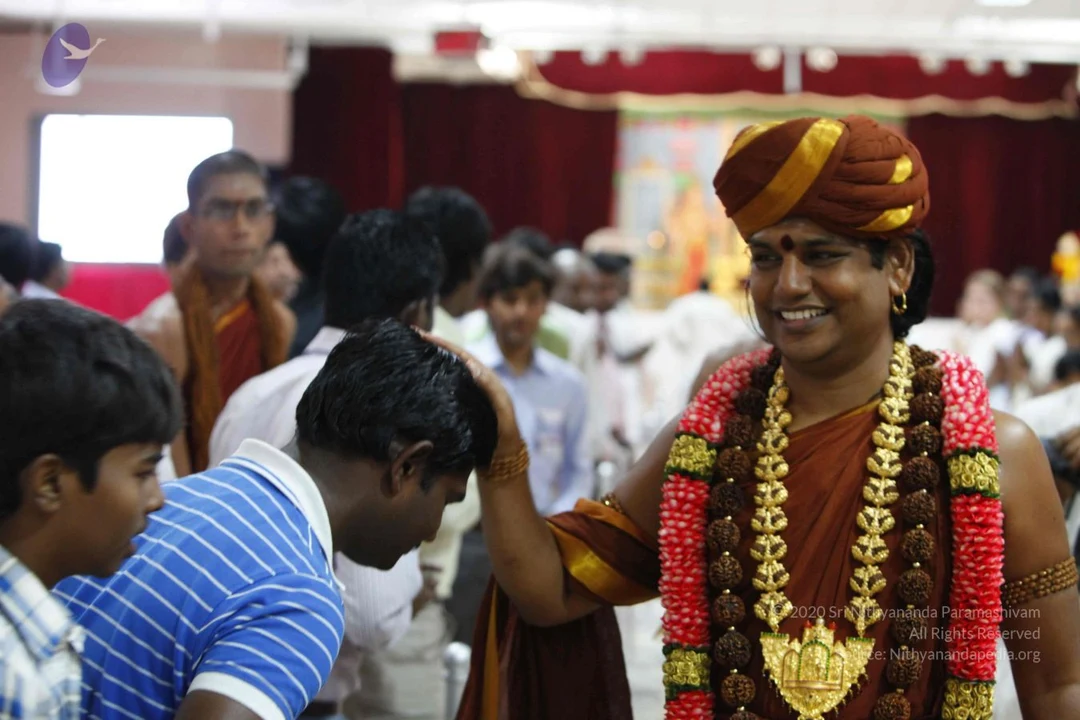
Photograph of a satsang hall where a man in a rust-orange and gold turban, rust-brown robe, and a long layered garland of red-and-white flowers and rudraksha beads raises his right hand in blessing toward a seated devotee at the lower left. He wears a gold pendant necklace and gold bangles, with a red bindi on his forehead. The devotee, wearing white, bows with hands pressed together. Behind them, several people in white clothes stand in a room with red drapes and a large screen on the left wall.A photograph of a man in an orange-brown saffron-toned robe and a matching rust-orange turban, wearing a long red and pink flower garland, a gold ceremonial necklace with a large gold pendant, and multiple rudraksha beads. He raises one hand in blessing toward a young man in a blue shirt who bows with palms pressed together and head lowered, while another bearded man in a pale green kurta and several other devotees in white and light clothing stand nearby. Behind them, a red curtain and a golden deity image are visible in an indoor temple or hall setting. Appearance-based label: Swamiji (probable), shown in person giving blessings, identified by the turban, saffron robe, rudraksha malas and ceremonial gold necklace.Photograph of a smiling man in an orange-brown turban with gold stripes, a dark orange-brown robe, a red and white flower garland and a long gold necklace with rudraksha beads, raising his right hand in greeting as he walks through a hall. A young man in a striped white shirt in the foreground presses his palms together in namaste. Behind them, other people in white and dark clothing stand in a crowd near a red curtain and a decorated shrine-like backdrop. The man in the turban shows distinctive ceremonial adornments and orange robes; the page identifies him as Swamiji, and his appearance is consistent with that, so this is a probable candidate. The photo shows a satsang-style gathering.A photograph of a smiling person in a rust-orange and gold turban and rust-orange robe, wearing a long multi-strand gold necklace, rudraksha mala beads and a thick red-and-white flower garland, standing in a crowded hall with red drapes behind. He places his hand on the head of a young man in a blue-and-white striped shirt who bows forward, while a boy in a plaid shirt watches at left and other attendees in white and orange stand around. The appearance-based label is Swamiji (probable), identified by the turban, rudraksha mala, gold necklace and saffron-toned robe while blessing a devotee, not by face.
IA

18 photosSource gallery
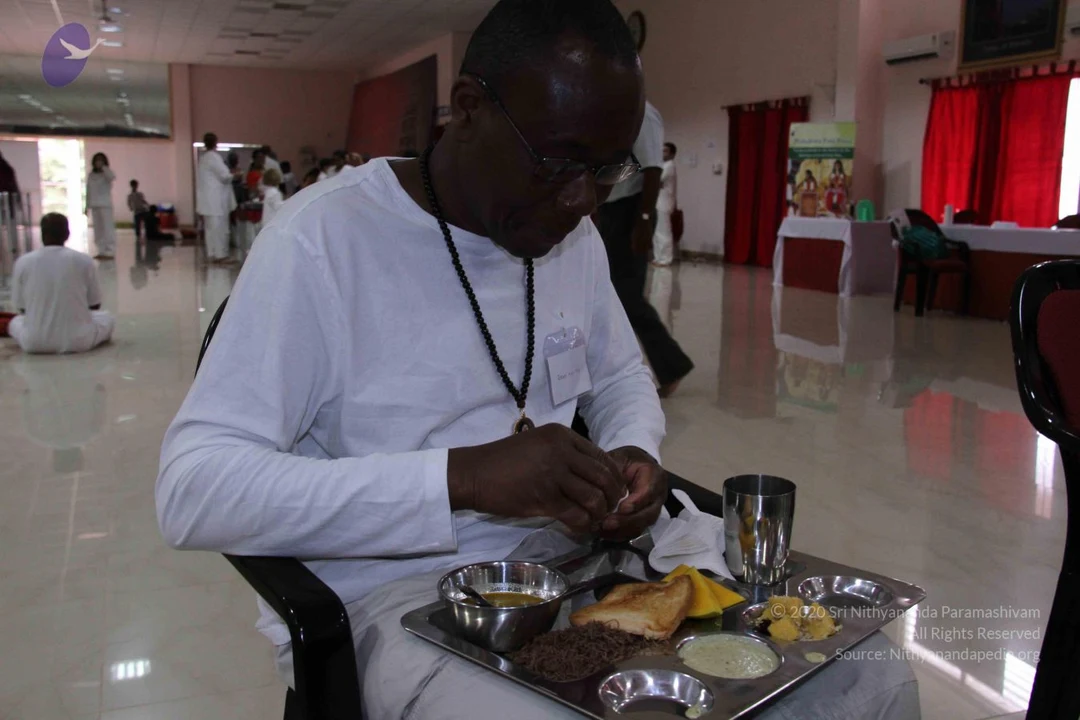
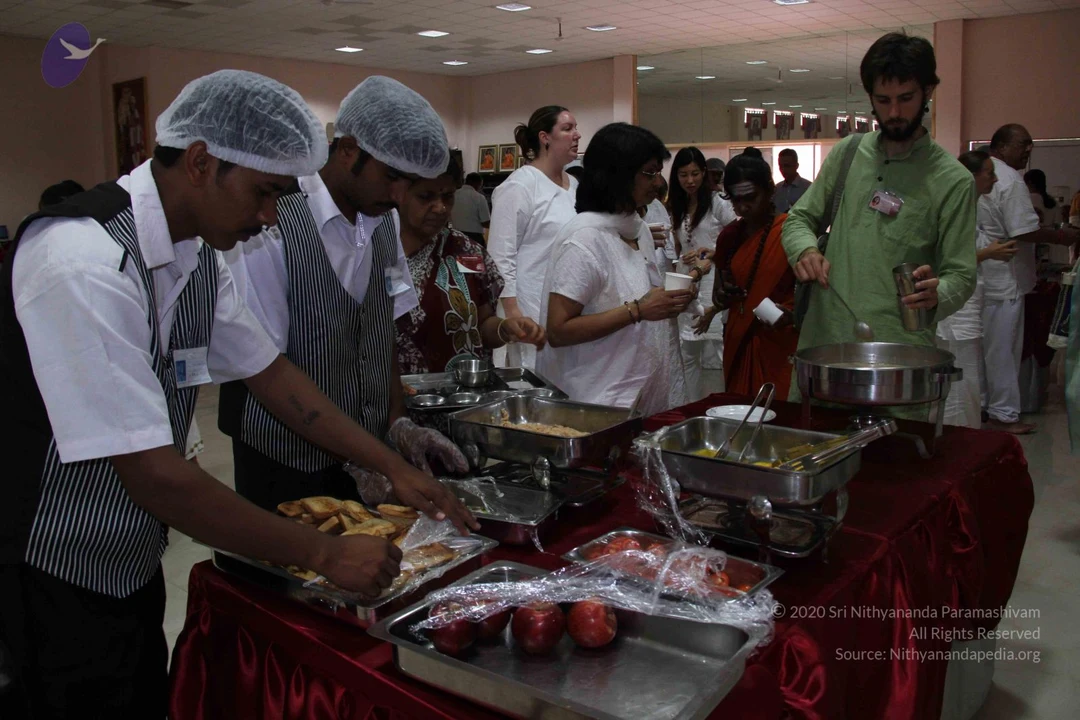
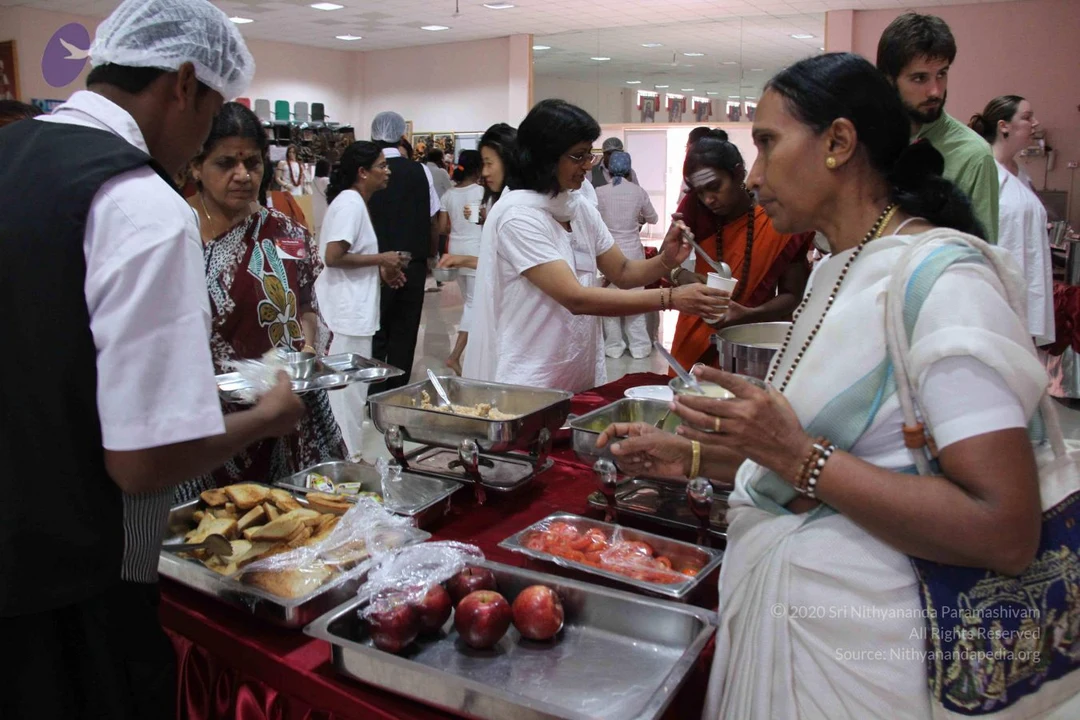
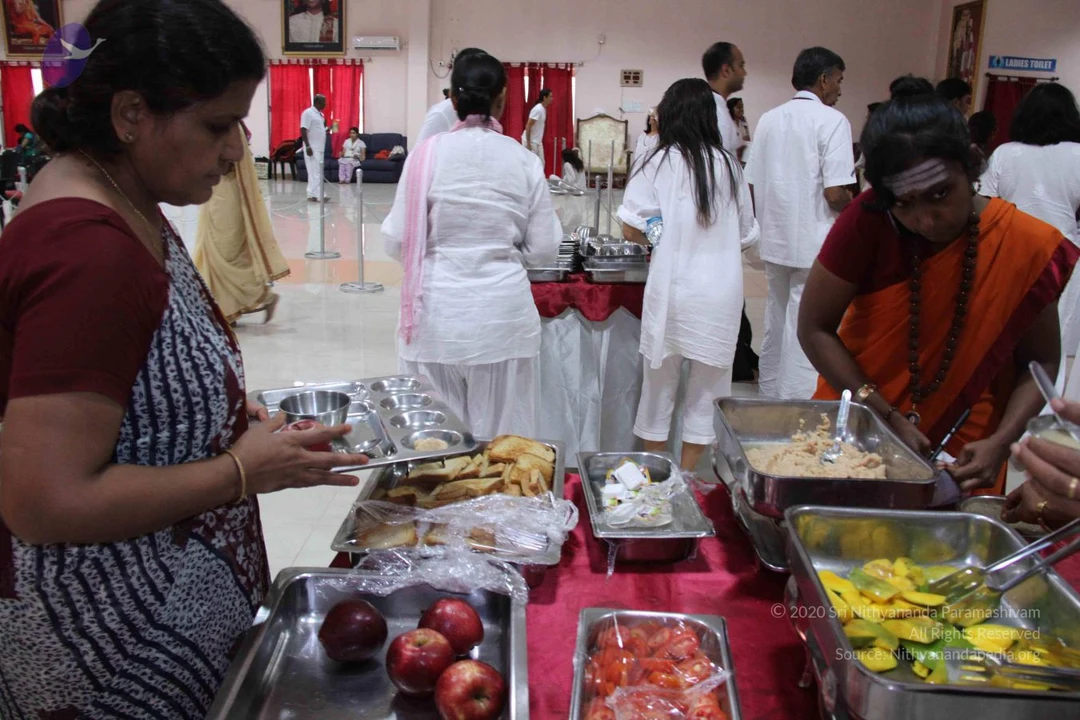
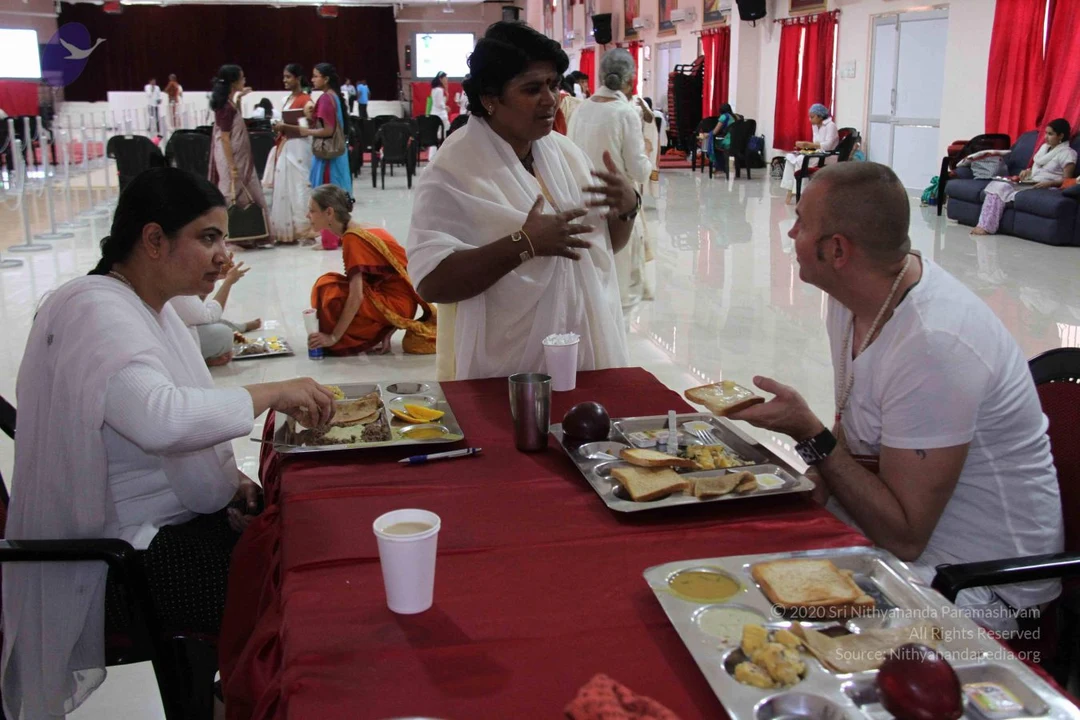
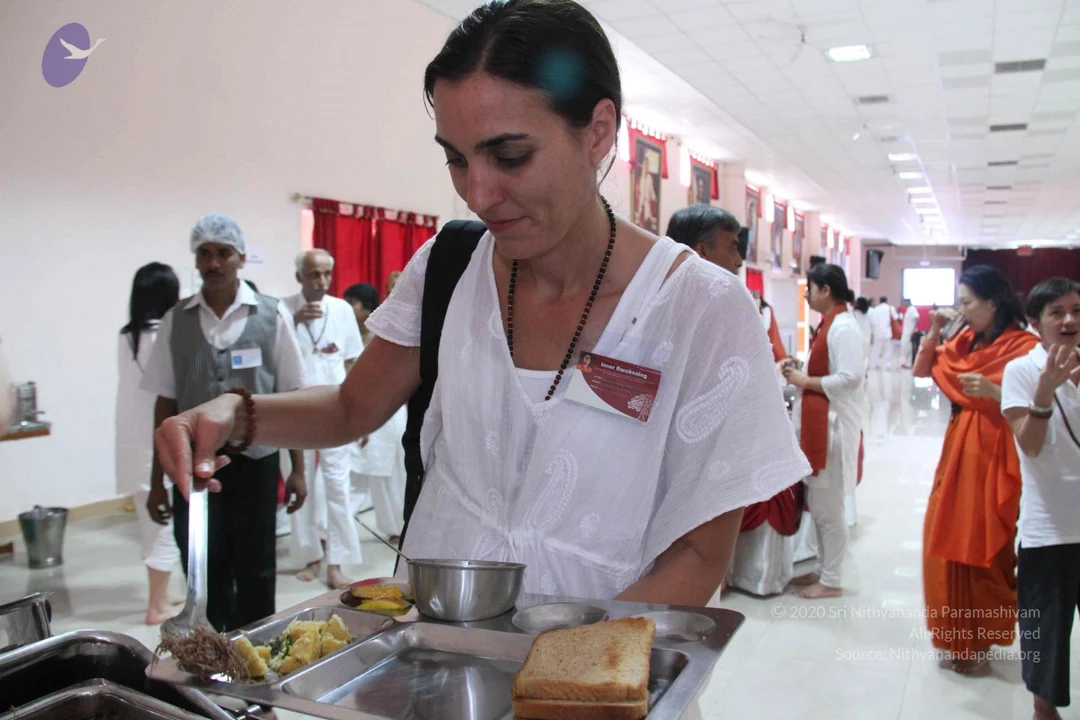
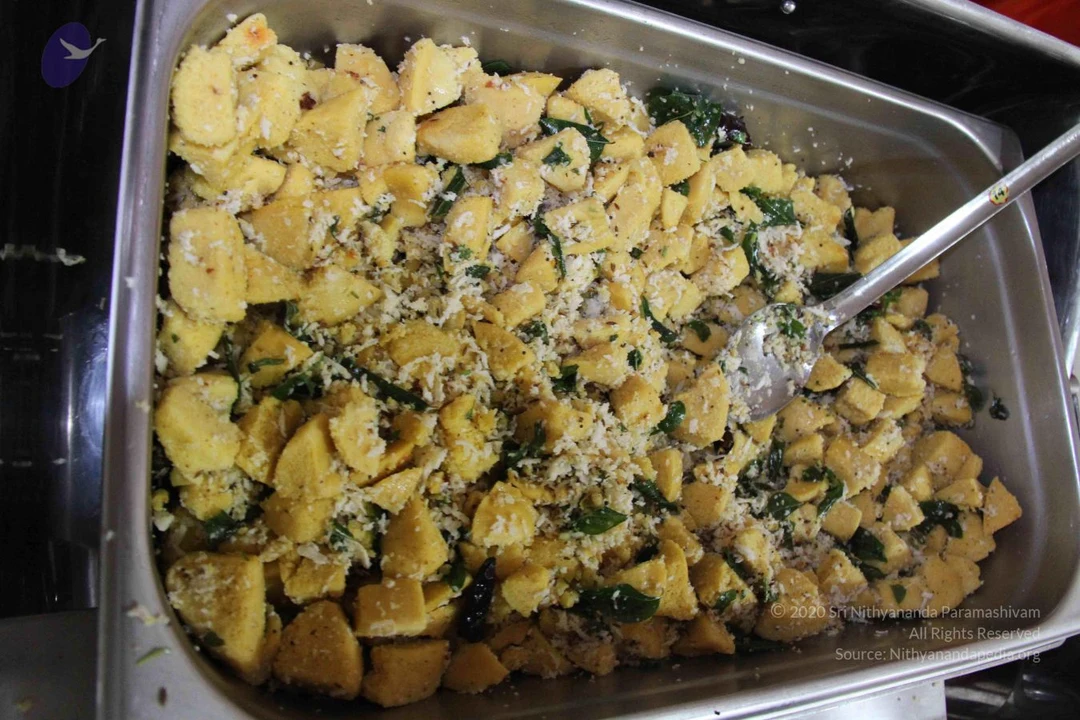
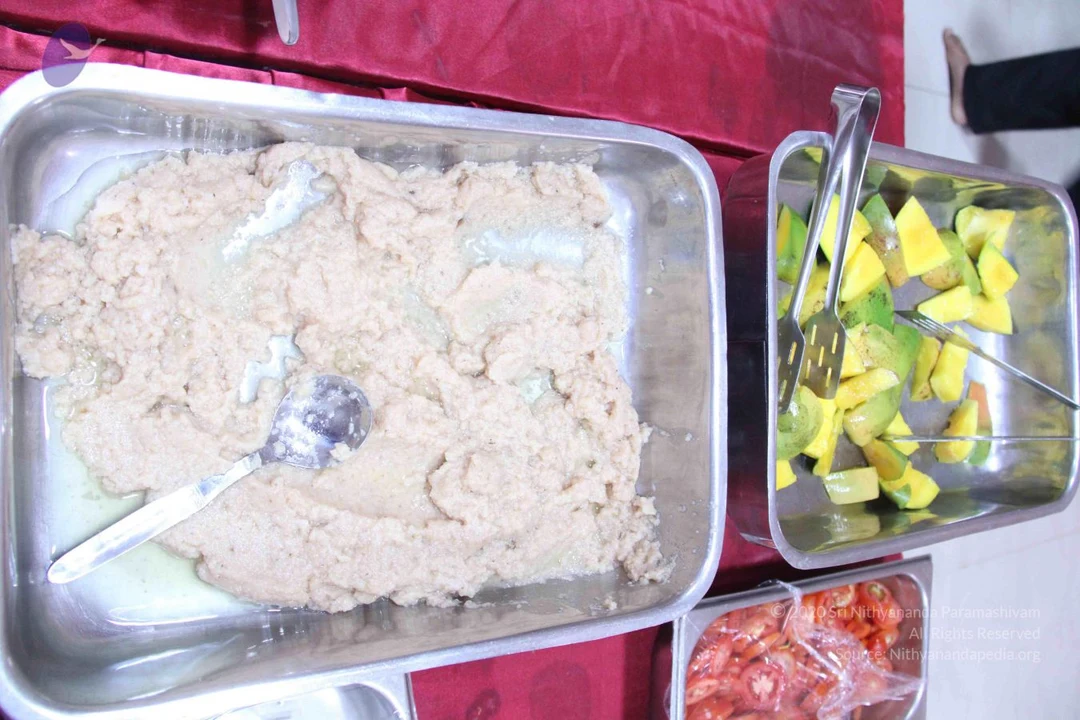
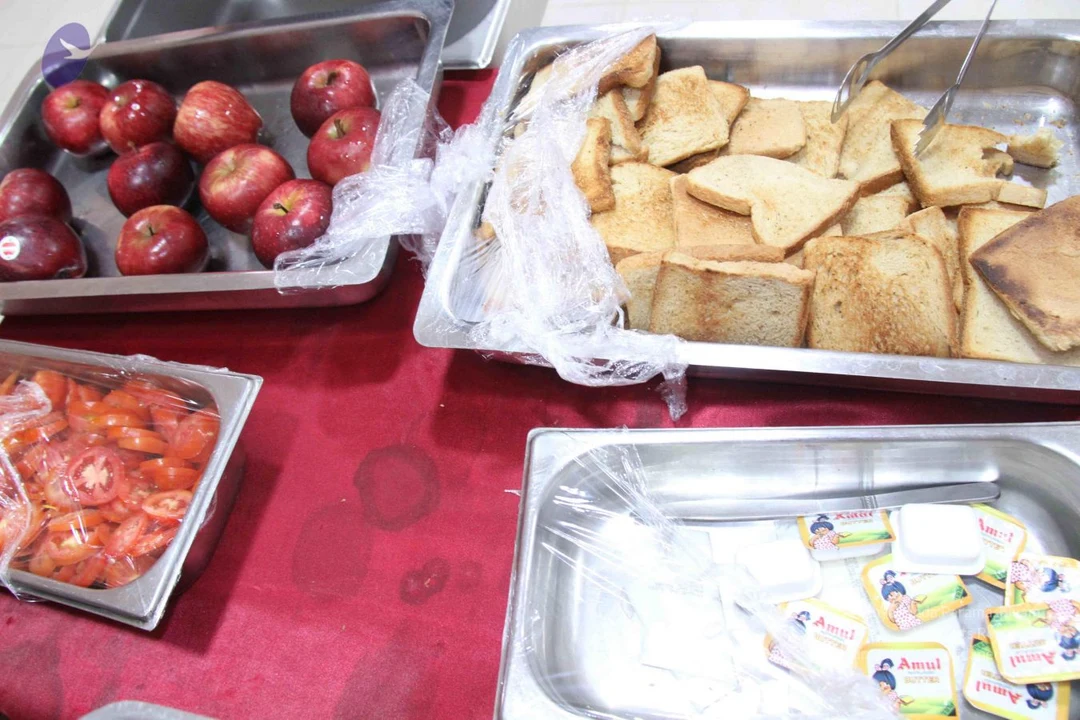
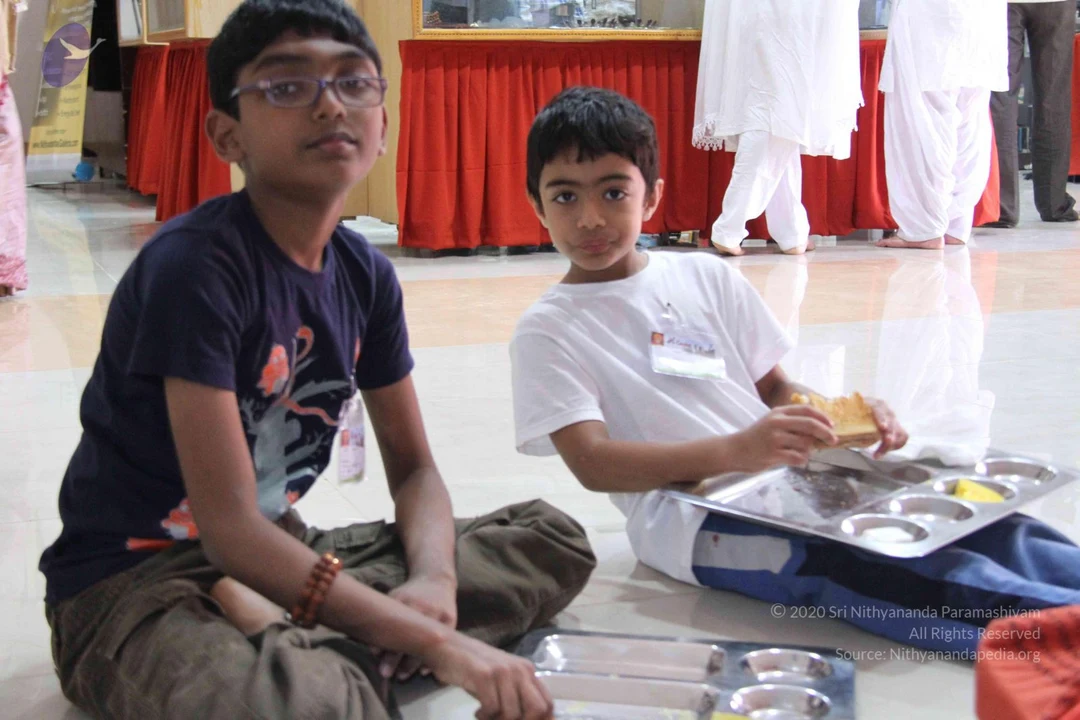
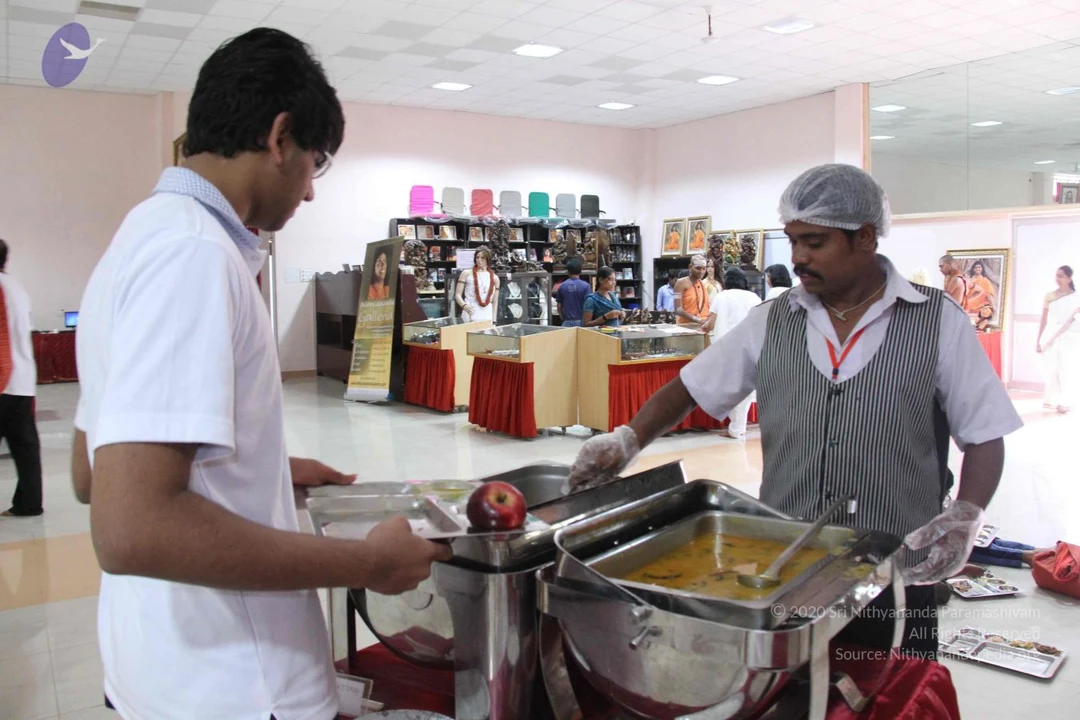
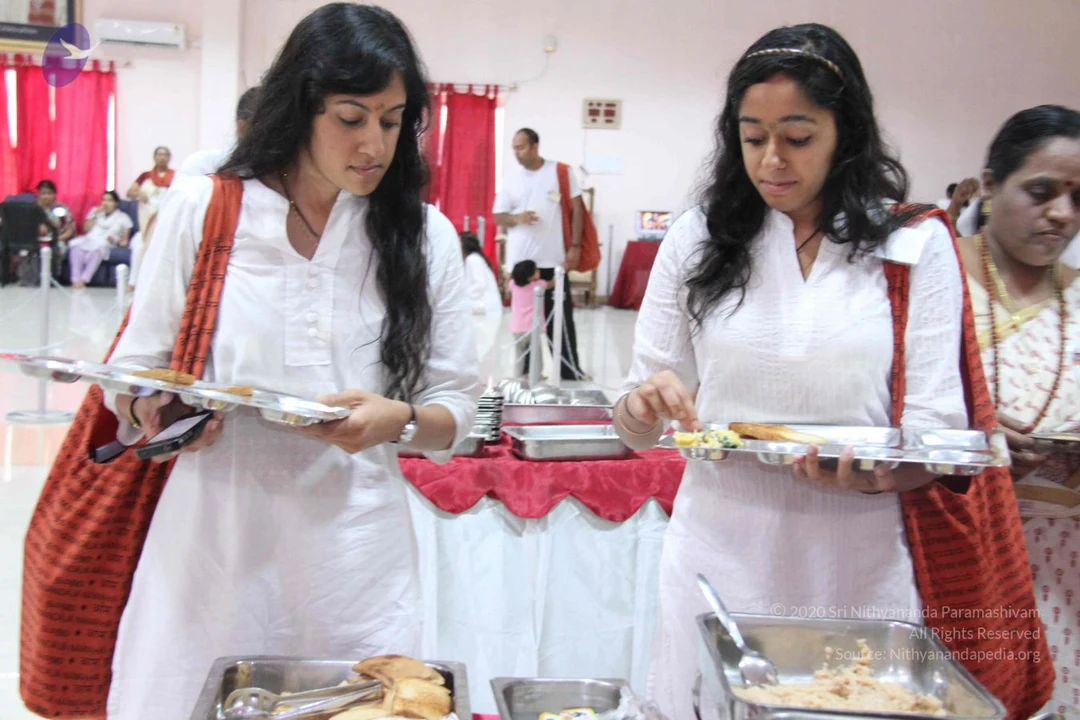
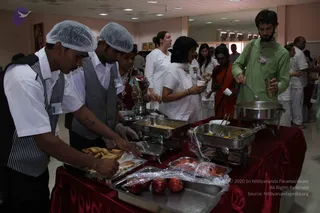
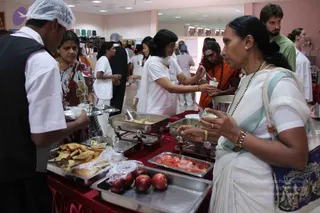
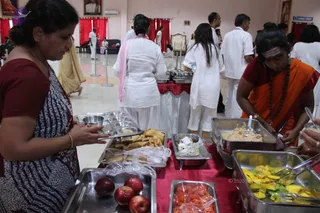
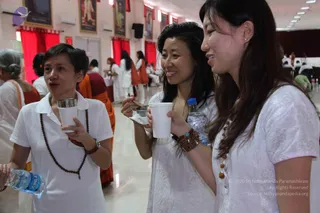
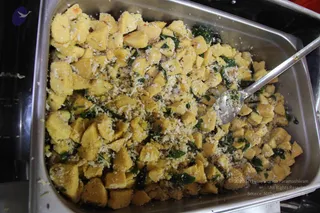
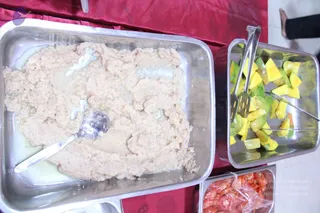
A buffet serving line in an indoor hall with red satin tablecloth. Two young men in white shirts, striped vests and blue hairnets serve food from steel trays: fried snacks and sliced apples in clear wrap, plus other dishes in chafing pans. Behind them, a woman in a red sari with a forehead mark and a bearded young man in a green kurta with a lanyard hold plates. Several people in white clothes stand near the line, and a woman in a white outfit stands at the centre holding a cup.A buffet line serving food in a bright, pink-walled dining hall. A man in a white hairnet and black vest with white shirt serves bread slices and savouries from steel chafing trays on a red-draped table. A woman in a red-and-white patterned sari stands at the left. In the centre, a woman in a white top and white scarf holds a serving spoon over a steel dish. On the right, a woman in a white sari with a bead necklace and a shoulder bag looks at the food as she reaches toward a tray of sliced tomatoes. Behind them, a figure in saffron-orange robes with a shaved head, tilak and rudraksha beads serves from a pot, and red apples sit in a tray at the bottom.A photograph of a buffet serving area inside a hall with pink walls and red curtains. In the foreground a woman in a maroon top and blue-and-white patterned sari uses tongs at a steel tray of fried snacks, and to her right a woman with a forehead tilak and rudraksha beads wears a saffron-orange sari with a maroon blouse and serves from steel trays of sweet and fruit. Behind them, several people in white garments, including a woman in white with a pink shawl, stand near a table with a red cloth holding more food. Trays of sliced apples, tomatoes and mango pieces sit on the counter. Framed portraits hang on the wall in the background, and a blue sign reads Ladies Toilet.A photograph of three women standing indoors in a hall with red curtains and framed portraits on the walls behind them. The woman on the left wears a white polo shirt and a rudraksha mala, and holds a white paper cup and a bottle of water. The woman in the centre wears a white embroidered top and holds a white cup and a small steel bowl with a spoon. The woman on the right wears a white top with a rudraksha-bead necklace and a beaded bracelet, holding a white cup. Behind them, other people in white and orange robes move about the hall, and a few sit at the far end.A stainless steel tray filled with cubes of pale yellow steamed cake or idli-like food mixed with grated coconut and torn curry leaves. A long-handled stainless serving spoon rests in the mixture. The tray sits on a dark countertop, with no people visible.A top-down photograph of a buffet-style food spread on a red satin tablecloth. A large stainless steel tray holds a smooth, pale beige porridge-like preparation with a stainless steel spoon resting in it. To the right, a rectangular steel tray holds cubed ripe yellow mango pieces, with metal serving tongs. At the bottom edge, a container of chopped fresh tomatoes sits in a plastic bag. A partial view of a person's bare foot and dark trouser leg appears at the top right corner. No people are clearly the focus of the scene.

IA-Darshan

33 photosSource gallery
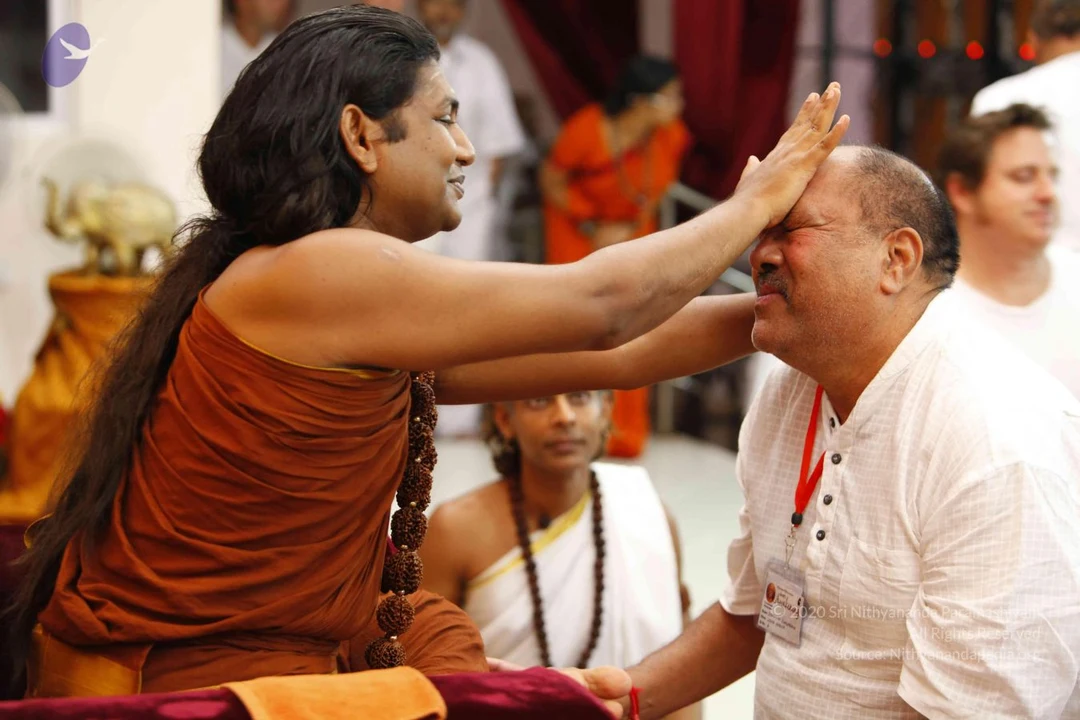
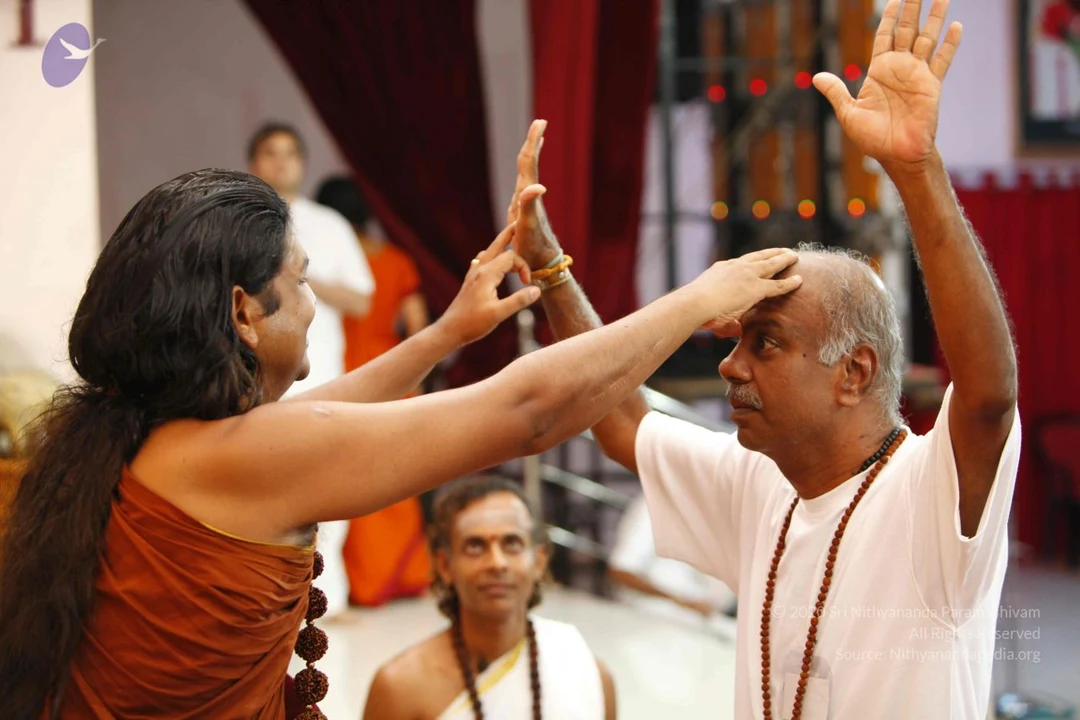
A photograph of an in-person blessing. A long-haired man in an orange-saffron robe with a rudraksha mala sits on a red-and-maroon cushion, his right hand raised and pressed to the forehead of a man in a white kurta-style garment with long sleeves. Behind them stands a deity murti draped in a red, yellow, purple and green garland, with a gold-colored object and an ornate temple-style painting on the wall.A photograph of a participant in a white collared shirt with a name badge reading Awakening receiving a blessing. A man in an orange-brown shawl with long dark hair and rudraksha beads presses his right hand to the participant's forehead. Behind them a woman in an orange sari stands by a red curtain, and a seated man in white with a bare torso and tilak watches and smiles at lower left. The setting is an indoor hall with a pale floor.A photograph of a long-haired figure in an orange-brown wrap and a necklace of large rudraksha beads placing a hand on the forehead of a young man in a white-and-red striped polo shirt with a name badge. The man has his eyes closed and a palm raised. Behind them, a man in white dhoti with a braid and a sacred thread sits, and a woman in orange sari stands near red drapes and a gold elephant figure. Several other people are in the background of an indoor hall.A long-haired figure in a rust-orange saffron wrap and dark rudraksha beads presses a palm to the forehead of a young man in a white-and-navy striped polo shirt with a name badge, while the man's eyes are closed and his other hand is raised palm-outward. Behind them, a bearded man in white ritual dhoti with a yellow border and a woman in orange sari stand near red curtains and a golden lamp stand. The setting appears to be a satsang or blessing gathering, with several onlookers in the background.A photograph of a seated long-haired figure in saffron-orange robes with a rudraksha mala draped over the shoulder, placing a palm on the forehead of a balding man in a white T-shirt who has closed his eyes and bowed his head. Behind them, another person in orange and several people in white stand in a room with a red curtain and a bright floral offering in the lower left.A long-haired man in an orange-brown robe and a rudraksha mala with large beads sits on a dark cushion and places his right palm on the forehead of a balding, middle-aged man in a white kurta with a red lanyard badge. The blessed man has closed eyes and a serene expression. Behind them, a seated woman in white with a rudraksha mala watches, and a figure in orange robes stands in the background beside red drapes, a brass elephant and a golden kalasha-like object. The setting suggests a darshan or blessing moment at an ashram gathering.

Sacred-Arts

17 photosSource gallery
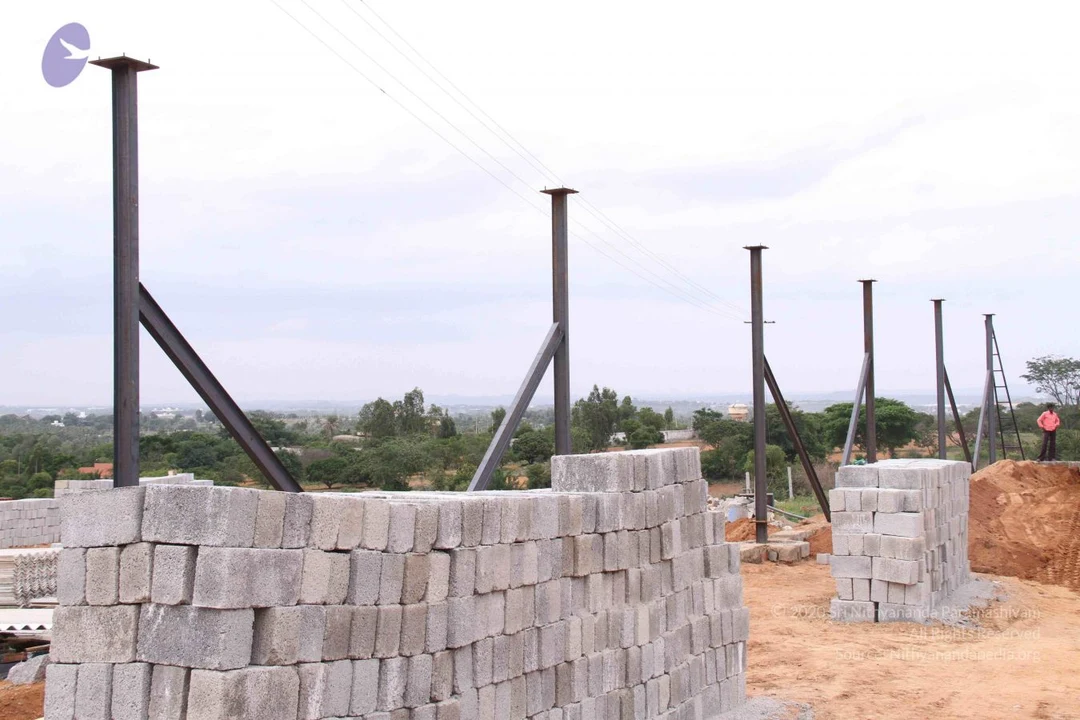
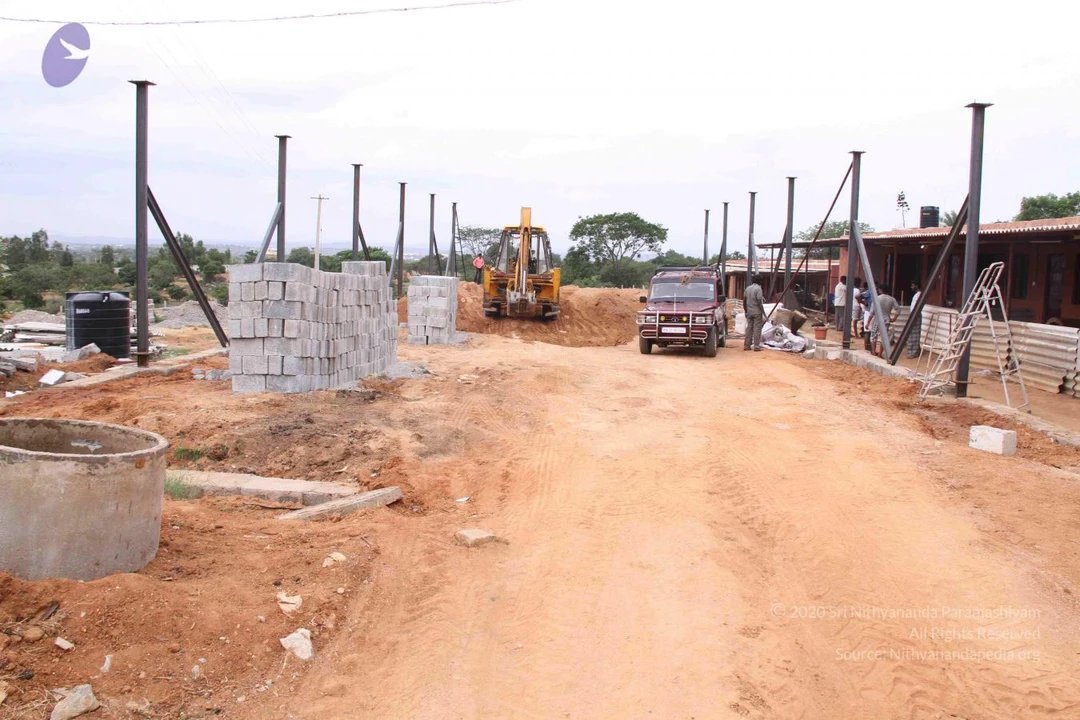
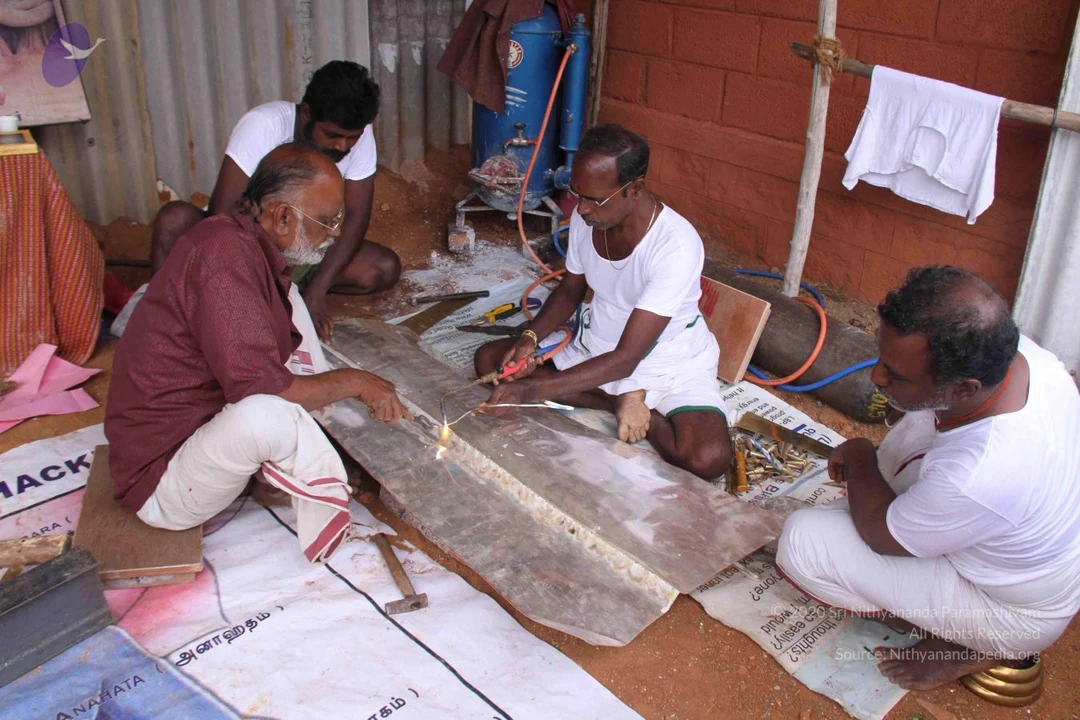
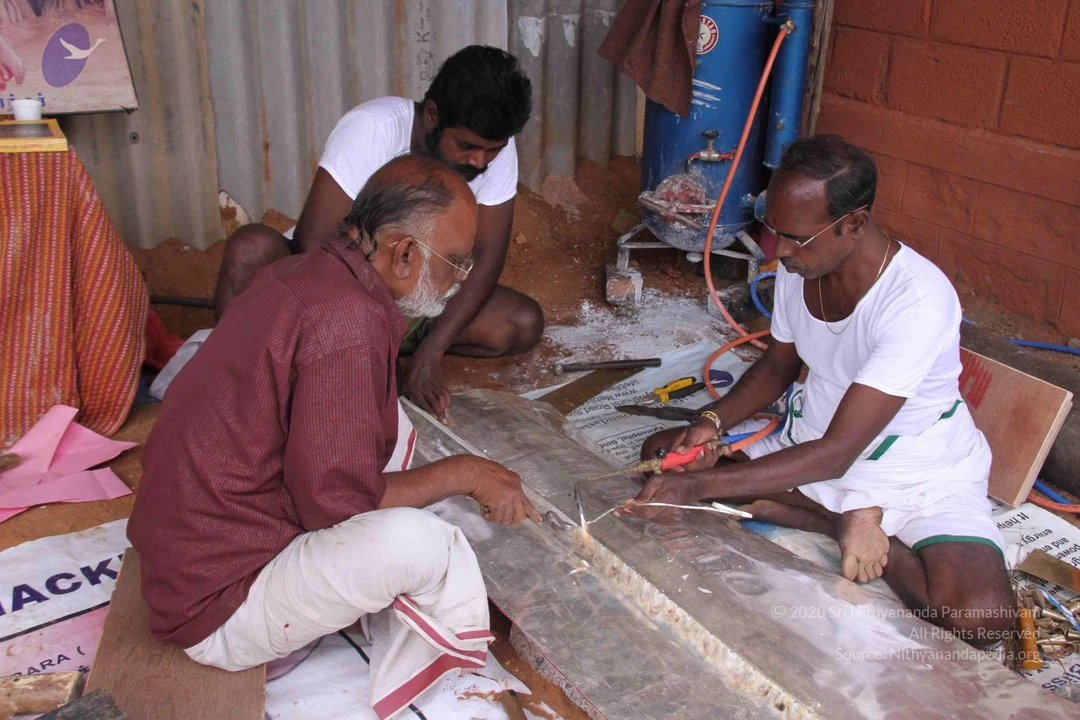
A yellow JCB backhoe loader digs in a dusty red-brown earth site under an overcast sky, with its bucket raised over a pile of excavated soil. A man in a white shirt sits in the open operator's cab at the wheel, with a red-and-white garland hanging from the cab's upper frame. Green trees and scrub stand in the background, and a stack of shipping containers appears at the right edge.A man in a pink shirt and dark trousers sits at the controls of a yellow and orange backhoe loader tractor, operating its raised bucket arm over a blue dump trailer on a dusty, unpaved hillside. Loose red-brown soil spills from the bucket into the trailer, with a grey overcast sky and distant green trees behind. The tractor's cab and orange body panel are visible, and a sign on the machine reads in Kannada script. No ritual, a person, or devotee activity is visible; the scene shows ground-levelling or earth-moving work.A dusty red-earth construction site under an overcast sky. Two long single-storey buildings with orange-tiled roofs and unfinished breeze-block walls stand in the background, with scaffolding poles and stacked bricks around them. In the foreground, excavated soil forms ridges and tyre tracks, and a parked motorbike sits on the dirt. Scattered rubble and a few trees and shrubs line the edges of the plot. No people are visible.A construction site on a hilltop with raw red-brown earth mounds in the foreground. Three tall grey steel poles with angled diagonal braces stand upright, and a steel ladder leans against the rightmost pole. Behind them stretch a hazy landscape of green trees, scattered low buildings with red and tan roofs, a utility pole with power lines, and distant town rooftops under a pale overcast sky. No people are visible.A photograph of a craftsman working on a large brown clay or wooden sculpture lying on a flat metal sheet on bare earth. The figure is a reclining or seated human-form sculpture with a headdress and arms raised, partly unfinished. A man in a white shirt and white dhoti sits at the lower right, holding a tool and a white cloth against the surface, bare-footed. Scattered tools, a small metal cup, a clay pot of charcoal, and wood chips surround the work area.Outdoors in a sandy courtyard before an orange wall, workers in white dhotis and shirts handle a large reddish-brown carved stone murti laid on a wooden board. One young man in a white shirt and dhoti bends forward with his hands on the sculpture, while another in a plaid lungi and a man in white sit and stand beside it. A stone mortar and pestle, a water jug and a plastic bottle sit nearby, with a stone trough and a fan on the wall behind. The scene suggests preparation of a deity murti for ritual work.

Deity-Darshan

16 photosSource gallery
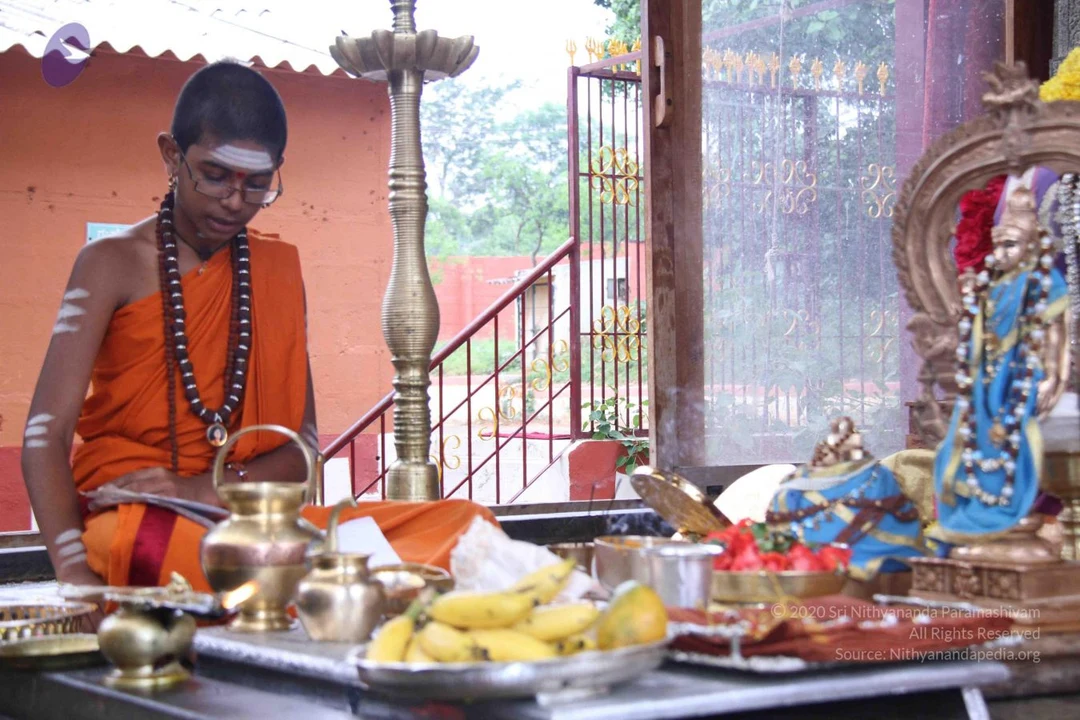
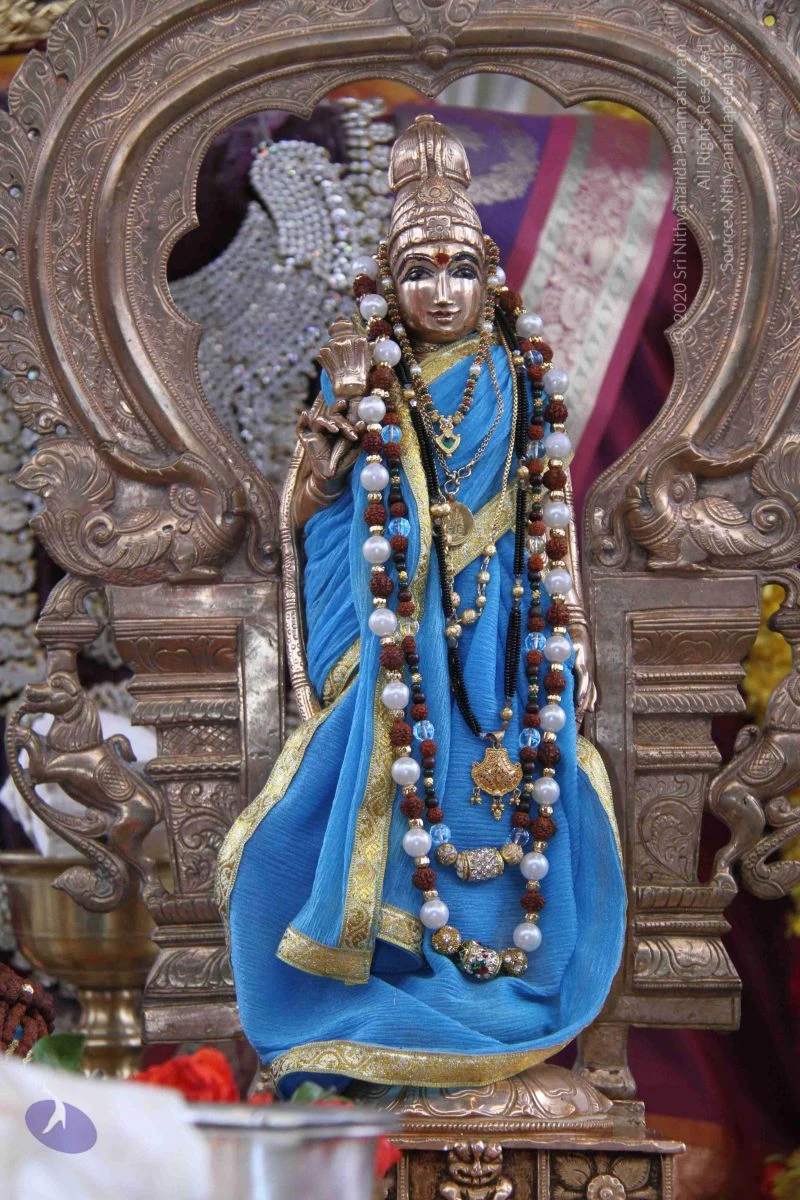
A temple shrine with a large gilded arch framing two painted deity murtis seated on a raised platform. The central figure holds a trident and other implements and wears a red crown with a garland of red and yellow flowers. The female figure beside him wears a golden crown and jewelled necklaces with a red garland. Brass oil lamps stand on either side, and a kalasha and puja vessels sit before the murtis. A young priest in saffron cloth with a rudraksha mala and white sandalwood markings on his forehead sits at left beside a brass lamp. Red and gold drapery and carved grey stone pillars surround the shrine.A photograph of a decorated temple shrine with a pair of metal deity murti seated under a red curtain within a gilded arch. The taller figure wears a red and gold turban and a jewelled necklace and holds a trident-like staff, while the figure beside them wears a tall crown, layered jewellery and a red patterned garment. A large lingam-like form sits in front, draped with a red cloth, garlands of yellow and red flowers, and a jewelled crown. Beside it stands a small blue-robed metal figure in a brass archway, with brass vessels, a kalasha pot, a plate of bananas and flower petals on the altar. Offerings and puja items are arranged at the base, and no people are visible in the scene.A photograph of a gilded metal murti pair seated on a raised dais in a temple shrine. Two figures sit side by side: the left wears a red turban, jewelled collar and holds a trident and a snake-topped staff, the right wears a tall crown, layered jewellery and a patterned skirt. Between them stands a Shivalinga draped with an orange cloth, rudraksha beads and a garland. Garlands of yellow and pink flowers hang across the scene, with a small blue-clad figurine, brass vessels, a kalasha, bananas and flower petals in front. The backdrop is orange silk within a gold-embossed arch. No living people are visible.Close-up of a decorated deity murti, a dark stone form dressed in an orange and gold draped cloth with a magenta lower garment. It wears layered rudraksha malas, a rhinestone-studded band across the chest, and a green leafy crown behind an orange turban-style cloth. Garlands of yellow marigolds and pink roses frame the figure, and a gold arched backdrop with five green-jeweled gold lion-head ornaments rises behind it. A gold pedestal with ornate bands sits below. No physical people are visible.A photograph of a deity murti, shown as a dark stone form draped in an orange and gold turban-style cloth and a magenta silk garment with gold border. It wears a jewelled chest band, multiple strands of rudraksha beads, and garlands of red roses and yellow marigolds. A green leafy crown adorns the head beneath a golden five-hooded serpent canopy with green stone pendants. No physical people are visible; the figure is a sacred image, and the surrounding gold and fabric decorations are prominent.A photo of a shaven-headed priest in saffron-orange robes seated at a puja table, wearing a rudraksha mala, glasses and white vibhuti lines on forehead and arms, reading from a book. In front are brass vessels, a small brass kalasha-style pot, a bowl of red offerings, and a platter of bananas and fruit. To the right, a deity murti dressed in blue with white and rudraksha garlands stands in a gilded frame, with a brass oil lamp stand nearby and a gold-grilled gate behind. The scene suggests a temple puja setting with an orange-walled courtyard.
Leela-Deity-Alankar
2 photosSource gallery
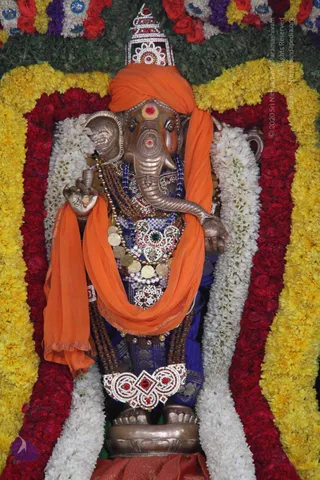
A bronze Ganesha murti, the elephant-headed deity, stands in a flower-decorated niche. It wears an orange saffron-coloured cloth draped over its shoulders and a turban-like orange wrap on its head, with a jeweled crown above. A blue silk garment covers its body, layered with beaded rudraksha-style malas, gold coins and a large jeweled necklace. Its trunk curls toward its raised hand, and it stands on a bronze base. Garlands of white jasmine, yellow marigolds and red roses frame the figure. No people are visible.A decorated stage shows two metal deity murtis seated on a red satin-draped dais beneath a gold ornate arch. The male figure in a blue dhoti wears a red turban, a bow and arrow, ornate silver necklaces and a rudraksha-style garland. The female figure wears a gold sari, layered necklaces and a crown-like headpiece. Both are heavily garlanded with yellow, red, purple and white flower malas, and a gilded elephant stands at the right edge. A small monitor sits on the floor in front. No living people are visible.

Paduka-Puja

1 photoSource gallery
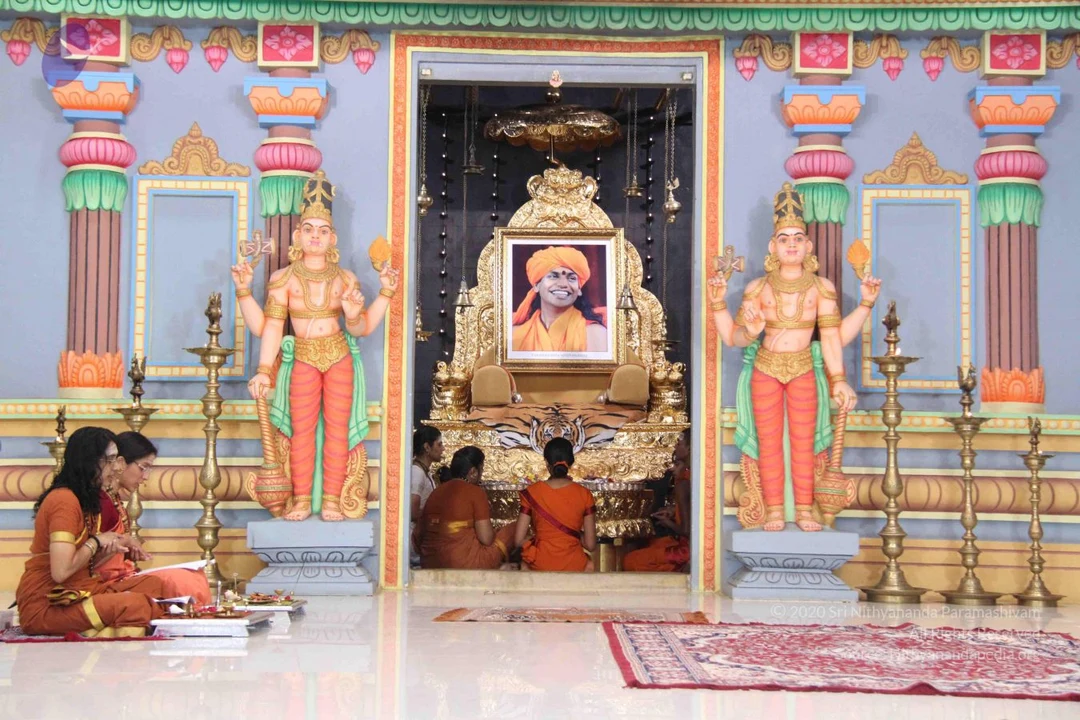
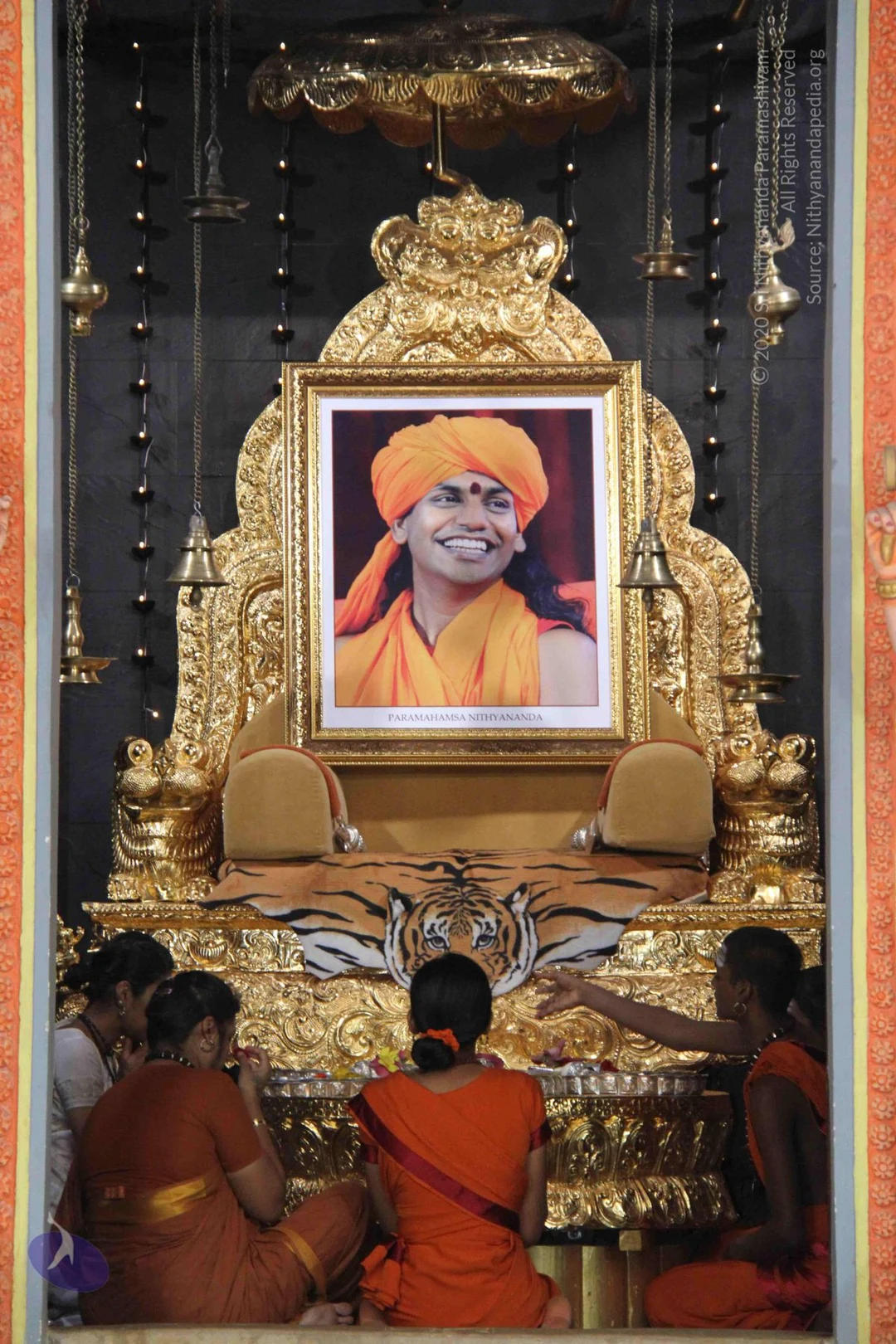
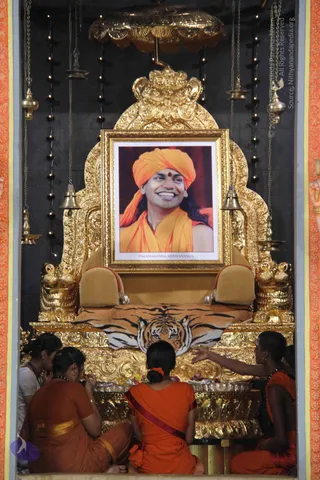
A photograph of a golden throne-style shrine (peetha) draped with a tiger-striped cloth, with a framed portrait at its centre labelled "PARAMAHAMSA NITHYANANDA". The portrait shows a smiling man with an orange turban, red bindi and orange shawl. Hanging brass oil lamps and bells surround the shrine. Four women in orange saris sit at the base, offering flowers and items on silver plates. The portrait is a depiction, not a person physically present.

Satsang

2 photosSource gallery
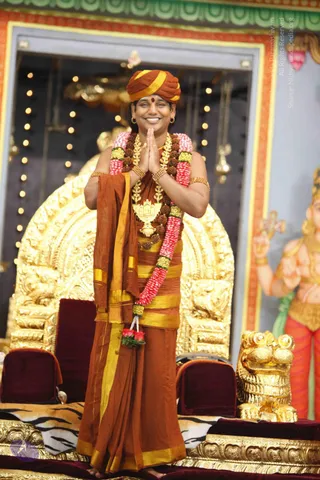
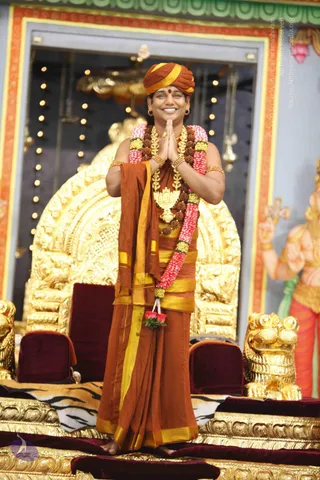
A standing man in a rust-orange turban with a red bindi, dressed in an orange-brown dhoti and shawl with gold borders, smiles with palms pressed together in anjali namaskar. He wears a long necklace of rudraksha beads alternating with pink and white flower garlands, a gold ceremonial pendant, gold armlets and bangles. Behind him stands a gold-embossed throne arch with a dark red cushioned seat and a tiger-striped cloth, beside a gold lion-faced armrest. A painted deity figure with orange garments stands at the right edge, and gold hanging lamps decorate the backdrop. a person: the figure wears orange-saffron clothing, rudraksha malas and ceremonial gold necklaces, and the page identifies him as present.A smiling man stands barefoot on a gilded stage with his palms pressed together in anjali namaskar. He wears a rust-orange turban with gold stripes, a red-and-gold-trimmed brown shawl over a brown dhoti, and a long garland of pink and white flowers with rudraksha beads. Gold ceremonial necklaces, gold armbands and bangles adorn him. Behind him a large ornate gold throne with carved lion-head arms sits on a tiger-skin-draped dais with velvet cushions, flanked by a gilded backdrop and a painted figure at right. Swamiji (probable): the saffron-orange turban, rudraksha mala and ceremonial gold ornaments fit the presentation, and he stands before the throne. Watermarked copyright text runs down the right margin.

Sarva-Darshan

3 photosSource gallery
A photograph of a man in an indoor temple hall, raising his right hand in greeting. He wears a brown-orange turban with gold stripes, a brown-orange shawl with gold border, a red-and-white flower garland, and a long rudraksha mala with a large gold ceremonial necklace and a gold pendant. A red bindi is on his forehead and he has gold hoop earrings. Behind him, devotees in white clothes and a man in red stand among red curtains, and a golden shrine or throne is visible at right.A smiling man in a rust-orange turban and orange-and-gold striped dhoti stands barefoot on a red patterned rug, both arms raised palms-outward in a blessing gesture. He wears a red and white jasmine-style garland, a dark rudraksha mala and a gold ceremonial pendant, plus gold bangles and a wristwatch. Behind him is an ornate gold throne with lion-head armrests, draped with a striped tiger-print cloth. Flanking statues of deities with gold jewellery and colourful painted bodies stand on either side, with a golden arched shrine behind.A photograph of a man standing barefoot on a red patterned carpet in front of a golden throne flanked by golden lion heads. He wears an orange-brown turban with yellow stripes, a rust-orange robe with yellow borders, and a long pink and white flower garland over multiple rudraksha malas and a gold pendant necklace. Both arms are raised with open palms, and he is smiling. To the left stands a painted, multi-armed deity murti with a crown. A tiger-striped cloth lies on the dais, and hanging brass lamps are visible in the background.

IA

4 photosSource gallery
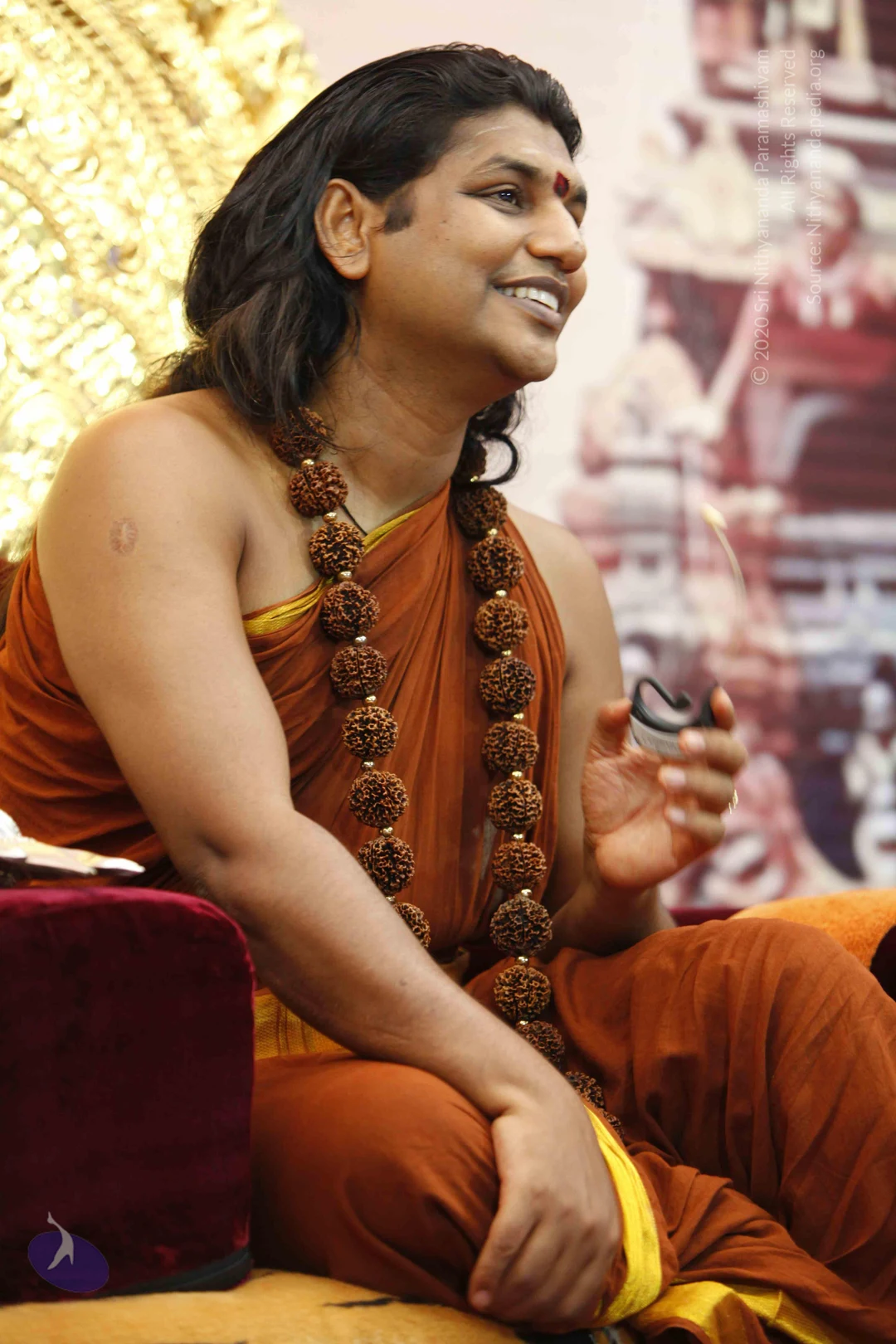
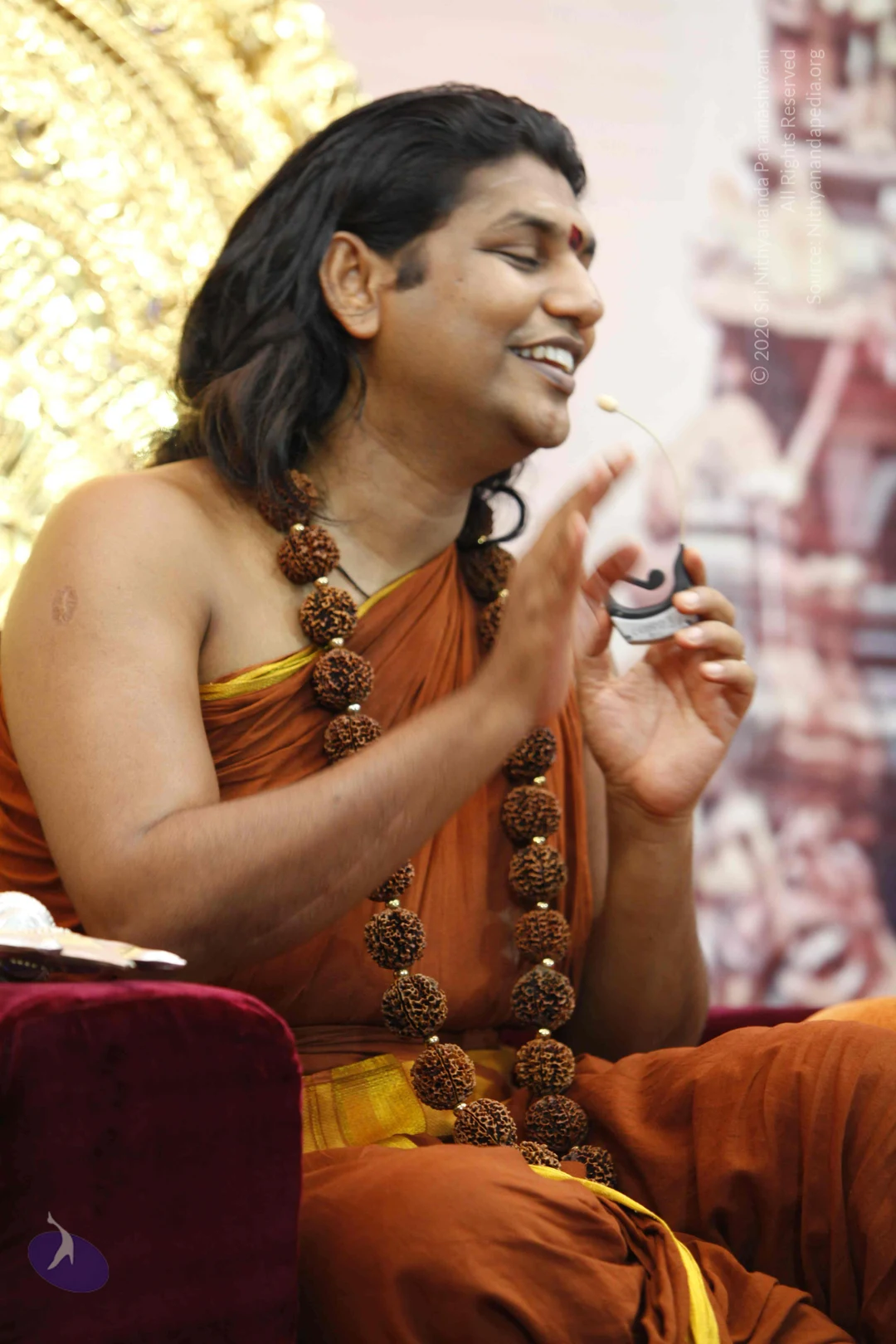
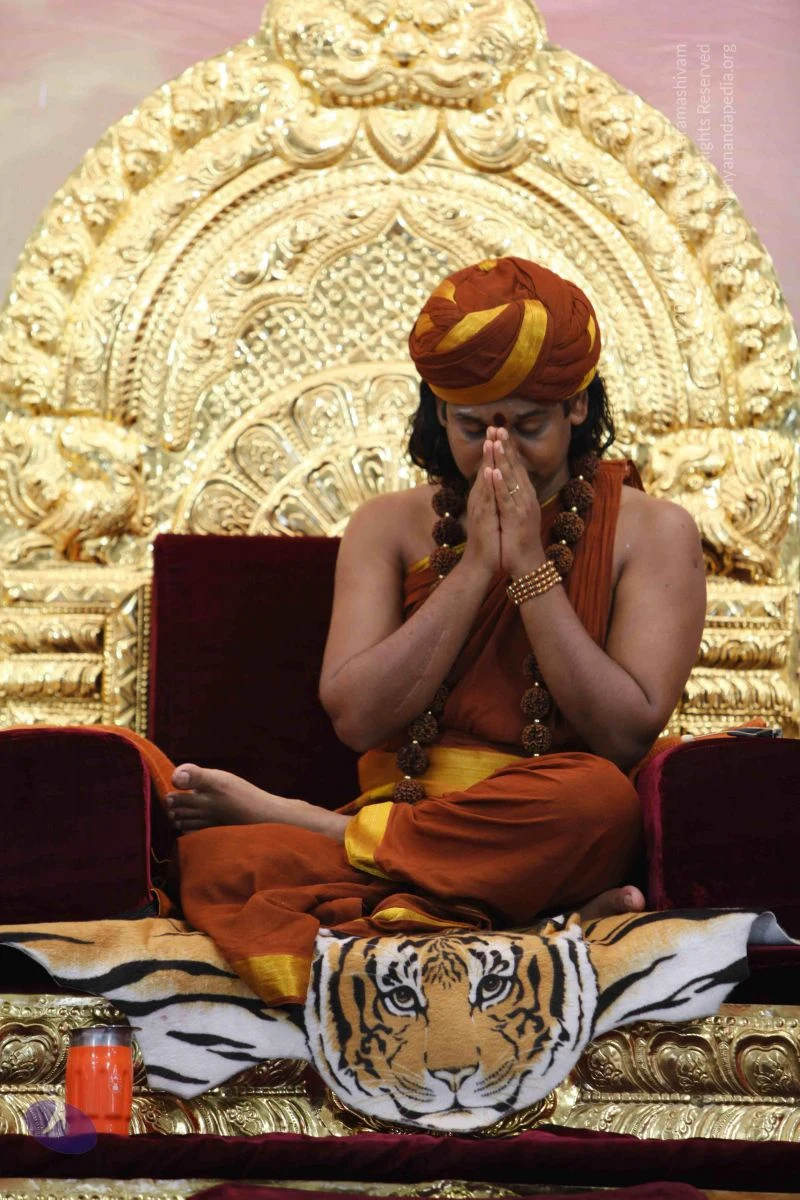
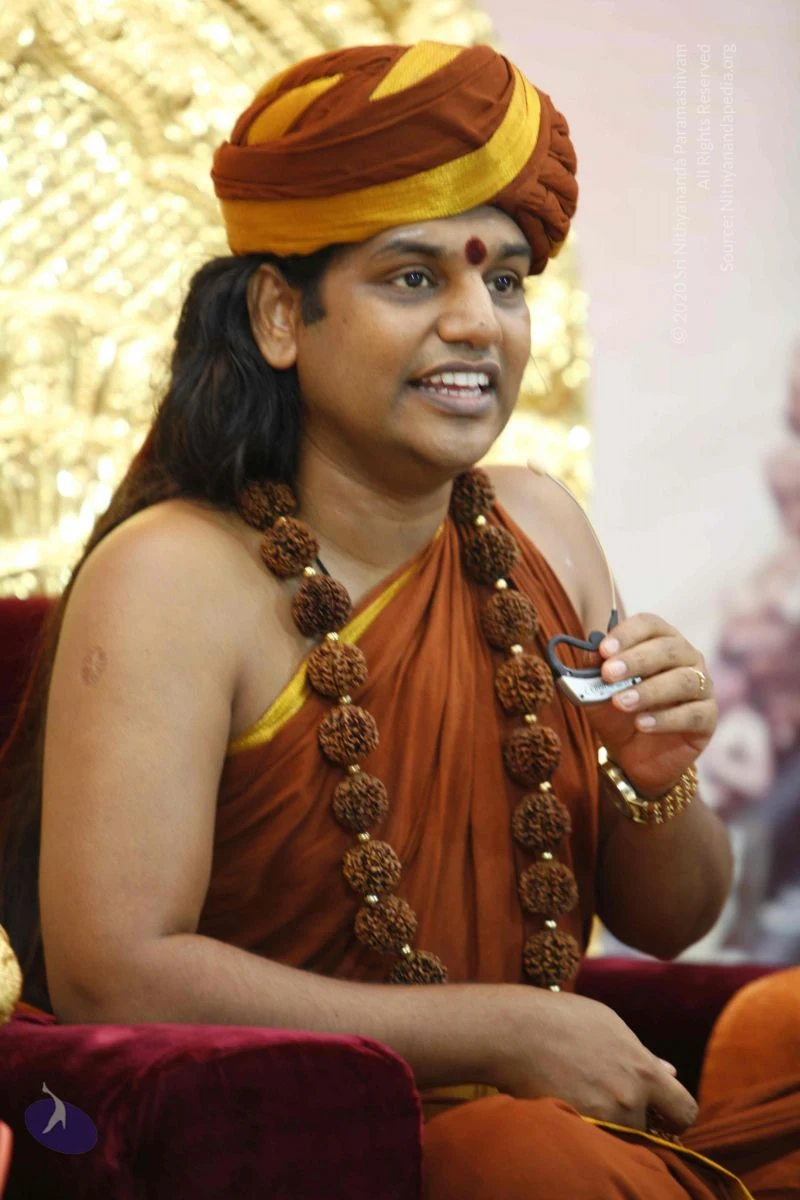
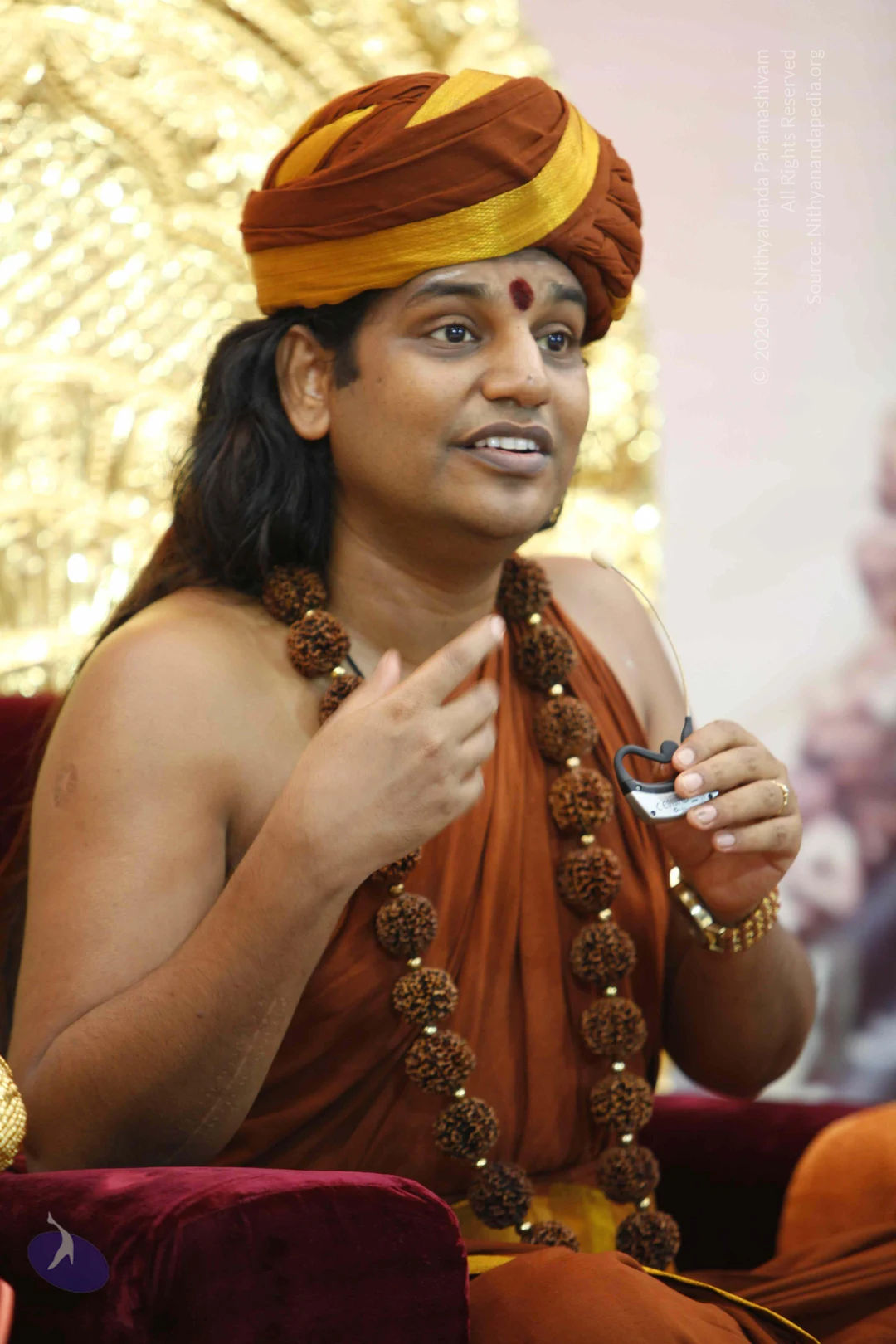
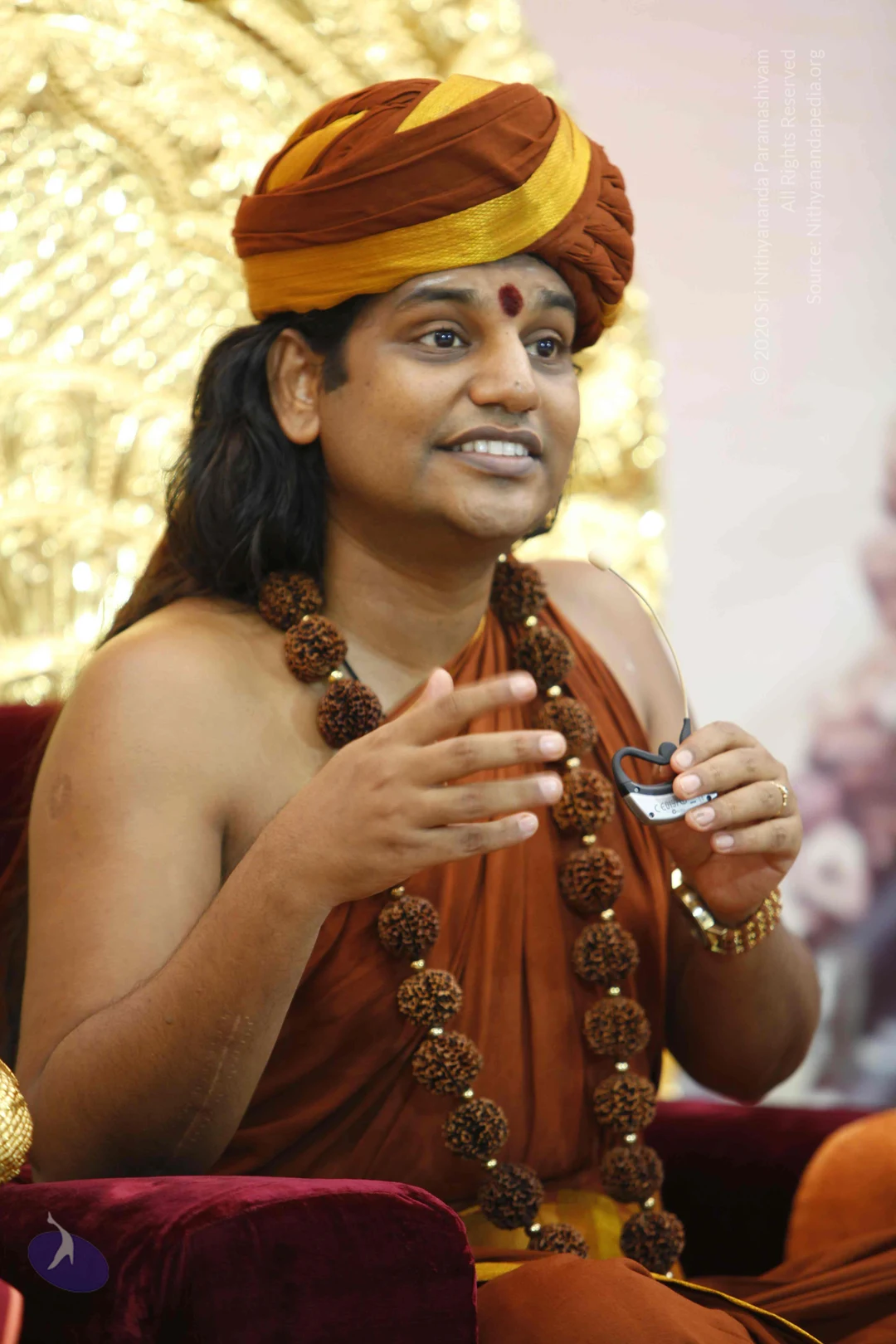
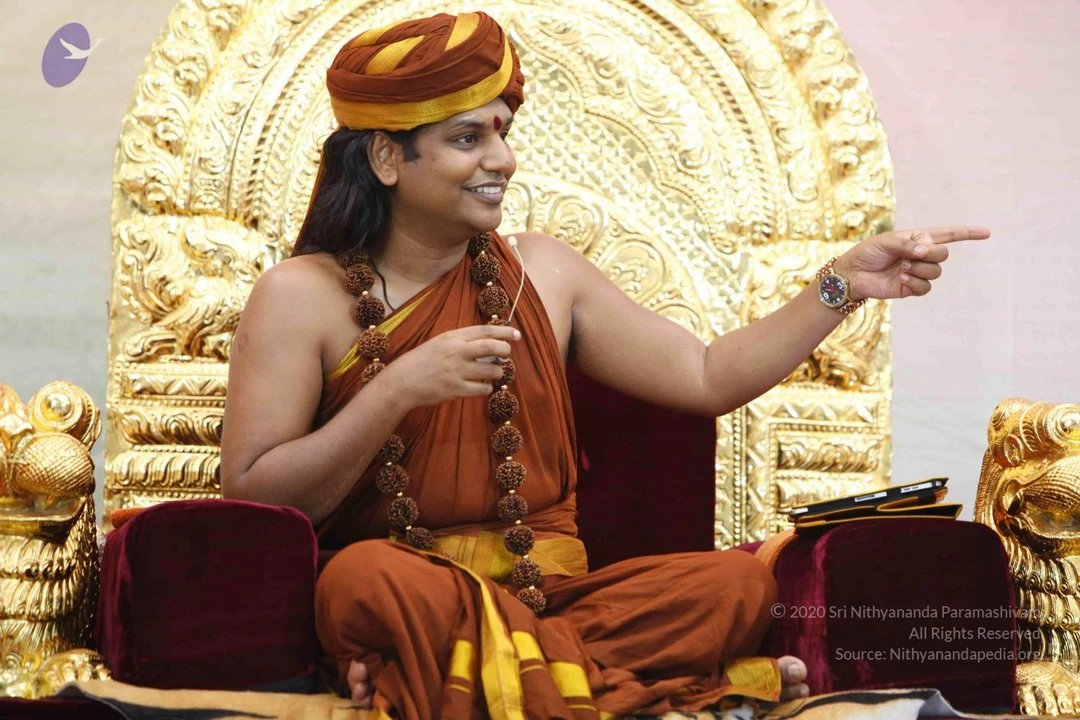
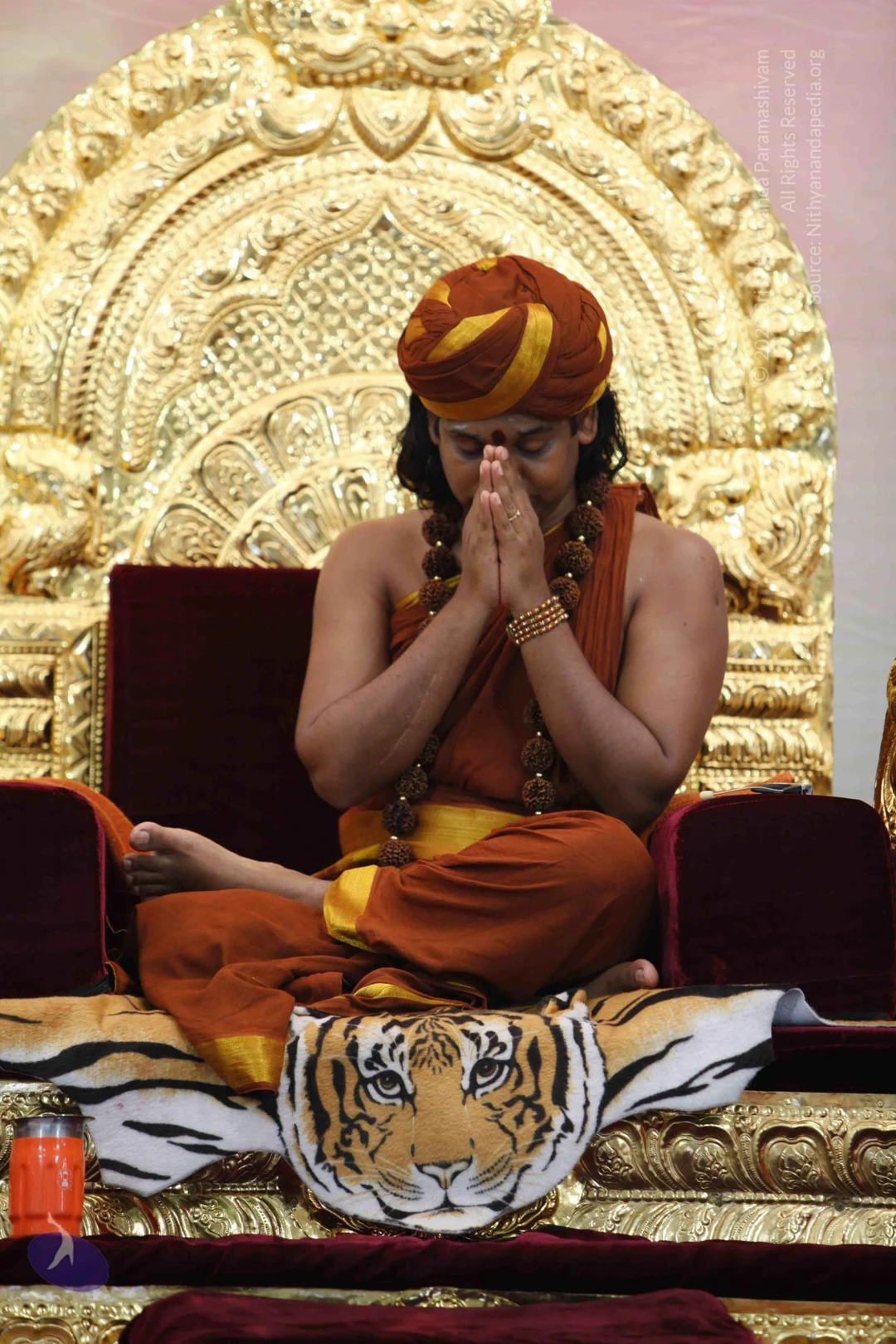
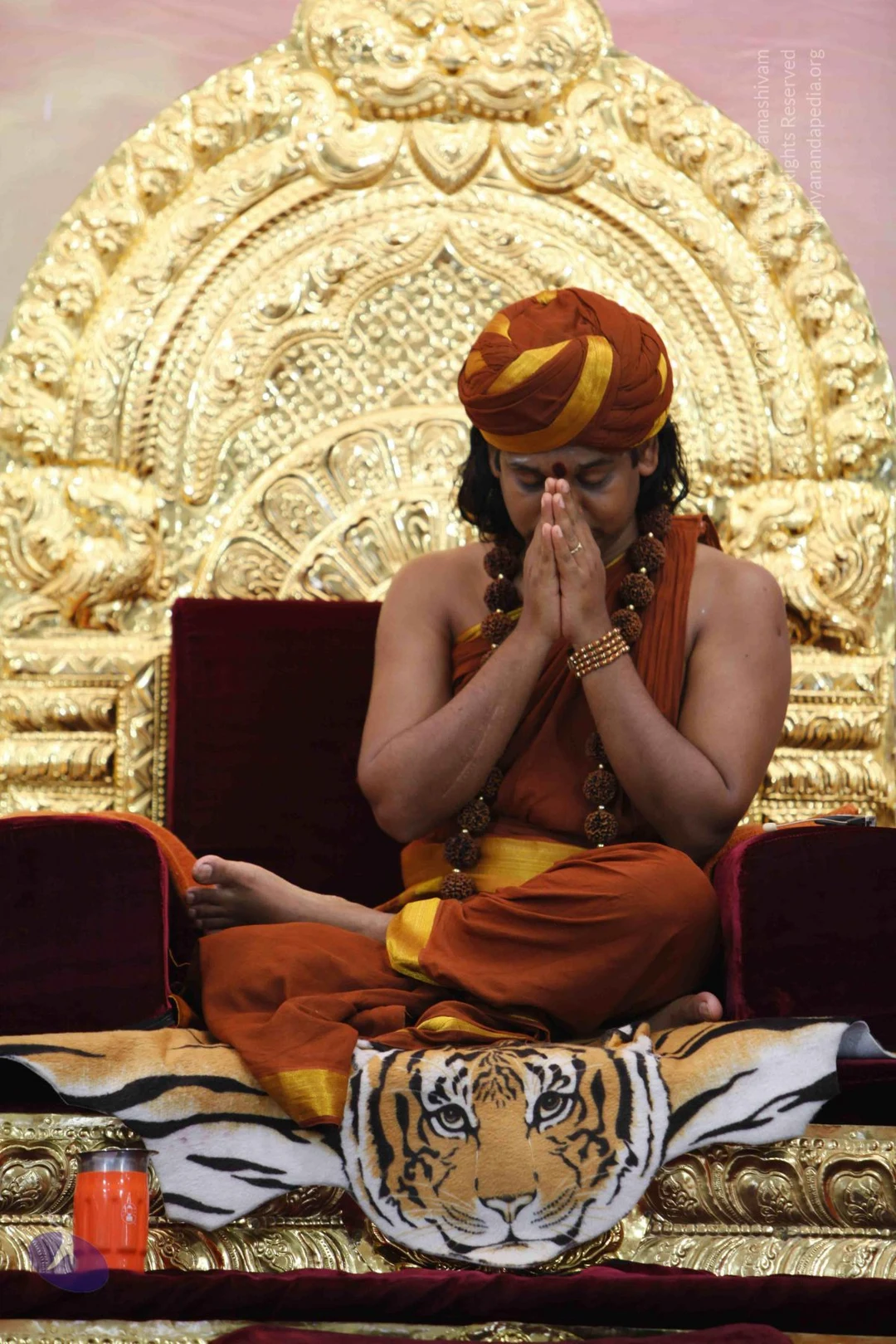
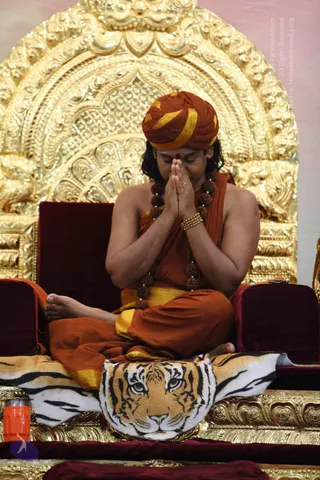
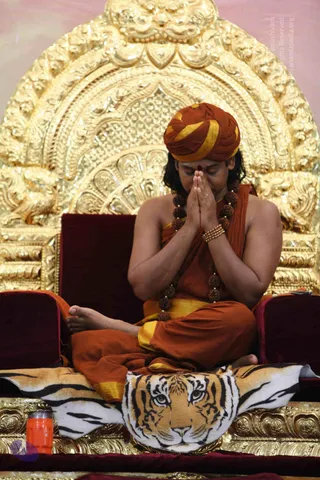
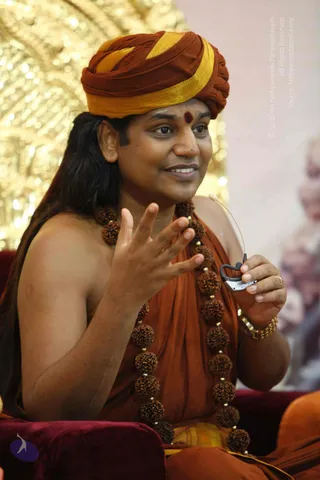
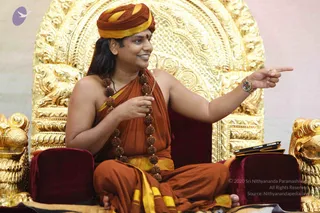
A seated figure in orange and gold robes and an orange-and-gold turban sits cross-legged on a red velvet throne in front of an ornate gilded backrest, palms pressed together in namaskar with eyes closed. Rudraksha mala beads hang in multiple strands around the neck, with a beaded bracelet on the wrist and a red bindi on the forehead. A tiger-skin rug with a printed tiger face covers the seat, and an orange flask sits to the left. The robes and turban are saffron-orange with gold borders. Appearance-based cues including the turban, rudraksha malas and saffron clothing match the page's Swamiji reference, so the figure is labeled Swamiji (probable) as a seated devotee in satsang posture.A seated man in an orange-red turban and orange-red robe with a gold border sits cross-legged on an ornate gold throne with a red velvet cushion. He holds his palms pressed together in namaste with eyes closed, and wears long rudraksha mala beads and gold bangles. A tiger-face rug covers the dais in front, and an orange drink glass sits at the left edge. The gold throne has elaborate repoussé carving.Close photo of a seated person in a rust-orange turban with a gold stripe, long dark hair falling down the back, a red tilak on the forehead, and a bare shoulder draped in an orange-saffron wrap. Multiple large rudraksha mala beads hang across the chest. The person gestures with one raised hand while holding a small white wireless microphone-receiver in the other hand, wearing gold bangles. Behind is a blurred gold ornate backdrop, and a red velvet cushion is visible below. Probable Swamiji by appearance cues: long hair, saffron ornate clothing, rudraksha malas and turban, speaking at a satsang-style setting.A seated man in saffron-orange robes and an orange-and-gold turban sits on a red velvet cushioned seat before an ornate gold throne with carved lion-shaped armrests. He wears a long rudraksha mala with large beads across his chest and a wristwatch, holds a small white object in one hand and points to the right with the other, smiling. a person is shown in an in-person satsang setting with a bare-shouldered orange dhoti draped over his torso and a red bindi on his forehead; a small black book lies on the cushion beside him. Carved gold lion figures flank the throne in the foreground.

IA-Darshan

4 photosSource gallery
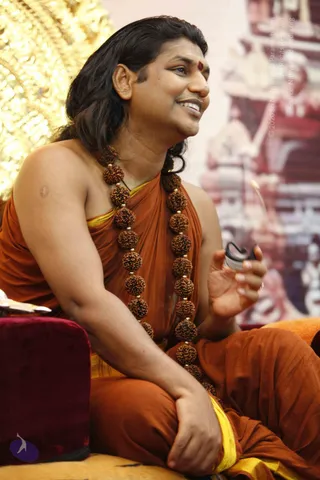
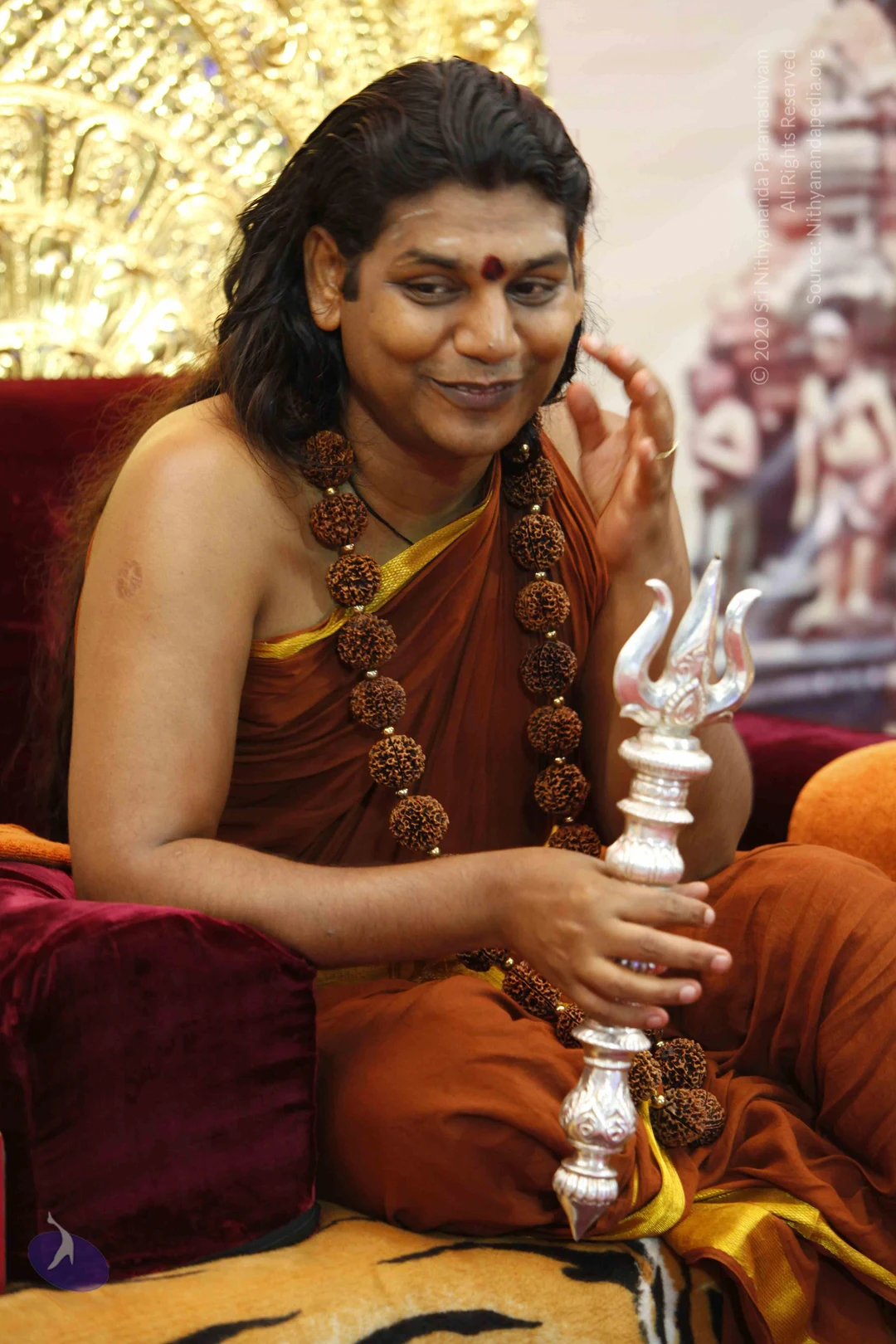
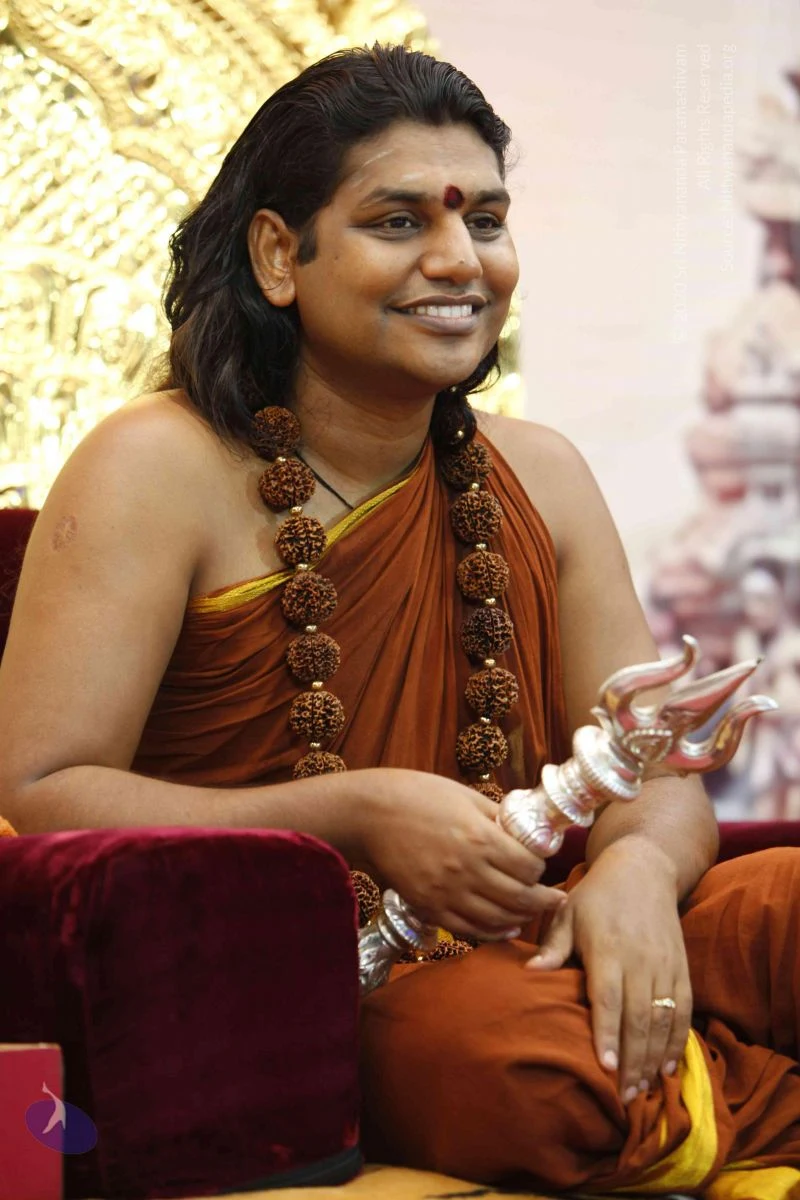
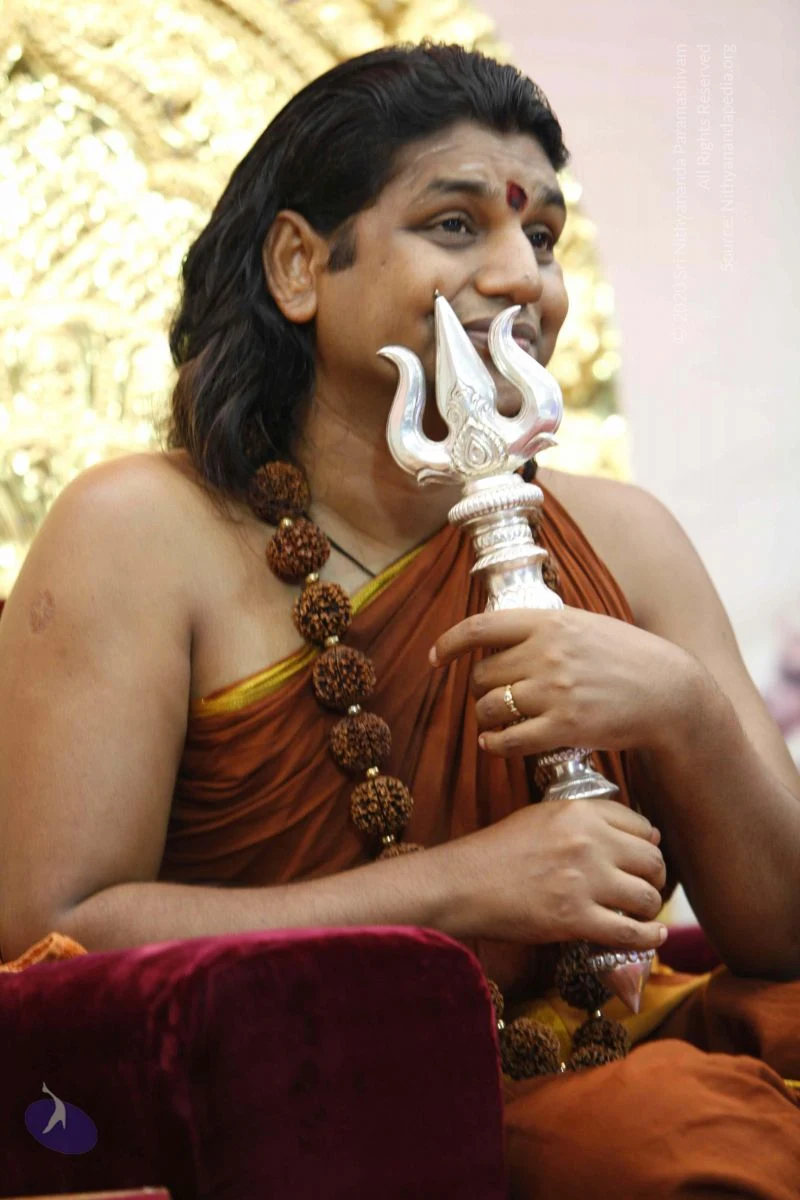
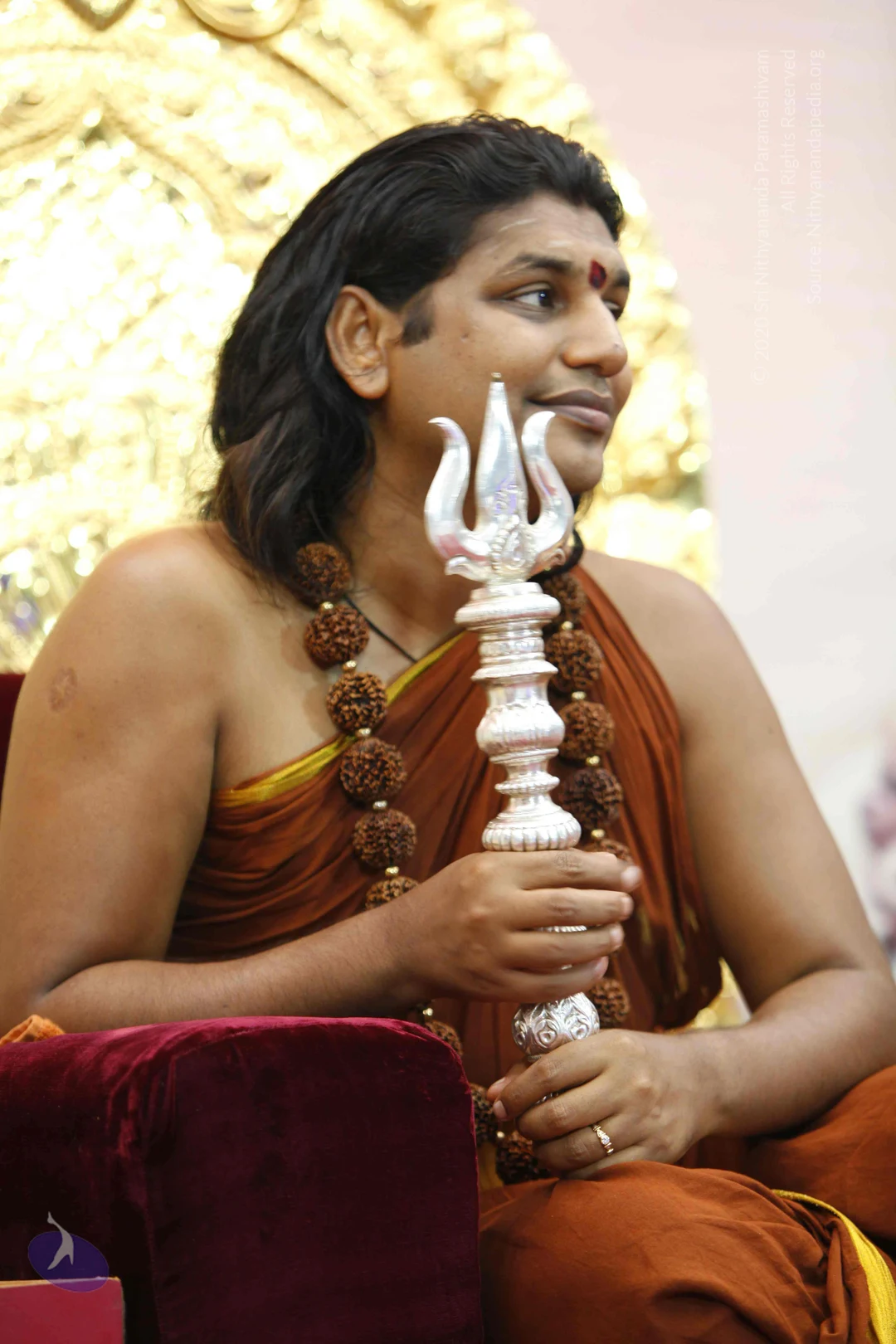
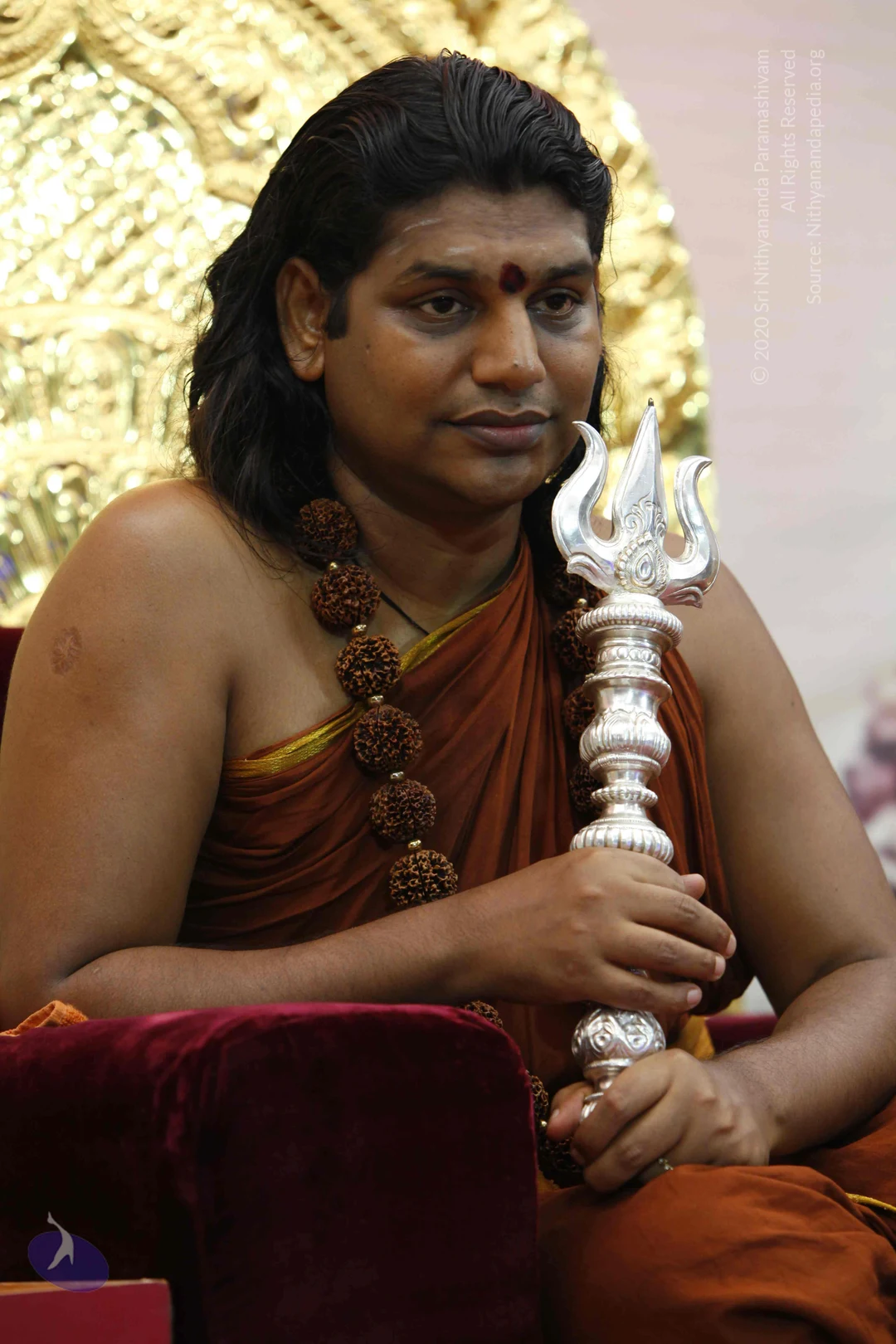
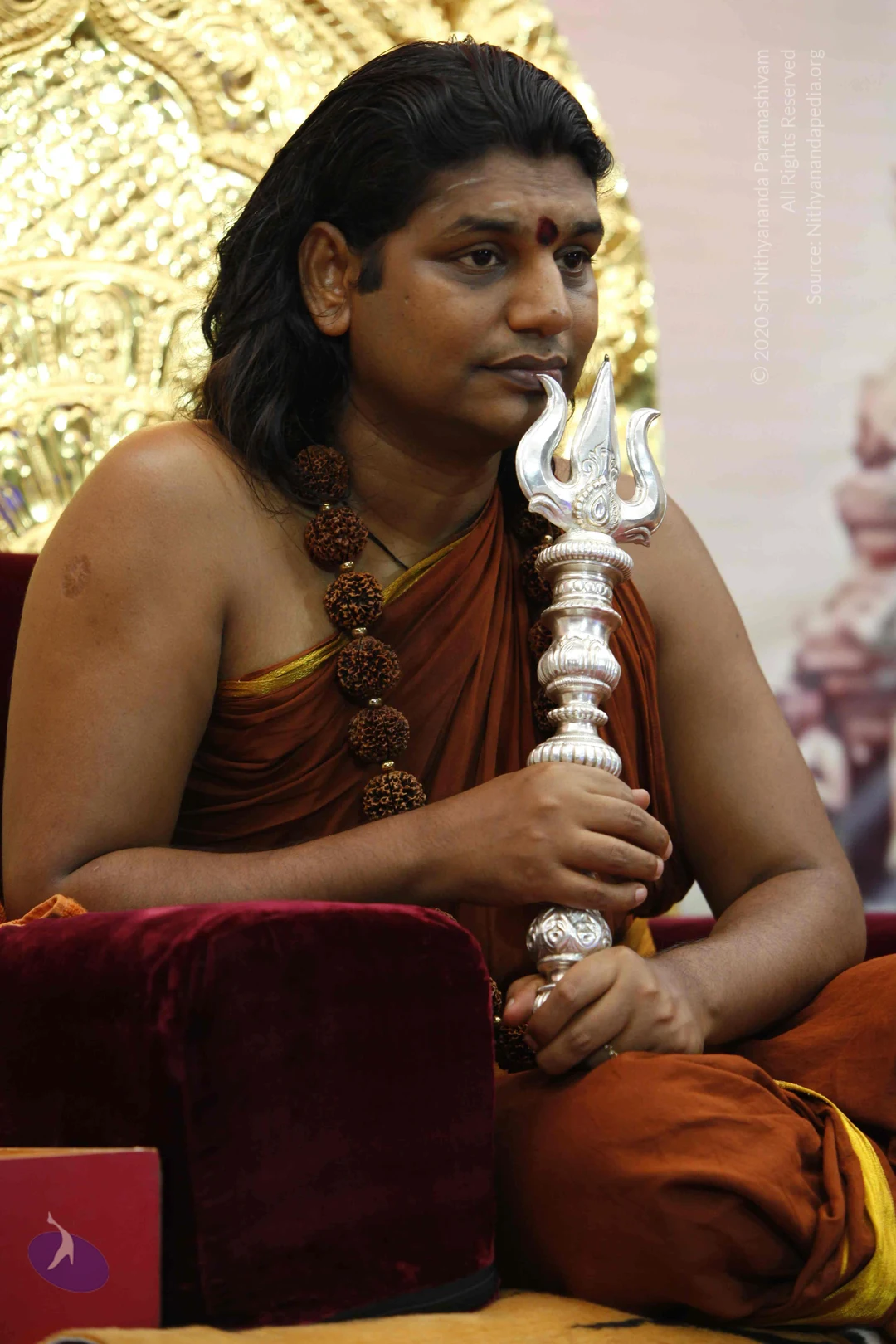
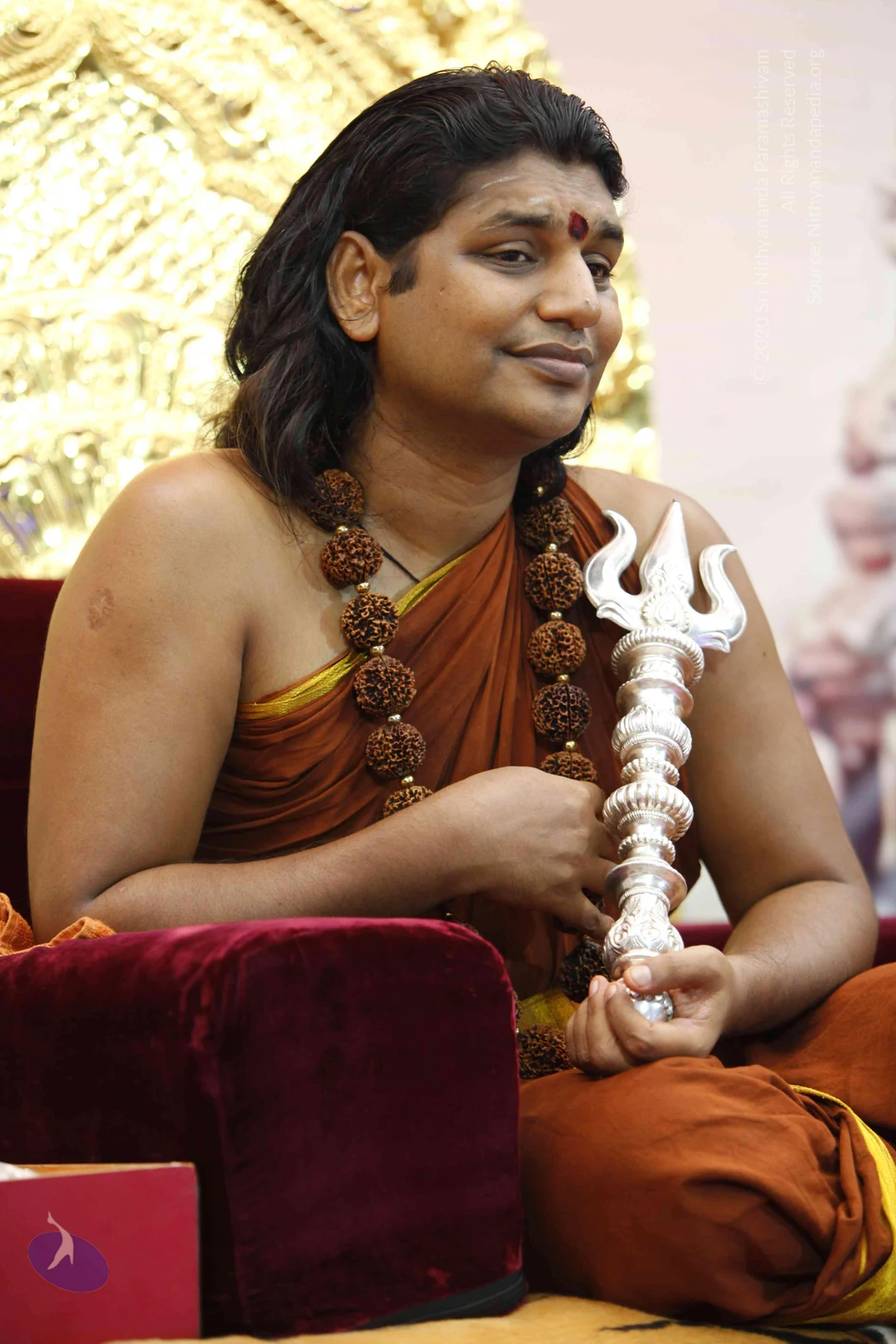
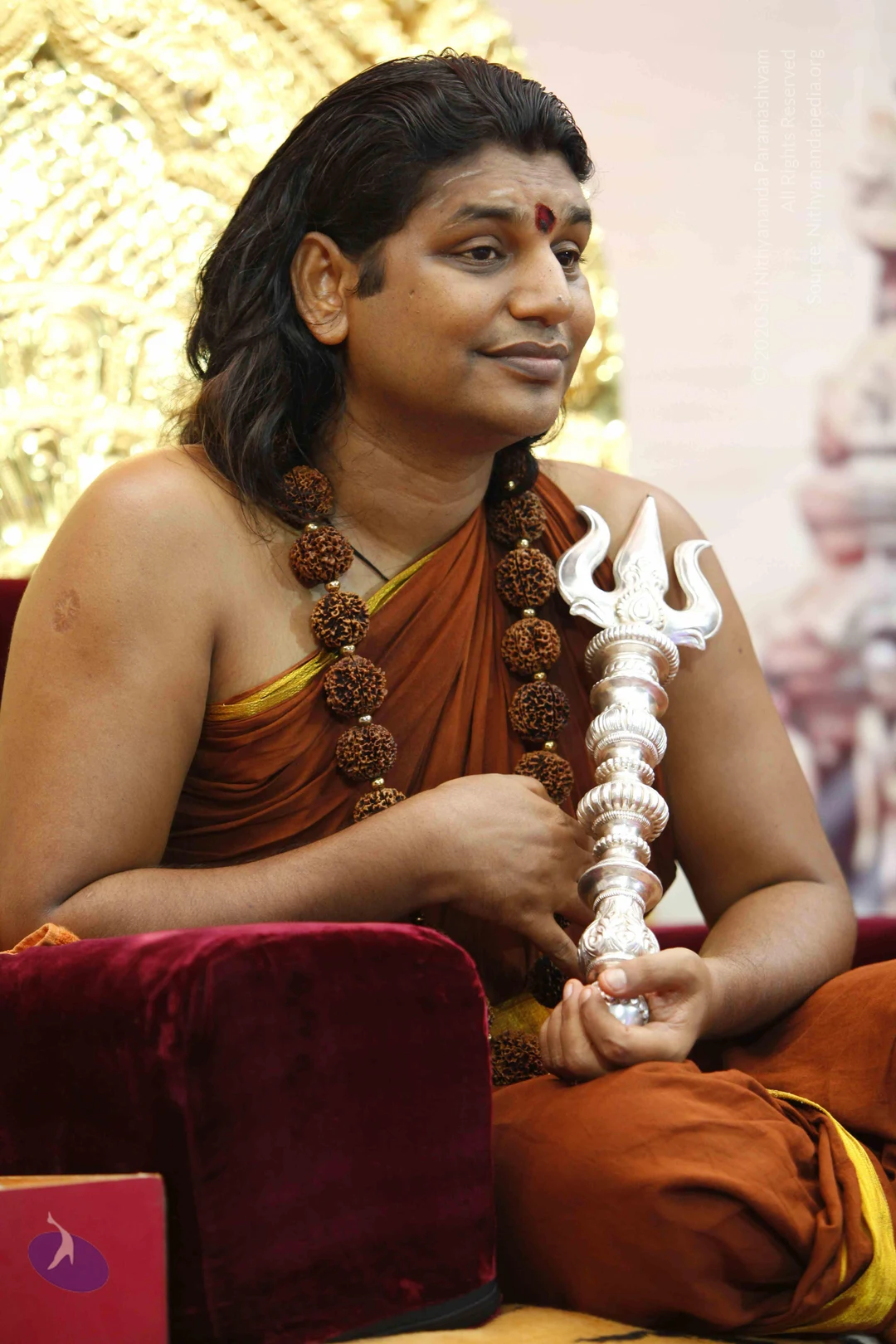
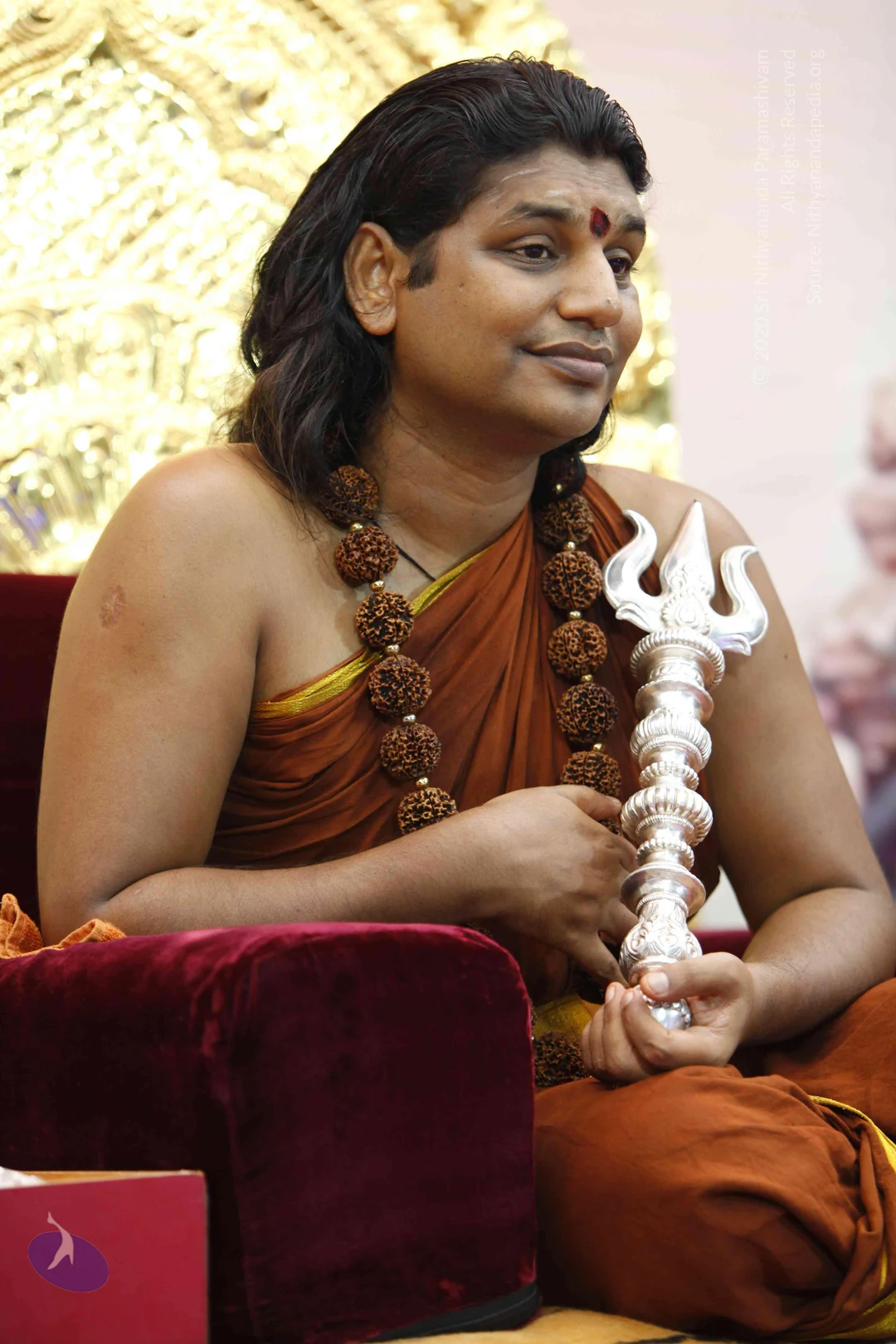
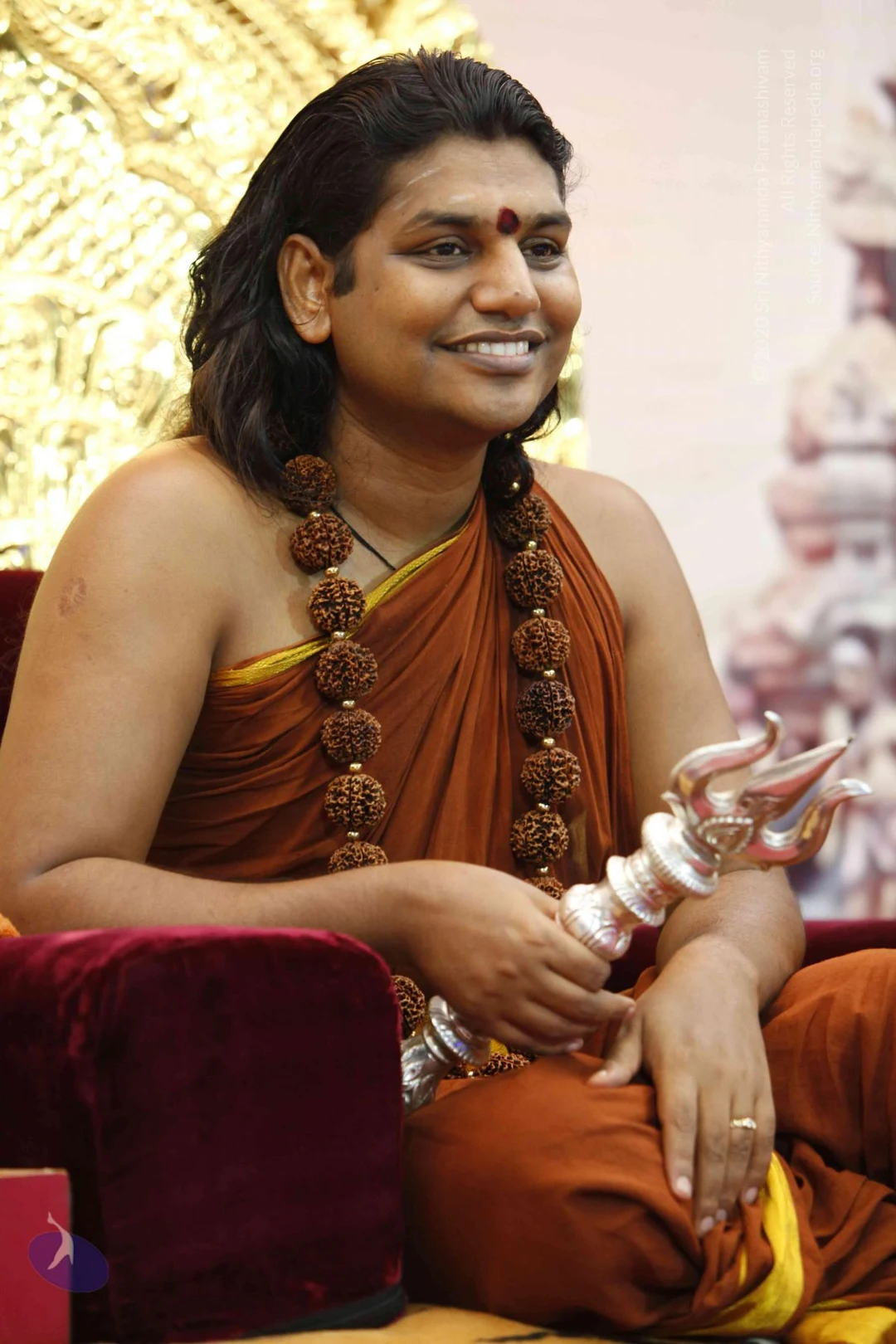
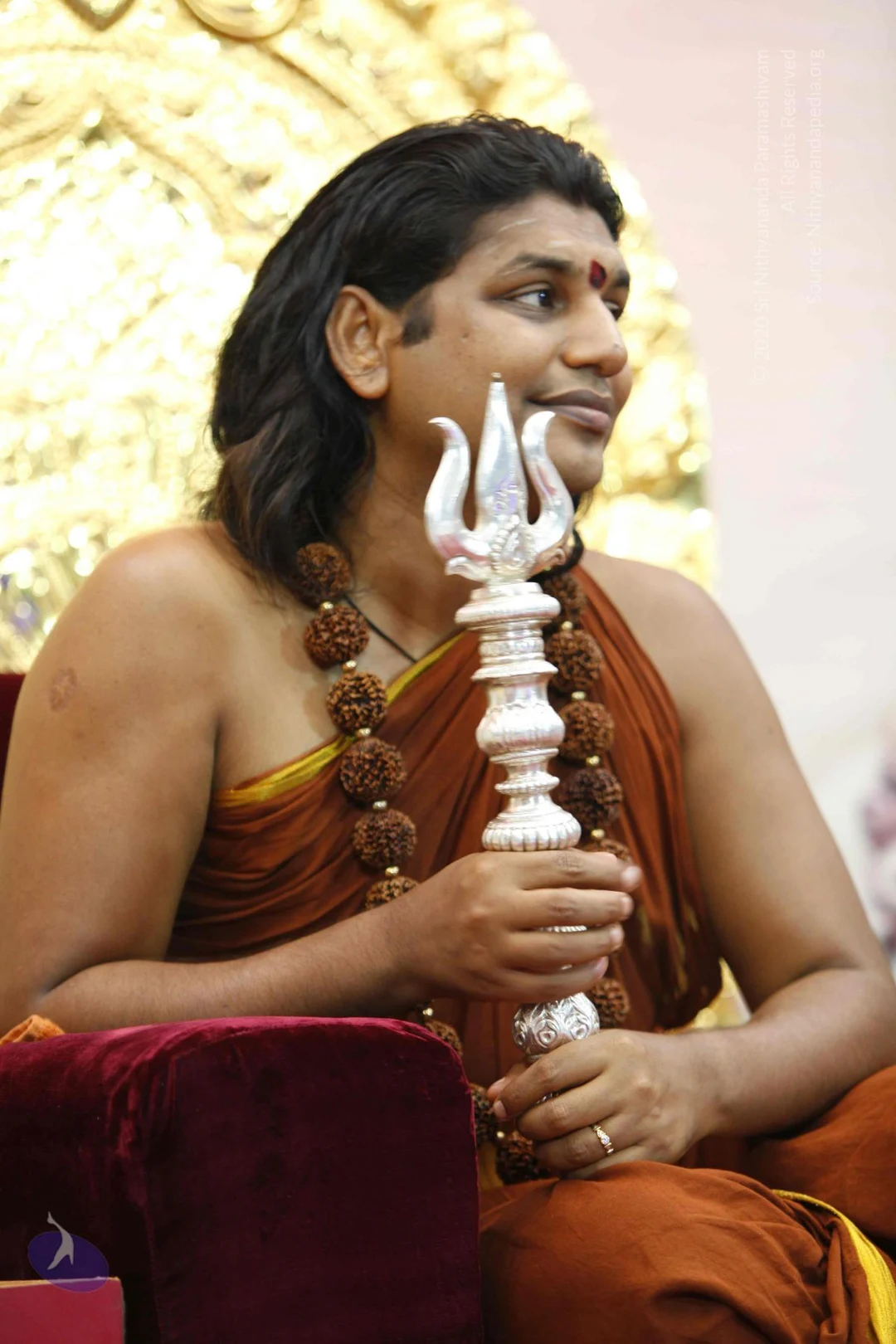
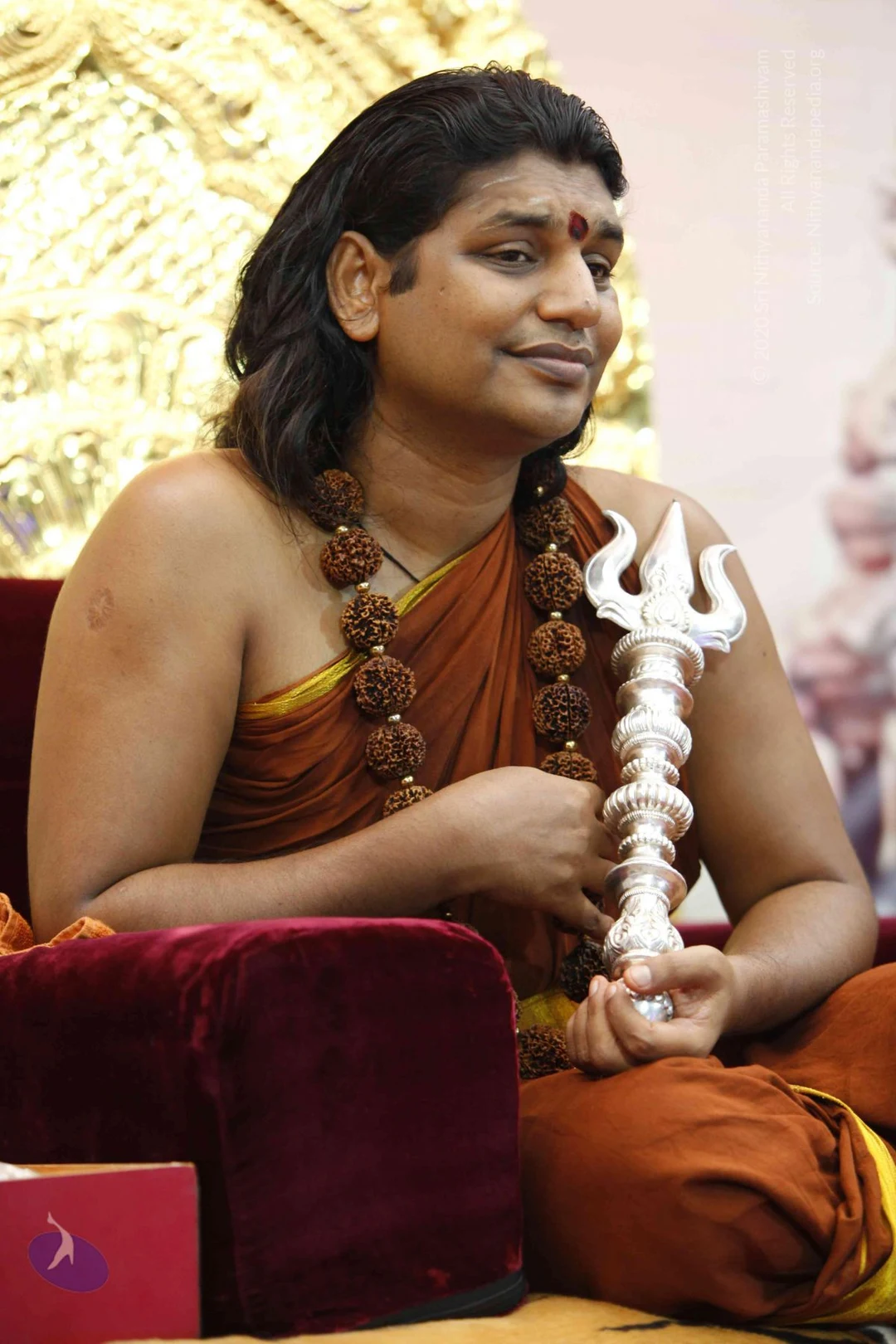
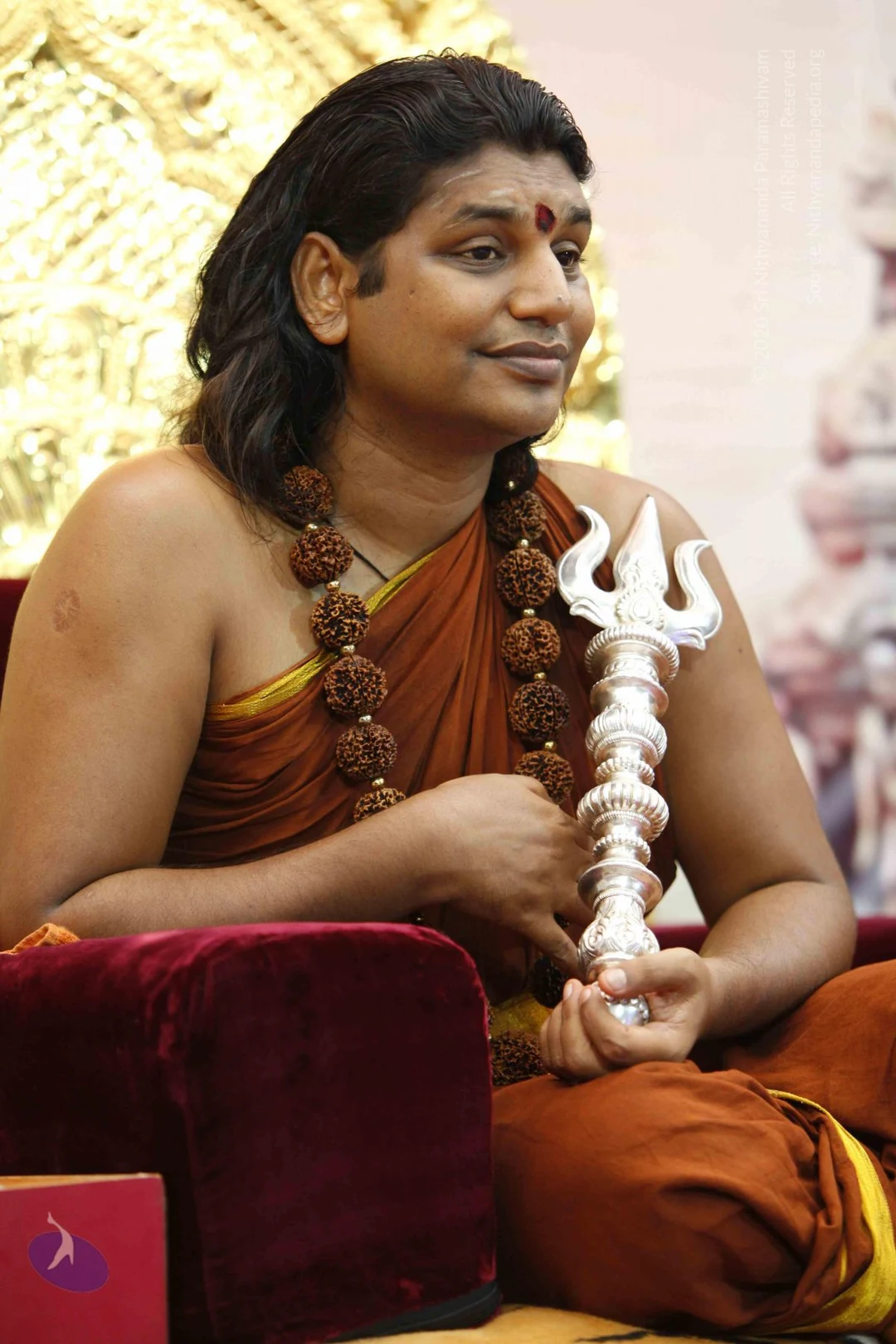
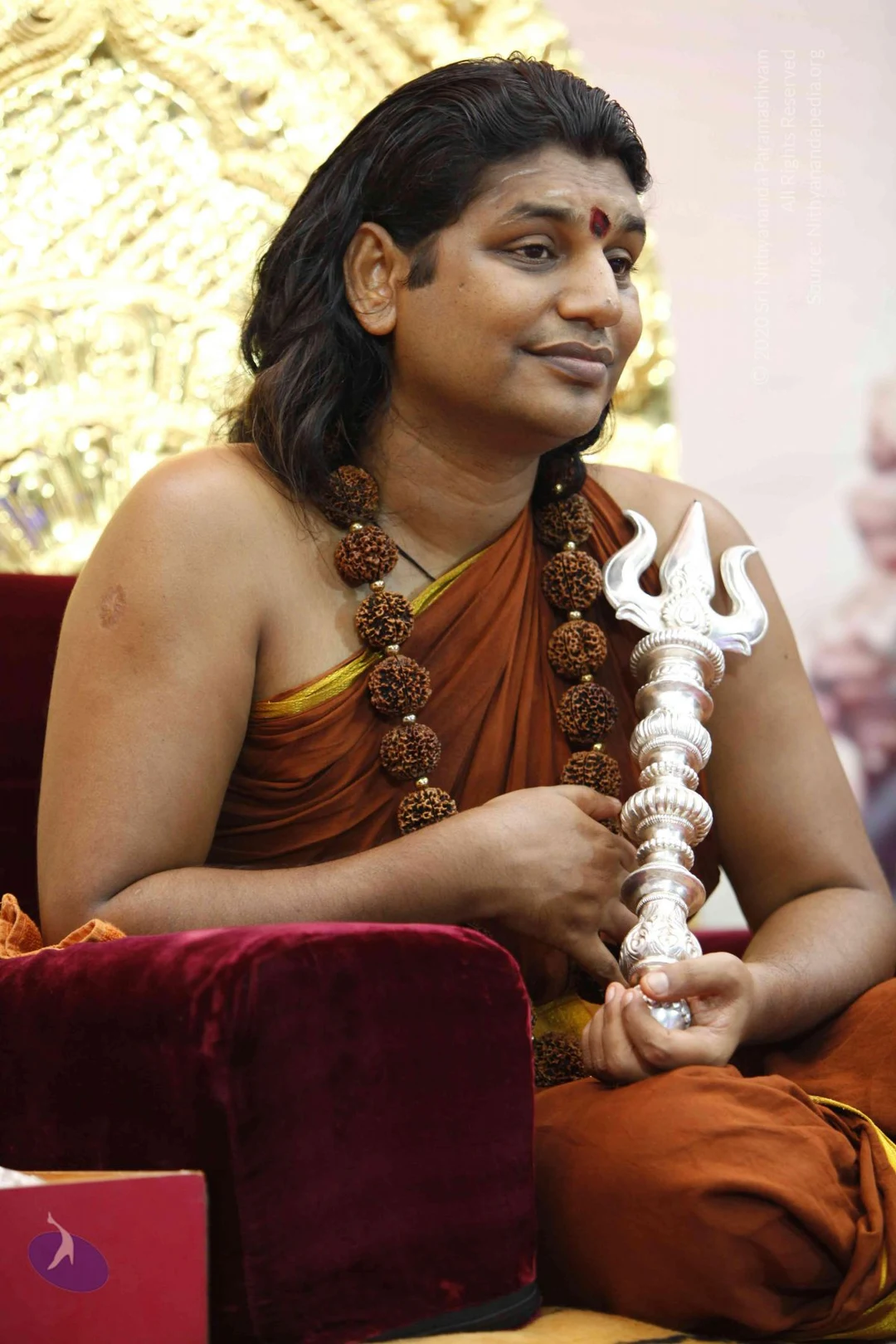
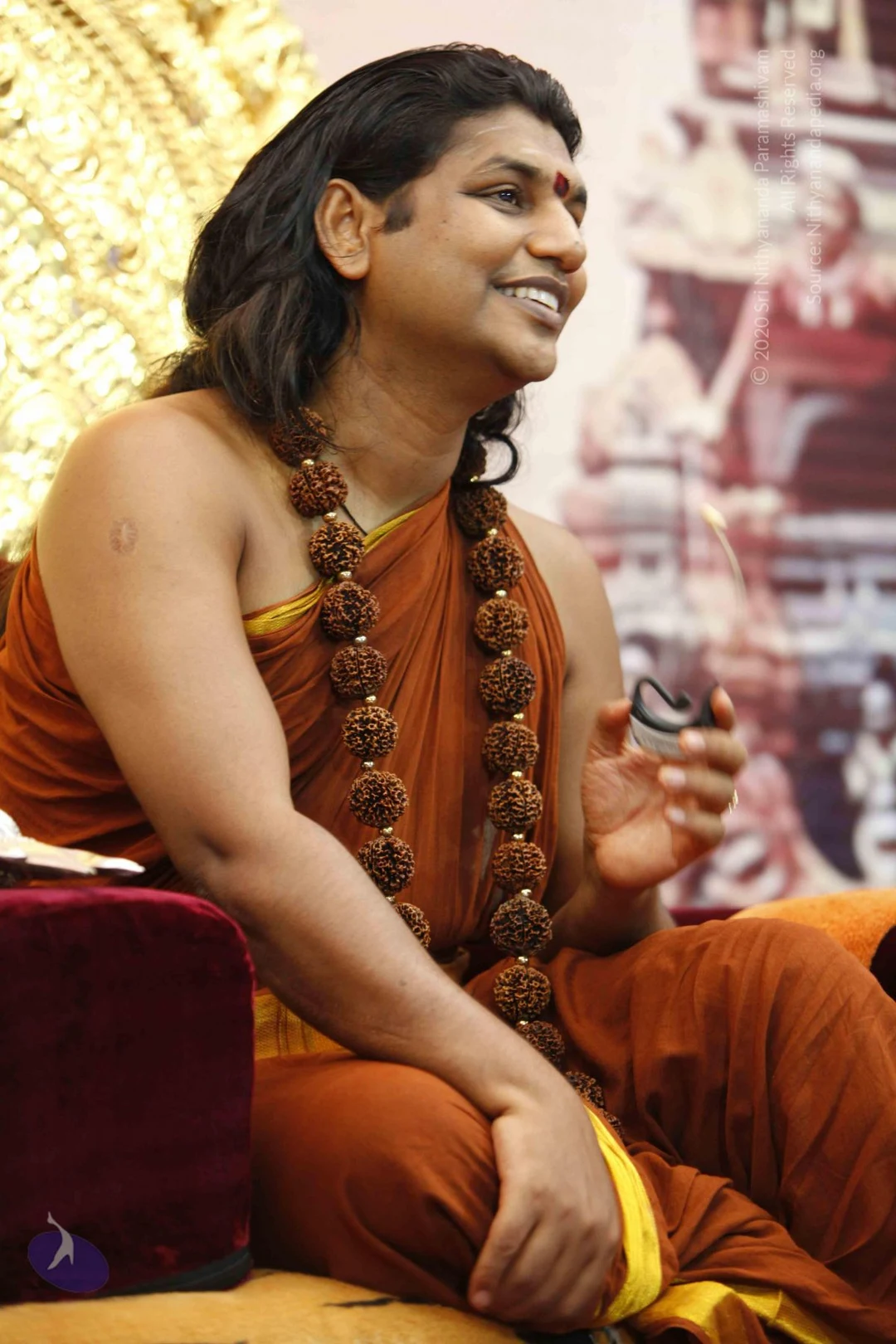
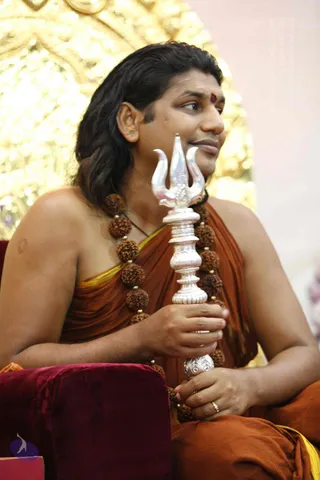
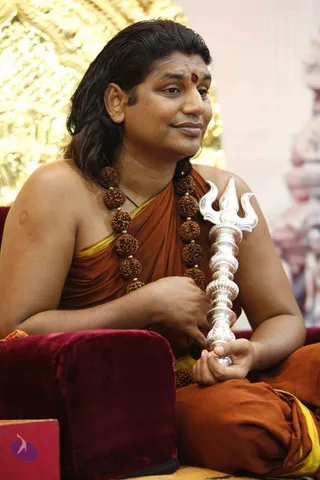
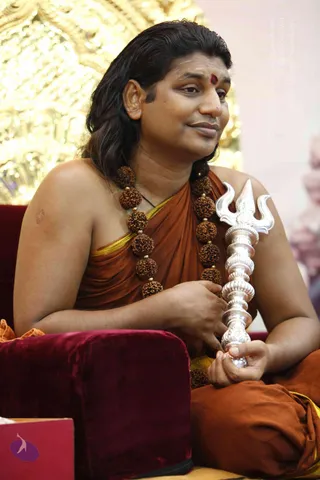
A seated man in an orange-saffron shawl draped over one shoulder, wearing a multi-strand rudraksha mala, holds a polished silver trident with a red-and-white tilaka on his forehead. Behind him is ornate gold-toned decorative relief, and a deep red velvet cushion lies in the foreground. The shaved-free long dark hair swept back and the saffron clothing and rudraksha cues match the Swamiji (probable) presentation; he appears to be the honoured guest on the seat. No other people are visible.A seated man with long dark hair, wearing an orange-brown shawl draped over bare shoulders with a gold-edged border, multiple large rudraksha mala beads around his neck, and a red bindi on his forehead. He holds a polished silver trident staff upright in his hands while seated on a dark red velvet chair, with a gold-leaf backdrop behind him.A seated man with long dark swept-back hair wears an orange-brown saffron robe with a yellow border and a long rudraksha mala of brown beads with gold spacers. He holds an ornate silver trident (trishul) upright in his hands on his lap and sits on a deep red velvet cushioned throne before a gold embossed backdrop. A red bindi marks his forehead. Probable Swamiji (long swept-back hair, saffron robe, rudraksha mala and silver trident), seated in a satsang-style setting.A seated man in saffron-orange robes with a yellow border sits on a golden throne-like seat, smiling and gesturing with his right hand while holding a small object. He wears a long rudraksha mala with multiple tiers and a red bindi on his forehead, and his long dark hair falls past his shoulders. A red velvet cushion is at left, and a blurred temple-like backdrop with red and white tones stands behind him.