Skip to content
Saturday

6 July 2013

Dated photos
313
Source pages
1
Media
4
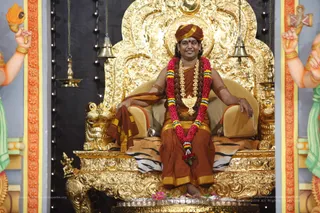
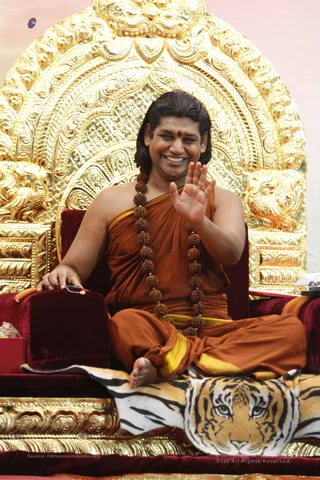
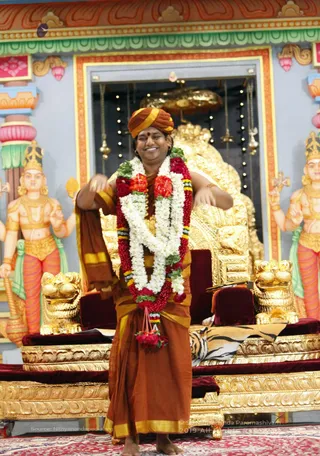
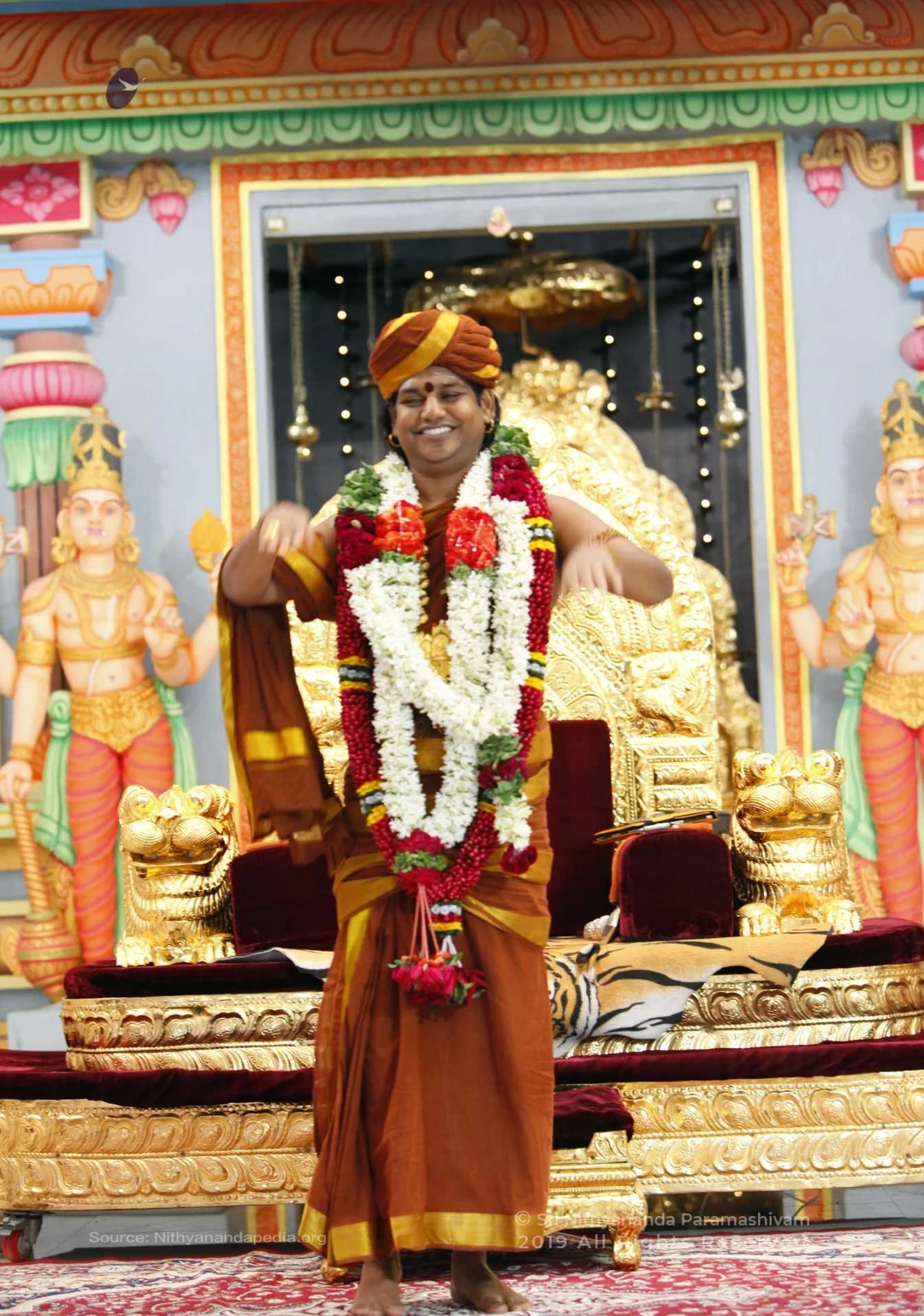
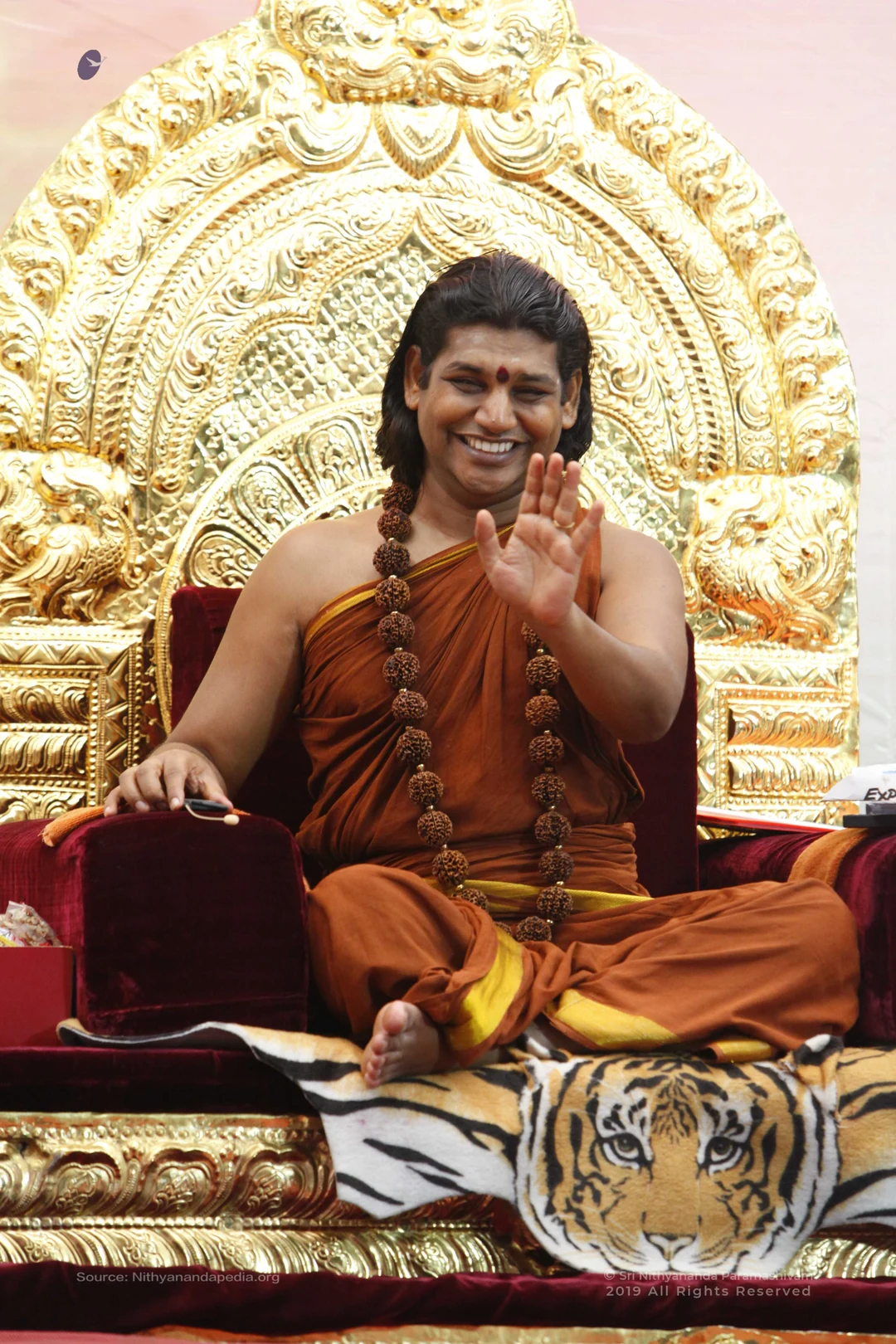
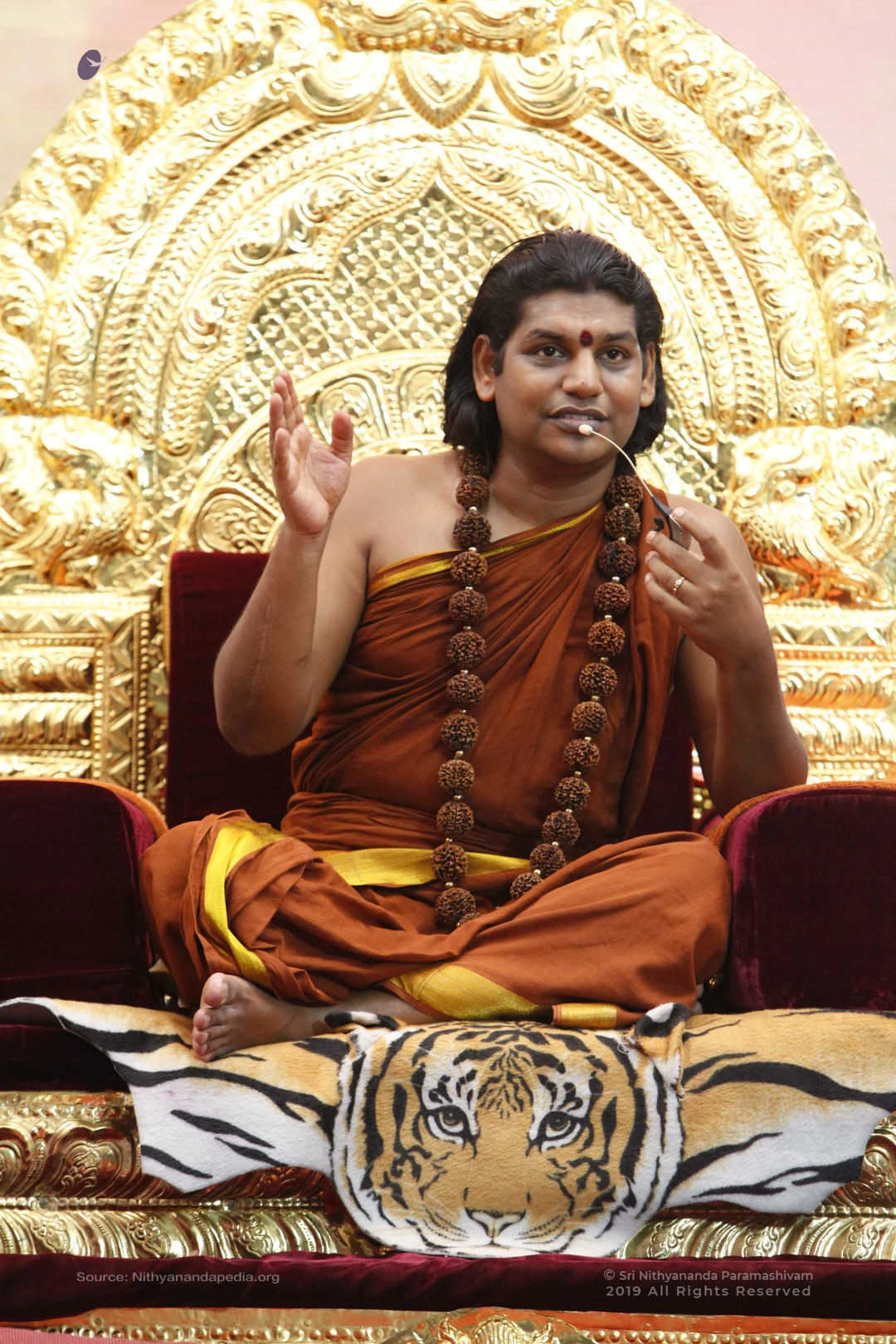
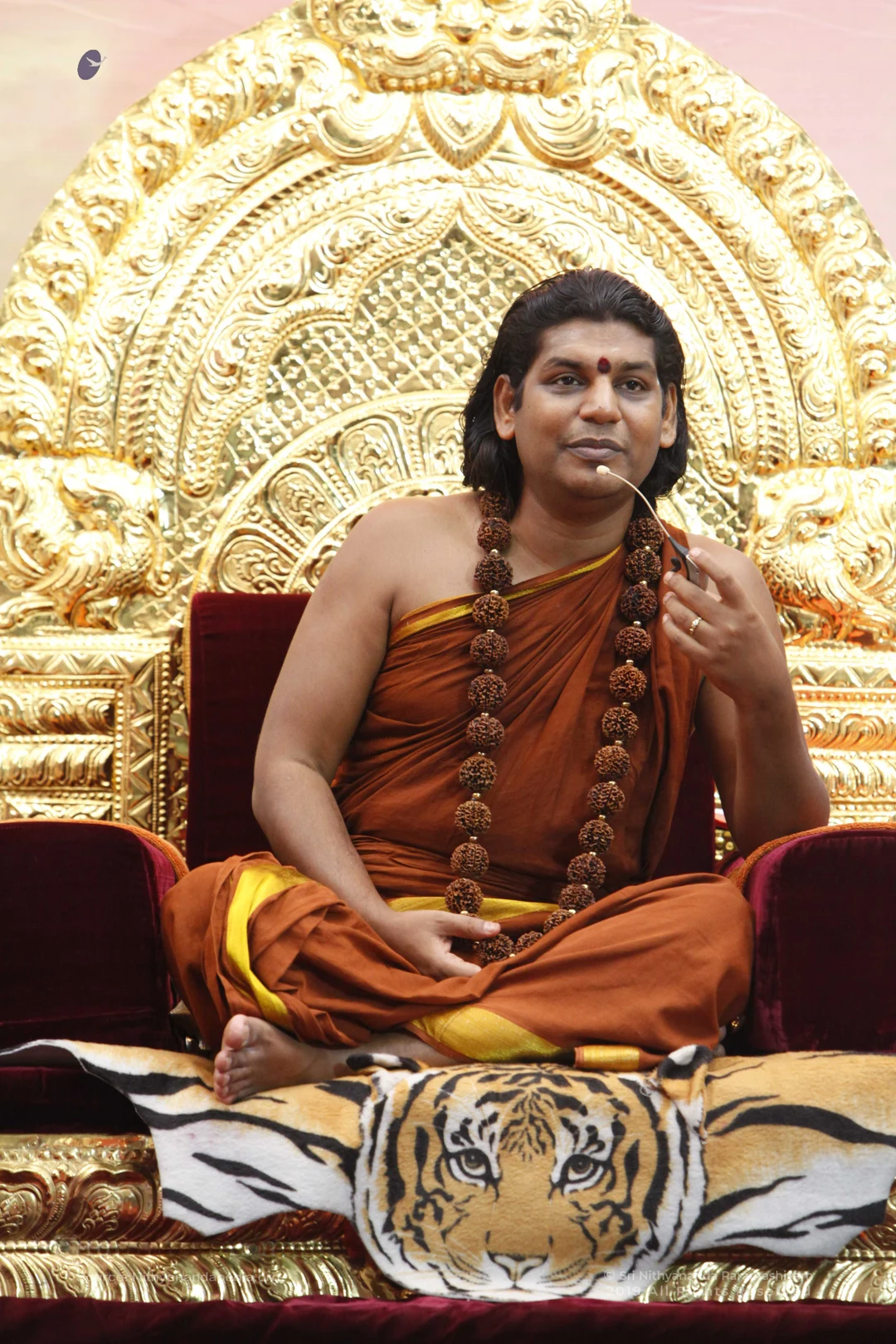
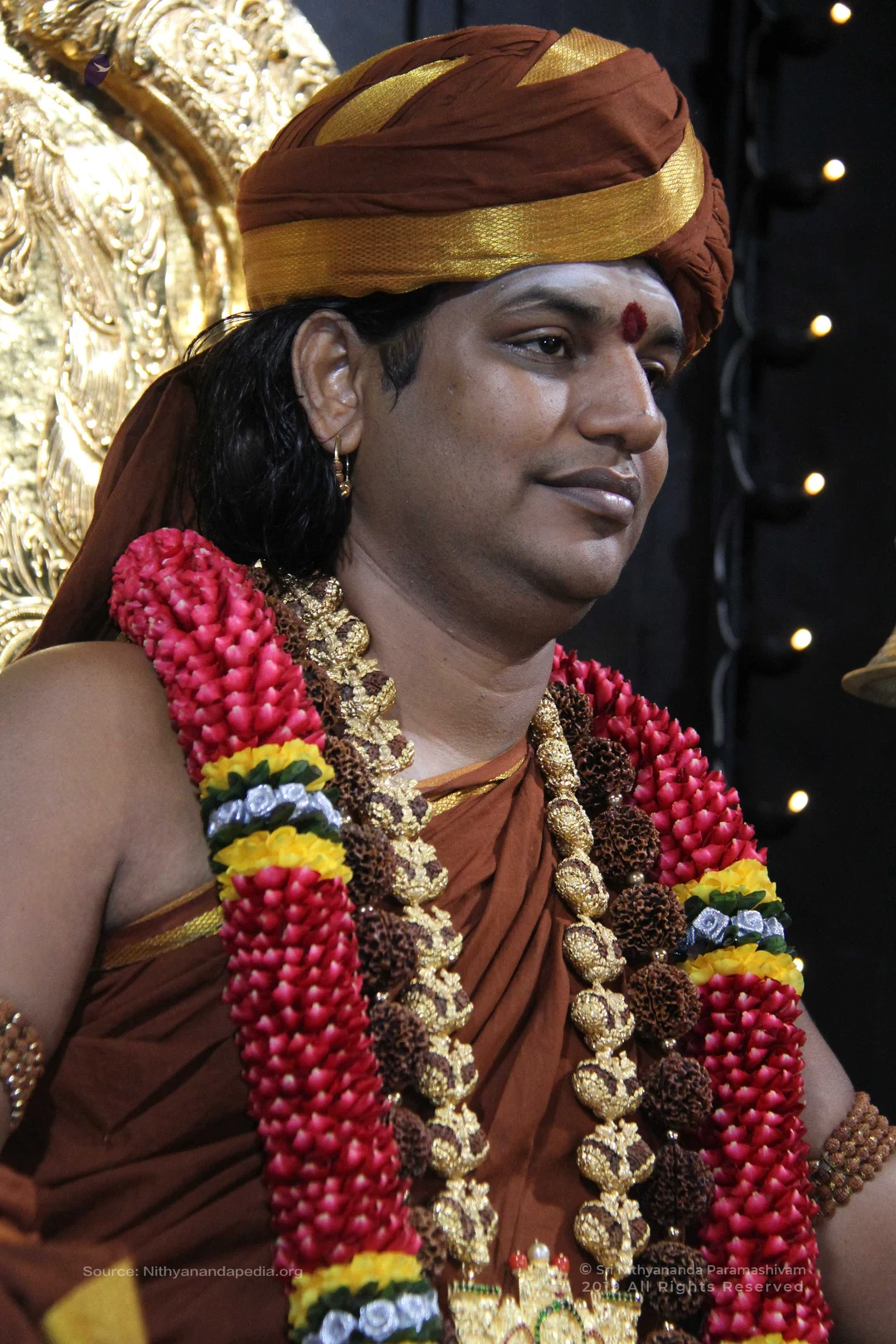
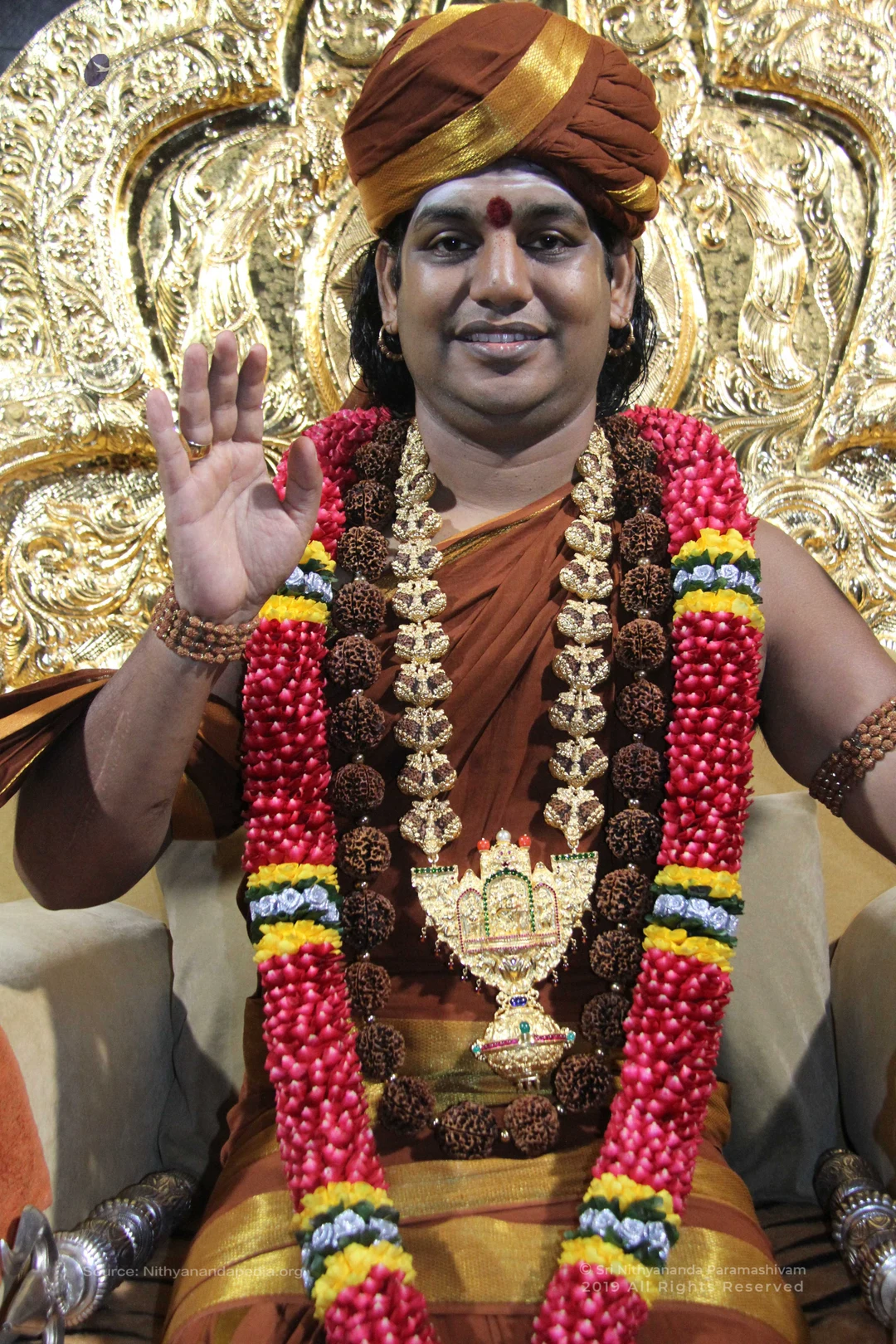
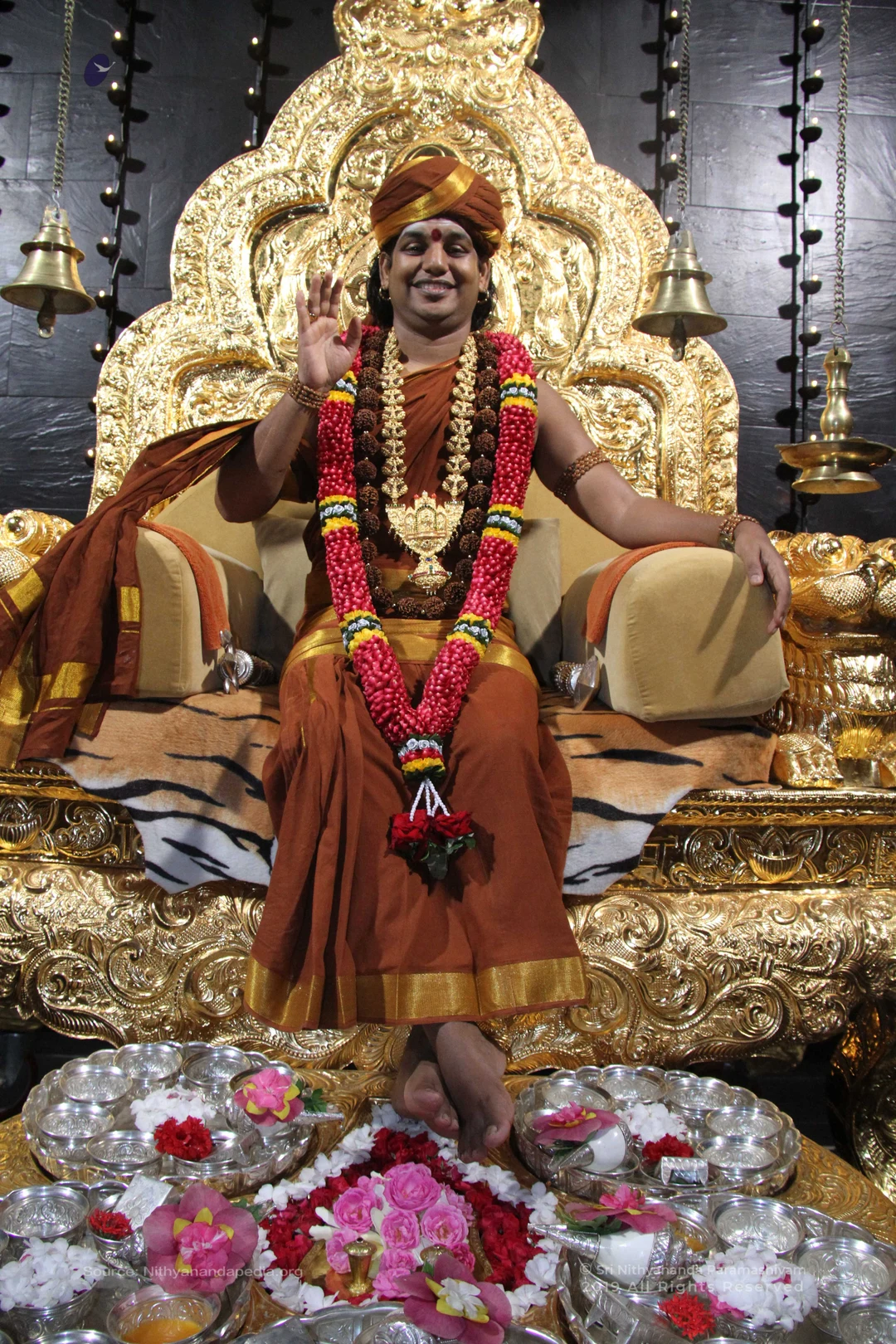
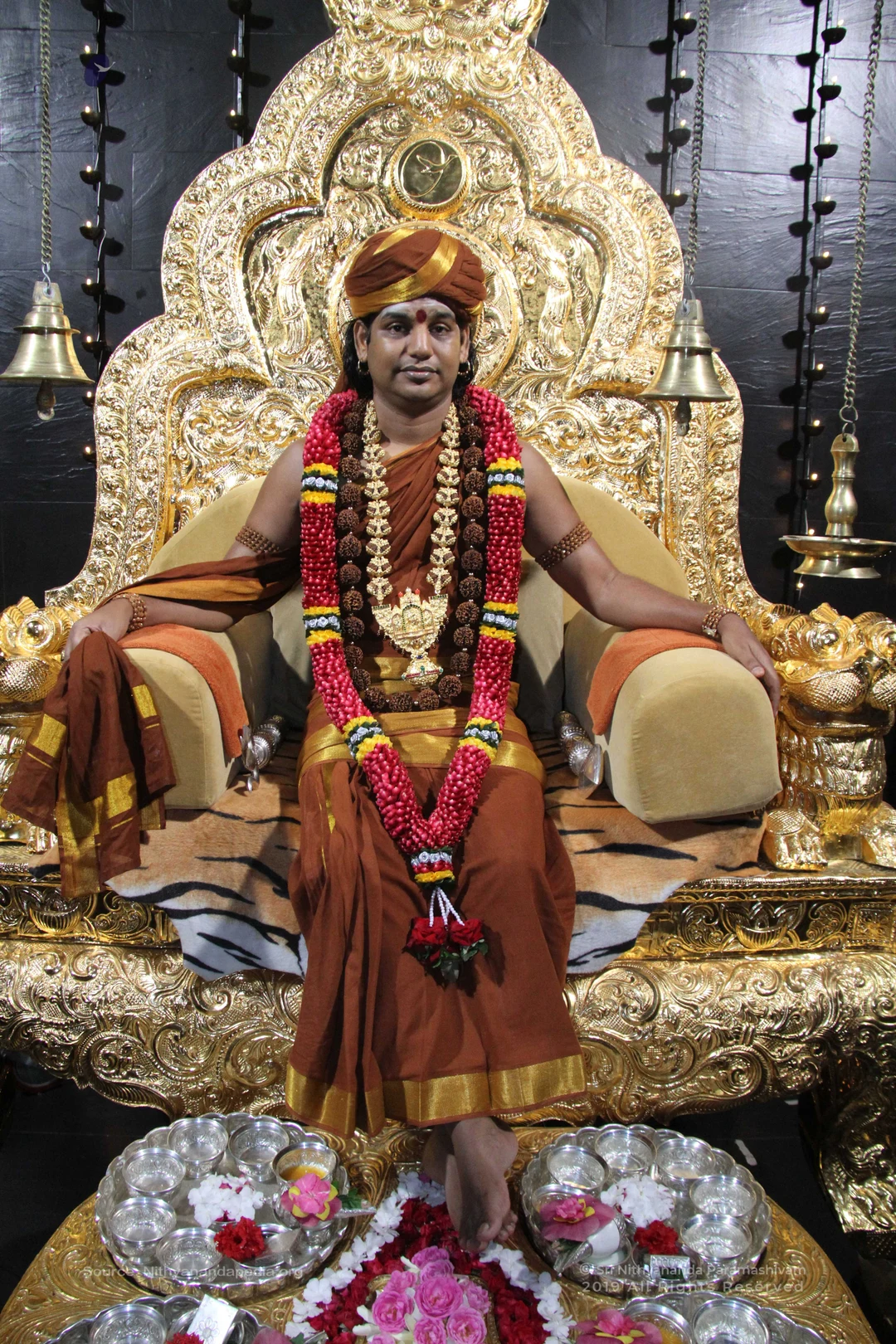
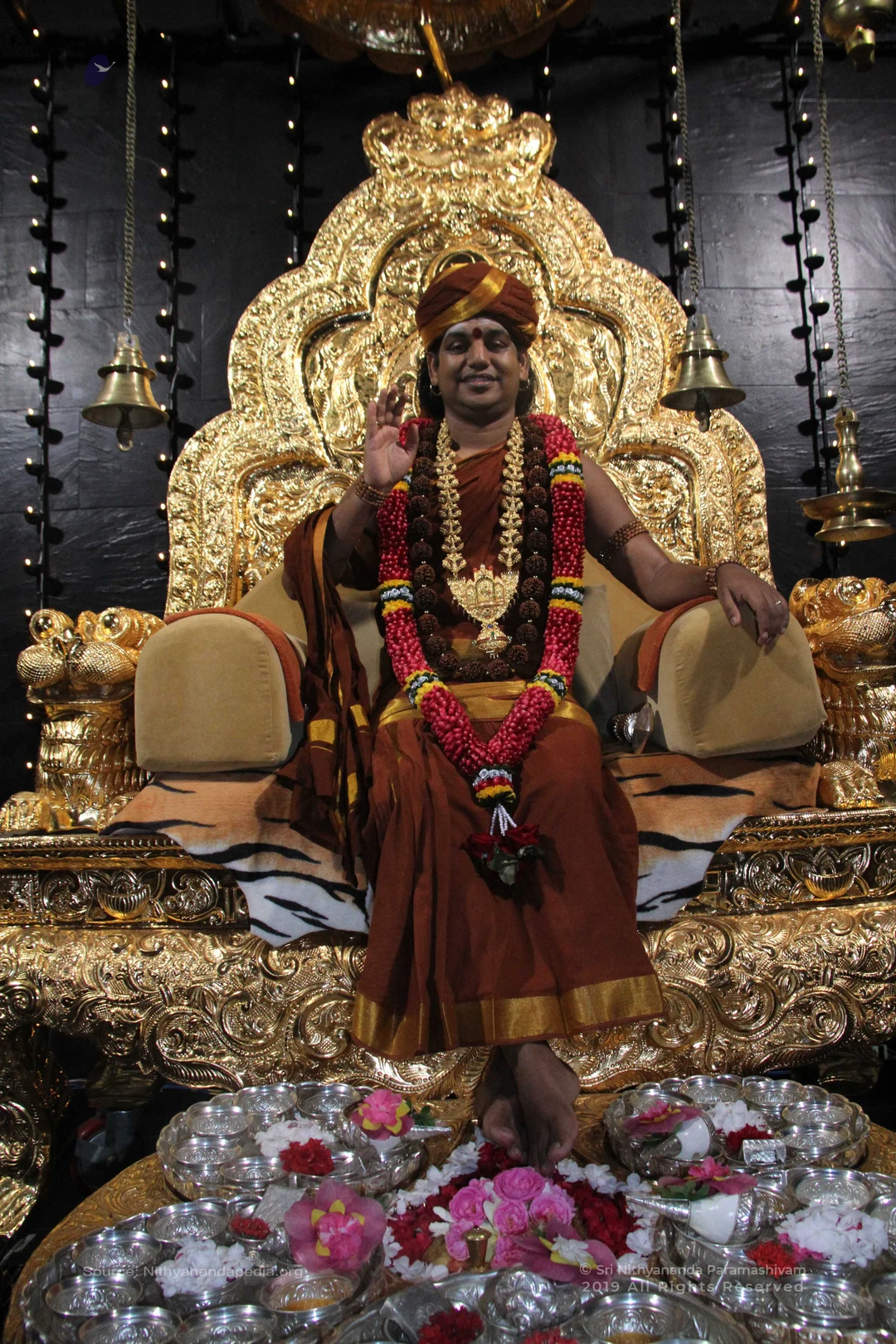
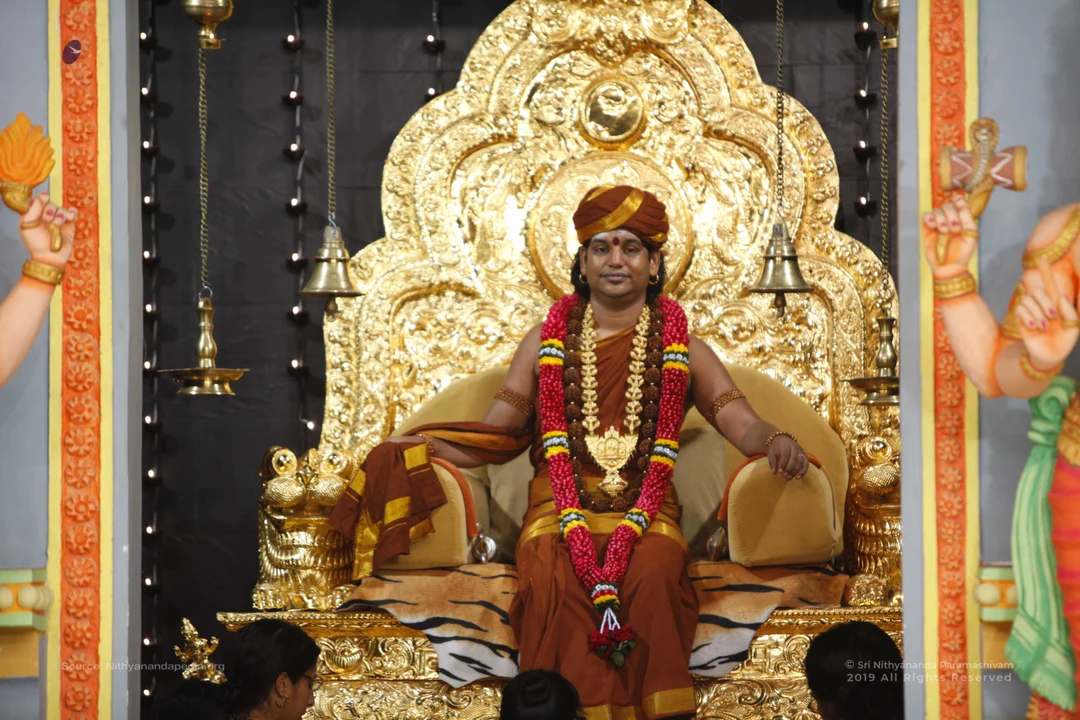
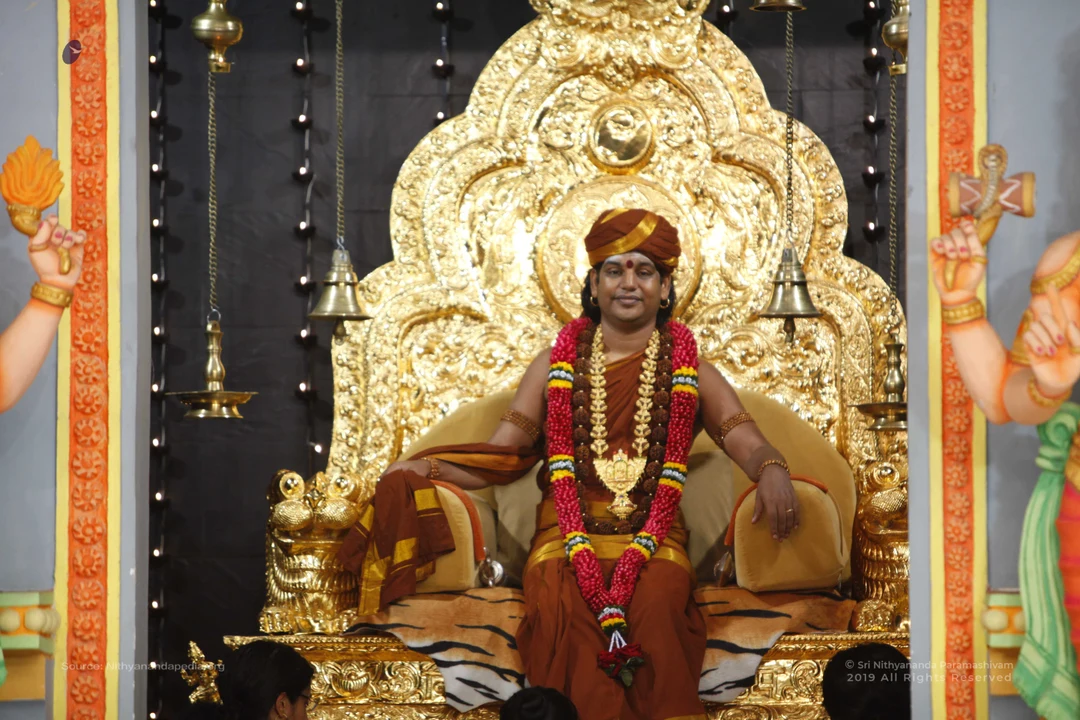
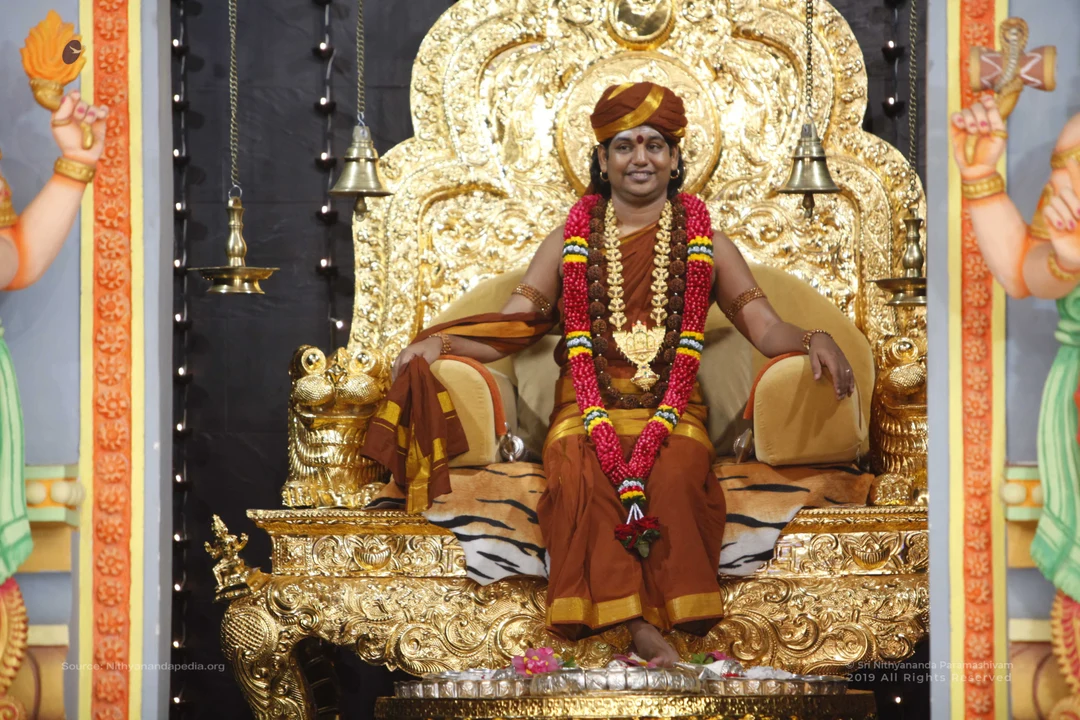
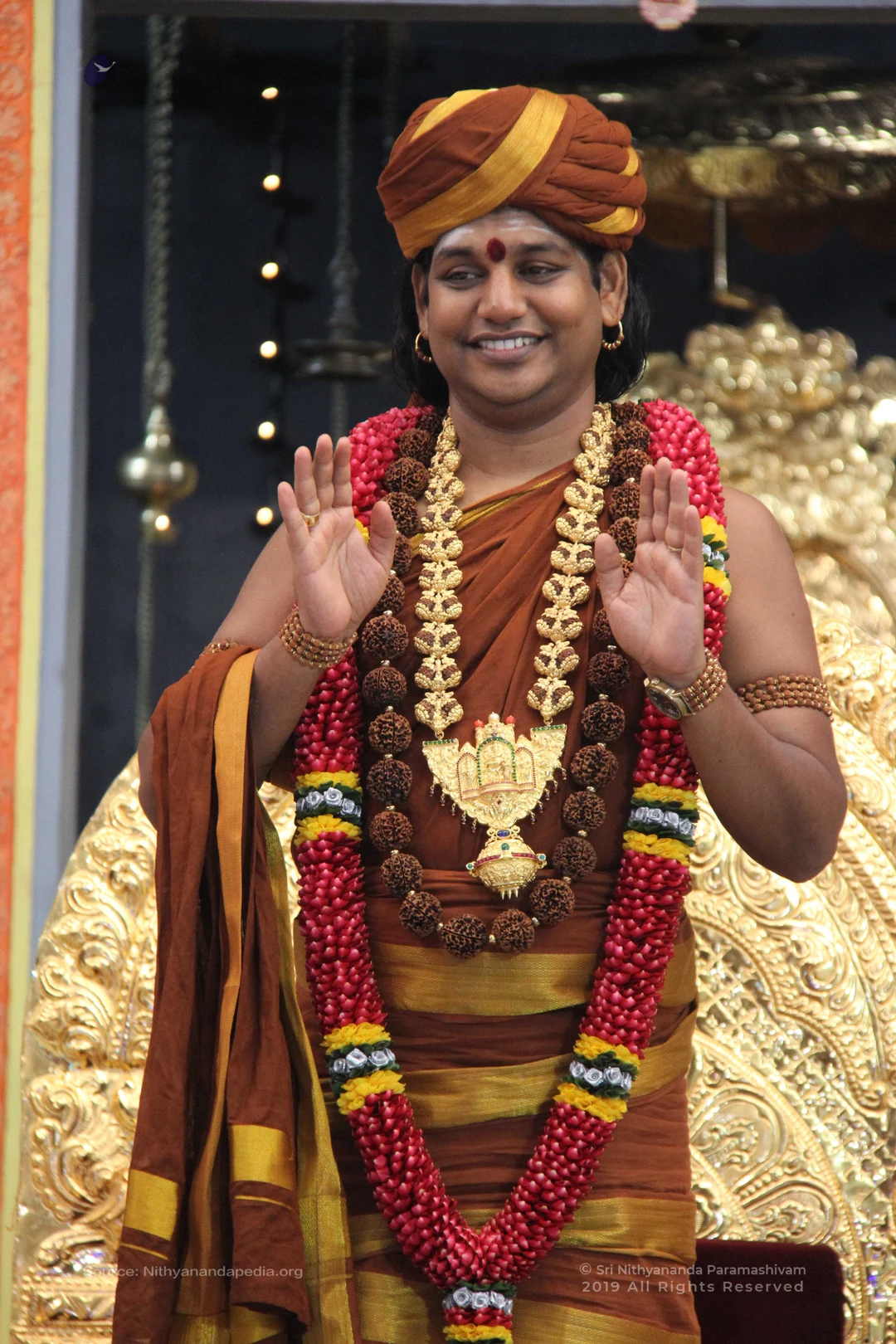
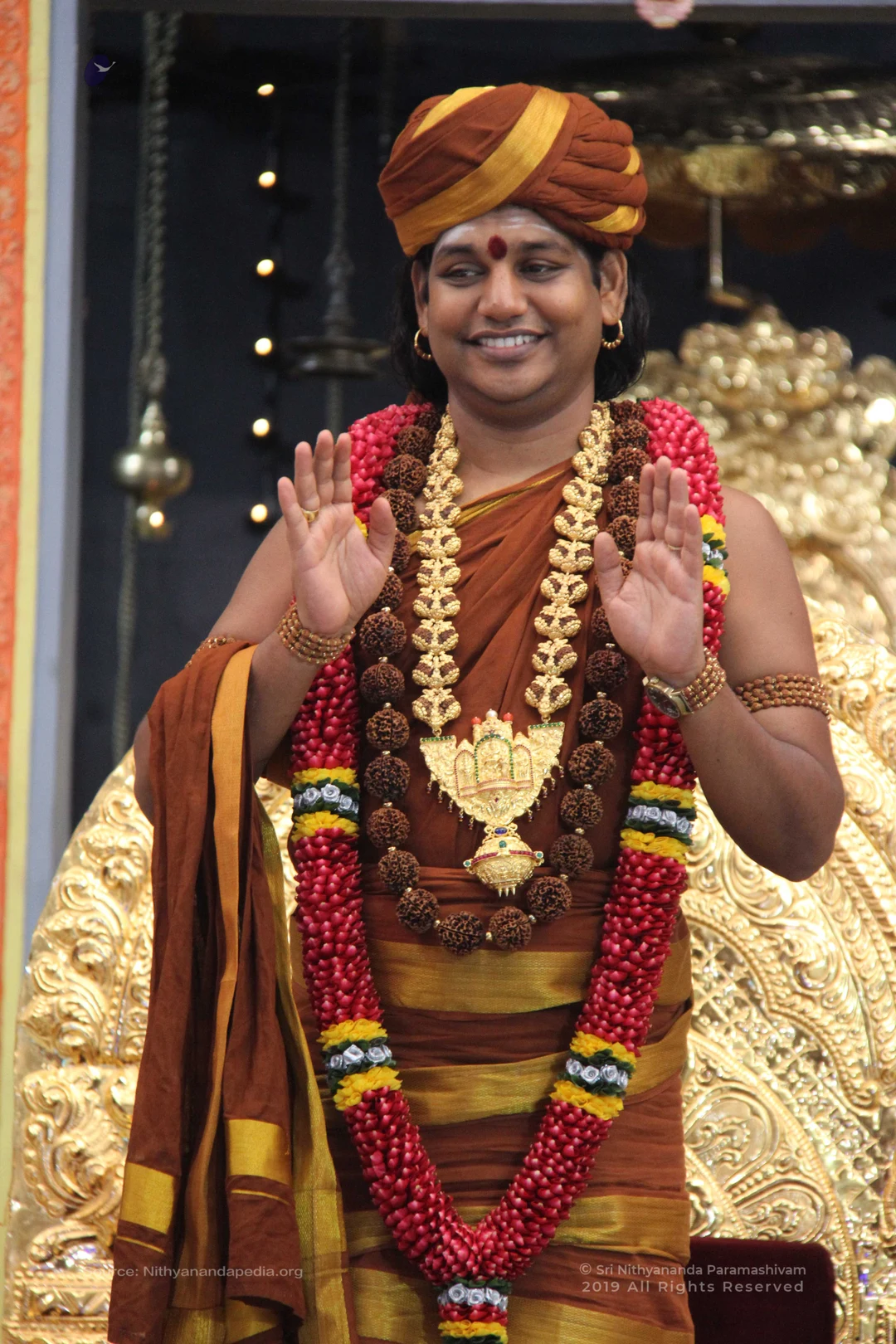
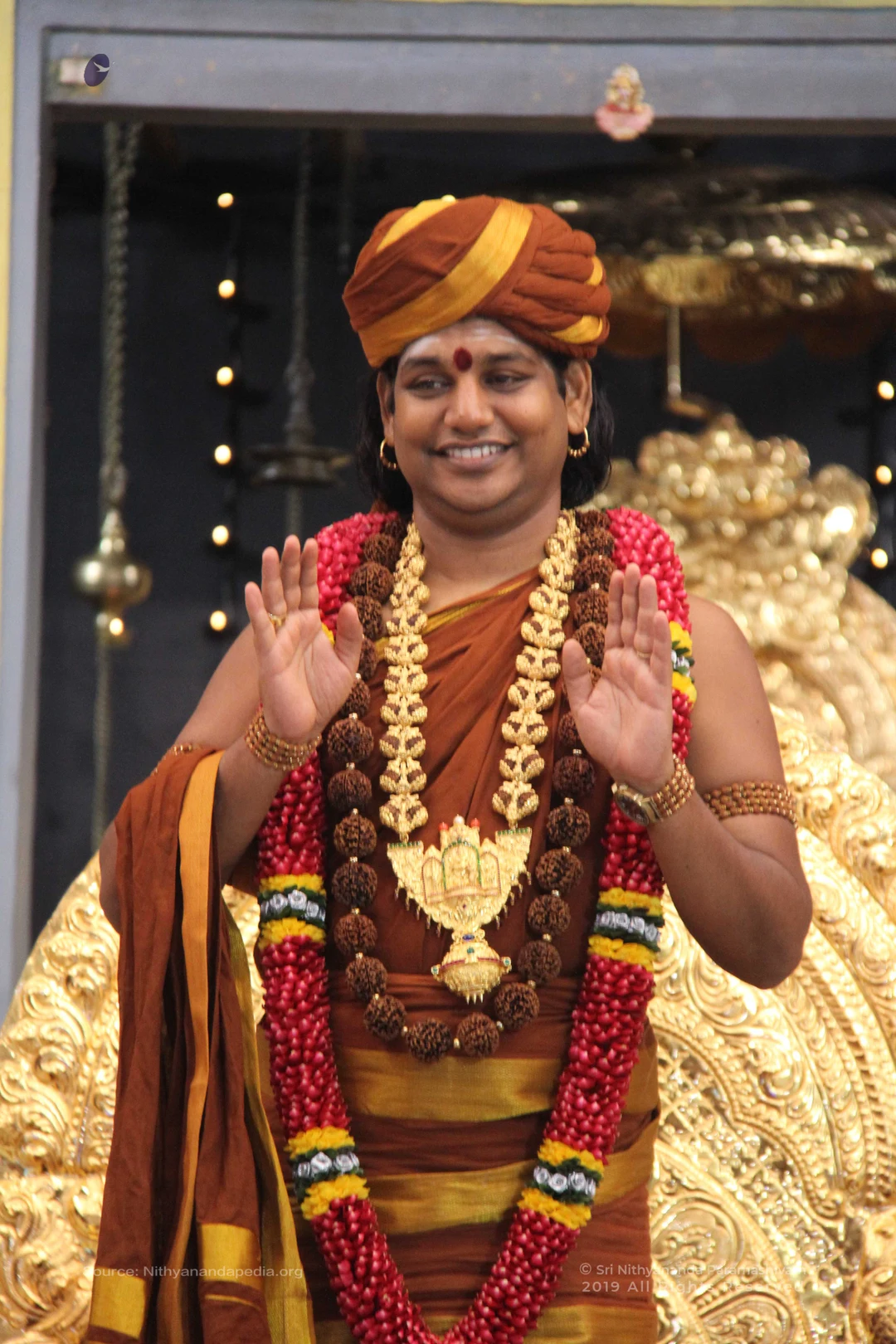
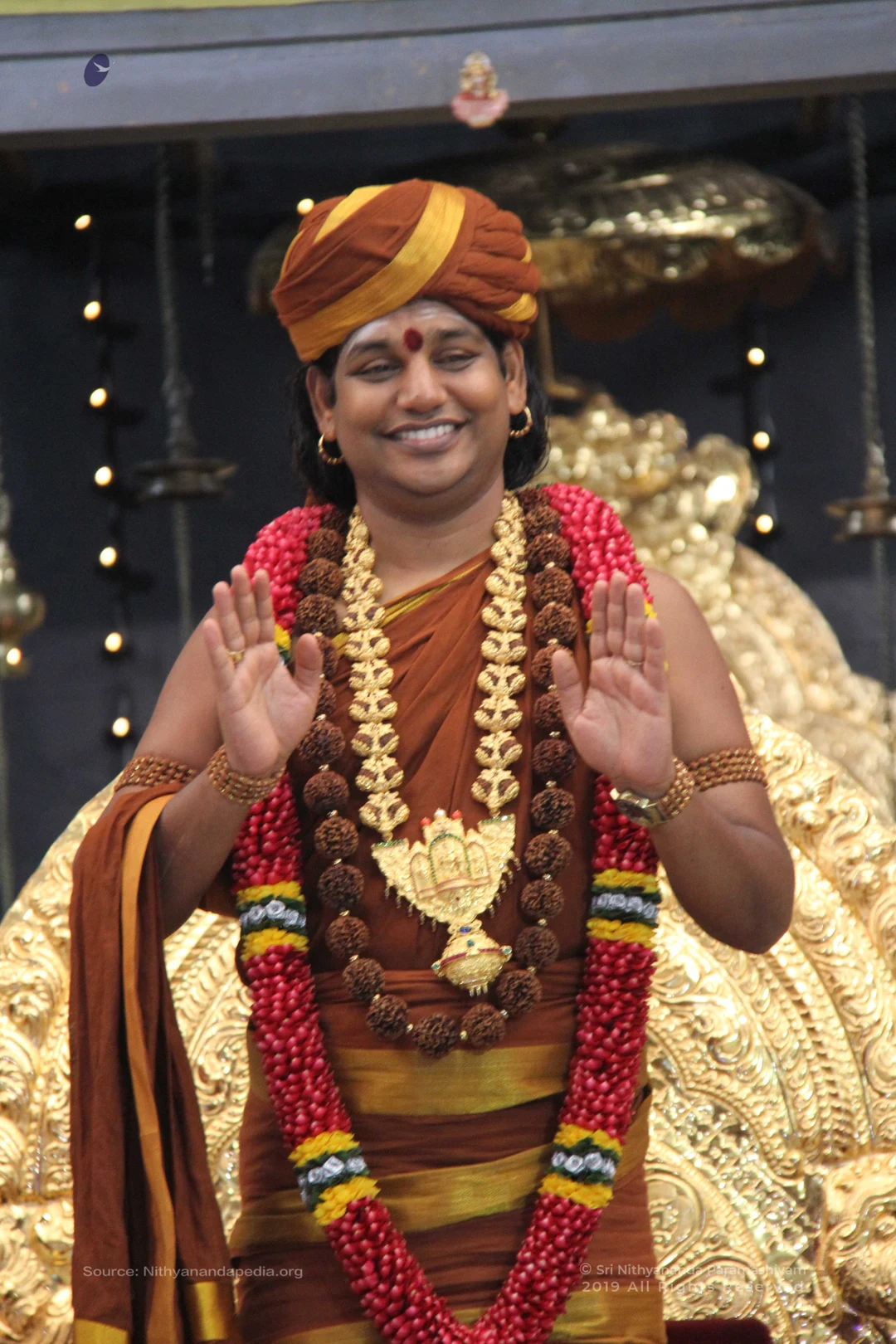
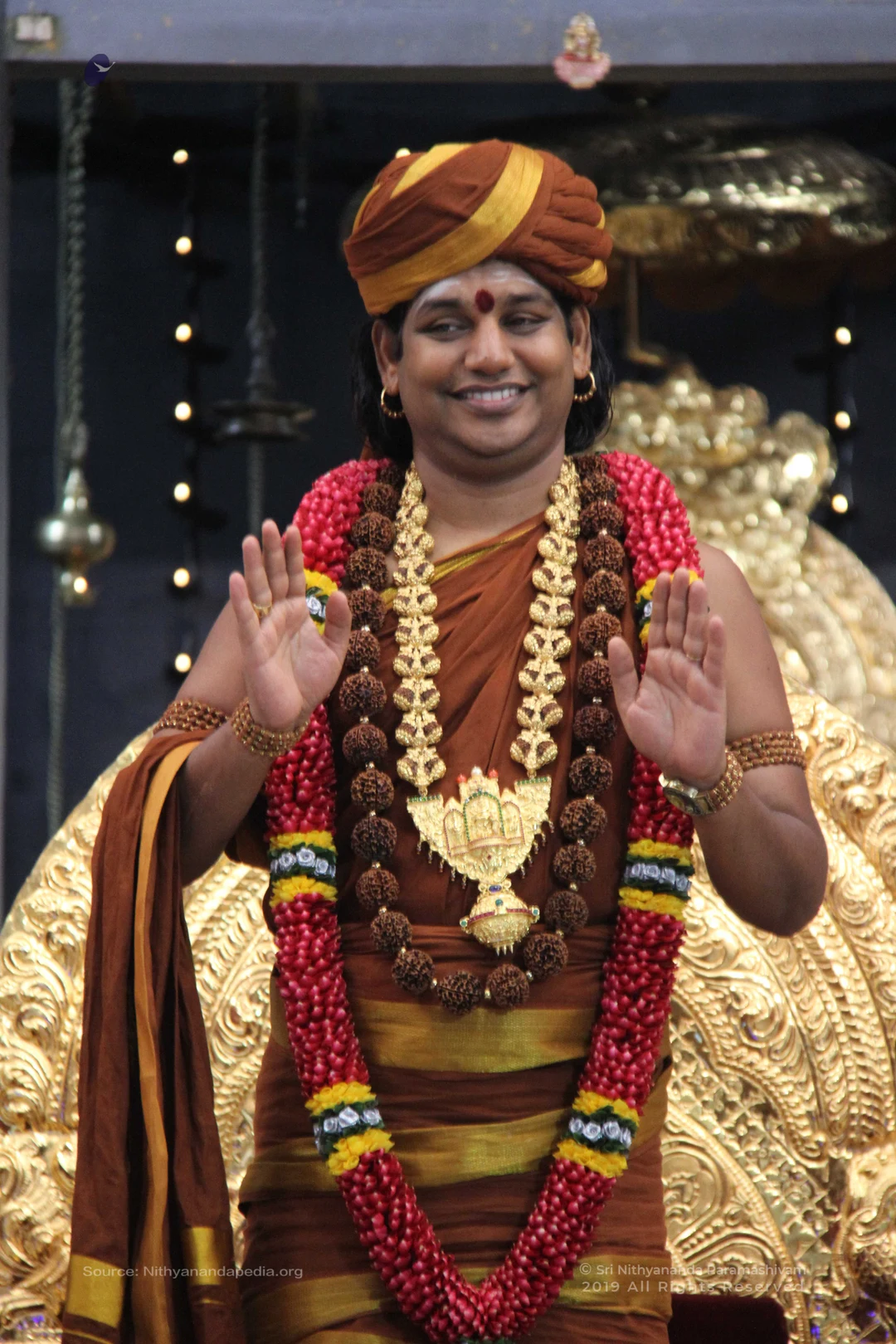
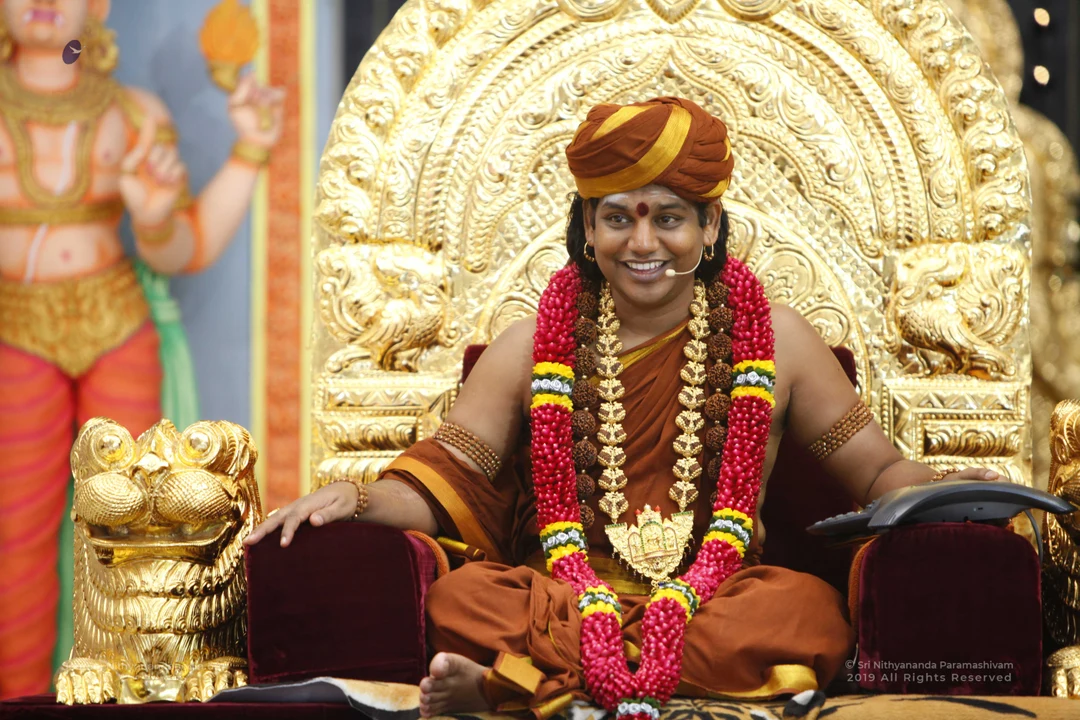
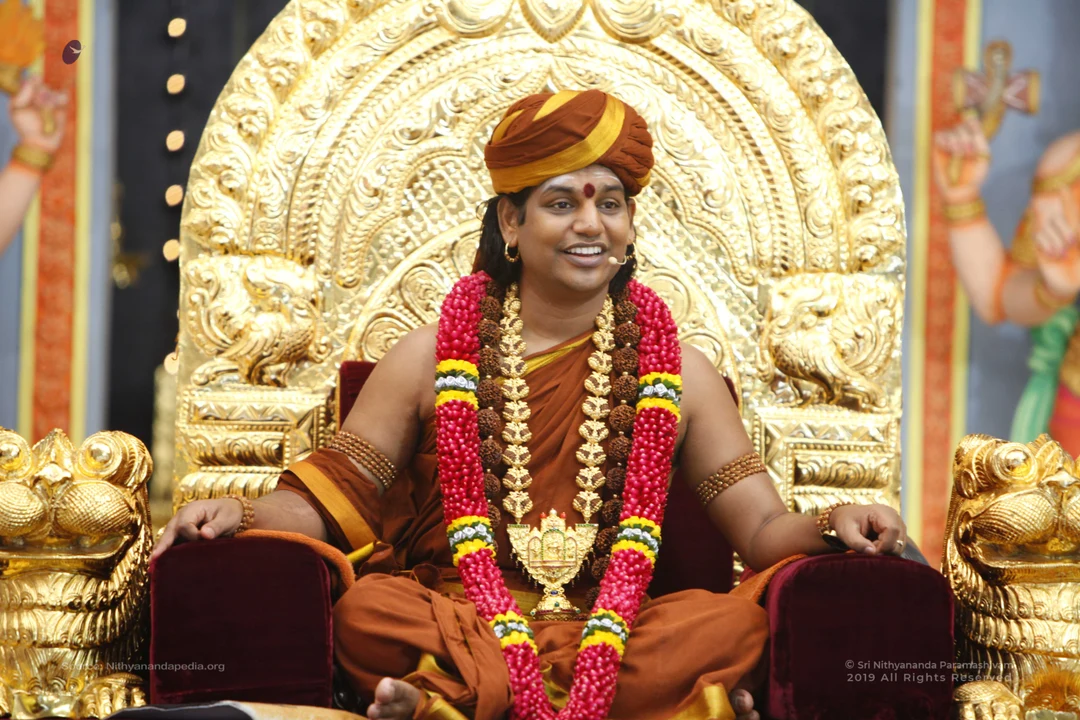
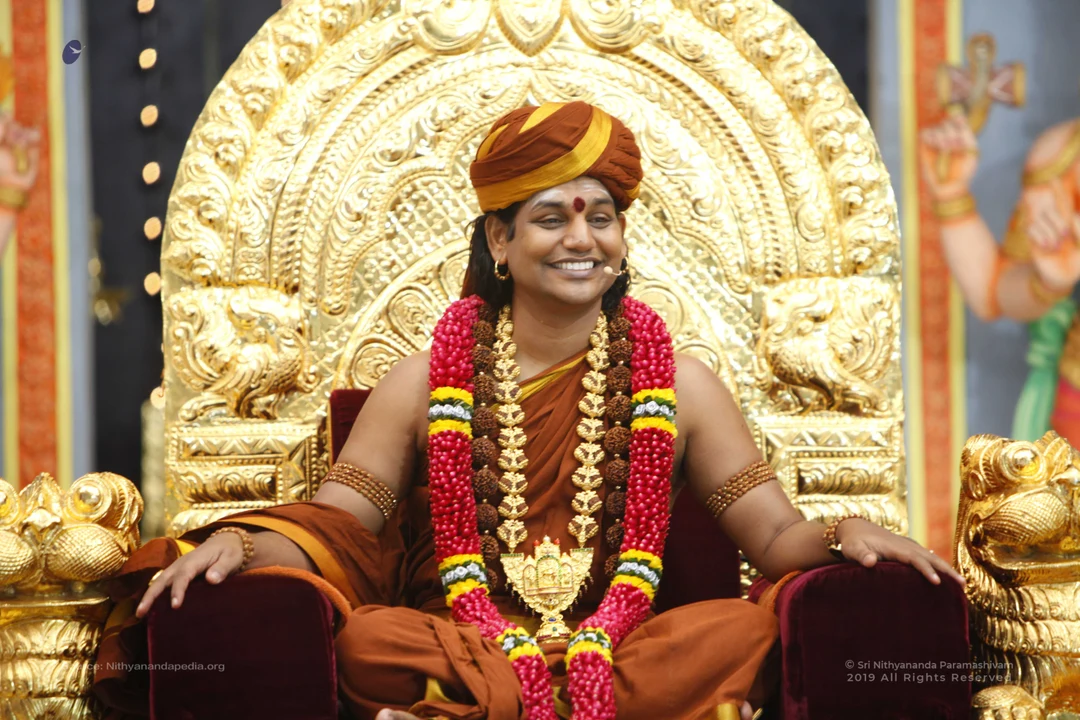
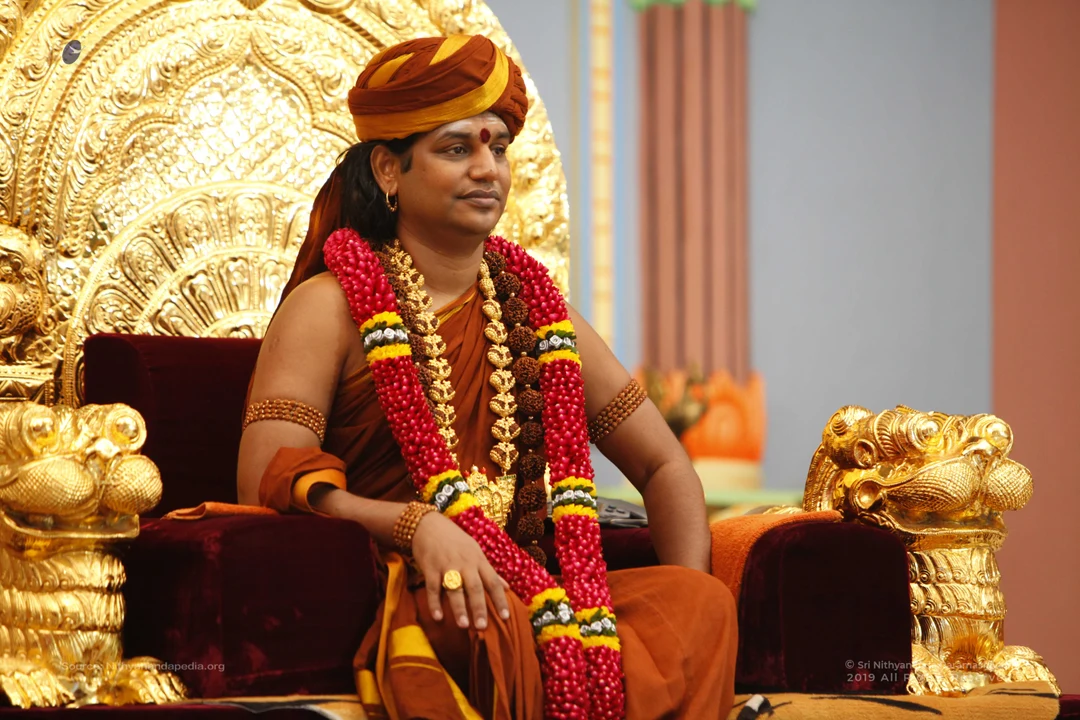
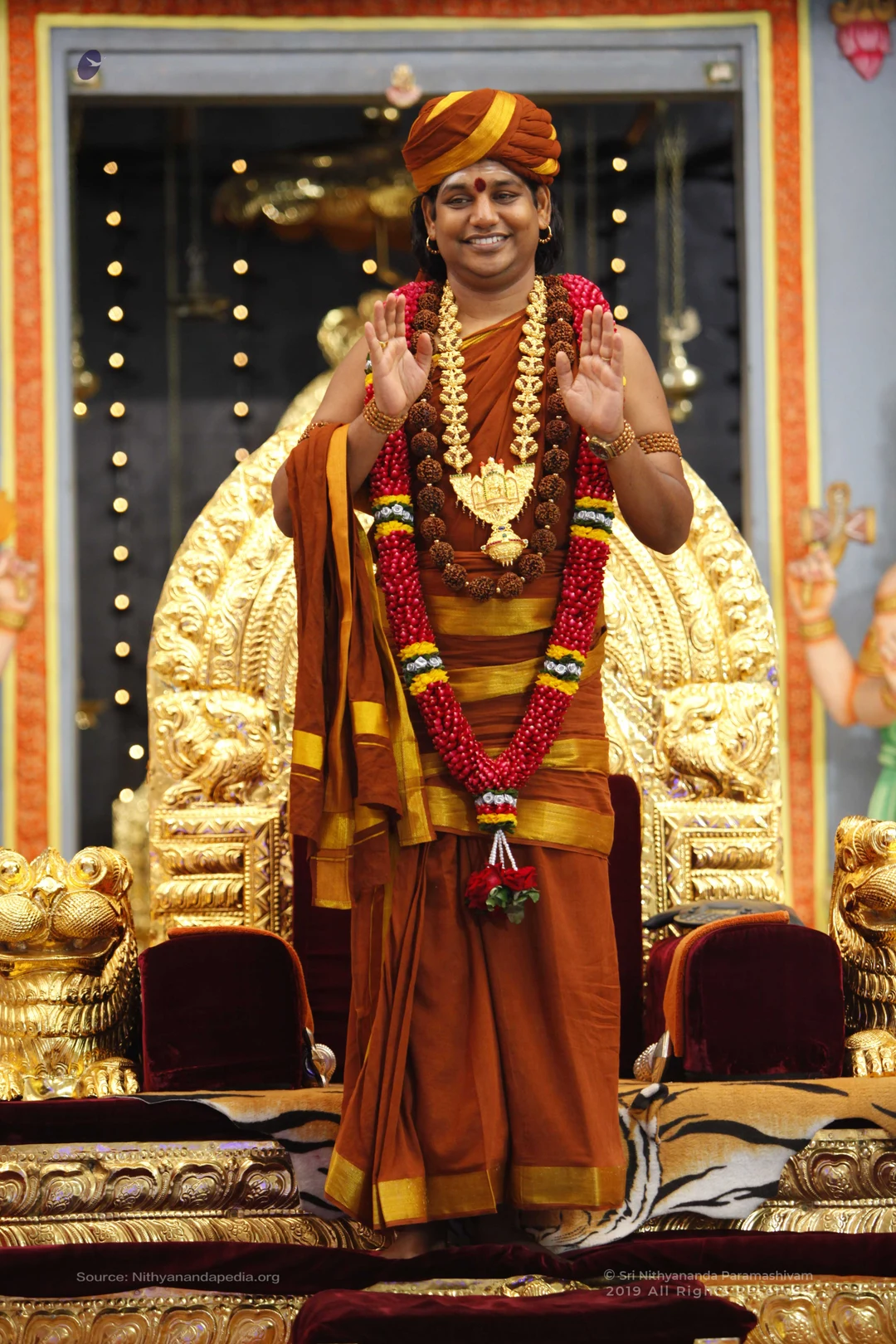
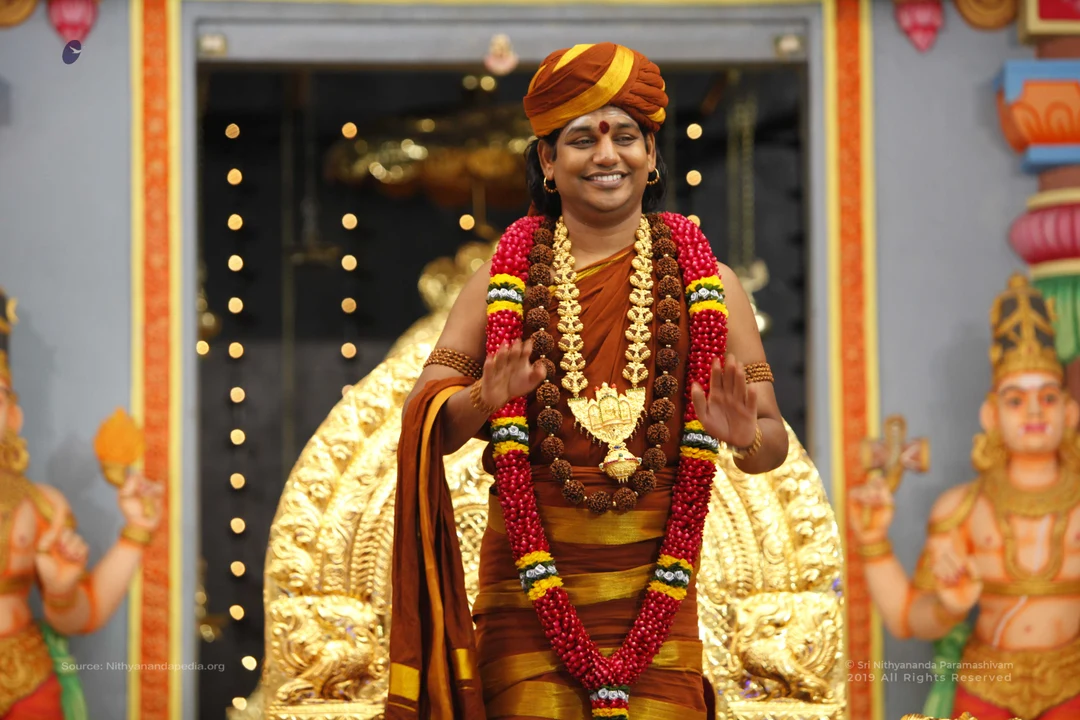
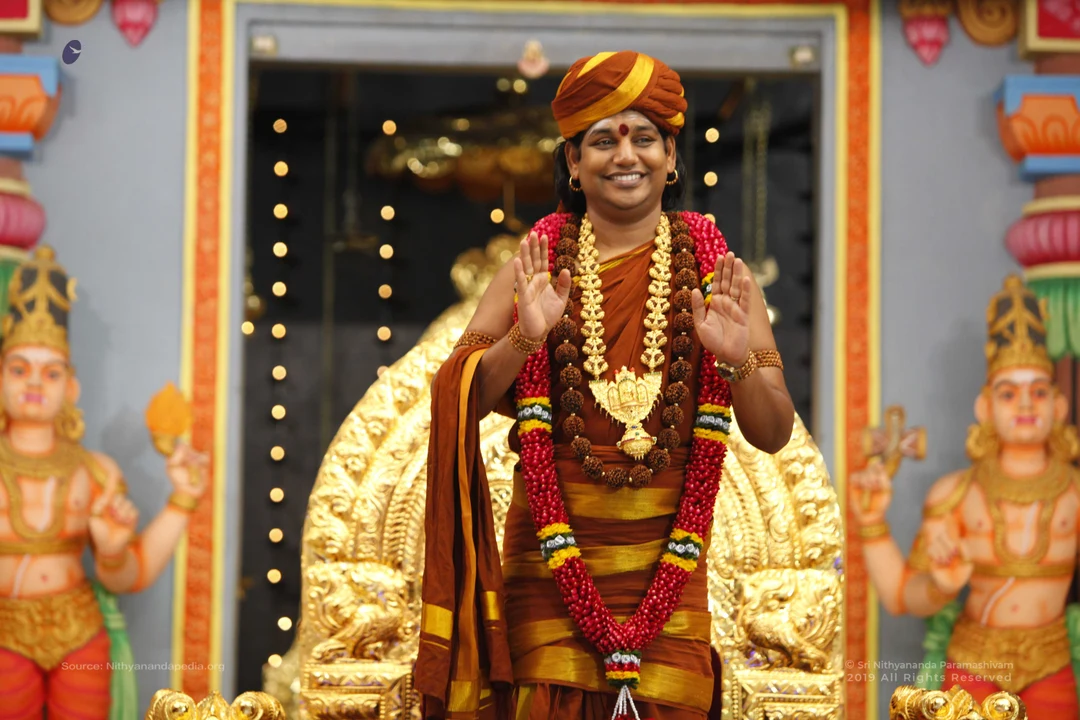
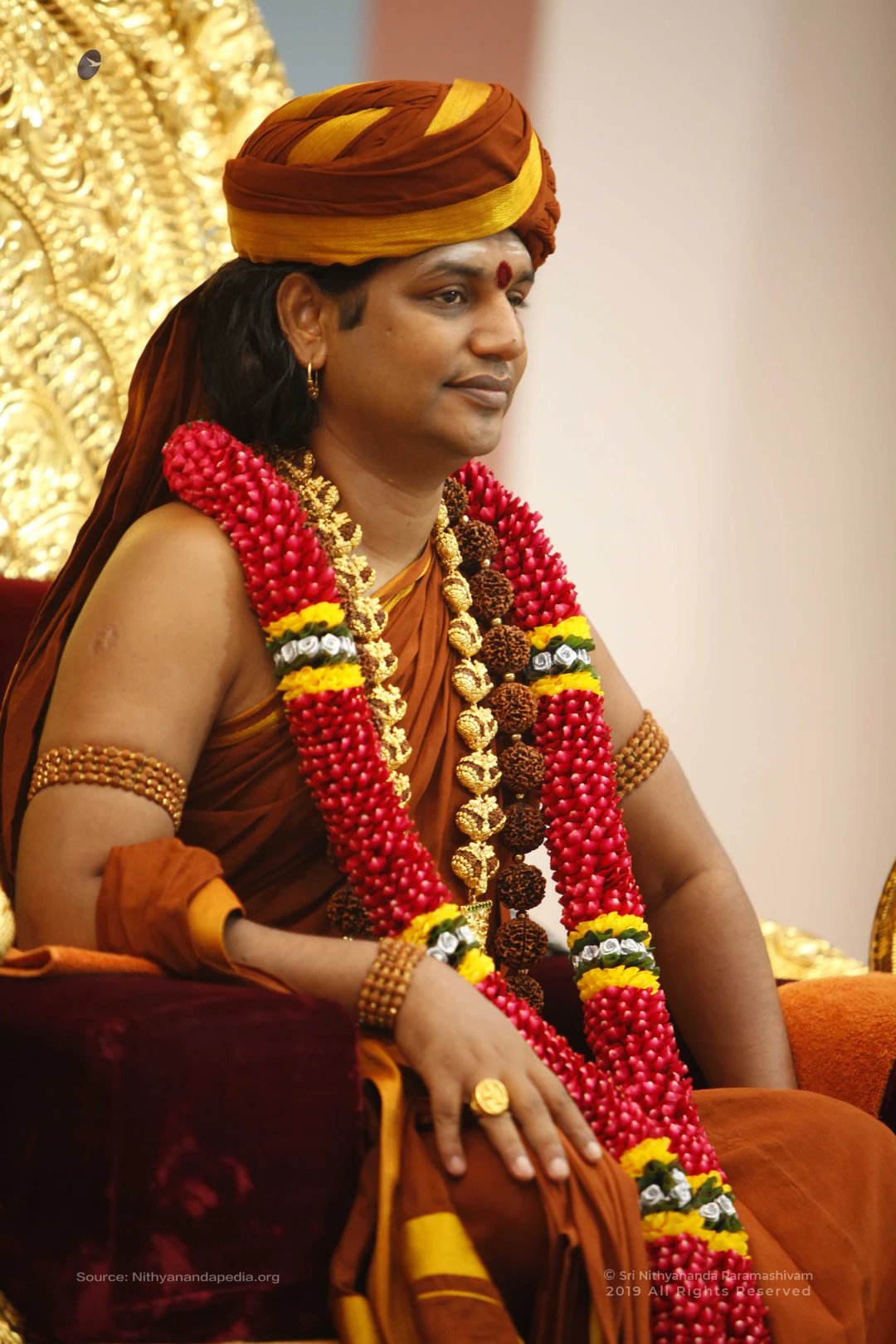
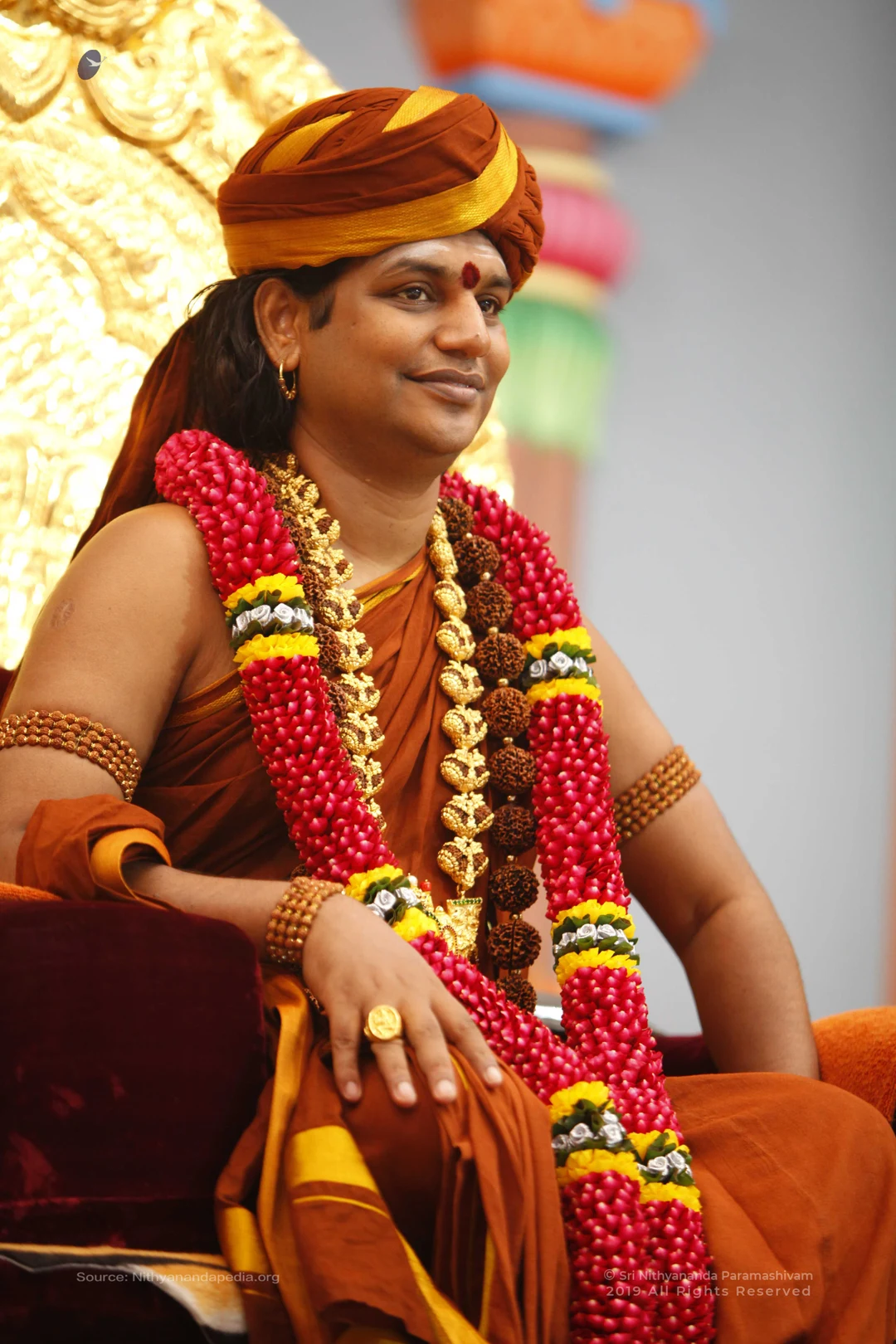
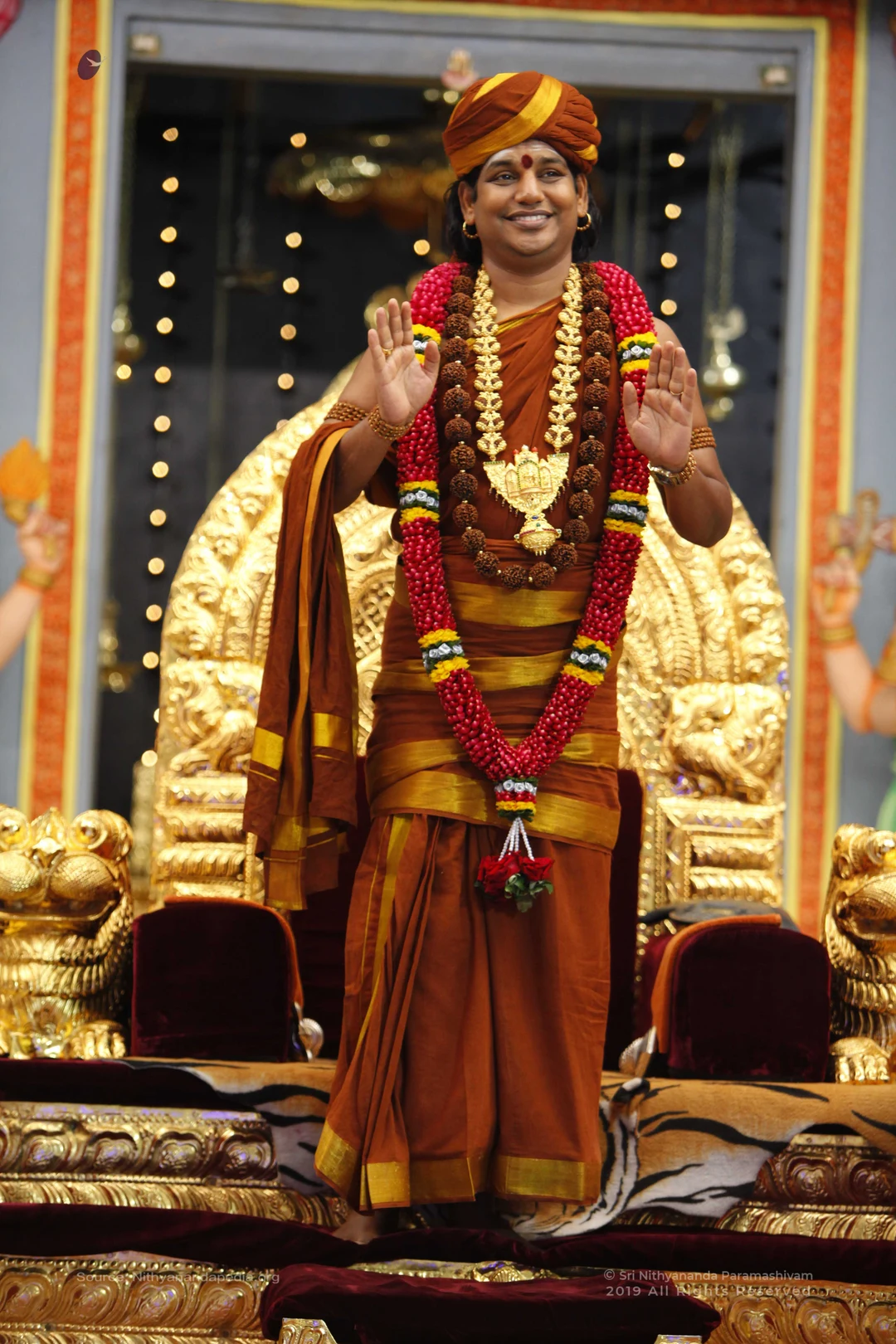
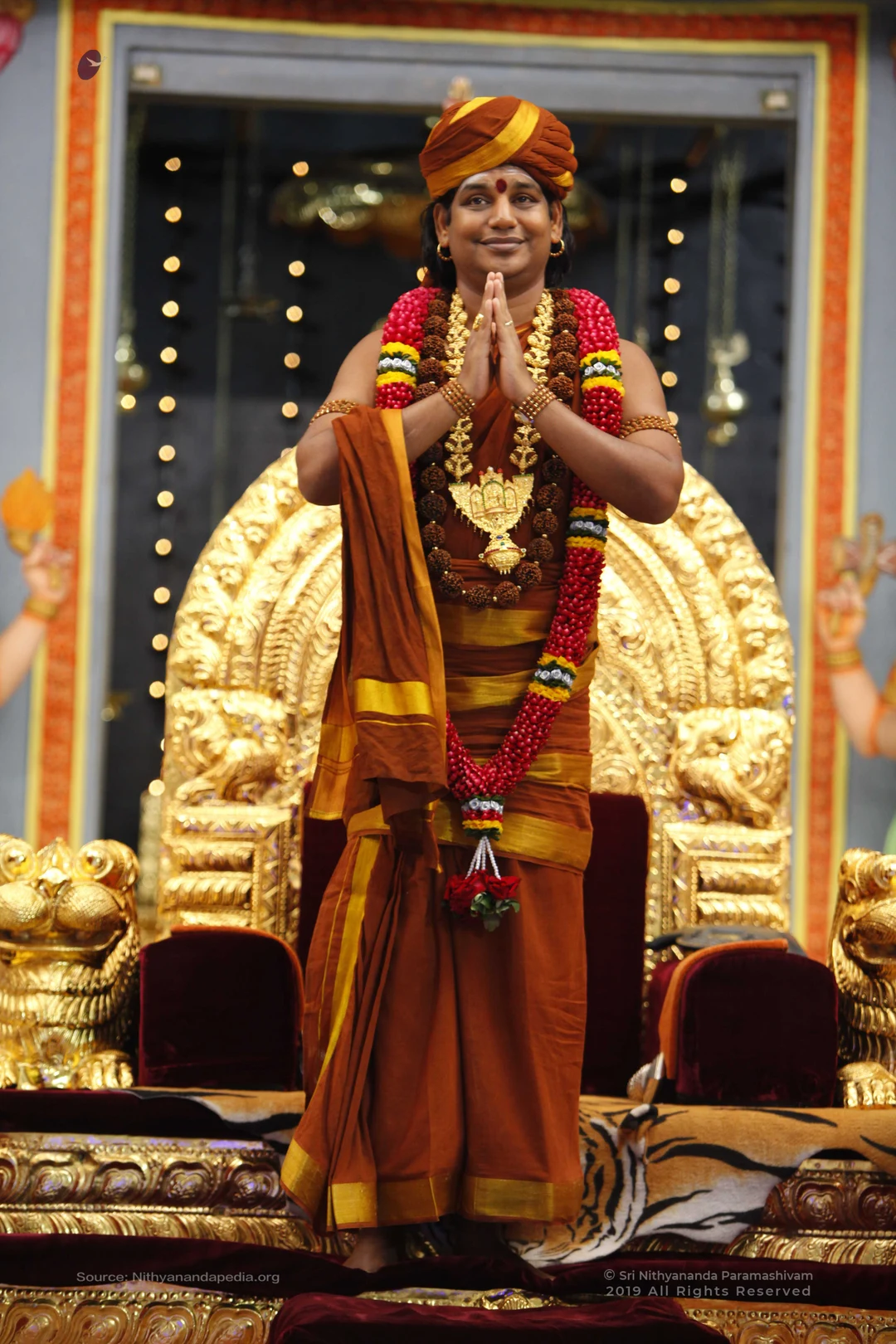
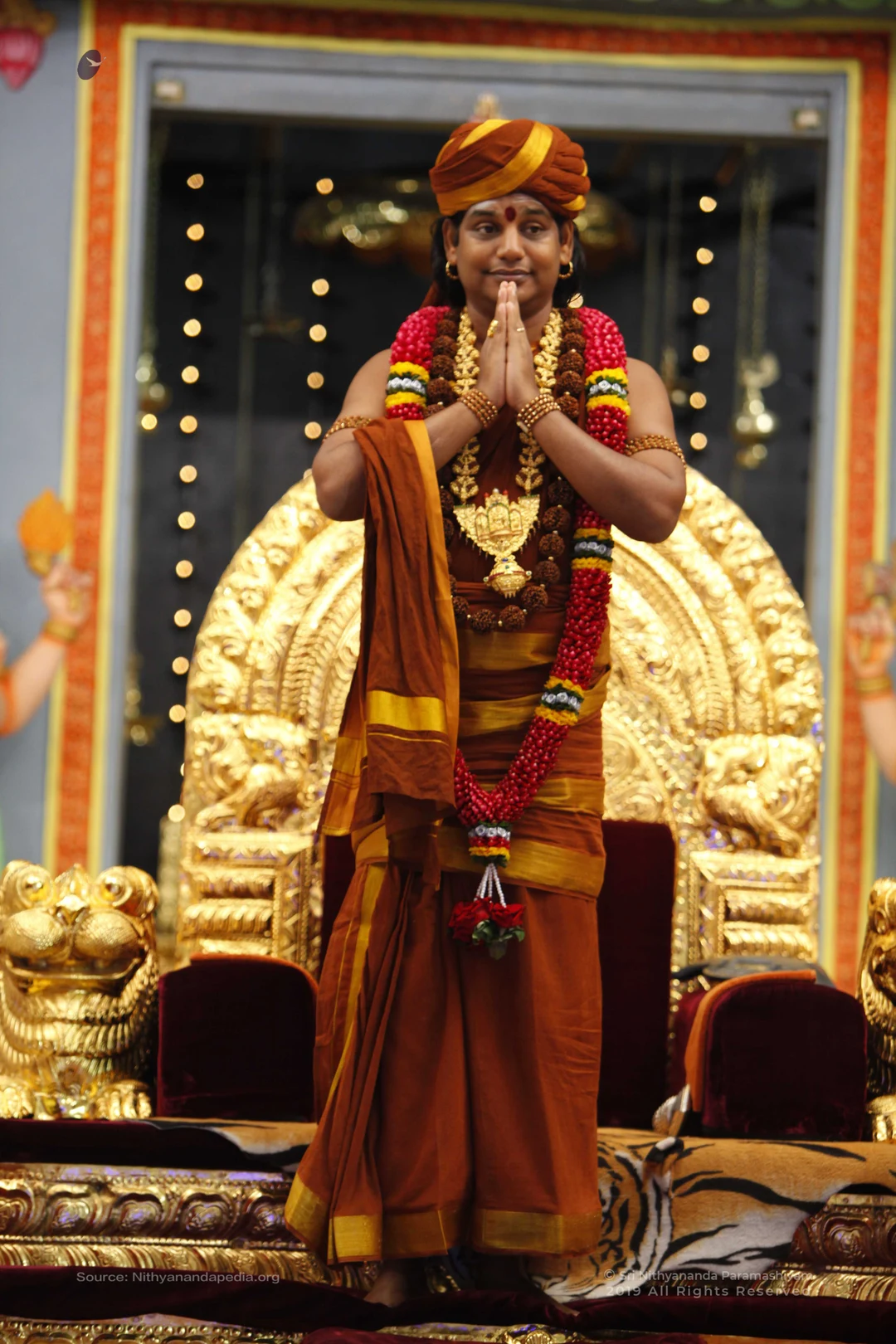
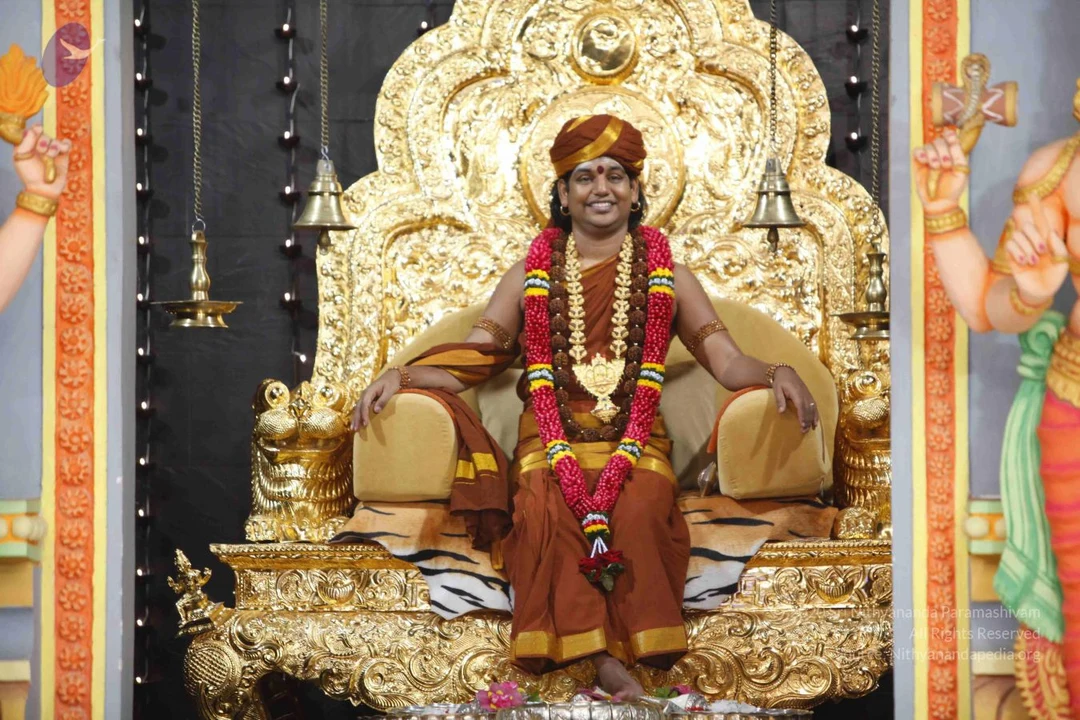
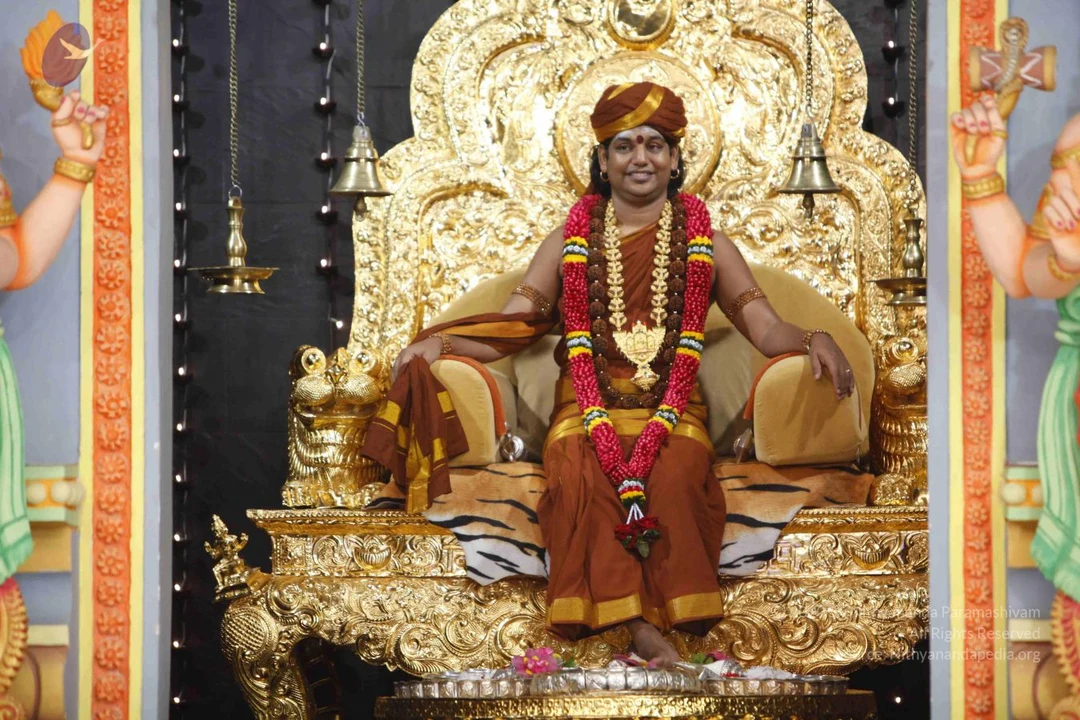
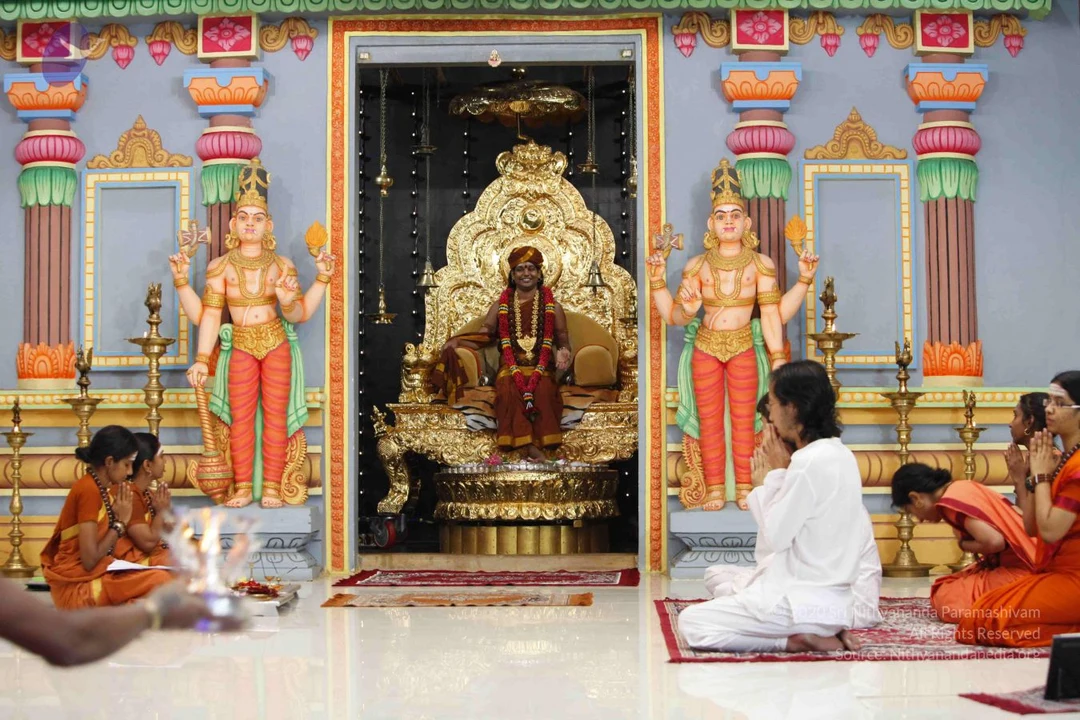
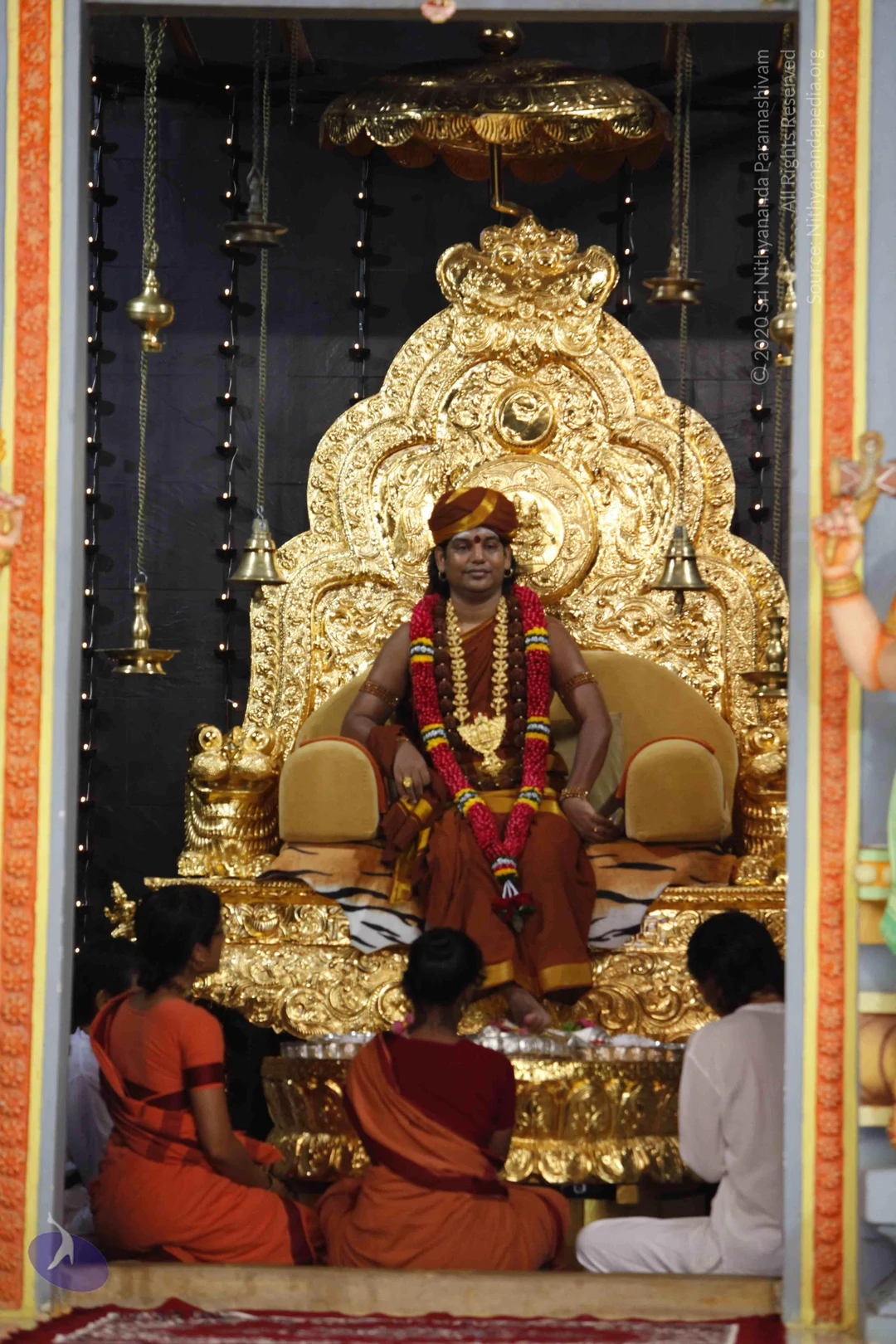
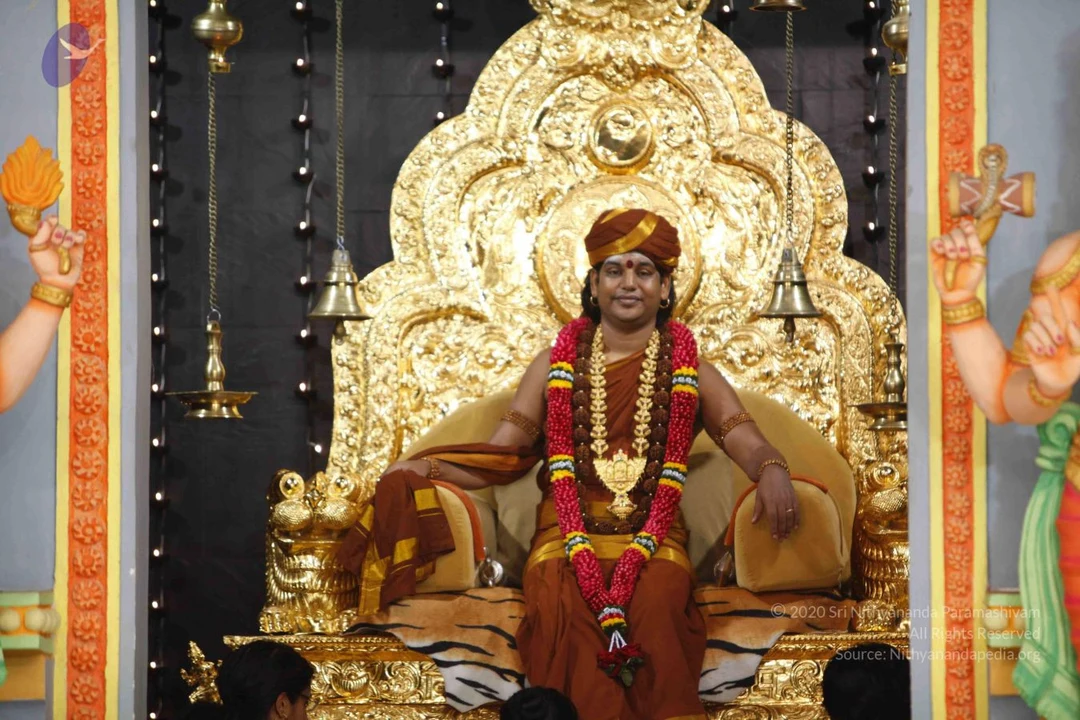
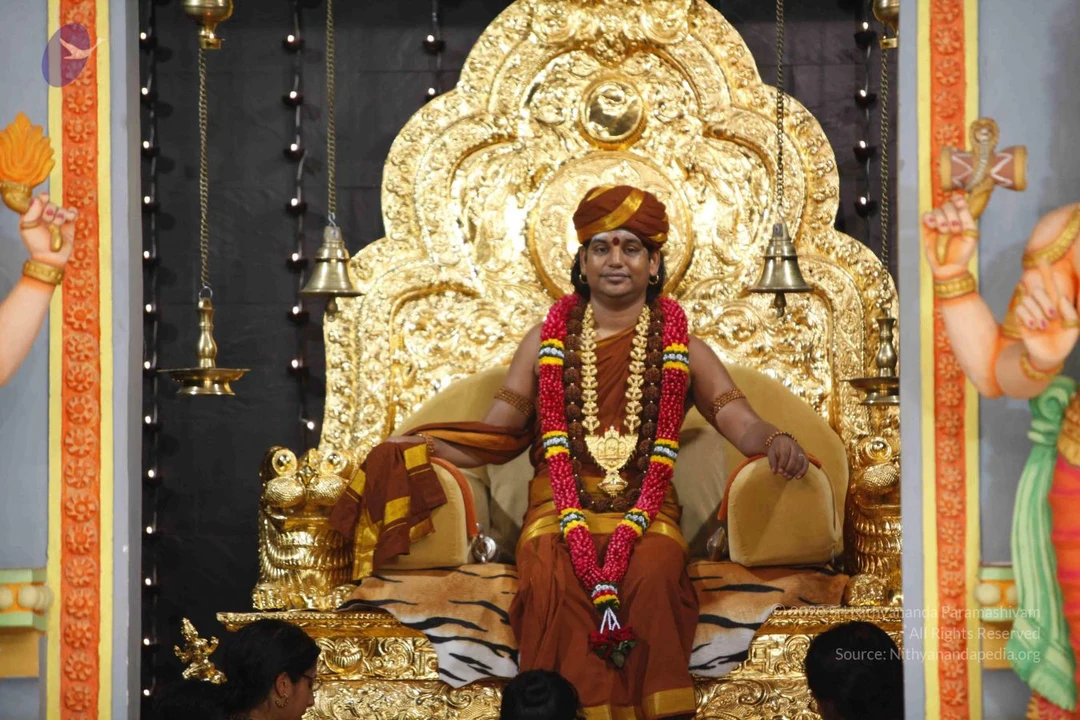
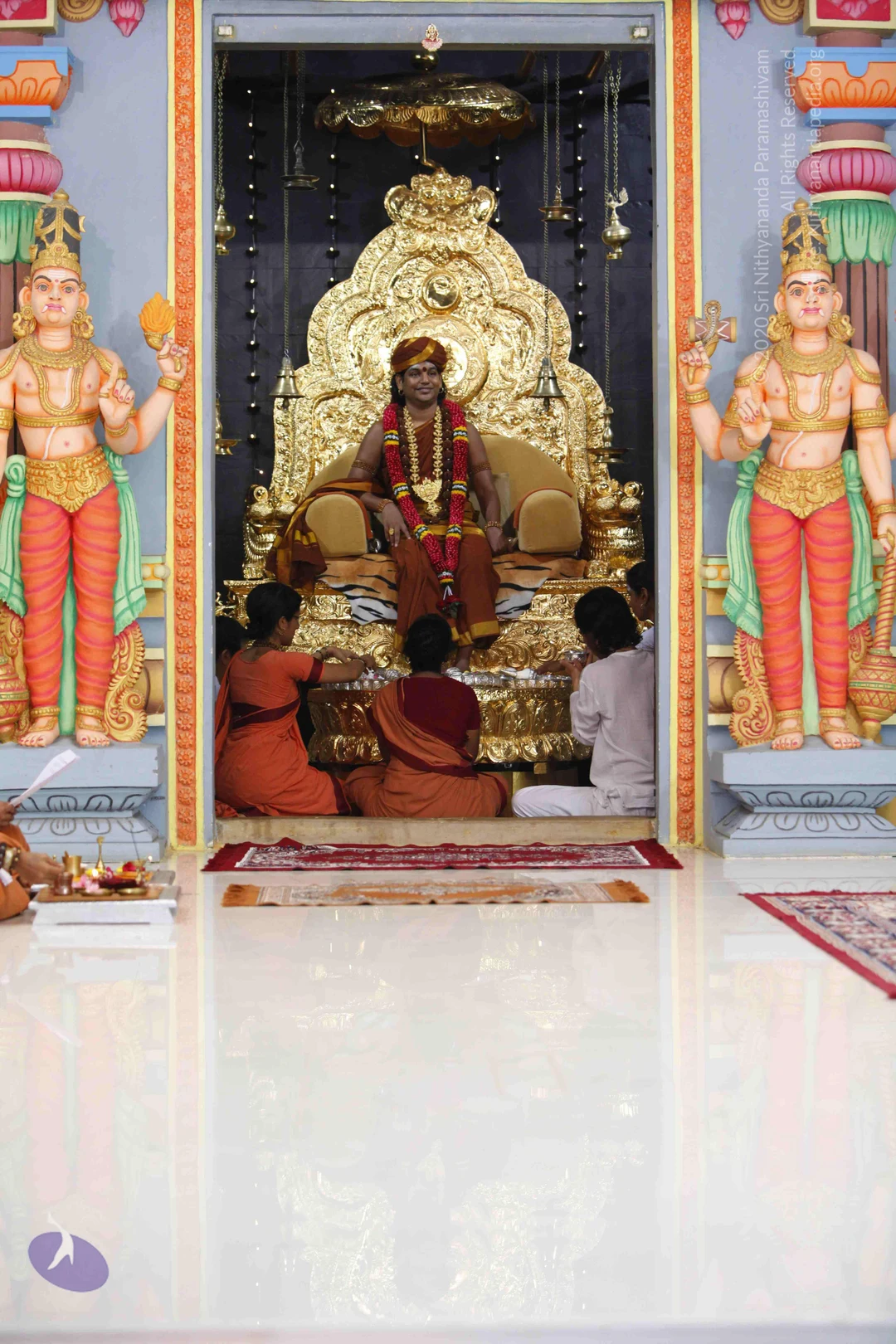
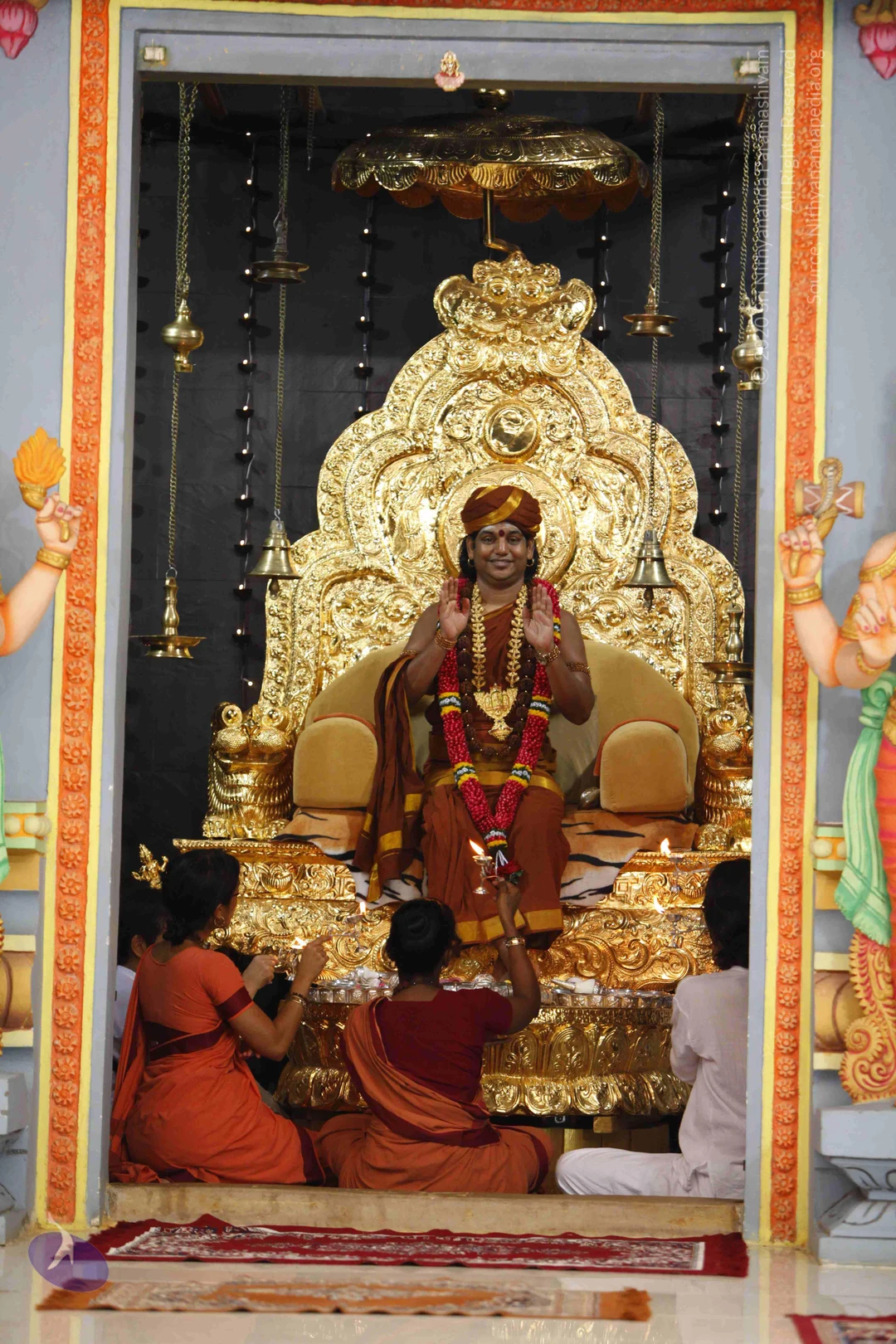
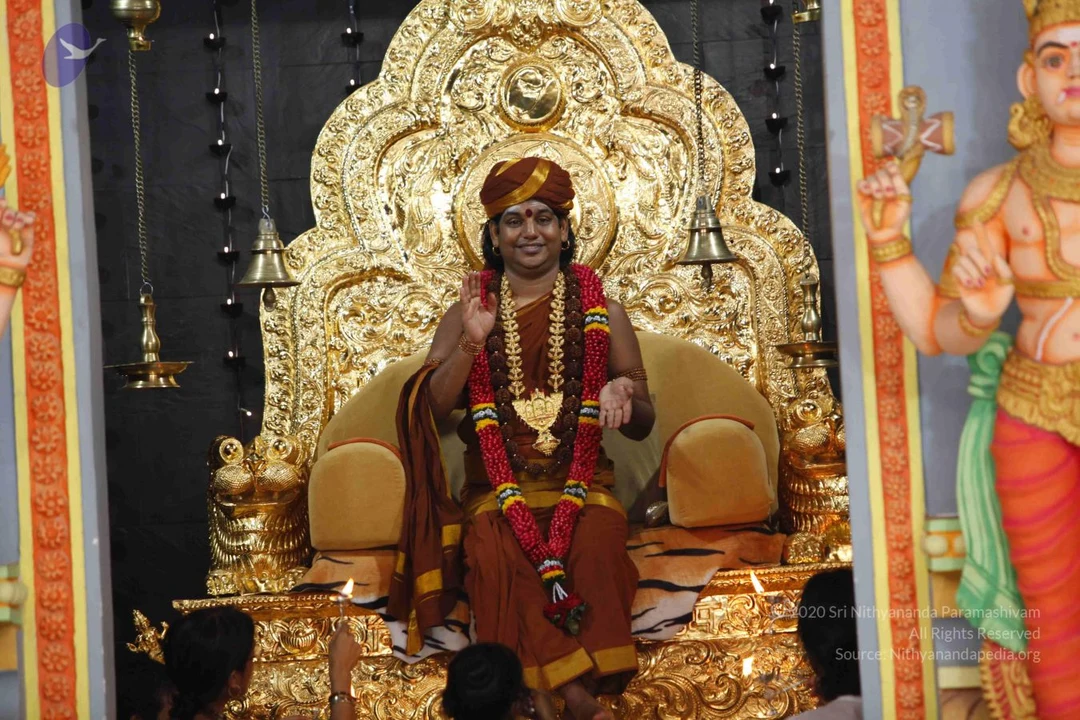
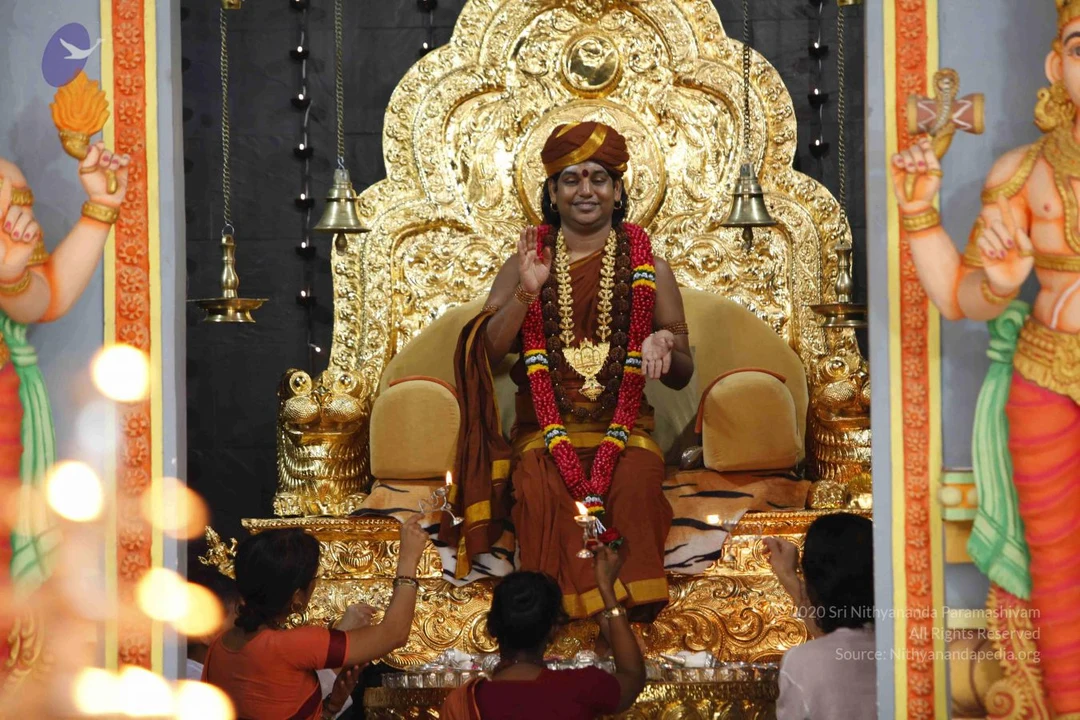
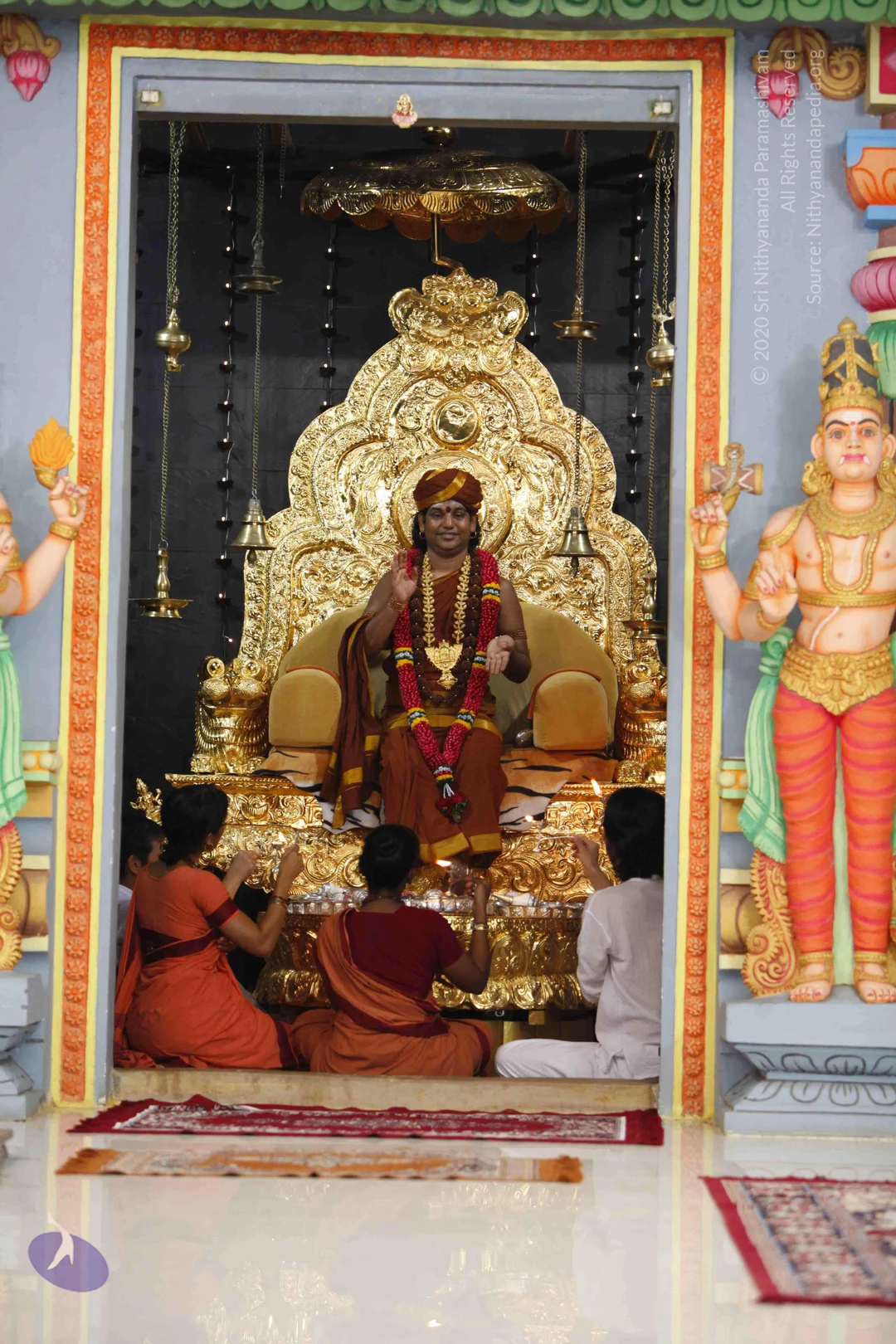
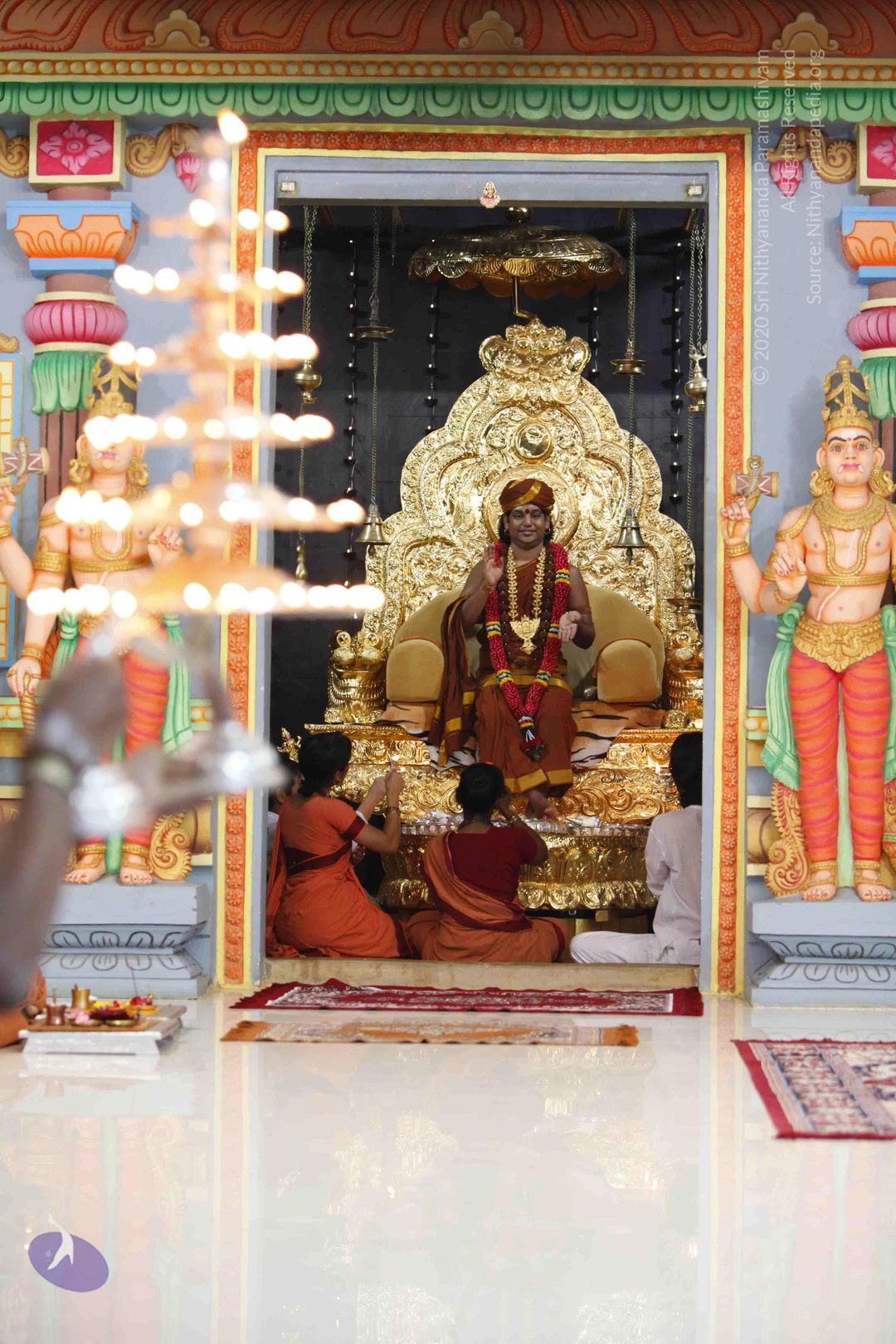
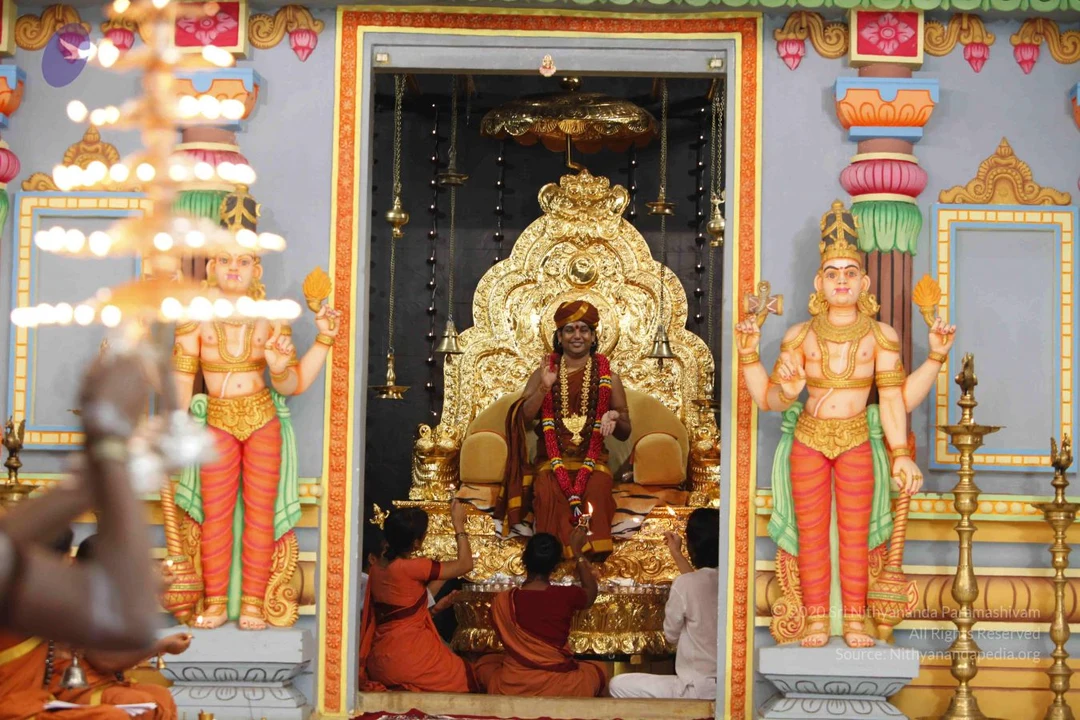
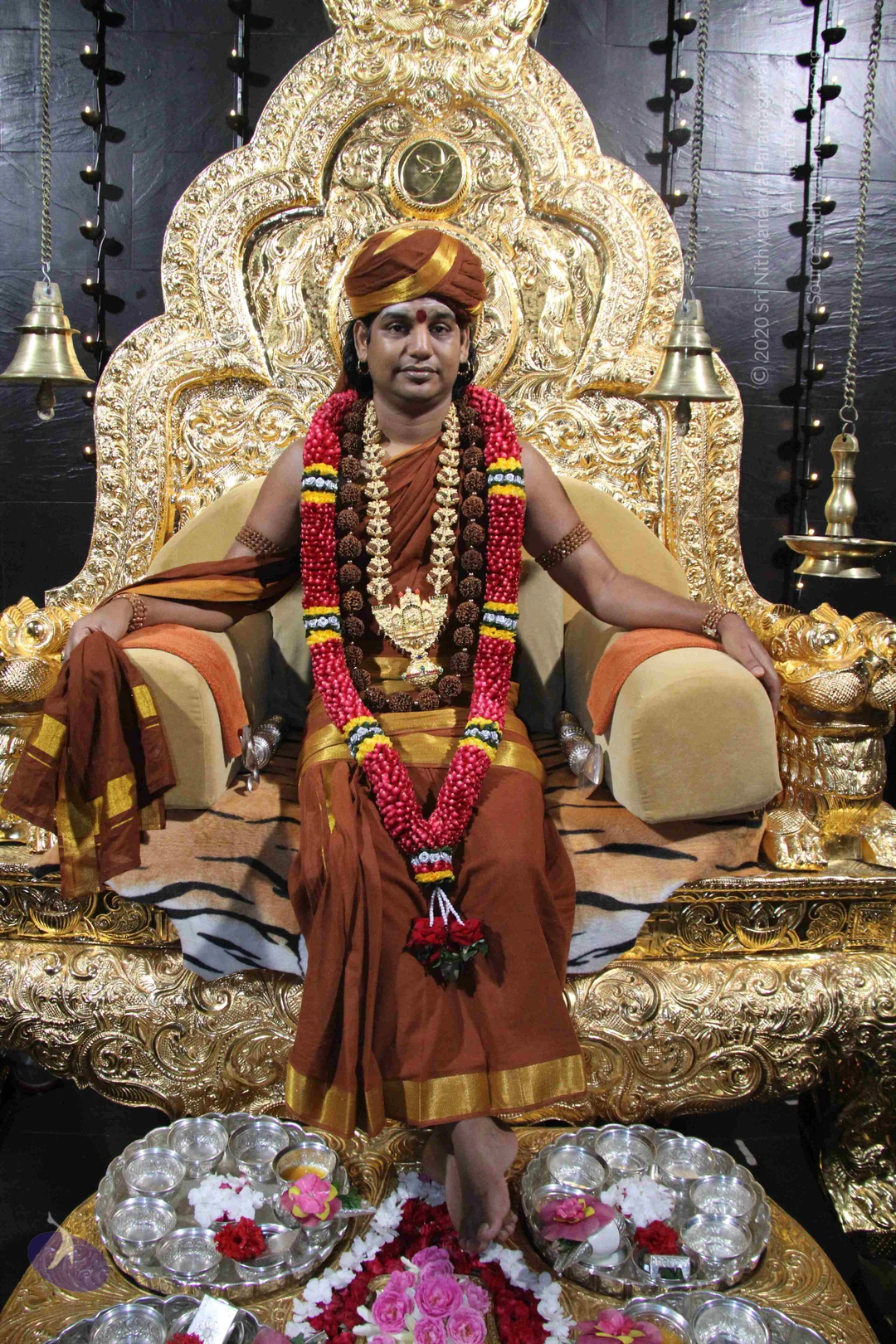
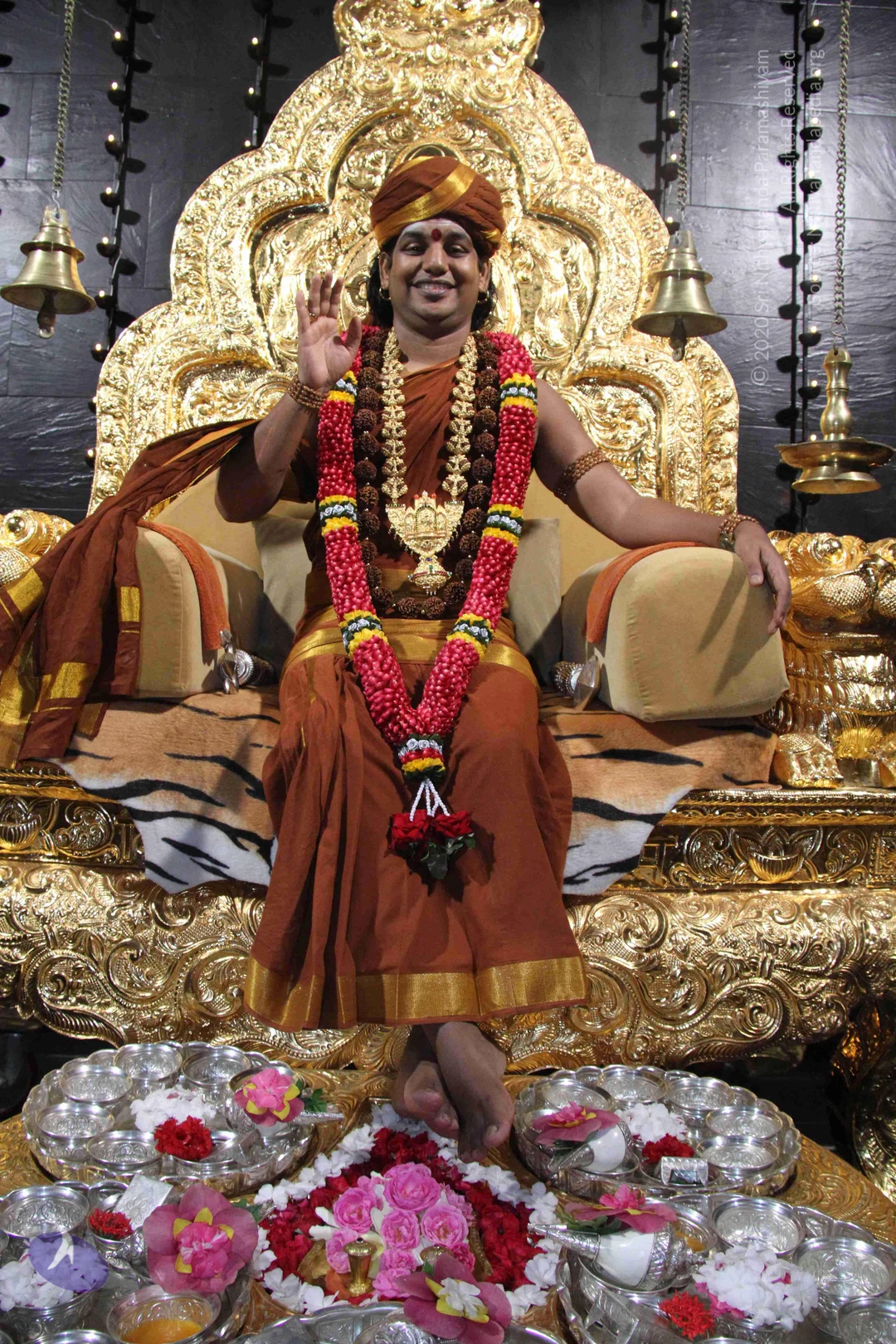
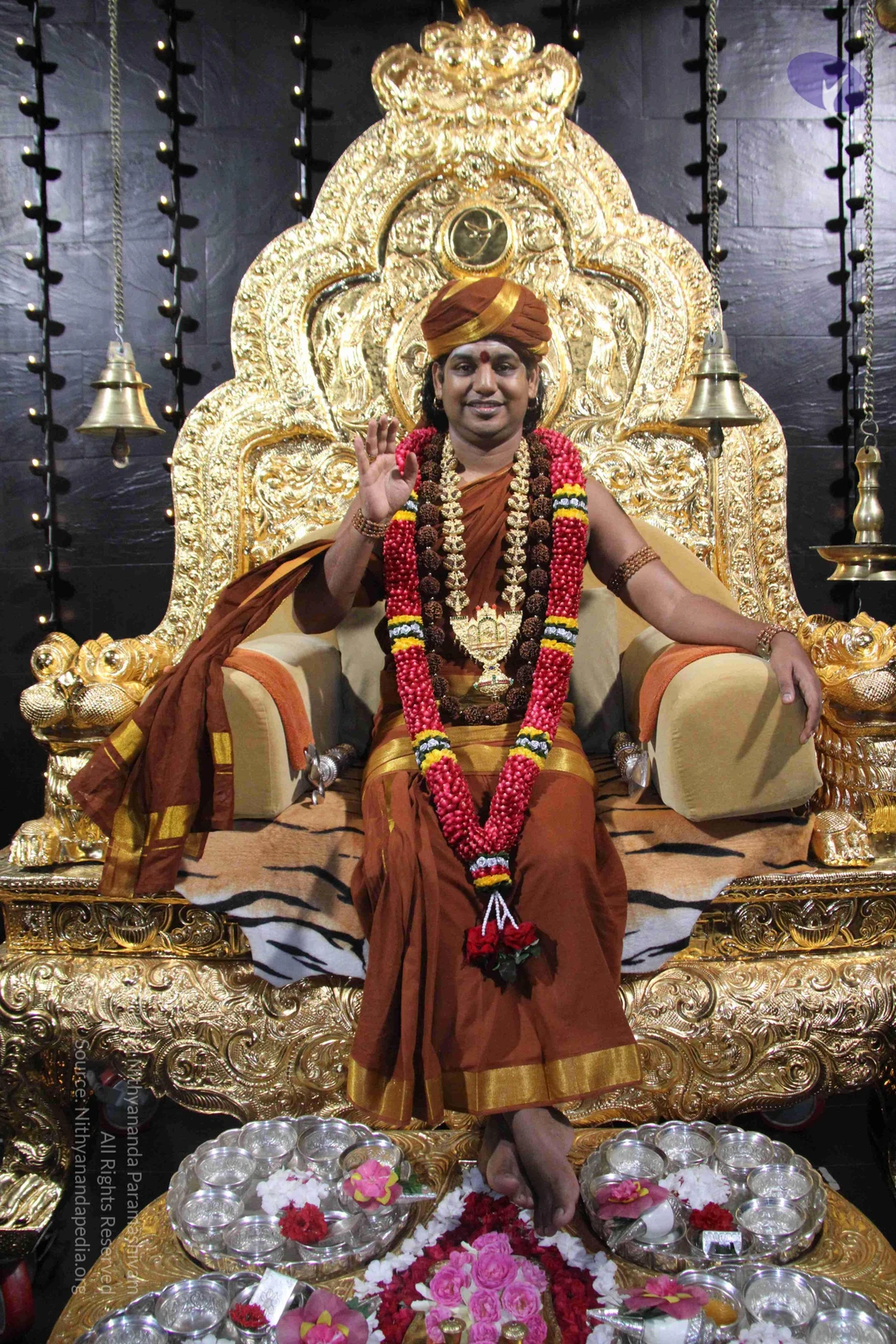
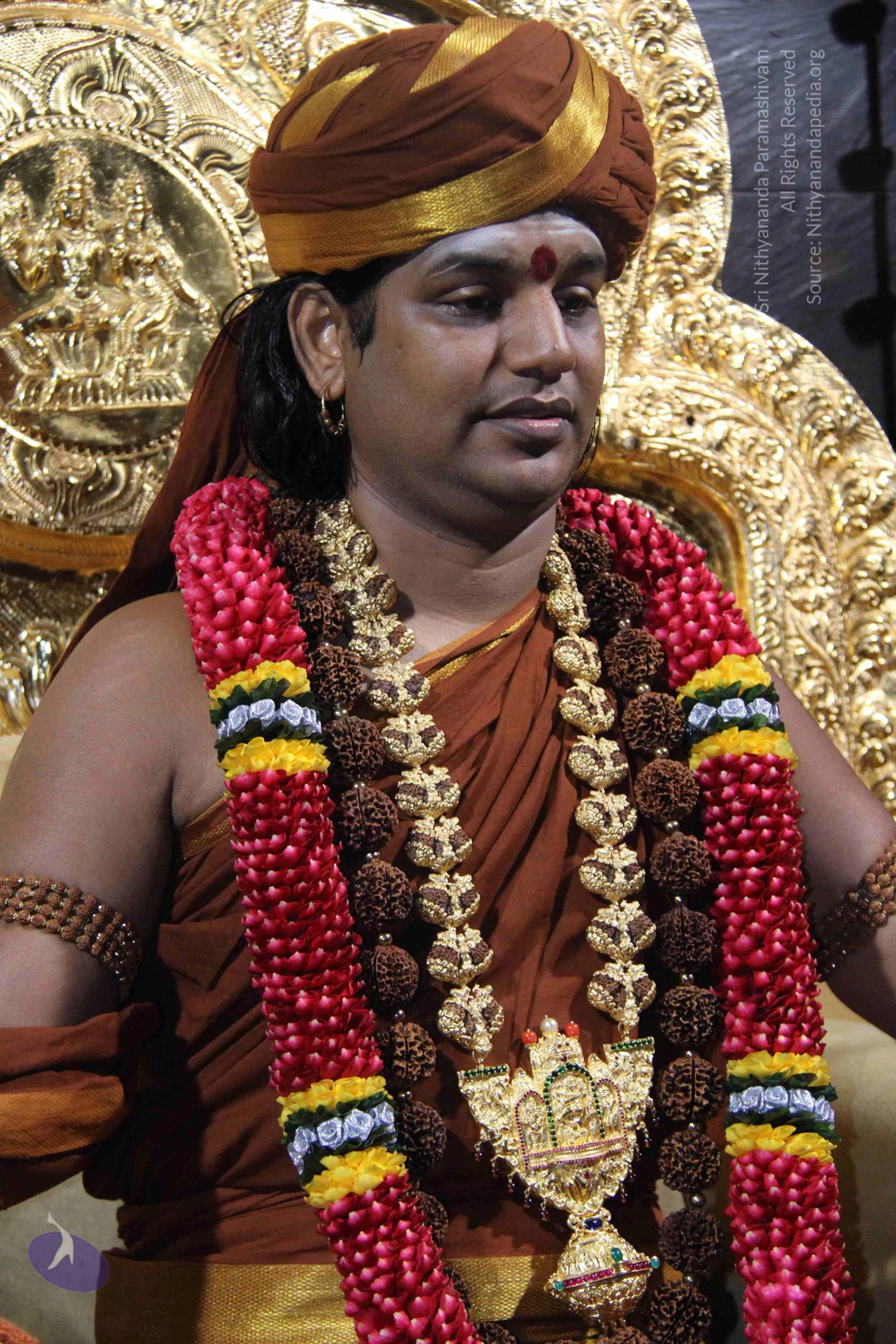
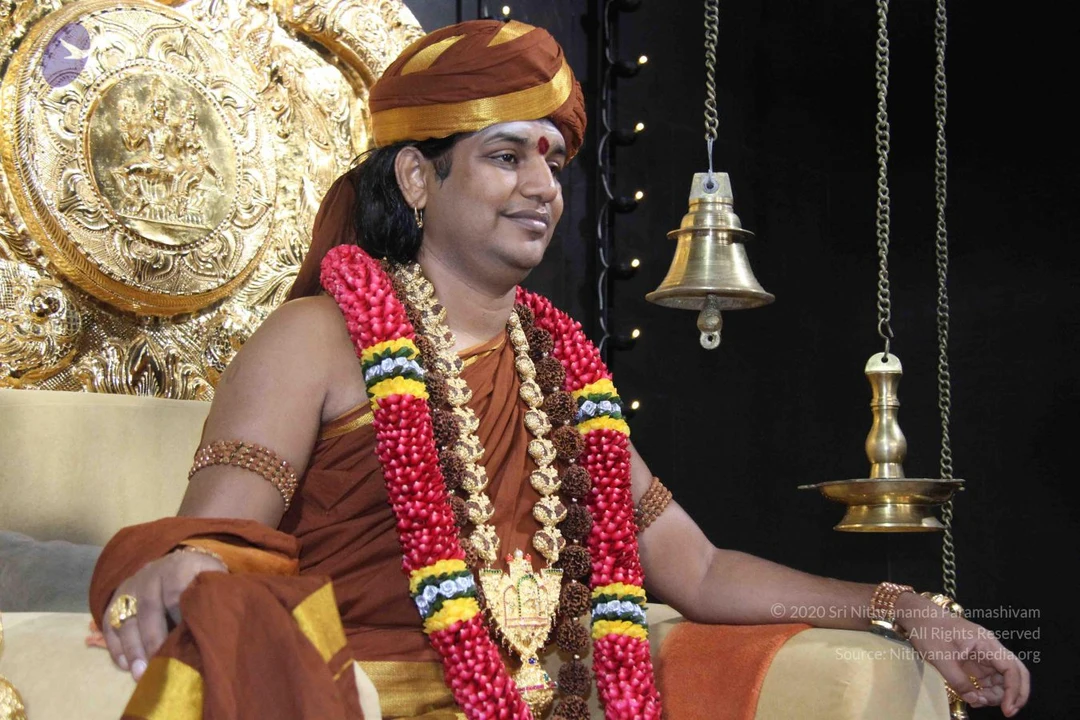
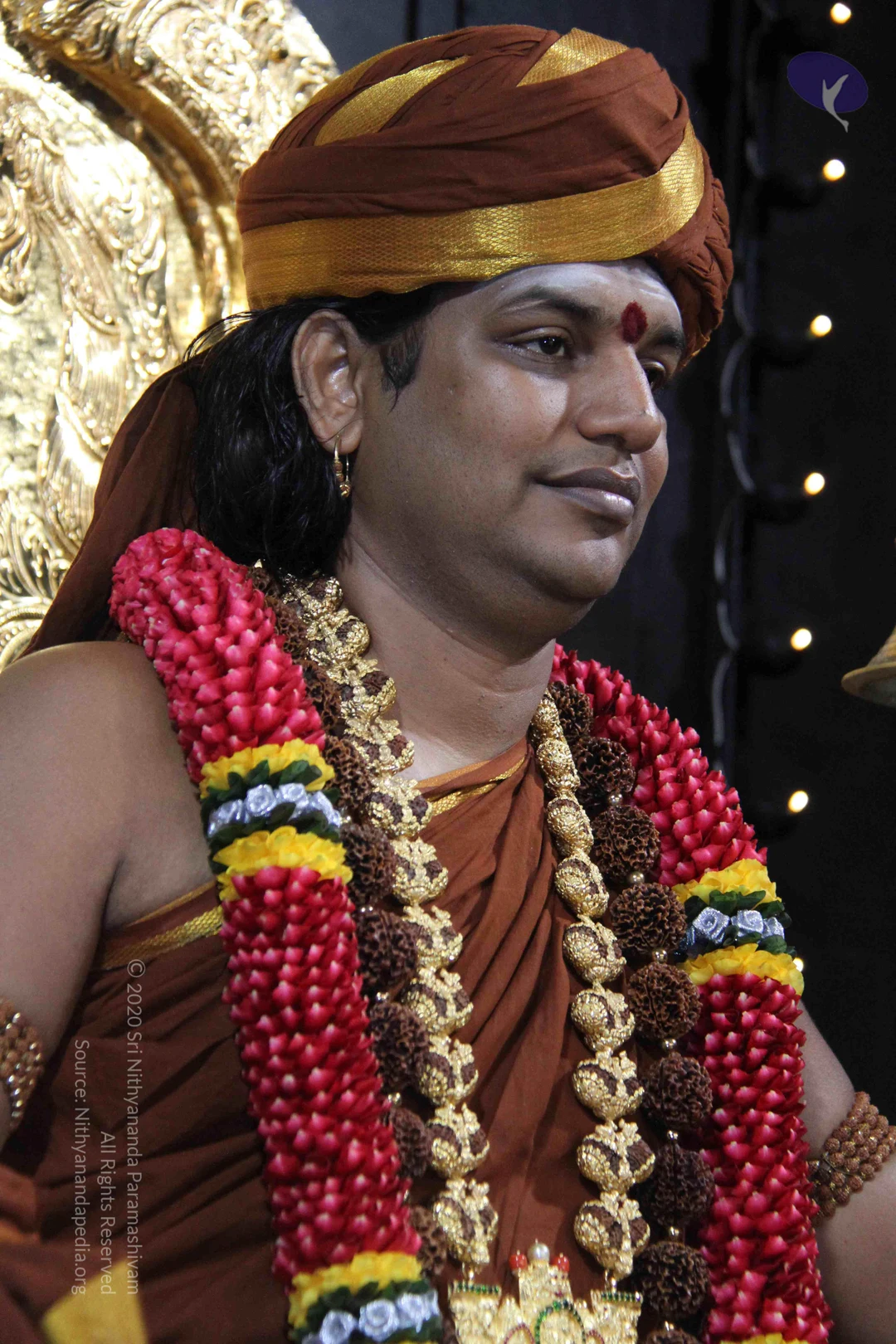
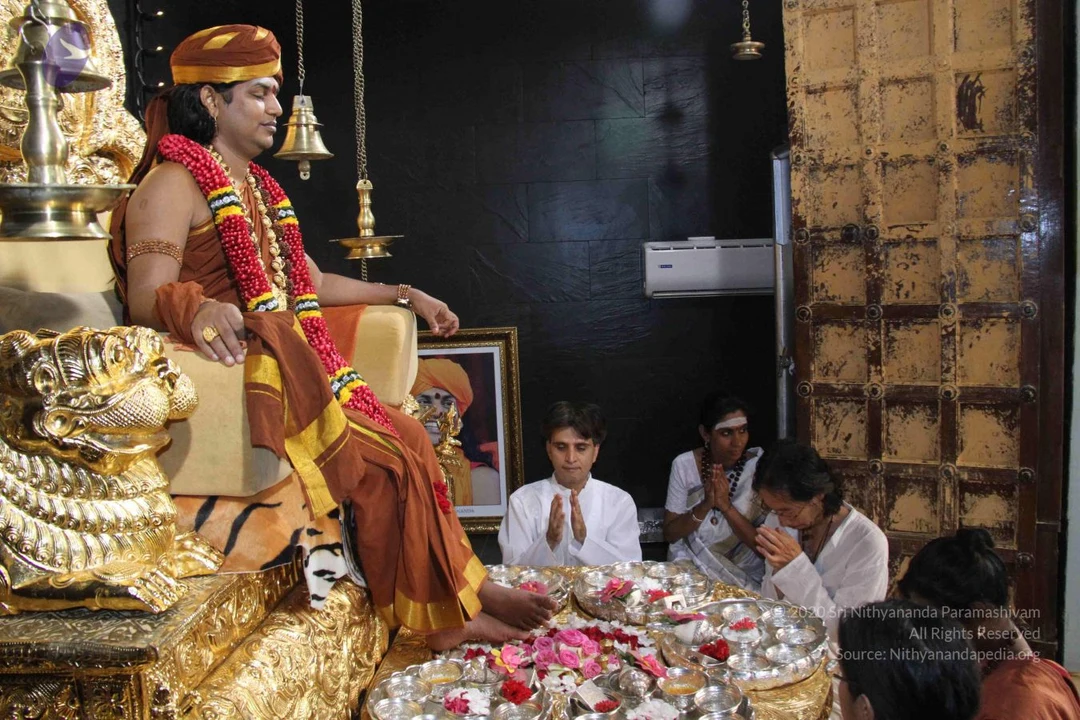
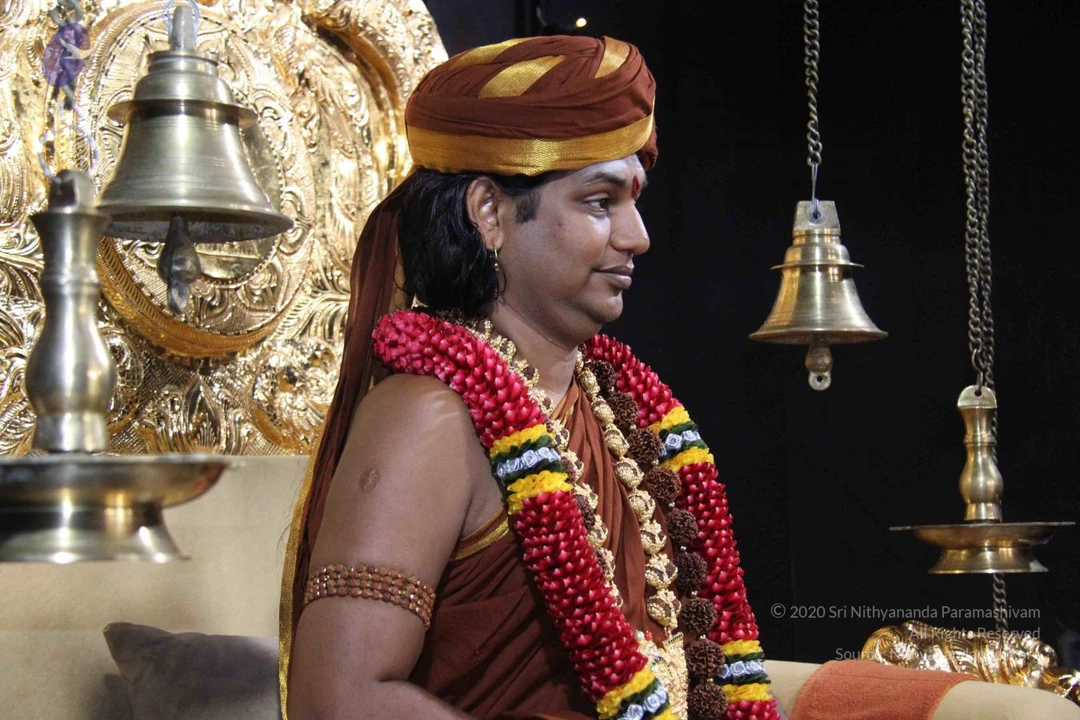
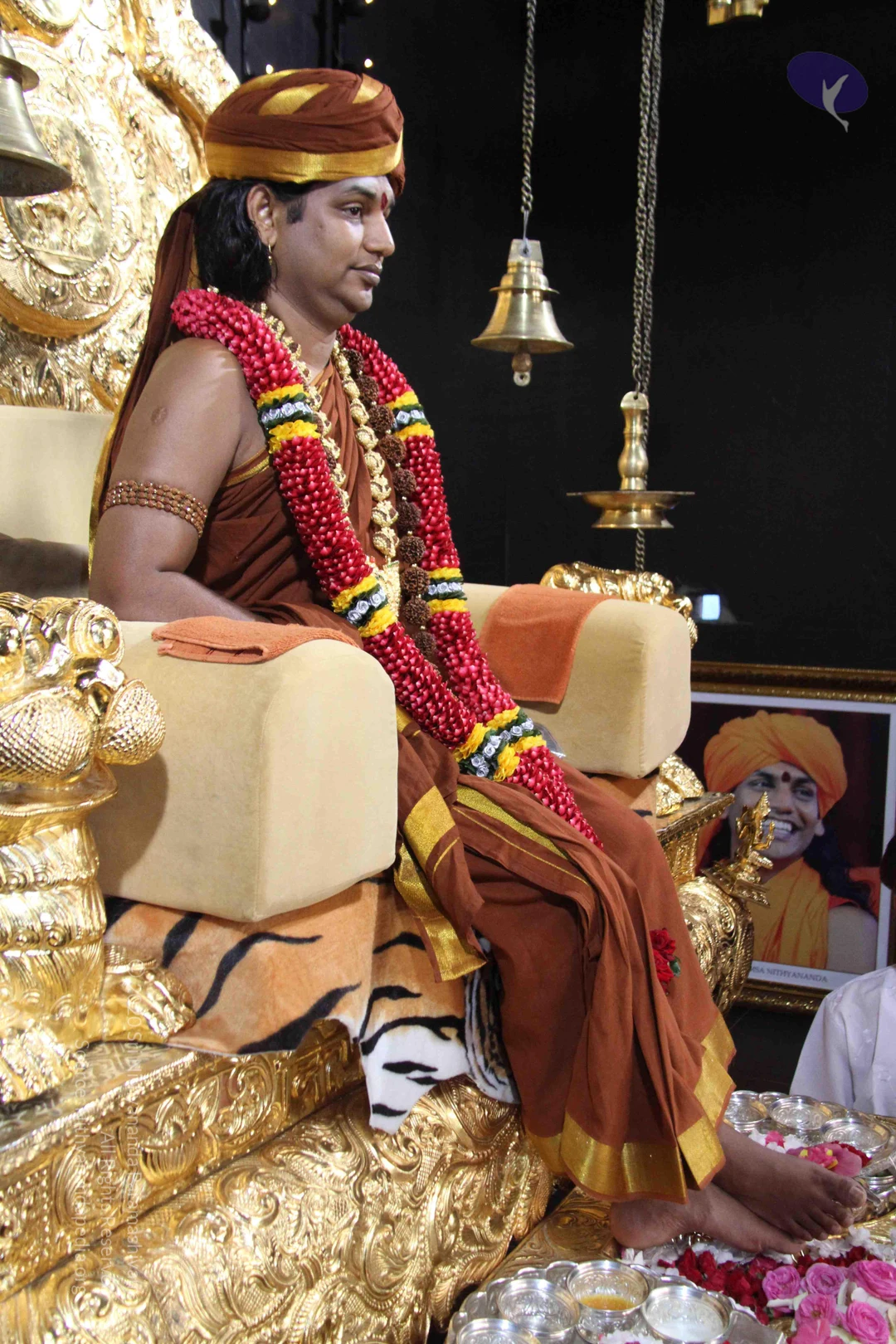
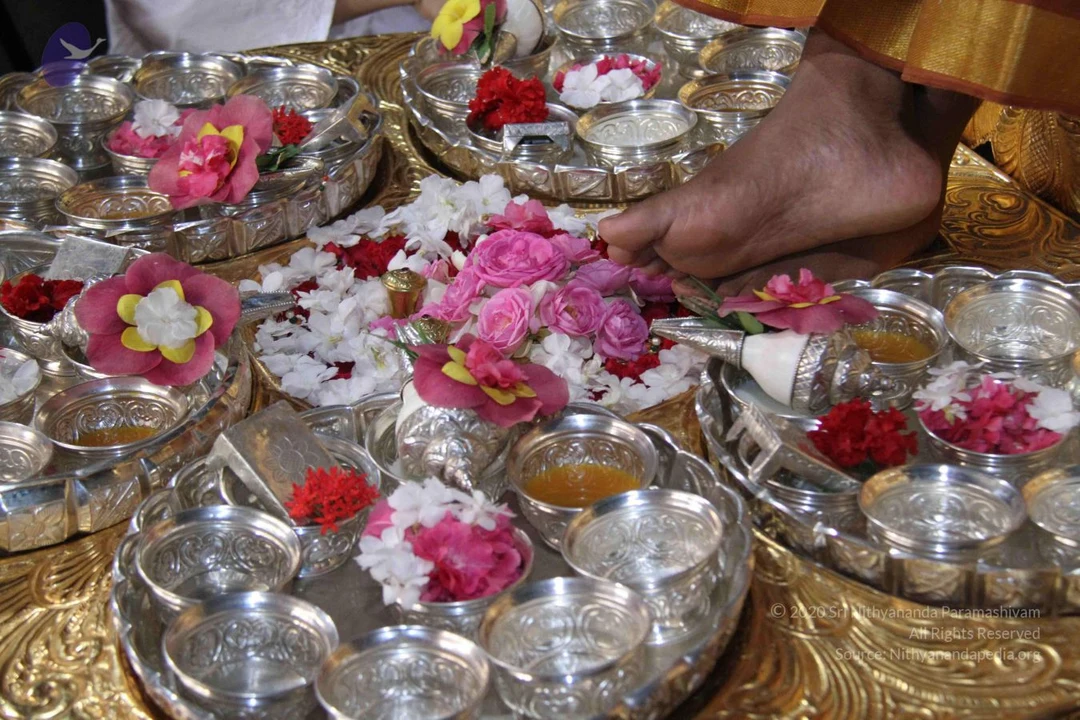
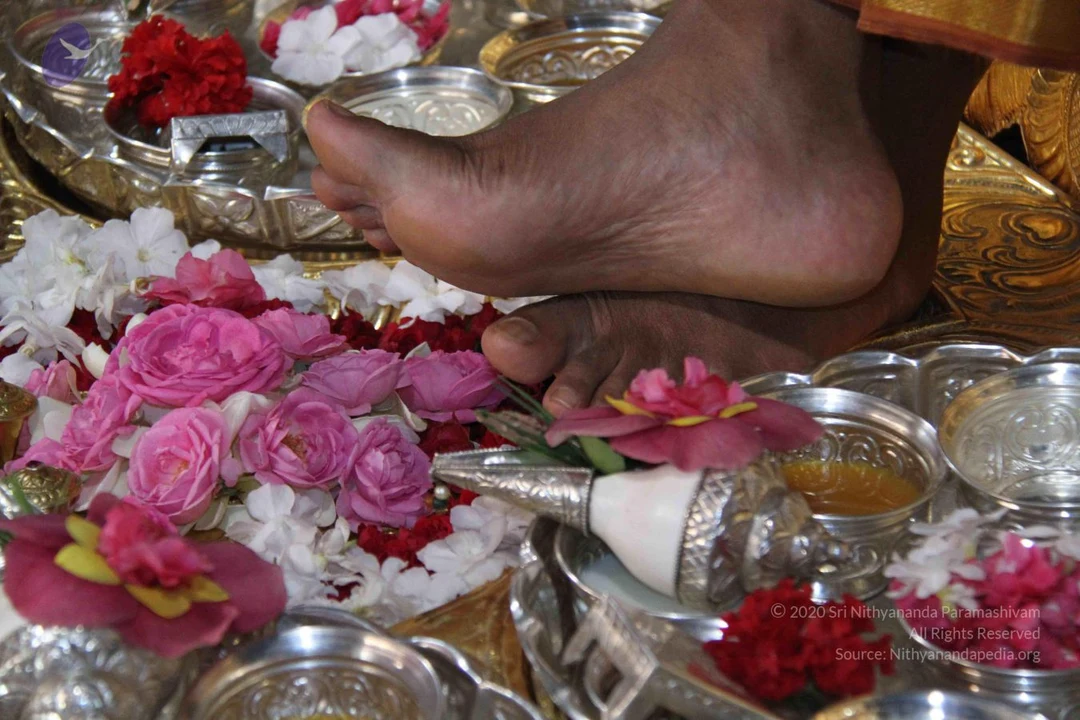
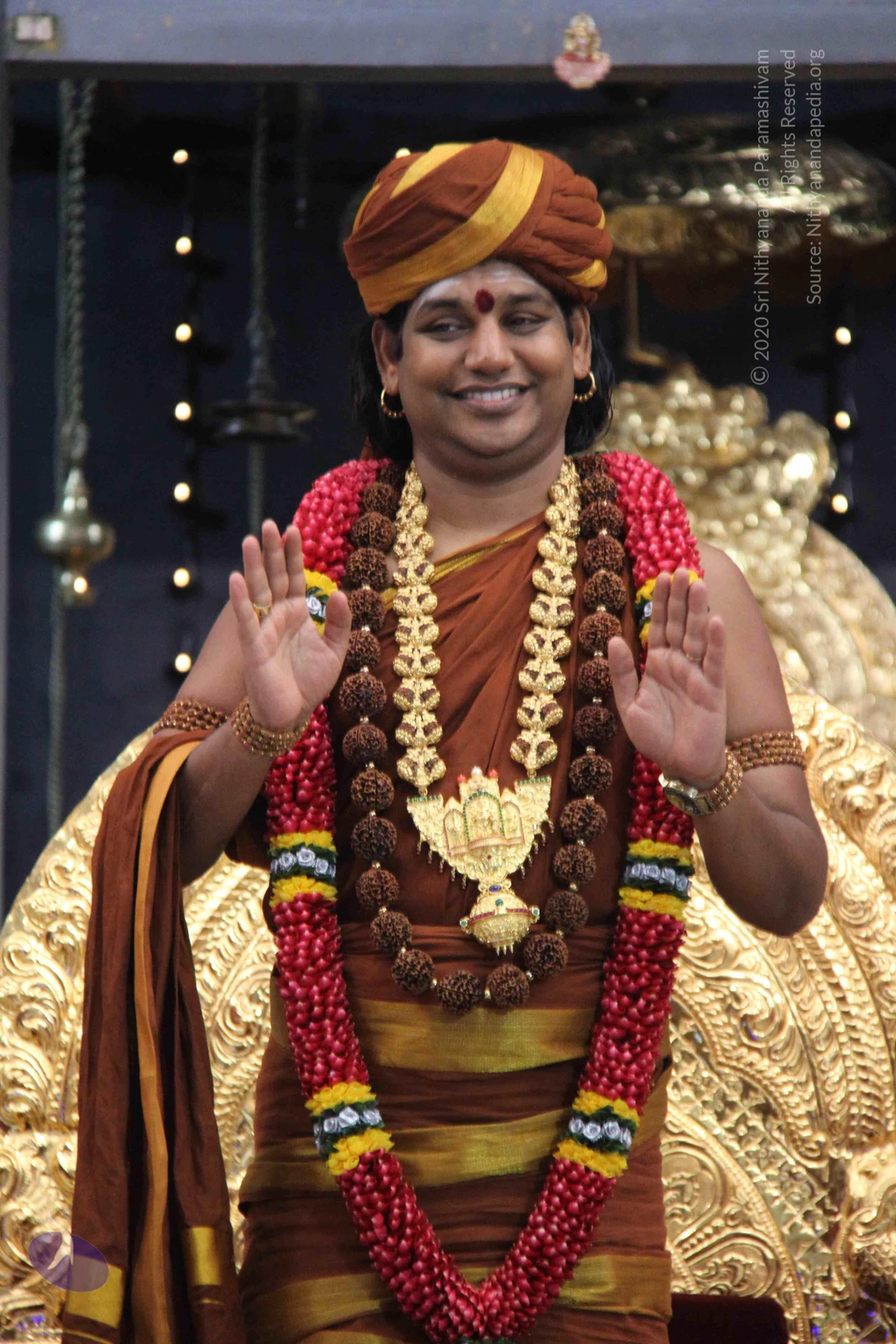
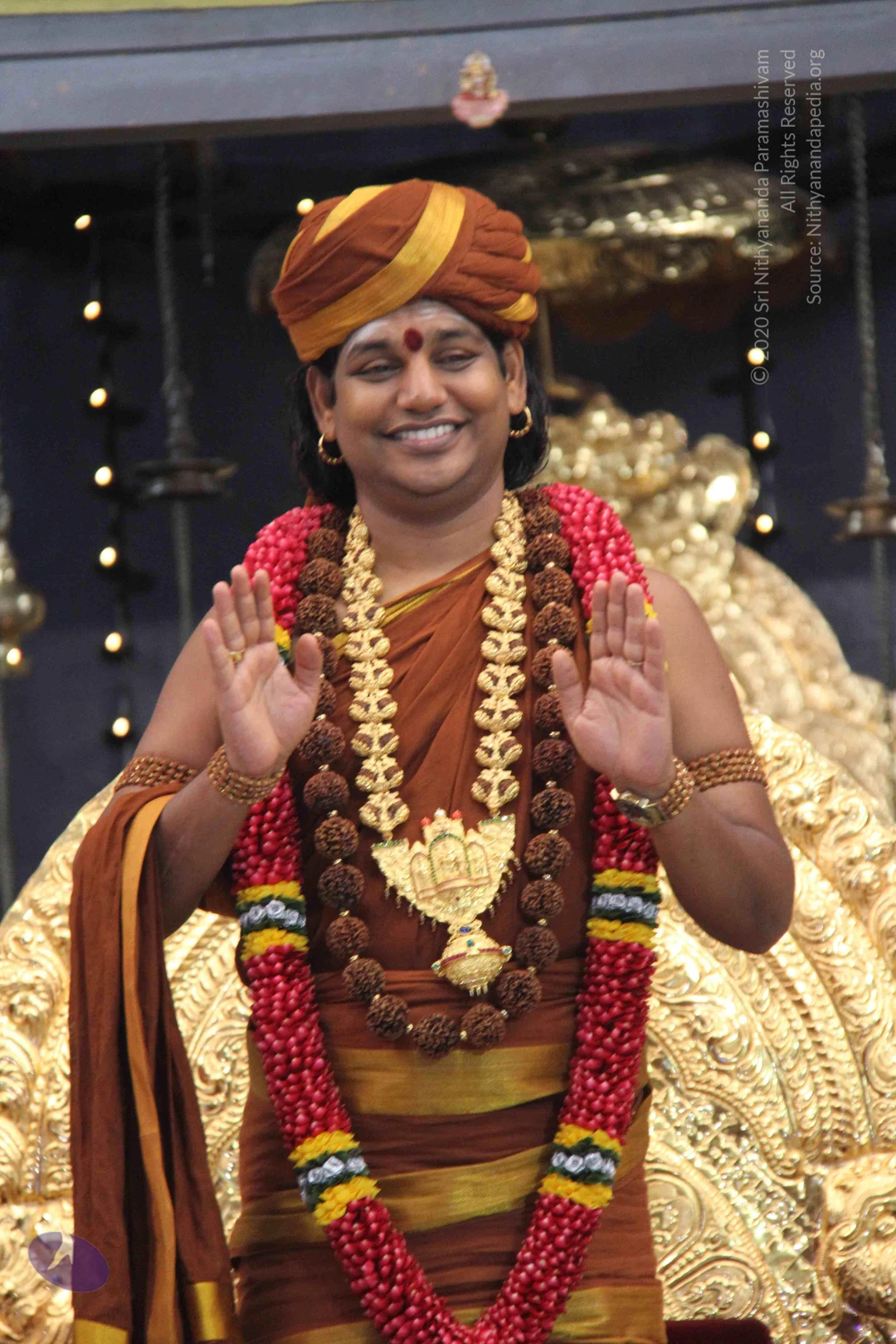
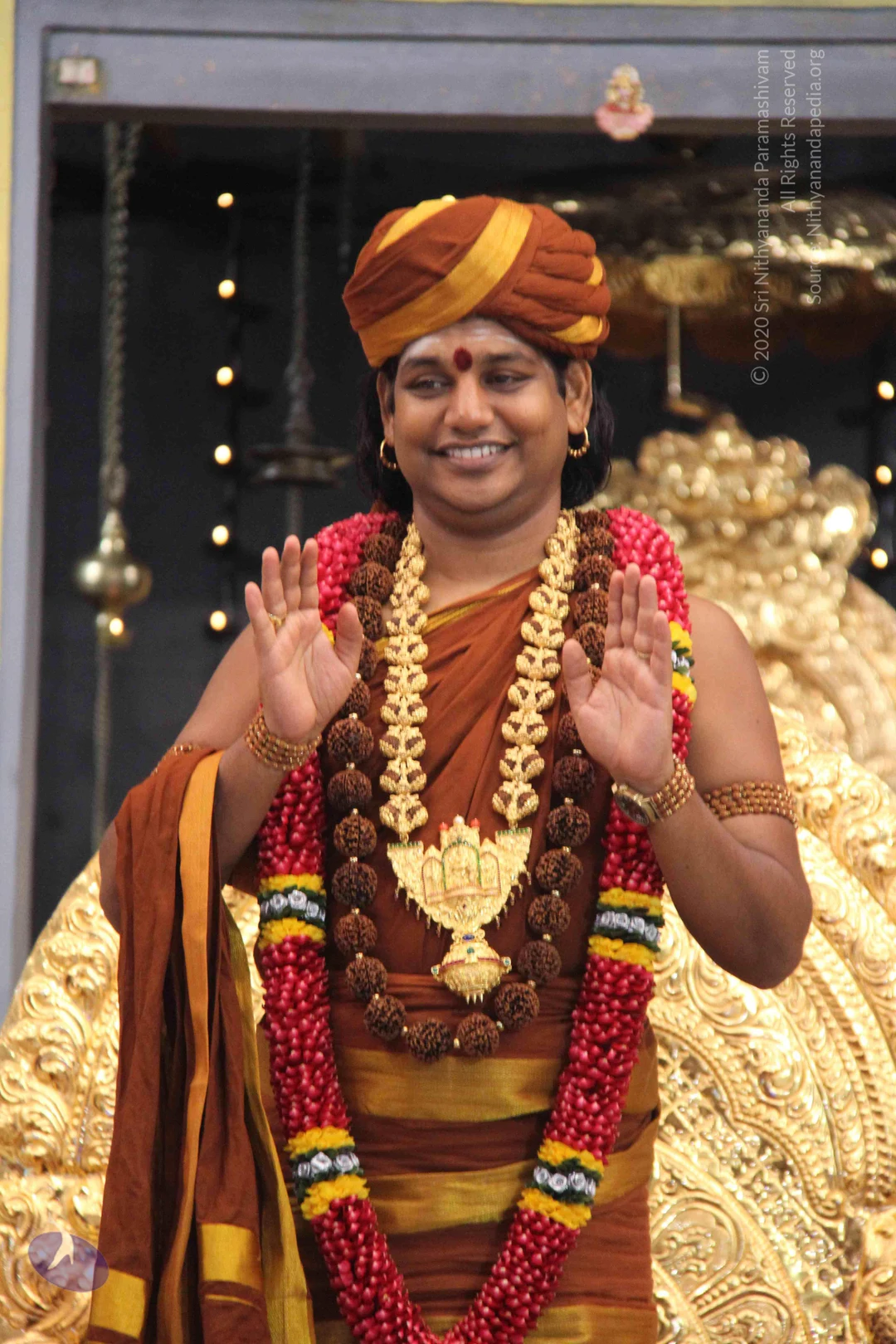
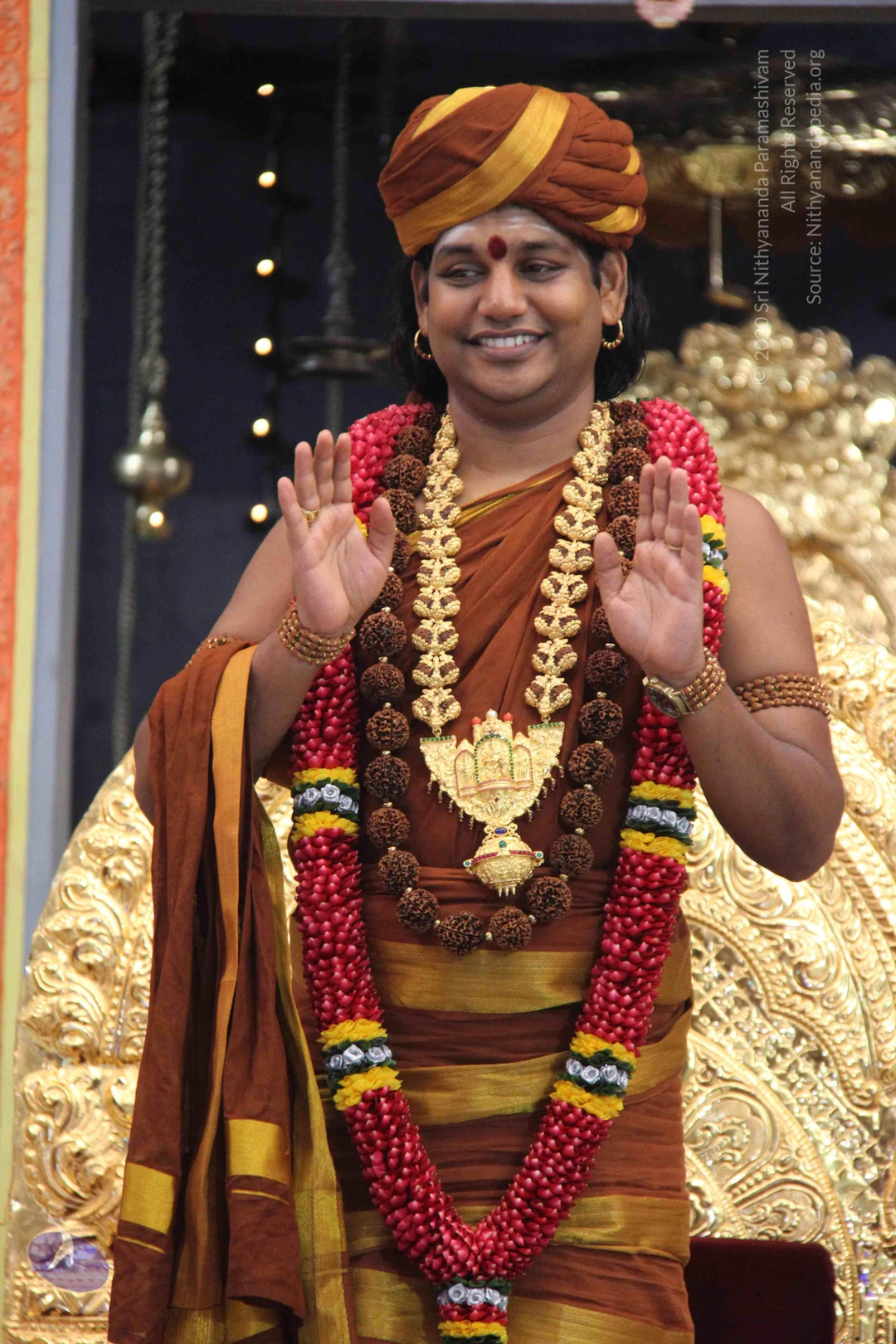
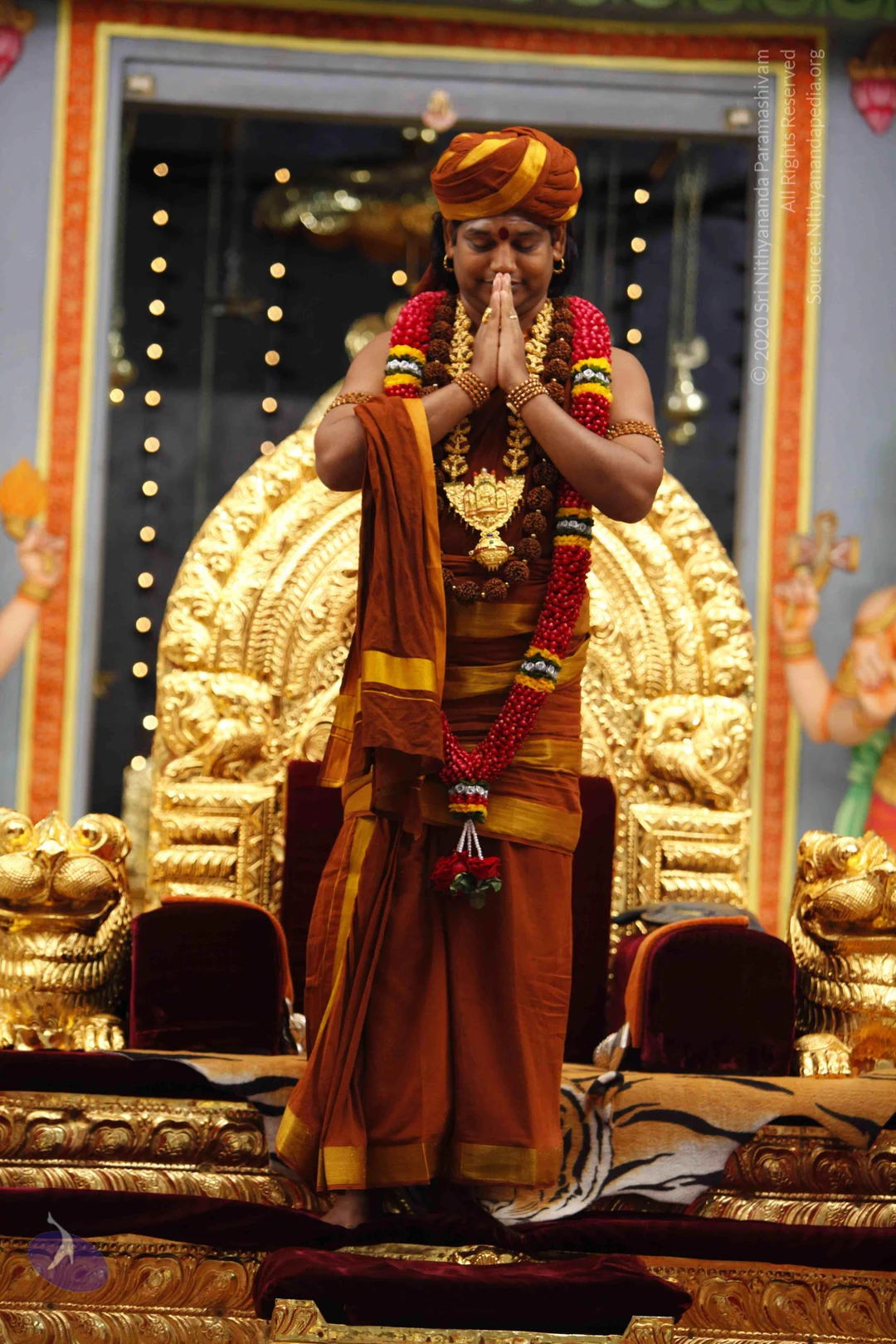
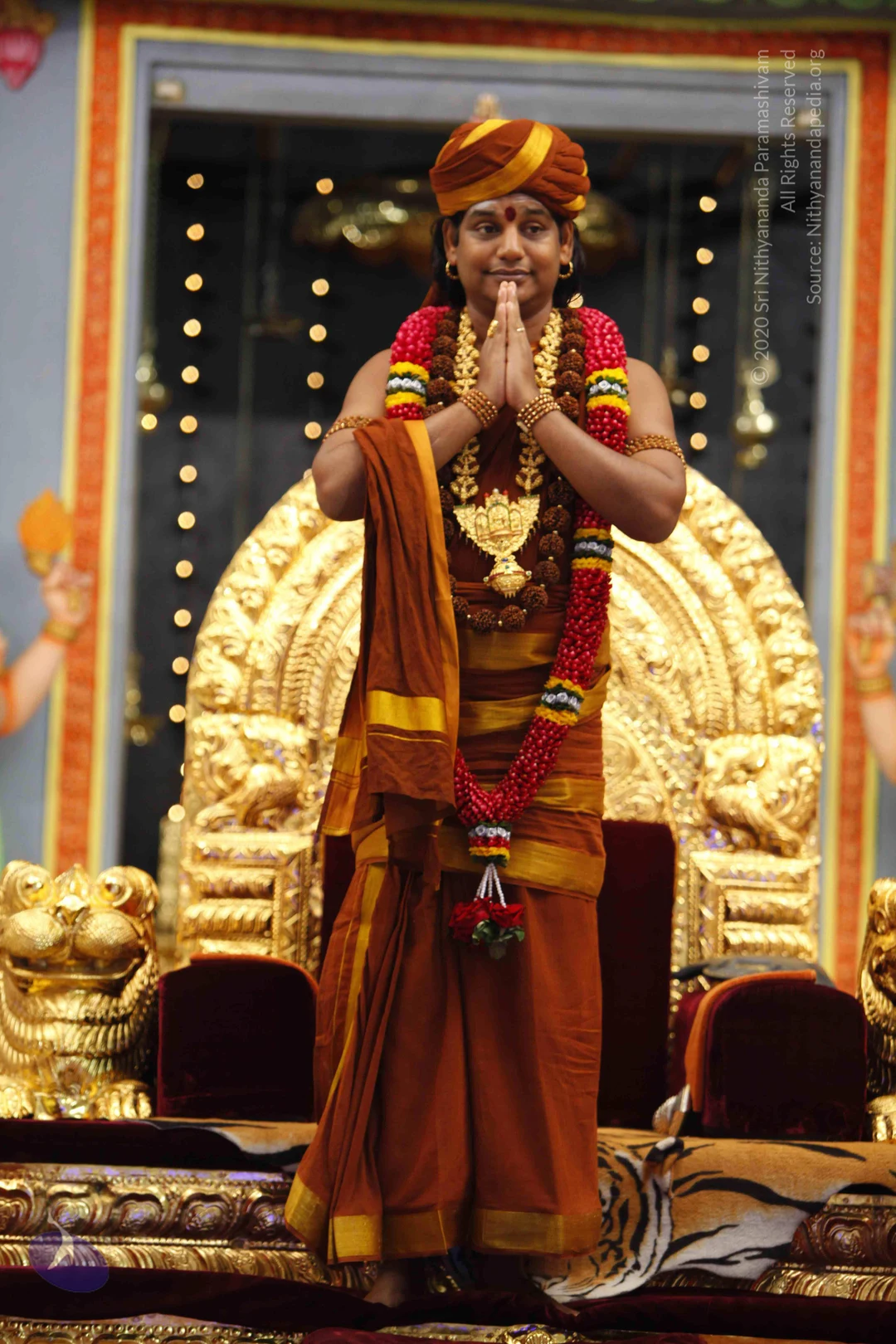
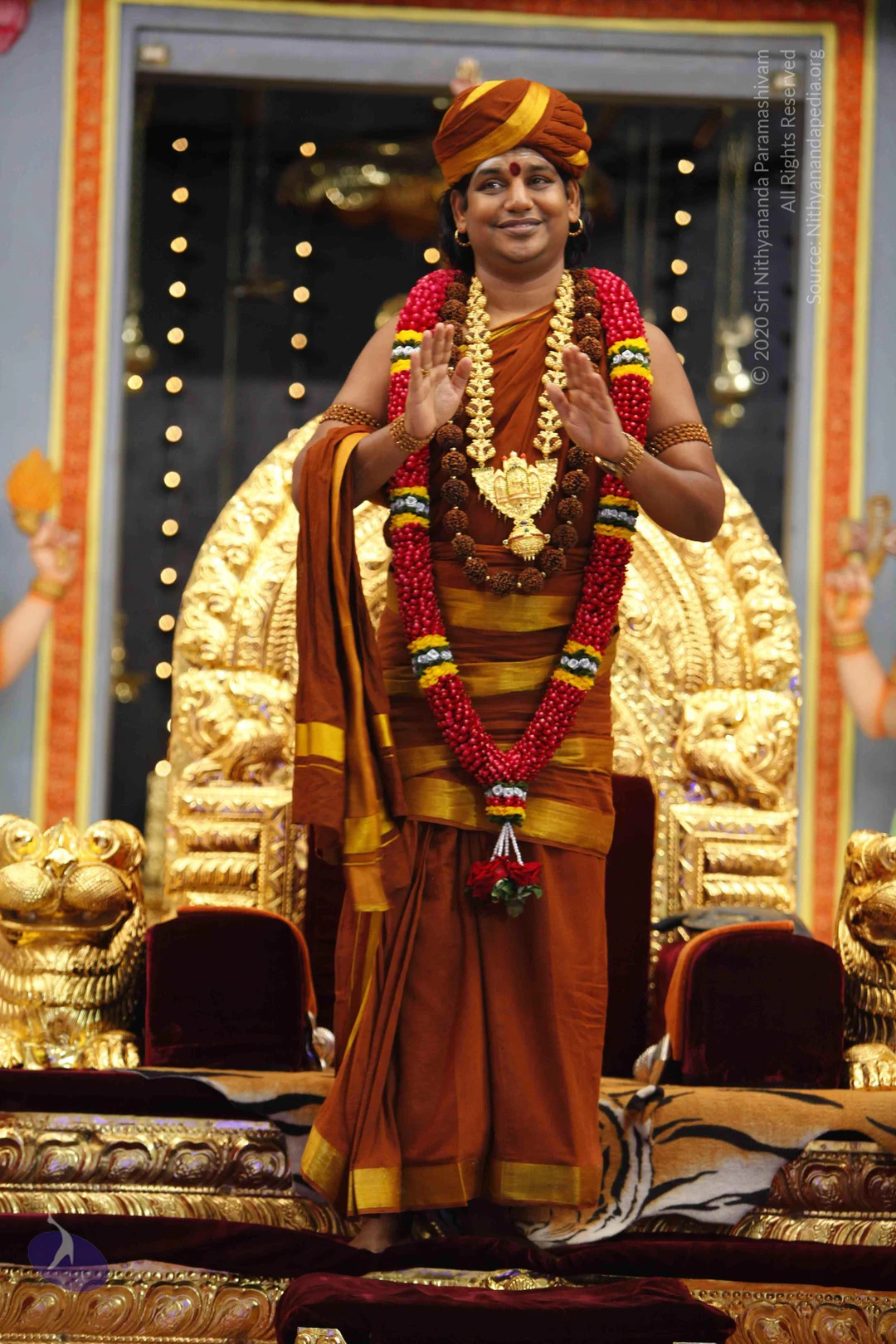
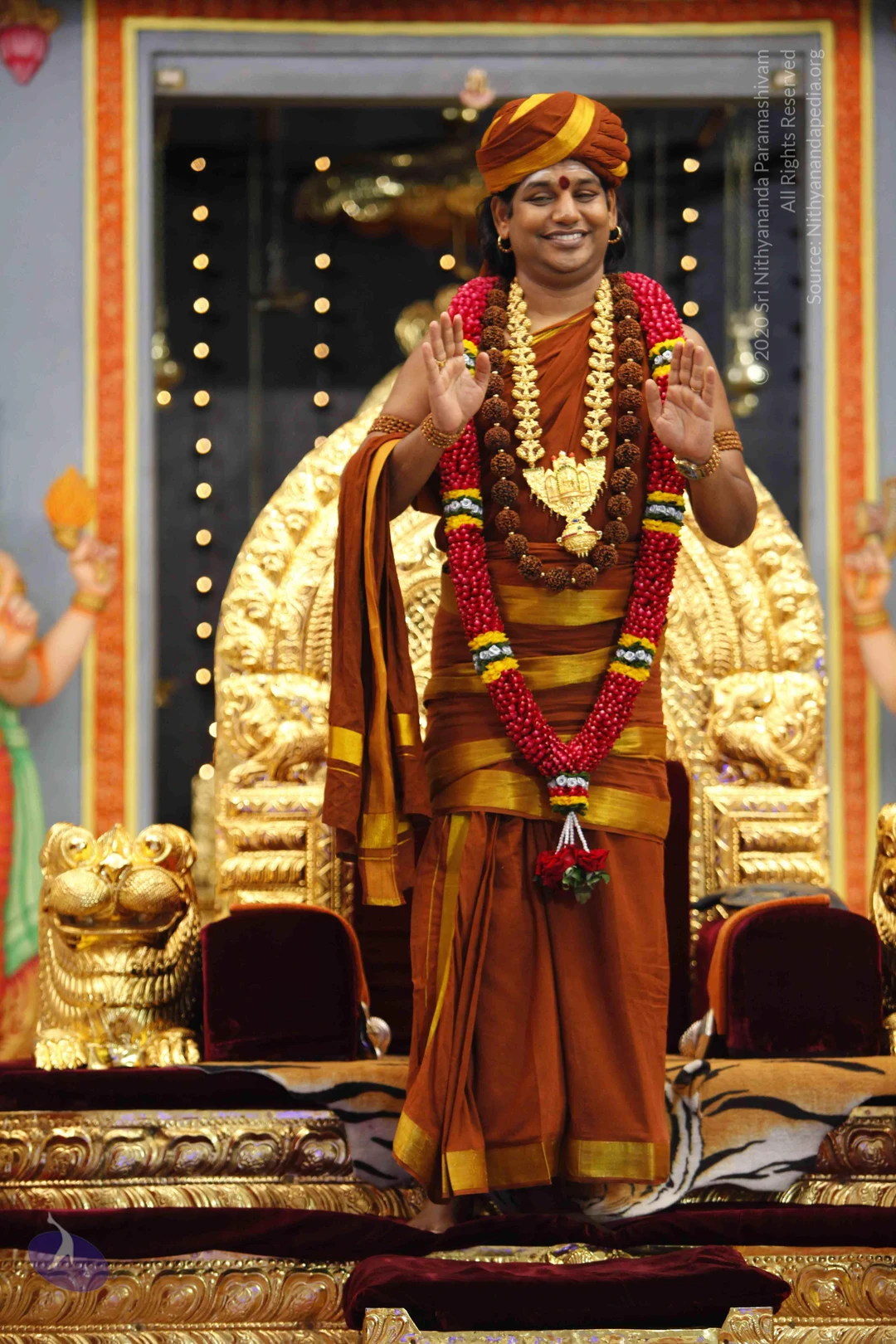
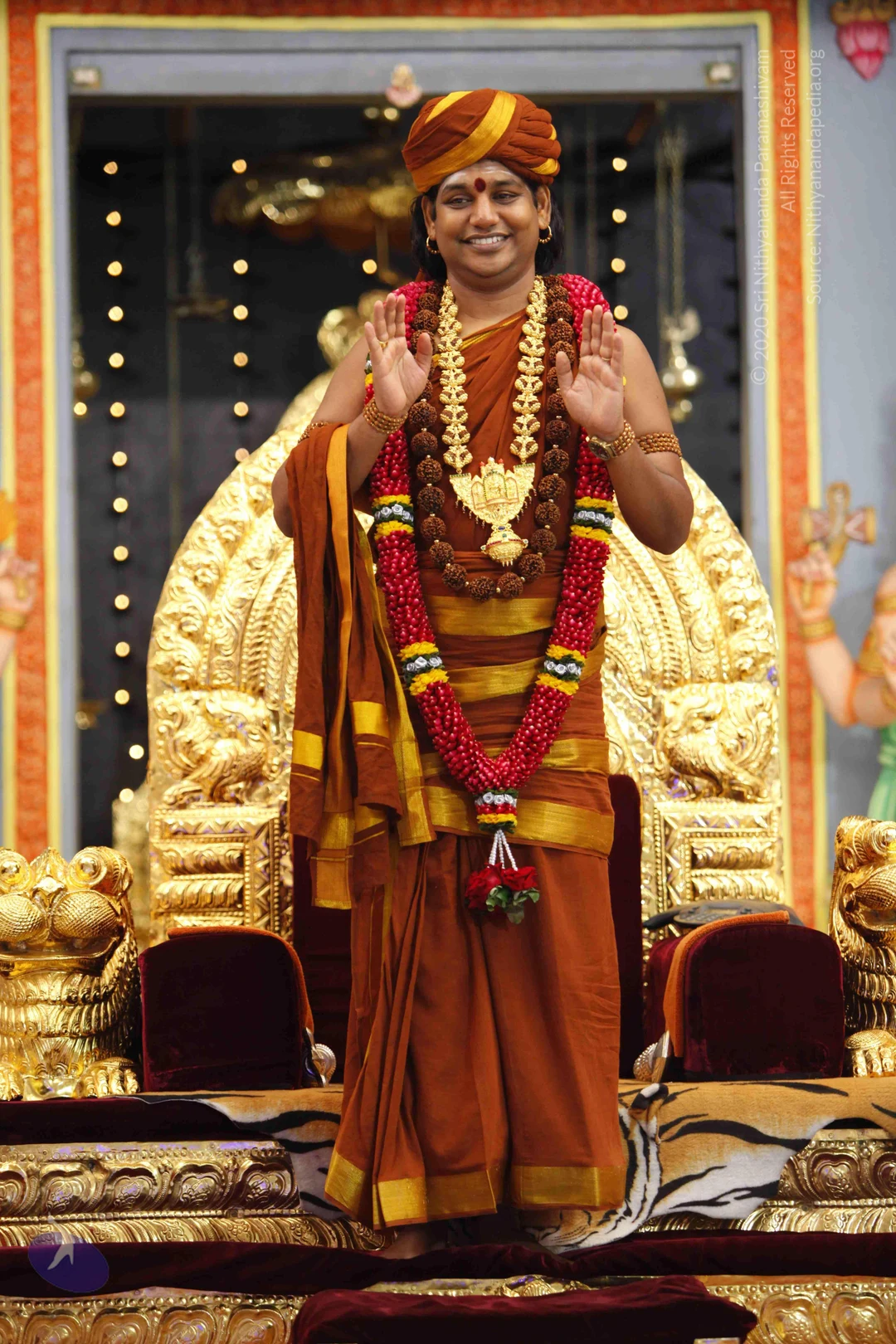
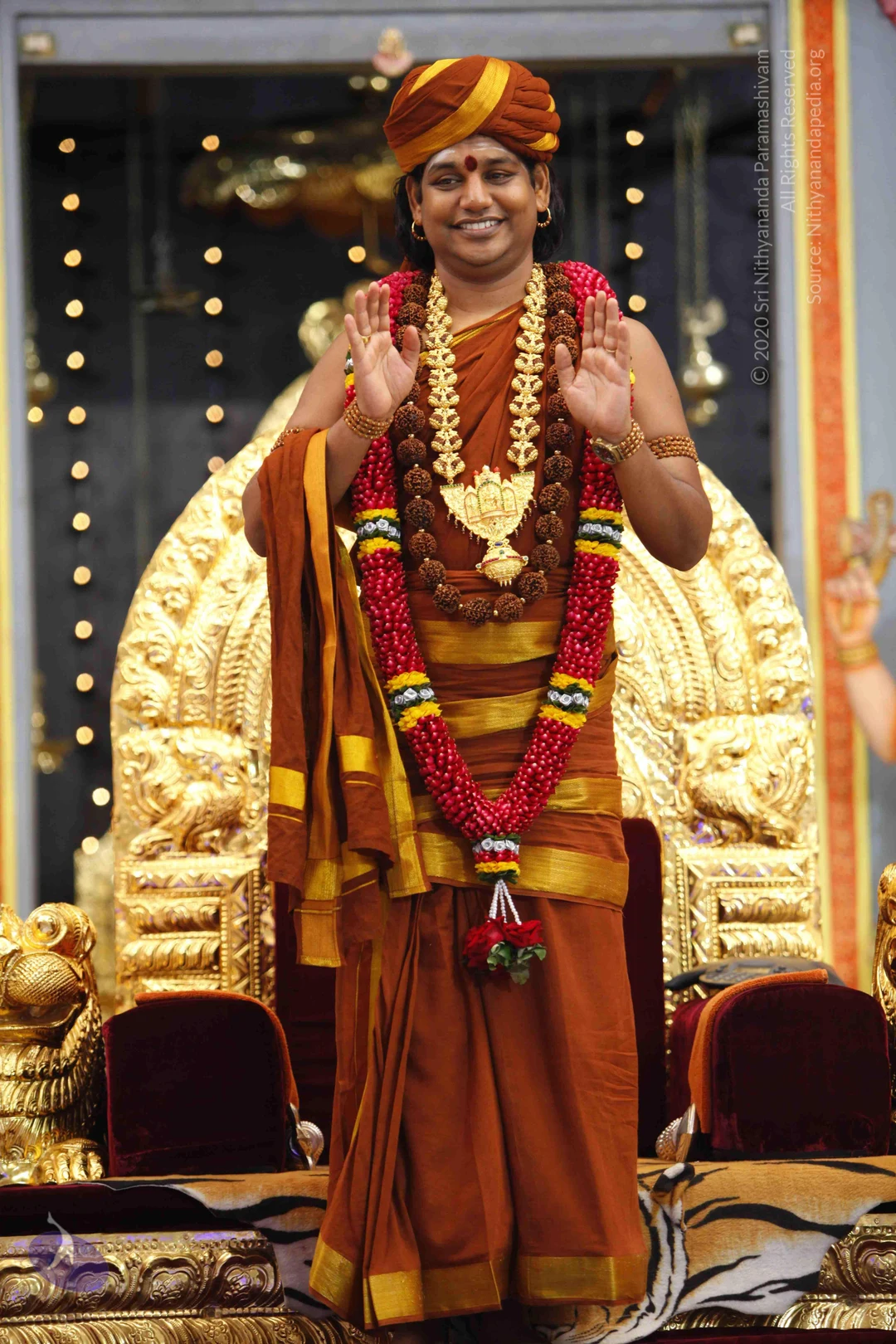
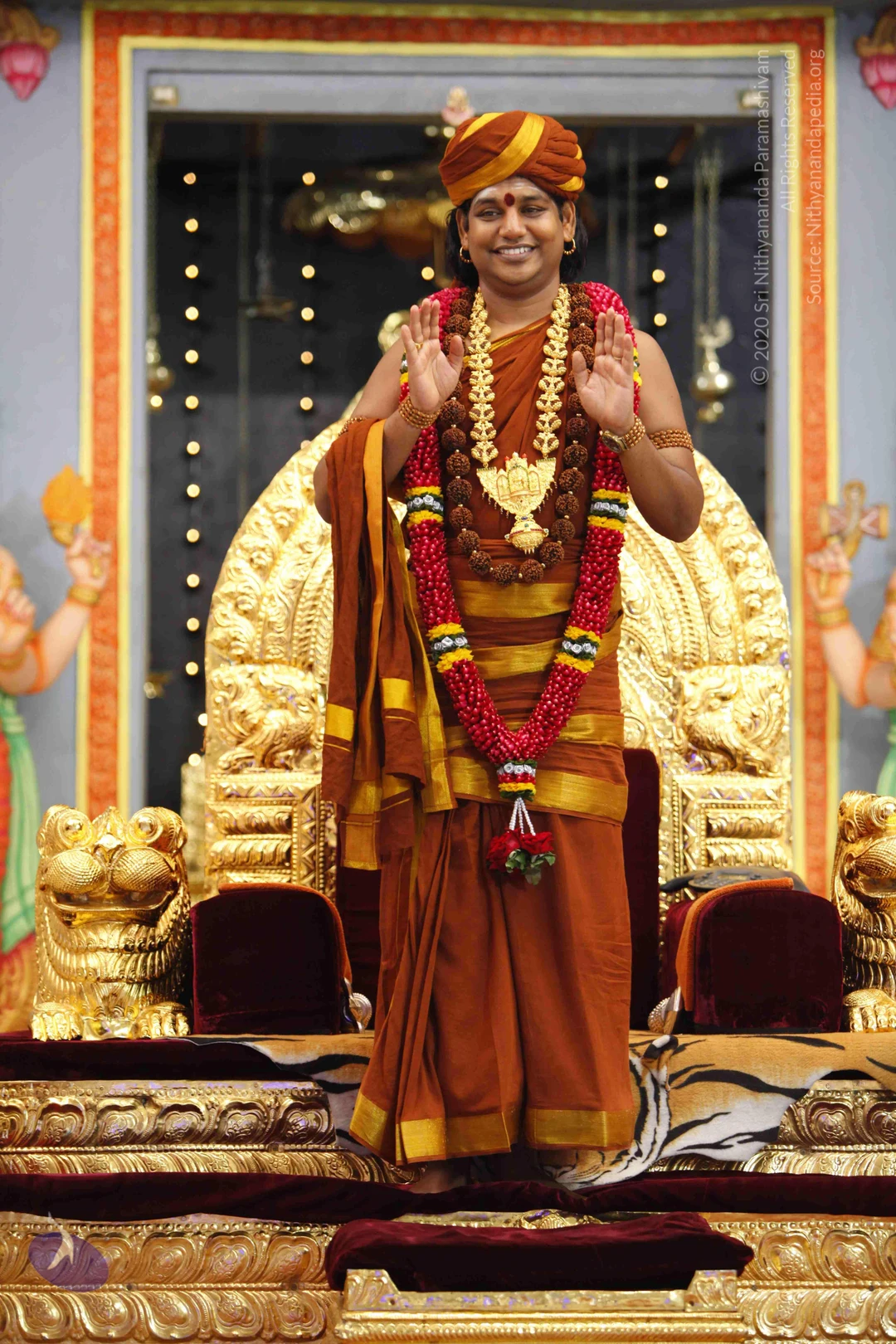
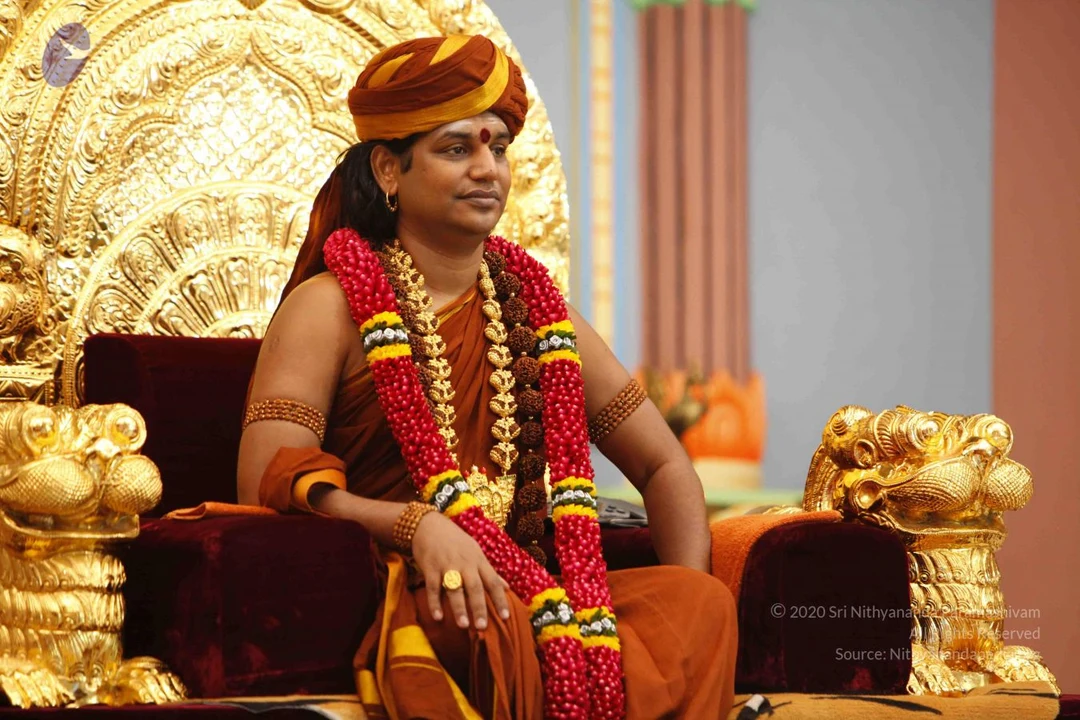
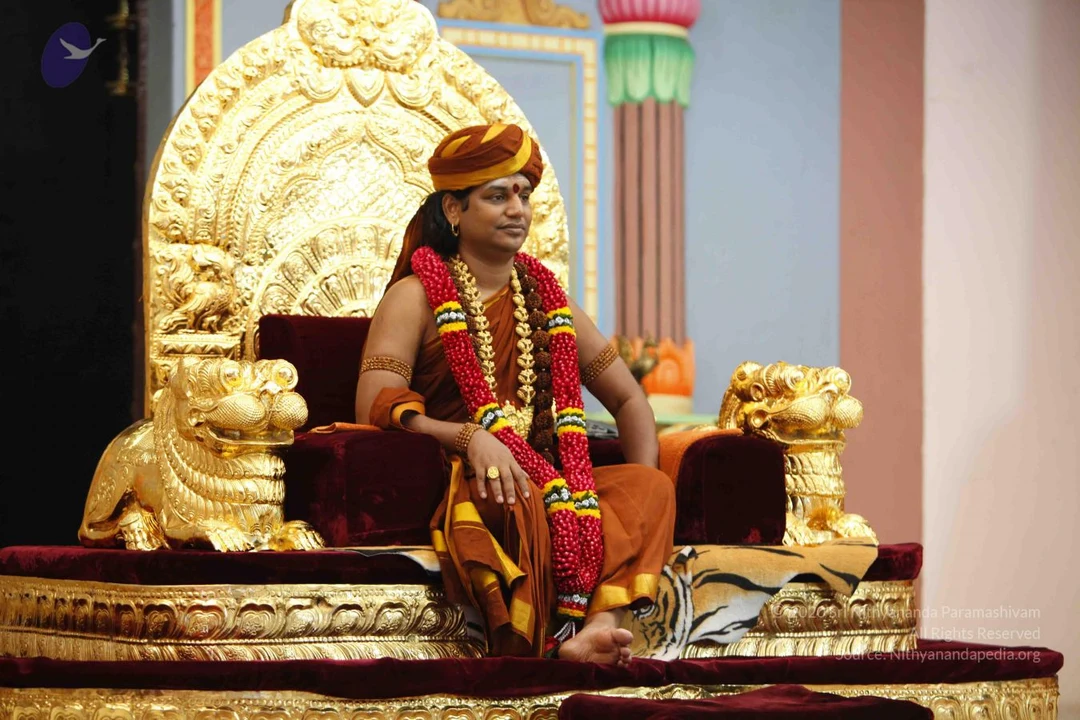
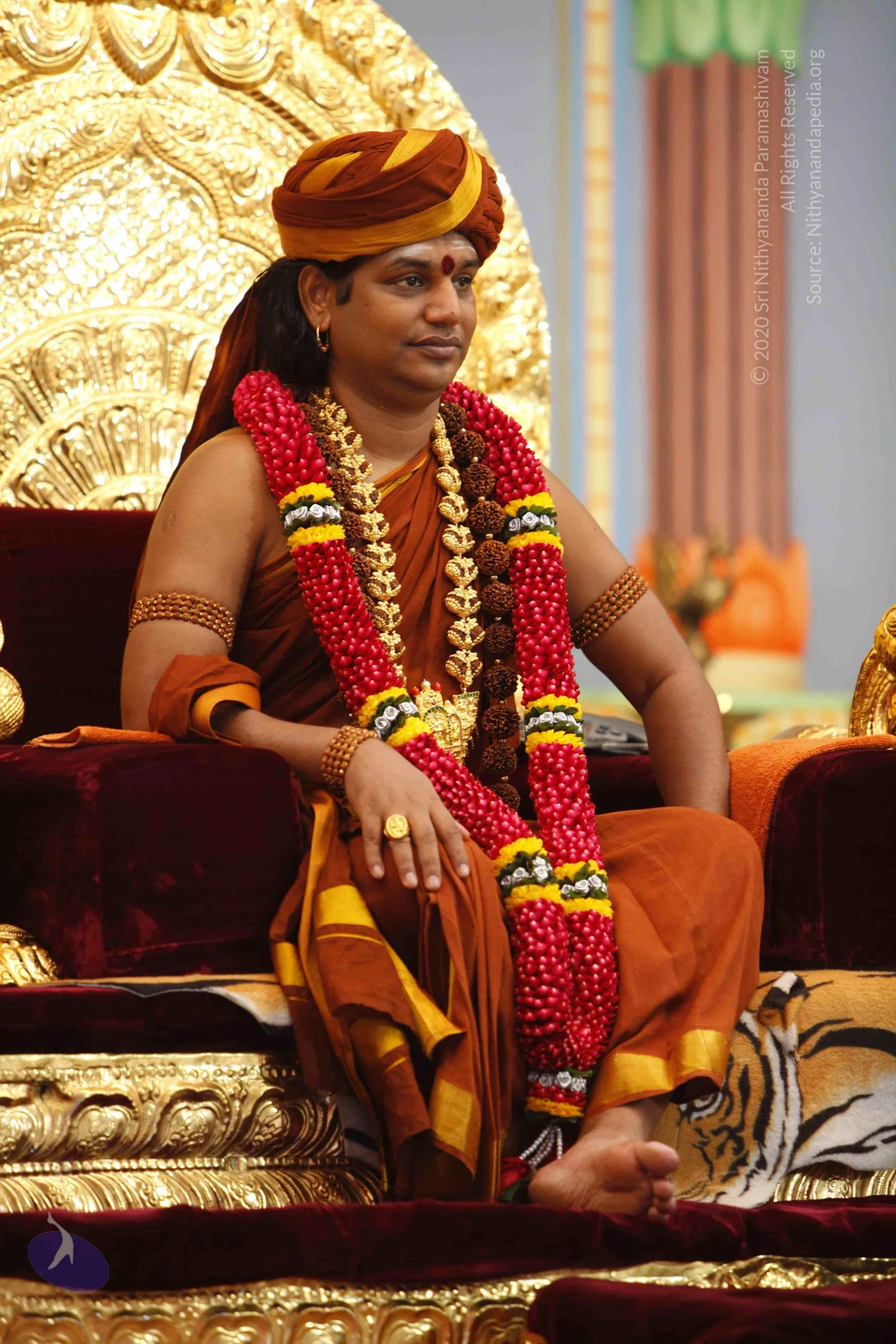
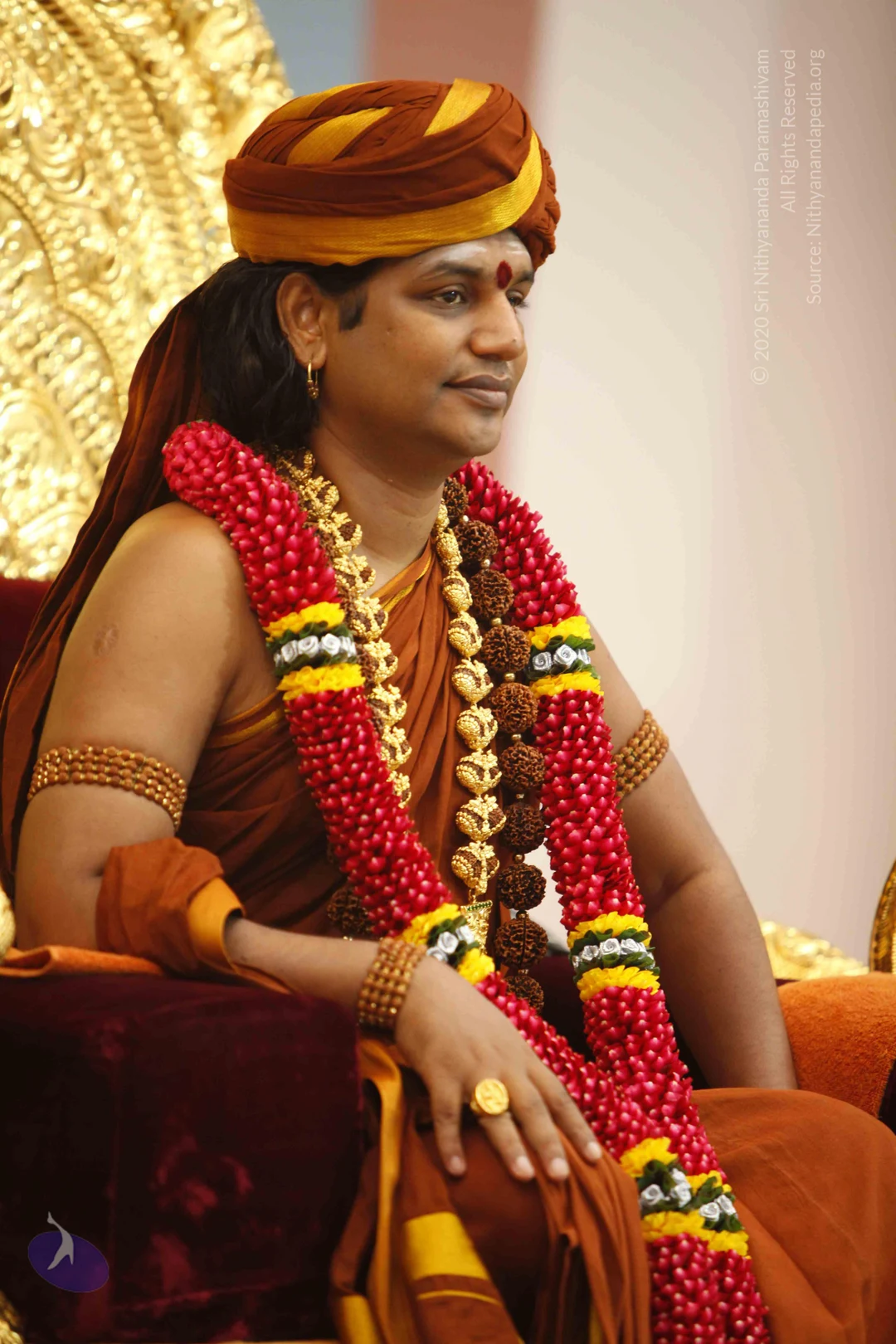
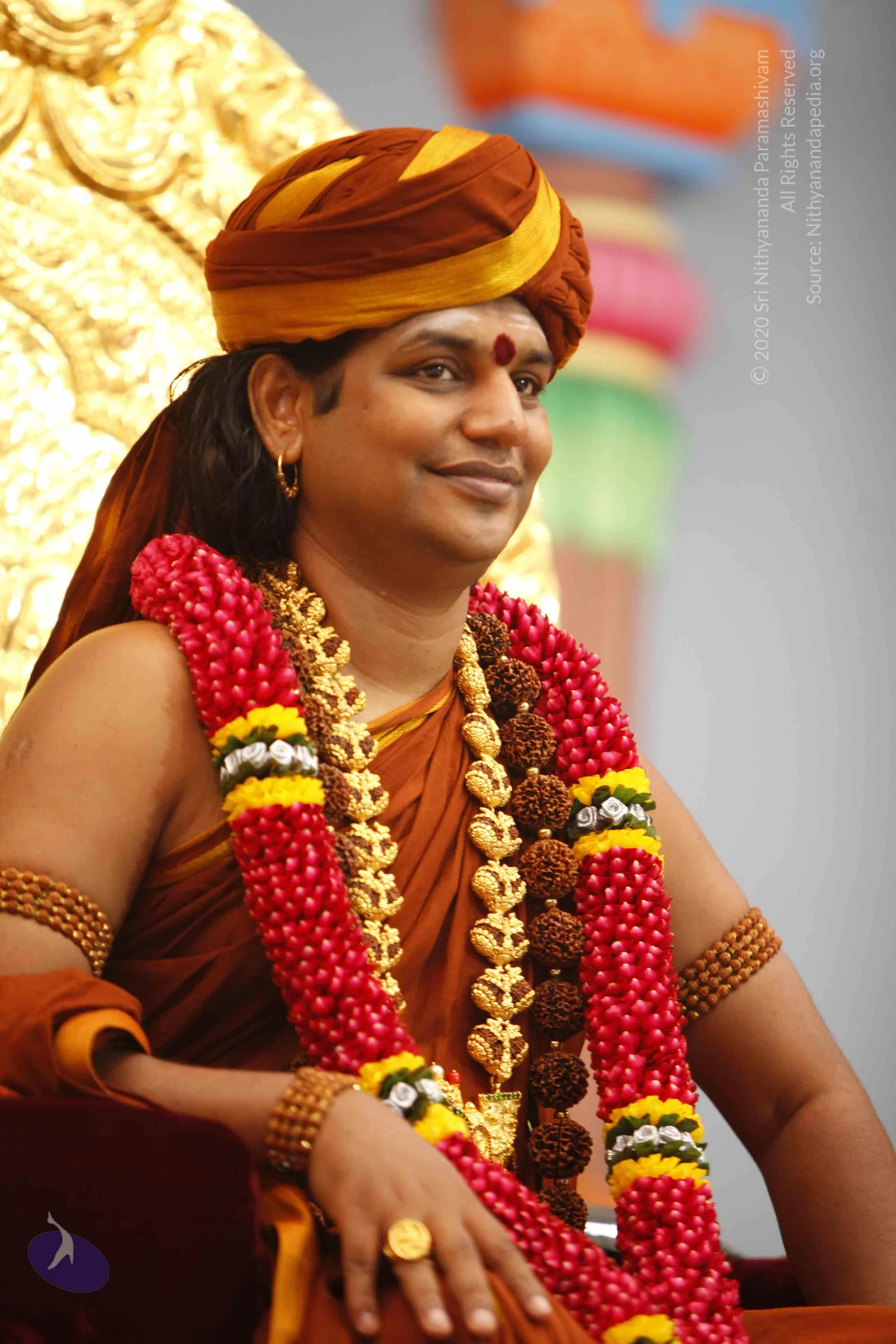
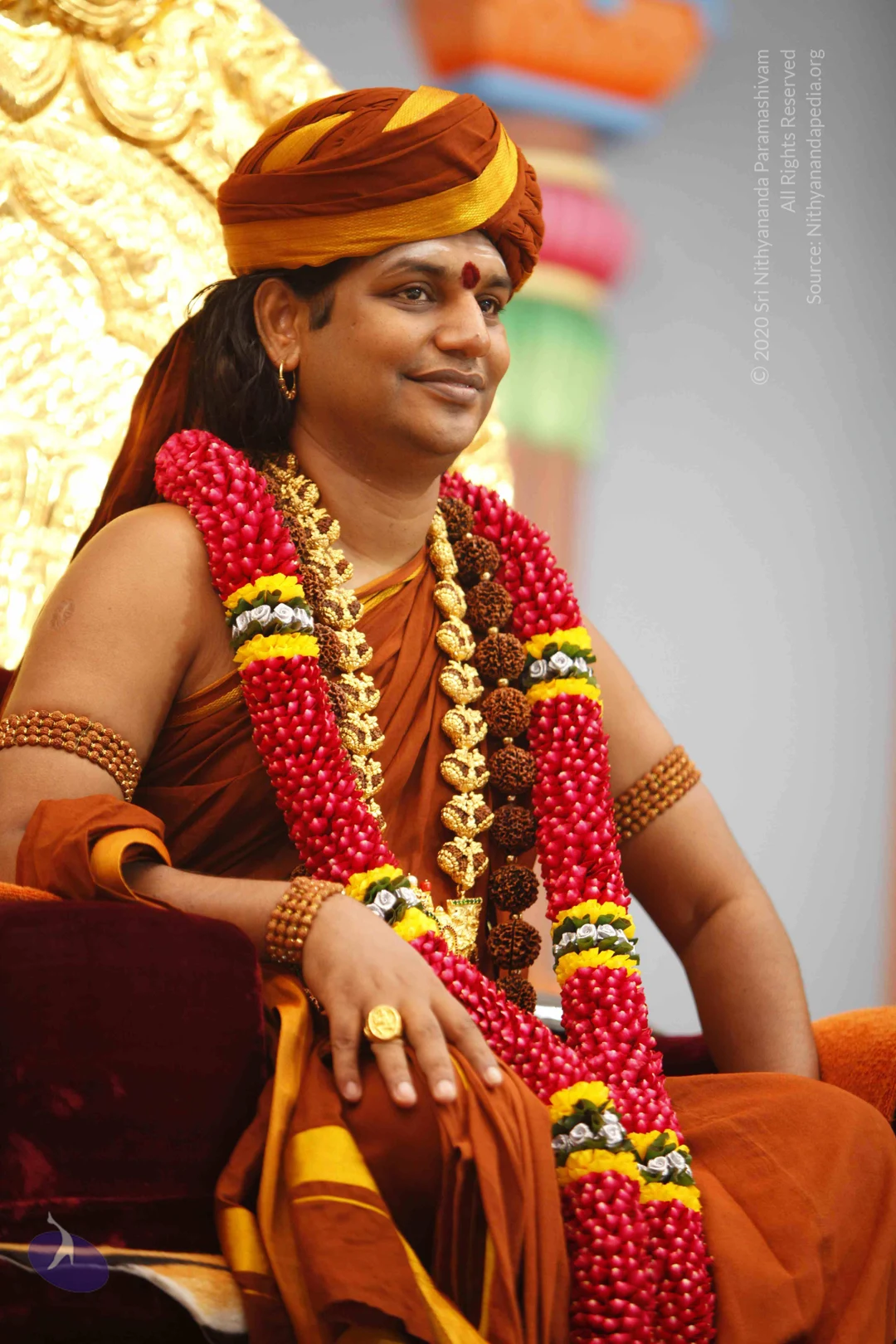
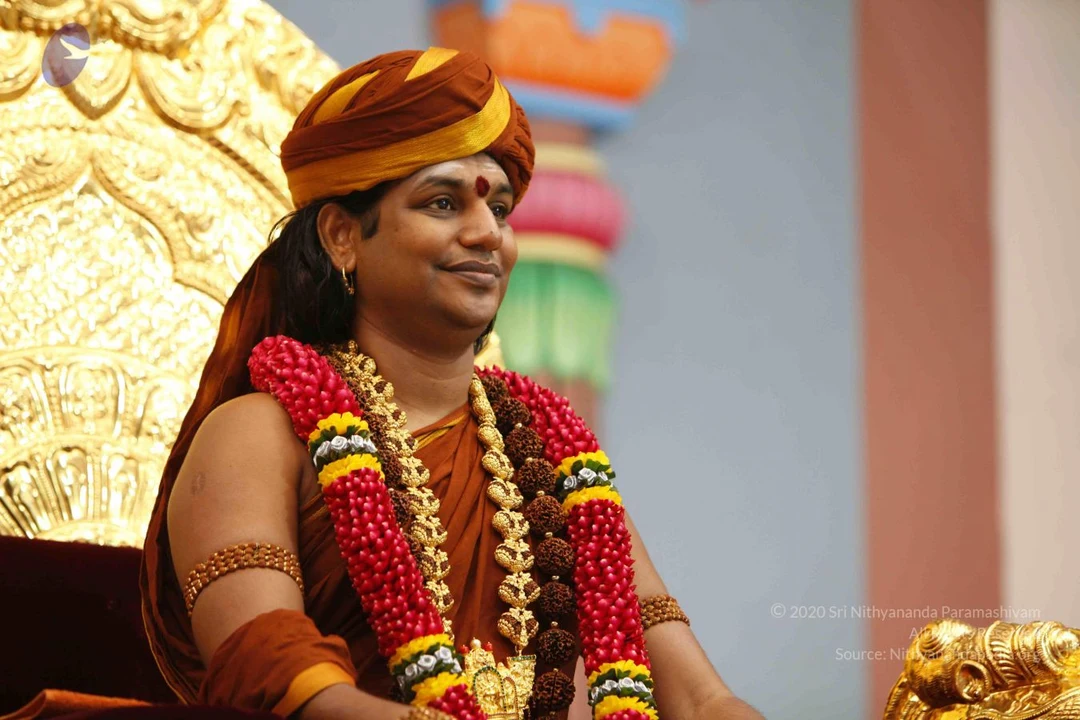
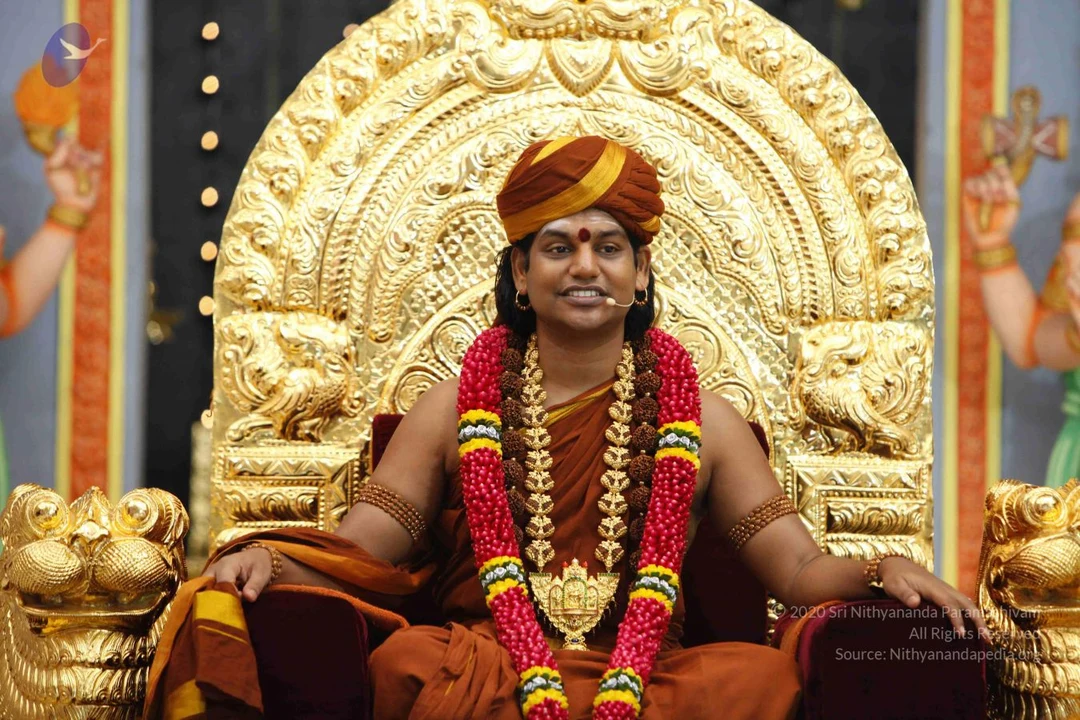
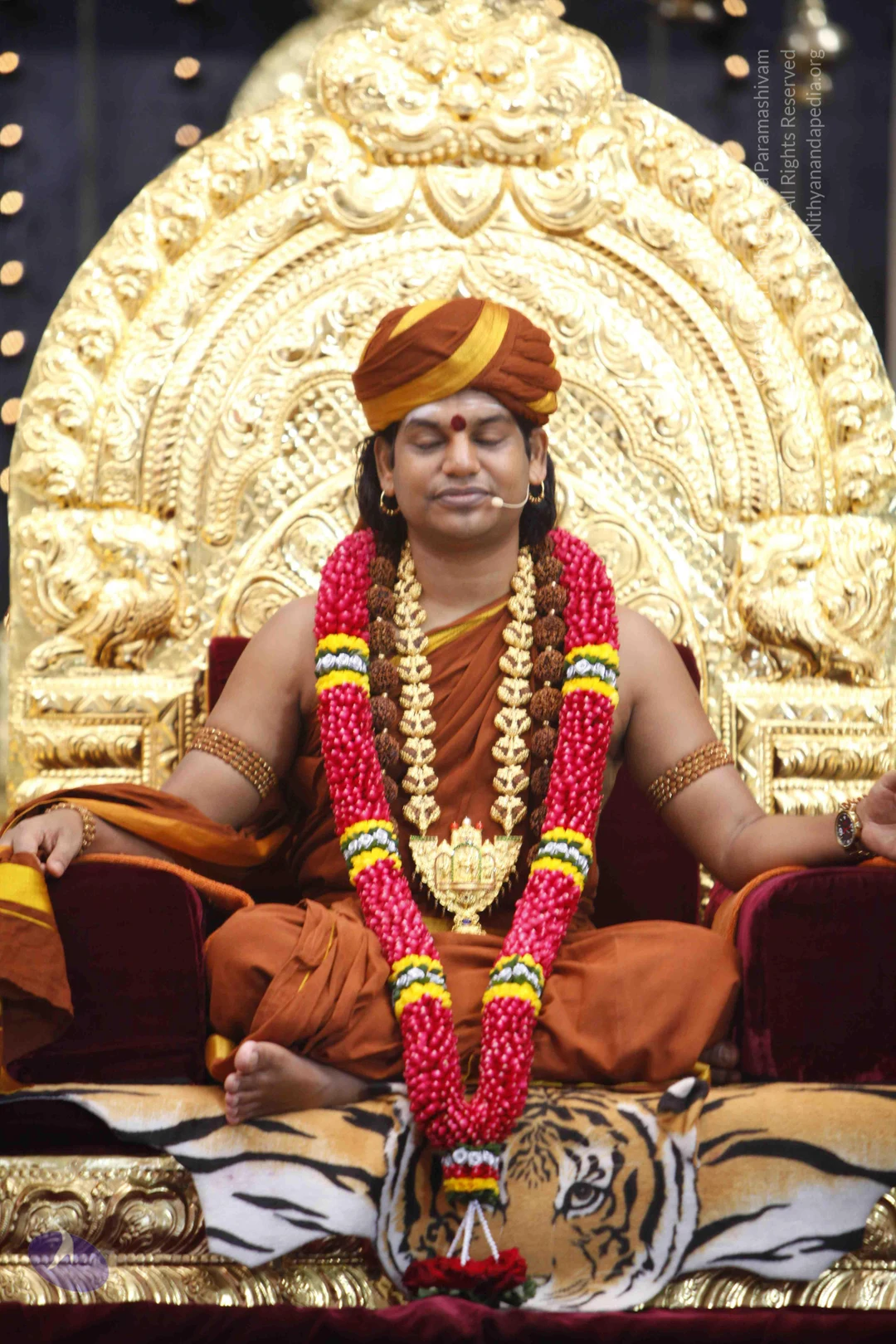
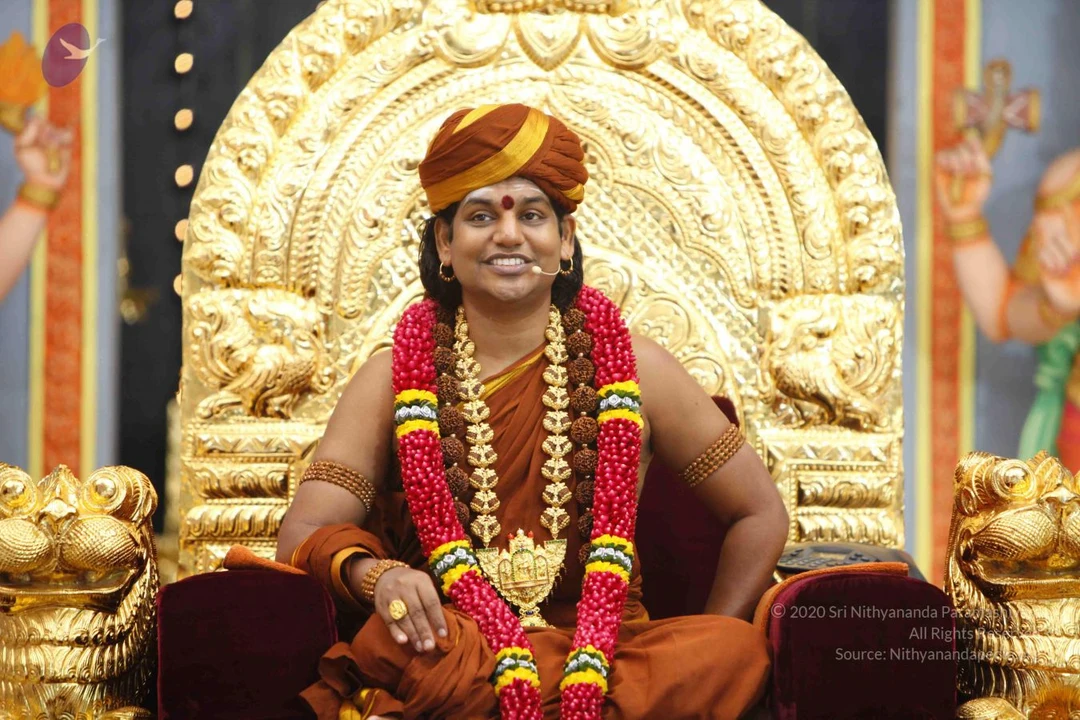
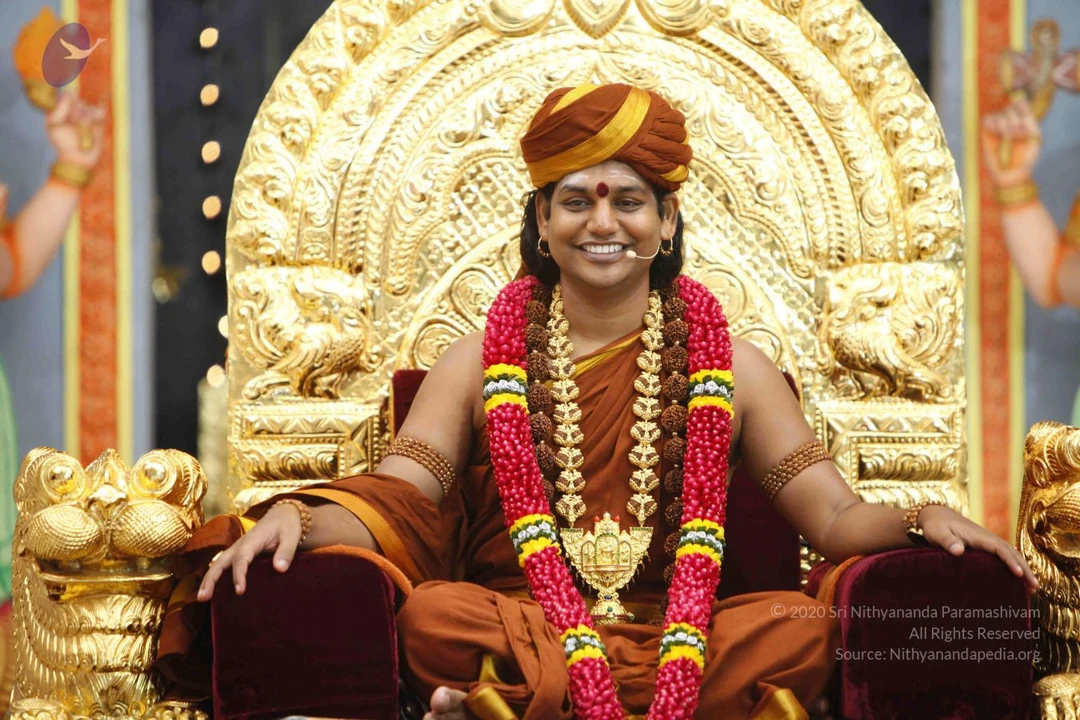
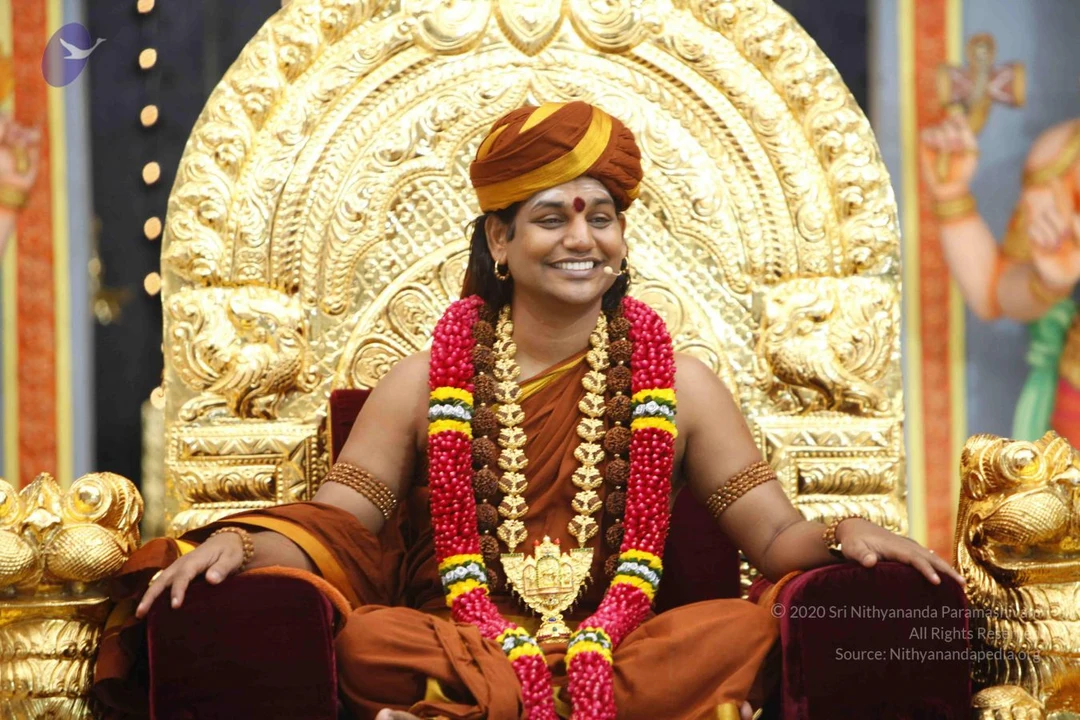
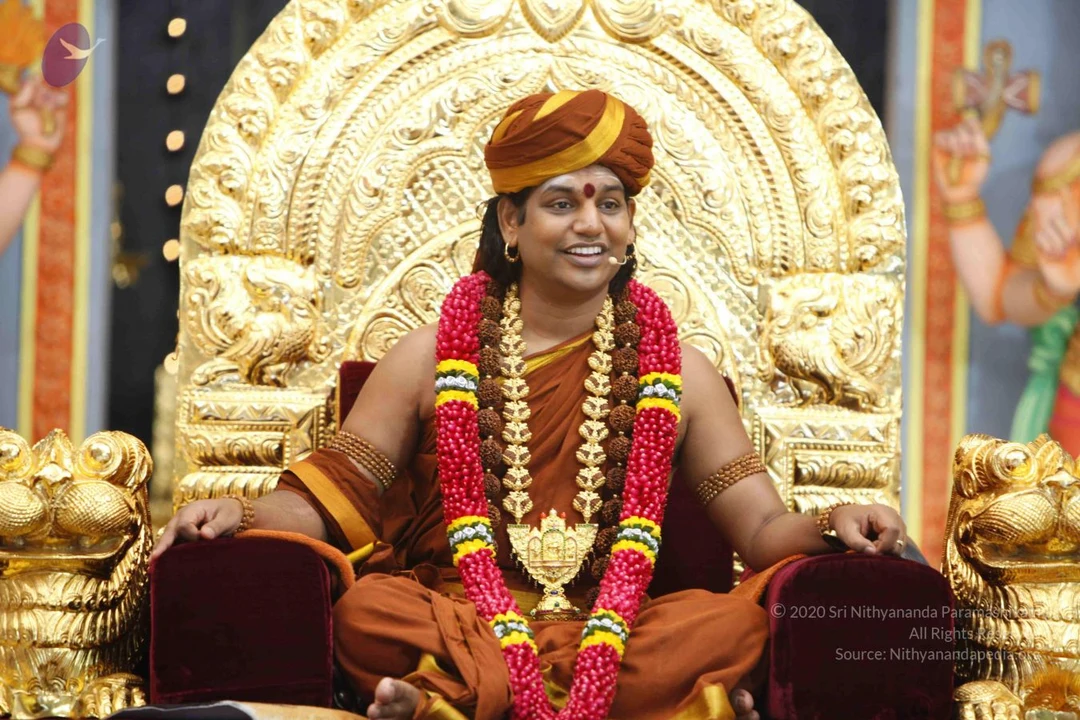
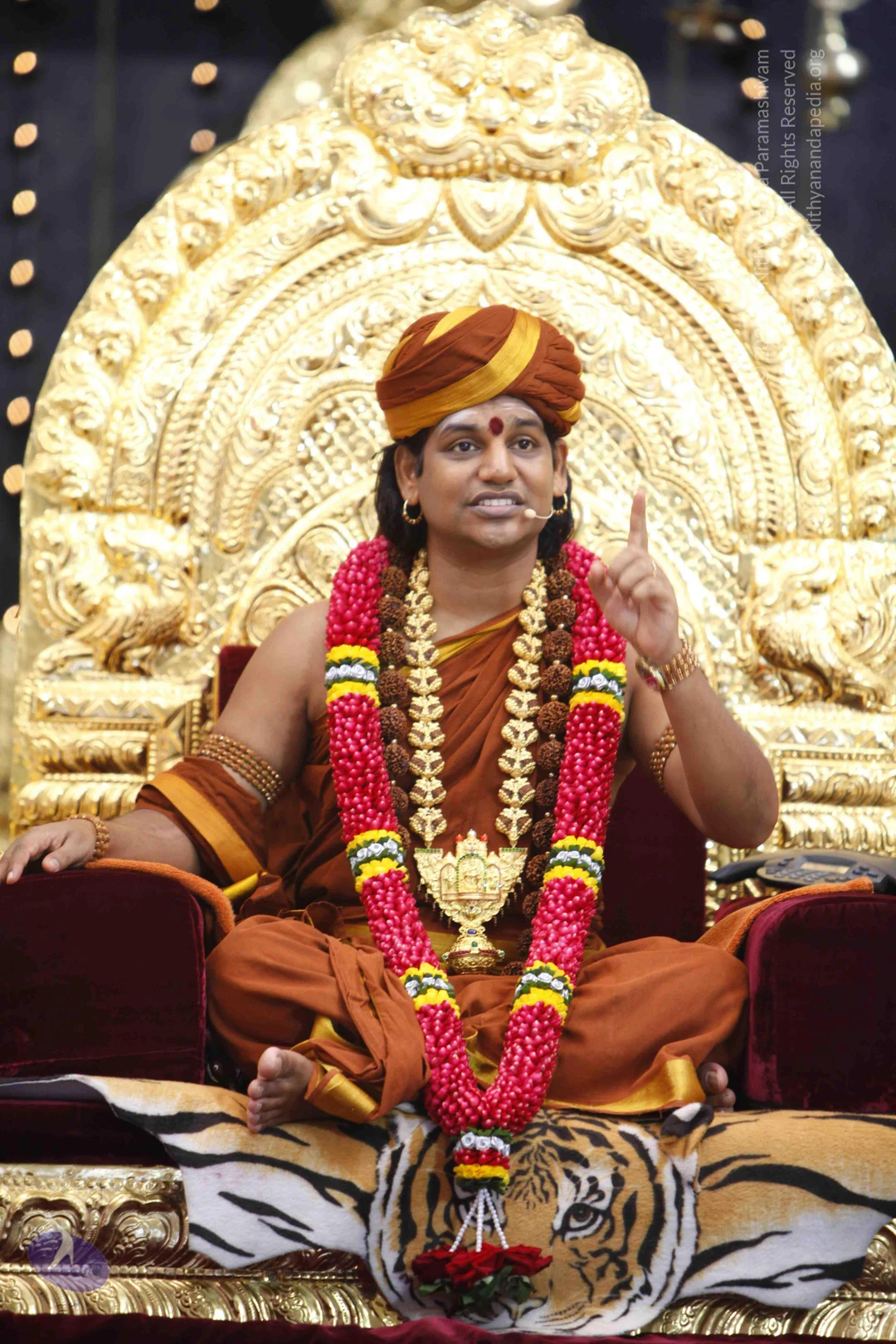
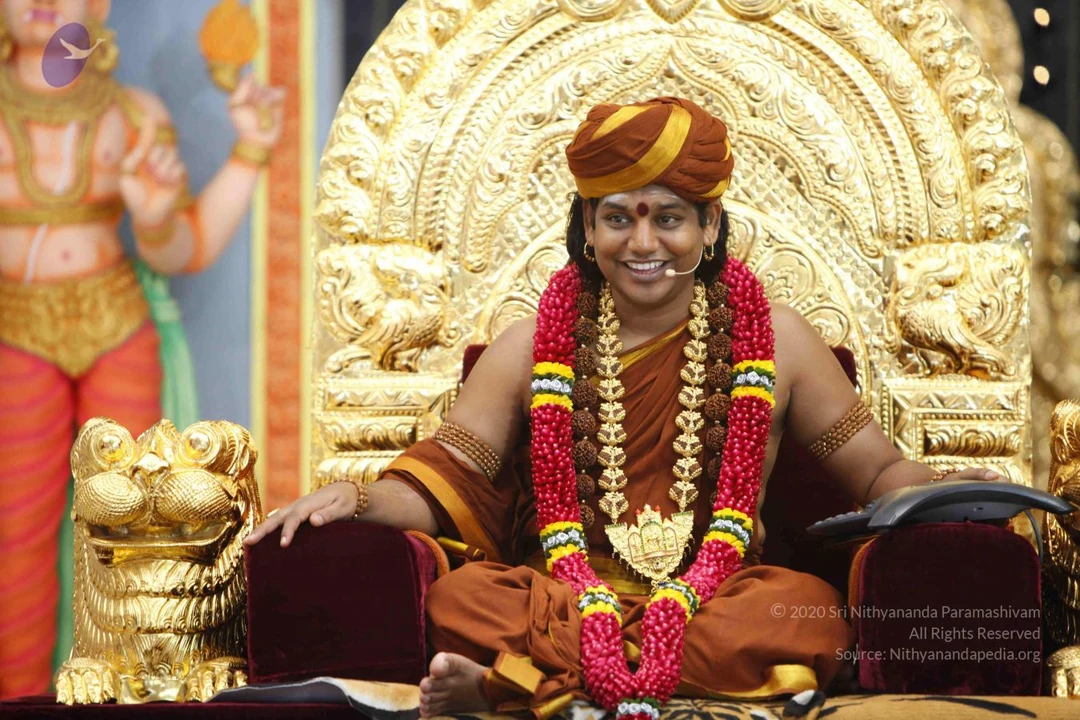
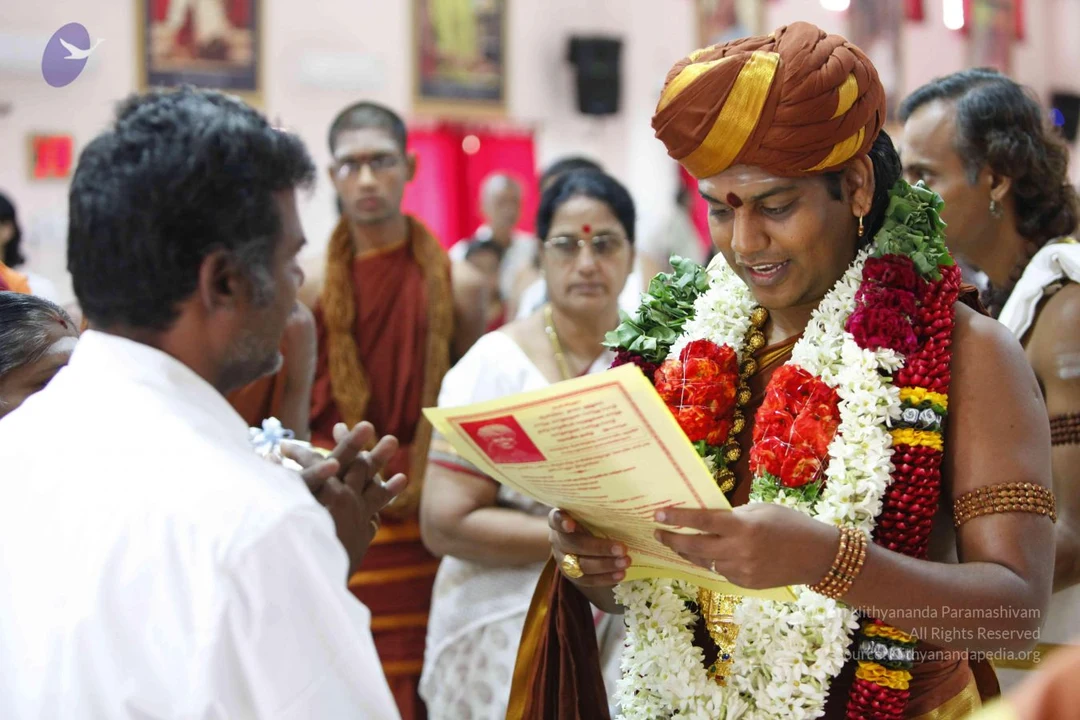
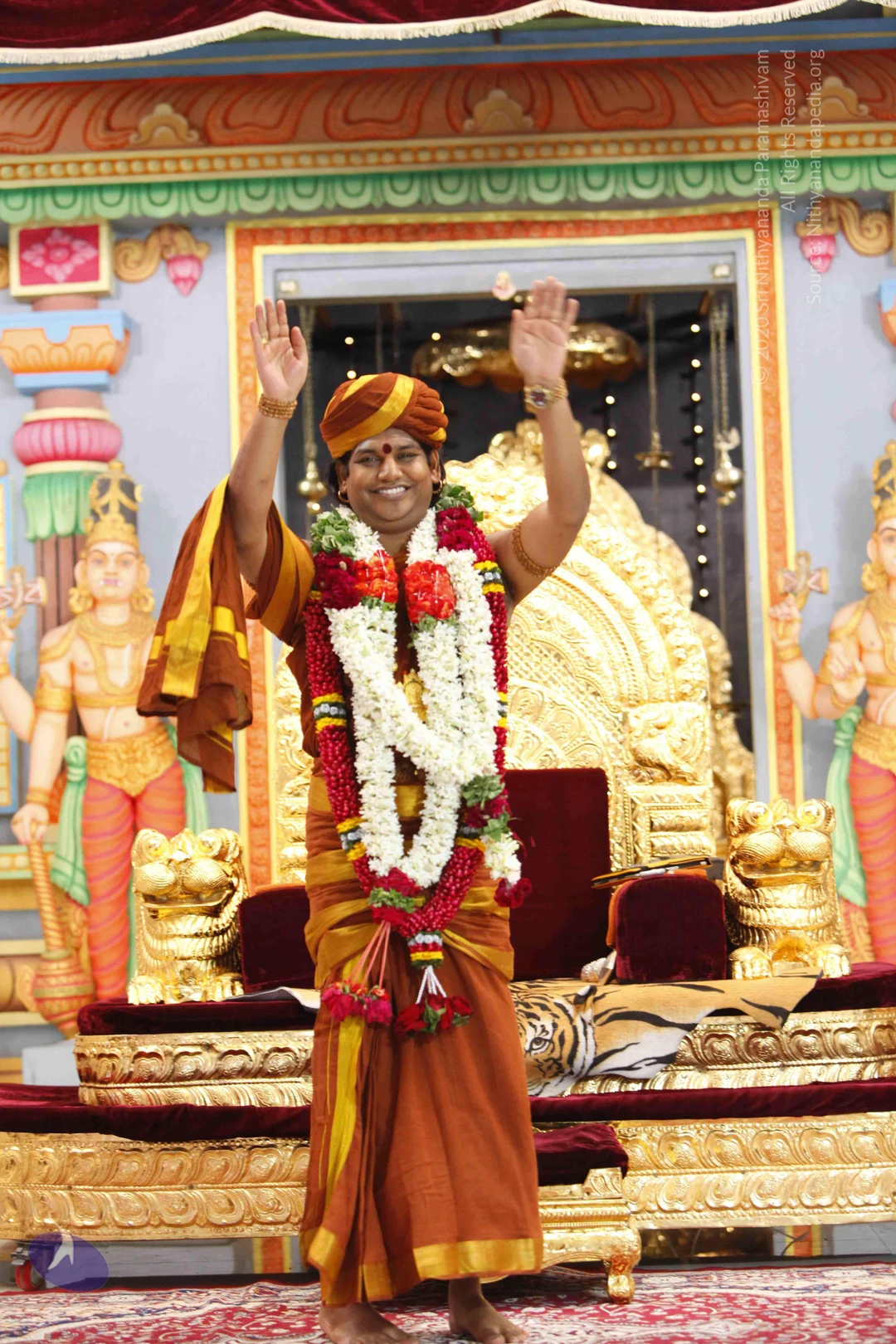
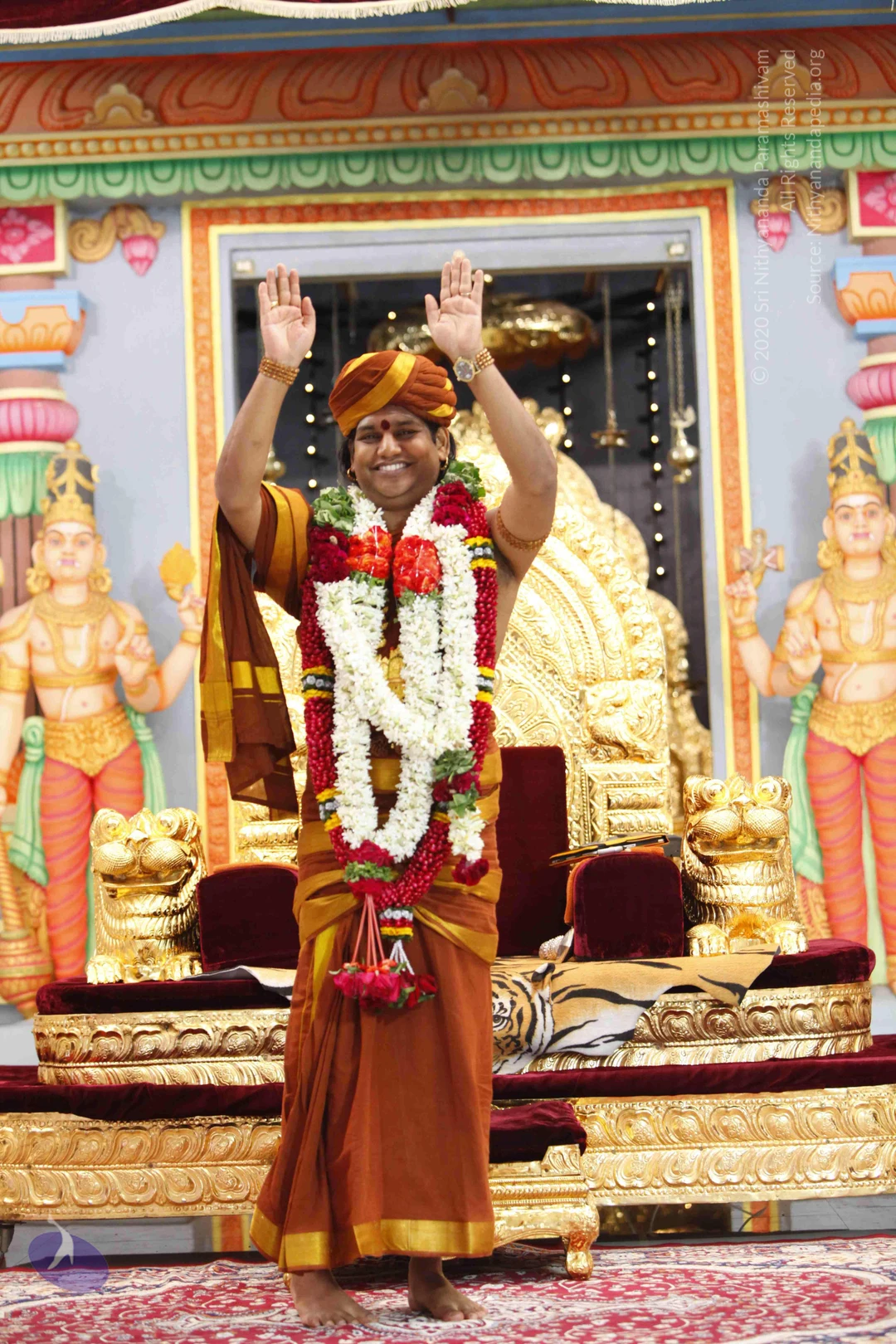
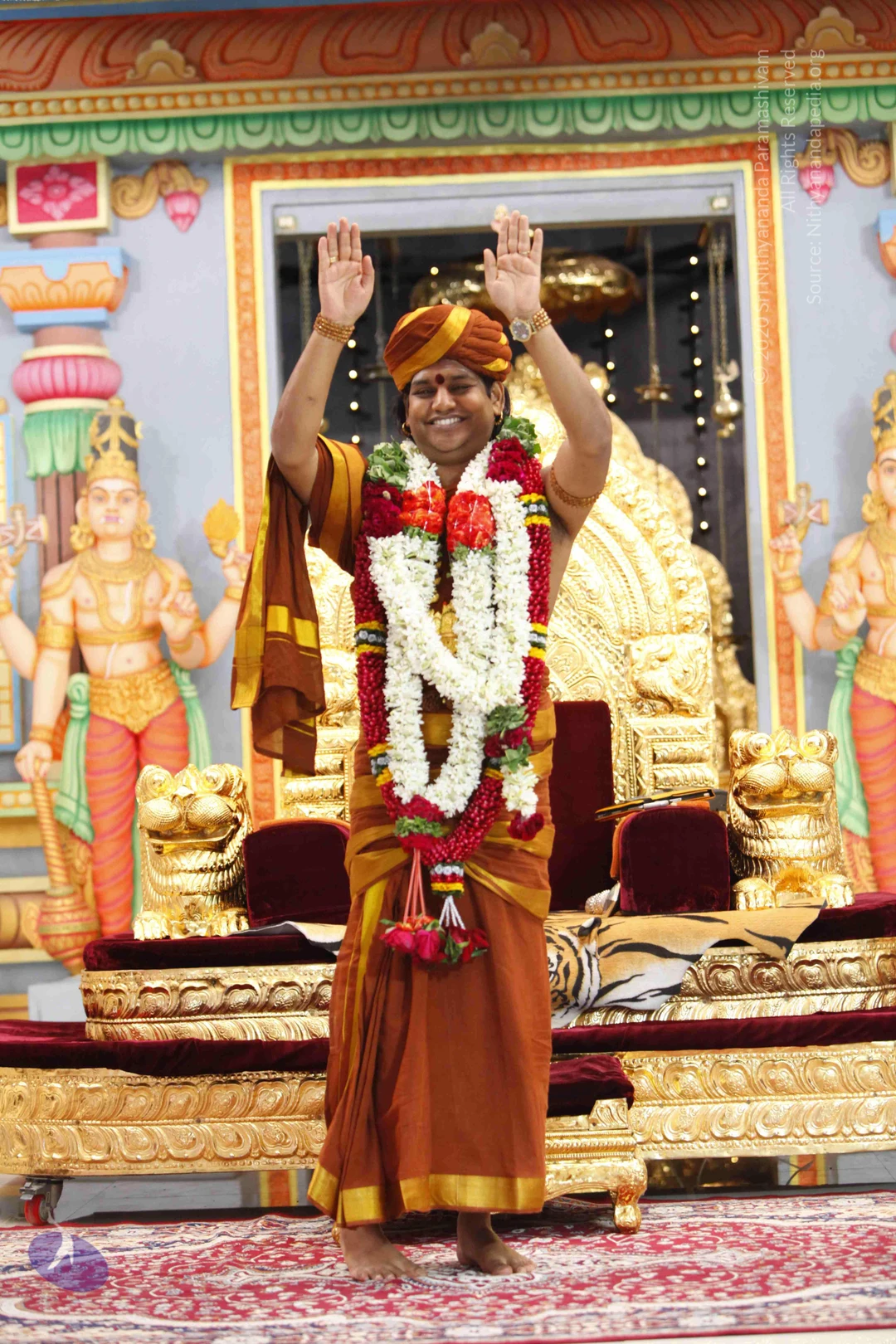
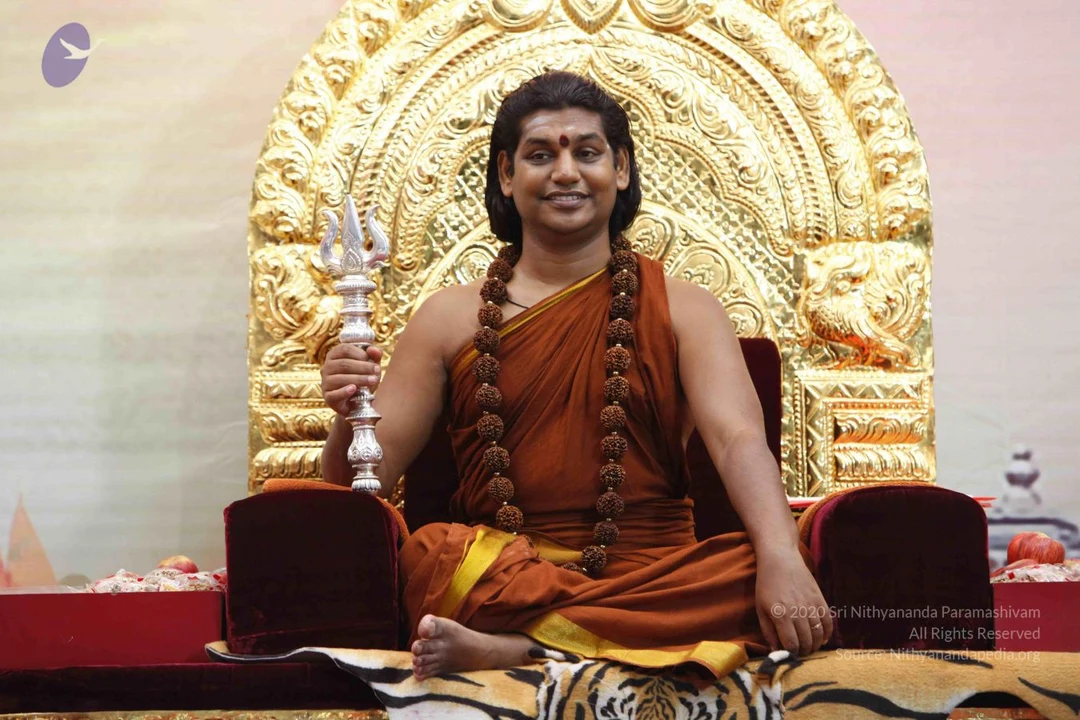
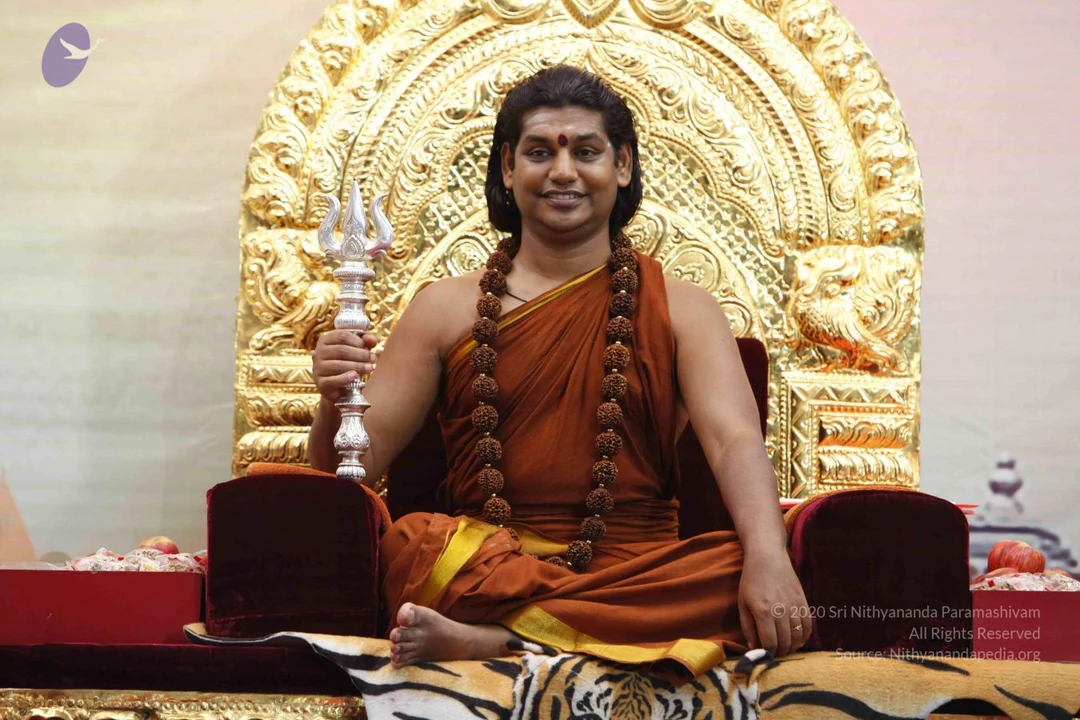
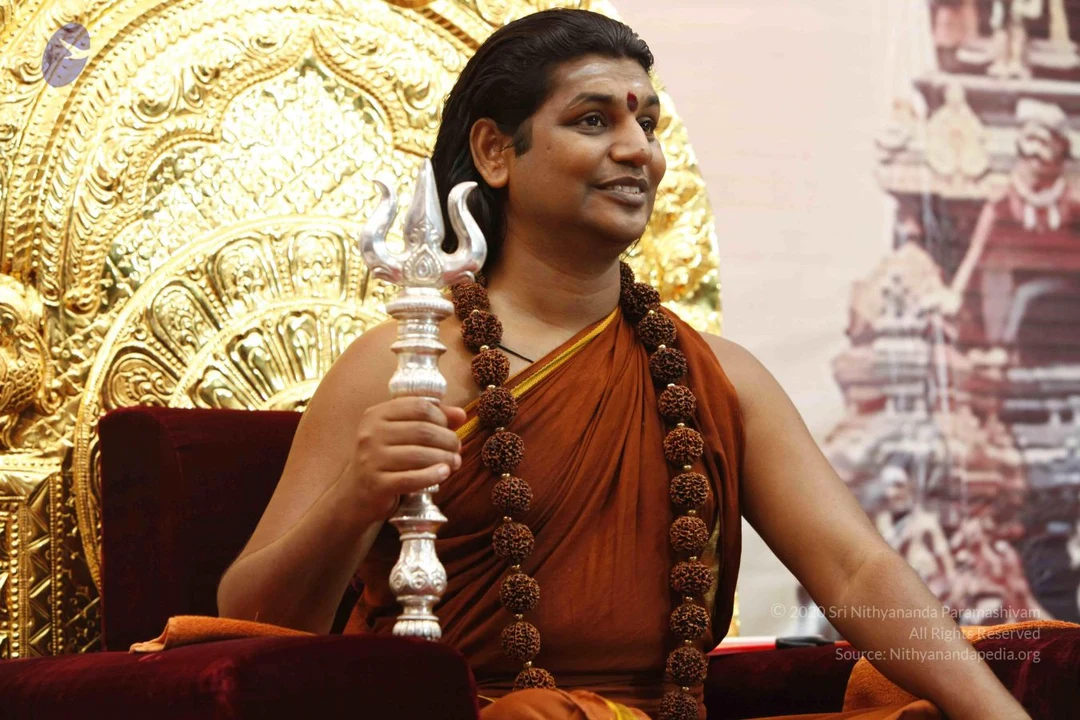
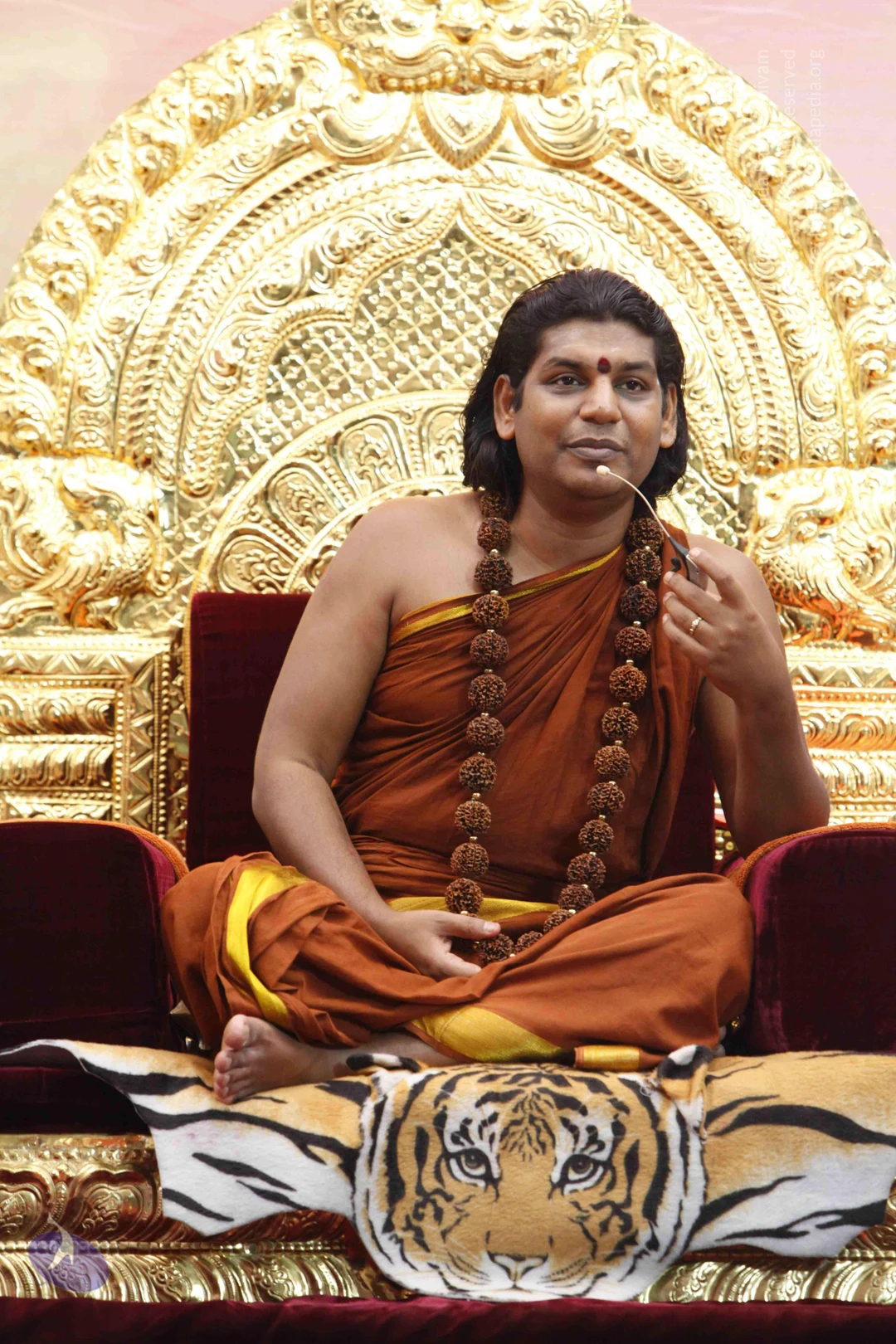
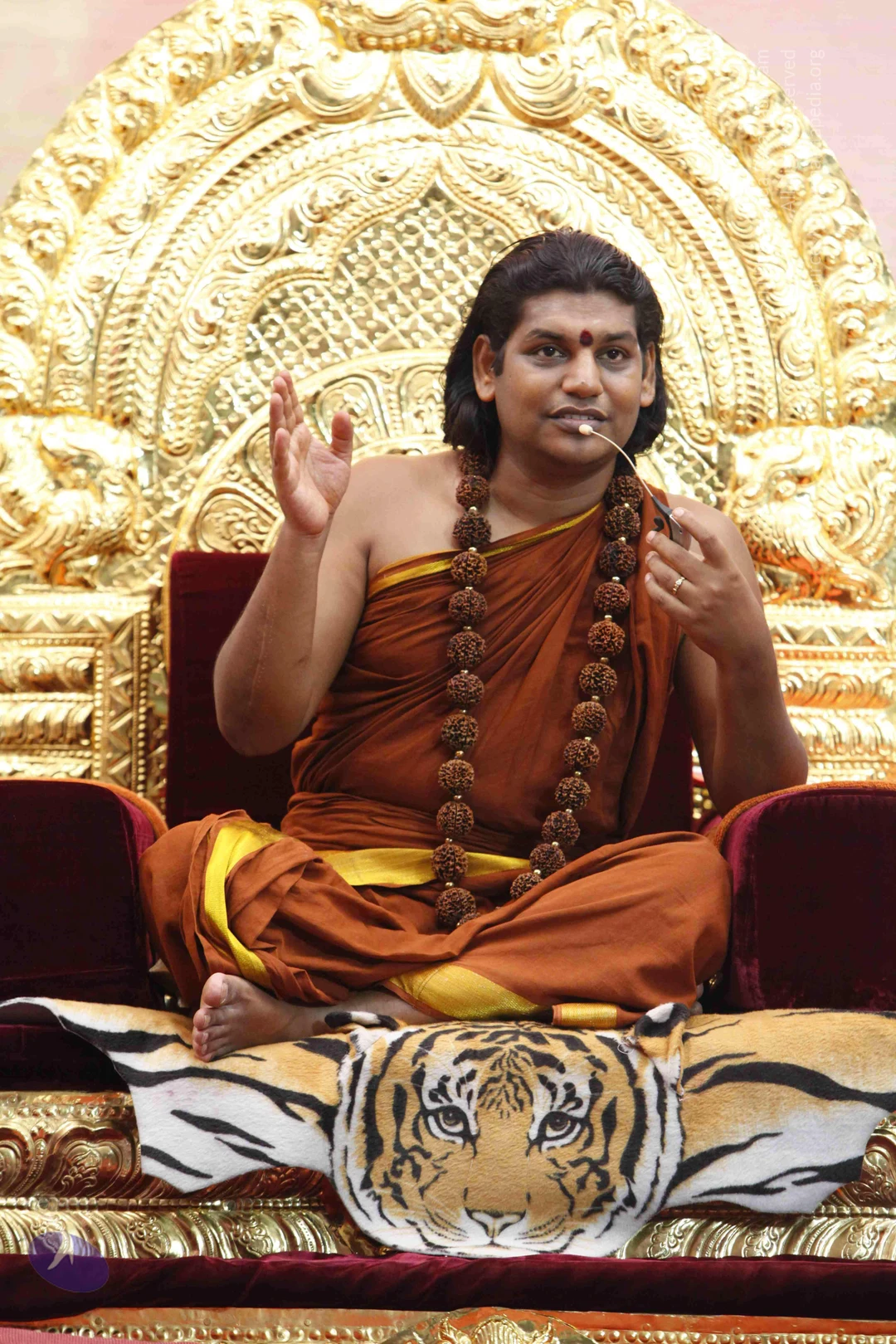
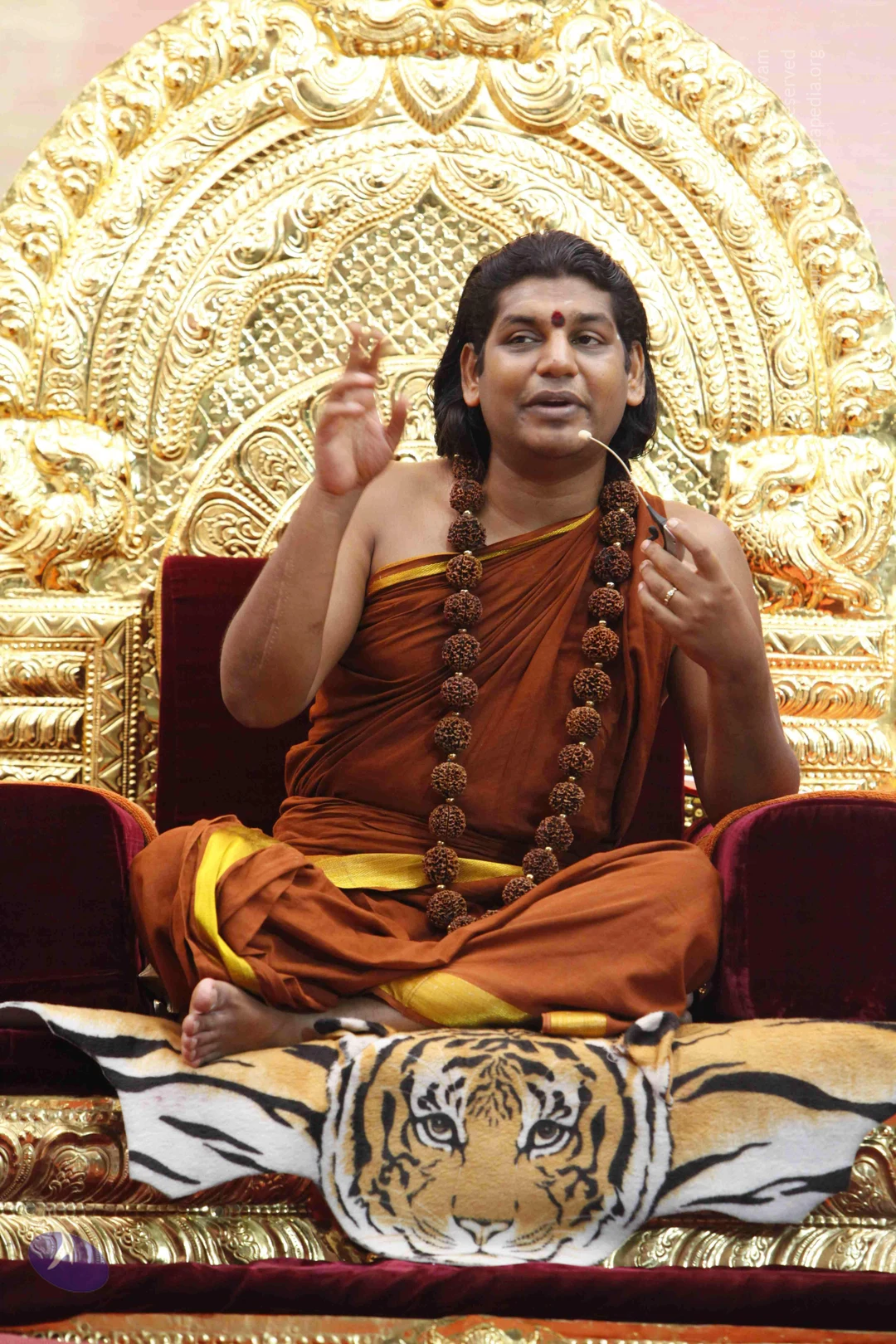
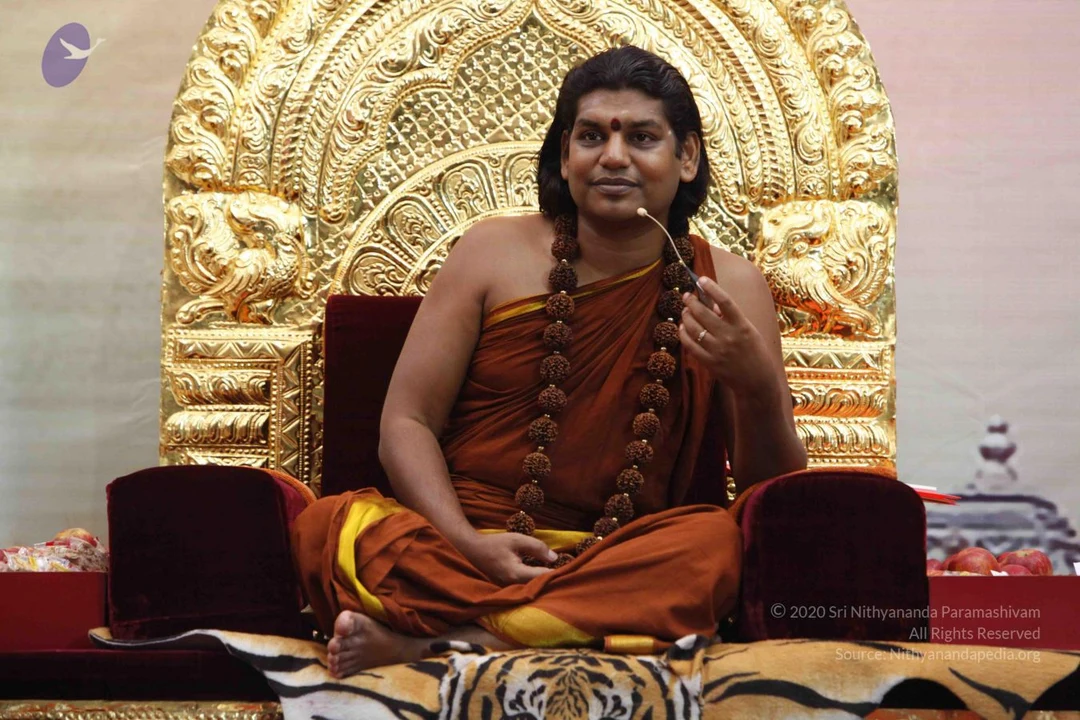
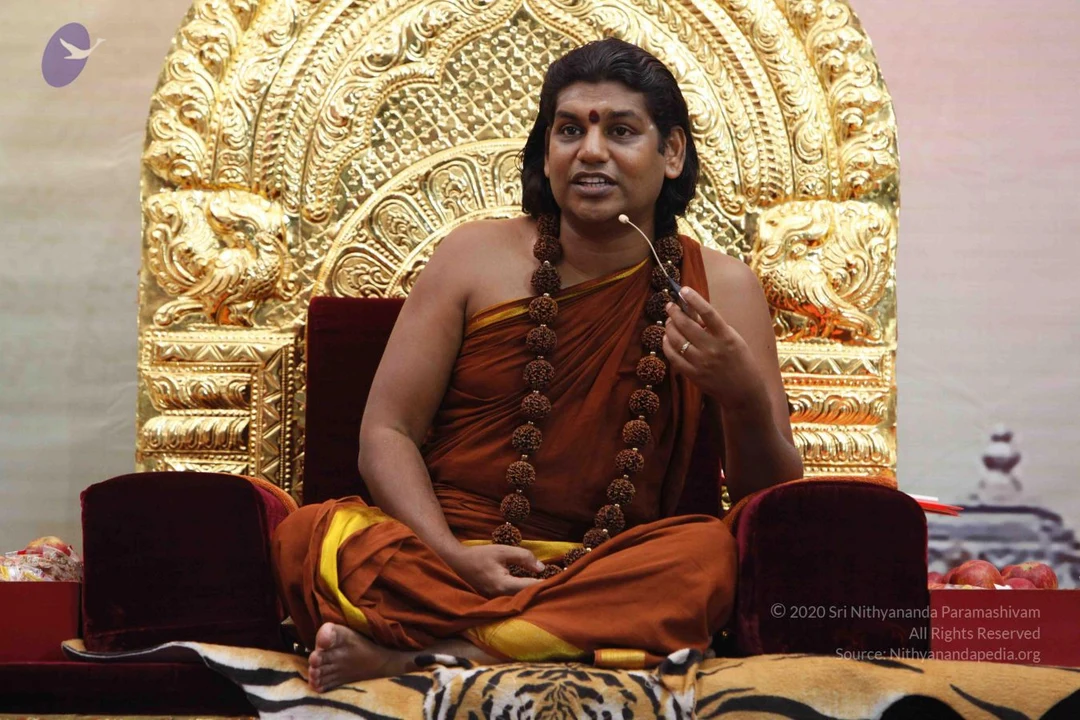
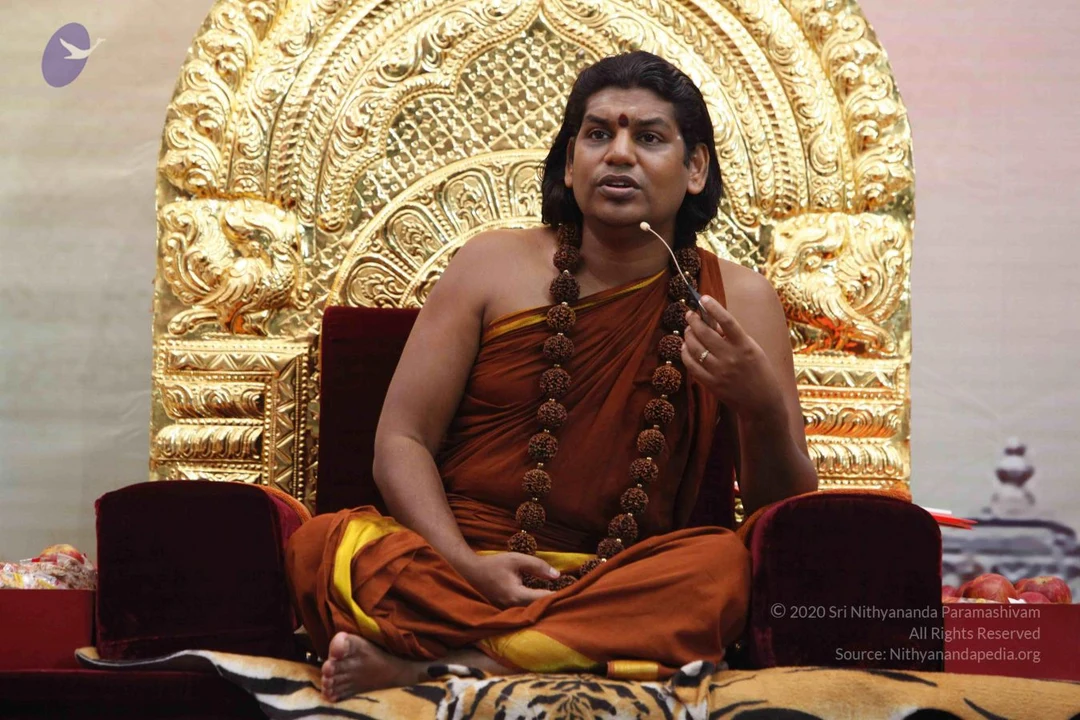
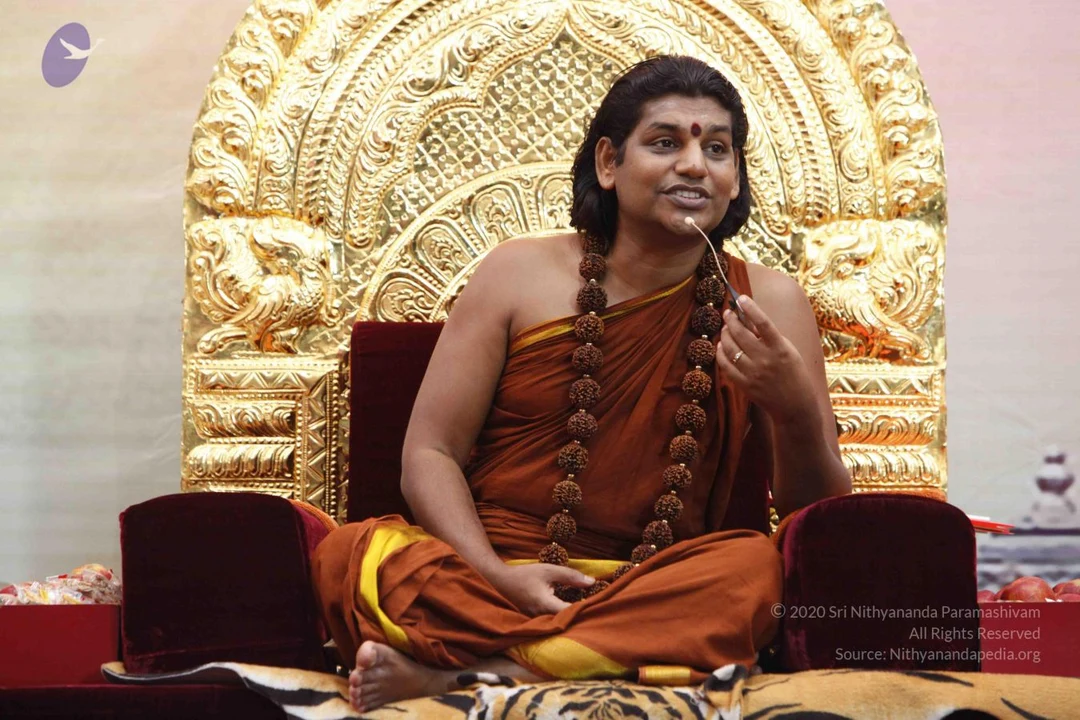
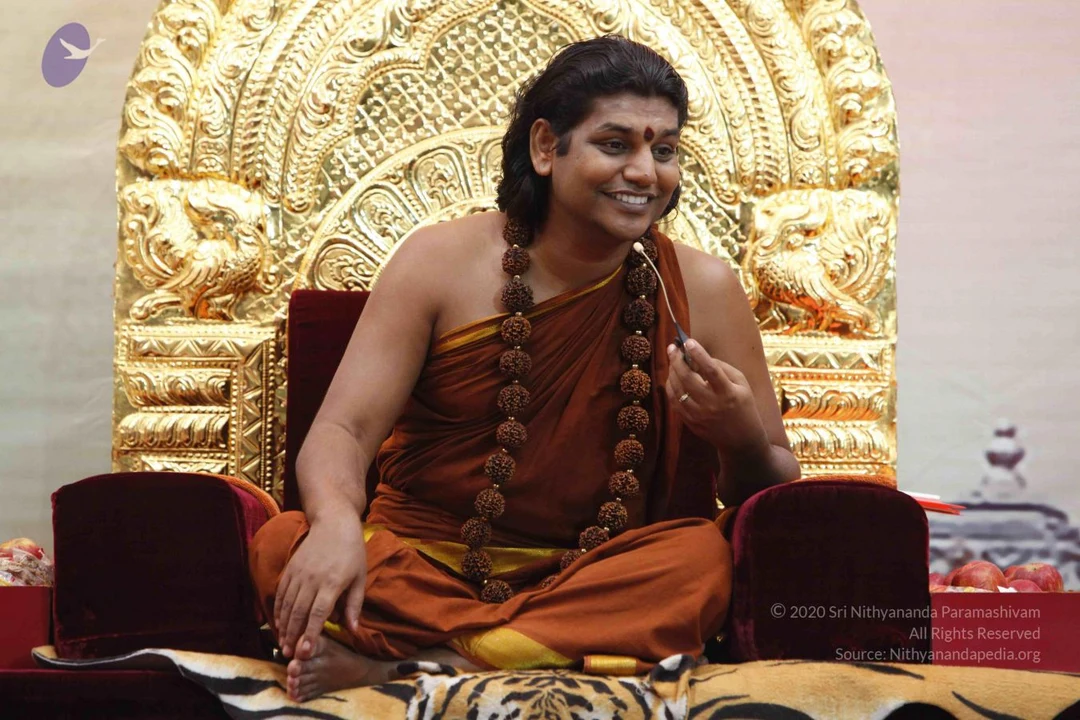
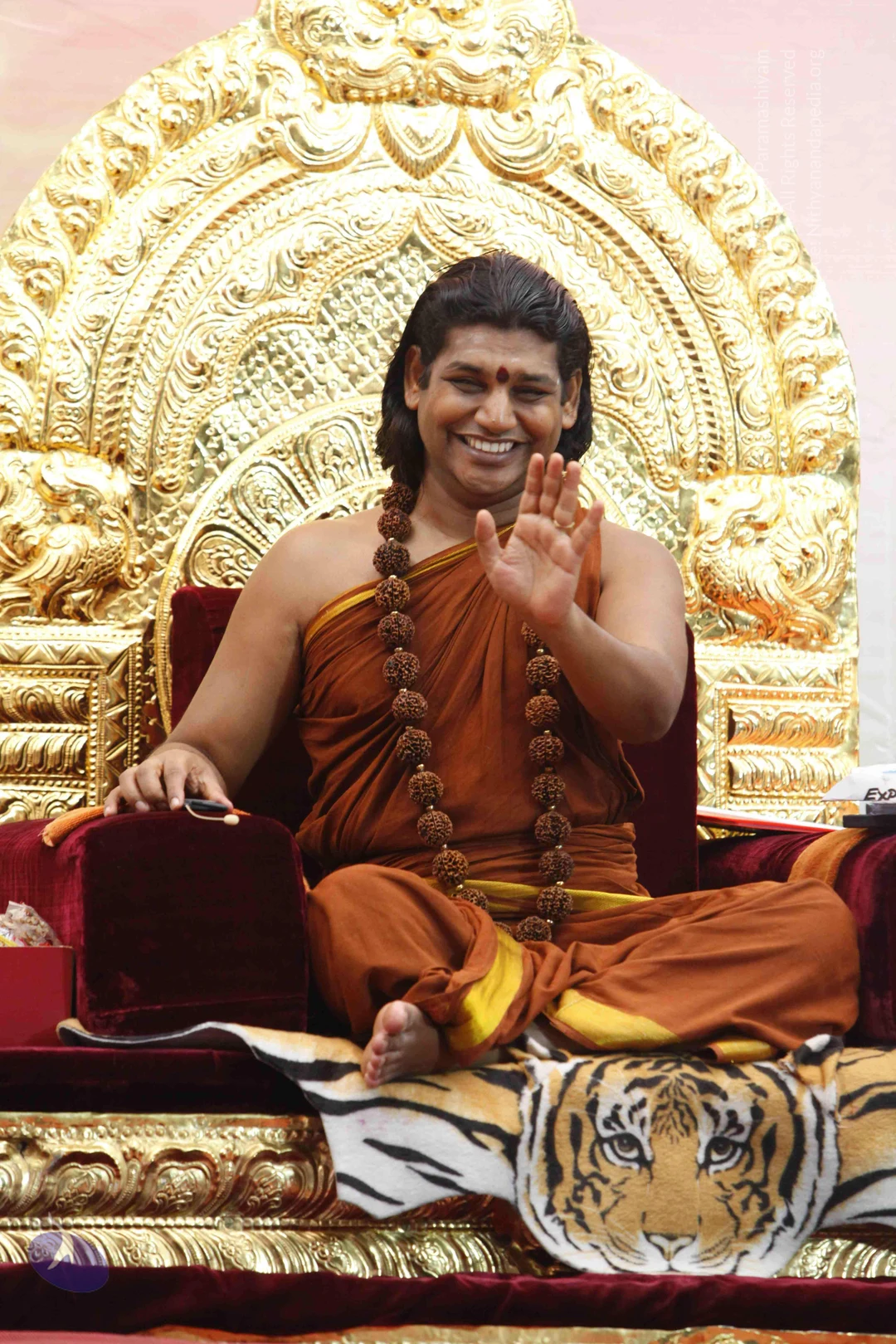
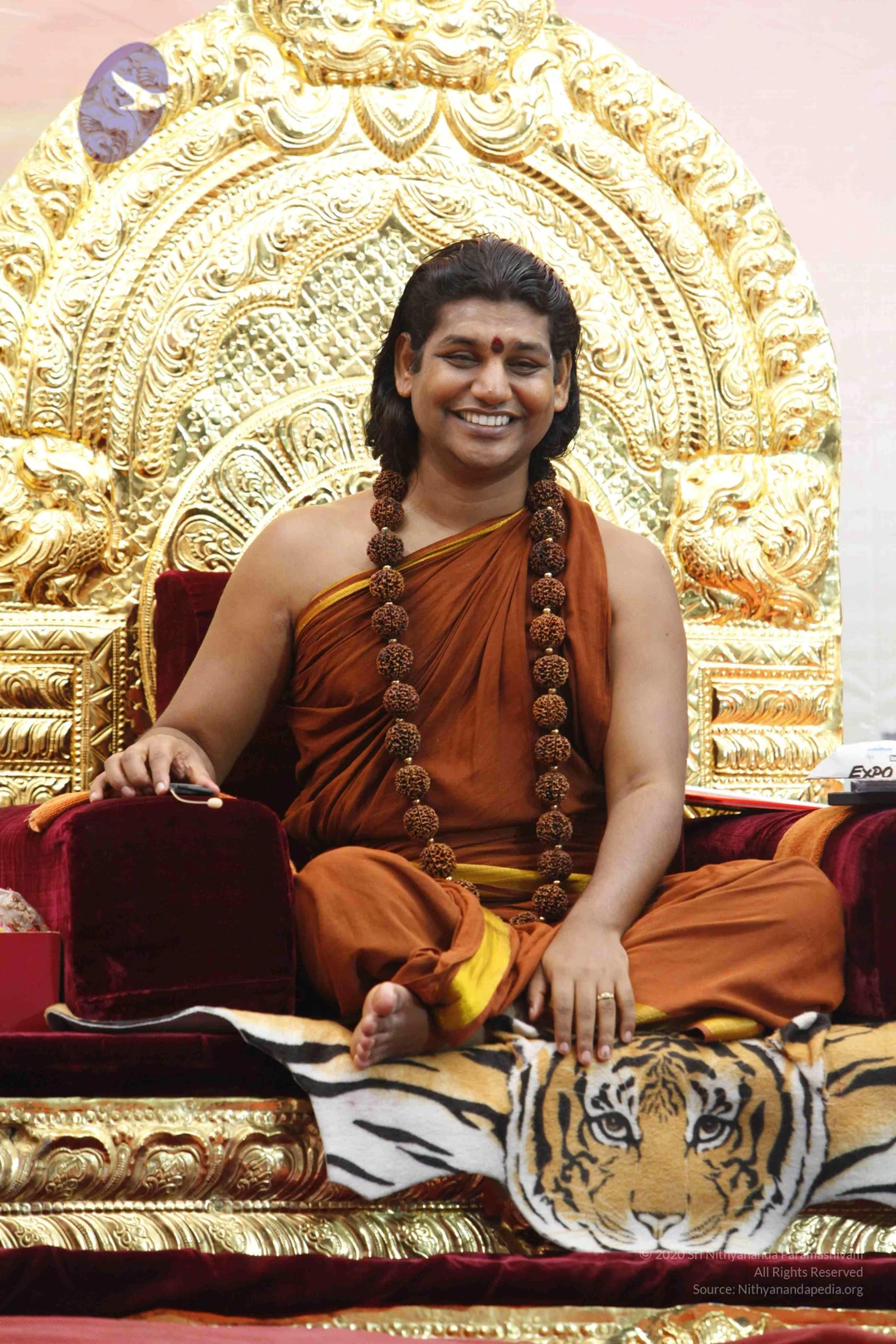
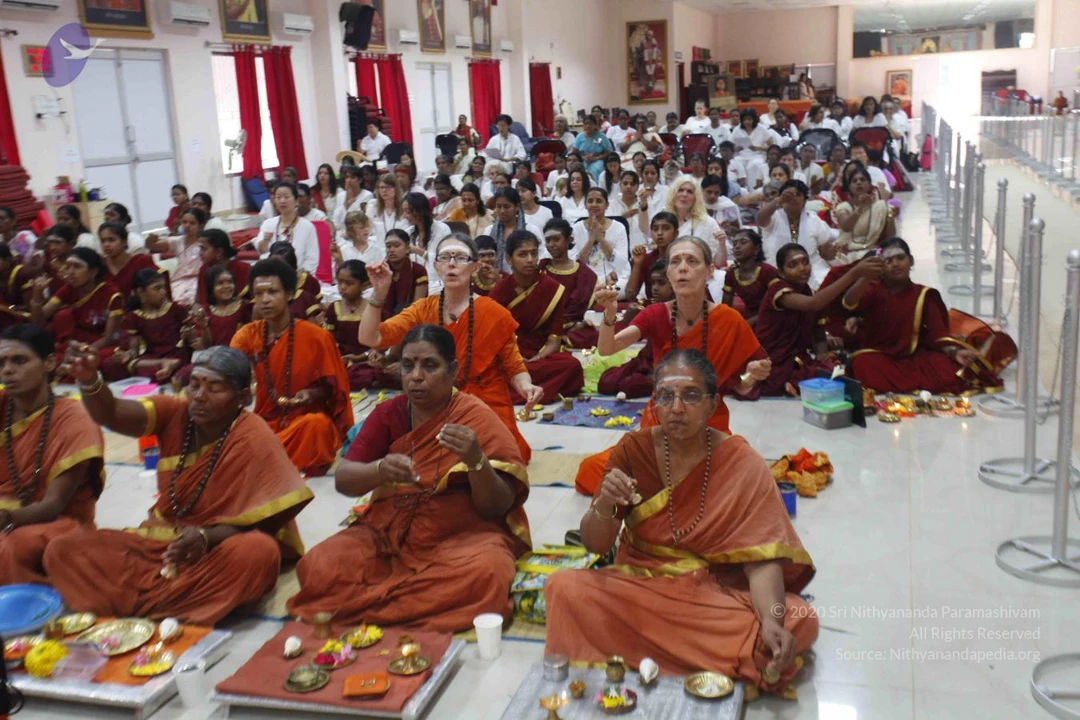
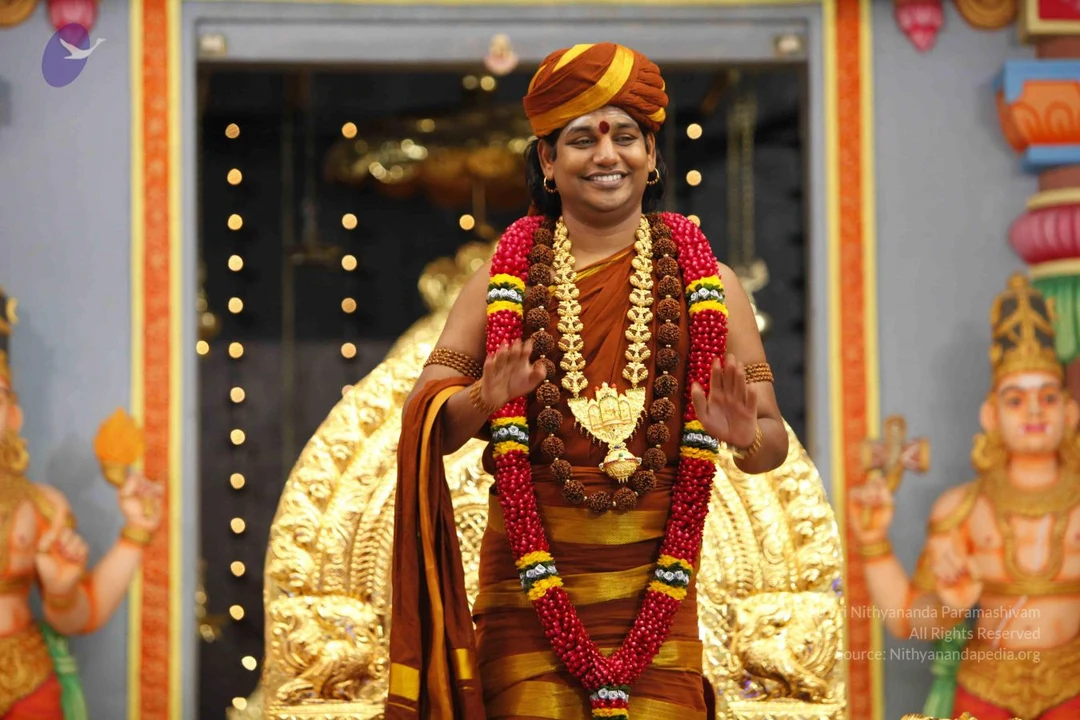
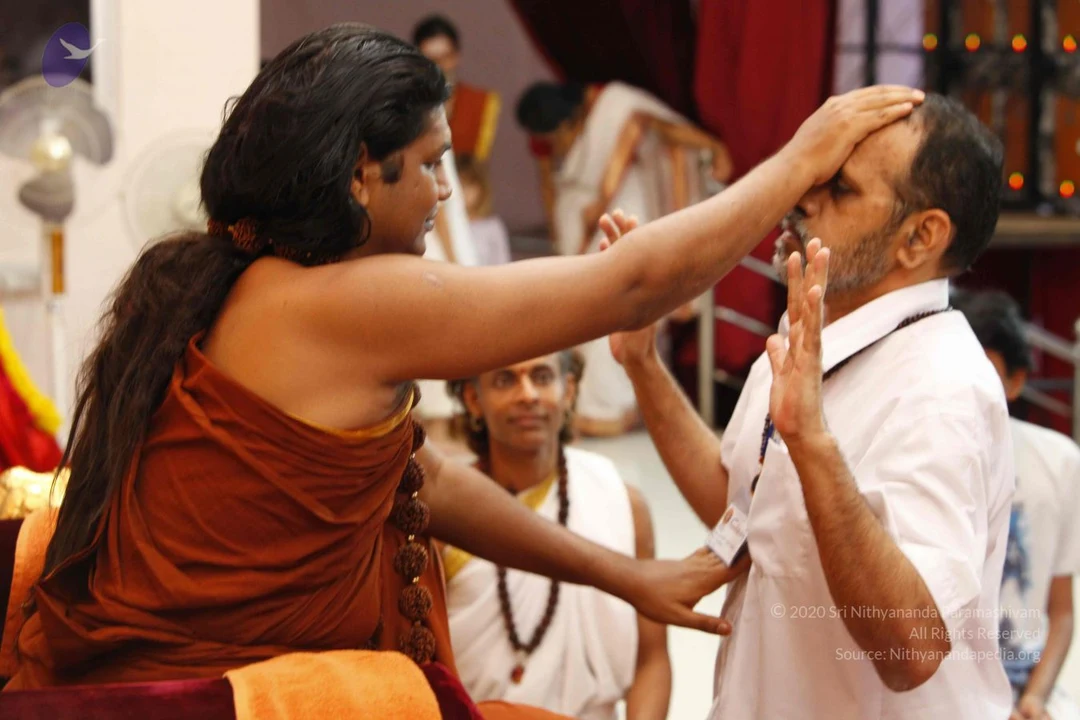
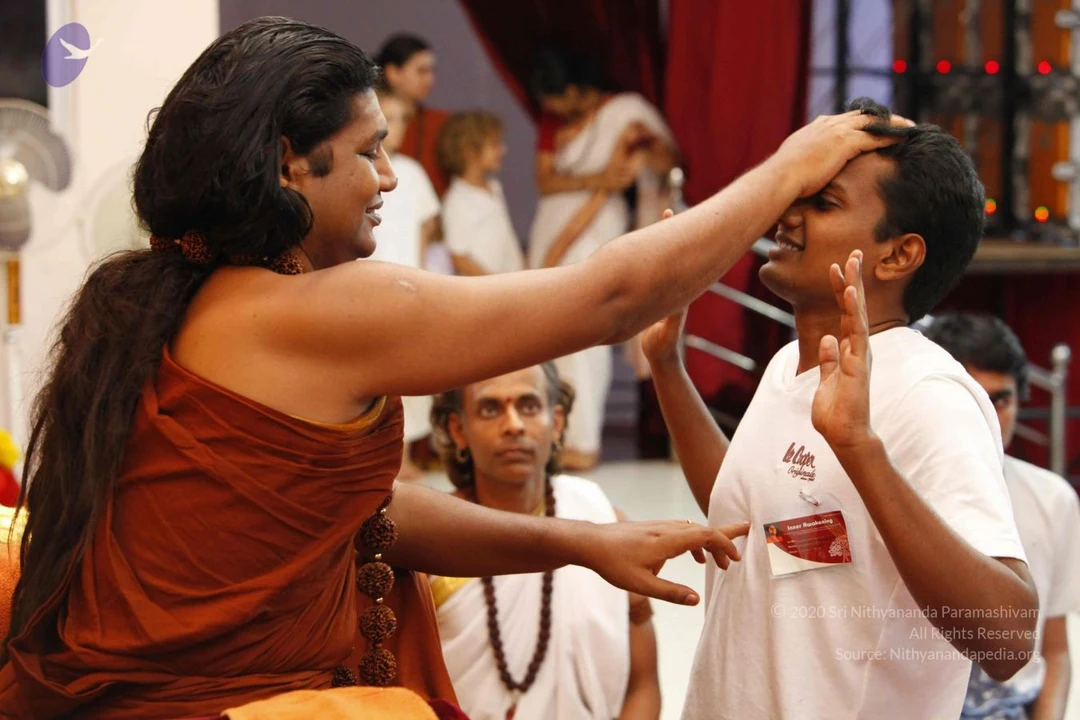
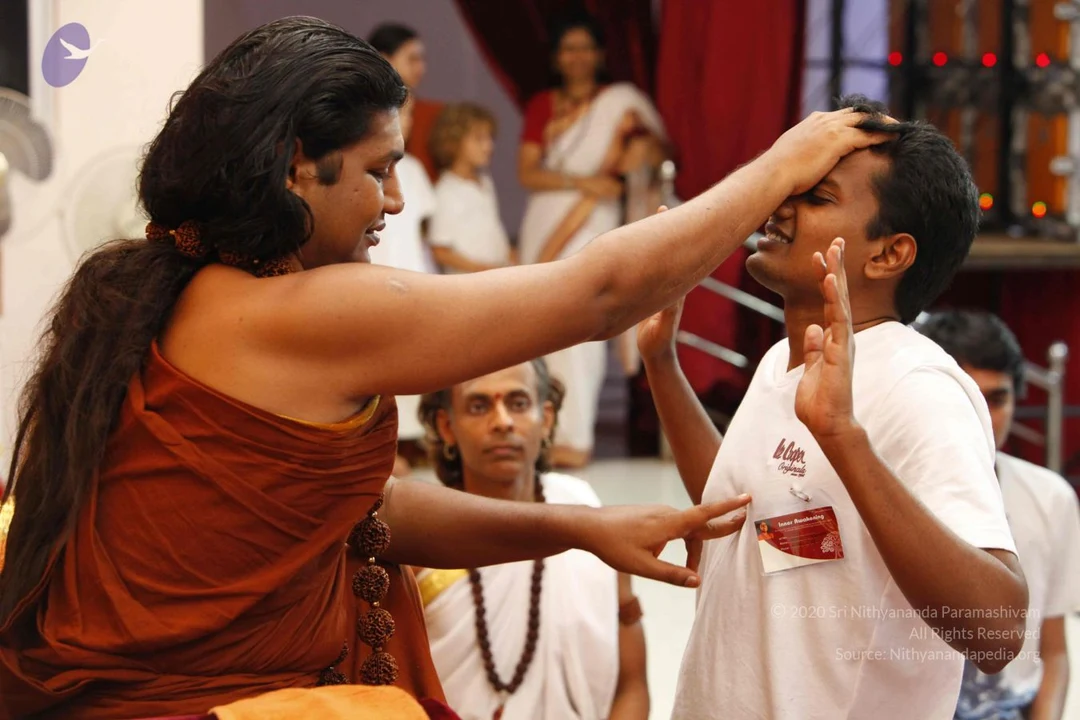
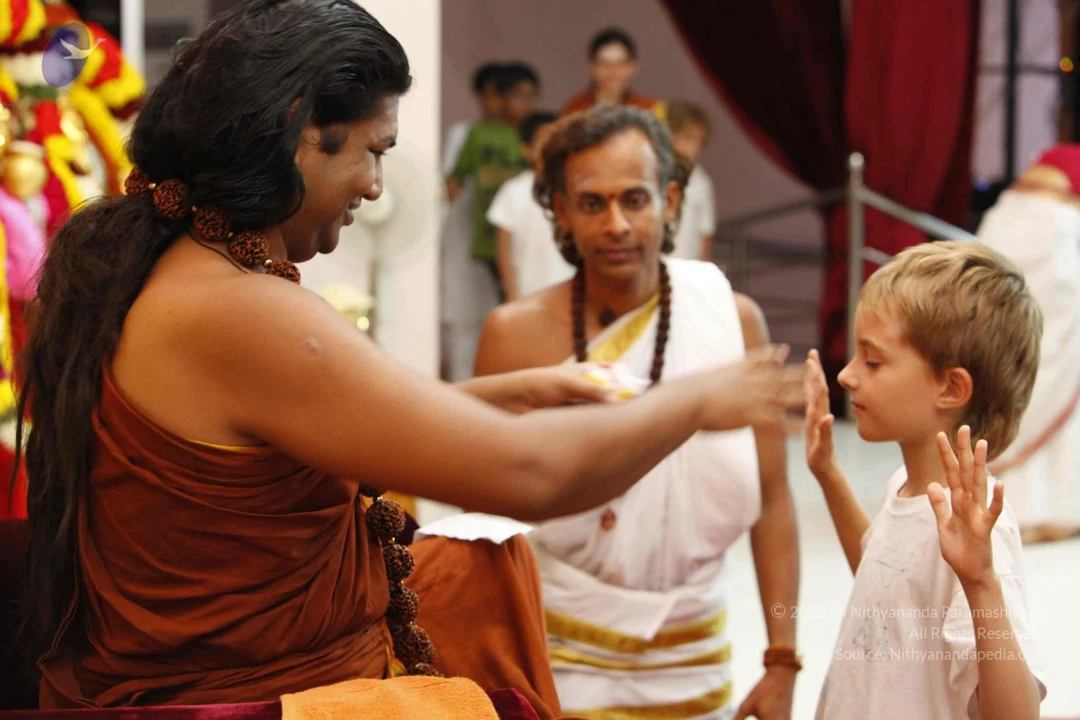
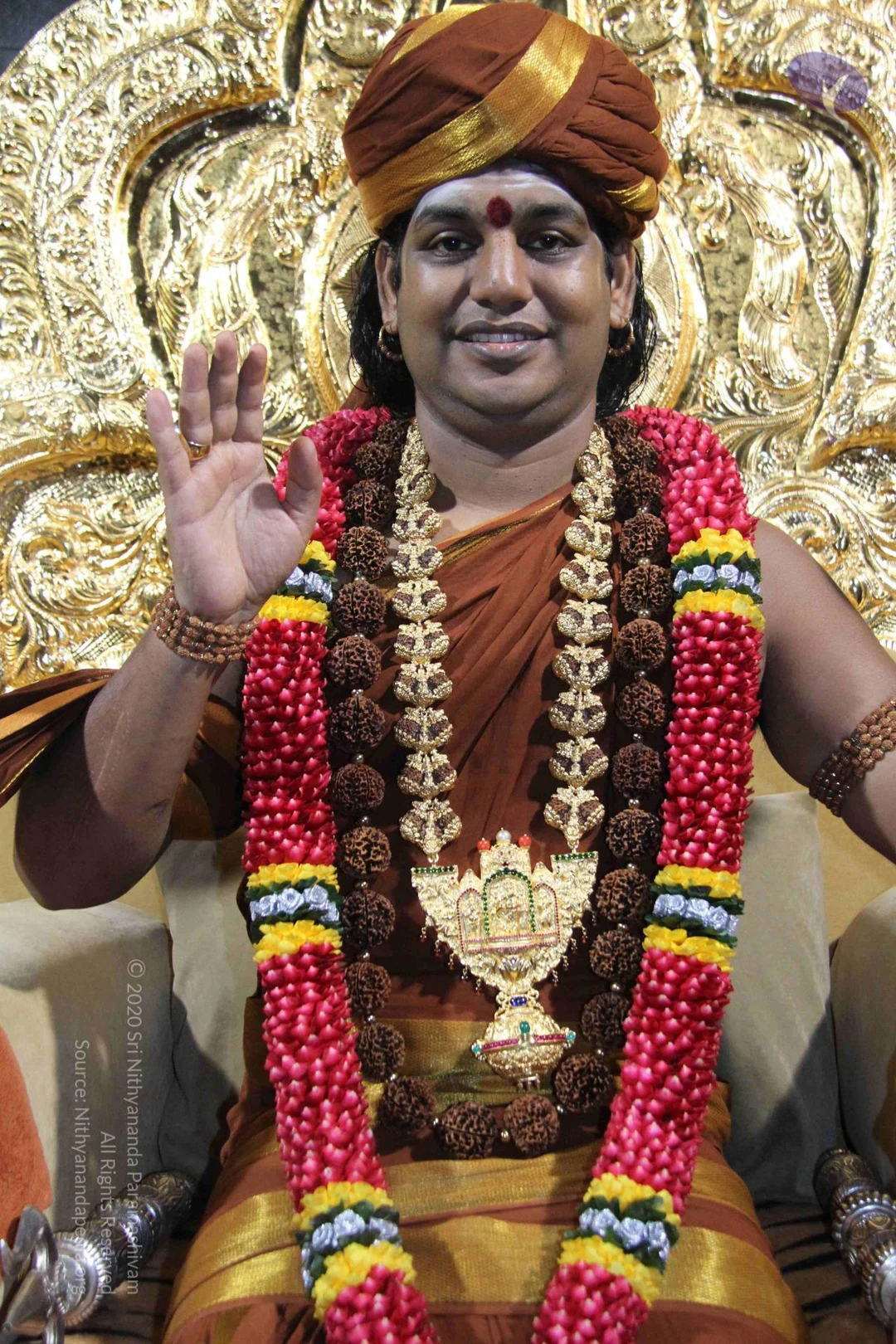
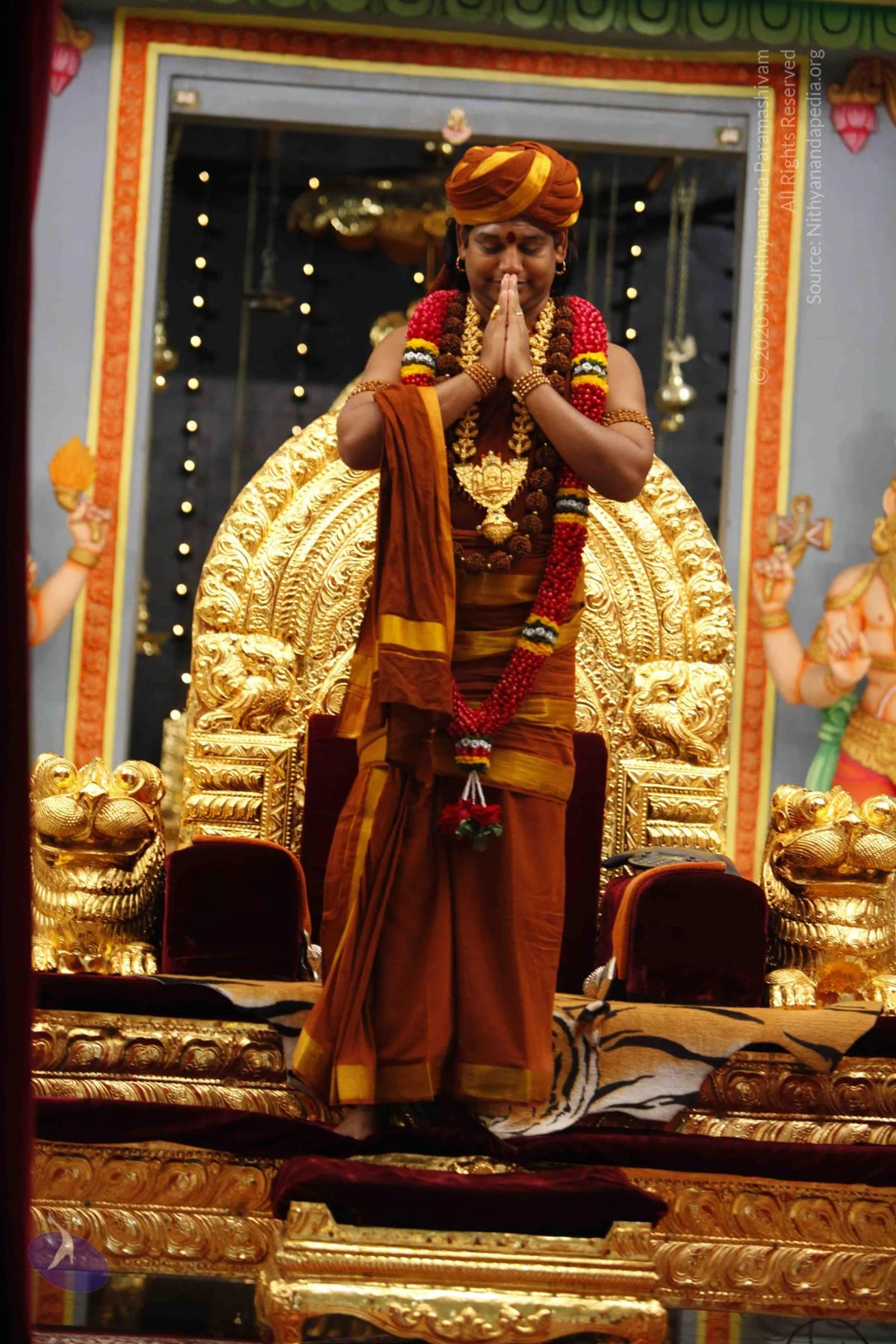
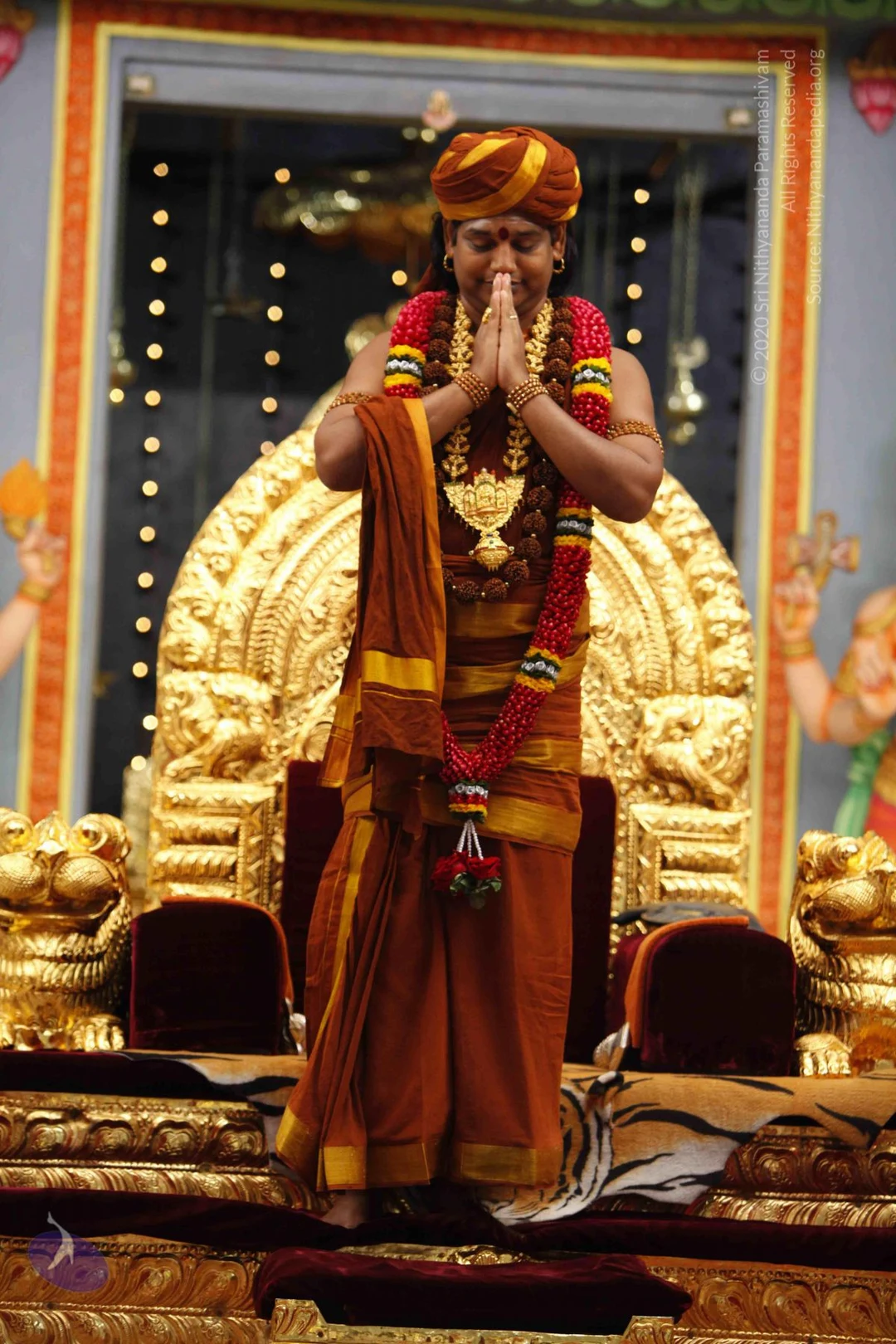
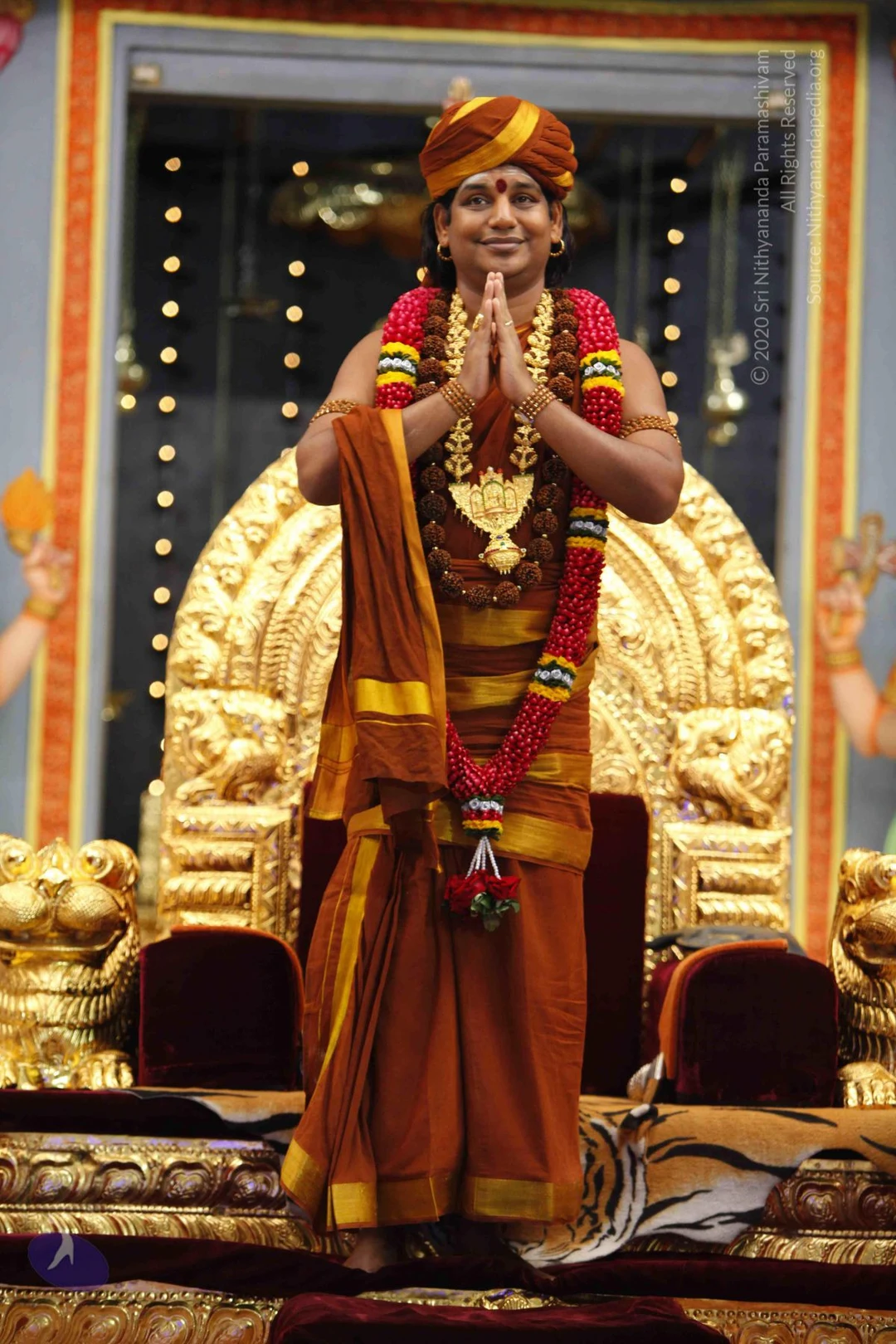
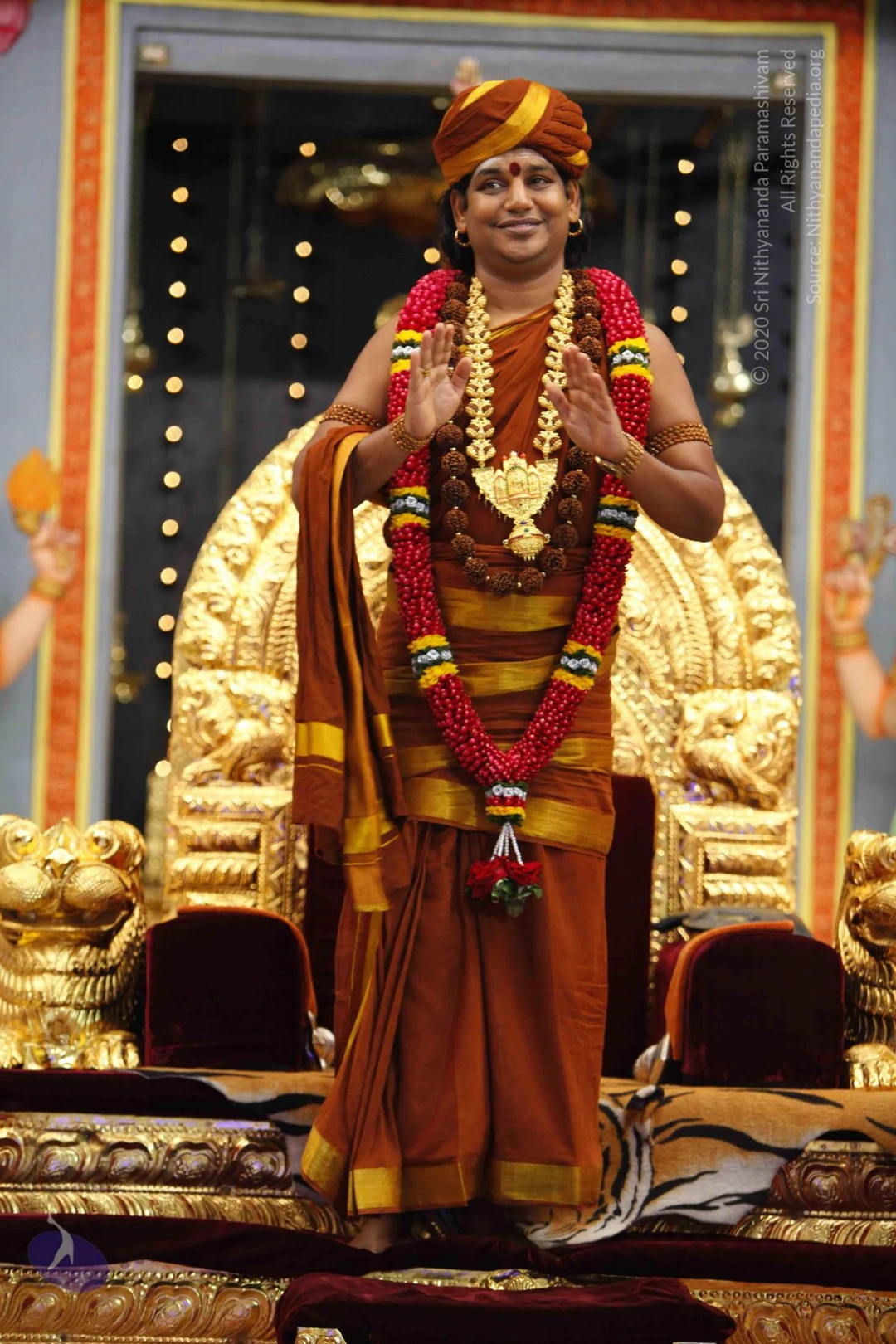
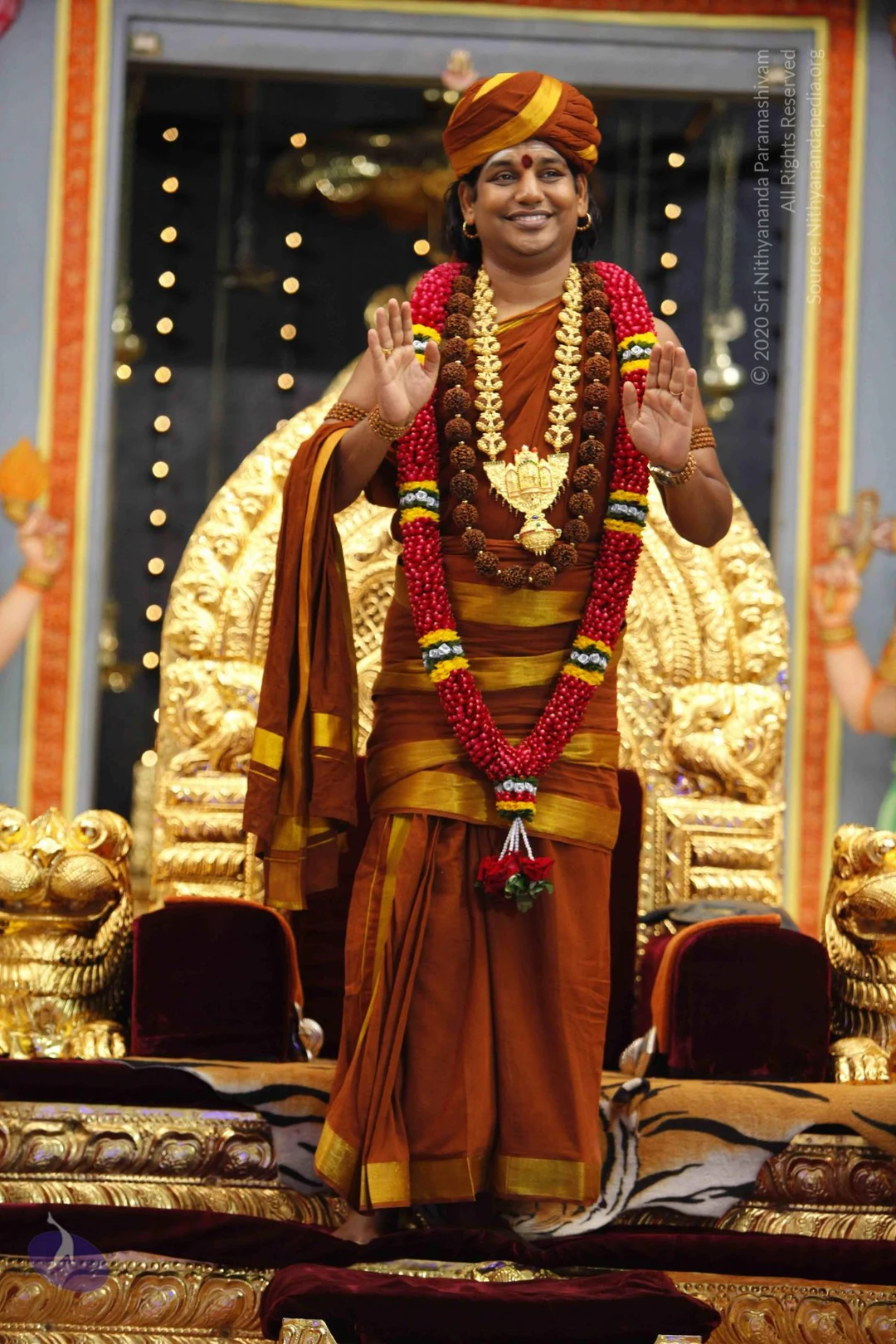
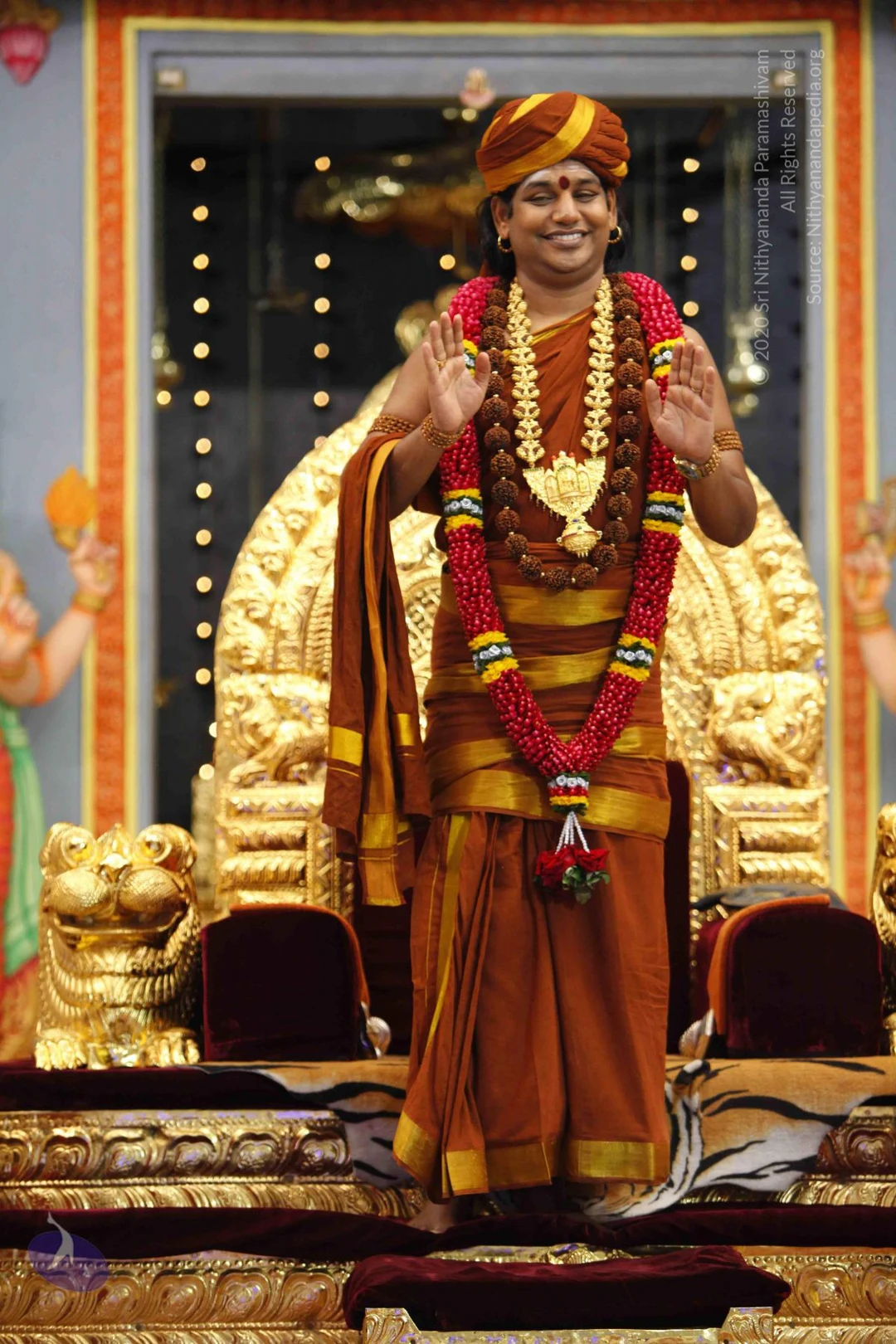
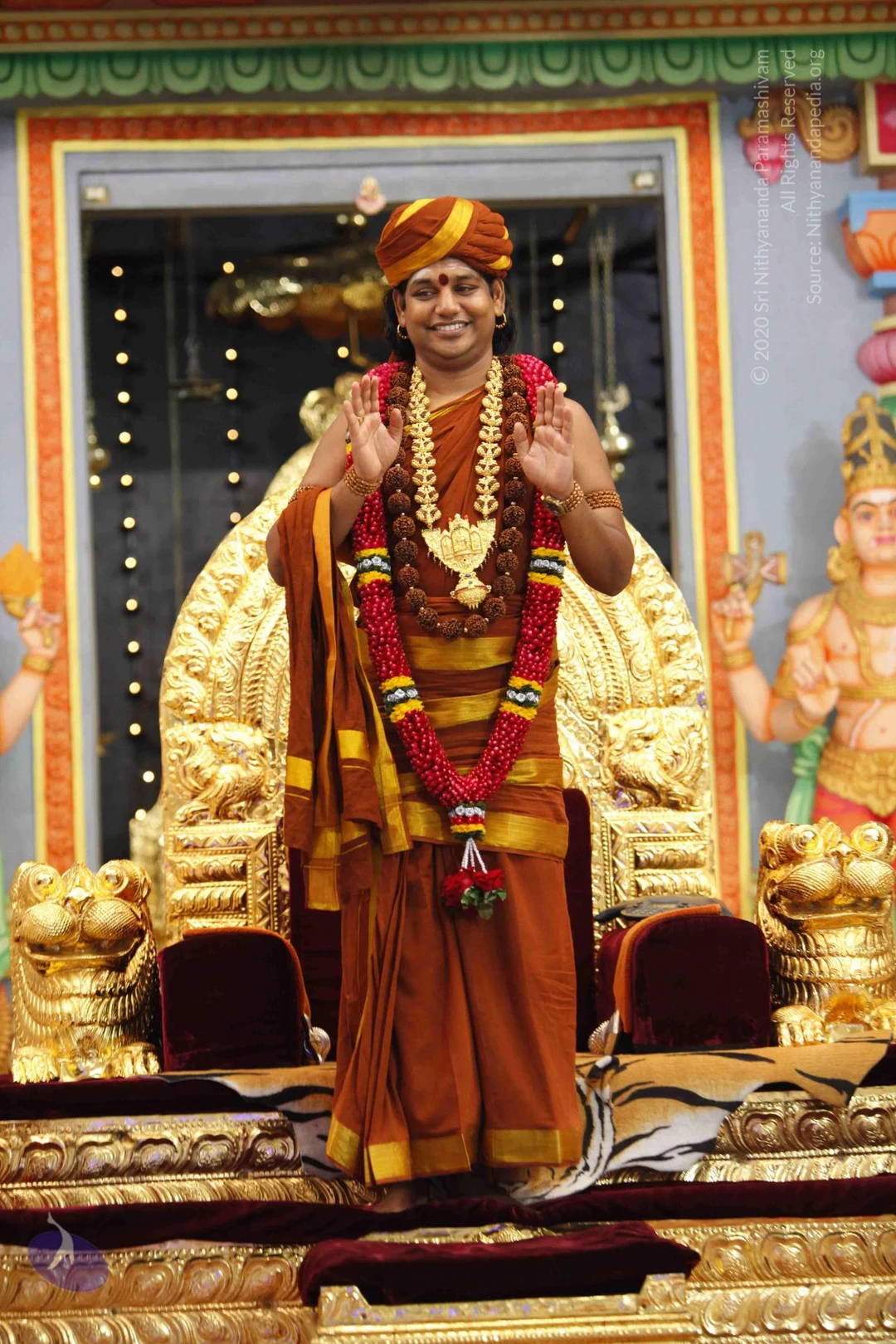
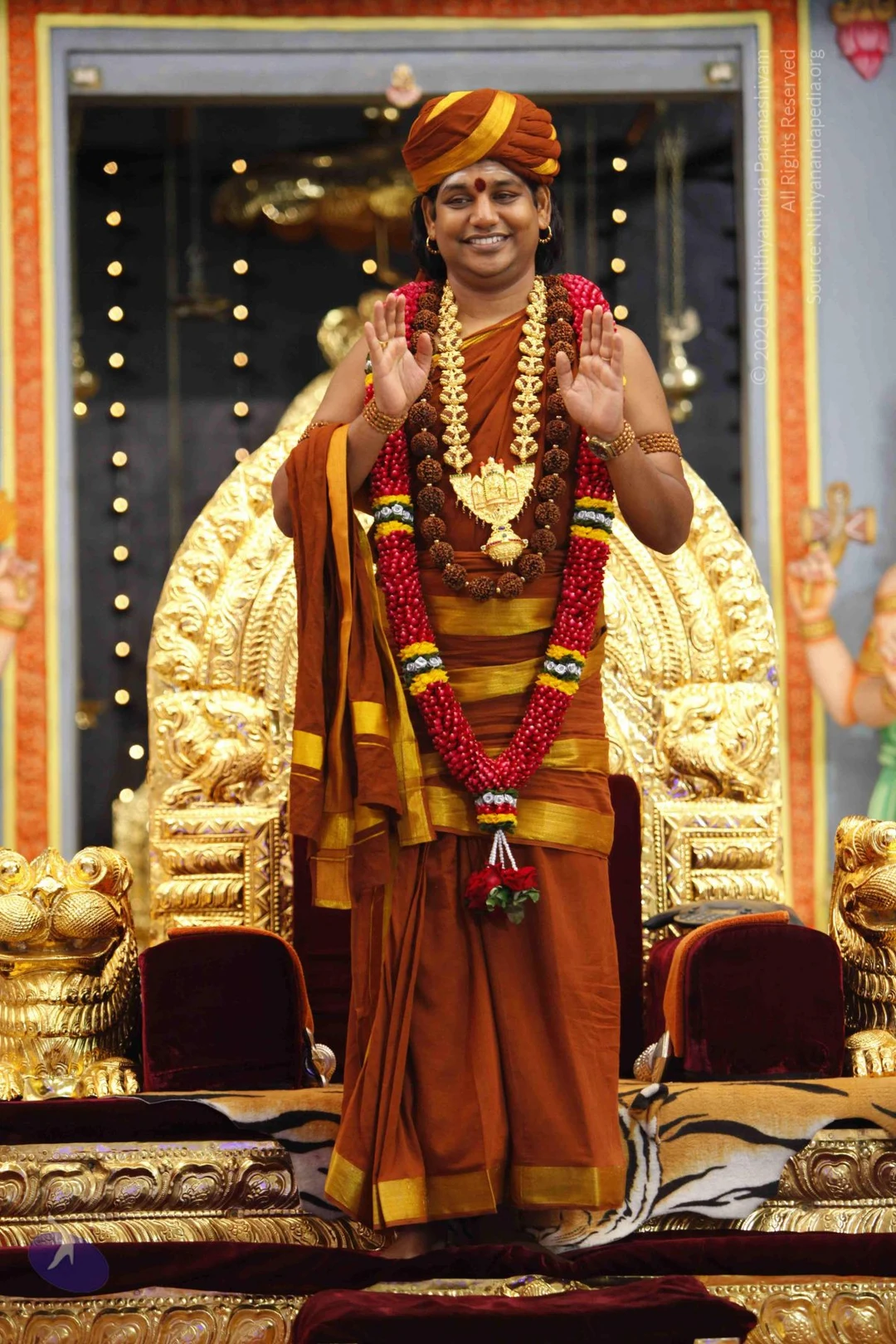
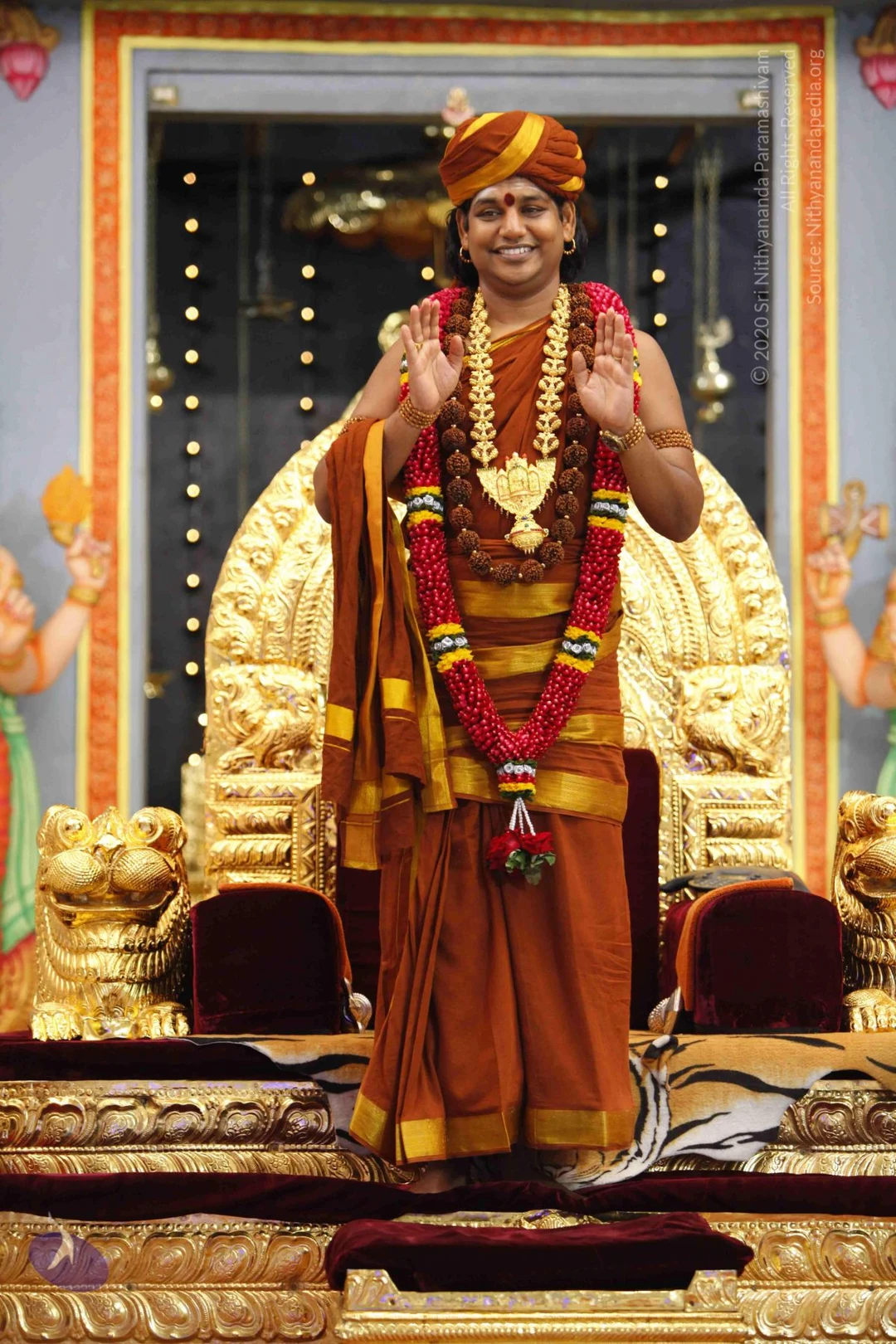
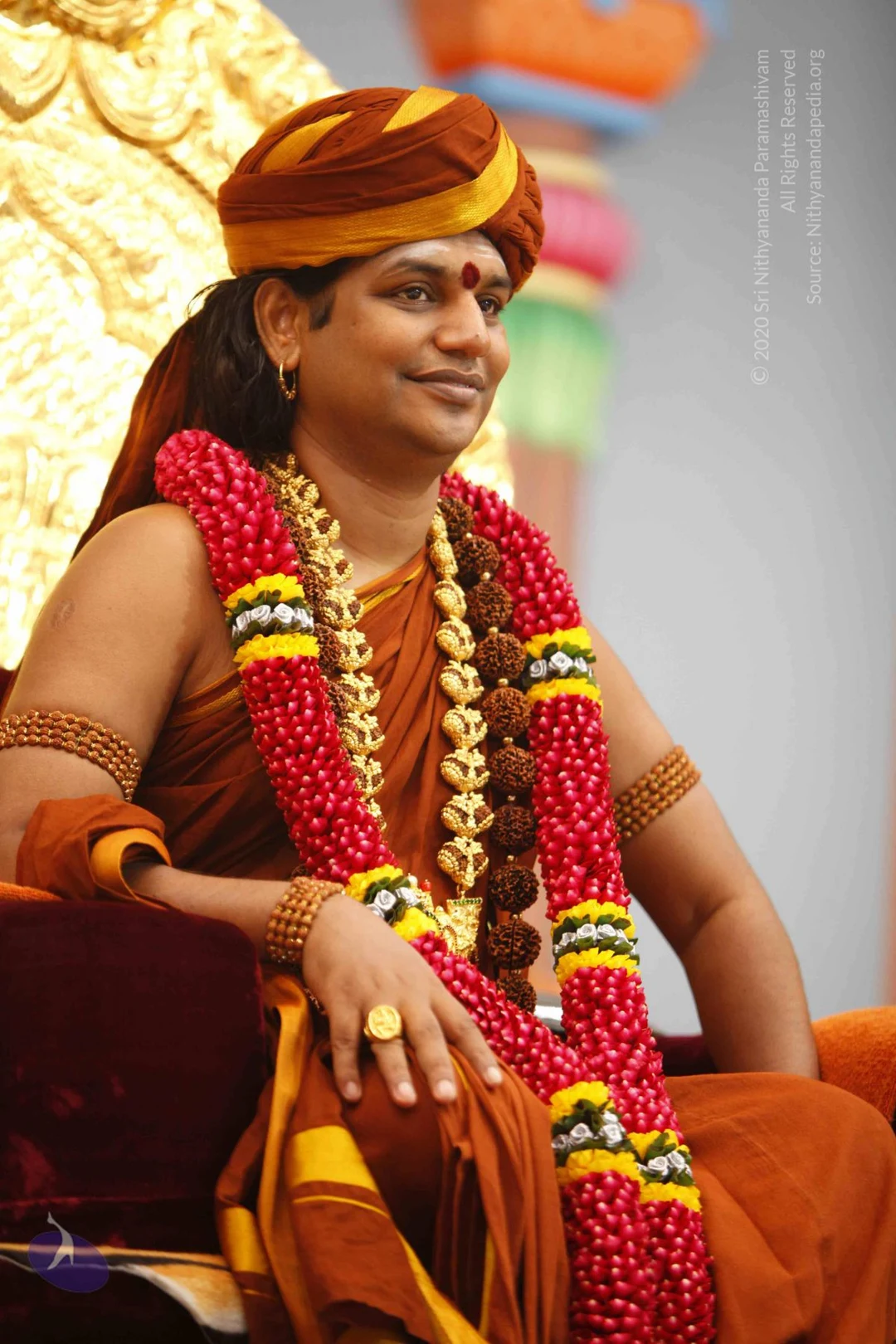
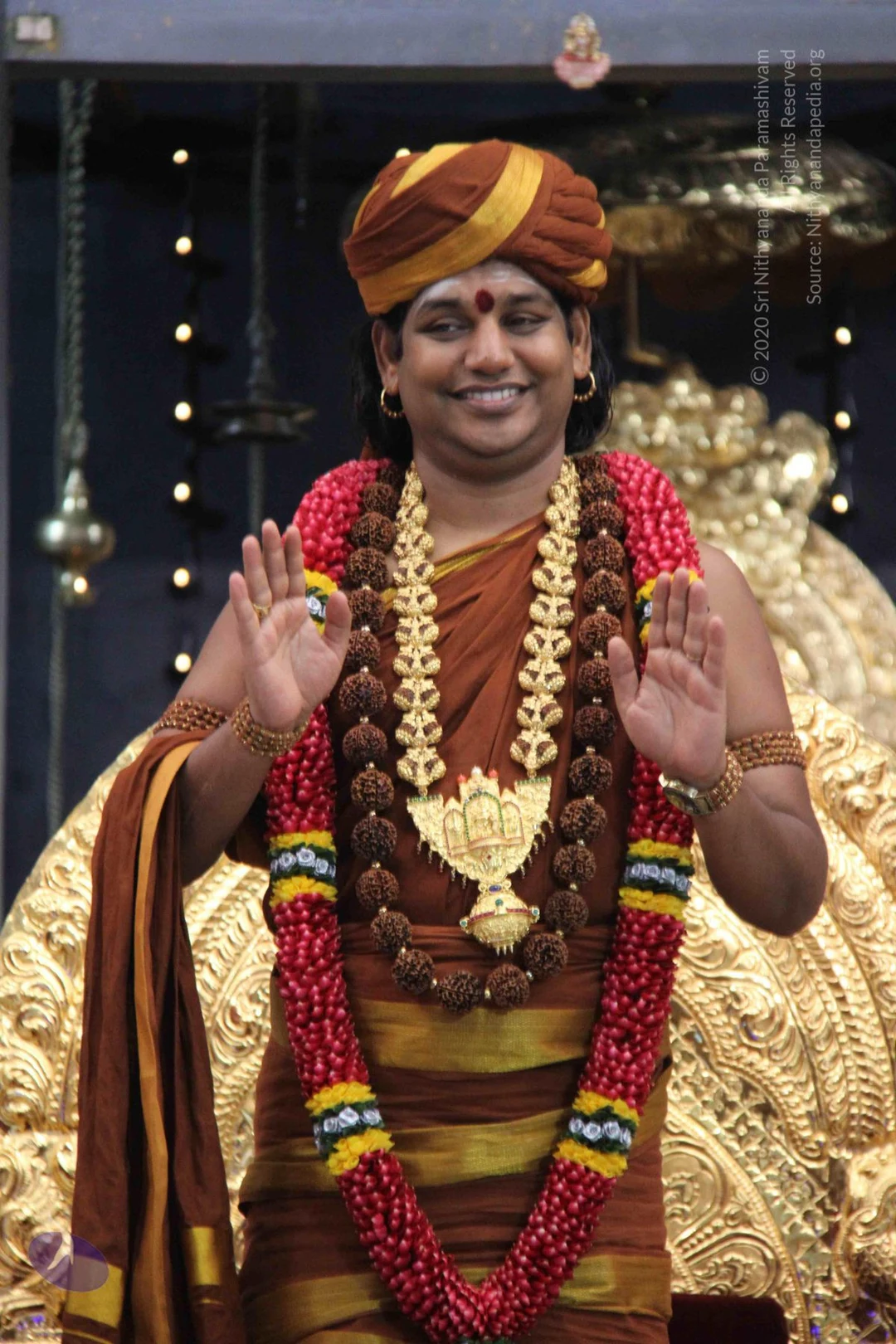
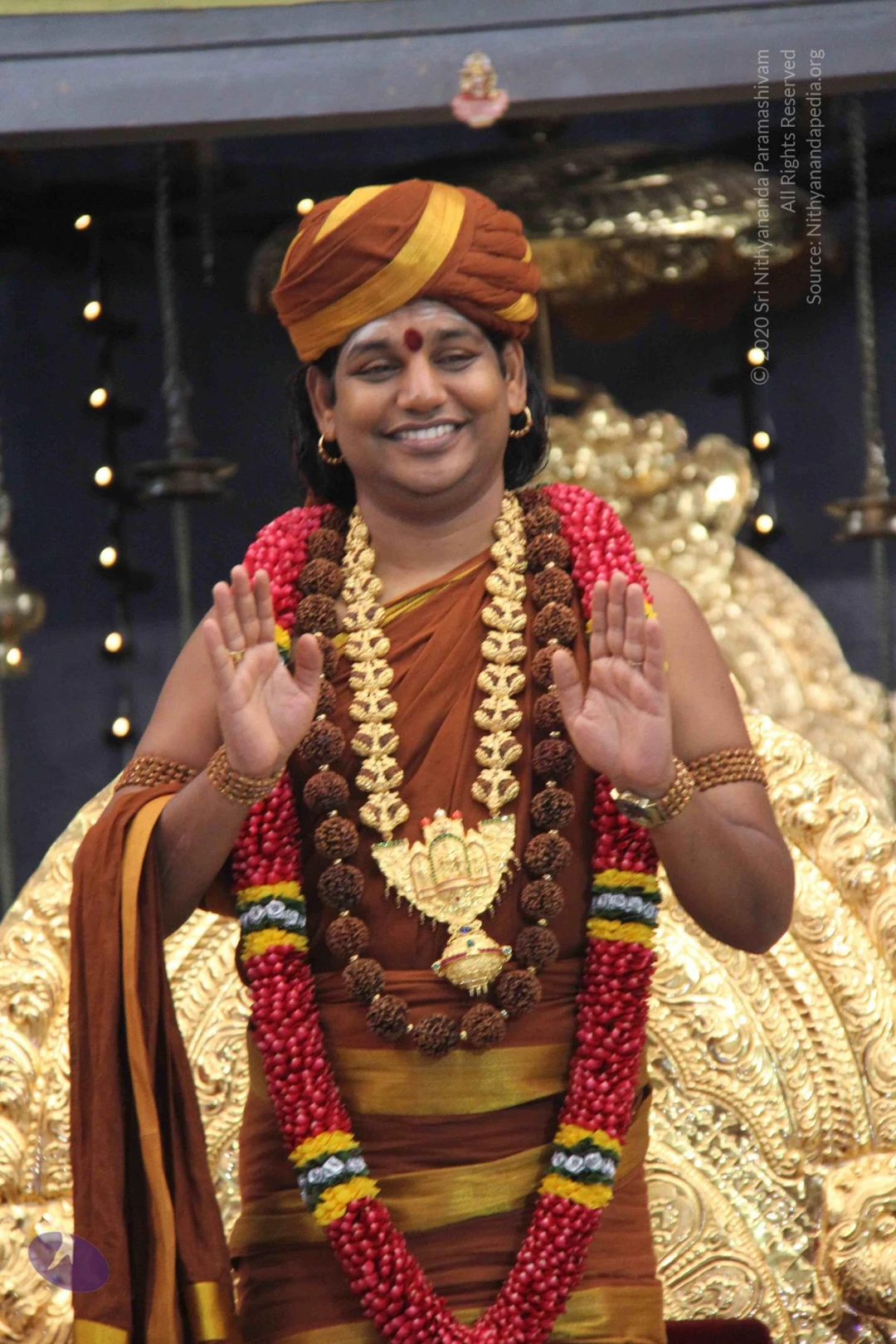
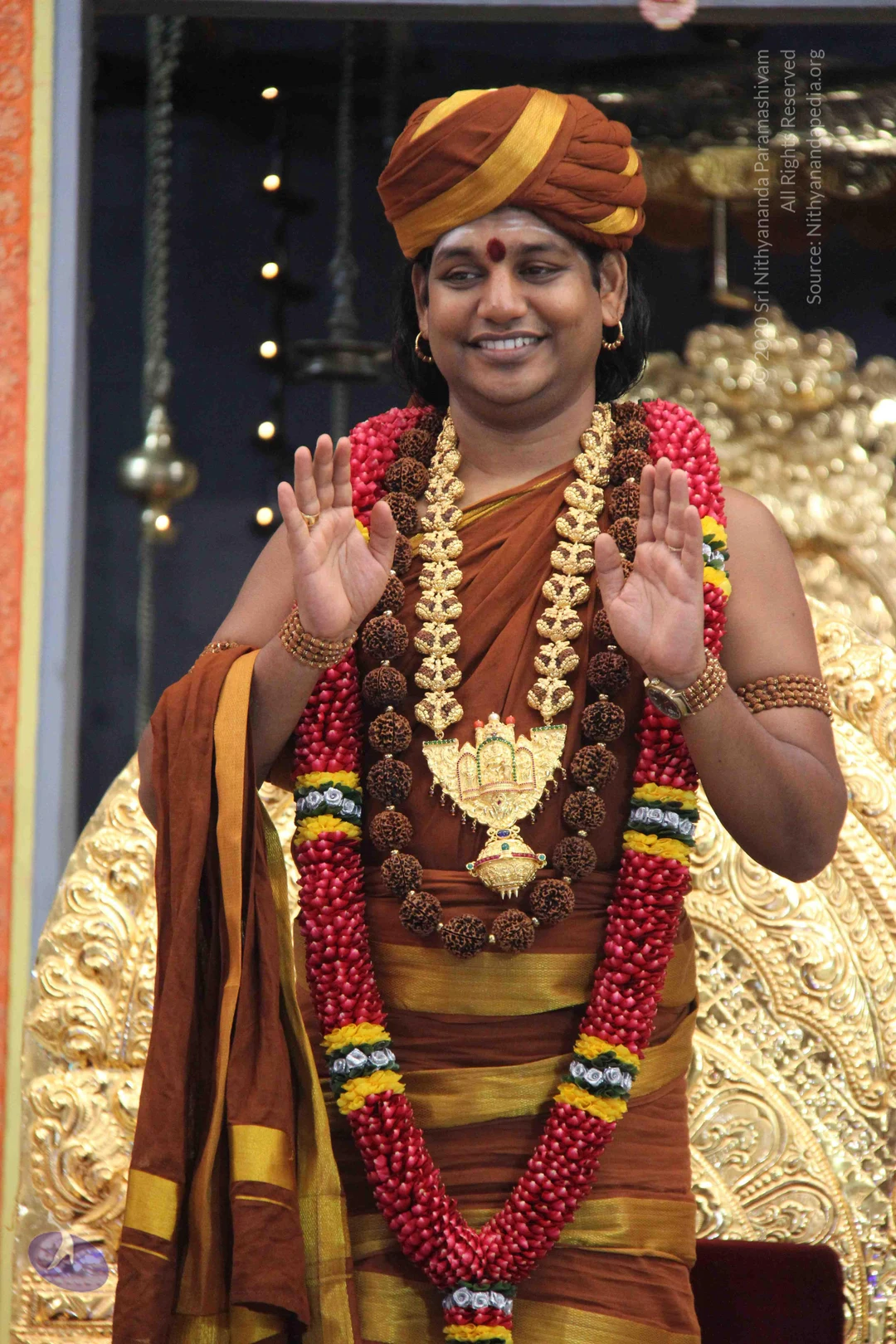
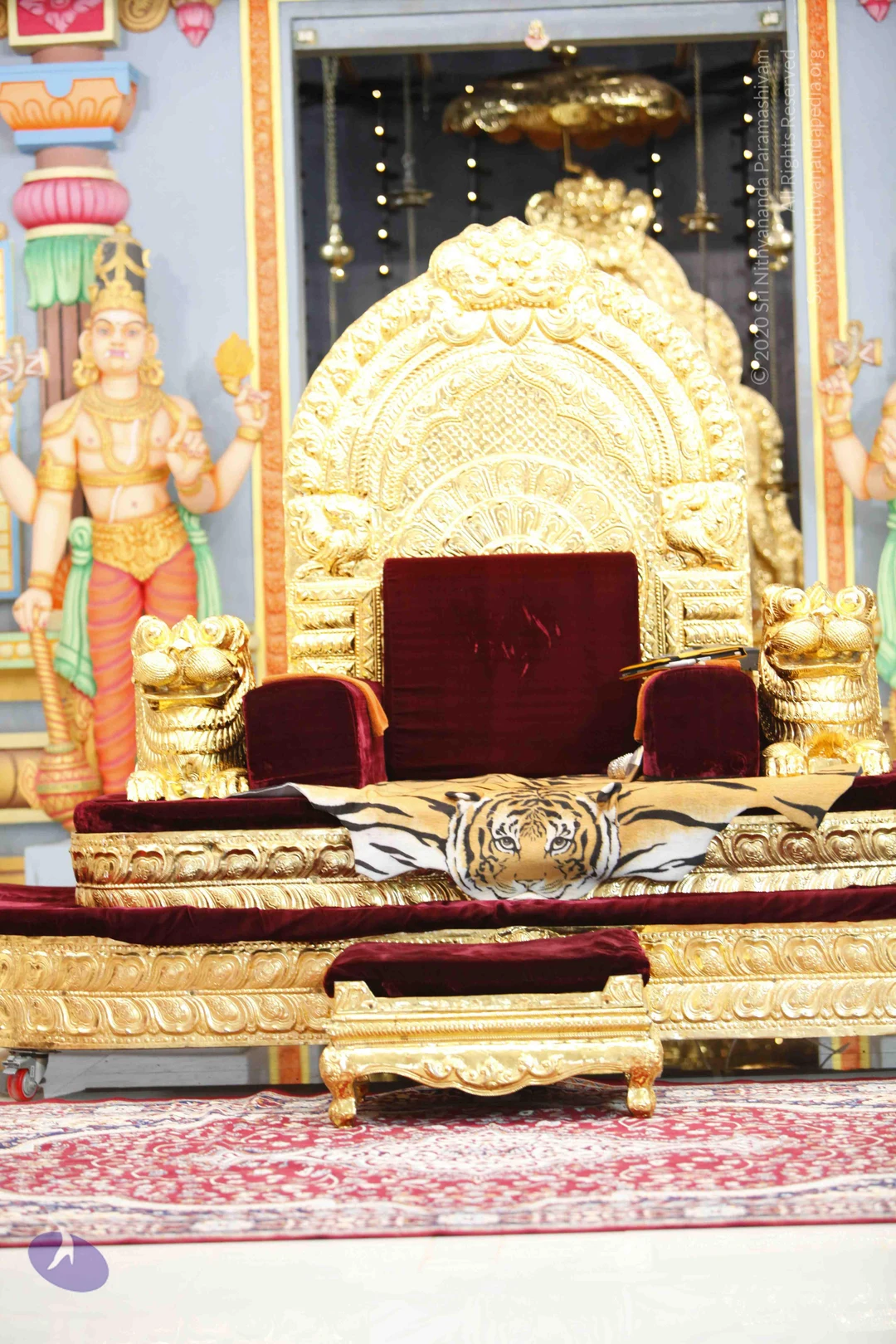
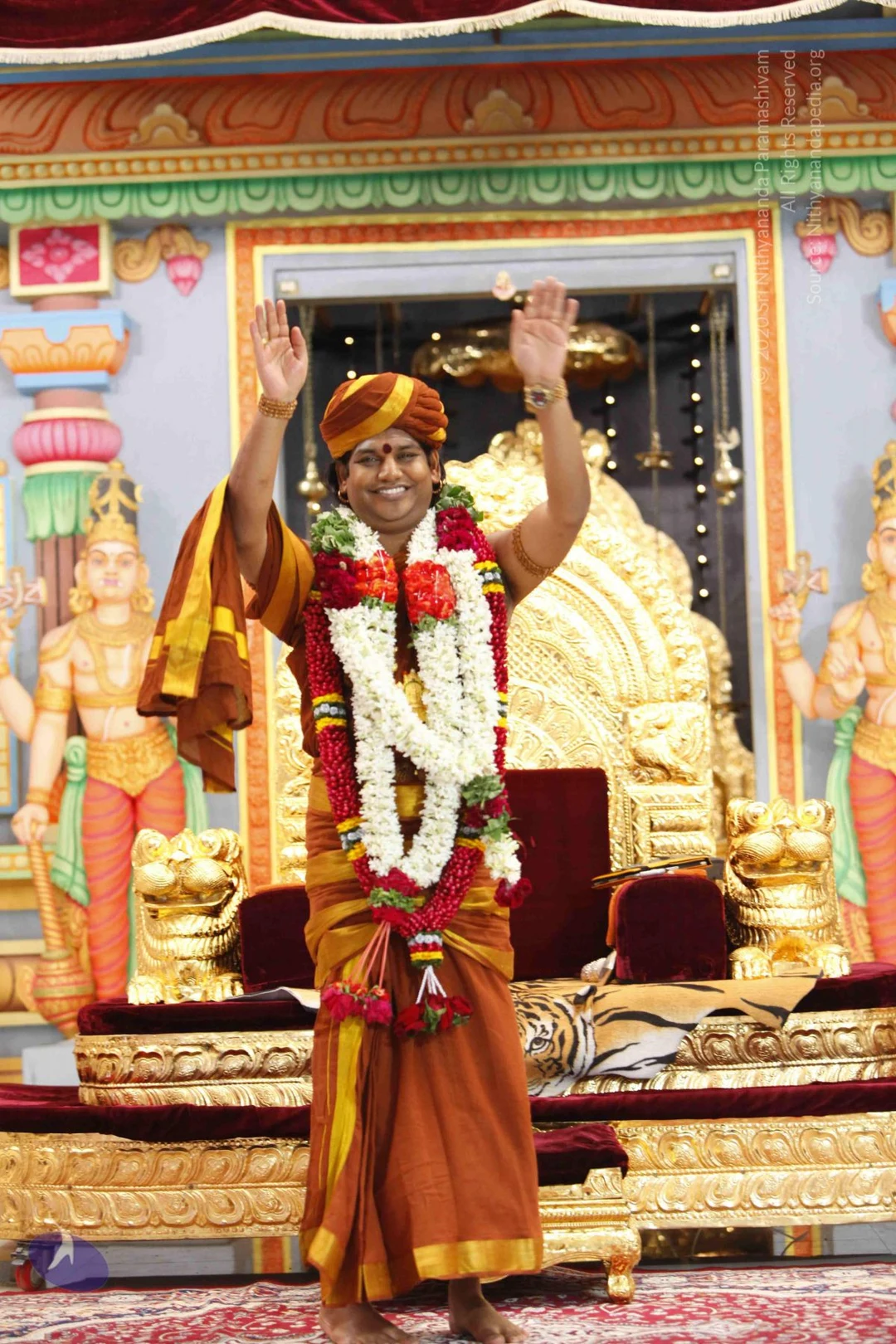
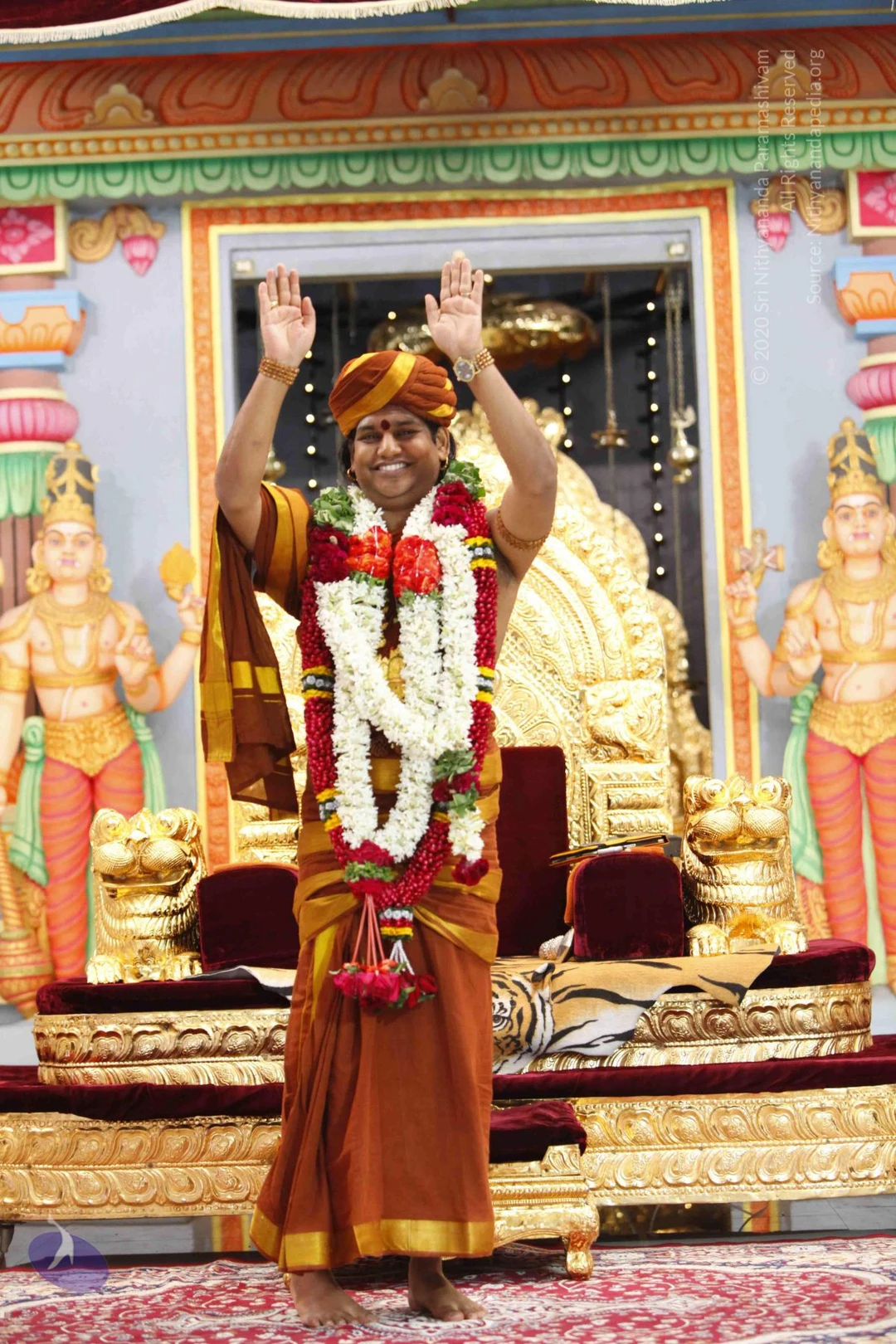
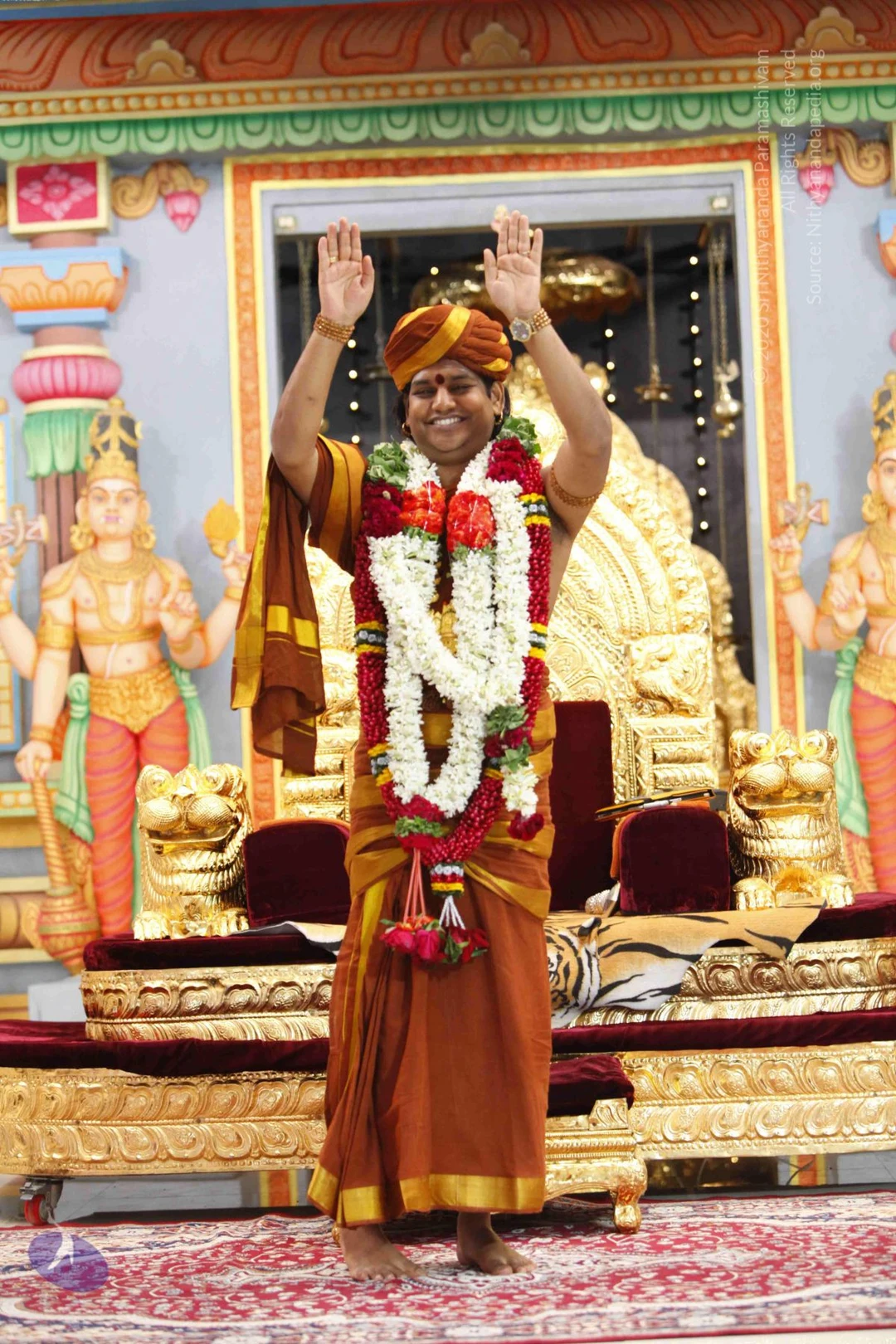
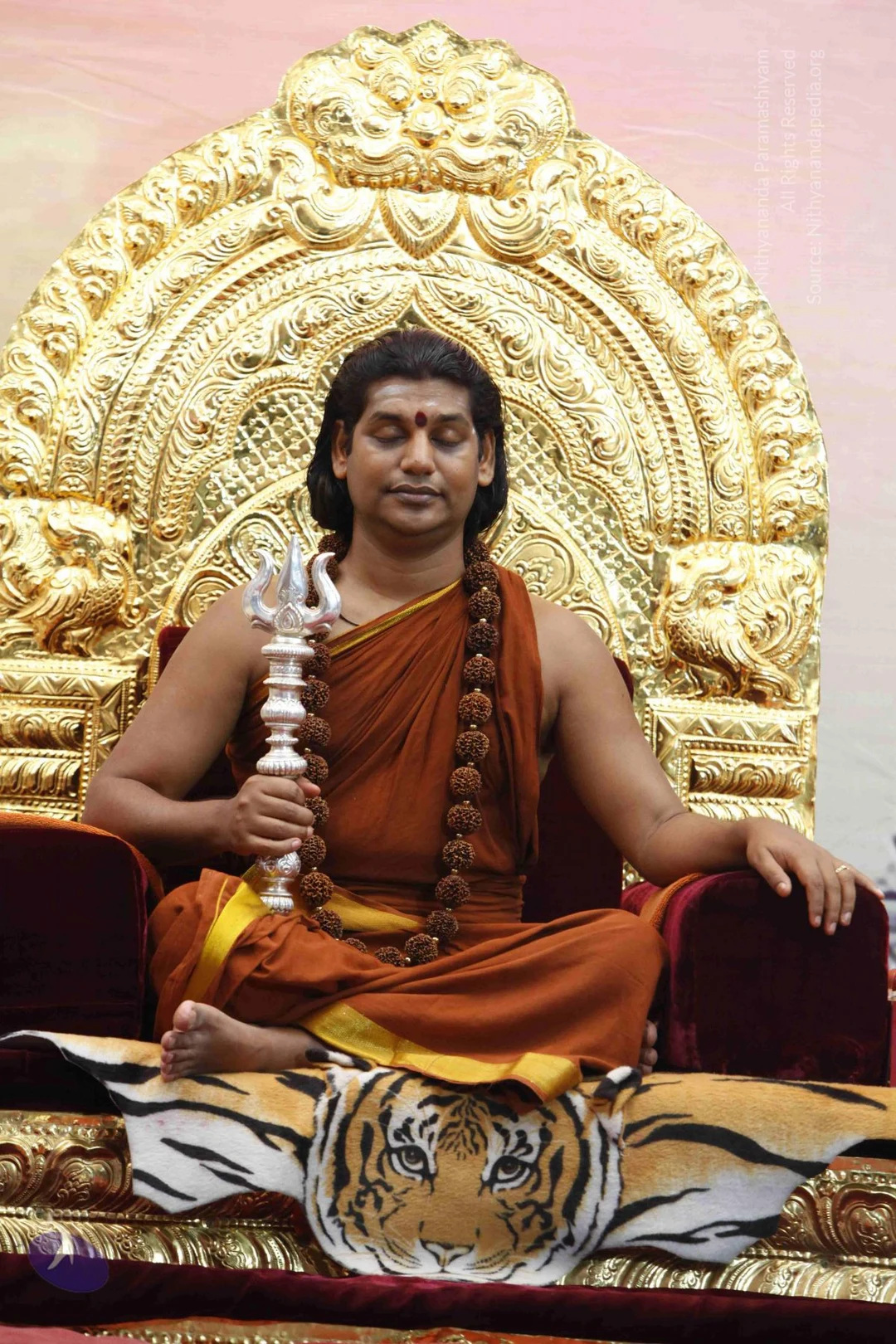
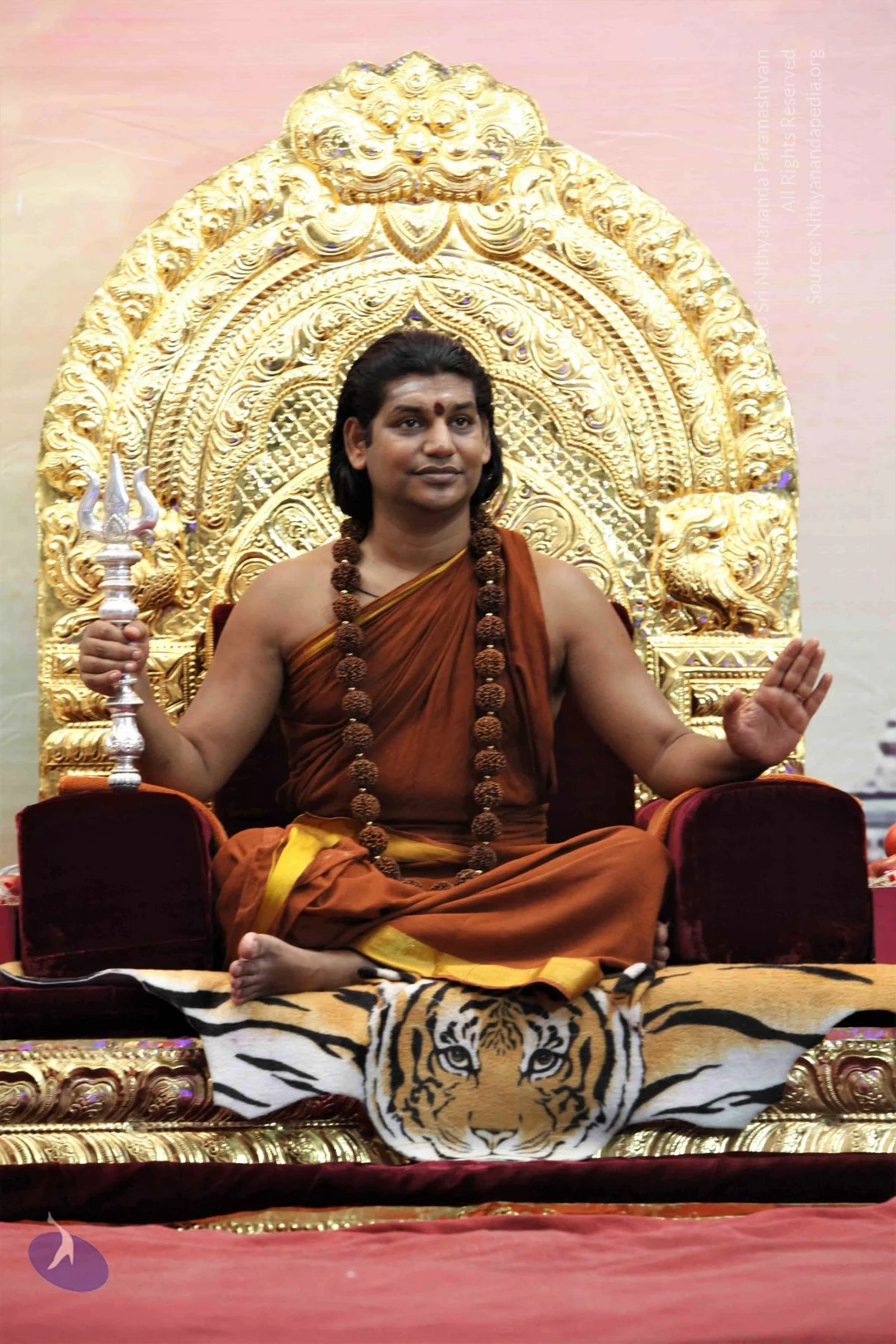
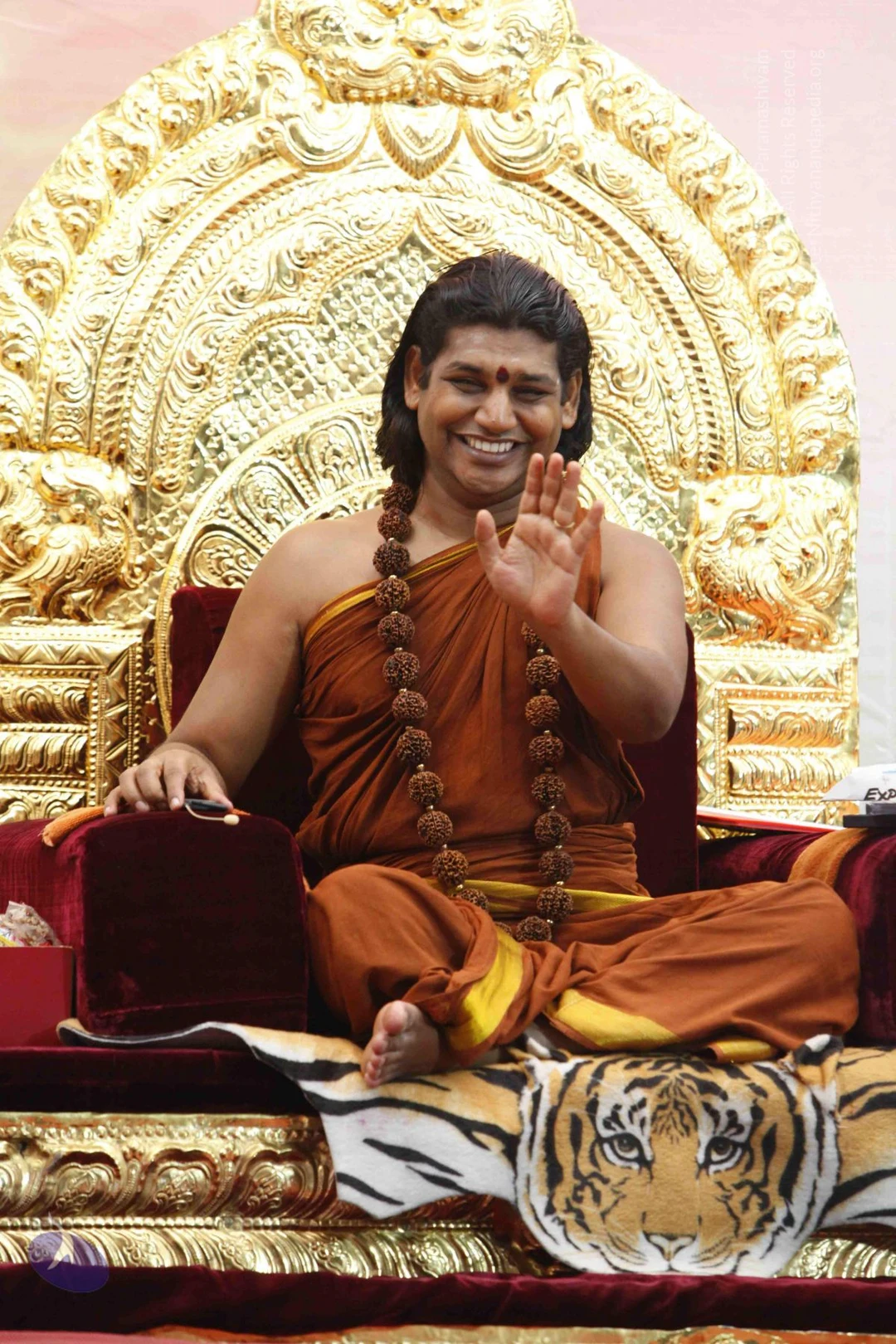
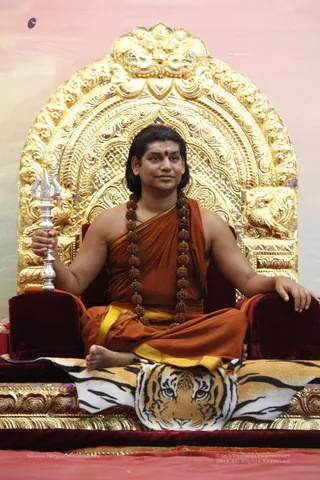
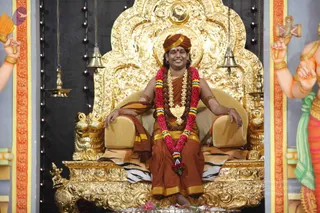
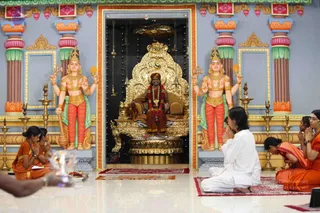
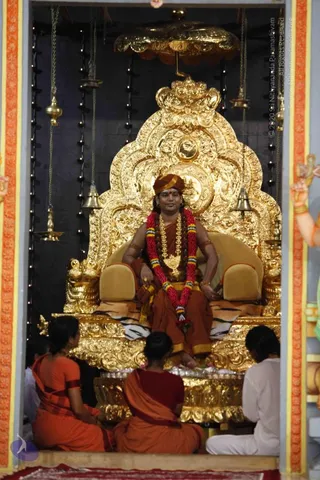
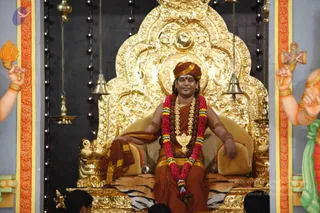
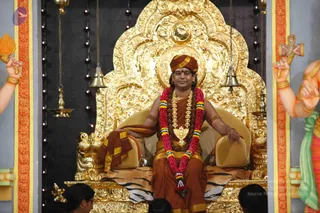
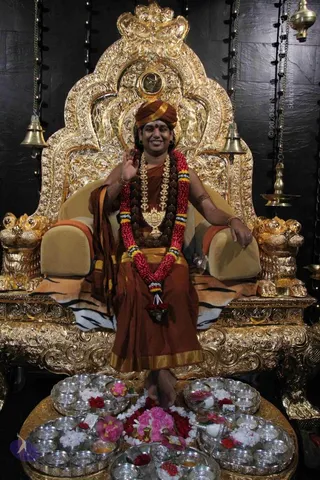
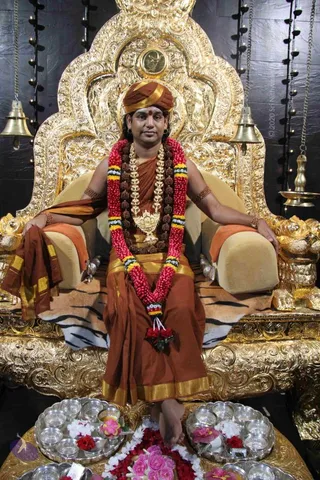
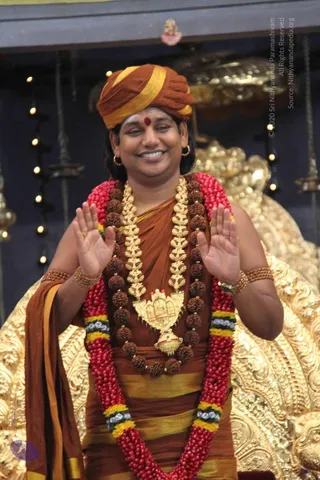
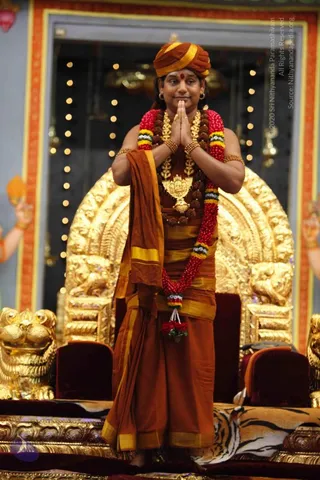
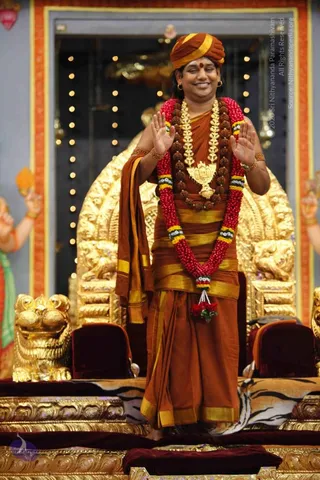
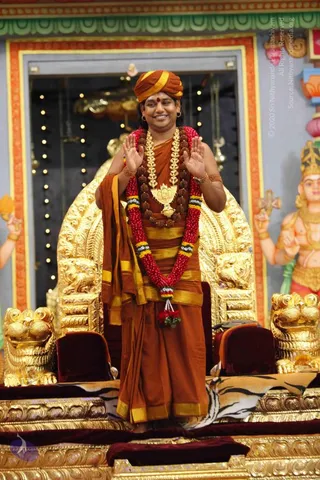
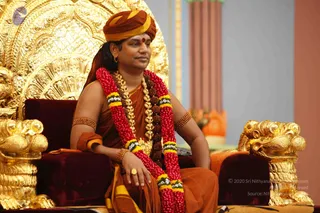
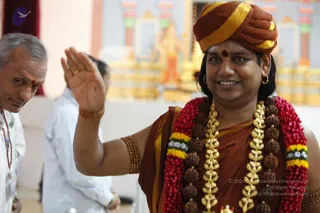
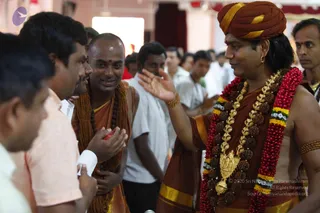
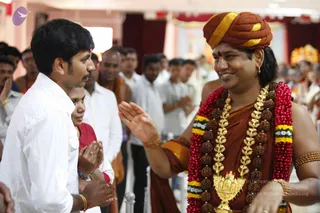
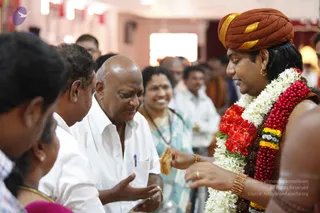
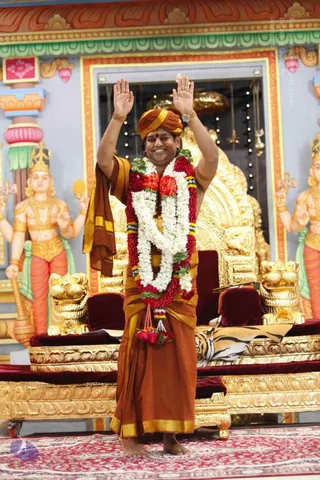
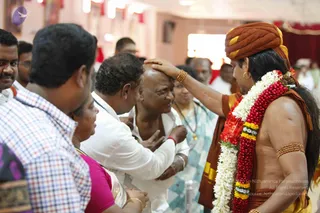
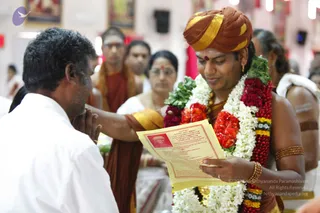
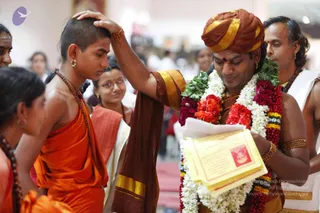
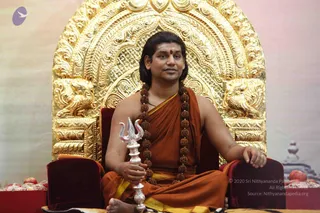
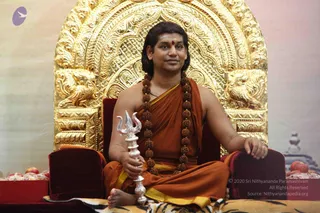
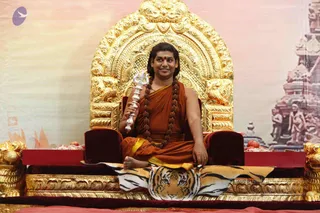
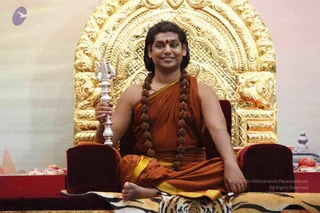
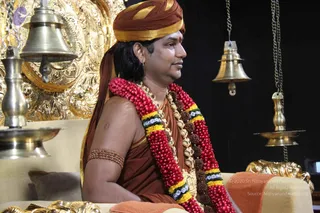
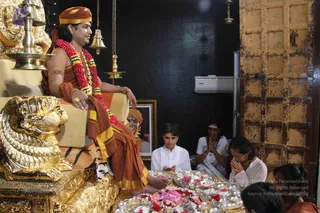
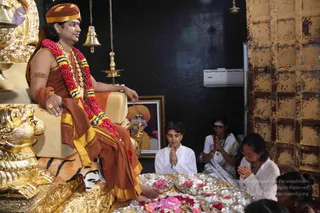
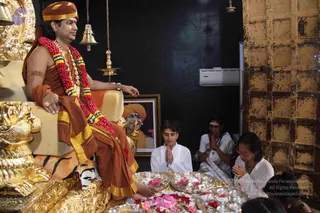
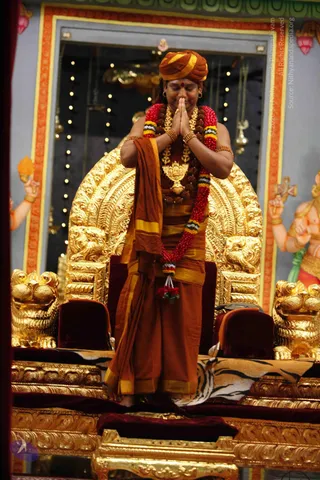
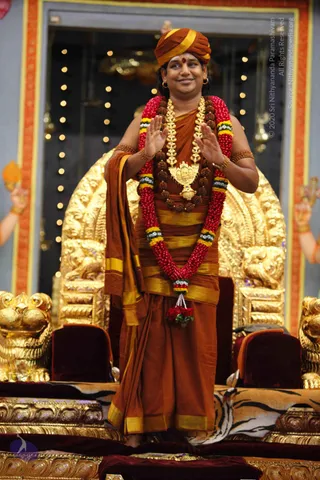
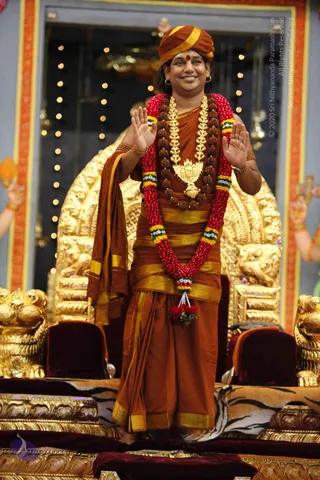
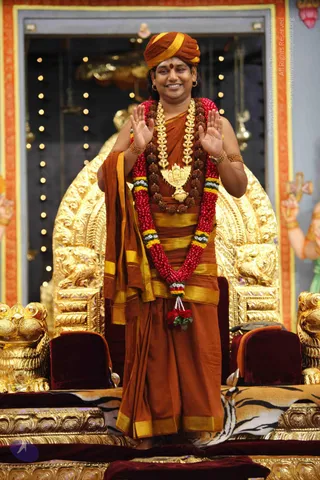
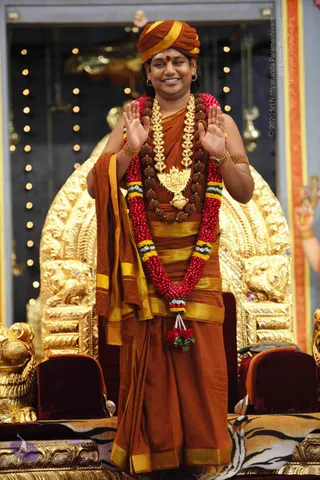
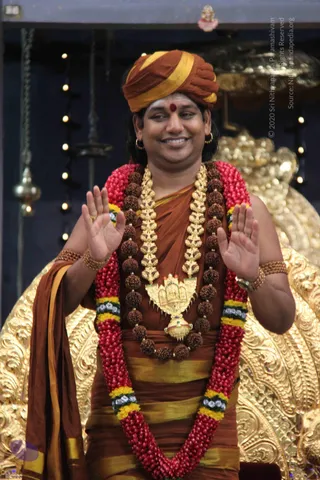
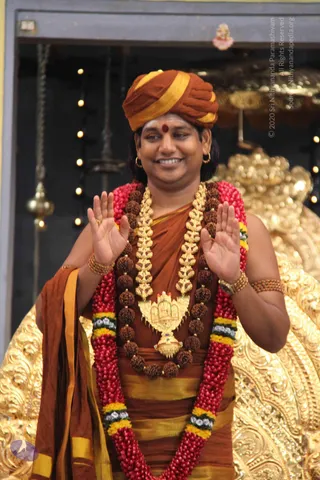
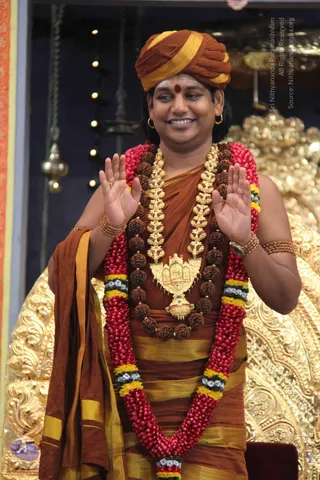
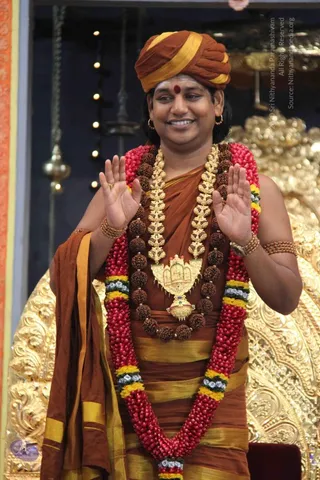
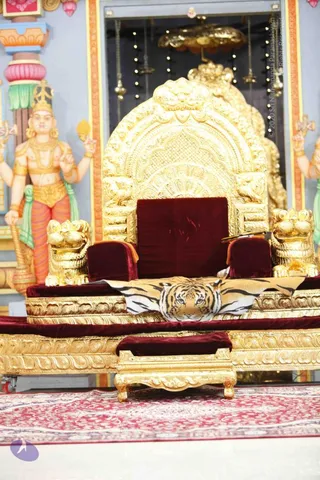
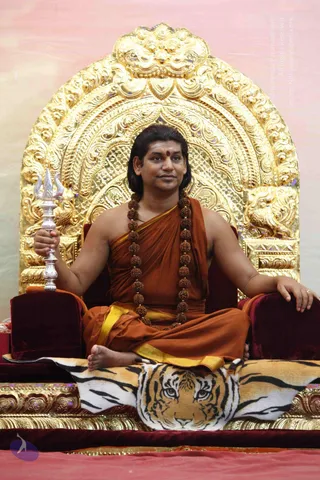
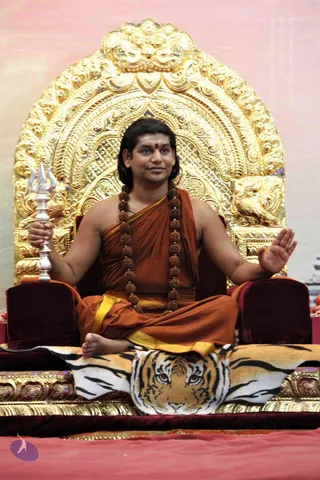
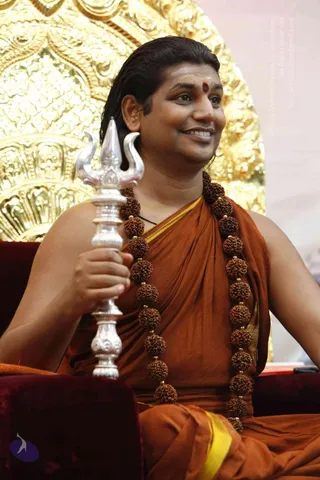
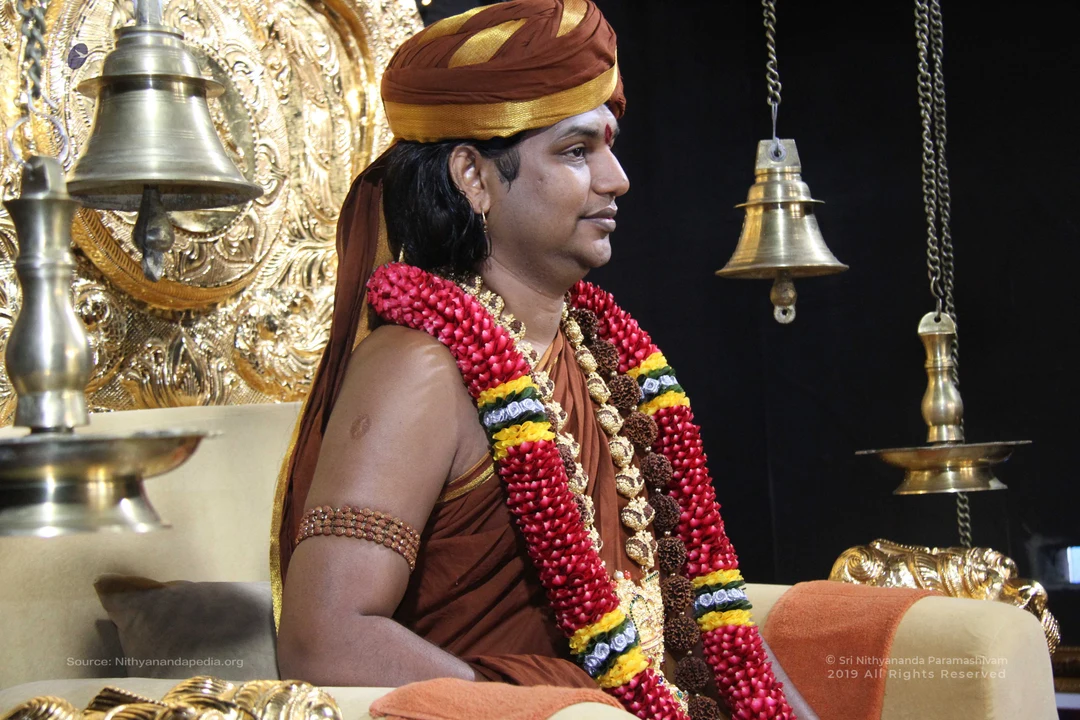
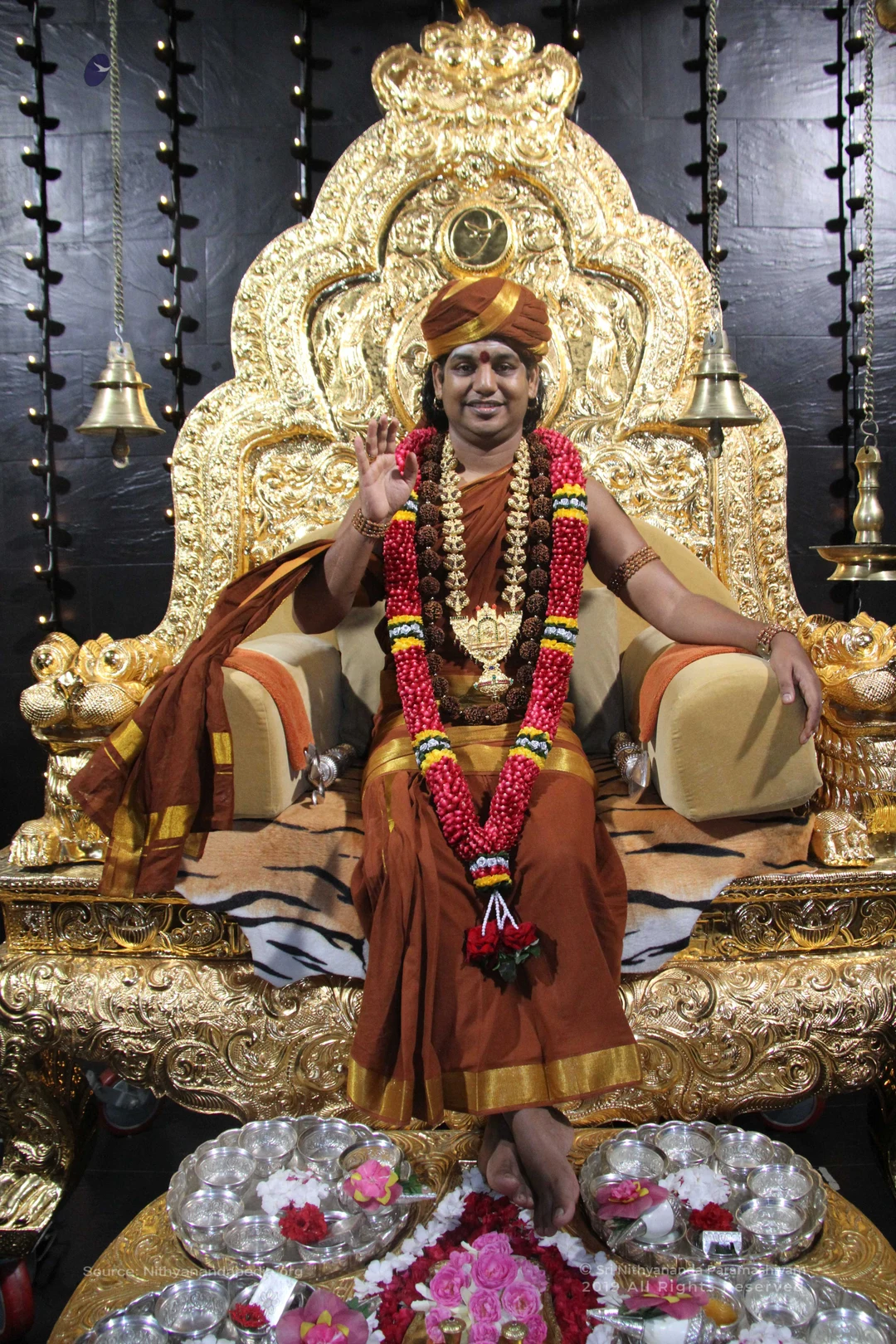
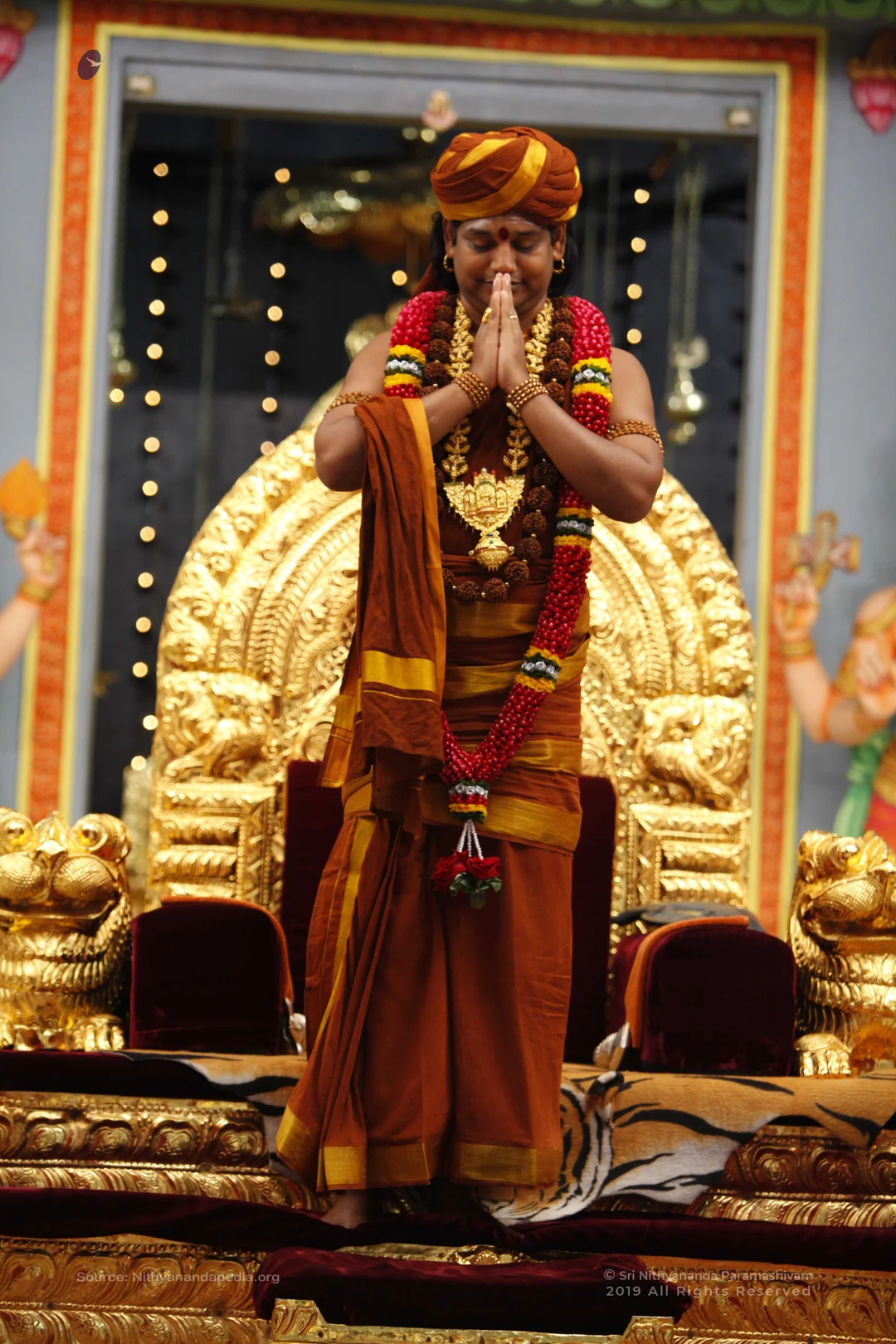
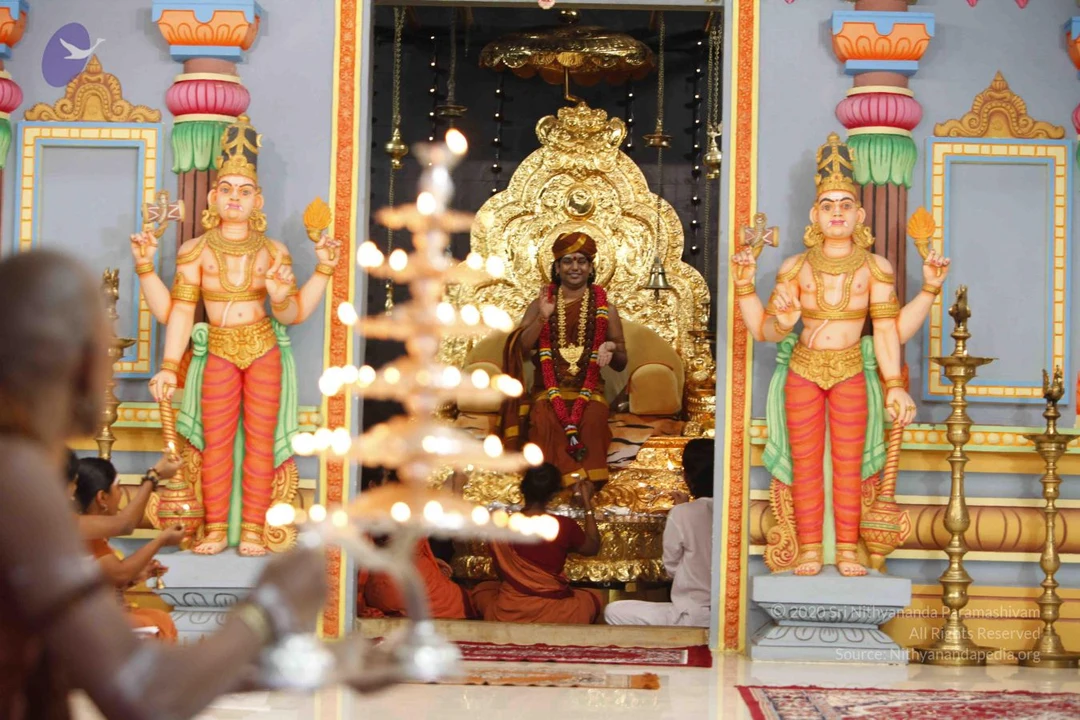
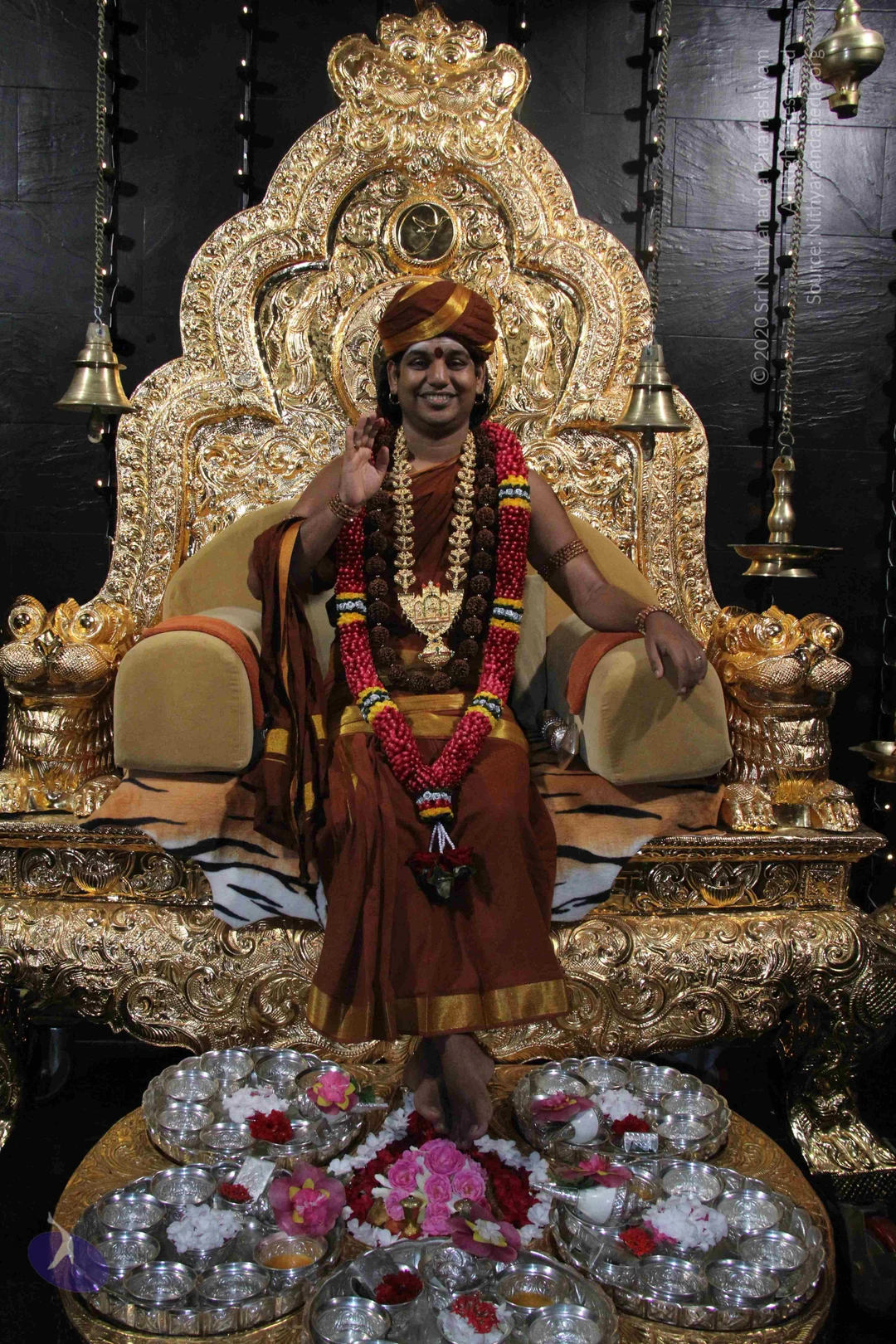
A smiling man sits on an ornate gold throne upholstered with a tiger-striped cloth, set against a gold-framed backdrop with hanging brass bells and oil lamps. He wears an orange-saffron turban, orange-saffron robes with gold borders, a large gold pendant, a rudraksha mala, and a multicolour garland of red and yellow flowers. Bangles adorn his wrists. Painted deity figures with raised arms holding a flaming torch and a trident-like object flank him on either side. Probable Swamiji: a long-haired figure in saffron with a crown-like turban and rudraksha mala, seated on a throne in a satsang setting, labeled by the page as Swamiji.A smiling man with long swept-back dark hair and a red bindi sits cross-legged on a red velvet throne with an ornate gold repoussé backrest. He wears an orange-saffron cloth draped over his shoulder and body with yellow borders, and a long rudraksha mala hangs across his chest. He raises his right hand in a greeting wave while resting his left hand on a red cushion. His bare feet rest on a tiger-skin rug with a visible tiger face. Swamiji (probable) based on long swept-back hair, saffron clothing, rudraksha mala and throne setting.A smiling man in an orange-and-gold turban and orange draped robes with a gold border stands barefoot on a red carpet before an ornate golden throne. He wears a thick garland of red roses, white jasmine and green leaves, and a red bindi. Behind him, a tiger-skin cloth lies over the throne's cushioned seat, and two gold lion-shaped armrests flank it. Painted standing deity figures with gold crowns frame the stage on both sides, and a gilded canopy and hanging brass bells sit behind the throne.

July 06 2013

Original wiki page
Contents

Title

stability-key-to-excellence-nithyananda

Description:

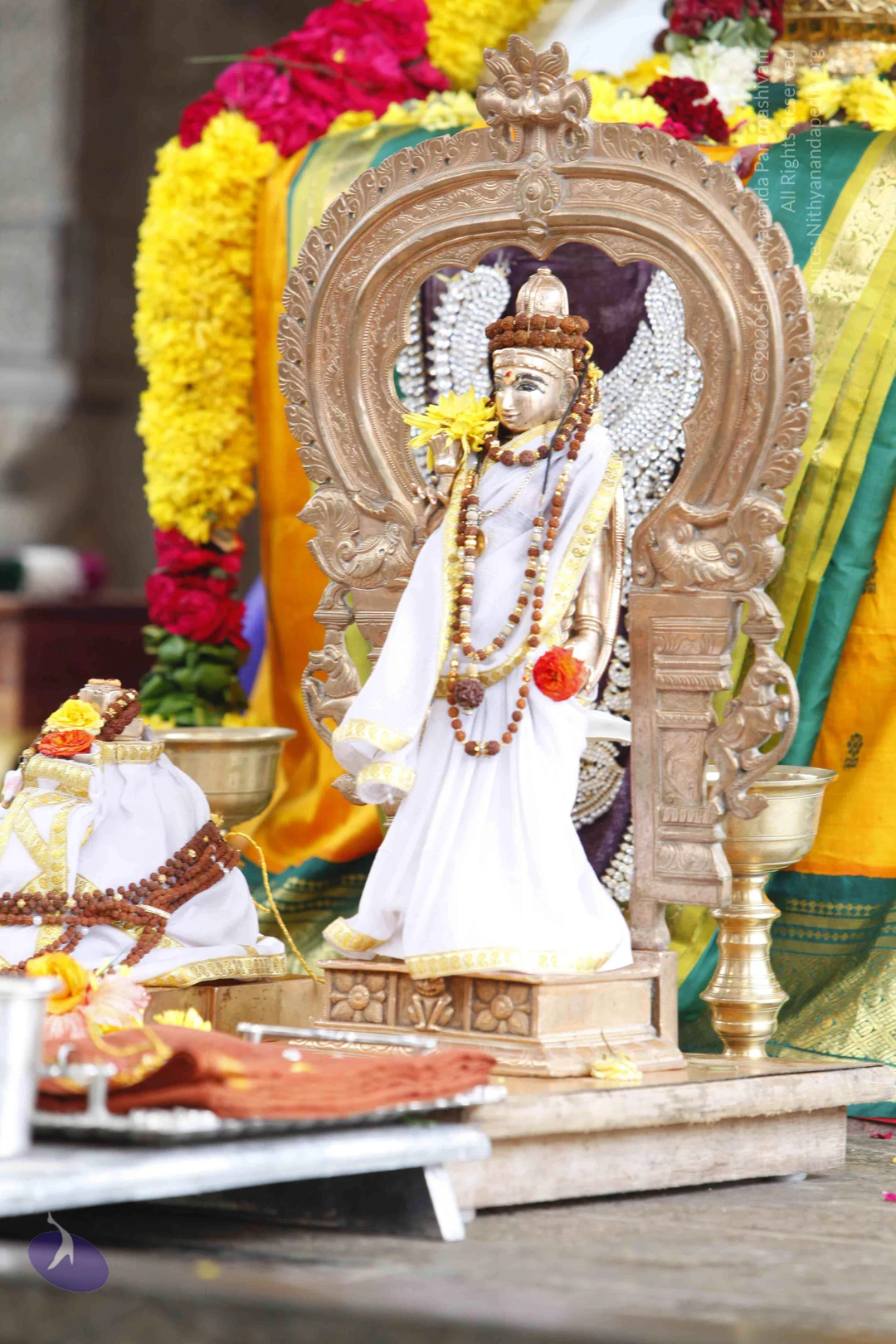
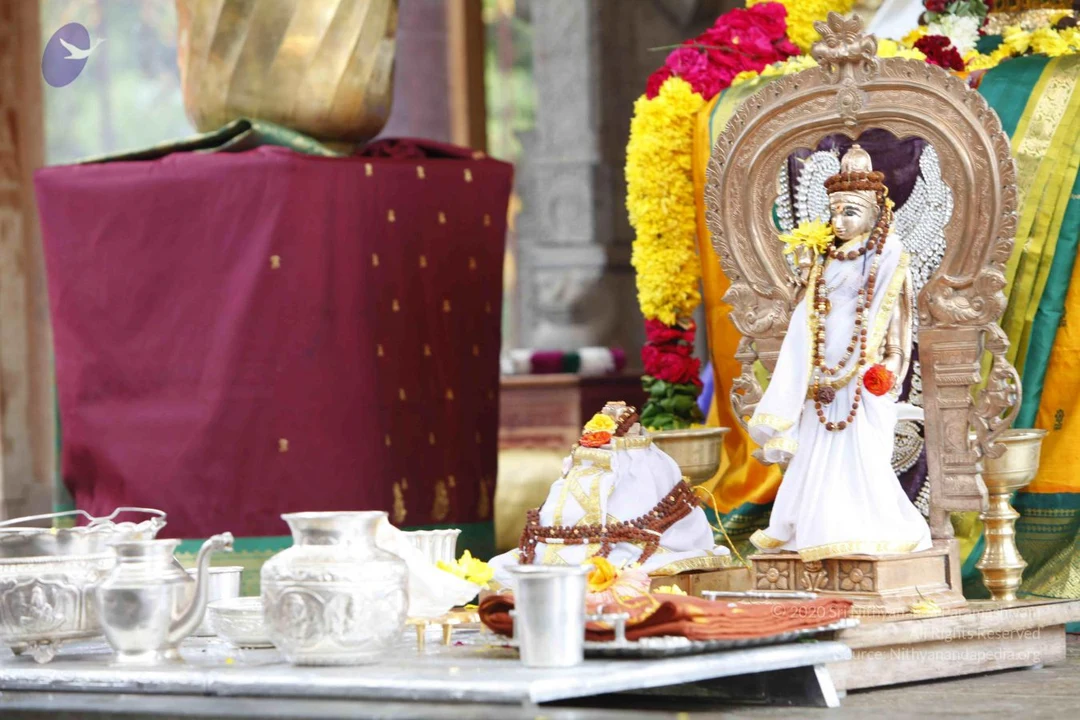
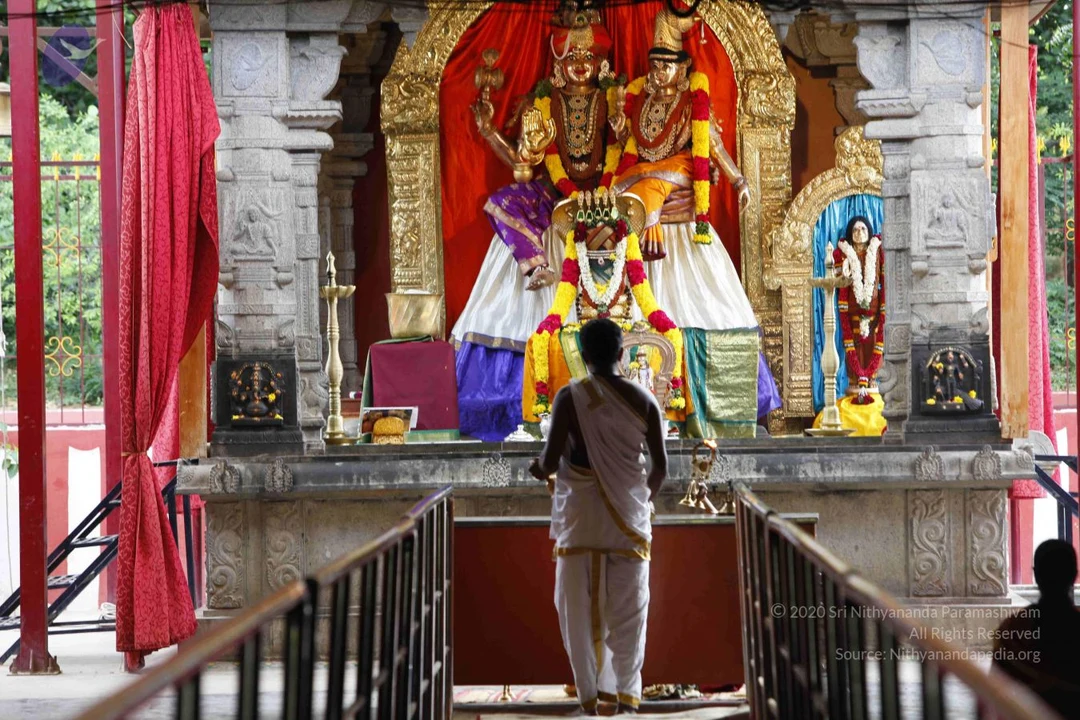
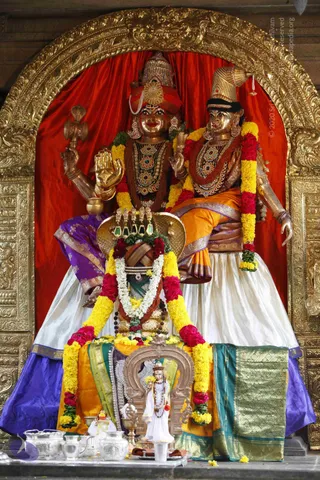
In today’s morning Satsang, Paramahamsa Nithyananda elaborates on stability by describing one of the beautiful Leelas of Shiva. He tells about a couple who took a vow to feed whoever comes to the Temple to have the Darhsan of Meenakshi. The couple gave everything they had, ran out of money, and finally were denied a loan. The one thing they had left was stability but it could be of no use now. Suddenly, MahaDeva Himself appeared and gave them a vessel that can never be emptied. They could continue their mission to serve others. Paramahamsa Nithyananda reveals that if we have stability in our lives, then everything will fall into place for us and simply happen: Integrity, Authenticity, Responsibility, Enriching, Enlightenment, and Completion!

VideoAudio

Transcript:

STABILITY – KEY TO EXCELLENCE

Nithyanandeshwara Samaarambhaam Nithyanandeshwari Madhyamaam | Asmadaachaarya Paryanthaam Vande Guru Paramparaam ||

I welcome you all with my love and respects. We will start the live satsangh once Lotus TV and Sadhna TV join us live.

I welcome all the devotees, disciples, samajis, satsanghis sitting with us all over the world through Nithyananda TV, Sadhna TV and Lotus News TV, and two-way video-conferencing having Nayana Deeksha. I welcome all of you with my love and blessings.

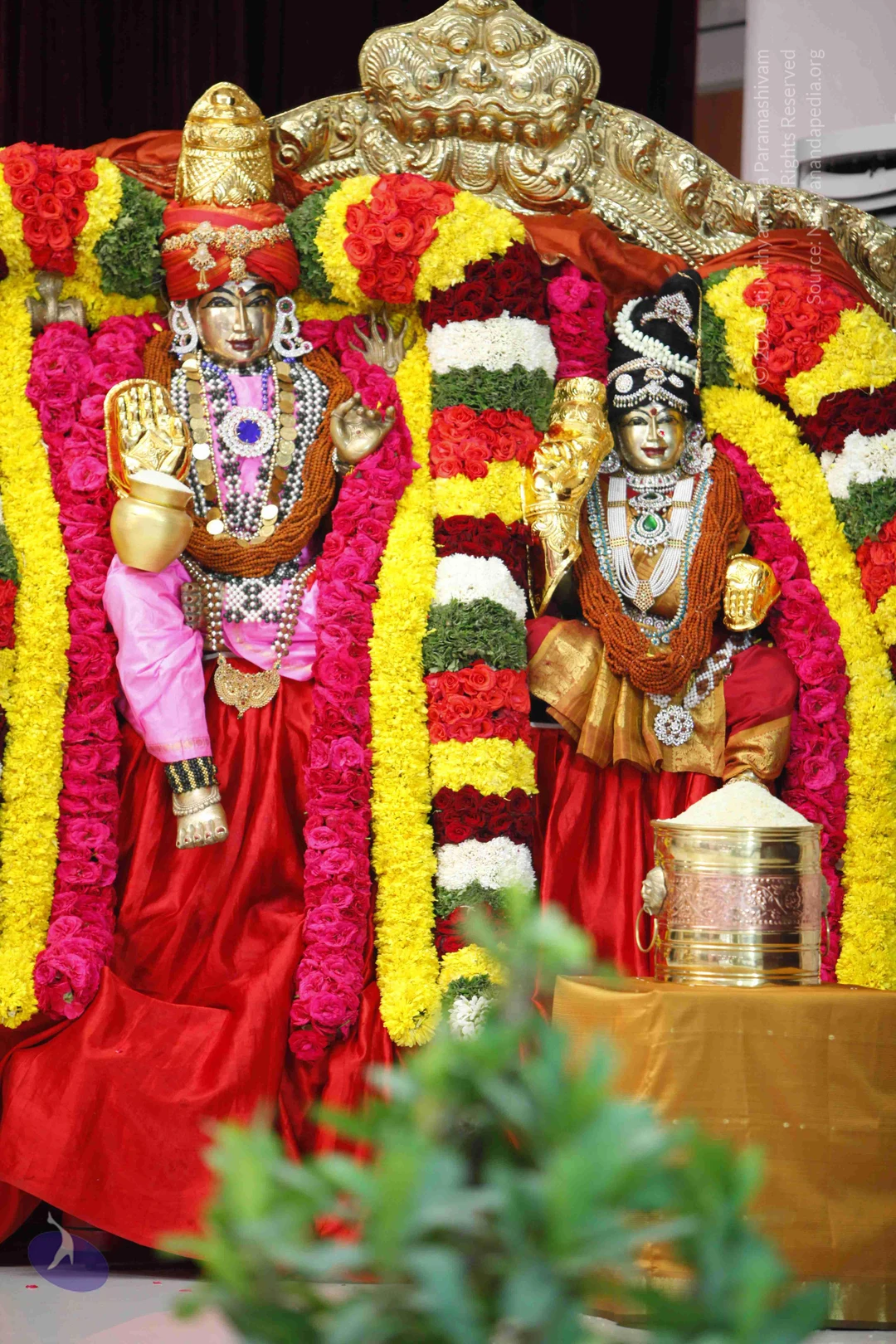
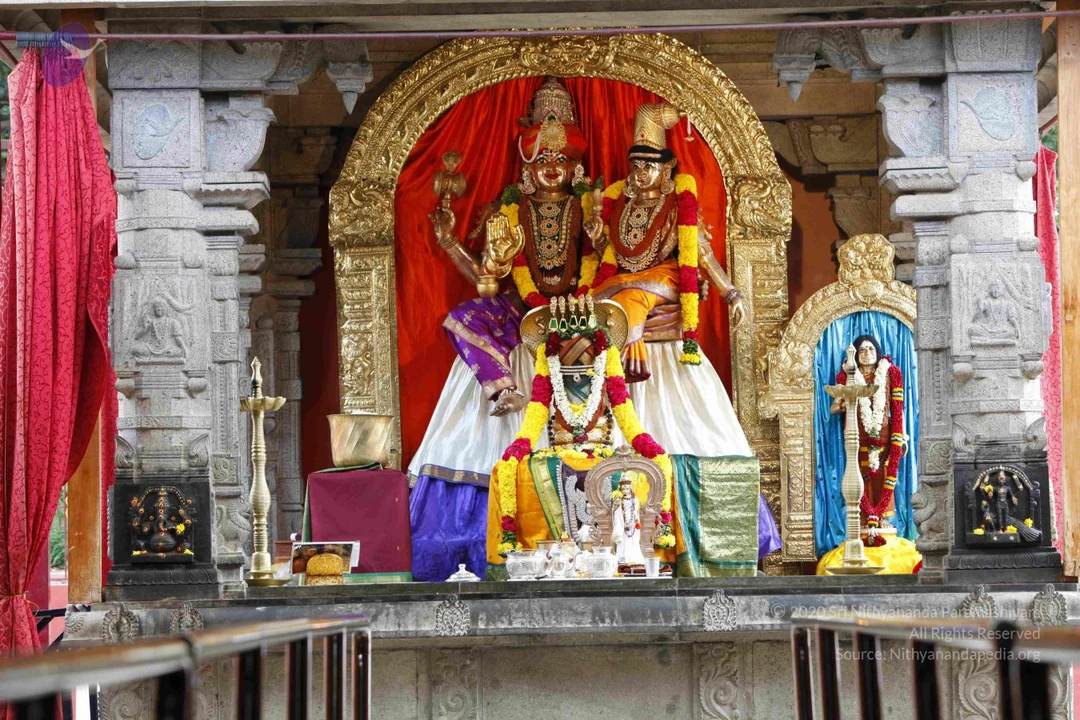
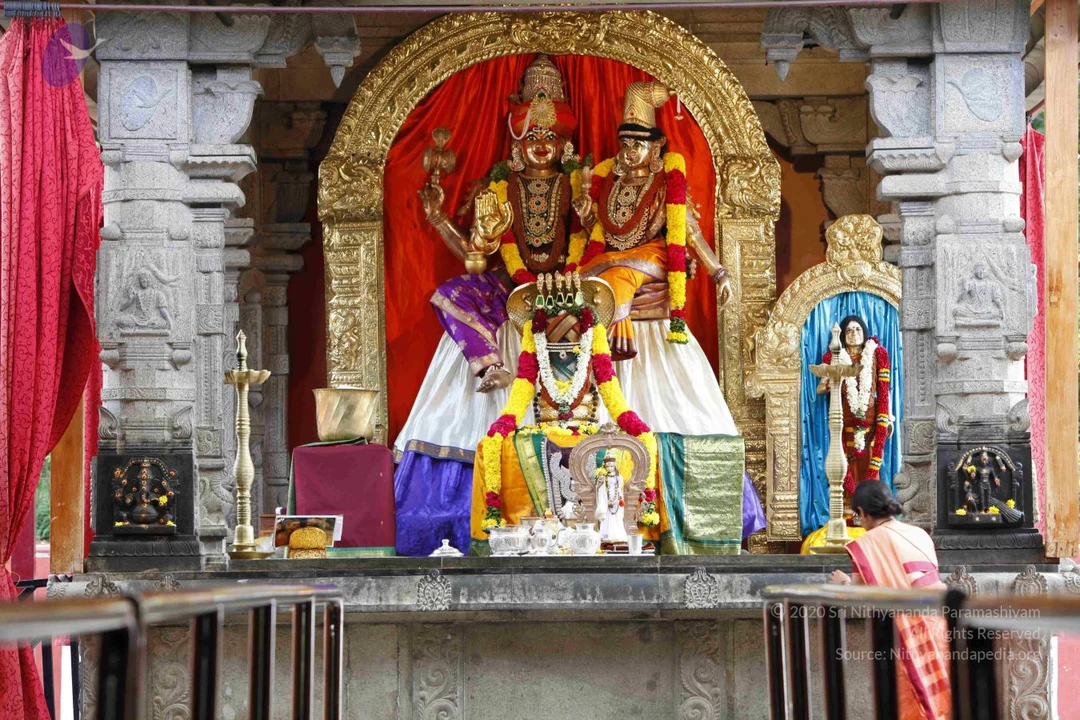
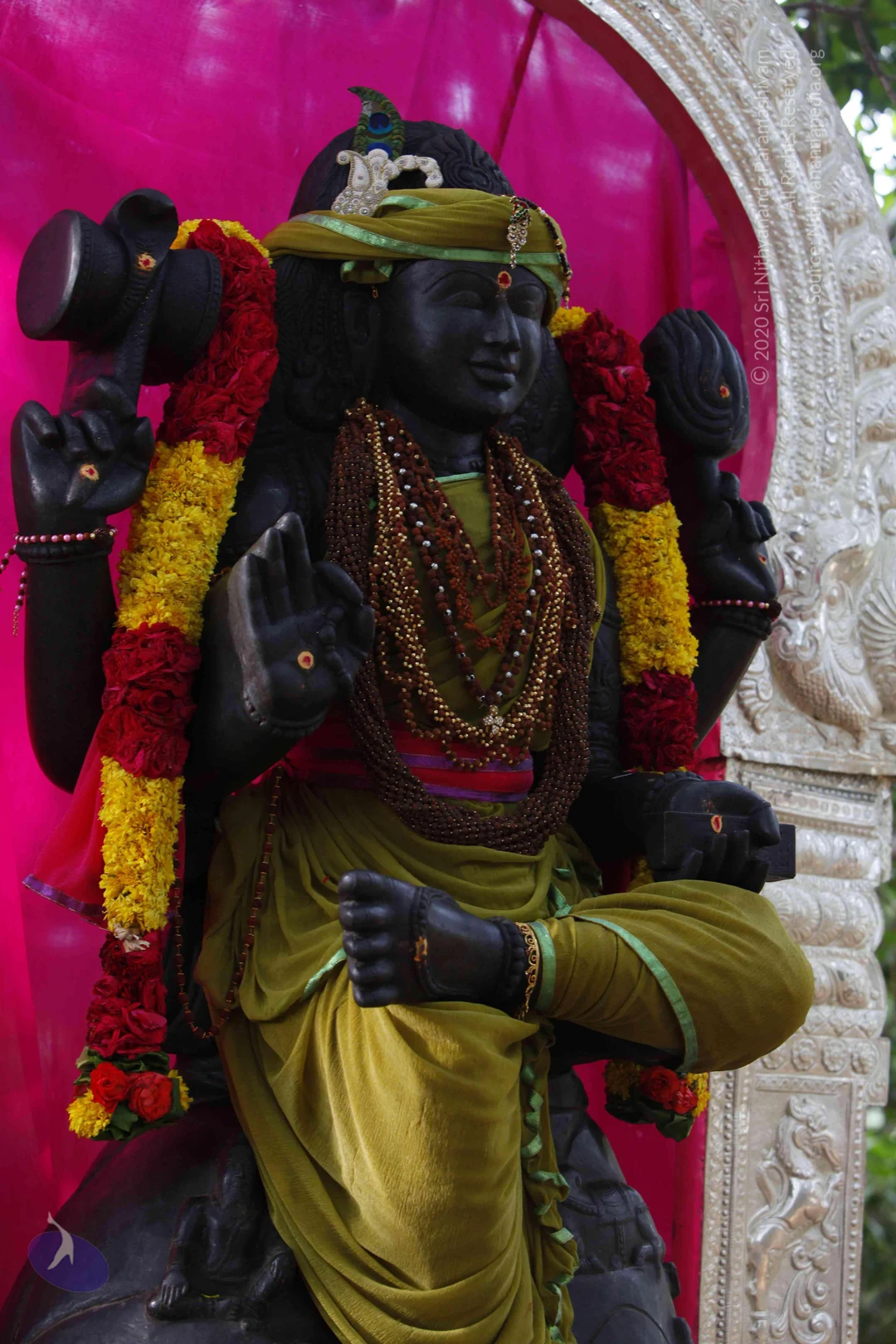
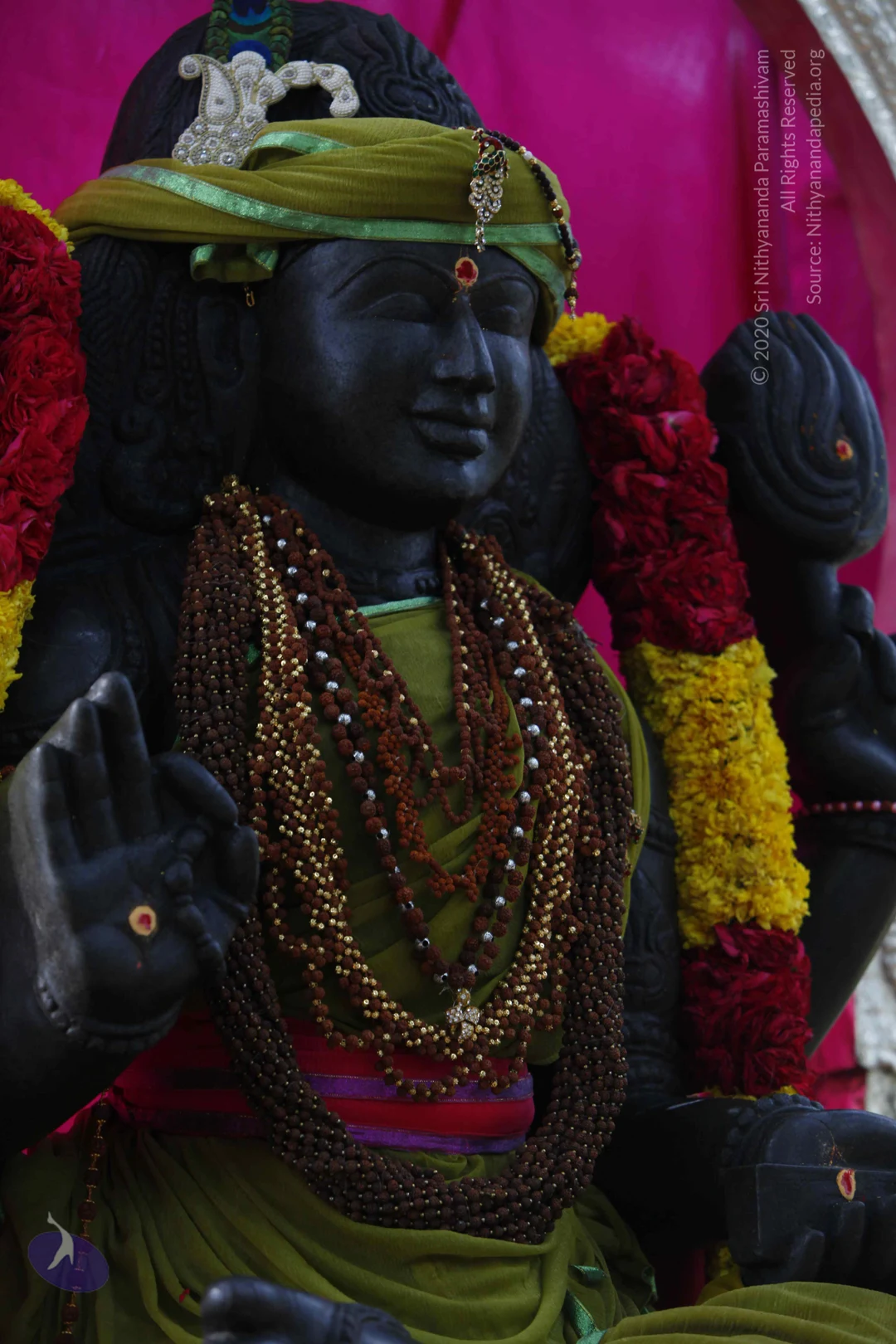
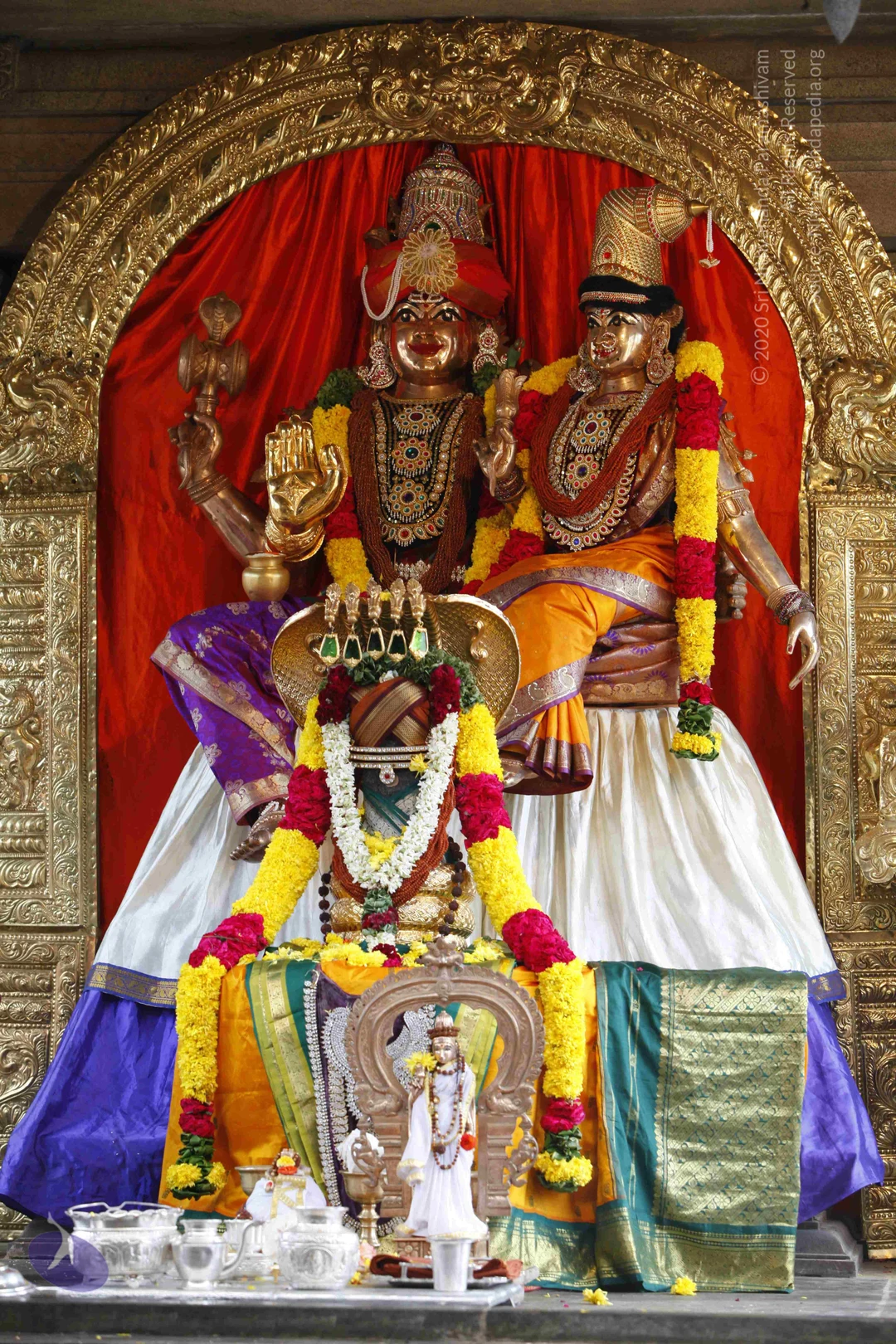
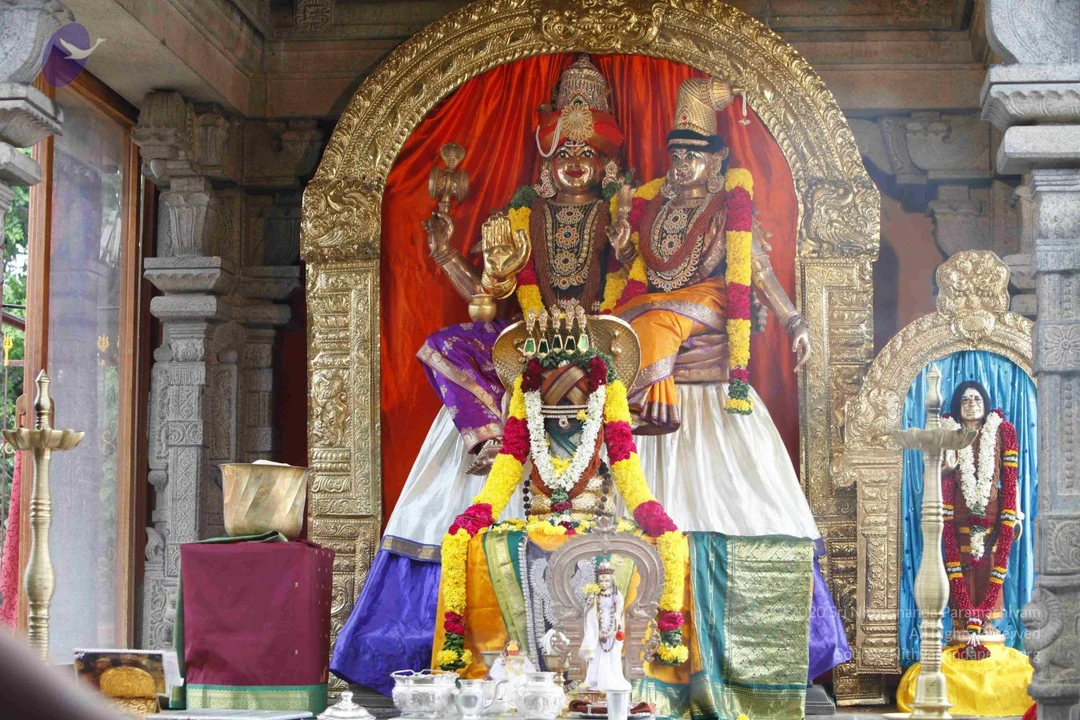
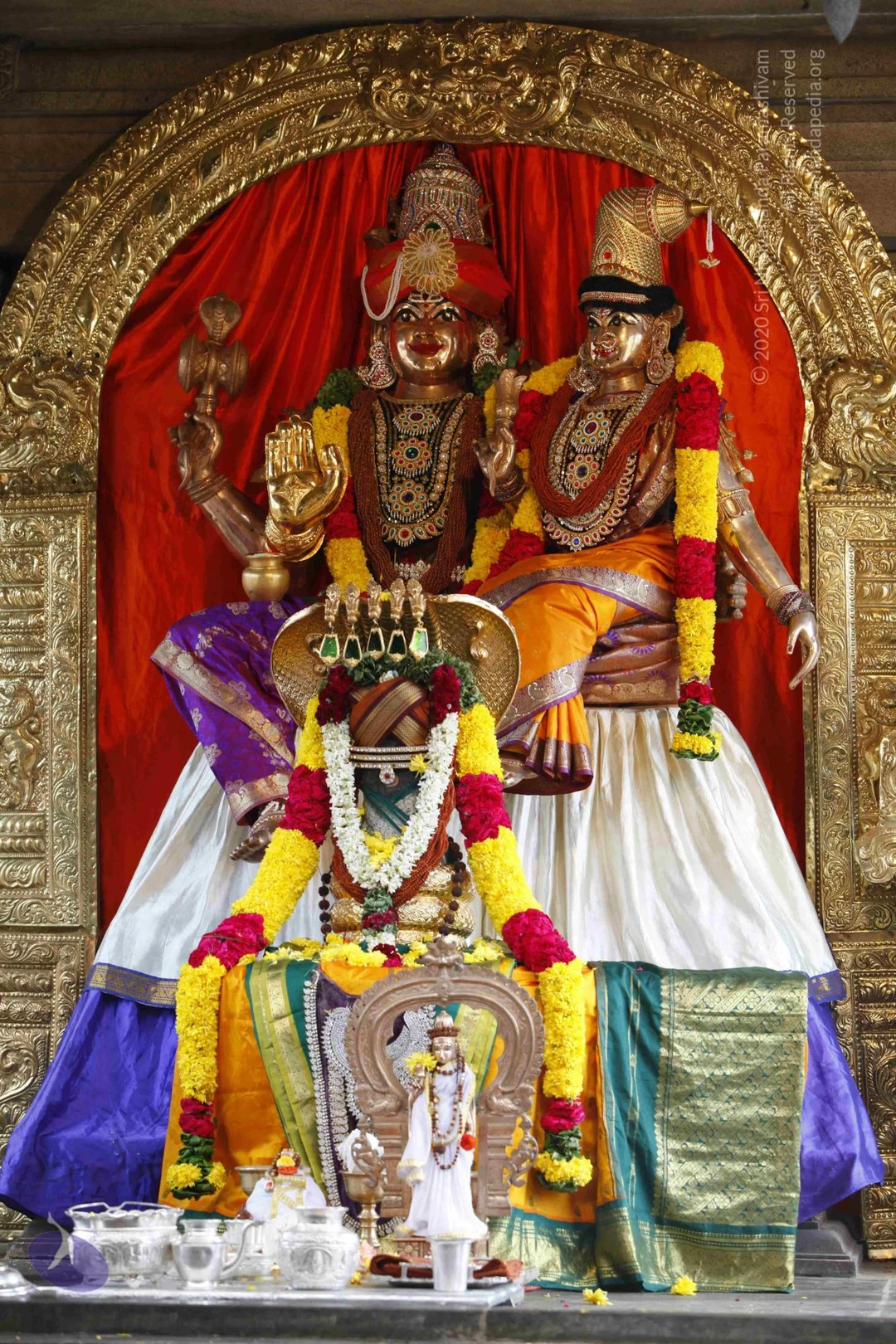
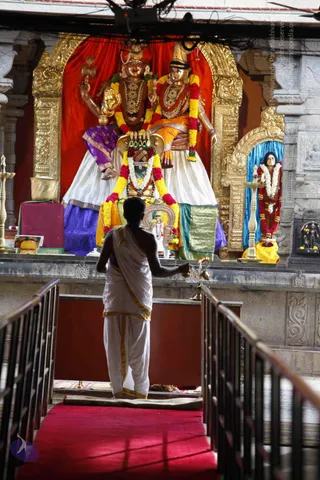
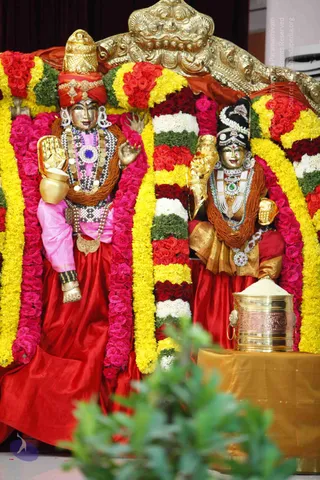
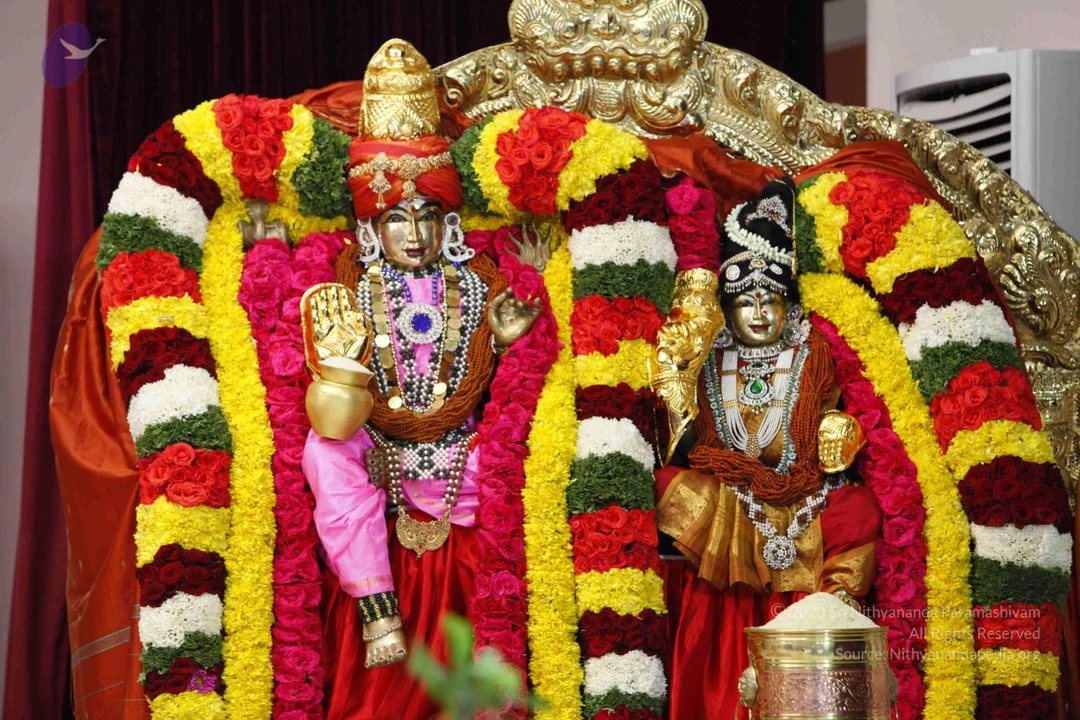
I‘ll continue to expand on “STABILITY” in today’s Nithya Satsangh. In any field, excellence is achieved by stability. Even today’s alankara (decoration). Mahadeva is gracing us today in a leela “Ulavaa Koattai Aruliya Leelai”, means, “giving a vessel which can never become

empty”. Just like Akshaya Paathra, Mahadeva gives Ulavaa Koattai to a devotee. Very beautiful story! There was a farmer couple who do agriculture, who do agriculture, husband and wife. There was a devotee couple. The guy’s name is Adiyaarukku Nallaannan. The woman is Dharma Seelai. They both took a vow. They are Shiva’s devotees and they took a vow that whoever comes to have darshan of Meenakshi, they will give food. They lived near Meenakshi’s Temple. Whatever agricultural produce they get, they go on feeding whoever comes to have darshan of Meenakshi and Sundareshwara. At that time, Meenakshi and Sundareshwara have left the body; means, they are in Akshardhaam. They have left the body. Whoever comes to have their darshan in the temple, these two devotees will take care of them by giving them food.

Of course, when you are continuously doing charity, people come and eat and go. That’s one of the biggest problems with Hindus is – I think this problem is from the time of Sundareshwara – we do not care to keep the dharma chakra alive. We do not feel if we also support it only then this dharma chakra will be alive. See, people who don’t have, no problem! Even people who have, they can support, it is nothing but a, when an elephant eats and whatever it drops will be the feast for ants! So there are millions of elephants eating the country. Those elephants can just drop one or two; that will be the feast for ants; and, especially, for the charity organizations like us. In Buddhism, that keeping the dharma chakra alive is very beautifully taught. It is unfortunate, in Hinduism, keeping the dharma chakra alive is not taught.

So, as usual, they (the farmer couple) became poor. Everything they had is gone! But they did not leave. They had the credibility of not cheating. Even that they gambled even with that, by taking loans. Please understand, “loan” is nothing but gambling with your credibility, selling your credibility, putting your credibility at stake! So, they put even their credibility at stake. That was the last thing they had. They were ready to sell even that! They took loans and did charity, gave food to all the people who came to have darshan of Mahadeva. I can look into the whole mind of the devotee, the amount of stability! I can’t say this devotee had intelligence. I can’t say he had Authenticity or Responsibility or Enlightenment. He had one thing: Stability! ‘I‘ll be stable till the last thing is left with me.’ The stability! Unimaginable stability! Even today’s subject in the Inner Awakening is bringing stability, means, we will be completing with all the patterns. We’ll be doing Samskaara Dahana Kriya and bring stability, through which the stability will be brought to the Being. I tell you, just if you have stability, just if you have stability, everything else, everything else – Integrity, Authenticity, Responsibility, Enriching, Enlightenment, completion – everything will happen!

The story goes that after some time, nobody is ready to give even loan. Because, if you don’t repay, what will happen? Nobody is ready to give loan. Nobody bothers whether you do service or anything. They want their money, that’s all! So, nobody was ready to give loan, and the devotees, both of them go to the temple and decide to leave the body after worshipping Sundareshwara. When you are established in stability, you get the power to leave the body at your will. So, they know they can leave the body. Please understand, they are not committing suicide. They decide, what is the use of life if cannot do one simple thing stably? They decide to give up their life in the presence of Sundareshwara and Meenakshi; immediately, Mahadeva appears and gives this Ulavaa Koattai, means, the vessel which will never empty that would never get empty, so that they can go on feeding the devotees eternally, perennially without any fear. And Mahadeva is in this form today, blessing the people for their stability. Ulavaa Koattai Aruliyal!

I‘ll move to the next segment of the morning satsang:

Today’s subject: “THE STABILITY”.

In any field, excellence is experienced only through stability. Not just physical alone; showing the mental stability! Whether you want to excel in business. See, even when you want to excel in business, if you want to excel in the construction field, you should show the tremendous stability in that field to all your clients and to the society. Only based on your stability more and more projects will come to you. If you are a lawyer, the stability you show; there are some lawyers who never go to court. To get “Jaameen” (bail), they go to fish market! They think “jameen” is available in fish market! The stability you show, you demonstrate in the court, in your arguments that makes you excel as a lawyer. If you want to be a successful doctor, the stability you show in the profession; thousands of surgeries you have done successfully creates a track record for you. What is track record? It is nothing but the stability you show.

Whether you want to excel in Spirituality or outer world, the stability you need to show, and the stability you show leads to excellence! Even in Sannyas, the stability you show, even once if a horse runs away, you can’t use that horse anymore, you can’t trust that horse and get on to it; because if you are on the horse and it starts running away, what will you do? And, same way, a sannyasi even once he utters the words, “I am leaving”, over! He can’t be trusted anymore!

In everything the stability is basic for the excellence. St. Peter says that, ‘Love is the rock on which his Church will stand’. I tell you, stability is the rock on which my Sangha will stand!! Stability! Because, all qualities can be trained; you can be trained into love, you can be trained into Spirituality, you can be trained into Integrity, you can be trained into Authenticity, you can be trained into Responsibility, you can be trained into Enriching, you can be trained into Enlightenment itself! But, only when you decide to be stable!!

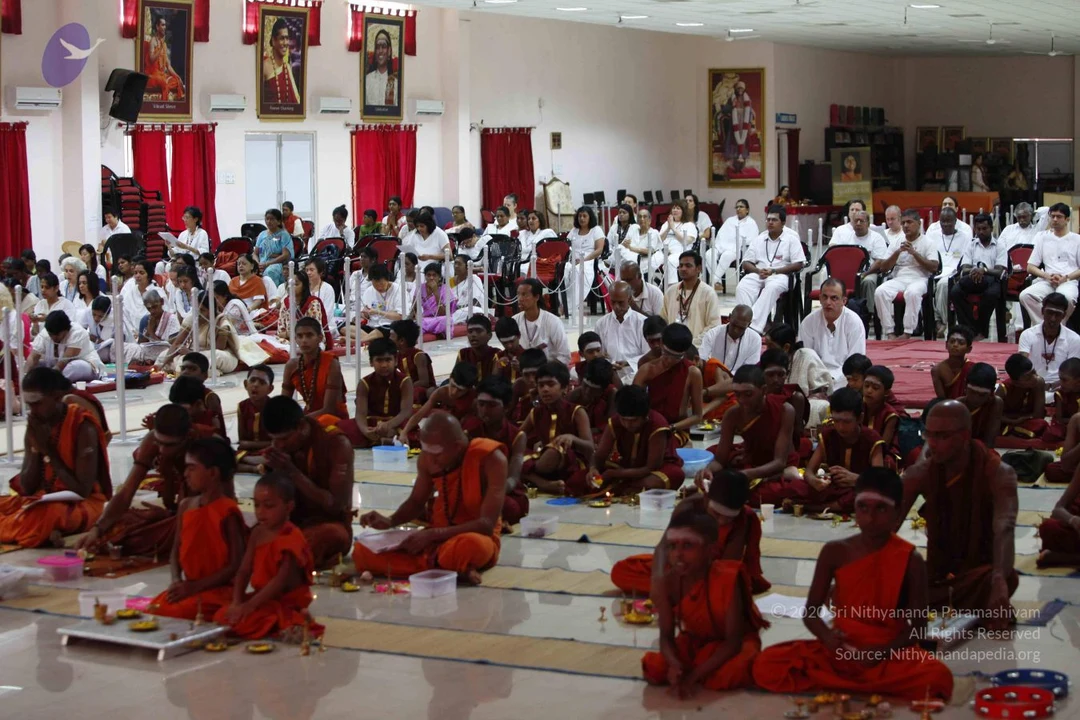
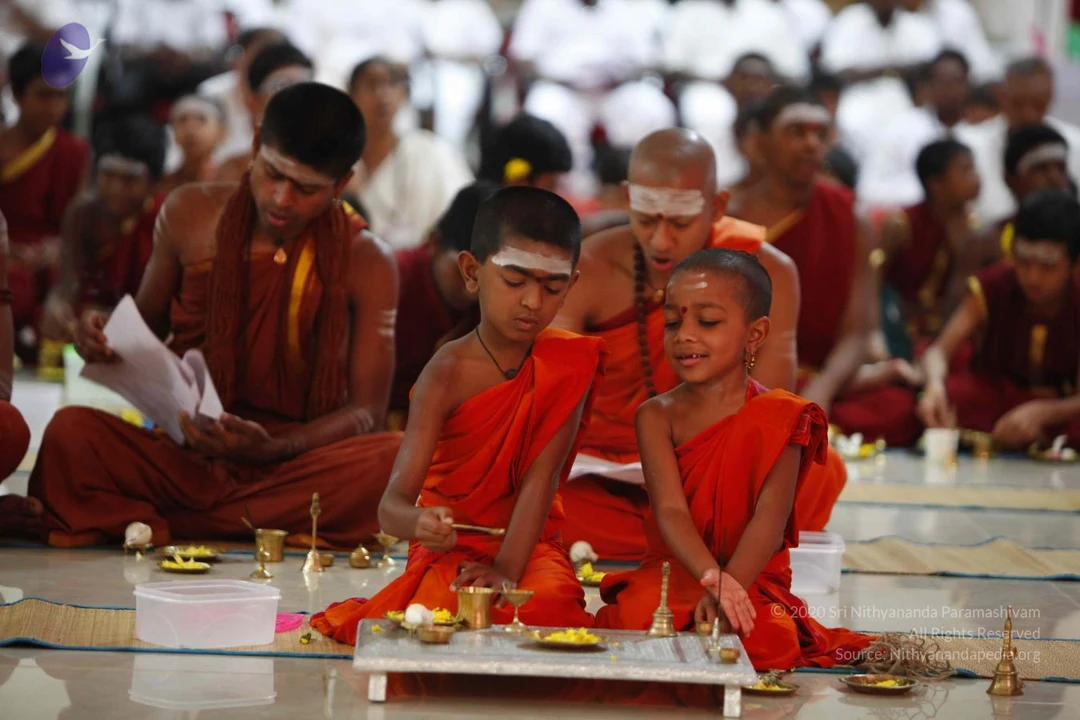
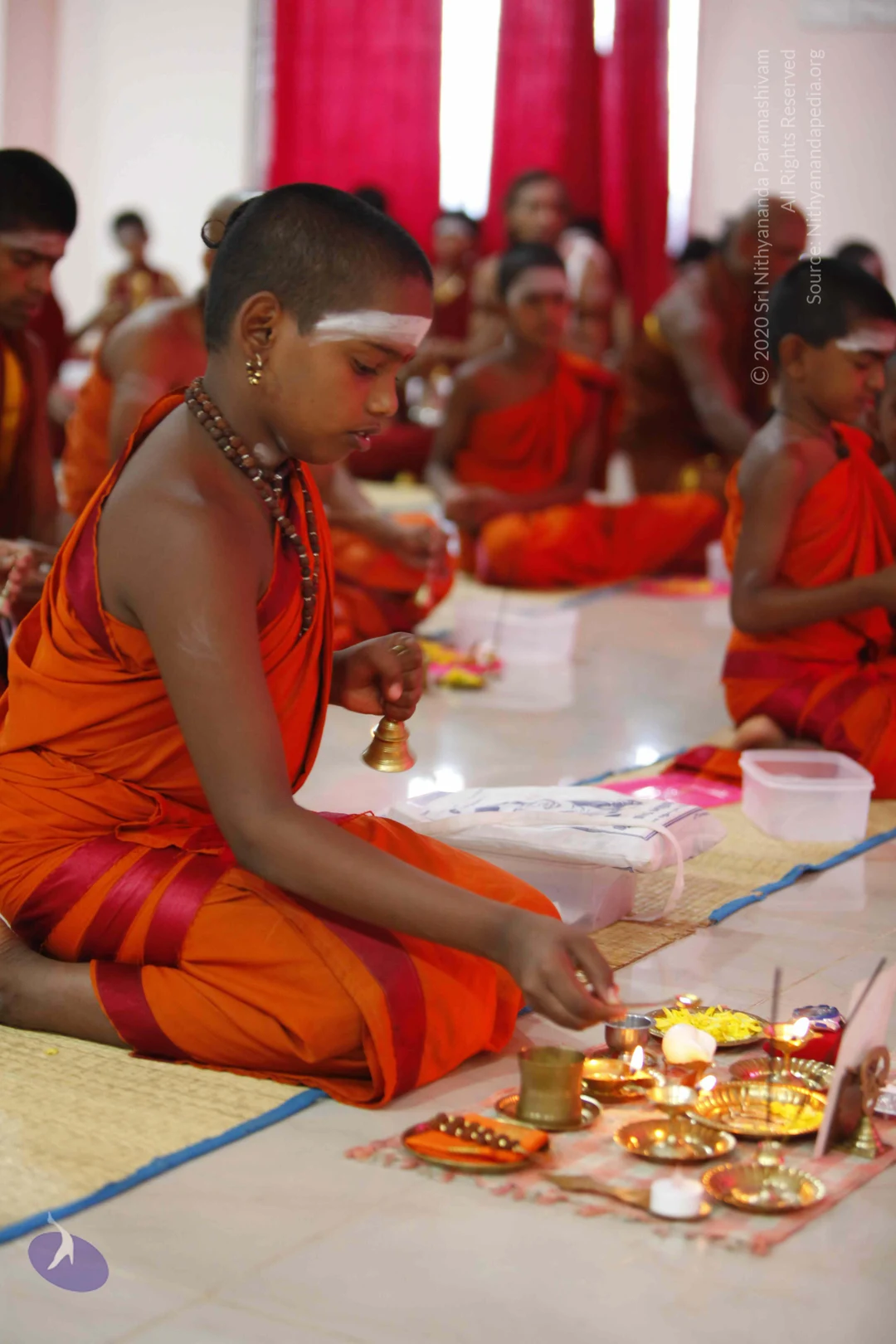
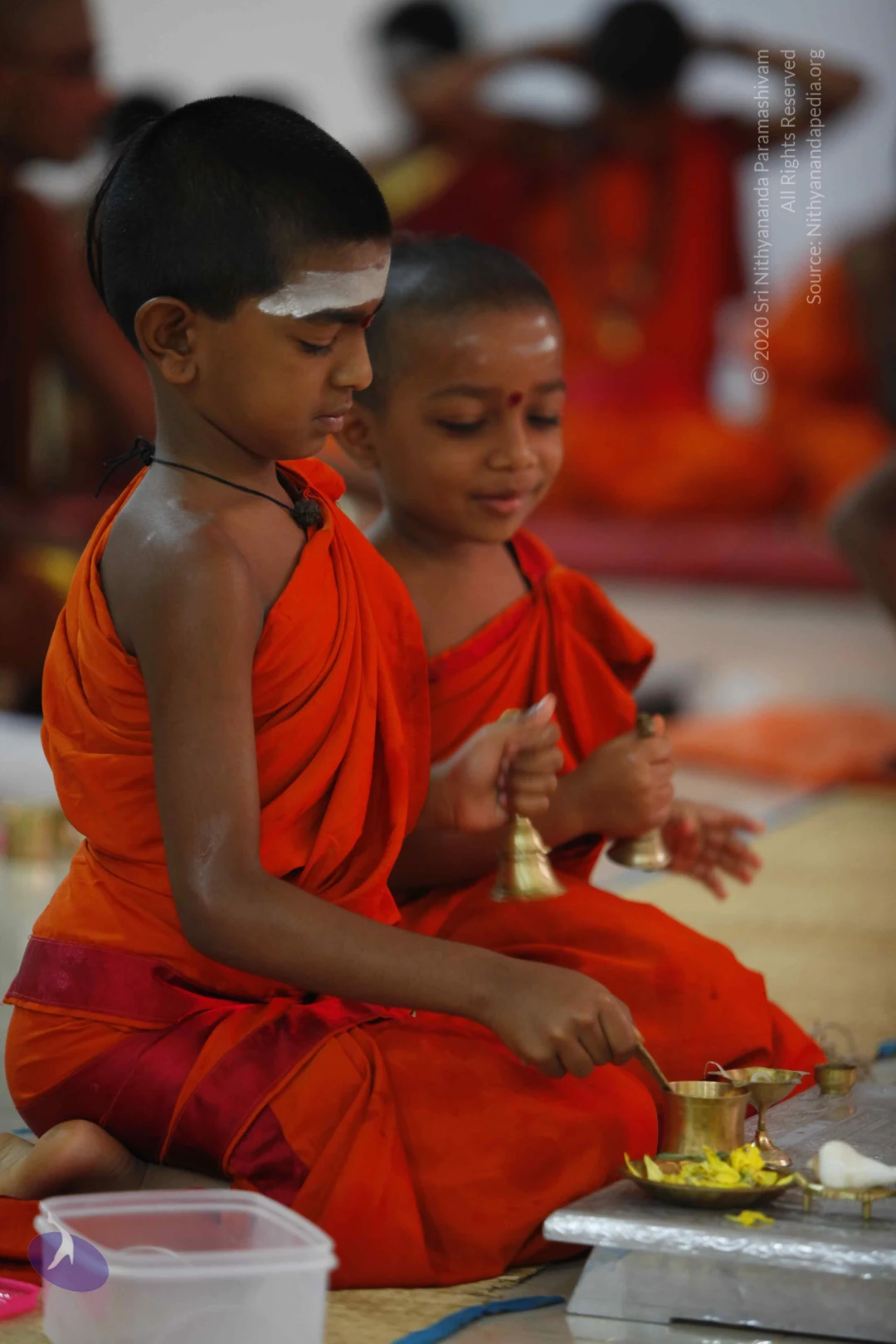
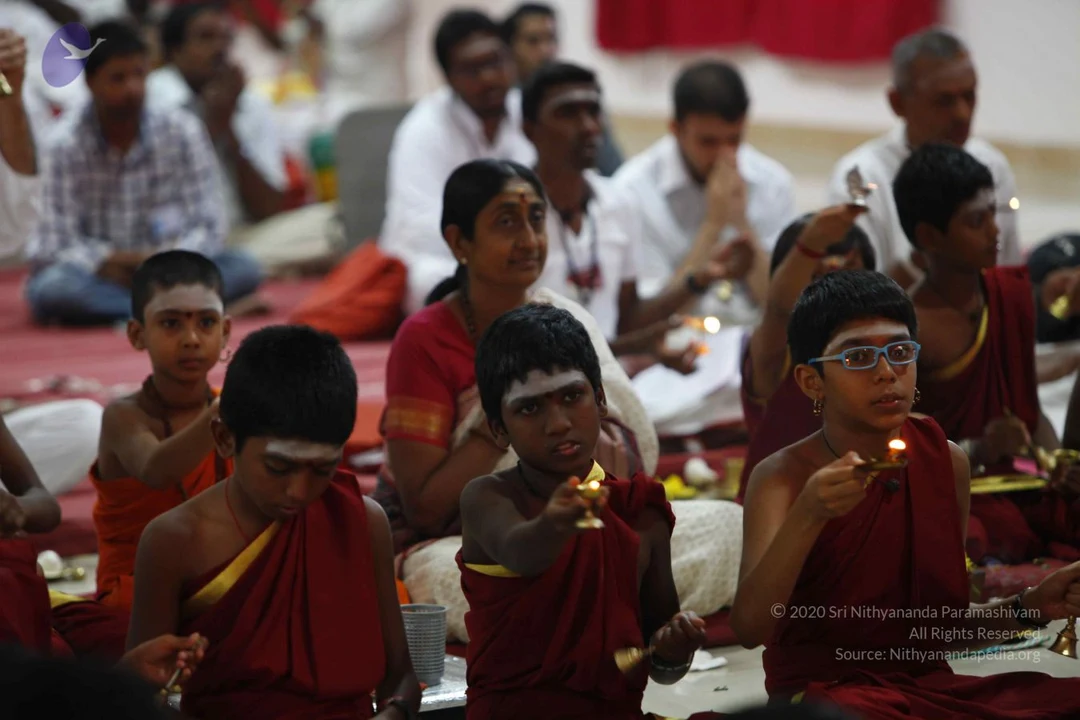
Last four days, I am talking on this subject of Stability, but still I feel there is so much to be told. When this country lost stability in the name of pseudo freedom, I tell you, the whole root is destroyed. Just yesterday I was telling I can produce geniuses. Already, through the Gurukul, I am working, it is happening. Already it is happening. Yesterday, our Gurukul kids have given the world’s first Talk Show by kids on Spirituality! And, they take live questions from the audience. Understand, it is not that just they memorize something, have a rehearsal and come and blurt out. They take live questions from you, from the audience and handle the questions live! Just like Dial-the-Avatar, “Dial-the-Little Avatars”! And not only that, when the people called, kids themselves attended the phone calls, answering, clarifying! Yesterday, they were discussing on the issue of “Anger”. They are coming up, coming up with so many things.

See, there are three different types of possibility:

· One, the people whose bio-memory is already built for life with the other, then take up a beautiful married grihasta life; practice all the great processes of tantra and achieve enlightenment and live excellence; live a complete life!

· And, the second team, you do not want to get married, but there are some patterns built about desire, lust, this and that. And, practice yoga, do completions with all those patterns and excel.

· The third: Geniuses! Please understand, these baala sannyasis are not even created for the sannyas purpose, they are created for the purpose of producing child prodigies. Geniuses! Real eN-Genius!

And, I’ll produce Aryabhatta, Bhaskara, Ramanujam, Shankara! Understand, people of the caliber of Jnanasambanda, and Ramakrishna, Vivekananda! With Integrity and Authenticity, Responsibility and Enriching, I commit to Veda Mata who is responsible for all the good things I have, and Kaalabhairava that I will be responsible for producing people of the caliber of Thirujnanasambandar, Adi Shankara! That caliber of Enlightened Beings! They are the only hope for Hinduism, because Hinduism is suffering with the Spiritual poverty!!

It’s my request to all my TV viewers, all the disciples and devotees, I personally commit with you and I guarantee for the happy, blissful life of these kids. If you plan your family with two kids, give birth to three and give one to the Hindu tradition. Give one, hand over that one to Dhyanapeetam. We need, thousands and thousands of Healers, Spiritual Poets, Spiritual Activists, Enlightened Beings! And, I commit and take the responsibility, I’ll do everything to make their lives successful, happy and complete!

I am going to continue on “Stability” tomorrow also.

I bless you all! Let you all radiate with Integrity, Authenticity, Responsibility and Enriching, with eternal bliss, Nithyananda! Thank you!

Title:

How To Burn Painful Moments, Inner Awakening, 06 July 2013

Description:

In this video, Swamiji explains the process of breaking our source powerless patterns which is accumulated with pain and suffering in our memory, reliving the emotion beyond verbalisation will free us from all the patterns.

VideoAudio

Photos

Photos Of The Day:
Leela-Alankara

Pratyaksha-Pada-Puja-Crowd

Pratyaksha-Pada-Puja-Garbha-Mandir

Nithya-Satsang

Two-Way

Gurukul_Instruments

Sarva-Darshan

Final_Blessing

IA-Darshan

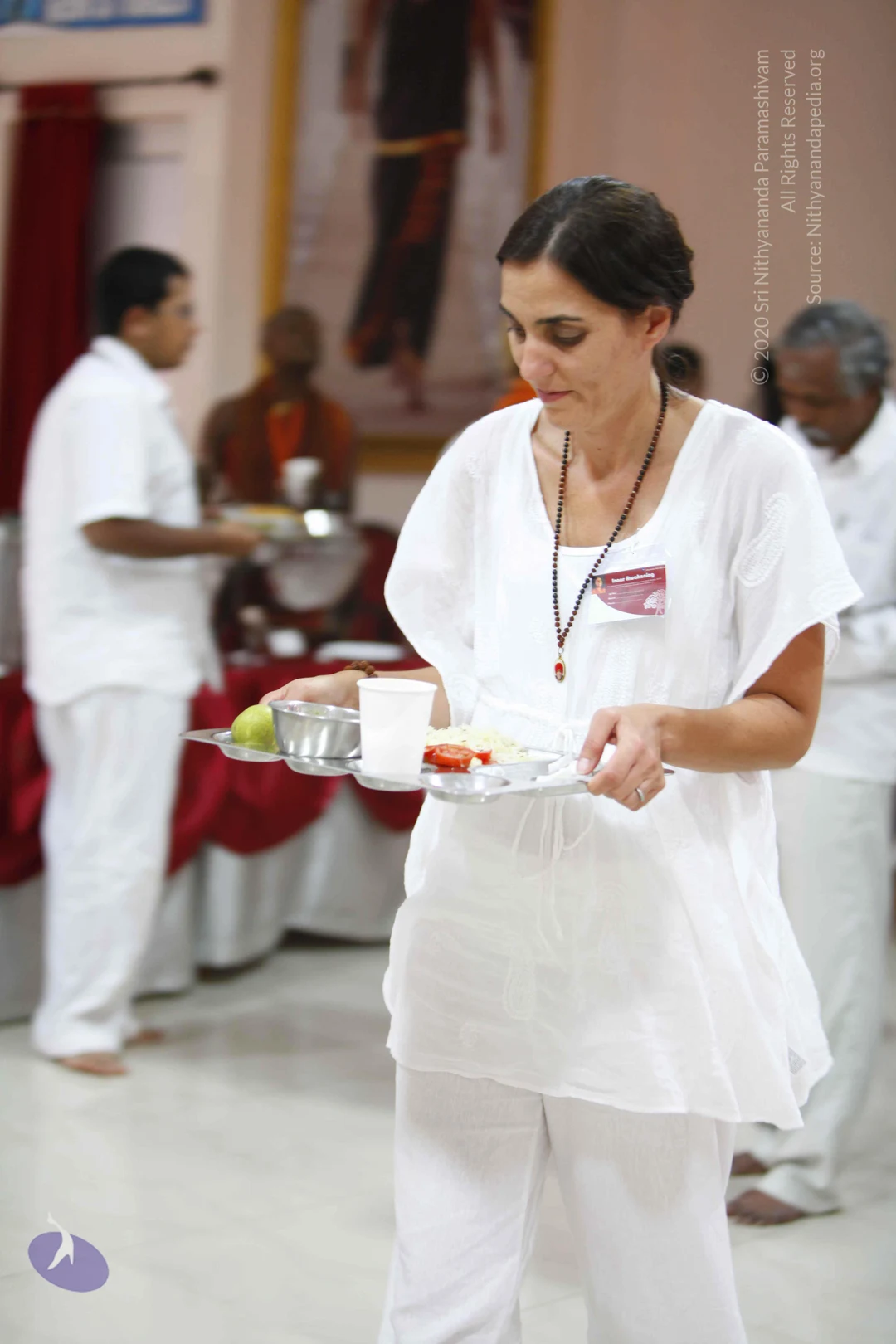
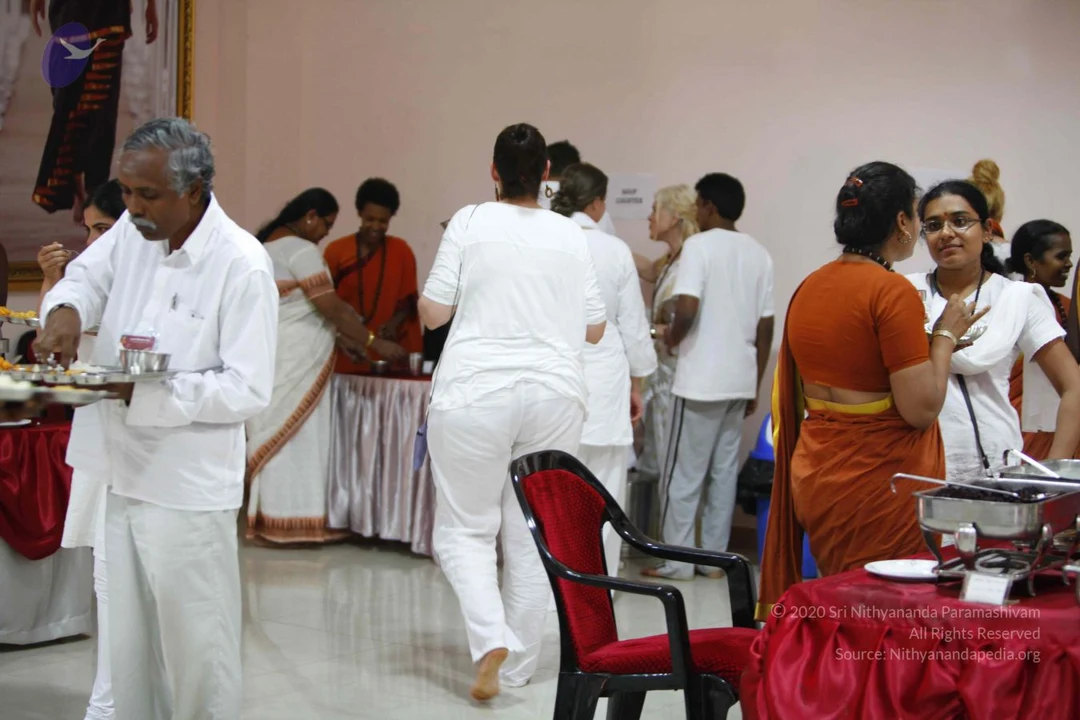
IA-Food

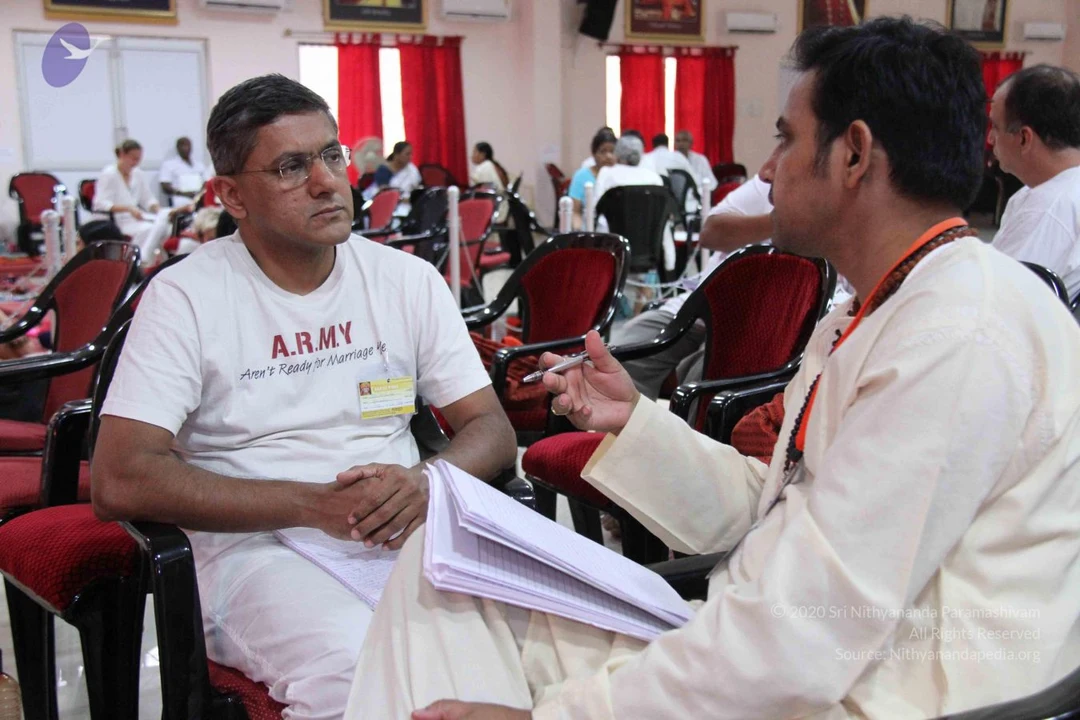
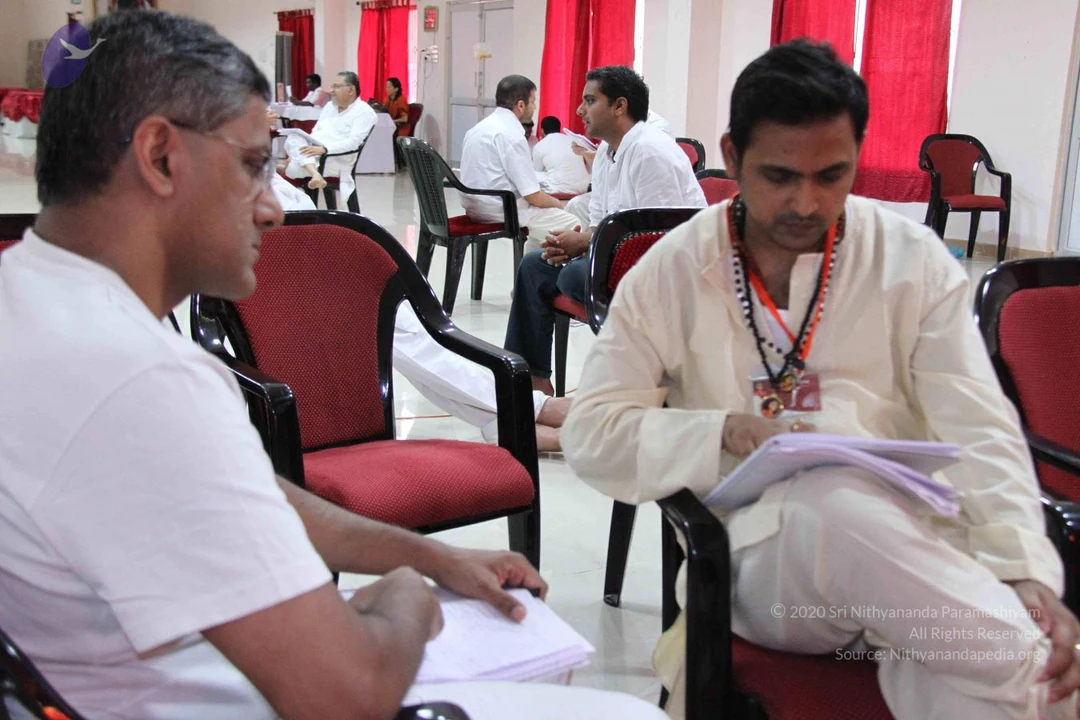
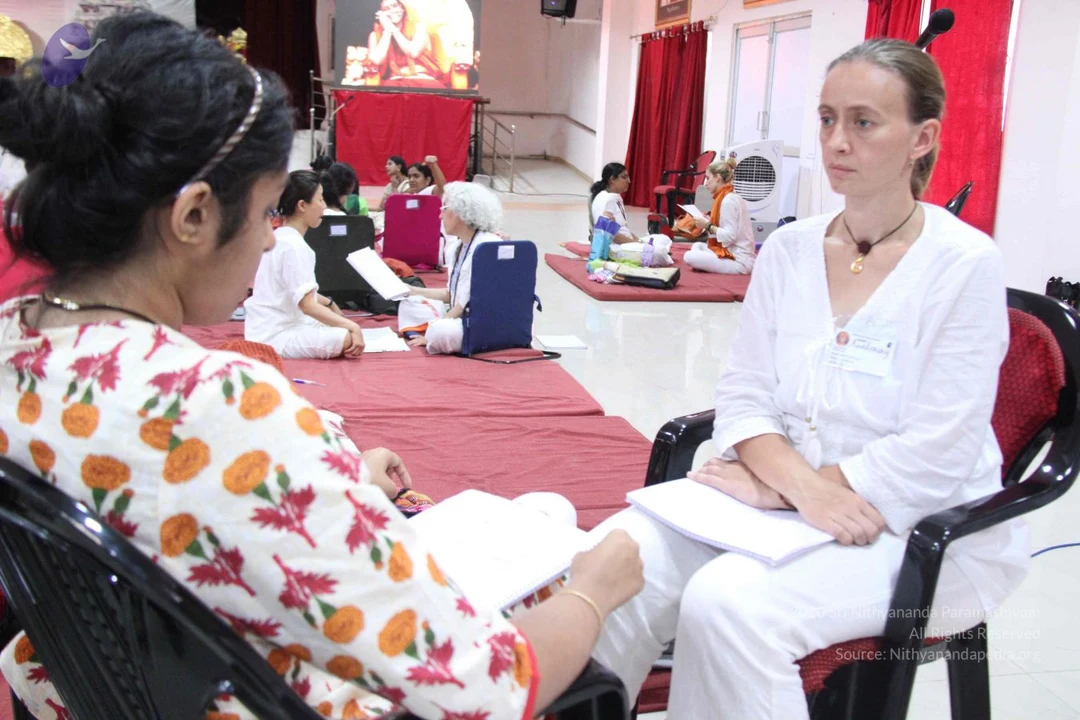
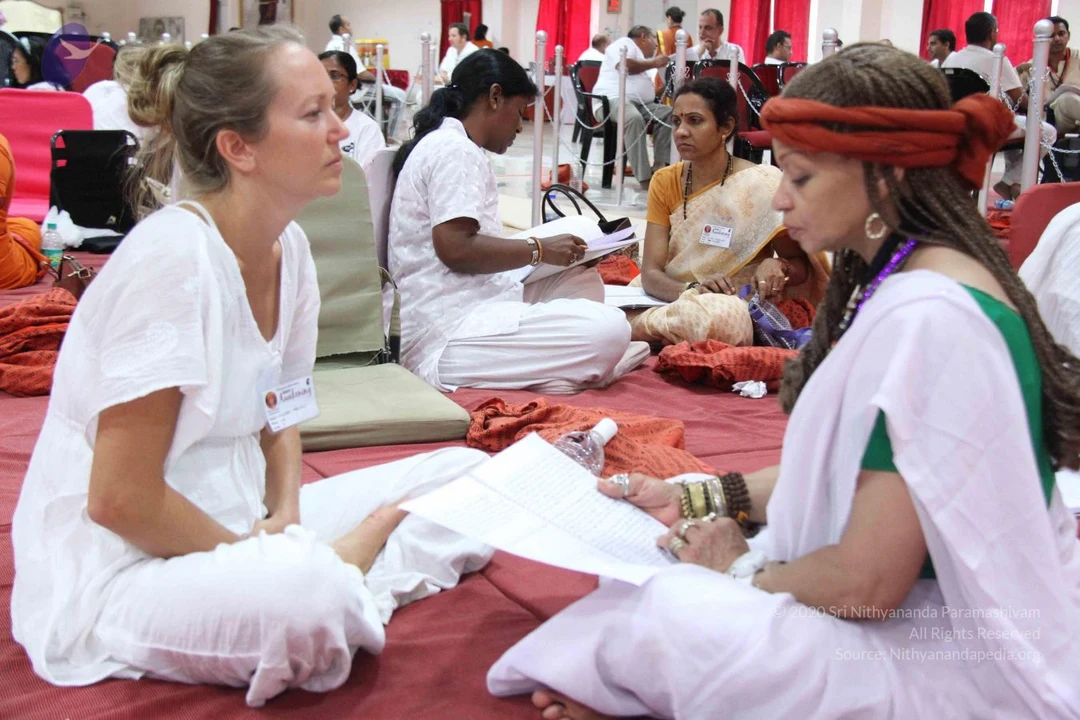
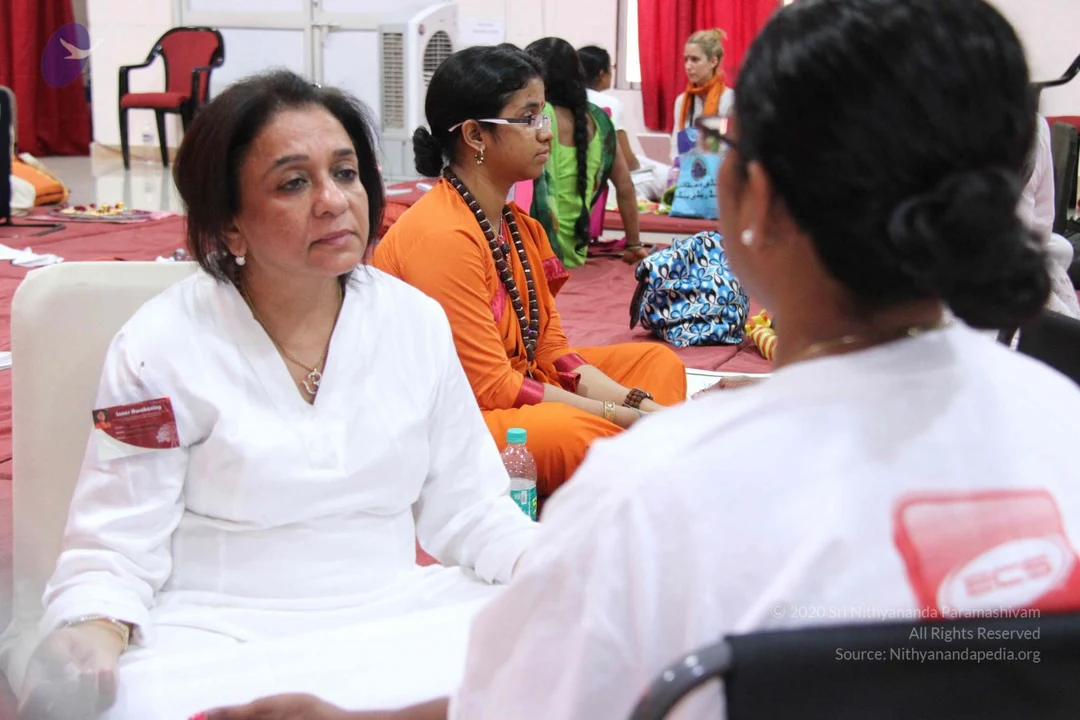
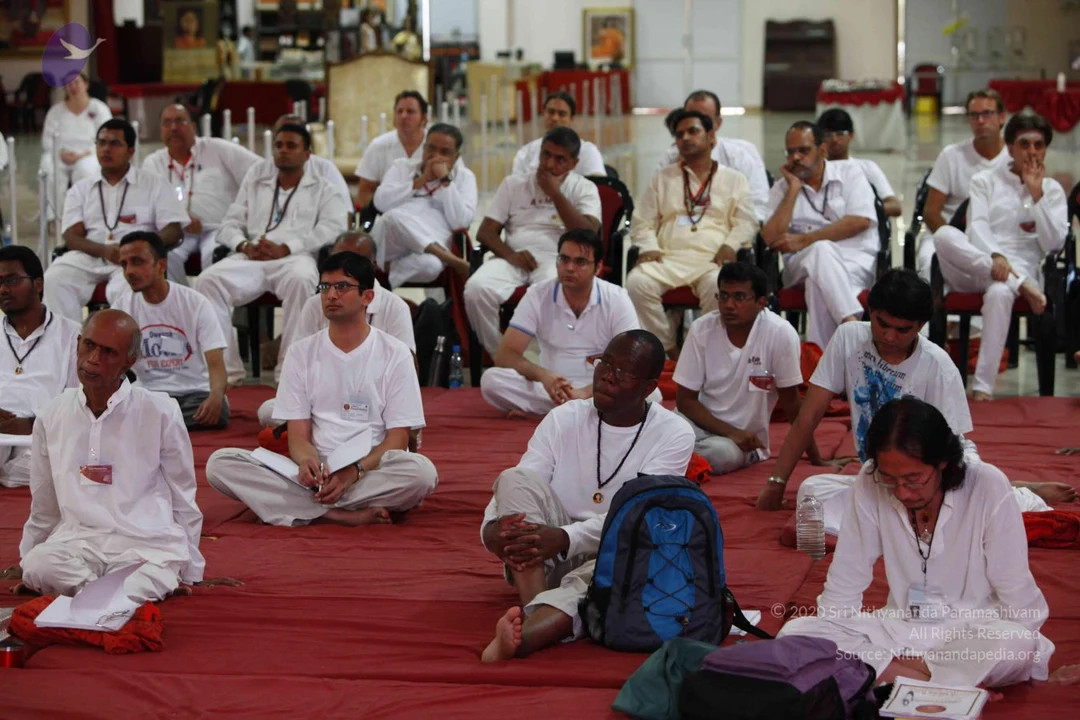
IA-Session-Participants

Temple

Photos Of The Day:

Deity-Darshan

Leela-Alankar

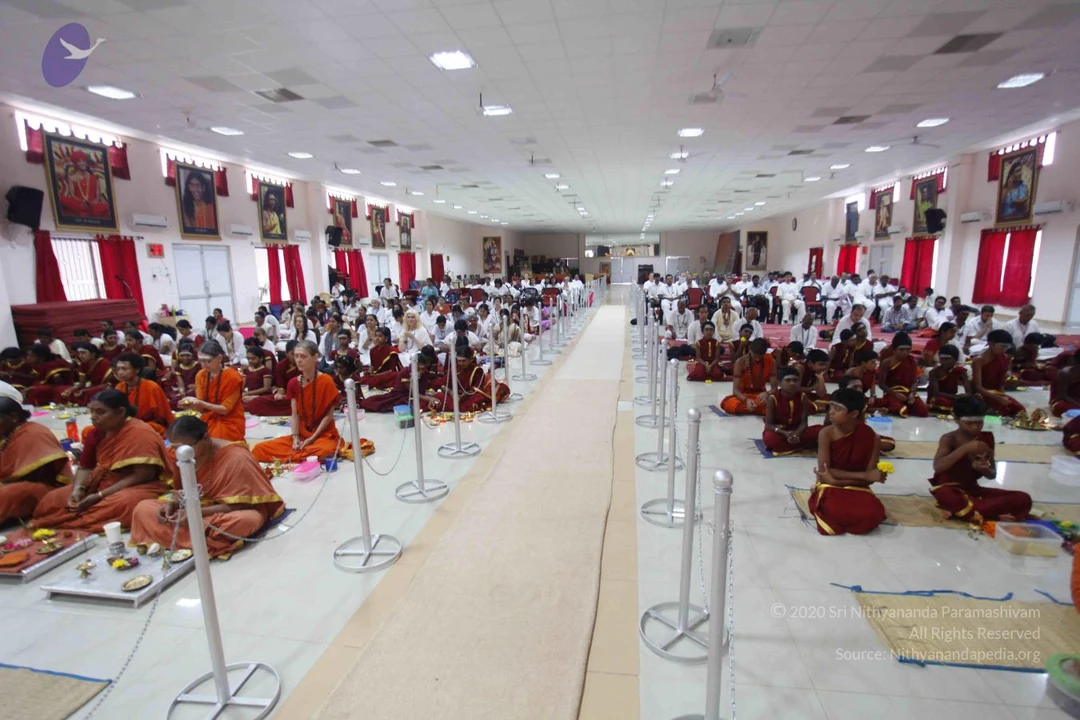
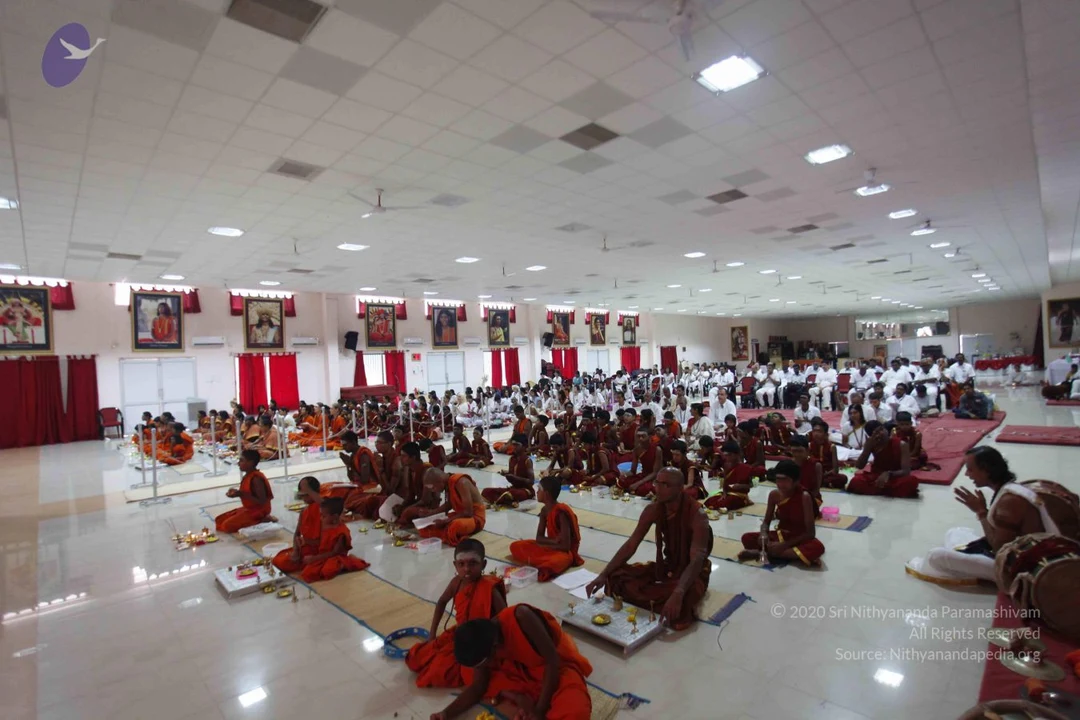
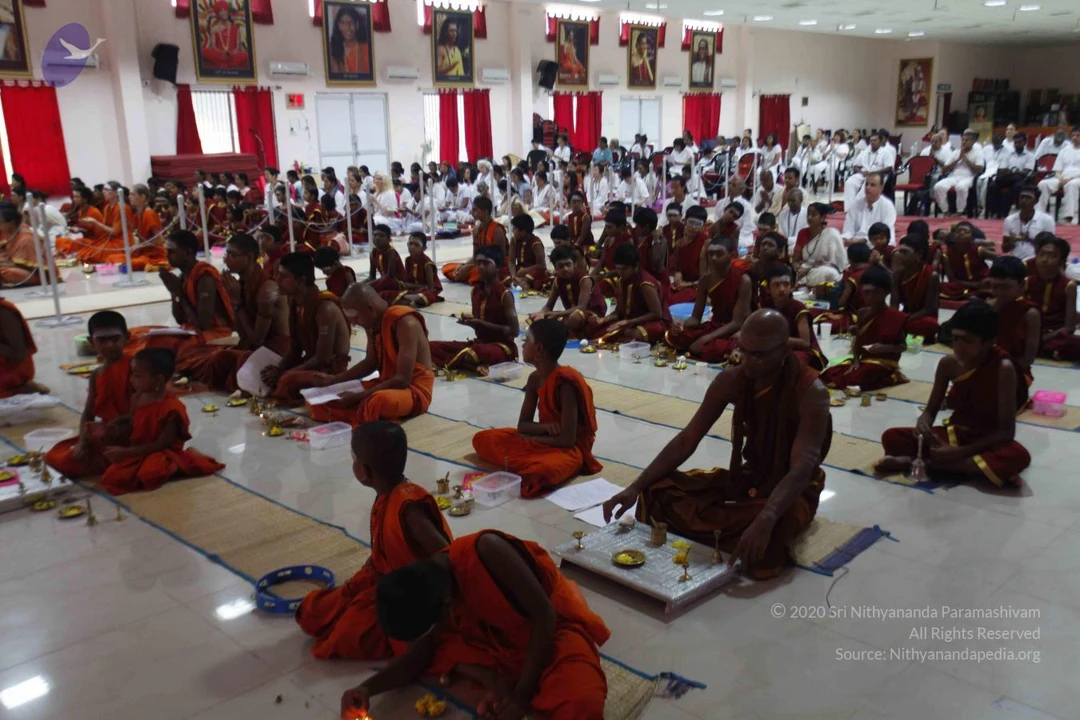
Gurukul-performance

Pratyaksha-Pada-Puja-Garbha-Mandir

Satsang

Sarva-Darshan

IA-Darshan

IA

IA-Yoga

Photos Of The Day:

Deity-Darshan

Leela-Alankar

Pratyaksha-Pada-Puja-Garbha-Mandir

Satsang

Sarva-Darshan

IA

Photos from this day

View all 313 photos

Photos Of The Day:
8 photosSource gallery
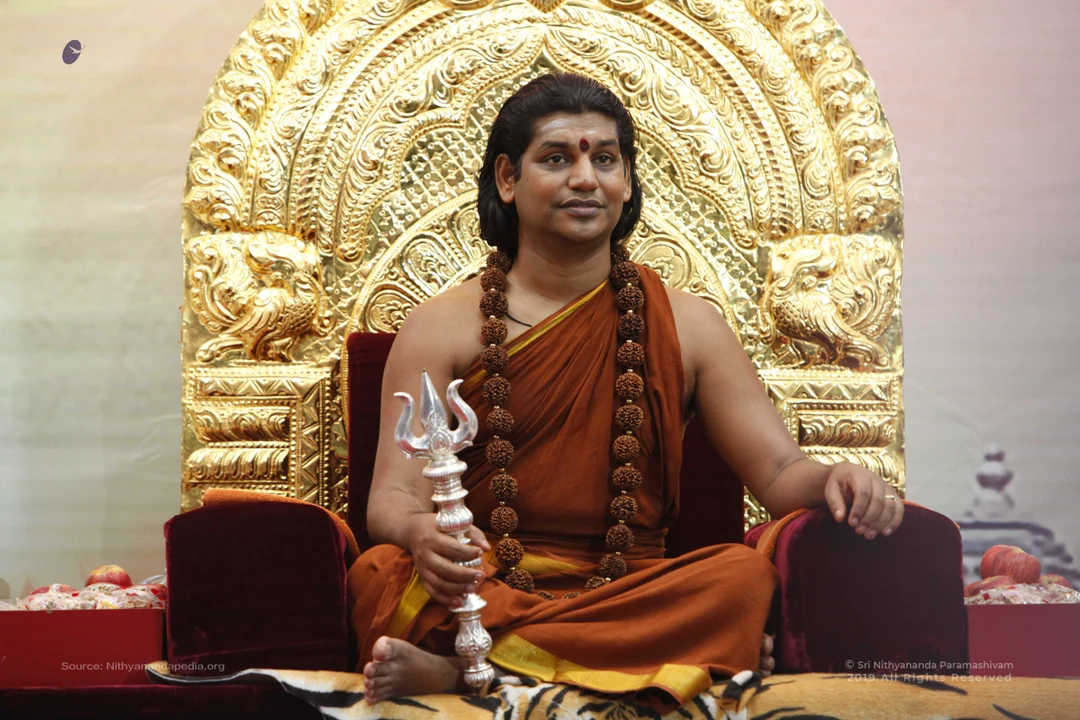
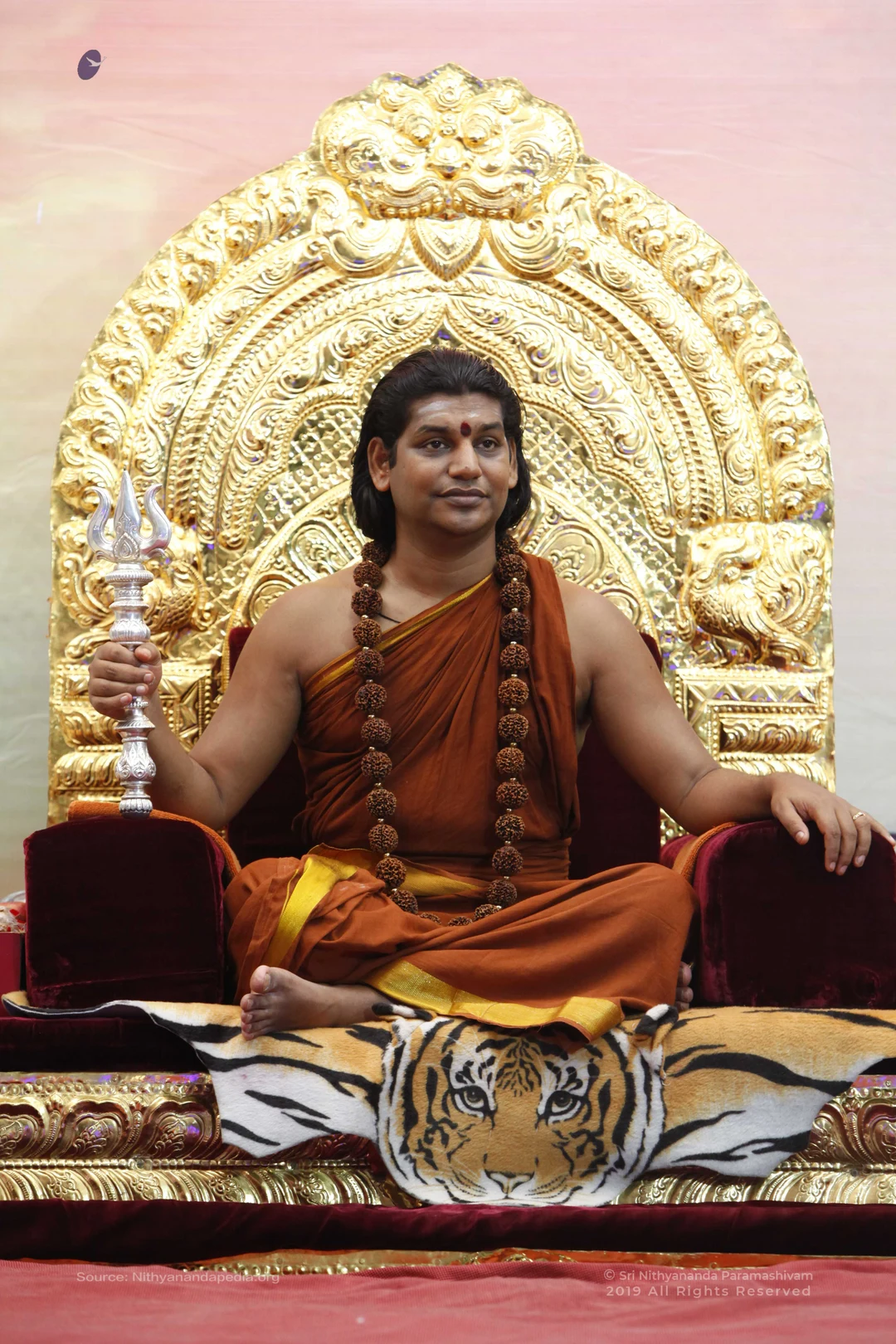
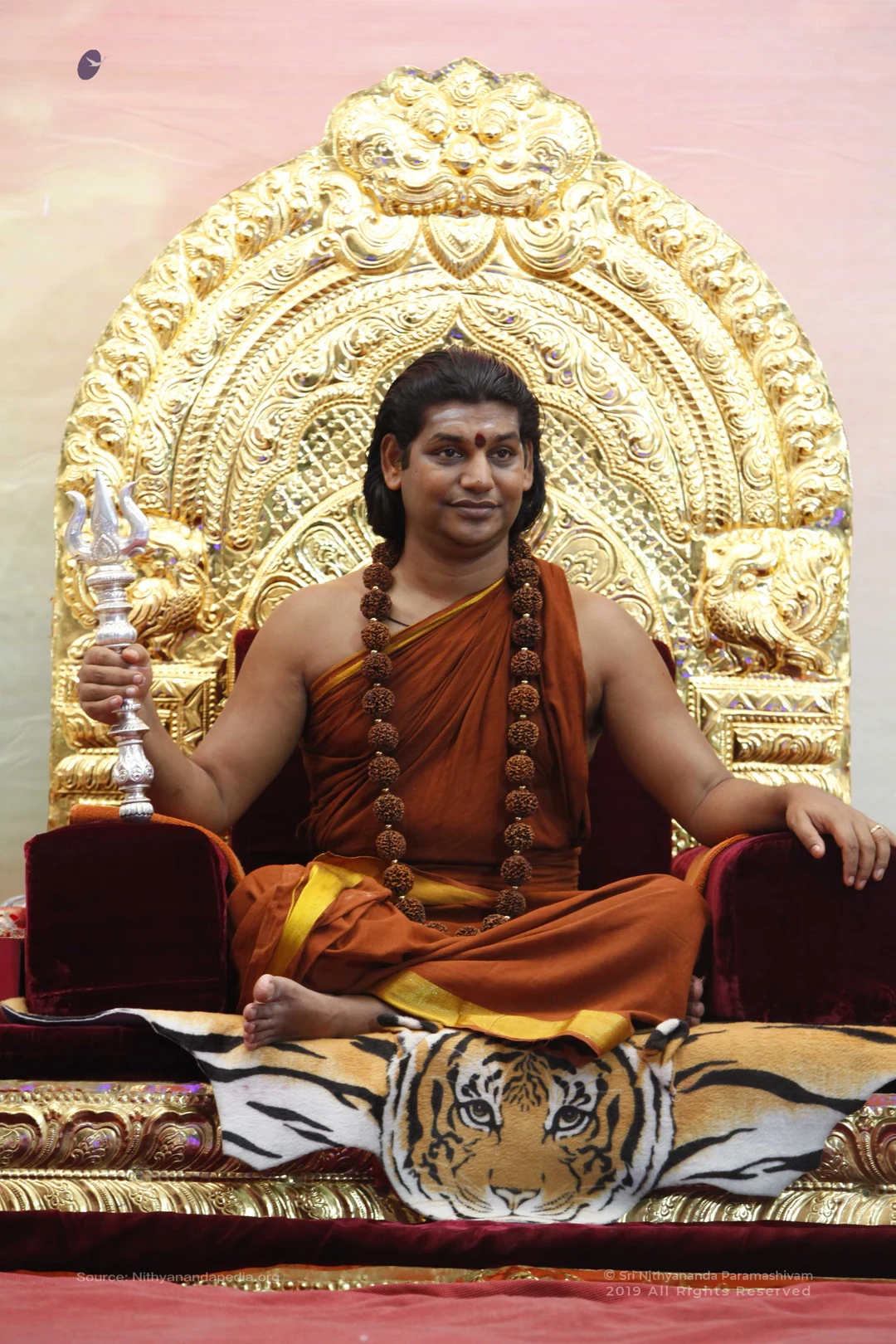
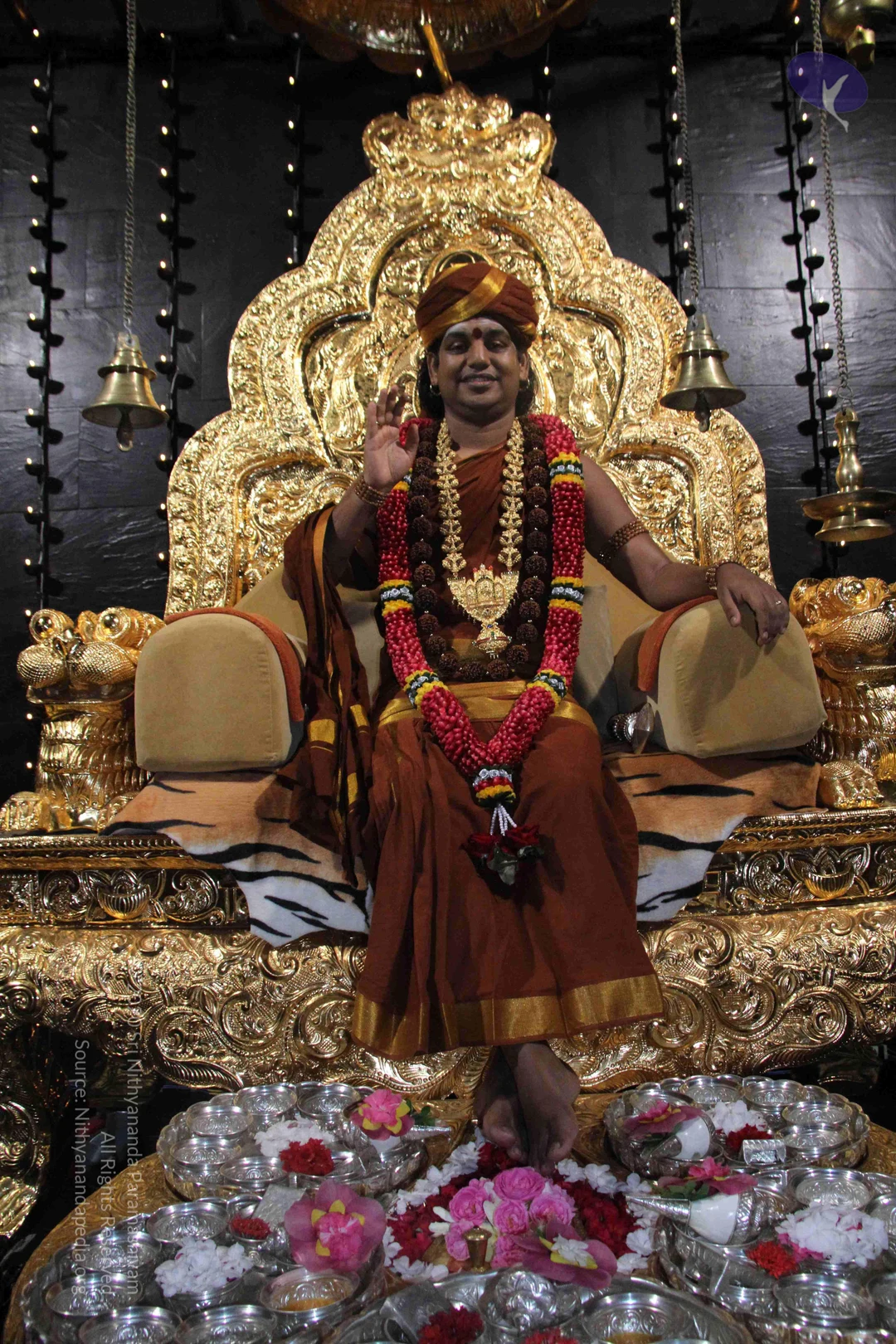
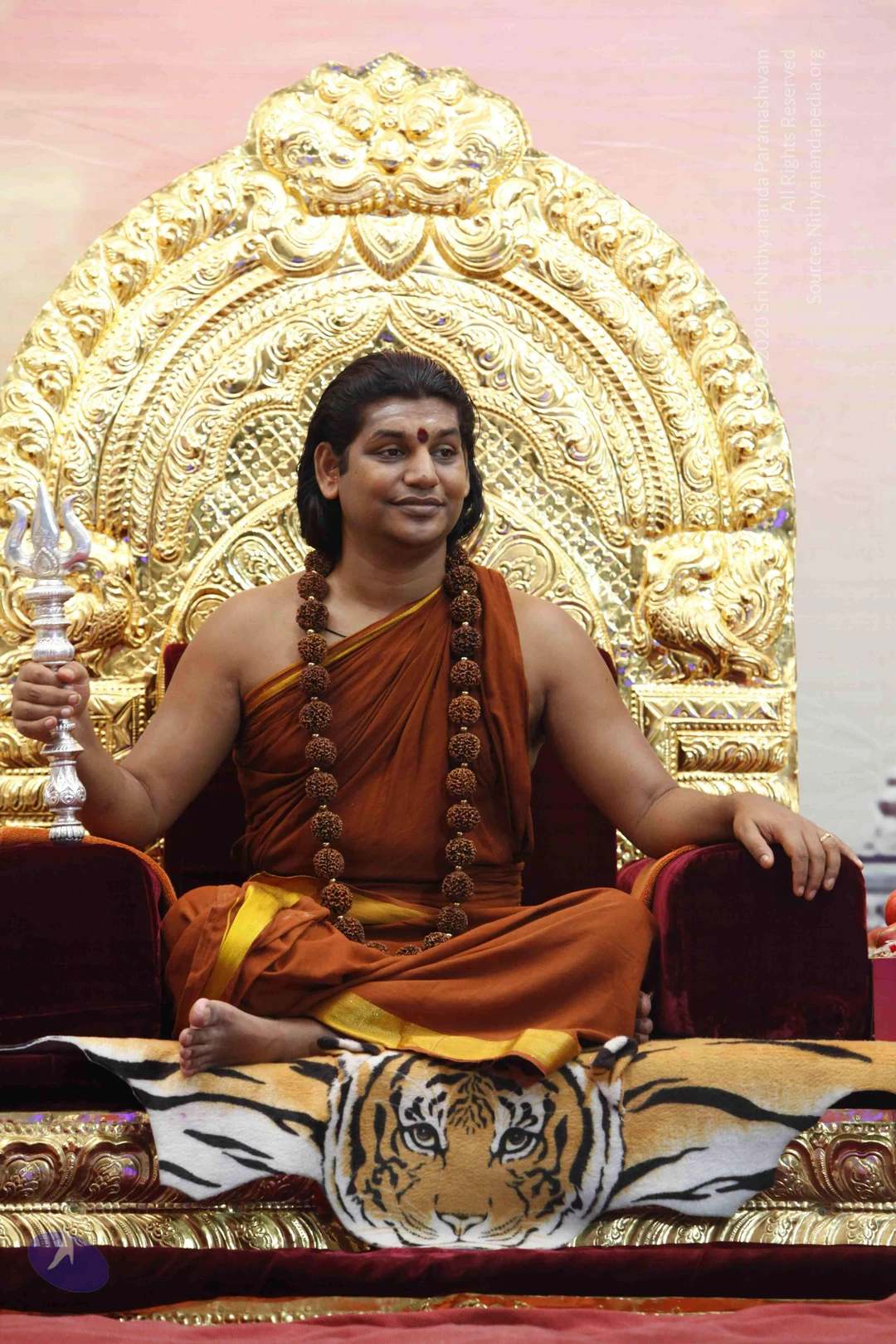
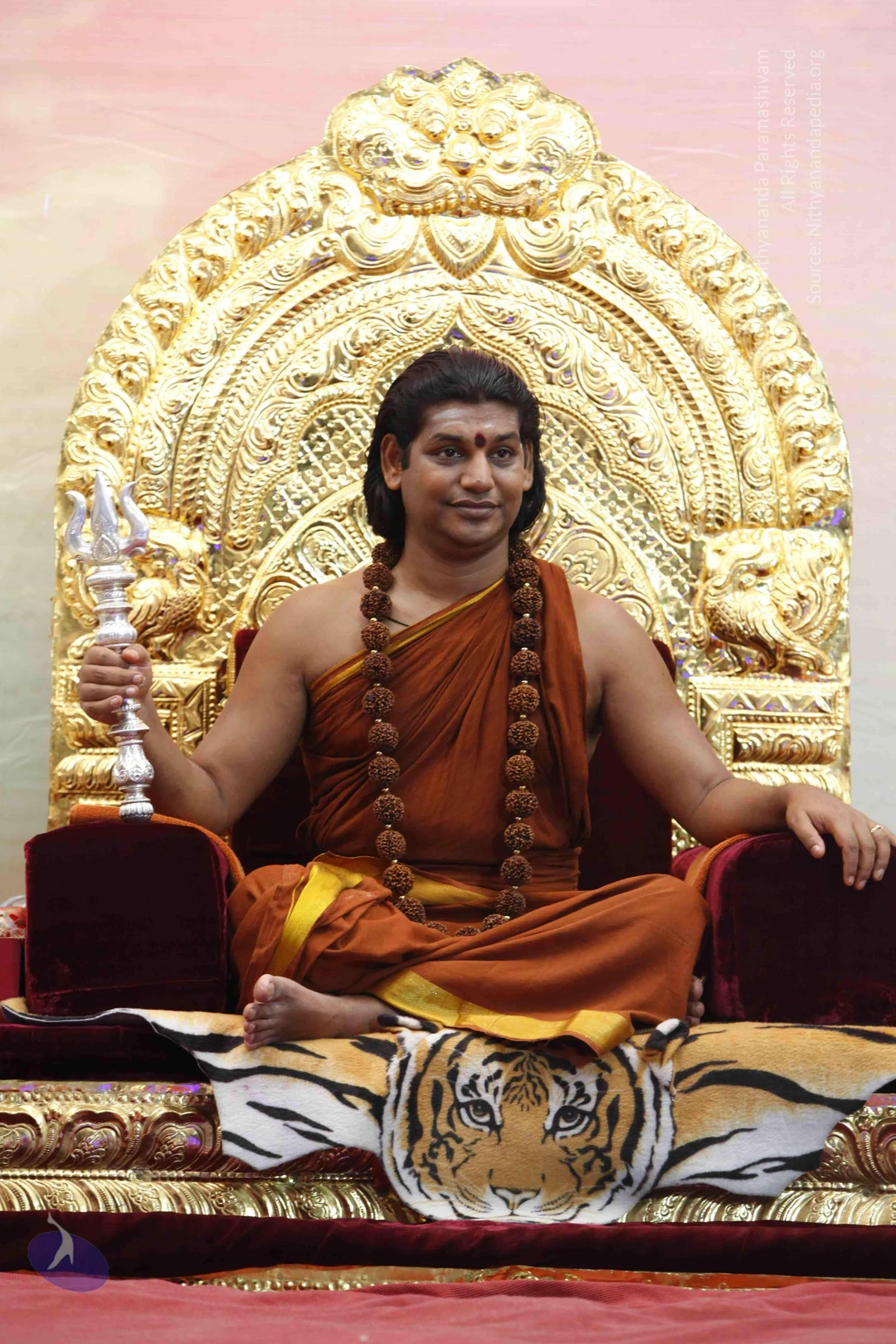
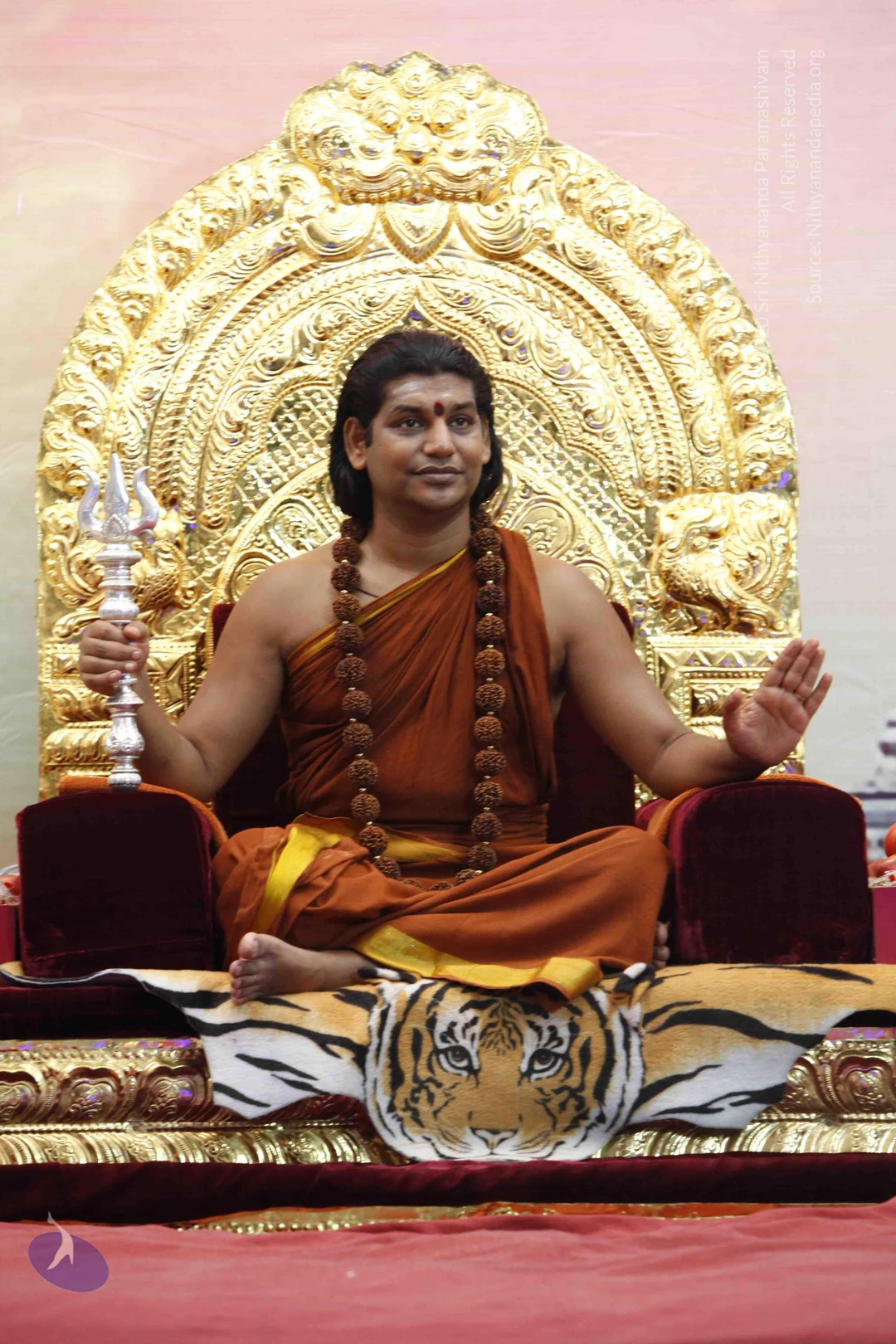
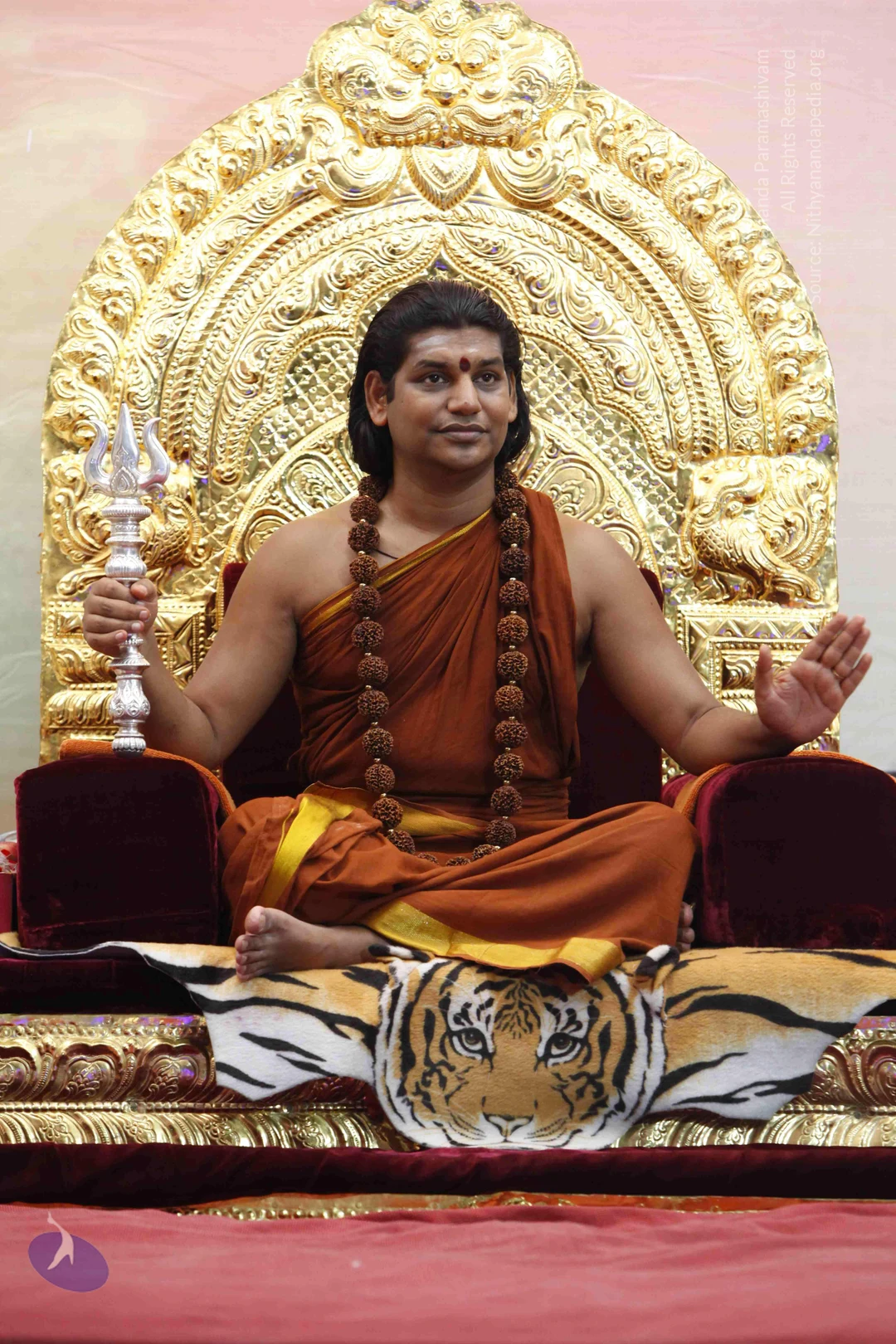
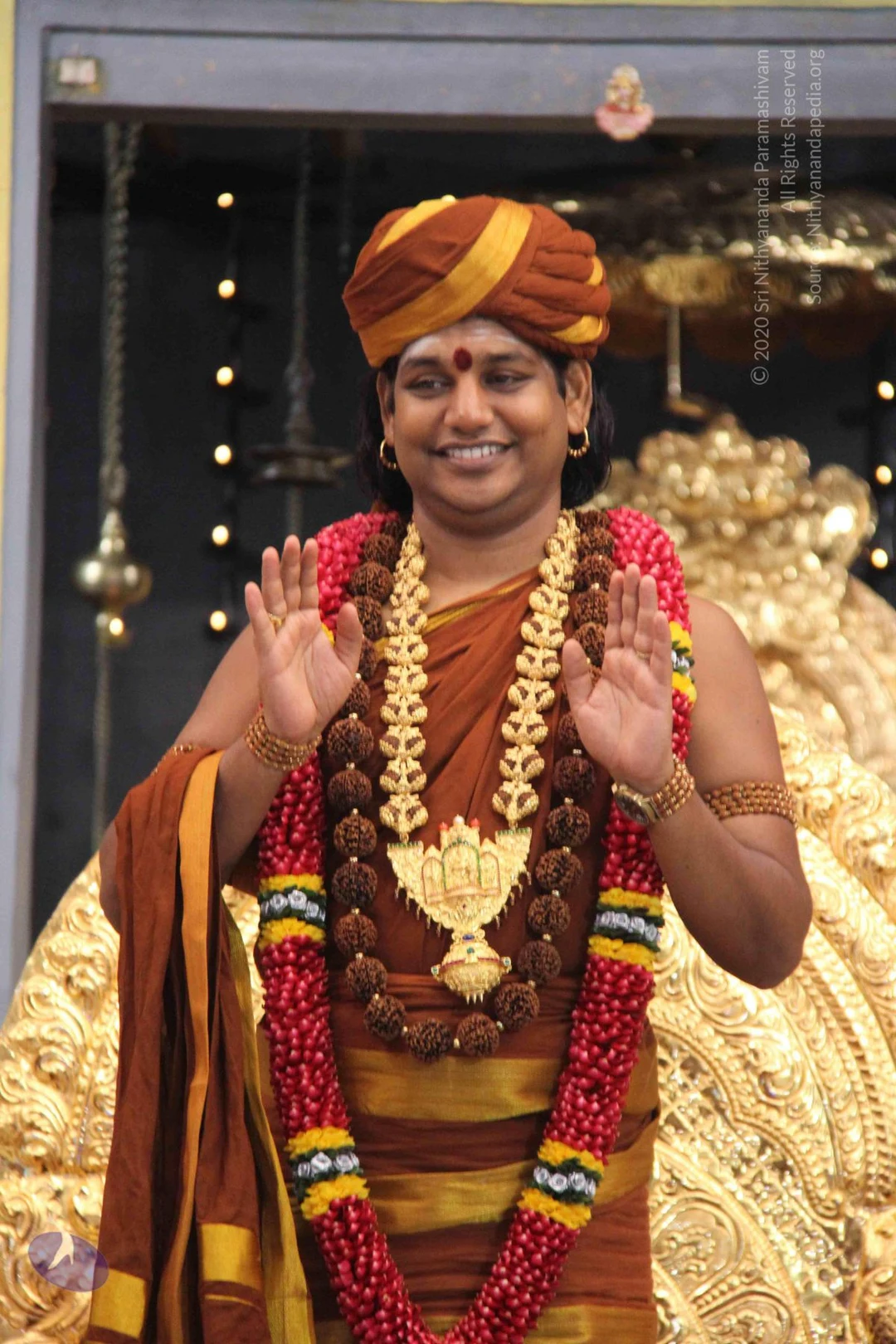
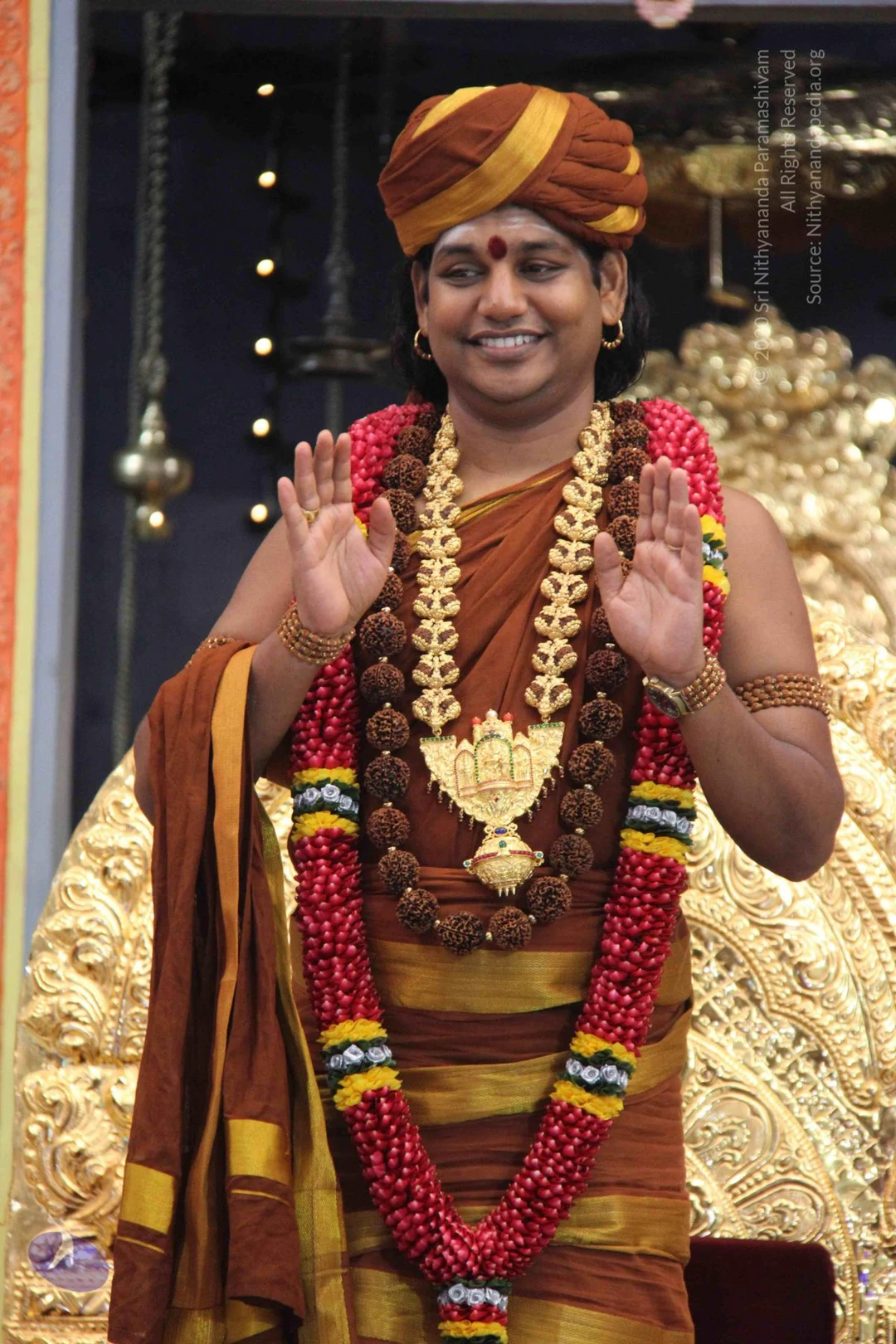
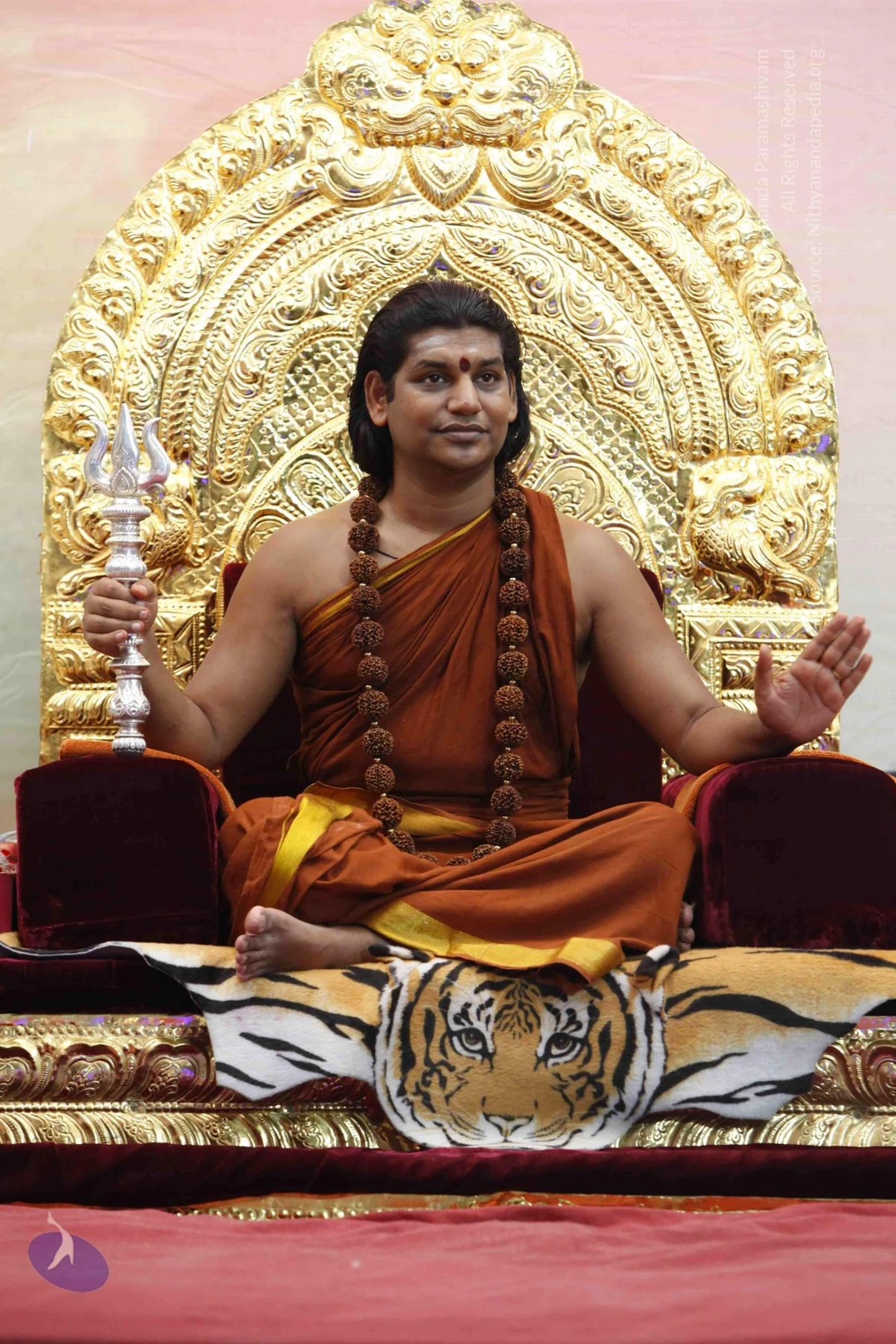
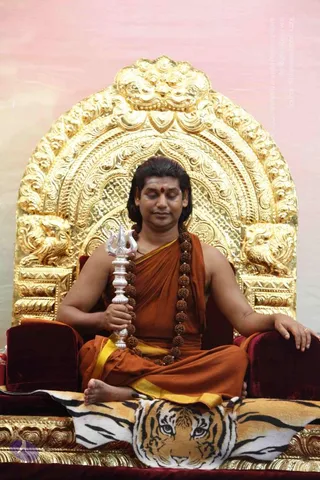
A smiling man in an orange-and-gold turban and orange draped robes with a gold border stands barefoot on a red carpet before an ornate golden throne. He wears a thick garland of red roses, white jasmine and green leaves, and a red bindi. Behind him, a tiger-skin cloth lies over the throne's cushioned seat, and two gold lion-shaped armrests flank it. Painted standing deity figures with gold crowns frame the stage on both sides, and a gilded canopy and hanging brass bells sit behind the throne.A smiling man with long swept-back dark hair and a red bindi sits cross-legged on a red velvet throne with an ornate gold repoussé backrest. He wears an orange-saffron cloth draped over his shoulder and body with yellow borders, and a long rudraksha mala hangs across his chest. He raises his right hand in a greeting wave while resting his left hand on a red cushion. His bare feet rest on a tiger-skin rug with a visible tiger face. Swamiji (probable) based on long swept-back hair, saffron clothing, rudraksha mala and throne setting.A man seated cross-legged on an ornate golden throne with a large arched gilded backrest carved with floral and lion motifs. He wears an orange-saffron unstitched robe with a gold border and a long mala of rudraksha beads around his neck and waist. He holds a silver trident in his raised left hand and rests his right arm on a maroon velvet armrest. He has a red bindi on his forehead and long swept-back hair. The seat is draped with a tiger-skin cloth showing a tiger face, set against a pink backdrop. A probable Swamiji appears here, with the long swept-back hair, saffron robe, rudraksha malas and trident as qualifying cues, seated on a throne in a ceremonial setting.A man in a rust-orange turban and rust-orange robe with gold border sits on an ornate gold throne draped with a tiger-stripe cloth, raising one hand in a blessing gesture. He wears layered rudraksha malas, a gold ceremonial necklace with a pendant, and a red and yellow flower garland. Before him stand many silver plates and bowls holding pink and red flowers and petals, with a bare foot resting near the offerings. Hanging brass bells and lamps flank the throne against a dark backdrop. Watermarked archive image; a visible caption reads style text was omittedA smiling man sits on an ornate gold throne upholstered with a tiger-striped cloth, set against a gold-framed backdrop with hanging brass bells and oil lamps. He wears an orange-saffron turban, orange-saffron robes with gold borders, a large gold pendant, a rudraksha mala, and a multicolour garland of red and yellow flowers. Bangles adorn his wrists. Painted deity figures with raised arms holding a flaming torch and a trident-like object flank him on either side. Probable Swamiji: a long-haired figure in saffron with a crown-like turban and rudraksha mala, seated on a throne in a satsang setting, labeled by the page as Swamiji.A smiling man in a rust-orange and gold turban with a red bindi stands before a golden ornate throne, raising both palms outward in a blessing gesture. He wears a rudraksha mala with a gold pendant, layered gold necklaces, a red and yellow marigold garland, gold bangles and an orange-brown dhoti with a gold border and a saffron shawl. Behind him are hanging lamps and a golden canopy. Watermarked copyright text appears in the lower corners. Swamiji (probable) appears as the central figure, with the appearance cues of a saffron turban, rudraksha mala, gold necklaces and ceremonial garland.
Leela-Alankara
2 photosSource gallery
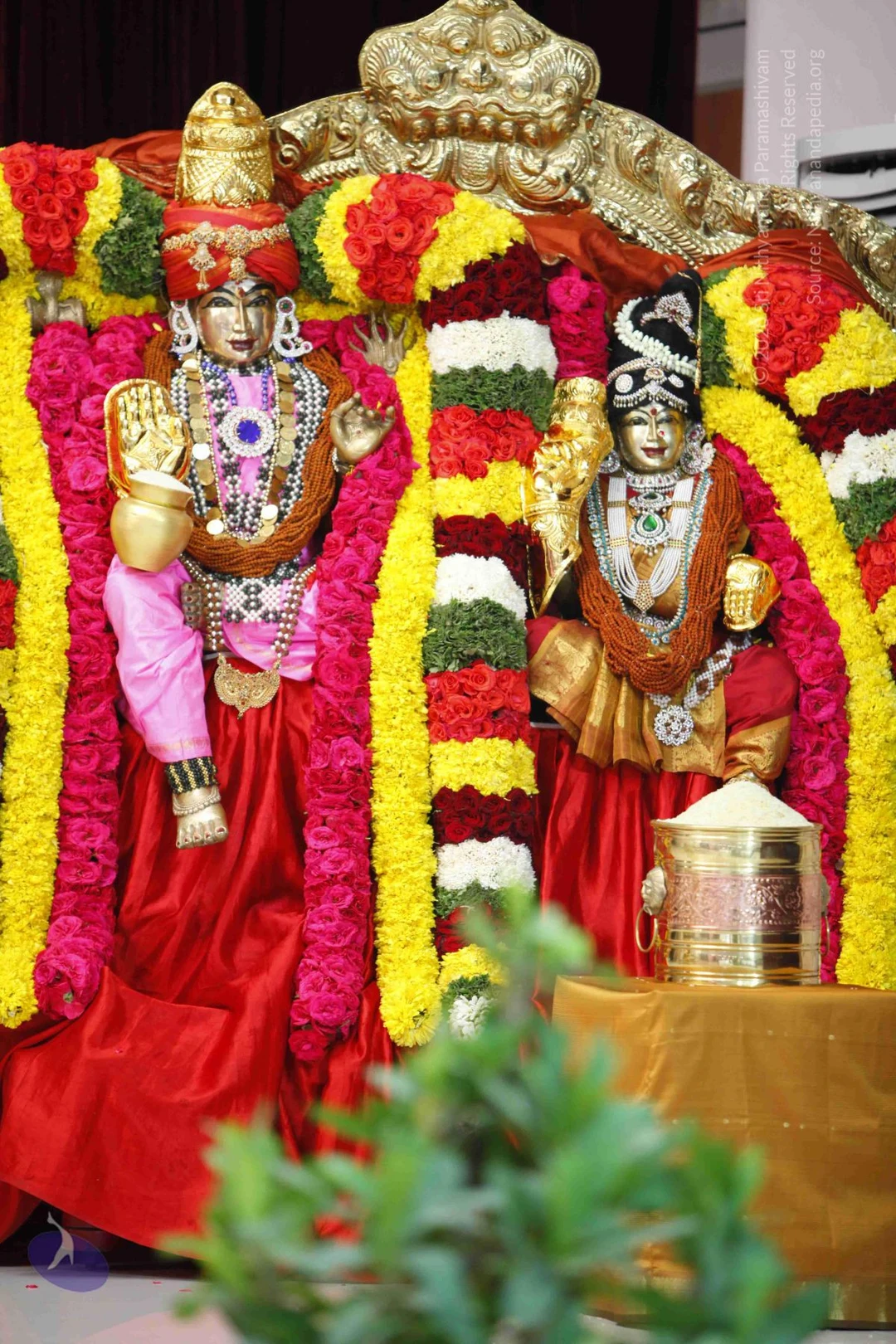
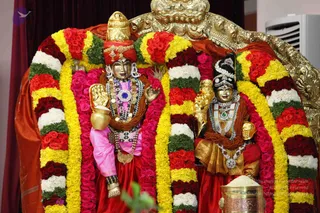
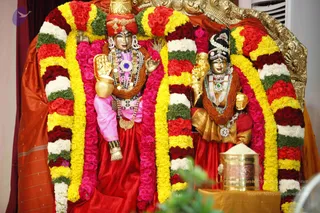
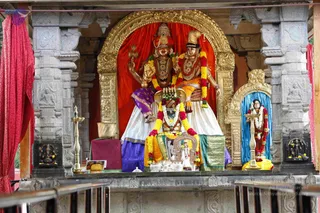
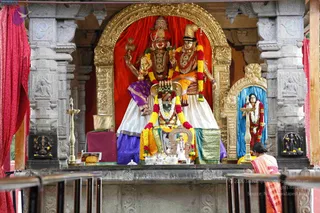
Photograph of two gilded deity murti (metal or resin figures) seated side by side under an arch of garlands of red roses, white jasmine, yellow marigolds and green leaves. The figure on the left wears a red and gold turban, a pink dhoti, a bead and gem necklace, and holds a golden kalasha pot in one raised hand. The figure on the right wears a black crown with white flower decoration, a red and gold sari, layered pearl and emerald necklaces, and holds a golden conch shell. A brass vessel of rice stands in the foreground. No physical people are visible.Two golden deity murtis stand side by side on a red and orange draped backdrop, framed by a great arch of garlands in bands of red, white, yellow, green and magenta flowers. The figure on the left wears a red turban, a pink dhoti, a multi-strand bead necklace with a large blue stone, and holds a golden pot in one hand. The figure on the right wears a black and gold crown, a rudraksha-style necklace, and a green-stoned pendant, holding a golden object. A brass vessel filled with rice sits in front on a gold-coloured stand. The scene is a decorated temple-style shrine display with deity murti, flower decoration and offerings.

Pratyaksha-Pada-Puja-Crowd
35 photosSource gallery
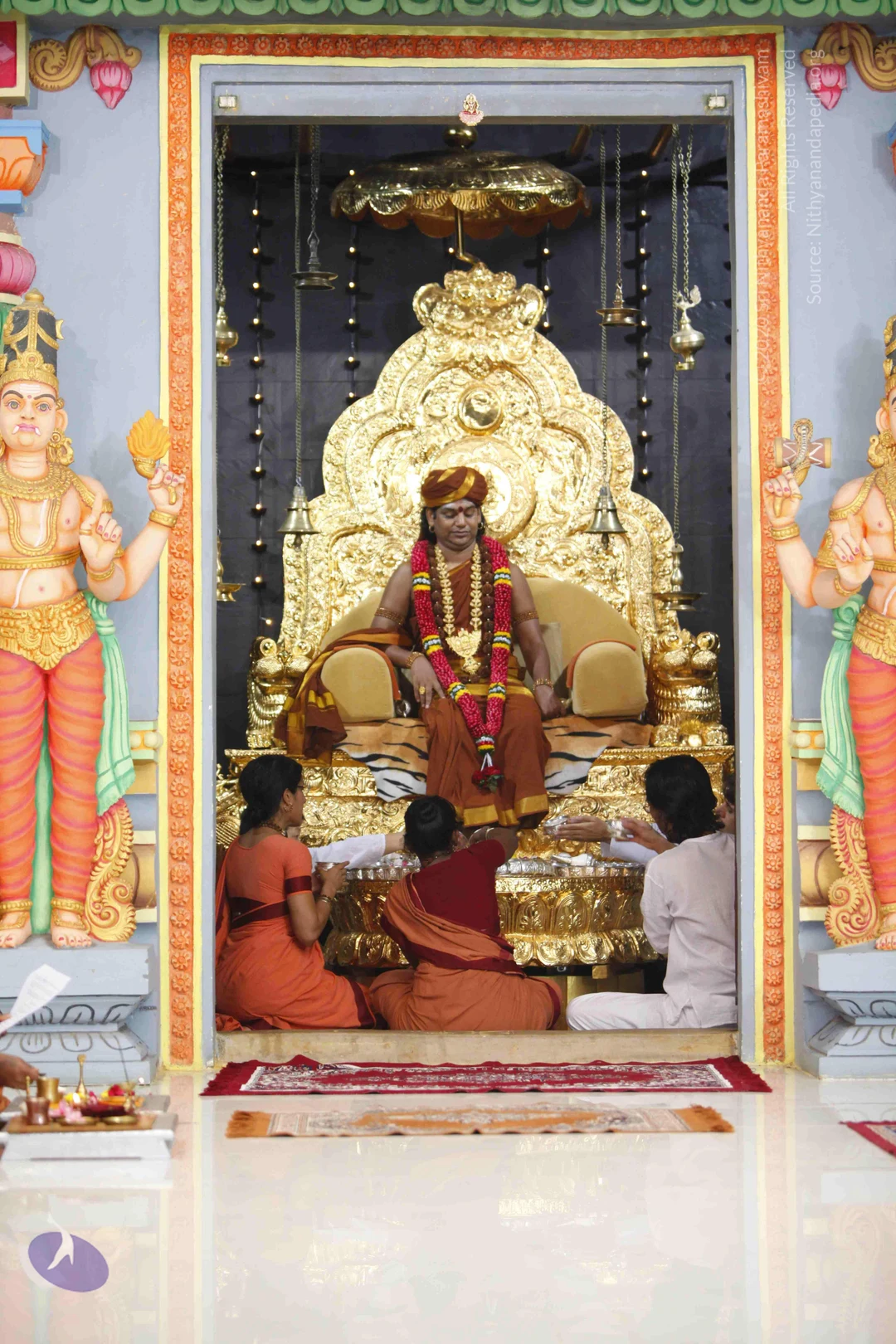
A photograph of a silver multi-wick oil lamp, a lamp stand with five lit flames, set on a light grey surface in front of a dark maroon draped backdrop. The lamp has a central column with ornate animal-shaped arms holding small cups of burning oil. No people are visible.A man in saffron-orange robes and a matching orange turban sits on an ornate gold throne carved with floral and scroll motifs, draped with a striped tiger-skin cloth. He wears multiple red-and-yellow flower garlands, a rudraksha mala, a gold pendant necklace and gold armbands, and is smiling with his hands resting on the armrests. Brass hanging bells and small brass oil lamps flank the throne against a black backdrop, with painted deity figures visible at the edges. Small offerings of flowers lie at the base. The man's appearance, distinctive saffron turban, rudraksha mala and ornate gold regalia are consistent with the page's reference to a person, though this is an appearance-based label only.A photograph inside an ornate temple-style hall with a gilded throne at centre. A seated figure in orange-saffron cloth with a red and white flower garland and gold necklaces sits on the throne, flanked by two tall painted deity murti figures in orange dhotis holding attributes. Several women in orange and saffron saris sit on the floor at left and right, palms pressed together. A man in white clothes kneels at lower right with hands in namaste on a red rug. Brass oil lamps line the walls and a small fire lamp burns at lower left. The floor is polished white stone.A seated man in an ornate gilded throne with a tiger-skin cushion sits at the centre of a shrine doorway. He wears a saffron-orange turban and saffron robes, a red, yellow and green rudraksha-style garland, and a heavy gold necklace. Golden hanging lamps and bells surround the throne beneath a gold umbrella canopy. Three devotees sit cross-legged below the throne: two women in orange and red saris and a man in white. Orange and gold ornamental pillars frame the entrance. The figure's appearance, with saffron turban, rudraksha garland and gold ornaments, makes him a probable Swamiji (probable) seated in a satsang setting.A photograph of a seated man on an ornate golden throne with a carved gold backrest and lion-form armrests, draped with a tiger-skin cloth. He wears an orange-maroon turban, a rust-orange robe with a gold-trimmed cloth, a long multicolour garland of red and yellow flowers with rudraksha beads, a gold pendant necklace, and bangles, and he rests his hands on the armrest. Brass hanging lamps flank the throne against a dark backdrop, with painted deity figures with raised hands at the edges and a few people's heads visible at the bottom. a person: the seated figure has a turban, rudraksha mala and ceremonial gold necklace on a throne, consistent with the page's reference to a person, though the appearance is only partly distinctive.A seated man in saffron-orange robes sits on an ornate gold throne with carved floral backrest and a tiger-striped cloth draped over the seat, in a temple-like hall. He wears an orange turban, layered red, orange and multicolour flower garlands, a rudraksha mala with a gold ceremonial pendant, and gold armbands. Brass hanging bells and oil lamps hang beside the throne, and painted deity figures with raised hands frame the edges. Two women in the lower corners are partly visible. Swamiji (probable): the seated man has a swept-back dark hairstyle, orange turban, saffron robes and rudraksha mala cues, but the appearance is only moderately distinctive, so this remains a probable appearance-based label.

Pratyaksha-Pada-Puja-Garbha-Mandir

27 photosSource gallery
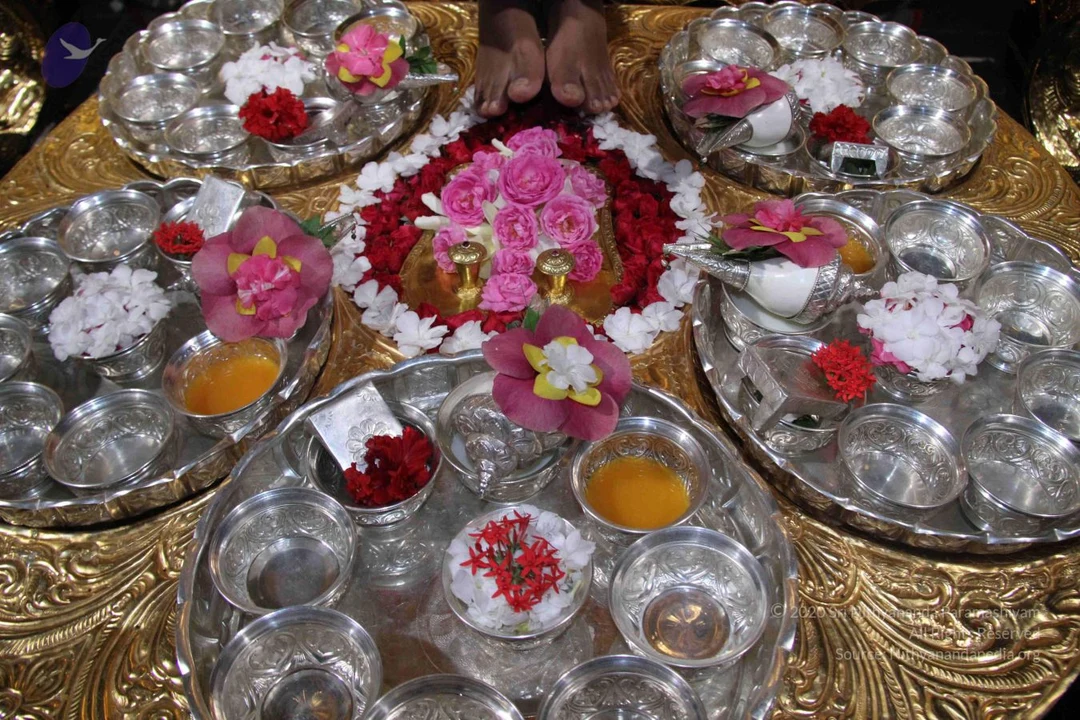
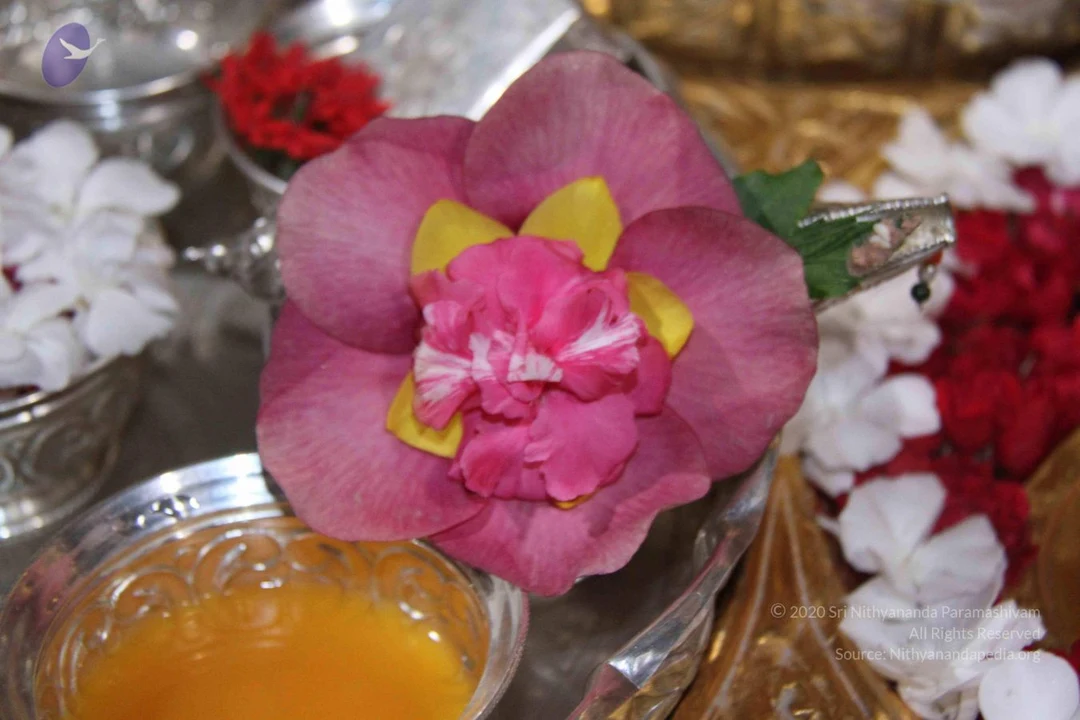
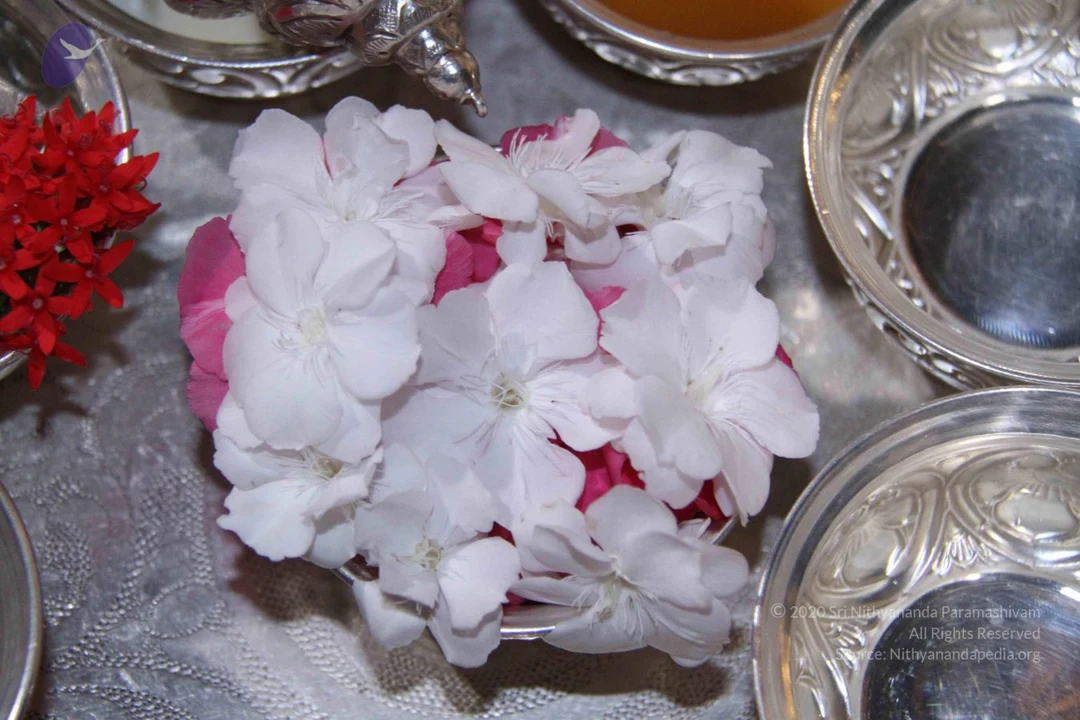
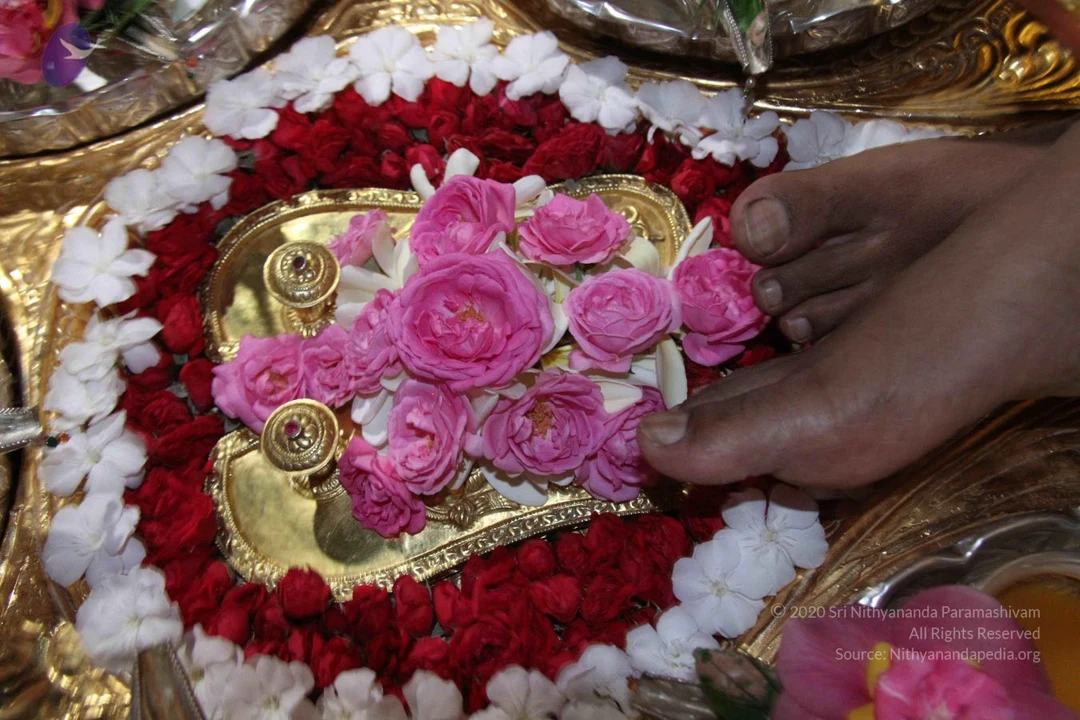
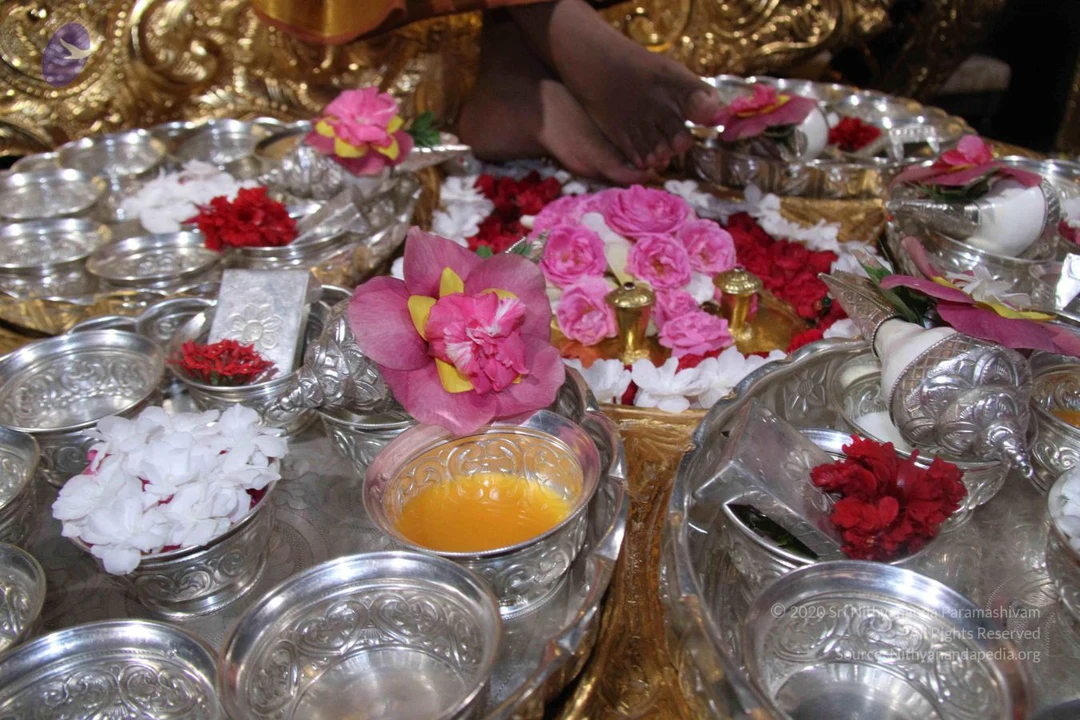
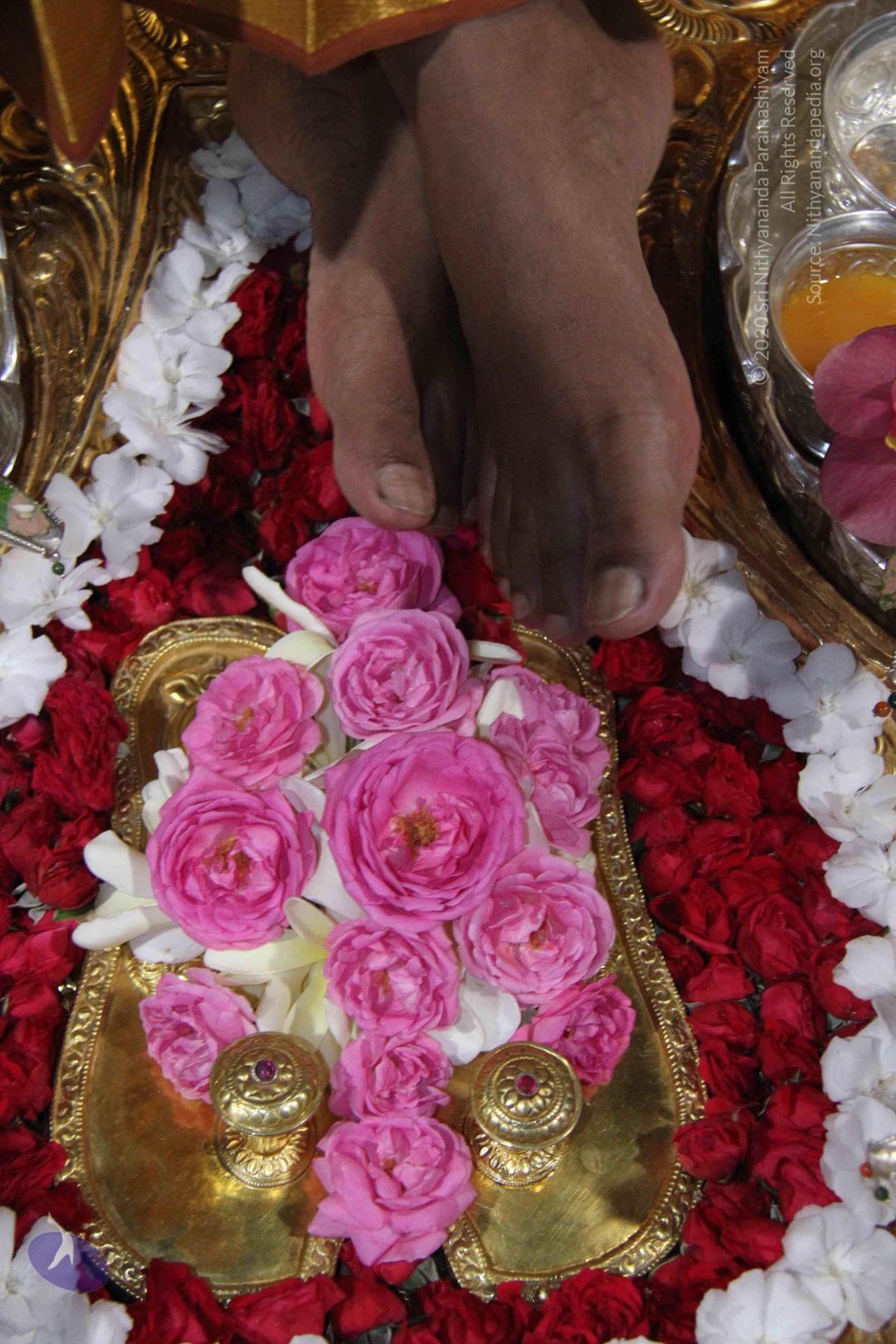
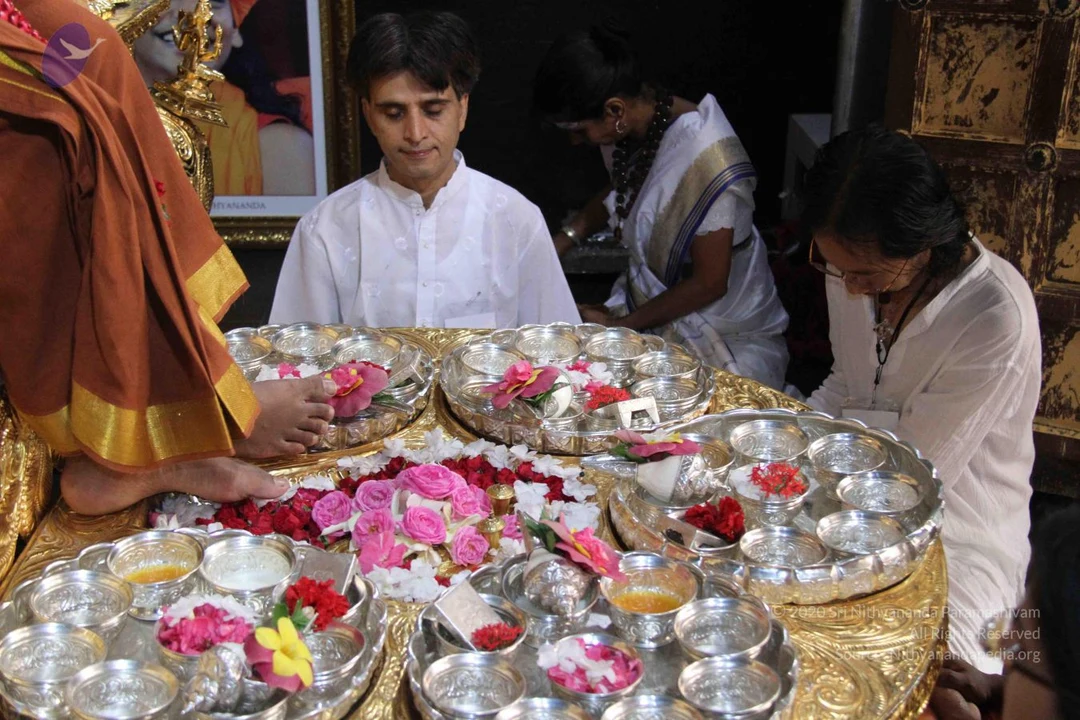
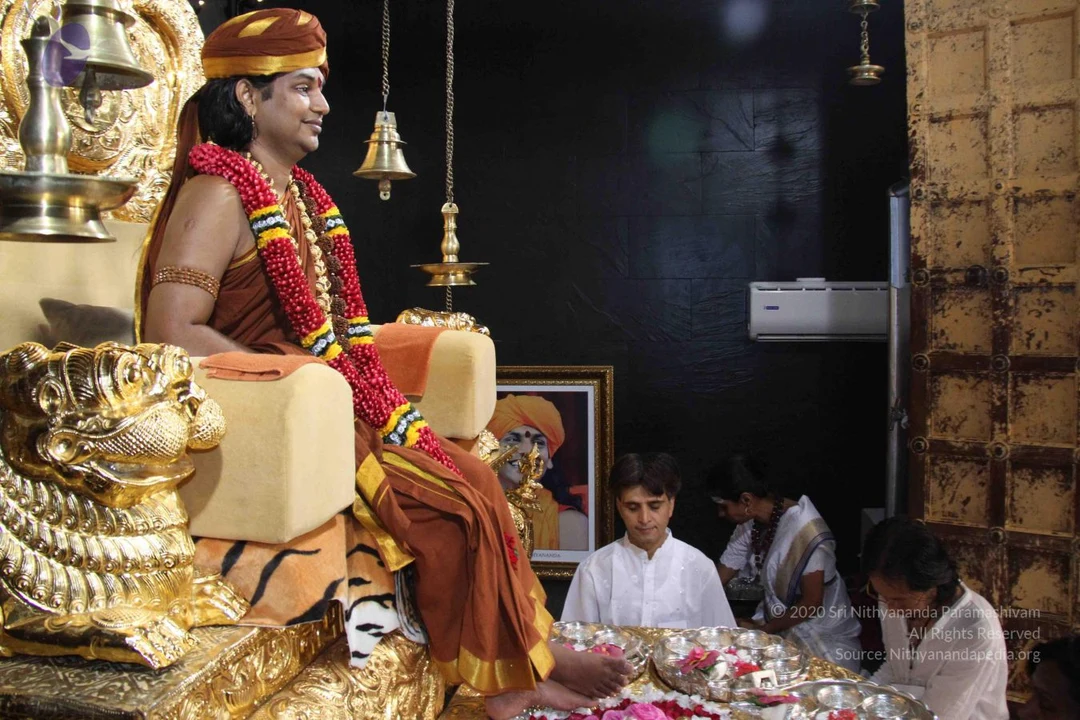
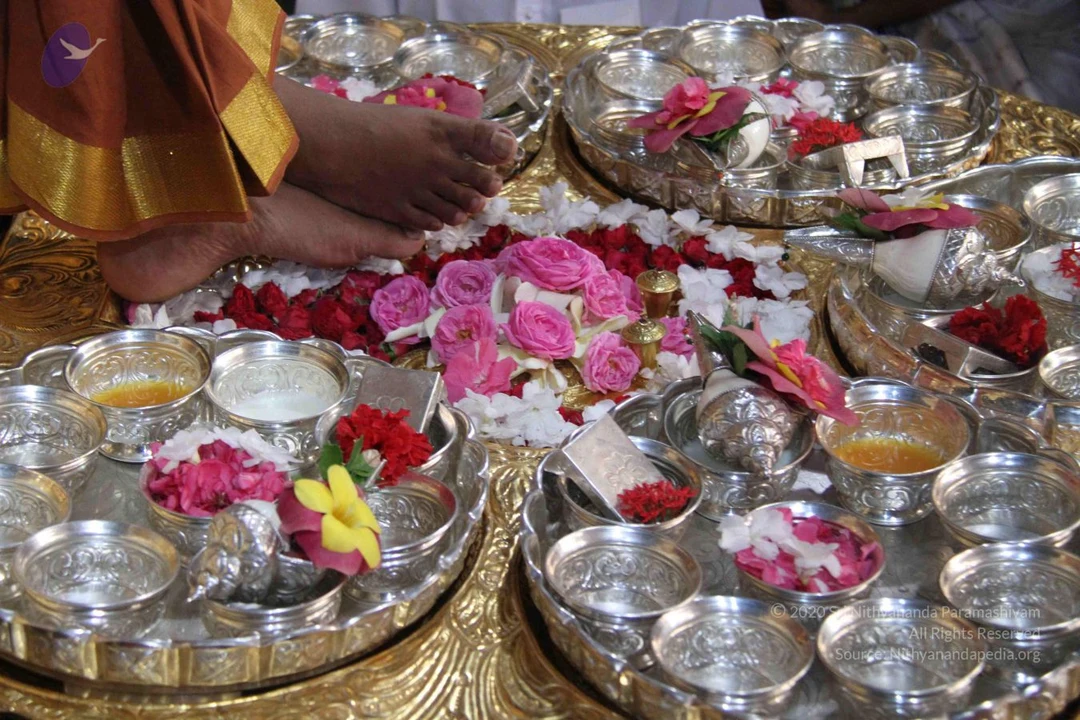
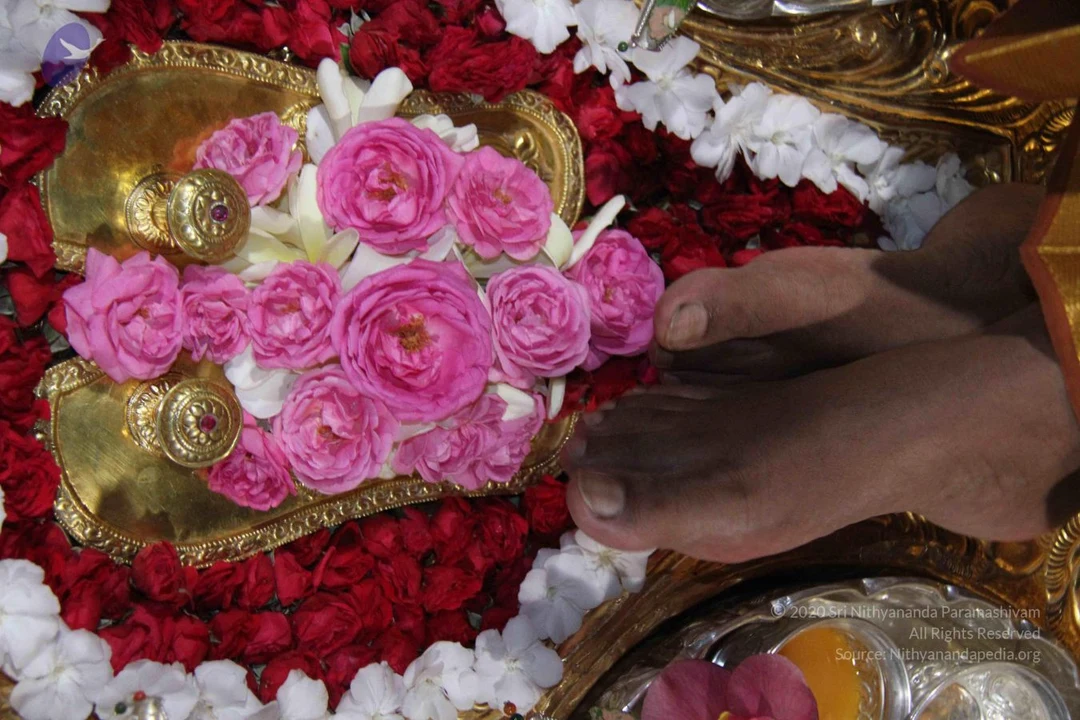
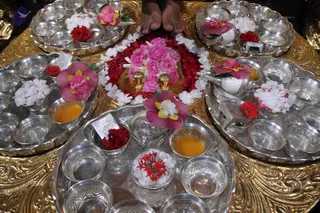
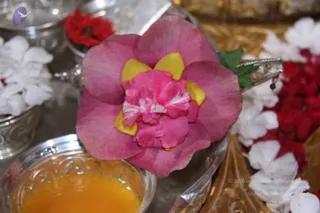
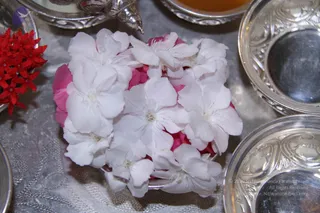
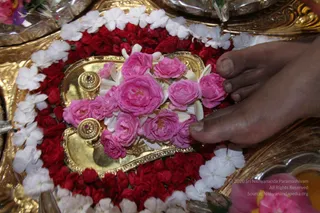
A seated man in an ornate gilded throne with lion-shaped armrests and a tiger-striped cushion, raising one hand in blessing. He wears a rust-orange turban, rust-orange robe with gold border, a long red and white flower garland, rudraksha mala and gold ceremonial necklace. Trays of silver bowls with red and pink flowers, petals and oil lamps are arranged before the throne. Swamiji (probable): a seated figure on a throne with a saffron-orange turban, rudraksha mala and ceremonial gold necklace, being honoured with flower offerings. Black wall with hanging bells and brass lamps behind.Overhead photo of a ritual puja arrangement on a gold-patterned tray. Bare feet of a person are visible at the top edge, standing behind the offerings. Central gold plate holds pink roses, red flowers and white blossoms with two small gold vessels. Surrounding silver plates and bowls hold red and white flowers, orange turmeric or saffron liquid, and pink-and-yellow orchid-like blooms on silver cups. Silver and gold ritual vessels fill the frame. Only feet are visible, so one partially visible person.A man seated on an ornate gilded throne with a tiger-skin cushion, wearing a saffron-orange turban, ochre-brown robe with gold border, layered rudraksha malas, a gold ceremonial necklace with pendant, bangles, and a large red, yellow and white flower garland. Silver plates with lamps, rose petals and flowers sit at his feet during a padapuja, with brass bells and oil lamps hanging behind. a person is seated on the throne, his wrap and rudraksha malas marking him as the honoured figure, with devotees' offerings arranged before him.Close-up photograph of a large pink flower with yellow petal centres and green leaves, resting on a polished silver tray. Beside it stands a silver bowl filled with amber-yellow liquid, and white and red flower petals are scattered around the tray on a golden surface. No people are visible; the image shows a puja offering arrangement of flowers and a bowl of liquid.Close overhead photo of a silver puja tray on a silver-grey textured cloth. At centre is a small silver bowl heaped with white flowers edged in pink. To the left are red star-shaped flowers and a silver bowl; to the right are two engraved silver bowls, one holding an amber liquid. No people are visible.Close view of a padapuja-style offering: a bare foot rests on a gold tray decorated with pink roses, white jasmine-type flowers and red petals arranged in a ring. Two small gold cups with red gem accents sit on the tray, surrounded by a gold-toned metal plate. Only the foot of one person is visible, so no face or clothing shows.

Nithya-Satsang

19 photosSource gallery
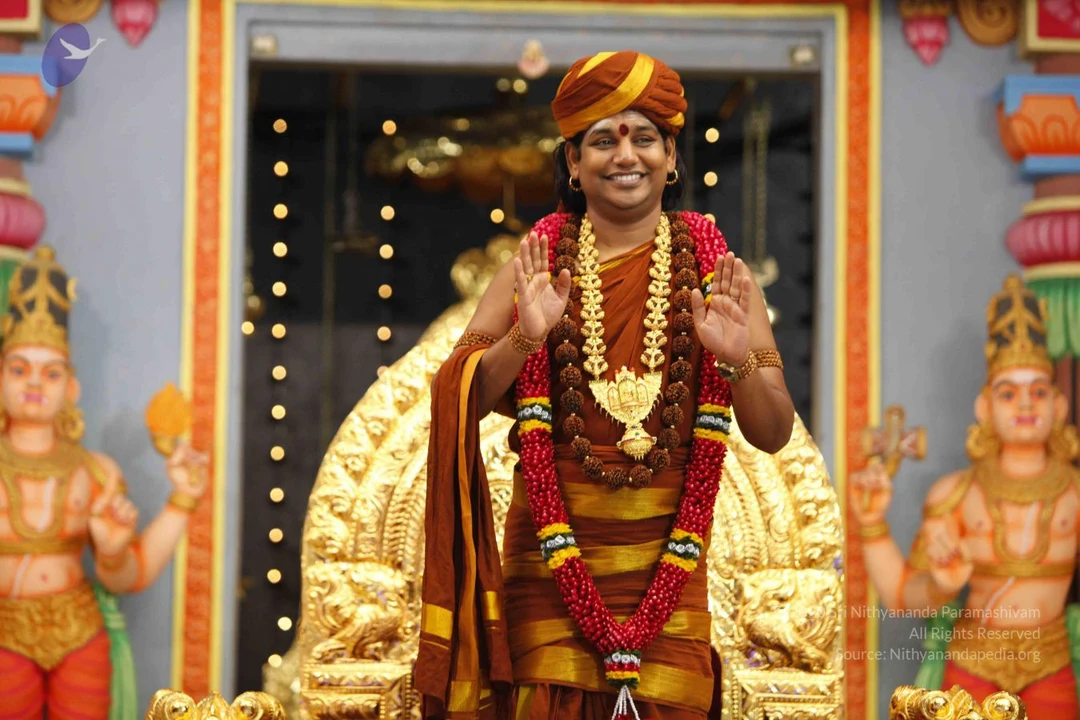
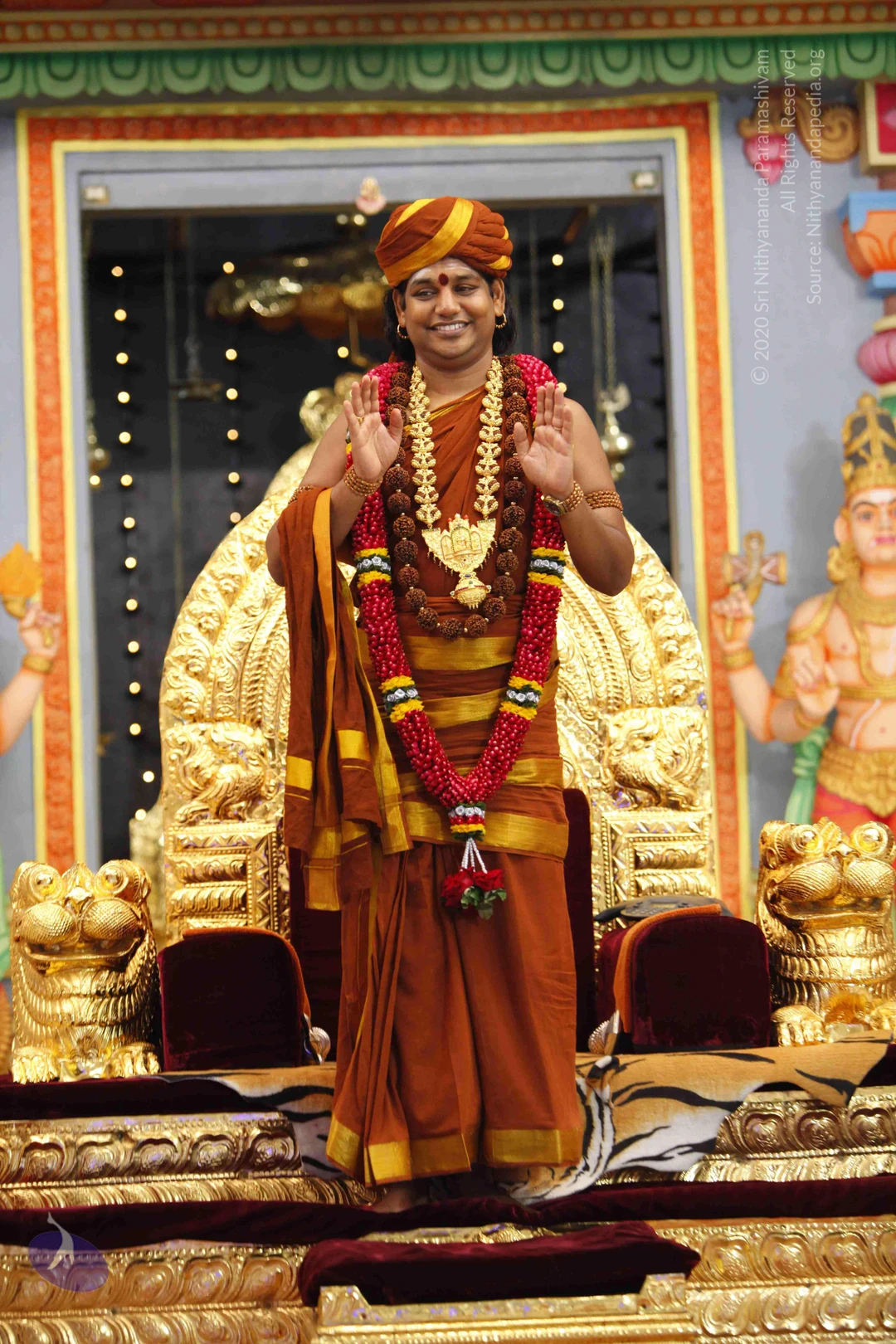
A smiling man in an orange-brown turban with a red bindi stands before an ornate gold throne-like structure, raising both palms outward in a blessing gesture. He wears a brown-orange robe, a gold ceremonial necklace with a central gold pendant, multiple rudraksha mala strands, a red-and-yellow flower garland, gold armlets and bangles. Hanging lamps with small bulbs and a gilded peetha or throne are behind him. The swami's appearance matches the page's described presence, with long swept hair, a turban and rudraksha and gold adornments, so the in-person candidate is probable.A man stands with palms pressed together in namaste on a raised golden dais before an ornate gold arched throne. He wears an orange-and-gold turban with a red tilak on his forehead, a red and yellow flower garland, multiple rudraksha malas and a gold pendant necklace, gold bangles and armlets, and an orange-brown dhoti with a gold-bordered cloth draped over his shoulder. Golden lion figures flank the throne, and a tiger-striped cloth covers the platform. Behind him, golden lamps hang in a red-and-gold framed doorway.A photograph of a smiling man standing on a raised golden stage in front of an ornate golden throne with lion-head armrests and a tiger-skin cloth draped over the platform. He wears an orange-and-gold turban, a red bindi, rudraksha malas and a gold ceremonial necklace, and a red-and-yellow flower garland. His saffron-brown robe has gold borders, and he holds both palms raised in a welcoming gesture. Gilded carved pillars and a red-framed doorway with lamps stand behind him. Swamiji (probable): the orange turban, saffron robe, rudraksha malas and ornate gold necklace match the page's satsang context.A smiling man stands centrally with both palms raised outward in a blessing gesture, wearing an orange-saffron turban and a saffron-brown robe wrapped around the body. He wears a red garland with multicoloured tassels, a long rudraksha mala, a gold ceremonial pendant on a gold chain, gold bangles and gold earrings. Flanking him are two painted deity statues with golden crowns and ornaments, and behind him a golden throne backrest sits before a dark doorway strung with small lights. Swamiji (probable) appears as the central figure, identified by the saffron turban and robes, rudraksha mala, ceremonial gold necklace and garland cues, and the page's note that he is present at this satsang.A smiling man in an orange-saffron turban with a red bindi stands on a golden ornate platform before a gilded throne, raising both palms outward in a blessing gesture. He wears a saffron dhoti and shawl, a red and yellow flower garland, multiple rudraksha malas and a gold pendant necklace. Golden lion-head armrests and a tiger-striped cloth surround him; behind him stands a gilded doorway with hanging lamps. Painted deity statues flank the scene on the right, one with a gold crown and multiple arms. Probable Swamiji appearance: long hair, saffron turban and clothing, rudraksha malas and ceremonial gold necklace, standing in a satsang-style setting.A photograph of a seated man on an ornate gold-carved throne with lion-head armrests. He wears an orange-and-yellow turban with a red bindi, orange saffron-coloured robes, a gold necklace with rudraksha beads, and red-and-yellow flower garlands. He sits with one hand resting on the armrest, gazing to the side, in a temple or hall setting. Probable Swamiji (probable) is identified by orange and ornate clothing, turban, long hair and the rudraksha mala and gold ornaments, seated in the place of honour as the central figure. No other people are visible.

Two-Way

2 photosSource gallery
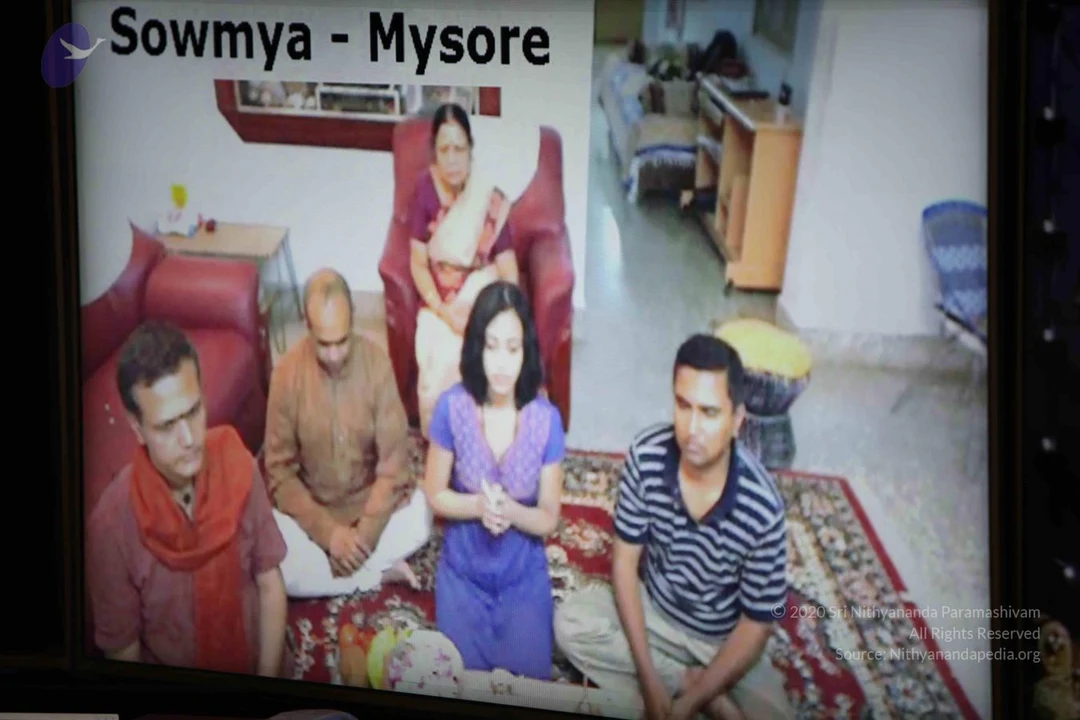
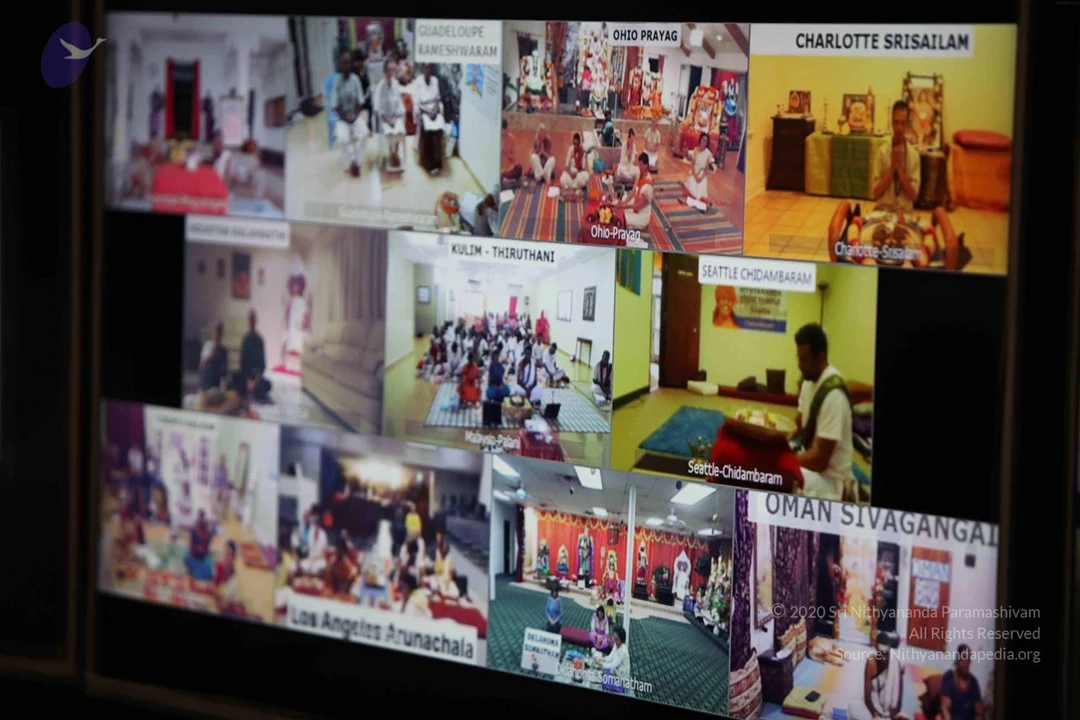
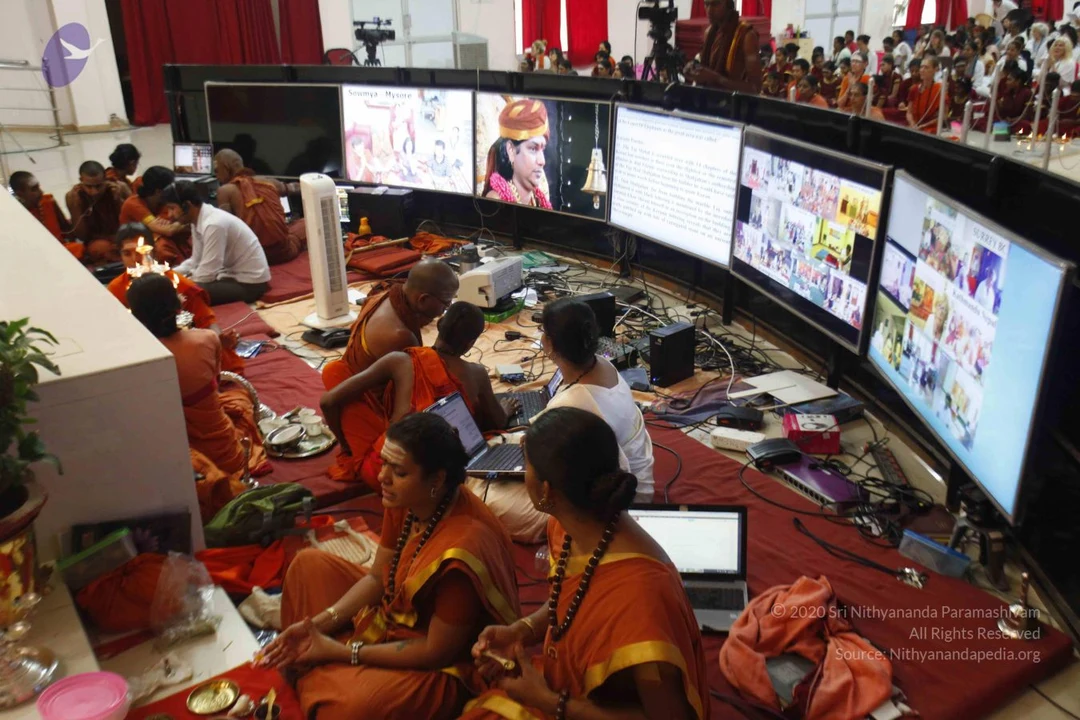
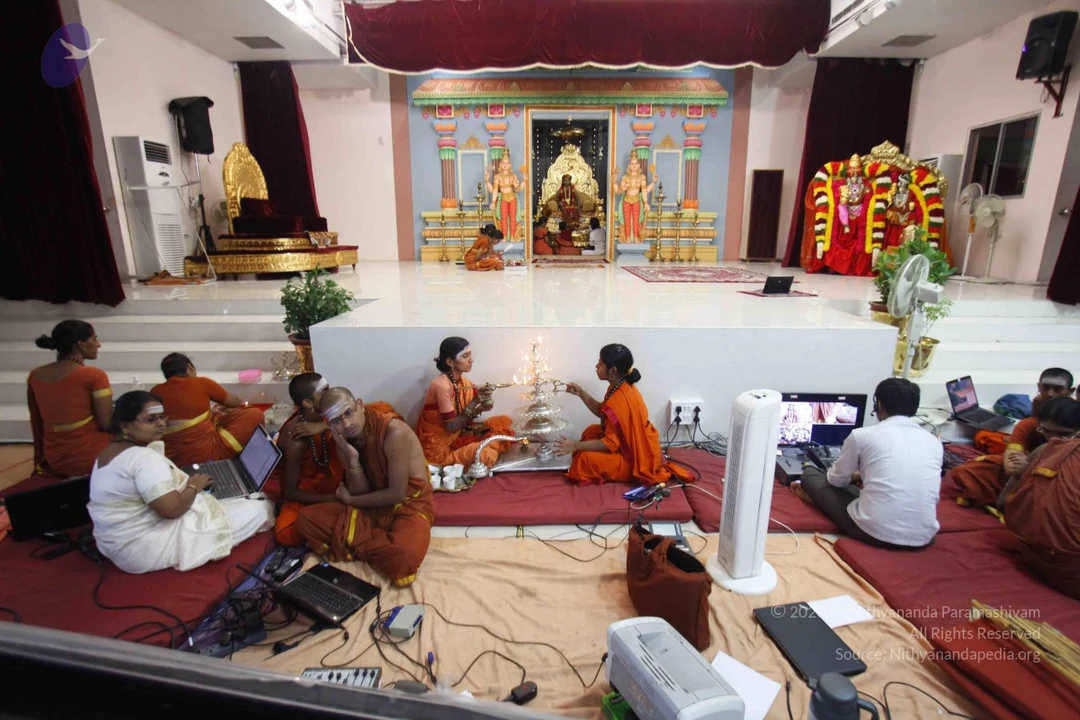
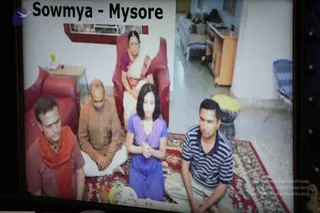
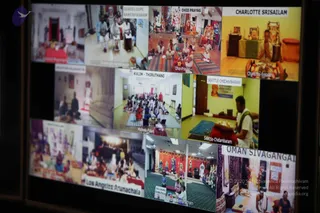
A screen shows a live video link titled "Sowmya - Mysore" in bold white text on a dark banner, displaying a domestic living room with red leather armchairs and a red patterned rug. Five people sit and listen: a woman in a red and beige sari sits in an armchair at the back, a man in a beige kurta sits cross-legged on the rug, a woman in a purple top sits with her hands clasped, a man in a striped shirt sits on the right, and a man in a red shawl sits at the left edge. A brass or fruit plate sits on the floor. The picture is a video-link feed of a satsang, with no a person candidate visible.A screen in a dark room shows a grid of live video feeds from multiple satsang centres, each labelled with a location banner such as Guadeloupe Kameshwaram, Ohio Prayag, Charlotte Srisailam, Kulim Thiruthani, Seattle Chidambaram, Los Angeles Arunachala, Oman Sivagangai and Sri Lanka Chidambaram. Participants in white and saffron clothing sit on mats before shrines, with deity murti, kalasha vessels, oil lamps and floral decorations visible. One feed shows a man seated at a small altar in a white shirt. Several rows of people sit in a hall in Kulim. The screen shows the group satsang as it is broadcast.

Sarva-Darshan

9 photosSource gallery
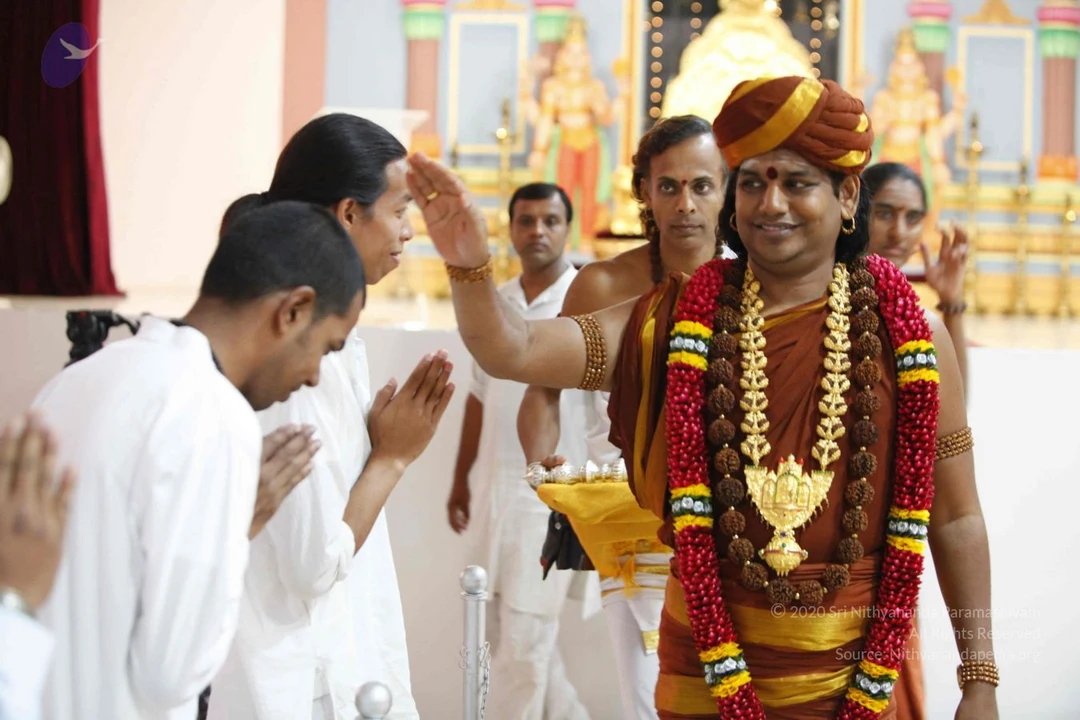
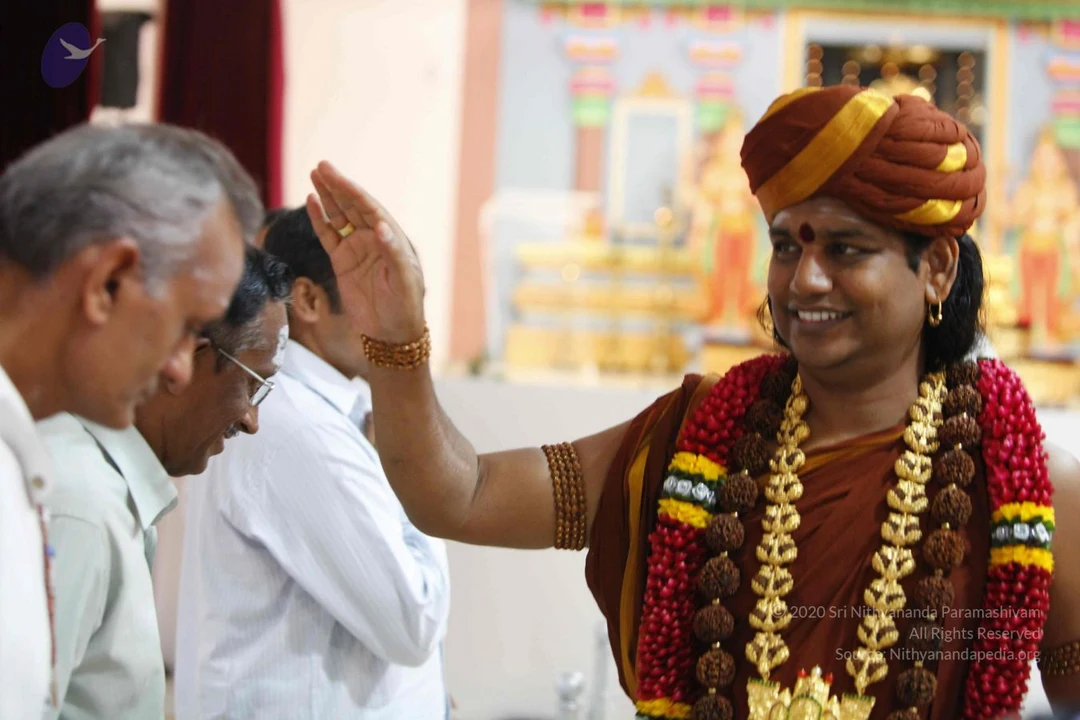
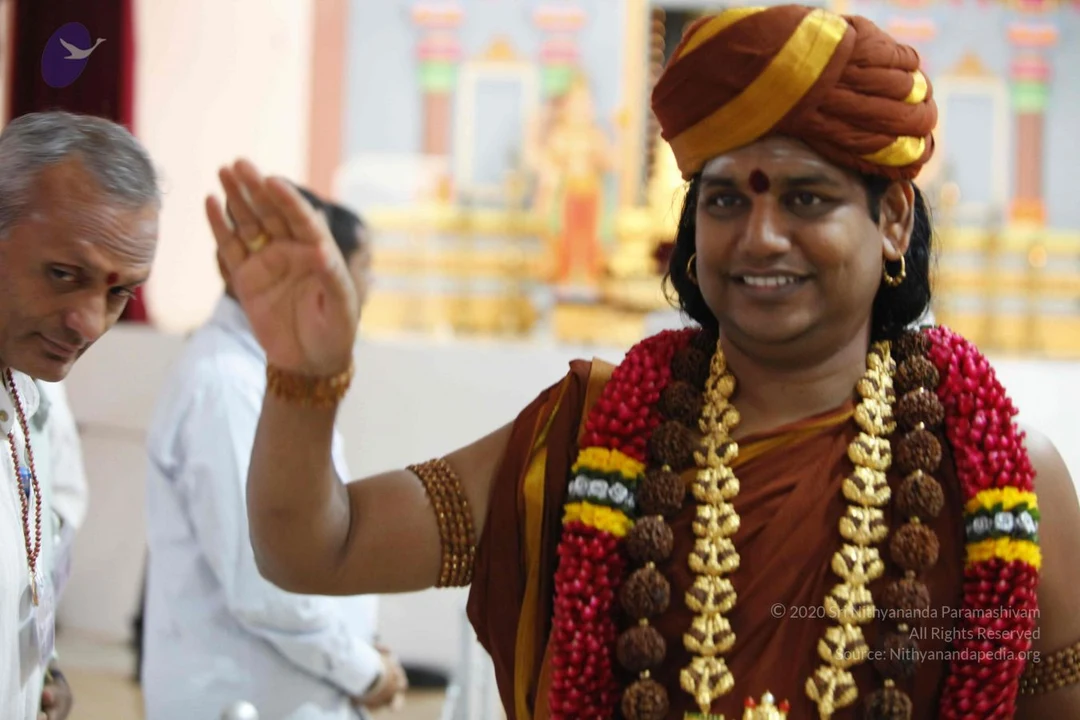
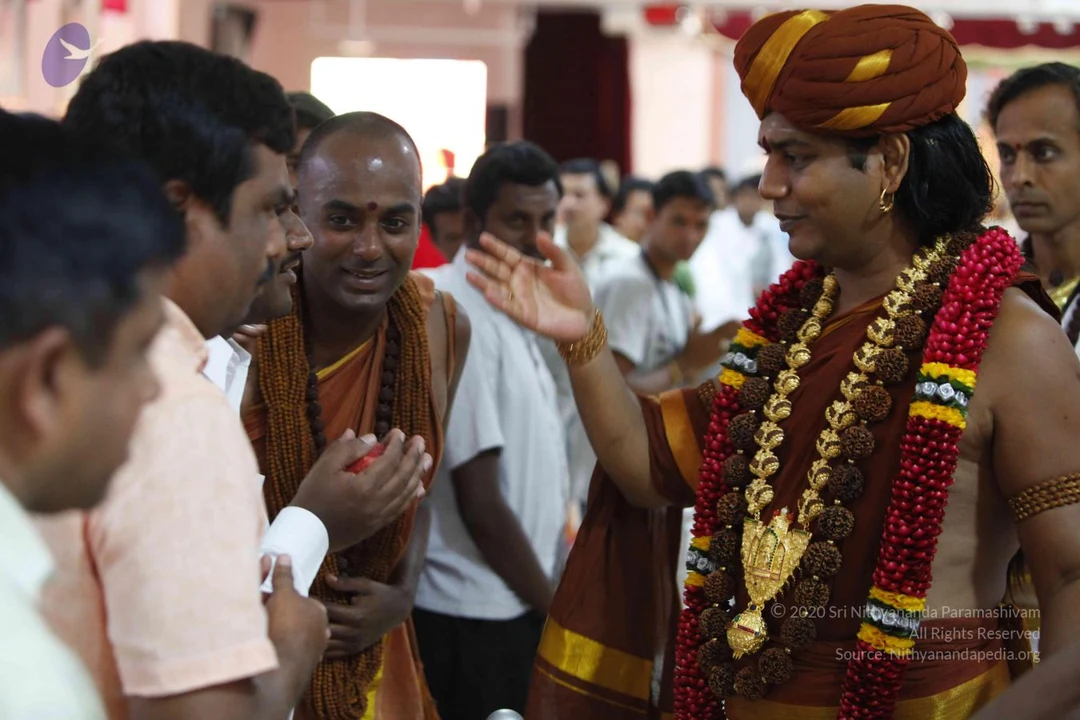
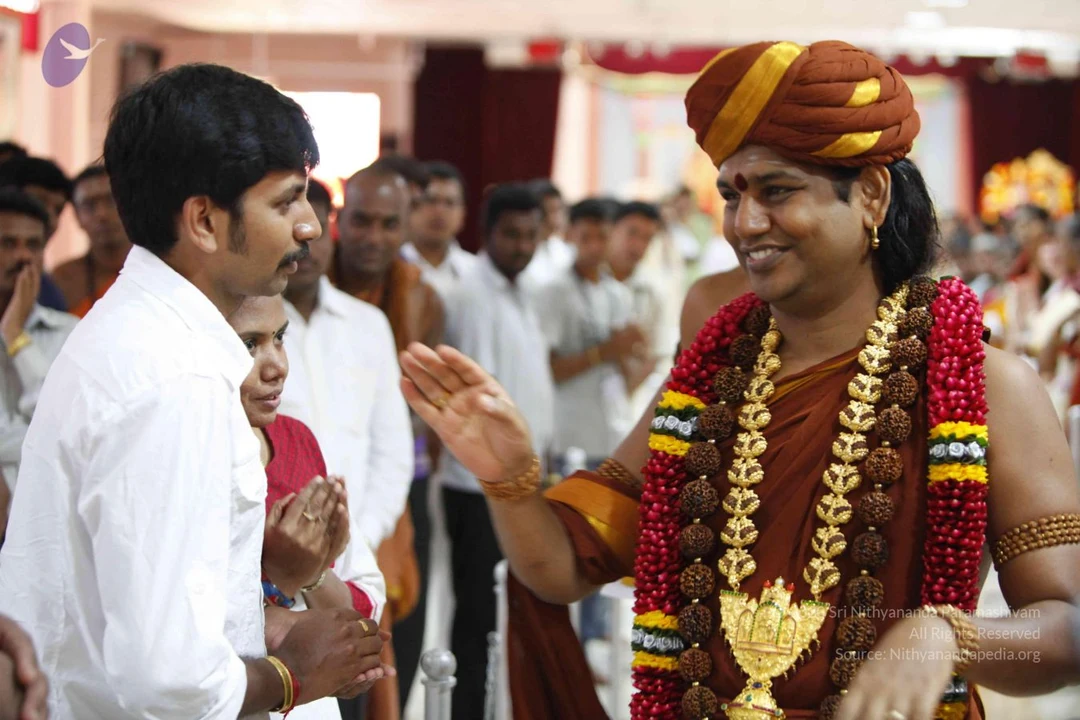
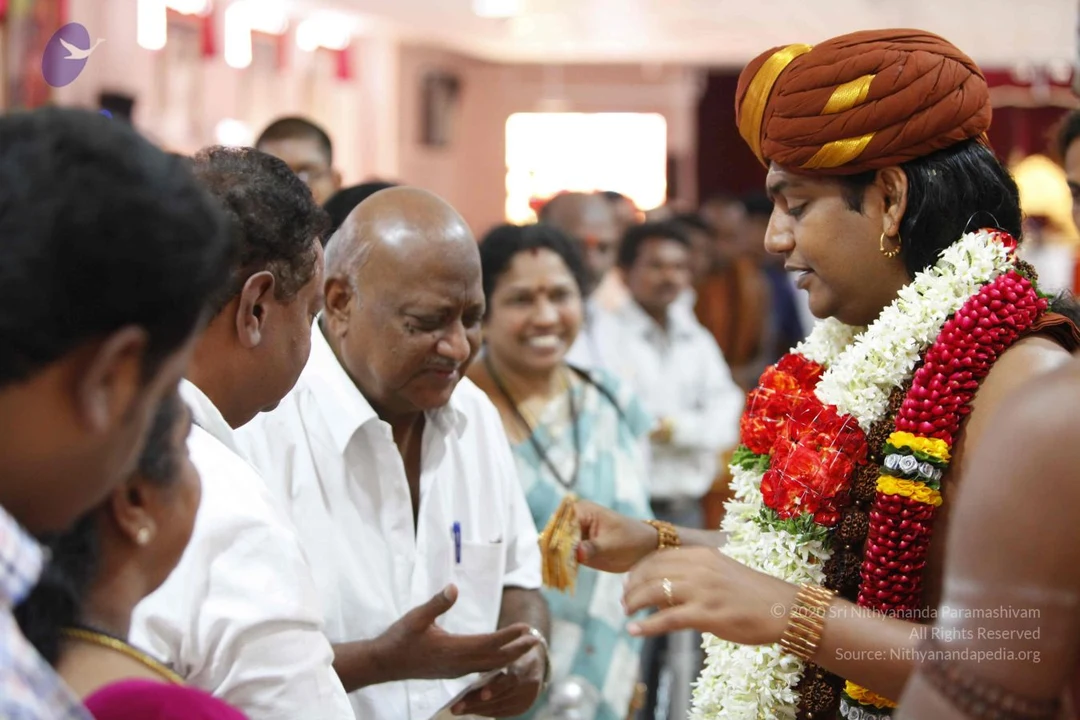
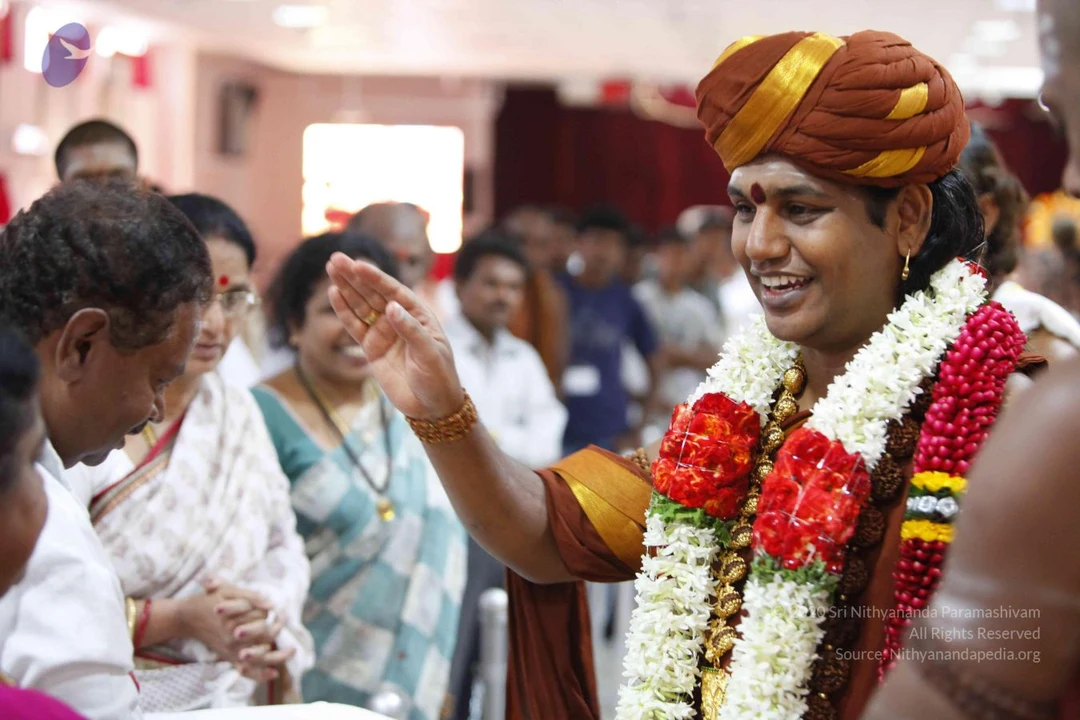
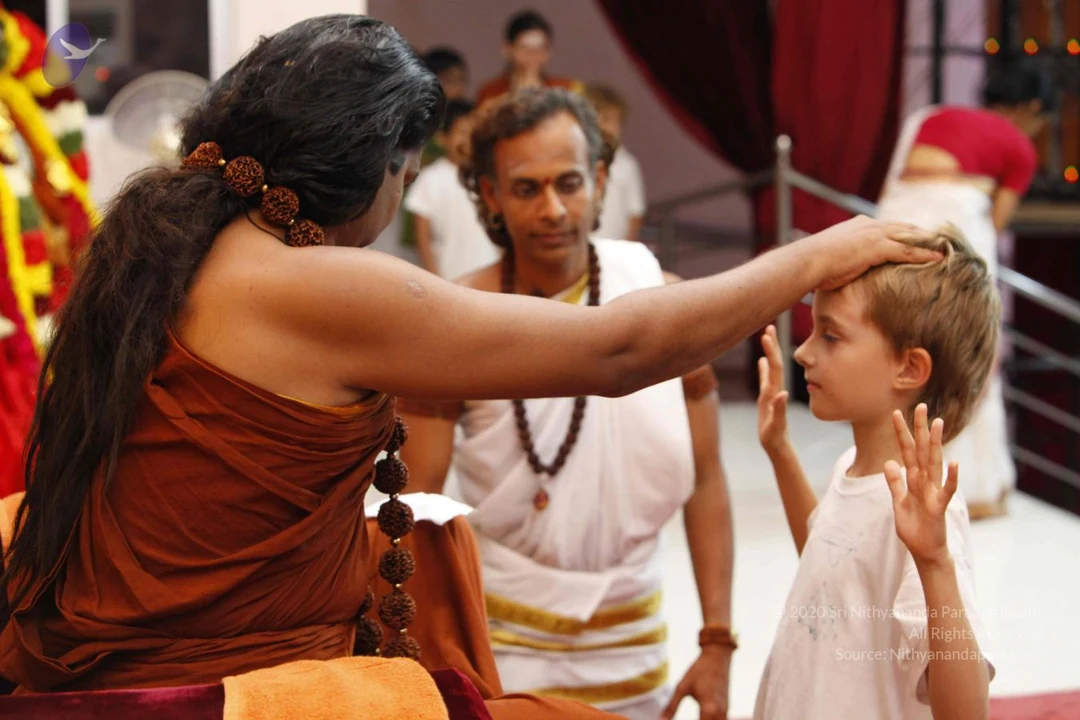
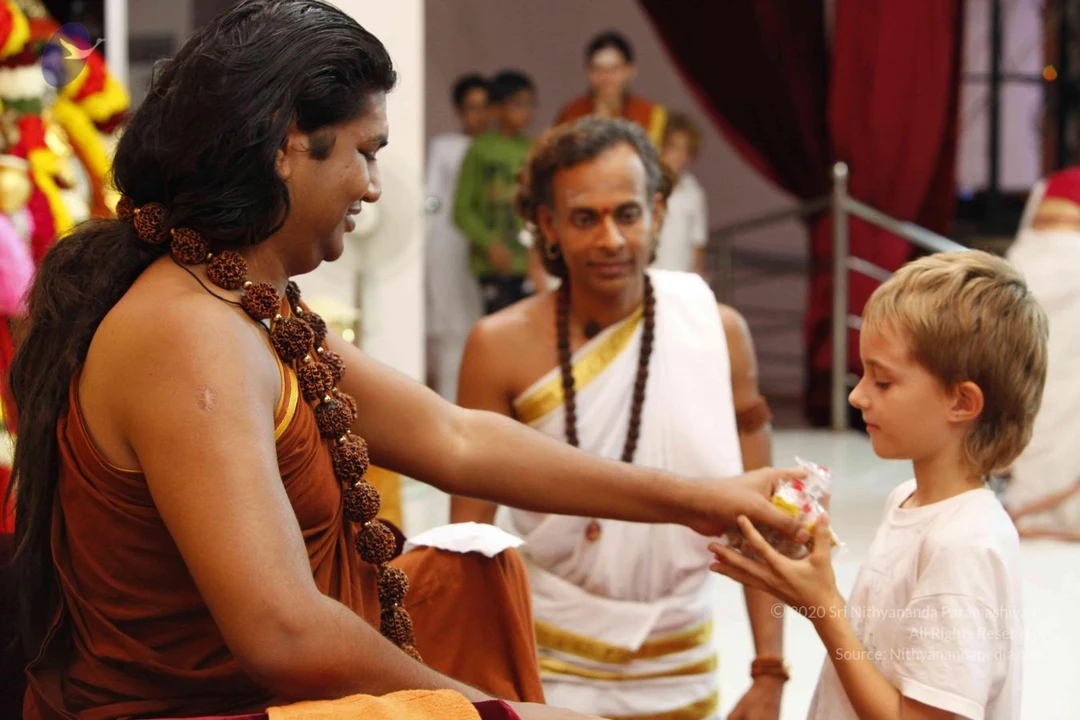
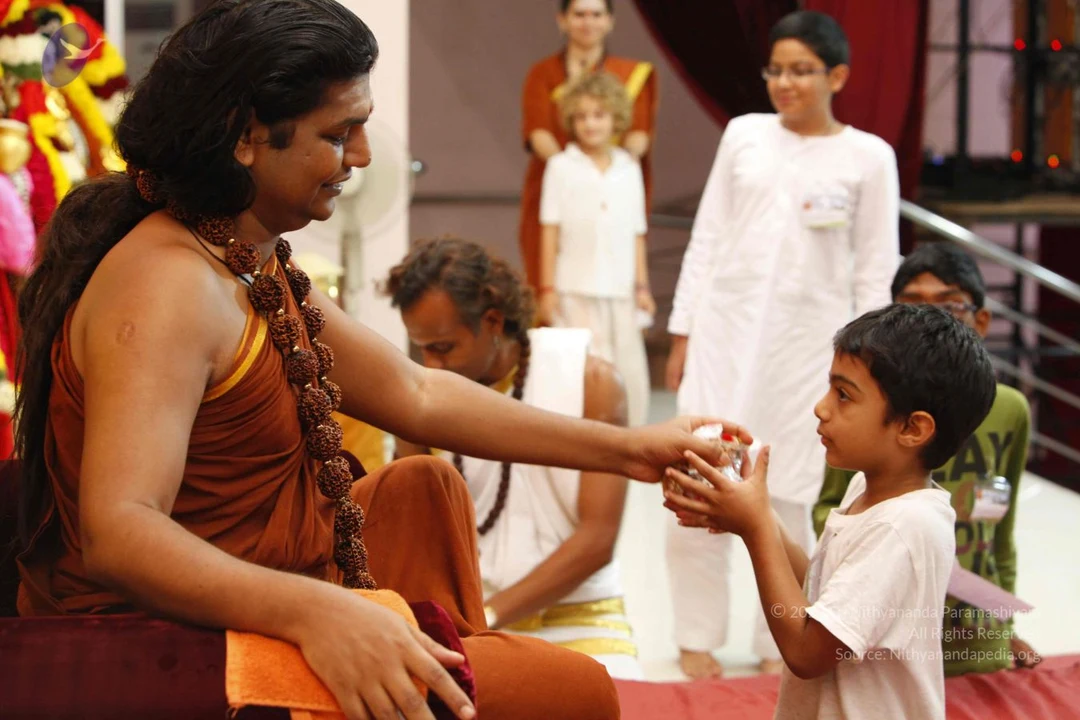
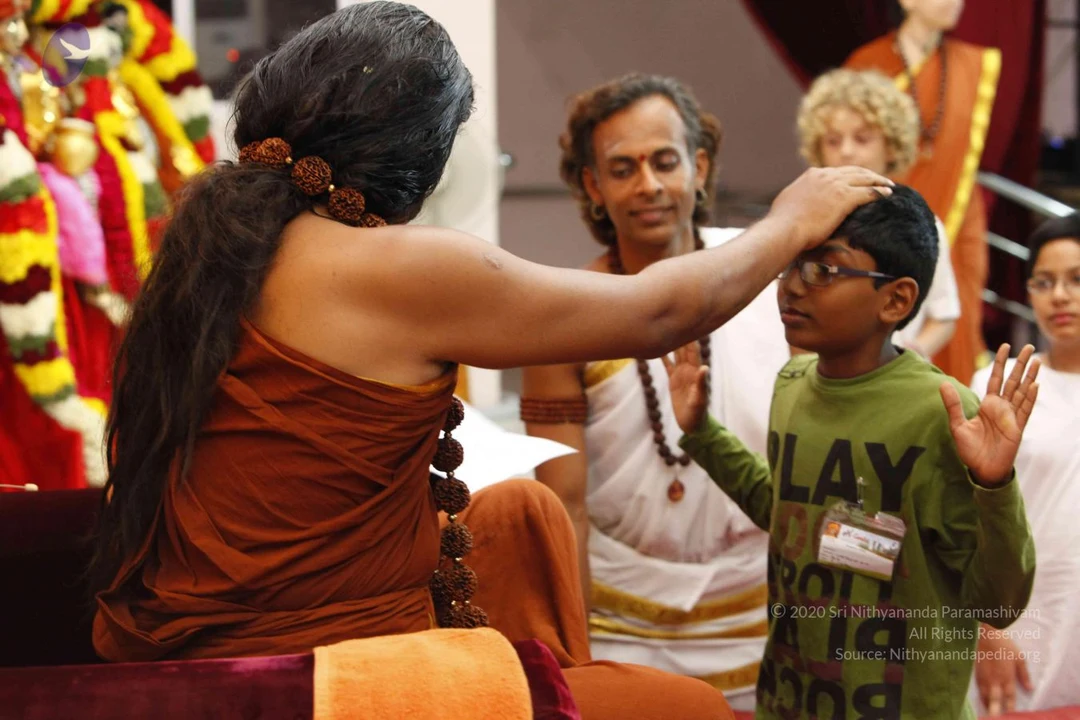
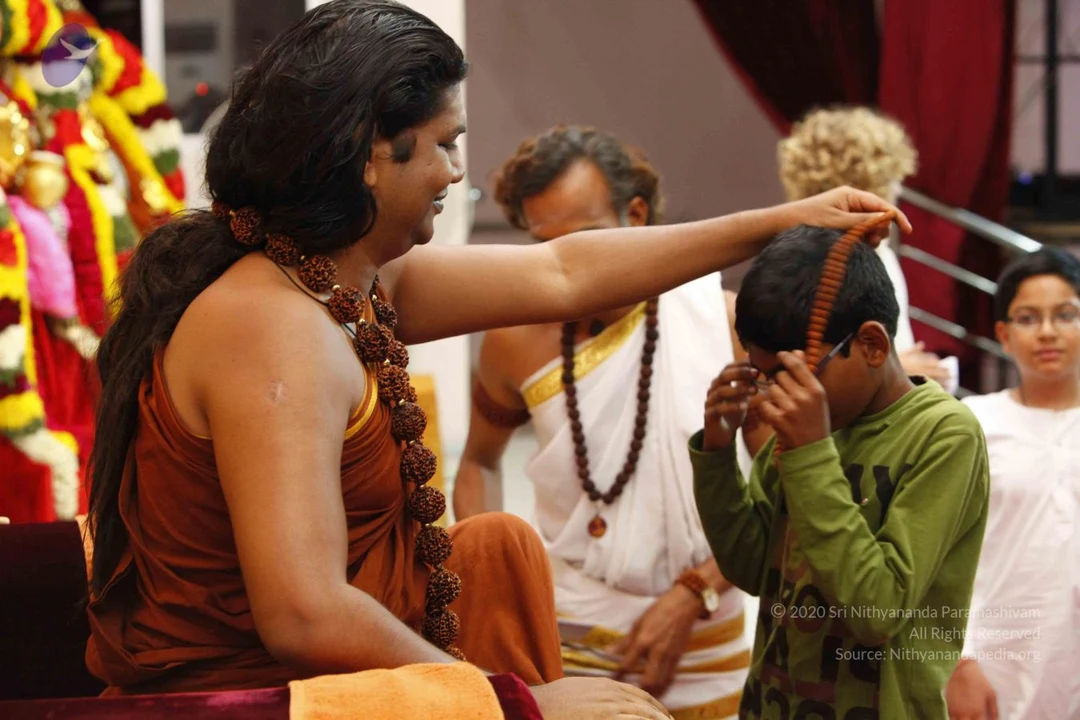
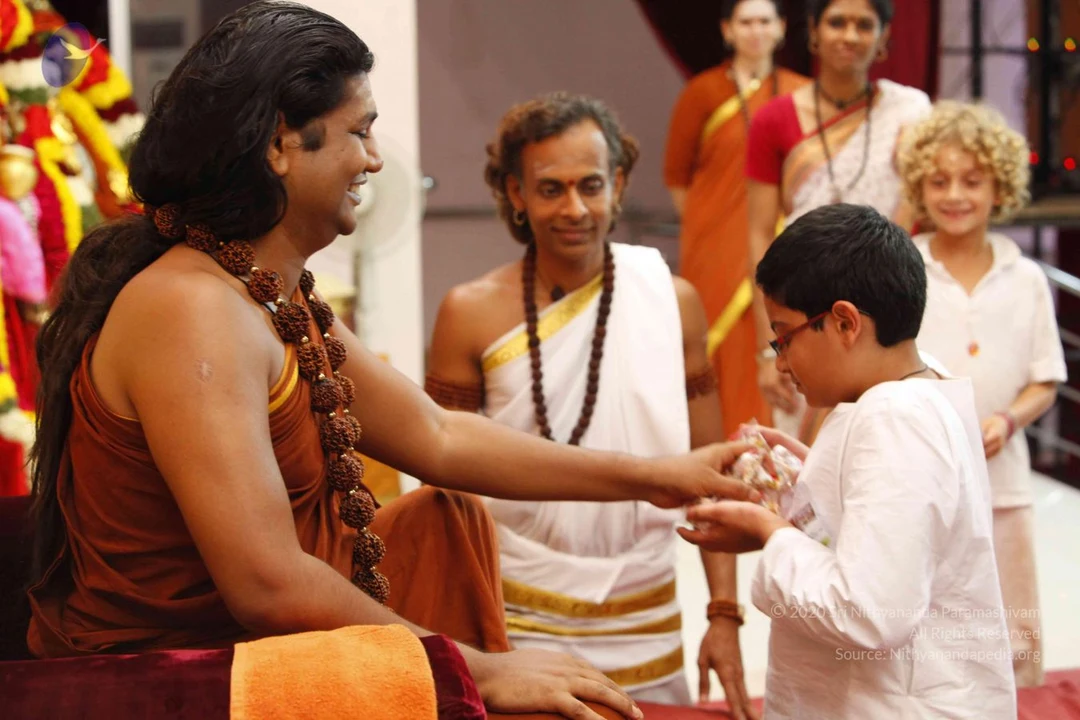
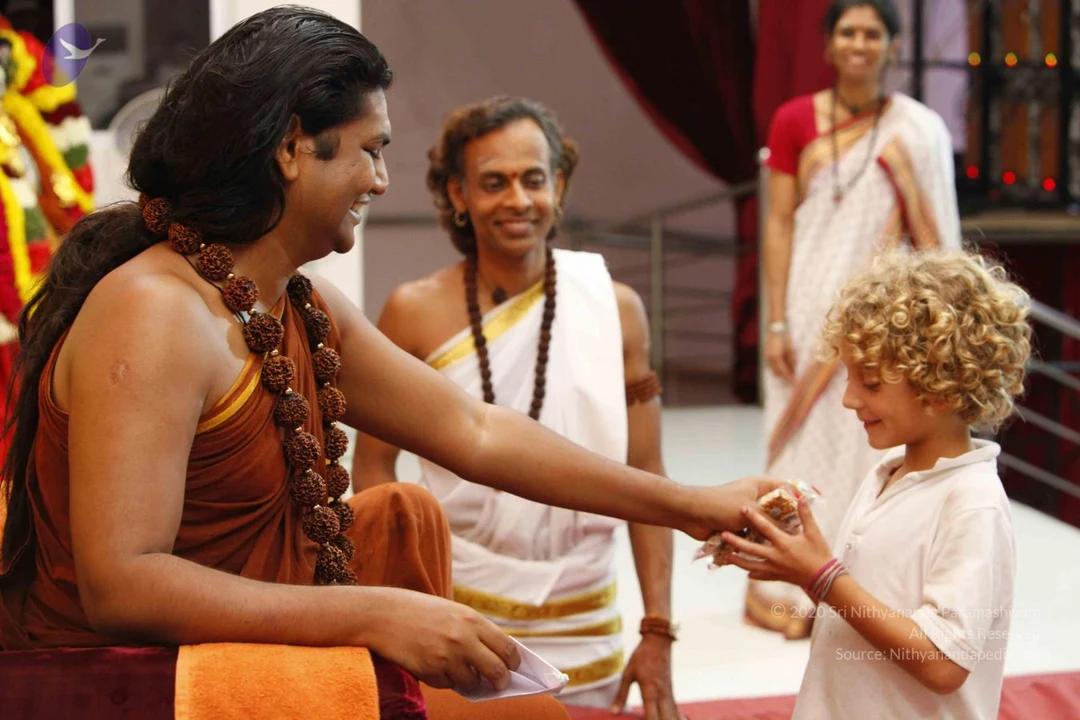
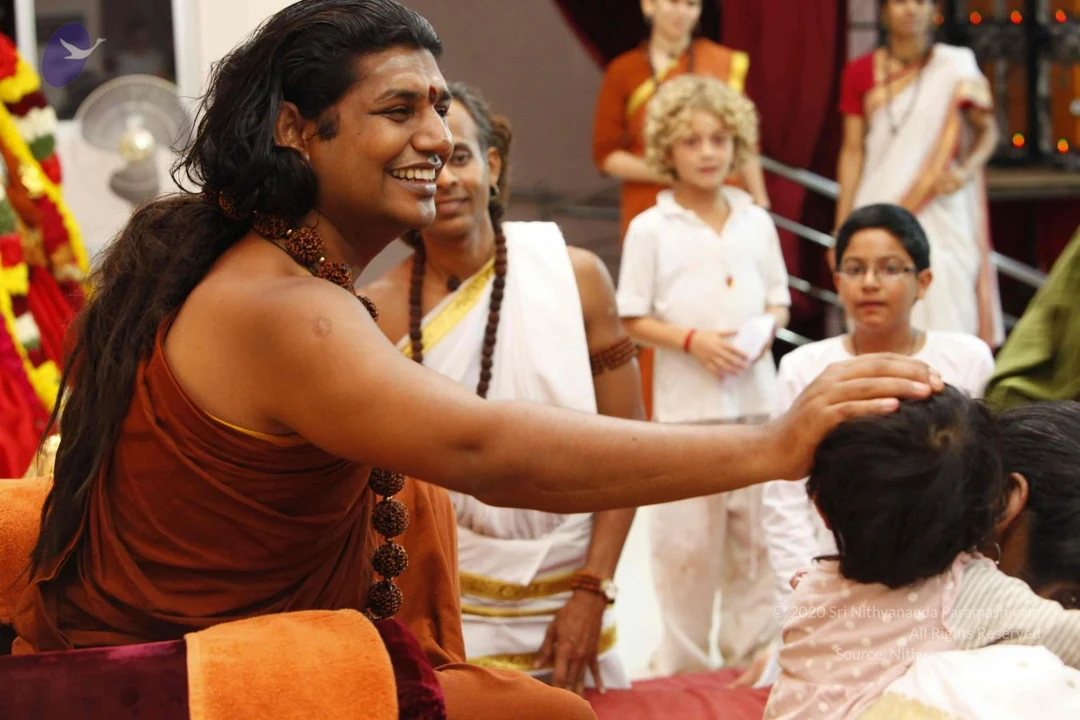
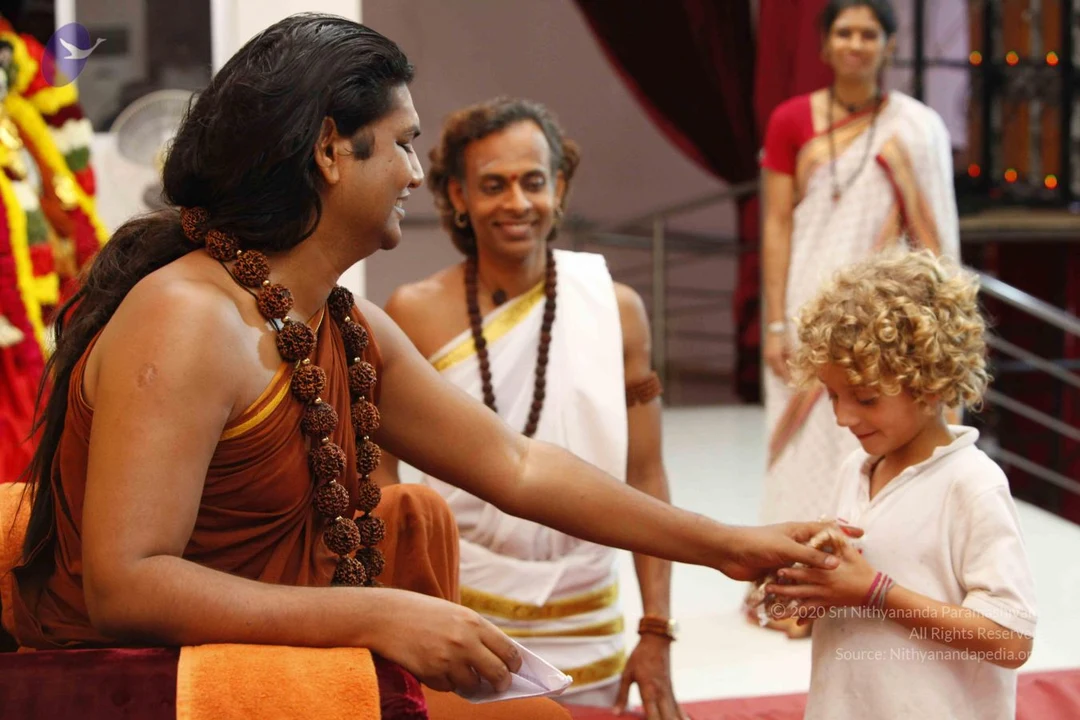
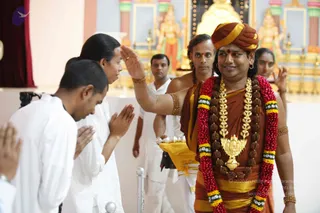
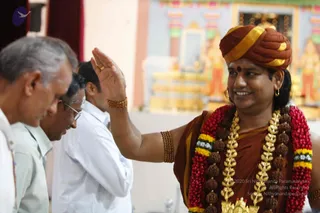
A photograph in a temple hall with gold-framed deity images and pink-and-gold pillars behind. In the foreground a man in an orange-brown saffron dhoti and matching turban, wearing a long red and yellow flower garland, a rudraksha mala with a large ceremonial gold pendant, and gold armbands, raises his right hand in a blessing gesture toward two devotees in white who press their palms together in namaste. A smiling attendant in a white dhoti stands behind, and a few other people in white clothes and a woman in the background are visible. a person (appearance cues: orange-saffron ceremonial robe, rudraksha mala, gold pendant and garland) is giving blessings to devotees.A smiling man in a rust-orange turban with a yellow stripe, saffron-brown robe, red and white flower garland, and a long rudraksha mala with gold ceremonial necklace raises one hand in a blessing gesture. Beside him, three men in white and pale shirts stand with their heads turned toward him; one wears glasses. Behind them, a colourful temple backdrop shows gilded deity figures and ornate yellow and orange decorations. The man in the turban has long swept-back hair, gold bangles, and a red bindi, cues consistent with the page's a person reference, so the appearance label is a person in person.Photograph of a smiling man in a rust-orange and gold turban and rust-orange saffron-toned robe, raising his right hand in a blessing gesture. He wears layered red and orange flower garlands, a long gold ceremonial necklace, multiple rudraksha mala beads across his chest, gold bangles and a red-orange bindi. Behind him is a blurred temple-style backdrop with gold and painted deity figures. A man in white kurta with a red tilak stands at left, and another person in white stands behind. Swamiji (probable) is visible as the main figure with turban, rudraksha malas and ceremonial garlands.A photograph of an indoor gathering where a man in a rust-orange and gold-bordered turban and matching rust-brown dhoti-style garment stands at the centre, bare-armed, with a gold-bordered cloth draped over his shoulder. He wears a heavy gold necklace of ornate pendants strung with brown rudraksha beads and a long red-and-yellow flower garland, and gold earrings. He raises one open hand toward a man in a pink shirt on the left. Beside him a shaven-headed man in saffron-orange robes and a brown rudraksha mala smiles and holds a small red object. Behind them a crowd of men in white shirts and dhotis stands in a bright hall with pink walls and red drapery. A watermarked copyright line appears in the lower right corner, which is not to be transcribed.A photograph of a man in a rust-orange turban with a yellow stripe, bare-chested under an orange-brown shawl, wearing a thick rudraksha mala and a gold ceremonial necklace with a red-and-white flower garland. He smiles and raises his right hand in blessing toward a young man in a white shirt and a woman in red who stand with palms pressed together. Other men in white and orange-brown stand in the background of a hall with red drapes and floral decorations. Cues suggest a person, shown as the figure giving blessing and darshan.A photograph of an indoor ashram-style hall with pink walls and warm lights. In the foreground, a figure wearing a rust-orange turban with gold stripes, a white and red flower garland, and rudraksha beads receives devotees; their hand reaches toward a standing devotee. Around them, several people in white shirts and a woman in a light blue sari with a lanyard and red-bordered garment stand watching and smiling.
Final_Blessing

1 photoSource gallery
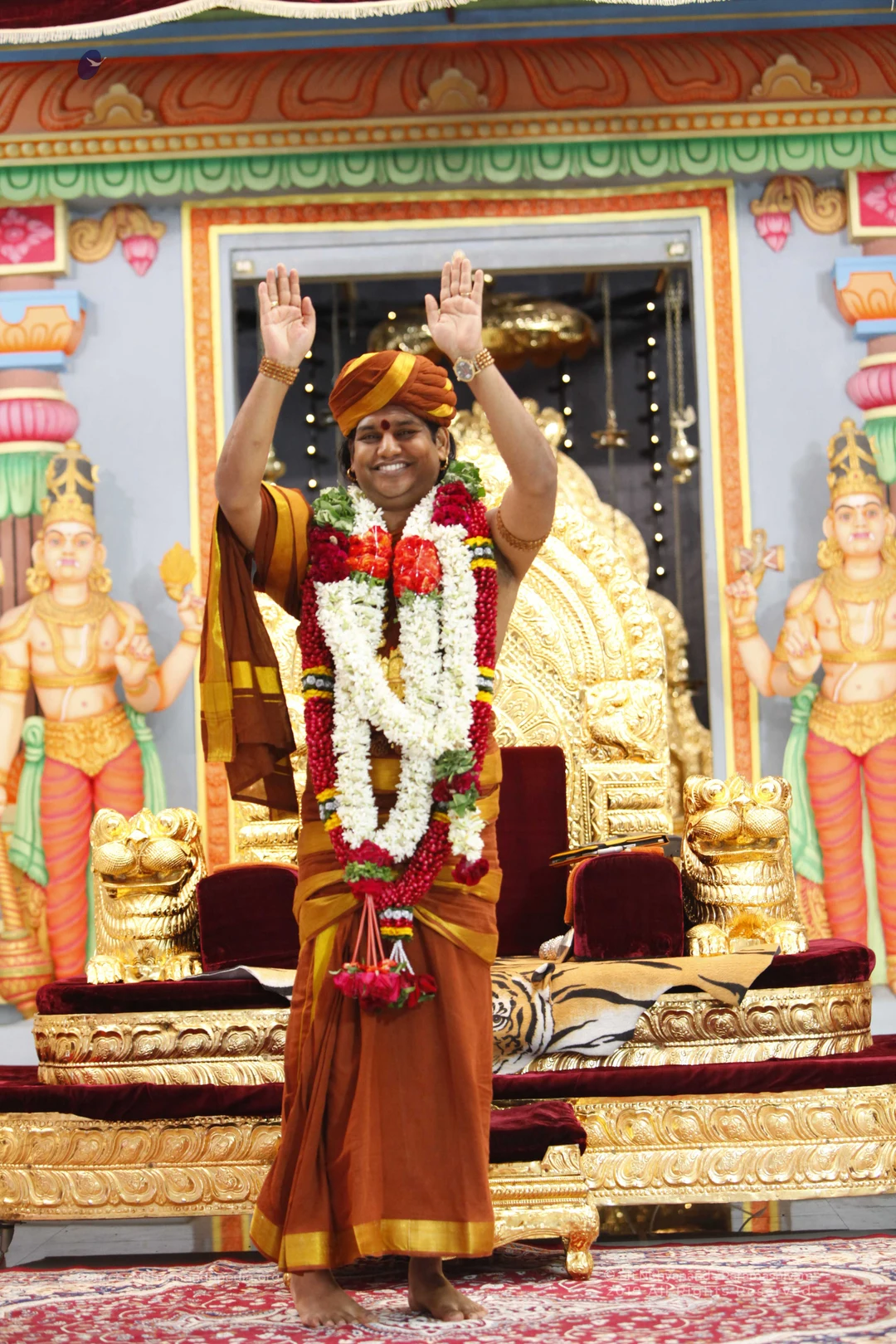
A barefoot man in an orange-and-gold turban and rust-orange dhoti with gold border stands on a red carpet, arms raised in blessing, smiling, wearing a thick garland of white jasmine, red roses and green leaves. A red bindi marks his forehead and he wears gold bracelets and a wristwatch. Behind him is a golden throne with red velvet cushions and a tiger-striped cloth, flanked by gold lion-head armrests. Painted deity figures with multiple arms stand on either side in front of a decorated hall. Probable Swamiji's appearance cues are the turban, saffron-orange ceremonial clothing and garland, and he is physically present.

IA-Darshan

64 photosSource gallery
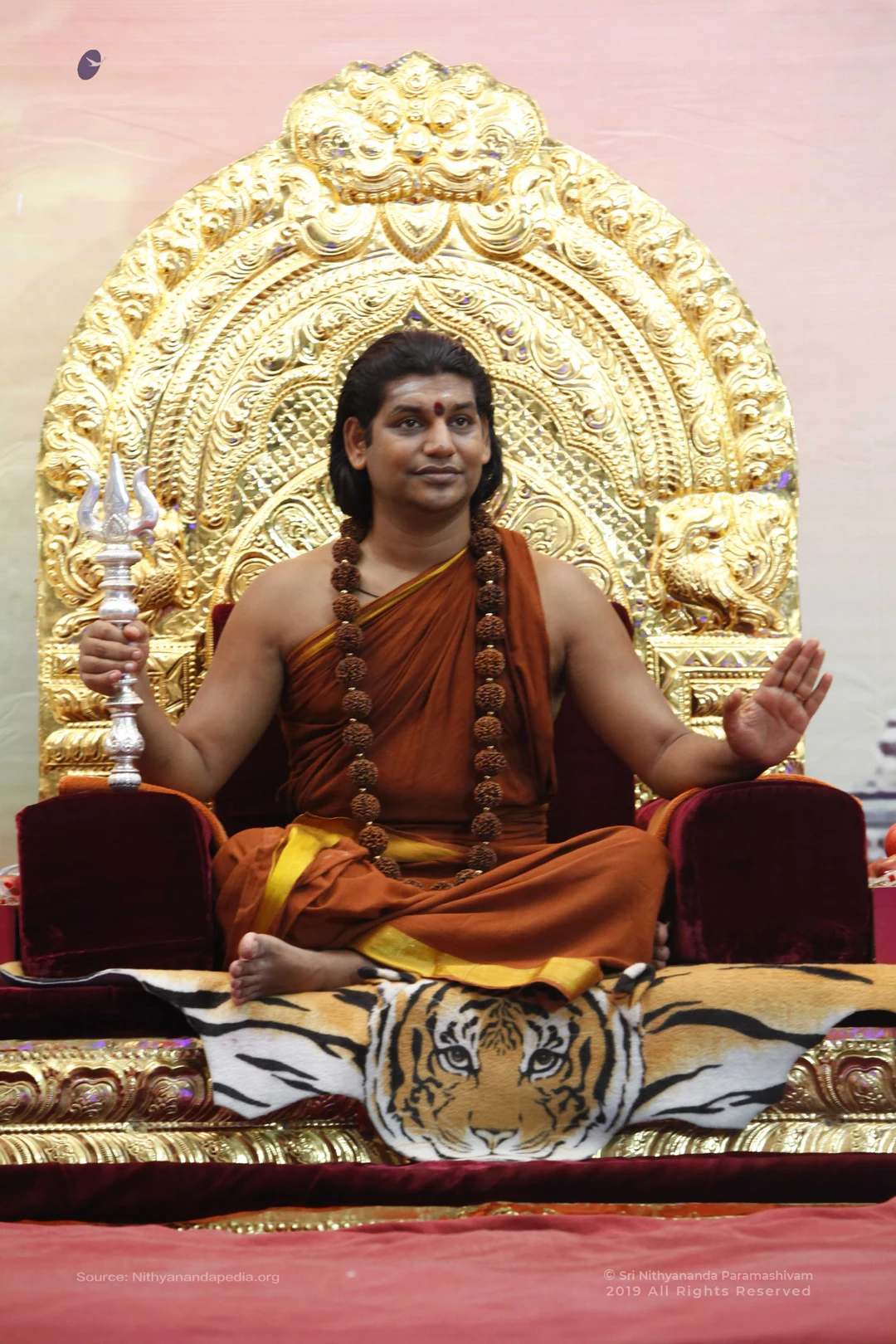
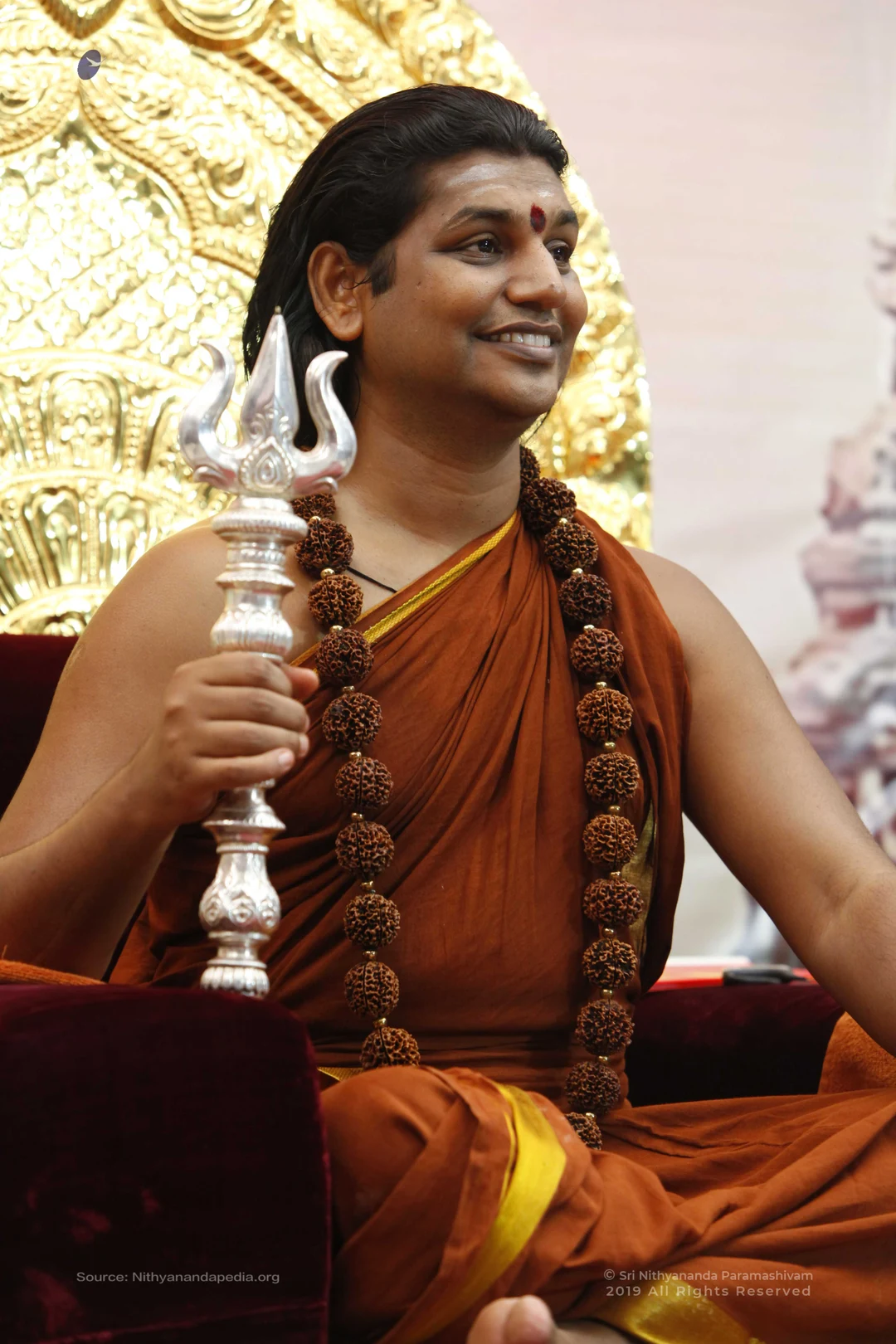
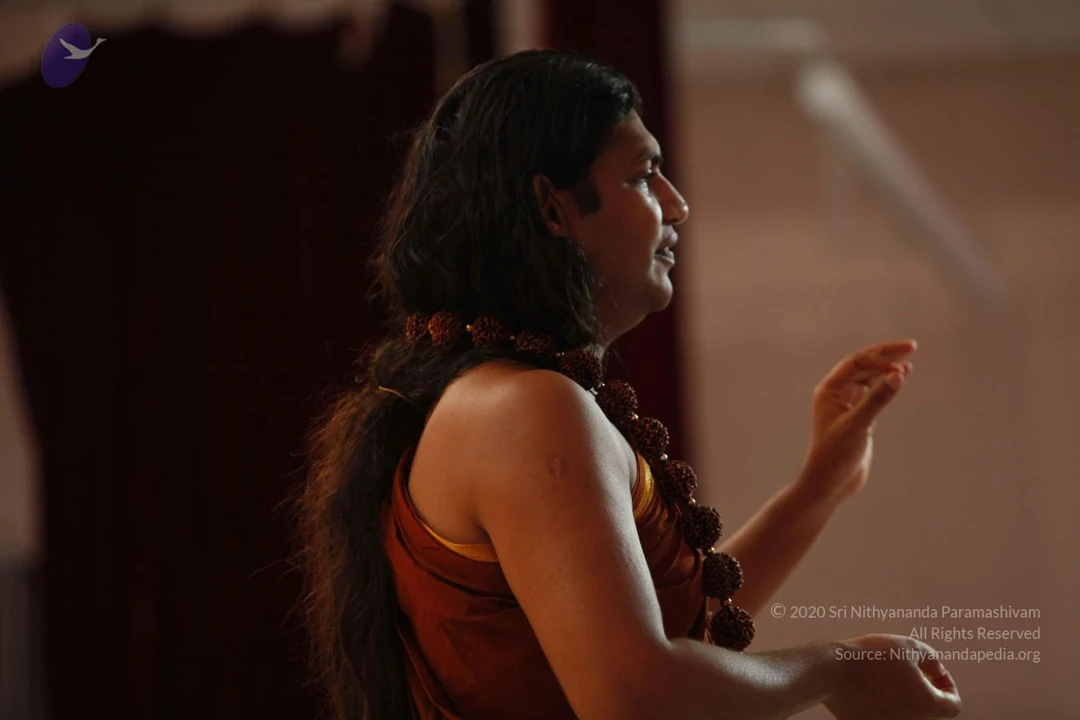
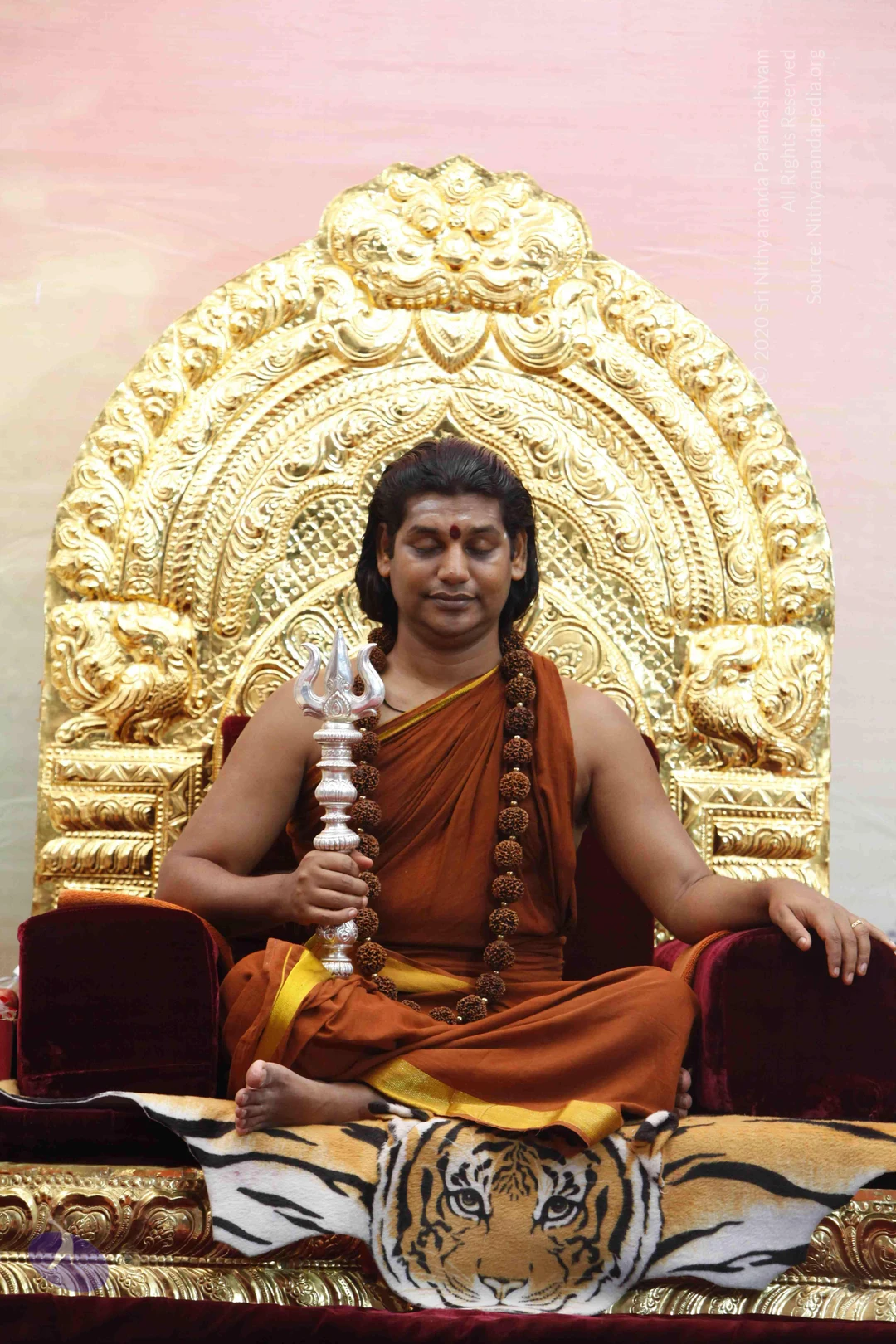
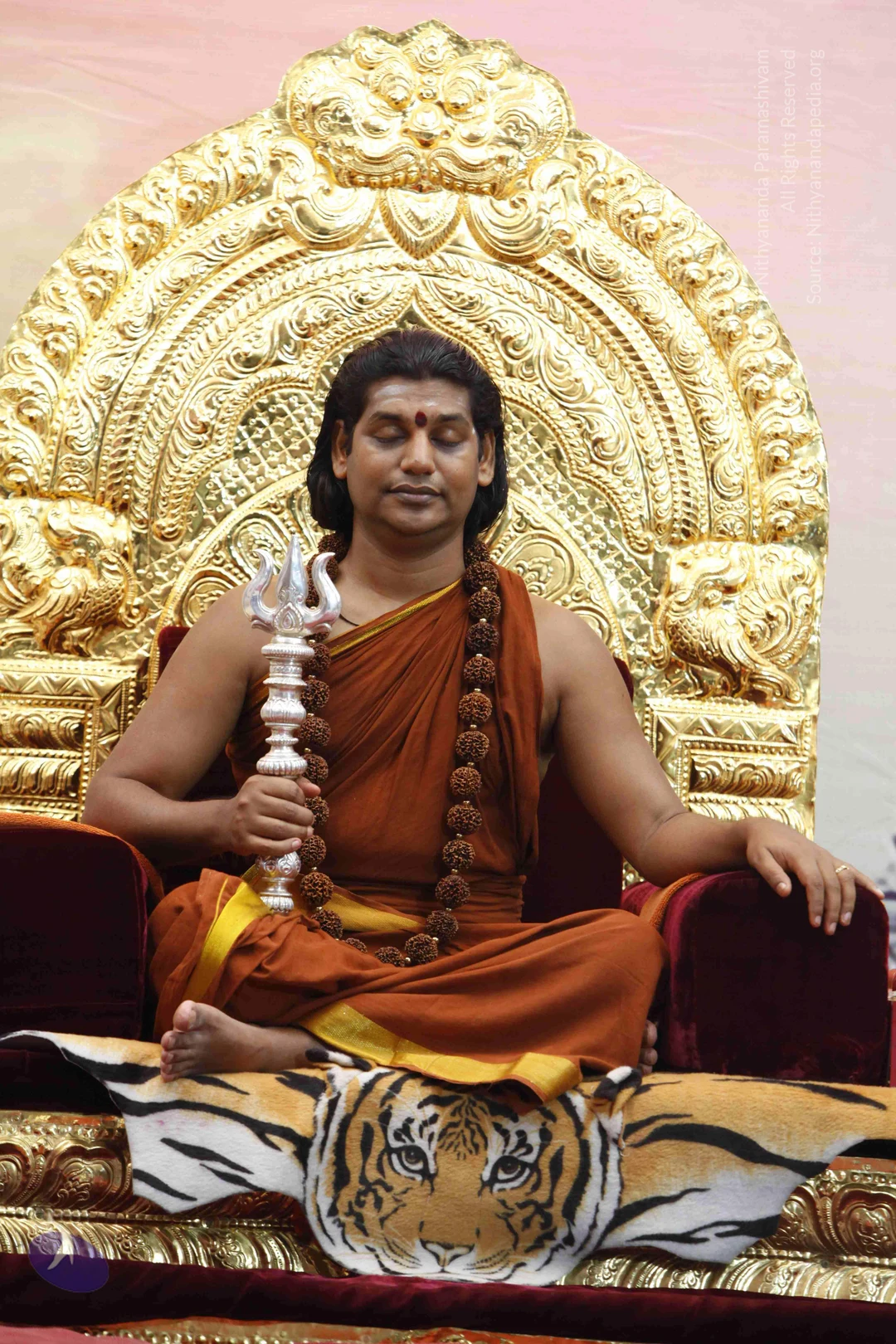
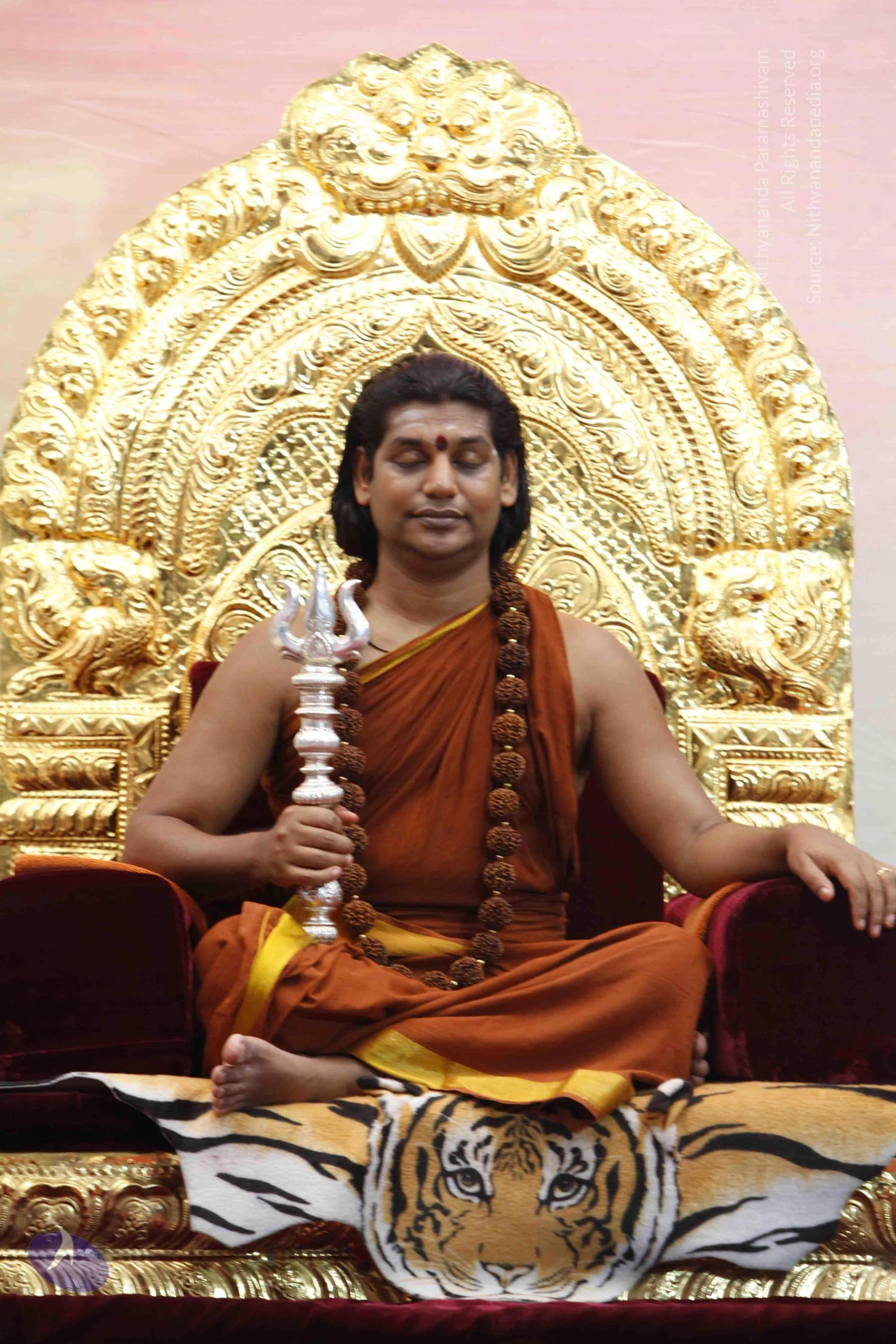
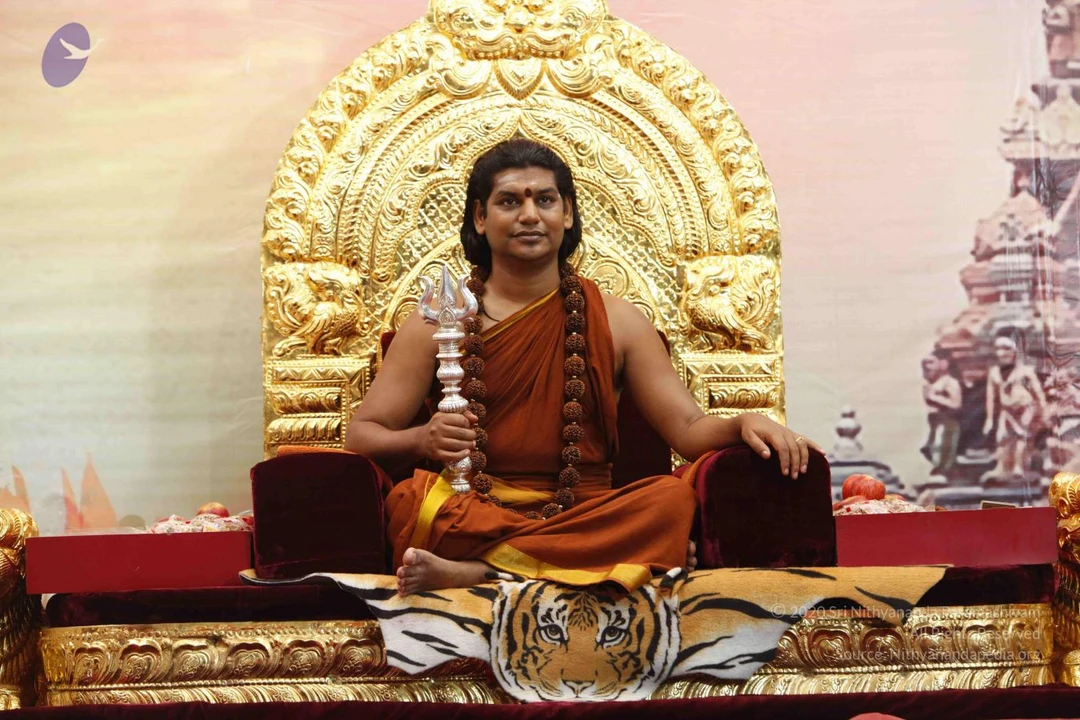
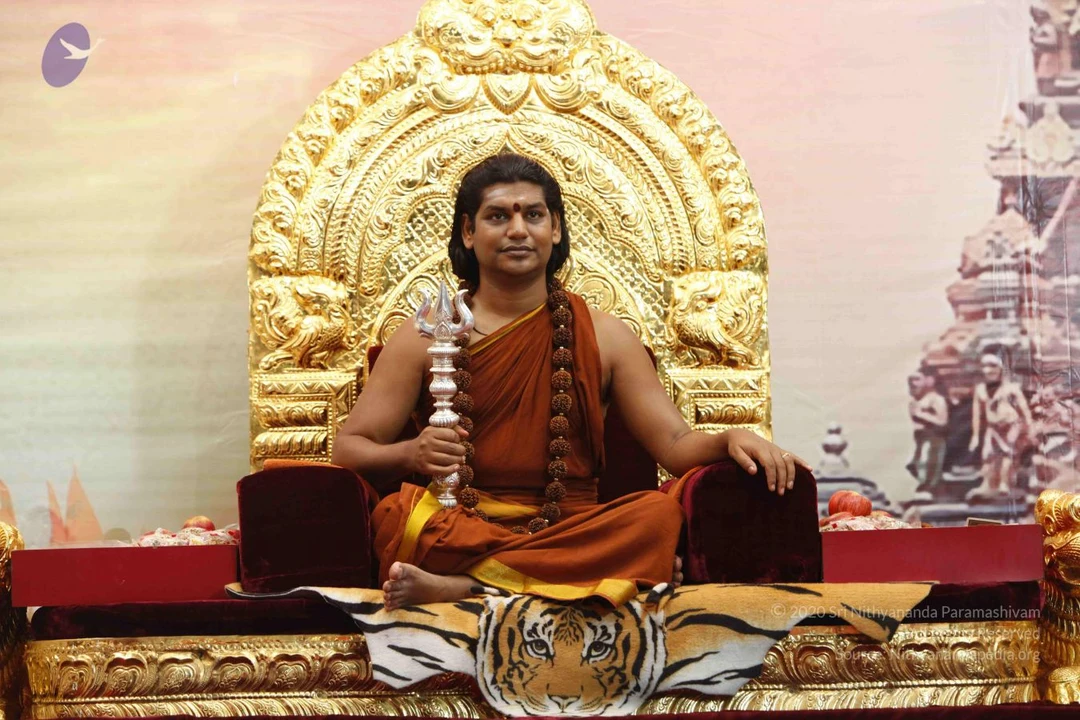
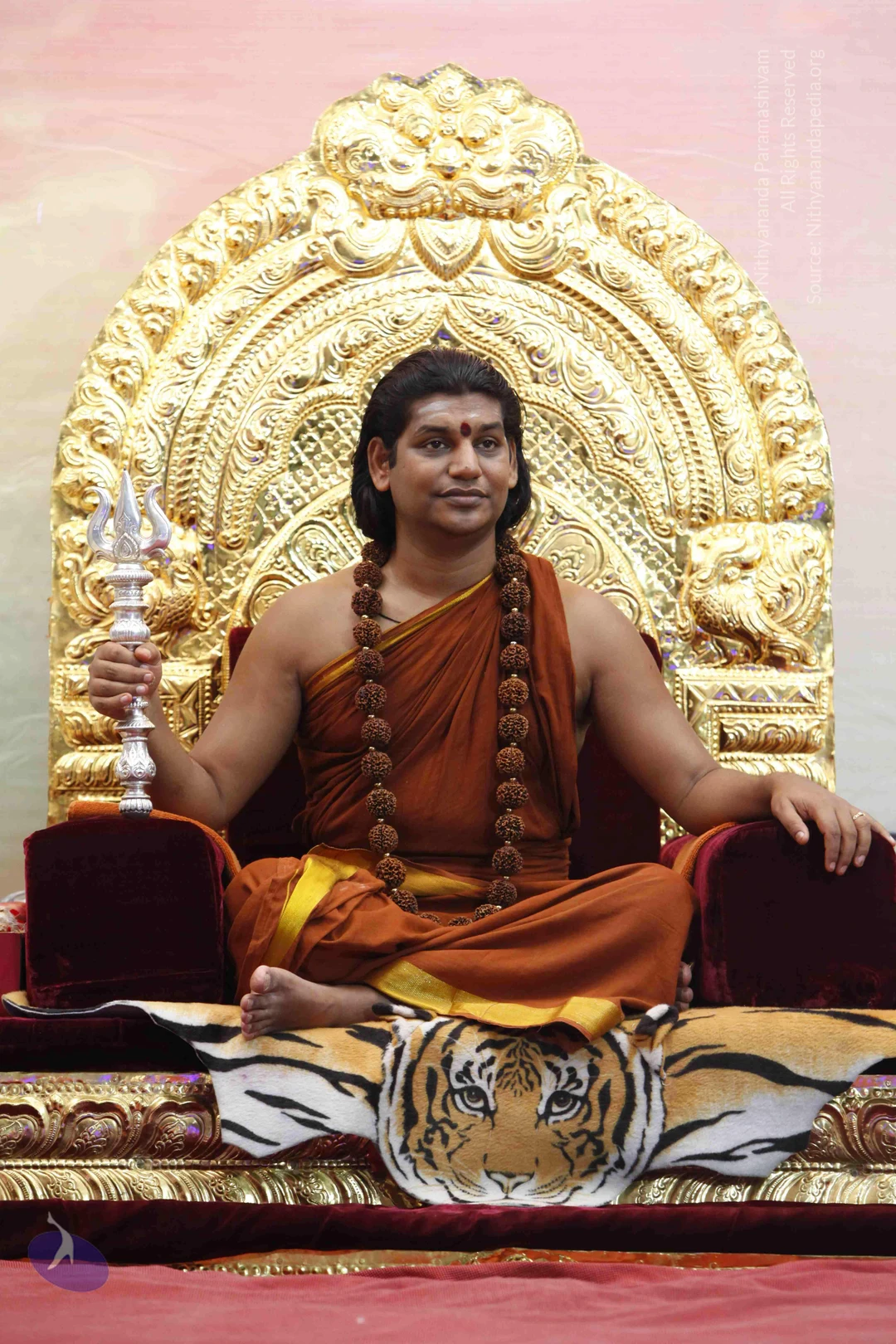
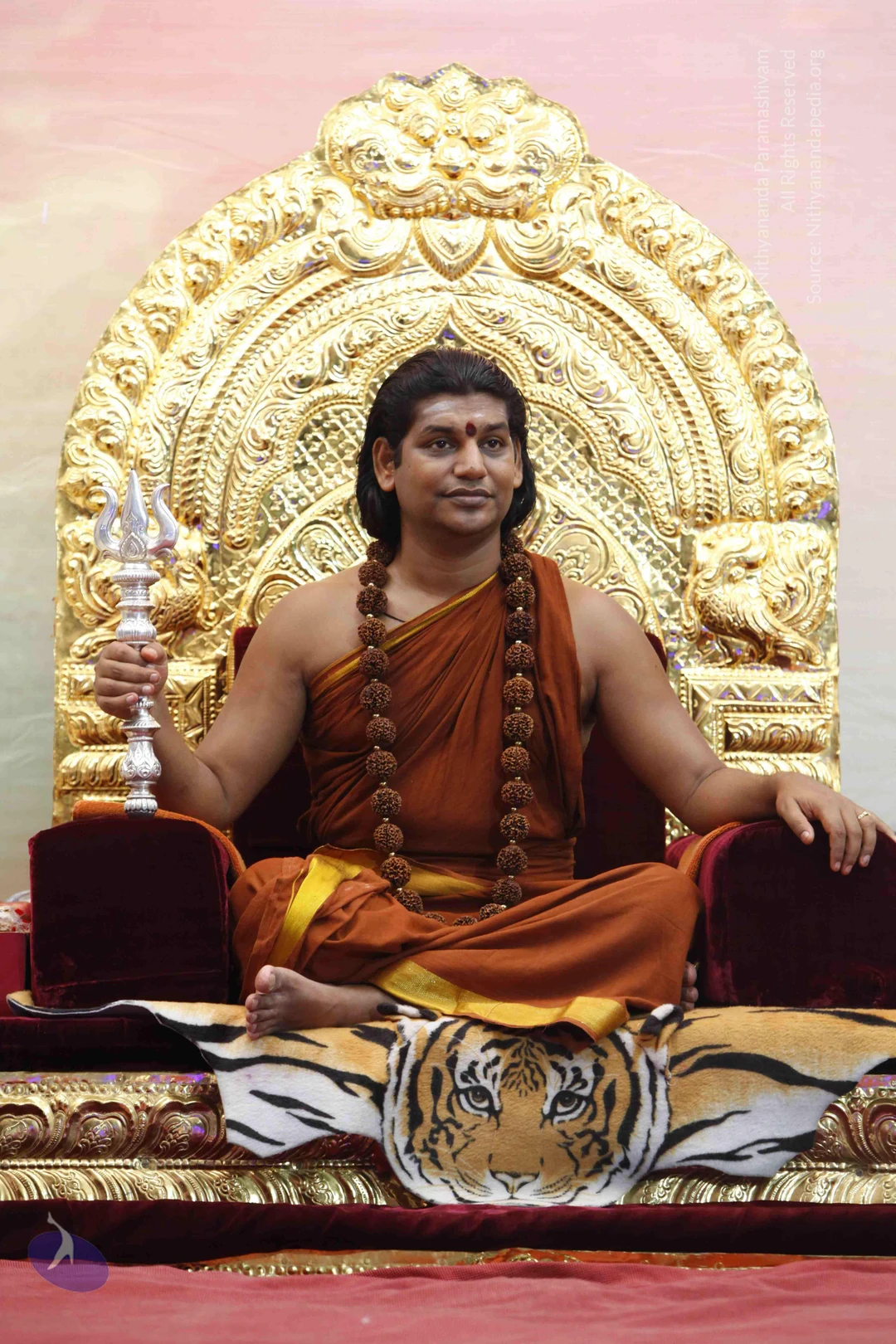
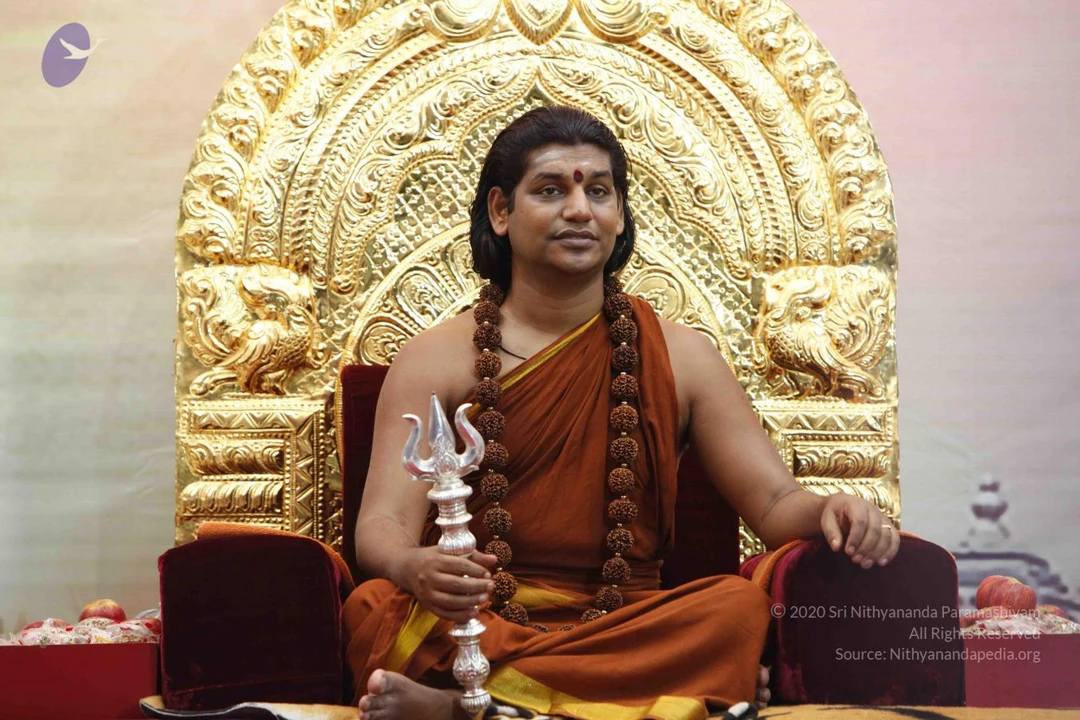
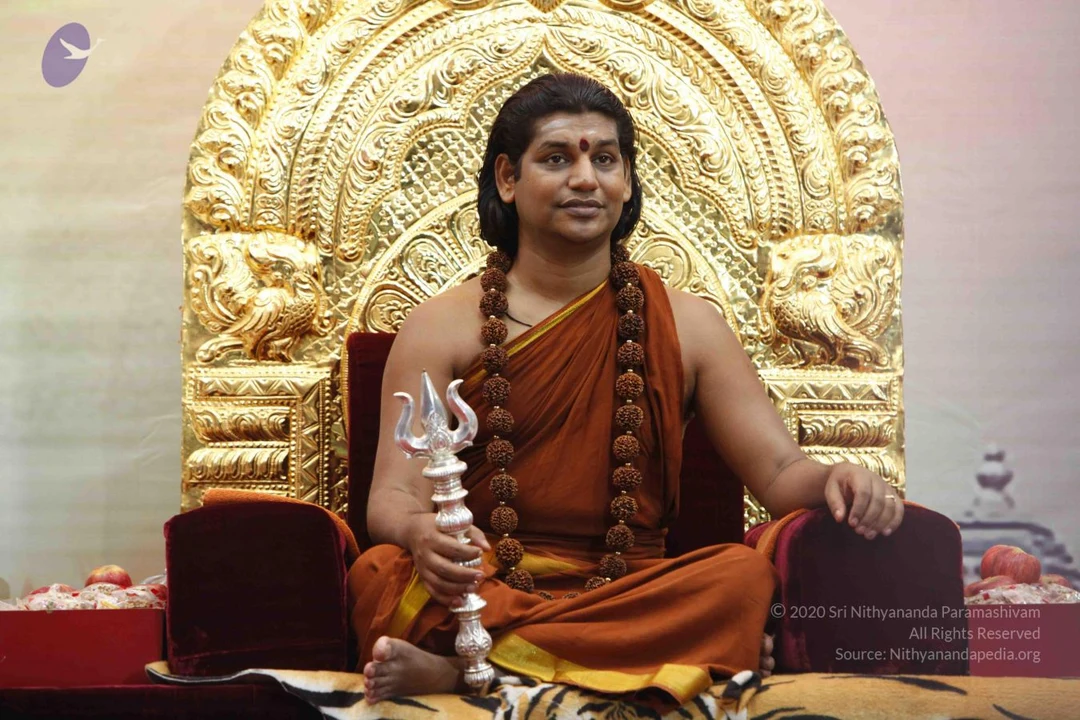
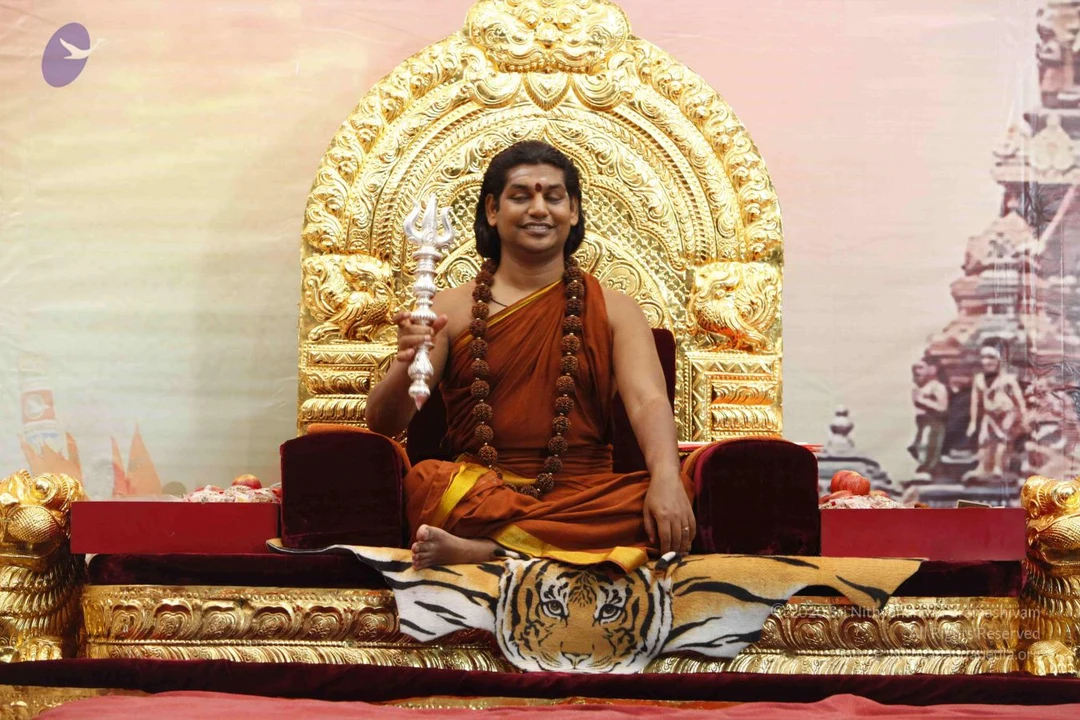
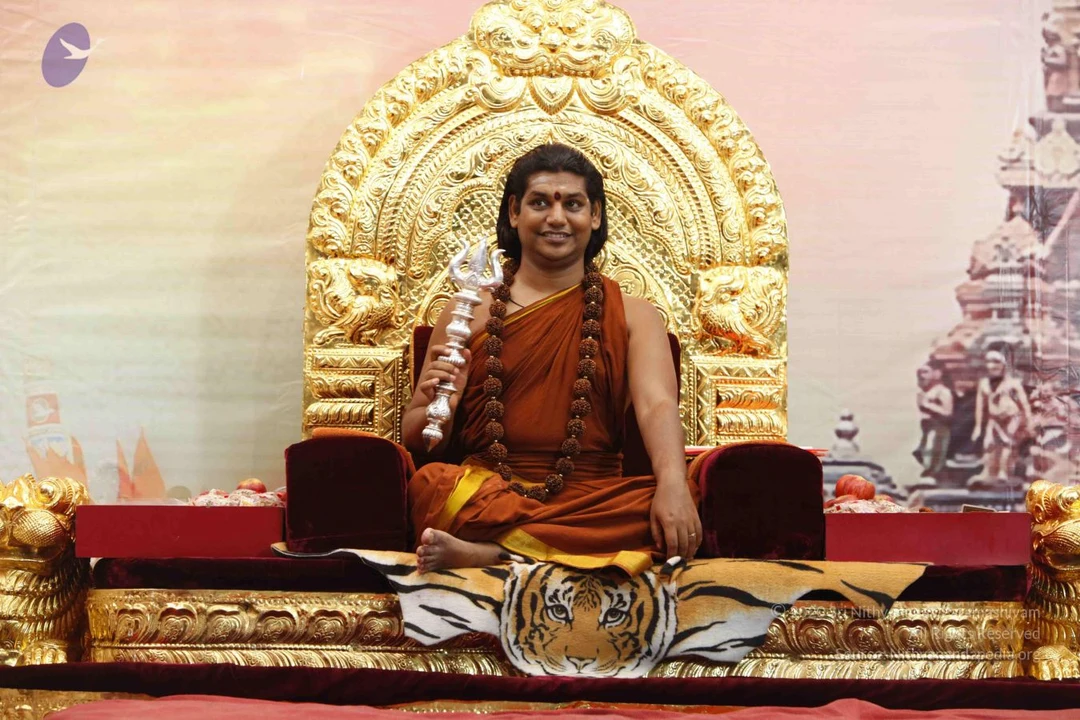
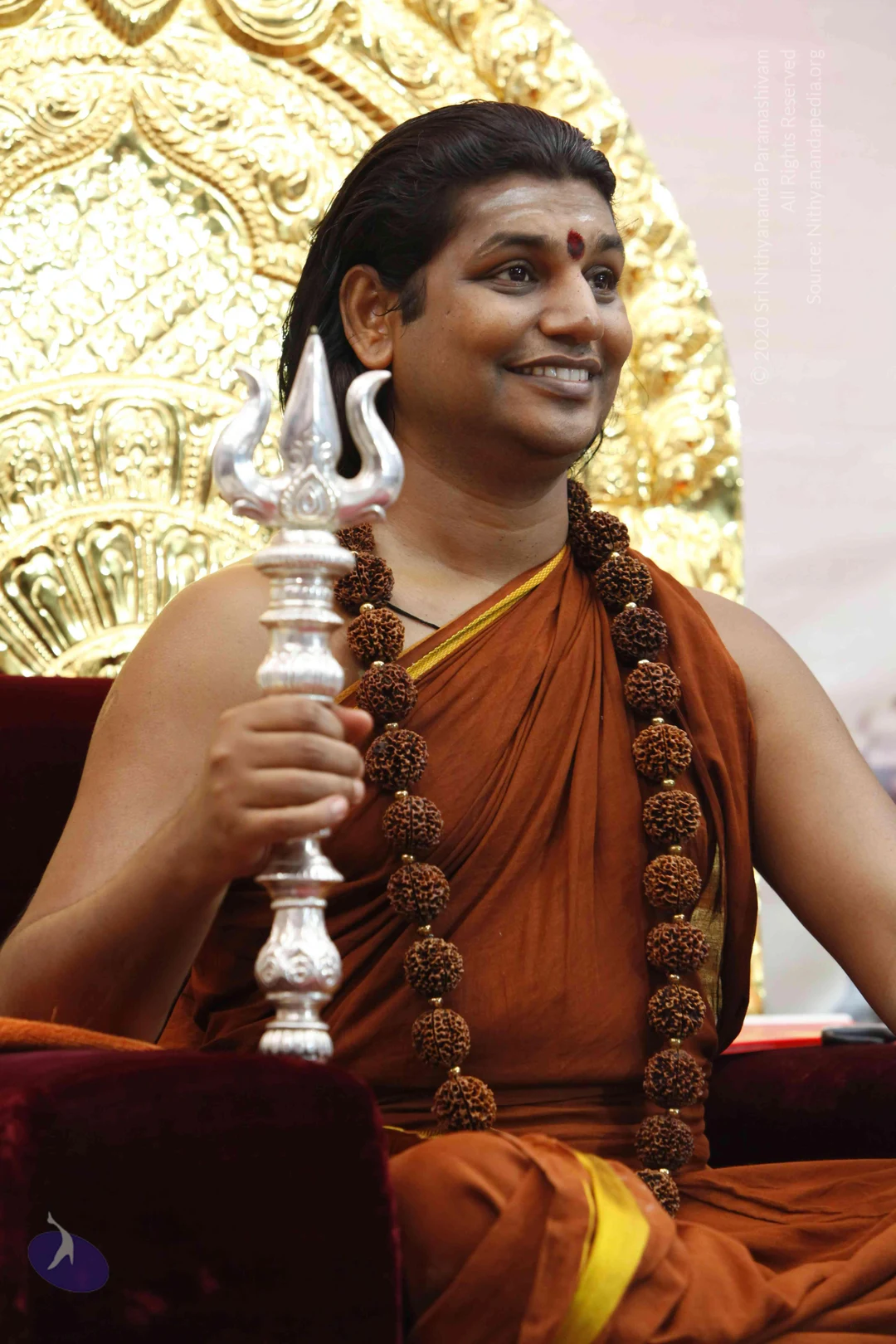
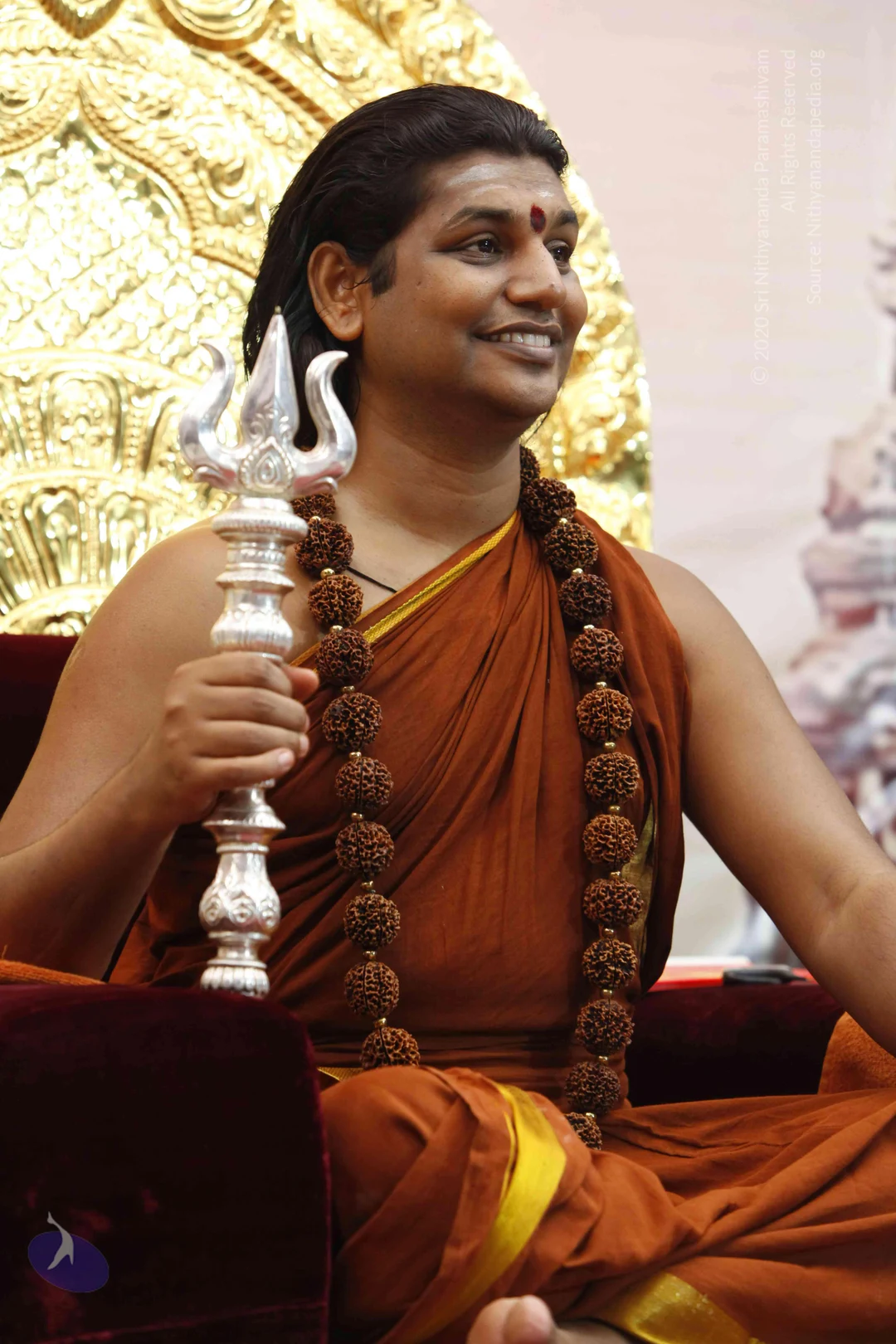
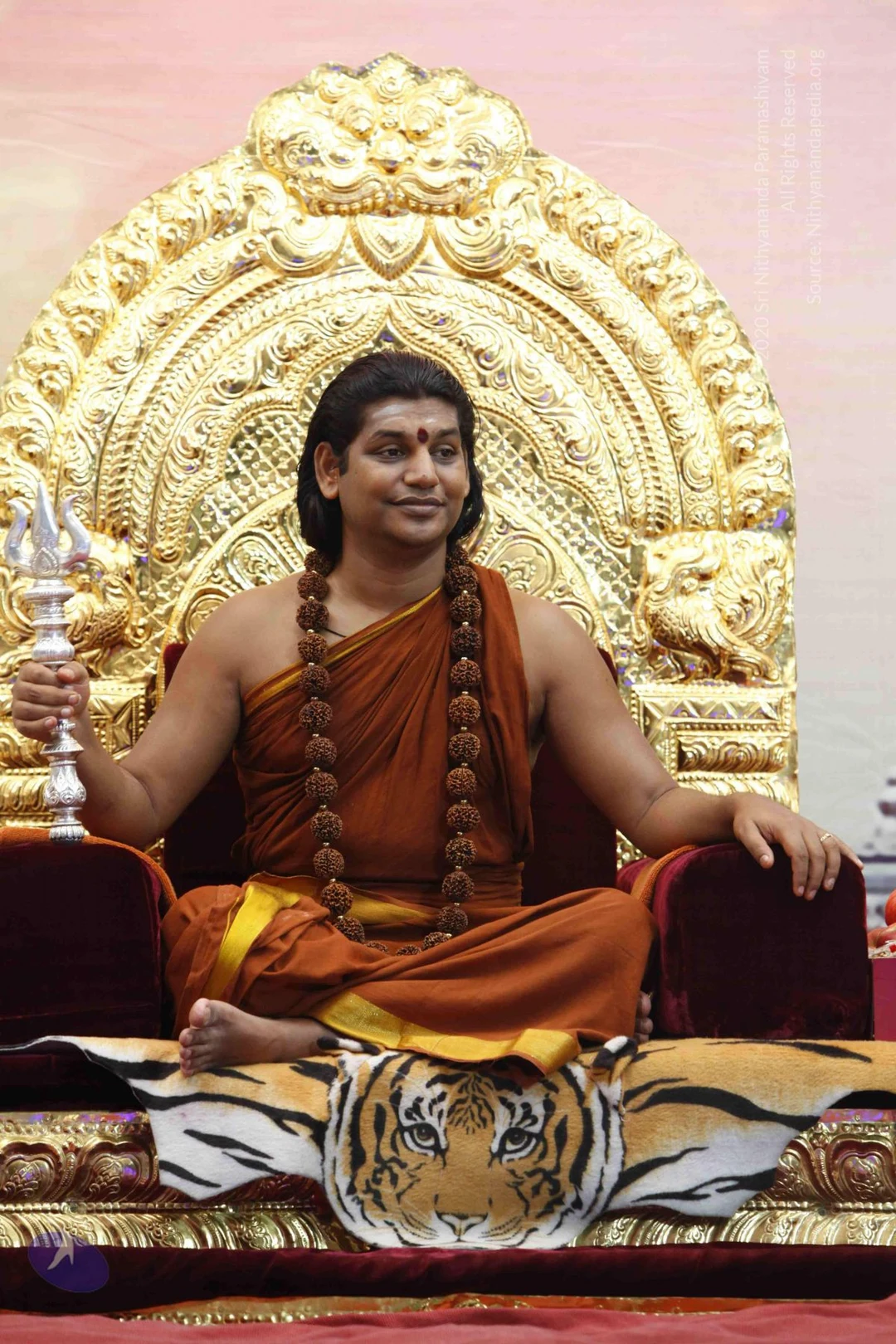
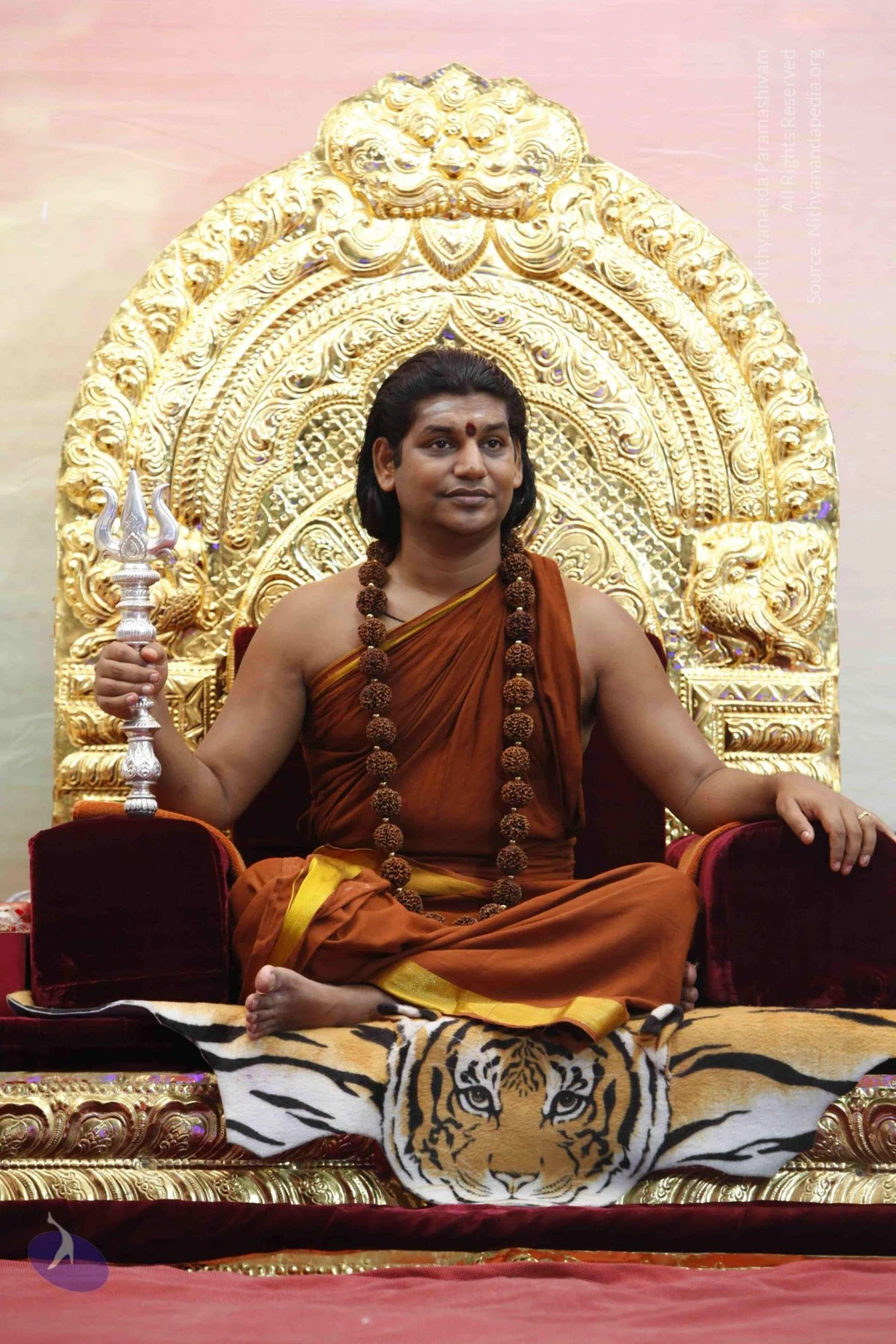
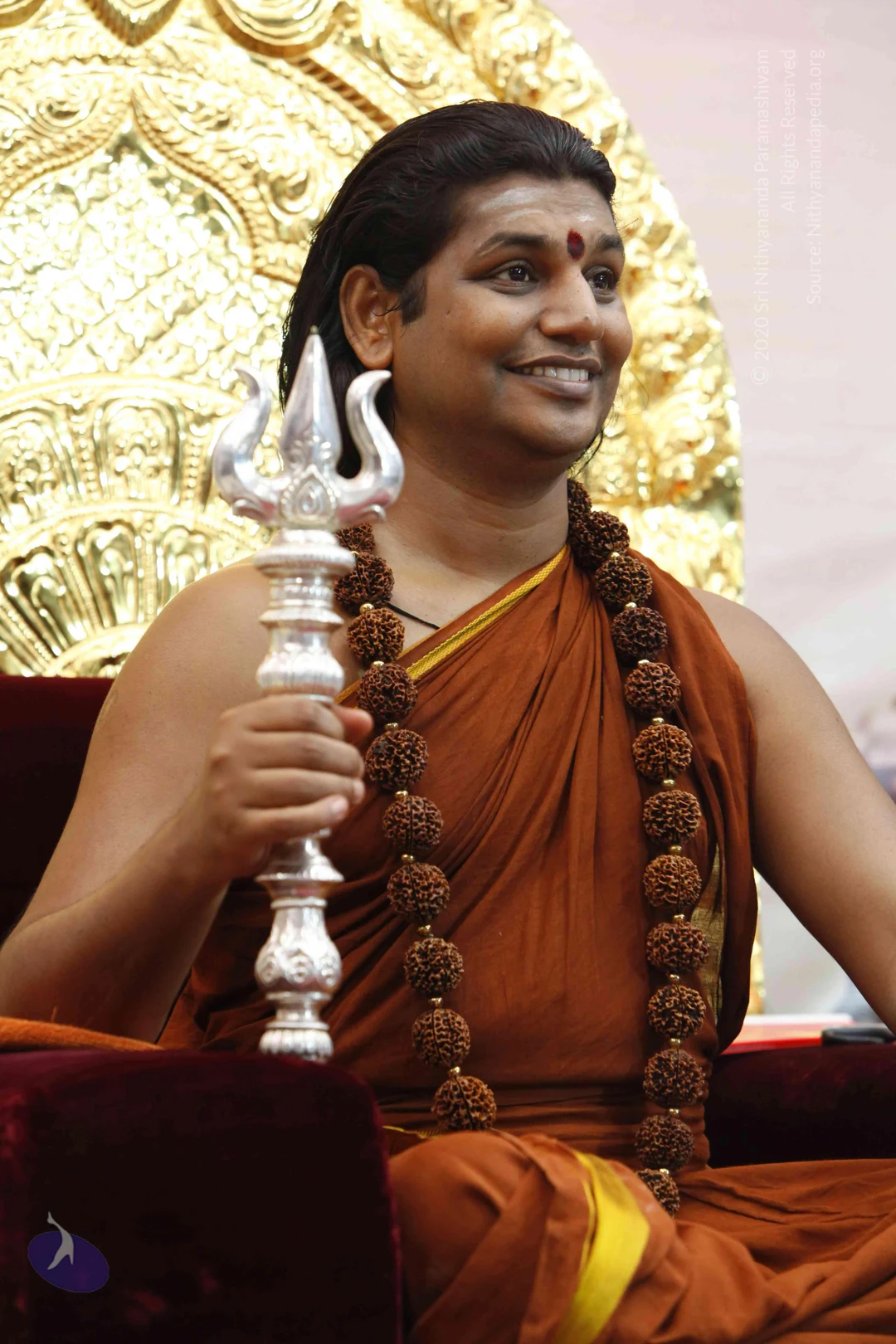
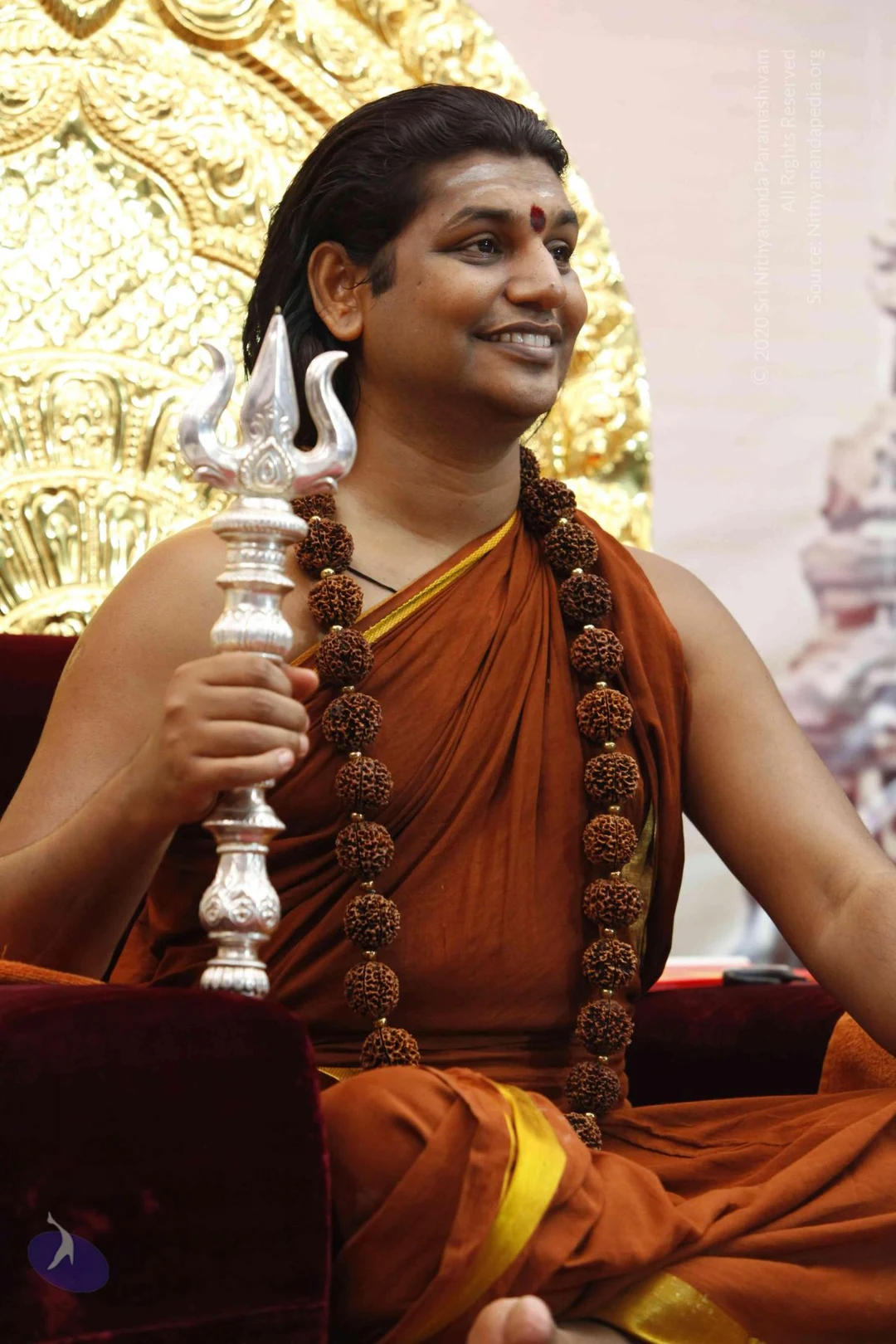
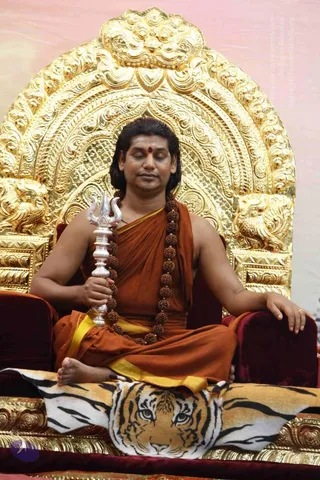
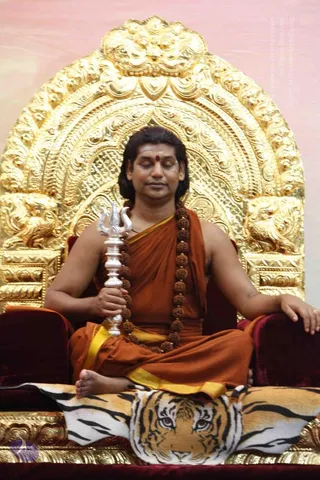
A photograph of a person in profile seated or standing indoors, speaking with hands gesturing, during a satsang. The person has long, dark, loose hair falling down the back and wears a rust-orange garment with a golden-yellow inner edge at the neckline, along with a long strand of brown rudraksha beads worn across the chest. Dark maroon drapes hang in the background and a pale wall lies to the right. Swamiji (probable): the long hair, orange clothing and rudraksha mala are the appearance cues; the speaker is shown teaching as the satsang leader.A photograph of a seated man in saffron-orange robes with gold borders, eyes closed in meditation, on an ornate gold-carved throne with a pink backdrop. He wears long swept-back dark hair, a red bindi, a rudraksha mala draped across his chest, and holds a silver trident upright in his right hand. A striped tiger-face mat covers the seat. Swamiji (probable): long swept-back hair, saffron clothing, rudraksha mala and a trident on a golden throne are the qualifying cues, matching the page's listing of Swamiji at this satsang. Only one physical person is visible.A seated man with long swept-back dark hair and a red bindi sits eyes closed on an ornate gold throne with a carved arch and lion figures, draped over a tiger-print cloth. He wears an orange-saffron robe with gold borders and a long rudraksha mala, and holds a silver trident in his left hand. No other people are visible.A man with long swept-back dark hair and a red bindi sits cross-legged with eyes closed on an ornate golden throne with lion carvings, on a tiger-striped cloth. He wears an orange-saffron robe with yellow borders, a long rudraksha mala, and holds a silver trident-topped staff in his right hand.A man seated cross-legged on a gold-carved throne with lion figures, a tiger-striped rug draped over the seat in front of him. He wears an orange-saffron robe with a yellow sash, a long strand of rudraksha beads, and a red tilak on his forehead. He holds a silver trident-shaped staff upright in his right hand and rests his left arm on the armrest. Behind him is a large gold arch and a painted temple tower on the right, with fruit and offerings on red side tables. Swamiji (probable): the figure has long swept-back hair, saffron clothing, rudraksha malas and a throne setting, consistent with the page's claim of his presence.A seated man in saffron-orange robes sits on an ornate gold throne with carved lion heads and a gilded arch behind him. He wears long swept-back hair, a red forehead mark, a long rudraksha mala, and a yellow sash, and holds a silver trident. He sits on a tiger-print cloth, with fruit offerings on the platform beside him and a painted temple backdrop on the right. Swamiji (probable): the saffron clothing, long hair, rudraksha mala and ornate throne match the page's reference to a satsang session.

IA-Food

29 photosSource gallery
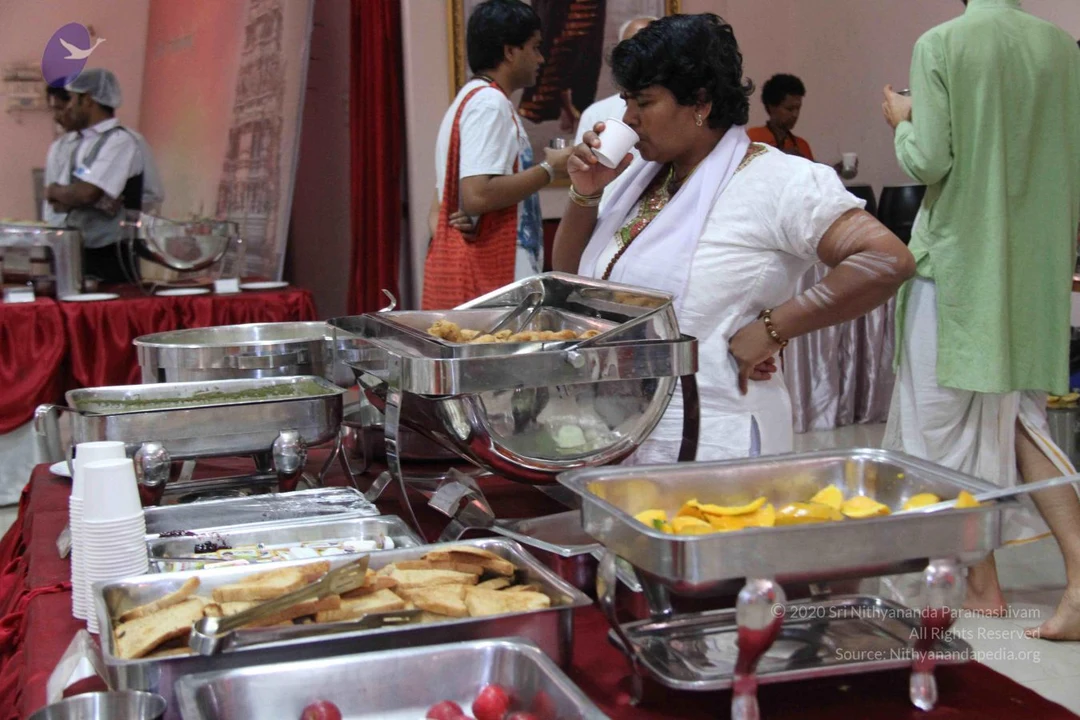
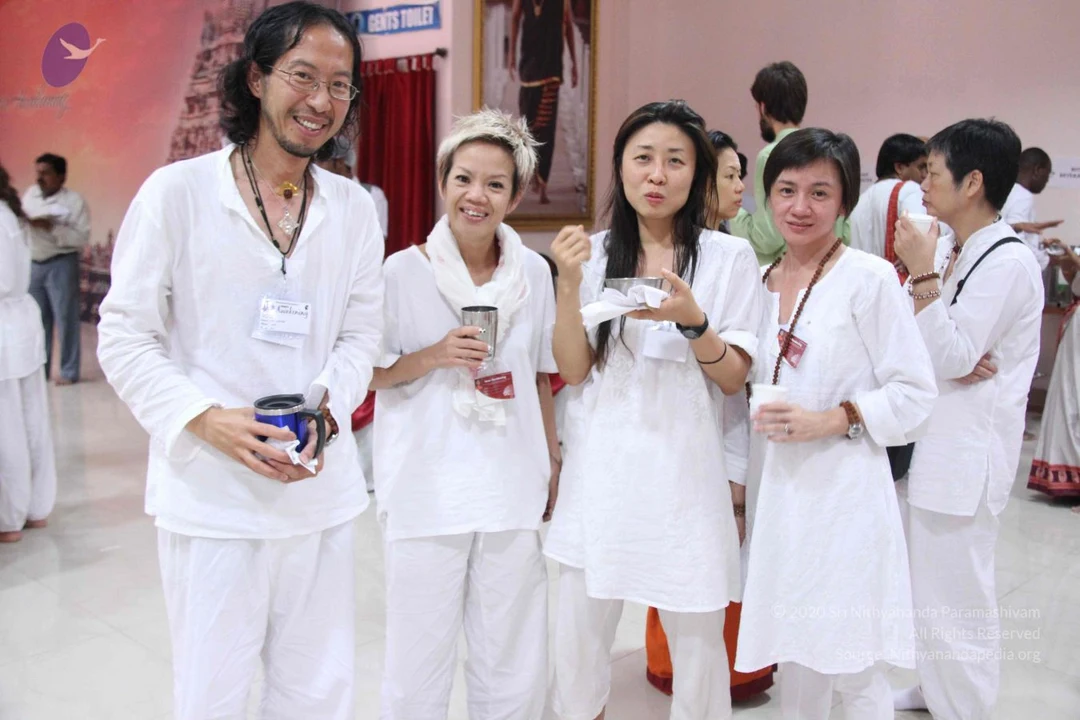
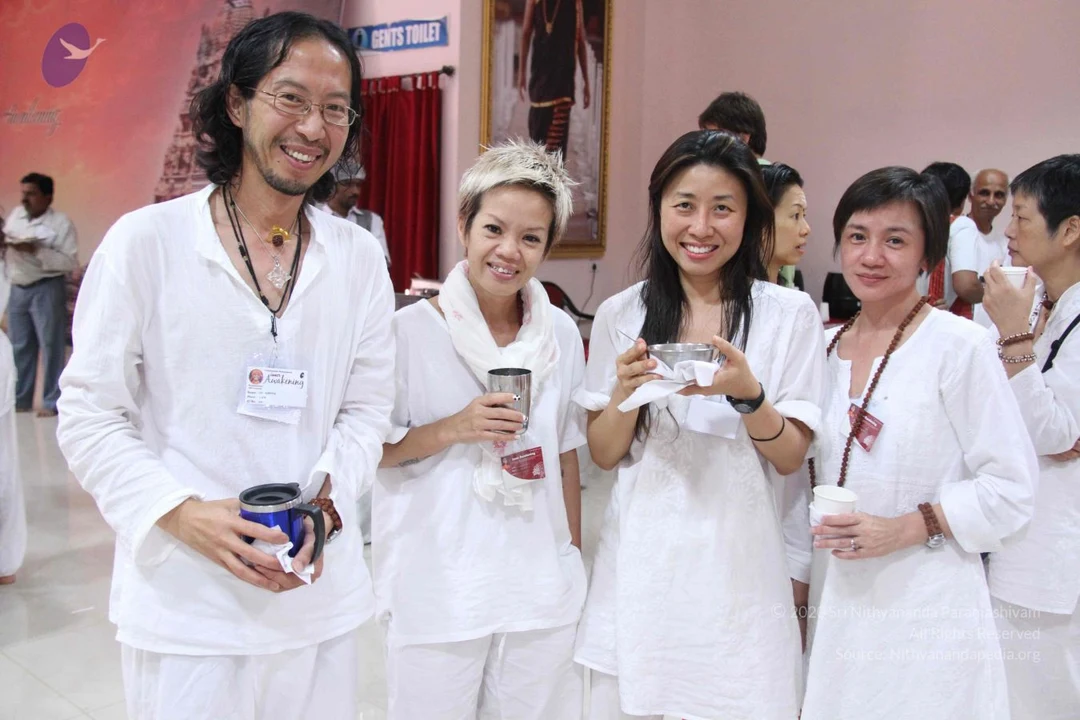
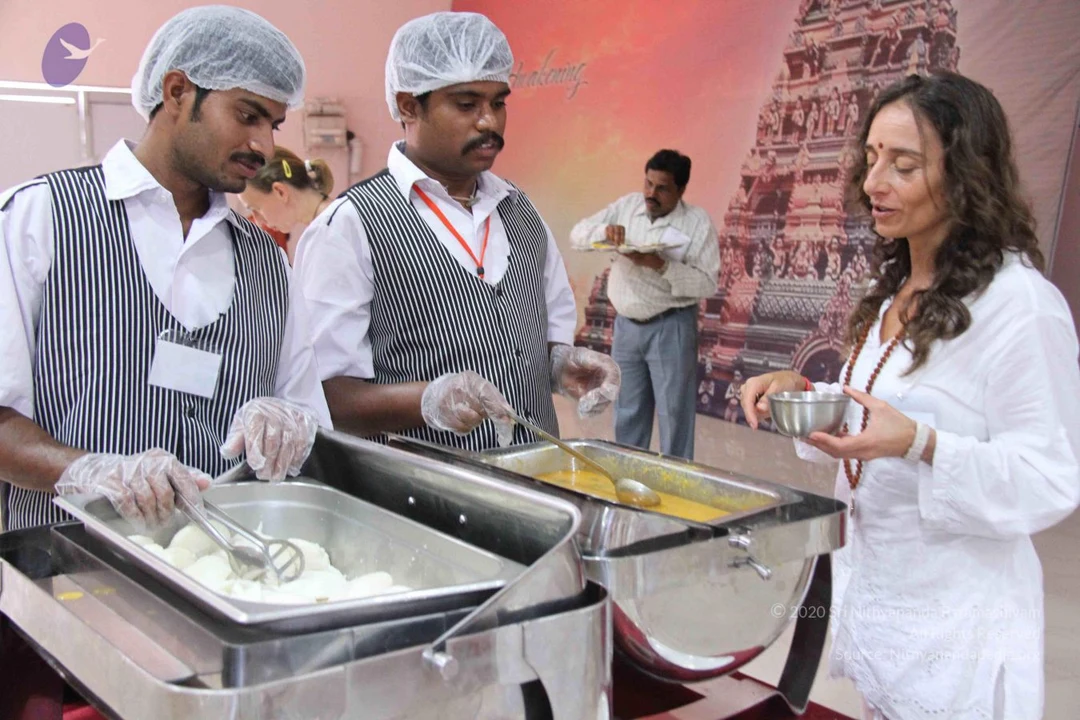
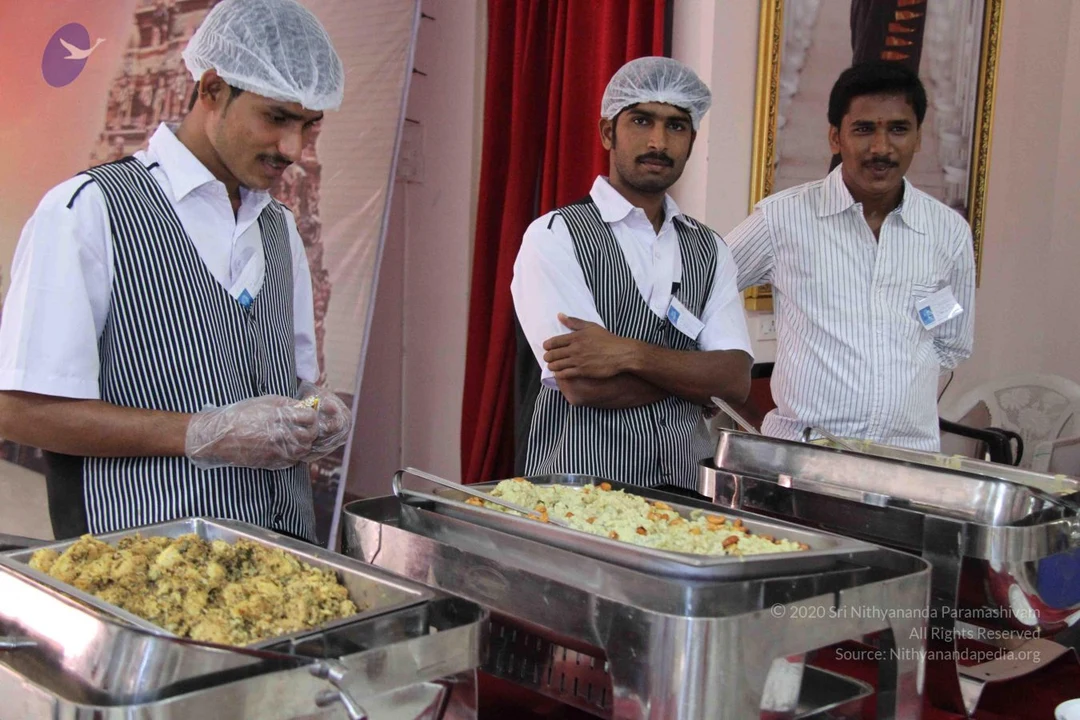
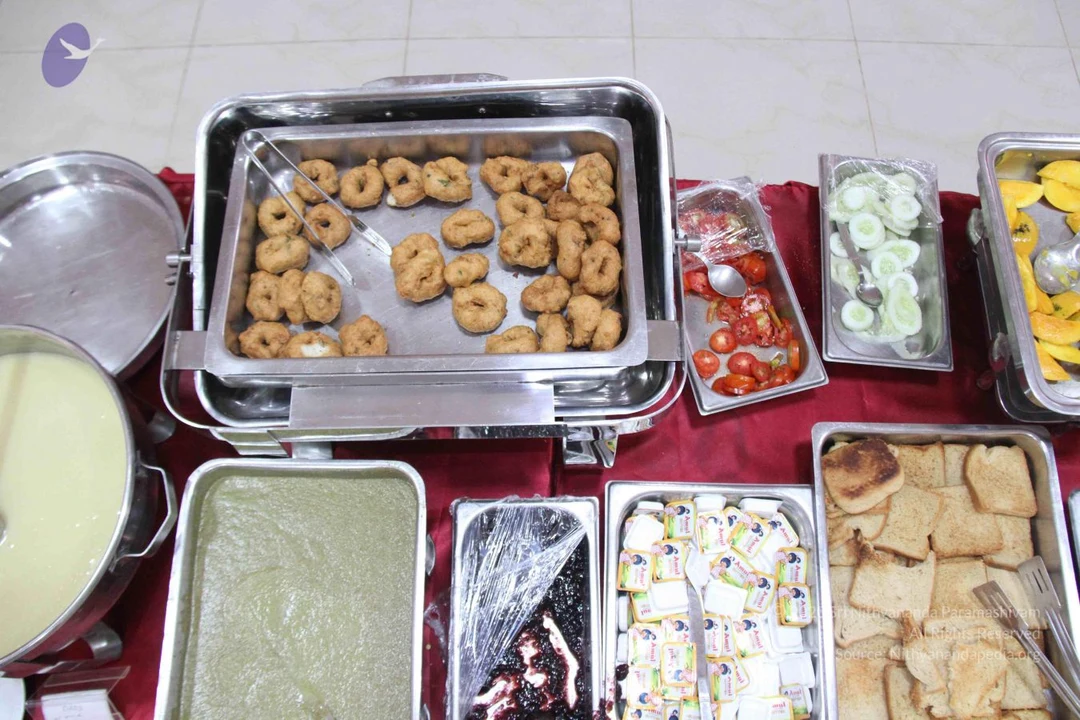
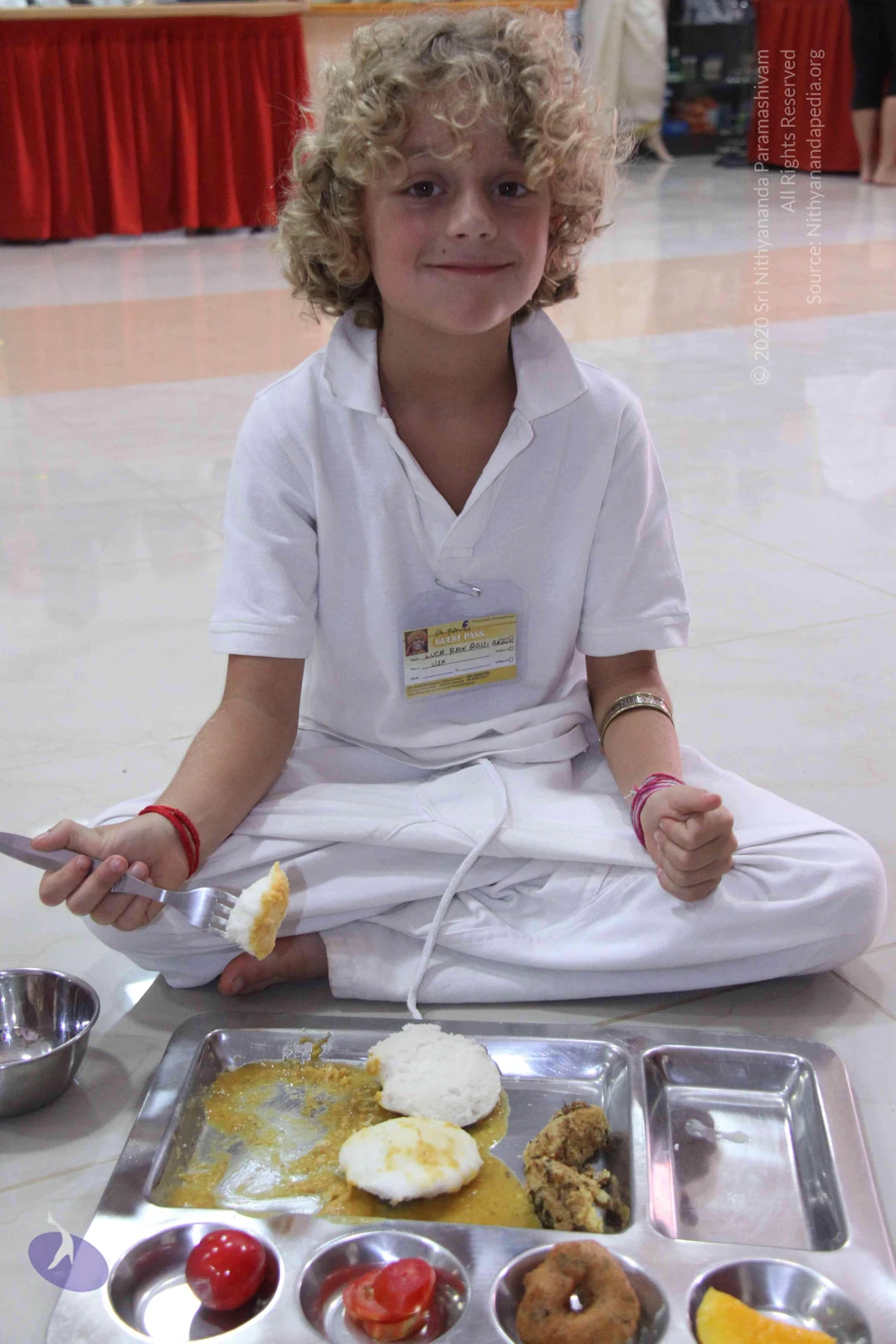
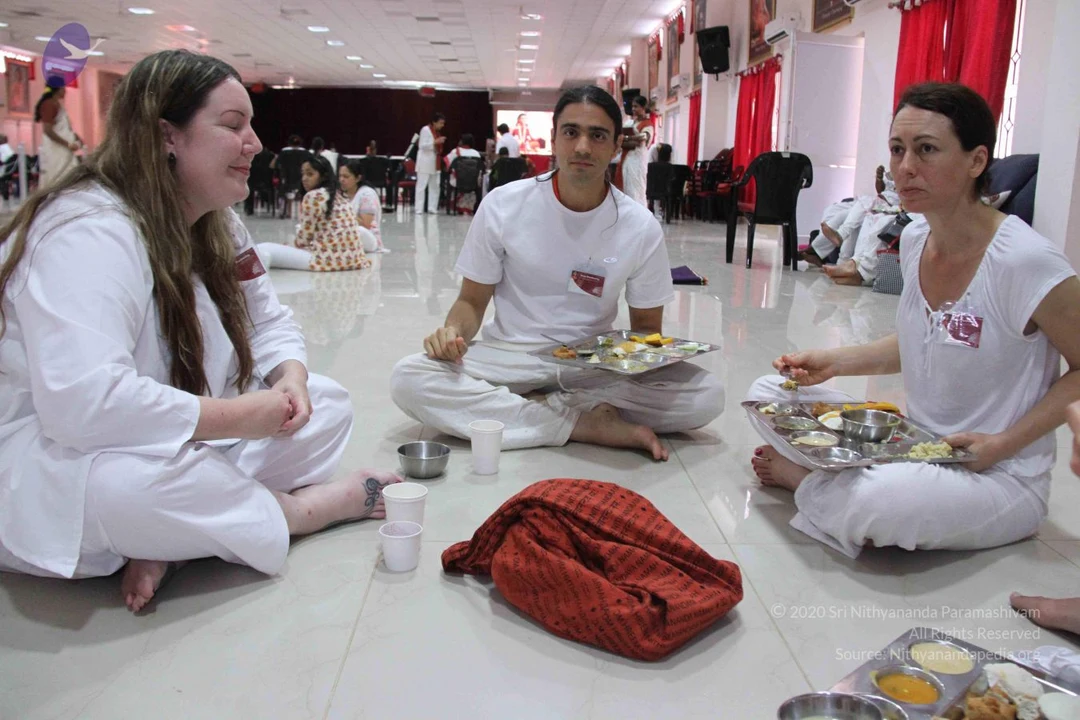
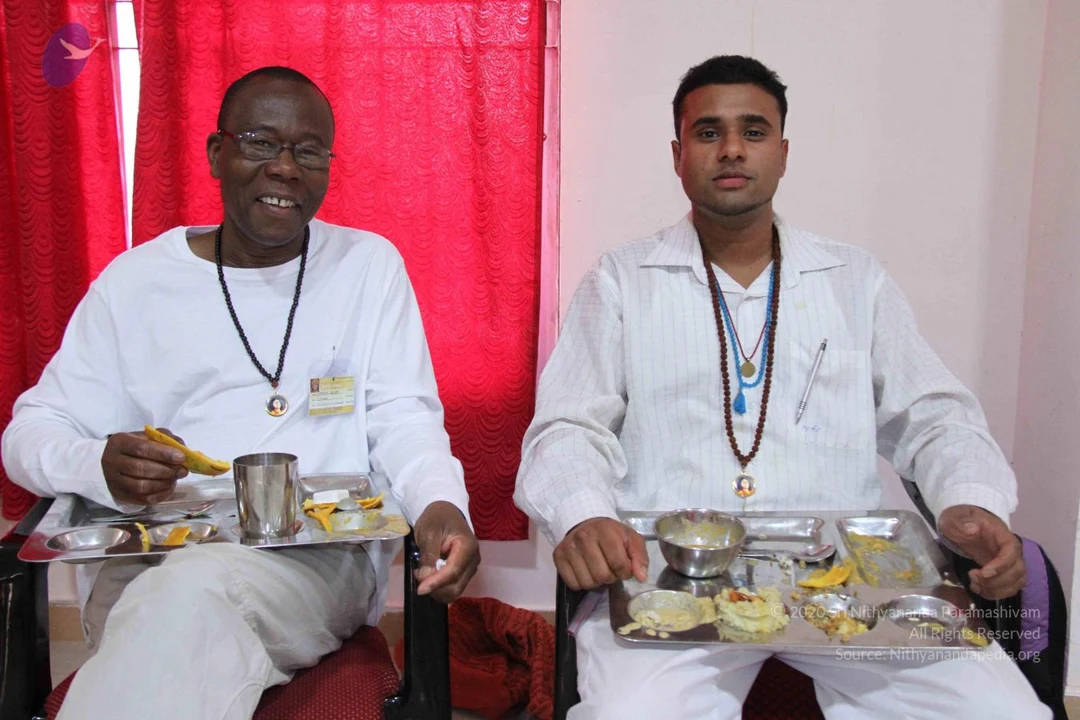
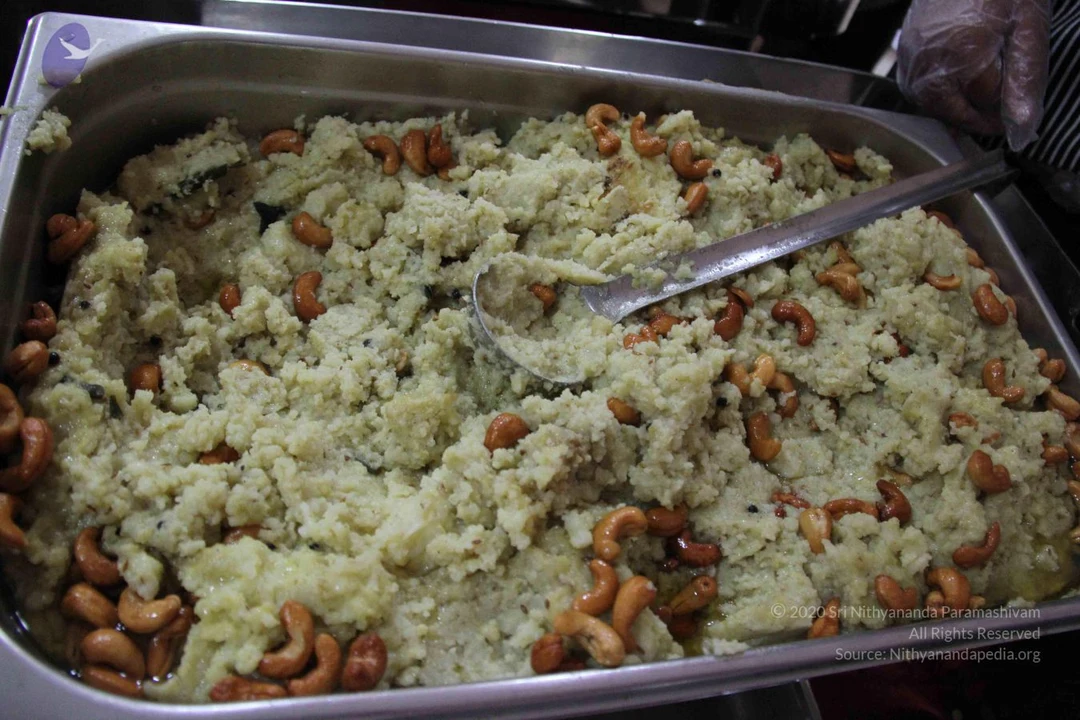
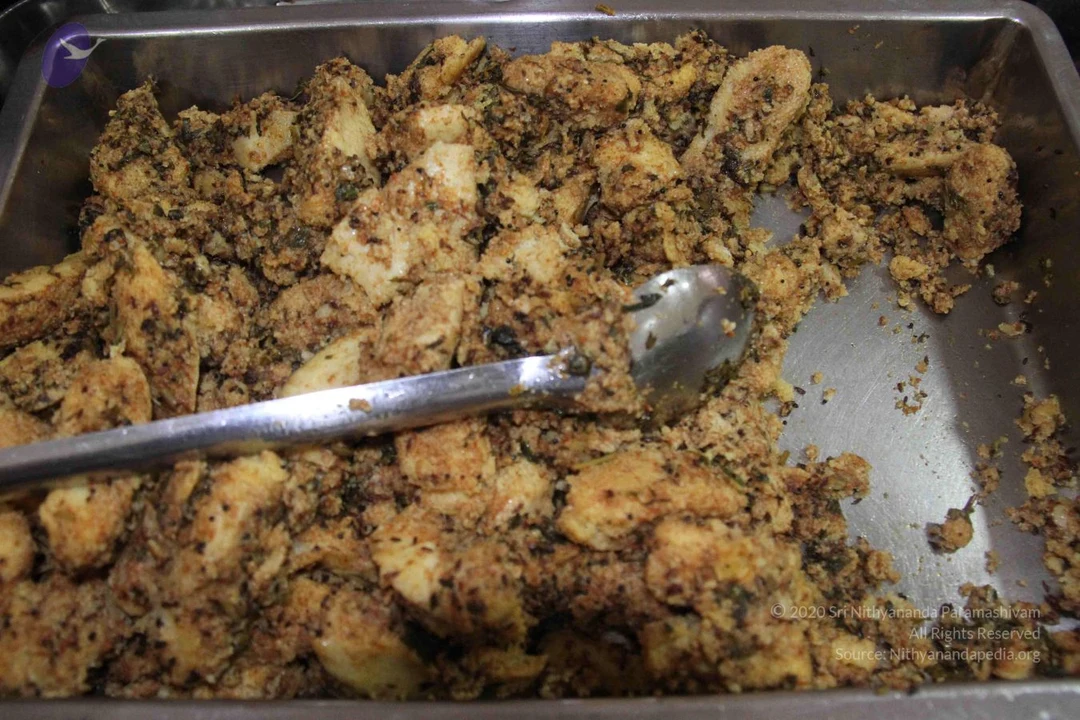
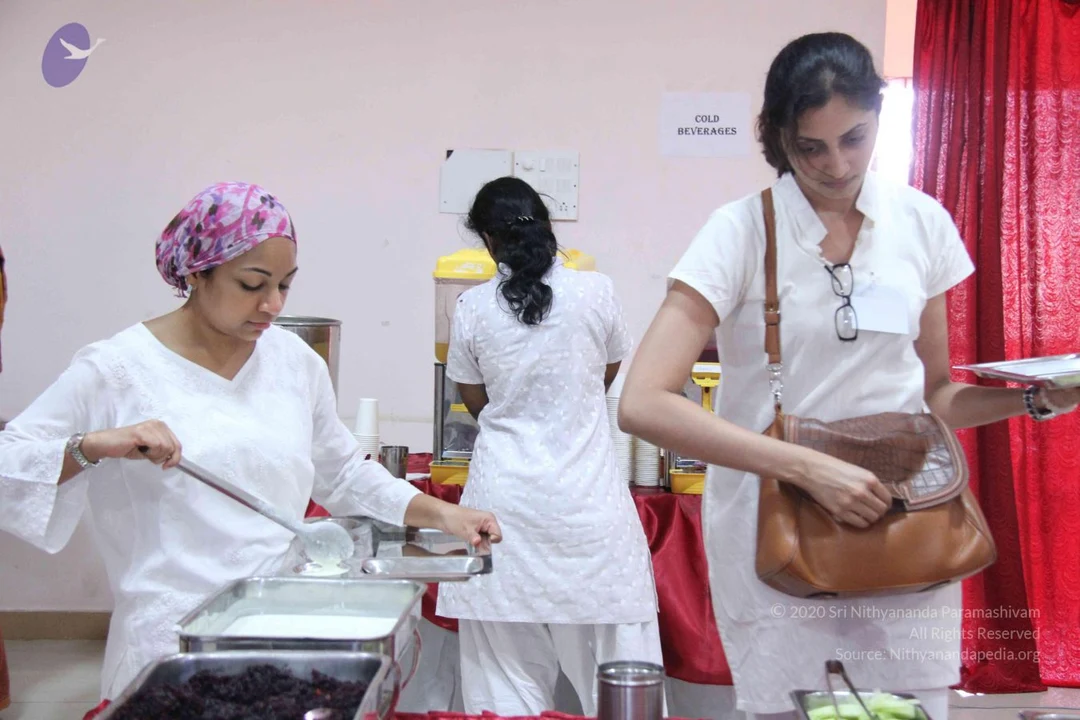
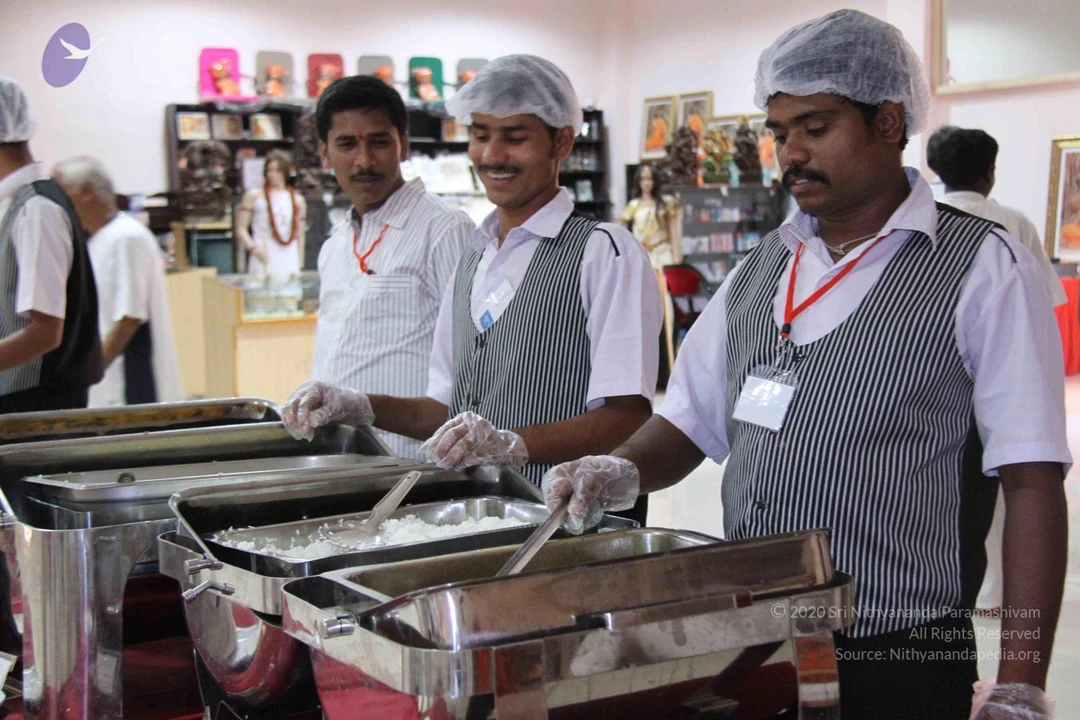
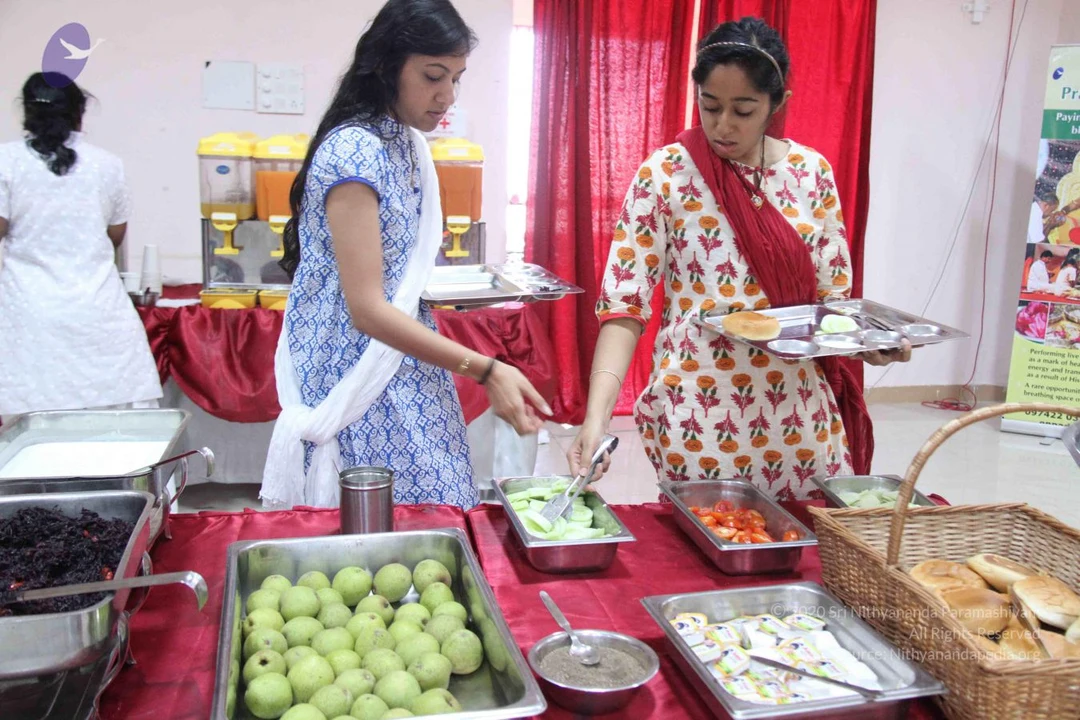
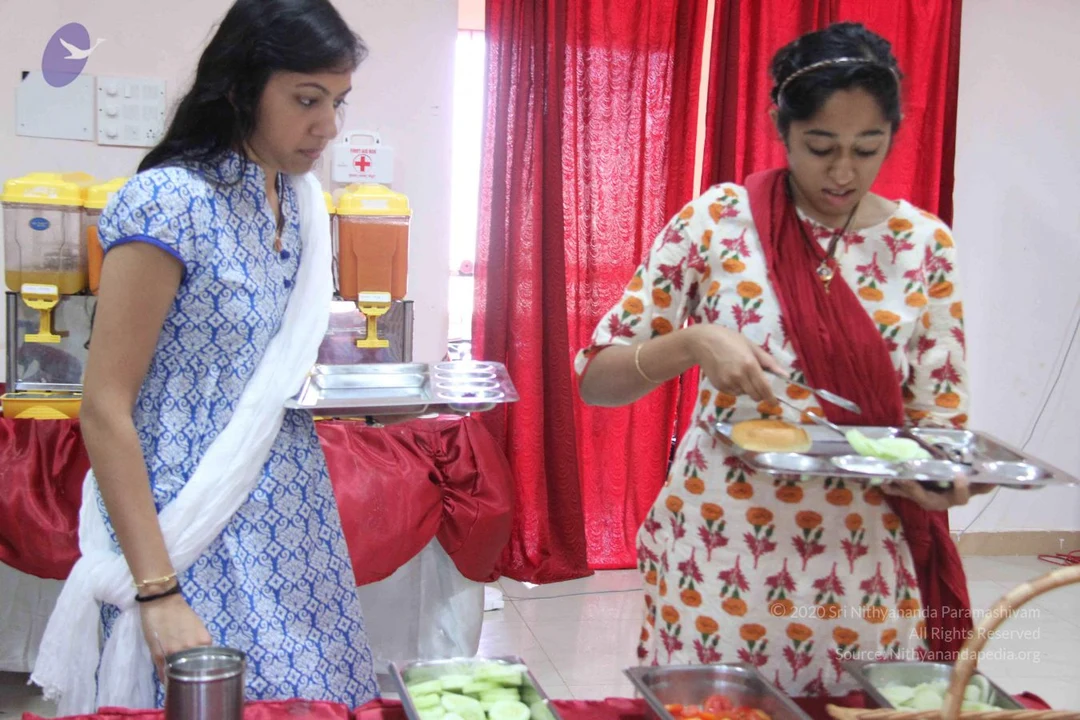
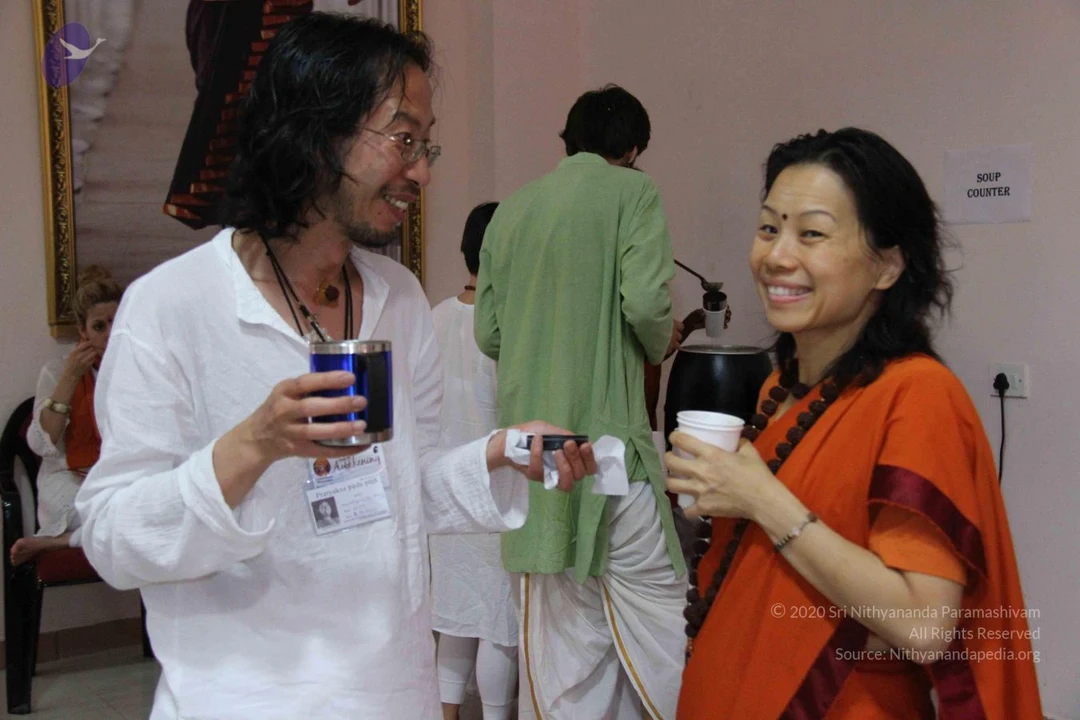
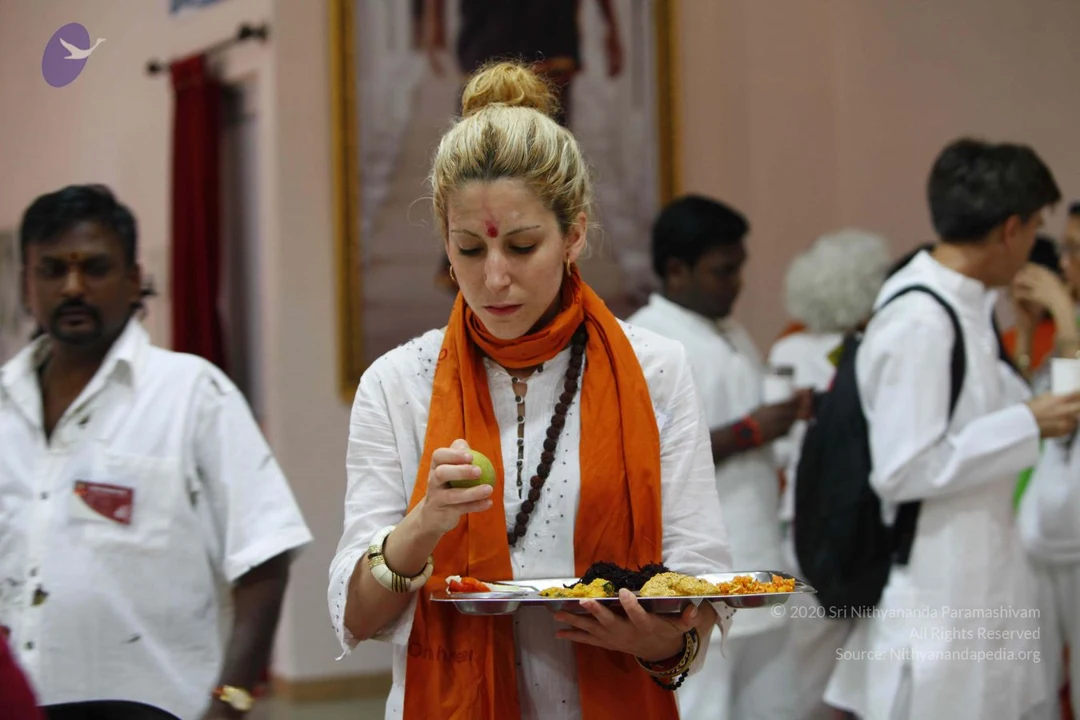
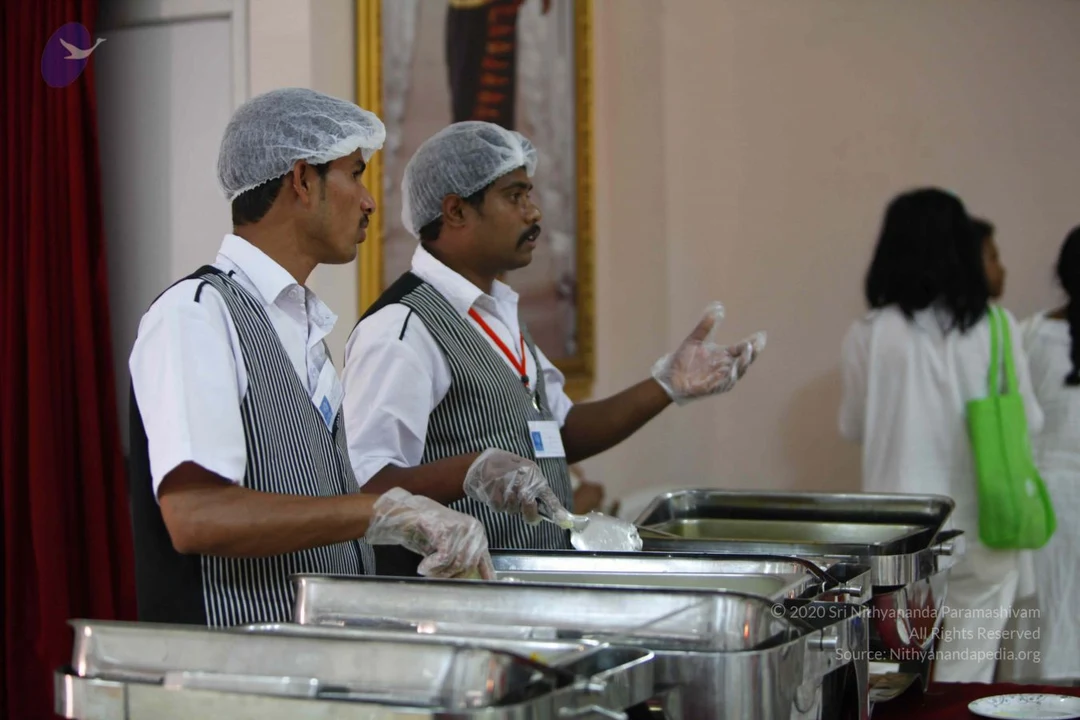
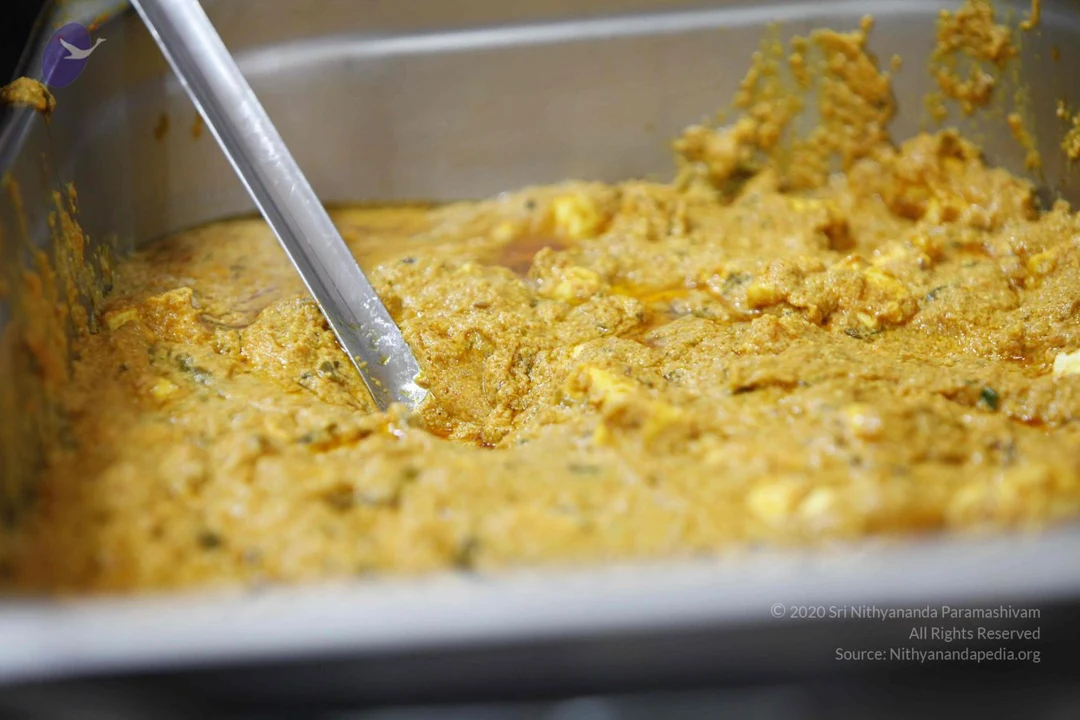
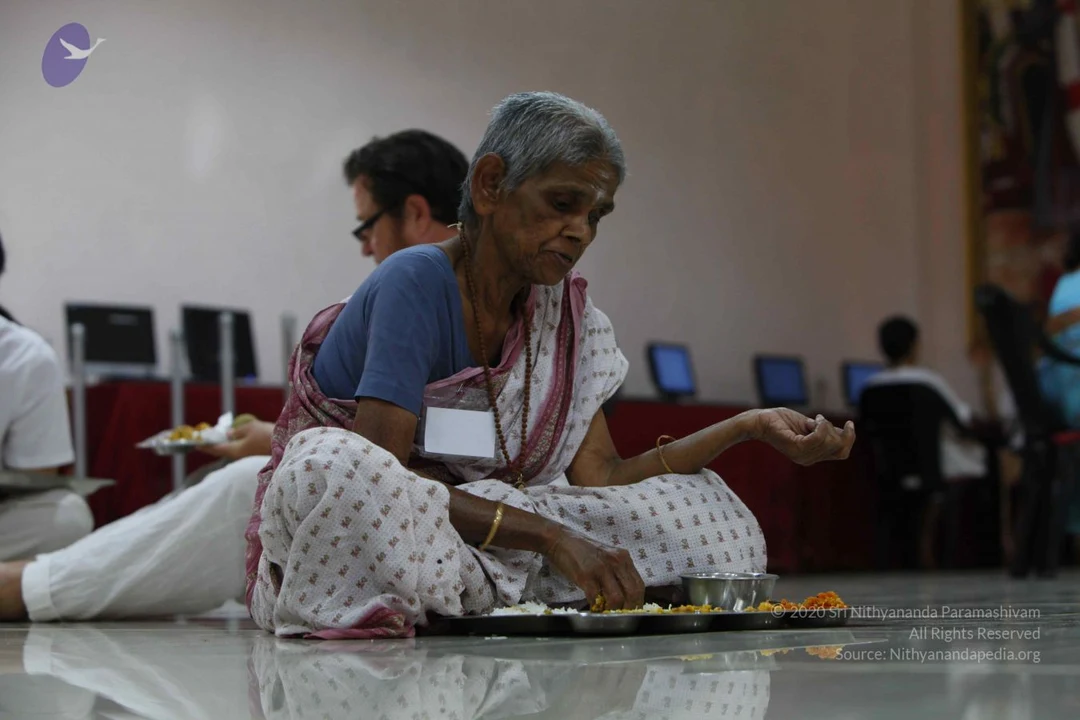
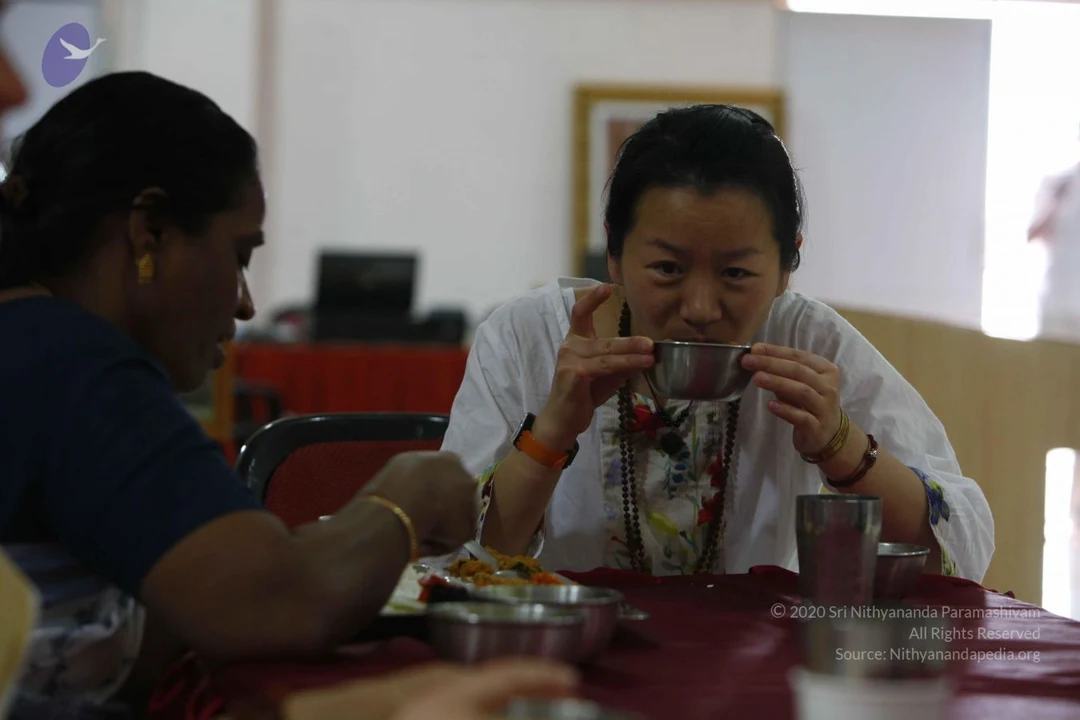
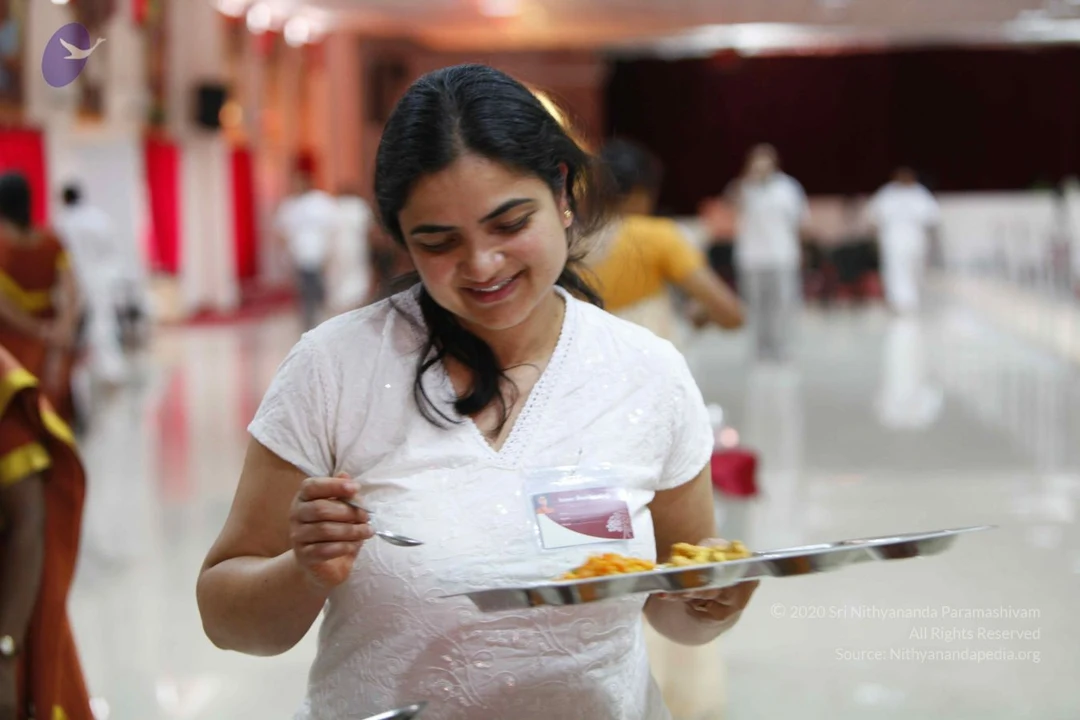
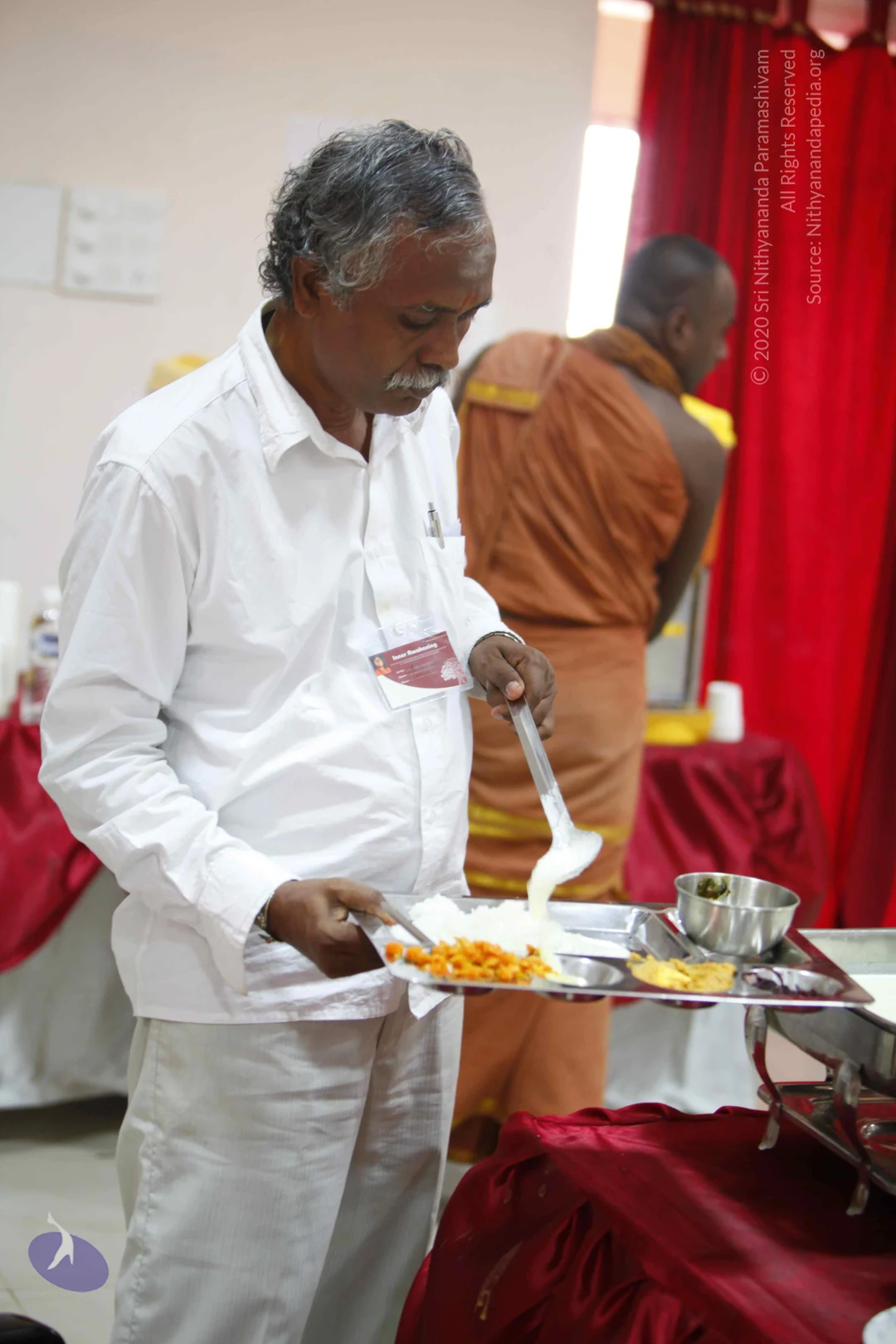
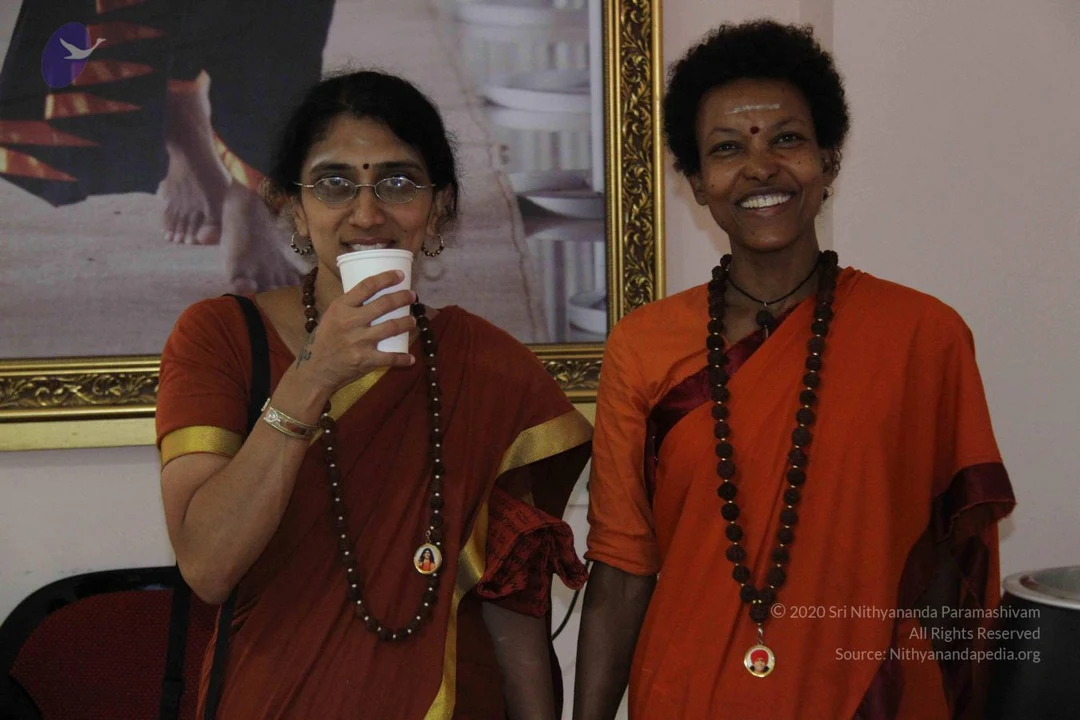
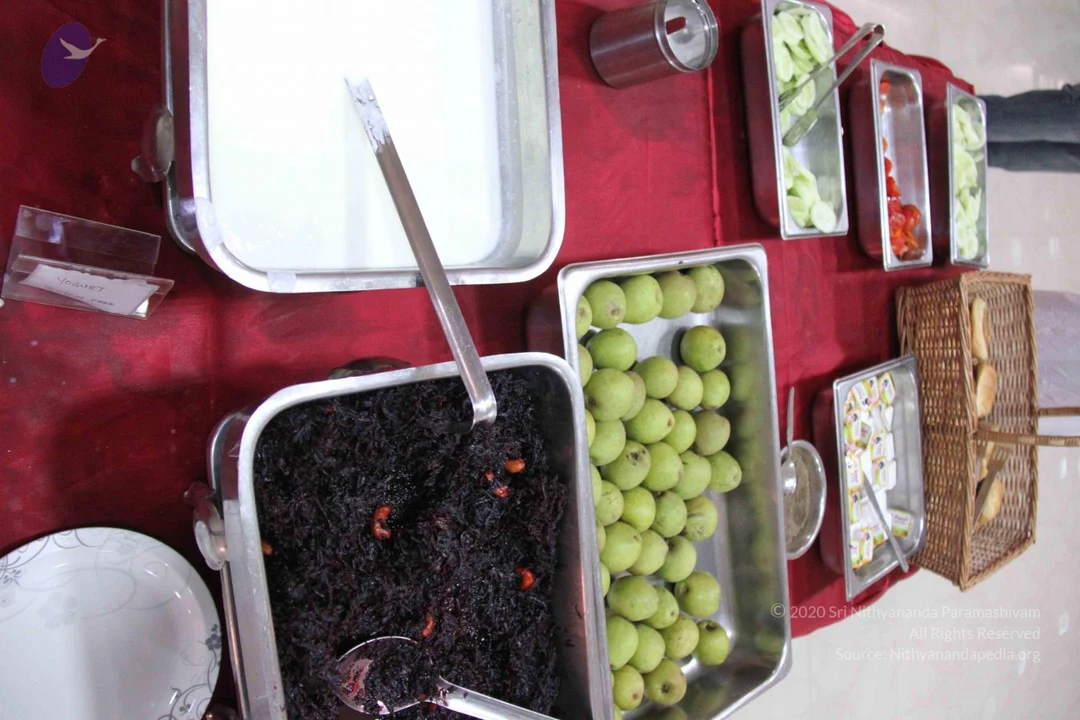
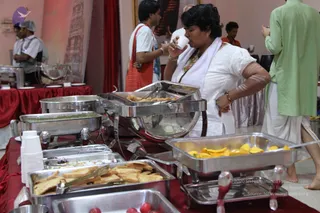
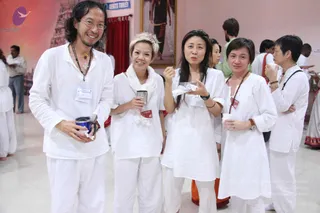
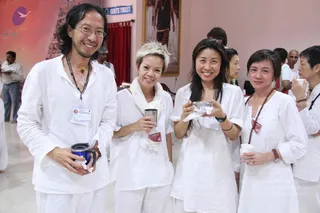
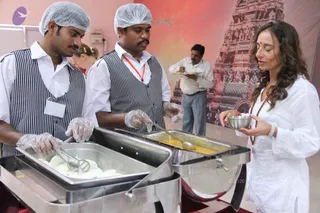
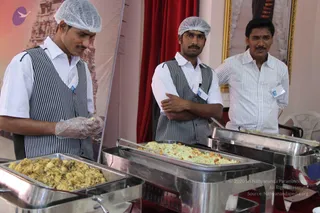
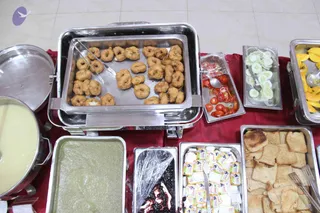
A photograph of a buffet serving area with stainless steel chafing dishes on a red-draped table. A woman in a white sari with a white shawl and gold bangles sips from a small white paper cup while standing with her other hand on her hip. Behind her, a man in a white shirt and an orange-and-white cloth bag stands near a second person in orange. On the right, a person in a light green kurta and white dhoti stands beside the table. Food includes toasted bread slices, fried snacks, sliced mango and sliced fruit. Staff in white uniforms and hairnets attend the back of the table, and a framed picture hangs on a pink wall.Four smiling devotees in matching white kurta-style clothing stand together in a bright hall. A man on the left with long dark hair and glasses wears a white shirt and a beaded necklace, holding a blue mug. Next is a woman with short bleached hair and a white scarf holding a steel cup, then a woman with long dark hair holding a white-wrapped cup, and a woman on the right with short hair in white clothes holding a cup and wearing a mala. Behind them, other people in white and an orange-robed figure stand near a wall with a temple-scene picture and a Gents Toilet sign. Several white-clad attendees are visible in the background.Four smiling people in white linen clothing stand together in a bright hall with pink-red walls. On the left, a man with shoulder-length hair, glasses and a beaded necklace holds a blue travel mug and wears a name badge. Beside him, a woman with short spiky bleached hair and a white scarf holds a steel cup. A woman with long dark hair holds a small steel bowl and a folded white napkin. On the far right, a woman with a short bob and rudraksha-style brown beaded malas holds a paper cup. Behind them, other people in white and a poster of a figure in red and gold stand near a gents toilet sign. No a person candidate is clearly visible.A photograph of a serving station at an ashram-style food event. Two men in white shirts and black-and-white striped vests with white hairnets and disposable gloves serve food from steel chafing dishes: the left man uses tongs on white idlis, the right man uses a ladle on yellow curry. On the right, a woman with long wavy hair wears all white and red-brown rudraksha beads, holding a small steel bowl and speaking. Behind them a man in a white shirt and grey trousers carries a plate, and a backdrop shows a temple tower with the word 'Thanksgiving' partly visible.Photograph of a buffet serving station with three men in a dining area. Two young men in white shirts and black-and-white striped vests, wearing white hairnets and clear gloves, serve rice dishes from stainless steel chafing dishes; one holds a serving spoon over a tray of yellow rice with nuts. A third man in a white striped shirt with a name badge stands behind them beside a red curtain and a framed picture of a temple tower. A small purple logo appears at the top left.A photograph of a buffet spread on a red tablecloth. In the centre a stainless steel chafing dish holds golden fried vadas or fritters, with tongs resting in the tray. Nearby are a bowl of sliced cucumber, a bowl of diced tomatoes, a tray of sliced mangoes, a tray of toast slices, a tray of individually wrapped butter portions, a tray of dark jam, a tray of green chutney, and a pot of pale liquid such as payasam or milk. No people are visible.

IA-Session-Participants

9 photosSource gallery
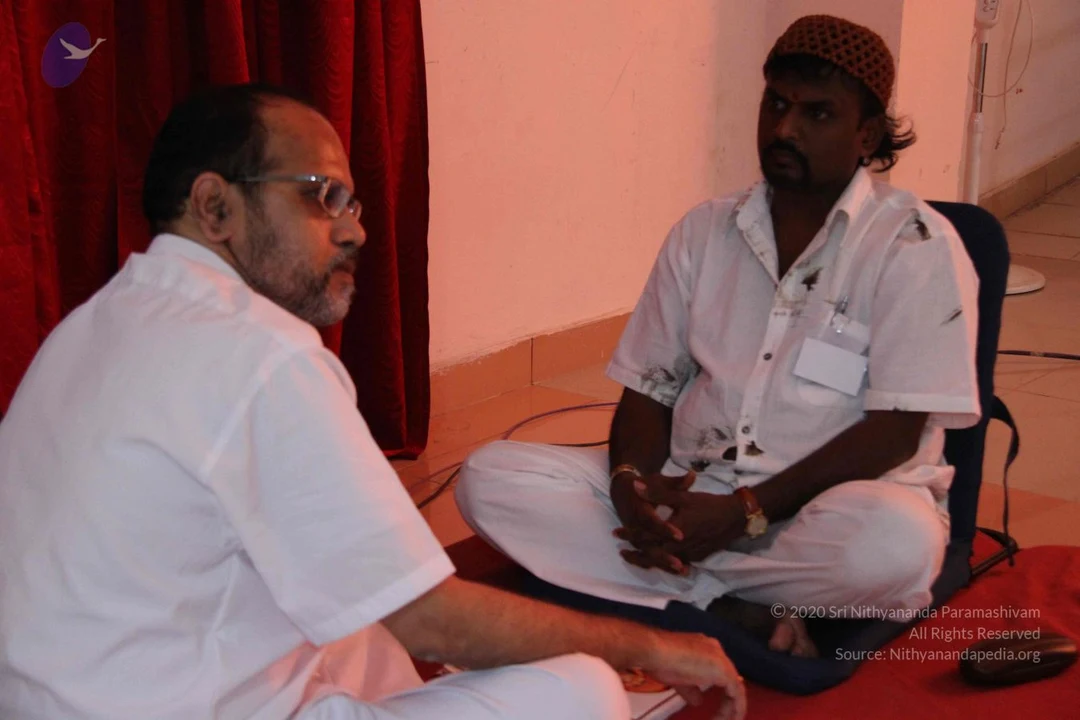
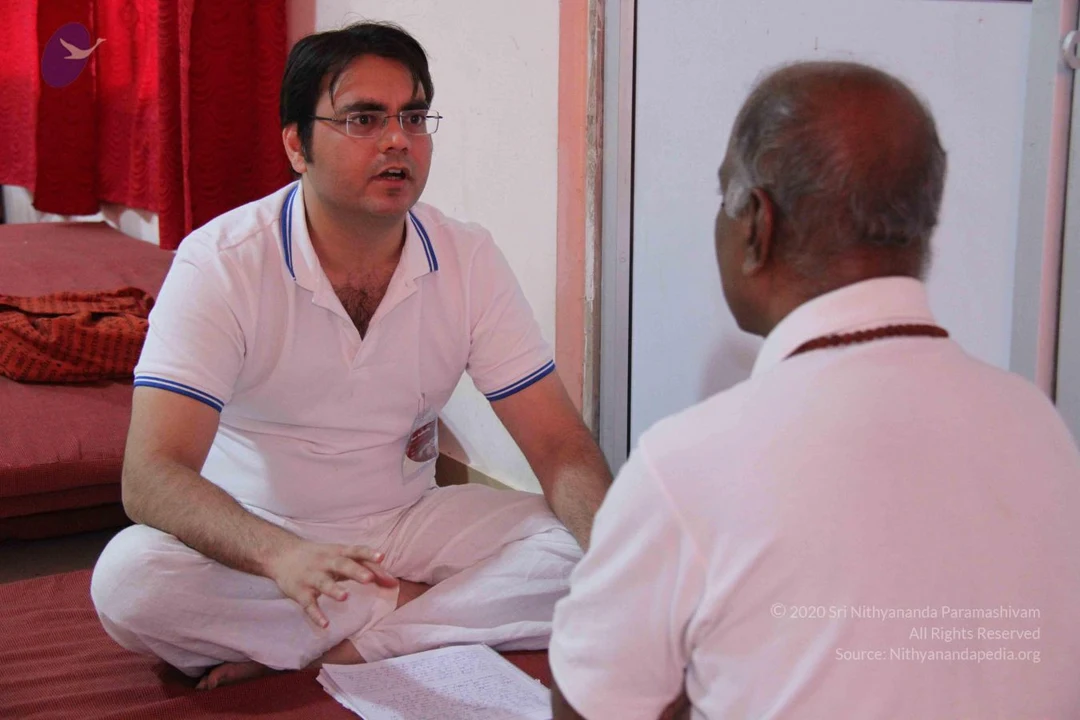
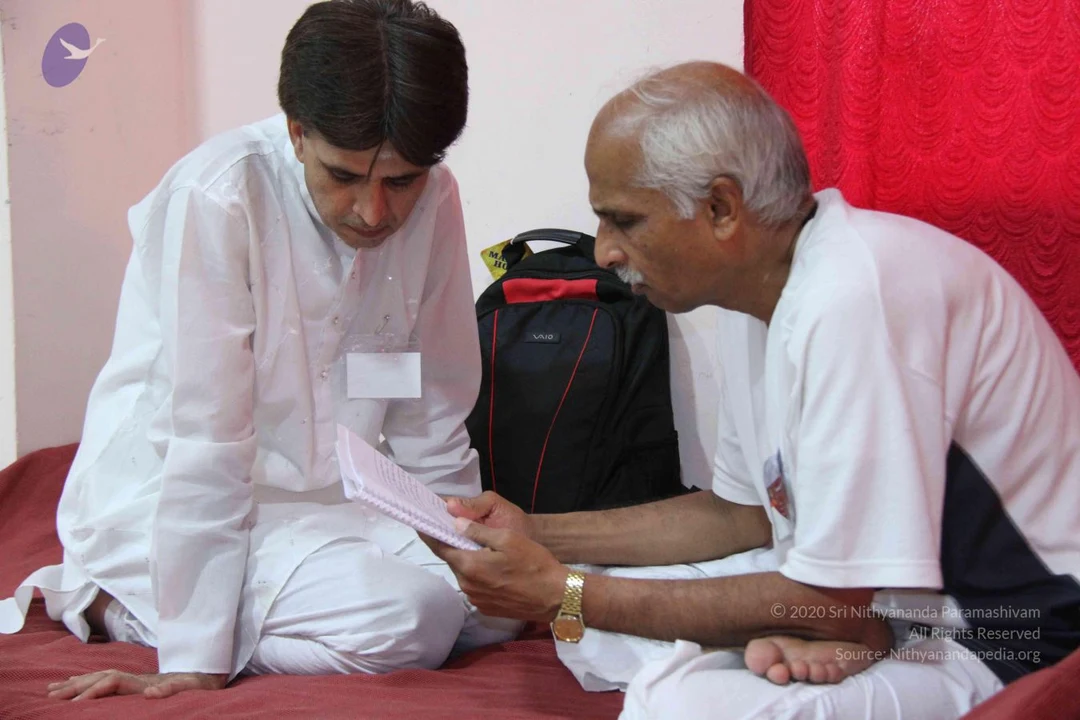
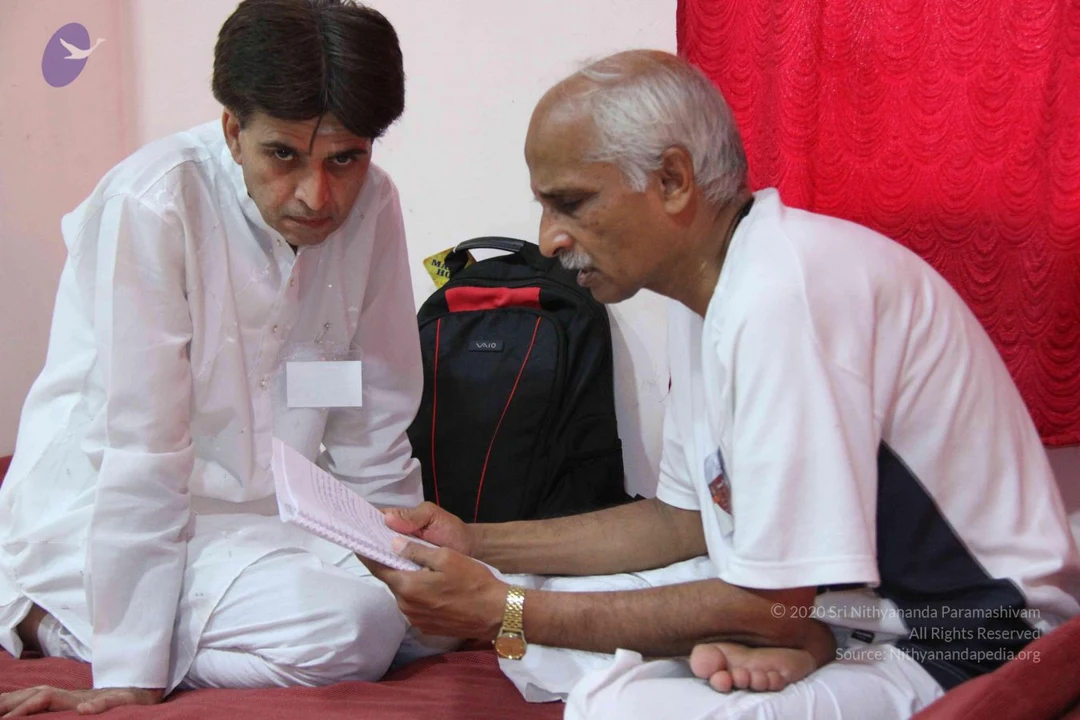
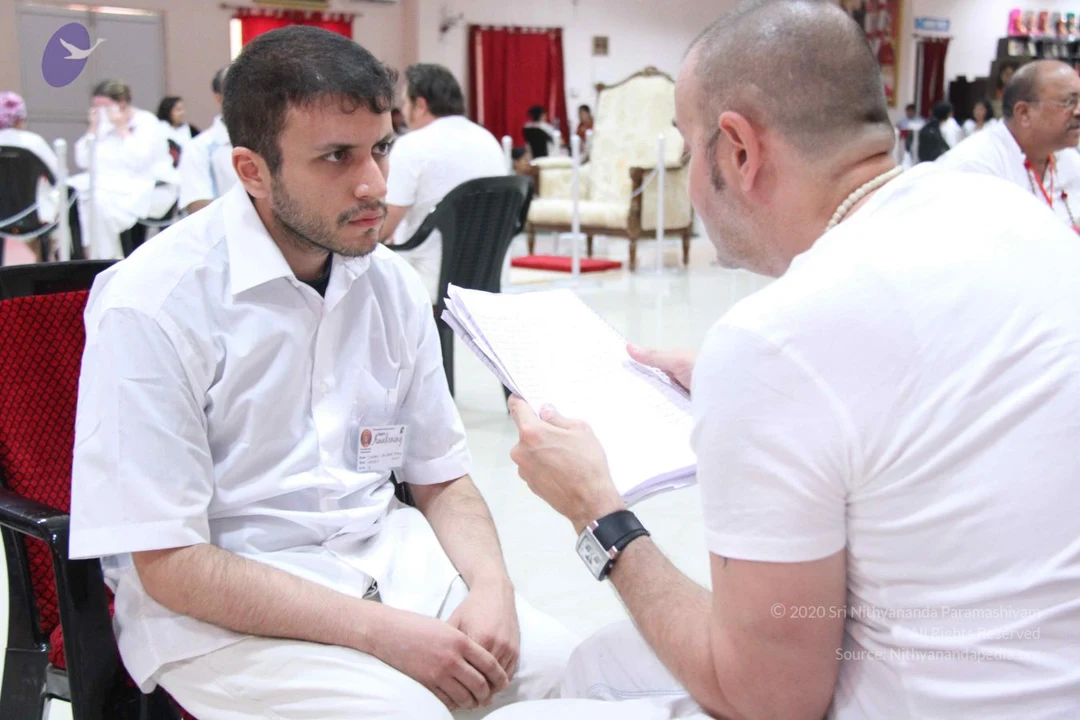
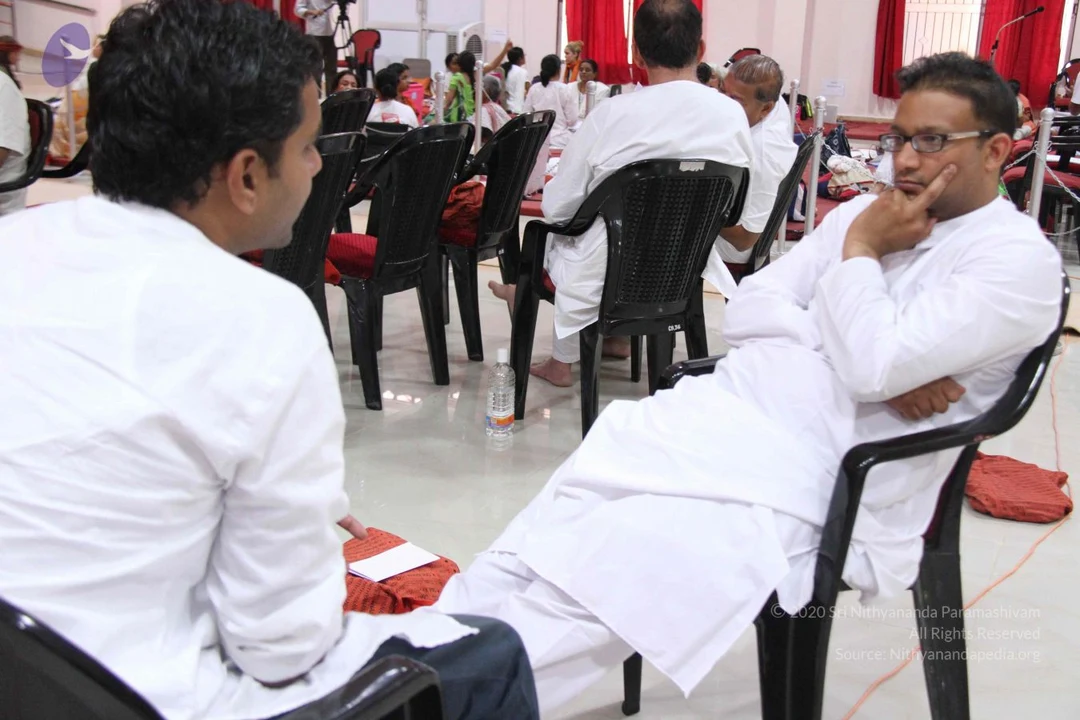
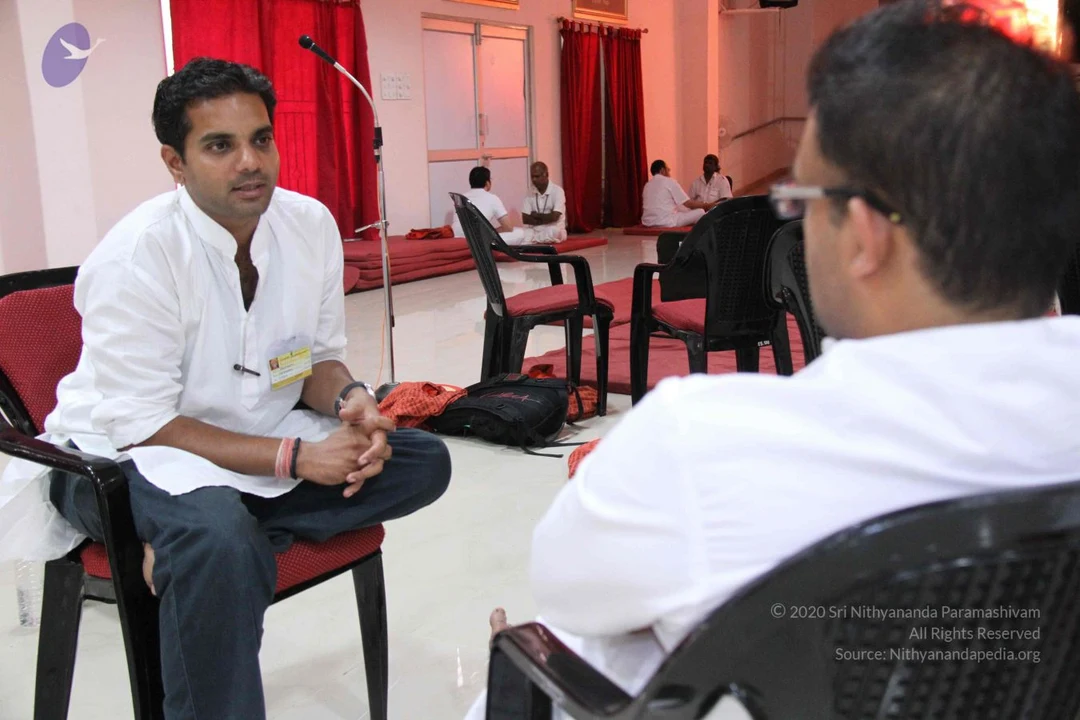
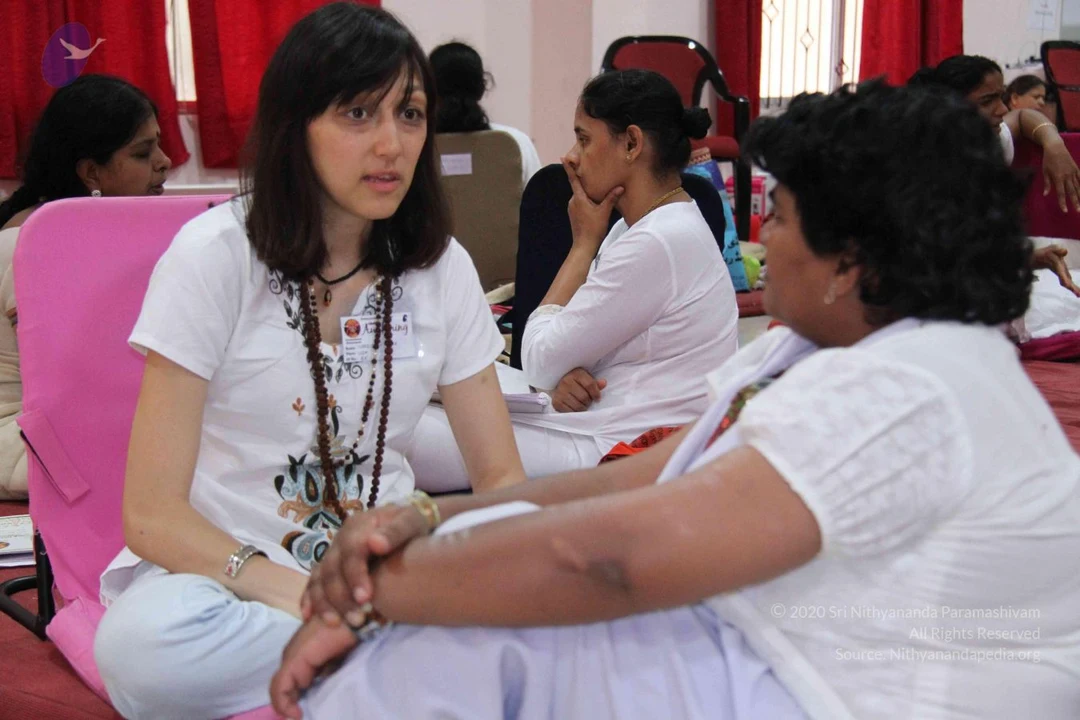
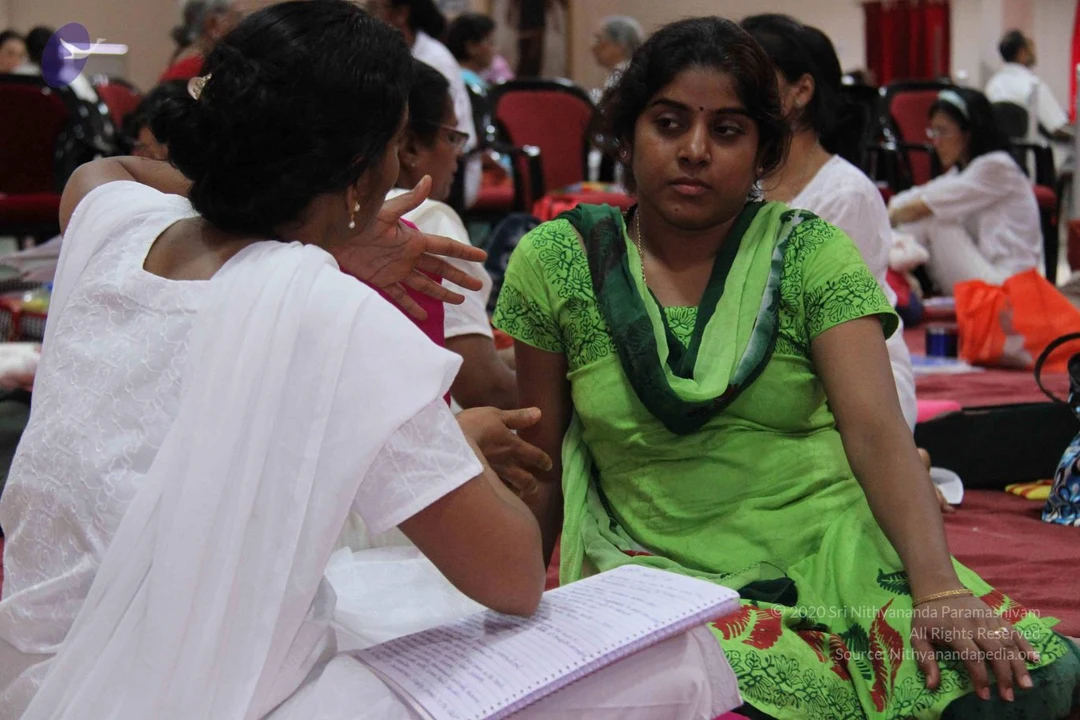
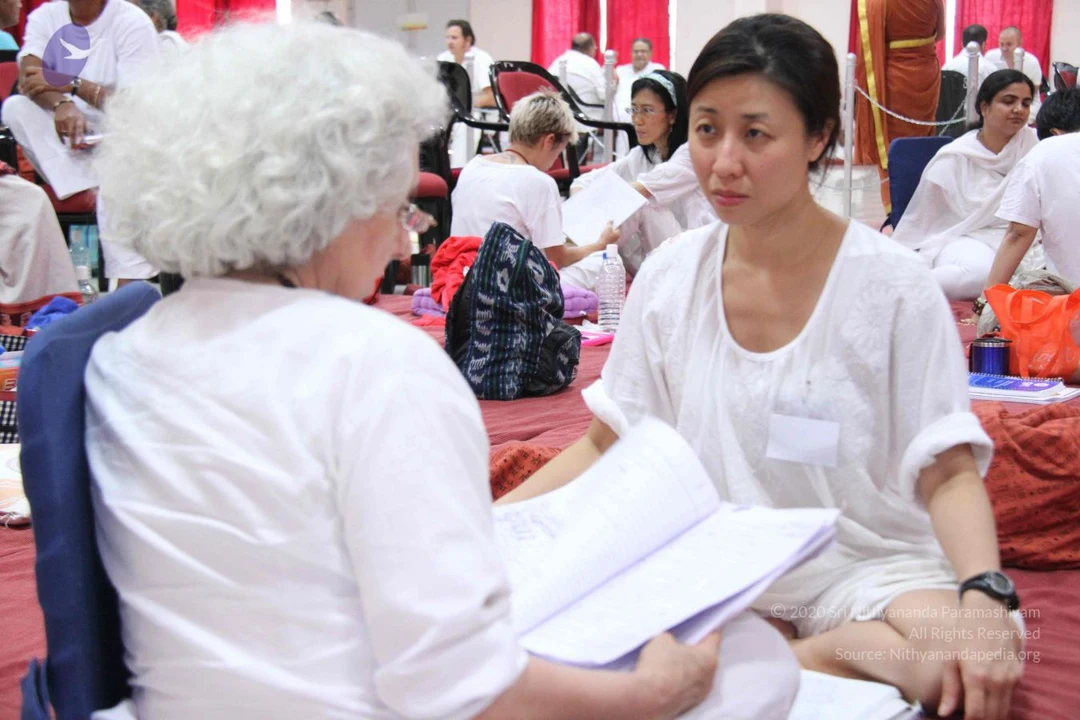
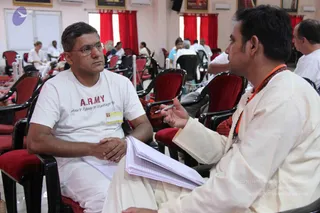
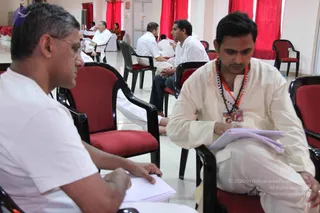
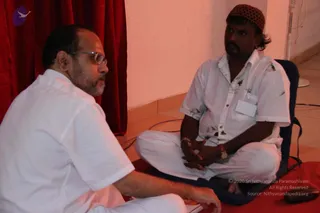
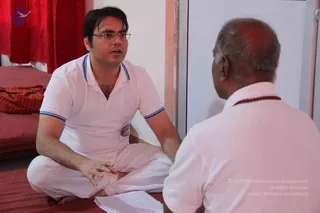
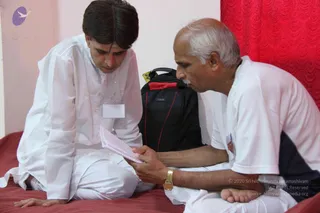
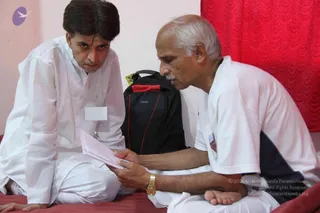
Indoor photo in a hall with red upholstered chairs and red curtains, where two men sit in close conversation. The man on the left wears glasses and a white T-shirt printed with the words "A.R.M.Y" and "Aren't Ready for Marriage Yet", with a yellow name badge, hands clasped and looking to the side. The man on the right wears a cream kurta, a saffron-orange shawl with a rudraksha-style bead mala, and holds a pen and a stack of white papers while gesturing. Several other seated people in white clothes are visible in the background among rows of chairs. No one in the scene is clearly identifiable as a person from appearance.A photograph of a seated group in a hall with red-cushioned chairs and red curtains. In the foreground, a man in a white t-shirt and glasses looks down at papers on his lap. Beside him, a man in cream-white kurta with a rudraksha mala and an orange lanyard with an ID badge reads a stack of white papers. Other people in white clothing sit in the background, some holding papers. A small logo appears in the upper left corner.Photograph of two men seated on a red mat in a plain room with pink-tinted walls and a red curtain behind them. The man on the left, wearing rimmed glasses and a white shirt and white trousers, sits cross-legged facing right and gestures with his hands. The man on the right wears a brown knitted cap, a white short-sleeved shirt with a visible ID badge, white trousers, a wristwatch and a red-thread bracelet, and sits on a dark blue cushioned chair with his hands clasped, listening.A photograph of two men seated on a red mat in a room with red curtains and a red cushioned bed. The man on the left, with short dark hair and glasses, wears a white polo shirt with blue trim and white pants, sitting cross-legged and gesturing as he speaks. The man on the right, seen from behind with a bald grey head, wears a white shirt and a rudraksha mala, and holds a sheet of paper. A small logo appears in the top left corner. The setting appears to be an informal one-on-one conversation.Two men sit close together on a red cloth-covered floor against a pale pink wall with a red curtain at right. The man at left wears a plain white kurta and dhoti and has straight dark hair; he looks down at a small pink notebook held by the older man at right. The older man has white hair and a white moustache, wears a white t-shirt with a dark navy panel, and a gold wristwatch. A black Vaio backpack with red trim sits between them. A name tag is visible on the left man's chest.Two men sit close together on a red cushioned surface in front of a red draped curtain. The man on the left wears a white kurta and white trousers with a blank name badge on his chest and looks down intently. The older man on the right, with short white hair and a white t-shirt with a dark trim, holds a sheet of printed paper and reads it, his gold wristwatch visible. A black backpack with red trim sits between them against a pale wall. The scene looks like a quiet discussion over a document.

Temple

21 photosSource gallery
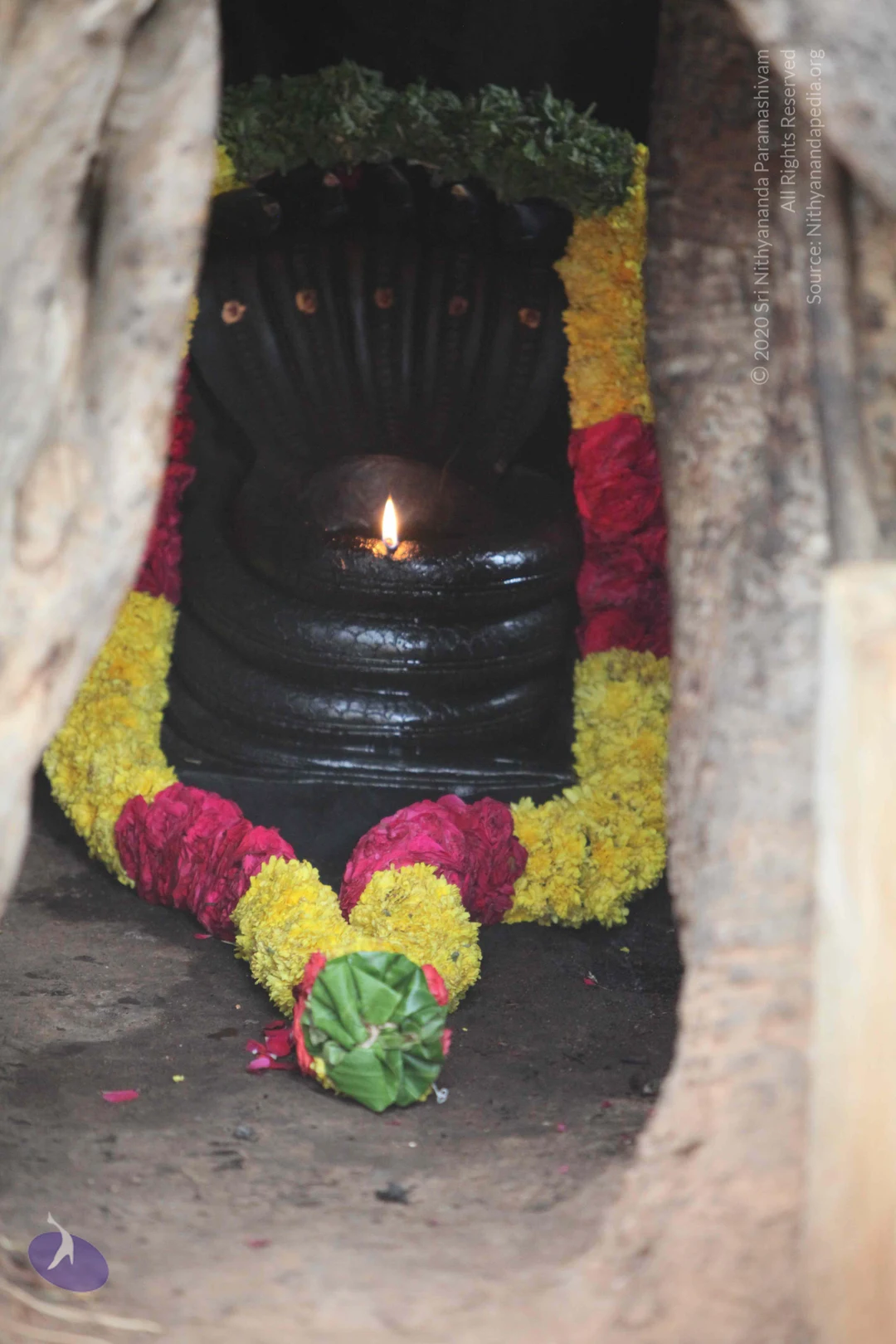
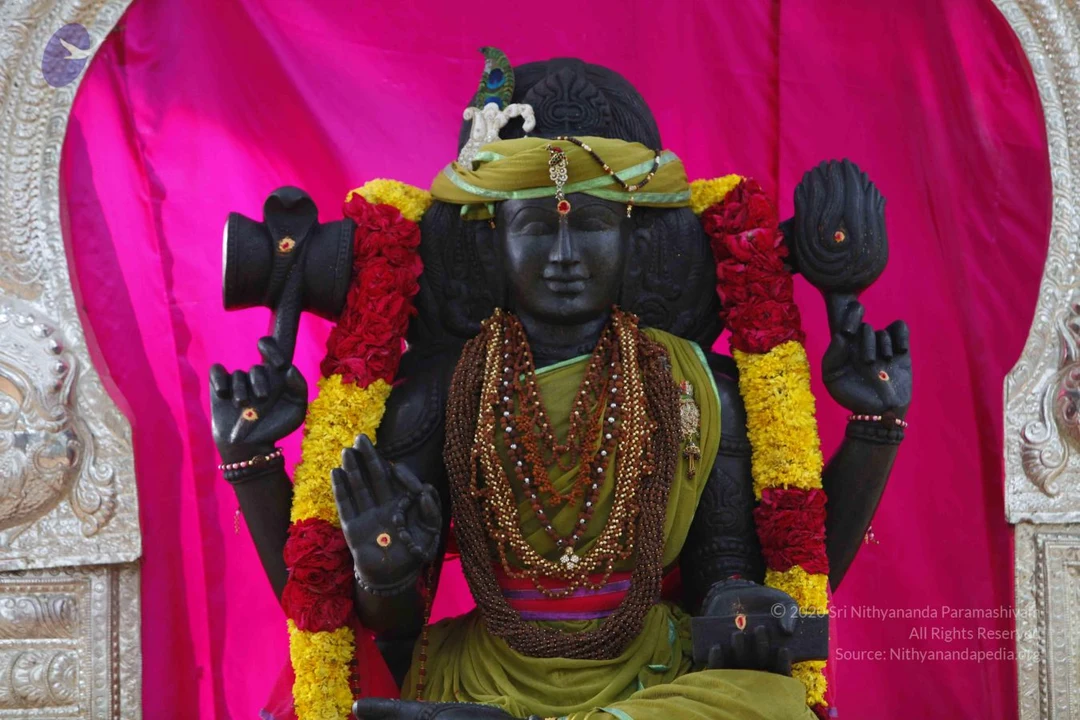
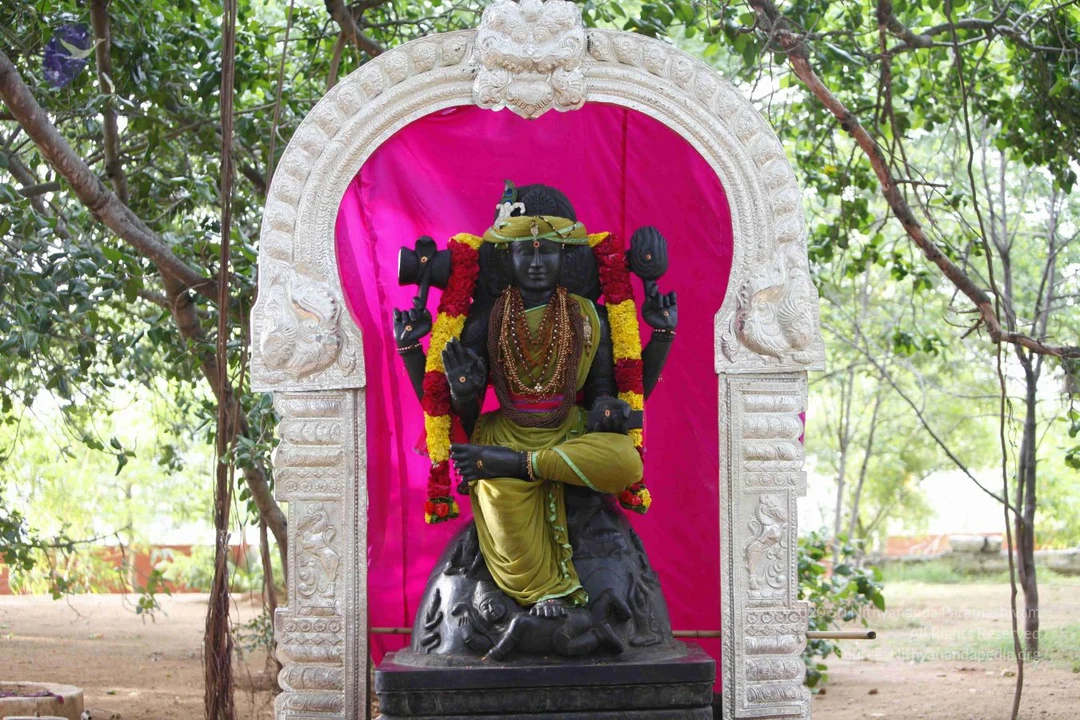
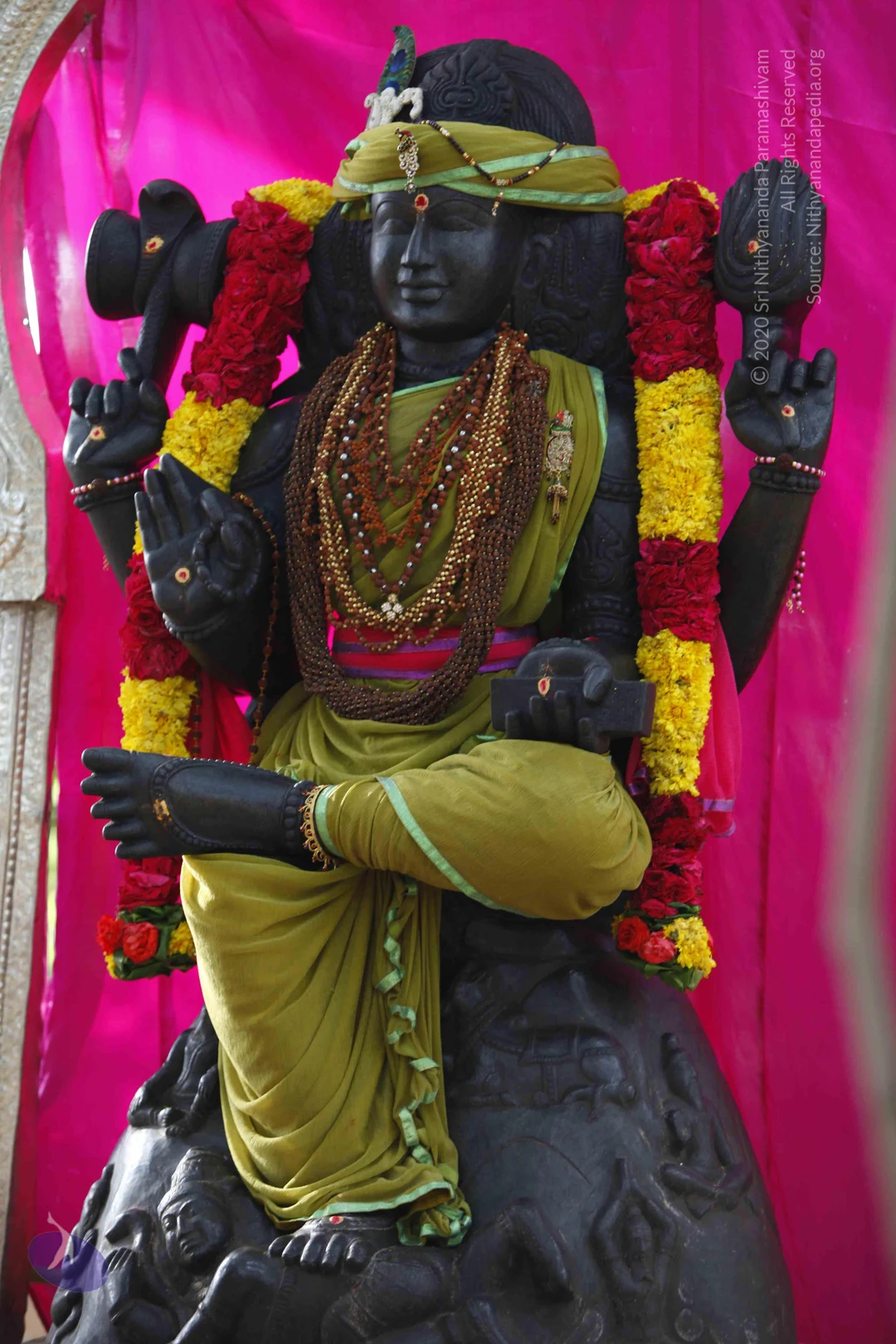
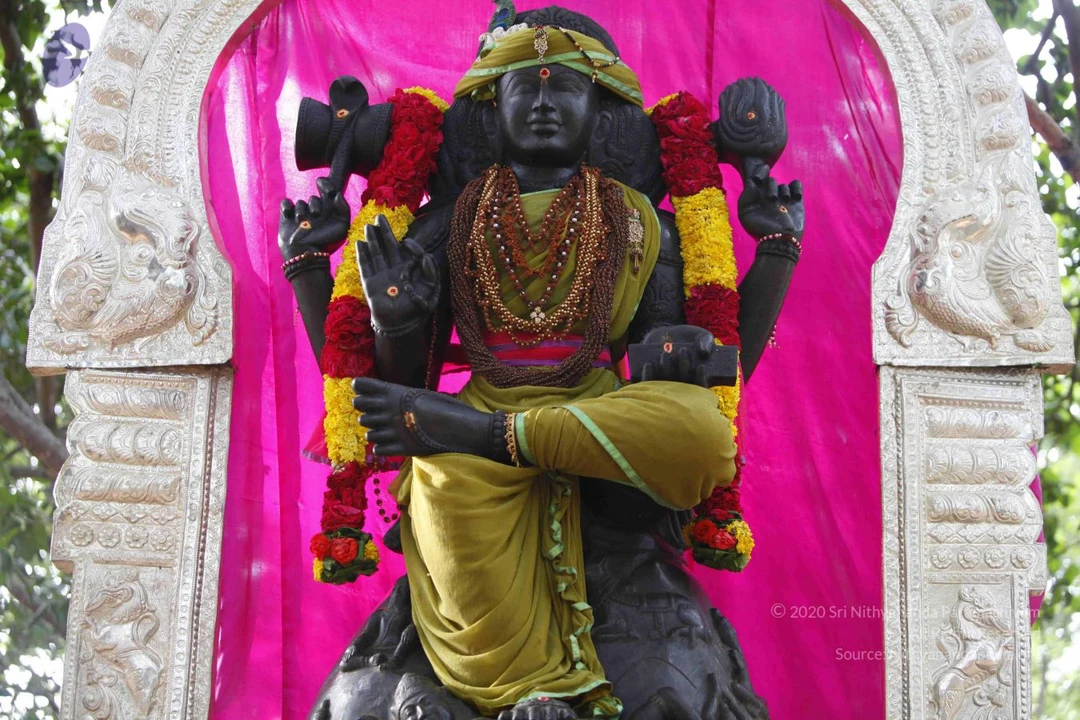
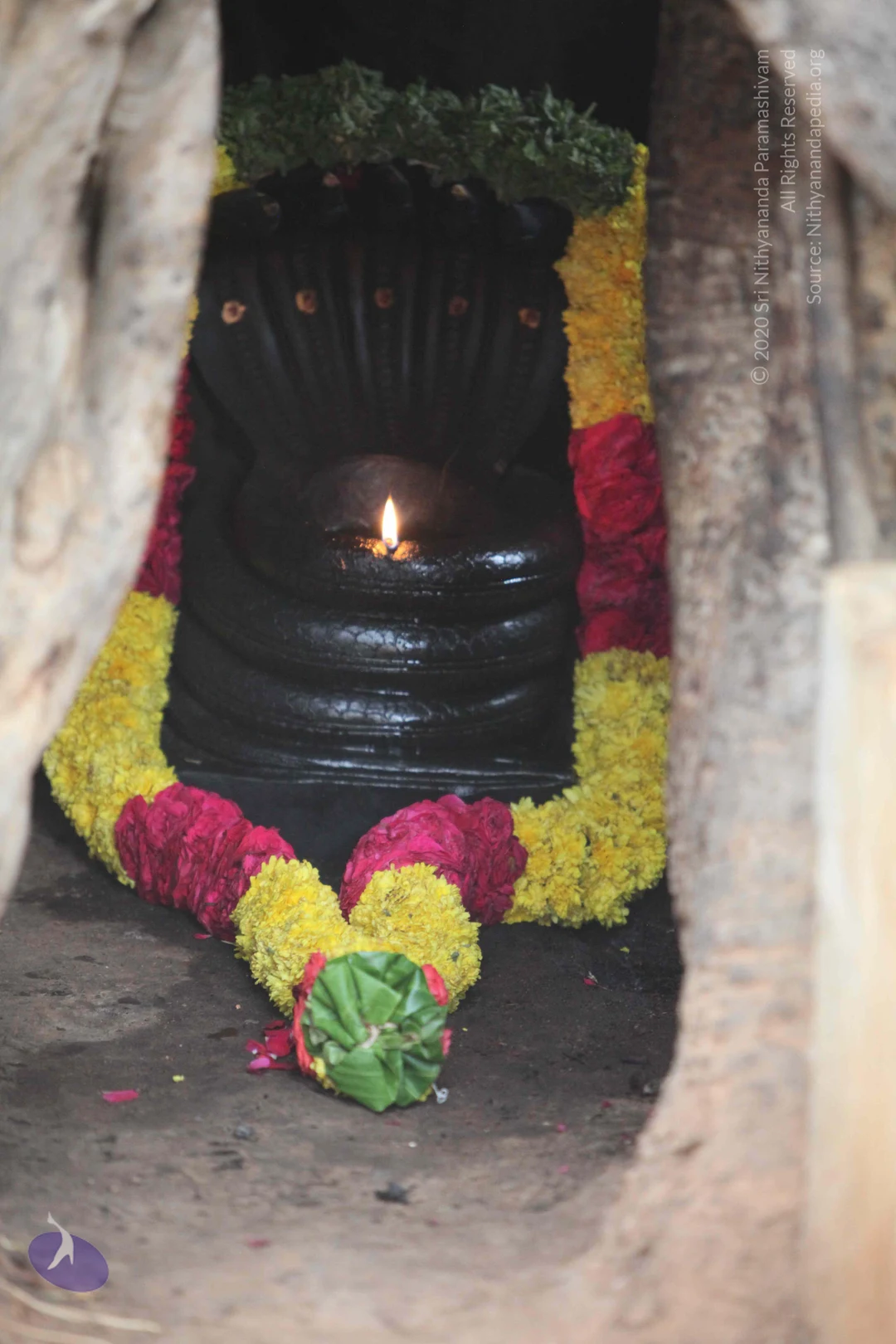
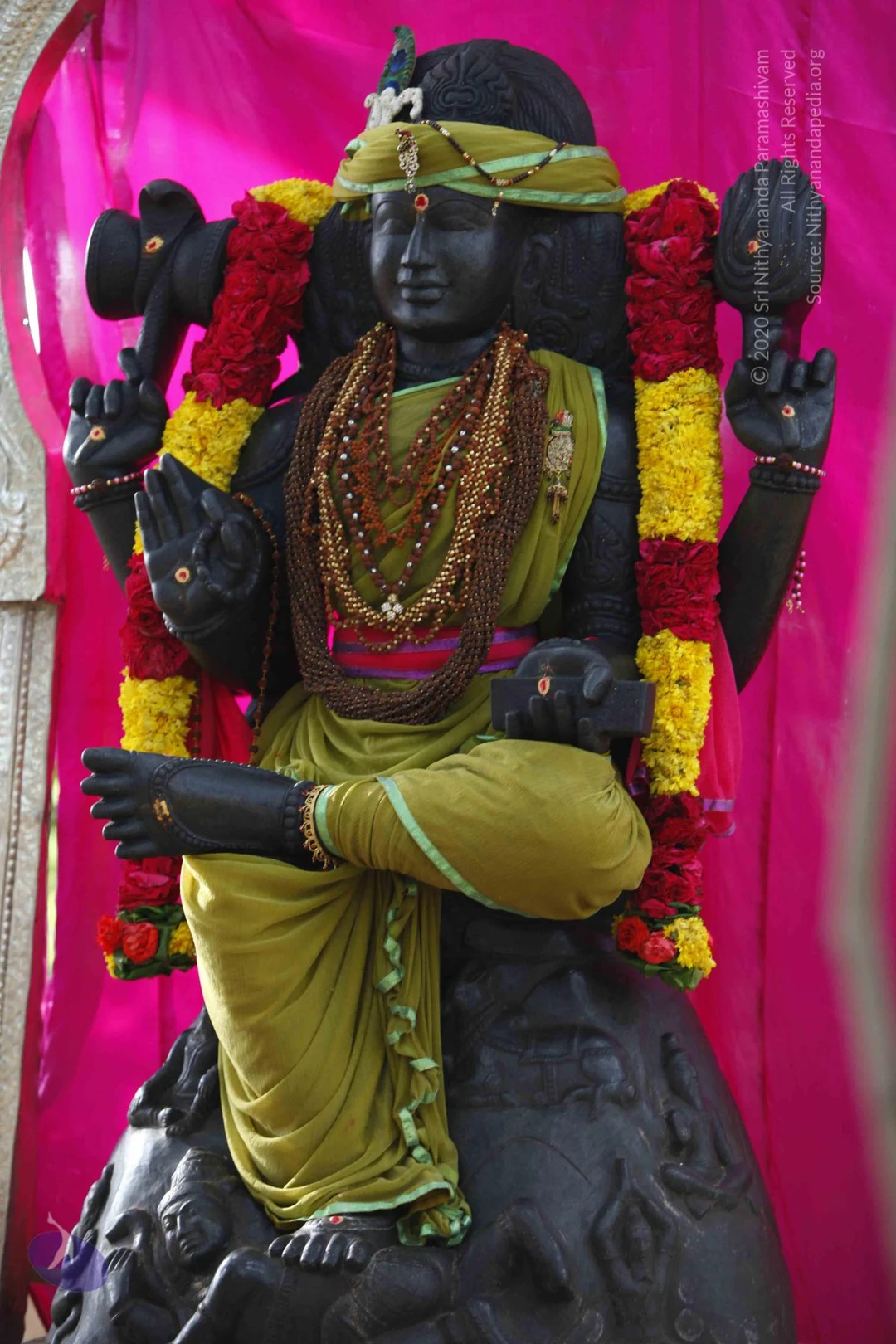
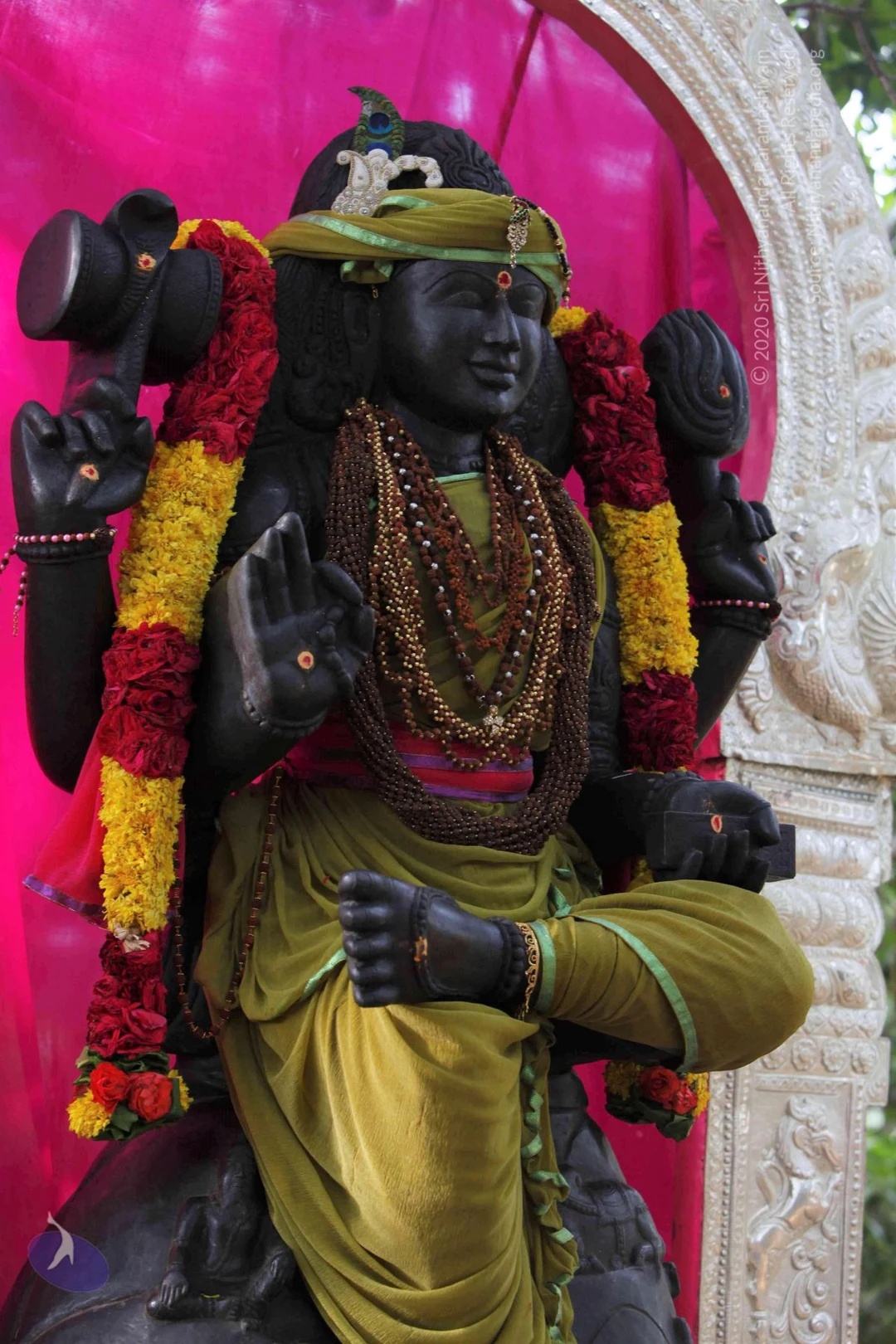
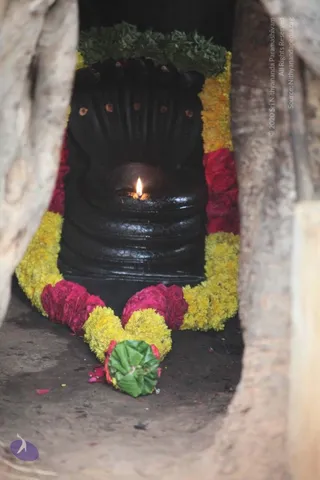
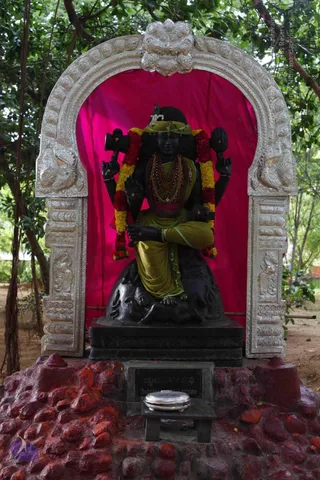
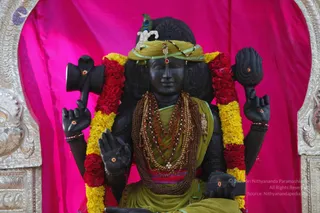
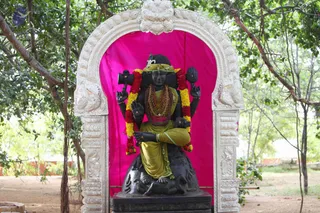
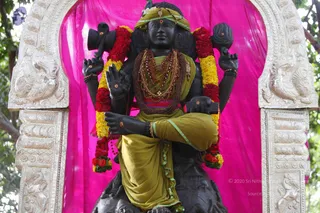
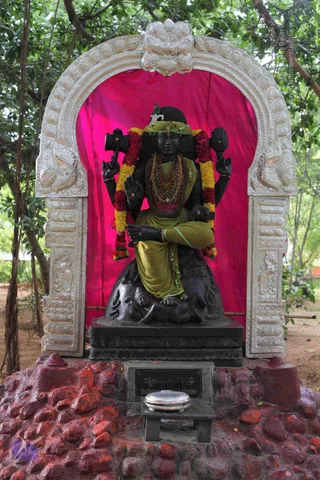
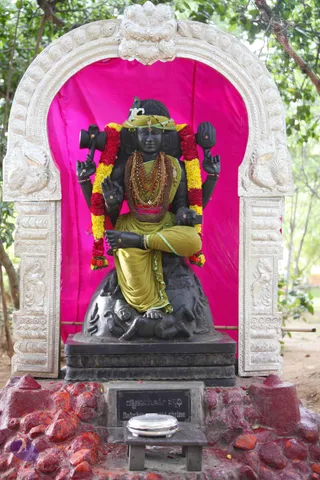
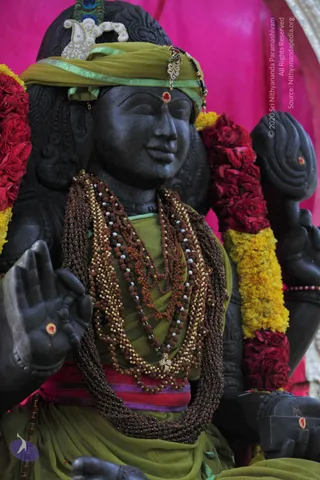
A black stone Nagaraja-style snake-hooded lingam shrine, the hood carved with raised hoods and small red dots, sits within a rustic wooden niche. A single oil lamp burns on a coconut-shaped base at its center. The shrine is garlanded with yellow marigold and red rose garlands, with a green leaf-wrapped bundle placed at the base on a dirt floor with scattered petals. No people are visible. The photo is a close view of this roadside or village shrine.A temple shrine photograph showing two large painted deity murtis seated side by side within a gilded arch against a red cloth backdrop. The taller figure on the left holds a trident-like staff and a small object in raised hands and wears a red crown and jewelled necklaces; the figure on the right wears a tall ornate crown, orange garments and a rudraksha-style necklace, with a garland of yellow and red flowers draped over both. Between them sits a silver kalasha-like pot and offerings with marigold garlands. Stone pillars with carved reliefs frame the shrine, and small lamps and a standing figure with a flower garland appear at the sides. No people are visible.A temple shrine with large painted deity murtis of a crowned male and female pair seated side by side on a raised platform, garlanded with yellow and orange marigold strands, one holding a trident-like staff and a drum. Before them stand brass oil lamps, a silver-toned offering set, a tray of food, and a small seated deity figure decorated with flowers. A flanking alcove holds a blue-curtained figure with a garland. A woman in a peach and orange sari kneels at the lower right of the platform. Grey carved stone pillars frame the shrine, with red drapes at the sides.A black stone murti of a four-armed deity seated on a dark pedestal, draped in a green cloth with a garland of red and yellow flowers. The figure wears layered beaded necklaces and a green headband with an ornament. It is set within an ornate silver-coloured arch against a magenta backdrop, under trees outdoors. A silver offering dish sits on a small stool before a red-painted stone base. A plaque on the base carries Kannada script. No people are visible.A black stone deity murti, seated in a meditative pose, with four arms and a peacock feather crest on its head. It wears a green draped cloth and a green-and-blue head wrap with a jewelled ornament, multiple strands of gold and beaded necklaces, and garlands of yellow marigolds and red roses. Its hands hold a drum and other ritual objects, and a bright pink backdrop frames it within an ornate silver arch. This is a statue, not a living person.A black stone murti of a multi-armed deity seated in a lotus-like cross-legged pose before a magenta cloth backdrop, set within an ornate white carved stone arch under trees. The figure wears a green-yellow dhoti, layered rudraksha malas, a green and gold headband, and is garlanded with red and yellow flower garlands. Several hands hold ritual objects, and the figure rests on a dark pedestal carved with small animal figures. Outdoors, ground and foliage surround the shrine.

Deity-Darshan

17 photosSource gallery
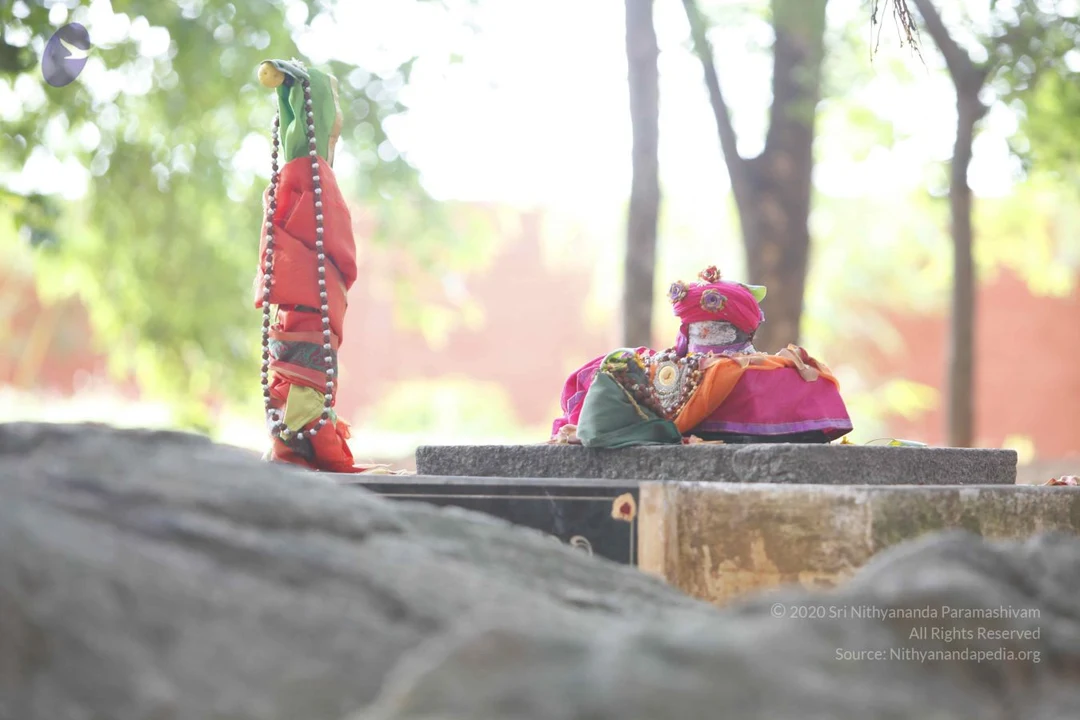
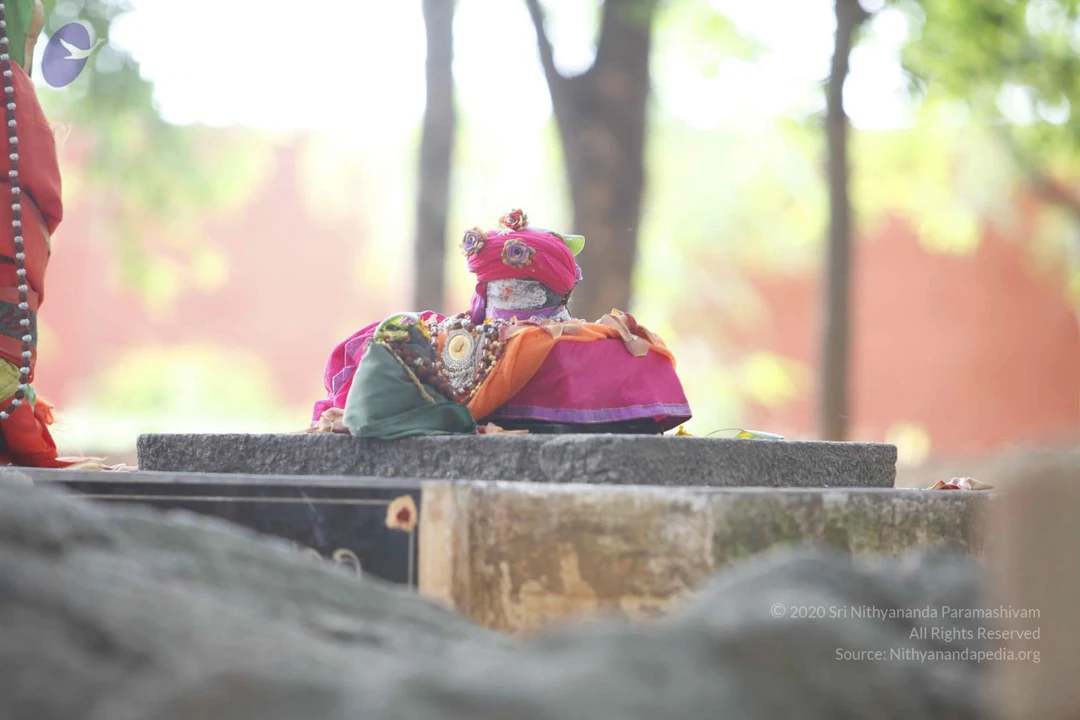
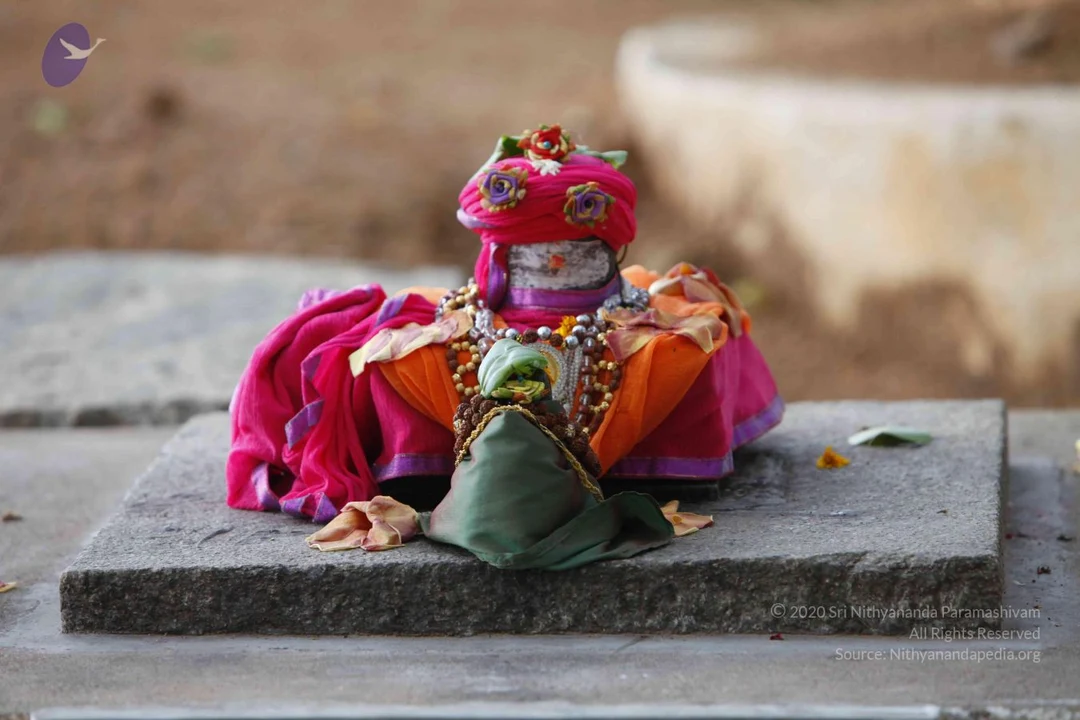
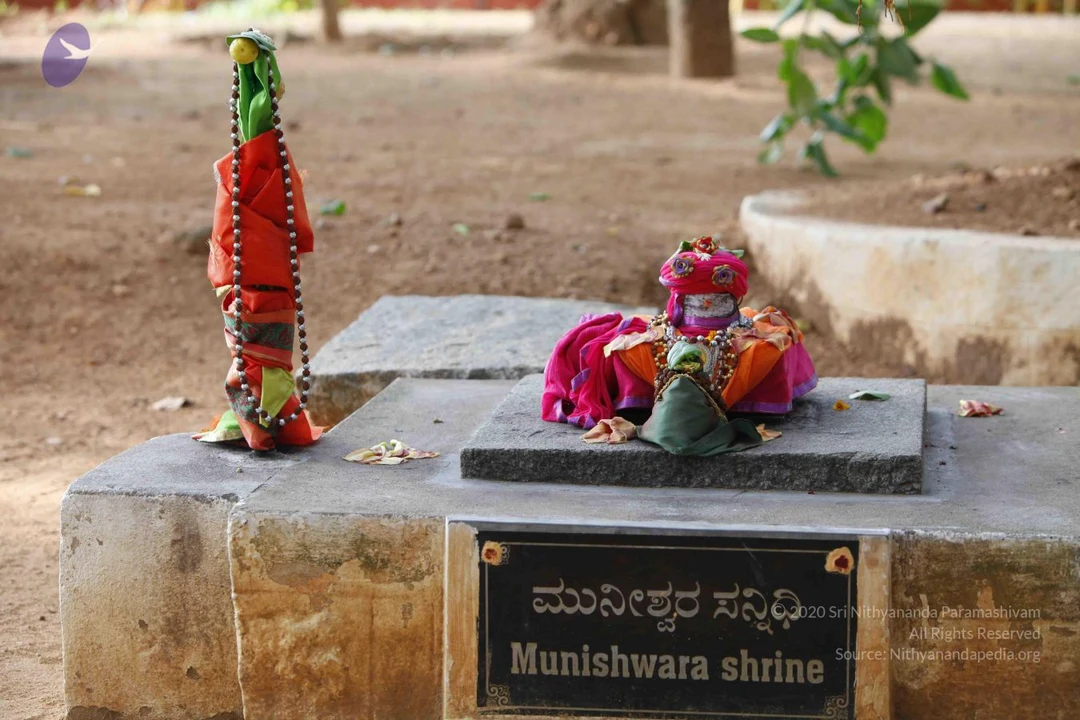
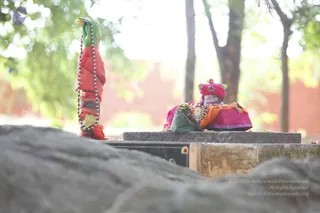
A temple shrine photograph showing two large painted deity murtis seated side by side within a gilded arch against a red cloth backdrop. The taller figure on the left holds a trident-like staff and a small object in raised hands and wears a red crown and jewelled necklaces; the figure on the right wears a tall ornate crown, orange garments and a rudraksha-style necklace, with a garland of yellow and red flowers draped over both. Between them sits a silver kalasha-like pot and offerings with marigold garlands. Stone pillars with carved reliefs frame the shrine, and small lamps and a standing figure with a flower garland appear at the sides. No people are visible.A temple shrine with large painted deity murtis of a crowned male and female pair seated side by side on a raised platform, garlanded with yellow and orange marigold strands, one holding a trident-like staff and a drum. Before them stand brass oil lamps, a silver-toned offering set, a tray of food, and a small seated deity figure decorated with flowers. A flanking alcove holds a blue-curtained figure with a garland. A woman in a peach and orange sari kneels at the lower right of the platform. Grey carved stone pillars frame the shrine, with red drapes at the sides.A black stone deity murti, seated in a meditative pose, with four arms and a peacock feather crest on its head. It wears a green draped cloth and a green-and-blue head wrap with a jewelled ornament, multiple strands of gold and beaded necklaces, and garlands of yellow marigolds and red roses. Its hands hold a drum and other ritual objects, and a bright pink backdrop frames it within an ornate silver arch. This is a statue, not a living person.A black stone murti of a multi-armed deity seated in a lotus-like cross-legged pose before a magenta cloth backdrop, set within an ornate white carved stone arch under trees. The figure wears a green-yellow dhoti, layered rudraksha malas, a green and gold headband, and is garlanded with red and yellow flower garlands. Several hands hold ritual objects, and the figure rests on a dark pedestal carved with small animal figures. Outdoors, ground and foliage surround the shrine.A black stone deity murti seated in a silver-framed arched niche against a hot pink cloth backdrop with trees behind. The figure has multiple arms holding a drum-like object and other ritual items, wears a yellow-green dhoti, a turban-like headcloth, layered rudraksha-style and beaded necklaces, and is draped in red and yellow marigold and rose garlands. No physical people are present.Outdoor photo of two small cloth-wrapped figures set on a grey stone ledge in a shaded garden with trees and a red wall behind. The figure on the left is wrapped in red and green cloth with a strung rudraksha-style bead mala draped down its length. The figure on the right wears a pink and orange wrap, a magenta turban decorated with flowers, and a green cloth beneath, with a bead mala across its chest. Foreground is a blurred grey rock. No physical people are visible.

Leela-Alankar

2 photosSource gallery
Photograph of two gilded deity murti (metal or resin figures) seated side by side under an arch of garlands of red roses, white jasmine, yellow marigolds and green leaves. The figure on the left wears a red and gold turban, a pink dhoti, a bead and gem necklace, and holds a golden kalasha pot in one raised hand. The figure on the right wears a black crown with white flower decoration, a red and gold sari, layered pearl and emerald necklaces, and holds a golden conch shell. A brass vessel of rice stands in the foreground. No physical people are visible.Two golden deity murtis stand side by side on a red and orange draped backdrop, framed by a great arch of garlands in bands of red, white, yellow, green and magenta flowers. The figure on the left wears a red turban, a pink dhoti, a multi-strand bead necklace with a large blue stone, and holds a golden pot in one hand. The figure on the right wears a black and gold crown, a rudraksha-style necklace, and a green-stoned pendant, holding a golden object. A brass vessel filled with rice sits in front on a gold-coloured stand. The scene is a decorated temple-style shrine display with deity murti, flower decoration and offerings.

Pratyaksha-Pada-Puja-Garbha-Mandir

36 photosSource gallery
A screen shows a live video link titled "Sowmya - Mysore" in bold white text on a dark banner, displaying a domestic living room with red leather armchairs and a red patterned rug. Five people sit and listen: a woman in a red and beige sari sits in an armchair at the back, a man in a beige kurta sits cross-legged on the rug, a woman in a purple top sits with her hands clasped, a man in a striped shirt sits on the right, and a man in a red shawl sits at the left edge. A brass or fruit plate sits on the floor. The picture is a video-link feed of a satsang, with no a person candidate visible.A screen in a dark room shows a grid of live video feeds from multiple satsang centres, each labelled with a location banner such as Guadeloupe Kameshwaram, Ohio Prayag, Charlotte Srisailam, Kulim Thiruthani, Seattle Chidambaram, Los Angeles Arunachala, Oman Sivagangai and Sri Lanka Chidambaram. Participants in white and saffron clothing sit on mats before shrines, with deity murti, kalasha vessels, oil lamps and floral decorations visible. One feed shows a man seated at a small altar in a white shirt. Several rows of people sit in a hall in Kulim. The screen shows the group satsang as it is broadcast.Overhead photo of a ritual puja arrangement on a gold-patterned tray. Bare feet of a person are visible at the top edge, standing behind the offerings. Central gold plate holds pink roses, red flowers and white blossoms with two small gold vessels. Surrounding silver plates and bowls hold red and white flowers, orange turmeric or saffron liquid, and pink-and-yellow orchid-like blooms on silver cups. Silver and gold ritual vessels fill the frame. Only feet are visible, so one partially visible person.Close-up photograph of a large pink flower with yellow petal centres and green leaves, resting on a polished silver tray. Beside it stands a silver bowl filled with amber-yellow liquid, and white and red flower petals are scattered around the tray on a golden surface. No people are visible; the image shows a puja offering arrangement of flowers and a bowl of liquid.Close overhead photo of a silver puja tray on a silver-grey textured cloth. At centre is a small silver bowl heaped with white flowers edged in pink. To the left are red star-shaped flowers and a silver bowl; to the right are two engraved silver bowls, one holding an amber liquid. No people are visible.Close view of a padapuja-style offering: a bare foot rests on a gold tray decorated with pink roses, white jasmine-type flowers and red petals arranged in a ring. Two small gold cups with red gem accents sit on the tray, surrounded by a gold-toned metal plate. Only the foot of one person is visible, so no face or clothing shows.

Satsang

11 photosSource gallery
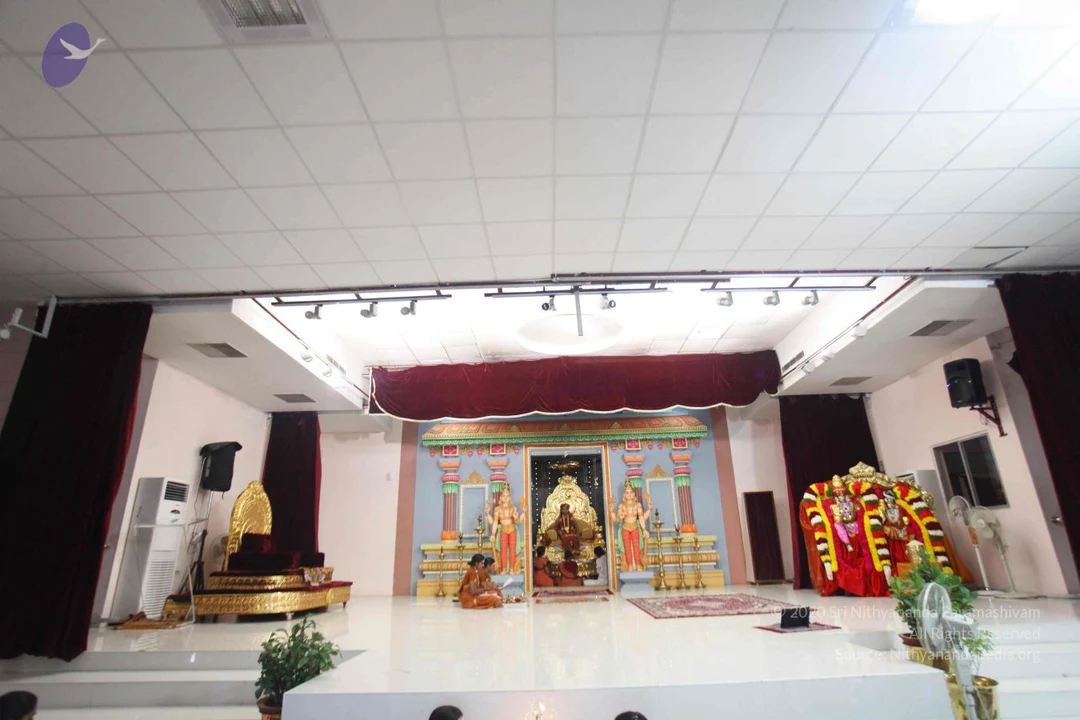
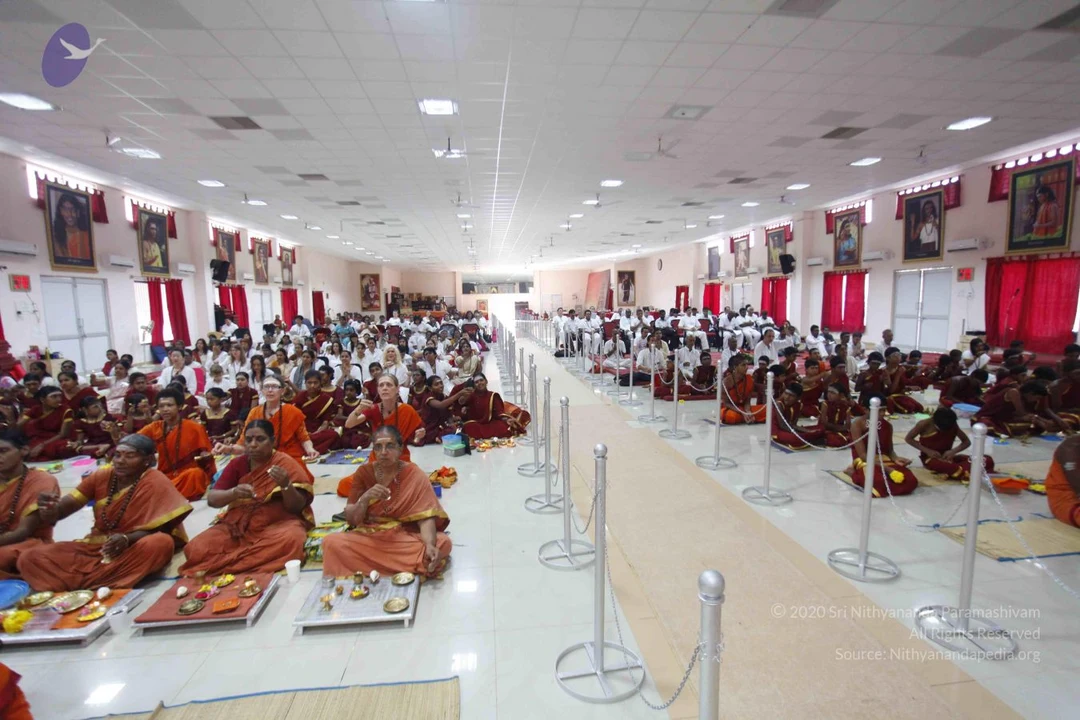
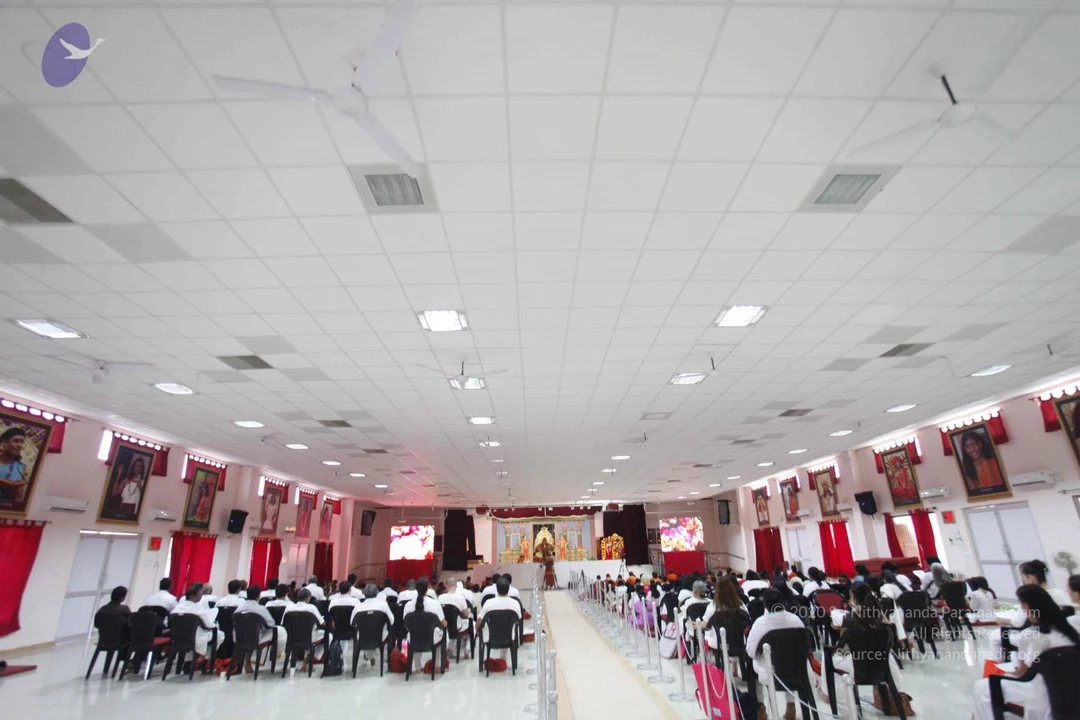
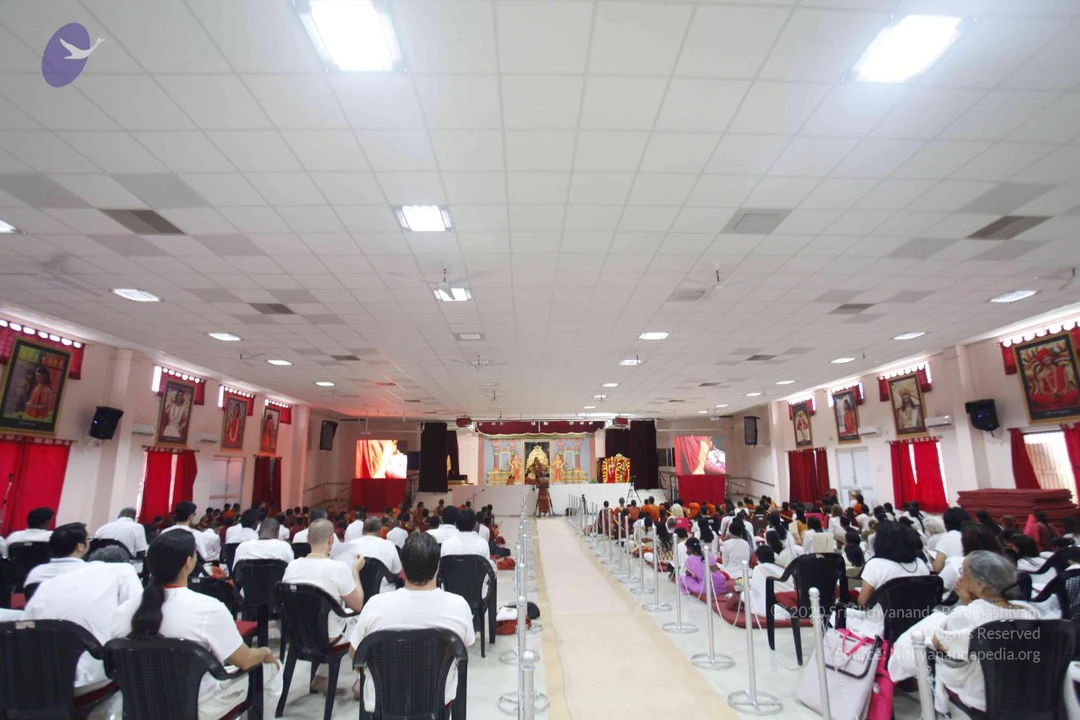
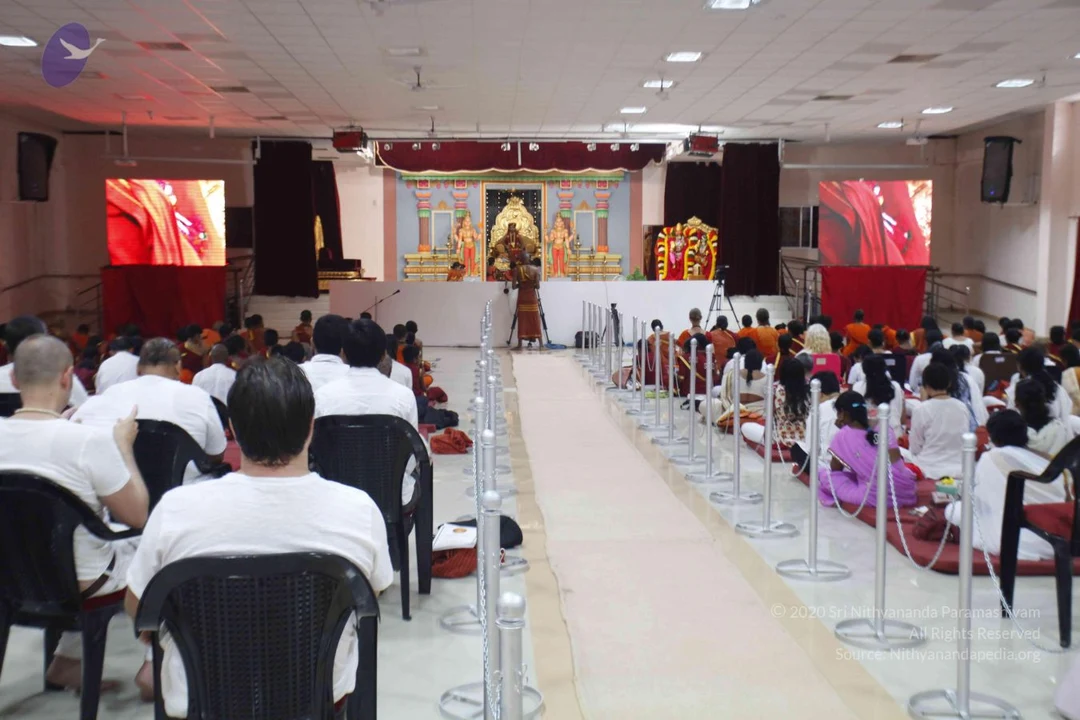
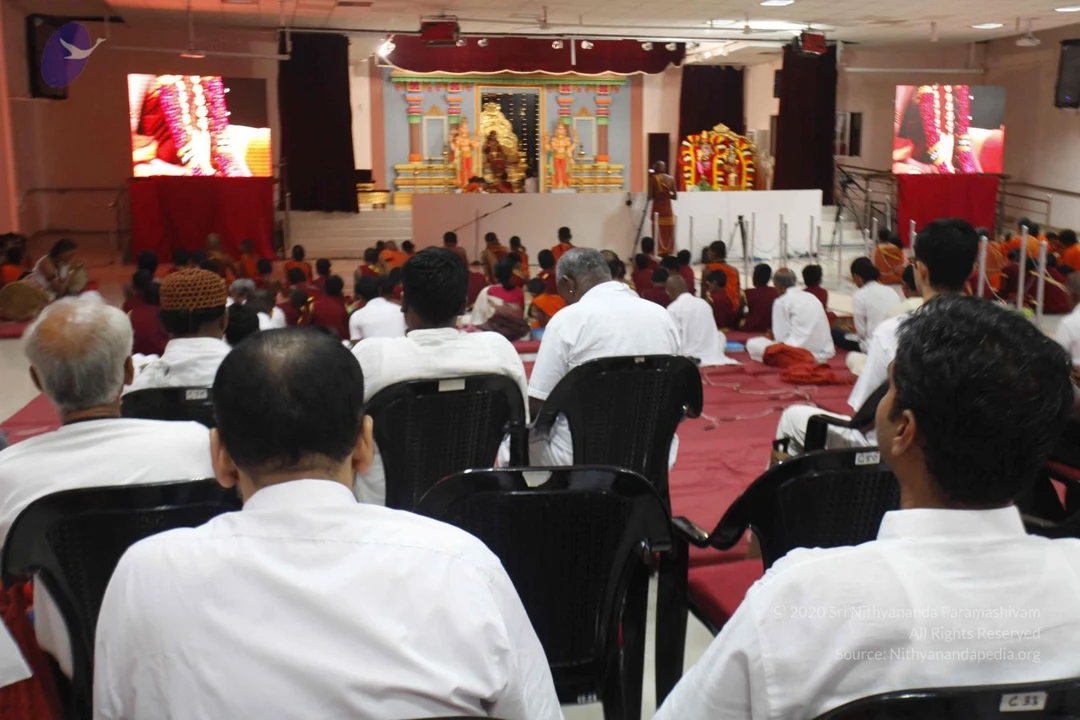
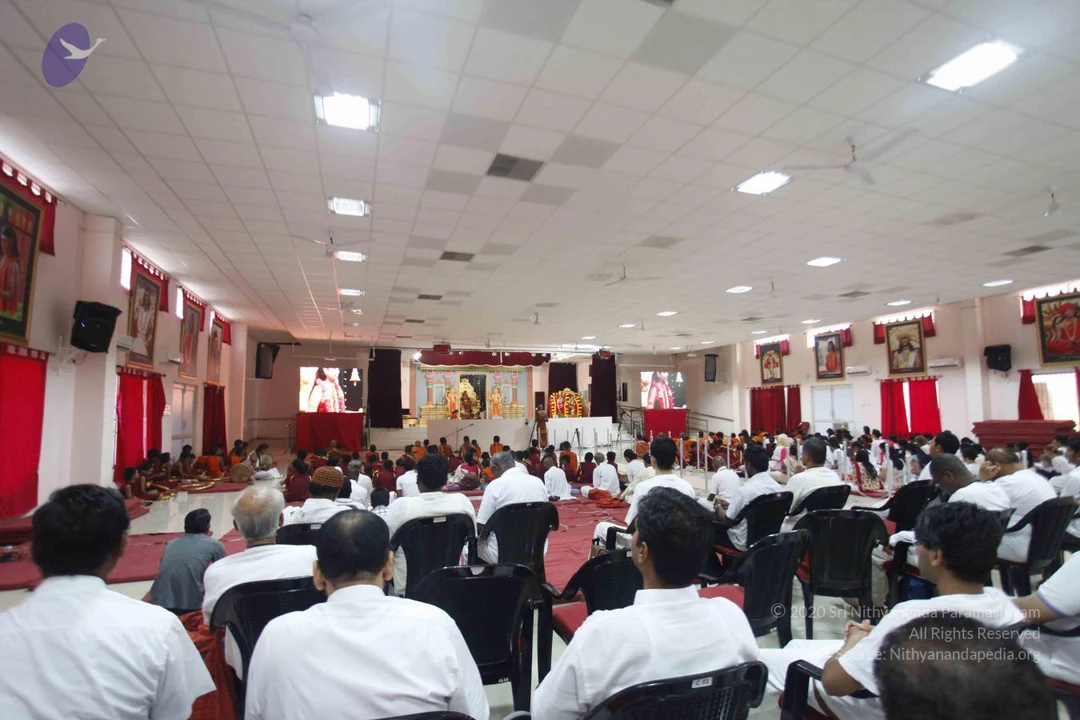
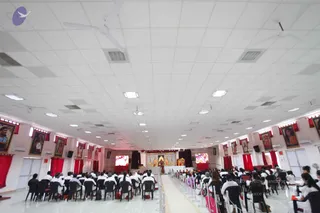
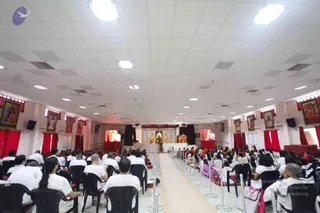
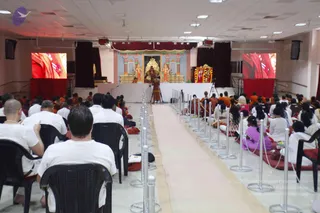
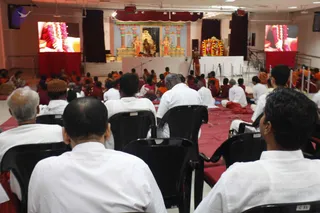
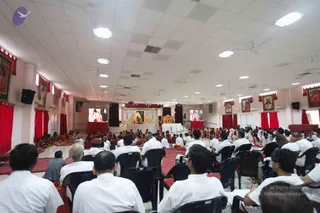
Wide photograph of a large white-ceilinged hall during a satsang. Rows of seated devotees, many in white clothes, face a stage at the far end framed by red curtains and red drapery. Several framed portraits hang on the side walls with red valances. Ceiling fans and recessed lights are visible. A small group of figures stands near the stage, but their appearance is too indistinct to tell whether any is a person candidate. Large screens flank the stage. An audience of roughly several dozen people is visible, with some seated near the front and many toward the back.A wide view of a large hall filled with seated devotees in white clothes, facing a raised stage at the far end. Many attendees sit on black plastic chairs in rows, with a central aisle lined with stanchions and a runner carpet. Red curtains and framed religious pictures line the walls, and two large screens show the stage. On stage, a deity murti and a decorated backdrop stand with floral arrangements, and a presenter appears near the centre. A small number of people wear saffron and colourful saris.A photograph of a large hall with rows of seated devotees in white clothes facing a stage at the far end. On the stage a standing figure in orange and saffron robes stands before an ornate golden throne-like peetha and a decorated deity shrine flanked by painted pillars with figures. Many attendees wear white, some in orange, and a woman in a purple sari sits near the aisle. Metal stanchions with a cream carpet runner lead toward the stage. Large red-screen displays flank the stage, and two black speakers hang high on the walls.A satsang hall viewed from behind the audience. Rows of seated devotees in white shirts and dhotis, some in black chairs and others on red floor mats, face a stage at the front. On stage, a figure in saffron/orange robes sits near a central golden deity shrine flanked by golden pillars and decorated arches, with a large floral garland arrangement at the right. Two screens on either side display close-up views of a figure draped in red and pink flower garlands. Some people in orange and maroon robes sit on the floor near the front. Red drapes and wall panels frame the hall.A large hall with white walls, a white tiled ceiling and red curtains hung along the sides. Many seated devotees in white clothing and some in saffron and orange fill the foreground, sitting on chairs and red floor mats, facing a stage at the far end. On the stage a figure in saffron-orange robes sits on a raised red seat beside an ornate shrine with deity murtis and a kalasha-style arrangement. Framed deity portraits hang on the side walls, and speakers and ceiling fans are visible. The scene suggests a satsang gathering in progress.A smiling man stands centrally with both palms raised outward in a blessing gesture, wearing an orange-saffron turban and a saffron-brown robe wrapped around the body. He wears a red garland with multicoloured tassels, a long rudraksha mala, a gold ceremonial pendant on a gold chain, gold bangles and gold earrings. Flanking him are two painted deity statues with golden crowns and ornaments, and behind him a golden throne backrest sits before a dark doorway strung with small lights. Swamiji (probable) appears as the central figure, identified by the saffron turban and robes, rudraksha mala, ceremonial gold necklace and garland cues, and the page's note that he is present at this satsang.

Sarva-Darshan

5 photosSource gallery
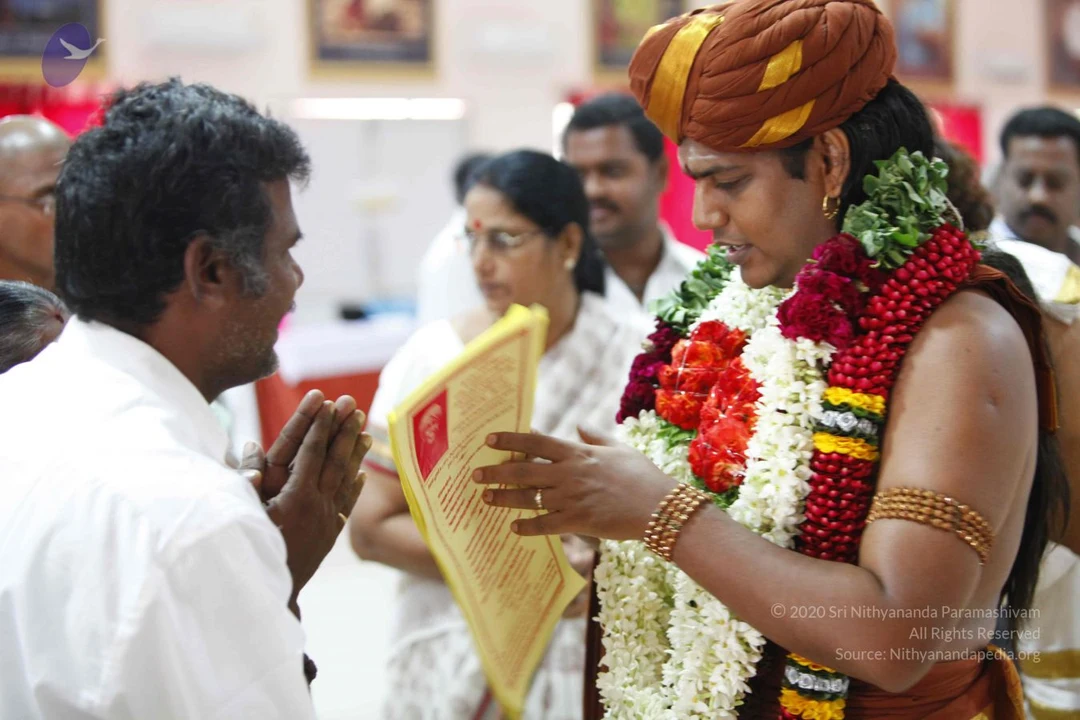
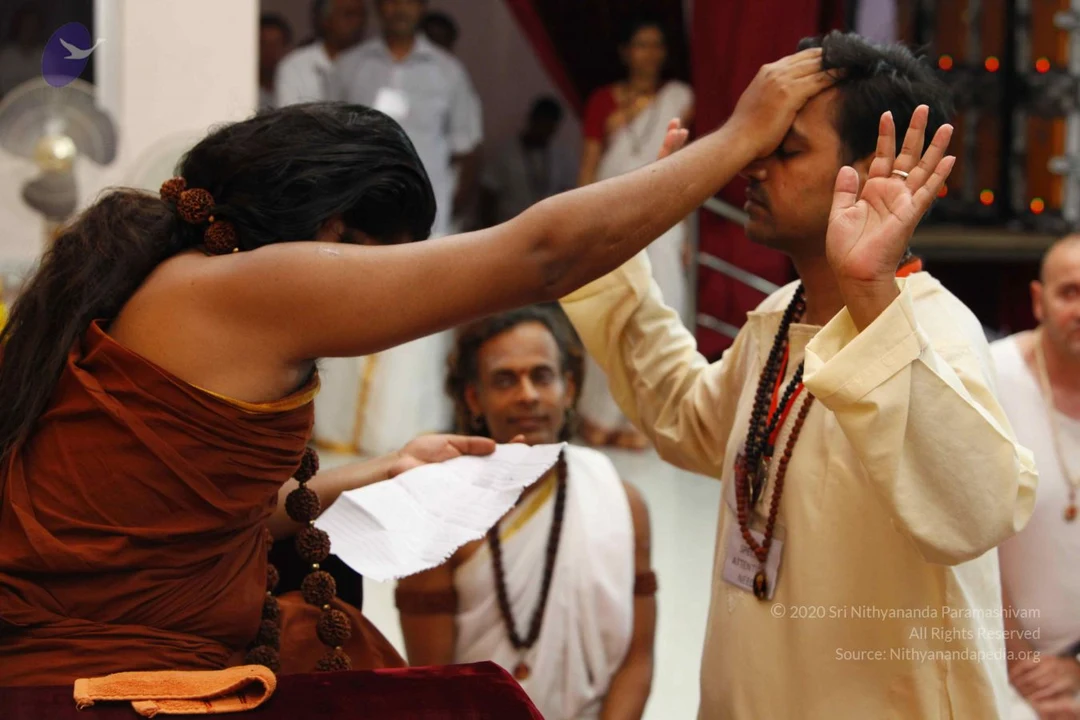
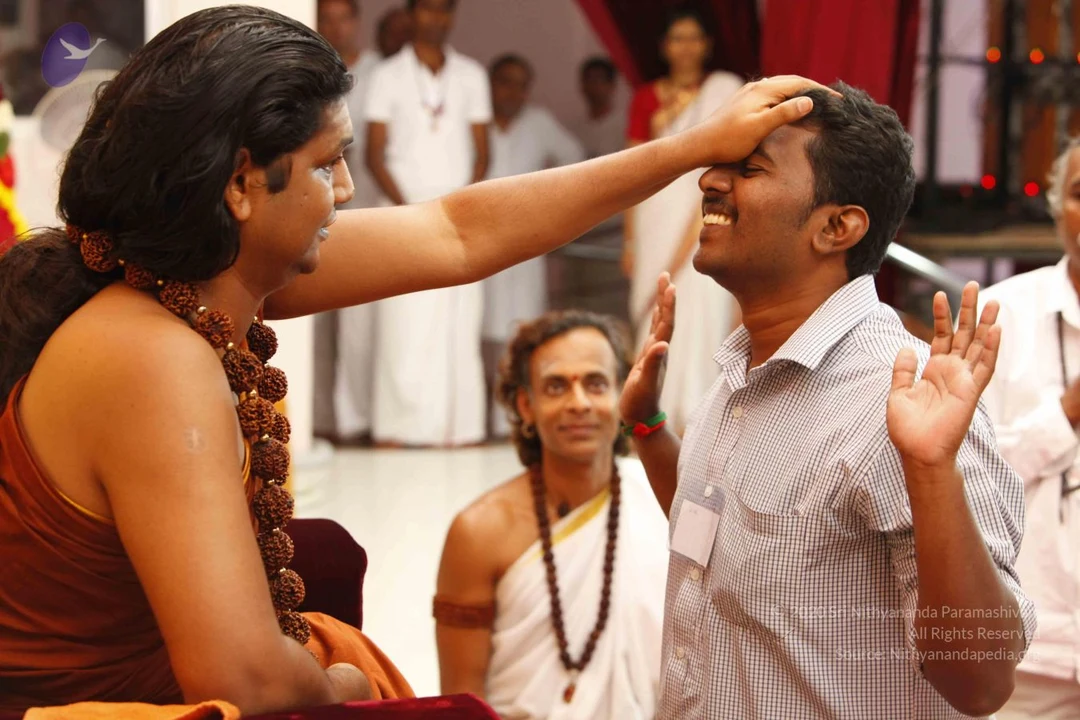
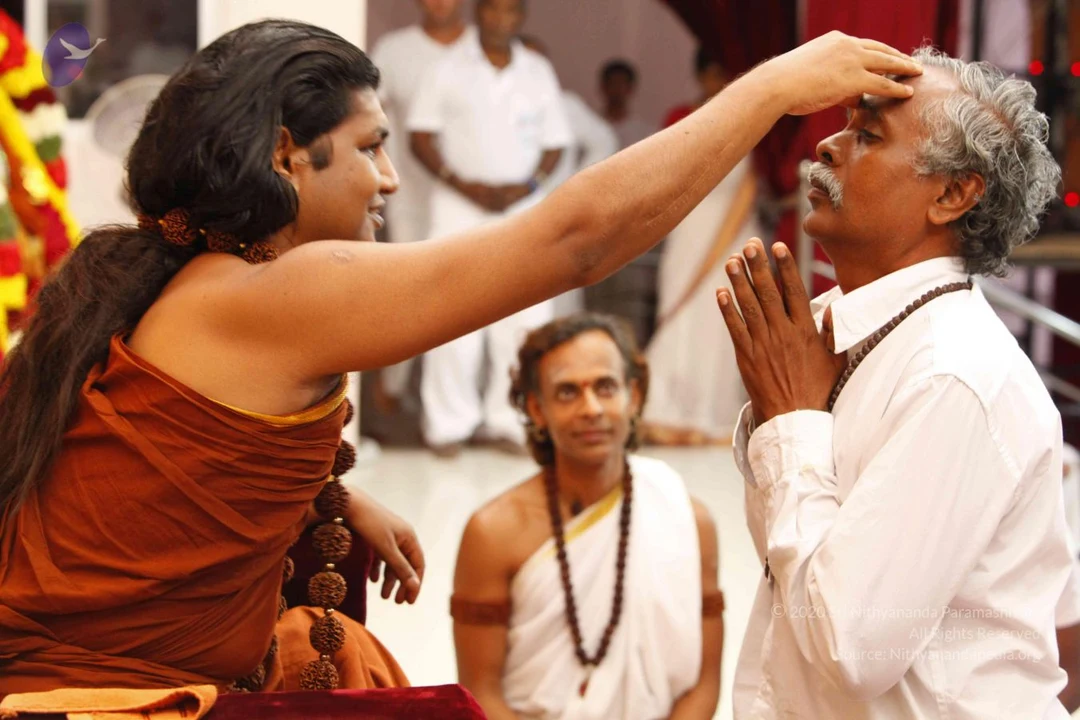
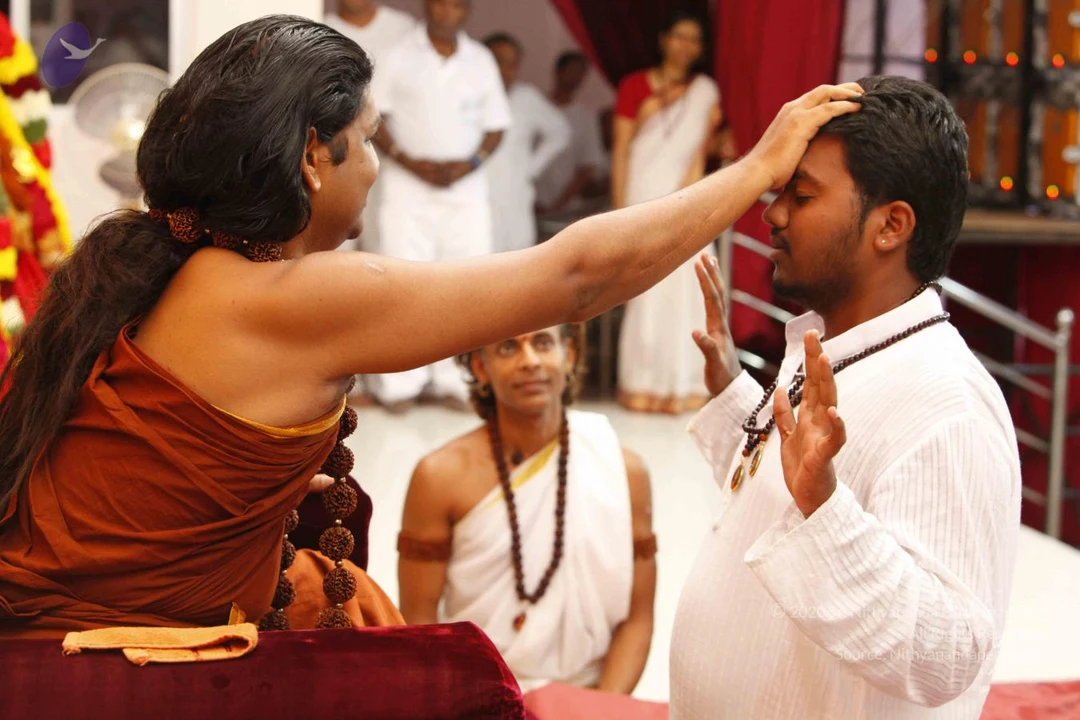
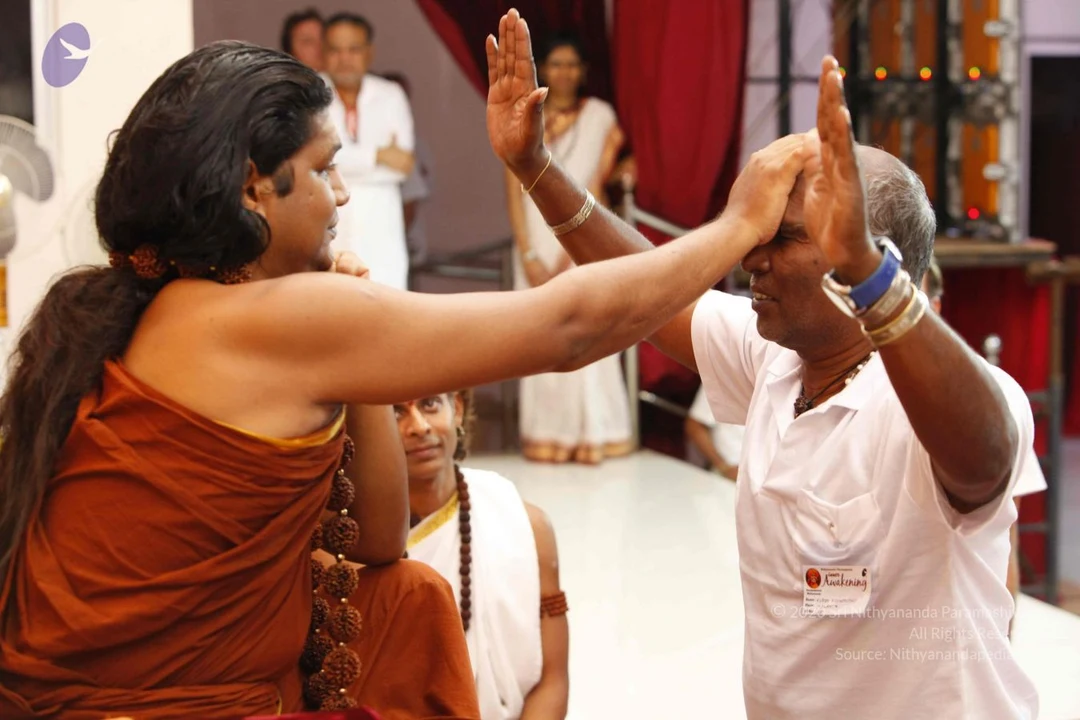
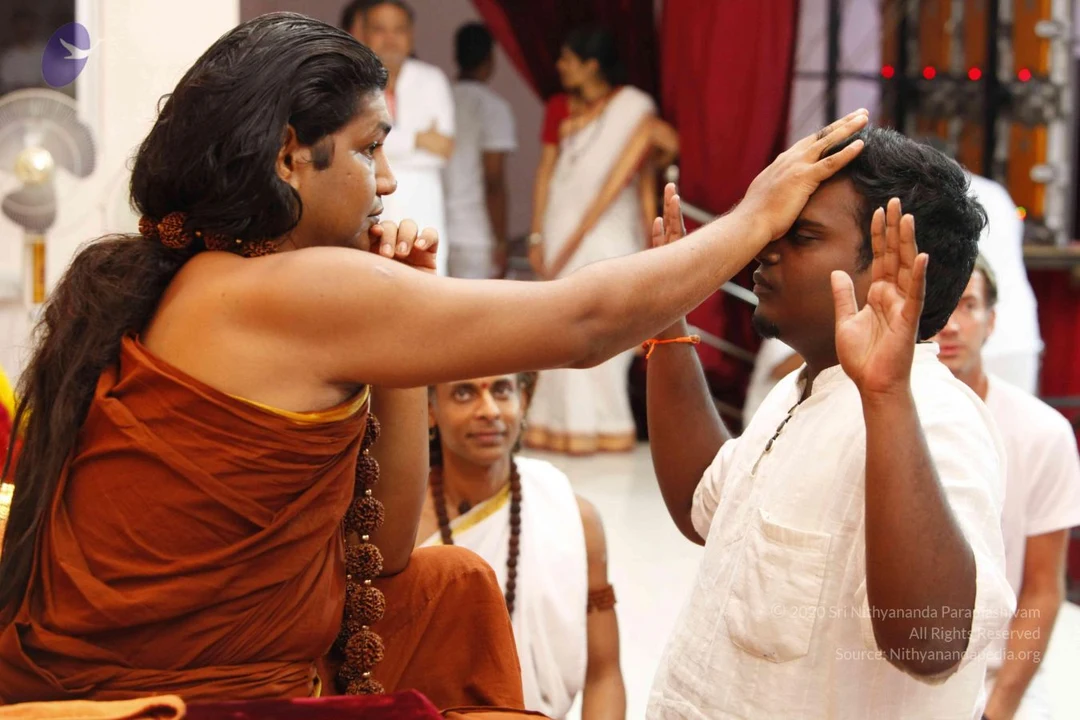
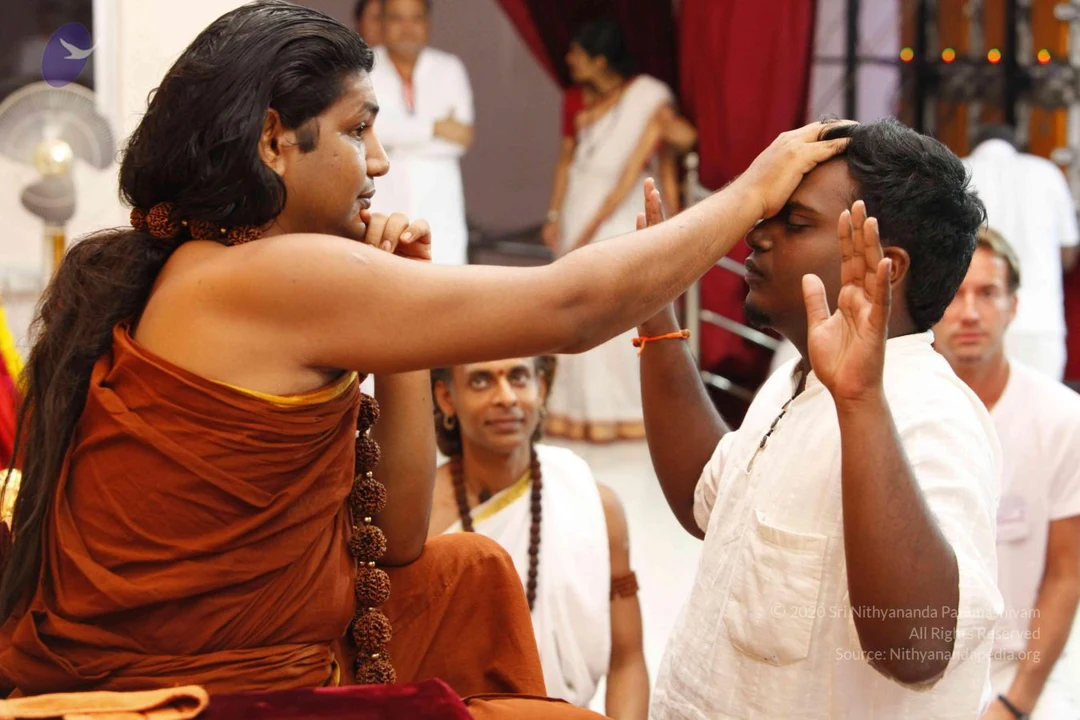
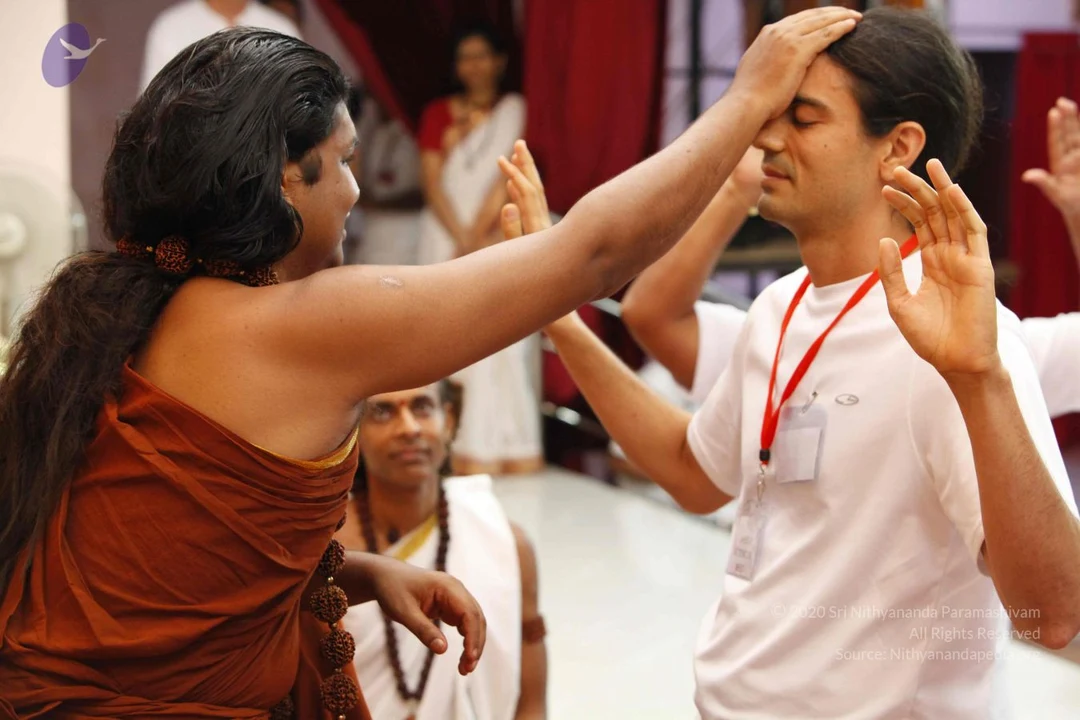
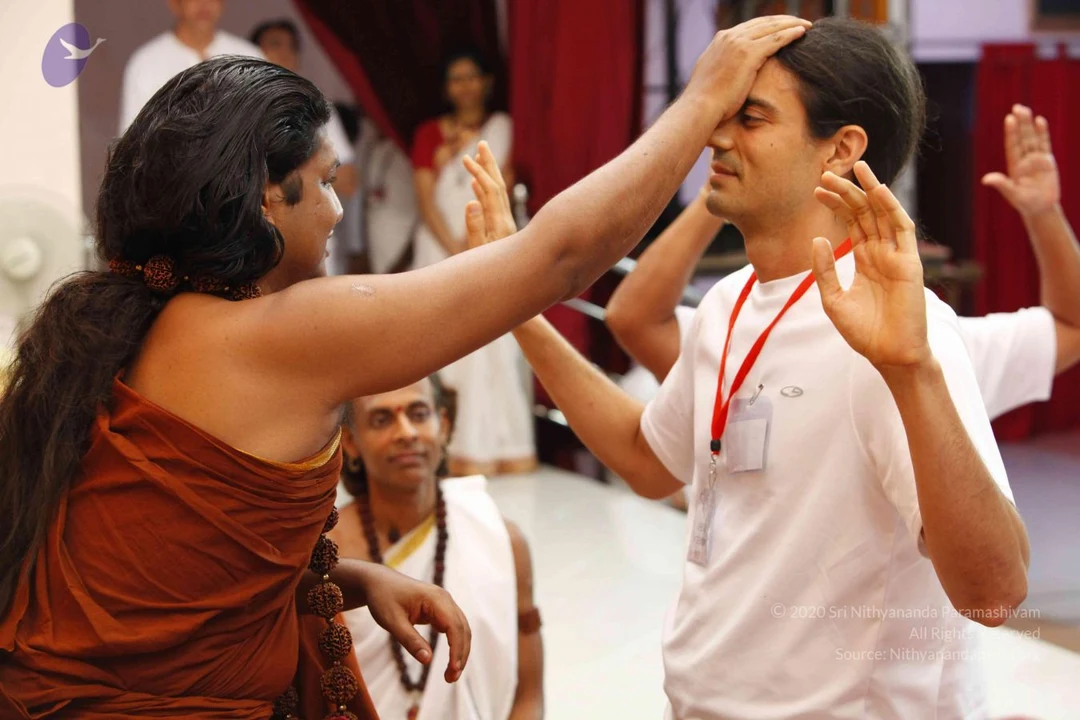
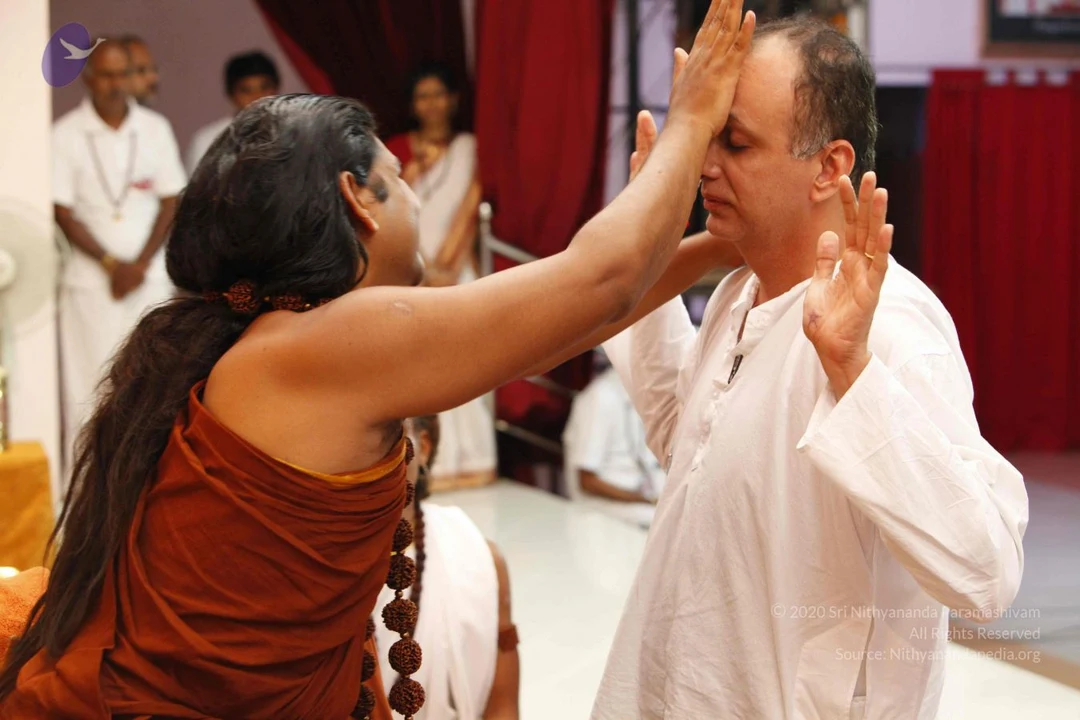
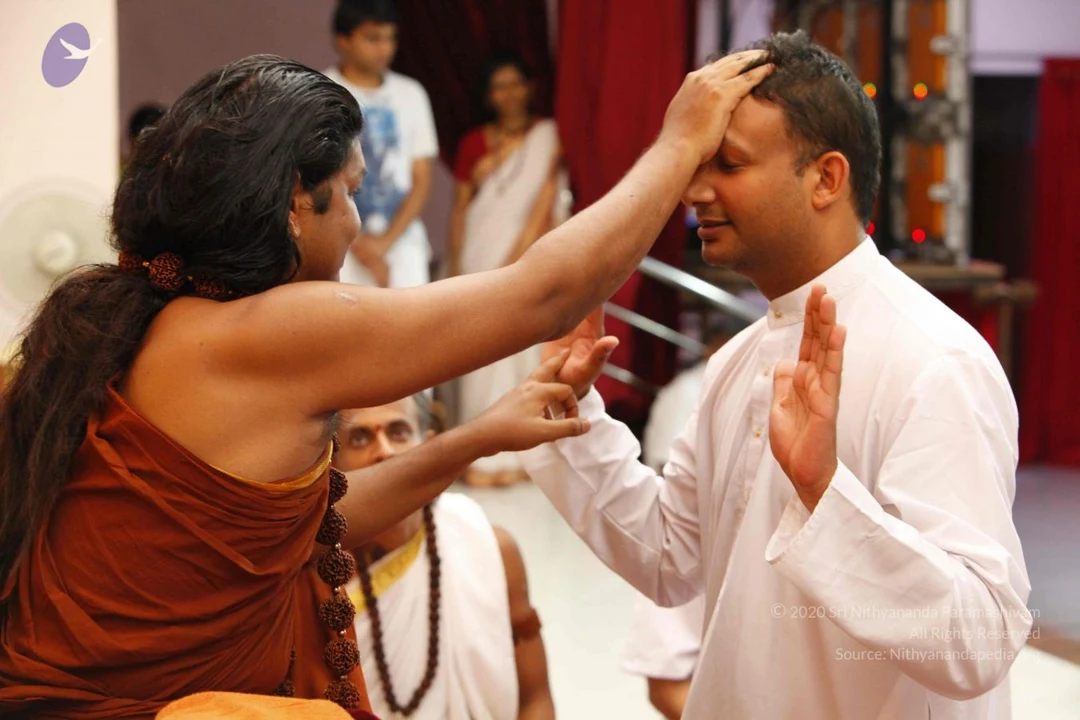
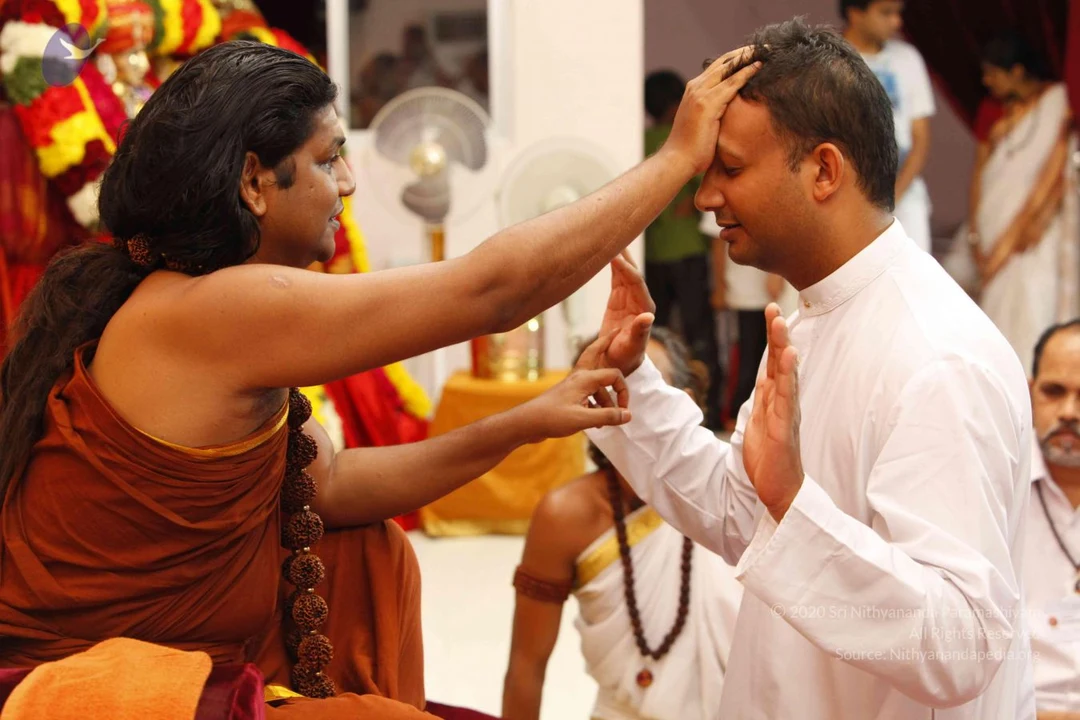
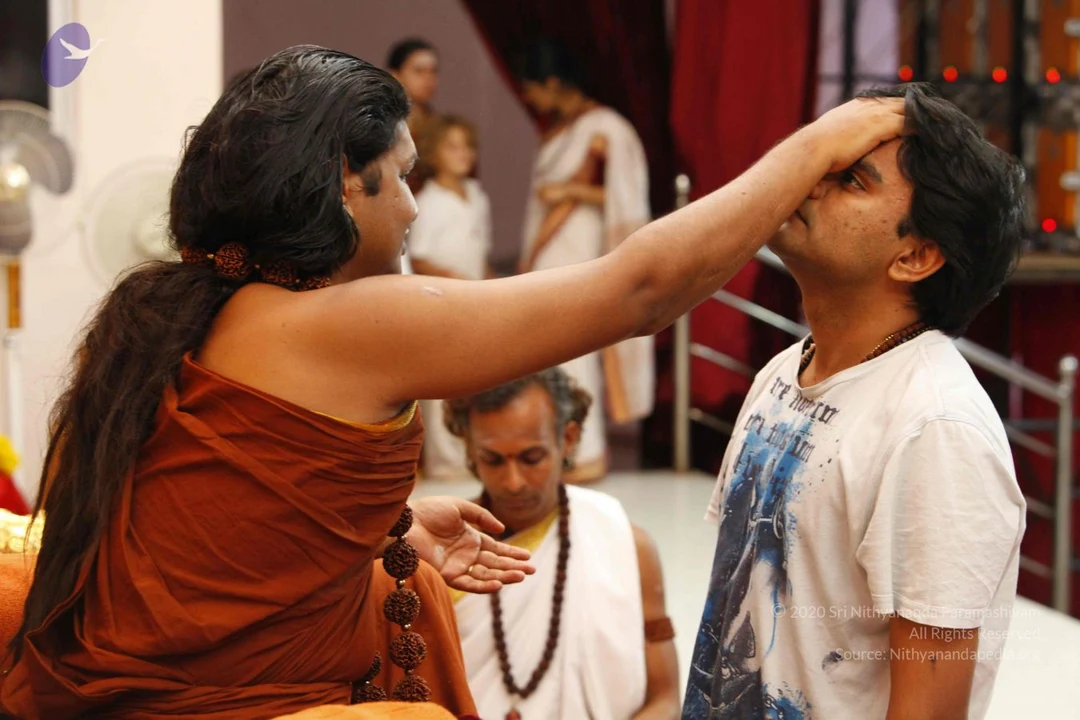
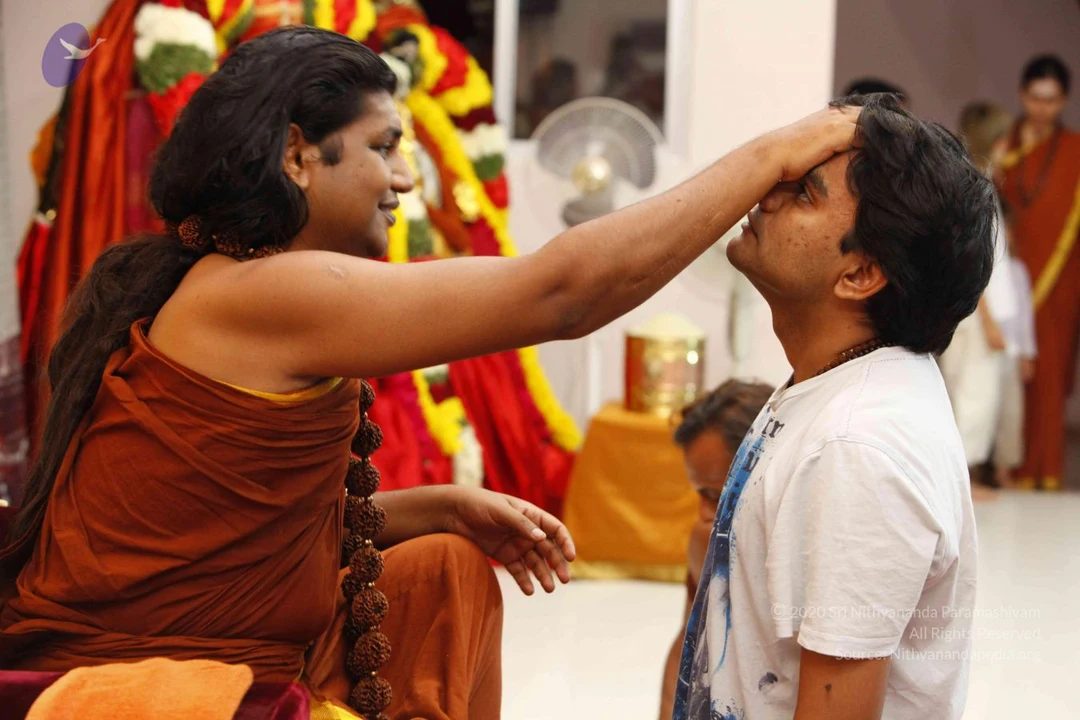
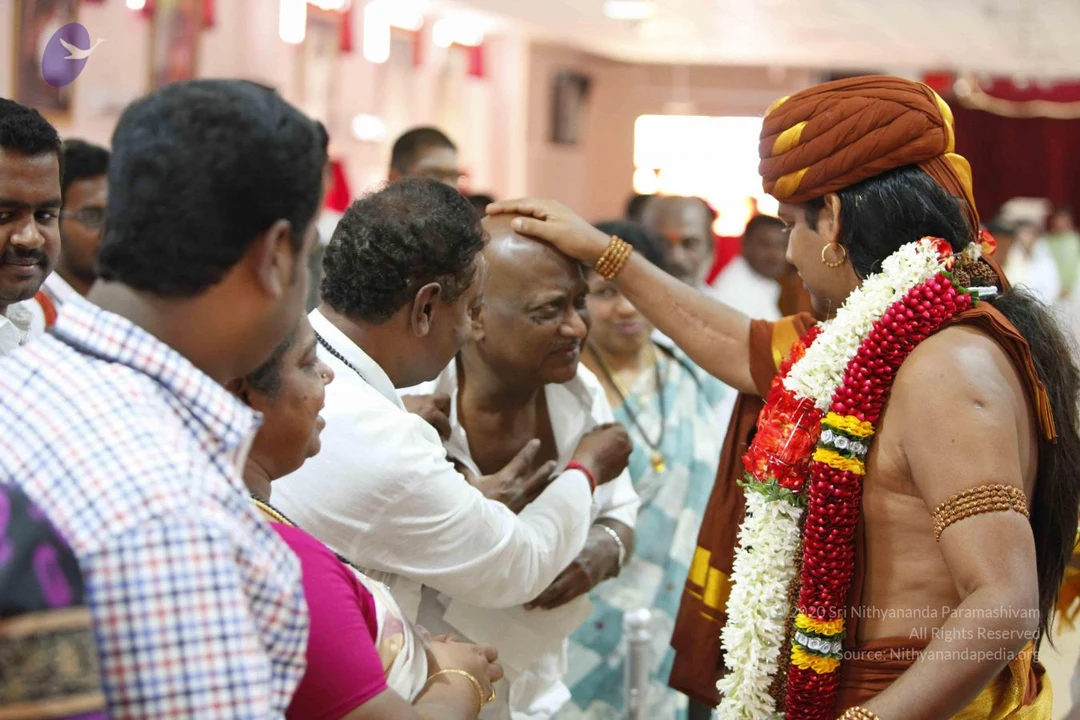
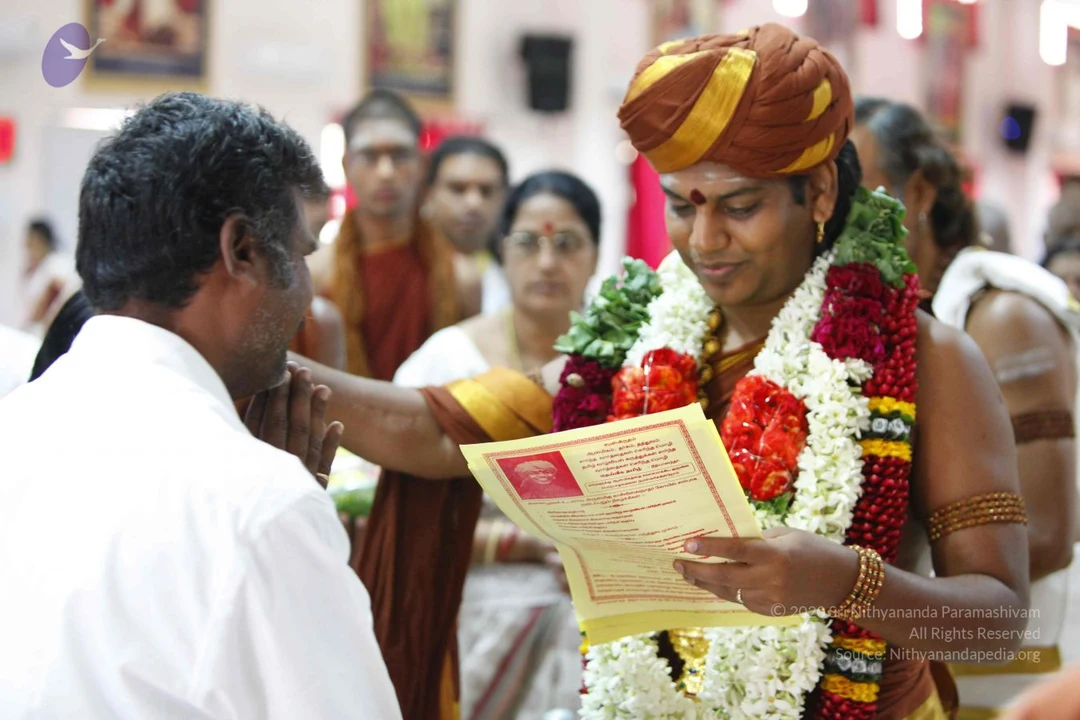
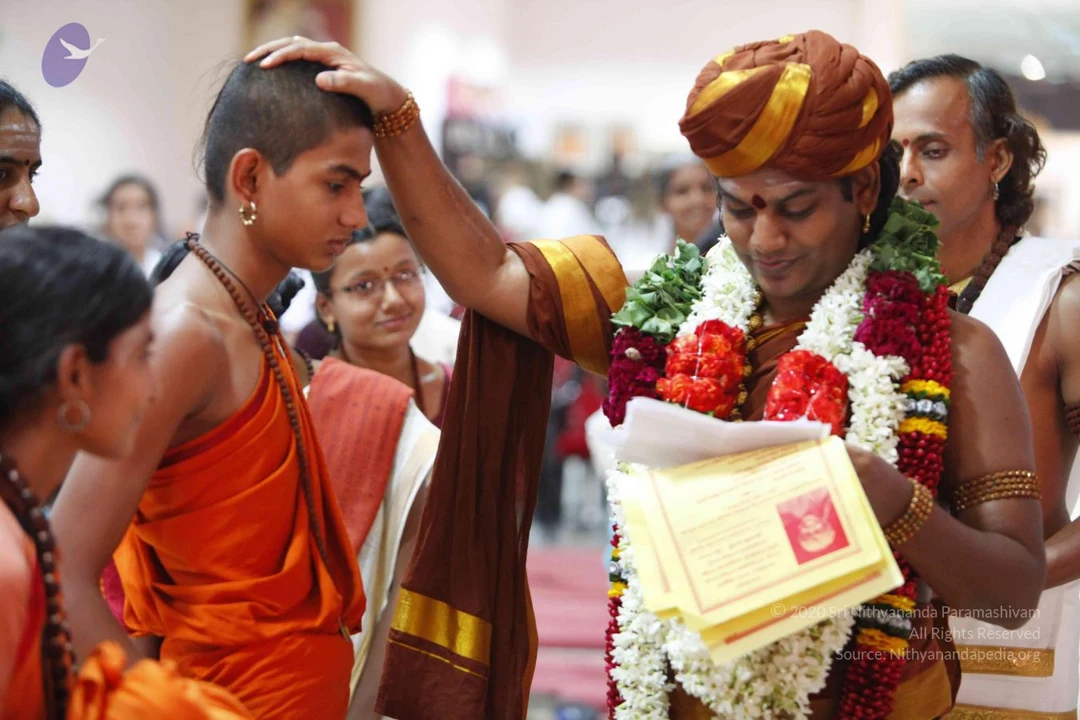
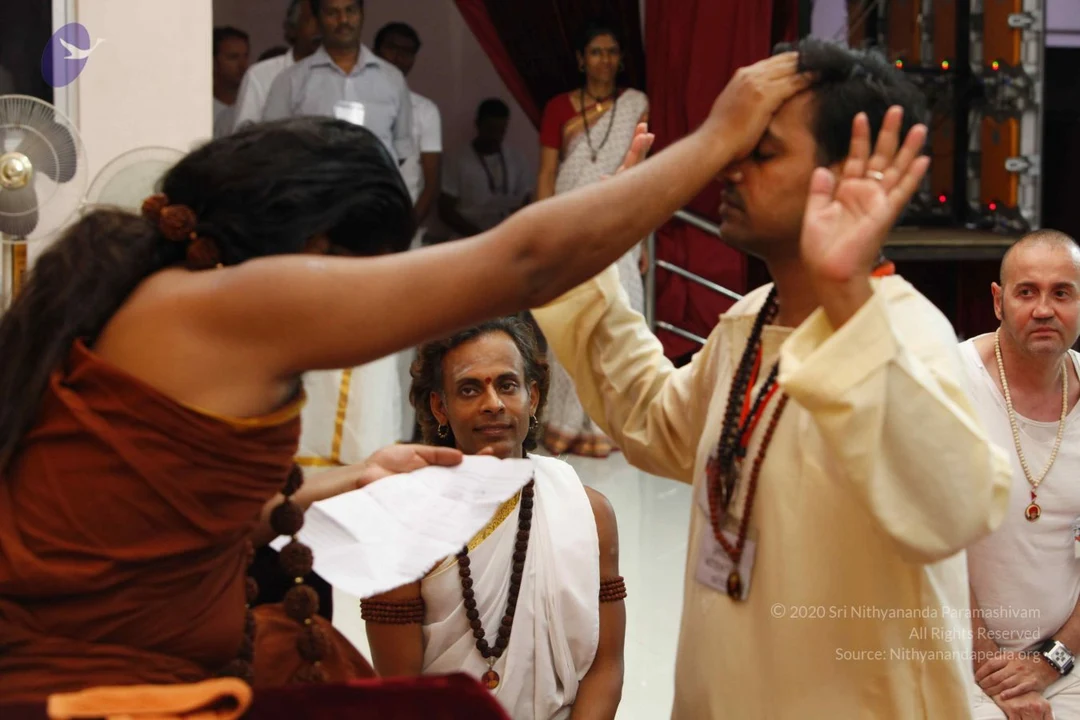
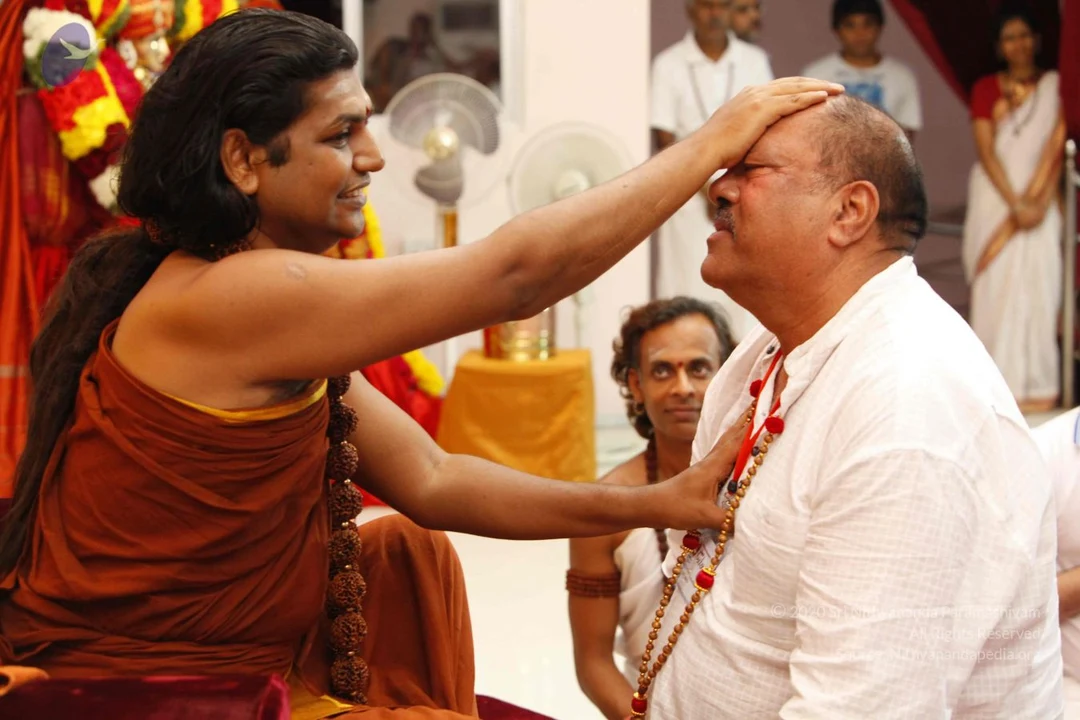
A smiling man in a rust-orange turban with a yellow stripe, saffron-brown robe, red and white flower garland, and a long rudraksha mala with gold ceremonial necklace raises one hand in a blessing gesture. Beside him, three men in white and pale shirts stand with their heads turned toward him; one wears glasses. Behind them, a colourful temple backdrop shows gilded deity figures and ornate yellow and orange decorations. The man in the turban has long swept-back hair, gold bangles, and a red bindi, cues consistent with the page's a person reference, so the appearance label is a person in person.A photograph of a man in a rust-orange turban with a yellow stripe, bare-chested under an orange-brown shawl, wearing a thick rudraksha mala and a gold ceremonial necklace with a red-and-white flower garland. He smiles and raises his right hand in blessing toward a young man in a white shirt and a woman in red who stand with palms pressed together. Other men in white and orange-brown stand in the background of a hall with red drapes and floral decorations. Cues suggest a person, shown as the figure giving blessing and darshan.A photograph of a satsang setting where a bare-chested figure with long swept-back dark hair, an orange-and-gold turban, a white and red flower garland, gold armlets and a gold ear stud places a hand on the crown of a balding man in a white shirt. Behind them a crowd of devotees, including a woman in a light blue and white checked saree and a woman in pink, watches; the background shows red draping and a warm-lit hall.A photograph of a ceremony in a temple hall. A man in a saffron-orange turban with gold stripes, wearing a white-and-red garland of jasmine, roses and green leaves, a rudraksha-style bead strand and gold bangles, holds a yellow printed certificate with a red-framed portrait. A devotee in a white shirt with folded hands bows toward him. Behind them, people in saffron and white robes and a woman in a sari with glasses stand near red walls and a shrine. The printed certificate shows a small portrait, and the appearance-based cues of the turban, garlands and ornaments give a probable match for a person in the central role.A photograph of a ritual moment at an indoor venue. A man in a rust-orange and gold-bordered turban and brown-gold dhoti-shawl, wearing a red tilak and gold bangles, stands holding a stack of yellow-and-red printed certificates wrapped in a thick garland of white jasmine, red roses and green leaves. He rests his right hand on the shaved head of a young boy in a saffron-orange robe and rudraksha mala who bows his head. Behind them, a man in white dhoti with a long plaited hairstyle and a bare-chested man in white stand nearby, and a woman in a brown-and-red sari and glasses watches. The whole scene reads as an honouring or initiation blessing.

IA-Darshan

72 photosSource gallery
A man seated cross-legged on a gold-carved throne with lion figures, a tiger-striped rug draped over the seat in front of him. He wears an orange-saffron robe with a yellow sash, a long strand of rudraksha beads, and a red tilak on his forehead. He holds a silver trident-shaped staff upright in his right hand and rests his left arm on the armrest. Behind him is a large gold arch and a painted temple tower on the right, with fruit and offerings on red side tables. Swamiji (probable): the figure has long swept-back hair, saffron clothing, rudraksha malas and a throne setting, consistent with the page's claim of his presence.A seated man in saffron-orange robes sits on an ornate gold throne with carved lion heads and a gilded arch behind him. He wears long swept-back hair, a red forehead mark, a long rudraksha mala, and a yellow sash, and holds a silver trident. He sits on a tiger-print cloth, with fruit offerings on the platform beside him and a painted temple backdrop on the right. Swamiji (probable): the saffron clothing, long hair, rudraksha mala and ornate throne match the page's reference to a satsang session.A photograph of a seated man on an ornate gold repoussé throne backed by a large arched gold panel with lion figures at its base. He wears an orange-saffron cloth draped over his body with yellow borders, a long multi-strand rudraksha mala across his chest, and a red bindi on his forehead. He holds a polished silver trident in his left hand, and his right arm rests on the red velvet armrest. Apples and offerings sit on a red cloth at the lower left. The page indicates this is Swamiji, and his appearance (swept-back long hair, saffron clothing, rudraksha malas, ornate throne) is consistent with that label, so he is identified as Swamiji (probable) seated in person.A man seated cross-legged on a red velvet throne with a tiger-skin rug, in front of an ornate gold-leaf arched backdrop carved with lion figures. He wears an orange-saffron cloth with a yellow border, a long rudraksha mala, and a red bindi on his forehead. He holds a silver trident (trishul) in his left hand, and his right arm rests on the armrest. Fruit. Probable Swamiji: long swept-back hair, rudraksha mala, saffron clothing and a trident mark him as a candidate in the page's satsang setting, seated on a throne in darshan-style presence.A seated man in saffron-orange robes sits on an ornate gold throne with carved lion heads and a tiger-striped rug draped over the dais edge. He wears a long rudraksha mala and holds a silver trident in his right hand, smiling warmly. Behind him is a backdrop with a painted temple tower, and a figure of a deity appears on the right. Red-cushioned armrests and bowls of fruit flank the throne. Appearance-based cues (long swept-back hair, saffron clothing, rudraksha mala, throne) indicate a probable Swamiji (probable), seated in person.A man sits cross-legged on a tiger-striped cloth before an ornate gold-carved throne backdrop with lion-like figures. He wears an orange-saffron robe with a yellow-gold border and a long rudraksha mala with multiple rows of beads, and a red bindi on his forehead. He holds a silver trident in his right hand and smiles toward the camera. Red velvet armrests and a bowl of fruit appear at the lower edges. Swamiji (probable): long swept-back hair, saffron robe, rudraksha mala and trident identify a presiding teacher seated on a throne, though the appearance is only partially distinctive.

IA

44 photosSource gallery
Indoor photo in a hall with red upholstered chairs and red curtains, where two men sit in close conversation. The man on the left wears glasses and a white T-shirt printed with the words "A.R.M.Y" and "Aren't Ready for Marriage Yet", with a yellow name badge, hands clasped and looking to the side. The man on the right wears a cream kurta, a saffron-orange shawl with a rudraksha-style bead mala, and holds a pen and a stack of white papers while gesturing. Several other seated people in white clothes are visible in the background among rows of chairs. No one in the scene is clearly identifiable as a person from appearance.A photograph of a seated group in a hall with red-cushioned chairs and red curtains. In the foreground, a man in a white t-shirt and glasses looks down at papers on his lap. Beside him, a man in cream-white kurta with a rudraksha mala and an orange lanyard with an ID badge reads a stack of white papers. Other people in white clothing sit in the background, some holding papers. A small logo appears in the upper left corner.A photograph of a buffet serving area with stainless steel chafing dishes on a red-draped table. A woman in a white sari with a white shawl and gold bangles sips from a small white paper cup while standing with her other hand on her hip. Behind her, a man in a white shirt and an orange-and-white cloth bag stands near a second person in orange. On the right, a person in a light green kurta and white dhoti stands beside the table. Food includes toasted bread slices, fried snacks, sliced mango and sliced fruit. Staff in white uniforms and hairnets attend the back of the table, and a framed picture hangs on a pink wall.Four smiling devotees in matching white kurta-style clothing stand together in a bright hall. A man on the left with long dark hair and glasses wears a white shirt and a beaded necklace, holding a blue mug. Next is a woman with short bleached hair and a white scarf holding a steel cup, then a woman with long dark hair holding a white-wrapped cup, and a woman on the right with short hair in white clothes holding a cup and wearing a mala. Behind them, other people in white and an orange-robed figure stand near a wall with a temple-scene picture and a Gents Toilet sign. Several white-clad attendees are visible in the background.Four smiling people in white linen clothing stand together in a bright hall with pink-red walls. On the left, a man with shoulder-length hair, glasses and a beaded necklace holds a blue travel mug and wears a name badge. Beside him, a woman with short spiky bleached hair and a white scarf holds a steel cup. A woman with long dark hair holds a small steel bowl and a folded white napkin. On the far right, a woman with a short bob and rudraksha-style brown beaded malas holds a paper cup. Behind them, other people in white and a poster of a figure in red and gold stand near a gents toilet sign. No a person candidate is clearly visible.A photograph of a serving station at an ashram-style food event. Two men in white shirts and black-and-white striped vests with white hairnets and disposable gloves serve food from steel chafing dishes: the left man uses tongs on white idlis, the right man uses a ladle on yellow curry. On the right, a woman with long wavy hair wears all white and red-brown rudraksha beads, holding a small steel bowl and speaking. Behind them a man in a white shirt and grey trousers carries a plate, and a backdrop shows a temple tower with the word 'Thanksgiving' partly visible.

IA-Yoga

8 photosSource gallery
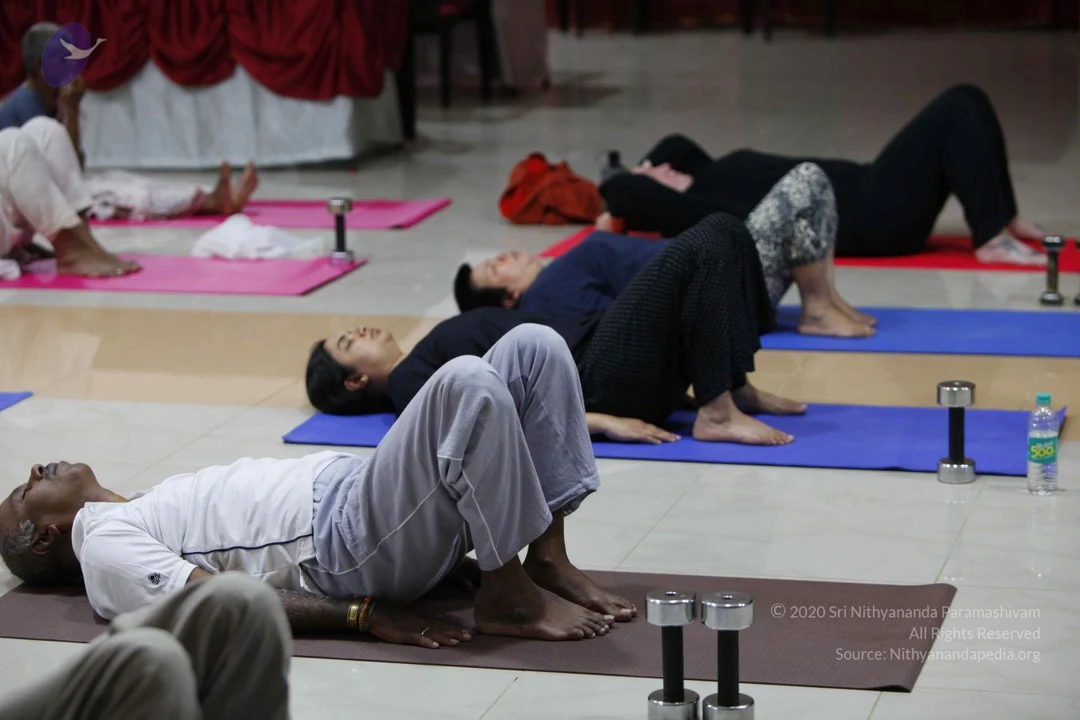
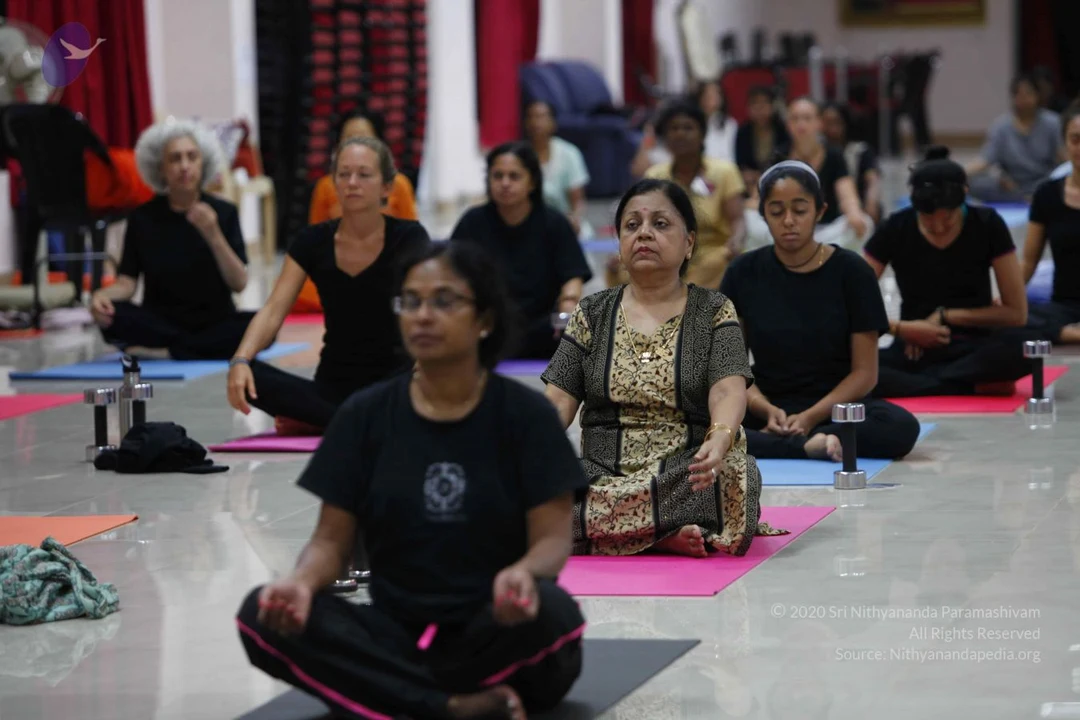
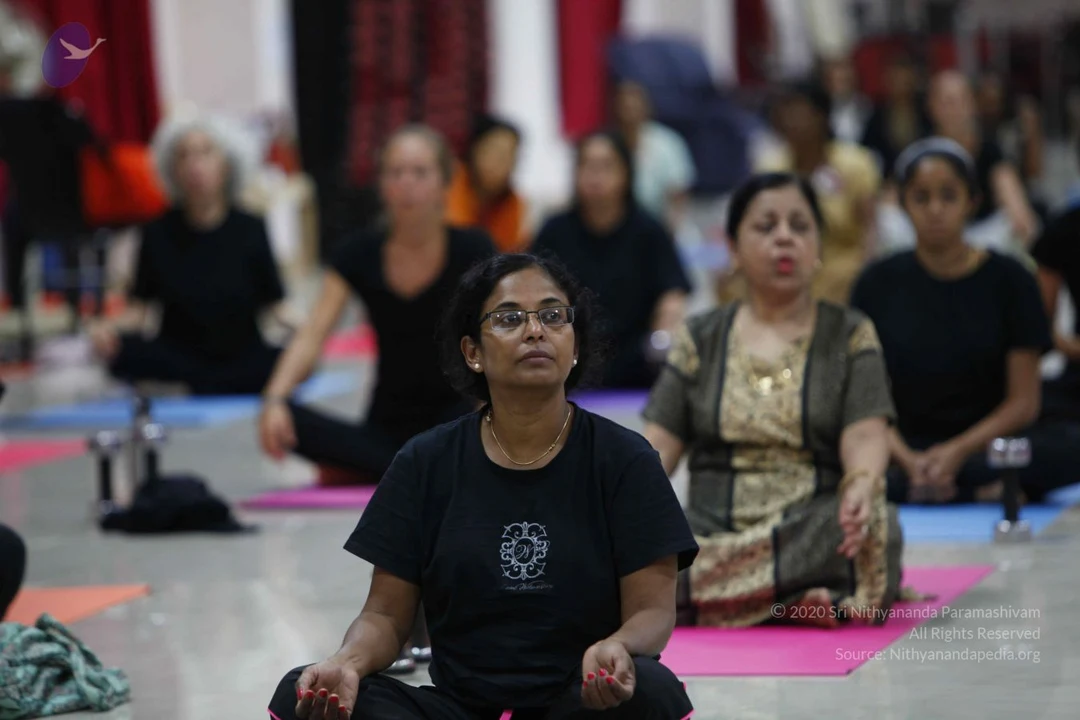
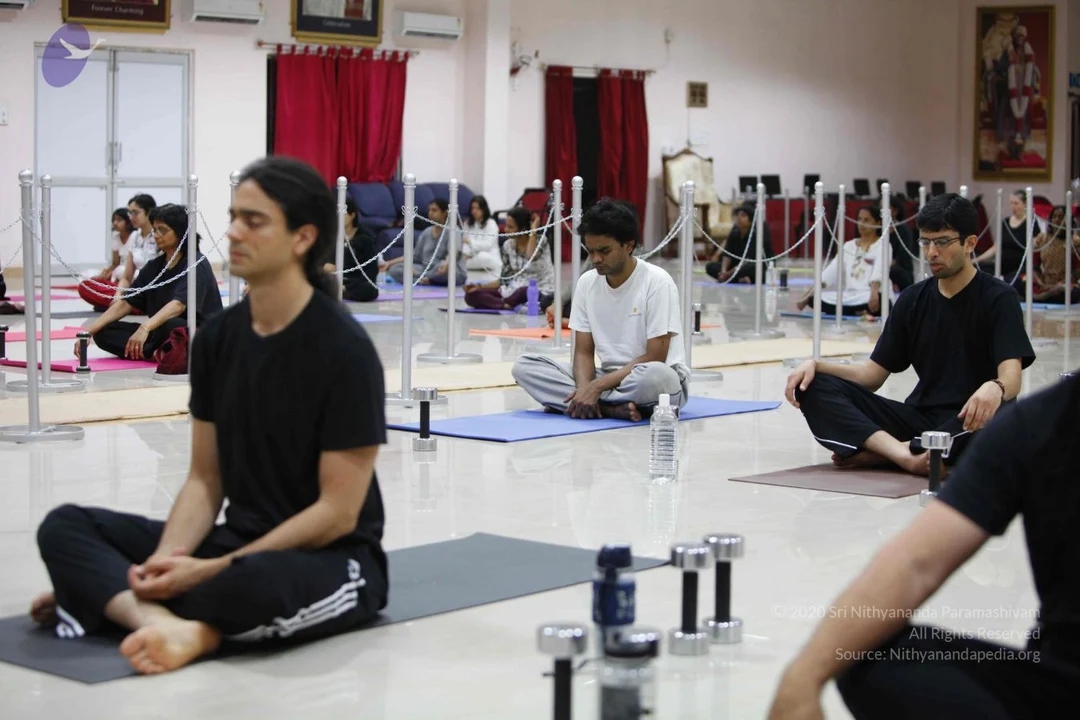
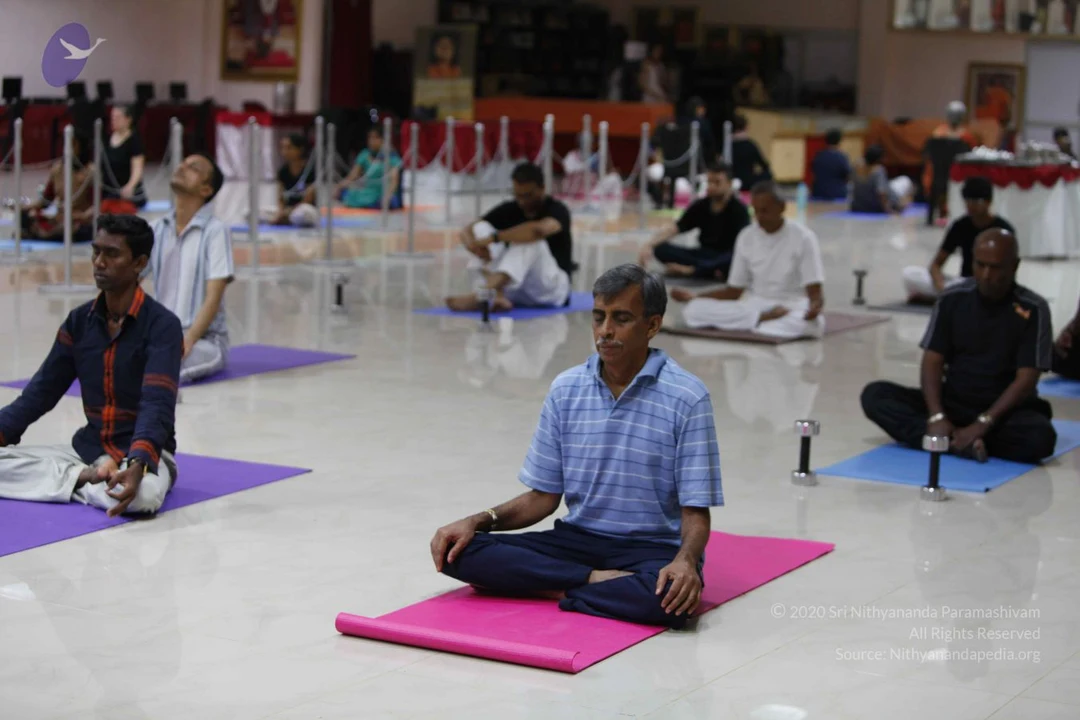
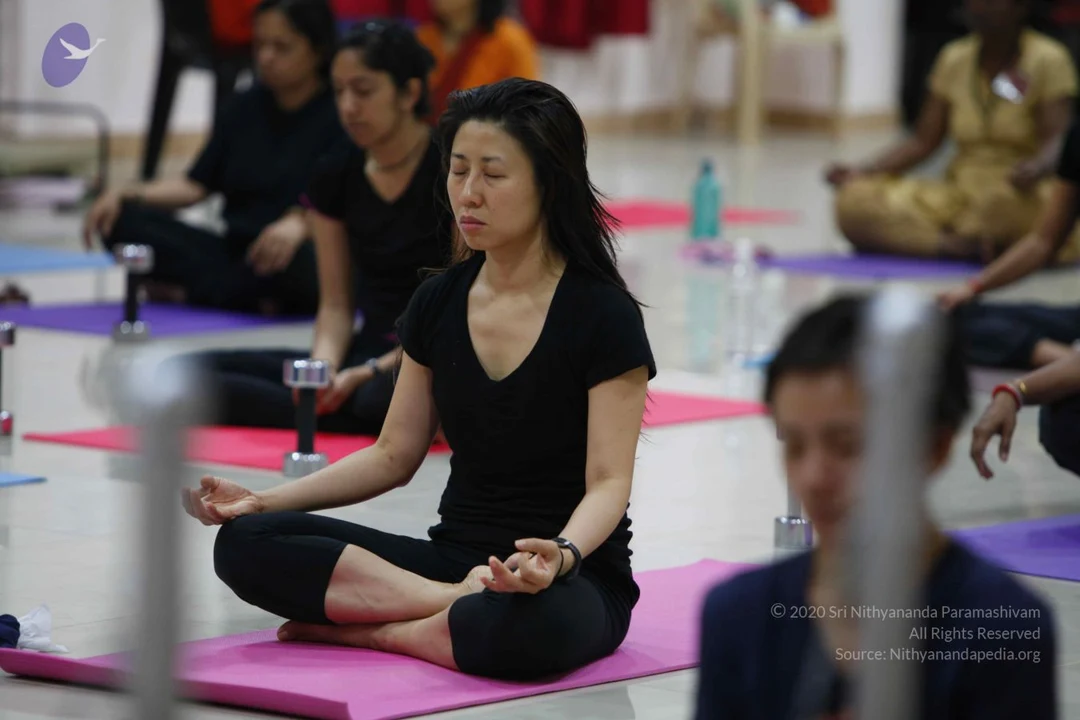
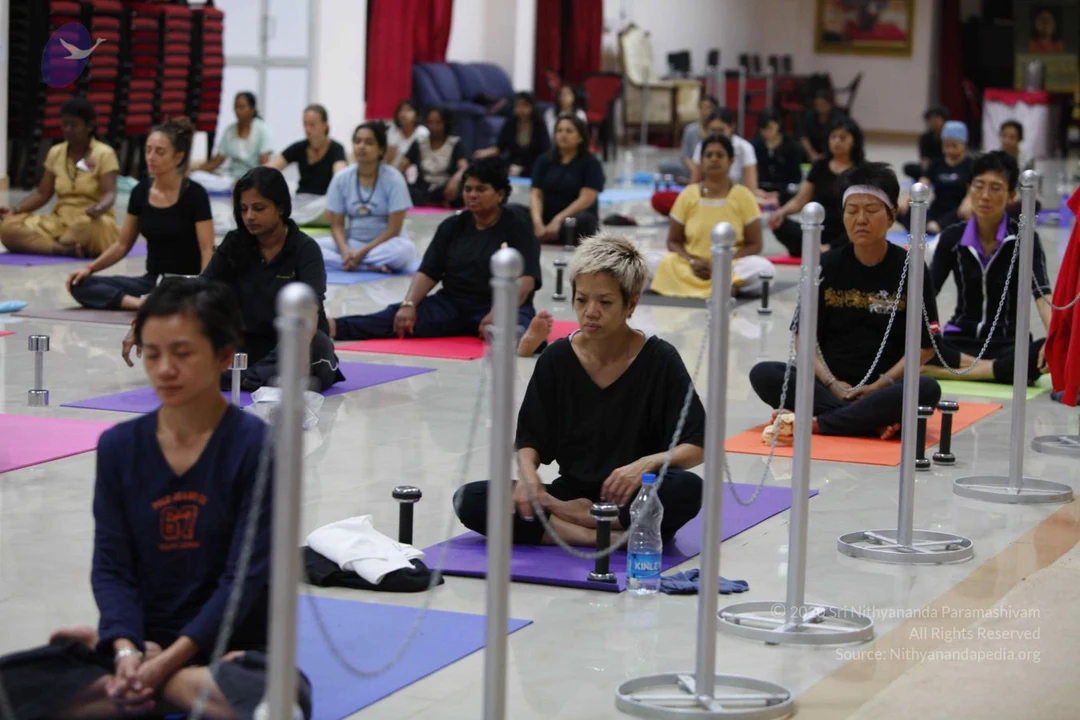
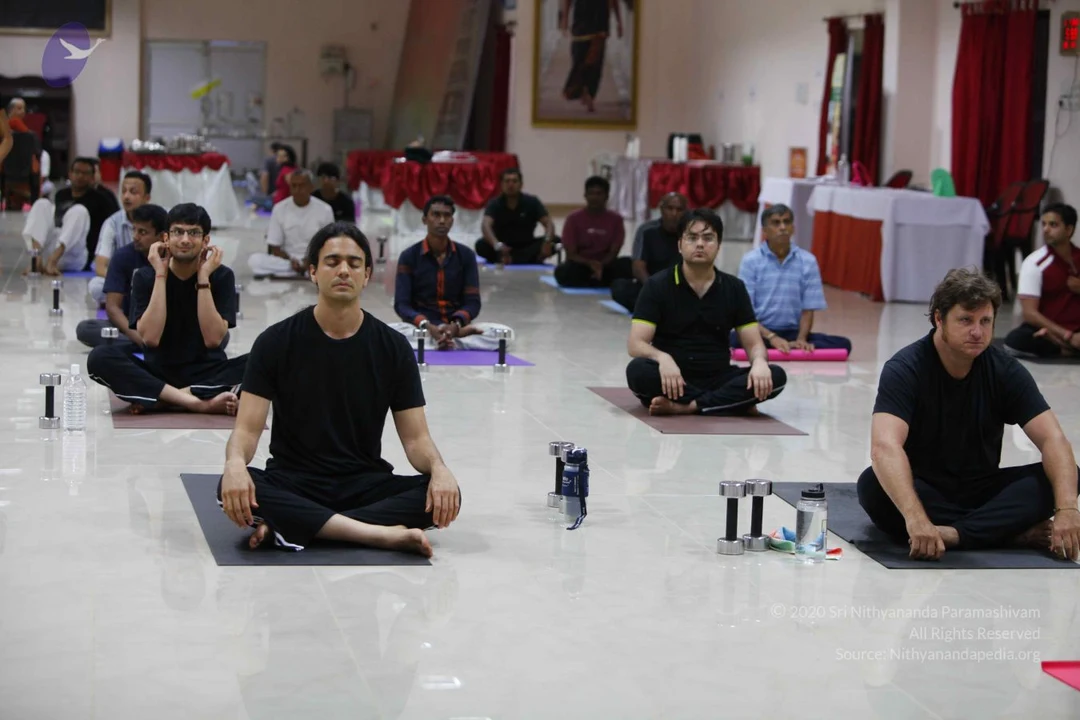
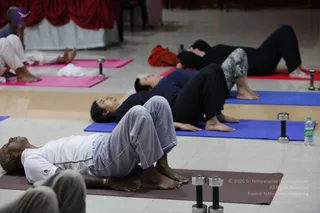
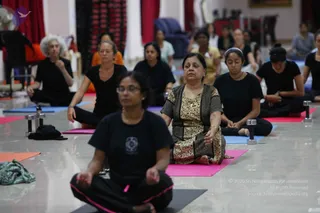
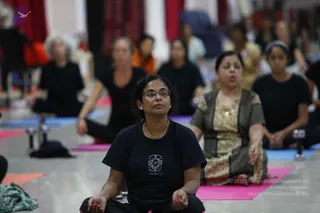
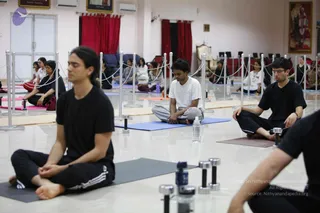
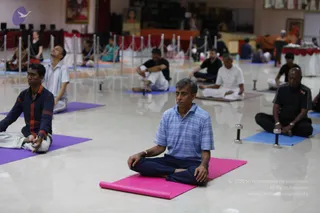
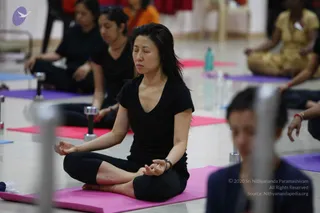
A photograph of a yoga or exercise session on a tiled floor. Several people lie on their backs on mats, lifting their hips in a bridge-like pose. Mats are pink, blue and dark brown. A man in the foreground wears a white t-shirt, grey track pants and gold bangles. Others wear dark tops and pants. Small grey dumbbells sit between the mats and a plastic water bottle stands at right. Red drapery and a red cloth bag appear in the background.A group of about a dozen people sit cross-legged on colourful yoga mats on a glossy grey floor in a hall with red curtains, performing seated meditation or breathing practice. Most wear black t-shirts; a woman in the centre wears a patterned beige and black kurta, and a woman at right wears a grey headband. Small silver dumbbells sit beside several mats, and a blue-green cloth lies at left. The front figure, in glasses and a black top, has hands in a mudra. No visible person is identifiable as a person in this crowd; the scene shows yoga and meditation participants.A photograph of a seated group meditation session in a hall with red and white draped backdrops. In the foreground, a woman with short dark hair and glasses wears a black t-shirt and sits cross-legged on a pink mat with her hands resting open on her knees, eyes closed. Beside her, a woman in a gold-and-green embroidered salwar kameez sits with hands folded. Behind them, many other participants in black clothing sit on blue and pink mats, some with metal weights or props nearby. No a person candidate is visible; the scene shows devotees meditating.Students sit cross-legged on yoga mats in a bright, white-tiled hall during a meditation session. In the foreground a young man in a black t-shirt and black track pants sits with eyes closed and hands resting in his lap. Beside him a man in a white t-shirt and grey trousers sits with hands on knees, and to the right a bespectacled man in black clothing sits with palms resting on his legs. Further back, rows of seated participants in dark and light clothing fill the room, separated by silver stanchions and chains. Small black dumbbells and water bottles lie on the floor. A framed picture and red curtains decorate the back wall, and a gold ornate chair sits near the centre.A photograph of a group meditation or yoga session in a bright, tiled hall. Several people sit cross-legged on purple, blue and pink exercise mats, eyes closed, in a relaxed posture. The man in the foreground wears a blue striped polo shirt and navy trousers, seated on a pink mat. Others wear white kurtas or dark shirts. Small dumbbells and silver stanchions with ropes separate the mats. Behind them, a white table holds dishes and a red and white drape hangs along the wall, with framed portraits in the background. a person is not visibly identifiable among the seated participants.A group of practitioners sit cross-legged on colourful exercise mats in a bright hall, eyes closed in meditation. In the foreground a woman with long dark hair wears a black V-neck top and black cropped trousers, hands resting on her knees in a mudra, a dark wristwatch on one wrist. Behind her other people in black and a woman in yellow sit on pink, purple and blue mats, with water bottles and small metal dumbbells on the floor. The scene is a yoga or meditation session, with no visible a person candidate.

Deity-Darshan

5 photosSource gallery
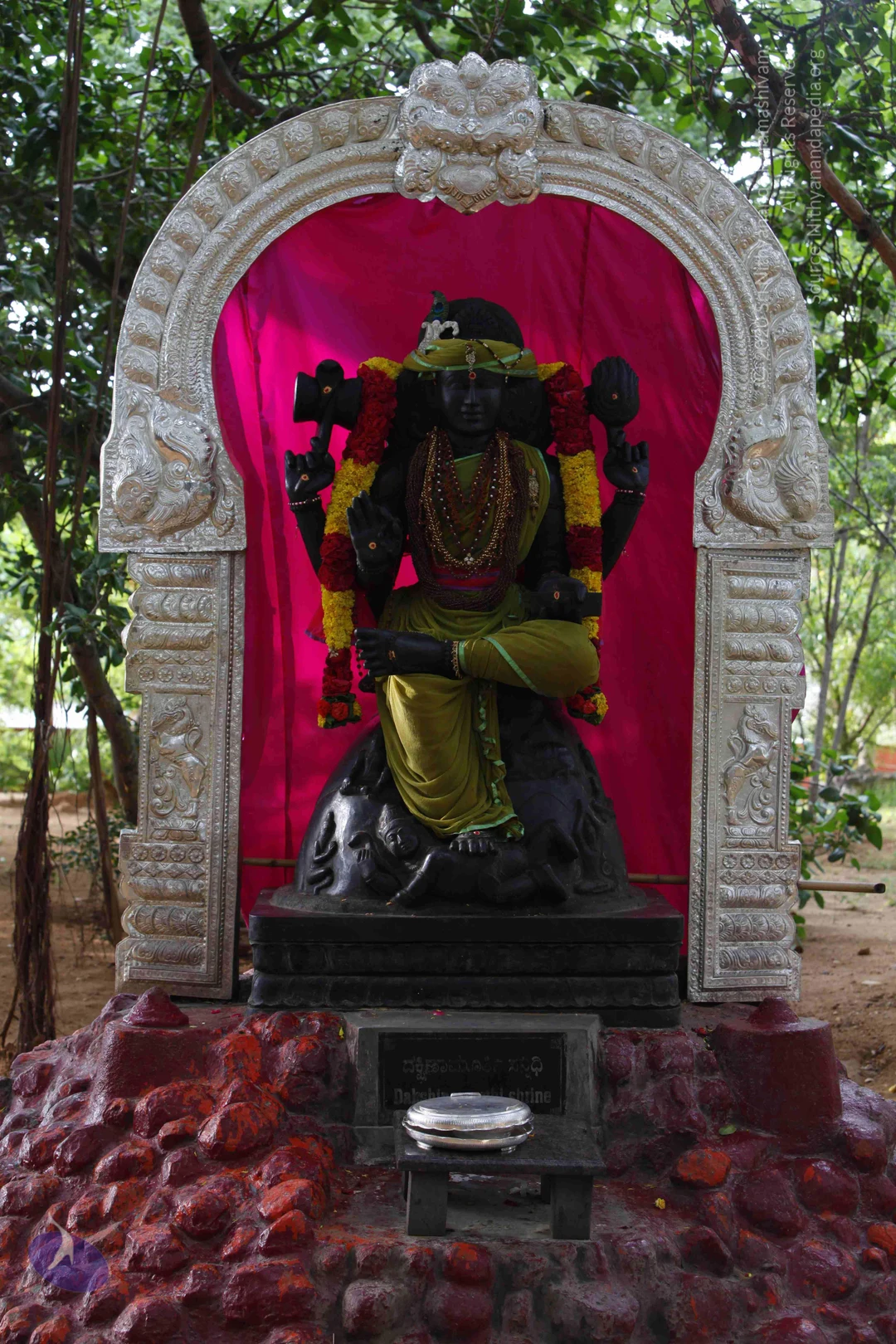
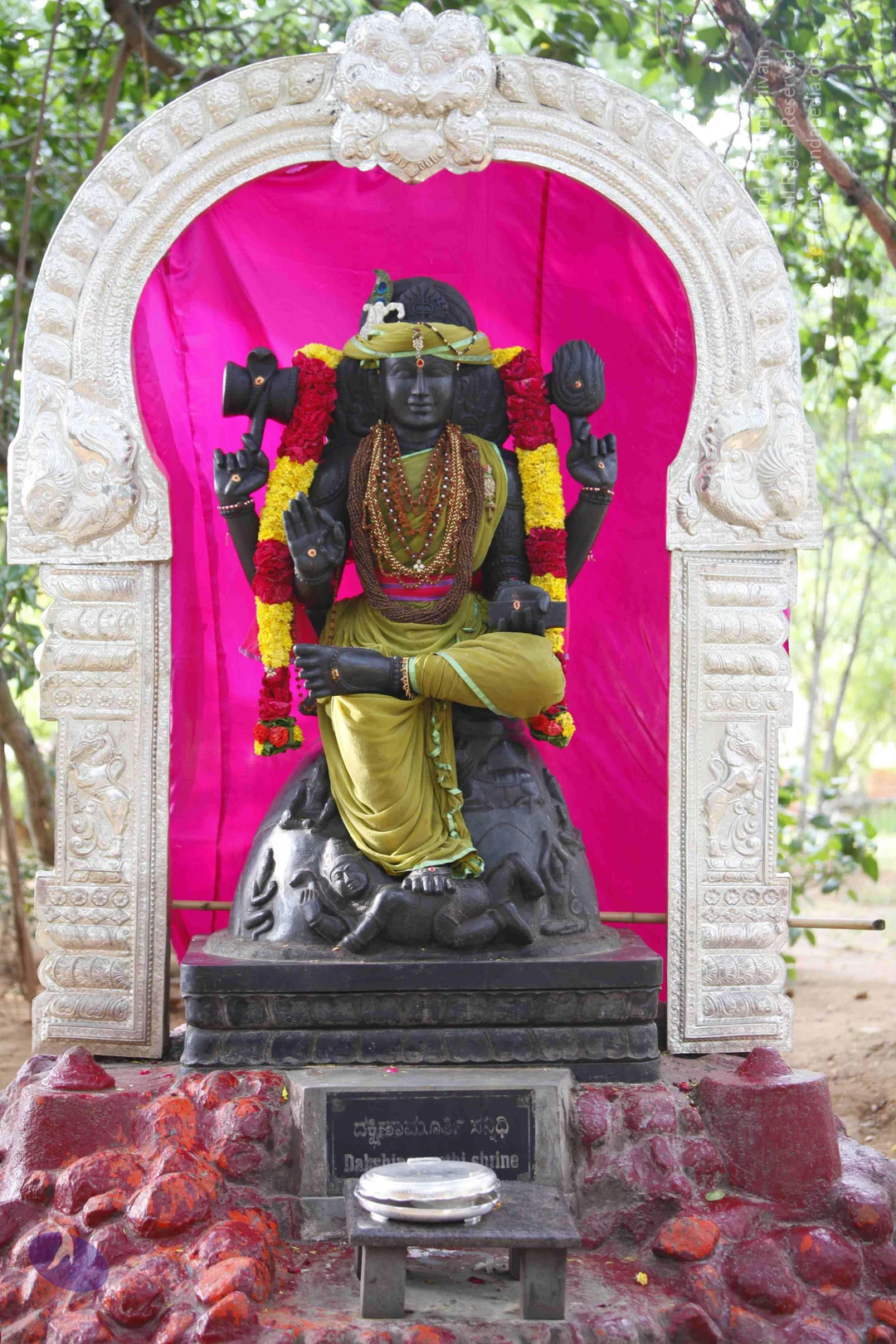
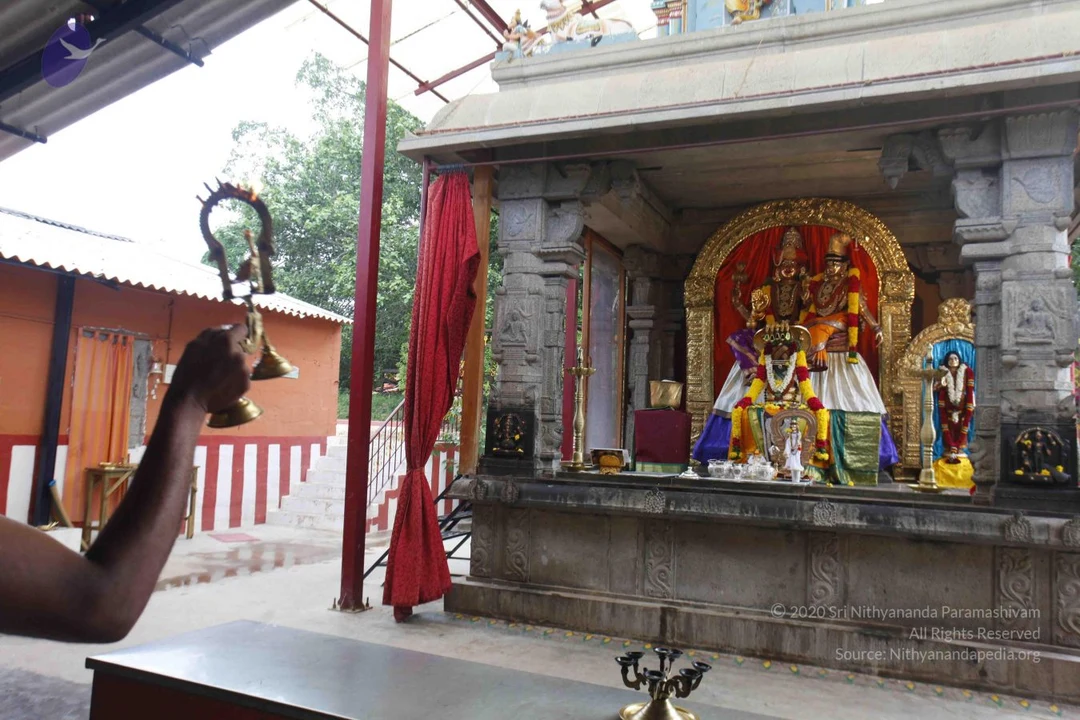
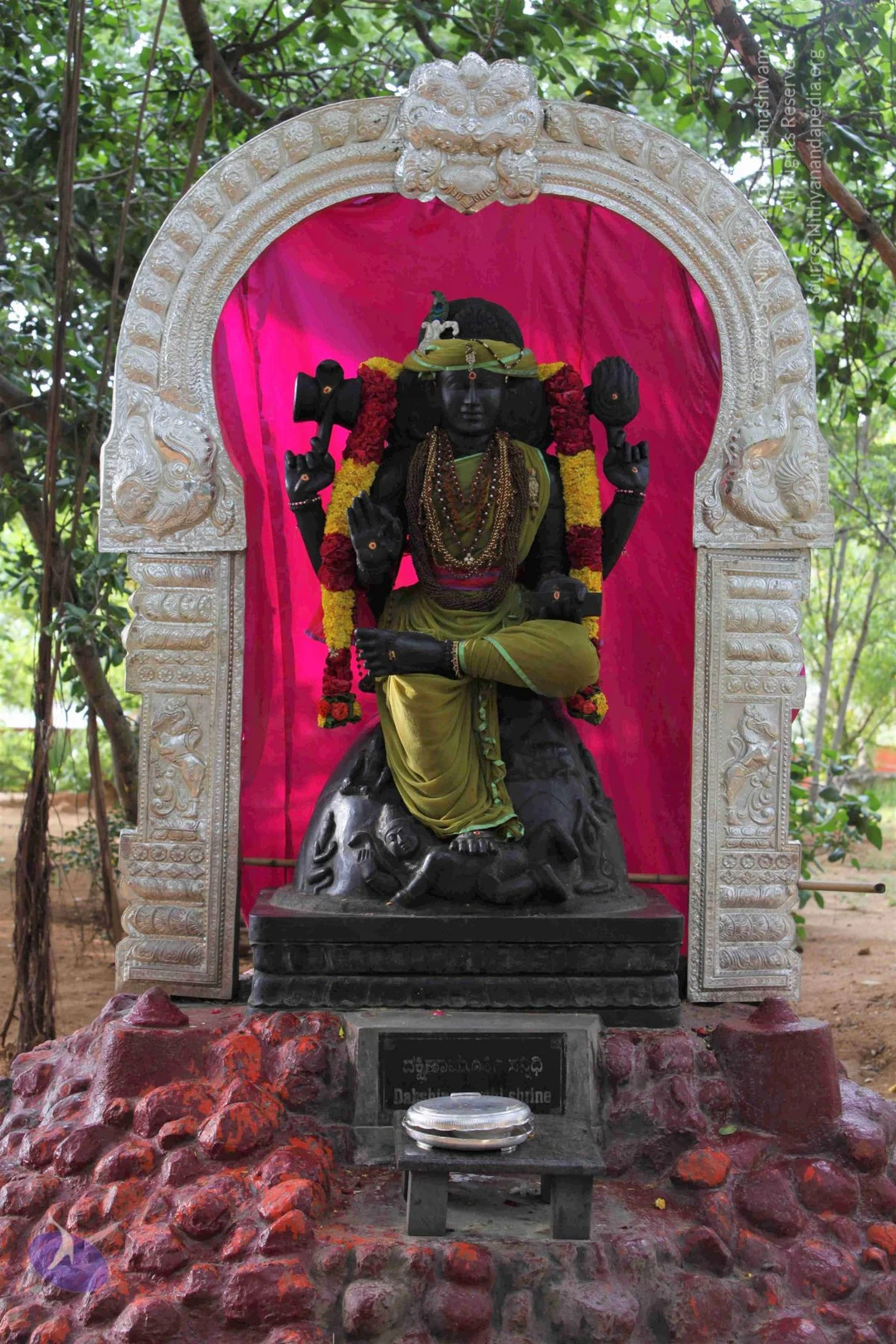
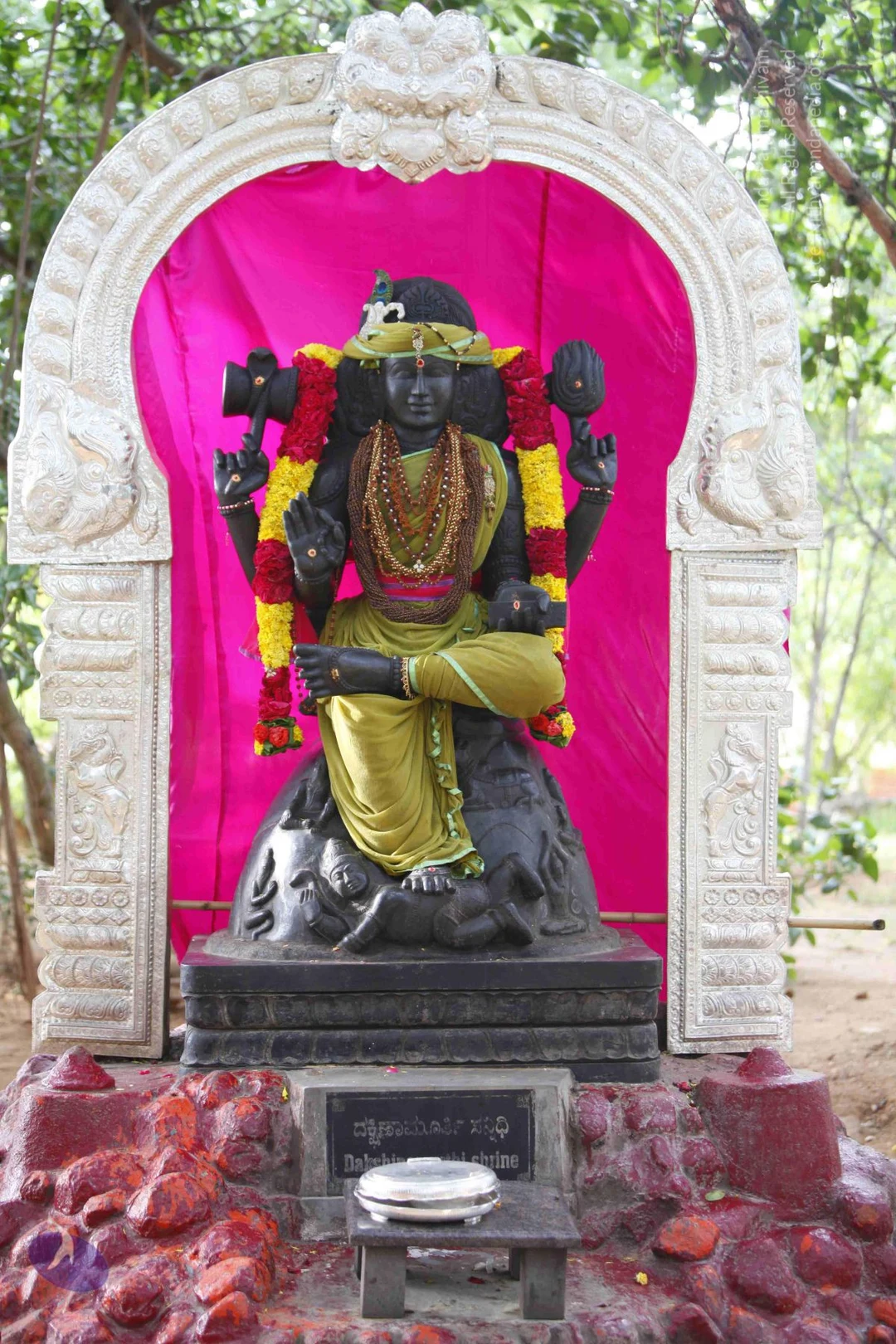
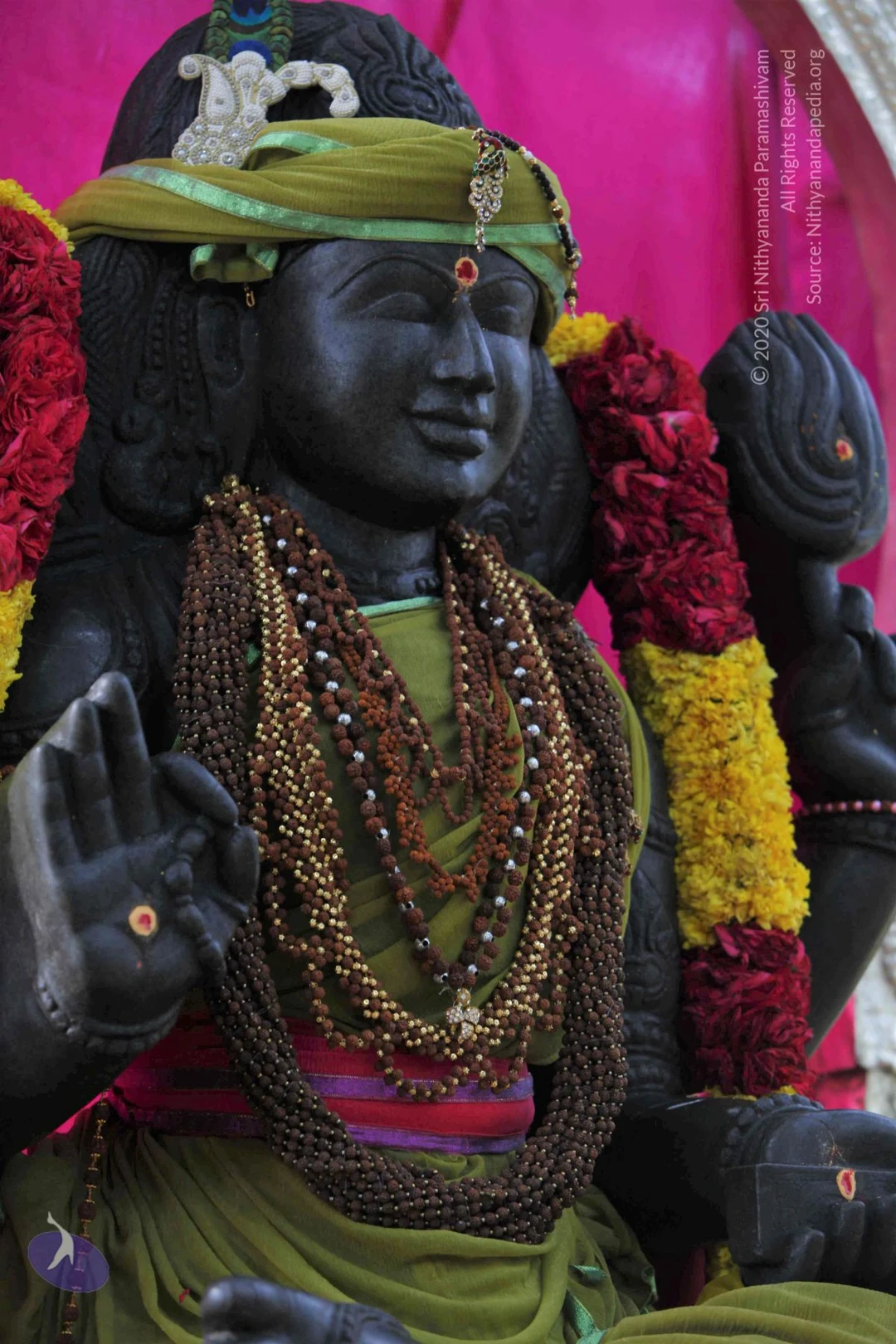
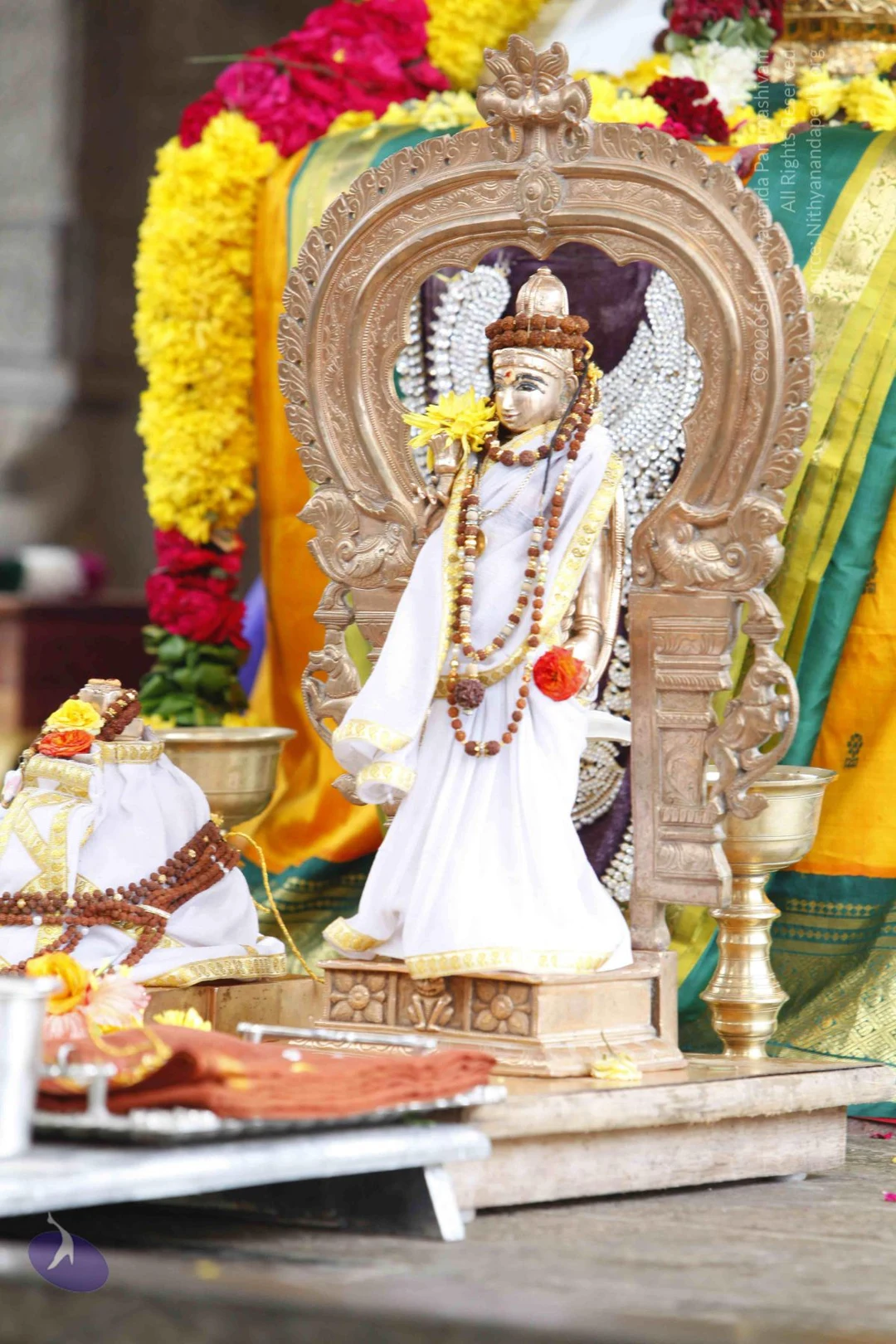
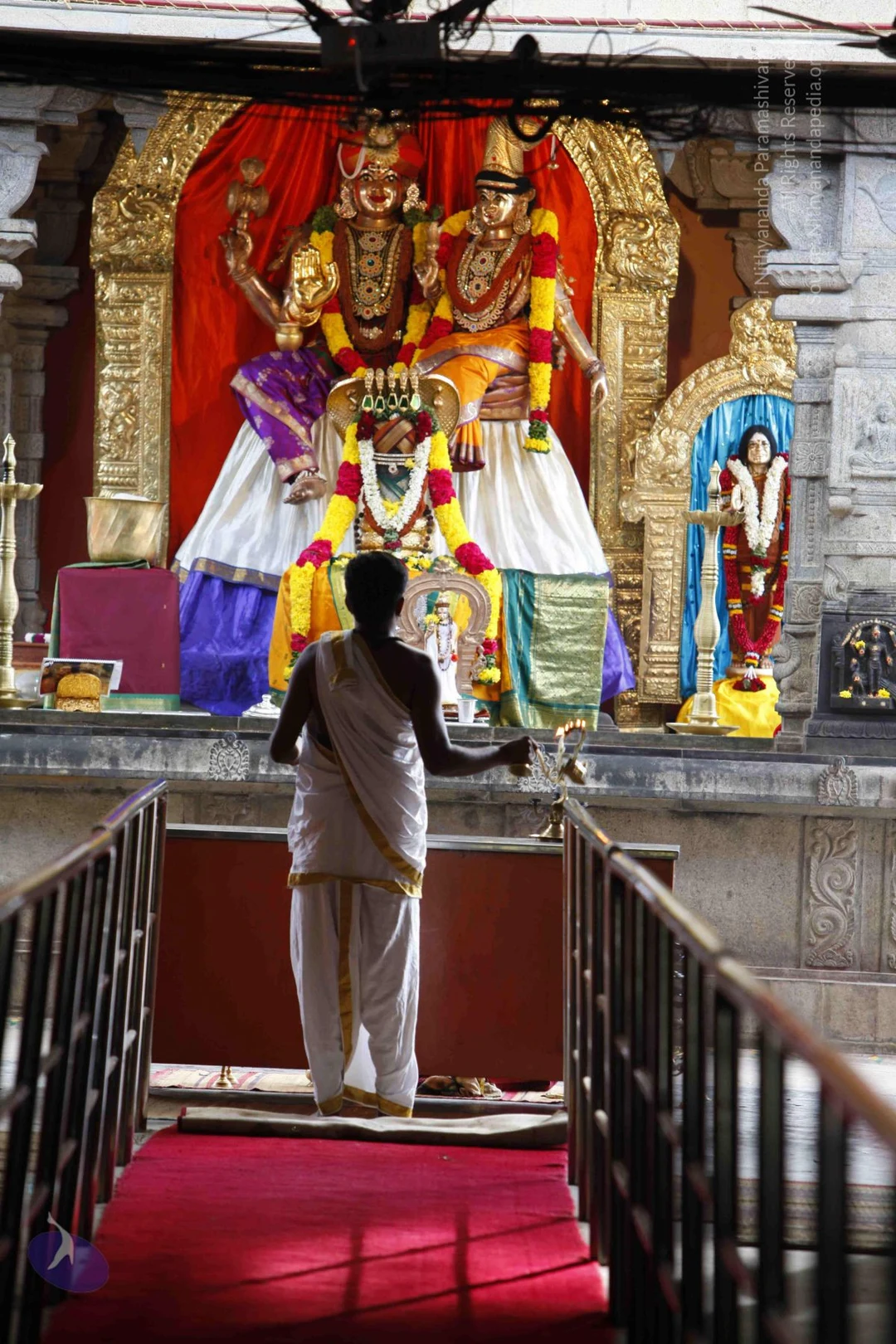
A black stone statue of a four-armed deity, identified by its inscribed plaque as Dakshinamurthy Shrine, sits on a dark pedestal before a bright pink backdrop inside a carved silver-toned arch. The figure wears a green dhoti-style cloth, layered rudraksha and bead necklaces, a green headband with a crescent ornament, and a garland of yellow and red flowers draped over the shoulders. Its hands hold a drum, a trident-like implement, and other symbolic objects. A silver plate with offerings sits on a small stand in front of a red-stone base, with trees and greenery around the shrine. No people are visible.A black stone statue of a four-armed deity murti seated in a lotus-like posture on a rounded pedestal, wearing a yellow-green dhoti and a yellow-green headband, layered rudraksha-style beaded necklaces and many garlands of red and yellow flowers. The statue is framed by an ornate white stone arch with carved scrollwork inside a pink cloth backdrop, set outdoors among green trees. A plaque below reads Dakshinamurti Samadhi shrine in English and Kannada, with a silver offering plate on a small wooden stool and red-painted stones at the base. No people are visible.Close view of a black stone deity murti with a dark face and closed eyes, wearing a green turban with a gold-and-green band, a jeweled ornament at the forehead and a peacock-feather topping. Layers of brown and gold rudraksha-style beaded malas and a green garment cover the chest, with a red and purple sash at the waist. Garlands of red roses and yellow marigolds hang over the shoulders and arms, and the hands show red dots. A bright pink backdrop fills the background.Photograph of a gilded temple shrine with a seated pair of golden deity murtis under an ornate arched frame against a red silk backdrop. The figure on the left wears a red turban, jewelled necklaces and holds a sceptre and a hand gesture; the figure on the right wears a tall ornate crown, orange and purple silk and a garland. Both are draped with red, yellow and white flower garlands. A small white figure stands before a brass peetha arch at the base, flanked by silver vessels, a brass lamp and a teal and gold cloth. No living people are visible.A photograph inside a temple shrine showing a priest seen from behind, wearing a white dhoti with gold border and a white upper cloth, holding a lit oil lamp toward a raised altar. The altar holds large golden deity murtis, a seated pair with garlands of yellow and red flowers, one wearing a purple skirt and the other an orange-and-white garment, set against red drapery and gold arched frames. To the right stands a smaller garlanded figure in a blue alcove, and brass lamps flank the altar. A red carpet runs along the floor toward the shrine with metal railings on either side.

Leela-Alankar

1 photoSource gallery
Two golden deity murti sit side by side on a throne-like seat decorated with gold carving, draped in red and pink silk and heavily garlanded with yellow marigolds, red roses and green leaves. The figure on the left holds a golden pot and wears a red turban, pink dhoti, layered pearl and bead necklaces and a blue-stoned pendant. The figure on the right wears a tall black crown, a red and gold sari, white pearl necklaces and a green-stoned pendant, and holds a golden staff. In front, a copper-gold vessel stands on a gold cloth filled with white grain. Green foliage blurs in the foreground.

Pratyaksha-Pada-Puja-Garbha-Mandir
6 photosSource gallery
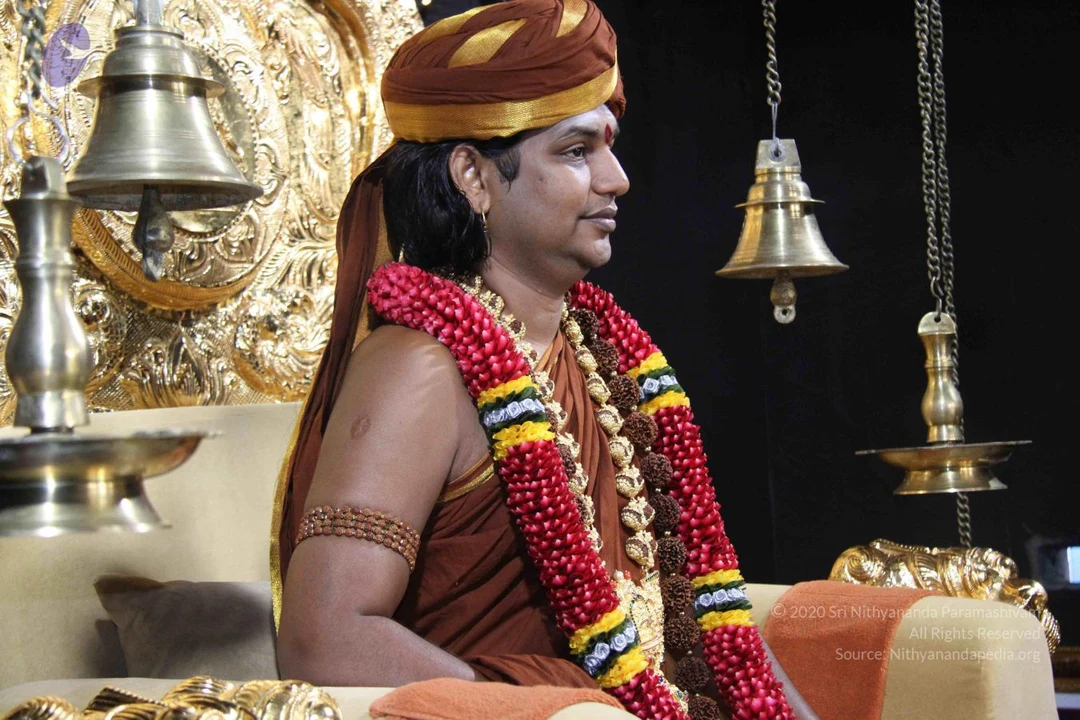
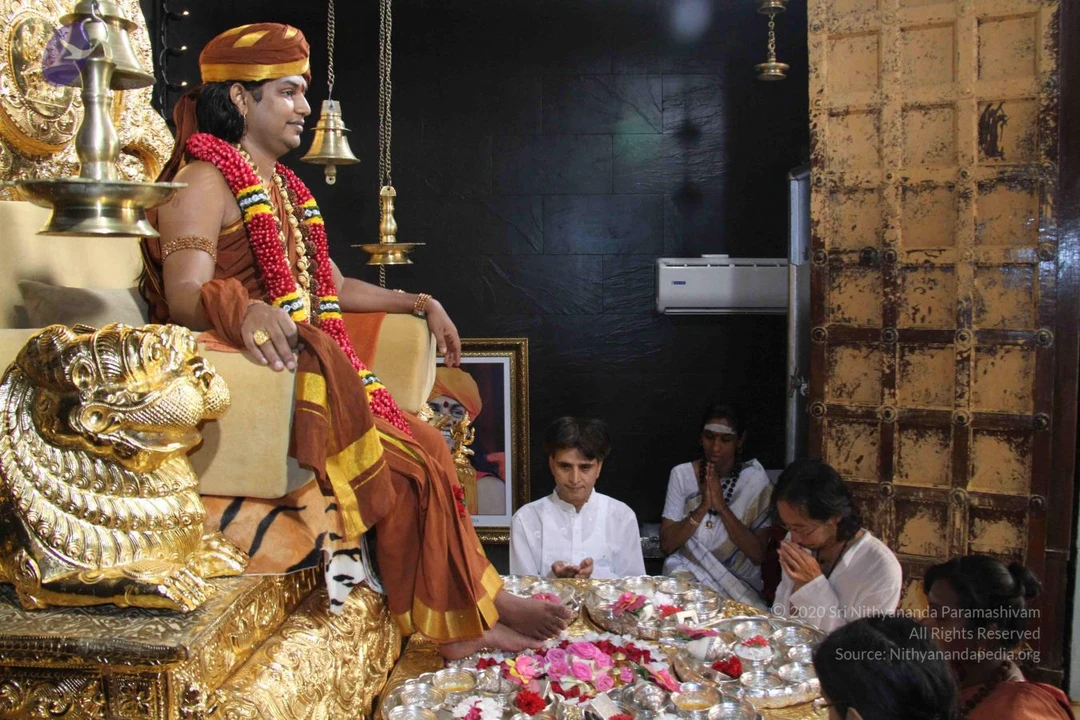
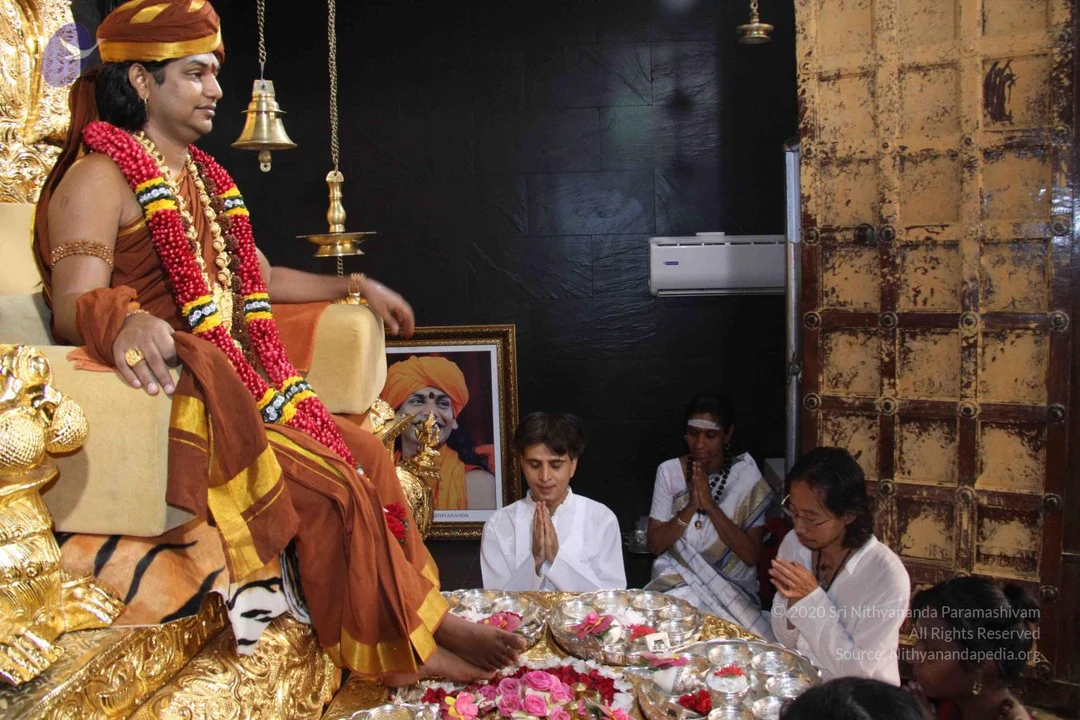
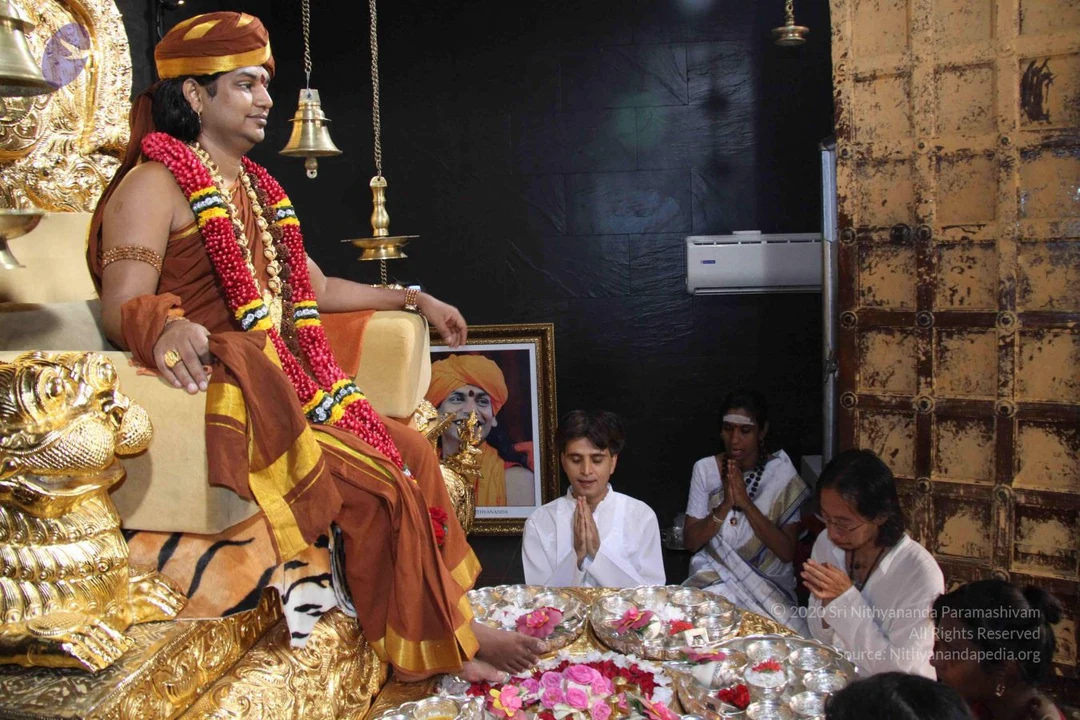
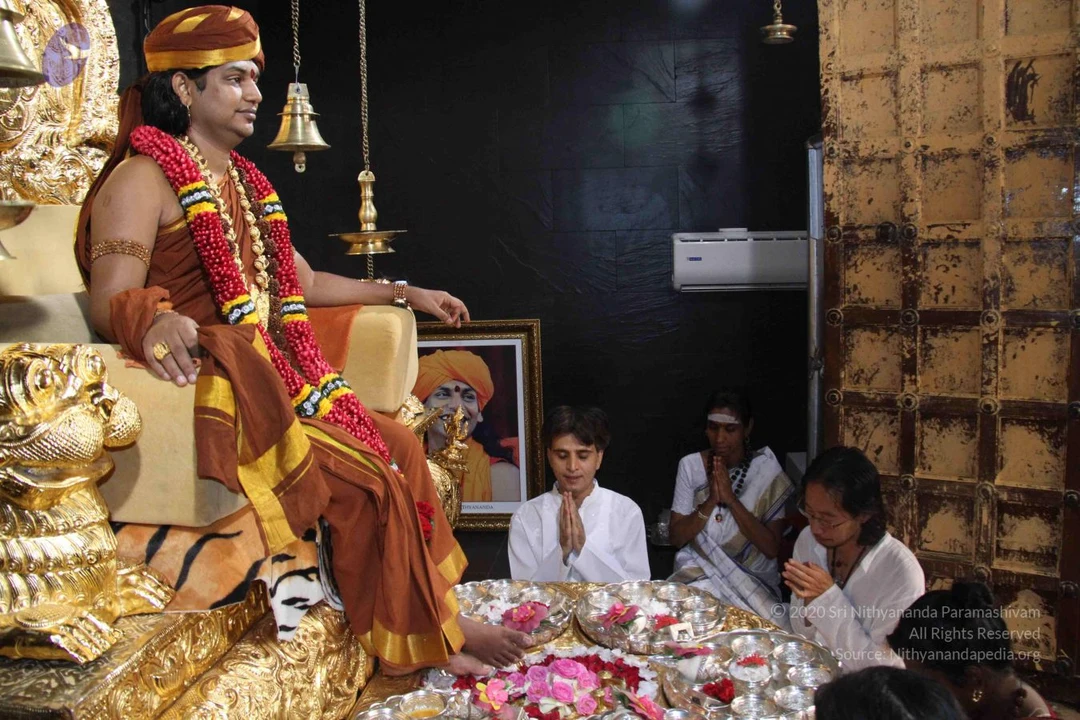
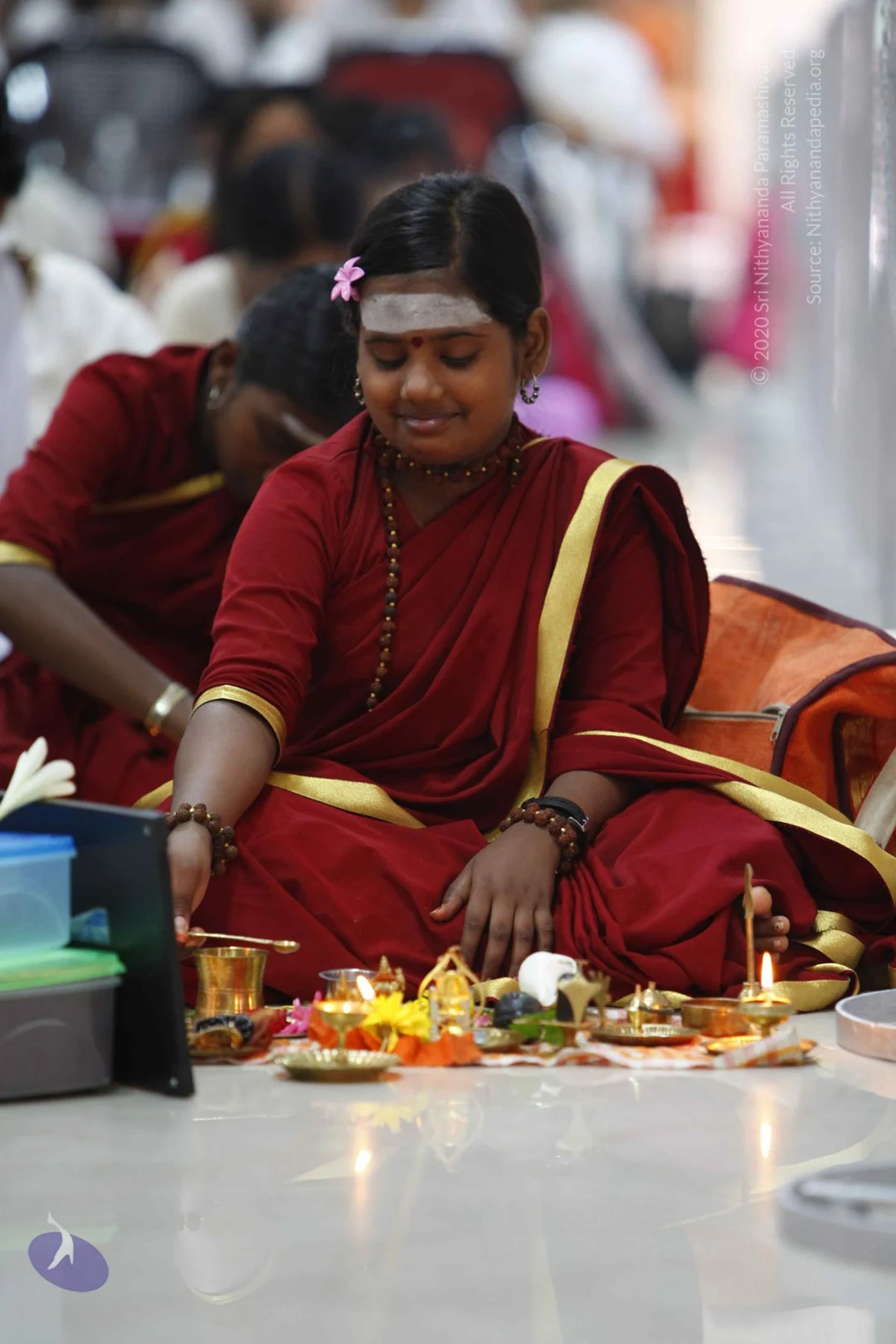
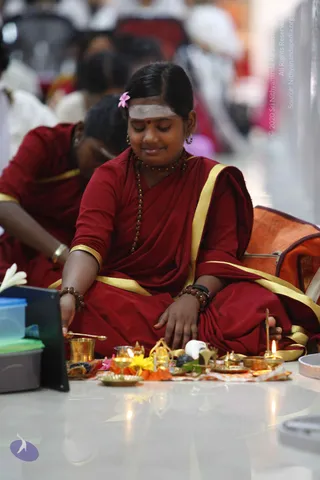
A photograph of a seated man in a rust-orange turban with a gold border, wearing an orange-brown shawl with a gold-bordered cloth, a red bindi on his forehead, and dark shoulder-length hair. He wears a thick multi-strand garland of pink flowers with yellow and white accents, multiple rudraksha malas, a long gold necklace of ornate pendants, and a large gold pendant with gemstones and an embossed deity image. He raises one hand in a blessing gesture while seated before an ornate gold repoussé backdrop. a person, seated in a blessing pose in a garlanded satsang setting.A man seated on an ornate gold throne in profile facing right, wearing a saffron-orange turban with gold stripes, a rust-brown shawl draped over the shoulders and a bare upper arm with a beaded bangle. He wears a thick multicolour garland of red flowers with yellow and green accents, and a rudraksha mala with gold ceremonial pendants on the chest. Brass hanging bells with chains and a brass lamp stand flank him on a dark background, and an orange cloth rests on the cushioned armrest. a person is shown seated as the central figure in the satsang setting.A photograph of a seated figure on a gold-and-cream throne flanked by a gilded lion-shaped armrest and brass oil lamps hanging nearby. In front, a young man in white kurta with hands joined, and a woman in a white sari with hands in namaste, sit beside a silver thali of pink and red flower petals and offering plates. A small framed portrait stands behind the throne, and a wooden door with brass studs fills the right side. Two more devotees are partly visible at the lower right.A photograph of a golden-throne satsang setting. A man seated on an ornate gold throne with a tiger-motif base wears an orange-saffron head wrap, rust-orange robes with a gold-bordered cloth, a red and white flower garland, and a rudraksha-style bead necklace, with bangles on his wrist. He sits with his bare feet forward and his hands resting on the armrest. Two devotees kneel before him with palms joined in namaskar: one in white garments and one in a white sari with a red-bordered cloth, their hands near brass plates of pink and red flowers, offerings and small lamps. A third devotee in white kneels at right beside a gold-framed portrait of a saffron-turbaned man and a small deity figure. Hanging brass bells and an oil lamp are above, and a large carved wooden door stands on the right wall.A photograph of a seated man in a saffron-orange turban and orange-brown robes on a gold-trimmed throne decorated with a tiger-striped cushion. He wears a long red and multicolour flower garland, a gold necklace and a bangle, and has his bare feet resting on a tray of flowers. Beside him a framed portrait labelled "Paramahamsa Nithyananda" shows a man in a saffron turban. Two women in white garments and a younger person in white kurta sit with palms pressed together in prayer before silver puja trays of rose petals, flowers and brass vessels. Hanging brass bells and a wall air conditioner are visible.A young girl with a white forehead band and red bindi sits cross-legged on a glossy white floor, wearing a deep red sari-style garment edged with gold border and rudraksha beads around her neck and wrists. She arranges brass puja items, including a small brass cup, oil lamps, yellow flowers, and fruit, on a cloth in front of her, with a lit oil lamp and a candle nearby. A pink flower is tucked in her hair. Behind her, another person in red clothing sits bent over, and rows of seated devotees in white and red appear blurred in the background.

Satsang

7 photosSource gallery
A man stands on a raised platform with palms pressed together in namaskar, eyes closed, in front of an ornate gold throne with carved lion heads. He wears an orange-and-yellow turban, a red and yellow flower garland, rudraksha malas, a large gold pendant, and saffron-brown dhoti and shawl with gold borders. A tiger-striped cloth covers the platform. Behind him stands a gilded wooden doorway with hanging lamps, and painted deity figures flank the frame. Long, swept-back hair is not visible; cues are a turban, rudraksha malas, ceremonial gold and saffron clothing, so this is a probable Swamiji appearance-based candidate present in person.A man stands in front of an ornate golden throne with carved lion heads and a tiger-skin draped platform, palms pressed together in namaste. He wears an orange-and-gold turban with a red bindi, a saffron-brown dhoti and shawl with gold borders, layered red-and-yellow flower garlands, a rudraksha mala, a gold pendant necklace and gold bangles. A red and orange decorated backdrop with string lights frames the scene.A standing man in an orange-saffron turban, orange dhoti and shawl with gold borders stands before a golden ornate throne with carved lion heads and a tiger-striped cushion. He wears a red and multicolour flower garland, a rudraksha mala and a heavy gold necklace with a central pendant, plus gold armbands and bangles. He smiles with palms pressed together in greeting. Gilded lion-shaped armrests frame the throne, and a red-and-gold doorway with hanging lights stands behind him.A man stands on a raised platform before a golden throne with carved lion heads and a tiger-skin covered dais, raising both palms in a welcoming gesture. He wears a saffron-orange turban with gold stripes, an orange and gold-bordered robe, a long red and yellow garland, a rudraksha mala and a large gold ceremonial pendant necklace. Gold bangles and earrings complete his attire. Behind him are golden arches, hanging lamps and string lights. Swamiji (probable): the figure has long swept-back hair, a saffron turban, ornate gold necklaces and rudraksha beads, consistent with the satsang setting.A man stands on a raised golden dais in front of an ornate golden throne with lion carvings, smiling with both palms raised in a blessing gesture. He wears an orange-and-gold turban with a red bindi, a red and yellow flower garland, a rudraksha mala, a large gold ceremonial necklace with a lotus-shaped pendant, gold bangles and an orange robe with gold borders. A tiger-striped cloth covers the platform beneath him, and a gilded lion-faced chair stands on each side. Behind him hang lamps and brass bells in a golden shrine-like setting.A smiling man stands centrally in an ornate hall, wearing a rust-orange turban with gold stripes and an orange-brown dhoti and shawl edged in gold. He wears layered rudraksha malas, a gold ceremonial necklace with a large pendant, gold bangles, and a red-and-yellow flower garland. His palms are raised toward the viewer in a blessing gesture. Behind him, gold lion-carved thrones and a tiger-striped rug. Swamiji (probable): long hair, orange turban, rudraksha malas and gold ceremonial necklace; shown in person on stage during satsang.

Sarva-Darshan
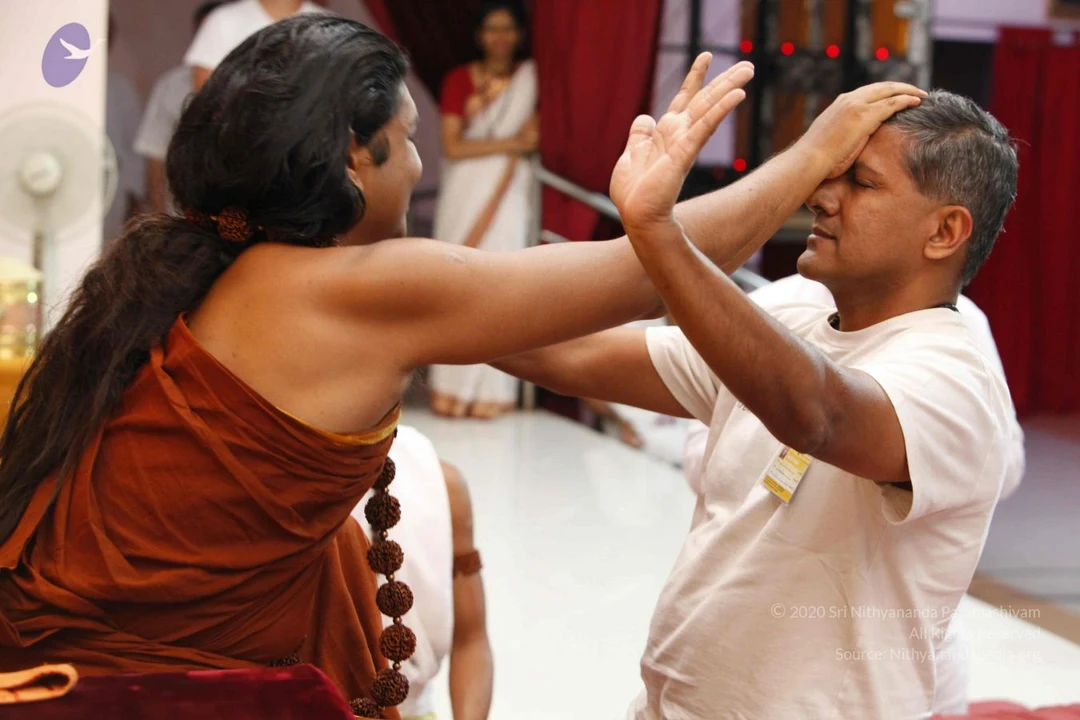
8 photosSource gallery
A photograph of a smiling man in an orange-brown turban with a gold stripe and a red bindi, wearing a brown-orange robe with a gold-bordered sash. He wears layered rudraksha malas, a heavy gold necklace with a deity pendant, red and yellow flower garlands, gold bangles and a wristwatch. He raises both palms in a blessing gesture in front of an ornate gold throne-like chair with a dark backdrop and hanging brass lamps. Appearance-based probable identification as Swamiji: distinctive ceremonial turban, rudraksha malas and ornate gold necklace, seated at a golden throne.A smiling man stands in front of an ornate golden throne, raising both palms outward in a greeting gesture. He wears a rust-orange and gold turban with a red tilak on his forehead, gold hoop earrings, and a brown-orange shawl over saffron-toned clothing. Layered rudraksha malas and a gold necklace with a large ornamental pendant hang on his chest, with red and yellow flower garlands draped over his shoulders. Gold bangles and a wristwatch are visible. Behind him, a dark doorway with hanging lamps and a gold-embossed backdrop frames the scene. Swamiji (probable) appears in person as the central figure, with the rudraksha malas, gold ornaments and saffron-orange turban as the qualifying cues.A man stands in front of an ornate gold throne, smiling and raising both palms in a greeting gesture. He wears a rust-orange turban with a gold stripe, a red tilak on his forehead, and gold hoop earrings. Around his neck are a gold necklace and rudraksha malas, with a large gold pendant at the chest, and a thick garland of red flowers with yellow and white accents hangs down his front. He is dressed in rust-brown robes with gold borders and wears gold armlets and rudraksha bracelets. Behind him are carved gold panels and hanging brass lamps.Swamiji (probable) stands smiling with both palms raised in a blessing gesture before an ornate gold-carved backdrop. He wears a rust-orange turban with gold stripes, a red bindi, and rudraksha beads across his chest and arms. A heavy gold necklace with a gold pendant and multiple garlands of red flowers with yellow marigolds and white blooms hang over a brown-orange garment with gold borders.A photograph in a temple hall with gold-framed deity images and pink-and-gold pillars behind. In the foreground a man in an orange-brown saffron dhoti and matching turban, wearing a long red and yellow flower garland, a rudraksha mala with a large ceremonial gold pendant, and gold armbands, raises his right hand in a blessing gesture toward two devotees in white who press their palms together in namaste. A smiling attendant in a white dhoti stands behind, and a few other people in white clothes and a woman in the background are visible. a person (appearance cues: orange-saffron ceremonial robe, rudraksha mala, gold pendant and garland) is giving blessings to devotees.An empty ornate gilded throne stands on a red patterned carpet in a temple hall. The throne has a carved arched gold backrest, maroon velvet cushions, and golden lion-head armrests, with a tiger-skin rug draped across its base. Behind it, a painted multi-armed deity statue in orange and green garments stands beside a gold-framed doorway hung with brass lamps, and a golden ceremonial umbrella is visible above. No person is present.
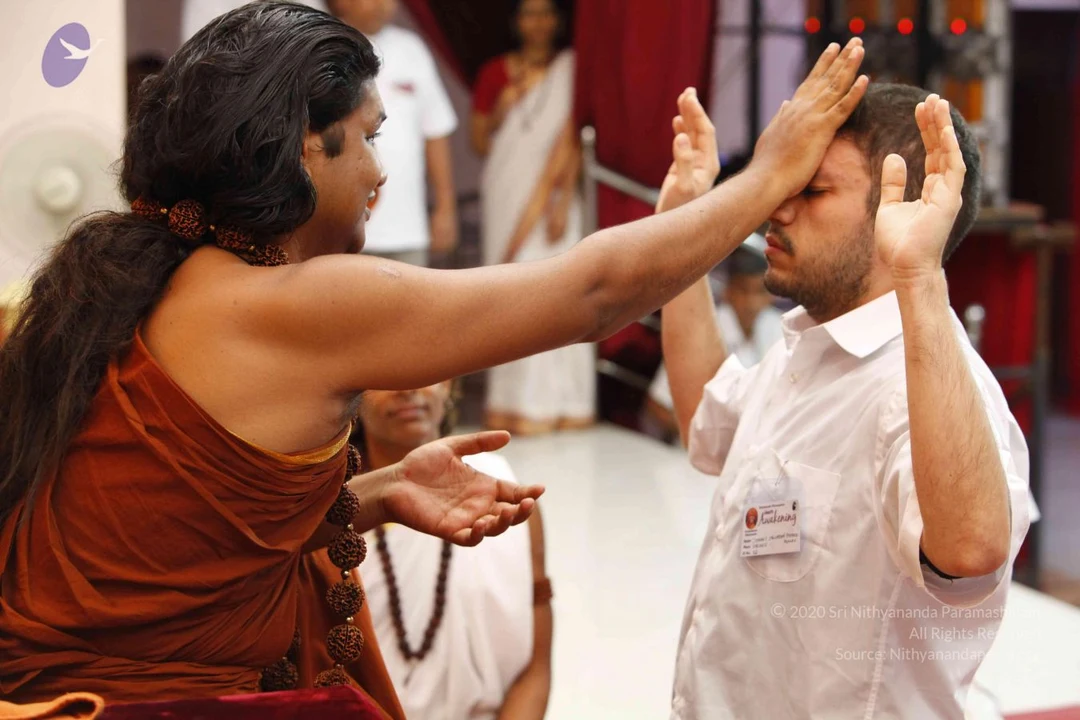
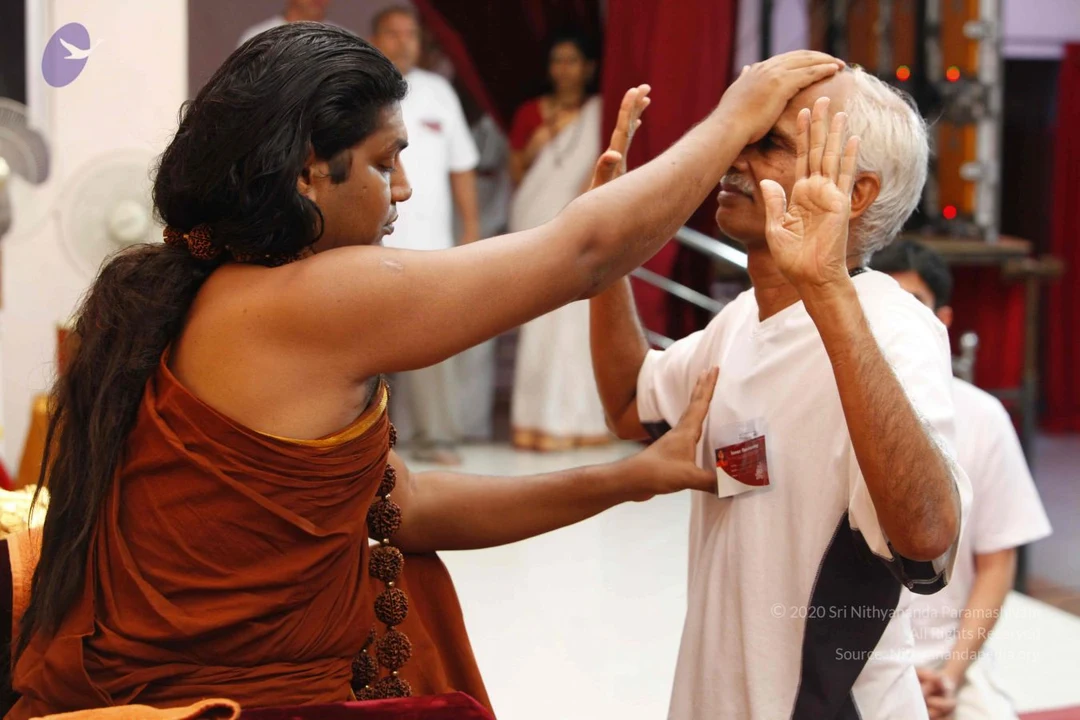
IA
4 photosSource gallery
A seated man in saffron-orange robes and a long rudraksha mala sits cross-legged on an ornate gold throne with a carved arched backrest and lion figures. He holds a silver trident in his raised left hand, has a red bindi on his forehead and long swept-back dark hair, and sits on a tiger-skin rug. Based on appearance cues including long swept-back hair, saffron clothing, rudraksha mala and throne setting, this may be Swamiji (probable), seated in person.A seated man in orange-saffron robes sits cross-legged on a tiger-skin rug before an ornate gold arched throne with carved lion heads. He wears a long rudraksha mala with a bindi on his forehead, holds a silver trident in his left hand and raises his right palm in blessing. Swamiji (probable): long swept-back hair, saffron robes with gold border, rudraksha mala and a trident marks a guru seated in darshan, the presenter of the satsang. The pink backdrop and a faint printed copyright line are present in the image.Photograph of a smiling man seated on a red velvet chair before an ornate gold-embossed backdrop. He wears a saffron-orange robe with a yellow-gold border, multiple strands of rudraksha beads around his neck, and a red bindi on his forehead. He holds a polished silver trident (trishul) upright in his right hand.A man with long swept-back dark hair and a red bindi sits cross-legged on a tiger-striped rug before an ornate gold throne with carved lion-like motifs. He wears an orange-saffron garment with yellow trim and a long rudraksha mala, holding a small microphone near his chin while speaking. Swamiji (probable) based on long hair, saffron clothing and rudraksha mala. Red-cushioned armrests and fruit sit at the sides of the platform.