Skip to content
Friday

6 July 2018

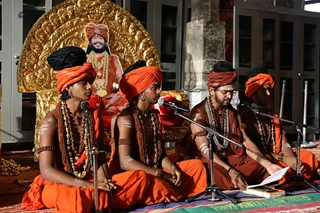
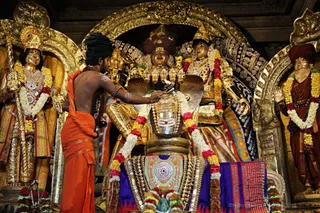
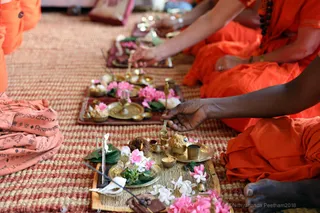
Establishing your Existence on Cosmic Reality || Uttama Utama Seva offered to Nithyanandeshwara Parashiva and Nithyanandeshwari Parashakti at Nithyanandeshwara Sadashiva Devasthanam||

Dated photos
23
Source pages
1
Media
1
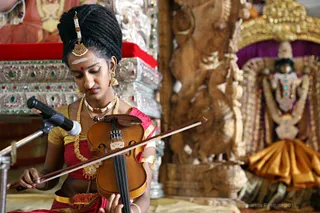
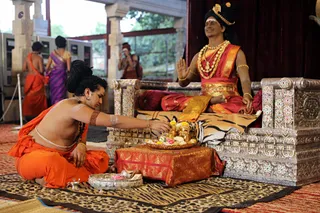
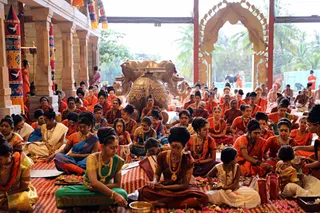
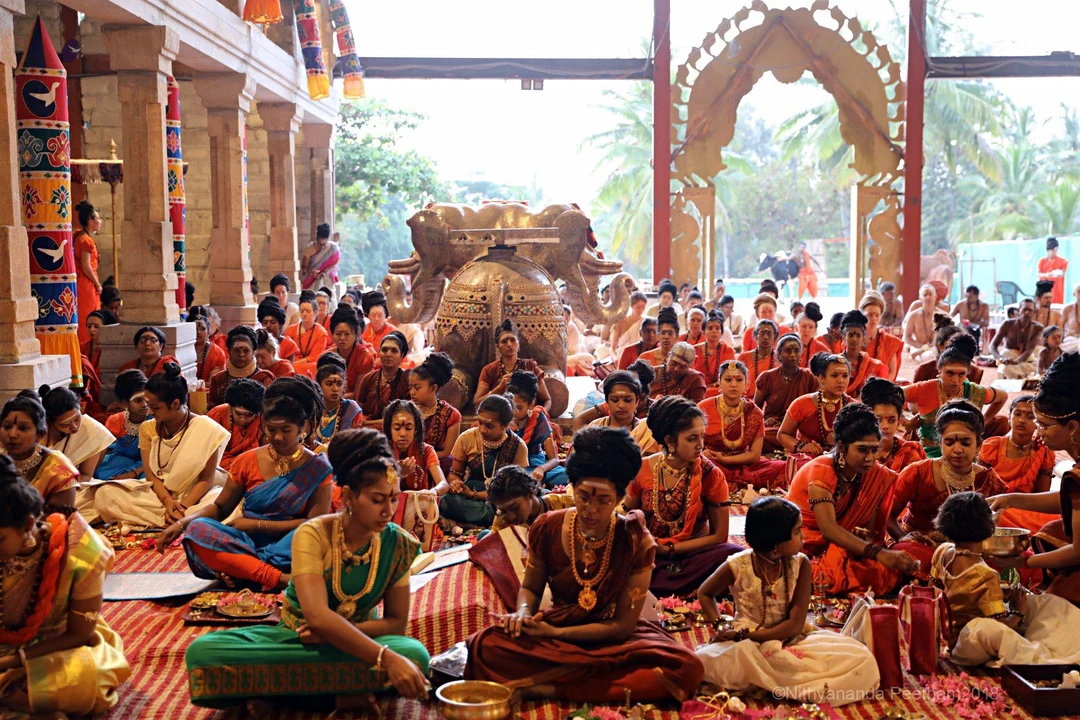
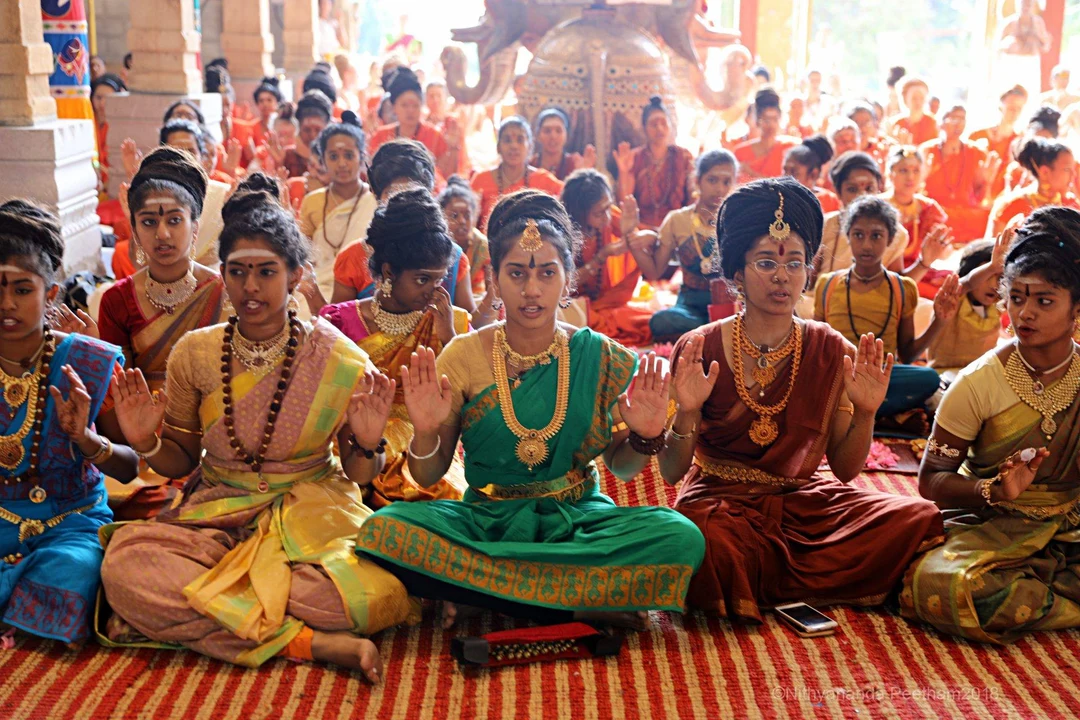
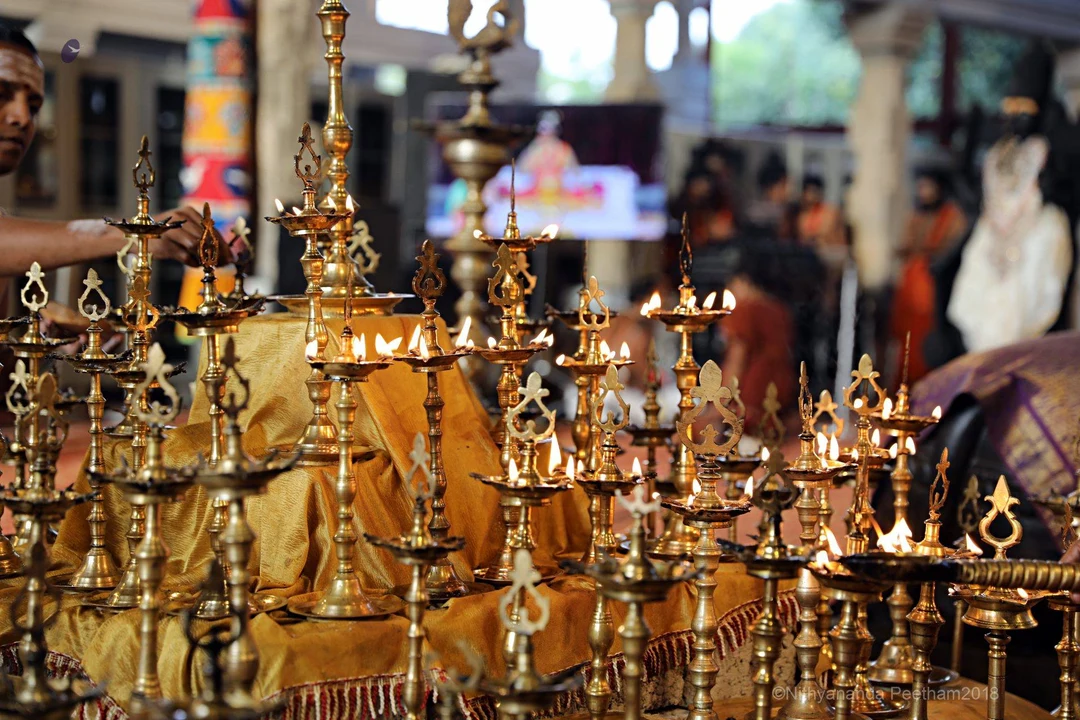
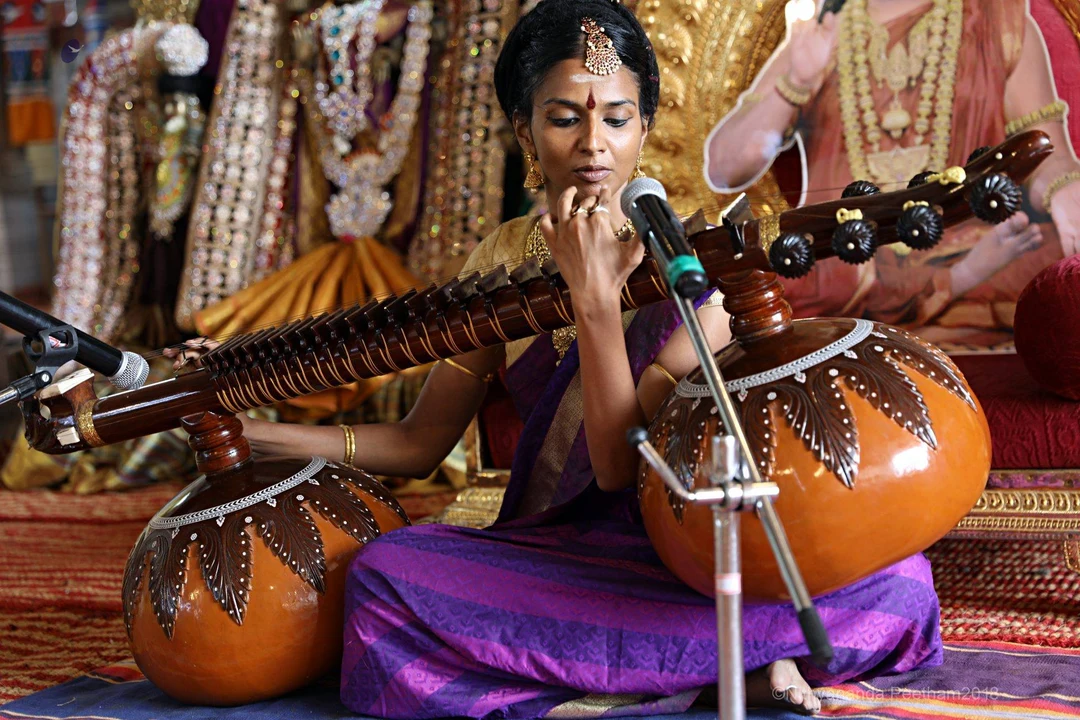
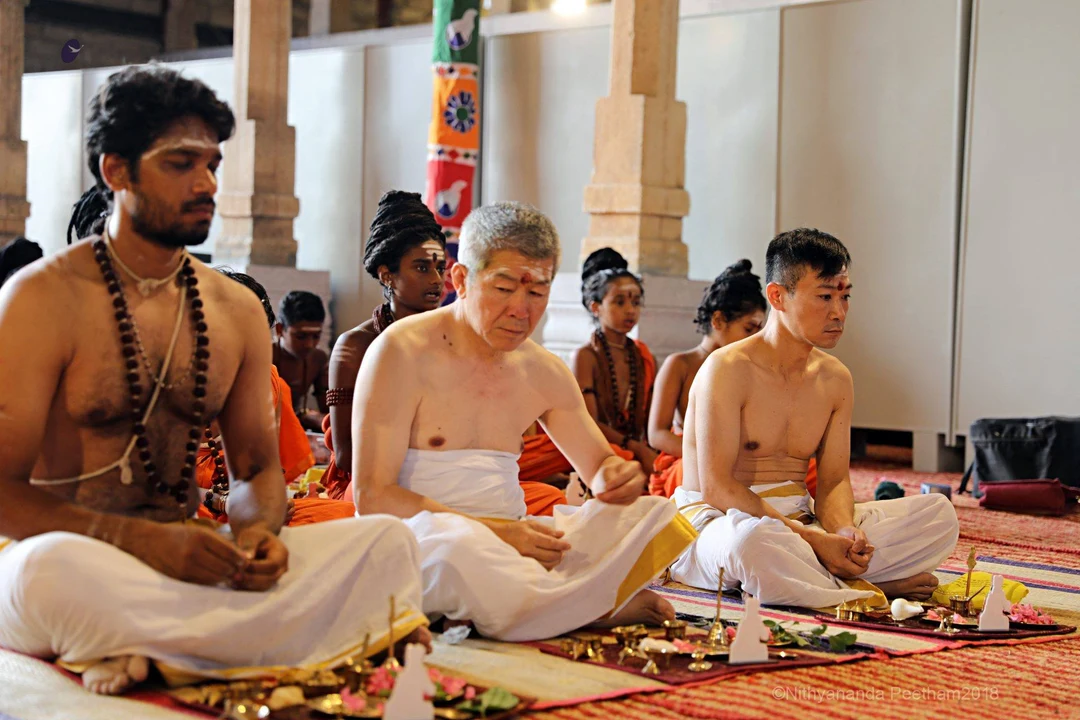
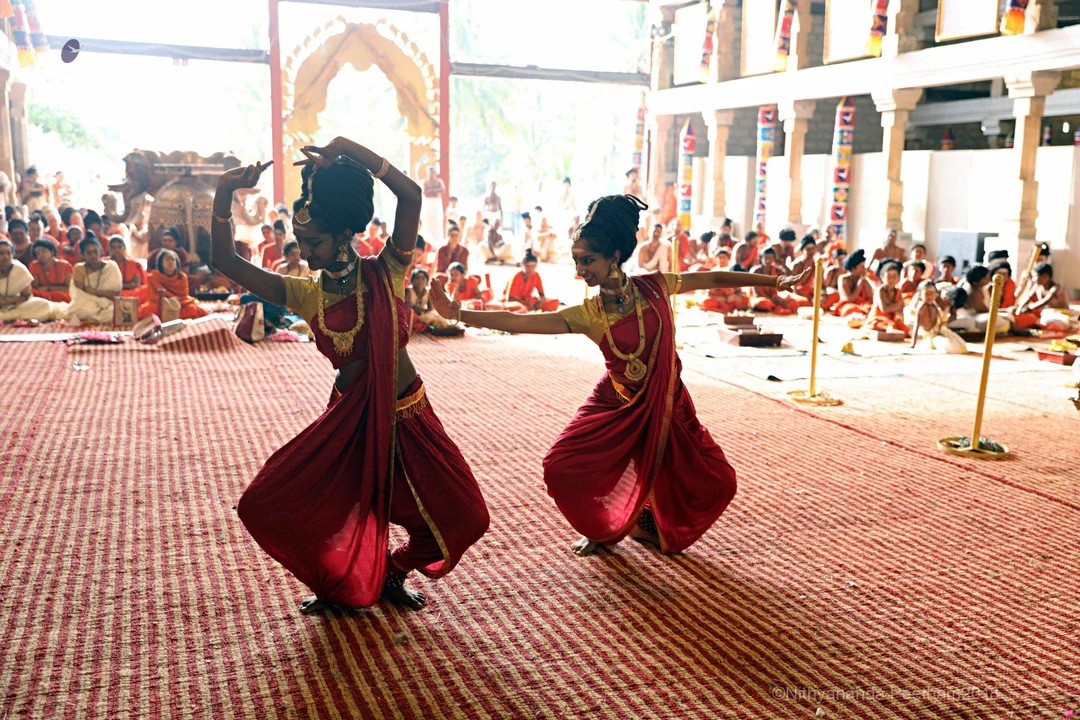
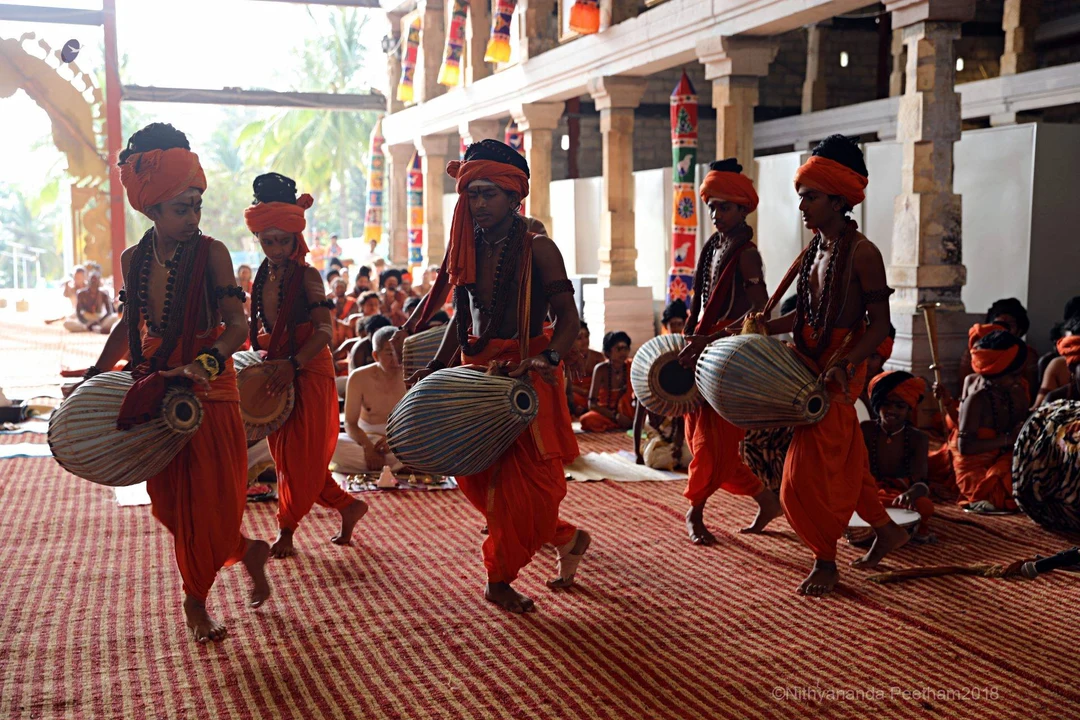
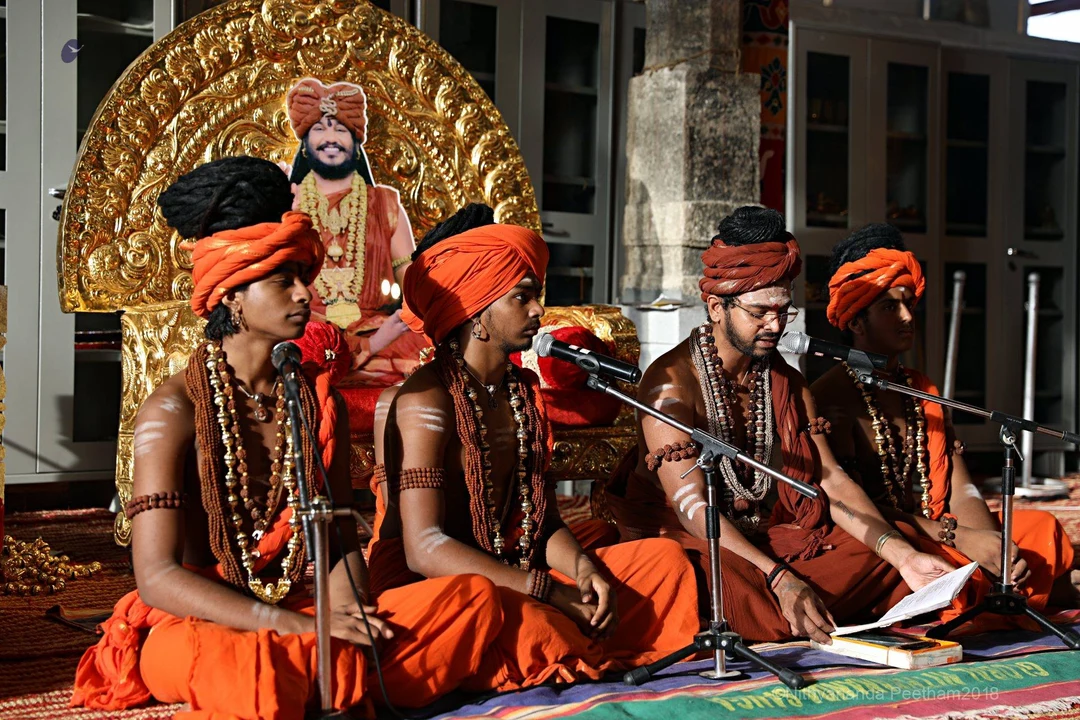
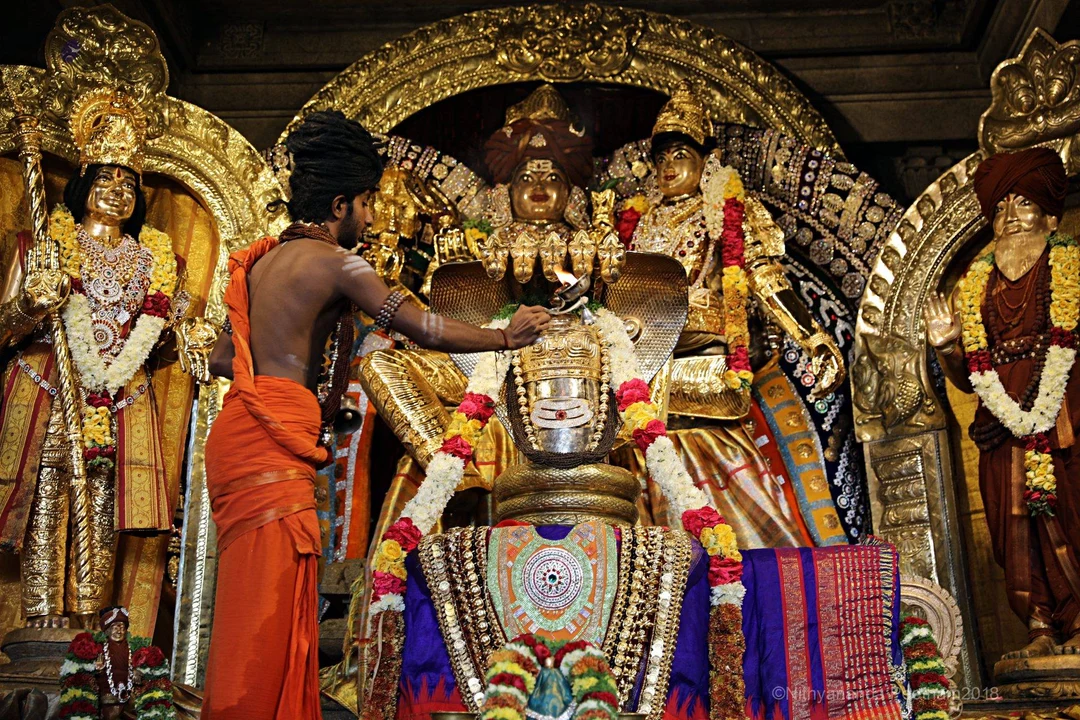
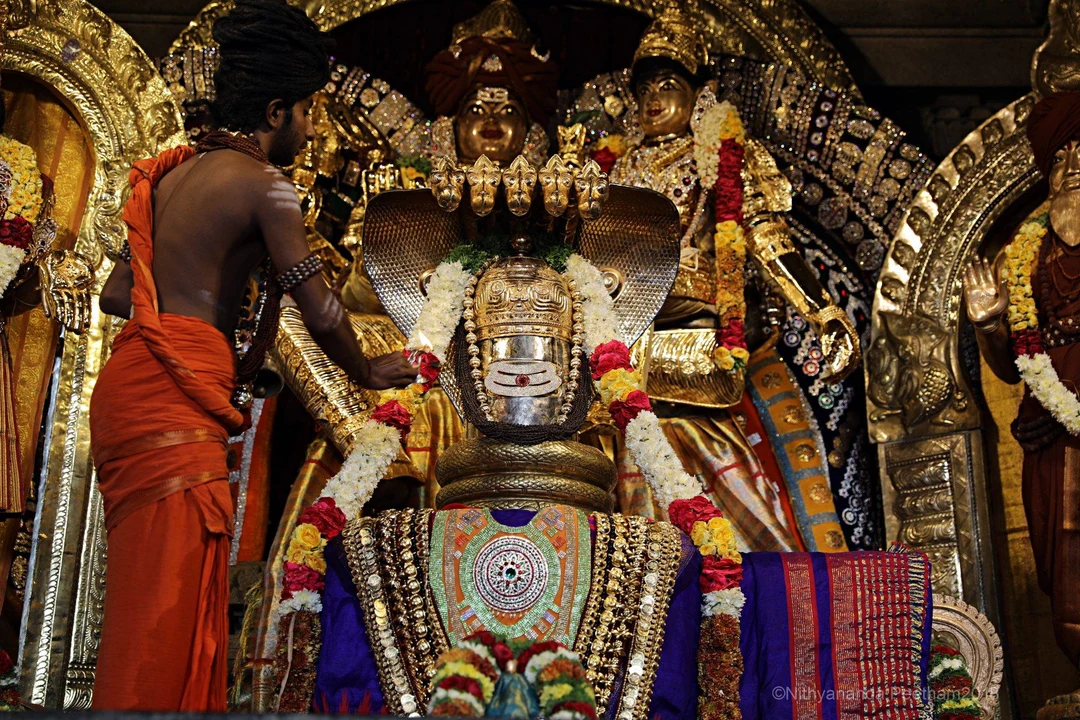
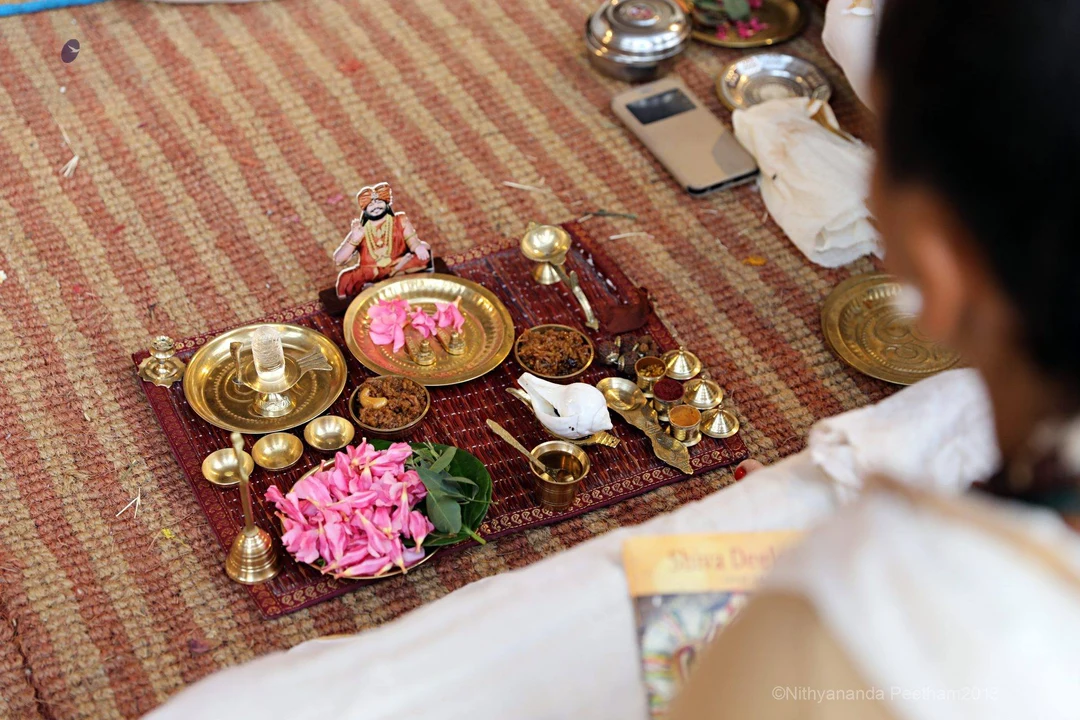
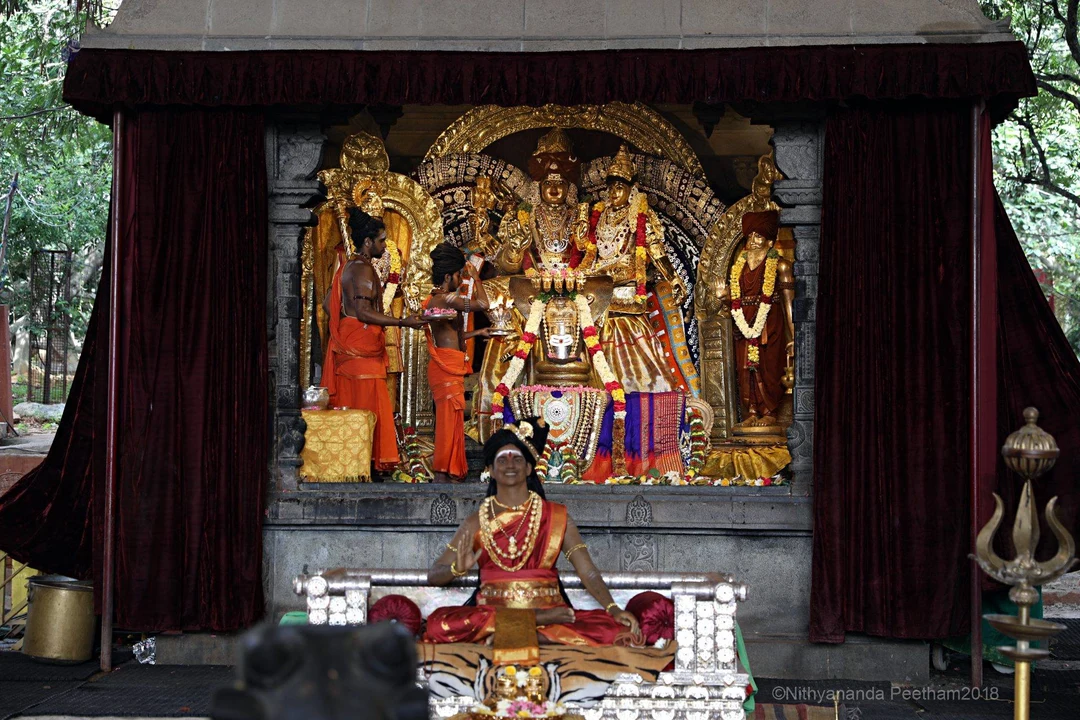
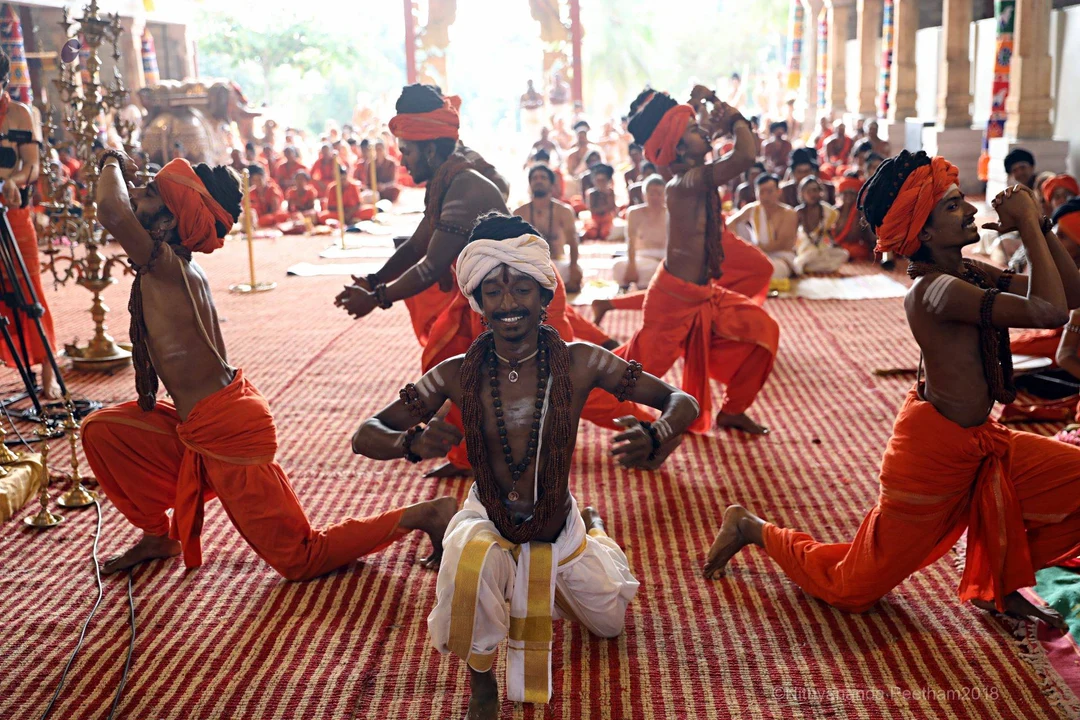
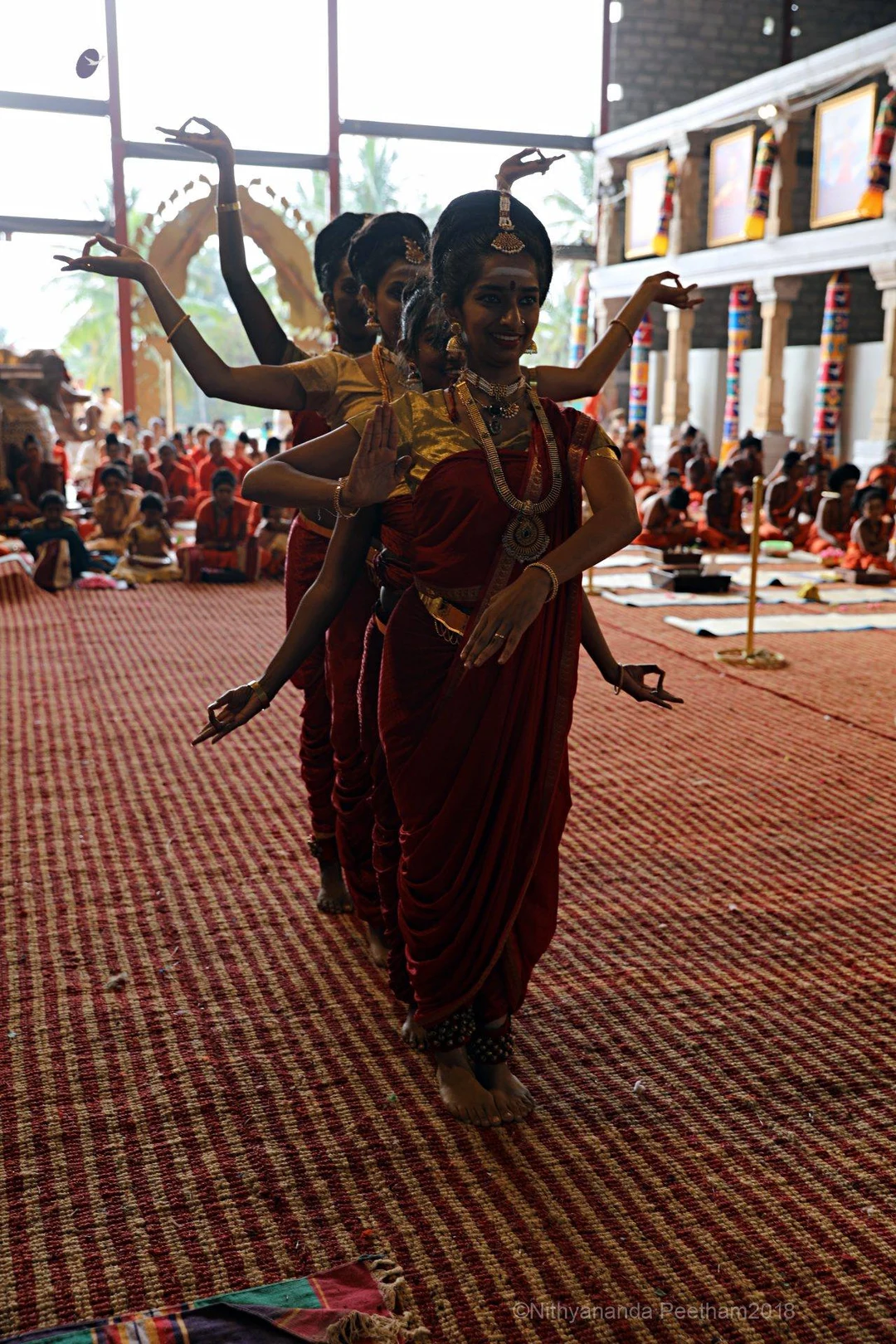
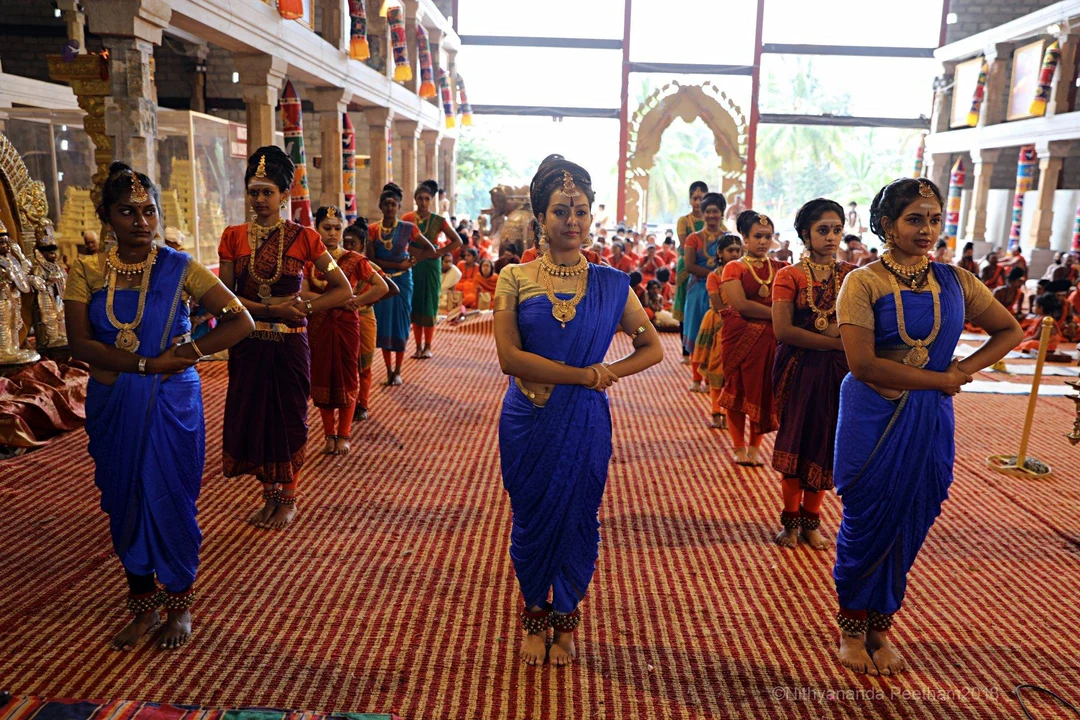
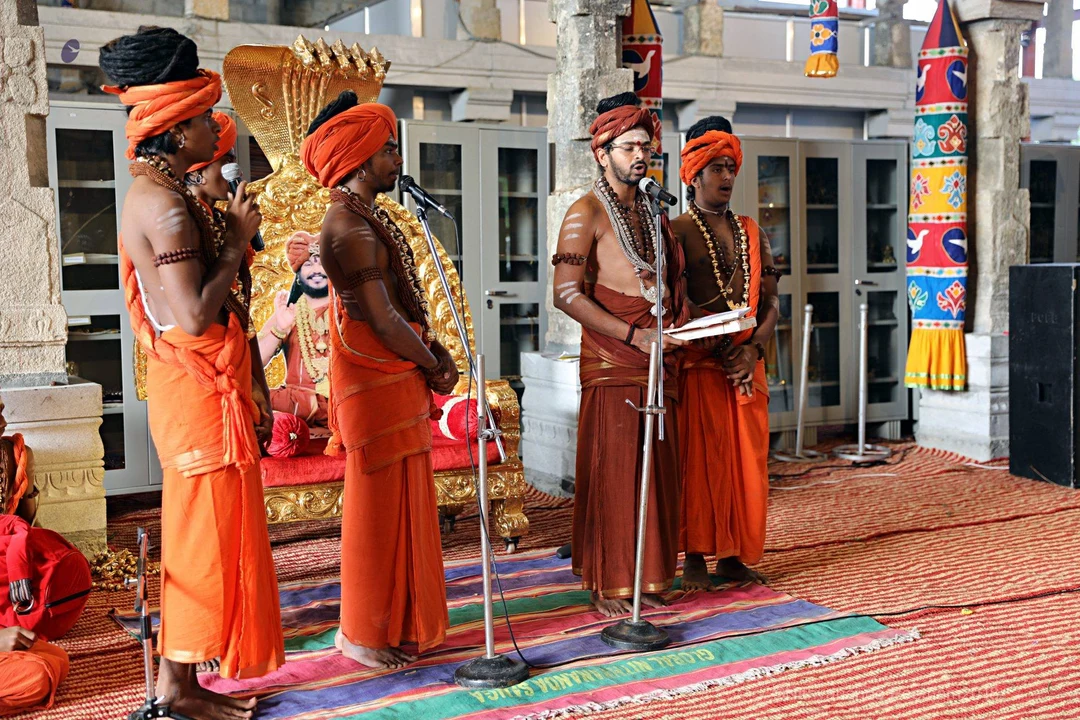
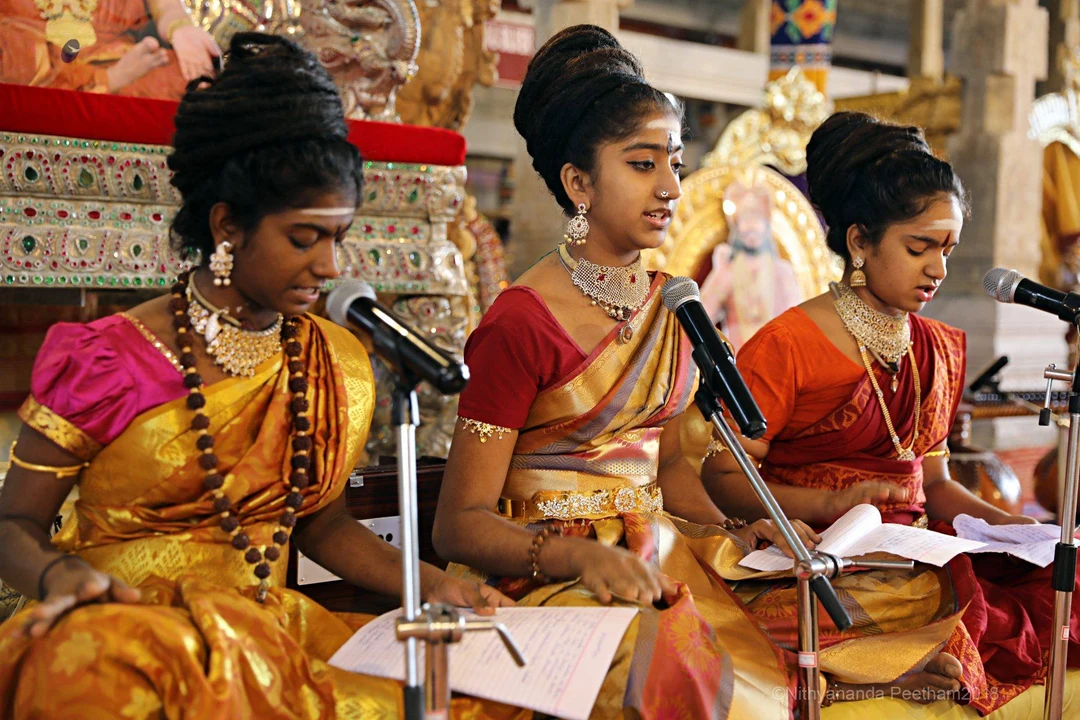
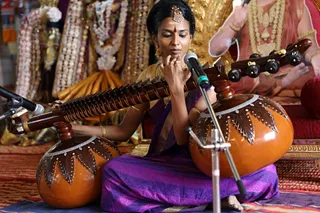
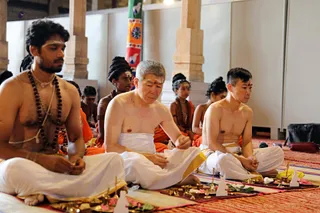
A woman in a red and gold blouse and gold-bordered dhoti-style skirt plays a violin with a bow, seated before a temple altar. She wears a jewelled headpiece, a vertical white tilak on her forehead, a red bindi, layered gold necklaces and drop earrings, with her hair pulled up. A microphone on a stand is in front of her. Behind her, a carved wooden pillar, a gem-studded silver altar with red cushions, and a deity murti draped in a gold garment and garlanded with jewelled necklaces form the backdrop.A photograph in a temple hall showing a shaved-headed priest in saffron cloth sitting cross-legged on a leopard-print mat, bare-chested with sacred ash marks and a rudraksha mala, offering a plate of flowers and a kalasha-style vessel toward a life-sized figure seated on an ornate silver peetha throne covered with a tiger skin. The seated figure is a statue wearing a red and gold dhoti, a gold-bordered orange shawl, layered gold necklaces, bangles and a jeweled crown with hair swept up, one hand raised in blessing. Behind them, several people in saffron and purple garments stand near a row of pillars and metal lockers. The priest is not presented with distinctive a person cues, so no identification is made.A large group of women and girls sit cross-legged on red and cream floor mats in an open temple pavilion during a ritual offering. Most wear orange, red, maroon and saffron saris or blouses with gold necklaces and jewellery, and some wear green, blue or white. Brass plates, small oil lamps and flower petals lie in front of them. In the centre stands a large golden vessel with elephant-head handles and a decorated lid, and red-and-white pillars with painted birds frame the hall. Several people are visible in the background, and a few children are seated in the foreground. A distinct adult candidate for a person is not clearly visible.

July 06 2018

Original wiki page
Contents

Title

Establishing your Existence on Cosmic Reality || Uttama Utama Seva offered to Nithyanandeshwara Parashiva and Nithyanandeshwari Parashakti at Nithyanandeshwara Sadashiva Devasthanam||

Narration

The Supreme Pontiff of Hinduism, Jagatguru Mahasannidhanam, His Divine Holiness, Bhagavan Nithyananda Paramashivam, is the visionary through whom this whole revival of KAILASA is made possible. A segment from the Teachings of His Divine Holiness was shared on the topic of “Existential Reality” - how to establish your ideas about health, wealth, happiness, relationships and life on the Comic Reality along with other sharings from His Teachings from previous years on this day.

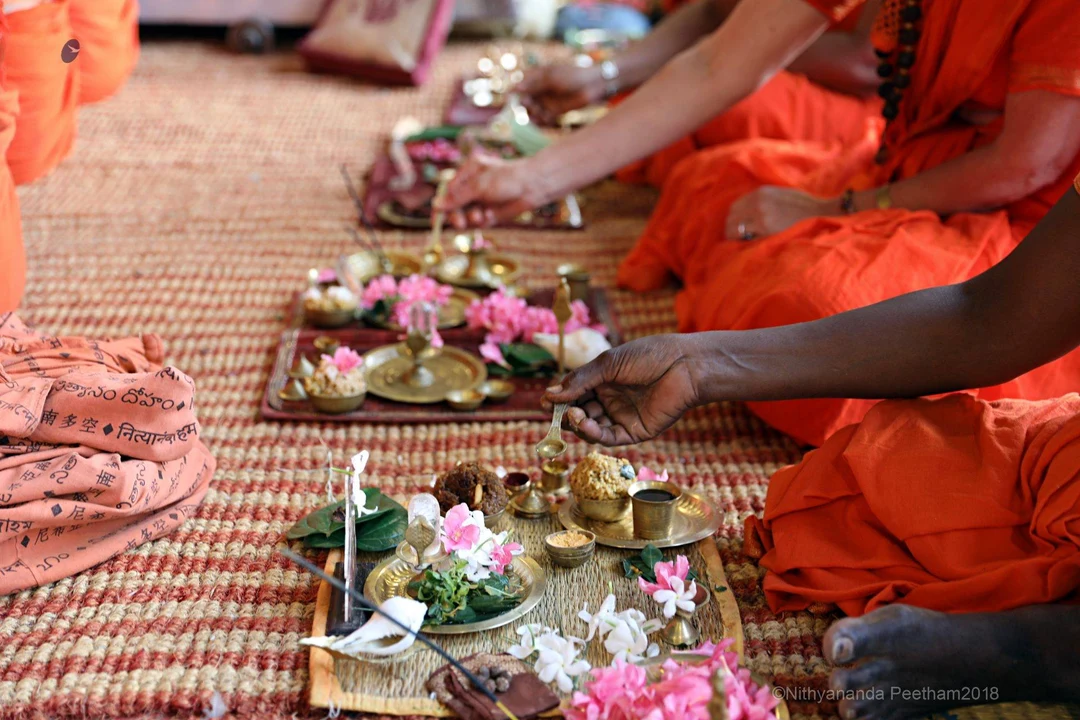
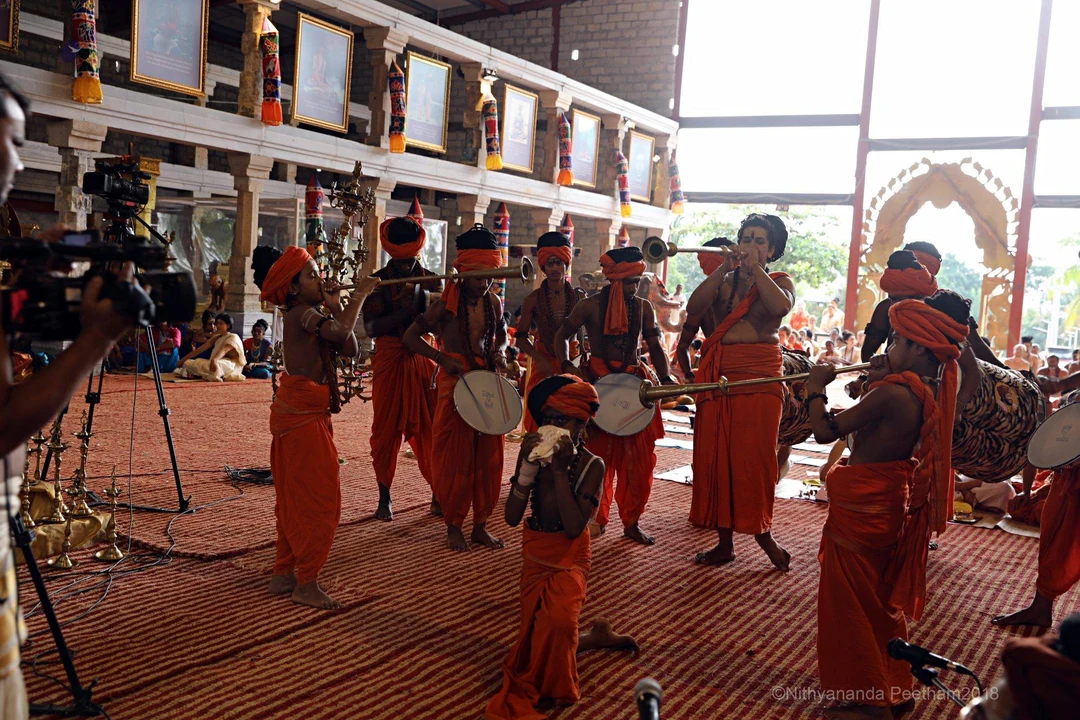
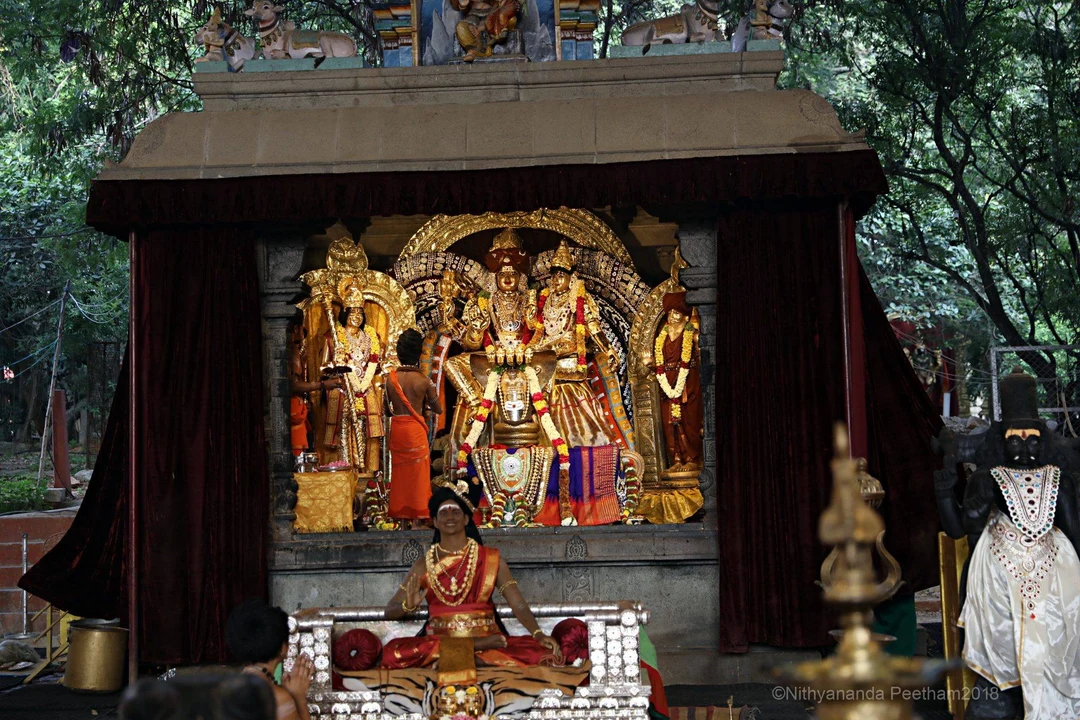
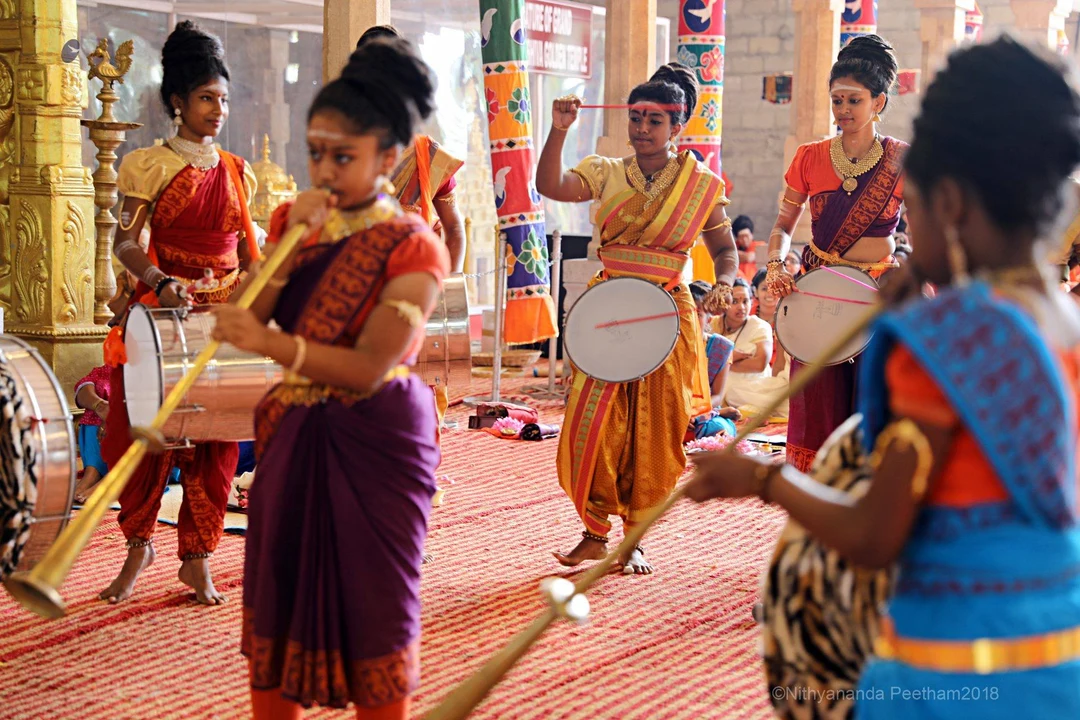
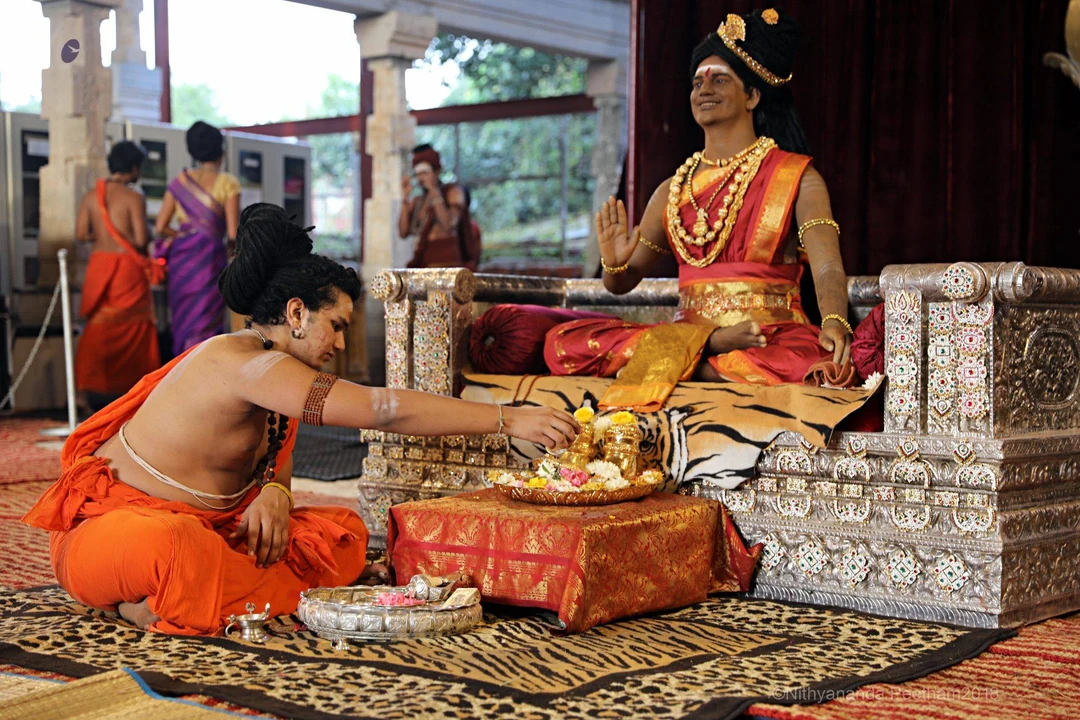
Uttamotama Seva was offered at Nithyanandeshwara Sahashiva Devasthanam to Nithyanandeshwara Mahasadashiva Parashiva and Nithyanandeshwari Parashakti, with various rituals, Sevas, activities and Power Manifestations, inspiring millions towards the Science of Hinduism.

Announcements were made of upcoming programs and shared with all globally via Nithyananda TV and social media platforms for Nithyananda Dhyana Yoga, Nithyananda Kriya Yoga, Kalpataru Yogam and other available offerings of worship for Temple Sevas.

Link to Video:

Photos

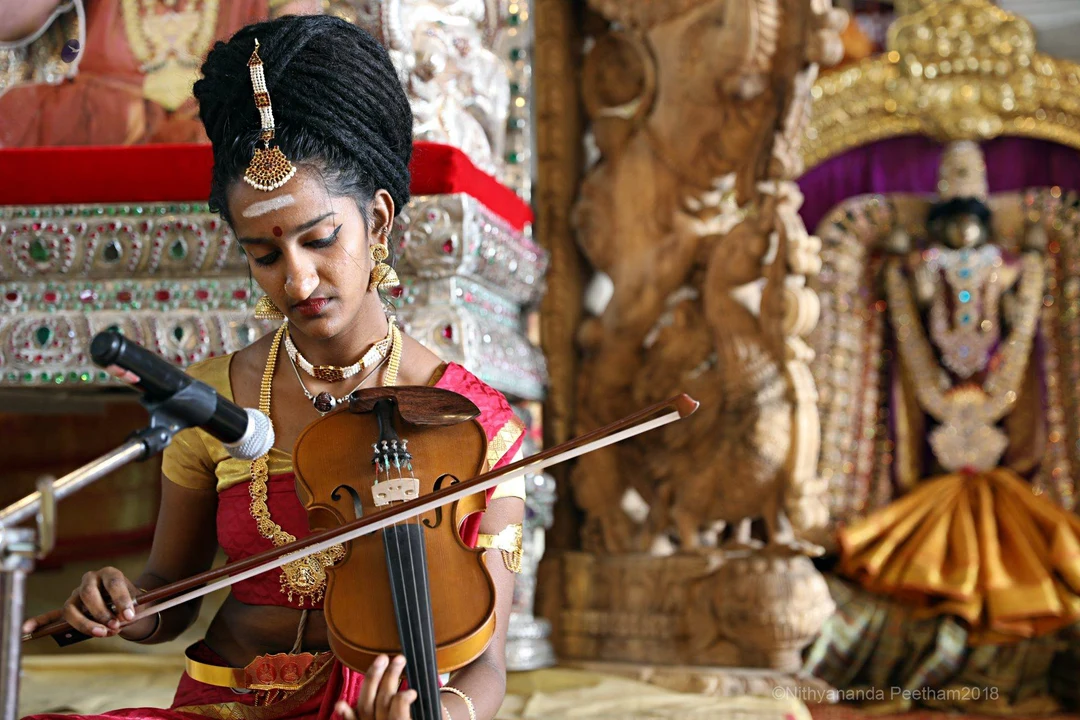
Glimpses from Uttamotama Seva offered to Nithyanandeshwara Sadashiva & Nithyanandeshwari Parashakti
Link to Facebook Page

https://www.facebook.com/ParamahamsaNithyananda/posts/1822917581129417,

Photos from this day

View all 23 photos
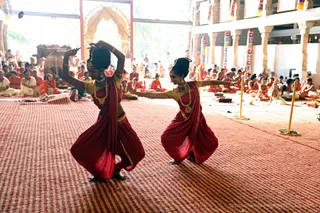
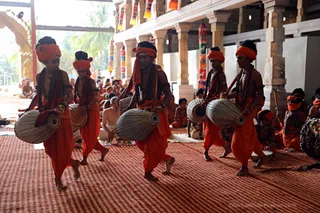
A woman in a red and gold blouse and gold-bordered dhoti-style skirt plays a violin with a bow, seated before a temple altar. She wears a jewelled headpiece, a vertical white tilak on her forehead, a red bindi, layered gold necklaces and drop earrings, with her hair pulled up. A microphone on a stand is in front of her. Behind her, a carved wooden pillar, a gem-studded silver altar with red cushions, and a deity murti draped in a gold garment and garlanded with jewelled necklaces form the backdrop.A photograph in a temple hall showing a shaved-headed priest in saffron cloth sitting cross-legged on a leopard-print mat, bare-chested with sacred ash marks and a rudraksha mala, offering a plate of flowers and a kalasha-style vessel toward a life-sized figure seated on an ornate silver peetha throne covered with a tiger skin. The seated figure is a statue wearing a red and gold dhoti, a gold-bordered orange shawl, layered gold necklaces, bangles and a jeweled crown with hair swept up, one hand raised in blessing. Behind them, several people in saffron and purple garments stand near a row of pillars and metal lockers. The priest is not presented with distinctive a person cues, so no identification is made.A large group of women and girls sit cross-legged on red and cream floor mats in an open temple pavilion during a ritual offering. Most wear orange, red, maroon and saffron saris or blouses with gold necklaces and jewellery, and some wear green, blue or white. Brass plates, small oil lamps and flower petals lie in front of them. In the centre stands a large golden vessel with elephant-head handles and a decorated lid, and red-and-white pillars with painted birds frame the hall. Several people are visible in the background, and a few children are seated in the foreground. A distinct adult candidate for a person is not clearly visible.A photograph of a large group of young women seated on a red-and-orange striped mat inside a temple hall, performing a devotional gesture with raised, open palms. Several wear traditional silk saris in green, yellow, pink, maroon and blue, with gold necklaces, jhumkas, bangles and hair buns with jewelled ornaments; some have vertical forehead markings and rudraksha beads. The central woman in a green sari with gold necklaces faces the camera. A brass temple vessel with elephant motifs stands behind, with many more participants in orange and red garments seated in the background. A mobile phone rests on the mat in the foreground.A photograph of many lit brass oil lamps (deepas) arranged on a golden-yellow cloth draped over a raised platform inside a temple hall. A person in the upper left, with bare arms, reaches toward the lamps. Background shows a screen displaying a deity image, blurred figures in orange and saffron clothing, and a white-draped figure at the right.A woman seated cross-legged on a striped rug plays a long-necked stringed instrument, a veena, with two large gourd resonators. She wears a purple and gold silk saree, gold jewellery including earrings and bangles, a maang tikka in her hair and a red bindi. A microphone stands in front of her. Behind her, figures on a red-and-gold backdrop wear ornate jewelled garlands and necklaces, with a painted deity image visible at the right edge.A photograph of a seated ritual inside a temple hall with sandstone pillars and a colourful banner behind. In the foreground, three bare-chested men sit cross-legged on red and patterned mats before brass puja trays holding flowers, incense sticks and small white offering cones. The man on the left wears a rudraksha mala and white dhoti; the seated man in the centre, with grey hair and a white cloth over his shoulder, is performing a gesture with his hands; the man on the right wears a white dhoti with a yellow border. Behind them, several women in orange saris and rudraksha malas sit in meditation with tilaks on their foreheads. Ritual activity with puja items is visible, consistent with a seva or meditation session.Two female dancers in red silk saris with gold borders perform a classical Indian dance on a red striped mat inside a pillared hall. Both wear gold necklaces, earrings and bangles, with hair in buns. Their arms are raised and they bend at the knee. Behind them a large seated audience of people in orange and red clothing sits on the floor, many in rows. Colourful decorative bunting hangs along the pillars and a golden arch frames the far side of the hall.A photograph of young men in saffron-orange dhotis and orange head turbans, with rudraksha malas around their necks, playing large barrel-shaped drums. Four drummers stride barefoot across a red-and-cream striped mat in a pillared hall with orange and colourful hanging banners. Several seated devotees in orange and white watch from the background, and a faint sunlit arch shows through the open side. The scene suggests a drum performance during a temple event.Four young sadhus in saffron-orange turbans and robes sit cross-legged on a colourful patterned rug at microphones, reciting or chanting. Their bare upper bodies bear white ceremonial markings, and they wear rudraksha malas and bead necklaces. The man second from right wears glasses and holds a small printed sheet and a book. Behind them stands a large ornate gold throne with a printed cardboard cutout of a bearded figure in an orange turban and garland, labelled as a portrait. Cabinets and a stone pillar frame the hall. Printed text on the rug reads Nithyananda Peetham.A temple shrine scene dominated by gilded deity murtis and a silver Shiva lingam with a vibhuti Tripundra marking on its face. A bare-chested young man in saffron/orange dhoti and shawl, with rudraksha mala and long hair, stands at left with his hand on the lingam, holding a lit oil lamp flame over it. Behind the lingam sit large gold-clad deity figures with crowns, ornate jewellery and garlands of white and red flowers, flanked by golden attendant figures, one holding a staff. A purple cloth with gold border and a jewelled yantra-like decoration are at the base, with garlands of marigolds and roses. No printed text is visible in the scene.A photograph of a puja set-up on a woven mat, with brass plates and small brass vessels arranged in rows along the floor. Pink and white flowers, green leaves, and offerings such as sweets and grains sit on the plates, and a brass lamp stands among them. Several people in orange robes sit cross-legged along the row, and a hand reaches to make an offering. Only forearms and hands of the seated people are clearly visible, and a folded orange cloth printed with Sanskrit text lies at the left edge.