Skip to content
Monday

1 July 2013

Dated photos
552
Source pages
1
Media
2
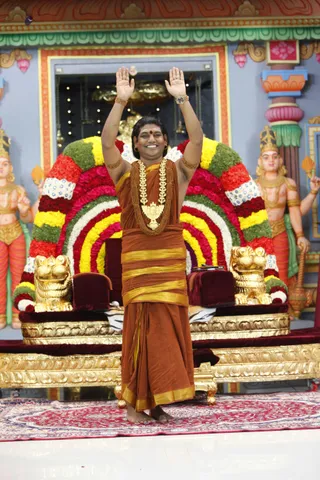
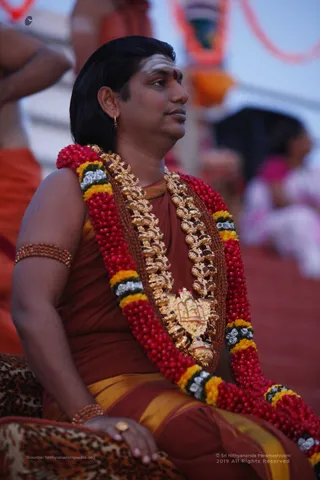
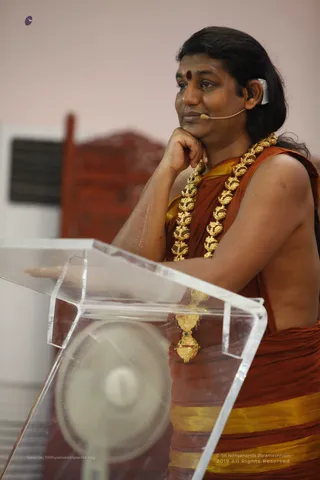
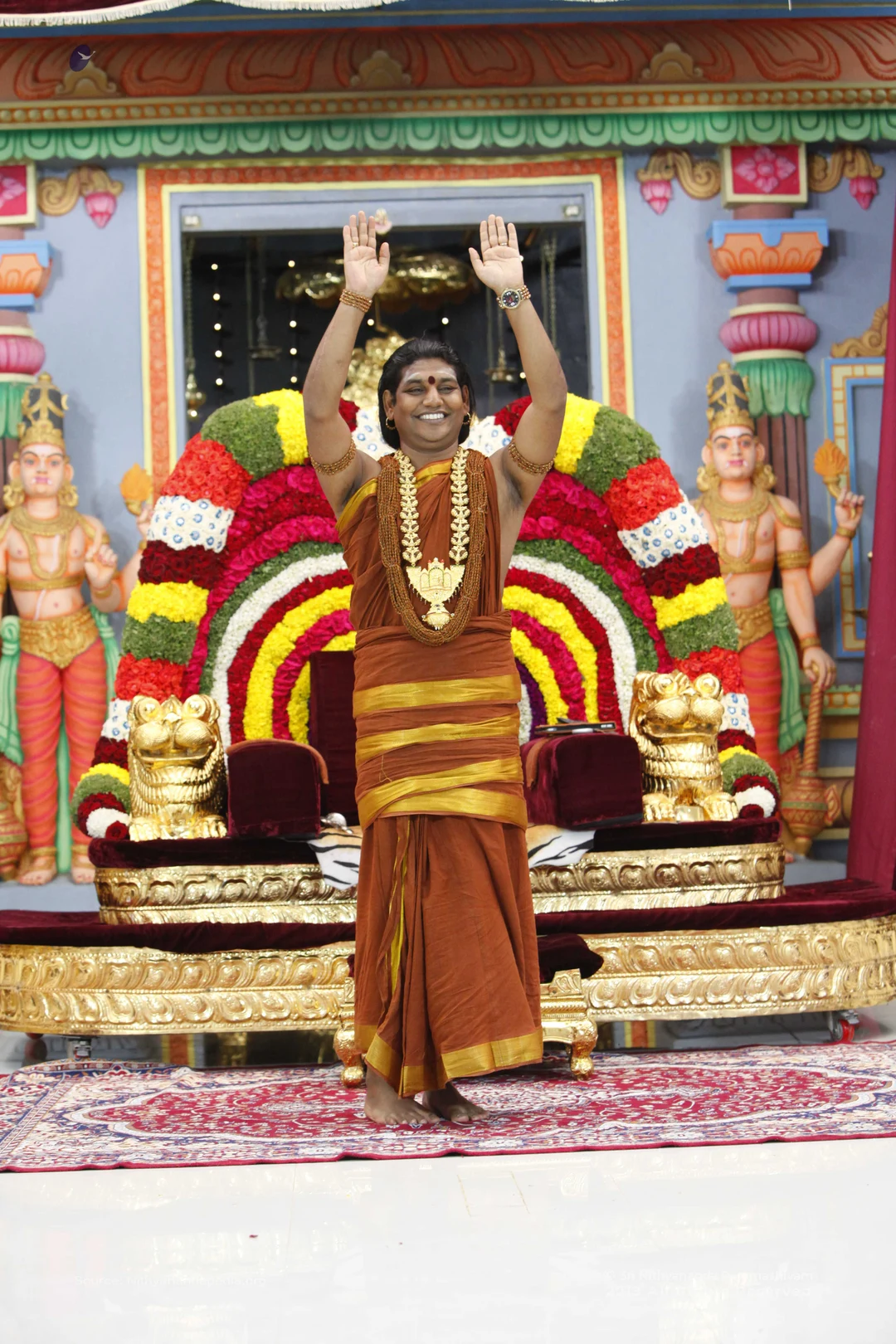
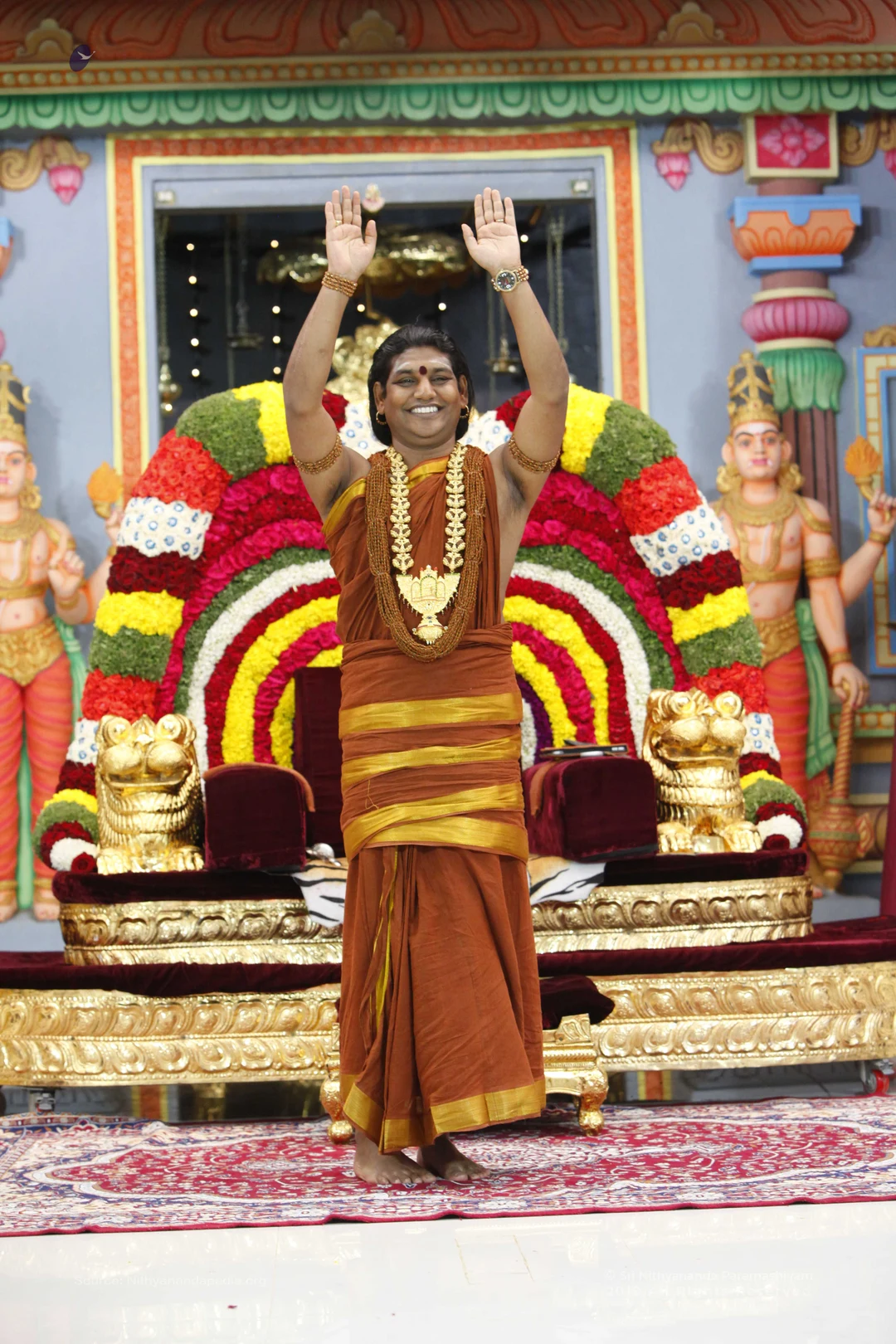
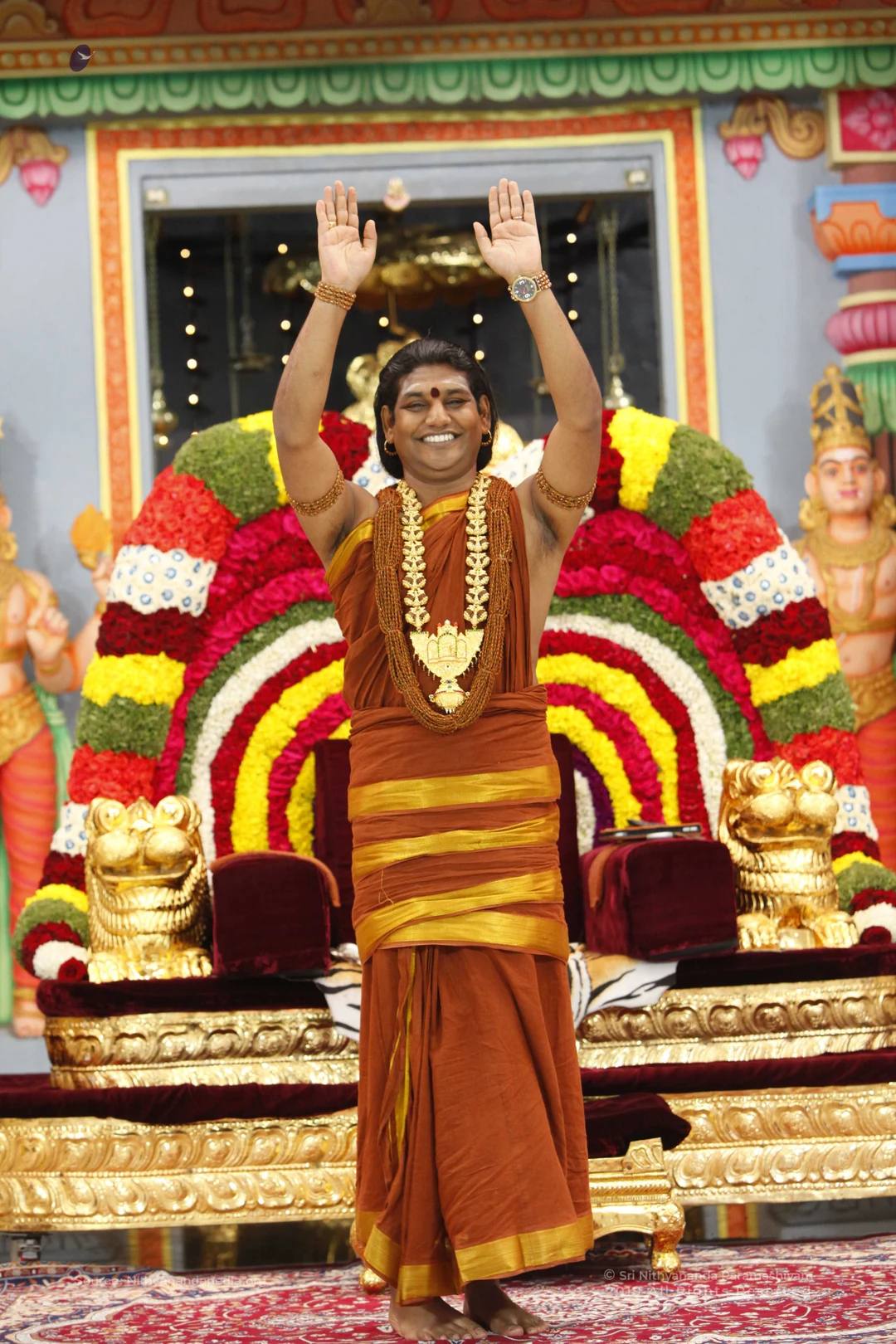
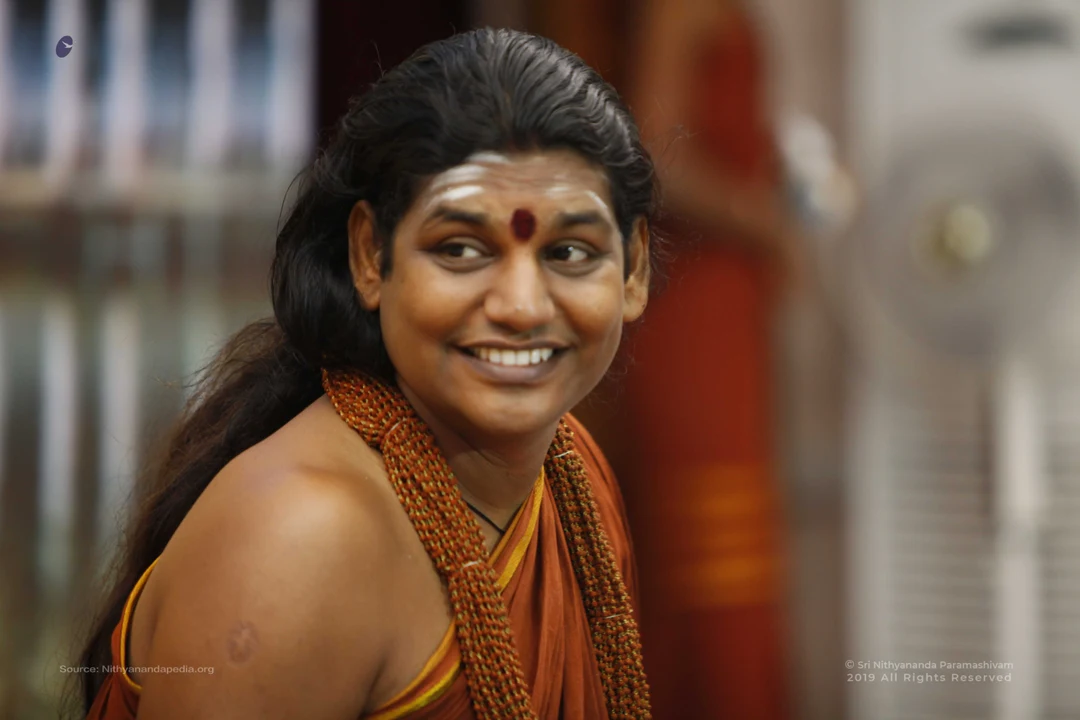
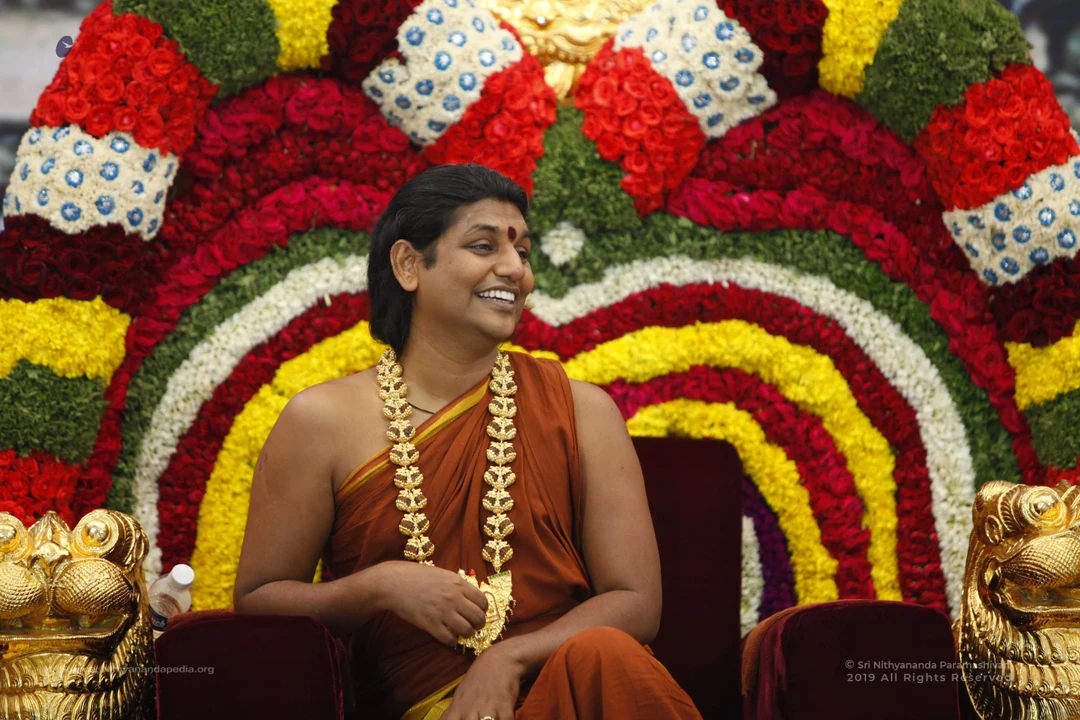
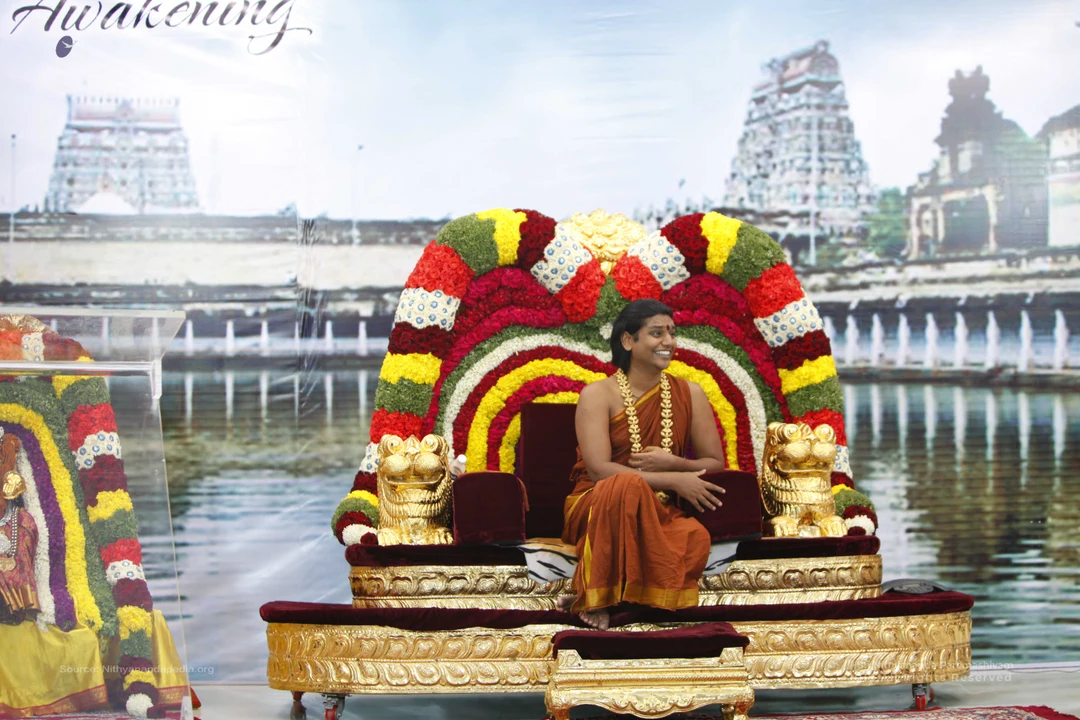
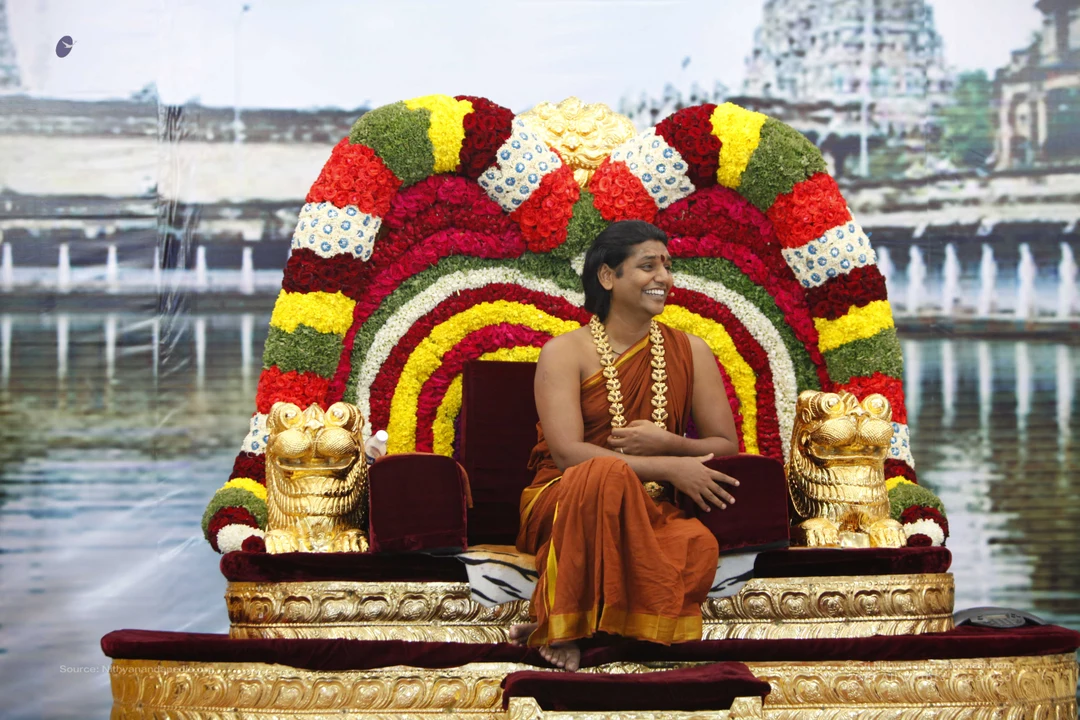
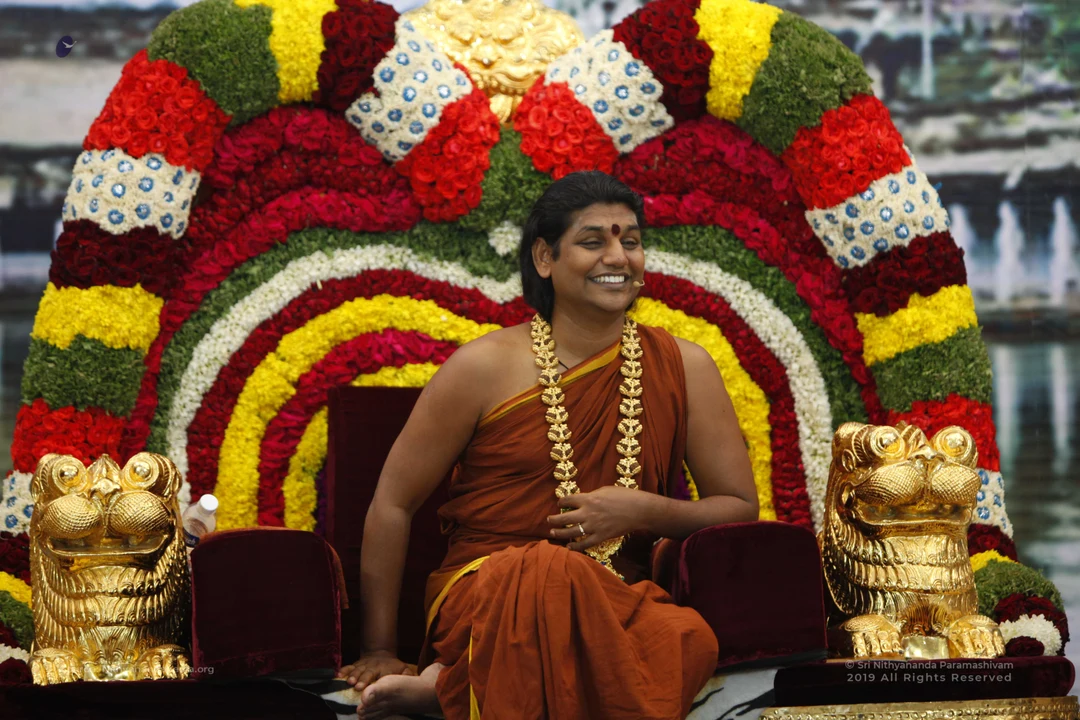
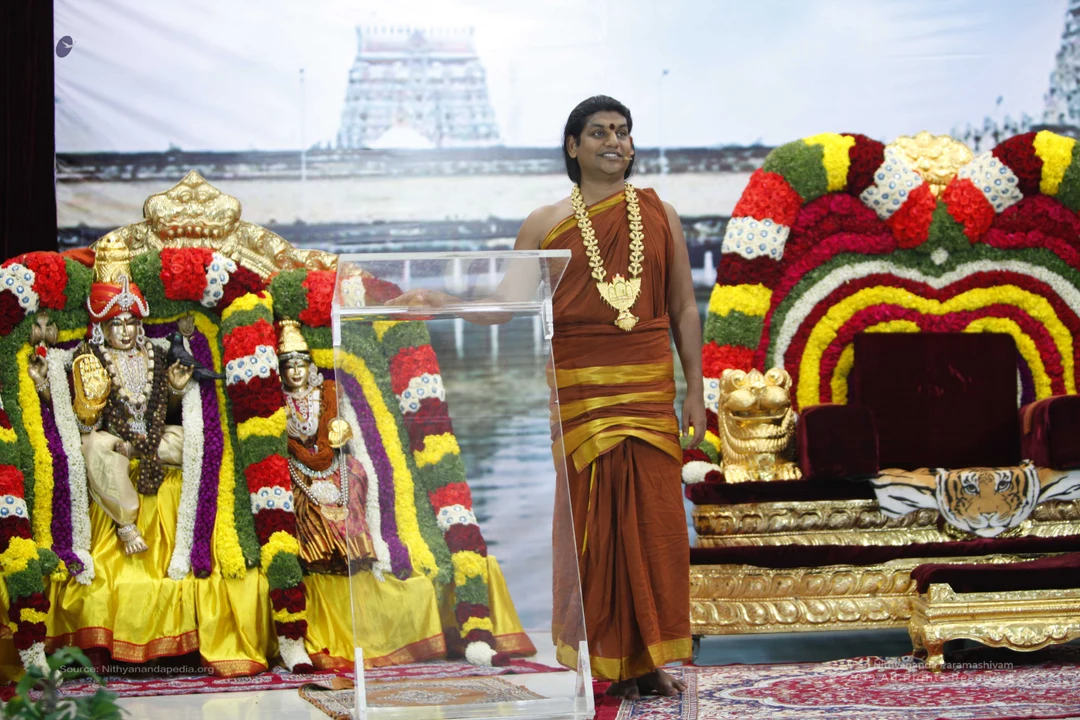
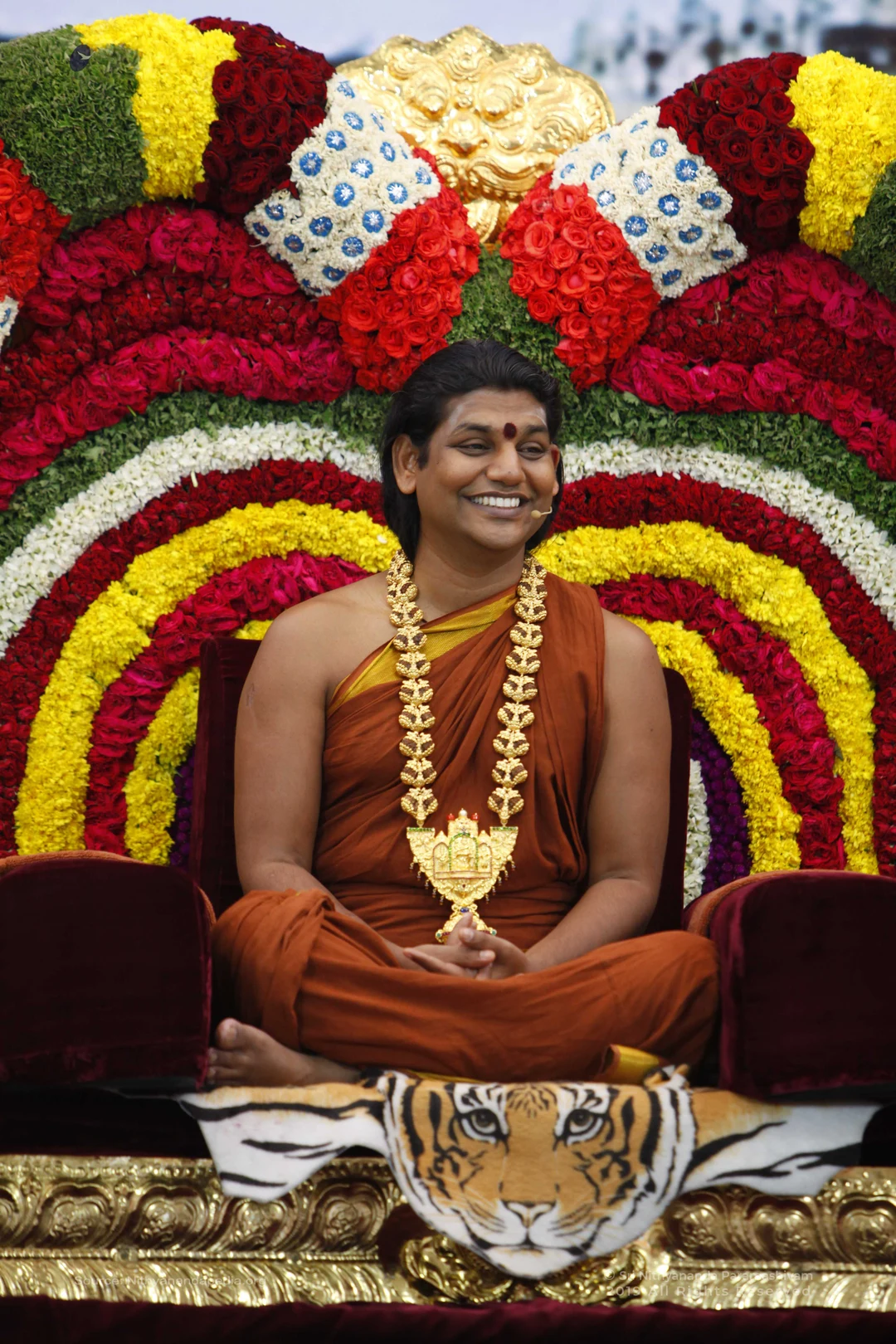
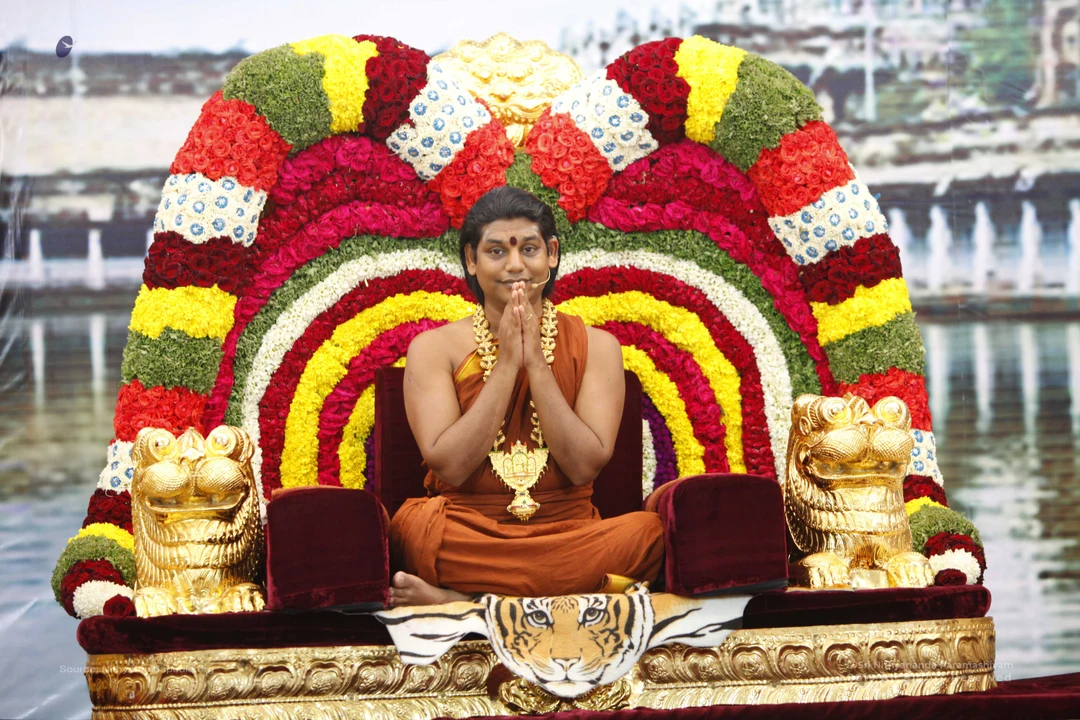
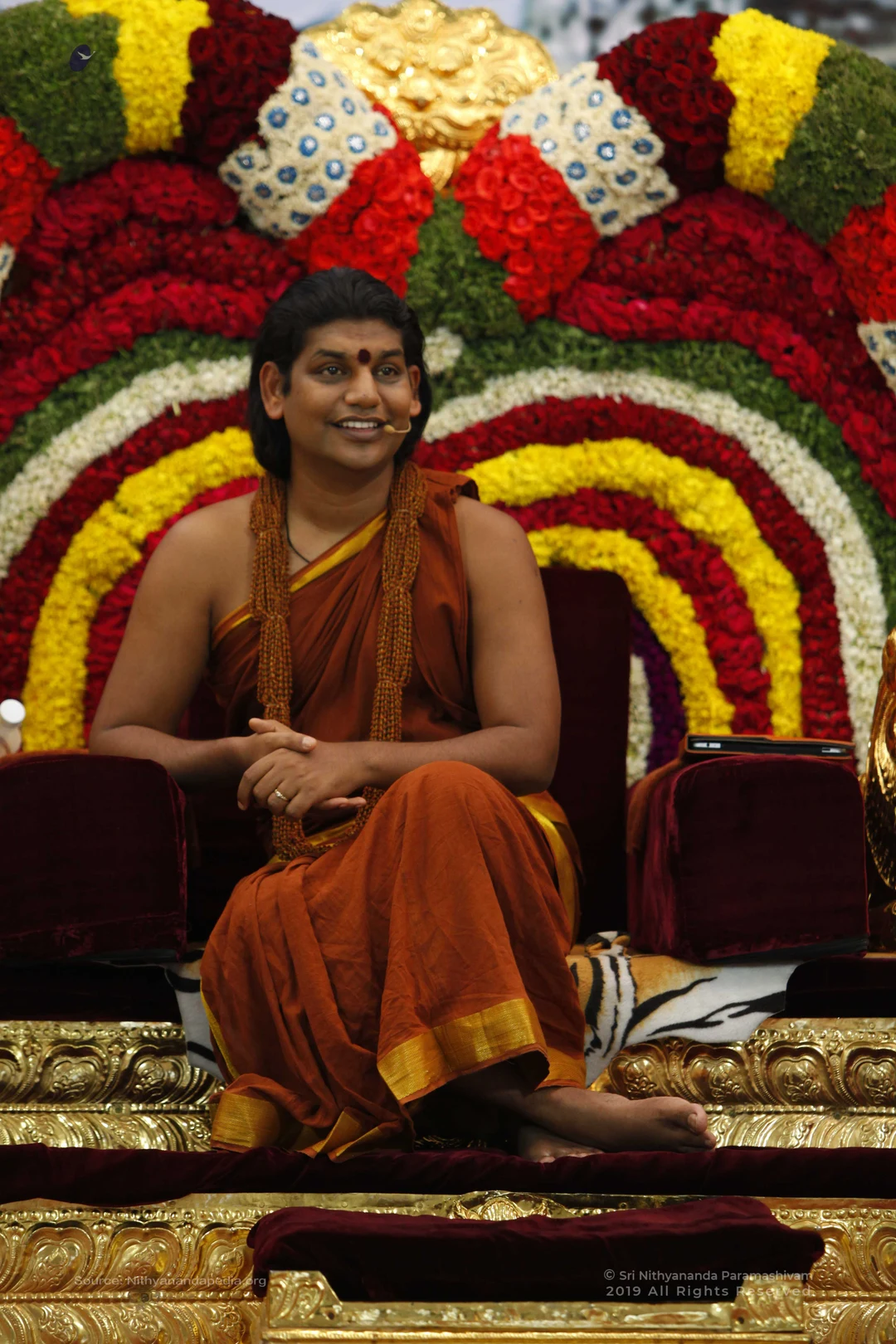
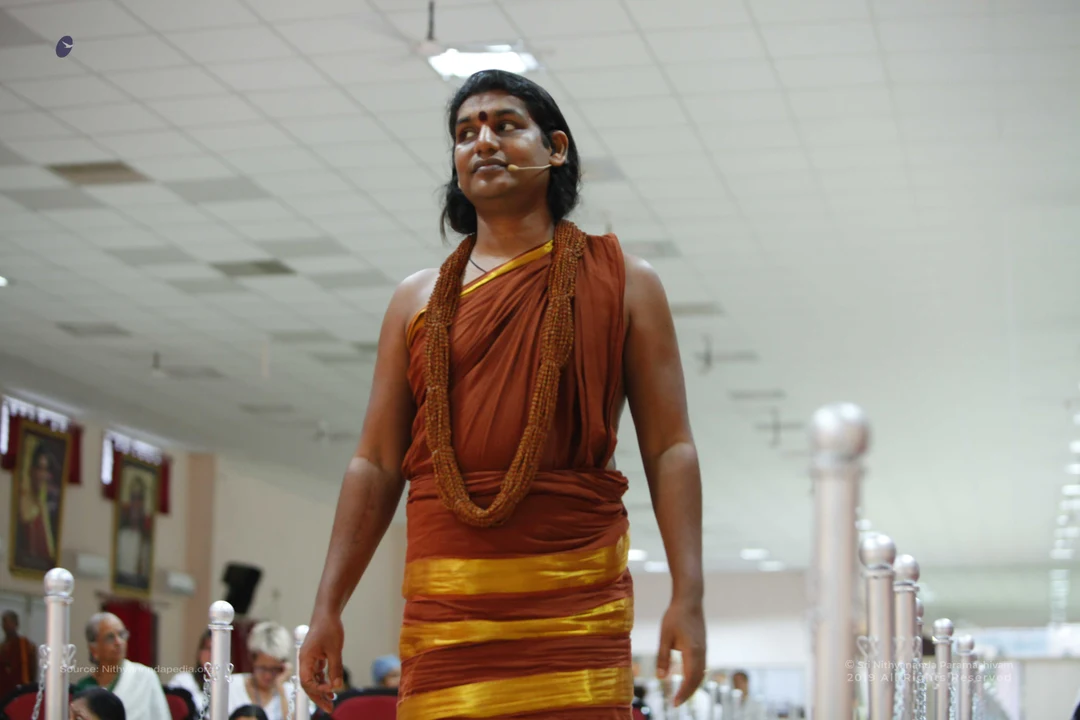
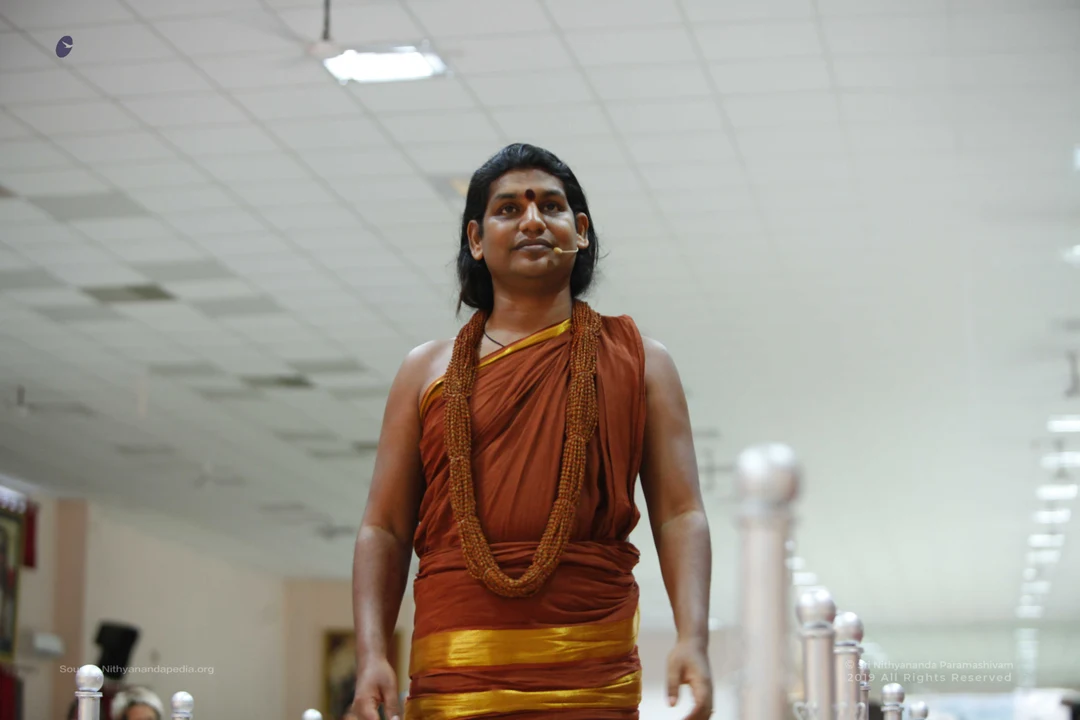
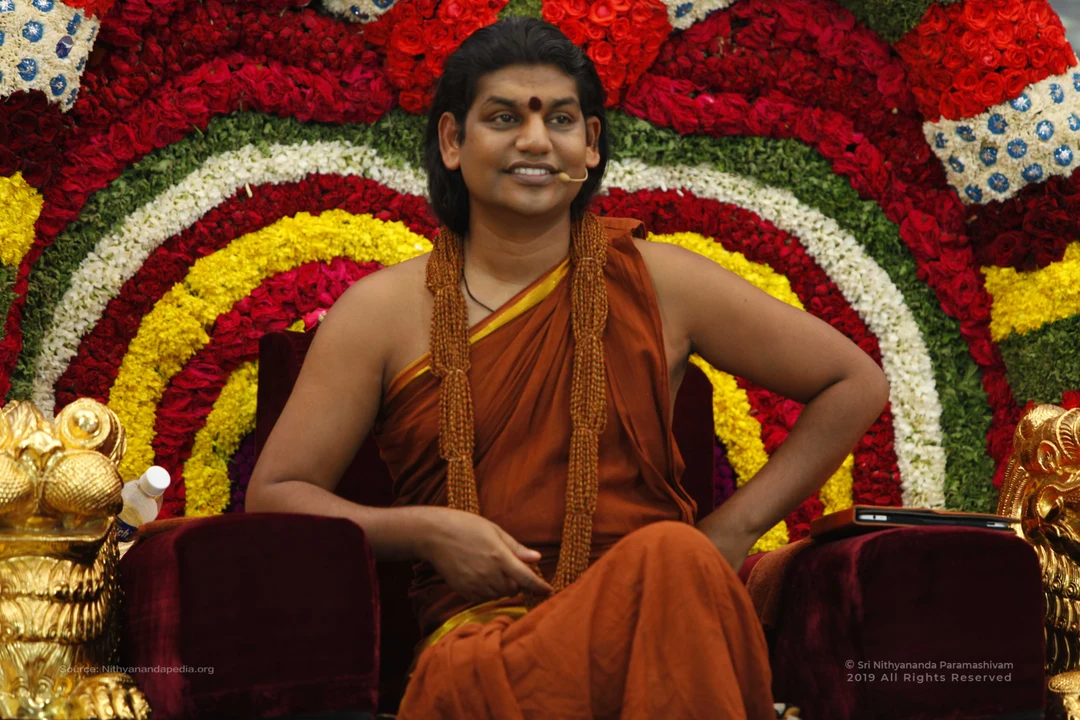
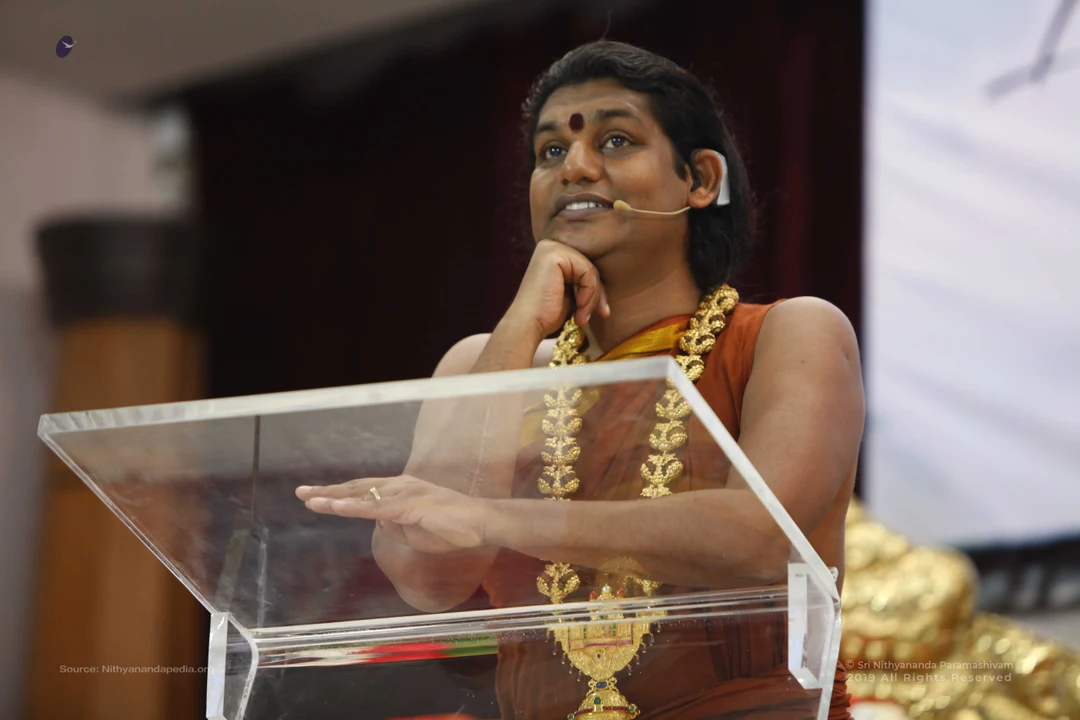
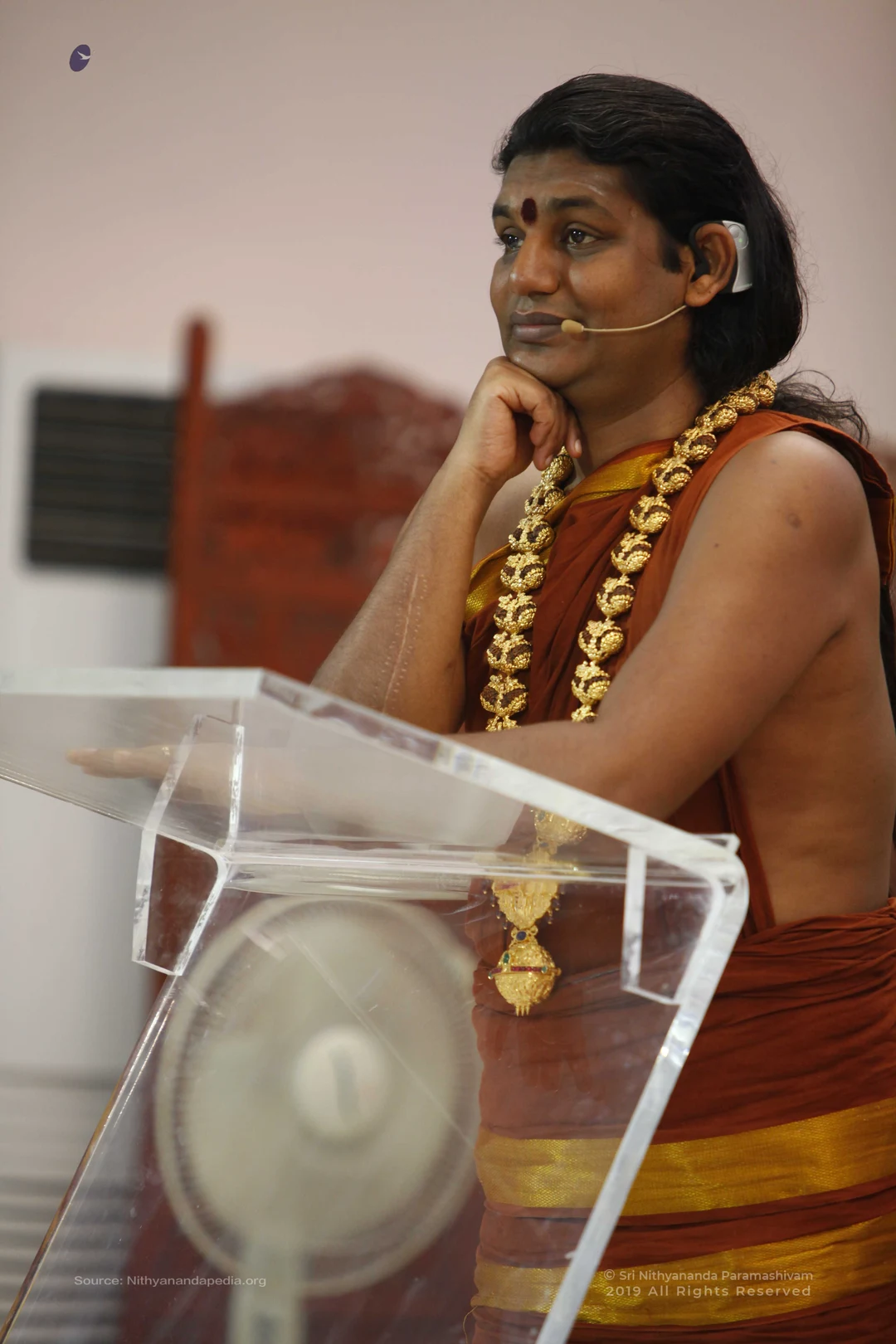
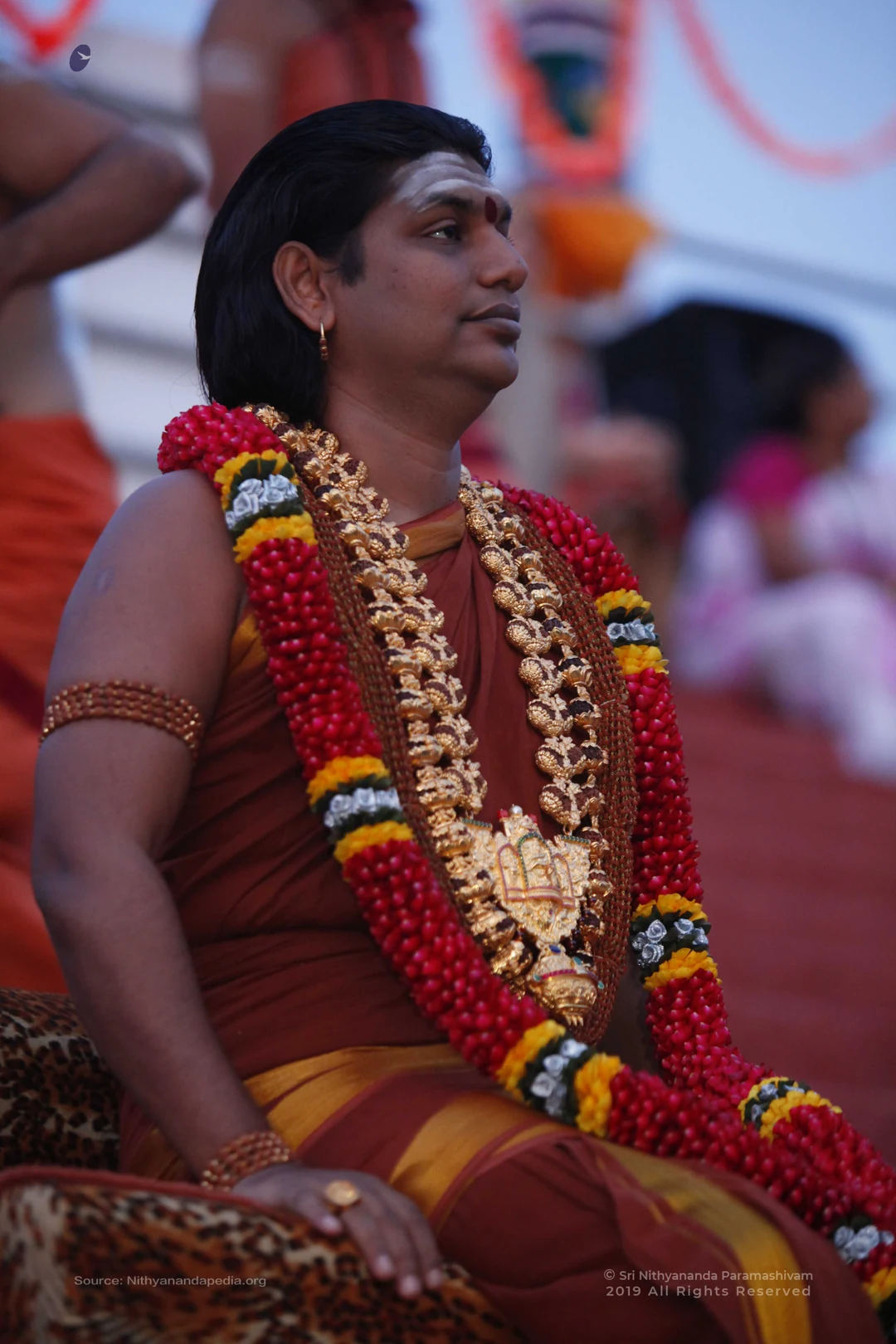
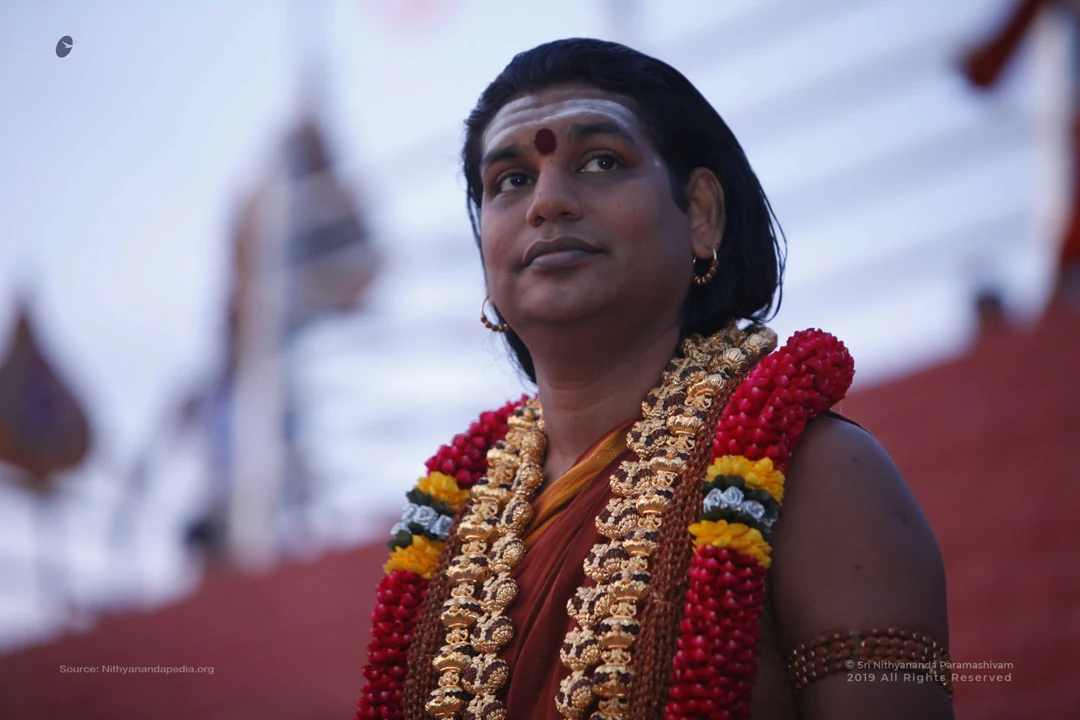
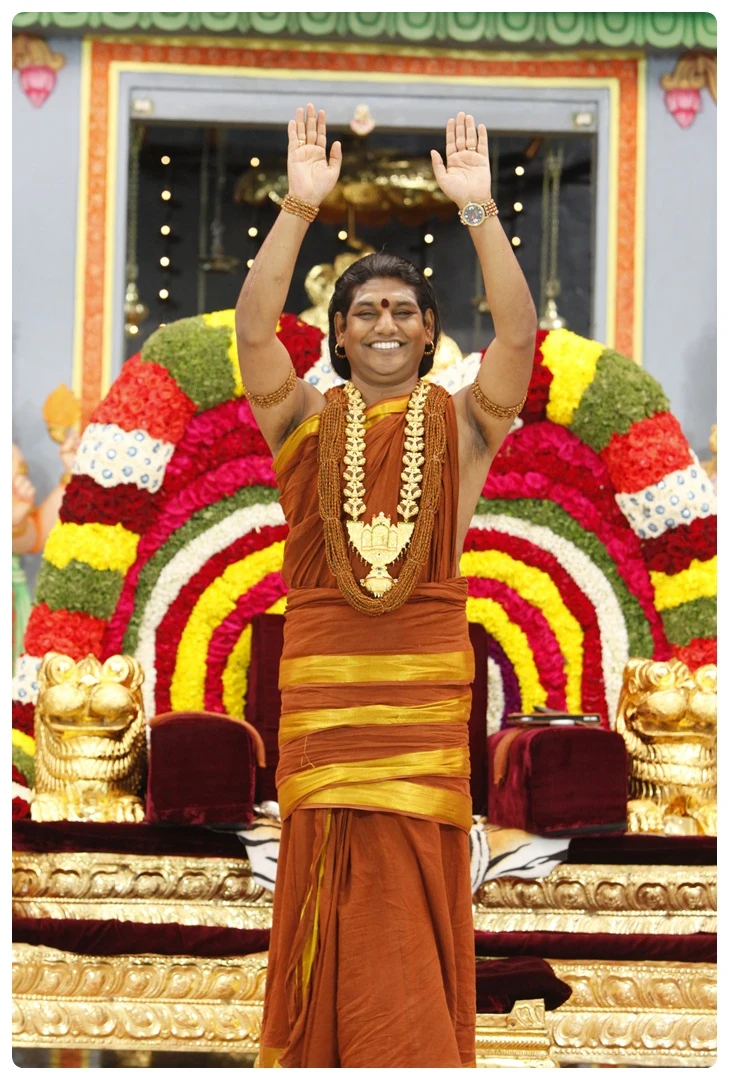
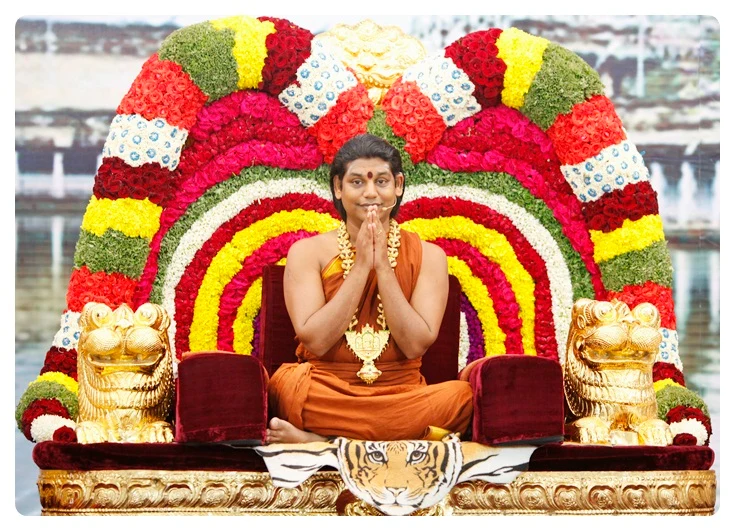
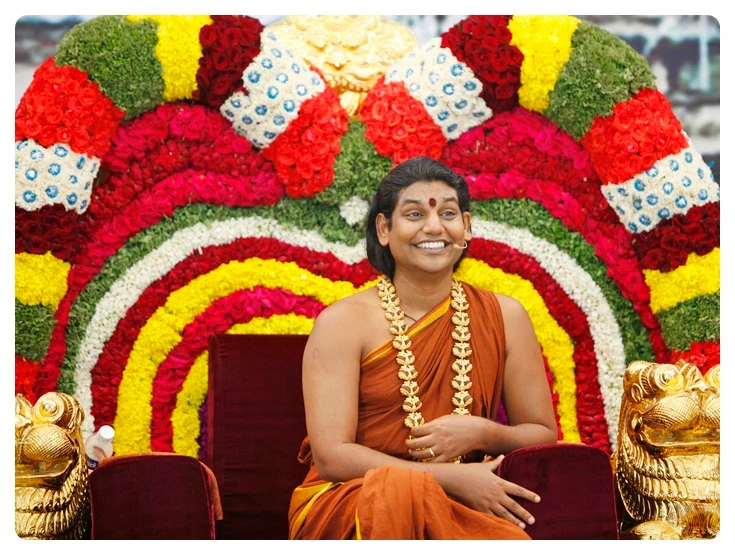
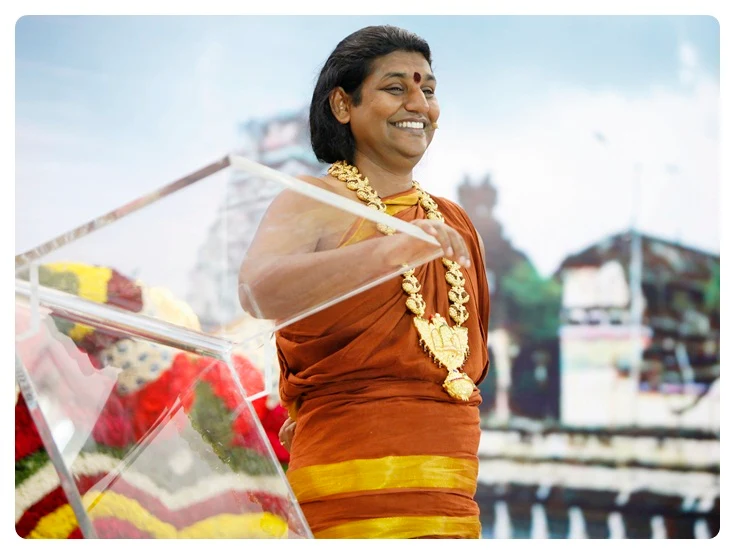
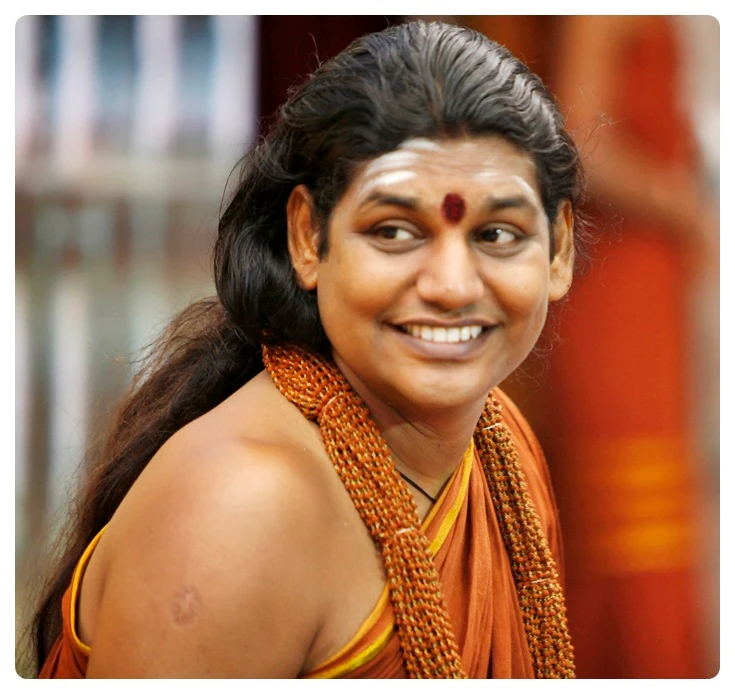
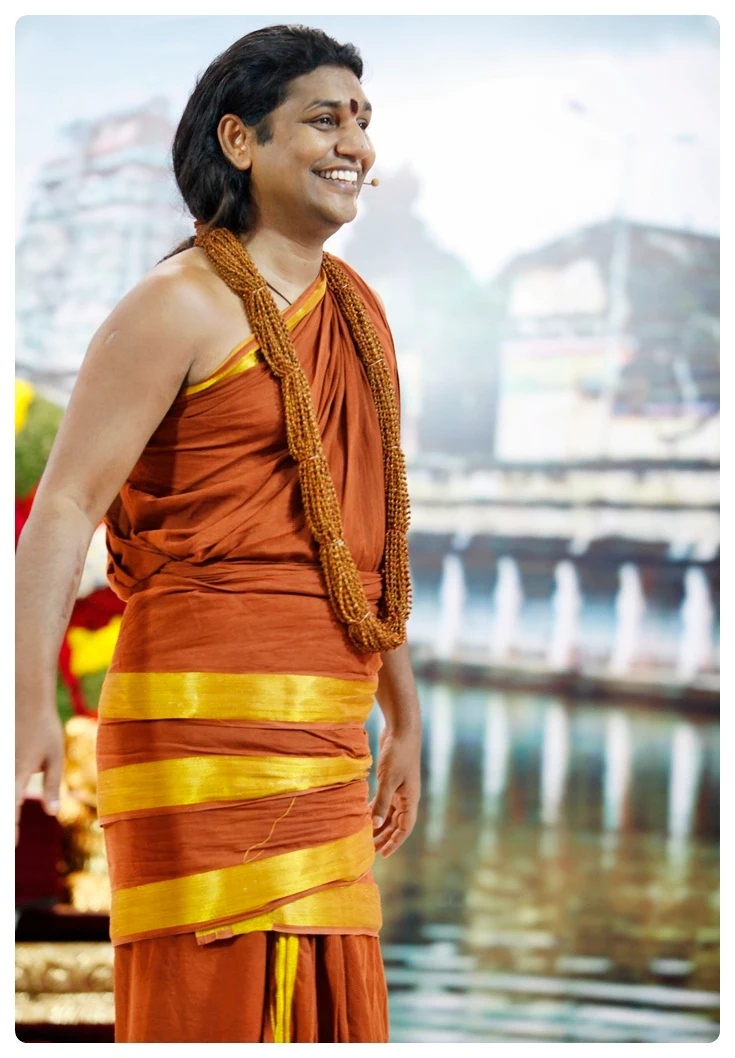
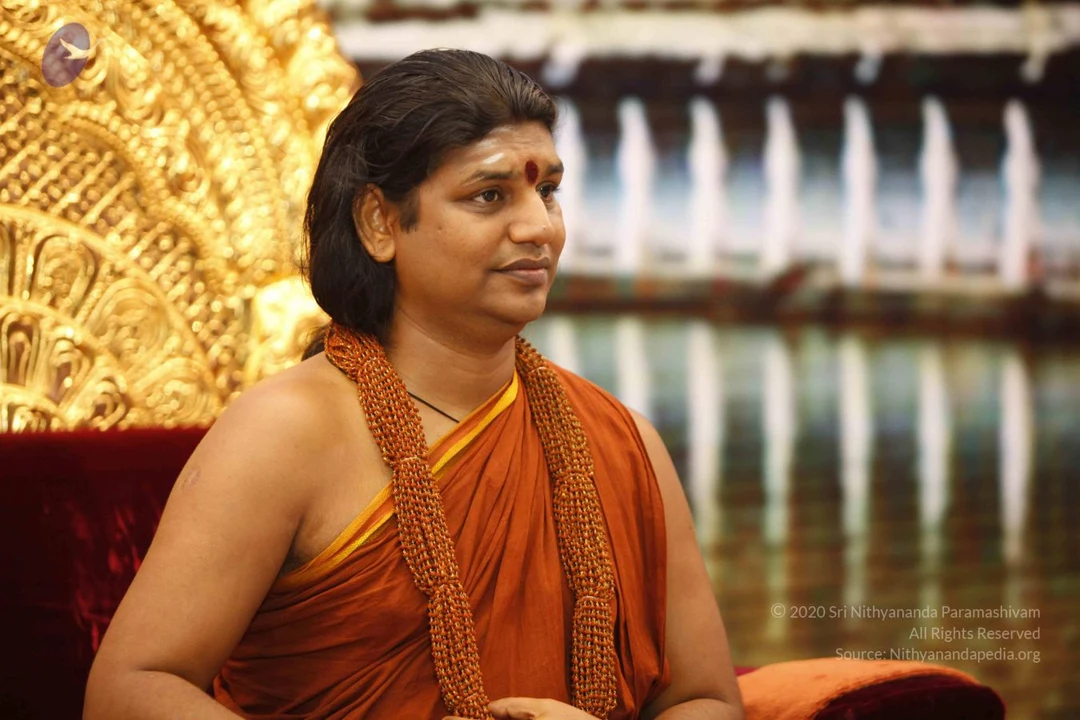
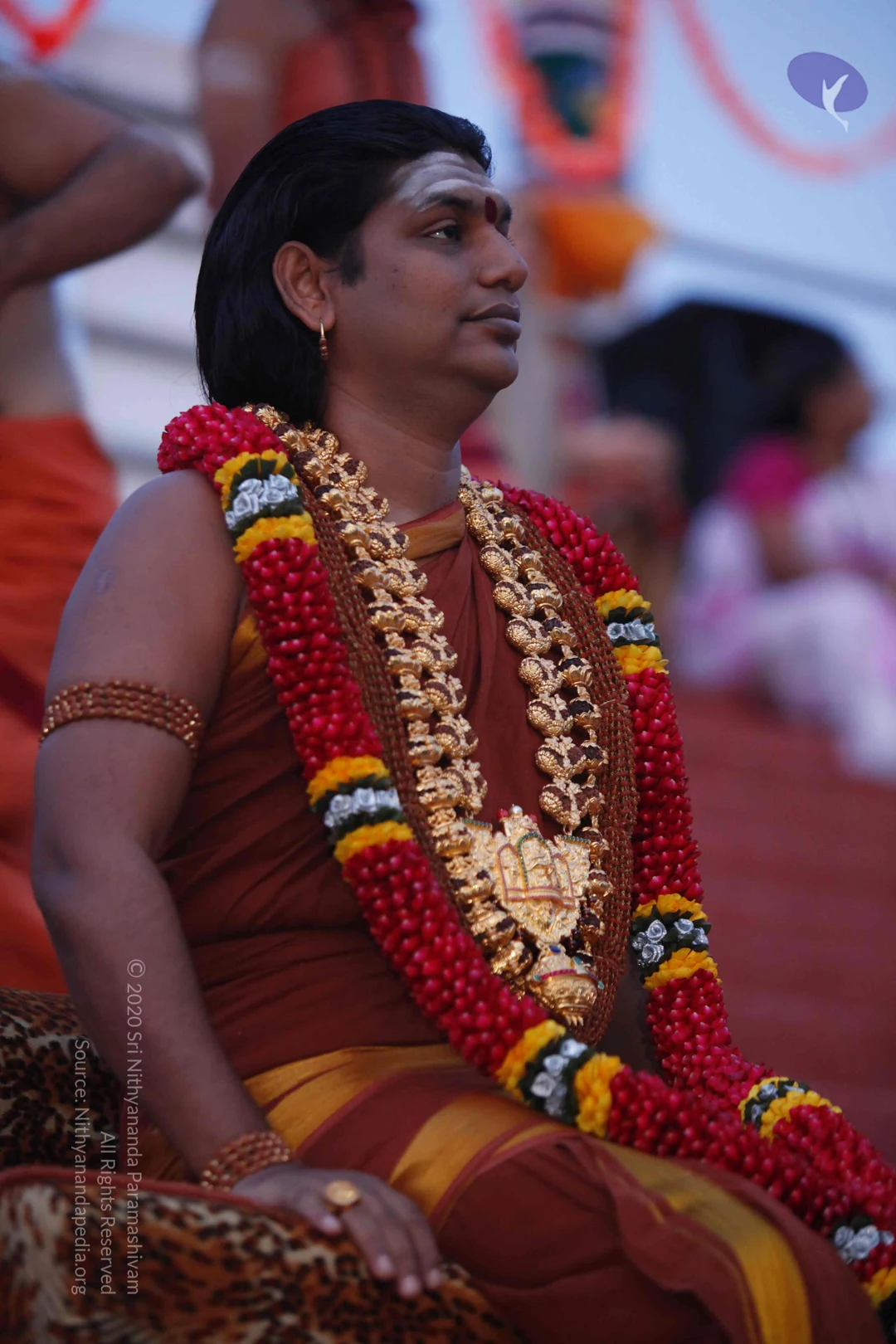
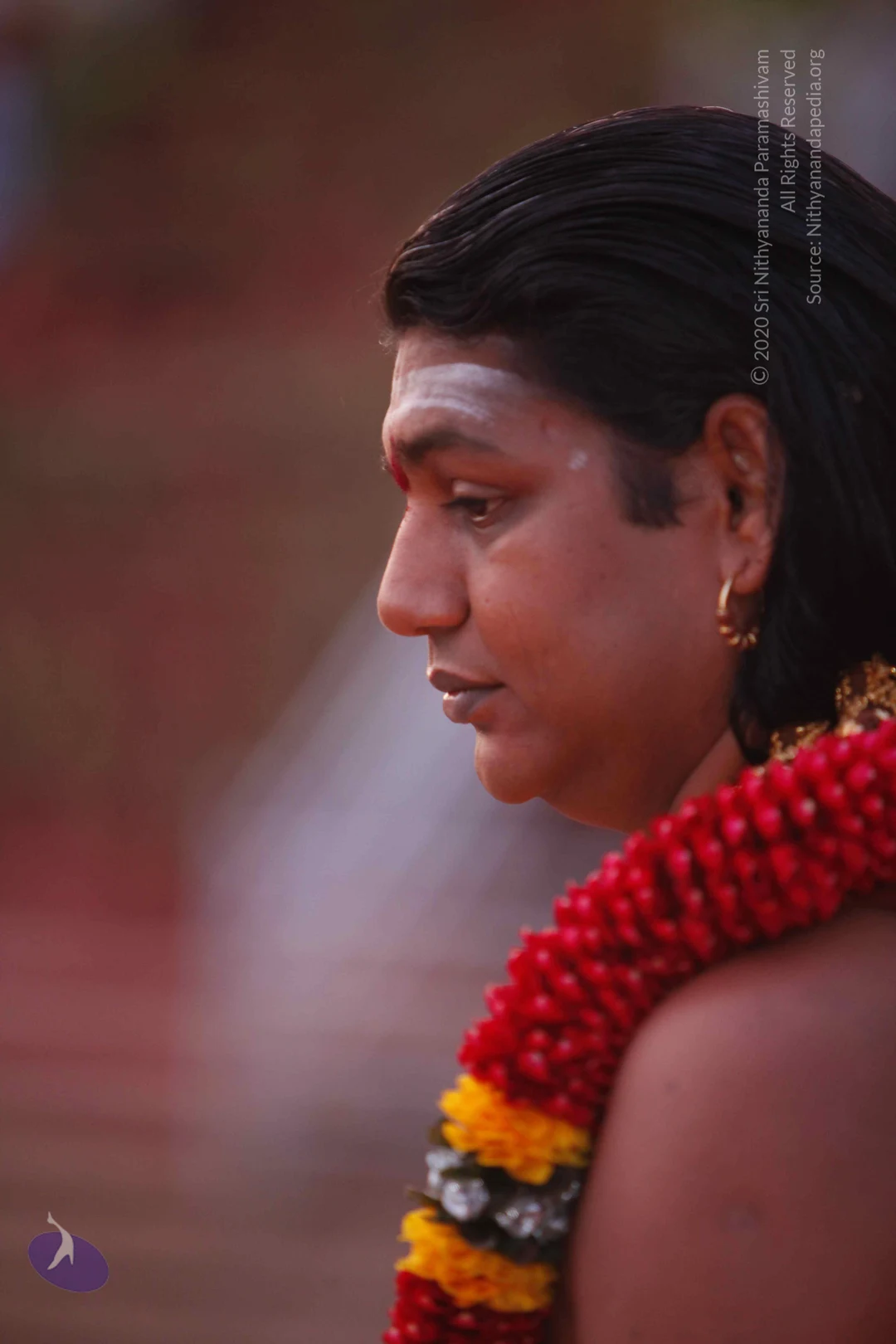
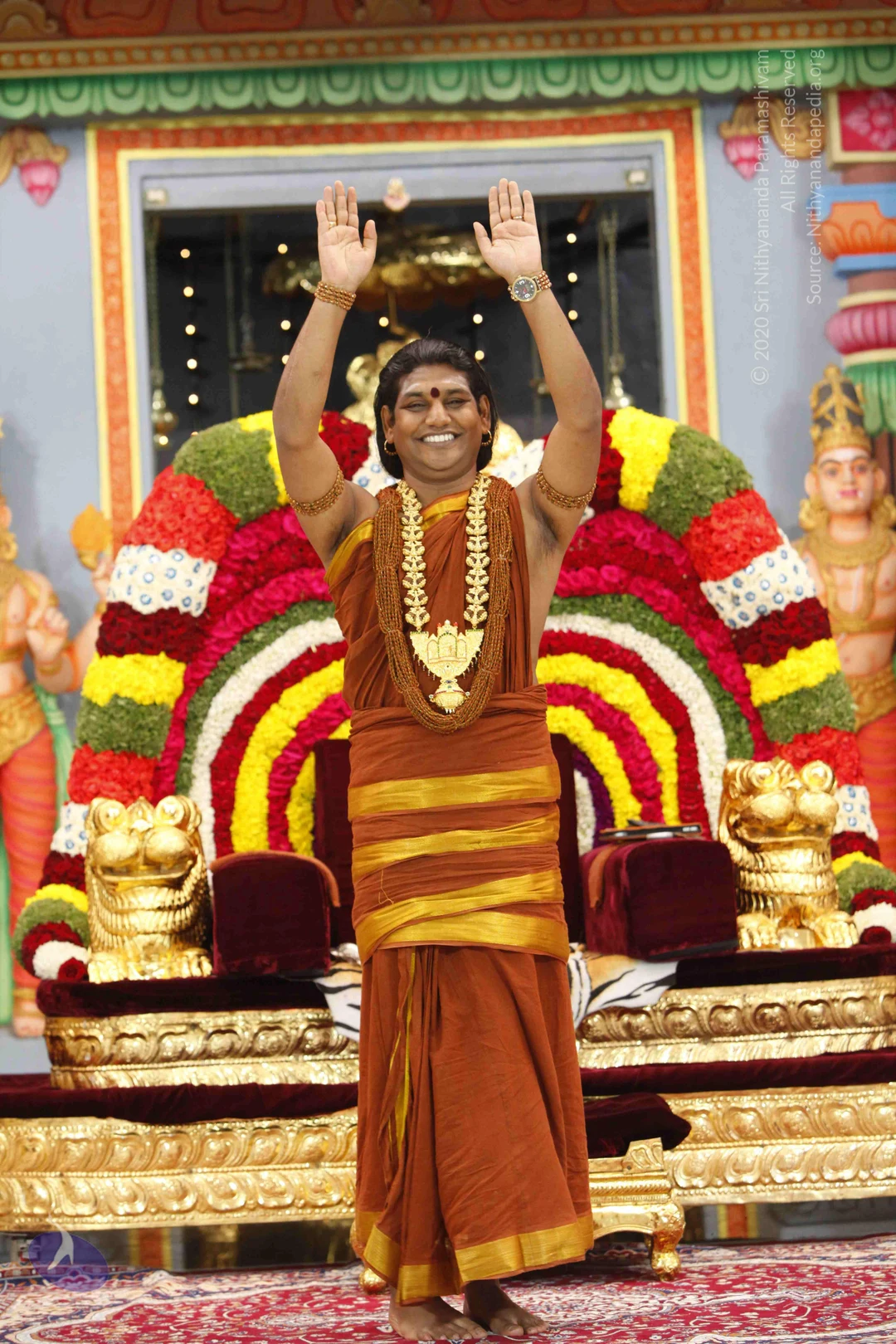
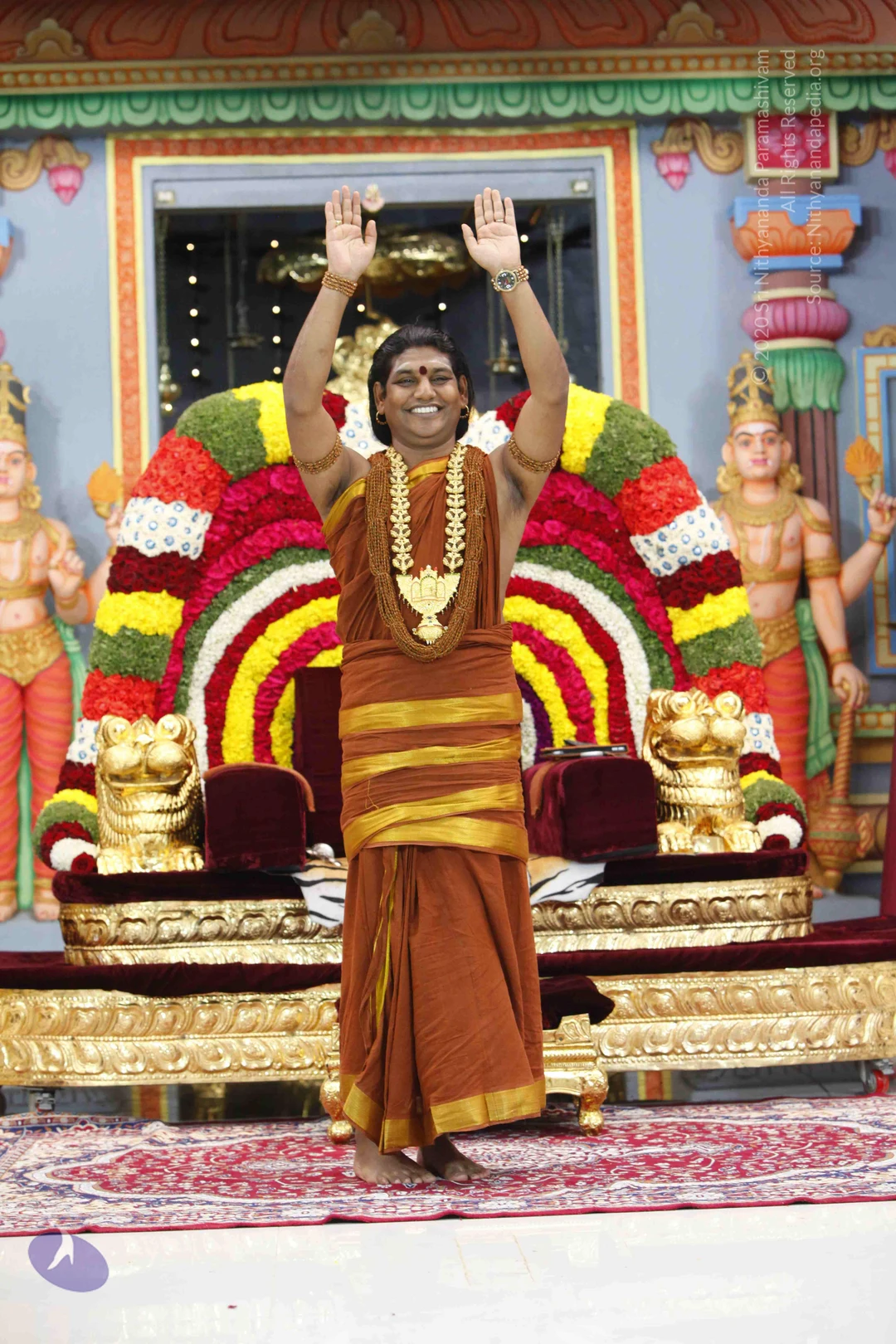
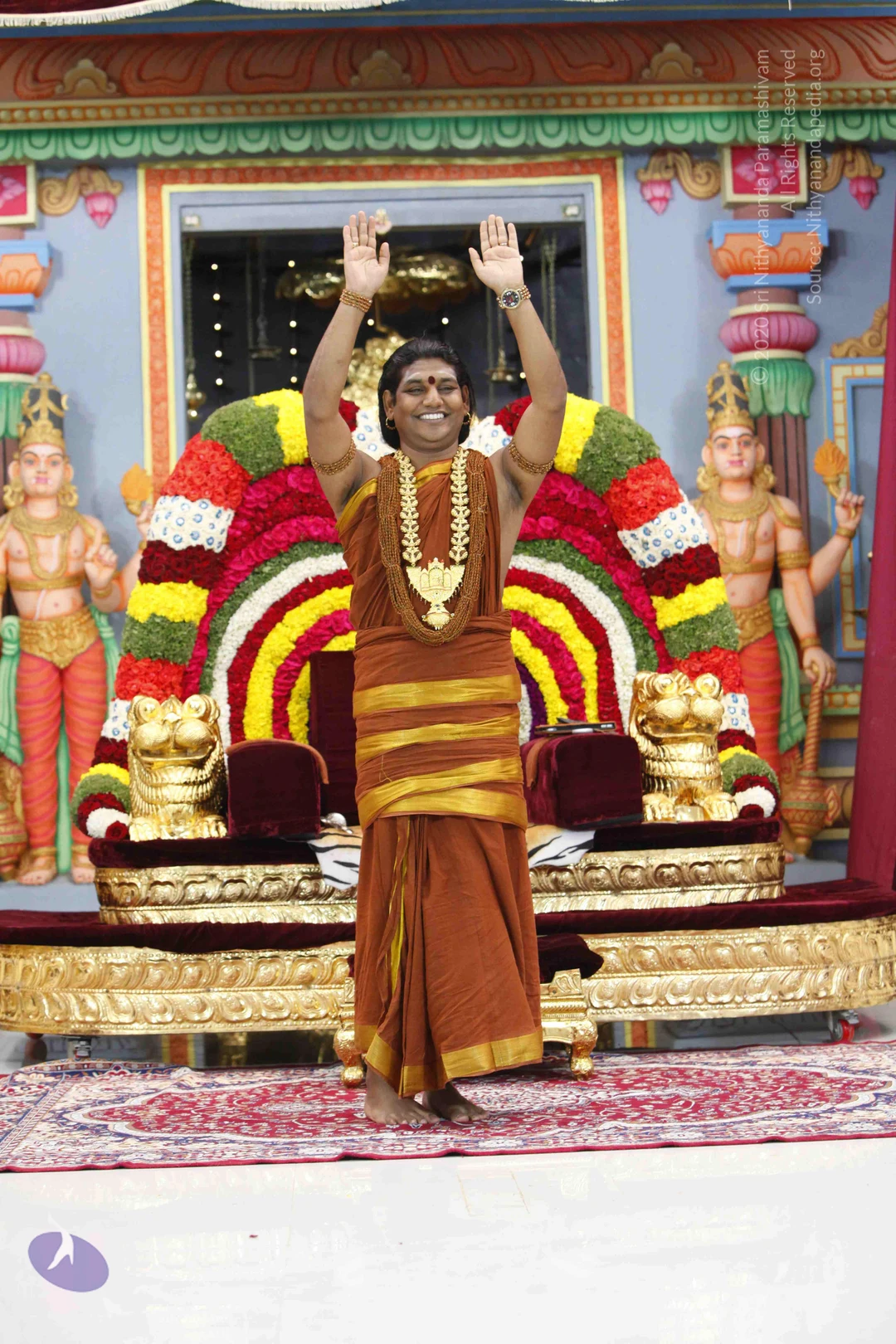
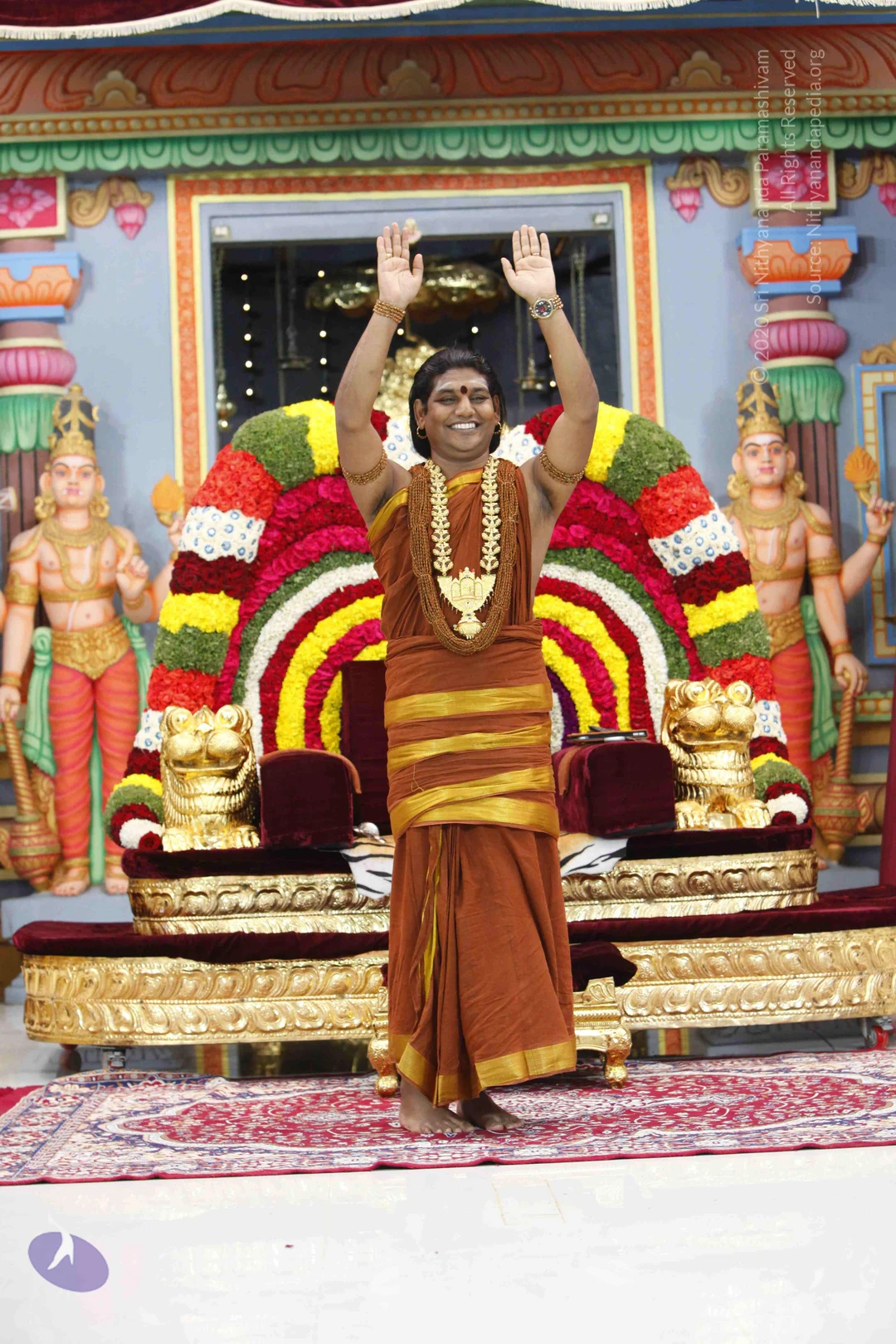
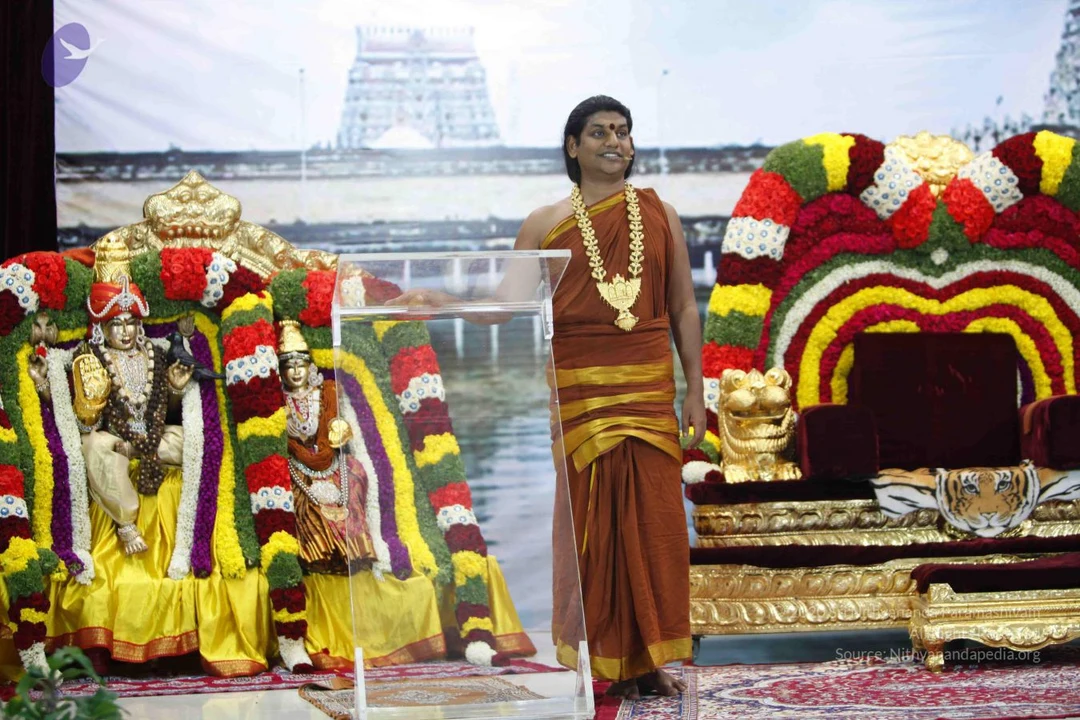
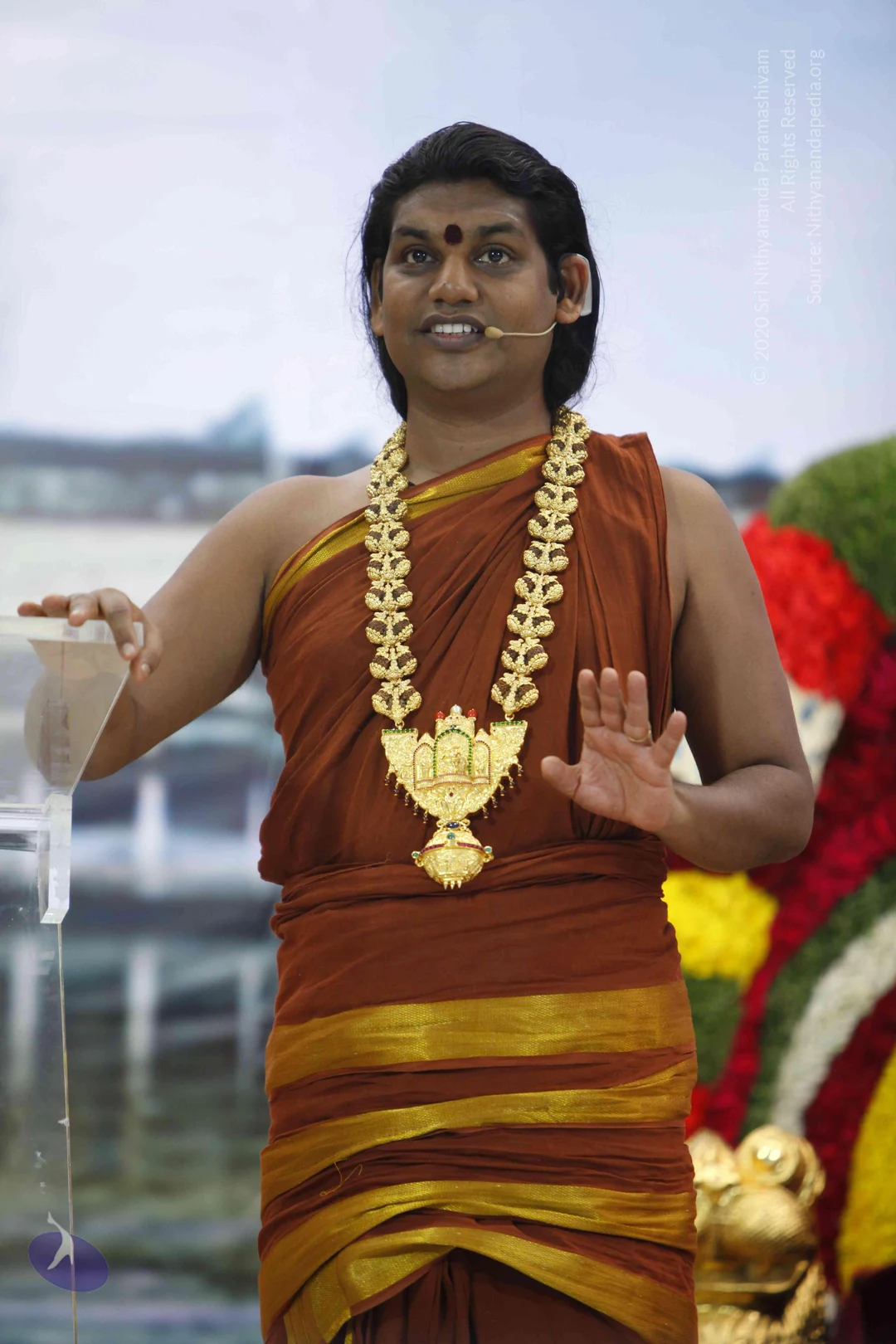
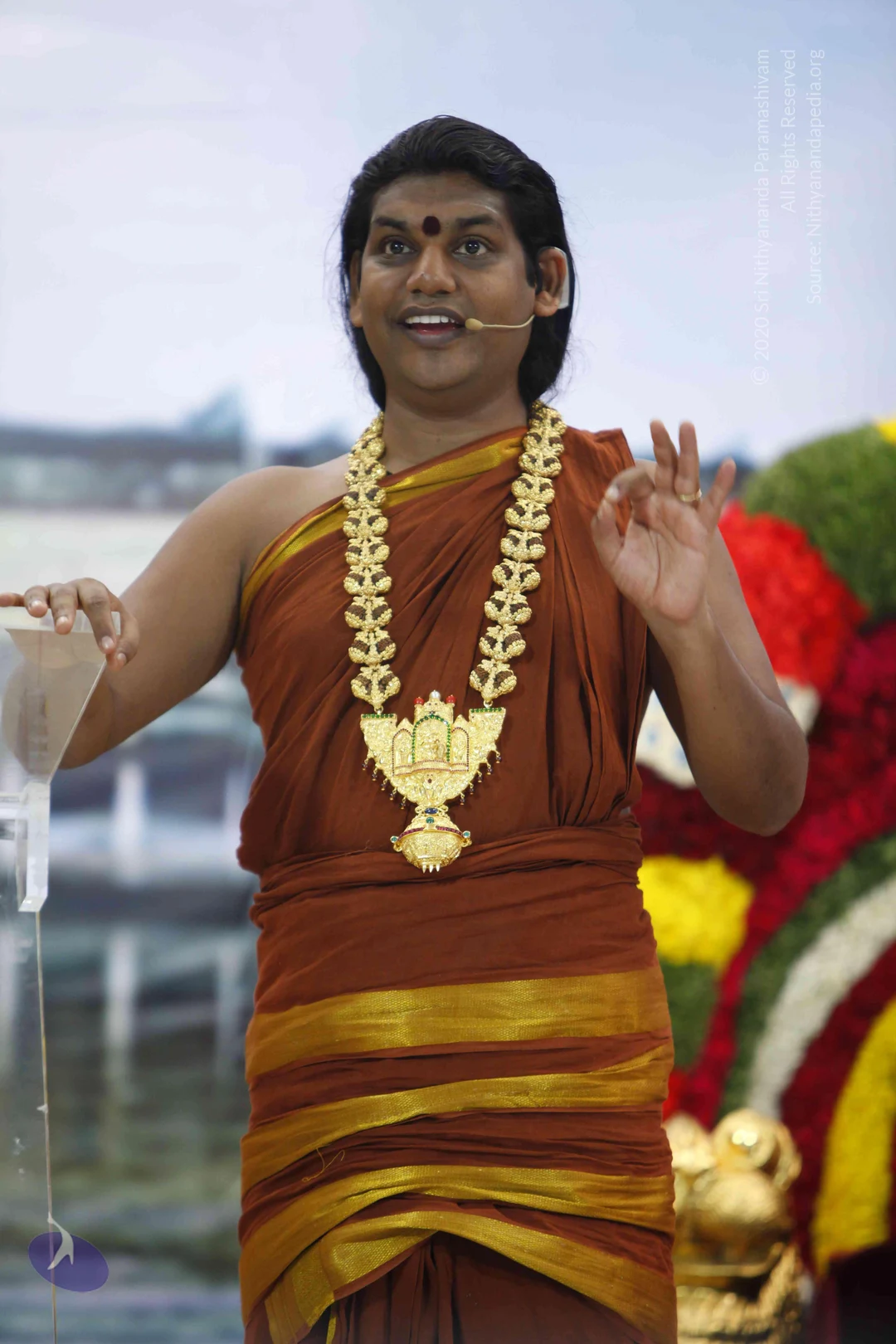
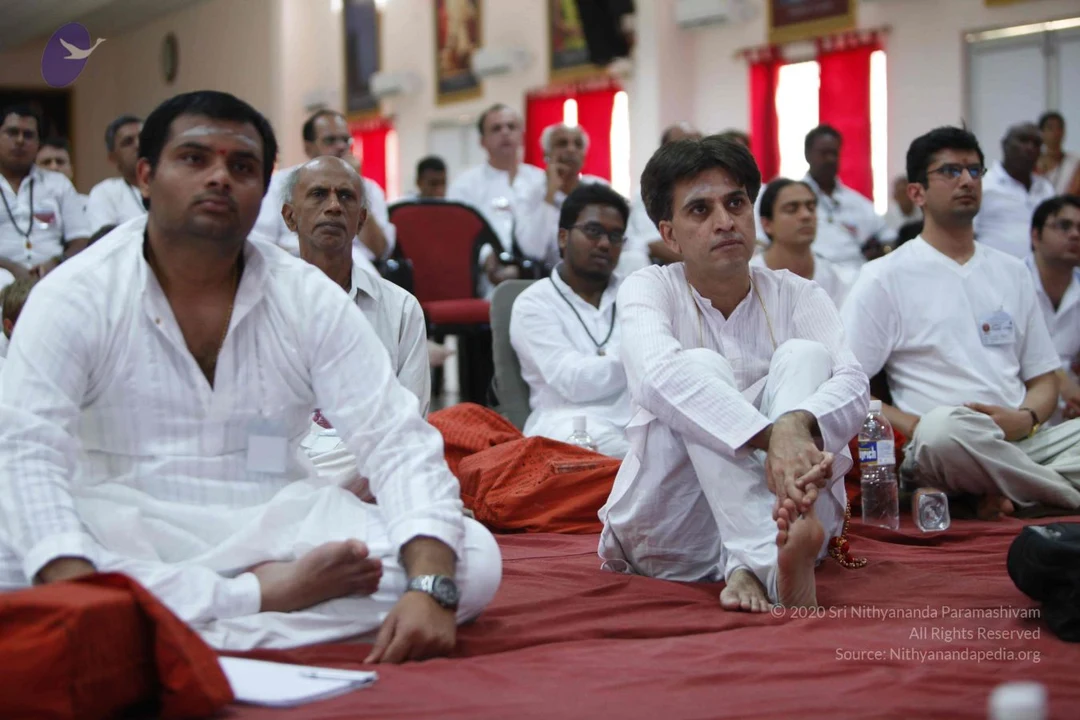
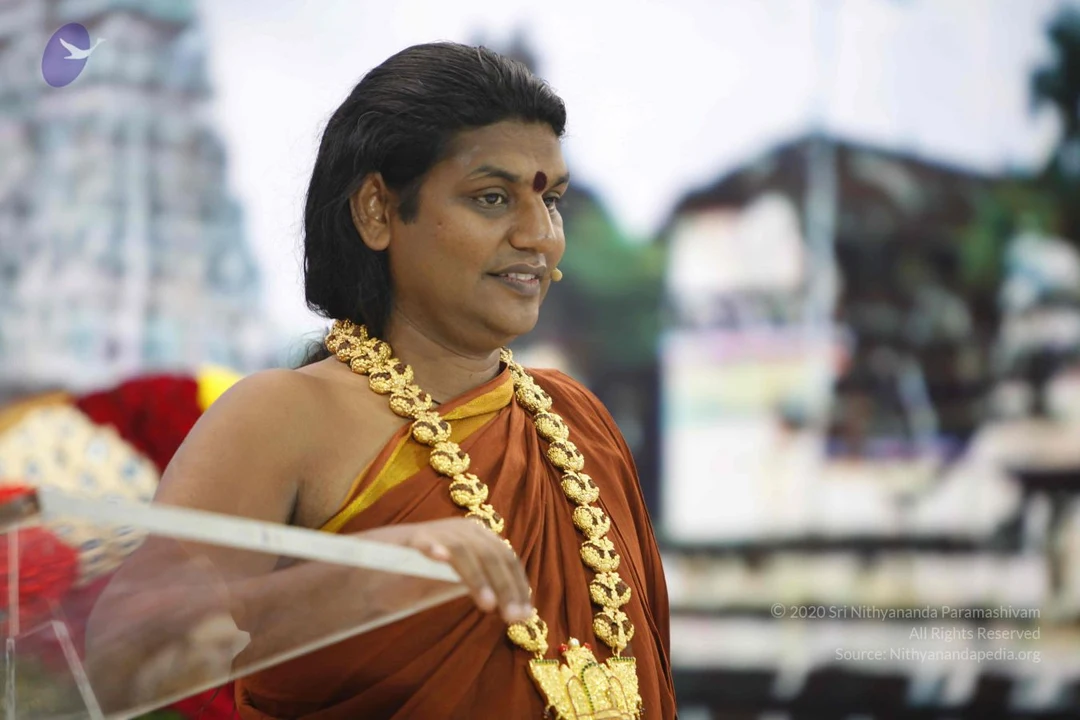
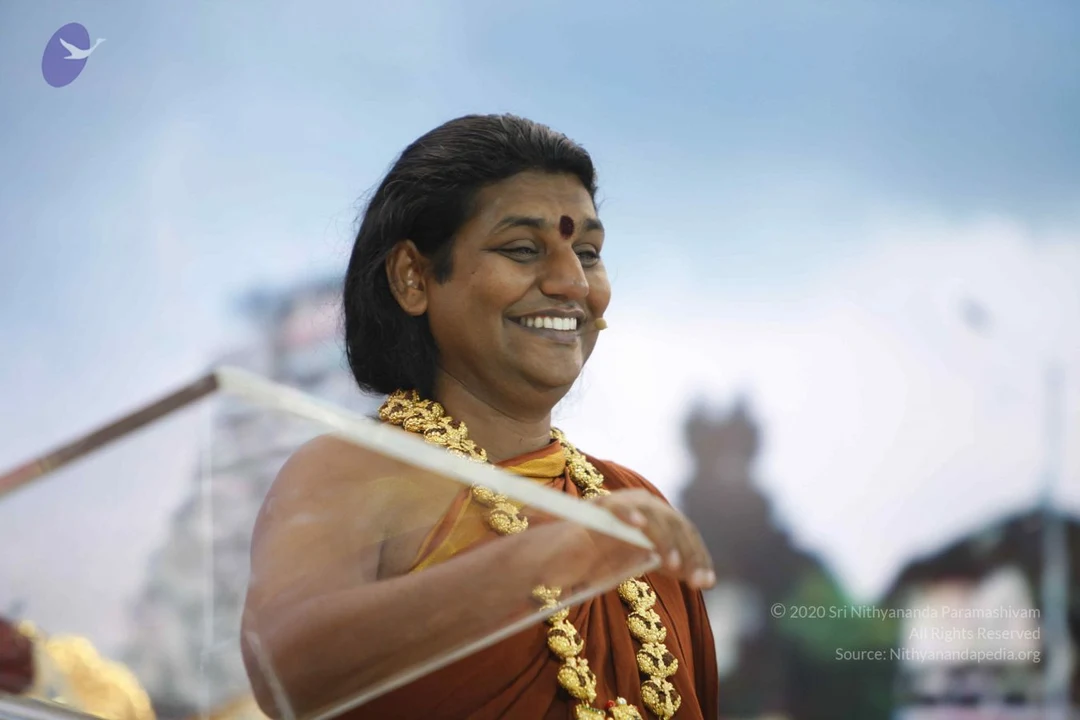
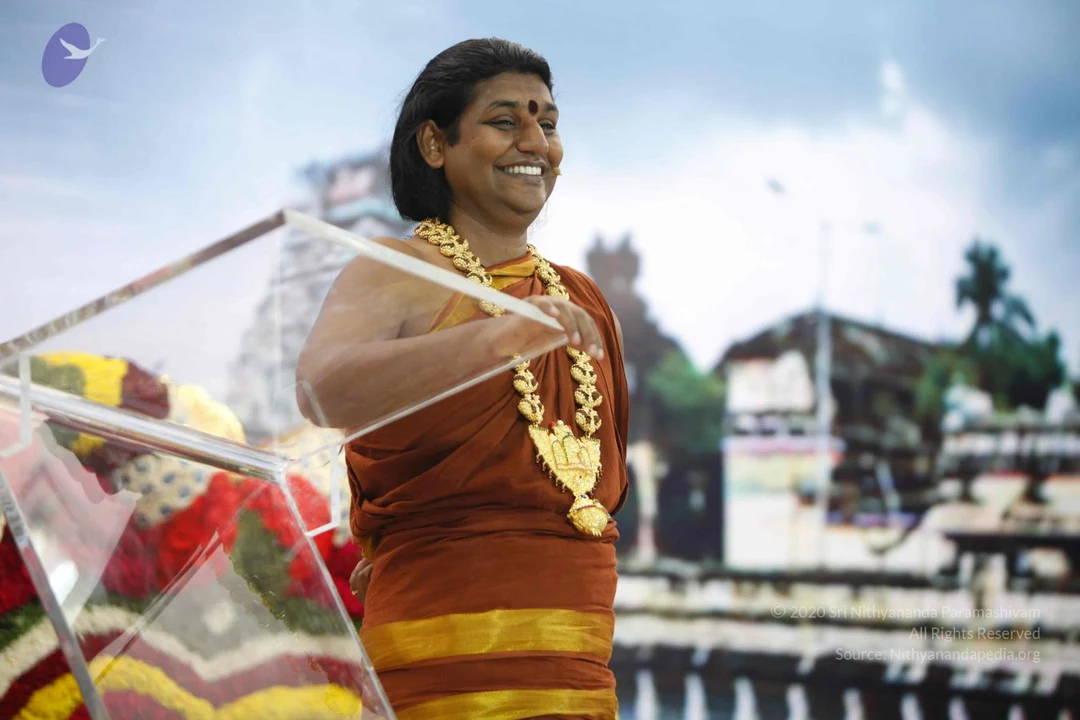
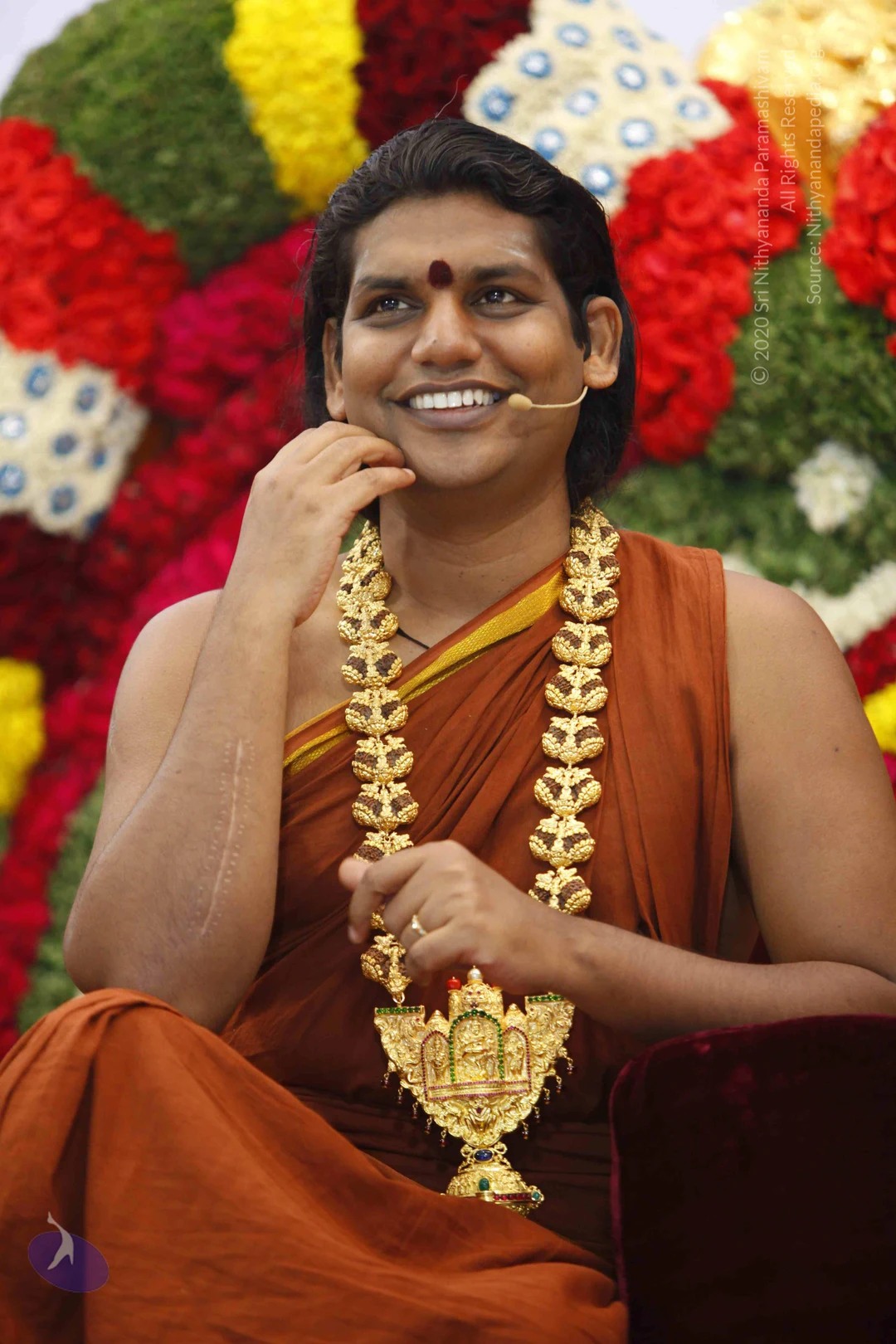
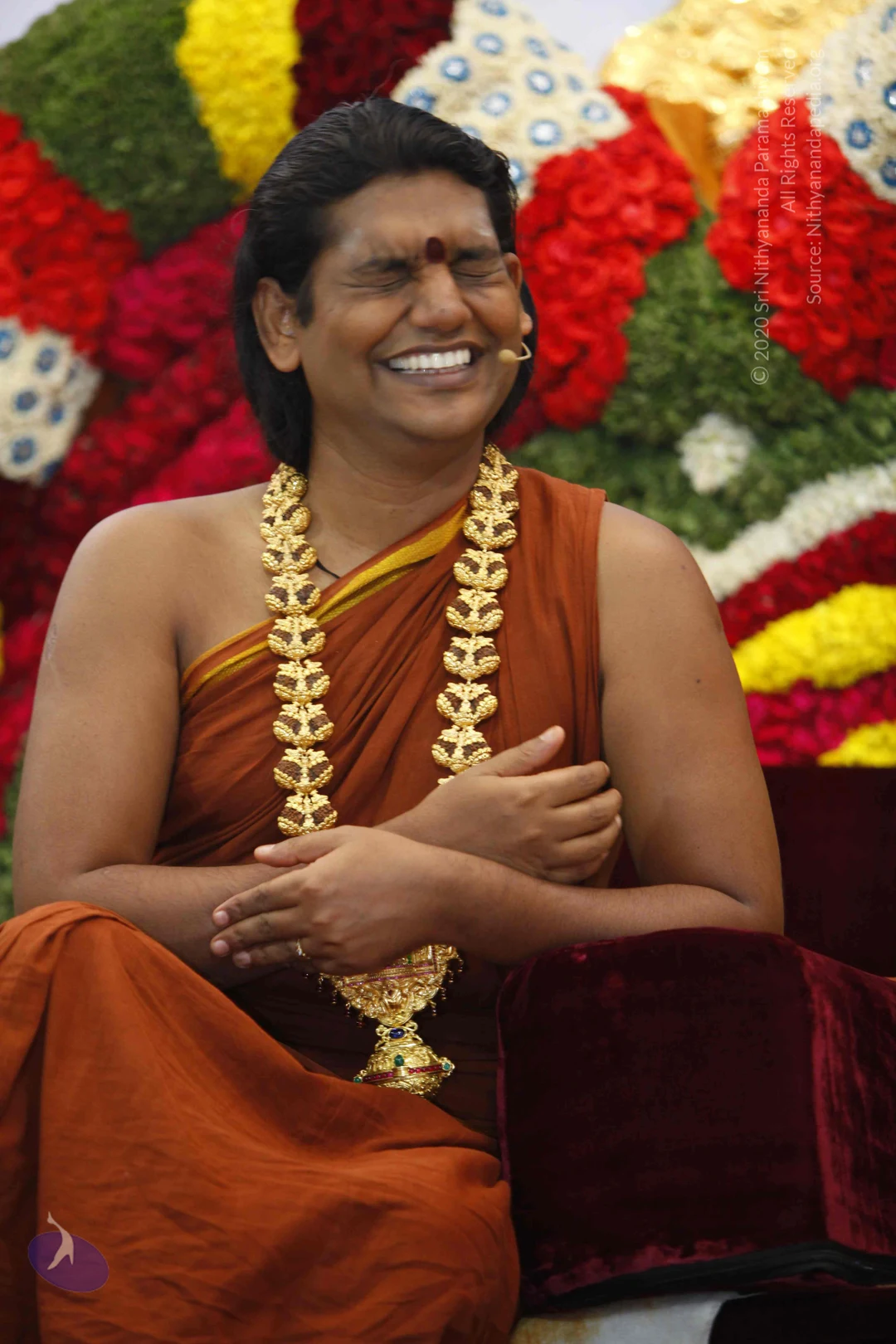
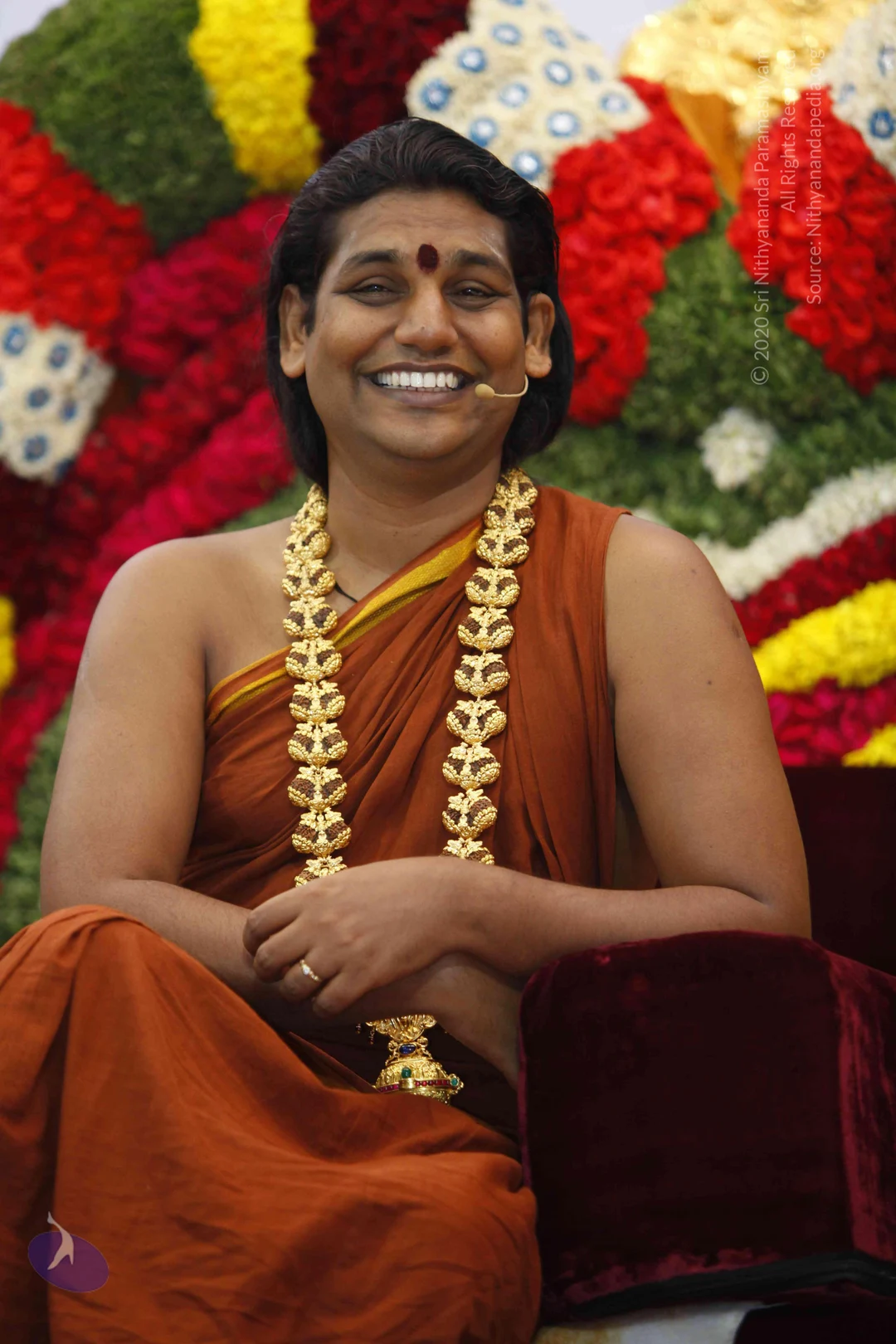
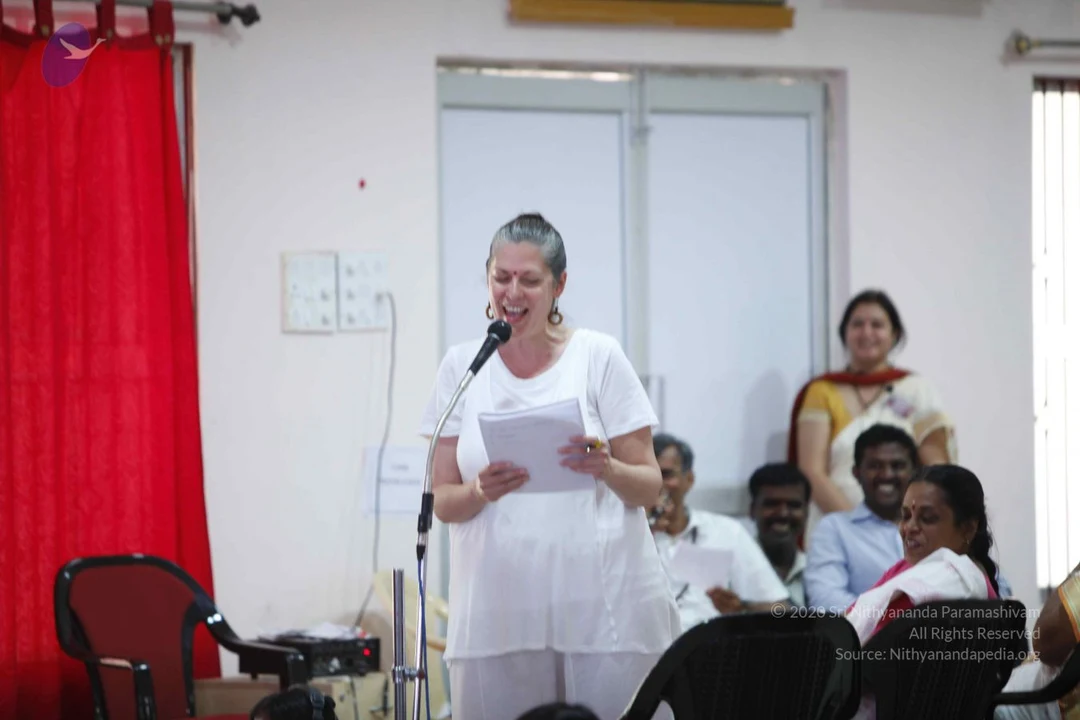
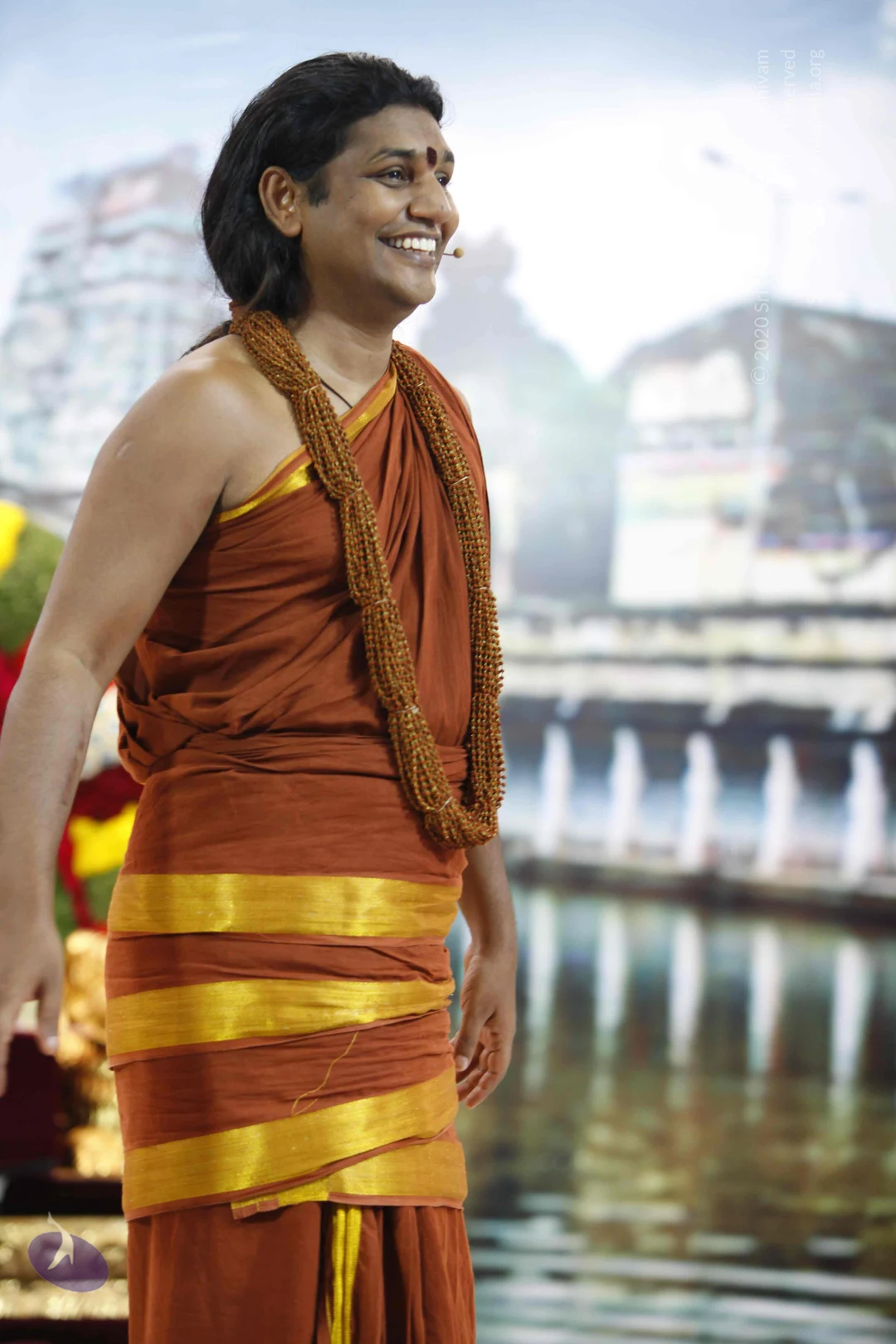
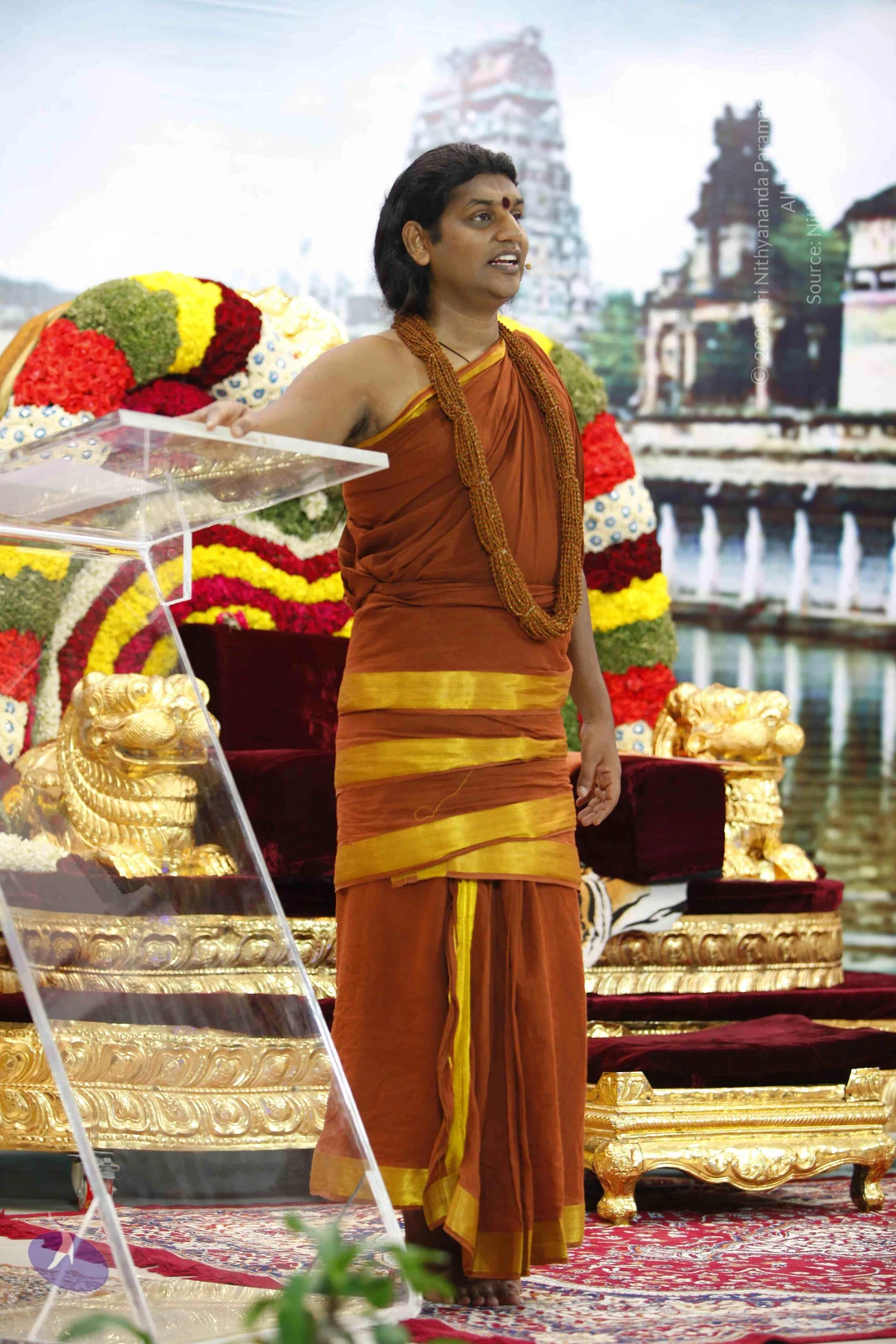
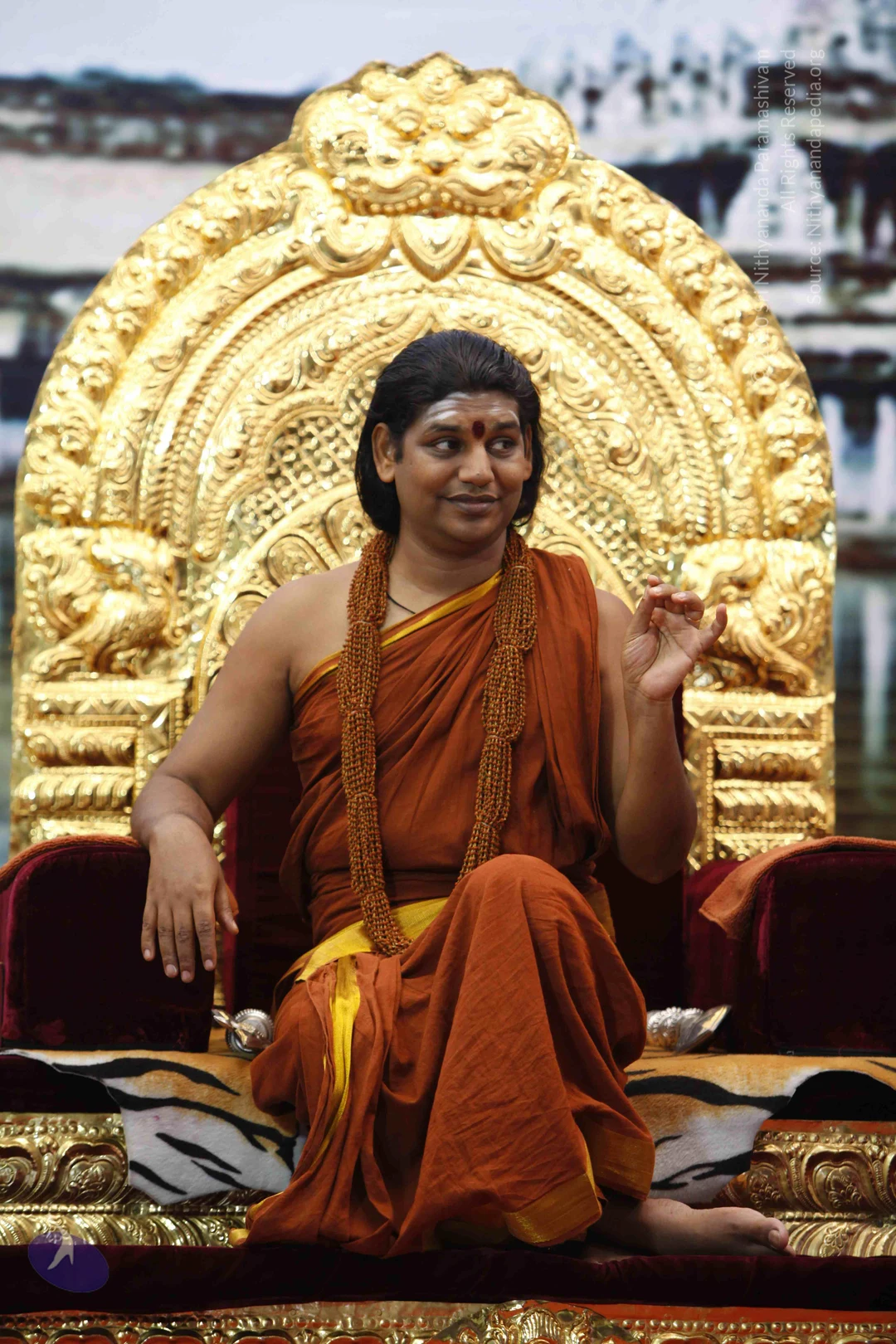
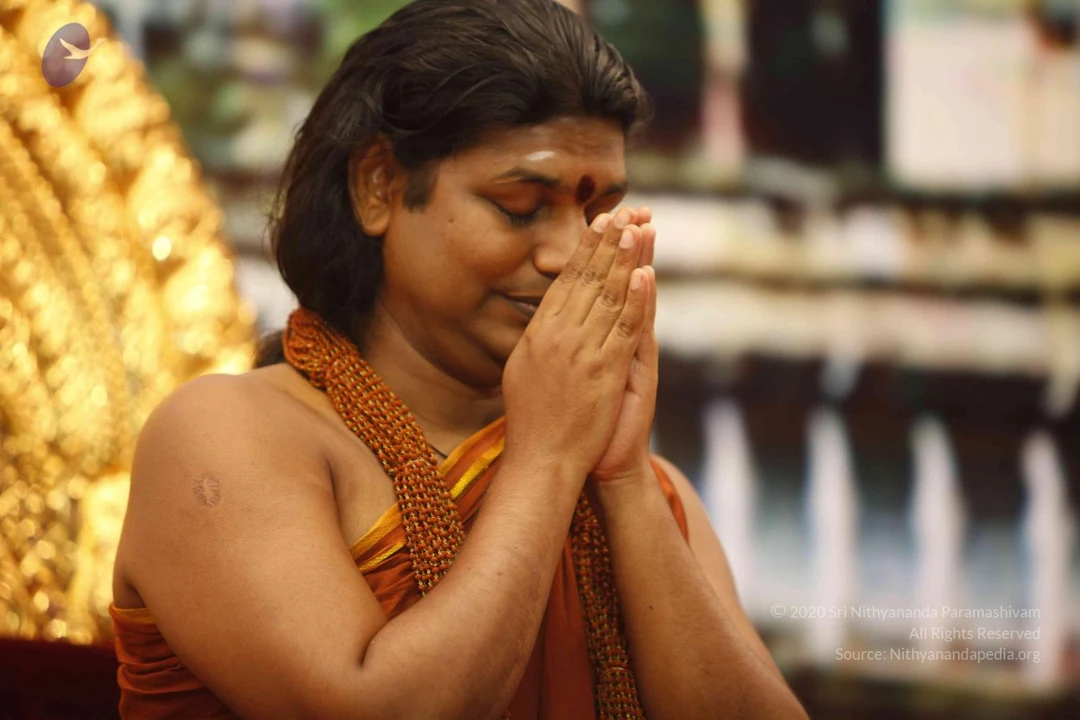
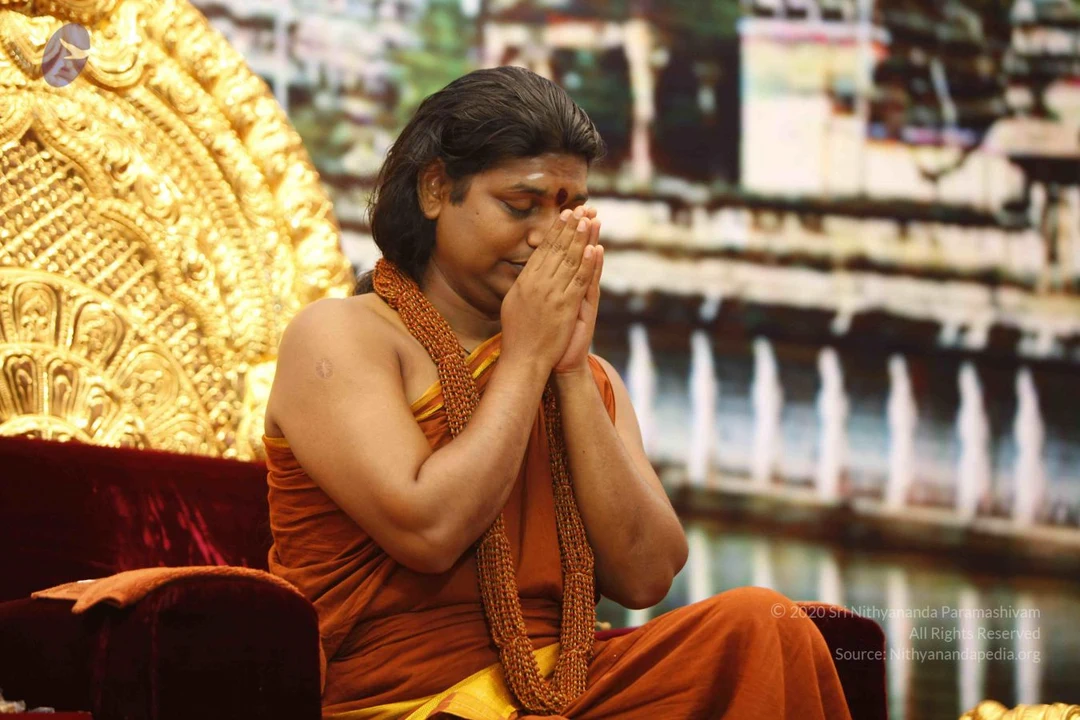
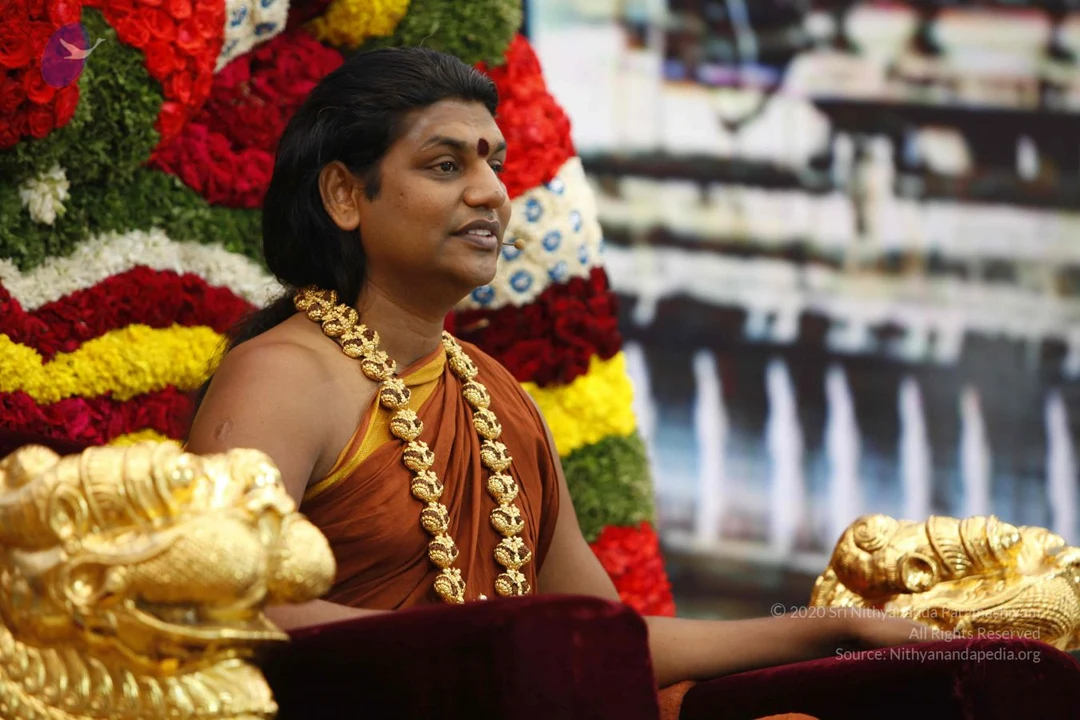
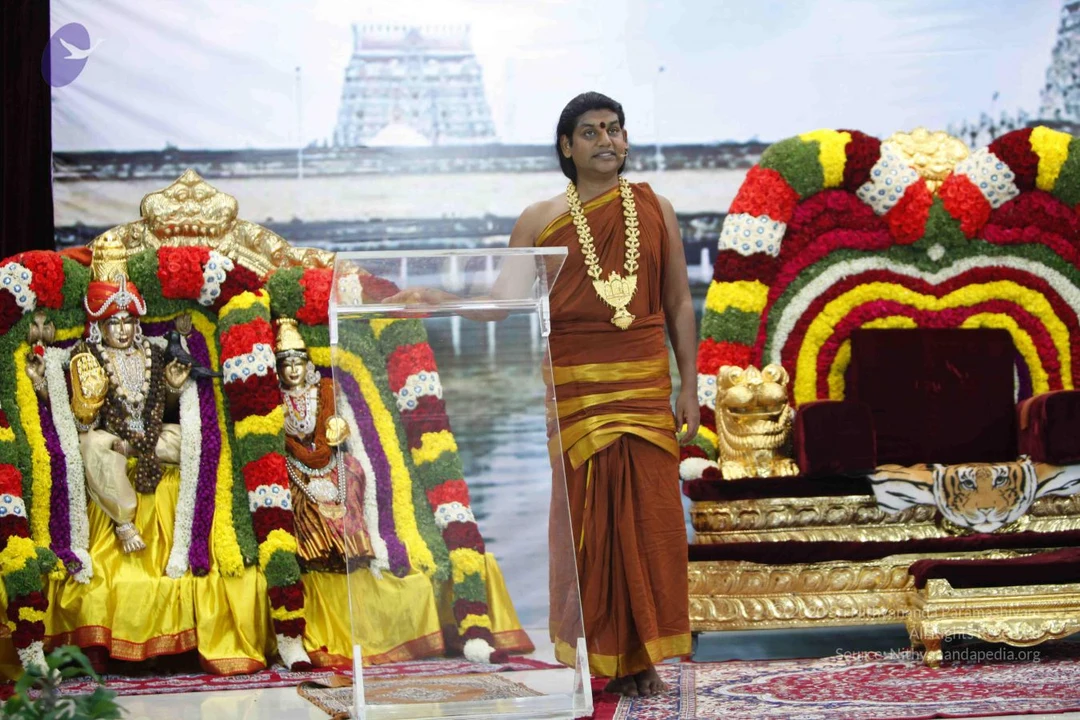
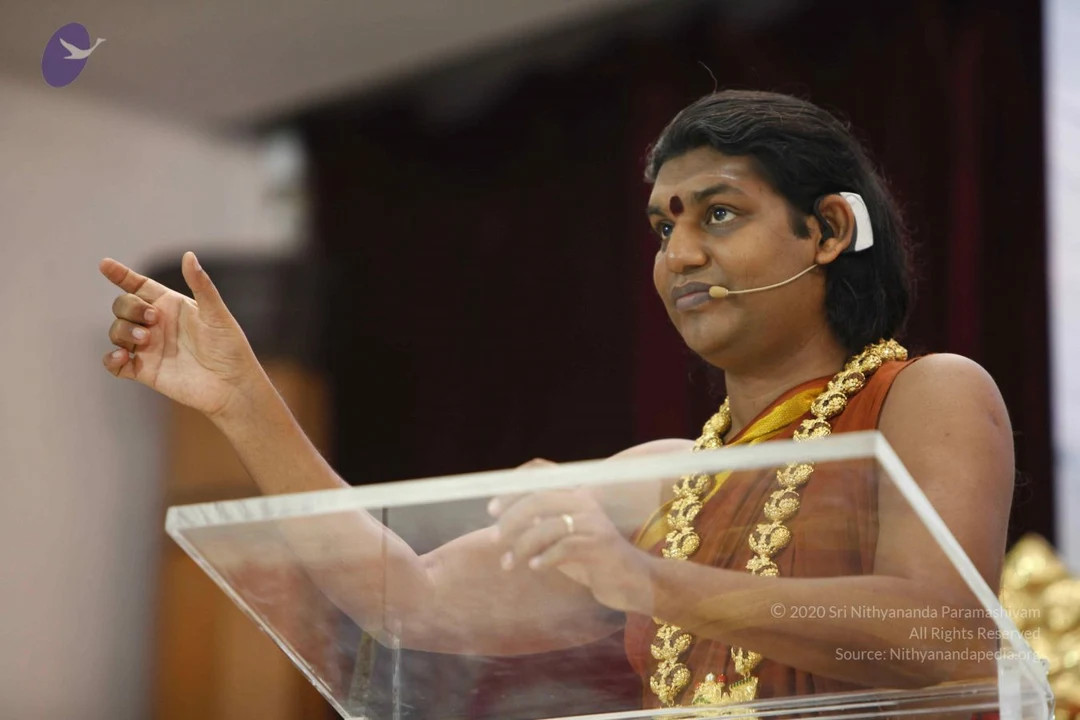
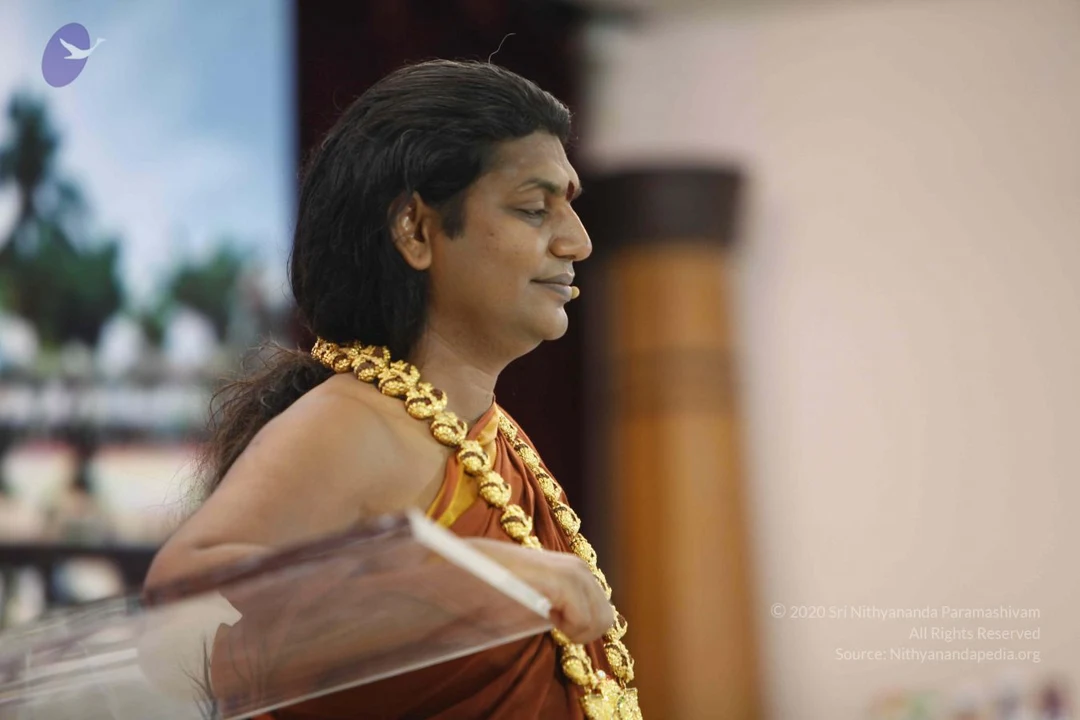
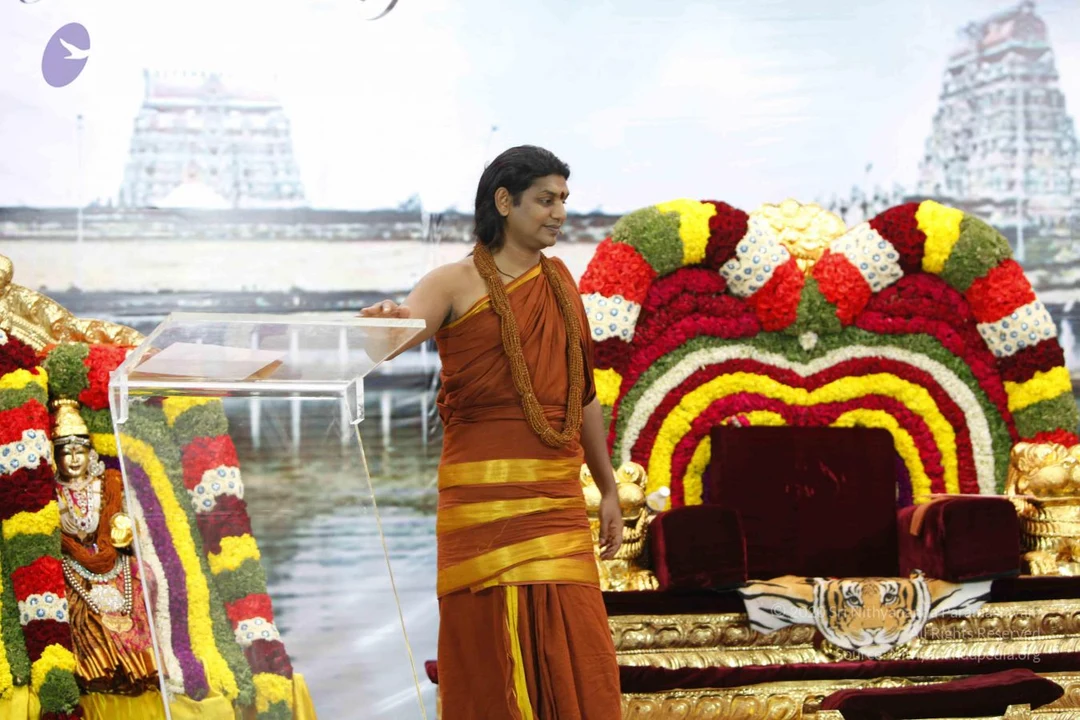
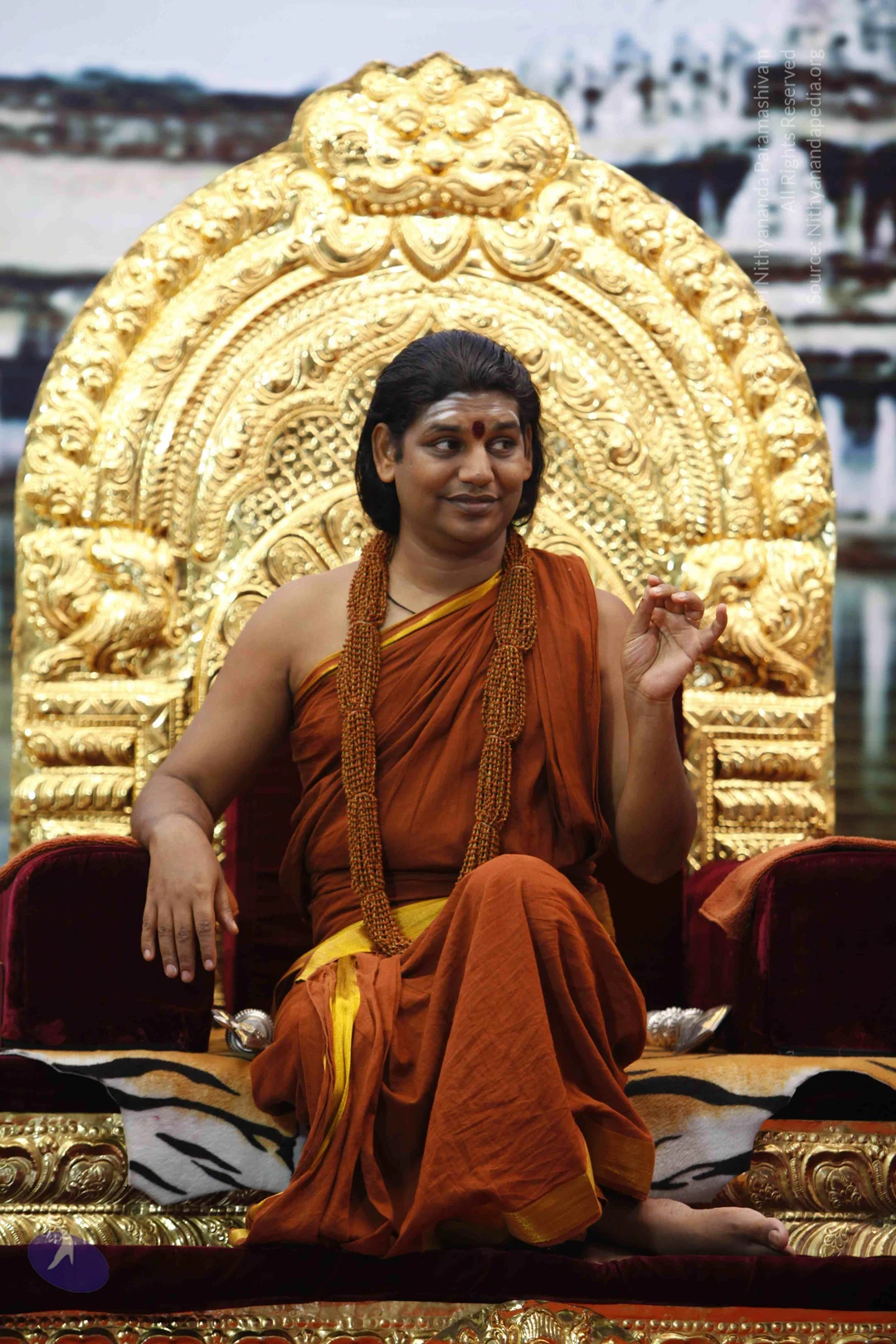
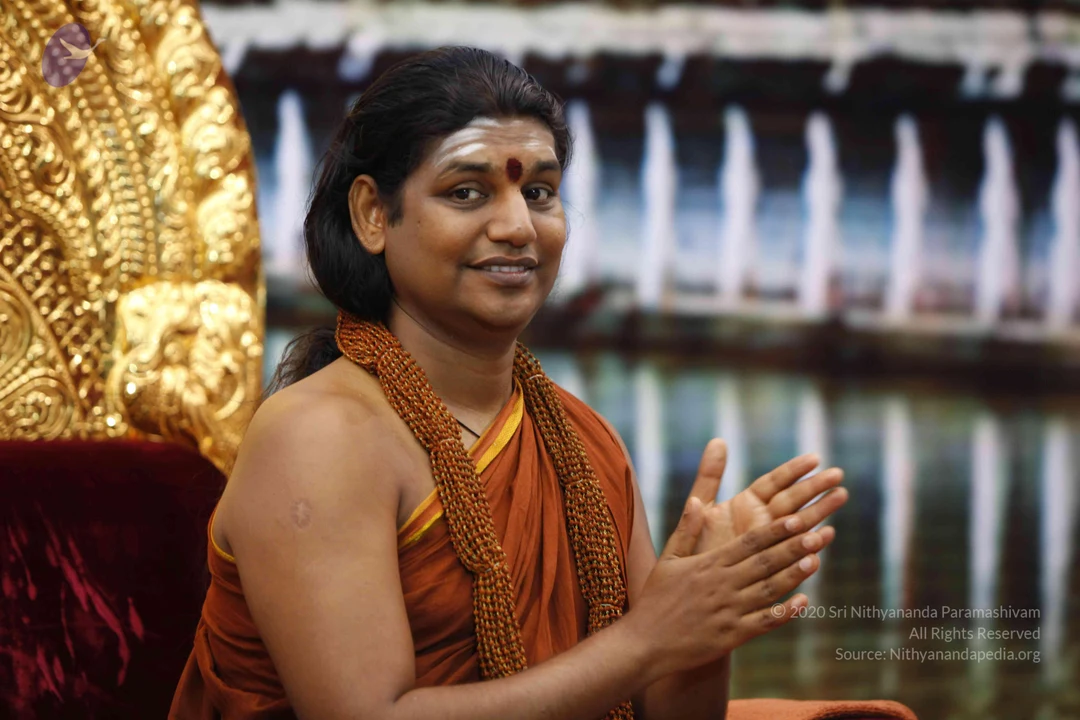
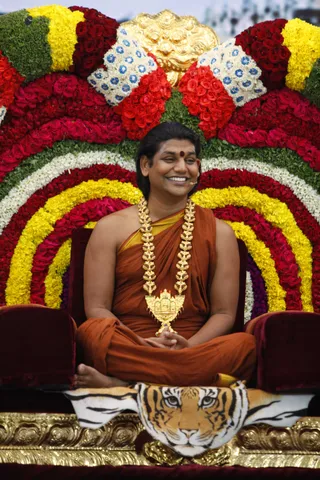
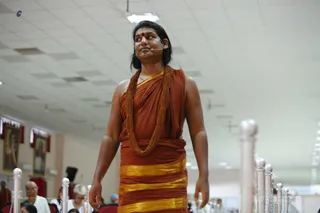
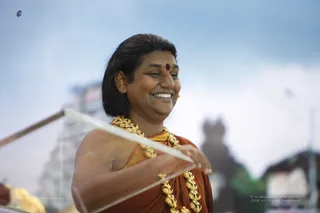
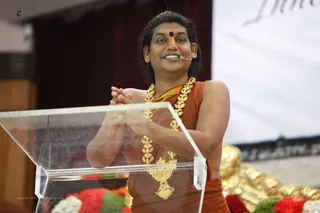
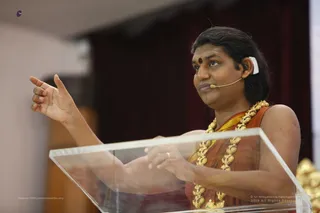
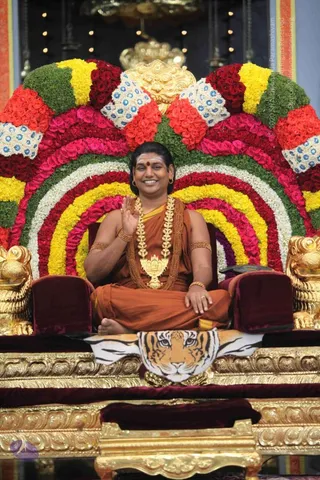
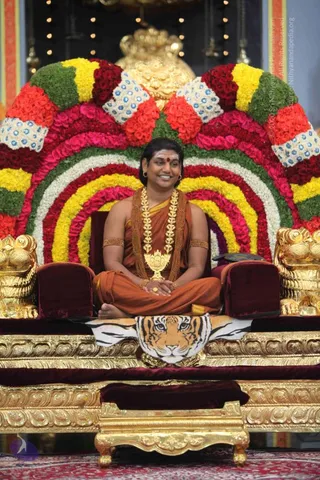
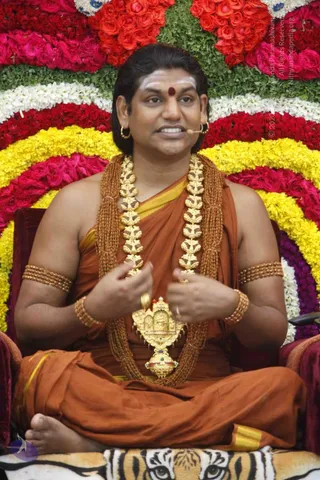
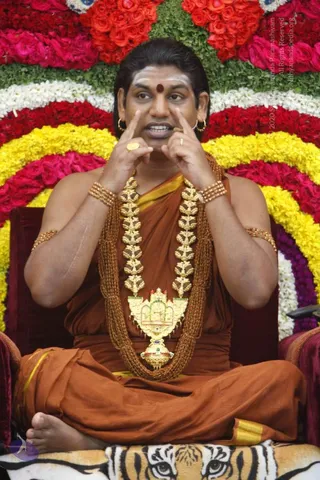
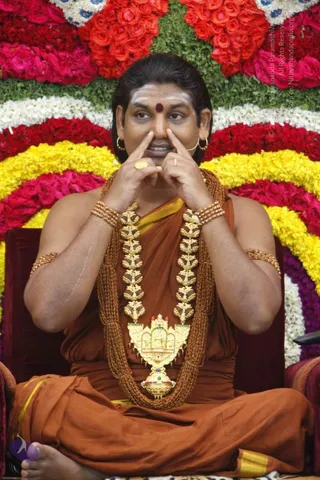
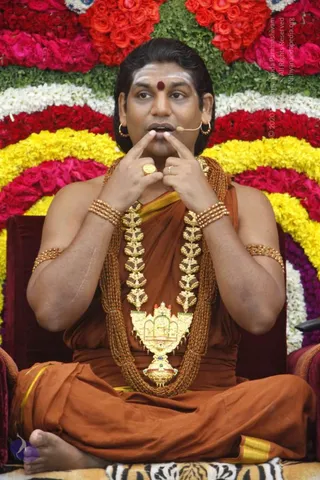
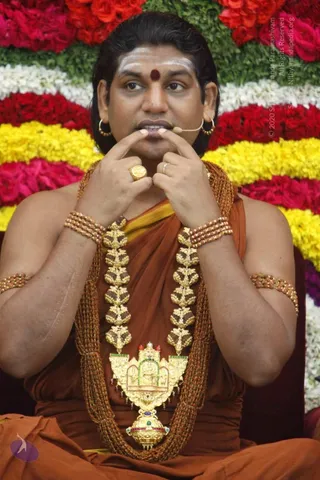
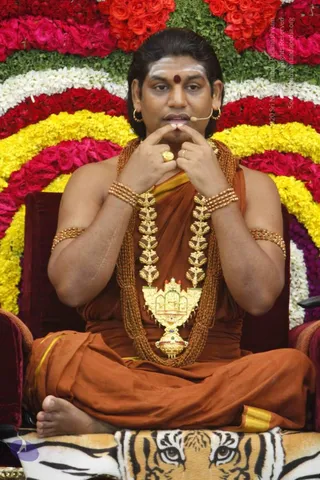
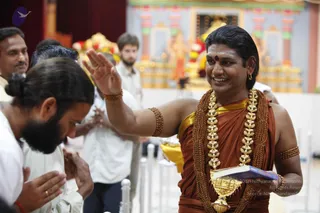
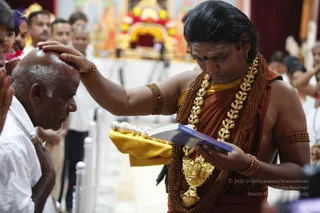
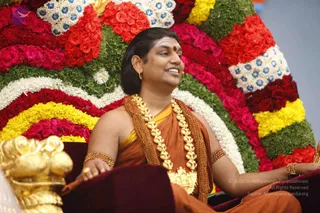
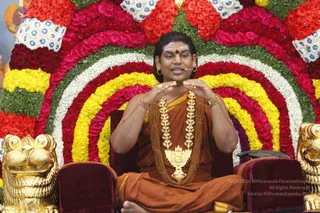
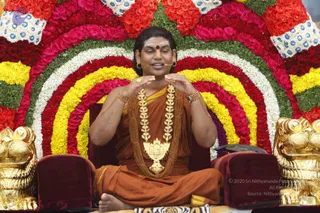
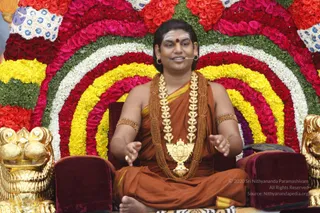
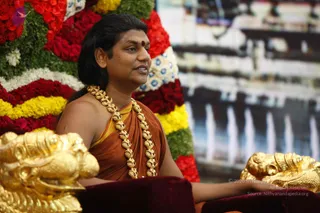
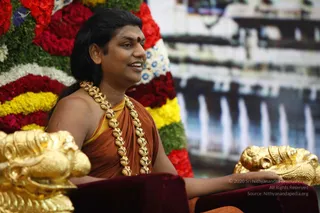
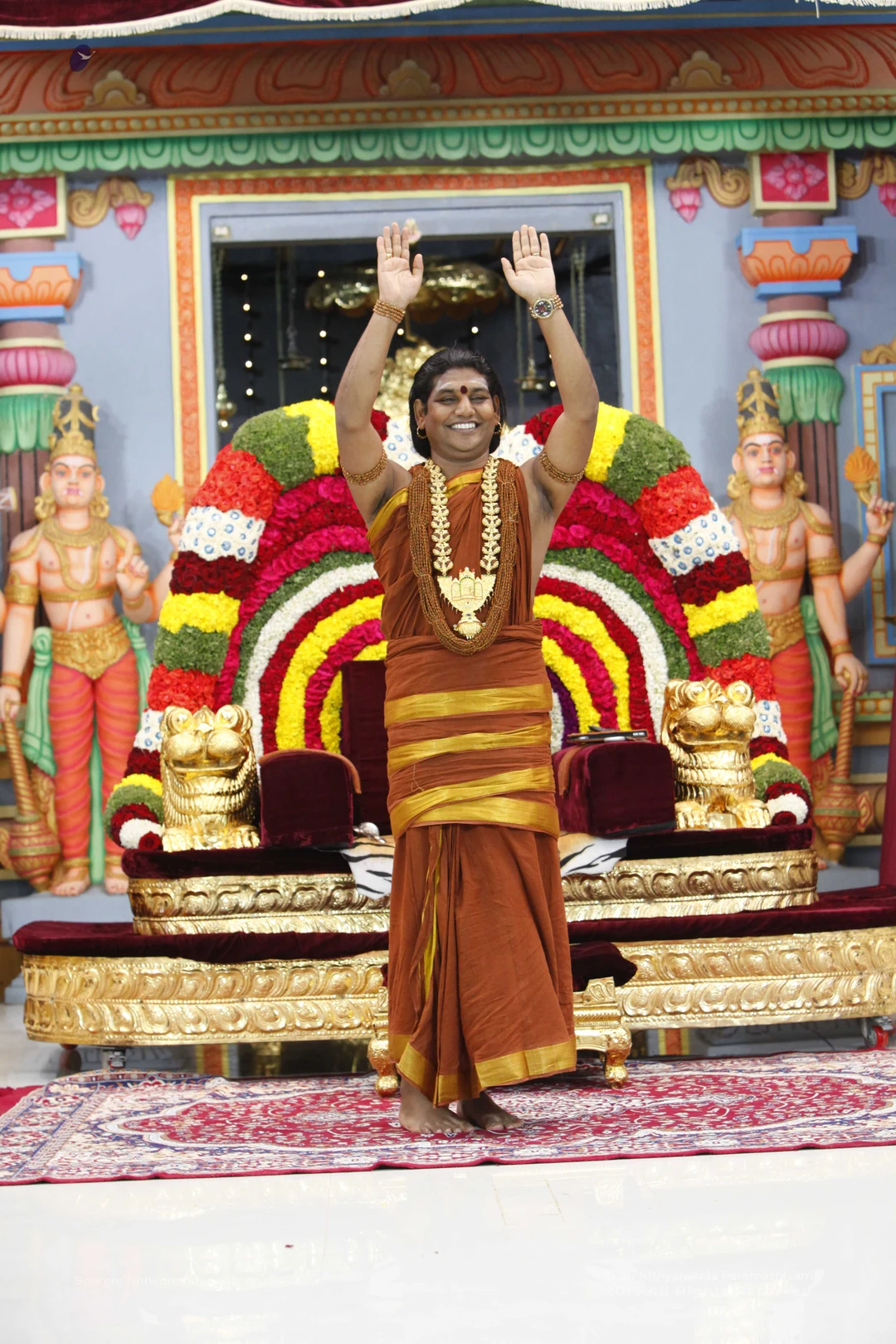
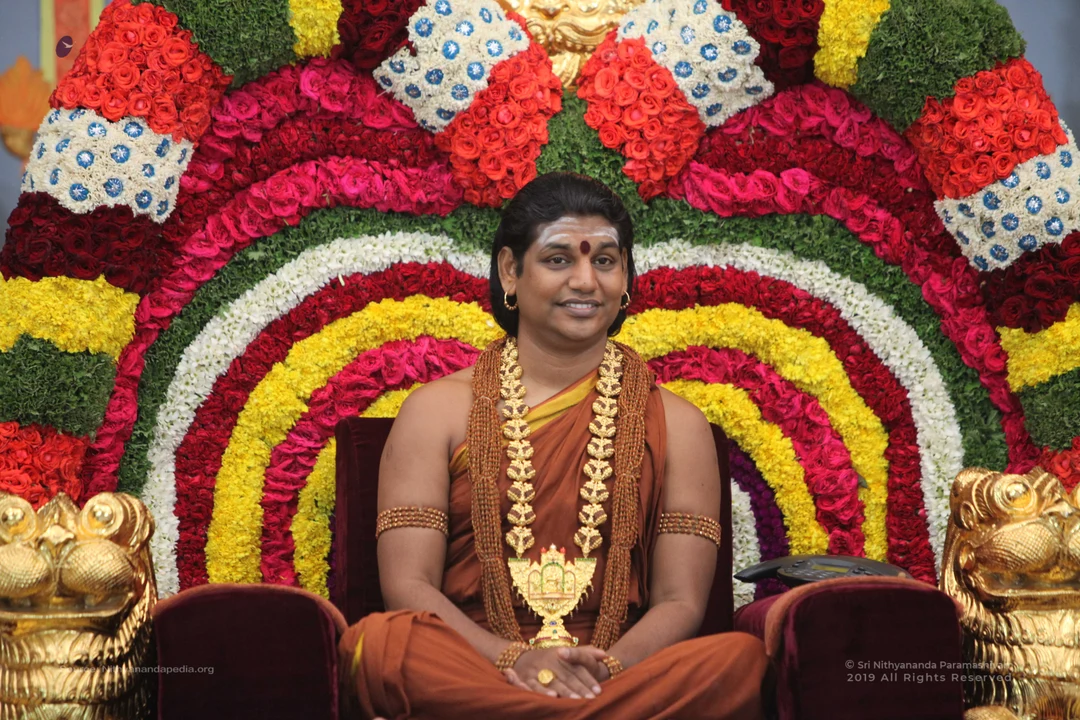
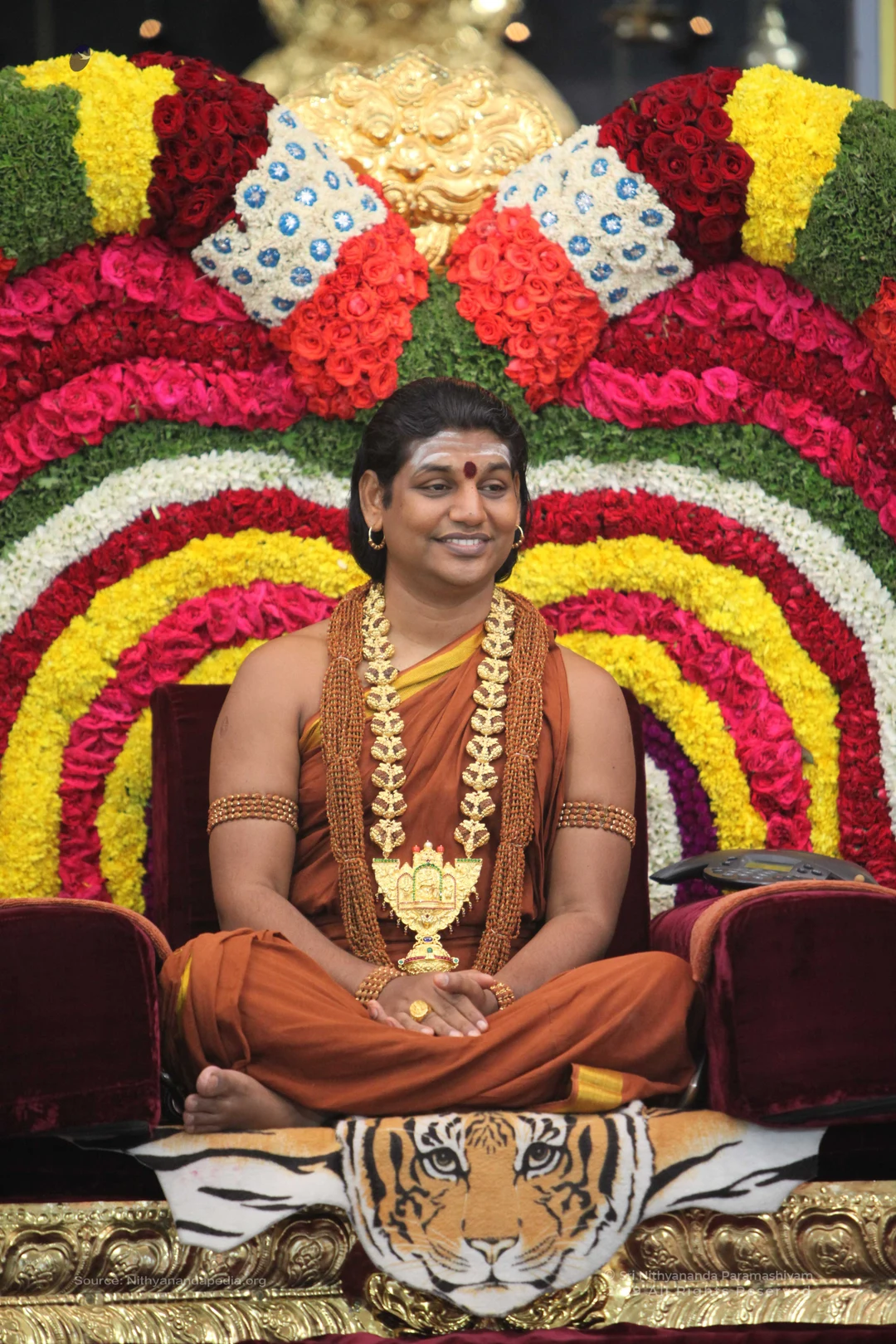
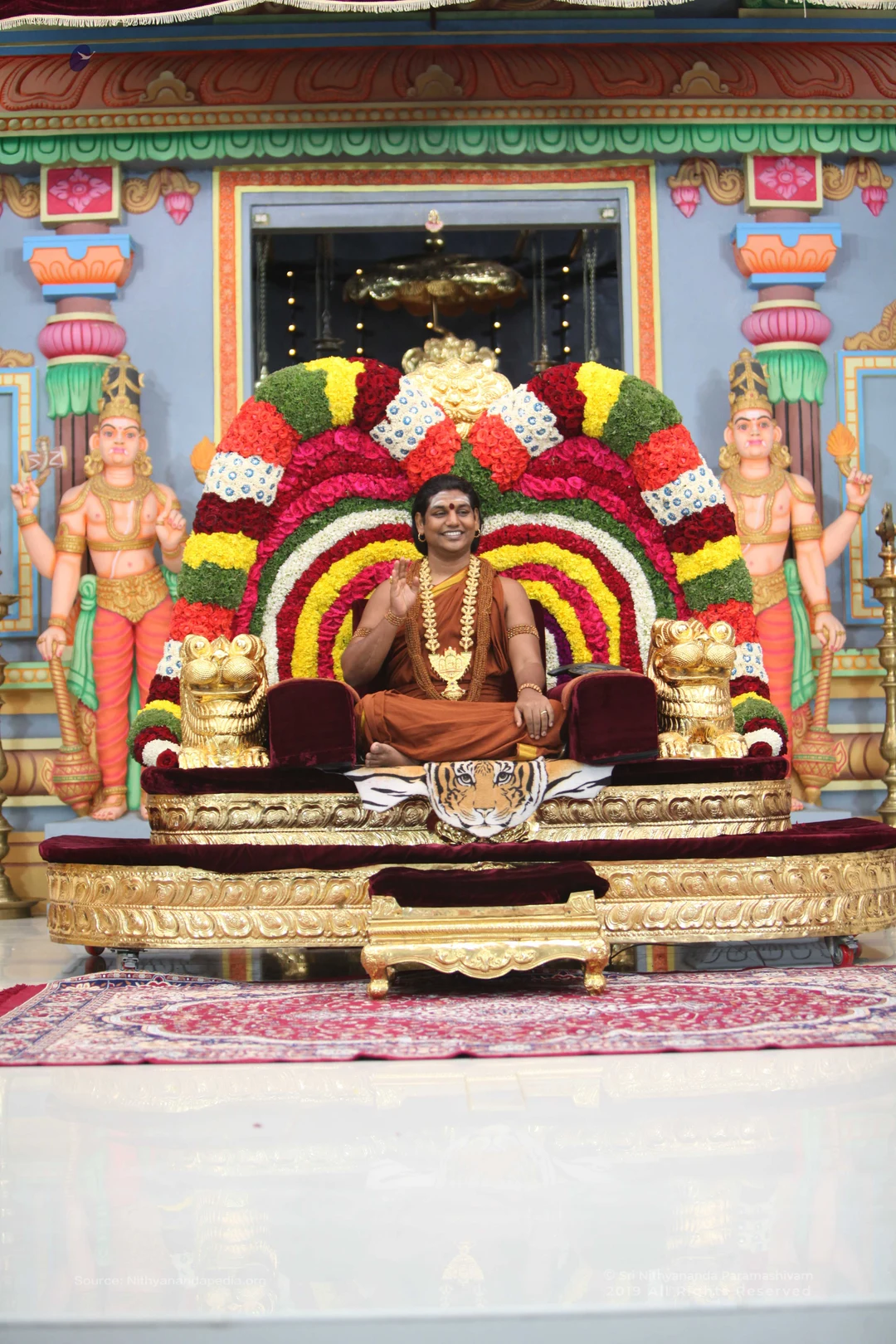
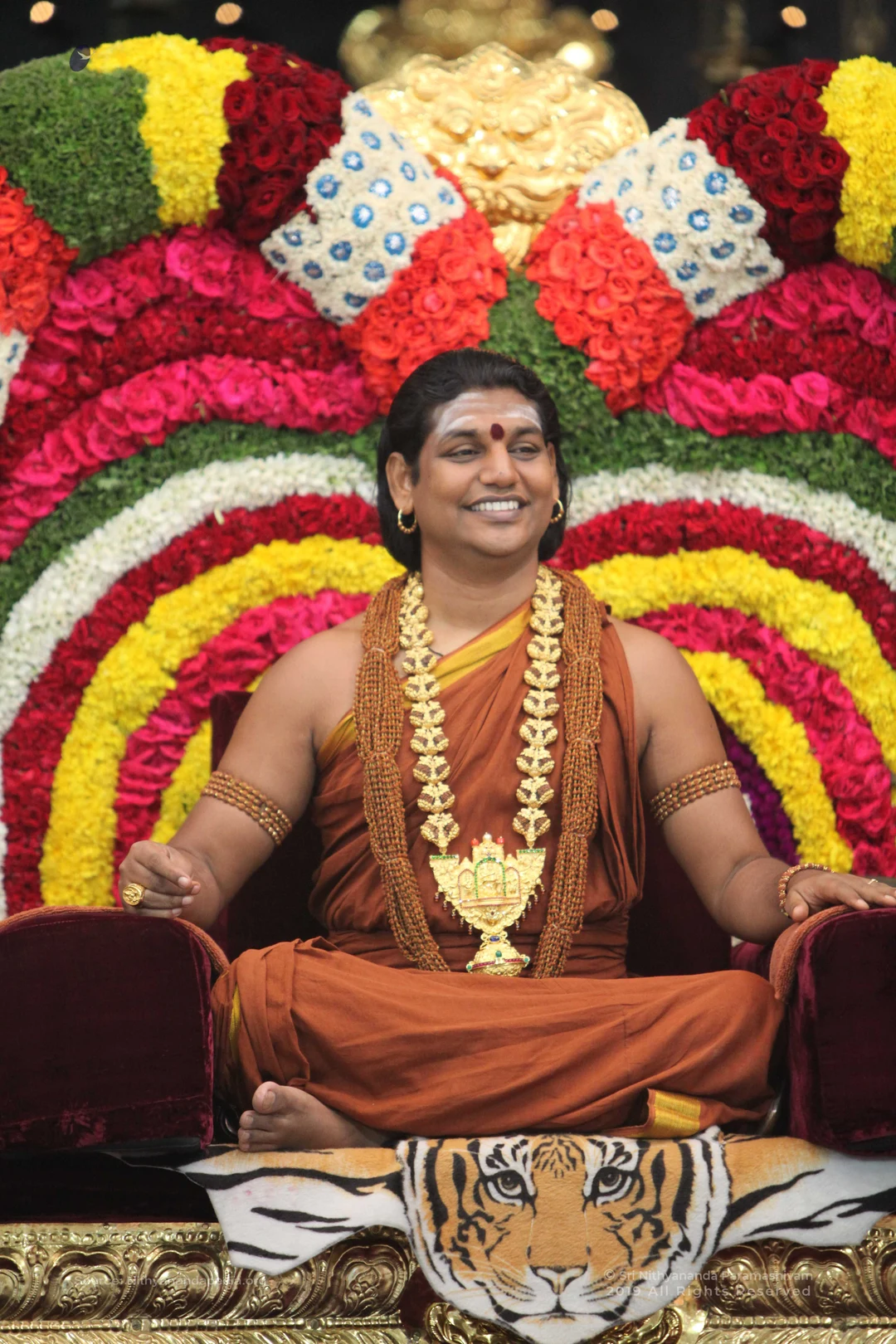
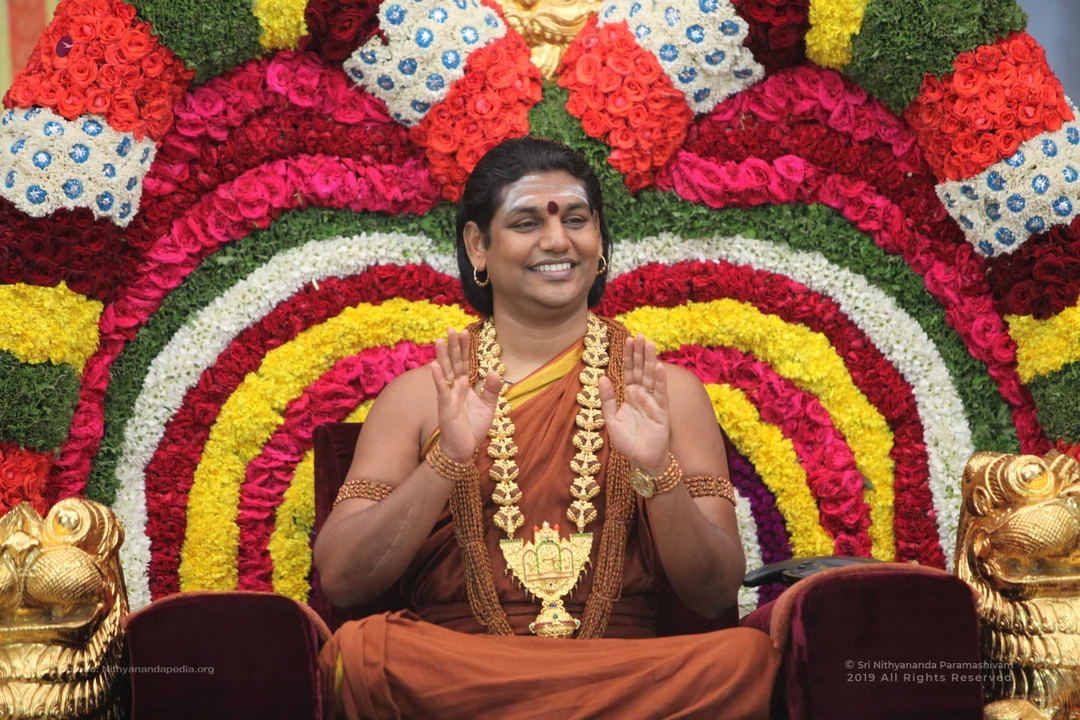
A man stands barefoot on a red patterned carpet with both arms raised overhead, palms open, smiling broadly. He wears a rust-orange dhoti-style garment with gold borders wrapped around his torso, a gold ceremonial necklace with a central lotus pendant and a long brown bead mala, gold bangles and a wristwatch, and a red bindi on his forehead. Behind him is a gold-framed throne (peetha) with gold lion figures at its arms, backed by a rainbow arch of yellow, red, white and green flower garlands. Painted deity figures in gold crowns flank the stage, and a decorated pillar with a pink and green capital stands at right. The man's appearance with long swept-back hair, rudraksha-style mala, gold necklace and orange clothing is consistent with a probable Swamiji presence on the stage.A seated man in a rust-red sleeveless garment with a gold-bordered dhoti, wearing a heavy red and yellow flower garland with silver accents and a large gold ornamental necklace with a central gold pendant. He wears gold armlets, a gold ring, and a vertical white and red tilak on his forehead, and gazes off to the side. Behind him, blurred figures in orange clothing stand near red and orange decorations, and a leopard-print cushion is visible beneath him. The page indicates a satsang, and the sitter's appearance is consistent with the a person cues of swept-back hair, rich ornaments and a garland, though this is only a probable identification from appearance.A man stands behind a clear acrylic podium, resting his right hand on it and touching his chin with the other hand in a thoughtful pose. He wears a headset microphone and a small red bindi, with long dark hair swept back. His rust-orange garment has gold borders and he wears a heavy gold bead necklace with a pendant. Swamiji (probable): the appearance cues include long swept-back hair, saffron/orange clothing and ornate gold necklaces, consistent with a speaker at a satsang. A round fan is visible below the podium and a red wooden structure stands in the background.

July 01 2013

Original wiki page
Contents

Title

let-your-being-be-enriched -nithyananda

Description

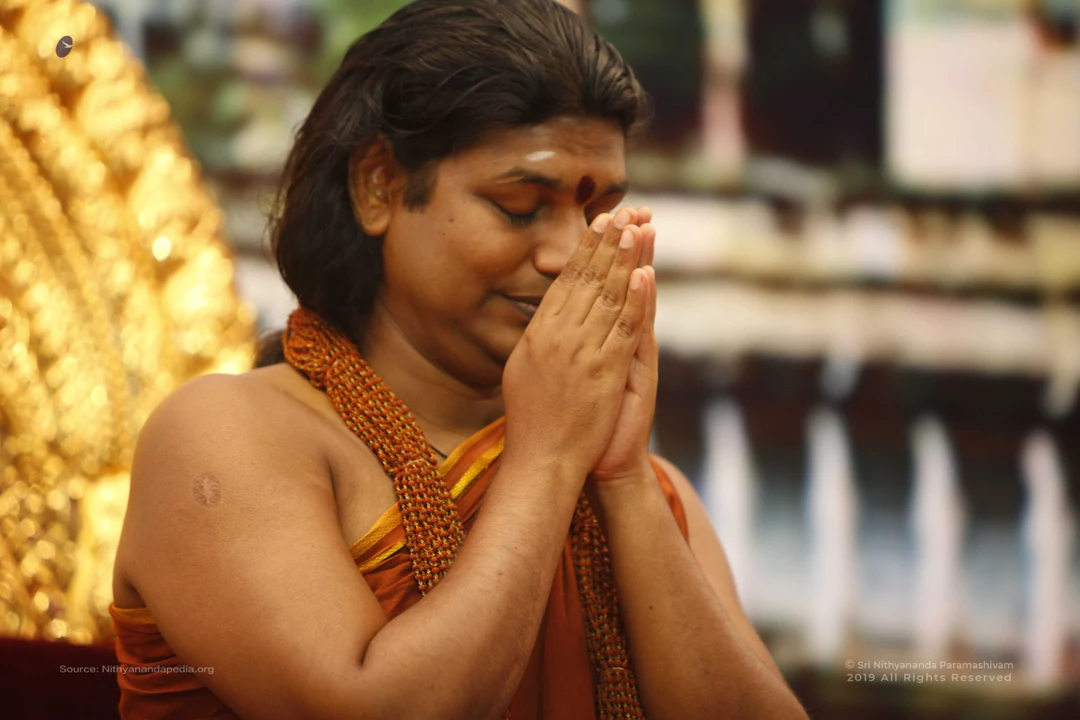
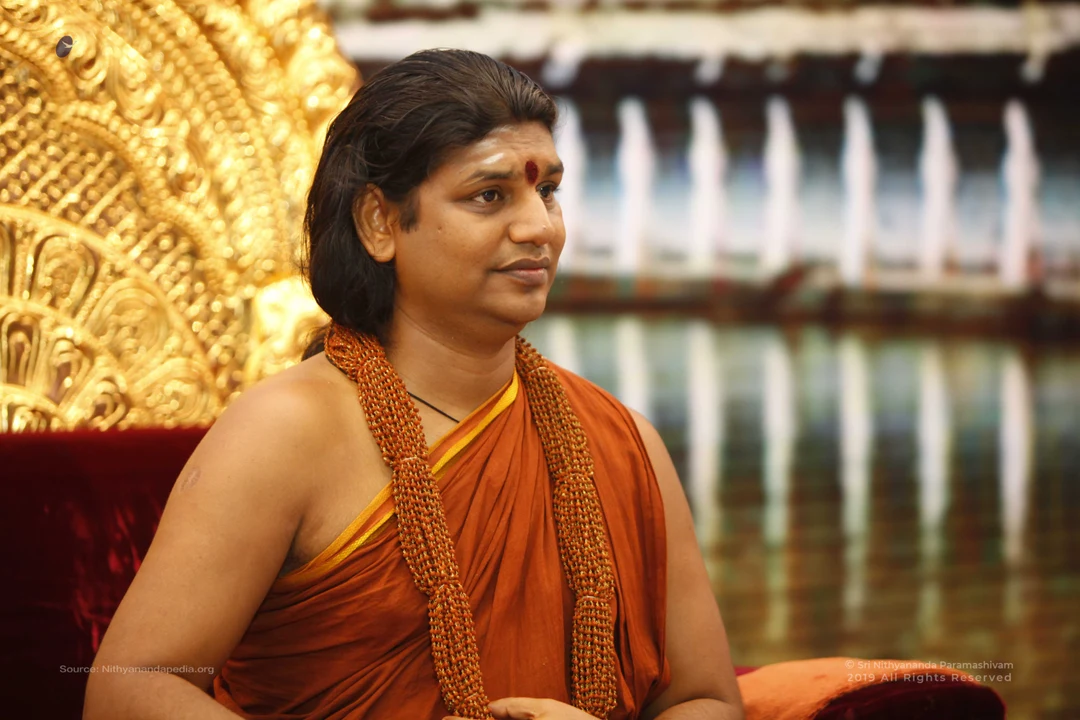
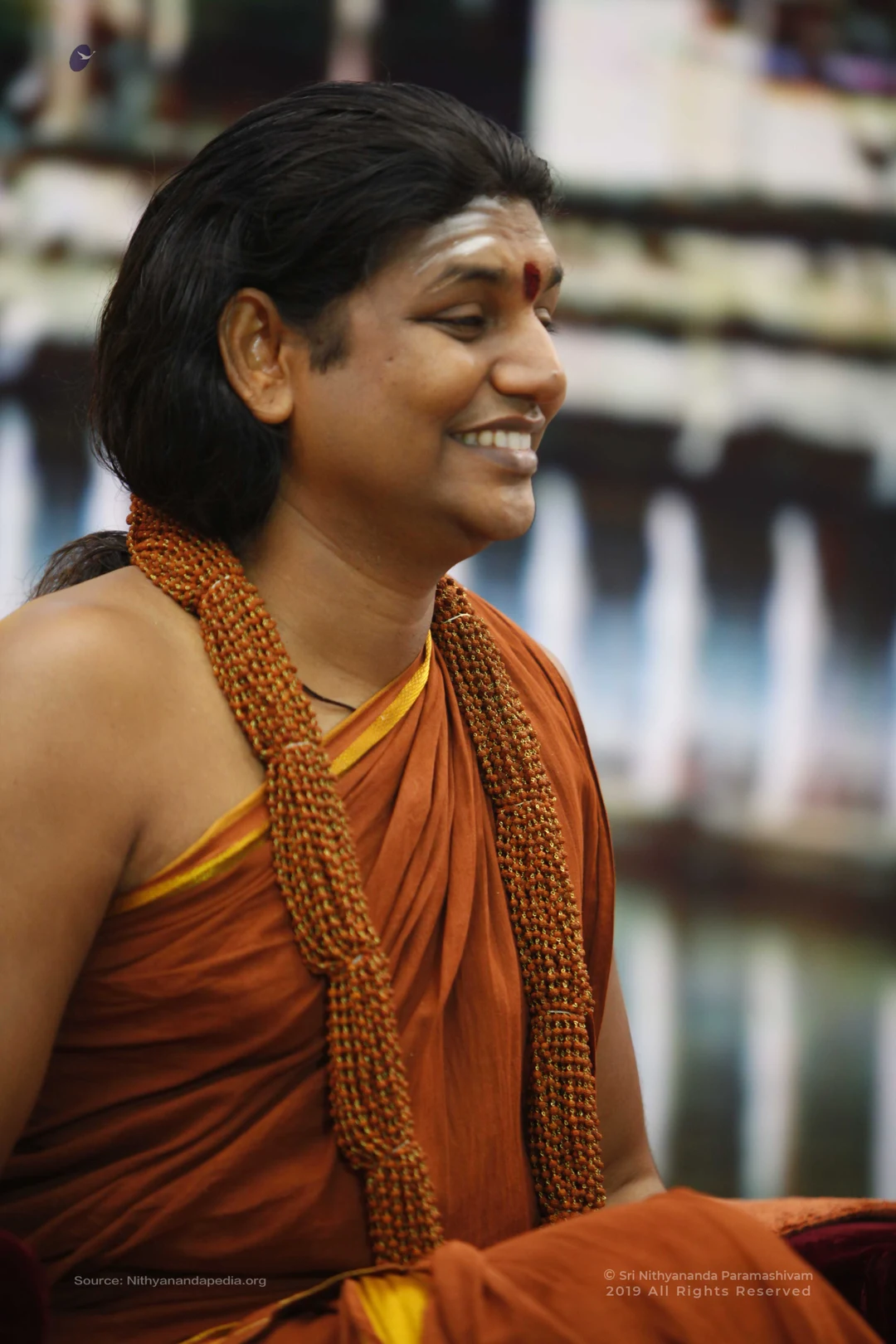
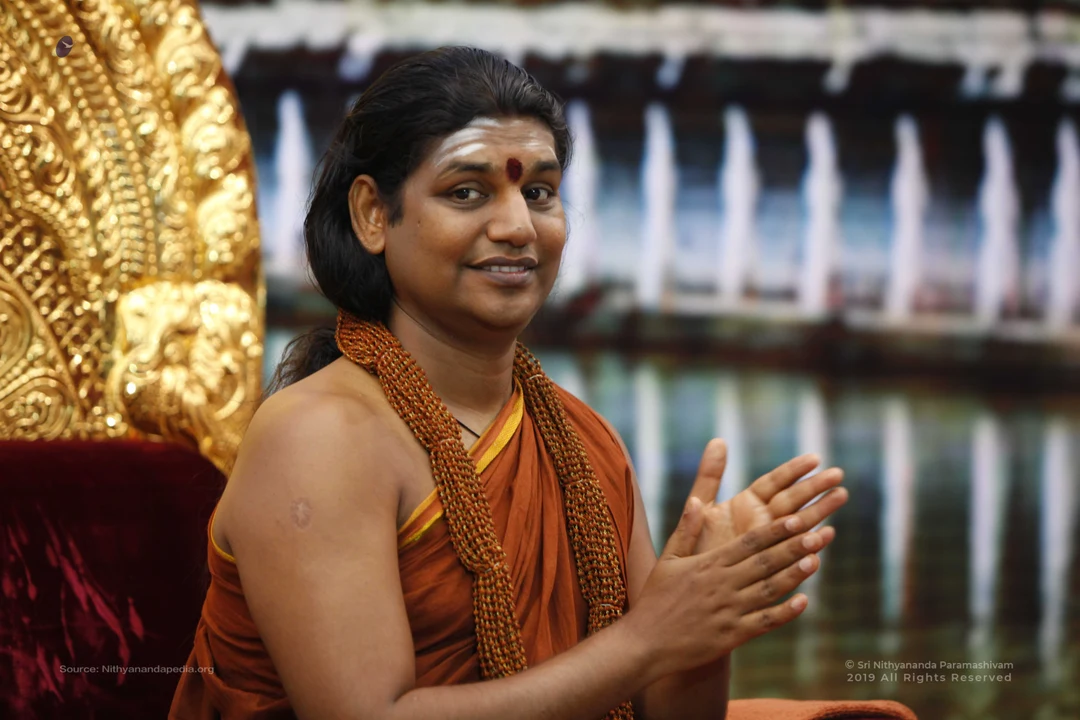
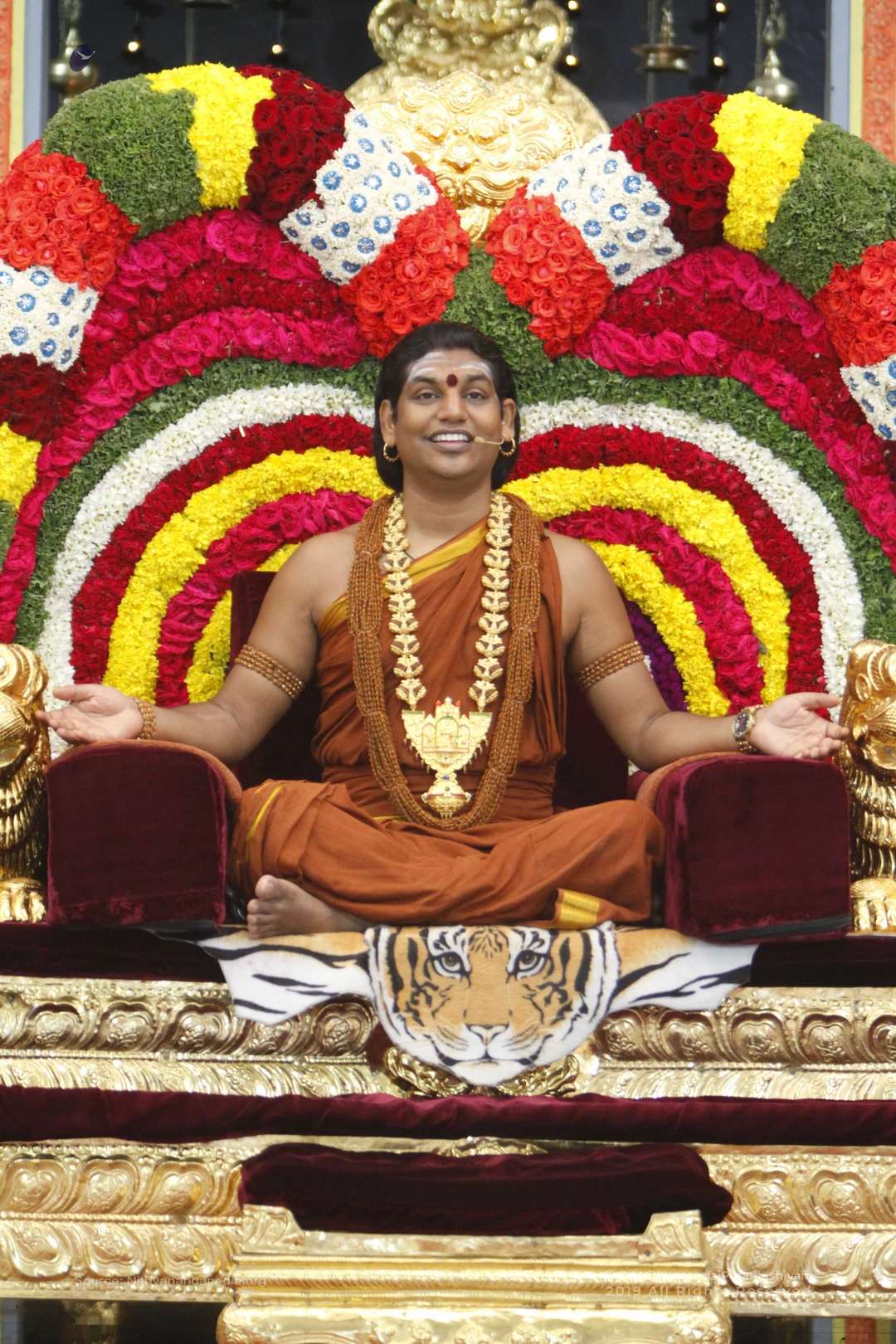
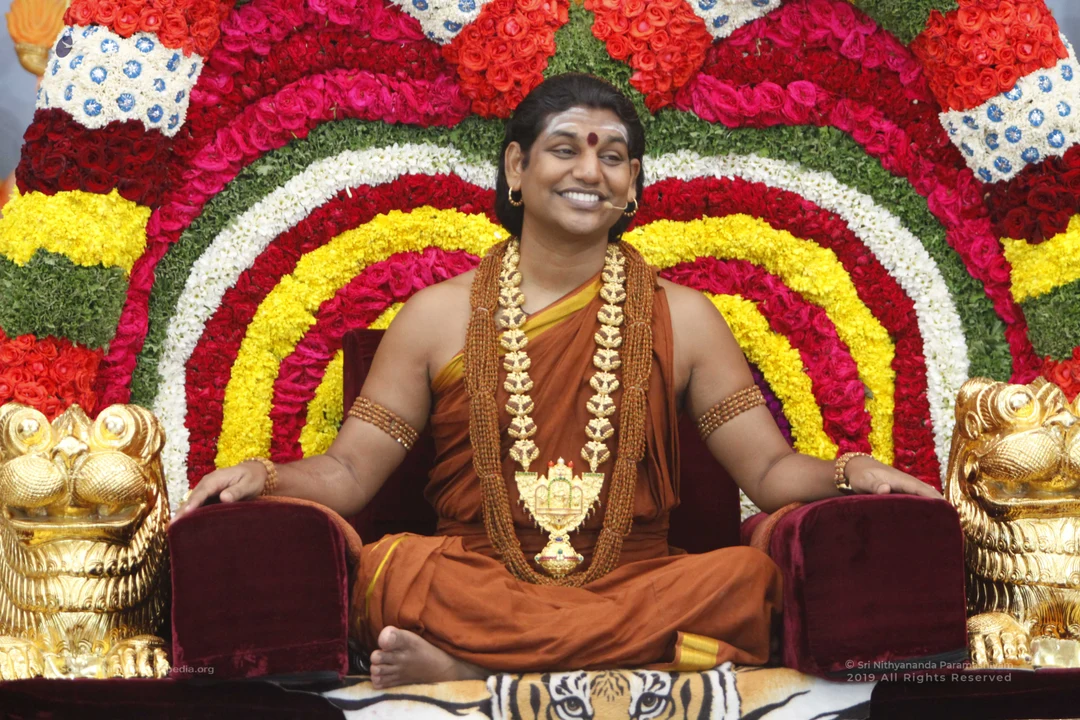
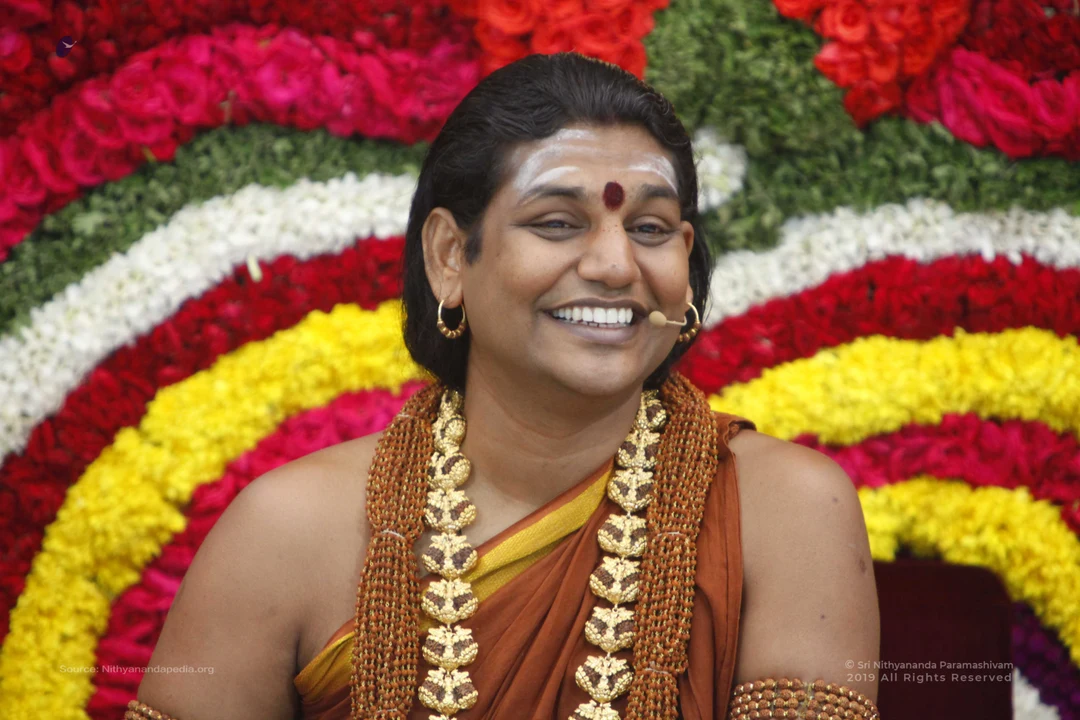
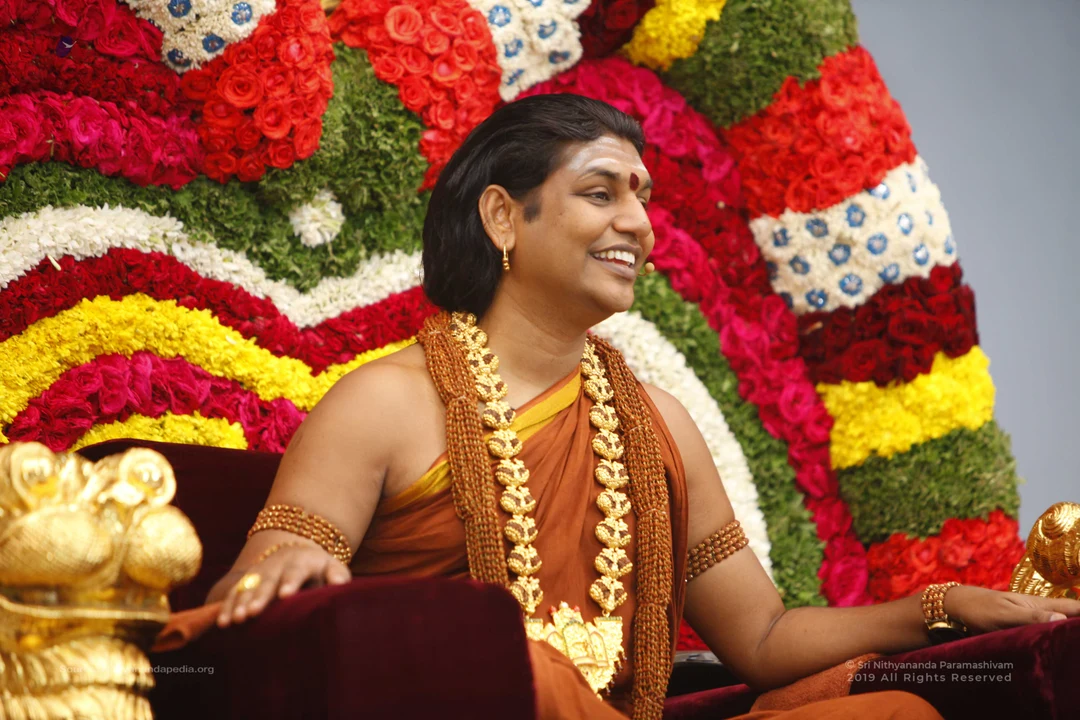
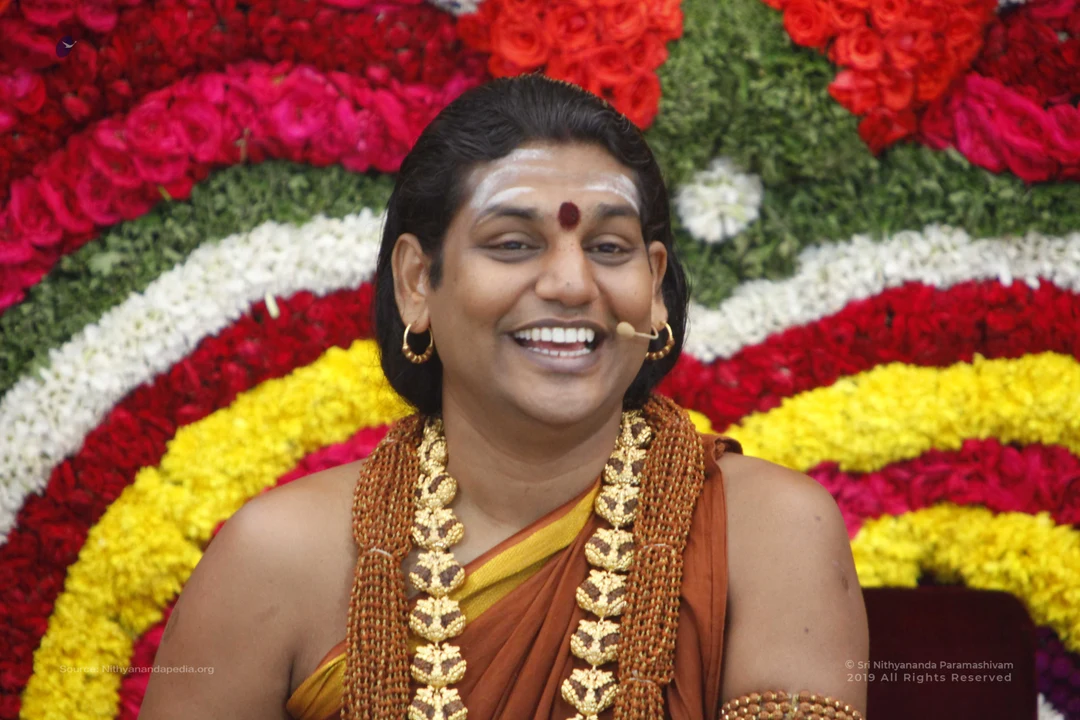
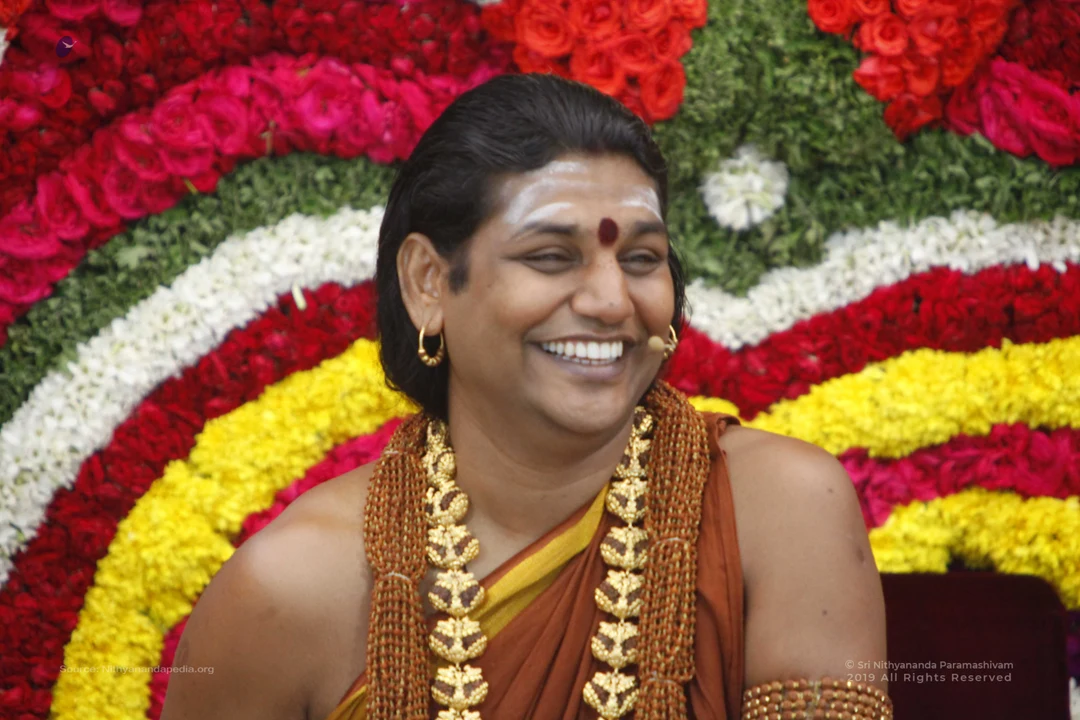
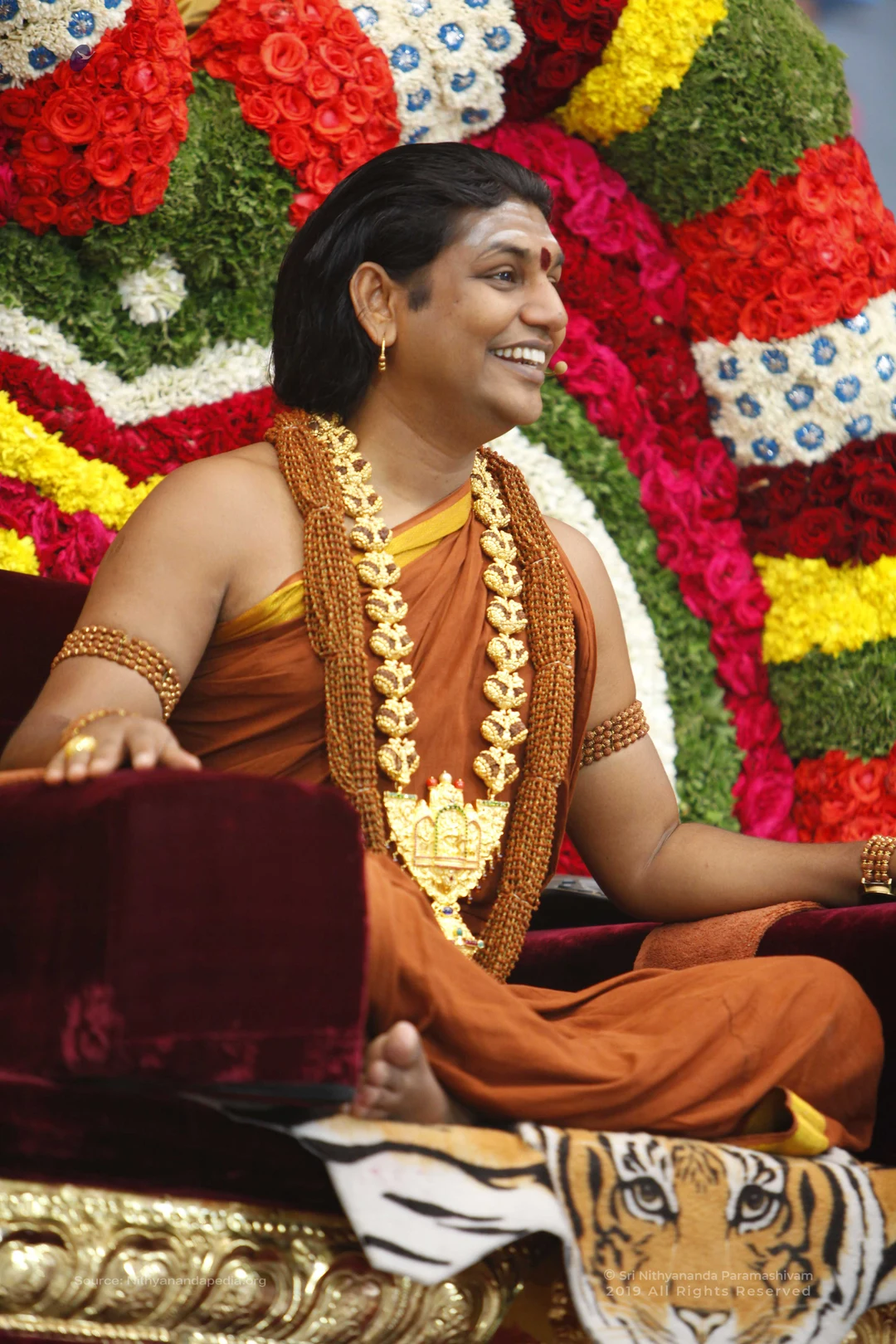
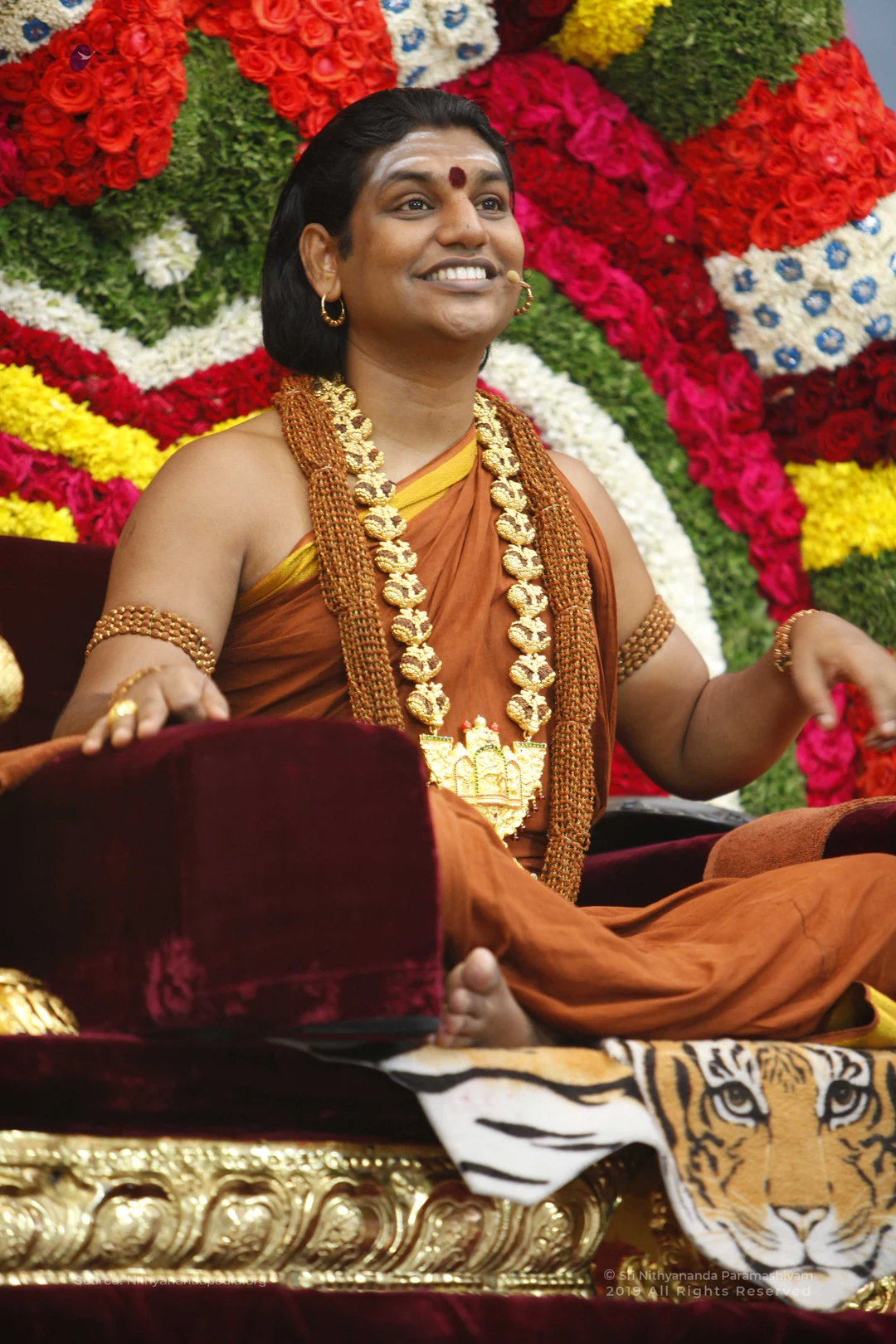
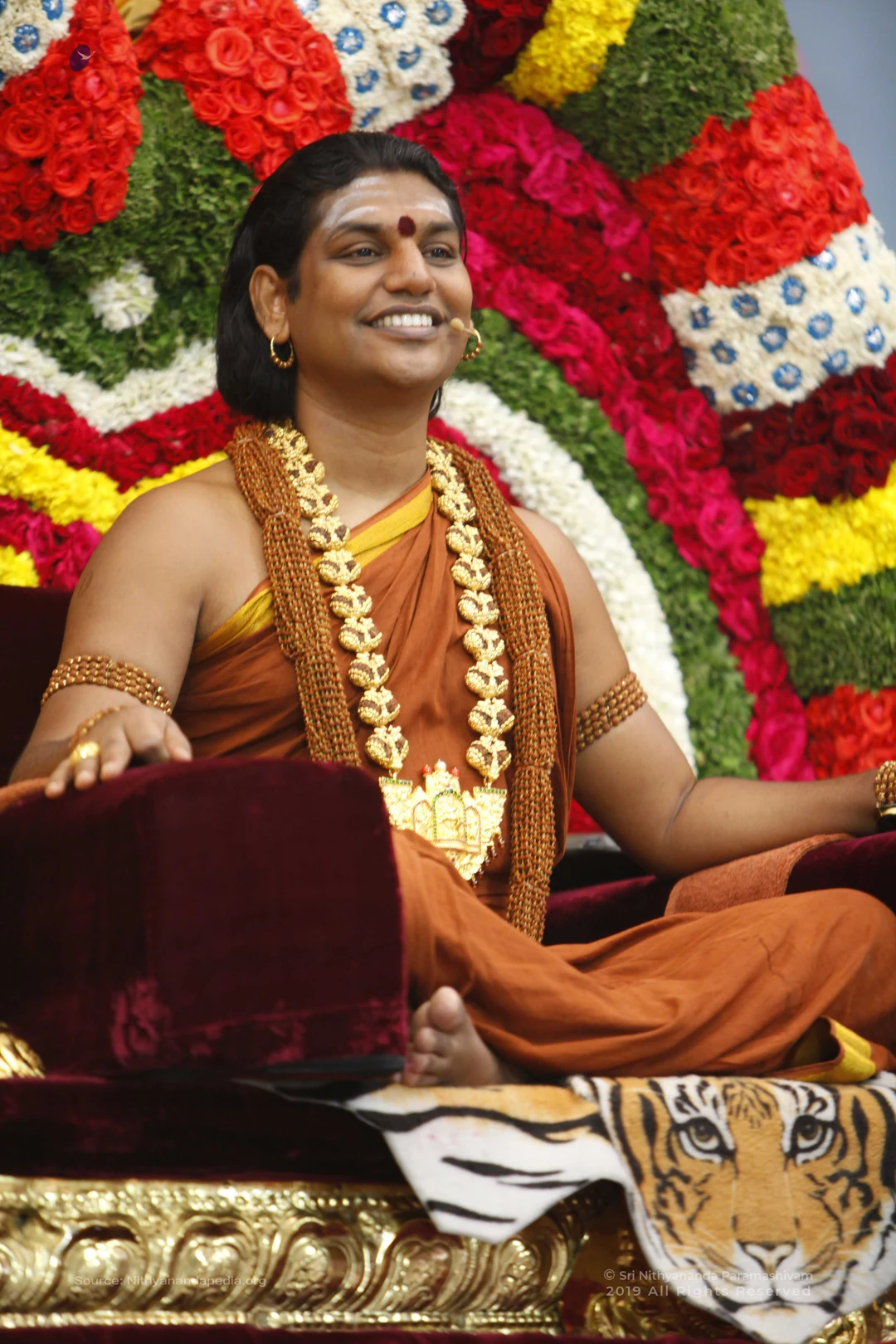
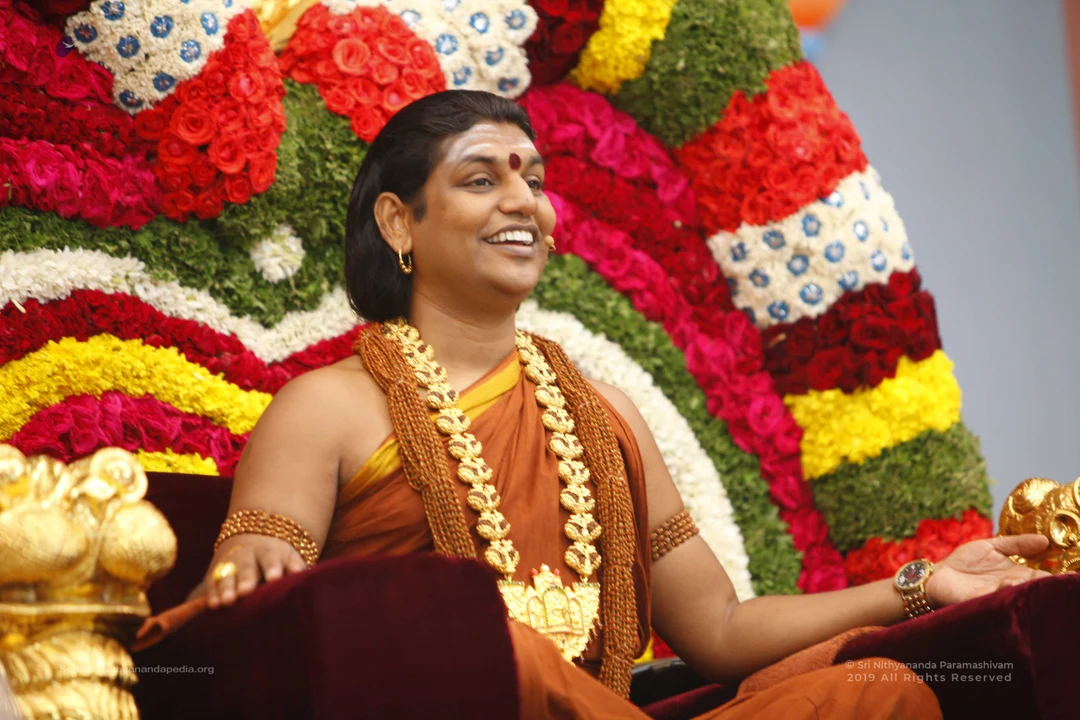
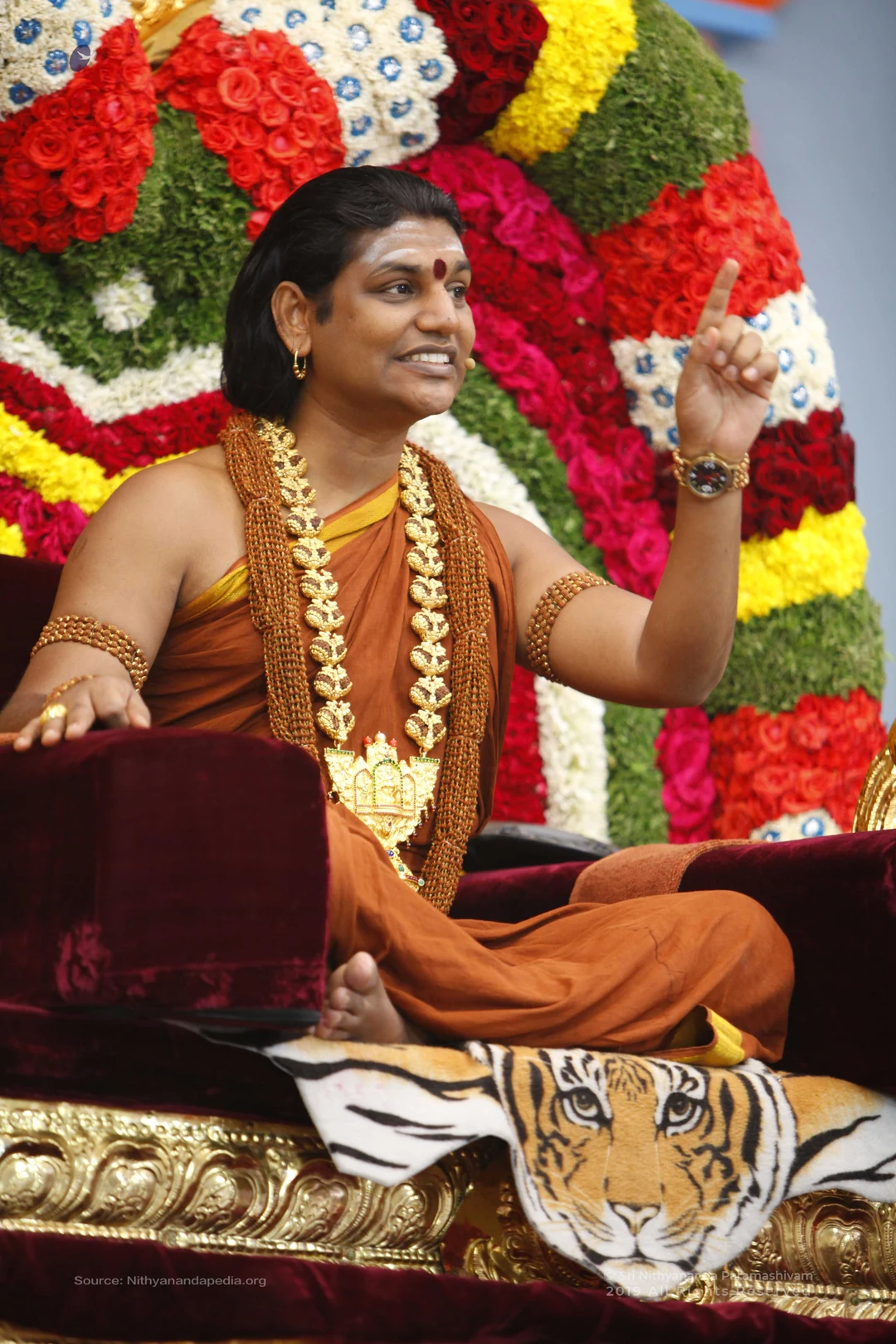
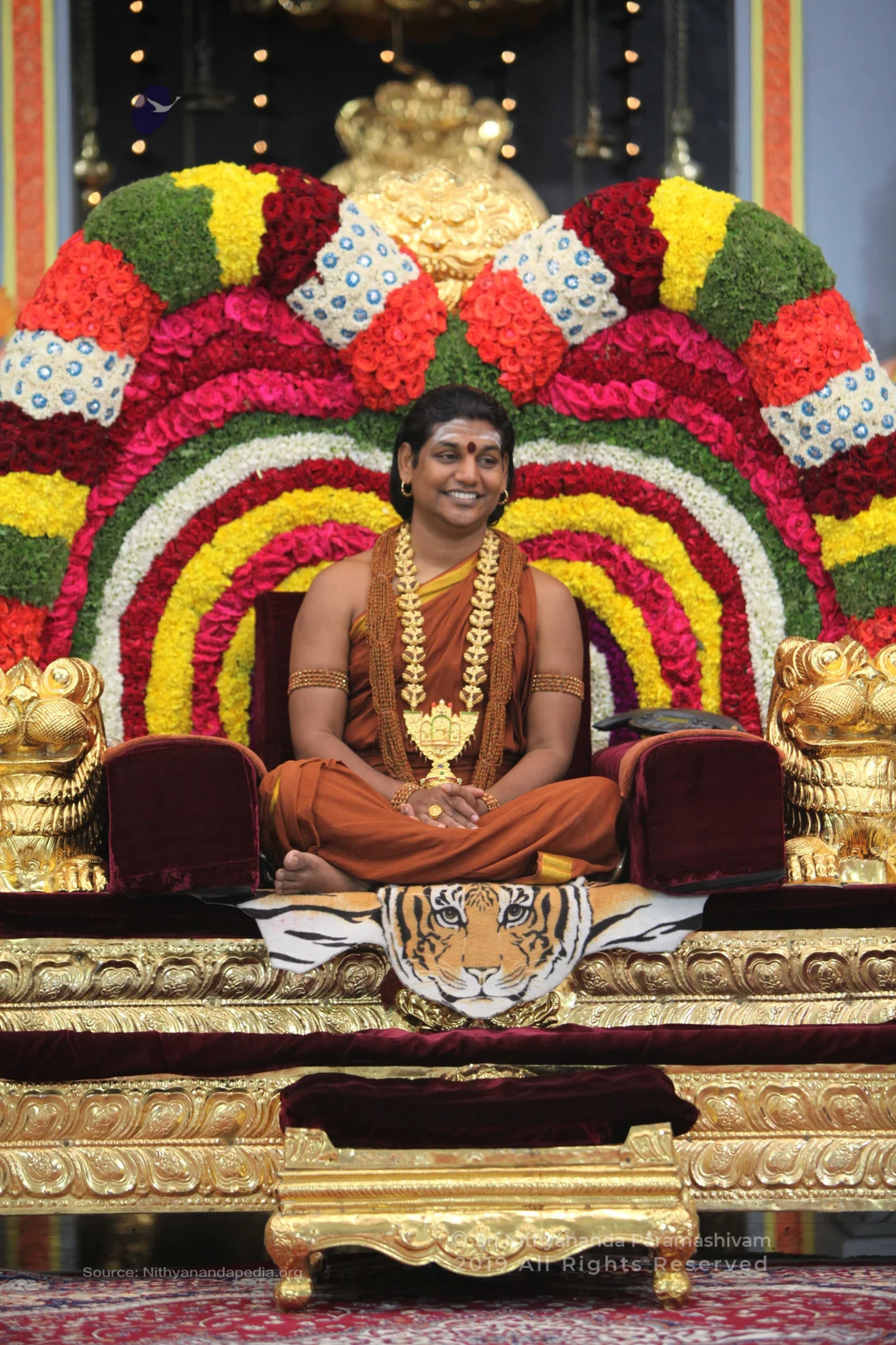
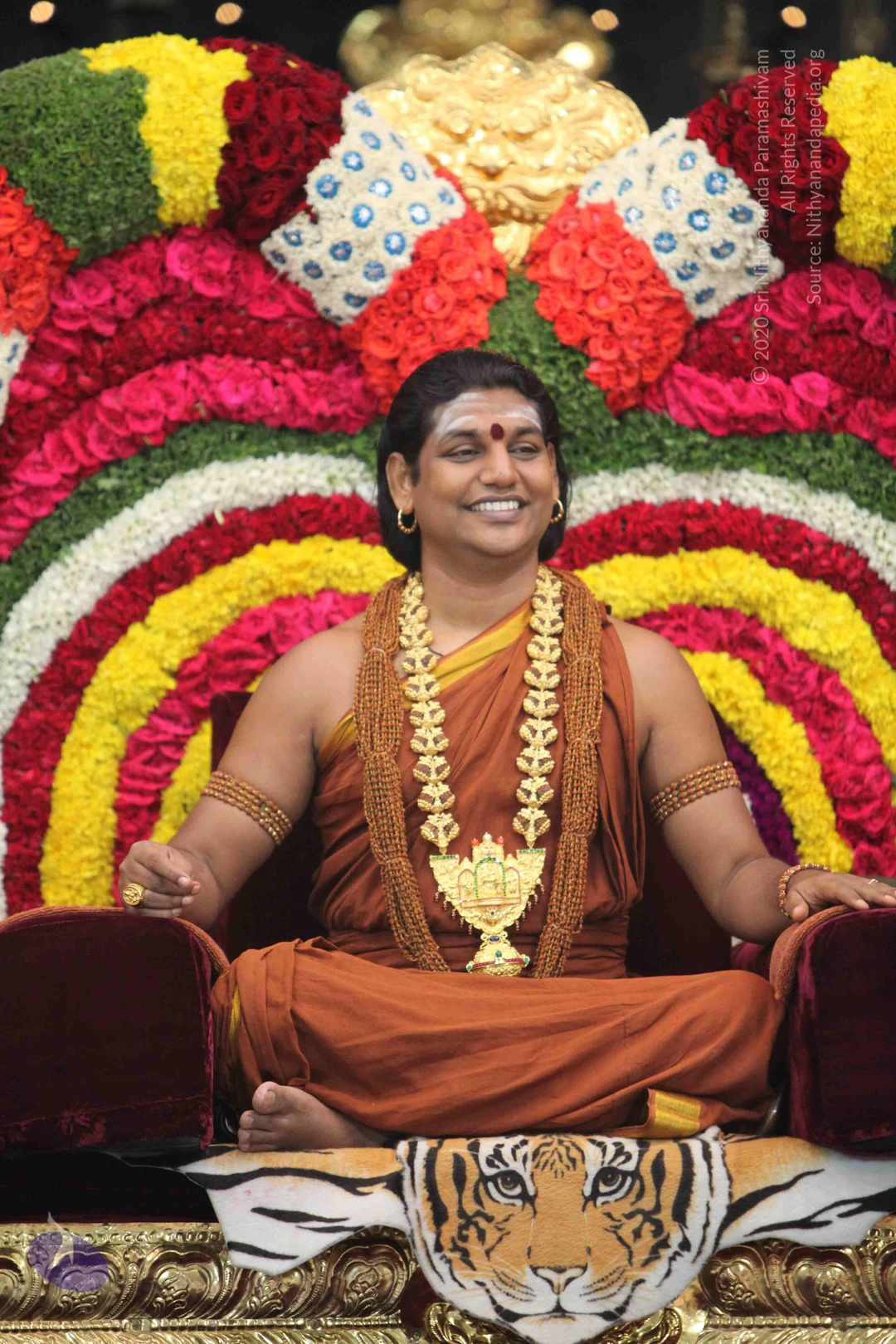
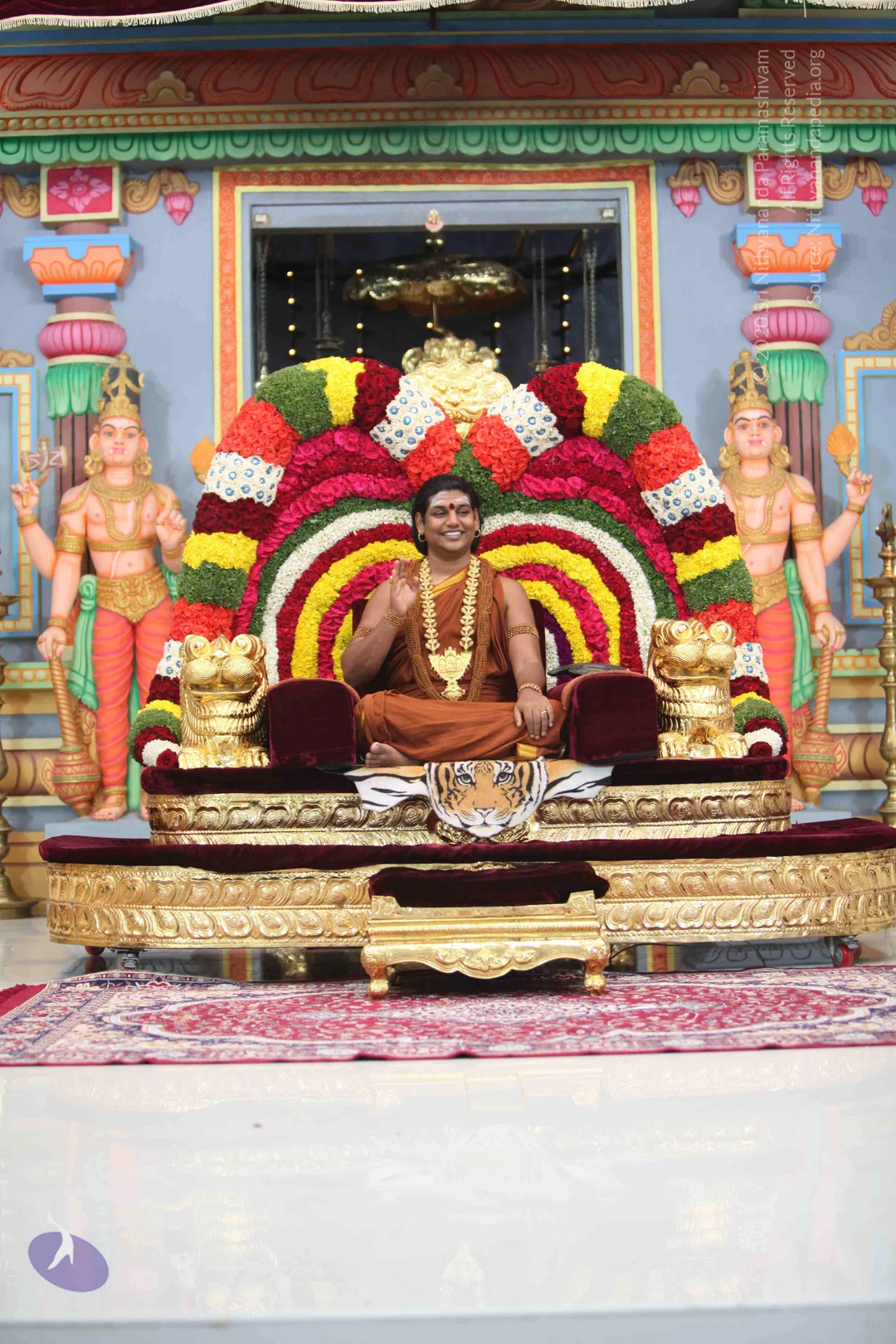
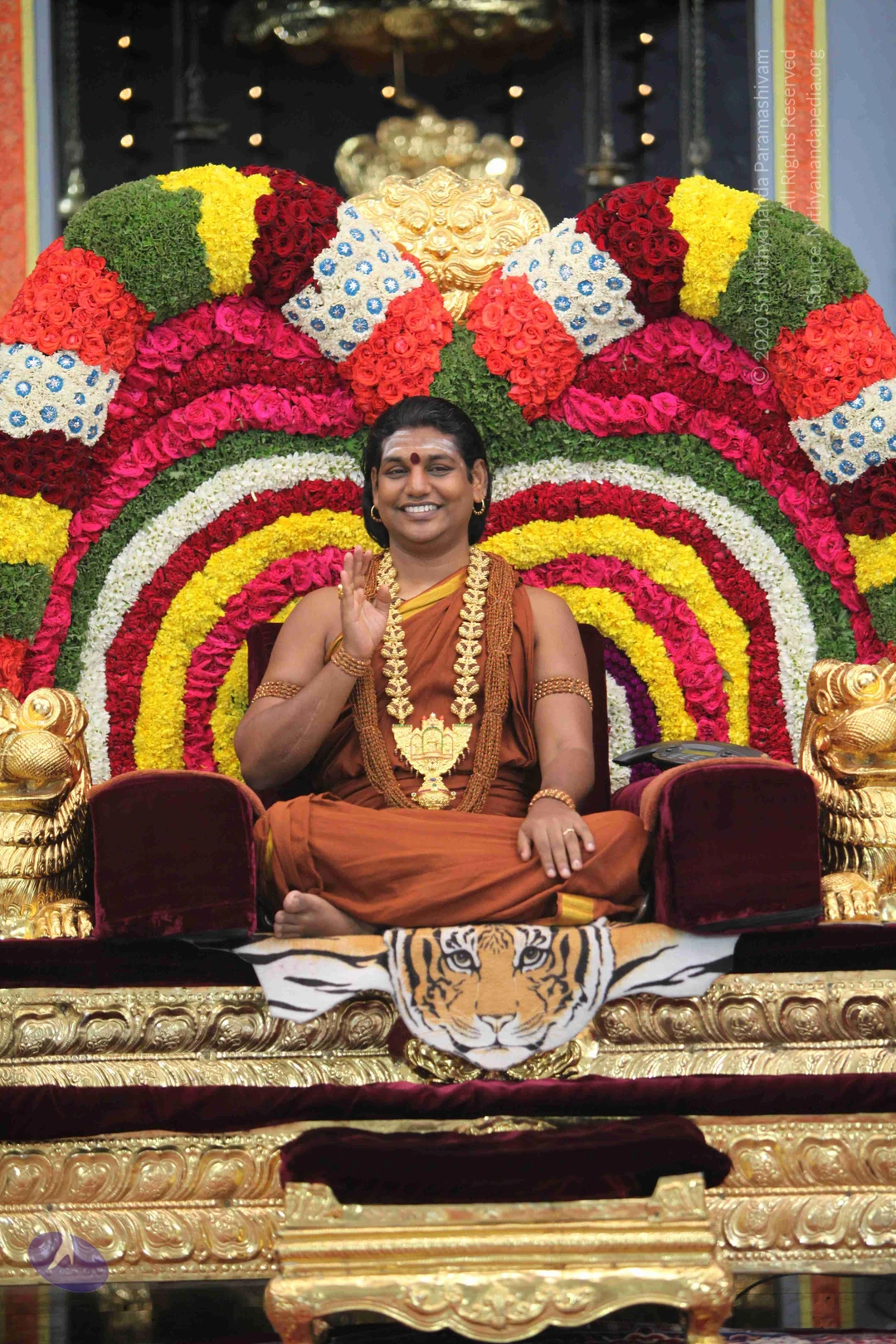
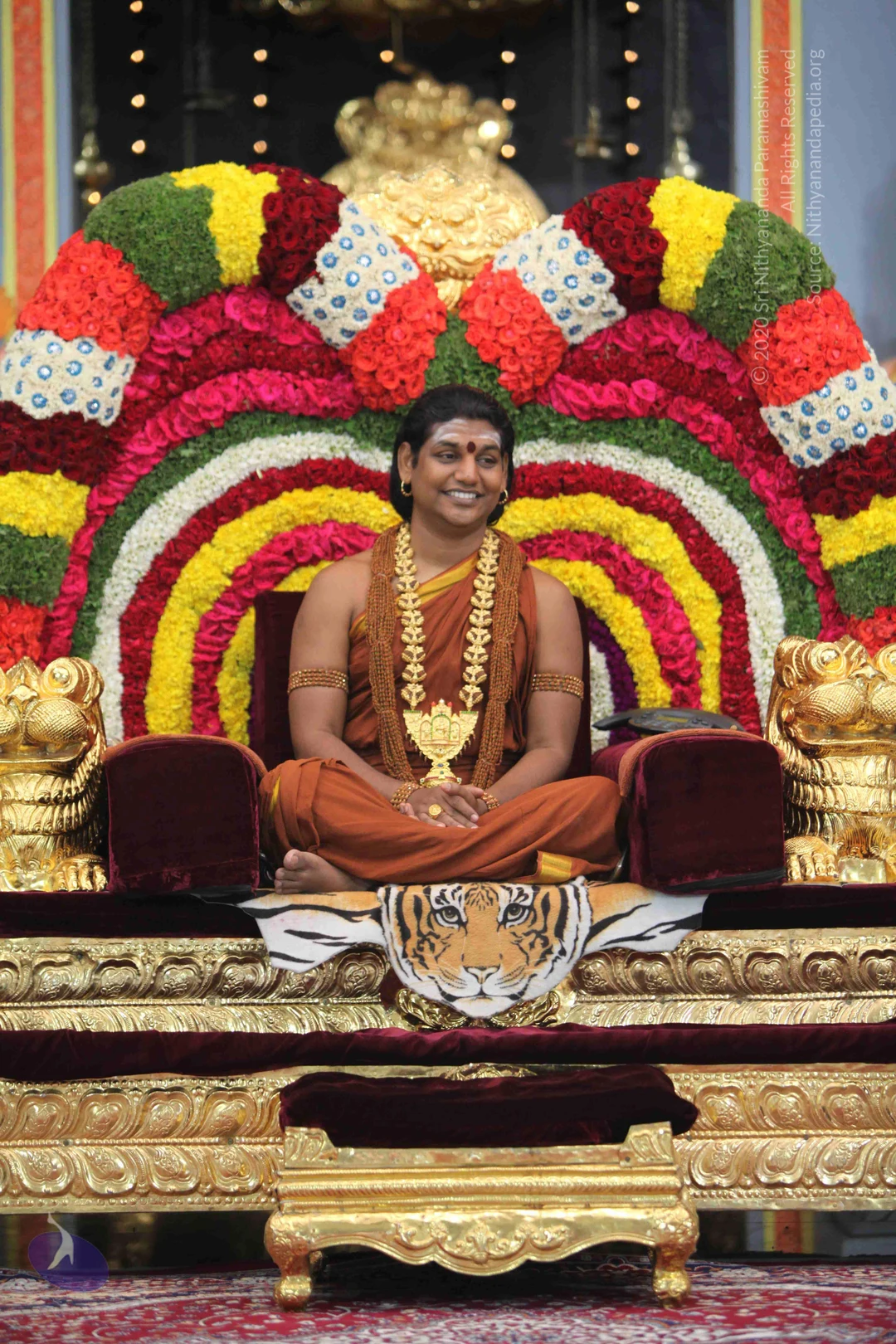
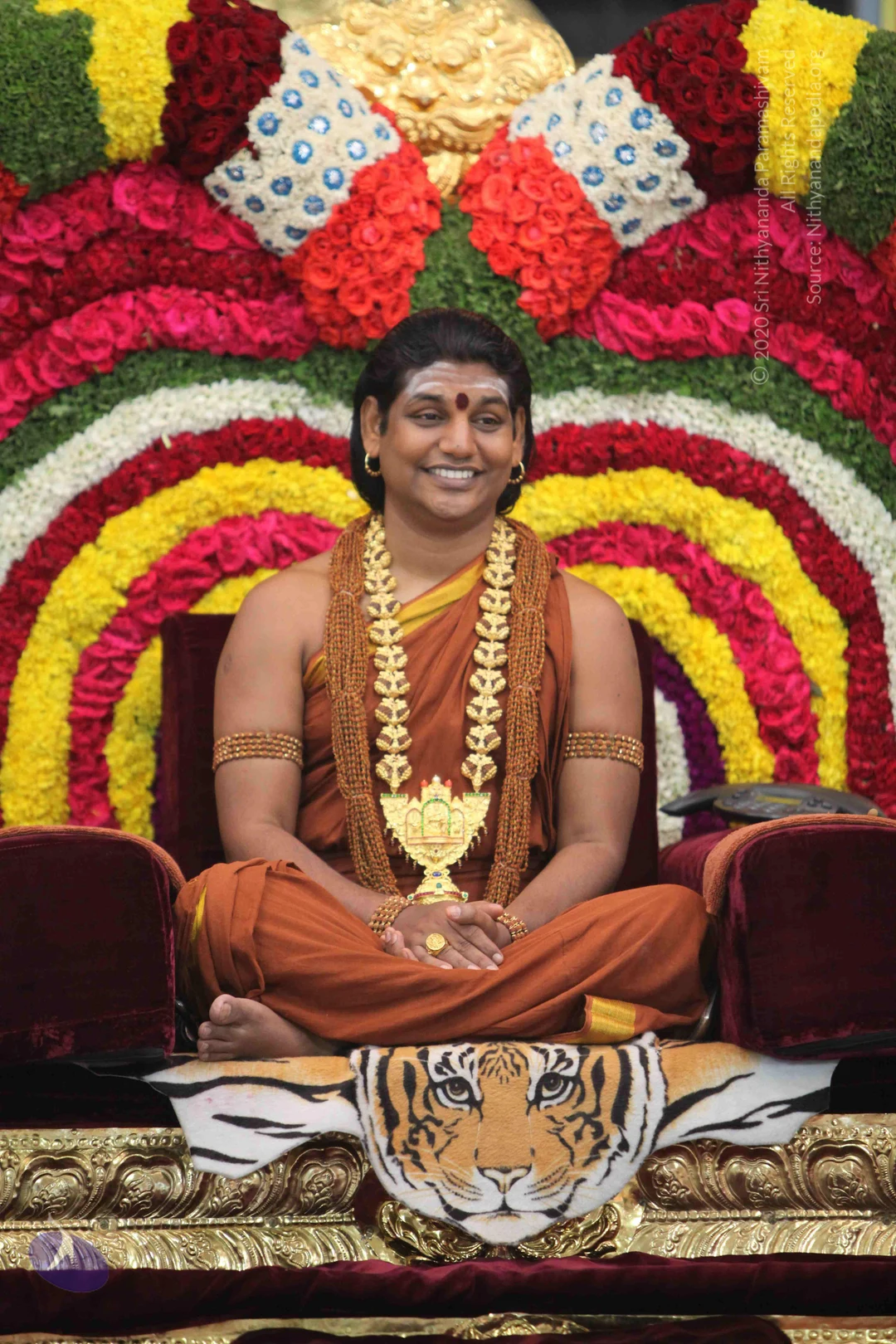
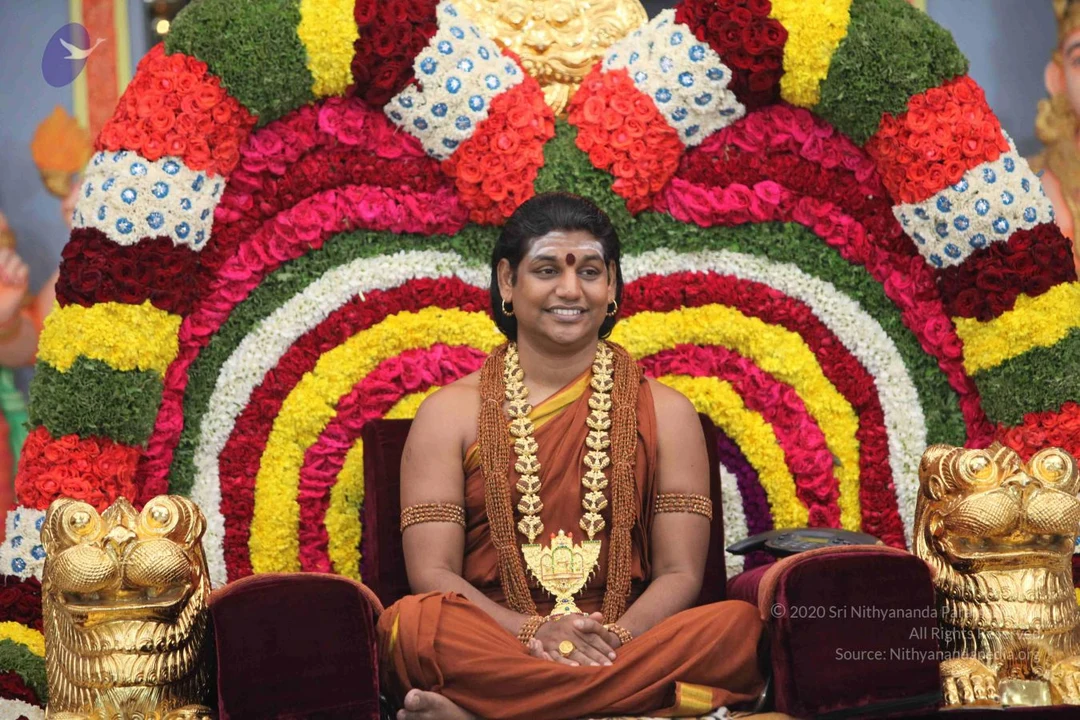
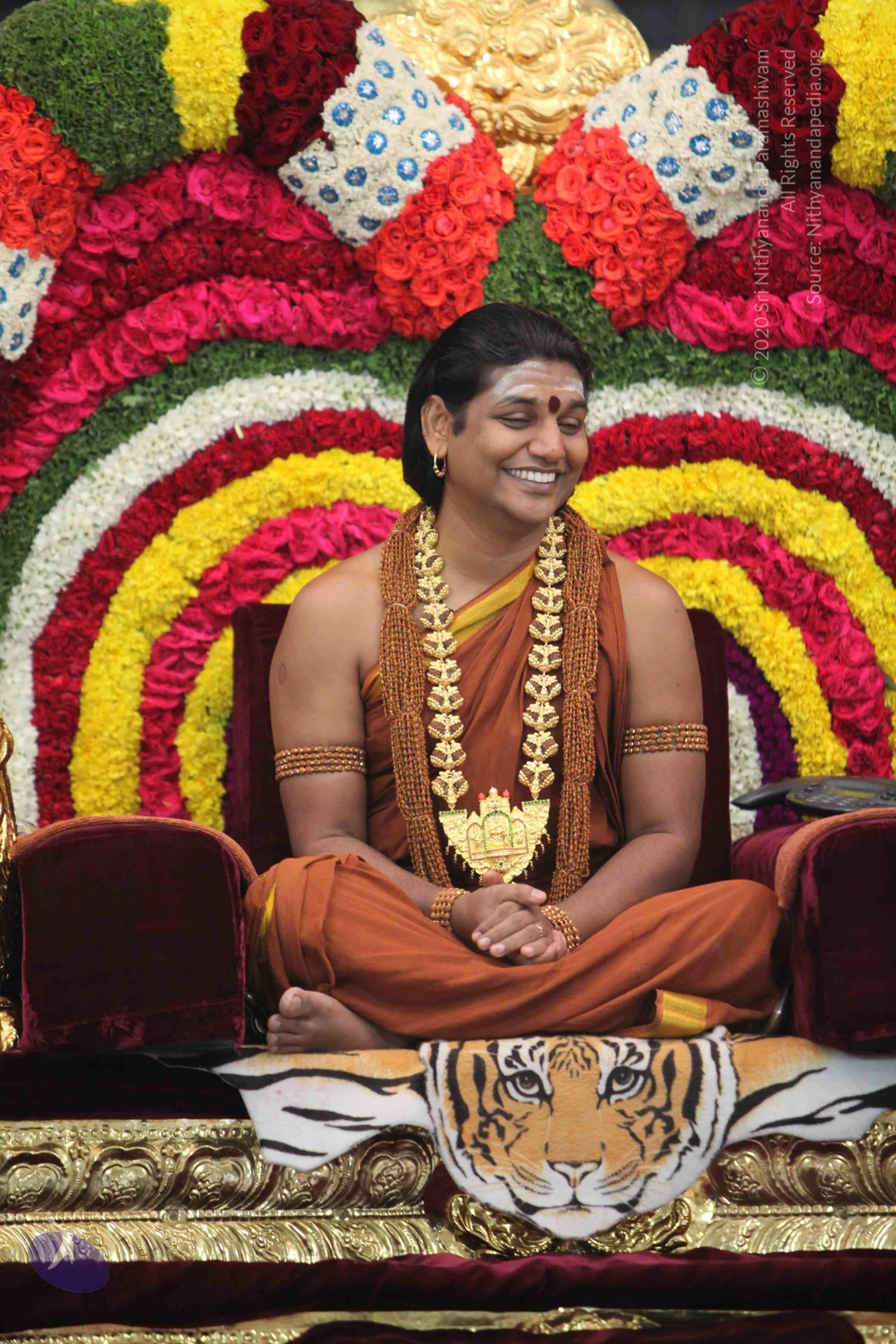
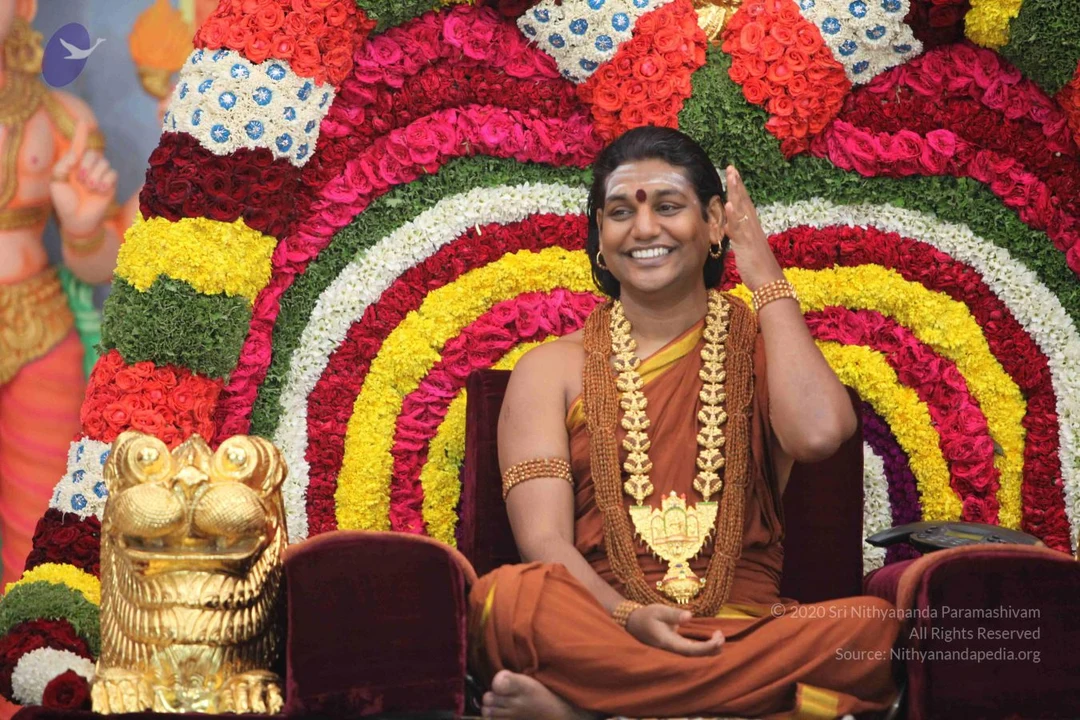
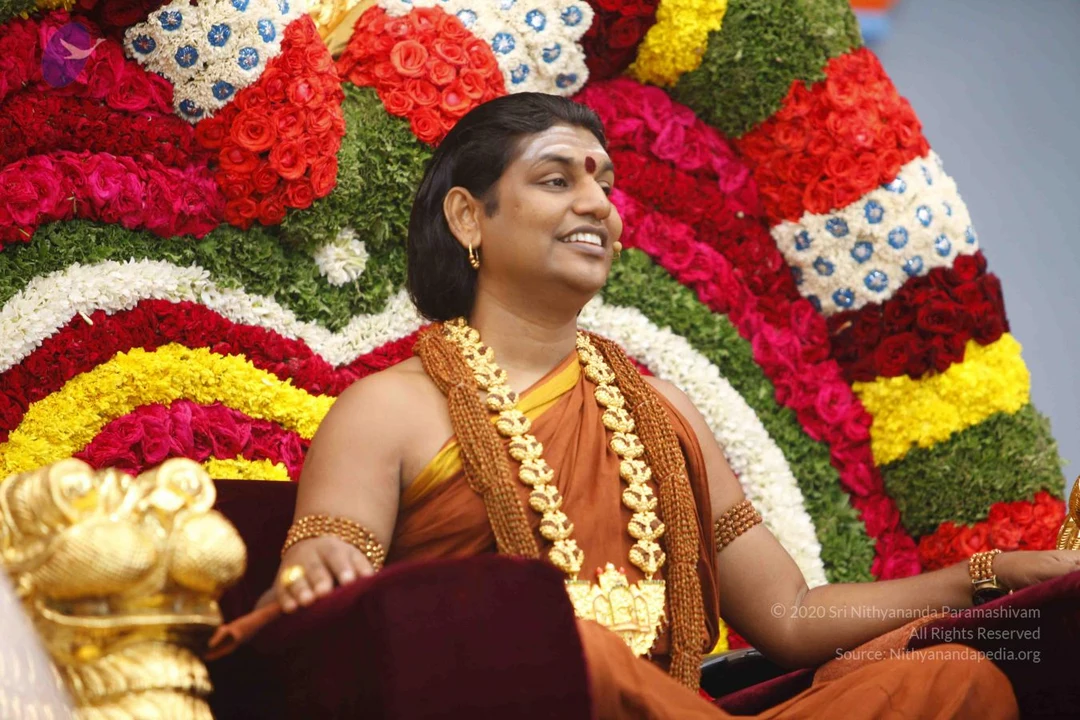
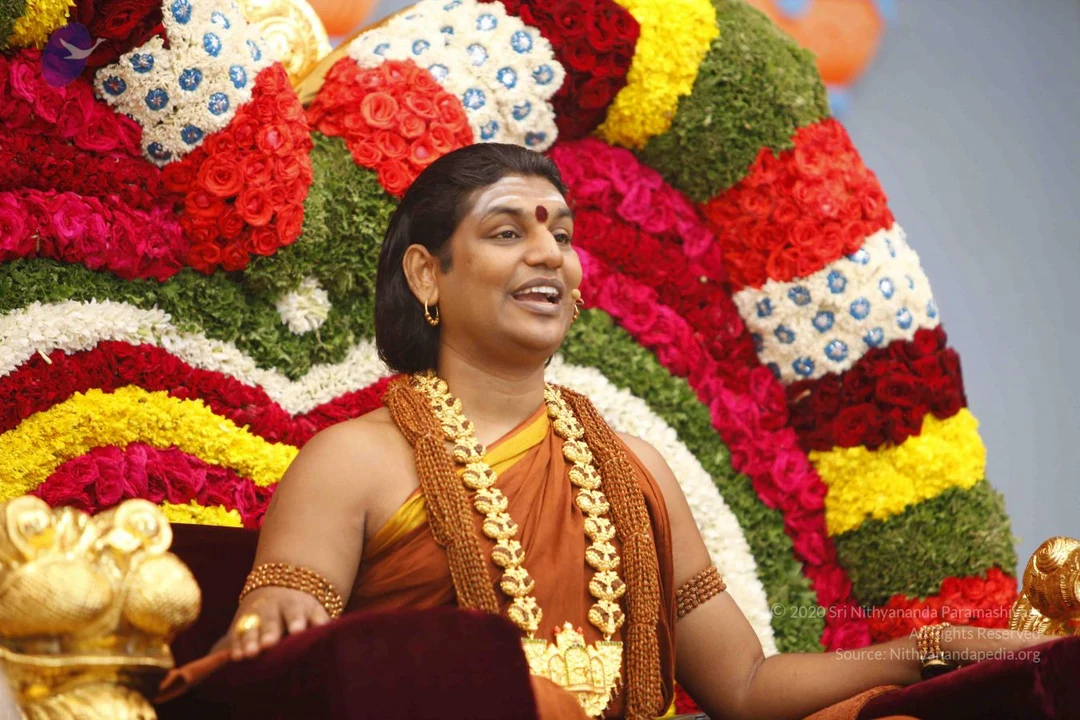
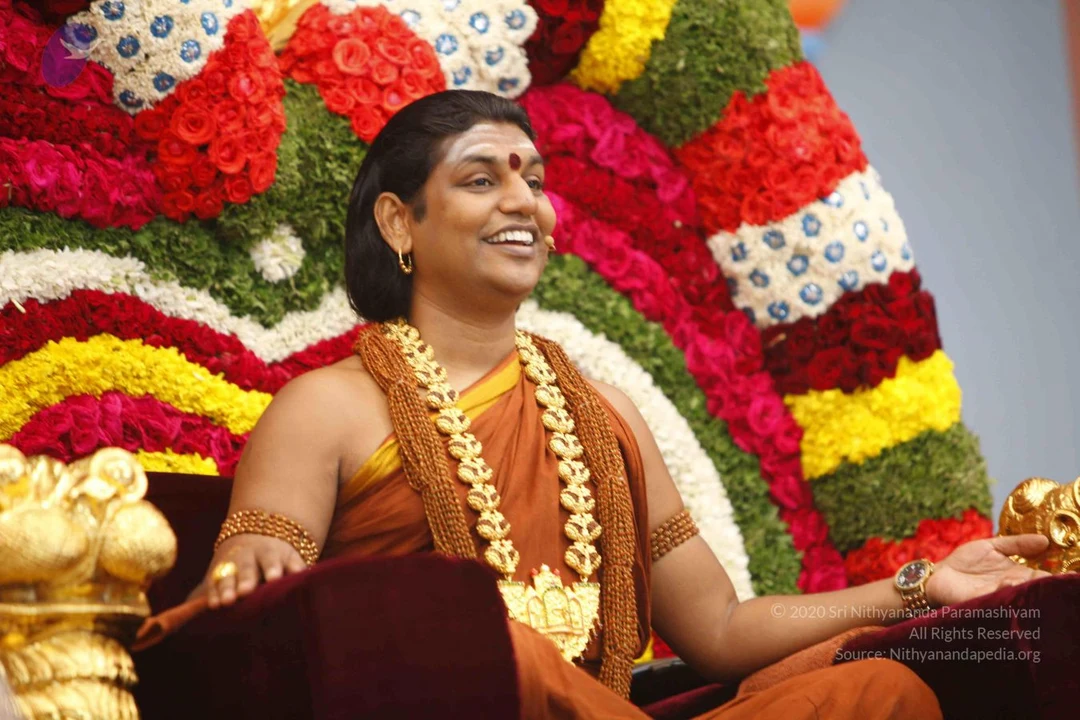
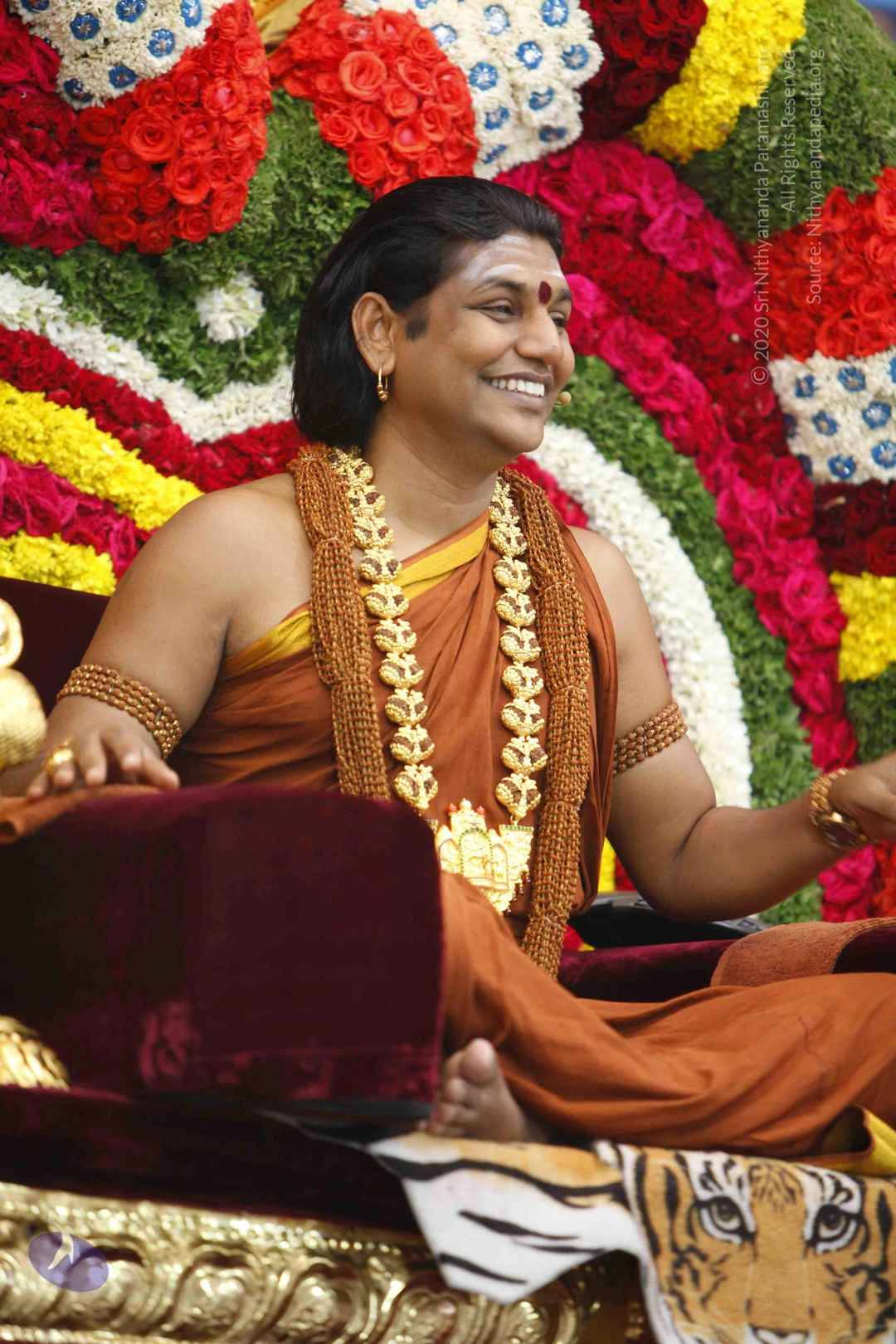
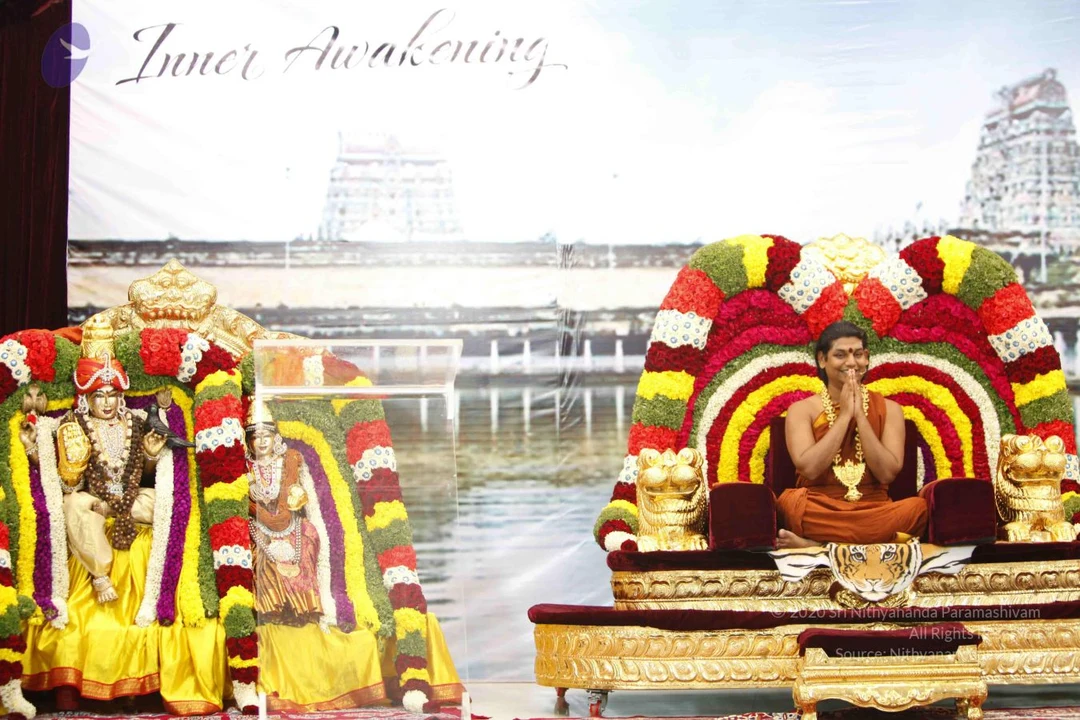
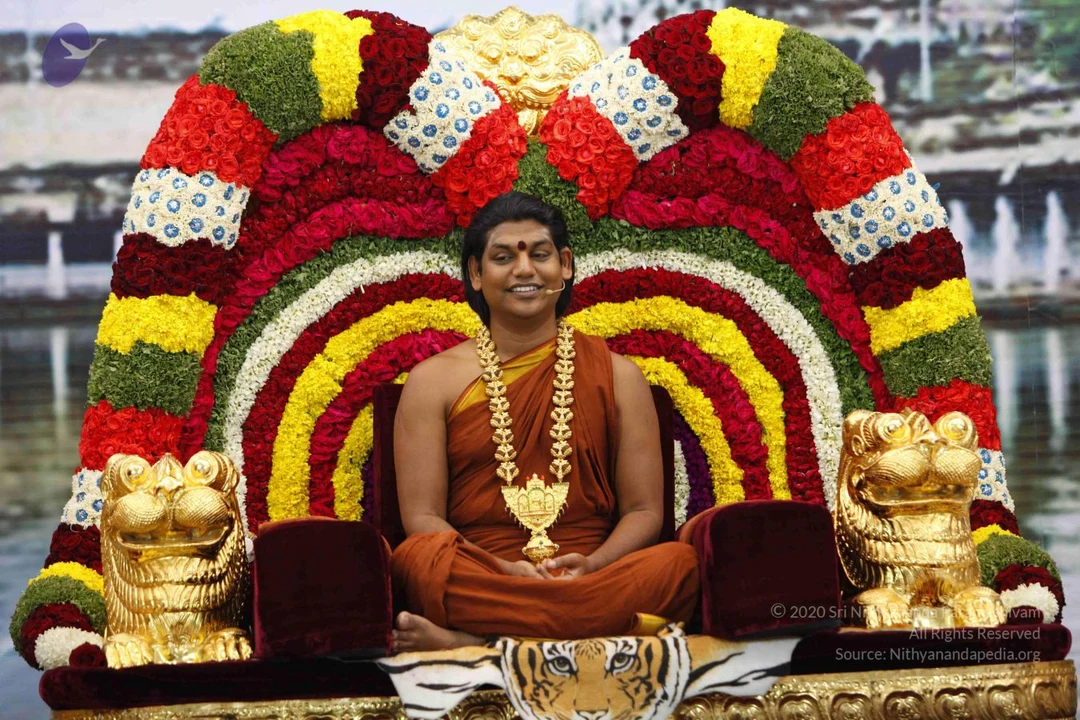
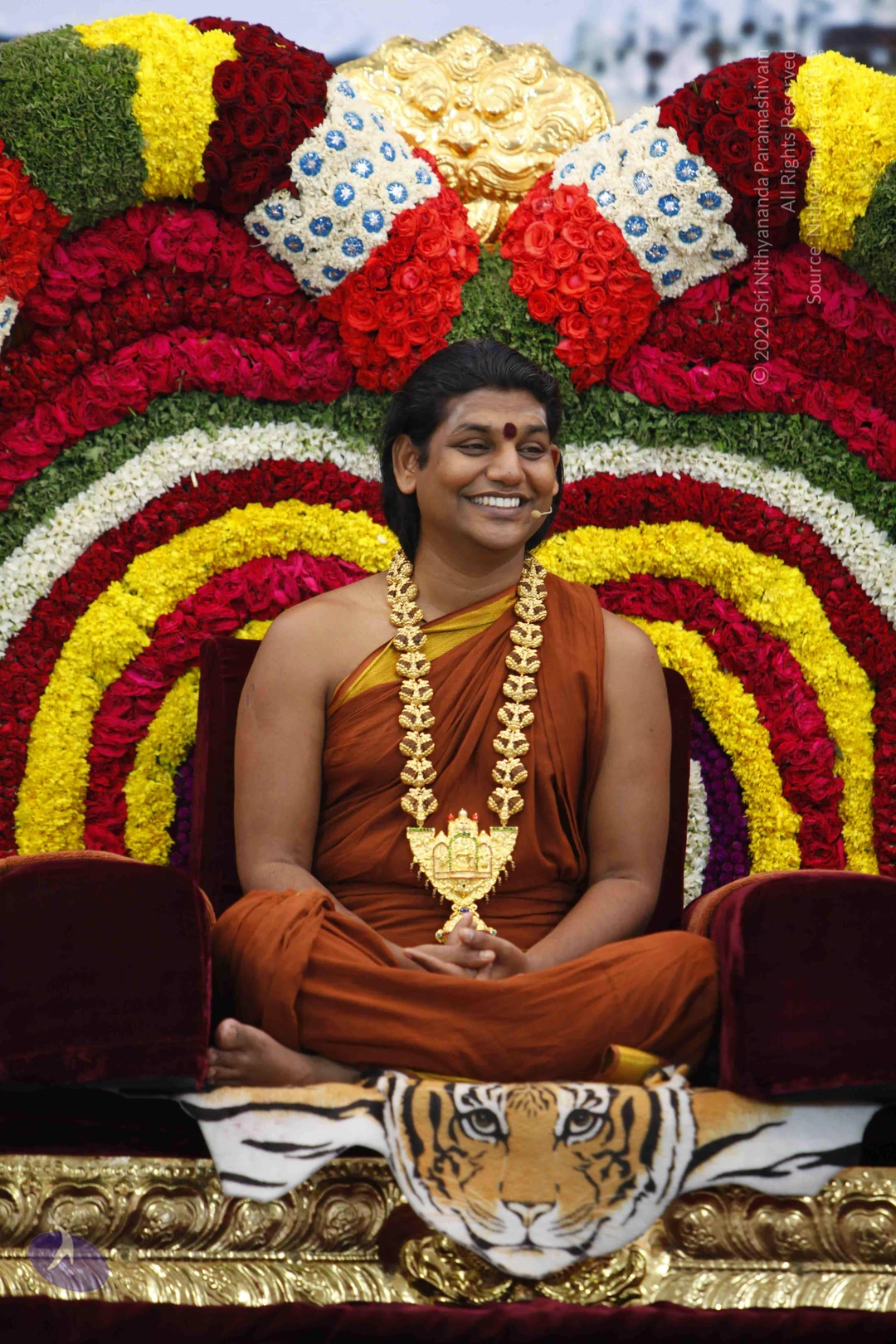
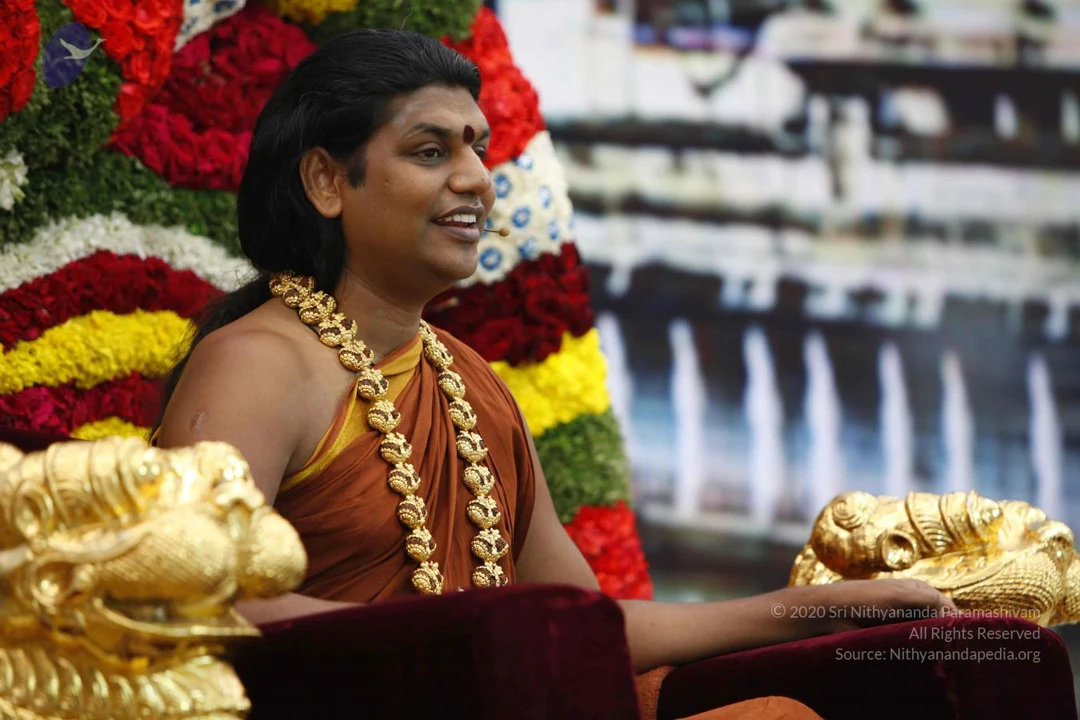
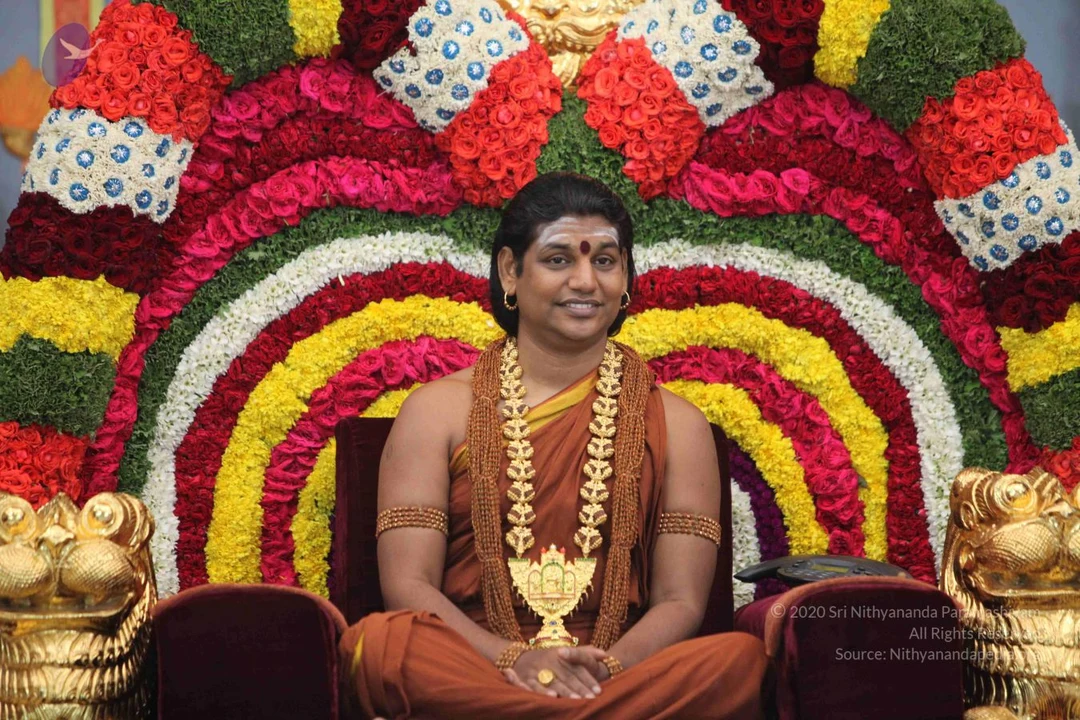
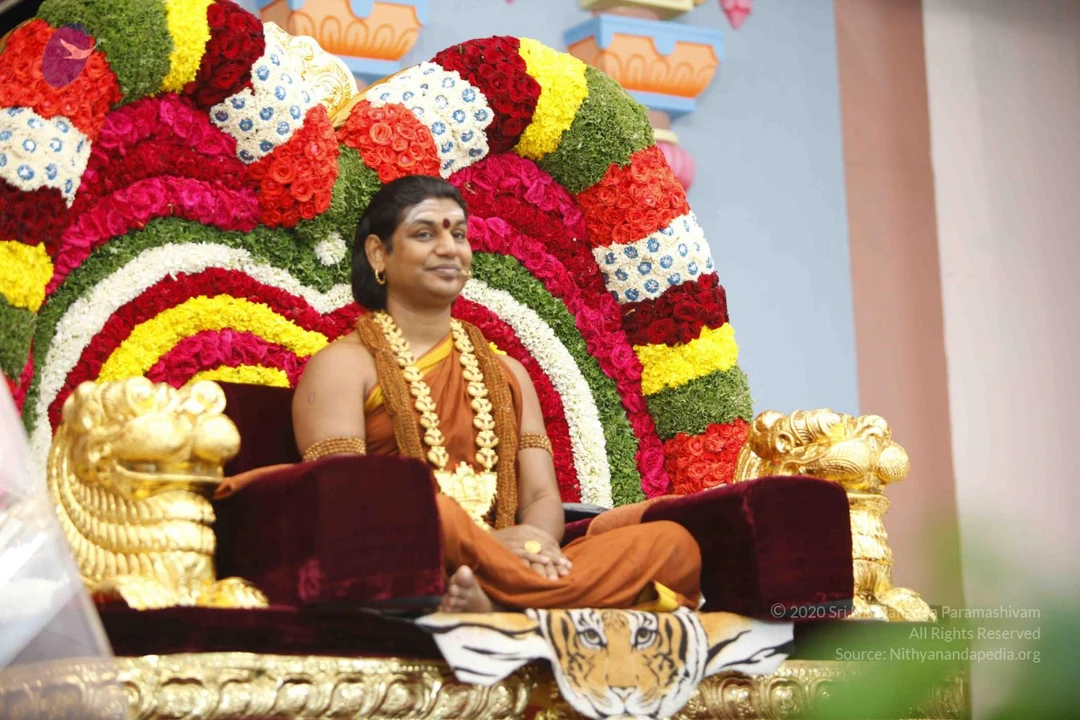
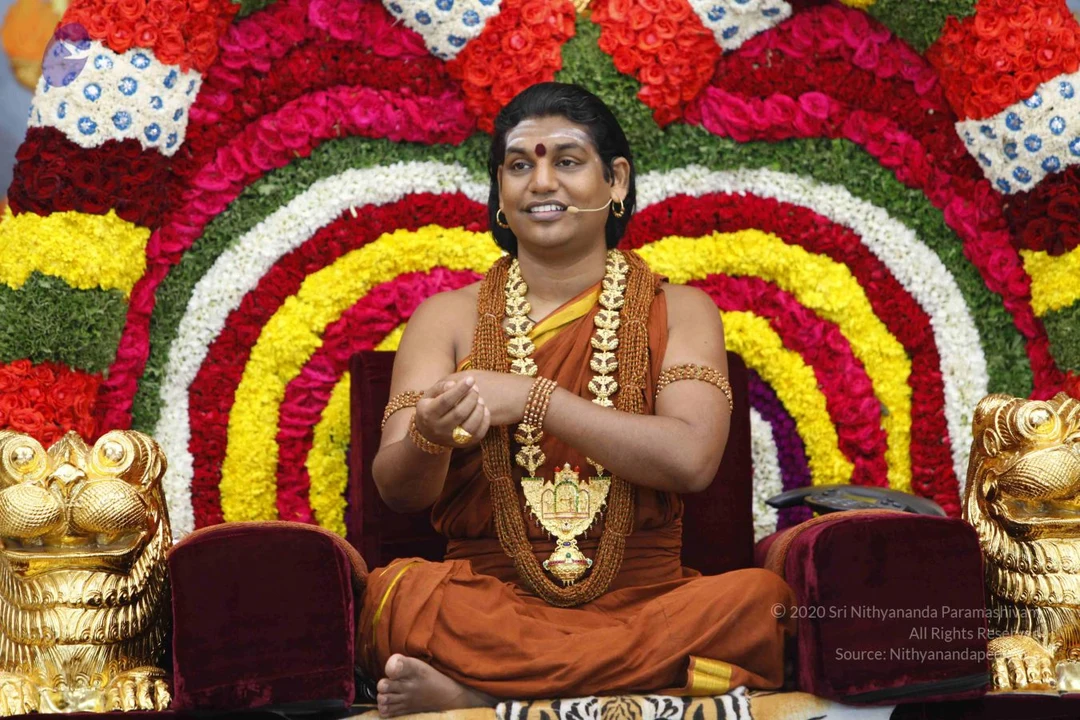
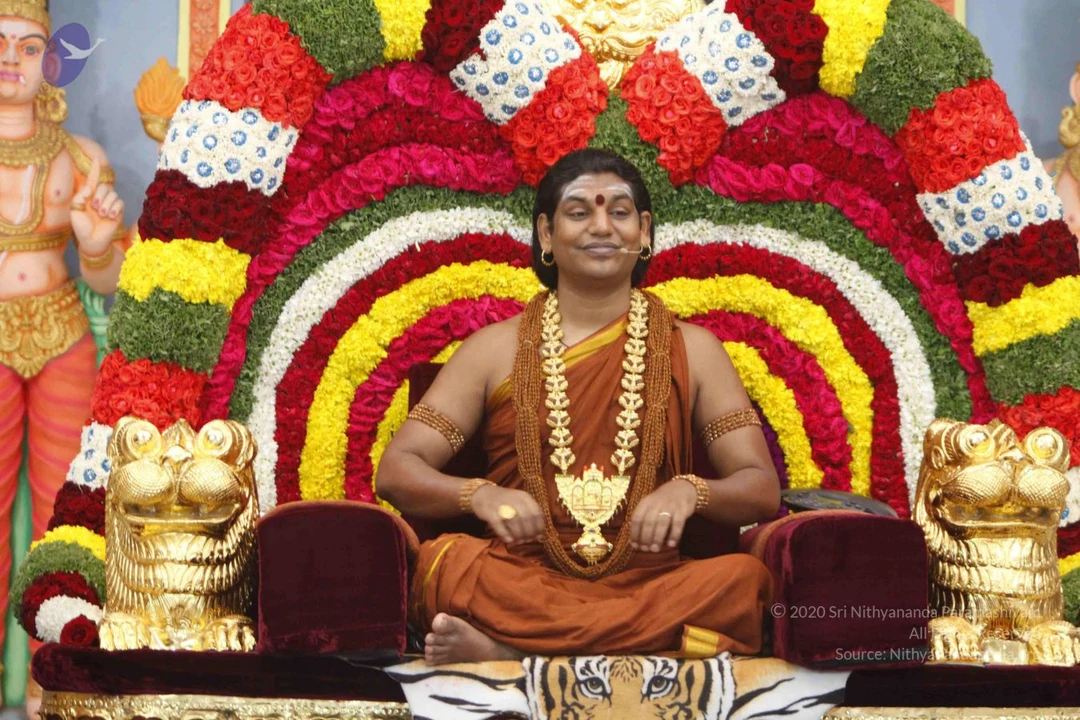
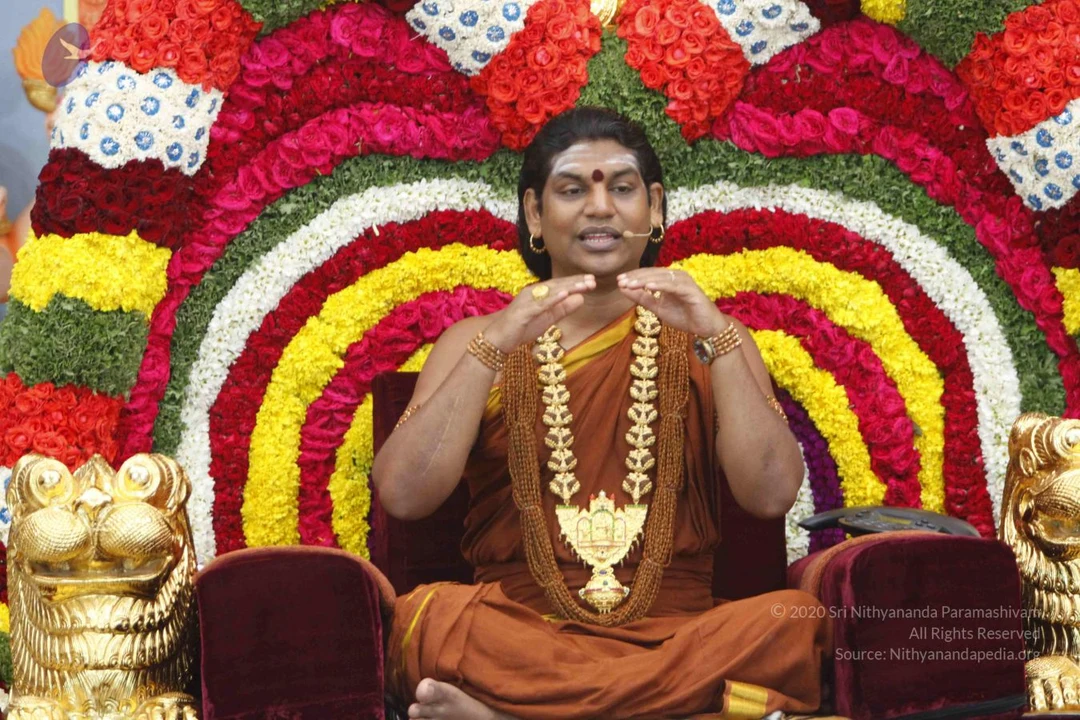
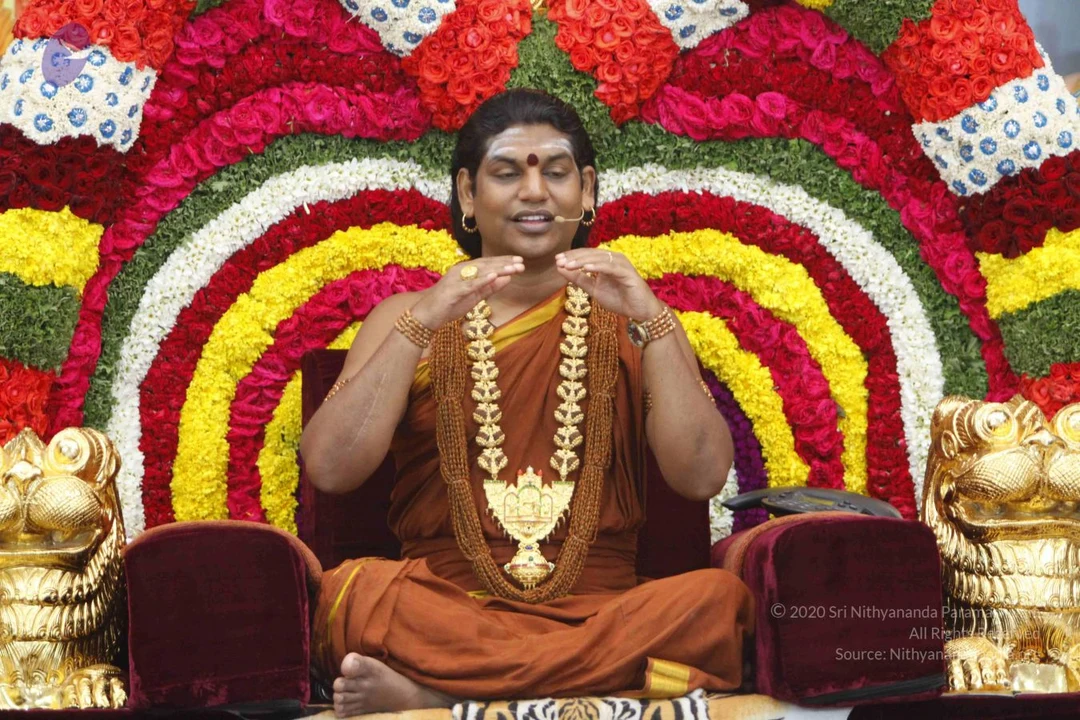
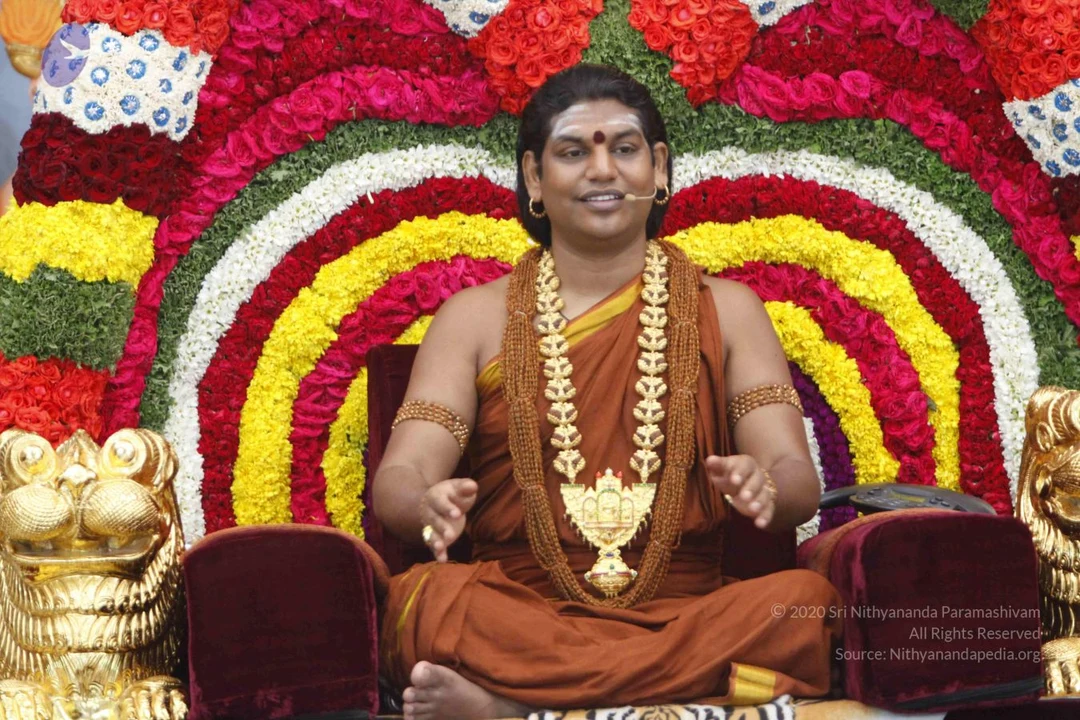
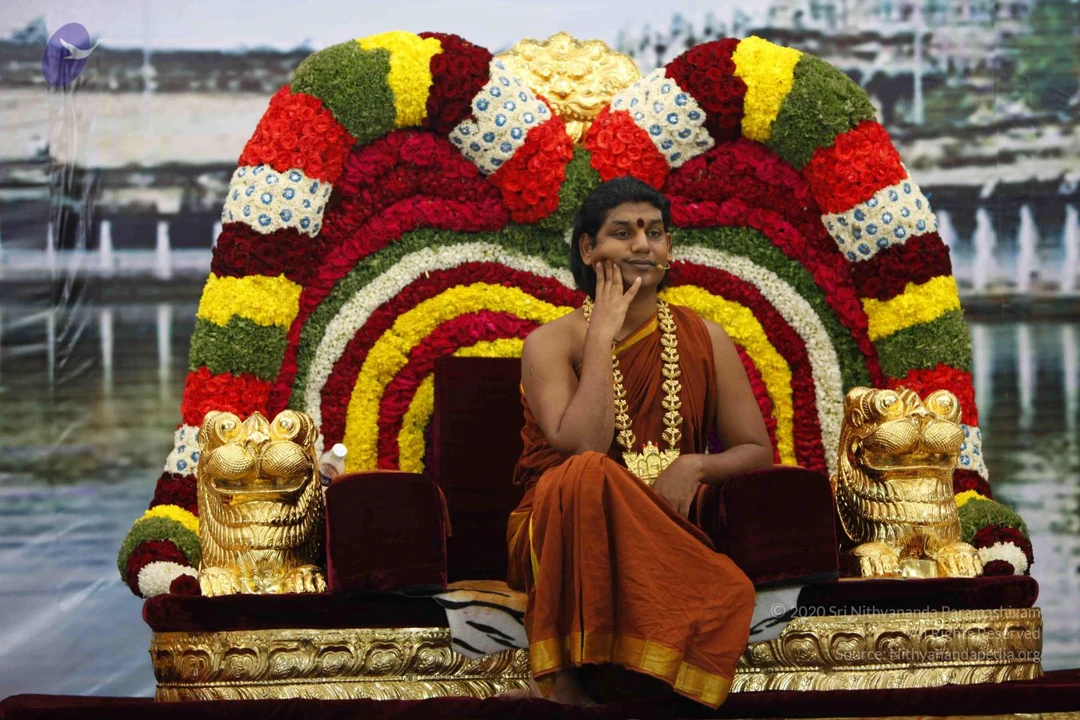
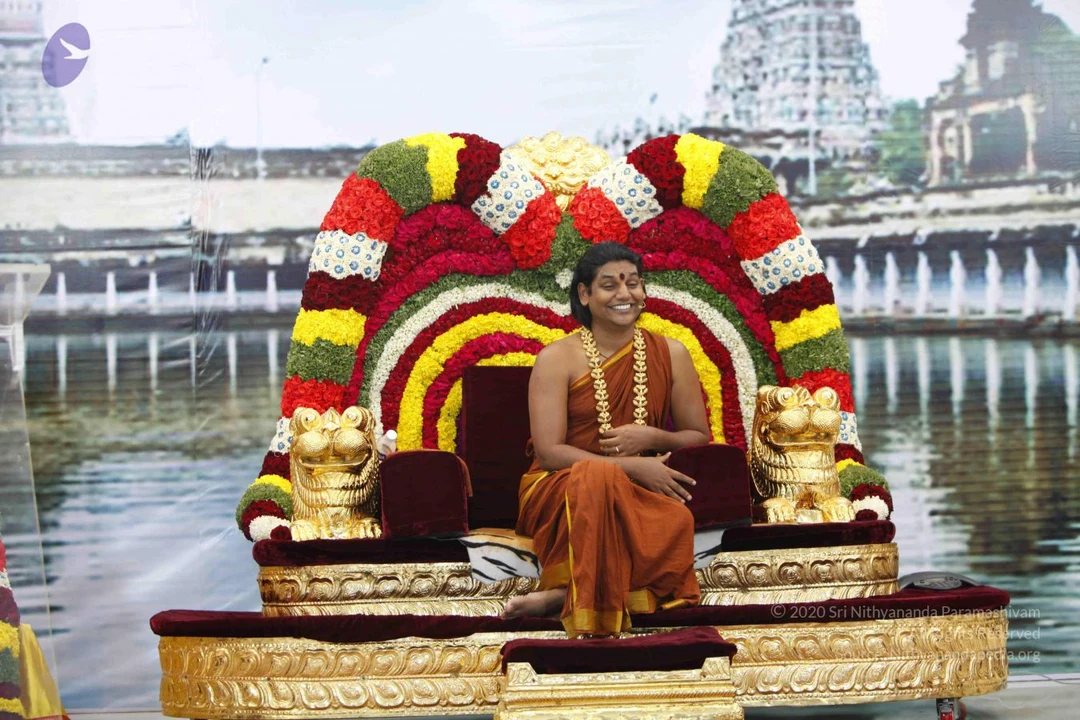
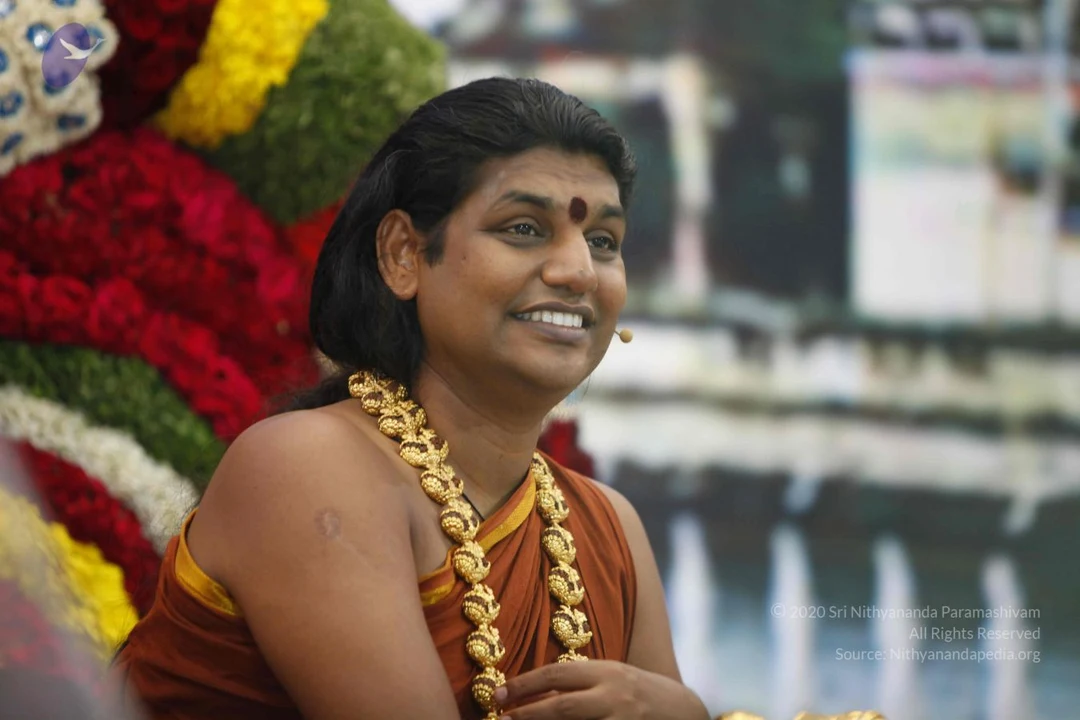
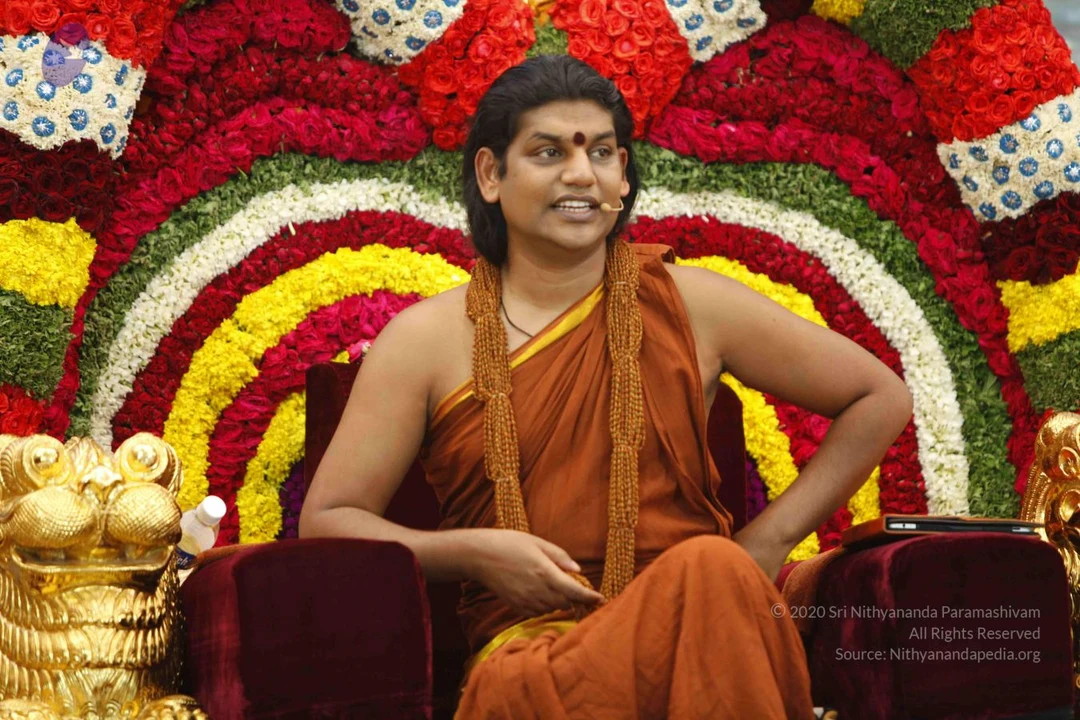
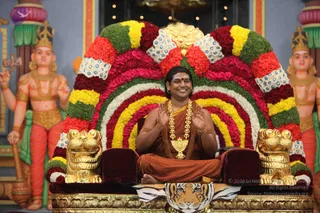
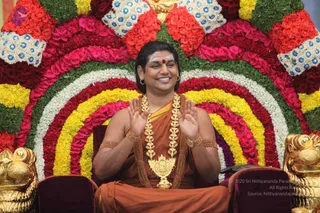
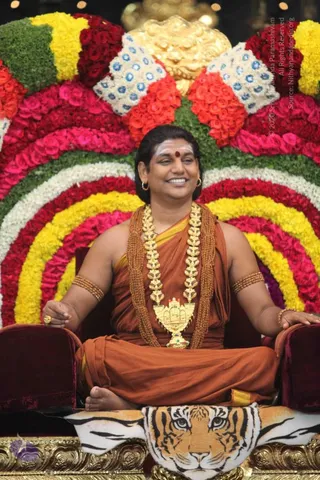
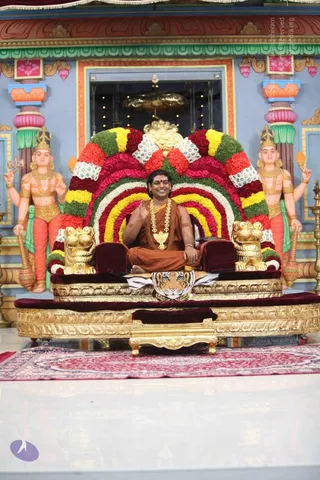
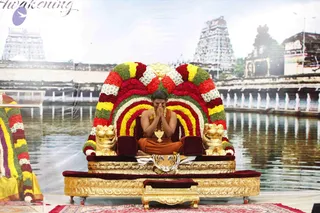
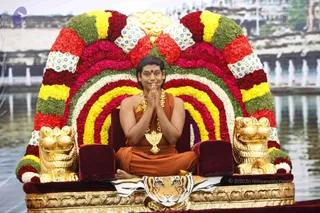
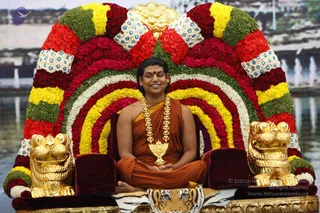
On this Day Supreme Pontiff of Hinduism HDH Bhagavan Nithyananda Paramashivam Delivered a Satsang with the Title 'Let Your Being be Enriched'

VideoAudio

Transcript

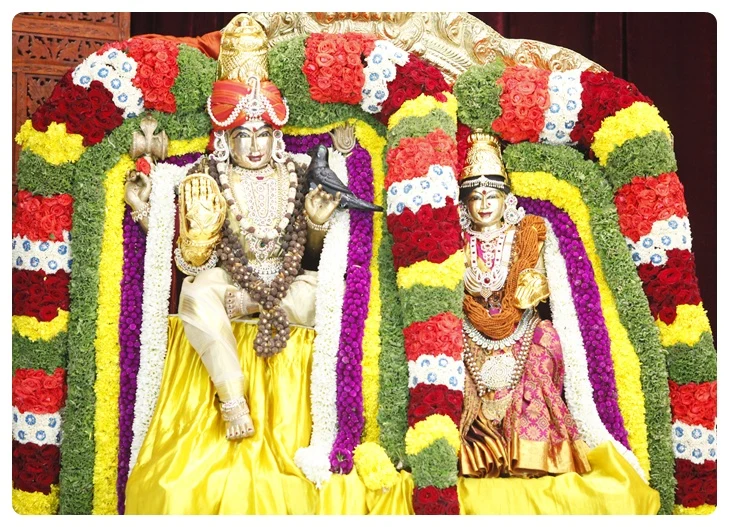
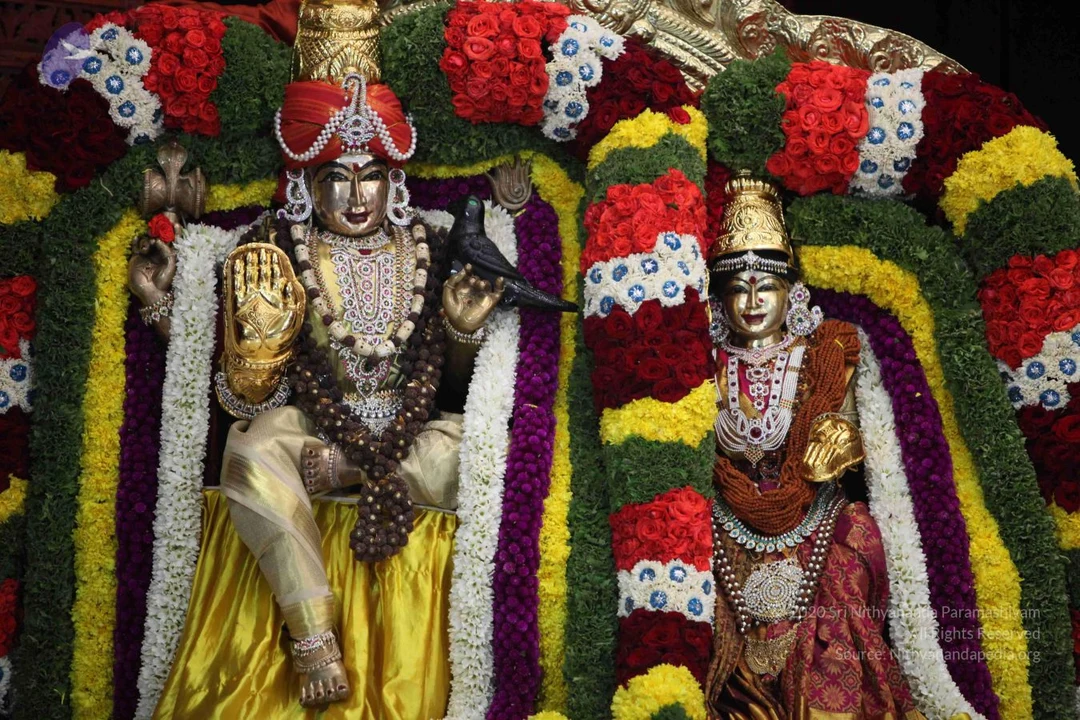
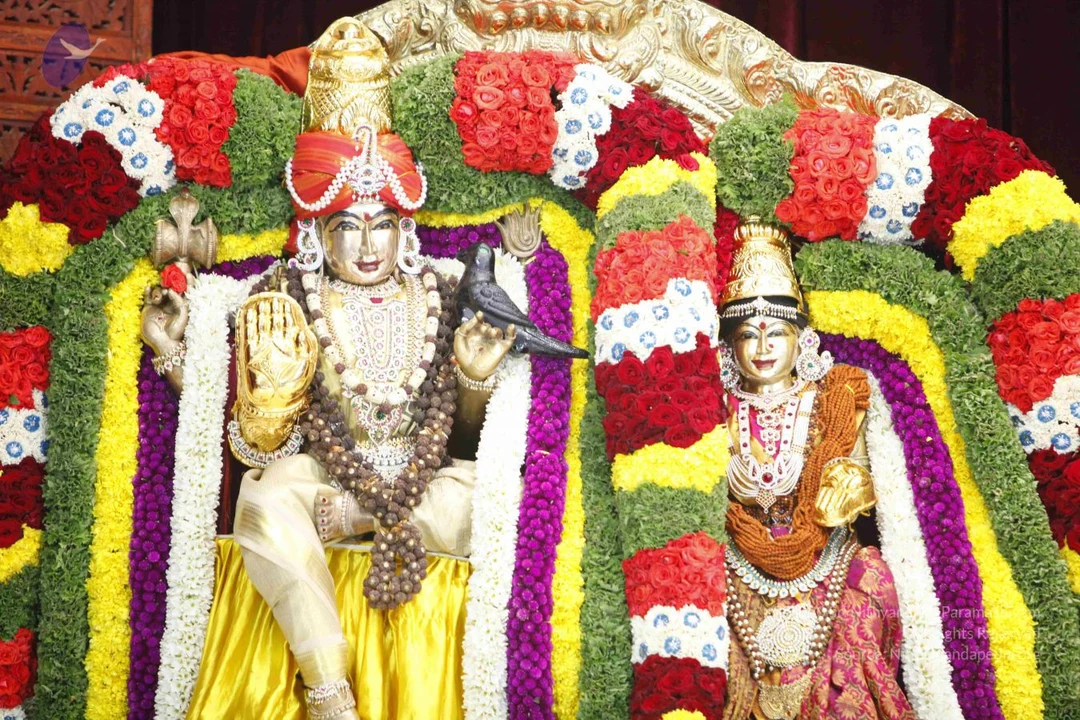
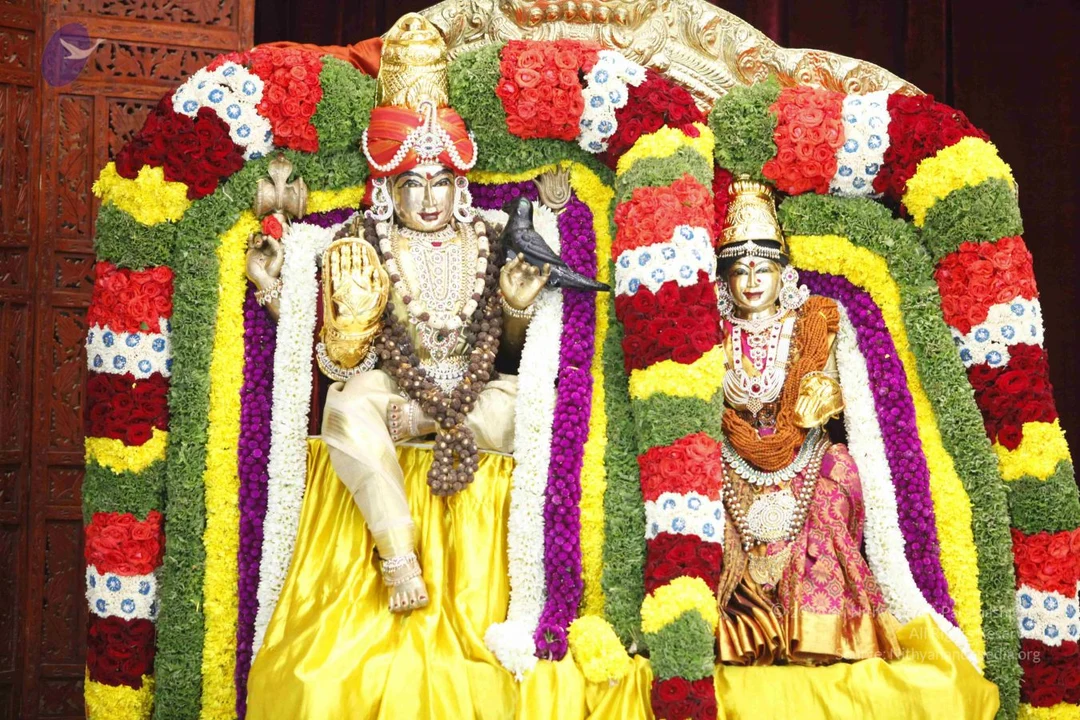
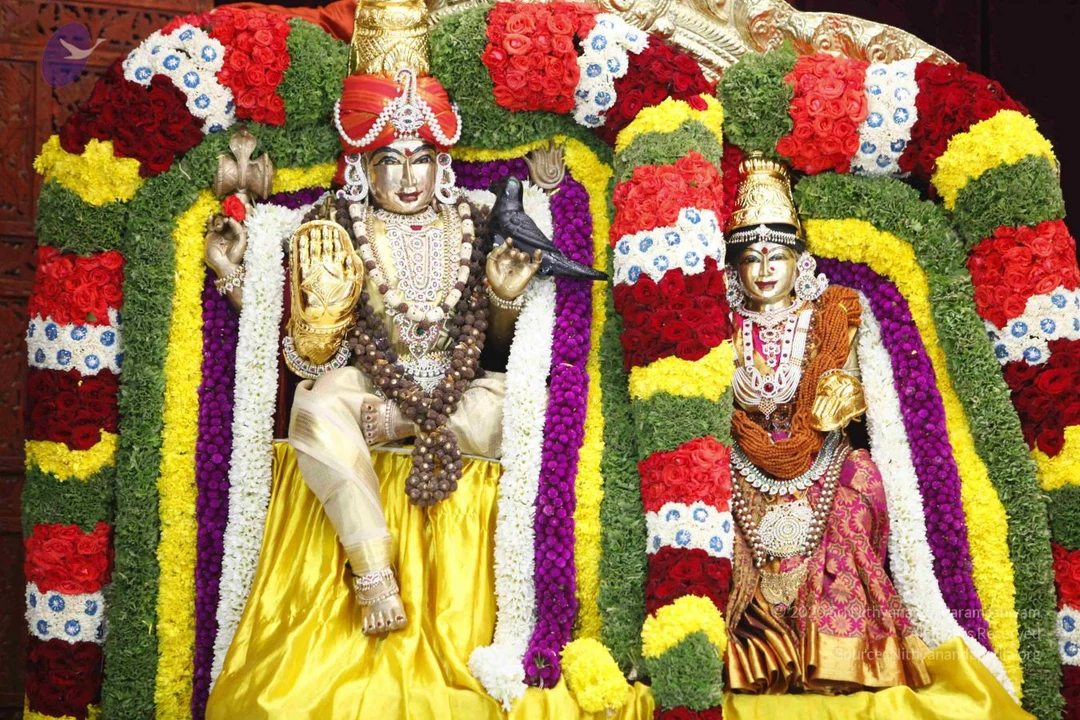
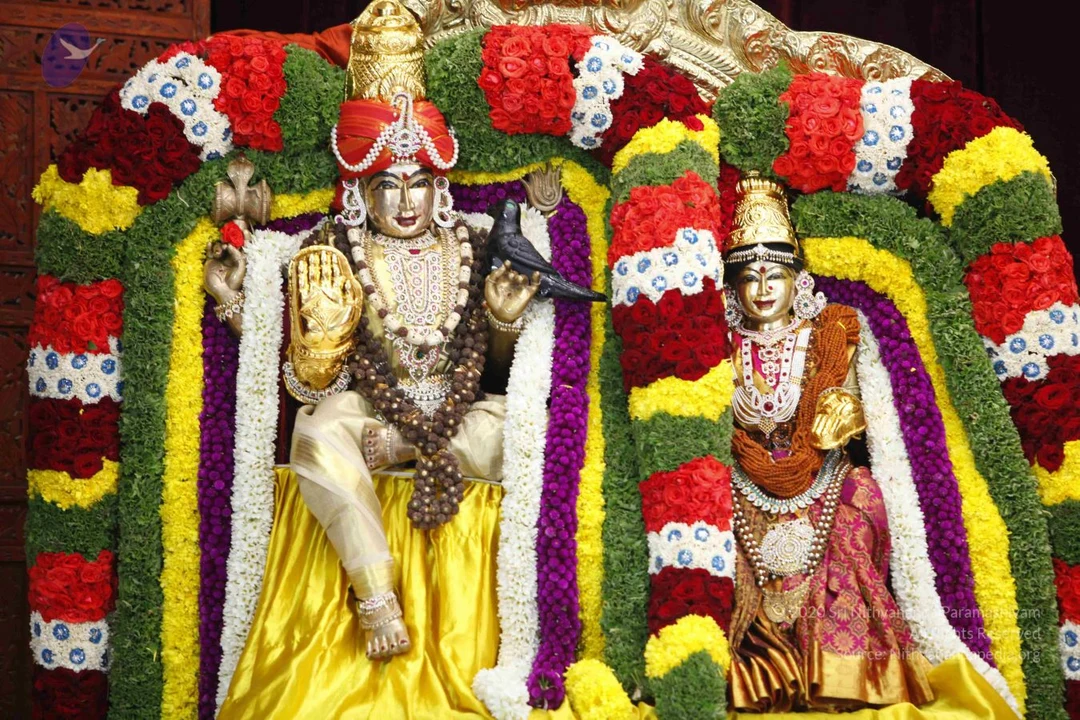
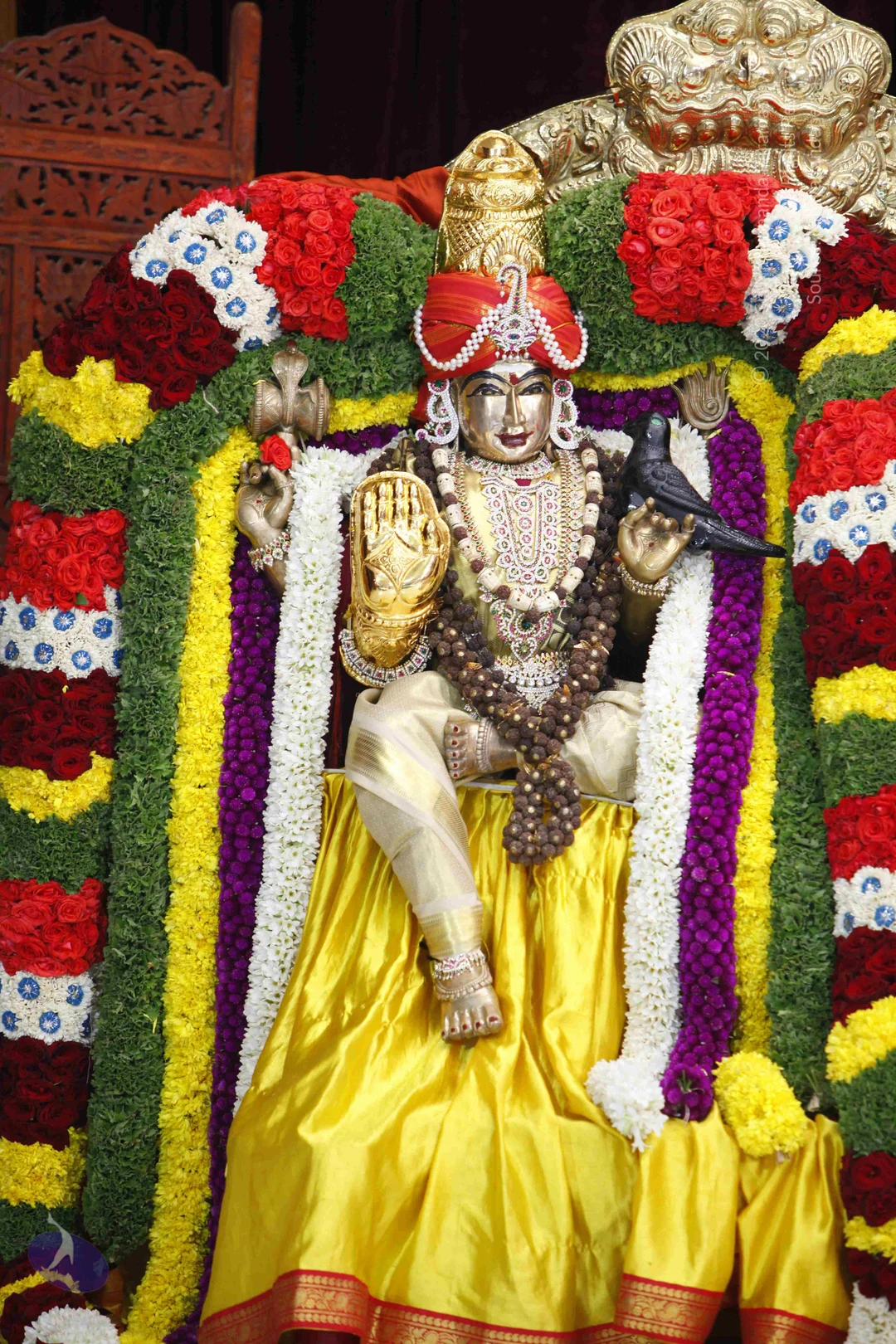
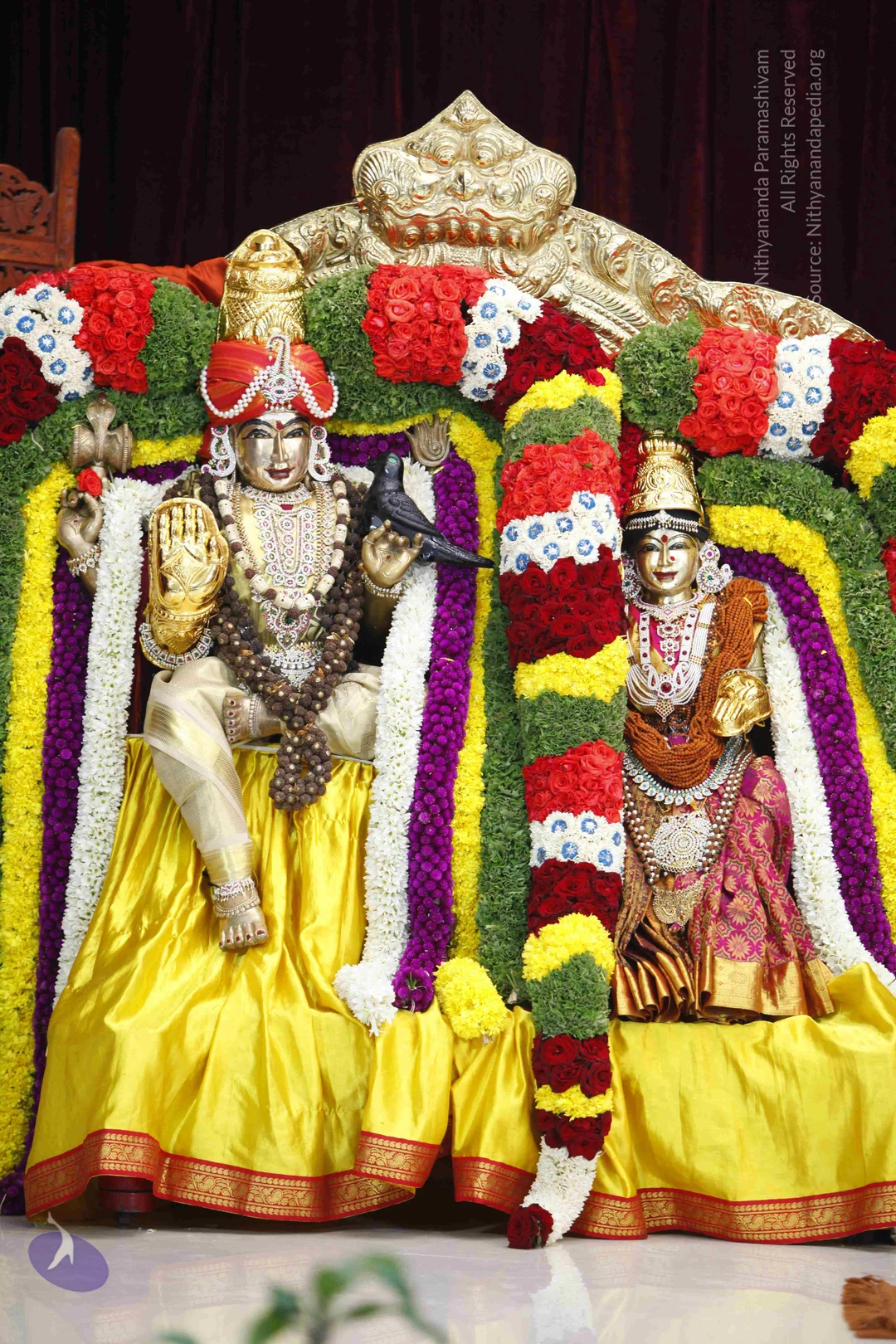
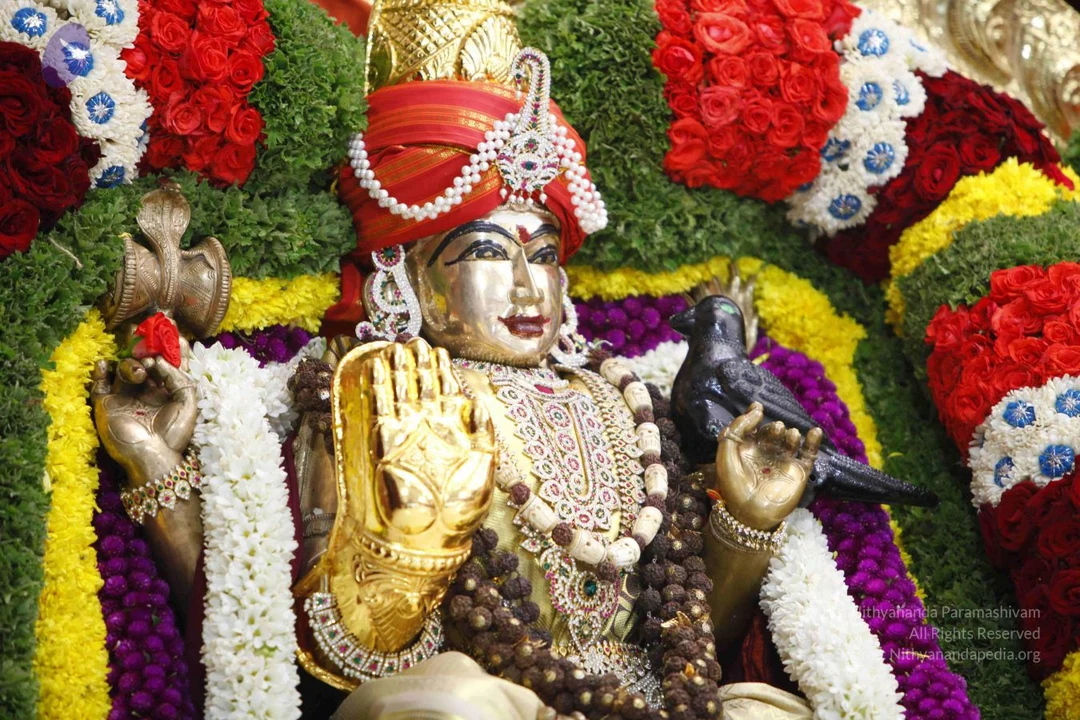
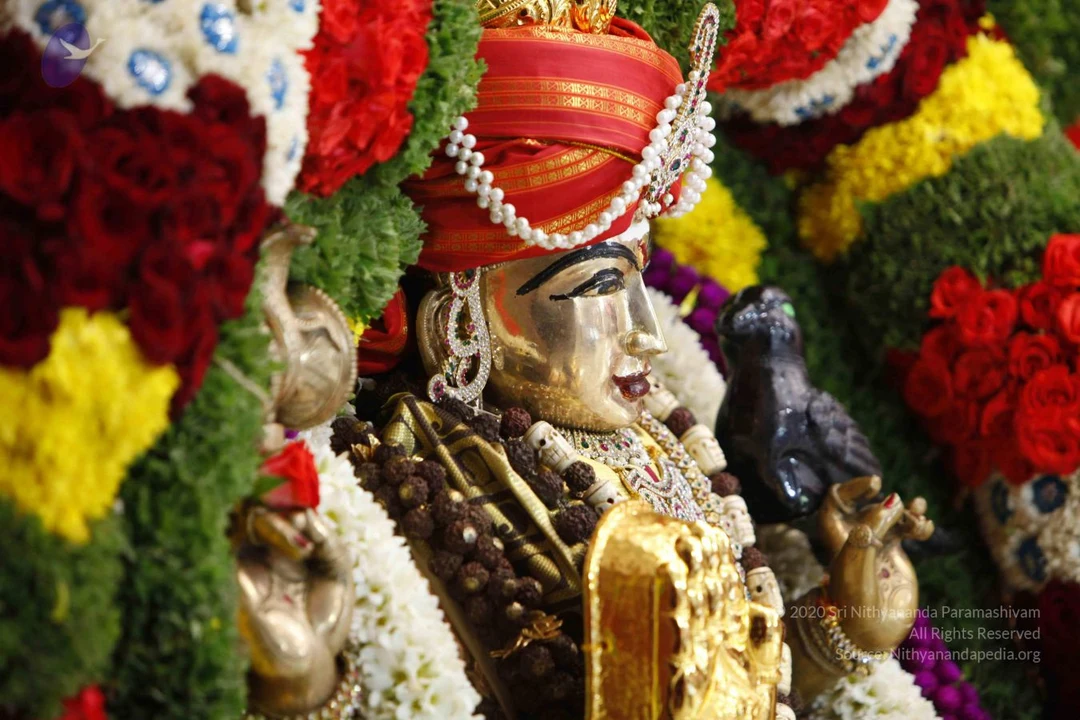
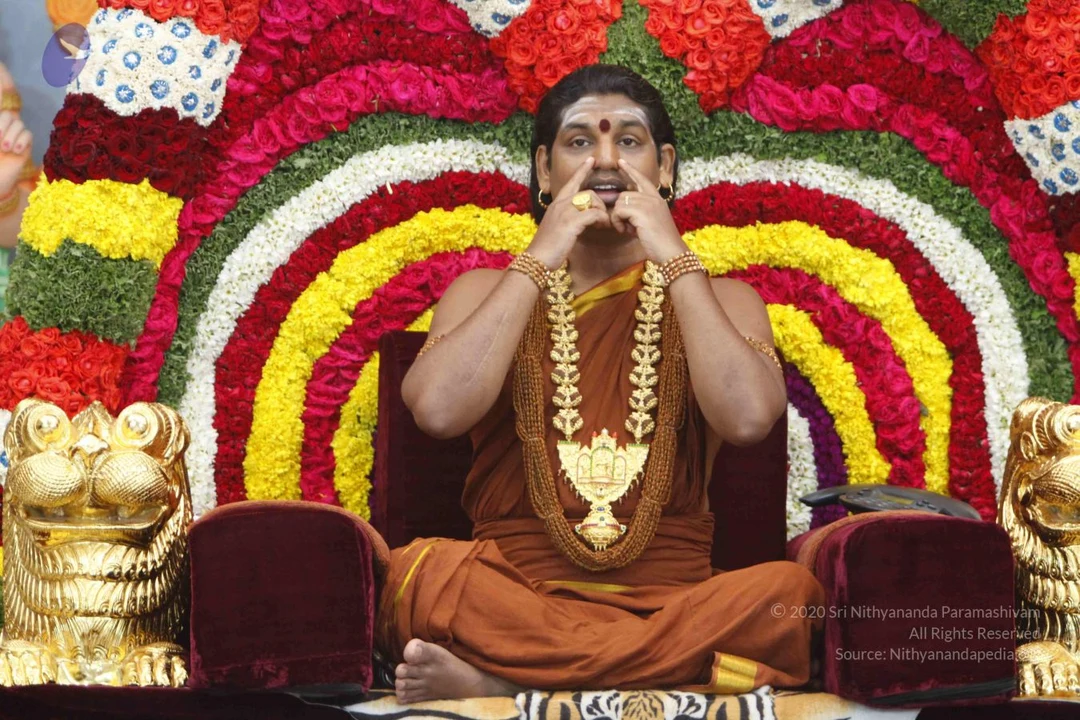
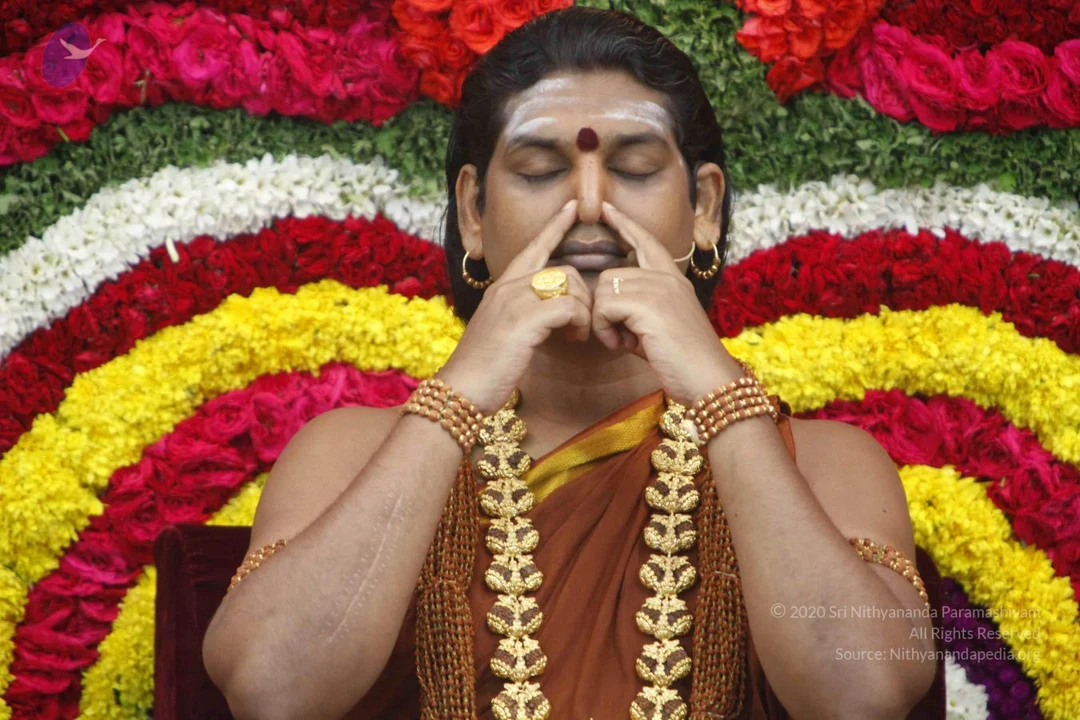
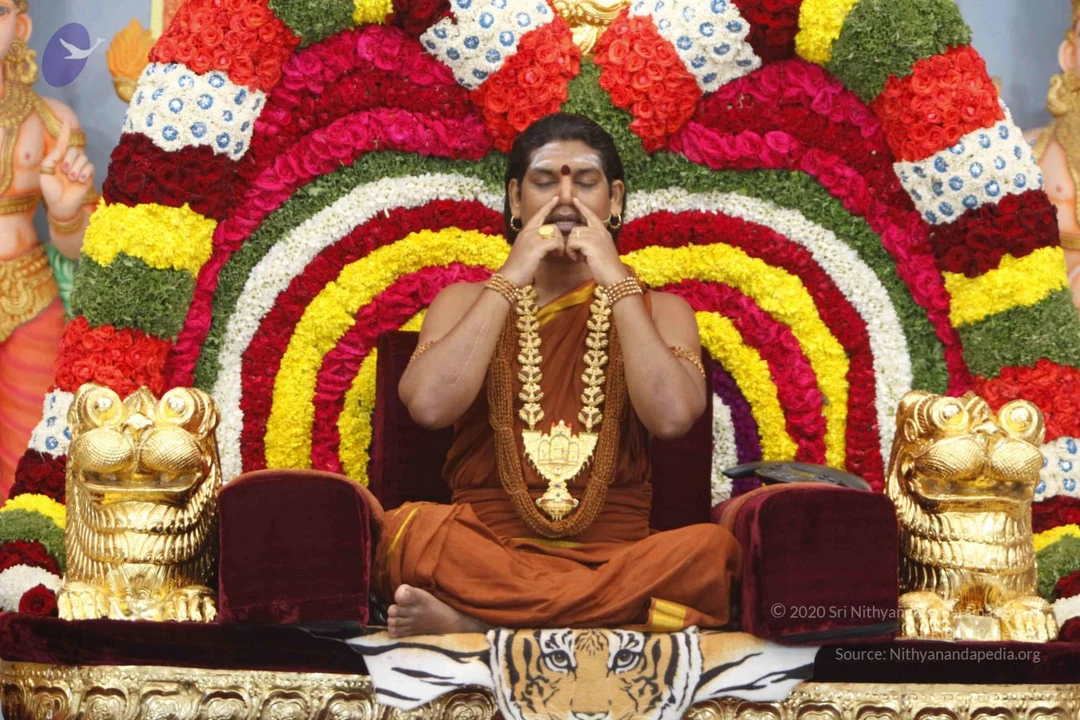
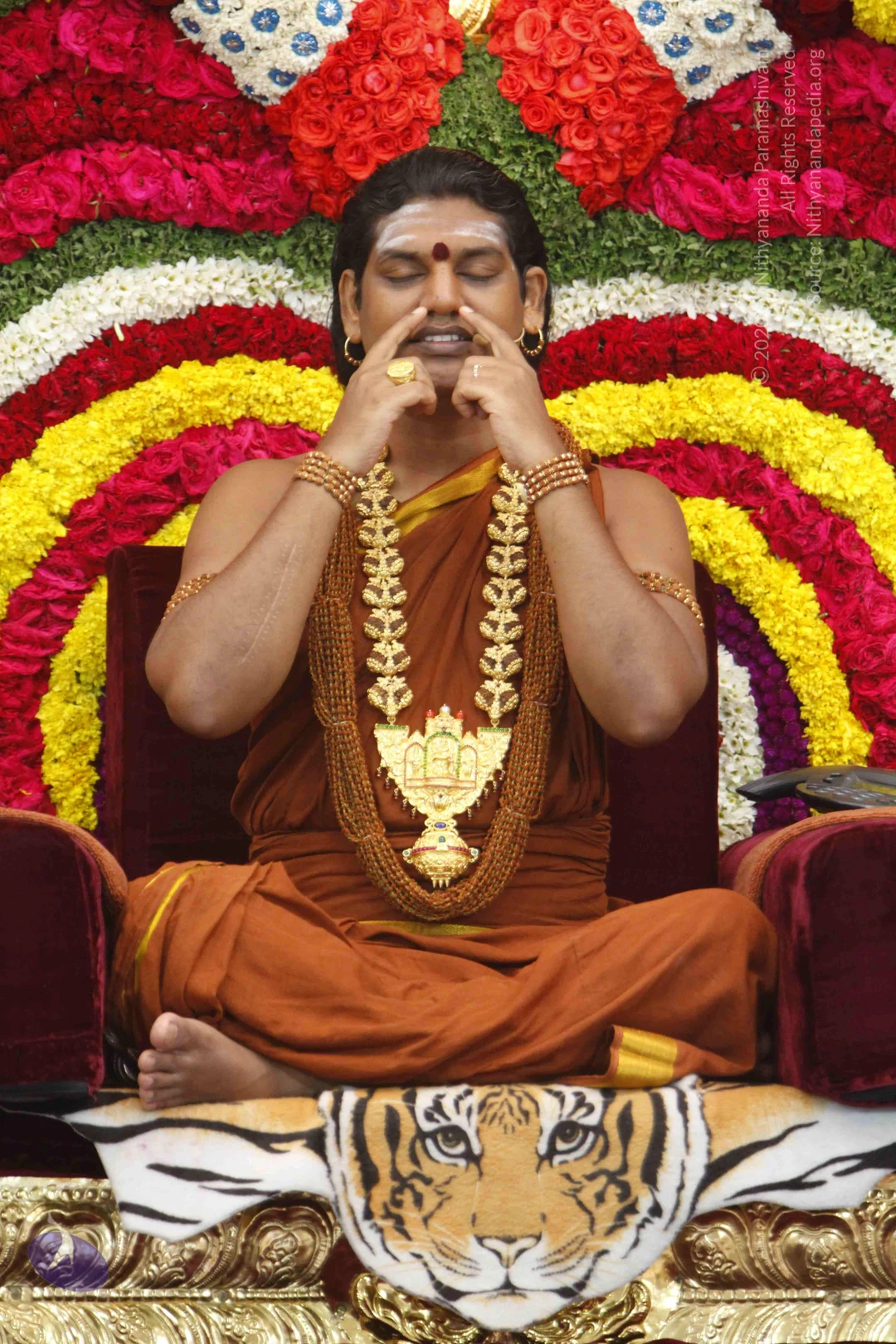
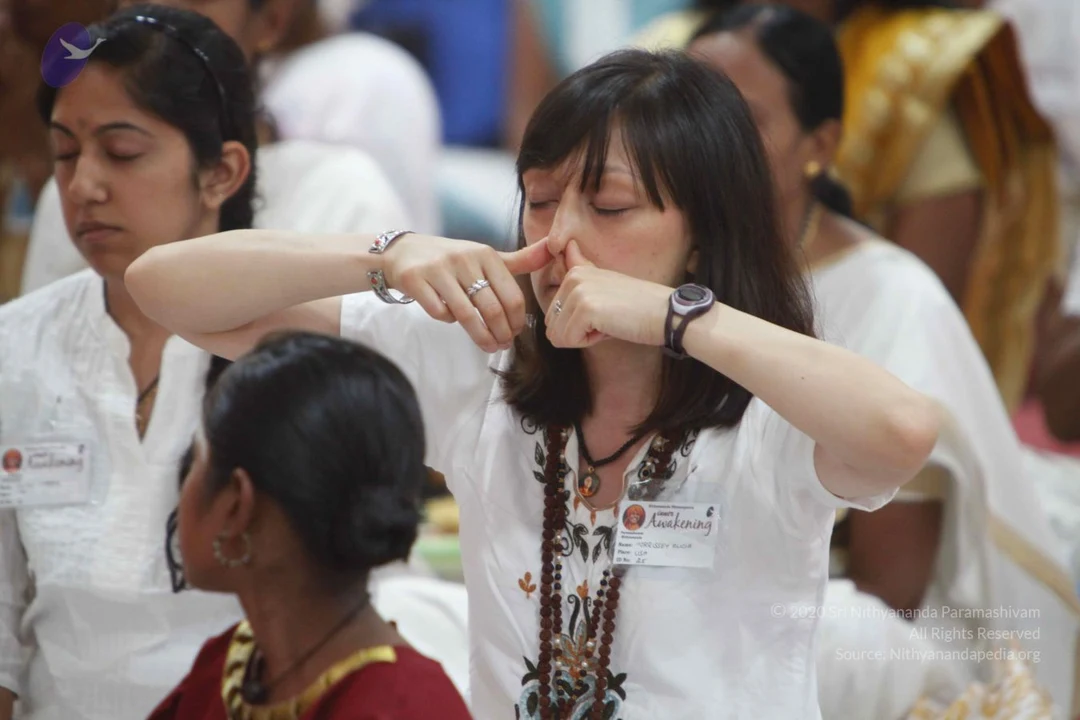
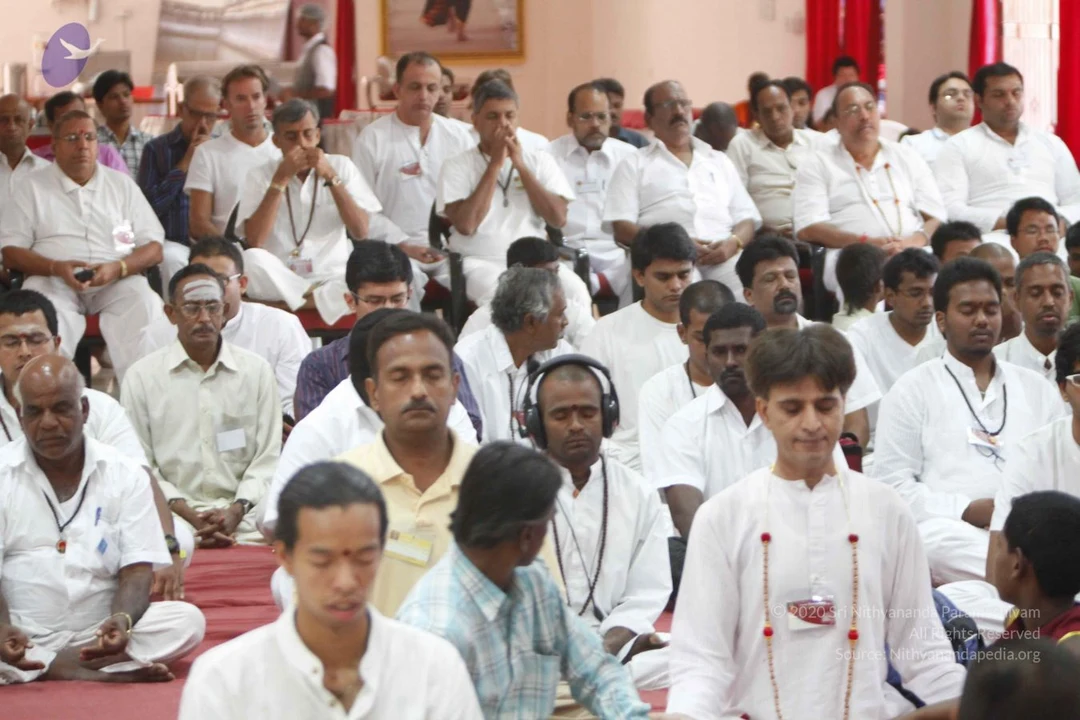
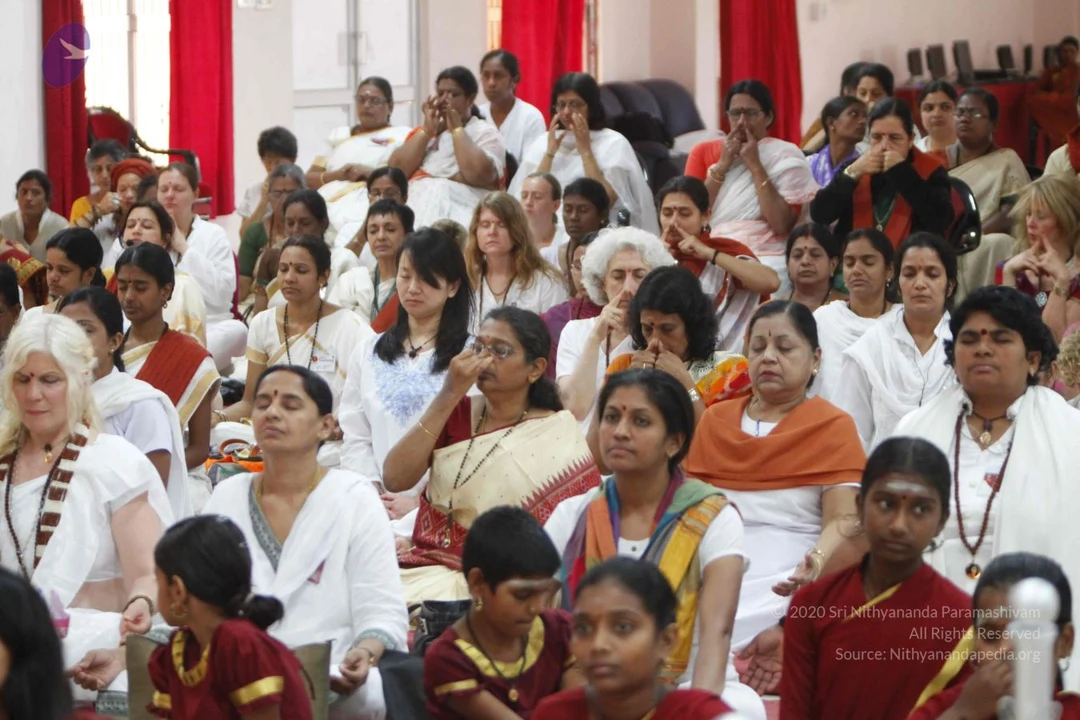
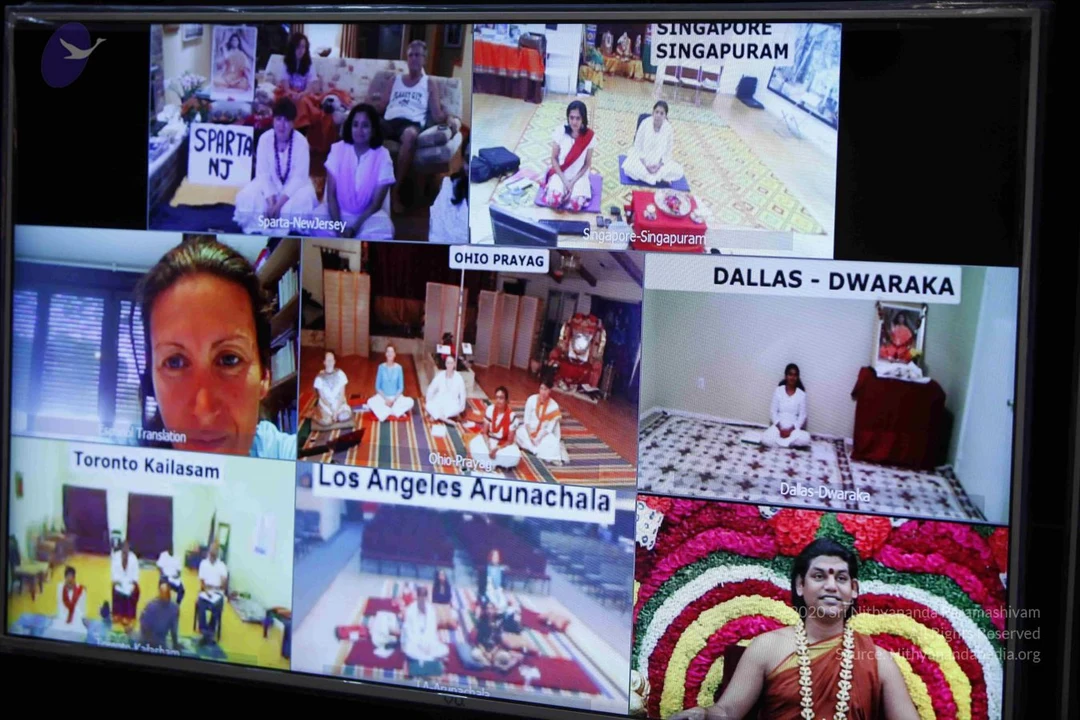
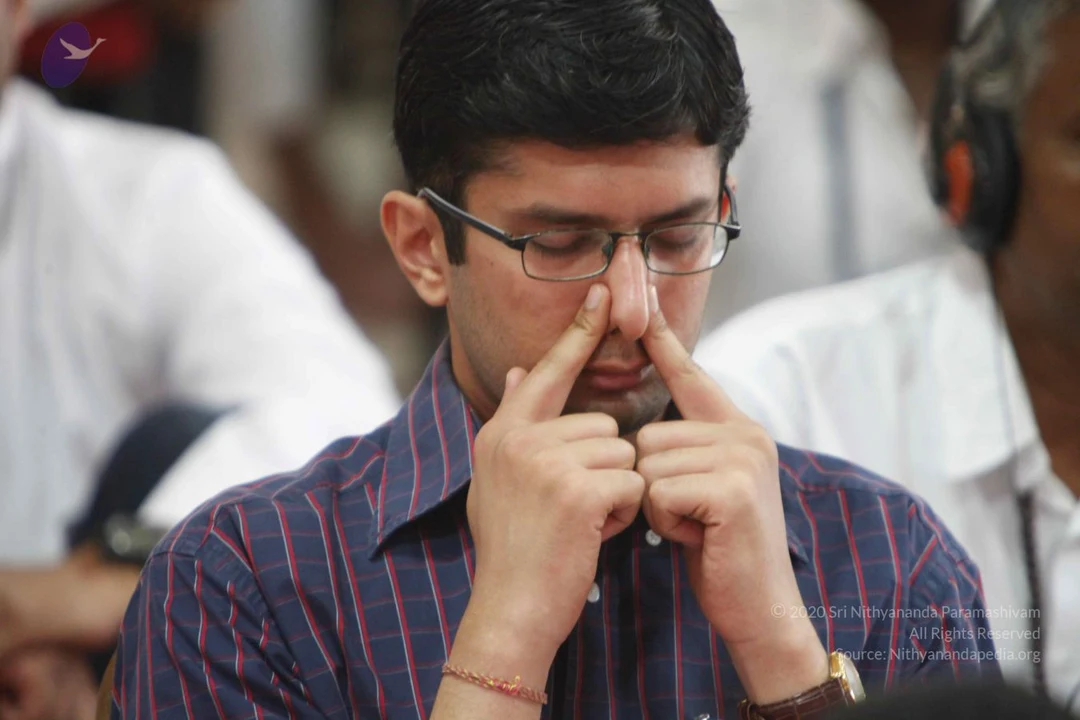
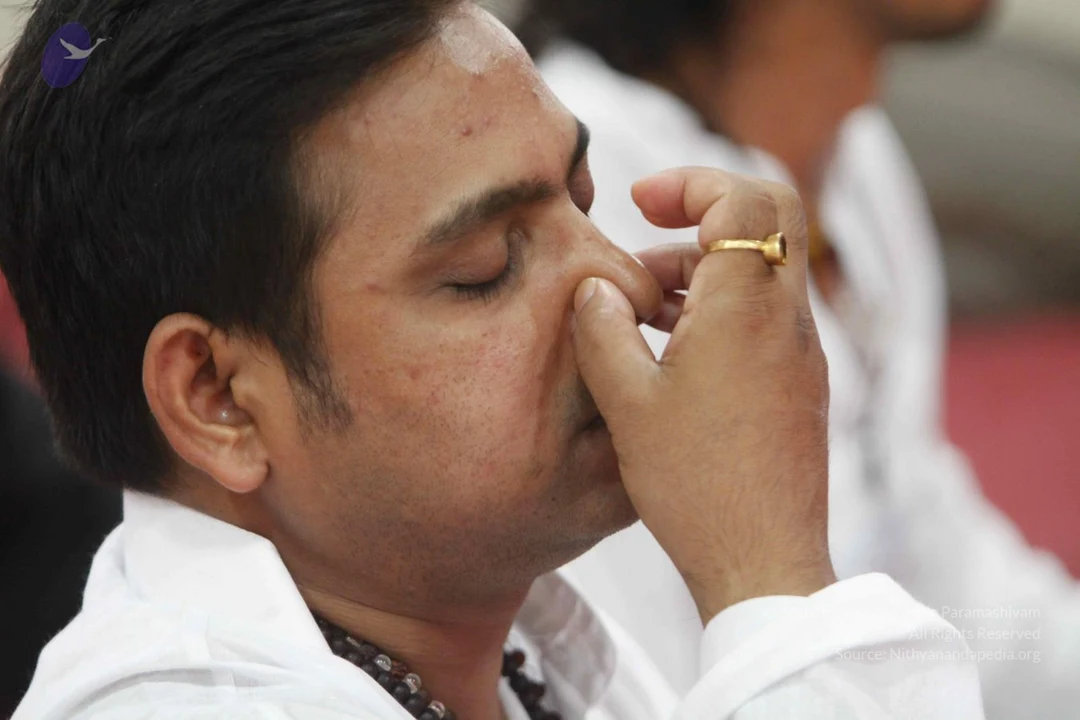
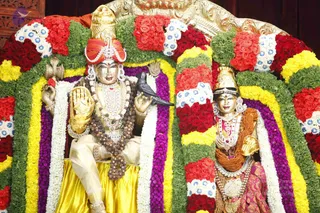
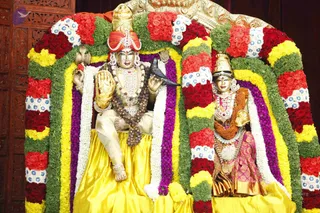
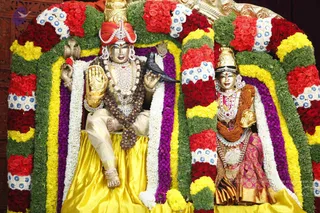
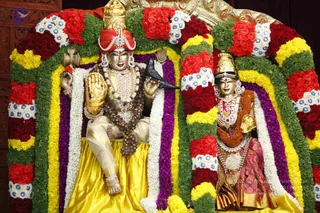
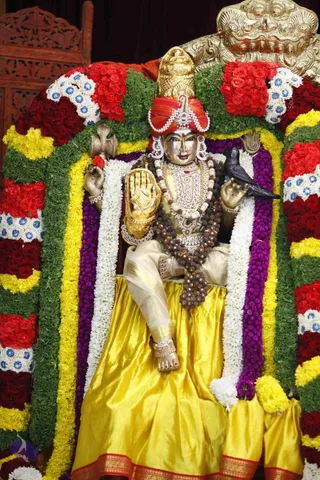
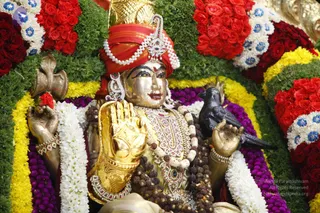
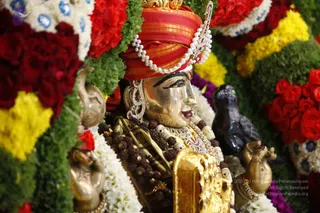
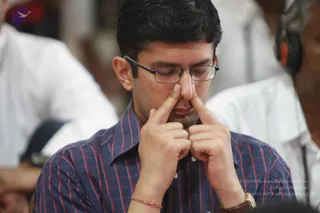
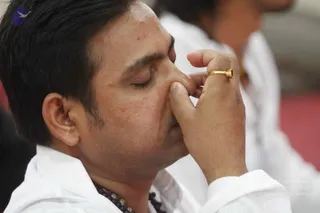
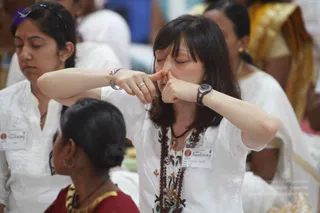
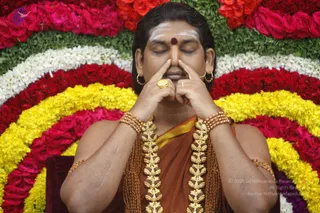
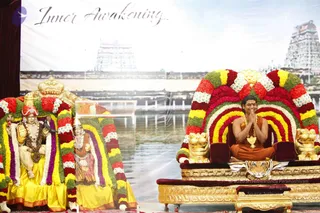
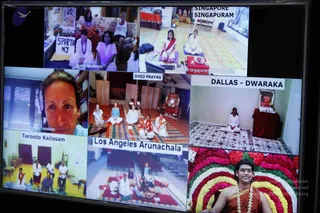
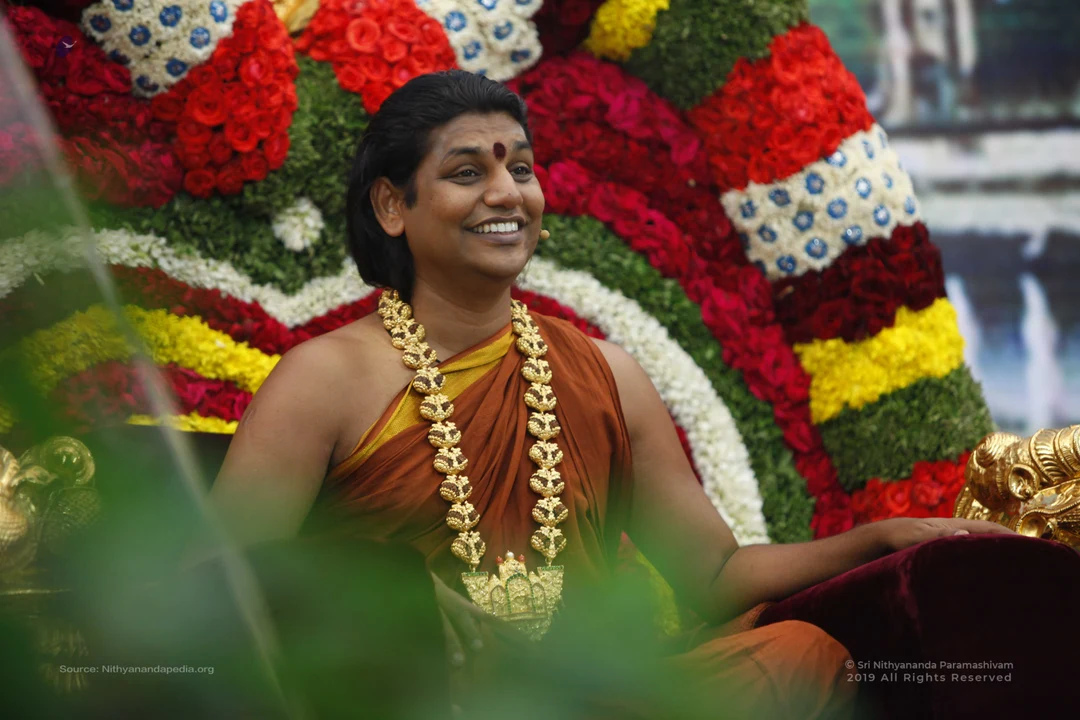
Nithyanandeshwara Samaarambhaam Nithyanandeshwari Madhyamaam | Asmadaachaarya Paryanthaam Vande Guru Paramparaam ||   I welcome all of you with my love and respects.  I welcome all the devotees, disciples, samajis, satsanghis, yet-to-be devotees, visitors, viewers sitting with us through Sadhna TV and Lotus News Channel and Ishwar TV and Nithyananda TV and two-way video-conferencing in 45 places all over the world in 33 countries.  I welcome all of you with my love and blessings. Today, the celebration starts!  18th batch Inner Awakening inauguration day!  Today, the 18th batch Inner Awakening starts, day one.  15th batch eN-Genius, day one inauguration.  And 15th batch Nirahaara Samyama, Level-1, today we are starting.  Today, 702 people already registered; 702 have registered for the Nirahaara Samyama.  So far, 702 have registered, and still coming in.  And, first time we opened the Nirahaara Samyama on one-way and on TV also, because I have added a Kriya which can directly support people to practice the Nirahaara Samyama.  It is like a kindling of the Kundalini energy, awakening of the Kundalini energy without my physical presence, without directly me looking into them and initiating.  For that, I have developed a Kriya.  So, with this Kriya people will be able to practice; wherever they are, they will be able to practice the Nirahaara Samyama.  And 7th batch The Samyama is starting.  7th batch The Samyama, lot of registrations have happened, still registrations are coming in.  So we don’t know the number as on now.  But, 7th batch The Samyama today it is starting. And I have a very special and exciting announcement.  Today, the first batch of Enriching Initiation!  482 people have registered to receive this initiation so far.  482!  Some more coming in!  Till this moment, 482 have been registered to receive the initiation for enriching!  This is an exclusive and extraordinary initiation that will initiate into the space of being enriched.  Please understand, enriching is a Being you carry.  So doing happens like your breathing.  If there is a Being in the body, breathing happens automatically.  Same way, if your Being is enriched, enriching happens like a breathing.  So it is the enriching initiation is the reason why Sundareshwara and Meenakshi are here.  Sundareshwara and Meenakshi are here with a special decoration of remembering their pastime leelas, their pastimes.  It is a special decoration called “Kari Kurivikku Upadesam Seidha Padalam”.  Means, “Initiating a Black Sparrow”, Sundareshwara teaching and initiating a black sparrow.   There is a beautiful story behind this decoration.  The deity which is with four hands is Shiva, and the deity in the side with two hands is Meenakshi.  And Shiva’s pastimes when He assumed the human body in Madurai and played different leelas. Of course, He was called by the name “Sundareshwara”. Shiva was called as Sundareshwara and He is the founder of our Sampradaaya, the Vedic tradition.  He is the founder.  You see, there was a King Suguna Pandian; that king begged Shiva that, ‘even if I miss you, I forget you due to some reason, you should not leave me, you should come again and again after me,  you should not give up on me and initiate me in all three planes.’  This was the deep prayer of Suguna Pandya, the king of the Pandya Kingdom.  The Pandya Kingdom….the whole of Southern India was Pandya Kingdom at that time, up to Orissa.  So, Suguna Pandian, this king, prayed to Mahadeva, Shiva, ‘At any moment, if my logic denies you, I become devoid of your presence in my life, you should not give up on me; you should initiate me from all three planes.’  The three planes means, either in the dream, or in the deep sleep state, or in the waking state.  These are the three planes: Waking, Dream and Deep Sleep.  ‘In all these three states you should not give up on me.  At some plane, or all these three planes, you should initiate me and get me back to your presence.  And, I should gain back the beautiful feeling-connection with you. ’Suguna Pandya asked for this boon, and Mahadeva also gives.  He says, ‘Tathaasthu!’, ‘So be it!  I won’t give up on you even if you give up on me!’ So, because of that commitment, when Suguna Pandya takes the next birth as a black sparrow…. This fellow (Suguna Pandian) when he went for hunting – there is a law in hunting that you can’t kill anything which you are not going to eat –  you can kill only for your eating. That was the law of hunting. That was the Dharma of hunting in those days. This fellow killed a black sparrow out of fun, not for actual eating.  See, if you don’t have food and you kill for eating, that is not considered as a crime as per the Dharma.  This Suguna Pandian goes and kills a black sparrow not for eating, you can’t eat black sparrow, but just for fun.  Because he killed a black sparrow out of fun, he had to take birth as a black sparrow.  So he was cursed; Suguna Pandya was cursed to take birth of black sparrow.  So he lost the feeling-connection with Mahadeva-Sundareshwara, and he was in the forest, completely lost!  But Mahadeva sends one of his boothaganas.  That boothagana goes and stands under the tree where the black sparrow was sitting and starts talking loudly about the Shiva leelas which happened when Suguna Pandya was king.  The moment that sparrow heard all those stories, he regained the memory; he regained the memory, but he does not know what to do.  He only regained the memory of the previous birth, and he starts crying.  Sundareshwara appears in the dream of the black sparrow and says, ‘Come on, I am here in Madurai.’  And, the black sparrow flies to Madurai.  Sundareshwara takes the black sparrow in the hand and initiates, gives Mrityunjaya Mantra initiation and Panchakshara, the Maha Mantra – Namah Shivaya as initiation.  With that initiation, the black sparrow completes all the karmic baggage and he is liberated!  So, that story is described here in this alankara (decoration), in this leela alankara, means, the decoration based on the pastimes of Mahadeva-Sundareshwara.  Of course, for God you can’t say “pastime”; it is “present time” for him! ☺  There is no “past time” for Him.  He continues, continues, continues!  What He did in the past, He does in the present and continues to do in the future!! So there is no past for him.  He continues!  This is the alankara today in which Sundareshwara and Meenakshi are gracing us, because today is the Enriching Initiation!  And you will also see, all the twenty-one days, coming twenty-one days, Sundareshwara and Meenakshi are gracing us in different decorations related to the subject of that day’s Inner Awakening class.  He has done all the leelas which we will learn in Inner Awakening.  So, based on that day’s sessions, classes, Mahadeva will be gracing. First, Enriching Initiation!  Please come to the space of listening!  I request you all to come to the space of listening!   True Enriching is all about you being enriched and overflowing.  And, I tell you again and again and again, the incompletions you create within you due to the remote past or the recent past, is the reason you give up on you.  It is like, even after ten years you need to fight with your spouse, you think, ‘ten years of my married life, even now if I have to fight means my whole life is going to be fight!  No!  I give up on me or give up on this relationship!’  That is wrong!  Because, ten years was in fighting mode, it is not that the remaining future has to be in fighting mode!  No!  Due to the incompletions, the ten years was in fighting mode.  So complete those incompletions.  The future will be in the completion mode.  Listen!  Listen!  If there is an incompletion in the marriage, dropping the marriage is not the solution.  If there is an incompletion in your profession, dropping the profession is not the solution.  If there is an incompletion in your career, dropping your career is not the solution.  Sometimes, incompletion in the body or mind will be there.  Dropping the body is not going to be the solution!  Drop the incompletion.  If there is a friction in the machine, dropping the machine is not going to be the solution.  Lubricating only is going to be the solution.  I could see in the life, unfortunately, it is very unfortunate, people always decide to drop the reason for the incompletion than to the cause of the incompletion!  Listen!  “Reason” is different, “Cause” is different.  Reasons are caused.  Cause cannot be reasoned.  Reasons are caused, cause cannot be reasoned.  Please come to the space of listening!  “Reason” is different, “Cause” is different.  Reasons are caused.  Cause can never be reasoned.  Unfortunately, you always try to drop the reason.  Drop the cause!  Drop the cause of incompletion.  Drop what causes incompletion, not what you perceive as the reason for incompletion.  If you think marriage is the reason for incompletion, career is the reason for incompletion, business is the reason for incompletion, either you try to drop them, or you try to live with incompletion and the reason.  But the solution is neither dropping the reason nor trying to continue to live with the reason. It is completing the cause of the incompletions! Completing the cause of the incompletions!  Continue, continue, continue, continue, continue, continue to complete with all the incompletions!    I tell you, every time when you complete with all your incompletions, when you complete with yourself, you enrich you, you push yourself to the space of Enriching. Understand, dropping, completing with the cause of incompletions, completing with the cause of incompletions is life.  When you complete with the cause of incompletions, enriching starts.  So, all the participants today taking Enriching Initiation, who have registered for Enriching Initiation from all over the world, today you will have a sacred thread tied in the spot where your pulse is felt, where your heartbeat is felt as a symbol of Enriching Initiation.  The Guru Vaak for all of you is, “Reasons can be caused, cause cannot be reasoned”.  So complete with the cause of incompletions, complete with the cause of incompletions.  That is the first Guru Vaak! Second, let your being be Enriching!  Let your being be Enriching!  How much ever they tried to stop me, no one could stop, because my Being is in Enriching.  I was denied of even my basic rights – talking!  There was a time – may be all our devotees forgot, but history cannot forget this – there was a time I was denied of my basic rights, human rights, even talking!  And in a country where it is a Constitutional Right!  Even then, no one was able to stop me doing Enriching, because my Being was Enriching!  No one is able to stop my Being doing Enriching!  The one cause of my causeless auspiciousness is I am continuously being enriched, and I am continuously Enriching.  Because I am enriched, I am Enriching, because I am enriching I am enriched!  When something becomes cause and reason in your life, you are complete!  Enriching is cause and reason of my life.  It causes my life and it is the reason for my life!  Enriching causes my life.  Enriching is the reason for my life.  Let Enriching become cause of your life, and let Enriching become reason for your life.  Let Enriching be the answer why you are alive and why you want to live.  For both questions, let Enriching be the answer.  So, this is the next Guru Vaak for all the Enriching Initiation participants.  Listen!  Two, two Guru Vaak for you:  ∙         One, don’t drop the reasons for your incompletions.  Complete the cause of your incompletions.   ∙         Second, listen, second, the cause of your life and the reason for your living, let both be Enriching! Somebody asks why you are alive, why you want to live.  For both questions, let “Enriching” be the answer. So, with these two Guru Vaak, I initiate all the participants who have enrolled for Enriching Initiation.  I shower, bless you all with my Integrity, Authenticity, Responsibility and Enriching with my enlightened inner space, the inner space of an incarnation, I bless you all!  Let all of you be in the space of being enriched!  Let Enriching be the cause and reason for your life and living!  Let Enriching happen and use you and your life to express all its auspicious energies, including Enlightenment! With this, I initiate all the participants registered for Enriching Initiation as Enrichers! I’ll move to the next step – Nirahaara Samyama.  15th batch, Nirahaara Samyama!  Please come to the space of listening!  All the Nirahaara Samyama participants, all the 702 as on now who have registered for the Nirahaara Samyama Level-1, Level-2, Level-3, Sadhana TV viewers who registered through online or two-way video conferencing or one-way Nithyananda TV, all of you please listen, first thing, people having health issues like heart disease or diabetes, better you consult your doctor once.  Better you consult your doctor if enlightenment is right for you!  Anyhow, it is a legal disclaimer.  Let me come to the point.  Now, listen!  Nirahaara Samyama is not fasting.  And it is neither feasting.  Unfortunately, your everyday life itself has become feasting!  It is neither feasting nor fasting.  Step by step, slowly, slowly, awakening your bio-intelligence, bio-memory to produce energy directly from space, to produce energy directly from the space.  Listen!  So, step by step, slowly, slowly, we awaken your bio-memory which has the intelligence to produce energy directly from the air, sunlight and the breeze and space.  Through a proper Kriya, it is possible!  Let me give you the clear step by step instruction. First, today, we start this Nirahaara Samyama.  Today and tomorrow, next forty-eight hours, means, till day-after-tomorrow morning satsangh, you will not take any solid food, but you will continue to have some juices – buttermilk, water, juices.  Till 3rd July morning satsangh, Wednesday morning satsangh, you will not have any solid food.  First, we are taking that component out of your system.  And the Kriya which you are going to learn now, you will do it continuously every day morning once and evening once.  It is just twenty minutes Kriya, not more than that.  You can do once in the morning, once in the evening.  And for second level, I will give you another one Kriya.  This is the first level, means, only for the next three days you are going to do this Kriya.  Today, tomorrow and day-after-tomorrow; only these three days you are going to do this Kriya.  And, any time you feel tired or fatigue, or any sickness, feeling sick, dehydrated, you should start eating, you should break the Samyama; you should start eating; you should not be continuing the Kriya out of will.  You should not be continuing the Nirahaara Samyama out of will.  Please listen!  Nirahaara Samyama should happen in you with the right context.  When you create energy, when you create intelligence, when you create enough energy in your bio-memory, bio-intelligence, automatically the food intake should reduce.  So, be very clear.  Today onwards I am giving you the Kriya to awaken your intelligence and reduce the food intake.  But for some reason, if the Samyama has not started happening in you, means if you are feeling too hungry, fatigue, you should not be continuing the Nirahaara Samyama.  And every night before going to sleep, you should continuously do completion at least one hour.  Completion with all the past incompletions which makes you powerless, which makes you experience conflicts, contradictions.  So, understand these simple instructions.      If you are feeling tired or dehydrated, immediately you should break the Samyama.  You should also have a water bottle with you filled with water.  Continuously once in half an hour, whenever you feel your mouth is dry, you should sip water, you should drink water, keep yourself without getting dehydrated.  Because, first two days, more than tiredness, you will feel powerless!  You always associate food with power.  So you will feel powerless.  You need to cross all your psychological drama.  It is literally like how kids do drama with the parents, your body and mind will do drama with you.  You may have to cross all those dramas! So, I’ll move to the Kriya now.  Please listen!  Listen to the Kriya!  The Kriya has two components: One Visualization and Breathing.  Please listen!  Both you are expected to do simultaneously.  Visualization is as if you inhale through each pore of your body and produce energy directly from the air, from the space, like a banyan tree.  Please understand, feel, cognize you have become like a banyan tree.  Like how banyan tree breathes, using the whole body, through each leaf banyan tree breathes, each leaf produces food; same way visualize you are breathing through the whole body, and, just like banyan tree your bio-intelligence is producing food directly from the breeze, from the space, from the breeze, from the space.  So understand, this is the visualization. The Breathing process is: Inhale through both the nostrils and the mouth, inhale through both the nostrils and the mouth, and, hold as long as you are comfortable, by closing both the nostrils and the mouth.  Listen!  Don’t try to hold on for a long time.  No!  Hold as long as you are comfortable by closing the nostrils and the mouth.  When you feel you can’t hold any more, slowly exhale, slowly exhale through the nostrils.  Listen!  Let me show you! Inhaling through the mouth and the nostrils, and holding by closing the nostrils and the mouth as long as you can.  Then slowly exhaling through the nostrils by closing the mouth.  While you are doing this, continuously cognizing you are Bidadi Kalpavruksha, banyan tree.  Through each pore of your being you are inhaling the energy, processing it and assimilating it and releasing the unnecessary air.  Means, producing energy and food directly from the air!  Do this Kriya every morning for twenty-one minutes, evening twenty-one minutes.  For “The Samyama” also do this same Kriya.  Second level Nirahaara Samyama time I’ll change the Kriya, update the Kriya.  Means, for next level and for third level I’ll give a different Kriya.  So, every night all the root-patterns related to food and other root-patterns you feel whole day, other patterns you feel whole day, you should sit and complete with it, complete with it.  So now, with this, we will start the Nirahaara Samyama Level-1.  People who want to join the Nirahaara Samyama, you can join till Wednesday.  After Wednesday you cannot join.  You have to join only in the next batch.  Whether it is Nirahaara Samyama or The Samyama, you can join either today, tomorrow, or day-after tomorrow.  After Wednesday, you can’t join The Samyama or Nirahaara Samyama.  The Samyama also you can join till Wednesday, but not after that.  So, all the The Samyama Participants and Nirahaara Samyama participants, as on now the number is 742, and still counting…! So, with this, we will start the Nirahaara Samyama Kriya.  Please sit straight!  Close your eyes.  So, now sit straight!  Close your eyes!  Cognize you have become Bidadi Kalpavruksha, huge banyan tree, and inhale through both the nostrils and mouth, hold the breath inside you as long as you can, and exhale slowly when you can’t hold the air any more. I bless you all with Integrity, Authenticity, Responsibility and Enriching.  Let all our bio-intelligence be intensely awakened and produce the energy directly from space, living health, bliss and enlightenment.  Namah Shivaya! I bless you all to be Nirahaaris.  I bless you all.  Let you all radiate with Integrity, Authenticity, Responsibility and Enriching with eternal bliss, Nithyananda!  Thank you!

Photos
Inner Awakening Darshan

Photos Of The Day:
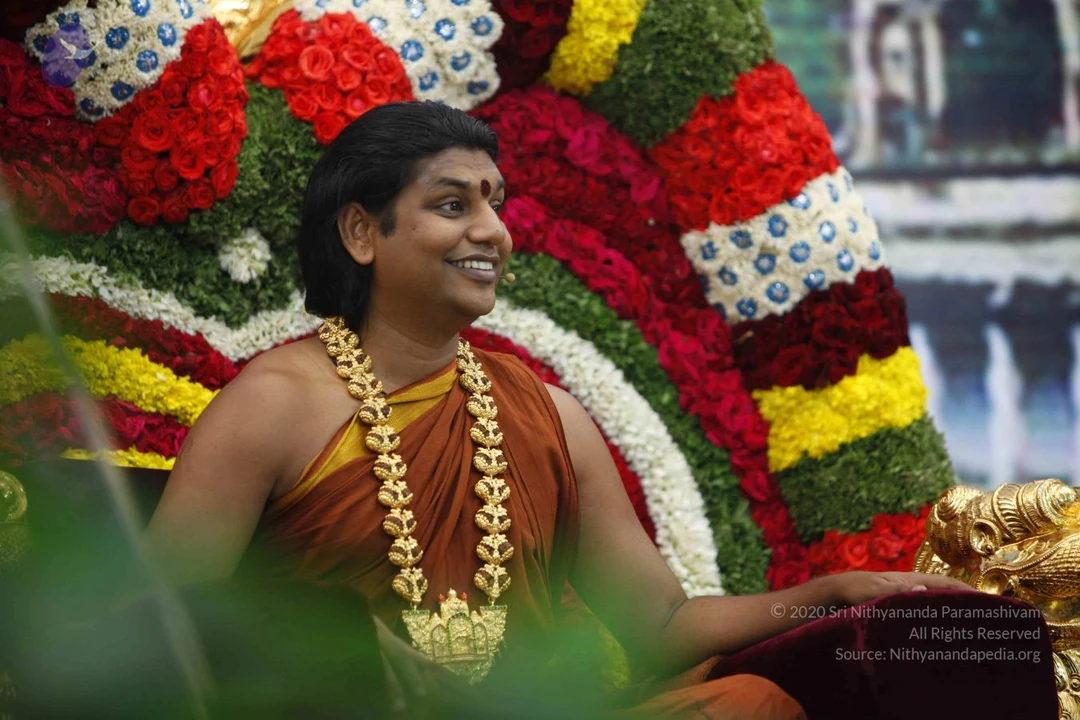
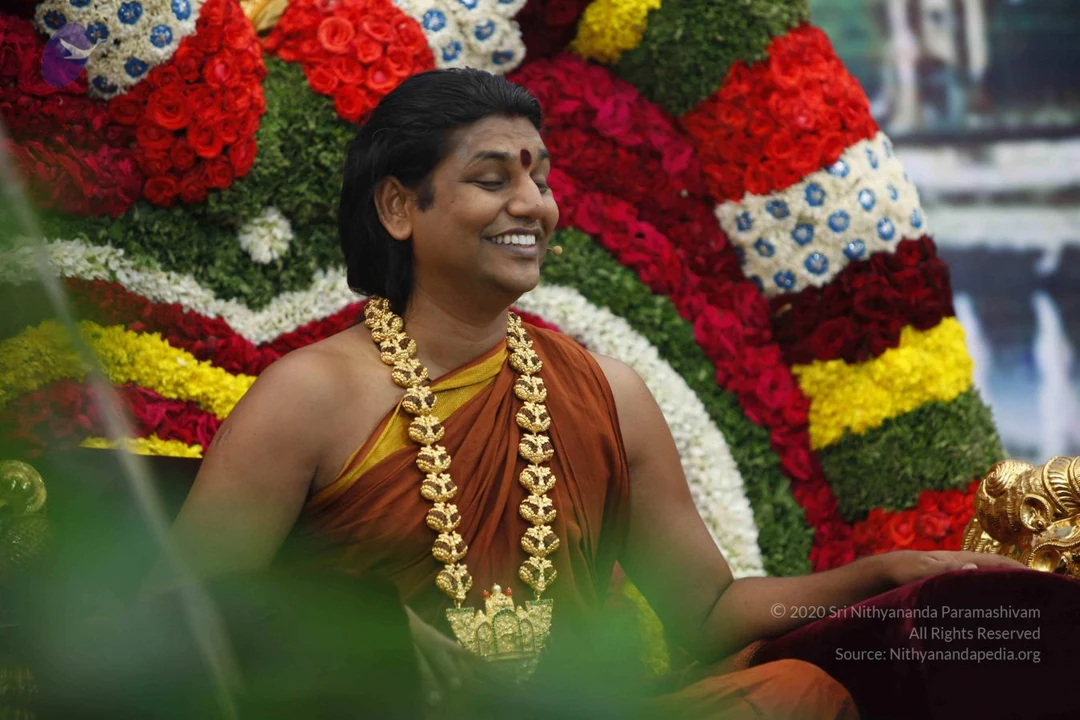
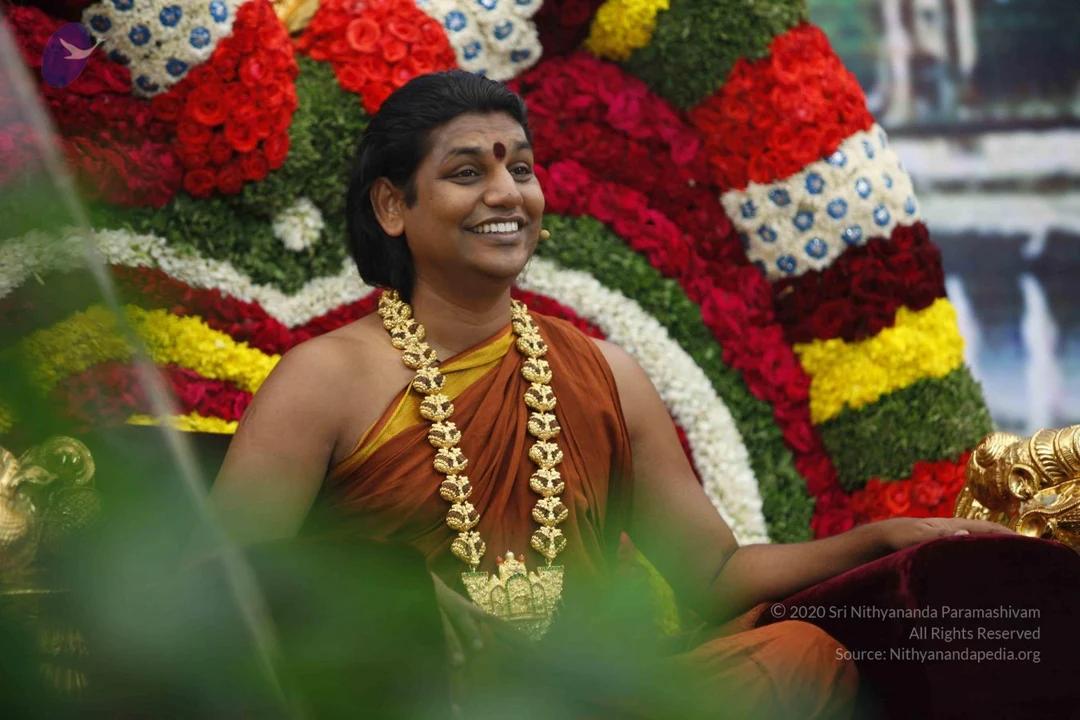
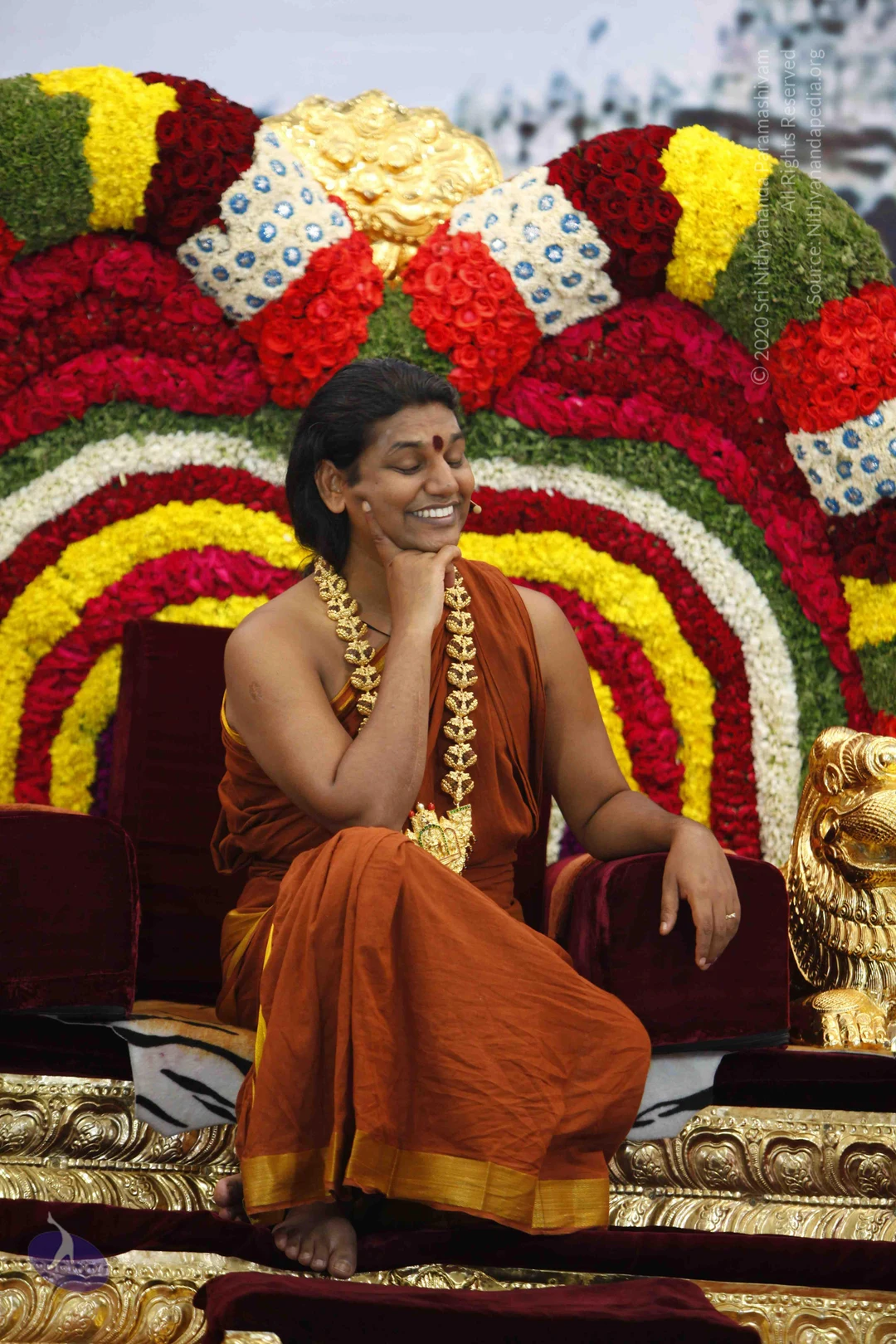
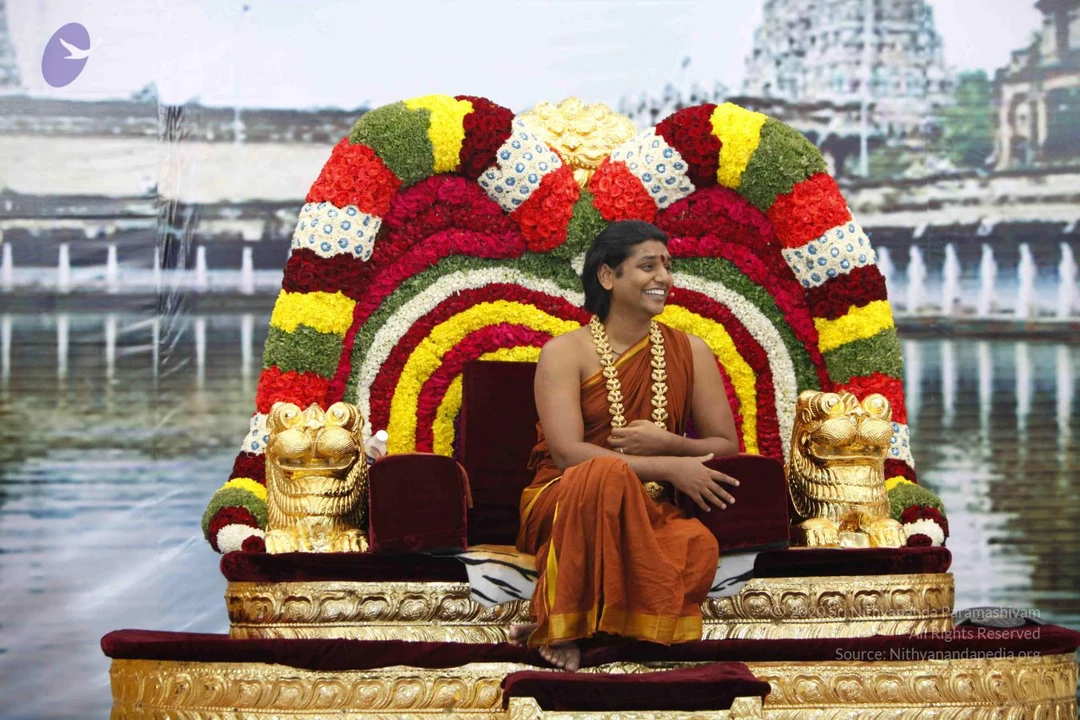
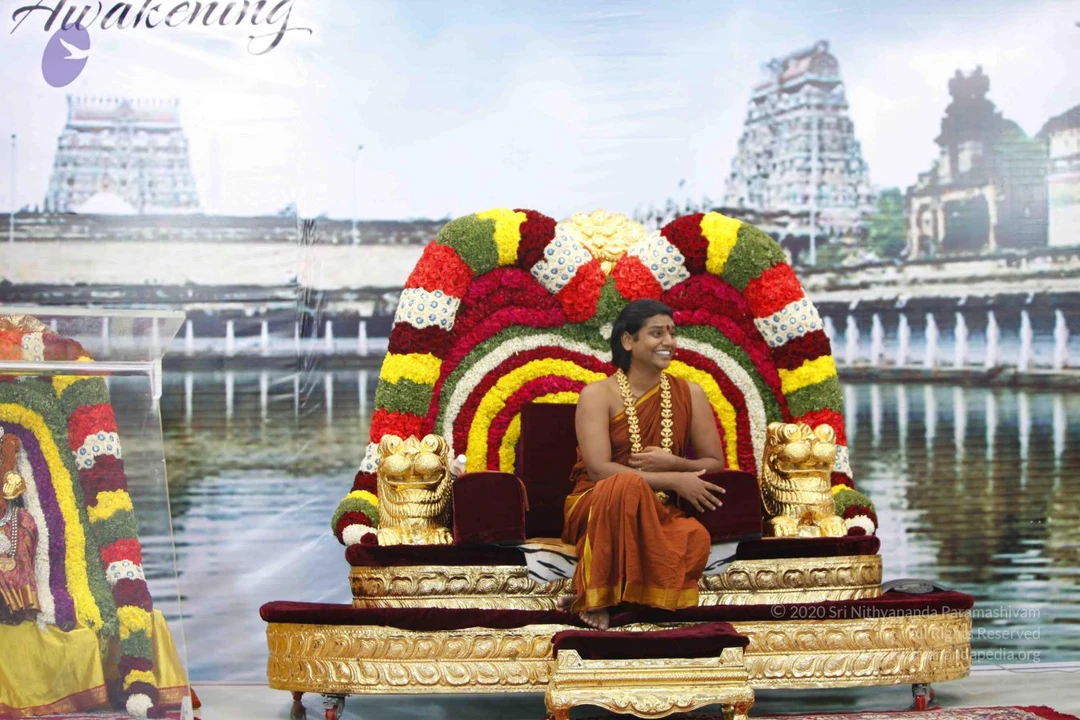
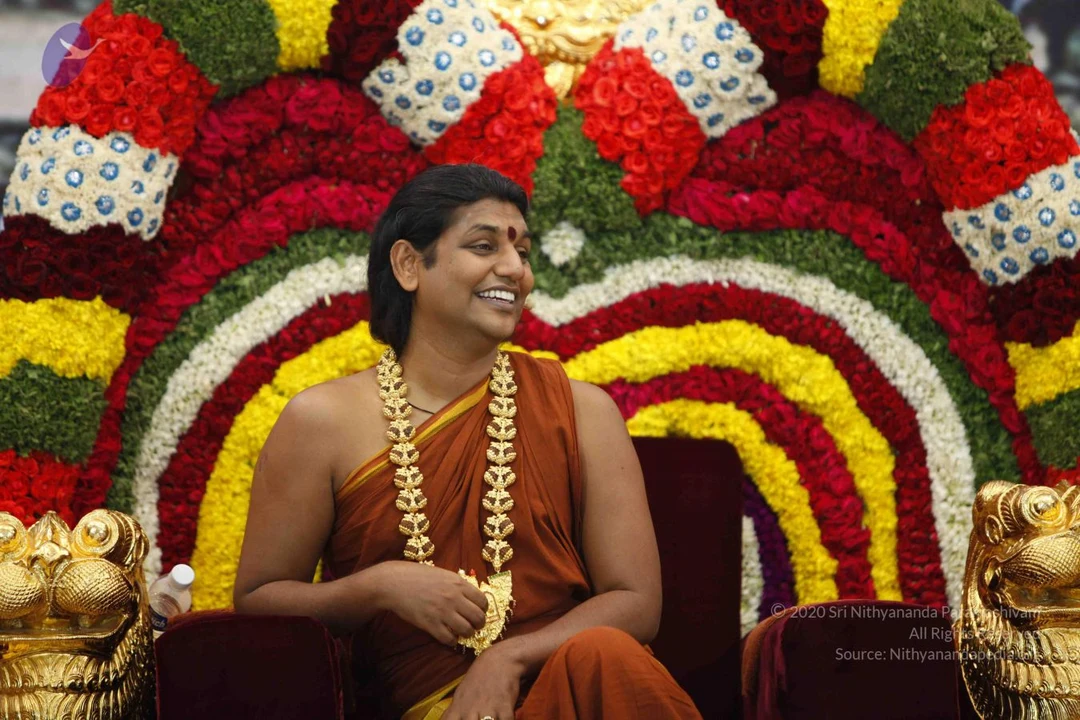
Leela Alankar Deities

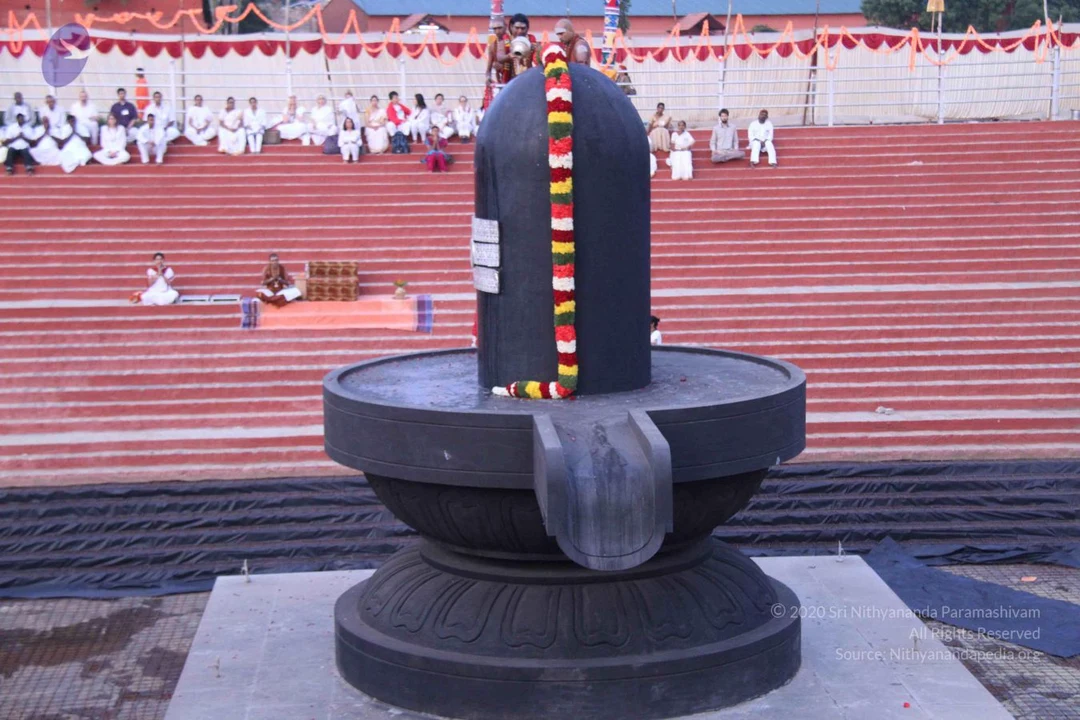
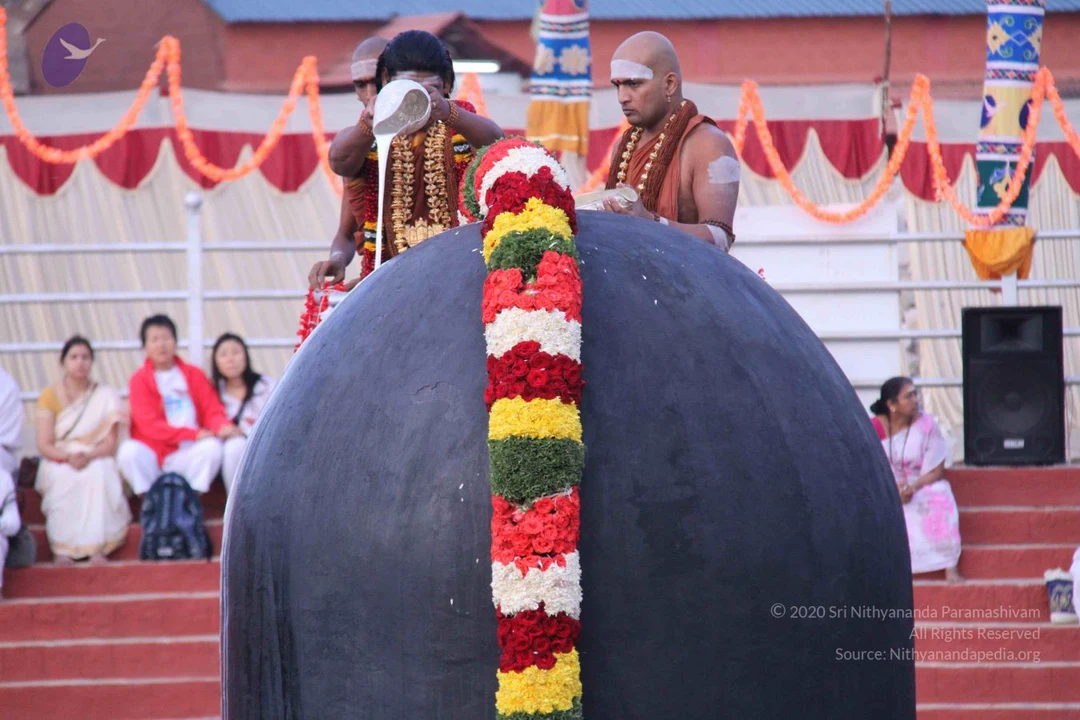
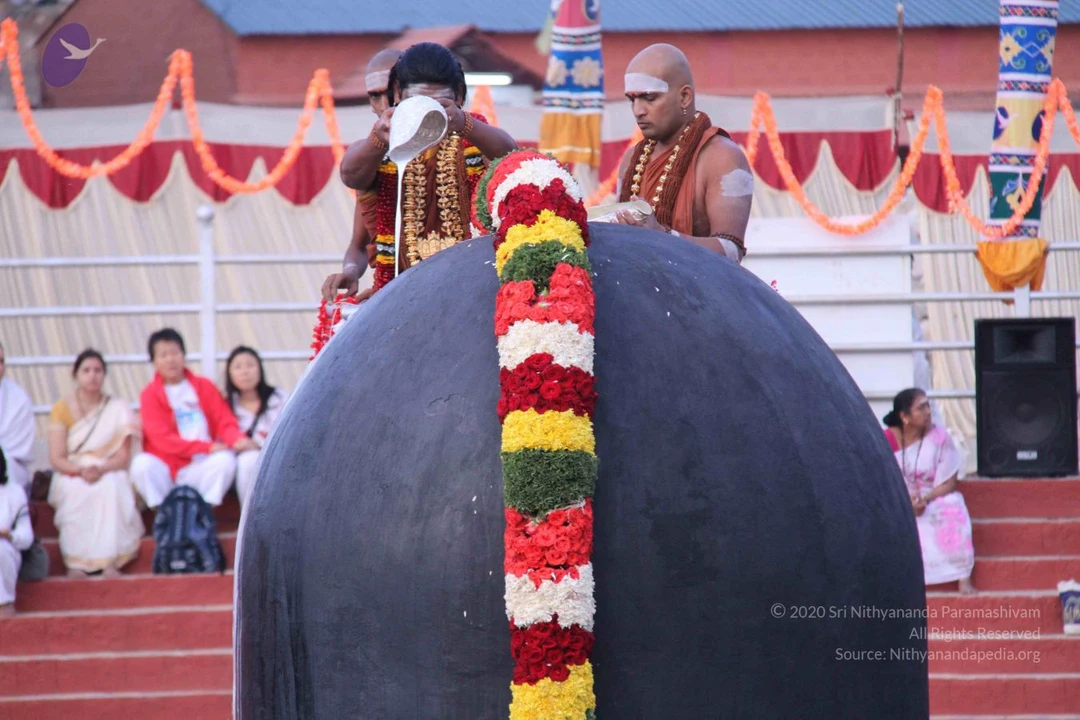
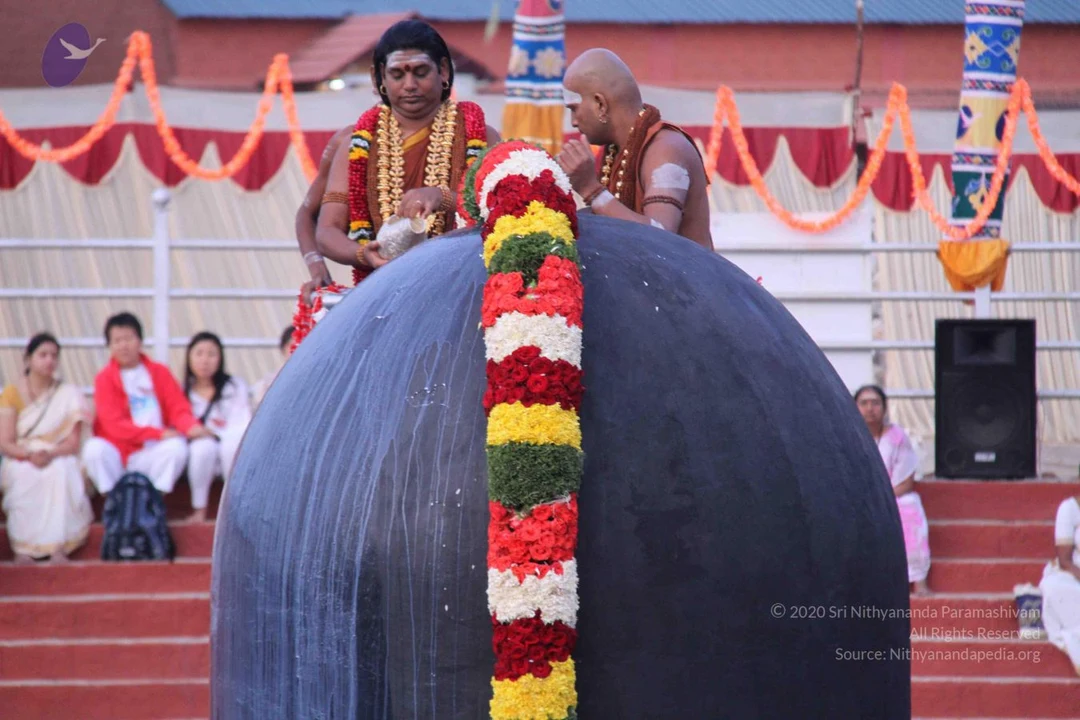
Rudra Abhishekam

Paduka Puja

Nithya Satsang

Samyama Meditation

Sarva Darshan

Inner Awakening Day 1

Sacred Arts

Photos Of The Day:
IA-Darshan

Photos Of The Day:
Leela-Alankar-Deities

Rudra-Abhishekam-Swamiji-1

Rudra-Abhishekam-Swamiji-2

Paduka-Puja

Nithya-Satsang-Swamiji

Samyama-Meditation

Swamiji-Samyama-Meditation-instruction

Sarva-Darshan

Darshan

Sacred-Arts

IA-food

IA-Session-Chinese-Whisper-group

IA-Swamiji

Participants-Individuals-Sharing

2-Way

01--IA-Darshan

Photos from this day
View all 552 photos
Photos
9 photosSource gallery
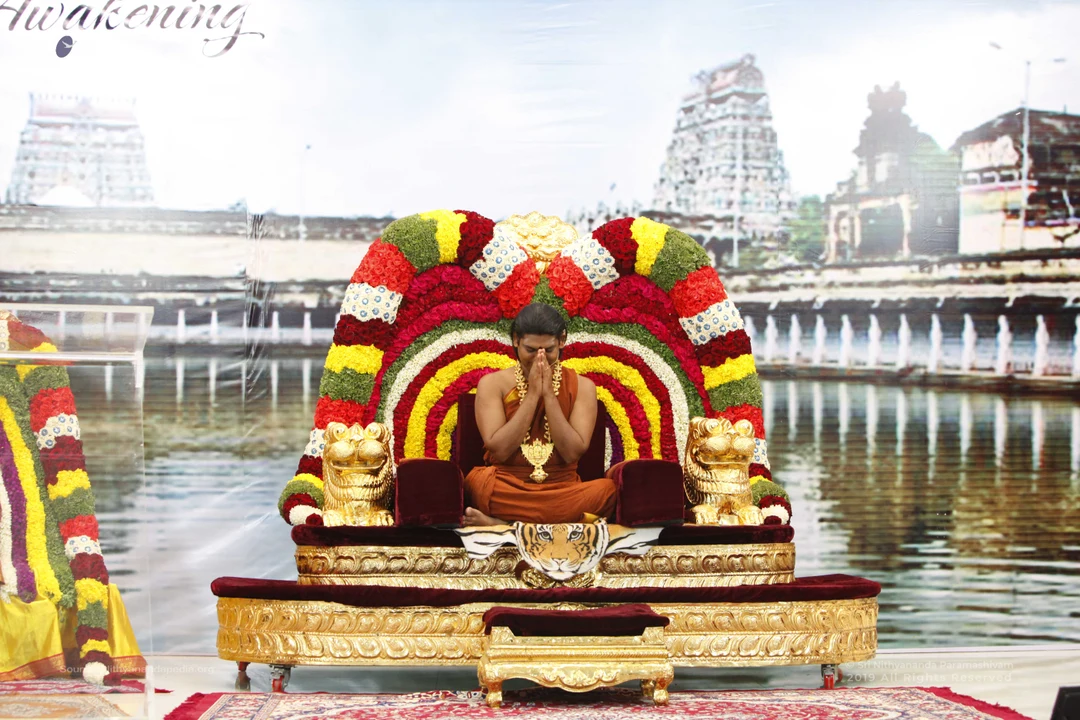
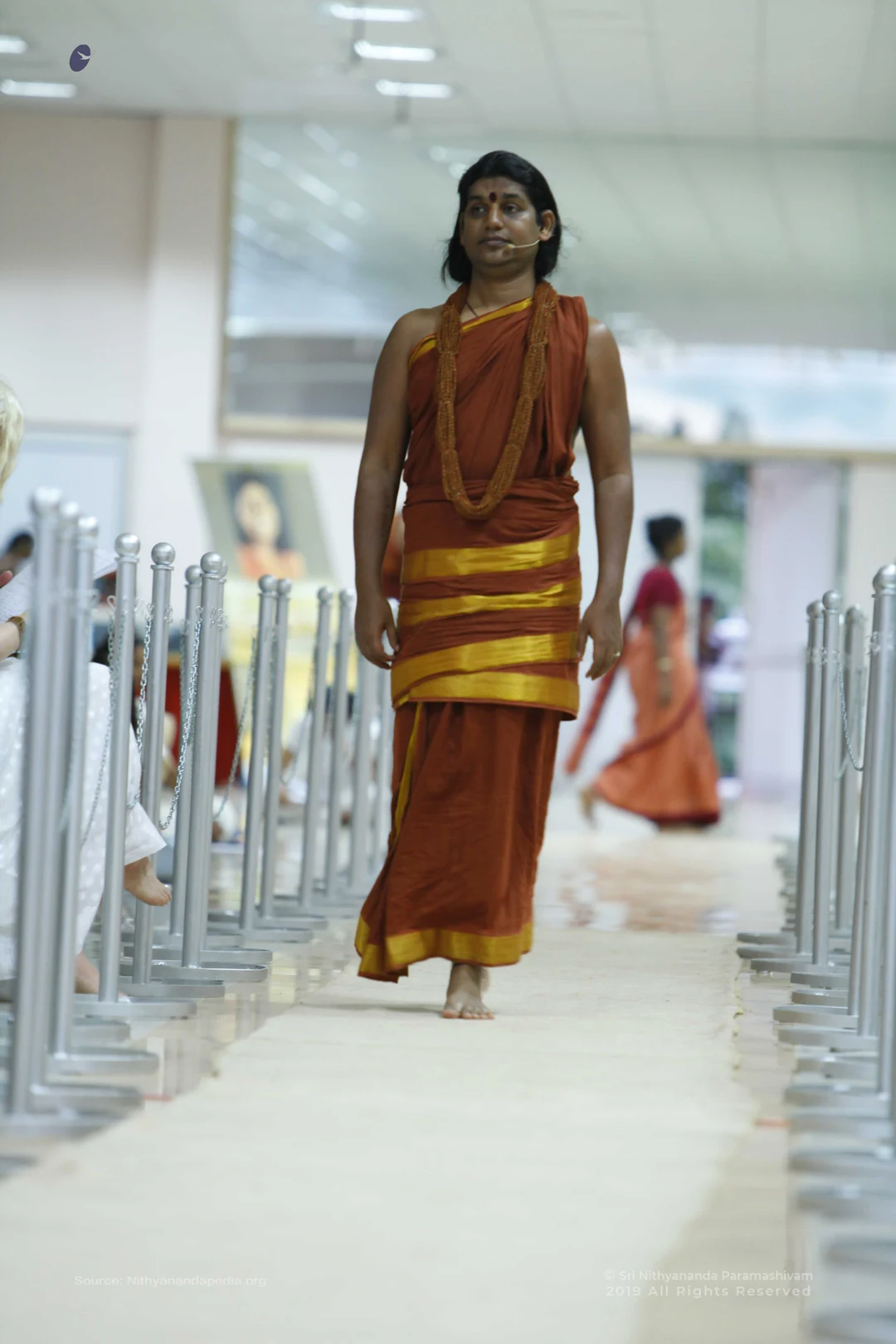
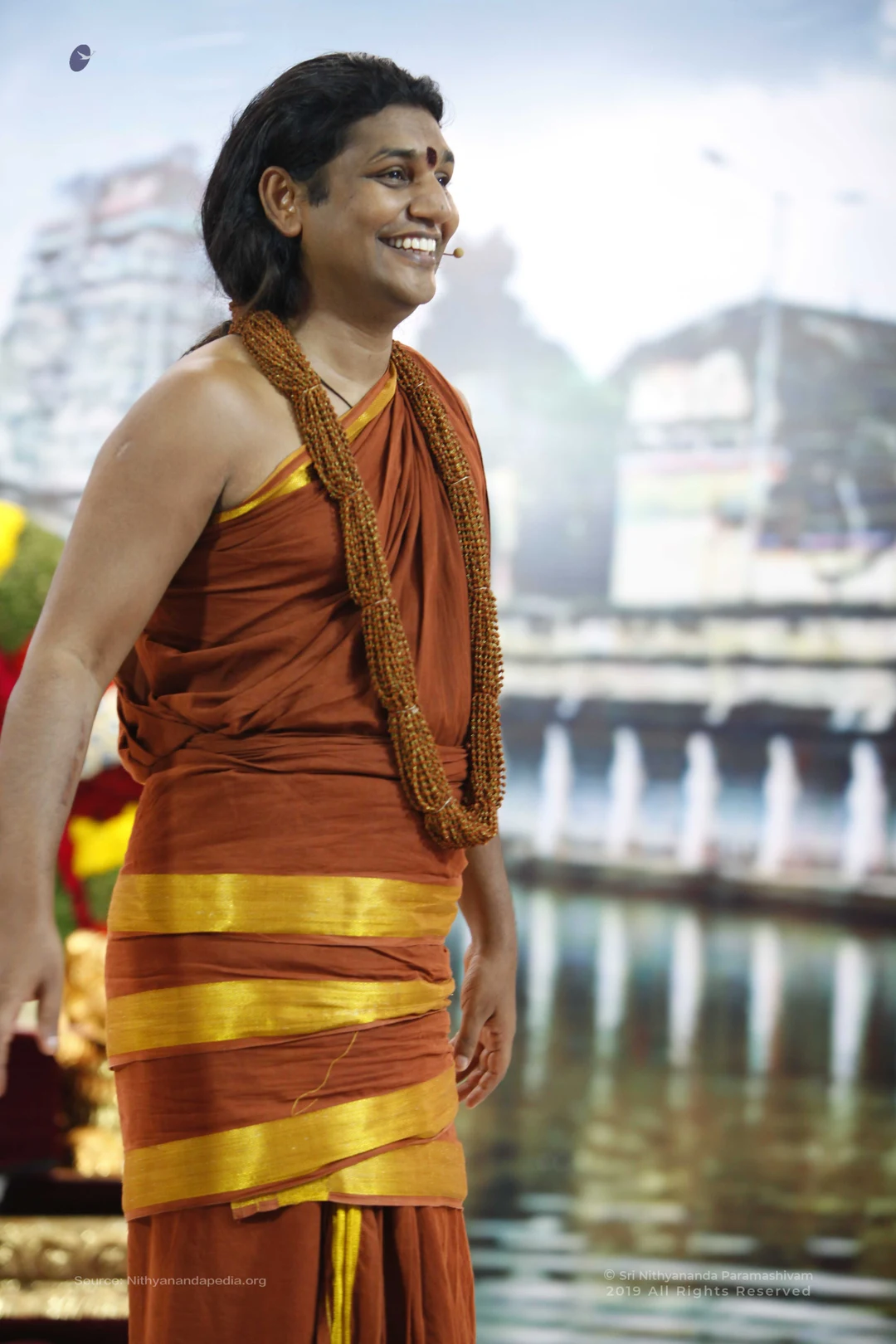
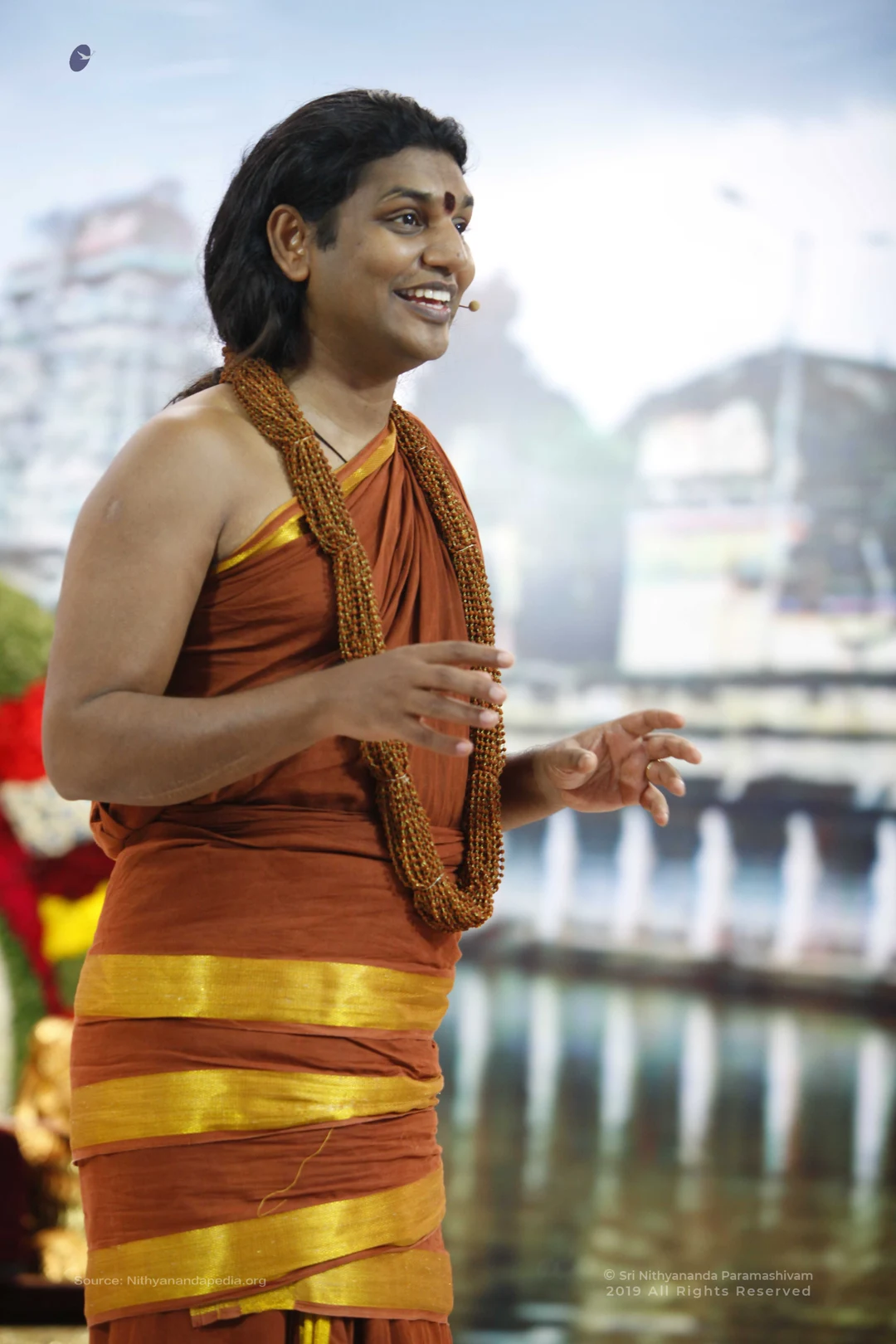
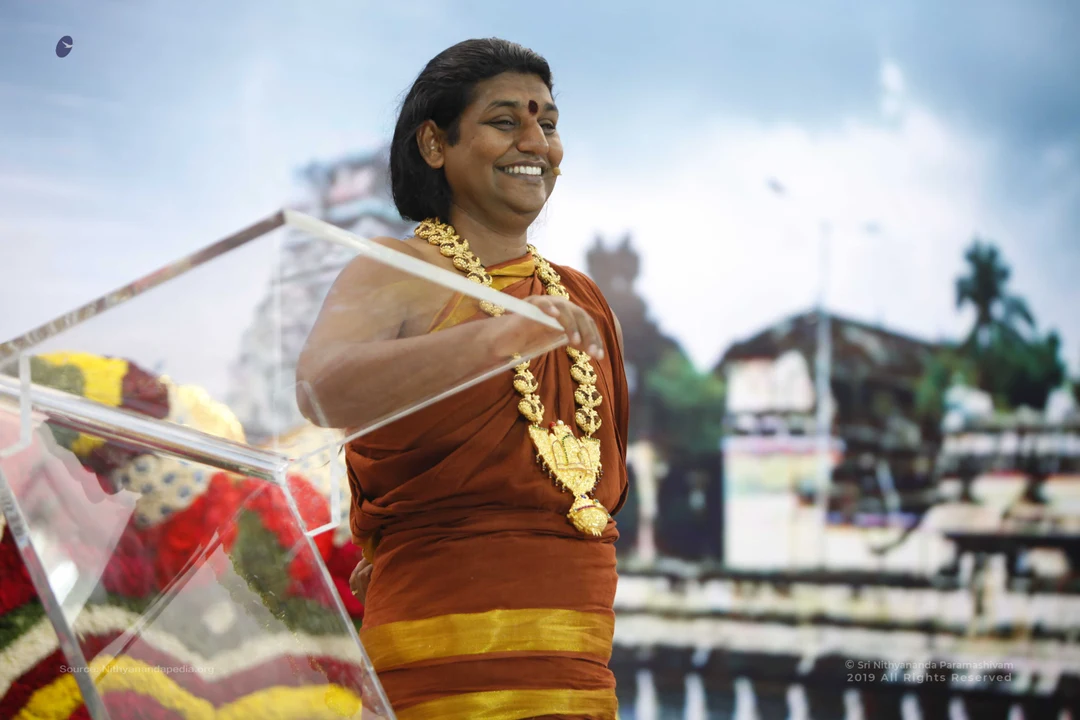
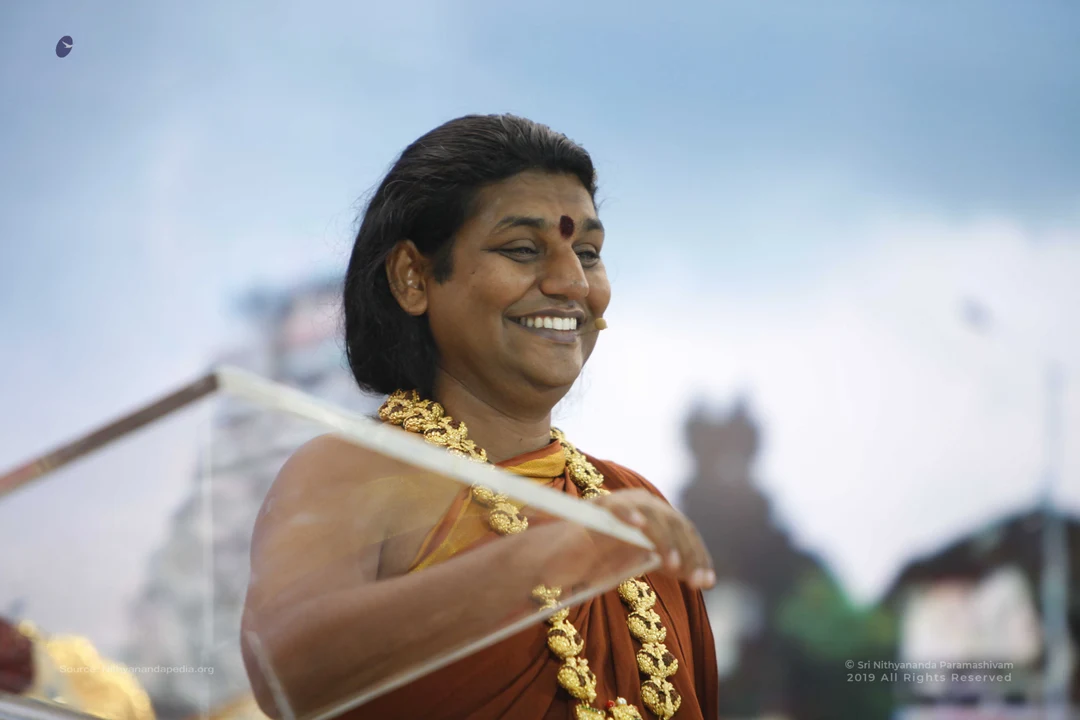
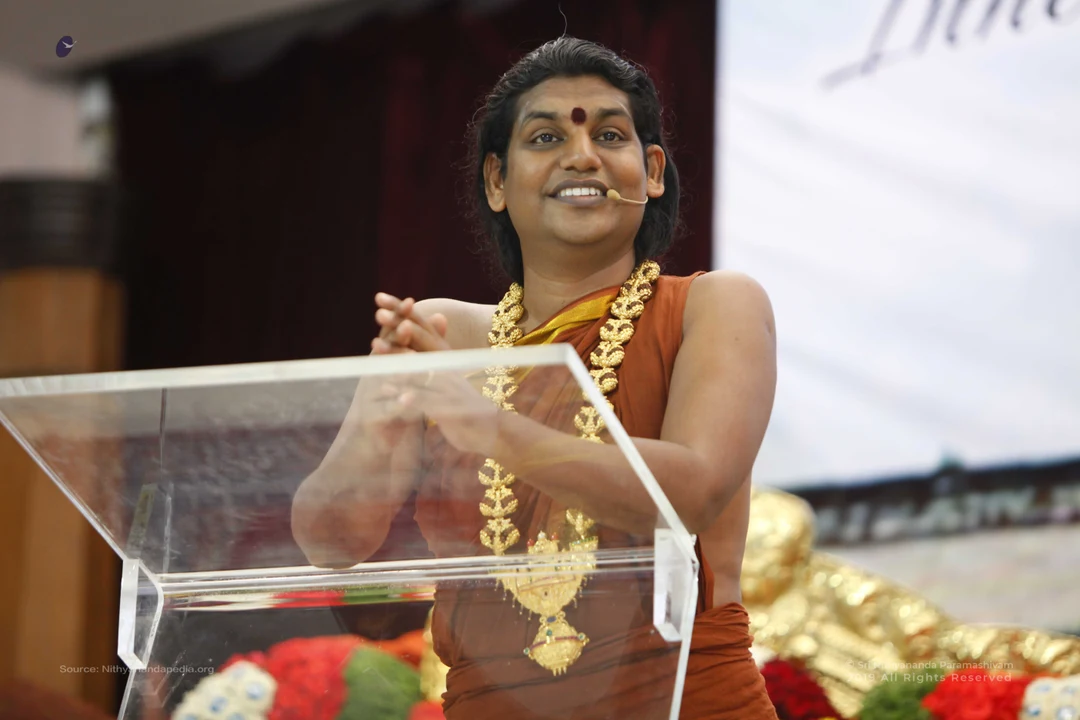
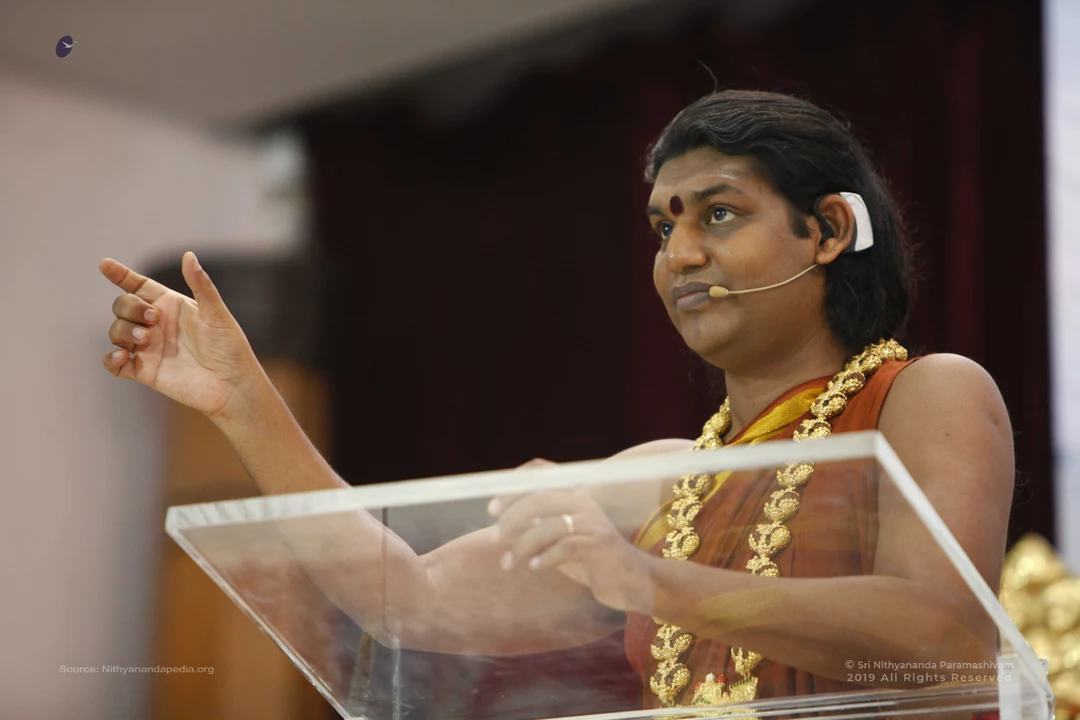
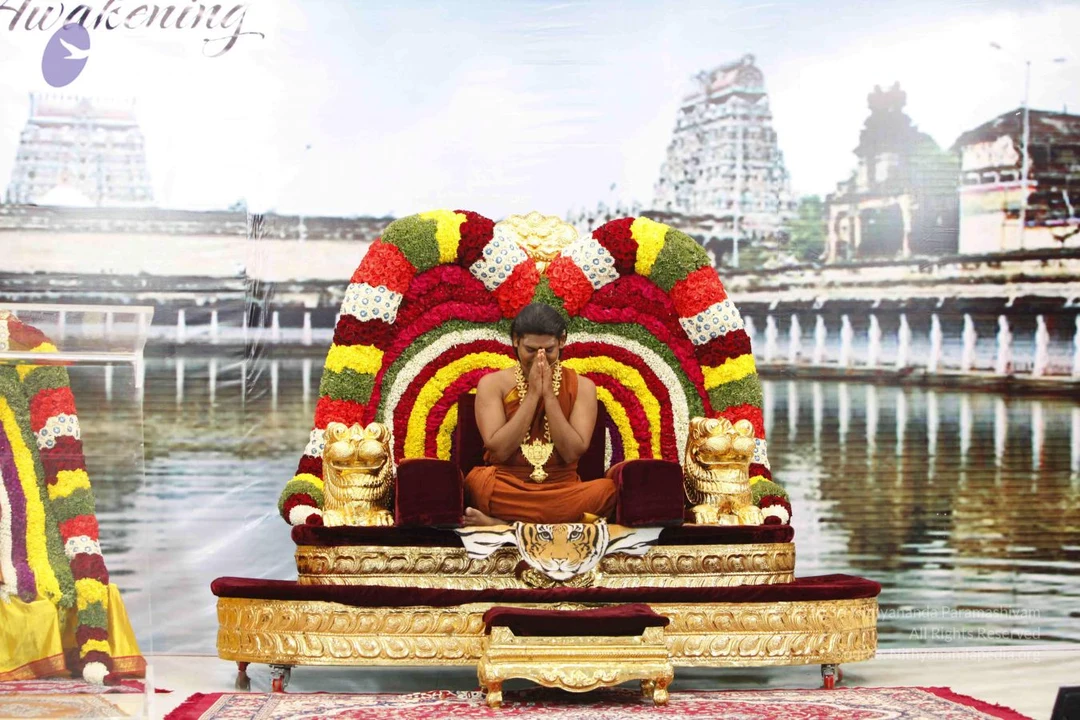
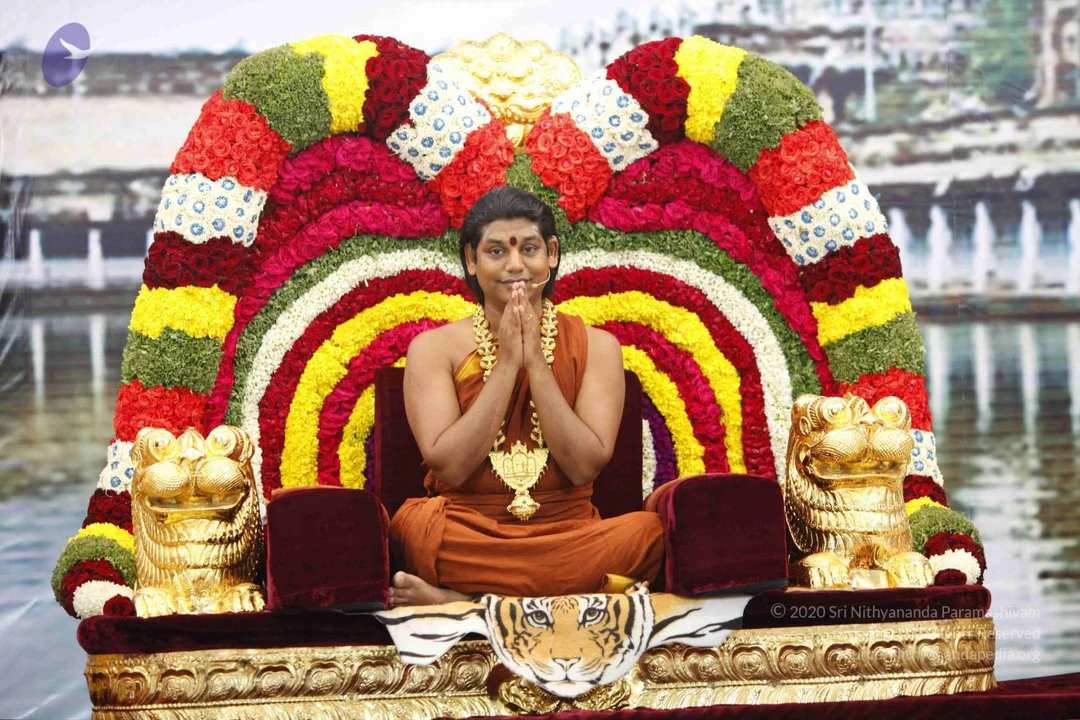
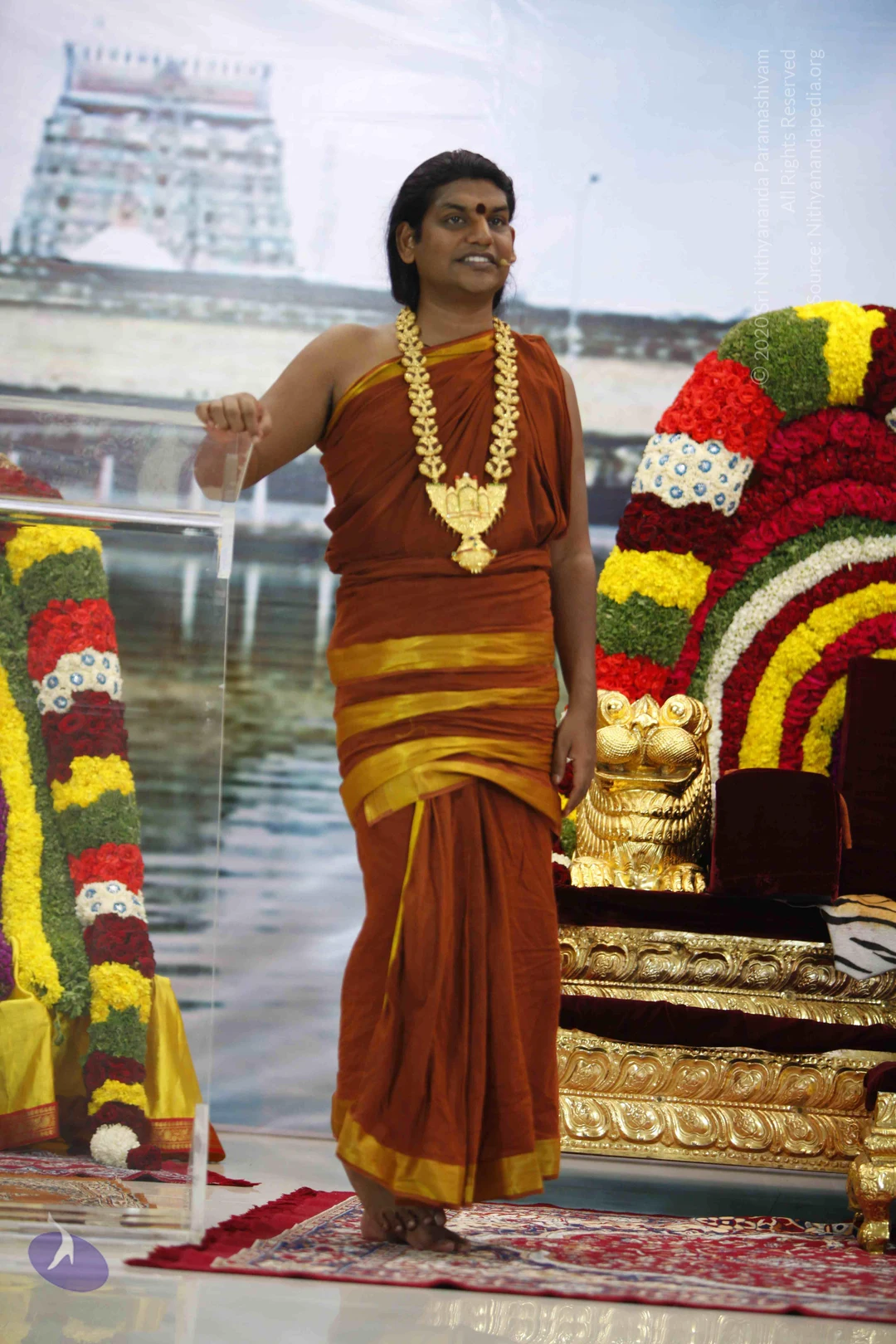
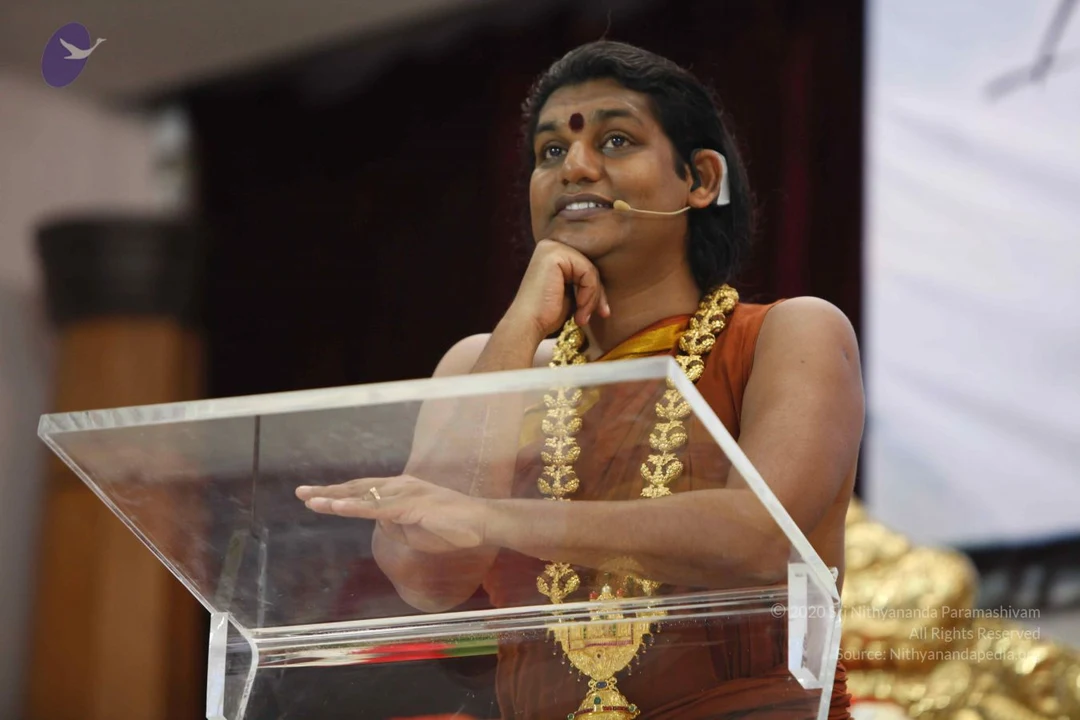
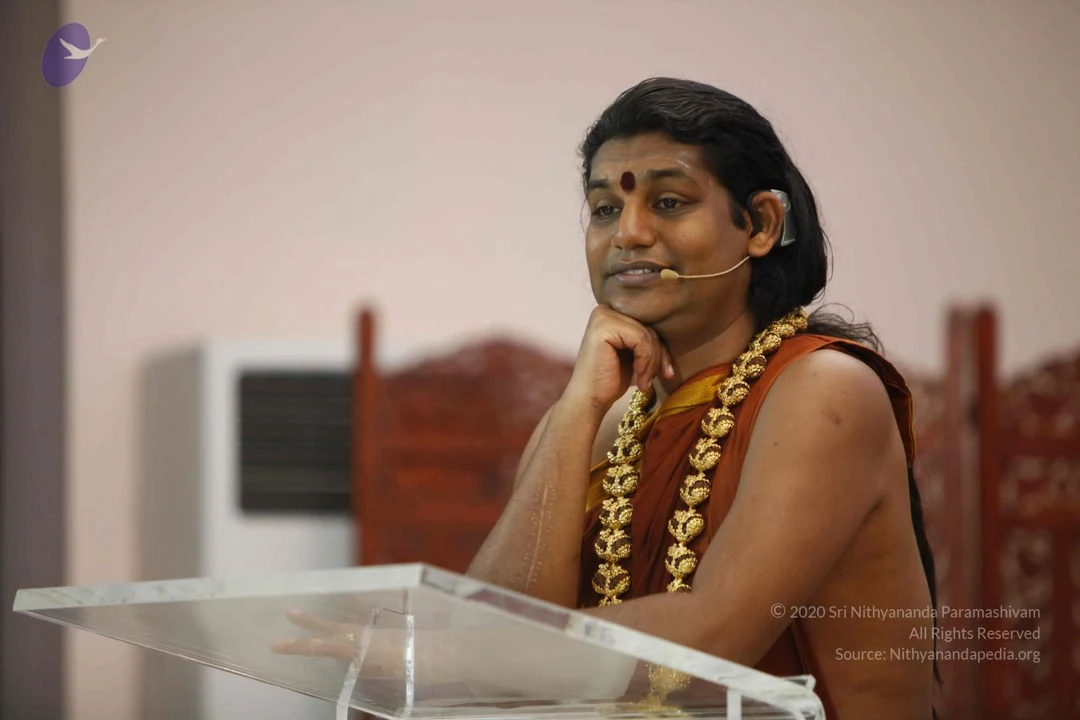
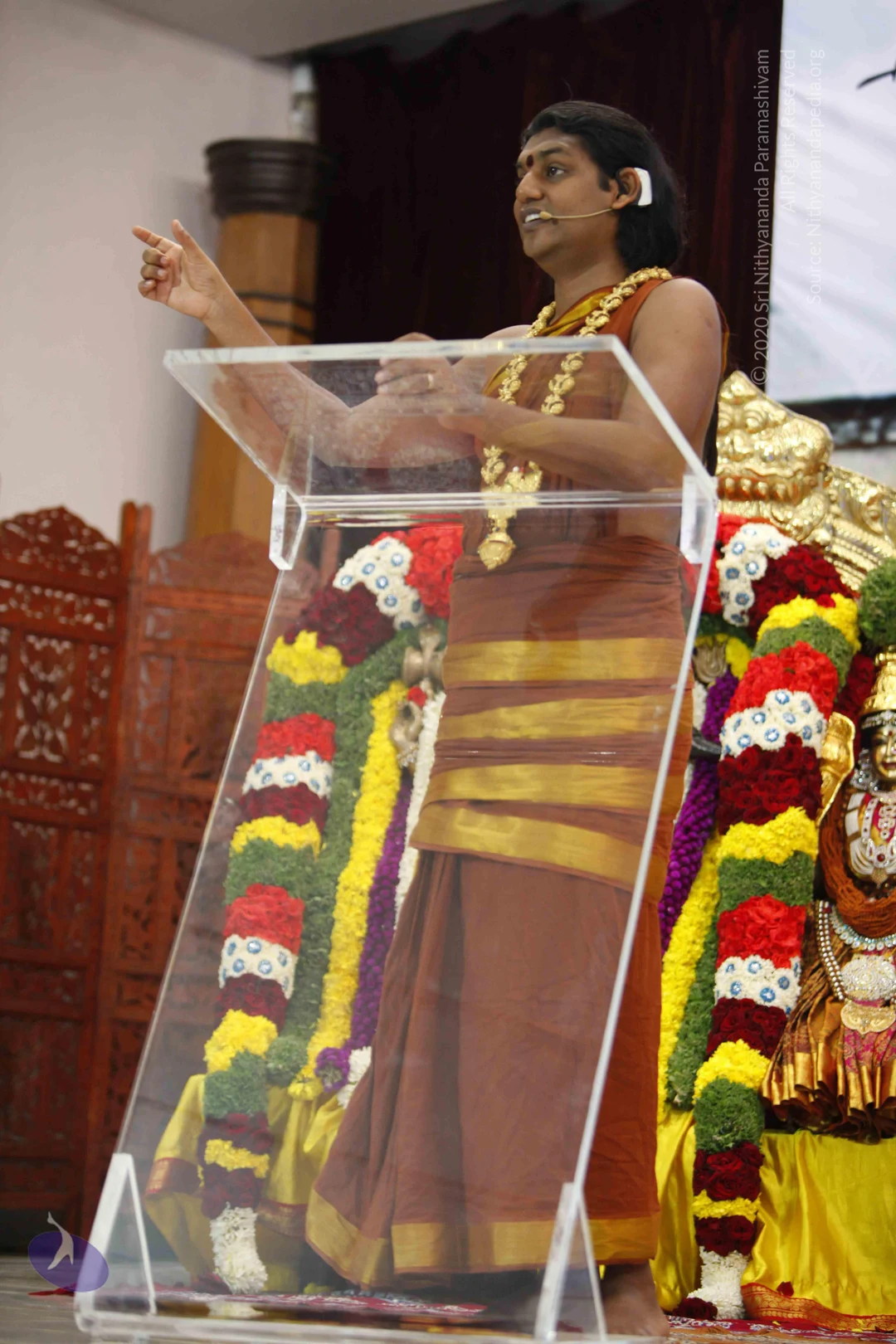
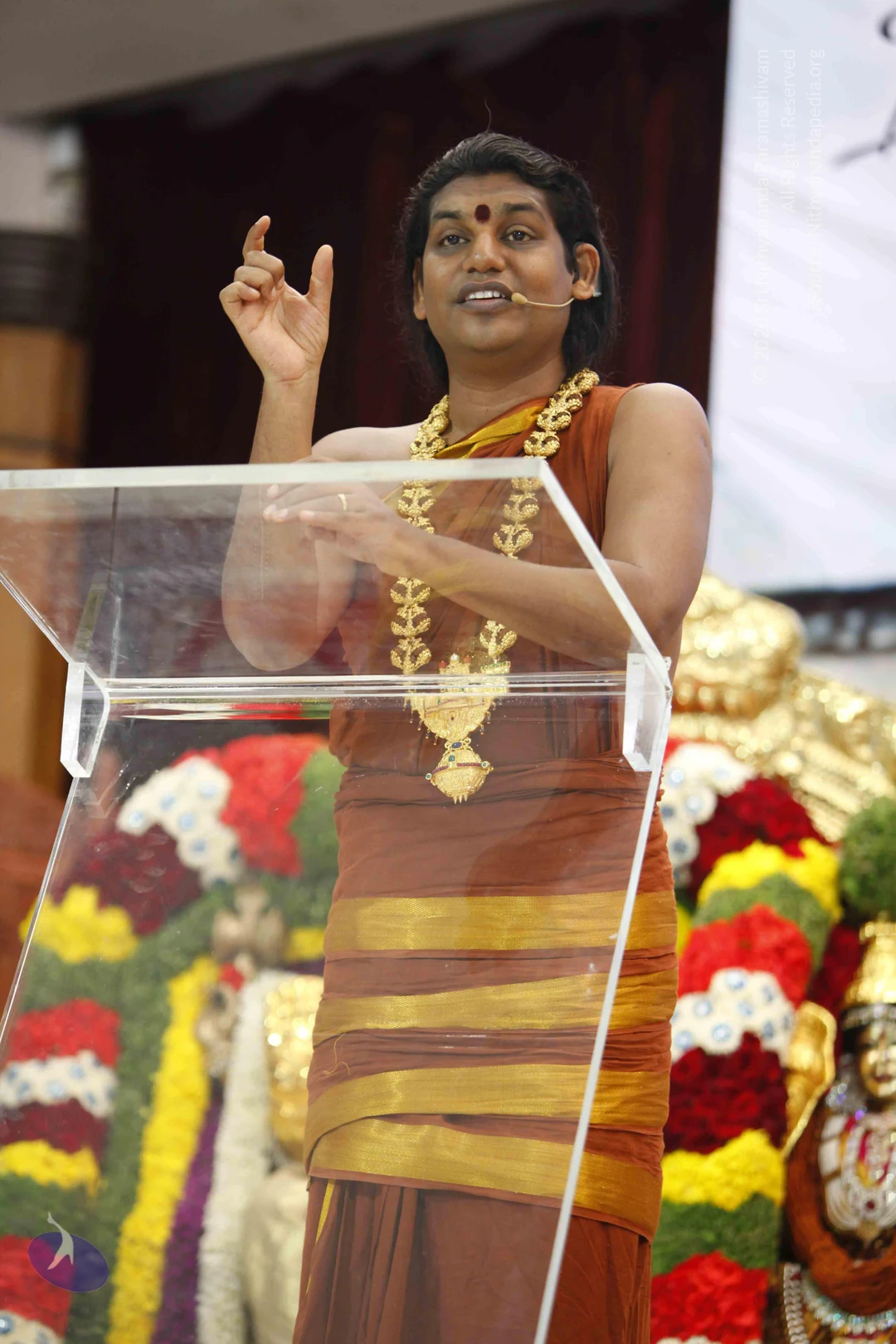
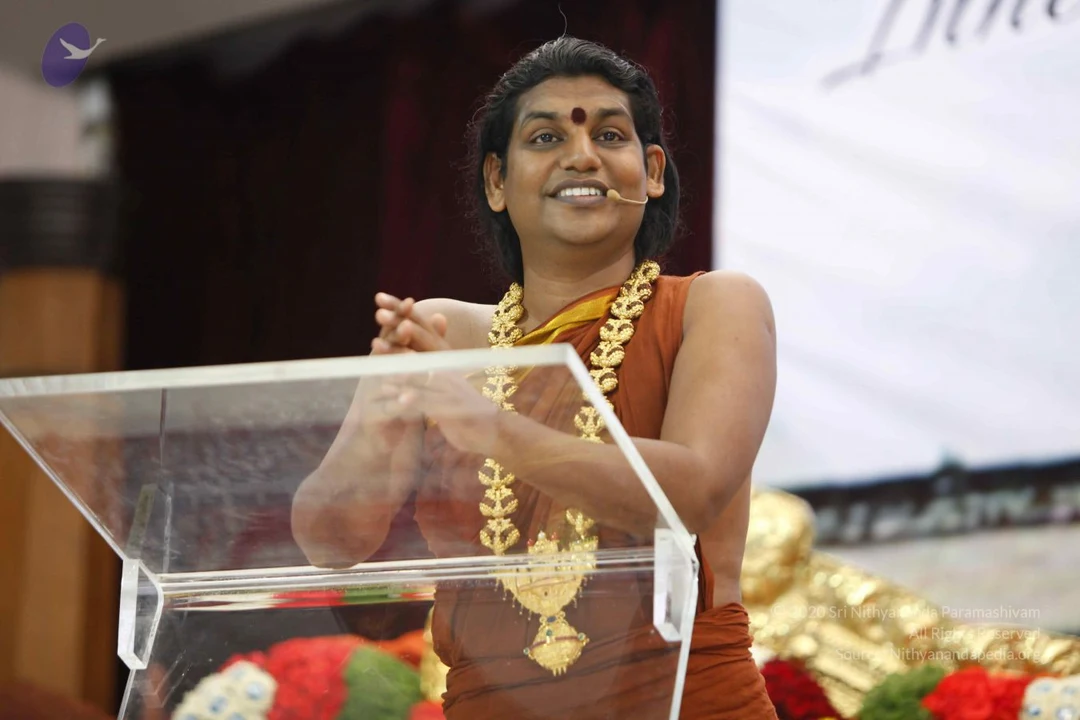
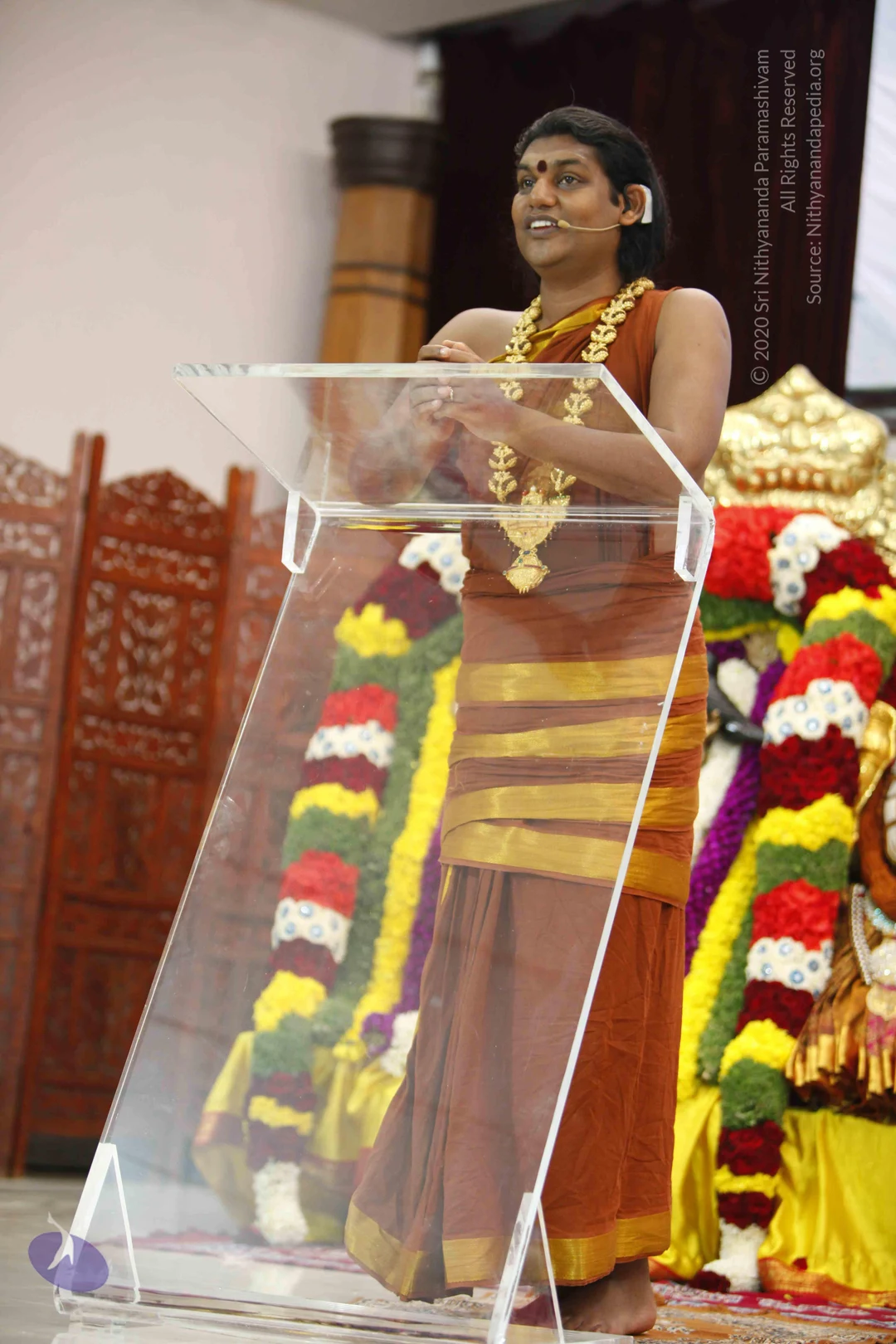
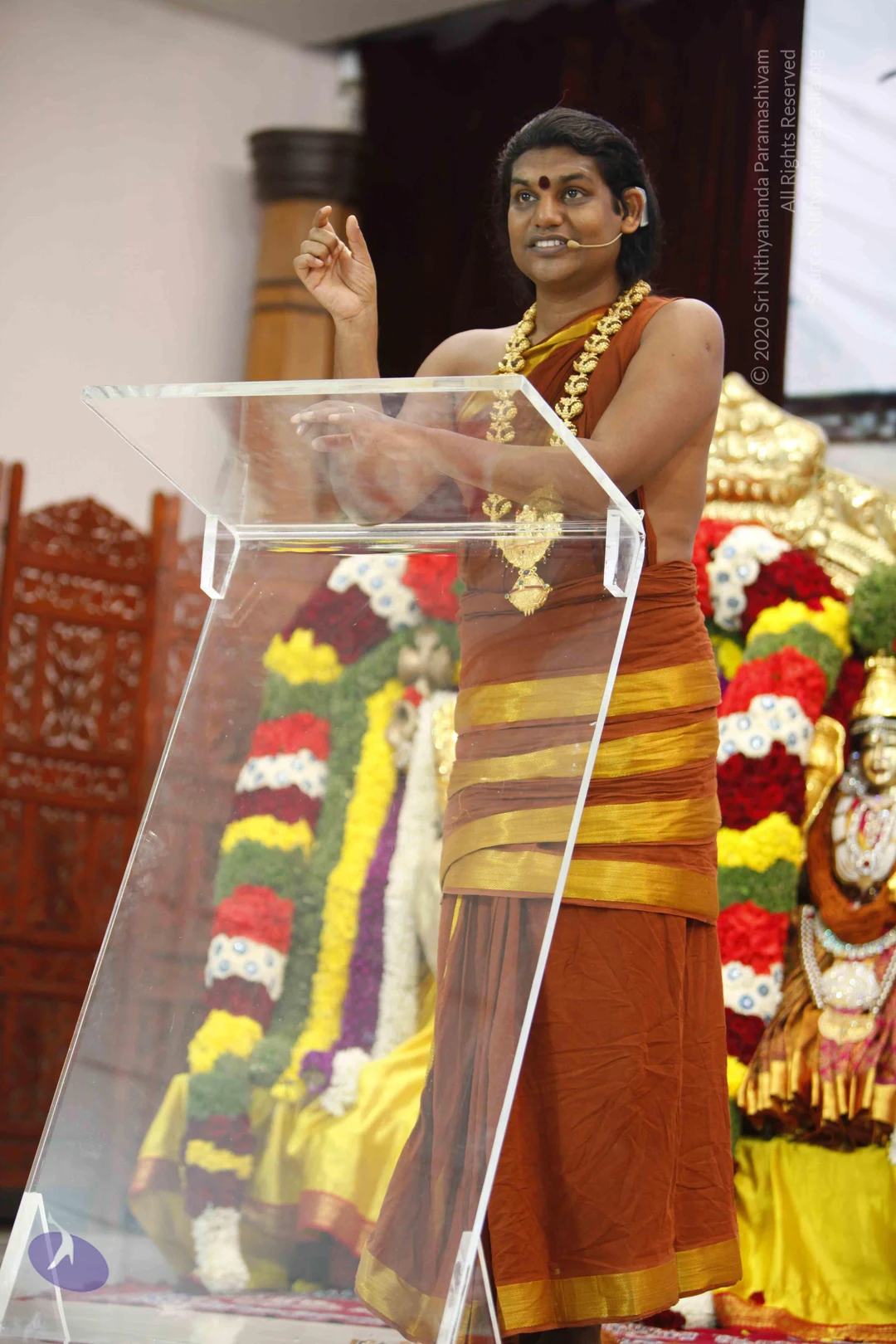
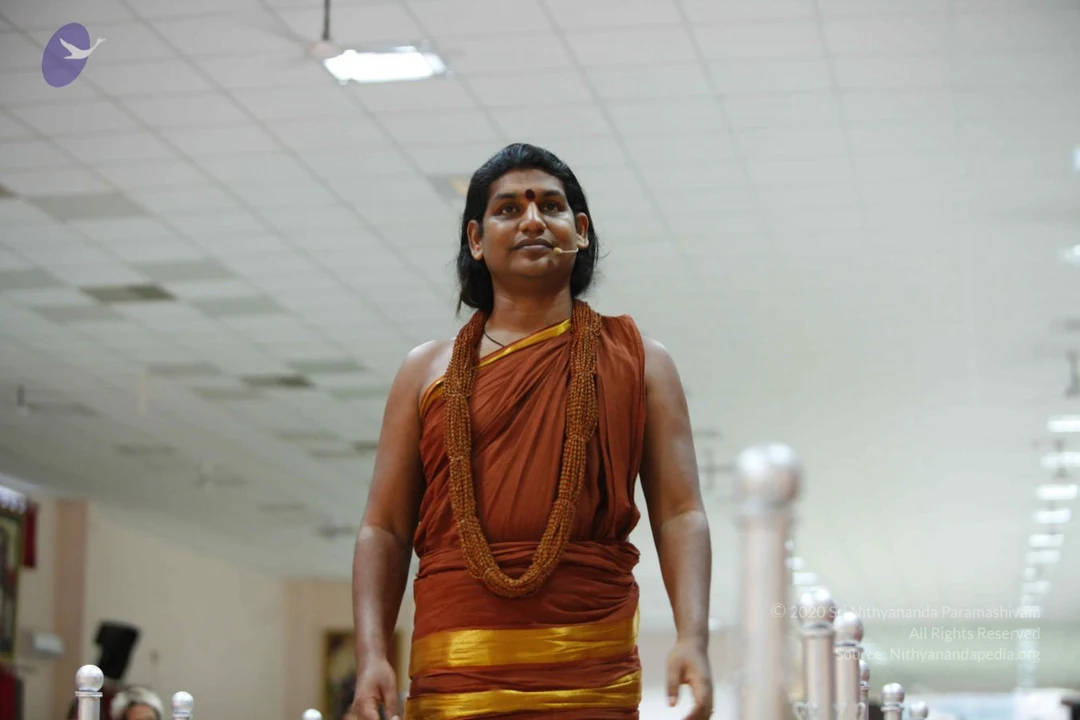
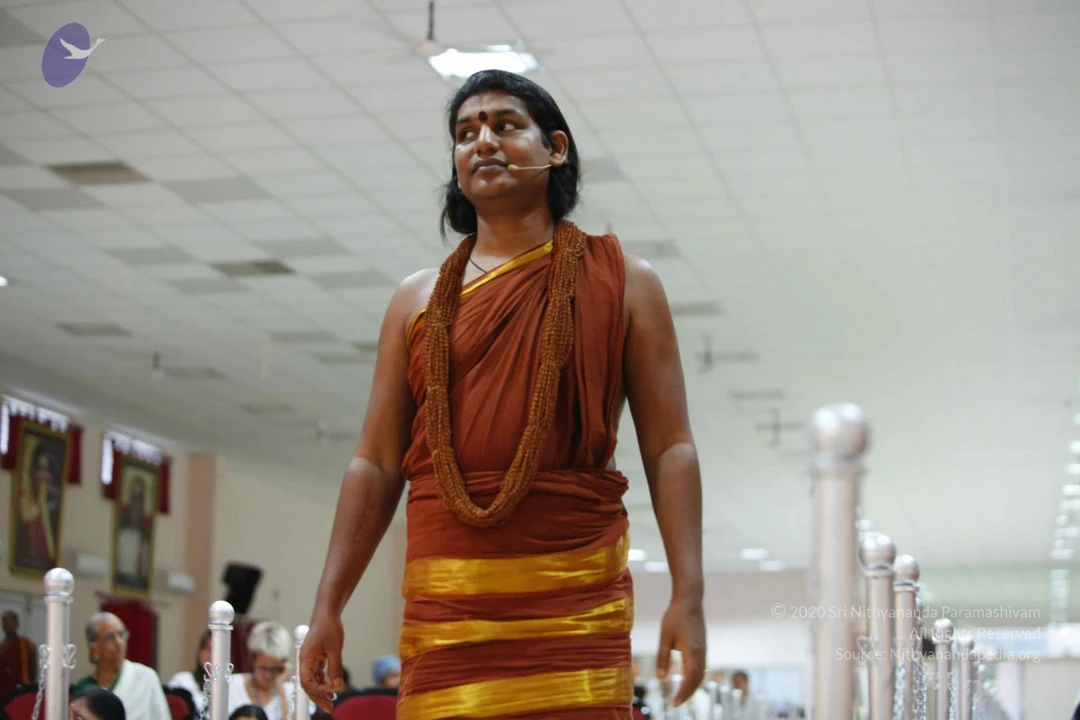
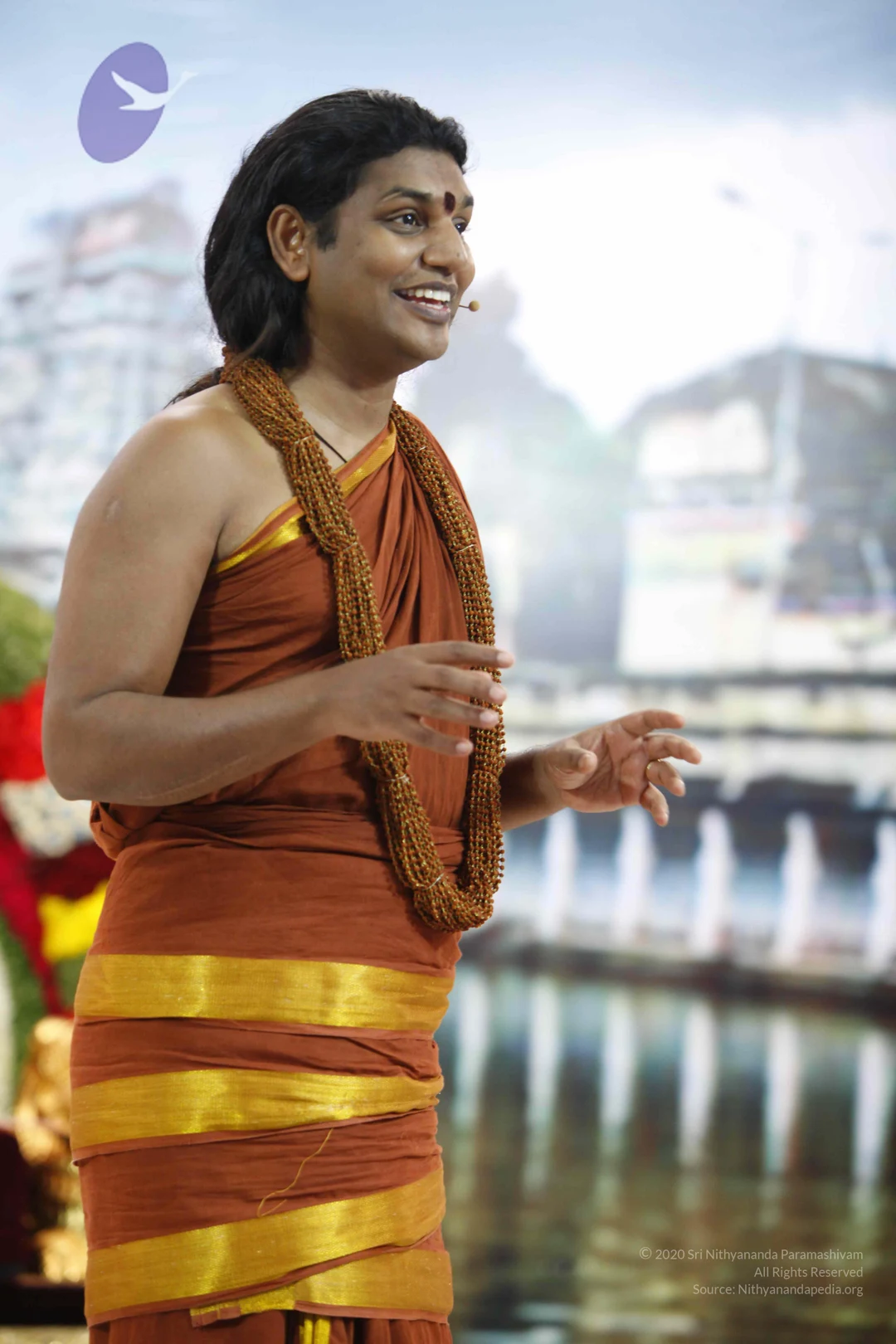
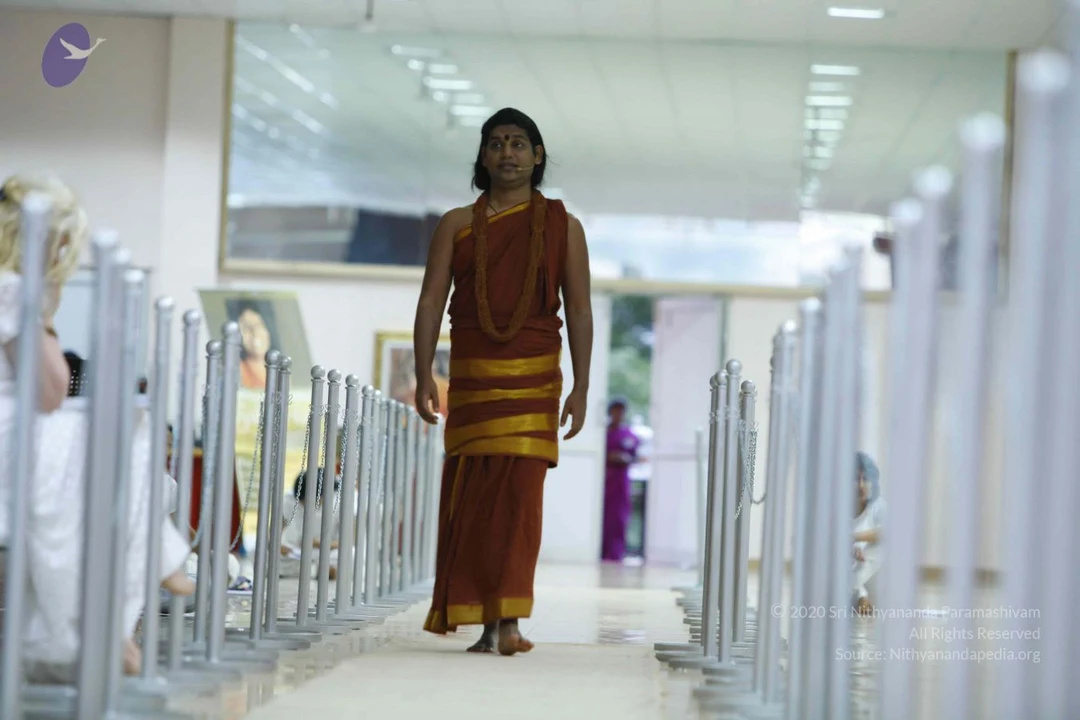
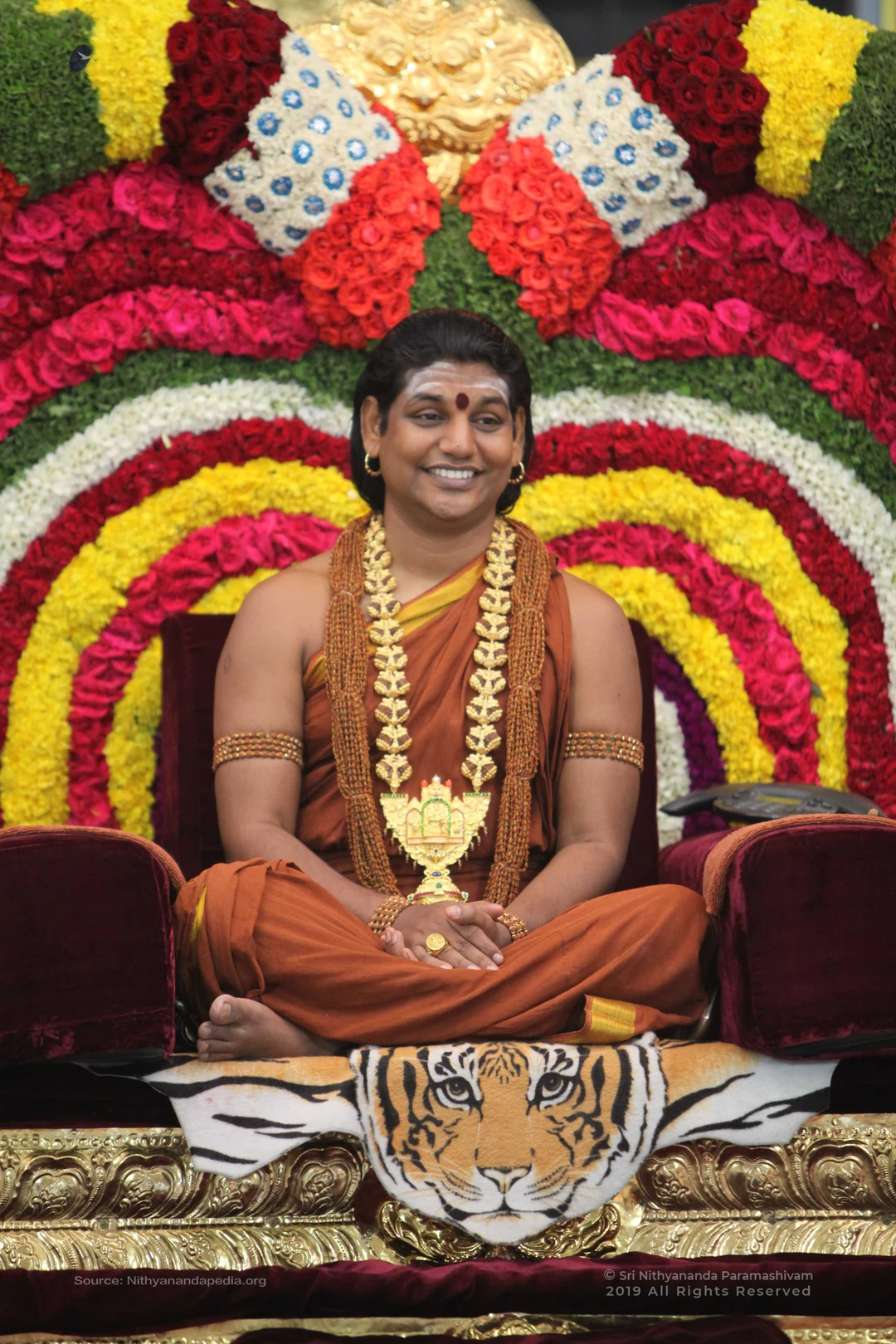
A man stands barefoot on a red patterned carpet with both arms raised overhead, palms open, smiling broadly. He wears a rust-orange dhoti-style garment with gold borders wrapped around his torso, a gold ceremonial necklace with a central lotus pendant and a long brown bead mala, gold bangles and a wristwatch, and a red bindi on his forehead. Behind him is a gold-framed throne (peetha) with gold lion figures at its arms, backed by a rainbow arch of yellow, red, white and green flower garlands. Painted deity figures in gold crowns flank the stage, and a decorated pillar with a pink and green capital stands at right. The man's appearance with long swept-back hair, rudraksha-style mala, gold necklace and orange clothing is consistent with a probable Swamiji presence on the stage.A seated man in an orange-brown ochre robe sits cross-legged on a red velvet throne with gold trim, a tiger-skin rug draped over the platform below him. He wears a heavy gold necklace of leaf-shaped links with a large gold pendant, and a red bindi on his forehead, and has a small headset microphone. Behind him is a tiered arch of red, pink, yellow, white and green flower garlands with a gold lion-face ornament at the top. He smiles and gazes to one side with hands clasped in his lap. Probable Swamiji seated on a flower-decorated throne, cues being the long swept-back hair, ornate gold necklace and saffron-orange robe.A photograph of a standing man in an indoor hall with a drop ceiling and fluorescent lights. He wears a saffron-orange draped garment with a broad gold-yellow band at the waist and a long rudraksha mala around his neck, and has a red bindi on his forehead and a small wired microphone on his cheek. Long dark hair falls to his shoulders. Behind him, seated audience members in white clothing sit beside silver-topped railings, and two framed portraits hang on the wall at left. Swamiji (probable): the saffron draping, rudraksha mala and long hair are cues for this person, who is speaking at a satsang.A smiling person in a saffron-orange garment stands behind a clear glass lectern, one hand resting on its edge. The figure wears a dark red tilak on the forehead, a small microphone near the mouth, and heavy multi-strand gold necklaces over the orange cloth. Behind them a blurred backdrop shows a painted temple tower and sky. Swamiji (probable): long swept-back dark hair, saffron-orange robes and ornate gold necklaces, matching the page's satsang context.A smiling person in a saffron-orange garment stands behind a clear acrylic lectern with hands pressed together, wearing a headset microphone. A red bindi marks the forehead, and long gold ceremonial necklaces with a large pendant hang on the chest. Behind the lectern are bouquets of red and white flowers and a golden decorative figure, with a large white banner and dark red curtain in the background. Swamiji (probable): the in-person speaker has long dark hair swept back and saffron clothing with gold necklaces, matching the satsang setting of the page, so the identity is inferred from these cues only.A person with long dark hair and a red bindi stands behind a clear acrylic lectern, gesturing with one raised hand while speaking into a headset microphone. They wear a rust-orange garment with a gold border and a heavy gold-coloured necklace of ornate beads. A small white hearing device sits behind one ear. The person appears to be Swamiji (probable), identified by long swept-back hair, saffron-orange clothing and ornate gold necklaces, while giving a discourse at the lectern.
Inner Awakening Darshan
86 photosSource gallery
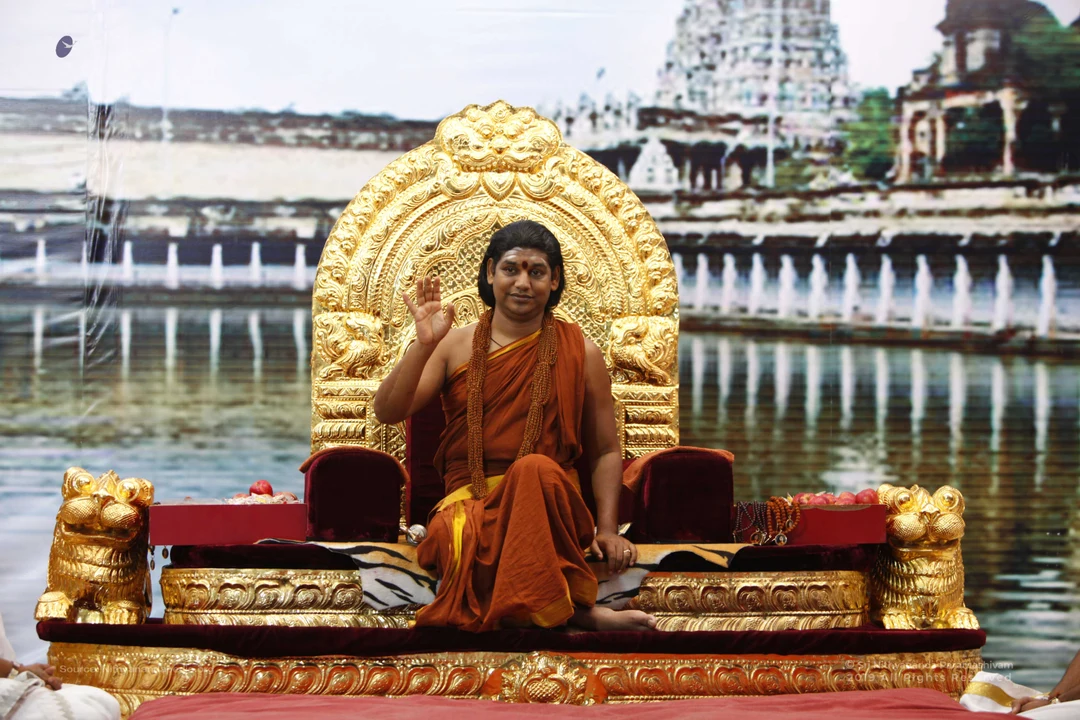
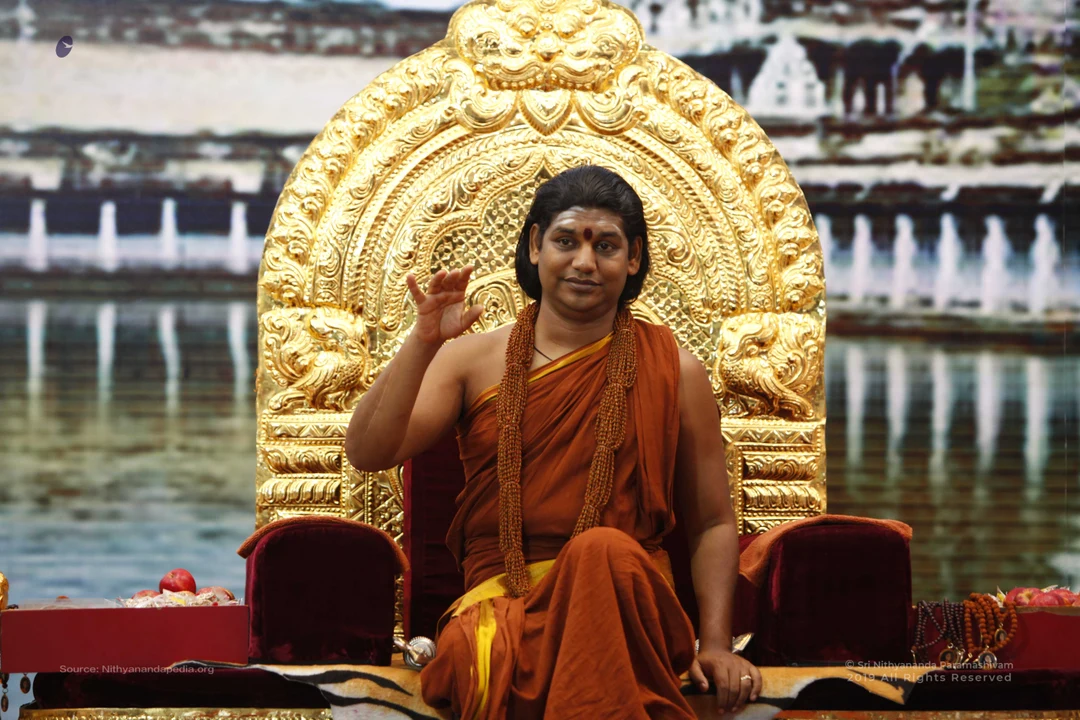
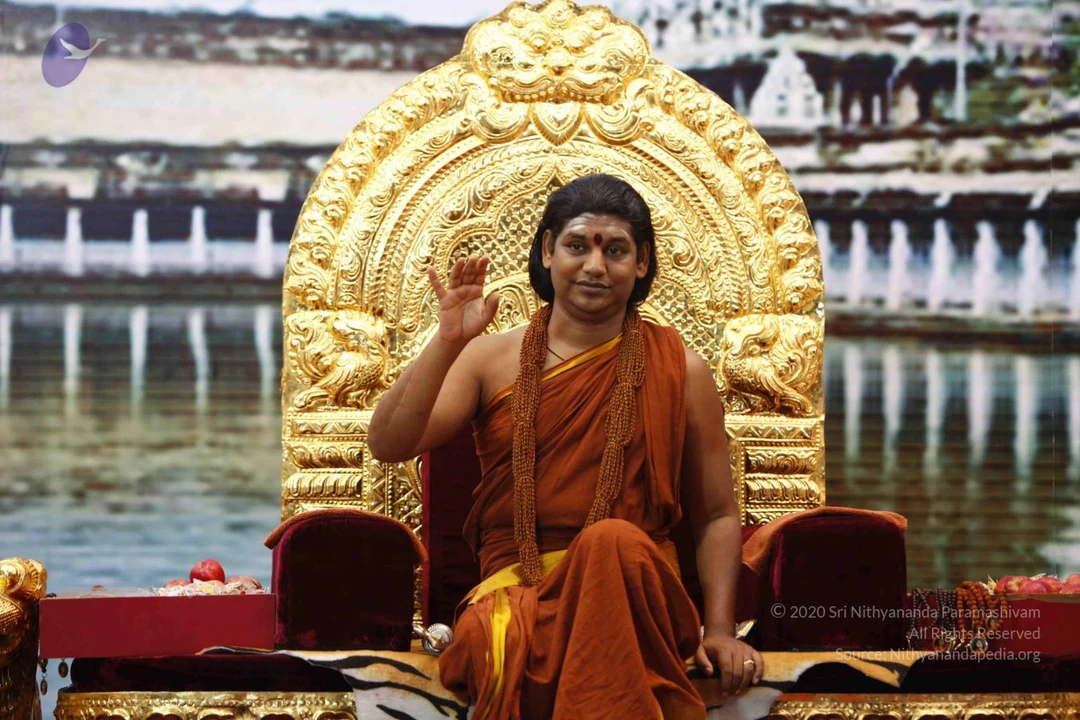
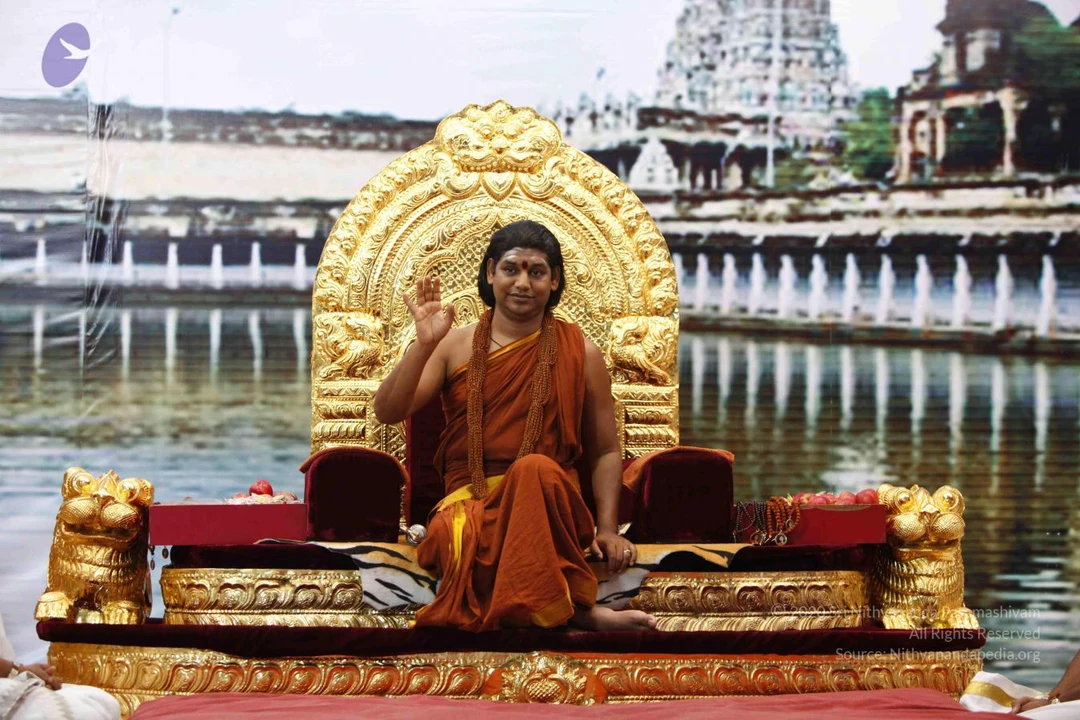
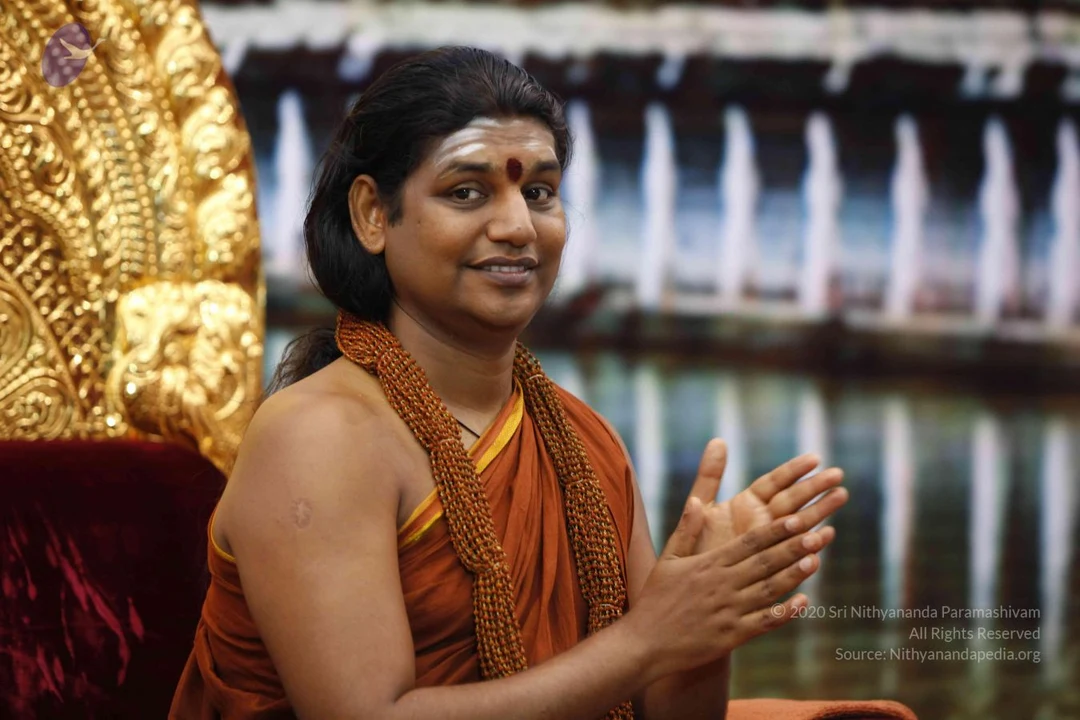
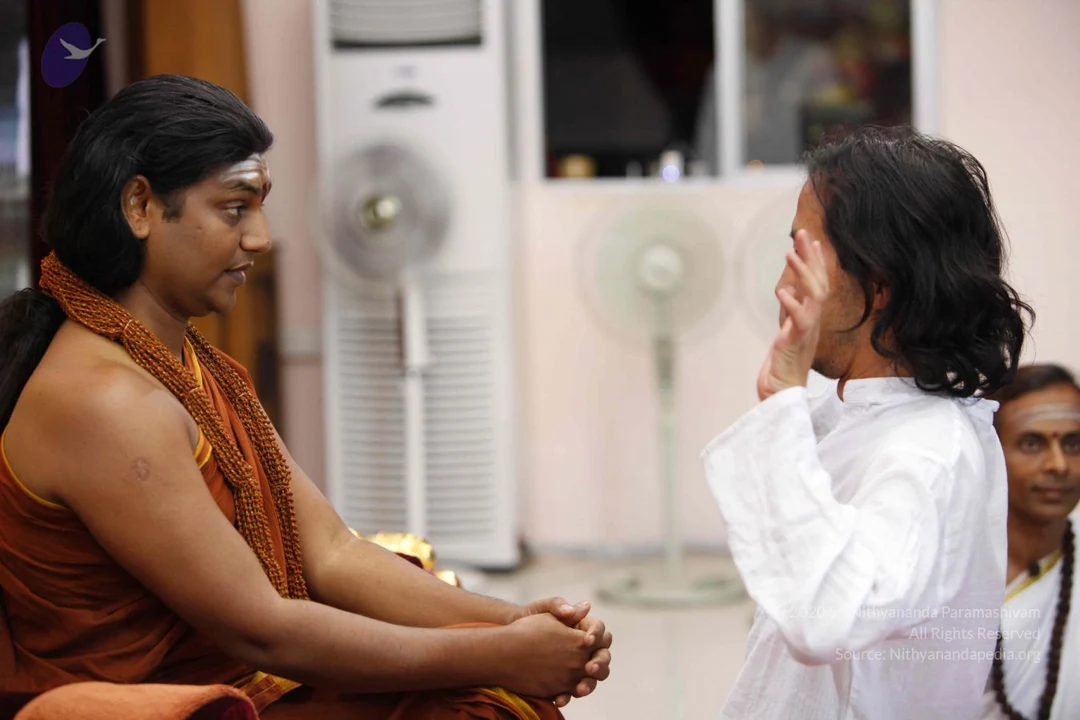
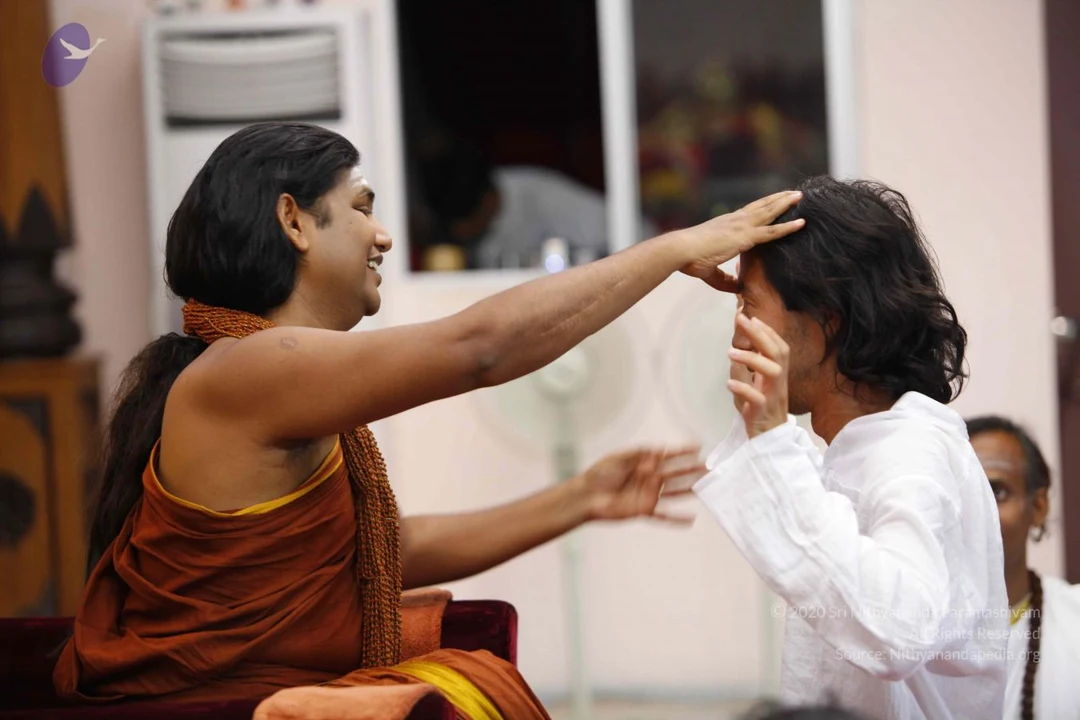
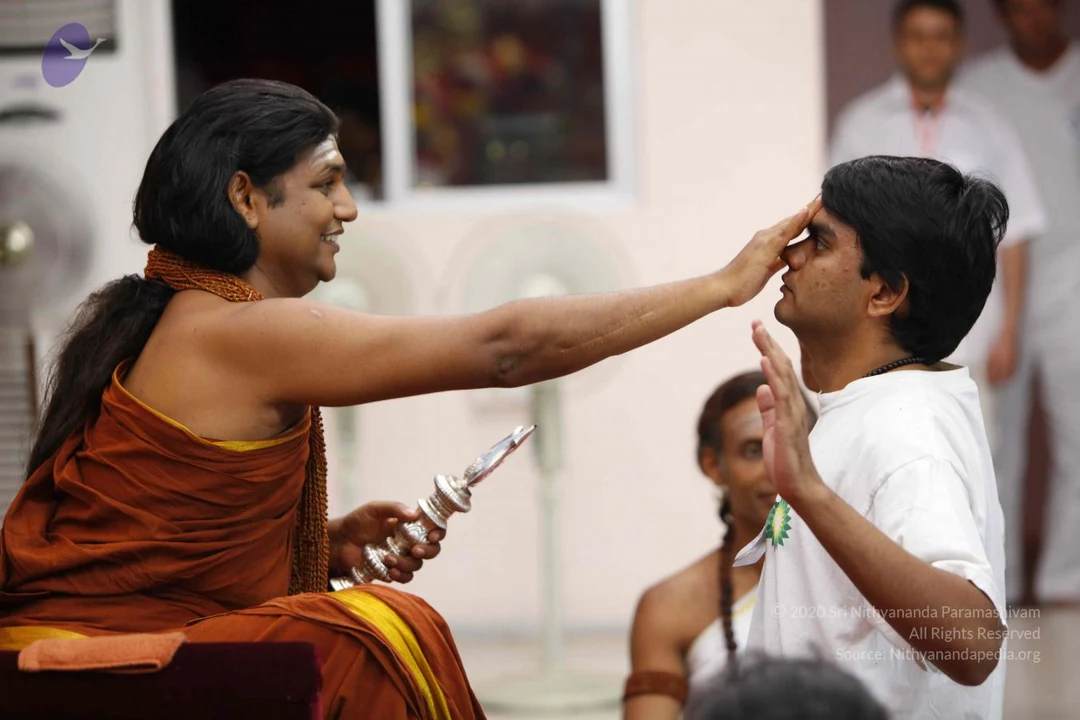
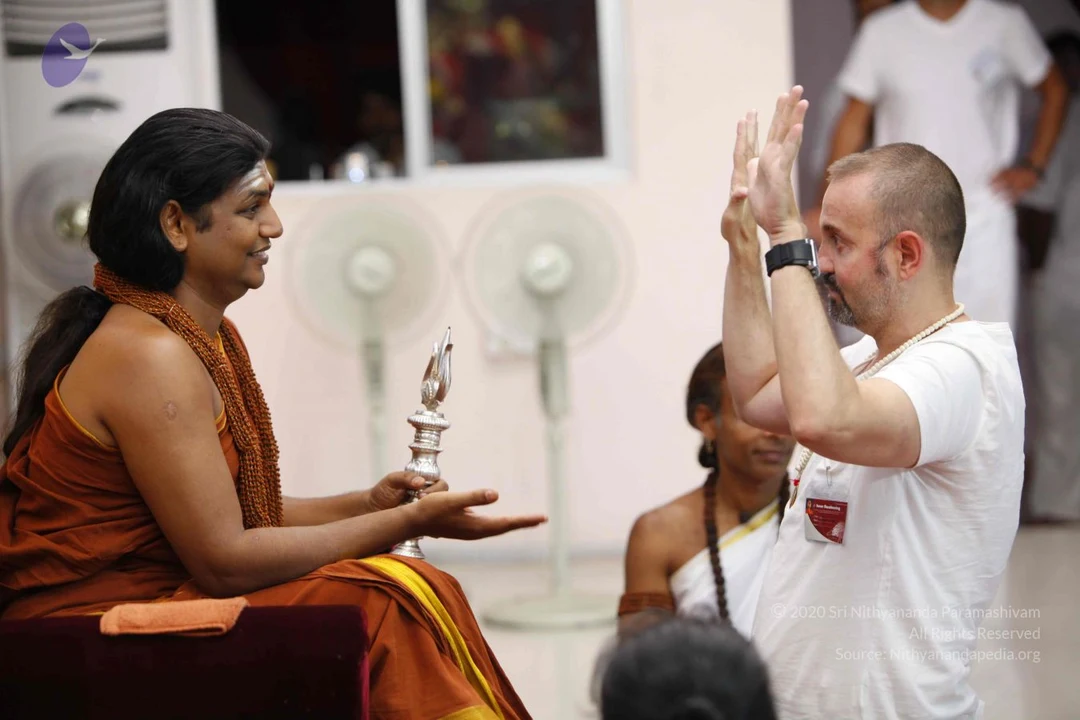
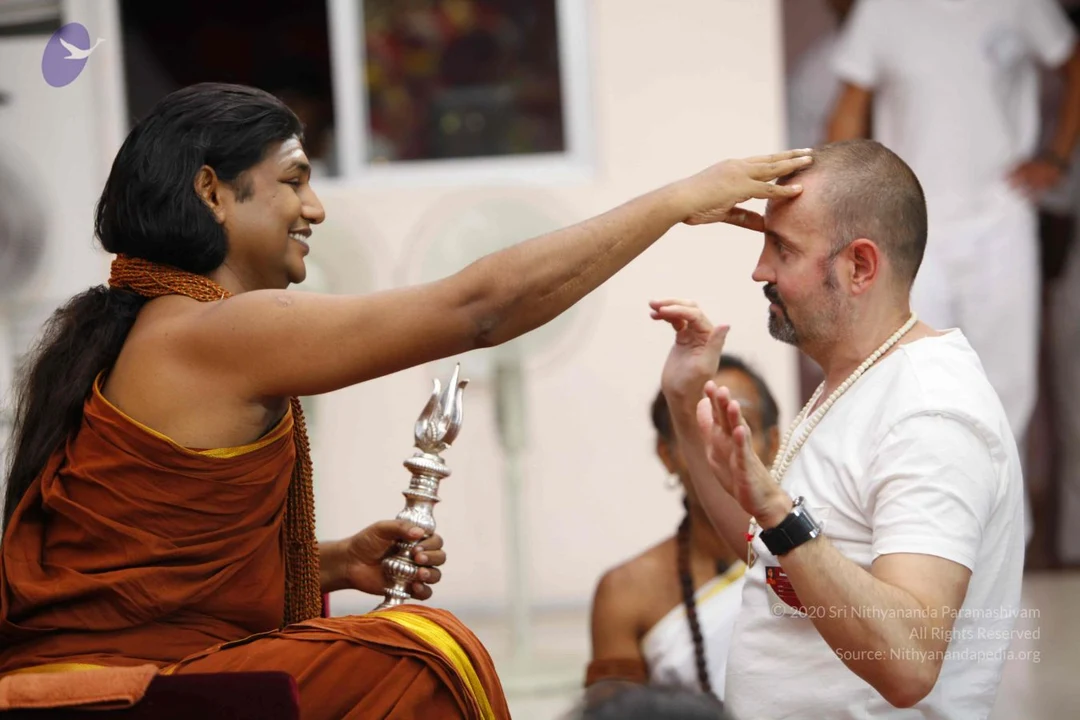
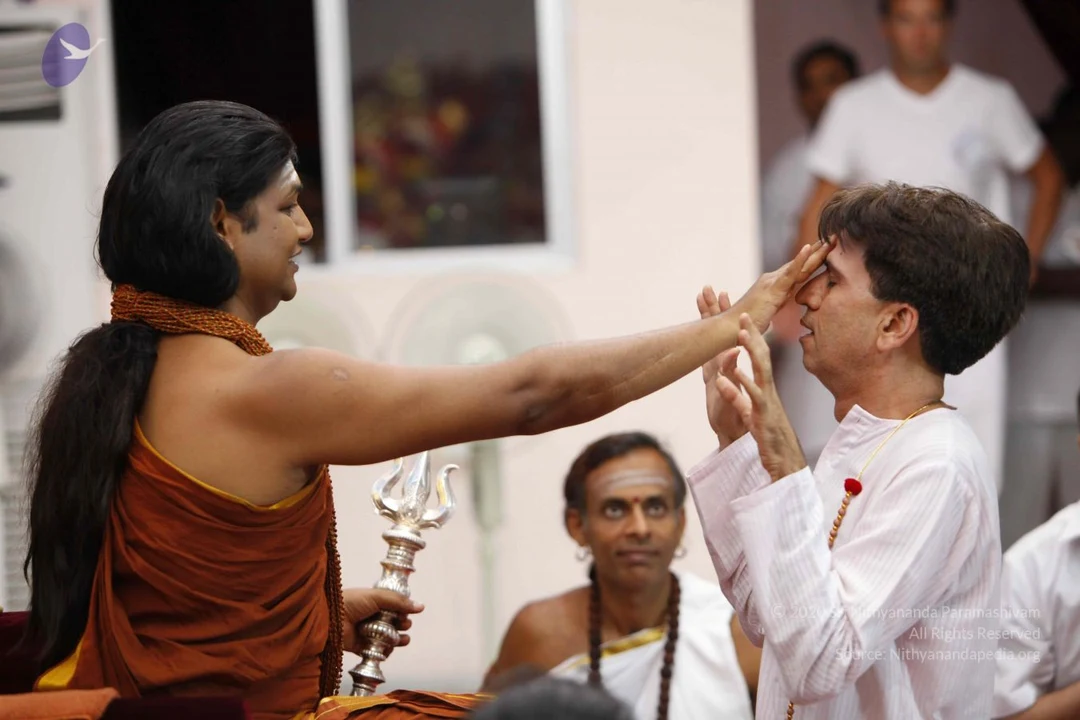
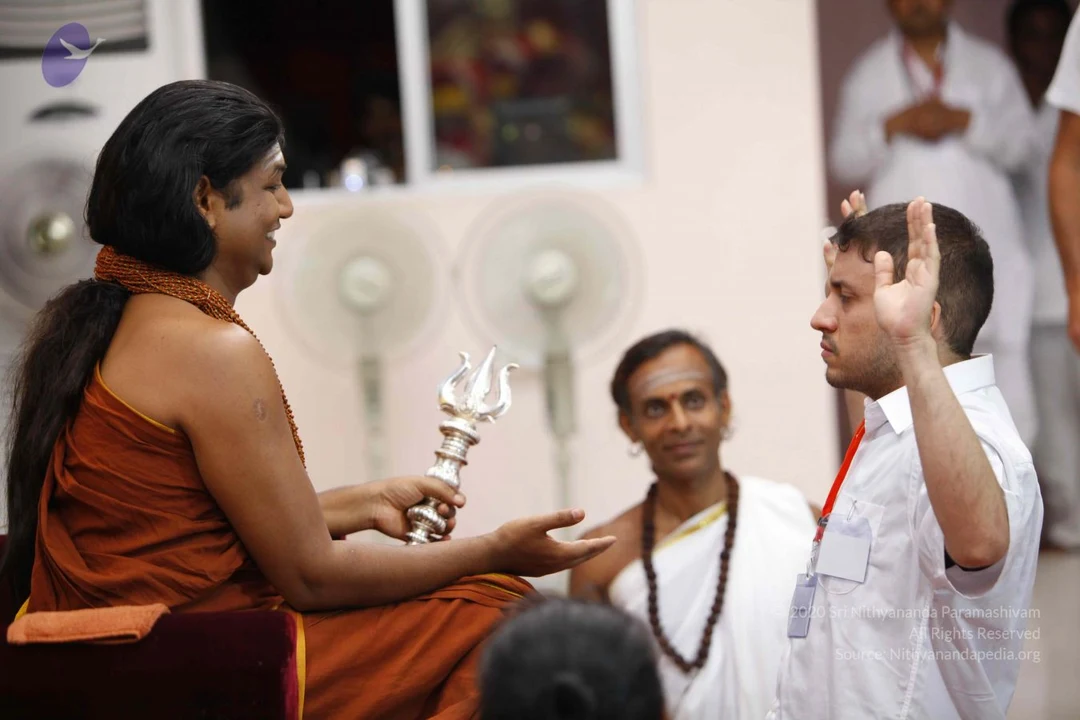
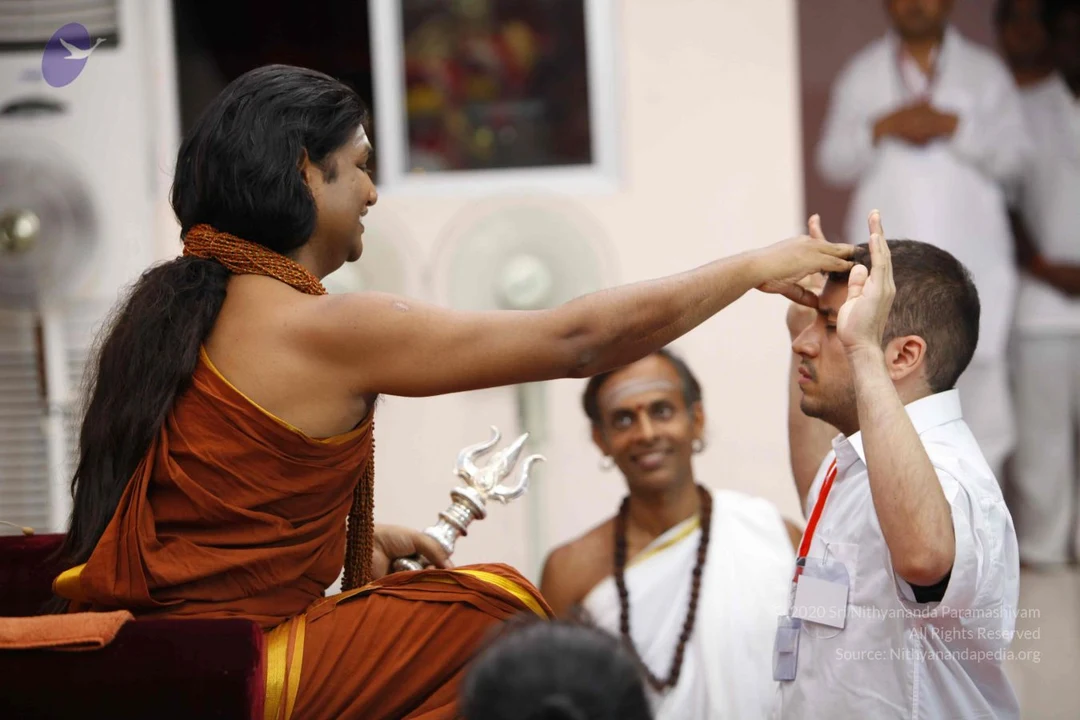
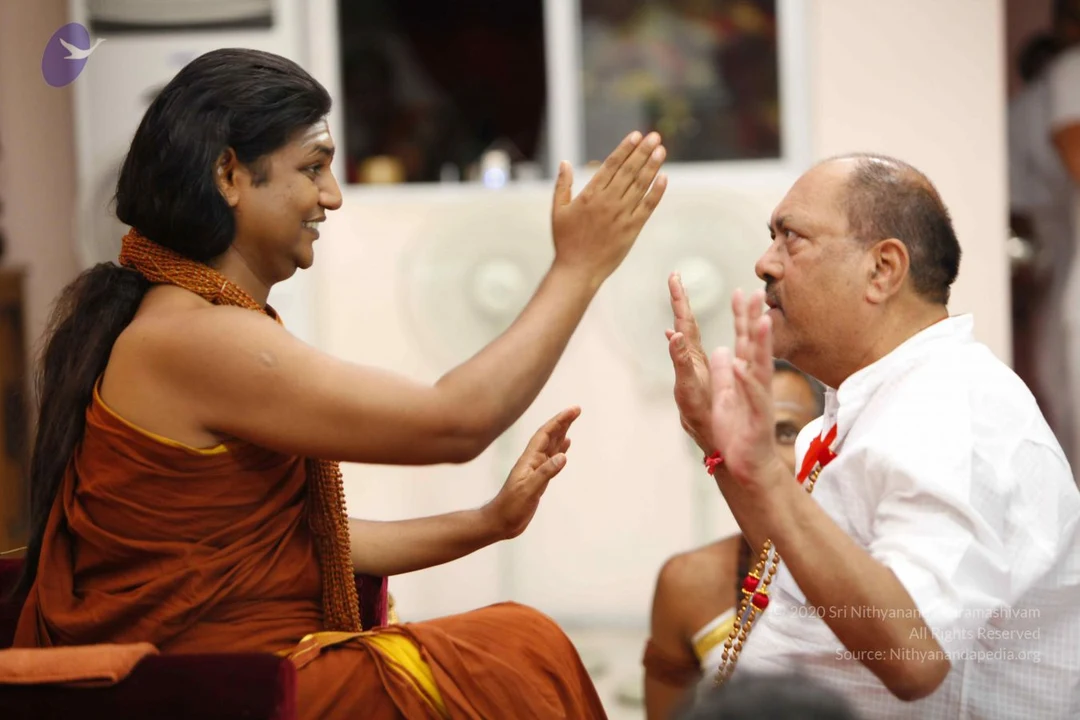
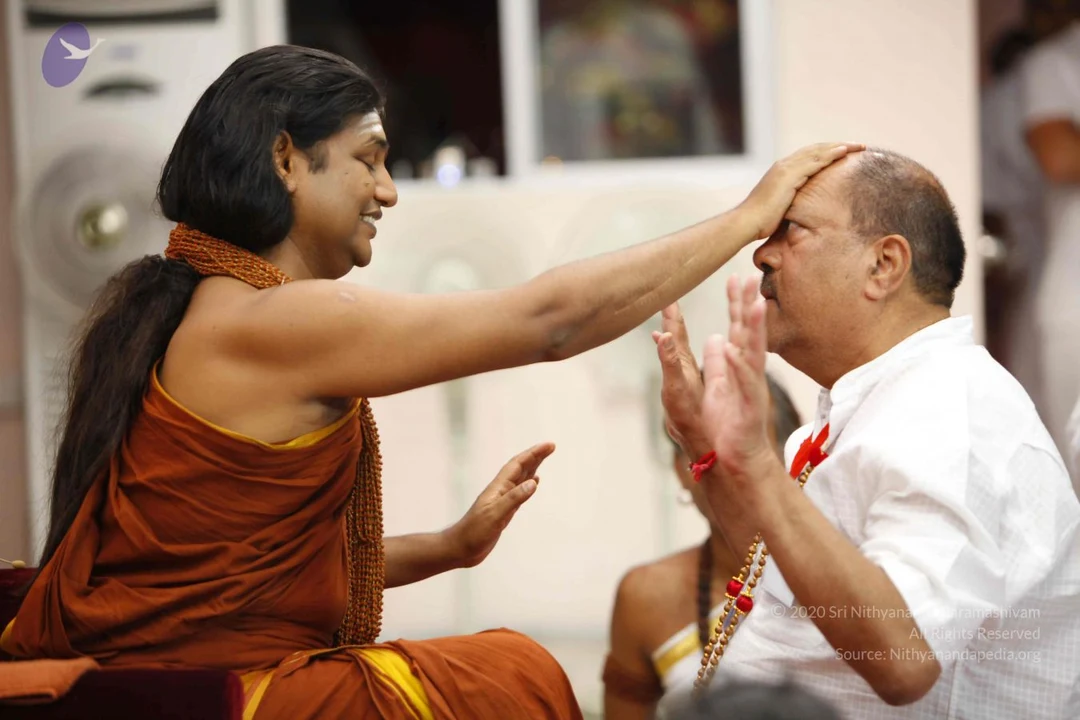
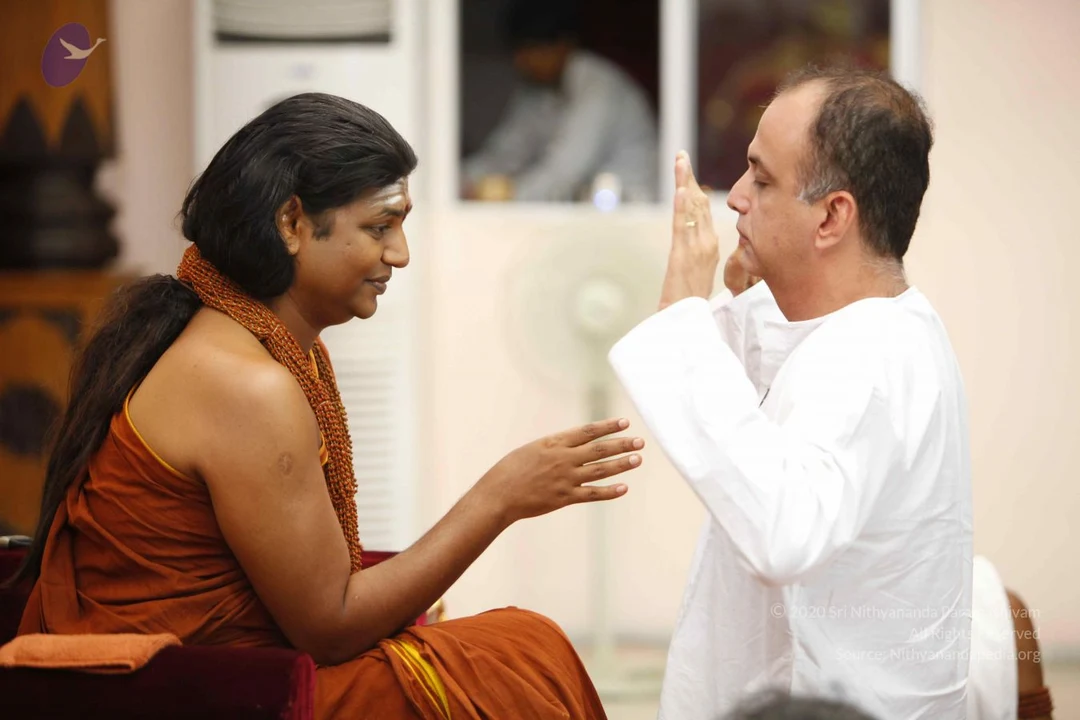
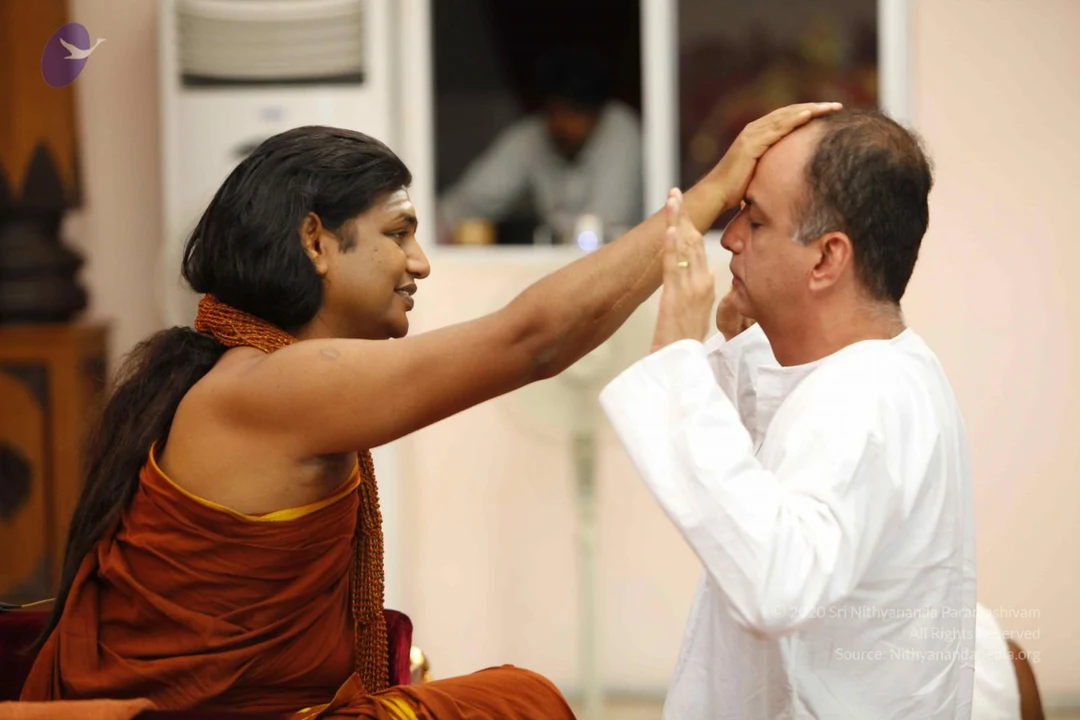
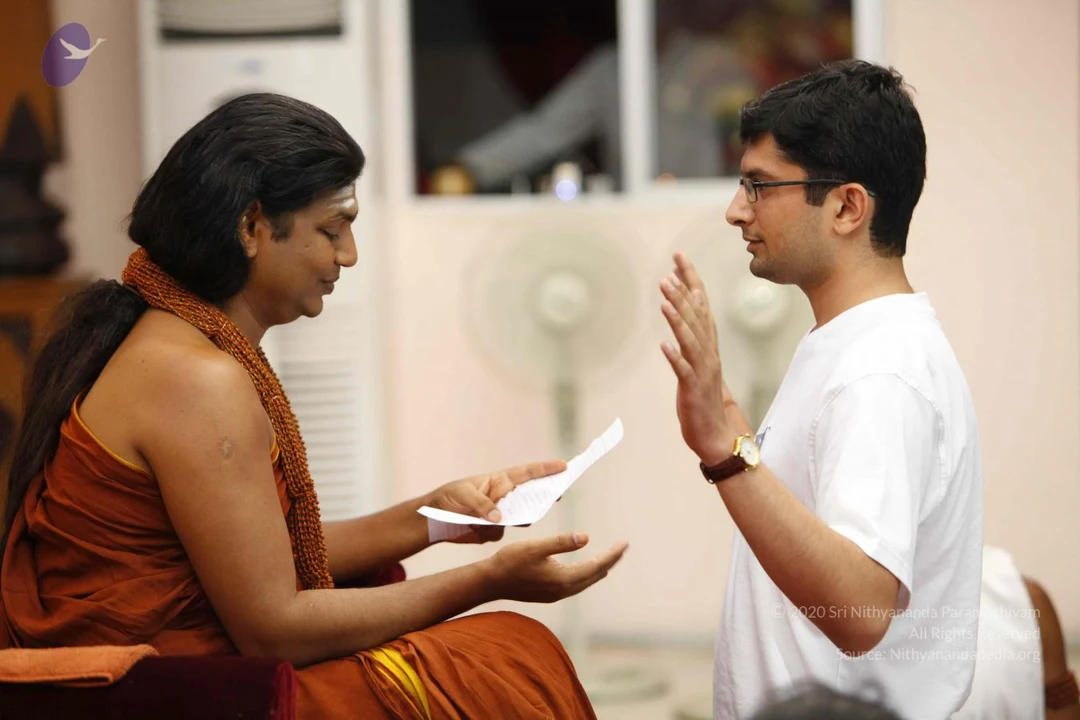
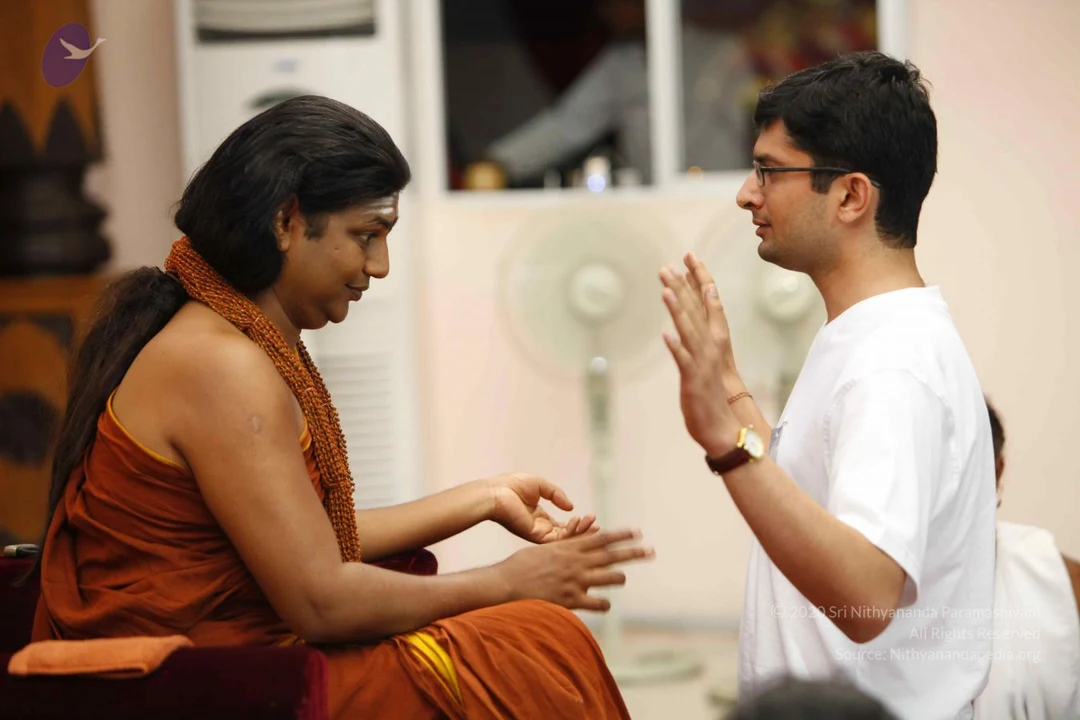
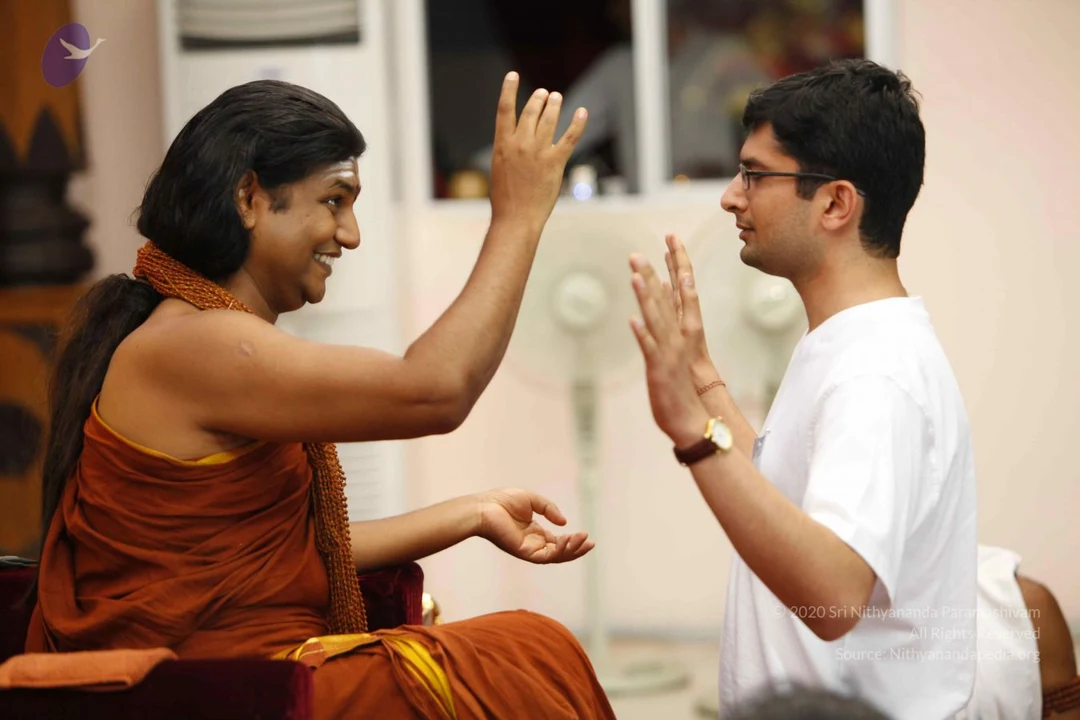
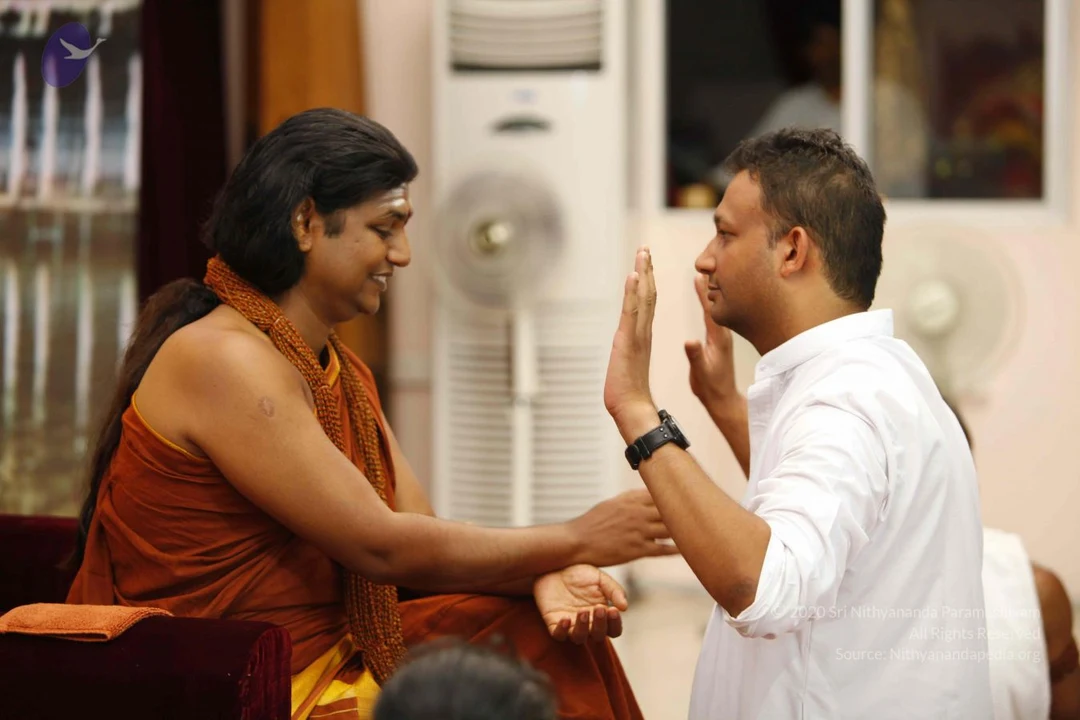
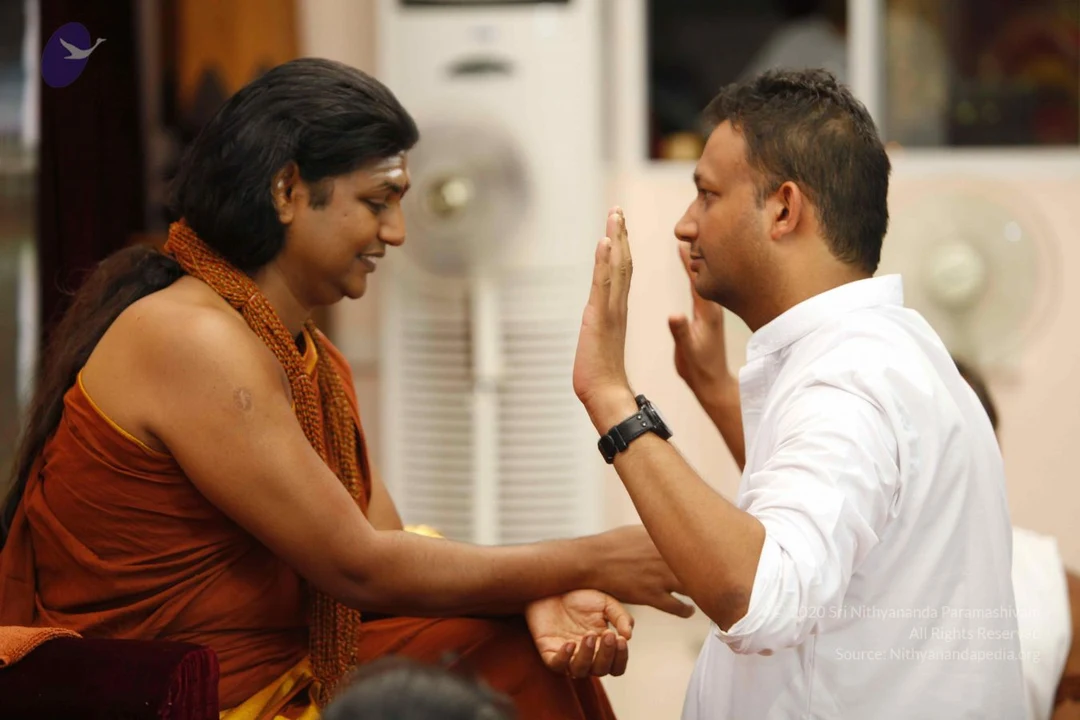
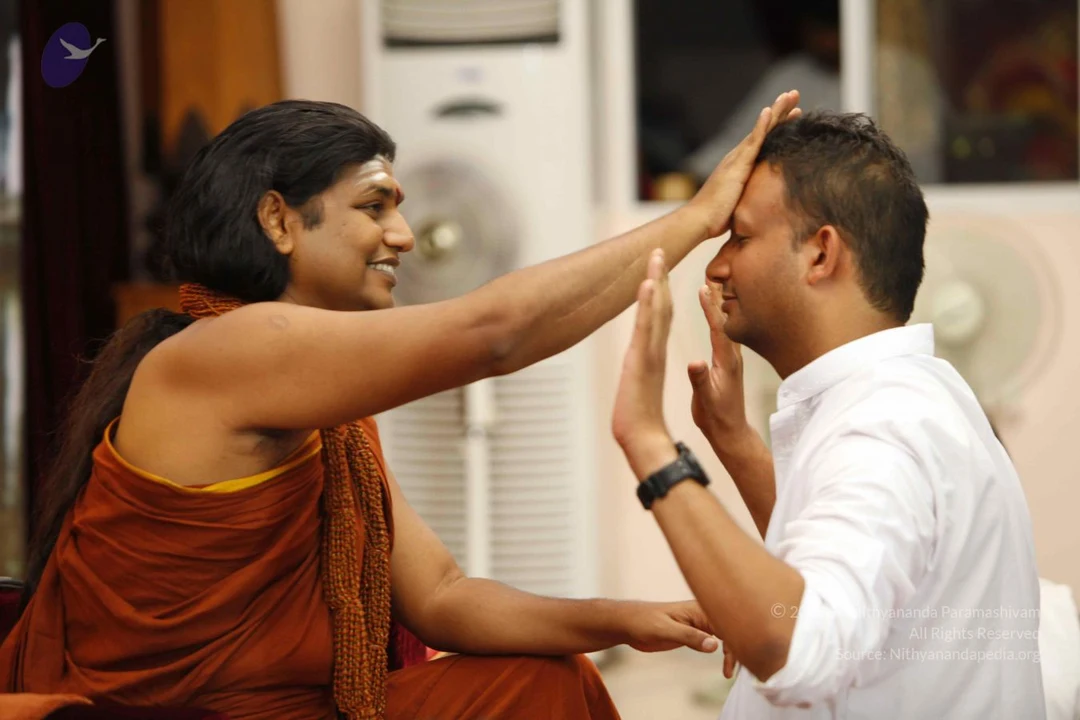
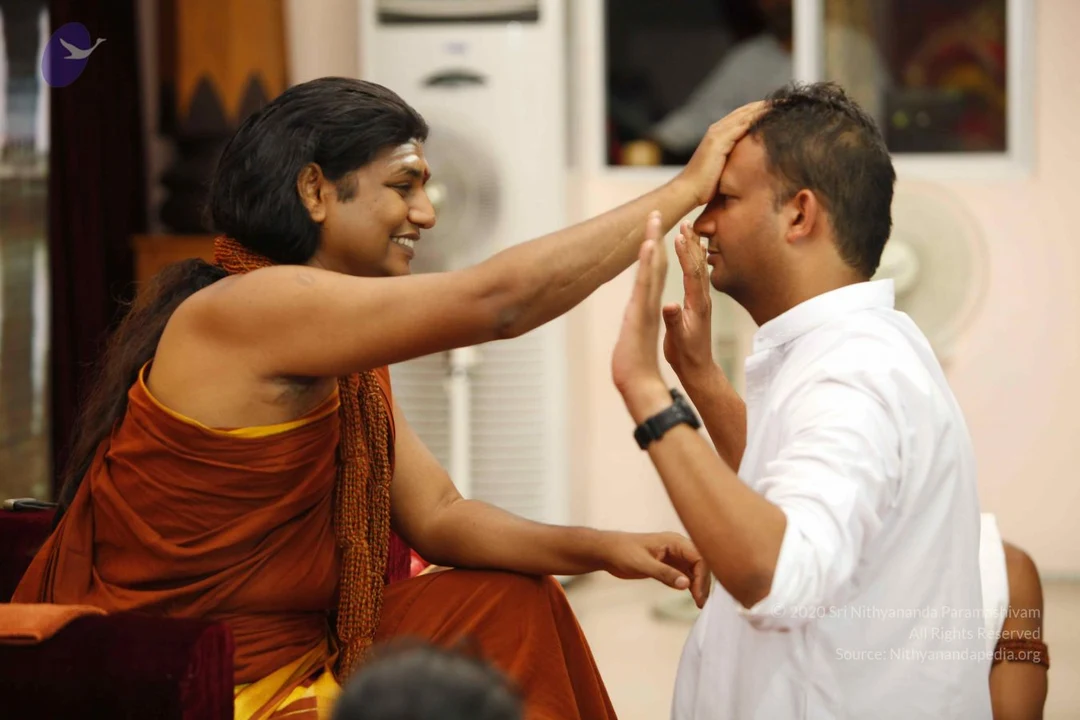
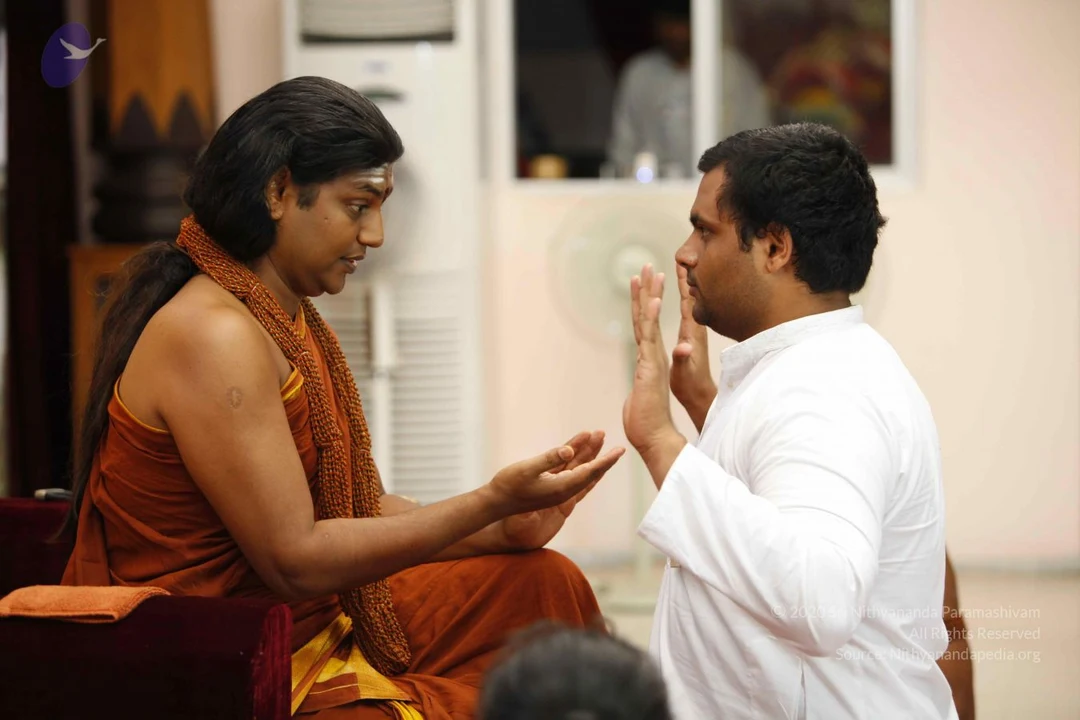
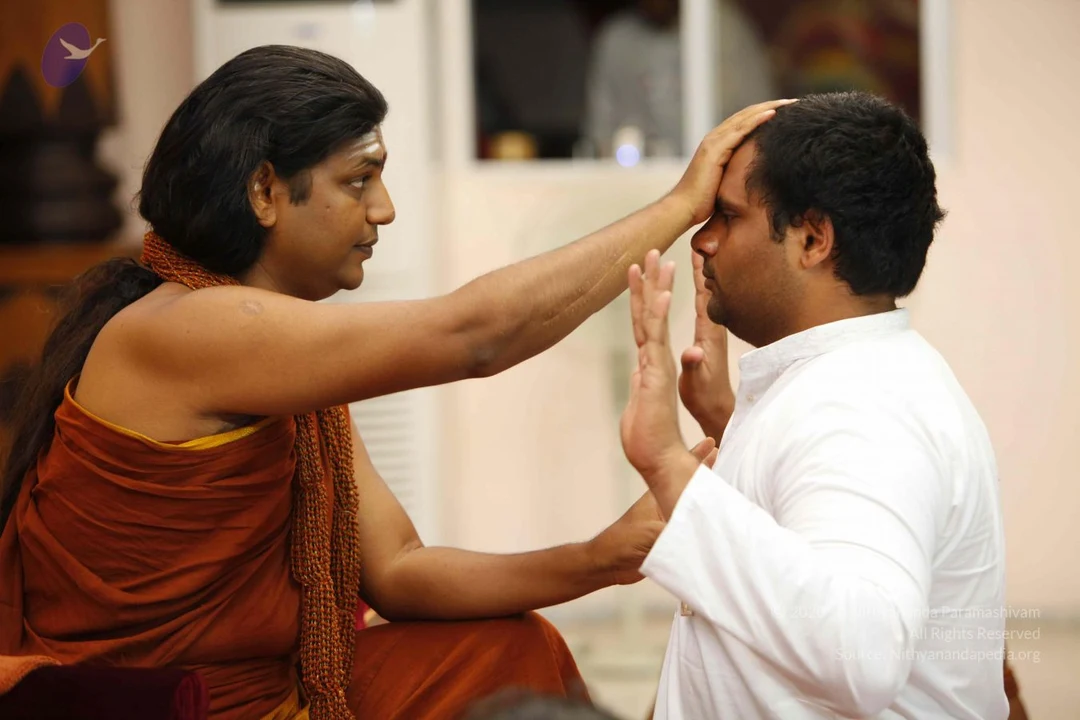
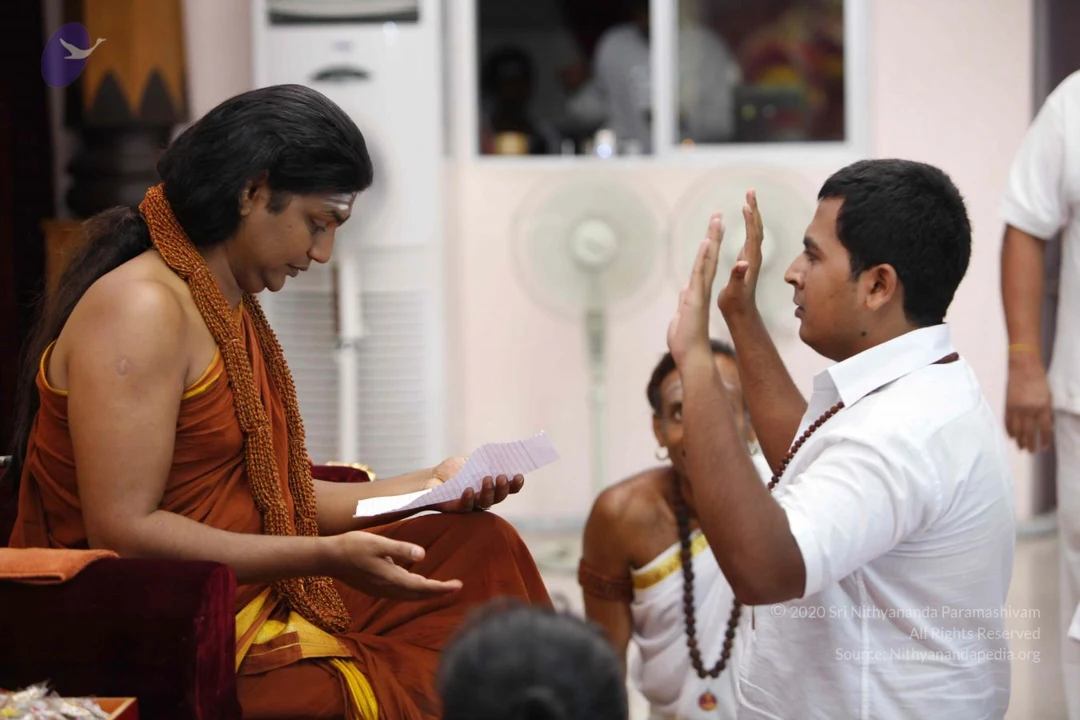
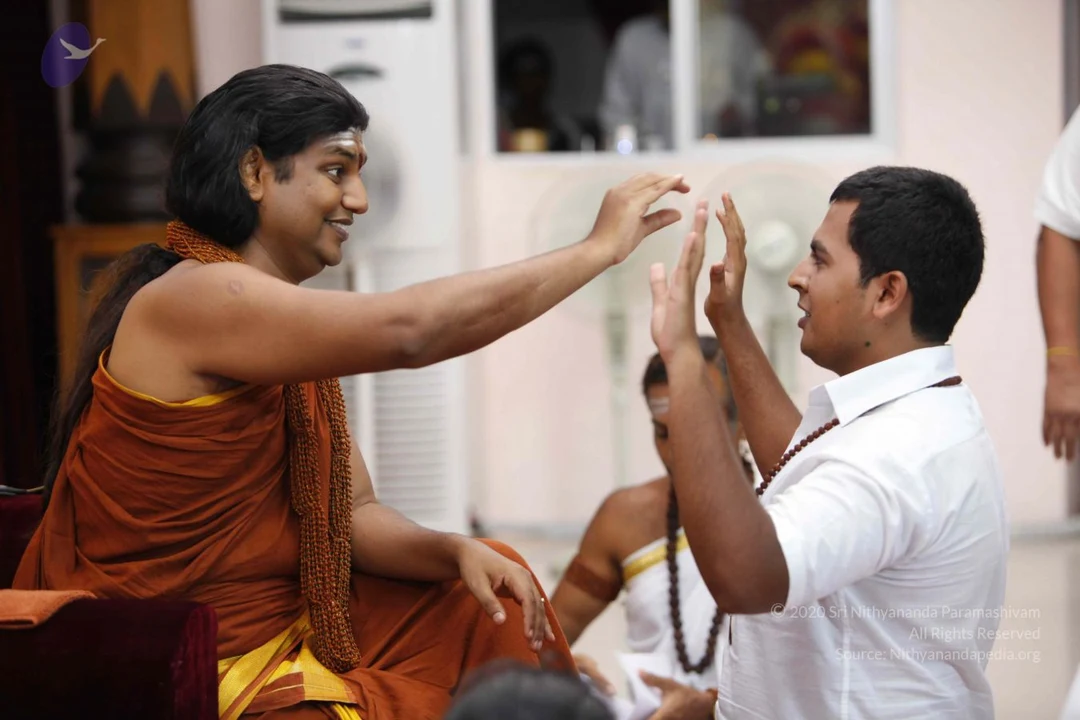
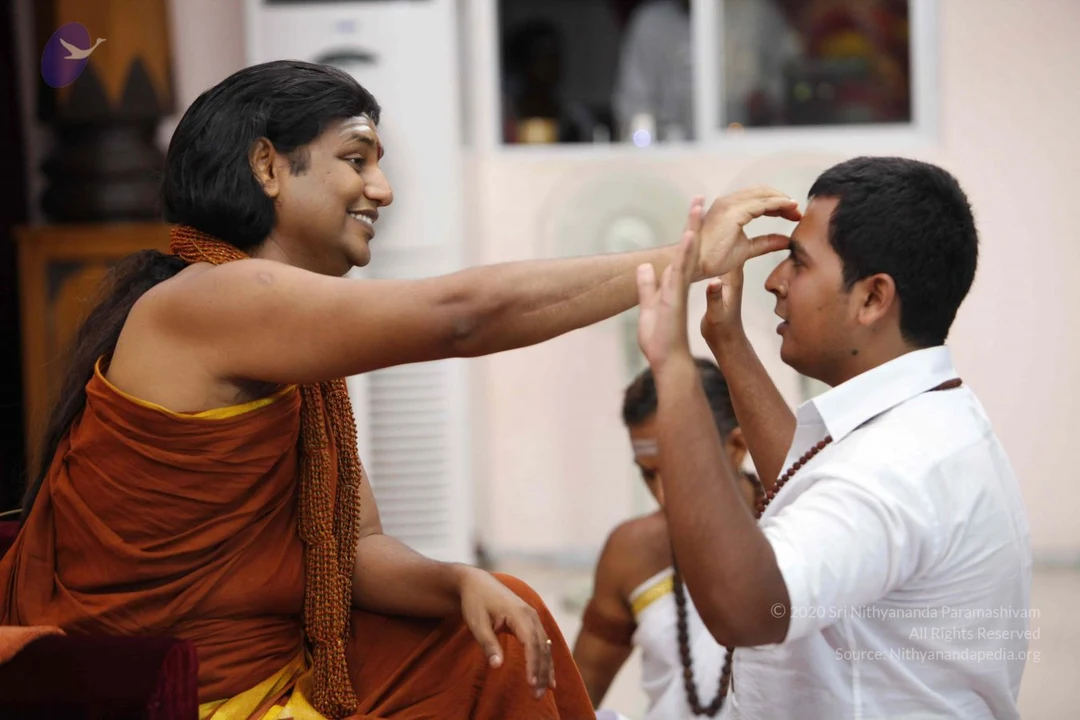
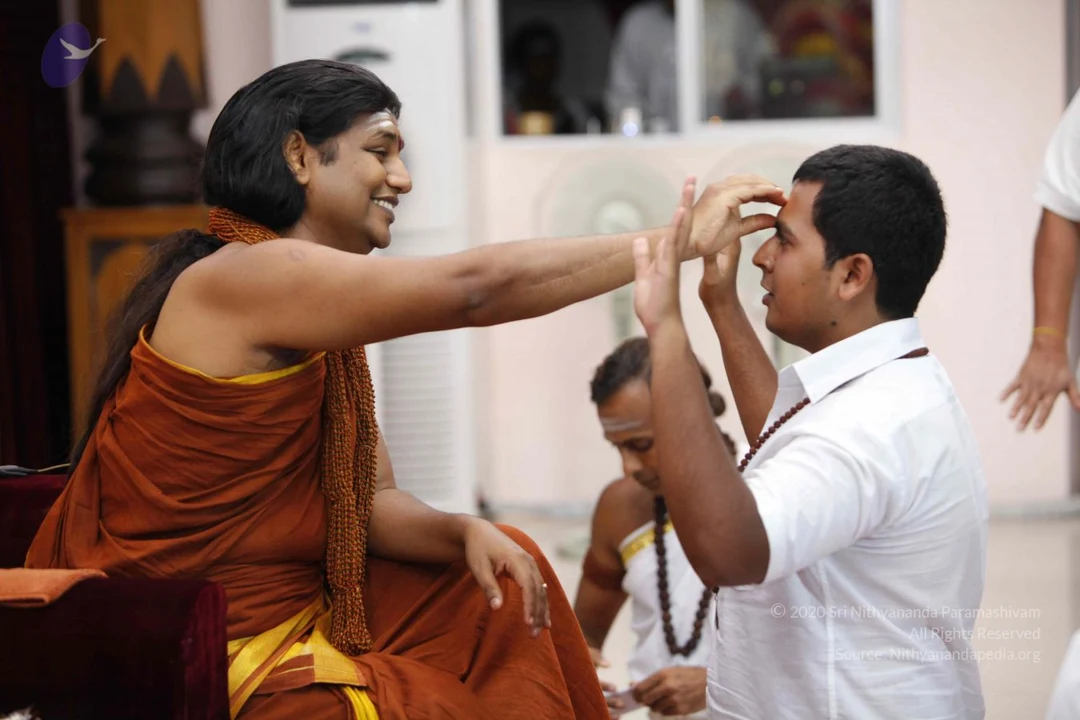
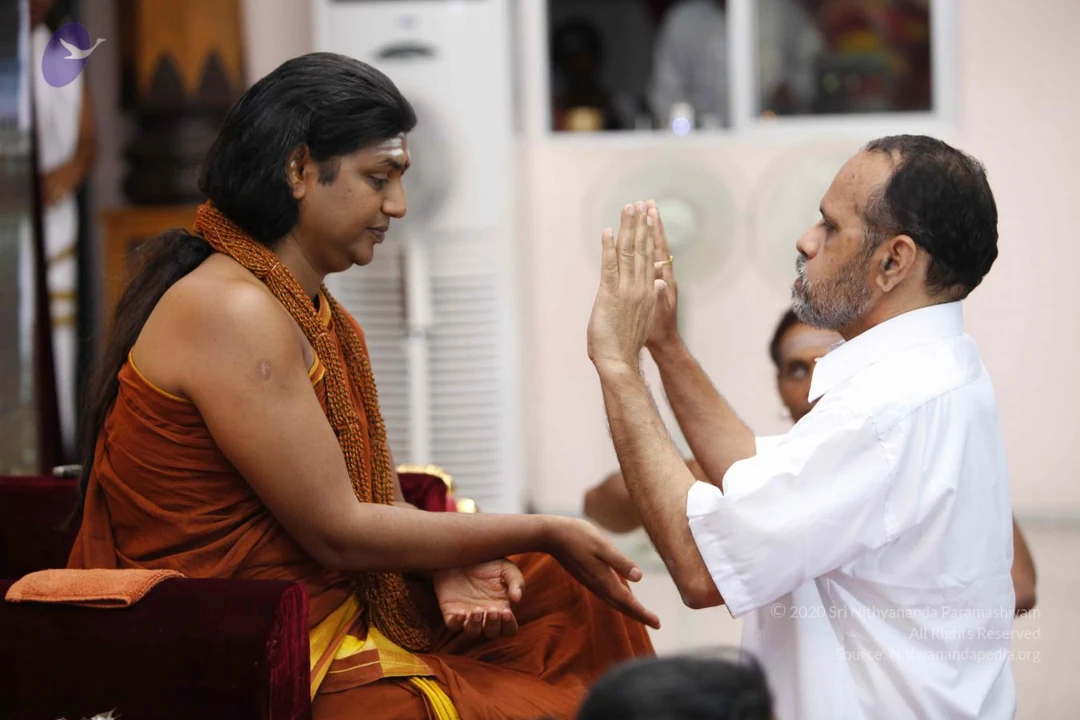
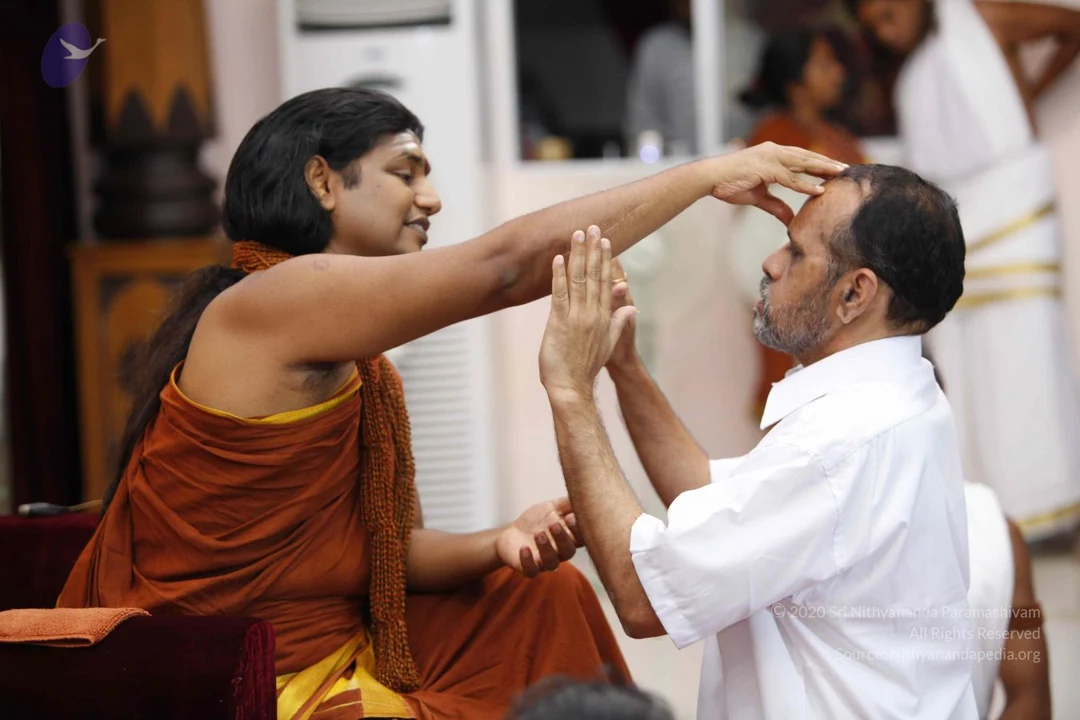
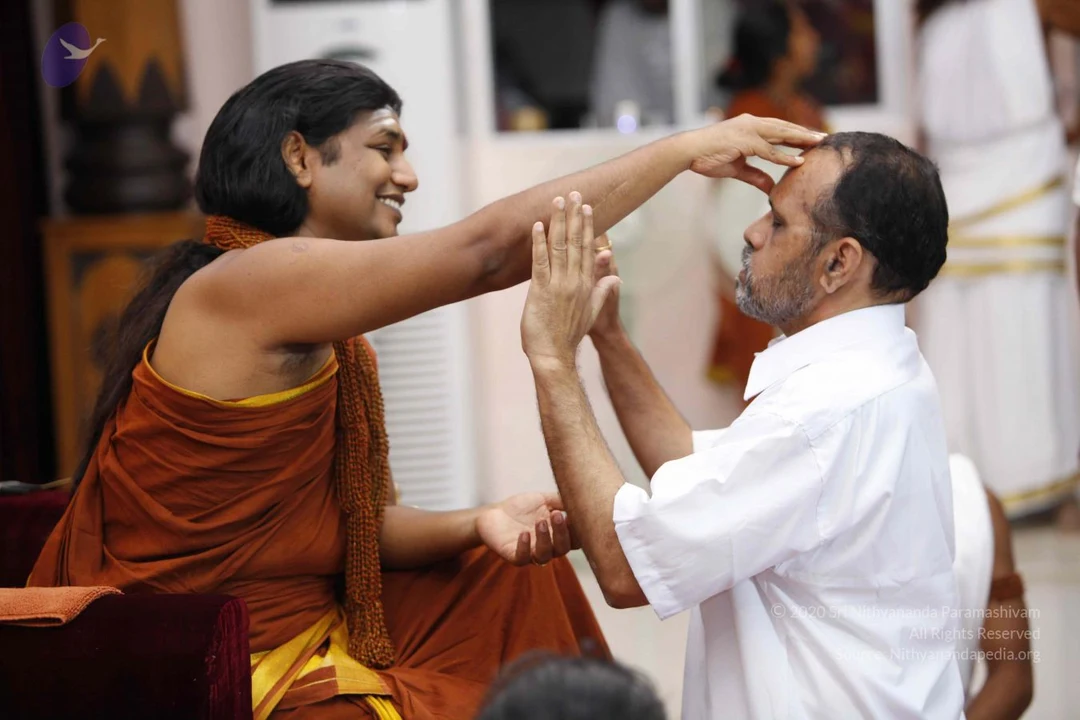
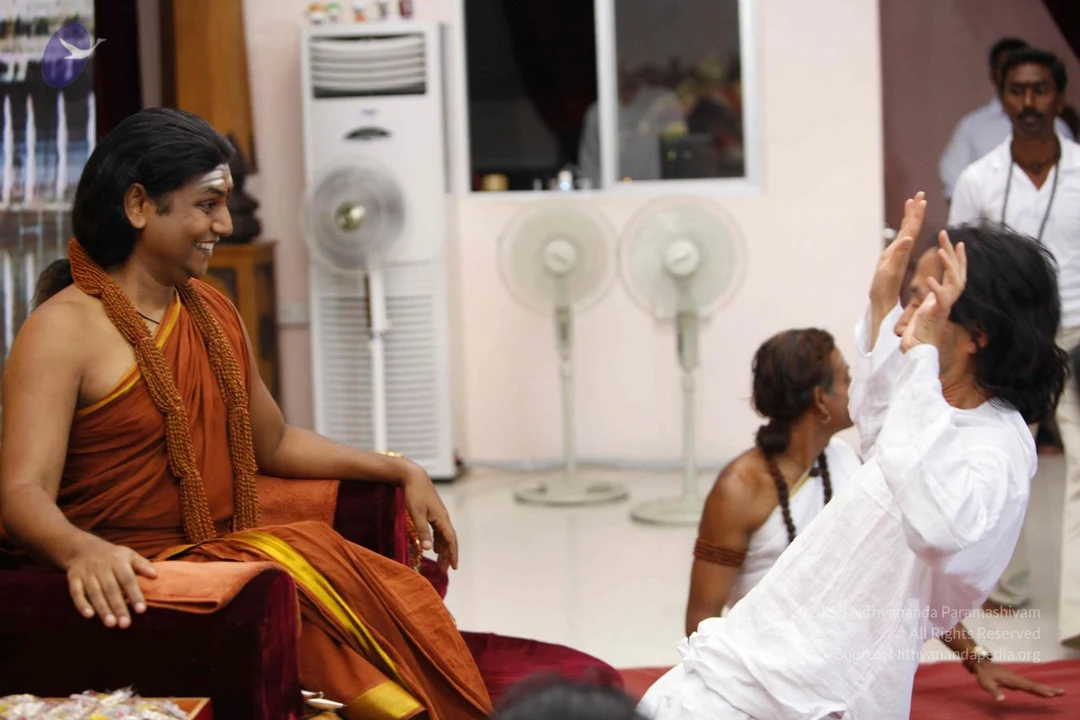
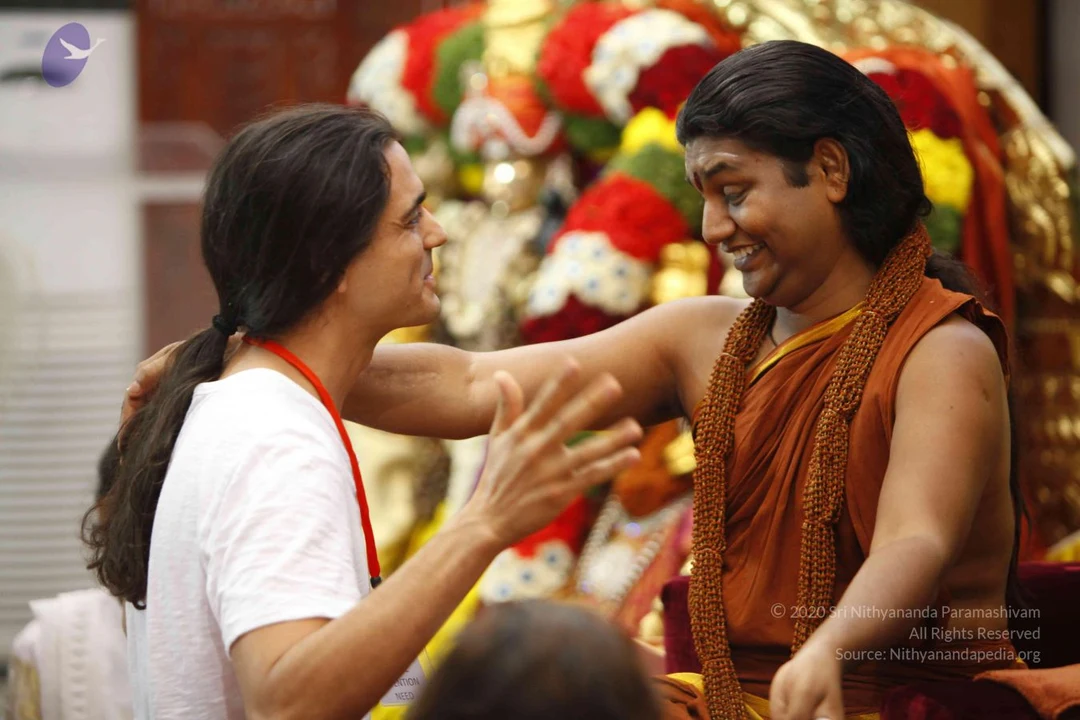
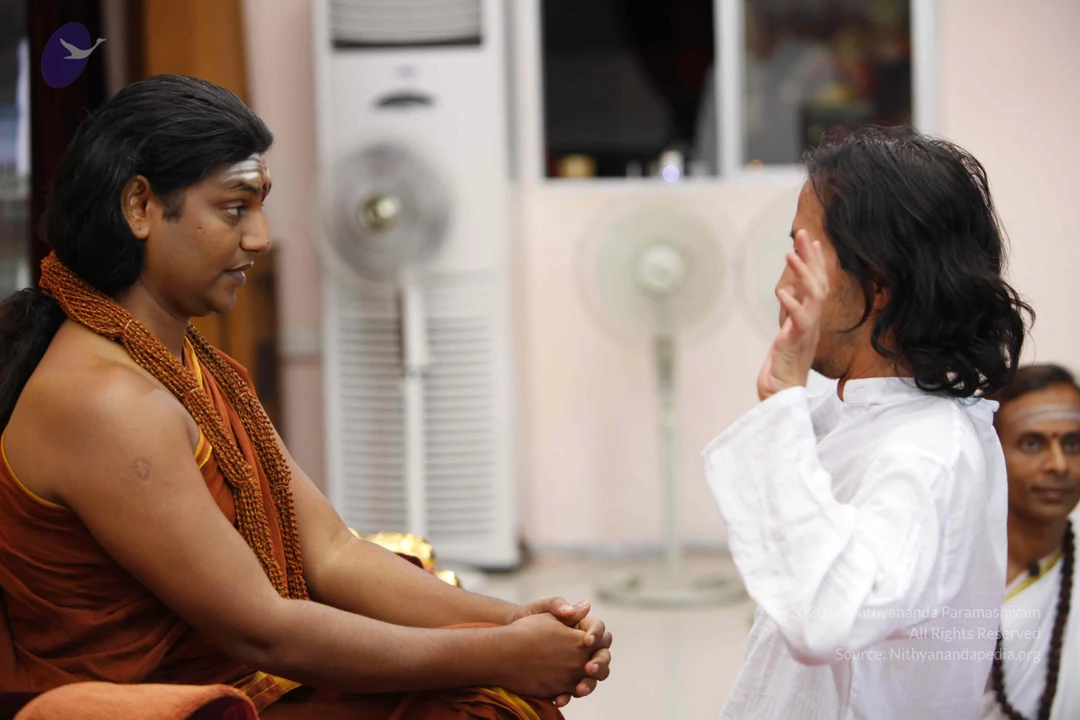
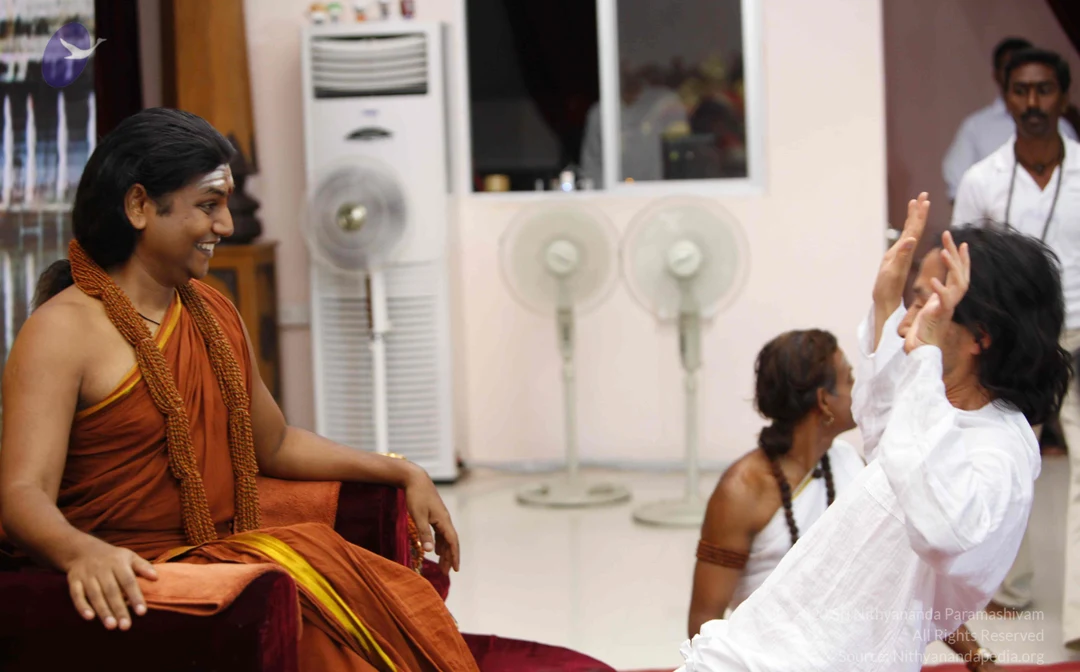
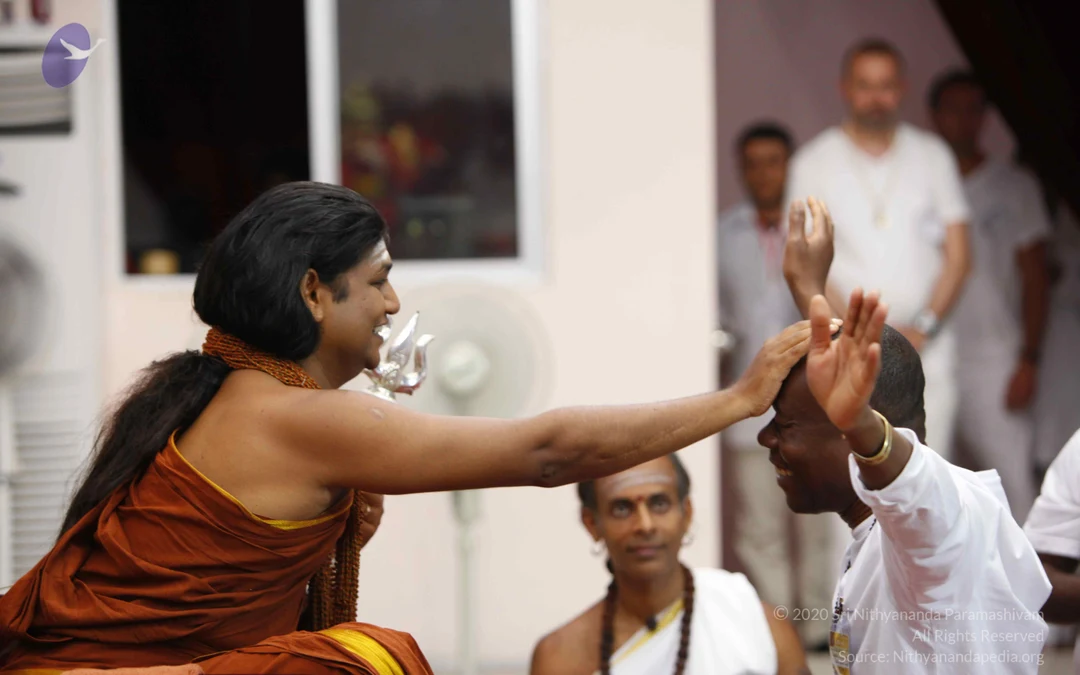
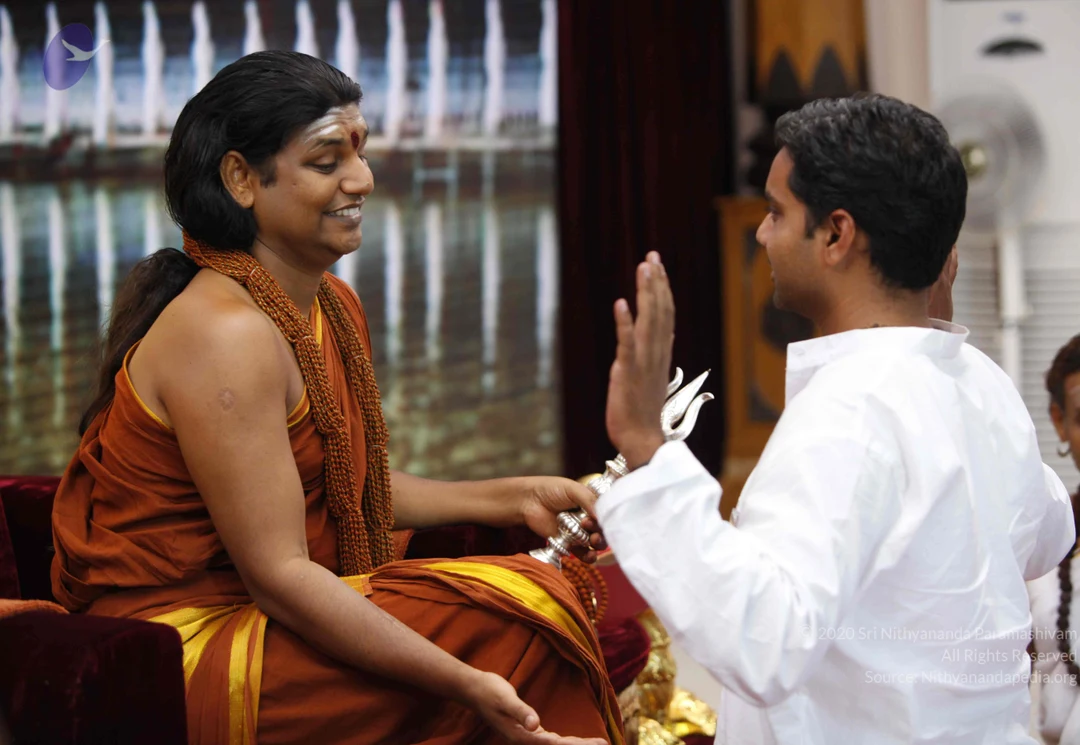
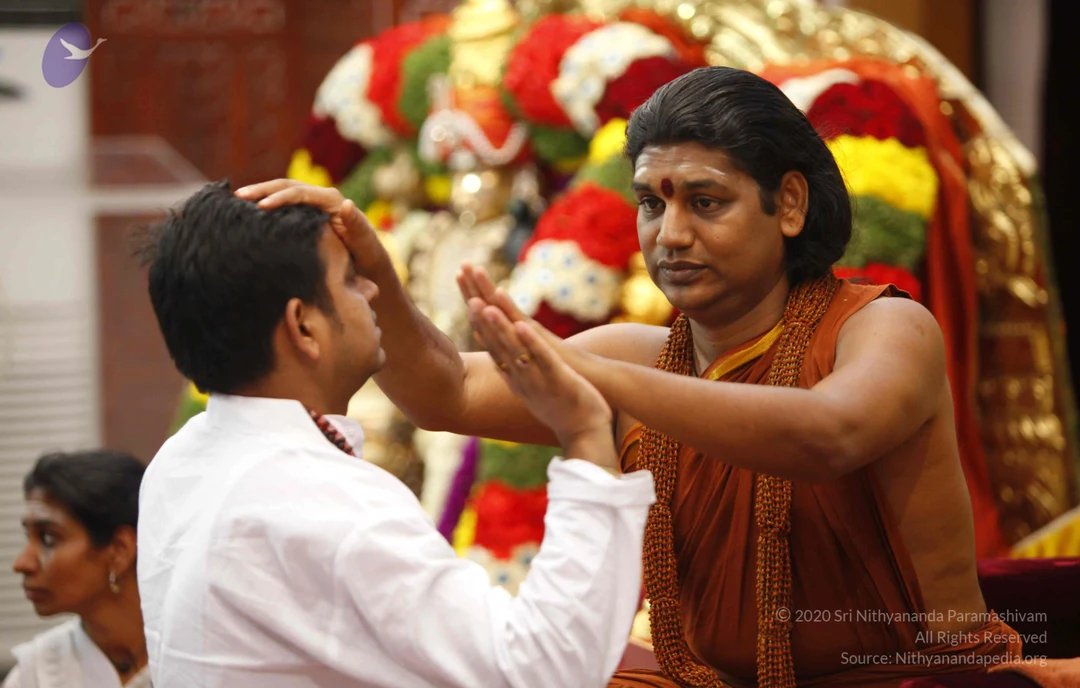
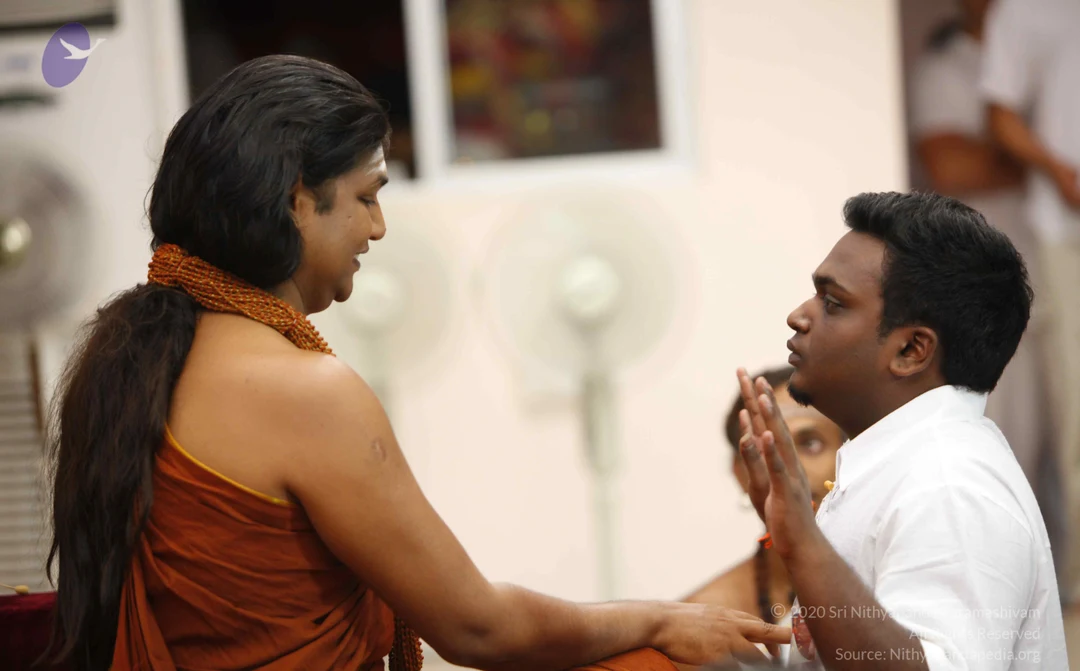
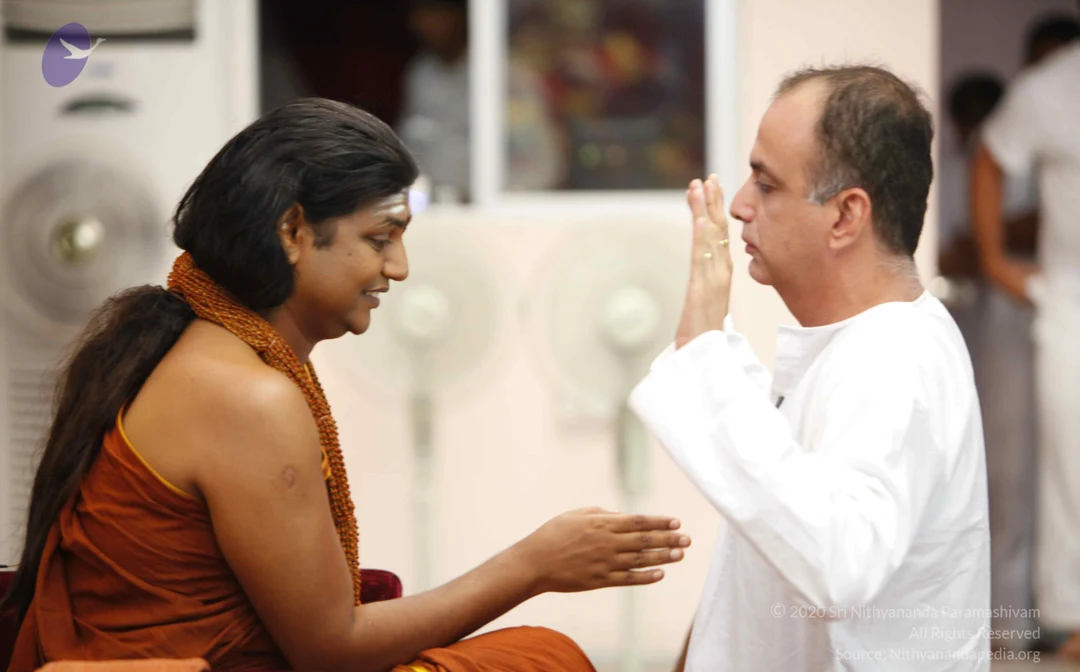
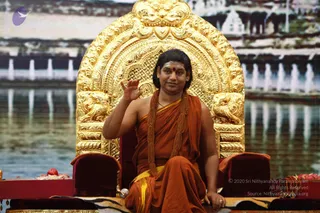
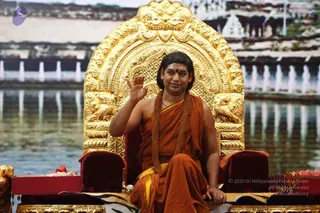
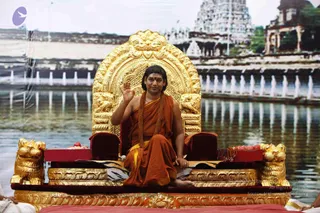
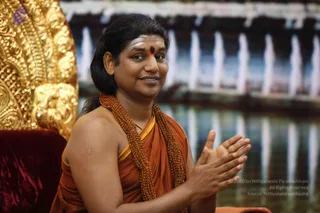
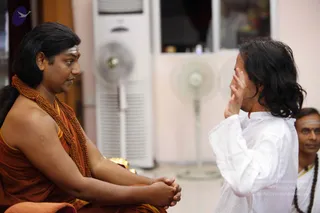
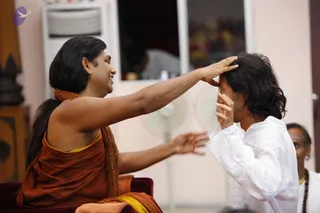
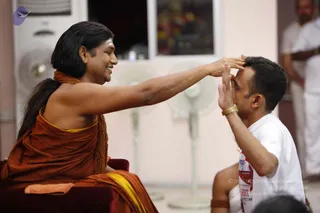
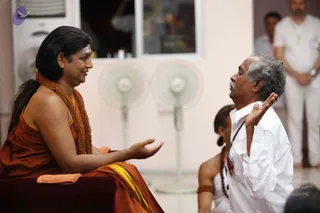
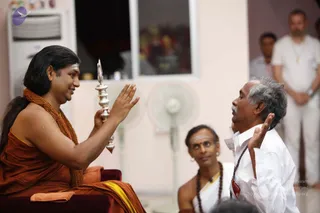
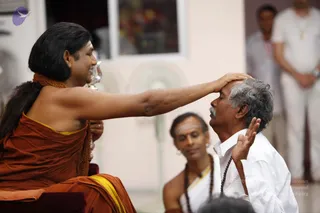
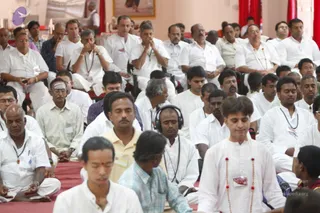
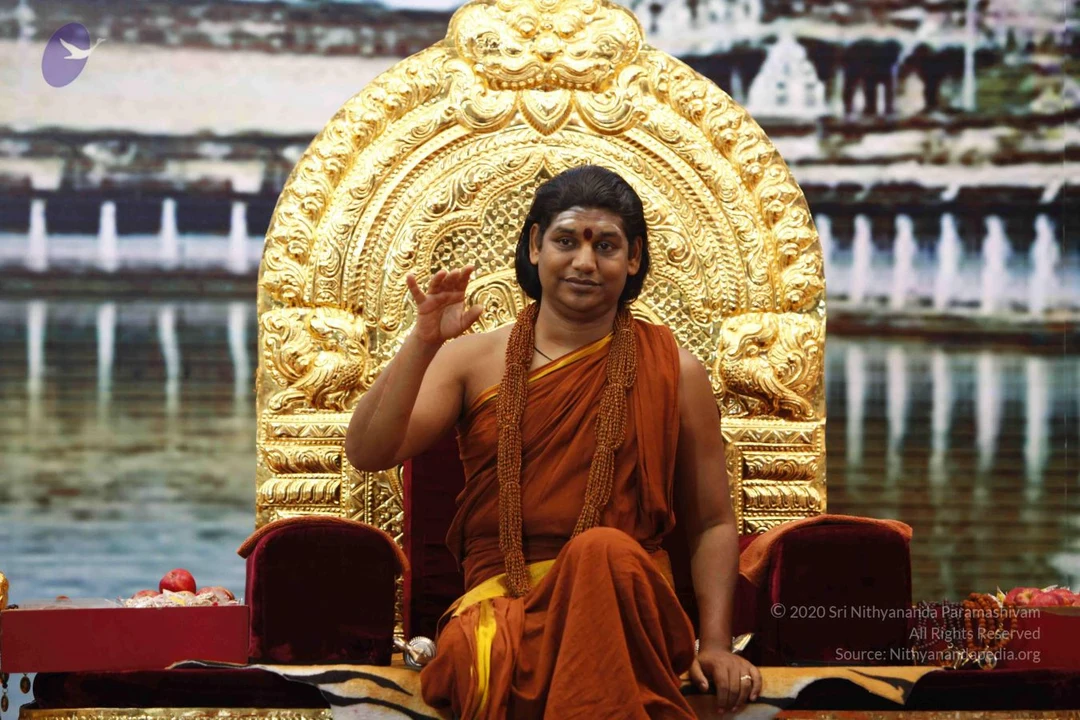
A man in orange saffron robes sits on an ornate gold throne with a carved arched back, raising his right hand in a blessing gesture. He wears a long rudraksha mala with a gold-toned clasp, a red tilak on his forehead, and a yellow sash over his shoulder. Behind the throne is a backdrop of a temple tank with fountains. Red fruit and offerings sit on a red-cushioned table at the left and right edges.A man with long swept-back dark hair sits on an ornate gold throne with carved lions and floral scrollwork, raising his right hand in a blessing wave. He wears an orange-saffron robe with a yellow sash, a long rudraksha mala and a red bindi on his forehead. A tiger-skin cover lies on the throne seat, with red cushions and a tray of red fruit beside him. The backdrop shows a painted temple with stepped tanks and white pillars. Appearance-based cues match a person, seated in the role of speaker at a satsang.A man in saffron-orange robes sits on an ornate gold throne with lion-shaped armrests and a red velvet seat, raising his right hand in a blessing or greeting gesture. He wears a rudraksha mala with a long ceremonial bead necklace and a red tilak on his forehead, with long swept-back hair. Behind him is a large photographic backdrop of a temple complex beside a water tank with fountains. Fruits and a flower garland rest on the throne ledges, and a few white-clad devotees are partly visible at the lower edges. a person is seated centrally as the speaker.Photo of a man seated on a red velvet throne with an ornate gold carved backrest at left. He wears an orange-saffron shawl draped over his shoulder and a long multi-strand gold-brown rudraksha mala around his neck, with a red tilak dot on his forehead and long swept-back dark hair. He smiles with palms pressed together in a namaste gesture. Behind him is a blurred background of white fountain-like columns over water. Appearance-based probable Swamiji cues: long swept-back hair, saffron clothing, rudraksha mala and ceremonial gold ornamentation.A photograph of two men seated facing each other indoors. On the left, a long-haired man wears an orange-saffron cloth draped over his shoulder and an orange rudraksha mala with a white tripundra mark on his forehead; his hands rest folded in his lap on an orange cushion. Opposite him, a man with long dark hair in a white kurta raises one hand in a gesture toward him. Behind them, a white tower fan and a standing fan stand in a pale room, and a third man with a white forehead mark and rudraksha beads sits at the right edge.A seated figure in orange-saffron robes with a long rope-like beaded necklace touches the forehead of a man in a white kurta with long dark hair, who has his hands raised in a receiving gesture. The robed figure sits on a red cushioned seat, with a yellow cloth draped over the shoulder, in a bright indoor hall with a white wall and a pale fan behind them. A partly visible man with a tilak on the forehead and a rudraksha mala sits at the right edge. Appearance-based candidate: Swamiji (probable), seated in saffron robes with long swept-back hair, giving a blessing touch.

Leela Alankar Deities

9 photosSource gallery
A golden murti pair seated on a throne framed by heavy garlands of red roses, white and blue flowers, yellow marigolds, purple blooms and green leaves. The male deity wears a red turban, a golden crown, pearl ornaments, layered gold necklaces, a rudraksha mala and a golden shawl over yellow draped cloth, holding a trident-like emblem and a small dark bird perched on his hand. The female deity beside him wears a gold crown, ornate necklaces, a rust-orange shawl and a maroon sari, seated at the right. These are deity murtis, not living people, and the scene is a decorated temple-style arrangement.A decorated deity murti of Shiva and Parvati seated under a floral arch of red roses, white and blue flowers, yellow marigolds, purple blossoms and green leaves. The male figure wears a red and orange turban, rudraksha malas, a jewelled necklace, and a golden shawl over a white dhoti, with a dark bird perched on his shoulder and a hand raised in blessing. The female figure wears a golden crown, red and orange jewellery and a red-and-gold sari. Both are seated on a yellow silk-draped throne. No physical people are shown.A decorated pair of deity murtis seated on a raised yellow-draped platform beneath an arch of fresh flowers in red, yellow, purple, white and green. The male murti wears an orange turban, a rudraksha mala, ornate white and gold necklaces, and holds a golden abhaya-style hand and a small dove-like bird; the female murti wears a pink-and-gold saree, layered pearl and gold jewellery and a gold crown. Carved wooden panels frame the background.Photograph of a decorated deity murti pair seated on a golden-yellow cloth-draped throne against a garland-framed arch of red roses, white jasmine, purple and yellow marigold strands and green leaves. The male figure in gold-toned metal wears a red and gold turban and a rudraksha mala, holds a trident-like staff in one raised hand, and has a black bird perched on his outstretched arm. The female figure beside him wears a gold crown, layered pearl and gem necklaces and a pink and gold sari.Two golden murti statues seated side by side on a yellow silk cloth within a floral arch of red roses, white and blue flowers, yellow marigolds, purple blooms and green leaves. The male figure wears a red and orange turban with a gold crown, rudraksha mala and ornate white and gold necklaces, holding a dark bird on one hand. The female figure wears a gold crown, layered gold necklaces, and a pink and gold sari.A golden deity murti seated on a throne, adorned with a red and gold turban and a jewelled crown-like ornament, wearing layered gem-studded necklaces and a long rudraksha mala. He holds a trident-like staff in one hand and a golden mace-like object in the other, with a black bird perched on his arm. He is framed by an arch of red roses, white jasmine, yellow marigolds and purple flowers, and wears a yellow silk dhoti with a red border. No people are visible.

Rudra Abhishekam

128 photosSource gallery
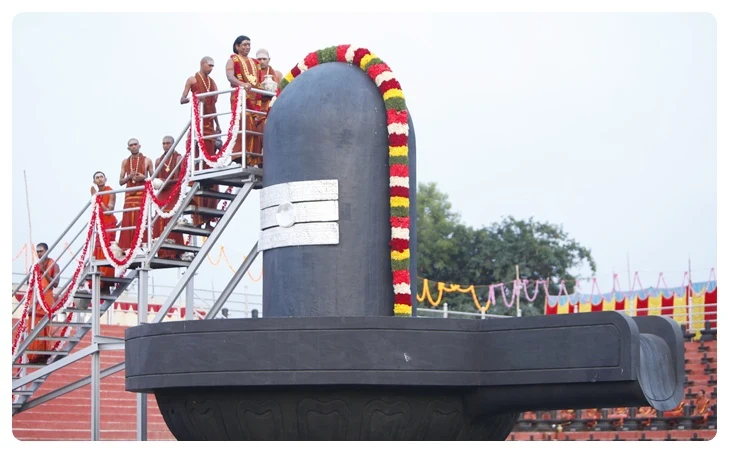
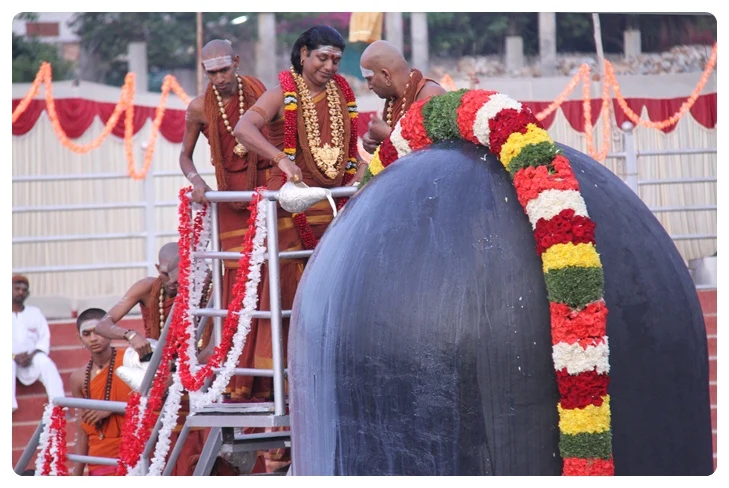
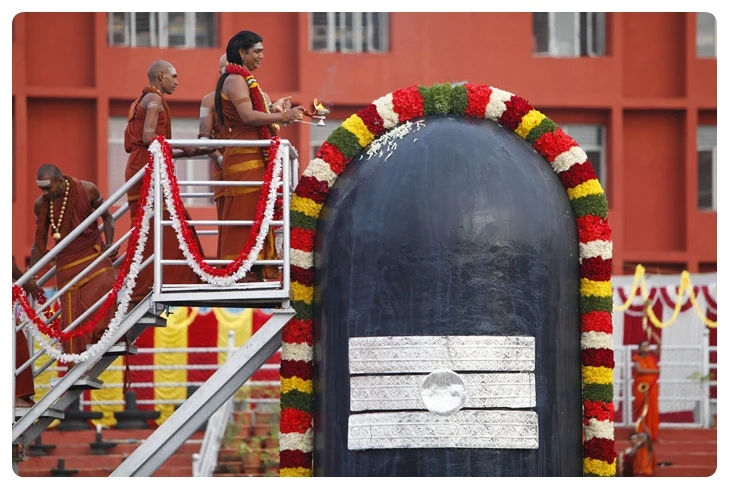
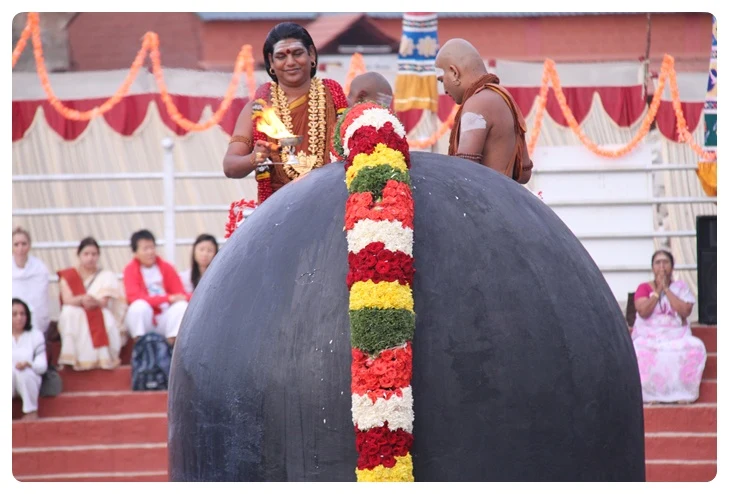
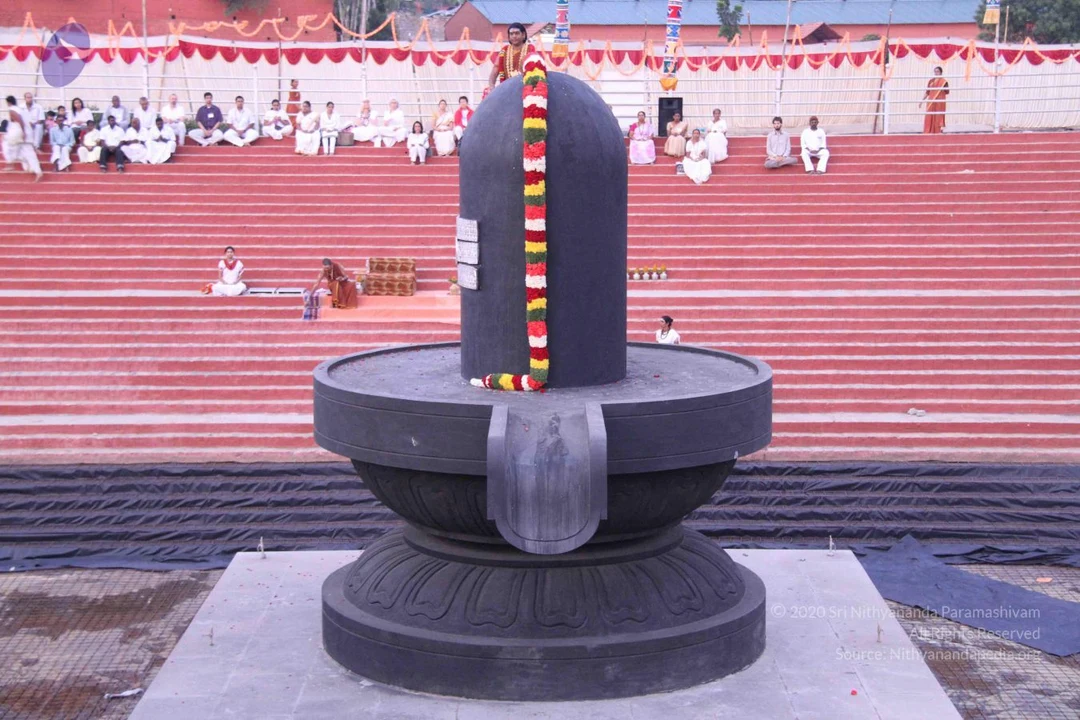
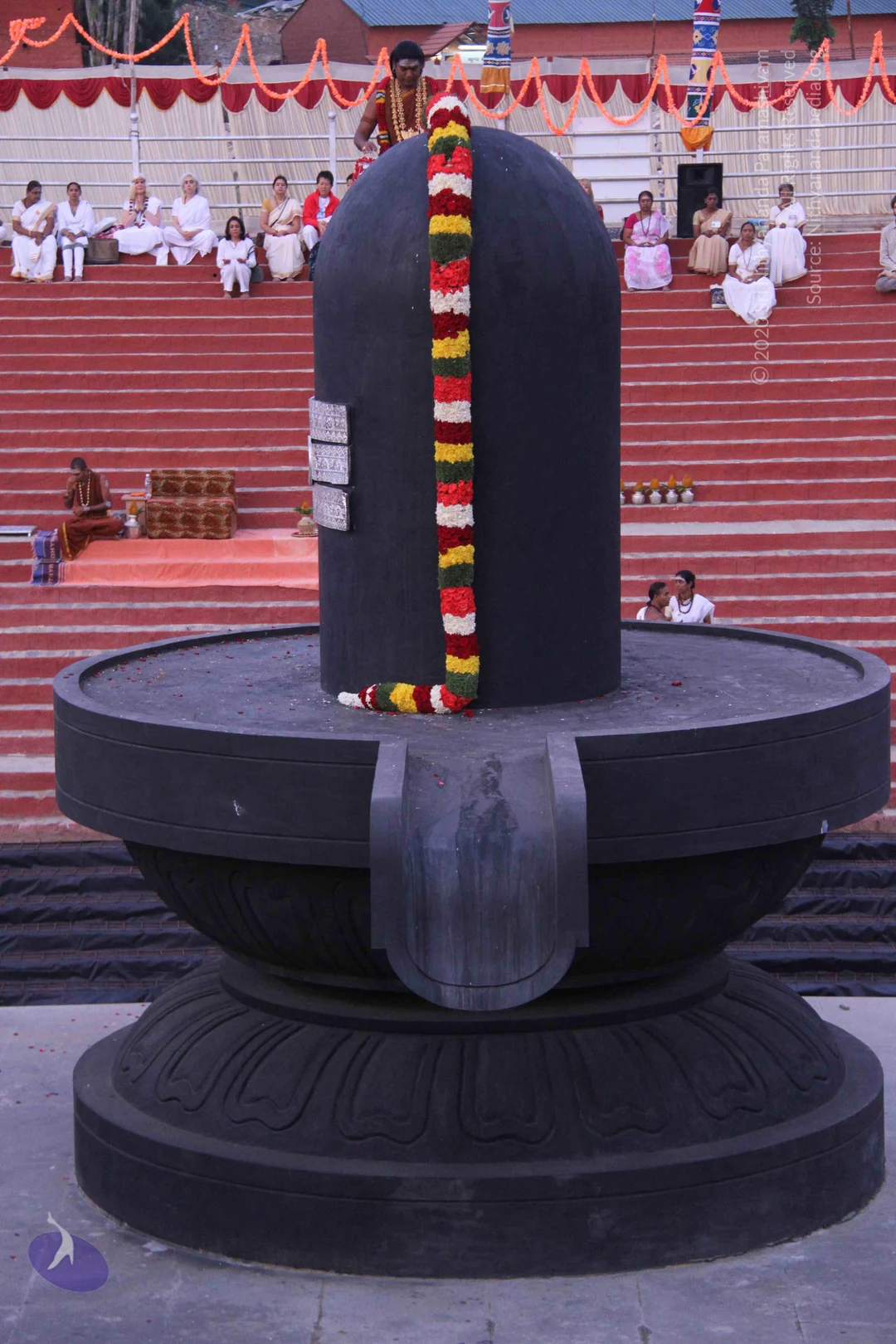
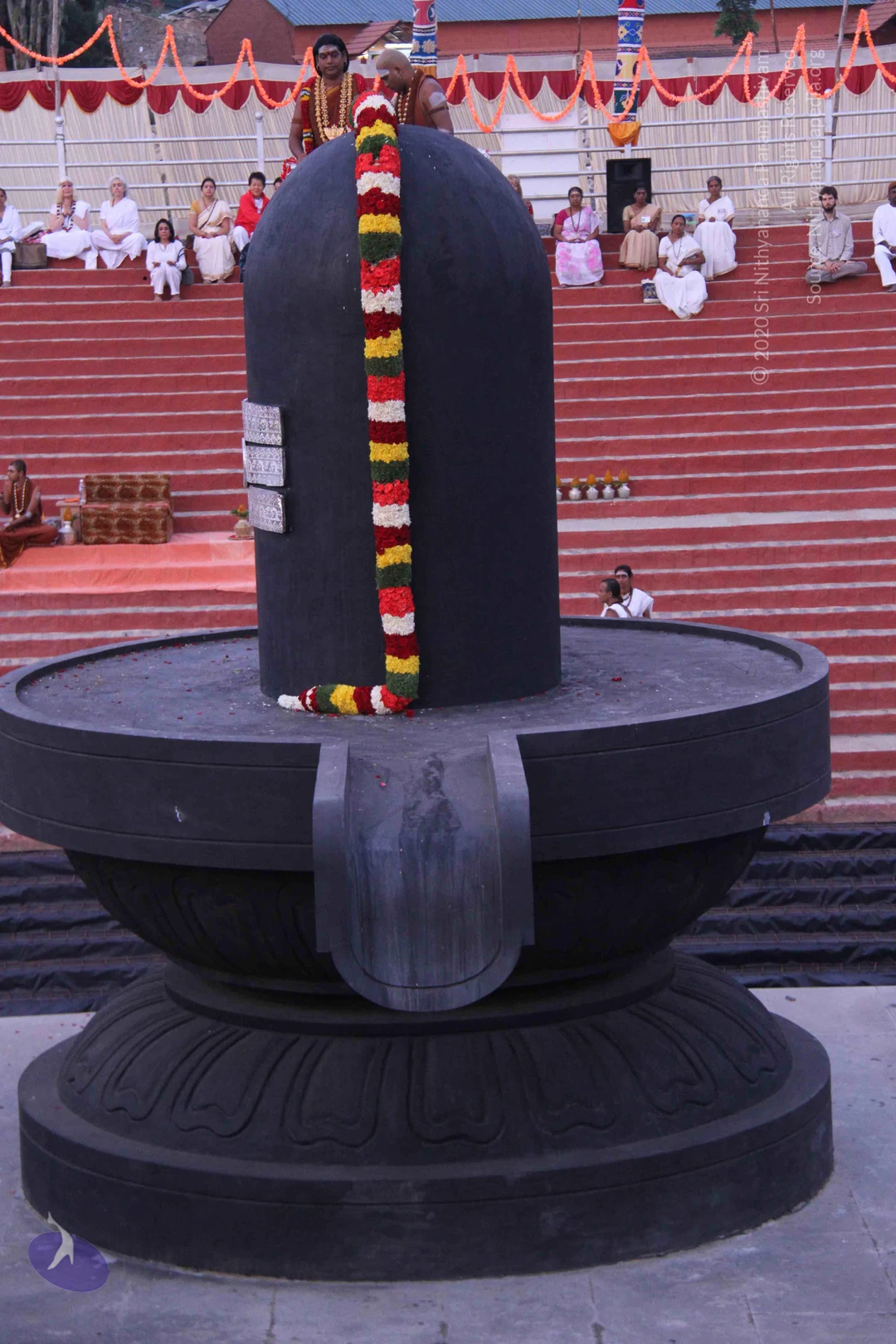
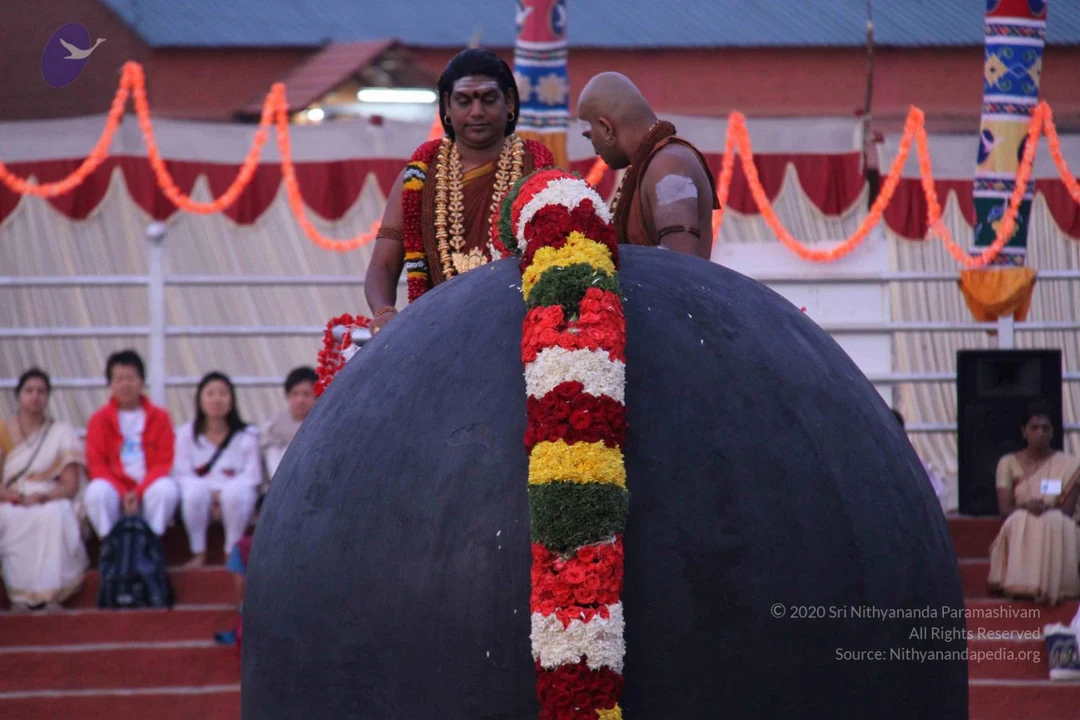
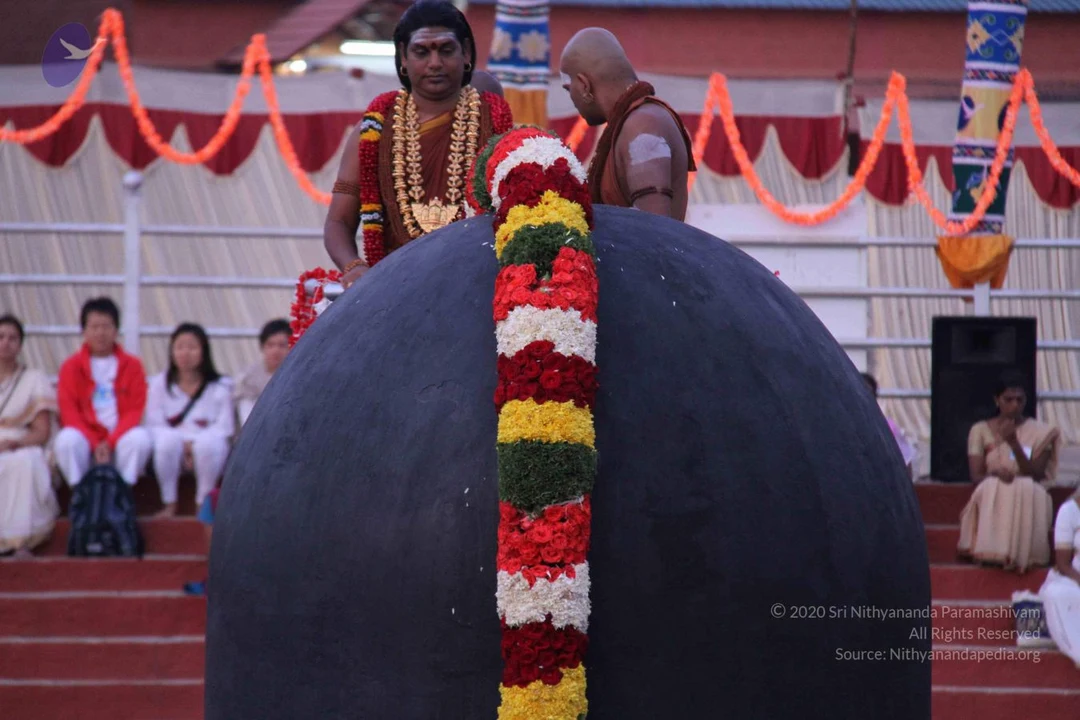
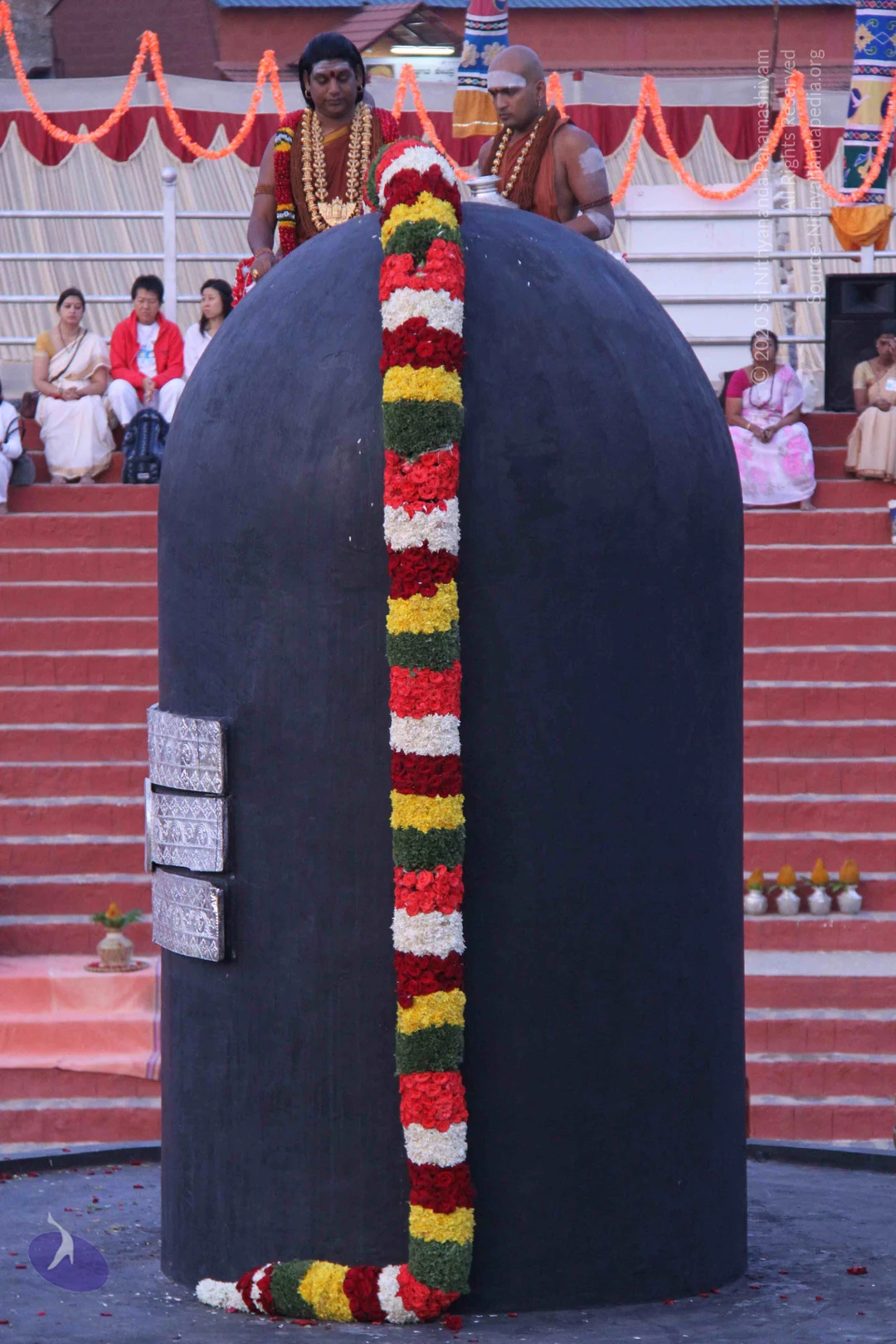
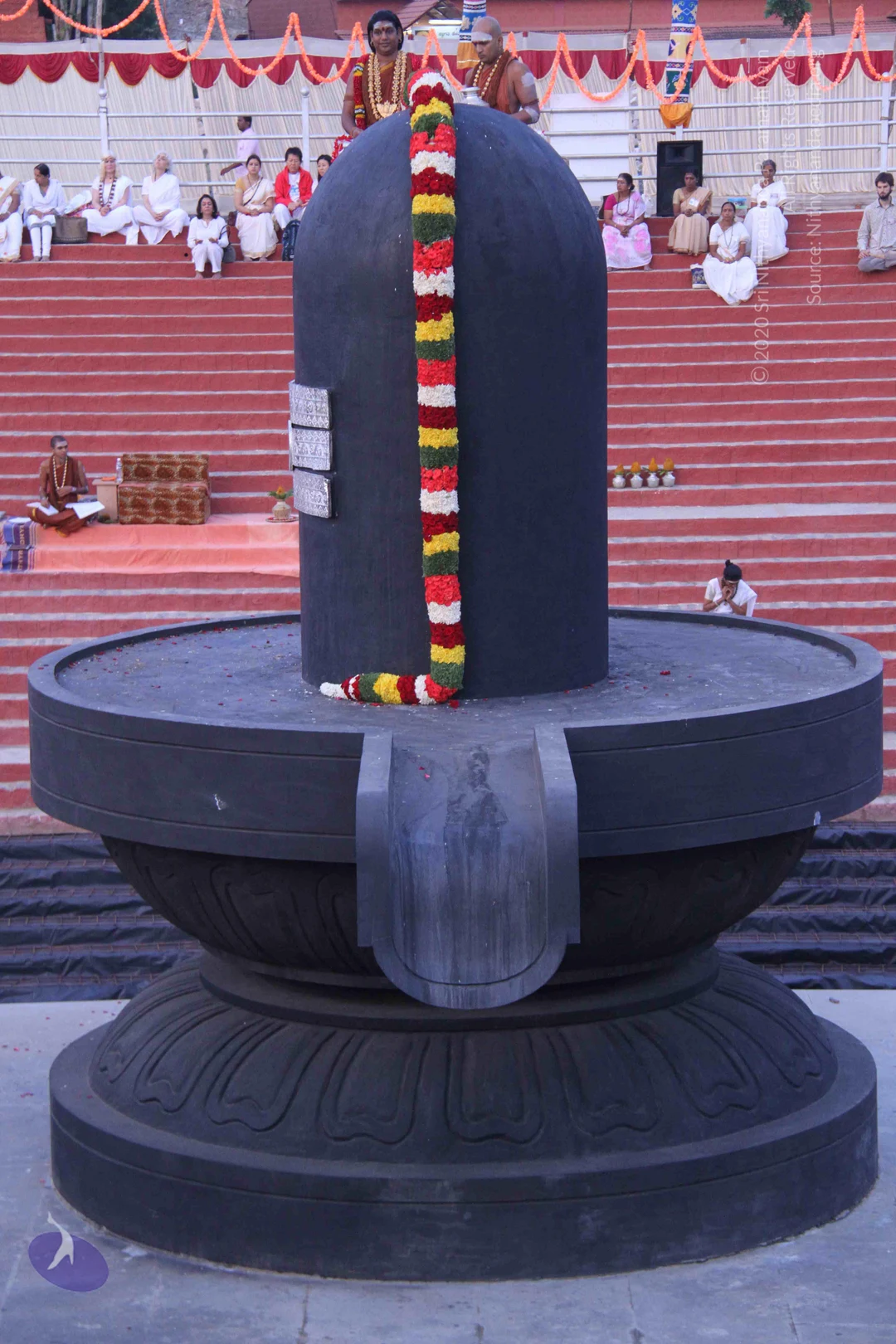
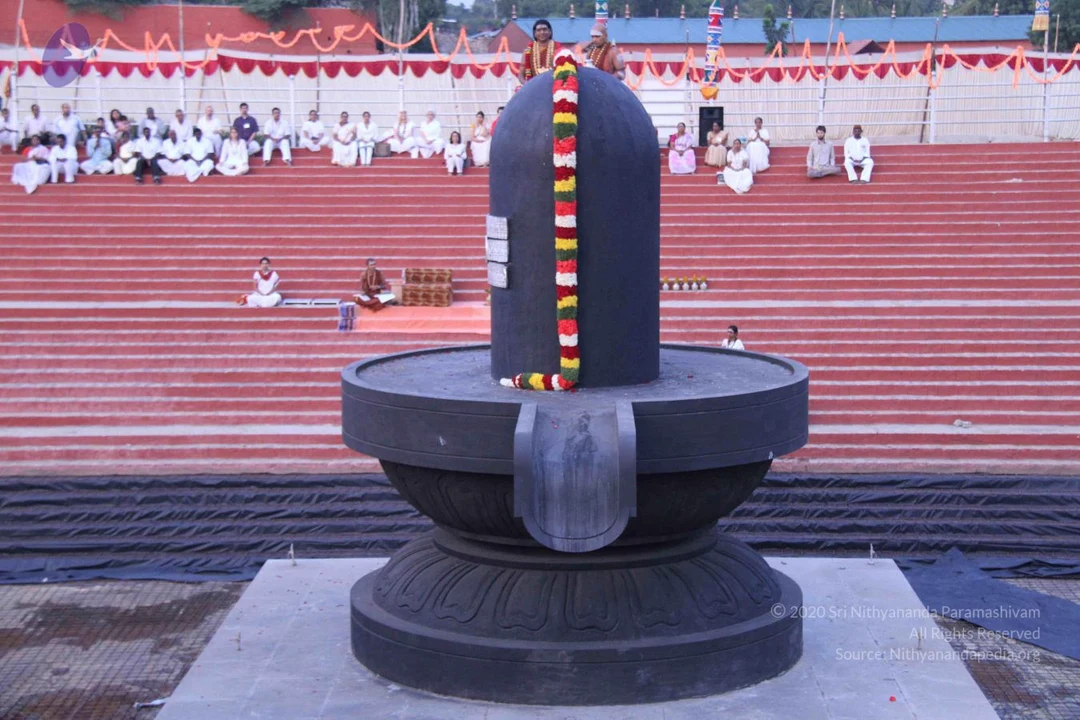
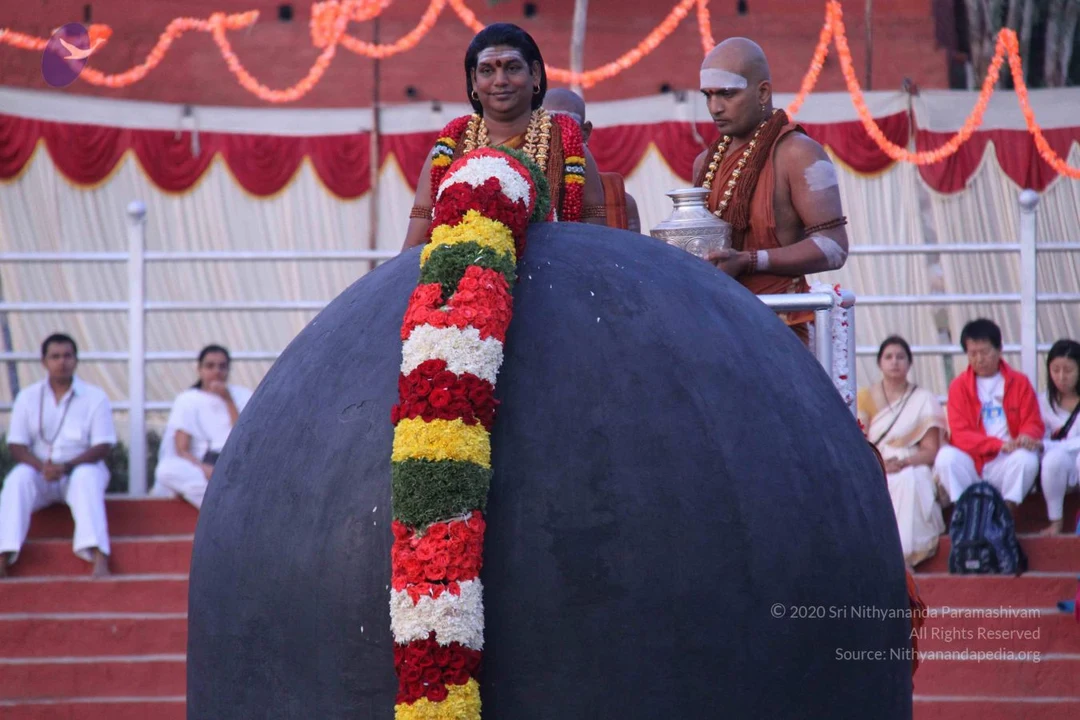
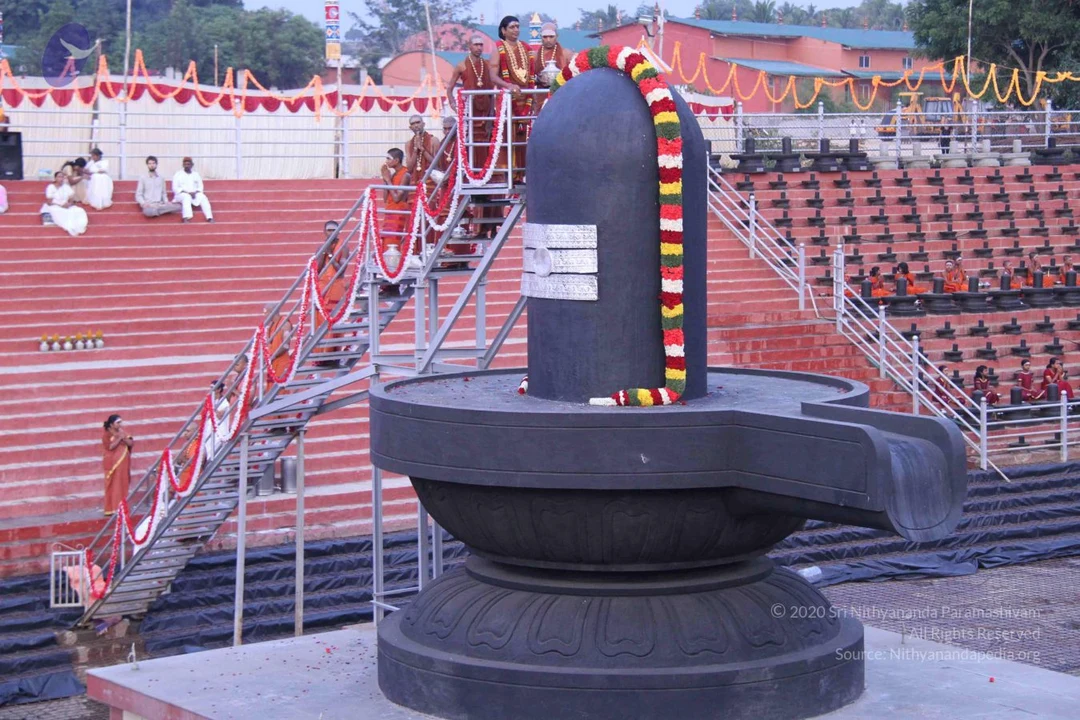
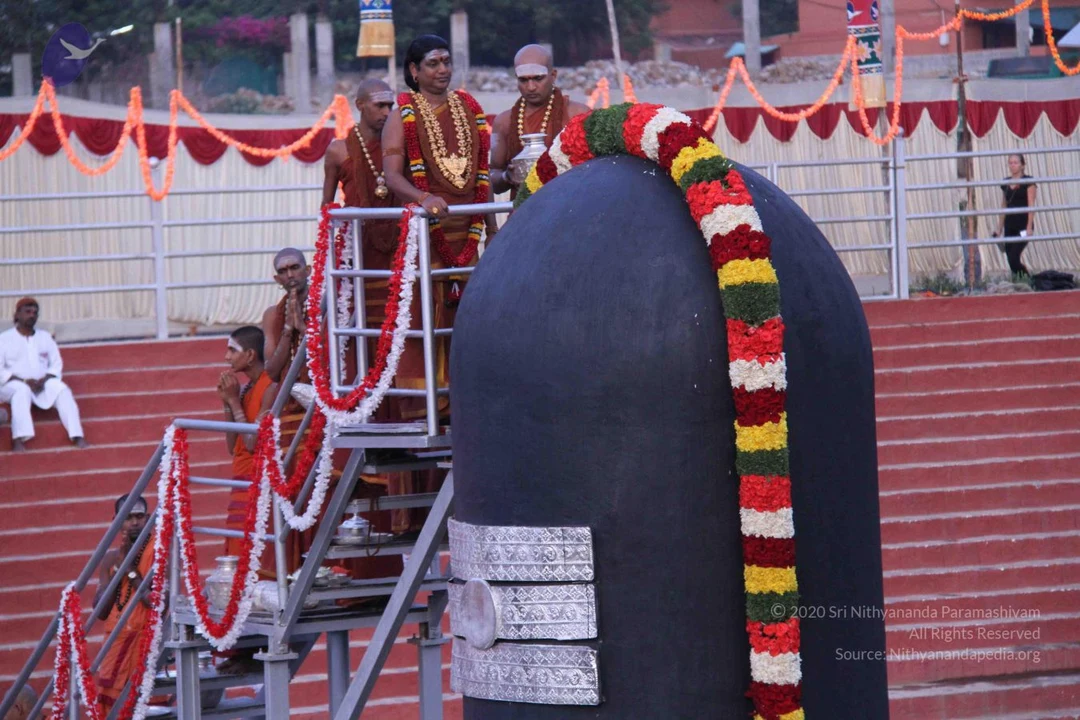
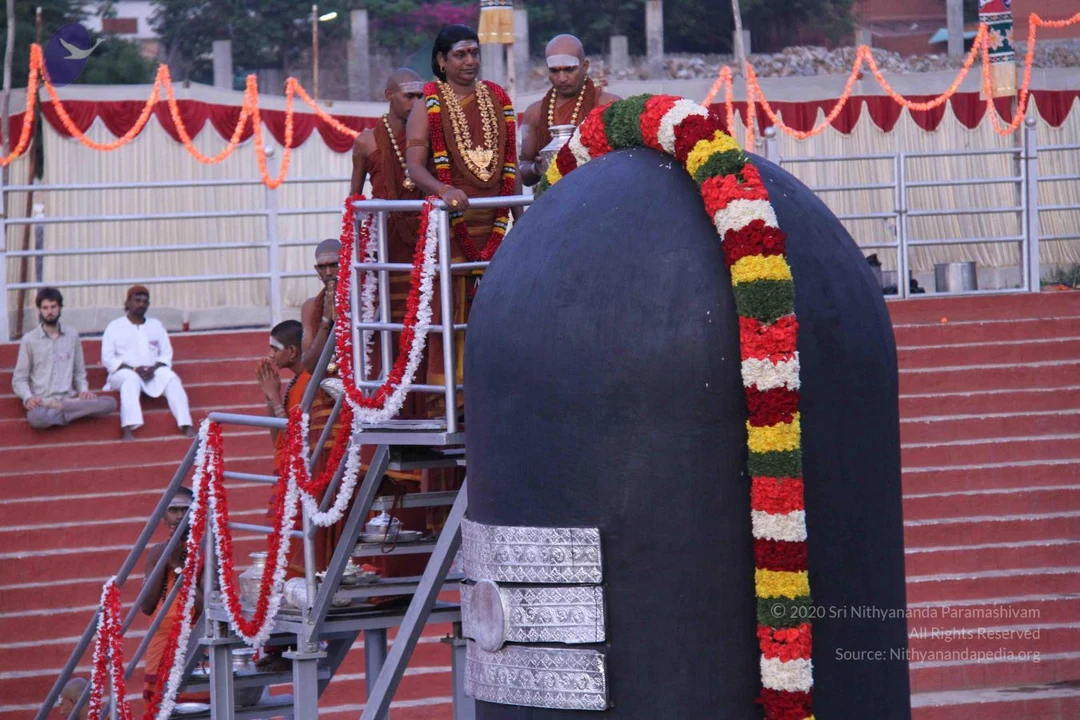
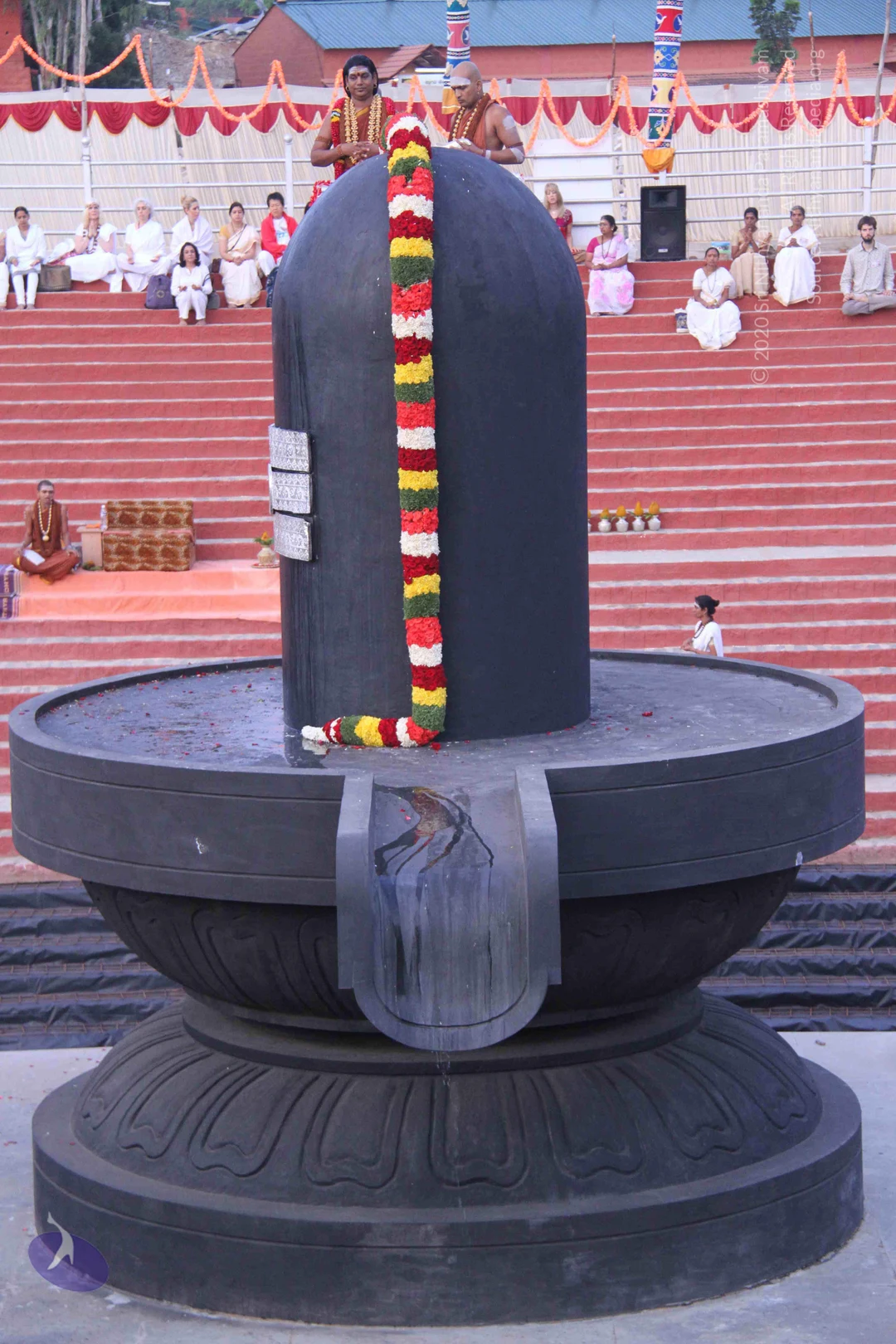
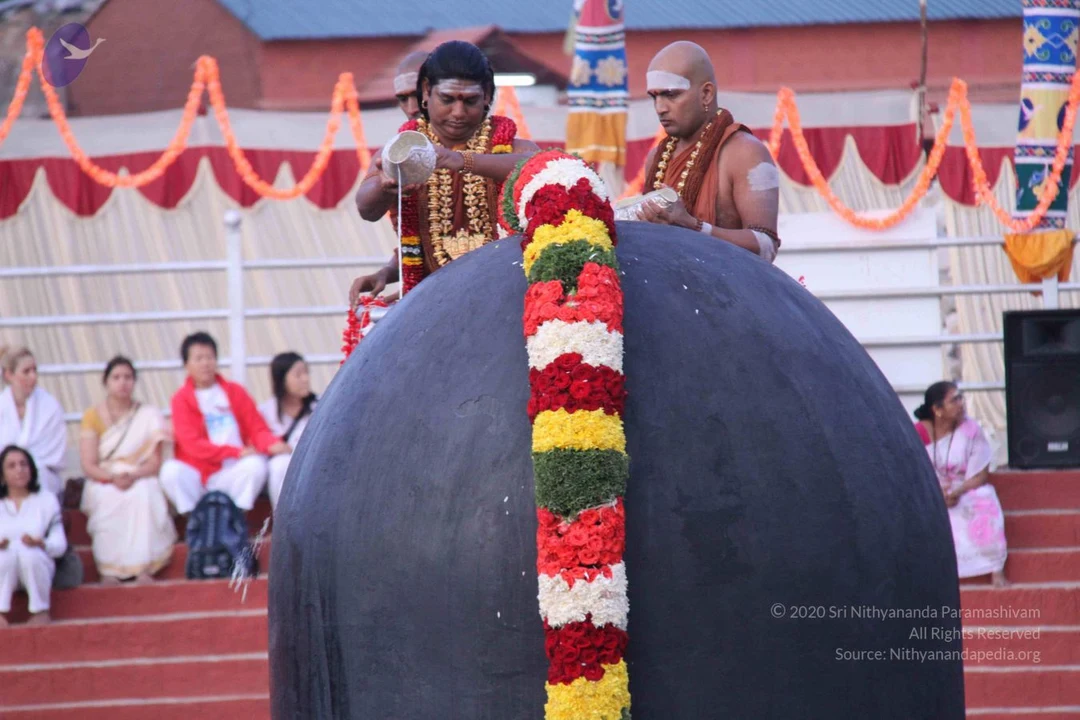
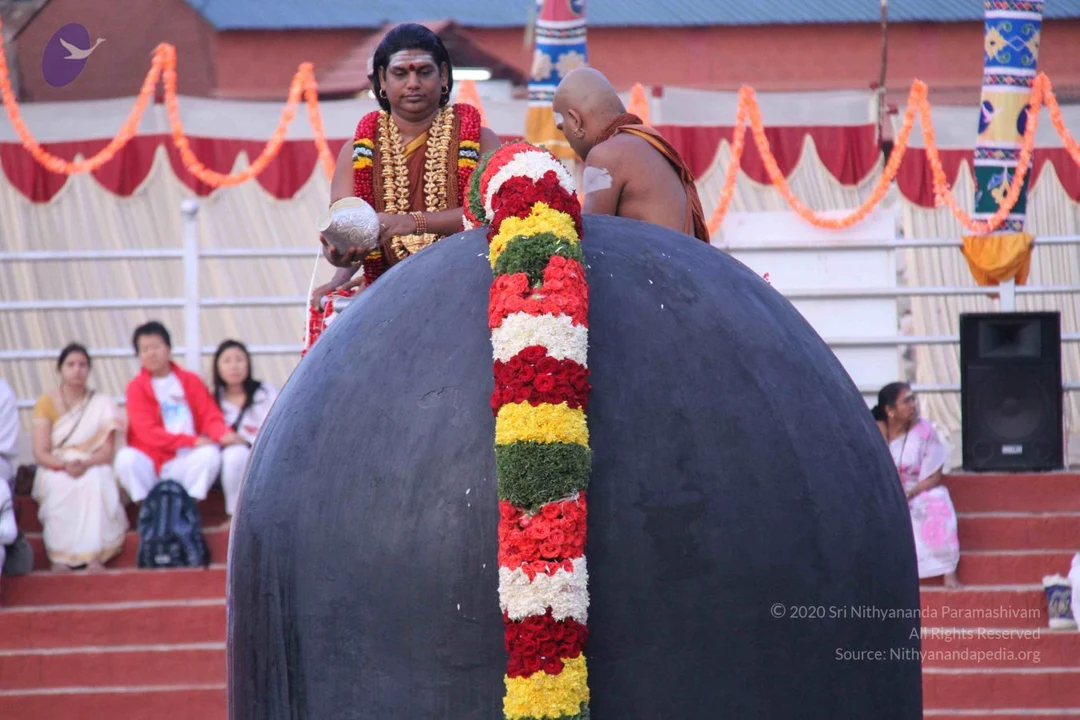
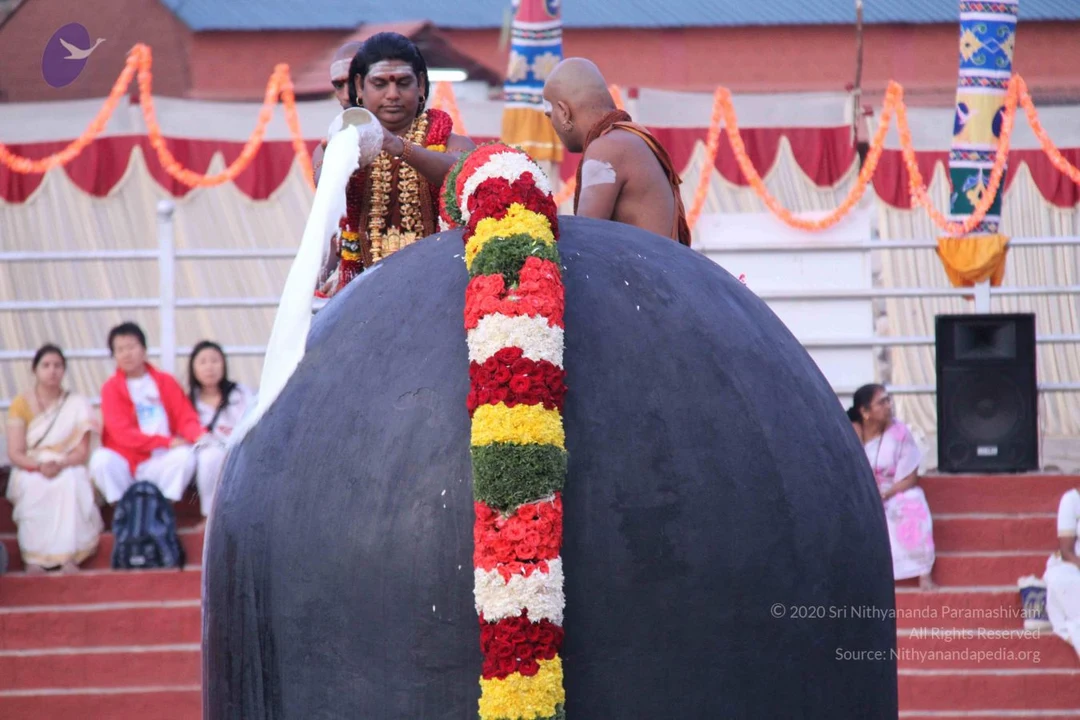
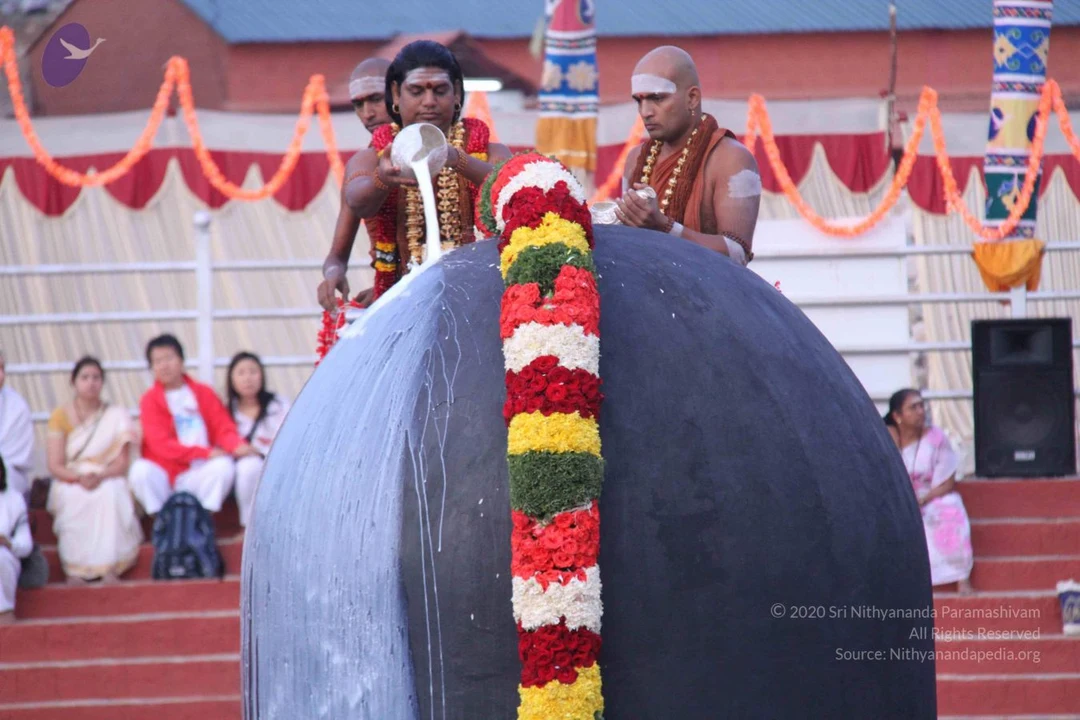
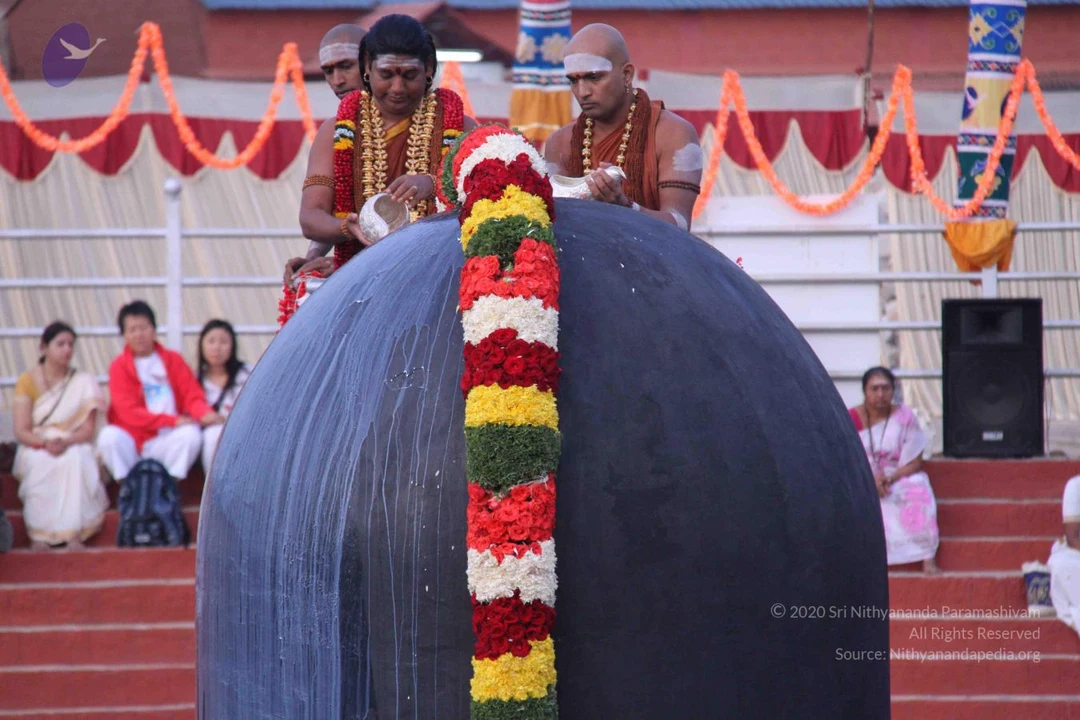
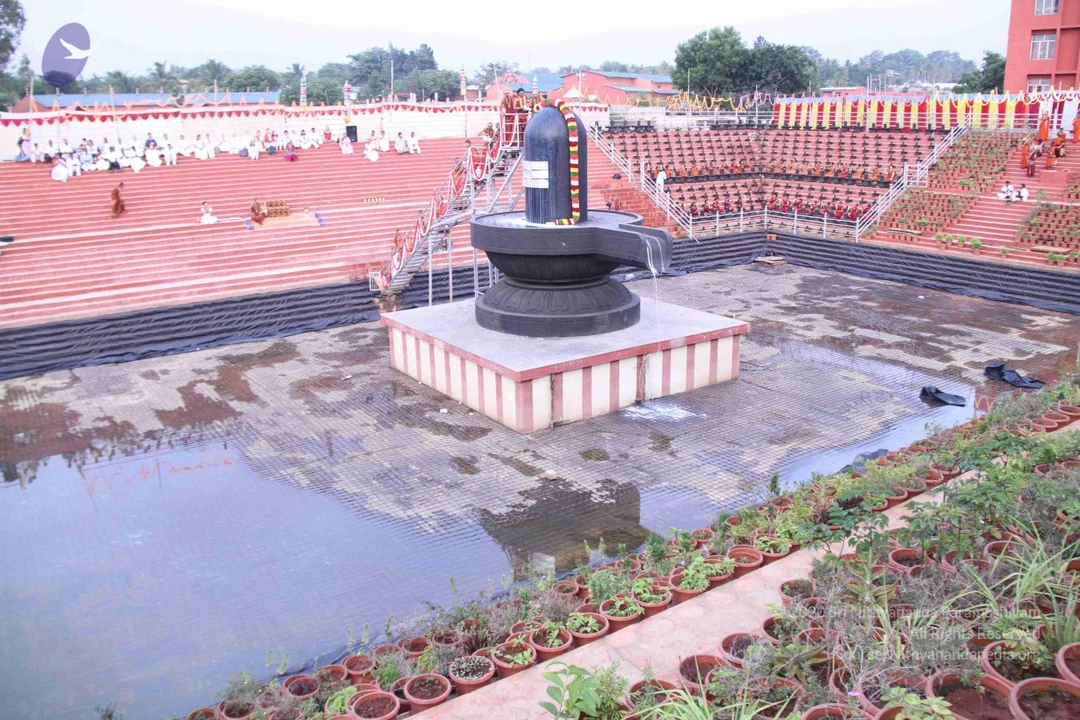
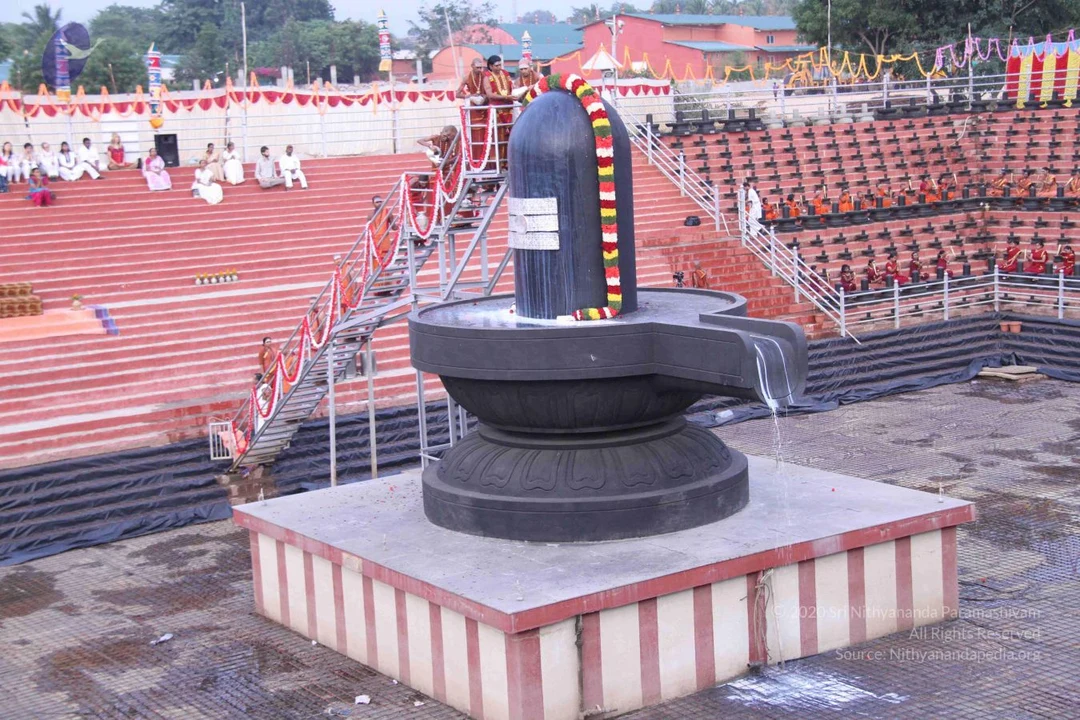
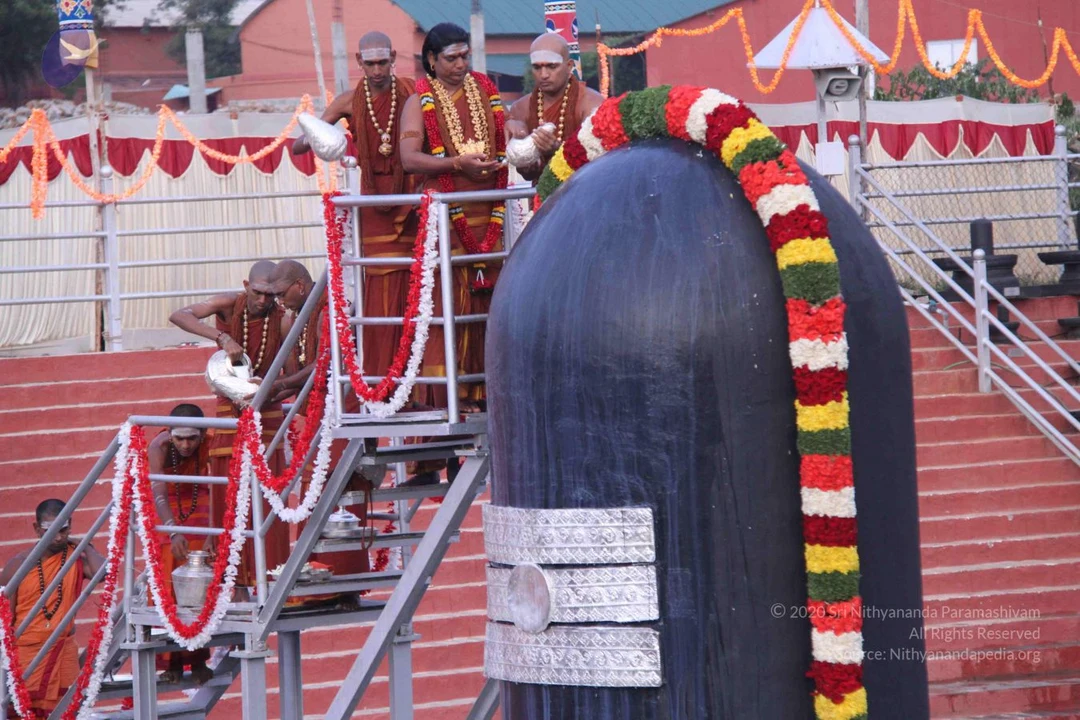
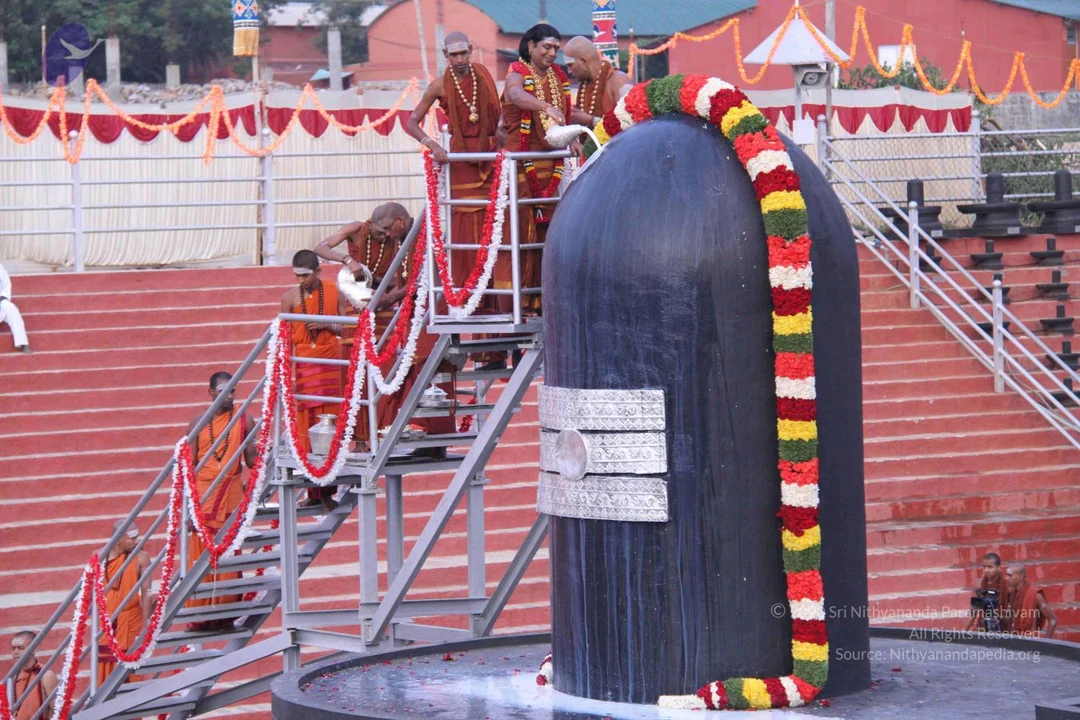
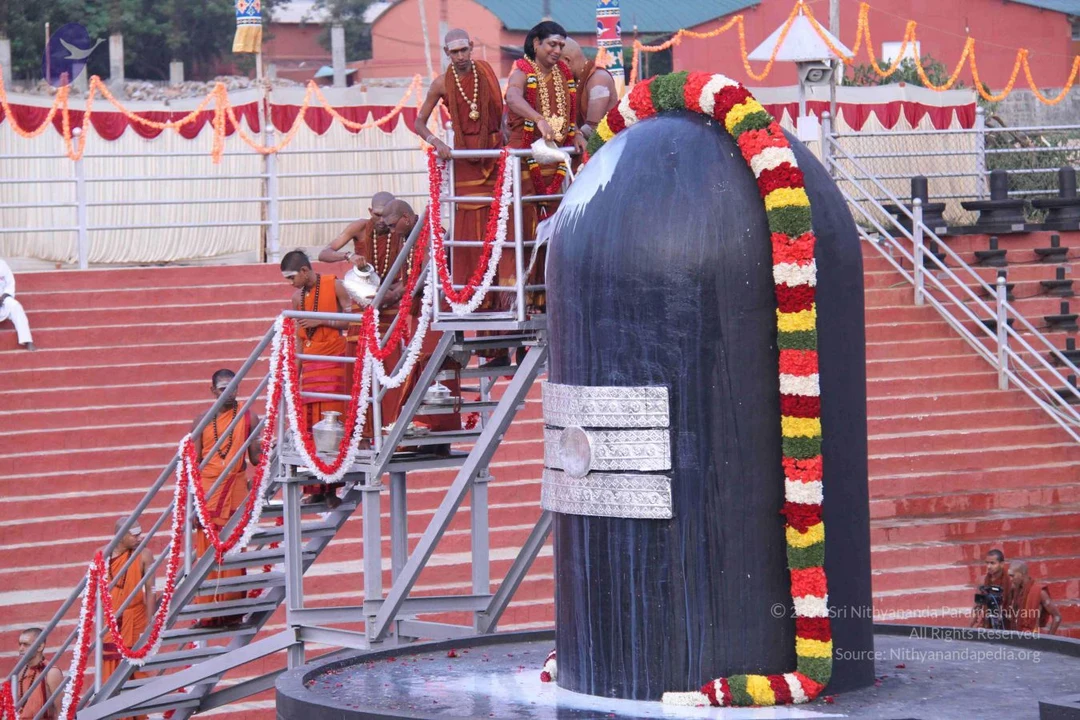
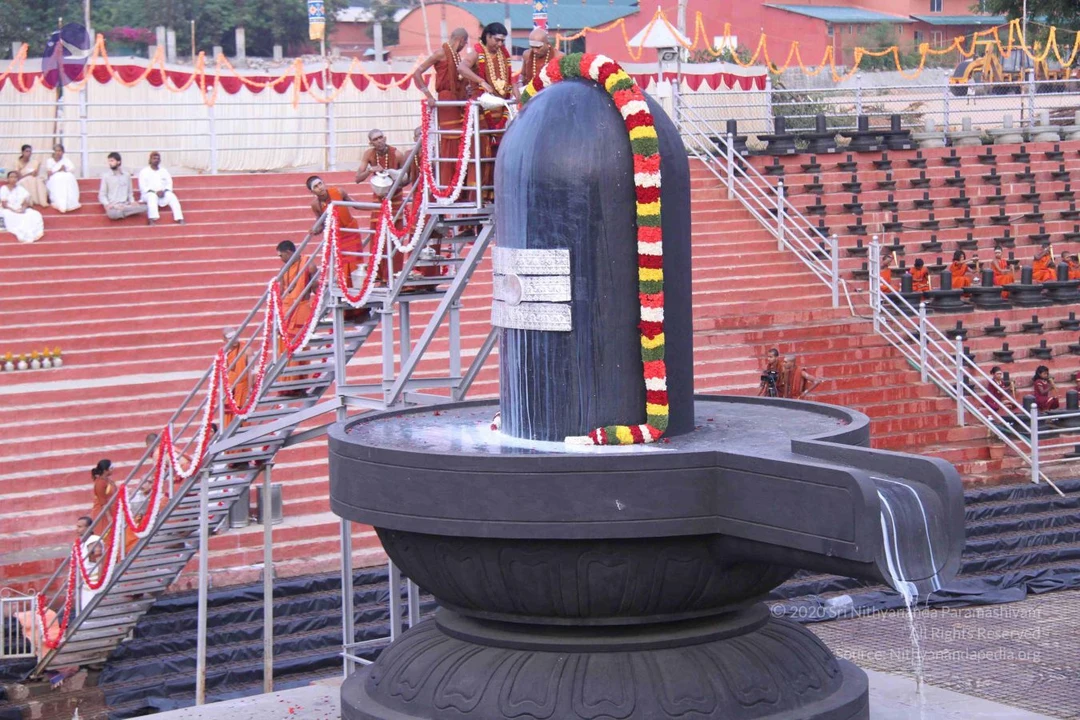
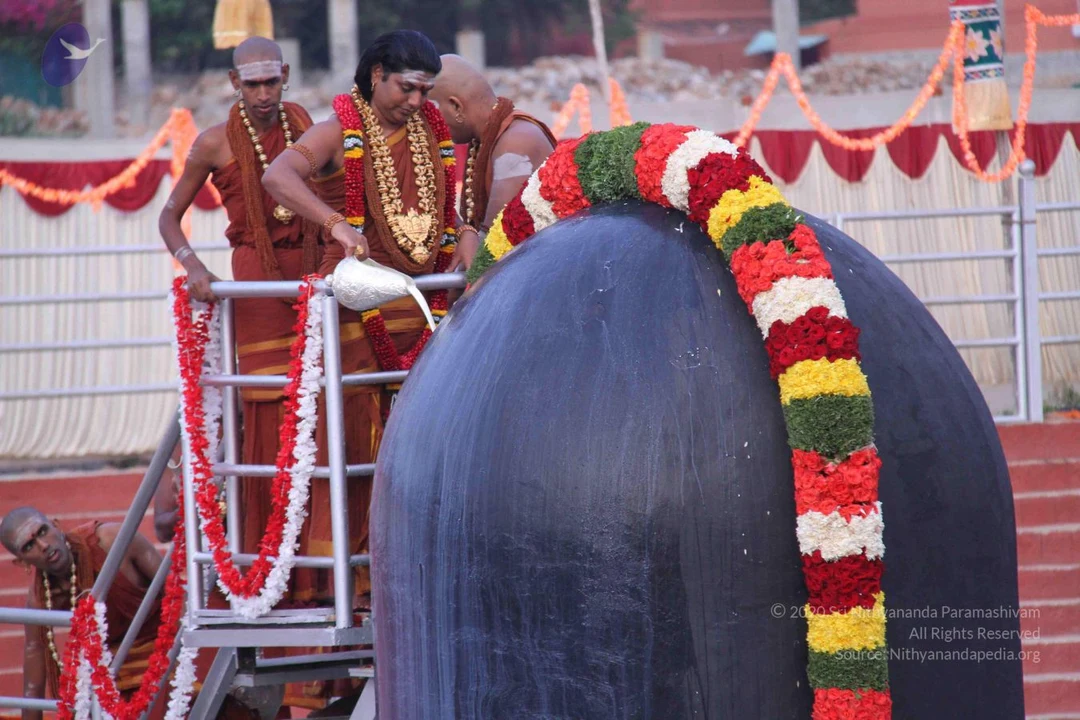
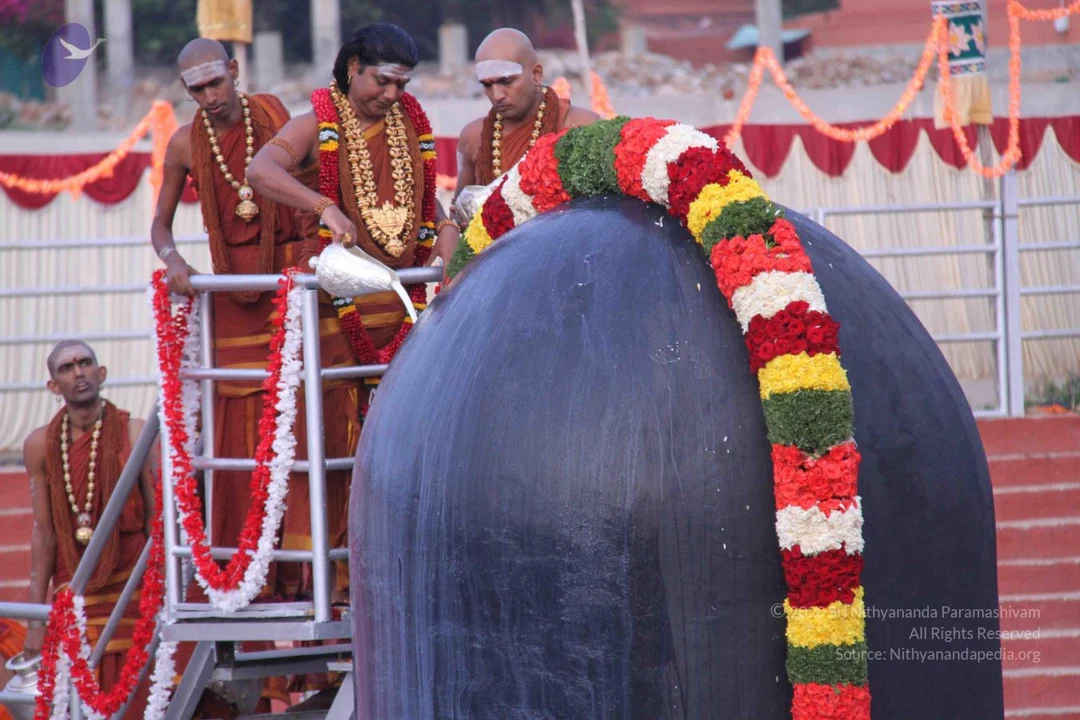
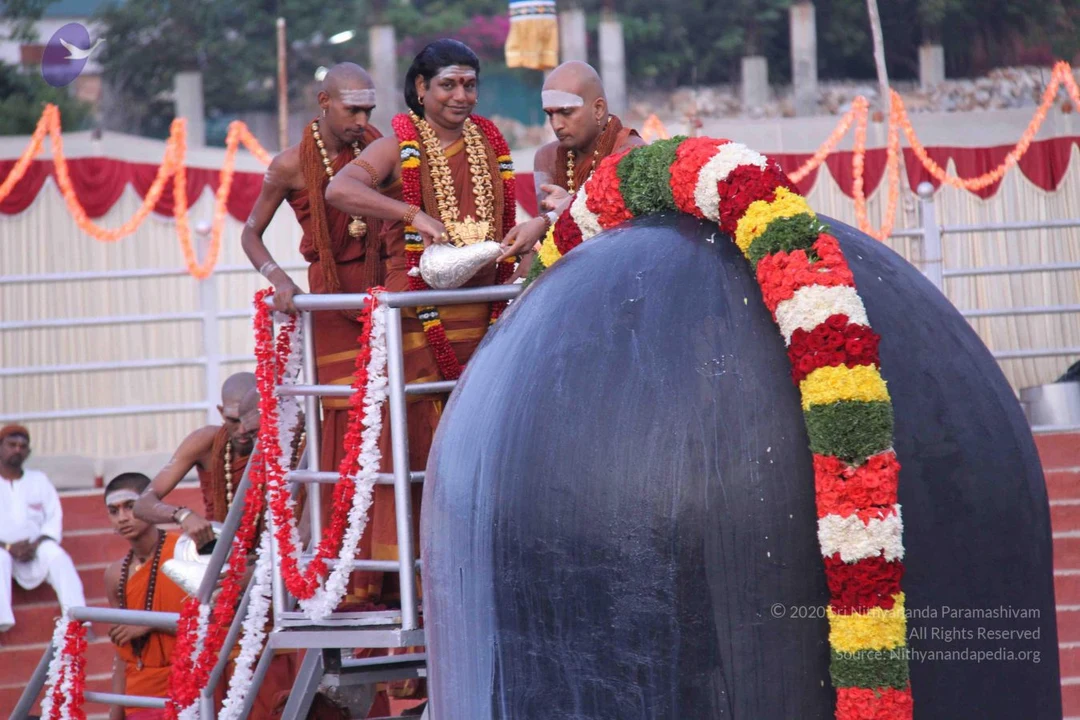
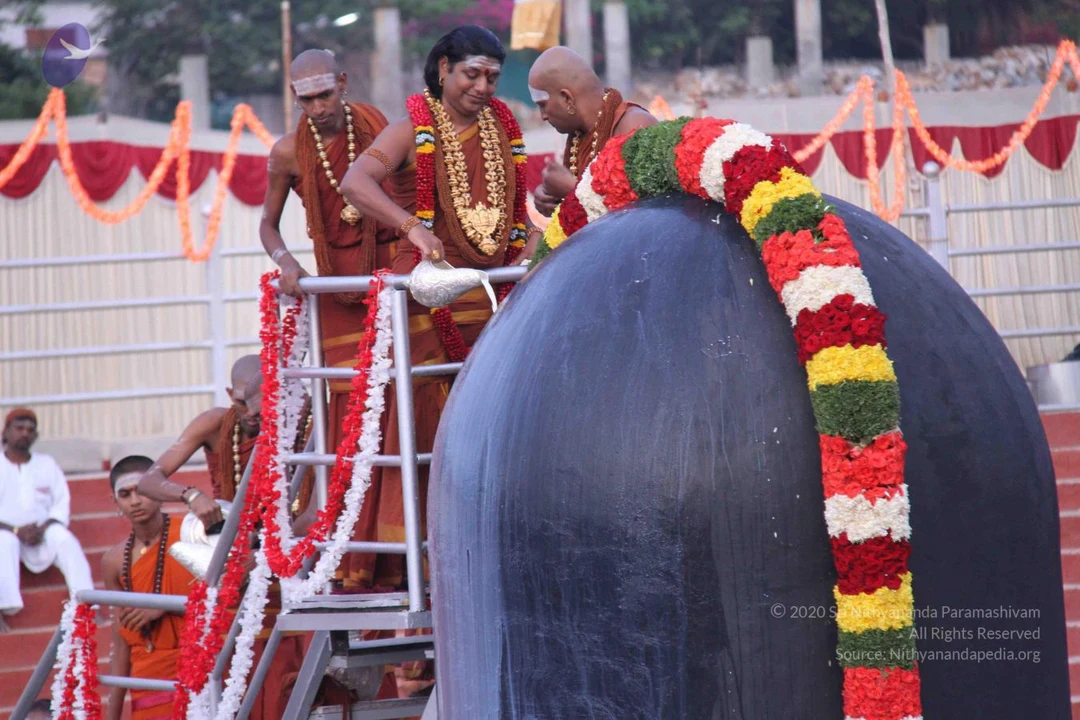
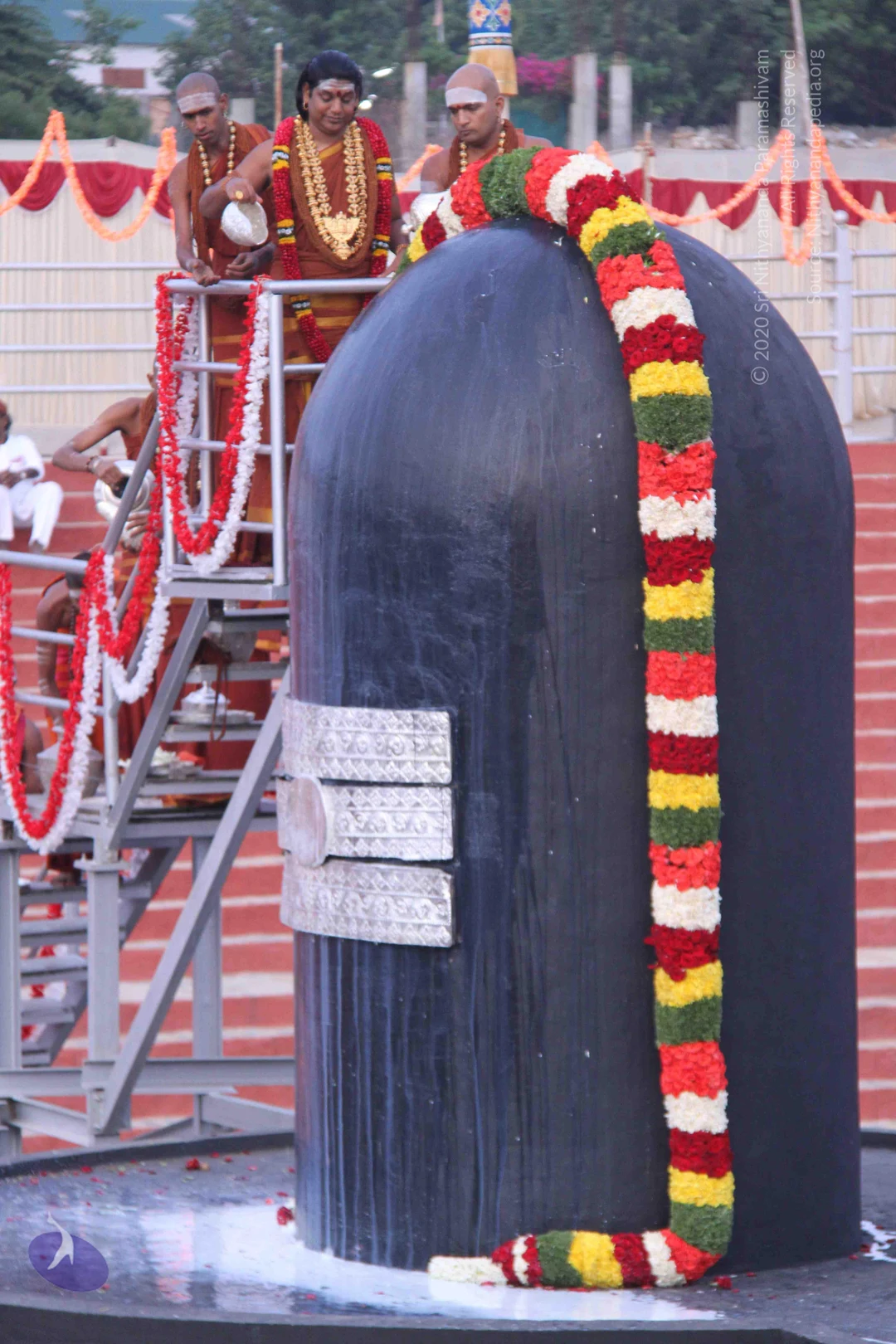
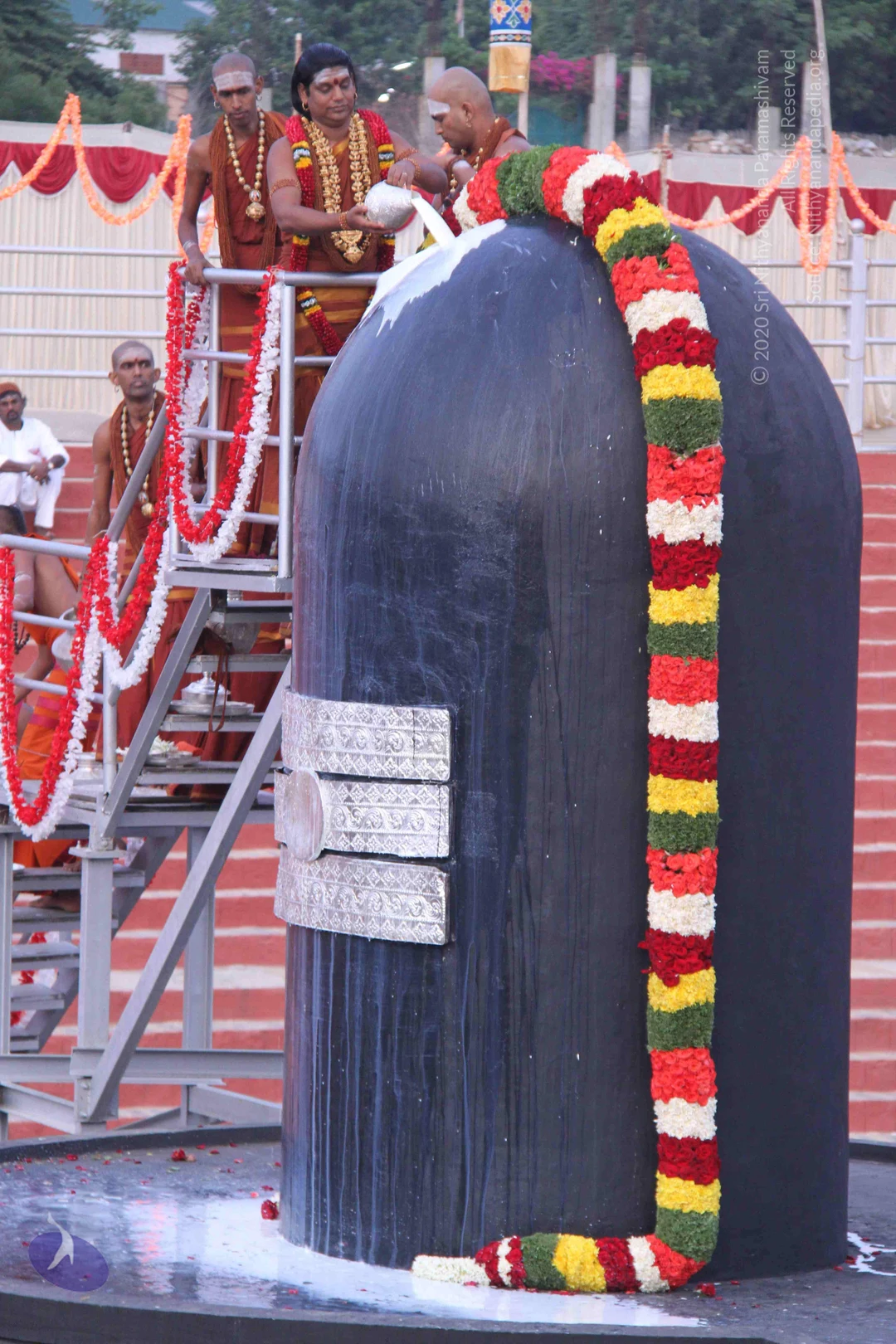
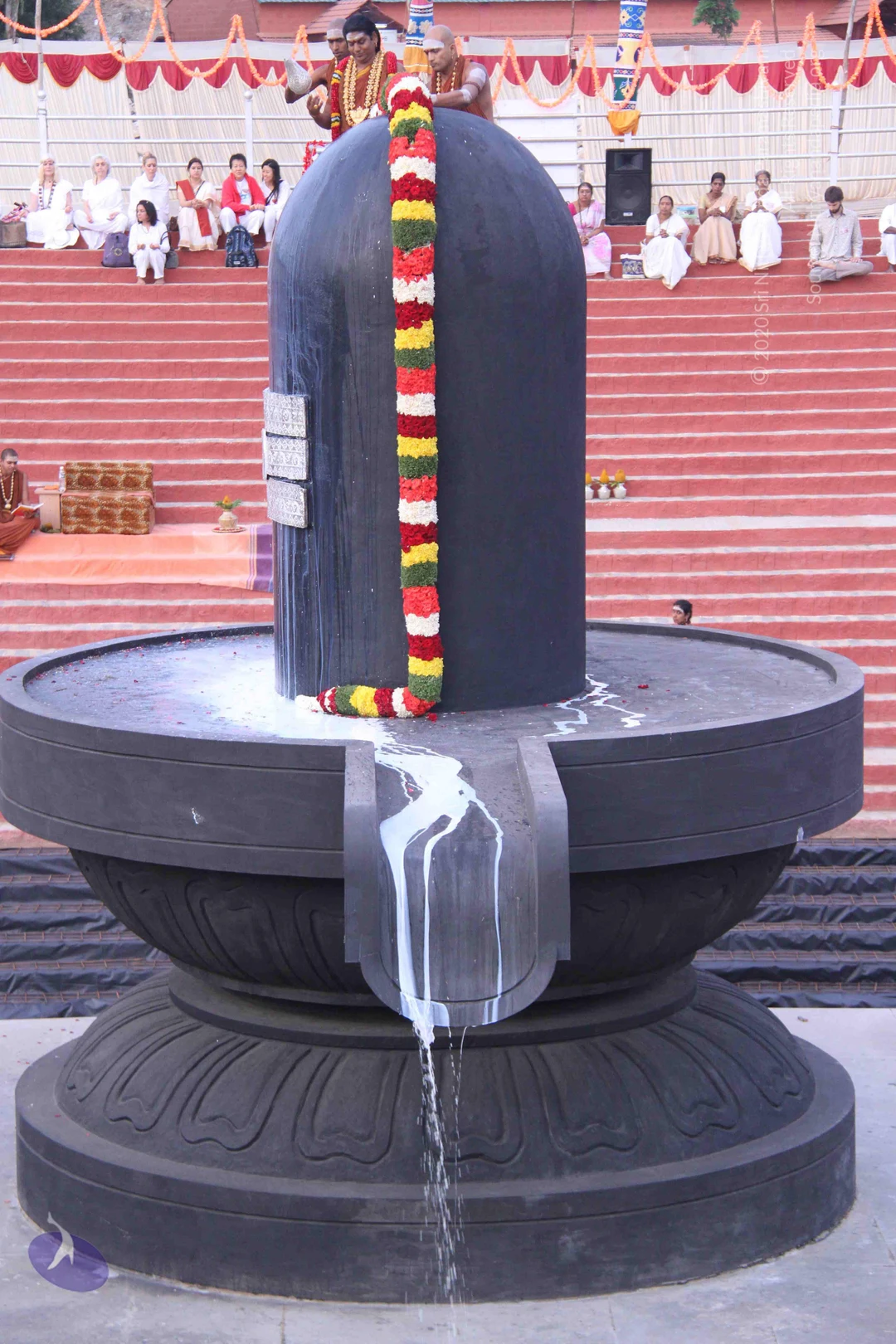
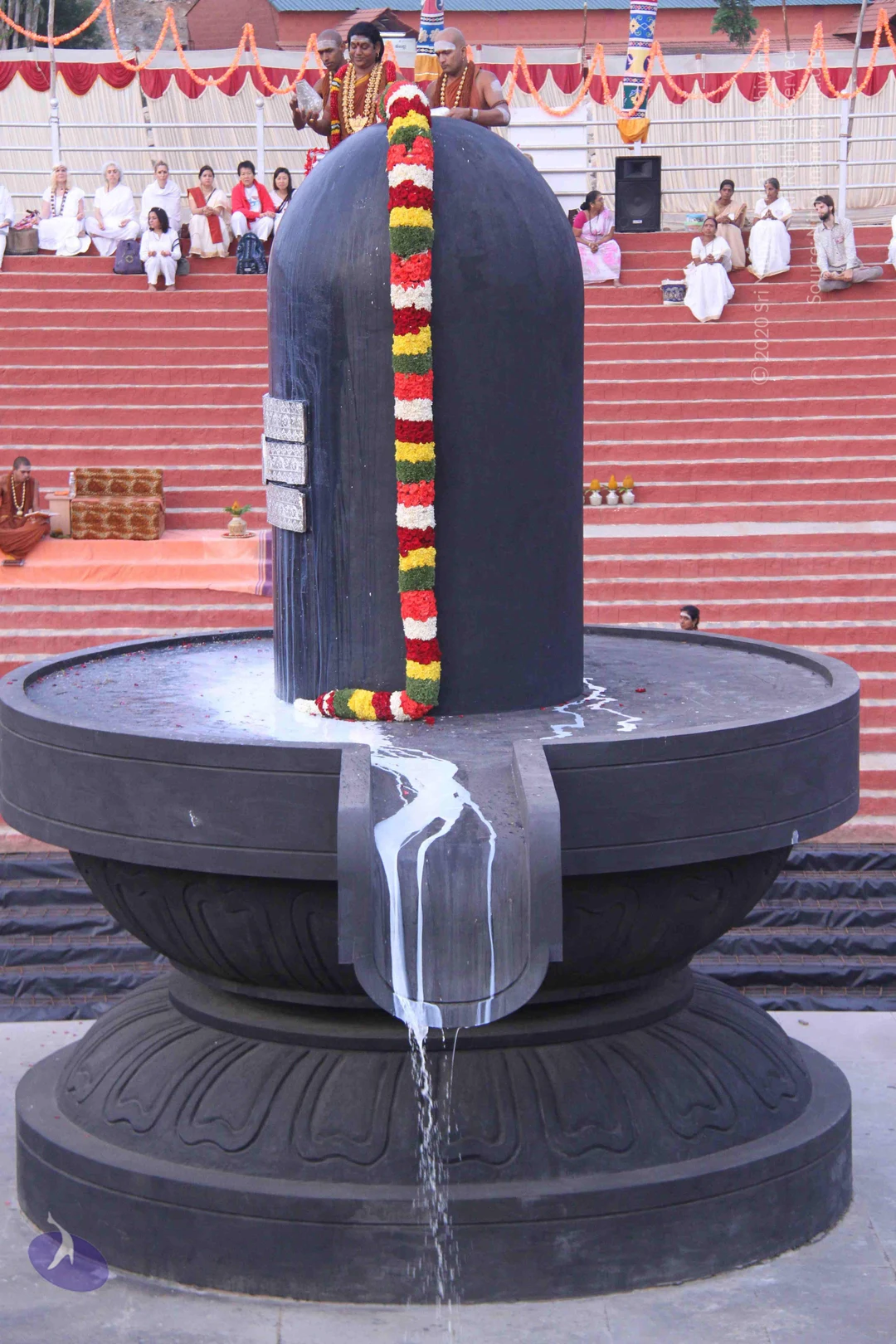
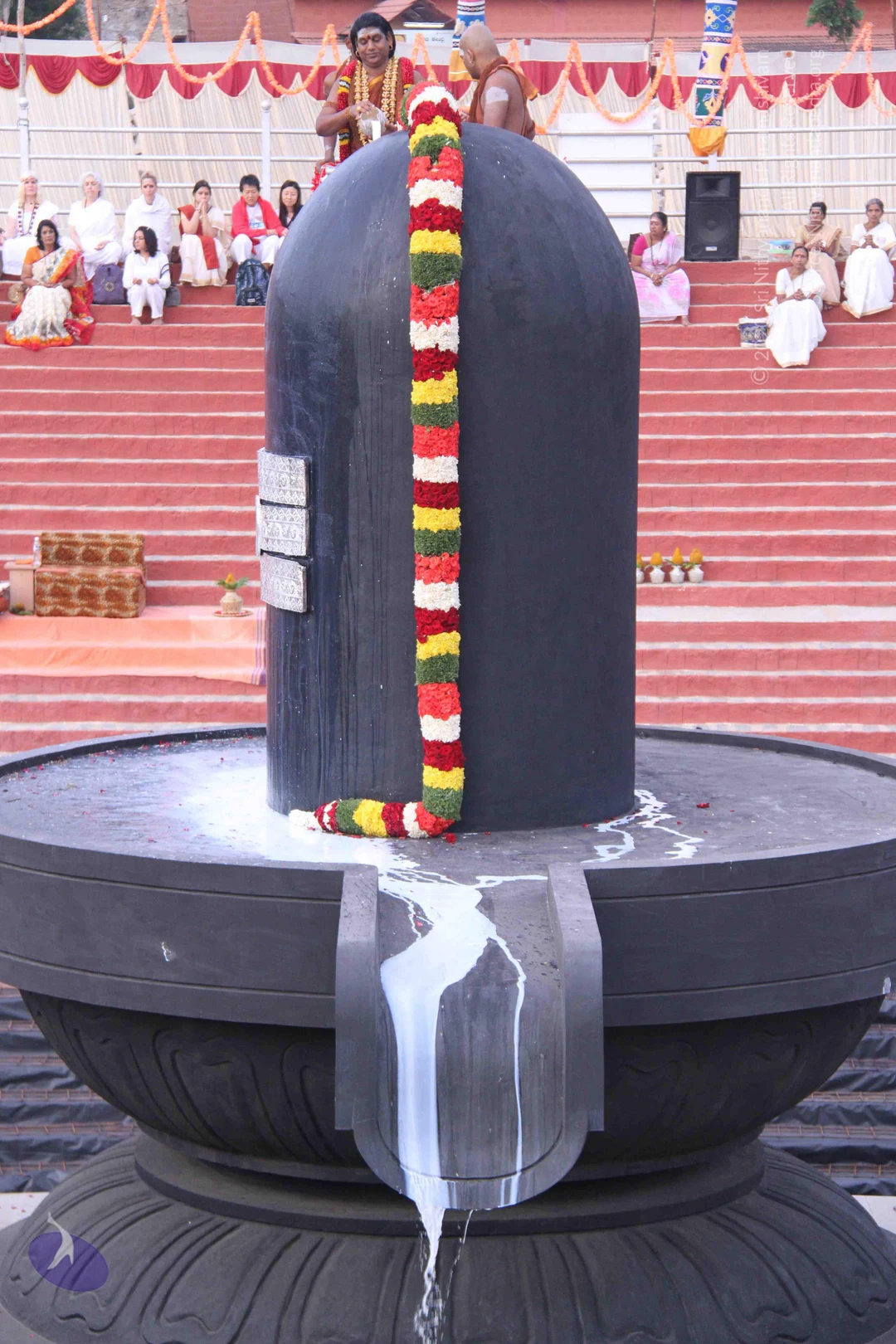
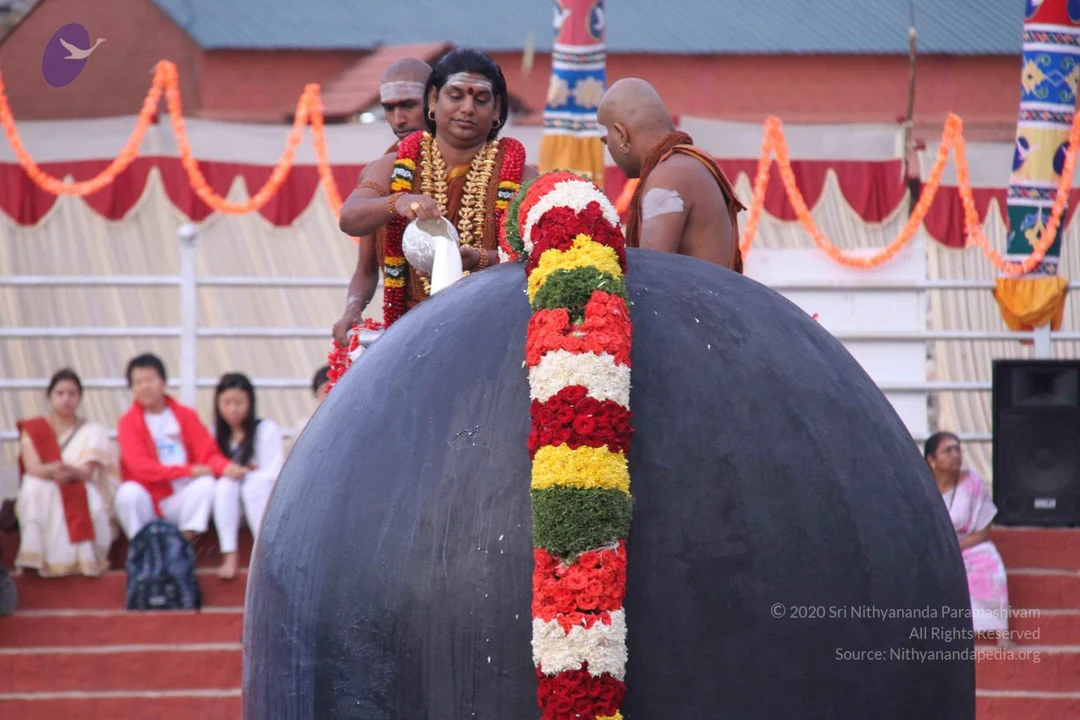
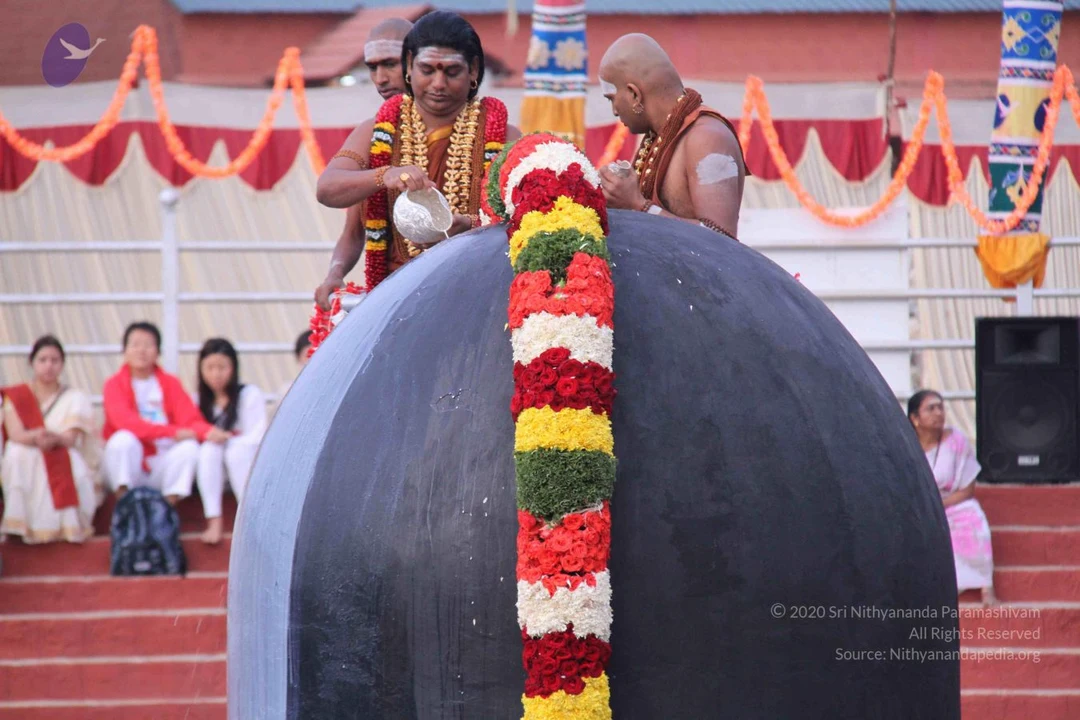
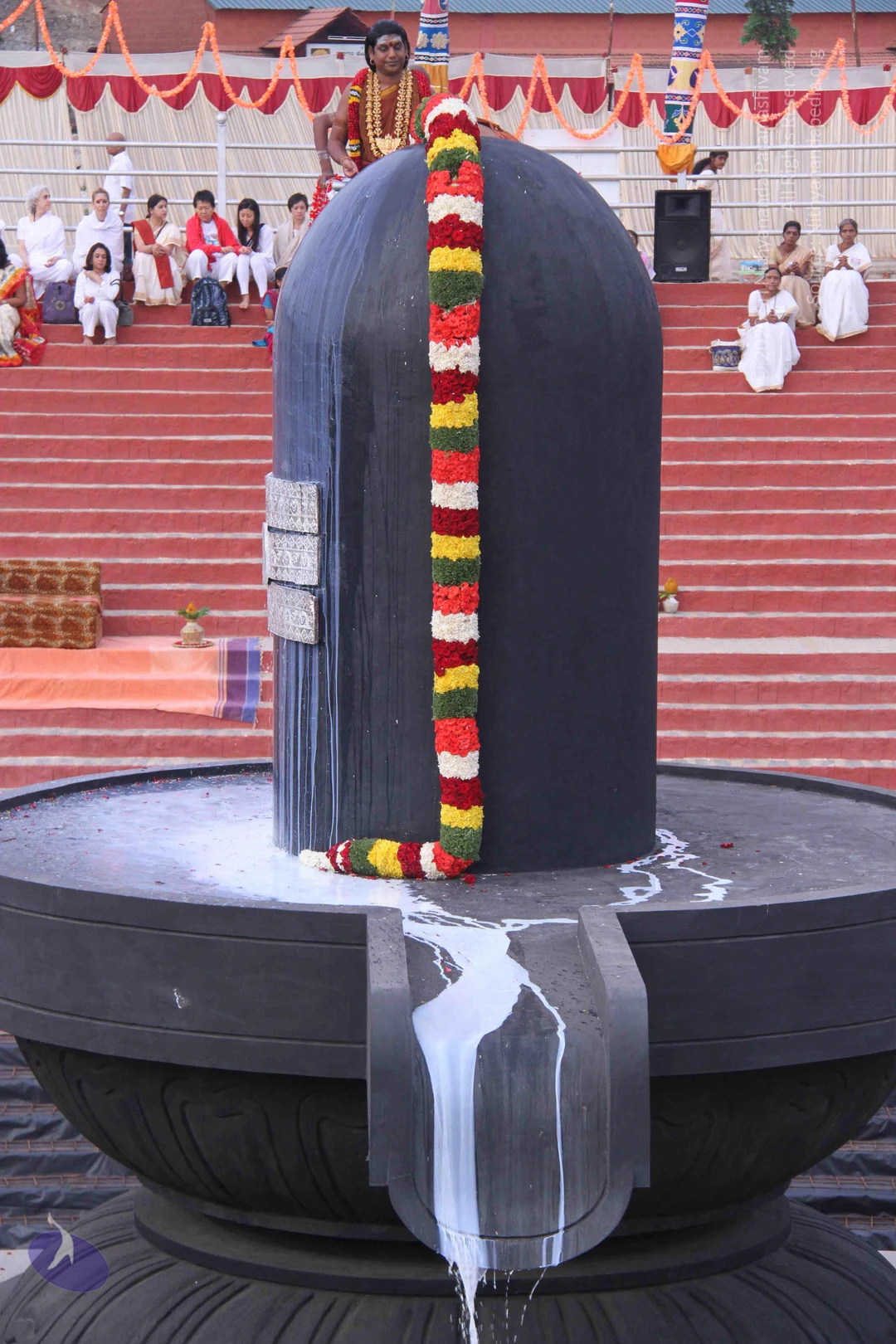
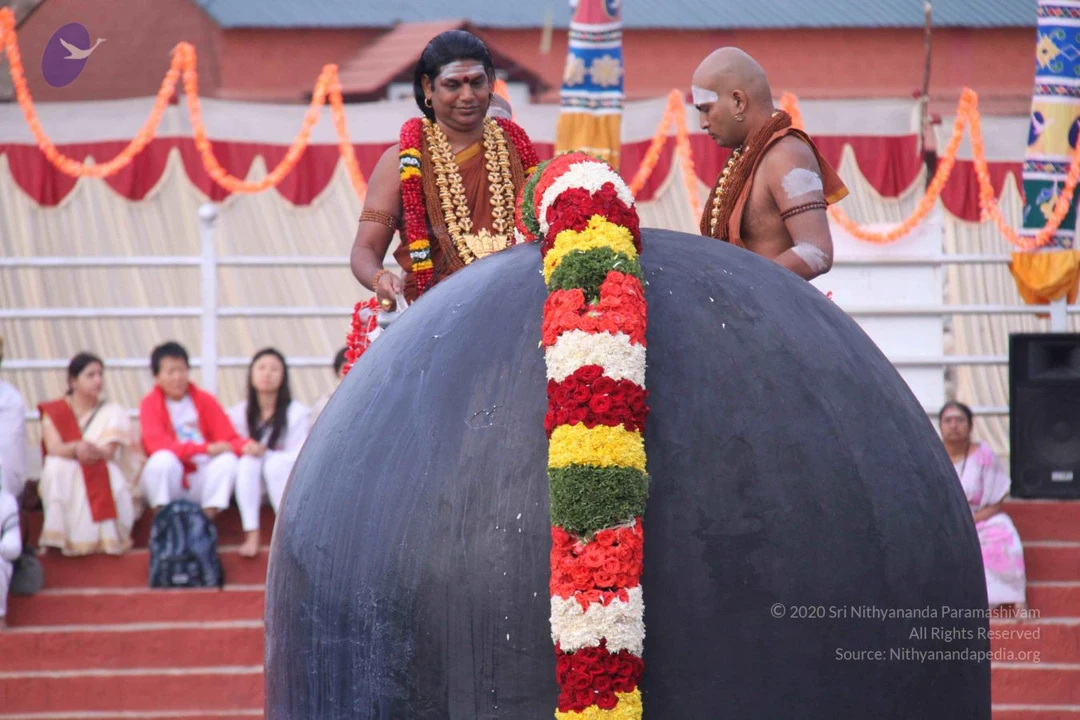
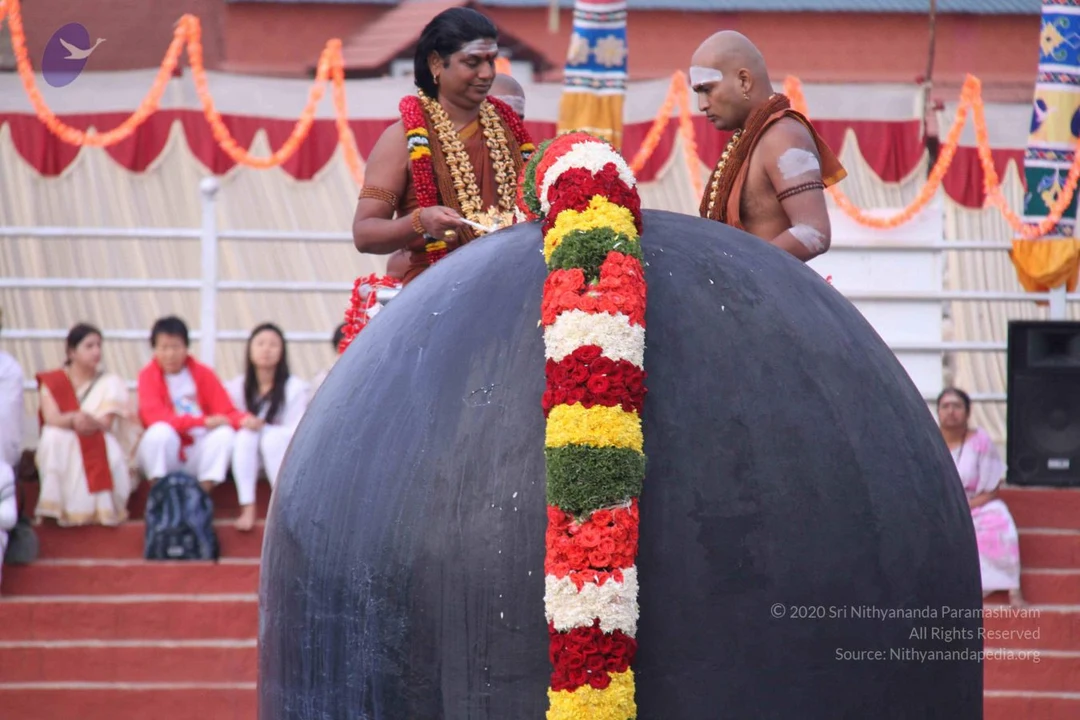
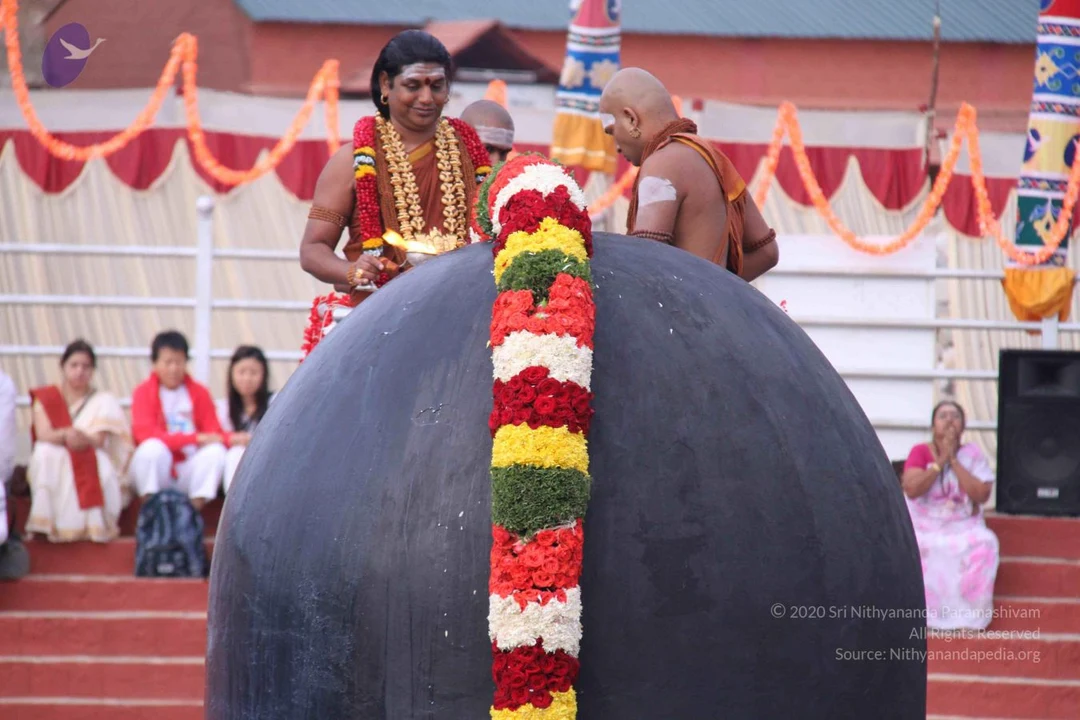
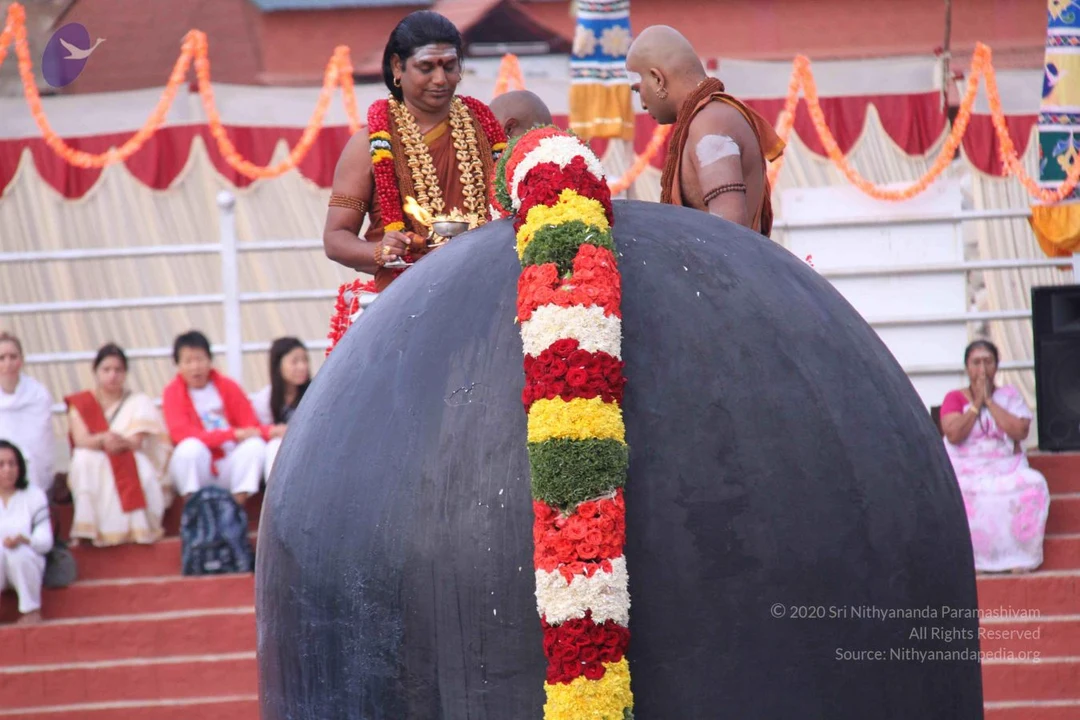
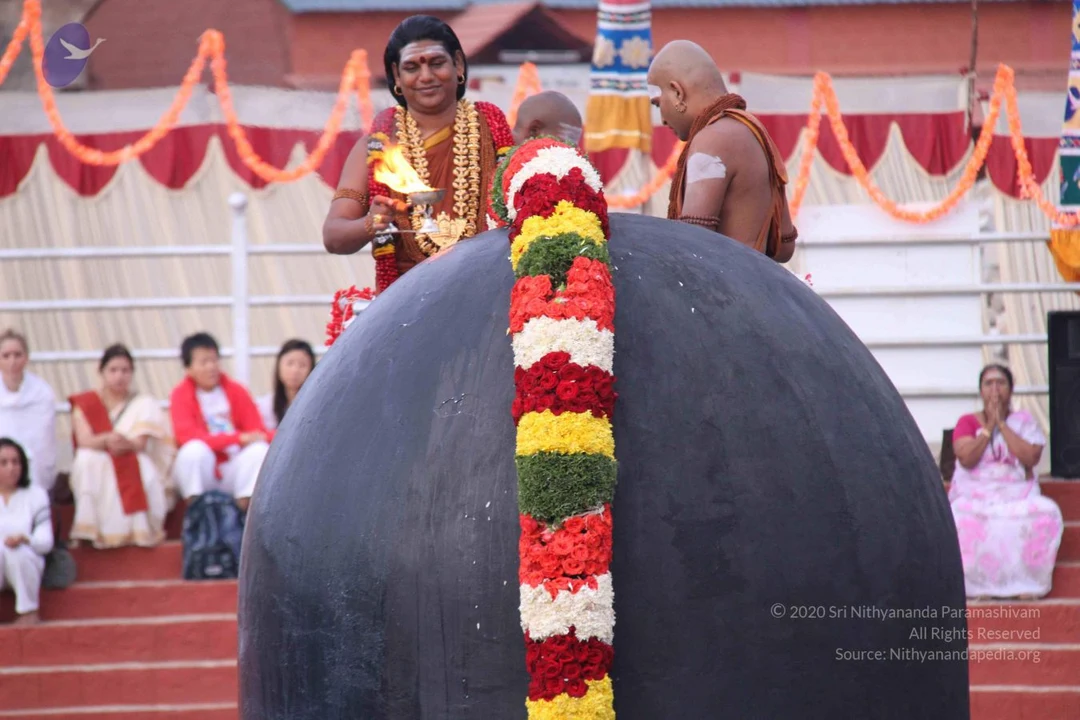
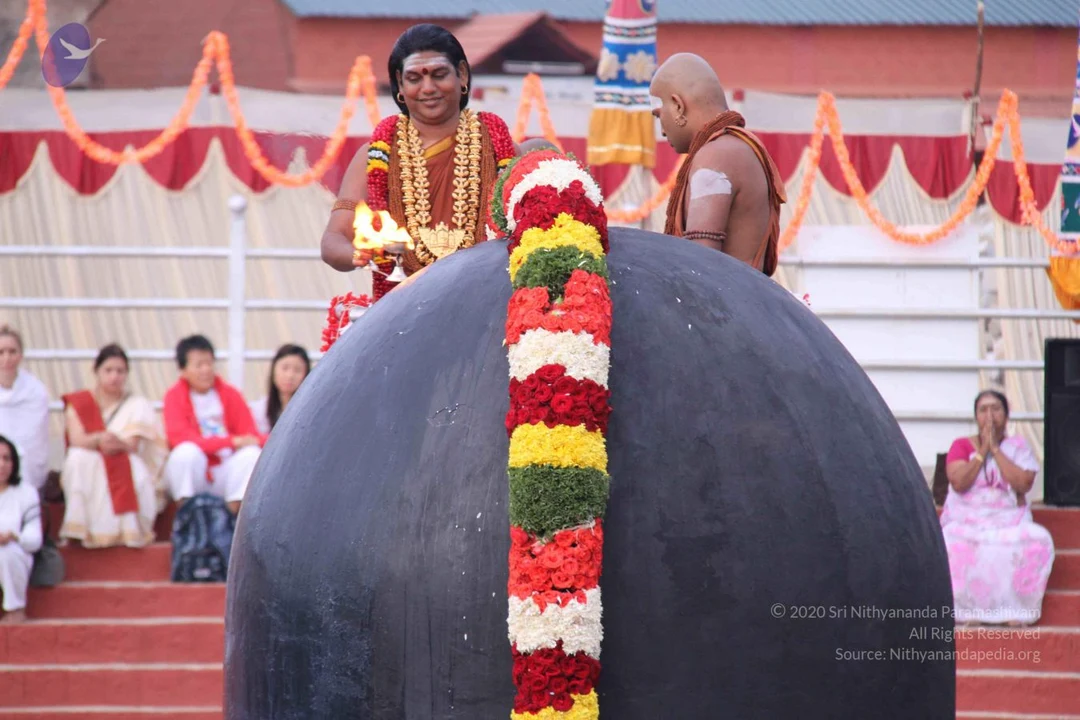
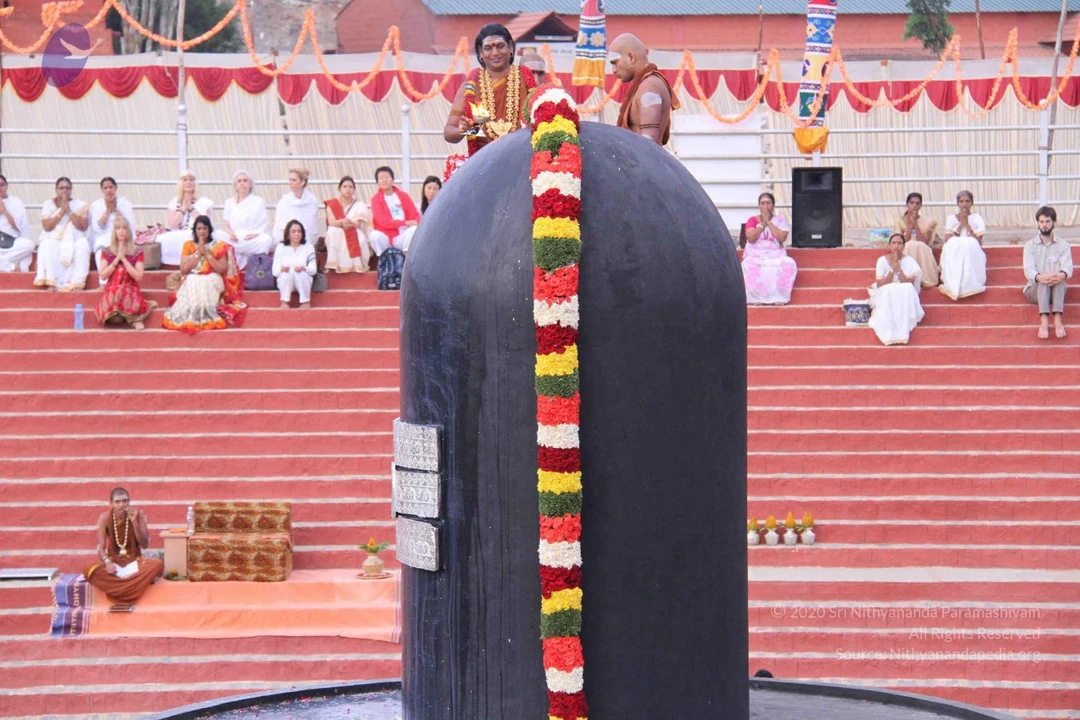
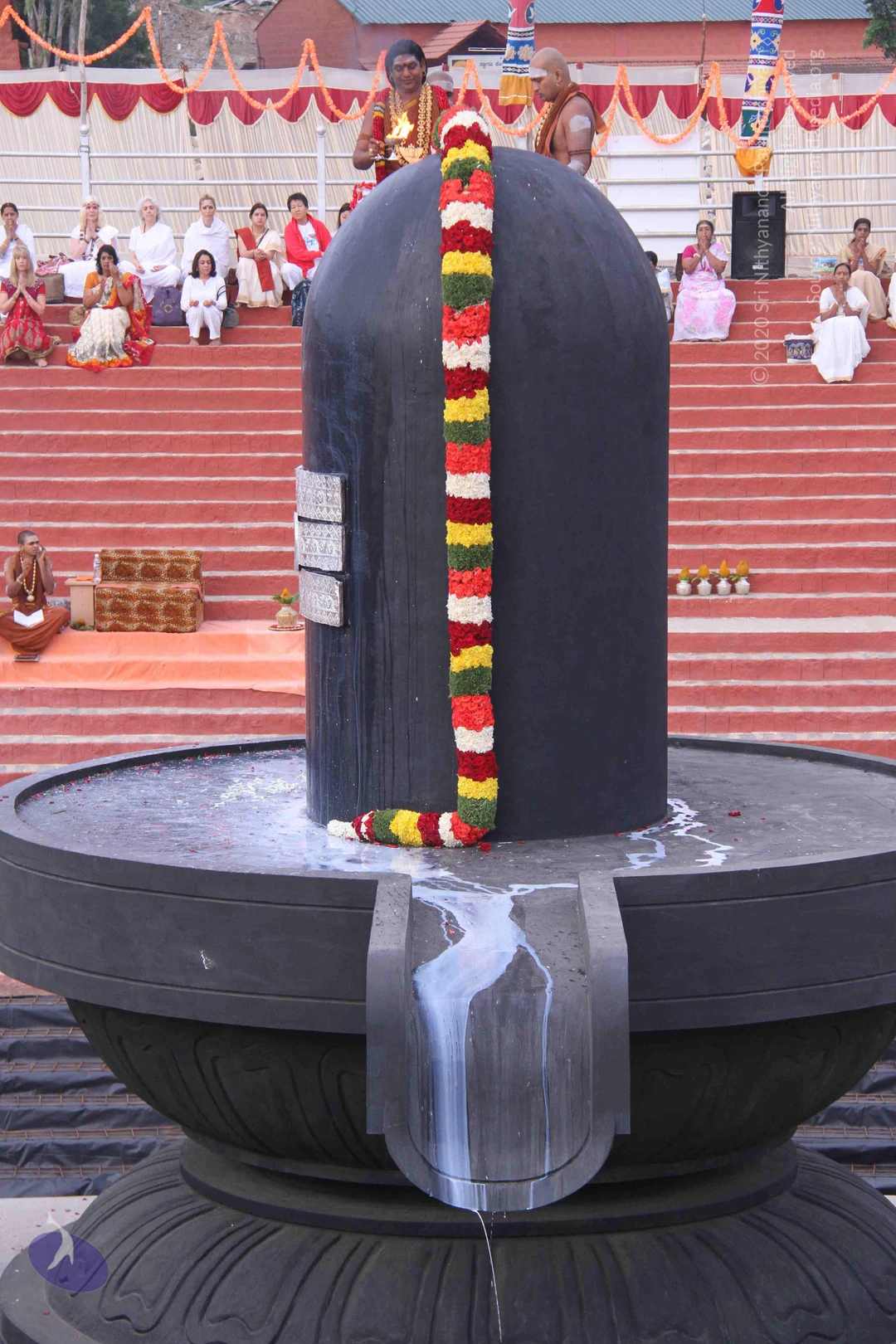
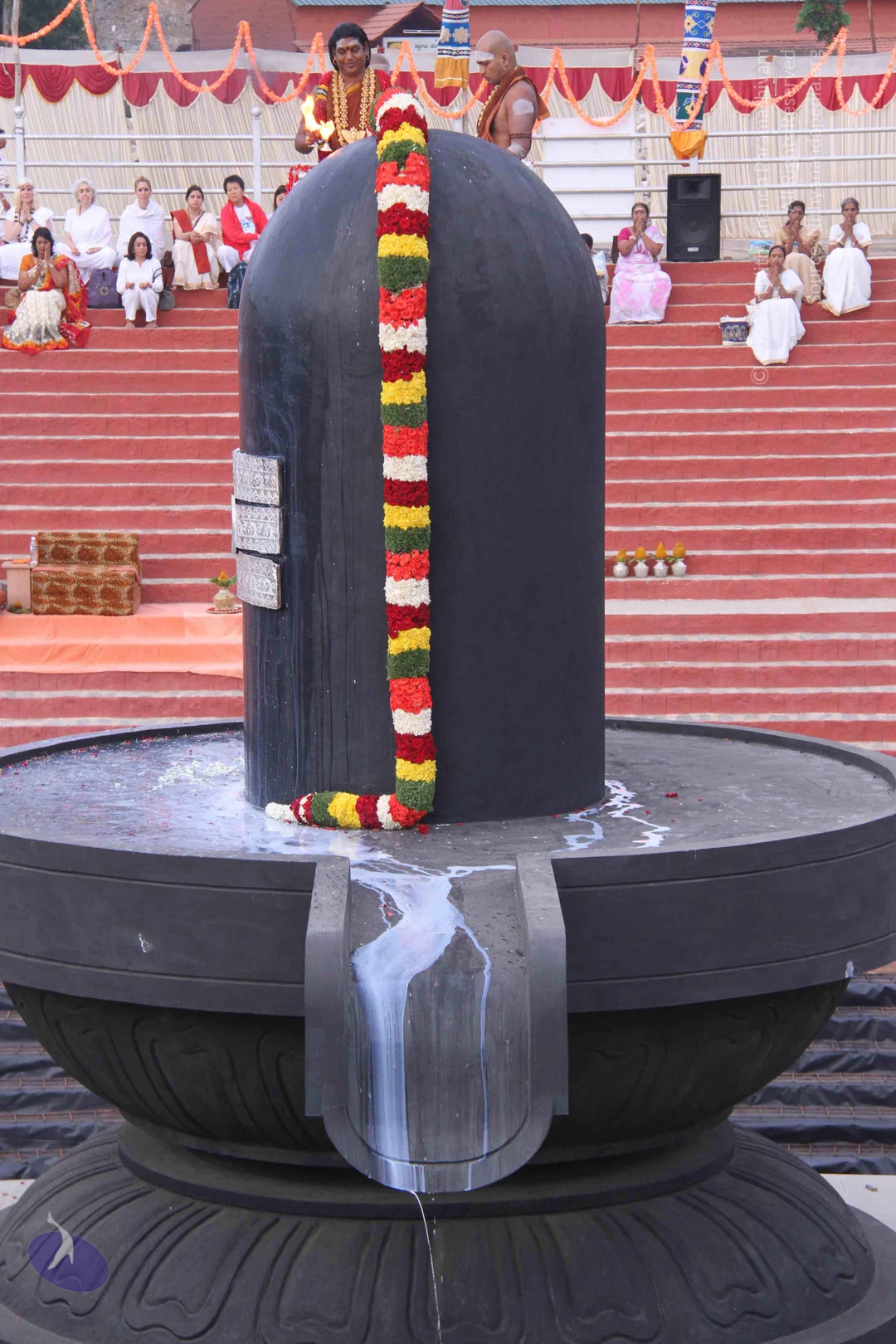
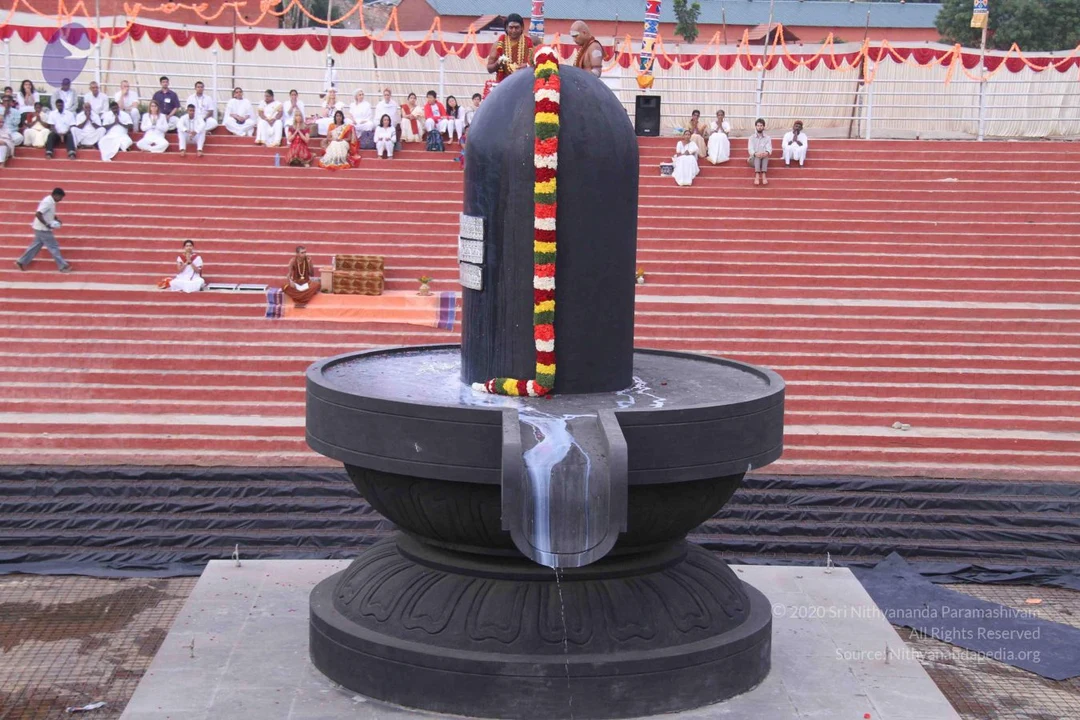
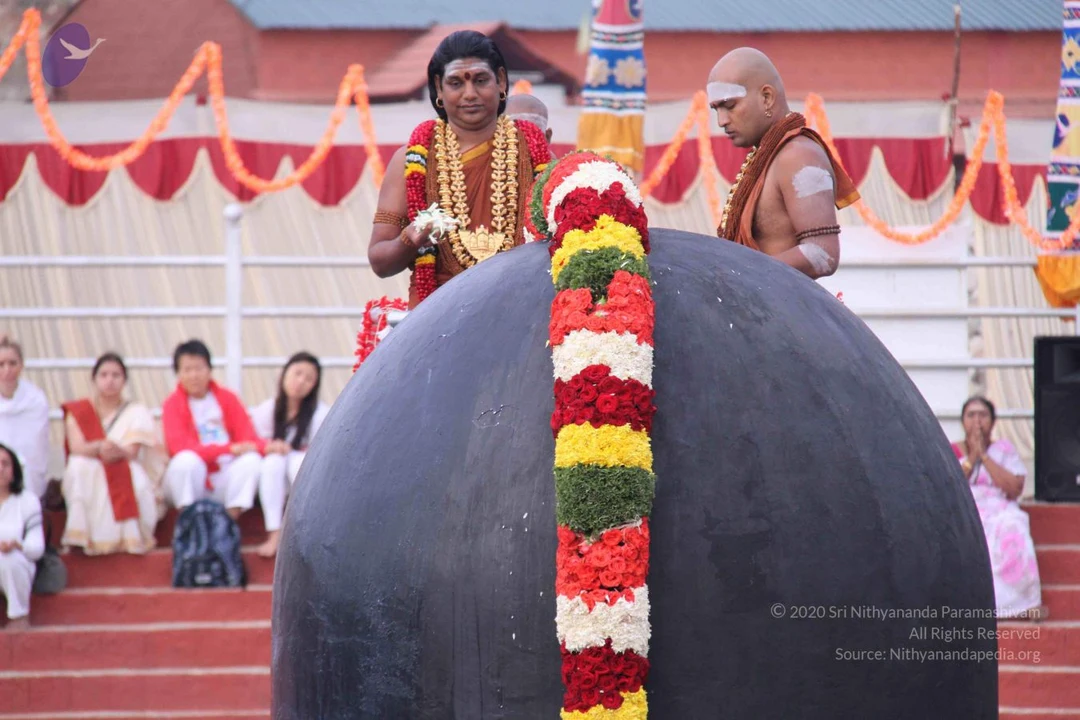
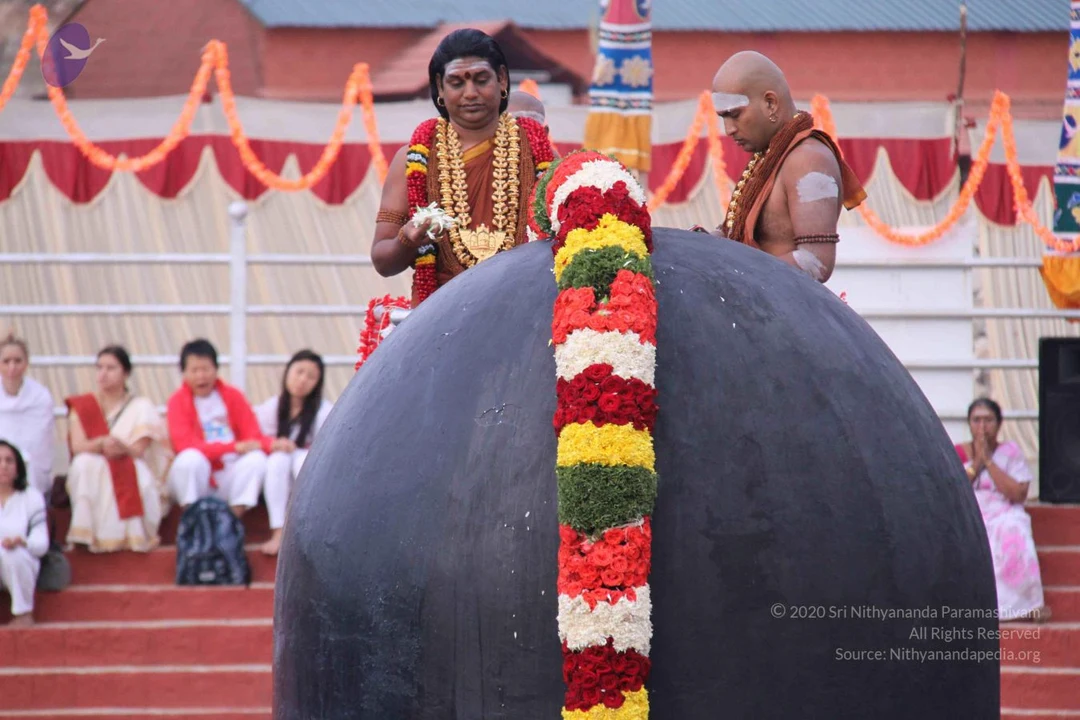
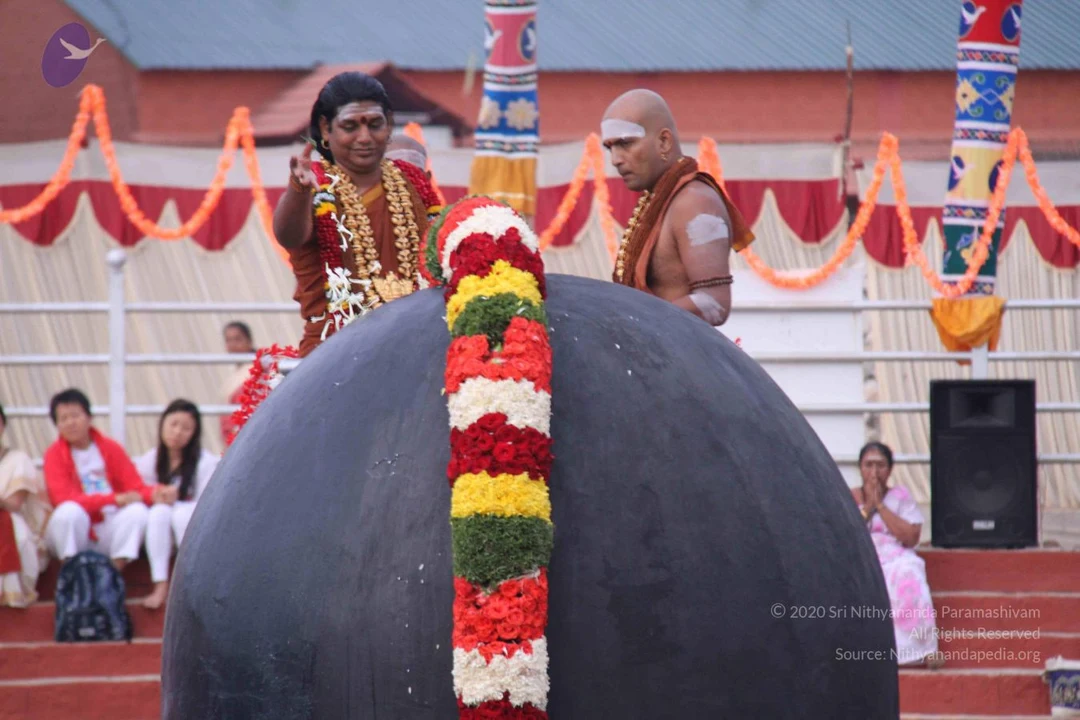
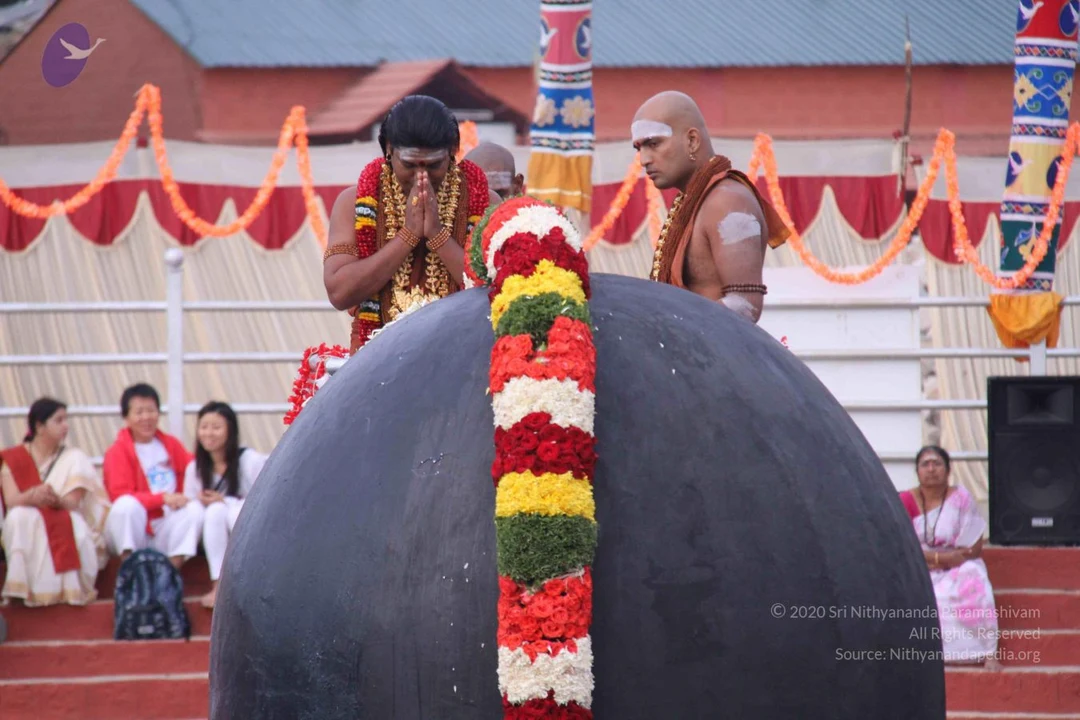
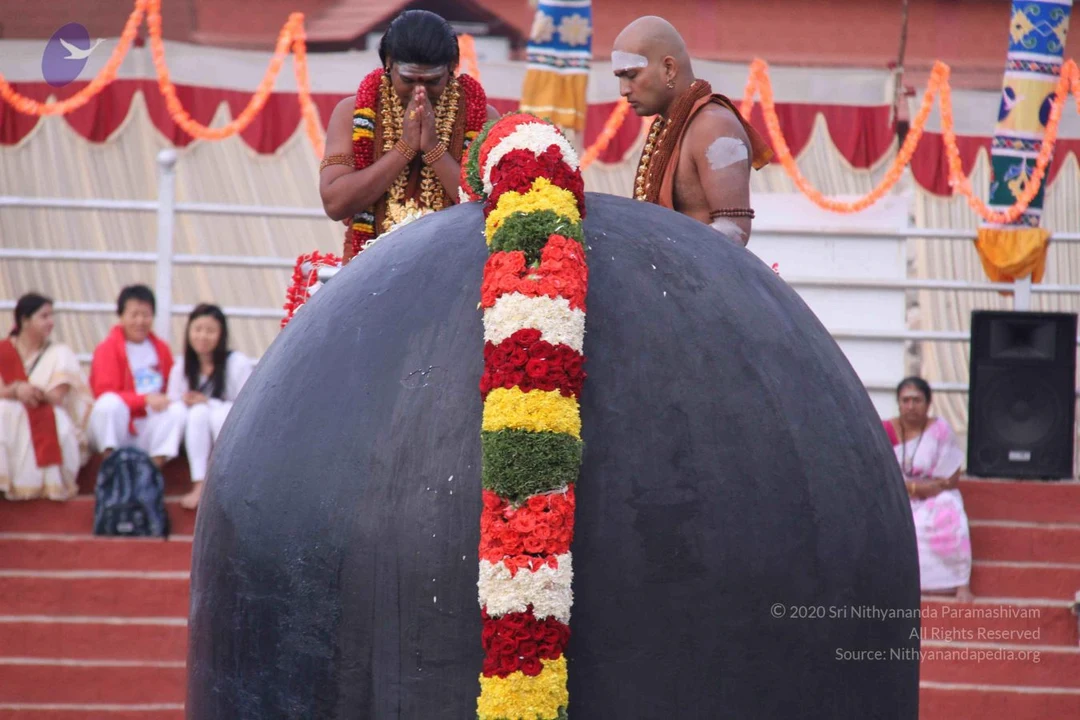
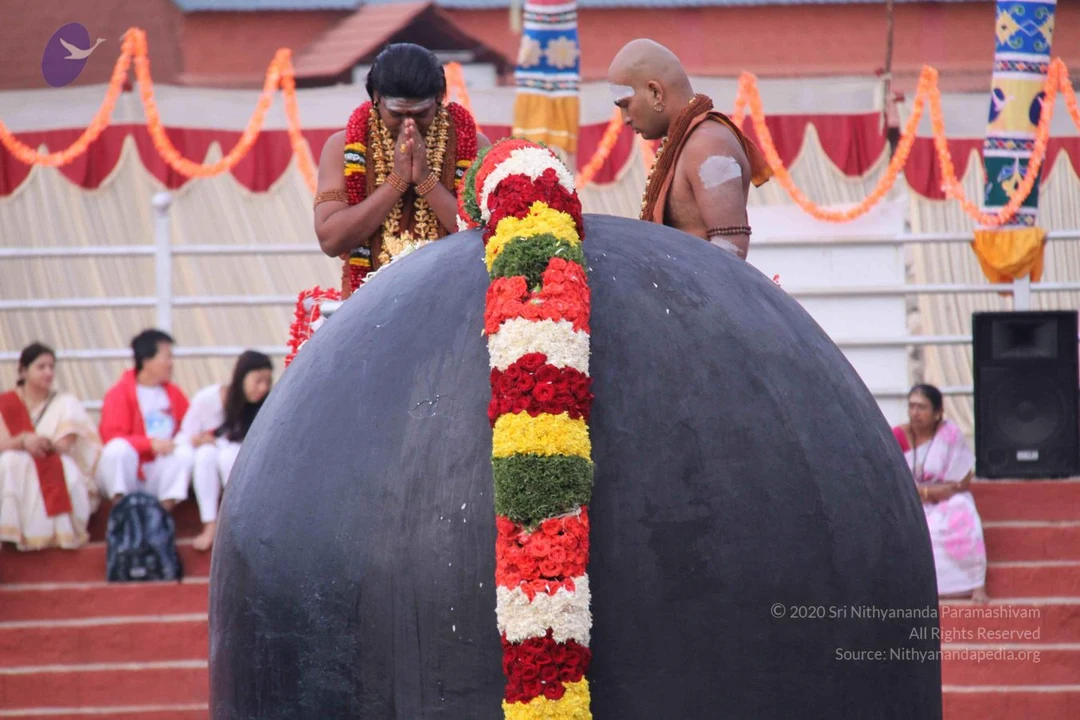
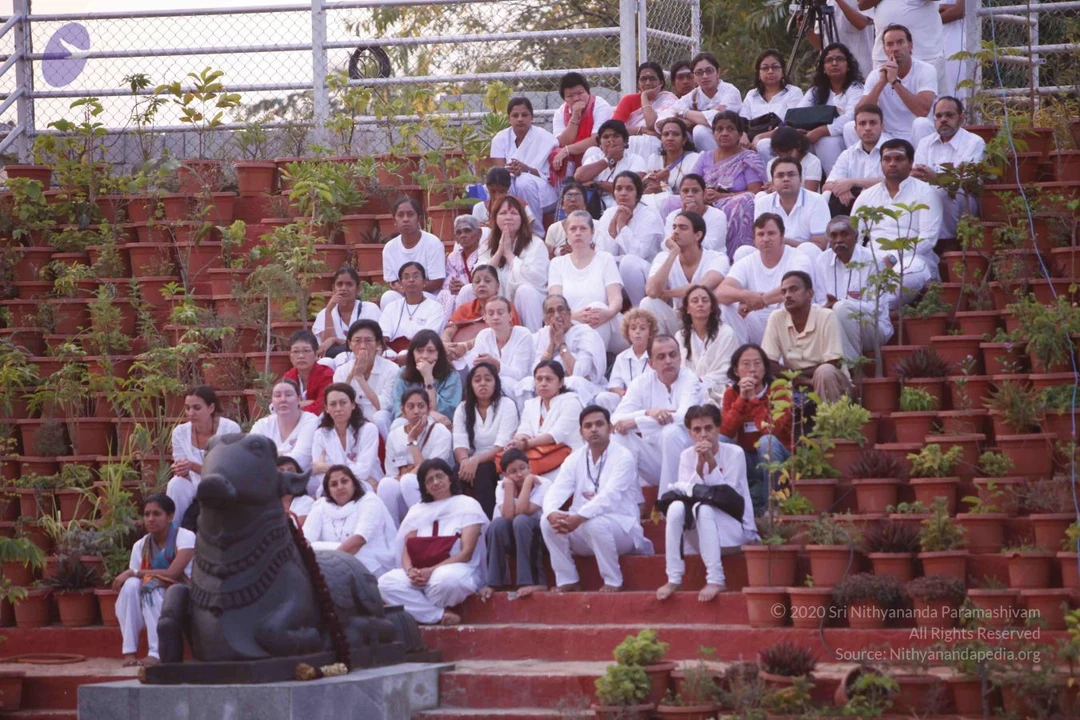
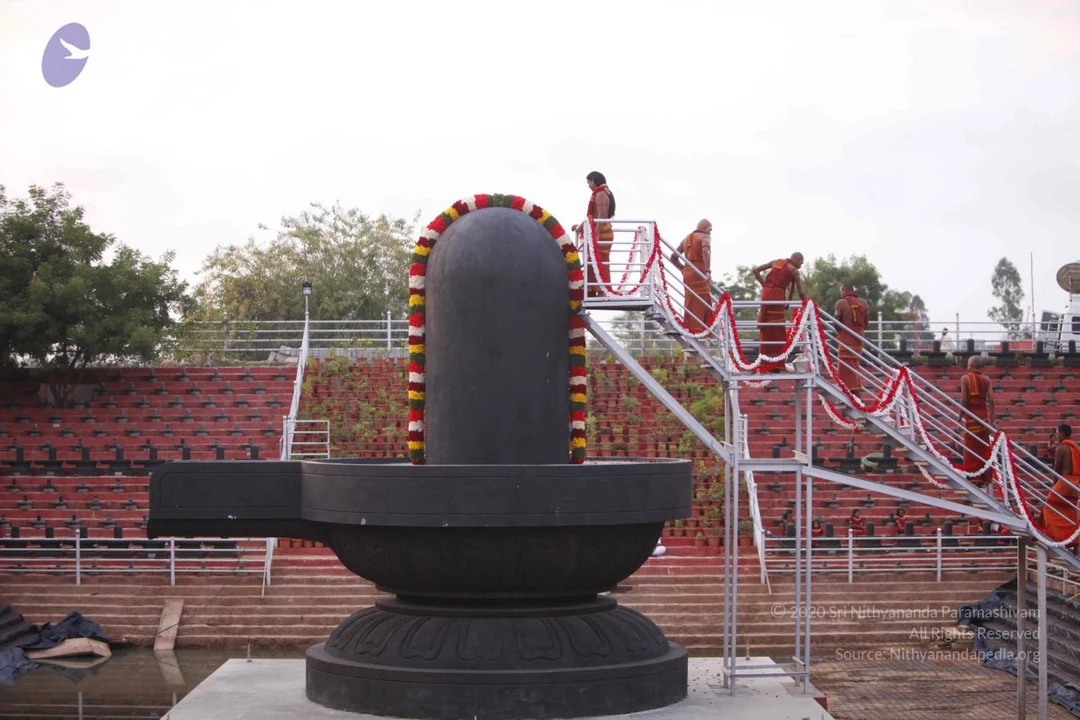
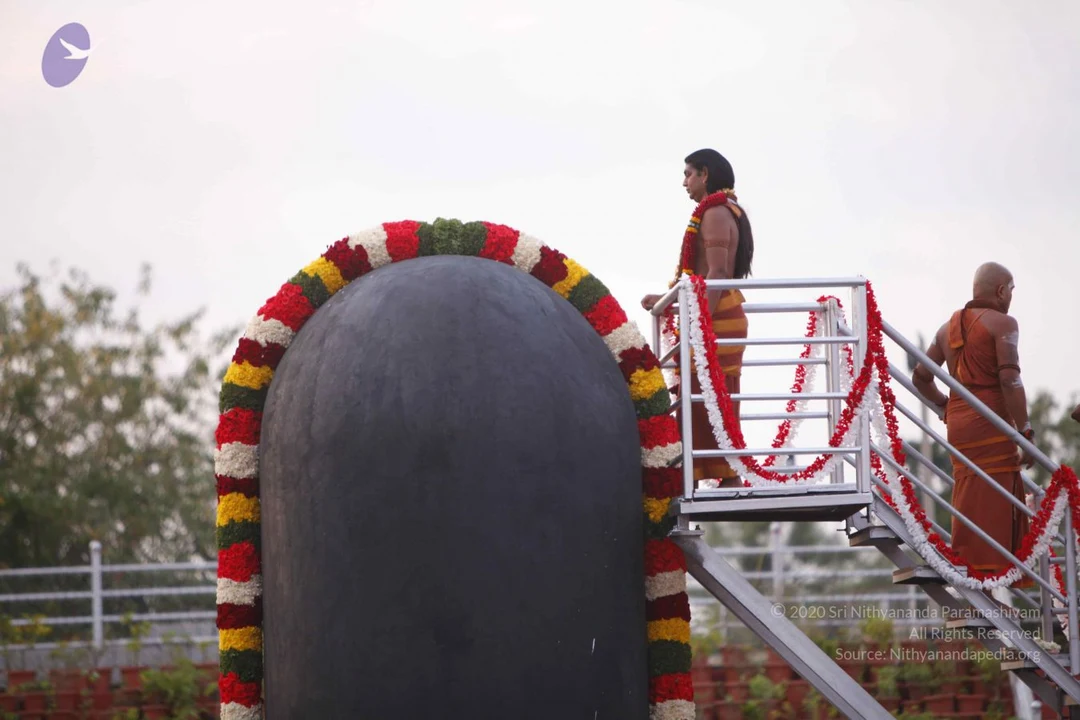
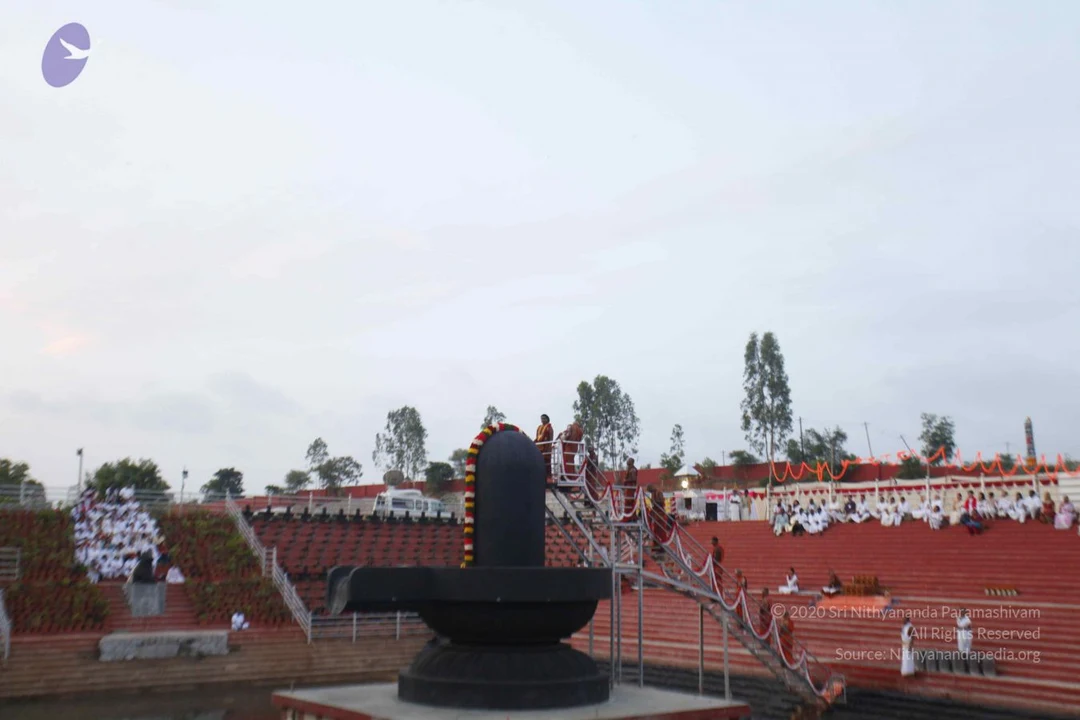
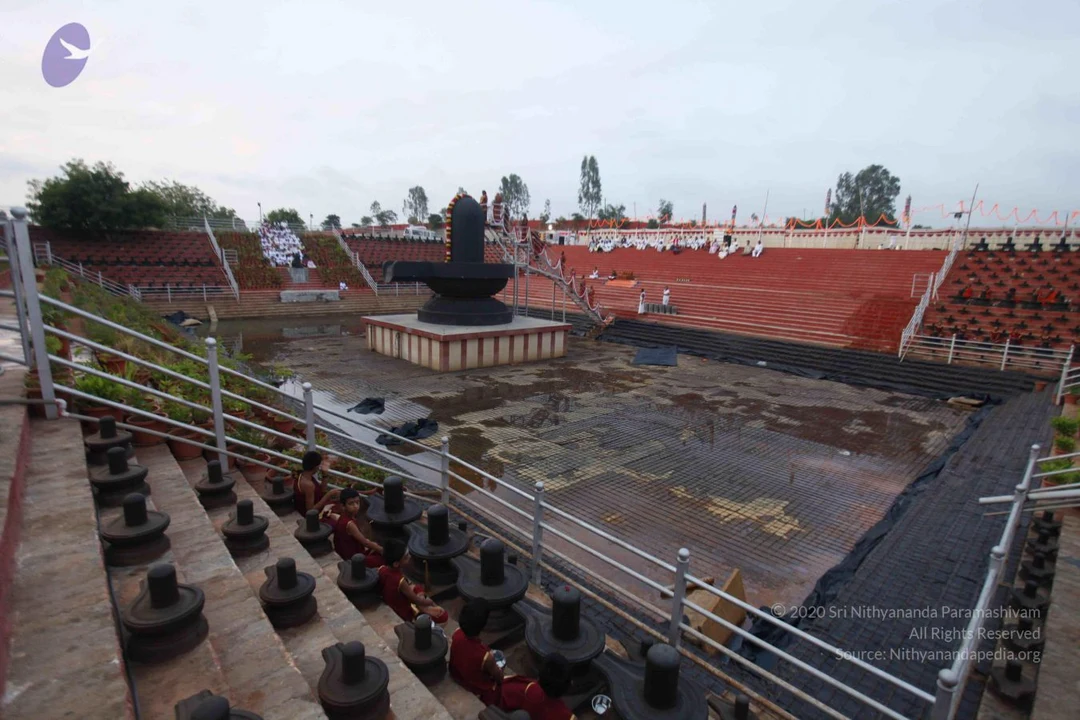
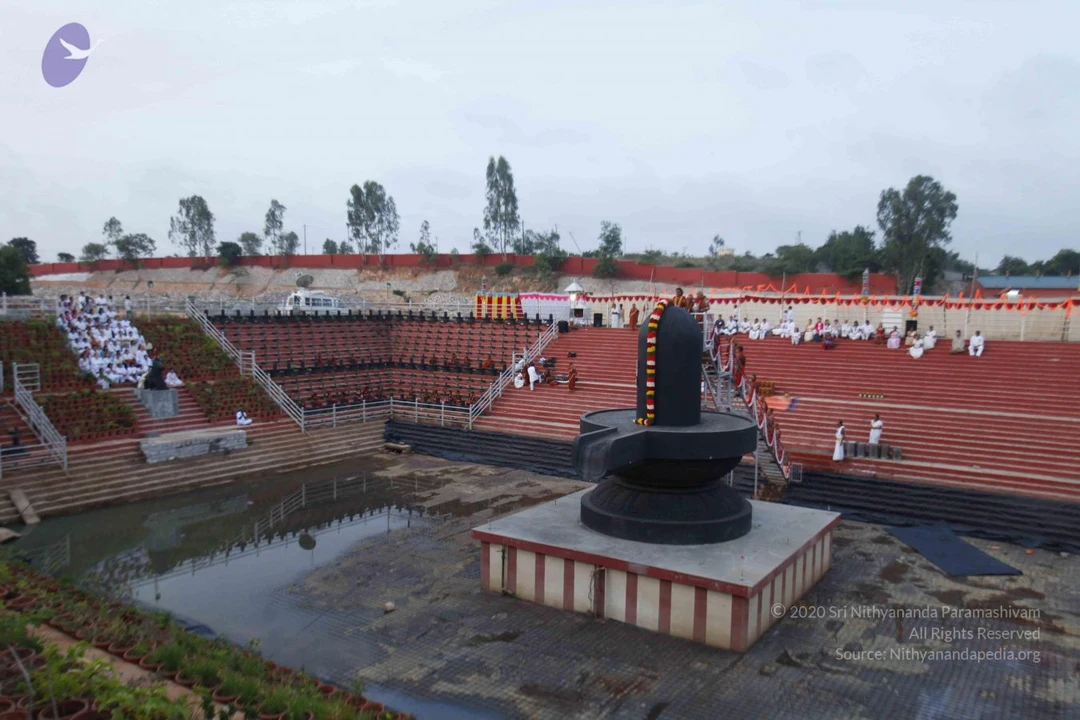
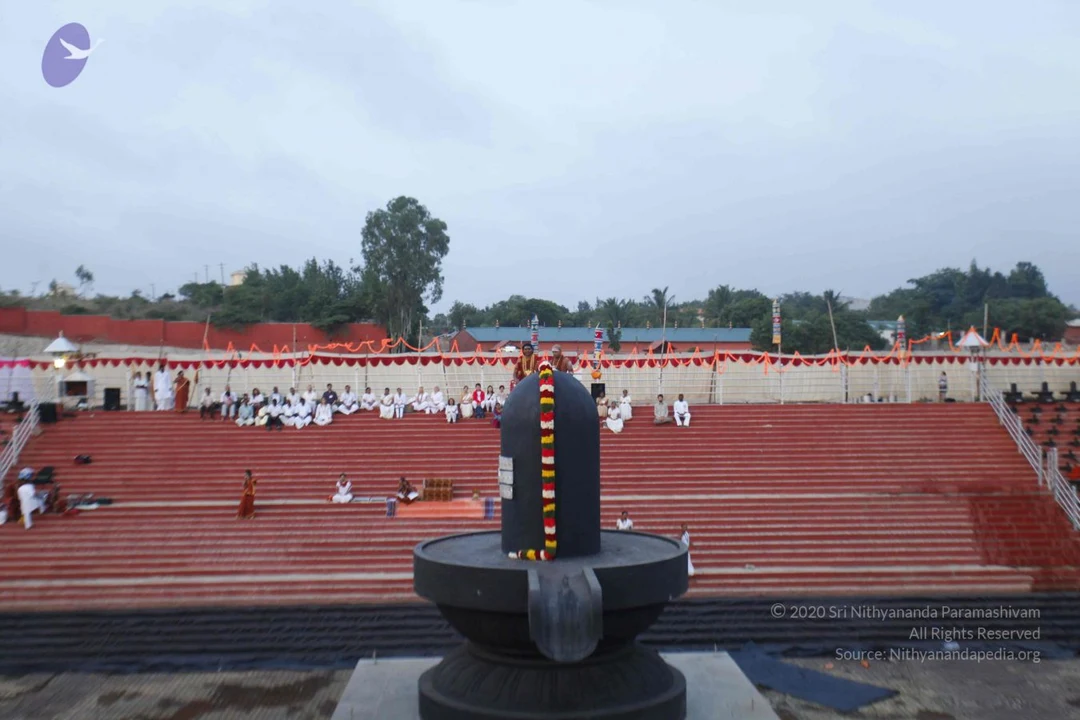
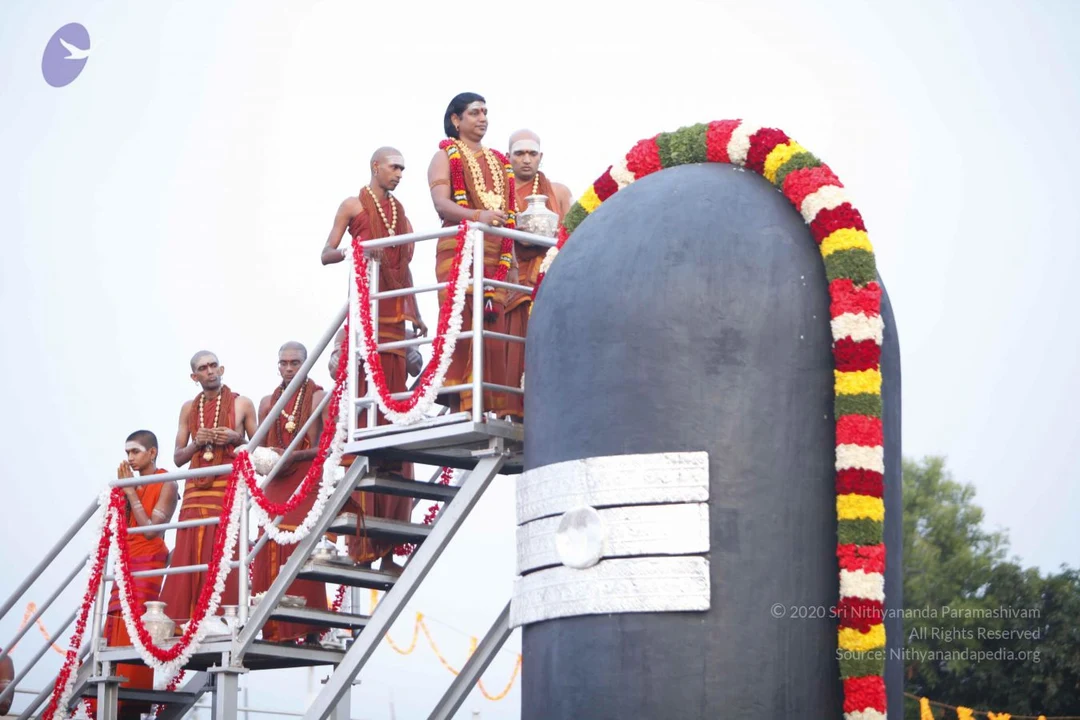
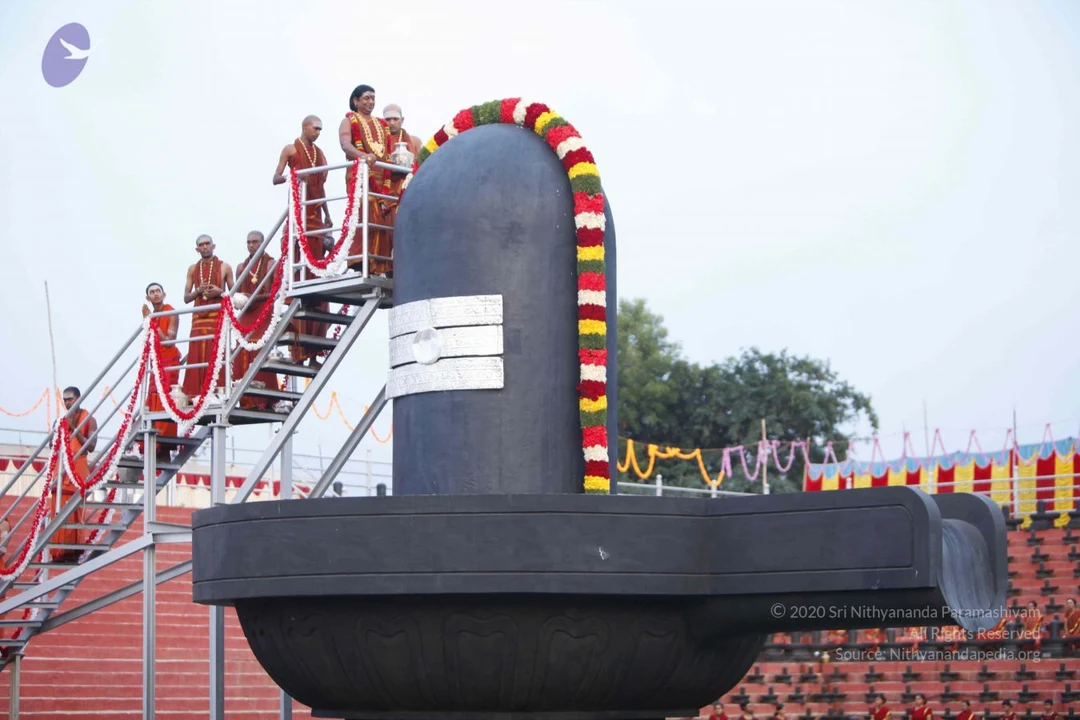
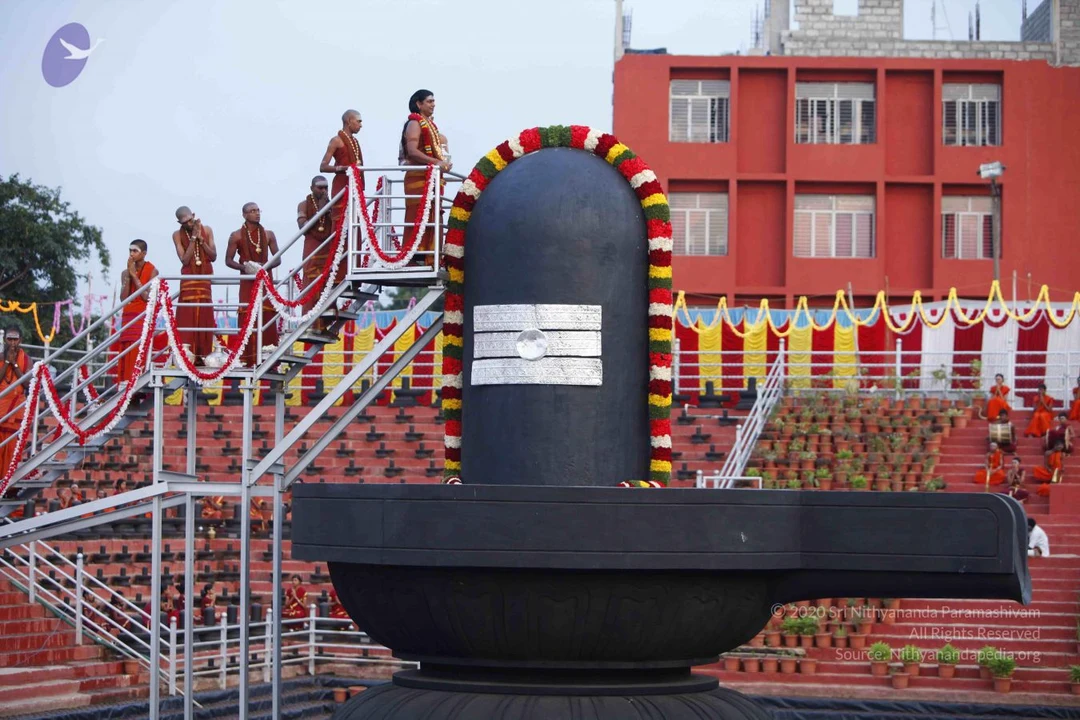
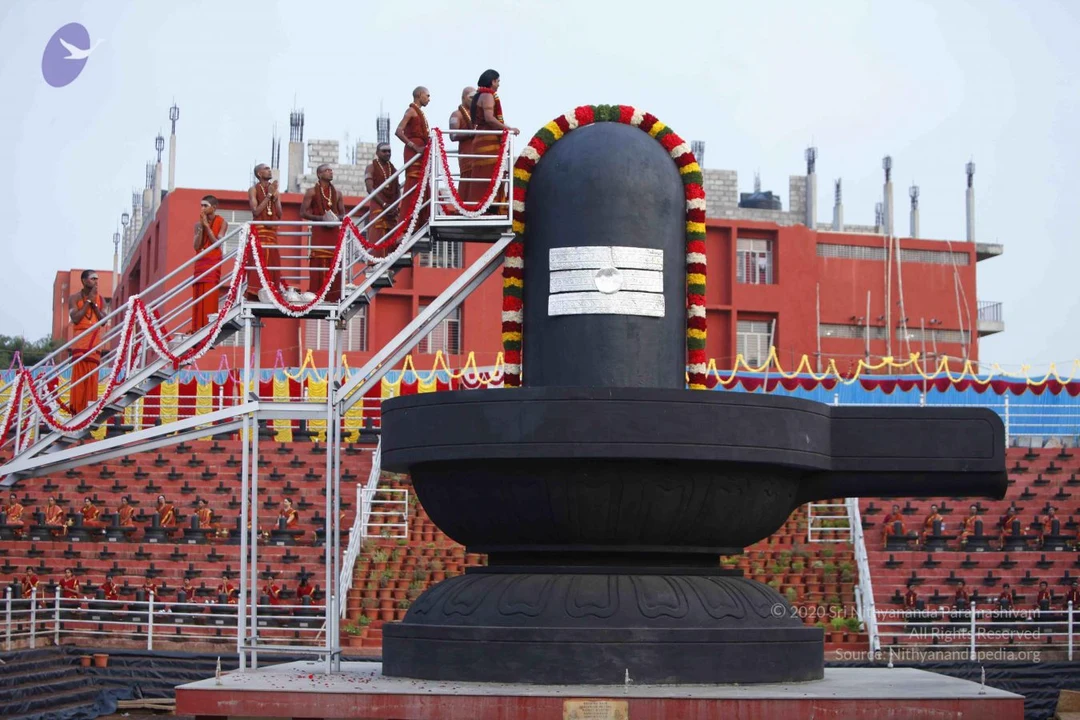
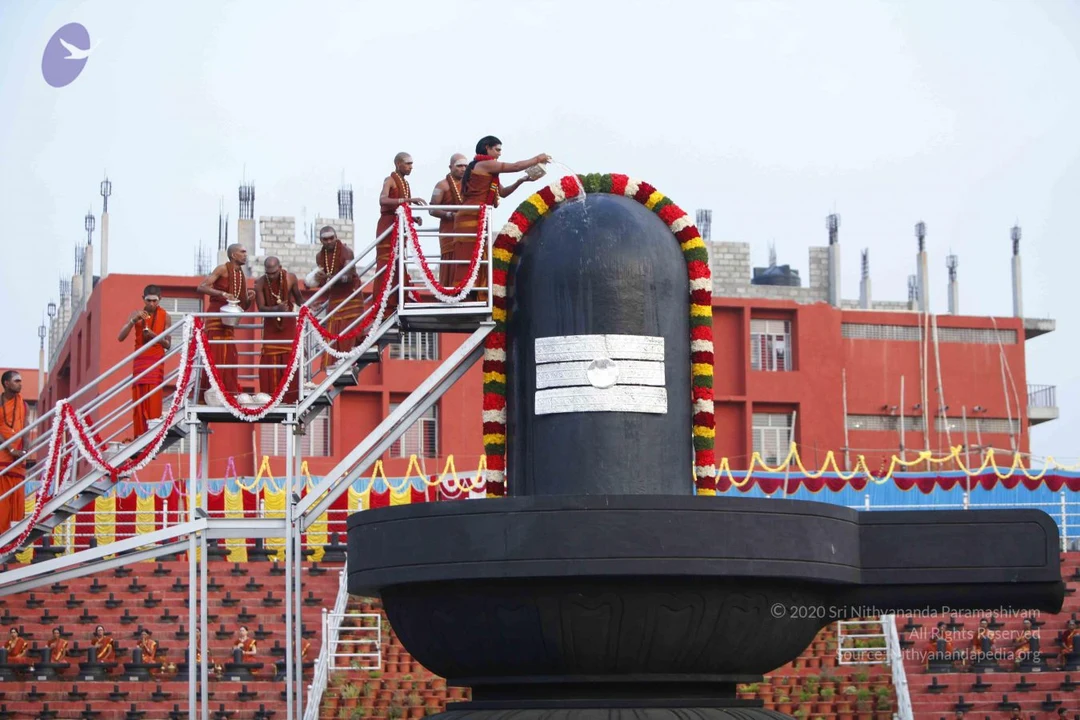
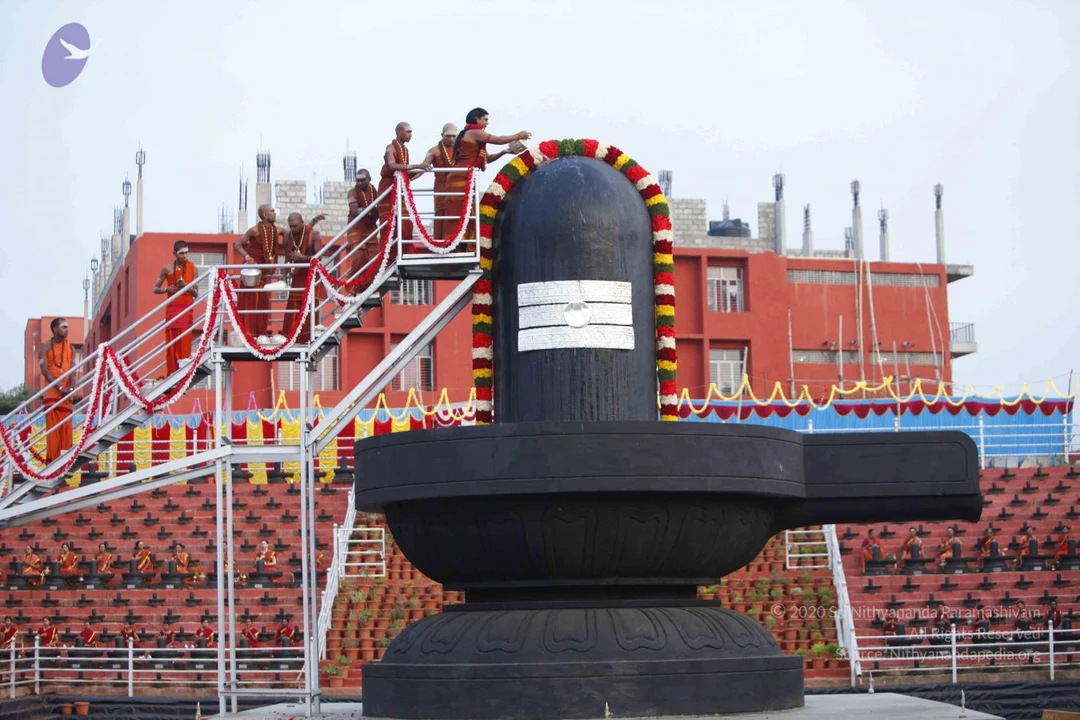
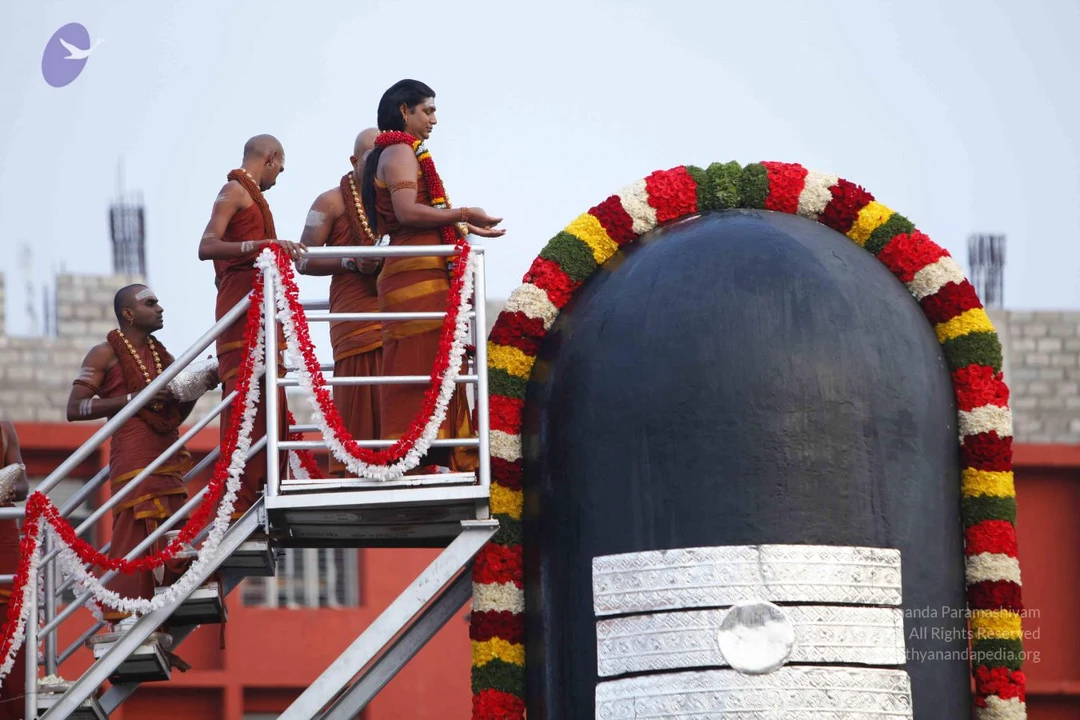
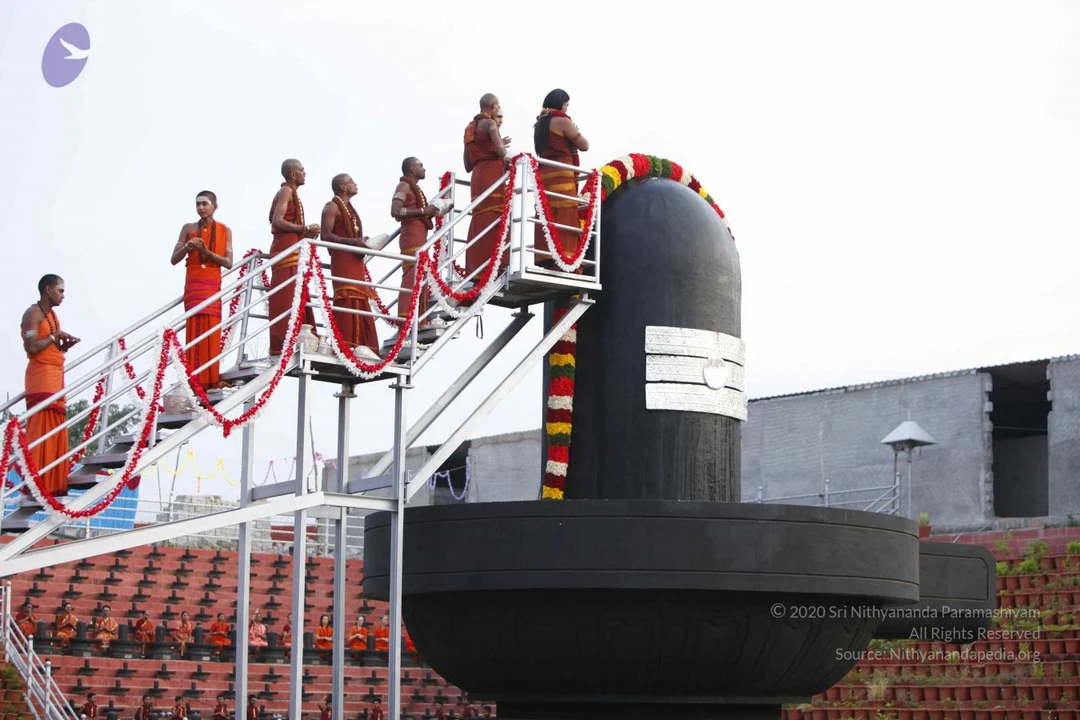
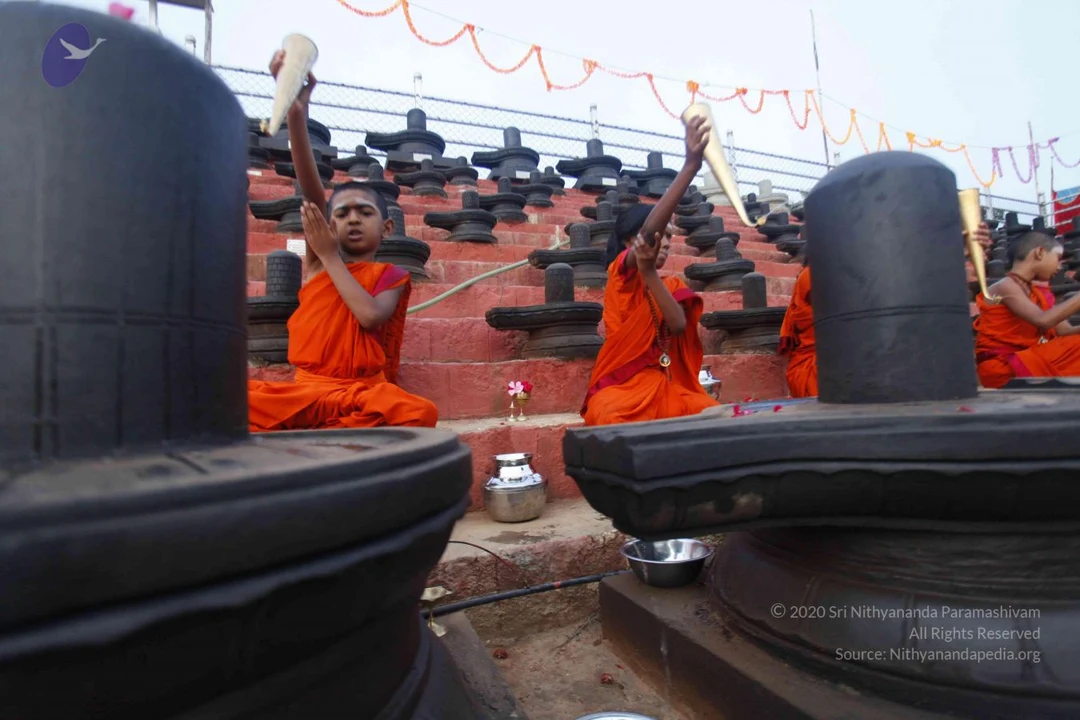
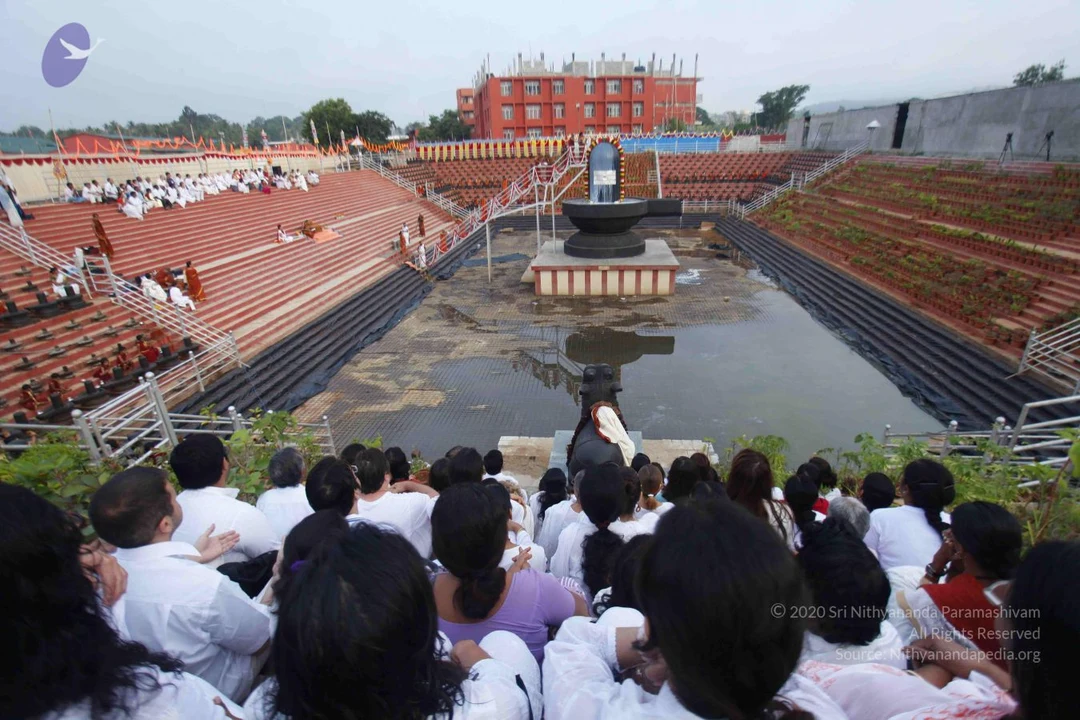
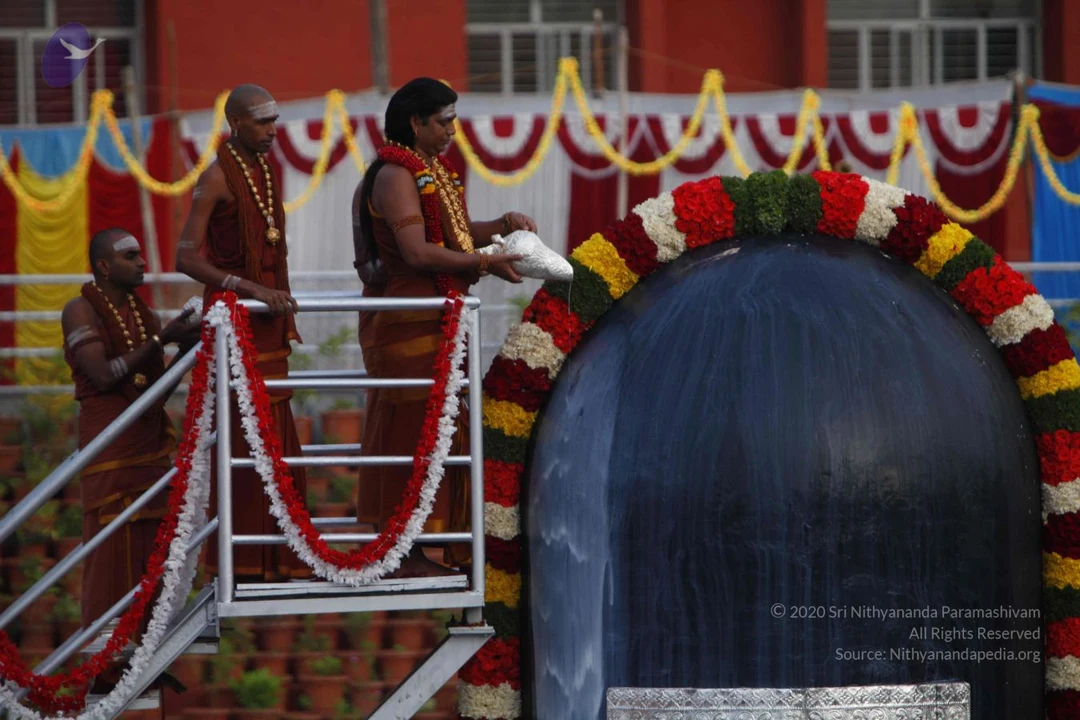
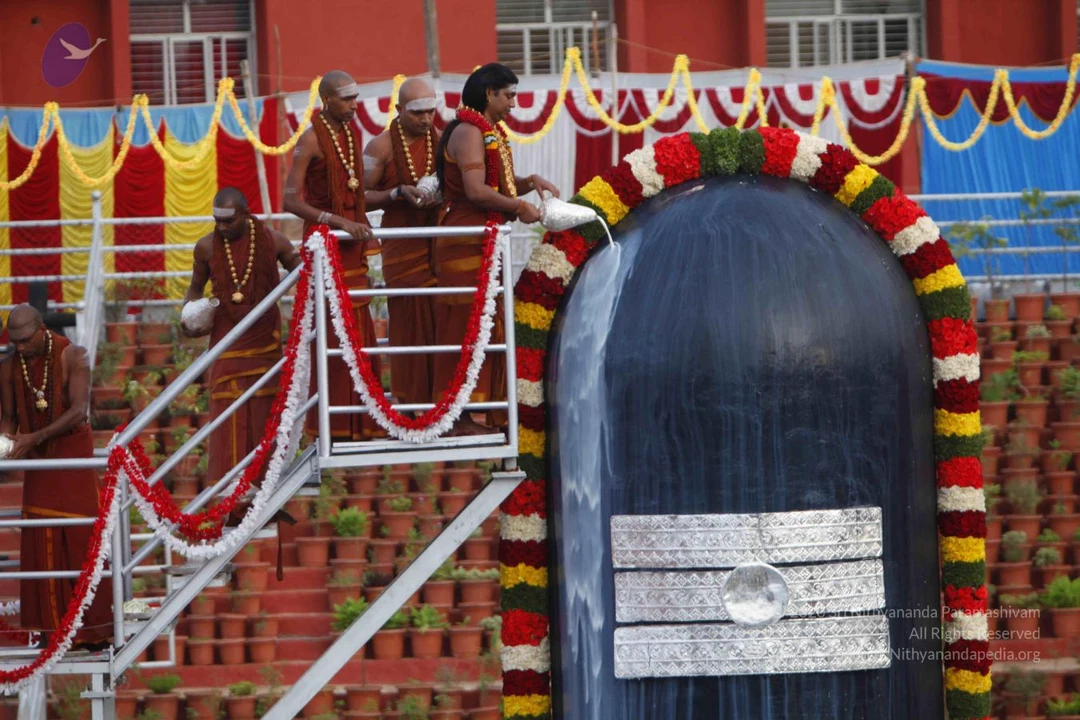
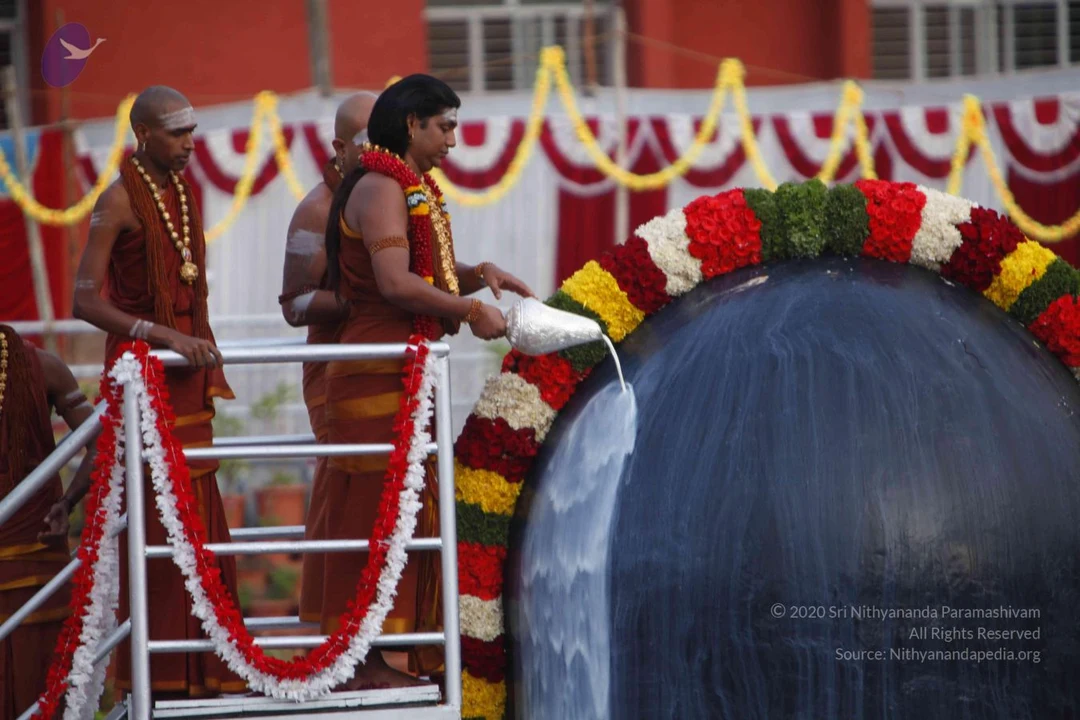
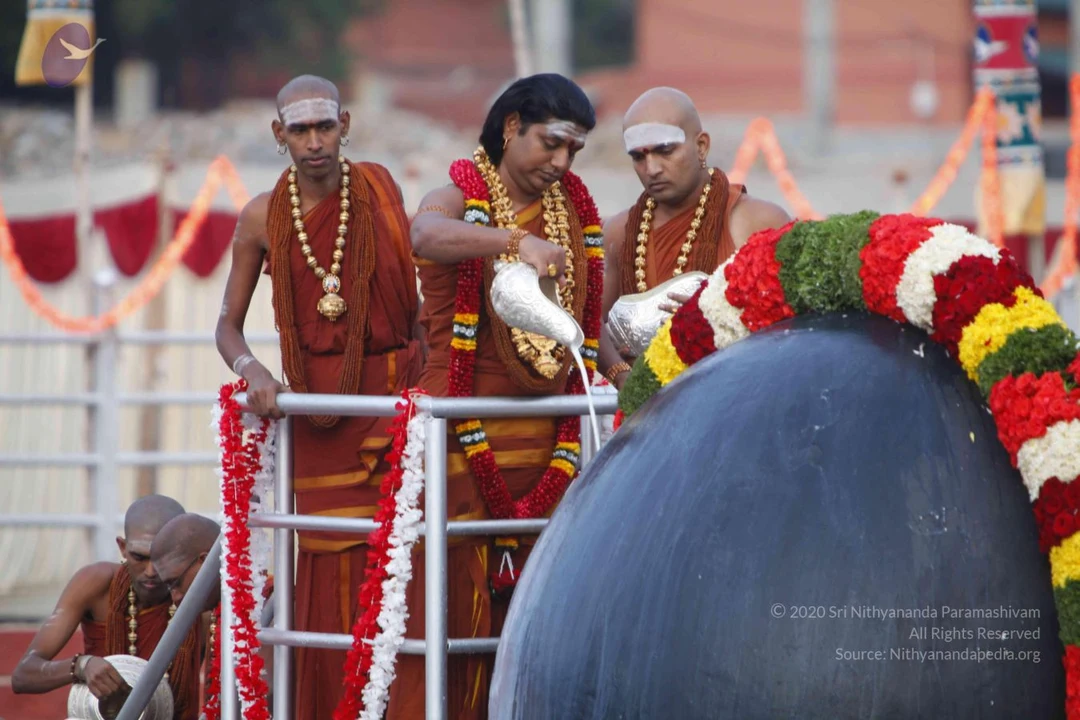
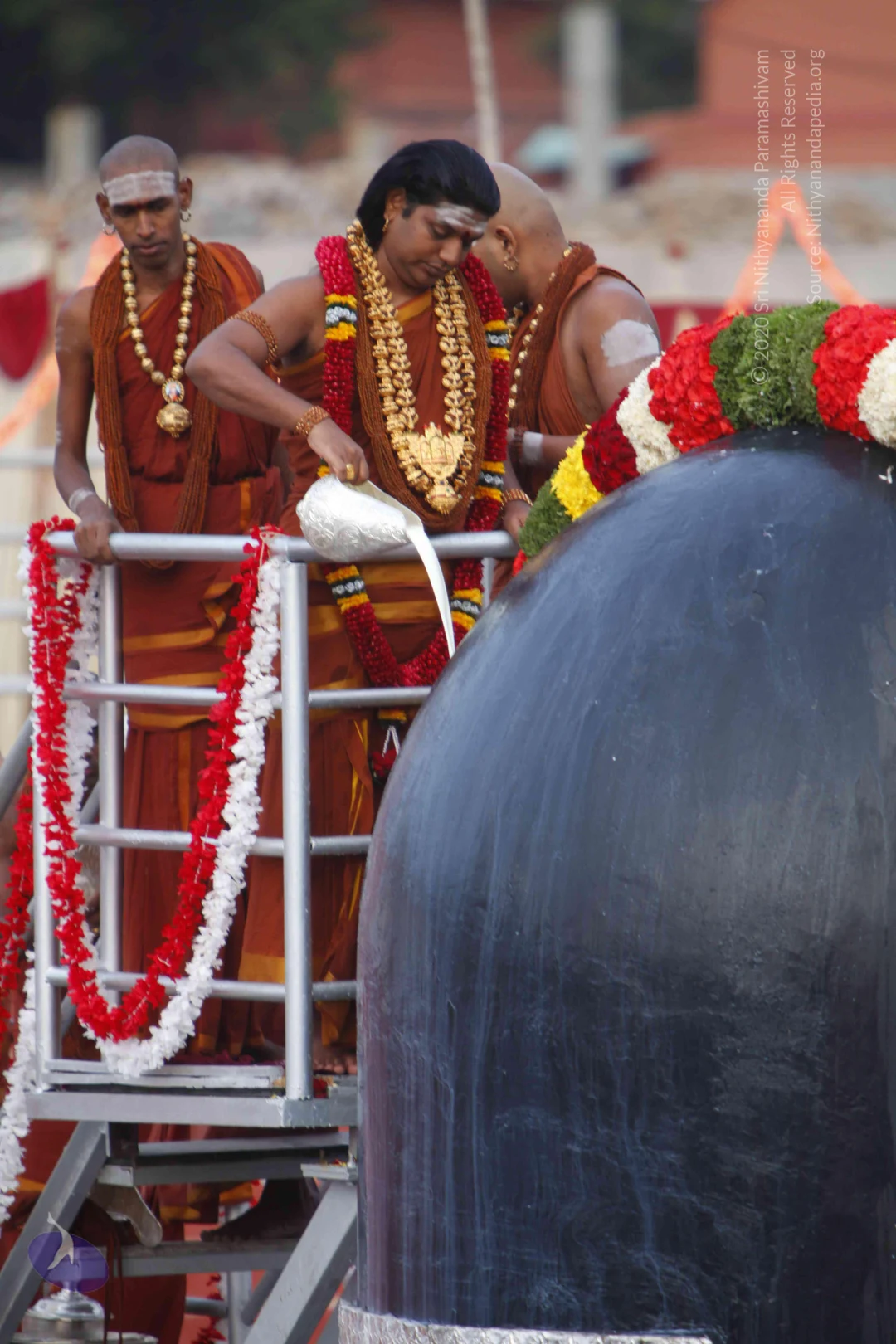
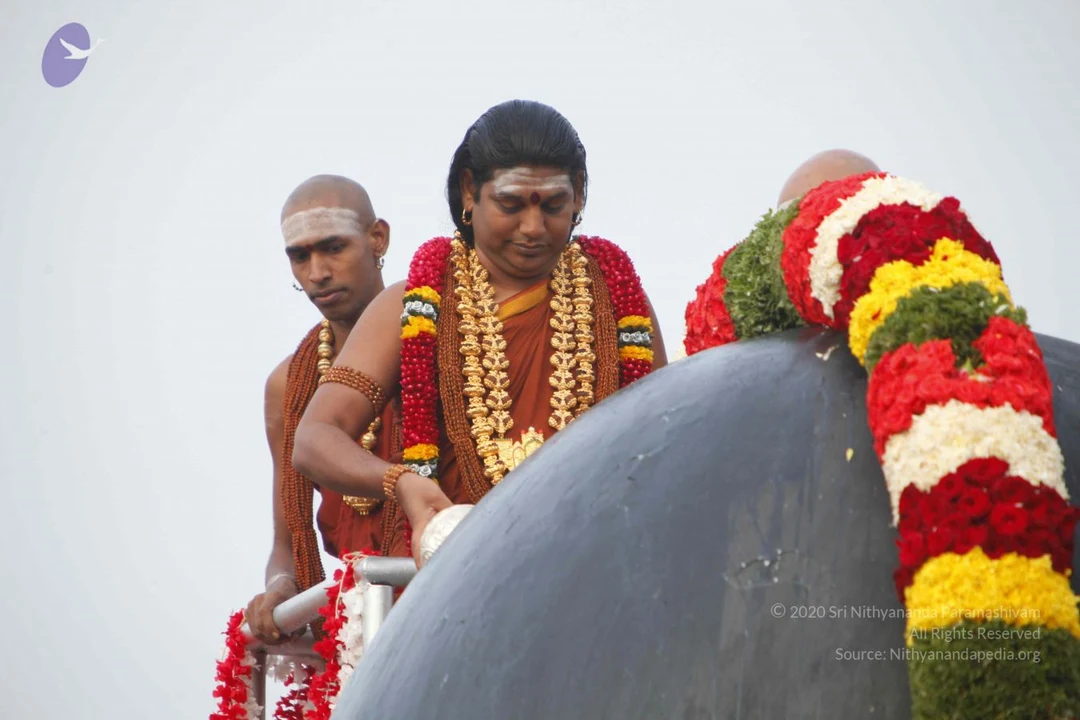
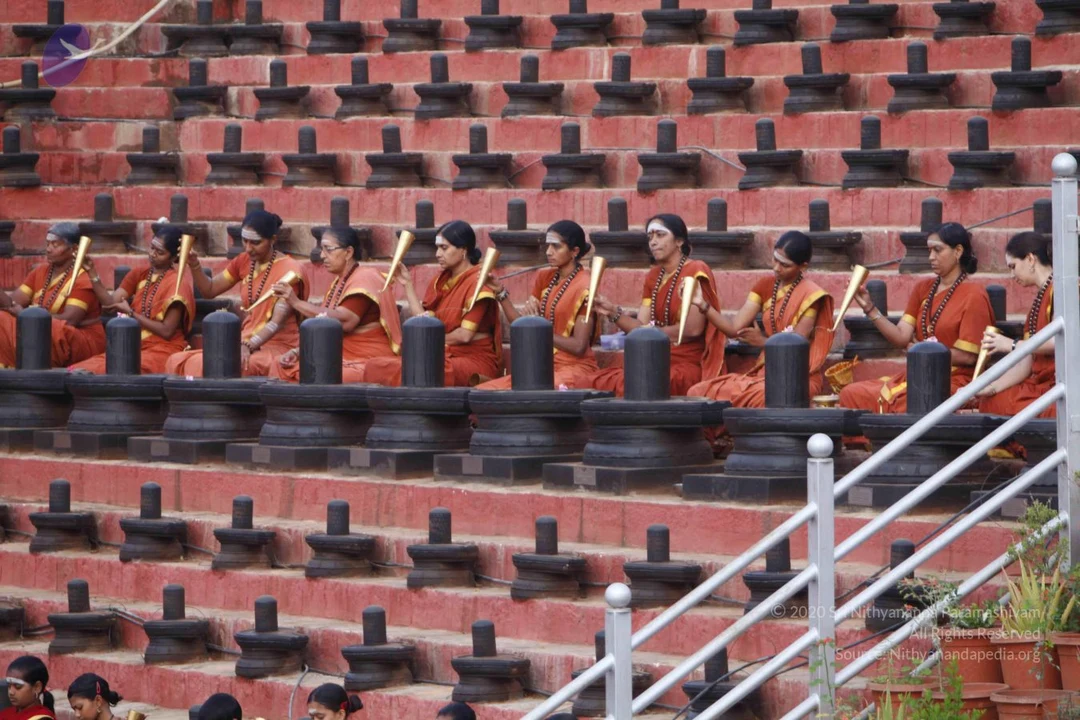
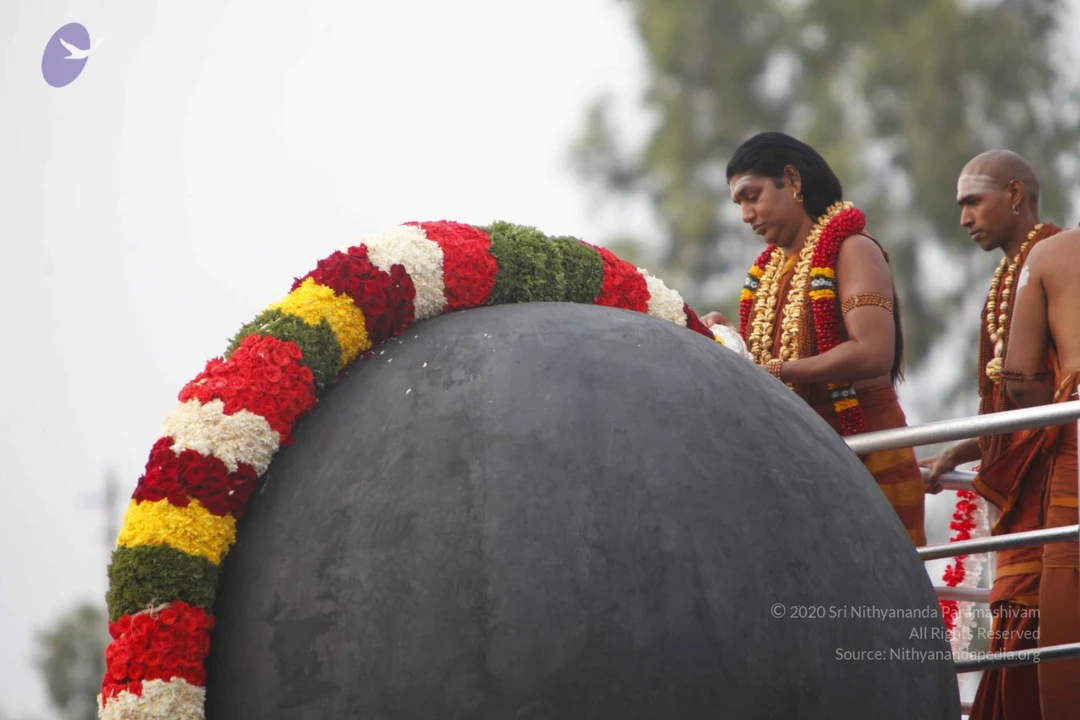
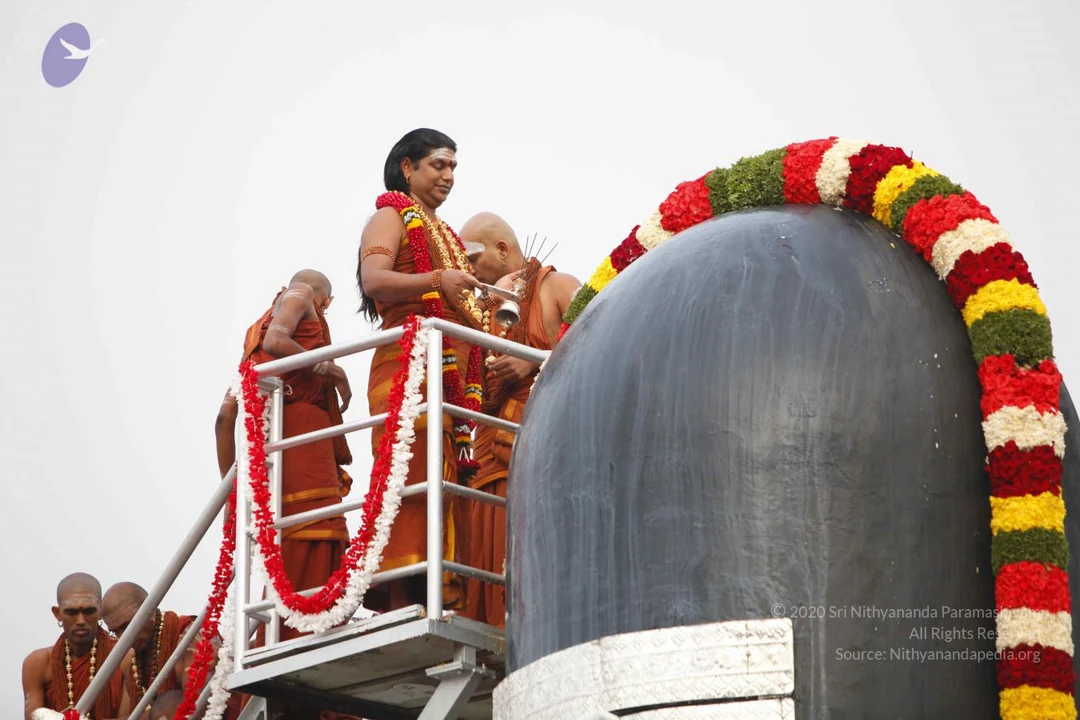
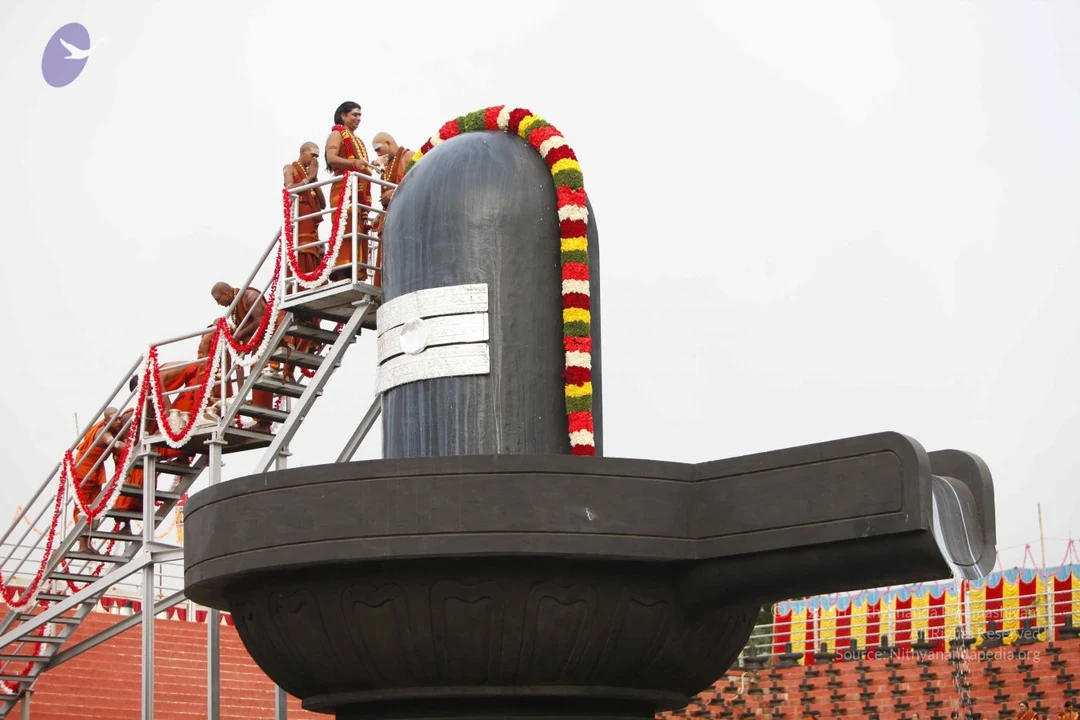
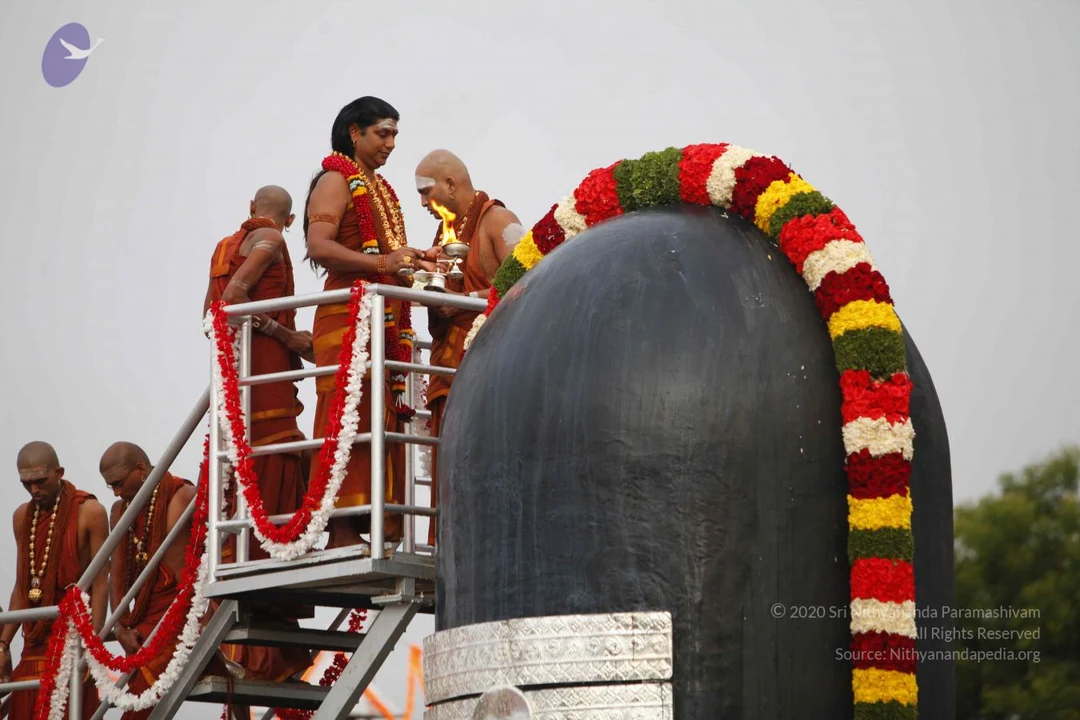
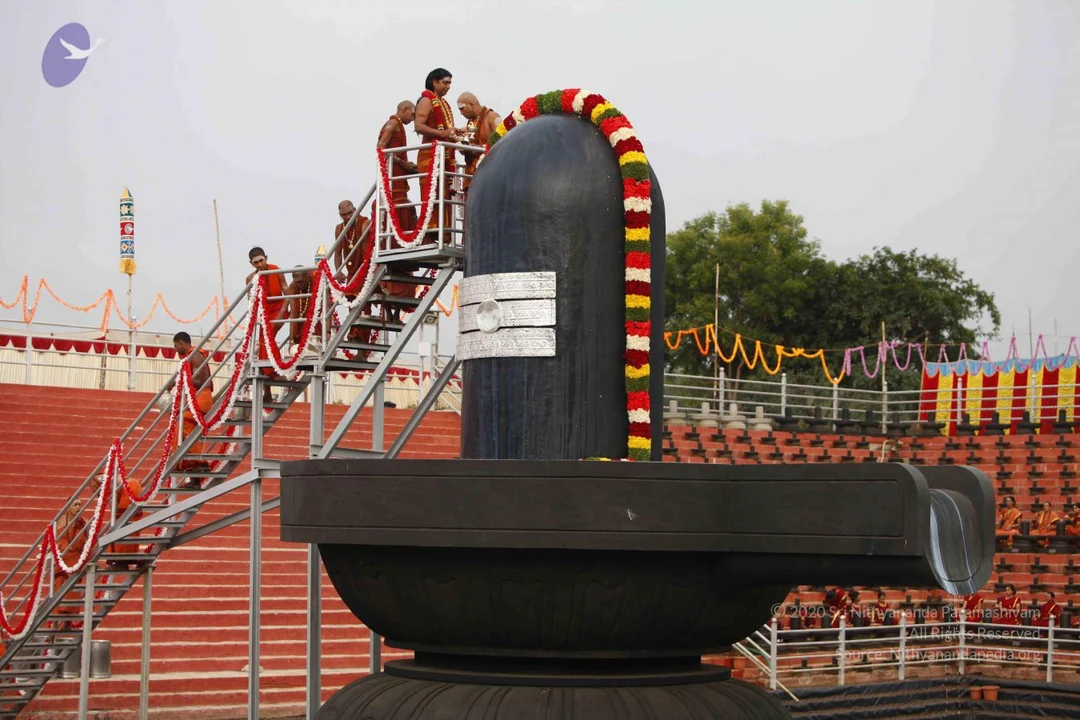
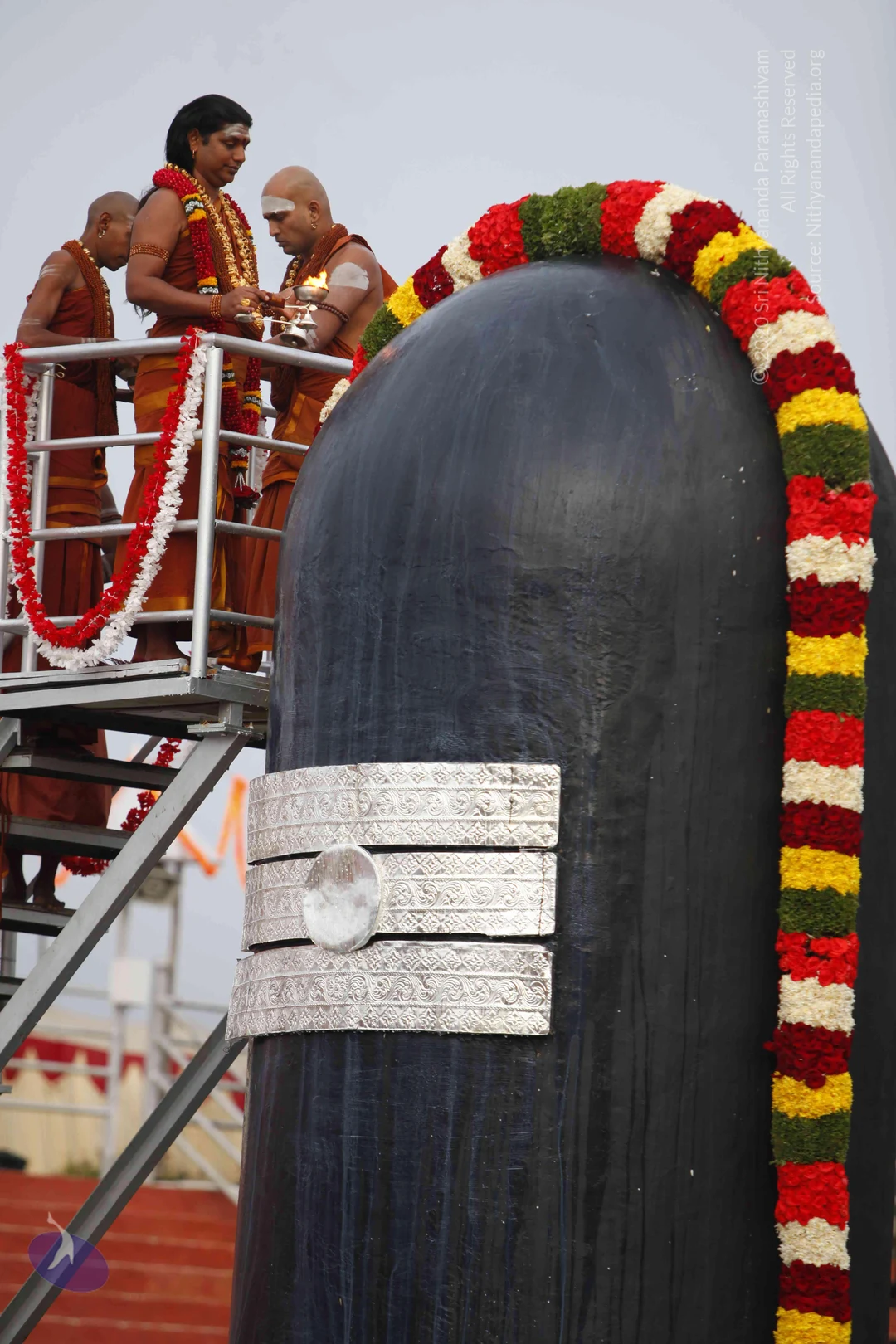
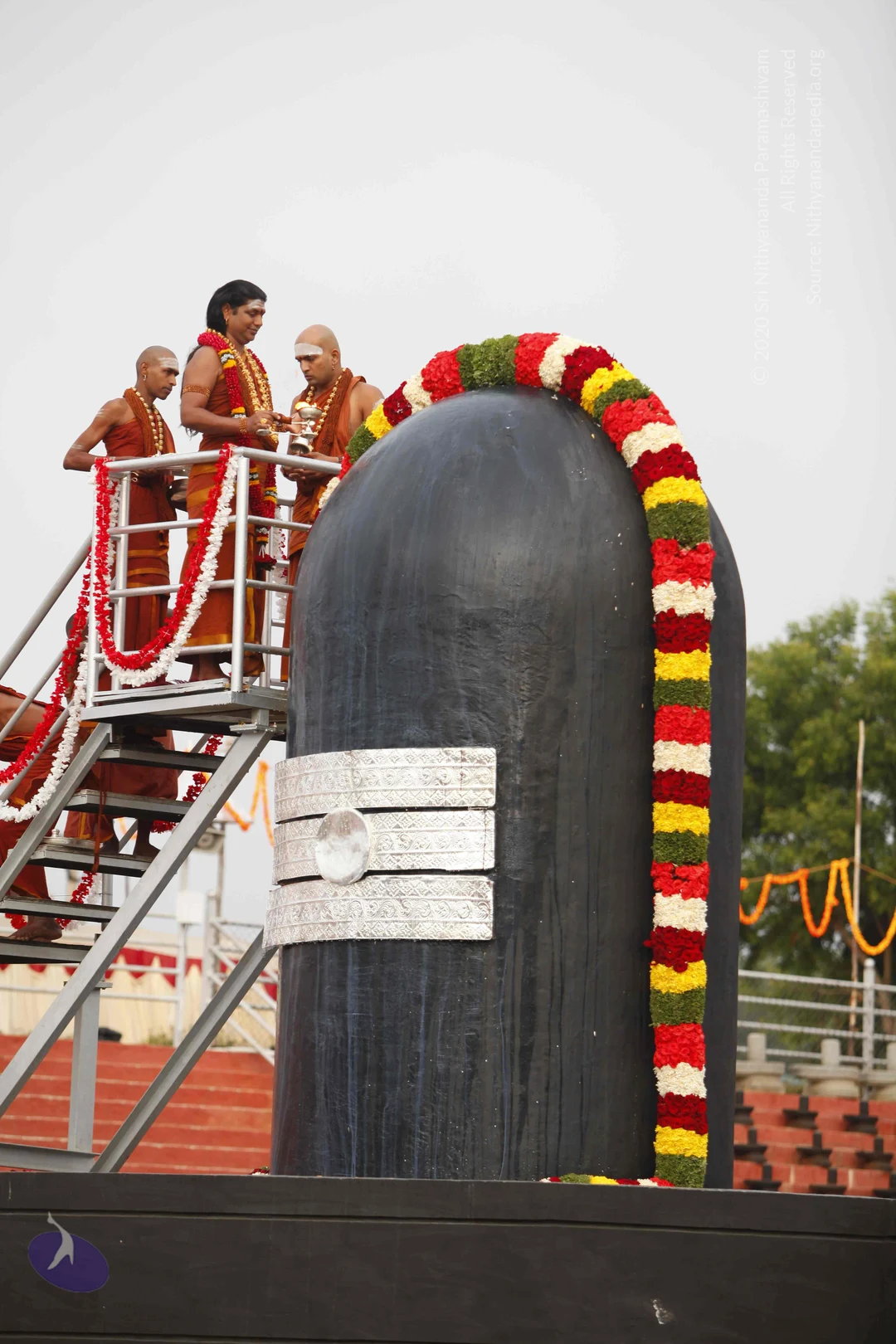
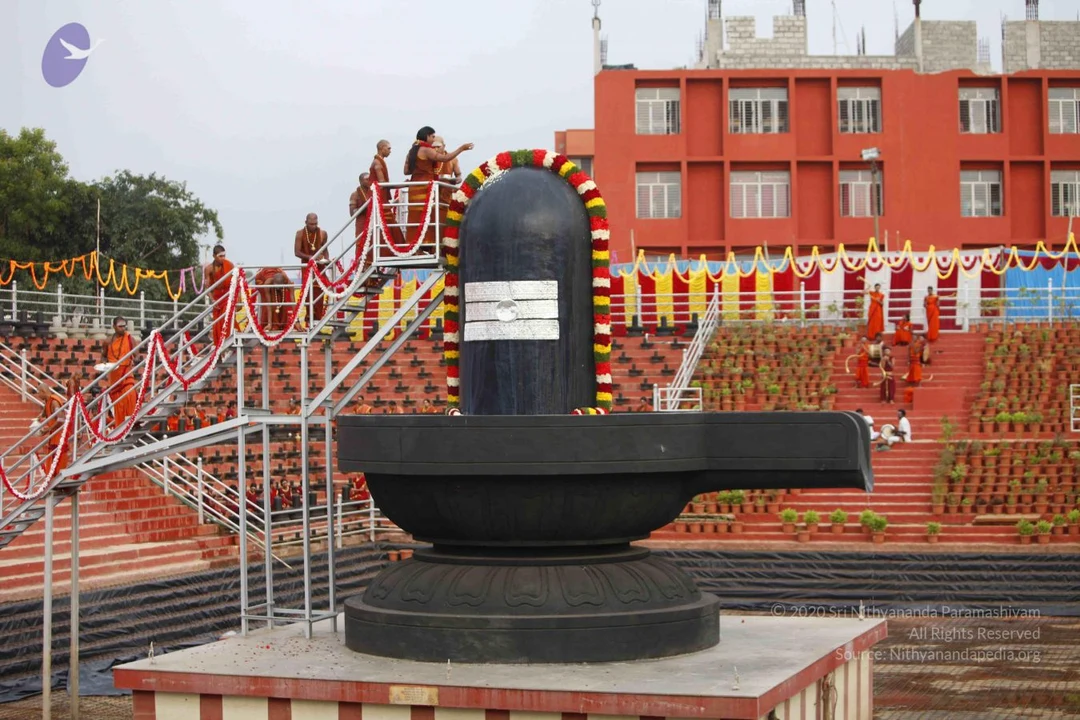
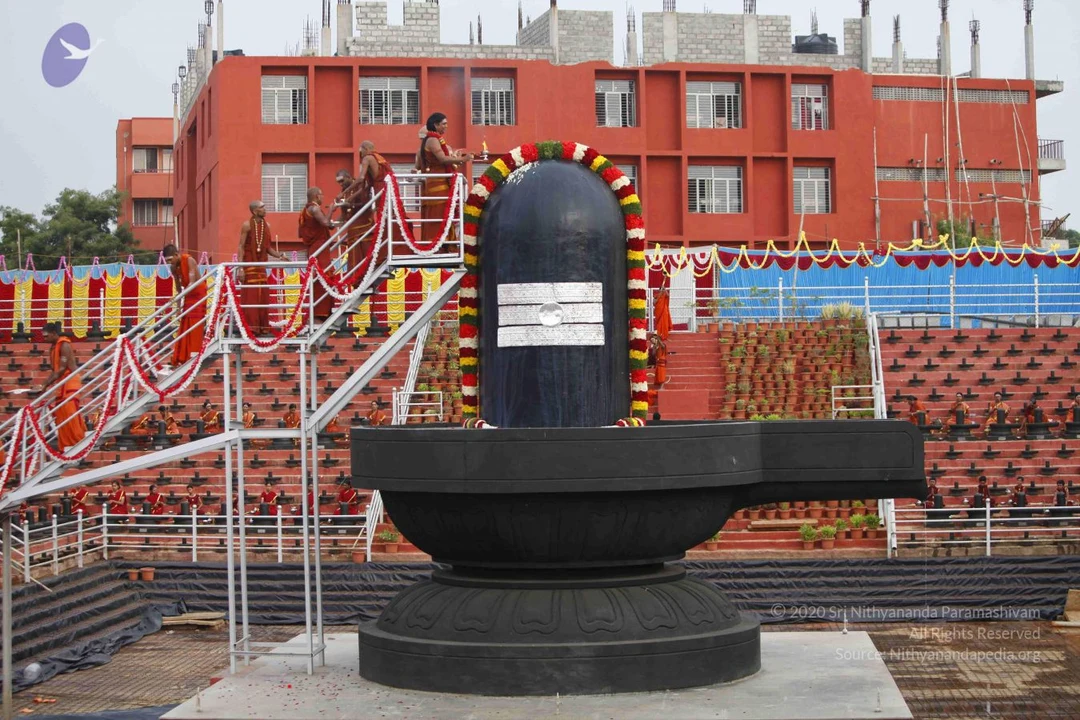
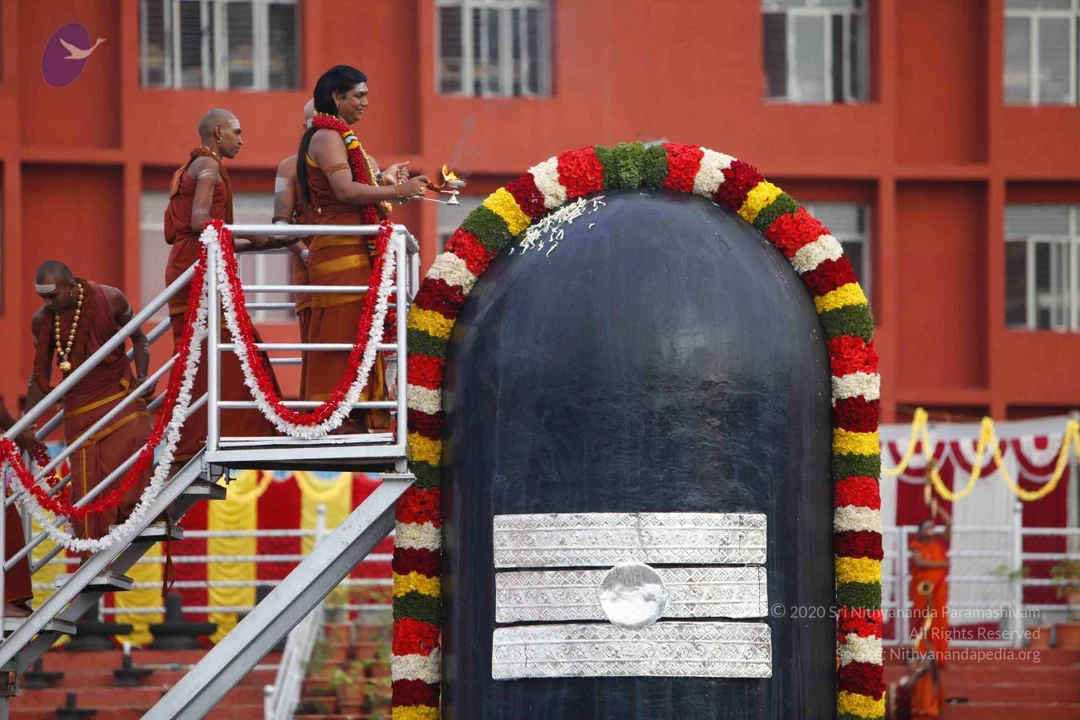
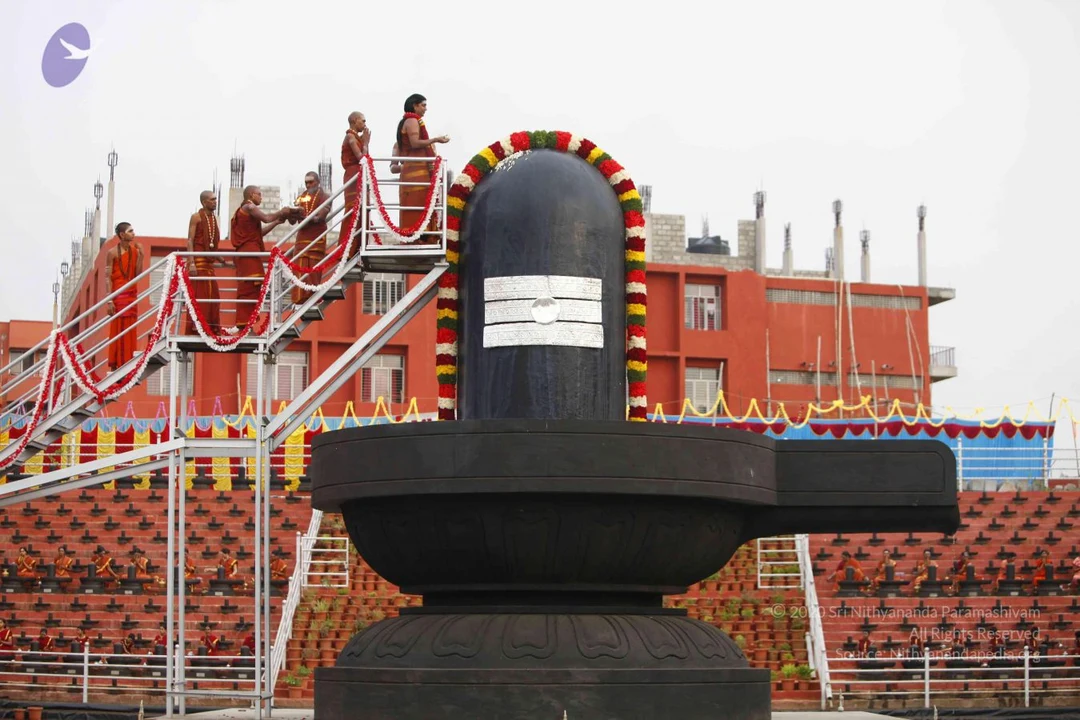
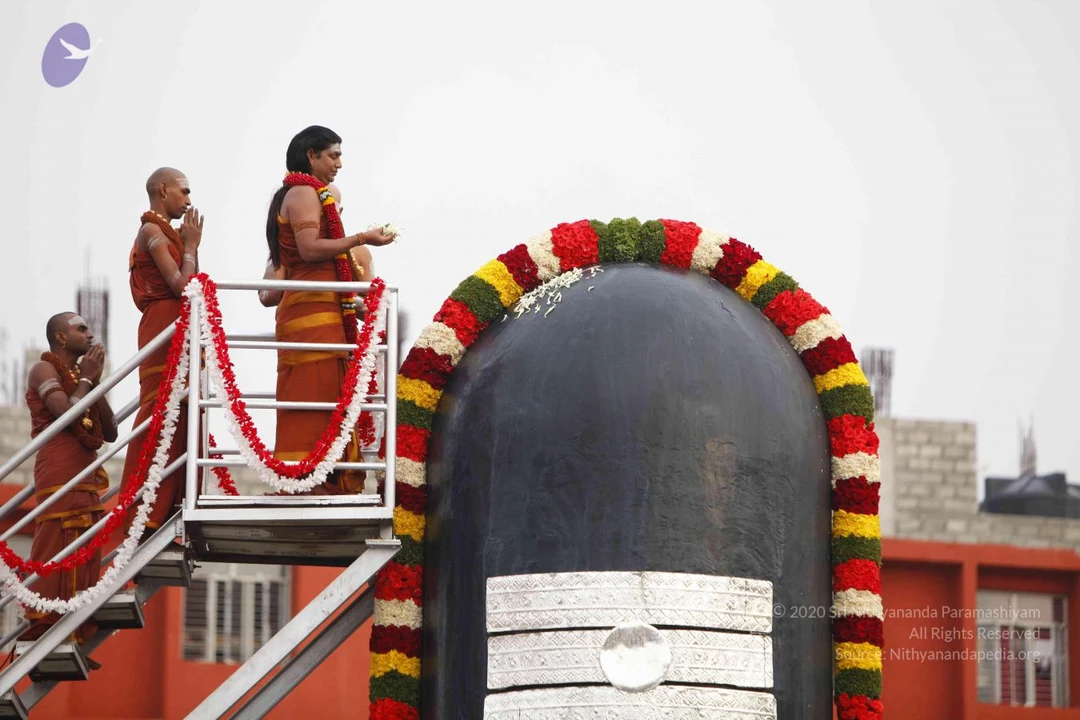
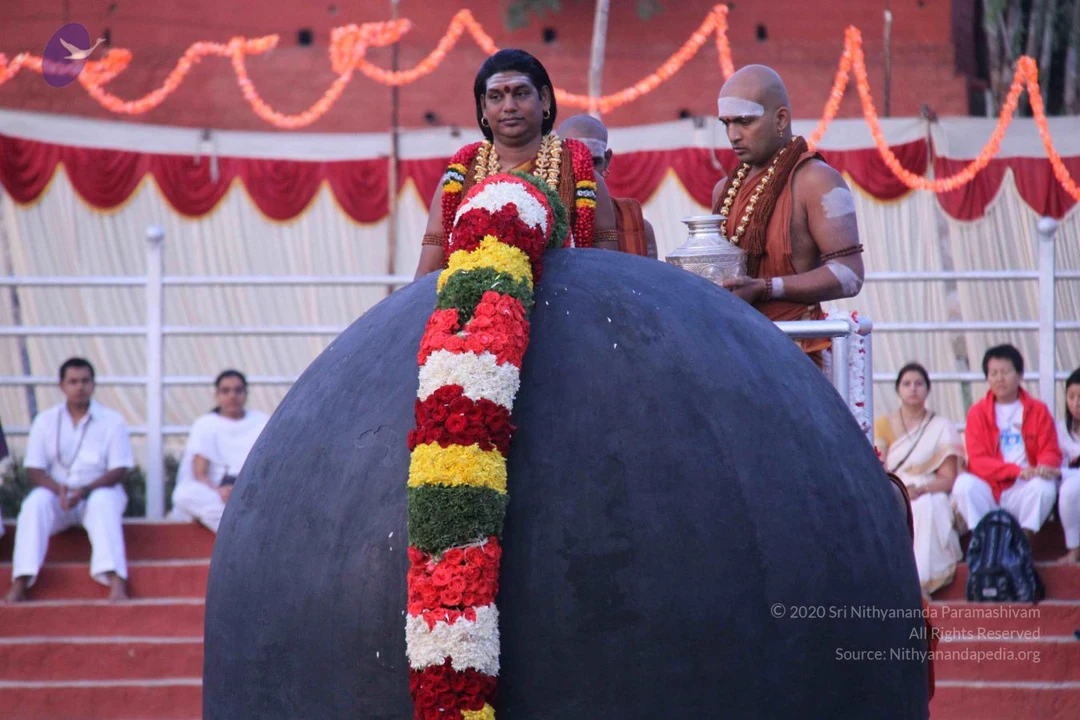
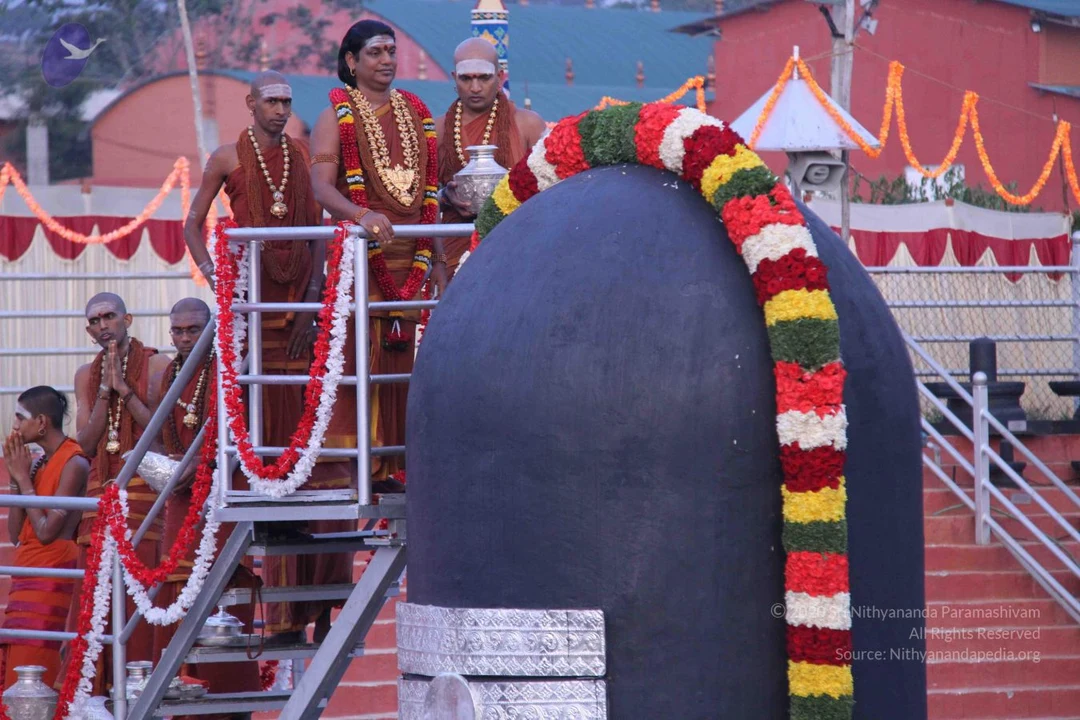
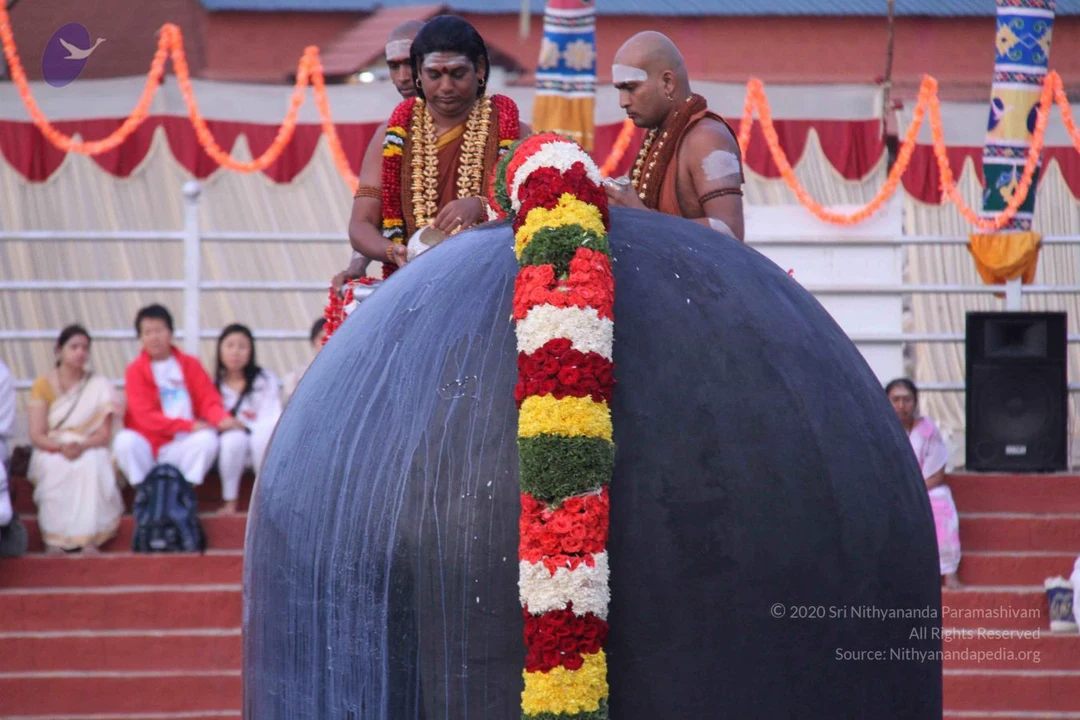
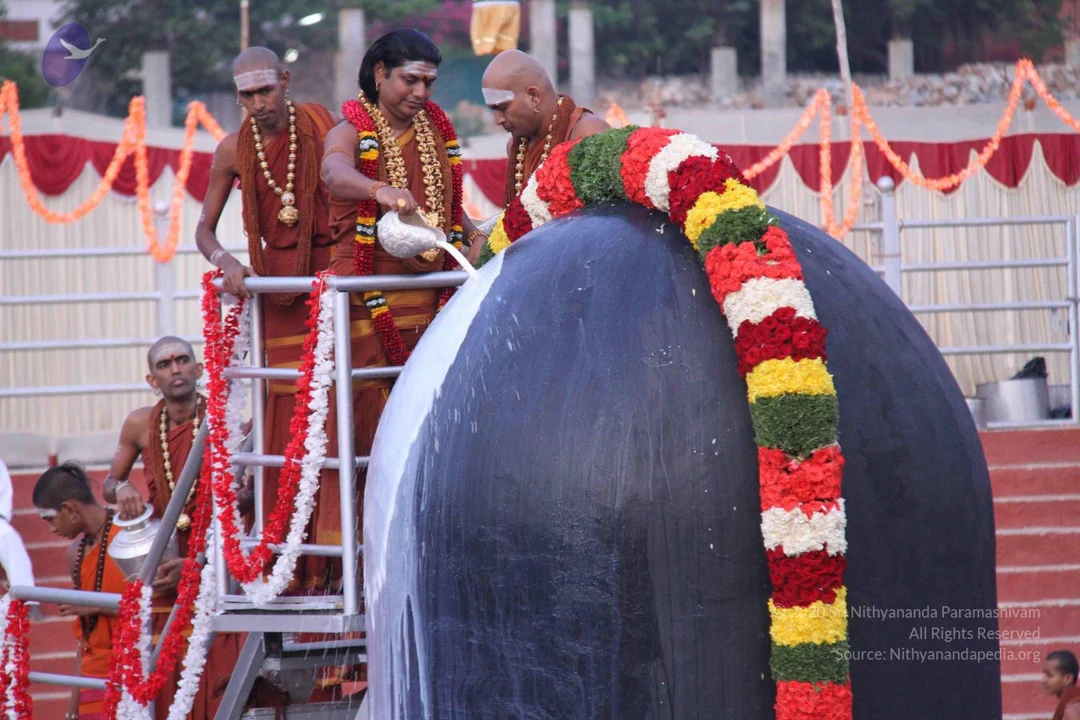
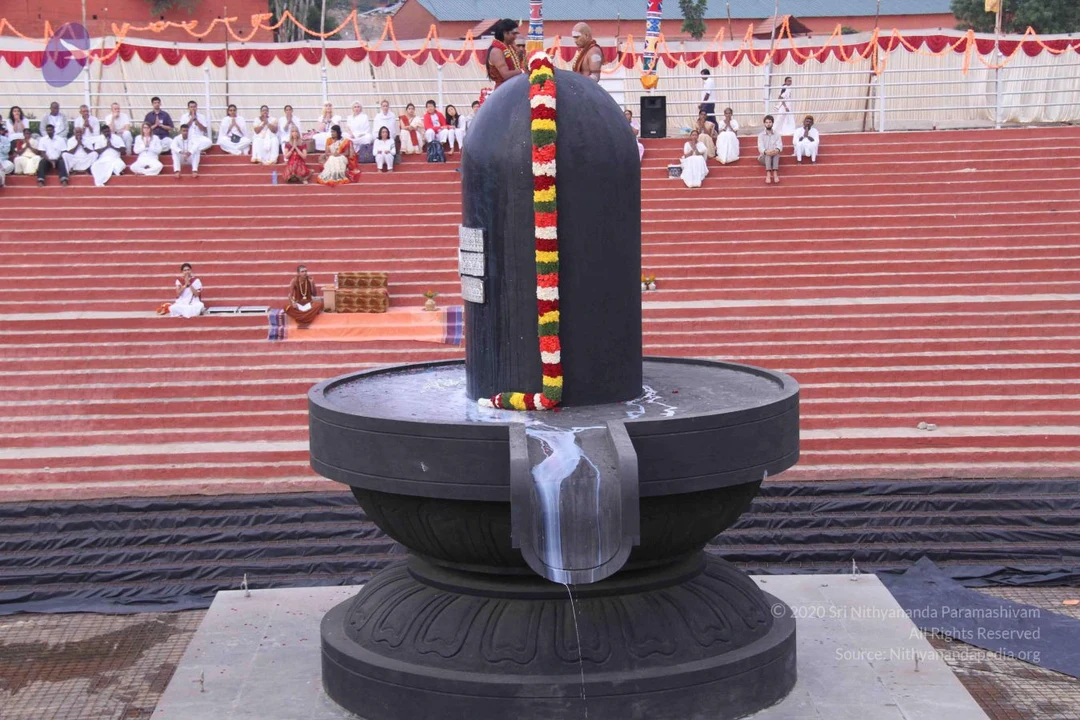
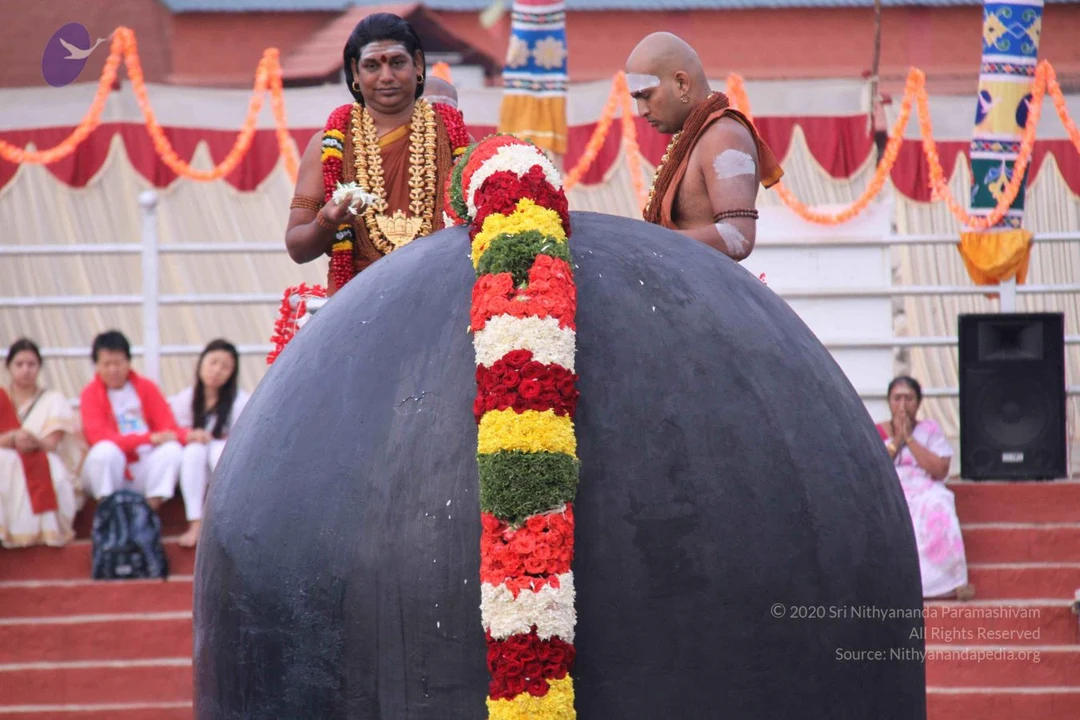
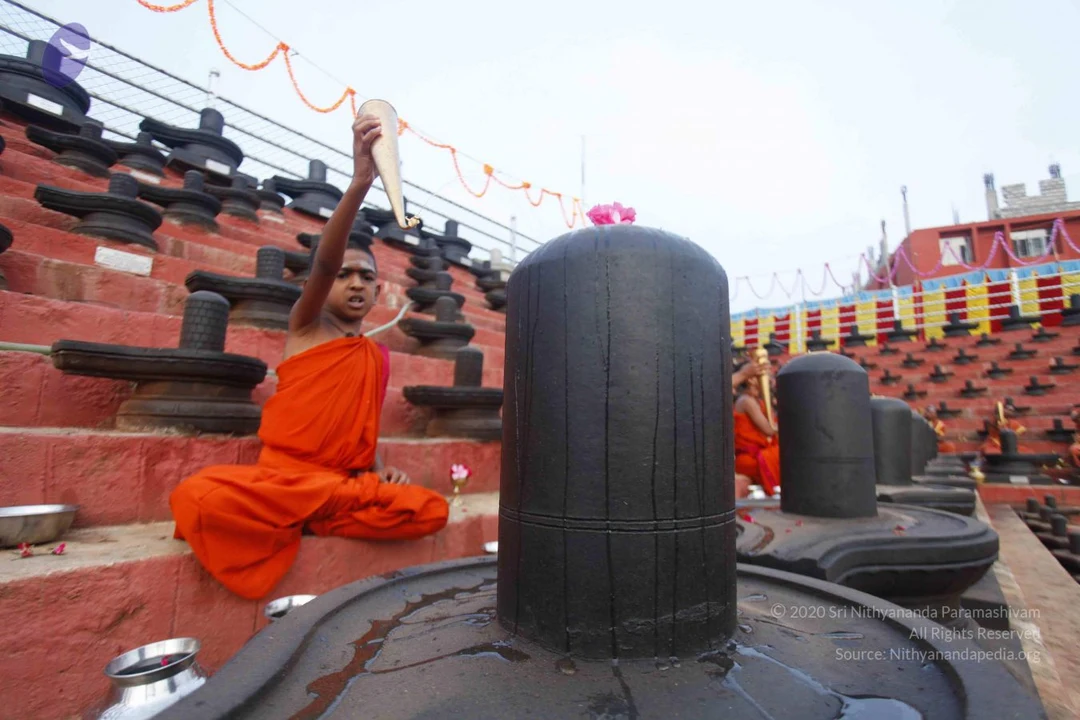
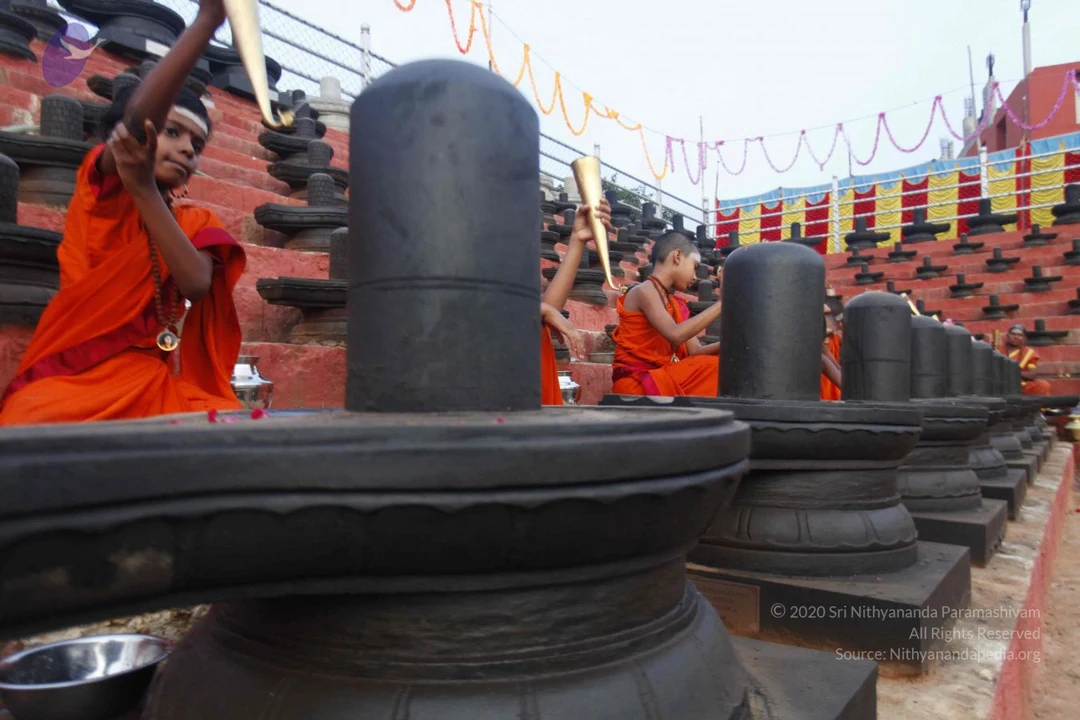
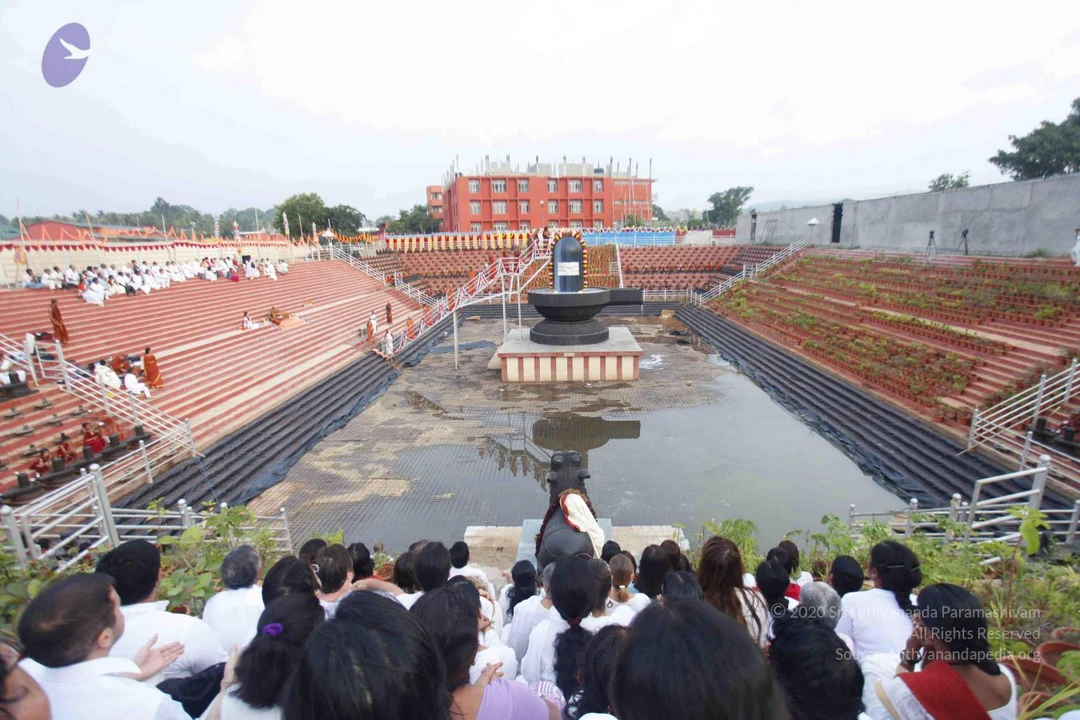
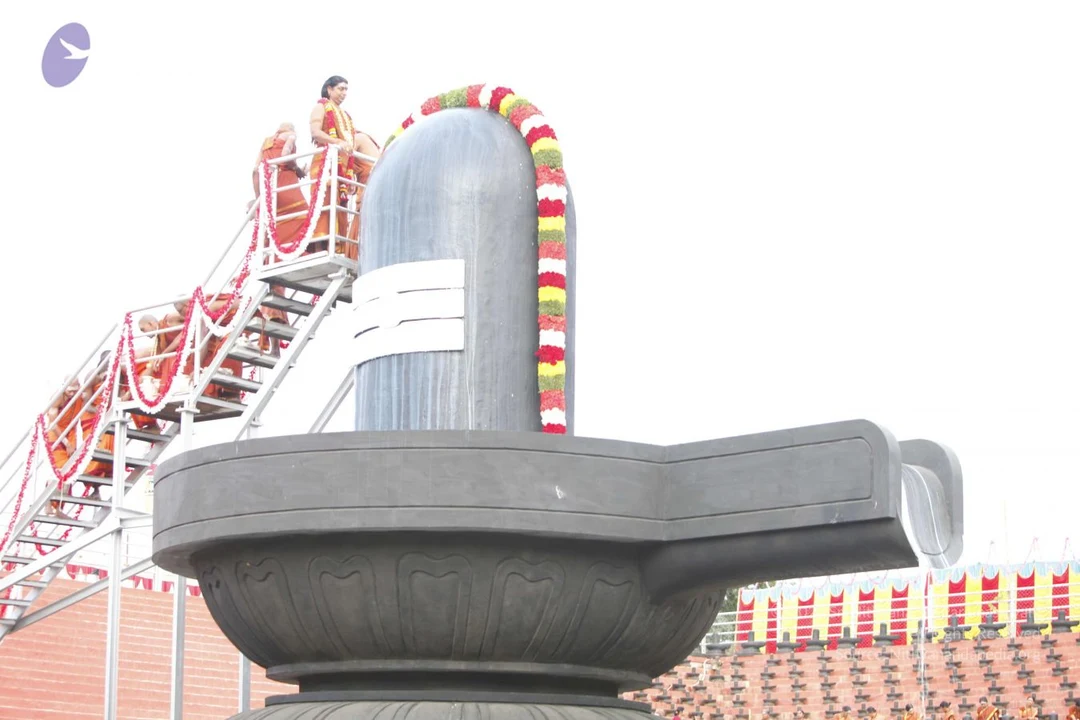
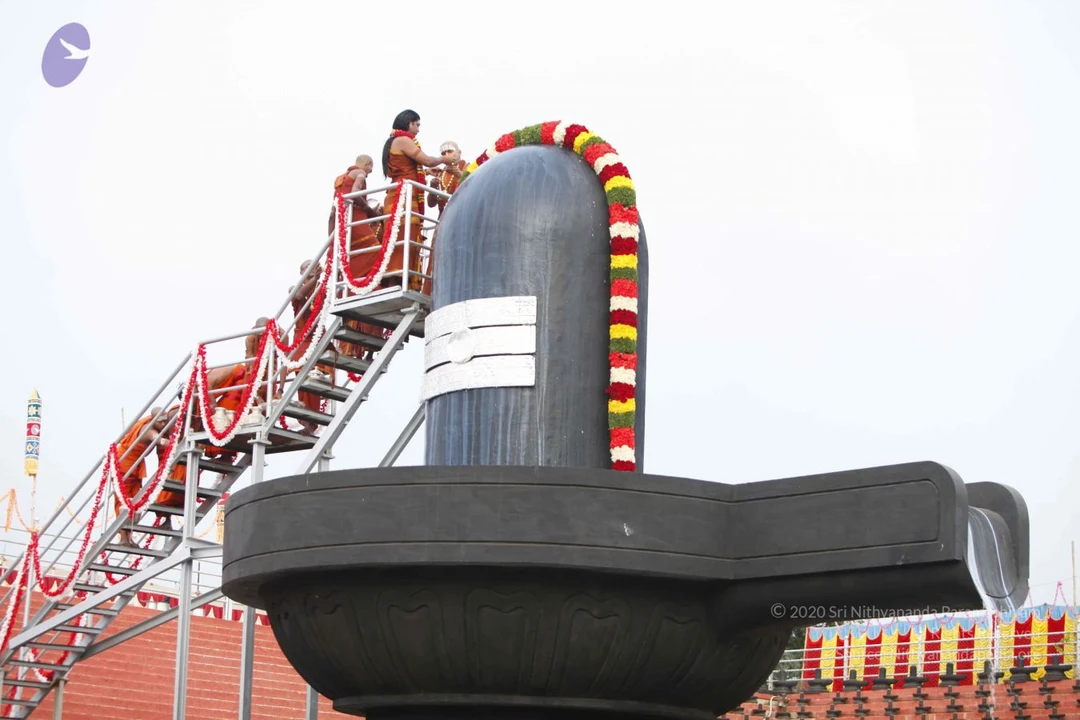
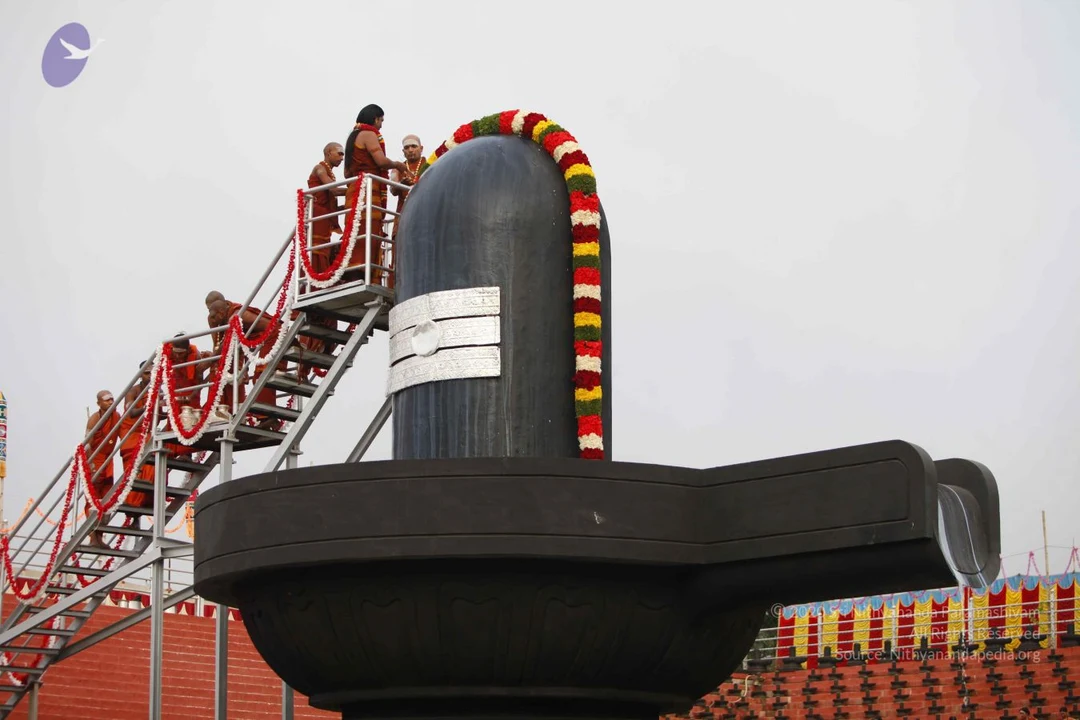
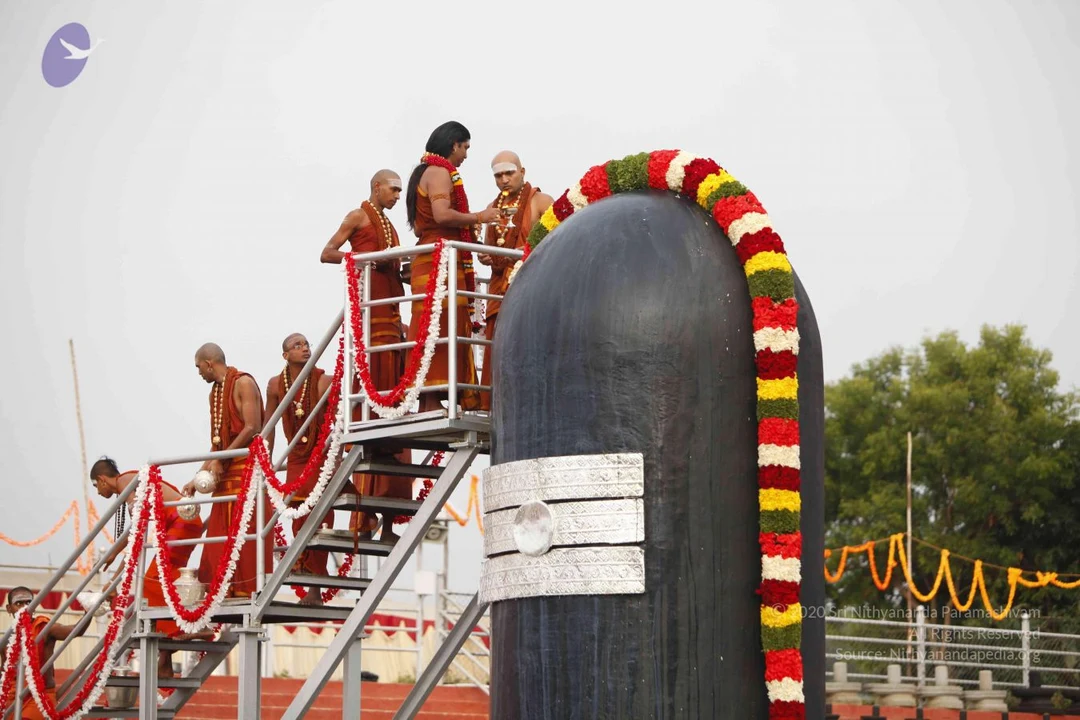
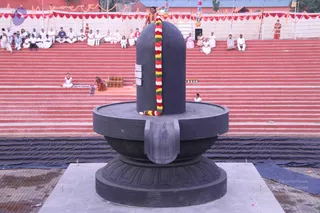
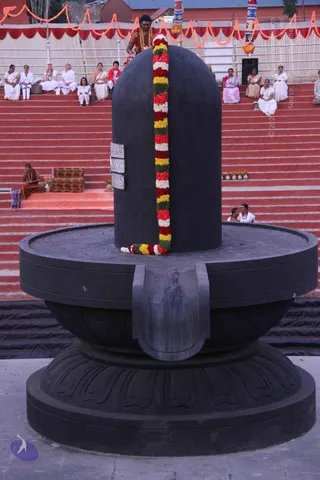
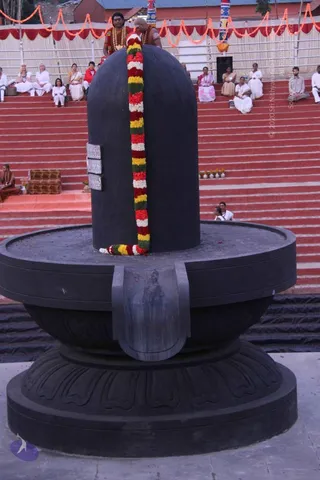
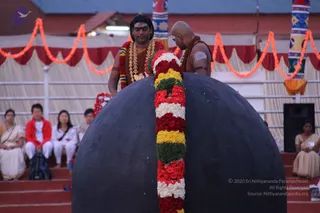
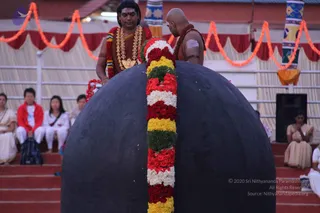
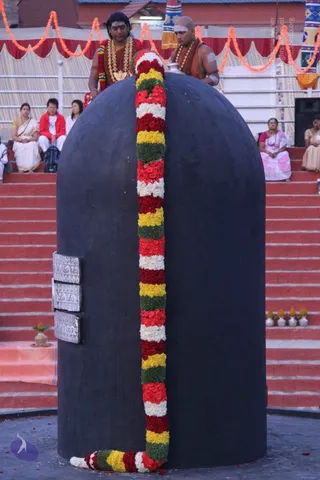
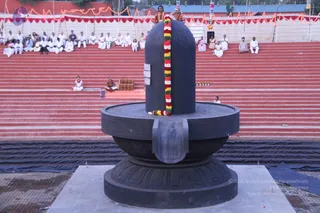
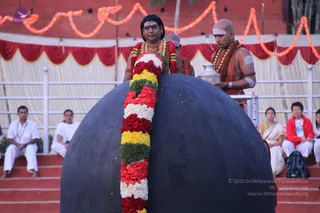
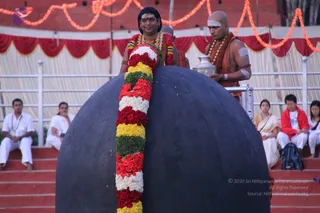
Large dark grey stone Shivalinga on a round lotus-carved pedestal stands in the foreground, garlanded with a multicoloured red, white, yellow and green flower garland. Behind it, a crowd of people in white clothing sits on red-carpeted tiered steps beneath red and orange festoons and banners. A standing figure in orange robes is visible near the top of the linga at the back, and a small brown-robed figure sits near the steps. Oil lamps are placed on the steps.A large black stone Shiva lingam on a circular black yoni-pitha base dominates the foreground, draped with a long garland of red, yellow, green and white flowers. Behind it, a man in a red and orange garment with beaded necklaces stands at the top of the lingam, apparently adorning it. Red-carpeted tiered steps behind hold seated devotees in white and pastel saris and clothing. A seated figure in orange clothes with a rudraksha mala sits on a small orange platform at left, and orange marigold strings hang across the top. Scattered flower petals lie on the base.A large black stone Shiva lingam on a black yoni-pitha base stands in an outdoor courtyard, draped with a multicoloured flower garland in red, yellow, white and green. Behind it, a man with long dark hair and an orange-red shawl wrapped over his shoulders and a rudraksha-style necklace stands near the top of the lingam, and a shaved-headed man in orange robes stands beside him, possibly performing abhishekam. Tiered red steps behind hold several people seated in white clothes, and bright orange and red marigold festoons decorate the stage above.A large dark black stone sphere draped with a long garland of red, white, yellow and green flowers dominates the foreground. Behind it stand two men on a raised platform: the taller man in front wears an orange-brown cloth, a multi-strand gold necklace and a flower garland over his shoulder, with long dark hair and a decorated forehead. Beside him a shaved-headed man with a white marking on his upper arm and bare chest faces him, hands near the stone. Orange marigold garlands hang across the backdrop with striped drapery and a tall decorated pillar. Seated devotees in white clothes line the steps at left and right. A purported deity murti is not visible; the central focus is the sphere.A large black dome-shaped stone lingam draped with a long garland of red, white, yellow and green flowers stands in the foreground of an outdoor ceremonial platform decorated with orange marigold garlands and cream drapery. A standing figure in a brown-orange garment with a multi-strand white shell and gold necklace and a red-and-white flower garland looks toward a bald man with bare shoulders and white markings on his arm who stands beside the lingam. Seated on red steps at the right and left, several people in white clothes watch; a woman at right sits with hands folded in anjali. The scene suggests an abhishekam-style ritual. a person is not confidently identified from appearance.Large dark black stone lingam, a Shiva linga, draped with a long garland of red, white, yellow and green flowers, stands in an open-air ritual courtyard. Two men in saffron-orange robes stand on top of the lingam pouring or tending it. The man at left wears a long gold-and-bead necklace with a red-and-gold sash and a red tilak; beside him a shaven-headed priest in orange wears a bead necklace and white sandalwood markings on his arms. Orange marigold festoons hang across the backdrop, and red-stepped seating behind holds seated women in saris and a few others watching. Small brass pots with offerings sit on the steps. Flower petals are scattered on the ground.

Paduka Puja

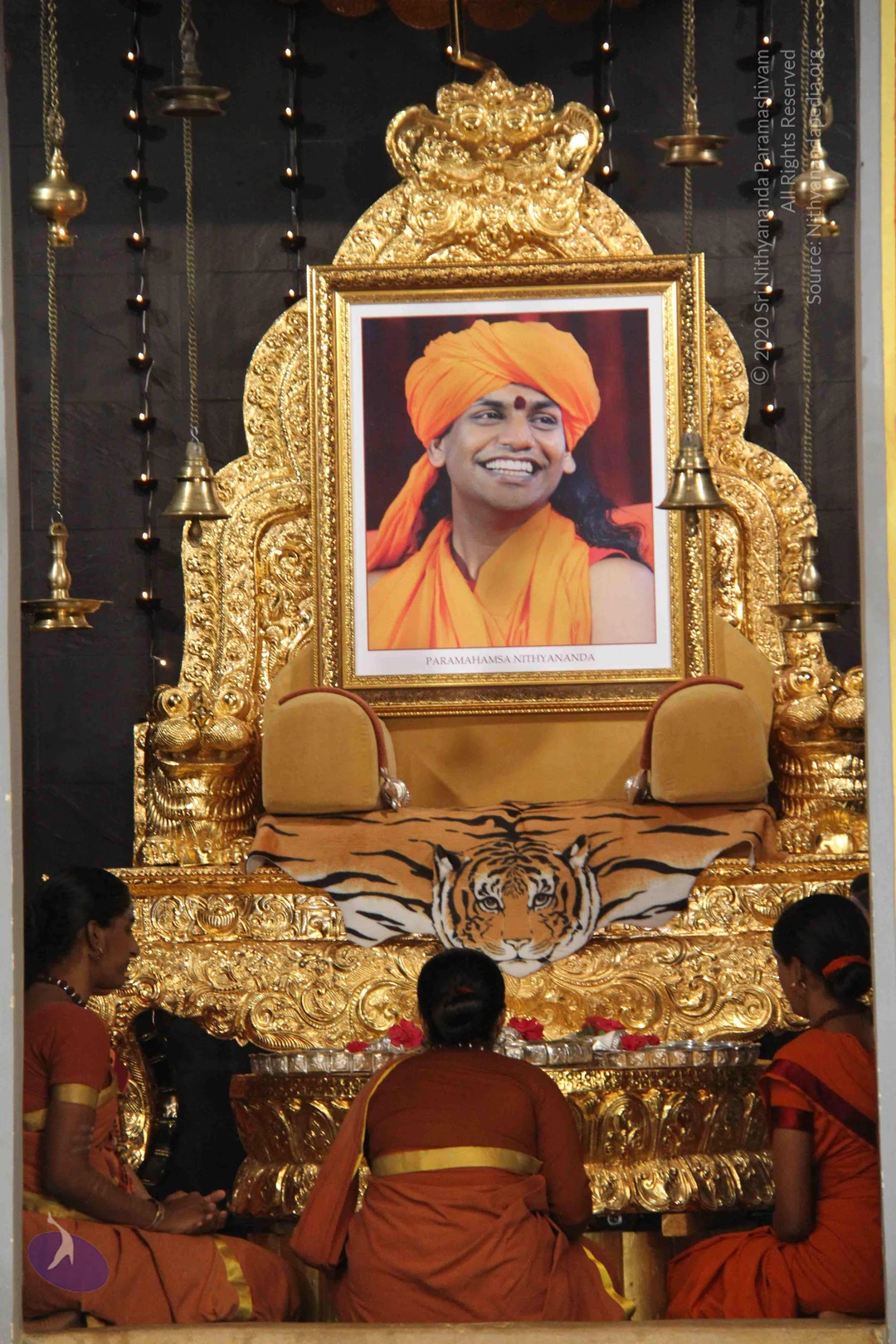
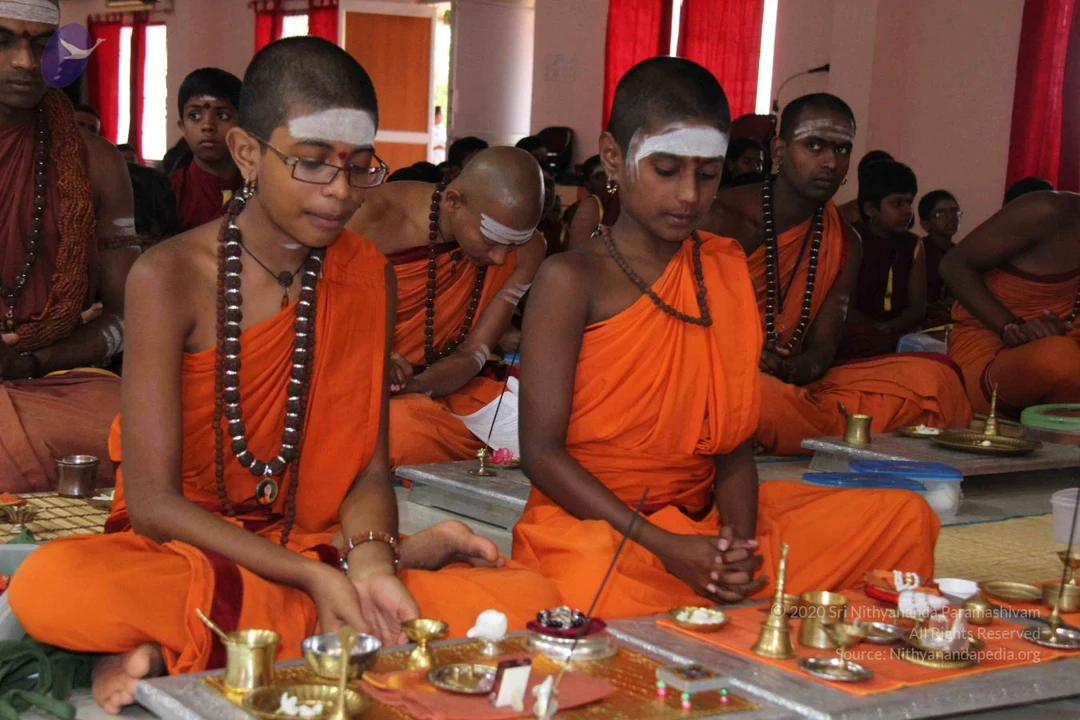
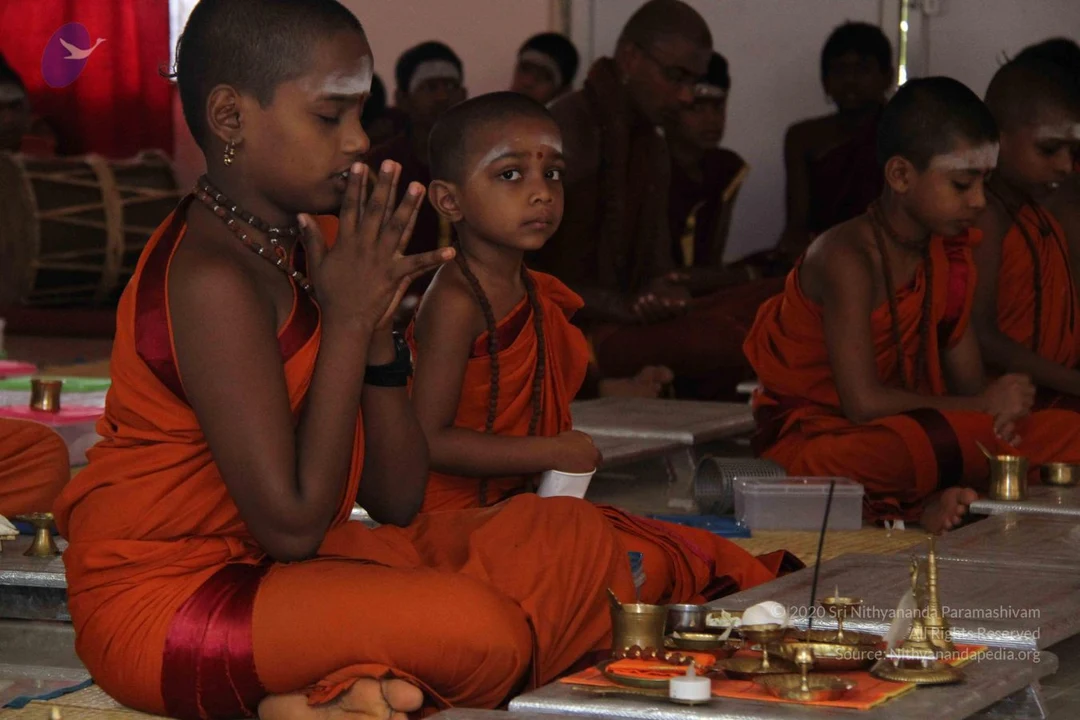
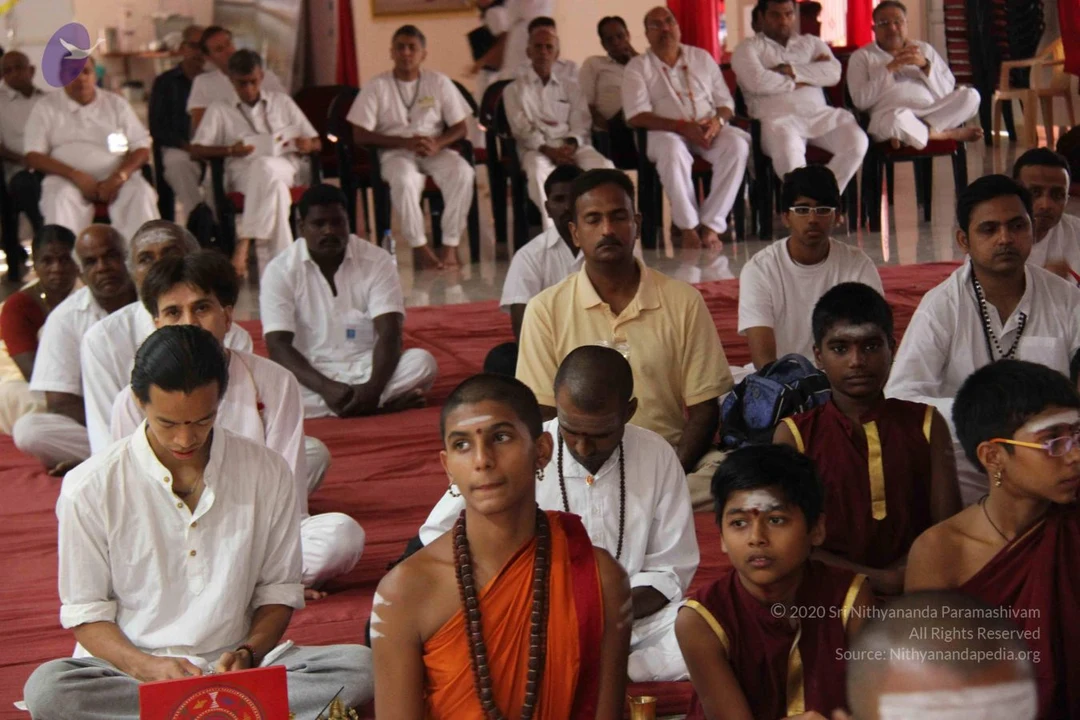
14 photosSource gallery
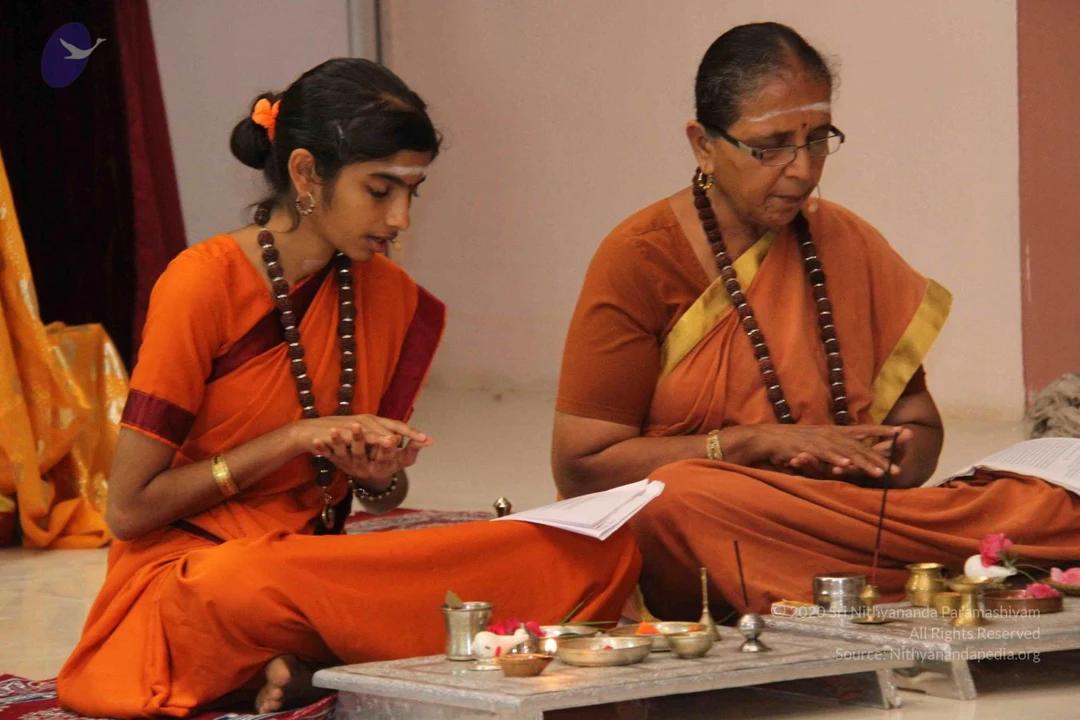
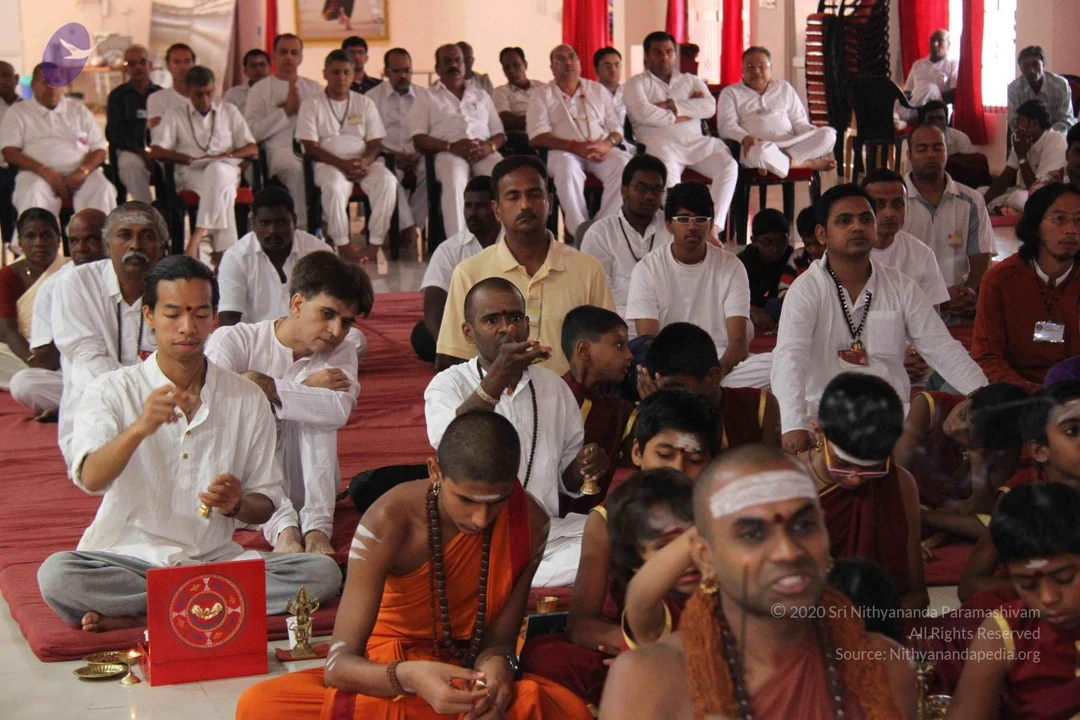
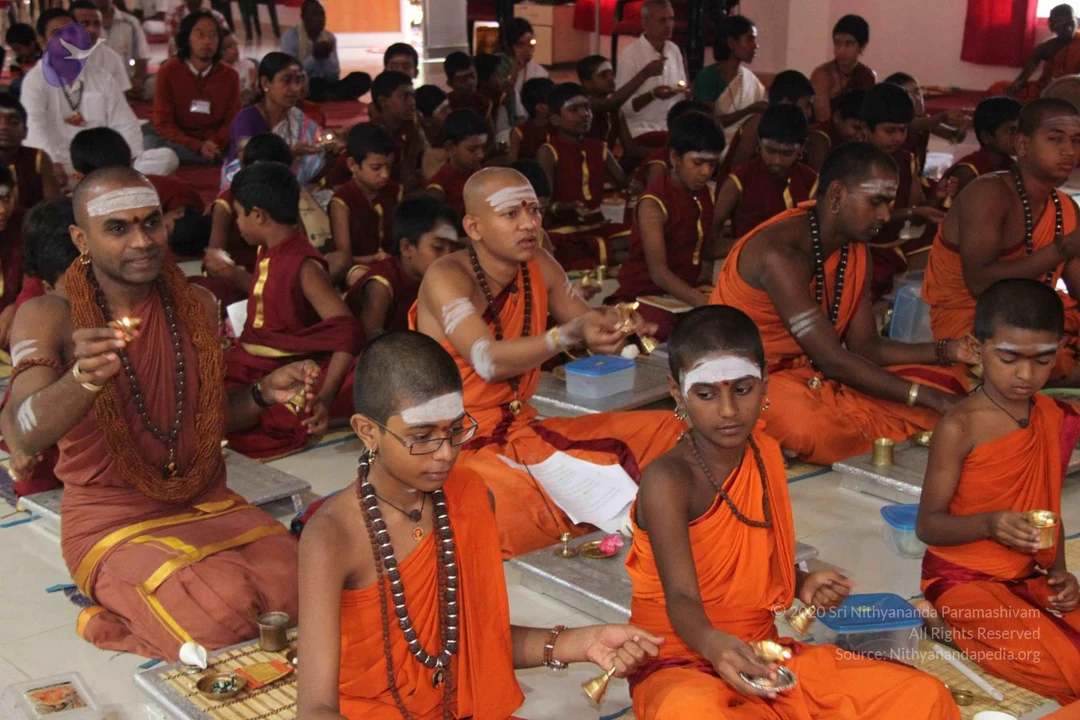
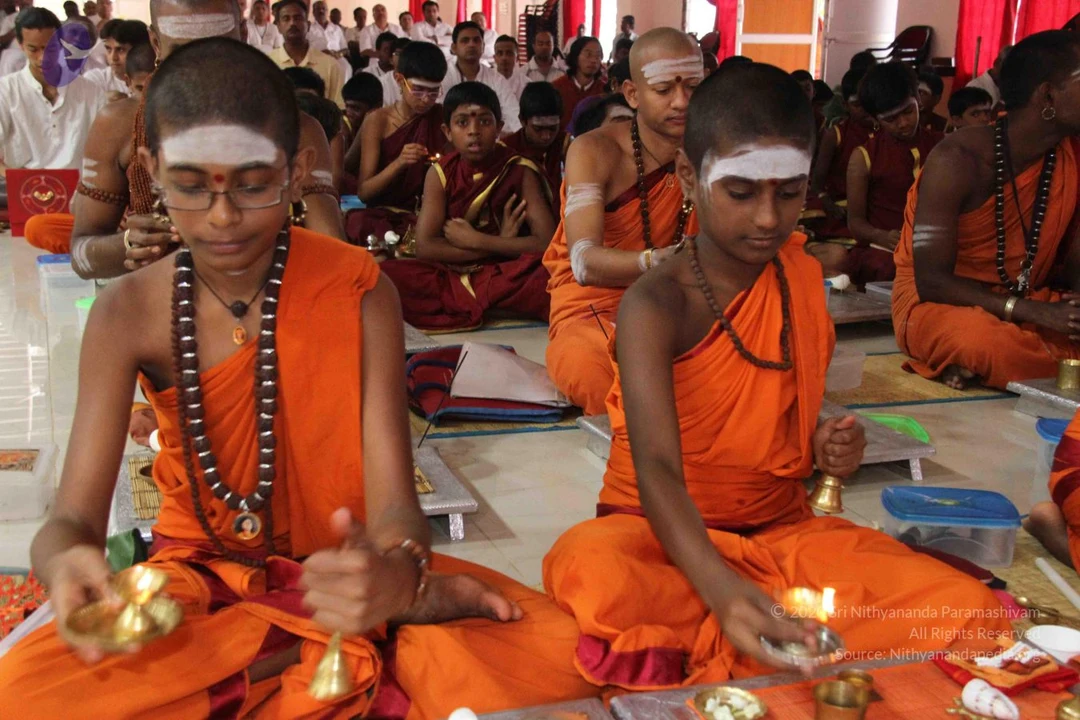
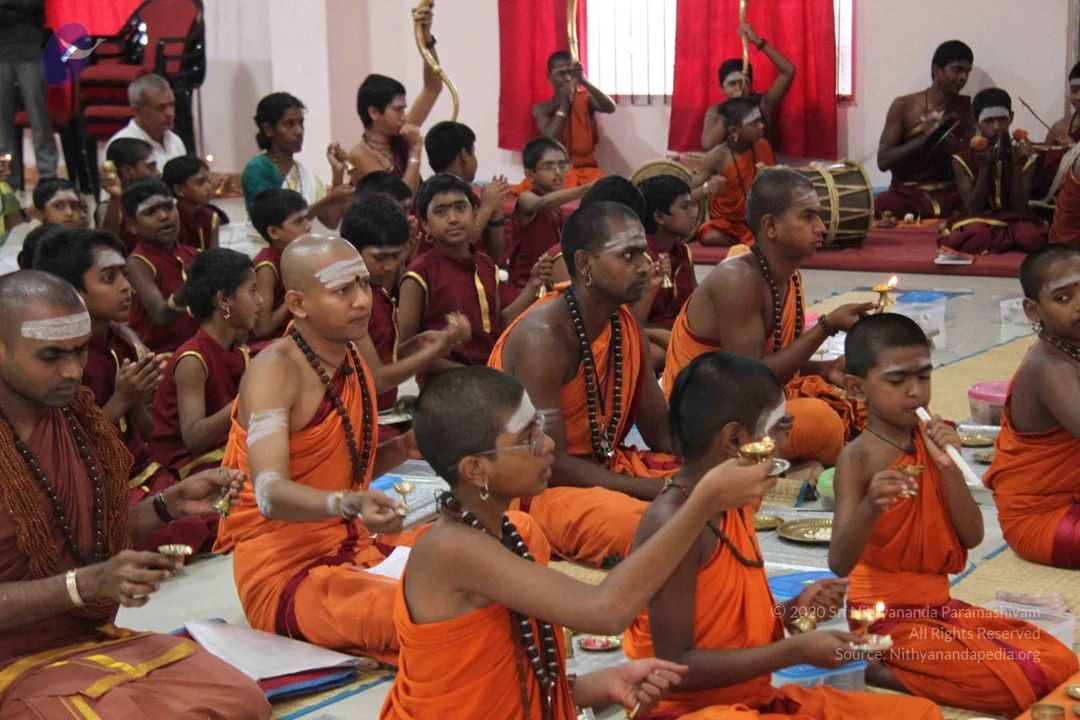
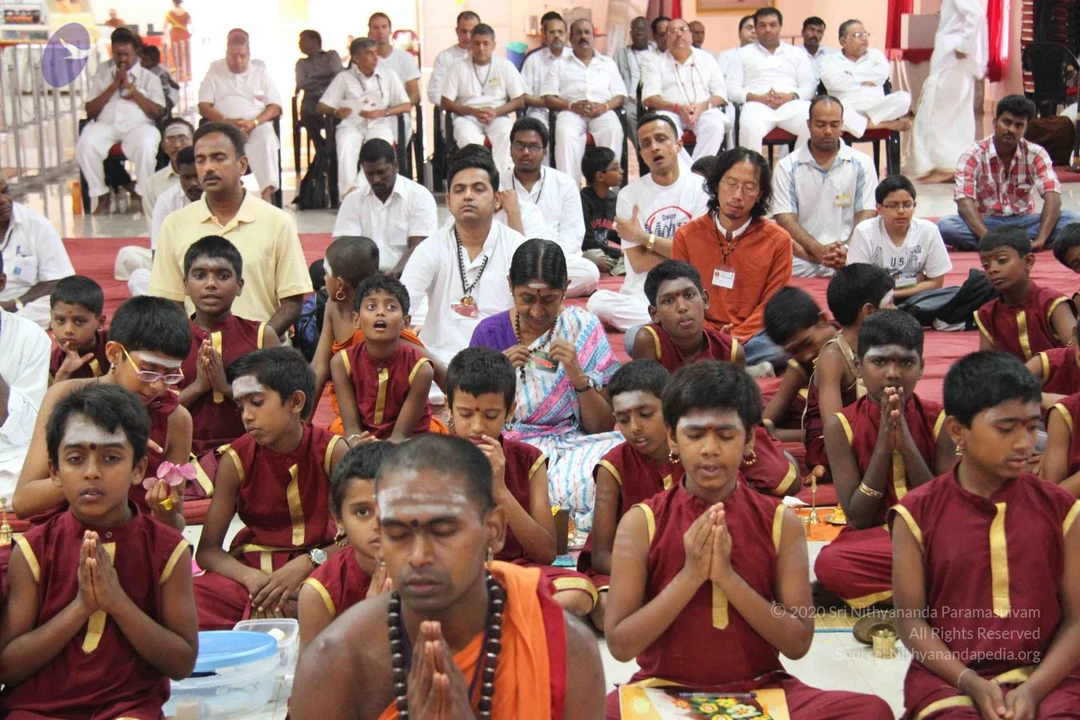
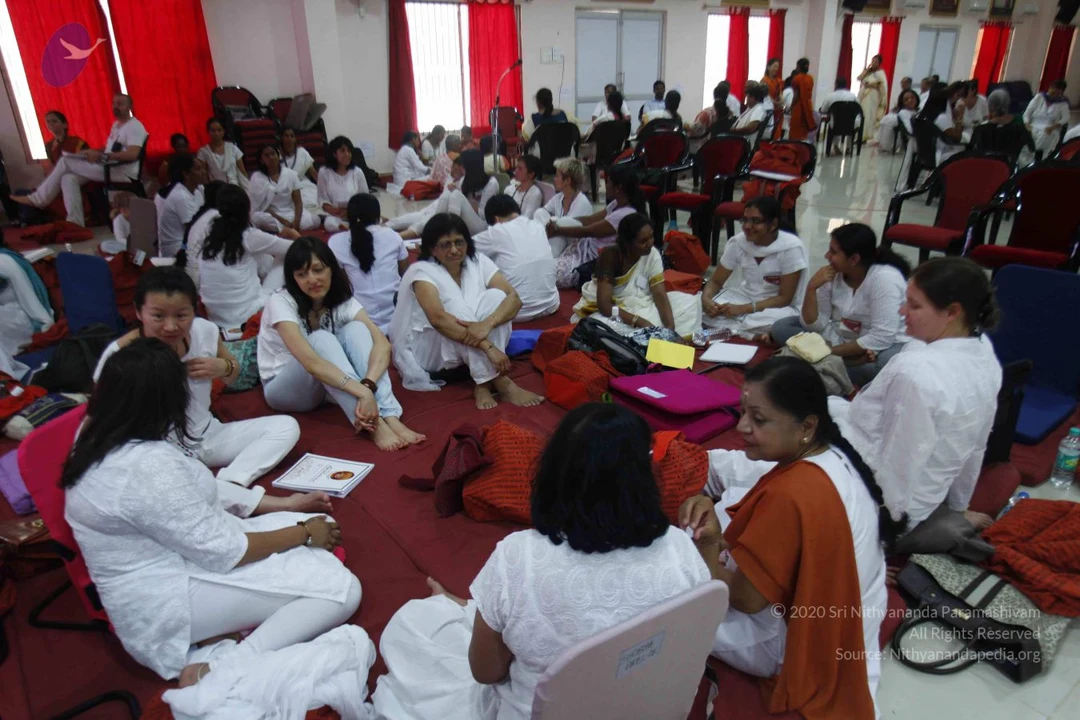
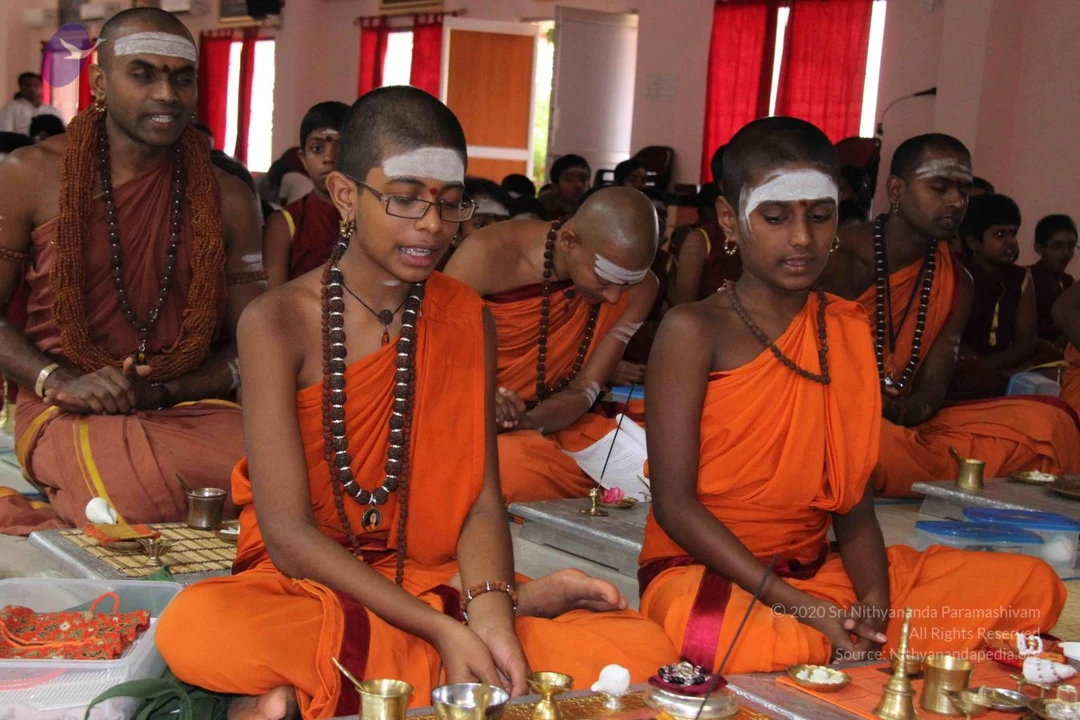
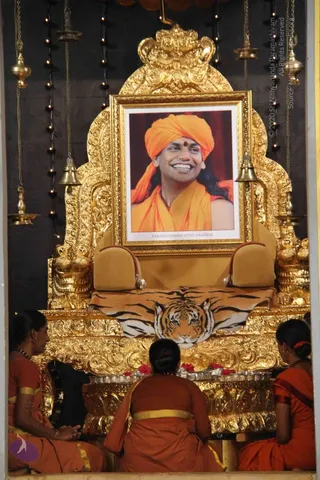
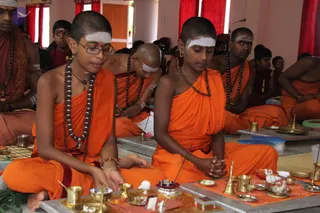
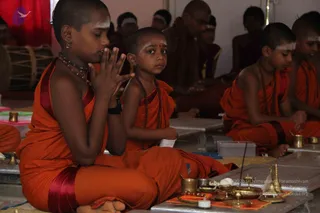
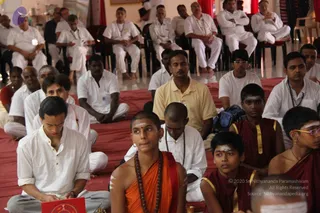
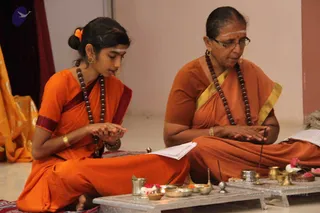
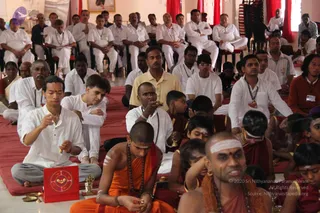
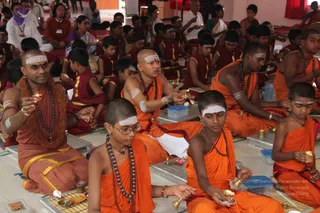
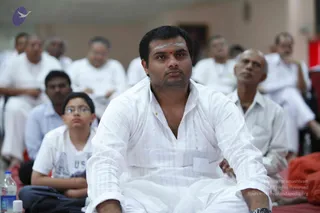
A golden ornate throne with carved lion-head armrests and a tiger-skin cloth draped over its seat, framed by hanging brass oil lamps and bells. A framed portrait labelled "Paramahamsa Nithyananda" shows a smiling man in an orange turban, orange shawl and a red tilak, placed above the throne. Three women in orange saris with gold borders sit in front of the throne; the center woman faces away, with a tray of red flowers and offerings before her.A photograph of several young male sannyasi disciples in saffron-orange robes seated cross-legged on low wooden platforms during a ritual. The two foreground boys wear rudraksha malas, white vibhuti or tilak marks on their foreheads and shaved heads; the boy on the left wears glasses and holds a small brass vessel while the boy on the right presses his palms together in prayer. Brass puja vessels, a small brass bell, incense sticks, a kumkum-coloured plate and a steel tray with lamps sit before them. Other robed participants sit behind, and a red curtain hangs in the background.Several young boys with shaved heads and white tilak on their foreheads sit cross-legged on the floor in orange robes, some with maroon sashes and rudraksha malas. The foreground boy, in the left of the frame, presses his palms together in prayer with eyes lowered. Beside them stand brass oil lamps, a brass kalasha-style vessel and small brass pots on a low table with orange cloth. Adult figures in maroon and orange robes sit further back. A pink-and-red drum is partly visible at left. The setting appears to be an indoor hall with plain walls.A seated assembly of devotees in white traditional clothing sits on a red mat in a hall with red curtains and framed pictures. In the front, a young man in a white kurta sits cross-legged holding a red book. Beside him, a shaven-headed boy wears an orange robe and rudraksha mala with white sacred ash markings. Younger boys in maroon robes with yellow borders and white tilaka sit nearby, and older men in white and a man in a yellow shirt sit in rows behind. Several people seated at the back sit on chairs. The gathering appears to be a satsang or meditation session.Two women sit cross-legged on a floor mat performing a puja at a low metal table. The younger woman on the left has her hair in a bun with an orange flower, wears orange clothing with a maroon border, a rudraksha mala, gold bangles and earrings, and holds her hands together in a mudra. The older woman on the right wears glasses, an orange sari with a yellow border, a long rudraksha mala, and a white vertical forehead mark, and has her hands joined in front of her. Brass bowls, a small brass lamp, incense sticks, a metal cup, and flower petals in pink and white sit on the table. A sheet of paper rests on the mat beside them.A seated group of devotees in a hall during a person satsang-style gathering. In the foreground, a young man with a shaved head, white ritual dress and a rudraksha mala sits on a red mat, while a monk-like figure in saffron robes and a red-bordered shawl with white sacred marks on his forehead sits beside him. Several children in red-brown robes with white forehead marks sit in front. Behind them, rows of men in white kurtas and white dhotis sit on red cushions, some wearing lanyards, and a seated man in a yellow shirt raises his hand near his mouth. A small brass lamp and a red box with a gold emblem rest on the mat in front. No clearly identifiable a person is shown, so the appearance is uncertain.

Nithya Satsang

42 photosSource gallery
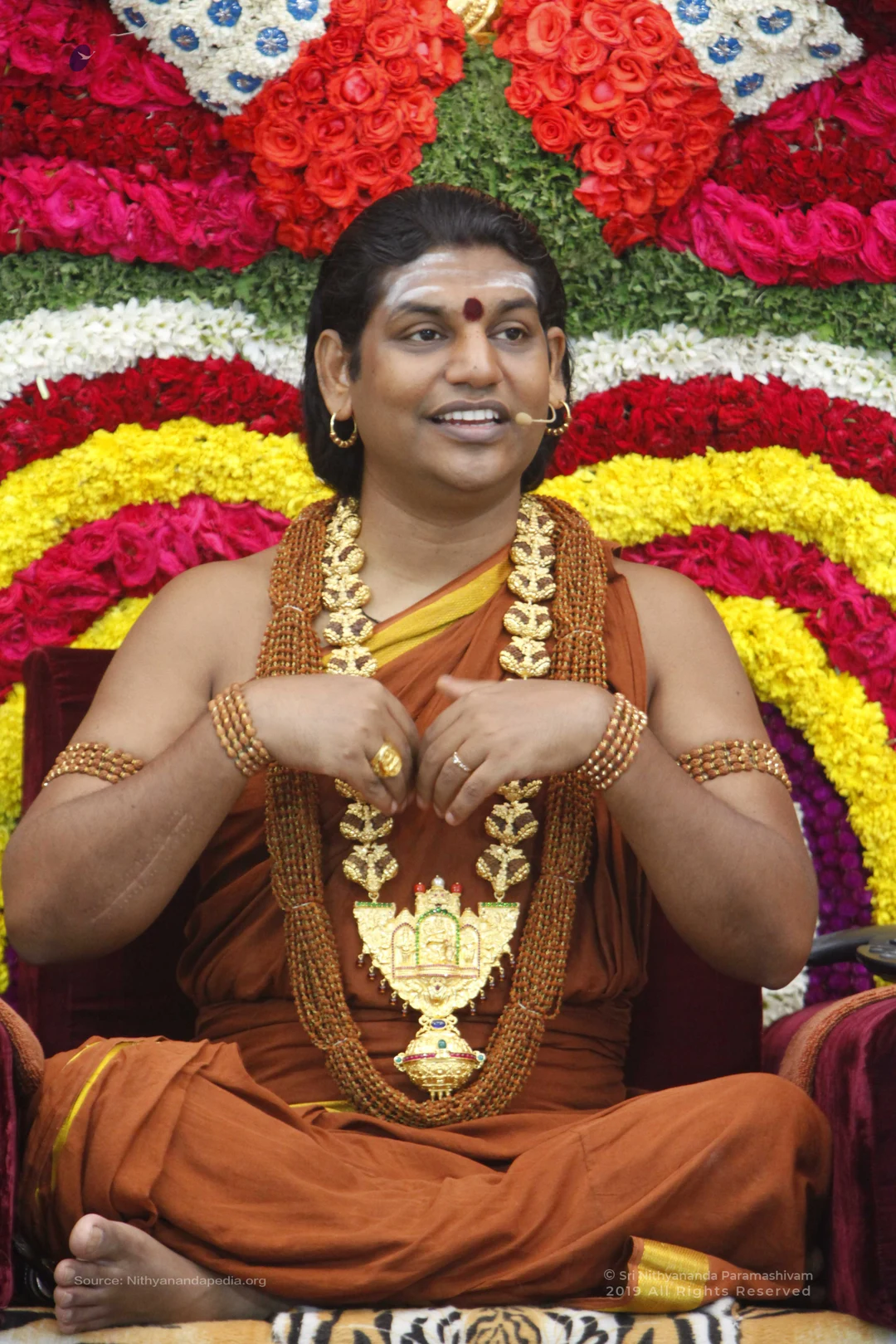
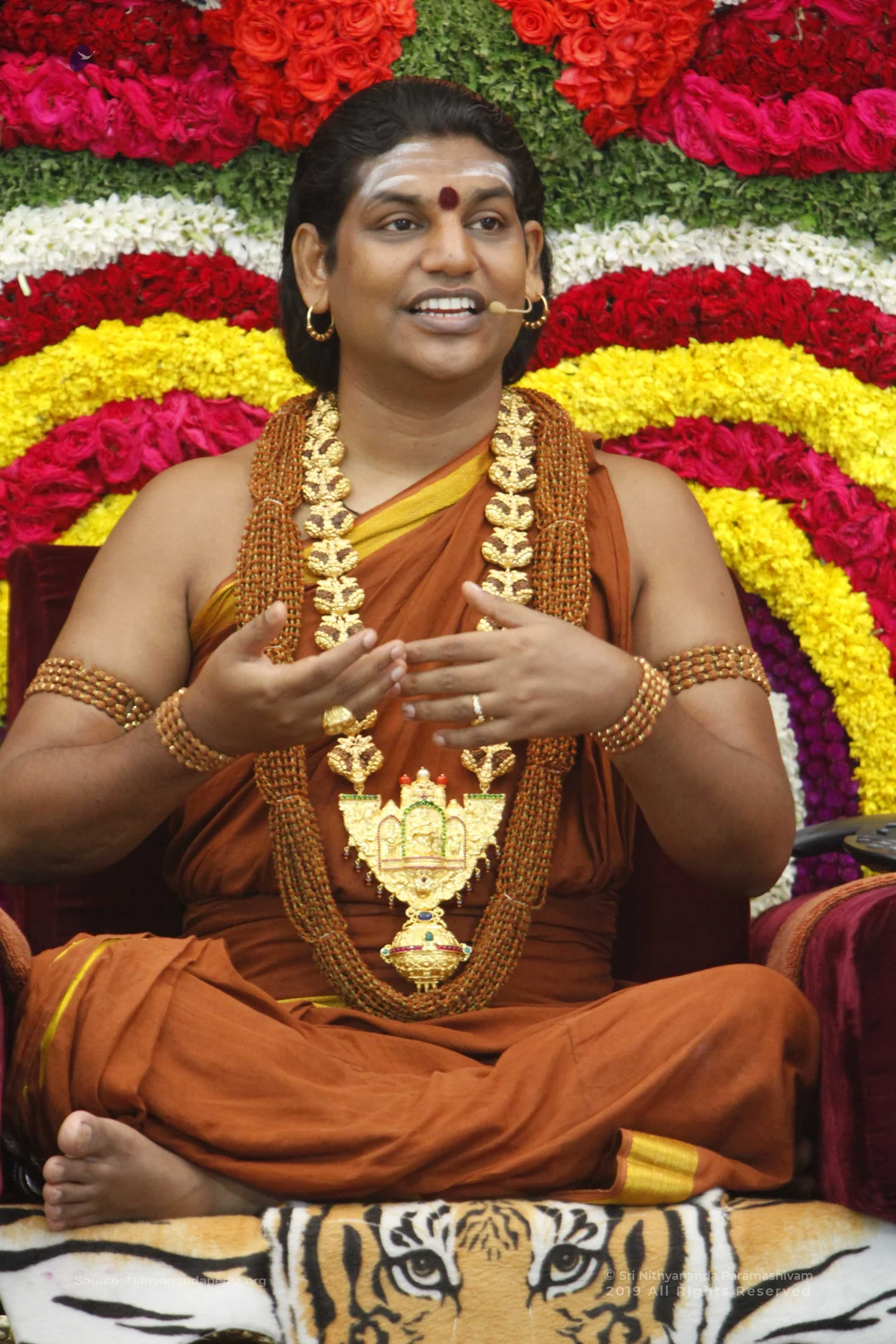
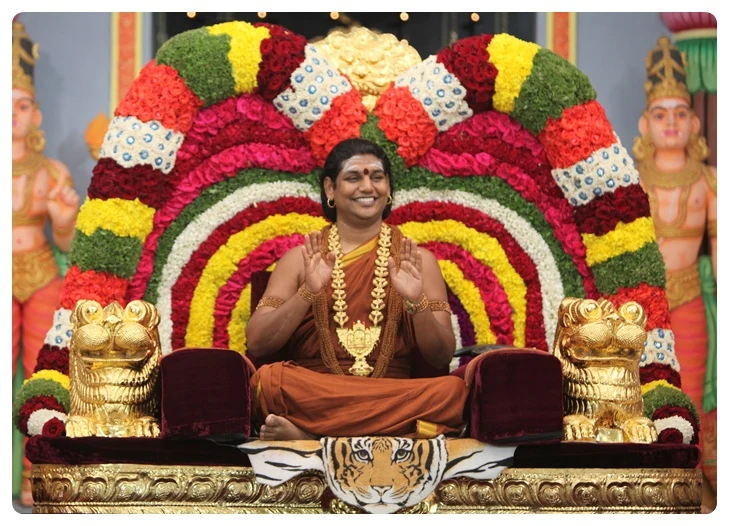
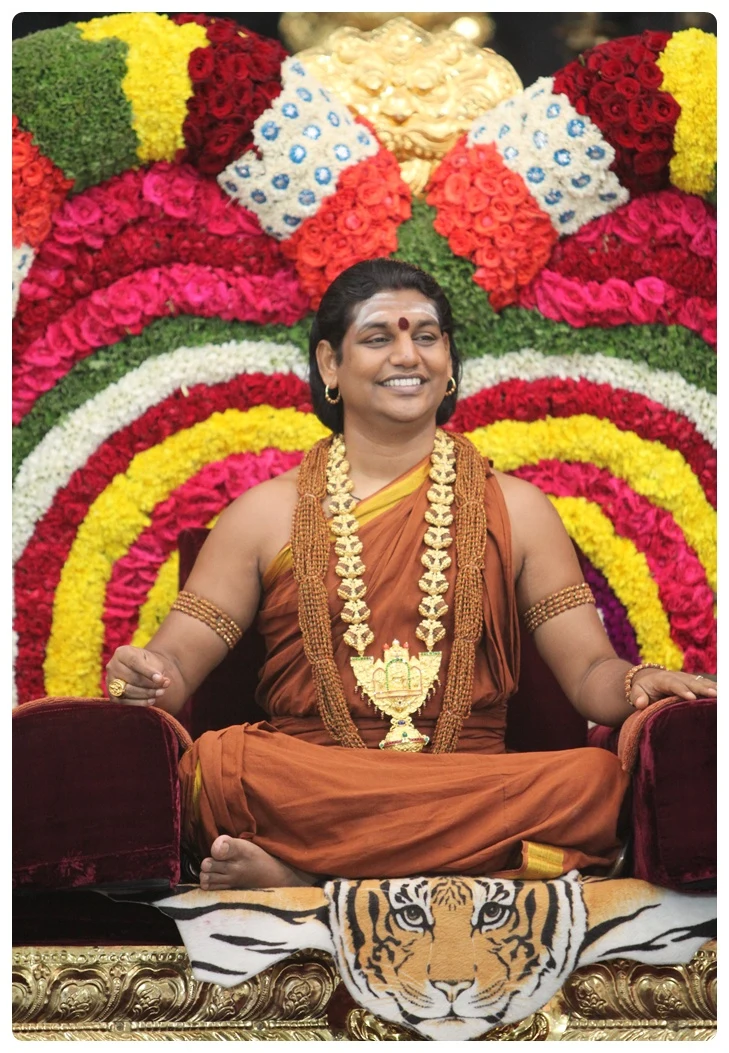
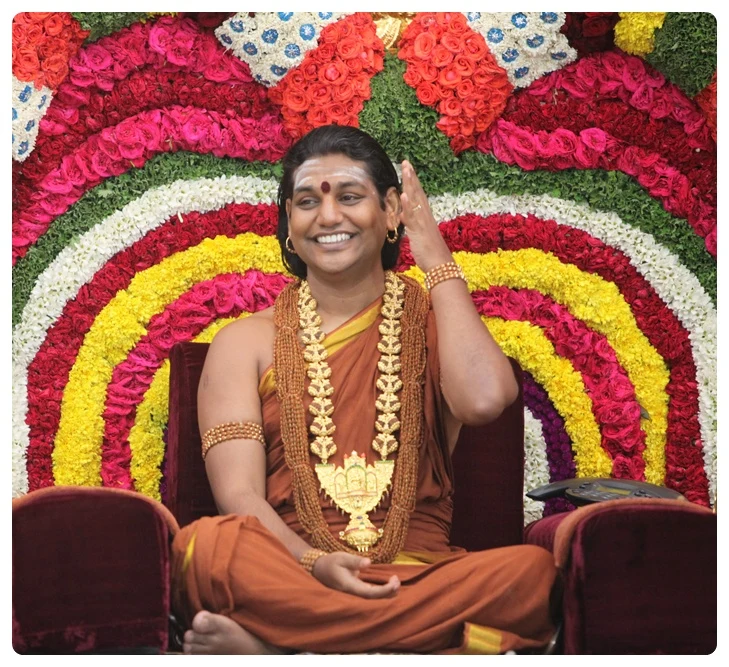
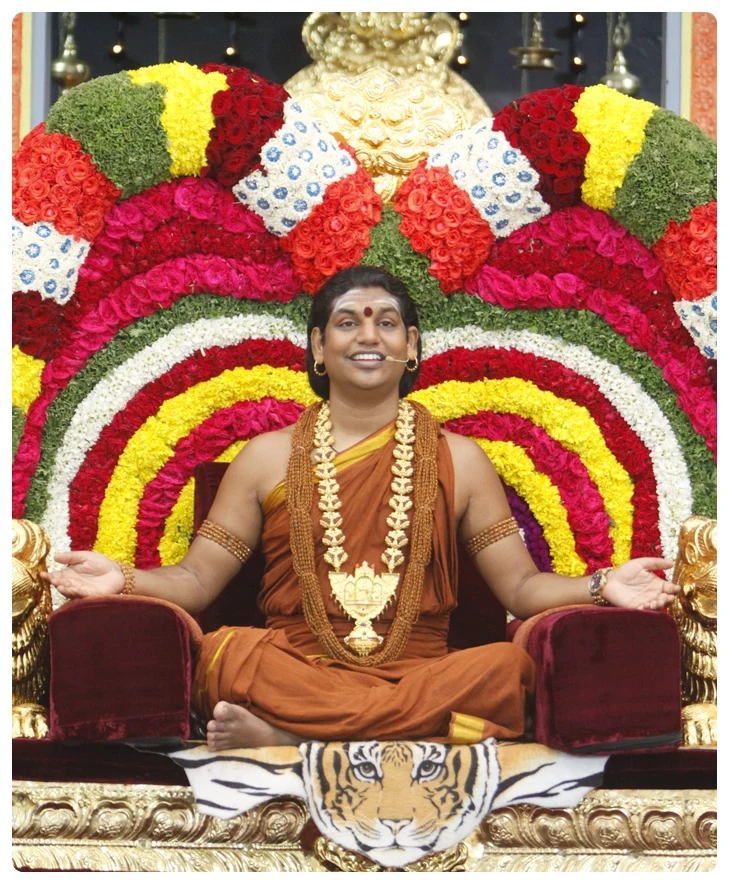
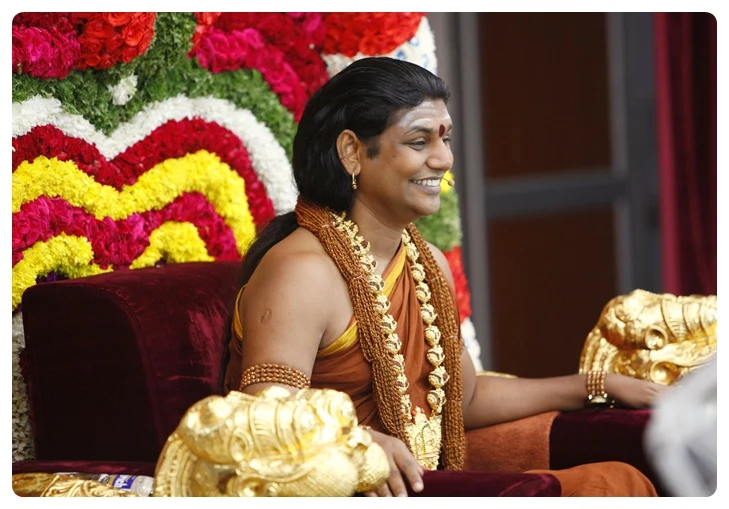
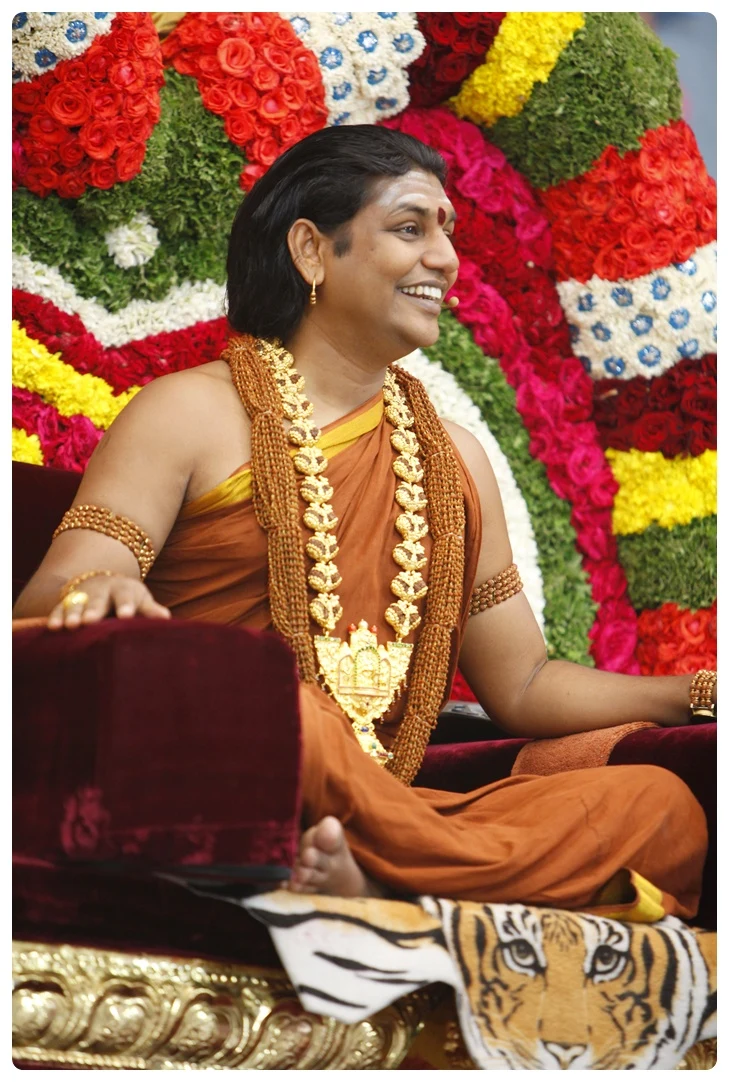
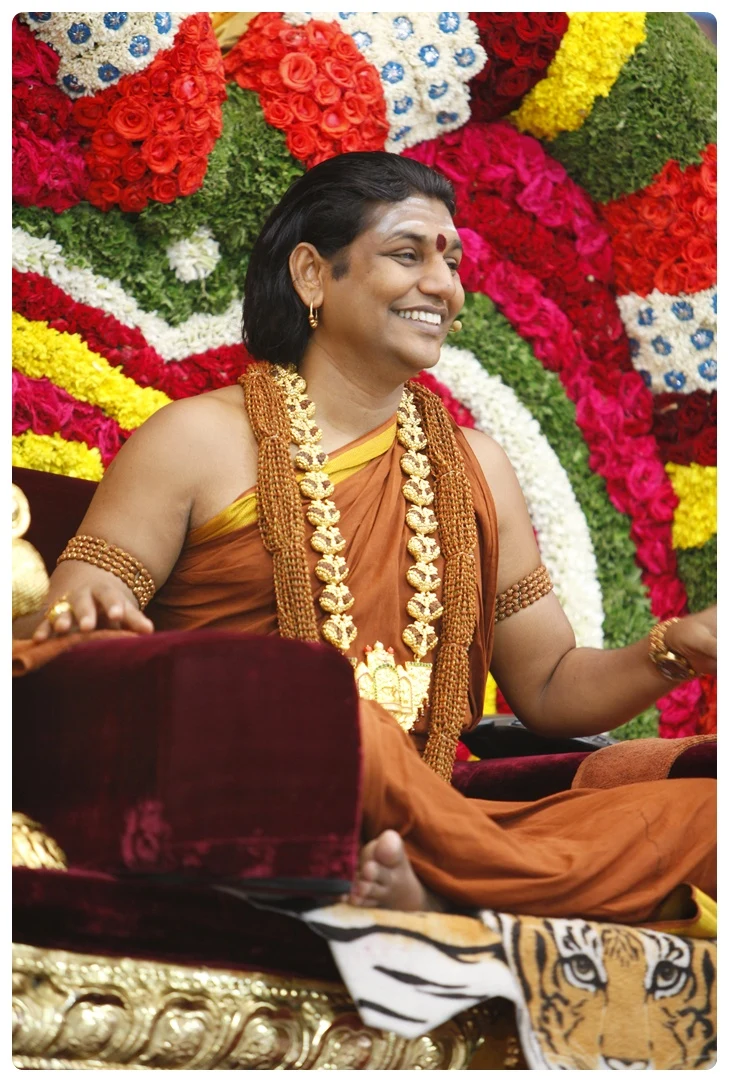
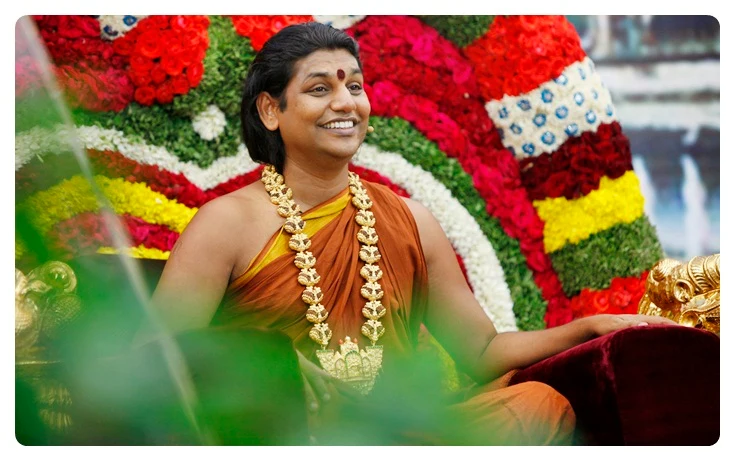
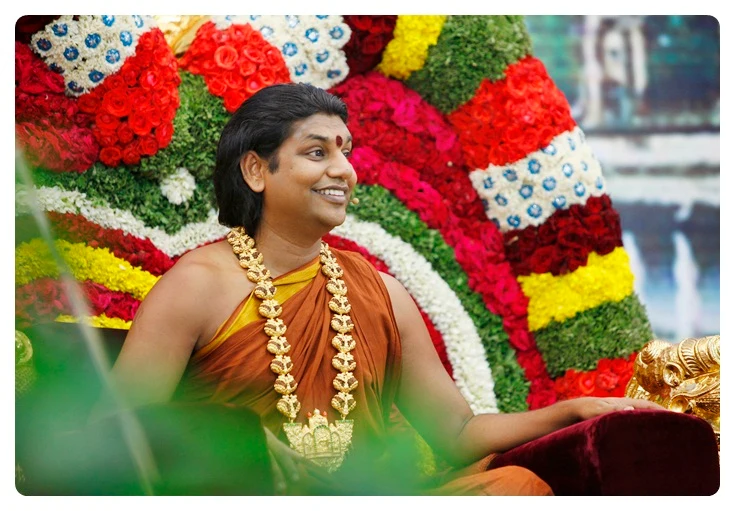
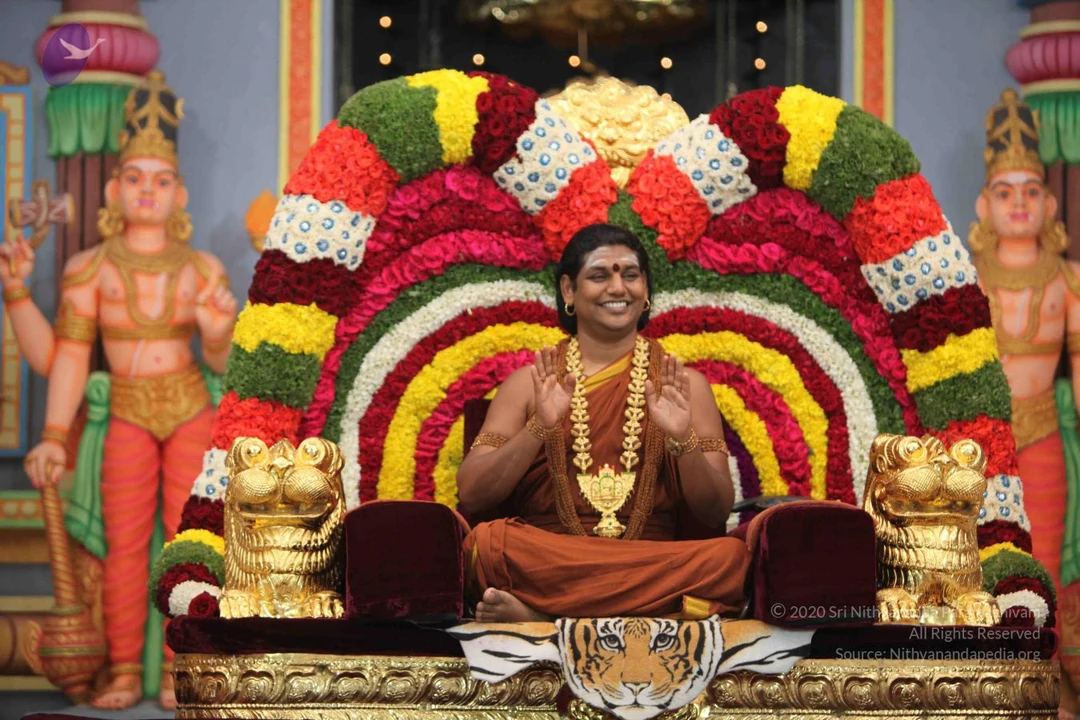
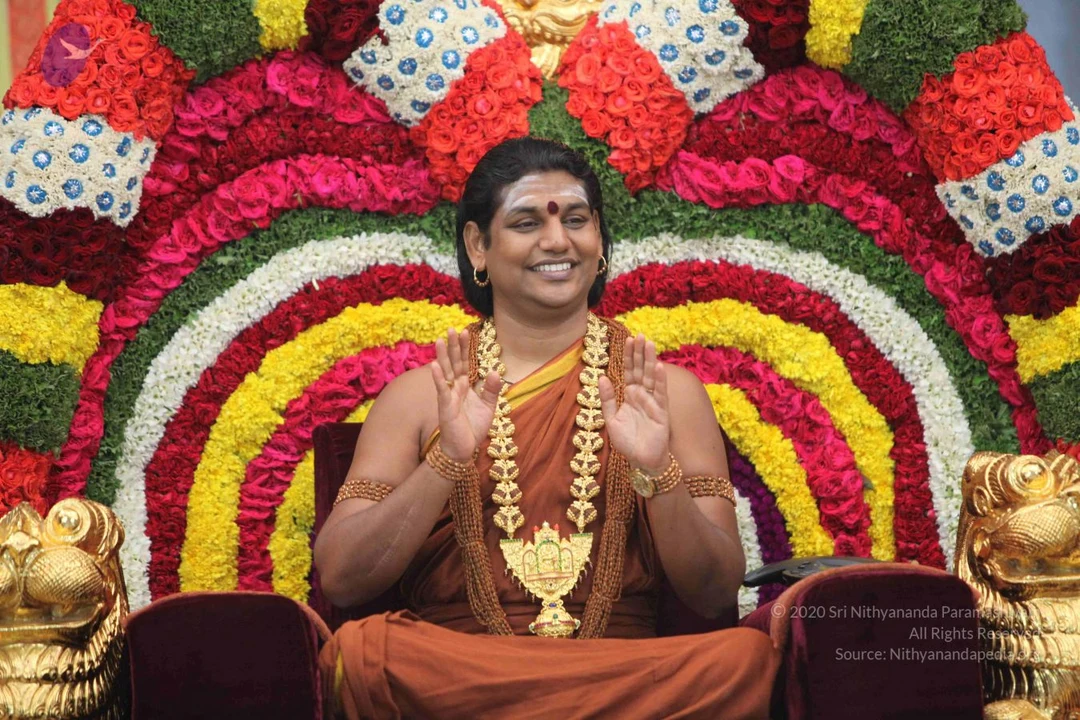
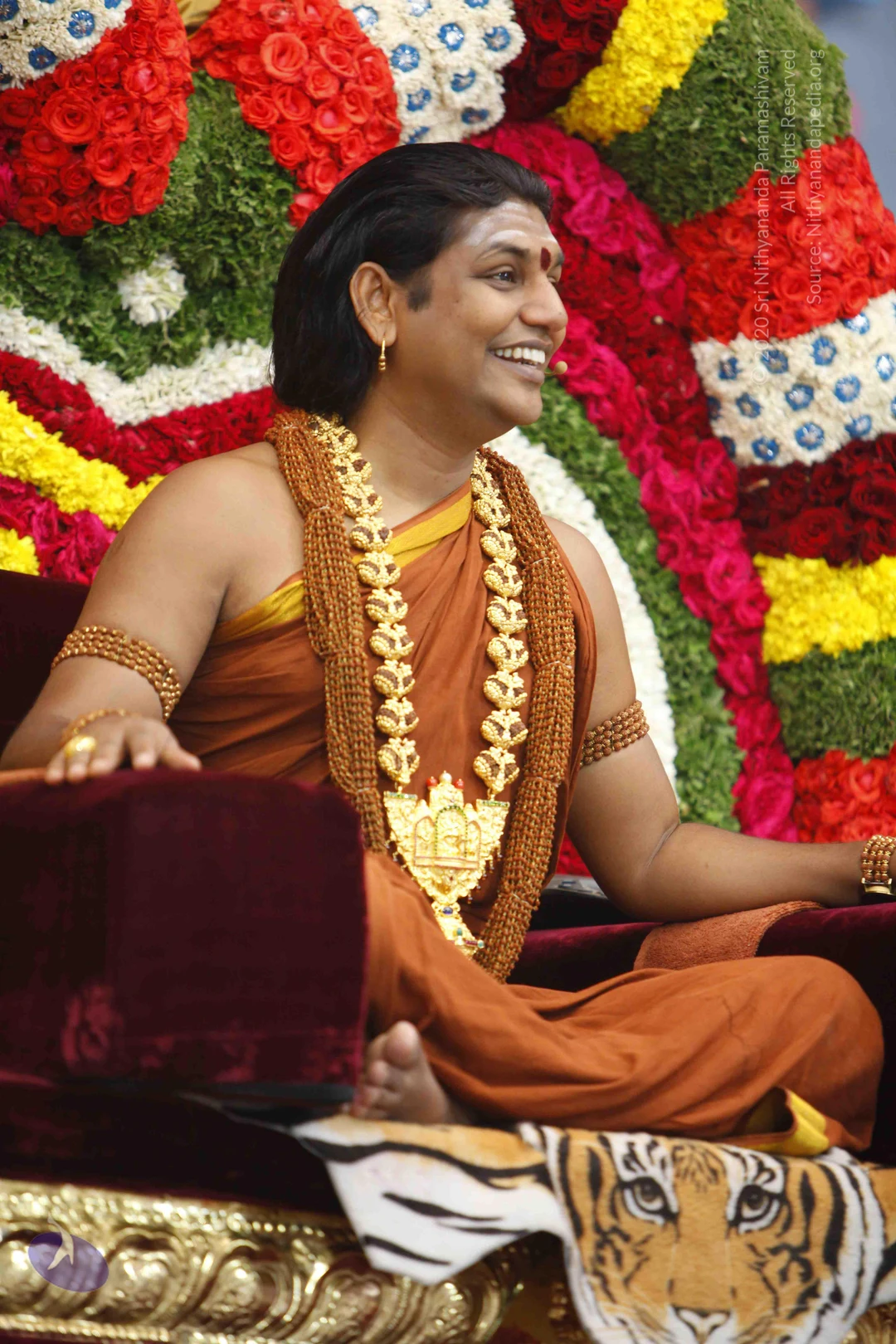
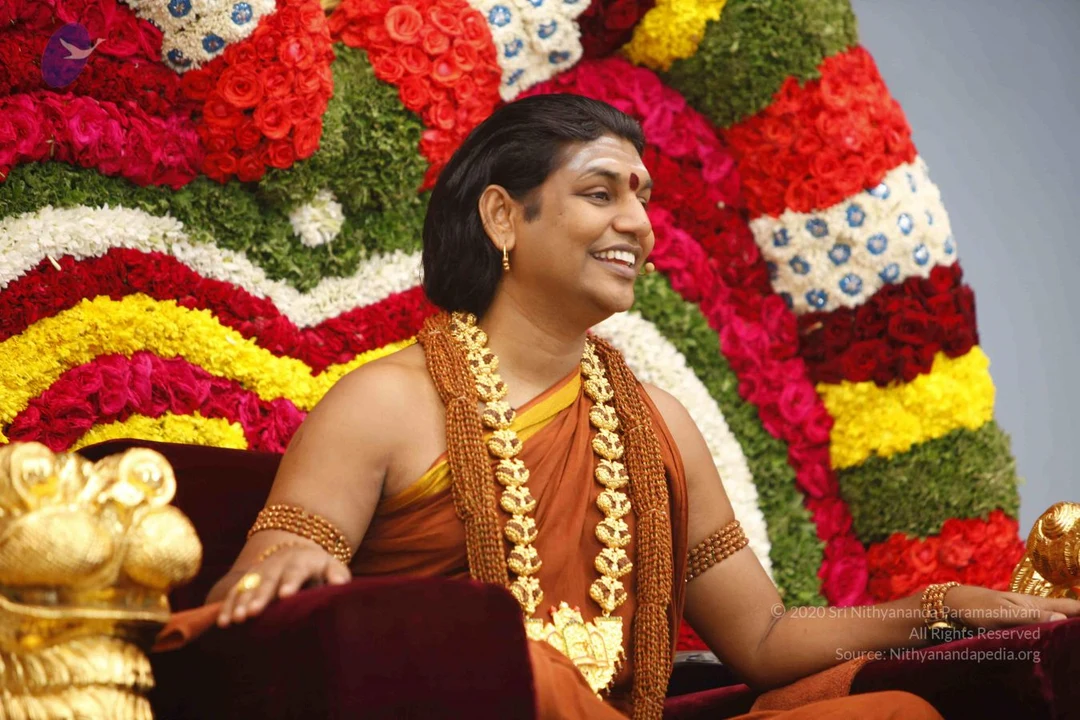
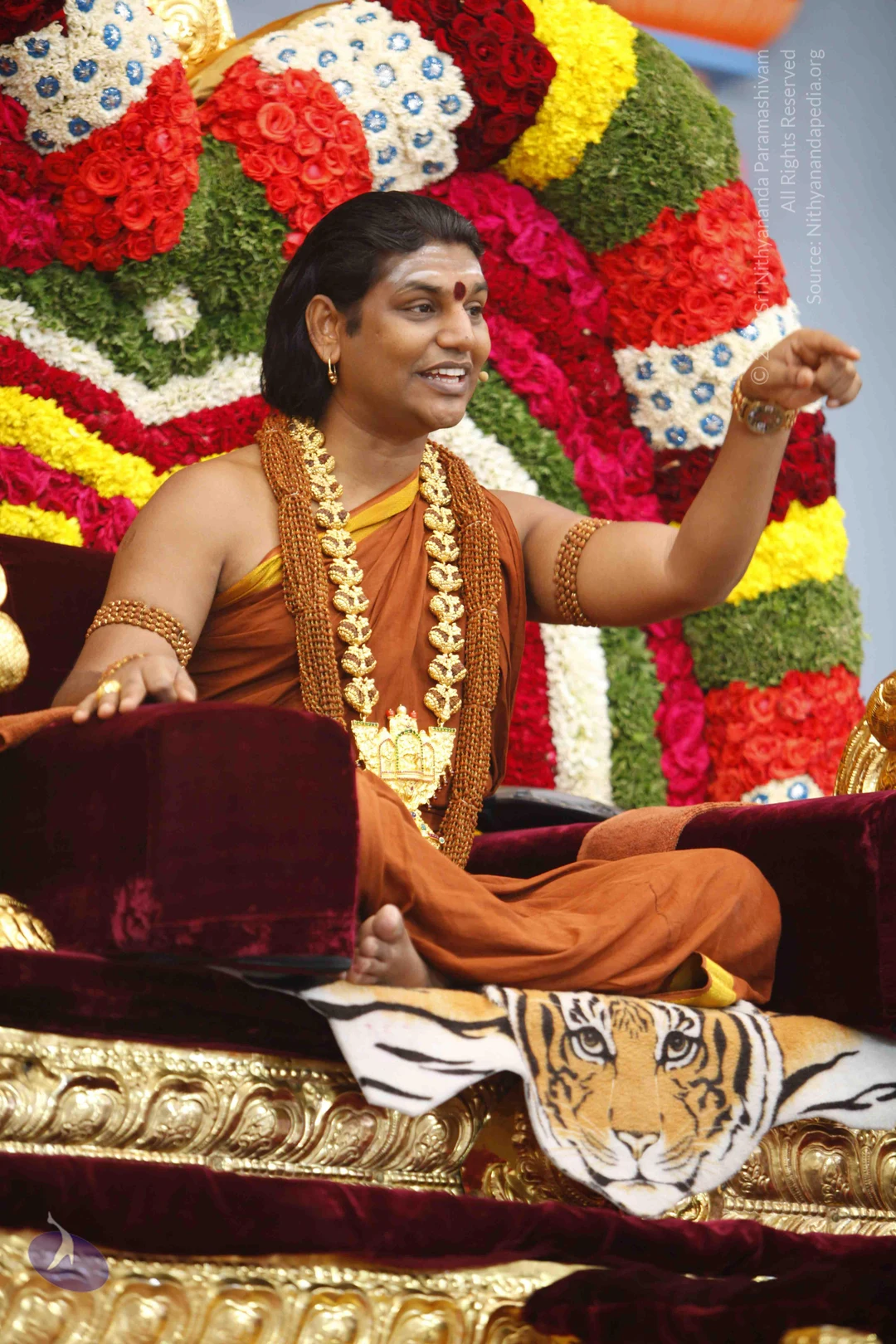
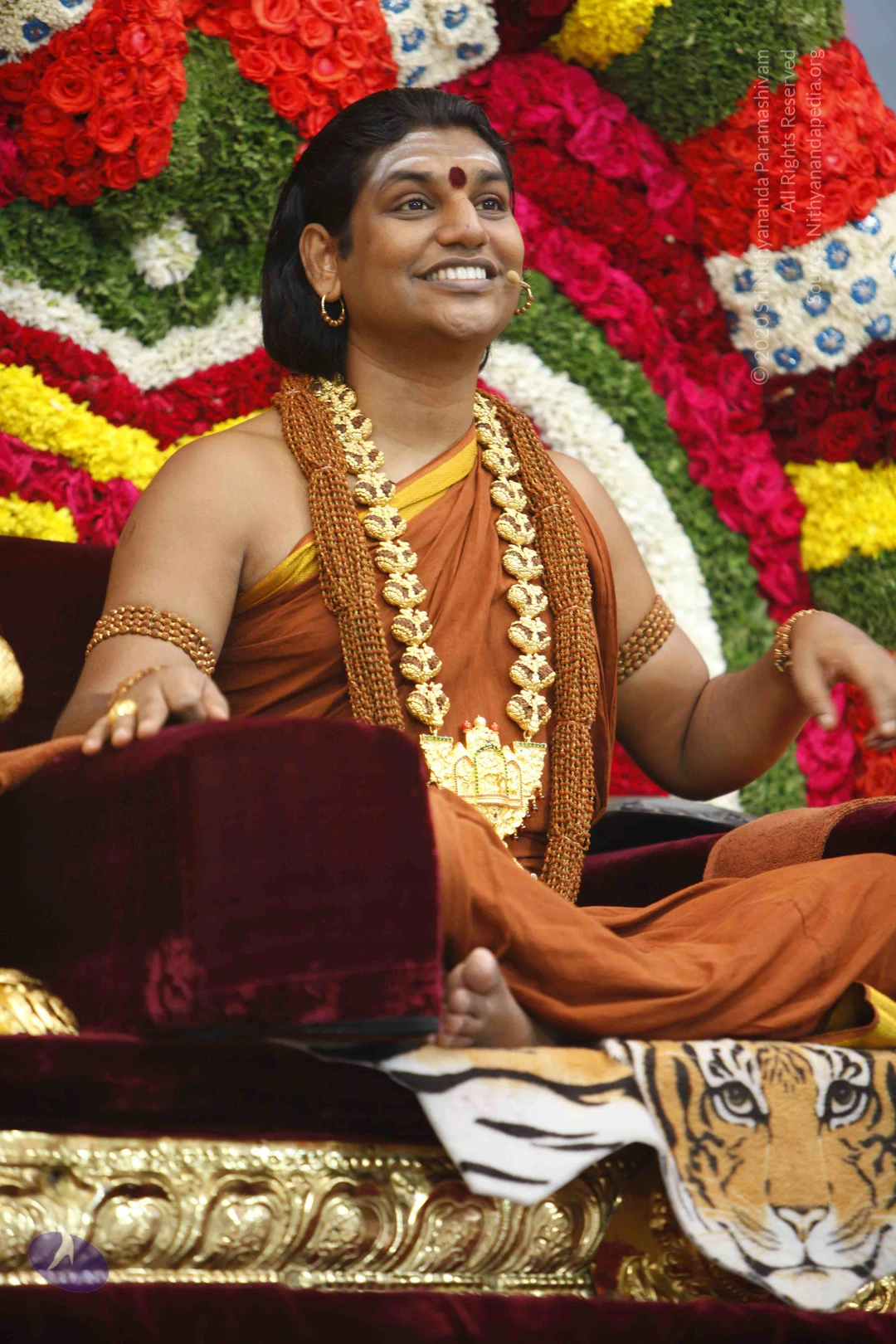
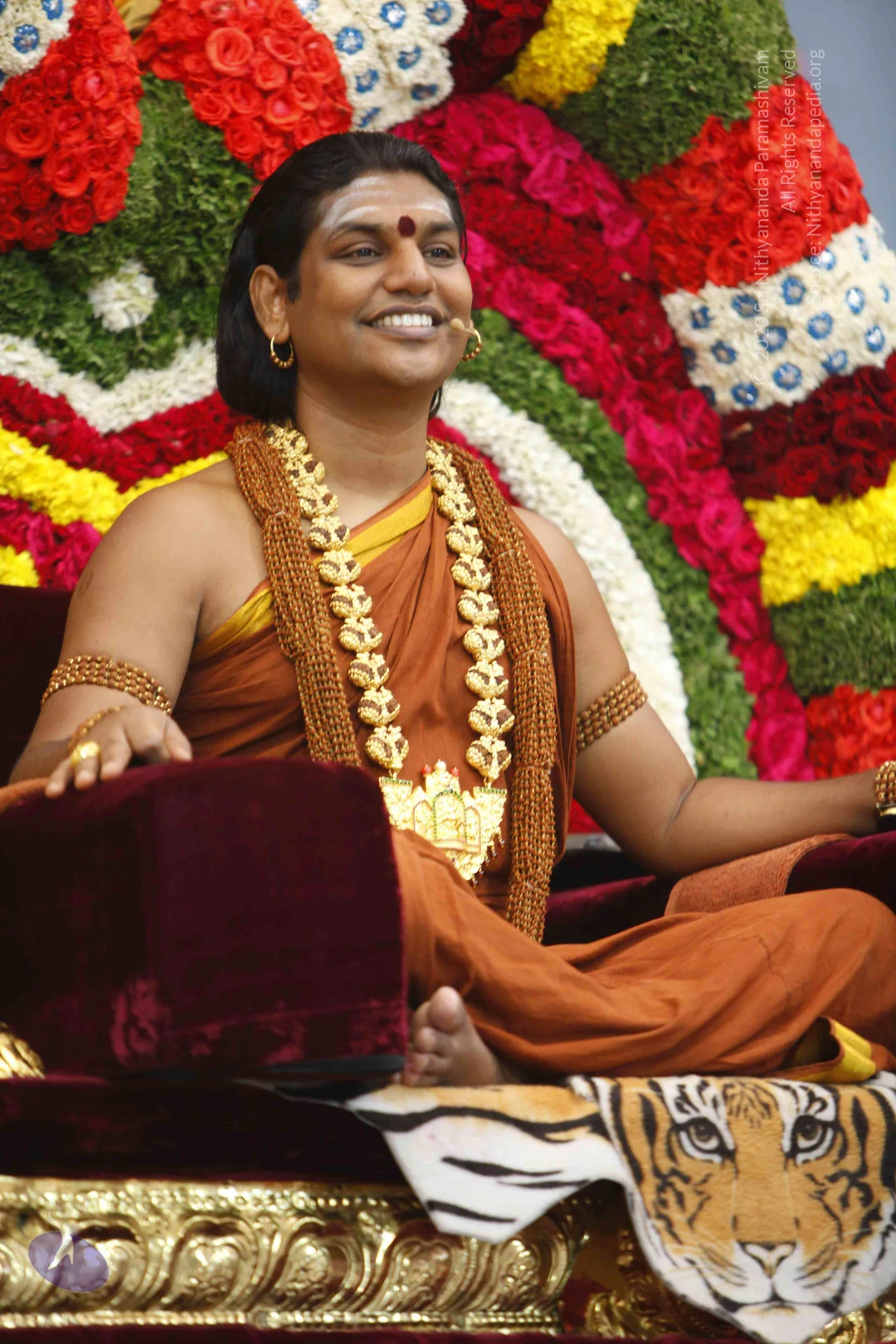
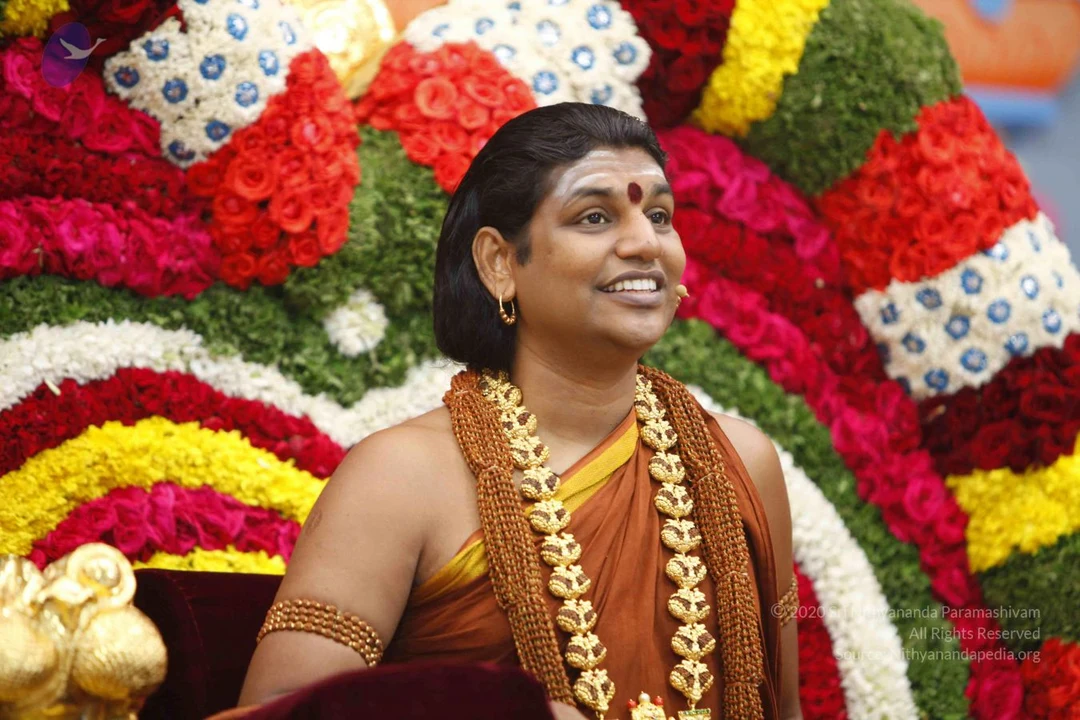
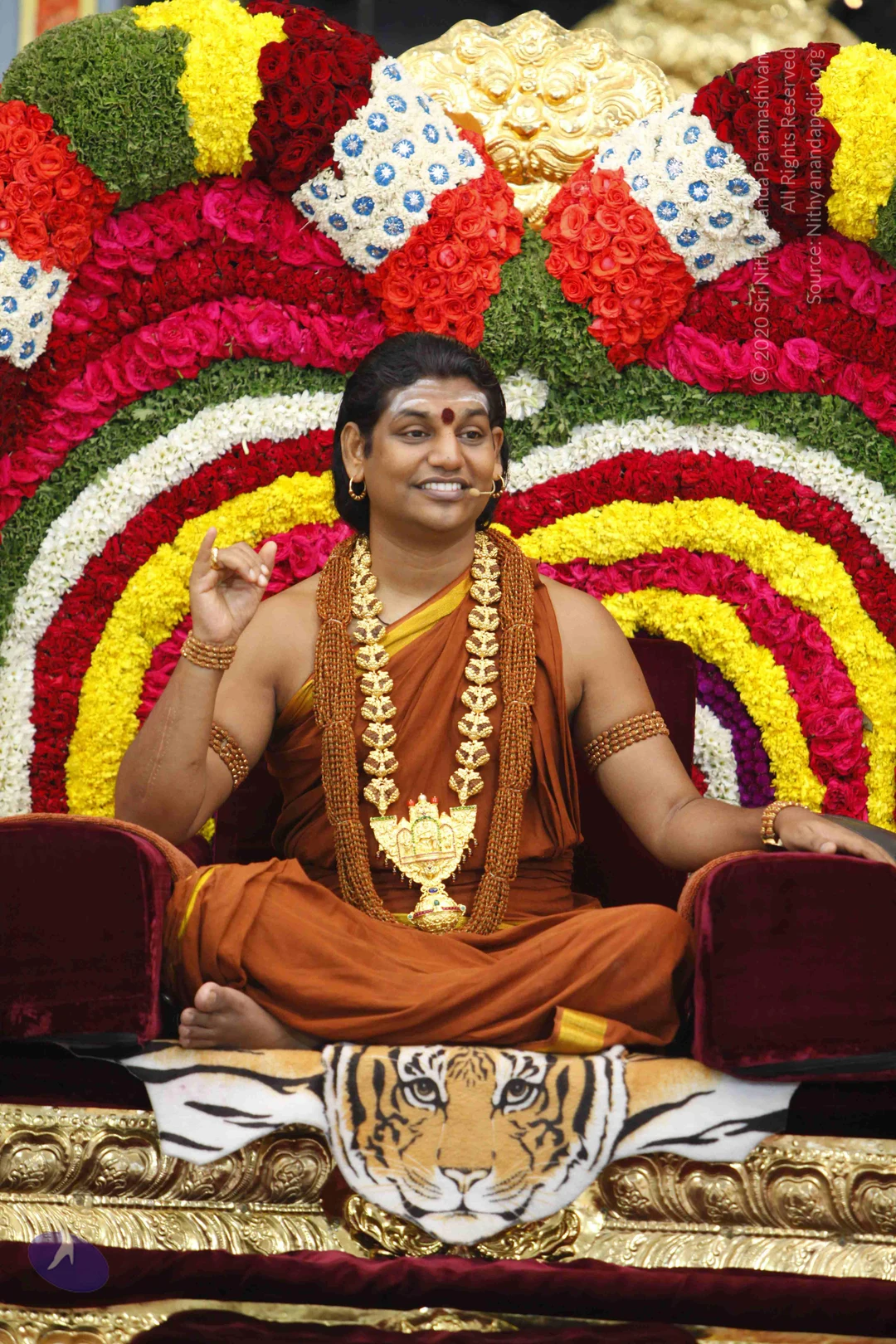
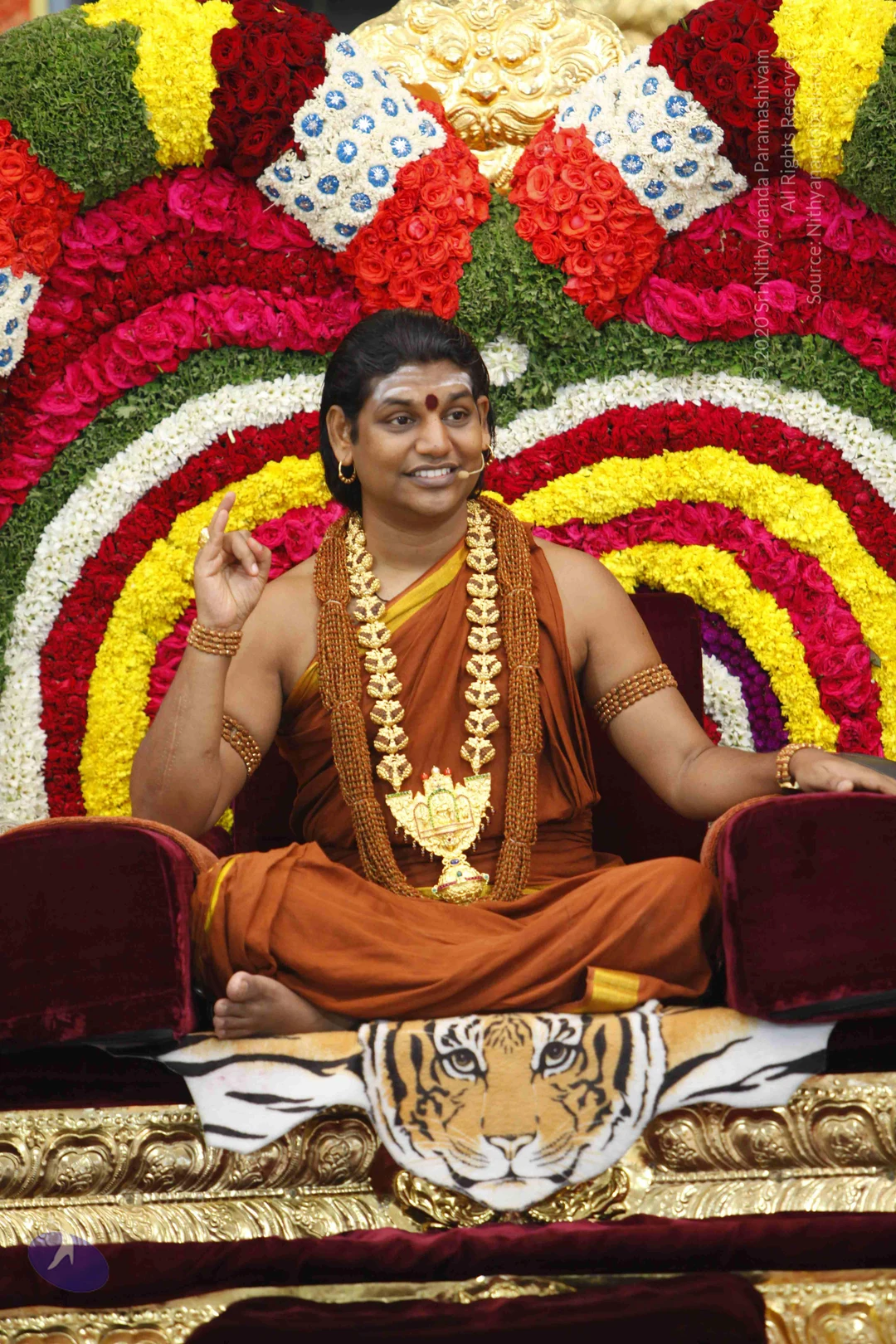
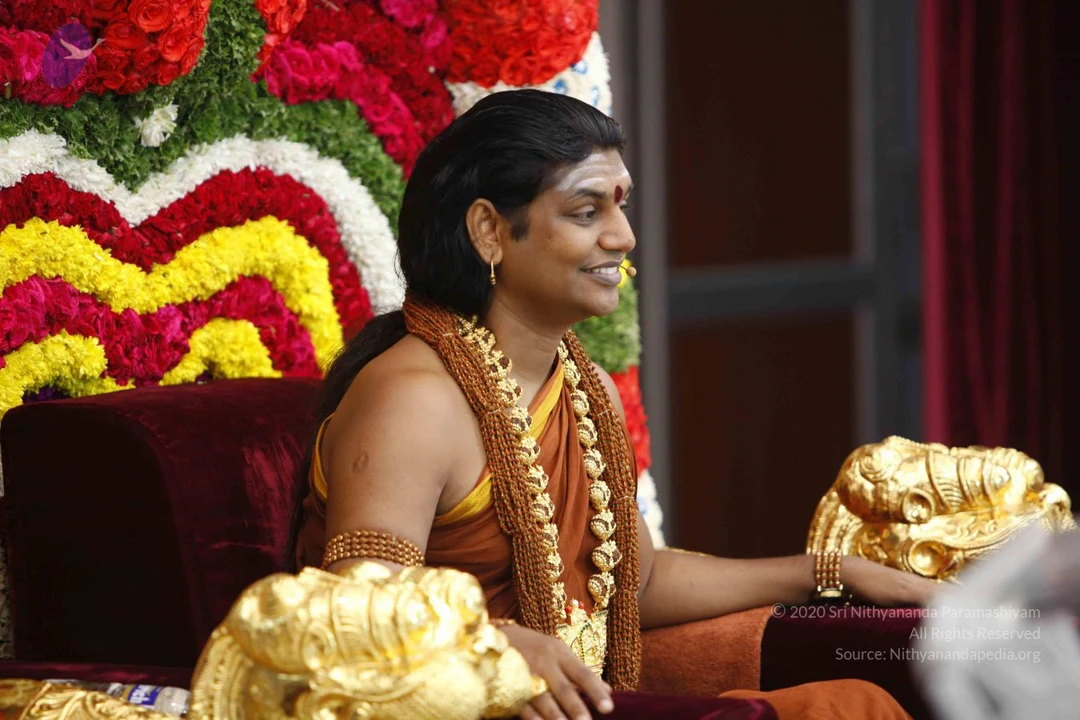
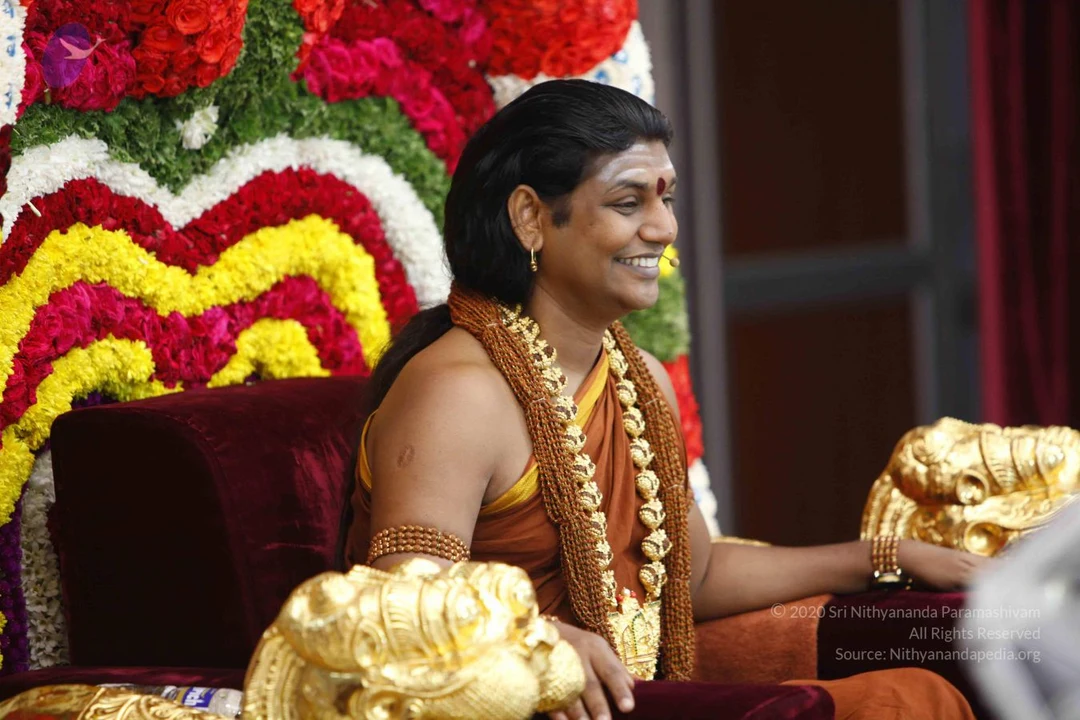
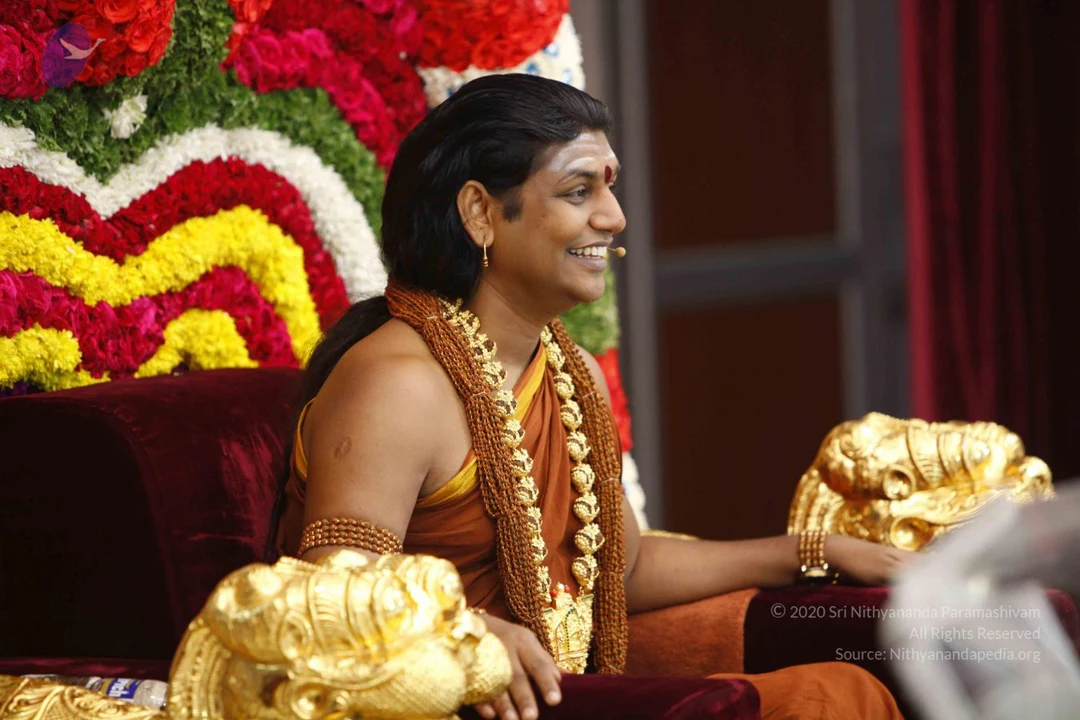
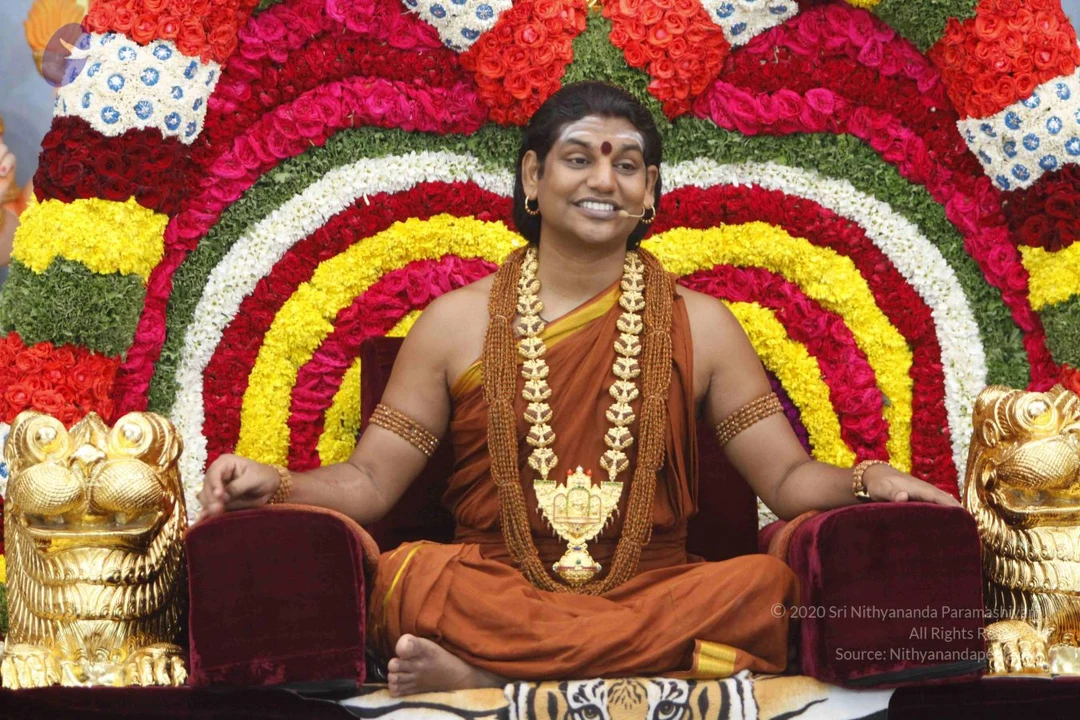
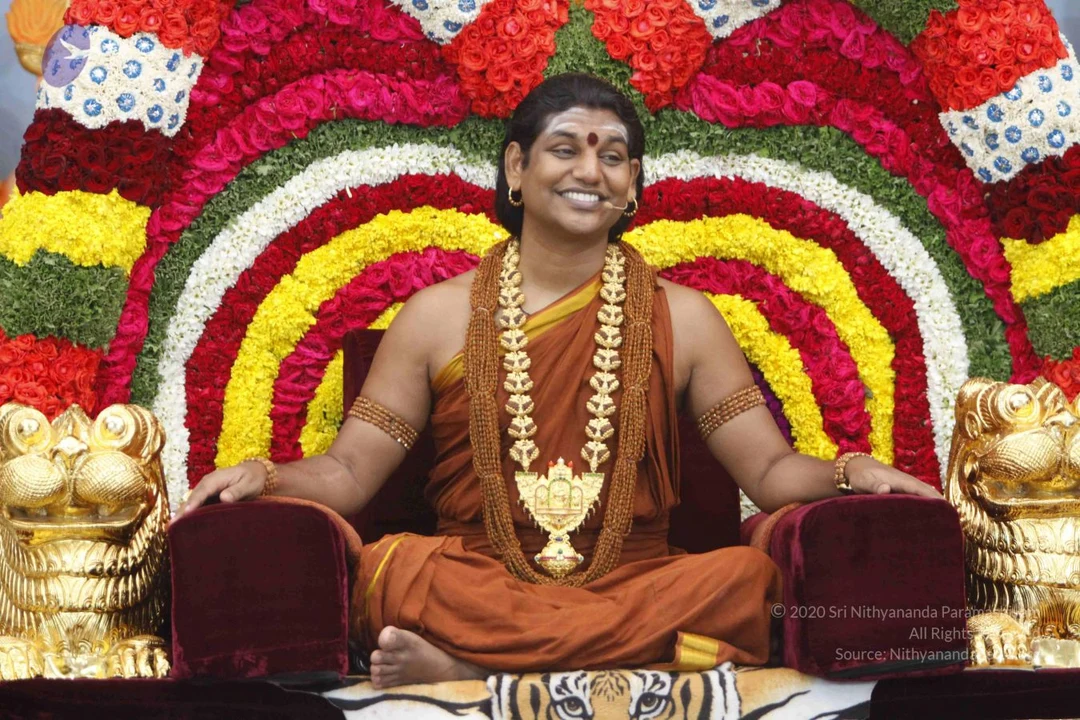
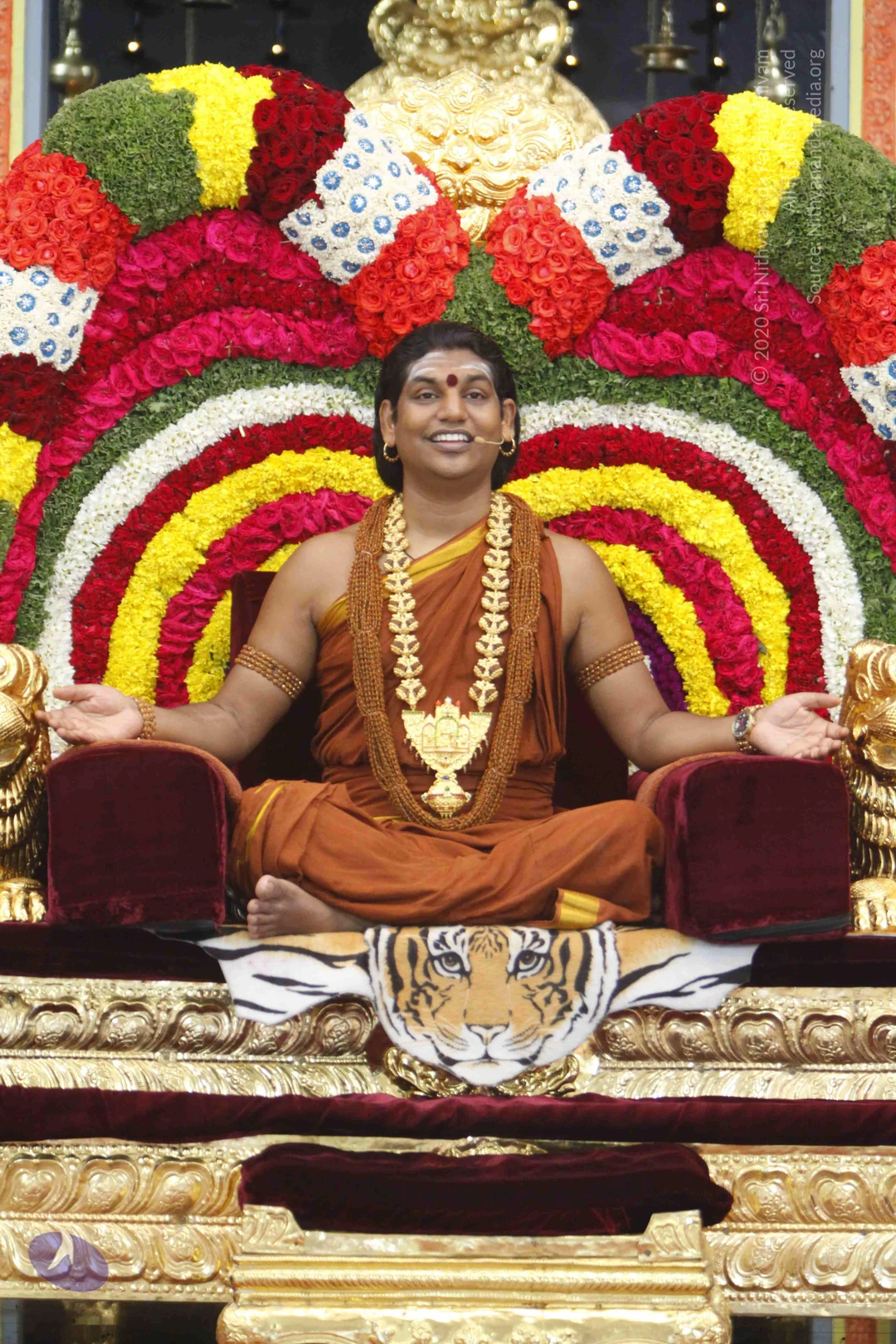
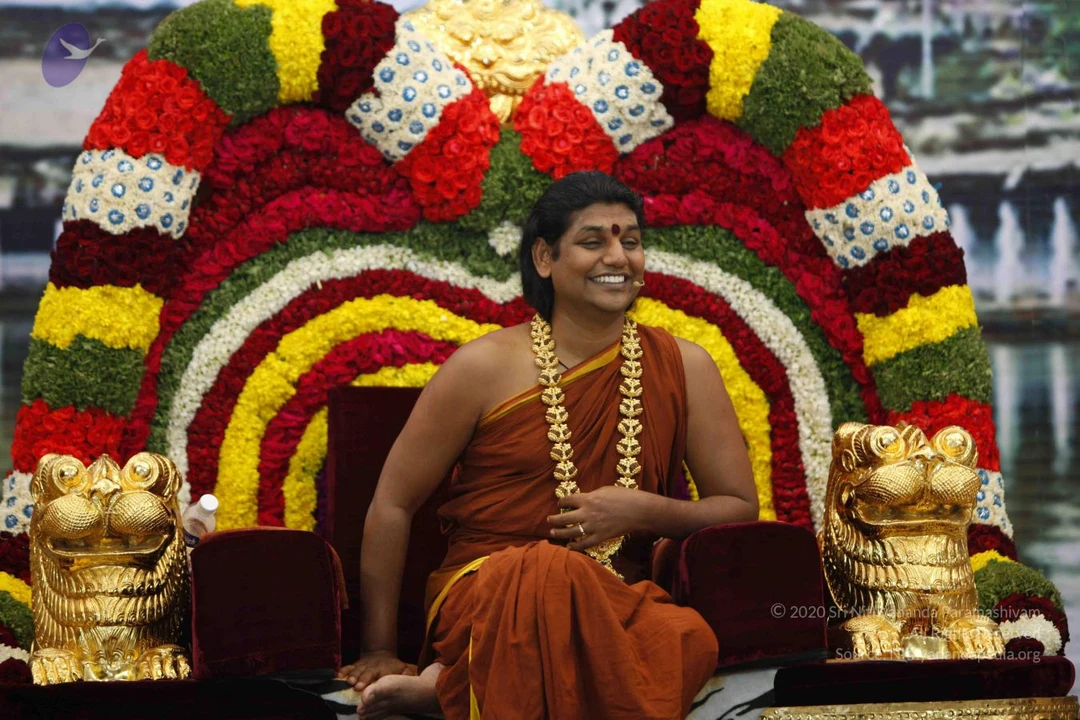
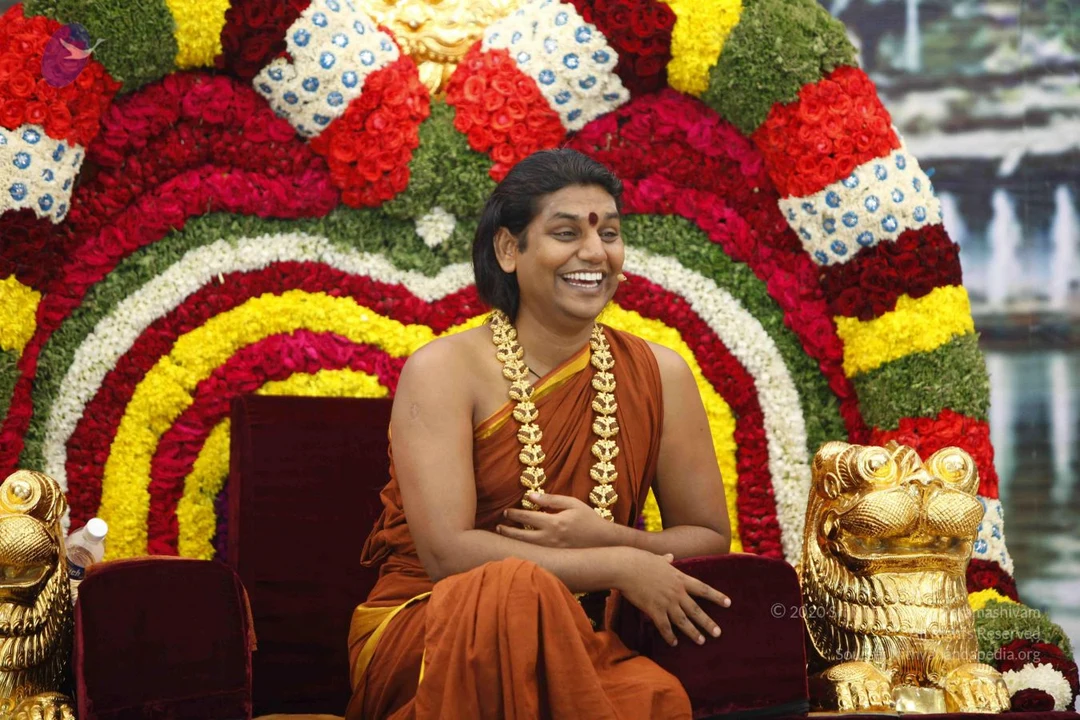
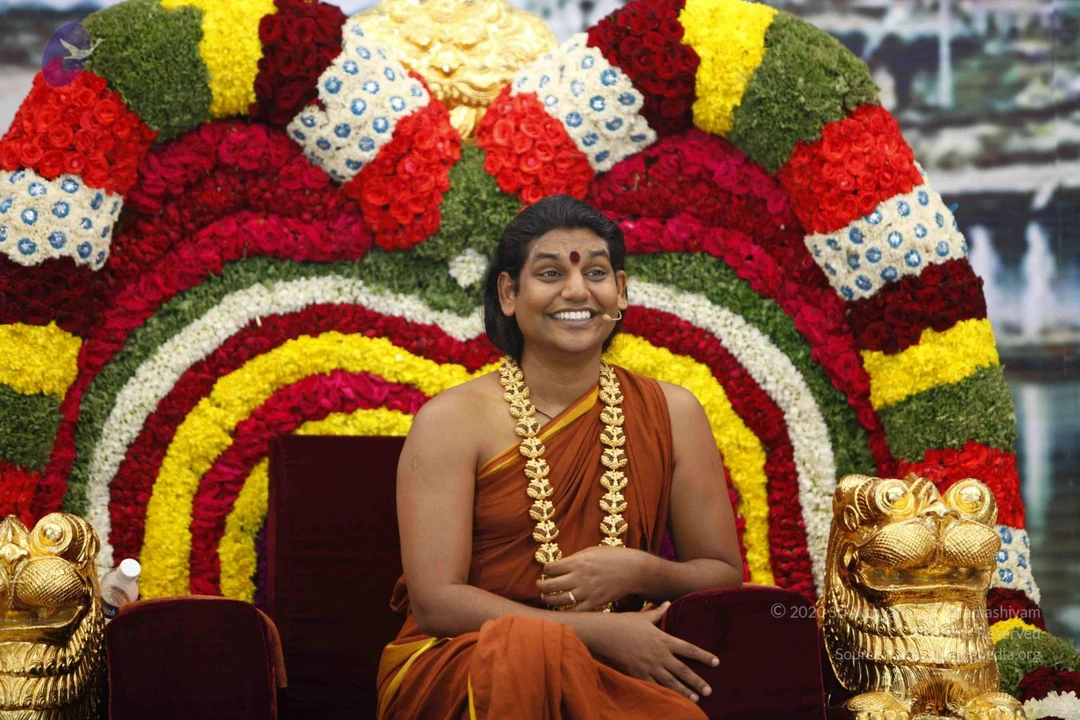
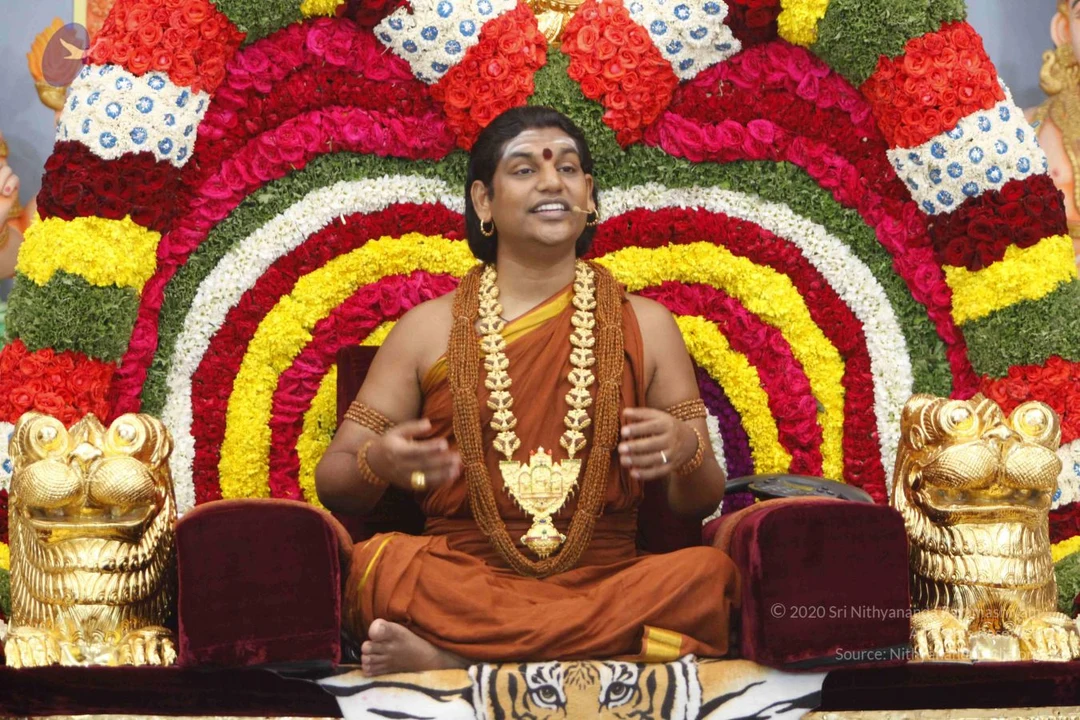
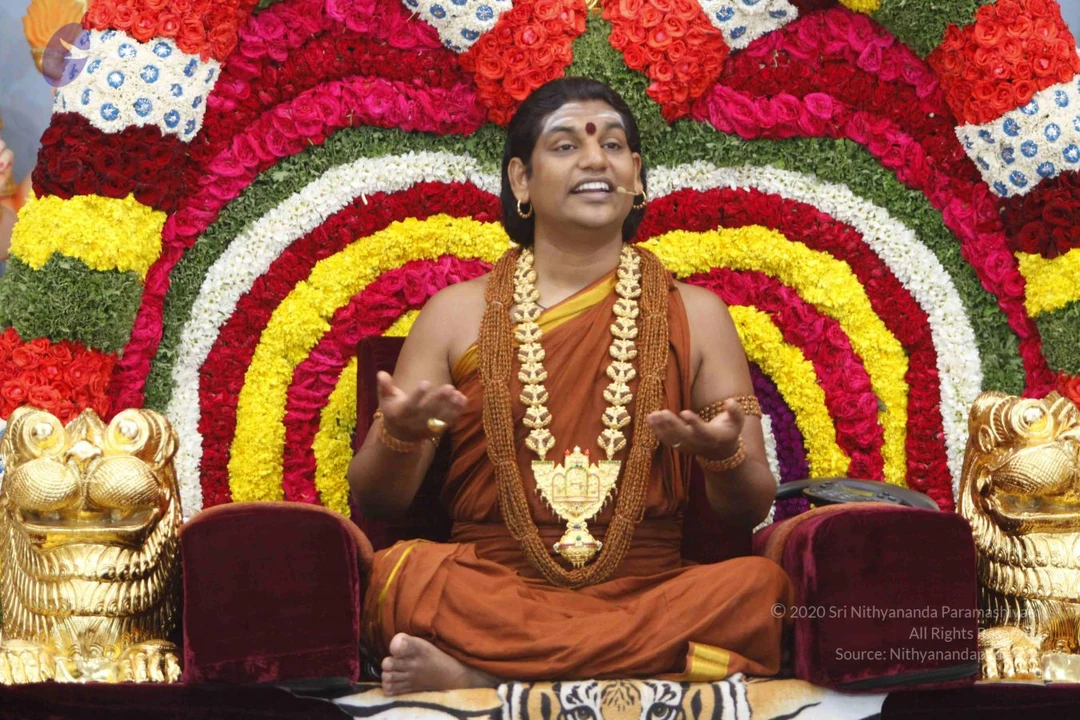
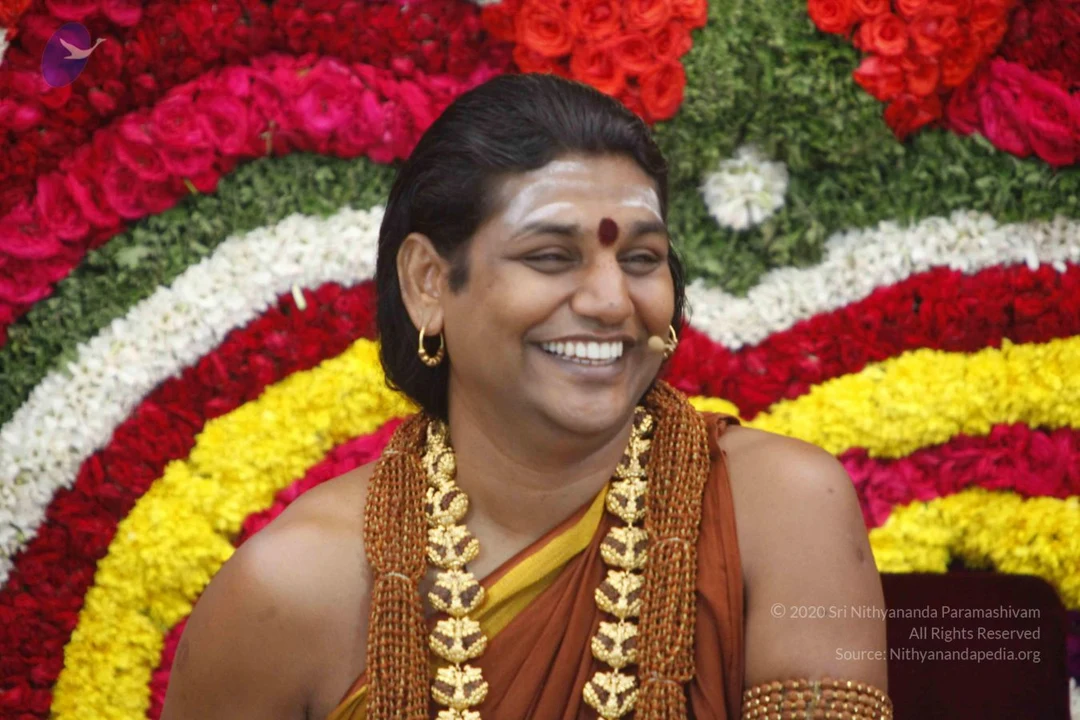
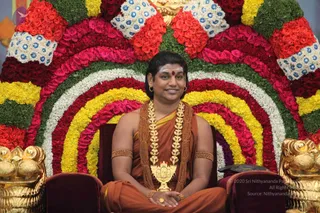
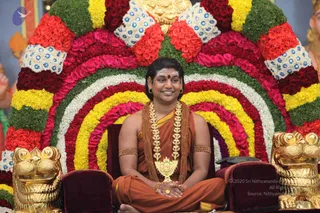
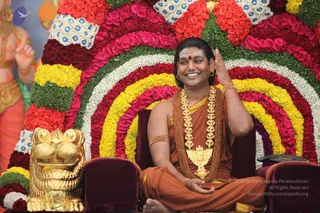
A seated man in saffron-orange robes sits cross-legged on a golden throne flanked by two gilded lion heads, with a tiger-skin cloth draped on the dais. Behind him an arch of roses and marigolds in red, yellow, pink, green and white frames him. He wears a long gold necklace with a pendant, gold bangles and a rudraksha-style bead mala at the neck, and holds both palms raised in blessing with a smile. Two colourful painted deity statues in orange and gold stand at either side. The setting appears to be a temple-style stage for a satsang. Swamiji (probable): the seated man has long swept-back hair, saffron clothing and ceremonial gold necklaces on a throne, consistent with the page's description of a satsang.A seated man in saffron-orange robes smiles and raises both palms in greeting, seated on a throne framed by a large semicircular arch of roses and marigolds in red, pink, yellow, white and green. He wears gold ceremonial necklaces with a gold pendant, rudraksha beads, gold bangles and a red bindi, with long dark hair swept back. Carved gold lion-head armrests flank the throne. Visible cues include ornate saffron clothing, gold necklaces and rudraksha beads, consistent with the a person candidate; the photo shows one physical person.A seated man in an orange-brown saffron-toned robe sits cross-legged on a red velvet throne with gold trim, bare feet resting on a tiger-face rug. He wears a white vertical tilak with a red bindi, gold hoop earrings, a heavy gold necklace with a gold pendant and a gold armlet on each upper arm. He smiles with his hands resting on the armrests. Behind him stands a large arch of red, pink, yellow, white and green flower garlands with a gold ornament at the top. Swamiji (probable): the seated man has long swept-back dark hair, saffron ornate clothing and gold ceremonial necklaces, consistent with the page's description of a discourse; the appearance is a probable match.A seated man in an orange-saffron robe sits cross-legged on an ornate gold throne with maroon velvet cushions, draped with a tiger-skin cloth at its base. Behind him is a dramatic arch of fresh flowers in red, yellow, green and white, with a gold crown-like ornament at the top. He wears a long gold necklace with a gold pendant, a gold bracelet and a red bindi, and raises one hand in a blessing gesture while smiling. Flanking him are painted multi-armed deity murti figures with gold jewellery, and oil lamps stand at the sides. The floor is covered by a red patterned rug.A smiling man with long dark hair, a red bindi and tilak on his forehead, wearing an orange-saffron robe and a heavy gold necklace with a gold pendant, sits cross-legged on a gold throne with lion-carved armrests. He raises his right hand in a blessing wave. Behind him is an arch of red, yellow, green, pink and white flowers and a gold ornament, and a tiger-face cloth rests on the platform. A man on a throne with orange robes and a garland matches the probable cues, so the figure is labelled a person, seated in darshan.A man seated cross-legged on an ornate gold throne with lion-head armrests, draped in a tiger-skin rug, smiling. He wears saffron-orange cloth, a heavy gold and rudraksha-bead garland with a gold pendant, gold armlets, and a vertical tilak with a red bindi, with his hands resting in his lap. Behind him is a large arch of red, pink, yellow, green and white flower garlands and gold ornaments, with hanging lamps above. The man is a person, identified by his saffron clothing, rudraksha mala and ceremonial gold necklaces seated on the throne. No other people are visible.

Samyama Meditation

21 photosSource gallery
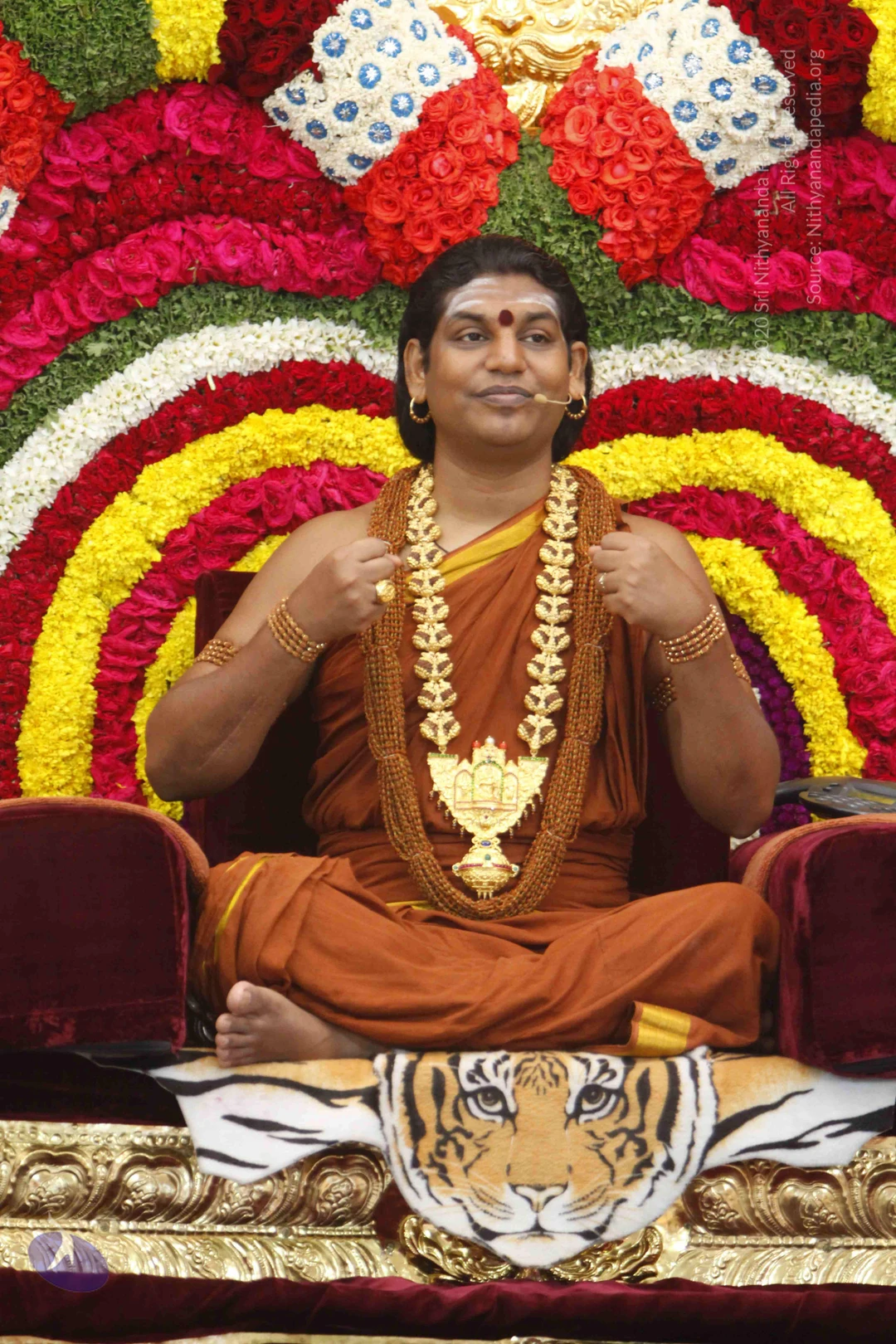
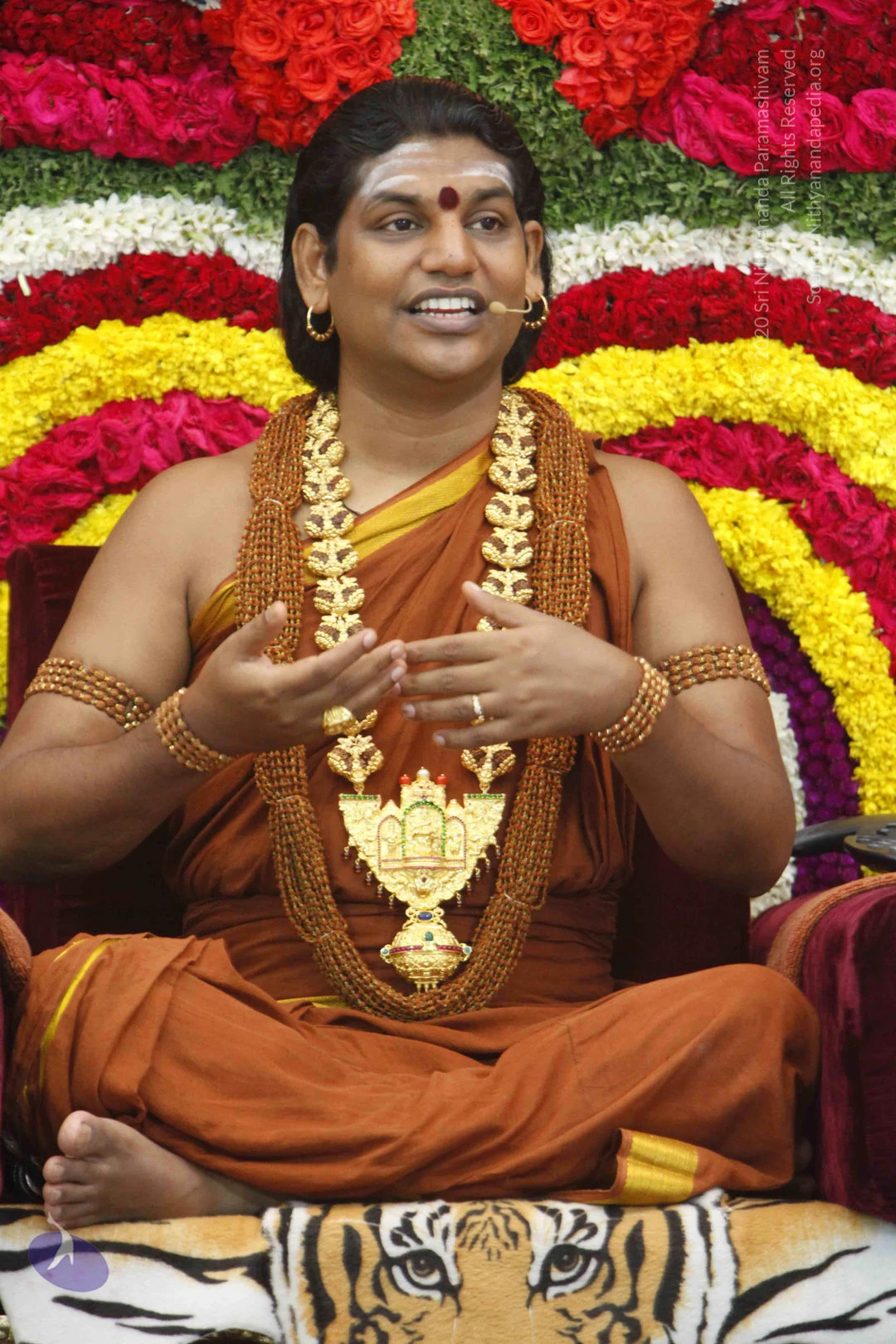
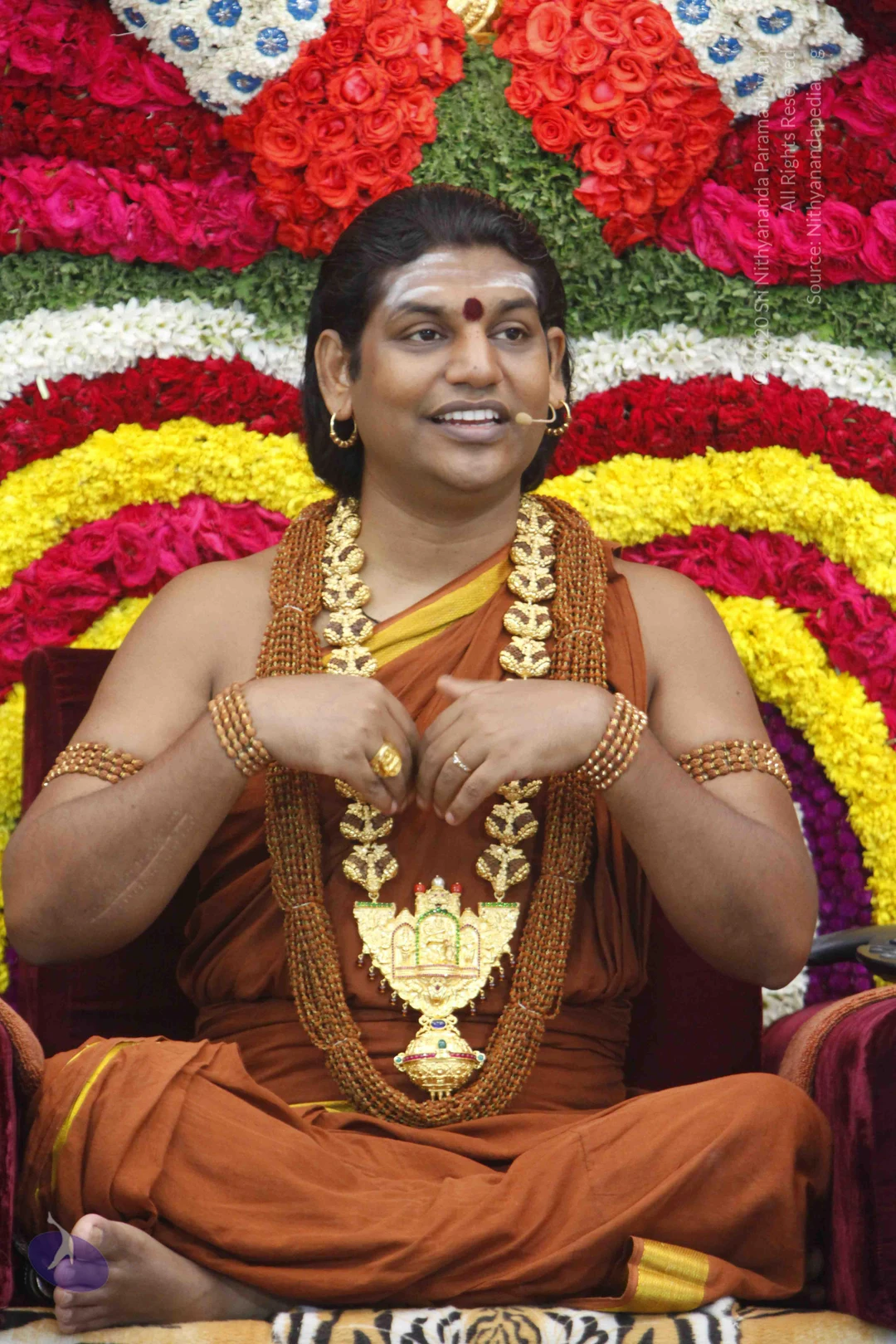
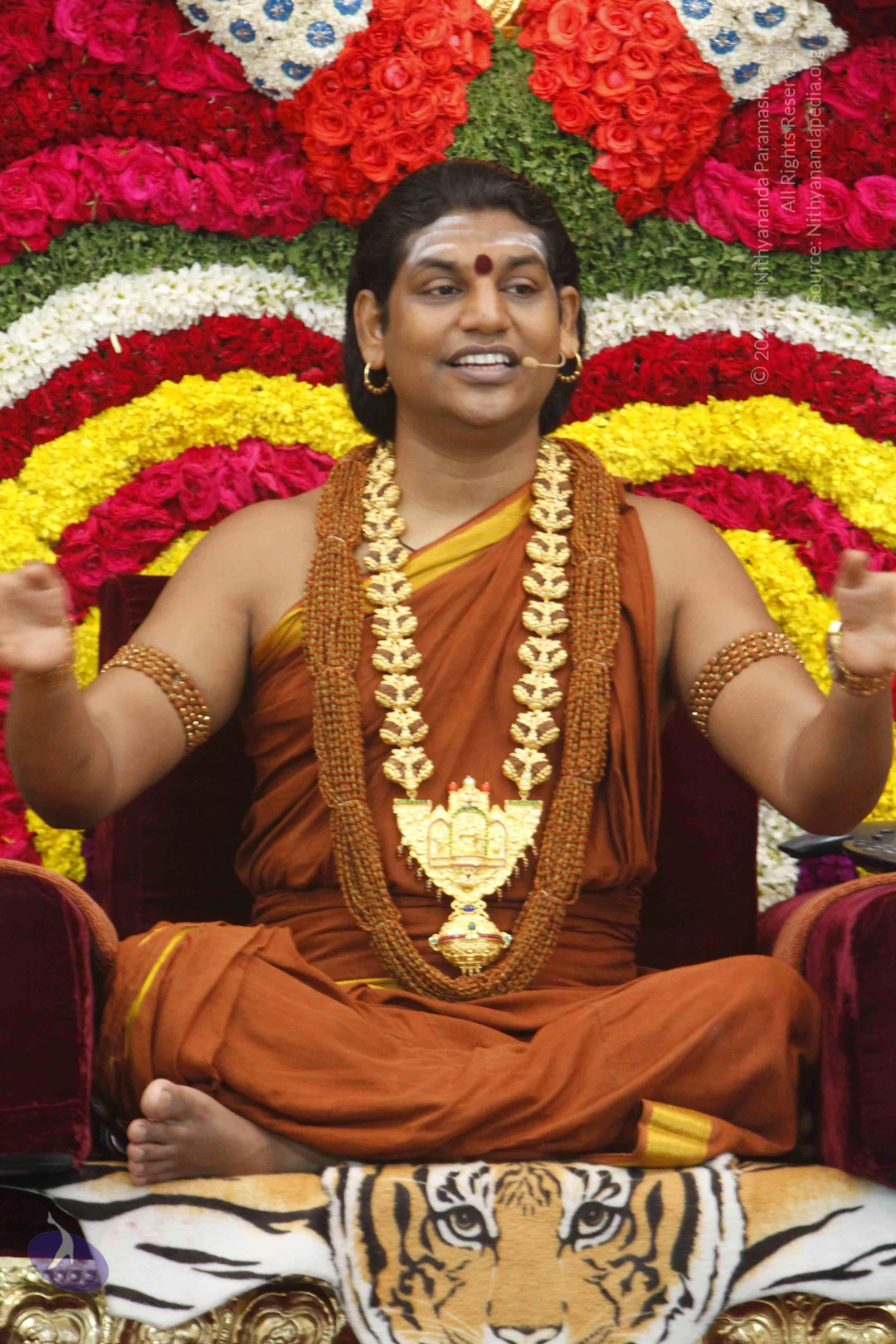
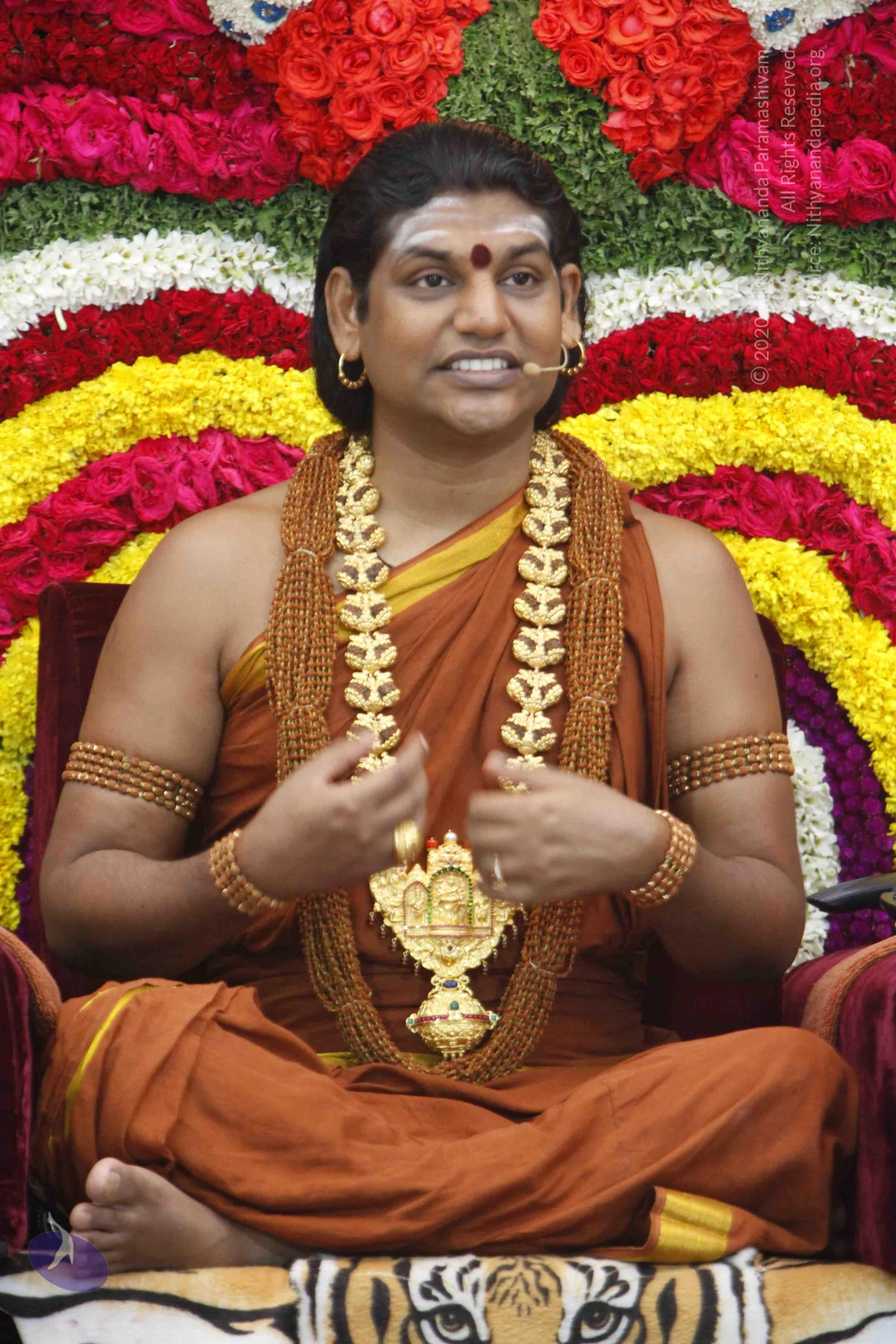
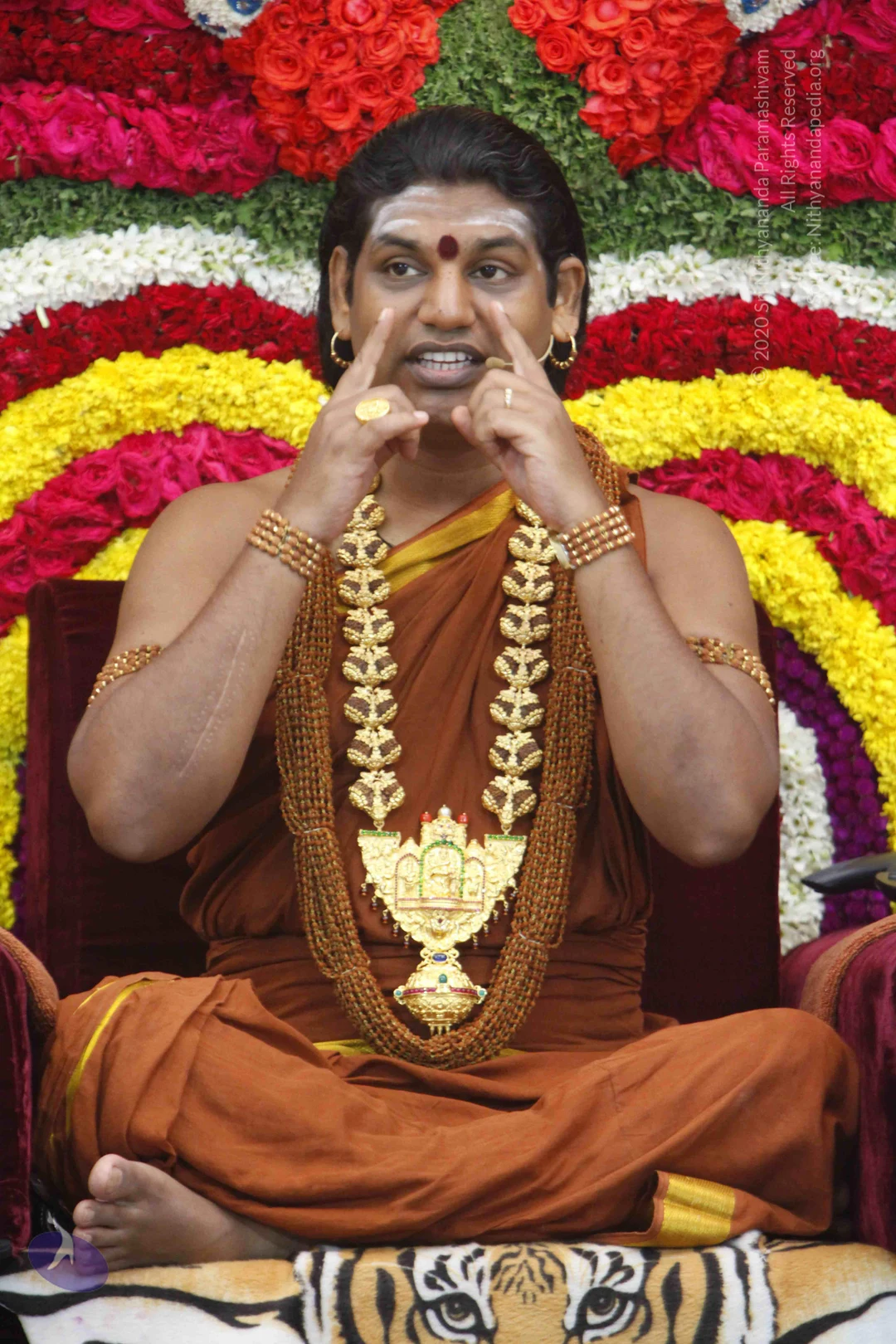
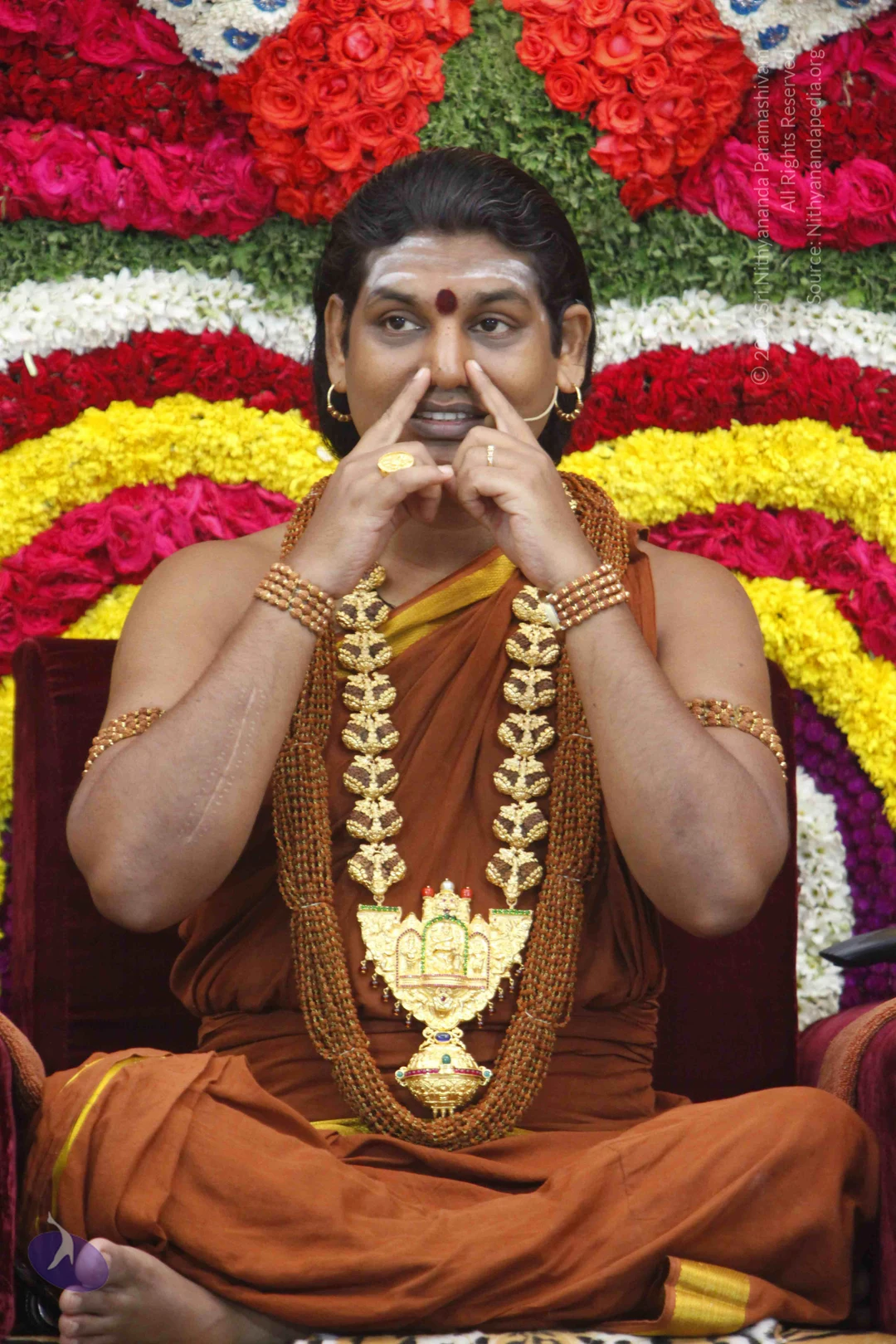
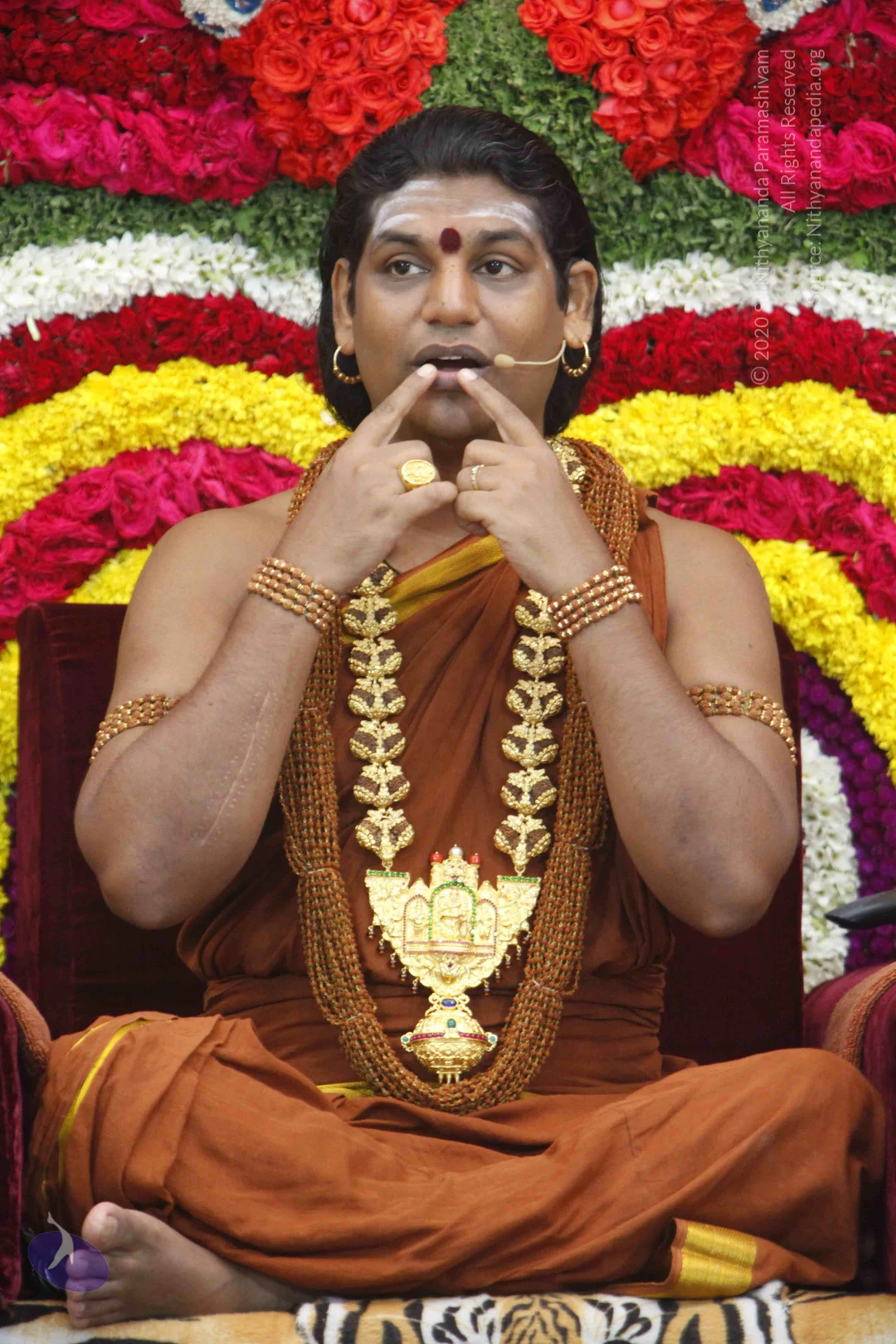
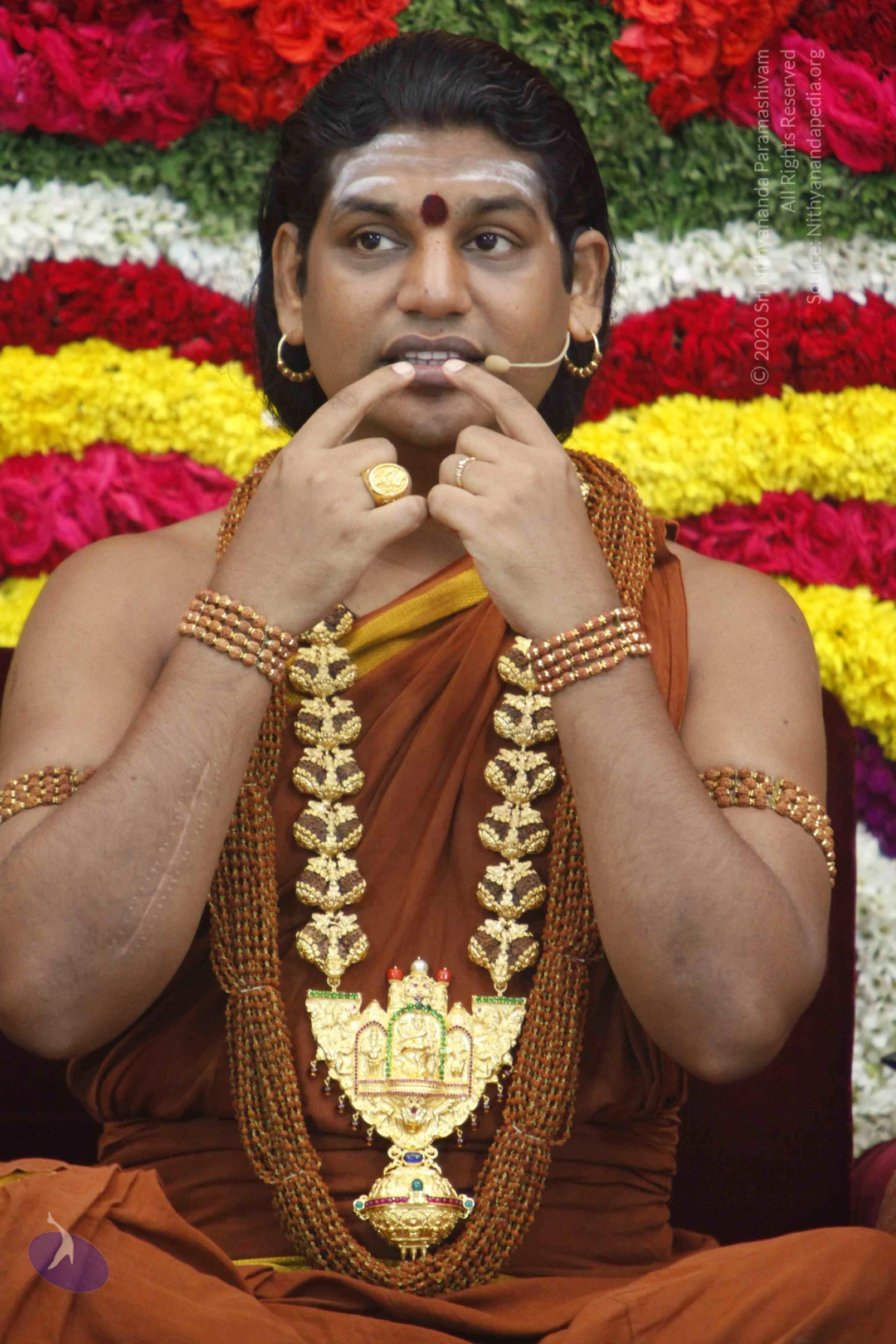
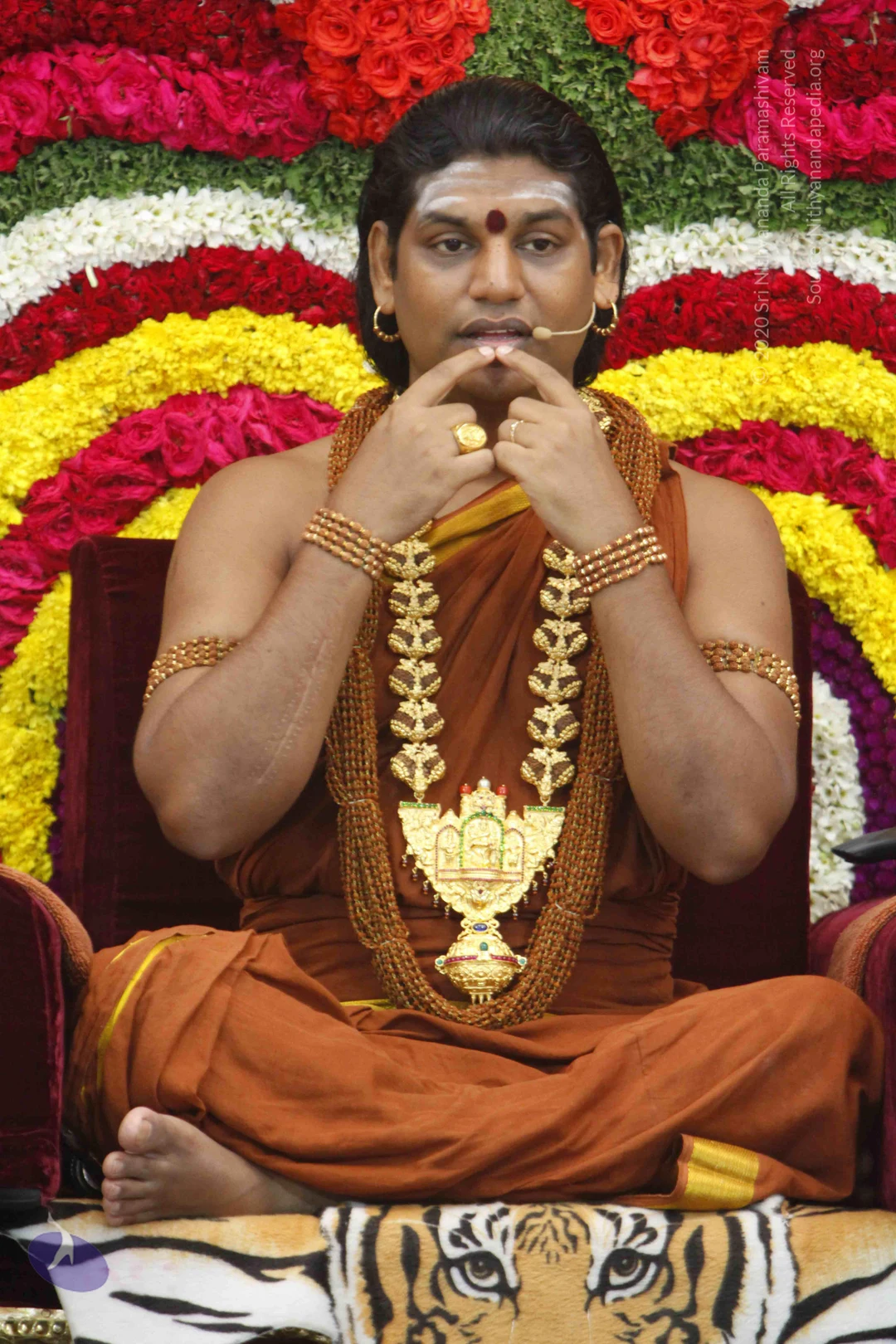
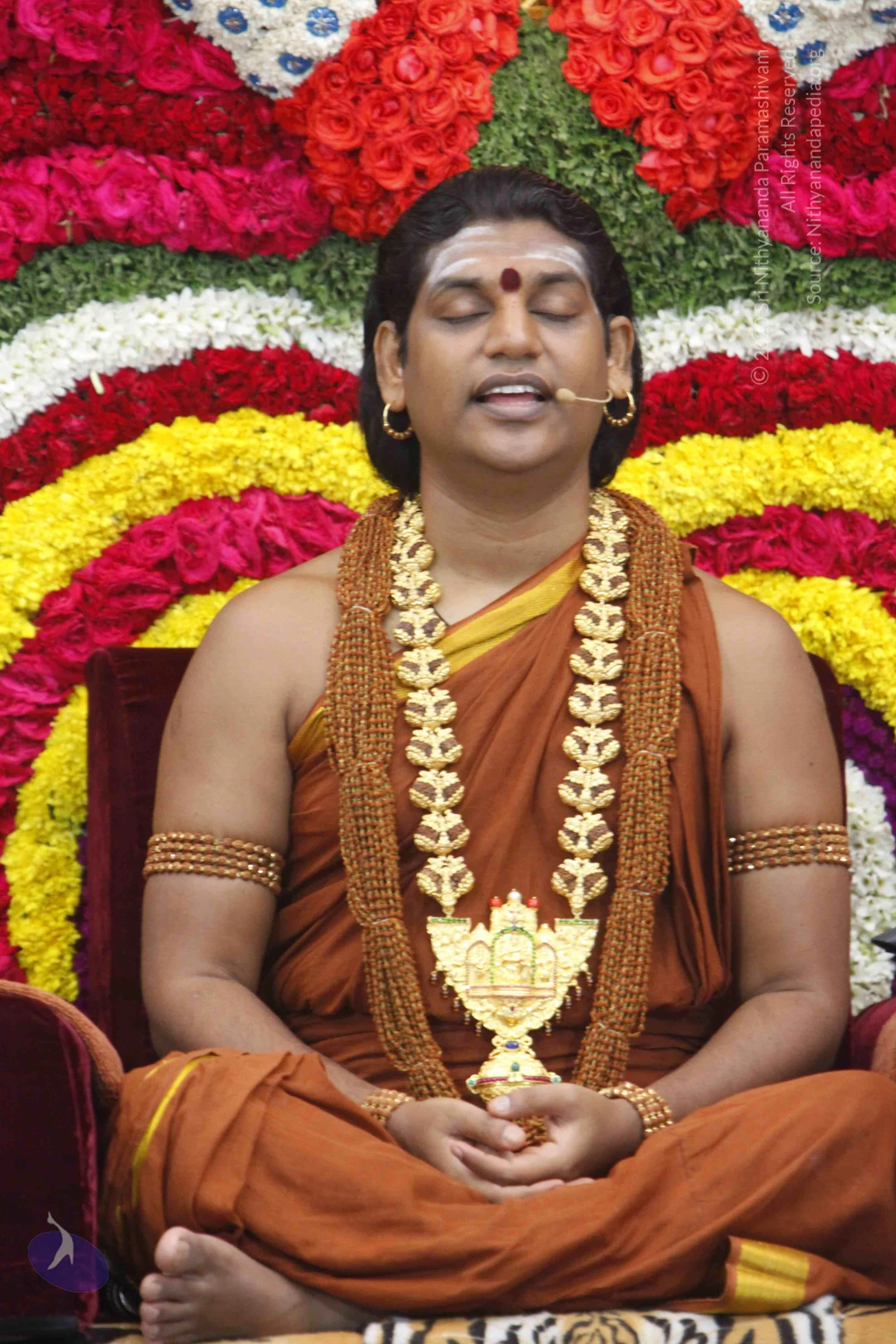
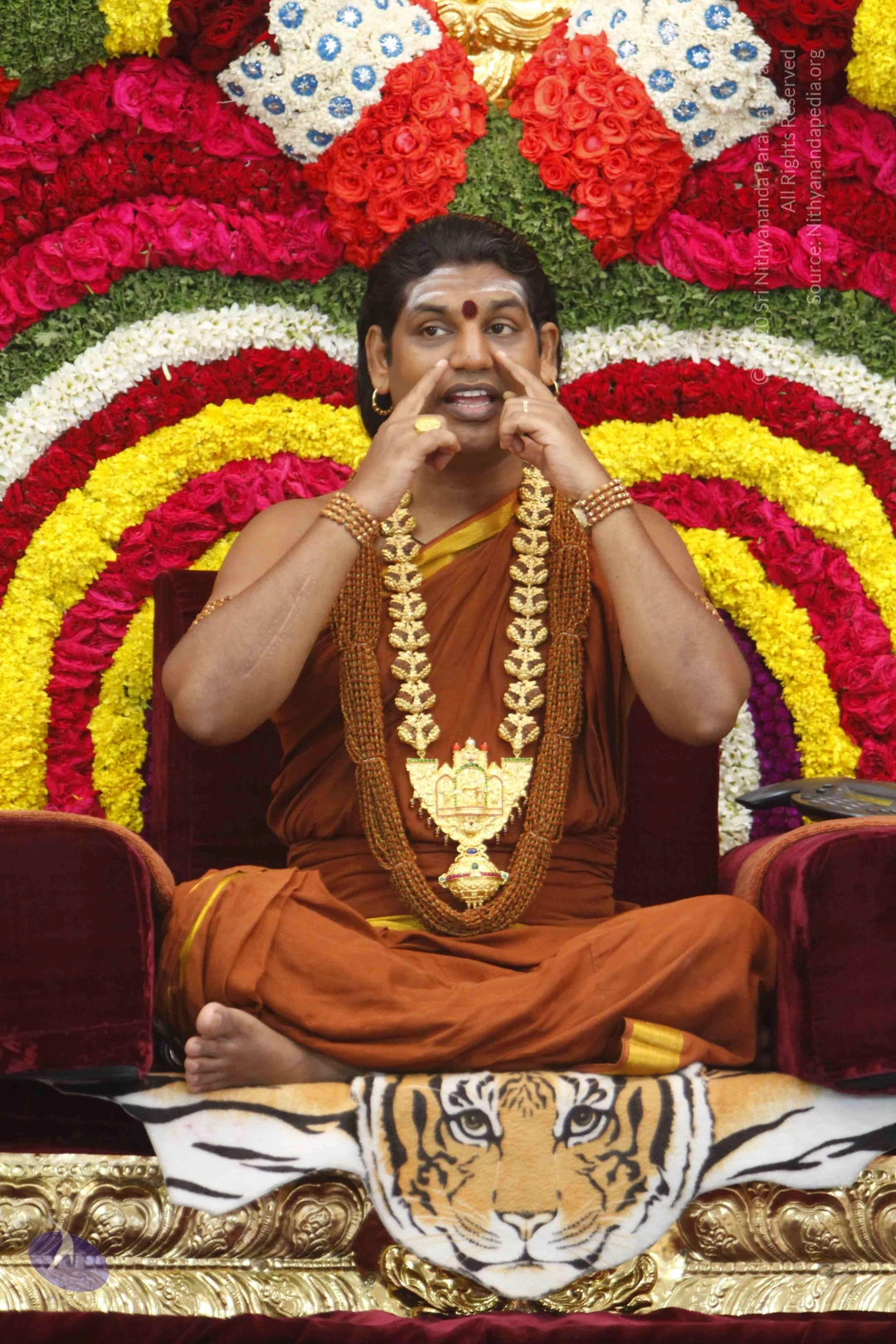
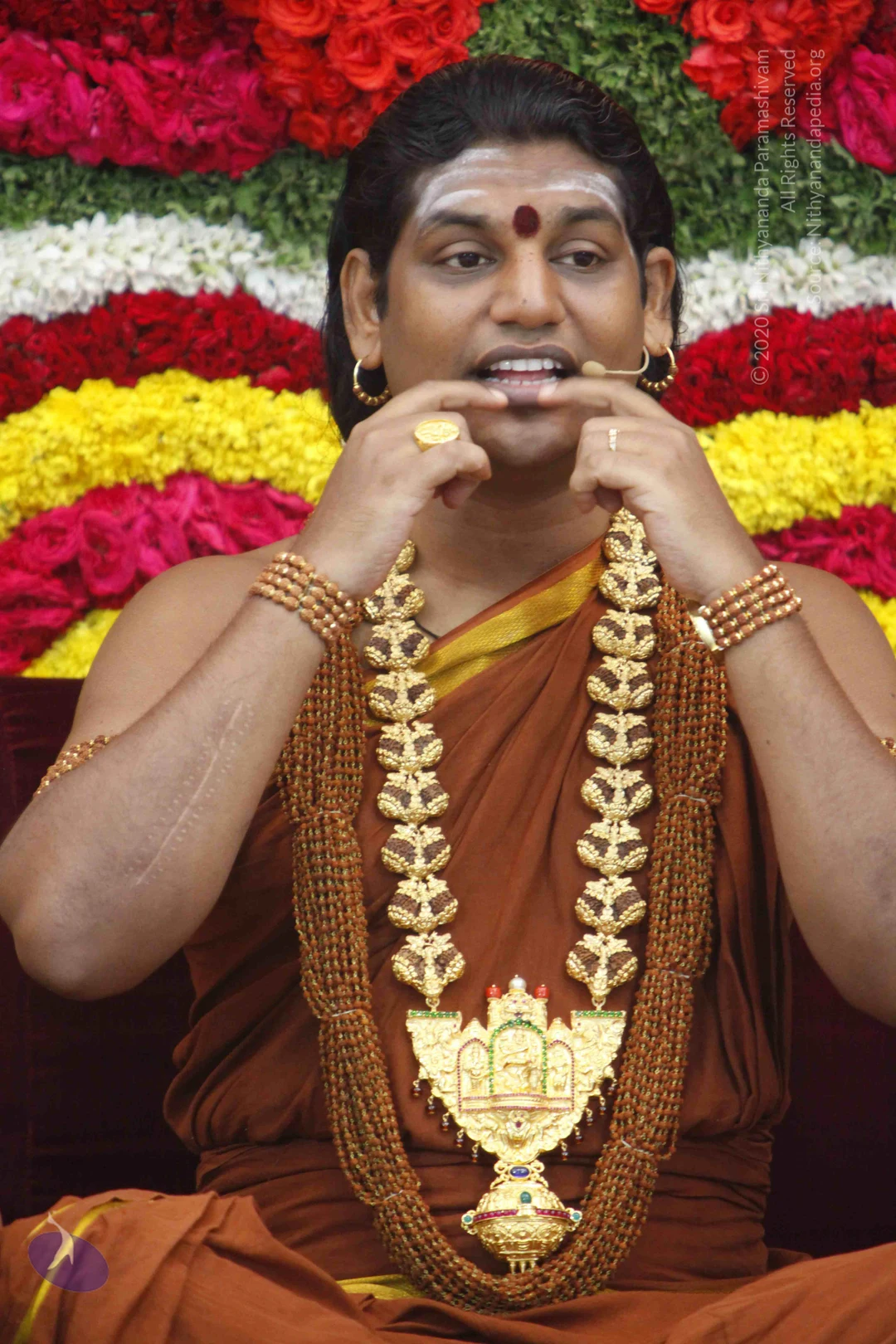
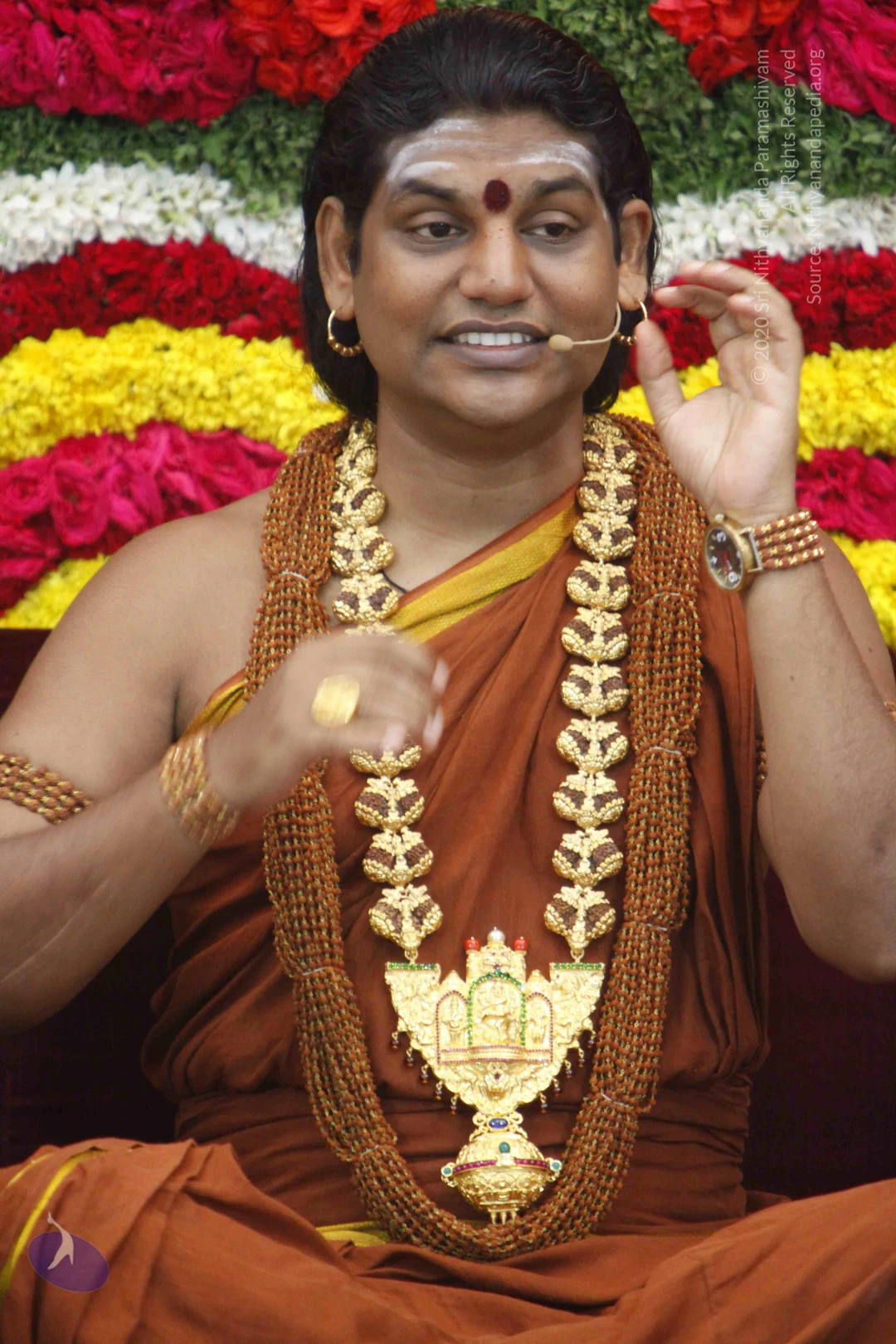
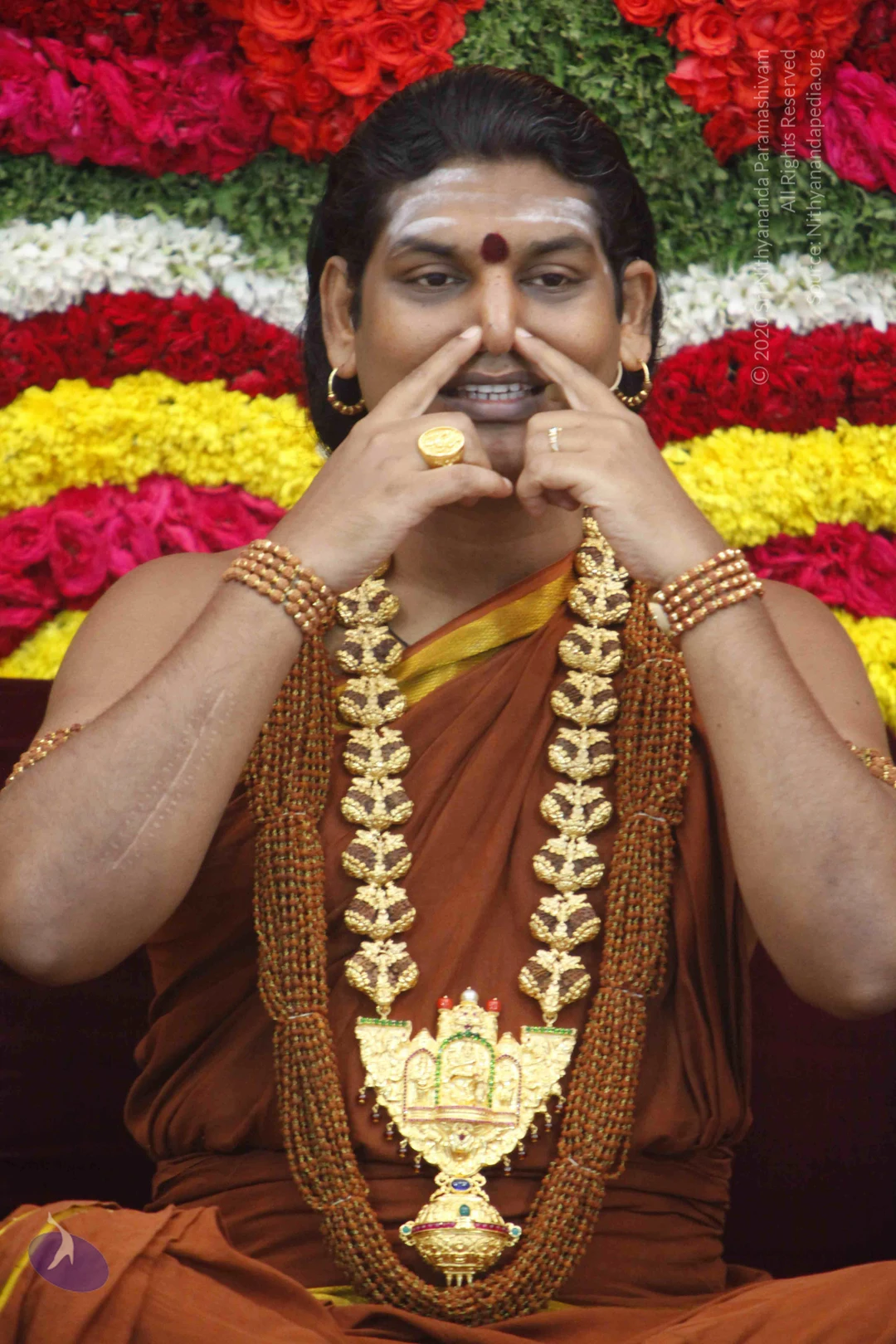
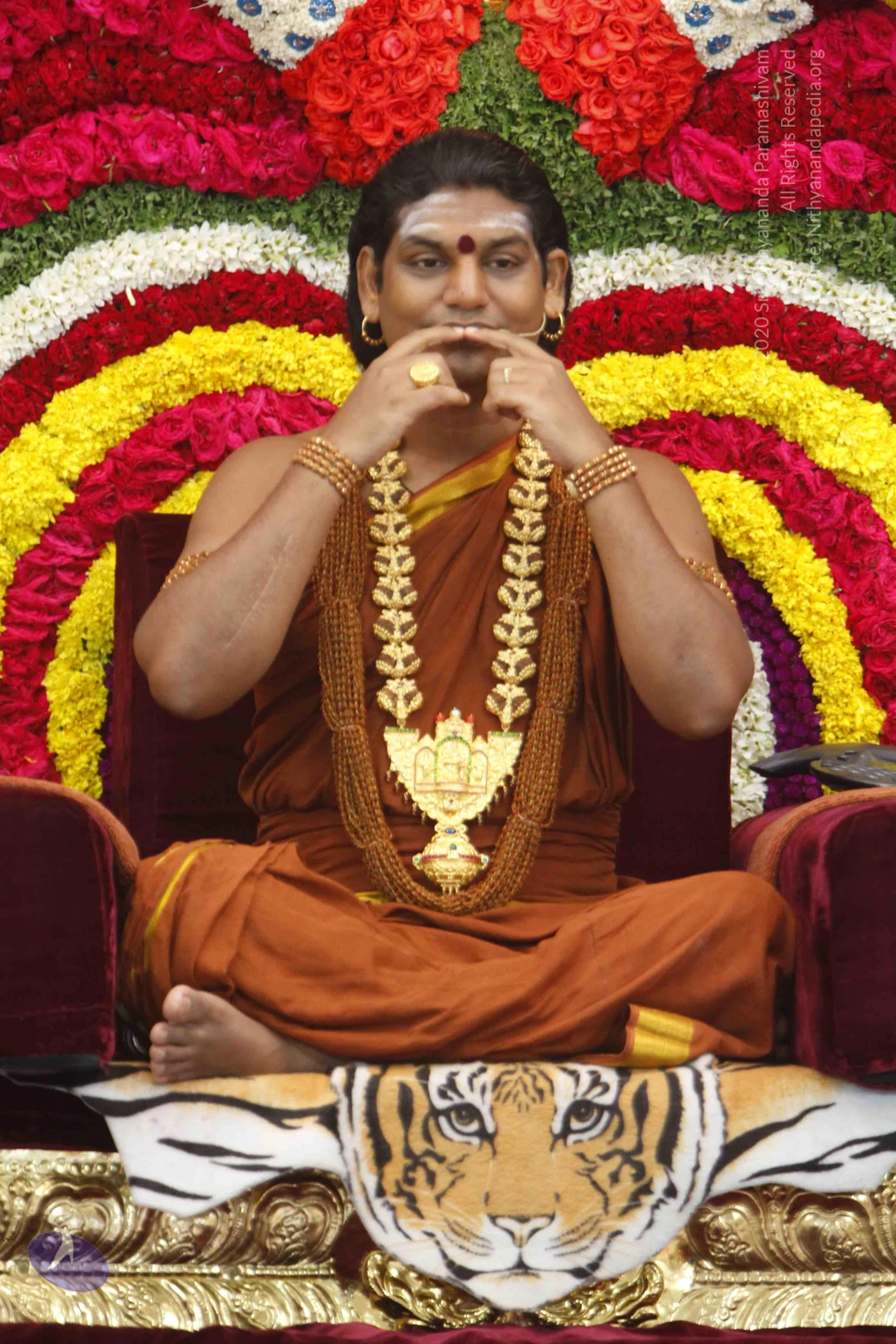
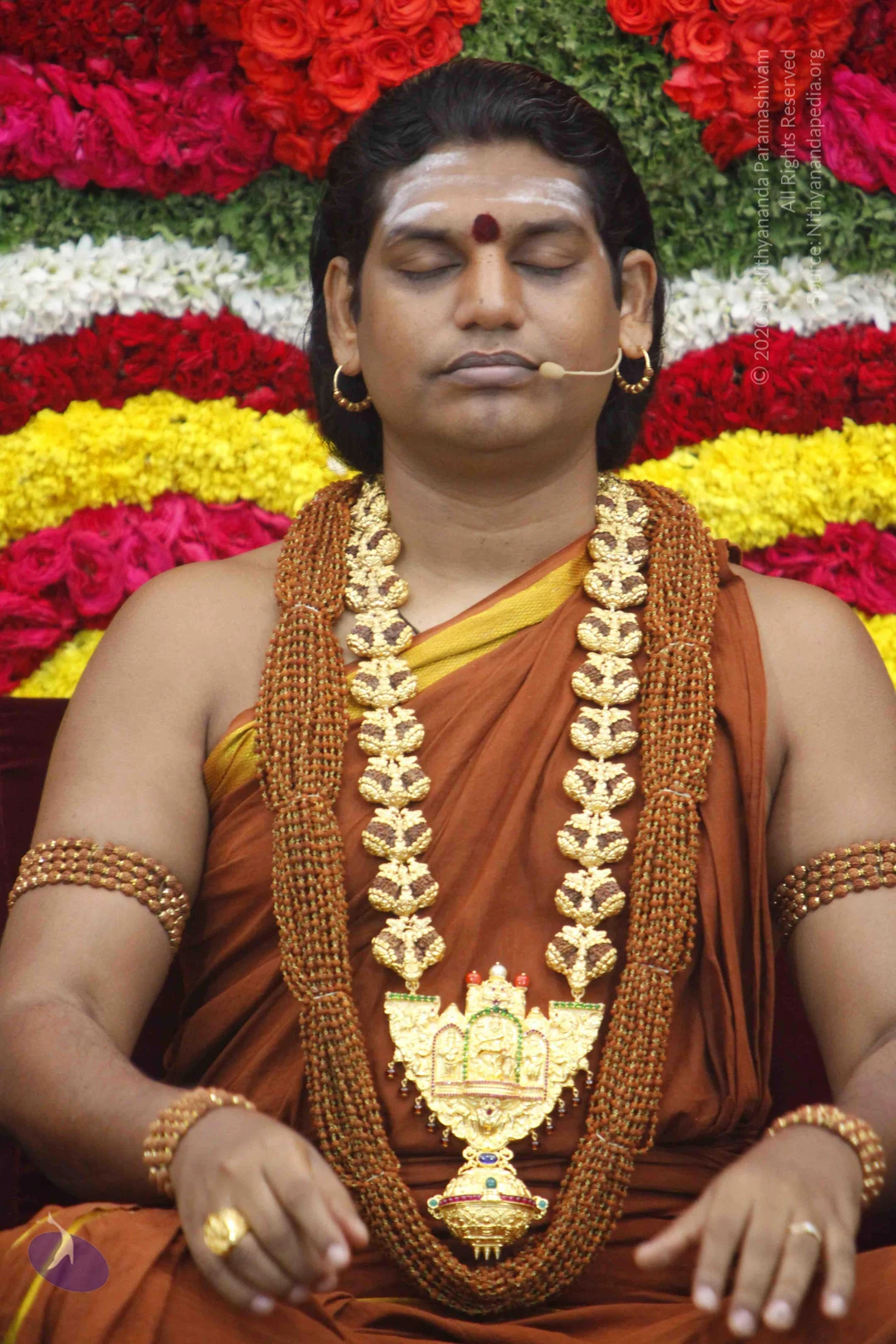
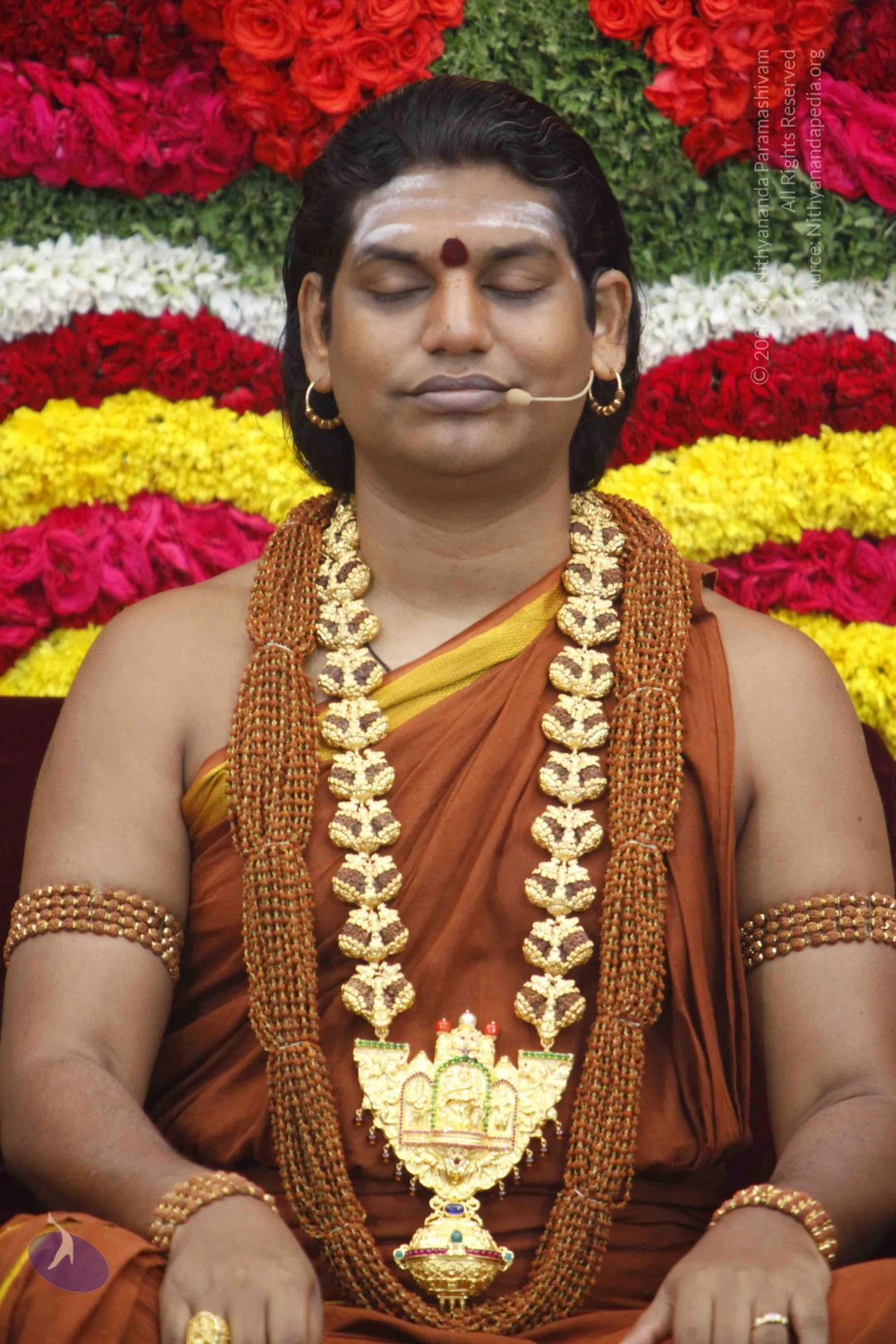
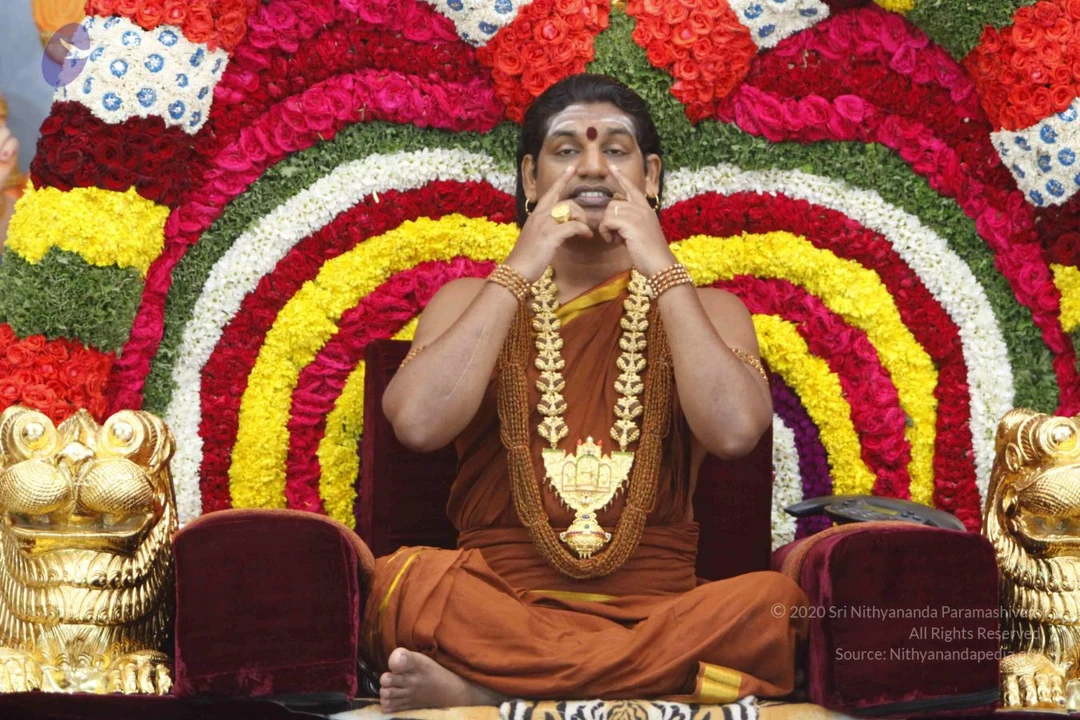
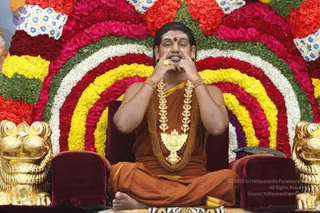
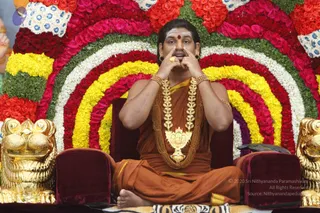
A seated man in saffron-orange robes speaks while gesturing with both hands before a backdrop of rows of red, pink, yellow and white flower garlands. He wears layered gold and rudraksha-style beaded necklaces with a large gold pendant, gold bangles, beaded armbands, gold earrings, a red forehead dot and white vibhuti markings. A wireless microphone is clipped near his face. He sits cross-legged on a tiger-print cushion with a red velvet chair.A seated man in an orange-brown robe wrapped over his shoulder with a gold-bordered edge sits cross-legged on a tiger-print cushion before a backdrop of concentric rings of red, pink, yellow and white flowers. He wears a layered rudraksha mala with a large gold ceremonial pendant, gold bangles, gold rings and hoop earrings, with a white tilak and red bindi on his forehead. He lifts both index fingers toward his temples while speaking into a head microphone. a person appears in the frame, shown with rudraksha mala, ceremonial gold necklace and saffron-orange robes.A seated man in saffron-orange robes with a gold-bordered dhoti sits in front of a large backdrop of red, yellow, pink and white flower garlands arranged in arcs. He wears a heavy gold pendant necklace with an ornate central plaque, a brown beaded mala, gold bangles and armlets, and gold hoop earrings. He has a white forehead mark and a red bindi and holds both index fingers to his nostrils in a breathing gesture. Swamiji (probable) is shown in an in_person appearance based on long swept-back hair, saffron clothing, rudraksha-style mala and ceremonial gold necklace, seated as a speaker during a satsang-style session.A seated man in saffron-orange robes sits cross-legged on a red cushioned throne before a backdrop of rows of red, pink, yellow and white flower garlands. He wears a heavy gold ceremonial necklace with a large gold pendant set with red and green stones, a rudraksha-style mala of golden beads, gold bangles and a gold ring, and has a red bindi and white sacred marks on his forehead. A small headset microphone is attached near his face. Both hands are raised, index fingers touching his lips in a gesture while he speaks. a person is seated in a satsang setting, identified by the saffron clothing, ornate gold necklace and rudraksha malas together with the flower-decorated stage.A man with long swept-back dark hair, a white forehead marking and a red bindi, wearing a headset microphone and gold hoop earrings, sits in front of a backdrop of red, yellow and white flower garlands. He wears a saffron-orange robe with a yellow border, a gold pendant on a multi-strand rudraksha mala, rudraksha bracelets on his wrists and upper arms, and a gold ring on one finger. His hands are raised to his lips in a teaching gesture as he speaks. Probable Swamiji: long swept-back hair, saffron-orange robe, rudraksha malas and ceremonial gold necklace are visible cues, shown seated and speaking during a satsang-style discourse.A seated man in orange-saffron robes sits cross-legged on a red velvet throne draped with a tiger-striped cloth, in front of a curved backdrop of red, pink, yellow and white flower garlands. He wears a heavy gold ceremonial necklace with a central gold plaque, rudraksha-style beads, beaded wrist and arm bands, and gold rings. He has a white forehead mark and a red bindi, and a small headset microphone. His hands are raised to his lips in a gesture while he speaks. Probable Swamiji (Nithyananda Paramashivam) is shown in the appearance-based description, given his swept-back hair, saffron clothing, rudraksha malas and ceremonial gold necklace, seated on a throne in a satsang setting.

Sarva Darshan
11 photosSource gallery
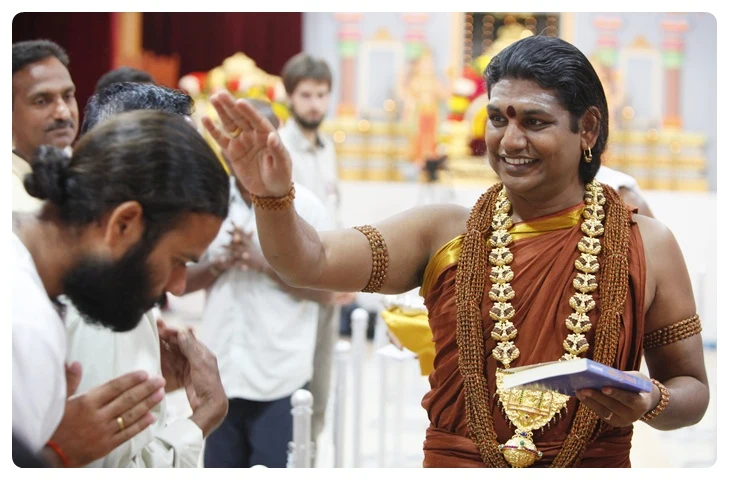
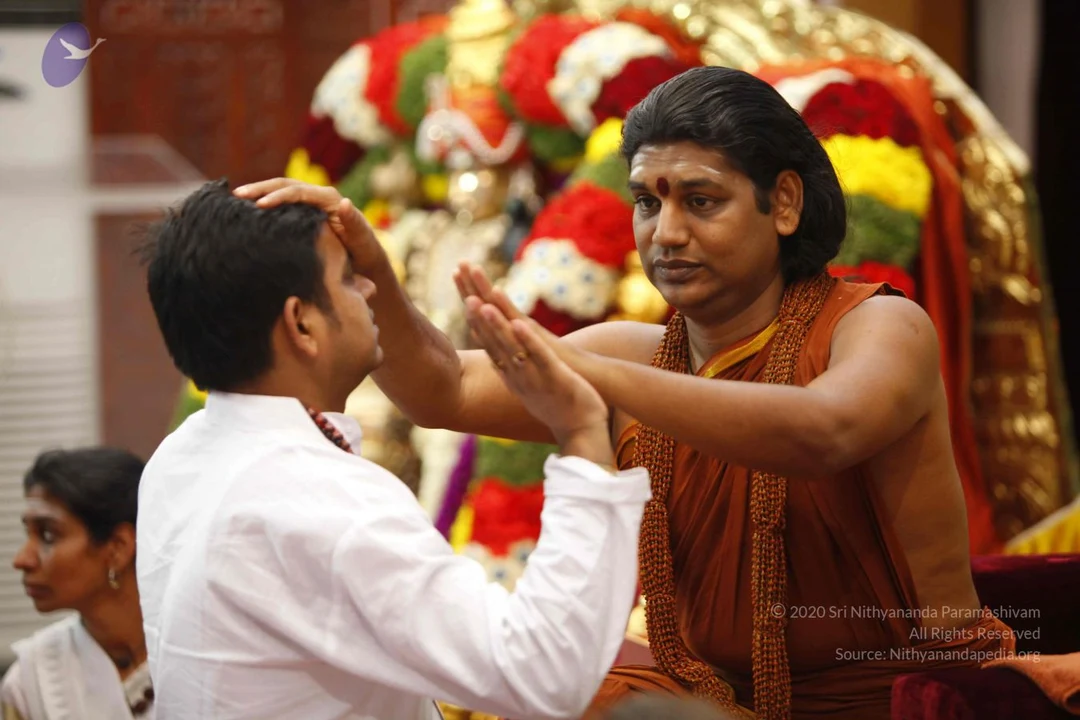
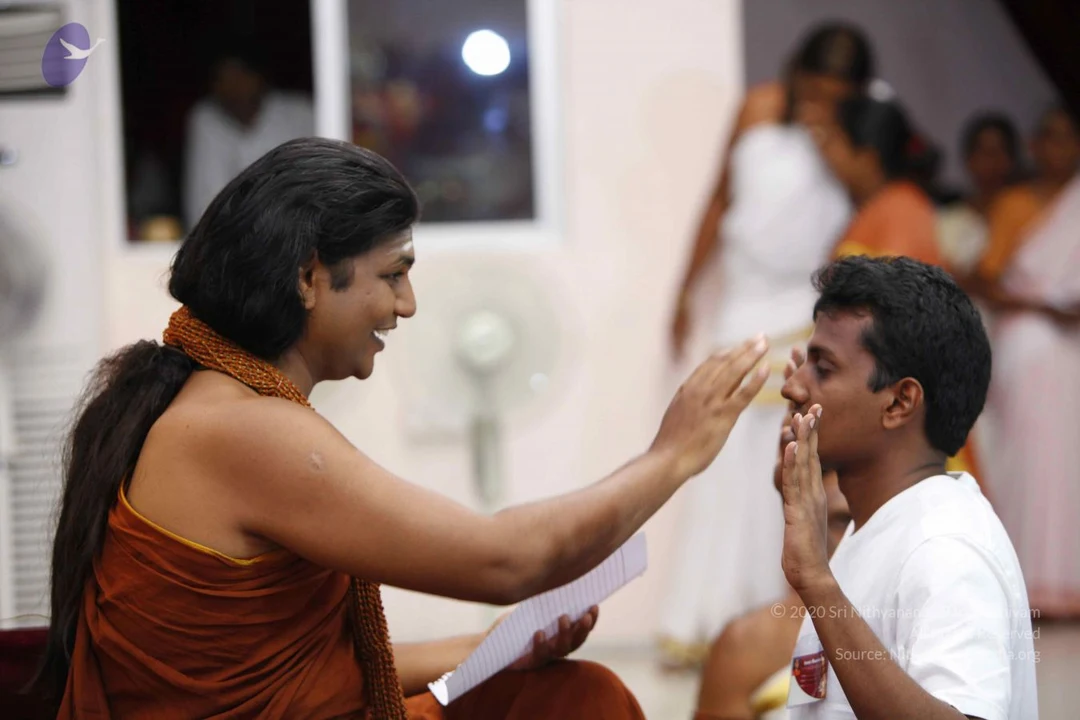
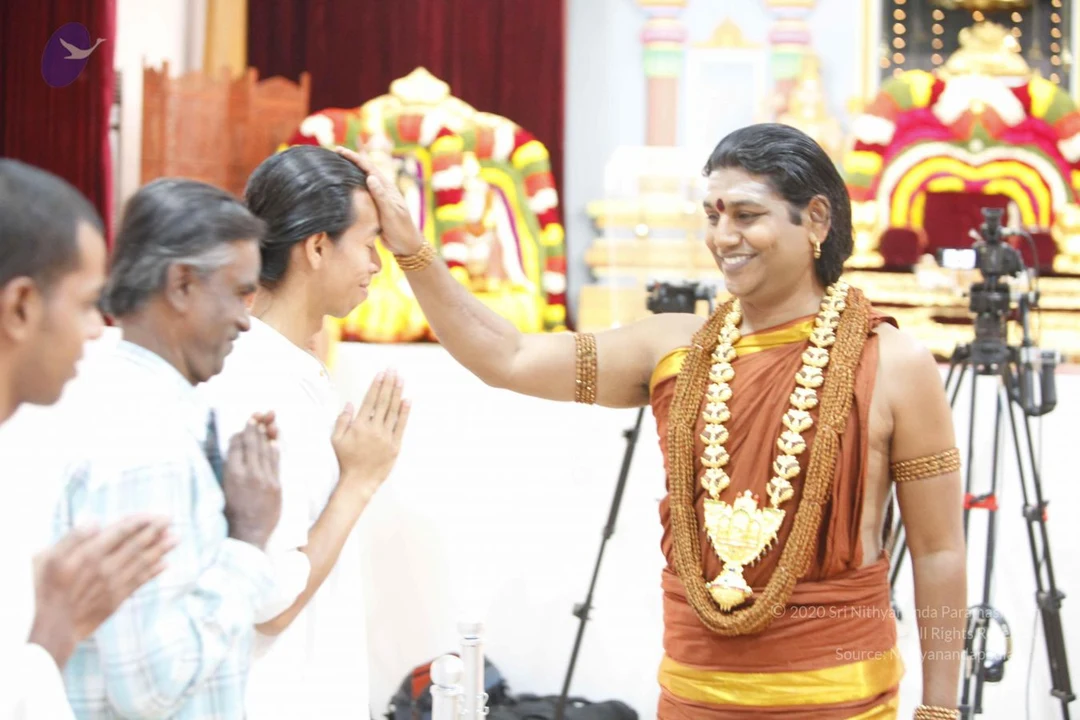
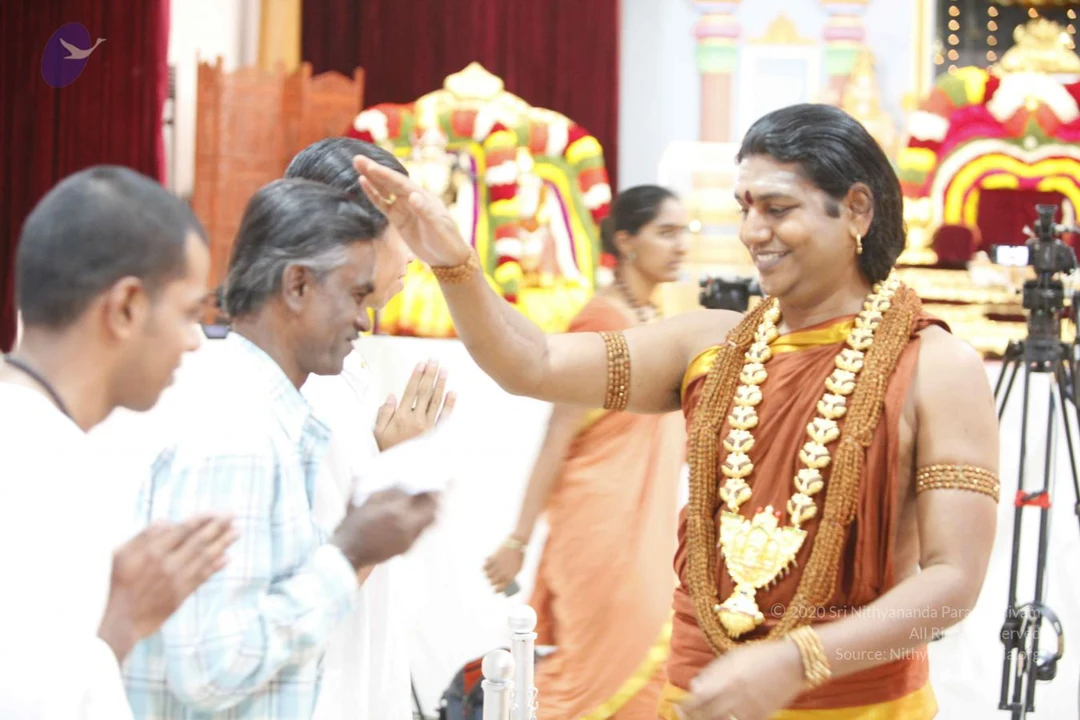
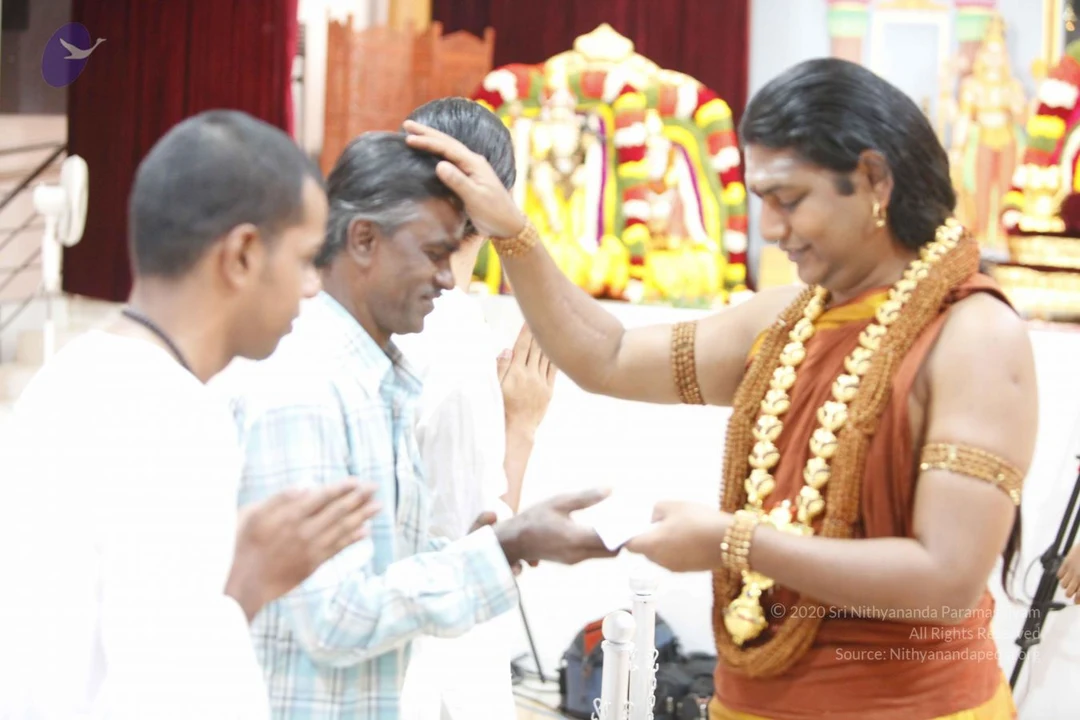
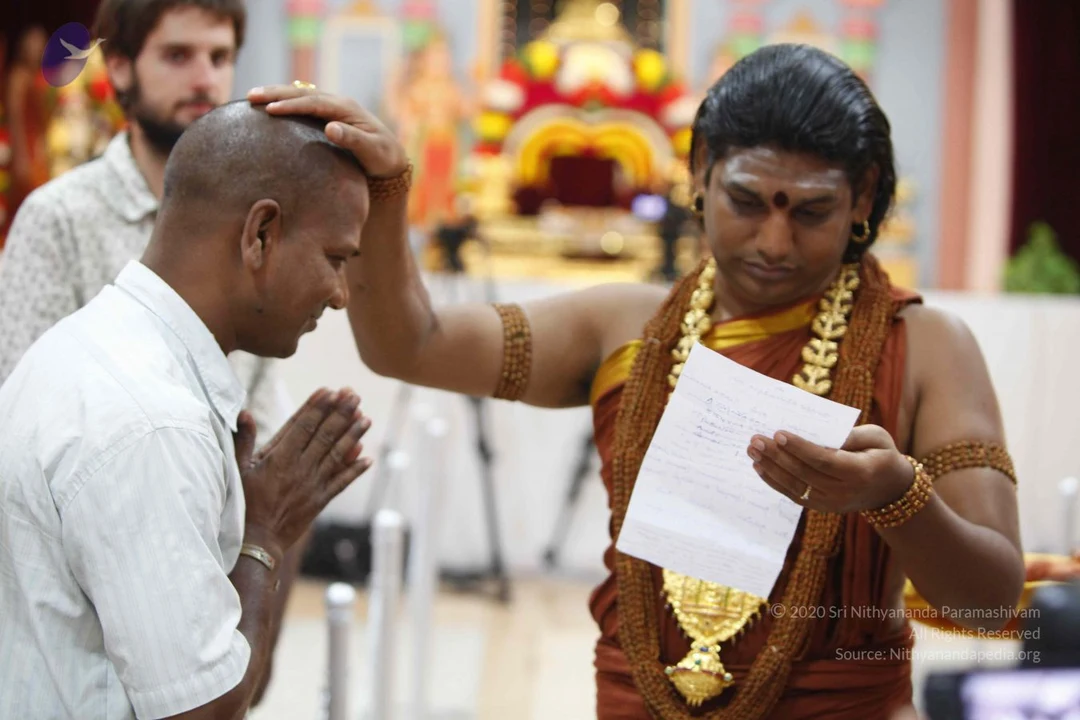
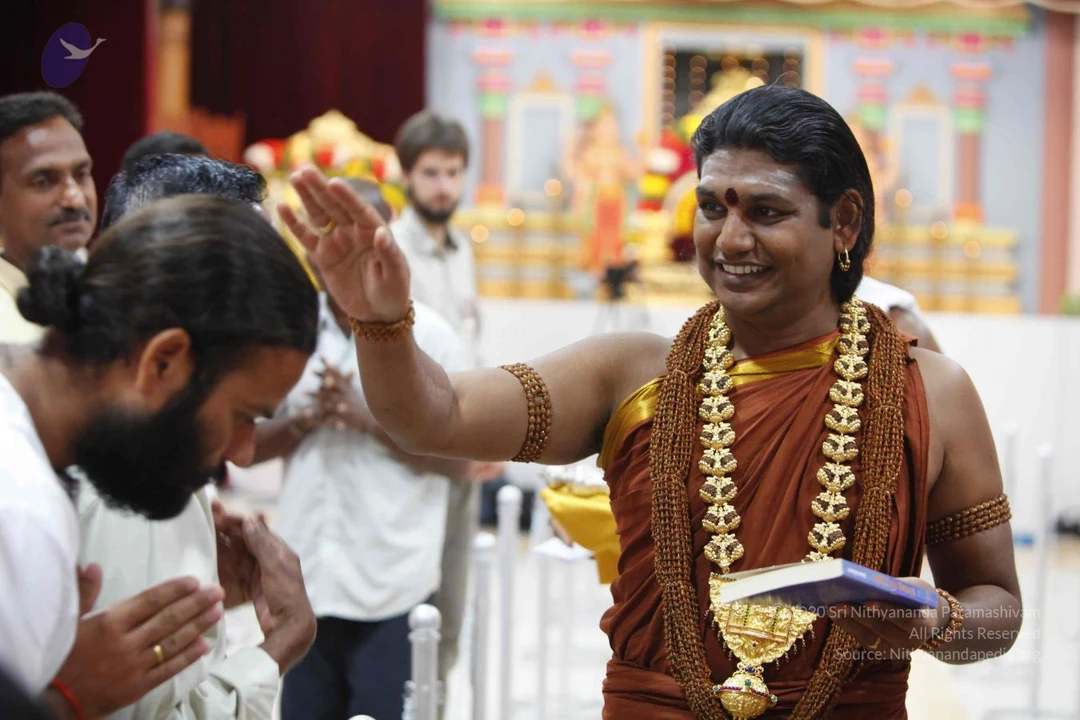
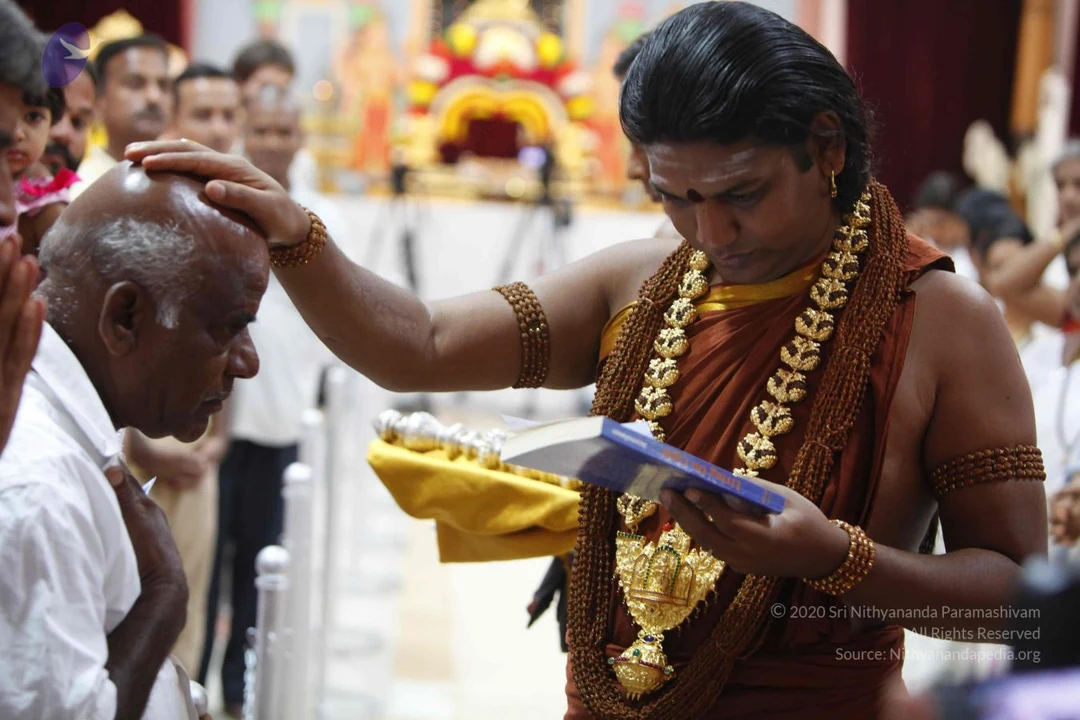
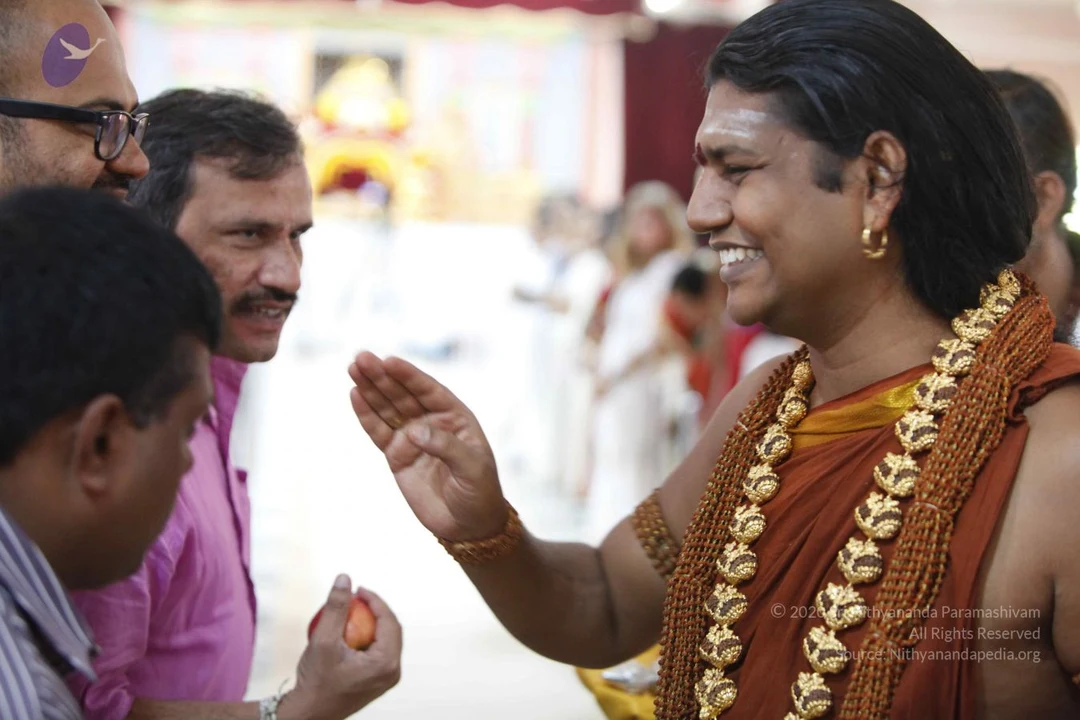
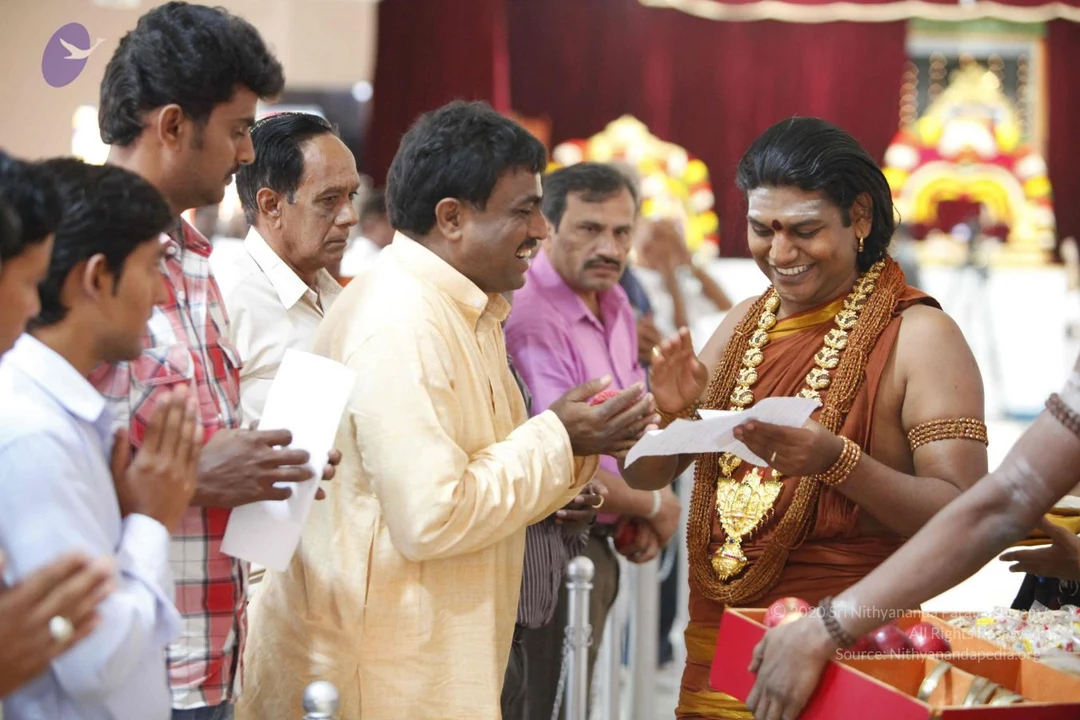
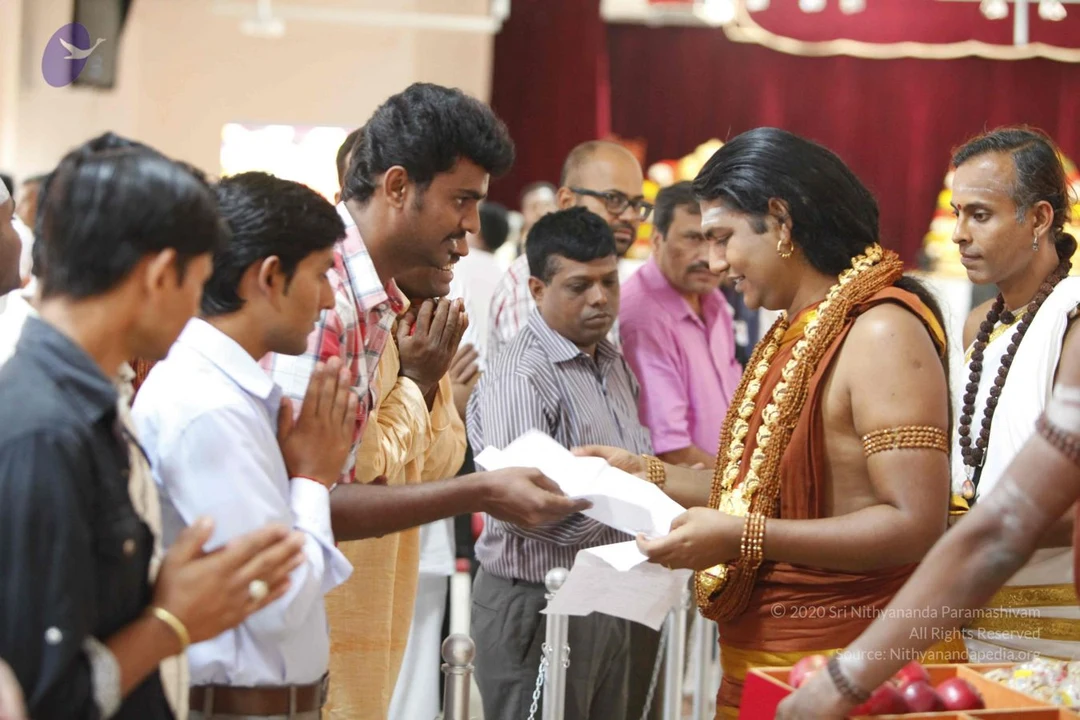
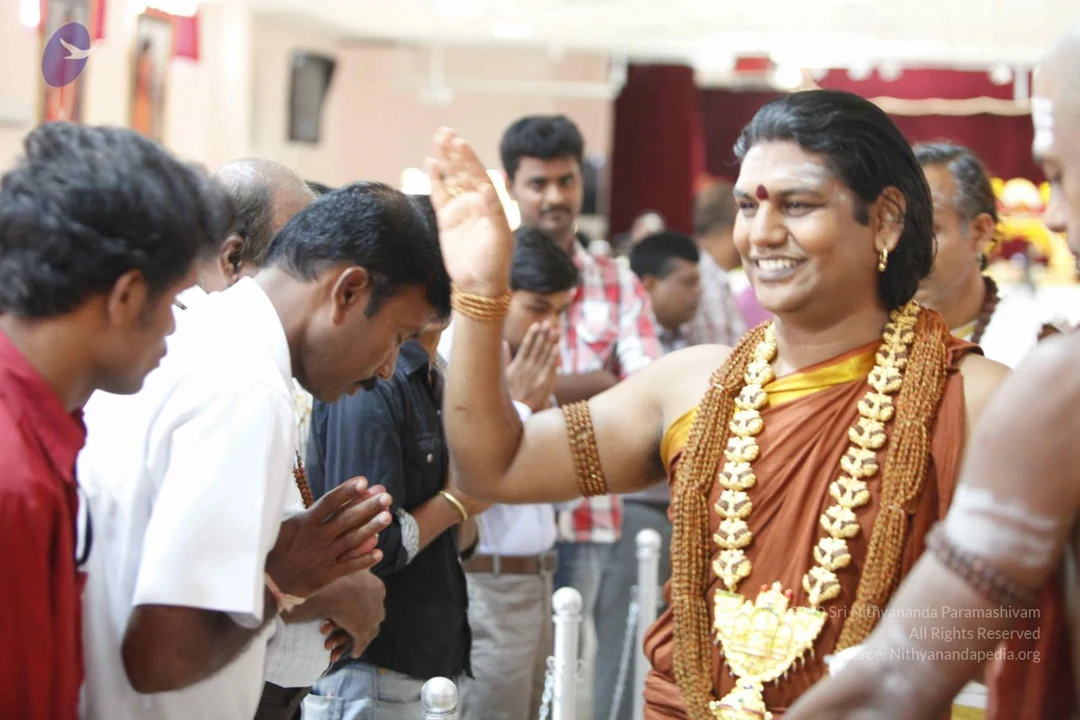
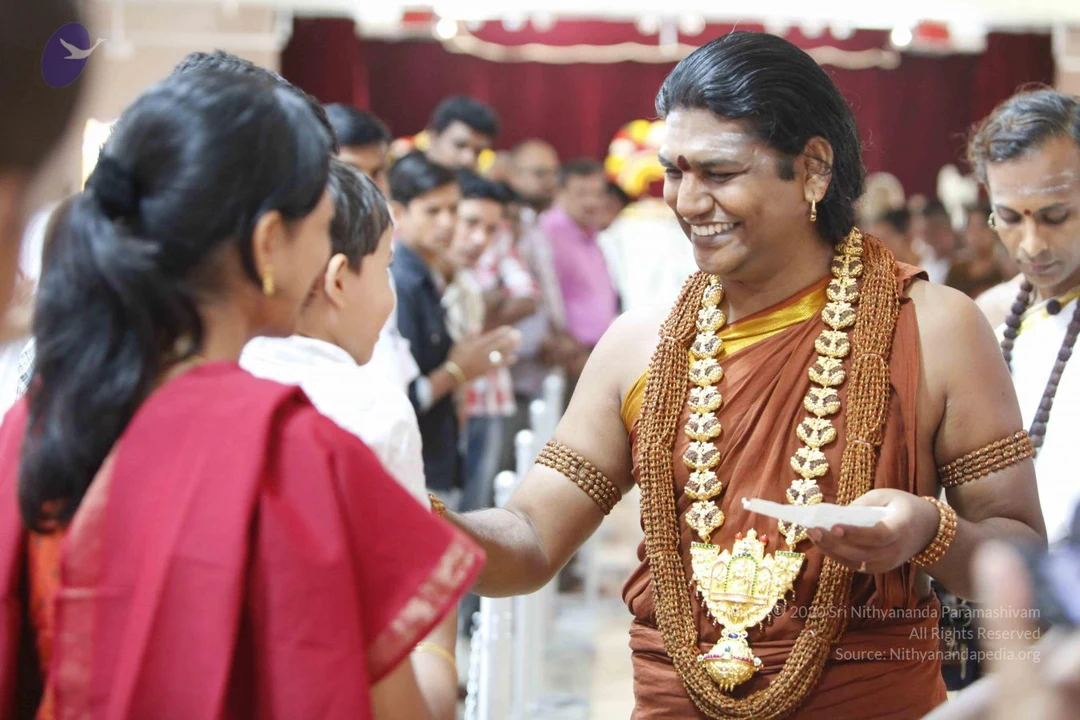
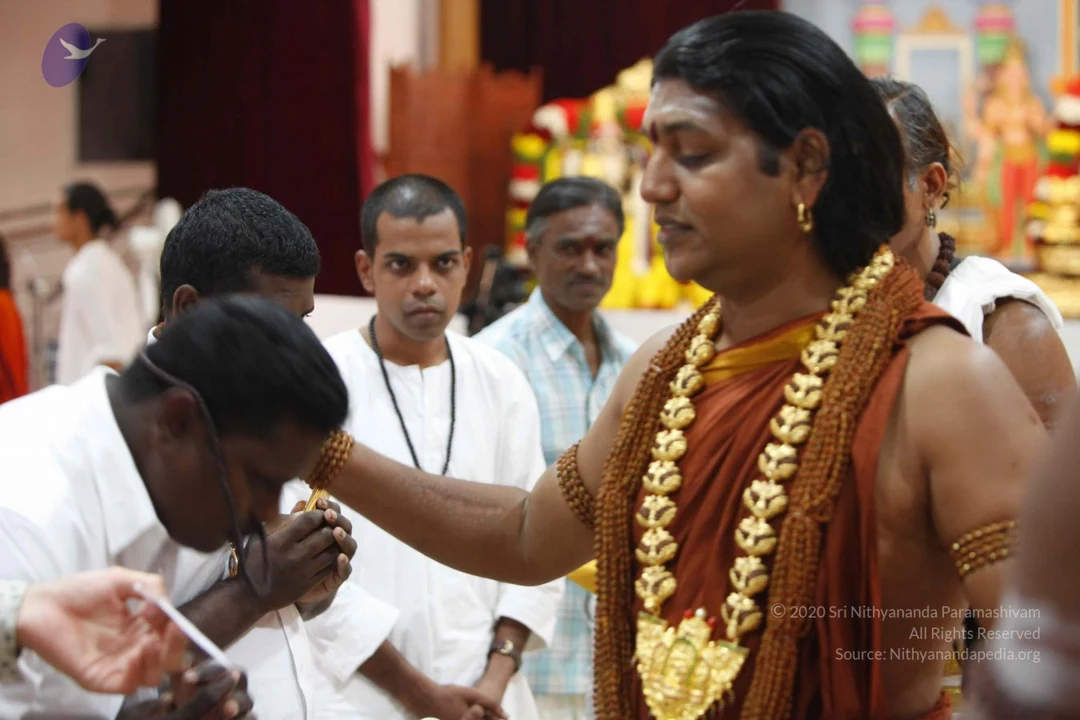
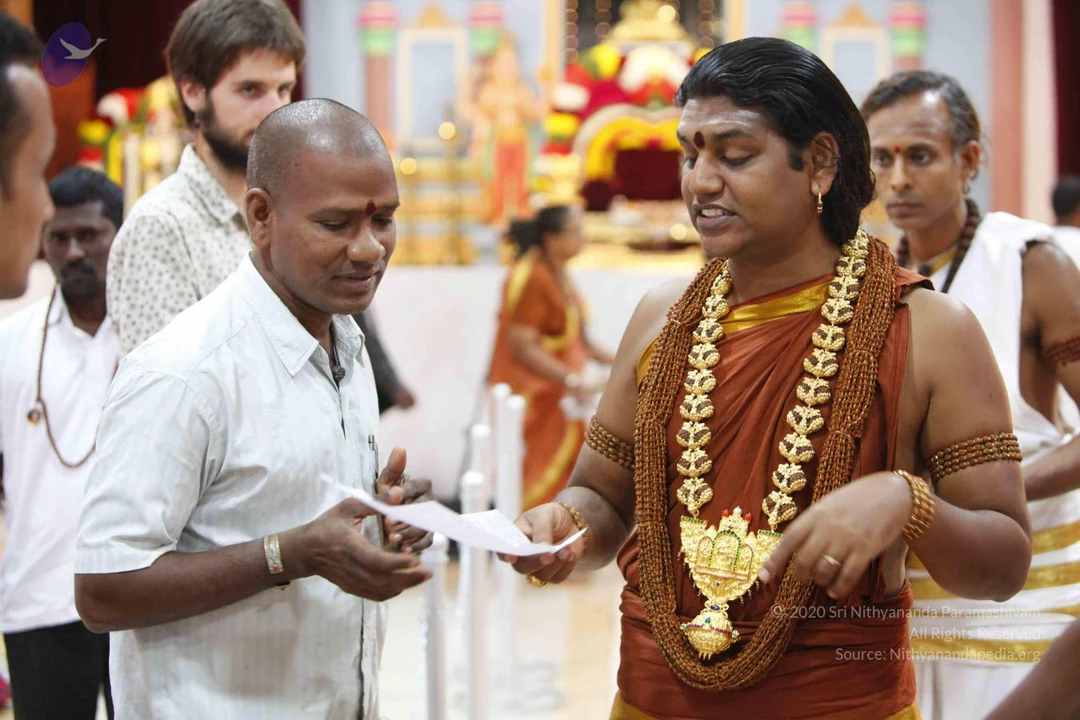
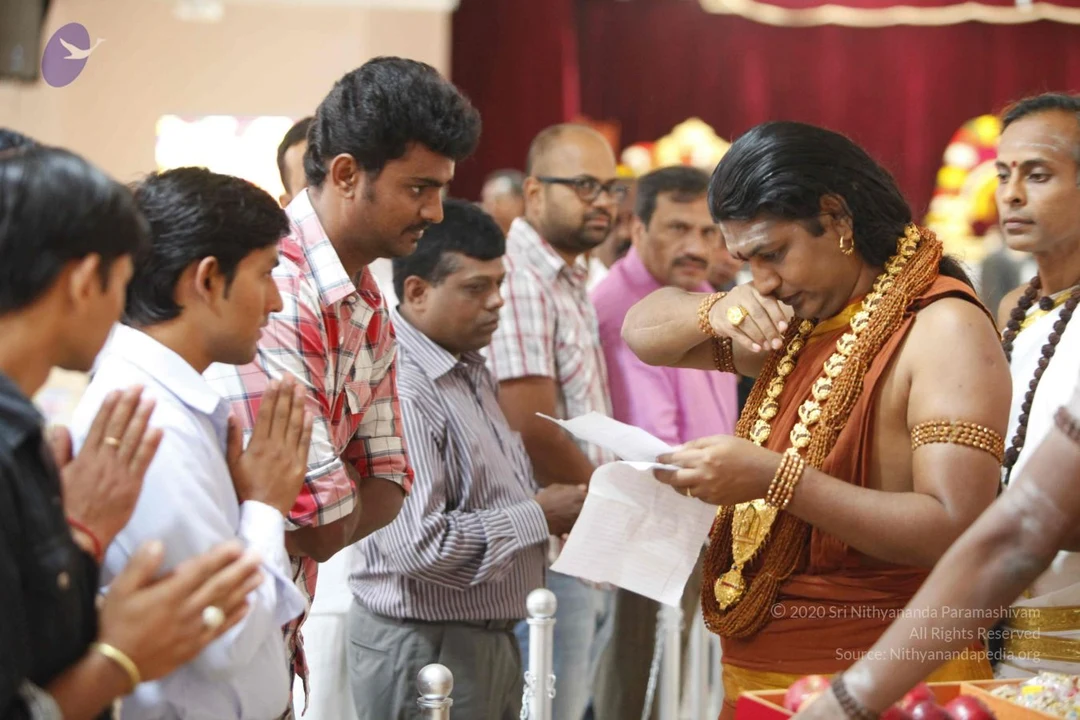
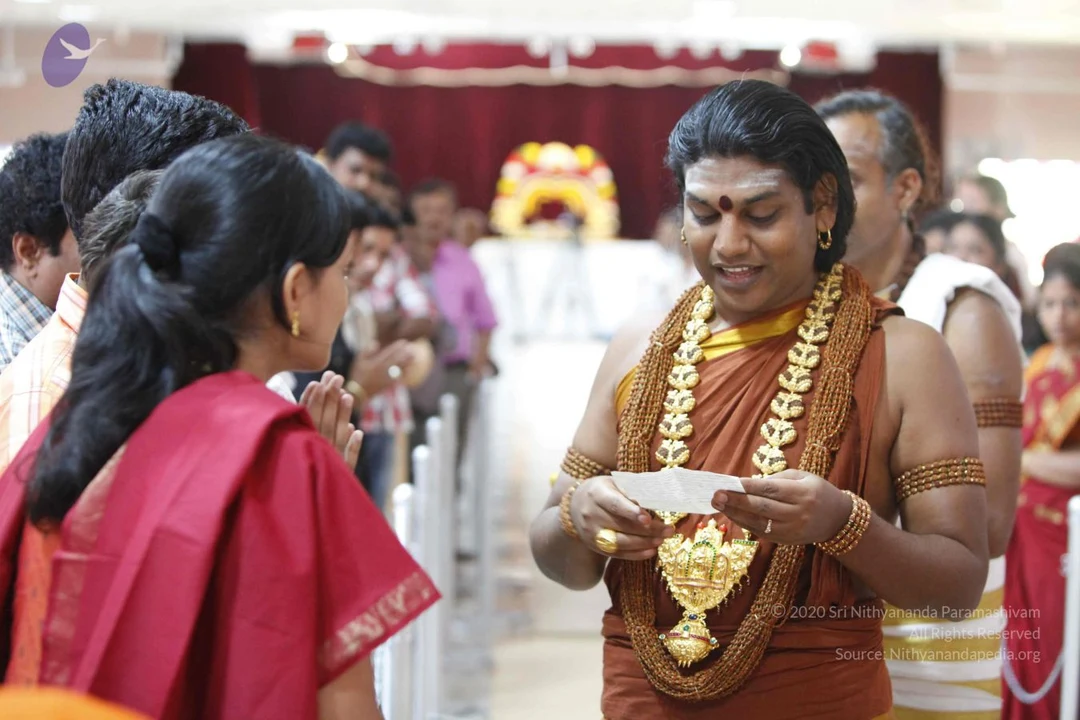
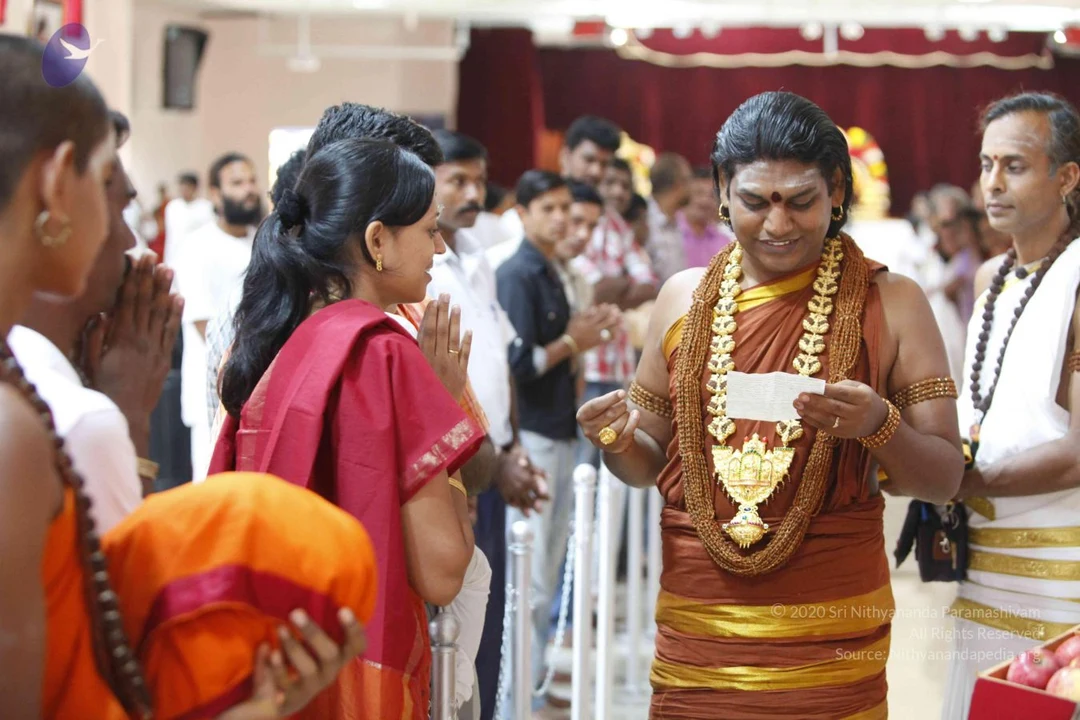
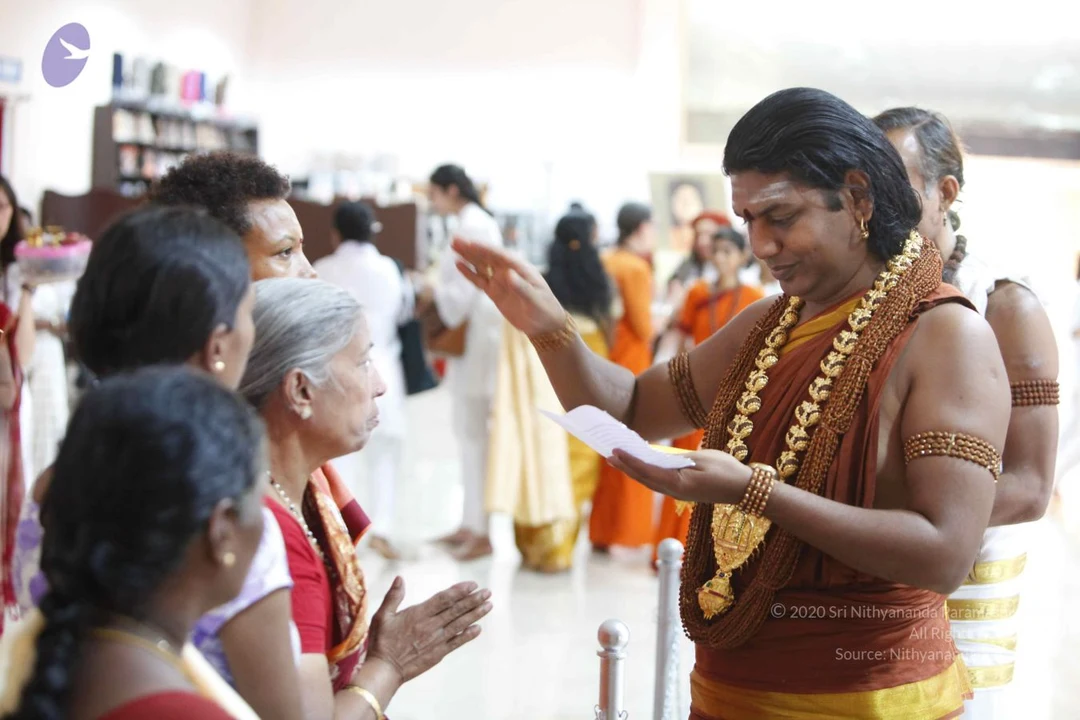
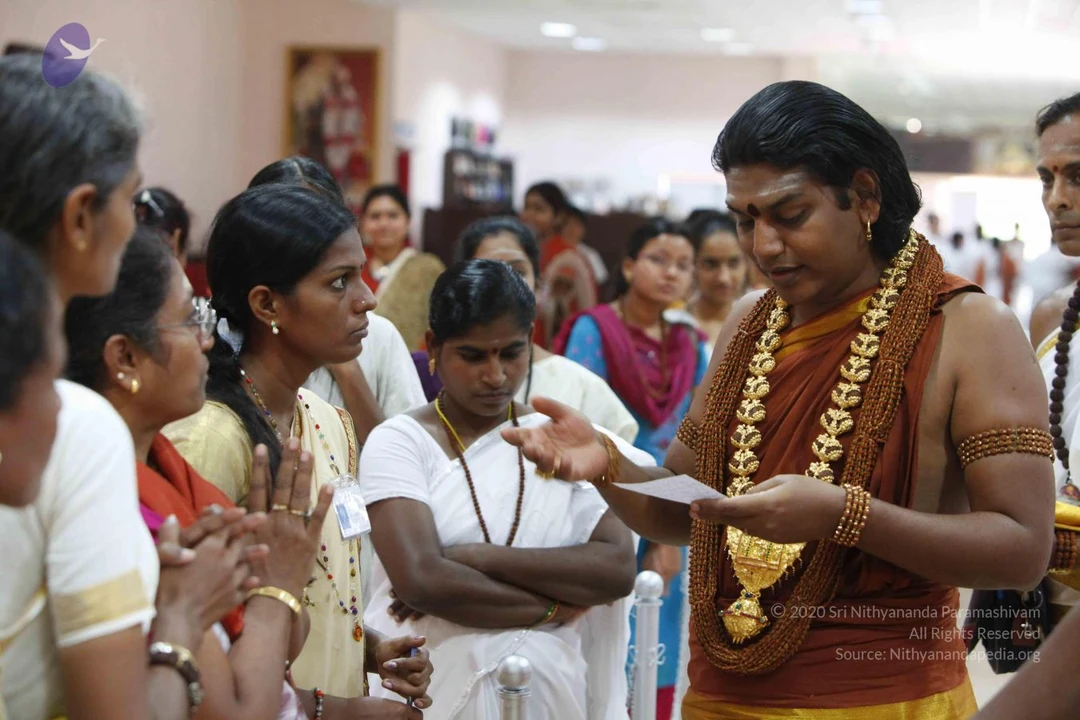
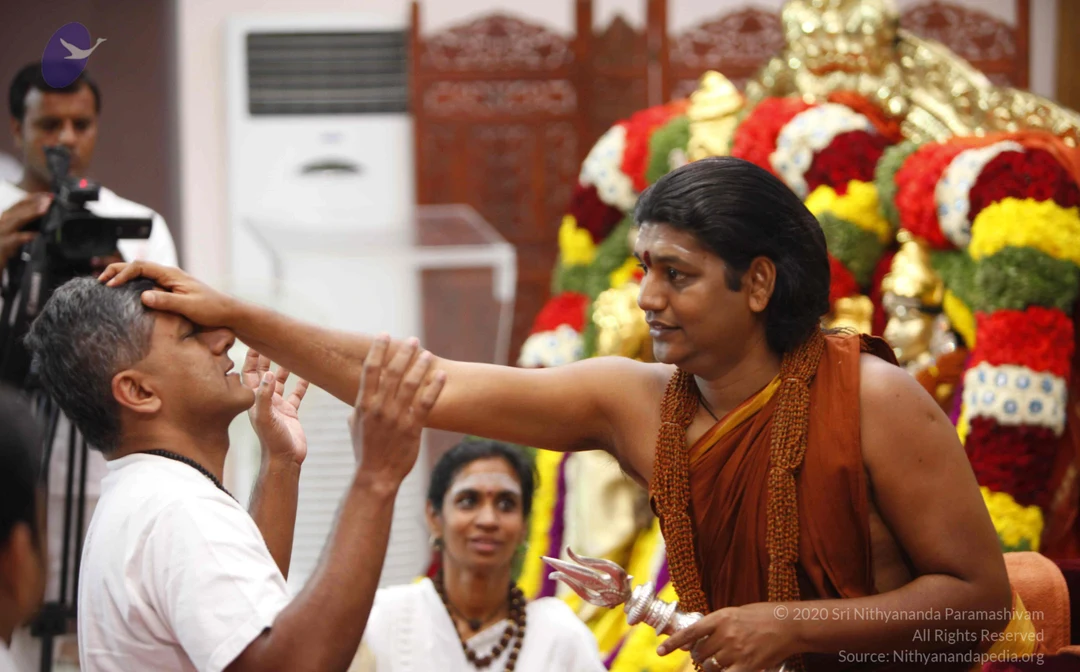
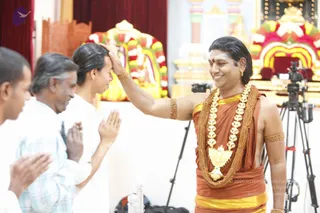
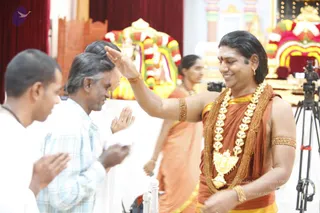
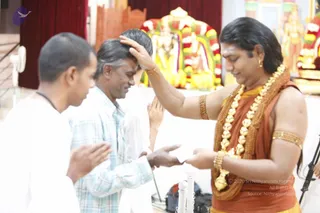
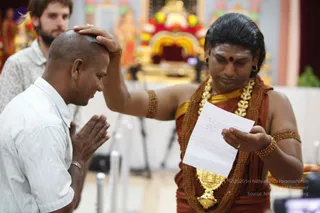
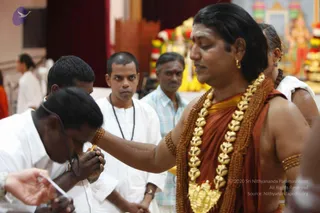
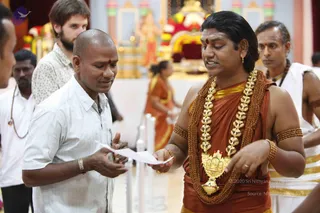
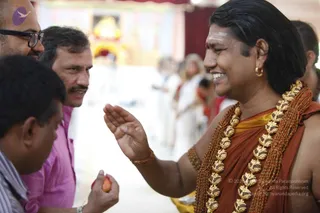
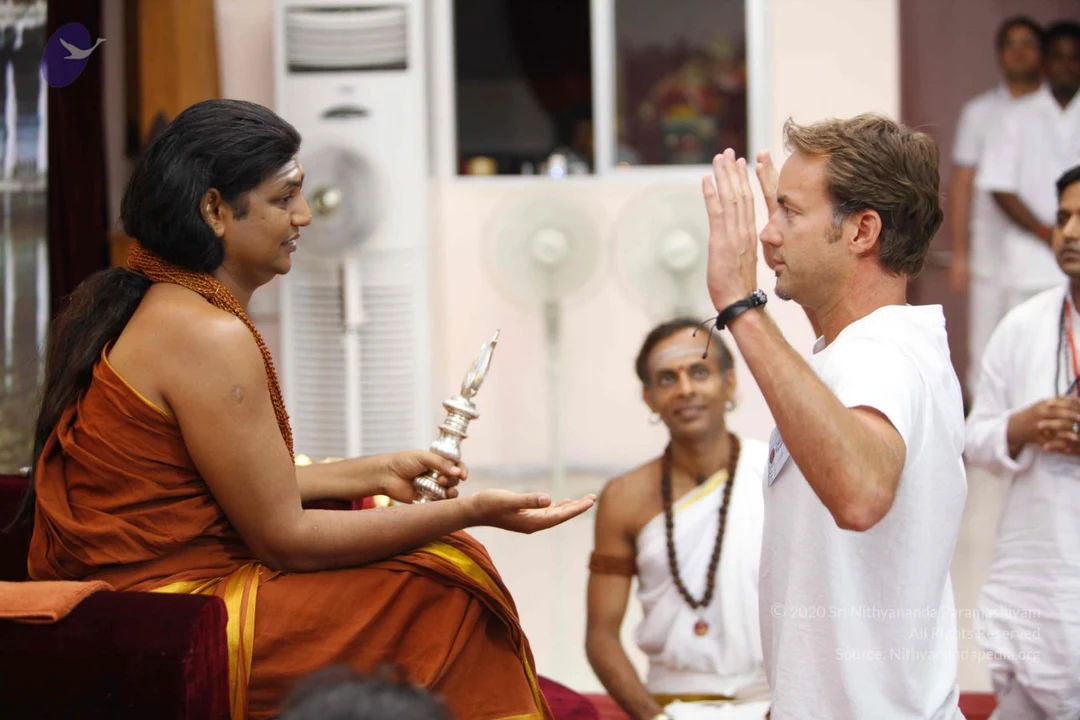
A photograph of a satsang setting with a standing man in saffron-orange dhoti and shawl, wearing a heavy gold ceremonial necklace with a large gold pendant, gold armbands, a red tilak on his forehead and gold earrings. He smiles while placing his right hand on the forehead of a seated devotee in white clothes, who bows with hands folded. Two men on the left, one in a white shirt and one in a plaid shirt, stand with palms pressed together in prayer. Behind them are ornate golden shrine structures decorated with red, yellow and green floral garlands, and a video camera on a tripod stands nearby. Probable Swamiji is shown in person, identified by his long swept-back hair, saffron clothing and gold ceremonial necklace.A photo of a smiling man with long swept-back dark hair and a red tilak on his forehead, bare-chested under an orange-saffron shawl, wearing a heavy gold lotus pendant necklace, rudraksha-style beaded garlands, gold armlets and bangles. He raises one hand in blessing toward a group of devotees, several of them in white and a man in a light blue checked shirt with hands pressed in namaste. Behind them stands a woman in orange, and the background shows ornate deity murti decorated with colourful flower garlands, a red curtain and a camera on a tripod. a person by the distinctive long hair and gold ceremonial adornments.Photograph of a satsang-style blessing in an ashram hall. A man in an orange-saffron dhoti-wrap with a long gold-bead necklace and gold armlets stands at right, placing his right palm on the head of a bowed man in a light blue checked shirt. Another man in white stands at left with his hand raised, and a partially visible person in white is behind. Behind them is a richly decorated deity murti garlanded with yellow and red flowers, with a gold-trimmed red drape and a glowing backdrop. A small white item is held in the central figure's hand, with a clear glass lamp stand nearby.A photograph of a priest in saffron-orange robes and a heavy rudraksha-style brown bead mala with a large gold ceremonial necklace, a red bindi and gold earrings, standing and placing his right hand on the shaved head of a kneeling man in a white collared shirt with palms pressed together in namaste. The priest holds a handwritten paper in his left hand and reads from it. Behind them a second man in a light shirt looks on, and a decorated altar with floral garlands, yellow-orange flowers and a deity murti is visible in the background.A smiling man in a rust-orange dhoti-style wrap with a gold-yellow edge stands at a barrier, raising his right hand in greeting while holding a small blue book. He wears a long gold ceremonial necklace with a large pendant, rudraksha-style brown beaded bracelets on his arms, a red kumkum bindi on his forehead and a sweeping dark hairstyle. To the left, a bearded man in white with his hands folded in anjali and another man with long hair bow toward him. Behind is a temple hall with a colourful deity figure and floral garlands. The man in orange shows the appearance cues of the probable Swamiji, with the ornate gold necklace, long swept-back hair and saffron clothing.A photograph of a ceremonial blessing. A bald elderly man in a white shirt bows his head forward while a man in a saffron-orange robe places his right hand on the crown of the elderly man's head. The standing figure wears long dark swept-back hair, a red tilak mark on his forehead, a layered gold and beaded necklace, a rudraksha mala with a large gold pendant, brown rudraksha bands on the upper arms and wrists, and an orange-brown shawl over the bare shoulder. He holds a blue-covered book in his left hand, resting on a yellow cloth on a silver tray. Behind them, shrine decorations in gold and red and a few onlookers are visible. a person is identified by his distinctive hair, saffron robes, rudraksha mala and gold ornaments, presiding over a blessing ritual.

Inner Awakening Day 1

80 photosSource gallery
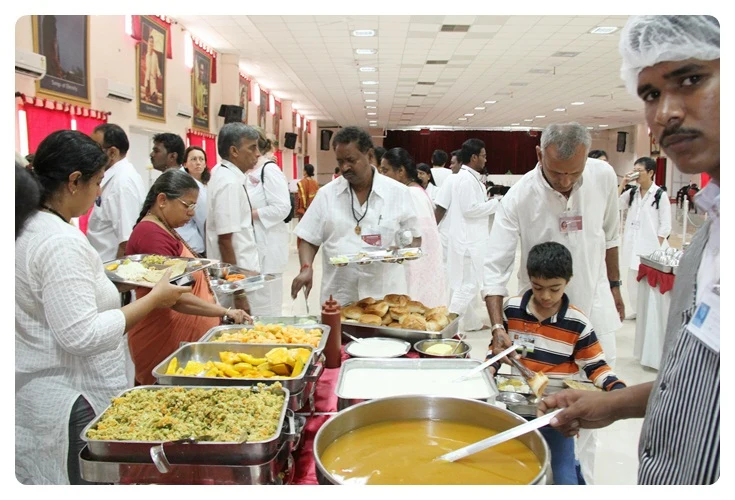
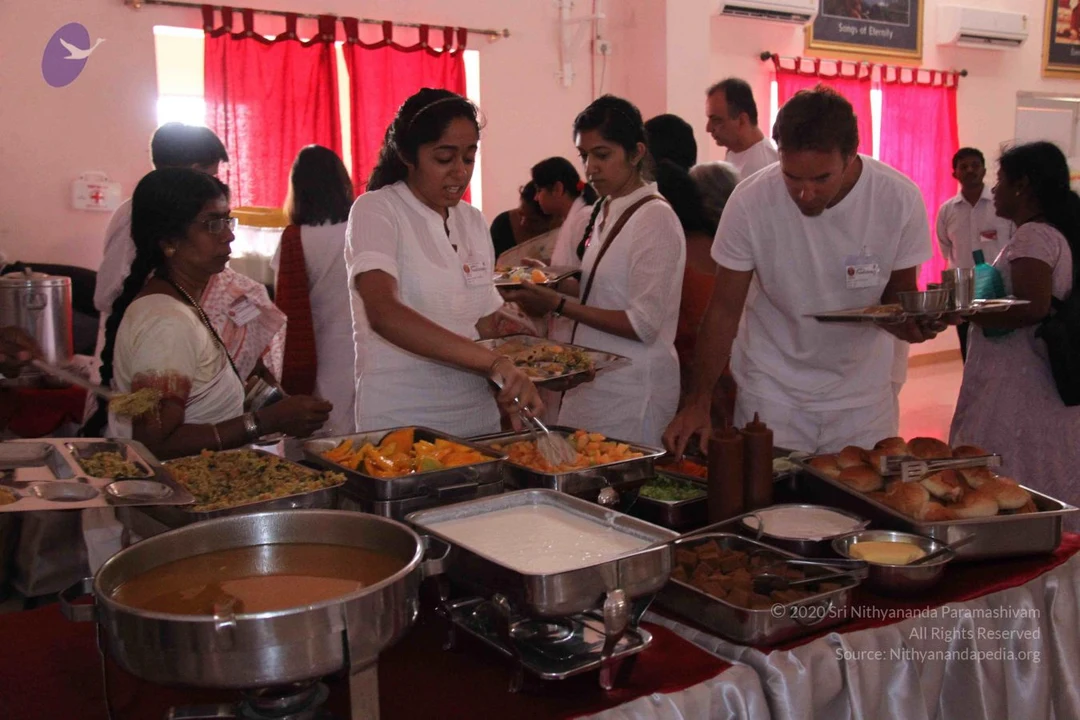
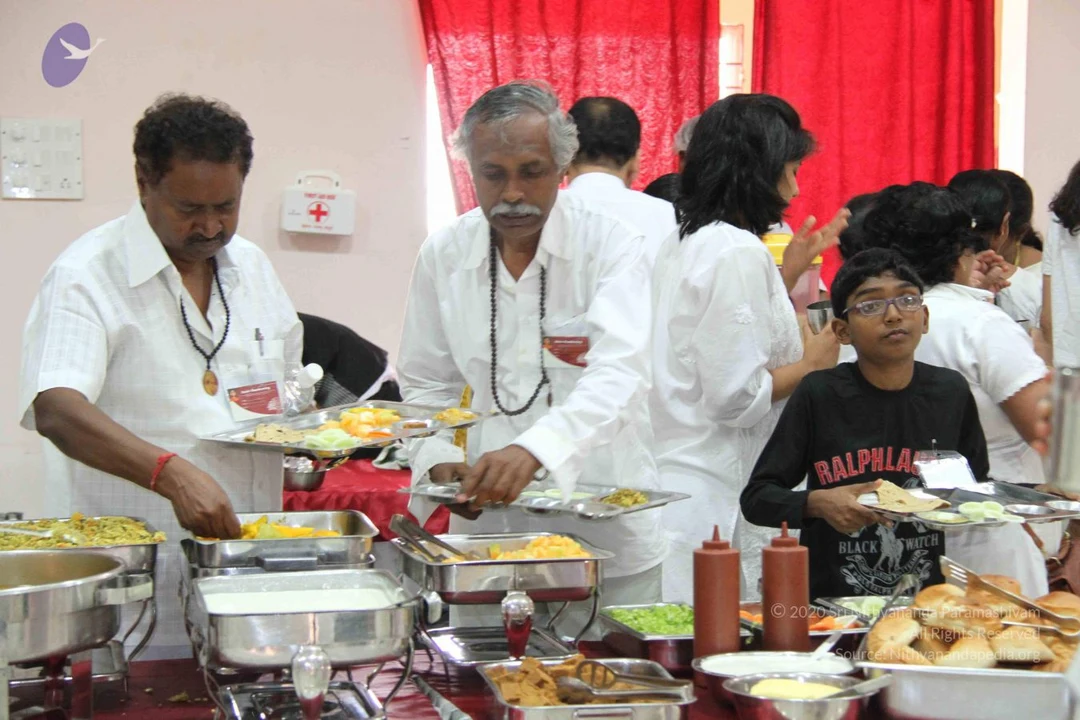
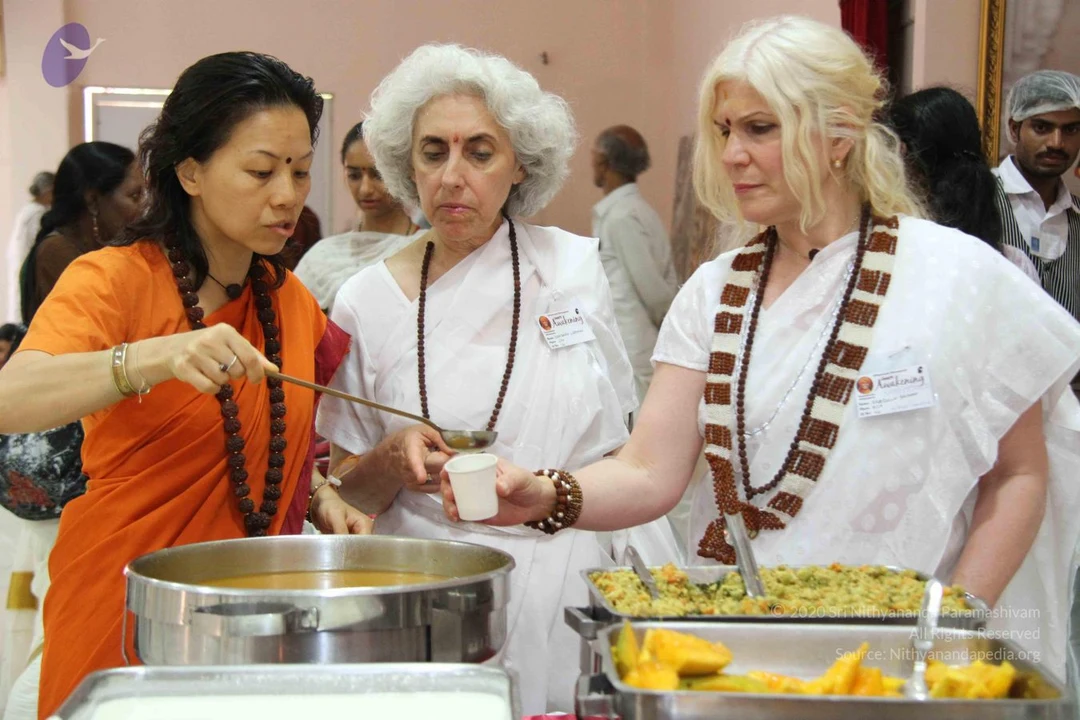
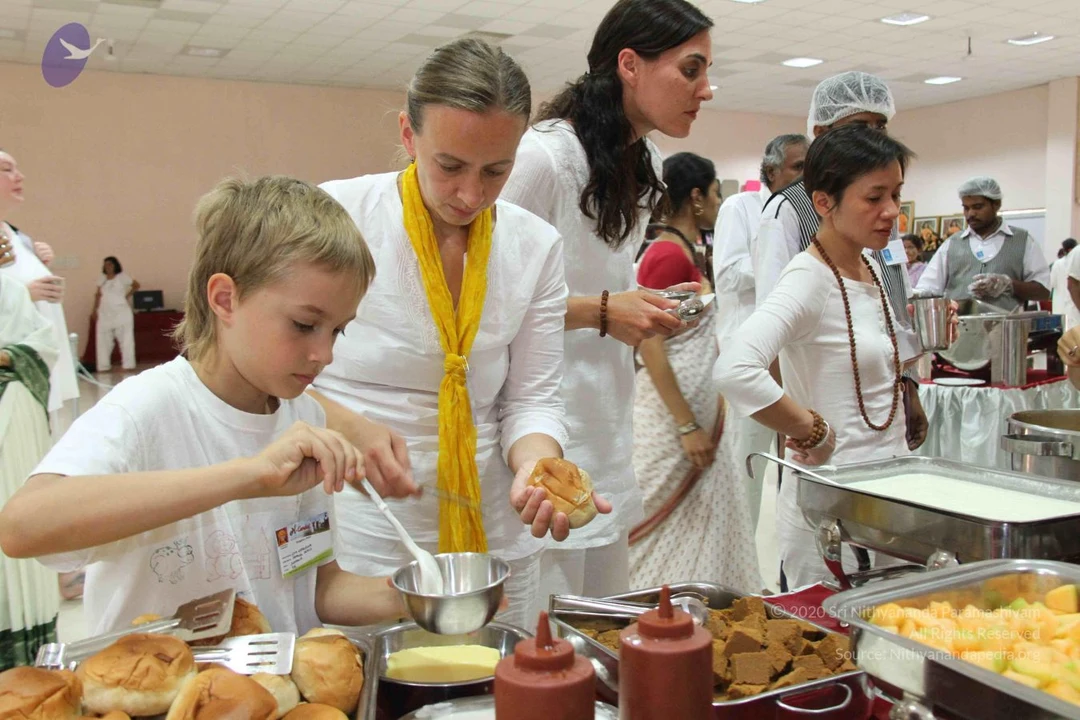
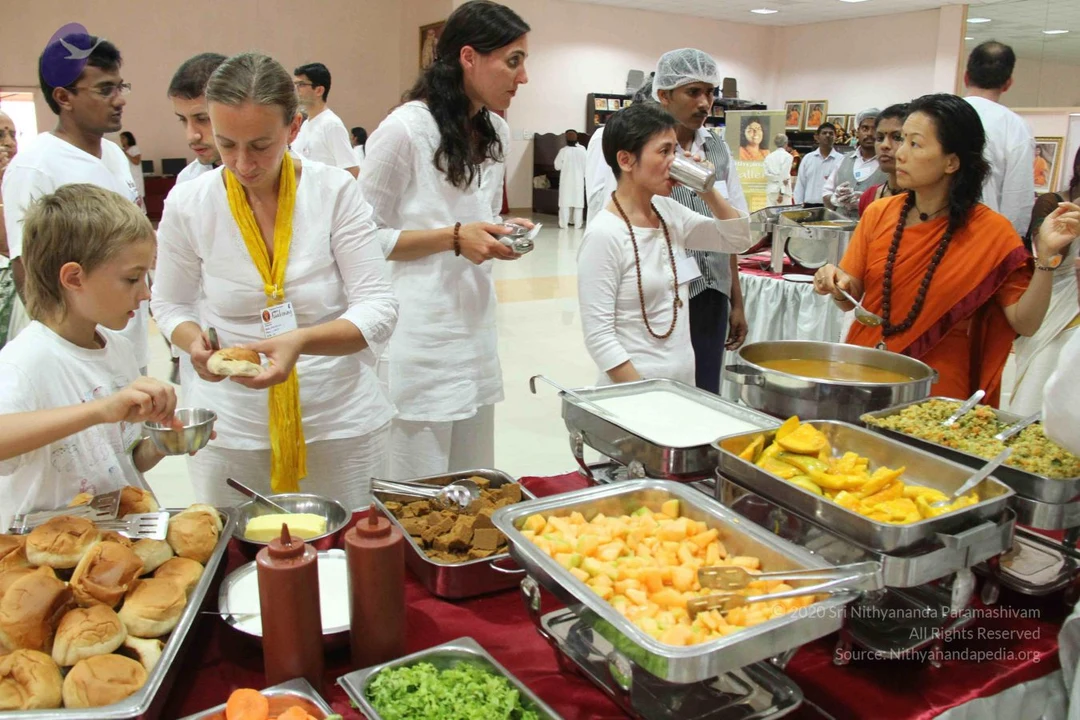
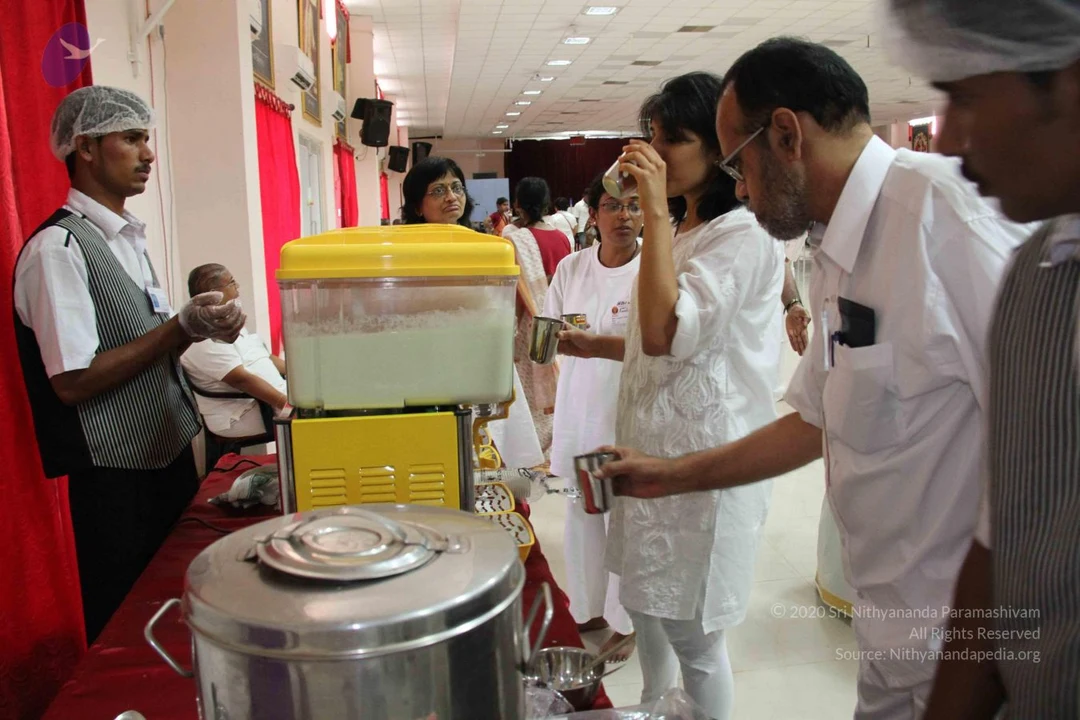
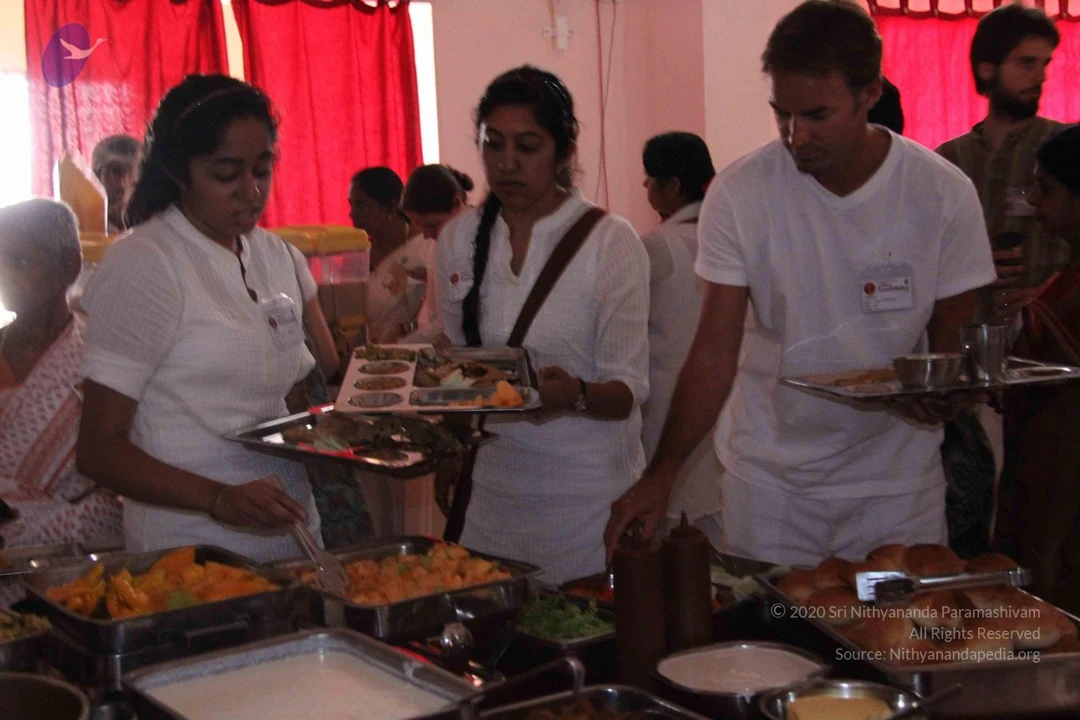
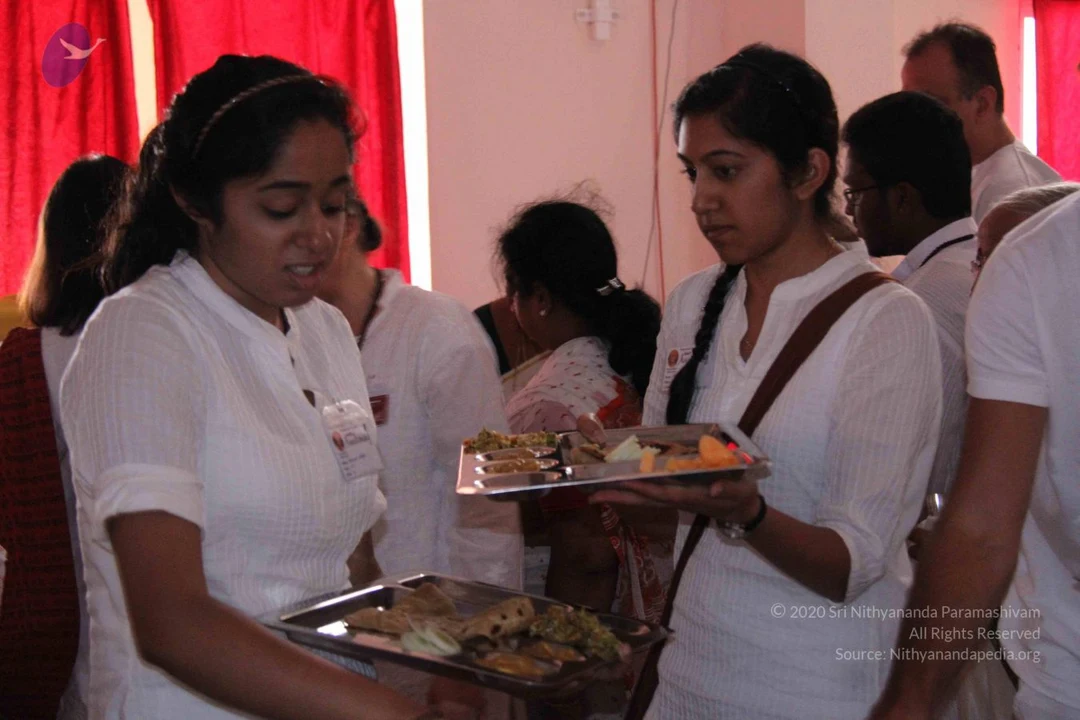
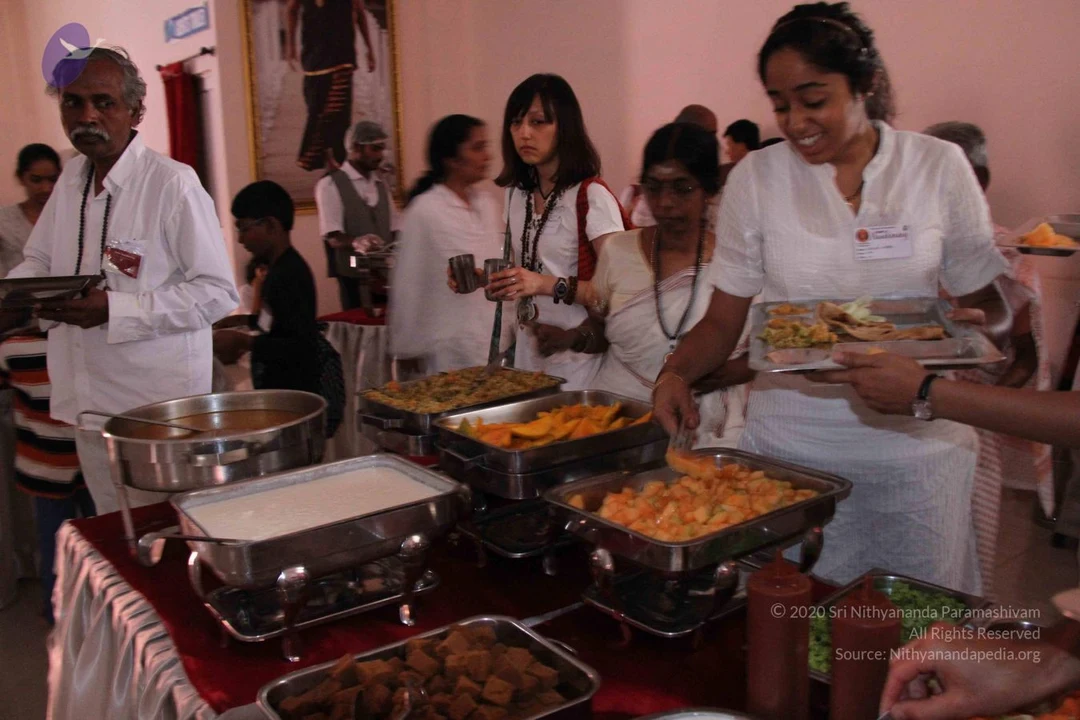
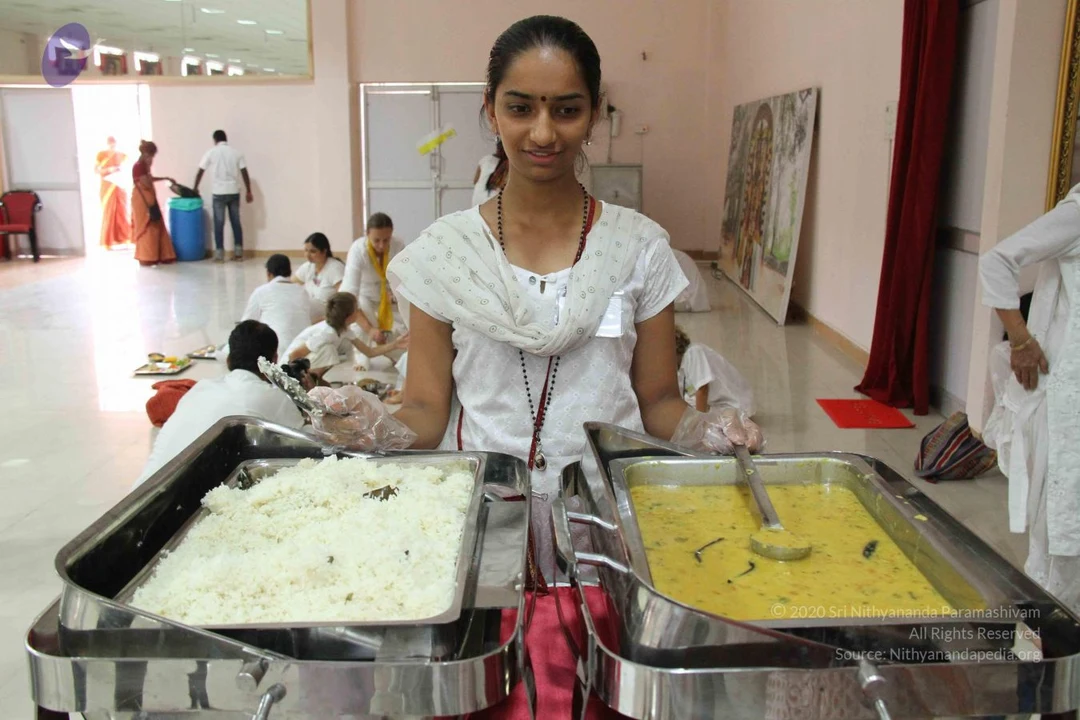
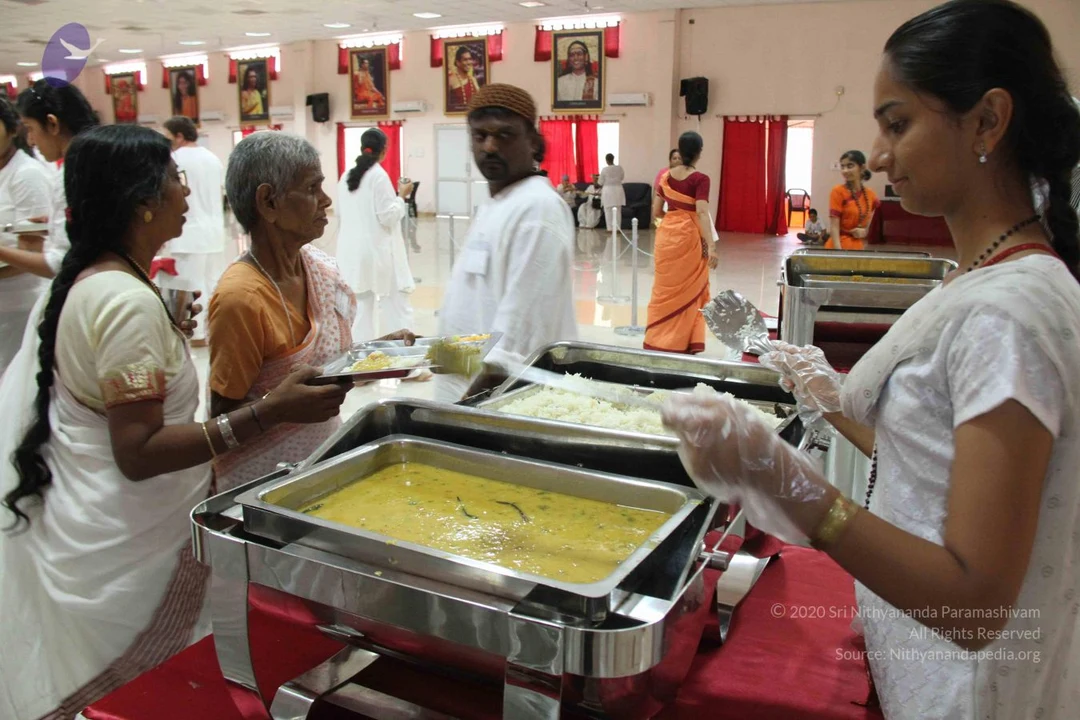
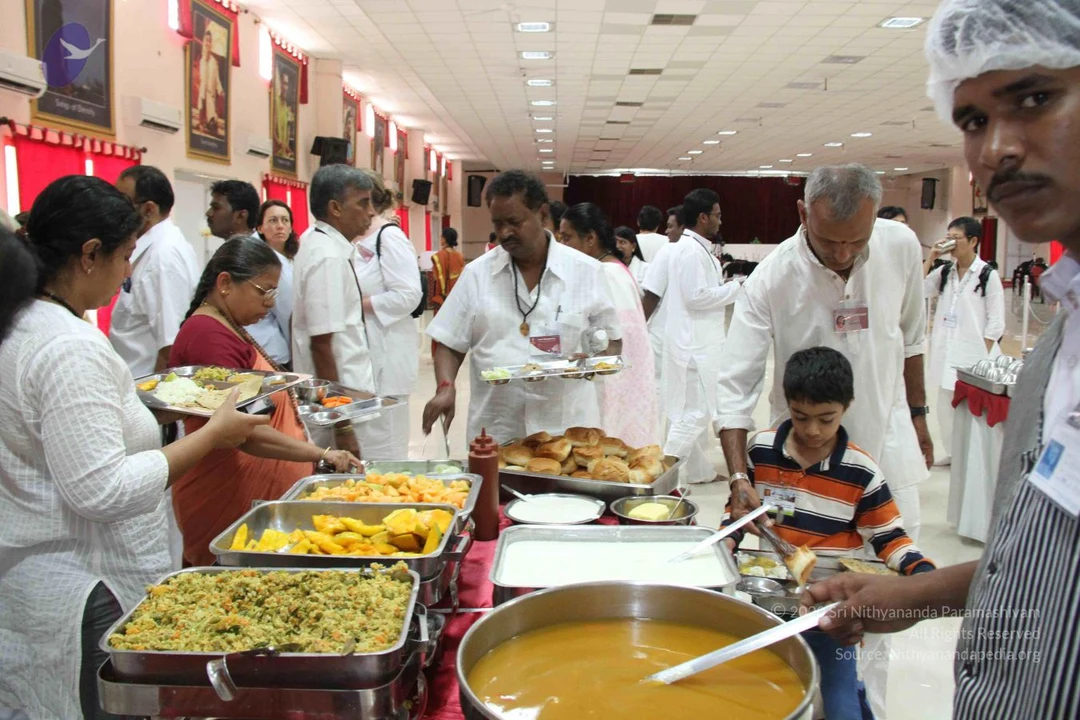
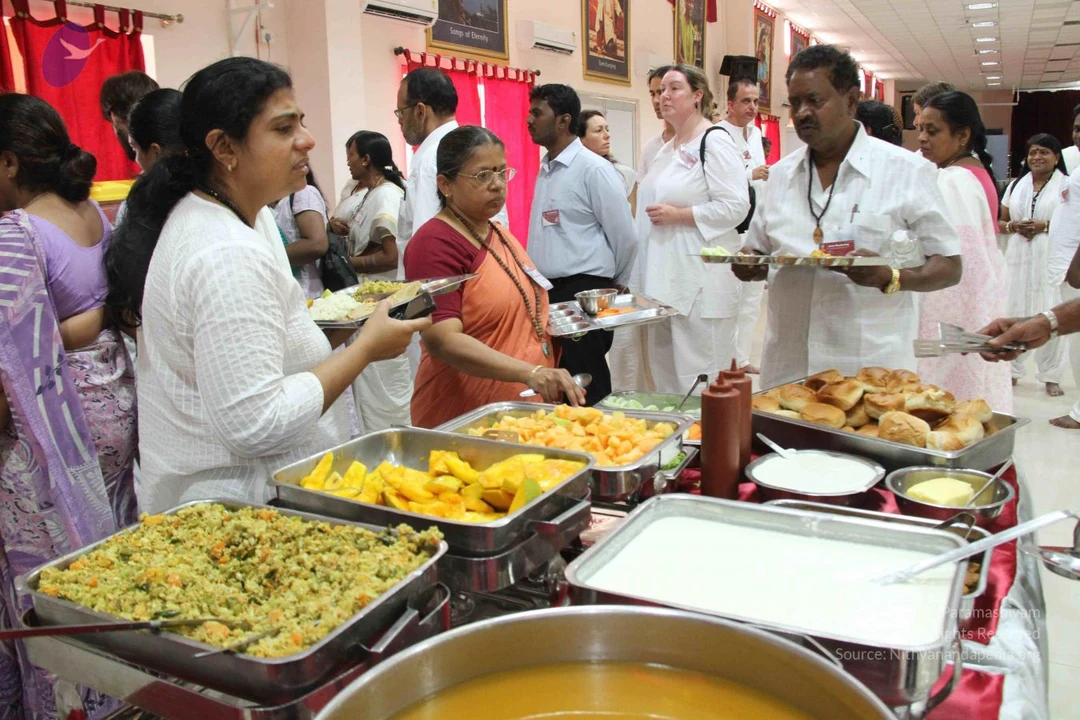
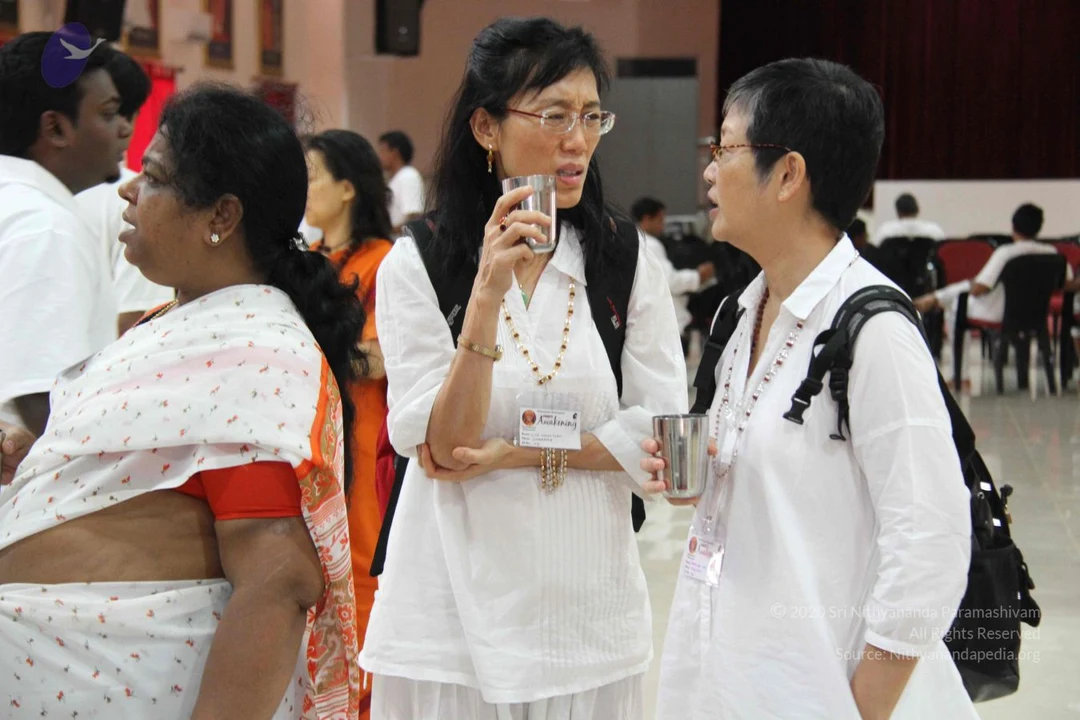
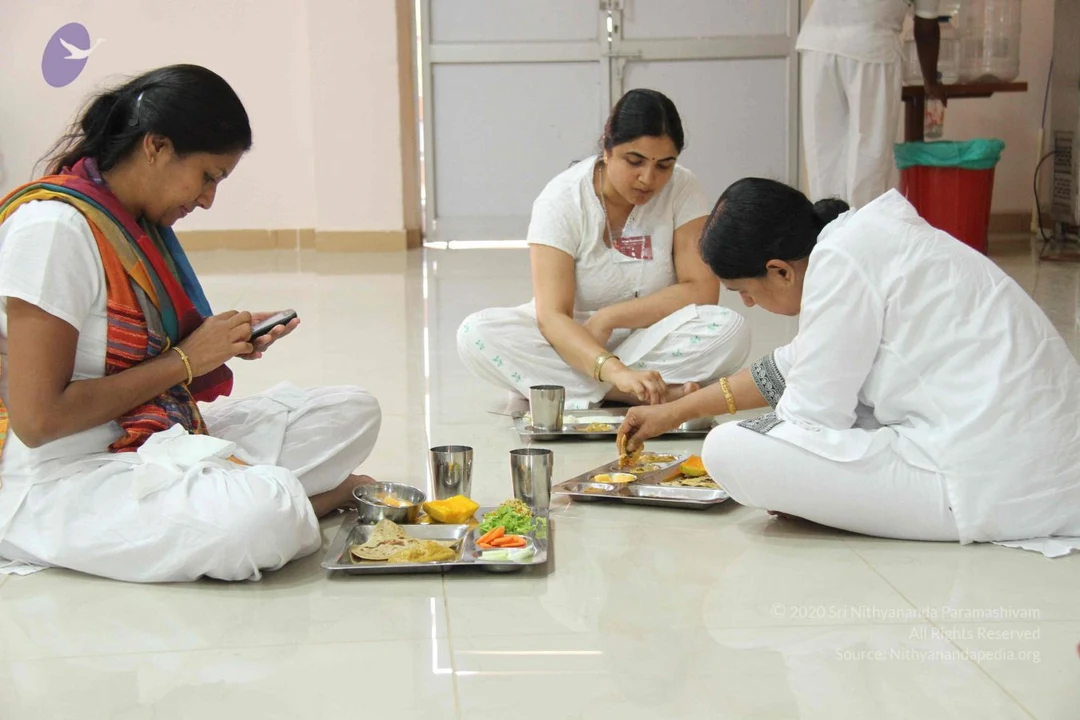
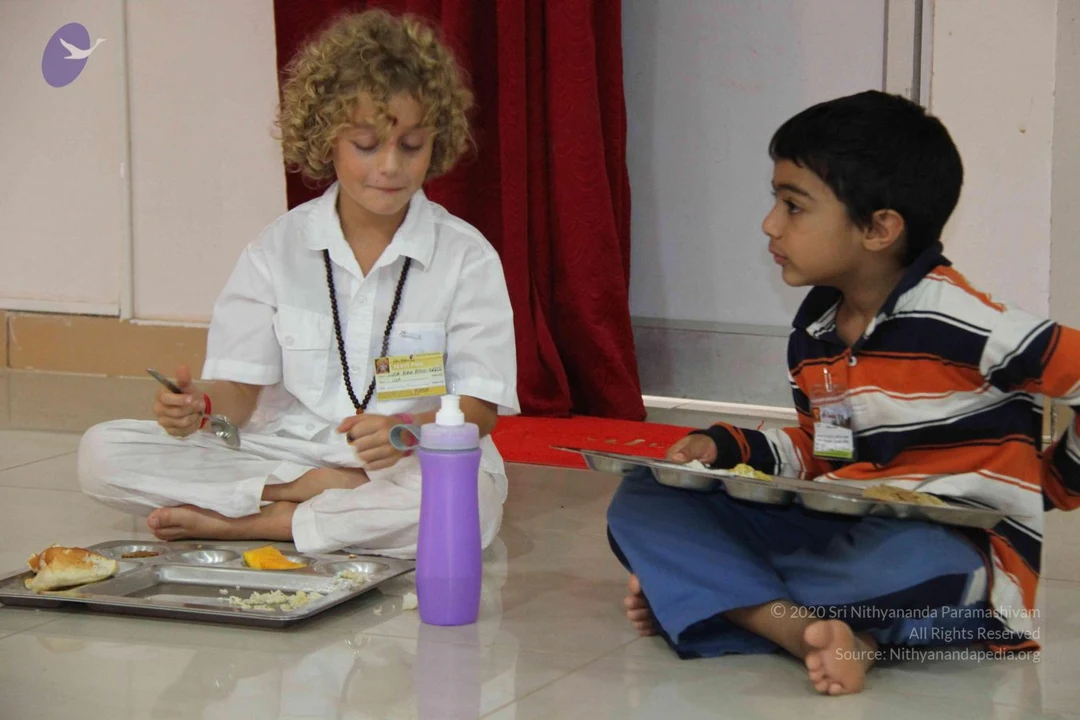
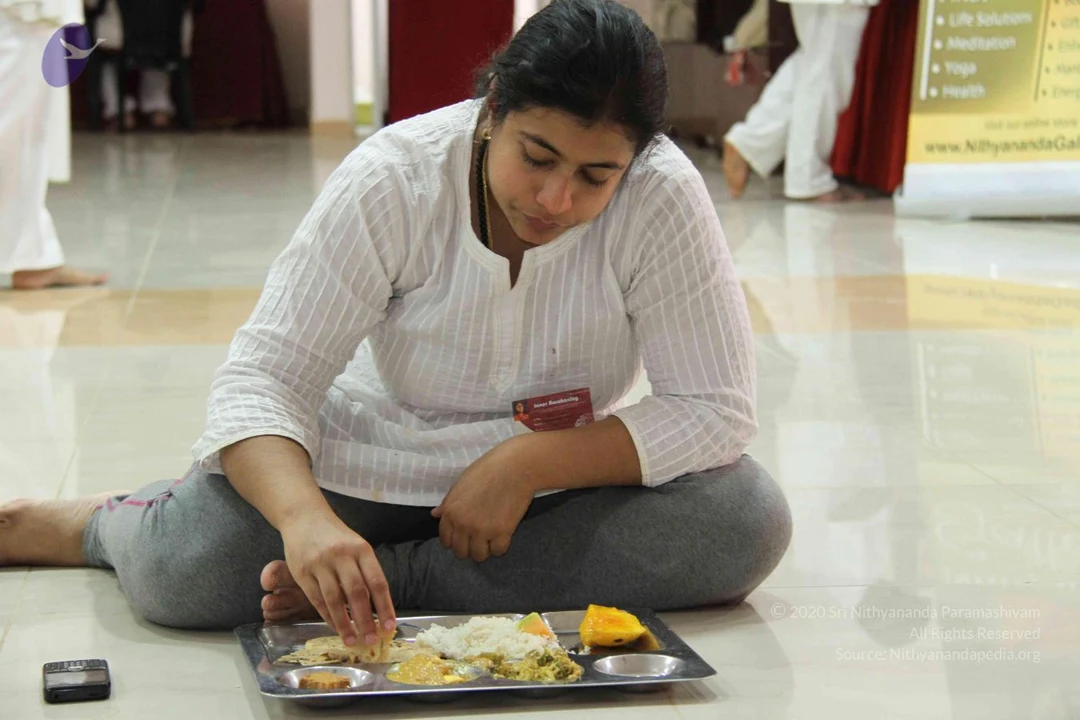
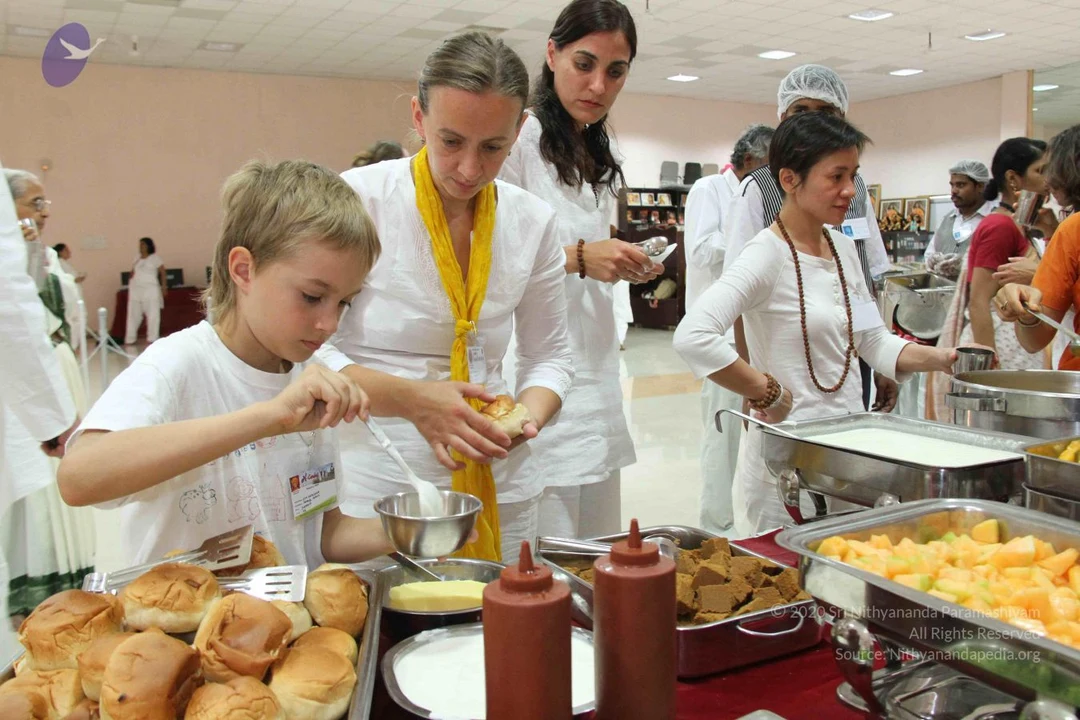
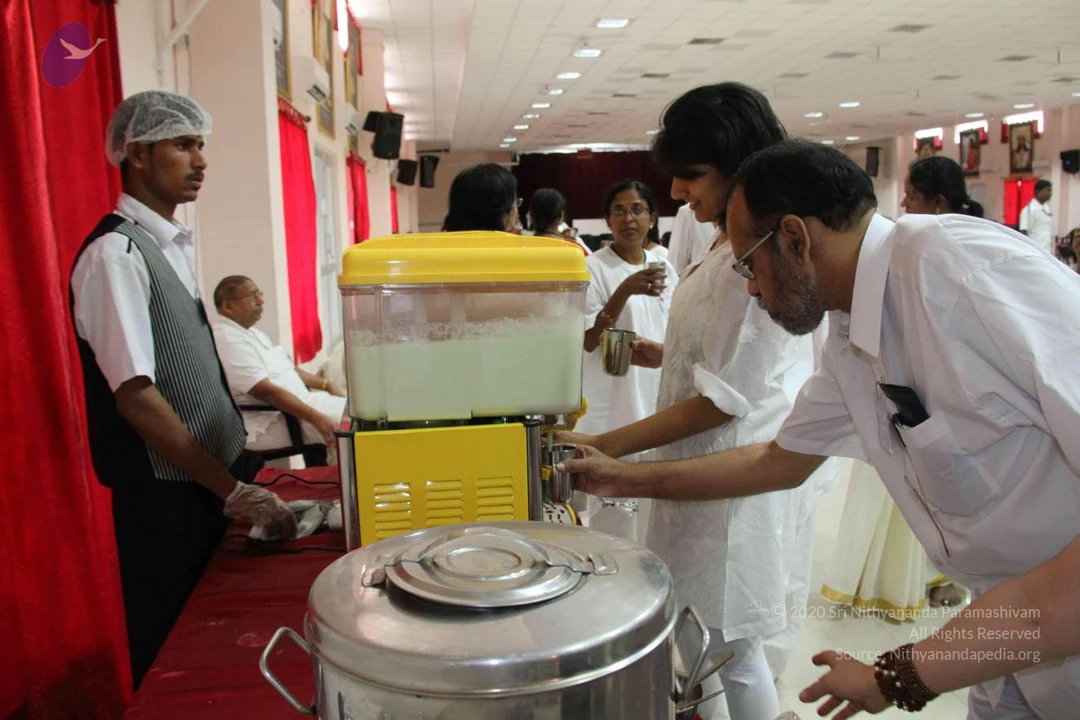
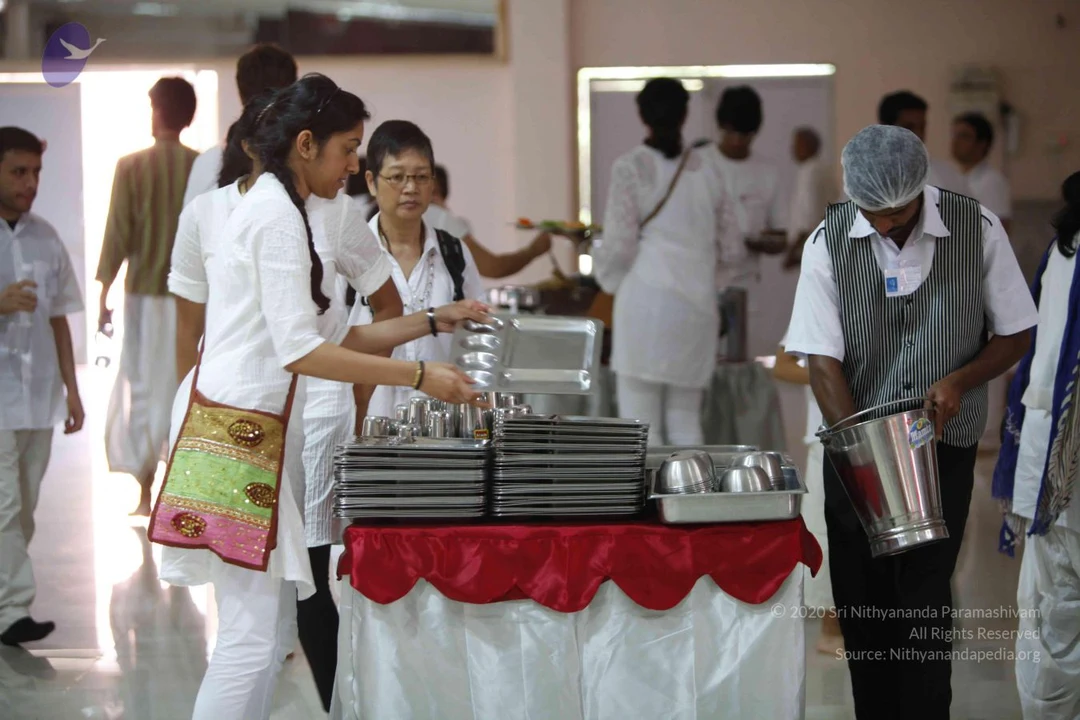
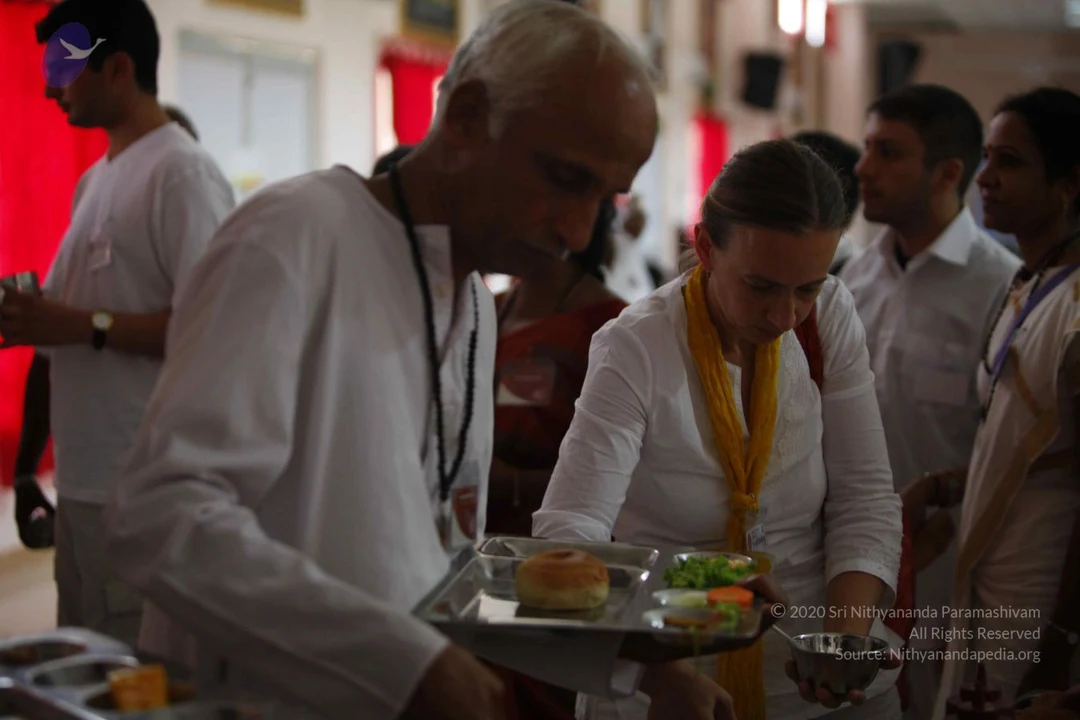
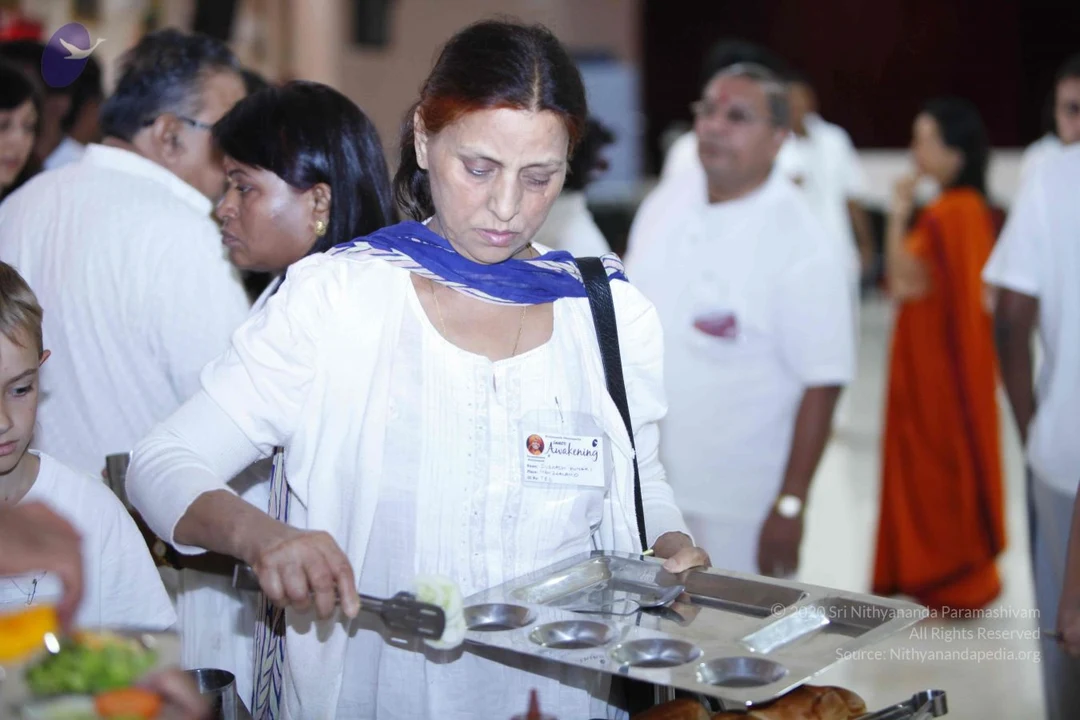
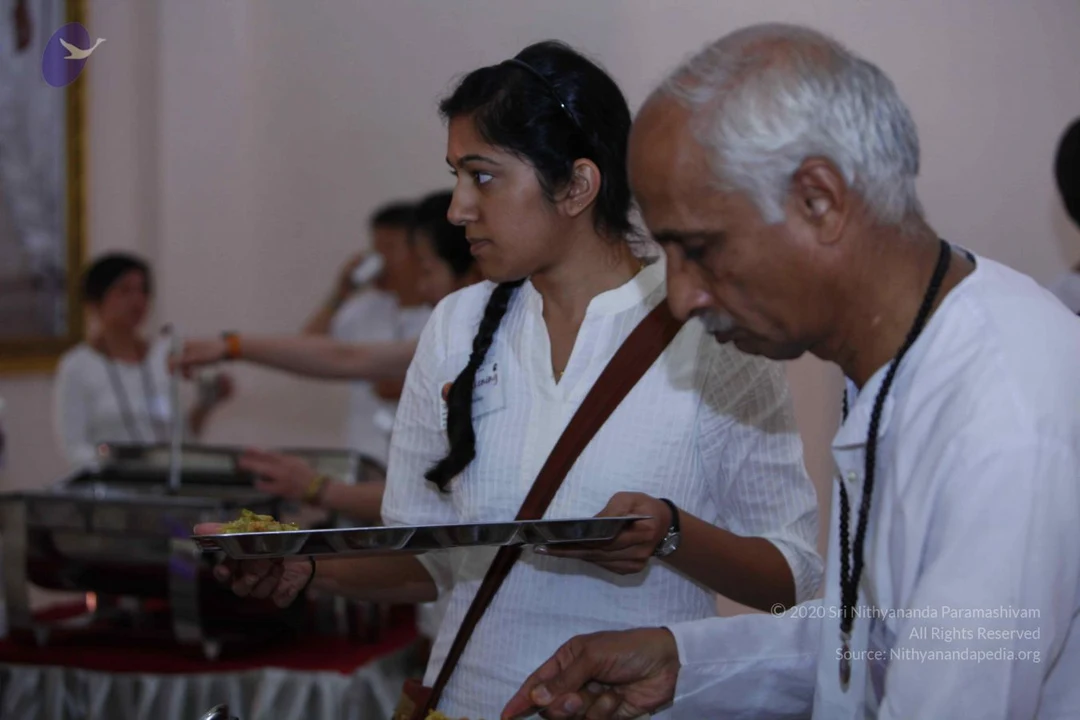
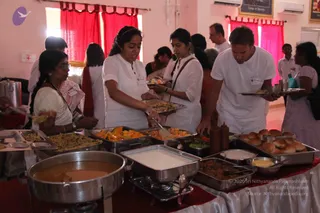
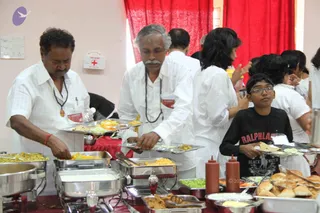
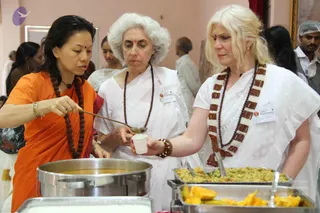
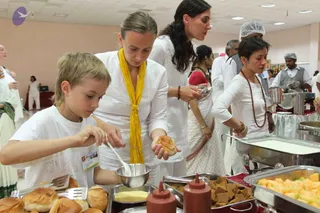
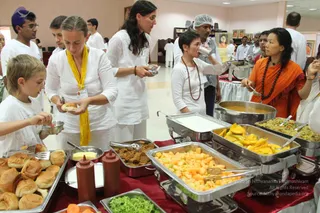
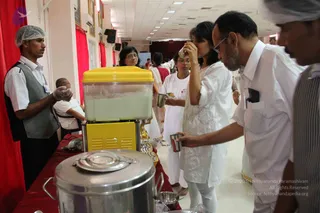
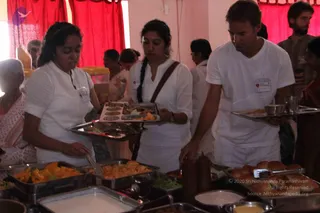
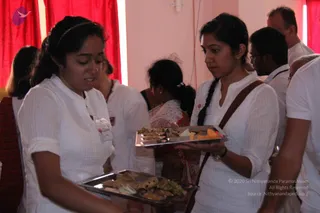
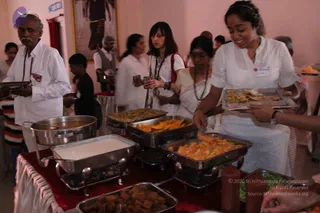
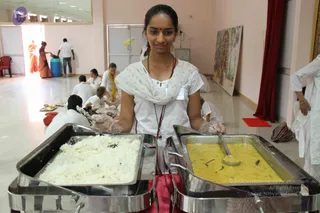
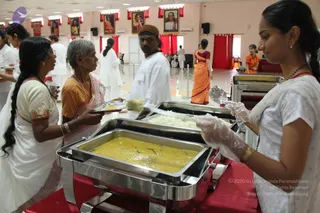
A photograph of a buffet meal service in a bright hall with pink curtains and framed pictures on the walls. Several volunteers in plain white clothes serve food: a woman in a white top with a hair band uses tongs to serve from a steel tray, a young woman in white with a sling bag helps alongside, and a young man in an all-white outfit carries a tray of bread rolls and bowls. An older woman in a white sari with gold bangles sits at left, and other people stand in the background, including a man in a white shirt. Steel chafing dishes hold sambar, vegetable curry, a white creamy dish, bread rolls and fried snacks on a red-draped table. Visible people are roughly a dozen, with others partly hidden in the background.A buffet serving line in a room with pale pink walls and red curtains. A man in a white short-sleeved shirt and a dark beaded mala with a pendant stands at left, serving food from a stainless steel tray. Beside him, a grey-haired man in white with a moustache and a dark beaded mala holds a steel tray with flatbread and vegetables. At right, a boy in a black Ralph Lauren-style t-shirt with glasses holds a plate with flatbread, and a woman in white stands nearby. Chafing dishes hold yellow dal, vegetable curries, white rice, a white yoghurt-style dish, and bread rolls, with red sauce bottles on the table. A wall-mounted first aid box is visible at top left.A photo of a serving line at an ashram meal. A woman in orange and red sari with rudraksha malas ladles a liquid from a large steel pot into a white paper cup held by a woman in white clothing with a rudraksha mala. A third woman with long blonde hair, white dress and rudraksha garland stands beside them at trays of rice and sliced yellow fruit. A man in white and a man in a hairnet and striped shirt stand in the background. Pink walls and a red curtain are visible.A buffet serving line in a bright hall with pink walls where devotees dressed in white are helping themselves to food. In the foreground a young blond boy in a white t-shirt uses a spoon to scoop butter into a steel bowl while a woman in a white top and yellow scarf holds a bread roll. Beside them a woman in white with a dark wrap-around top and a white-clad woman with a rudraksha mala and bangles take food. Trays of bread rolls, cubed brown fudge-like sweet, cut mango and a metal pan of white sauce are set out with red sauce bottles, and a man in a white hairnet and grey vest serves from behind the counter. Wall framed pictures are visible in the background.A buffet line at an ashram-style hall serves guests in white clothing. A boy with light hair at left reaches toward a bowl, while a woman in a white kurta and yellow scarf holds a bread roll. Steel chafing dishes hold cut mango, papaya, bread rolls, a yellow dal or curry and a green salad, with ketchup bottles on the table. A woman in an orange sari with a rudraksha mala stands at right, holding a serving spoon. Others in white and a person in a hairnet and striped shirt move among the tables. A poster with a portrait of a woman in orange is visible in the background.A serving counter with red draped cloth and a yellow-lidded dispenser filled with pale liquid. A man in a white cap and black-and-grey striped vest stands at left wearing blue gloves. Three adults in white clothes take cups from the dispenser: a woman in a white embroidered kurta drinks from a cup, a man in a white shirt holds a steel cup, and a woman in white stands behind. A steel pot sits on the counter in front. Framed pictures line the walls and a ceiling-lit corridor extends behind.

Sacred Arts

19 photosSource gallery
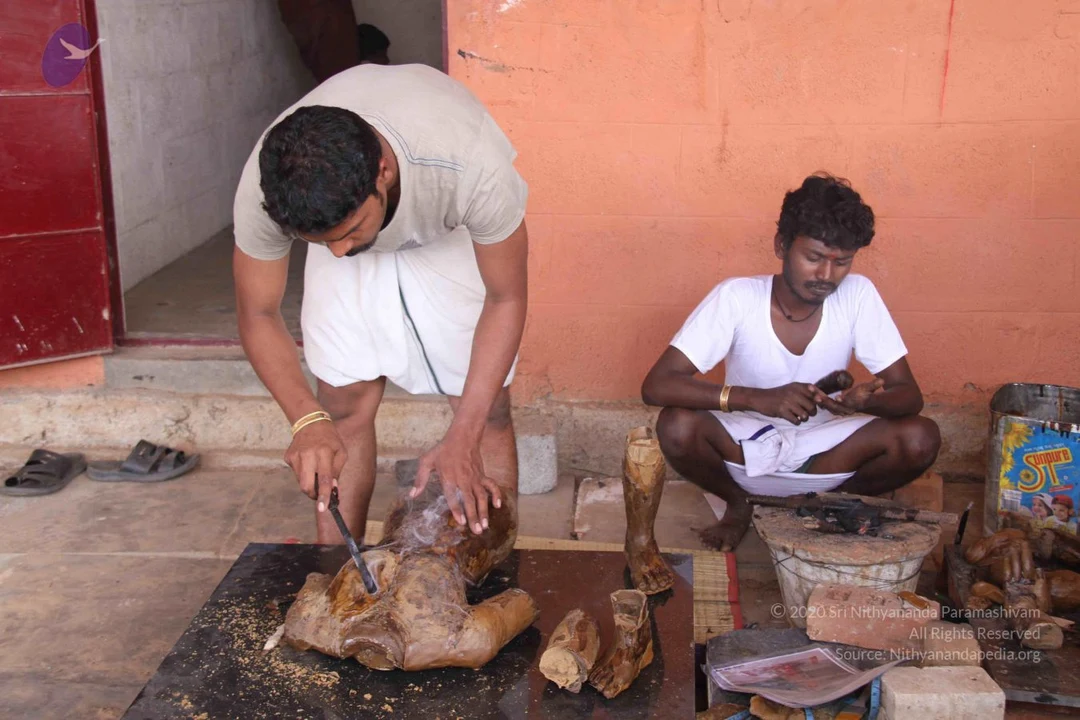
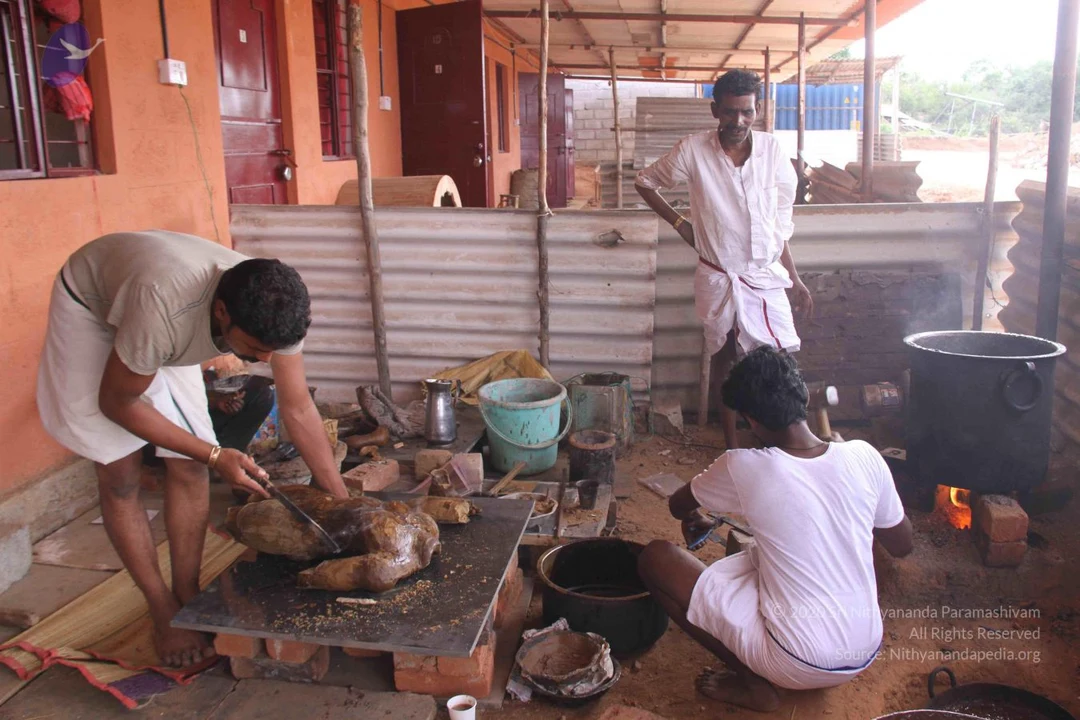
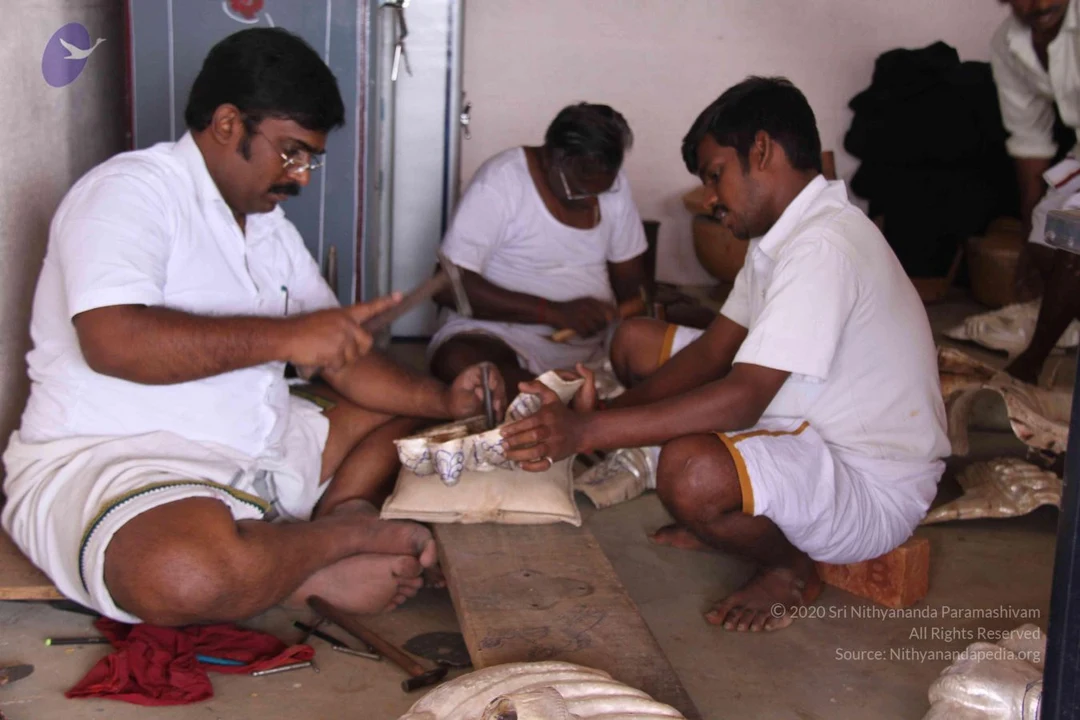
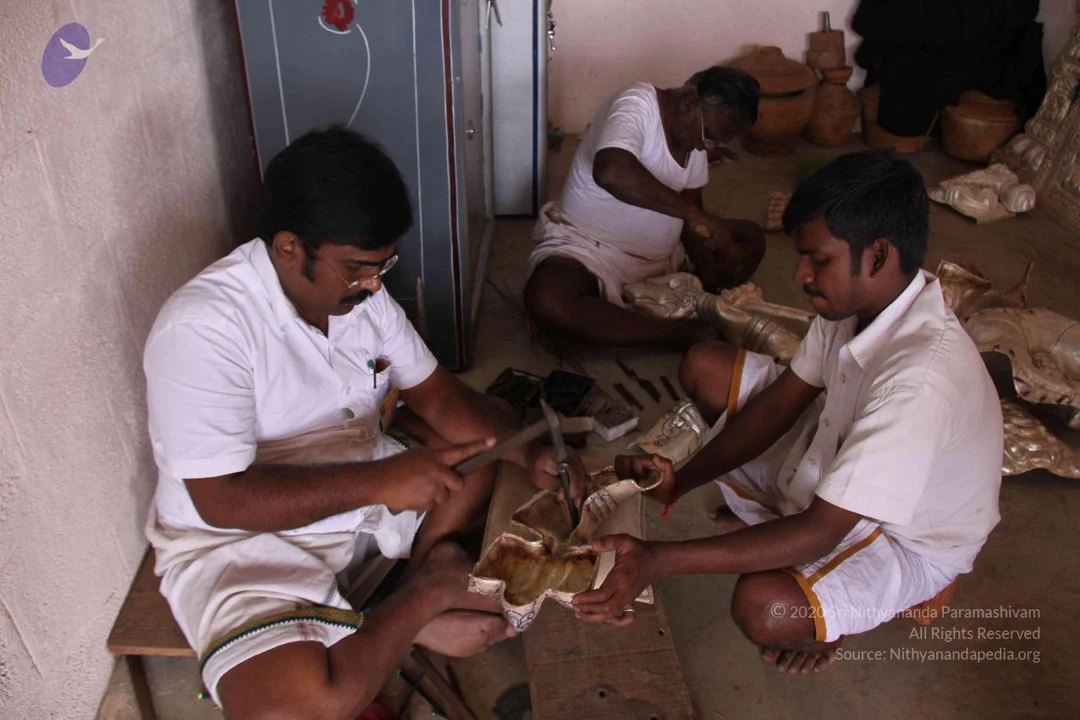
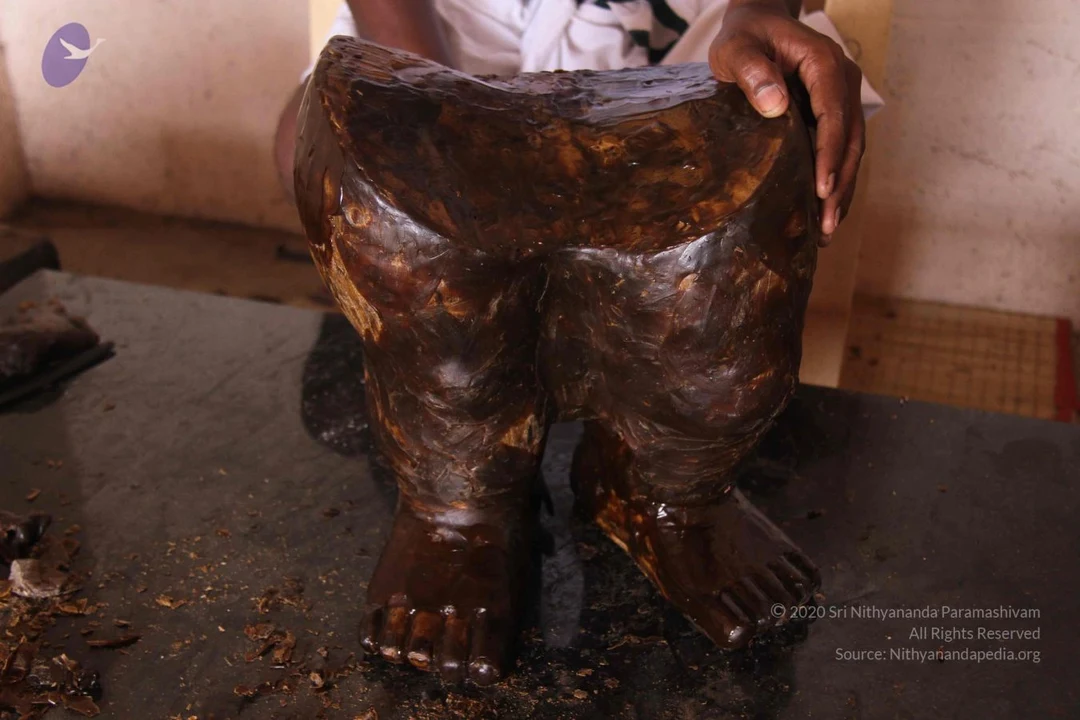
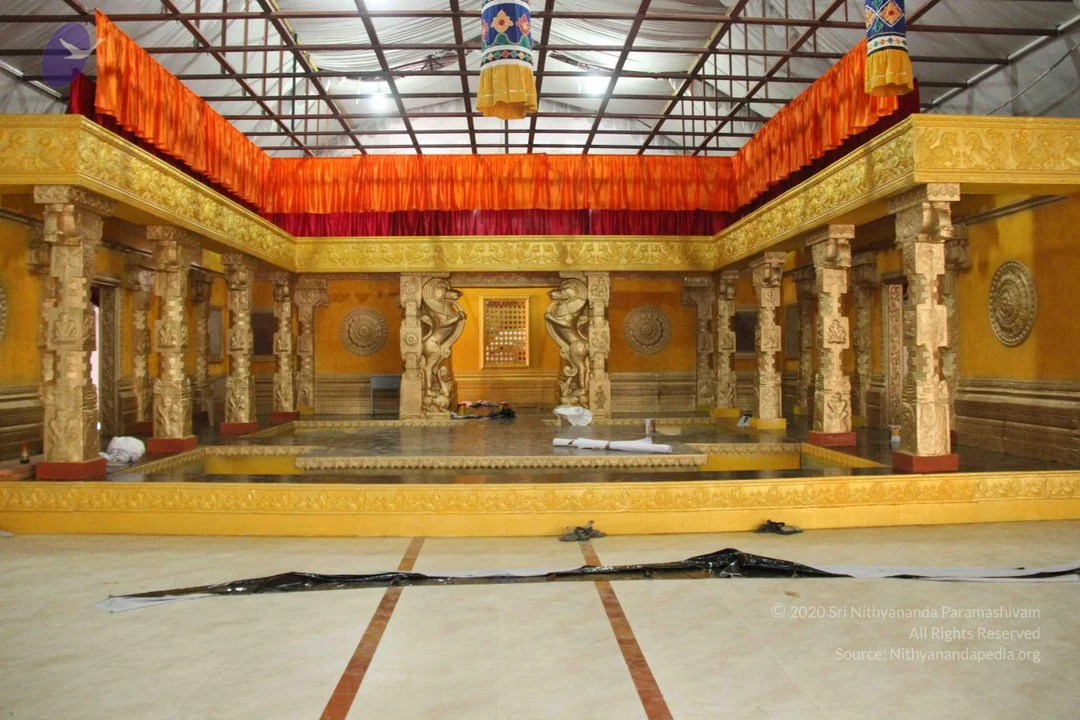
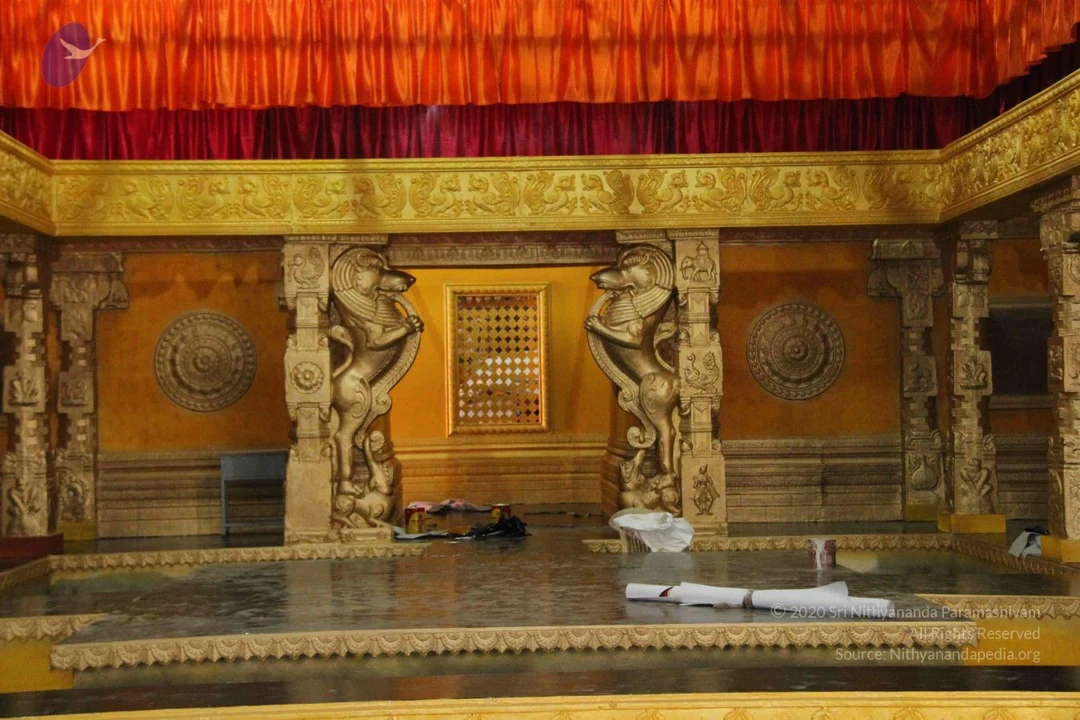
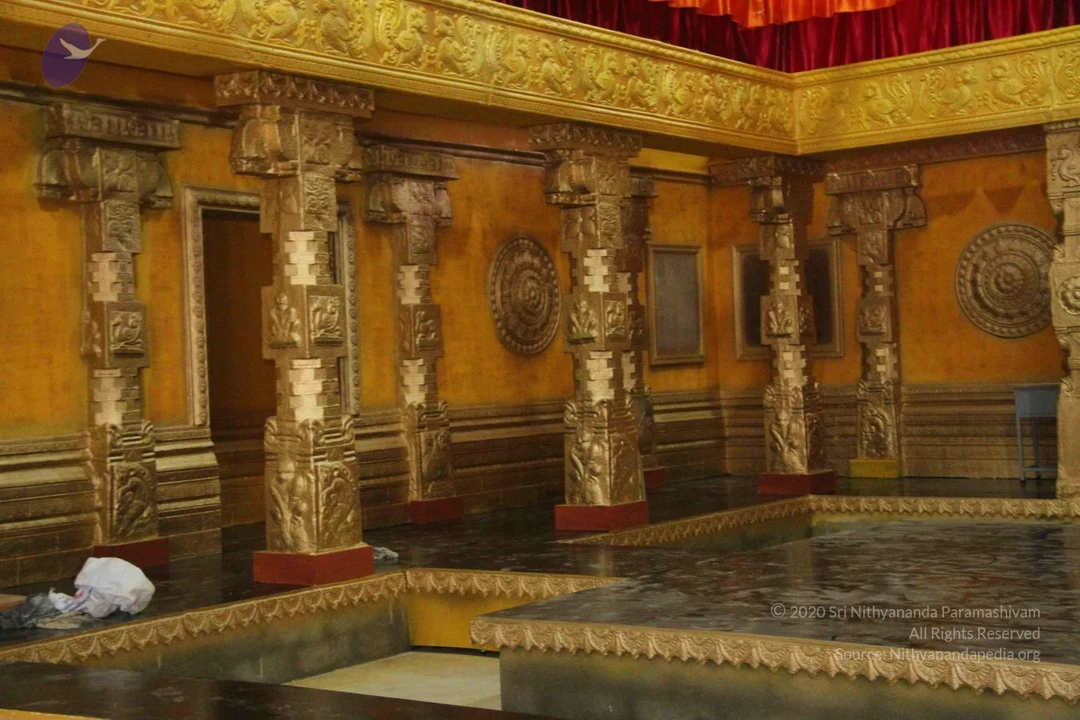
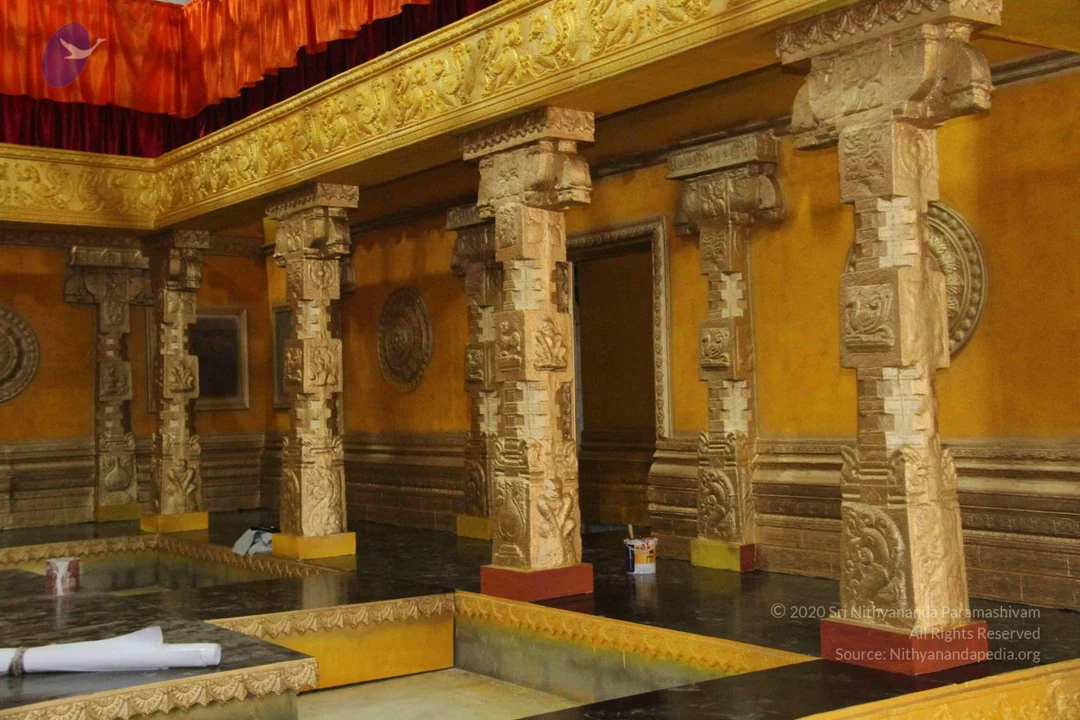
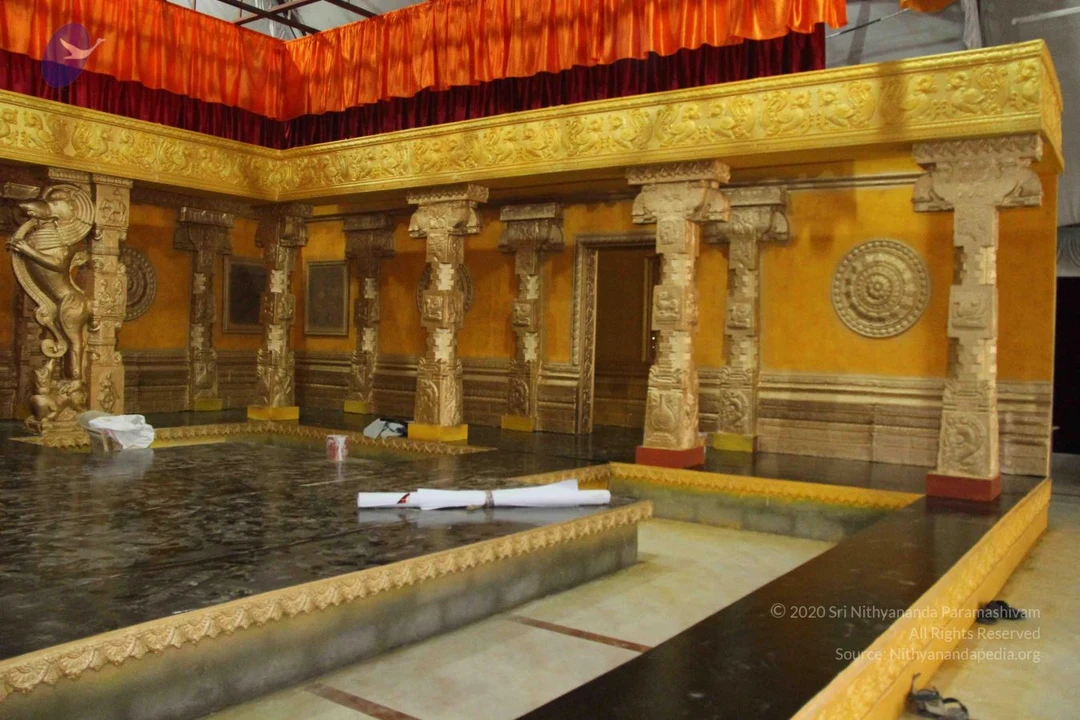
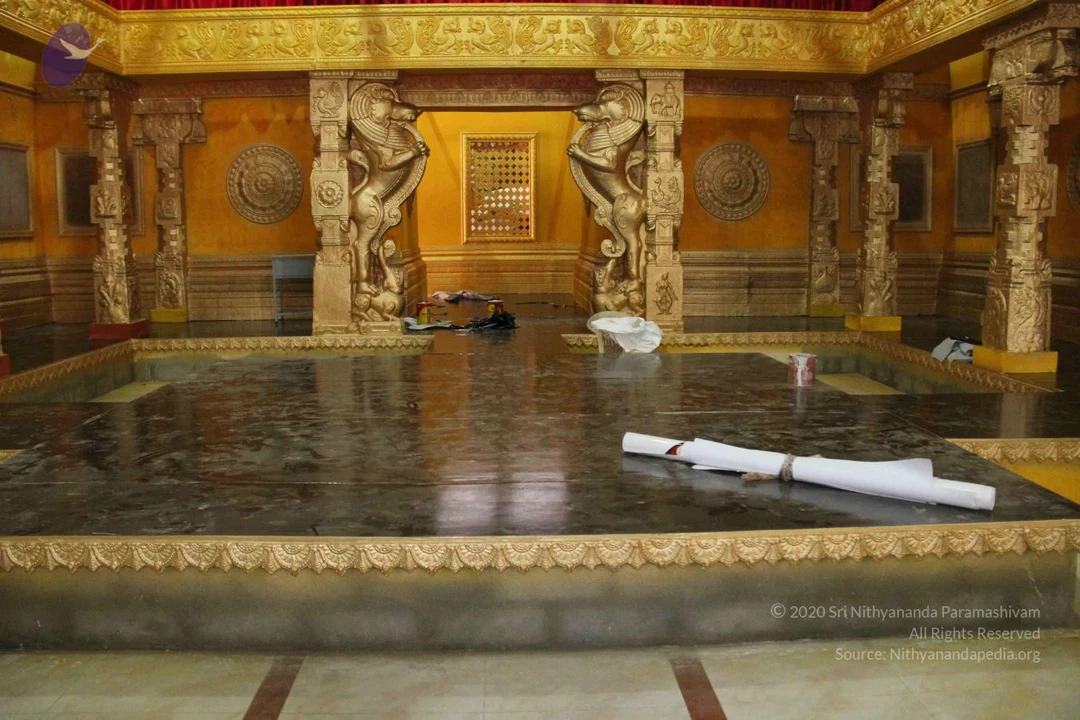
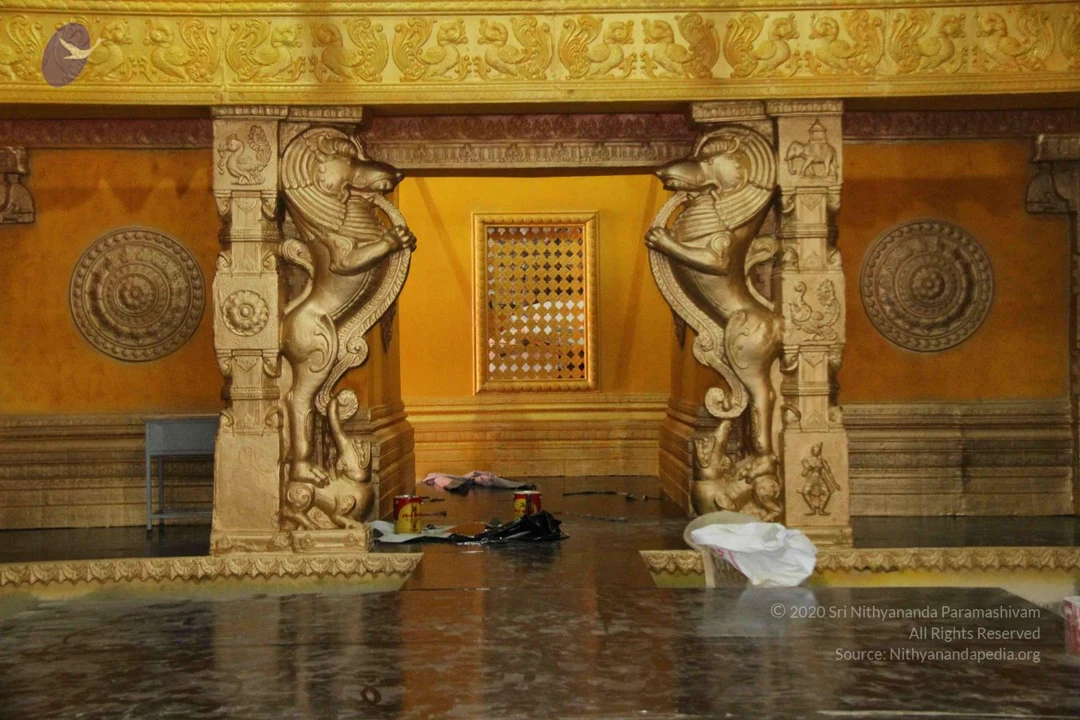
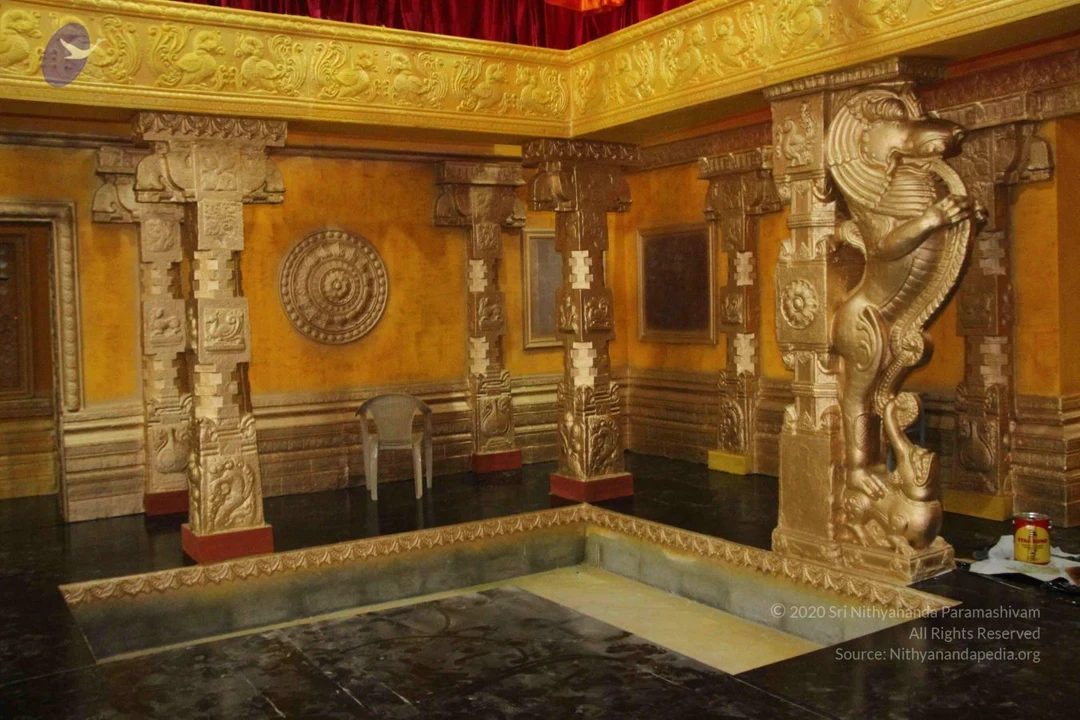
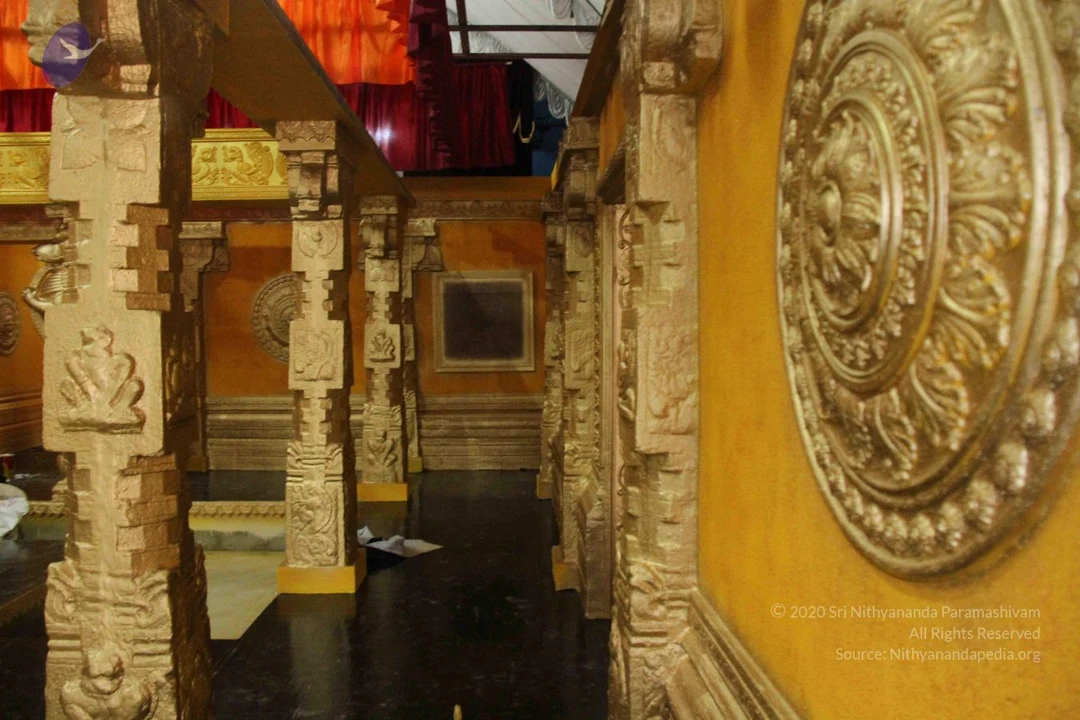
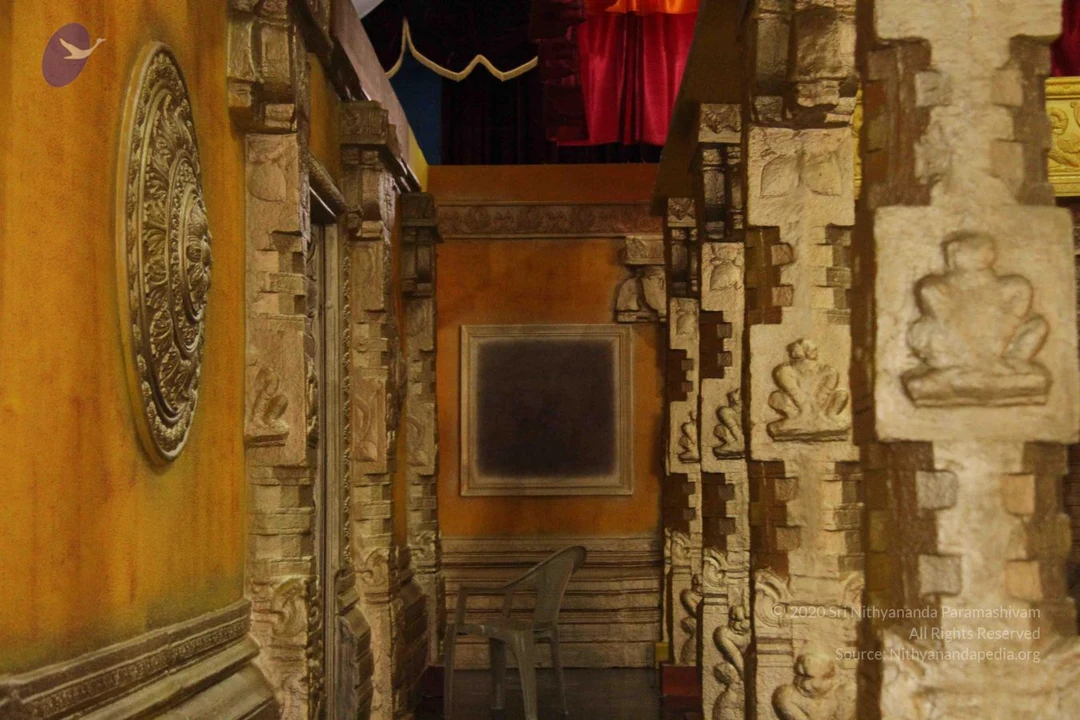
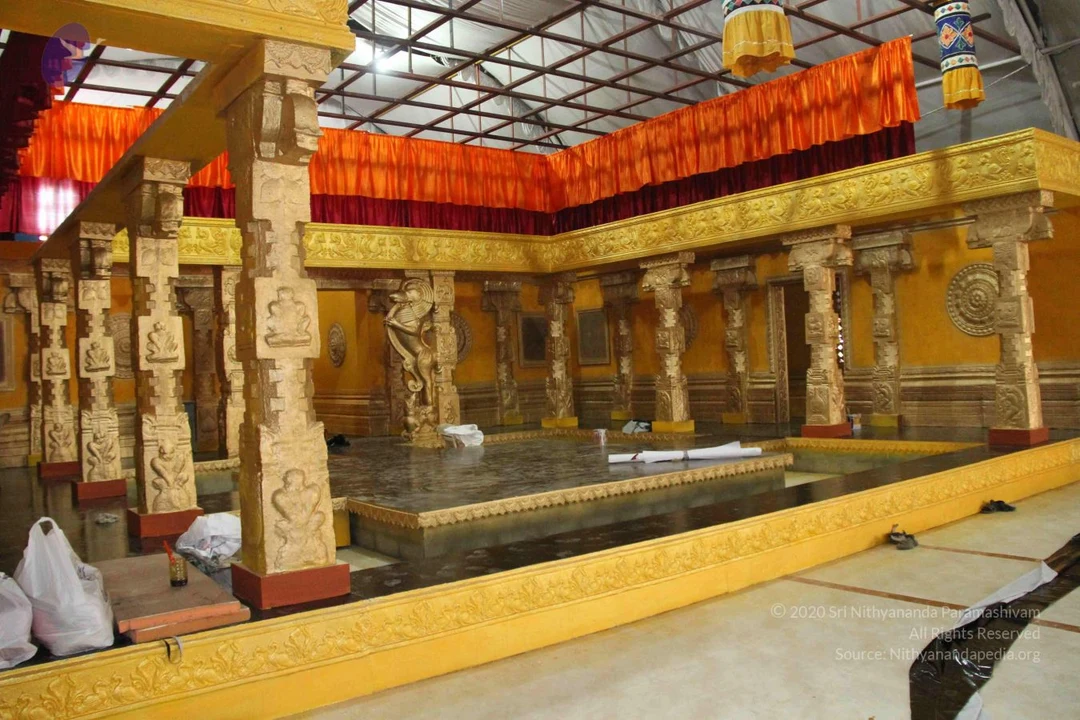
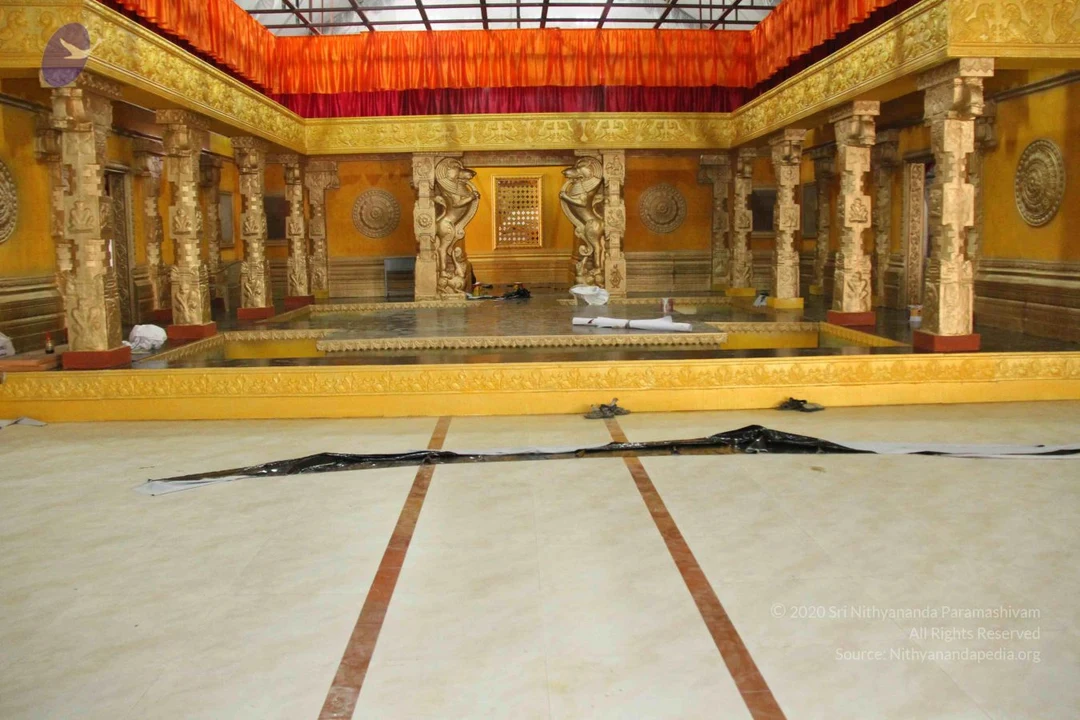
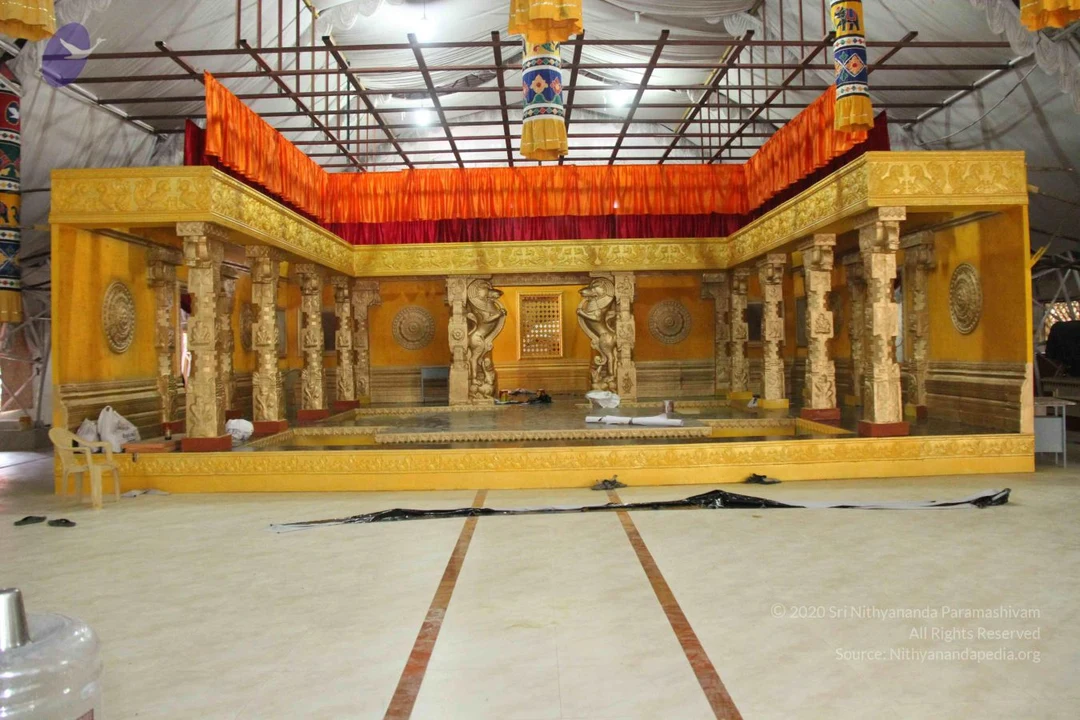
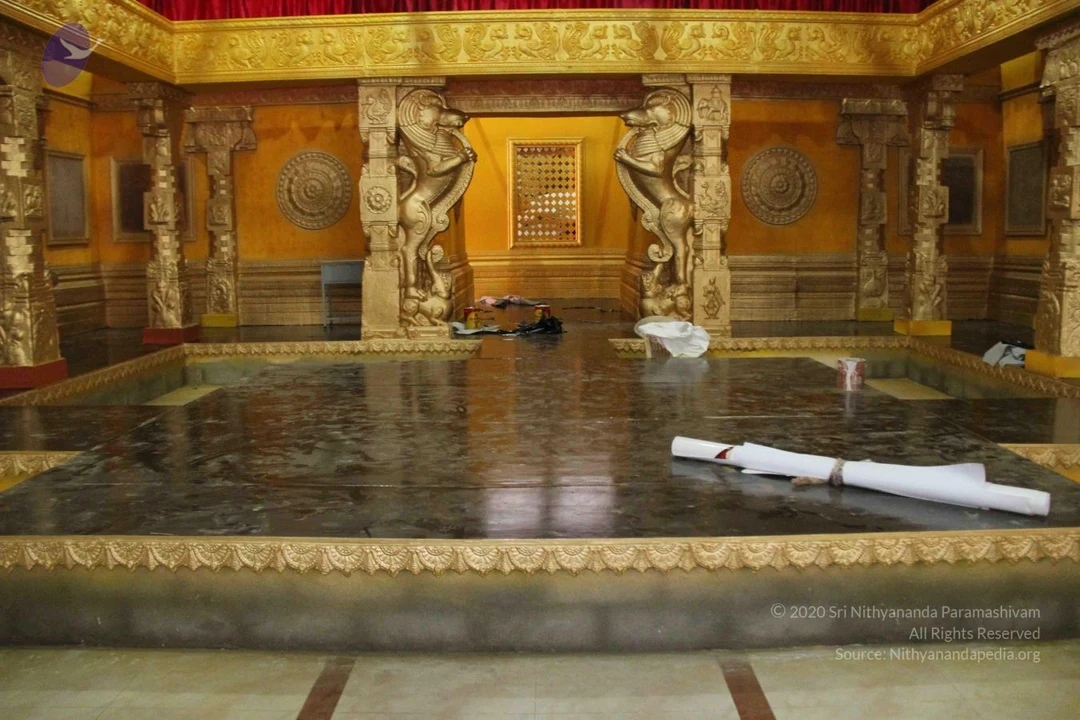
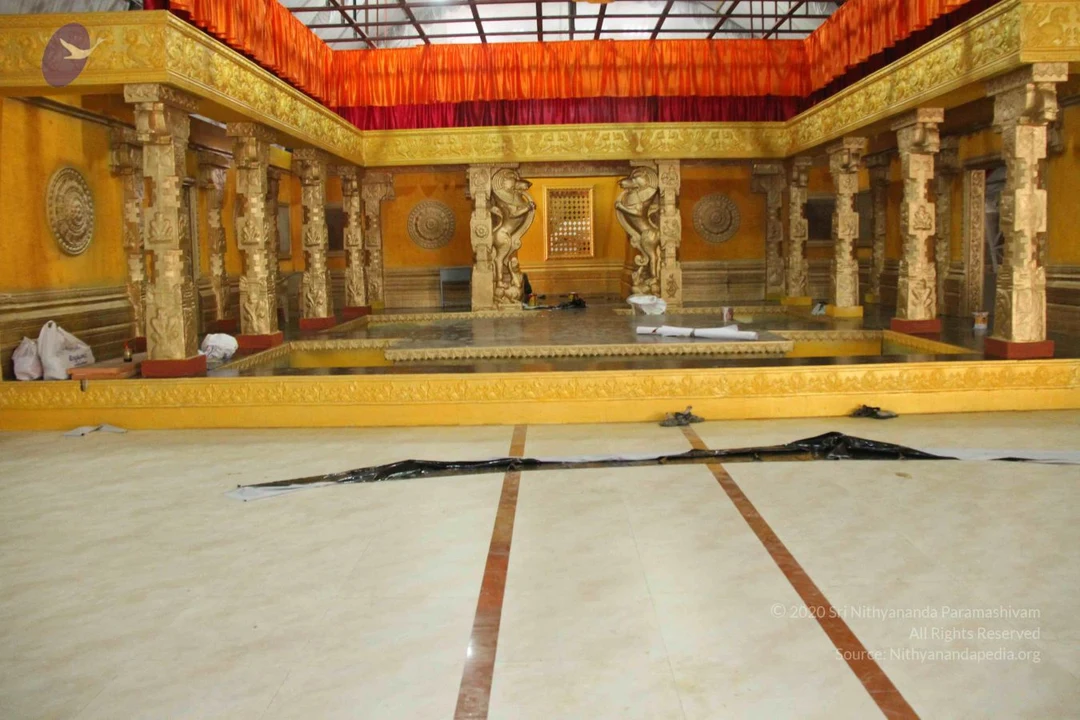
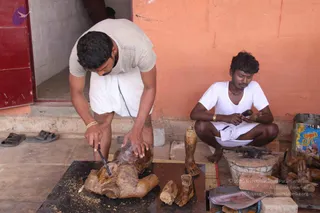
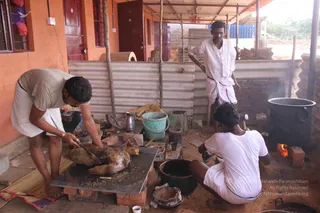
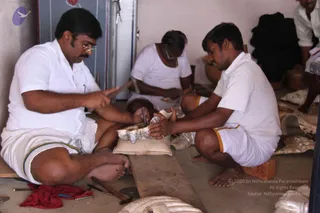
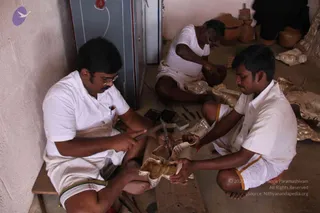
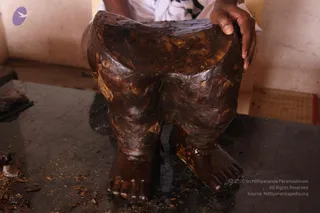
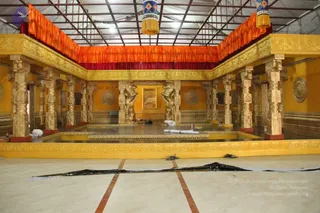
Two men work in an open doorway area beside an orange-painted wall in an outdoor workshop. The standing man in a white t-shirt and white dhoti leans over a dark board, carving with a tool into a brown wooden-looking figure, with wood shavings scattered on the surface and a separate carved limb beside it. A second man in a white vest and white cloth sits cross-legged on the ground at right, holding a tool over another carved piece on a low stone block, surrounded by more carved wooden parts, sandals and a tin.Outdoor kitchen under a corrugated tin roof beside an orange-washed building with red doors. A young man in a khaki shirt and white dhoti crouches over a large raw piece of meat or vegetable on a stone slab, cutting it with a knife. A second man in a white shirt and white dhoti stands behind him, and a third man in a white dhoti sits on the ground by a wood-fired stove with a large black cooking pot. Buckets, a steel jug and clay pots are scattered on the brick floor.Three men sit cross-legged on a bare concrete floor in a workshop, carving a pale sculptural piece with hand chisels. The man on the left wears white shirt and white dhoti with a green-bordered cloth, glasses and a moustache, holding a tool against the work. The man in the centre, in a white vest and white cloth, works with a small chisel. The man on the right wears a white shirt and white dhoti with gold border and steadies a pale carved element on a cushion. Pale carved pieces, tools and a red cloth lie on the floor around them.Three men sit on the floor of a workshop, working on sculpture or statue pieces. The man on the left in white shirt and white dhoti with a coloured border wears glasses and works with a tool; the man beside him in a white vest and white dhoti works on a piece in the centre; the man on the right in white shirt and dhoti cuts or shapes a hollow piece of material. Clay pots and carved figure parts lie around them, with tools scattered on the floor and a grey cabinet against the wall.A close photograph of a sculpted wooden or clay figure's lower body, shown from the front seated posture: thighs, knees and bare feet with toes, glossy dark brown with orange-brown highlights and scattered wood shavings on a dark work table. Only a partial person is visible at the top edge, a hand resting on the figure's hip and a white-clad arm and lap, so the visible human is a craftsman or assistant, not an identifiable figure. The figure is an unfinished carving, not a finished murti.Interior of an ornate golden hall under a white tent roof with steel trusses, showing carved sandstone-coloured pillars with lion-like figures, a raised platform with a dark stone floor, orange and red draped fabric along the upper edges, and hanging decorative lanterns in blue, yellow and red. A few white cloth bundles and a rolled black mat lie on the platform and floor, and no people are visible. Carved medallions decorate the walls.

IA-Darshan
45 photosSource gallery
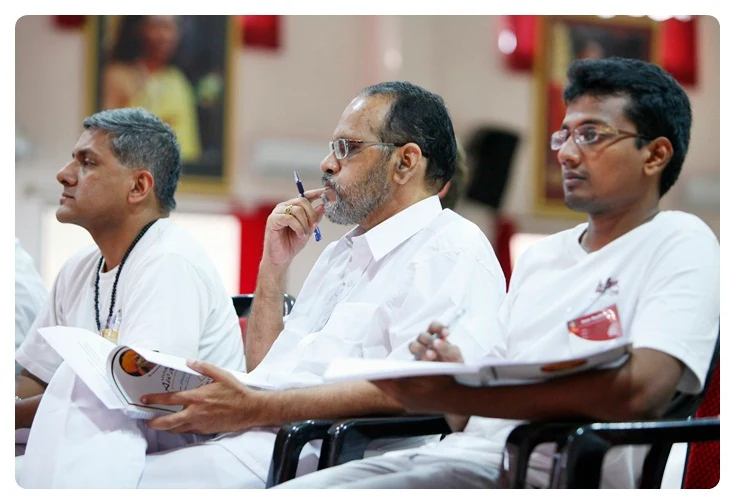
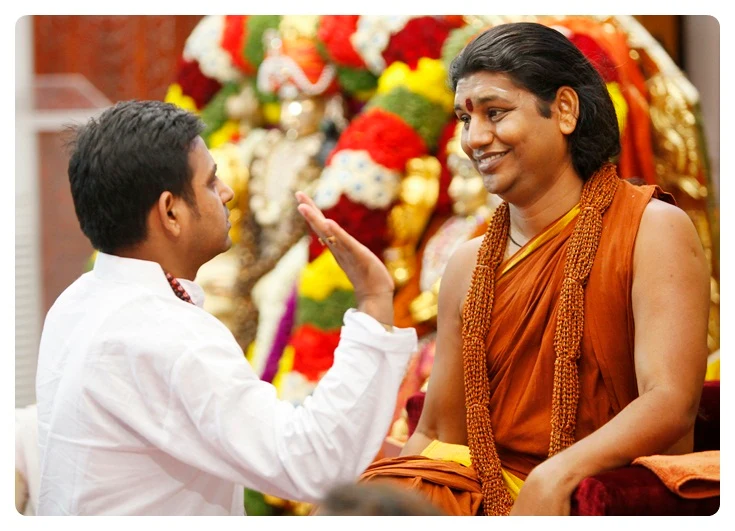
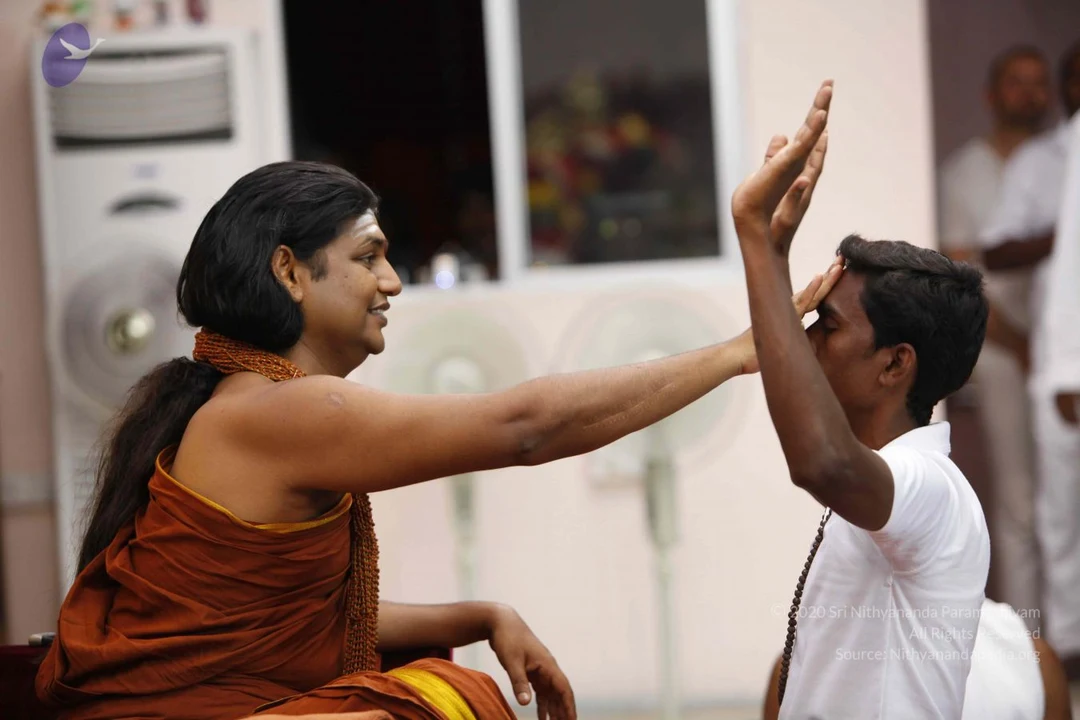
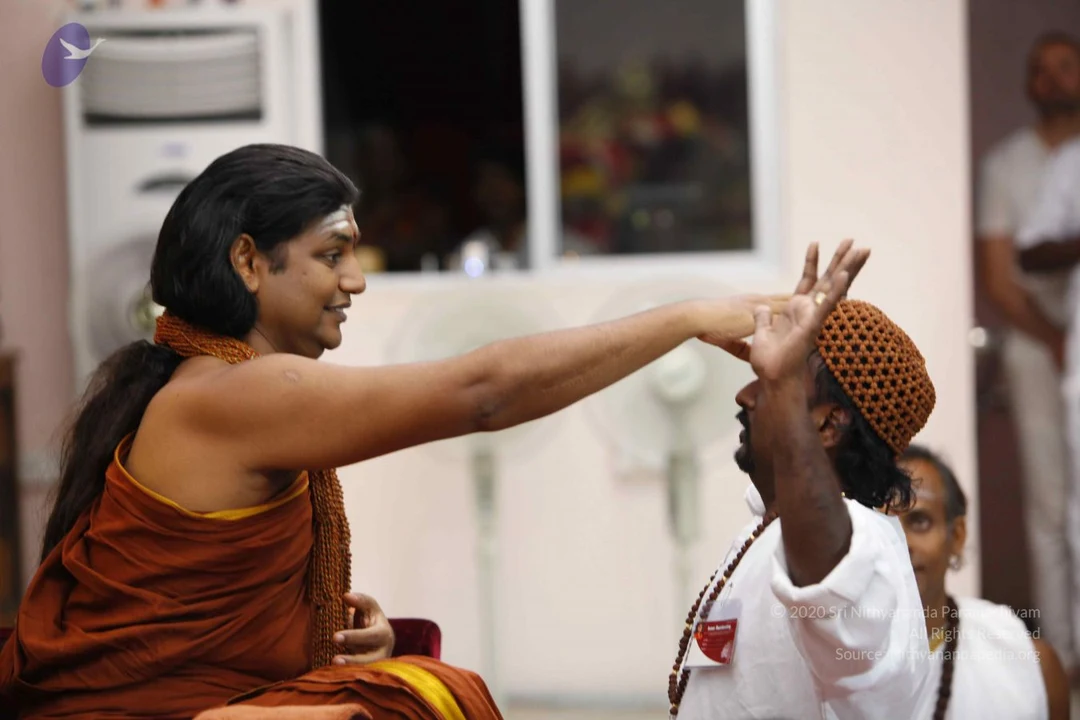
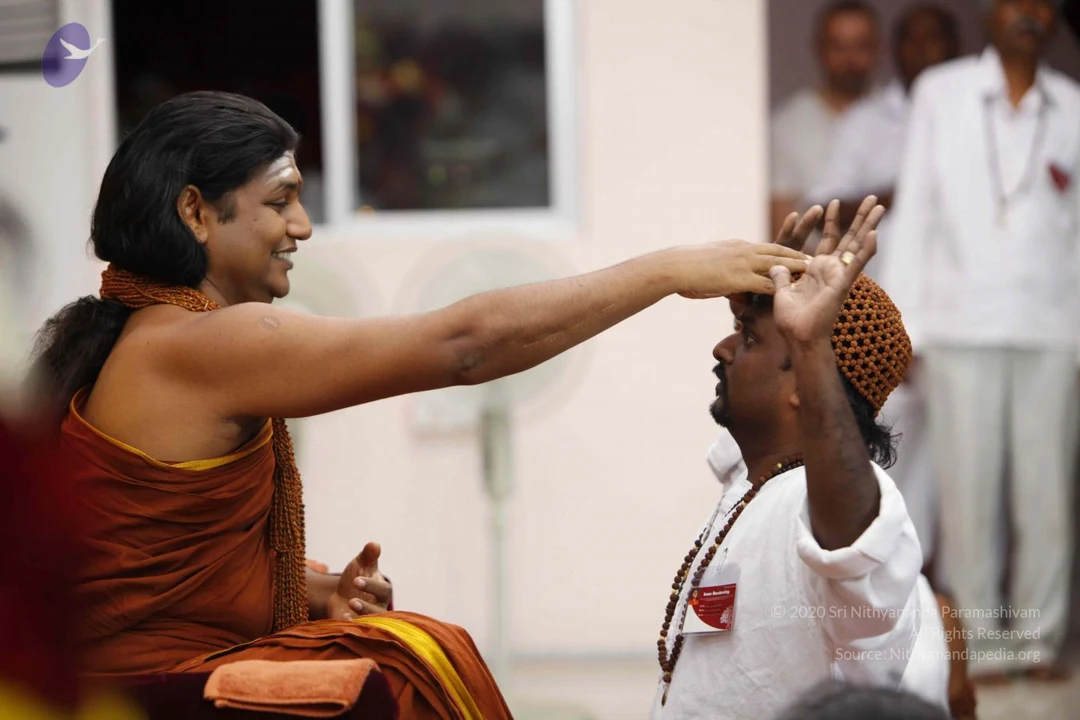
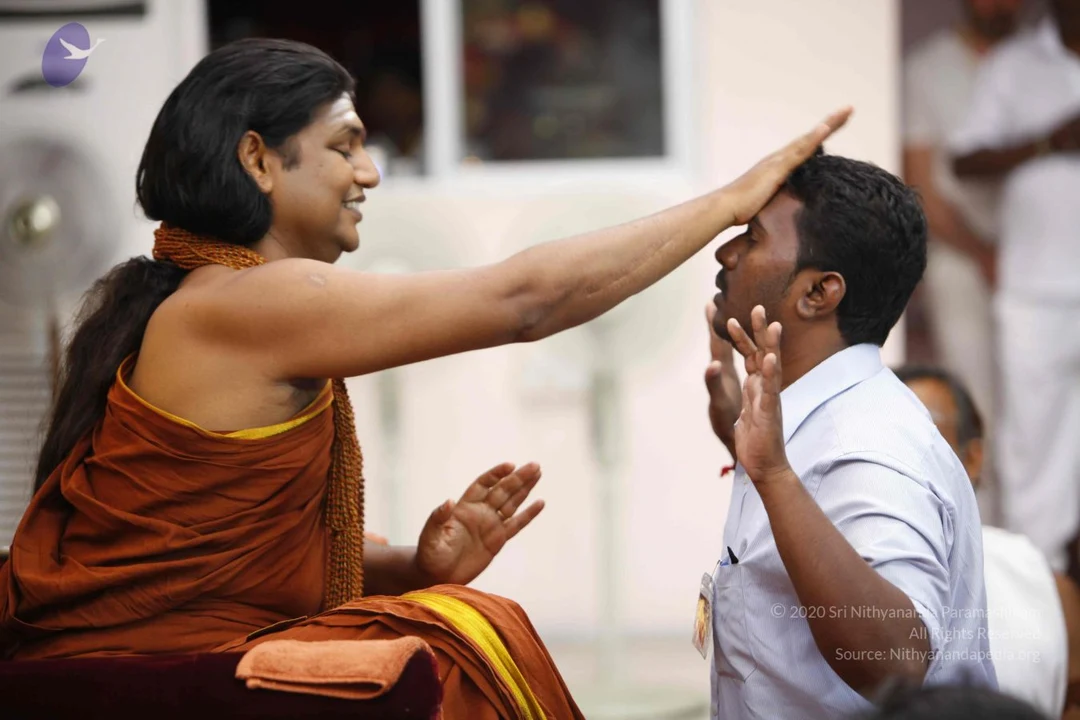
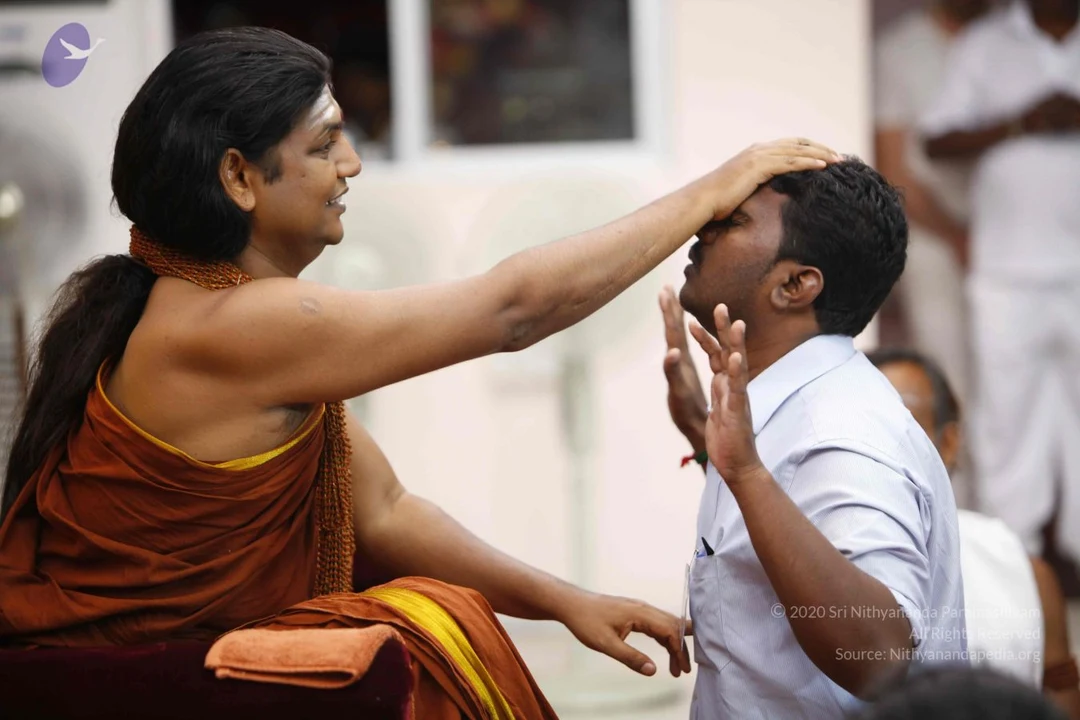
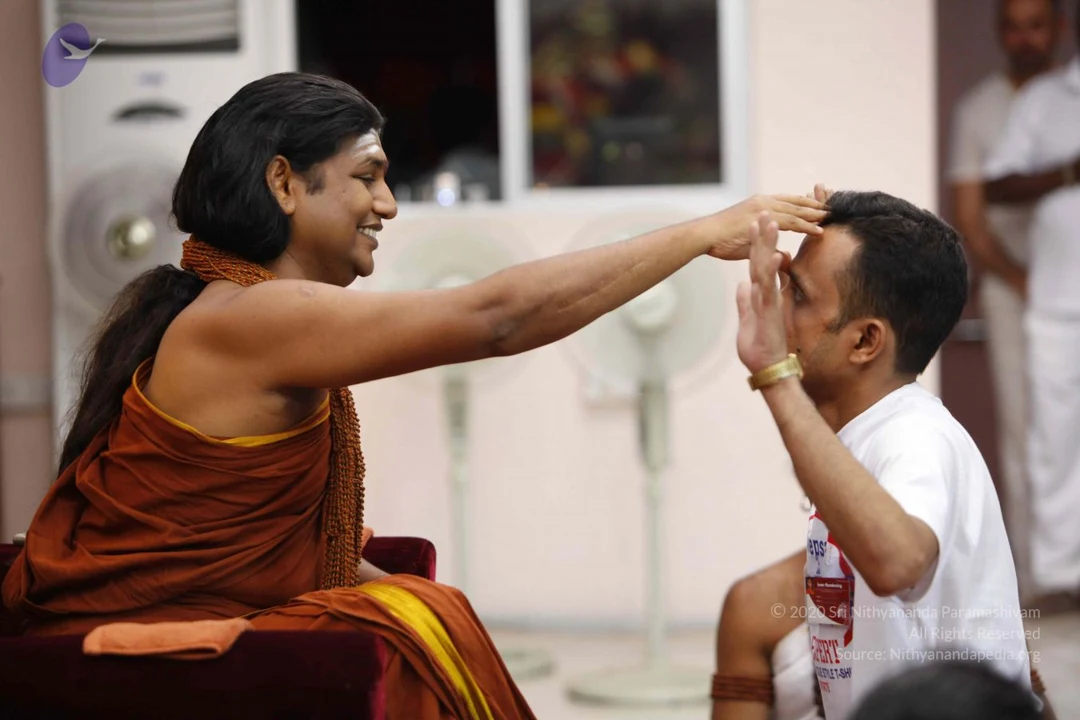
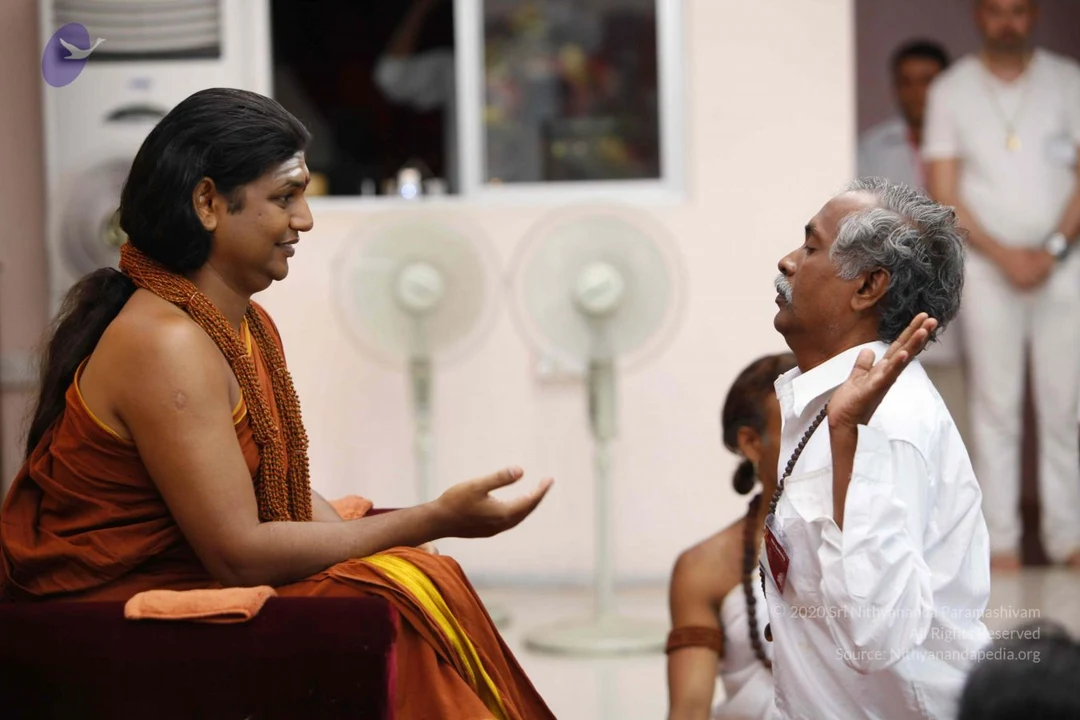
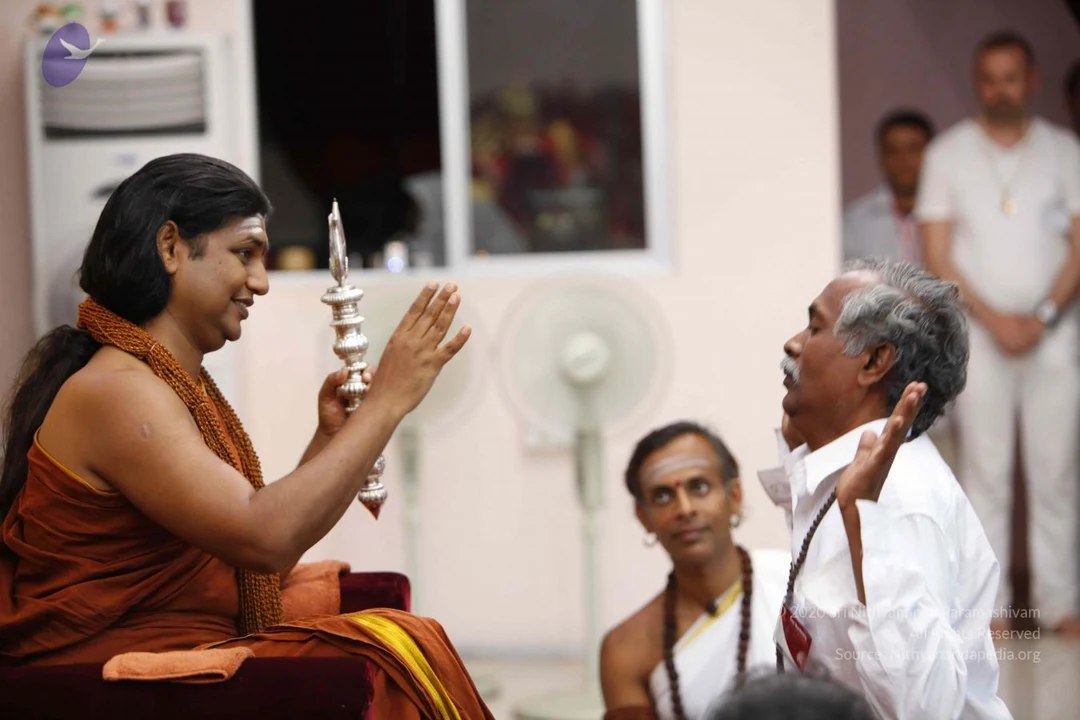
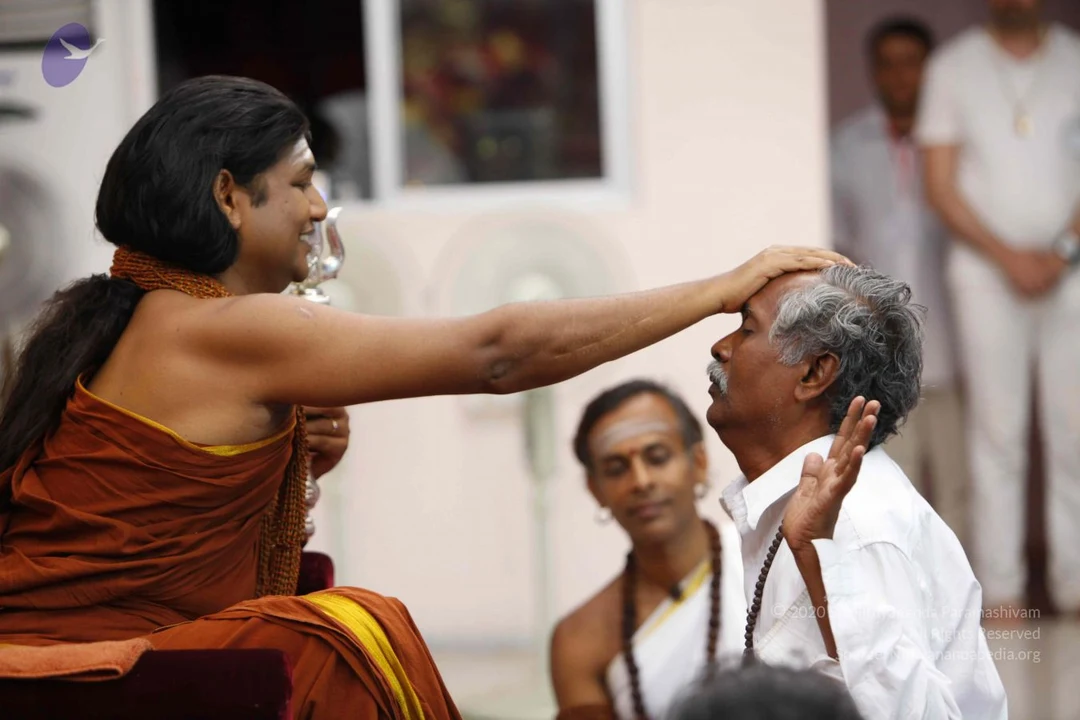
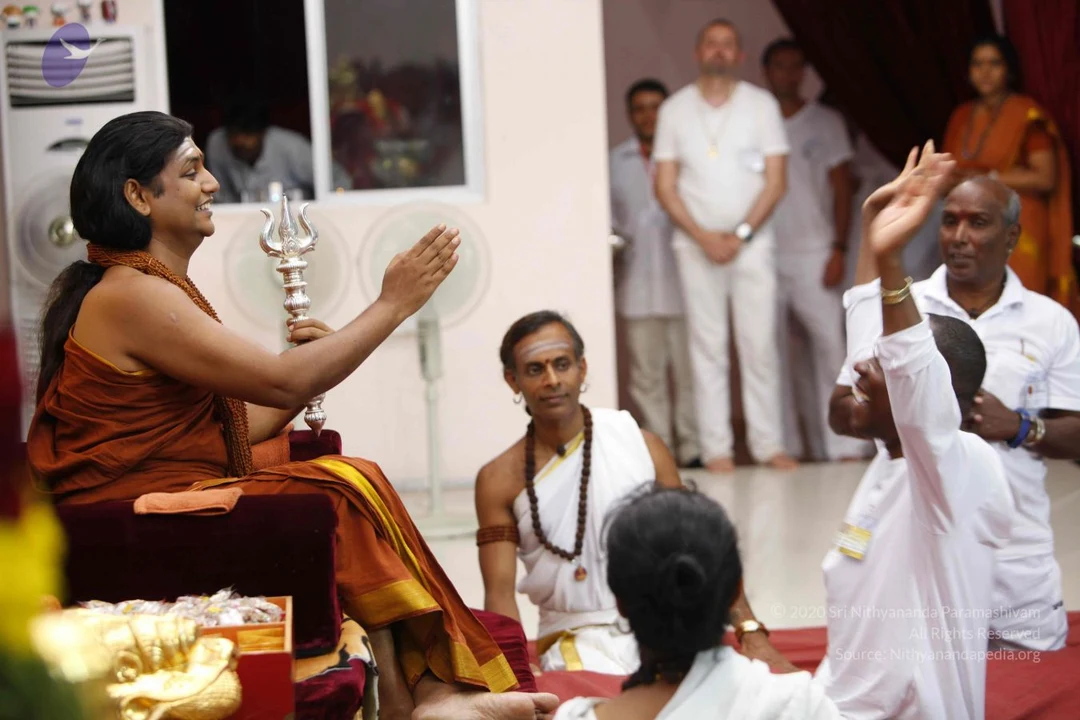
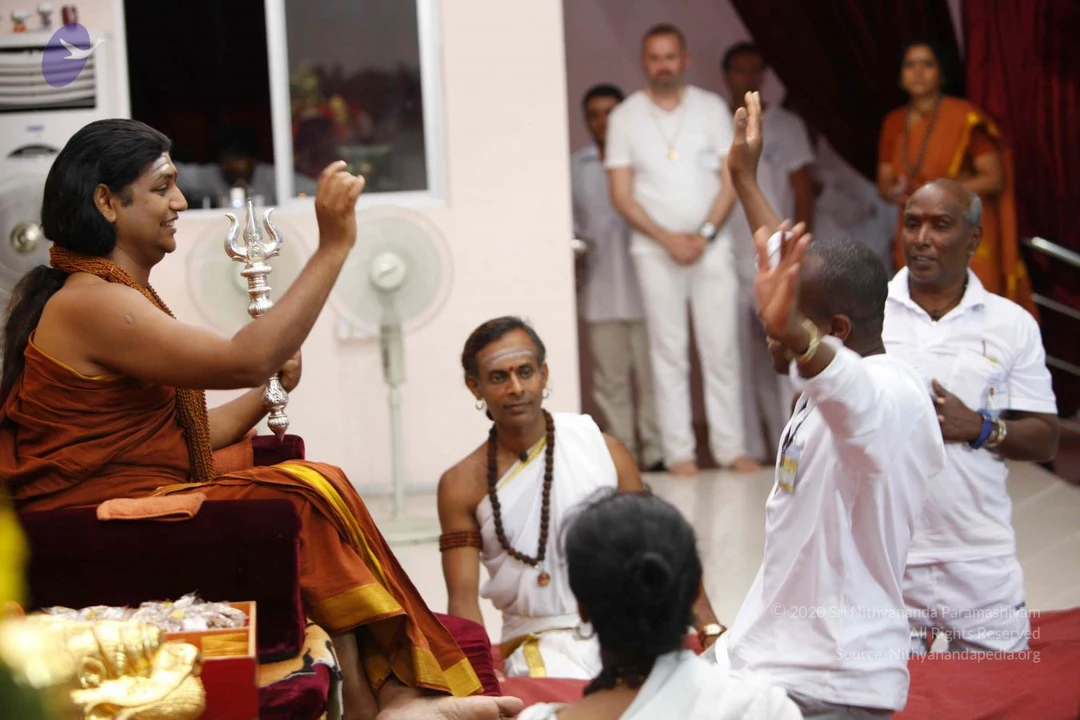
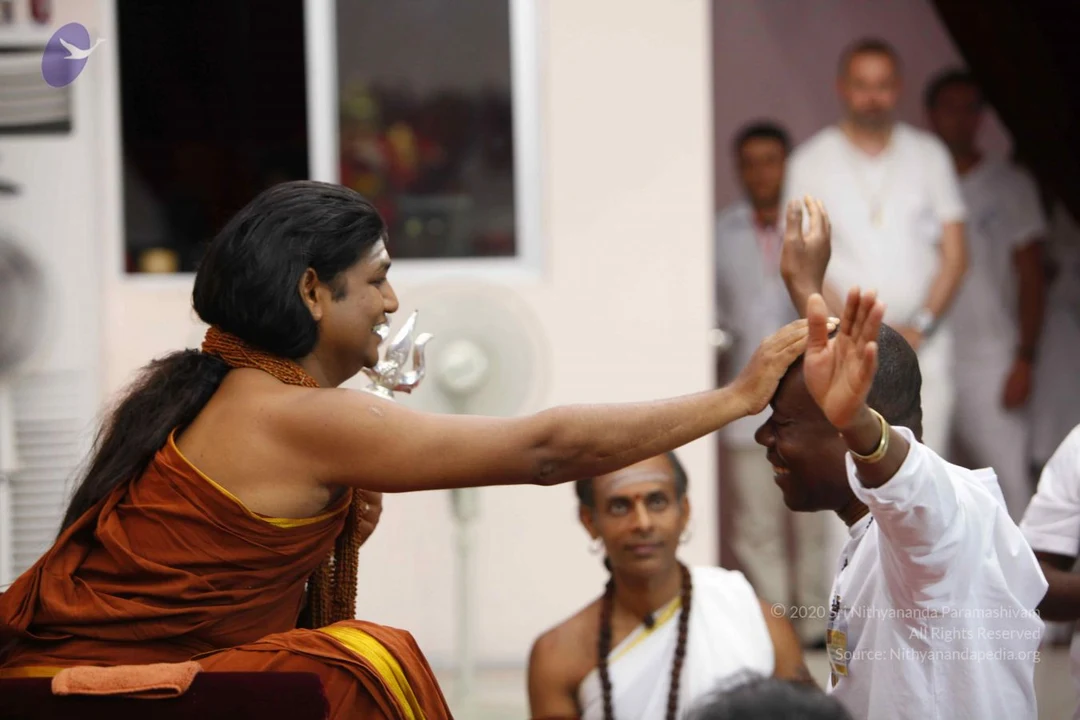
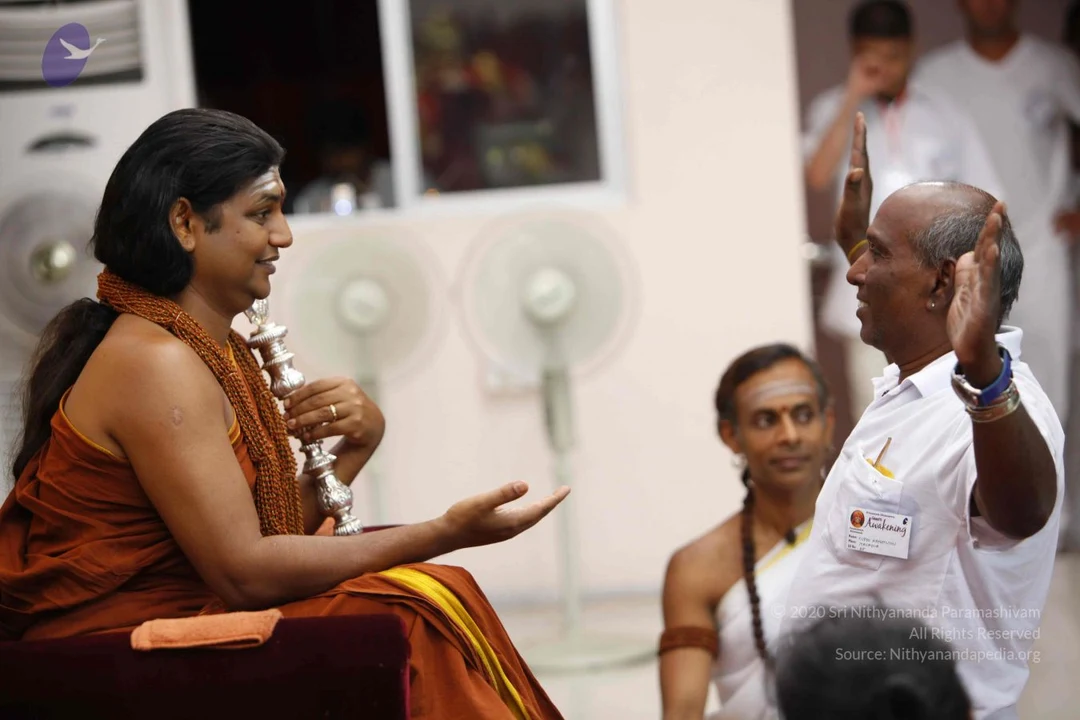
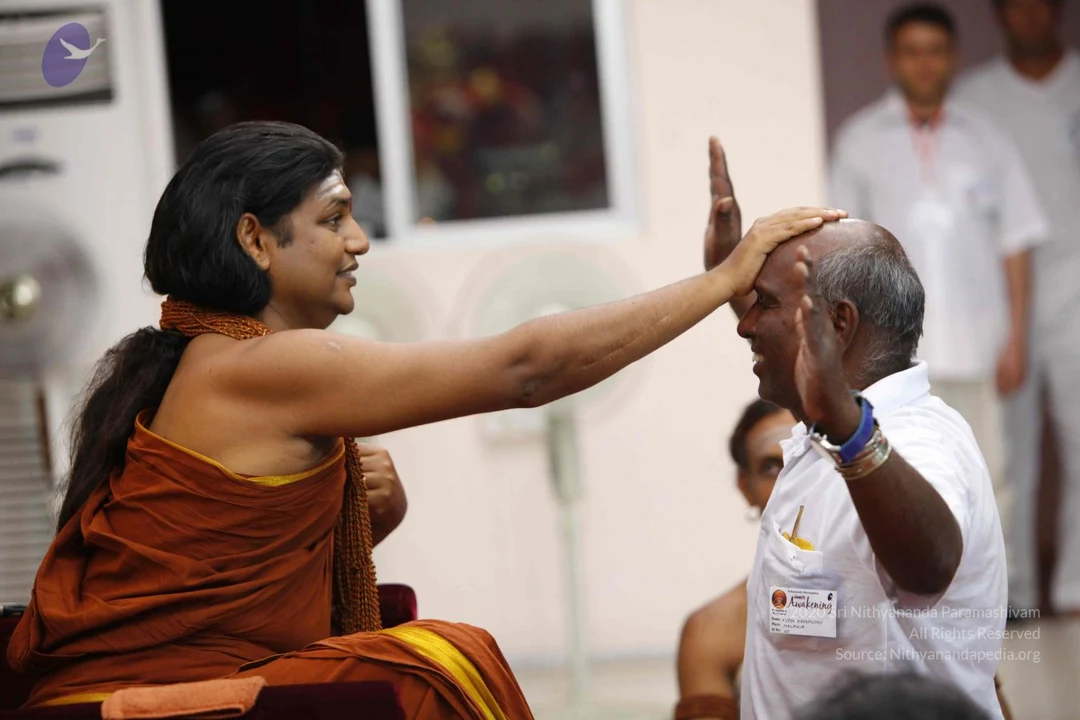
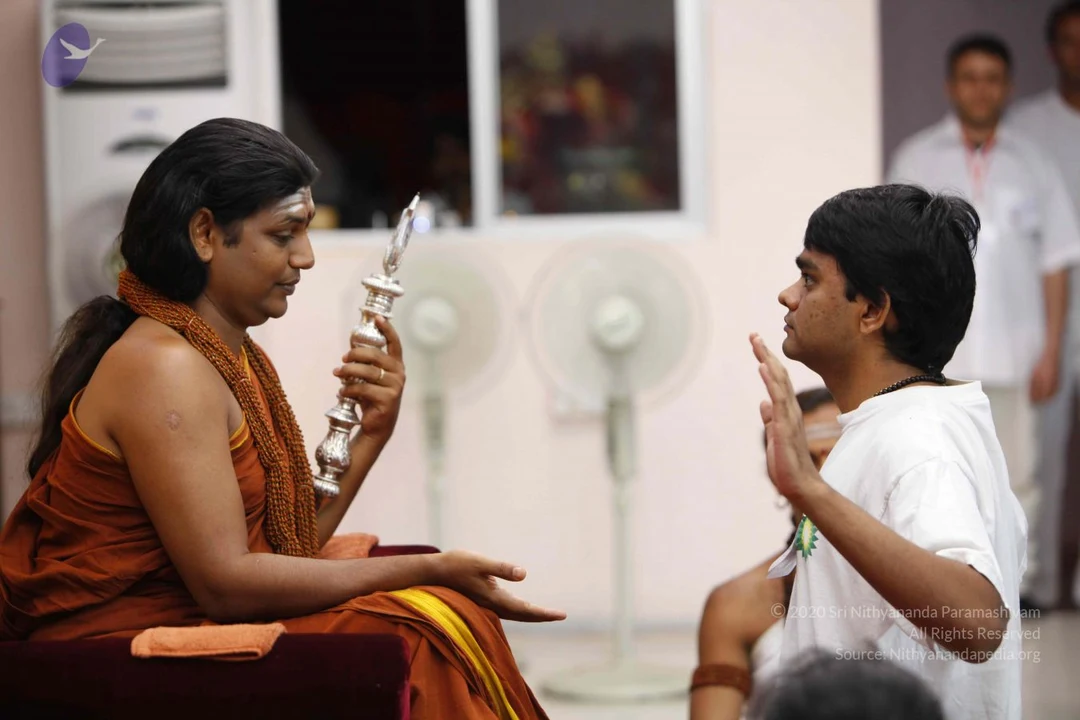
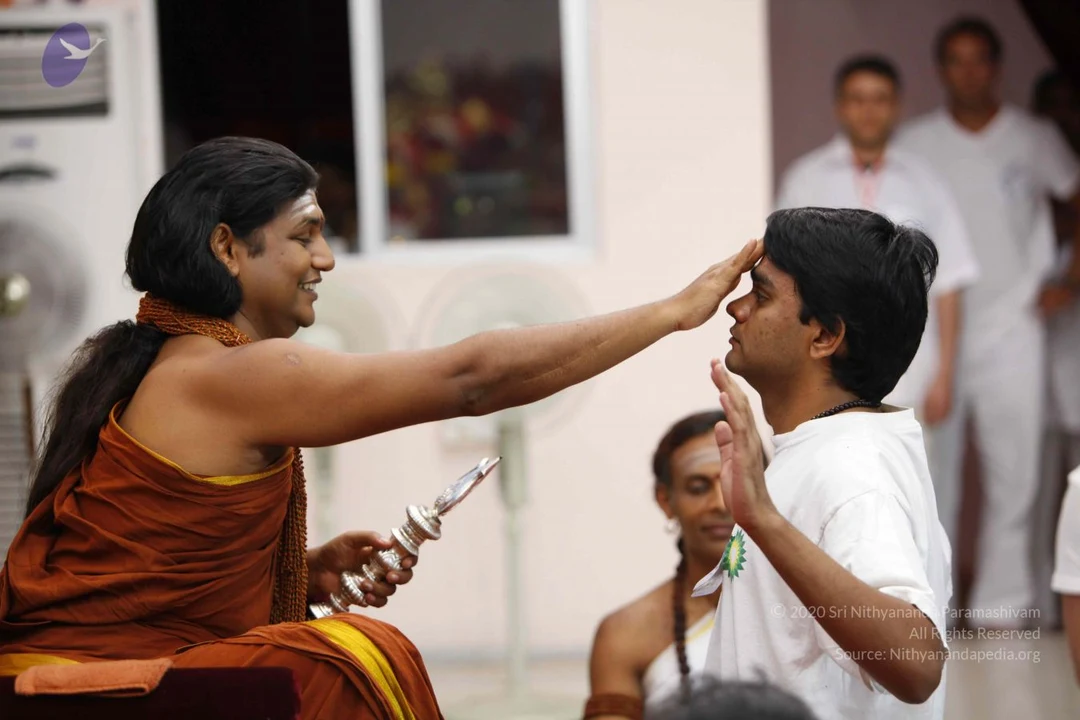
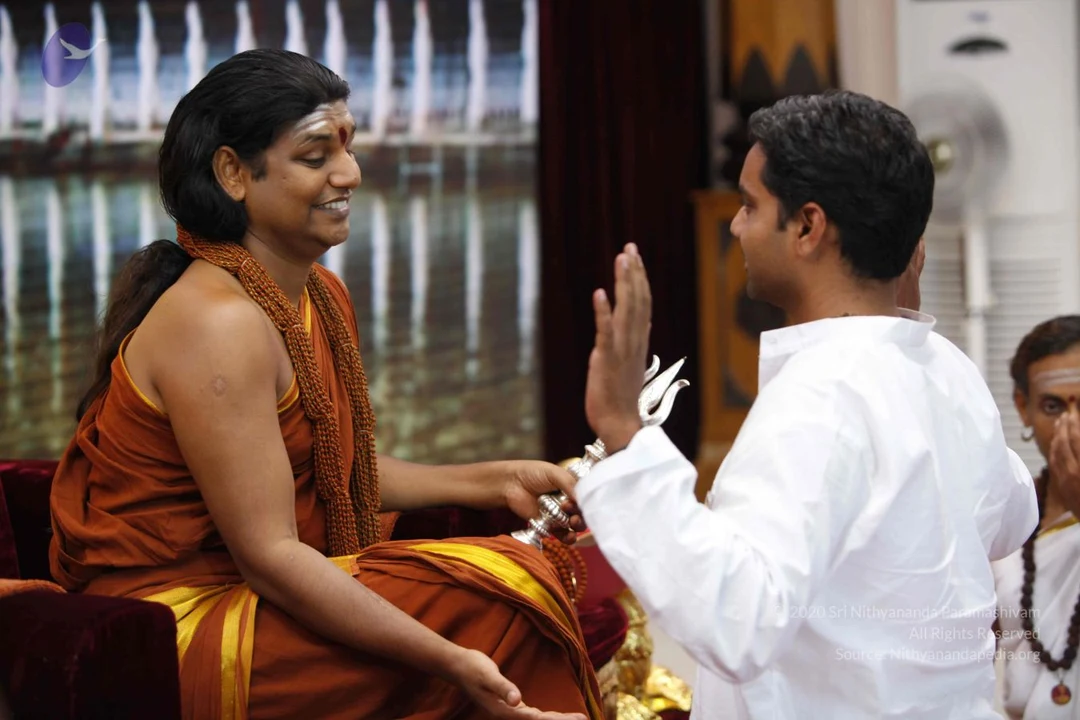
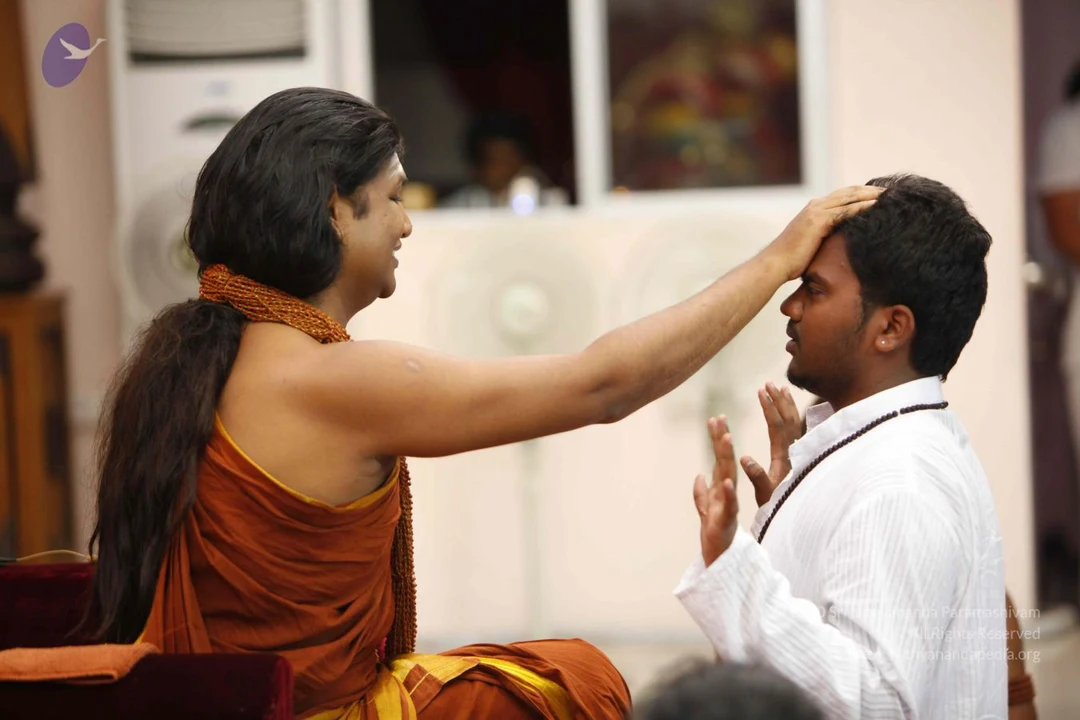
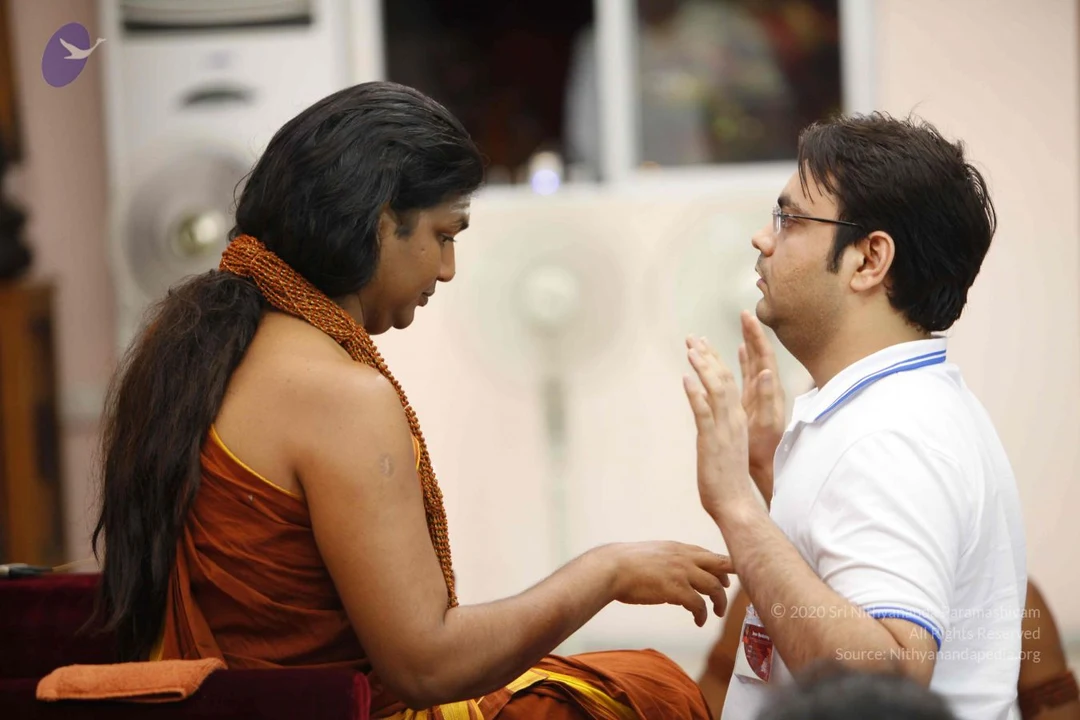
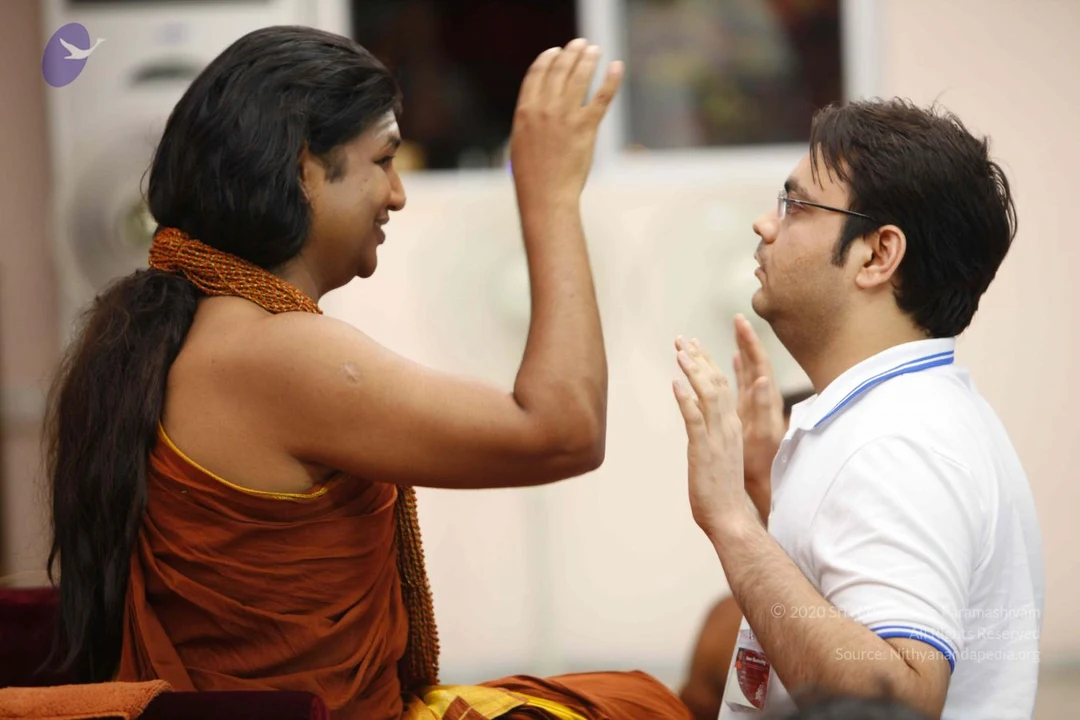
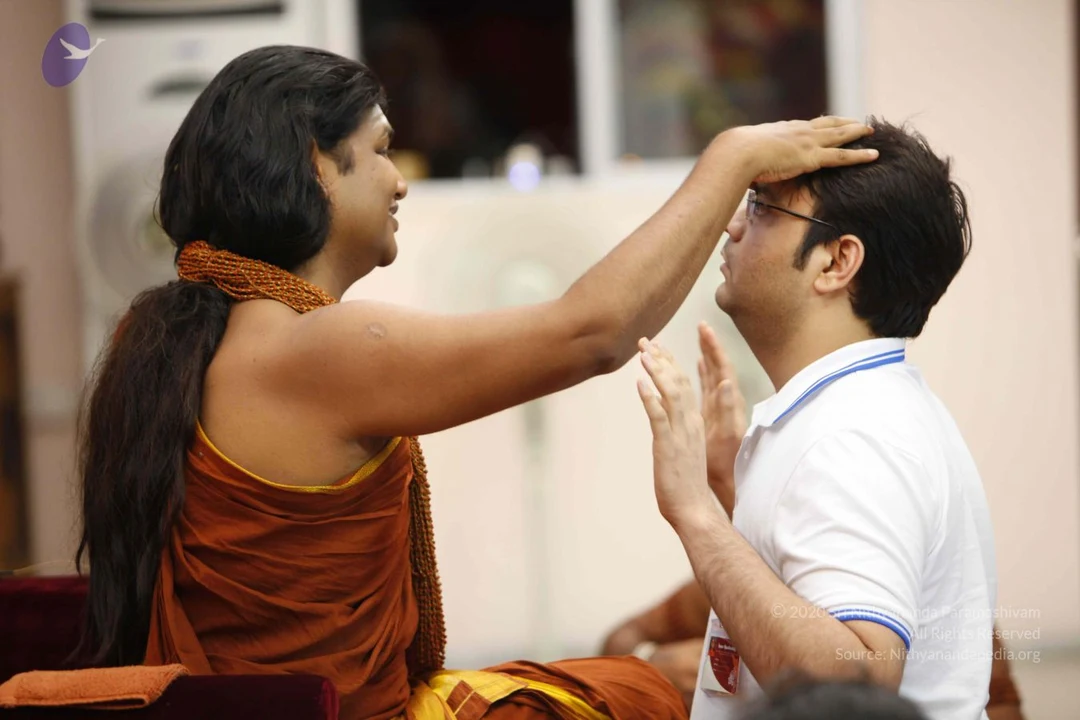
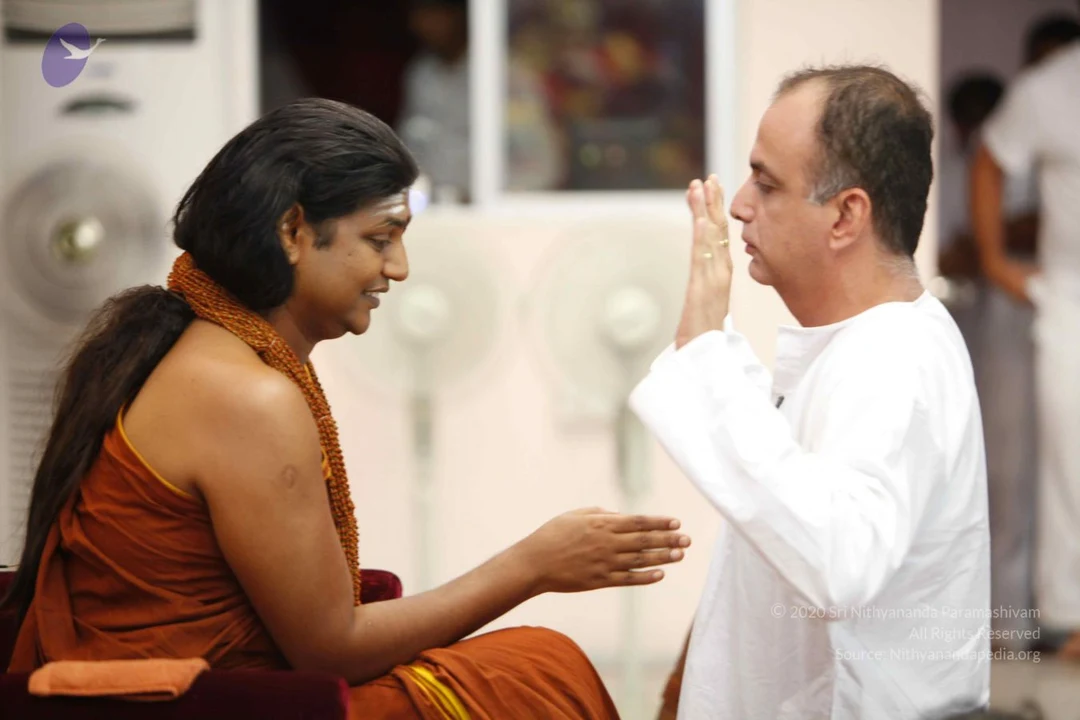
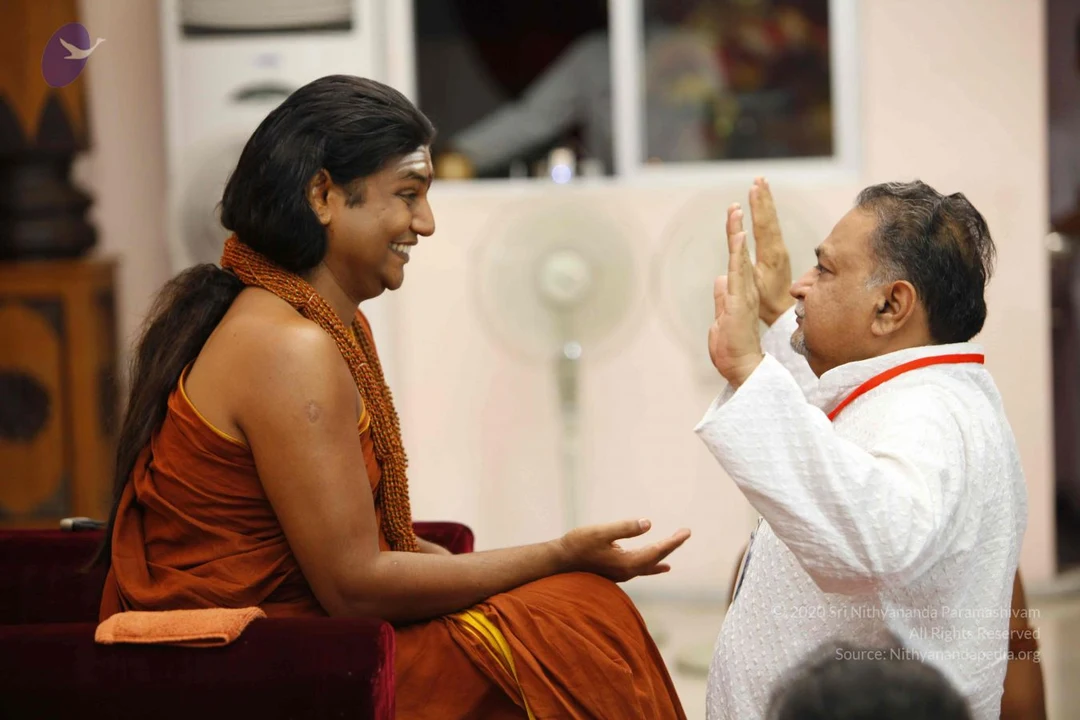
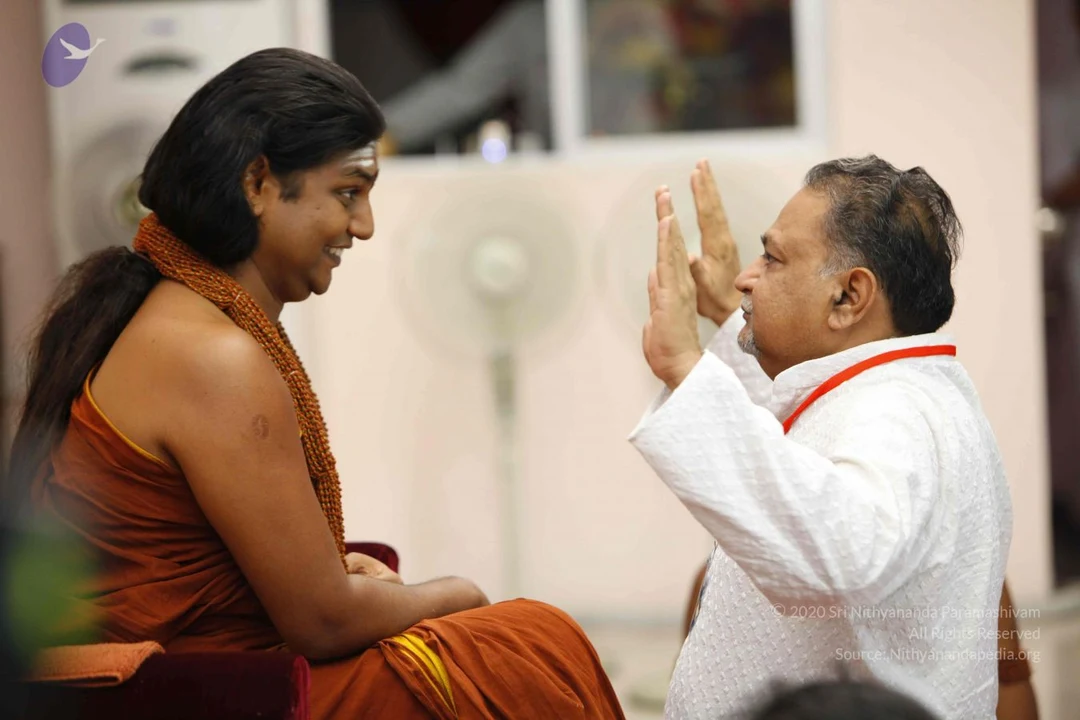
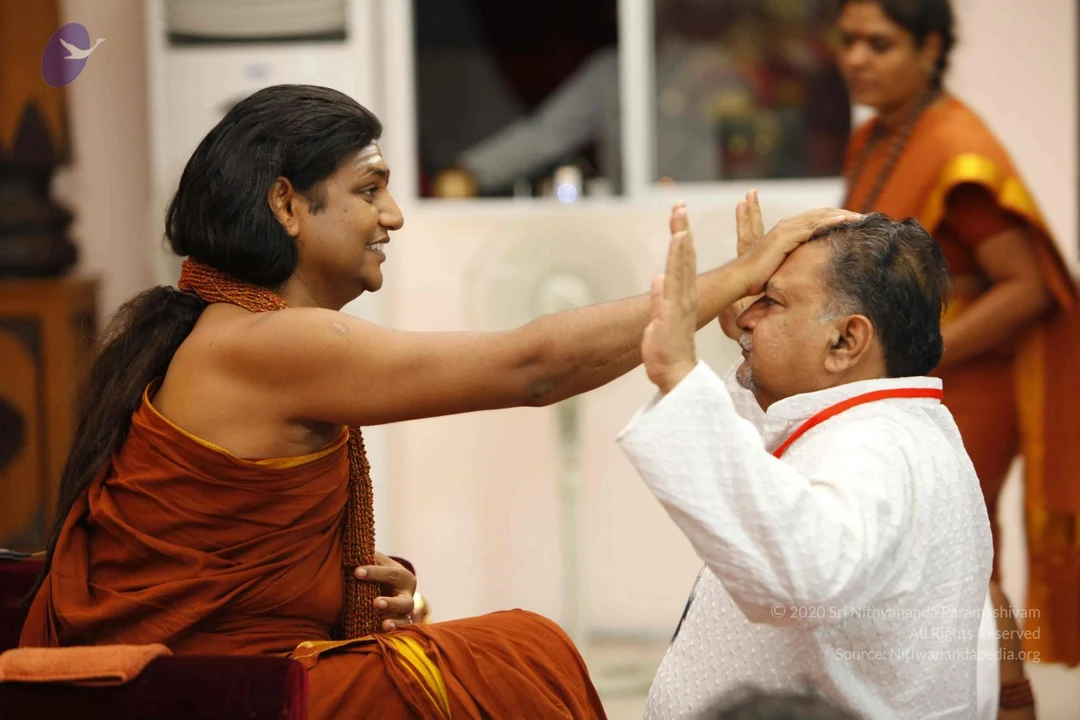
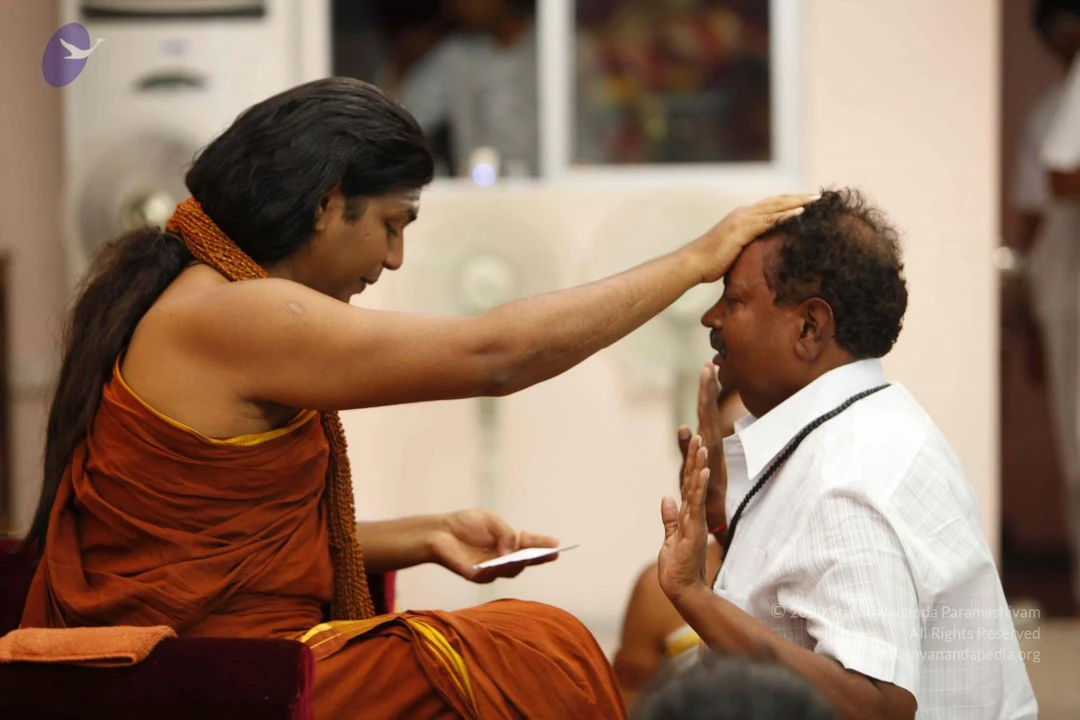
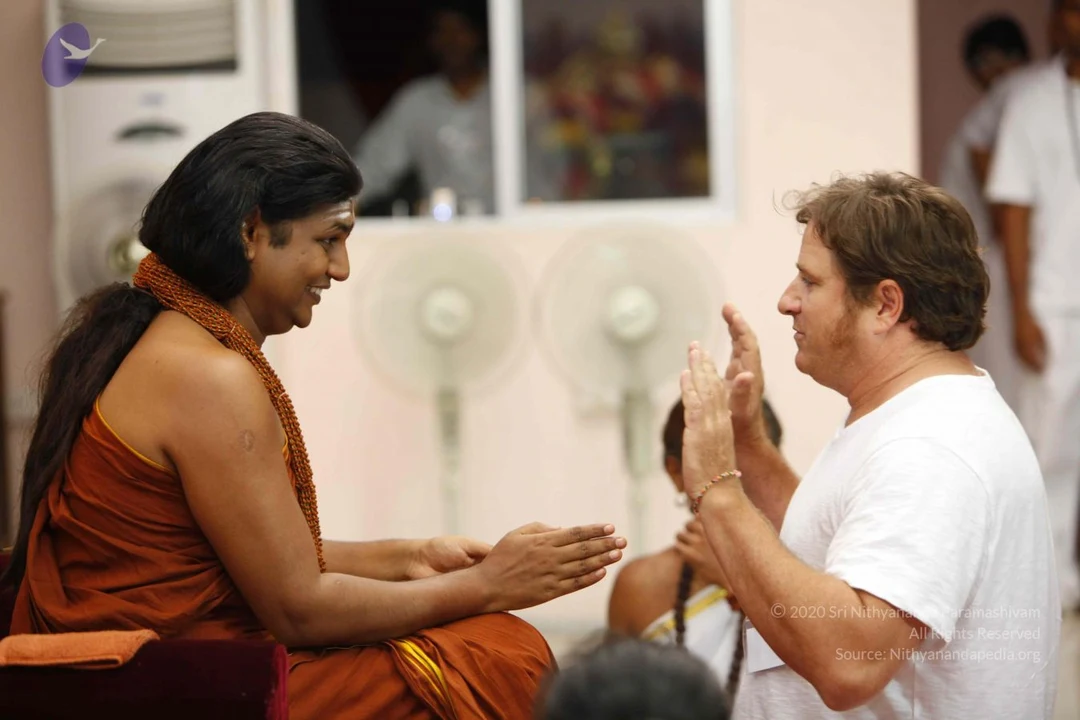
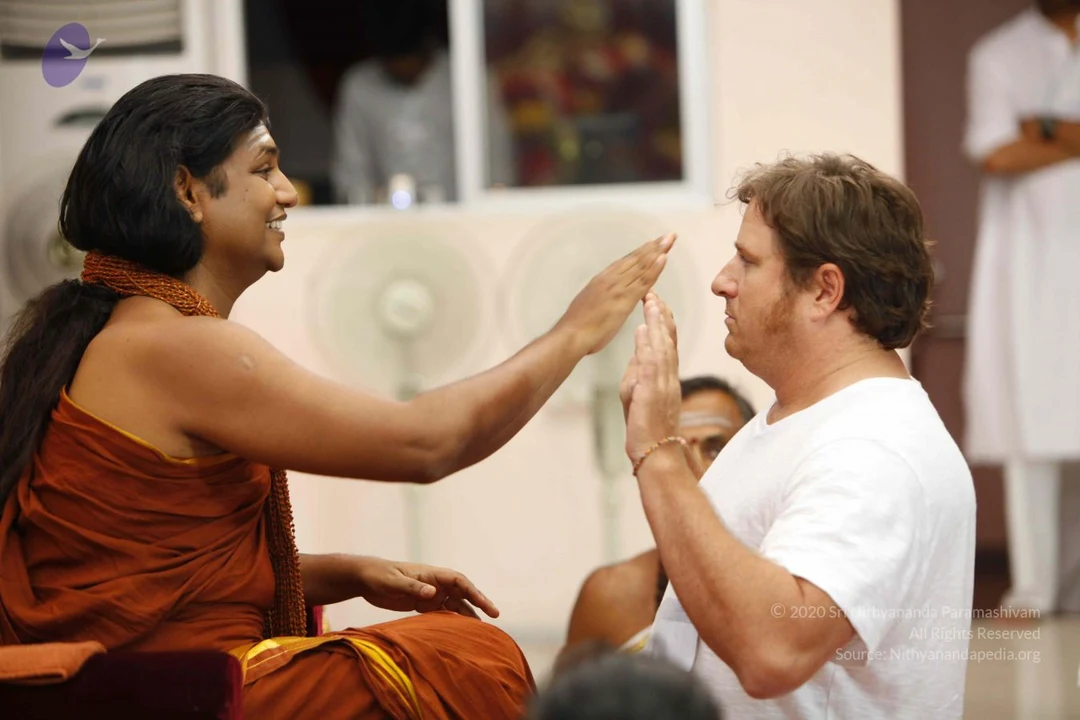
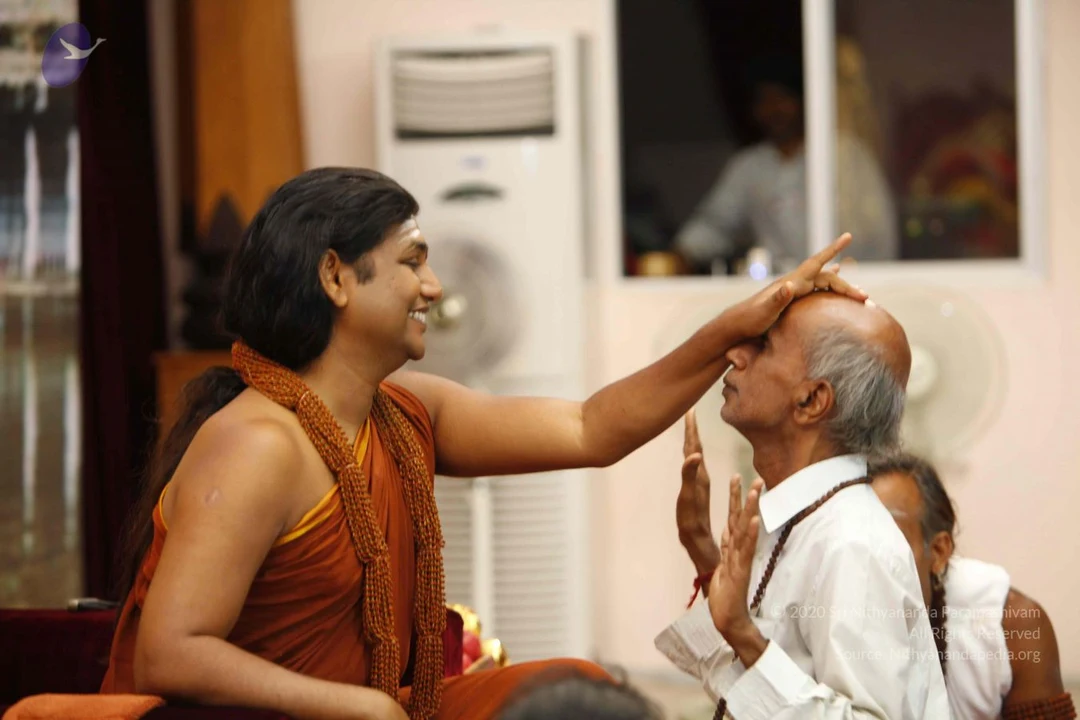
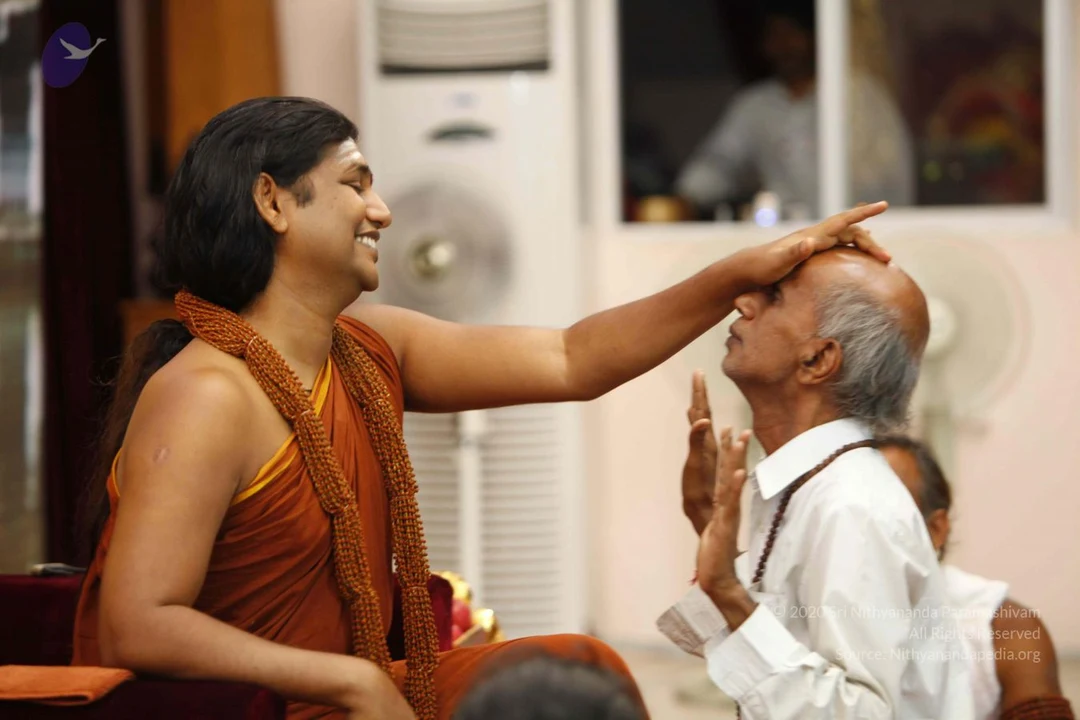
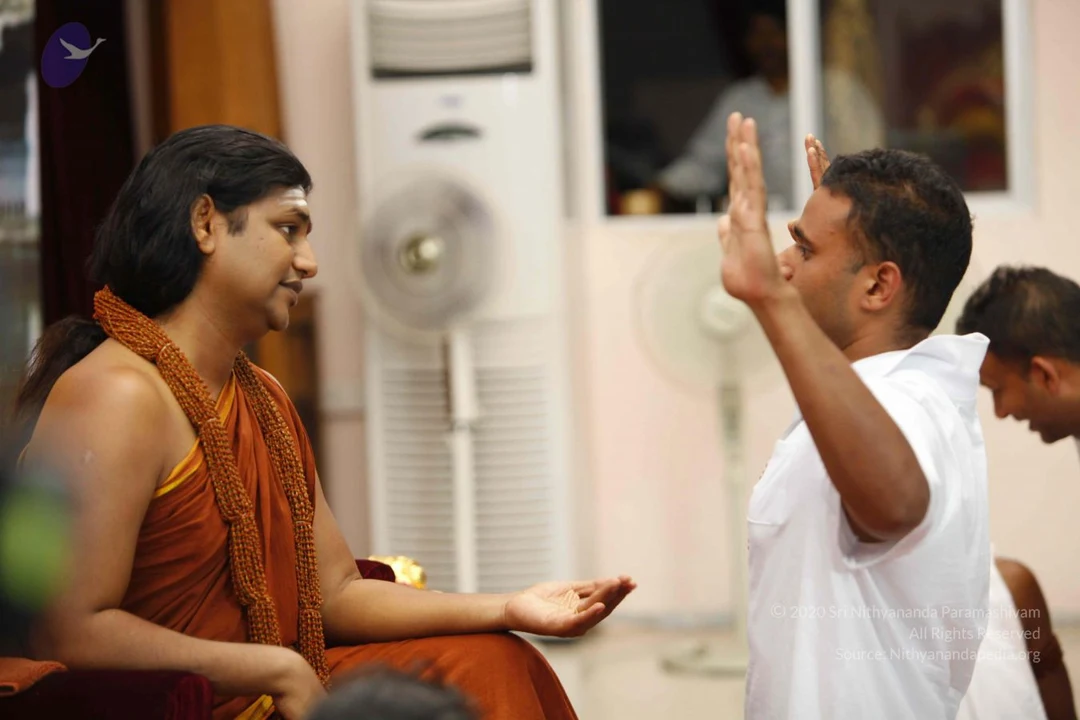
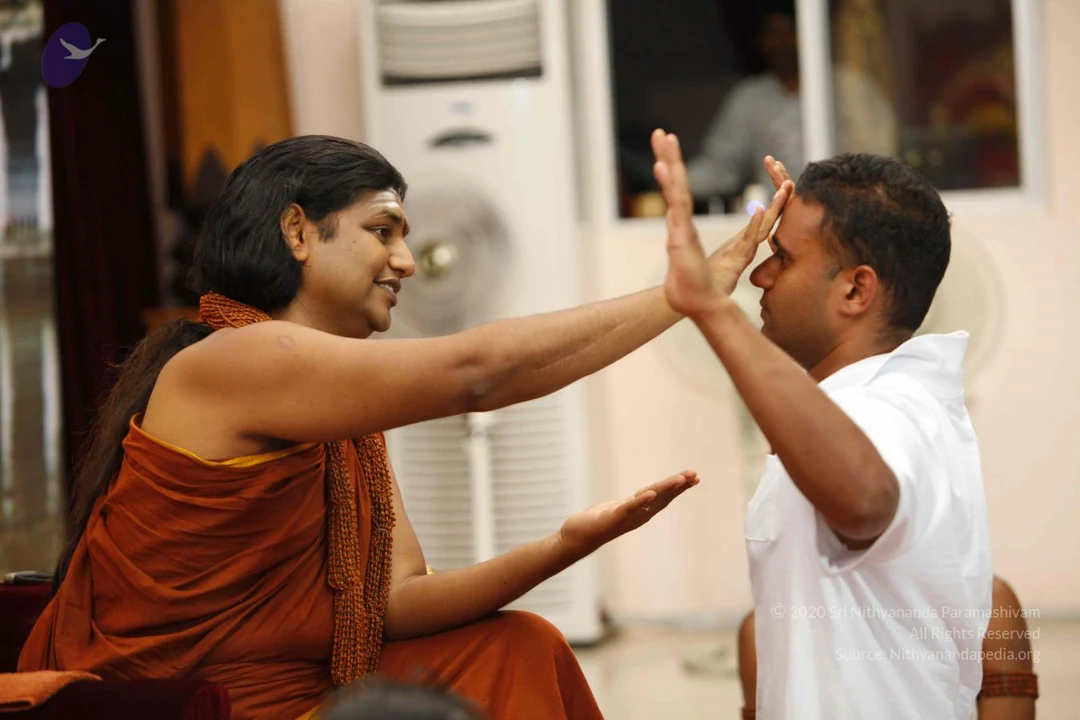
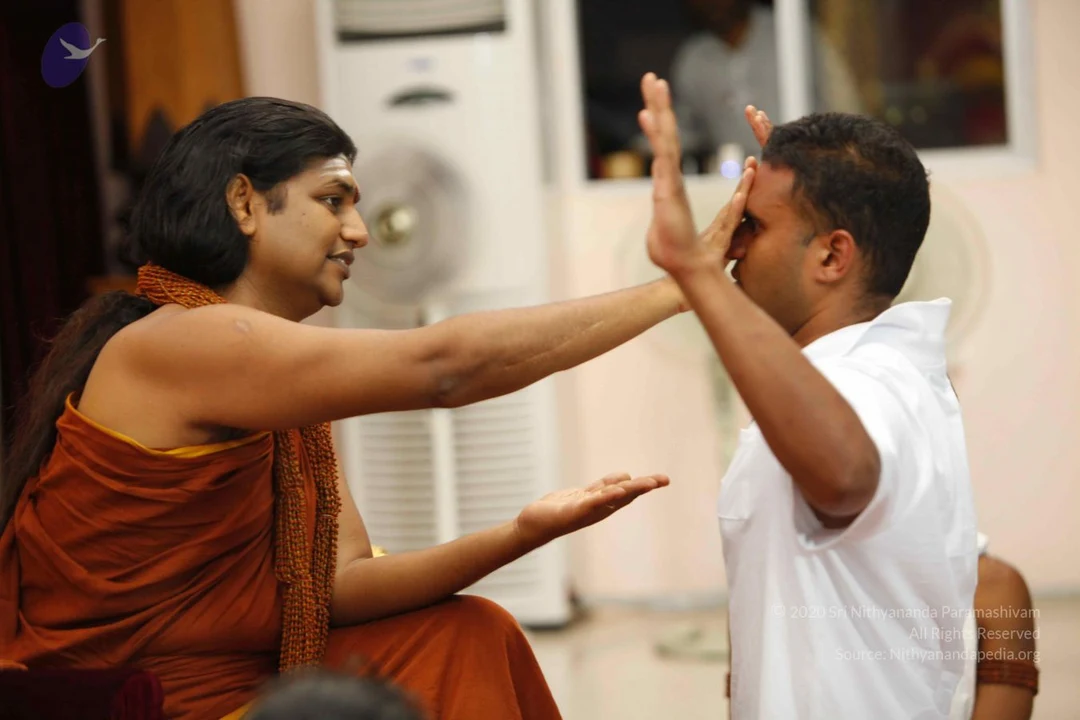
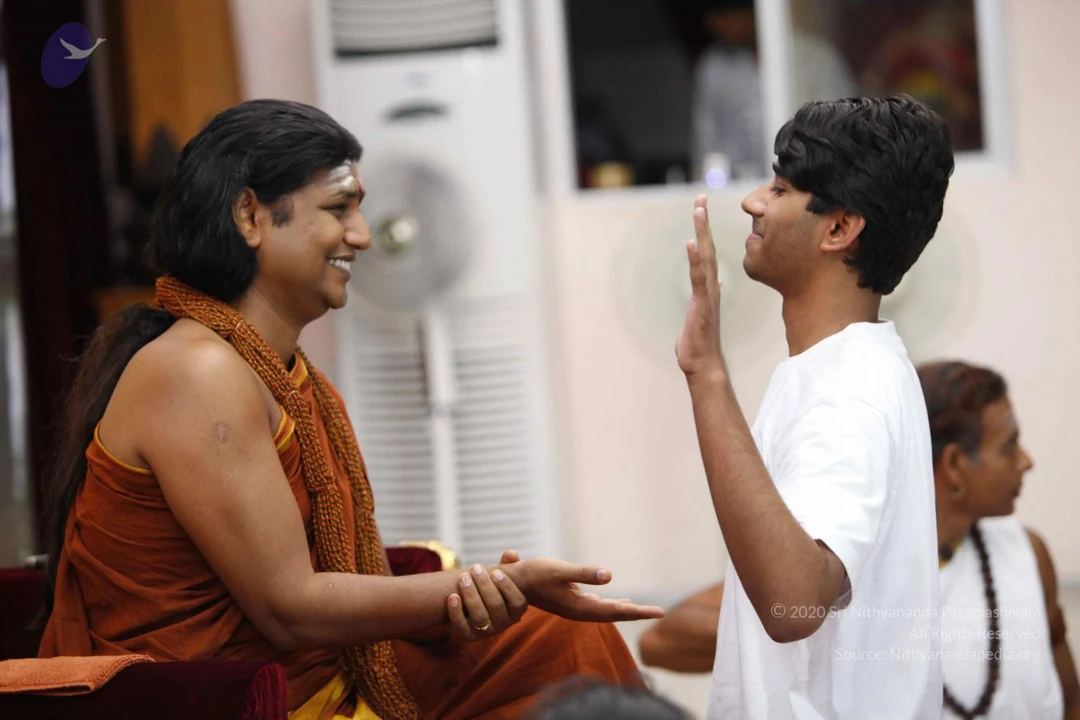
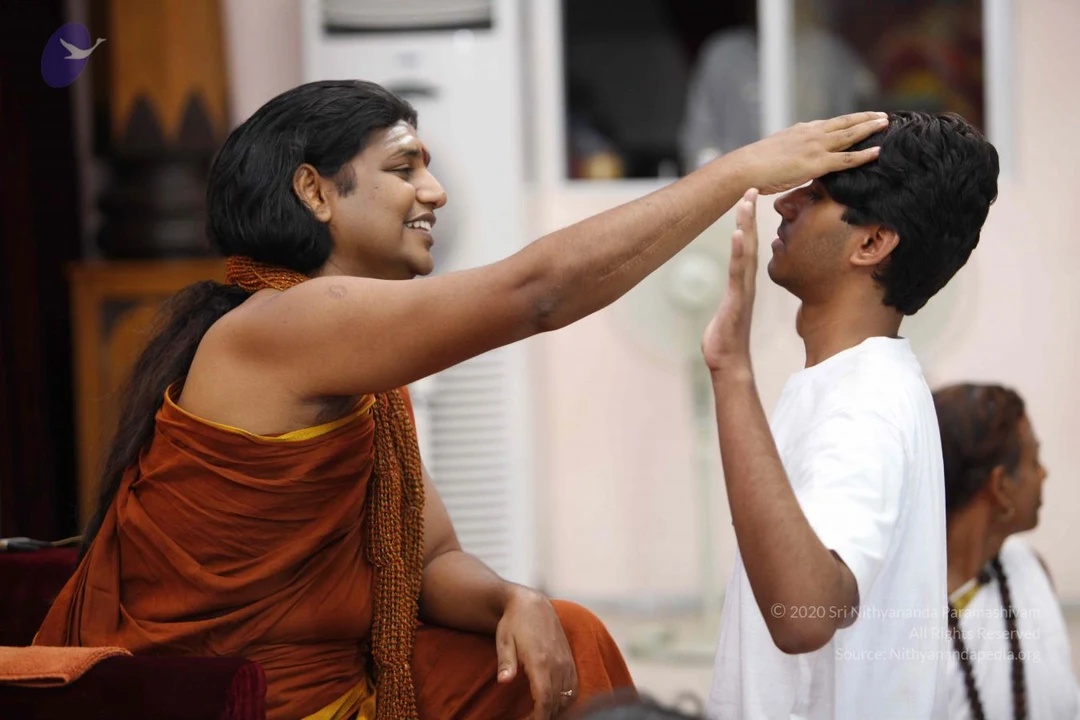
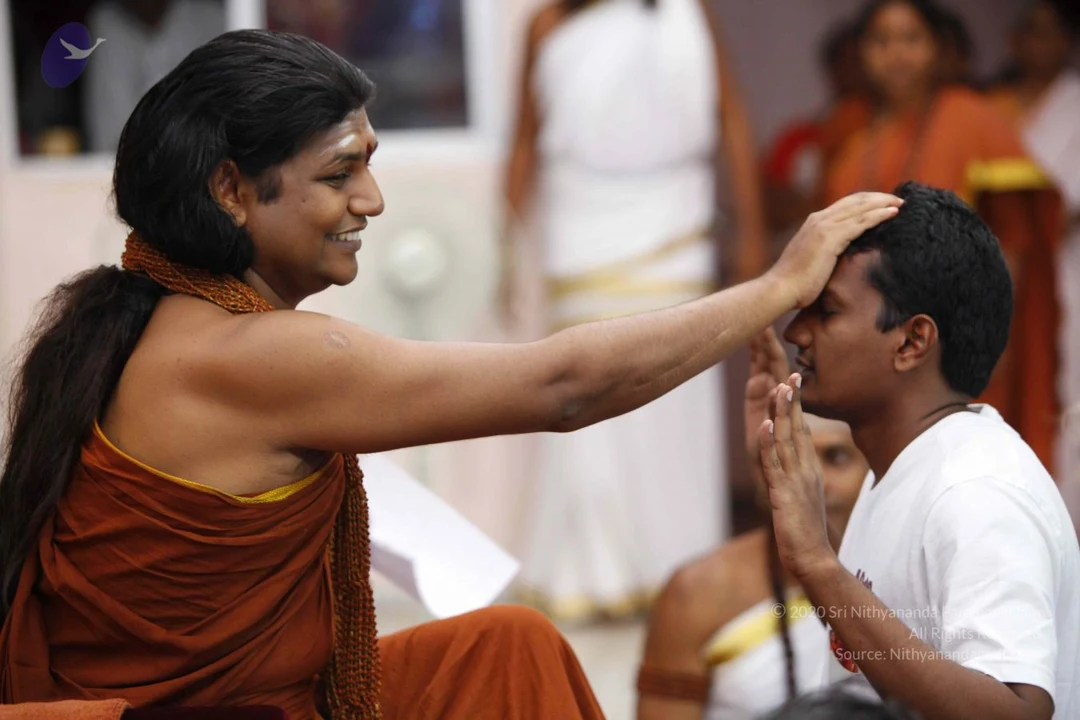
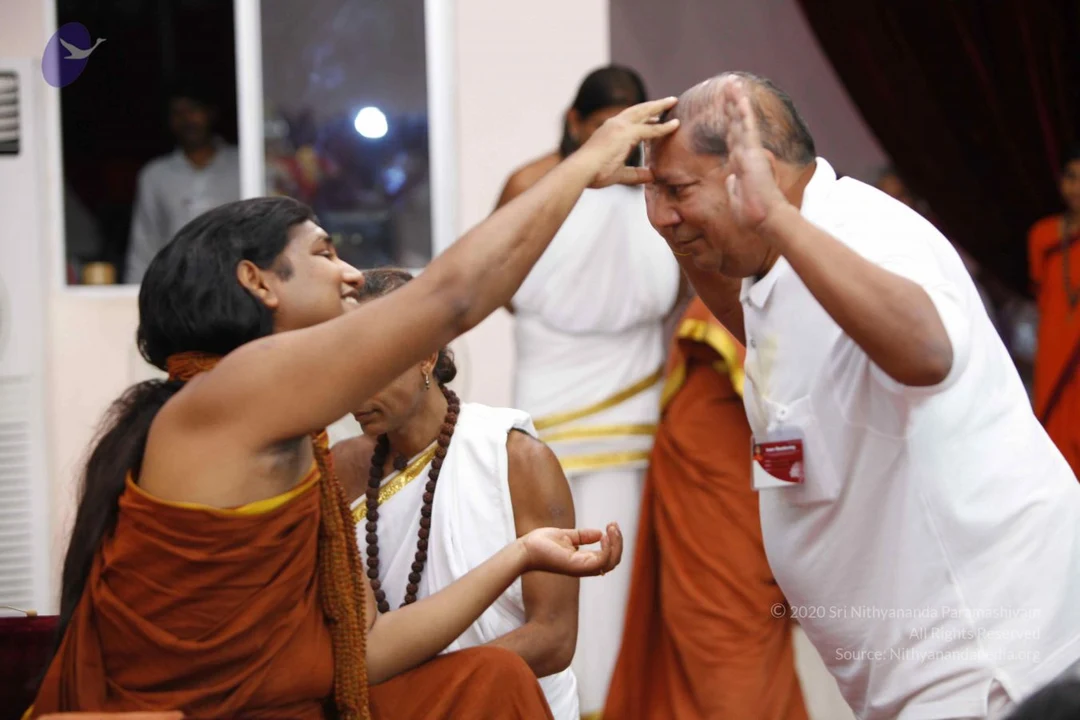
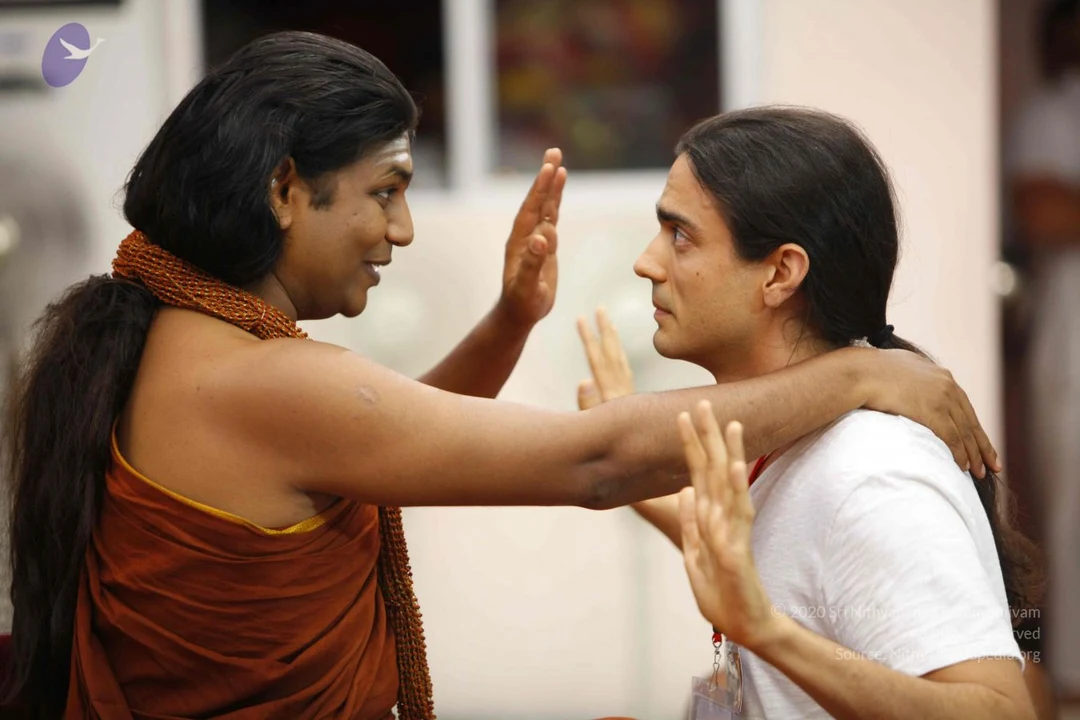
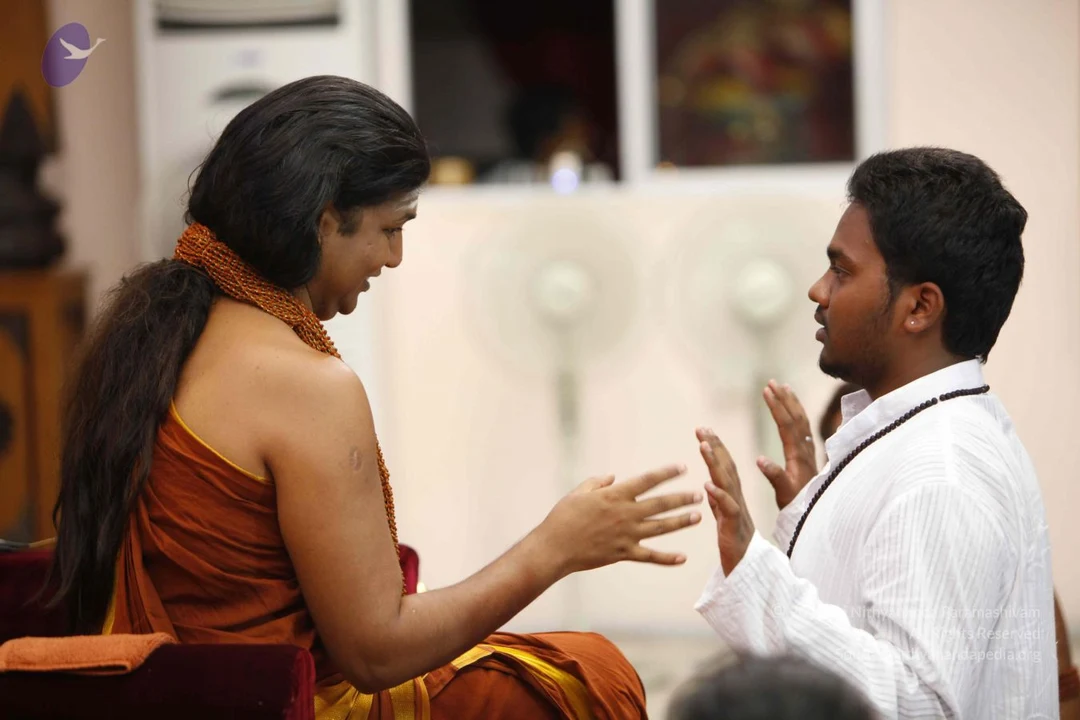
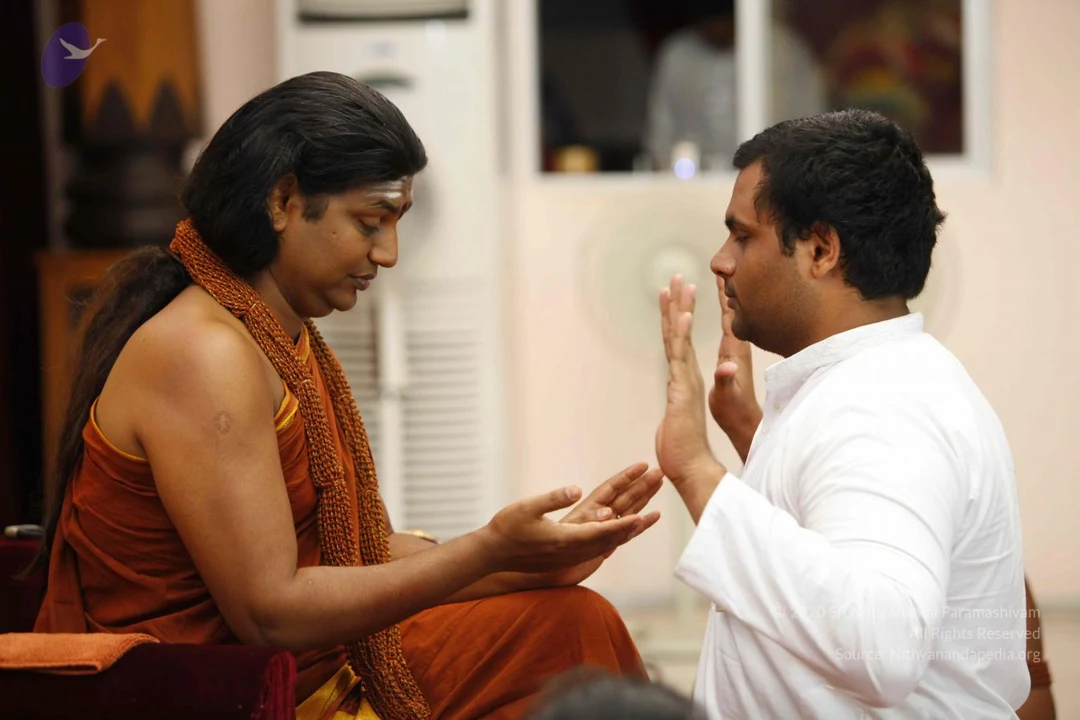
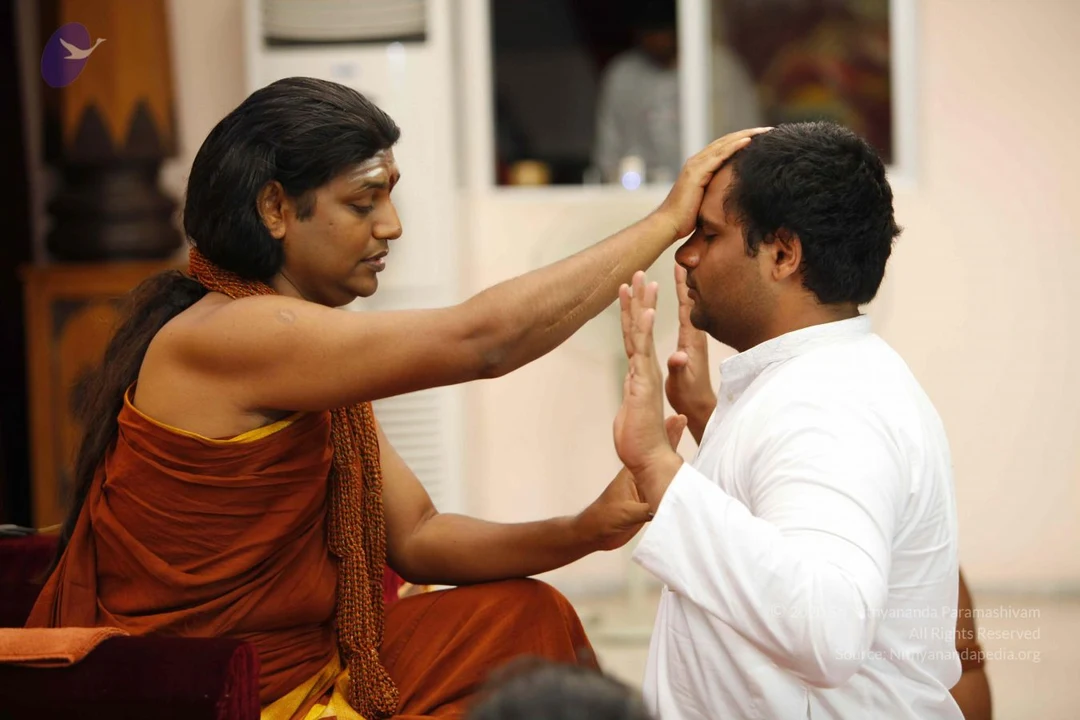
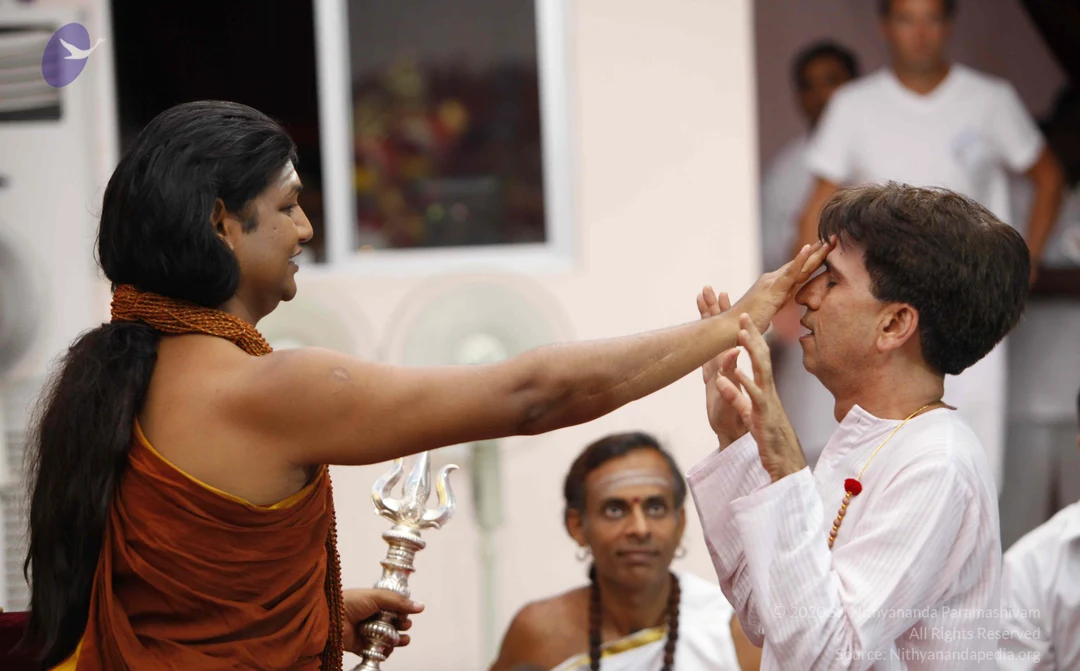
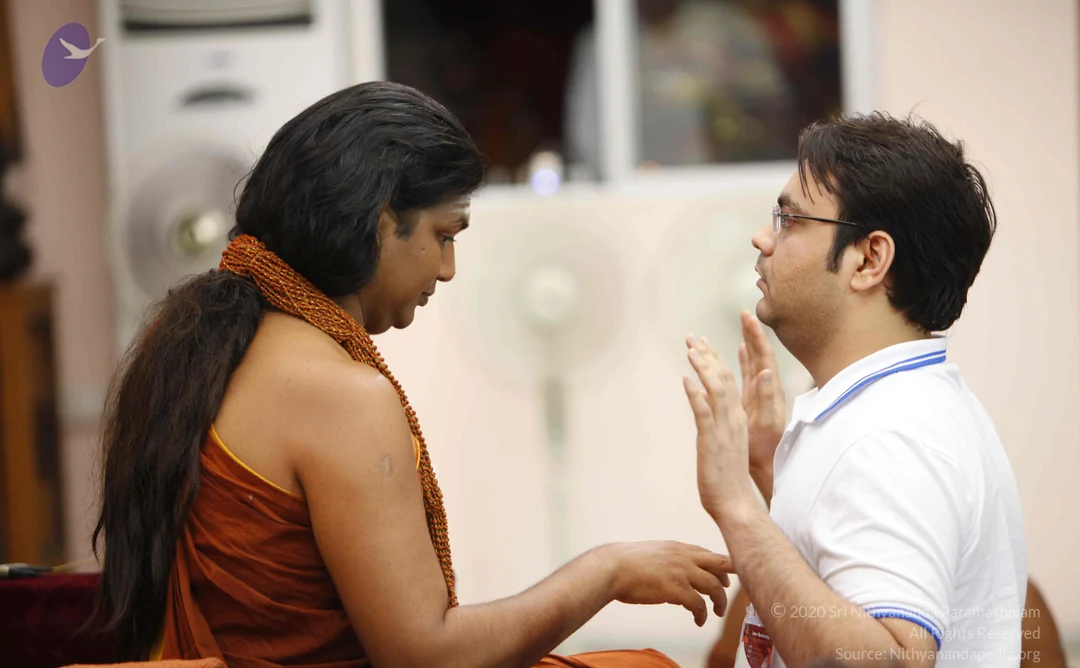
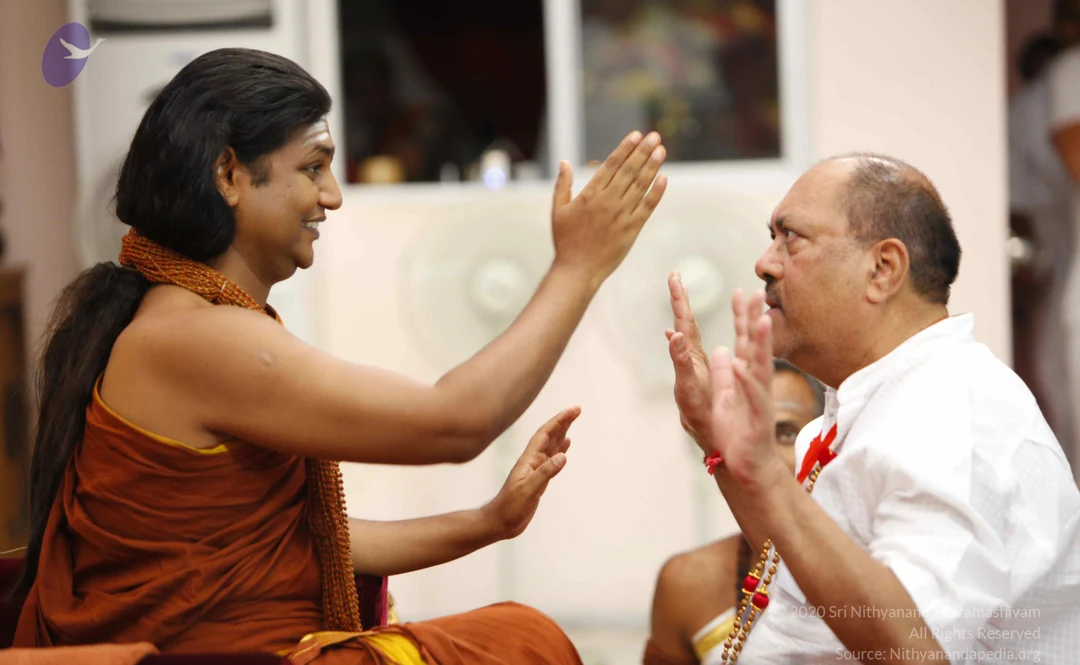
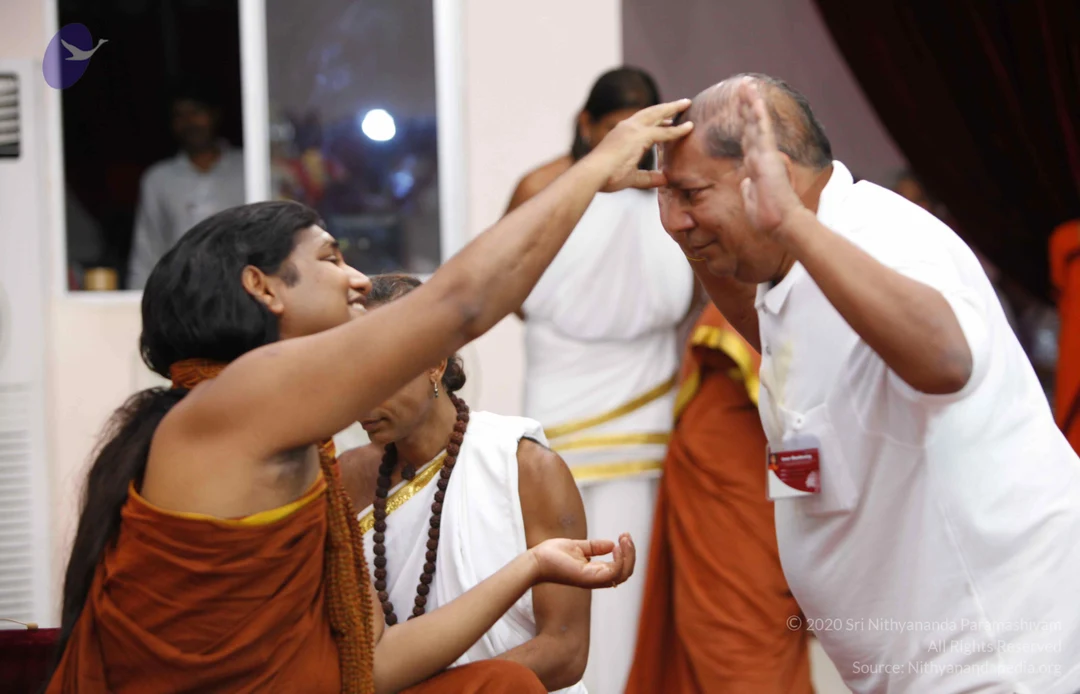
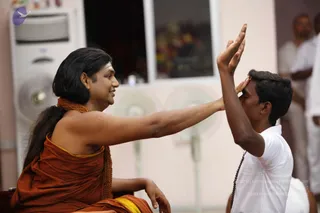
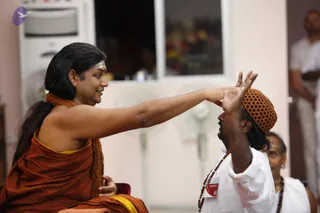
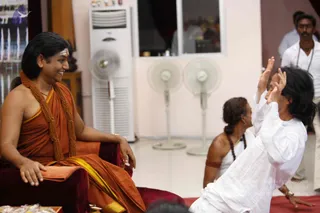
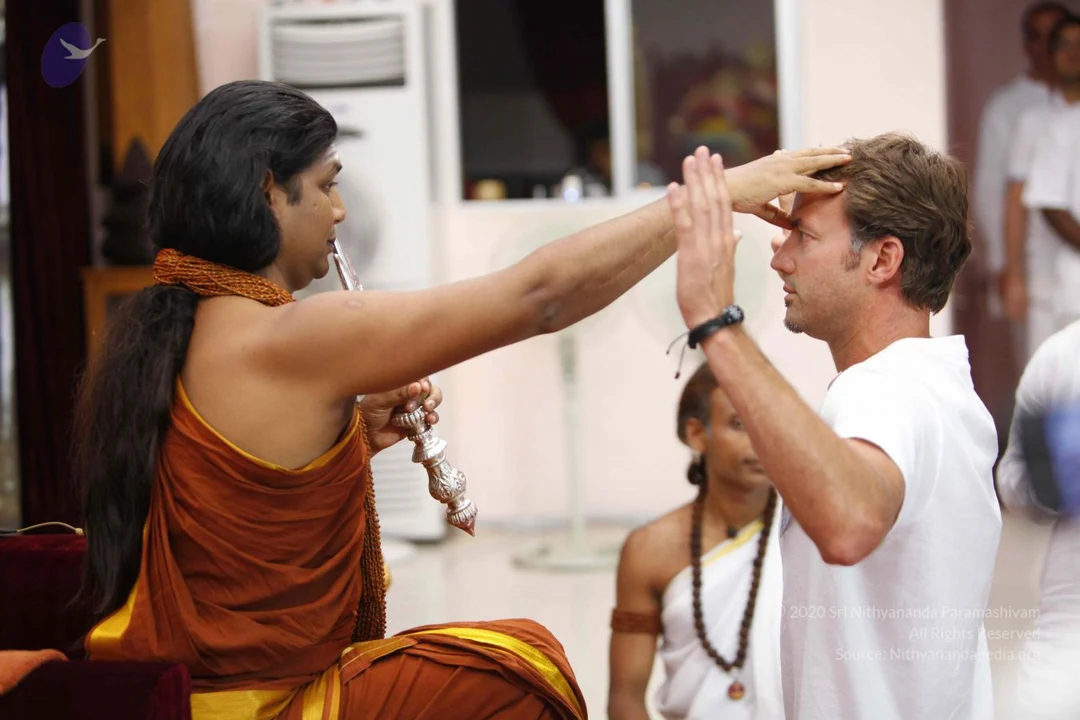
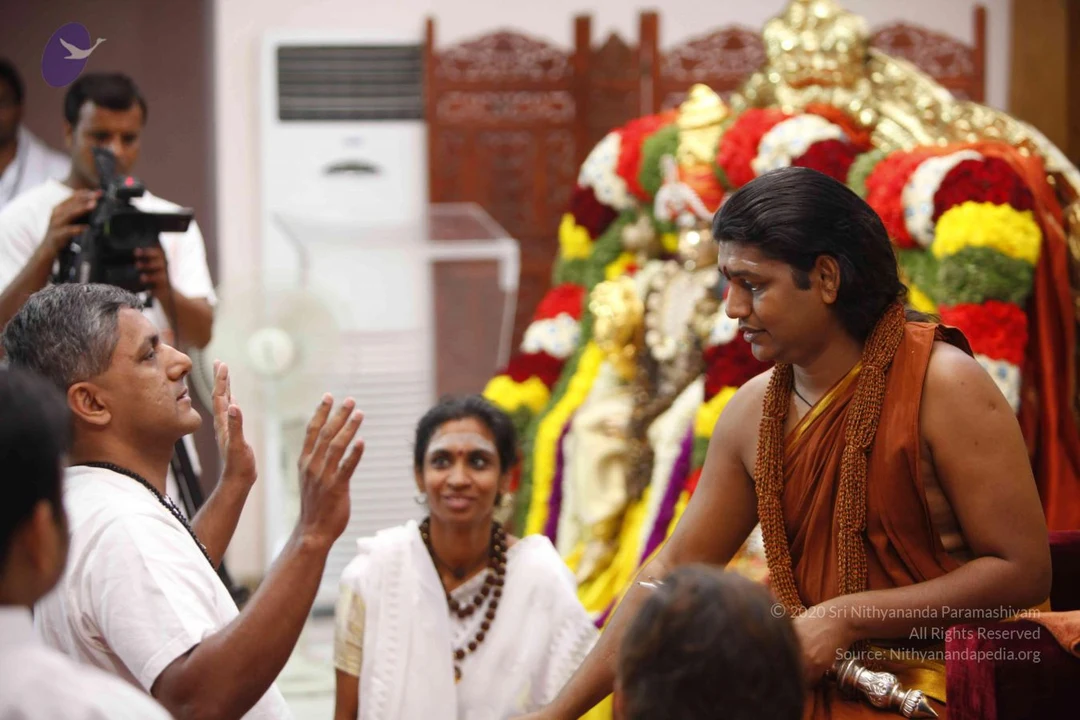
A photograph of a seated figure in an orange-saffron robe with a gold-yellow border and a long rudraksha-style bead necklace, with long dark hair tied back, extending a hand to press against the forehead of a young man in a white shirt with a dark bead mala. The young man has his eyes closed and head tilted down. Behind them, a white split air conditioner, electric fans, and a window with a blurred flower arrangement. Two people in white clothing stand in the background at right. The scene suggests a blessing or diksha moment. Swamiji (probable) is shown at the centre, marked by saffron robes, a long rudraksha-style necklace and swept-back long hair.A seated figure in orange-saffron robes with long dark hair swept back, a white forehead mark and an orange rudraksha-style beaded garland, extends his right arm to touch the forehead of a seated man in a white kurta with a brown crocheted skullcap and a red-and-white name badge, who raises his hand in response. The two sit close together in a bright room with a window, an air conditioner, a standing fan, and a bearded man in white and another person partly visible at the right edge. The gesture suggests a blessing or initiation moment. Appearance-based probable match with a person on the page-flagged event; the figure is in person and seated before the recipient.A photograph of a seated figure in an orange-saffron robe with a yellow-gold edge and a long rudraksha-style bead necklace, long dark hair swept back, touching the forehead of a seated man in a white t-shirt who has his hand raised near his brow. a person is seated on a maroon cushioned seat, smiling, in what appears to be a blessing or darshan moment. Behind them, two standing men in white clothing watch, and a white air conditioner unit and white fans are visible. The man in white wears a gold bracelet and a red-and-white event badge.A photograph of an indoor satsang in a pale pink room with two pedestal fans and an air conditioner. On the left, a man with long dark hair tied back, a saffron-orange robe and a dense orange rudraksha mala sits on a maroon cushioned seat, gesturing with open palms toward a older man in a white collared shirt and a red-and-white name badge. The older man, with grey hair and a moustache, has one hand raised and eyes closed, a rudraksha mala around his neck. Behind them, a woman with hair in a braid kneels, and a man in white stands at the back. Swamiji (probable): the seated saffron-robed man with long hair, rudraksha mala and orange-trimmed robe fits the presentation cues, so this is an in-person appearance candidate.A photograph of a seated figure in saffron-orange robes with a long rudraksha-style orange bead necklace, long dark hair swept back, holding a silver ceremonial staff upright in one hand while raising the other hand palm-out toward a kneeling older man in a white shirt with a red lanyard and grey hair. A second man in white with a tilak mark and rudraksha mala kneels beside him. A standing man in white shirt and gold chain and another man in white stand in the background near a white window and a pedestal fan. a person appears as the saffron-robed figure seated on a red-cushioned seat, blessing the kneeling devotee with the staff; this is an appearance-based label, not a confirmed identity.A seated figure in a saffron-orange robe with a yellow border and a long rudraksha-style bead necklace places his right palm on the forehead of a kneeling man with grey wavy hair and a moustache, who wears a white shirt and holds his hand to his chest in devotion. The figure's long dark hair is swept back and he has a crown-like tilak mark, and a clear glass cup stands near his hand. Beside them a second man in white ritual clothes with a white forehead mark and beaded necklace sits attentively, and two more men in white stand in the background near a pink wall and window. This appears to be a blessing or initiation moment at an ashram gathering.
Leela-Alankar-Deities

6 photosSource gallery
A golden murti pair seated on a throne framed by heavy garlands of red roses, white and blue flowers, yellow marigolds, purple blooms and green leaves. The male deity wears a red turban, a golden crown, pearl ornaments, layered gold necklaces, a rudraksha mala and a golden shawl over yellow draped cloth, holding a trident-like emblem and a small dark bird perched on his hand. The female deity beside him wears a gold crown, ornate necklaces, a rust-orange shawl and a maroon sari, seated at the right. These are deity murtis, not living people, and the scene is a decorated temple-style arrangement.A decorated pair of deity murtis seated on a raised yellow-draped platform beneath an arch of fresh flowers in red, yellow, purple, white and green. The male murti wears an orange turban, a rudraksha mala, ornate white and gold necklaces, and holds a golden abhaya-style hand and a small dove-like bird; the female murti wears a pink-and-gold saree, layered pearl and gold jewellery and a gold crown. Carved wooden panels frame the background.Photograph of a decorated deity murti pair seated on a golden-yellow cloth-draped throne against a garland-framed arch of red roses, white jasmine, purple and yellow marigold strands and green leaves. The male figure in gold-toned metal wears a red and gold turban and a rudraksha mala, holds a trident-like staff in one raised hand, and has a black bird perched on his outstretched arm. The female figure beside him wears a gold crown, layered pearl and gem necklaces and a pink and gold sari.Two golden murti statues seated side by side on a yellow silk cloth within a floral arch of red roses, white and blue flowers, yellow marigolds, purple blooms and green leaves. The male figure wears a red and orange turban with a gold crown, rudraksha mala and ornate white and gold necklaces, holding a dark bird on one hand. The female figure wears a gold crown, layered gold necklaces, and a pink and gold sari.Close photo of a gold-faced deity murti heavily decorated with red roses, white and blue flower garlands, purple and yellow marigold strands, and green leaves. The murti wears a red and gold turban with pearl strings, a gold and jewelled necklace with rudraksha beads, and raises a gold abhaya mudra hand while the other hand holds a red rose. A dark bird perches on its shoulder, and a gold kalasha-like ornament stands at the left edge. No physical people are visible.A silver-toned deity murti of Shiva, decorated for worship, wearing a red and gold turban with a pearl-strung ornament and a jewelled crown piece. Rudraksha mala beads and a pearl necklace hang across the chest, and a trident-like staff with a golden hand-held element rests beside the figure. A black bird figure sits to the right, and golden kalasha-like vessels flank the sides. The figure is framed by red roses, yellow marigolds, white jasmine garlands and green foliage.

Rudra-Abhishekam-Swamiji-1

56 photosSource gallery
Large dark grey stone Shivalinga on a round lotus-carved pedestal stands in the foreground, garlanded with a multicoloured red, white, yellow and green flower garland. Behind it, a crowd of people in white clothing sits on red-carpeted tiered steps beneath red and orange festoons and banners. A standing figure in orange robes is visible near the top of the linga at the back, and a small brown-robed figure sits near the steps. Oil lamps are placed on the steps.A large dark black stone sphere draped with a long garland of red, white, yellow and green flowers dominates the foreground. Behind it stand two men on a raised platform: the taller man in front wears an orange-brown cloth, a multi-strand gold necklace and a flower garland over his shoulder, with long dark hair and a decorated forehead. Beside him a shaved-headed man with a white marking on his upper arm and bare chest faces him, hands near the stone. Orange marigold garlands hang across the backdrop with striped drapery and a tall decorated pillar. Seated devotees in white clothes line the steps at left and right. A purported deity murti is not visible; the central focus is the sphere.A large black dome-shaped stone lingam draped with a long garland of red, white, yellow and green flowers stands in the foreground of an outdoor ceremonial platform decorated with orange marigold garlands and cream drapery. A standing figure in a brown-orange garment with a multi-strand white shell and gold necklace and a red-and-white flower garland looks toward a bald man with bare shoulders and white markings on his arm who stands beside the lingam. Seated on red steps at the right and left, several people in white clothes watch; a woman at right sits with hands folded in anjali. The scene suggests an abhishekam-style ritual. a person is not confidently identified from appearance.Large black stone Shivalinga on a circular black yoni-pitha base dominates the foreground, decorated with a multicoloured garland of red, yellow, green and white flowers draped down its shaft. Behind it, rows of people in white clothes sit on red-carpeted stone steps of an outdoor amphitheatre, with orange and red bunting strung above. On a raised platform in the background, a man in ornate gold-and-red attire and a crown-like headdress stands beside another figure in orange, with small oil lamps set on the stage. A seated musician in orange sits on a low platform near a harmonium-style instrument, and a few small lamps flank the scene.Outdoor ritual photograph at a temple-like stage with orange marigold garlands strung across a red and white draped backdrop. In the centre, a long-haired figure in saffron clothing and beaded necklaces stands behind a large dark black stone linga, a wide garland of red, yellow, white and green flowers draped down its front. Beside them, a shaved-headed priest with white forehead markings, bare-chested and wearing saffron cloth and rudraksha-style beads, holds a silver kalasha vessel for abhishekam. Several seated devotees in white and a woman in a red jacket watch from the steps below.Outdoor abhishekam at a large dark polished stone lingam. A long garland of red, white, yellow and green flowers drapes over the stone. A person with long dark hair, a red tilak, and a gold-beaded necklace and bangles stands behind it, while a shaved-headed priest with white ash markings and an orange cloth holds a silver vessel. Seated devotees in white clothes and a red jacket watch from red steps, with orange flower garlands and a red and white draped backdrop behind.

Rudra-Abhishekam-Swamiji-2

77 photosSource gallery
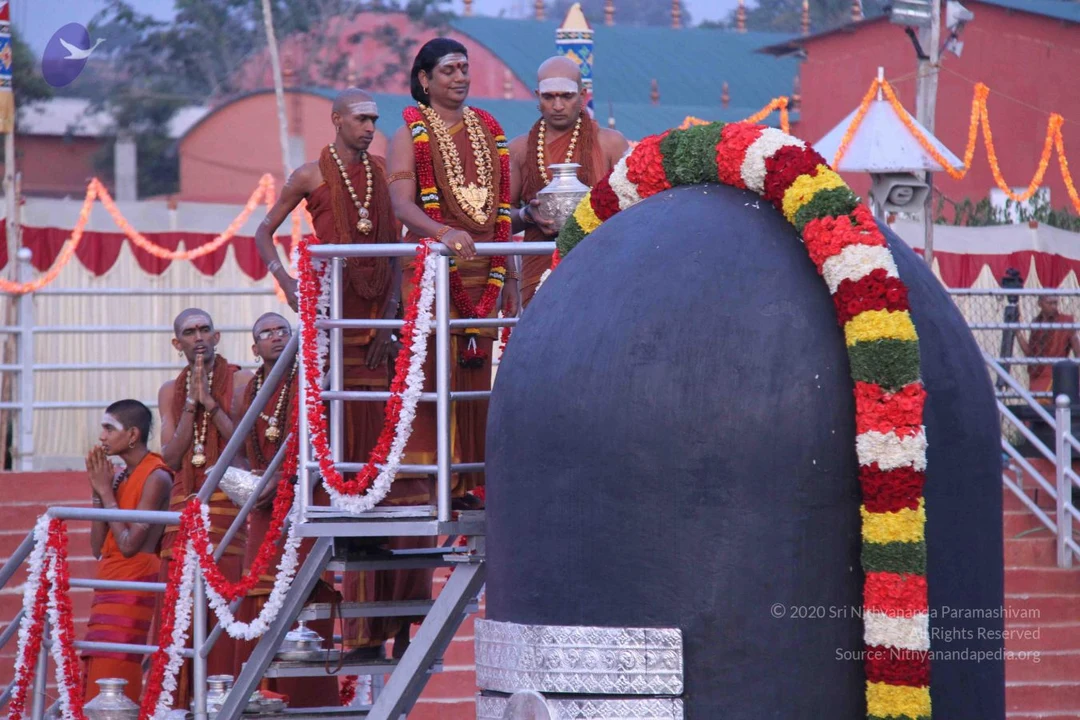
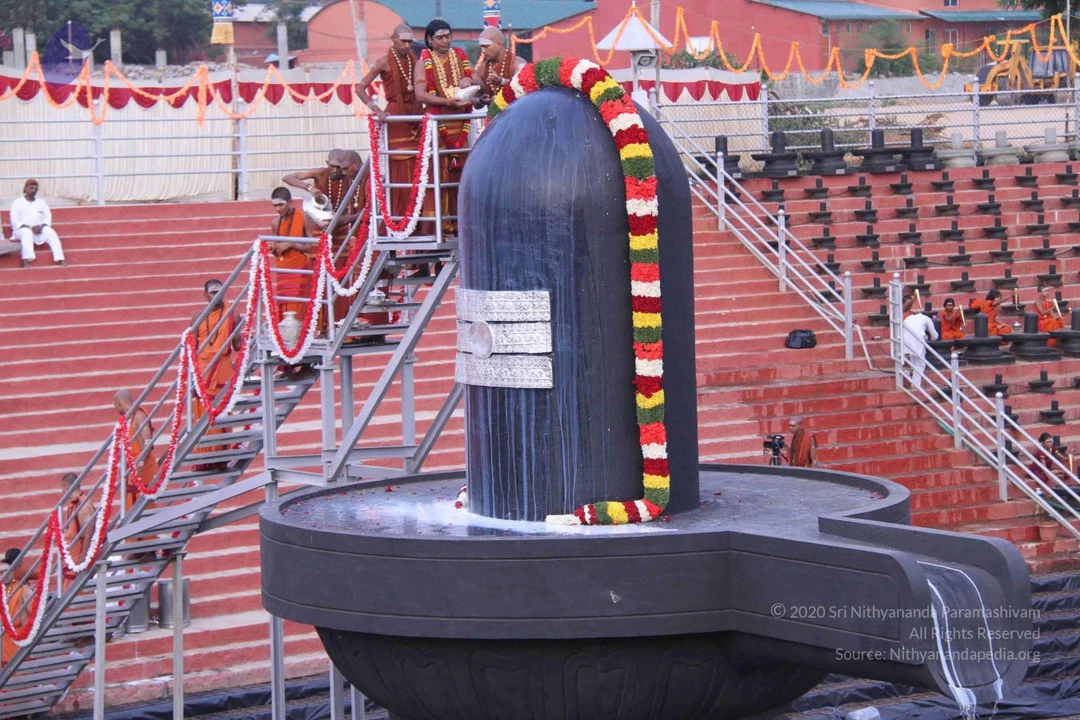
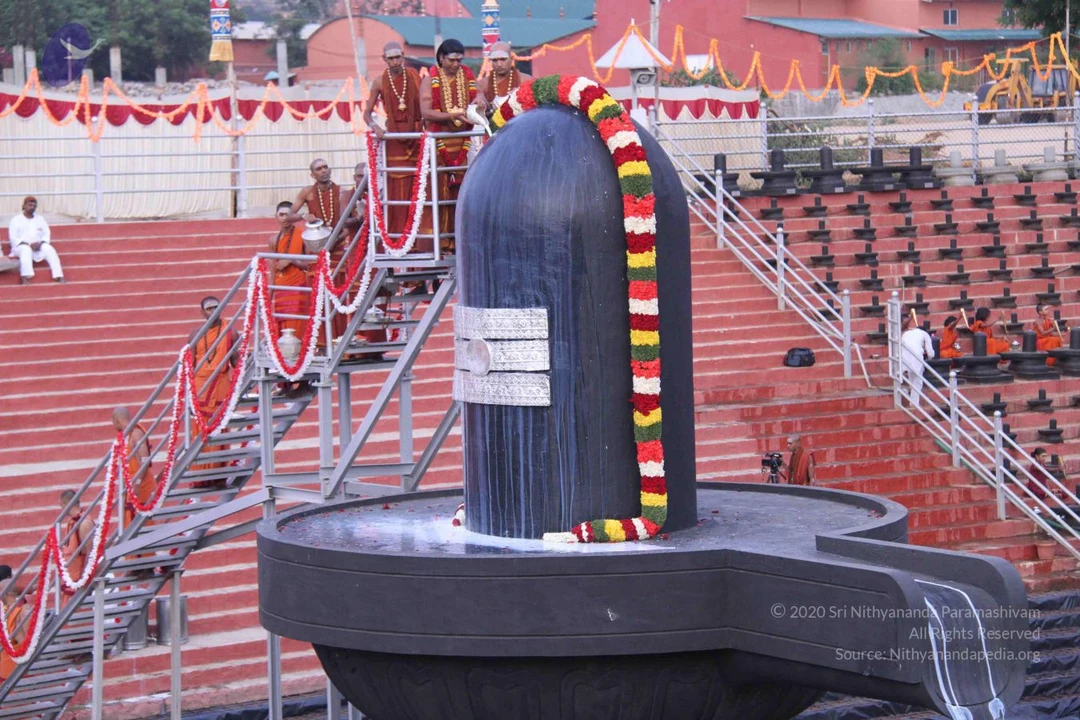
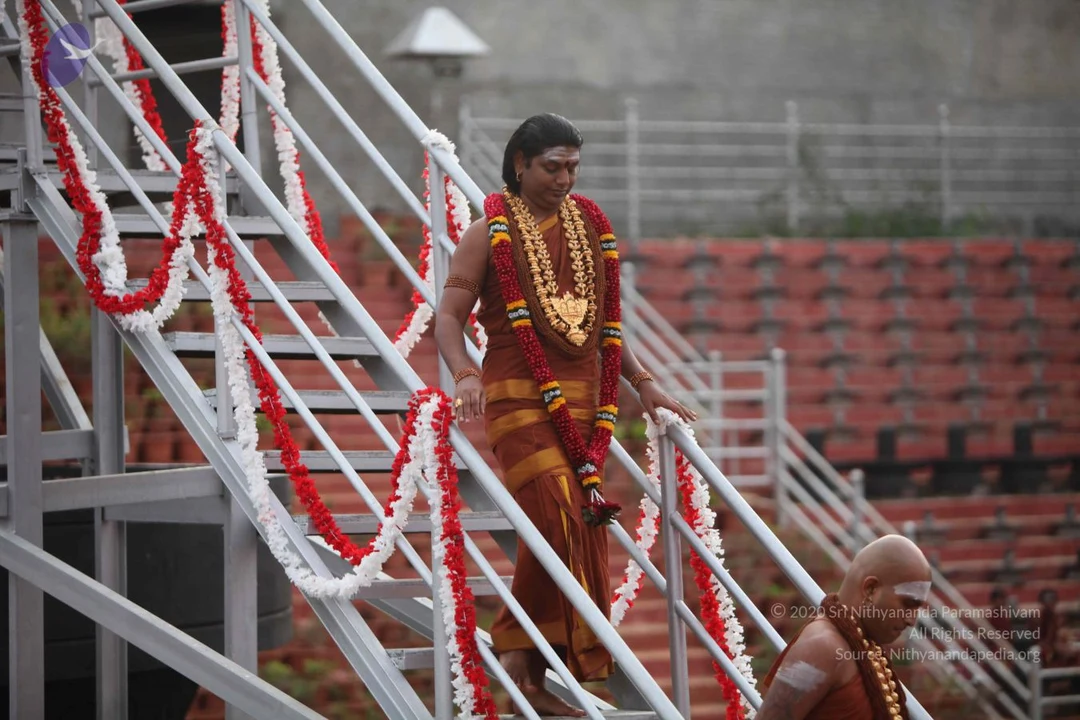
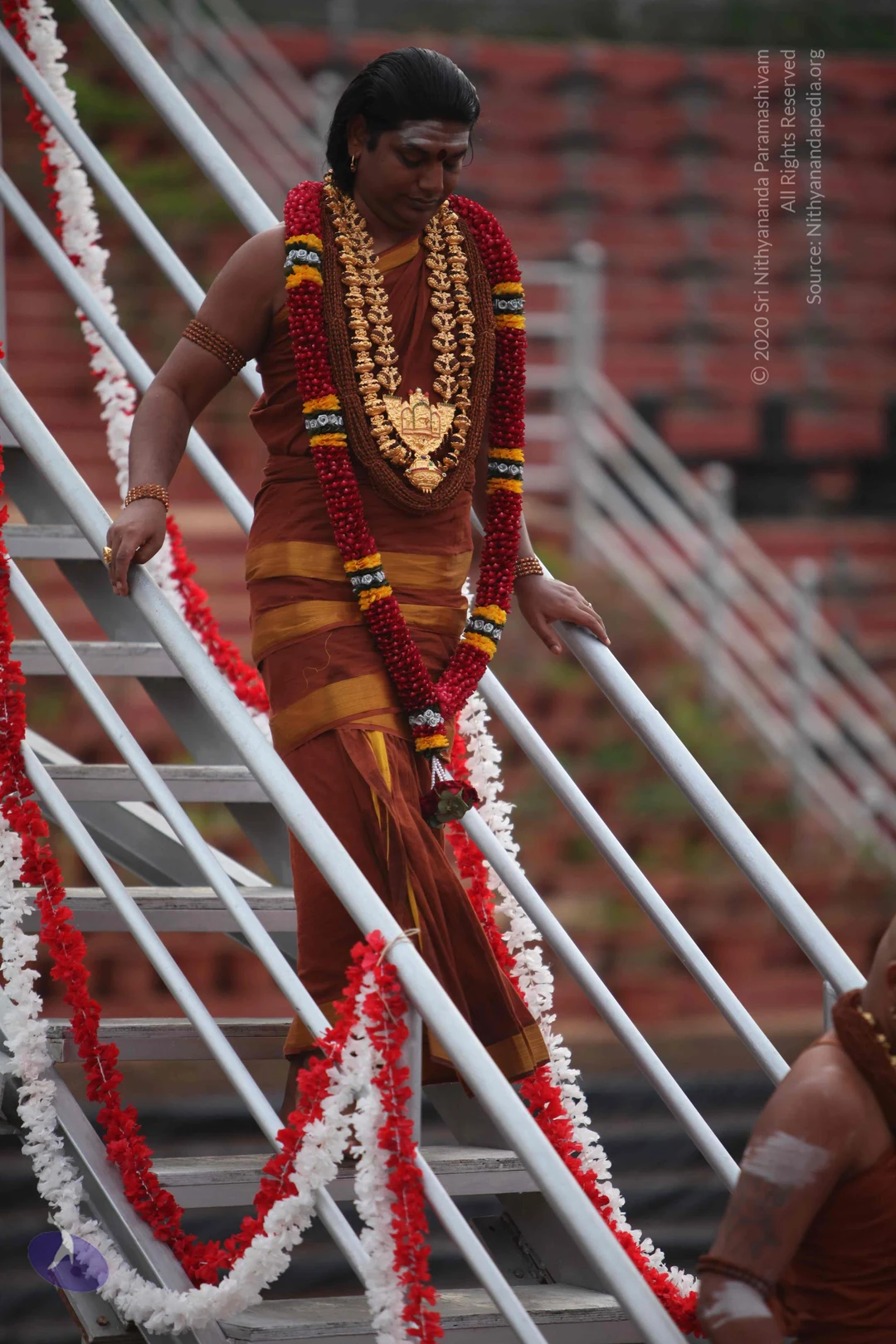
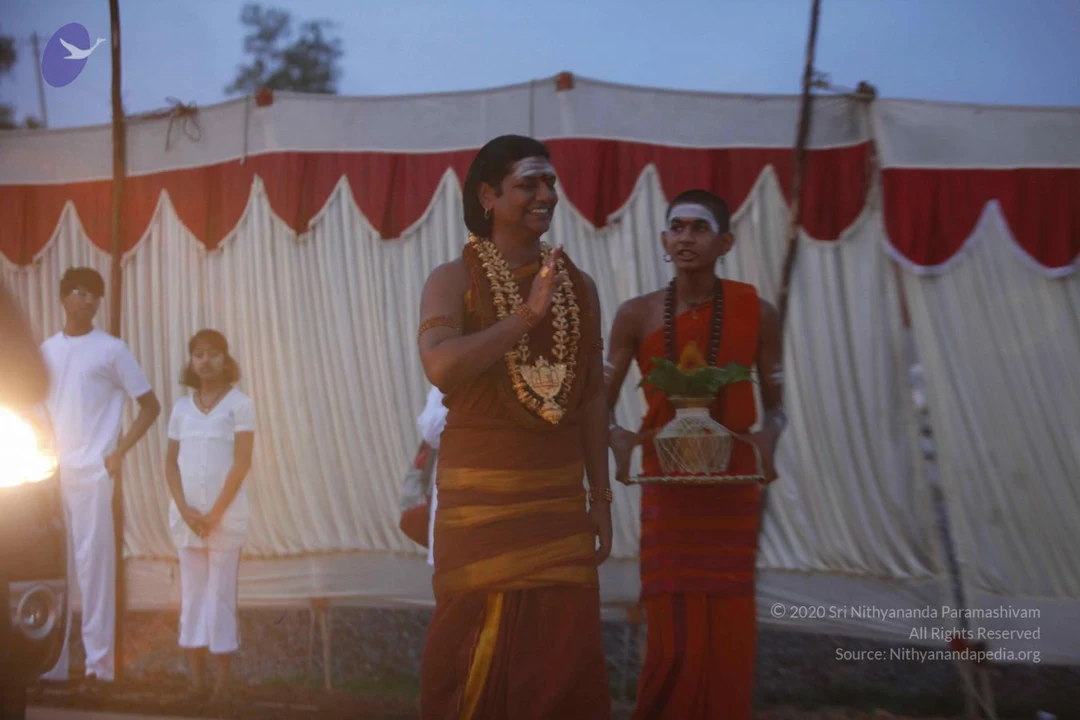
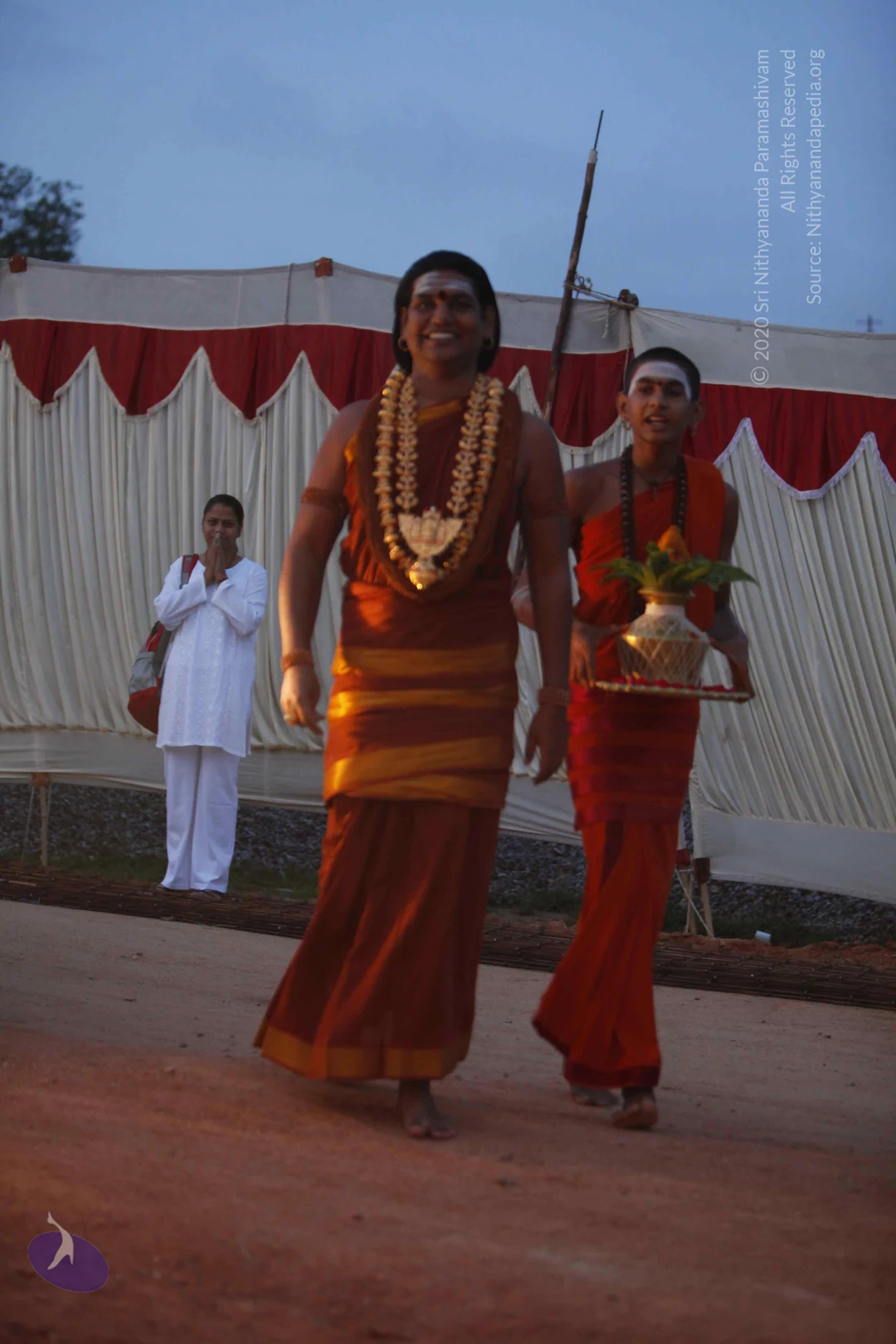
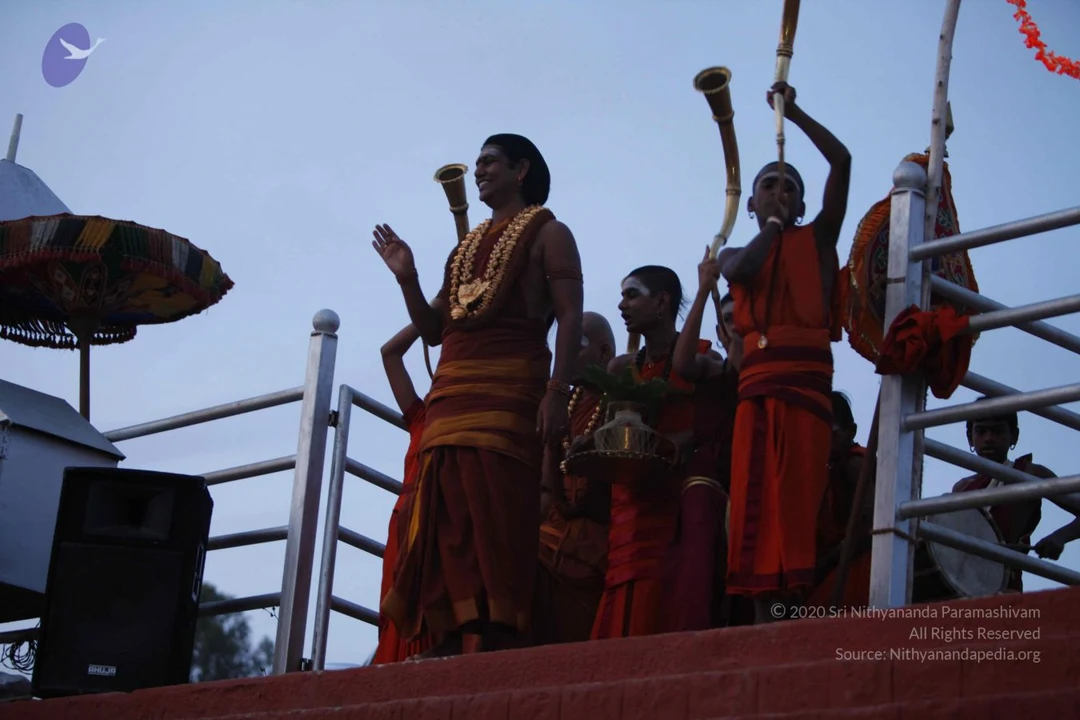
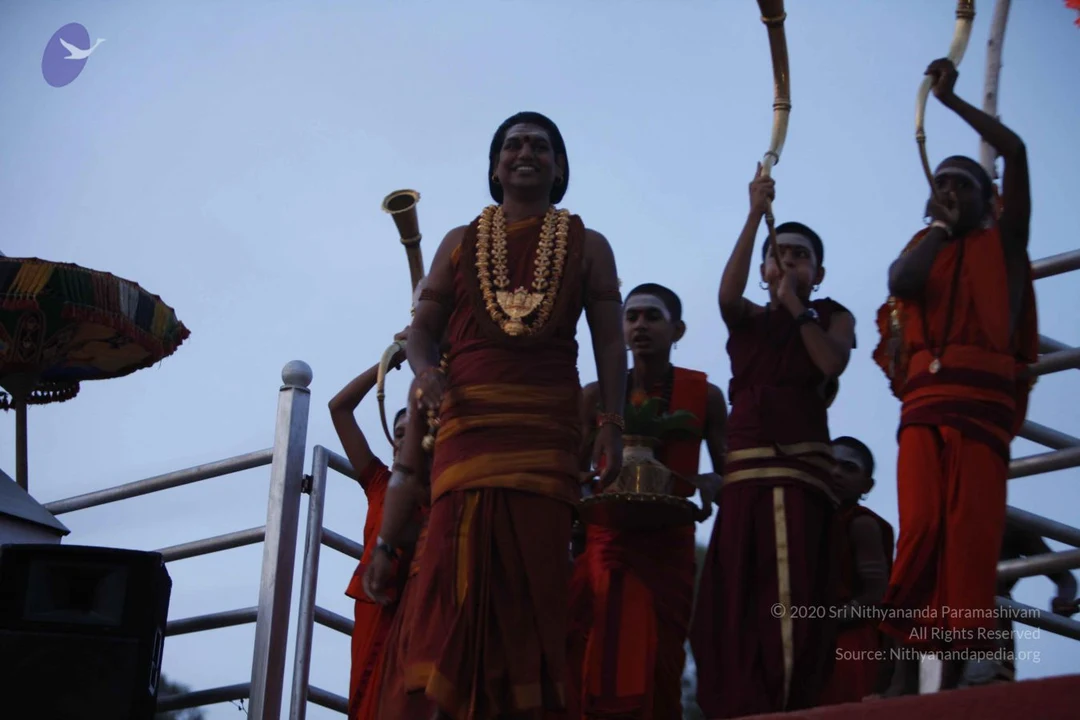
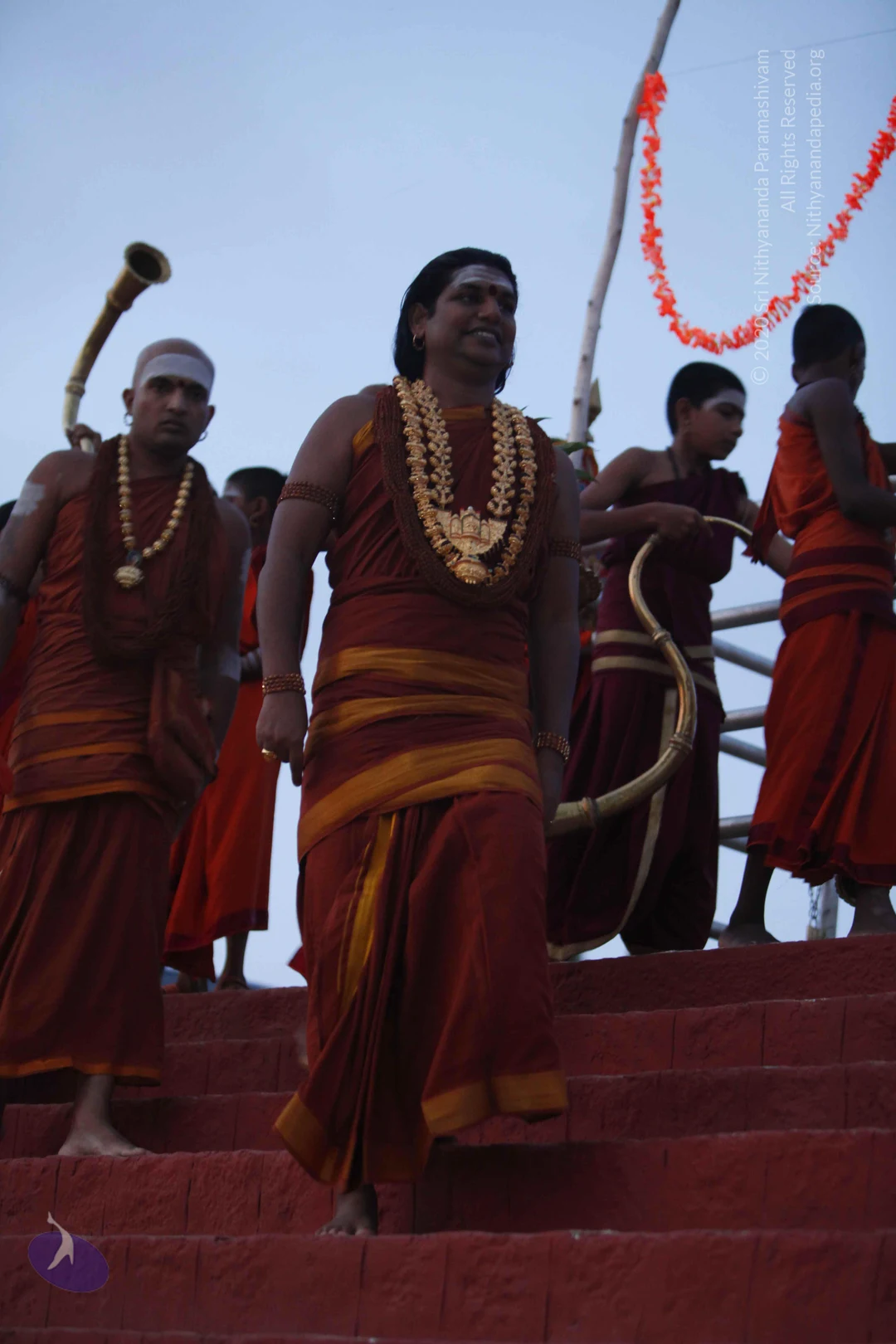
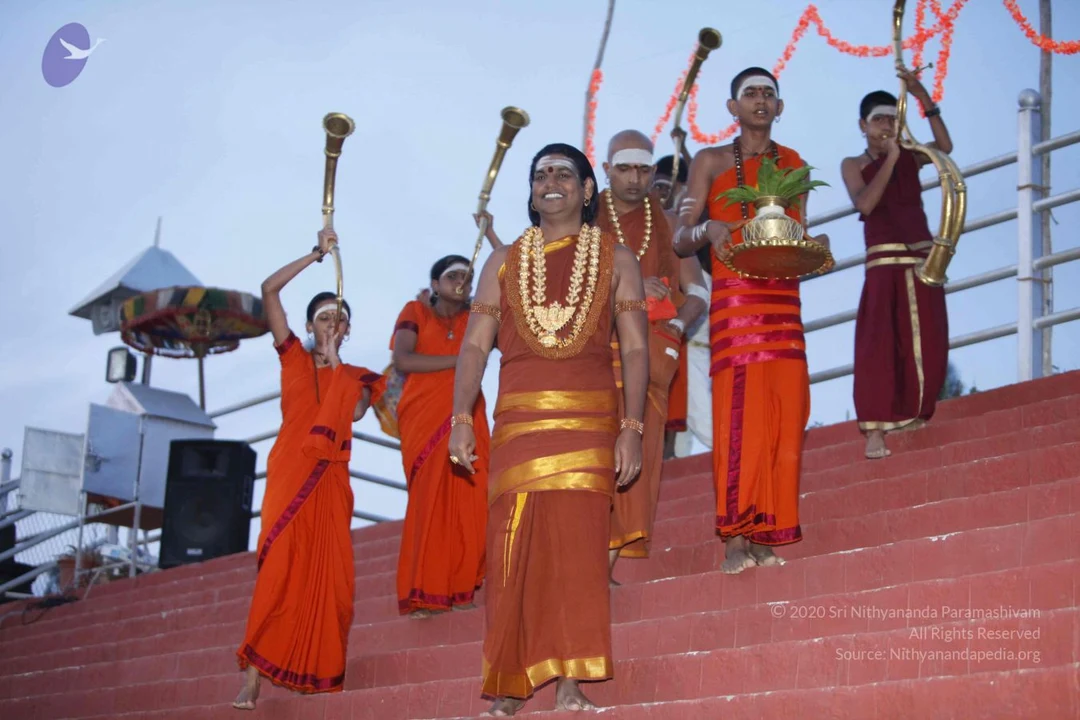
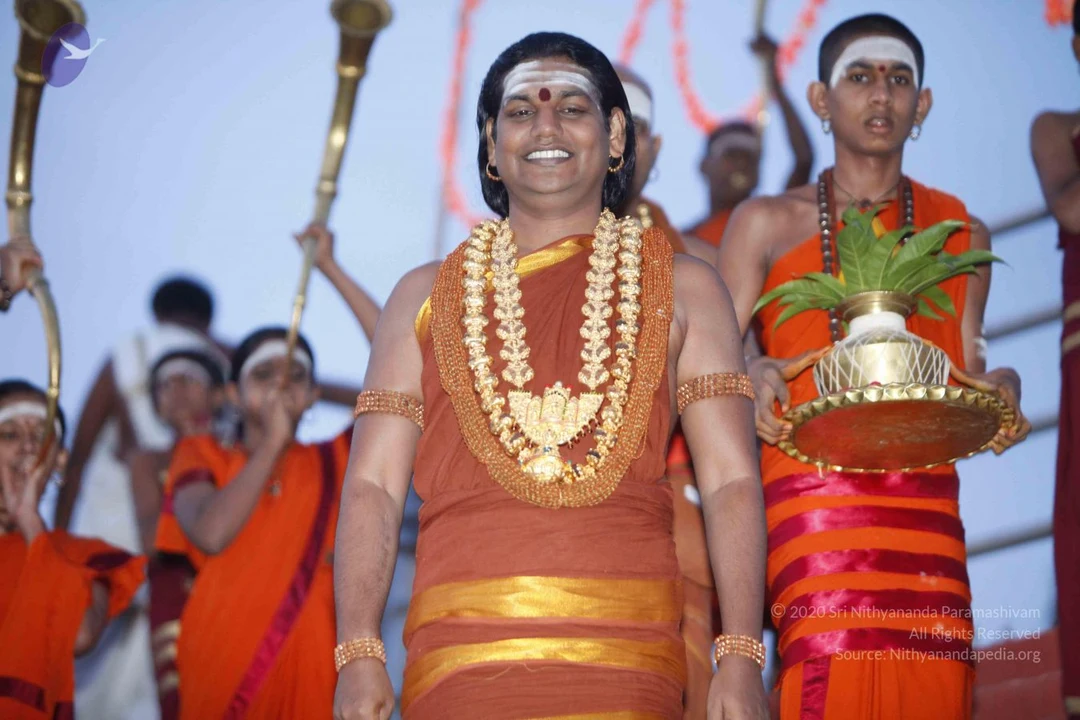
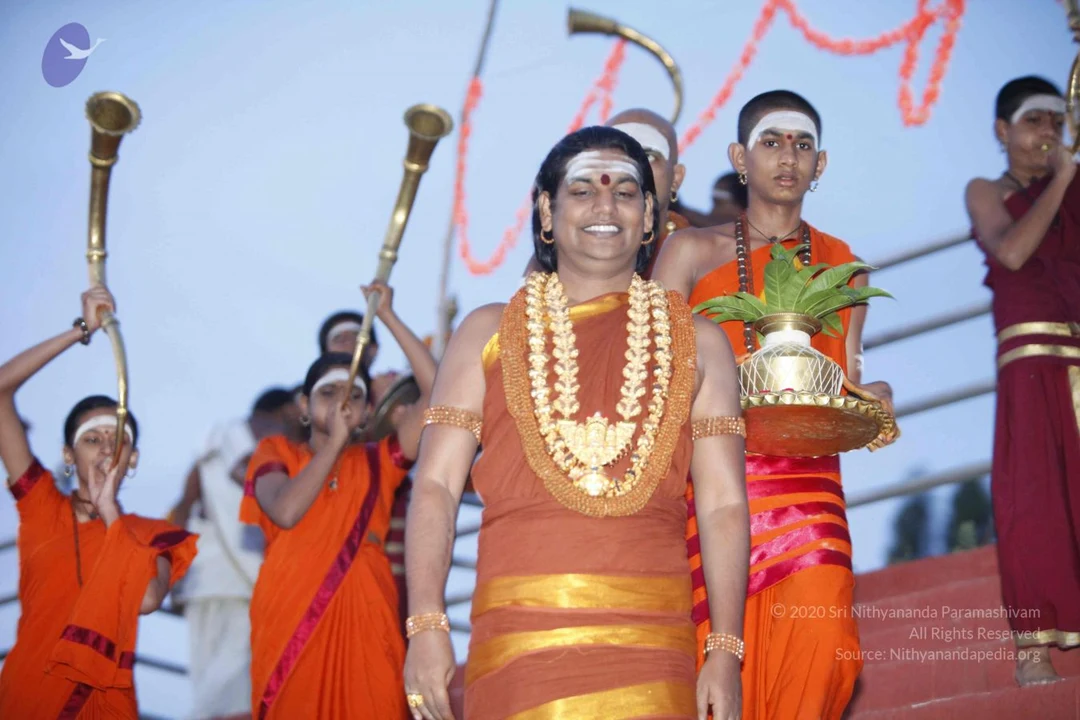
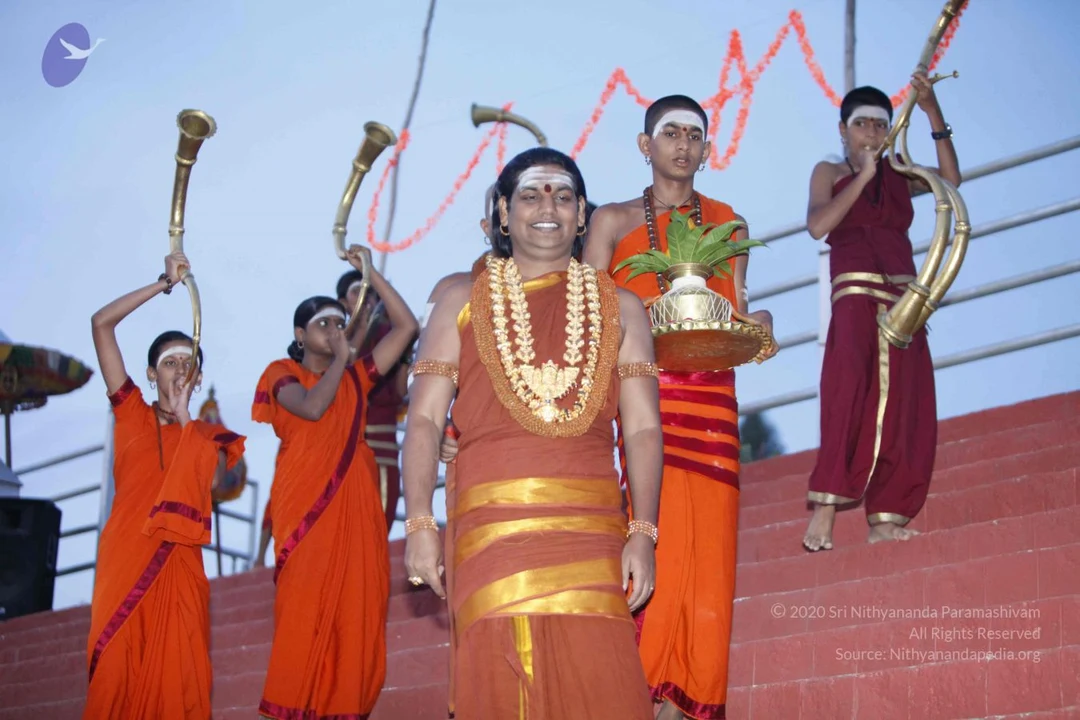
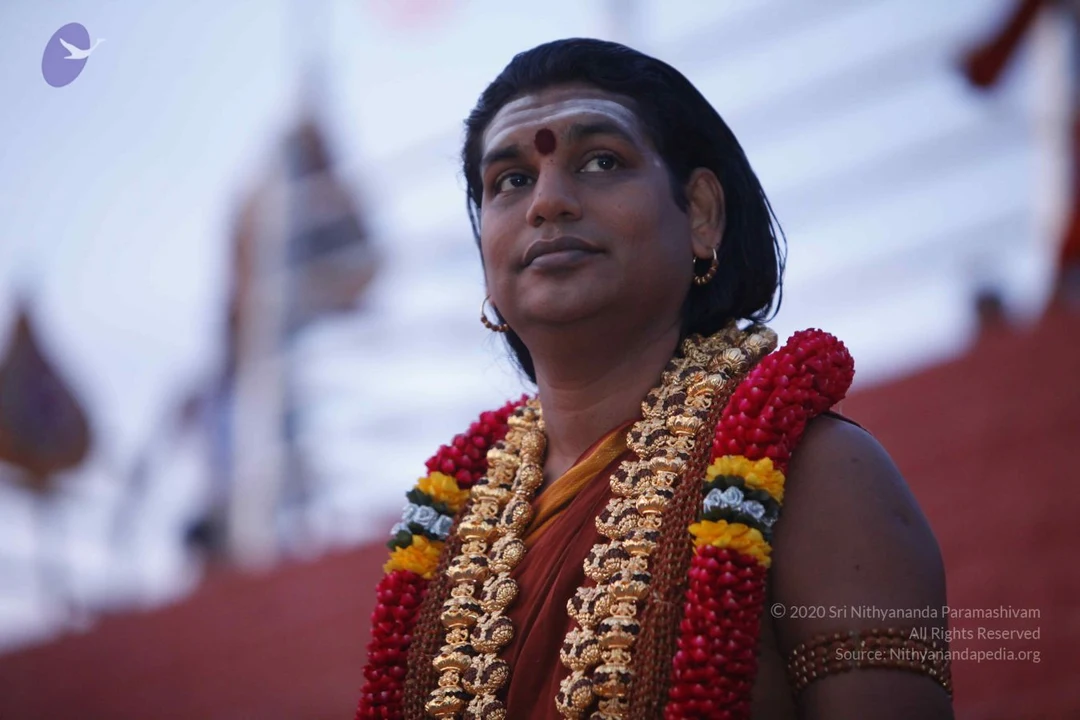
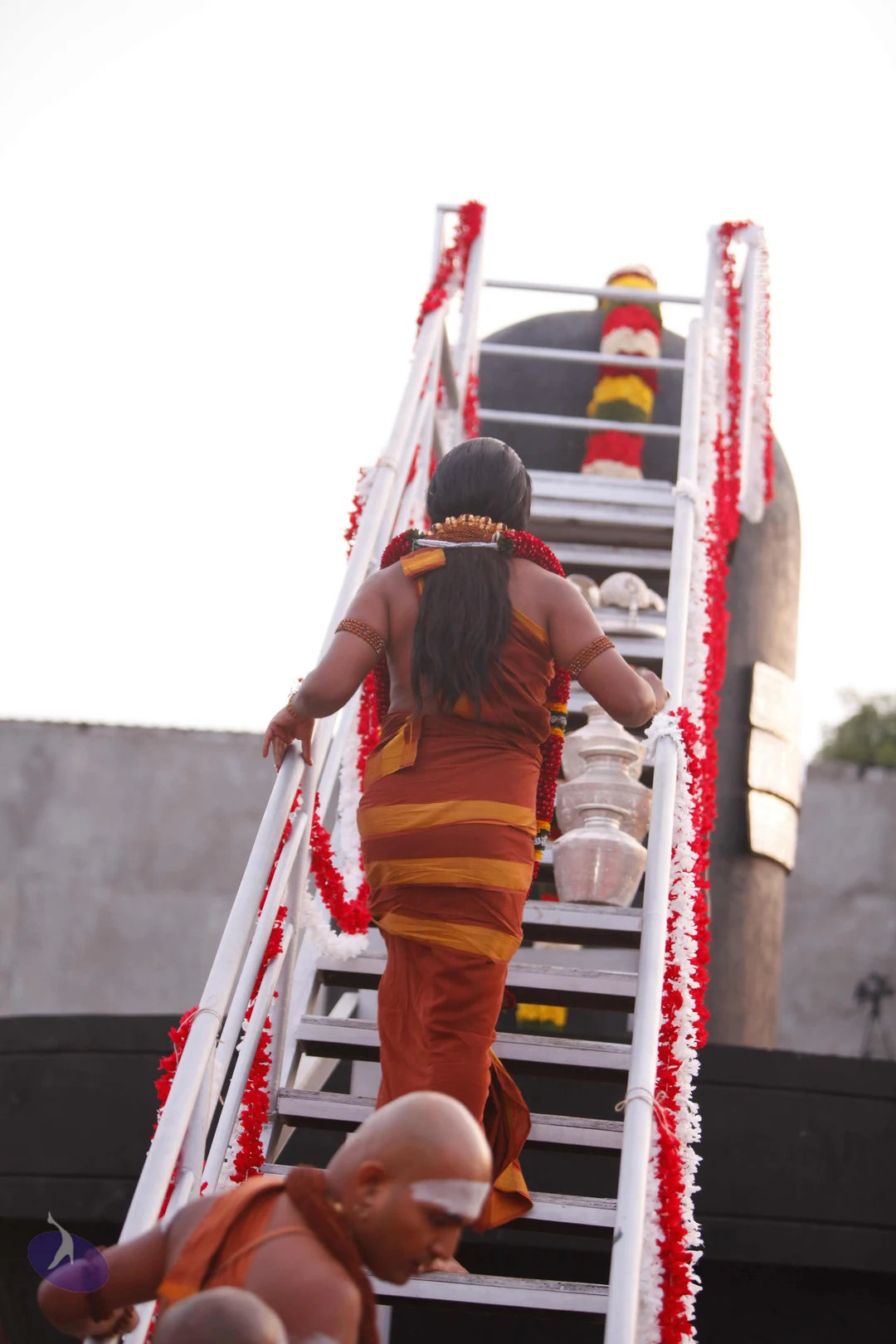
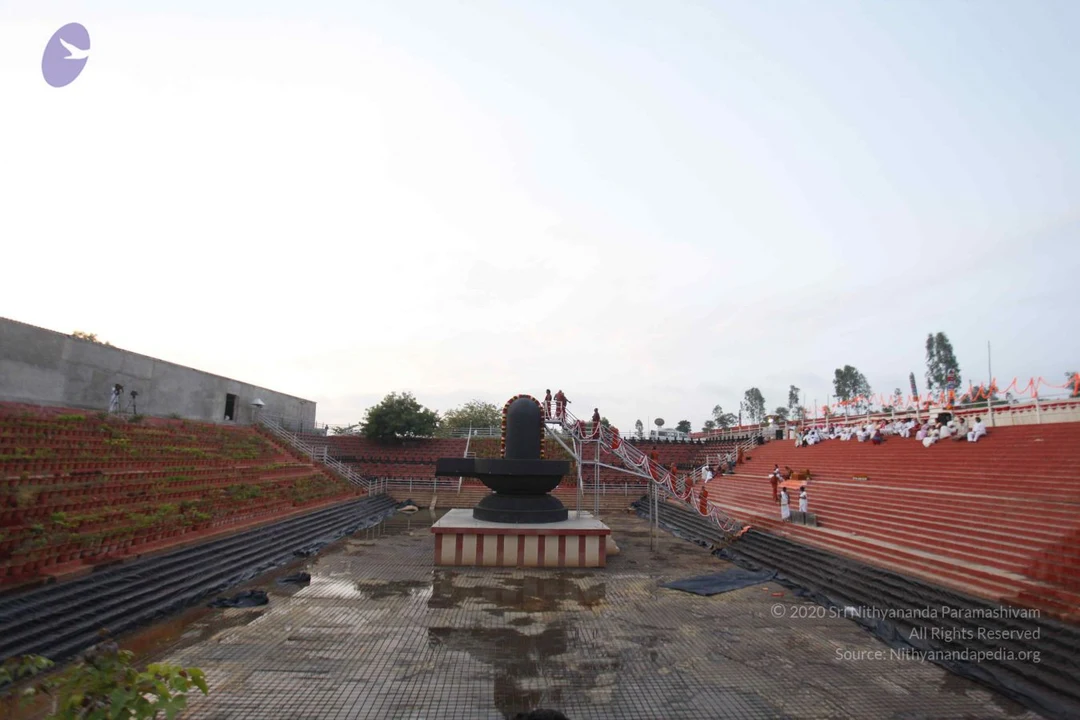
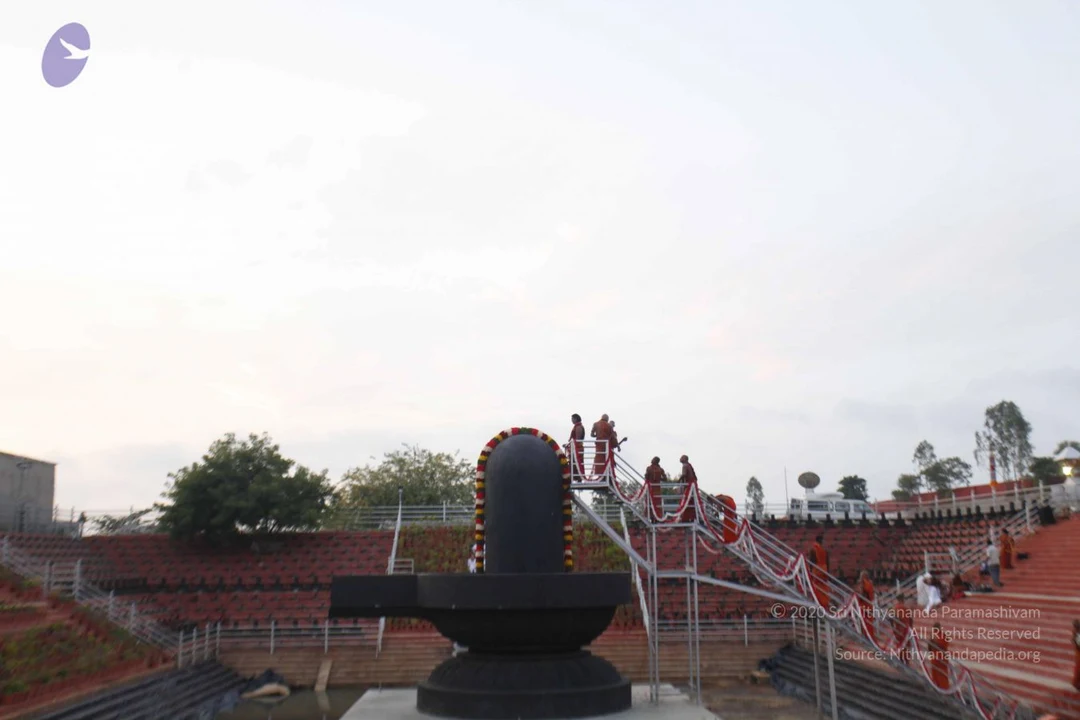
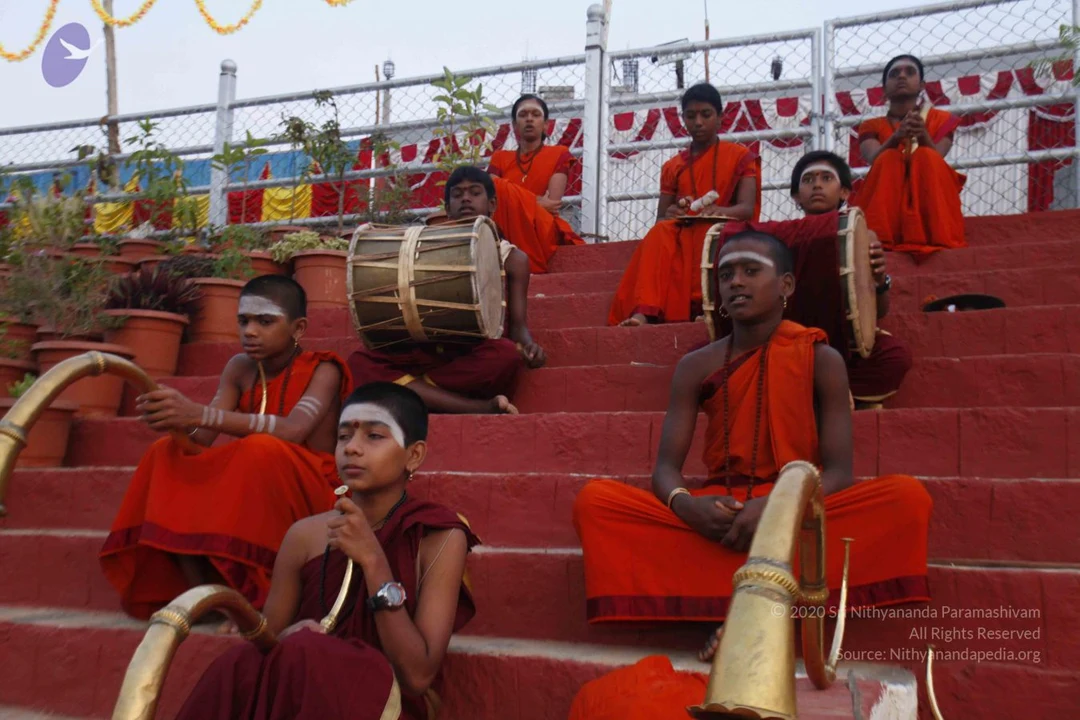
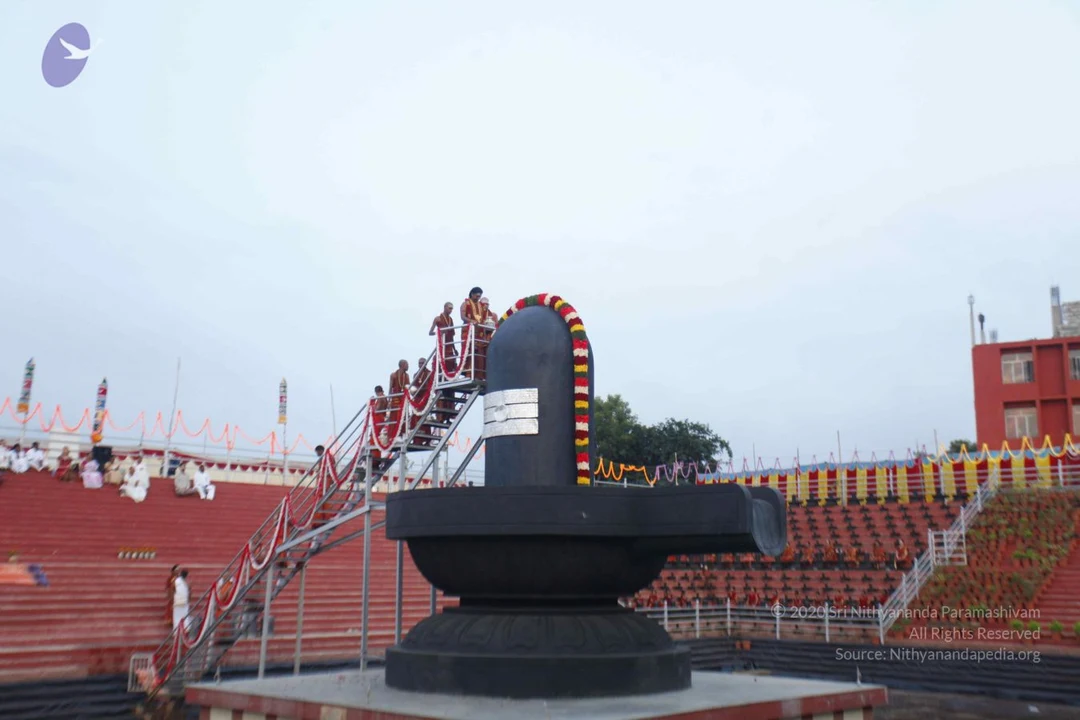
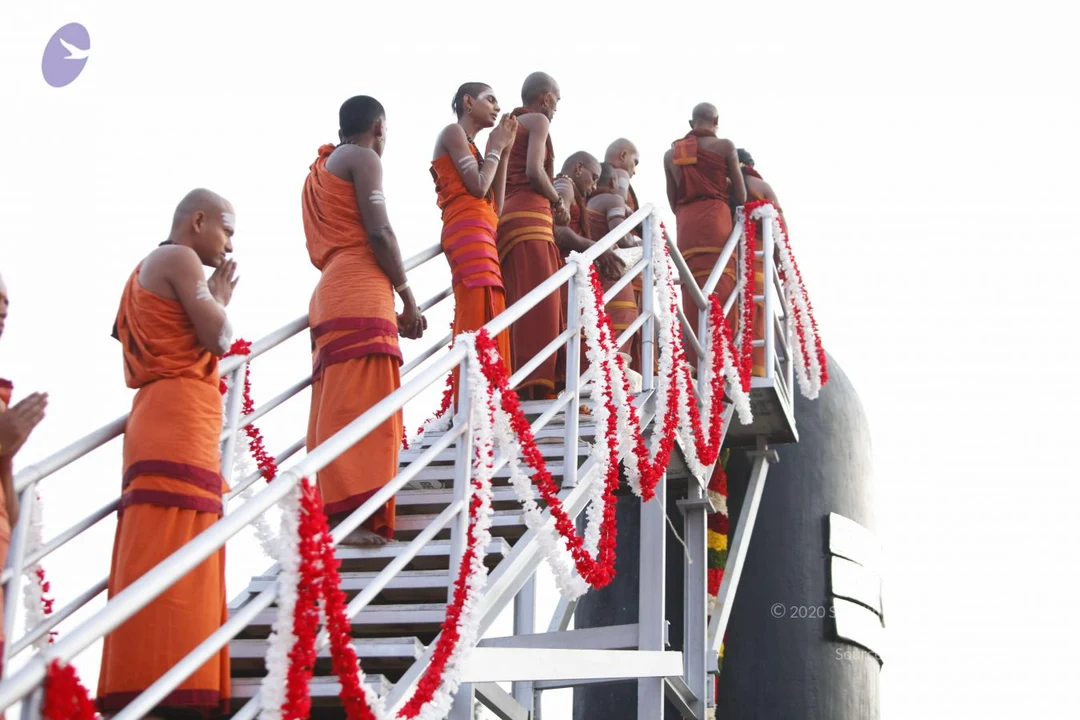
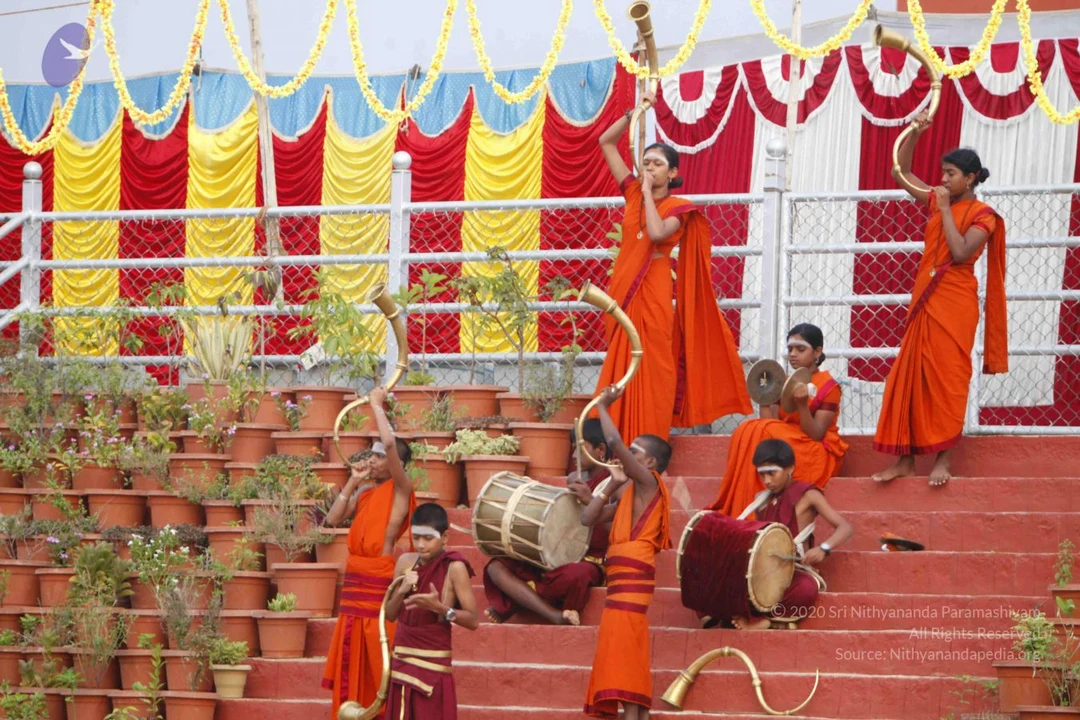
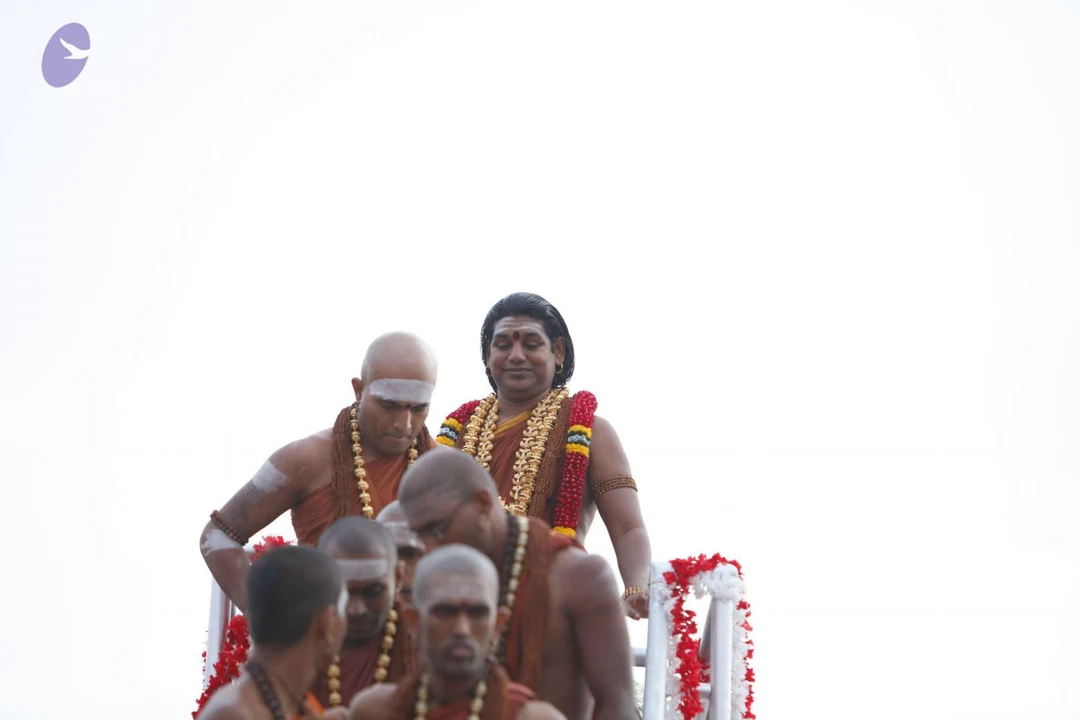
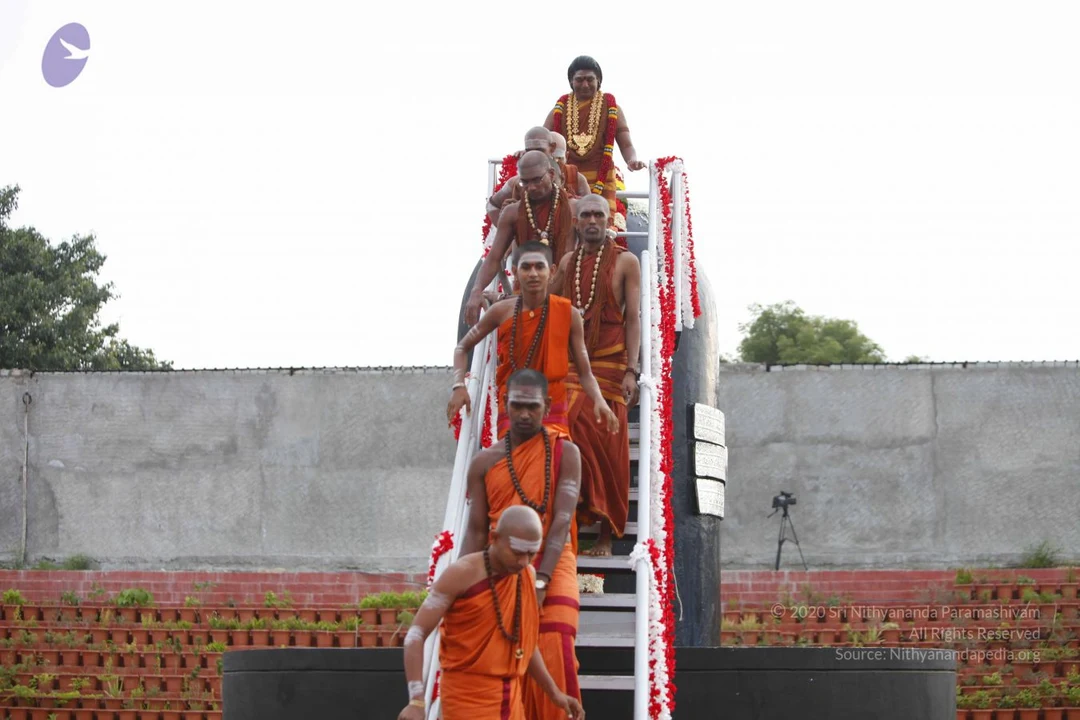
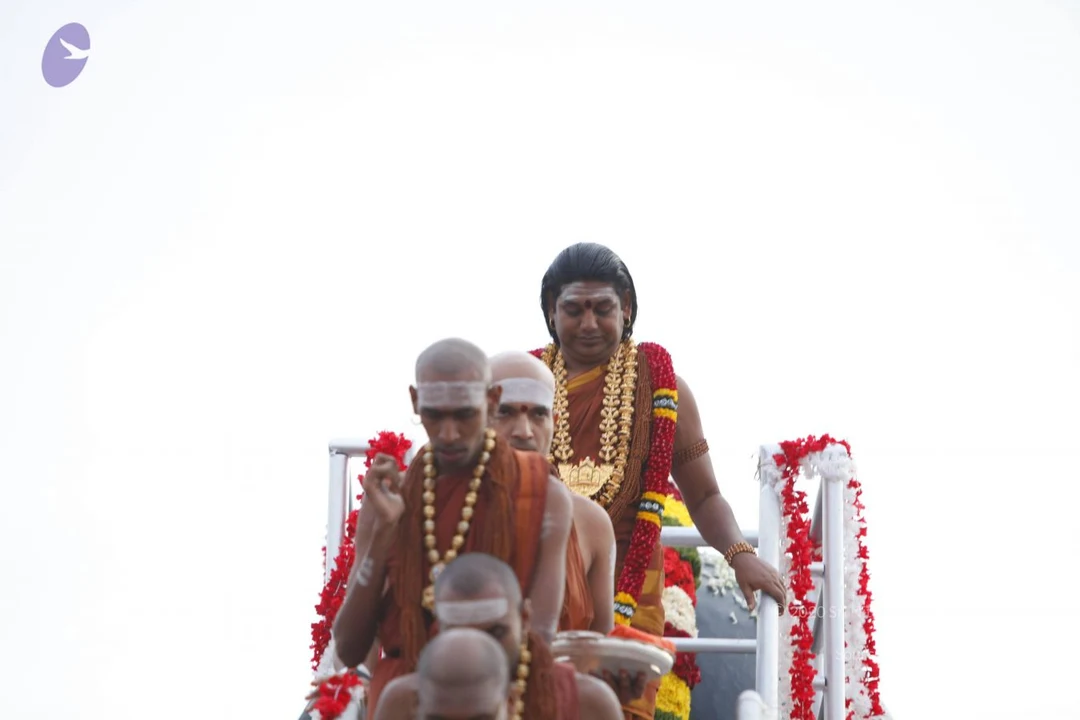
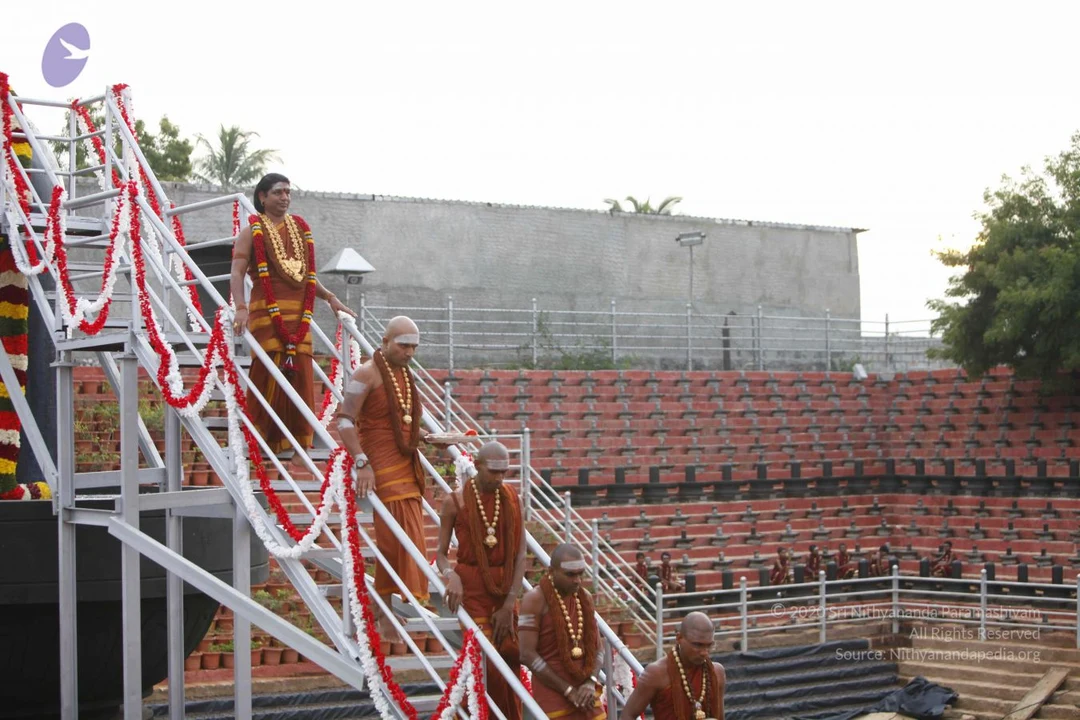
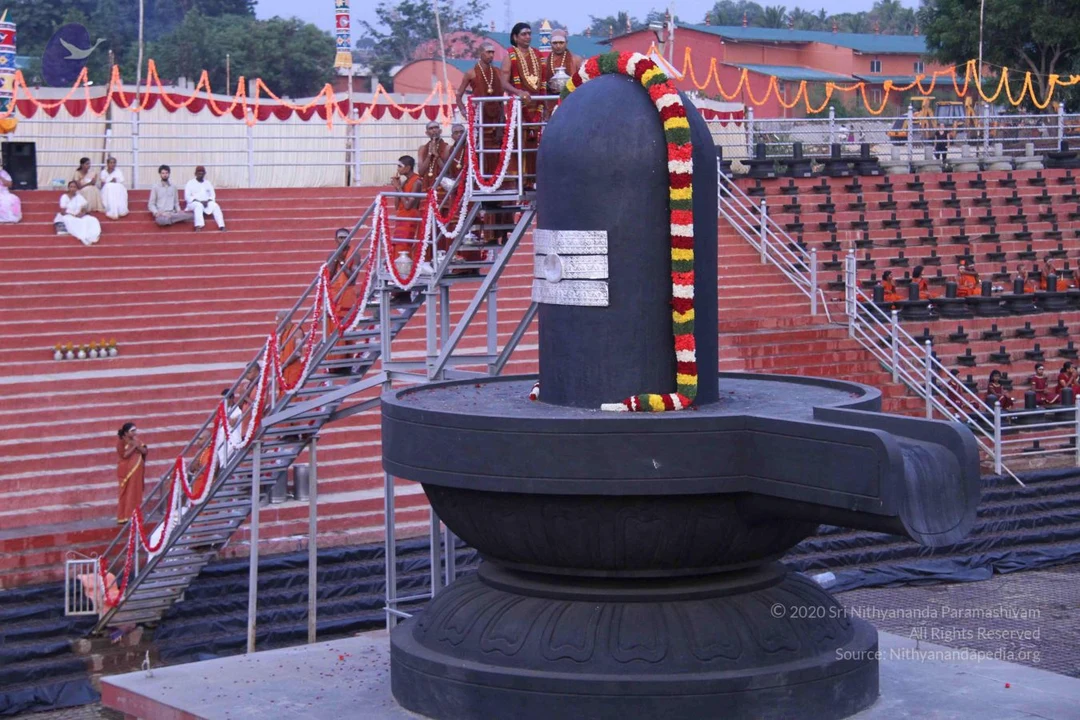
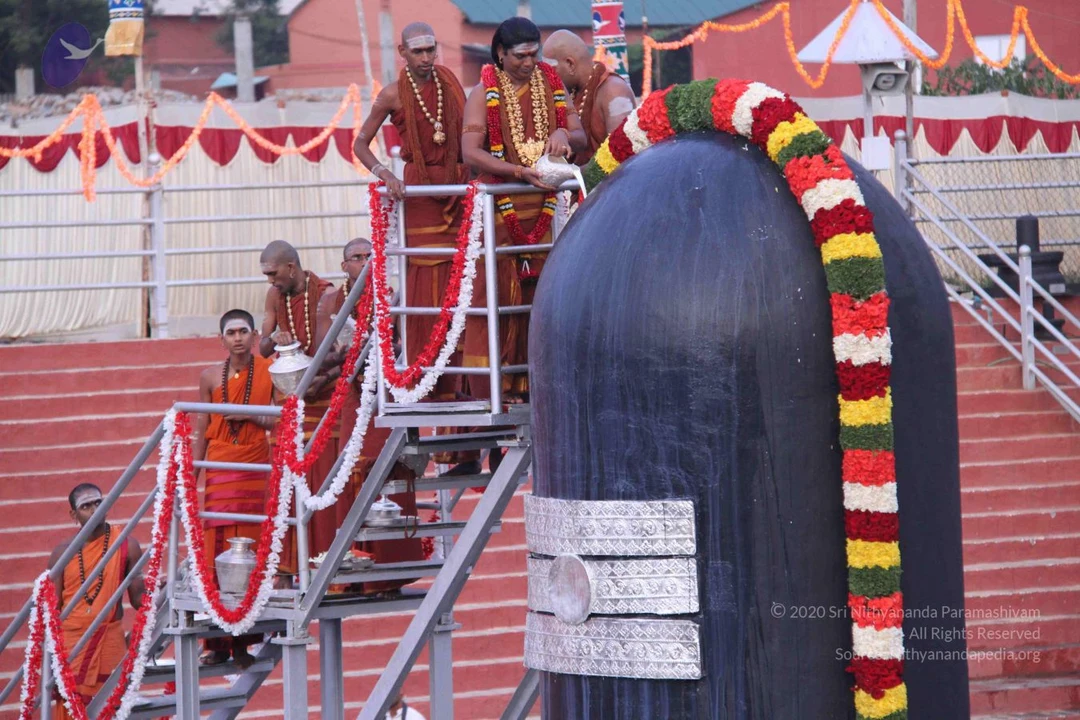
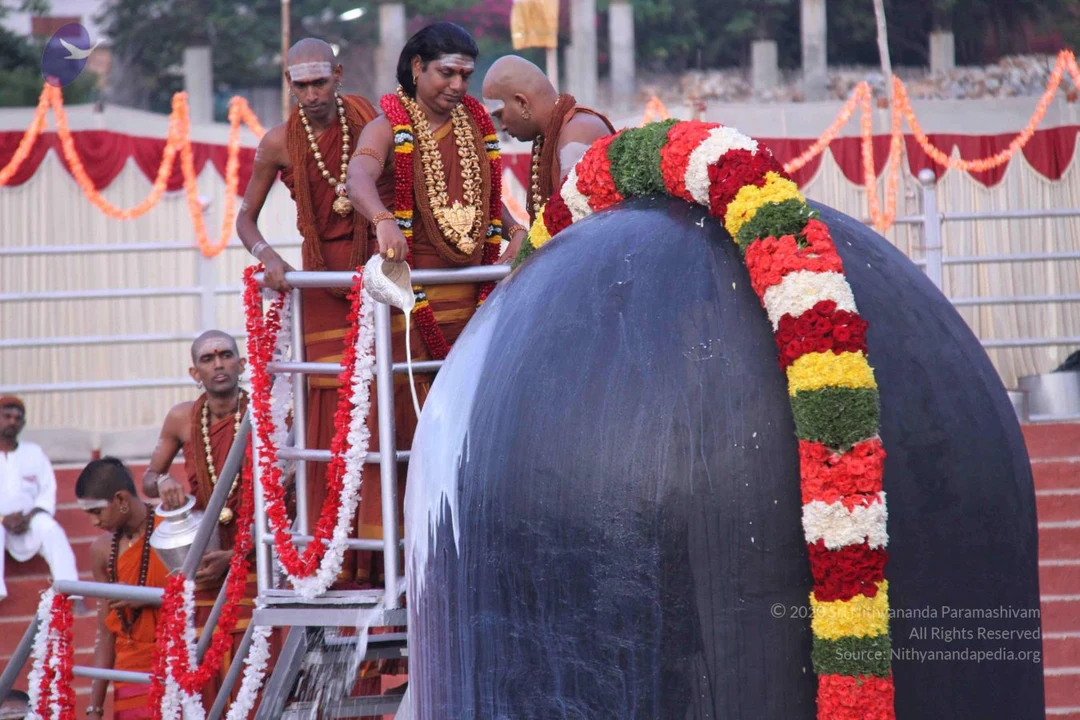
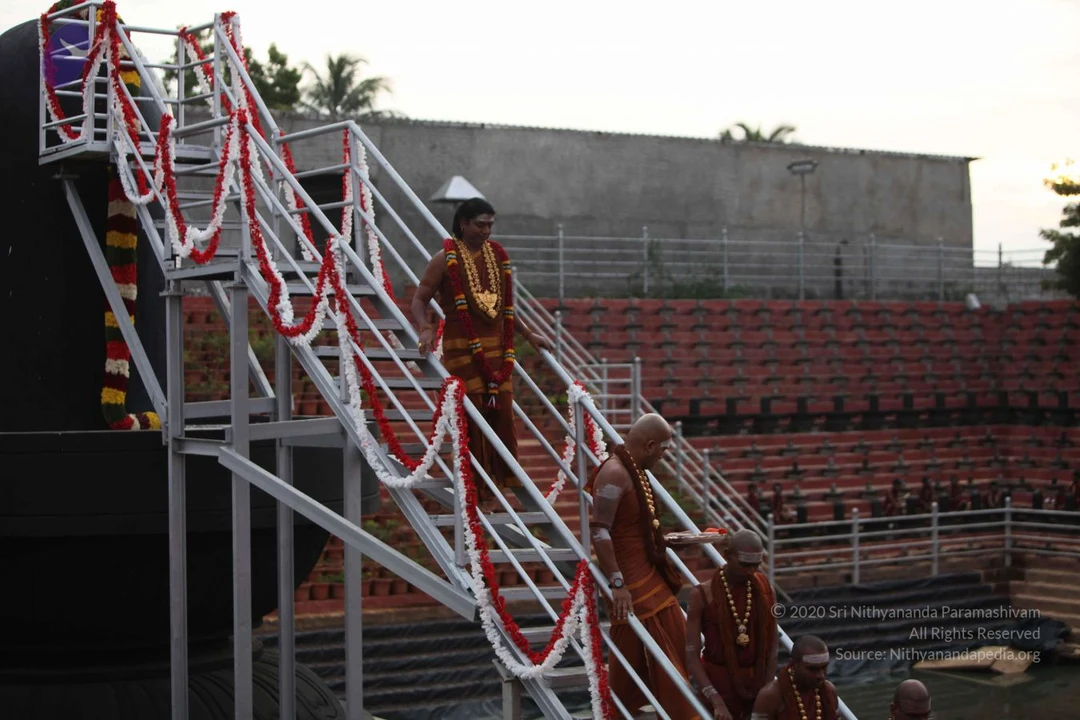
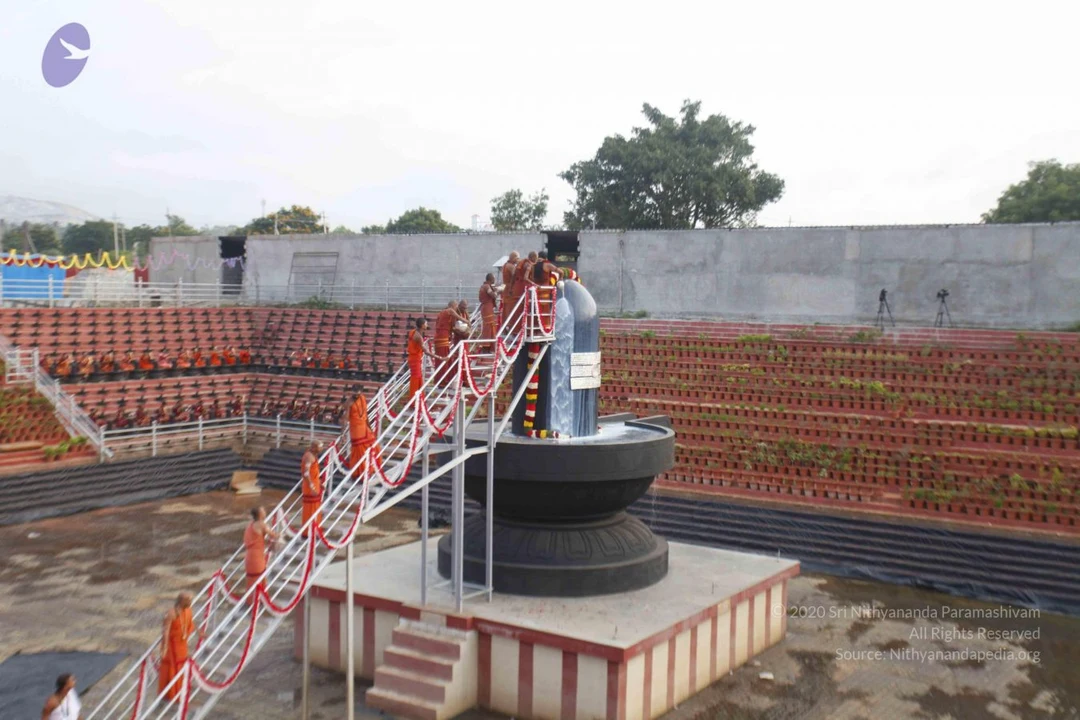
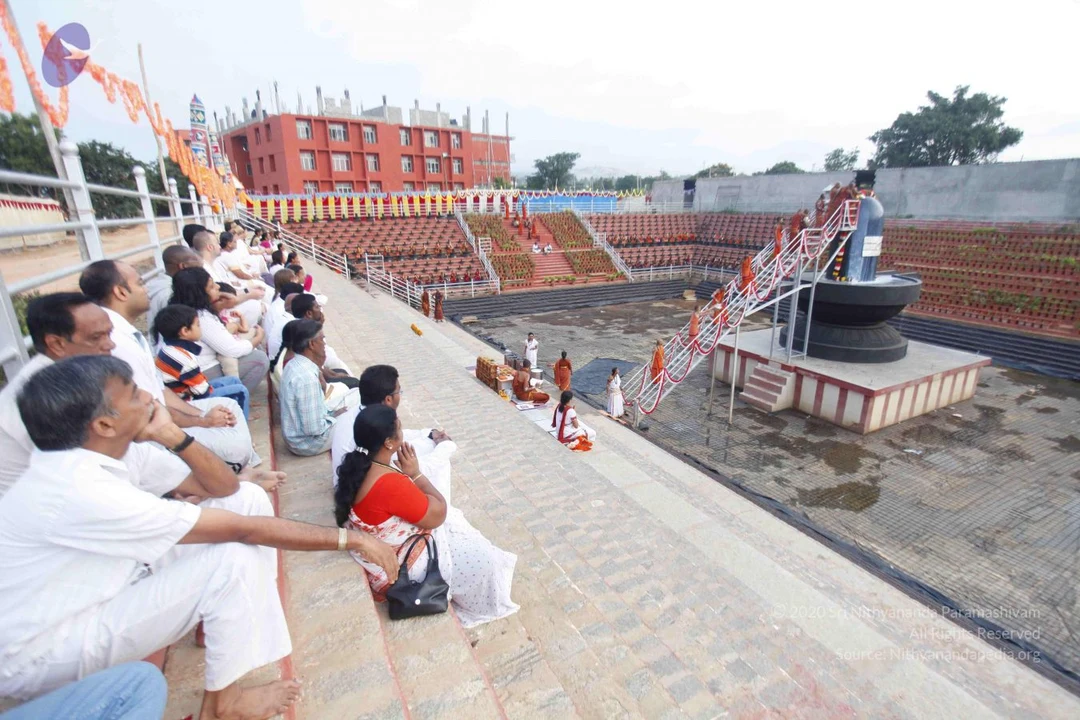
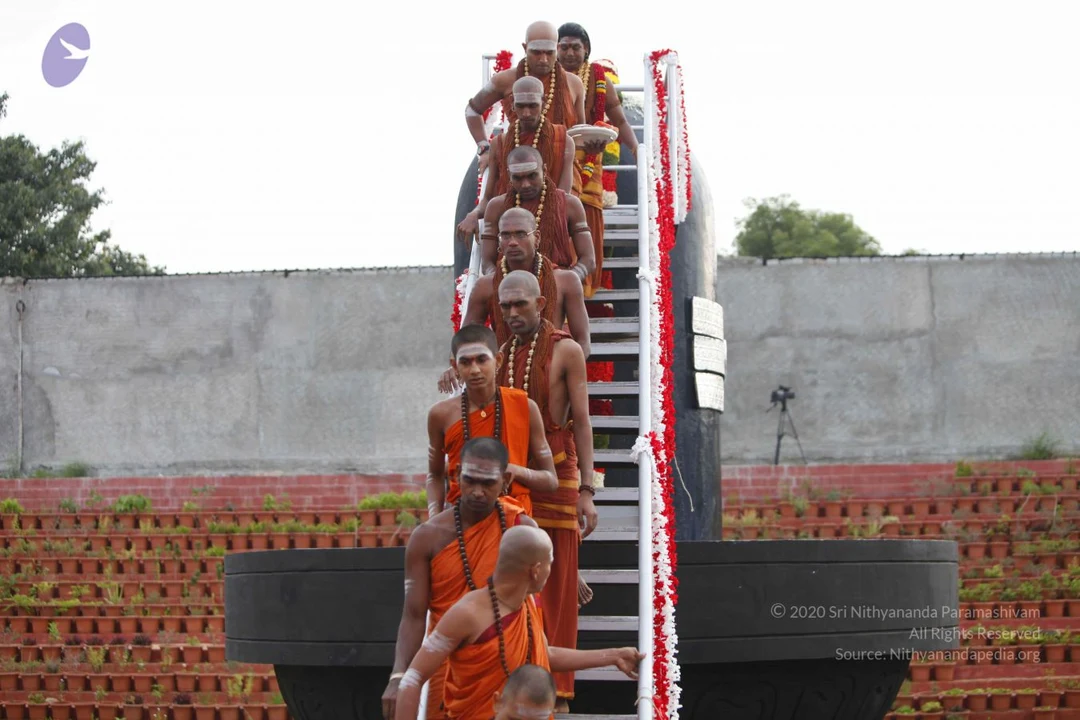
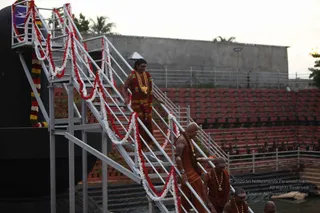
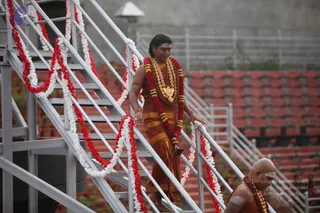
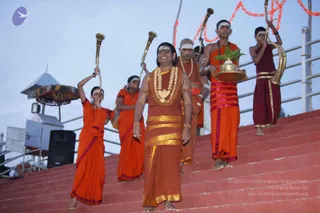
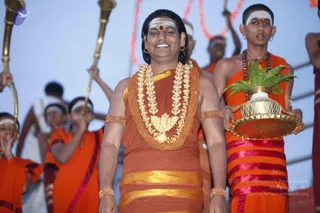
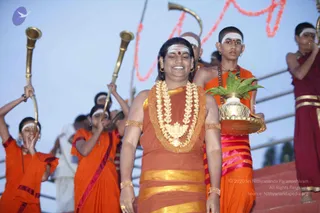
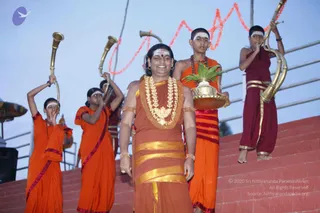
Photograph of a large black linga-shaped structure at an outdoor ritual site, with a metal staircase wrapped in red and white flower garlands. A man with long dark hair, a gold necklace and a red-and-white garland stands on the steps above, wearing an orange-brown cloth. Below, several priests in orange-brown robes with bare shoulders and white forehead bands descend the stairs; the bald priest in front carries a silver tray, and others wear rudraksha or gold-bead necklaces. Behind them, rows of empty red seating and a boundary wall with palm trees appear in evening light.A man in an orange-brown dhoti and matching upper cloth descends a metal staircase lined with red and white flower garlands. He wears a heavy gold ceremonial necklace with a large pendant, a rudraksha-style mala with multicoloured beads, and gold armbands, and has long dark hair swept back. Behind him, a shaved-headed monk in saffron clothing with a gold necklace and white vibhuti markings on his arms and forehead sits at the lower right. Red-brown tiered stadium seating fills the background.A procession descends a red stone staircase at dusk, led by a smiling figure in a saffron-orange dhoti and shawl with gold borders, wearing a white-flower garland, gold necklace, gold armbands and a red bindi with white tilak on the forehead. Behind him, saffron-robed young men and women in orange and maroon garments with gold trim carry long brass horns (ceremonial trumpets) raised overhead, and a young man in orange holds a brass plate with a kalasha-style vessel topped with green leaves. A bald attendant in orange with a rudraksha mala walks beside them. A colourful umbrella (chhatri) and a metal railing appear at left, with a loudspeaker on the steps and an orange floral garland strung overhead.A smiling man in the centre wears an orange-saffron shawl and wrap with a gold-banded hem, a heavy gold multi-strand necklace with a large pendant, gold armlets and bangles, and a red dot with white tripundra marks on his forehead. His long dark hair is swept back. Behind him, young men in saffron-orange robes with white headbands carry long golden horns, and one at right holds a brass tray with a green leafy kalasha. Red and orange garlands hang in the background, and the setting appears to be an outdoor stage or procession.A procession at dusk on a stone staircase. A central figure in orange and gold-bordered robes wears a long gold-and-white flower garland, a gold pendant, gold bangles and a red bindi, with white sacred markings on the forehead and a broad smile. Behind him a young attendant in saffron robes holds a brass kalasha with green leaves on a tray. Several attendants in saffron robes with white forehead markings blow long brass horns, and a red and white flower garland hangs across the background. Swamiji (probable) cues: long swept-back hair, ornate gold necklace and saffron robes, presented as the central procession figure.Outdoor procession on red-tiled steps at dusk. A central man in orange-brown dhoti and shawl, wearing a gold-threaded garland and a large gold pendant, with white and red forehead markings, smiles while carrying a brass vessel topped with green leaves. Behind him a young man in saffron-orange robes and rudraksha beads holds the vessel steady. Flanking them, young attendants in orange and maroon robes with white forehead bands blow long brass horns. Red-and-orange marigold festoons hang above and a striped canopy is visible at left.

Paduka-Puja

13 photosSource gallery
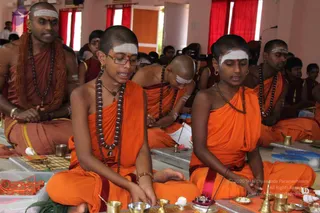
A photograph of several young male sannyasi disciples in saffron-orange robes seated cross-legged on low wooden platforms during a ritual. The two foreground boys wear rudraksha malas, white vibhuti or tilak marks on their foreheads and shaved heads; the boy on the left wears glasses and holds a small brass vessel while the boy on the right presses his palms together in prayer. Brass puja vessels, a small brass bell, incense sticks, a kumkum-coloured plate and a steel tray with lamps sit before them. Other robed participants sit behind, and a red curtain hangs in the background.A photograph of a seated group of young sannyasis in saffron-orange robes during a ritual session in a plain hall with red curtains. Two shaved-headed boys in the foreground wear orange garments, rudraksha malas and white sacred ash bands on their foreheads; the nearer boy wears glasses and a small red mark on his forehead, and the other sits with hands near brass cups and small offerings. Behind them, a man in a dark red-brown robe and ochre beaded necklace sits with hands folded, and more robed participants sit in rows. Brass lamps, bowls and small cups rest on low silver-grey tables, with a red-and-orange cloth and a plastic tub of offerings at left. The setting suggests a puja or satsang practice, with the group seated in meditative posture.Several young boys with shaved heads and white tilak on their foreheads sit cross-legged on the floor in orange robes, some with maroon sashes and rudraksha malas. The foreground boy, in the left of the frame, presses his palms together in prayer with eyes lowered. Beside them stand brass oil lamps, a brass kalasha-style vessel and small brass pots on a low table with orange cloth. Adult figures in maroon and orange robes sit further back. A pink-and-red drum is partly visible at left. The setting appears to be an indoor hall with plain walls.A seated assembly of devotees in white traditional clothing sits on a red mat in a hall with red curtains and framed pictures. In the front, a young man in a white kurta sits cross-legged holding a red book. Beside him, a shaven-headed boy wears an orange robe and rudraksha mala with white sacred ash markings. Younger boys in maroon robes with yellow borders and white tilaka sit nearby, and older men in white and a man in a yellow shirt sit in rows behind. Several people seated at the back sit on chairs. The gathering appears to be a satsang or meditation session.A seated group of devotees in a hall during a person satsang-style gathering. In the foreground, a young man with a shaved head, white ritual dress and a rudraksha mala sits on a red mat, while a monk-like figure in saffron robes and a red-bordered shawl with white sacred marks on his forehead sits beside him. Several children in red-brown robes with white forehead marks sit in front. Behind them, rows of men in white kurtas and white dhotis sit on red cushions, some wearing lanyards, and a seated man in a yellow shirt raises his hand near his mouth. A small brass lamp and a red box with a gold emblem rest on the mat in front. No clearly identifiable a person is shown, so the appearance is uncertain.A seated group of shaved-headed young sannyasis and devotees in saffron and orange robes performs a ritual in a hall, with white tilaka and vibhuti marks on their foreheads. Several hold small brass bells and implements, and brass vessels and a small plastic container sit on low wooden stands in front. A man on the left in rust-brown robes and a saffron-orange shawl with rudraksha malas holds a small brass lamp and a bell. Behind them, rows of seated boys in maroon and red robes and adults in red and white sit on the floor.

Nithya-Satsang-Swamiji

22 photosSource gallery
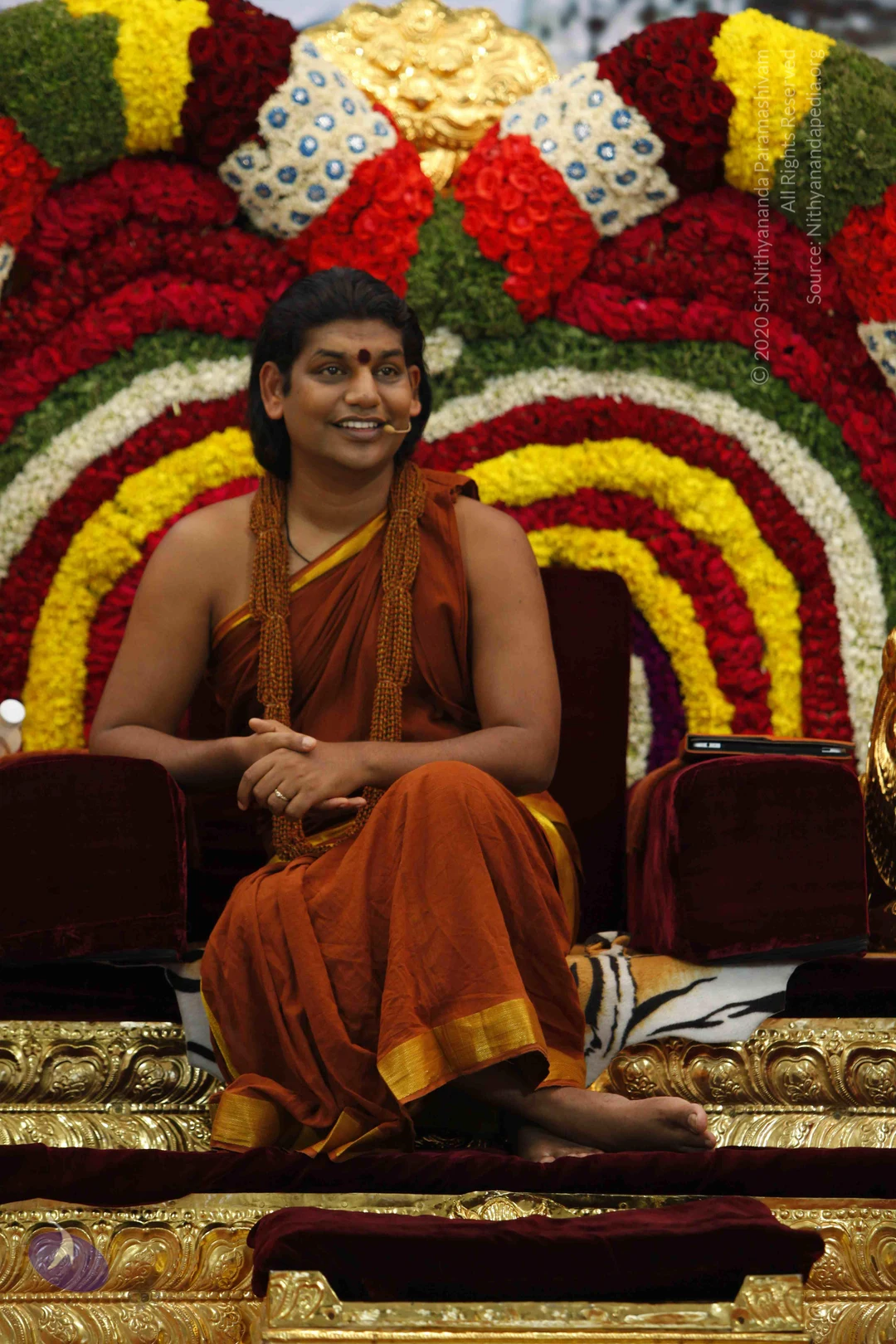
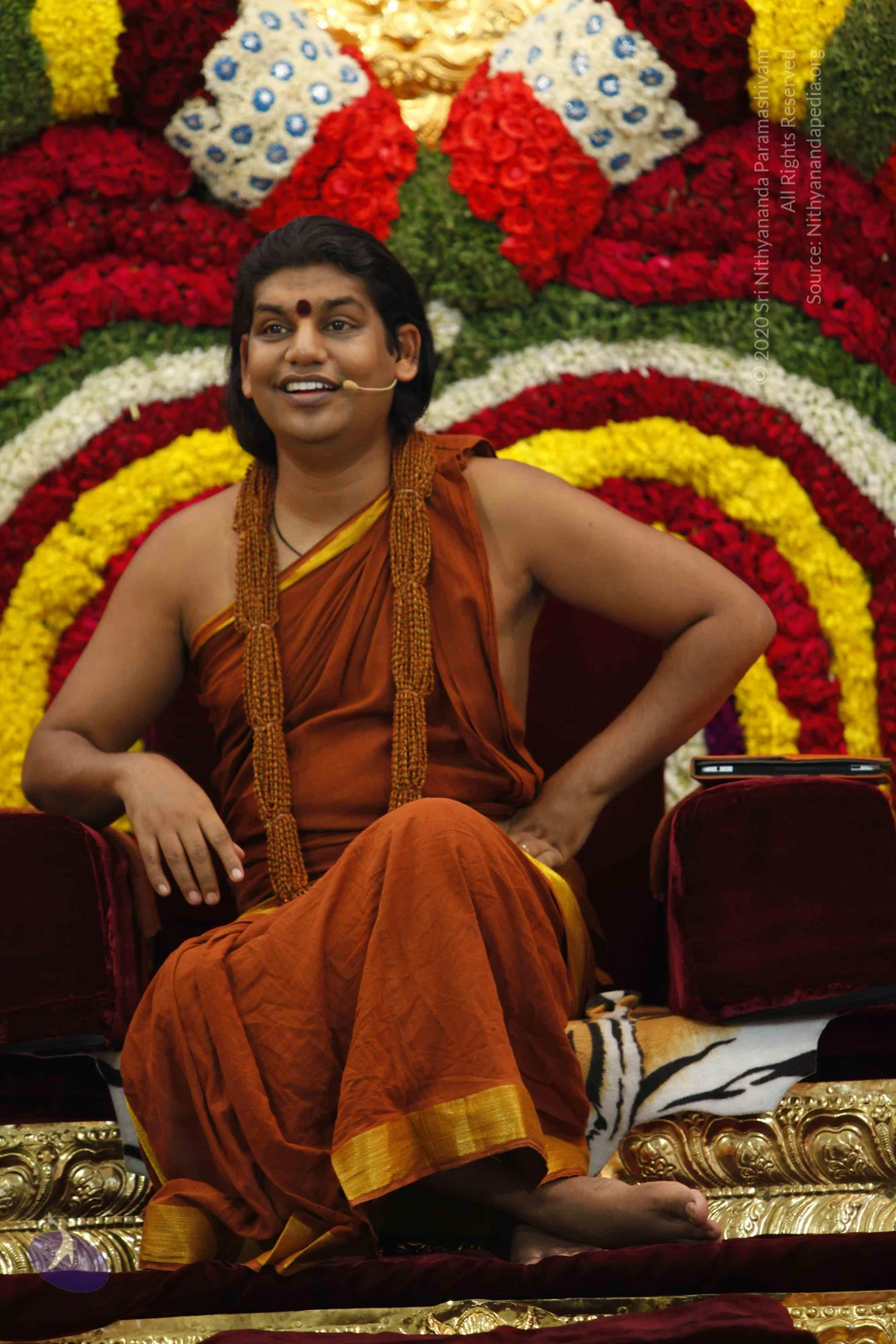
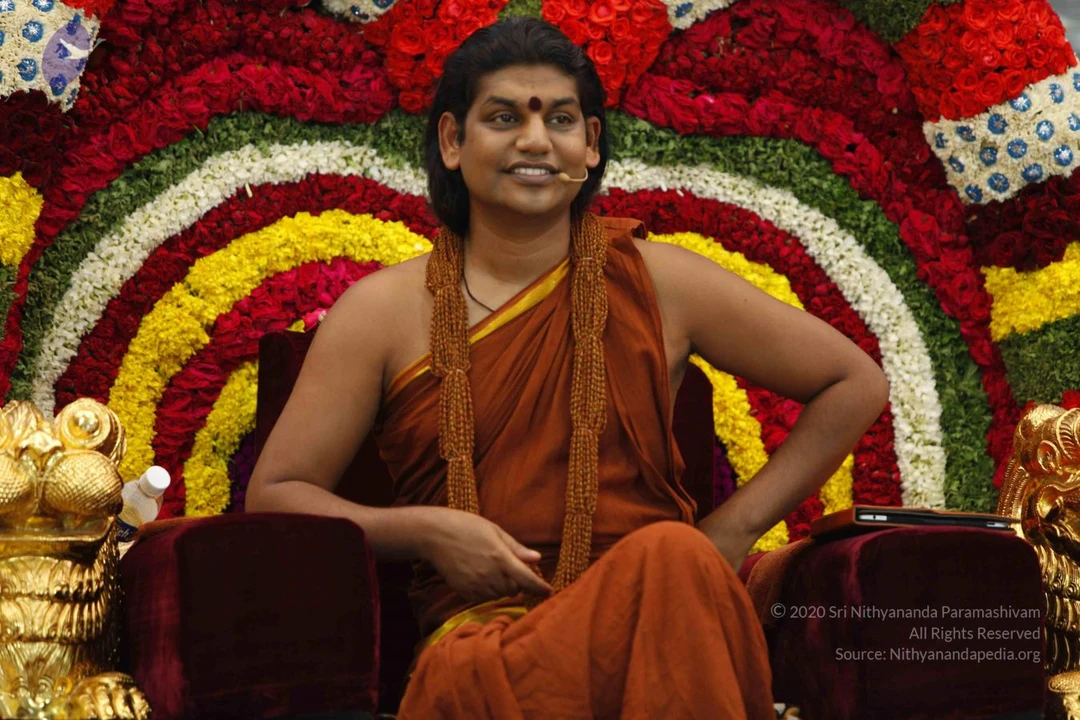
A seated man in saffron-orange robes sits cross-legged on a golden throne flanked by two gilded lion heads, with a tiger-skin cloth draped on the dais. Behind him an arch of roses and marigolds in red, yellow, pink, green and white frames him. He wears a long gold necklace with a pendant, gold bangles and a rudraksha-style bead mala at the neck, and holds both palms raised in blessing with a smile. Two colourful painted deity statues in orange and gold stand at either side. The setting appears to be a temple-style stage for a satsang. Swamiji (probable): the seated man has long swept-back hair, saffron clothing and ceremonial gold necklaces on a throne, consistent with the page's description of a satsang.A seated man in saffron-orange robes smiles and raises both palms in greeting, seated on a throne framed by a large semicircular arch of roses and marigolds in red, pink, yellow, white and green. He wears gold ceremonial necklaces with a gold pendant, rudraksha beads, gold bangles and a red bindi, with long dark hair swept back. Carved gold lion-head armrests flank the throne. Visible cues include ornate saffron clothing, gold necklaces and rudraksha beads, consistent with the a person candidate; the photo shows one physical person.A man seated cross-legged on a maroon throne with gold lion-head armrests, in front of a large semicircular backdrop of concentric rows of roses, marigolds and white flowers in red, yellow, pink and white. He wears an orange-saffron garment, multiple layered gold necklaces with a gold pendant, gold armbands, gold earrings, a white forehead marking and a red bindi, and holds his hands together in his lap. His appearance is consistent with the page's reference to a person, seated as the honoured speaker.A seated man in saffron-orange robes sits cross-legged on an ornate throne backed by a large semicircular arch of fresh flowers in red, pink, yellow, white and green, with blue-dotted white blossoms at the top corners. He wears a rudraksha mala, a long ceremonial gold necklace with a gold emblem pendant, gold armlets and a red tilak on his forehead, and his hands rest in his lap while he smiles. Swamiji (probable): long swept-back hair, saffron clothing, rudraksha mala and ceremonial gold necklace, seated on a throne in a satsang setting.A smiling man sits cross-legged on a maroon throne with gold lion-head armrests, in front of a large semicircular arrangement of red, pink, yellow, white and green flower garlands. He wears an orange-saffron robe, a multi-strand rudraksha mala with a large gold pendant necklace, gold bangles and earrings, and a sandalwood-and-kumkum forehead mark. His right hand is raised near his head in a gesture. Behind him at left, part of a painted deity figure is visible. Probable Swamiji matches the saffron robe, long swept-back hair, ornate gold necklace and rudraksha cues while seated on the throne, so he is treated as present in the photo.A man seated on a golden throne with a maroon cushion, smiling and looking to his right. He wears a saffron-orange dhoti and shawl with a yellow inner cloth, multiple long gold ceremonial necklaces, gold bangles and gold earrings, and has a red bindi and white forehead markings. Behind him is a large semicircular backdrop of red, pink, white and yellow roses, green foliage and white flowers with blue accents. A carved gold lion-head armrest is visible at the lower left. Appearance-based label: a person, seated on a throne with flower decoration, dressed in saffron with rudraksha-style and gold ceremonial adornment.

Samyama-Meditation

4 photosSource gallery
A young man with short dark hair and rectangular black-framed glasses sits with eyes closed, pressing the index and middle fingers of both hands against the sides of his nose in a breathing or nasal-control practice. He wears a navy shirt with thin red and white vertical stripes and a thin red thread on his left wrist, with a gold wristwatch on the other arm. Behind him, blurred figures in white clothing sit in a hall, and one person on the right wears over-ear headphones with orange cushions.Close-up photograph of a man with short dark hair, eyes closed, performing a breathing practice by pressing the side of his nose with his right index finger and thumb. He wears a gold ring on his middle finger, a white shirt, and a dark beaded mala around his neck. A faint vertical tilak mark is visible on his forehead. Another person in white clothing sits blurred in the background.A photograph of a meditation or kriya session in a large hall. A woman in the centre wears a white embroidered top, a rudraksha mala and a wristwatch, and presses two fingers to her nostrils with her eyes closed. Name badges read 'Inner Awakening' and 'Session'. Seated women around her wear white and a gold-bordered sari, with a red-clad figure in the foreground. The scene suggests a breathing practice during a programme.A large group of seated men in plain white kurta-style clothing sit in meditation in a hall with red carpeting and red curtains. Many have their eyes closed or hands in mudra; several wear rudraksha malas and ID badges on lanyards. A man in the foreground wears a white kurta with red and rudraksha beads and a badge, eyes closed. Others wear headphones, a yellow shirt, or a checked shirt. A large framed picture hangs on the wall behind them. No clear a person candidate is identifiable in the visible crowd.

Swamiji-Samyama-Meditation-instruction

7 photosSource gallery
A man seated cross-legged on a red velvet throne with gold lion-head armrests, in front of a large semicircular arrangement of red, pink, yellow, white and green flowers. He wears a saffron-orange robe, a heavy gold pendant necklace over rudraksha-style beads, gold bangles and earrings, and a red bindi with white tilak marks. He gestures with both hands while speaking into a headset microphone. A satsang-style discourse setting.A seated man in saffron-orange robes sits cross-legged on a throne in front of a large arch of floral decoration in red, pink, yellow, white and green roses and marigolds. He wears a heavy gold ceremonial necklace with a central gold pendant and a rudraksha-style bead mala, gold bangles and rings, and a red bindi on his forehead. His hands are raised in front of his chest in a gesture, and a small microphone is attached near his face. Golden lion figures flank the throne, and a striped cloth rests at the base. The scene suggests a seated satsang discourse.A seated man in saffron-orange robes sits cross-legged on a maroon-upholstered throne before a large rainbow arch of flowers in red, pink, yellow, white and green. He wears a long gold-bead necklace with a gold pendant, gold armlets, and a small red bindi, and has a headset microphone. His hands are raised in an explanatory gesture as he speaks. Golden lion-shaped armrests flank the throne.A seated man in an orange-saffron robe and ornate gold-and-rudraksha necklaces sits on a red-upholstered throne flanked by golden lion-head armrests. Behind him is a large floral backdrop arranged in concentric arches of red, pink, yellow, white and green roses and marigolds. He has a red bindi and white tilak, gold bangles and a gold ring, and both hands are raised to his temples in a gesture while he speaks. The setting is a satsang discourse.A seated man in saffron-orange robes sits cross-legged on a throne-like seat with maroon cushioned armrests, flanked by golden lion figures. He wears a red bindi, gold earrings, bangles, and a long gold-toned mala with a large gold pendant. His fingers press at both sides of his nose in a breathing gesture. Behind him is a rainbow-arc backdrop of red, pink, yellow, white and green flowers, with a patterned cloth at his feet. The appearance is a person candidate by his saffron robes, ornate gold necklace, and seated throne presentation, though the image is sparsely identifying. A single person is present in a ceremonial discourse setting.A photograph of a bare-shouldered man seated with eyes closed, performing a nasal breathing gesture with both index fingers touching the sides of his nose. He wears an orange-brown garment with a gold-yellow border, a thick gold ornamental necklace, gold bangles and a gold ring, and gold hoop earrings. A red dot and white horizontal marks are on his forehead. Behind him are concentric rings of red, yellow, white and pink flower garlands. Probable Swamiji is shown with long swept-back hair and ornate gold necklaces, performing a breathing practice that resembles pranayama or Kriya during a meditation session.

Sarva-Darshan
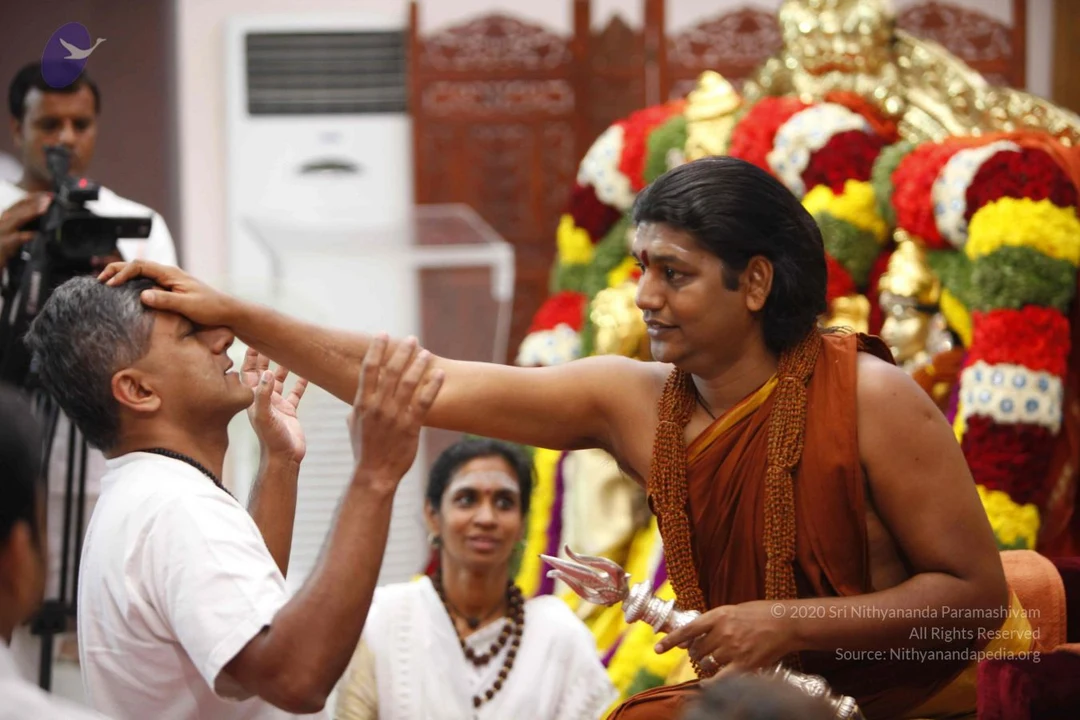
15 photosSource gallery
A photograph of a long-haired man in an orange-brown saffron cloth draped over his shoulders, wearing a heavy ceremonial gold necklace of large gold pendants over rudraksha beads and gold armlets. He extends his right arm and hand toward a devotee in white who bows forward, hands joined, while another man in white with a rudraksha mala stands behind and people in casual clothes watch. In the background are a deity murti with floral garlands and a red curtain. Swamiji (probable): the saffron cloth, long hair, gold necklace and rudraksha cues are present, and the page indicates he is at this event.A photograph of a priest in saffron-orange robes and a heavy rudraksha-style brown bead mala with a large gold ceremonial necklace, a red bindi and gold earrings, standing and placing his right hand on the shaved head of a kneeling man in a white collared shirt with palms pressed together in namaste. The priest holds a handwritten paper in his left hand and reads from it. Behind them a second man in a light shirt looks on, and a decorated altar with floral garlands, yellow-orange flowers and a deity murti is visible in the background.A photograph in a temple-style hall with a decorated shrine behind. A man in a white shirt with a red forehead mark holds a folded white paper and looks at it while speaking with a second man. The second man wears an orange-brown saffron wrap, long layered gold-coloured necklaces with a large ornate pendant, gold armlets and bangles, a red bindi, and has long swept-back dark hair; he appears to be Swamiji (probable), based on the long swept-back hair, ornate gold necklaces and saffron clothing. A bearded man in a light patterned shirt stands behind, and a man in white dhoti with a sash stands at right. Flowers and gold decorations fill the shrine.A smiling man in a rust-orange dhoti-style wrap with a gold-yellow edge stands at a barrier, raising his right hand in greeting while holding a small blue book. He wears a long gold ceremonial necklace with a large pendant, rudraksha-style brown beaded bracelets on his arms, a red kumkum bindi on his forehead and a sweeping dark hairstyle. To the left, a bearded man in white with his hands folded in anjali and another man with long hair bow toward him. Behind is a temple hall with a colourful deity figure and floral garlands. The man in orange shows the appearance cues of the probable Swamiji, with the ornate gold necklace, long swept-back hair and saffron clothing.A photograph of a ceremonial blessing. A bald elderly man in a white shirt bows his head forward while a man in a saffron-orange robe places his right hand on the crown of the elderly man's head. The standing figure wears long dark swept-back hair, a red tilak mark on his forehead, a layered gold and beaded necklace, a rudraksha mala with a large gold pendant, brown rudraksha bands on the upper arms and wrists, and an orange-brown shawl over the bare shoulder. He holds a blue-covered book in his left hand, resting on a yellow cloth on a silver tray. Behind them, shrine decorations in gold and red and a few onlookers are visible. a person is identified by his distinctive hair, saffron robes, rudraksha mala and gold ornaments, presiding over a blessing ritual.A smiling man with long swept-back dark hair, a sandalwood tilak on his forehead, gold hoop earrings, and a thick gold-bead necklace over rudraksha-style mala beads wears an orange saffron wrap over his shoulders. He gestures warmly with one raised hand toward a man in a pink shirt and another man in glasses on the left, while a small fruit or mango is held out at the lower left. Behind them, blurred figures in white and a golden decorated shrine area fill the background. The scene is a devotee interaction at an ashram event; the orange-clad man is a probable Swamiji by his long hair, saffron wrap, gold necklace and mala cues.

Darshan
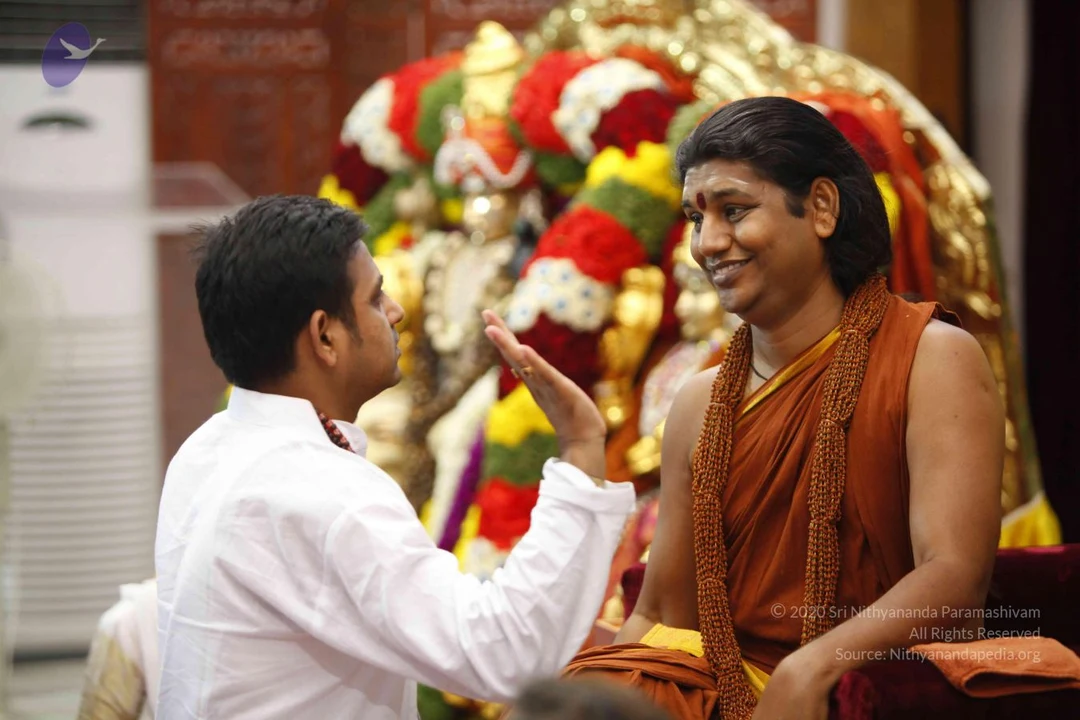
95 photosSource gallery
A man in orange saffron robes sits on an ornate gold throne with a carved arched back, raising his right hand in a blessing gesture. He wears a long rudraksha mala with a gold-toned clasp, a red tilak on his forehead, and a yellow sash over his shoulder. Behind the throne is a backdrop of a temple tank with fountains. Red fruit and offerings sit on a red-cushioned table at the left and right edges.A man with long swept-back dark hair sits on an ornate gold throne with carved lions and floral scrollwork, raising his right hand in a blessing wave. He wears an orange-saffron robe with a yellow sash, a long rudraksha mala and a red bindi on his forehead. A tiger-skin cover lies on the throne seat, with red cushions and a tray of red fruit beside him. The backdrop shows a painted temple with stepped tanks and white pillars. Appearance-based cues match a person, seated in the role of speaker at a satsang.A man in saffron-orange robes sits on an ornate gold throne with lion-shaped armrests and a red velvet seat, raising his right hand in a blessing or greeting gesture. He wears a rudraksha mala with a long ceremonial bead necklace and a red tilak on his forehead, with long swept-back hair. Behind him is a large photographic backdrop of a temple complex beside a water tank with fountains. Fruits and a flower garland rest on the throne ledges, and a few white-clad devotees are partly visible at the lower edges. a person is seated centrally as the speaker.Photo of a man seated on a red velvet throne with an ornate gold carved backrest at left. He wears an orange-saffron shawl draped over his shoulder and a long multi-strand gold-brown rudraksha mala around his neck, with a red tilak dot on his forehead and long swept-back dark hair. He smiles with palms pressed together in a namaste gesture. Behind him is a blurred background of white fountain-like columns over water. Appearance-based probable Swamiji cues: long swept-back hair, saffron clothing, rudraksha mala and ceremonial gold ornamentation.A photograph of two men seated facing each other indoors. On the left, a long-haired man wears an orange-saffron cloth draped over his shoulder and an orange rudraksha mala with a white tripundra mark on his forehead; his hands rest folded in his lap on an orange cushion. Opposite him, a man with long dark hair in a white kurta raises one hand in a gesture toward him. Behind them, a white tower fan and a standing fan stand in a pale room, and a third man with a white forehead mark and rudraksha beads sits at the right edge.A photograph inside an ashram hall with a white tiled floor and cream walls. On the left, a man with long swept-back dark hair, a sacred tilak on his forehead, a rudraksha-style mala and a heavy ceremonial necklace, wearing saffron-orange robes with a gold-bordered dhoti, sits smiling on a red cushioned throne. a person. To the right, a man in white clothes kneels on a red mat with both palms raised in devotion, while a woman in white with a long braid sits behind him. Standing figures in white shirts are at the edge of the frame, and pink and white wall-mounted fans are behind them.
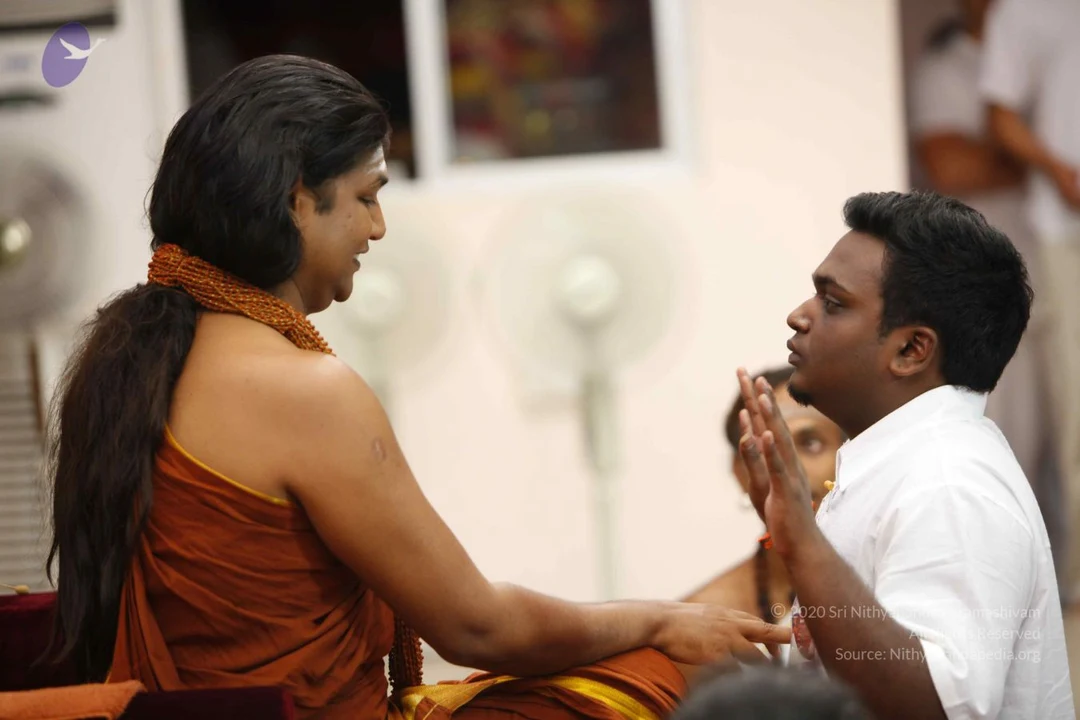
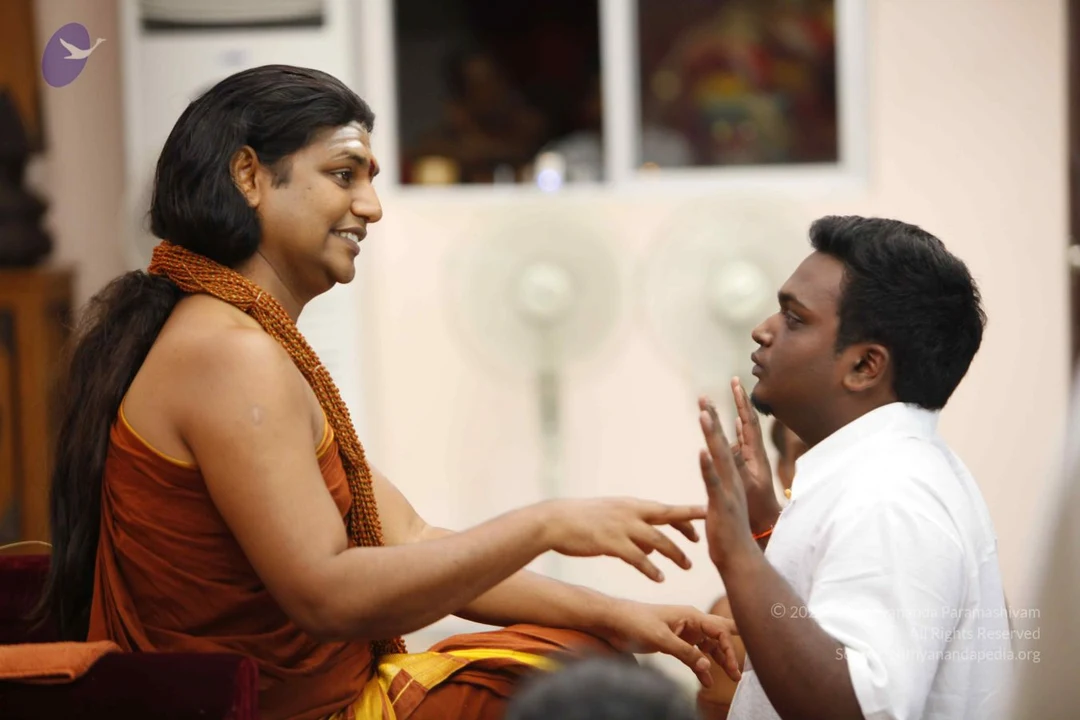
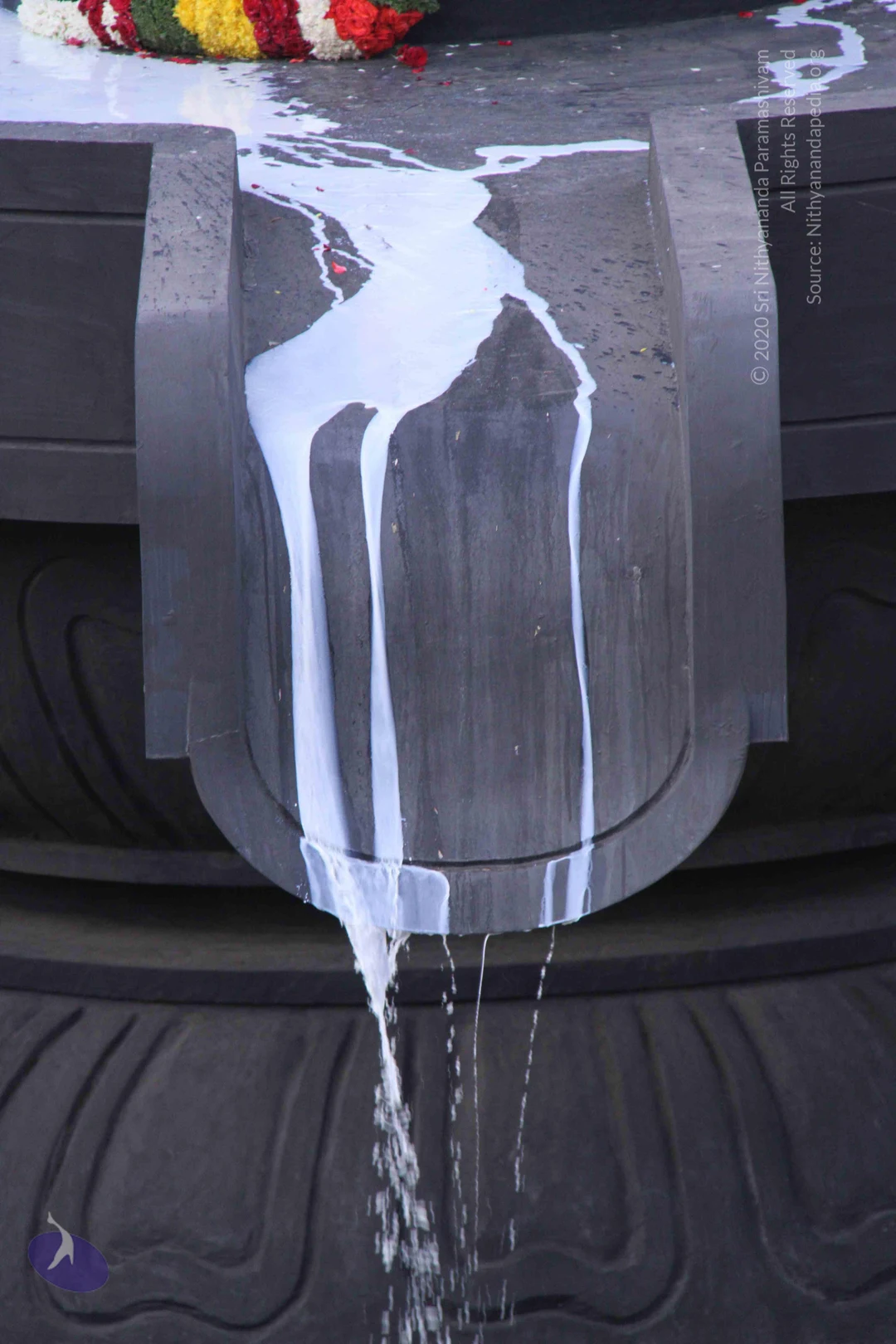
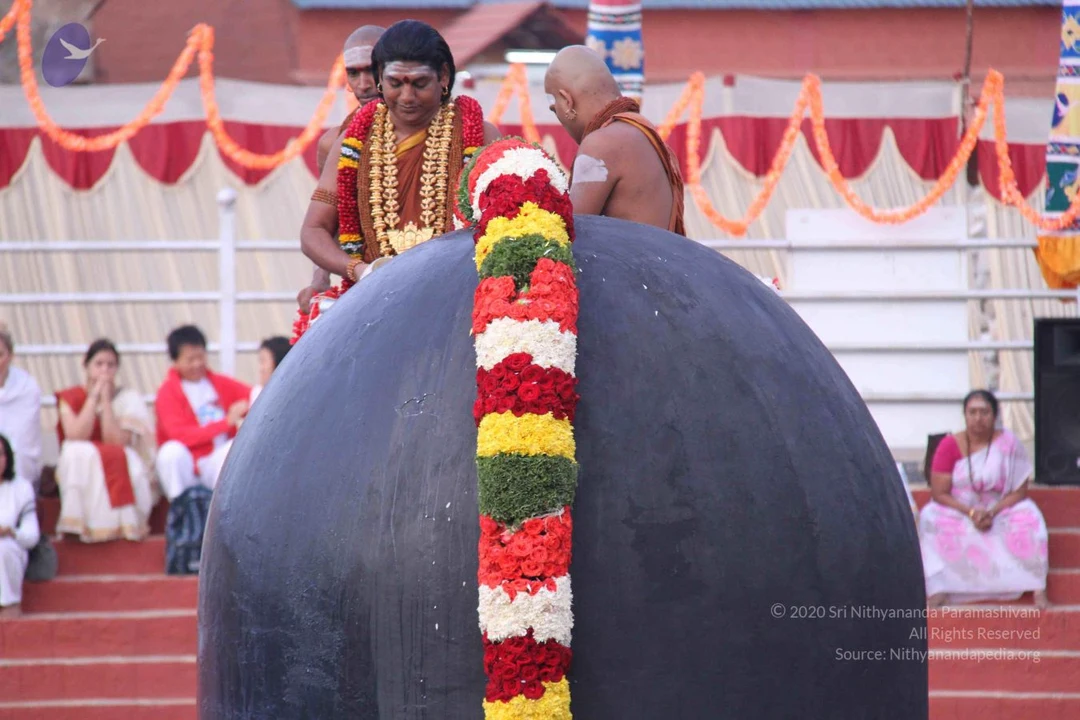
Sacred-Arts

26 photosSource gallery
Two men work in an open doorway area beside an orange-painted wall in an outdoor workshop. The standing man in a white t-shirt and white dhoti leans over a dark board, carving with a tool into a brown wooden-looking figure, with wood shavings scattered on the surface and a separate carved limb beside it. A second man in a white vest and white cloth sits cross-legged on the ground at right, holding a tool over another carved piece on a low stone block, surrounded by more carved wooden parts, sandals and a tin.Outdoor kitchen under a corrugated tin roof beside an orange-washed building with red doors. A young man in a khaki shirt and white dhoti crouches over a large raw piece of meat or vegetable on a stone slab, cutting it with a knife. A second man in a white shirt and white dhoti stands behind him, and a third man in a white dhoti sits on the ground by a wood-fired stove with a large black cooking pot. Buckets, a steel jug and clay pots are scattered on the brick floor.Three men sit cross-legged on a bare concrete floor in a workshop, carving a pale sculptural piece with hand chisels. The man on the left wears white shirt and white dhoti with a green-bordered cloth, glasses and a moustache, holding a tool against the work. The man in the centre, in a white vest and white cloth, works with a small chisel. The man on the right wears a white shirt and white dhoti with gold border and steadies a pale carved element on a cushion. Pale carved pieces, tools and a red cloth lie on the floor around them.Three men sit on the floor of a workshop, working on sculpture or statue pieces. The man on the left in white shirt and white dhoti with a coloured border wears glasses and works with a tool; the man beside him in a white vest and white dhoti works on a piece in the centre; the man on the right in white shirt and dhoti cuts or shapes a hollow piece of material. Clay pots and carved figure parts lie around them, with tools scattered on the floor and a grey cabinet against the wall.A close photograph of a sculpted wooden or clay figure's lower body, shown from the front seated posture: thighs, knees and bare feet with toes, glossy dark brown with orange-brown highlights and scattered wood shavings on a dark work table. Only a partial person is visible at the top edge, a hand resting on the figure's hip and a white-clad arm and lap, so the visible human is a craftsman or assistant, not an identifiable figure. The figure is an unfinished carving, not a finished murti.A construction site on red-brown earth strewn with broken stone blocks and rubble. In the foreground a black Sintex water storage tank stands beside stacks of corrugated grey roofing sheets, with rusted steel angle beams lying on the ground. Further back, excavated soil mounds, a yellow excavator and low hills under a hazy sky. No people are visible.

IA-food

24 photosSource gallery
A buffet serving line of white-clad volunteers and devotees serving food from steel chafing dishes. A woman on the left in a white short-sleeved top holds a tray with tongs; a woman in the center in a white shirt with a long side braid and brown crossbody bag holds a divided tray of food. A man on the right in a white t-shirt and white trousers with a name badge holds a plate, while bread rolls, yellow and orange curries, white yogurt and dal sit in metal trays. Red curtains hang at the windows behind, and other people stand in the background, including a woman in a white sari at the far left and a bearded man in a kurta at the upper right.A photograph of ashram life at a dining or serving area with red curtains. Two young women in white kurta-style tops hold stainless steel trays of food: one carries a tray of flatbreads and cooked vegetables, the other a tray of small portions and sliced fruit. Other people in white and a man in a white shirt stand in the background. The scene suggests a serving line for devotees.A photograph of a buffet meal service in a bright hall with pink curtains and framed pictures on the walls. Several volunteers in plain white clothes serve food: a woman in a white top with a hair band uses tongs to serve from a steel tray, a young woman in white with a sling bag helps alongside, and a young man in an all-white outfit carries a tray of bread rolls and bowls. An older woman in a white sari with gold bangles sits at left, and other people stand in the background, including a man in a white shirt. Steel chafing dishes hold sambar, vegetable curry, a white creamy dish, bread rolls and fried snacks on a red-draped table. Visible people are roughly a dozen, with others partly hidden in the background.A buffet serving line of white-clad devotees at an ashram dining hall. A man with grey hair and a moustache, wearing a white shirt and rudraksha mala, holds a plate beside a steel pot of soup. A young woman in a white outfit with a white badge smiles while carrying a plate of food. Behind the counter, a woman in a white sari and a younger woman in white hold steel cups and rudraksha malas. Chafing dishes hold yellow, orange and green vegetable dishes, rice-like white pudding, fried pieces and salads on a red-draped table. A framed portrait of a figure in orange-and-brown dress hangs on the pink wall behind. Several other people line up in the background.A young woman in white kurta and dupatta, with a red-and-black beaded mala and red bindi, smiles while carrying two stainless steel chafing trays. The left tray holds white steamed rice, the right holds yellow dal with a ladle. She wears clear plastic gloves. Behind her, people in white clothes sit on the floor, a woman in orange sari stands near a doorway, and a framed painting leans against the pink wall beside a red curtain.A buffet serving line in a hall with red curtains and framed portraits on the wall. A young woman in a white top with a black mala and red thread, wearing gloves, serves rice from a steel chafing dish, while a yellow dal sits in a second dish in front. An older woman in an orange sari with a white floral border holds a plate and talks with a volunteer in white. A man in a white kurta and orange cap stands beside them, and another woman in a white outfit and a woman in an orange sari are visible in the background.
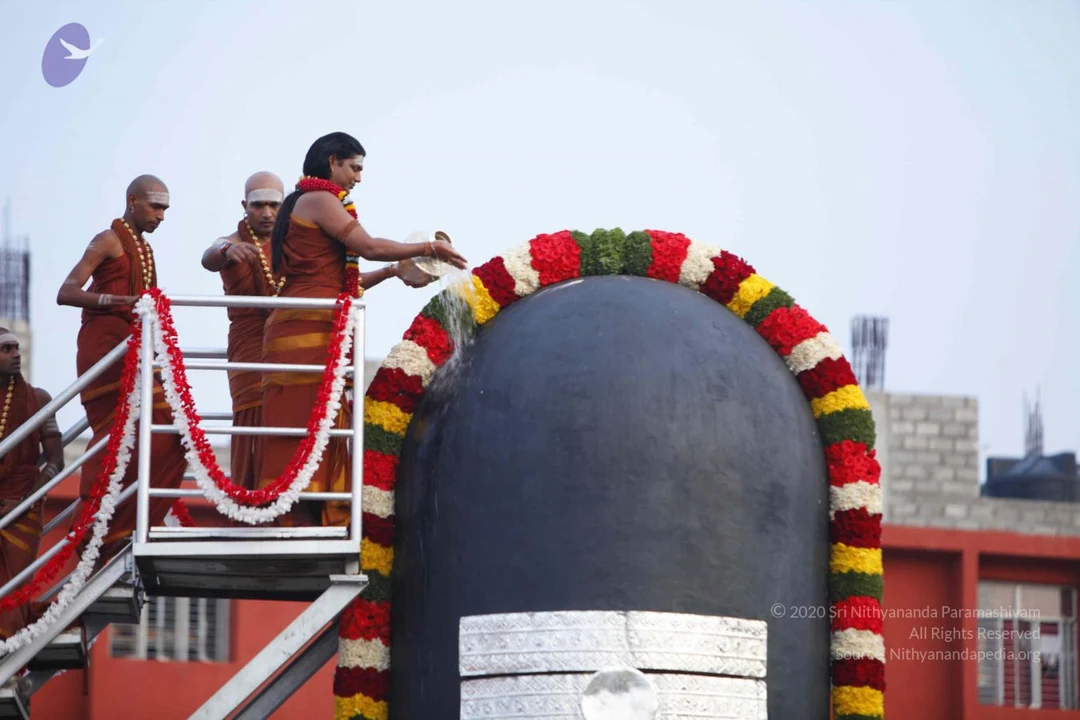
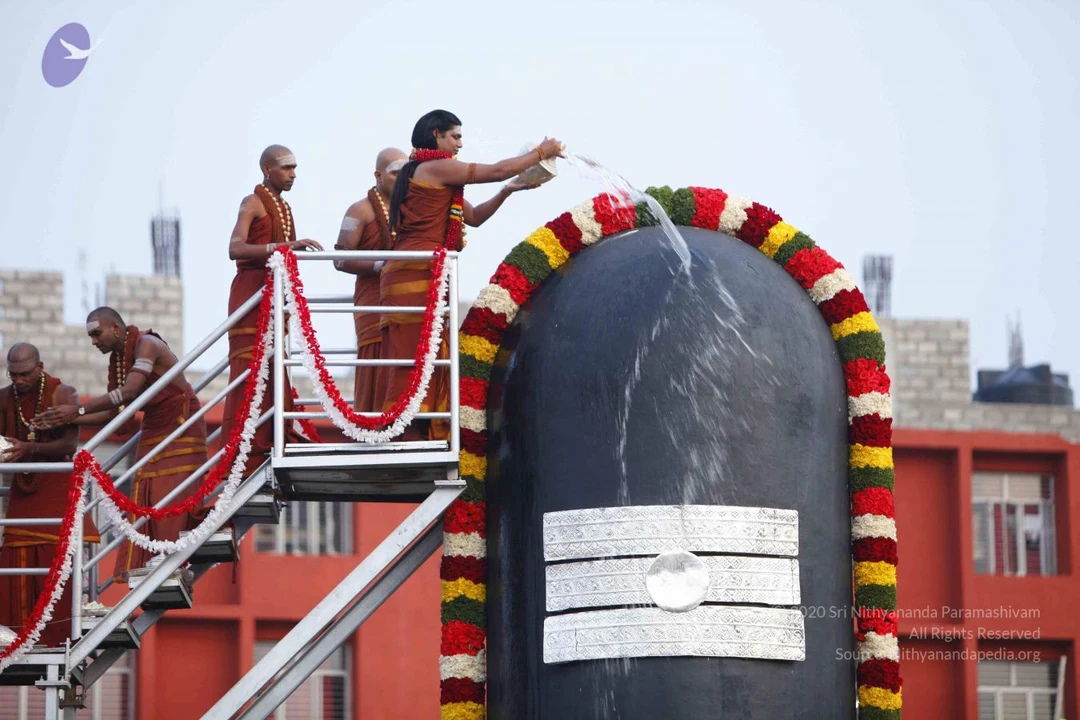
IA-Session-Chinese-Whisper-group

4 photosSource gallery
A photograph of a seated group of women in a hall with red curtains and red chairs, many dressed in white kurtas and churidars, with one woman in an orange shawl at right. Several sit cross-legged on red floor mats among bags, notebooks and water bottles, chatting in small clusters. Other attendees stand or sit on chairs in the background. A small printed certificate-style sheet lies on the mat at left, and a sheet of paper rests on a yellow card. The setting suggests a retreat-style gathering.A photograph of a seated group of men in white kurta-style clothing arranged in a loose circle of black plastic chairs with red cushions in a bright hall with pink walls, red curtains and wall-mounted framed portraits labelled with single words such as Charisma, Harmony, Royal Grandeur and Intuition. A man in glasses in the foreground sits with his hands clasped, while others listen attentively; one man near the centre gestures, and a man at the back in white stands near a table with a red cloth. No one wears saffron or distinctive a person cues, so no candidate is identified. The room has air conditioners, a speaker and a tiled floor.A photograph of a seated group of men in white kurta-style clothes in a bright hall with cream walls, red curtains and red-cushioned chairs arranged in a loose circle. Most sit with hands folded or chins resting on fingers, listening to a speaker; one man in the centre-right wears a white shirt and bare feet. A standing man in white is at the back, and a dark wooden table with a cloth sits at the left.Wide photo of a hall where a seated audience in white clothes sits on red mats facing a stage. Many attendees wear white and sit cross-legged on red floor mats with orange bags and water bottles nearby. Near the centre, a standing figure in white clothing stands at the front of the room. A large screen at the left shows a crowd in red and white, and the back wall displays a large screen showing a temple with decorated gopurams and two floral-decorated ceremonial platforms. Framed portraits hang on the right wall, and camera tripods stand near the front.

IA-Swamiji

32 photosSource gallery
A photograph of a seated man in saffron-orange robes on an ornate gold throne with a flower-garland arch in red, yellow, green and white. He sits with palms pressed together in namaskar and eyes closed, wearing a long gold necklace. The gold throne has lion-head armrests and a tiger-skin cloth draped on its base. Behind him a large backdrop shows temple gopurams and a water tank with steps. A bannered Inner Awakening logo appears at the top left, and a faint printed name appears at the lower right. The man's appearance is consistent with the page's a person reference, with saffron robes and a gold necklace, though the face is not clearly visible and the identity remains uncertain.A man seated cross-legged on a red velvet throne with gold lion-head armrests and a tiger-skin cloth draped over the front. He wears an orange-saffron dhoti and shawl, a heavy gold necklace with a large pendant, and a red bindi, and has his palms pressed together in namaste. Behind him is a rainbow arch of roses in red, pink, yellow, white and green, with a blurred temple and water backdrop. The throne and floral arch suggest a ceremonial satsang setting; a probable Swamiji is shown with long swept-back hair and saffron clothing, with distinctive gold adornment.A seated man in saffron-orange robes sits on an ornate golden throne with a tiger-skin cushion and lion-head armrests, his hands pressed in anjali namaskar. He wears a heavy gold necklace and has a shaved head. The throne is framed by an arch of red, yellow, white and green flower garlands. To the left, a deity murti of Shiva with a crown, rudraksha mala and yellow-gold garment sits beneath a matching flower-garlanded canopy beside a goddess figure in a red and gold sari. Behind them is a backdrop with a printed temple-tank and gopuram scene and the words Inner Awakening in script at the top left.A man with shoulder-length dark hair sits cross-legged on a golden throne decorated with a large arch of red, yellow, white and green flower garlands, flanked by two gilded lion heads. He wears a saffron/orange robe, a multi-strand gold ceremonial necklace with a gold pendant, and a red bindi, smiling with hands resting in his lap; a microphone is visible near his face. A tiger-striped cloth lies beneath the throne and a blurred photographic backdrop of water and buildings fills the background. Probable Swamiji (long hair, saffron robe, ornate gold necklace, seated on a flower-decorated throne).A man with long swept-back dark hair and a red bindi sits on a throne with gold lion-head armrests, speaking with his hands resting on the armrests. He wears an orange-brown shawl draped over his shoulders and chest and a heavy ceremonial gold necklace with large ornate beads. Behind him is a backdrop of red, yellow and white flower garlands in bands, and a large photographic image of a river or ghats is visible on the right.A seated man in an orange-brown saffron-toned wrap with bare right shoulder wears a long gold ceremonial necklace of ornate beads and a red bindi. He has long swept-back dark hair and speaks while resting his hands on gold lion-head armrests of a deep maroon velvet chair. Behind him is a backdrop of red, yellow and white flower garlands and a blurred photographic image of water fountains. a person, seated and speaking to an audience.
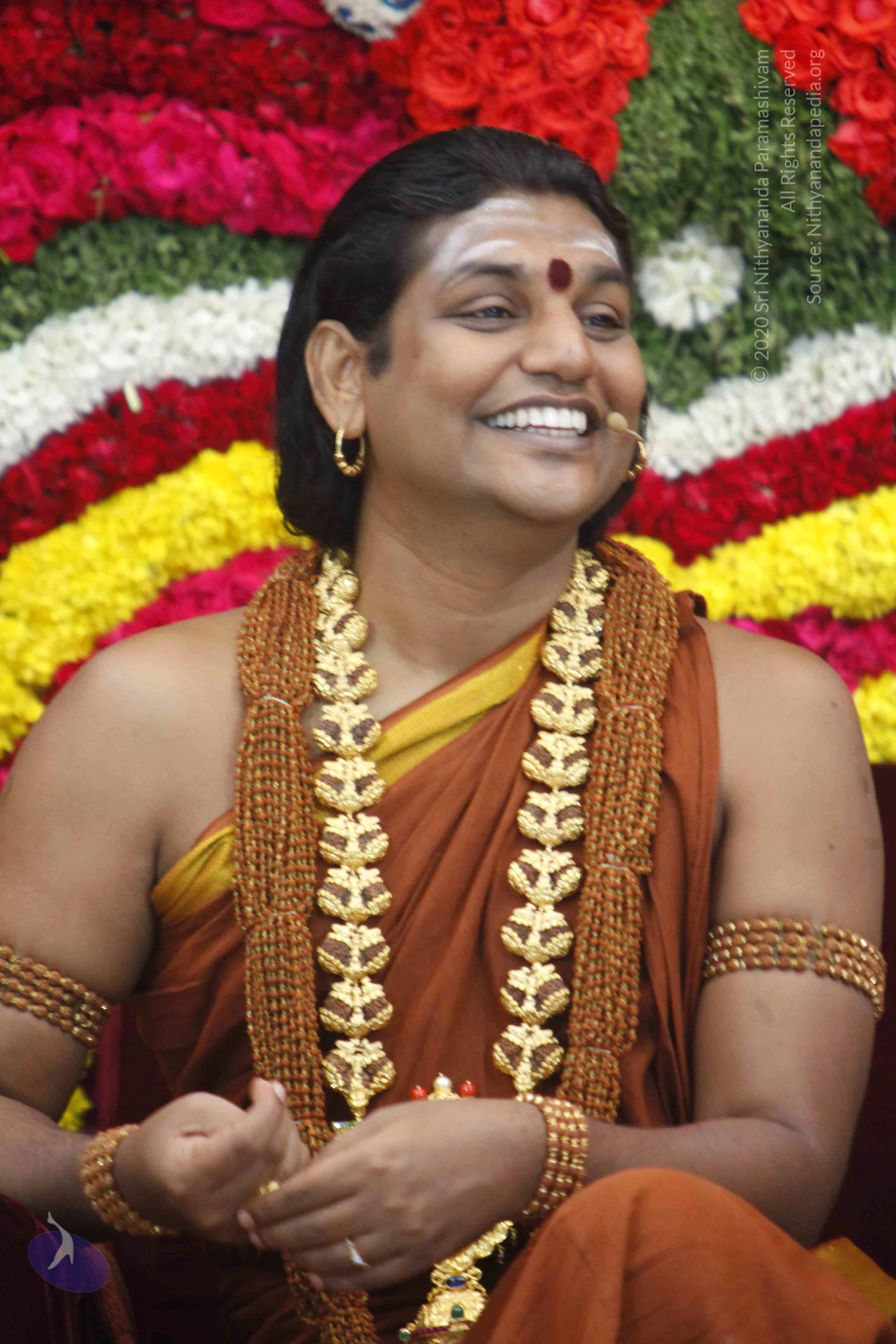
Participants-Individuals-Sharing

13 photosSource gallery
A seated man in the foreground wears white ritual clothes, a white kurta-style top, and white vibhuti lines with a red bindi on his forehead. He sits calmly and looks forward. Behind him, rows of seated devotees in white clothing listen attentively in a hall. A child in glasses and a white t-shirt with blue lettering sits at left, and a water bottle is visible at the lower left. The setting appears to be a satsang gathering.A young boy with curly blond hair smiles softly toward the camera. He wears a white collared shirt and a dark beaded mala around his neck. Behind him, blurred figures in white clothing sit in a crowded hall, and a red cushion is visible at right. The setting suggests a satsang or seated programme.Indoor satsang audience seen through a metal railing. In the foreground a woman with black hair in a long side braid wears a white top and a multicoloured striped shawl in red, teal, purple and orange, with a red bindi and a small gold earring, looking forward attentively. Beside her a woman in a white top with gold bangles rests her hand against her face. Several other seated people in white clothes fill the background, with a red banner or flag visible at the top. Dark blue chairs are visible. No a person candidate is clearly visible.Devotees sit on red mats in a bright hall with red curtains and framed religious pictures on the walls during a satsang. In the foreground a man in white kurta and white dhoti sits cross-legged, wearing a wristwatch and a tilak on his forehead. Beside him a man in white kurta sits with one foot raised and bare feet visible, holding a notepad near a water bottle. Behind them more men in white clothes, some wearing lanyard badges, sit and listen attentively. An orange cloth lies on the floor among the mats, and a few people in the background look toward the front of the room.A man in a white kurta stands at a silver microphone stand in front of a plain pale wall and a red curtain, reading from a sheet of white paper held in both hands. He has white vibhuti lines on his forehead and a red kumkum dot between them, and wears a thin gold chain and a wristwatch. A name tag with partly visible text is pinned to his chest. He looks down at the page as he speaks. He is a speaker or reader at a programme, not a presence on a throne or dais, and no person in the image is identified by face.A woman in a plain white top and white trousers stands at a microphone stand in a hall with a red curtain on the left, reading from several sheets of white paper she holds in both hands. She has grey hair pulled back and a small red bindi, with gold hoop earrings. Behind her, a woman in a yellow and orange sari with a red border stands near a white door, and several seated people in white and pale shirts, including a woman in a pink sari, watch her. No one visible presents a compatible a person appearance, so the candidate status is none.
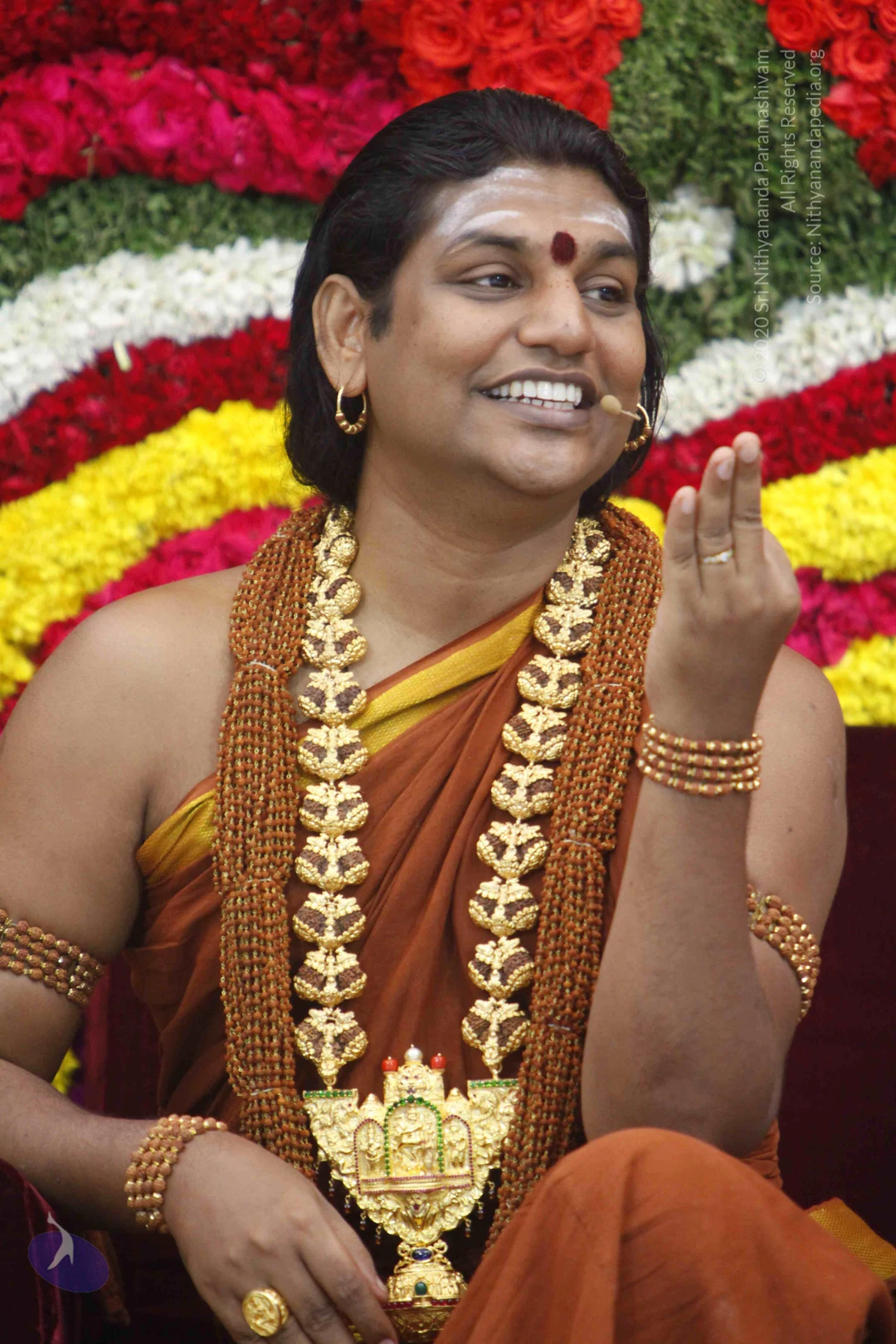
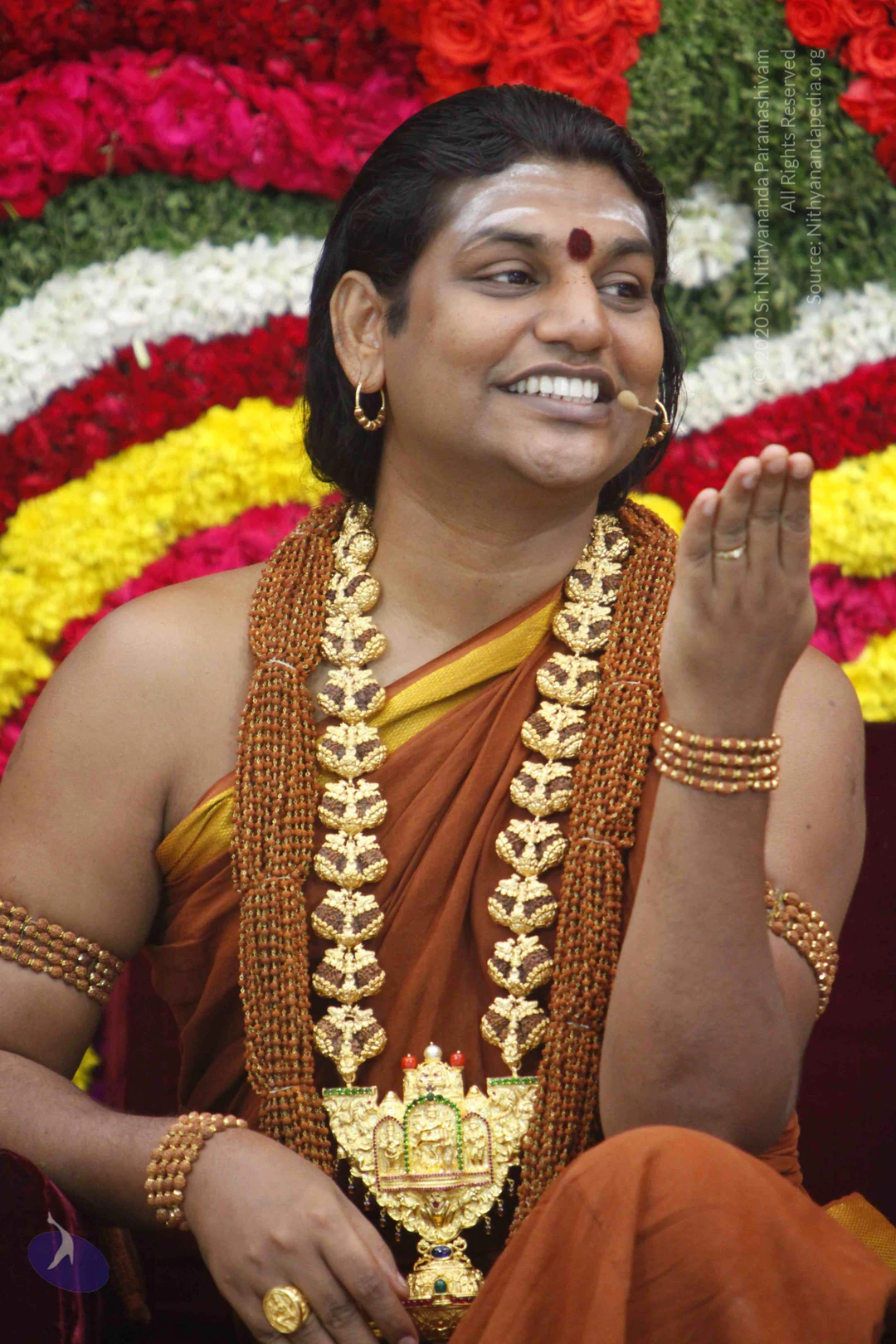
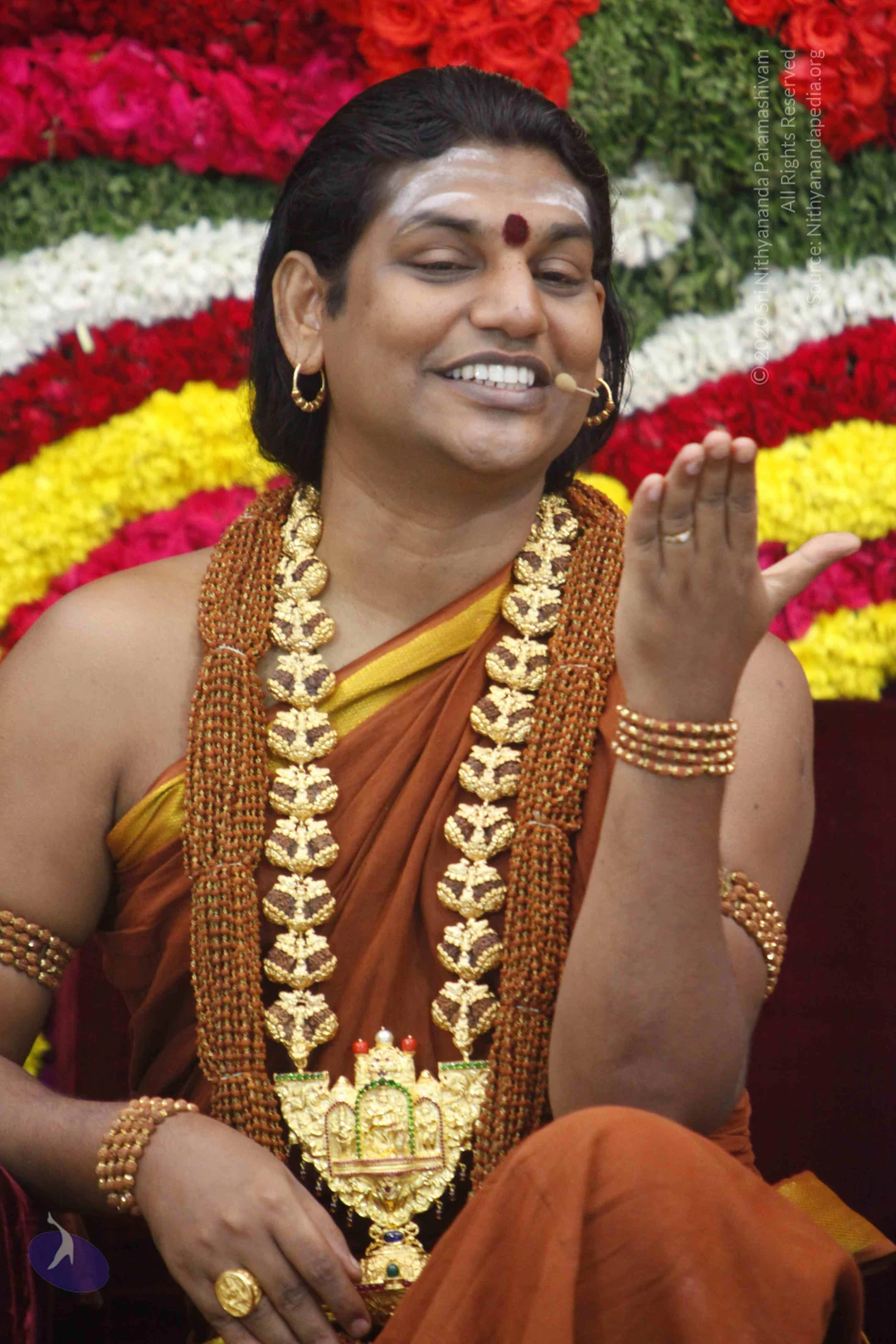
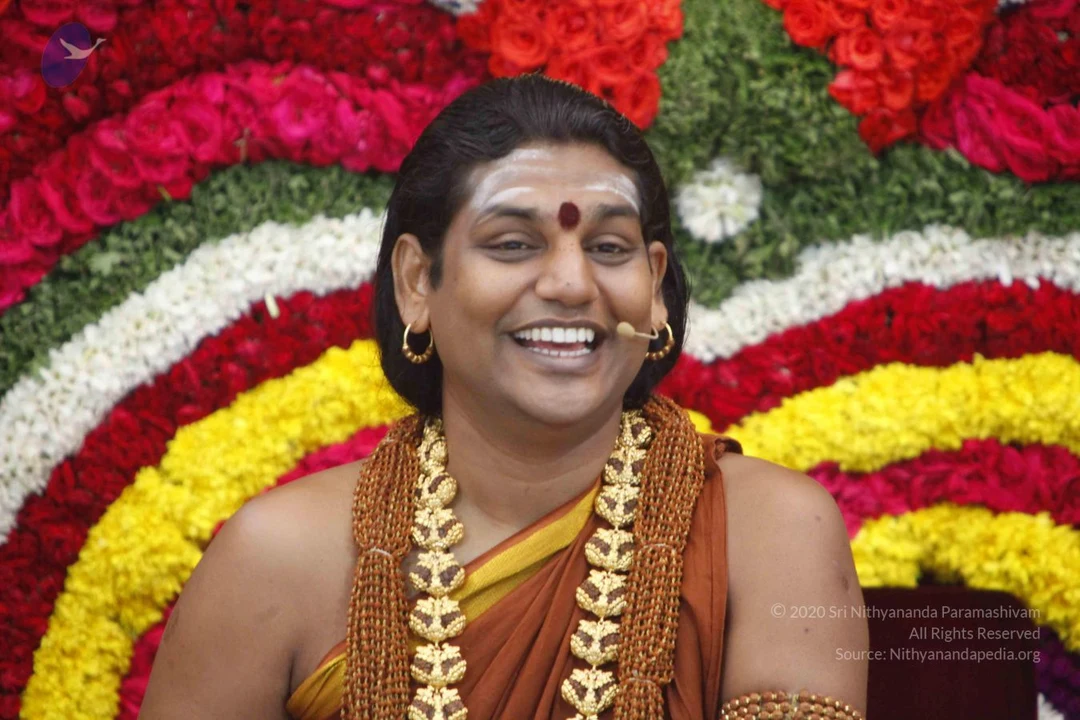
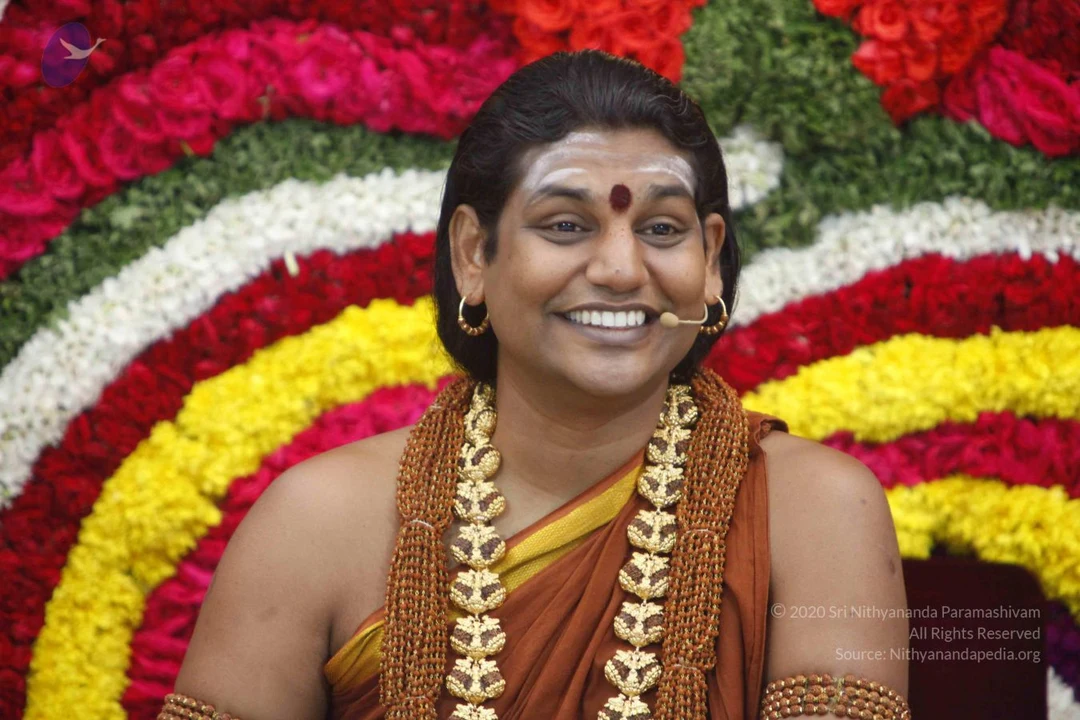
2-Way

1 photoSource gallery
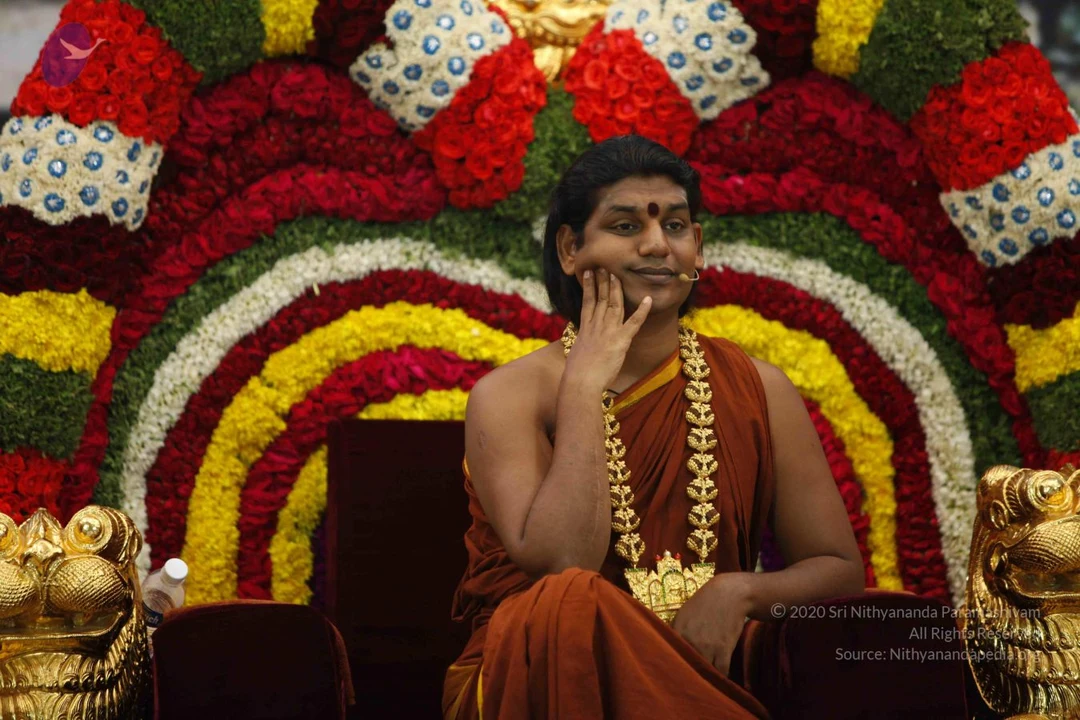
A screen shows a video-conference grid of satsang sites. Top left, Sparta-NewJersey: two women in white and a man in a white tank top sit on a sofa with a sign reading SPARTA NJ. Top right, Singapore-Singapuram: two women in white and red sit on a patterned rug before a small shrine. Centre, Ohio Prayag: several people in white and orange sit cross-legged on a rug. Right, Dallas-Dwaraka: a woman in white sits before a small altar with a framed portrait. Lower left, Toronto Kailasam: several people in white sit on a floor, one in orange. Lower centre, Los Angeles Arunachala: people sit on a mat in front of a shrine. Lower right, a man in orange and saffron robes with a white garland sits in front of a large circular flower arrangement of red, pink, yellow and white blooms.