Skip to content
Tuesday

12 July 2016

Kenopanishad -Natural Principles Of Masculine & Feminine Physiology

Dated photos
396
Source pages
1
Media
2
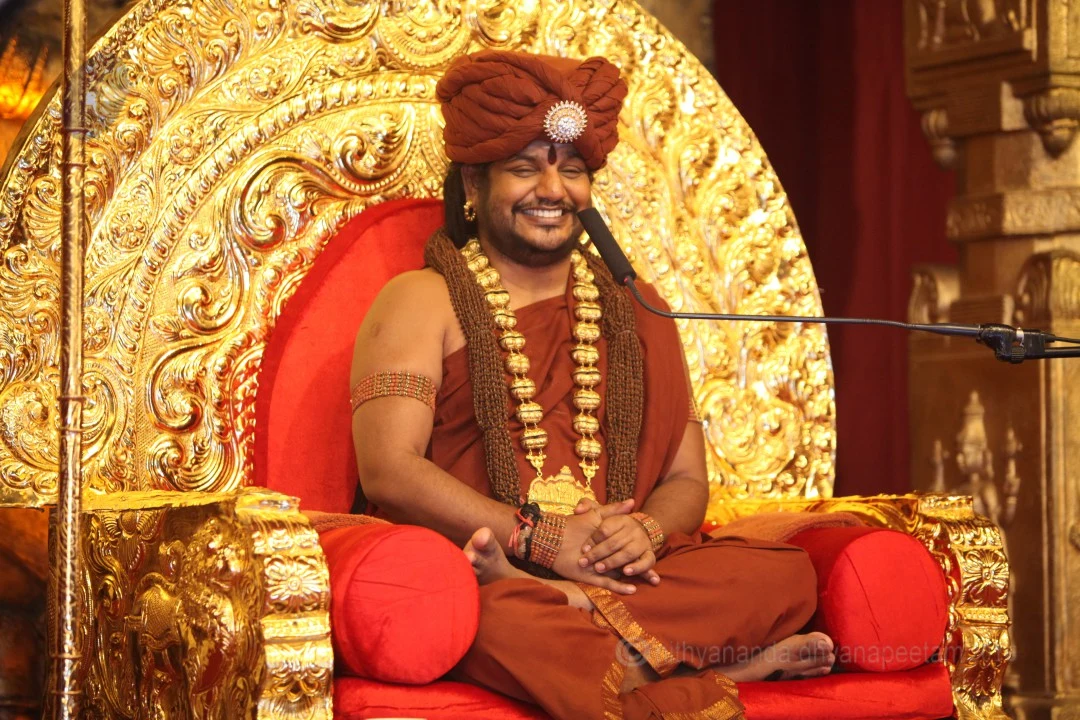
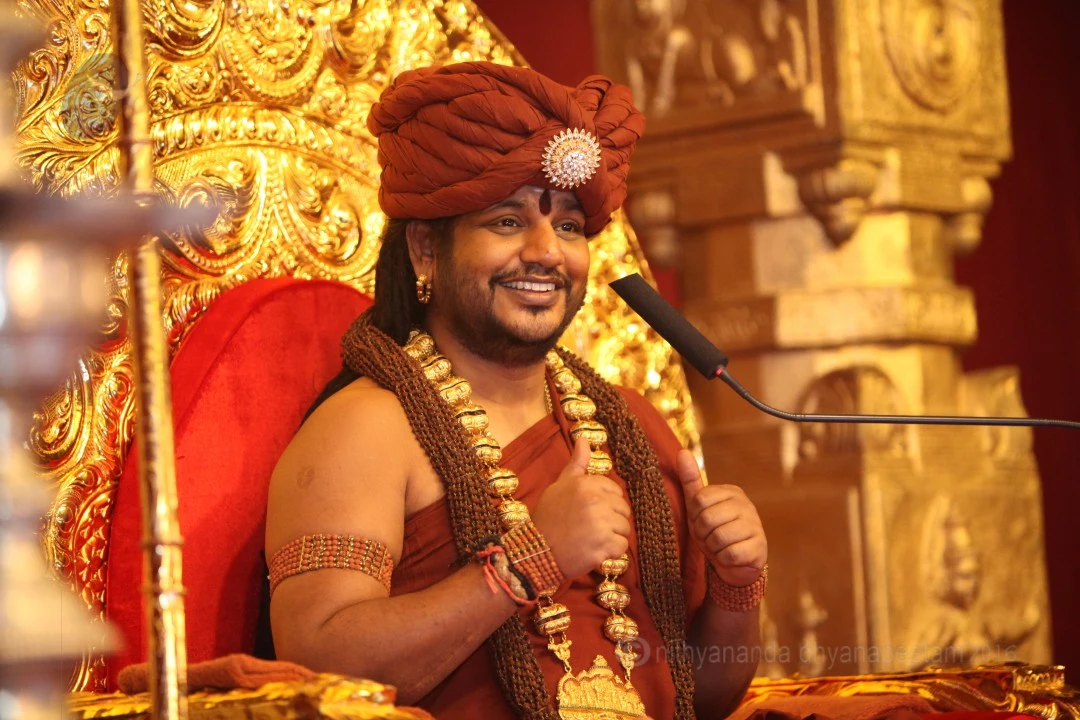
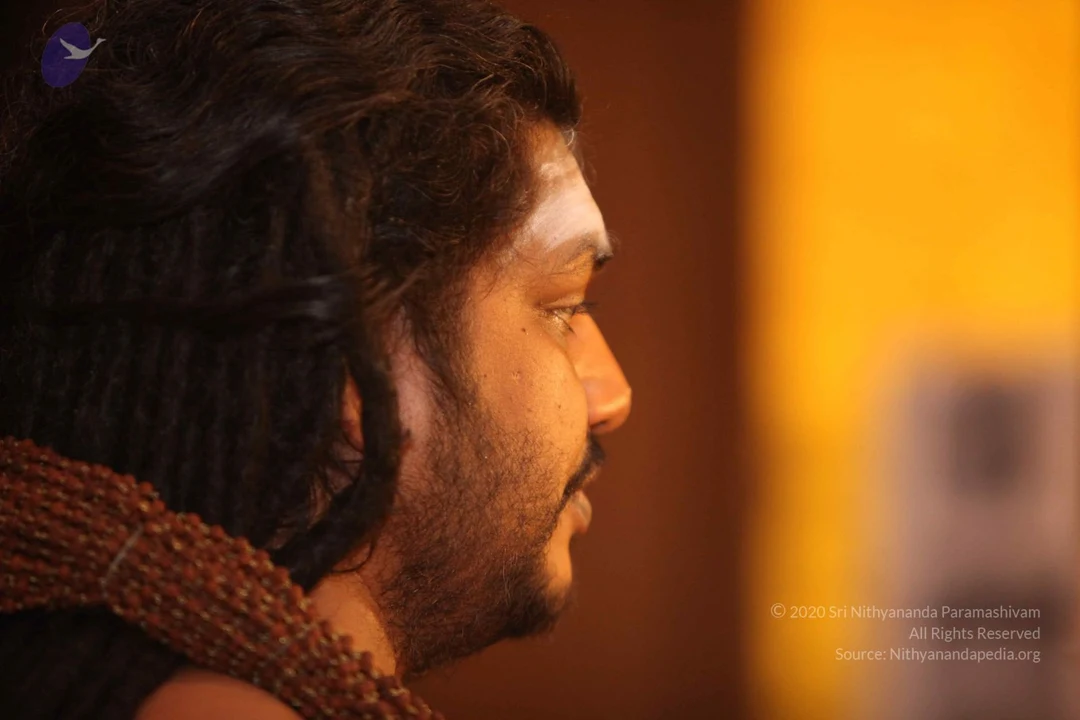
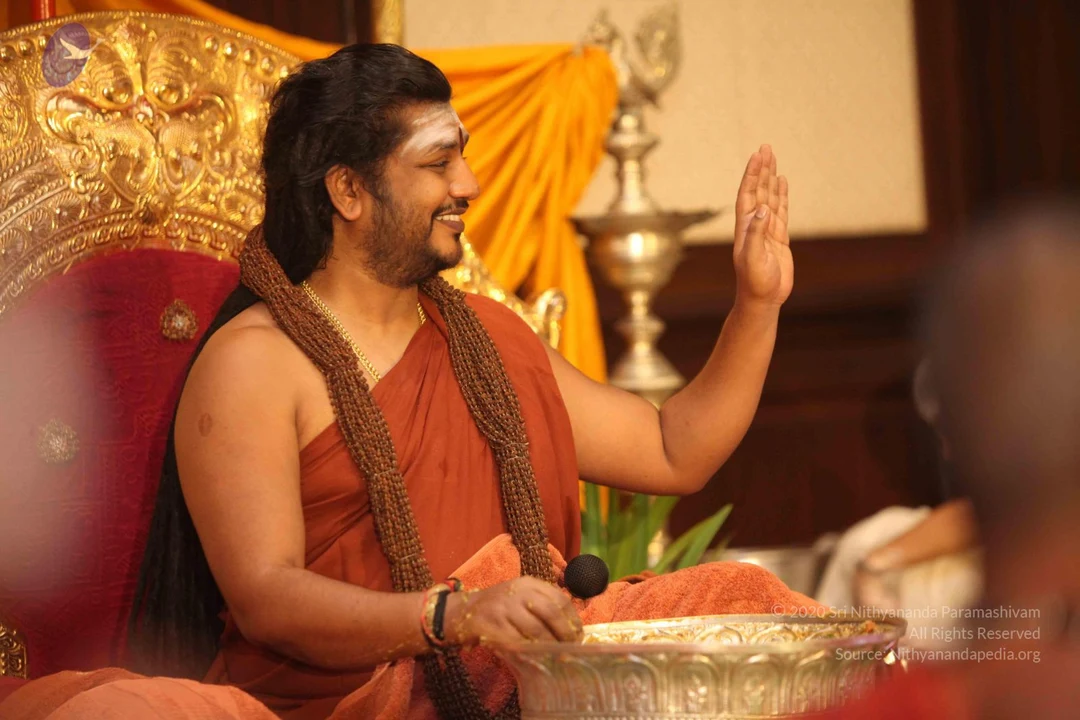
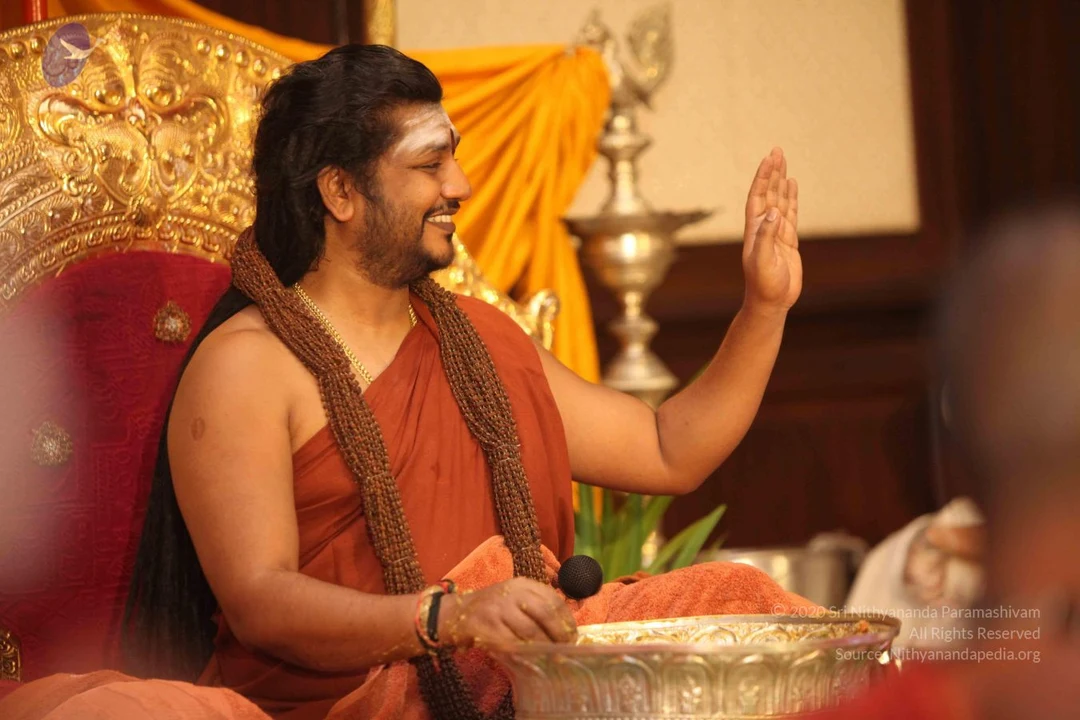
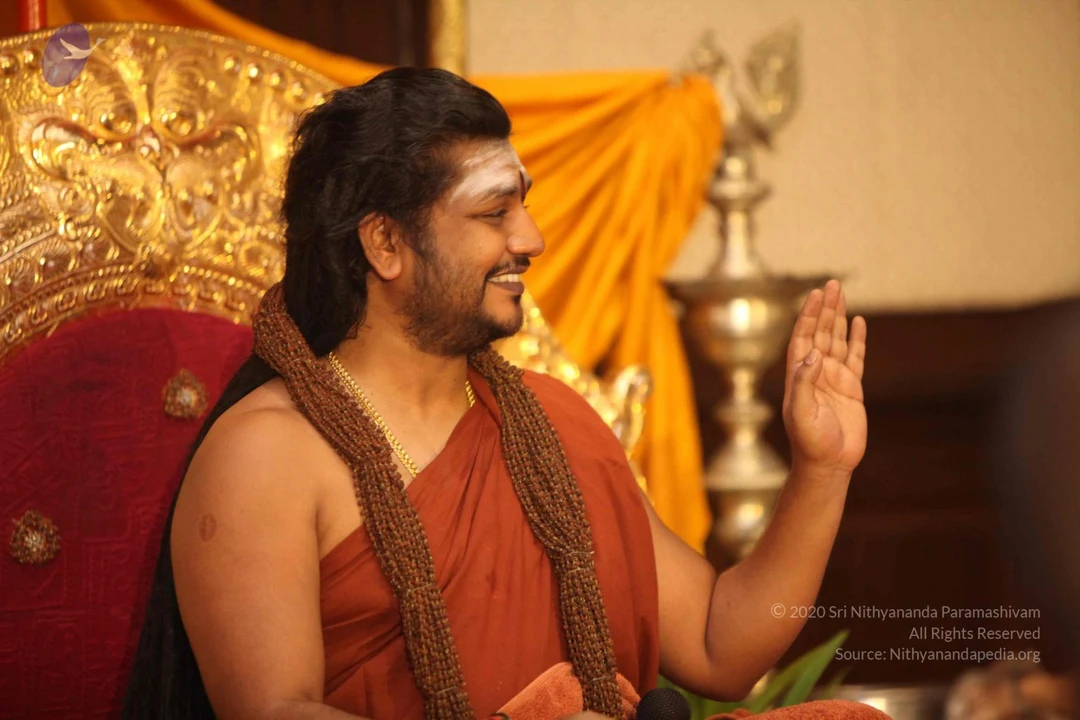
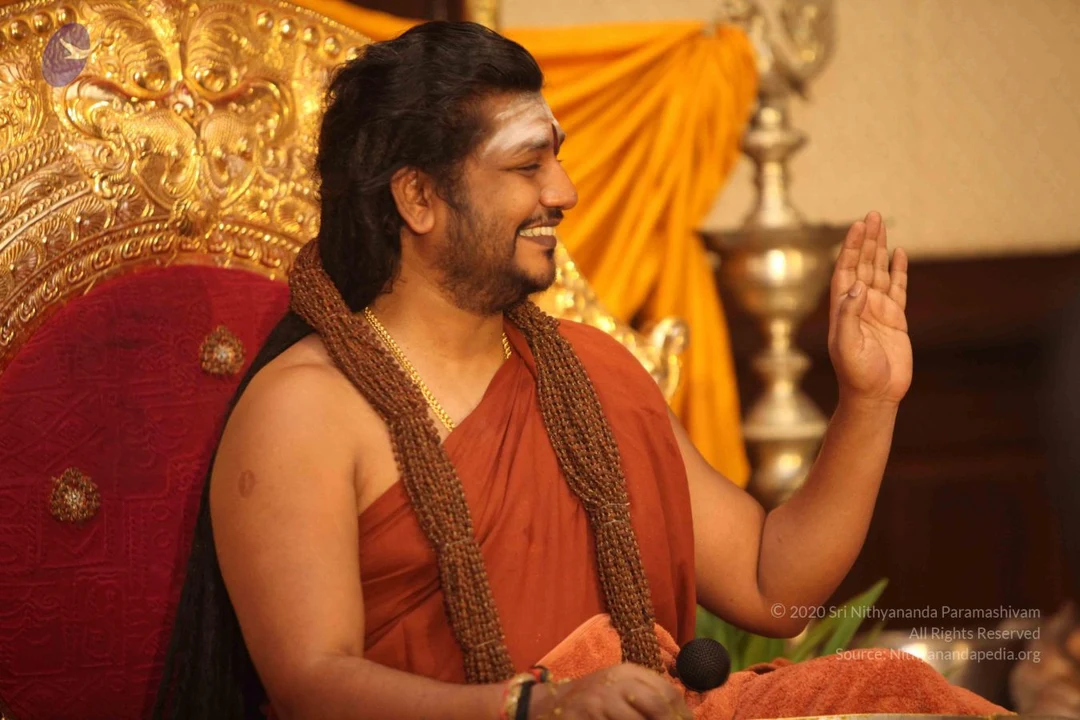
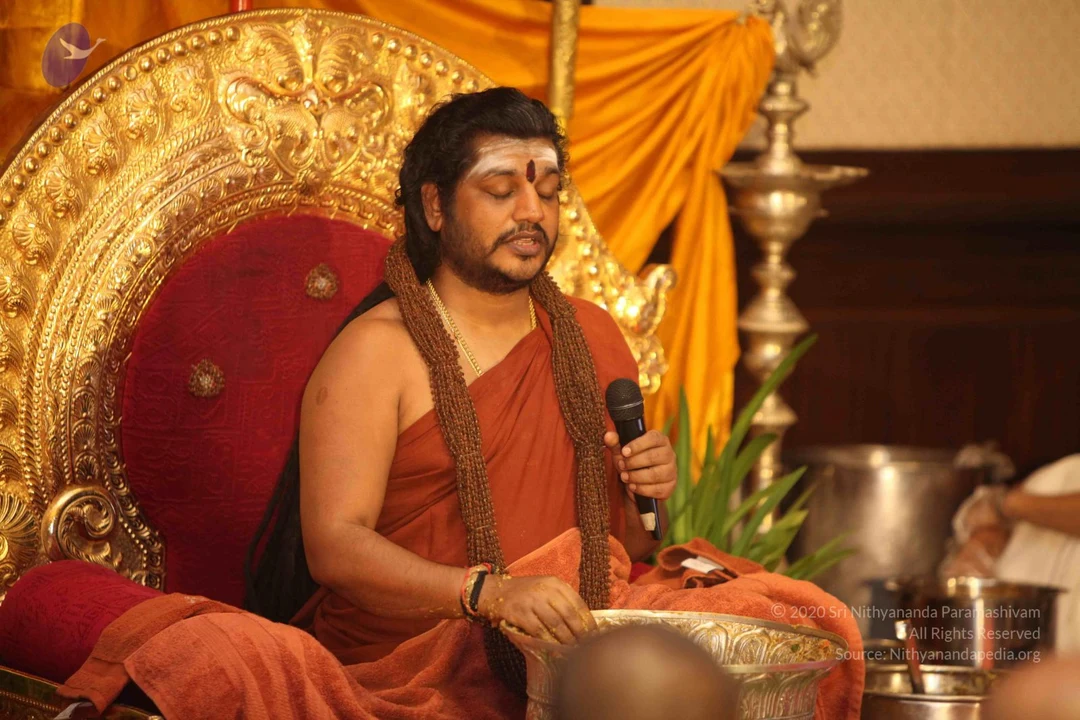
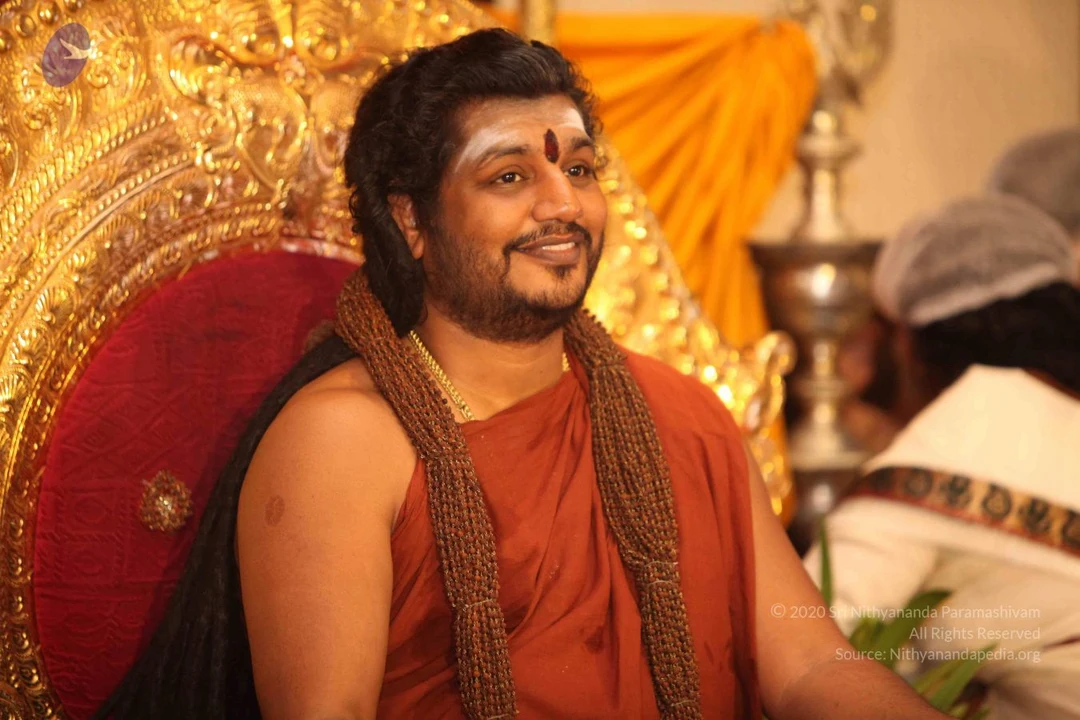
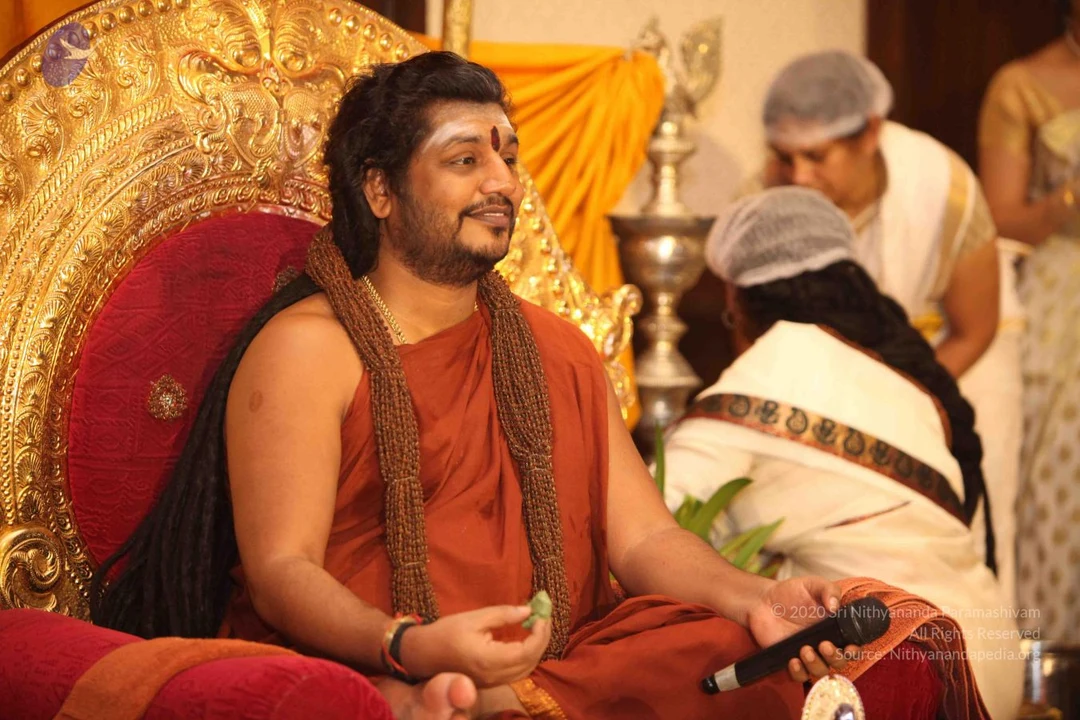
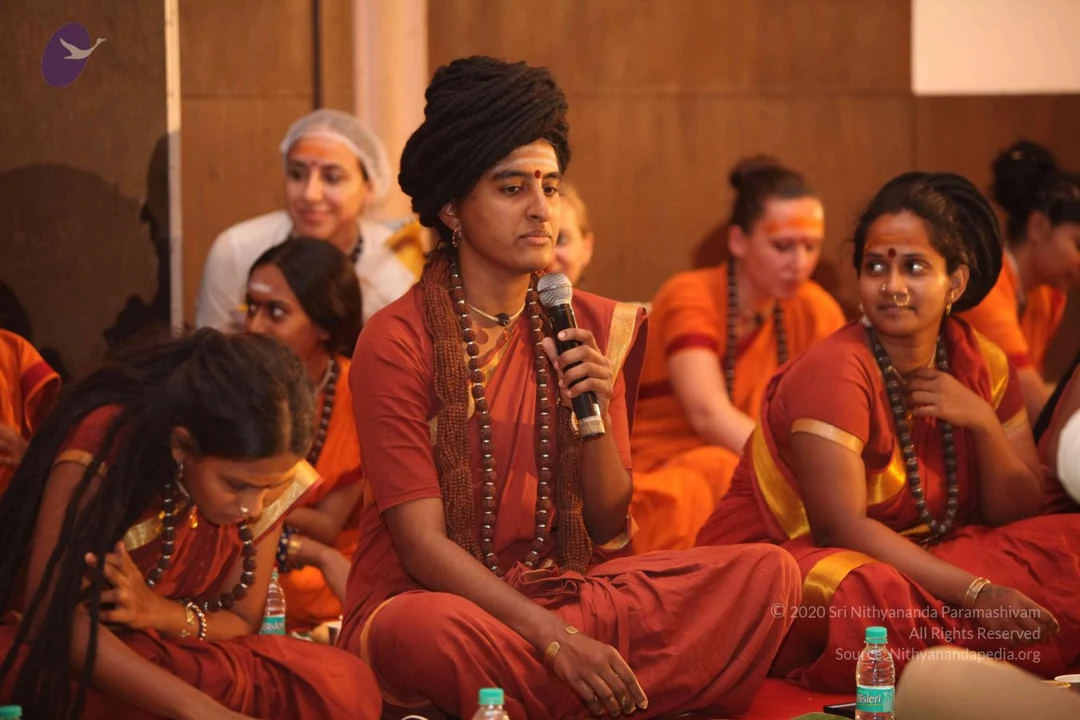
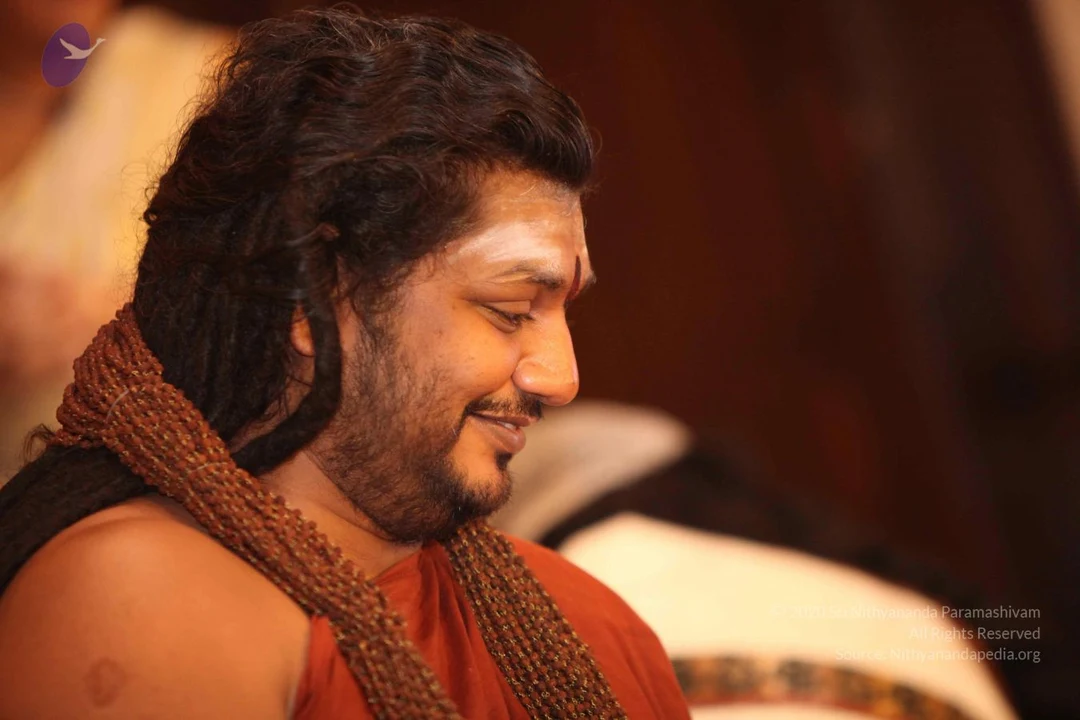
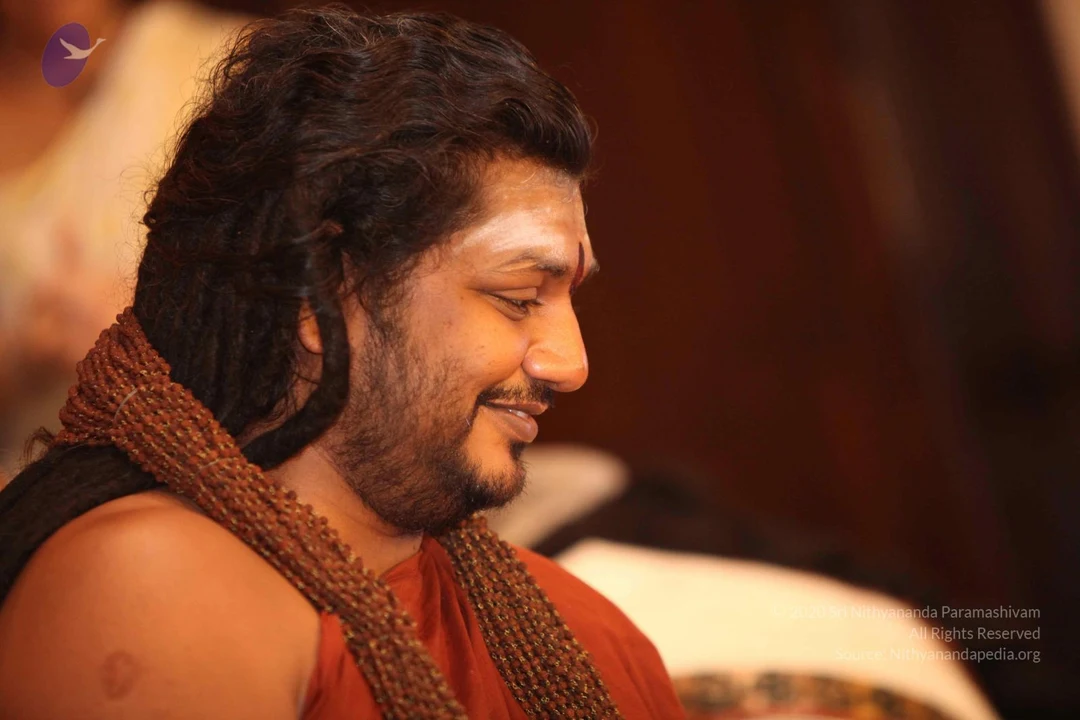
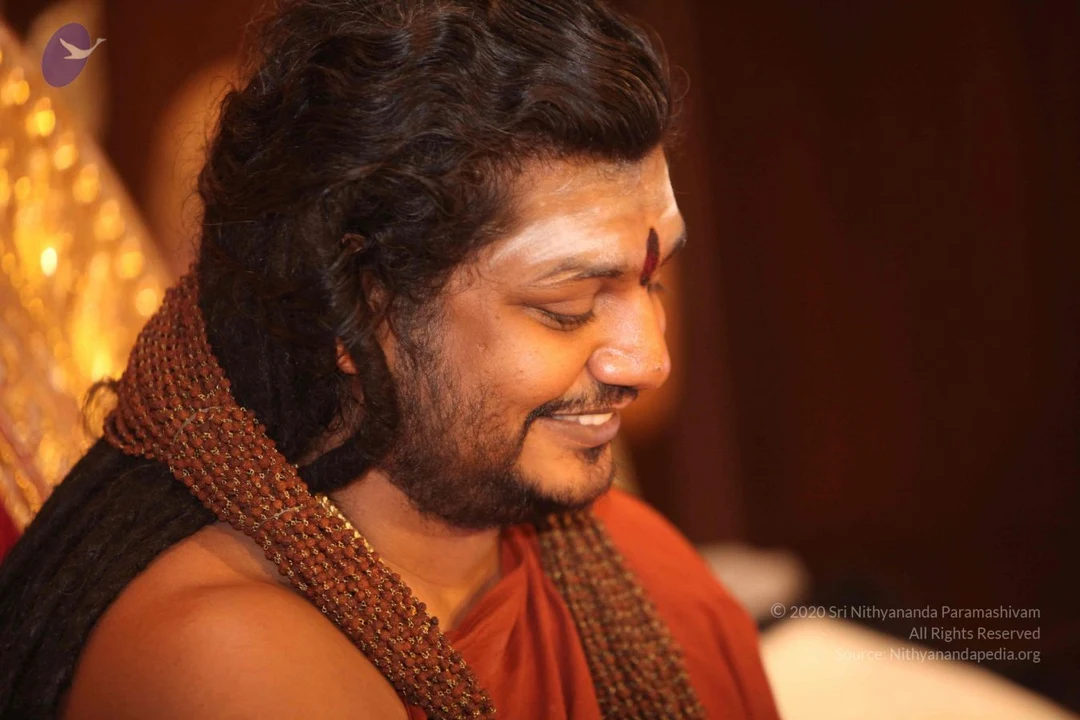
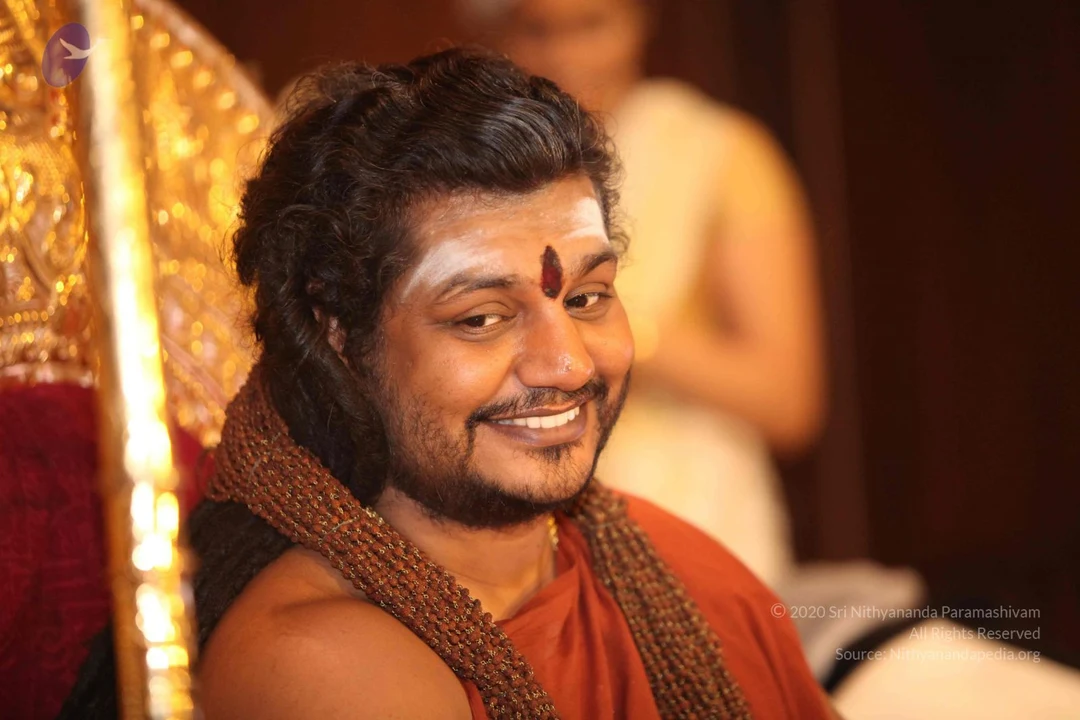
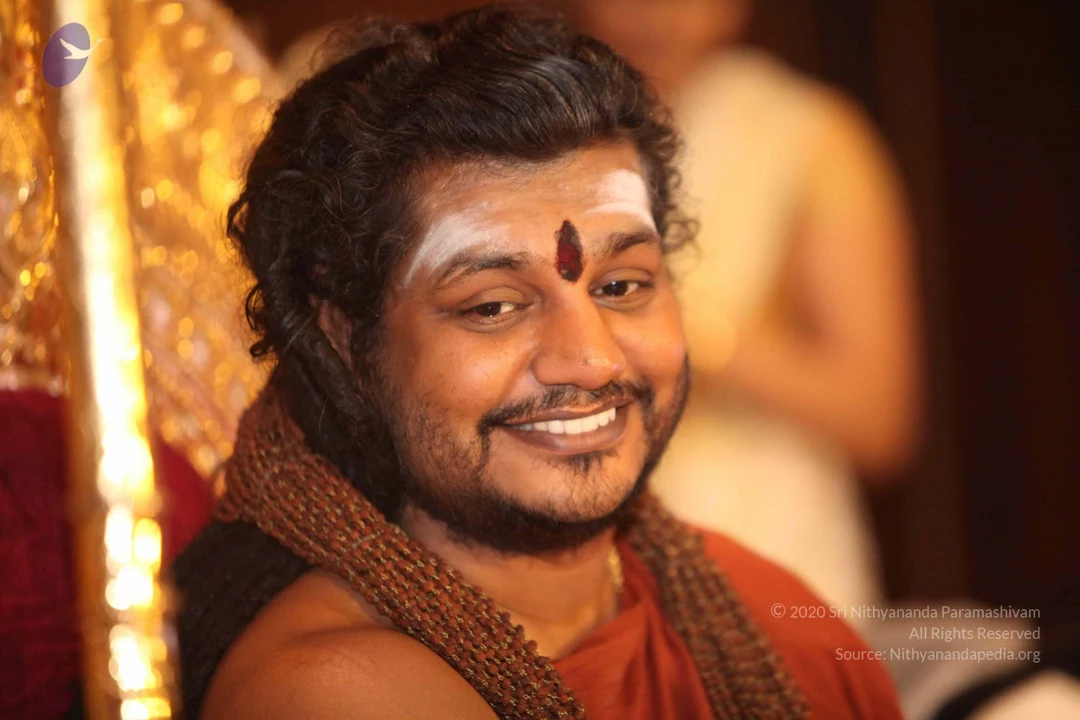
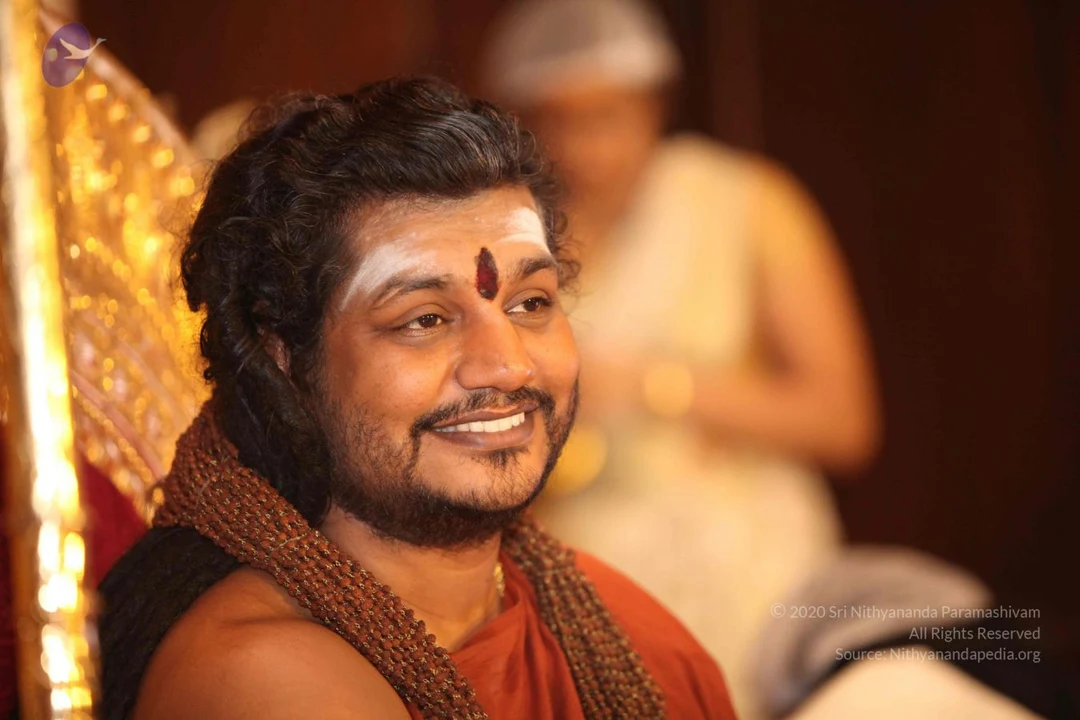
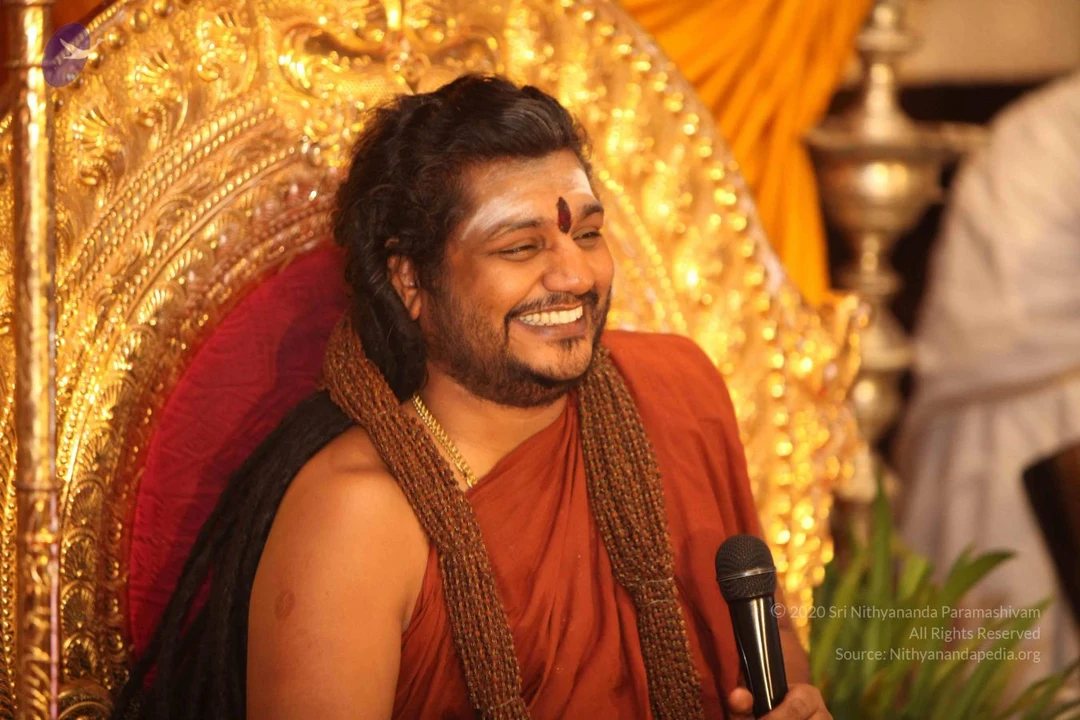
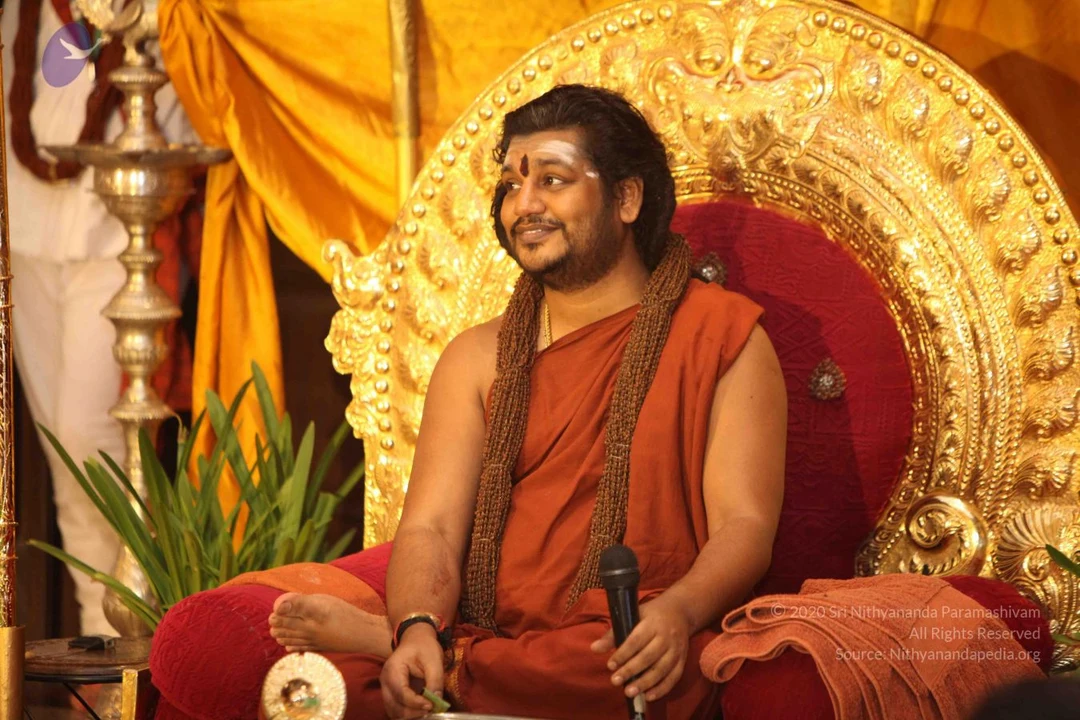
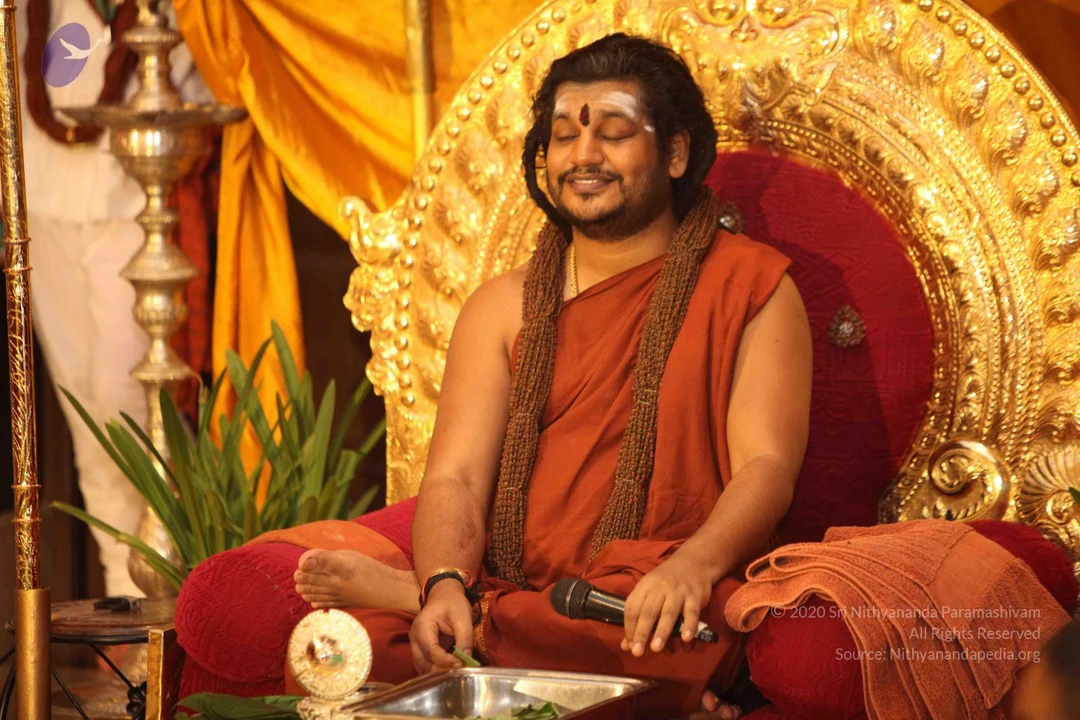
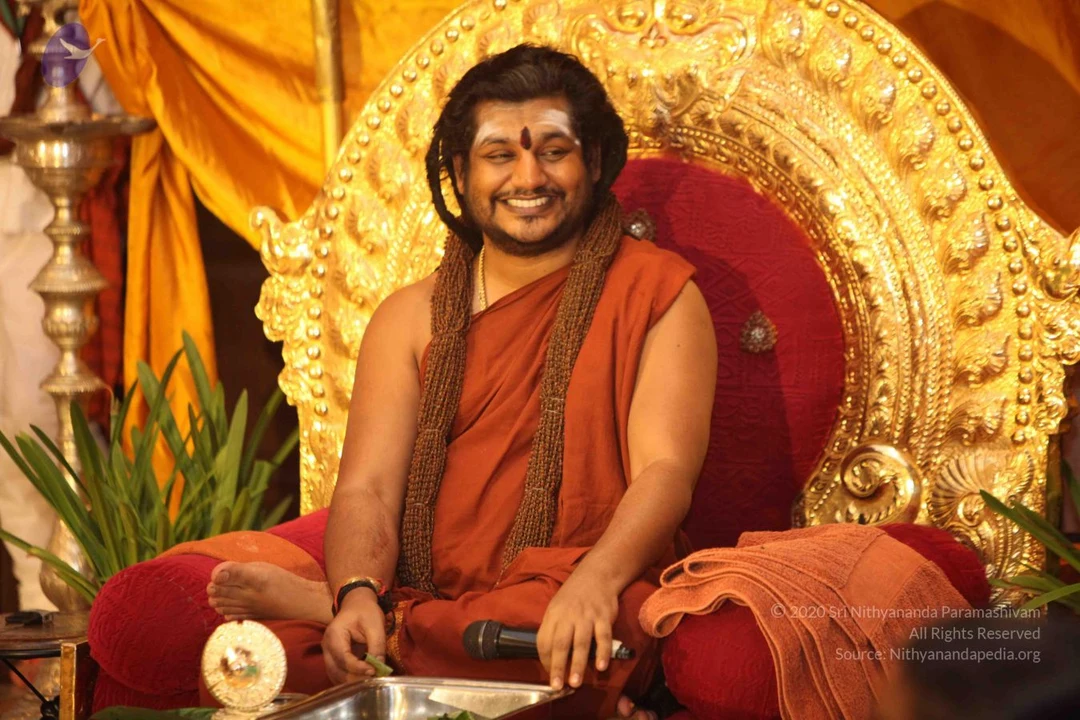
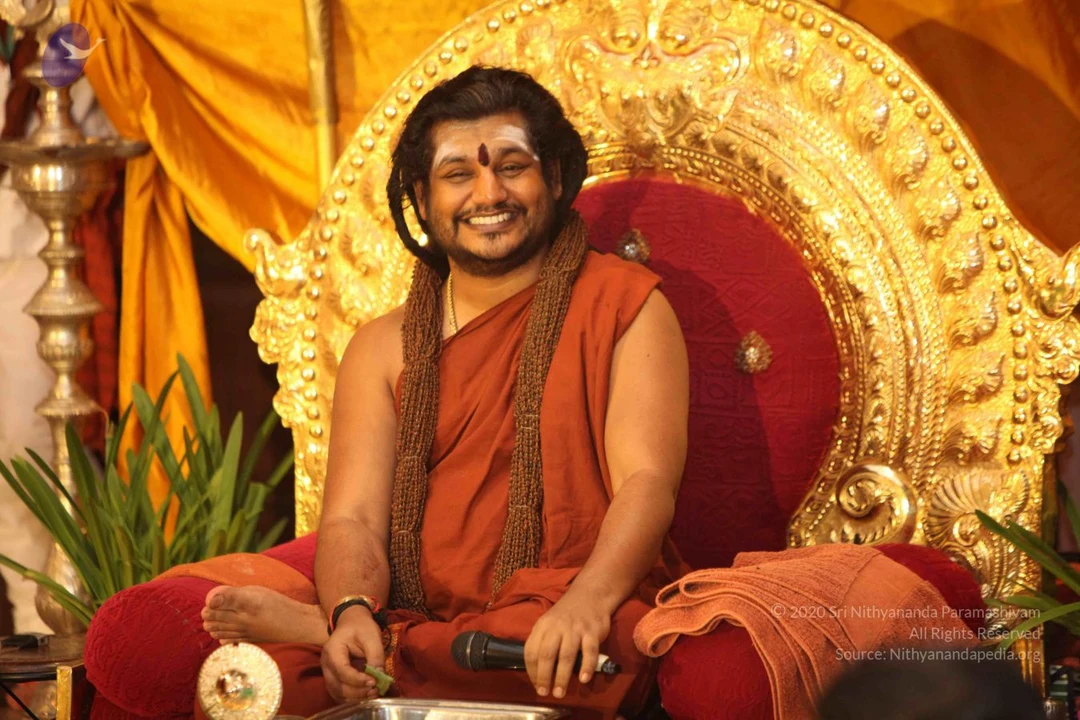
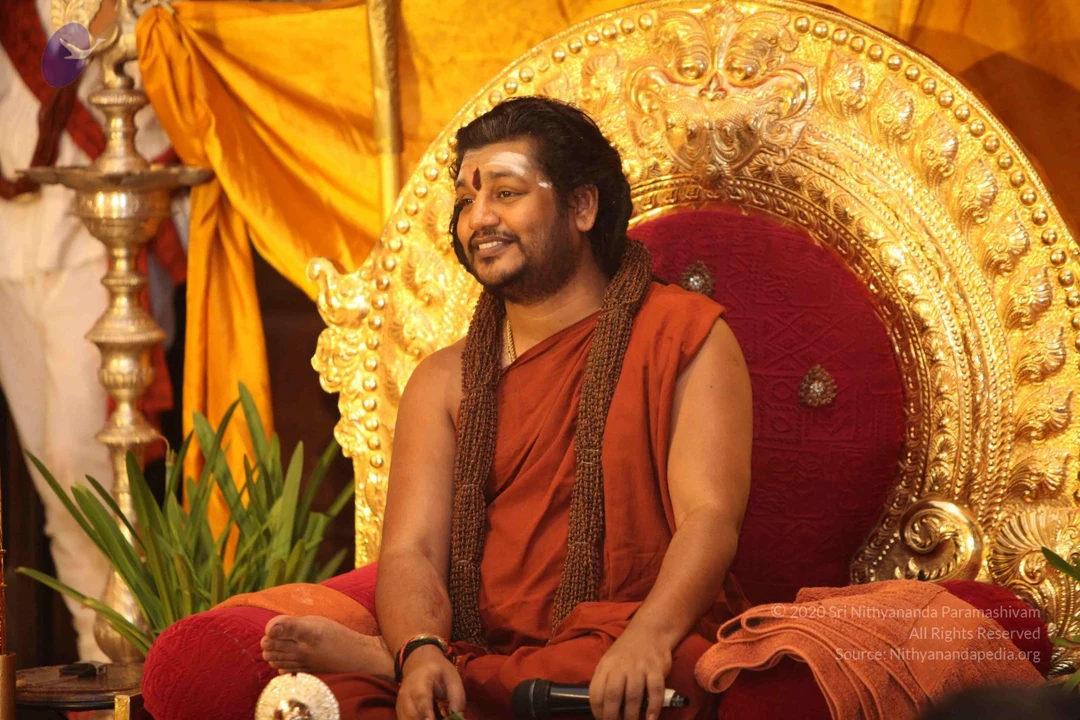
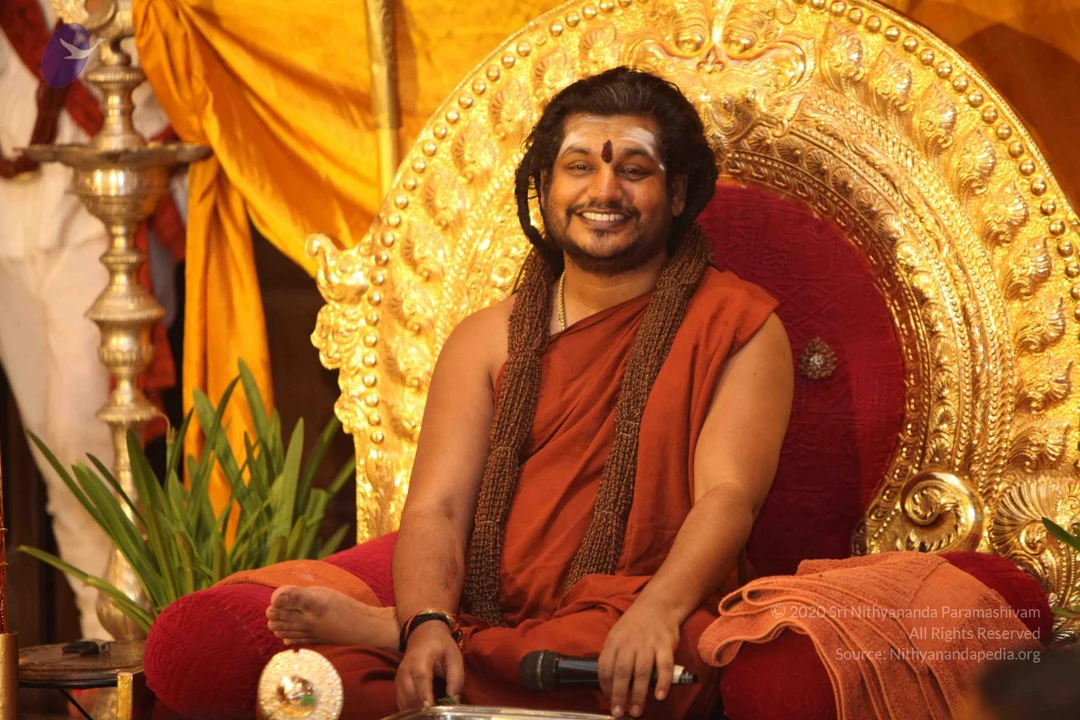
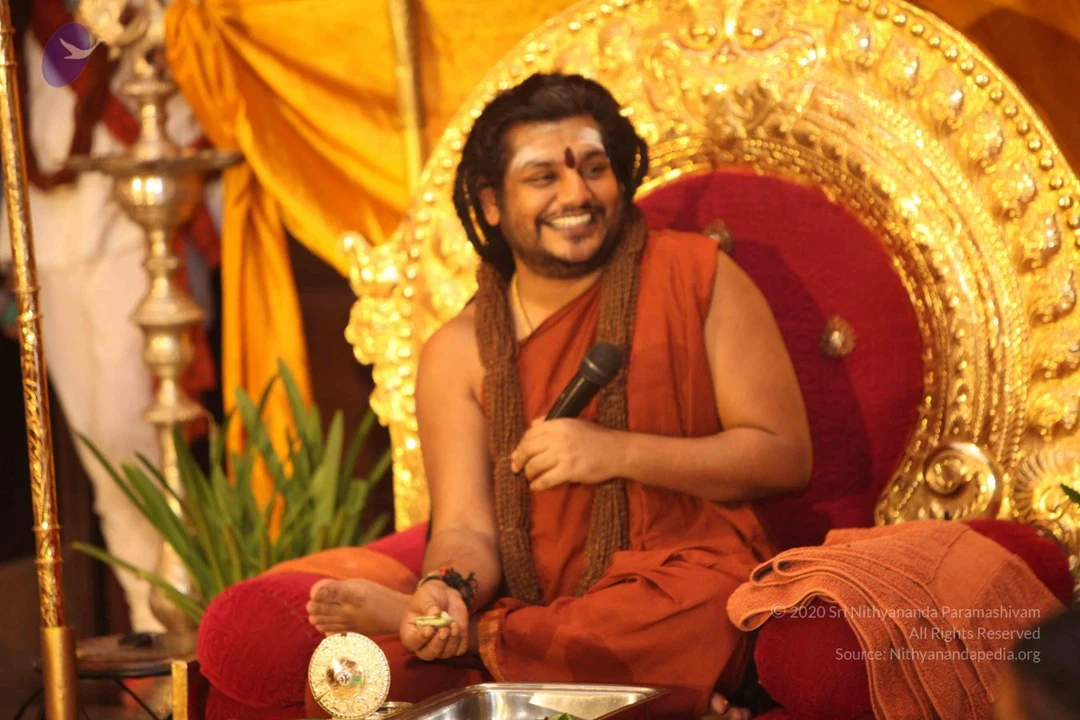
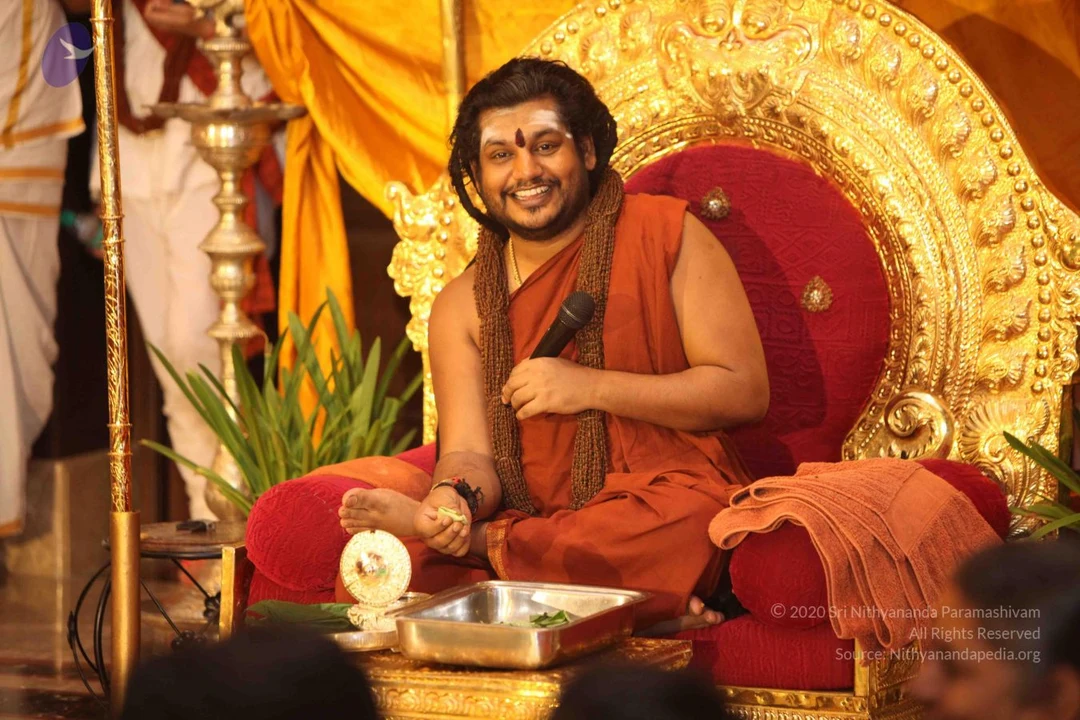
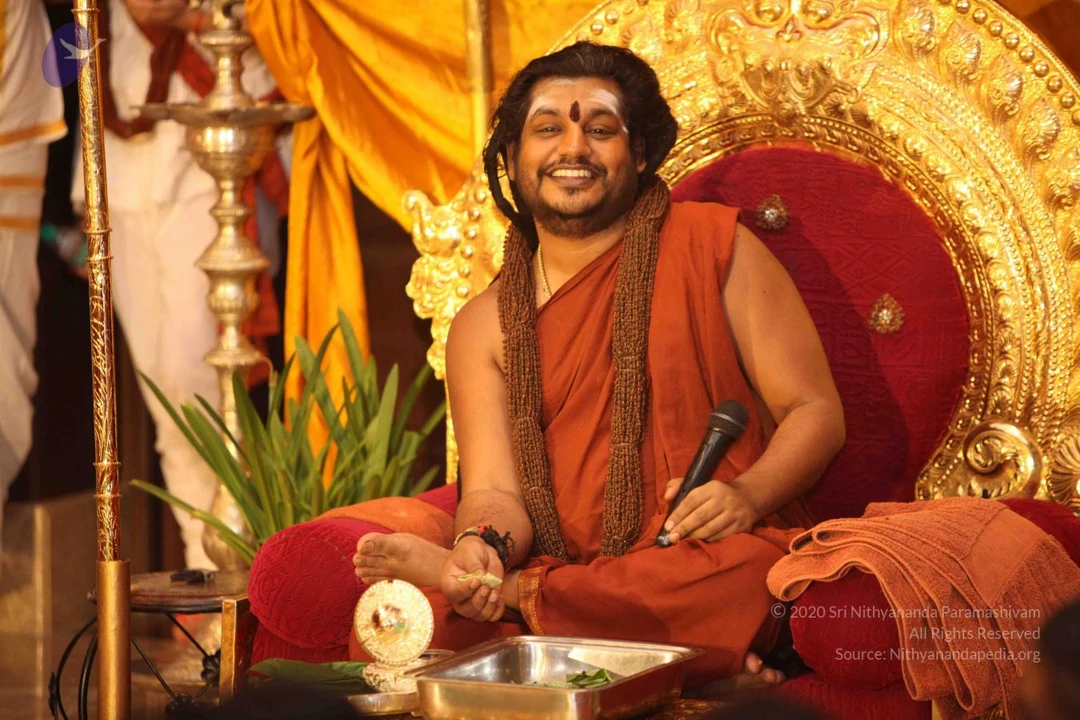
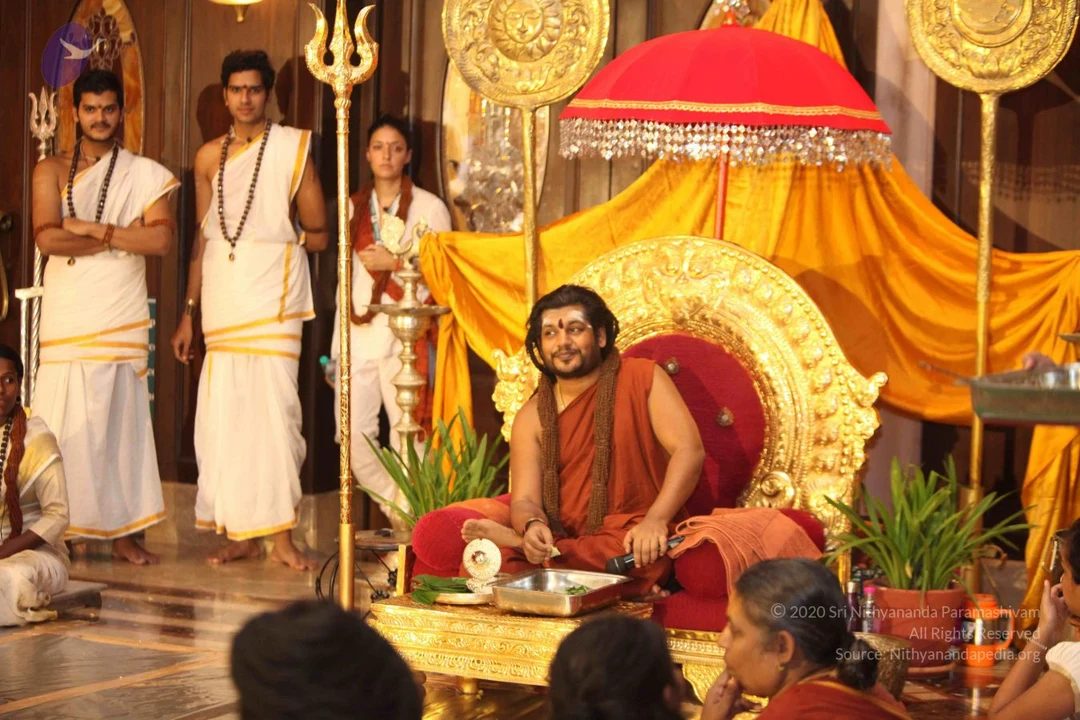
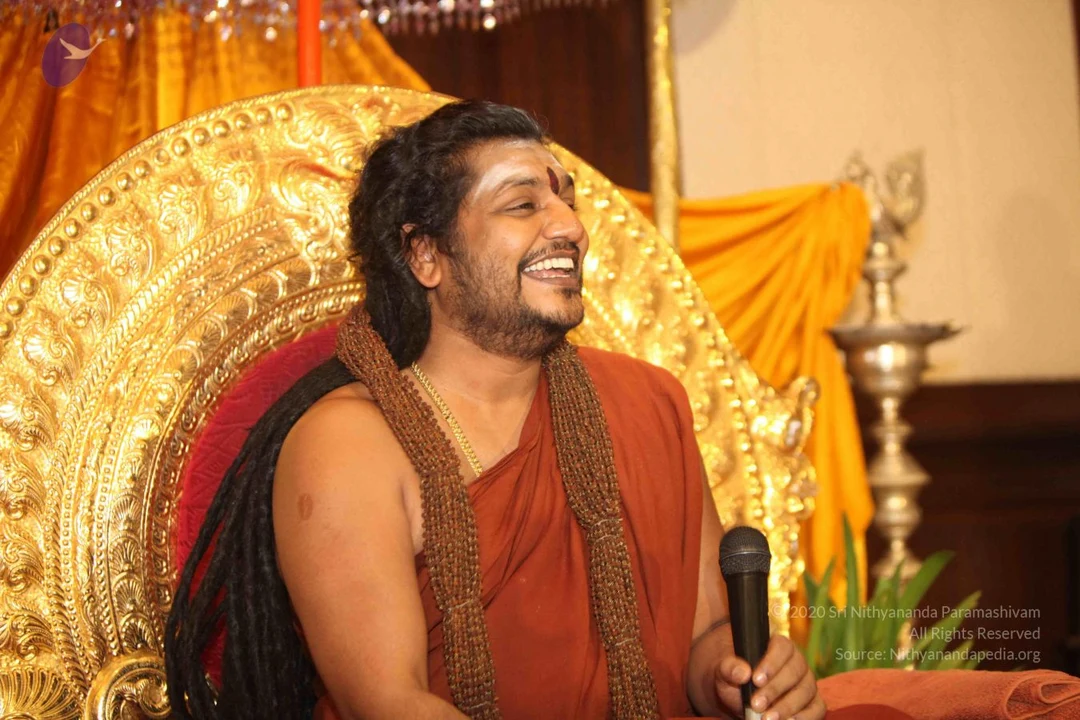
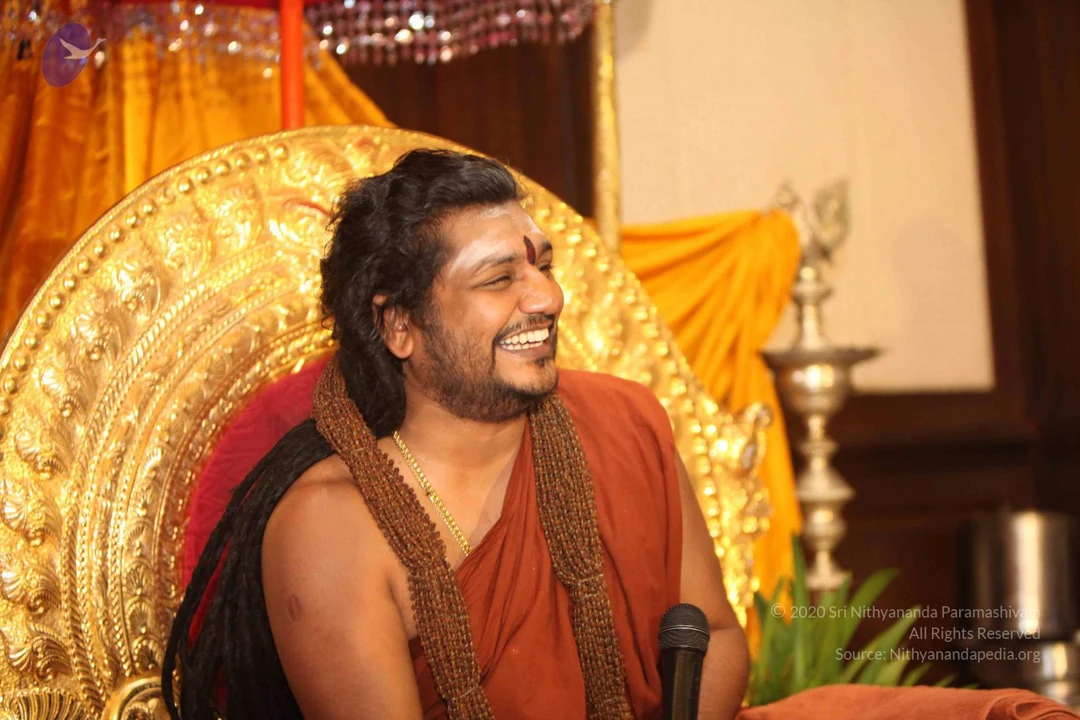
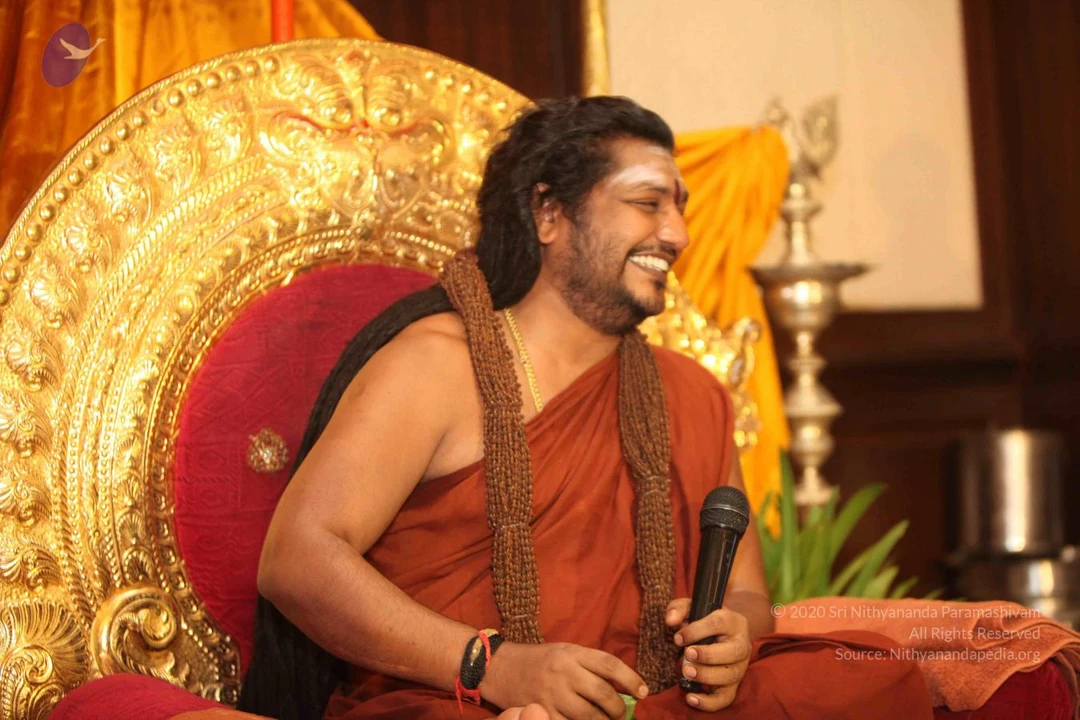
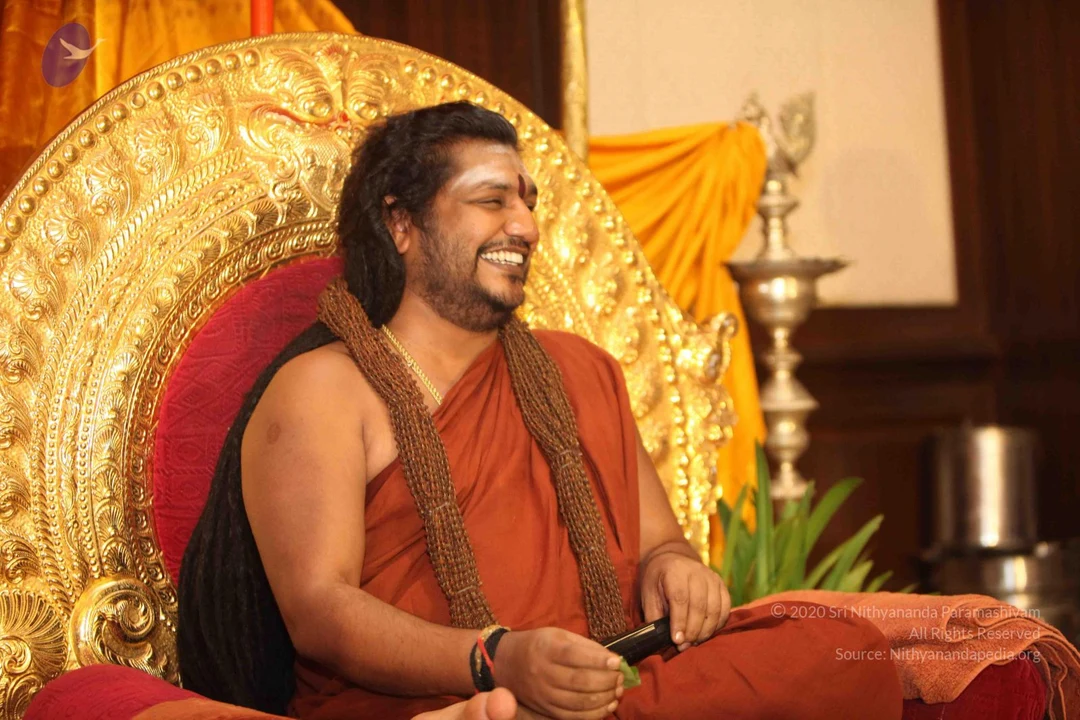
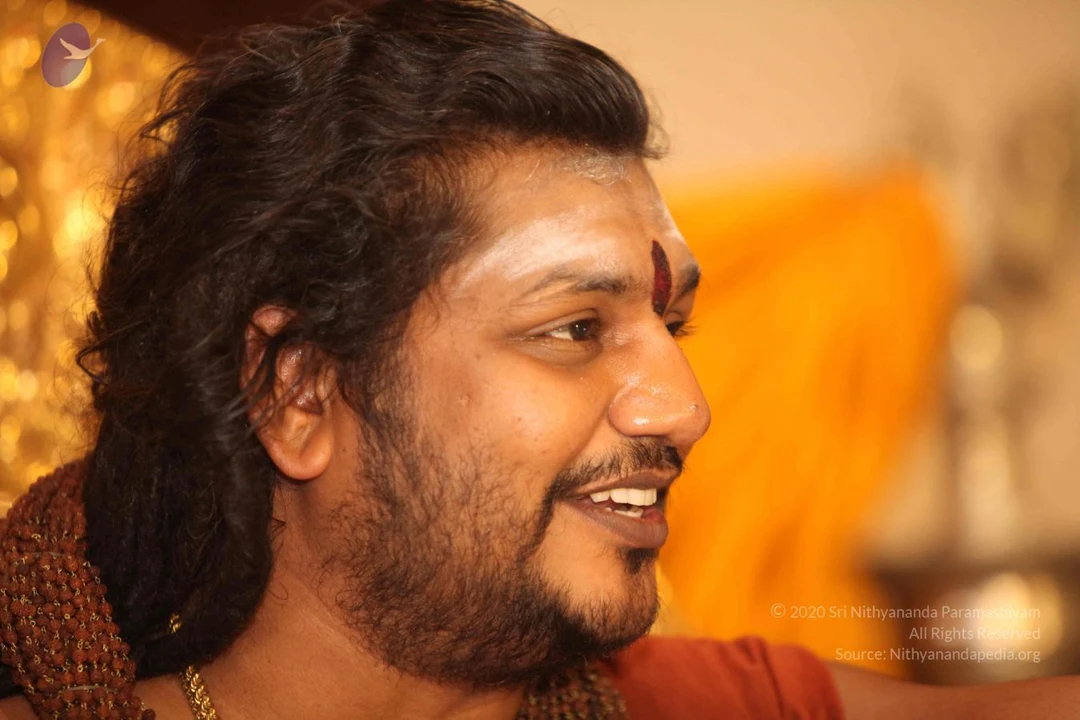
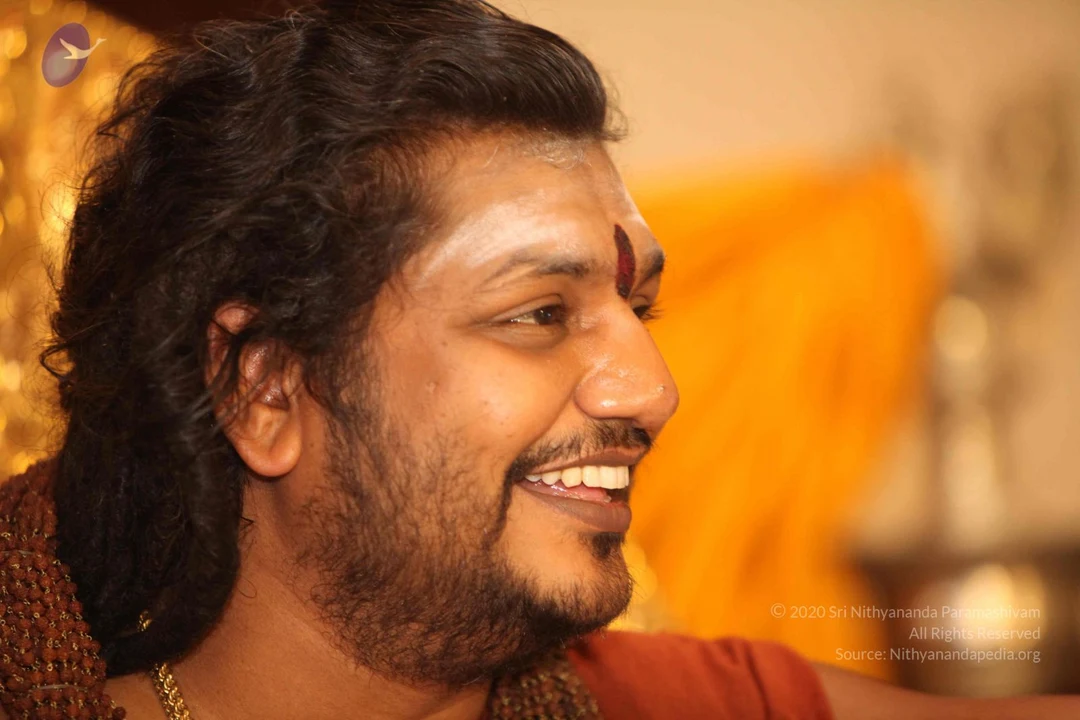
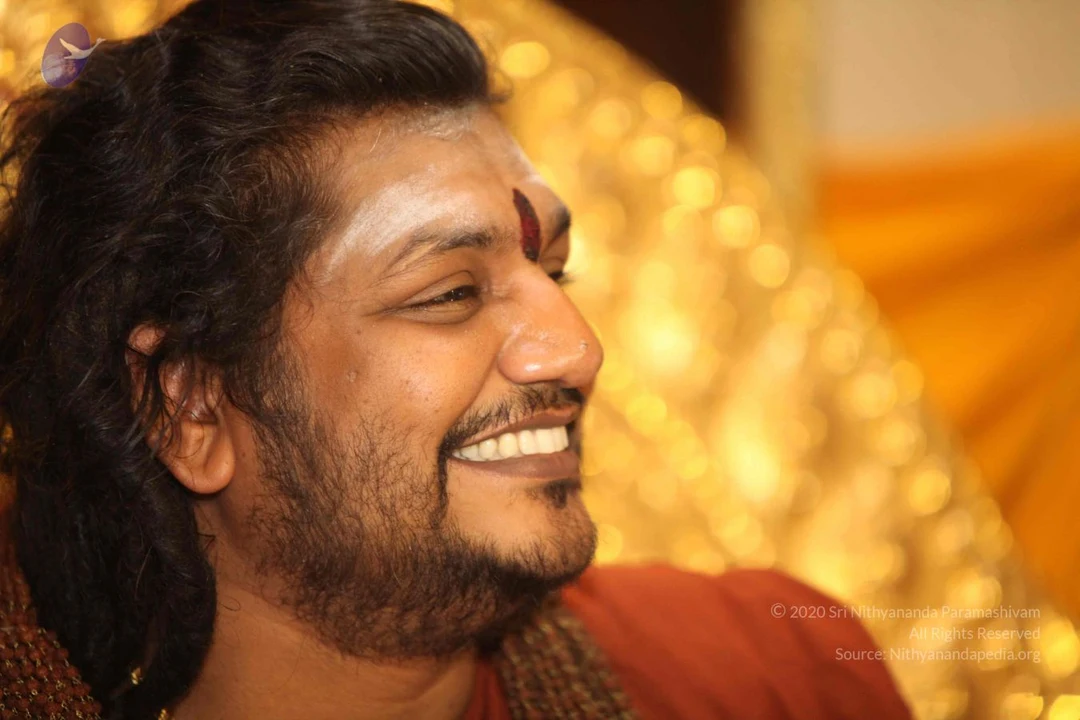
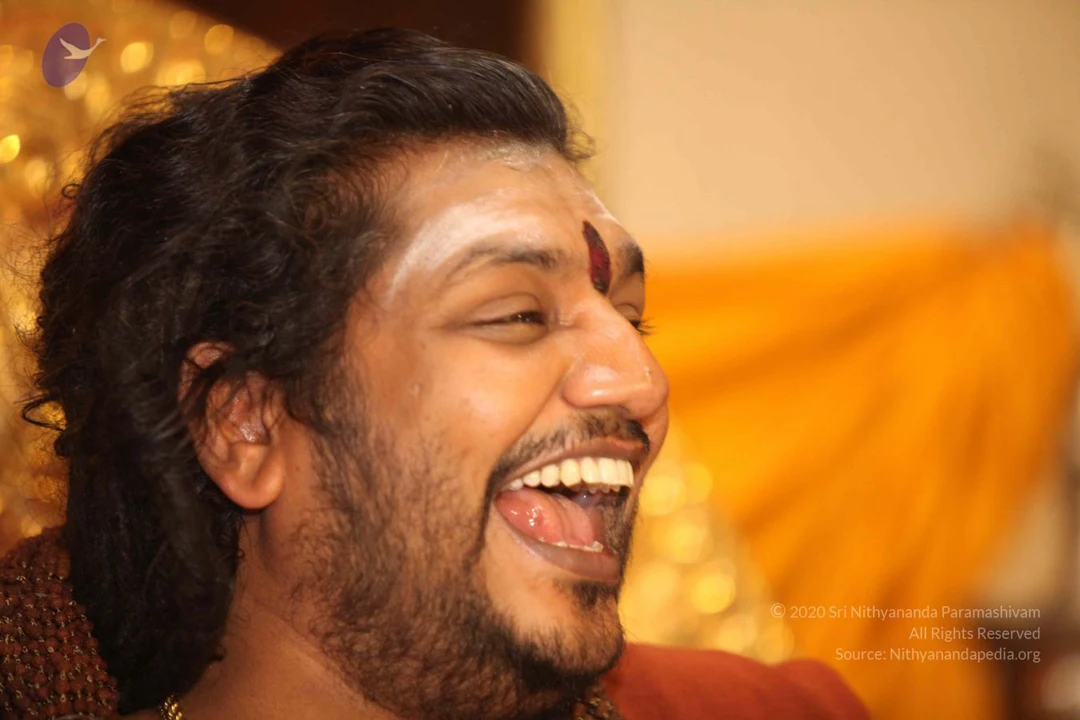
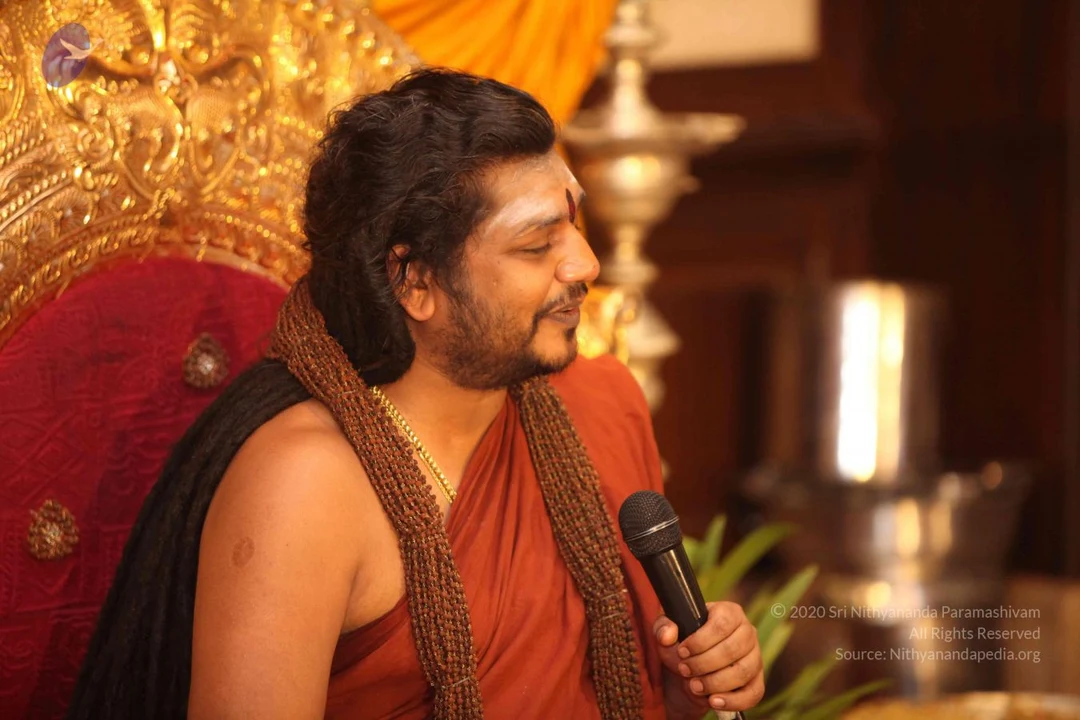
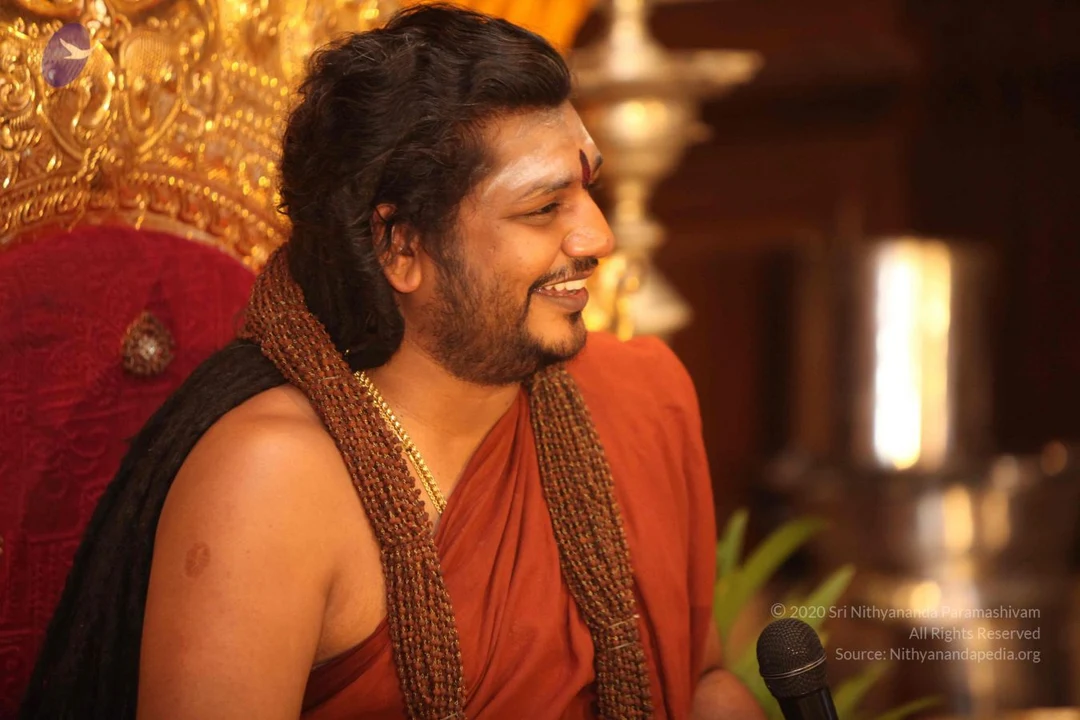
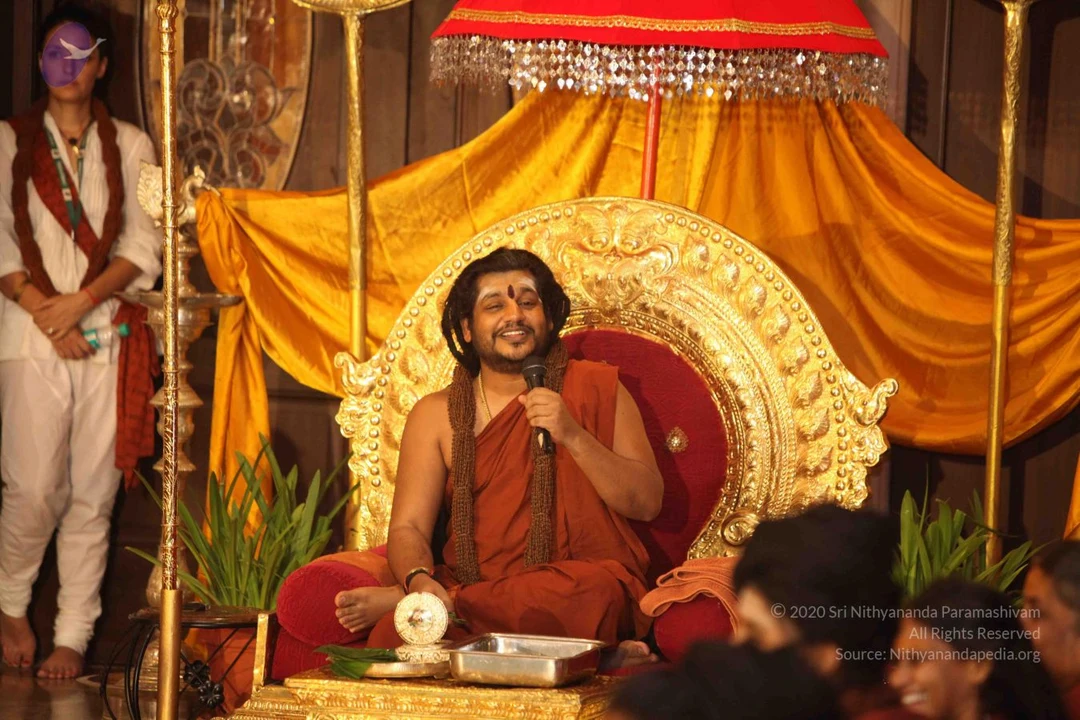
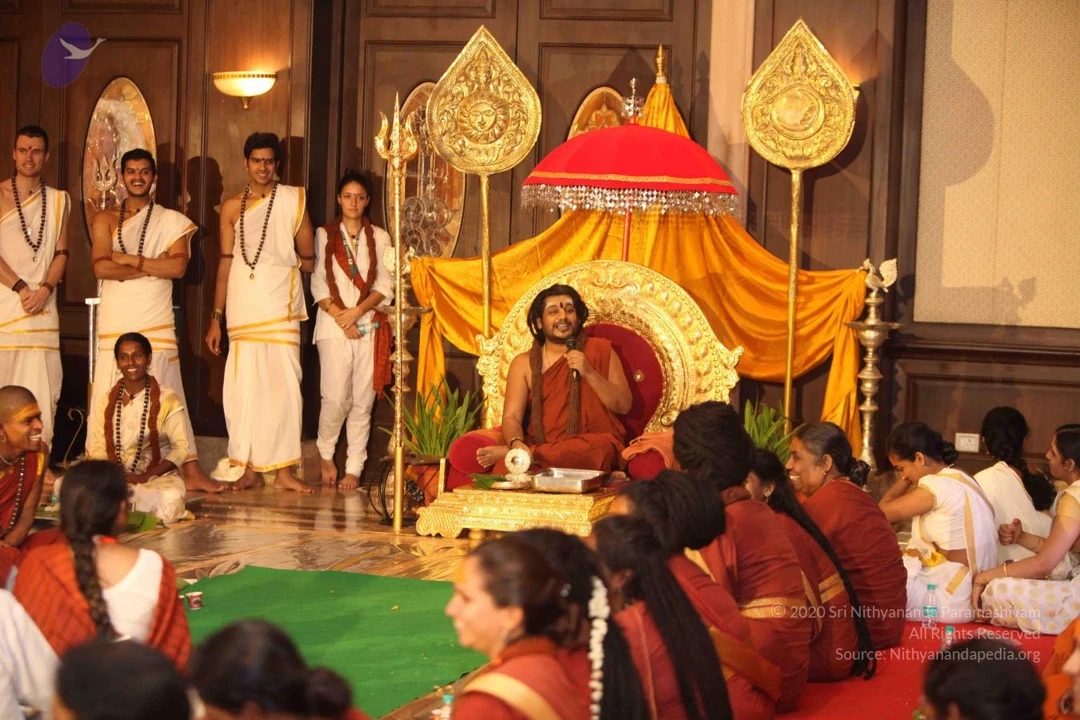
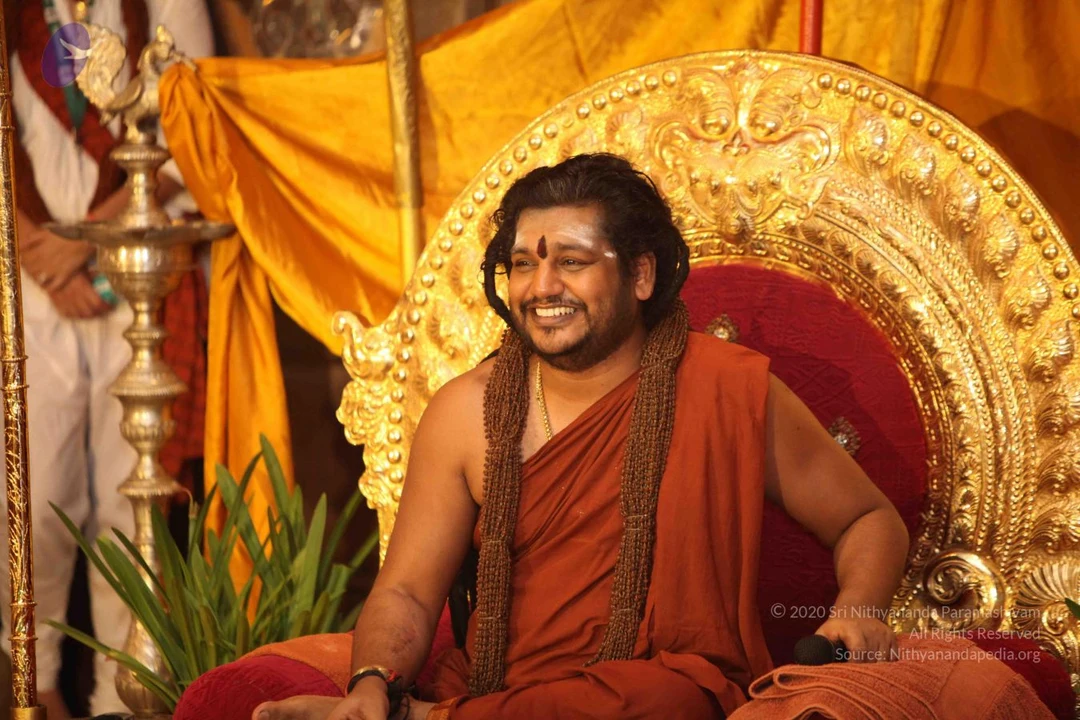
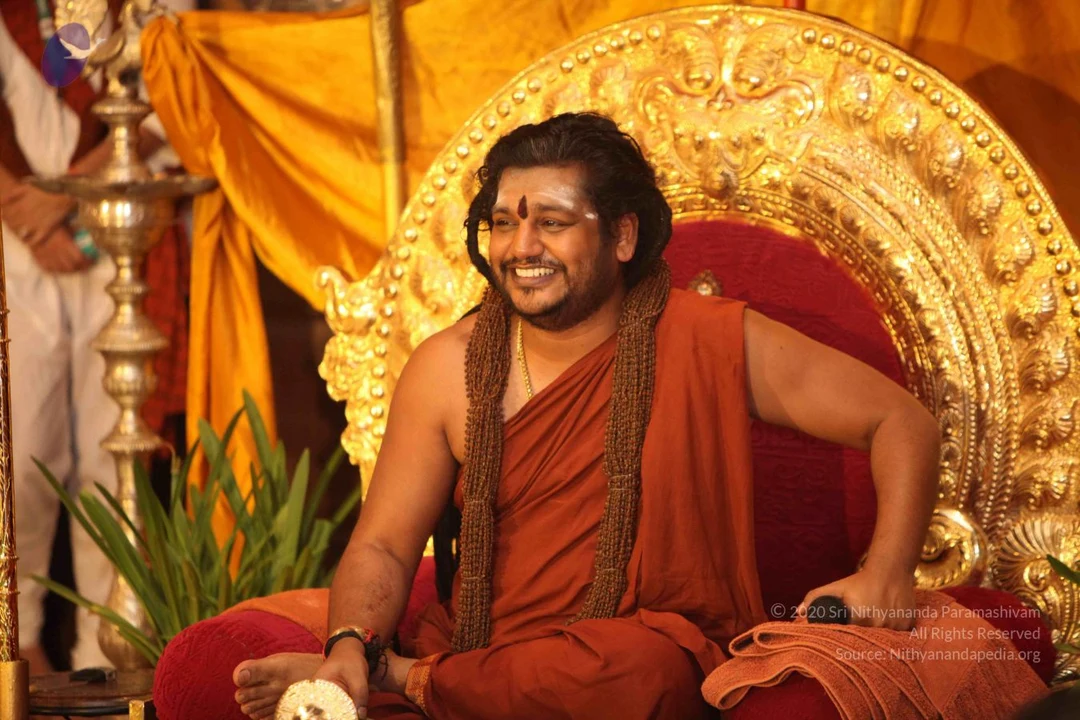
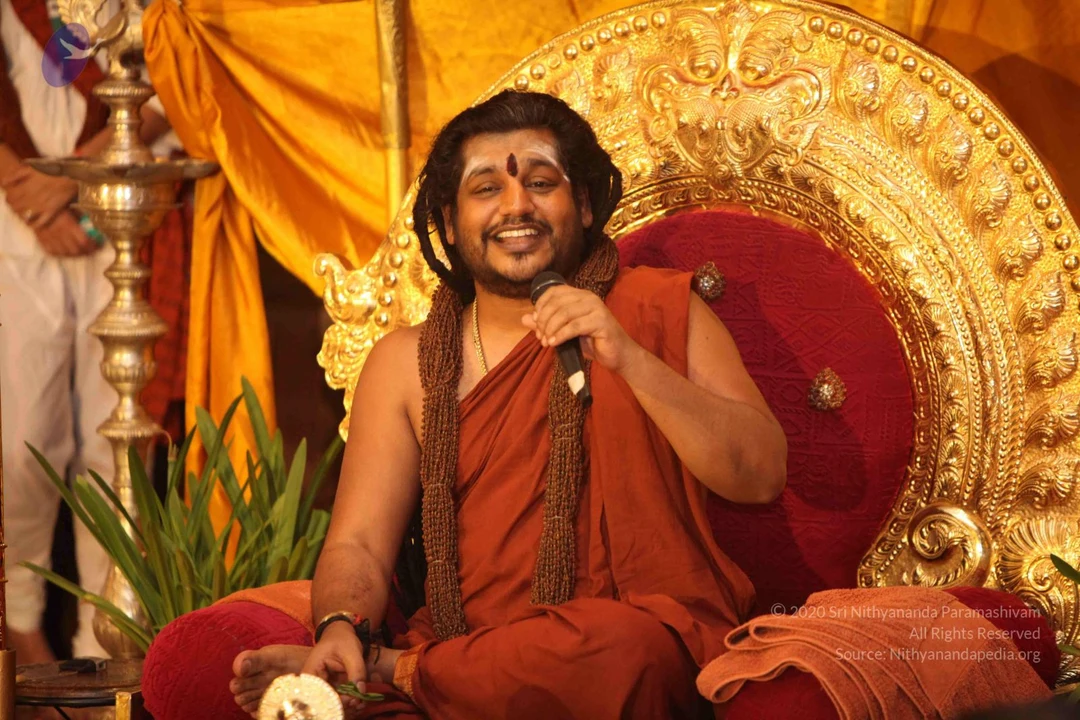
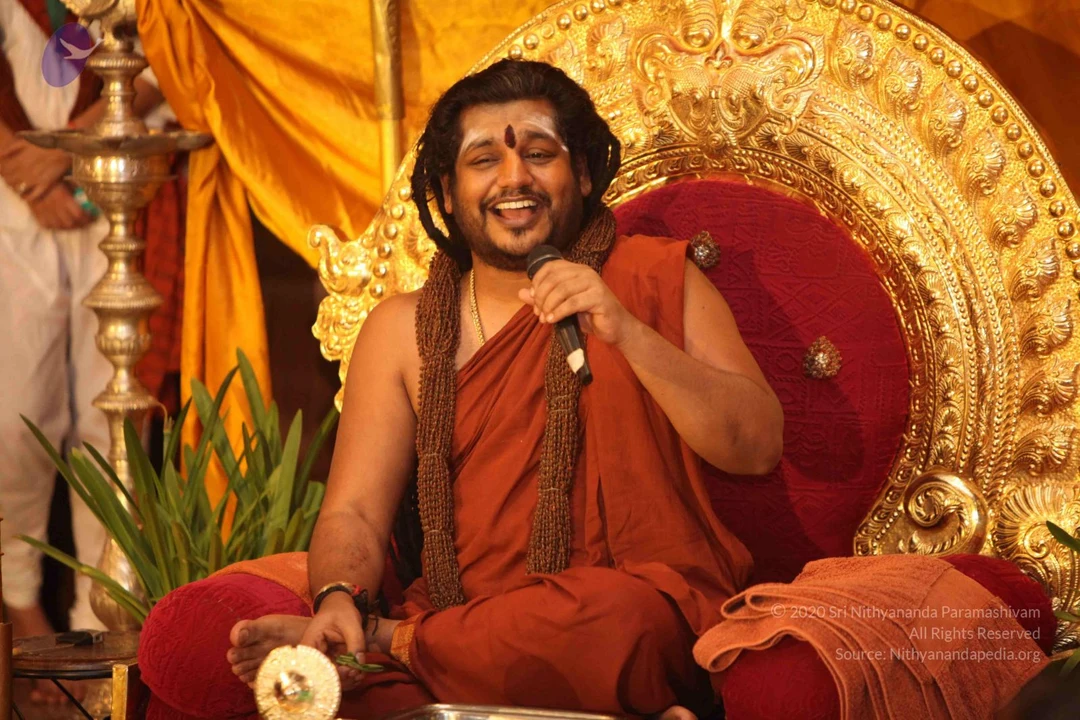
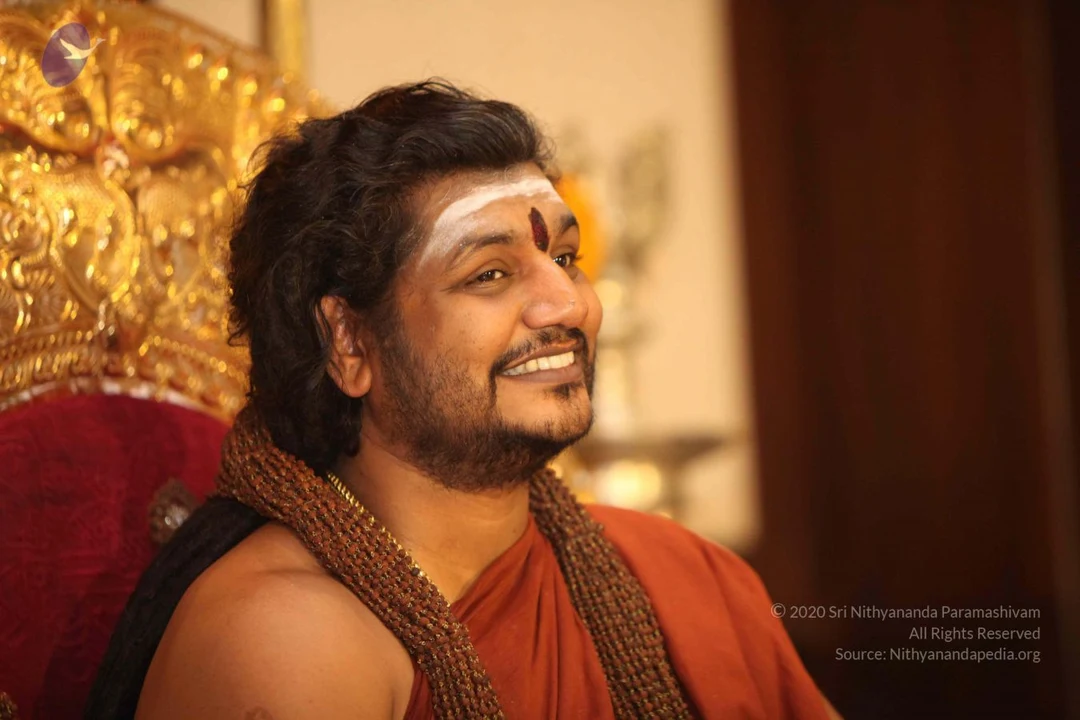
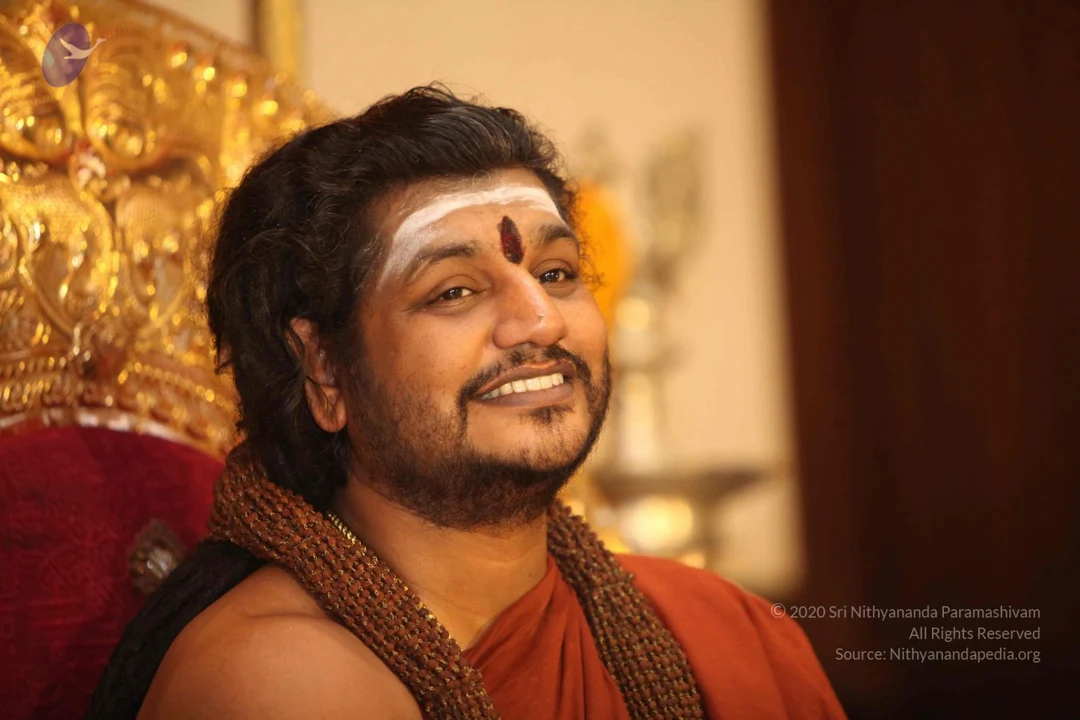
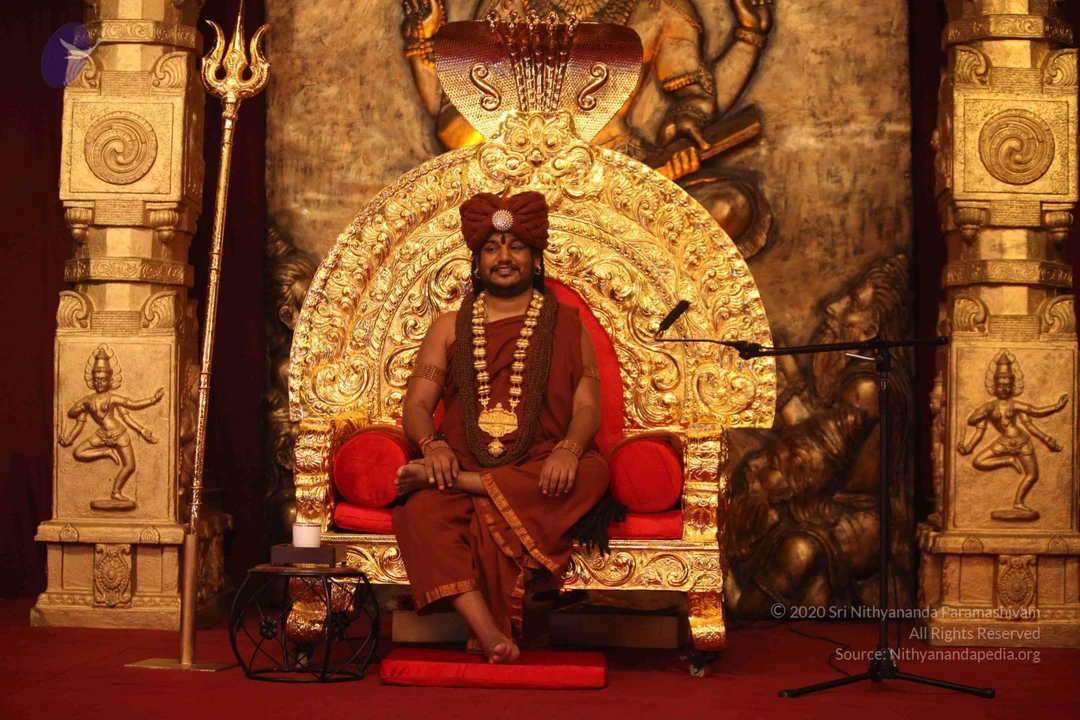
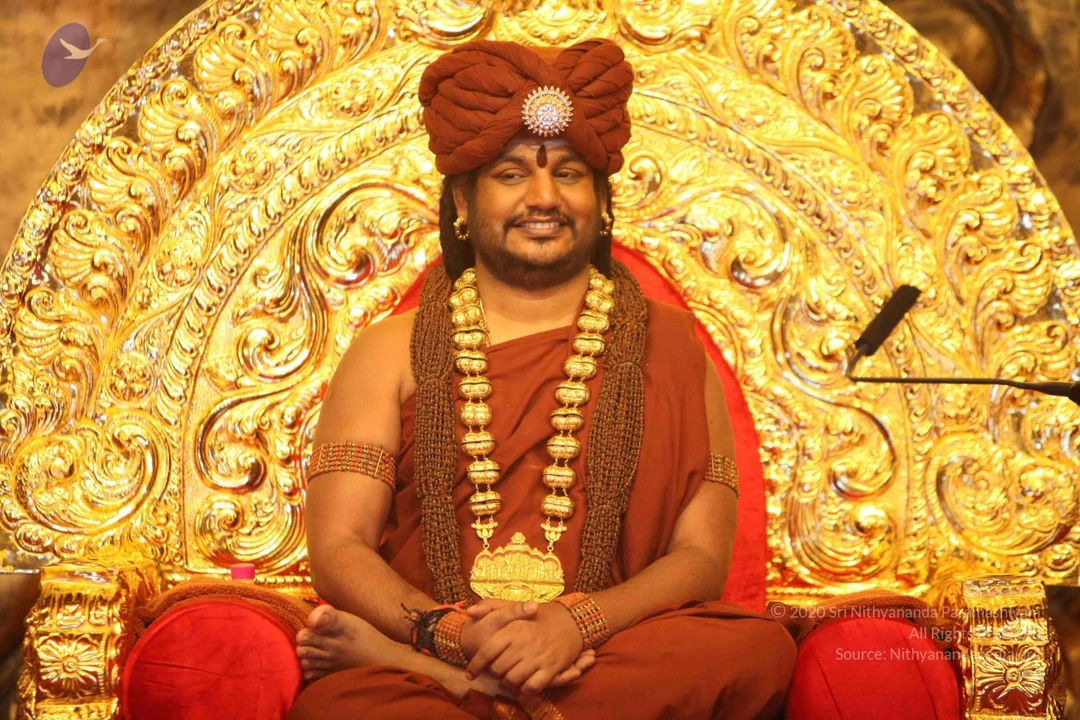
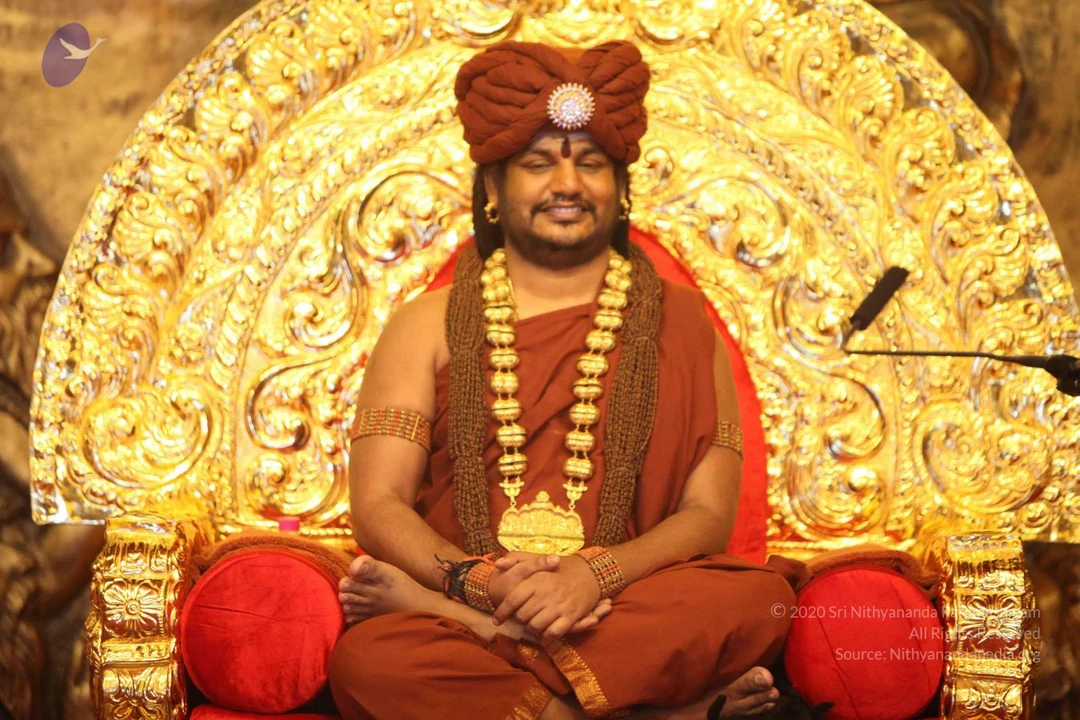
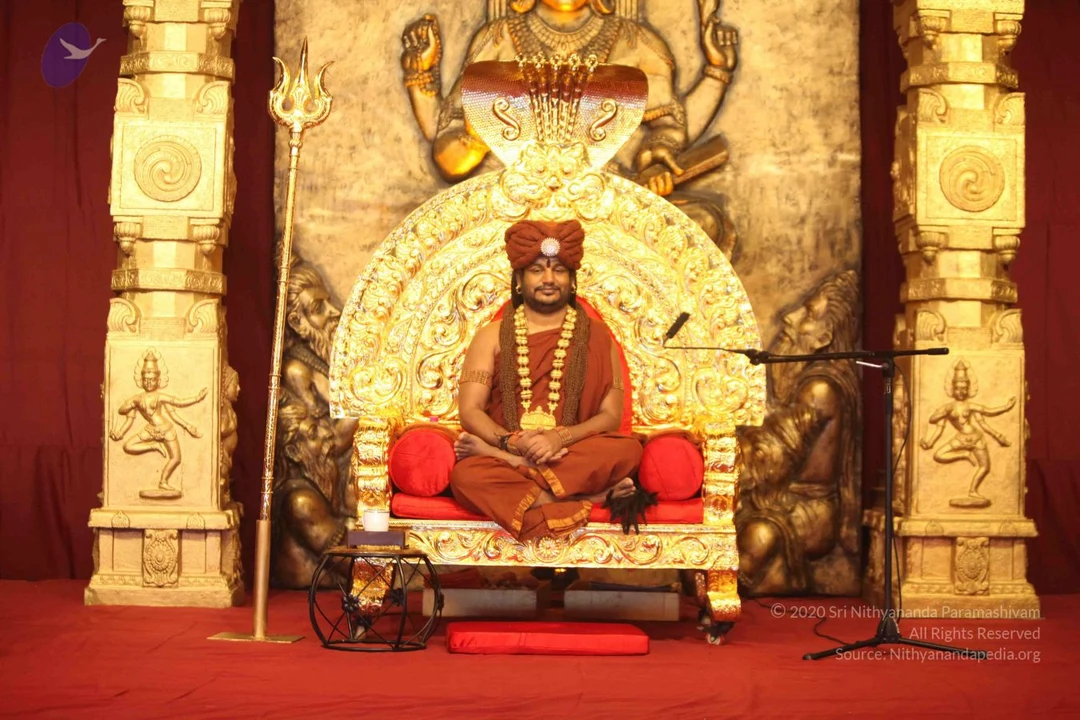
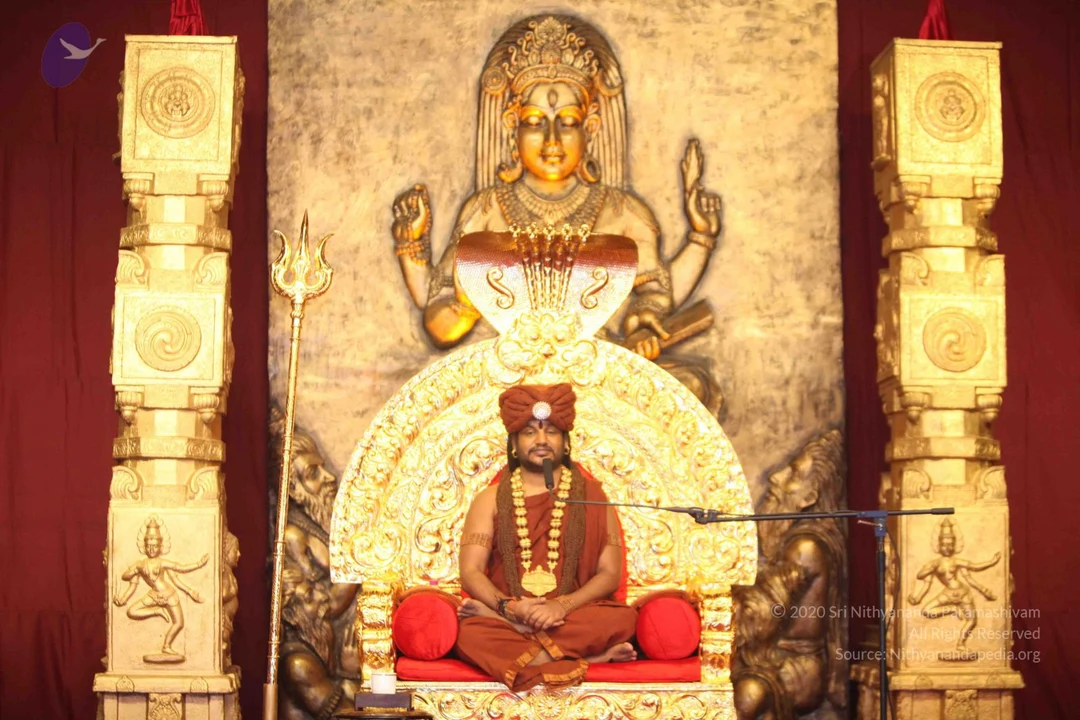
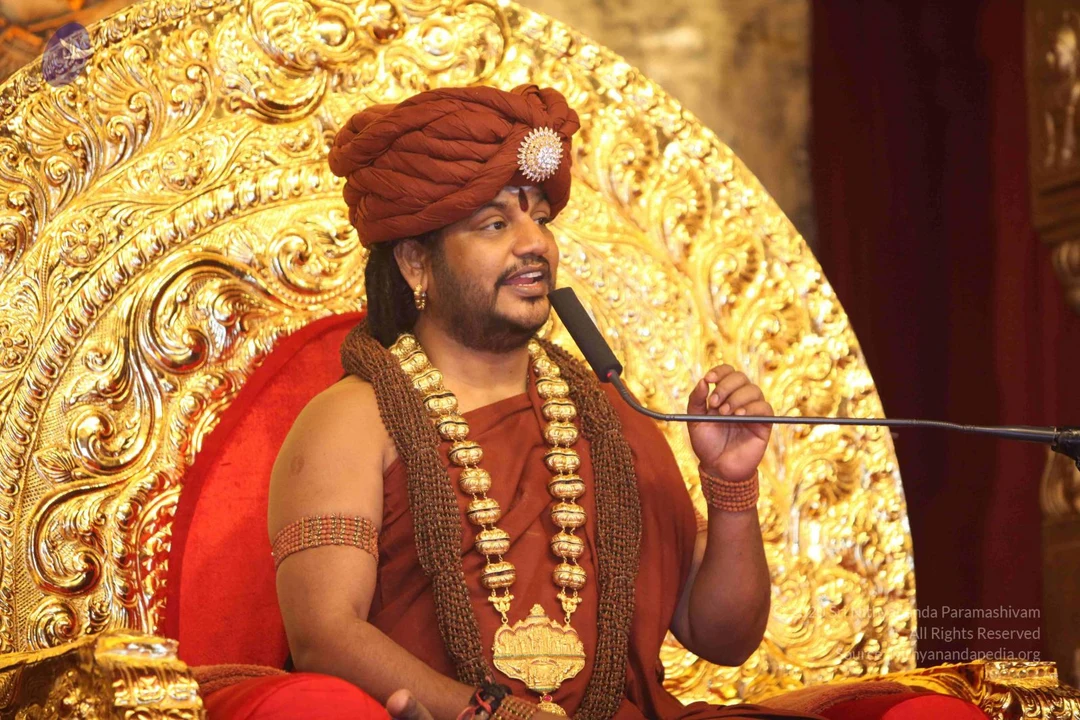
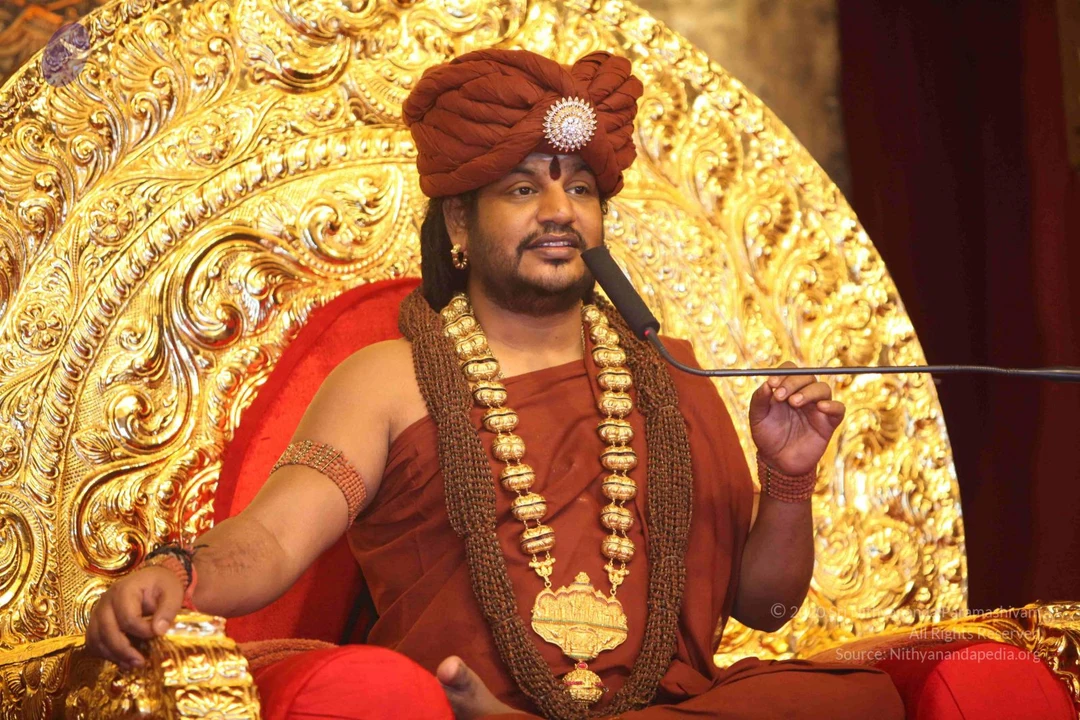
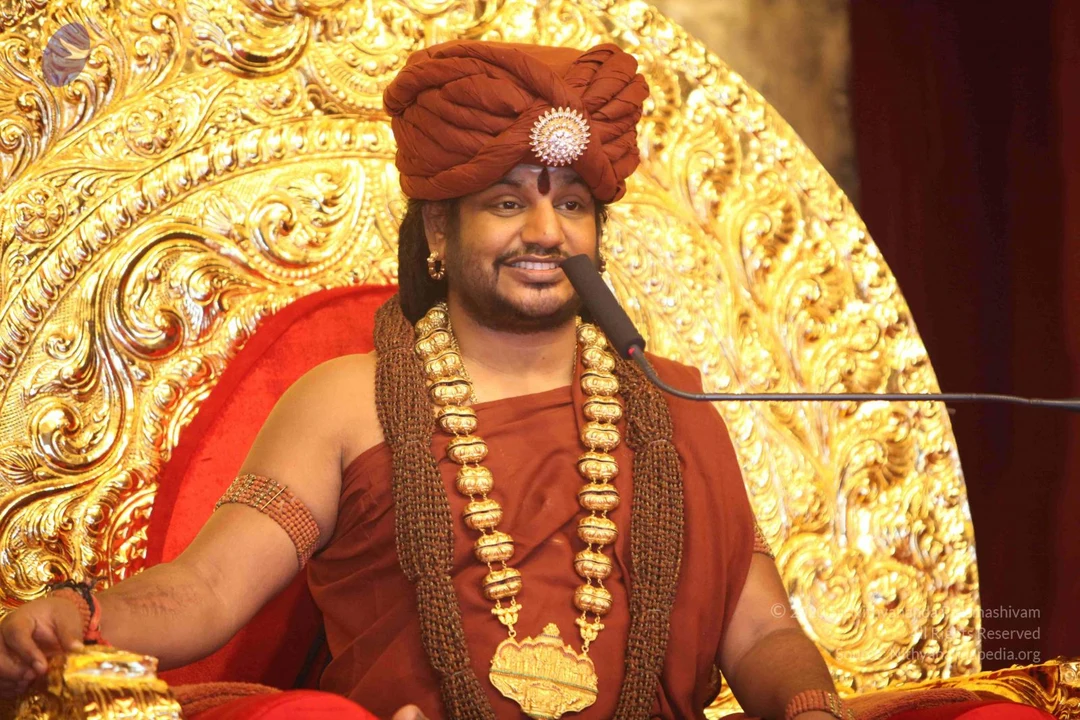
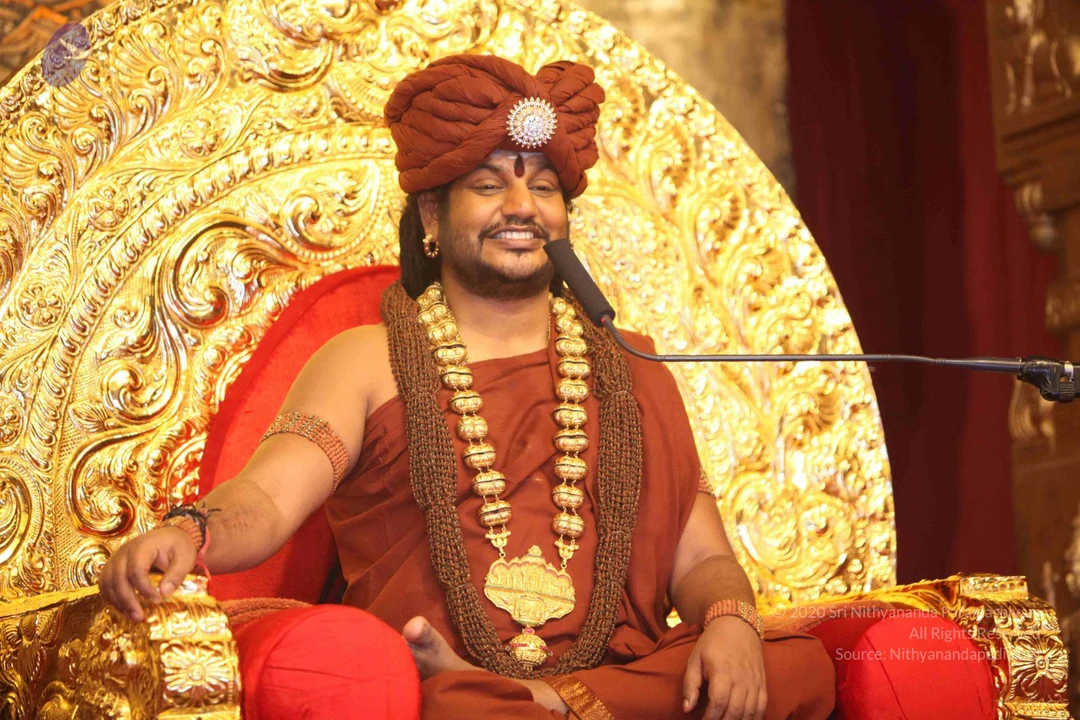
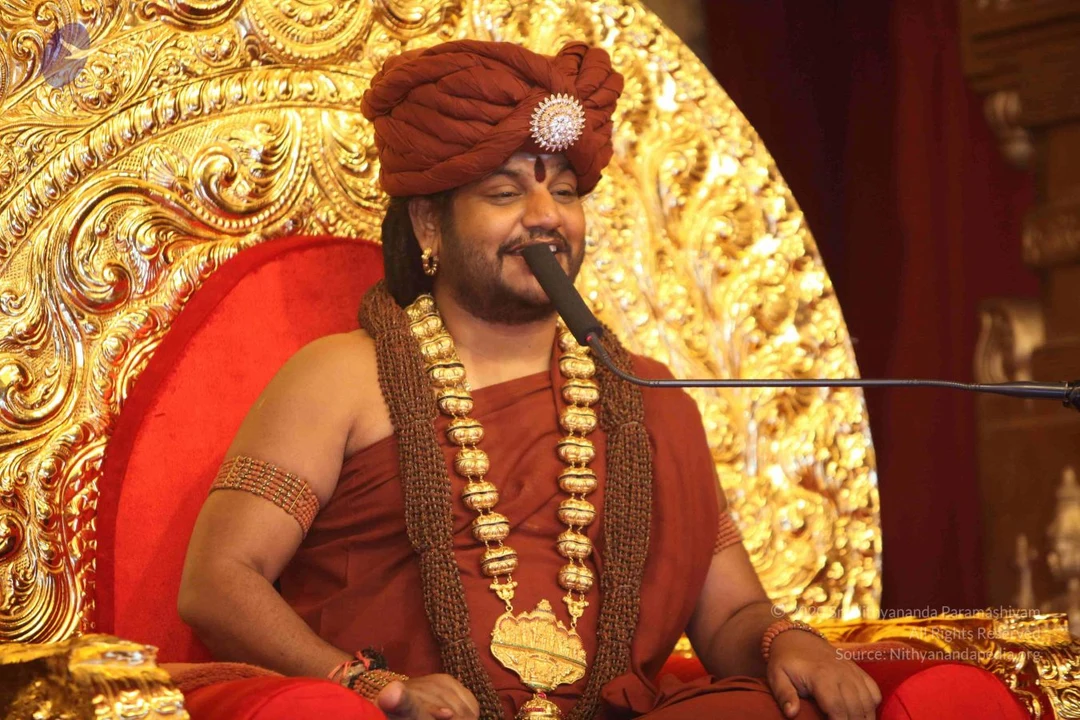
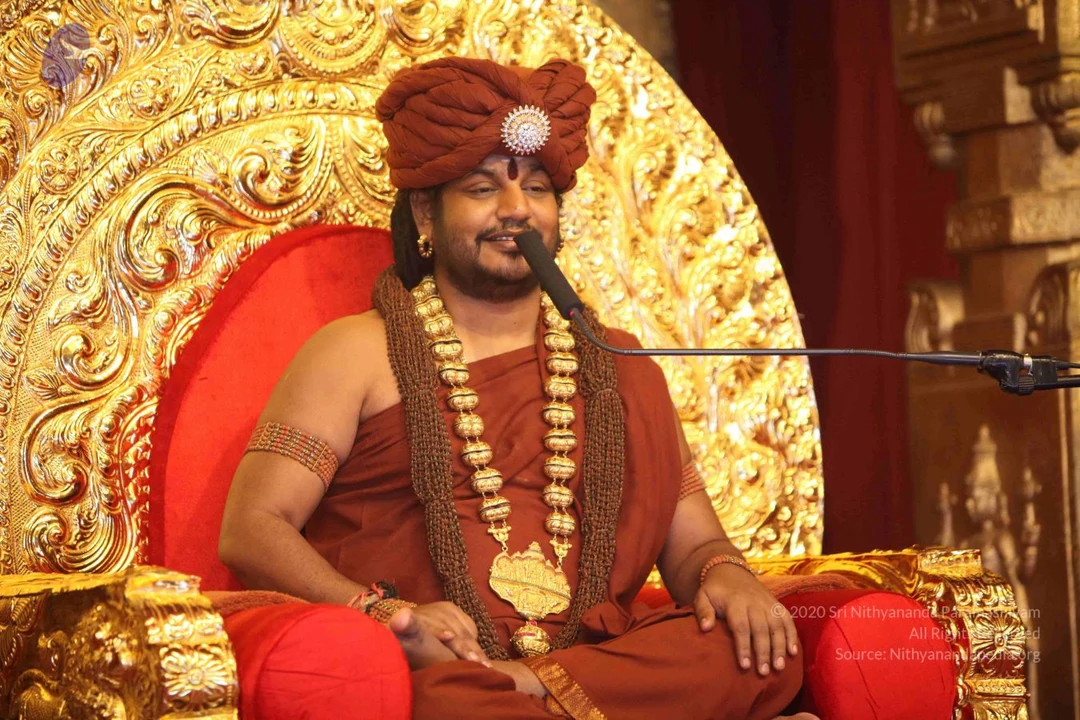
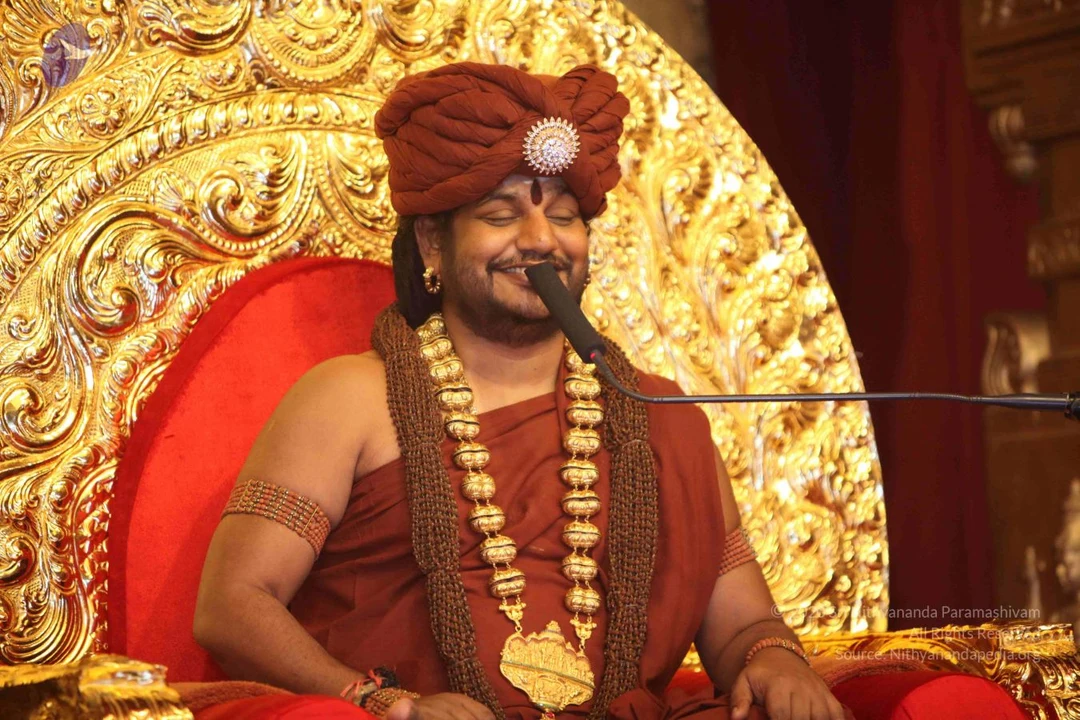
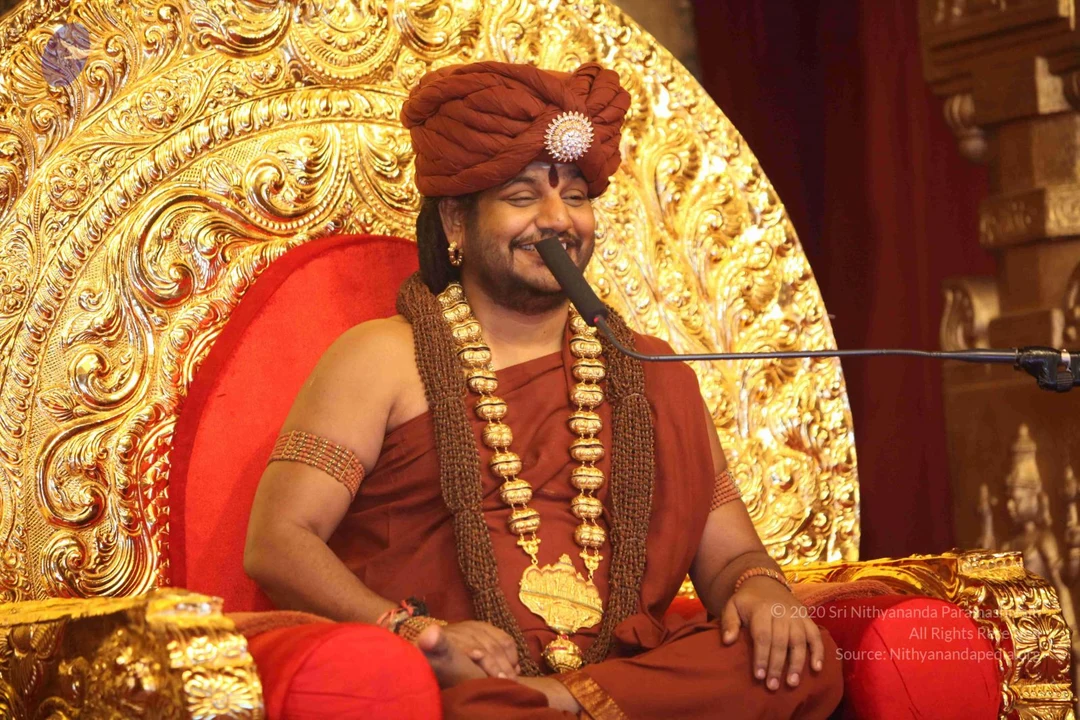
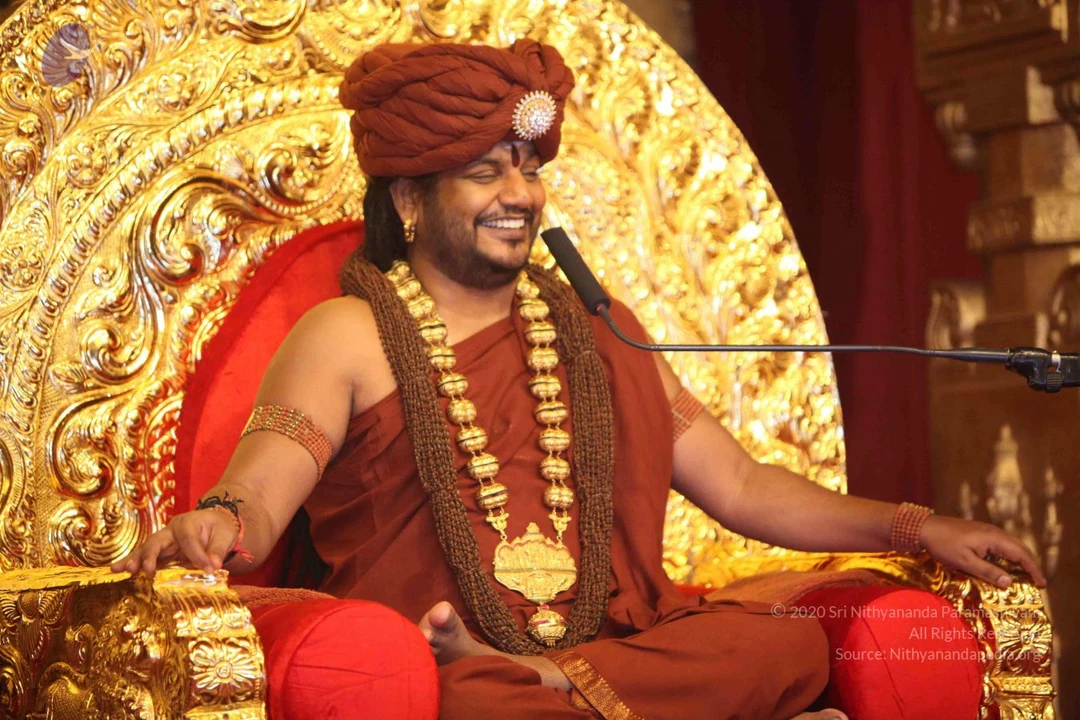
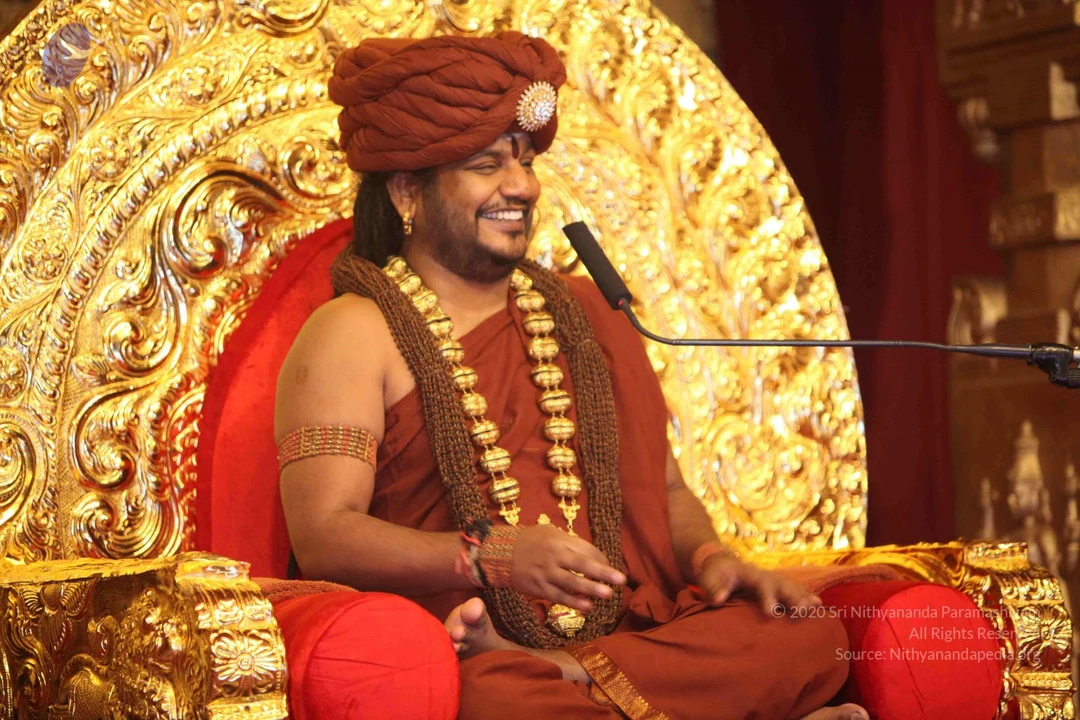
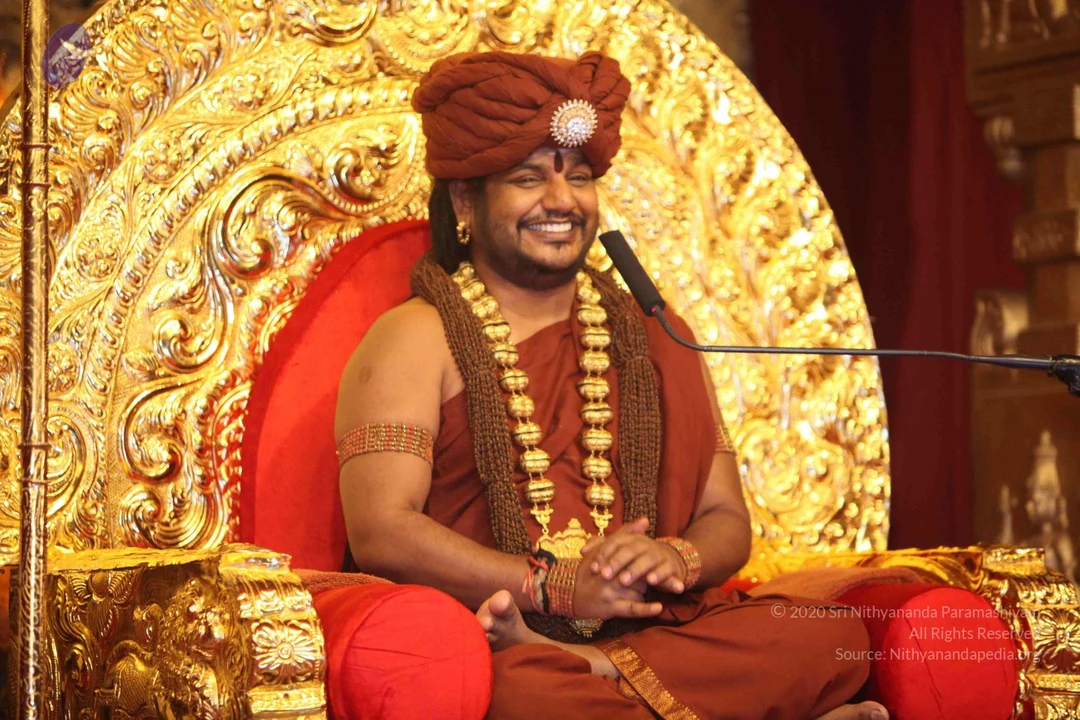
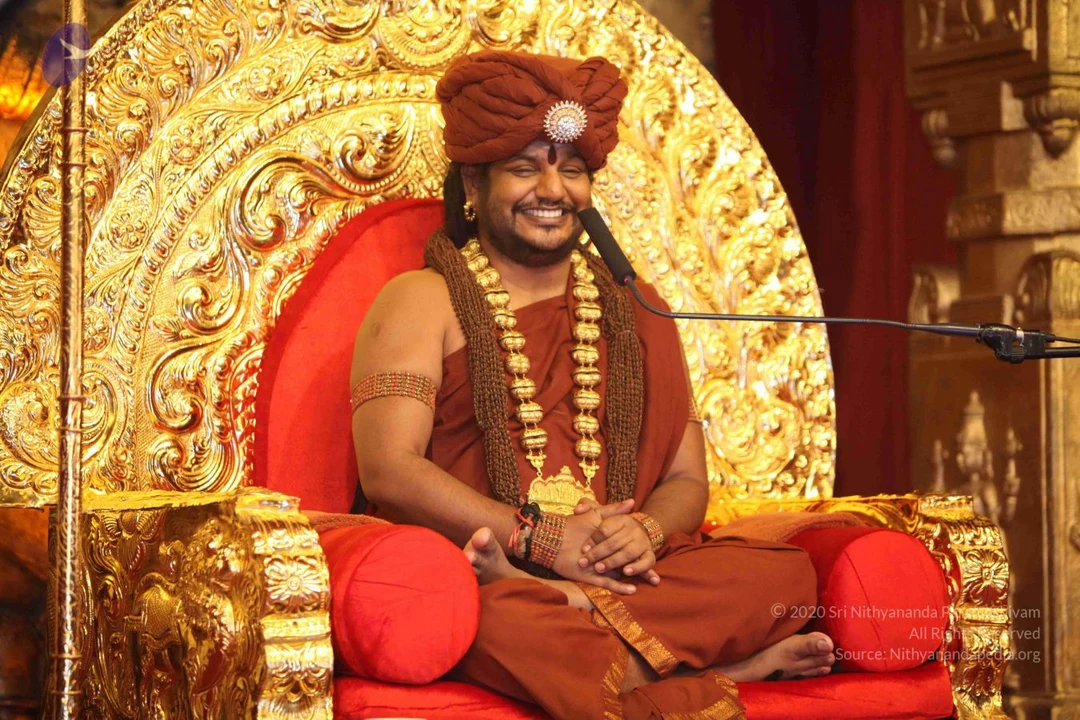
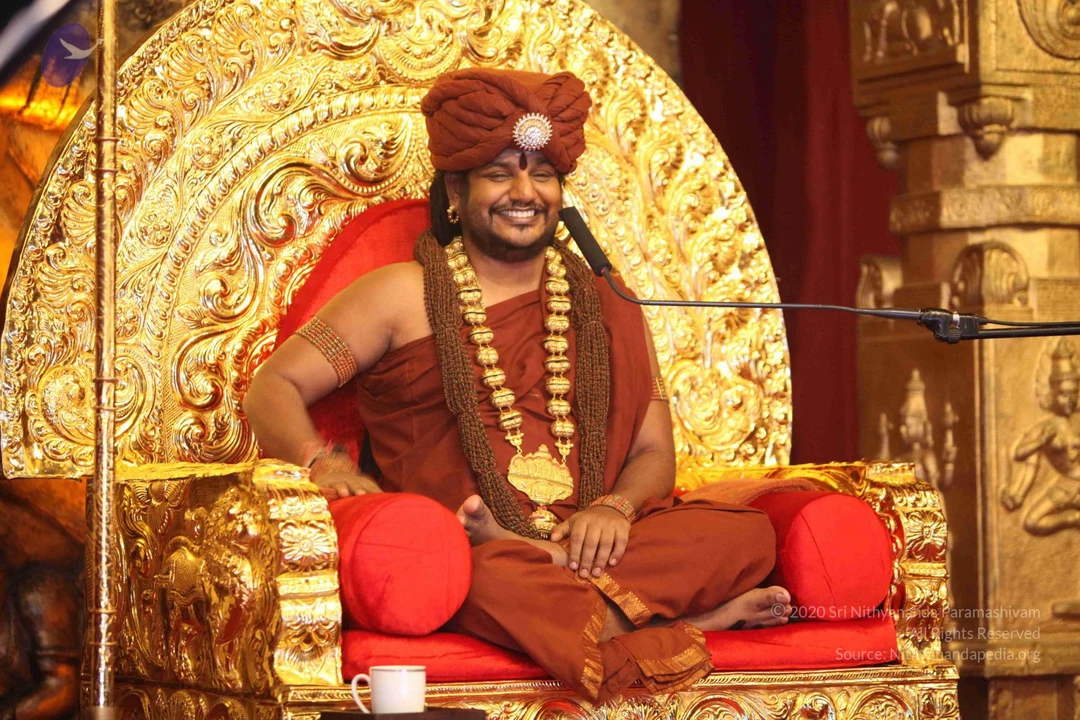
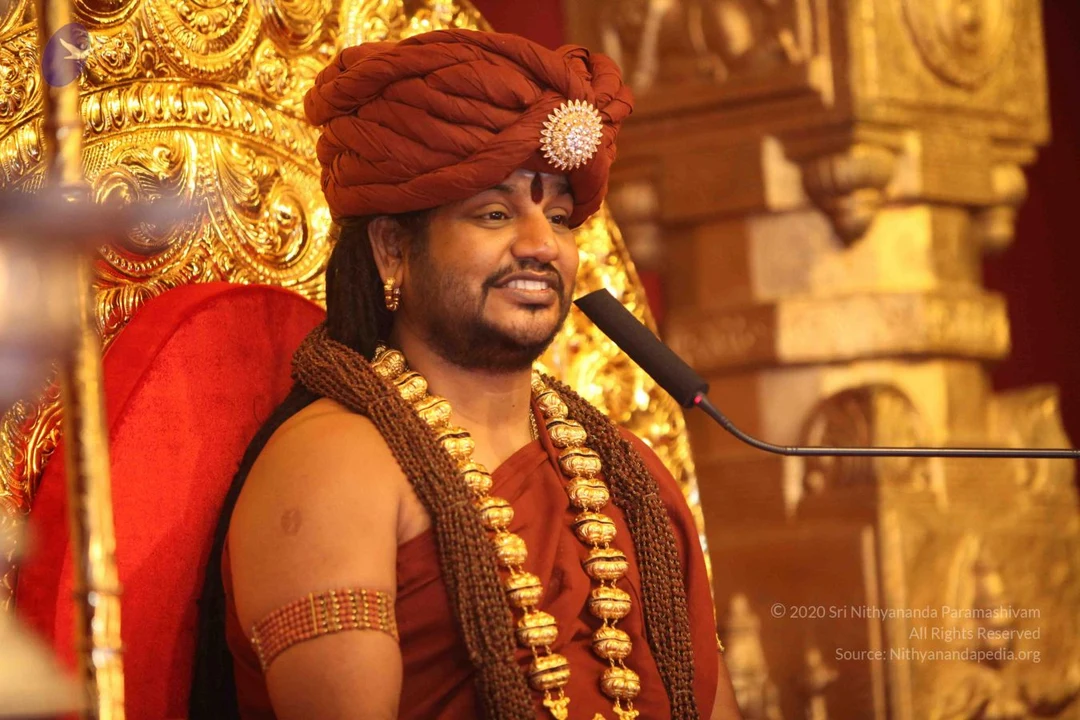
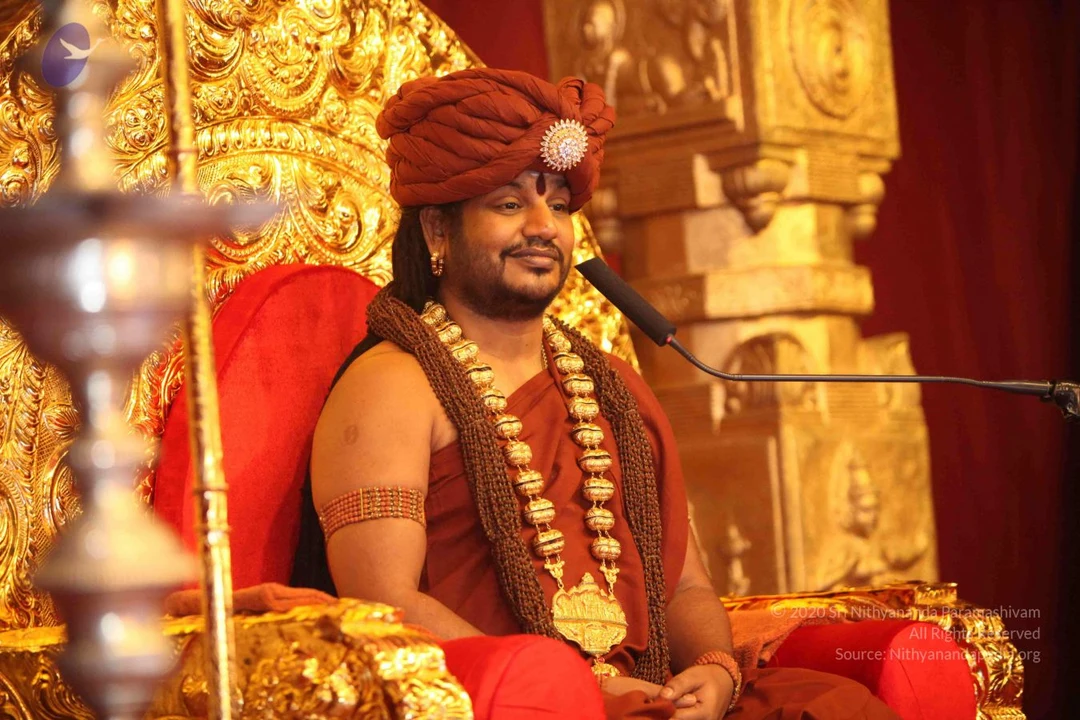
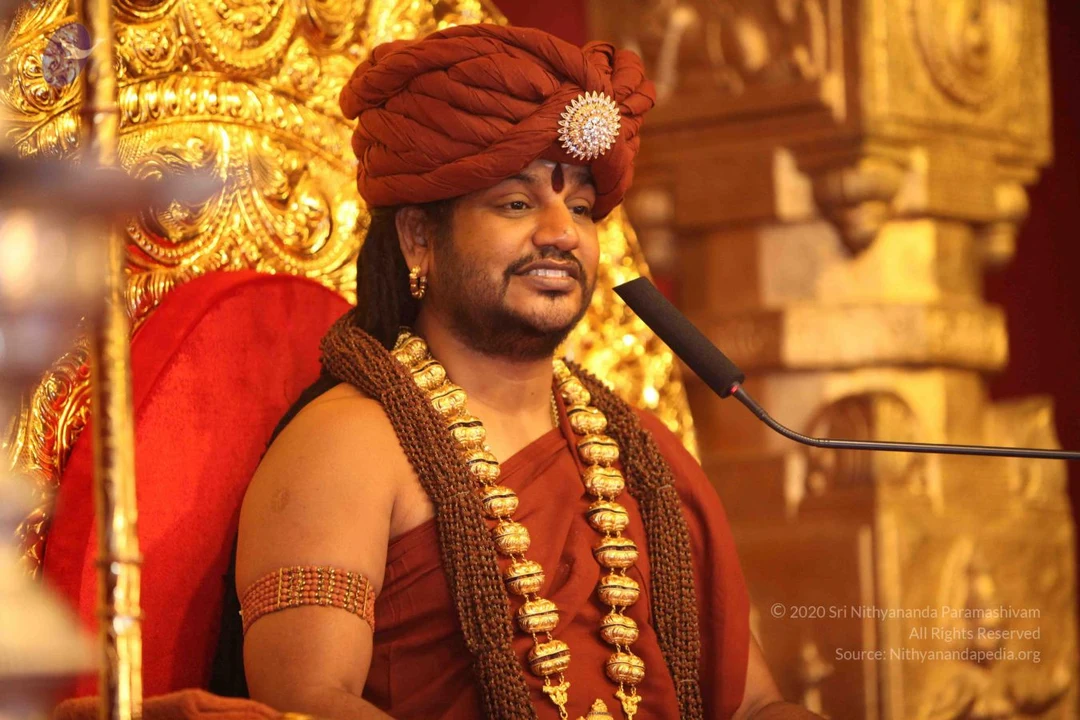
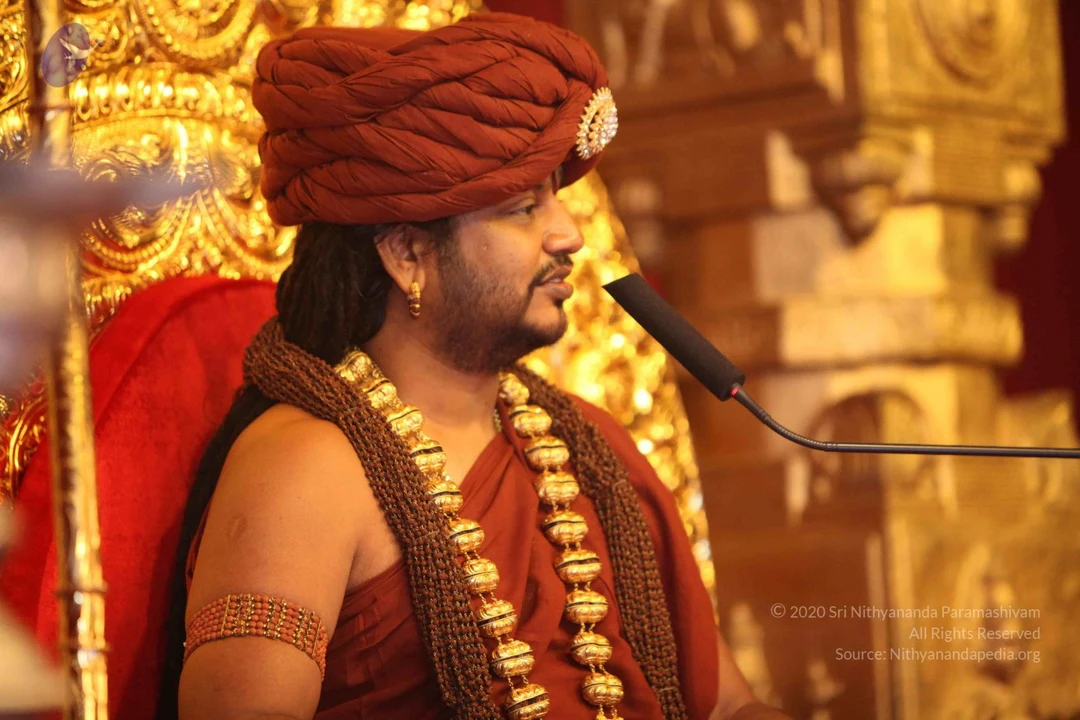
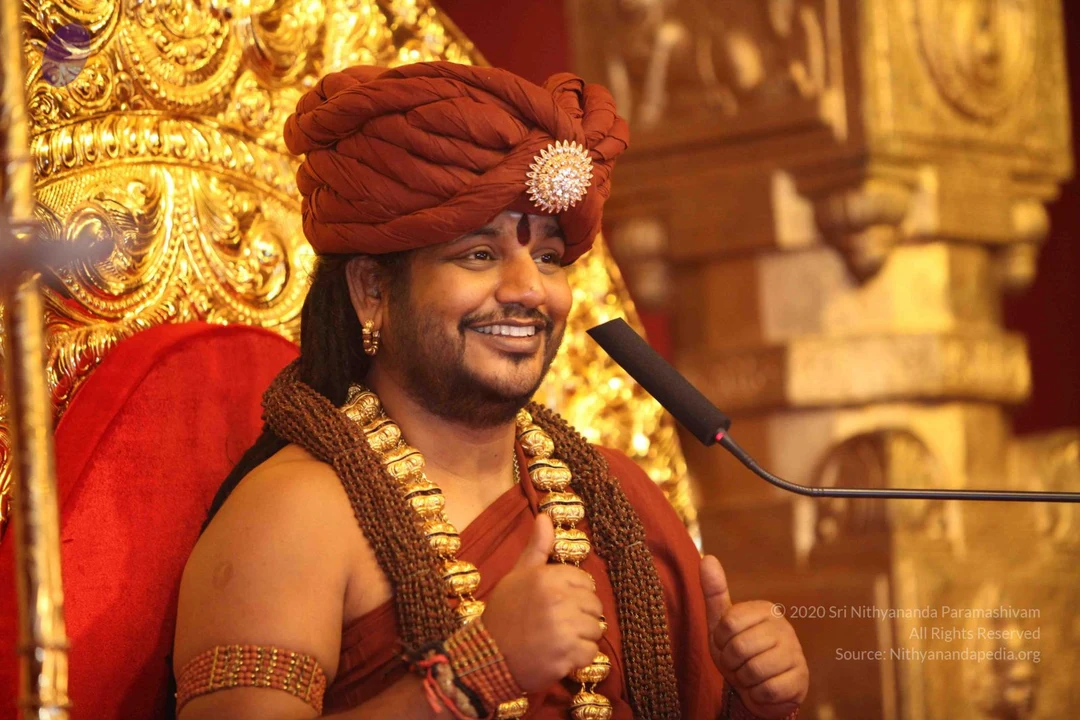
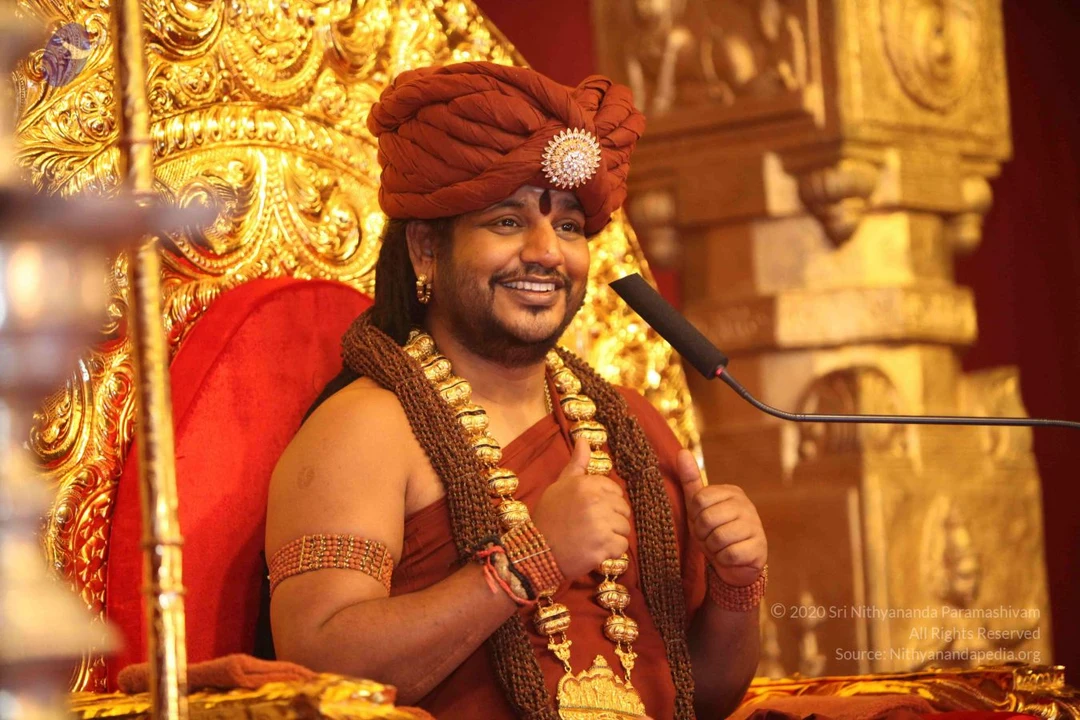
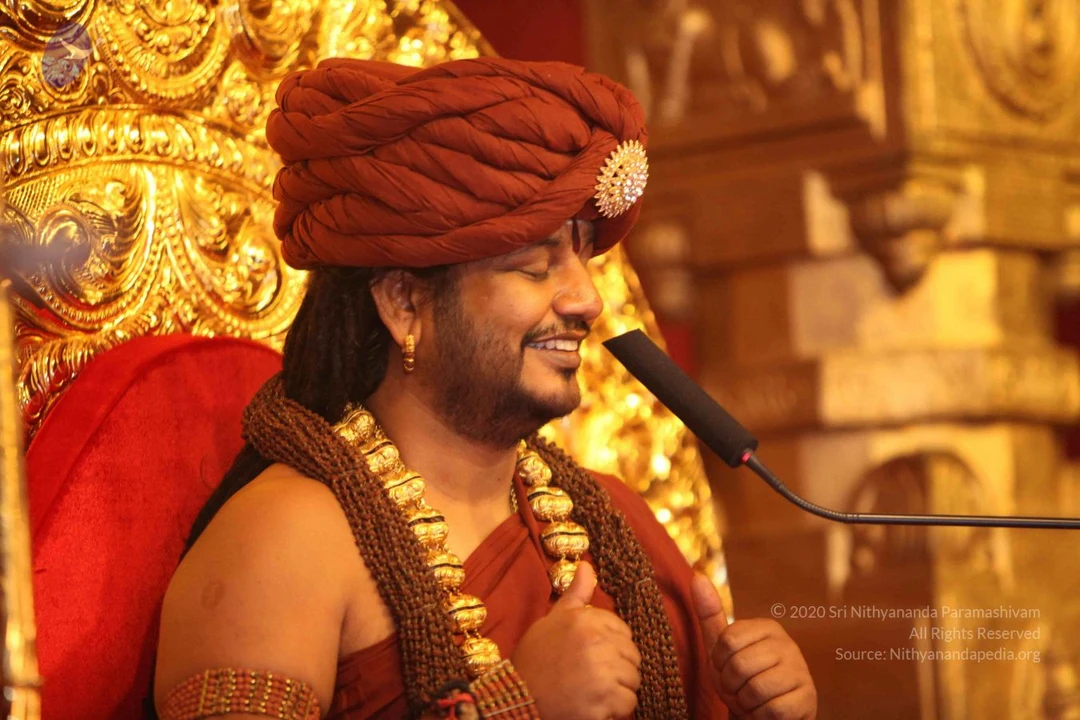
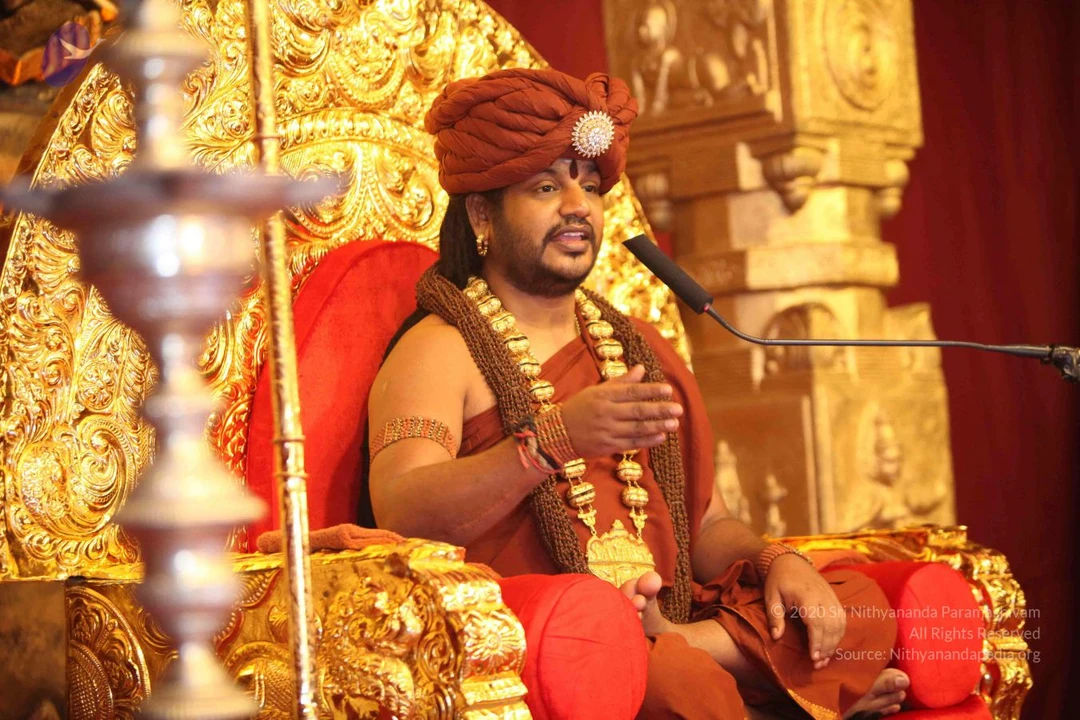
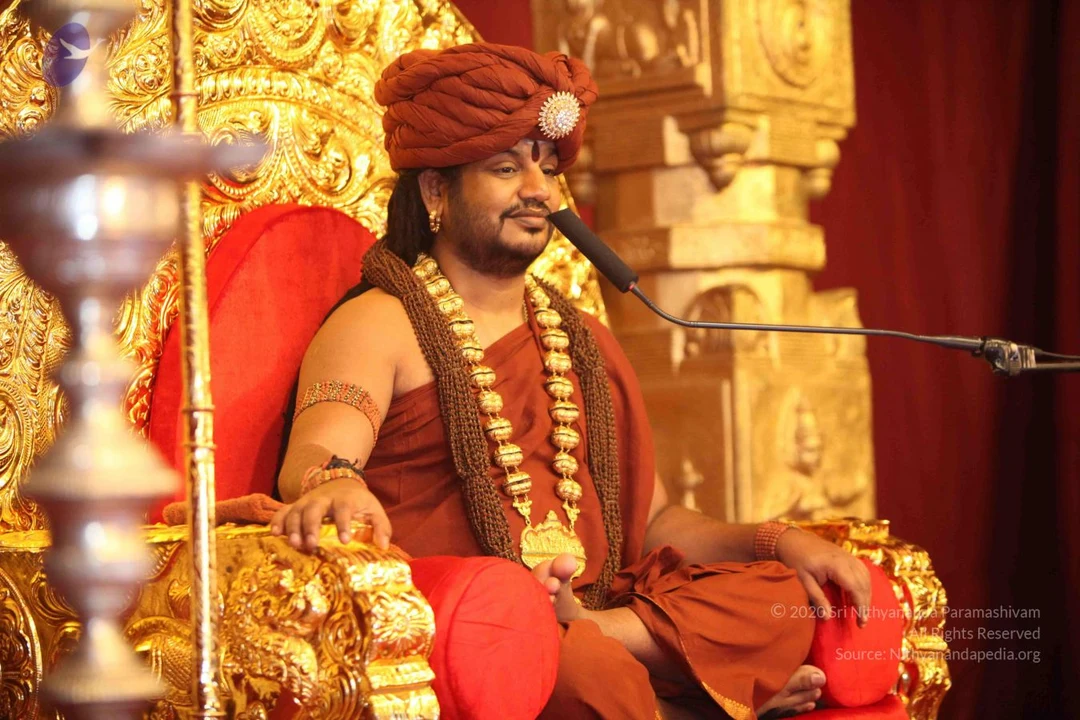
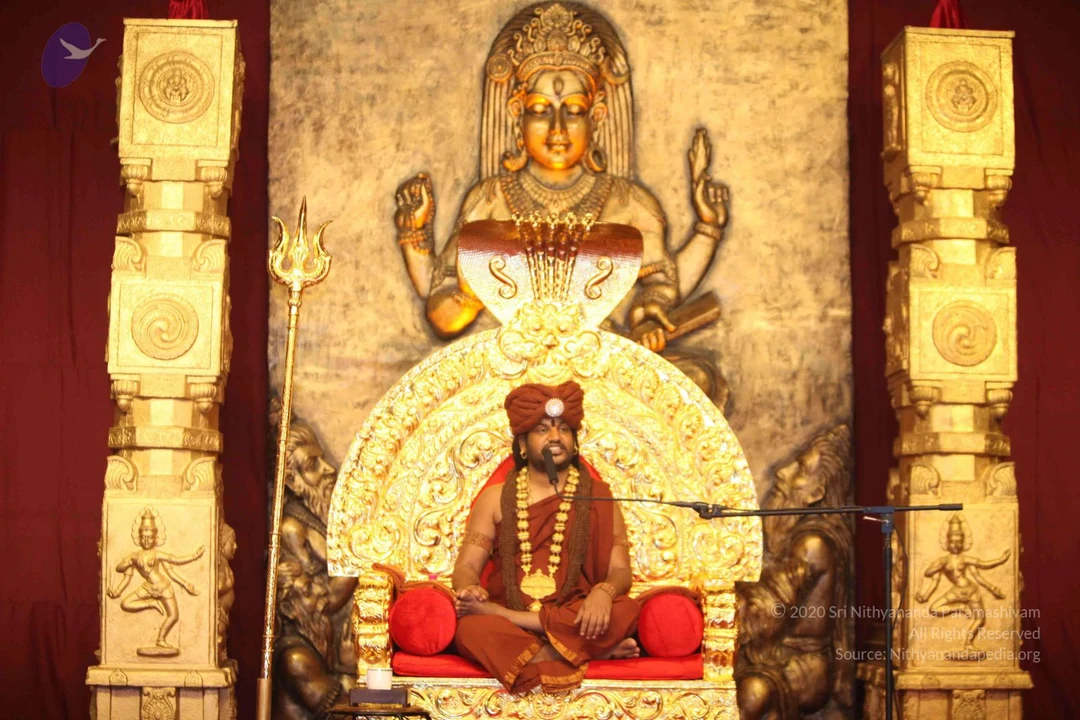
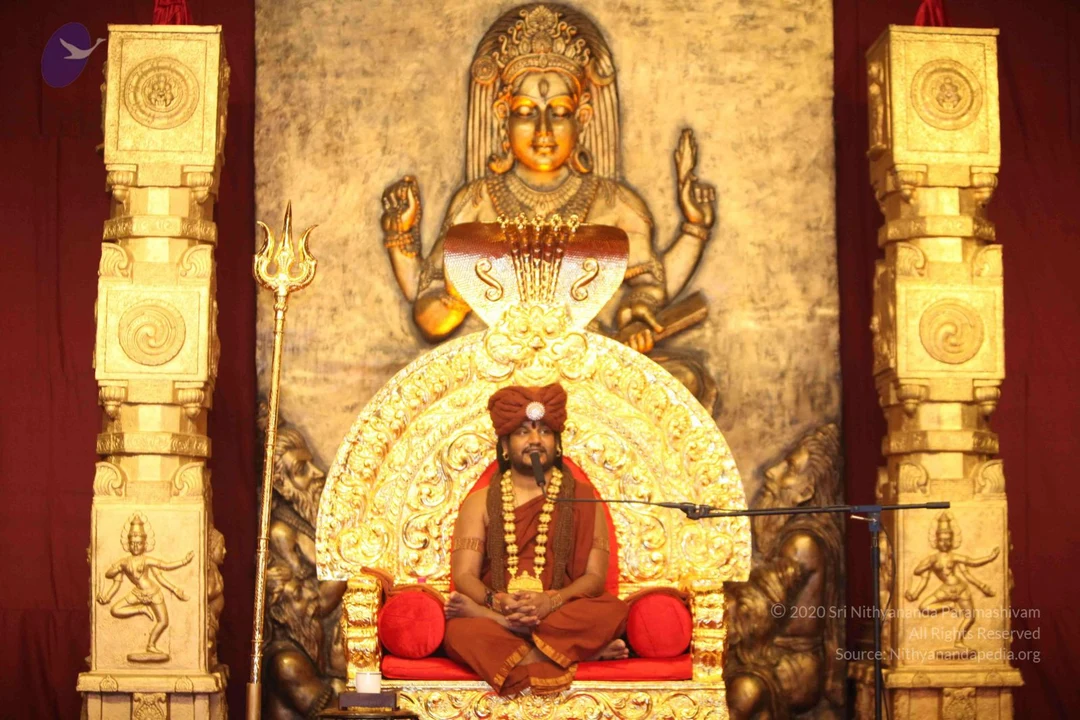
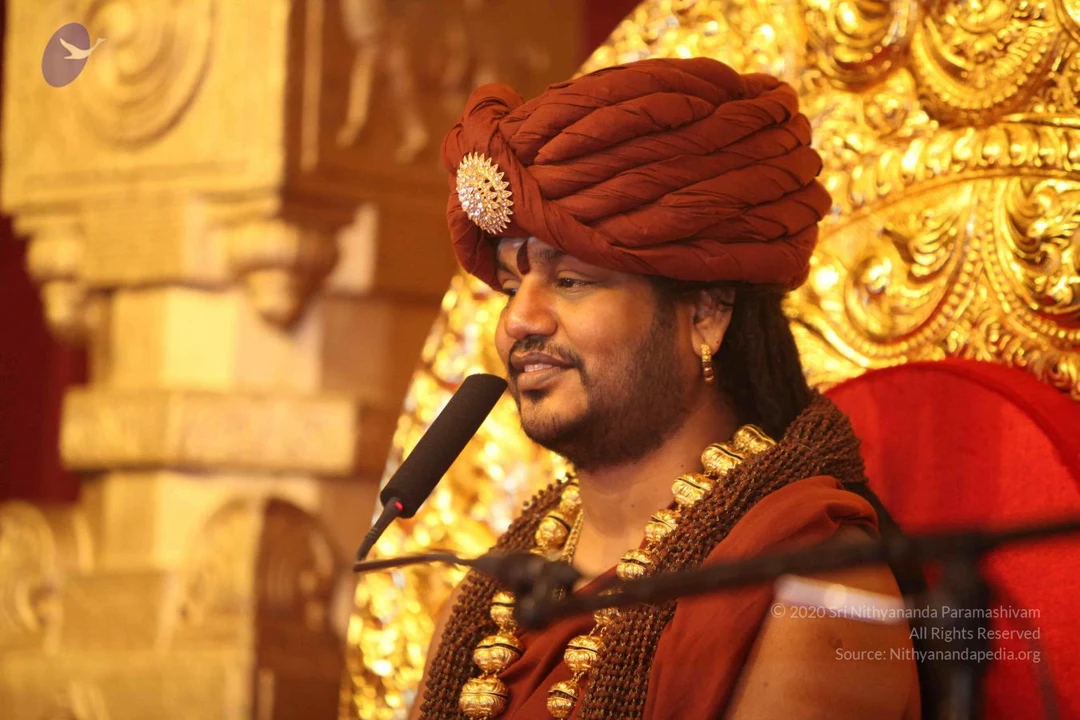
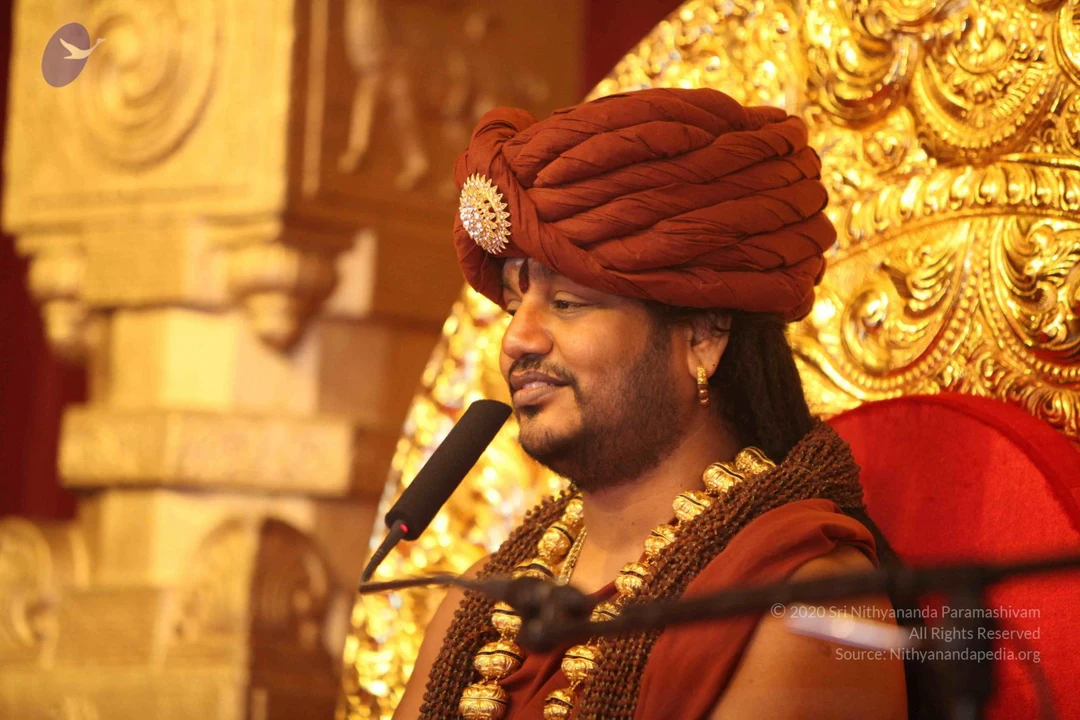
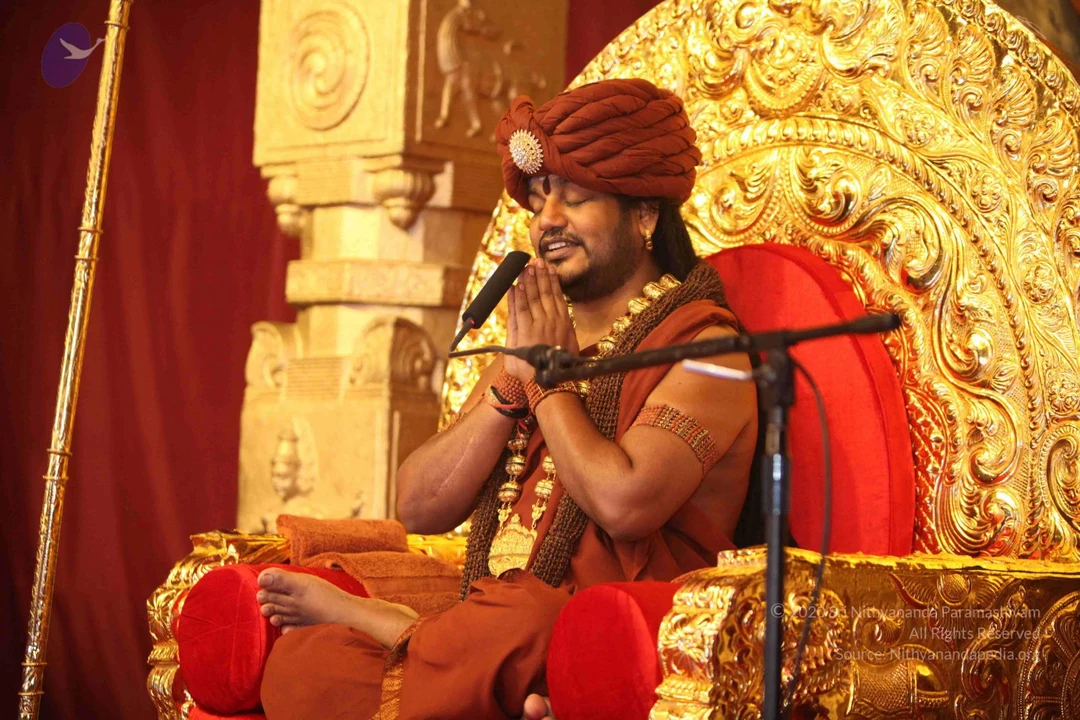
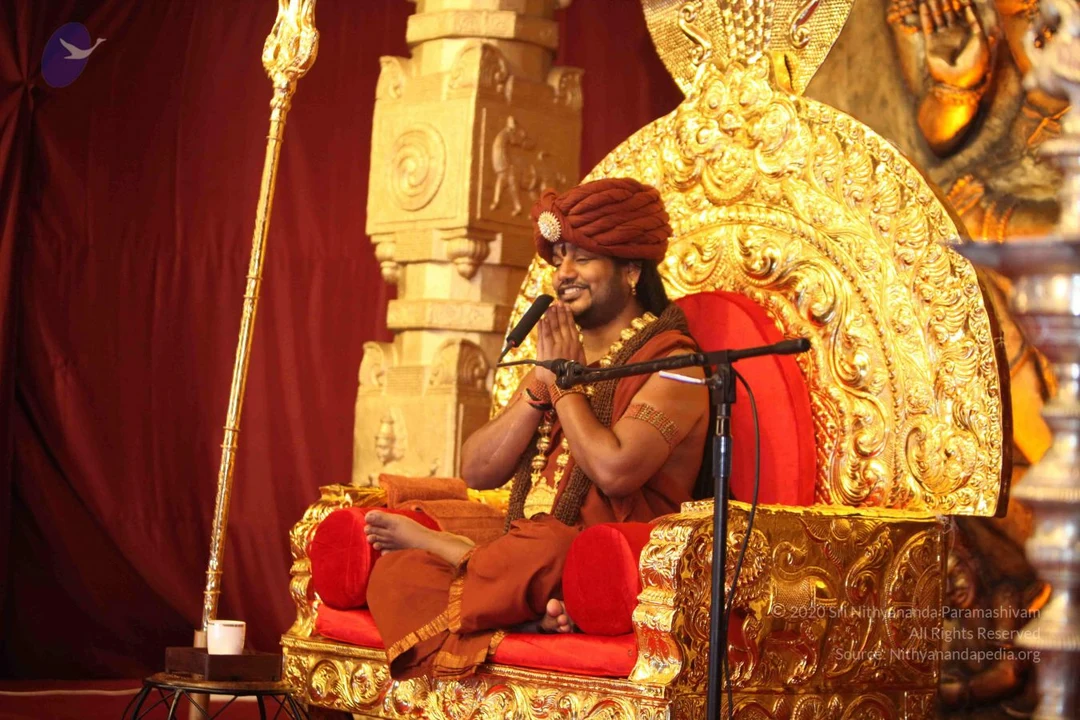
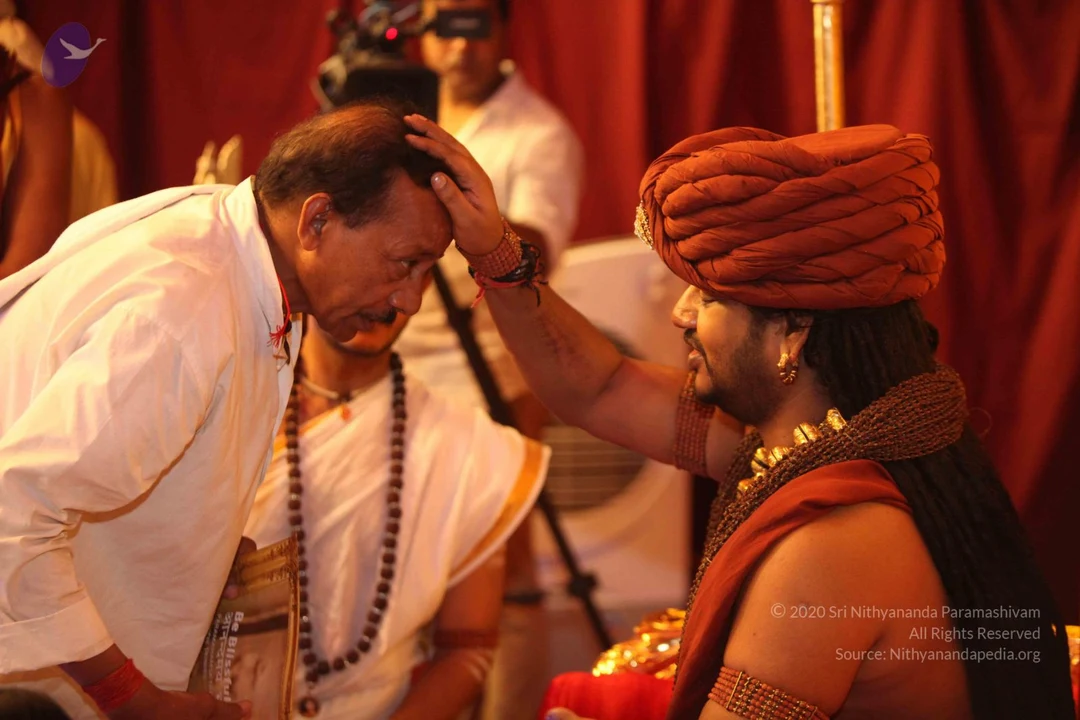
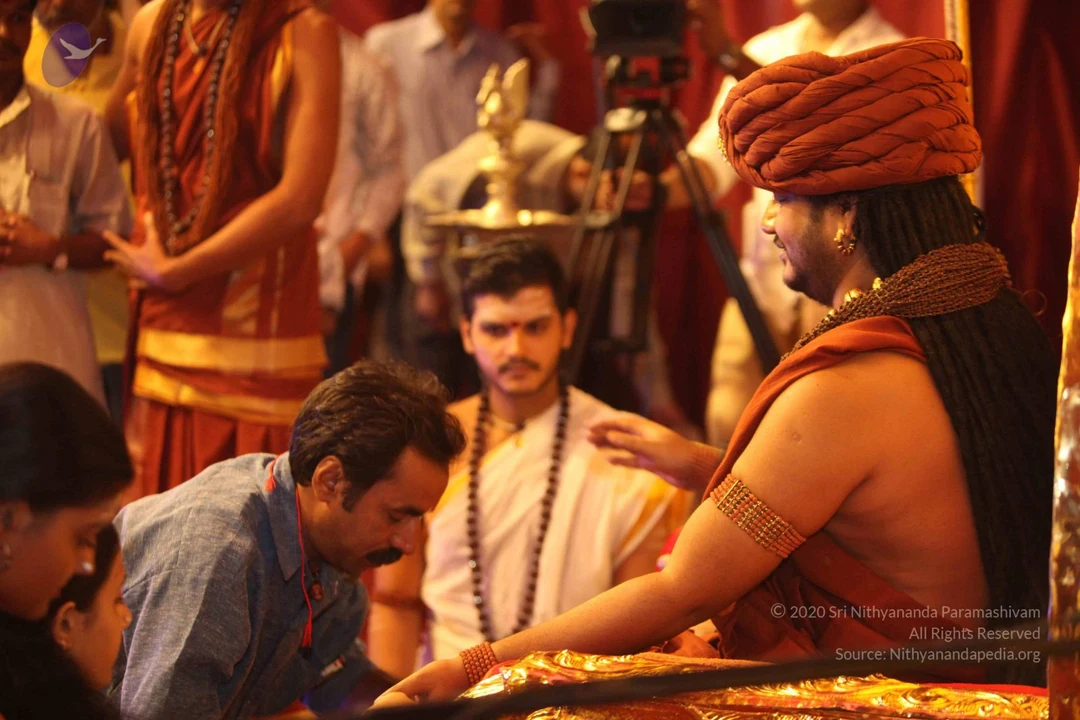
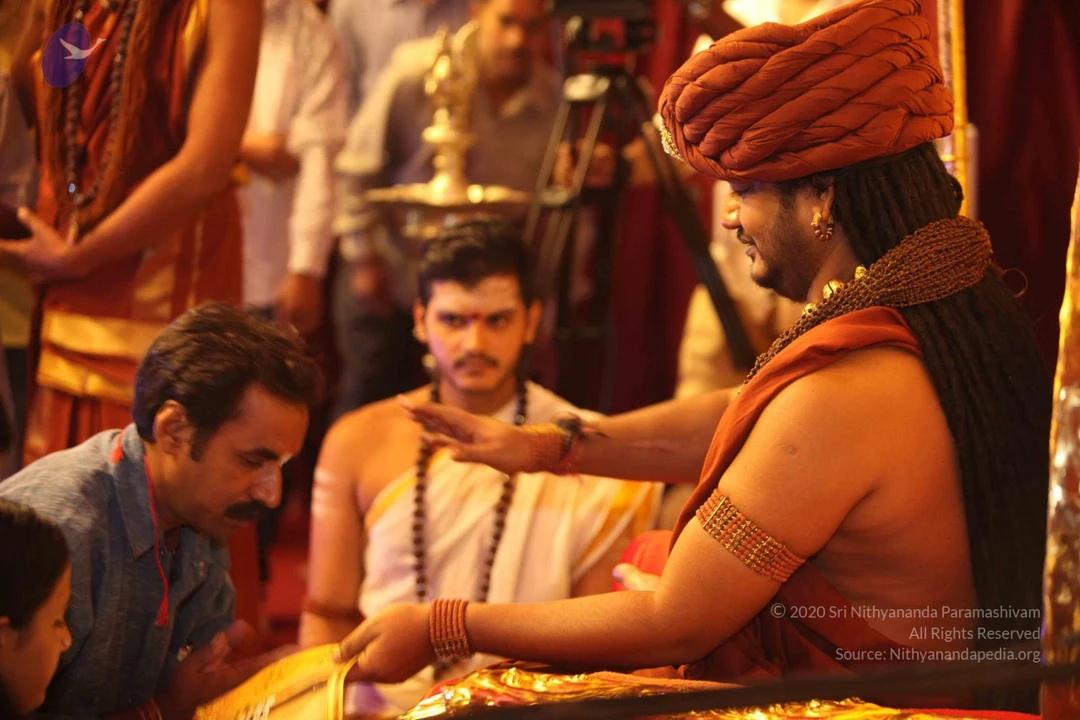
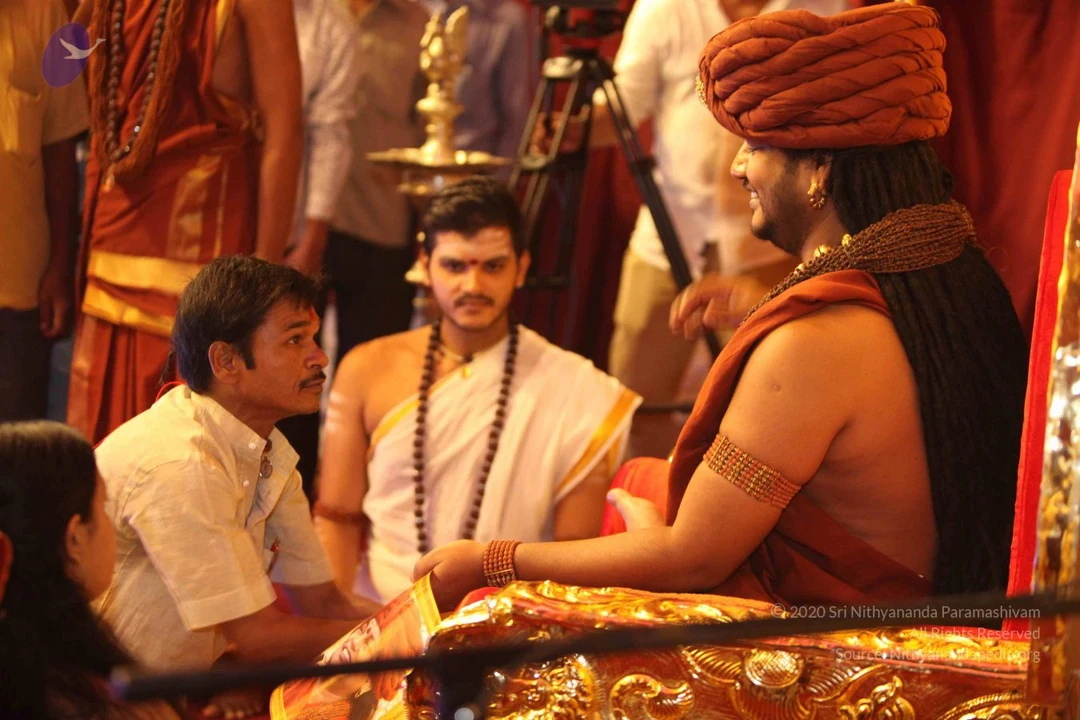
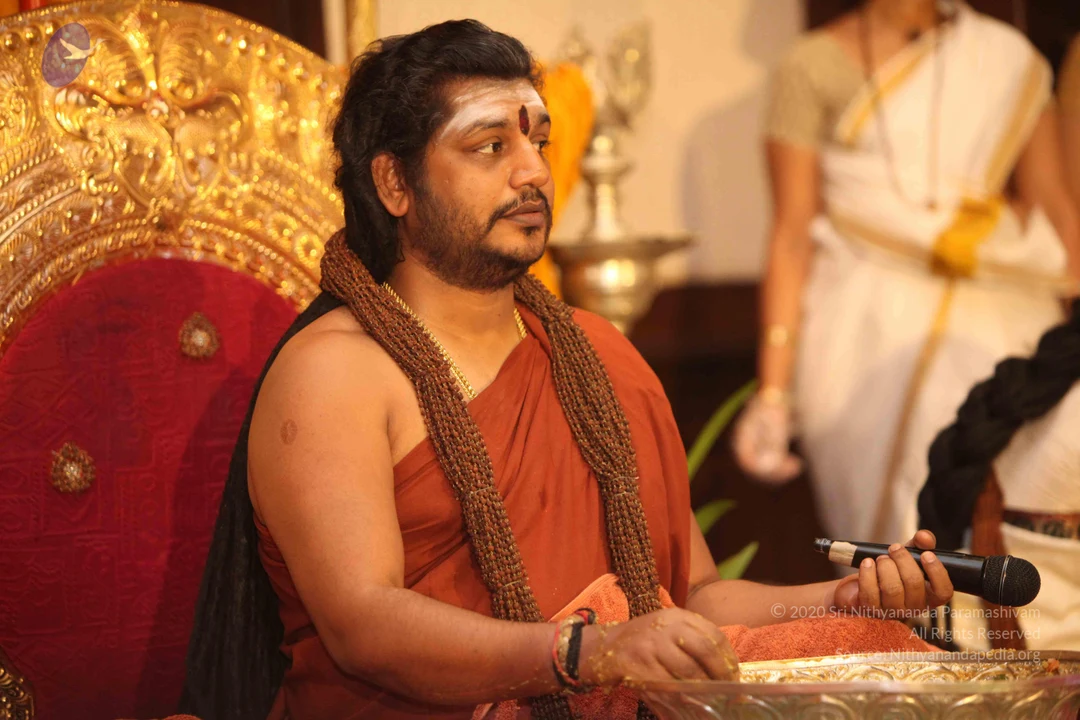
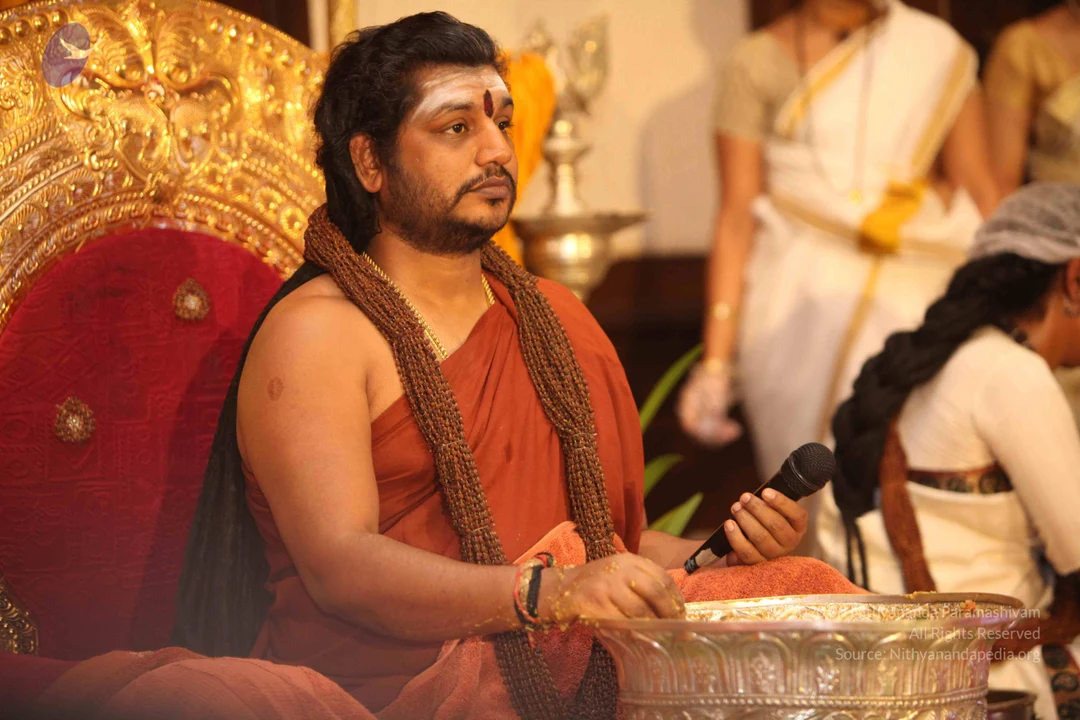
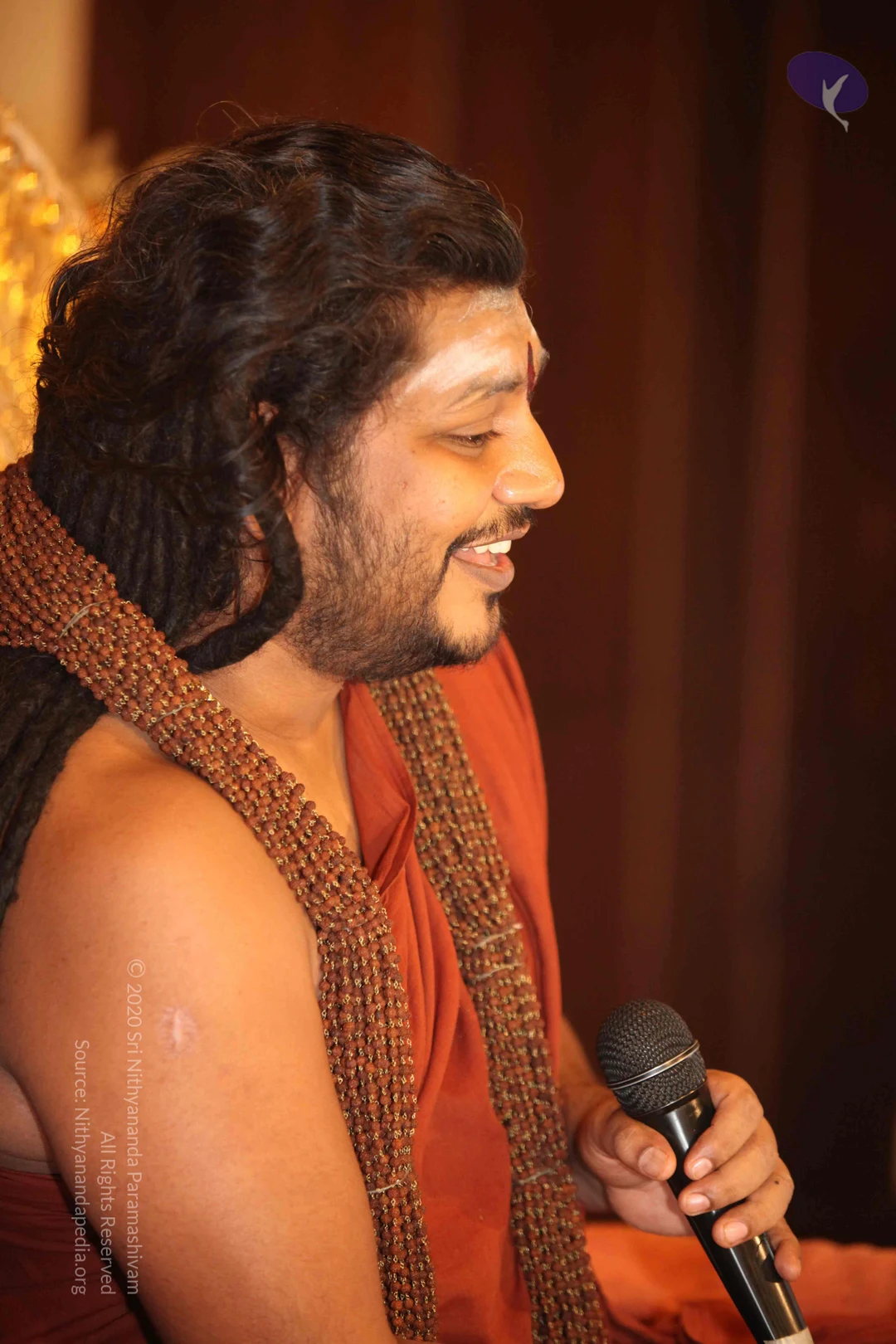
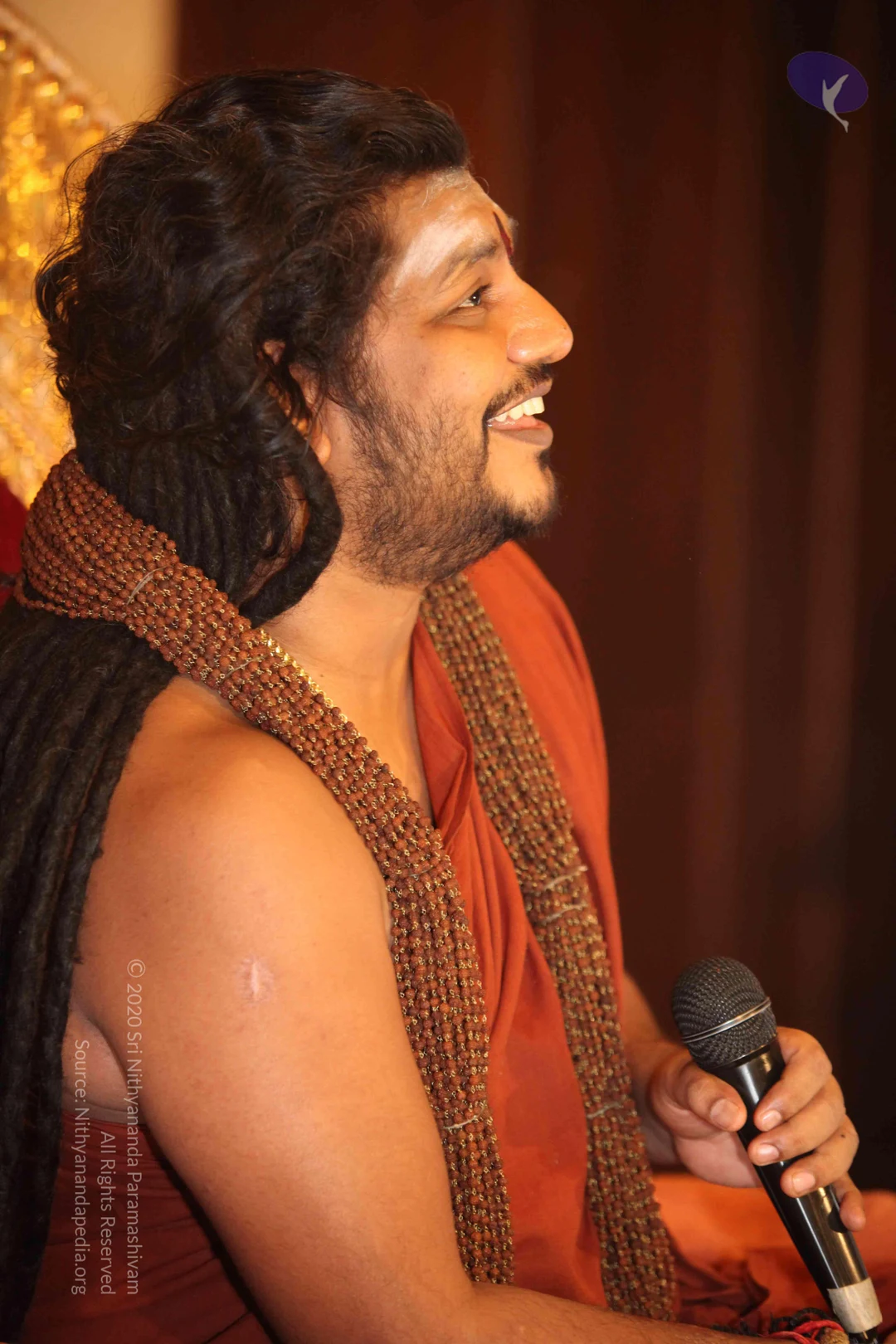
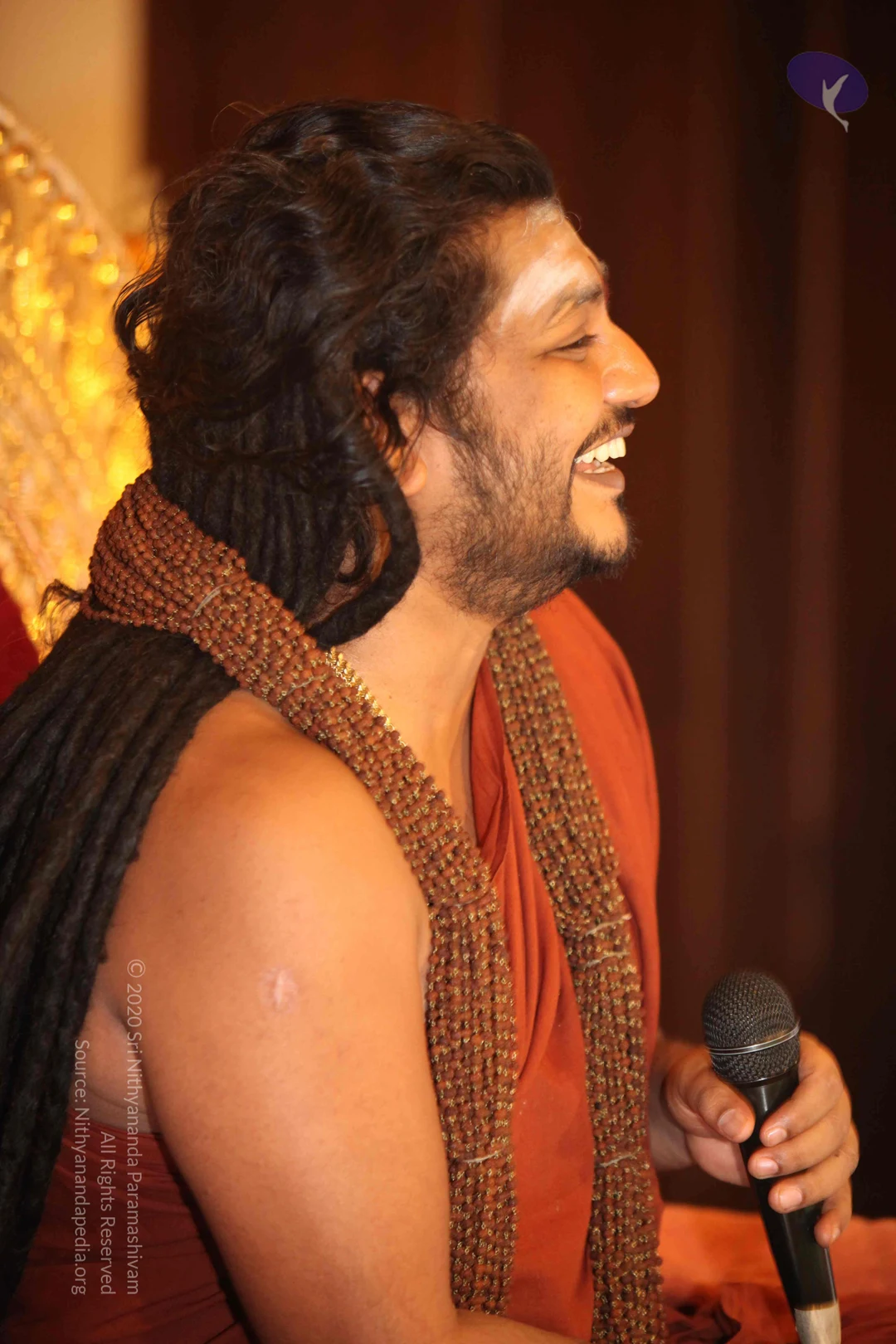
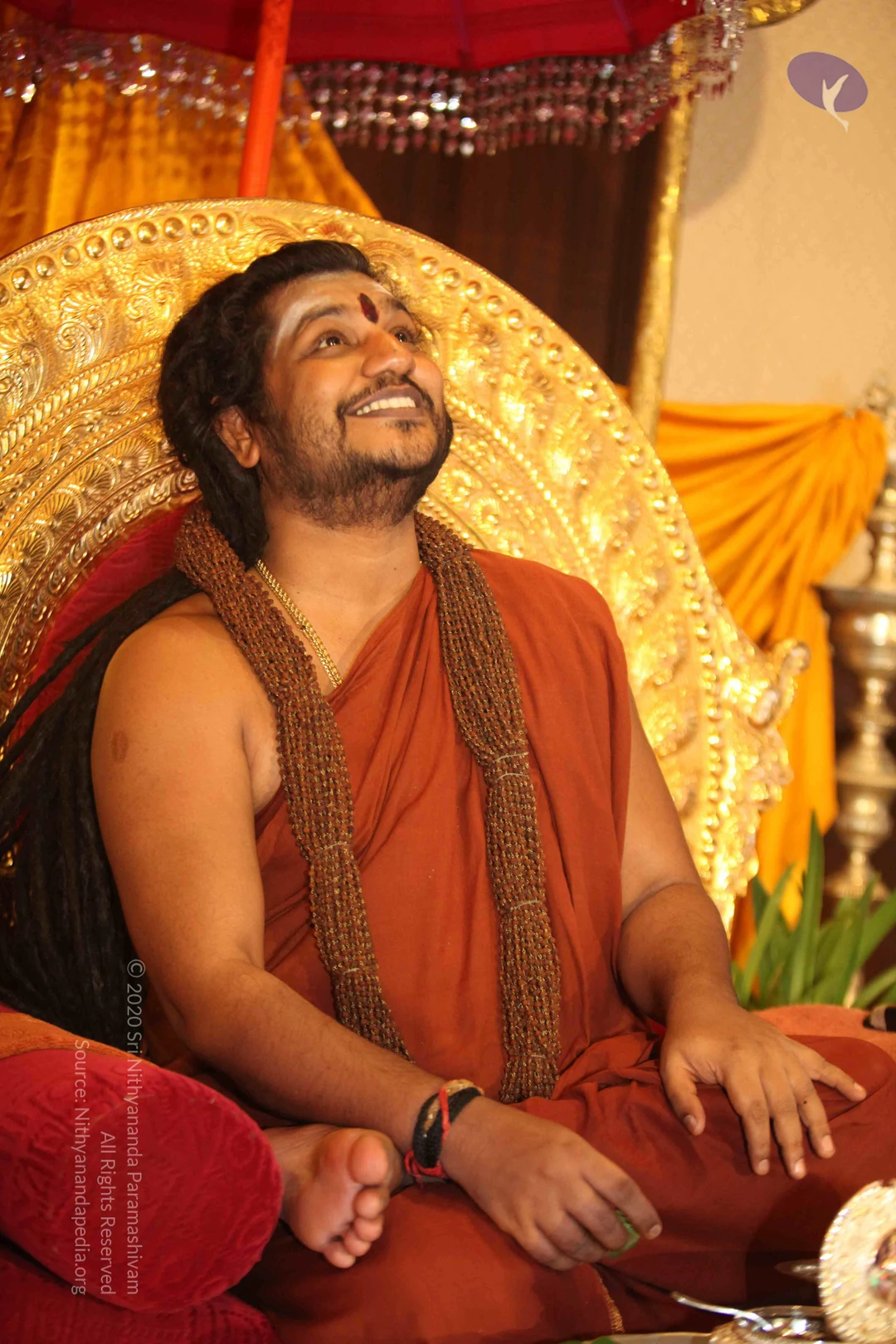
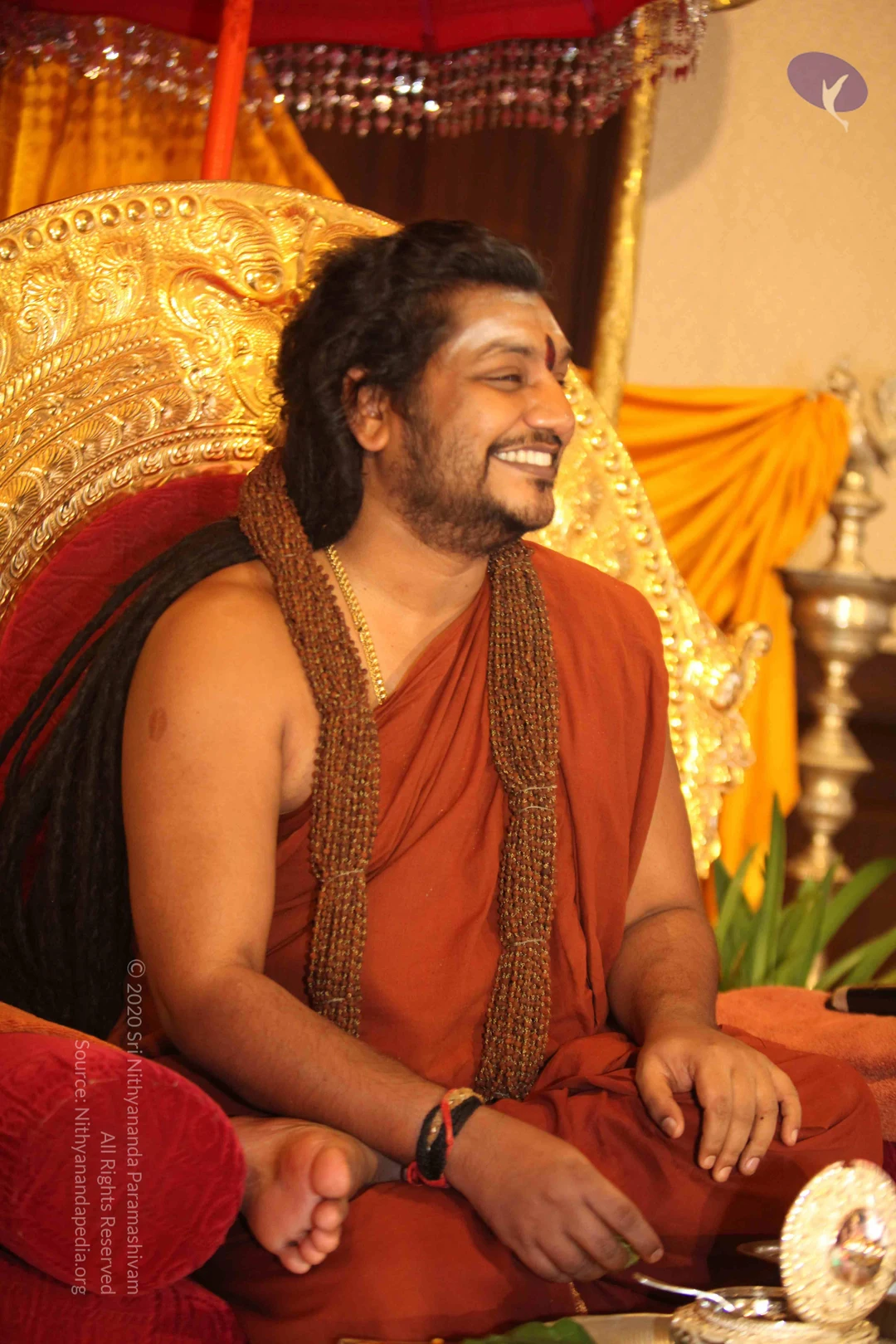
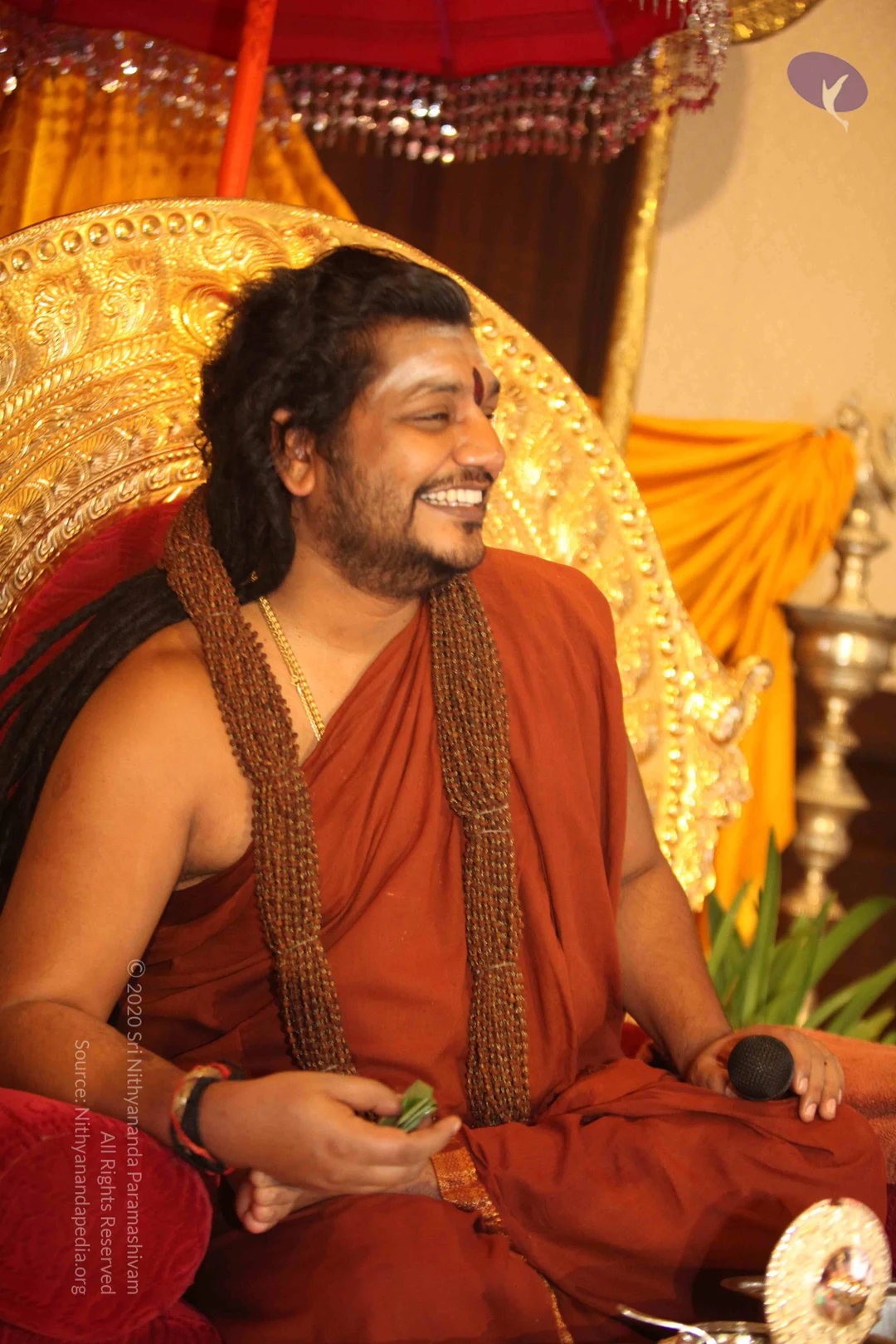
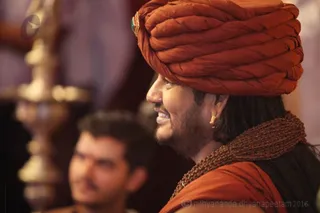
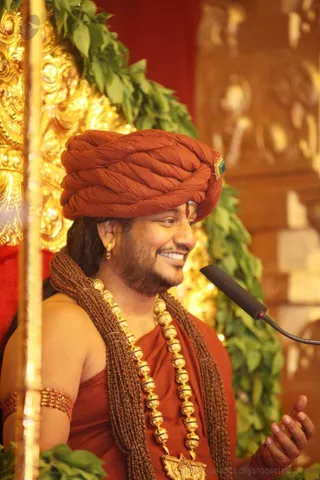
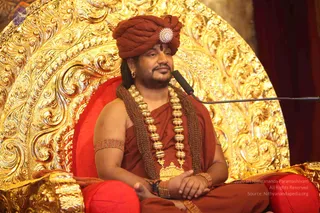
Close profile photograph of a man with long dark hair swept back, a white vertical line on his forehead, and a short beard. He wears a dark garment and a thick necklace of reddish-brown rudraksha beads over his shoulder. He faces right, gazing forward toward a blurred warm yellow and orange background with a dim figure at the edge of the frame.A man seated on an ornate gilded throne with red cushions, speaking into a black microphone on a stand. He wears a rust-red turban with a jeweled brooch, a red-orange robe, a brown rudraksha-style mala with a large gold pendant, a gold armlet, and gold earrings, with a red tilak on his forehead. Behind him is a carved golden pillar and red drapery; a brass lamp stands in the foreground.A photograph of a young person in saffron-orange robes with gold borders, wearing a black blindfold over the eyes and holding a white paper on a clipboard. Rudraksha beads hang on a long mala around the neck and beaded bracelets are on the wrists. Beside them, a man in a light blue shirt leans in toward the paper, and other saffron-robed people stand nearby. Behind them is a white tent wall, and the foreground shows a green mat, brass vessels and a platform. A second saffron-clad person stands at the right edge, partially visible. Several people are visible in the scene.

July 12 2016

Original wiki page
Contents

Title:

Kenopanishad -Natural Principles Of Masculine & Feminine Physiology

Description:

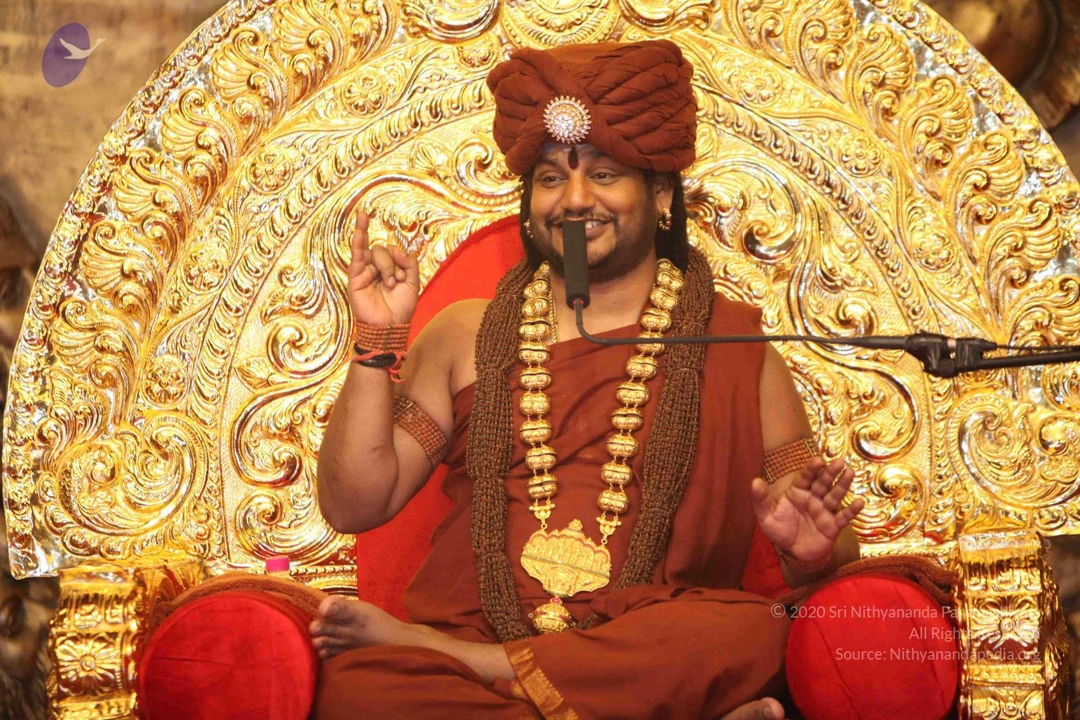
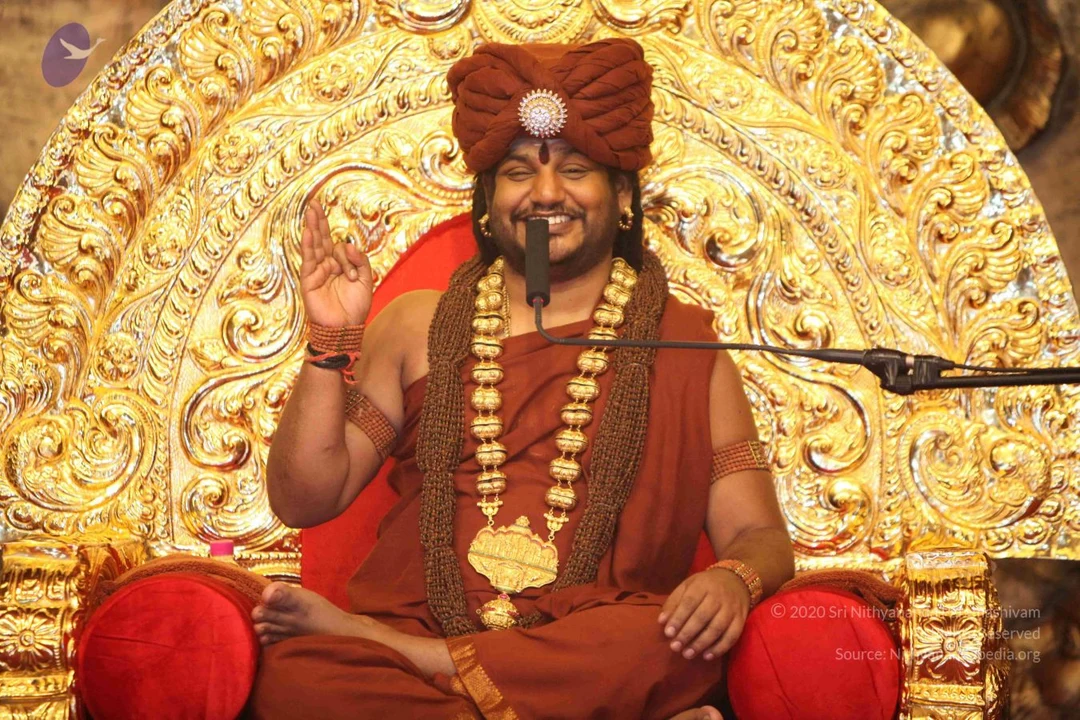
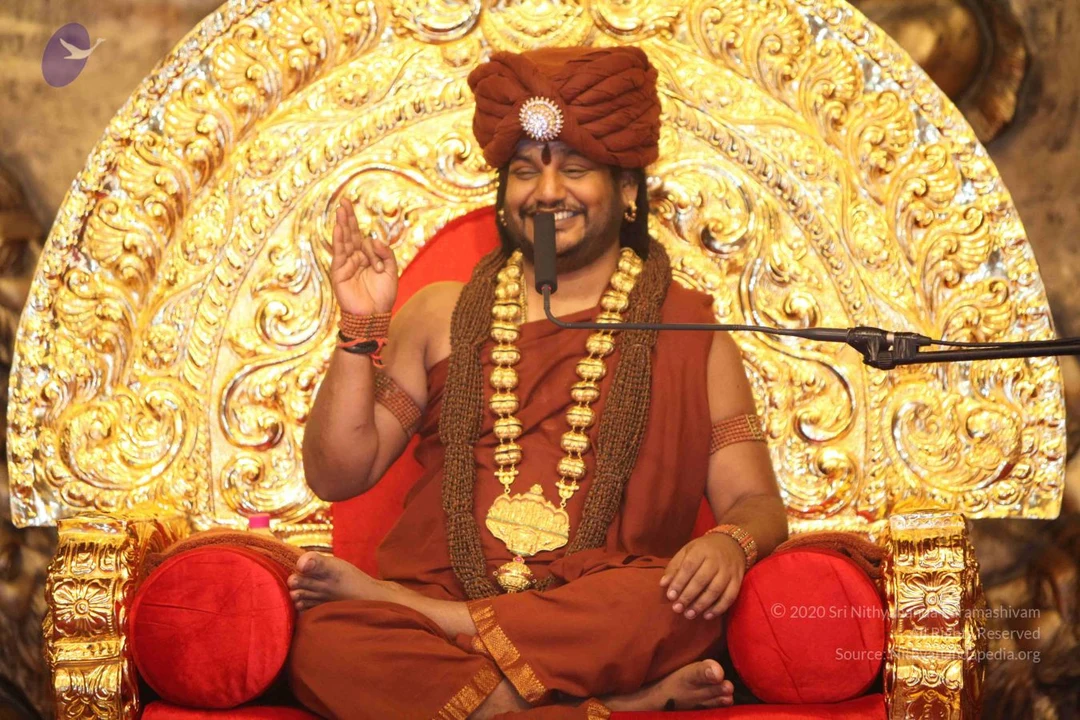
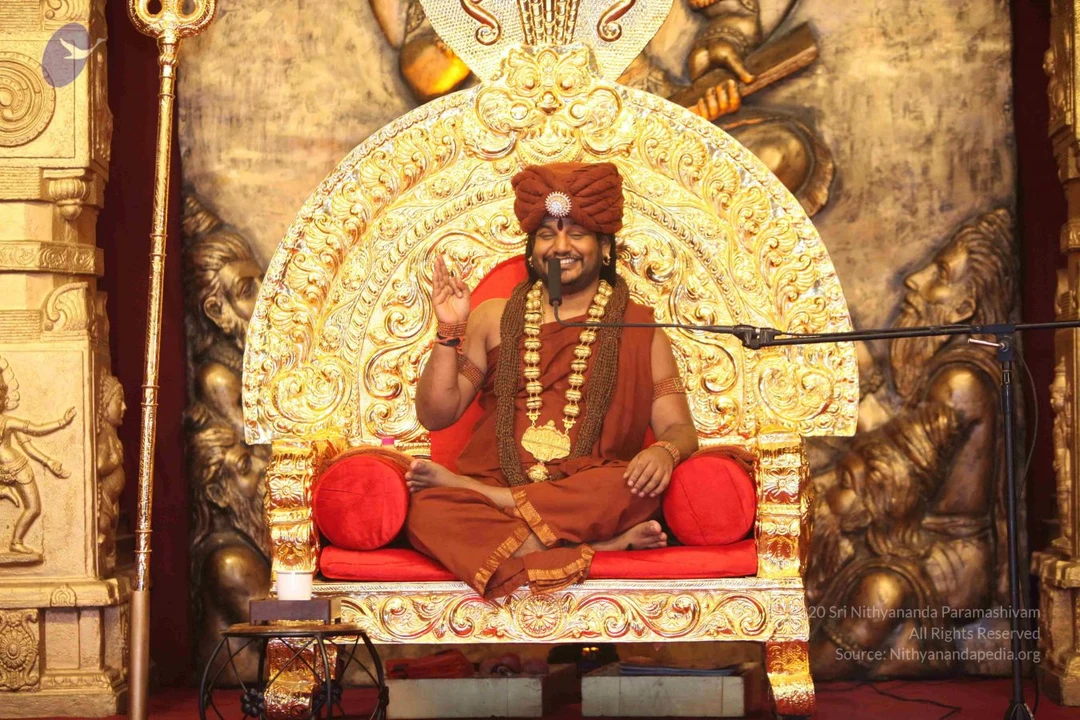
Paramahamsa Nithyananda continues intercepting the first verse or mantra of the Kenopanishad, the second primary Upanishad in Nithya Satsang from Varanasi on 12th July 2016. Illuminating the pure beauty of Upanishads, He explains that the ‘pure questioning’ in the form of poetry reveals to us the amazing renunciation with extraordinary romance – which is both masculine and feminine principles in their wholeness. He points out the powerful lies taught to us that – if you are logical, rational, you cannot be poetic, if you are masculine, you cannot be feminine. By doing so, our muscle memory is denied certain ability to flow and we deny our other part. We need to grow with the natural principles of male and female physiology, carrying the consciousness based understanding, and not the societal conditionings which are the wrong beliefs that suppress one part of us. He gives the lesson for Nithyananda Gurukuls – Do not brand your body as male or female and constantly program it. Let it function with the male and female qualifies naturally, freely. The topic for Spiritual Discussions and Exploration, called ‘Vaakyartha Sadas’ in Samskrit is – “Meditate today on the pure inner space where the masculine and feminine principles exist but not the social conditioning of being male and female. The natural principles of being male and female and social conditioning of masculine and feminine concepts. What are the natural physiological principles and what are the social conditioning? How we mix it up and mess it up? Watch, share and like the video's and Subscribe to our channel to be notified of the next upload. click http://bit.ly/20j90wr to subscribe. Website and Social Media: http://www.nithyananda.org http://www.nithyananda.tv http://www.innerawakening.org https://twitter.com/SriNithyananda https://www.facebook.com/ParamahamsaNithyananda

Link to Video:

VideoAudio

Transcript:

nithyānandeśvara samārambhām nithyānandeśvari madhyamām | asmat āchārya paryantām vande Guru paramparām ||

I welcome all of you with my love and respects. I welcome all the devotees, disciples, Samajis, Satsanghis, Sri Mahants, Mahants, Kothari, Thanedar, visitors, YouTube subscribers, viewers.

I welcome all of you with my love and respects.

Let’s enter into Kena Upanishad. The more and more, I chew the thought current, and see it’s effect on the system, more and more, I fall in love with Upanishads. Sometimes I wonder, why, why, the humanity is missing, these great powerful liberating thought currents.

keneṣitaṁ patati preṣitaṁ manaḥ kena prāṇaḥ prathamaḥ praiti yuktaḥ | keneṣitāṁ vācamimāṁ vadanti cakṣuḥ śrotaṁ ka u devo yunakti || 1 ||

There cannot be more non-assumption questions, non-assuming questioning, there cannot be more Pure Questioning than this line:

keneṣitaṁ patati preṣitaṁ manaḥ kena prāṇaḥ prathamaḥ praiti yuktaḥ | keneṣitāṁ vācamimāṁ vadanti cakṣuḥ śrotaṁ ka u devo yunakti || 1 ||

“By whom willed and caused, does the mind go towards its object? By whom directed and United with which does the first vital life energy, the Chief cause, comes forth towards its activities? At whose WILL does the speech gets activated and speaks, enlivened and directed by what luminous divine power? Indeed do the eyes and the ears engage in their functions.”

Pure questioning in the form of poetry that is the beauty of Upanishad. Pure questioning does not mean, they are dry. Pure questioning in the form of poetry. Amazing renunciation with extraordinary romance. amazing renunciation with extraordinary romance. Pure questioning in beautiful poetry. One more powerful lie taught to you and makes you powerless is, if you are logical, rational you cannot be poetic flowing; if you are masculine you can’t be feminine, if you are feminine you can’t be masculine. This is one of the most powerful lie, taught to you, which makes you powerless.

Along with revealing the sacred secrets and sacred truths I need to tell you, the dirty lies taught to you;

keneṣitaṁ patati preṣitaṁ manaḥ kena prāṇaḥ prathamaḥ praiti yuktaḥ |

keneṣitāṁ vācamimāṁ vadanti cakṣuḥ śrotaṁ ka u devo yunakti || 1 ||

When I read this verse I am seeing the union of Pure Questioning, means powerful unassuming questioning, logic rationality and the beautiful poetry.

This verse is like Anandeshwara, Sadashiva and Adi Shakti together, masculine and feminine together. Any muscle you may carry, the moment you identify that muscle is male, masculine and you try to dictate certain kind of ideas into it, it looses the ability to flow. Or, if you dictate certain identification and force it, you are denying the other part. You are going to be craving for the other part forever, and die in incompletion.

This should be one of the important lesson in all my Gurukuls, do not brand your body, as male or female, and constantly program it. Listen. By its very natural physiology, how it functions let it function, that you can’t change. By it’s a natural physiology, if it is male it will function in certain male qualities, if it is female it will function with certain female qualities, but physiological masculine feminine natural principles are different, artificial psychological forced thought currents about the masculine and feminine are different. When you artificially force the social concepts of masculine and feminine, when you artificially push the social concept of masculine and feminine, the psychological concept of masculine and feminine, you suppress the free flow of muscle memory.

I tell you, whatever muscle-memory you pick up by your own lifestyle; for example; if you eat too much, you will feel sleepy. This kind of muscle memories which you pick up by your habits, trial and error, can always be simply easily completed, but the muscle-memories you pick up, from the society has the definition or fantasy which is again by the wrong people and wrong thought current, wrong understanding, unenlightened resources, can cause deep complications from which you will never be able to get out, uunterstand.

That is why I say natural physiological principles of masculine, feminine genders should be lived, but constant reminding of what society talks or considers as gender, those psychological principles, should not get into your system. They should not become part of your muscle-memory or bio-memory, because the suppression and repercussions they can cause, listen, suppression and repercussions they can cause, the incompletions they create, the tension they generate can cost your conscious growth for births, for many births. Don’t. Don’t.

The ideas, the ideas from unenlightened resources should be denied access into your inner space. Let your muscle-memory, bio-memory grow out of your own experiments, trials, errors right, wrong, by celebrating you. A kid should not be given the idea of what is so called masculine, so called feminine. Let he or she grow up, they will naturally understand their physiology and the natural principles of their physiology. They should have their own understanding, only give them the subtle intelligence to watch themself, micromanage themselves. Then they will know, what hurts, what gives pleasure, what gives joy, what gives peace, what gives healthy feeling, what makes them feel sick. They will understand the natural physiological principles of their gender. Otherwise, feeding the misunderstandings from unenlightened resources, is one of the main reason where whole humanity is stuck. Sometimes, even till 90, you are craving for pornography. What it means? Your next janma [birth] is going to be hell.

Listen, even when body cannot act, when your mind is craving, you are going to enter into the body, even before the body gets matured, mind will start craving. When the body cannot act still your mind is craving, you are going to enter into the next body, even before the body gets matured your mind will start carving. Means the physical maturity age will be drastically reduced, which will directly speak on your physical health, mental health, your ability to handle yourself and the longevity, on everything it is going to have an impact.

(15:24)

I have a story. In a class one student asked what gender is computer? The teacher thought it would be a good exercise to have the students decide what they though the gender should be. She split the class in two groups appropriately enough by gender. Asked them to decide whether computer should be masculine or feminine now. Computer is male or female. Both groups were required to give at least 4 reasons for their recommendation. The men’s group decided the computer should definitely be of the feminine gender, because, no one but their creator understands their internal logic. The native language they use to communicate with other computers is incomprehensible to everyone else.

Even the smallest mistakes are stored in long-term memory for possible later review. As soon as you make a commitment to one you constantly find yourself spending more money on accessories for it. The women group however concluded computers should be male, masculine, because in order to do anything with them you have to turn them on. They have a lot of data but still can’t think of themselves. They are supposed to help you solve problem, but half the time they are the problem. Fourth, as soon as you commit to one you realize if you had waited a little longer you could have gotten a better model.

(17:34)

The social concepts and definitions of gender, gender related issues. If you take it as a joke great, but if you seriously record them in your muscle memory and bio memory and keep them in your cognition, it can be dangerous. Please listen. It can be dangerous.

When a male body made to believe certain concepts of masculine, certain concepts of being a male by the society, that kind of a tension that muscles, muscle-memory, bio-memory goes through, the kind of a suppression it goes through, the kind of a expectation it has about the other gender, the kind of an incompletion it suffers, and craves for the suppressed part, is hell. Such punishment for whole life, and the worst thing is, whatever you suppressed in you declaring yourself as the male and avoiding anything other than so called male, you will be searching for it in some other muscle, which you will never find, which you will never find, and, this seeking goes on tortures the person who is living with you, who has committed their life to you. It is like you torture the other person, the other person, she has her own suppressions. She is also part of the society, unenlightened resources. She has suppressed tons of things in the name of she being a female. So, all that she is searching in your muscles.

It’s like a in Indian villages this early morning hen will come out with chicken and start searching all the dustbins for food. Searching. Searching in others for the suppressed component in your muscle. Searching in others, for the suppressed component in your muscle, is the most frustrating thing that can happen to anybody in life. Even if you are a potato couch, because you did trial and error on yourself, it’s easy to get you out of it, but the patterns you pick up from others, believe it as your muscle memory, install it in your bio- memory, takes such long Completion, requires strong Completion process for you to get out.

Again and again it triggers violence, dissatisfaction, incompletion, resistance, a wrong principles of sex. Understand this word a wrong principles of sex. Earlier in India men used to wear only the dhoti and maybe one small angavastra [cloth for body]. Slowly, slowly they exposed upper body, started getting associated with the idea of sex. Then they’ll have to cover, then, now even the exposed shoulders gets associated with the ideas of sex. I don’t know when the exposed eyes and nose are going to get associated with the idea of sex, and when you’ll have to wear complete covering.

Understand, various parts of body triggering various ideas concepts patterns in your system shows how the societies going lower and lower level, and our common agreements are sinking deeper and deeper and stinking. Our common understandings do matter. Our common understandings do matter, because, knowingly or unknowingly even if you understand the higher principles in your day and day life you’re forced to live the common understandings. Unless you are a Naga, or you declare yourself to be Naga…..Indian cities are no more safe for Naga Sadhus. Even recently I saw 2, 3 videos uploaded by some of our Akhada Sadhus in the Facebook. Only if they travel two, three together it is safe. Understand.

(25:25)

This line manifests, demonstrates the inner space of the Upanishadic Rishi through whom this verse was sung, revealed. It embodies the Pure Questioning, the rationality in its peak, and poetry in its depth, masculine and feminine in the space of Completion. Masculine and feminine in the space of completion.

The muscles which complete, muscles which are complete, muscles which radiate Completion, demonstrates the grace of masculine and feminine principles. This should be one of the important lessons for our Gurukuls. Kids should be allowed to grow with natural physiological principles of their bodies, should not be abused with the concepts from unenlightened sources about masculine, feminine ideas which cripples their psychology, suppresses, inserts the suppression in their muscle-memory and bio-memory, makes them incomplete and makes them run around searching for the other part forever in their life, which they are never going to discover.

The natural principles of sex does not need a part of you getting suppressed. It’s again the so-called stupid modern societies concept that unless you have a need, you will not act. It is like how the currency is, unless you are kept in poverty you will not work. Otherwise for who's sake we work, nobody knows. Whole planet earth, all the countries put together 1.33 trillion dollar debt. To whom? To whom? How the stupid concept of money is generated by the common understanding that only if people are kept in poverty they can work. No. It is not necessary, but it is a wrong common understanding. Same way, one of the most abusive common understanding is only if one part of you is suppressed you will start searching for it. You will start entering the married life; you will start living the married life. The life will go on the earth. No. No. Grain based civilization, which does not require poverty to make people work. Consciousness based understandings about masculine feminine principles, which does not require suppression for human beings to function and reproduce.

The natural physiological principles are powerful enough to run the life as Sadashiva wants on the planet earth and keep the humanity alive. The artificial concepts about male female does not need to be inserted into your psychology in turn effect your muscle-memory and bio memory for the life to go on and the human beings to flourish, thrive, survive on the planet earth.

Mediate today on the pure inner space where the masculine and feminine principles, understandings exist but not the social conditionings about masculine and feminine. Understand masculine feminine natural principles are different, socially conditionings are different. Why the computer is male or female? All the 8 principles are social conditions – meditate on them its not a joke, it’s truth. The social conditionings, conditioning of being male and female, need to be renounced for the complete Completion and renunciation of social conditioning about male, female makes most beautiful Beings on the planet earth. Beings like Krishna, beings like Sadashiva, Sundareshwara, Meenakshi. In recent times Ramakrishna, Ramana Maharishi, Anandamayi, Paramahamsa Yogananda, some of the most beautiful, graceful Beings are the people who renounced the social conditioning of being male and female, who held on to the natural principles of masculine and feminine energies. I’ll produce tons of these graceful Beings. This should be one of our important lessons in our Gurukul system. The natural principles the physiological understandings of being male and female, should be taught and the social conditionings should not be allowed.

With this, I wanted the Vaakyartha Sadas to be done on this subject today. The natural principles of being male, female and social conditionings of male, masculine and feminine concepts. Natural, what all the natural physiological principles, what all the social conditionings? When we mix both of them and mess up how we suffer? This should be the subject for Vaakyartha Sadas for today.

I bless you all. Let you all radiate with integrity, authenticity, responsibility, enriching, causing Living Shuddhadvaita Shaivam, the Eternal Bliss, Nithyananda. Be Blissful. Thank you.

Photos From The Day:

Nithya Satsang
Guru Mantra Deeksha
Kalpataru Darshan
Maheshwara Puja
Tags:

Paramahamsa Nithyananda, Nithyananda, Kena Upanishad, Kenopnishad, Power of Speech, Vaak, Workship, Sadashiva, Source, Brahman, Workship, Worship, Upasana, cherished goal, worshipped object, Infinity, 108 Upanishads, power of vizualization

Photos Of The Day:

IA-Varanasi-Maheshwarapuja
IA-Maheshwarapuja

I-IA-Varanasi-Morningsatsangh

Photos Of The Day:

FB-Photos-of-the-Day

01-MORNING-SATSANG

02-MAHESHWARA-PUJA

Photos from this day

View all 396 photos

Nithya Satsang

2 photosSource gallery
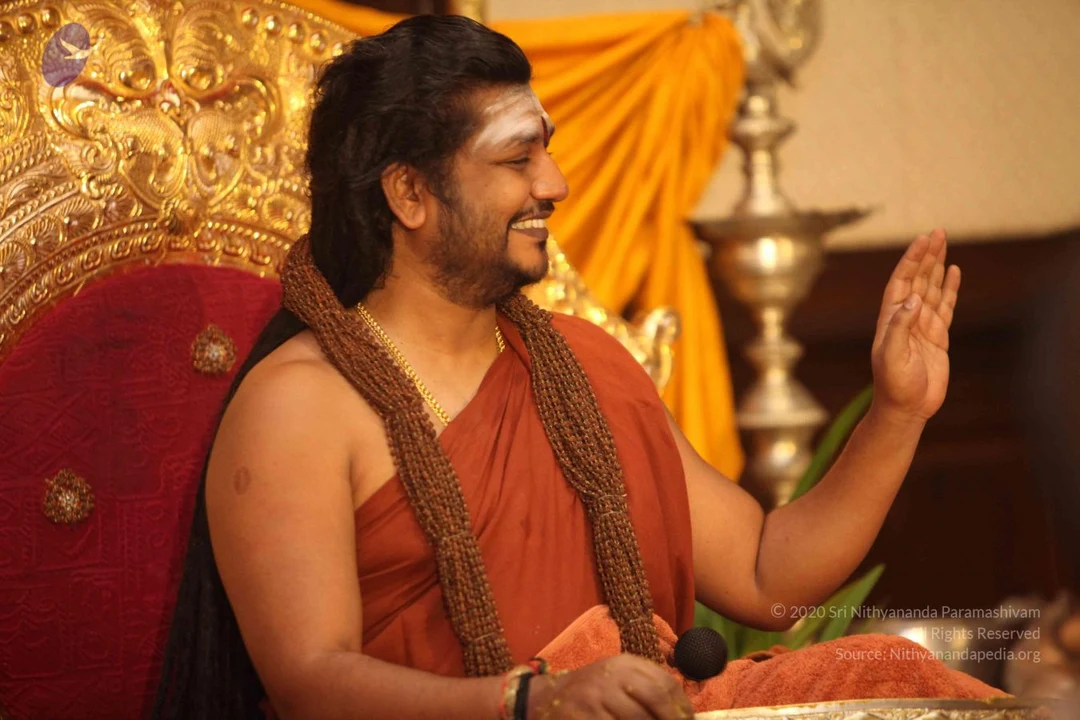
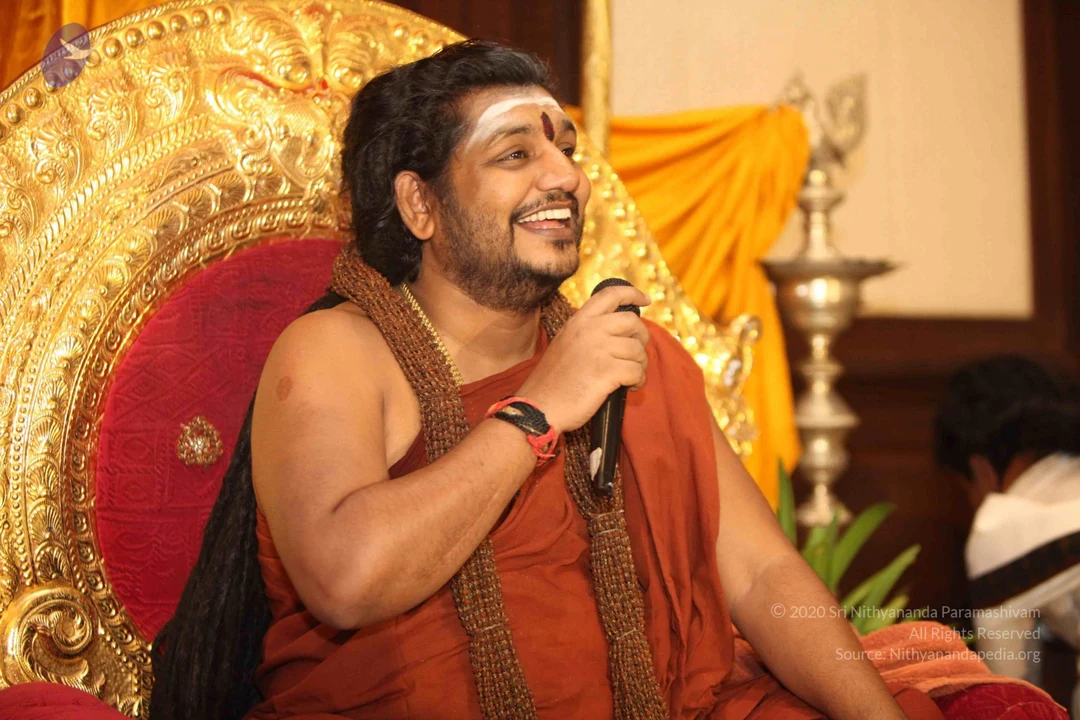
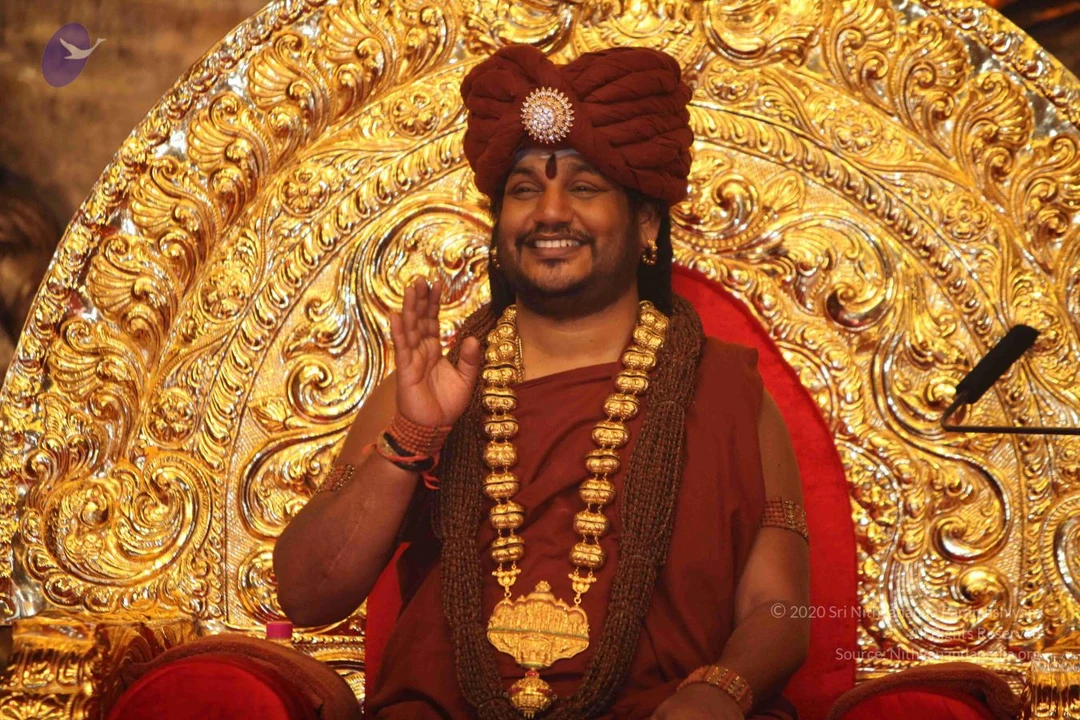
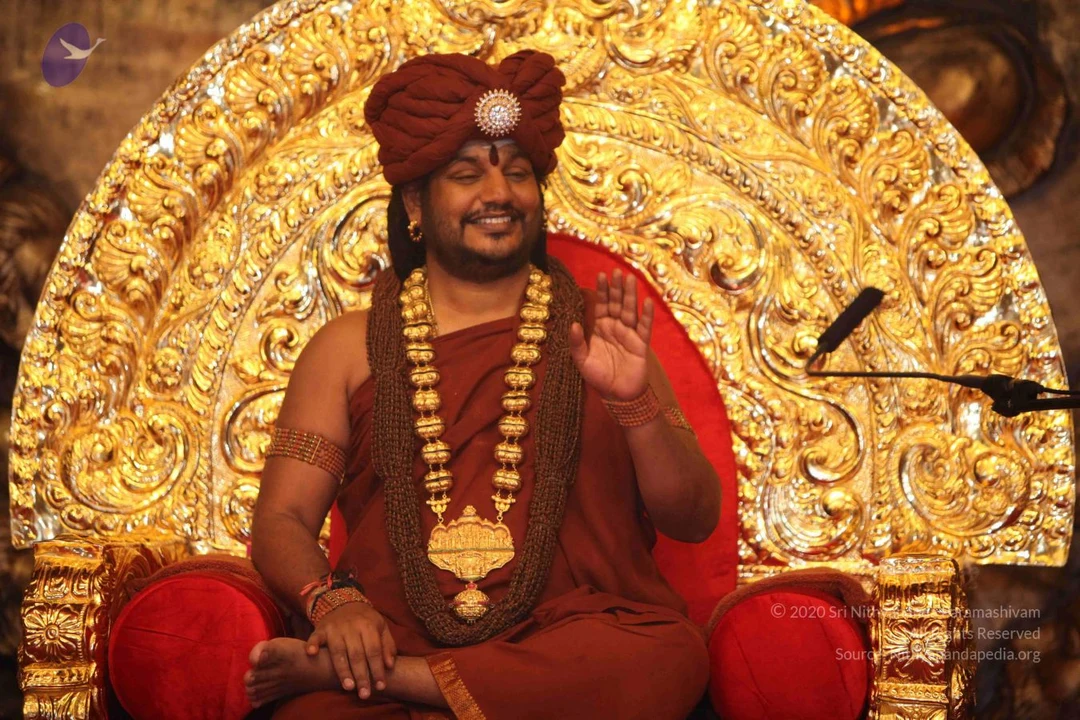
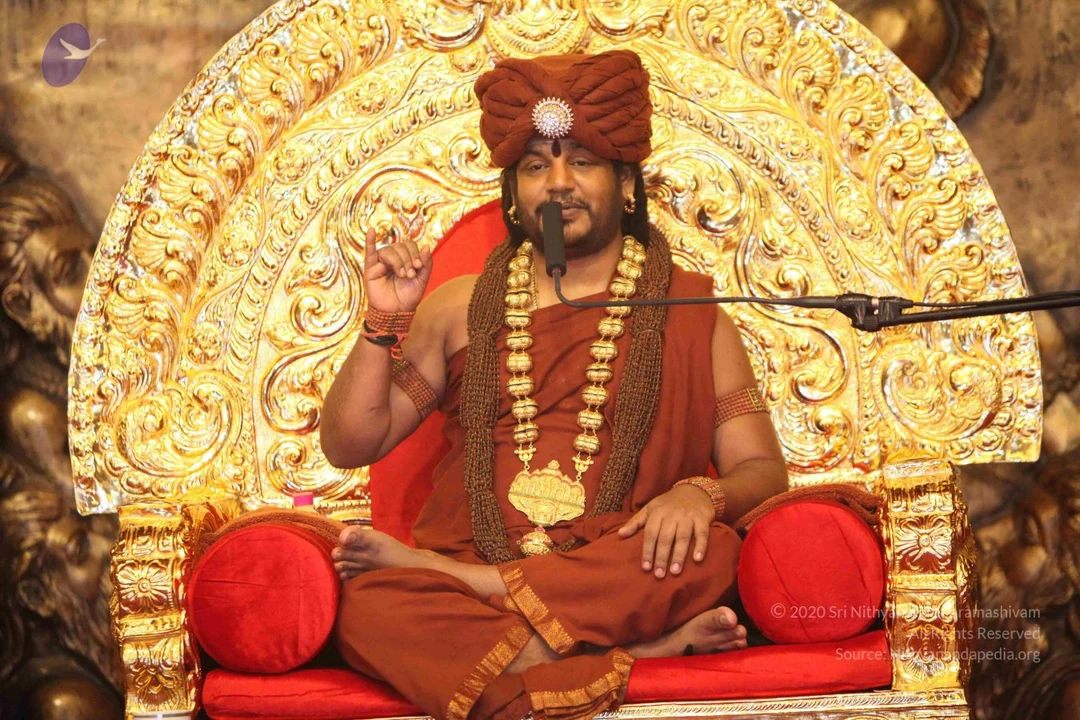
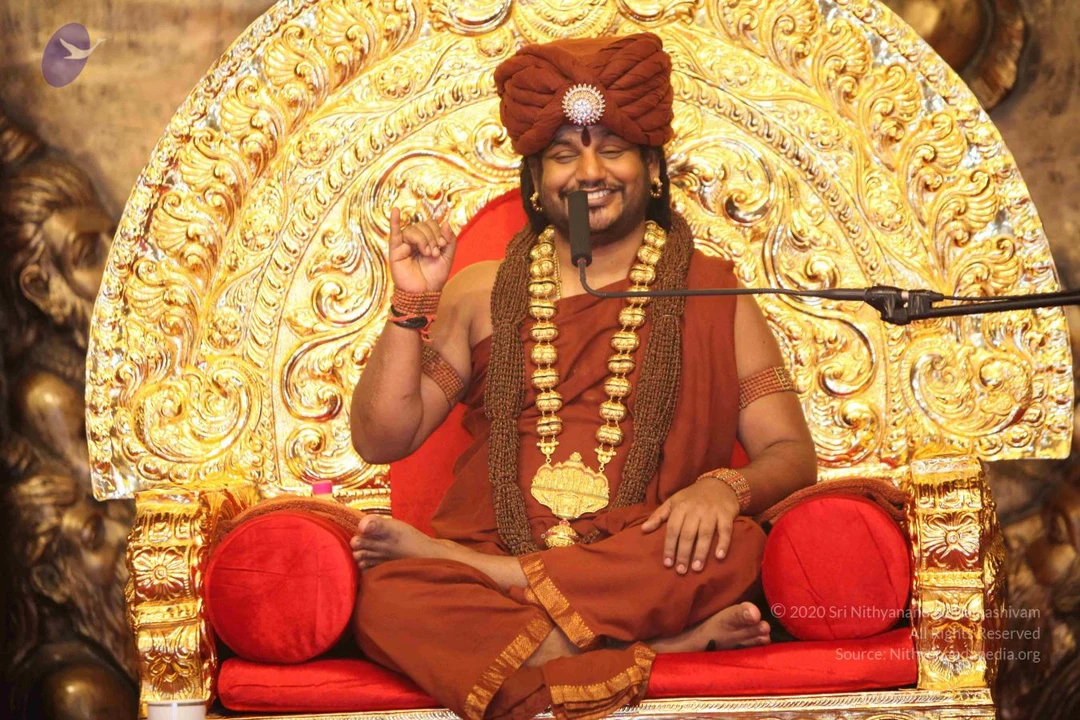
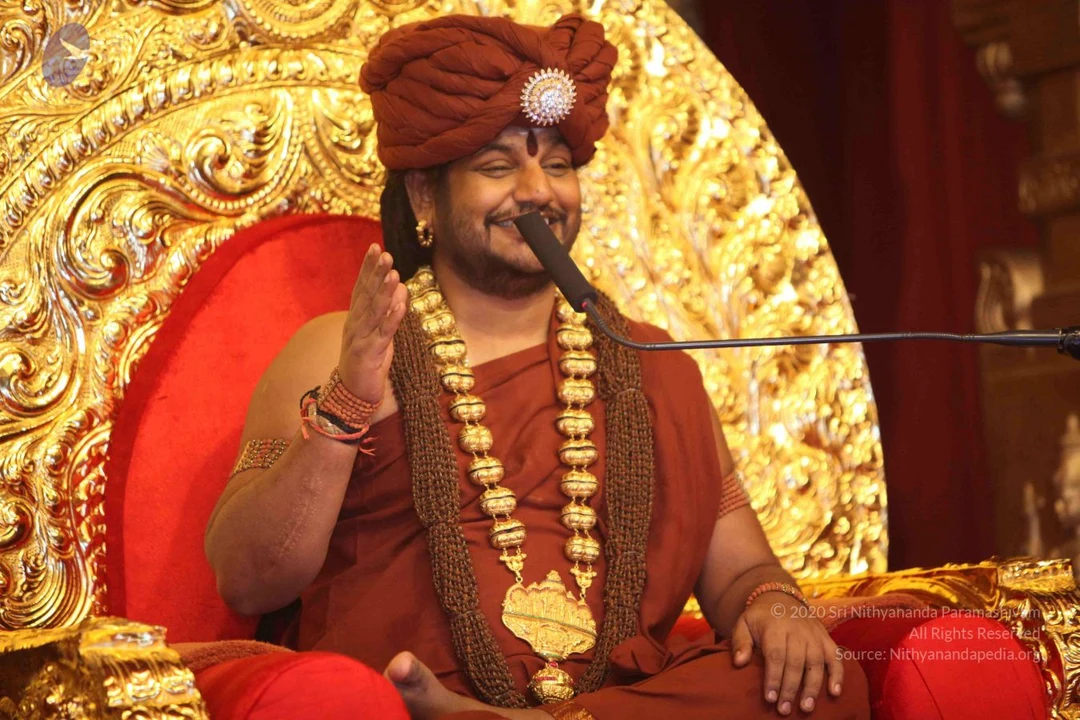
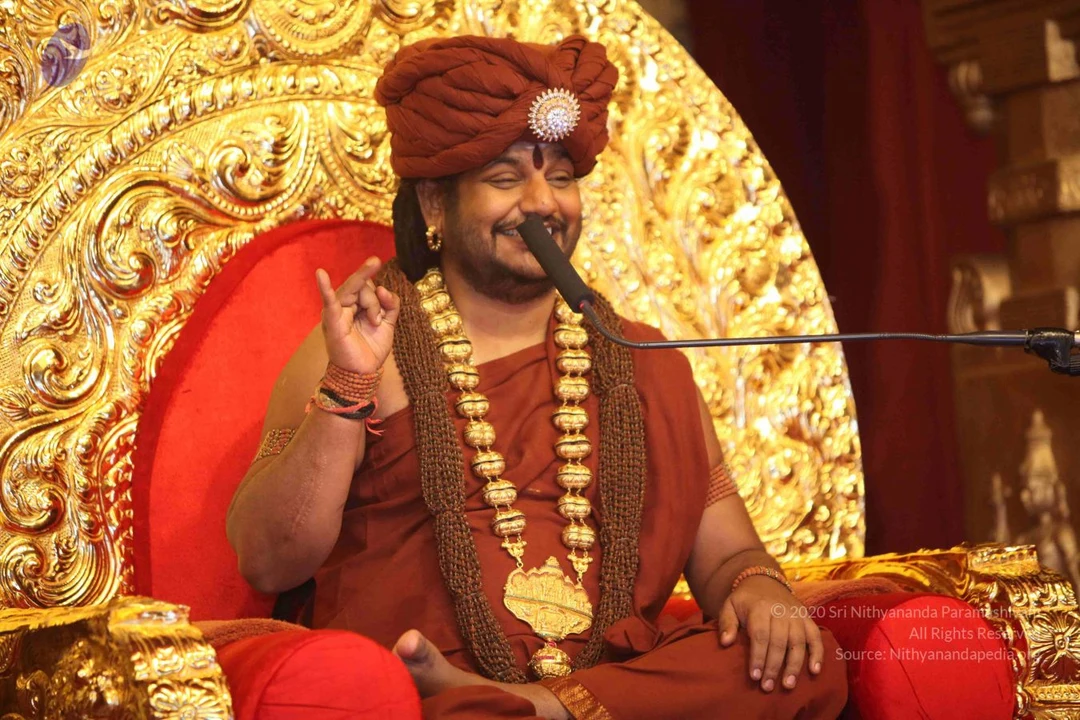
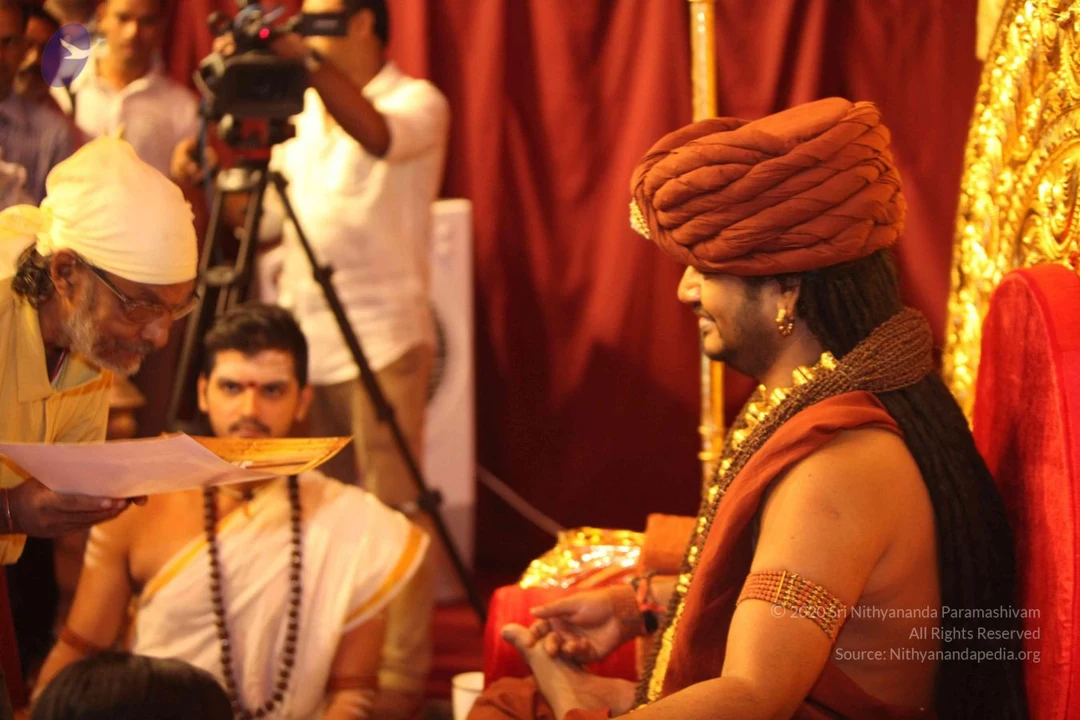
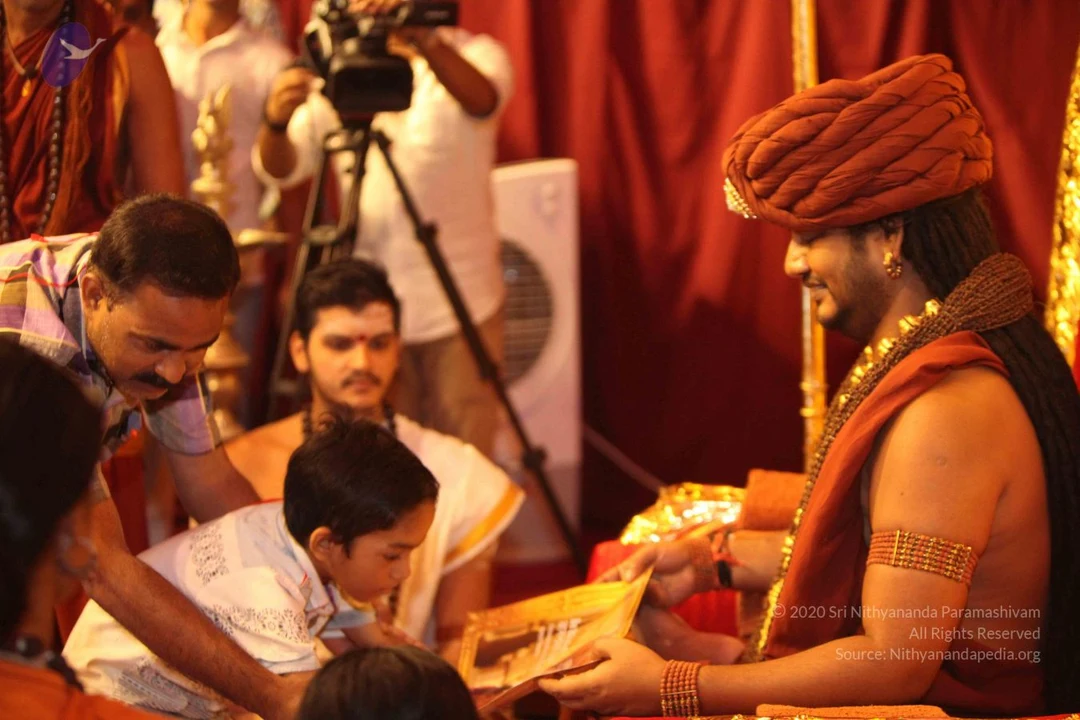
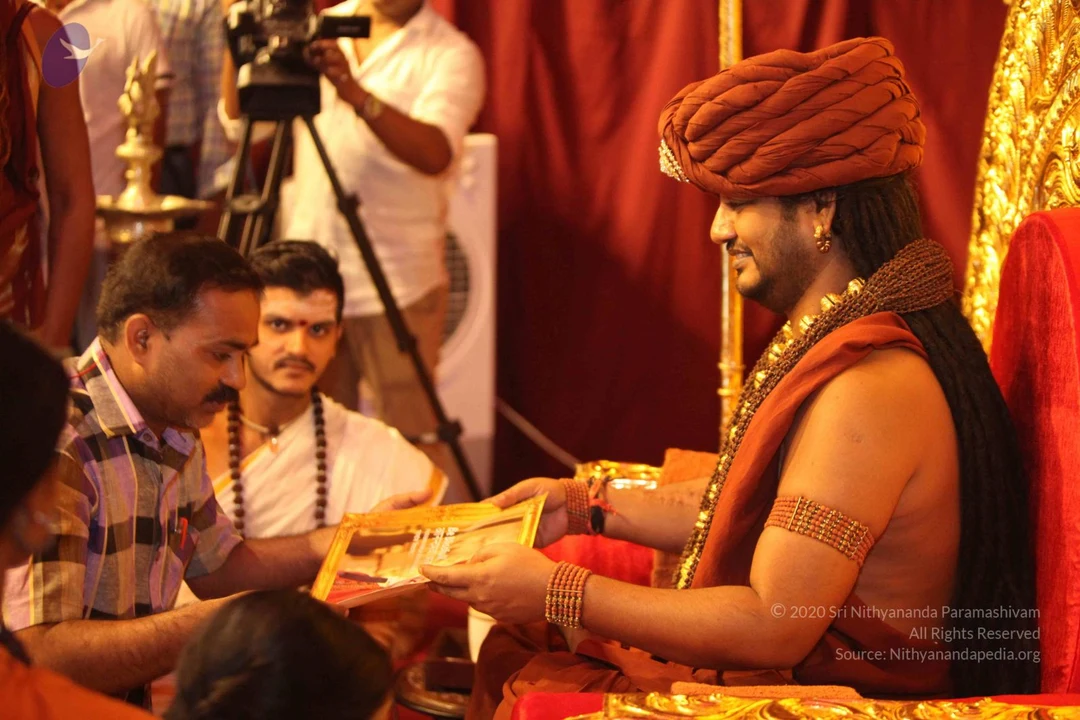
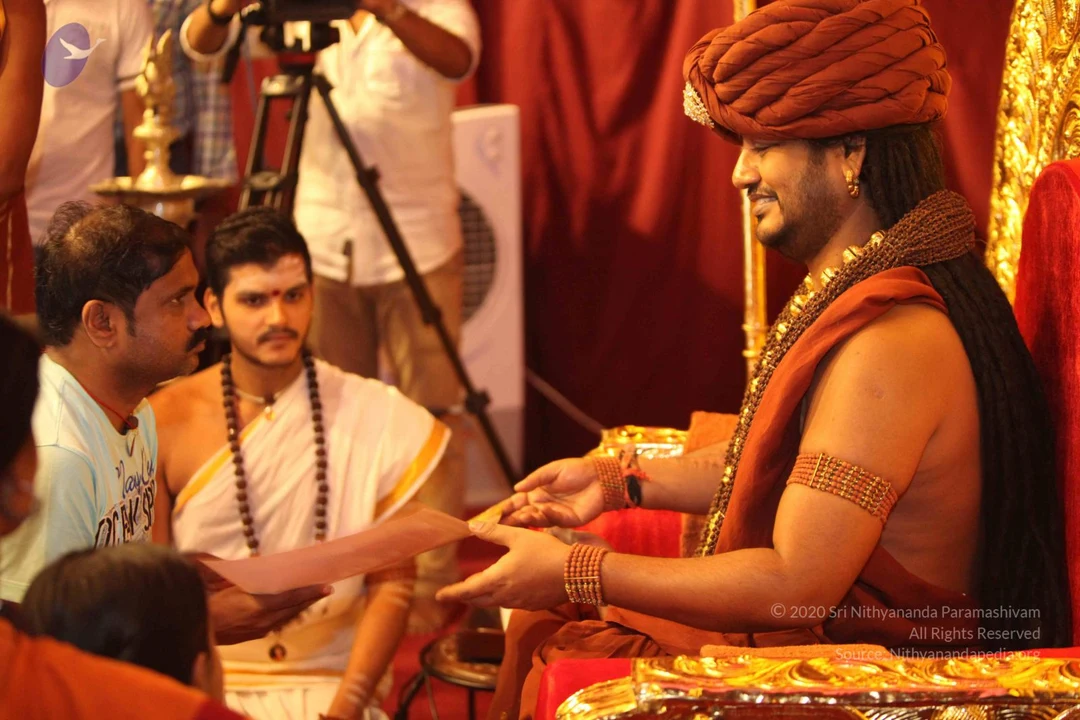
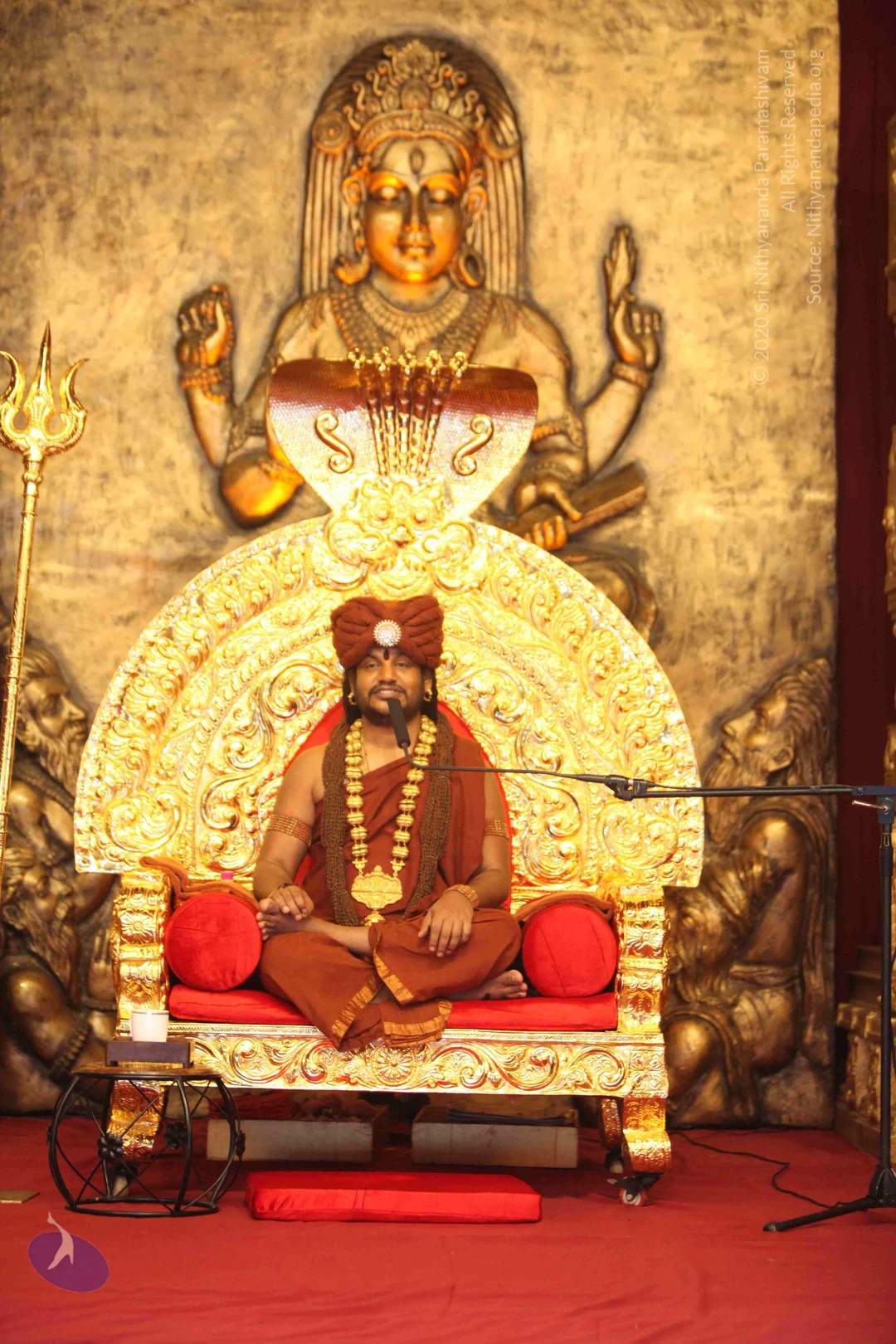
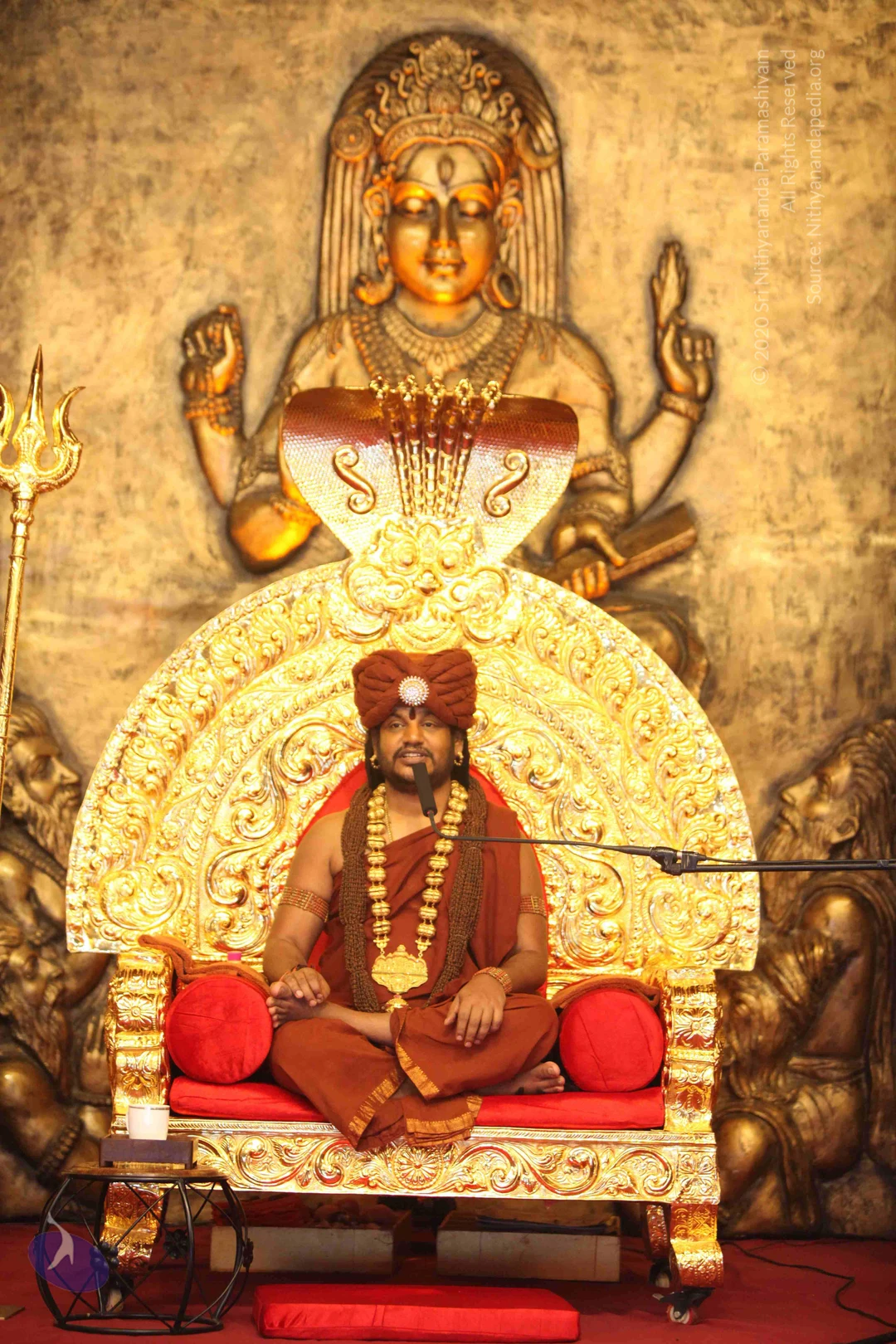
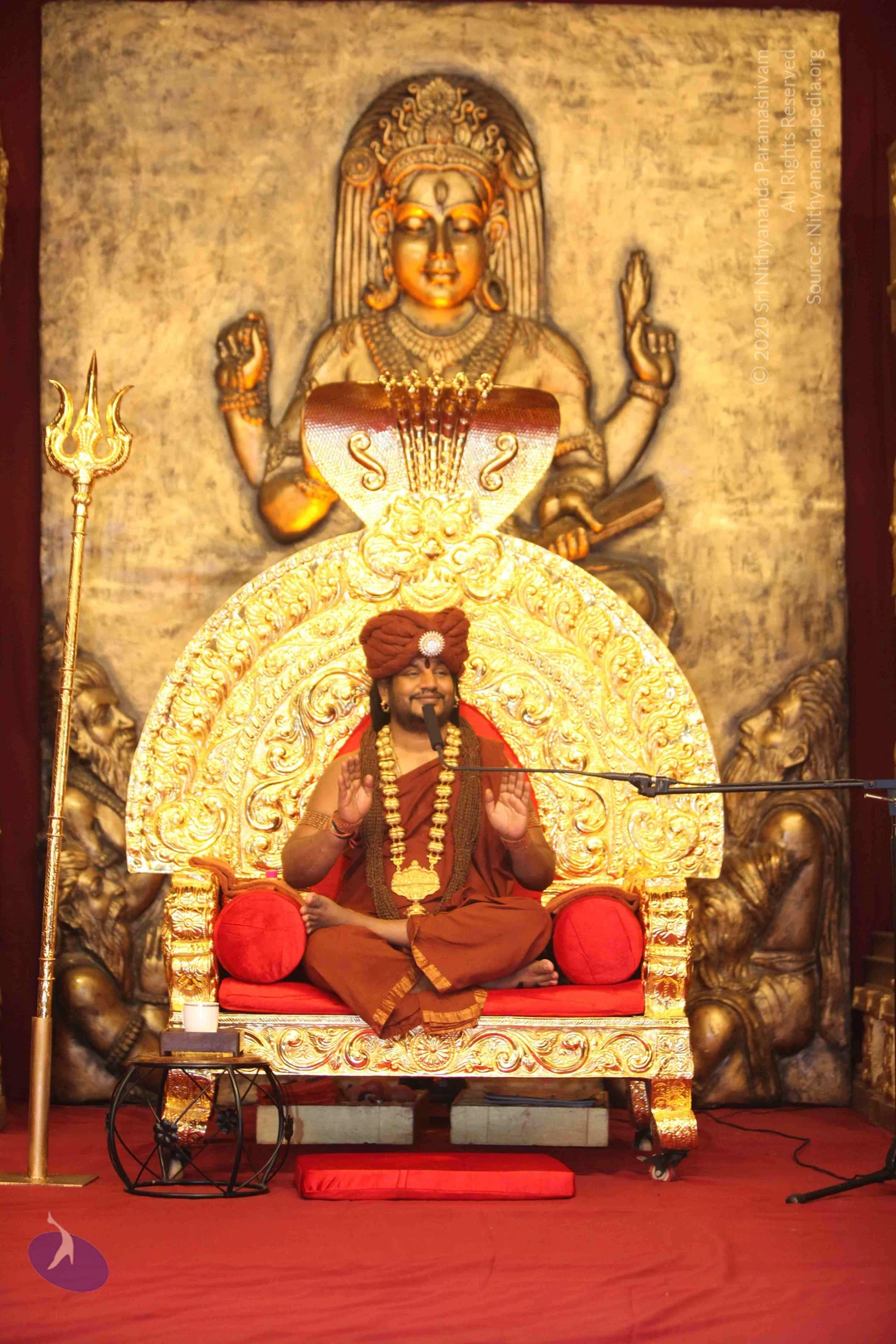
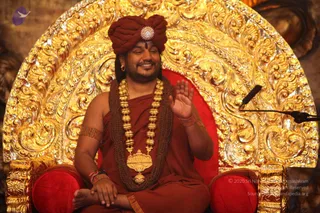
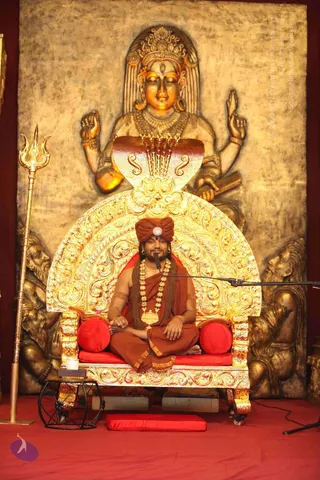
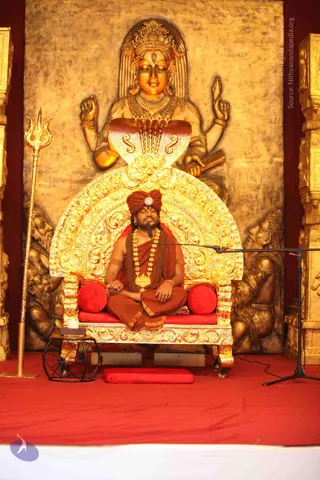
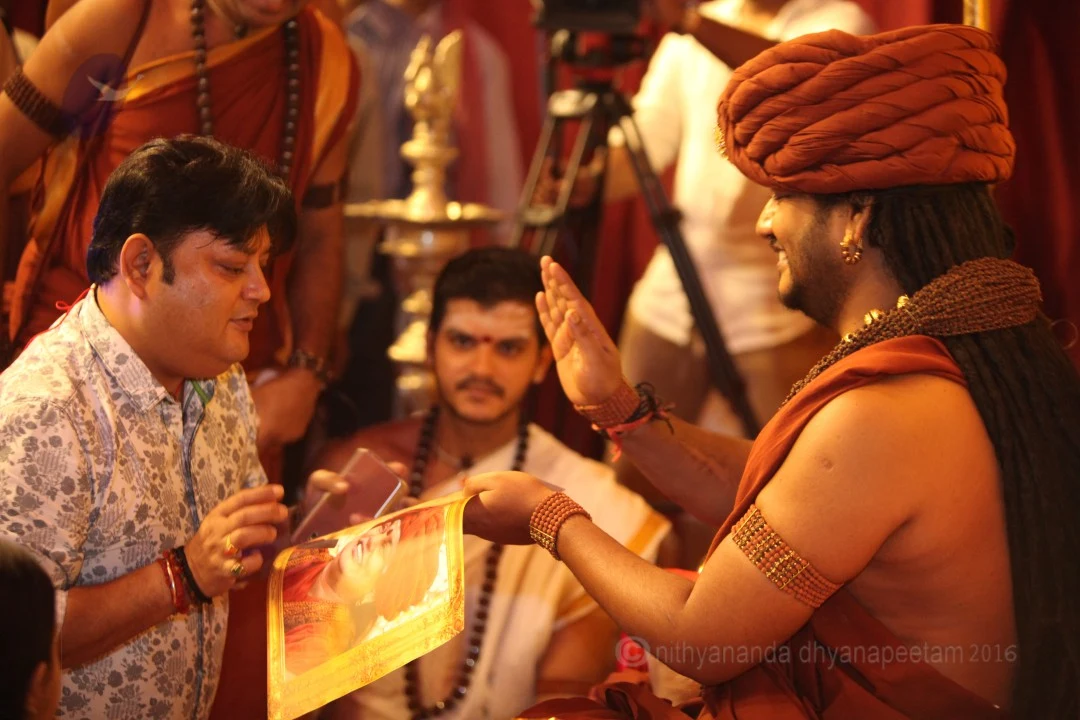
A seated man in a rust-red turban with a large jewelled brooch and a red tilak on his forehead raises his right hand in a smiling wave. He wears a rust-red robe, a thick rudraksha-style mala and a heavy ornate gold necklace with a central gold pendant, plus gold bangles. He sits on a red cushioned seat in front of an elaborate gold-embossed throne with scrolled floral relief, and a microphone stands at the right edge. The appearance cues of long hair under the turban, ornate gold ornaments, saffron-toned robes and a rudraksha mala are consistent with the page's Swamiji claim, so this is a probable Swamiji depiction.A man seated on an ornate gilded throne with a red cushion, smiling and gesturing with his left hand while a microphone on a stand is angled toward him. He wears a rust-red turban with a silver jewelled brooch, a rust-red robe, a dark brown rudraksha mala and a heavy gold necklace with a large gold pendant, and gold bangles on his wrists. Red trousers are visible. The background is a dark red curtain. One person is physically present. Swamiji (probable): the robed figure with long hair under the turban, distinctive ceremonial gold and rudraksha adornment, seated on the throne at a satsang discourse.

Guru Mantra Deeksha

2 photosSource gallery
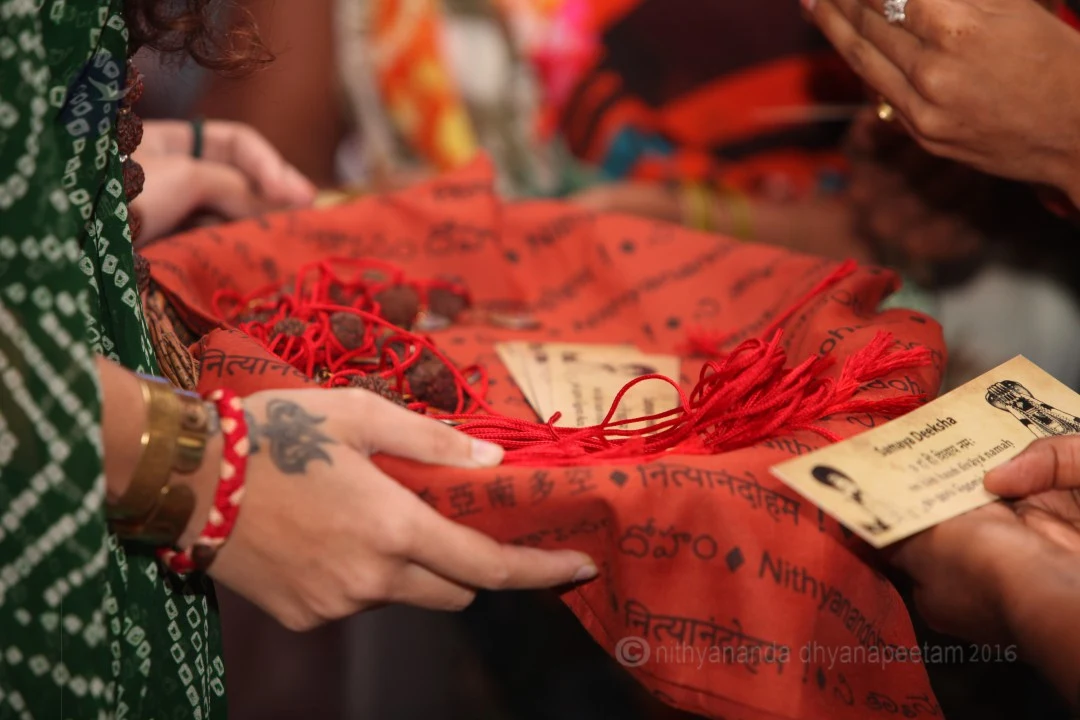
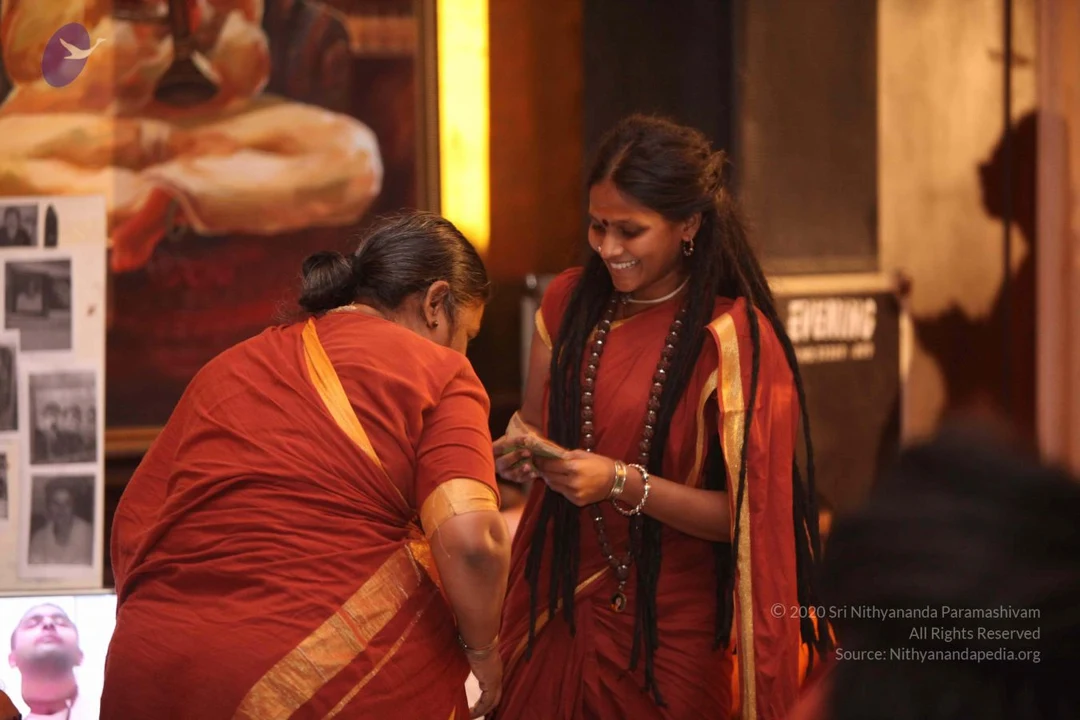
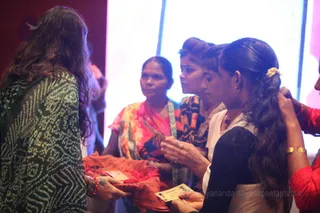
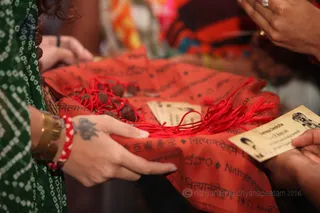
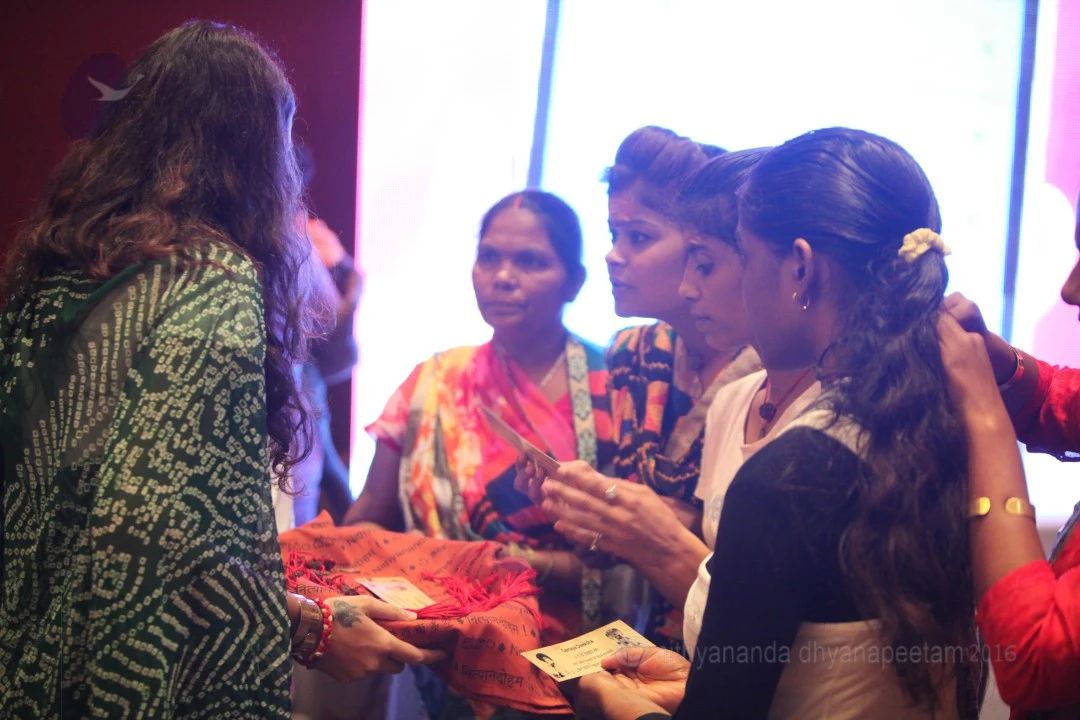
A photograph of women receiving items at an event. In the foreground a woman with long wavy hair and a green bandhani-print top stands at left, holding an orange cloth with red fringe and a small printed card. Behind her, several women stand in a row: one in a pink and orange sari, others in multicoloured patterned saris and white and black tops, holding small cards and looking toward the giver. A red-clad hand reaches in from the right edge. The background is a bright stage backdrop with a pink-lit panel and a faint logo at upper left. A printed card held at bottom shows a small portrait and text. No identifiable a person figure is visible.Close photo of hands passing a red cloth printed with Sanskrit script and the word a person, holding red-thread tassels, dark rudraksha beads and small printed cards. A woman in a green and white bandhani dress with gold and red bangles and a tattooed hand reaches in from the left, while another hand offers a card from the right. The card is labelled Samaya Deeksha and shows a small portrait. Background is blurred. No identifiable a person is visible in the frame.

Maheshwara Puja

1 photoSource gallery
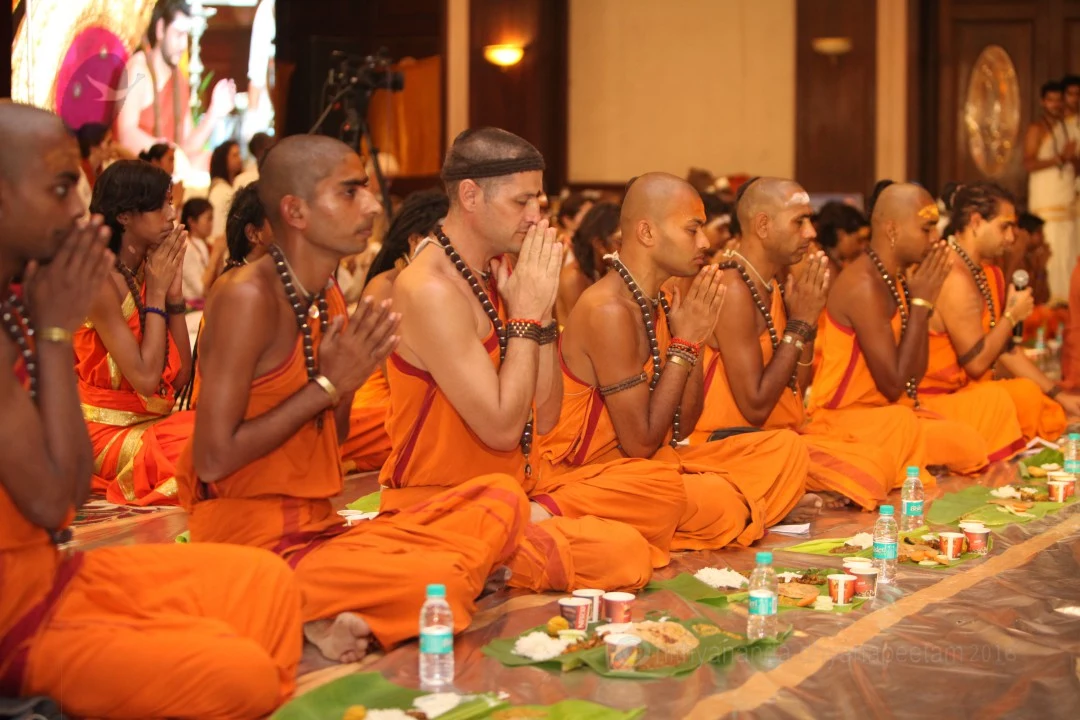
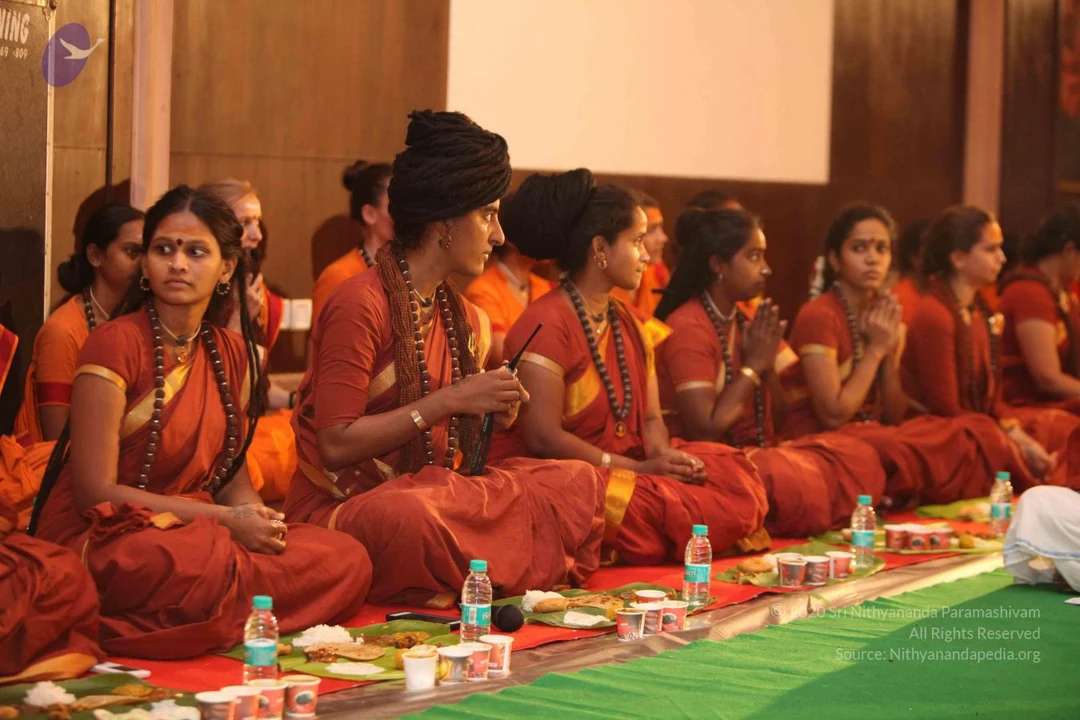
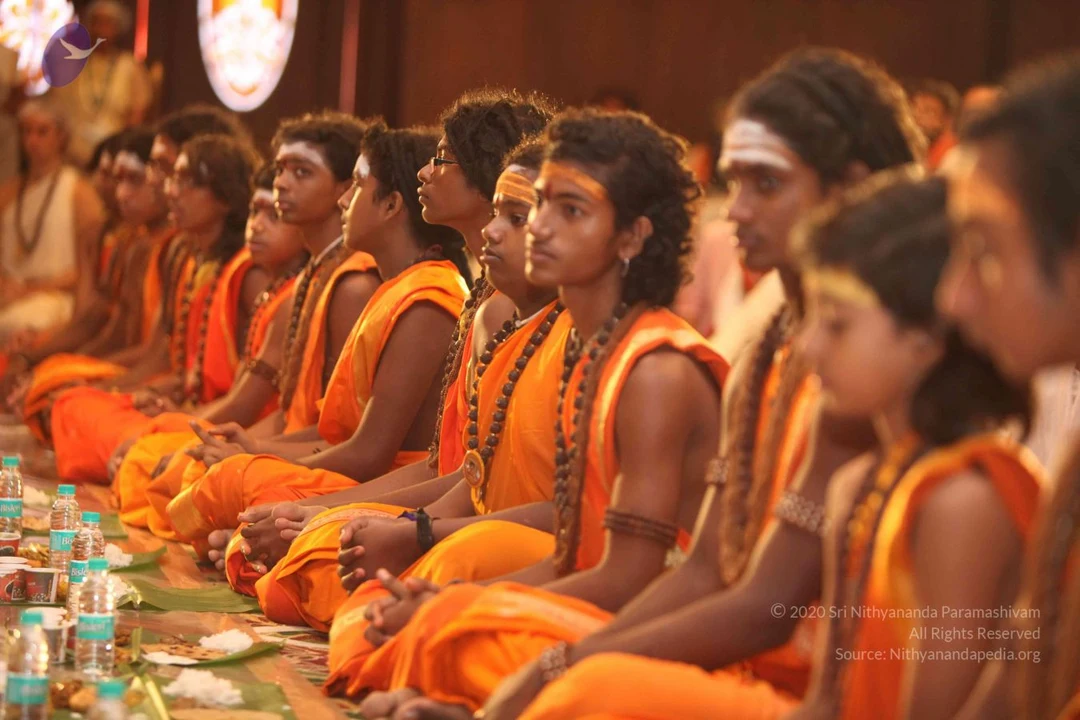
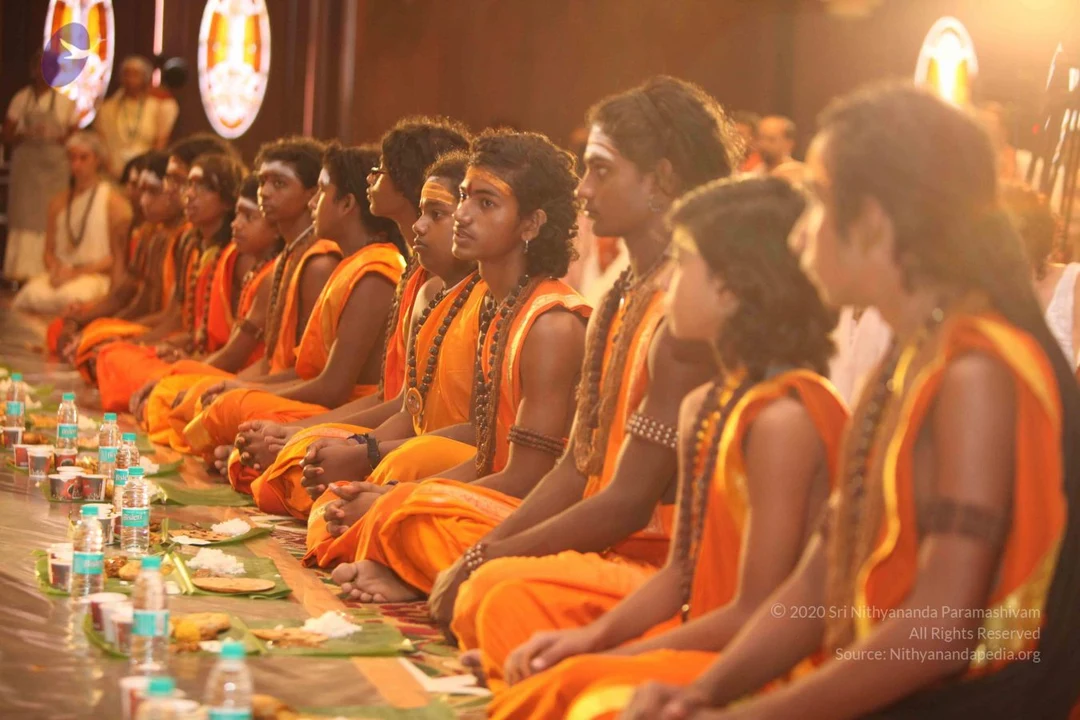
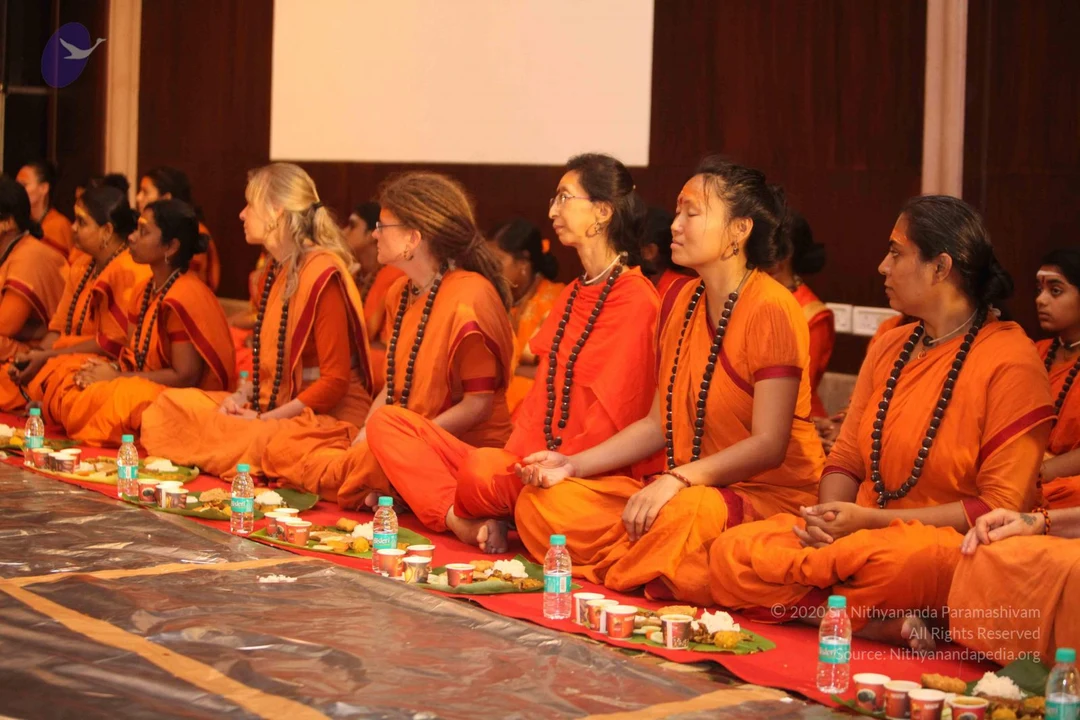
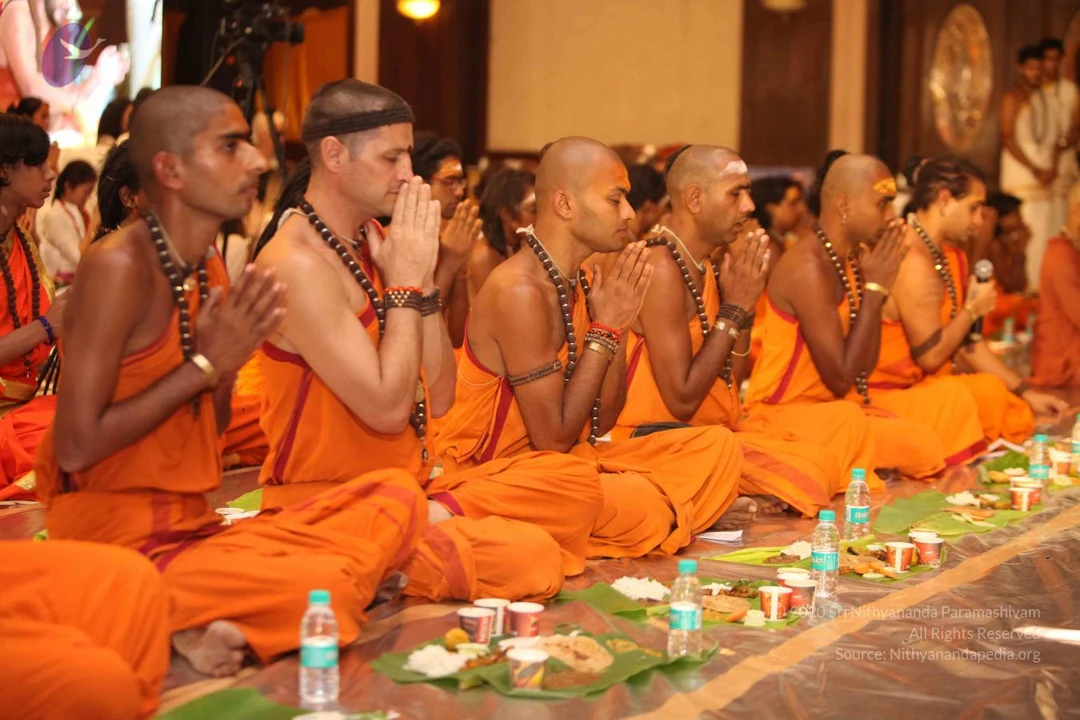
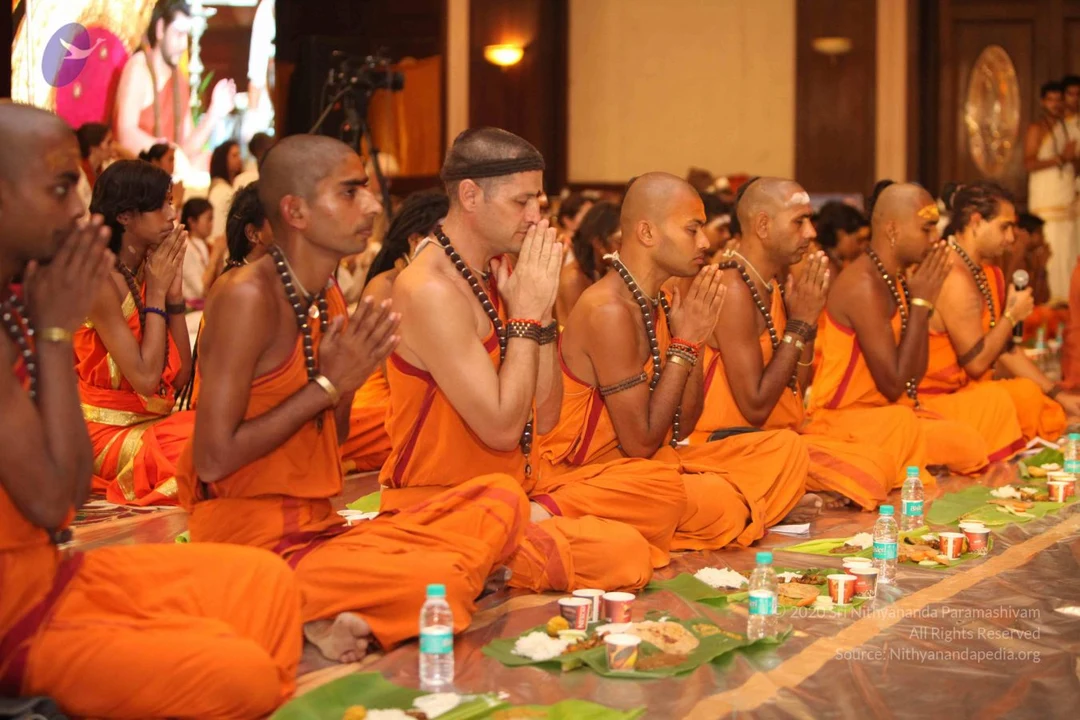
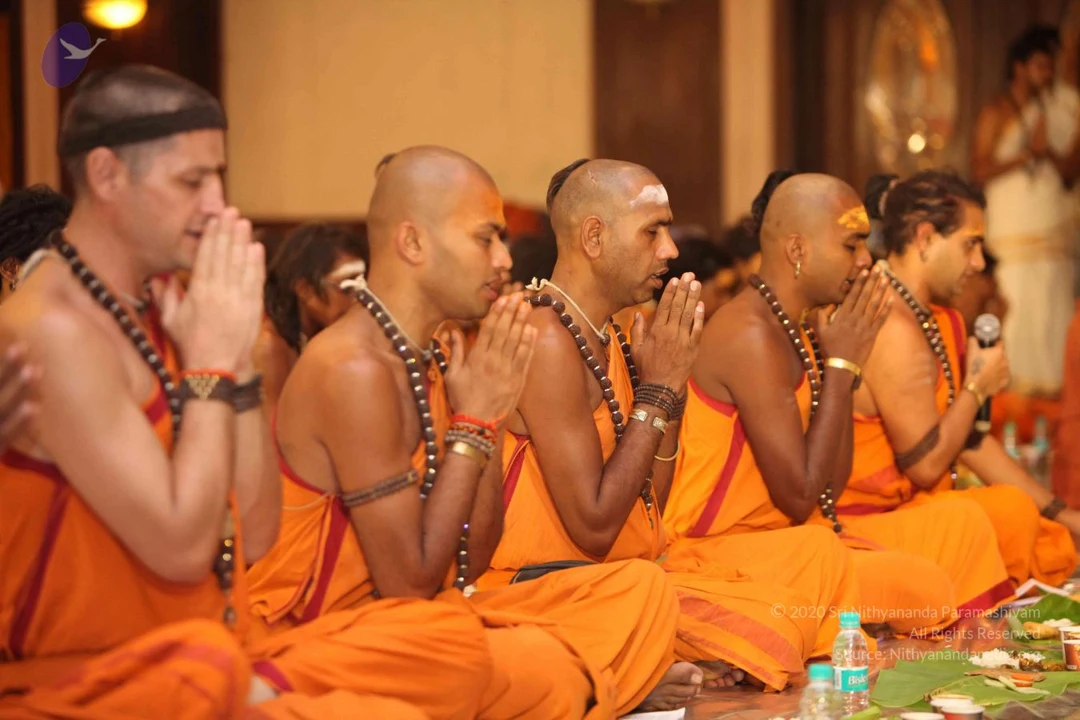
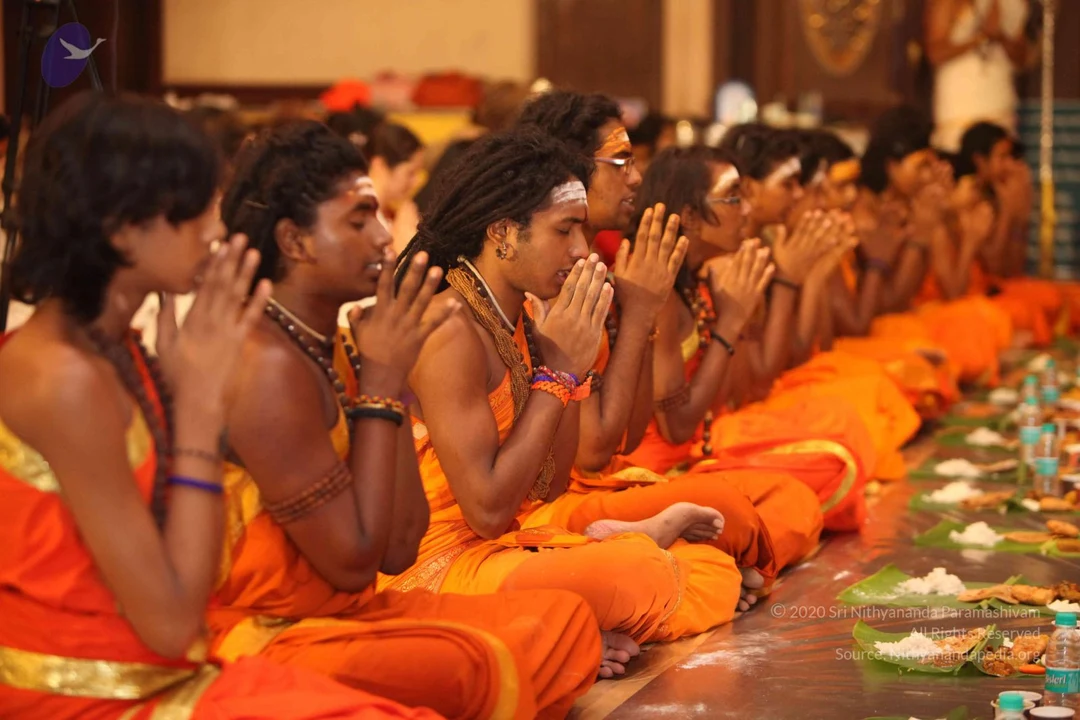
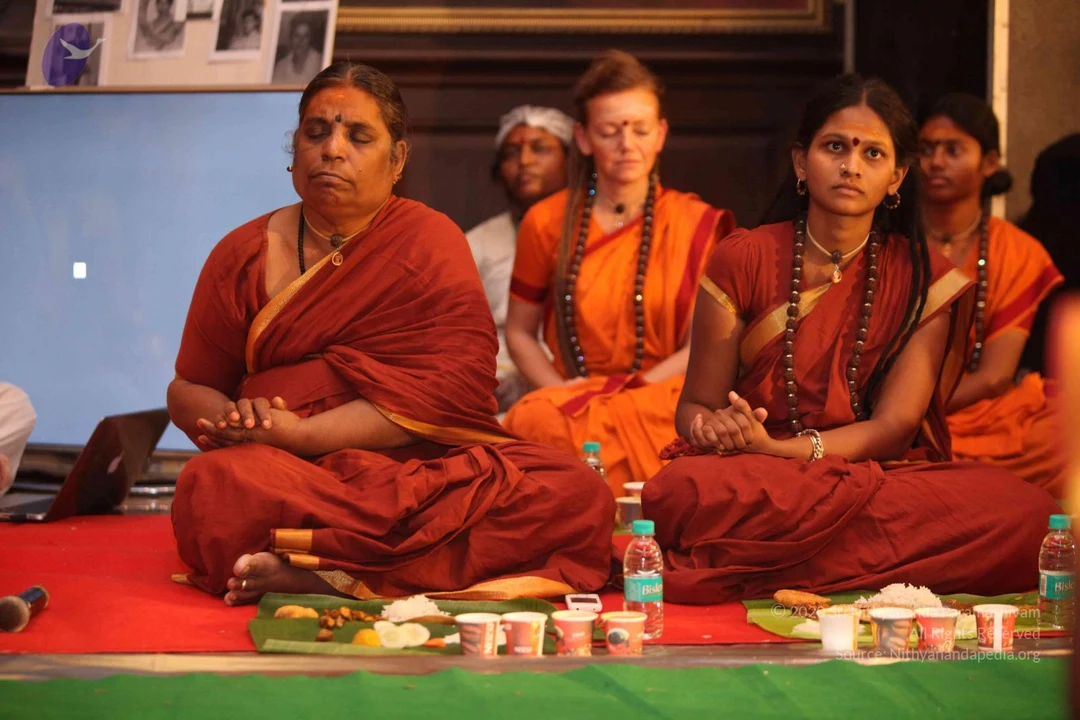
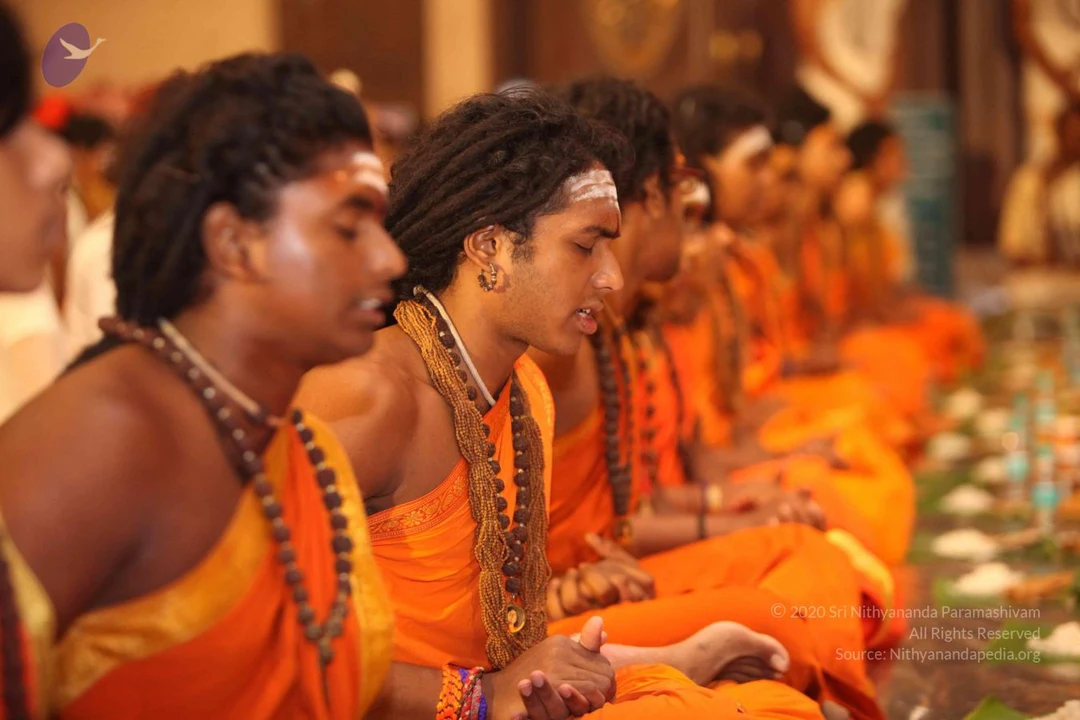
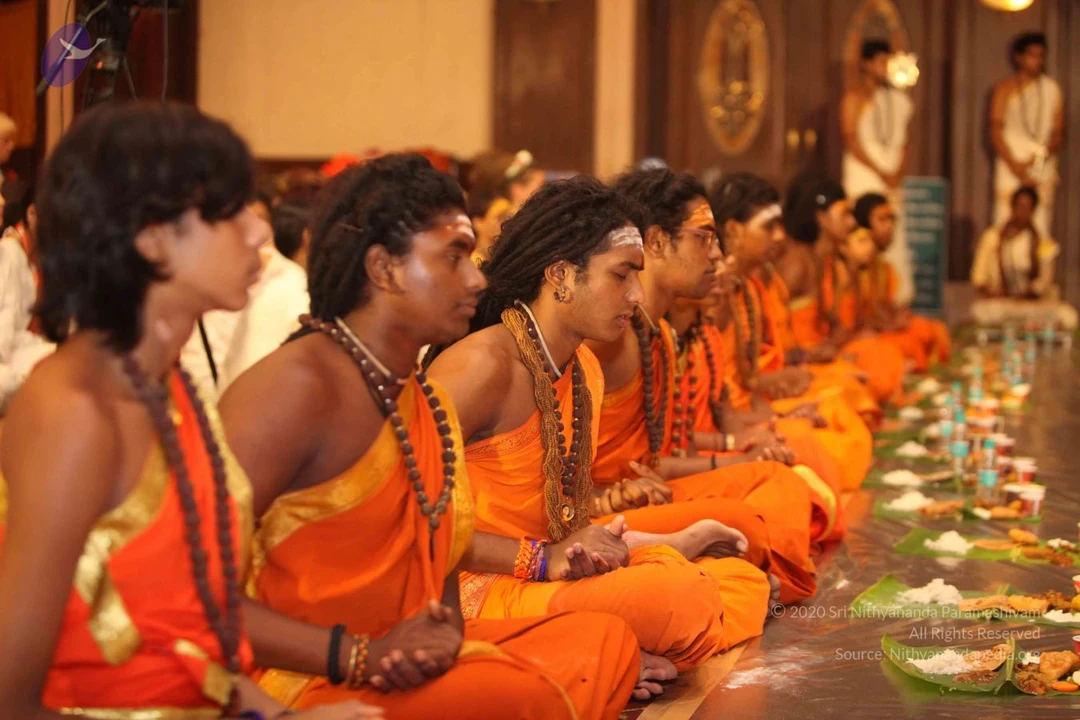
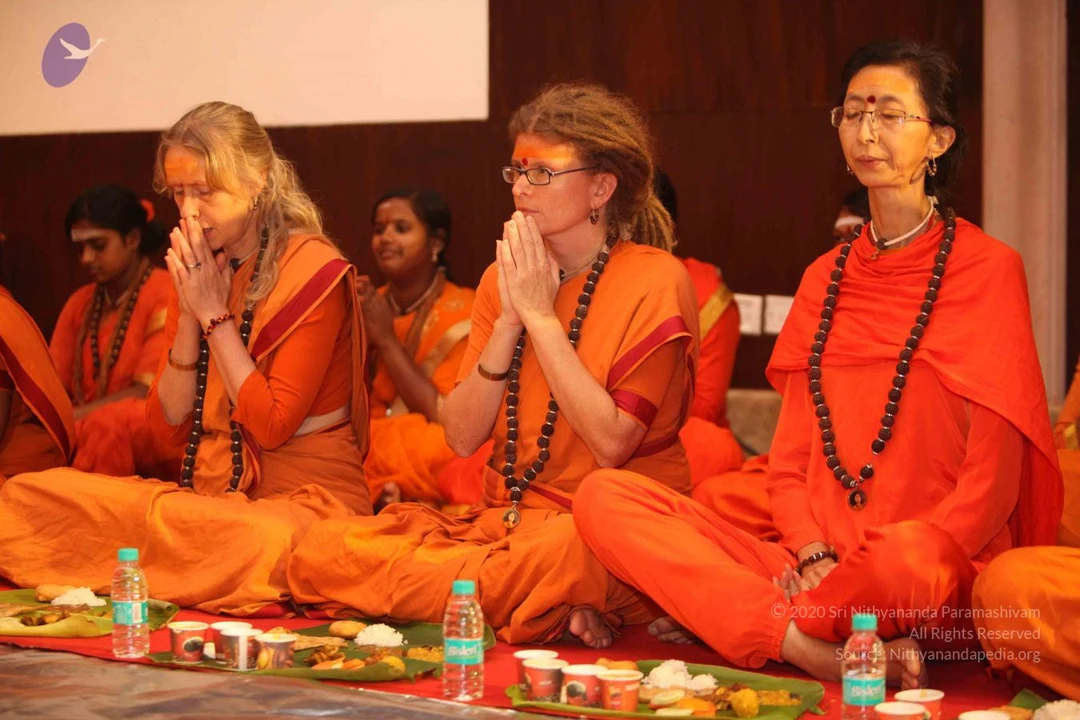
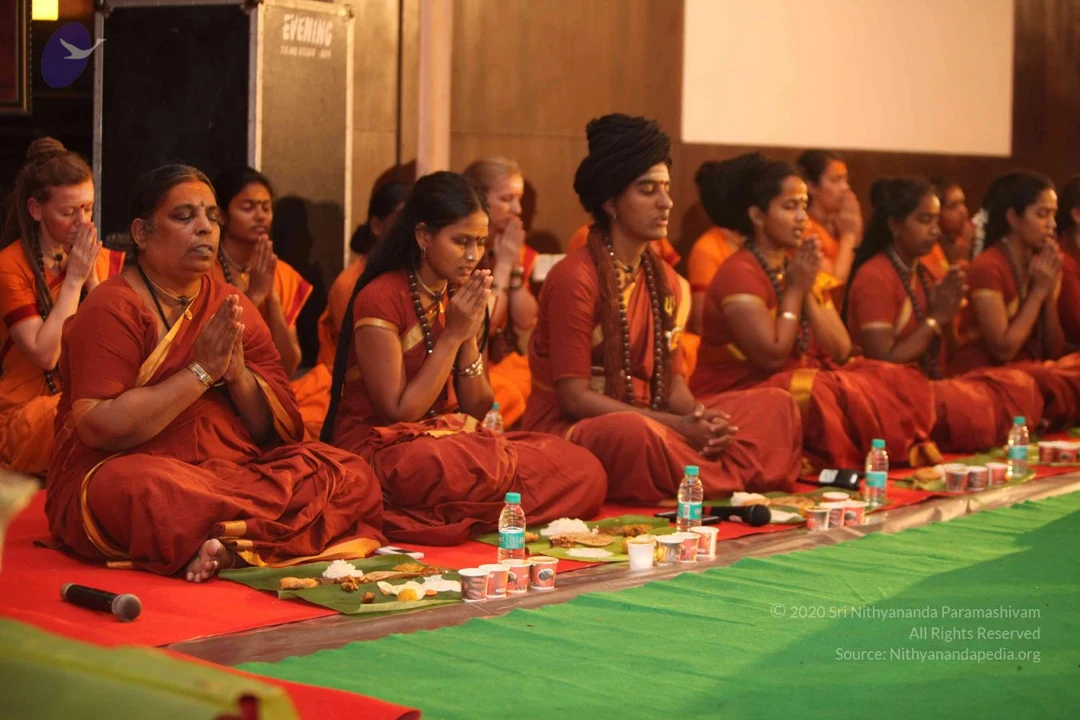
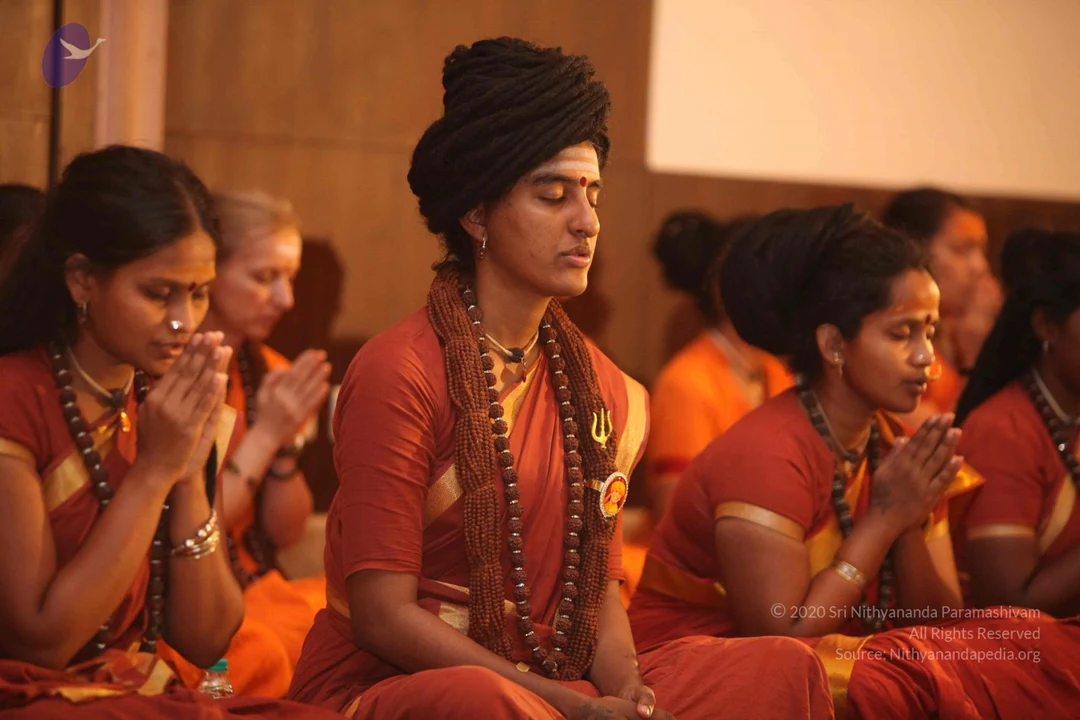
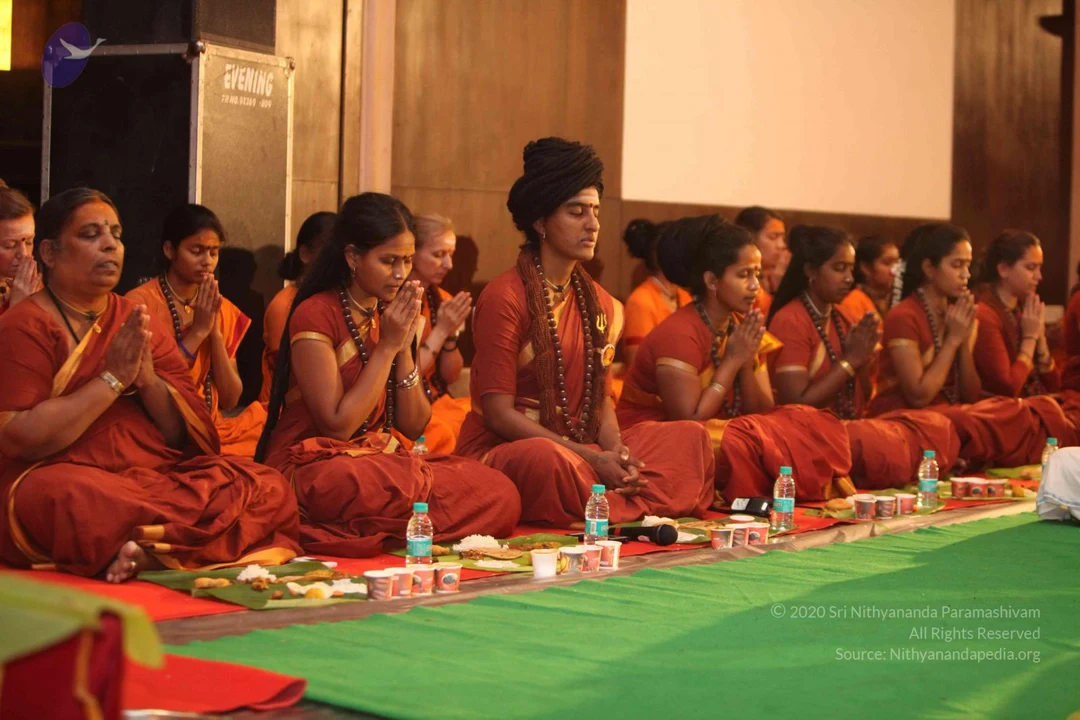
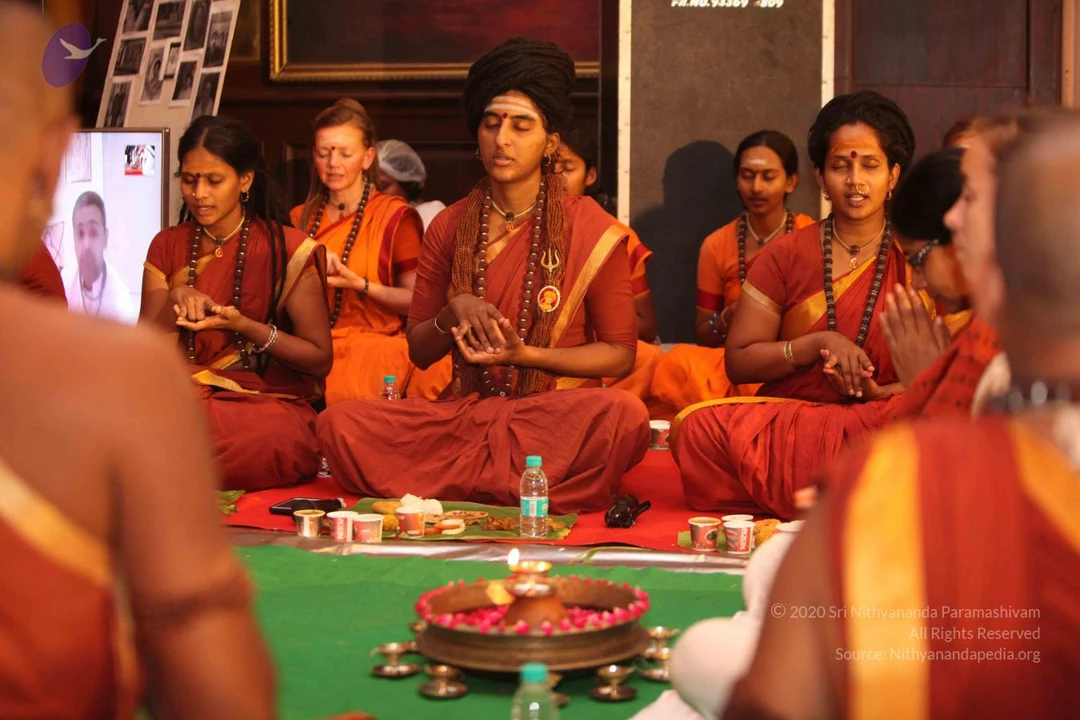
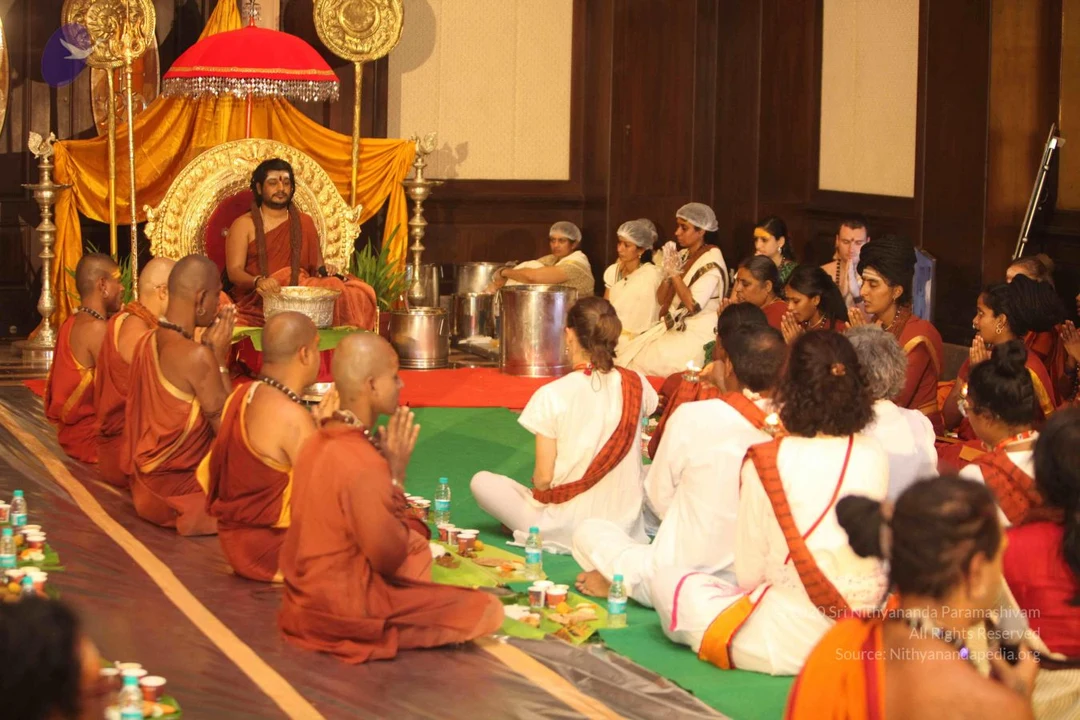
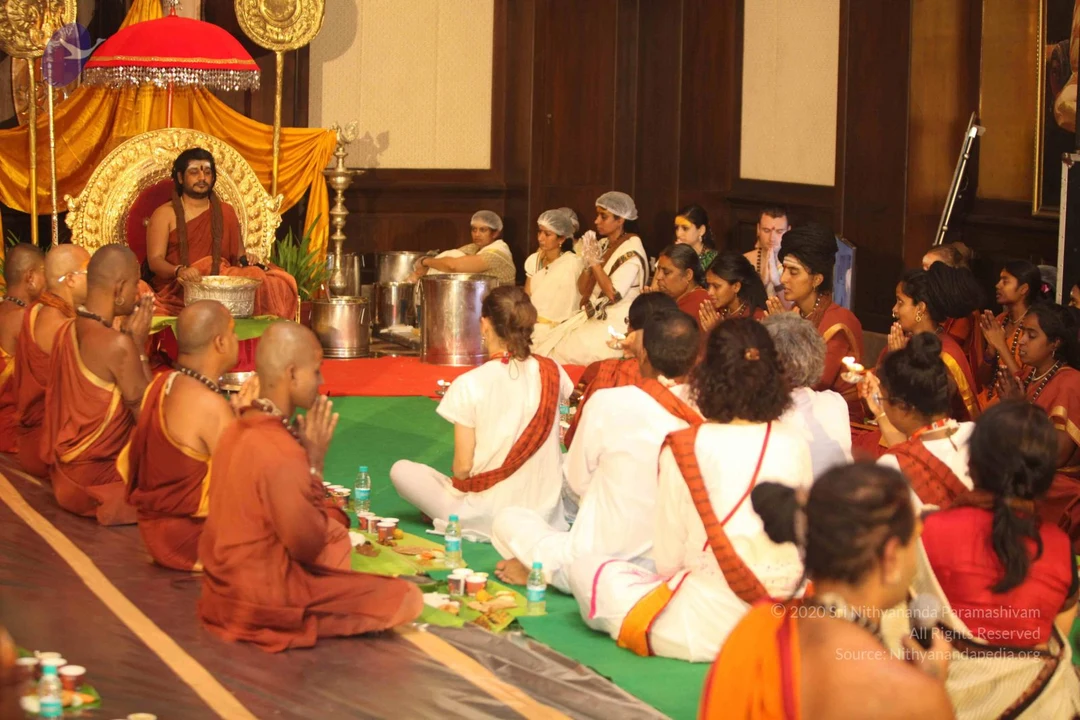
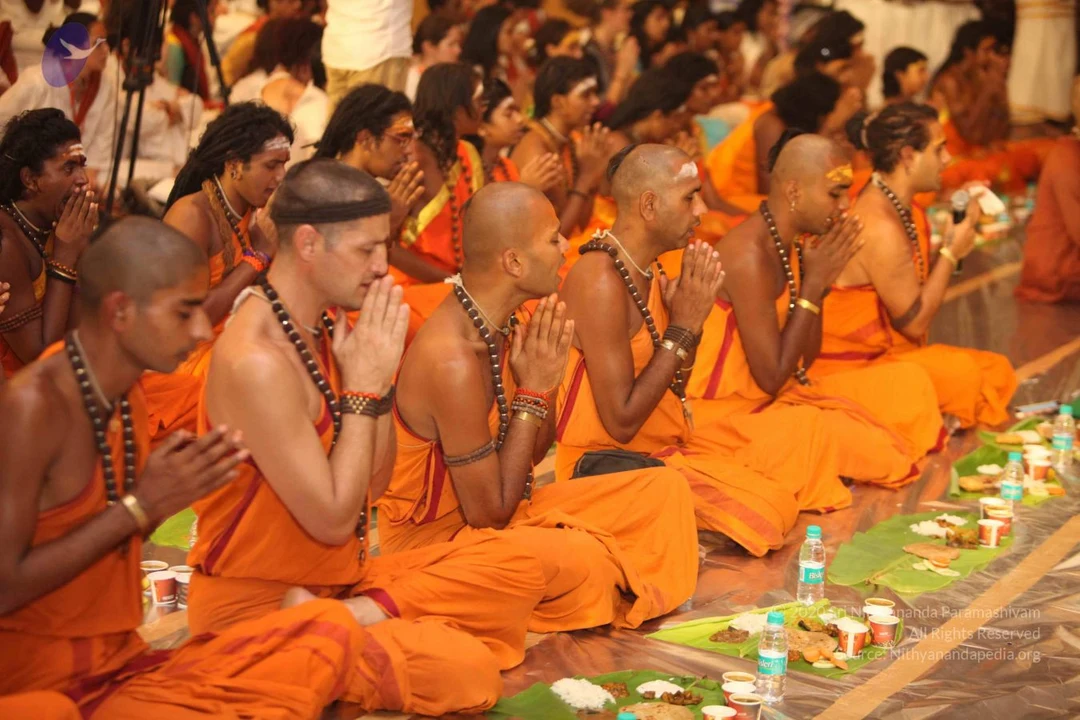
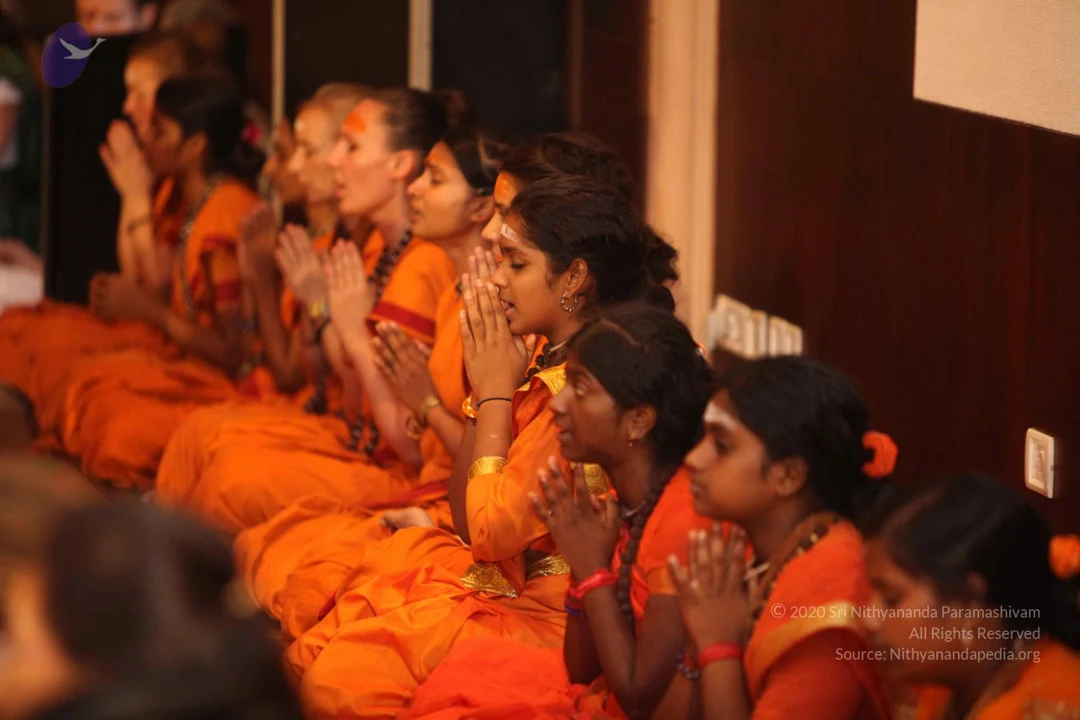
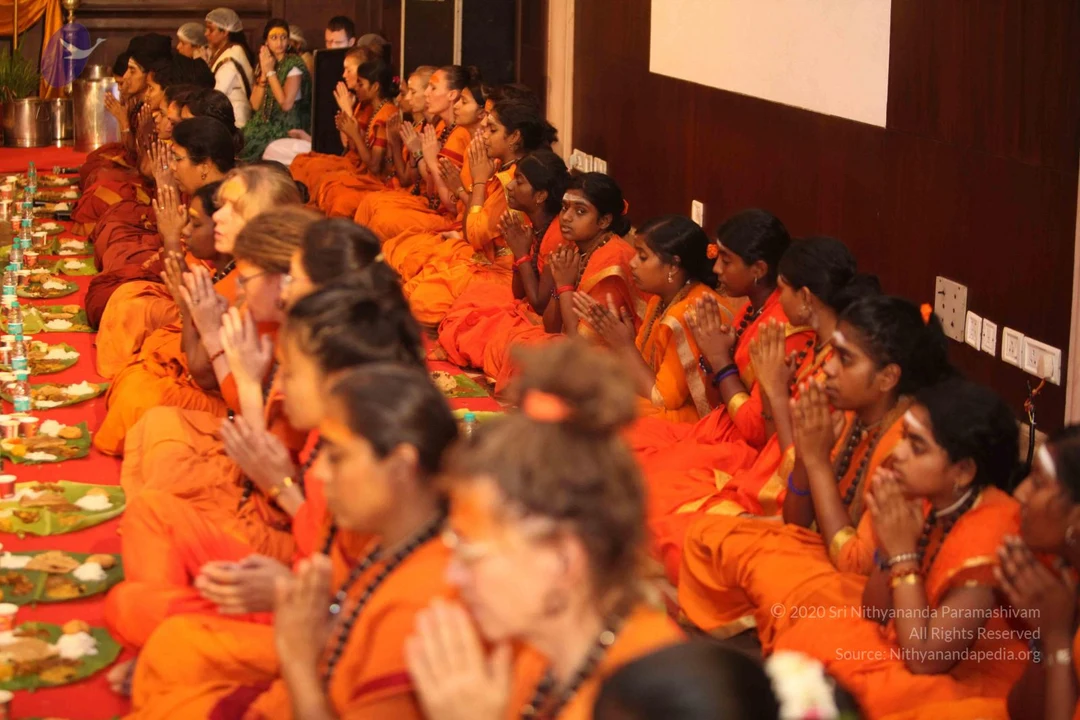
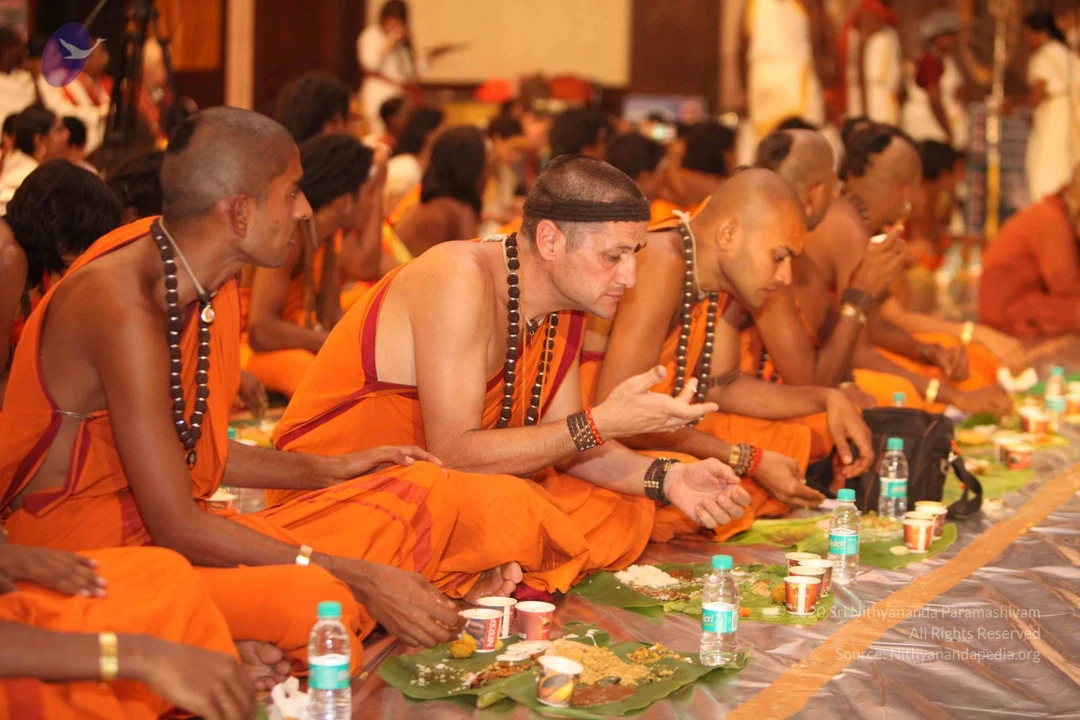
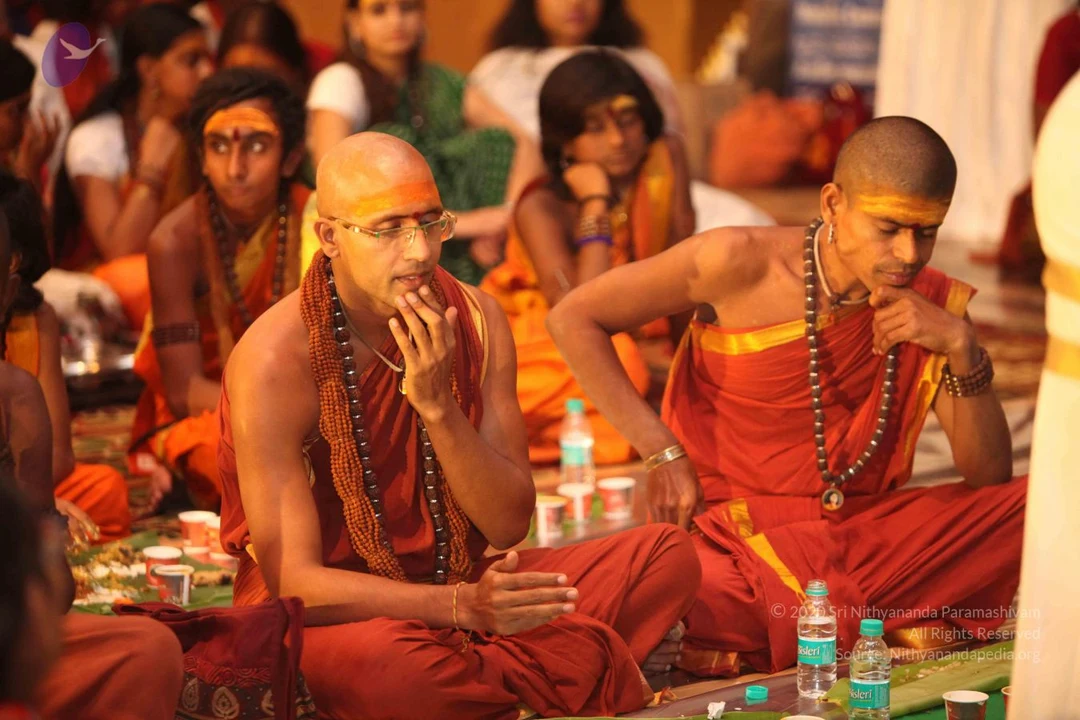
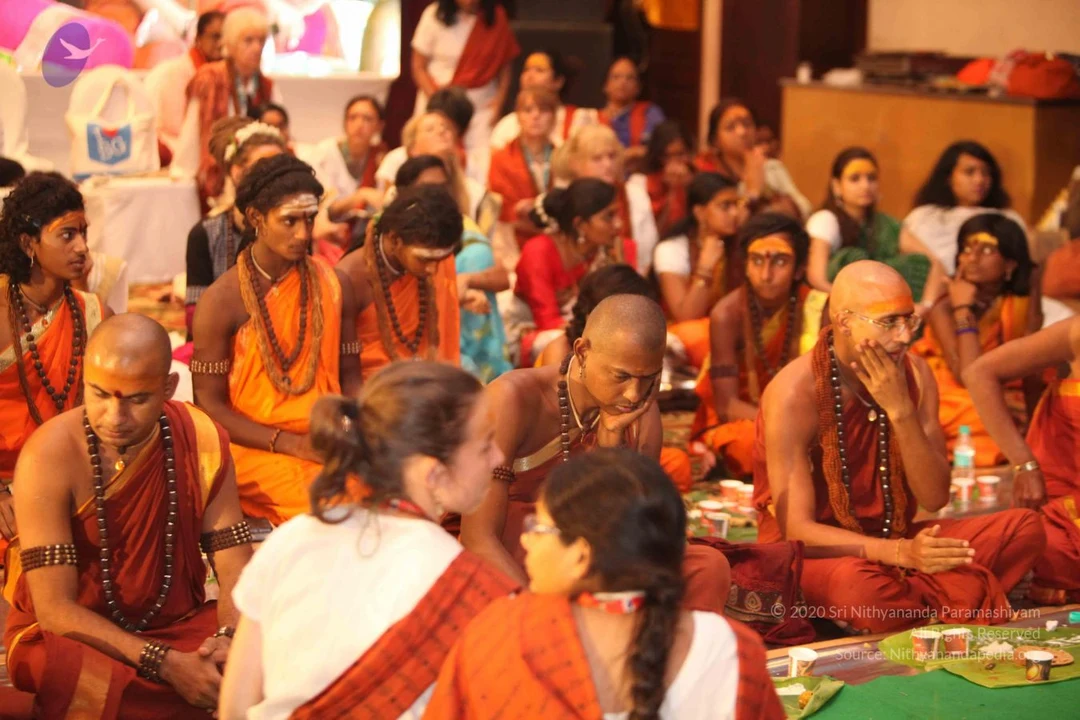
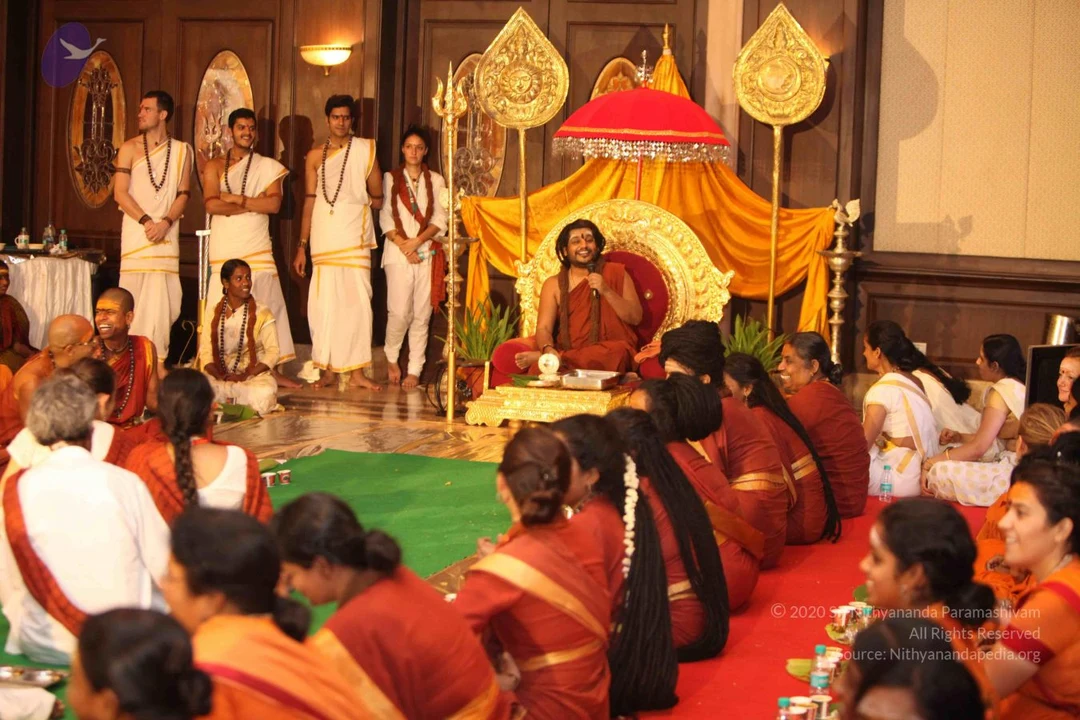
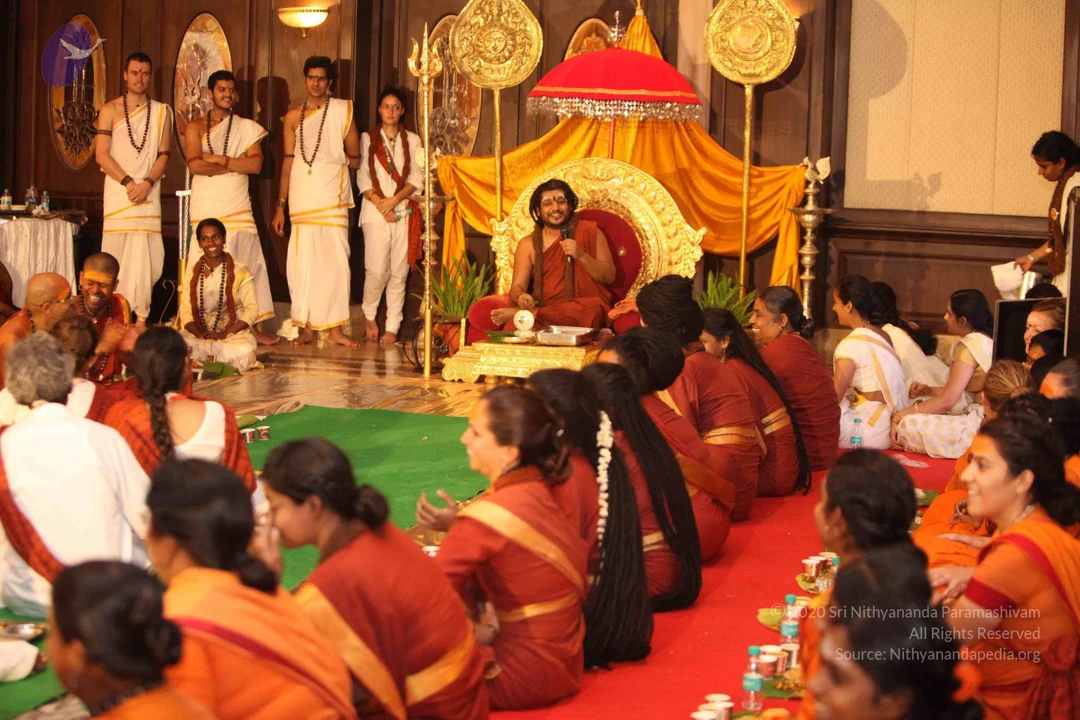
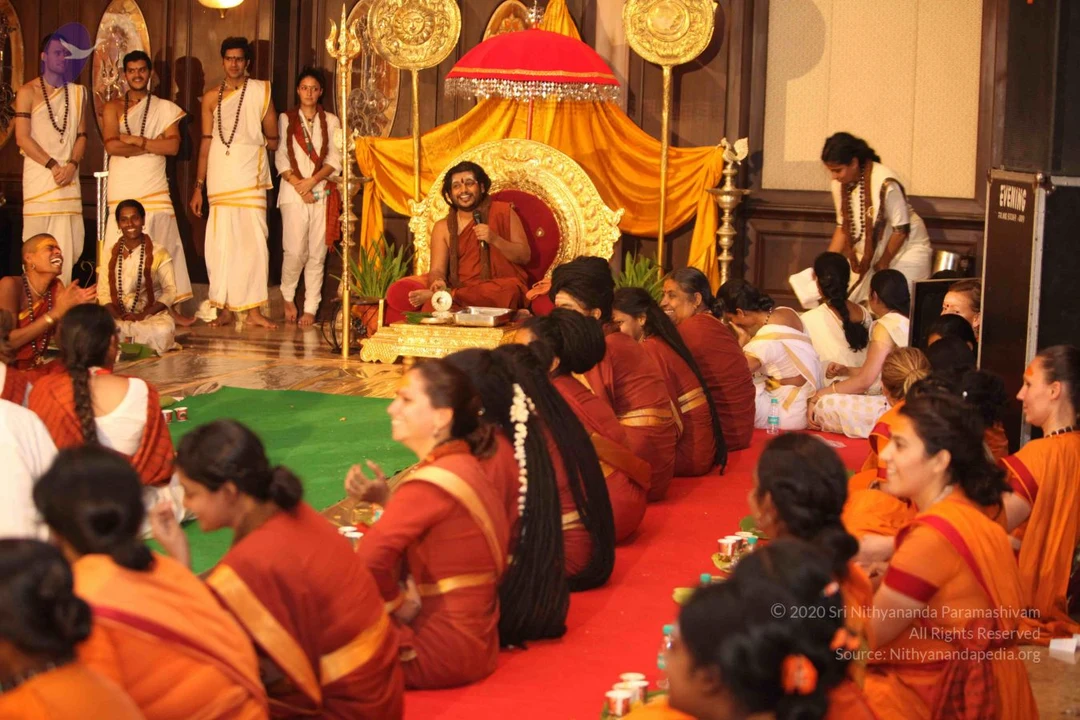
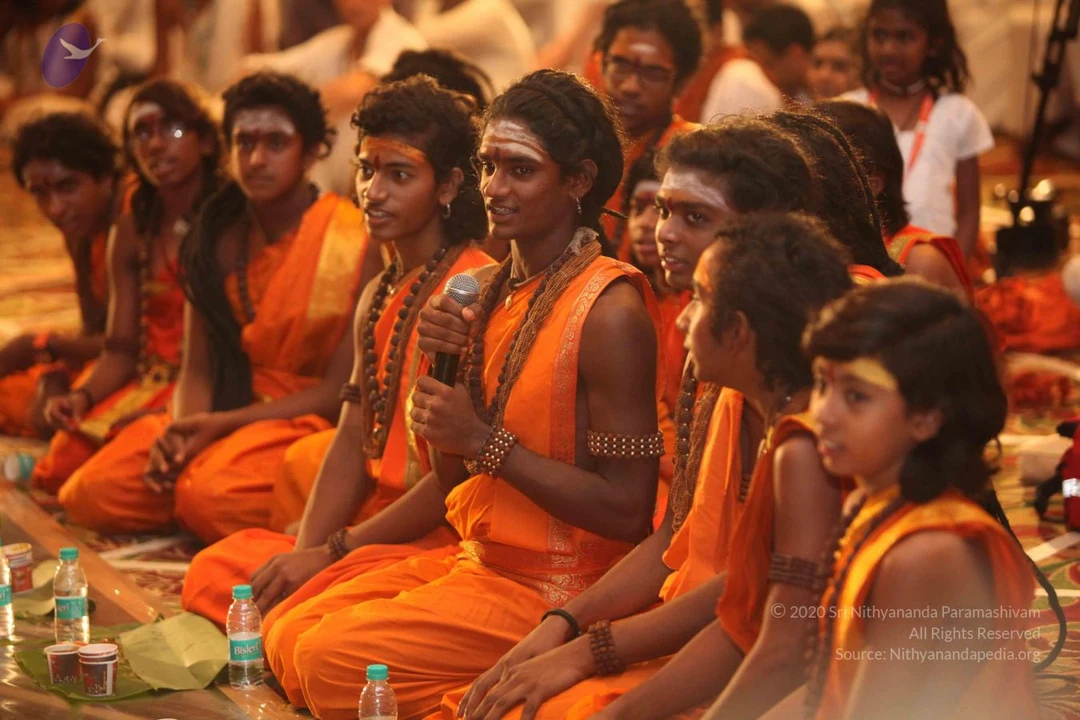
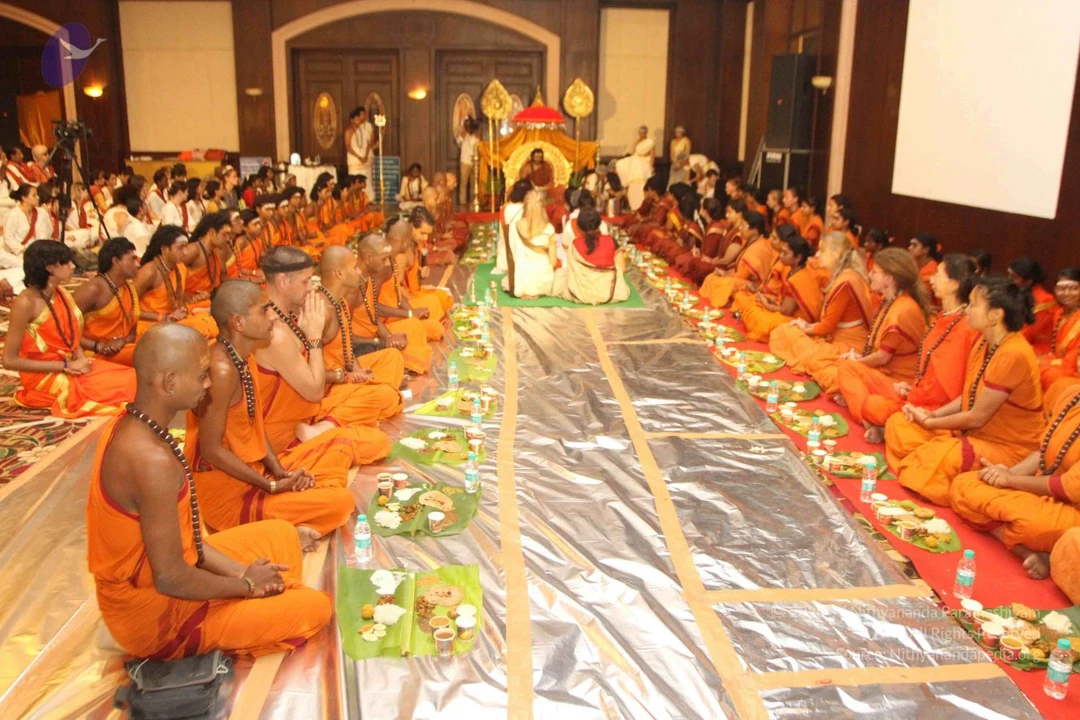
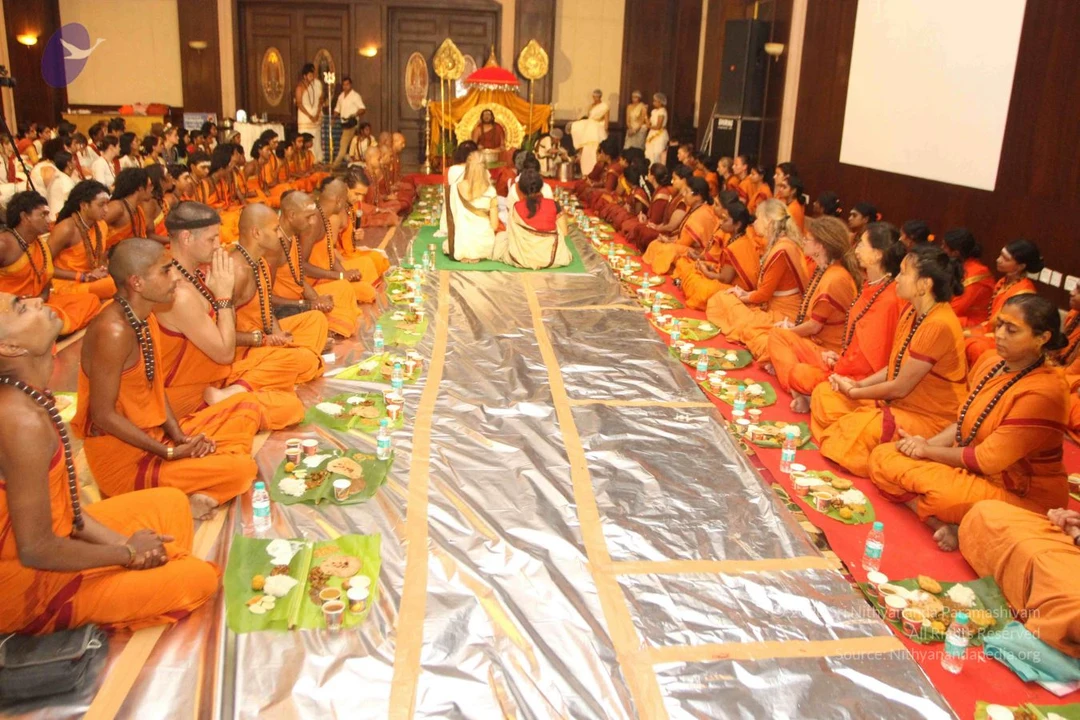
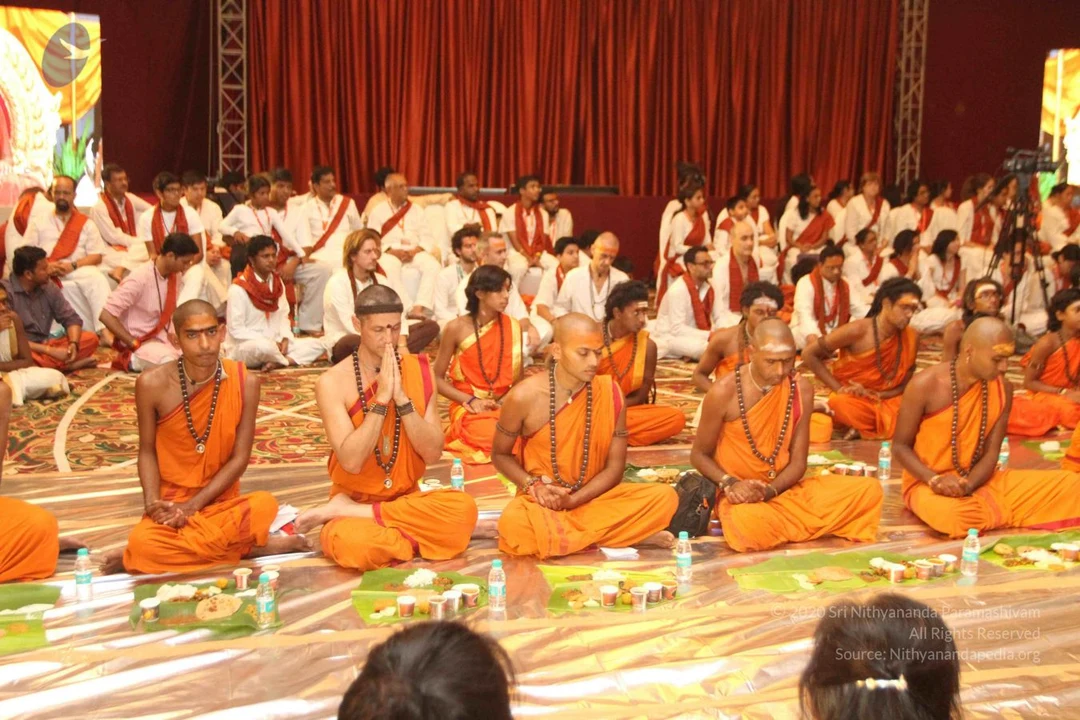
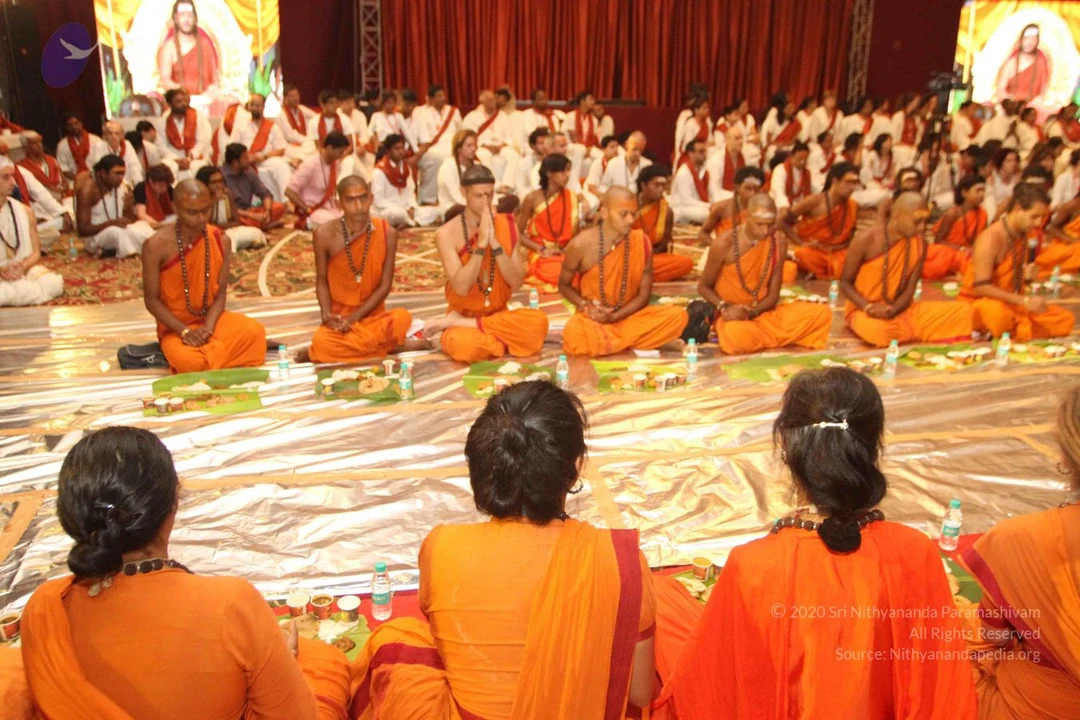
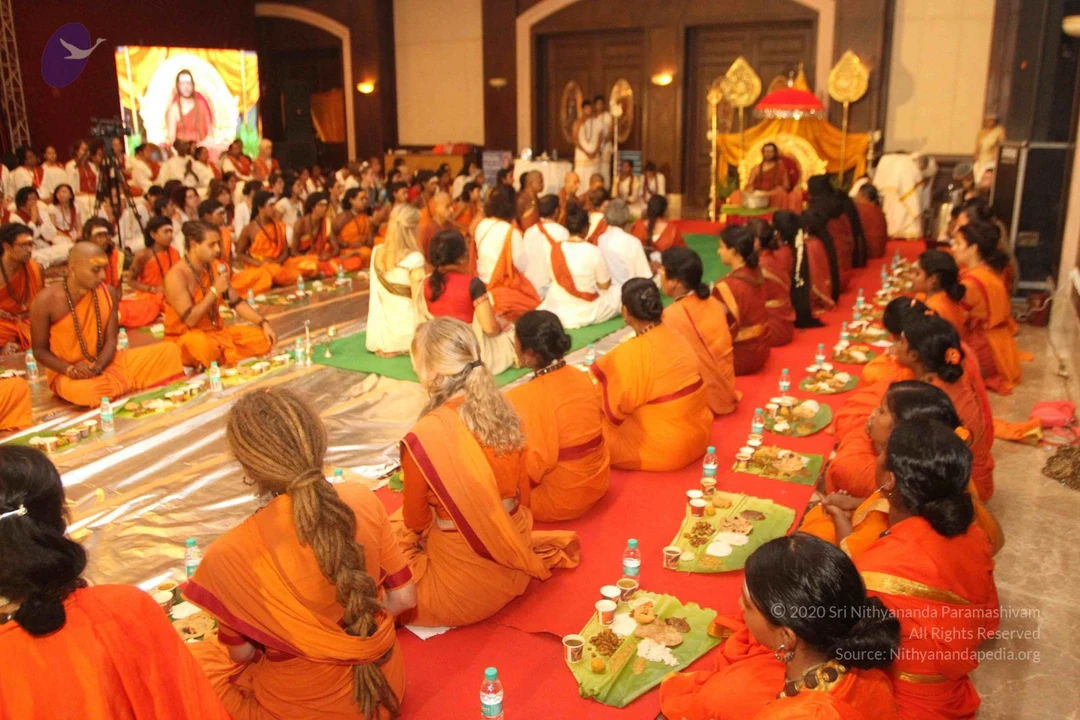
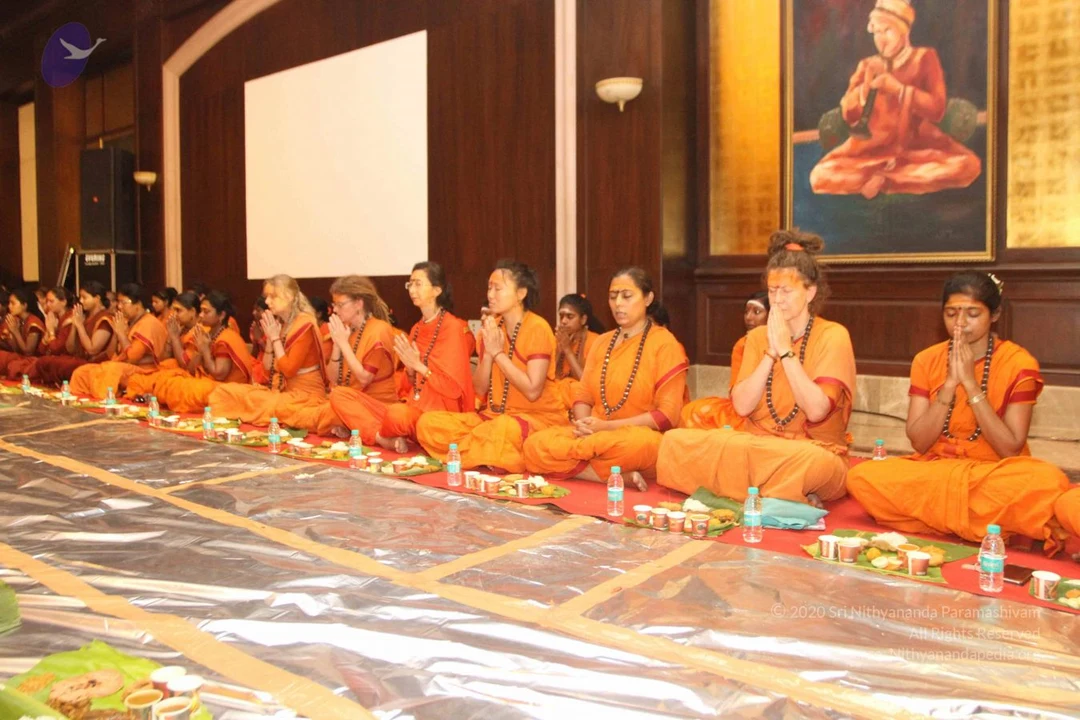
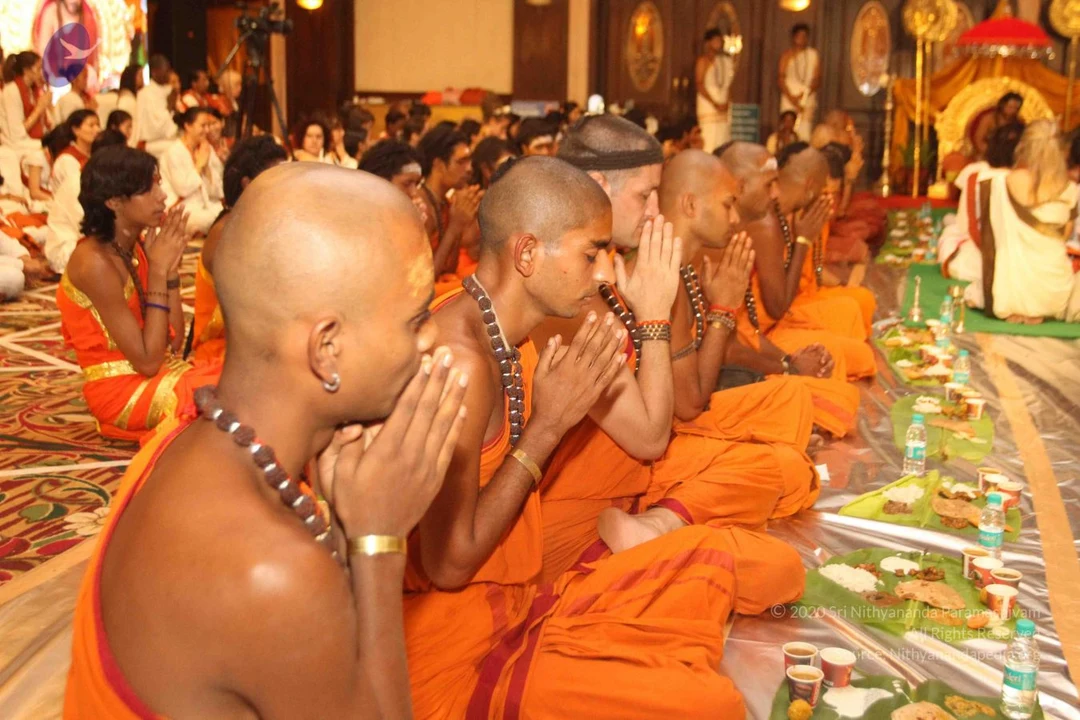
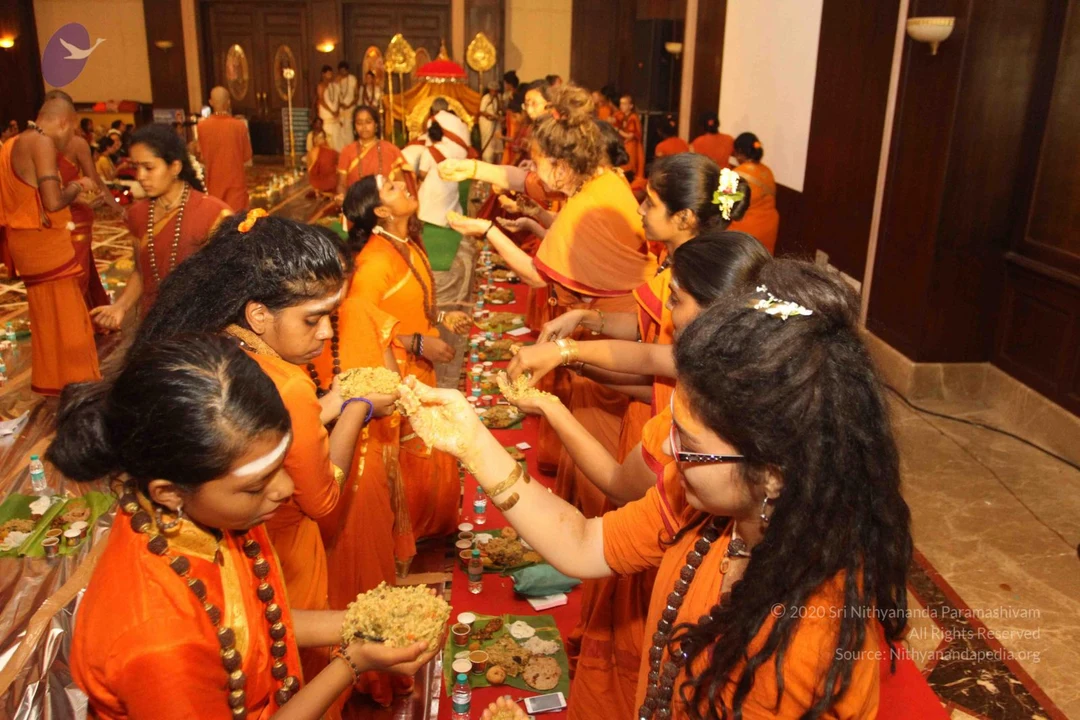
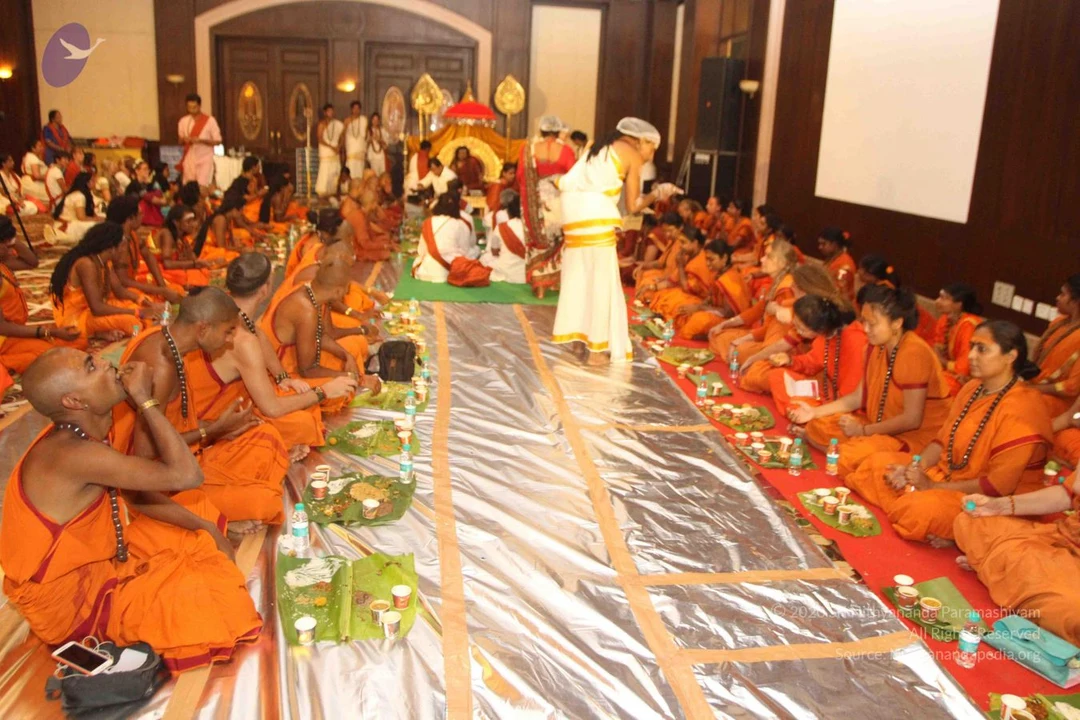
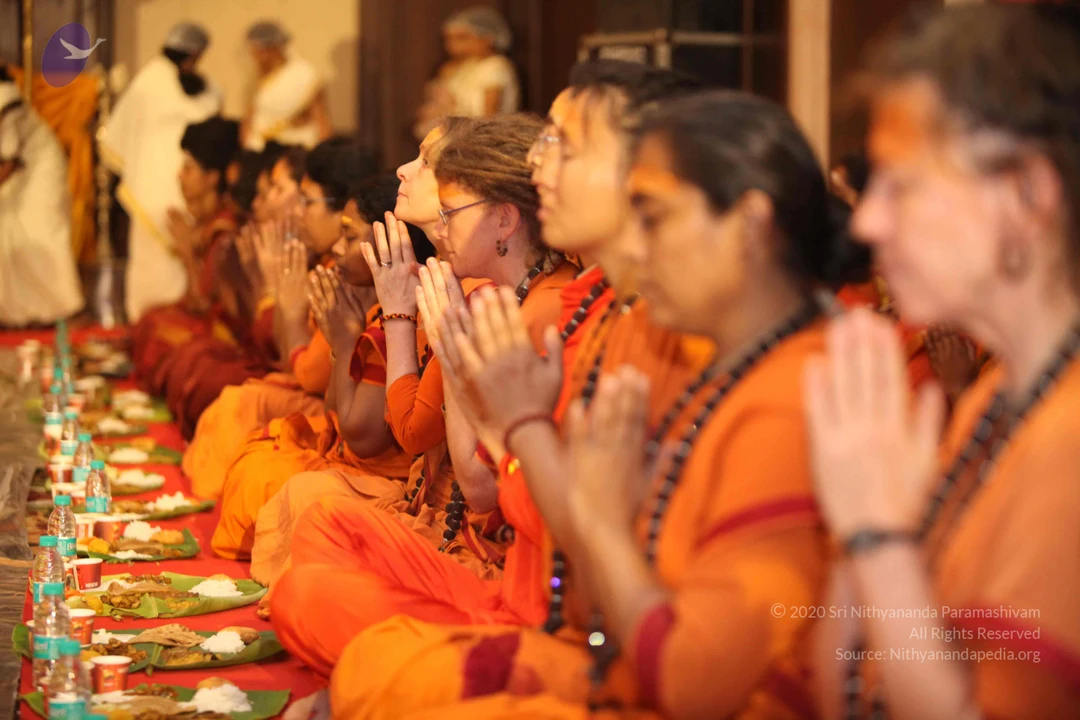
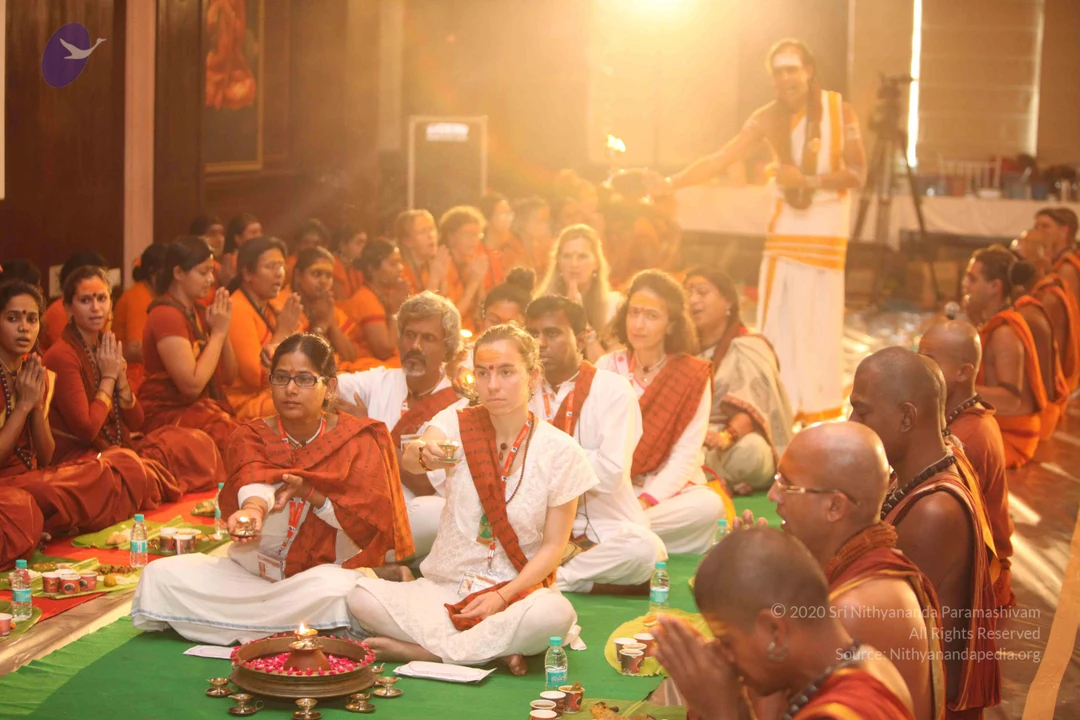
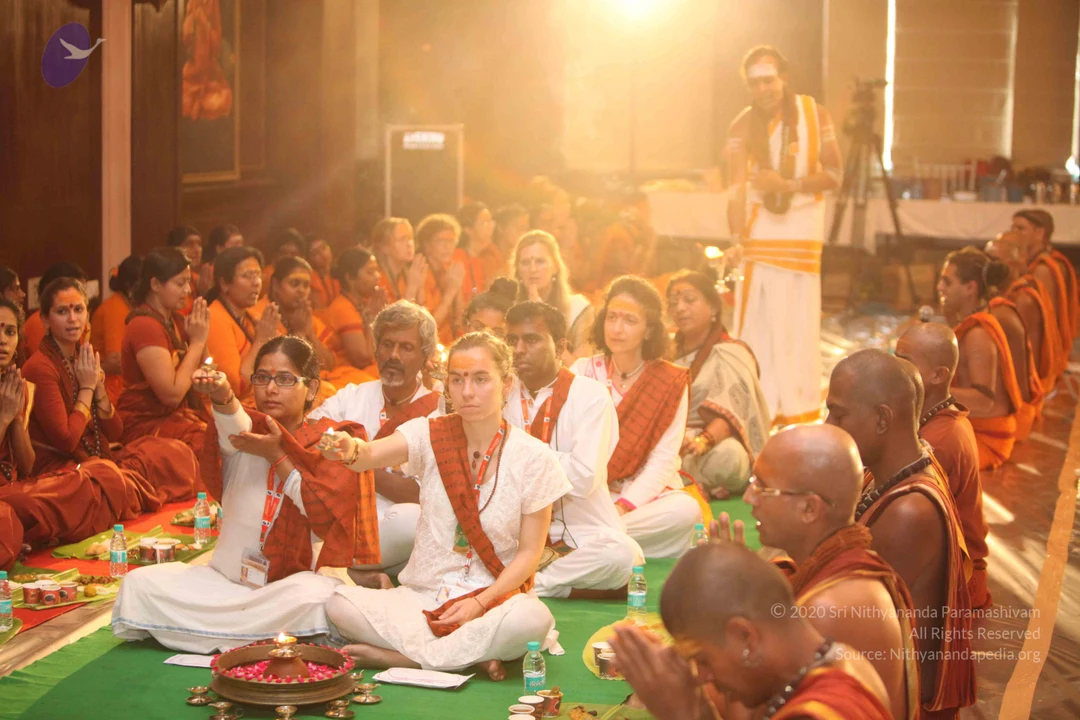
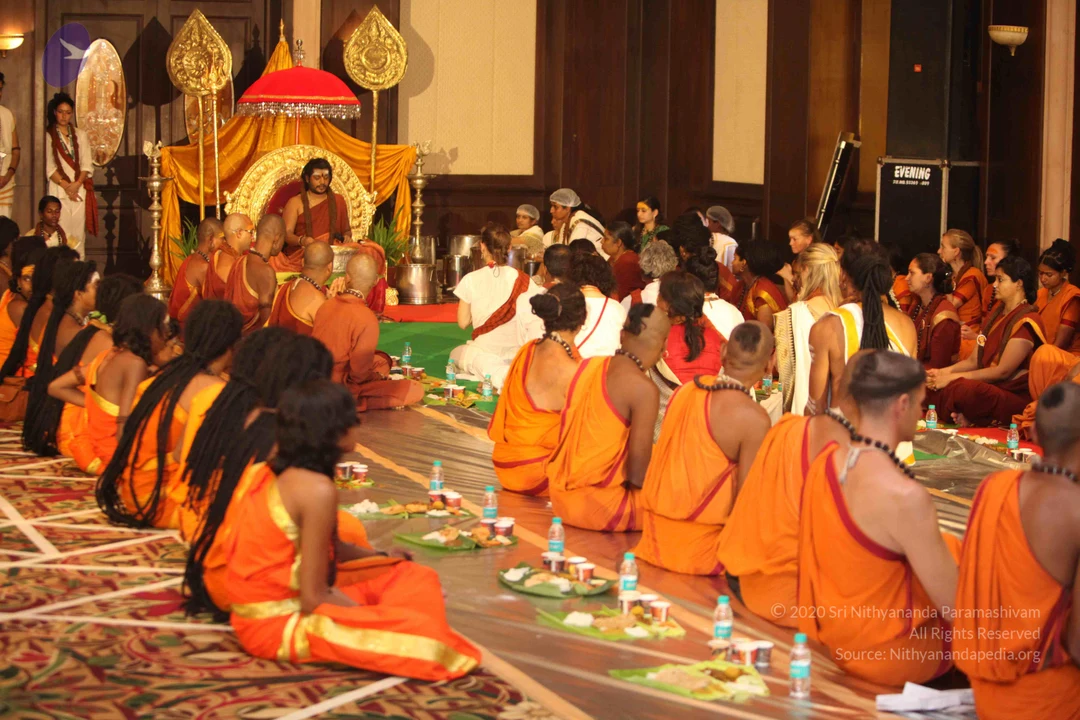
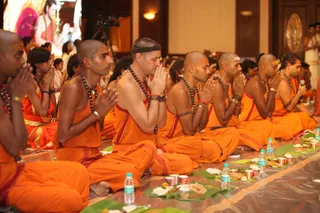
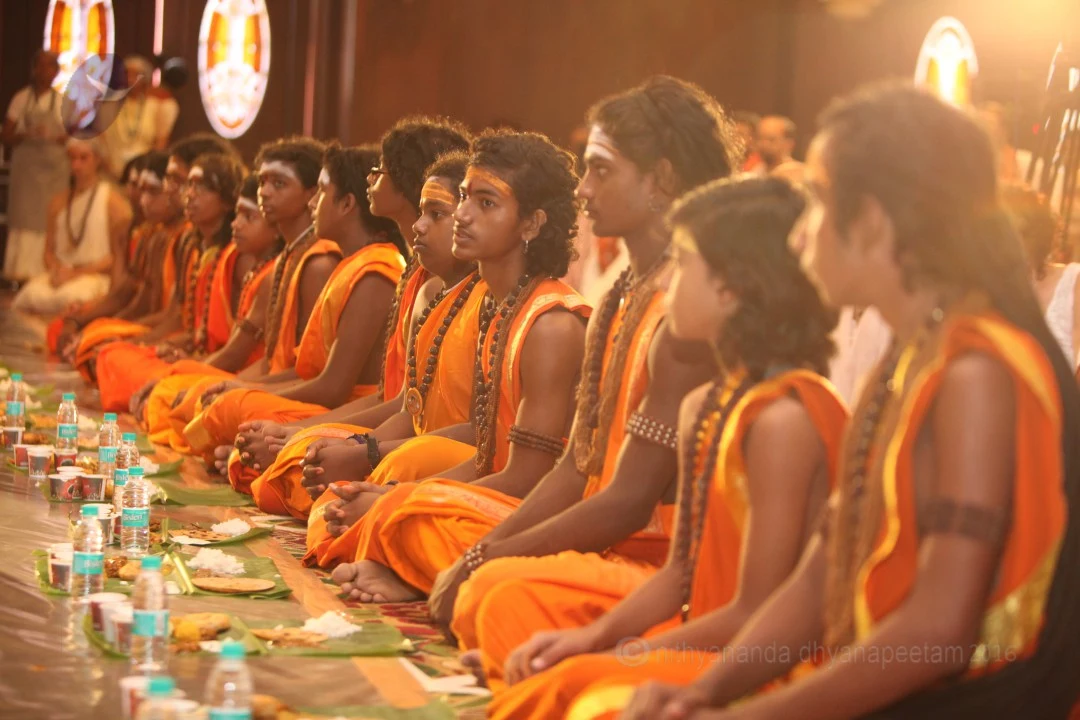
A photograph of a row of seated monastic devotees in saffron-orange robes, many with rudraksha malas, palms pressed together in anjali mudra. They sit on a cloth-covered floor before banana leaves set with rice, curries, sweets and small cups, with water bottles placed along the row. Behind them a stage area shows a figure in white and a decorated backdrop, and a standing attendant is visible at the far right. Several participants wear tilak markings and bangles, and one holds a microphone. The setting is an ornate hall. No figure is clearly identified as a person.

IA-Varanasi-Maheshwarapuja
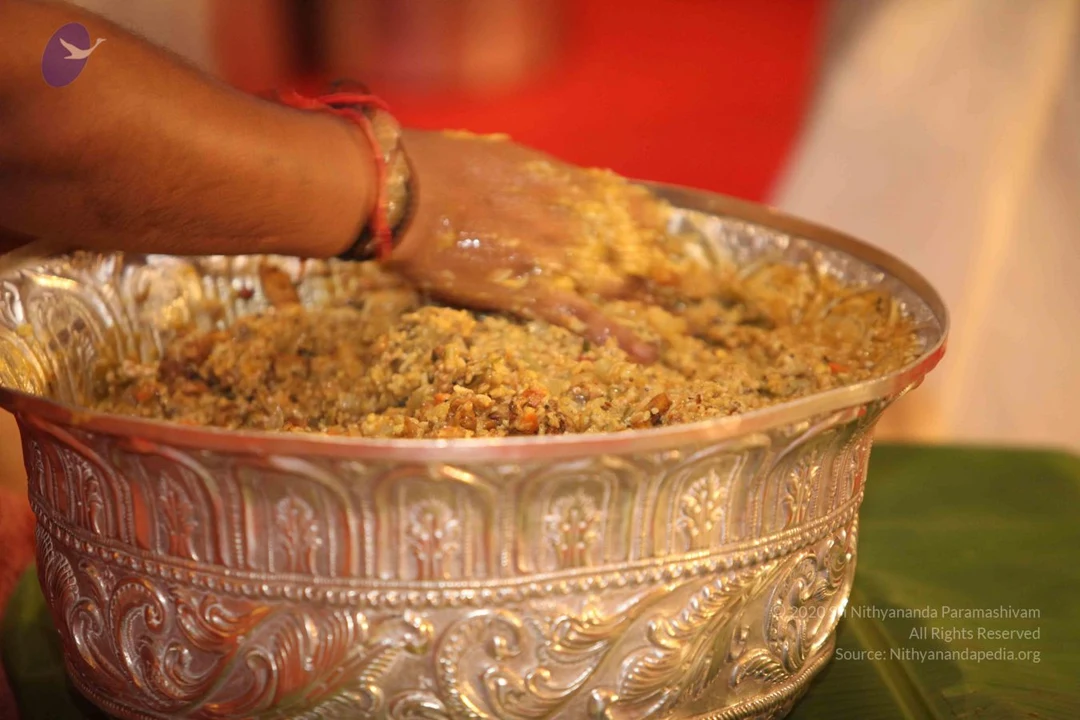
236 photosSource gallery
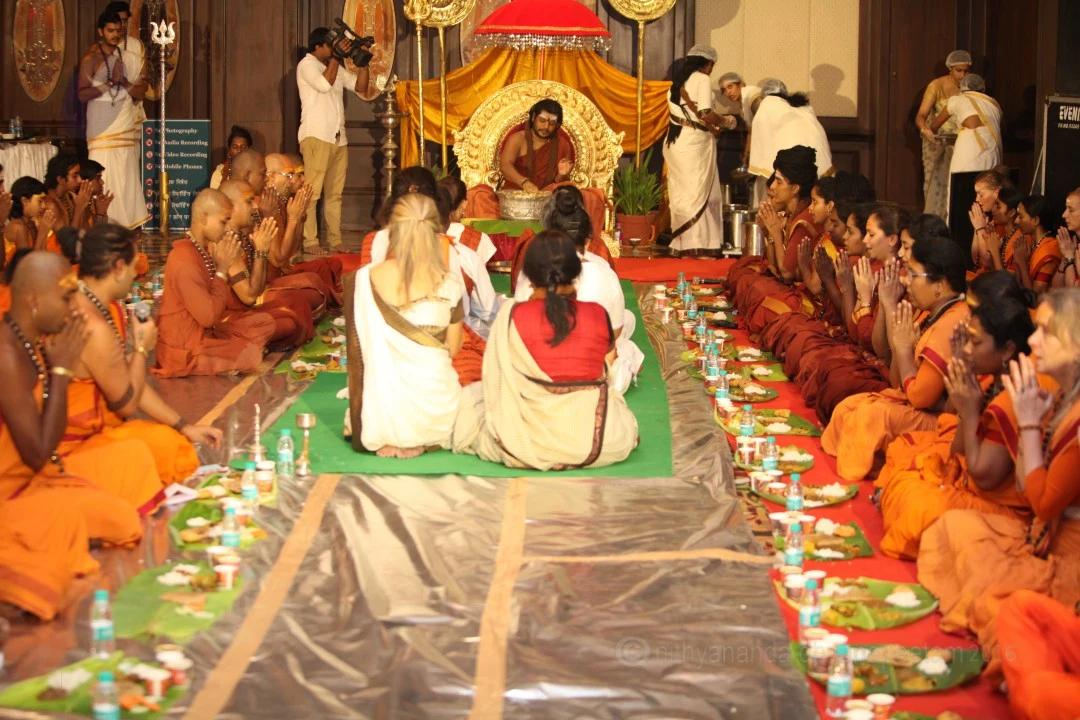
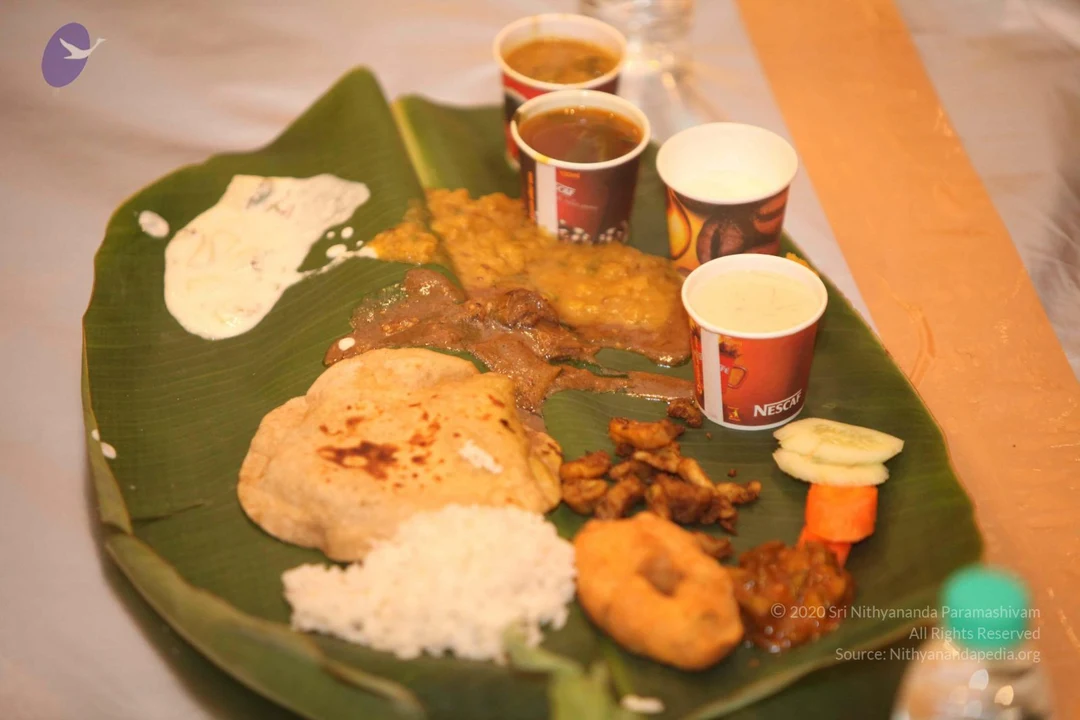
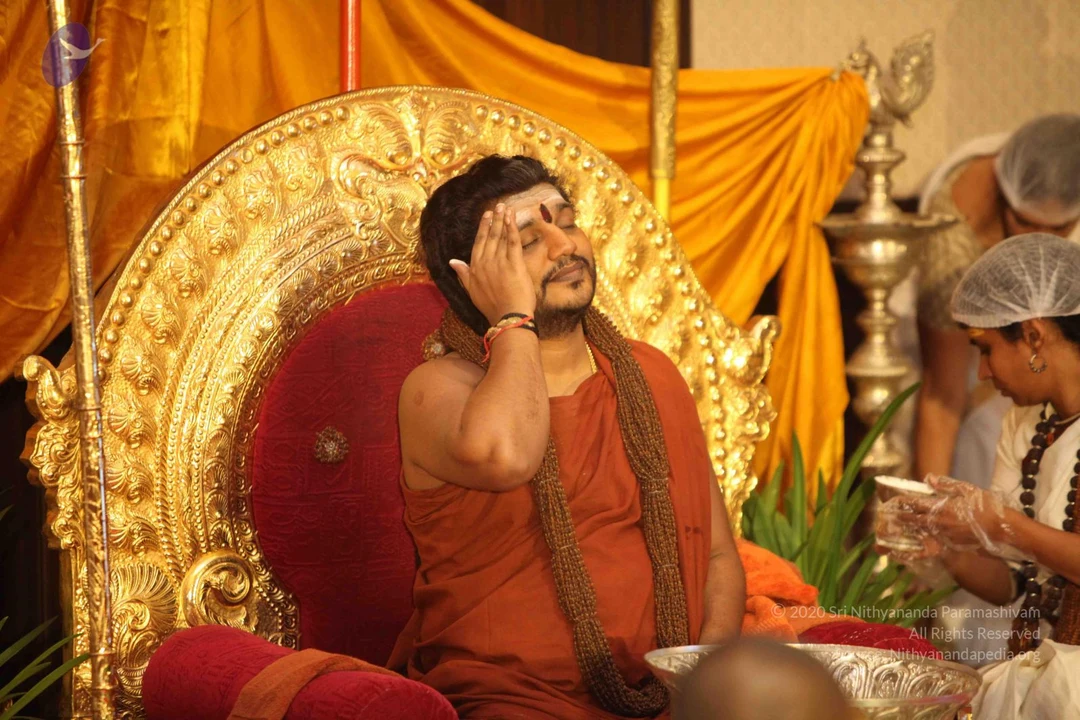
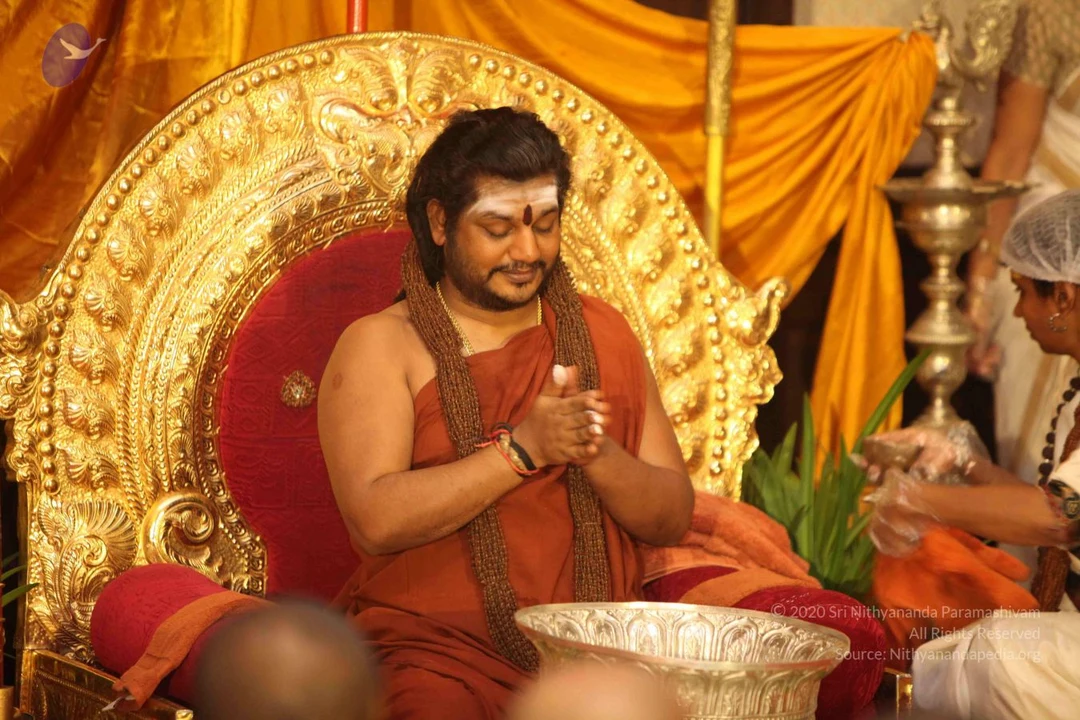
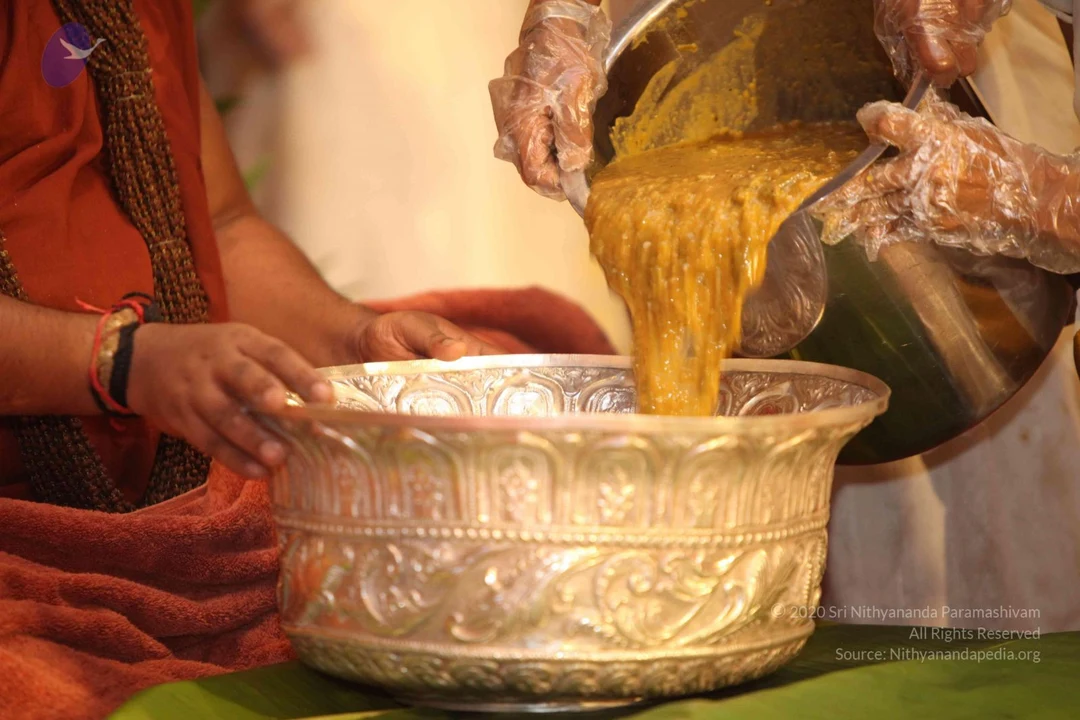
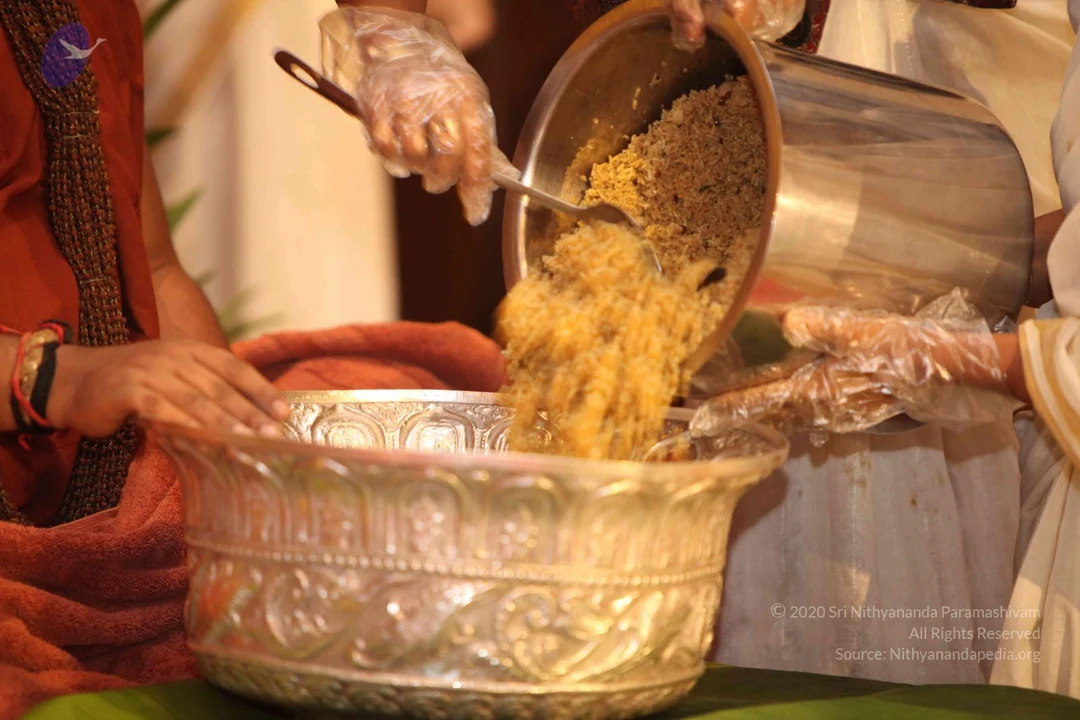
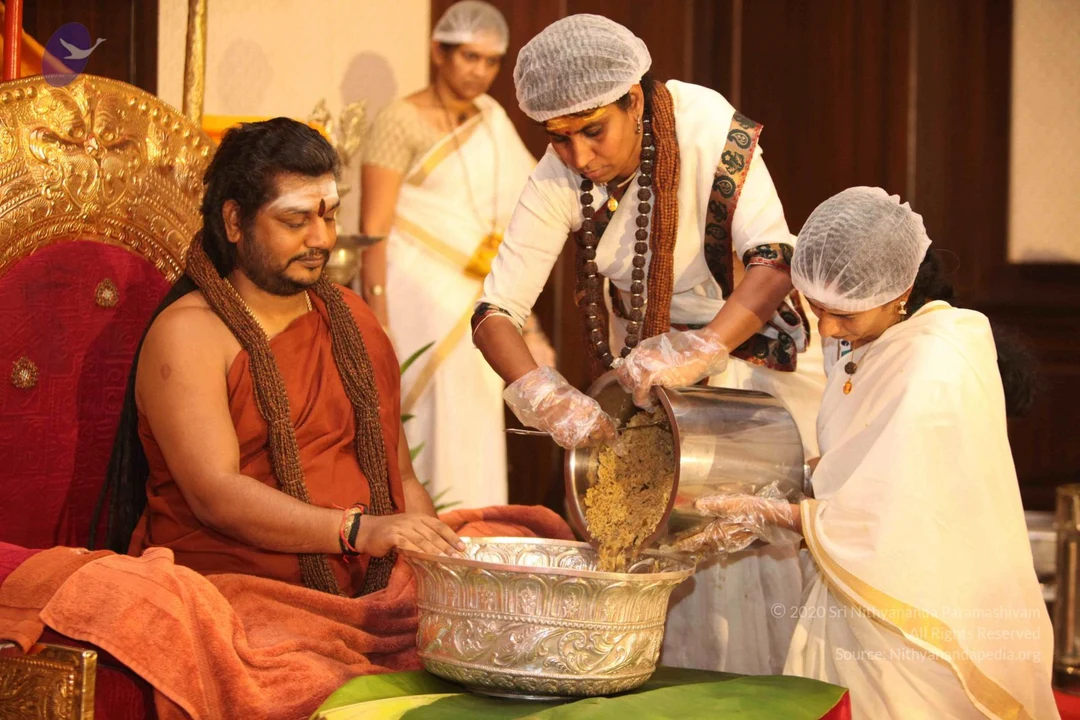
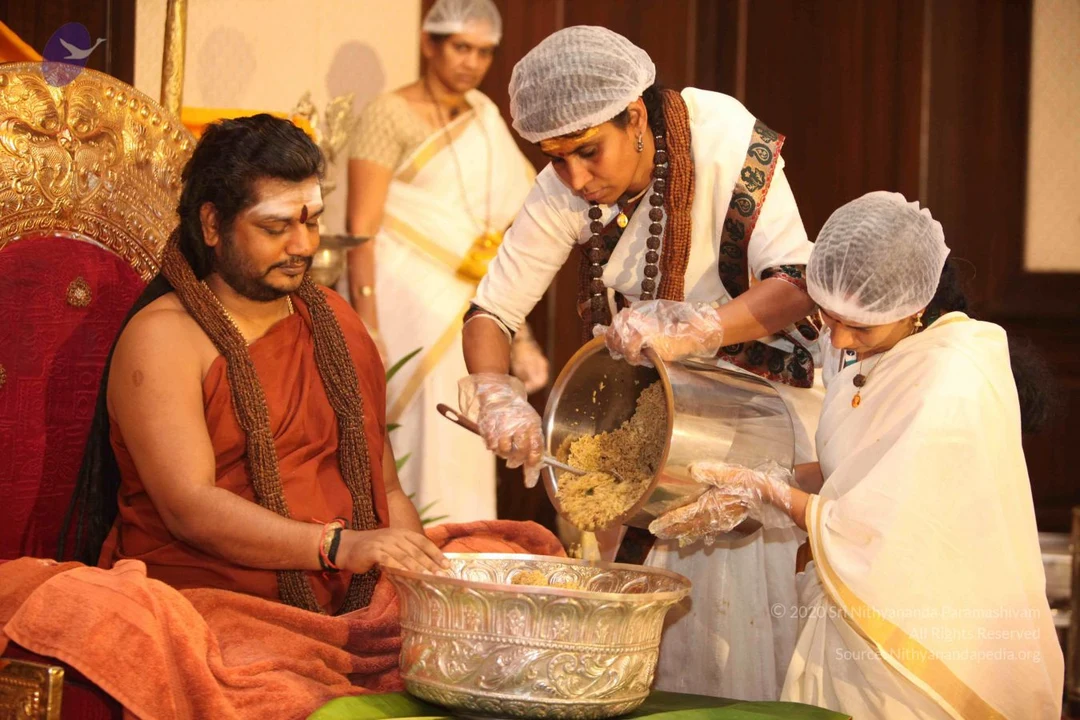
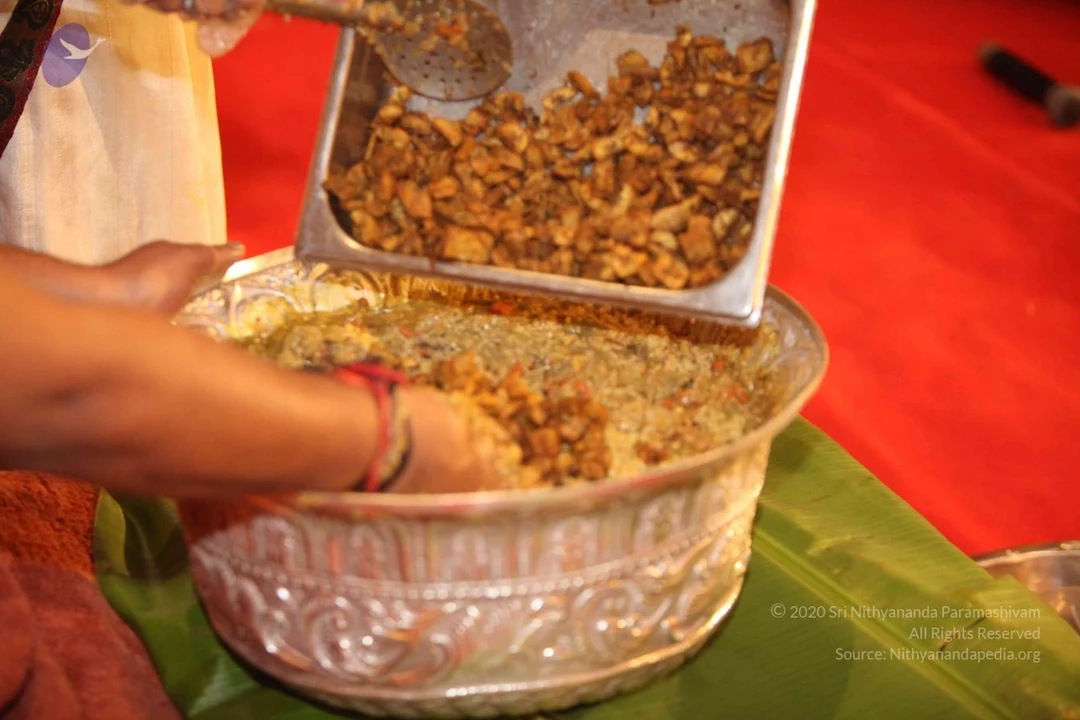
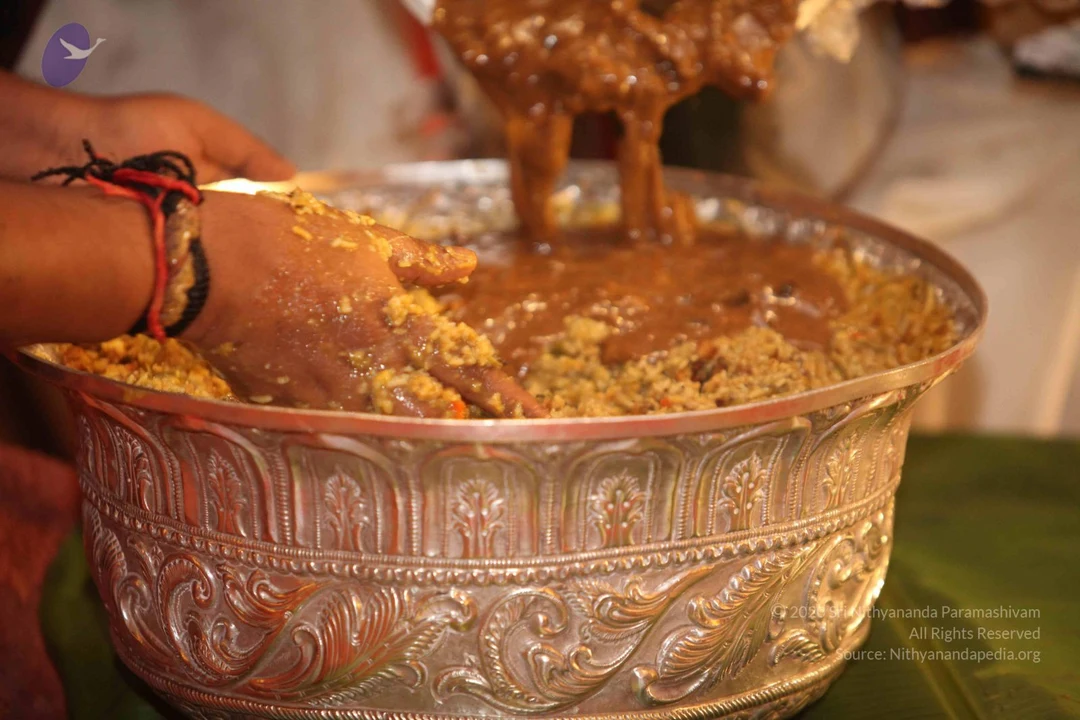
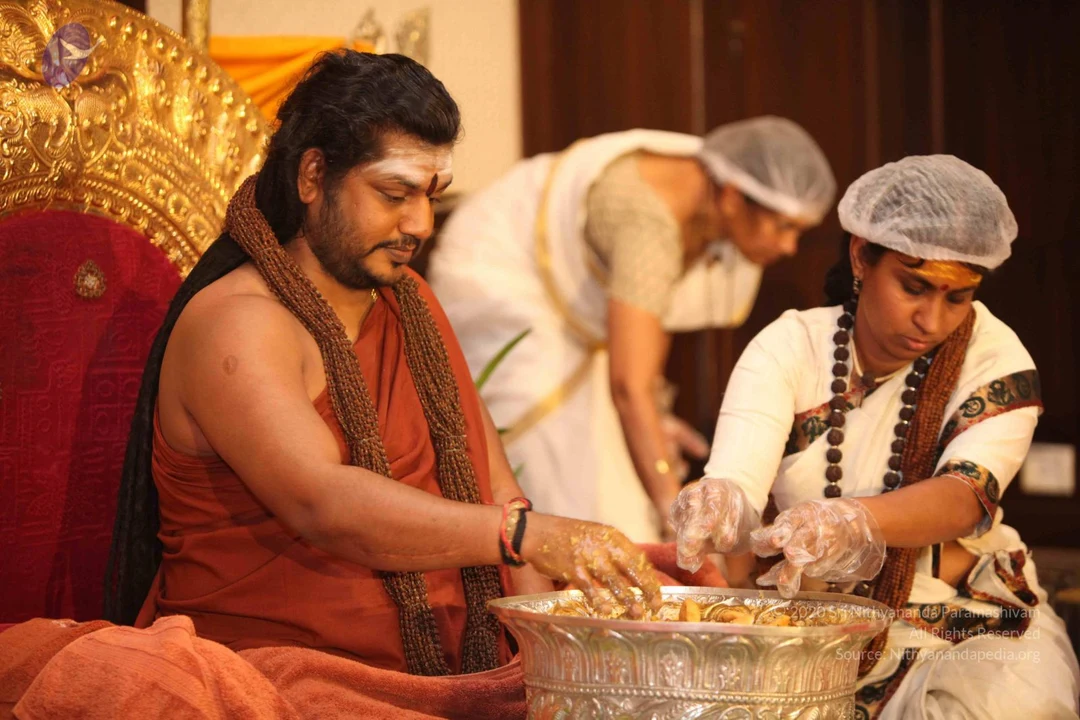
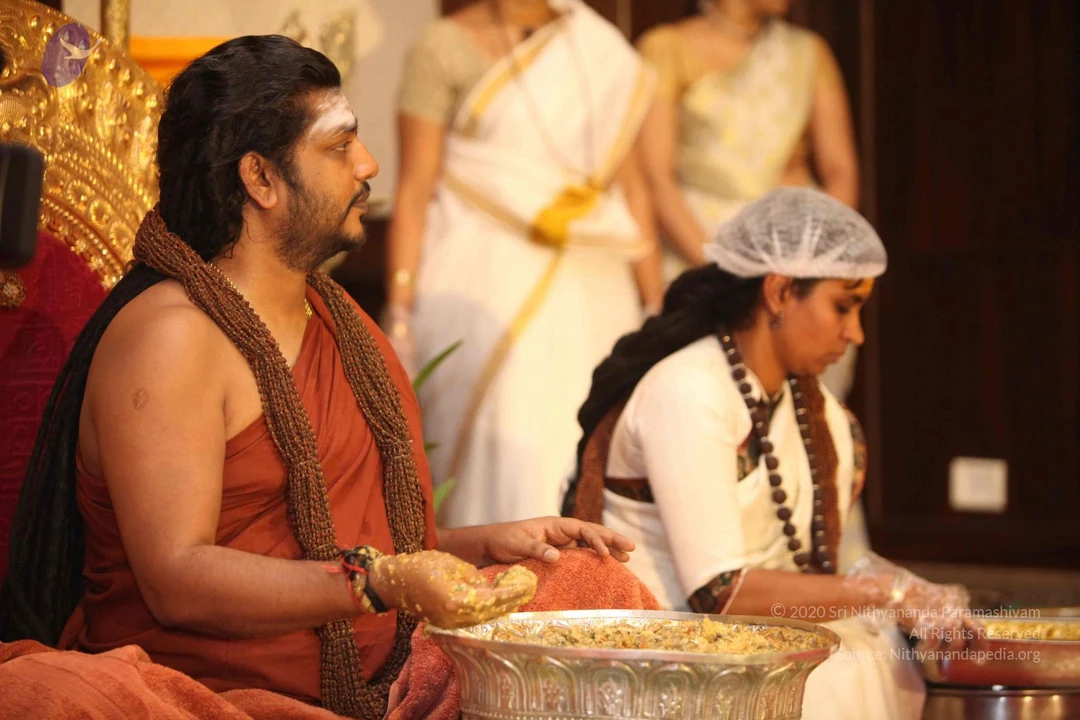
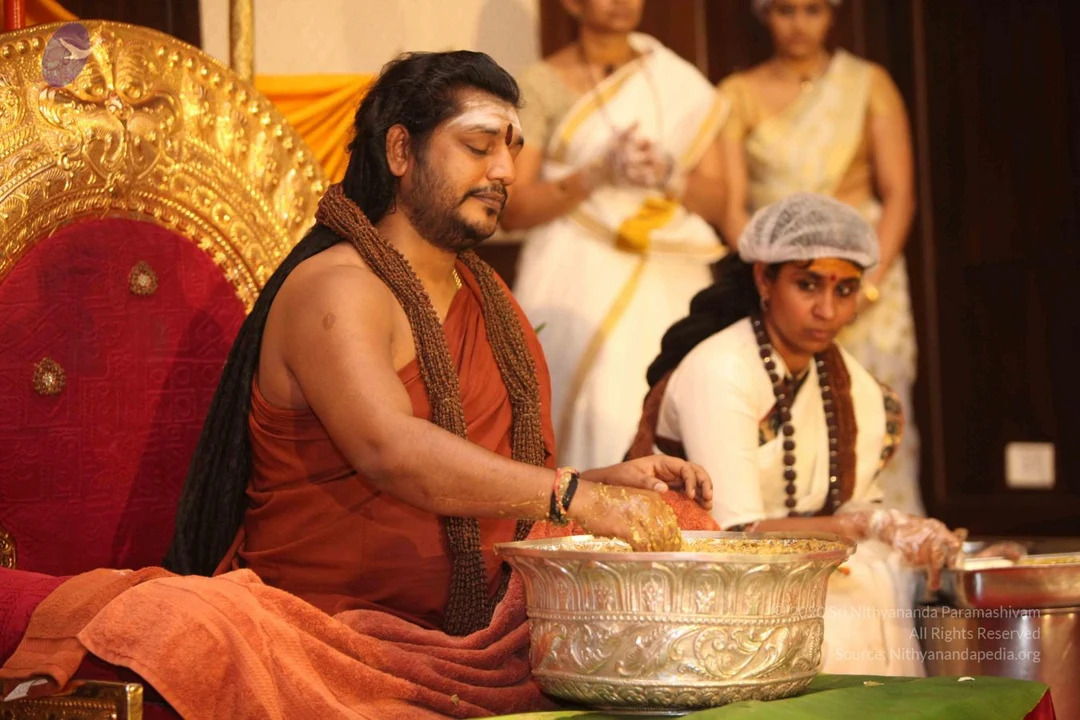
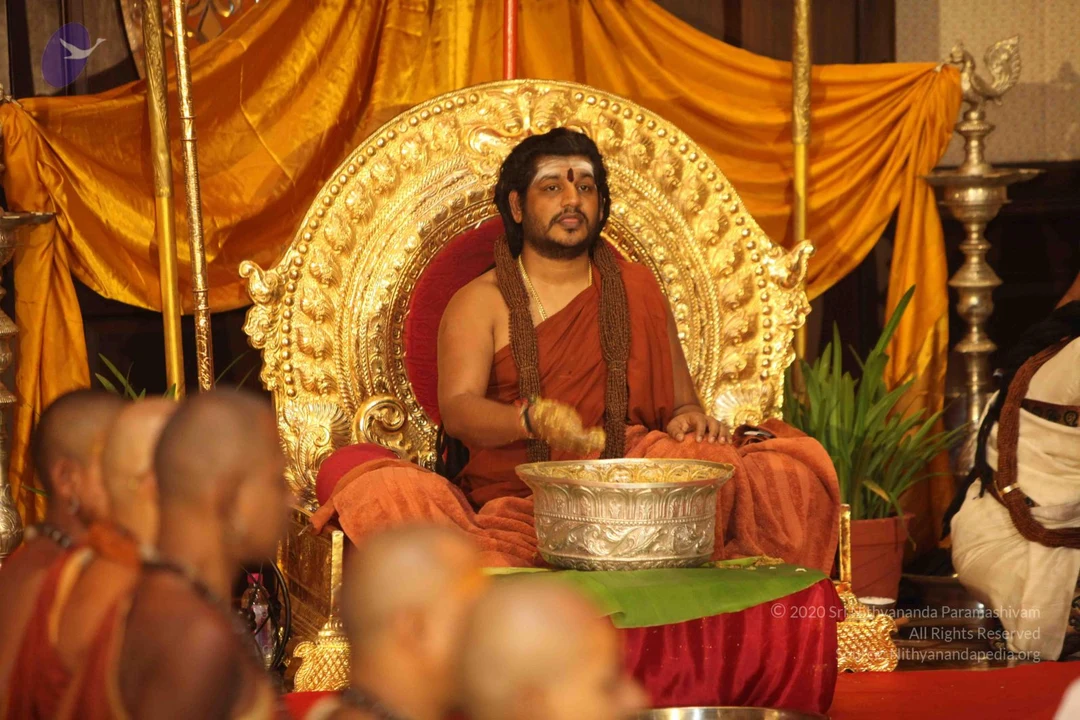
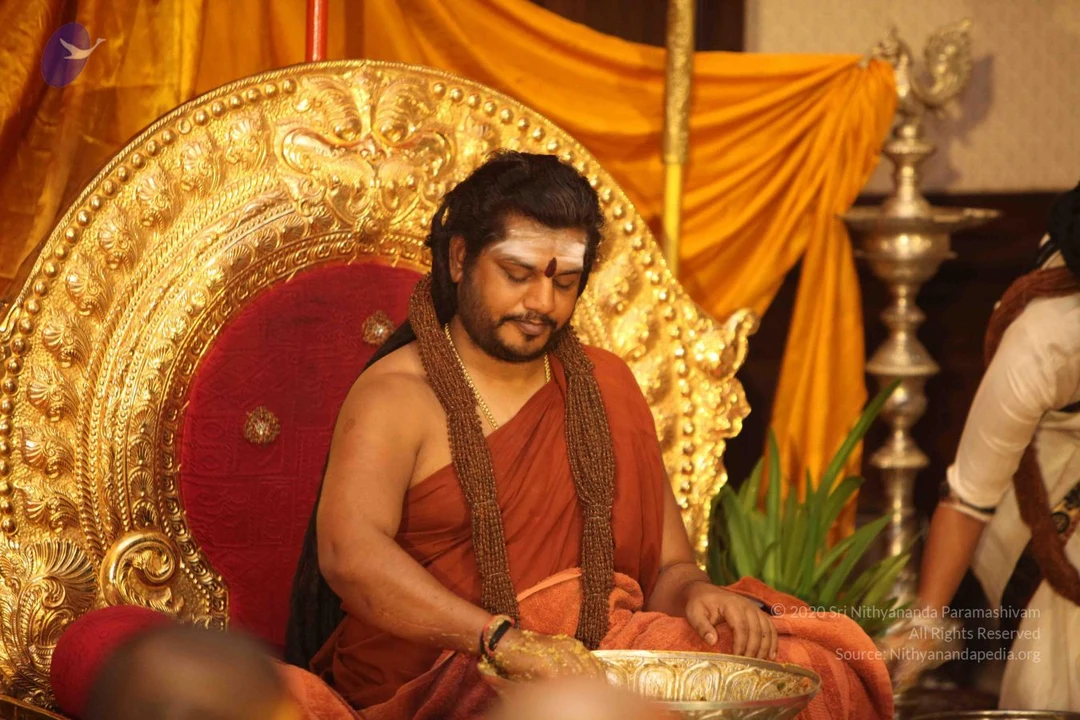
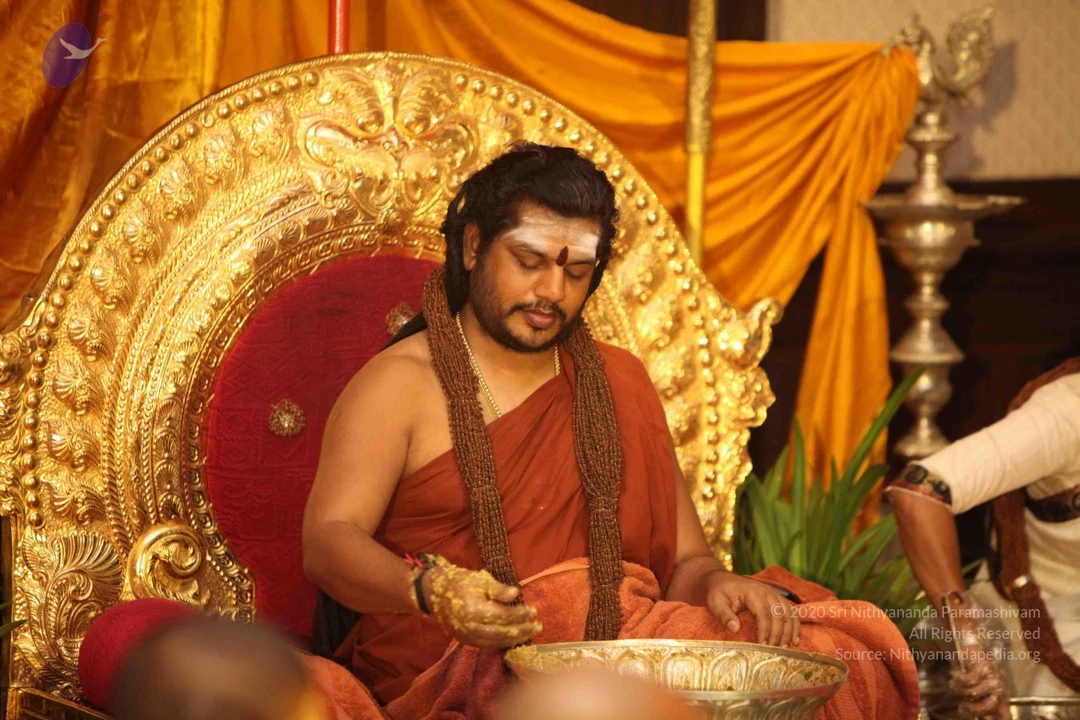
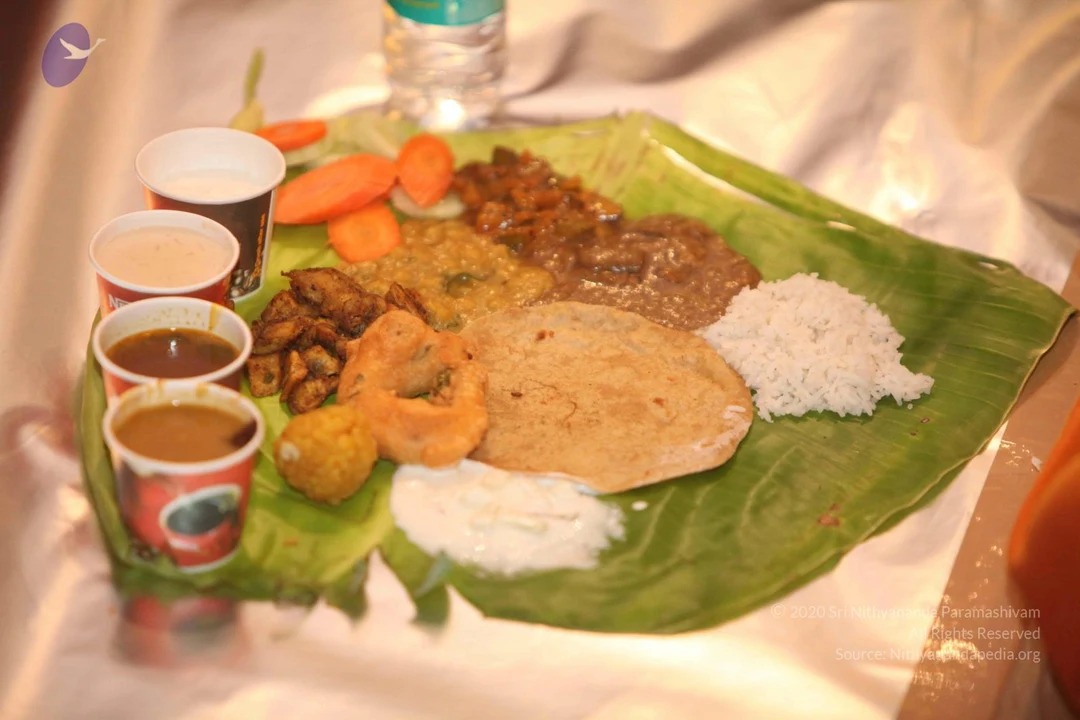
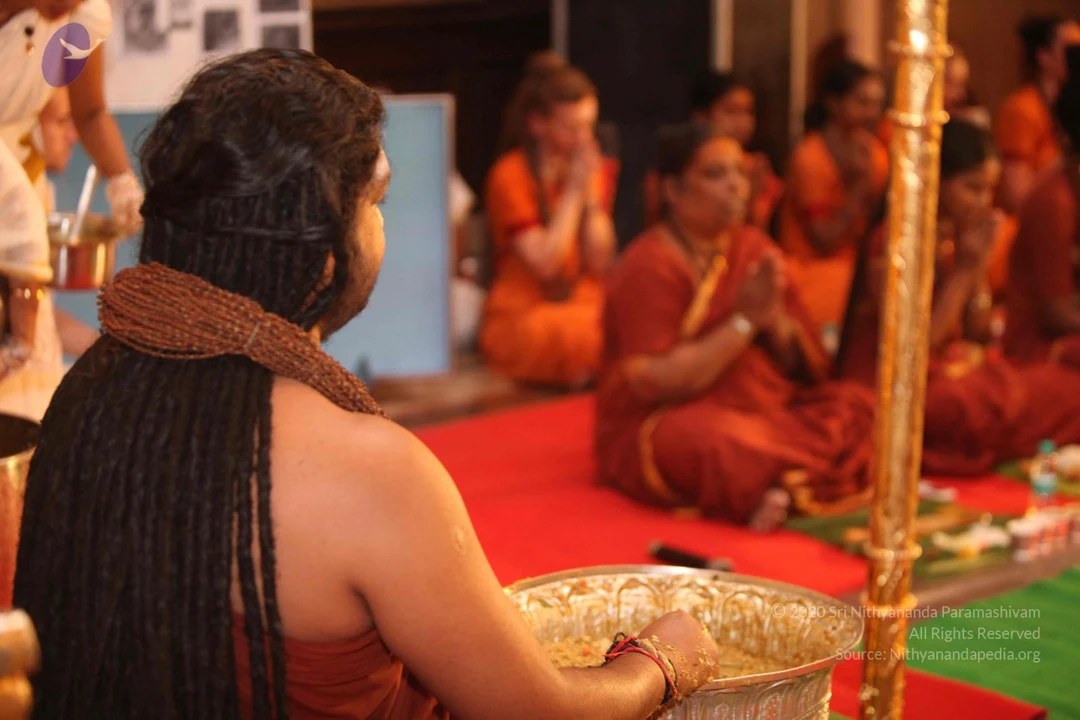
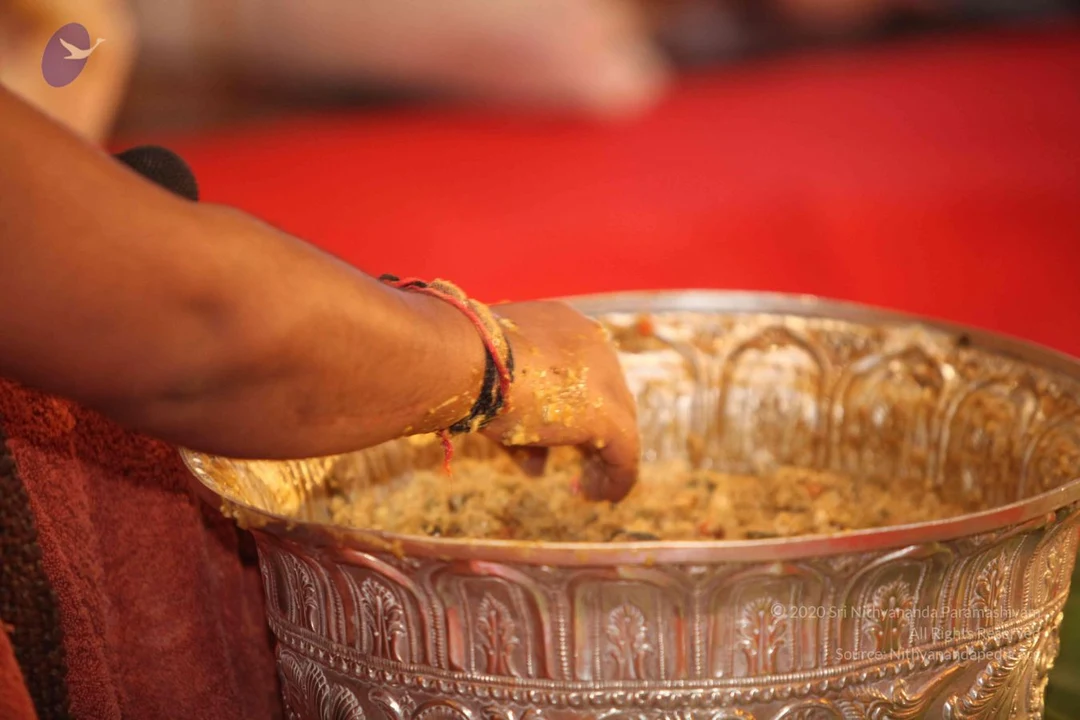
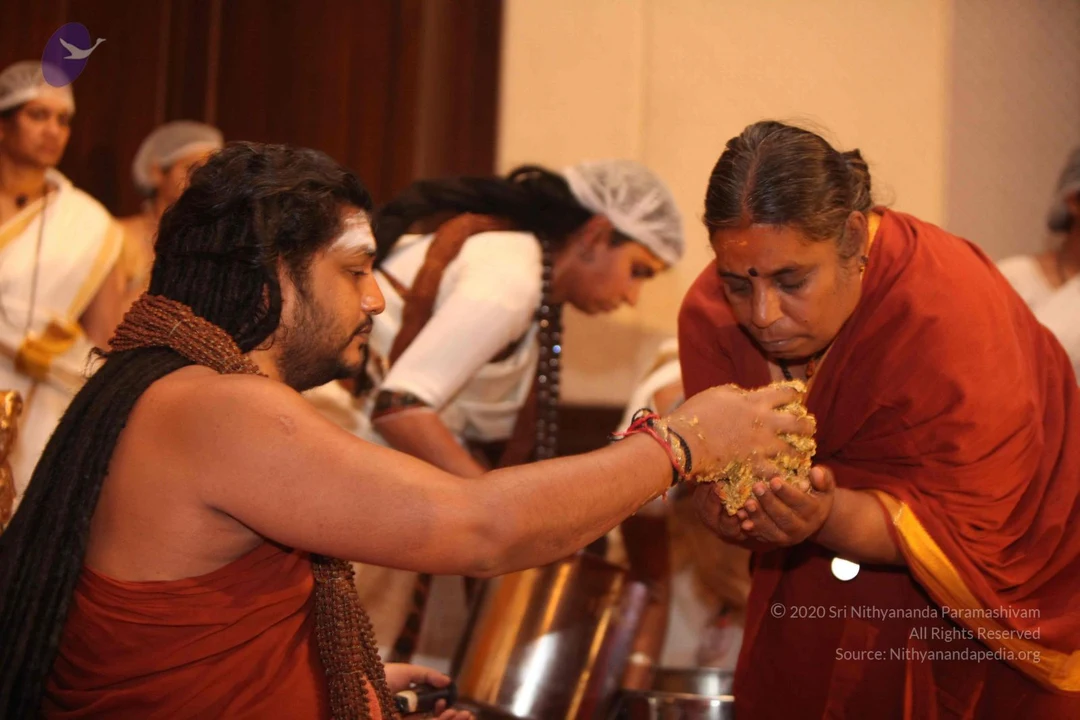
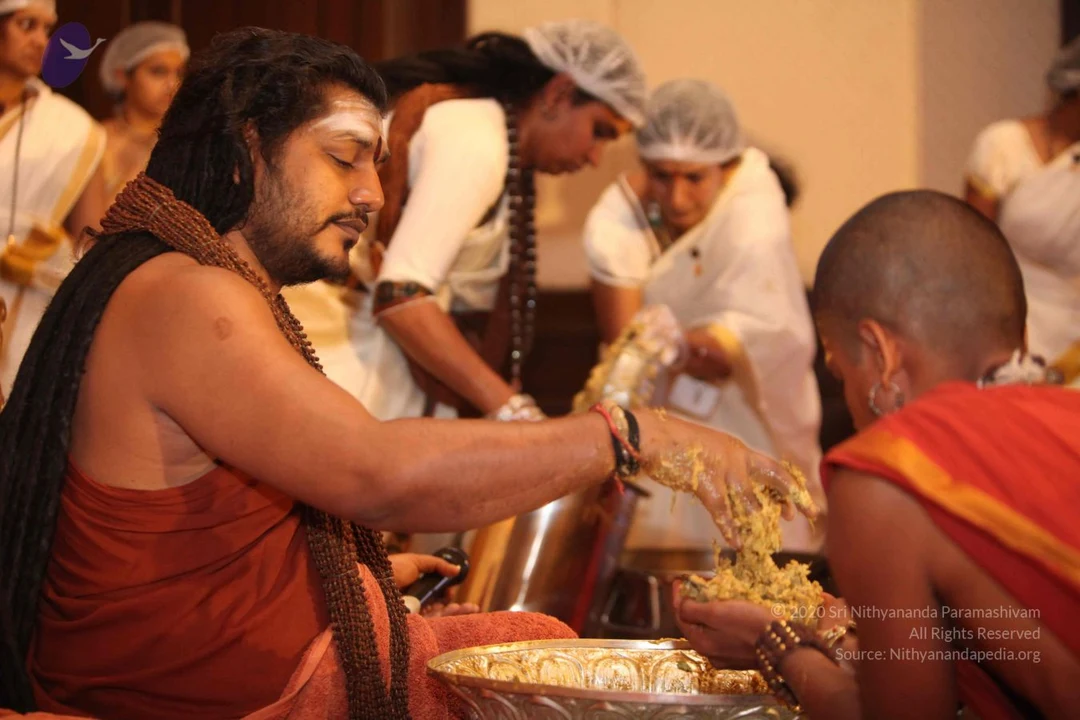
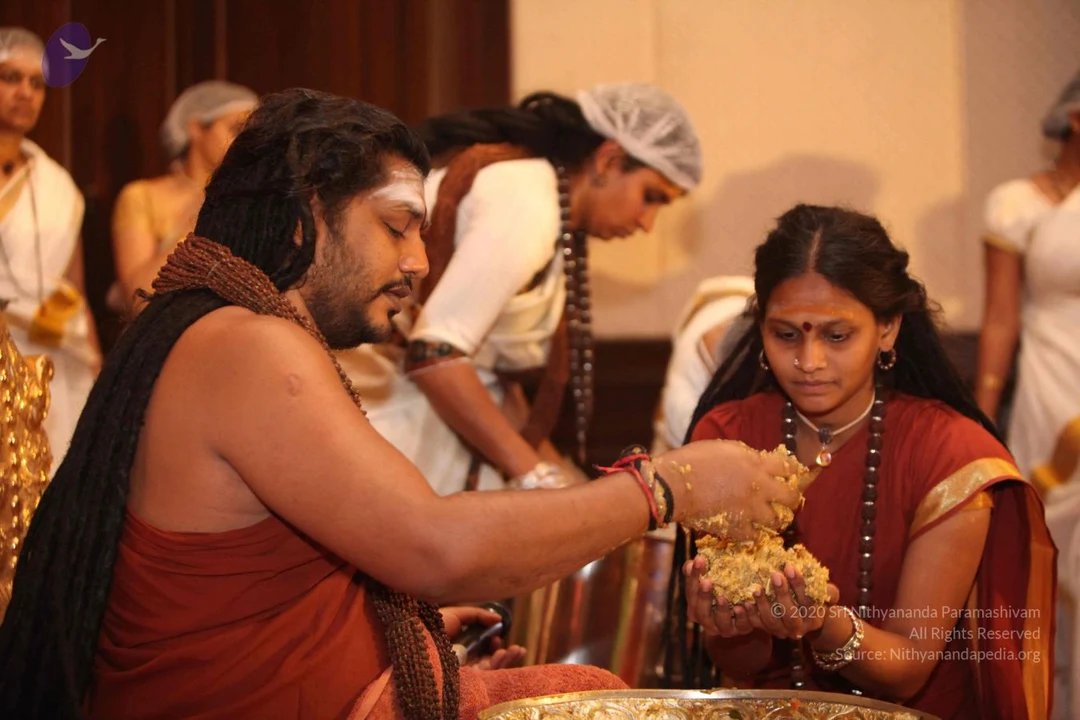
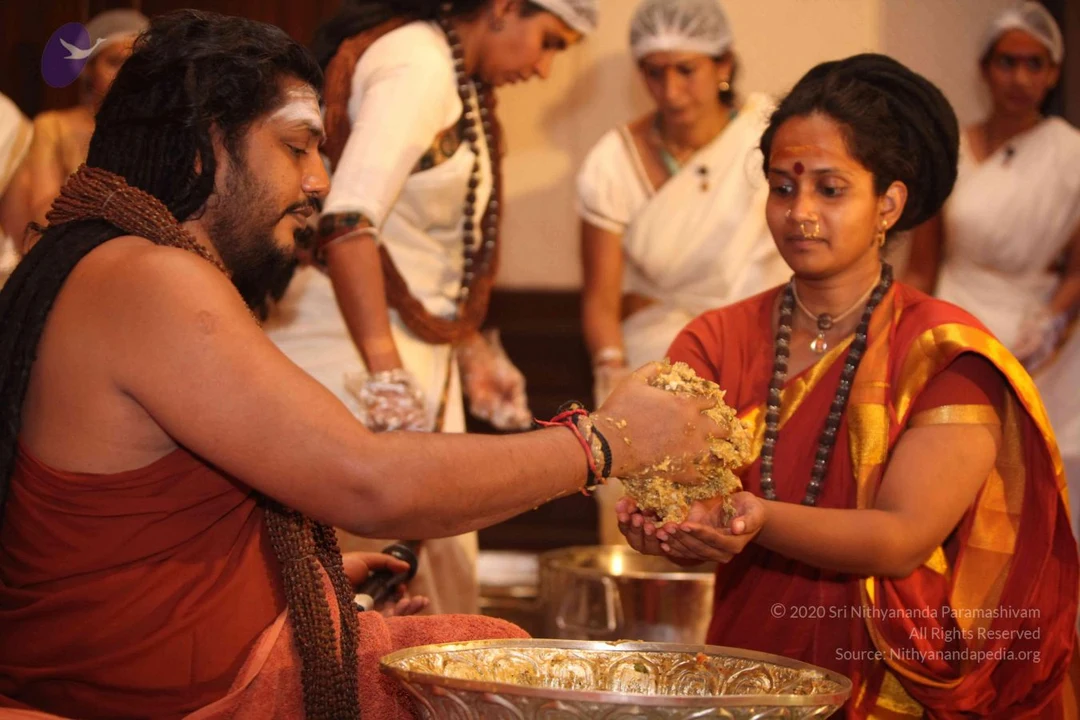
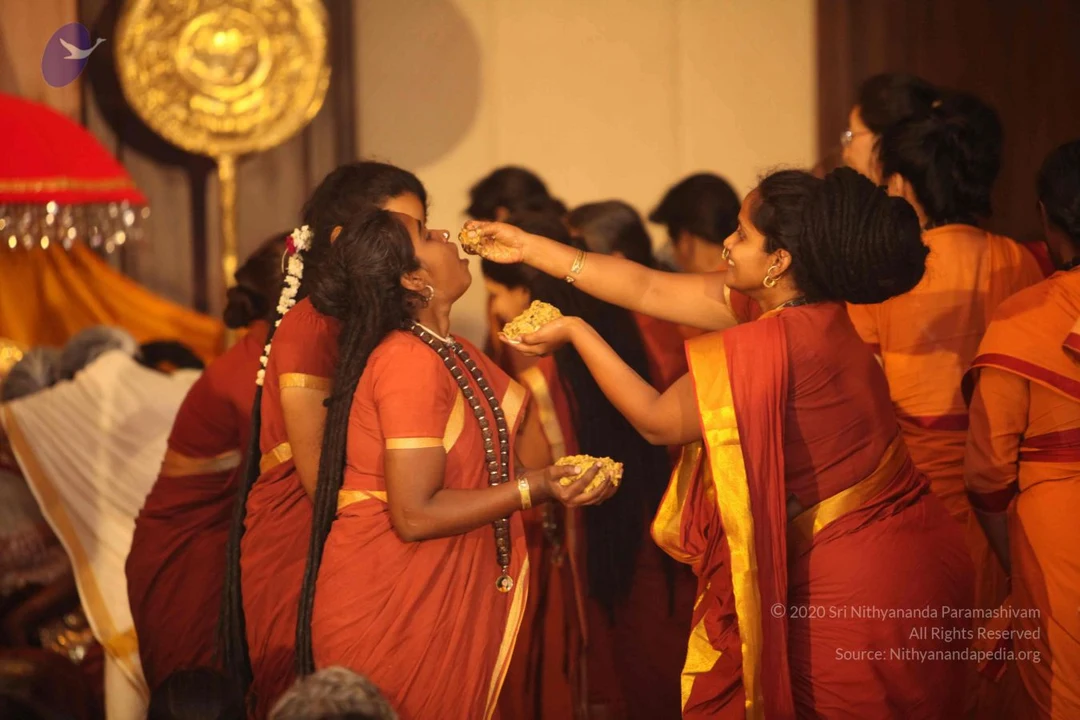
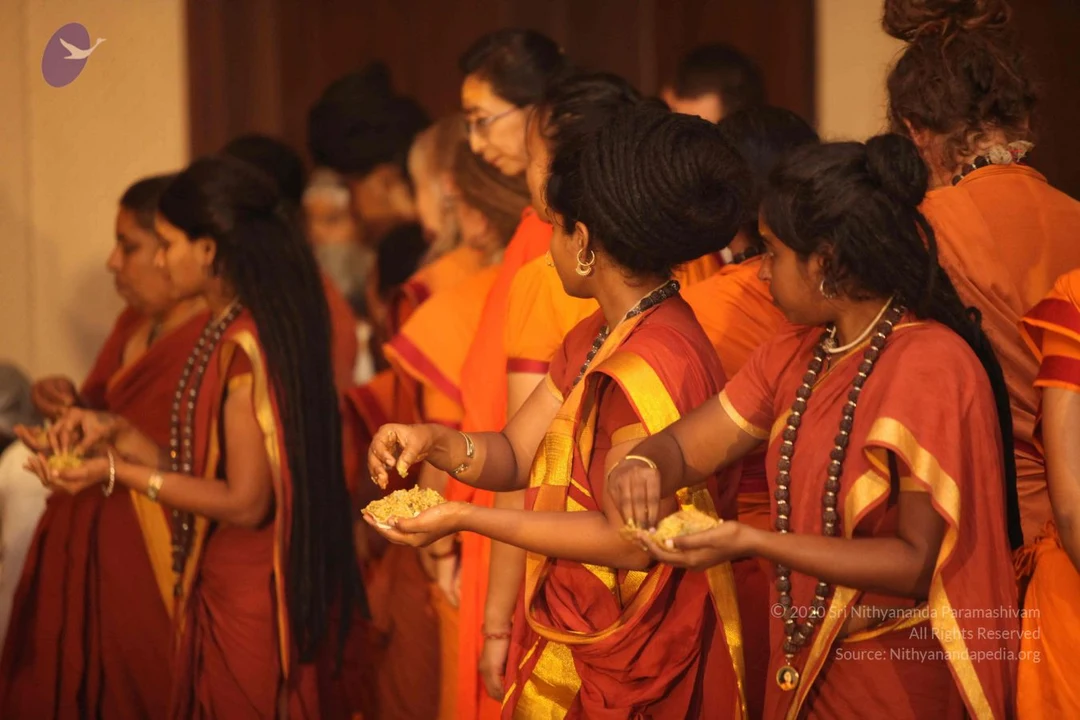
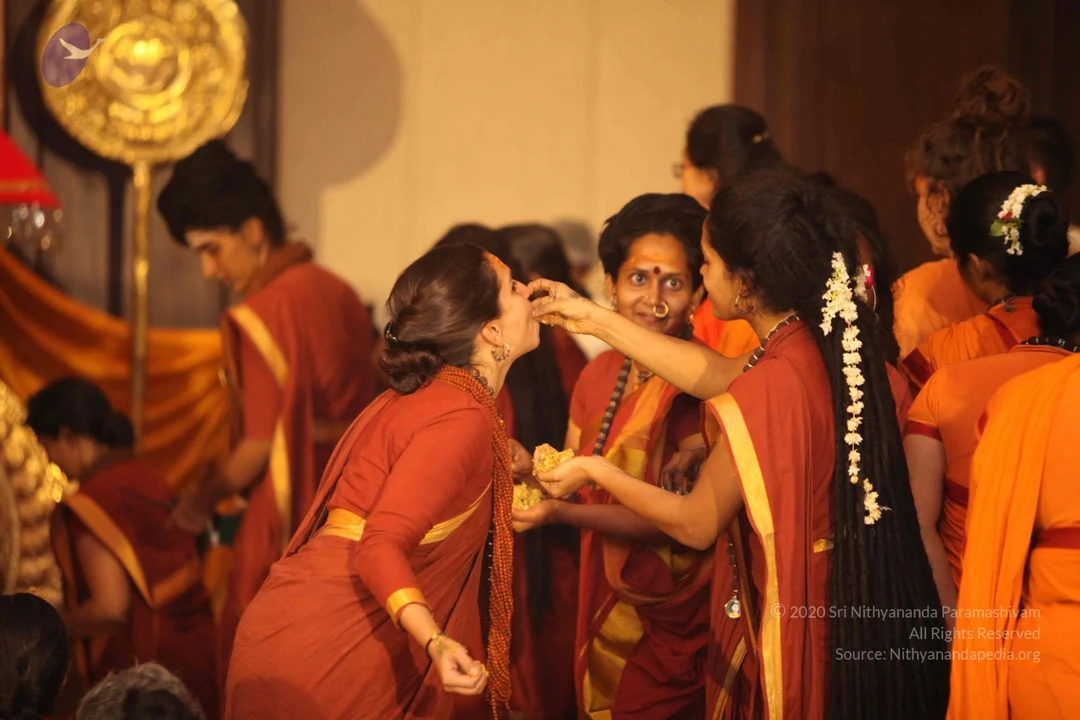
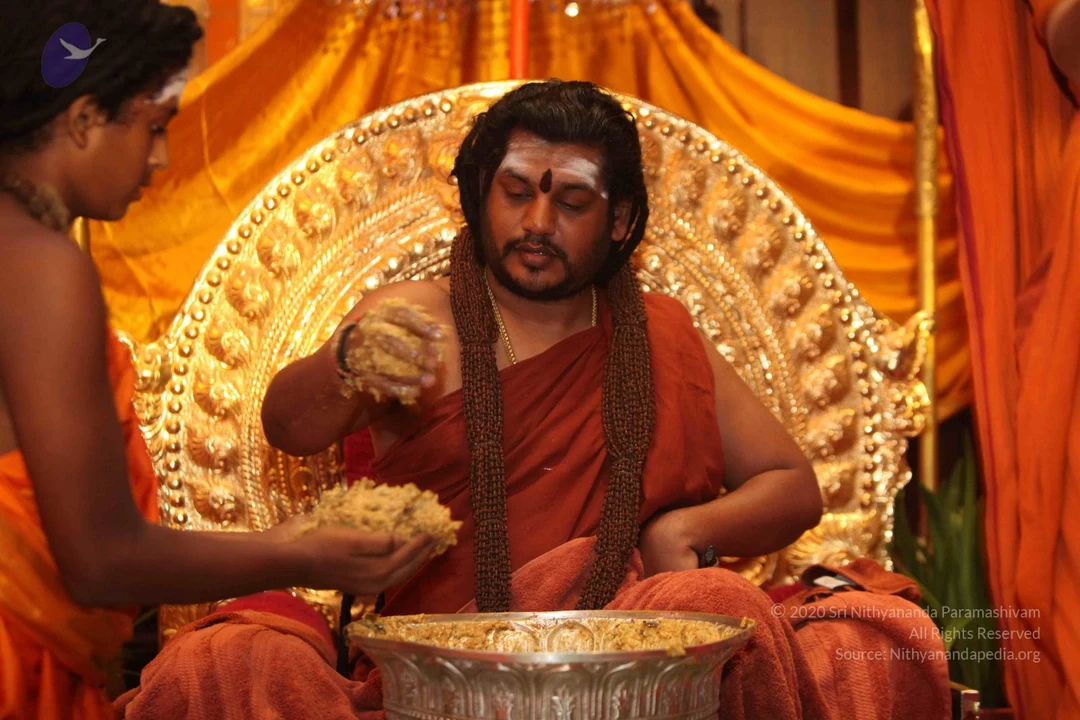
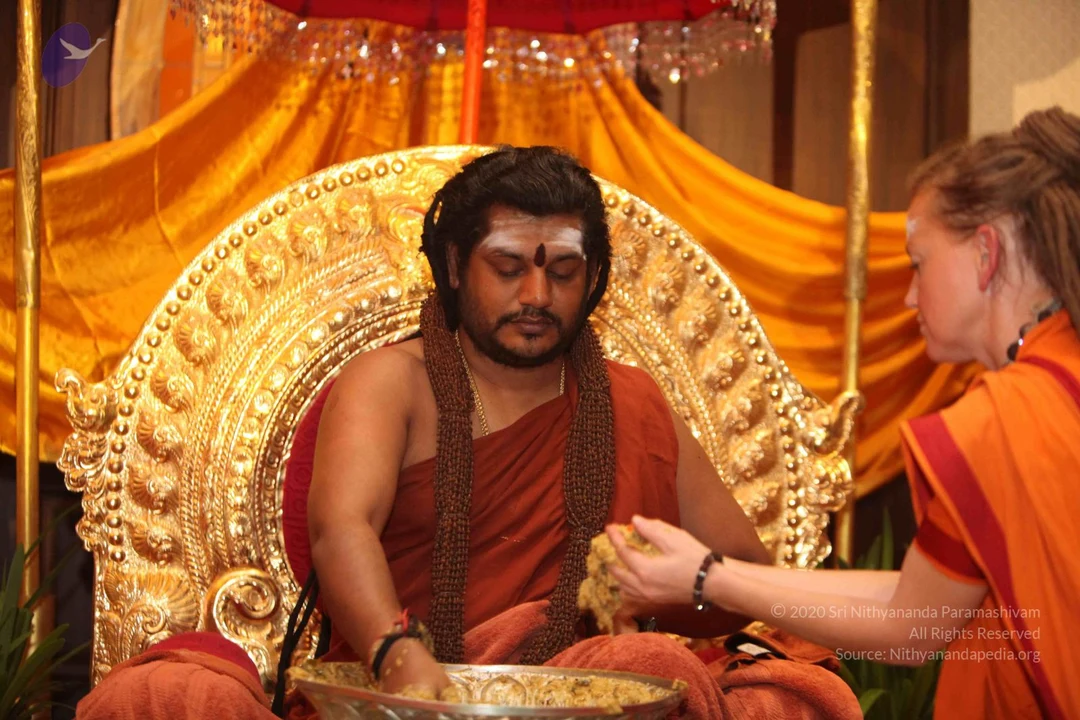
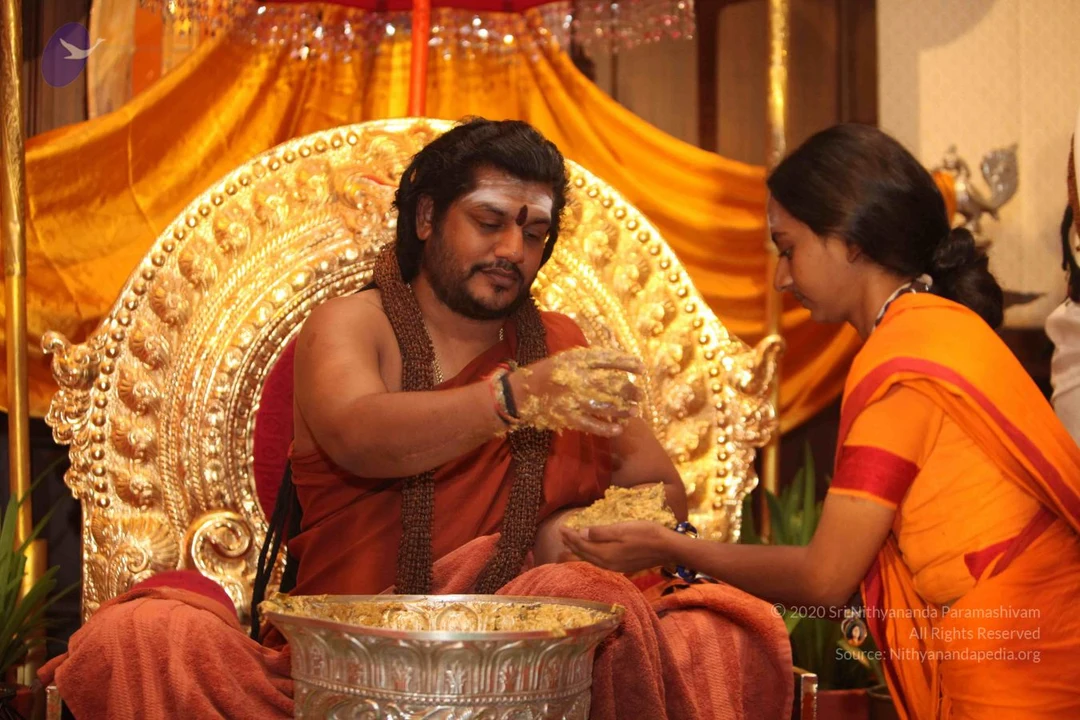
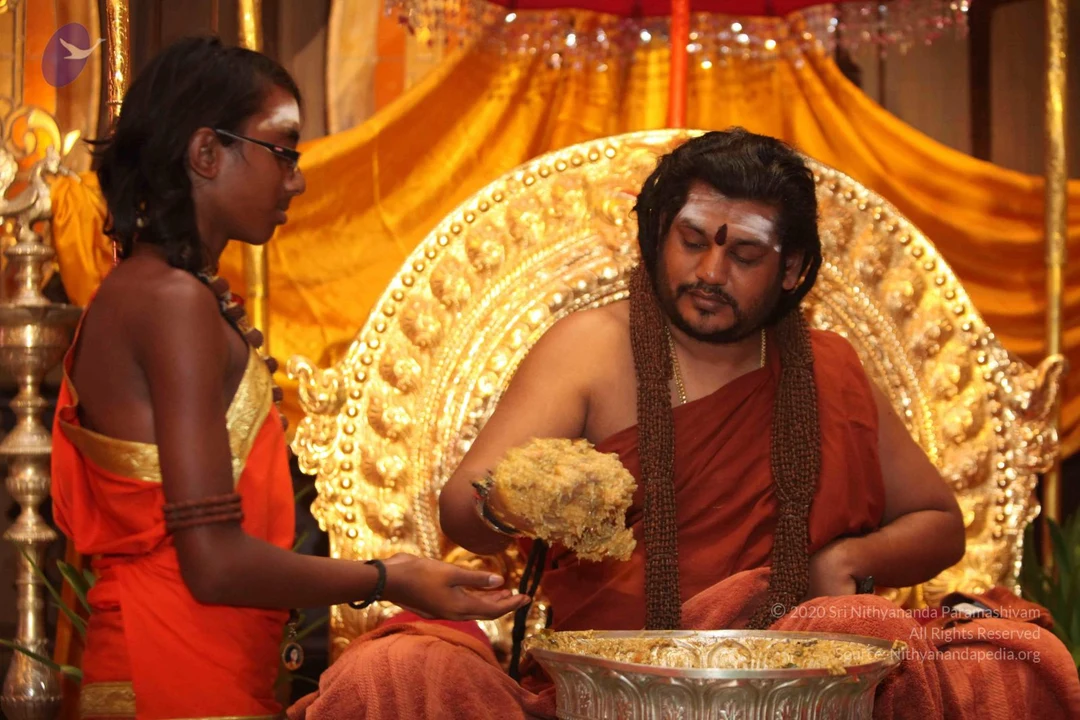
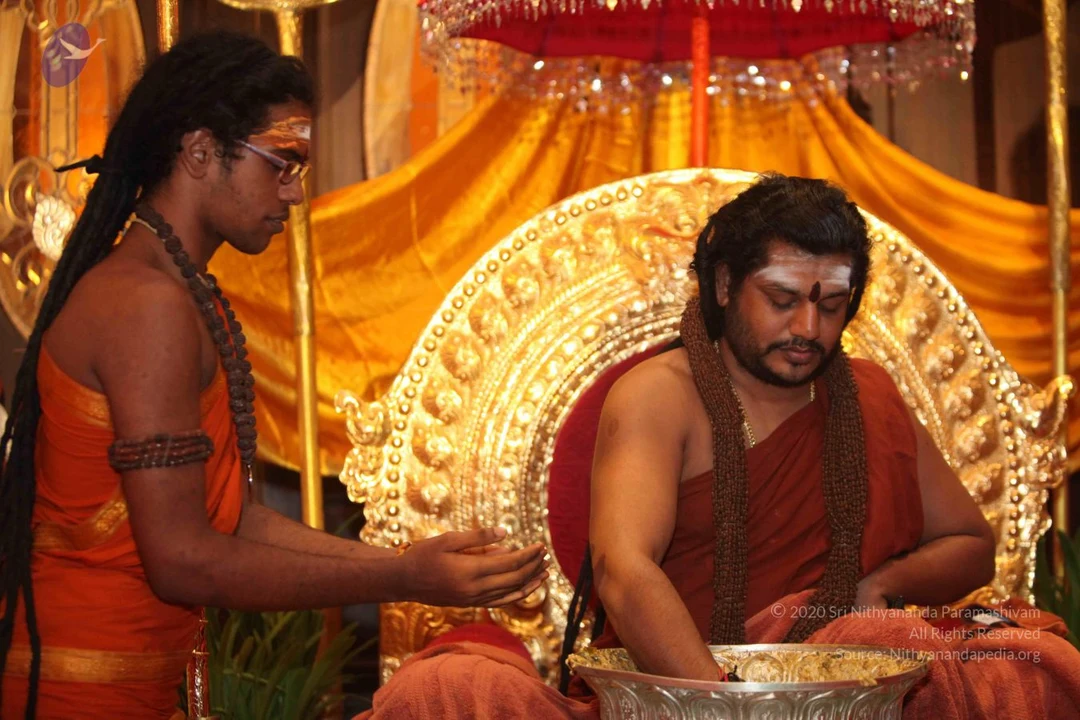
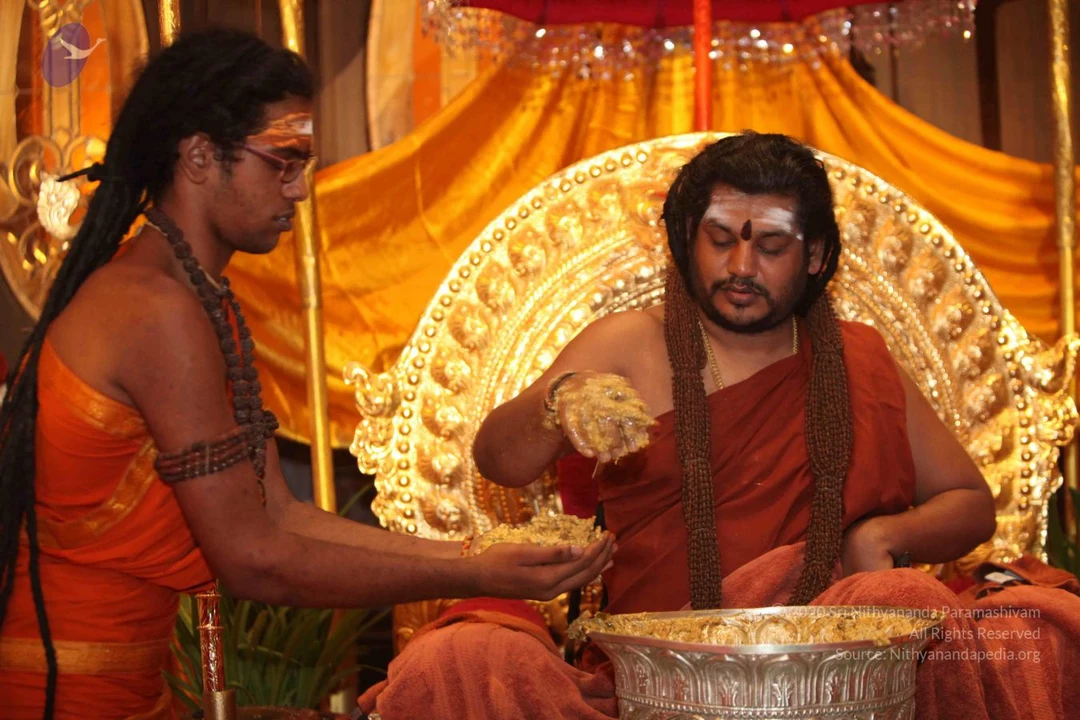
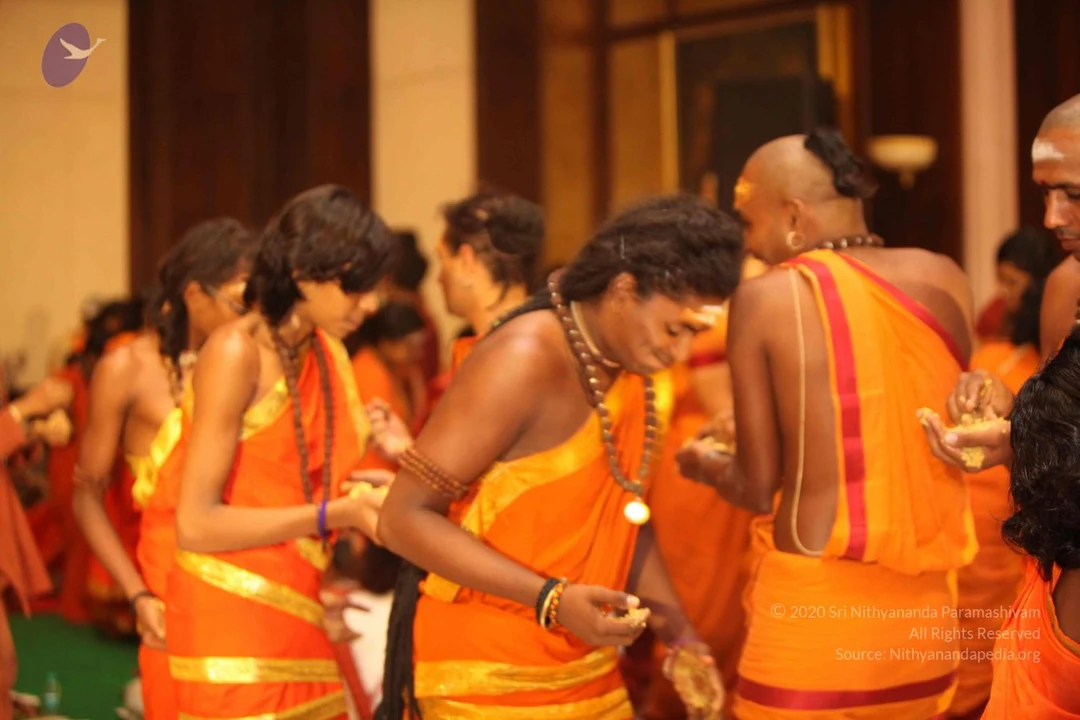
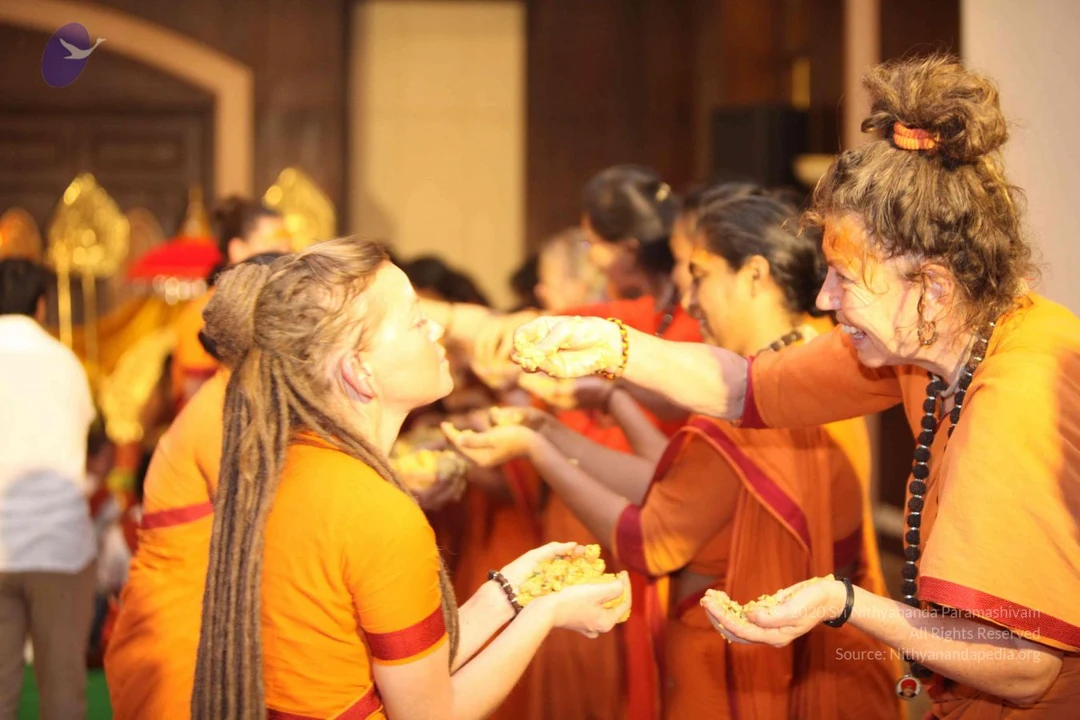
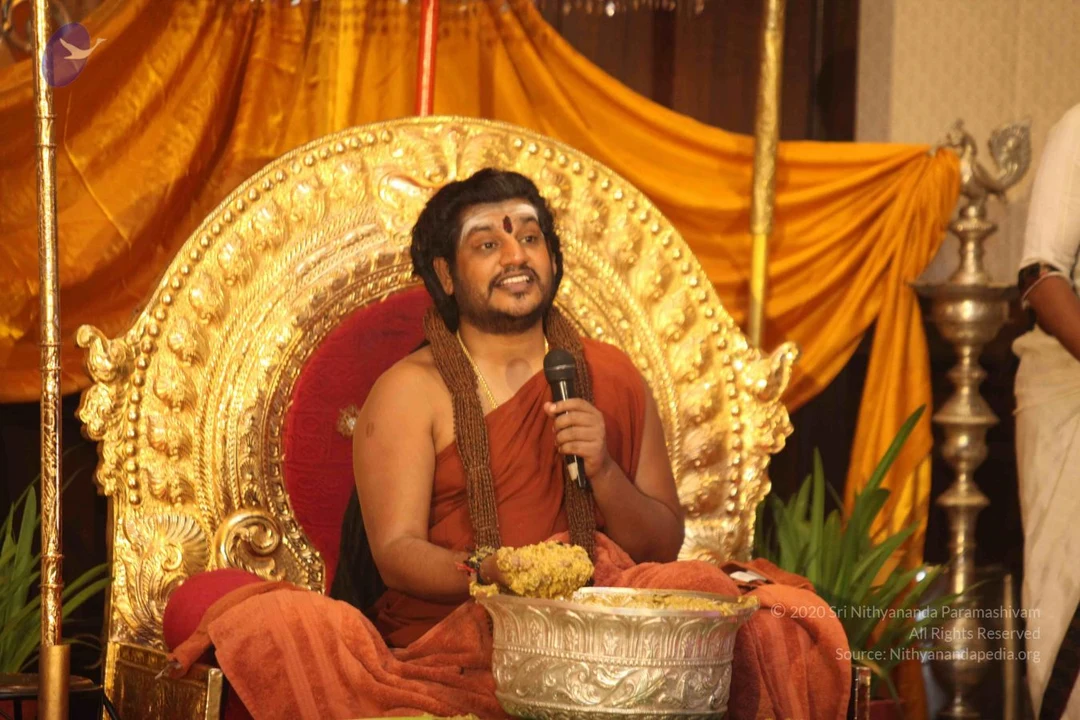
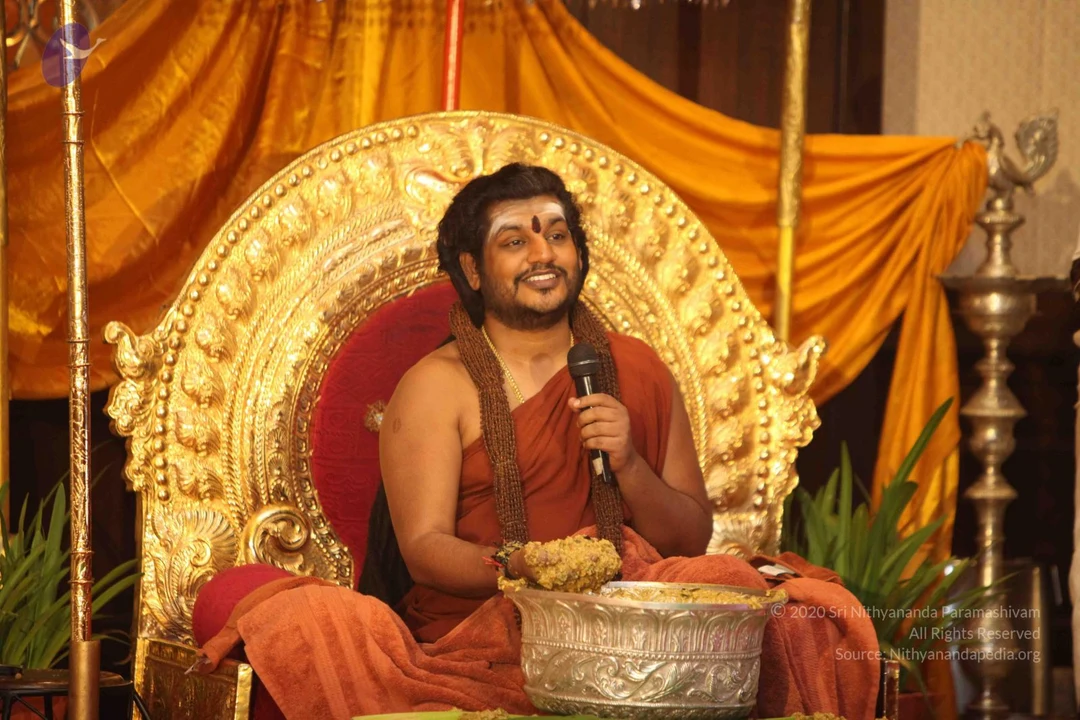
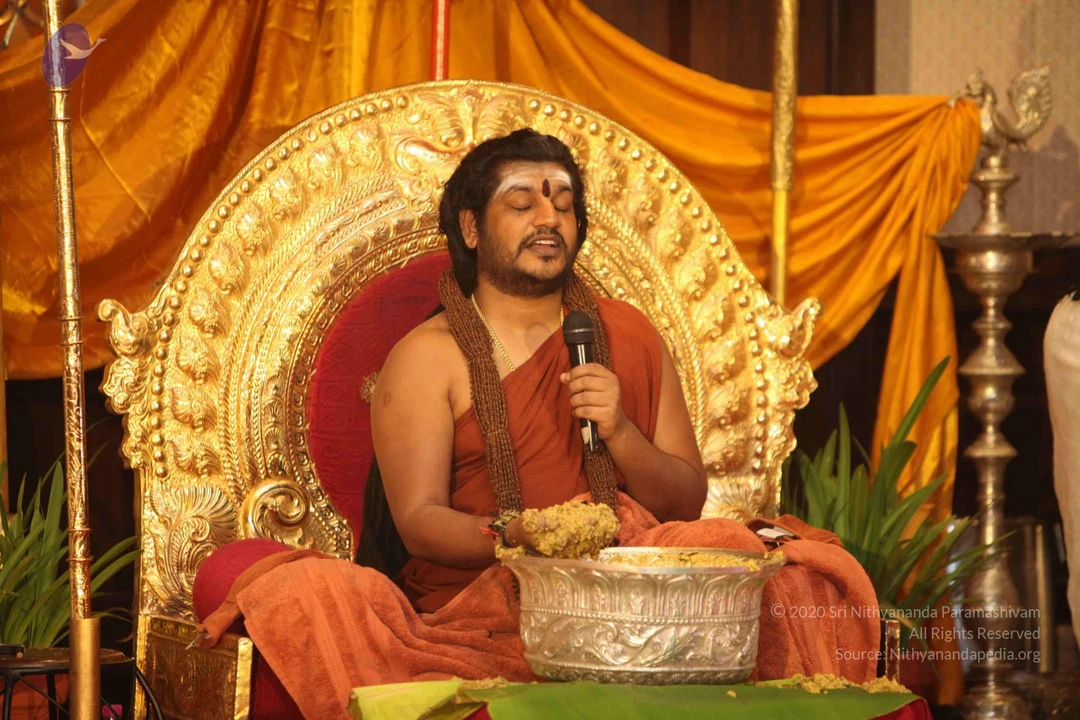
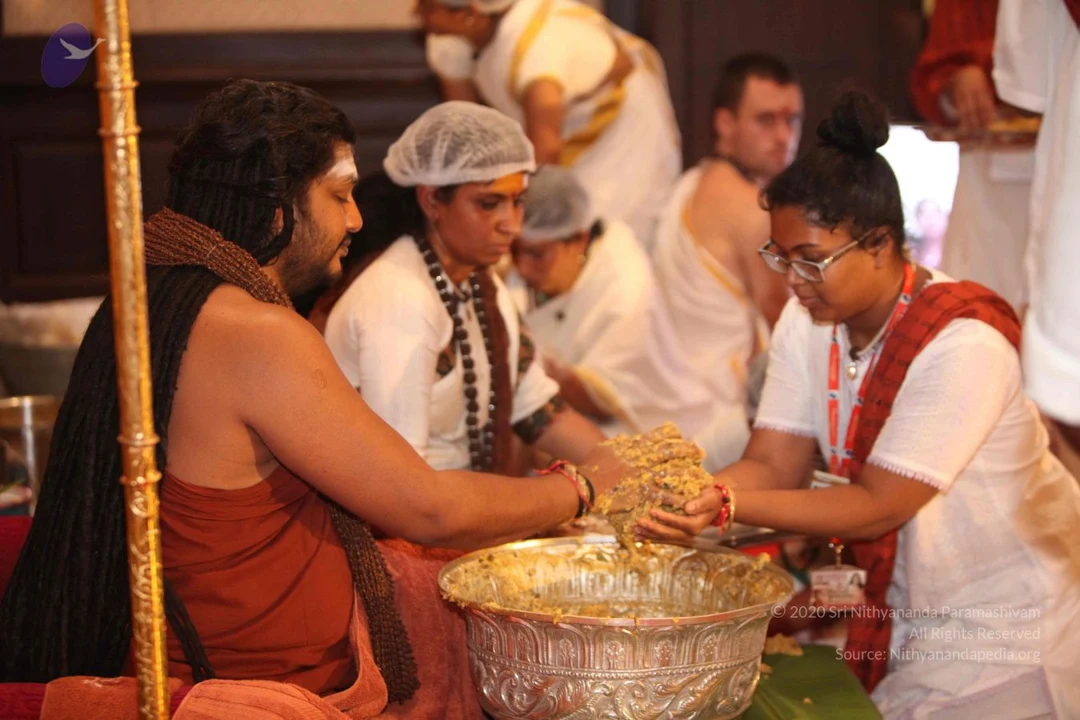
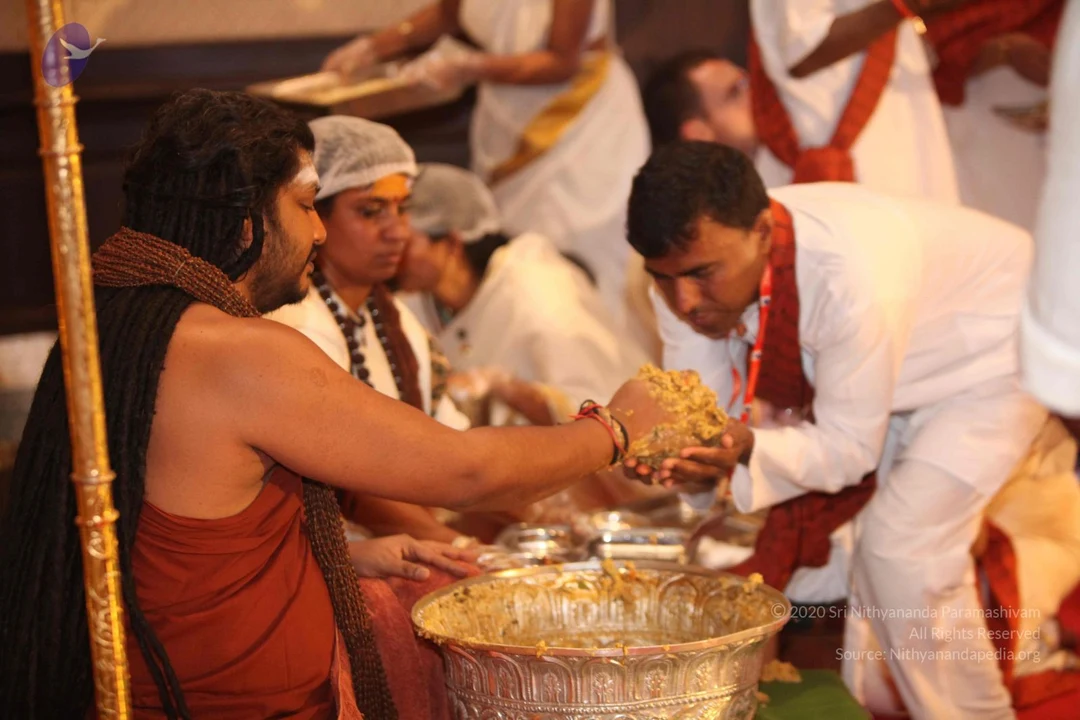
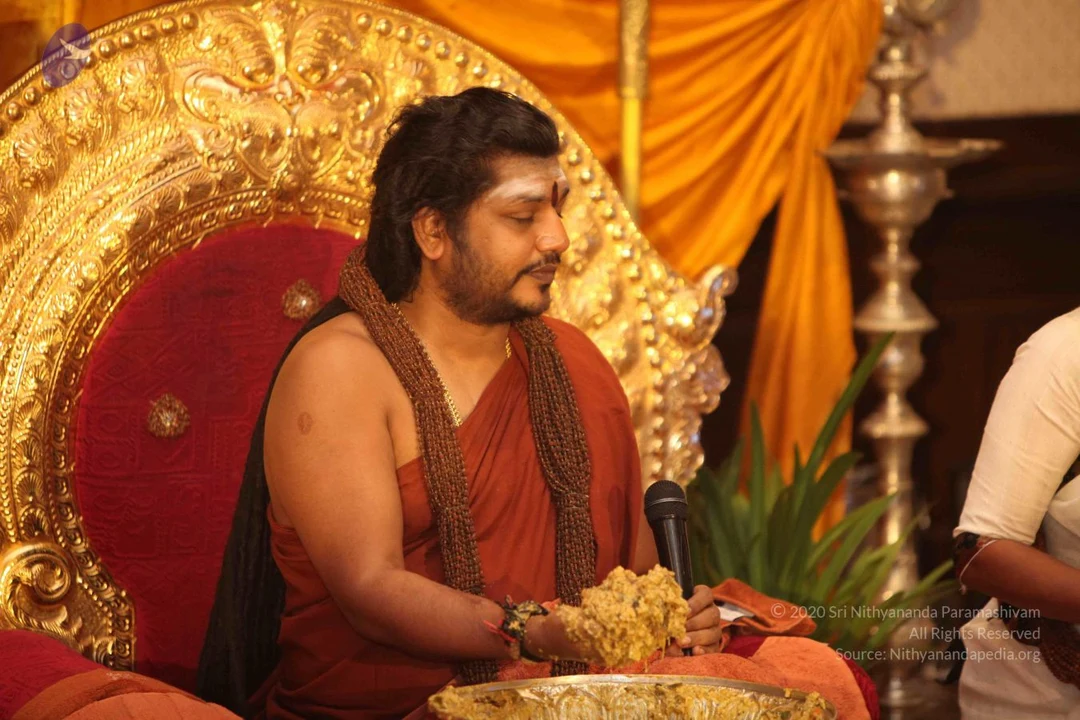
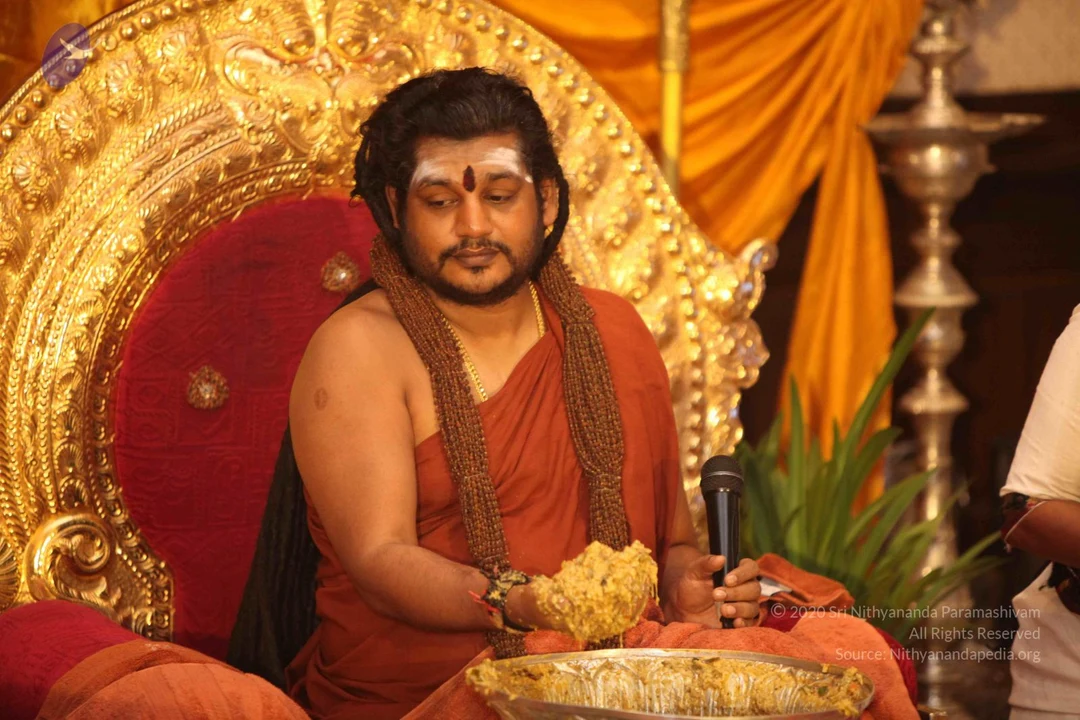
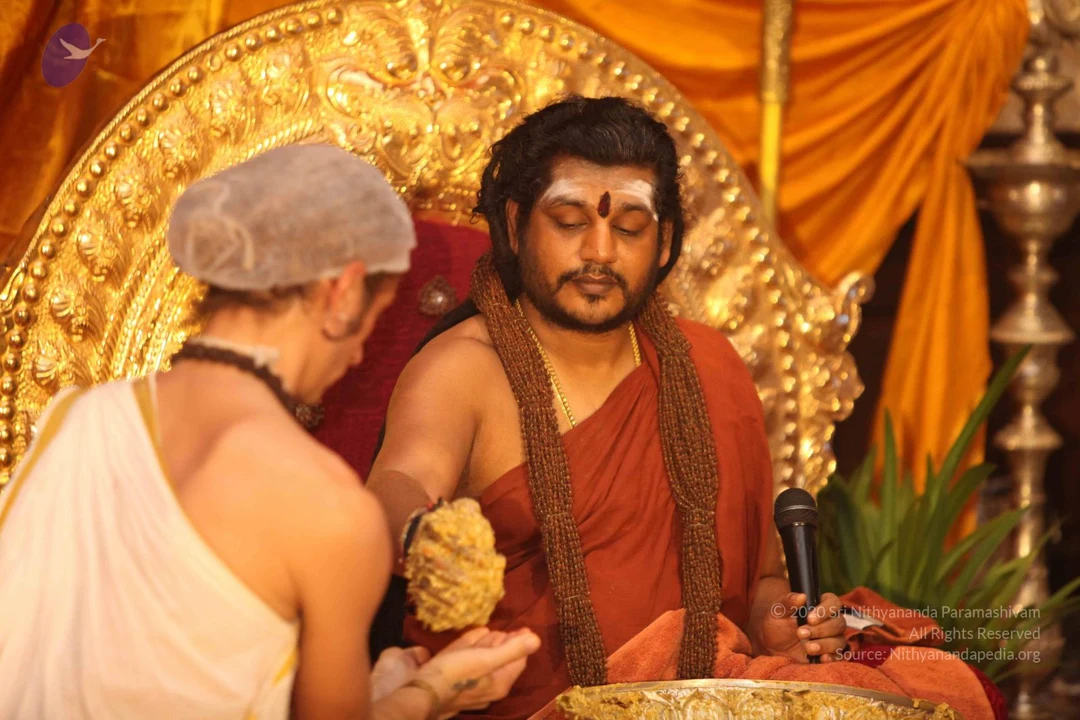
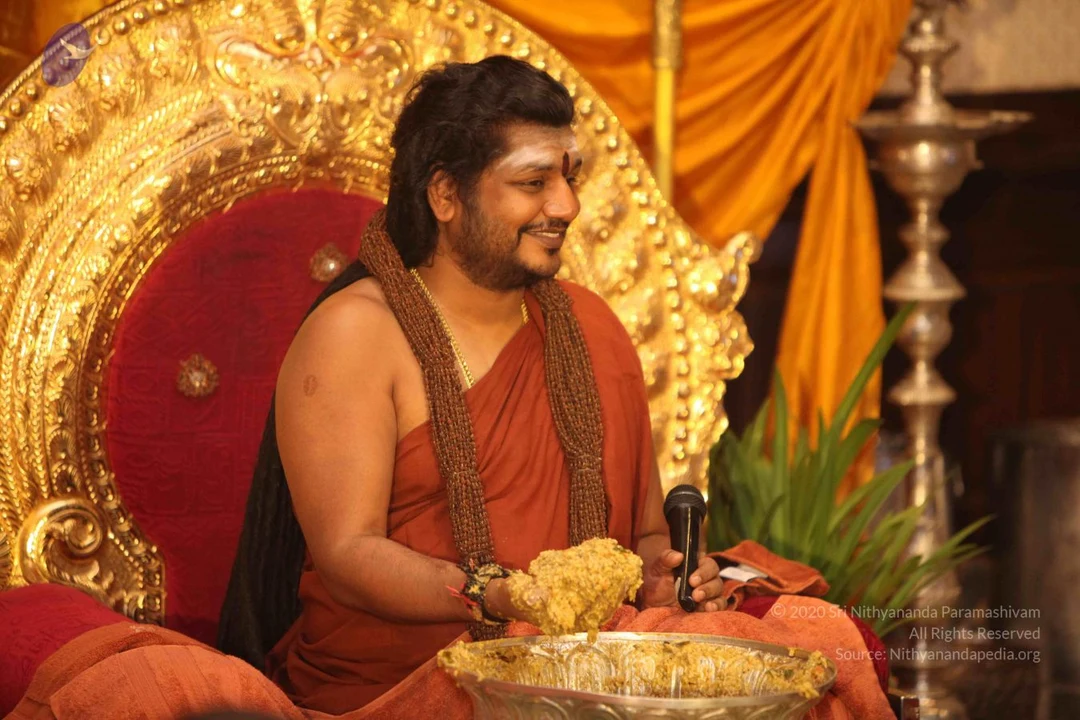
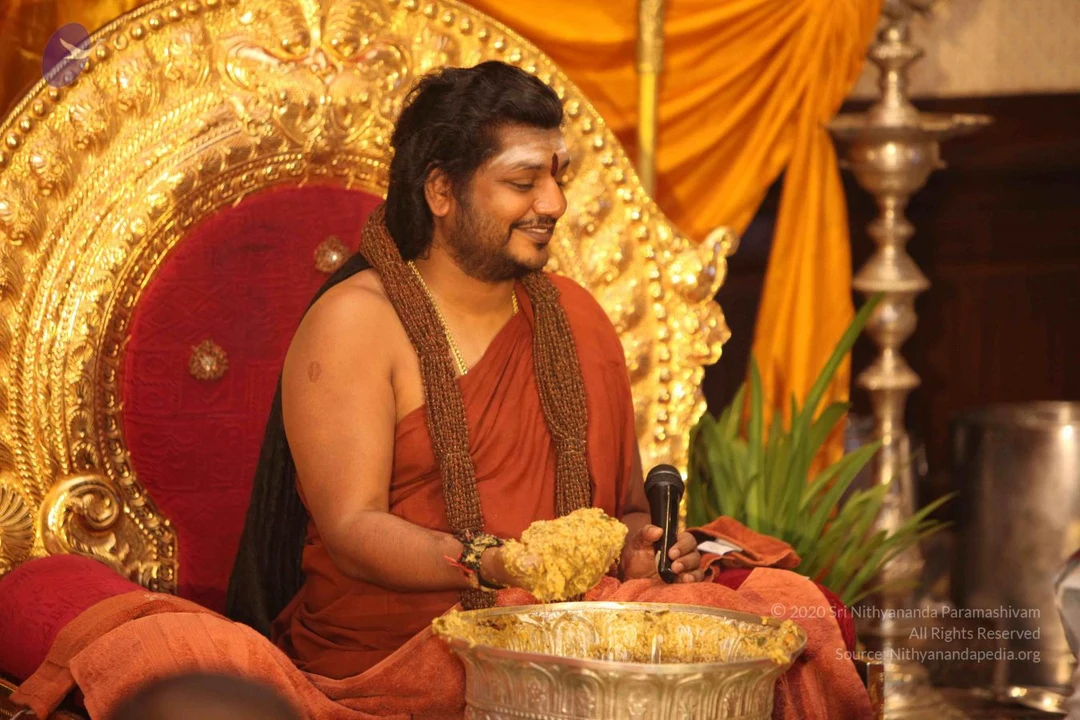
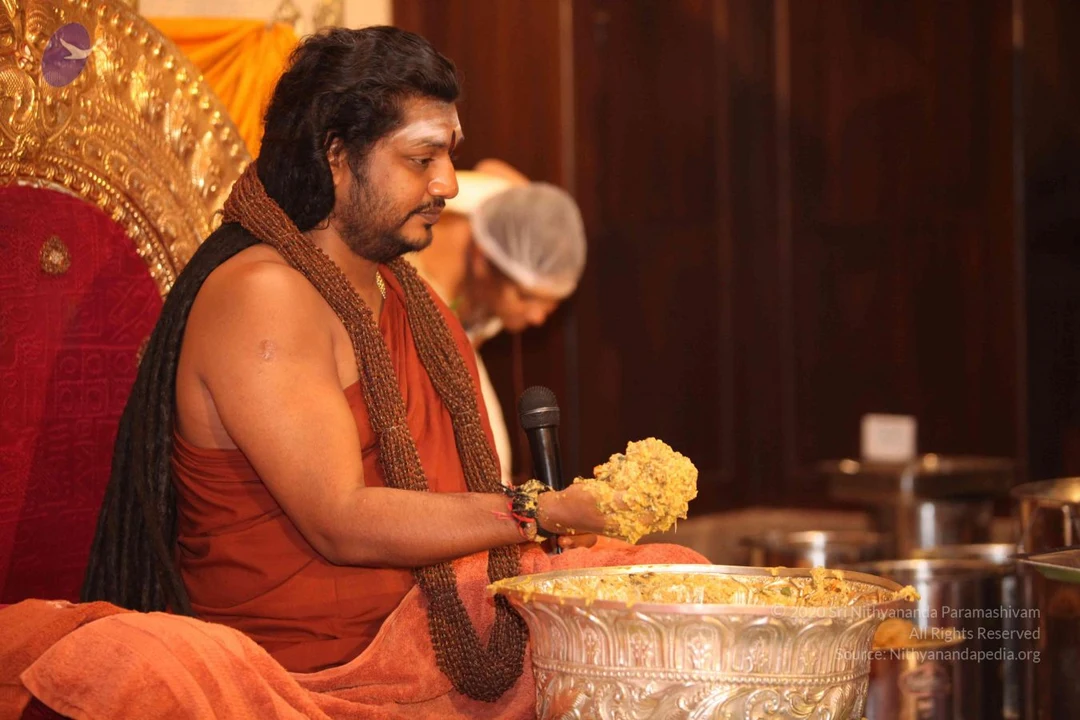
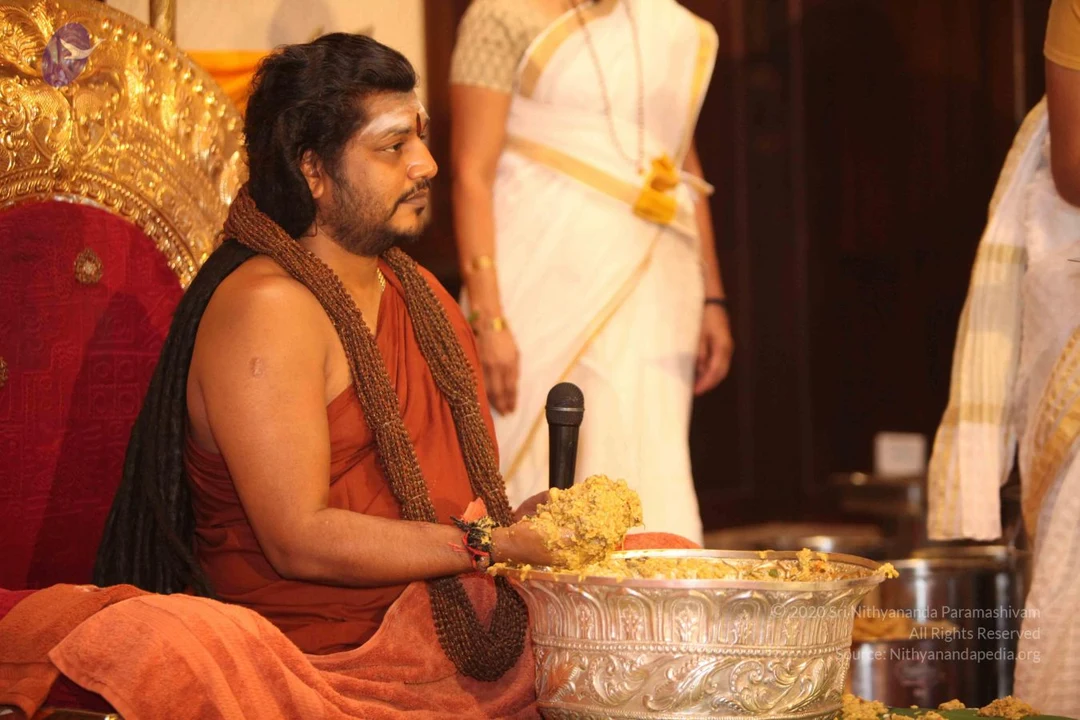
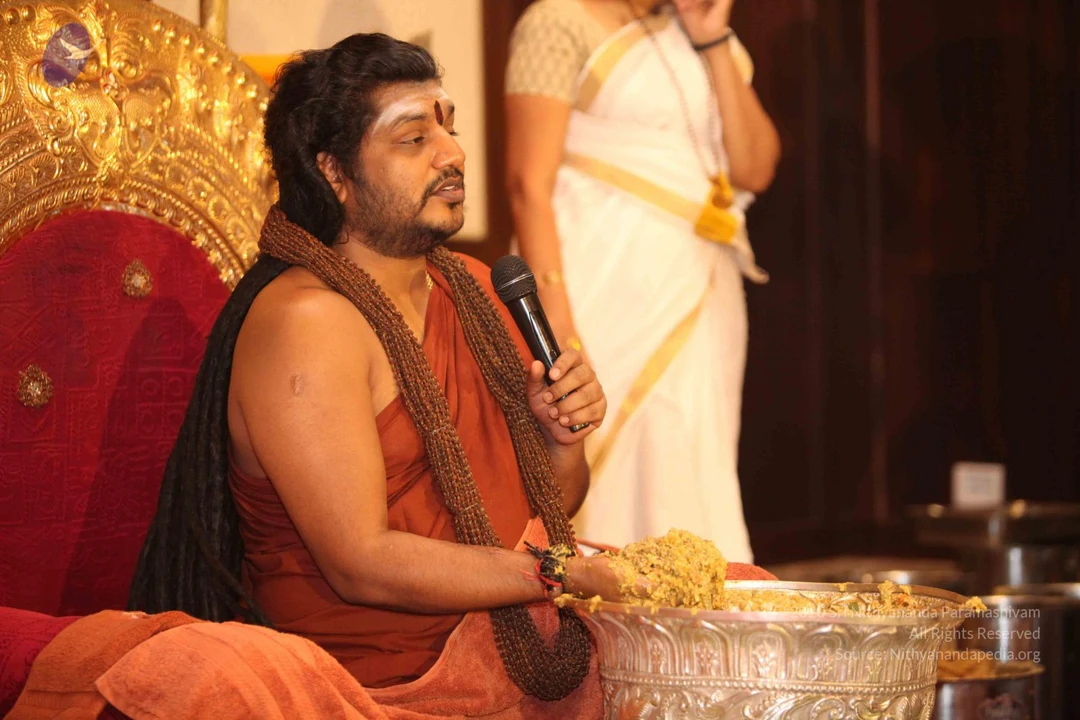
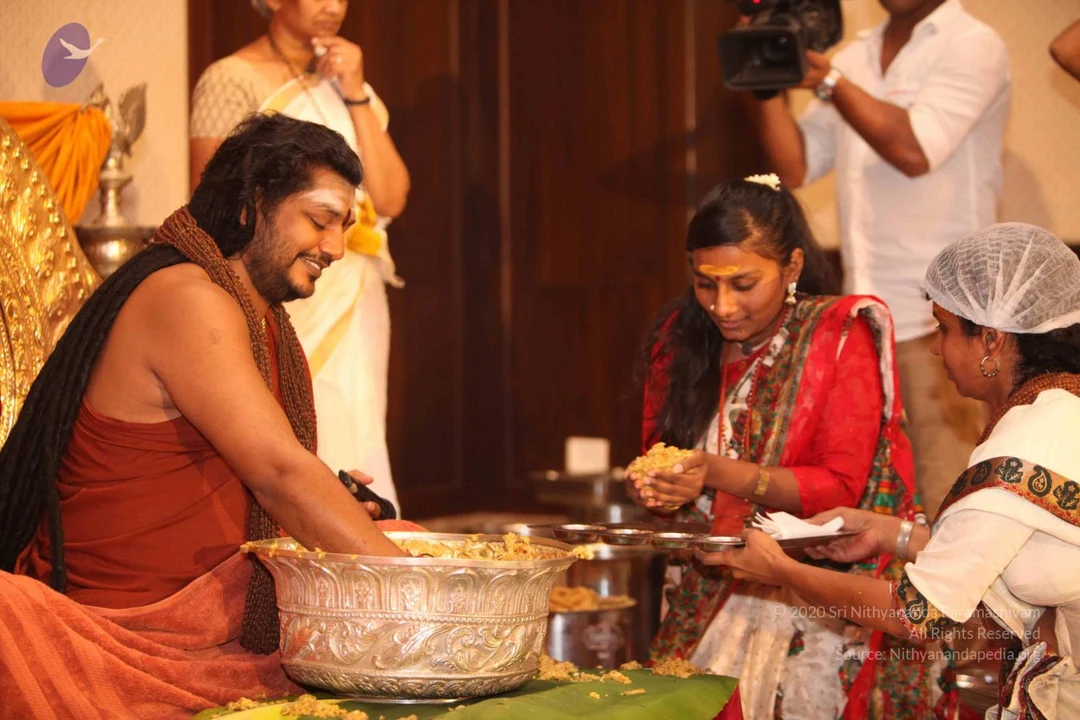
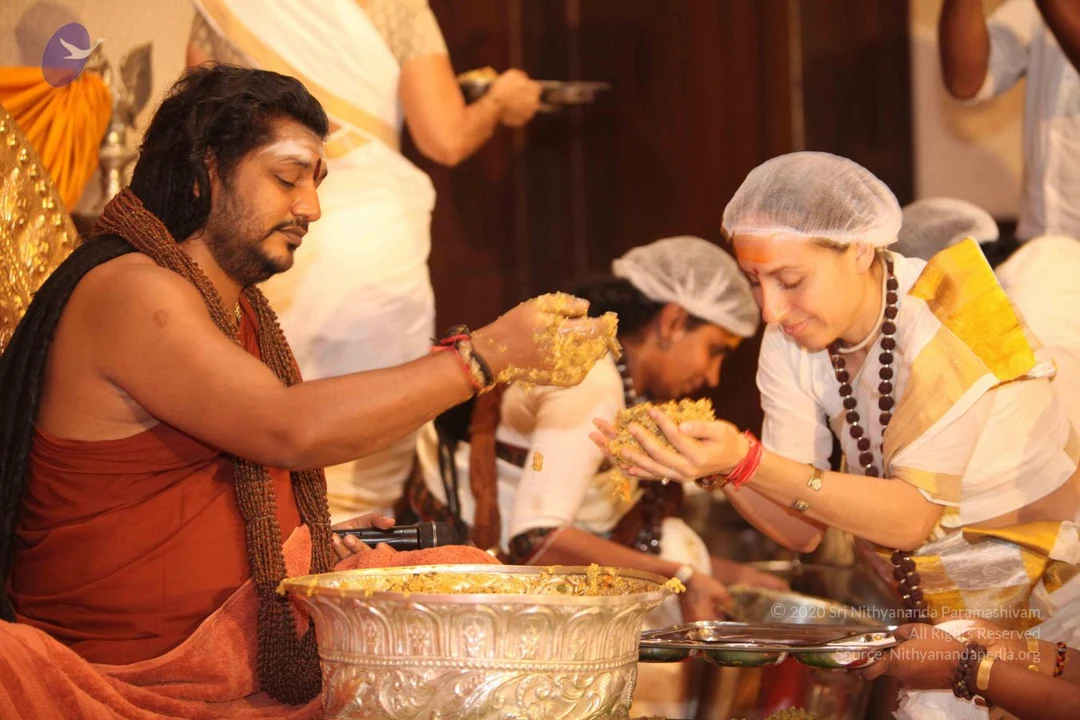
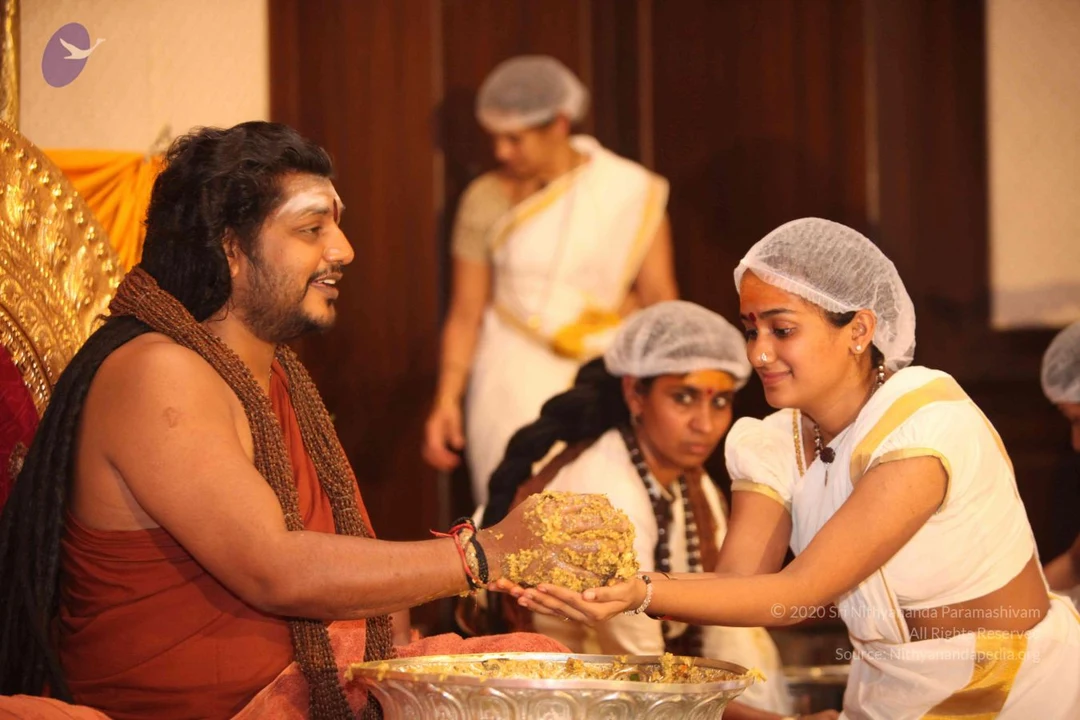
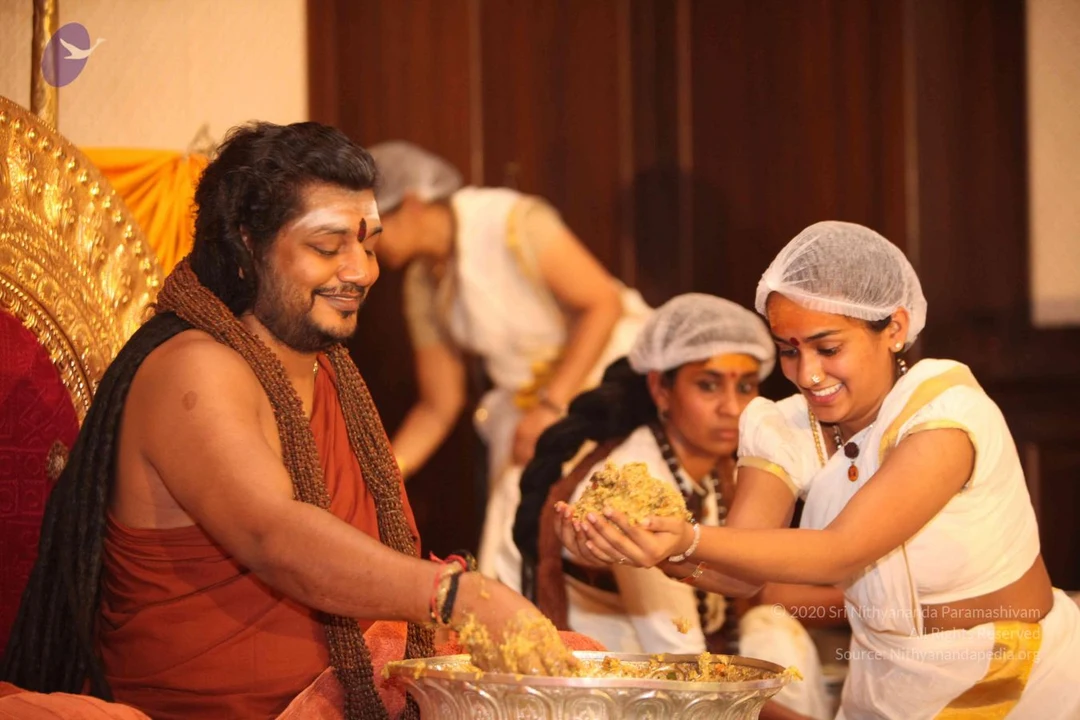
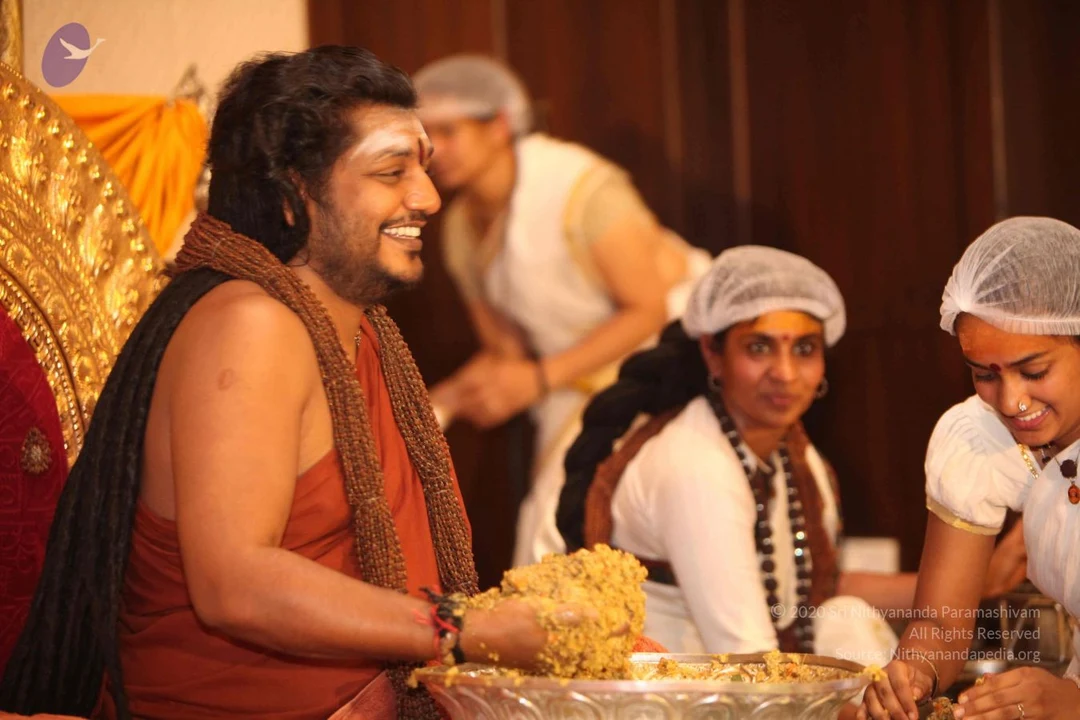
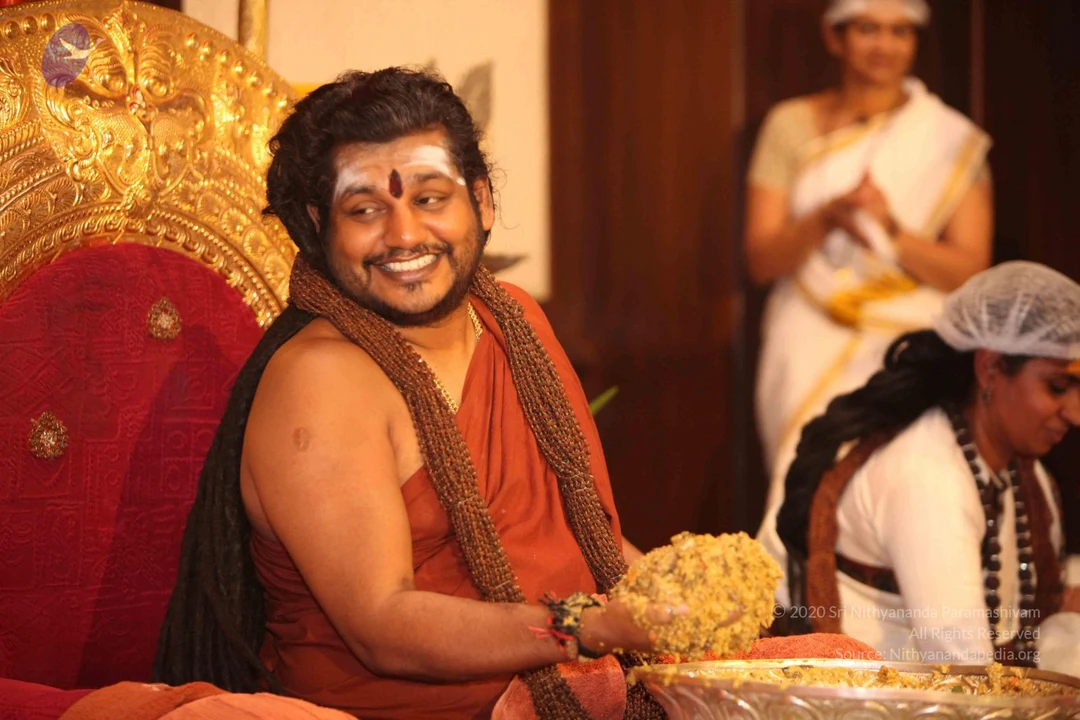
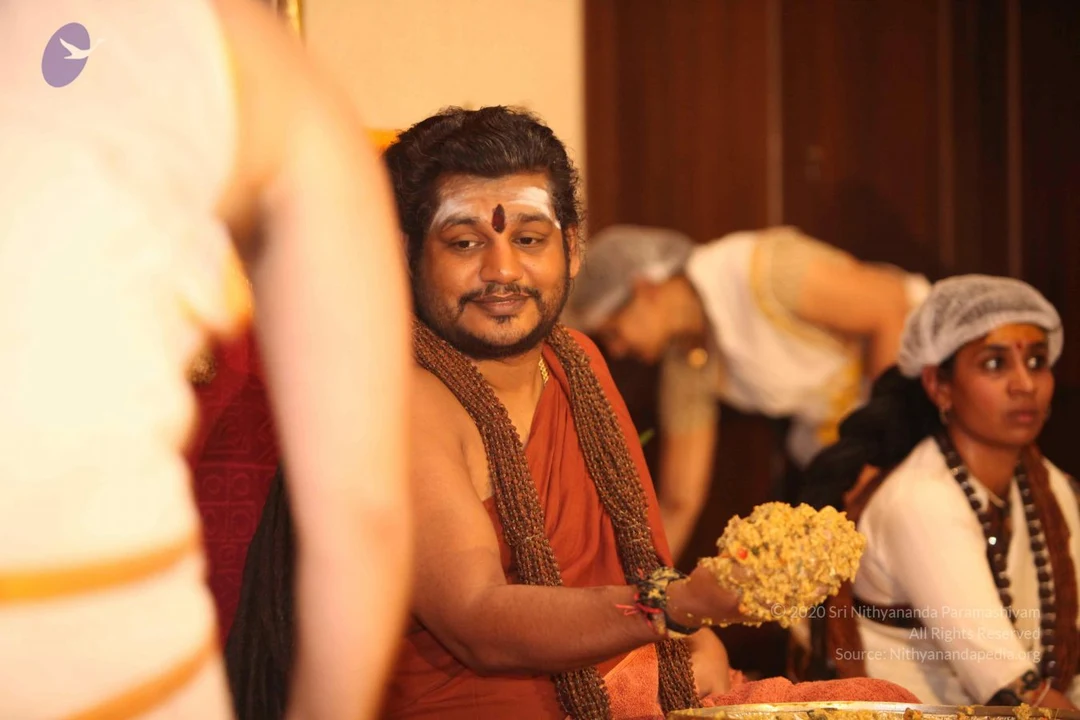
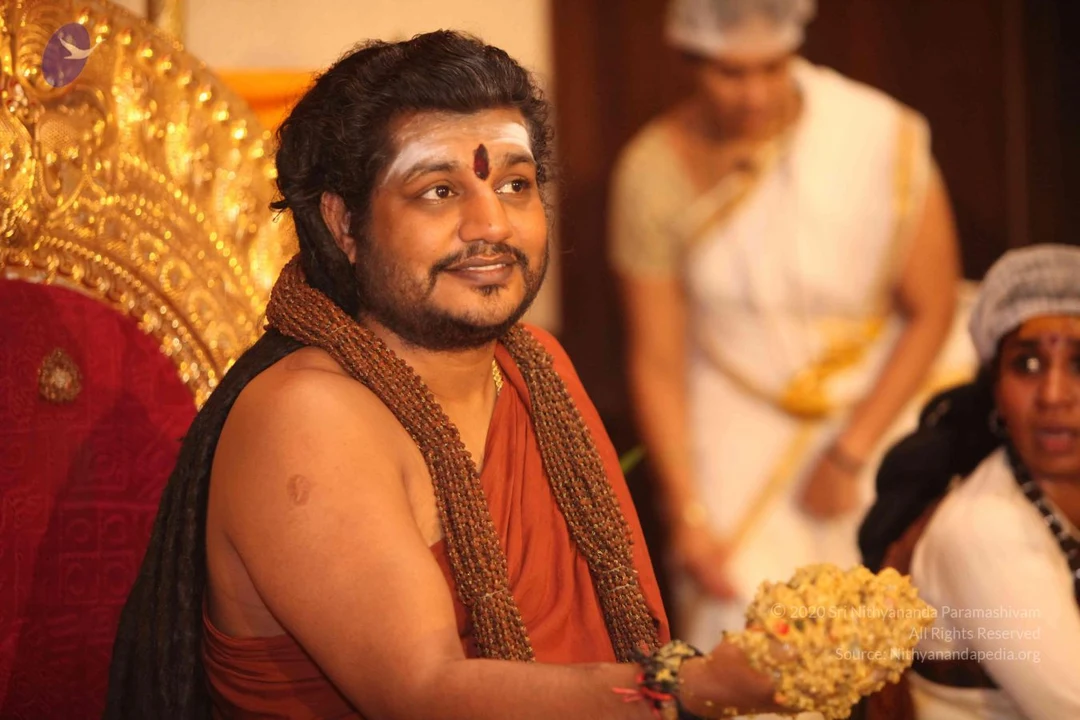
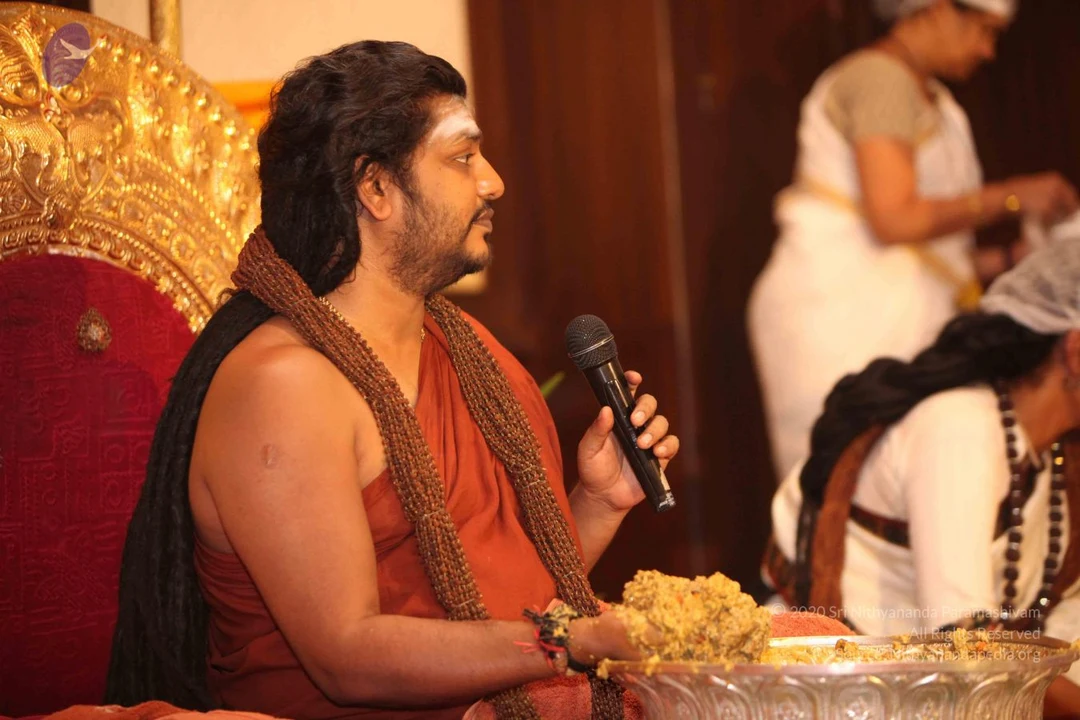
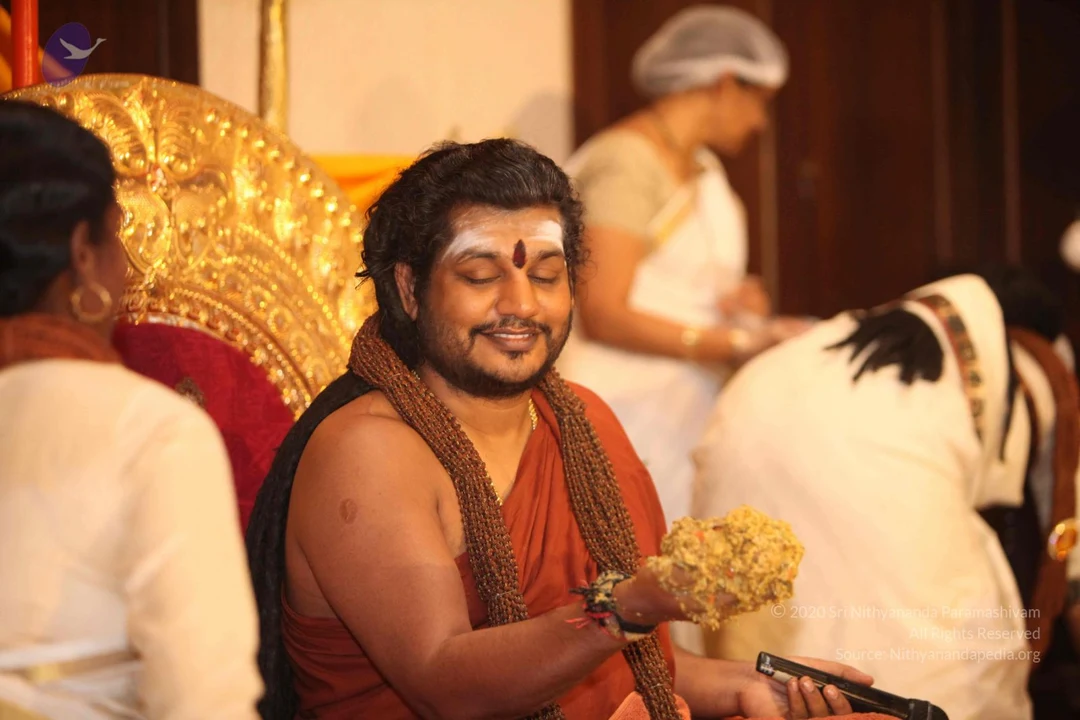
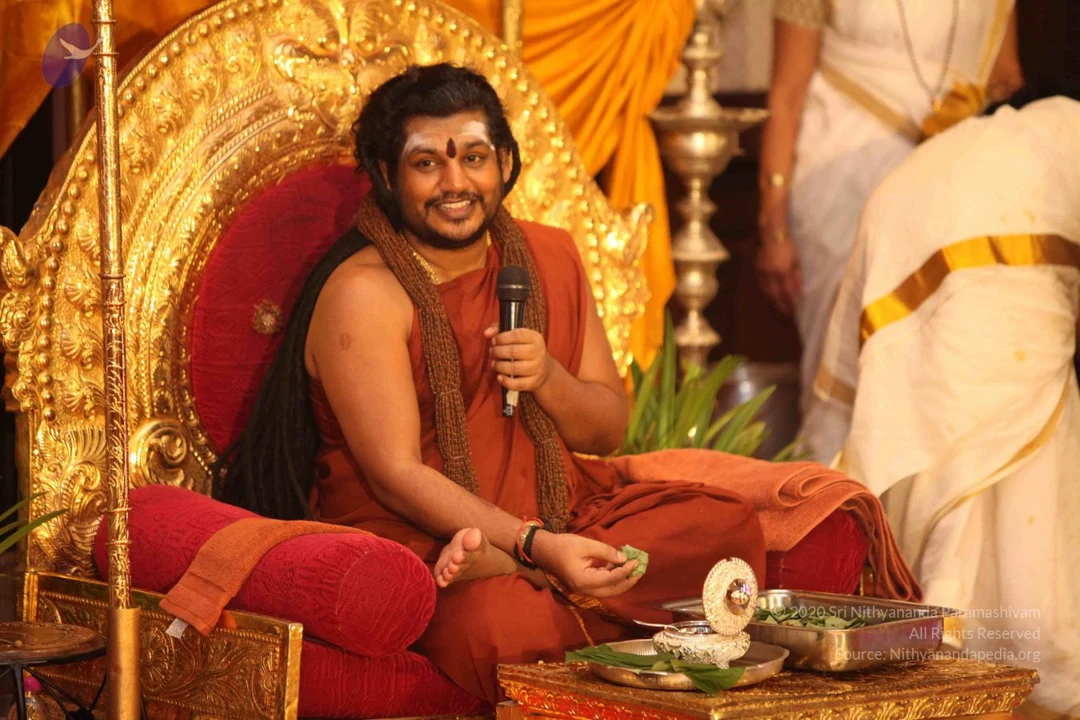
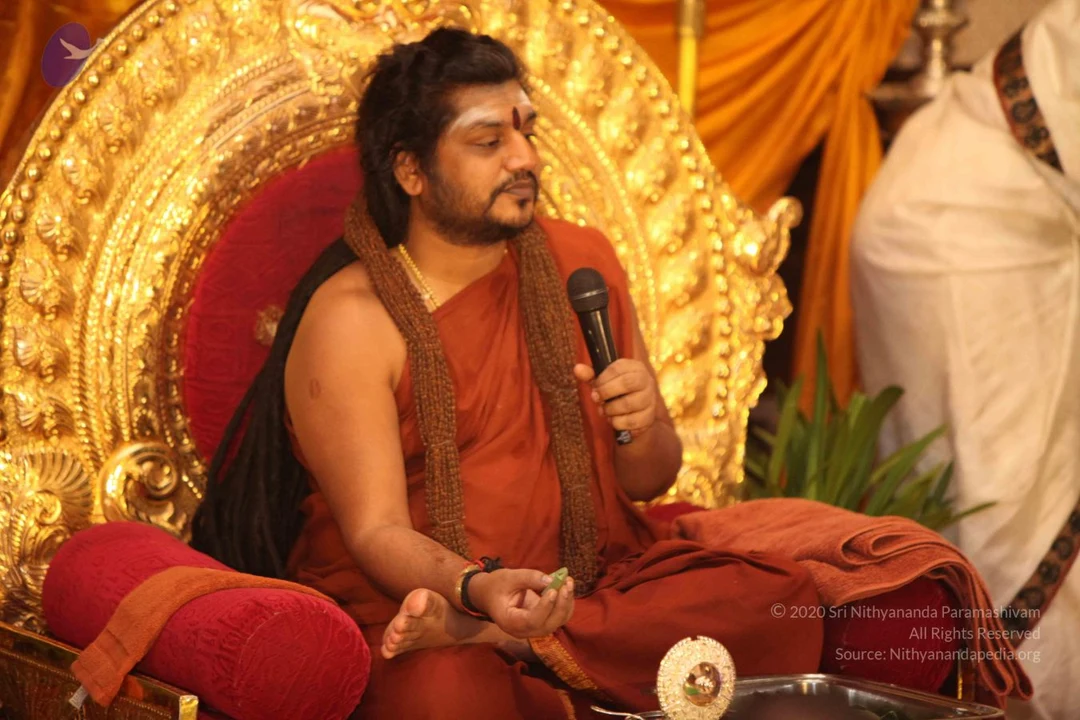
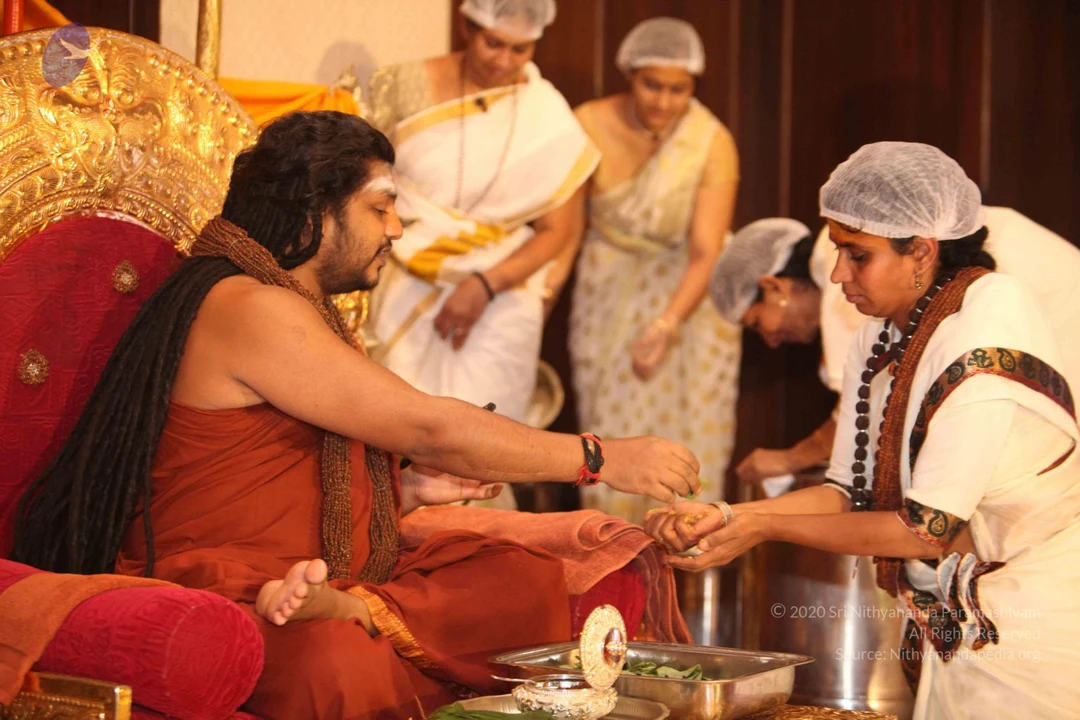
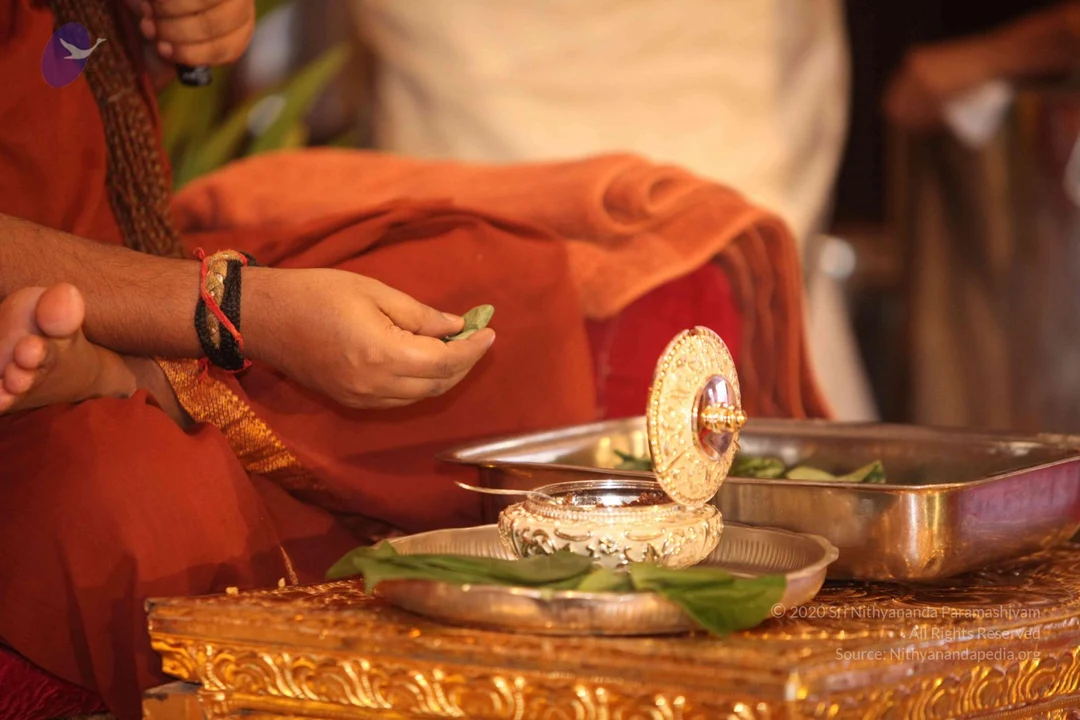
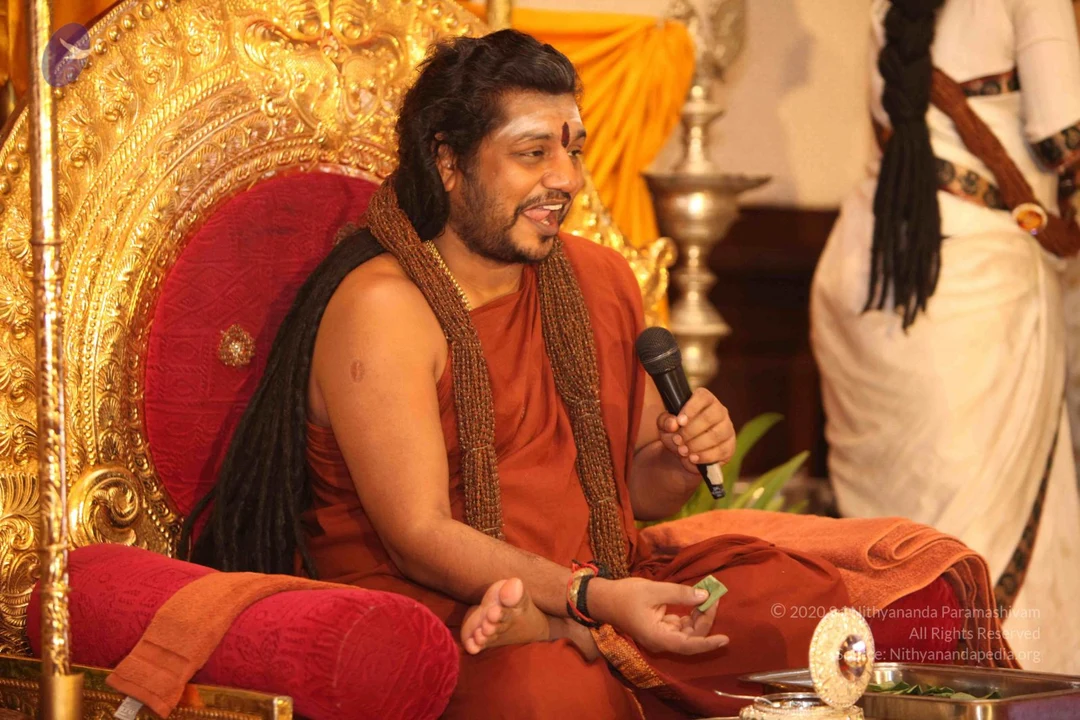
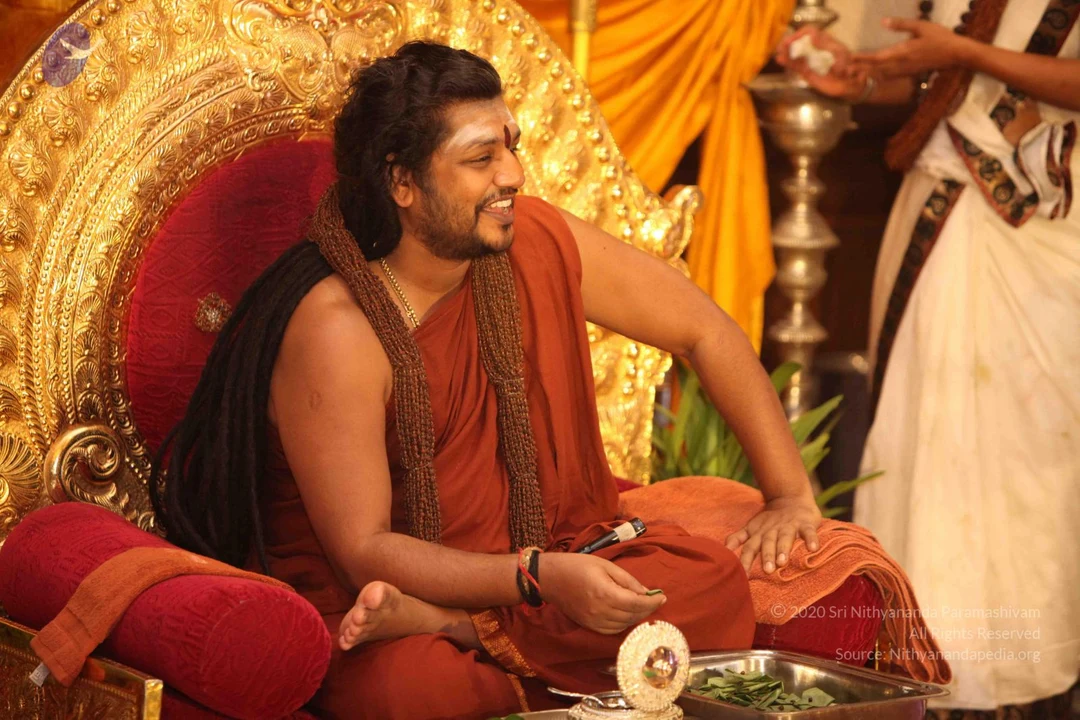
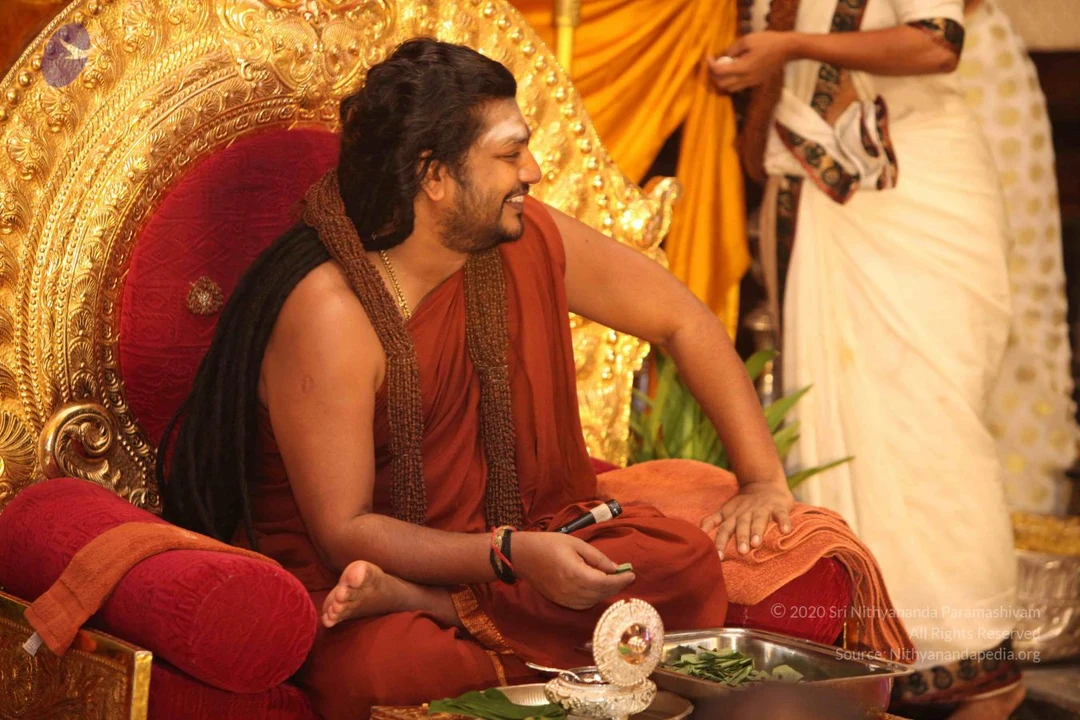
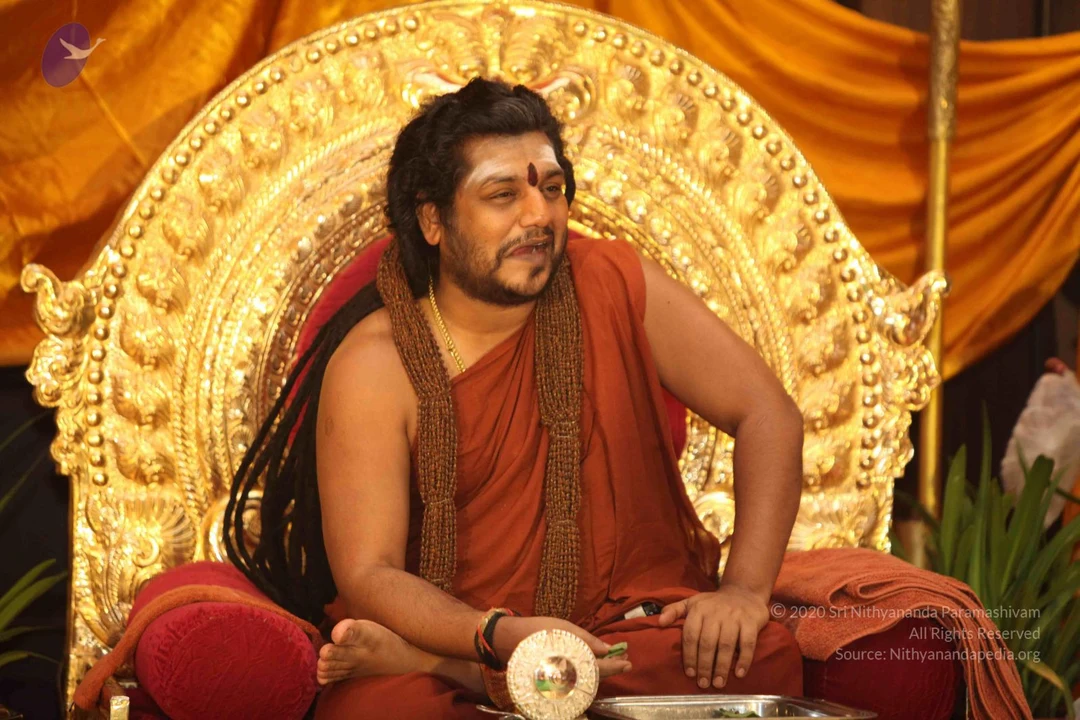
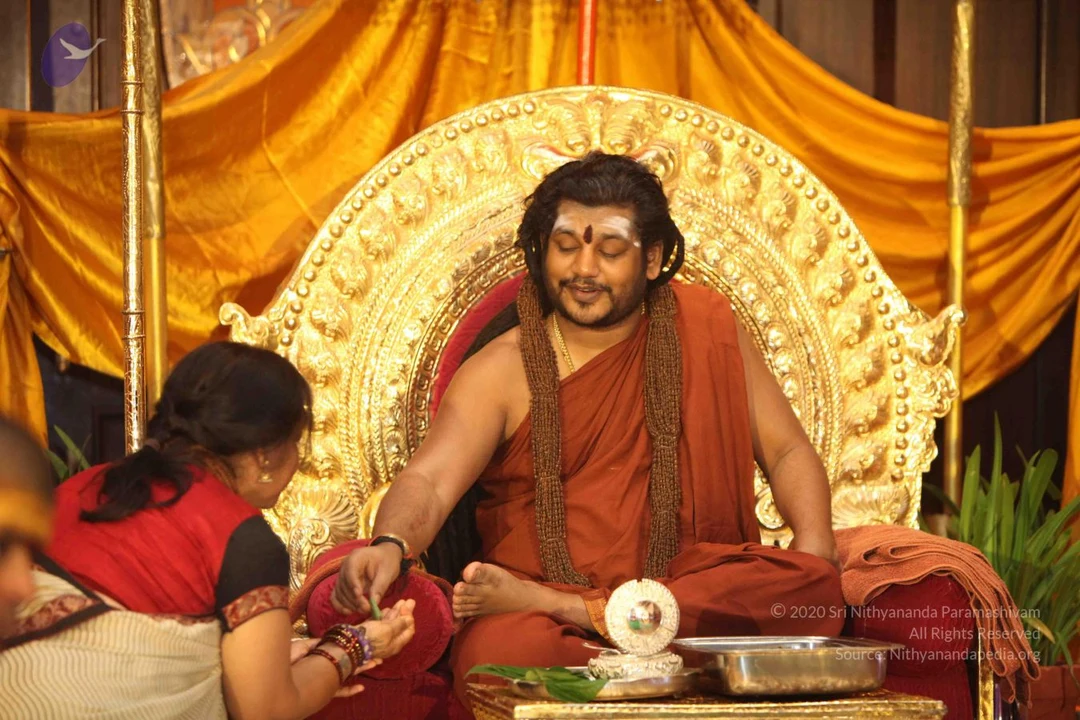
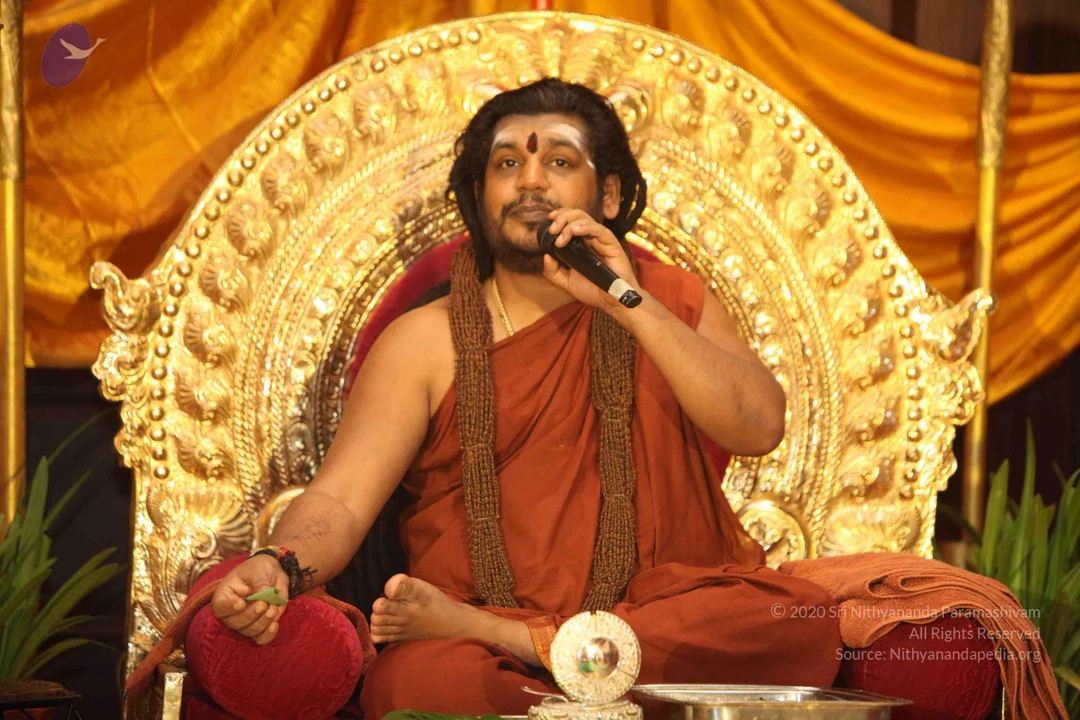
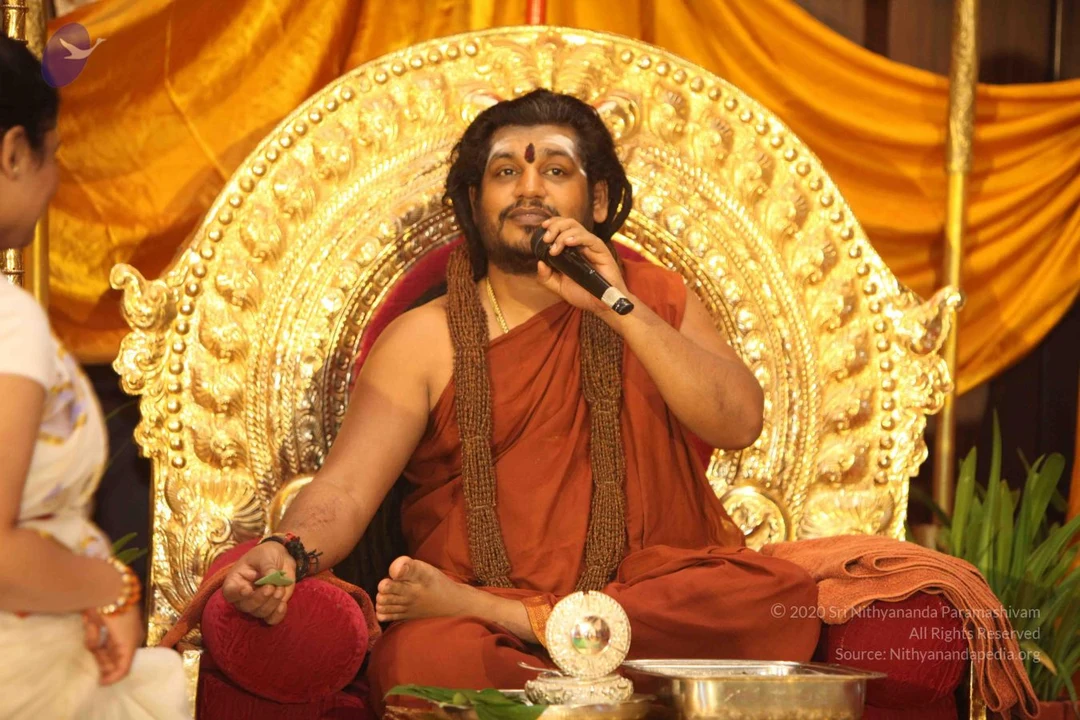
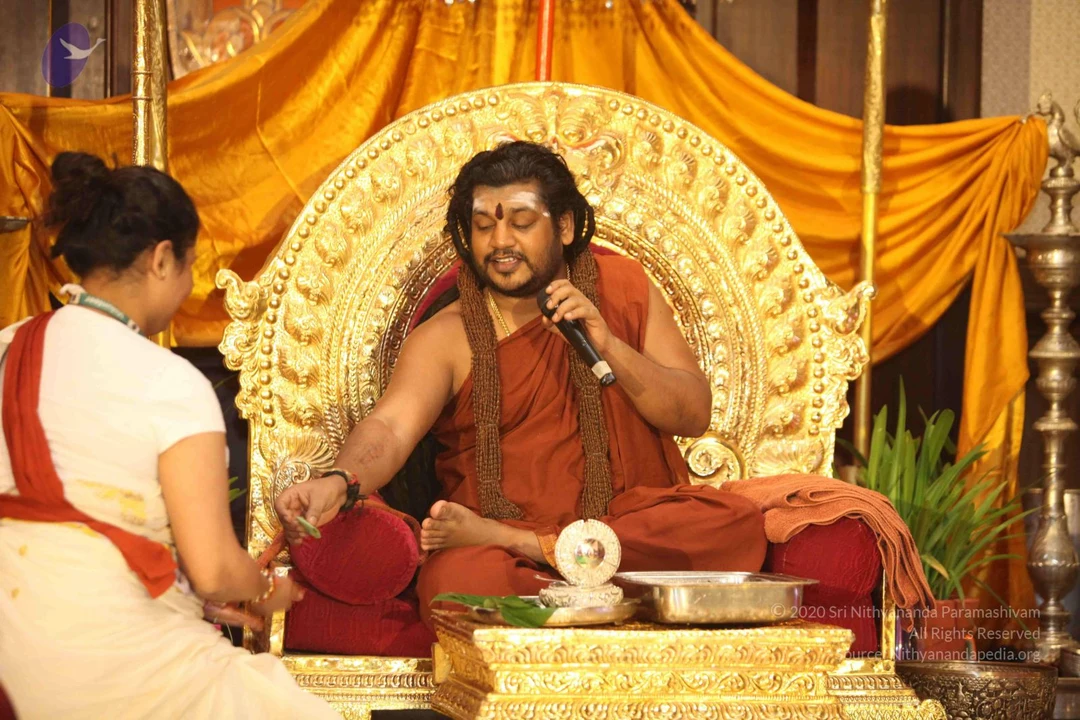
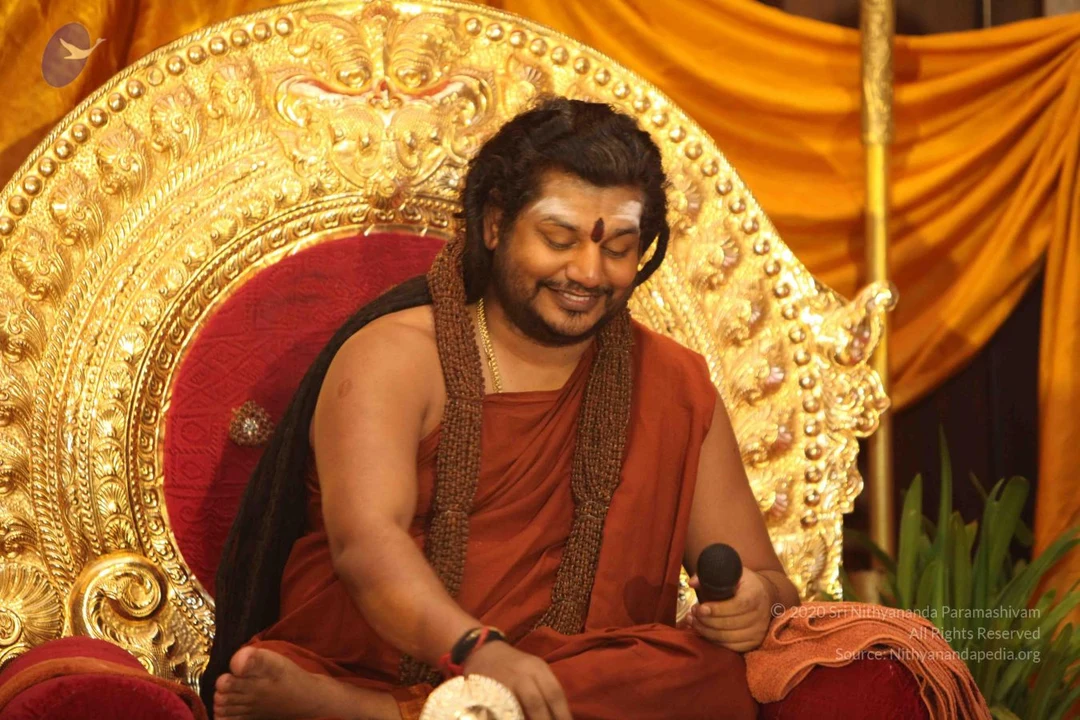
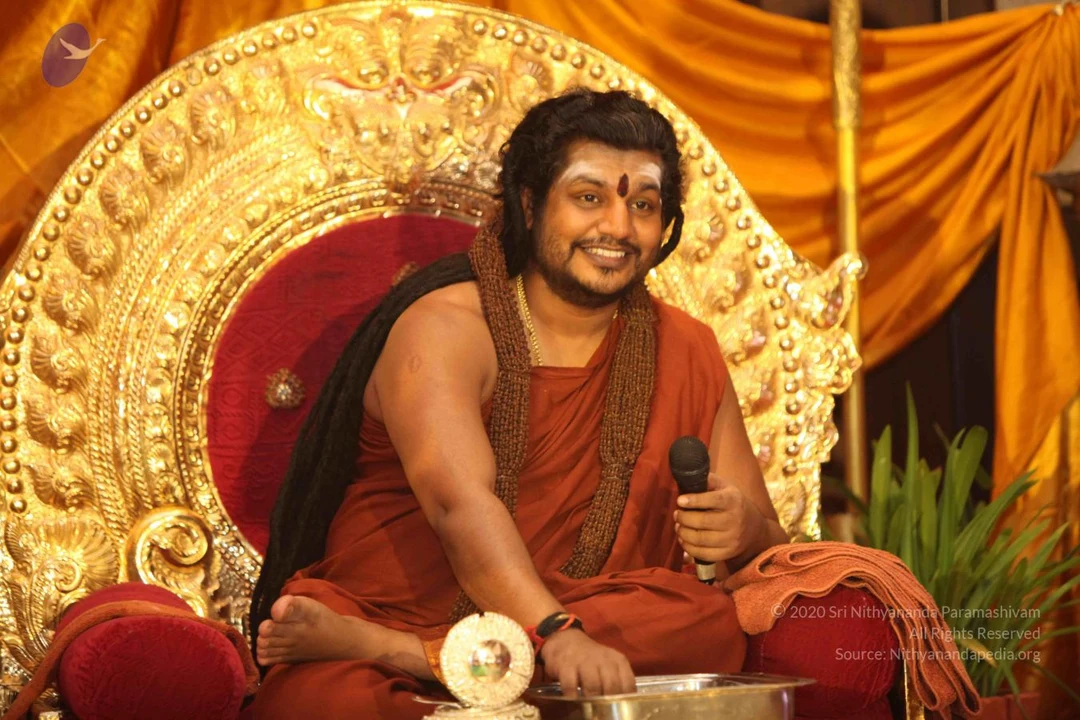
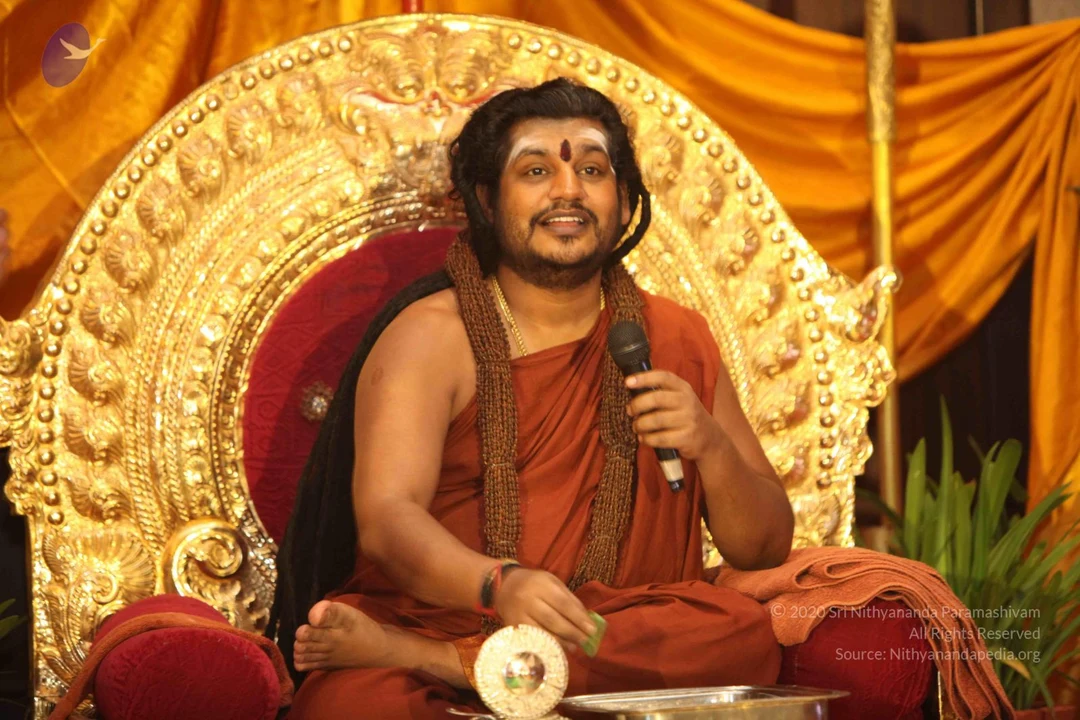
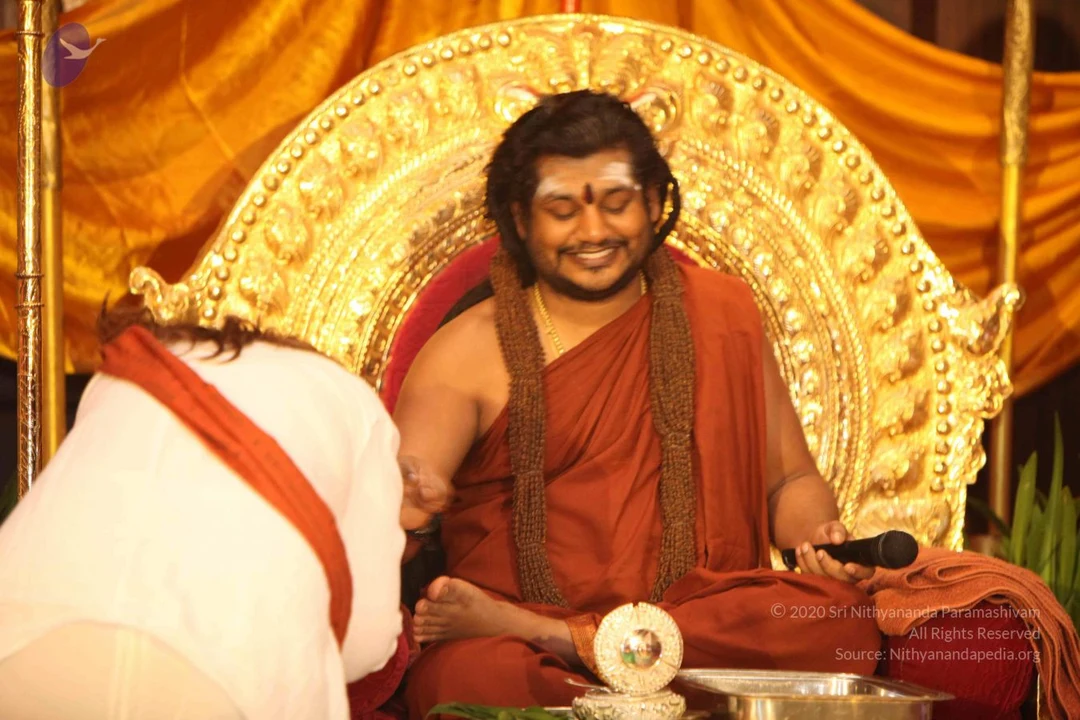
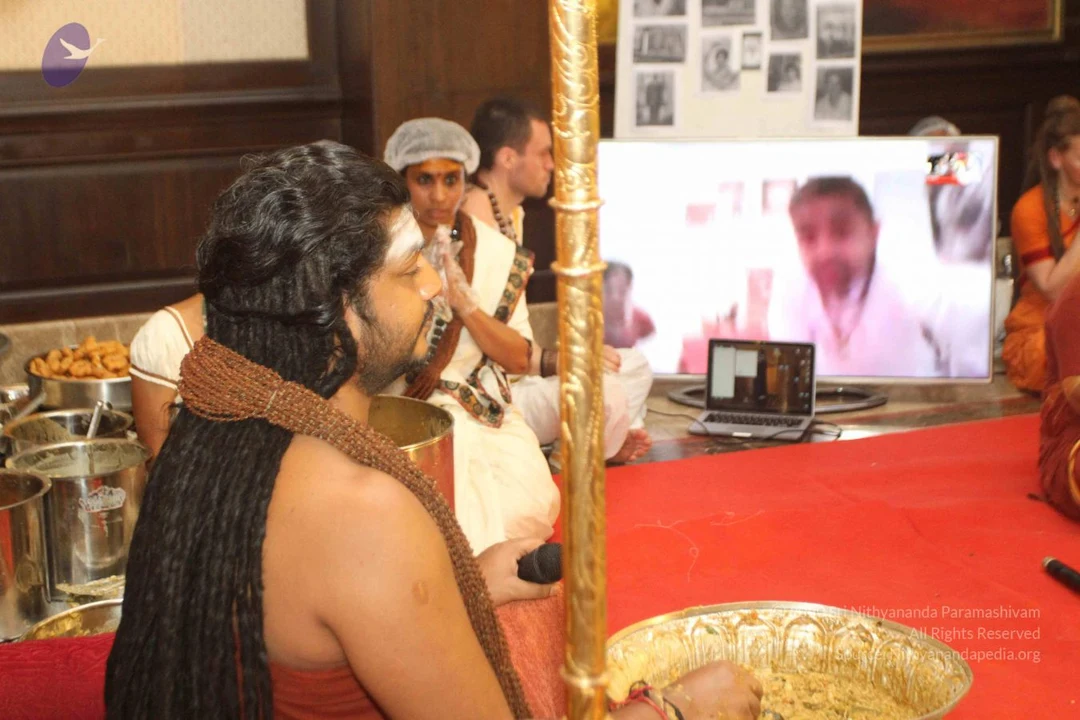
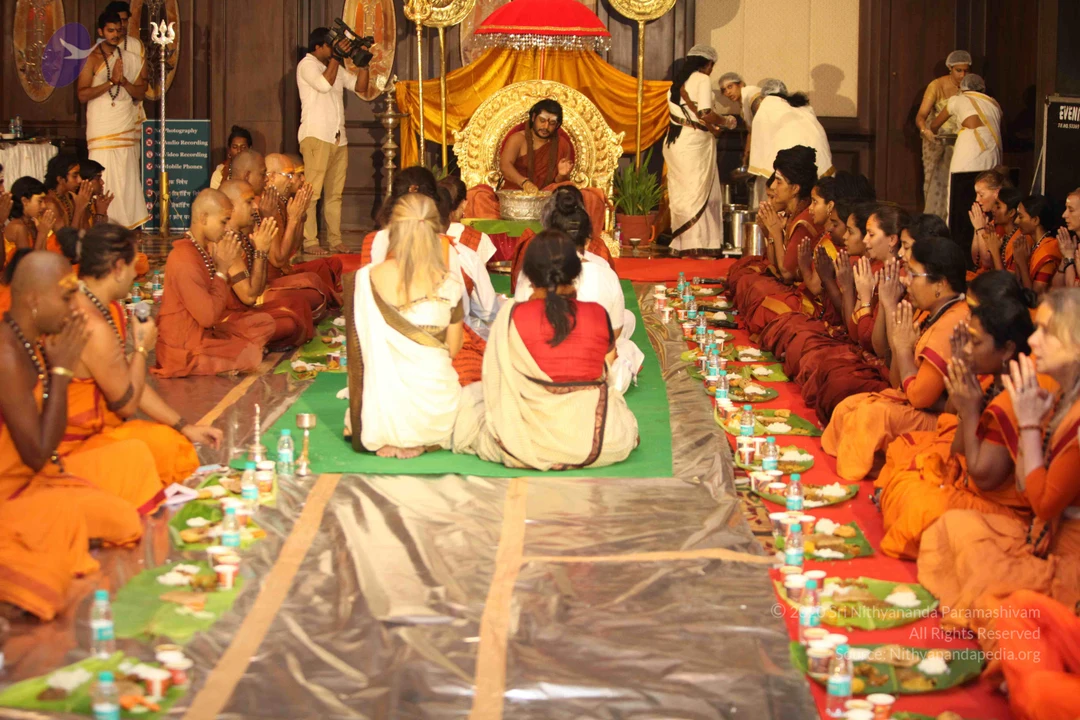
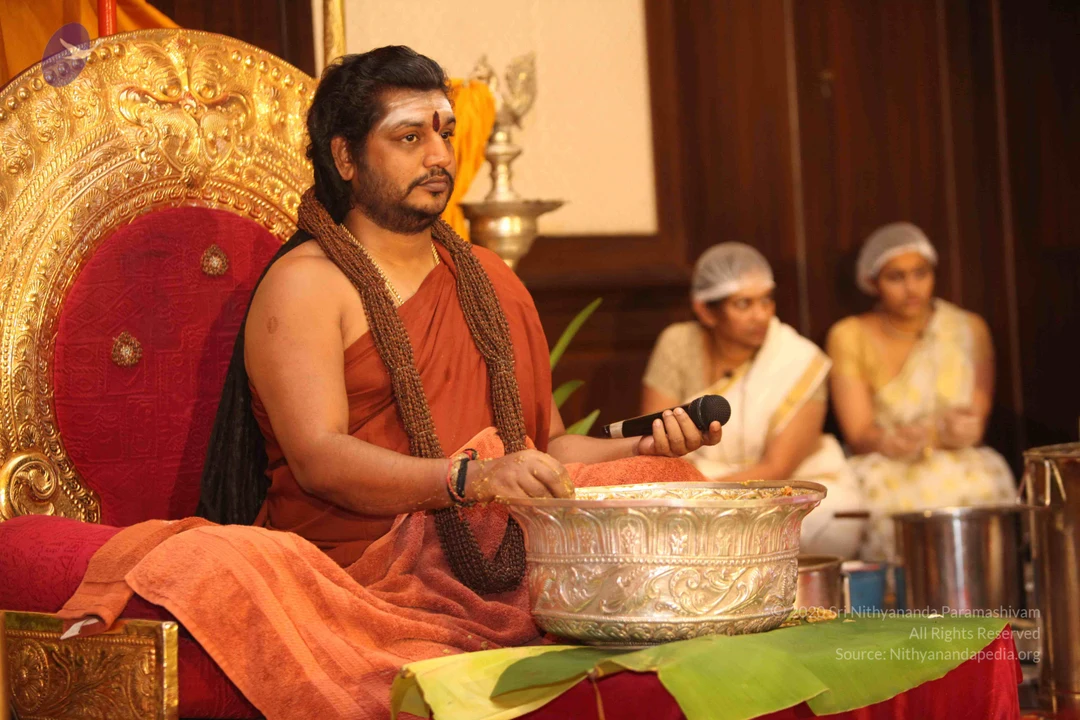
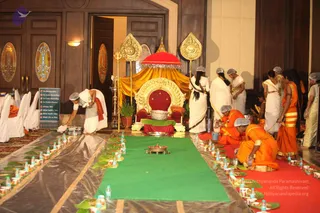
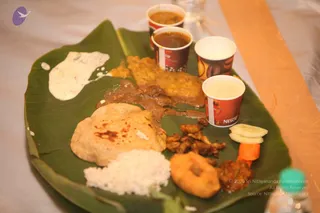
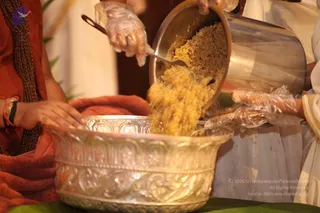
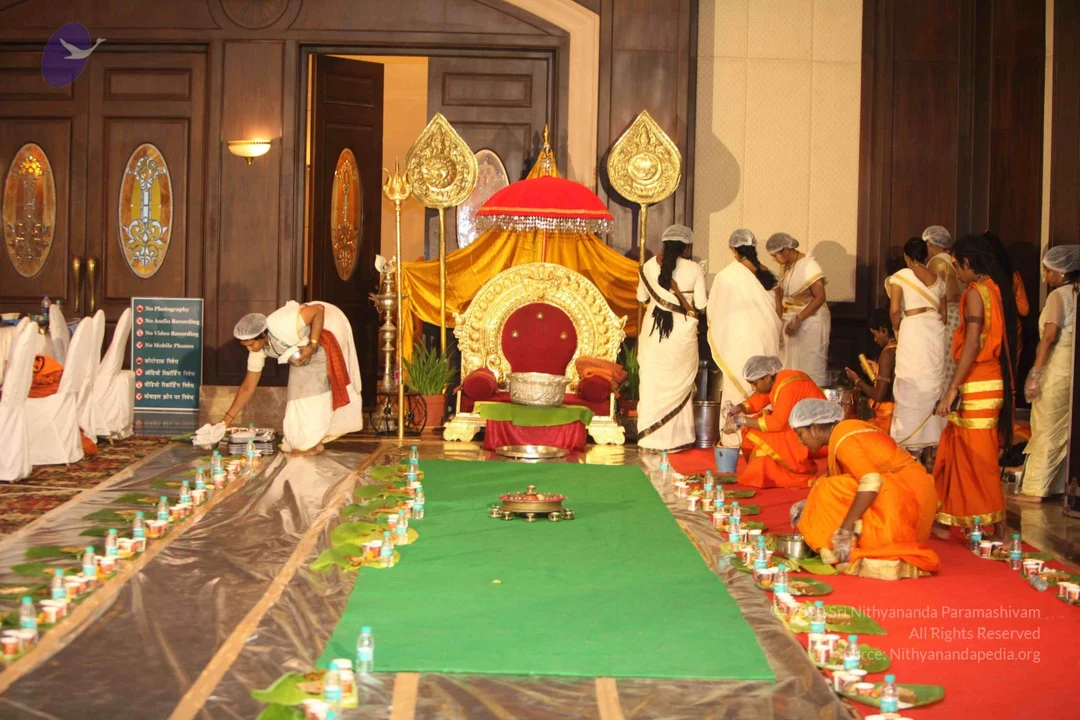
A photograph of a ceremonial hall being prepared for a ritual. An empty ornate golden throne with a red cushion sits centred beneath a red and gold canopy, flanked by tall golden ceremonial standards and a trident on a stand. A green cloth runs down the centre of the floor, with rows of brass lamps, banana-leaf plates and small cups set along both sides. Several women in white saris with grey head coverings are working: one bends to arrange items on the left, others in white stand near the throne, and women in orange-saffron saris kneel on the red carpet on the right, tending the plates. Dark wooden doors with ornate brass panels stand in the background. No one is seated on the throne.A close-up photograph of a traditional South Indian meal served on a large green banana leaf on a table. Arranged on the leaf are white rice, a puffed flatbread, a golden fried vada, a dal-like curry, a meat or vegetable gravy, a pile of fried crisp pieces, a white yogurt or raita, sliced cucumber and carrot, and a glass of white drink. Three small paper cups with dark brown liquid and one with a pale liquid, branded Nescafe, sit at the top of the leaf. Orange cloth runs along the right edge. No people are visible.A seated man in a deep orange-red robe and rudraksha mala sits on an ornate gold throne with a red cushion, touching his forehead with his right hand with eyes closed. He has a white horizontal forehead mark with a red dot and a red-and-white wrist thread. A gold-draped yellow backdrop, a brass lamp and brass plates are visible. Two attendants in white garments and white head covers stand at the right, one holding a silver bowl. a person cues: long swept-back hair, saffron-orange robe and mala on a gold throne.A photograph of a seated man on an ornate gold-and-red throne with carved gold scrollwork, his hands pressed together in namaste and eyes closed. He wears an orange-saffron cloth wrap, a double rudraksha mala draped across his chest, a gold chain, a red tilak with white markings on his forehead, and a red and black wrist thread. Behind him hang gold and orange drapes, with a brass oil lamp to the right. A woman in white with a hair net and plastic gloves stands at right, tending to a silver bowl placed before the throne. a person: the seated man has a saffron wrap, rudraksha mala, gold chain and ceremonial throne seating, consistent with the page. Ritual setting appears to be padapuja or a similar honouring.Close-up photograph of an abhishekam-style offering: two gloved hands in clear plastic gloves pour a thick yellow liquid. In the left foreground a person in orange-red robes sits with a hand resting on the bowl's rim, wearing a red thread and a bead bracelet, a woven rudraksha-style cord visible at the shoulder. A green leaf lies beneath the bowl.A photograph of an offering being poured into an ornate, embossed silver bowl on a green cloth. A person in an orange-red garment and a brown-beaded mala on the left rests a hand on the bowl's rim, while gloved hands tip a steel vessel of cooked grains and yellow rice into it. Another person in white clothing stands at right. Foliage is visible in the background. The scene suggests an annadan or prasadam offering, though no deity or speaker is shown.

IA-Maheshwarapuja
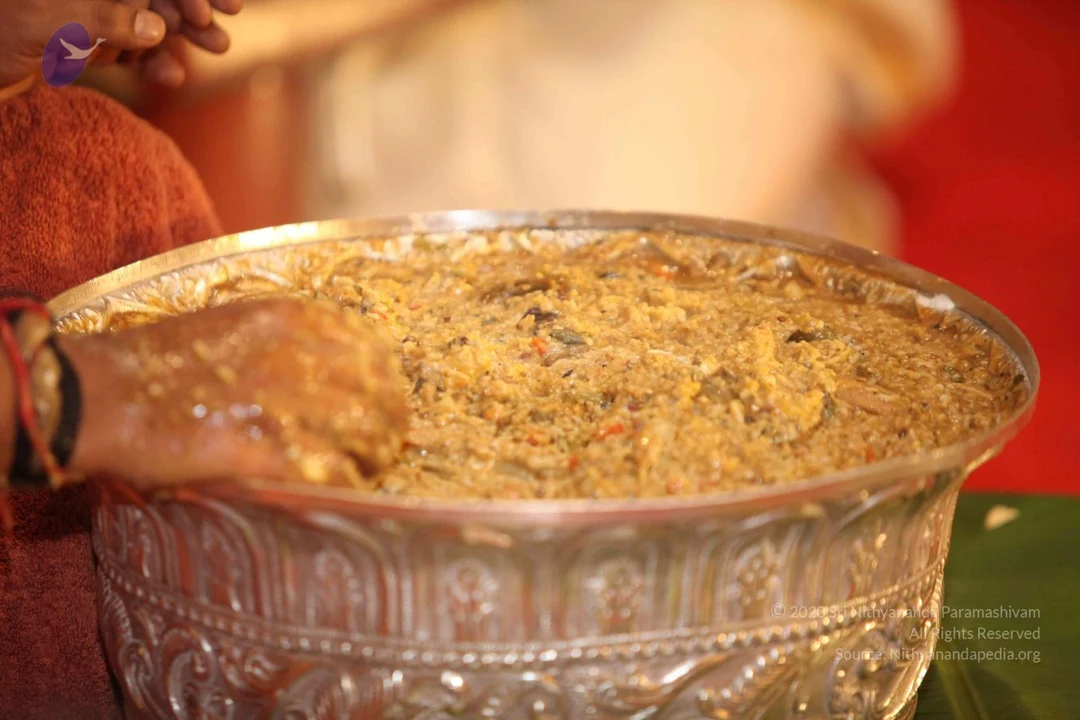
19 photosSource gallery
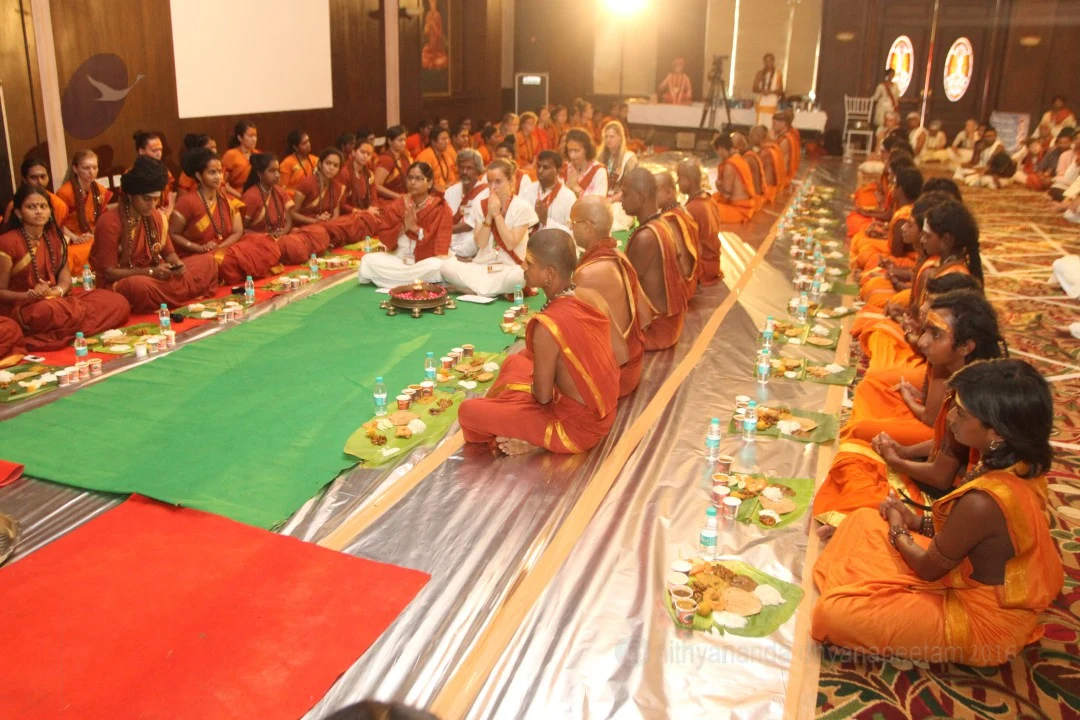
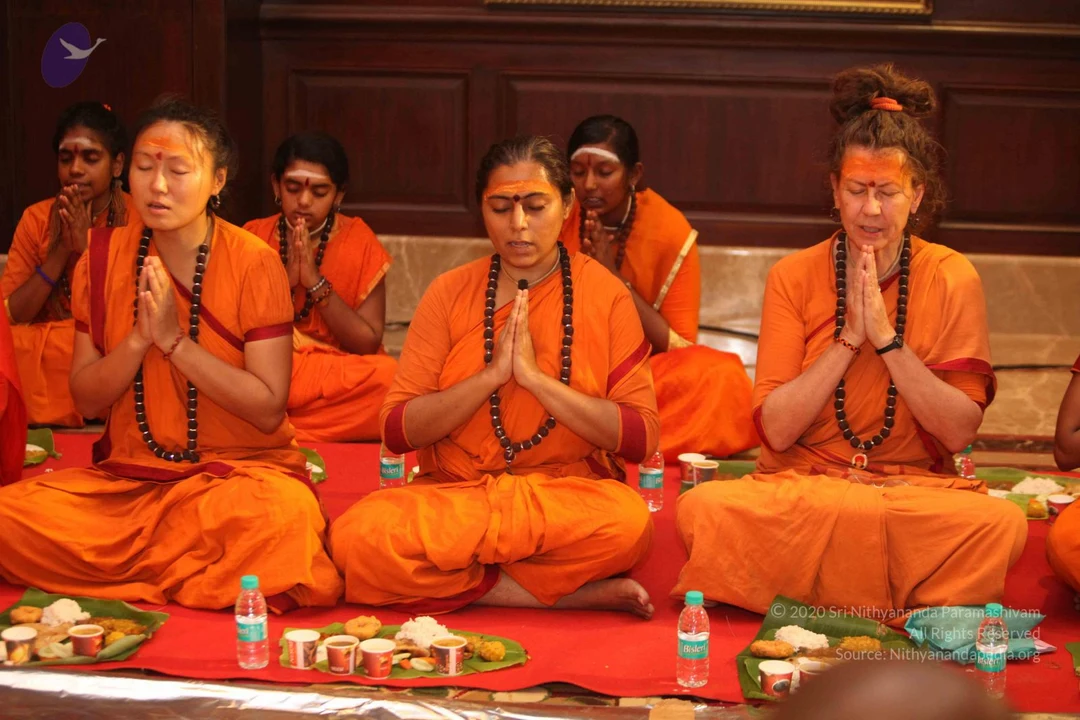
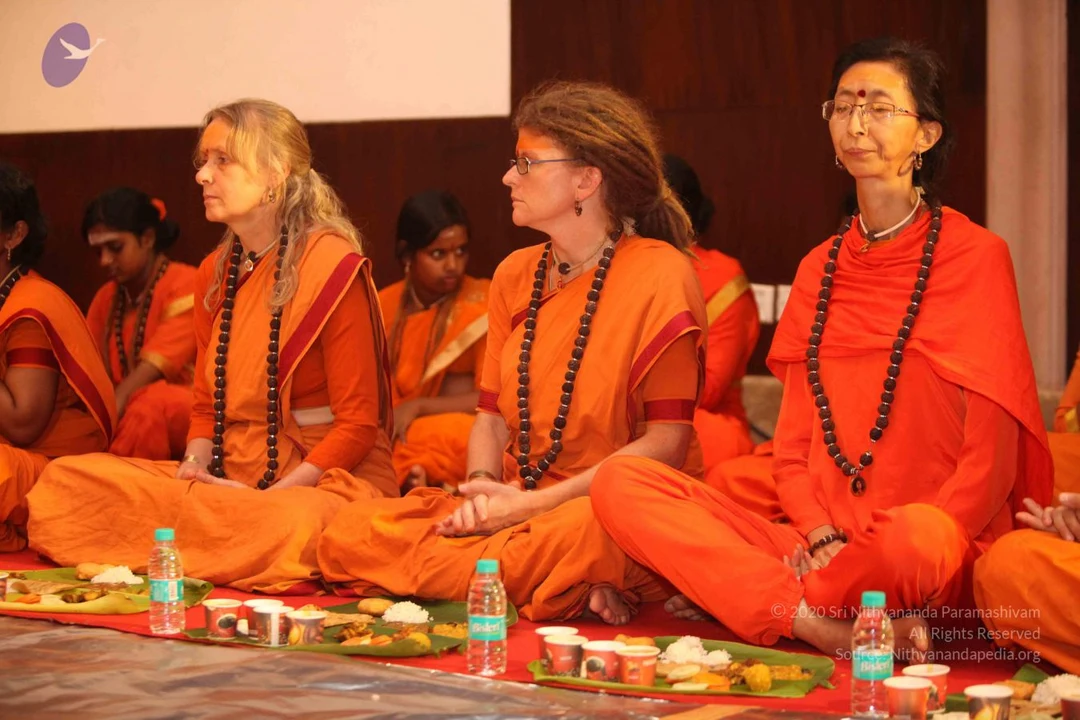
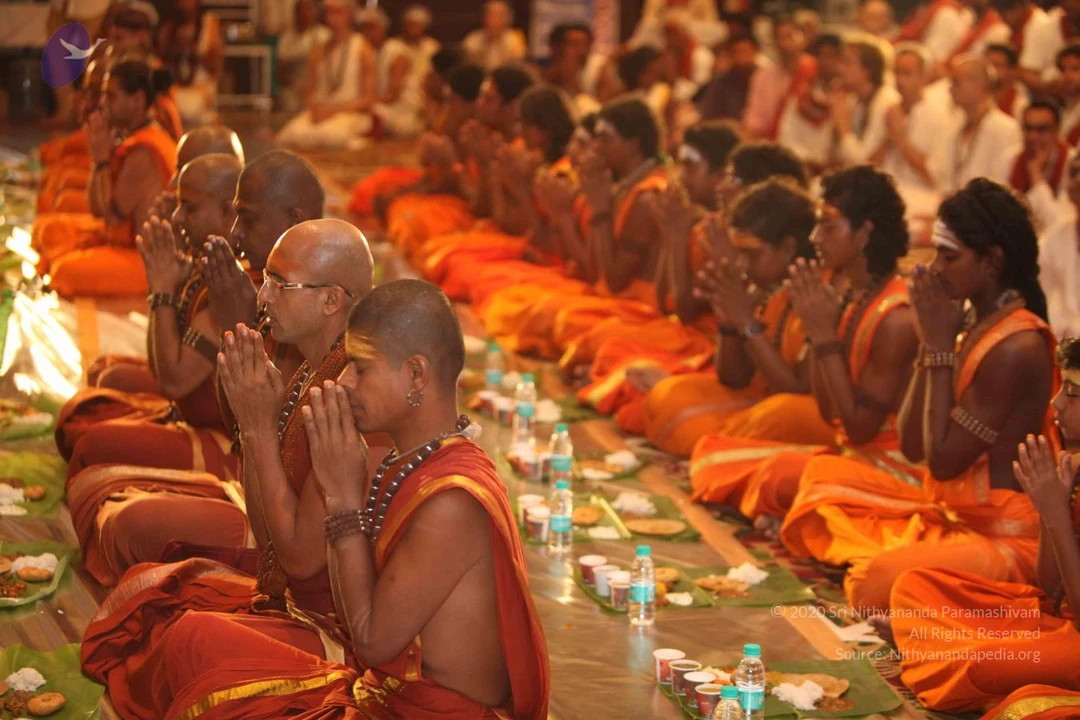
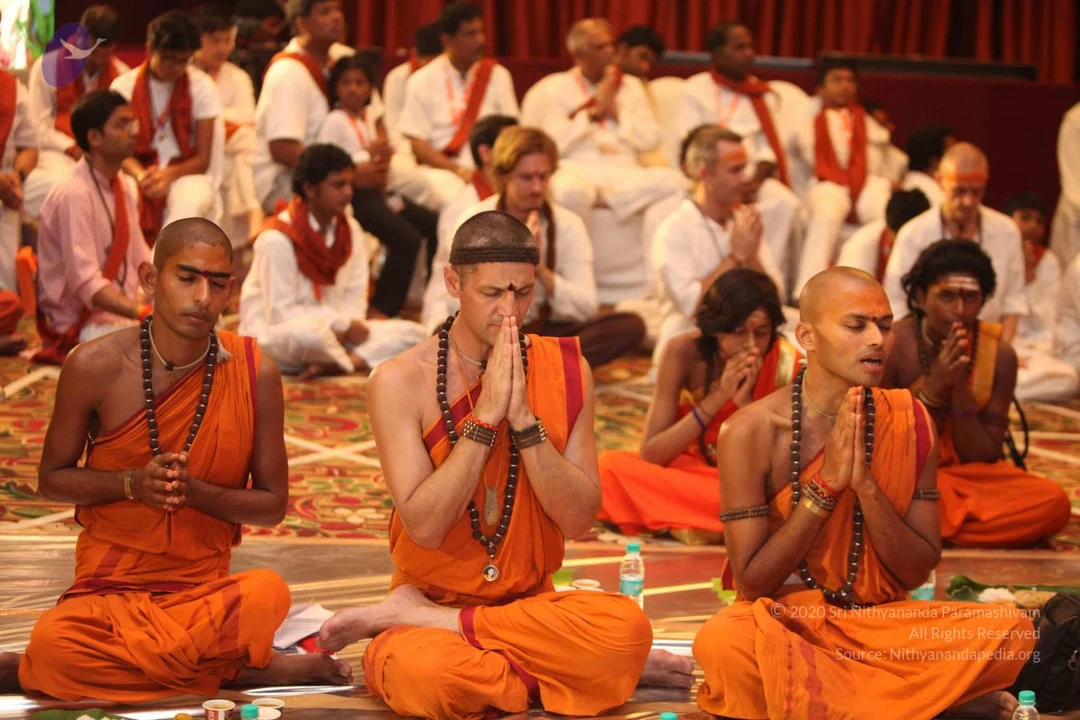
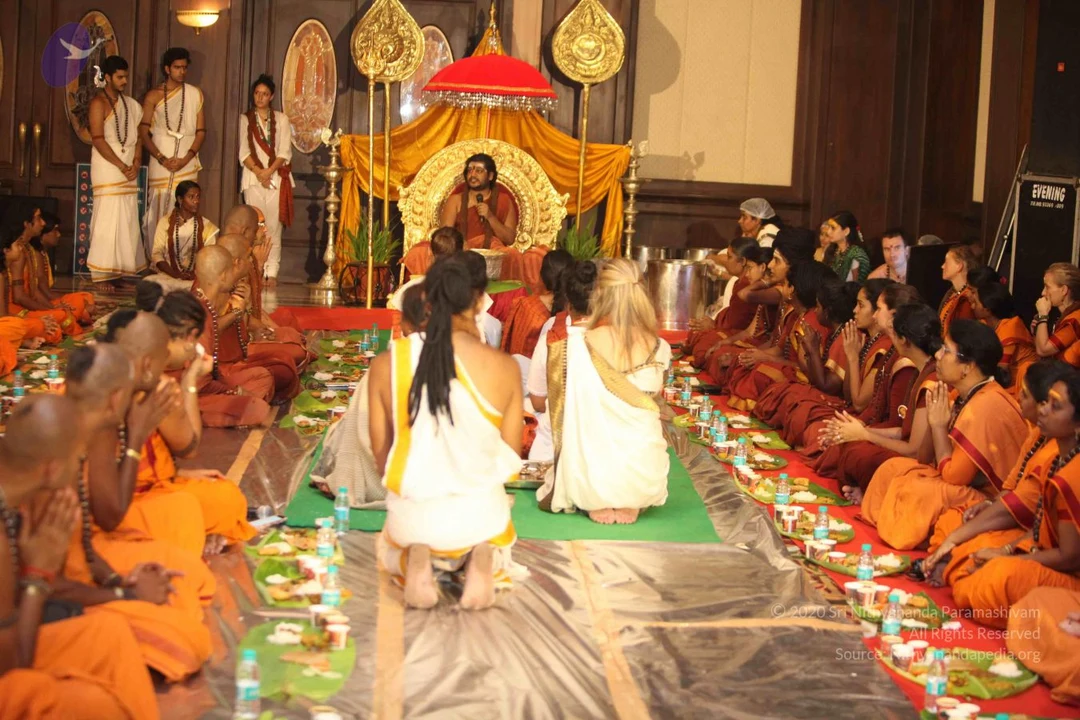
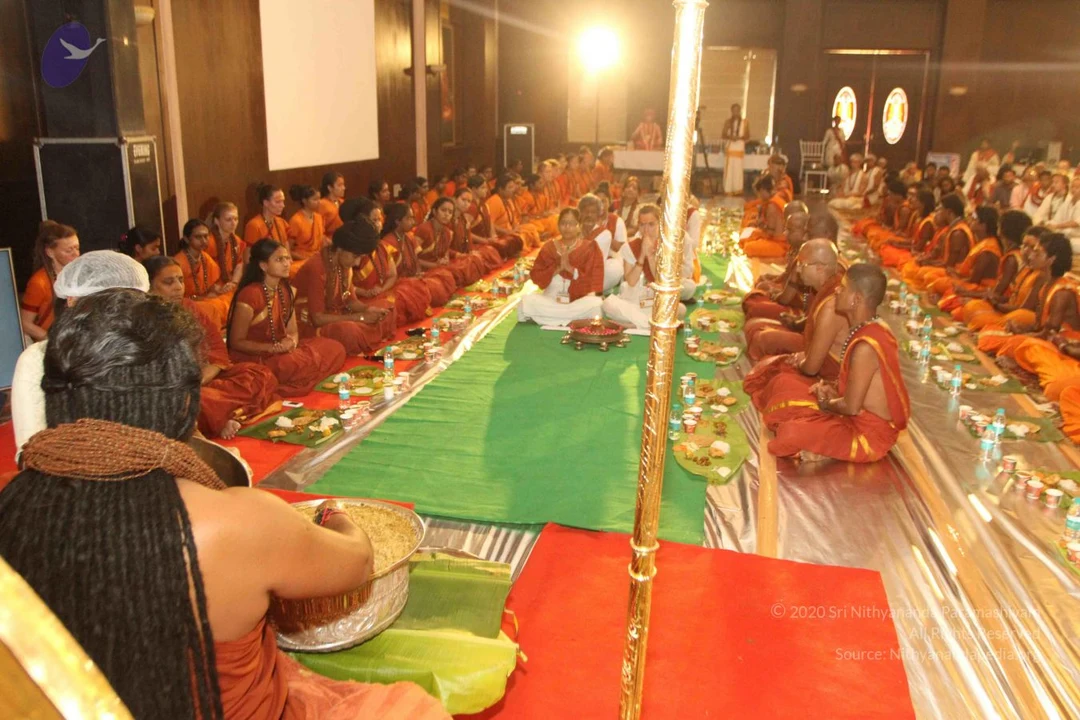
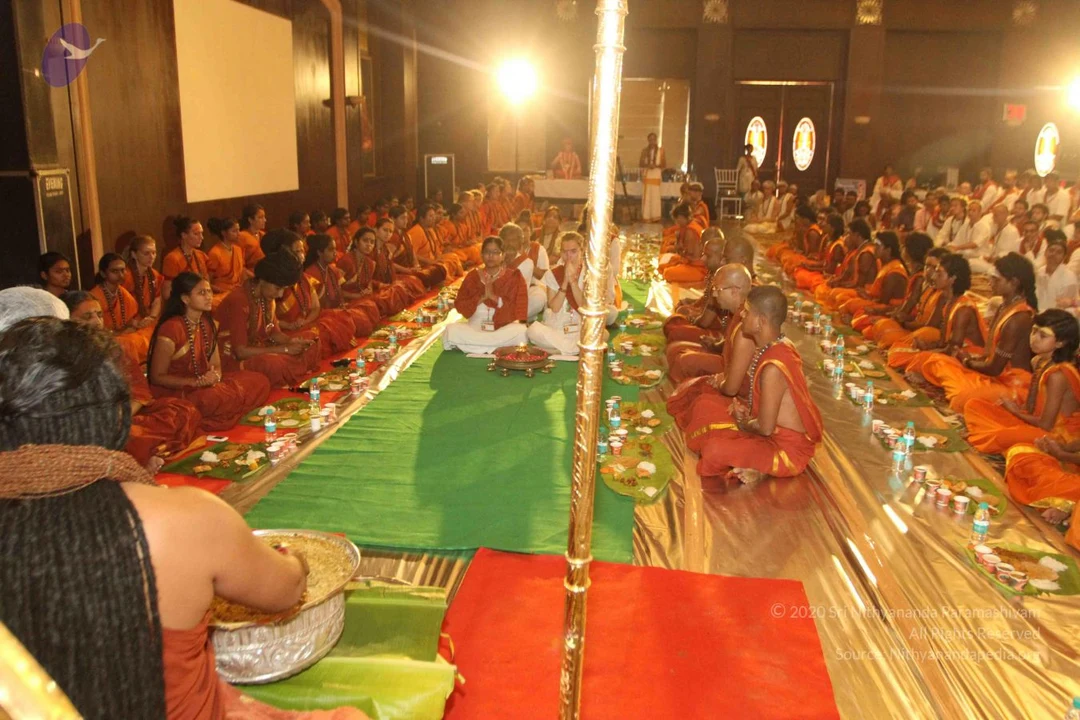
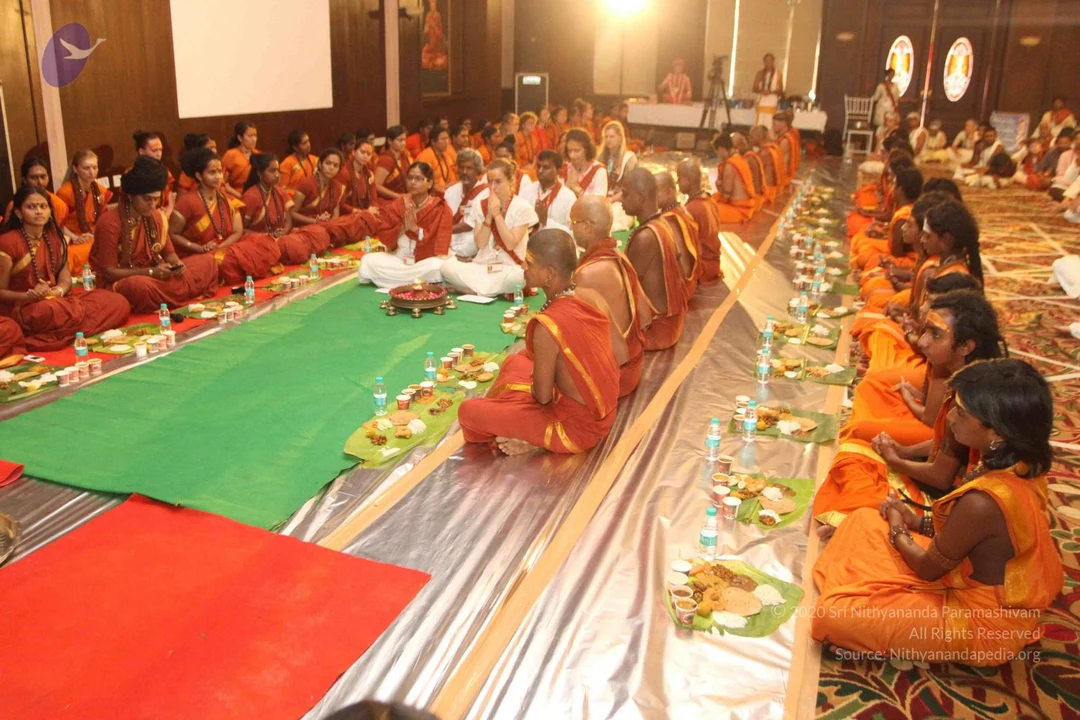
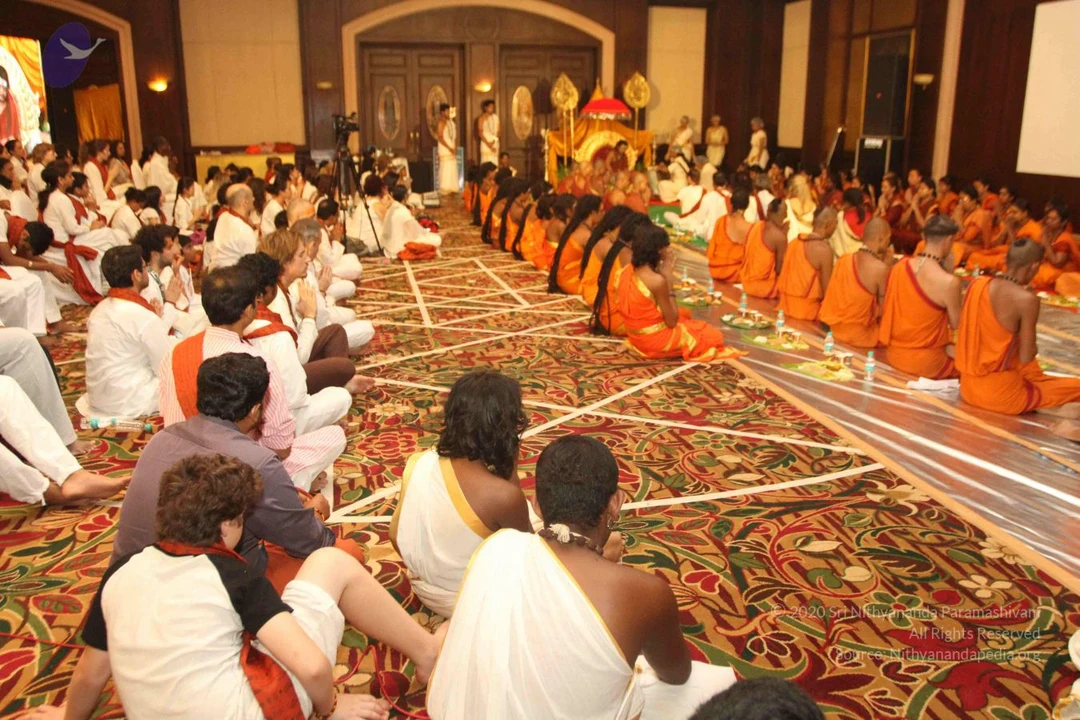
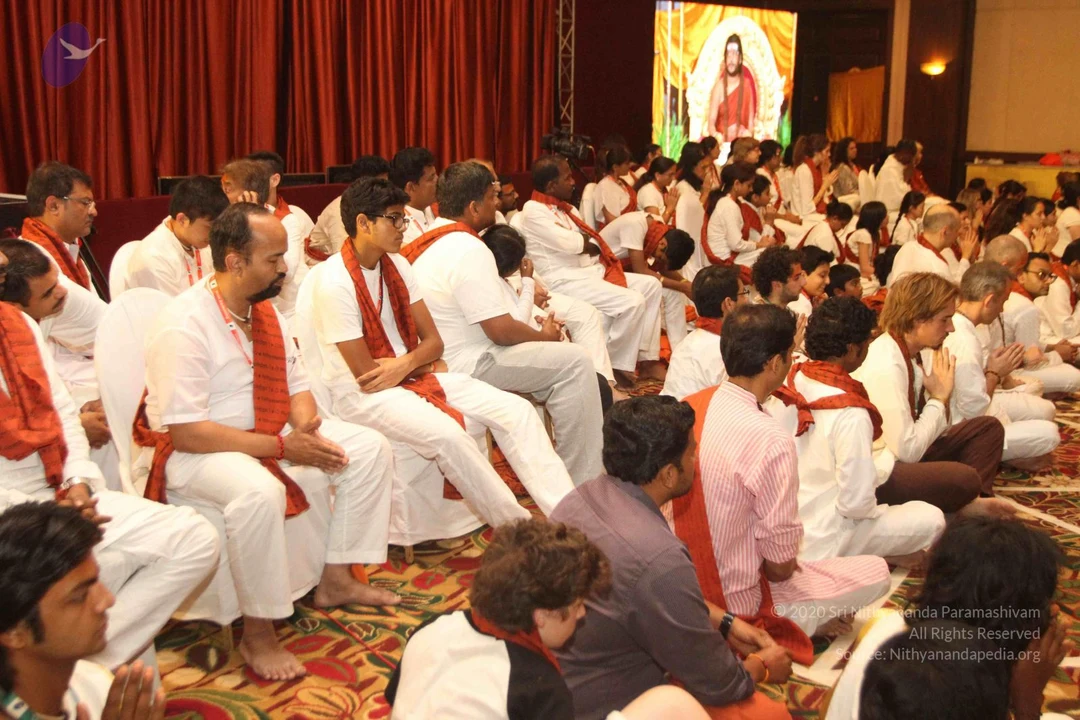
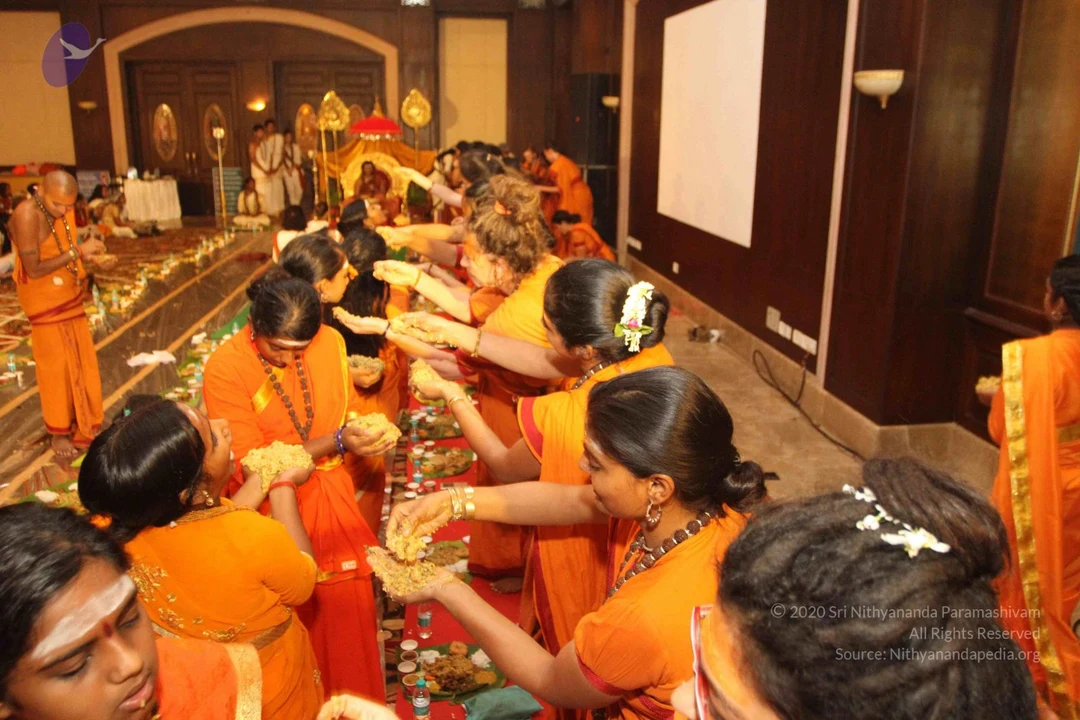
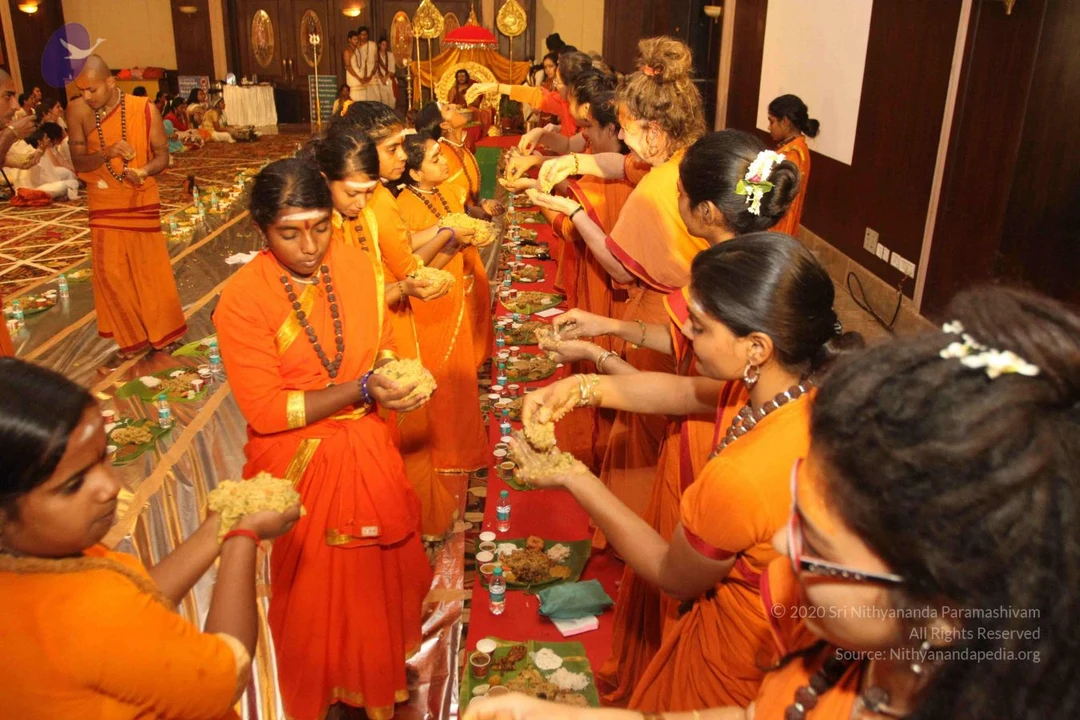
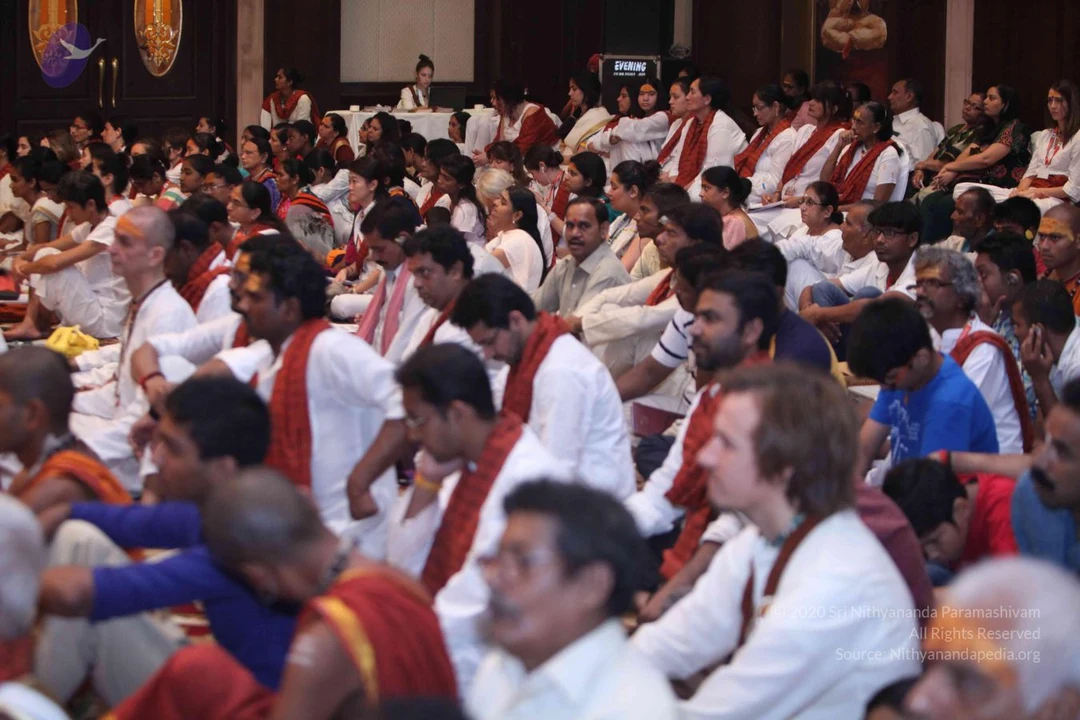
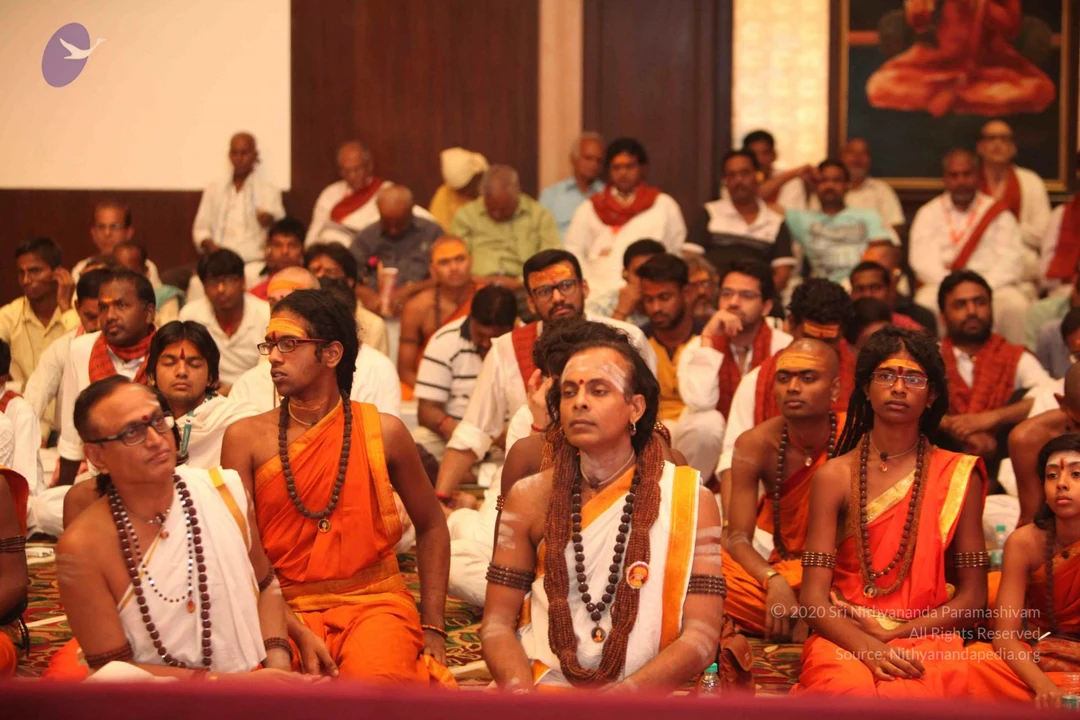
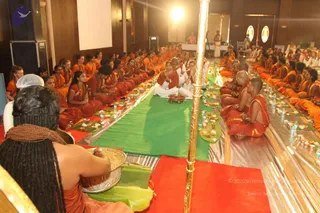
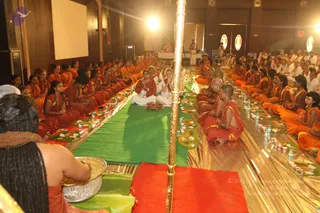
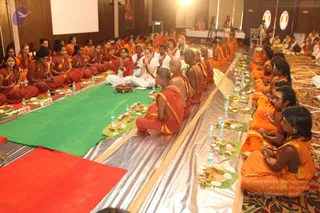
A long indoor hall where many devotees in saffron and orange robes with rudraksha malas sit cross-legged on floor mats in rows along a green runner and a red carpet. Plates of food with small cups of water are laid before them, as in an annadan meal. In the foreground, a person with long braided hair in an orange garment holds a large silver bowl of grain or rice. Near the centre, two women in white sit with hands pressed in prayer behind a copper vessel. A tall golden staff stands at the edge of the aisle, and a stage with a white table and flower arrangements is visible at the far end. Banner text is partly visible at the top corners.A large hall with long rows of seated devotees in saffron and orange clothing, many wearing rudraksha malas, sitting cross-legged on green and red mats along a central aisle. Banana-leaf plates with food, small cups and water bottles are set before them. A woman in red with a white shawl sits with hands folded near the front, and a server in orange carries a metal tray of food at left. Some attendees wear white. Background shows a stage with a table, a white screen and round emblem signs on the walls.A photograph of a seated group in an indoor hall during a communal meal. Rows of people in saffron and orange robes sit cross-legged on a long green cloth and silver sheeting, each before a banana-leaf plate of food with small cups and water bottles. Several women in red and orange saris with rudraksha malas sit at left, and a man in white kurta sits with folded hands near a brass plate of offerings at centre. Behind them, a man in white sits at a table beneath a projection screen, and a stage with backdrop panels is visible at upper right. Carpeted floor with a floral pattern.A large hall with two long rows of seated devotees in saffron-orange robes and rudraksha malas facing each other across a central aisle covered with silver foil and green leaf plates set with food, fruit, flowers and water bottles. At the far end a figure sits on an ornate golden throne with a red canopy and gold-decorated pillars, flanked by attendants in white. Men on the left and women on the right sit with palms pressed together, and a few women in white saris sit near the front. A camera operator and a large screen stand at the sides. A seated figure on a central throne is shown among the attendants, though the appearance is uncertain from this distance.A large hall with rows of seated devotees in saffron-orange robes and rudraksha malas sitting cross-legged on long mats along both sides of a central aisle. Banana leaf plates with rice, sweets and snacks, and water bottles are set before them. At the far end, a raised golden canopy throne with a red top is flanked by brass ceremonial standards, where a figure in saffron sits; another figure in white stands beside it. Two women in white sari-style garments sit on a green mat near the front of the aisle. Some devotees hold their hands in anjali mudra. A white projection screen hangs on the right wall.A seated group of saffron-robed monastics sits cross-legged on a patterned mat in front of a deep red curtain, with a stage backdrop and a large screen at the edges. In the foreground, several orange-clothed sannyasis wear rudraksha malas; the central man, shaved-headed and bare-shouldered, holds his palms joined in anjali. Each has a banana leaf before him holding food and small cups, and water bottles sit nearby. Behind them, rows of people in white kurtas and red-and-saffron shawls are seated, with a woman in white at left and a cameraman on a tripod at right. Nearby figures include a bald man in saffron, a man in saffron with a tilak, and a woman in a salwar kameez standing at the front. The scene suggests a seated gathering of devotees and sannyasis during a satsang.
I-IA-Varanasi-Morningsatsangh
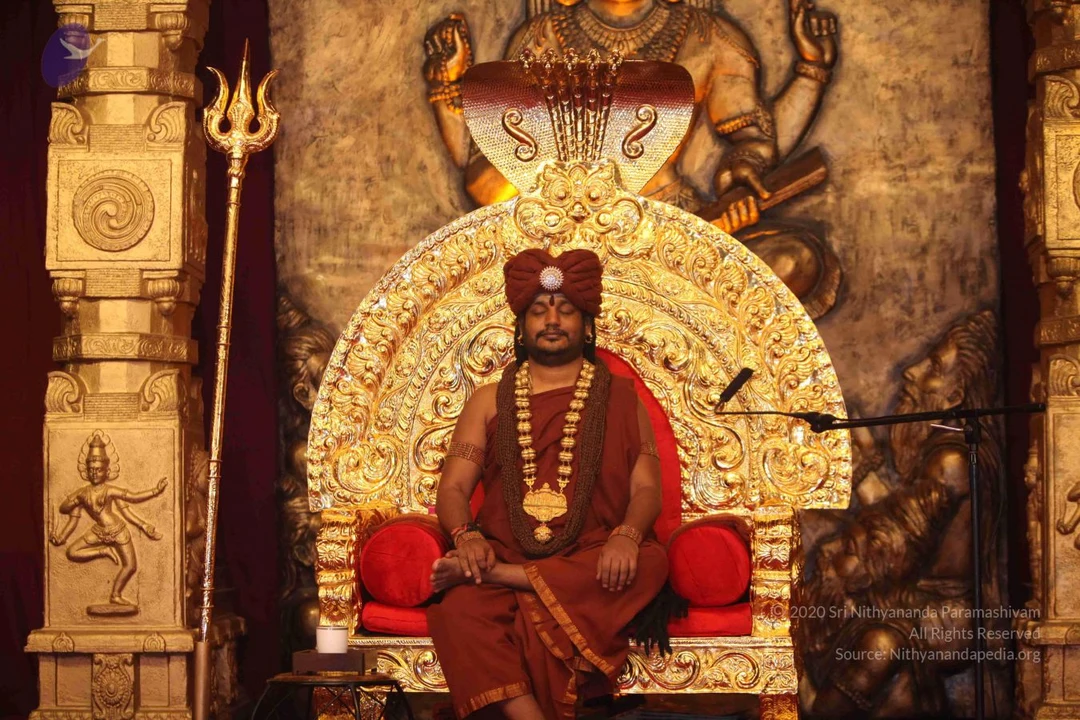
96 photosSource gallery
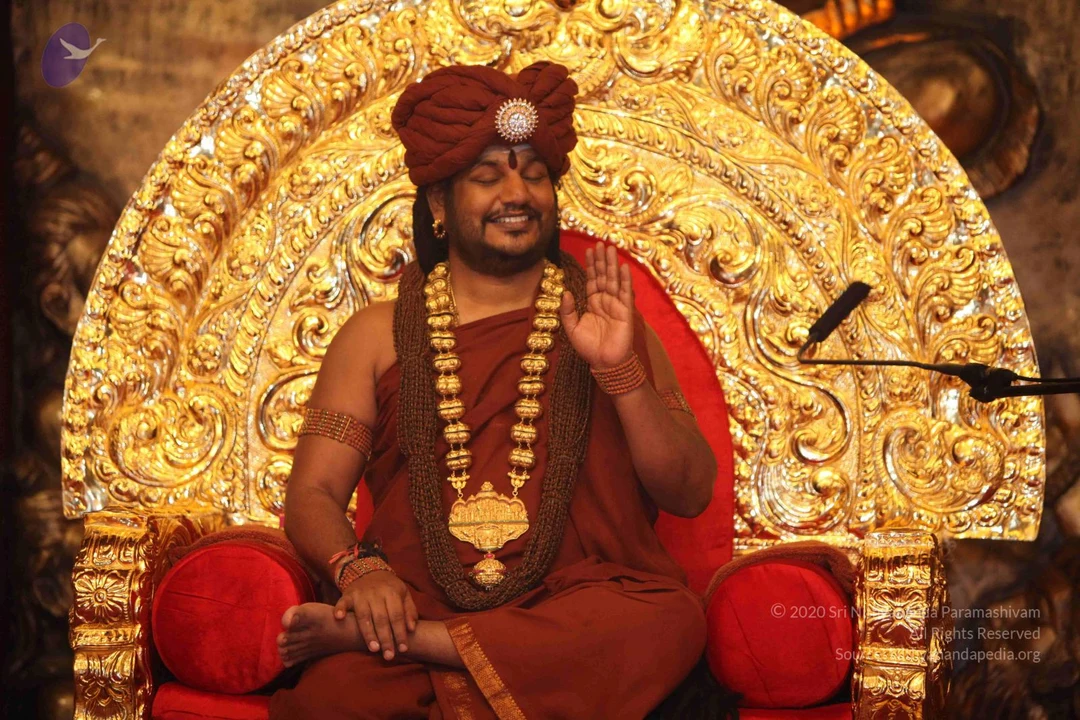
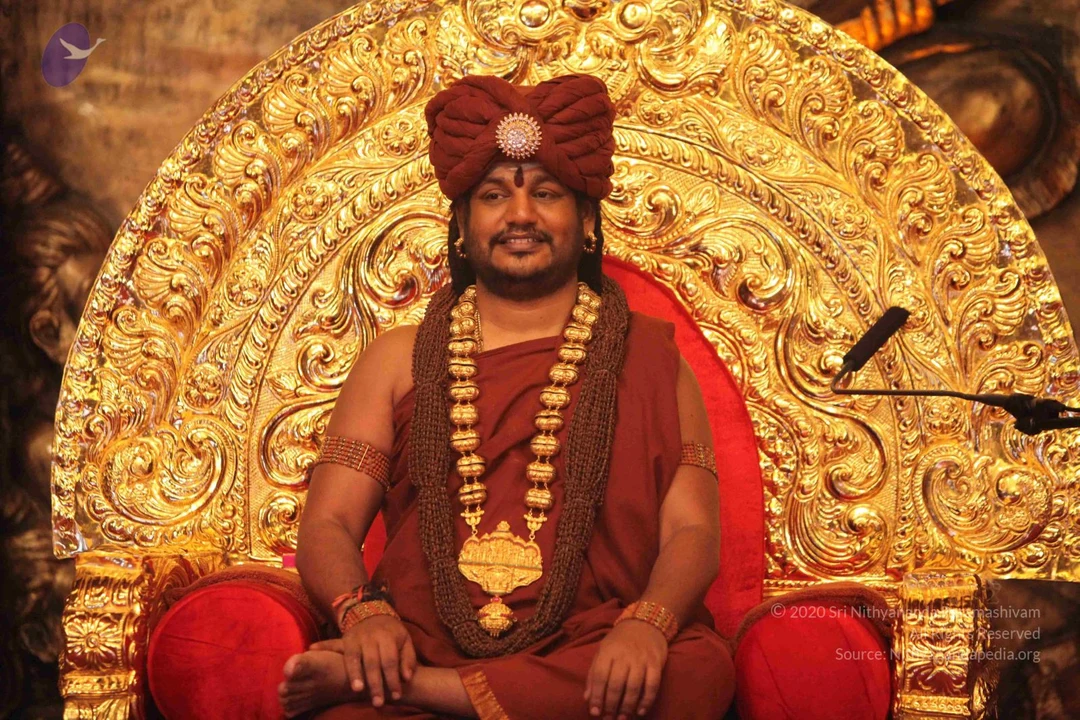
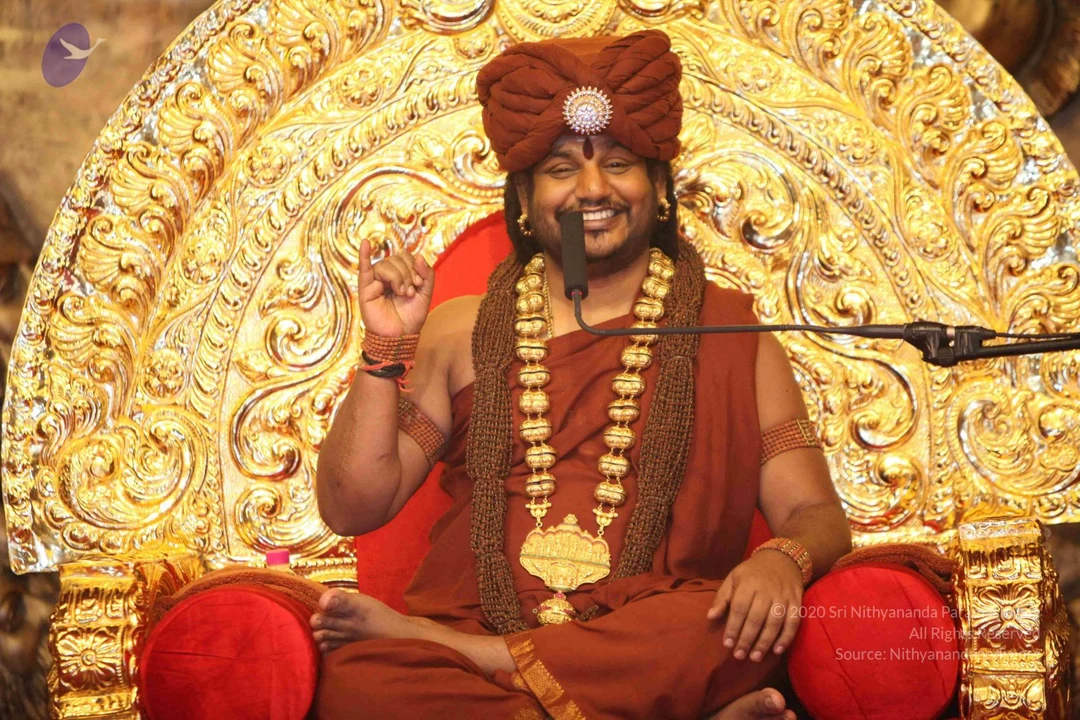
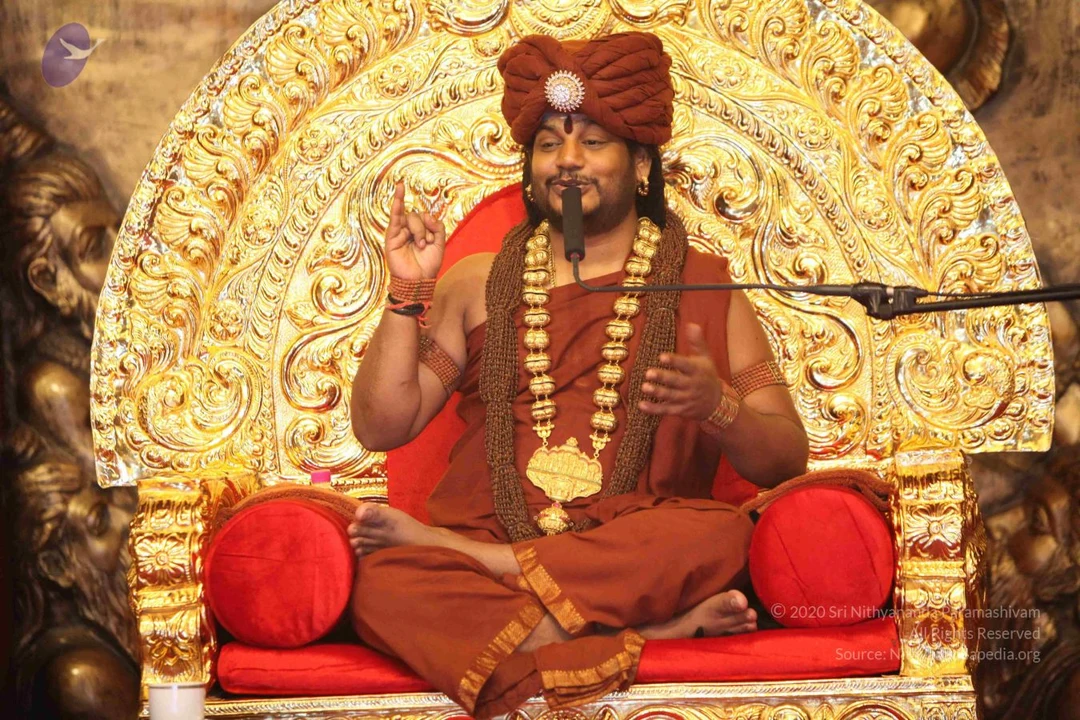
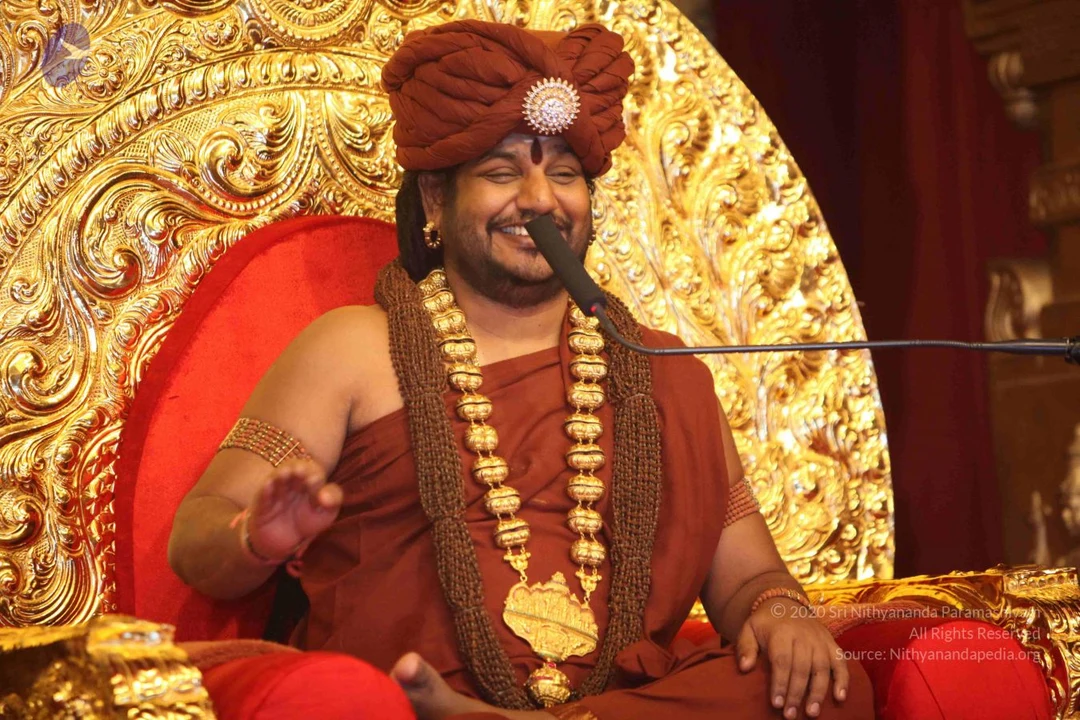
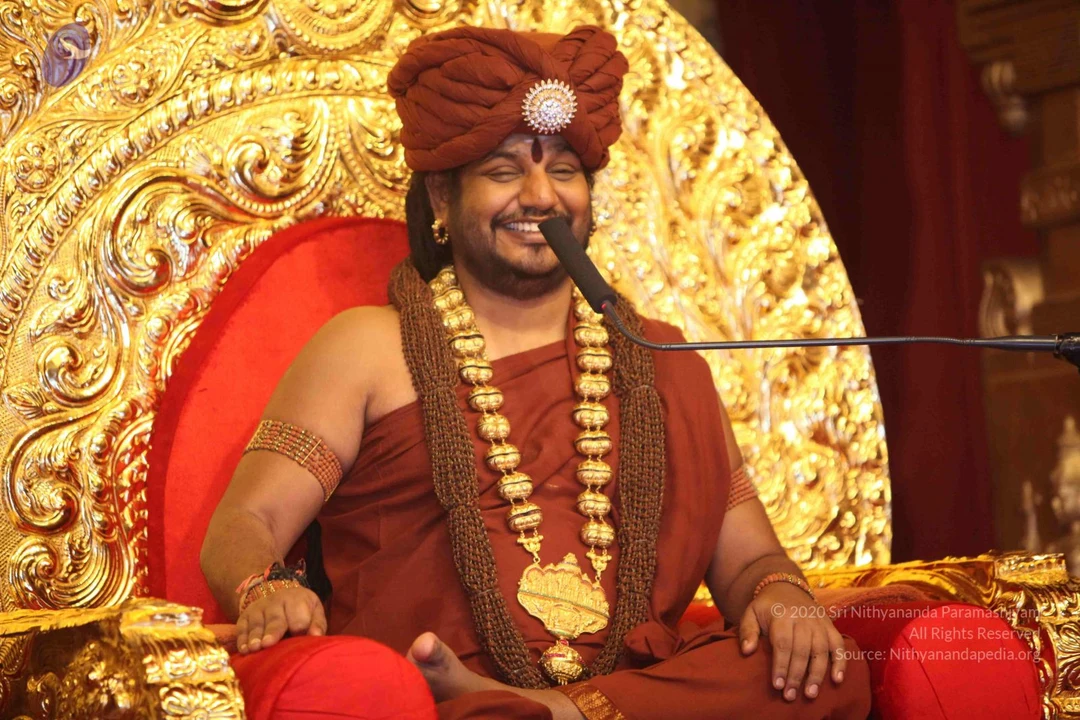
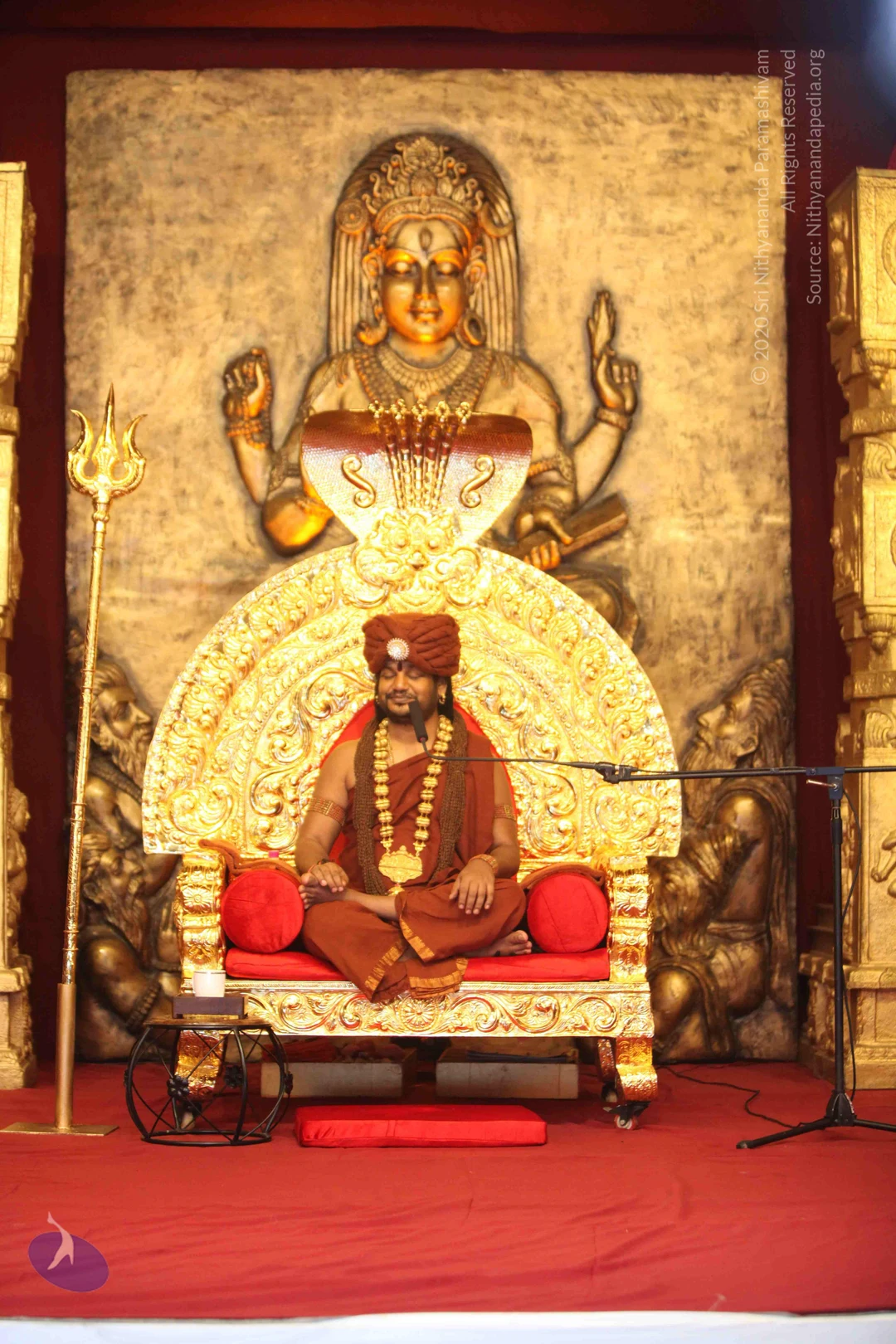
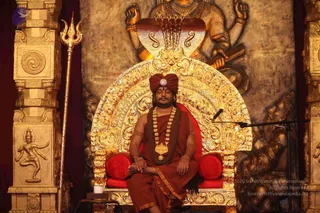
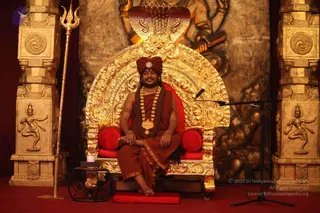
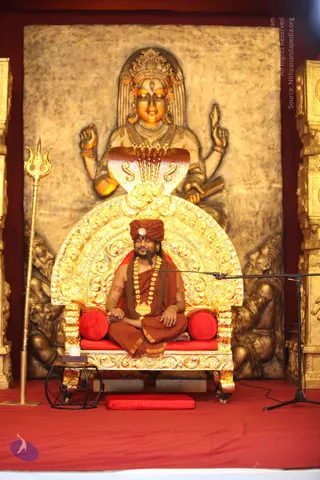
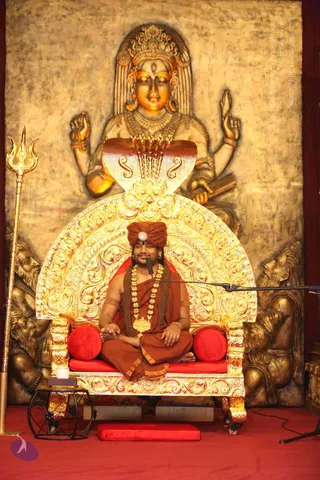
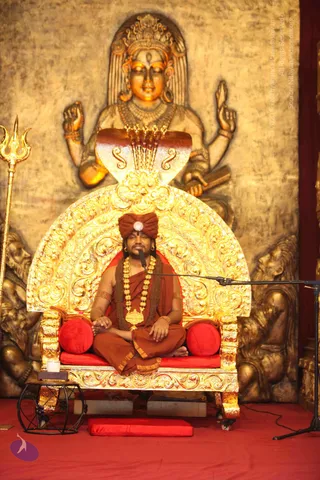
A seated figure in a maroon-red turban with a central jewel and a maroon-red robe sits on an ornate gold throne with red velvet cushions, eyes closed, hands resting in the lap. A heavy gold necklace with a large pendant and a rudraksha-style mala hang on the chest, with gold bangles on the wrists. Behind the throne stands a golden deity murti with many arms holding implements, and a gold trident leans on the left beside a carved temple pillar showing a dancing figure. A microphone stands at the right, indicating a discourse setting. The figure has long hair and distinctive adornments, matching the a person appearance cues, seated in a teaching role on the peetha throne.A smiling man seated on an ornate gold and red throne with a gold-embossed backrest, raising his right hand in a greeting gesture. He wears a maroon-red turban with a jewelled brooch, a red kumkum mark on his forehead, a rust-red robe, and a long gold bead necklace with a gold pendant. A microphone stands at the right edge of the frame. Swamiji (probable): the cues are the red turban, red robe and ornate gold throne, and the figure is physically present in the photograph.A seated man in a rust-red turban with a large white stone brooch and a red tilak on his forehead sits cross-legged on an ornate golden throne with a carved gold arched backrest and red cushioned armrests. He wears a rust-red robe, a heavy gold necklace with a gold pendant, a rudraksha mala, and gold bangles. He smiles with eyes closed and raises one hand in a blessing gesture, with a microphone on a stand beside him.A seated man in a rust-red turban with a jewelled brooch, eyes closed and smiling, raises his right palm in a blessing gesture. He wears a long saffron-orange robe, a thick rudraksha-style mala and a heavy gold ceremonial necklace with a large gold pendant, plus gold armbands and bangles. He sits cross-legged on a red cushioned throne backed by an ornate gilded arch with scrollwork, and a microphone stands at the right edge. a person presence is suggested by the turban, saffron robes, rudraksha mala and gold ornaments, but the identification is uncertain from appearance alone.A man seated on an ornate golden throne with a high, scrolled arched back and red cushions. He wears a maroon-red turban with a large round jewelled brooch, a saffron-red robe over his shoulders, a heavy gold necklace of large beads, a dark rudraksha mala, and gold bangles on his upper arms and wrists. A small vermilion bindi marks his forehead and he has long hair and gold earrings. A microphone stands at the right edge beside the throne. Faint decorative carvings fill the background.A seated man in maroon-red robes and a matching maroon turban with a small pink stone sits on an ornate gold throne with red cushions, bare feet resting on a red footstool. He wears a dark rudraksha mala and a long ceremonial gold necklace with a pendant, and gold bangles on his wrists. A black microphone stand stands to his right. Behind him, a large gilded relief shows a multi-armed deity figure and a serpent hood, flanked by carved stone pillars with dancing figure reliefs and a golden trident on the left. Red carpet covers the floor. The man appears to be a person seated in a teaching role, visibly giving discourse on a stage.
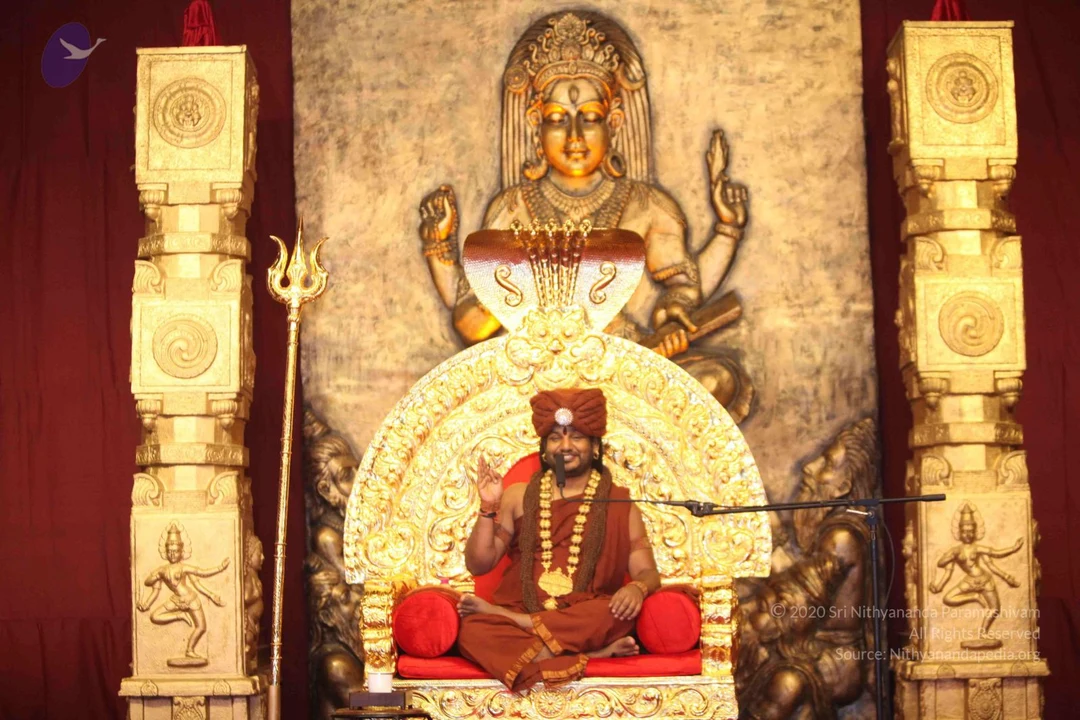
FB-Photos-of-the-Day

8 photosSource gallery
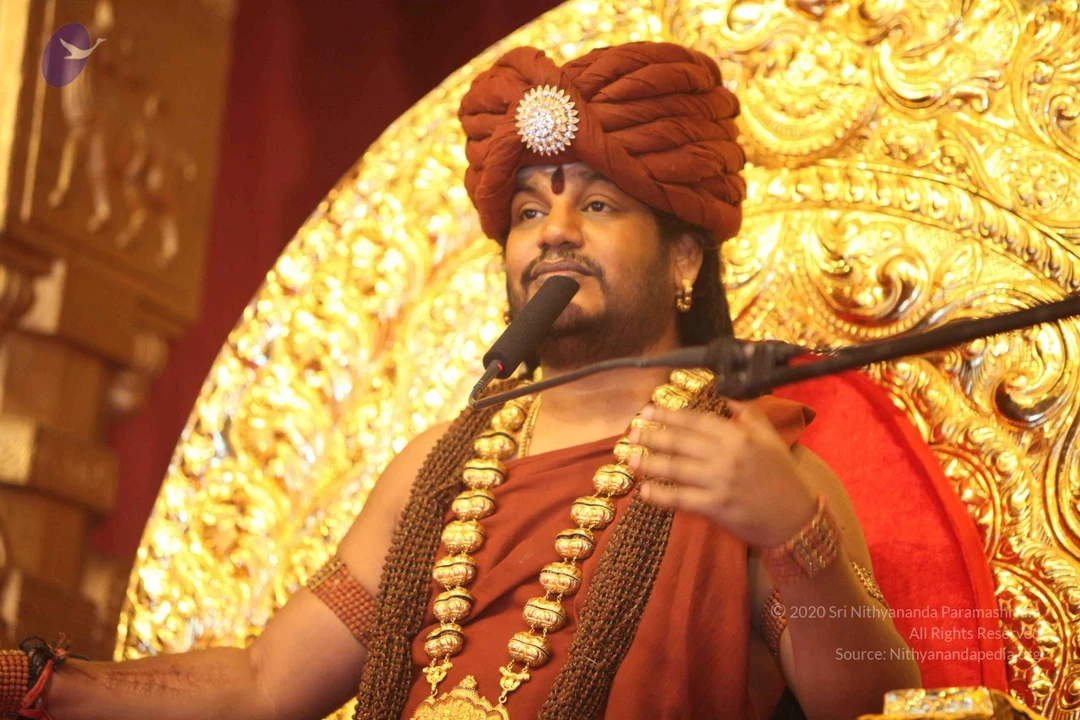
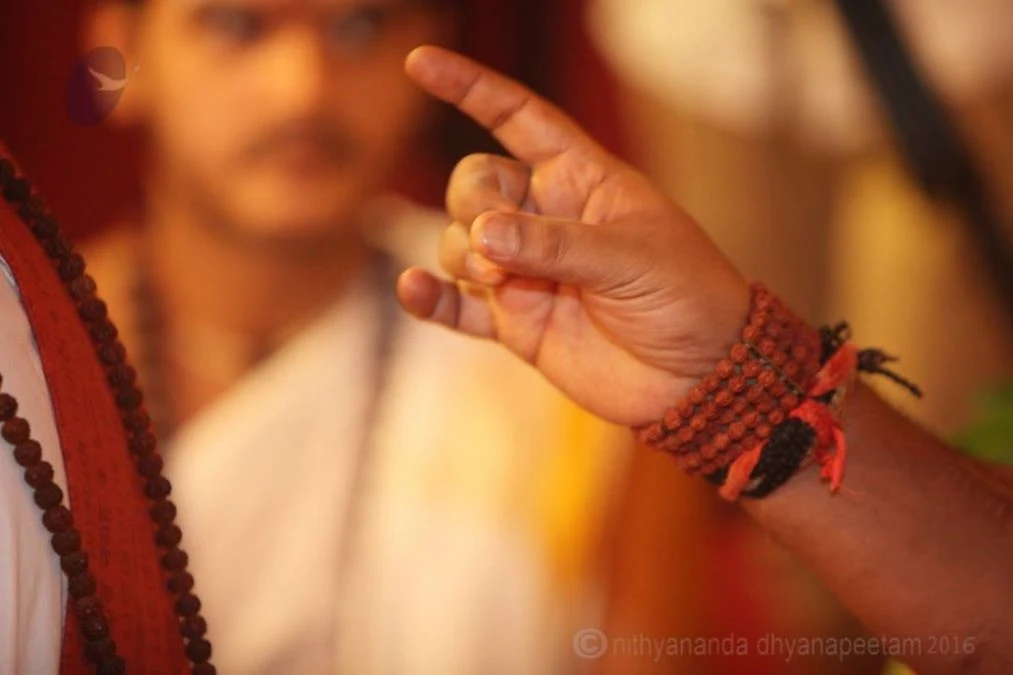
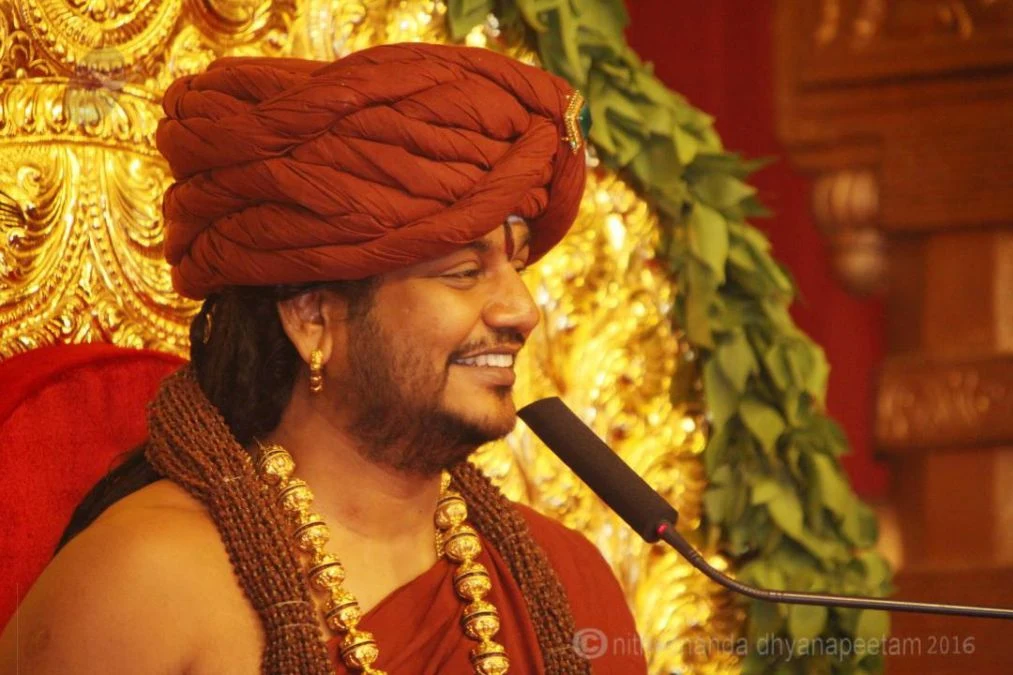
Close-up photograph of a hand raised in a gesture, wearing a dark rudraksha bracelet with red thread. Behind it, a blurred man in white clothing with a red shawl draped over the left edge of the frame stands in a warm-lit hall. Rudraksha beads are visible on the left side of the frame. The foreground hand is sharp while the background figure is out of focus. A dhyanapeetam 2016A smiling man wearing a rust-red turban with a small tilak mark on his forehead, a rudraksha-style brown beaded shawl and layered gold necklaces over a red-orange cloth, speaking into a black microphone on a stand. Behind him is ornate gold carved throne work and a green leaf garland on a red backdrop. Photo credit overlay reads Nithyananda Dhyanapeetam 2016. Appearance-based candidate: a person, seated and addressing an audience.A smiling man in an orange-red turban with a teal stone brooch and a vibhuti mark on his forehead sits before a microphone. He wears an orange-red garment over one shoulder, layered rudraksha malas, and a heavy gold necklace with a pendant, plus a gold armlet. His open hand gestures mid-discourse. Behind him are gold-embossed panels and green leaves. Swamiji (probable) appears to be the speaker, based on the turban, rudraksha malas and gold ornaments.

01-MORNING-SATSANG

8 photosSource gallery
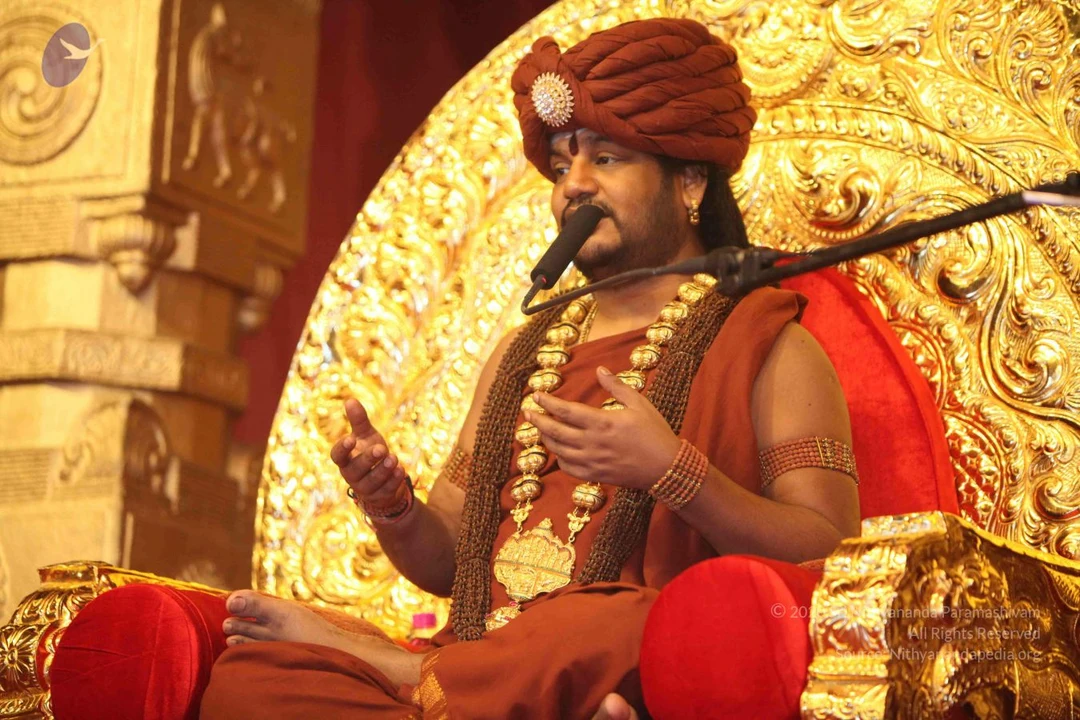
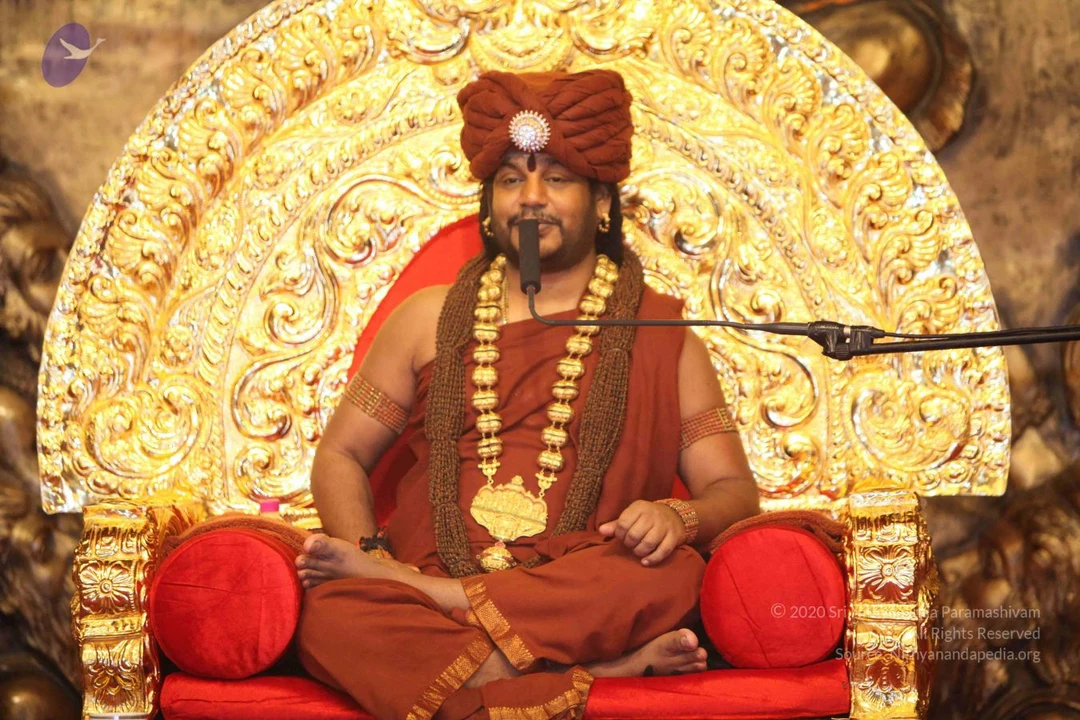
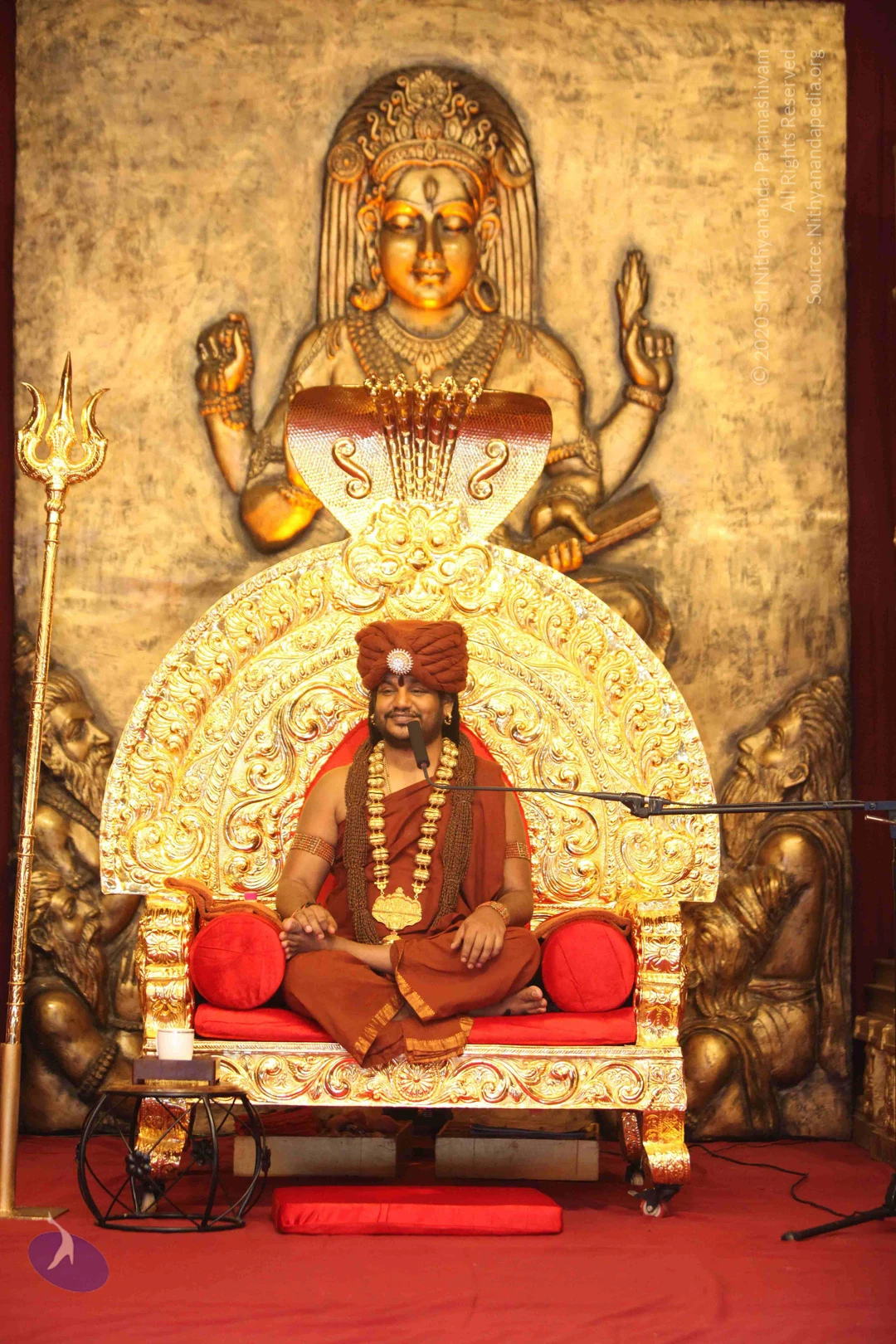
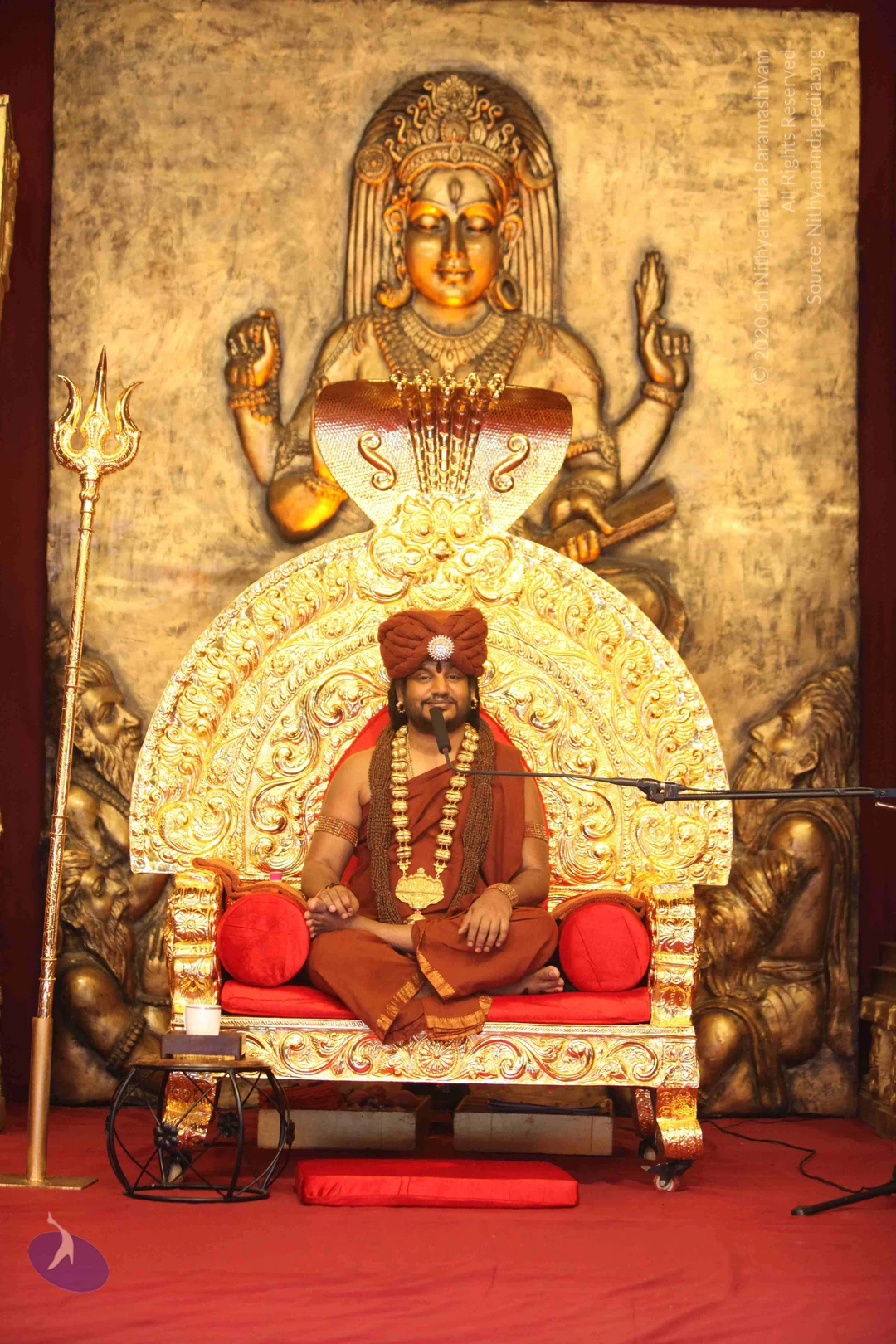
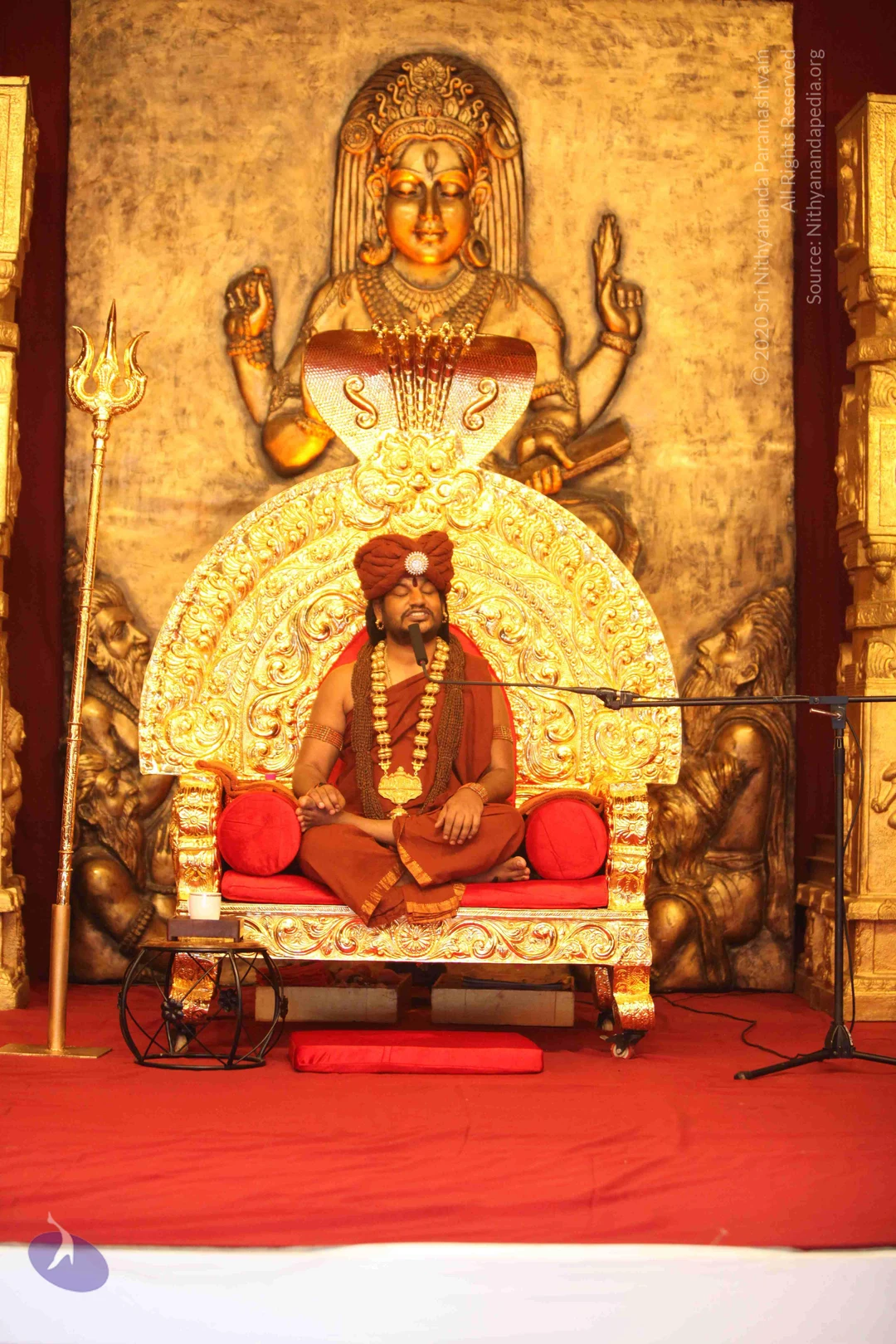
A seated man in a rust-orange turban with a jeweled brooch and a red tilak mark sits on an ornate gold throne with curled gilded carvings and red cushions. He wears a rust-orange garment, a gold necklace of large beads over a rudraksha mala, gold armbands and a bare right arm. A microphone on a stand is in front of him, and his hands rest folded in his lap.A seated man in a rust-orange turban with a white jewel and rust-orange robes sits cross-legged with eyes closed on an ornate gold throne with red cushions, a microphone stand beside him. Behind him a large gold relief carving of a multi-armed deity with a crown and a cobra hood sits on a gold-finished wall, flanked by a golden trident on the left and gold pillars at the edges. A small candle stands on a side table. The stage is covered in red cloth. Clothing colour and throne do not alone establish the identity of the seated figure, so his identity is not asserted from appearance; the setting suggests a satsang discourse with a deity murti as backdrop.A seated man in a rust-orange robe and matching orange turban with a white bead ornament sits cross-legged on an ornate gilded throne with red cushions, speaking into a microphone on a stand. He wears a long gold pendant necklace over rudraksha malas and gold bangles. Behind him a large gilded relief shows a multi-armed deity murti with a crown and a cobra hood above the throne. A golden trident stands at left and a gold-toned relief of seated sages flanks the right side, on a red carpeted stage. Probable Swamiji by appearance cues: orange clothing, turban, gold necklaces and malas, seated as a speaker on a throne.A man in a rust-orange turban with a white jewelled brooch and red-brown robes sits cross-legged on an ornate gold throne with red cushions, a microphone on a stand beside him. He wears a long gold and bead necklace and a gold pendant, with a gold-handled trident standing to his left. Behind the throne a large gold relief shows a multi-armed deity murti with a cobra hood and crown, flanked by carved sages. A red carpet covers the floor and a small candle sits on a side table. Swamiji (probable): a man with a turban, saffron-orange robes, rudraksha-style beads and ceremonial gold necklaces seated on a throne, presenting a discourse.A seated man in a rust-orange turban with a white jewel and rust-orange robes sits cross-legged on an ornate gold throne with red cushions, eyes closed, in meditation before a microphone stand. He wears layered beaded necklaces with a gold pendant and gold armlets. Behind him a large gold relief of a multi-armed deity with a cobra hood and a crown rises above the throne, flanked by carved golden pillars. A golden trident leans to the left, a small lit oil lamp sits on a side table, and a red carpet covers the stage. The scene is an indoor stage setting for satsang.A man in saffron-orange robes and a matching turban with a white jewelled brooch sits cross-legged on an ornate gilded throne with red cushions, speaking into a microphone on a stand. He wears a large gold pendant necklace, rudraksha-style beads and gold armbands. Behind him a large gilded relief shows a multi-armed deity murti with a crown and trident-like emblem, flanked by lion carvings. A golden trident stands to the left and a small candle sits on a side table. Red carpet covers the stage.

02-MAHESHWARA-PUJA
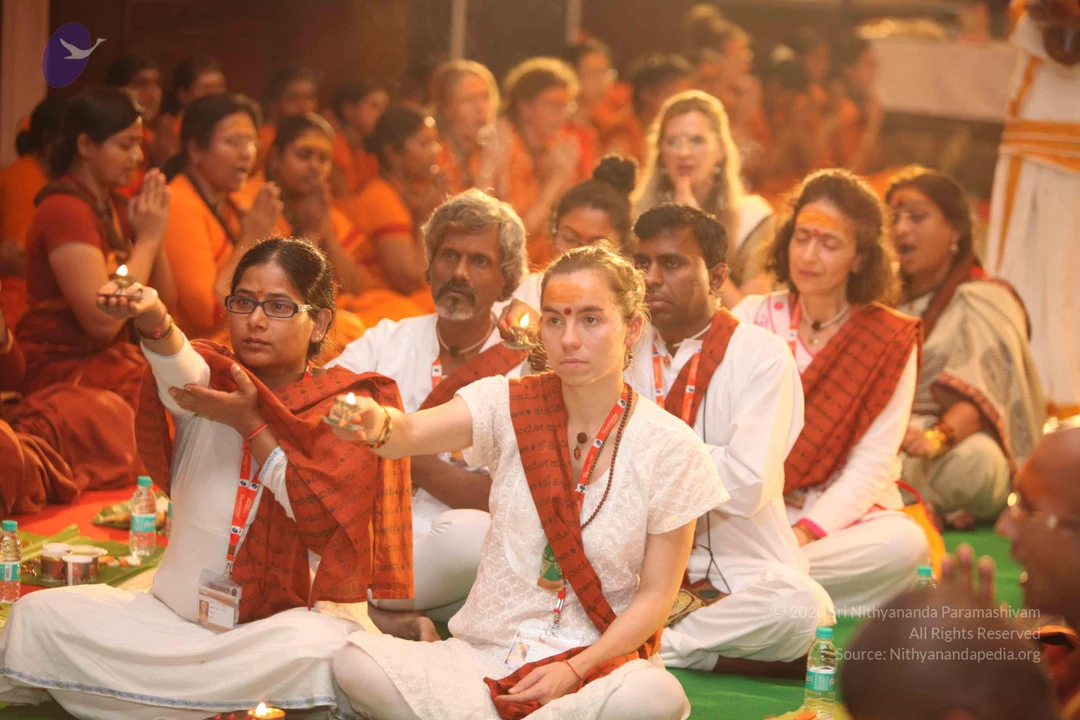
24 photosSource gallery
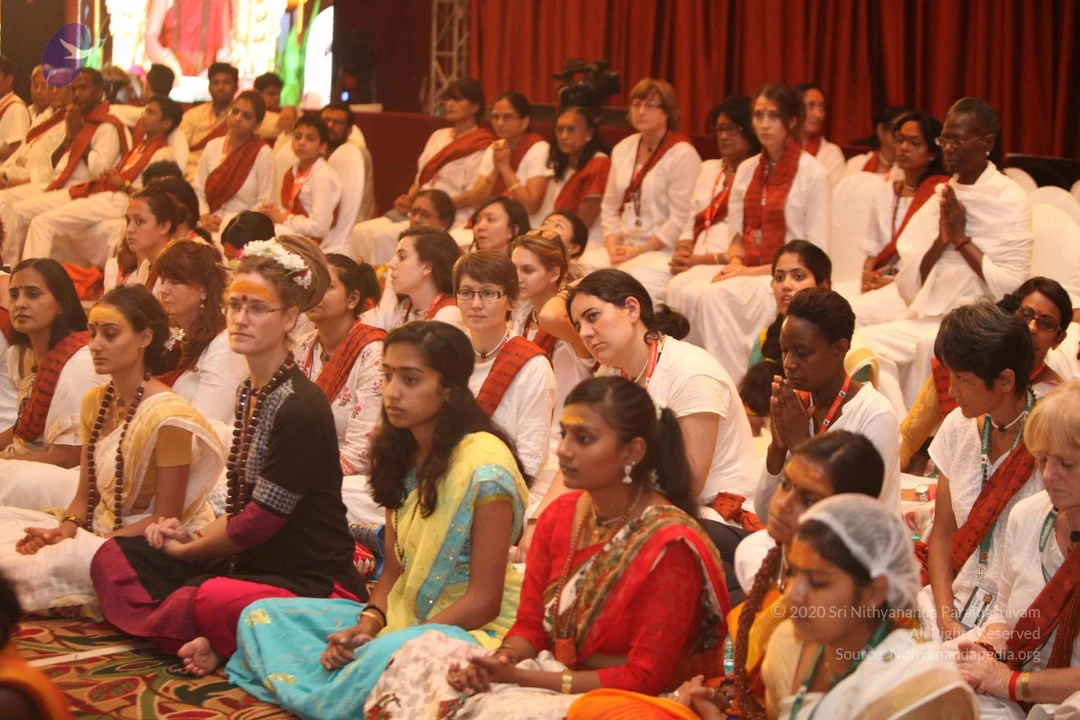
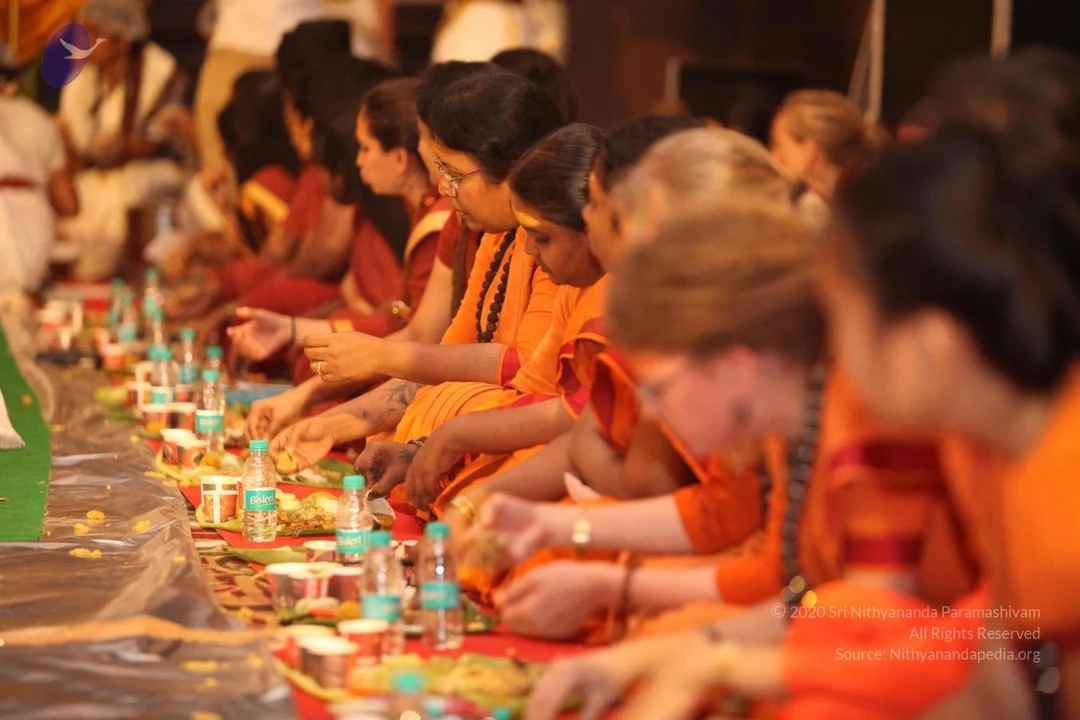
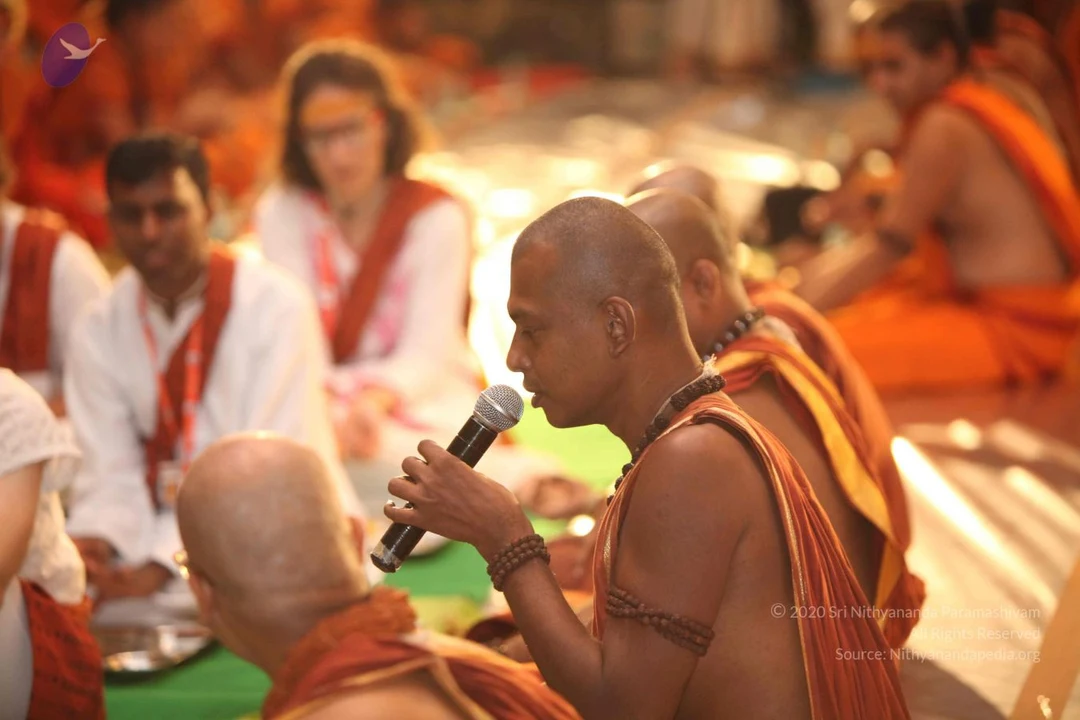
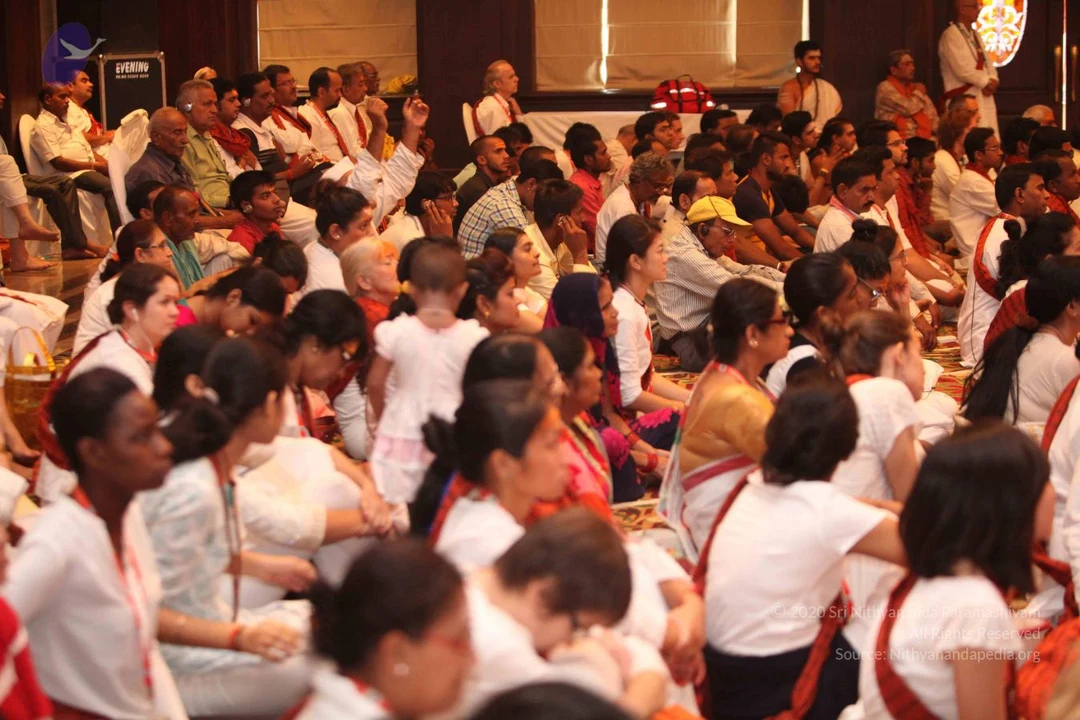
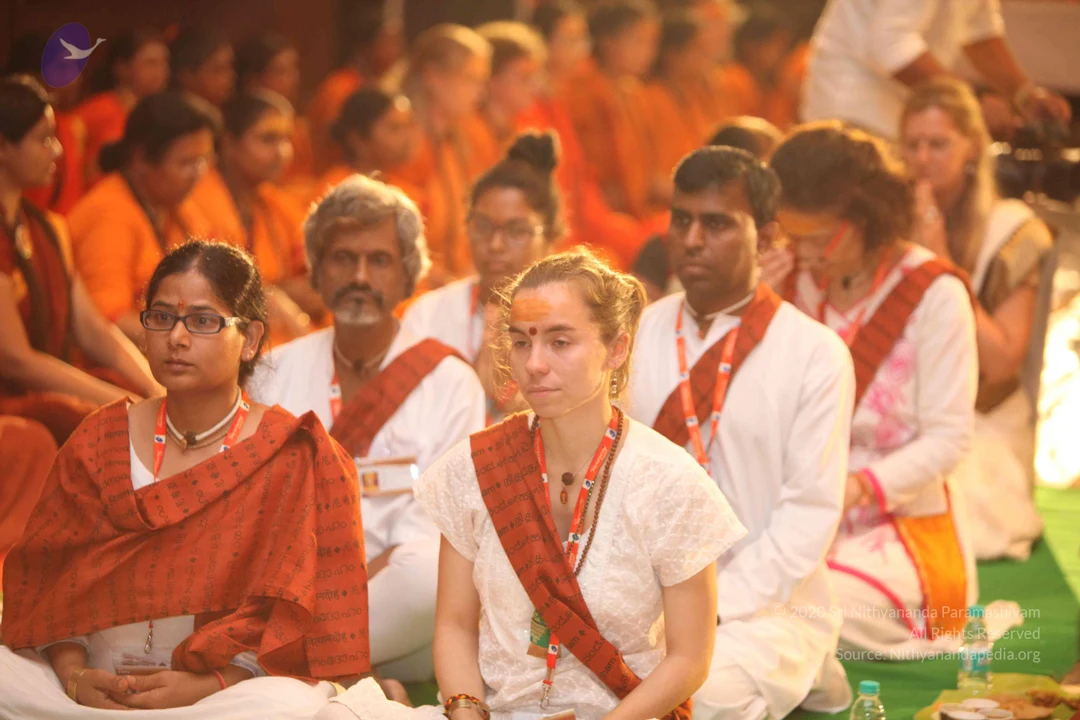
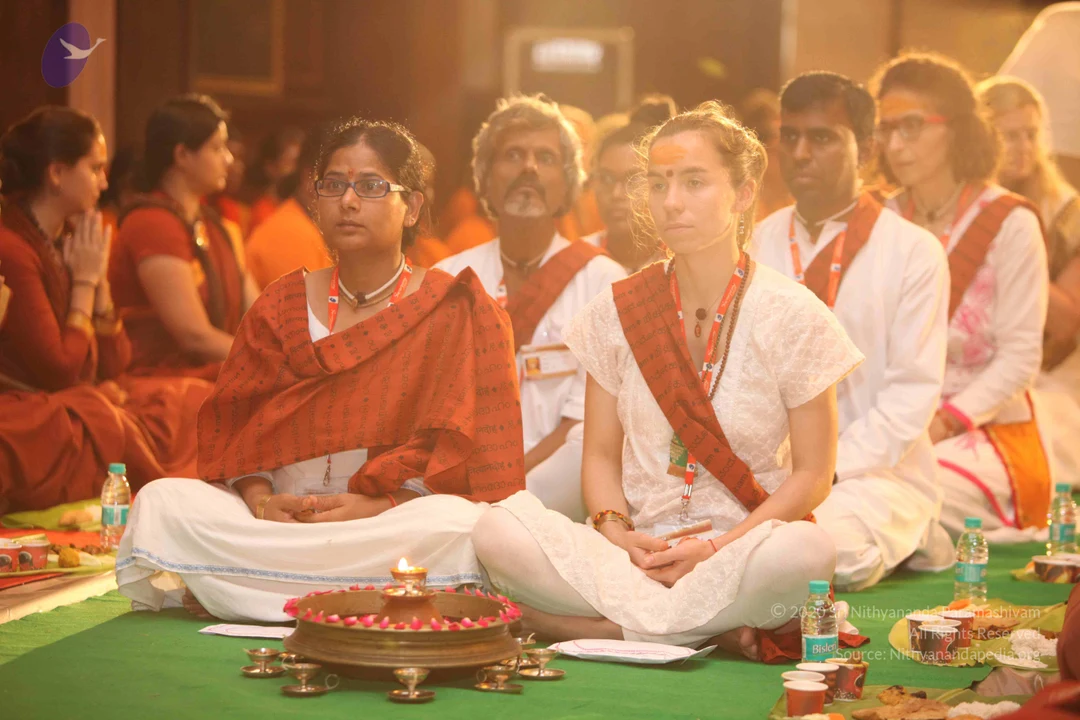
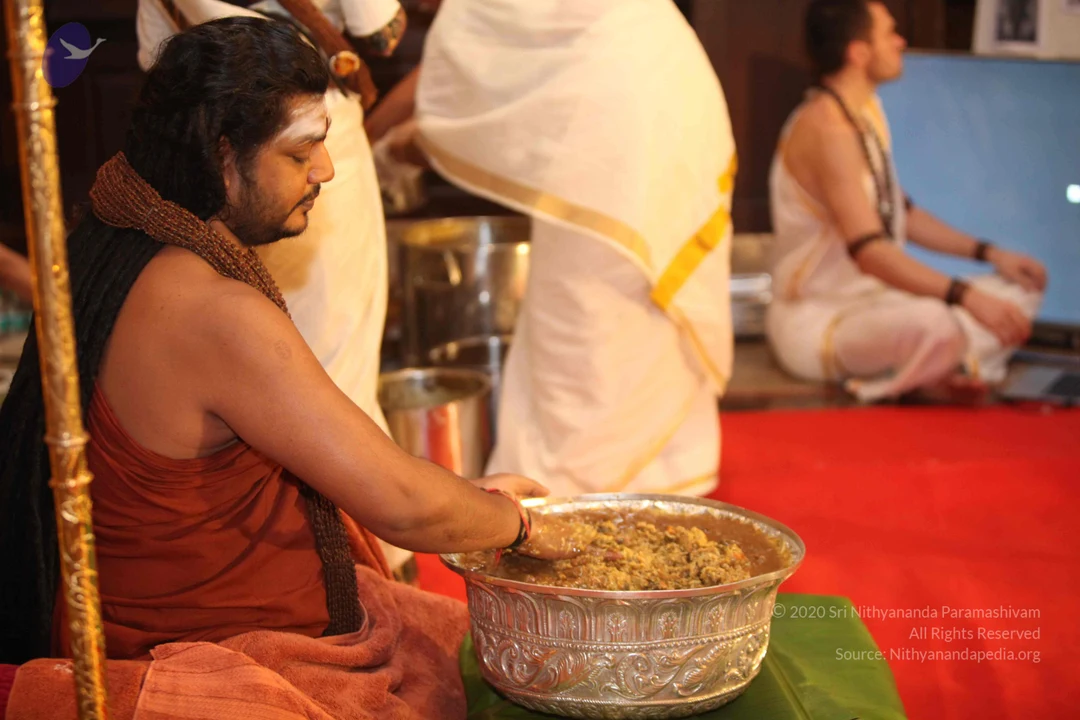
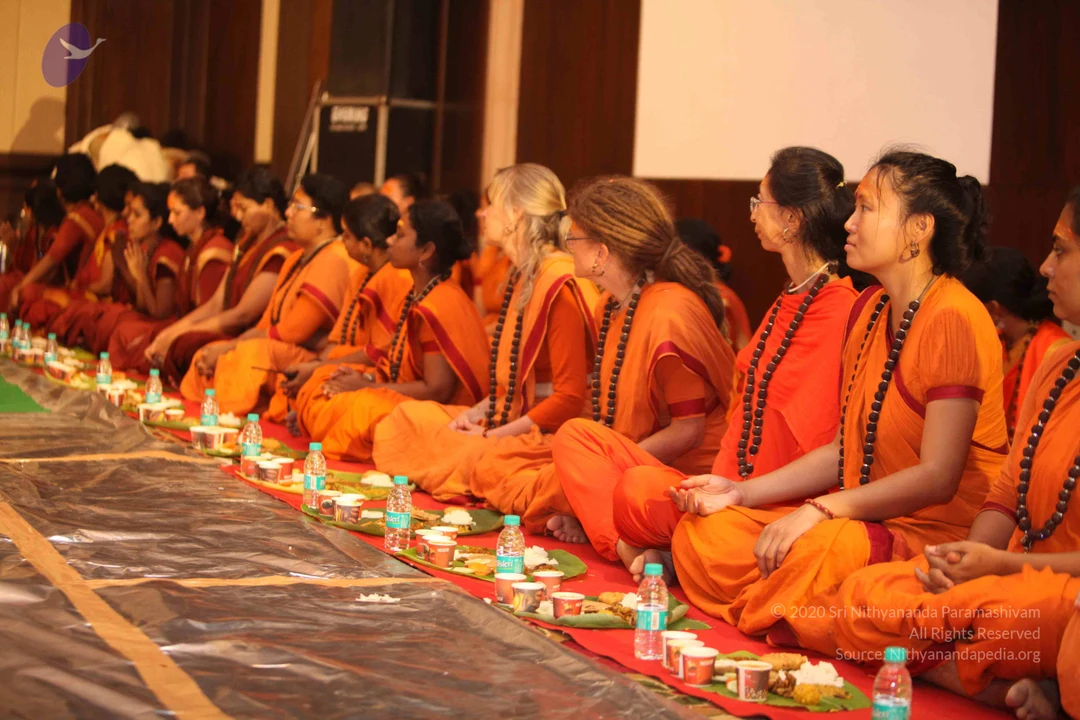
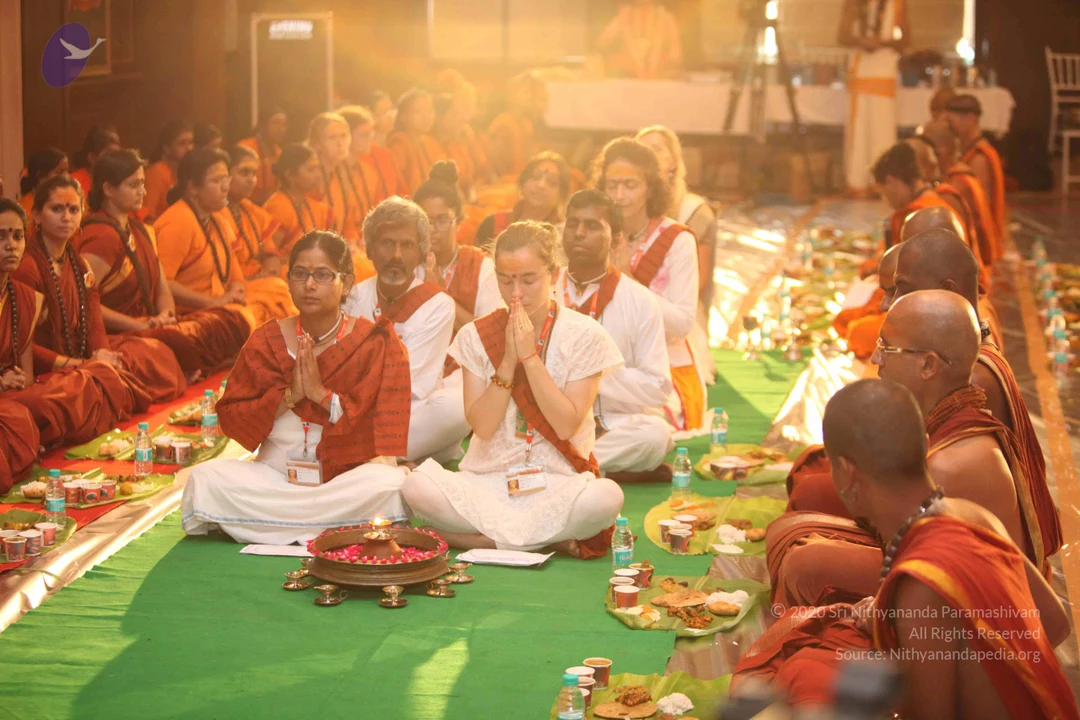
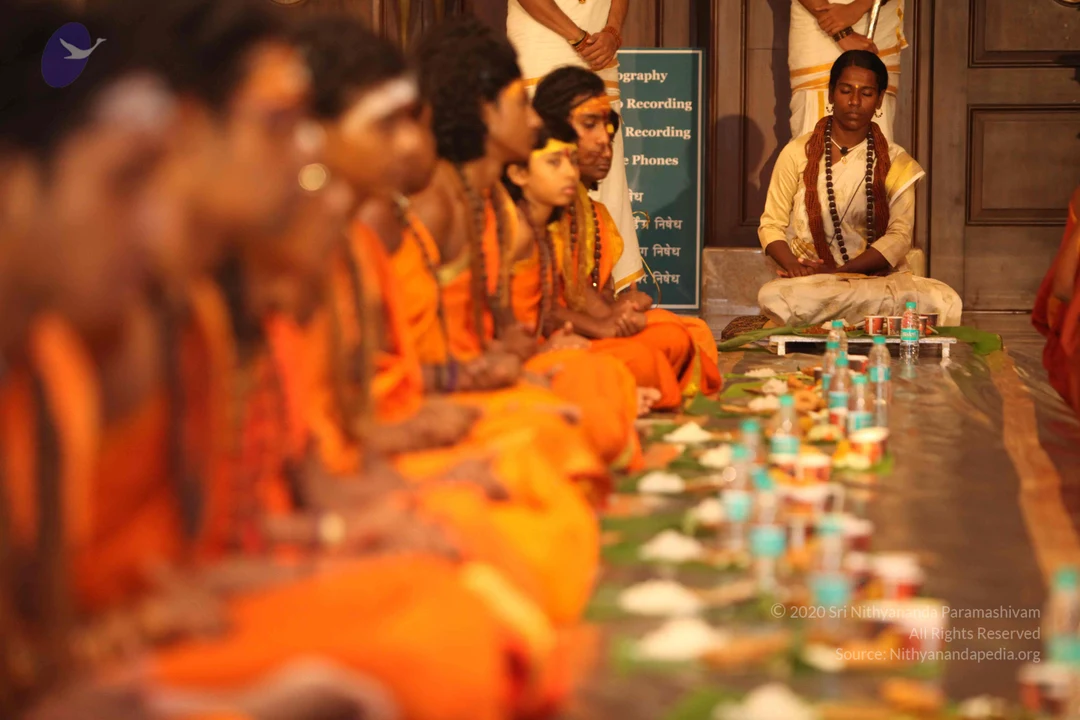
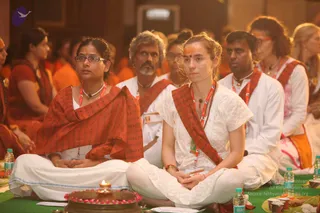
A seated satsang audience sits on green mats in an indoor hall. In the foreground a woman in glasses wears a rust-red shawl with printed script over white, and beside her a young woman with light hair and a red tilak wears a white top and a red-orange shawl with a red lanyard. Behind them men in white kurtas and orange-red shawls sit with red lanyards, and rows of people in saffron-orange robes sit further back. Water bottles sit on the floor at right, and a bright lamp glows at the edge of the frame. No a person candidate is visible in the image.Devotees sit cross-legged on a green mat in a hall during a ritual gathering. In the foreground a woman in white with red-orange shawl and glasses sits beside a young woman in white with an orange-red sash and lanyard, a red tilak on her forehead. Behind them men and women in white and orange clothing with red sashes sit in rows. A brass tray with flower petals and small oil lamps lies in front of them, along with water bottles, cups and plates of food. Warm light fills the room.A seated group of devotees sits on green cloth during a satsang gathering. In the foreground, a woman in a red-and-orange patterned shawl over white clothes sits cross-legged with hands folded, wearing glasses and a red lanyard. Beside her, a woman in white with a red bindi and red-orange sash sits with hands clasped. Behind them, men in white kurtas with red-orange sashes and lanyards sit, and more people in orange and white clothing fill the background. A brass lamp with a lit flame and pink petals sits in the foreground, with water bottles and food plates nearby.A seated man in a rust-orange cloth wrapped over his shoulder and a long brown rudraksha mala draped around his neck serves food from a large engraved silver bowl on a green leaf. He has long dark hair and a white forehead marking and his eyes are lowered. Behind him, men in white dhotis with gold borders sit or stand near steel vessels on a red cloth, and a gold-topped staff stands at the left edge. The appearance-based label for this figure is probable Swamiji, given the long swept-back hair, orange clothing and rudraksha mala. Two other men in white dhotis are visible in the background.A photograph of a long row of women seated cross-legged on red mats in an indoor hall, dressed in saffron-orange sarees and orange garments with maroon borders and rudraksha malas. Many have hands folded or resting on their laps; several face toward the front, and a white screen is visible on the far wall. In front of them lie banana leaves set with food, small cups, and bottled water. Some participants are partially visible at the left edge. The scene reads as a satsang or group meal in a retreat setting.Photograph of a row of devotees seated on the floor in orange and saffron clothing, hands pressed together in anjali, eyes closed in prayer. Several wear rudraksha malas and some have tilak on the forehead. Behind them, figures in white garments stand near a red-covered floor where banana leaf plates hold rice, sweets and cups of drink. Warm indoor lighting, softly blurred background.