Skip to content
Friday

12 July 2013

Completion - Essence of all Spiritual Practices

Dated photos
316
Source pages
1
Media
4
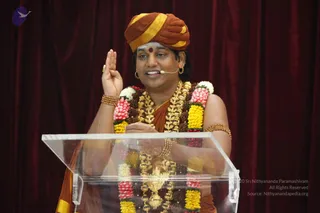
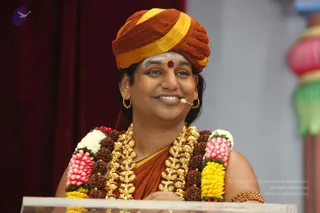
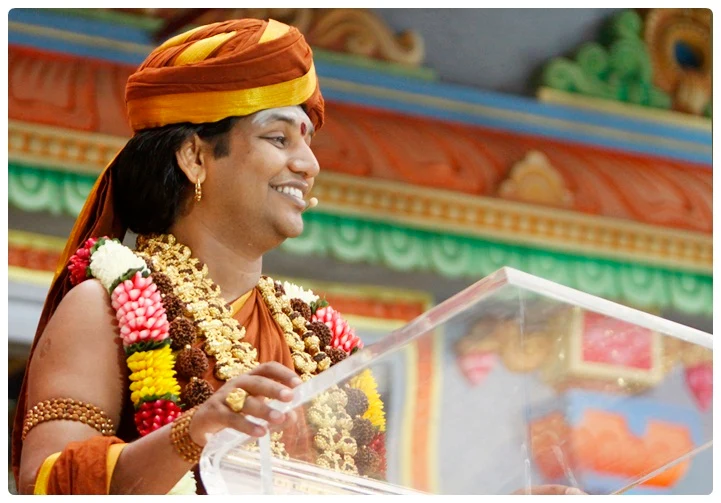
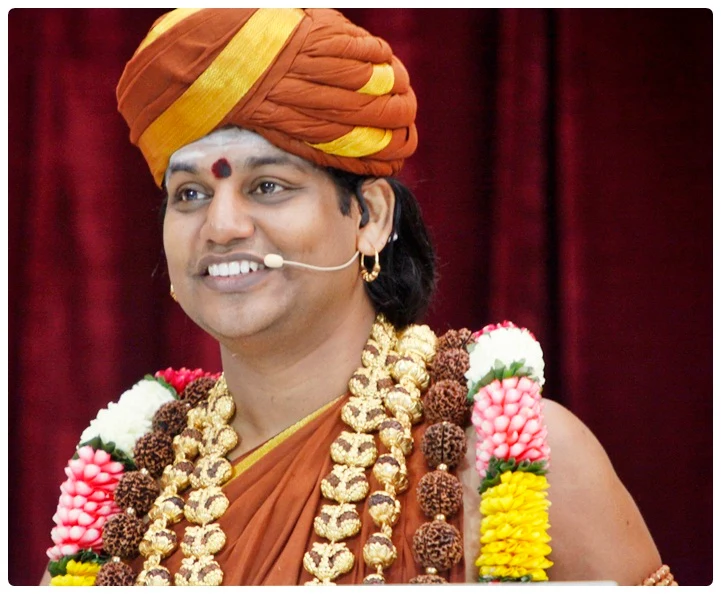
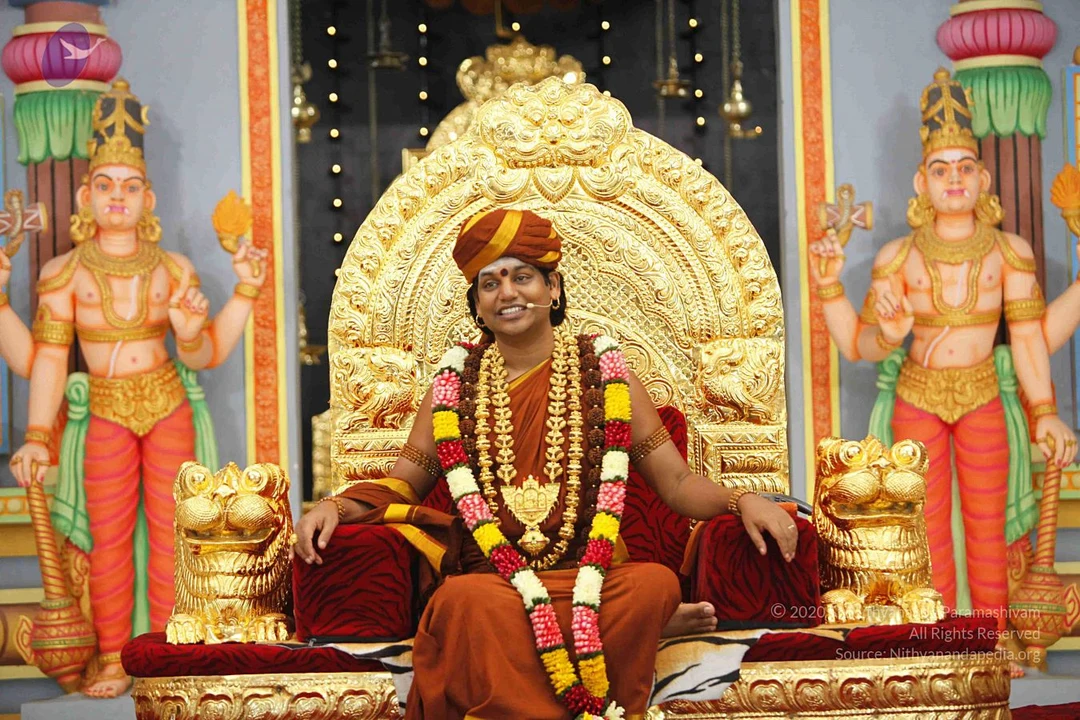
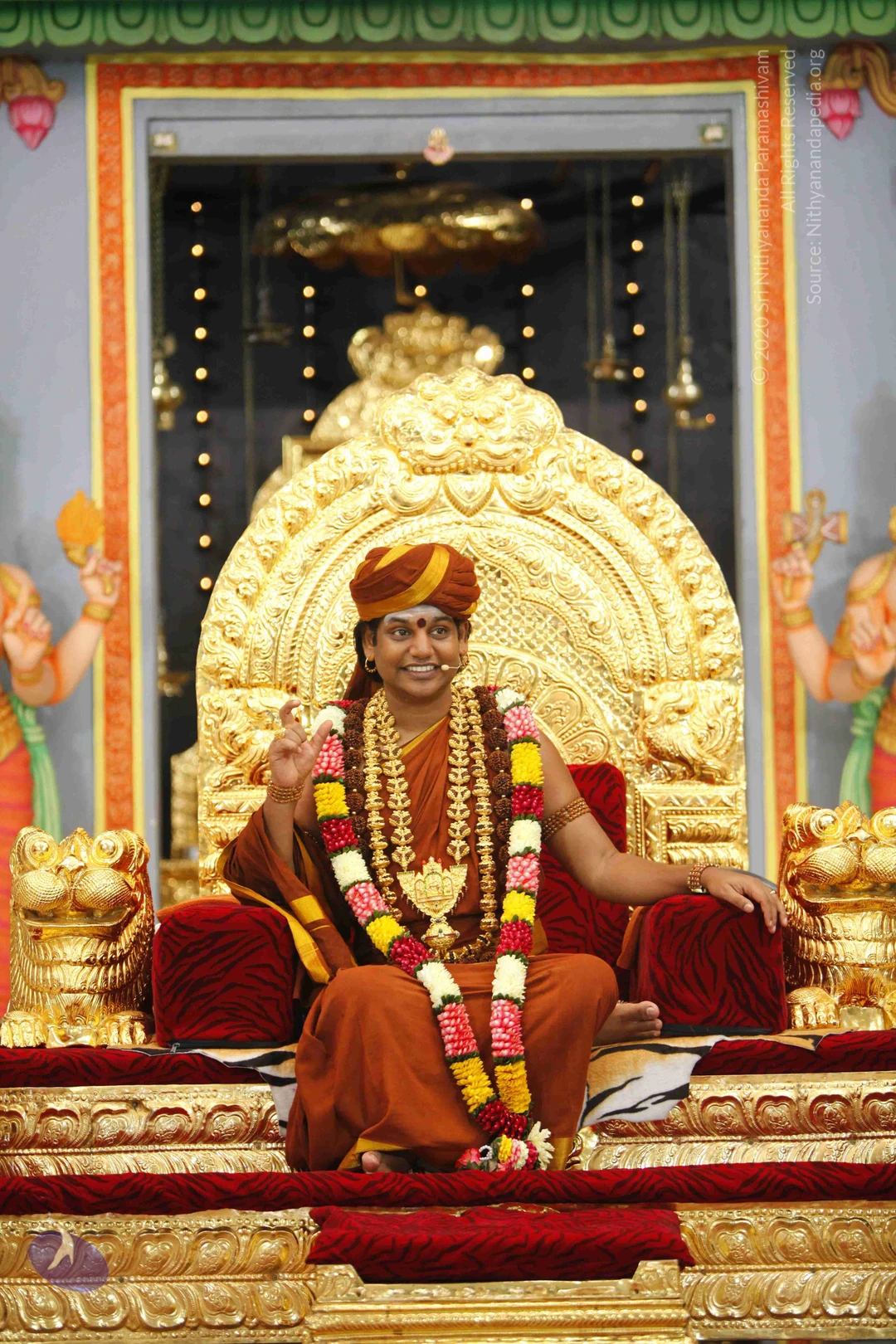
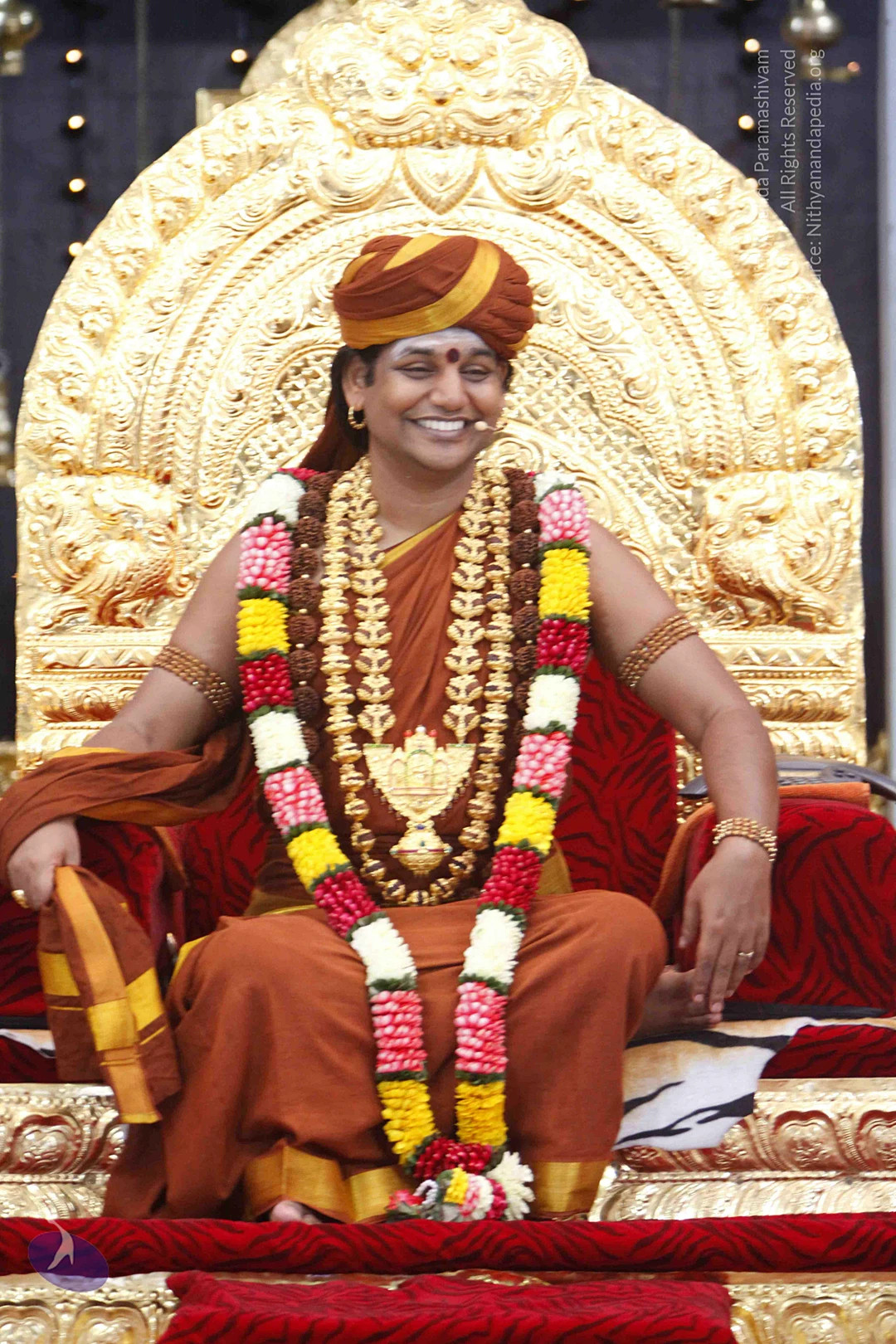
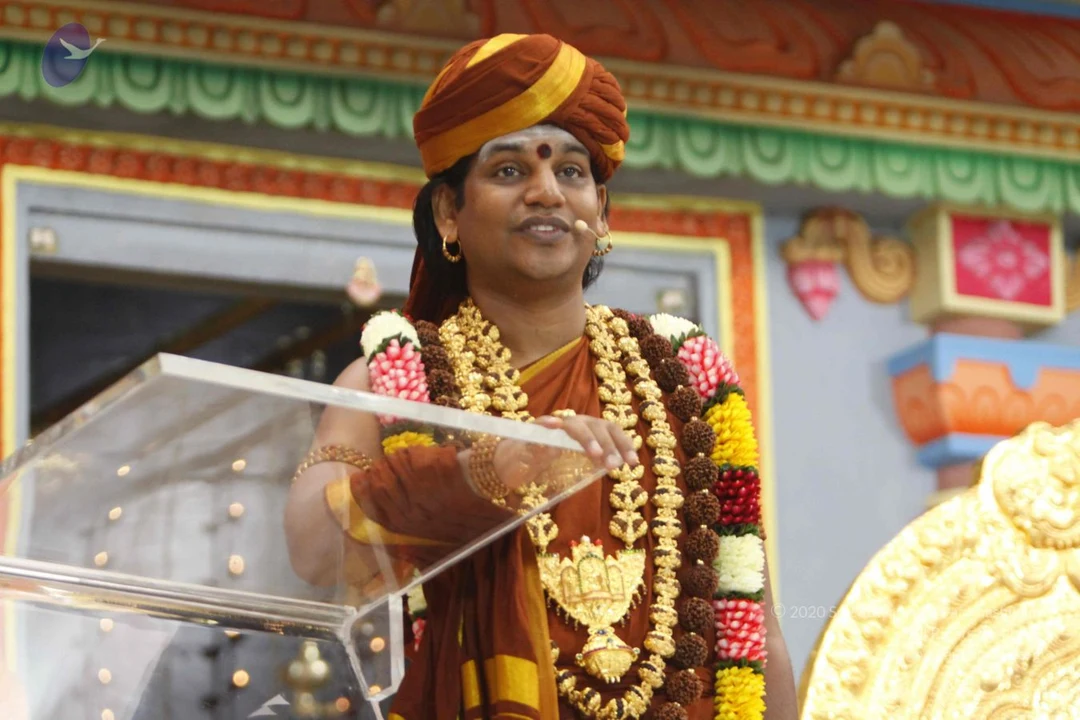
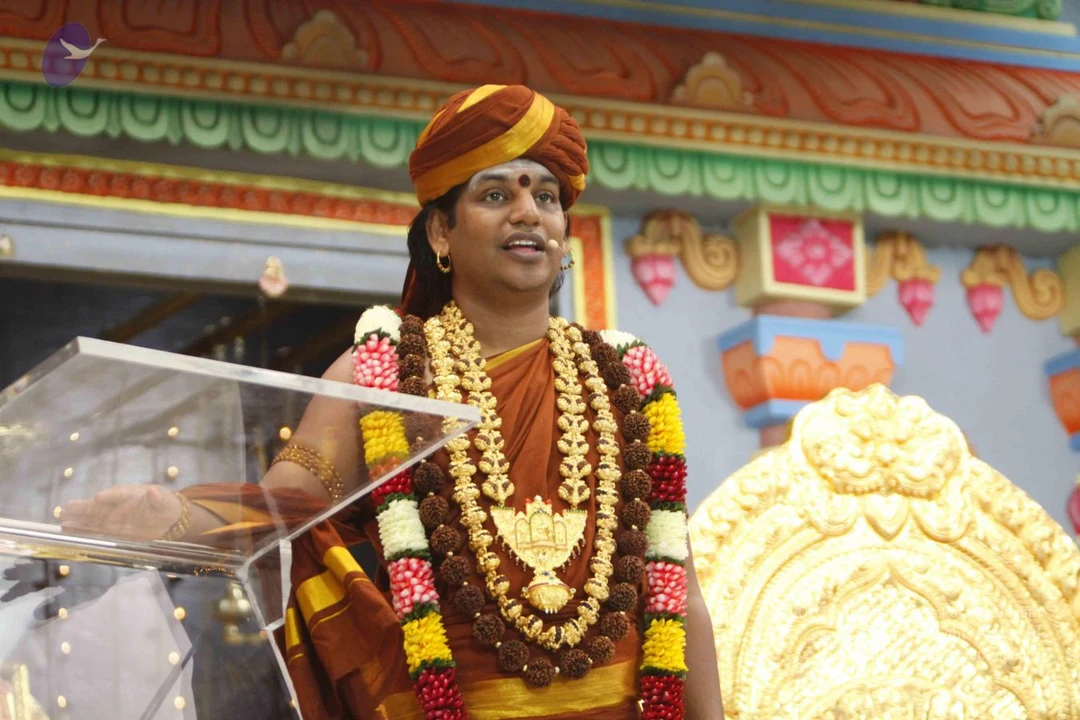
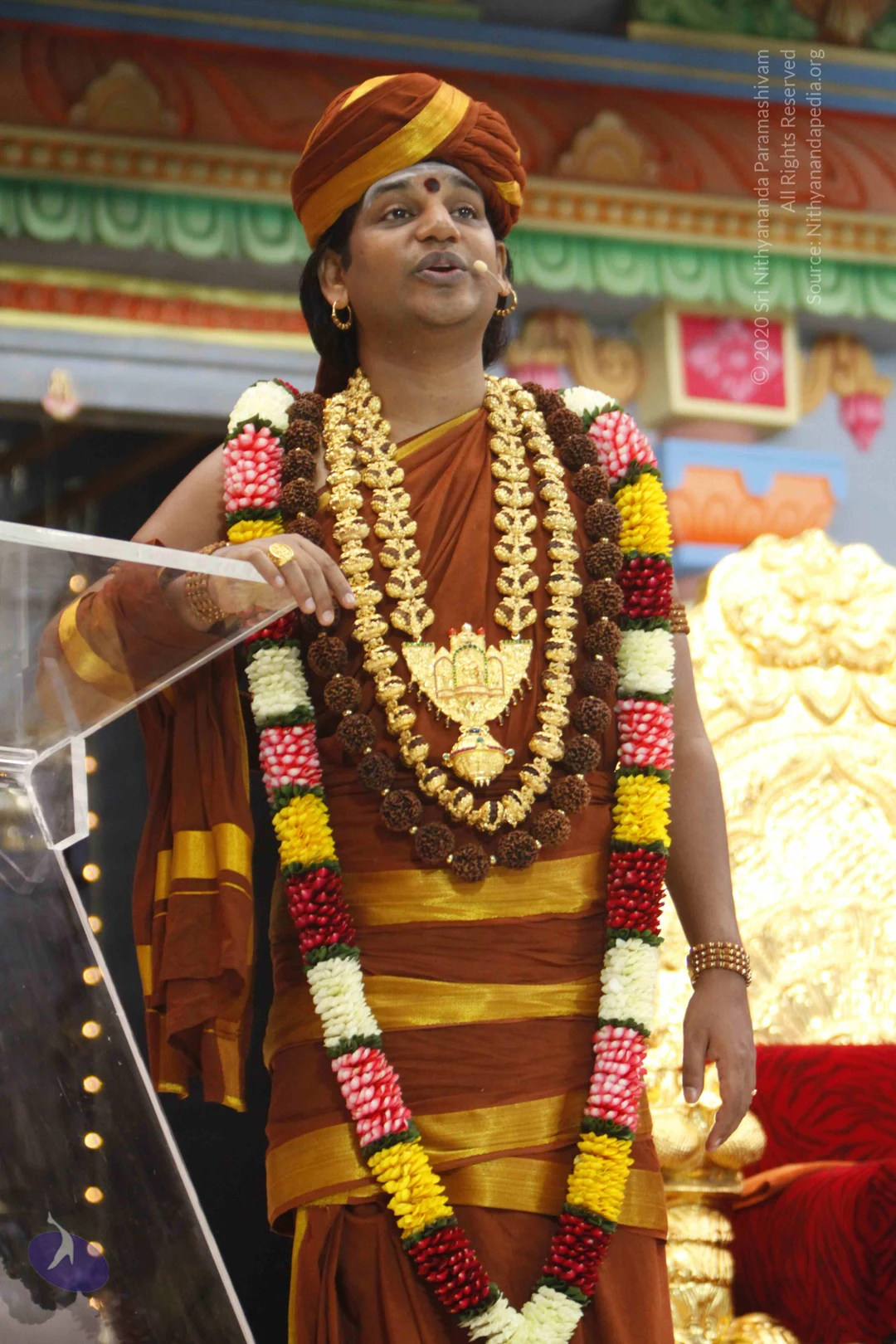
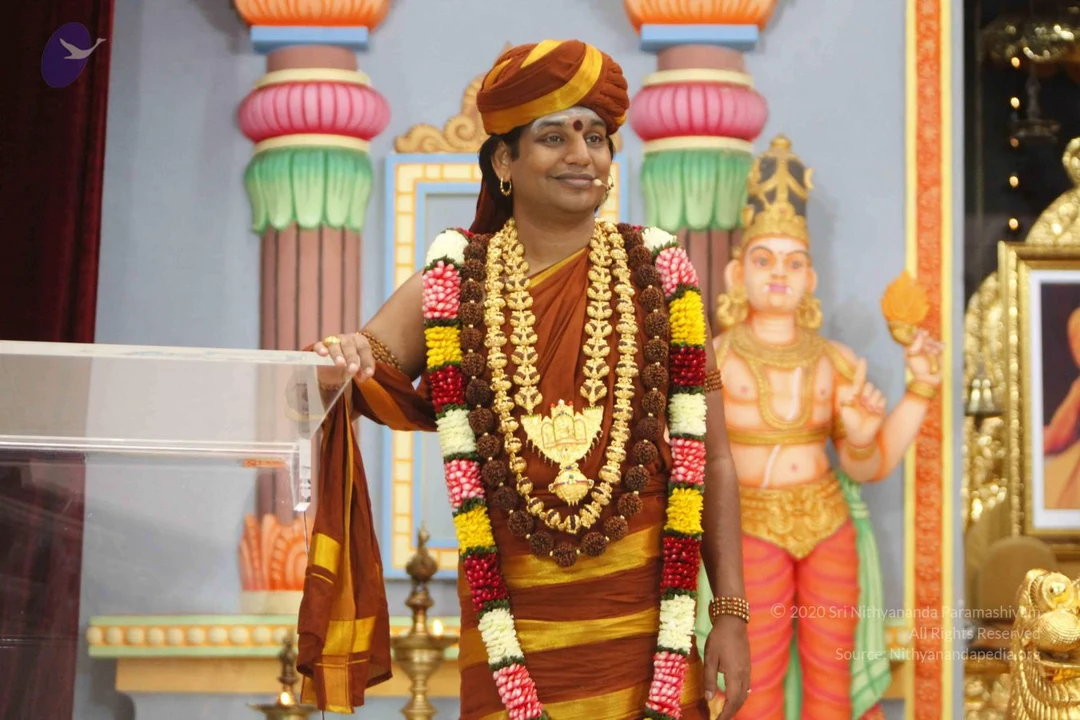
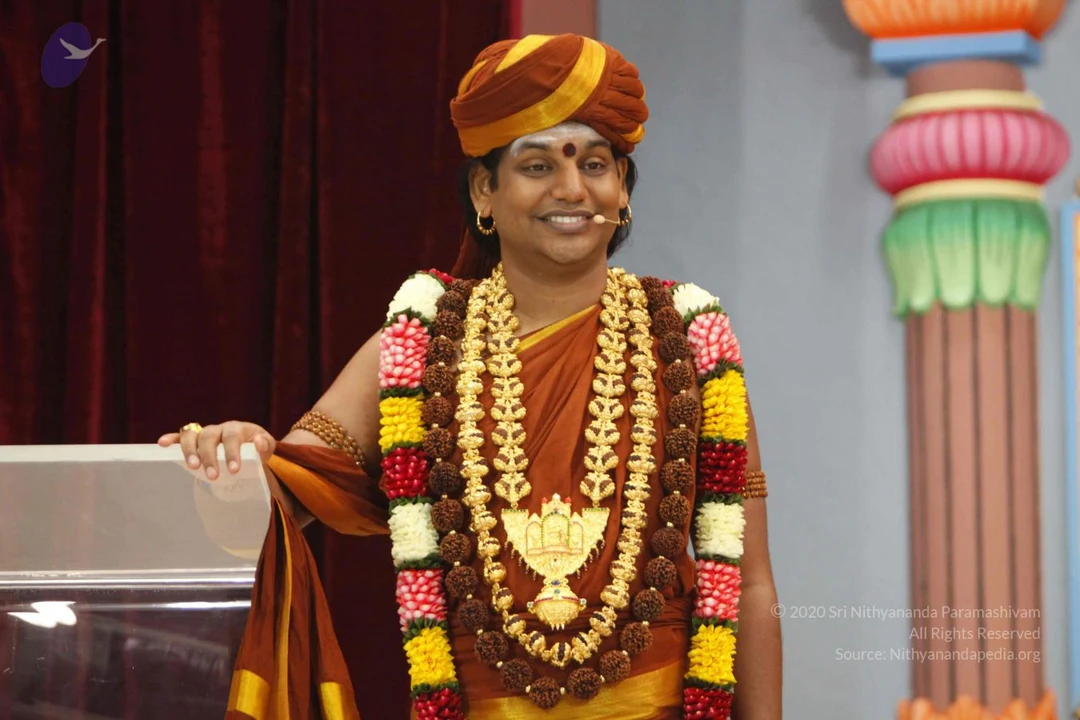
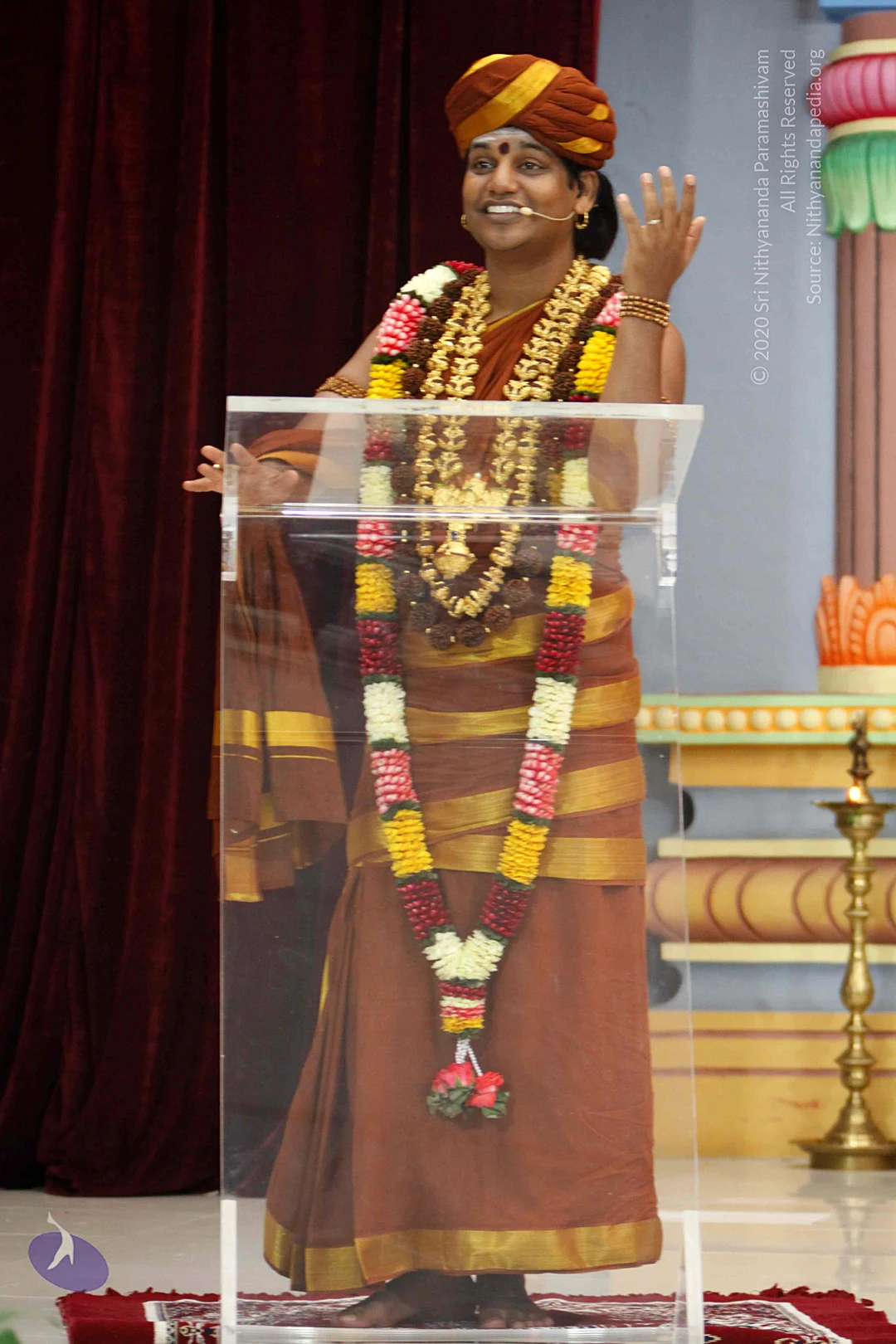
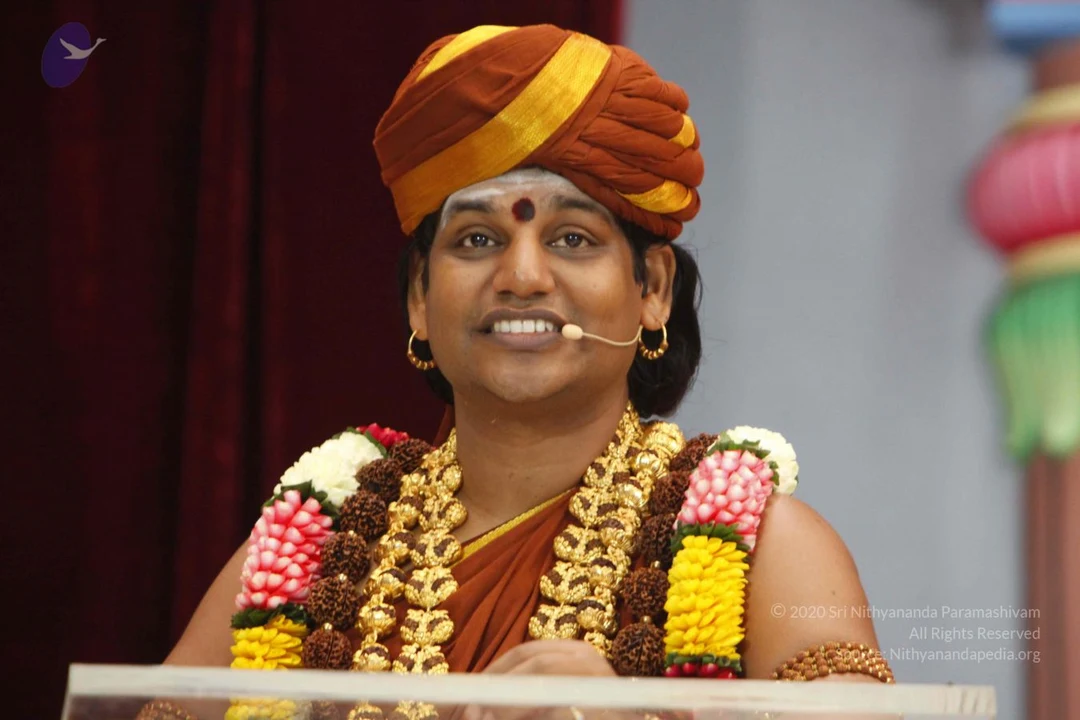
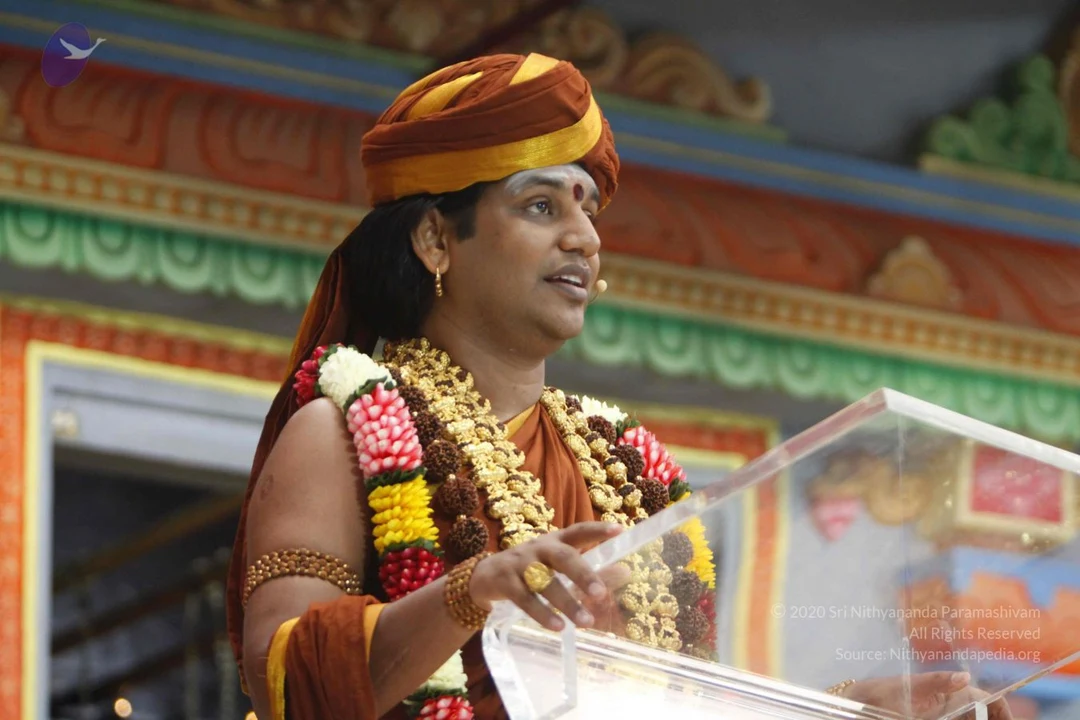
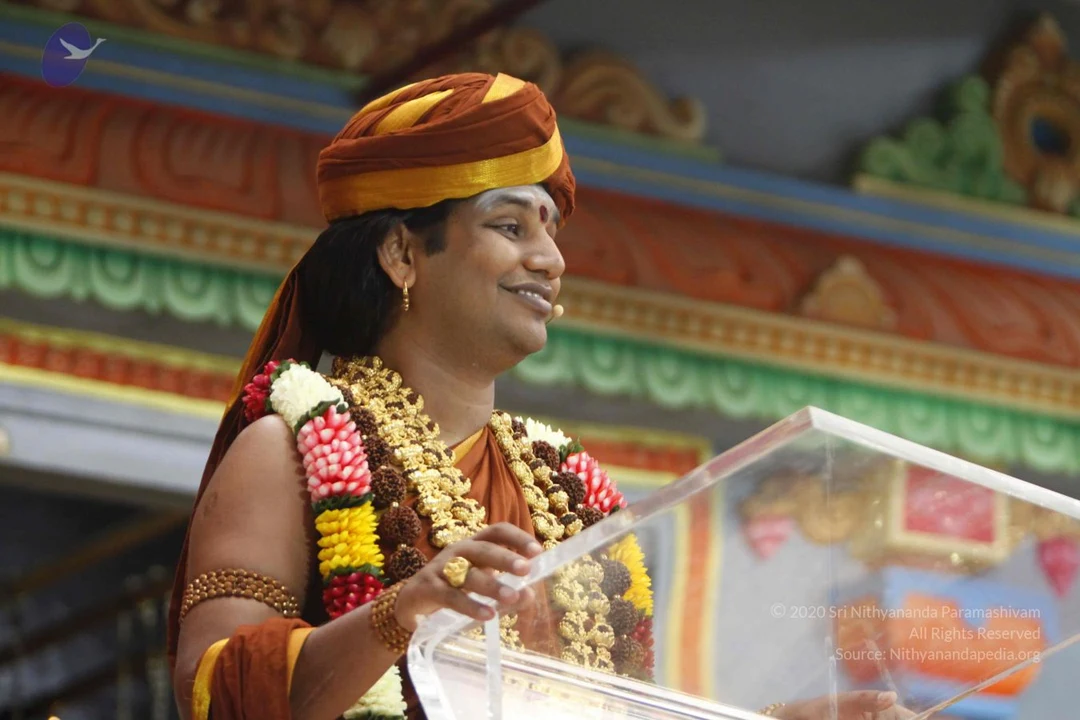
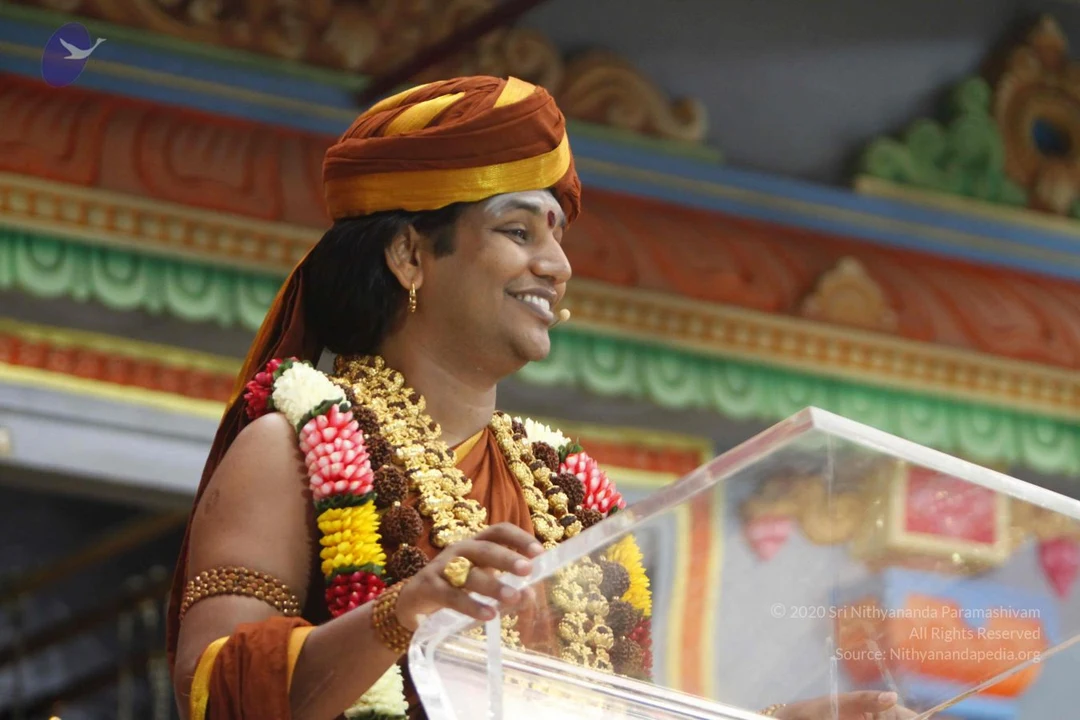
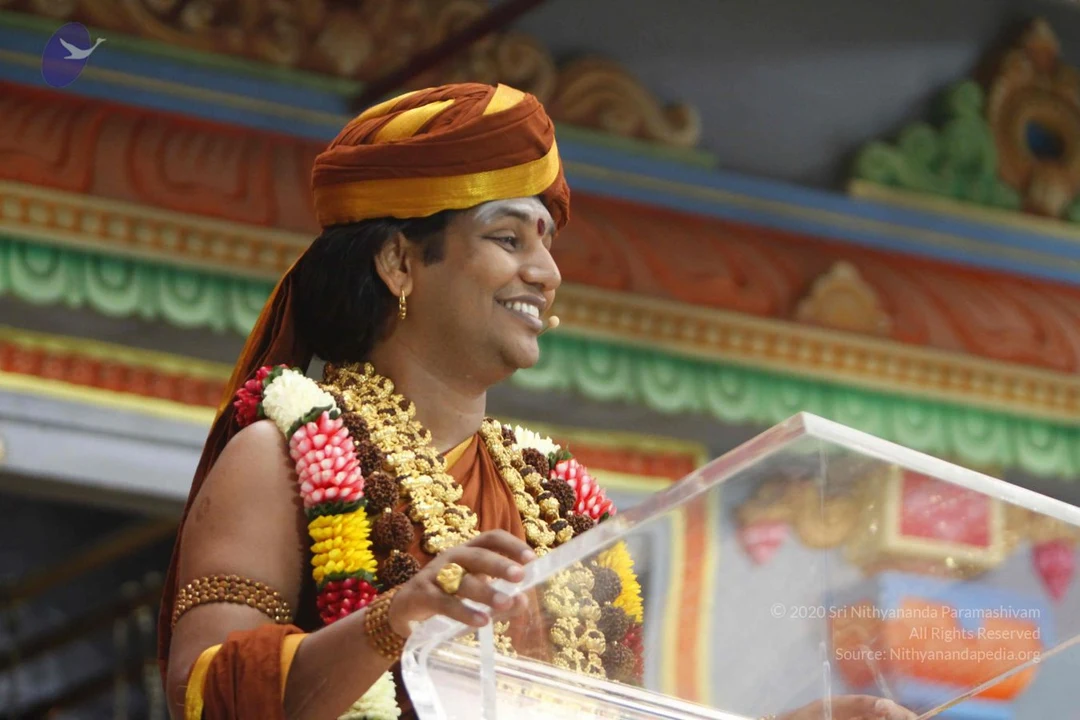
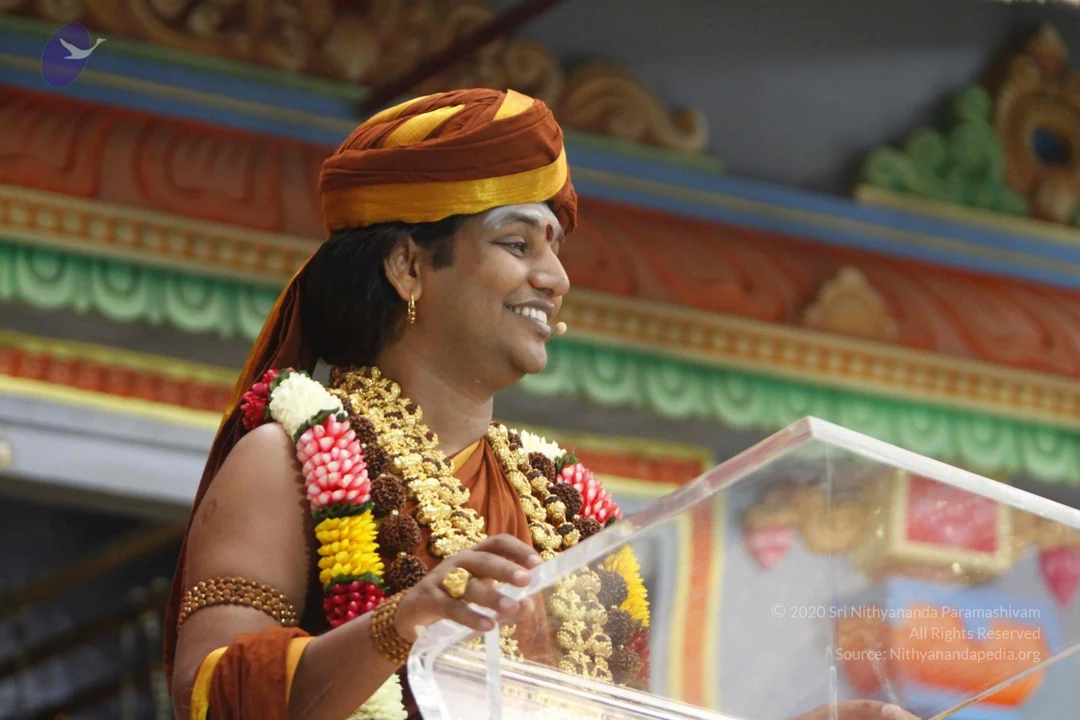
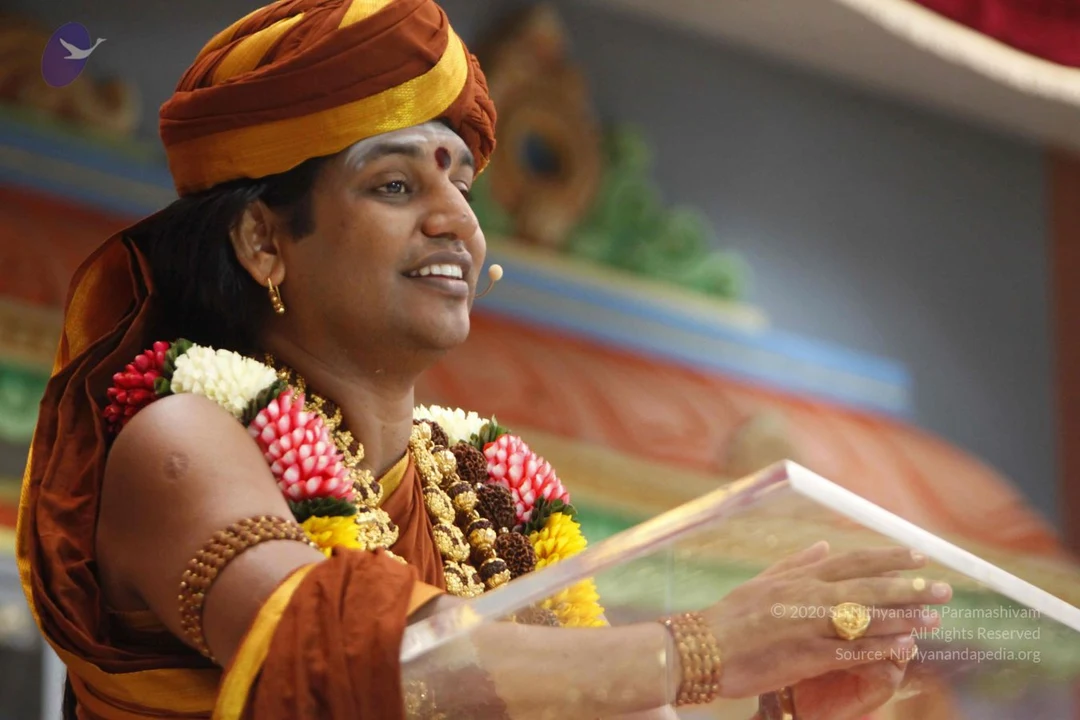
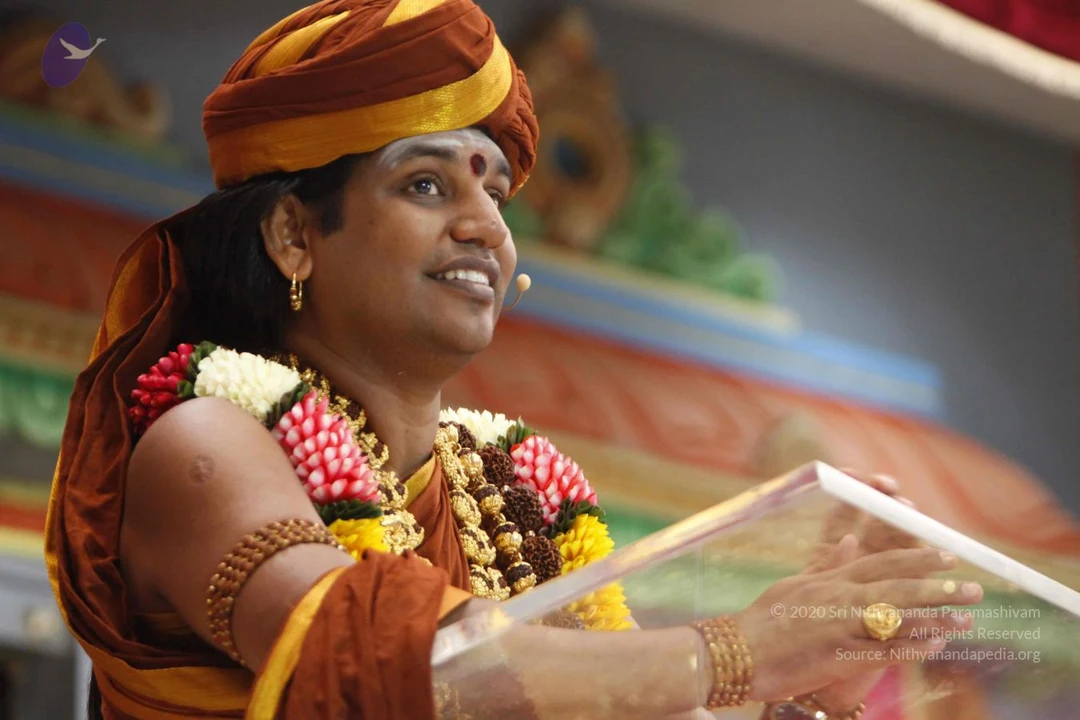
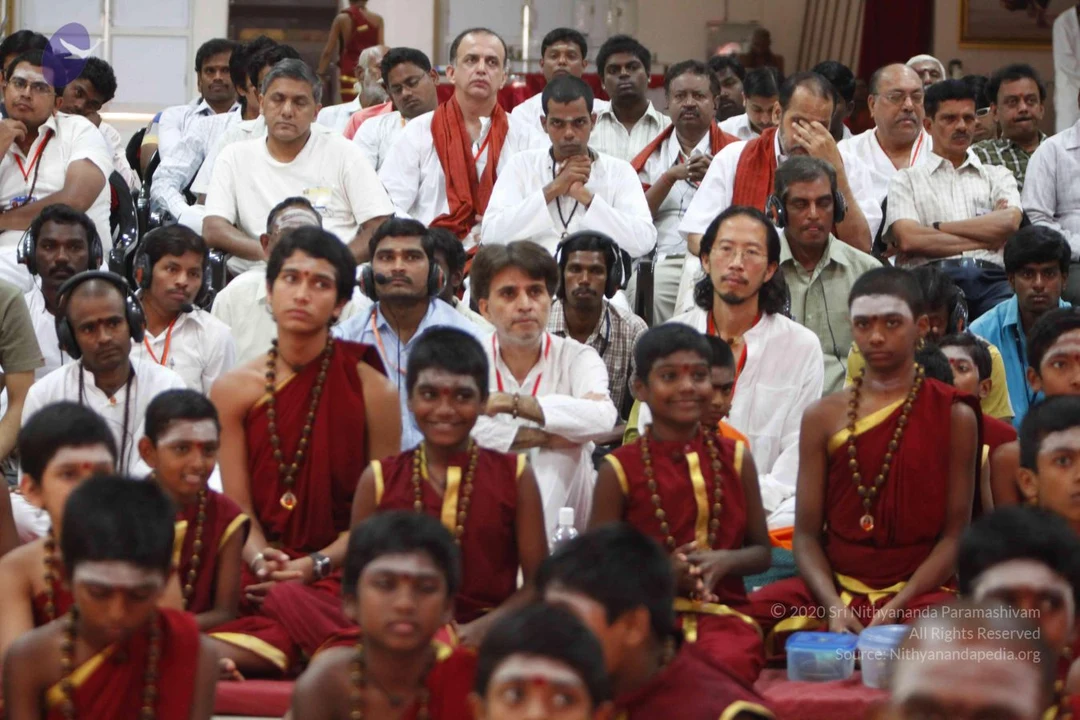
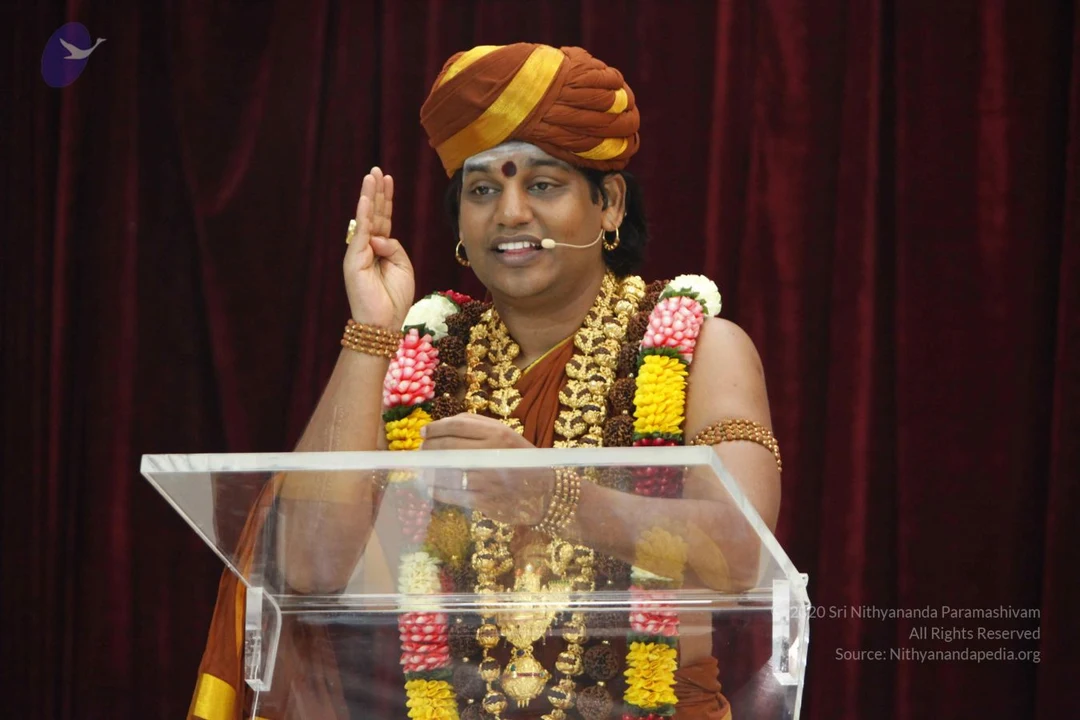
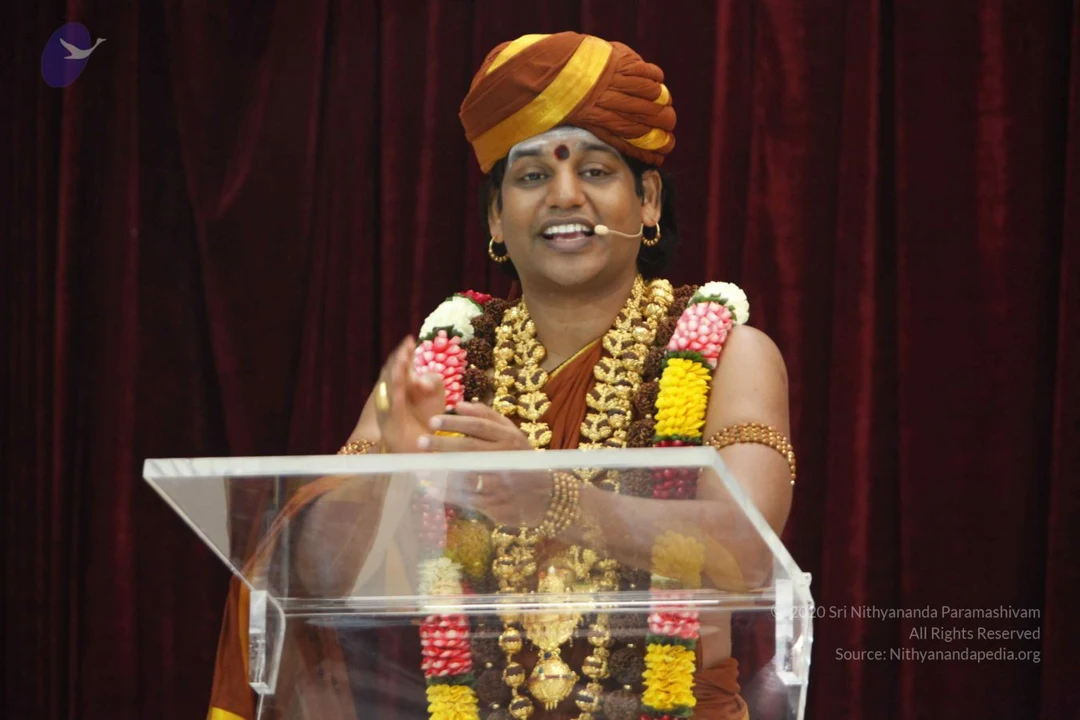
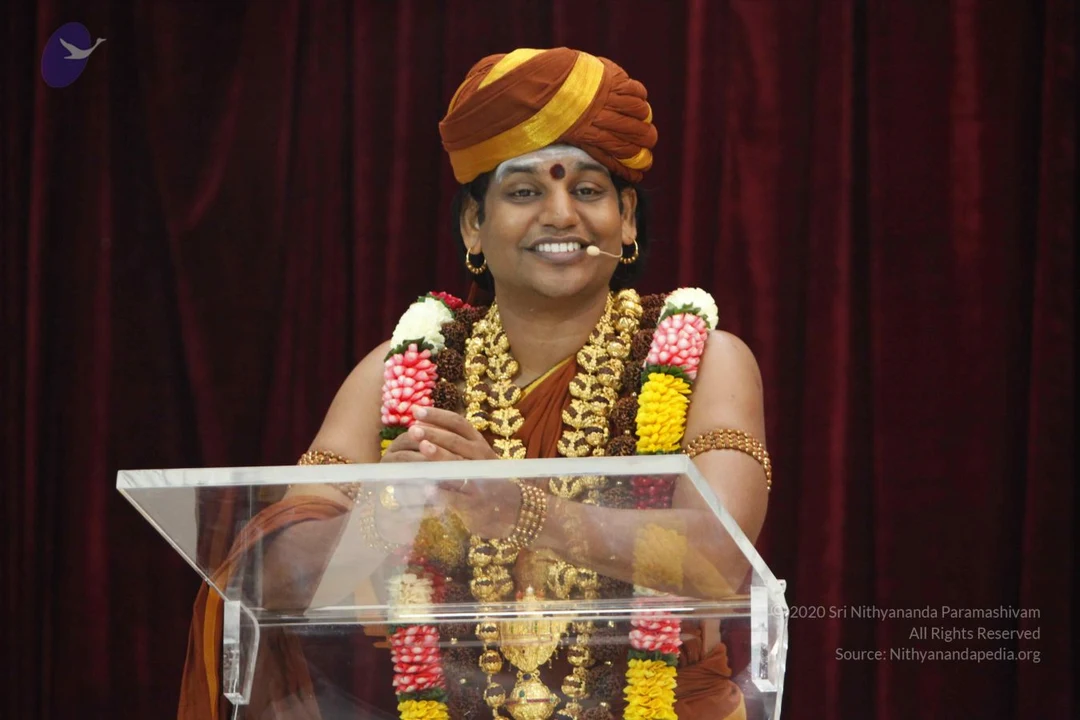
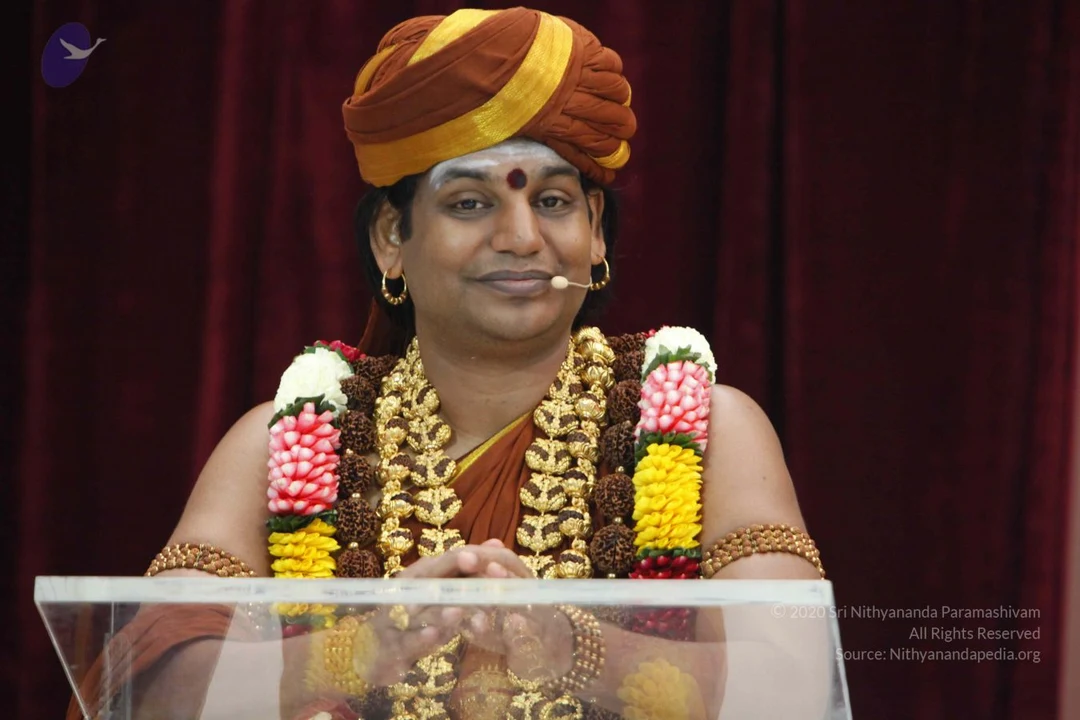
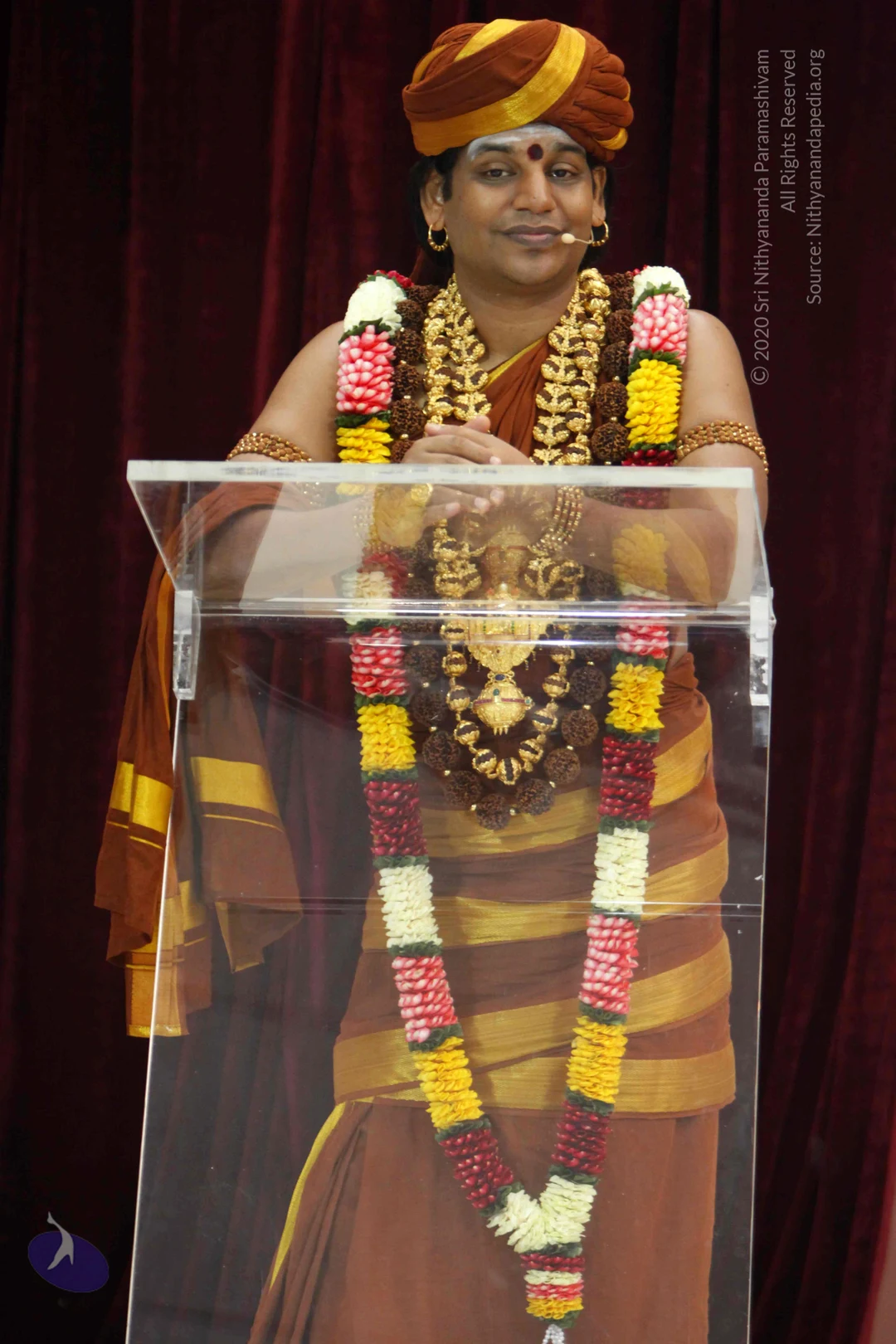
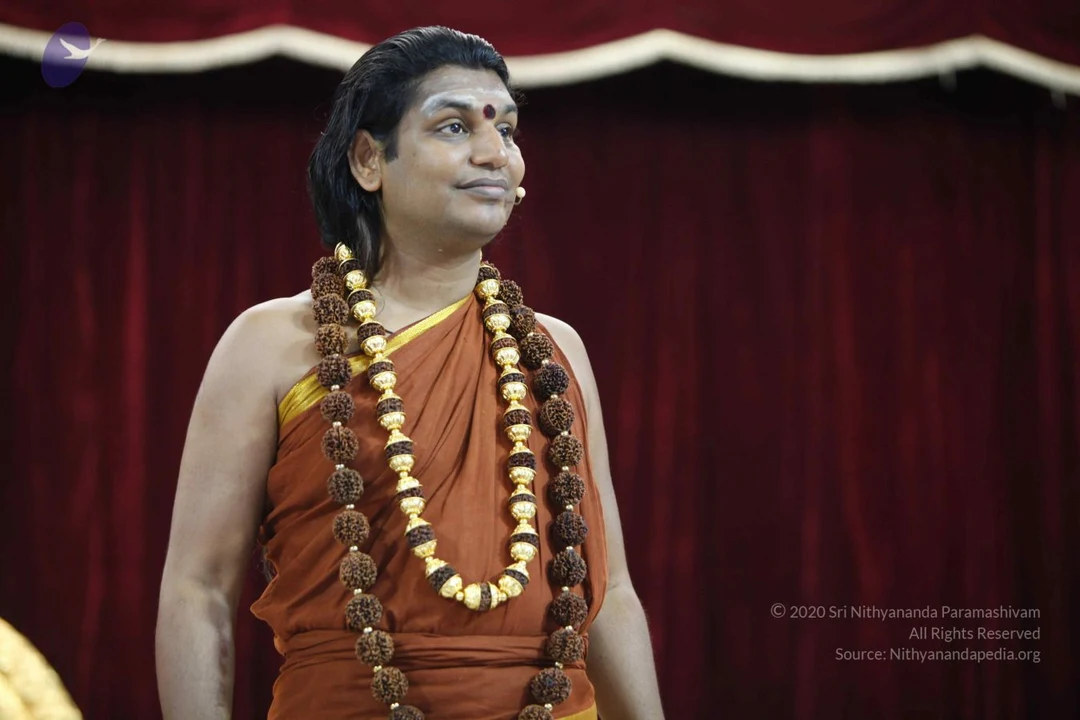
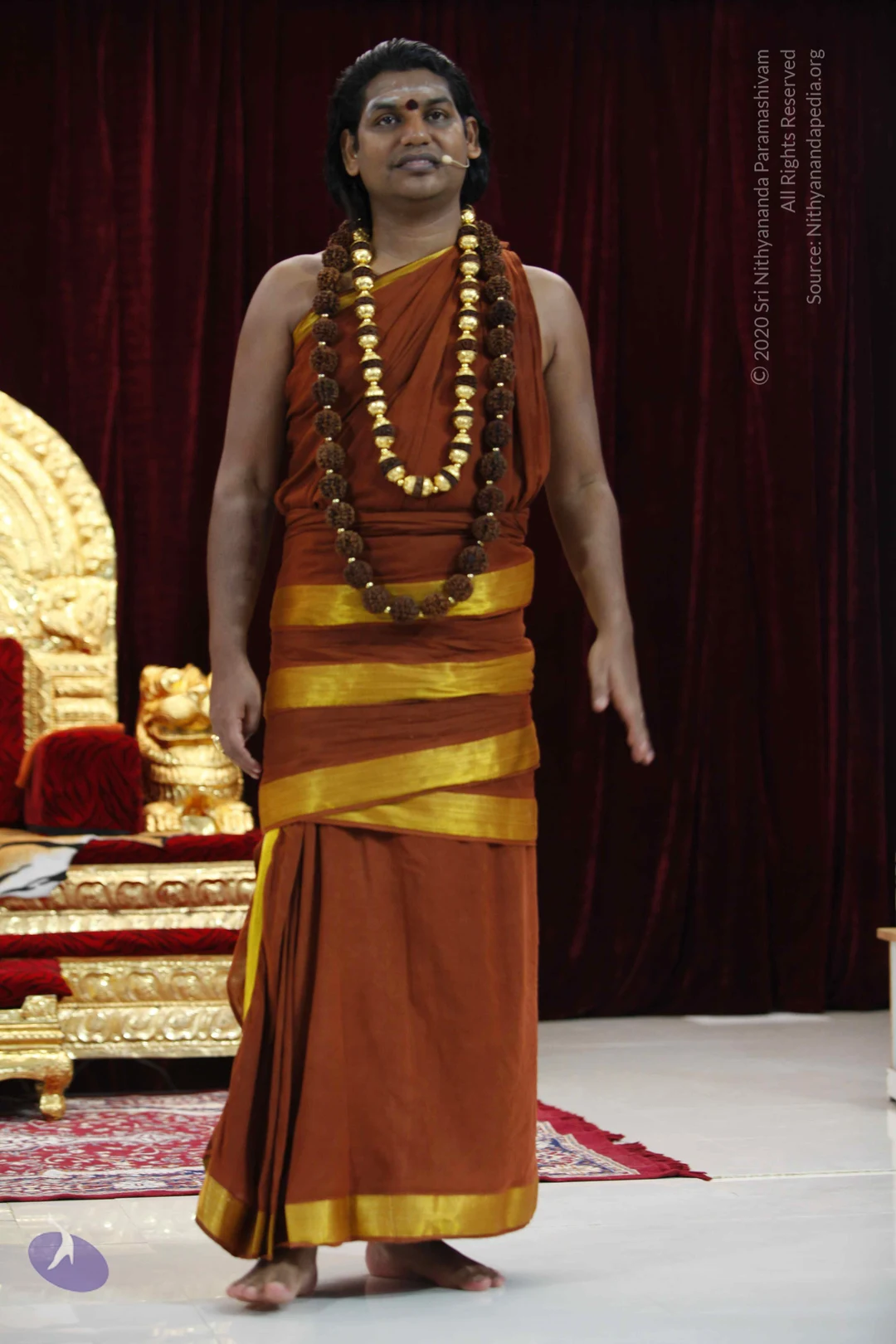
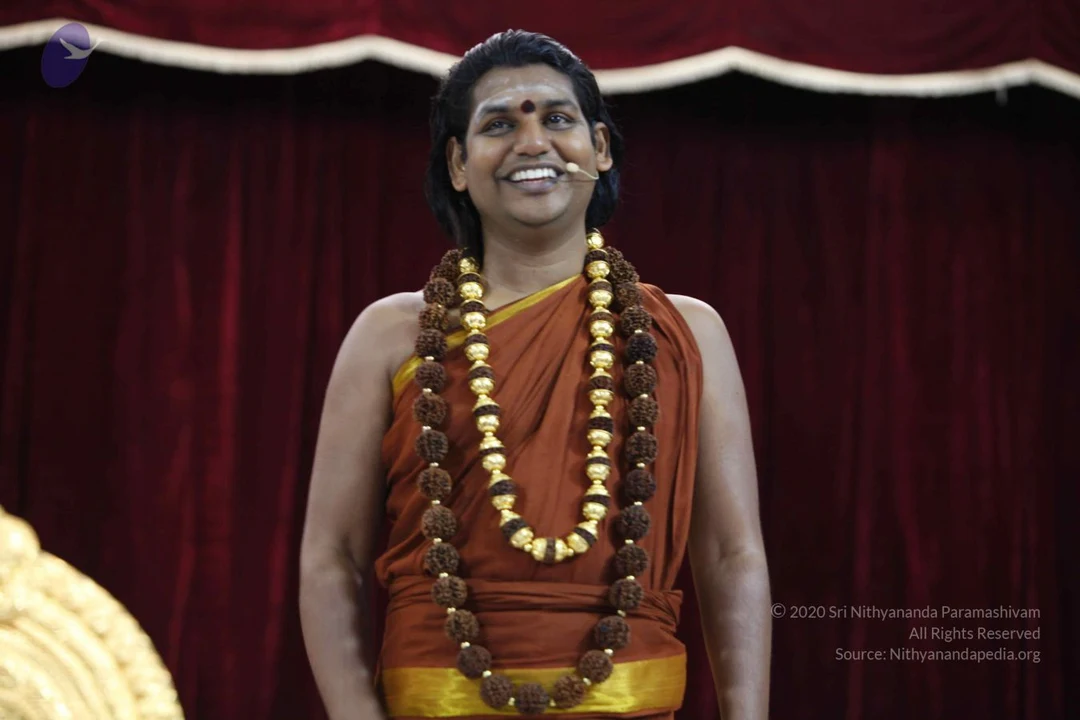
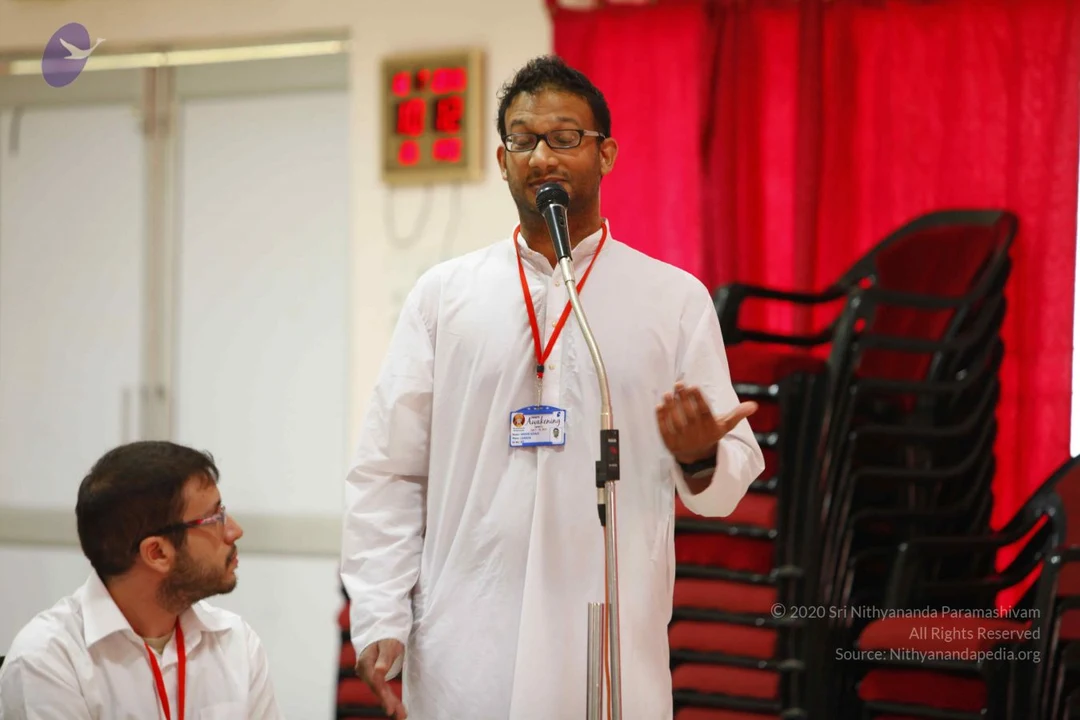
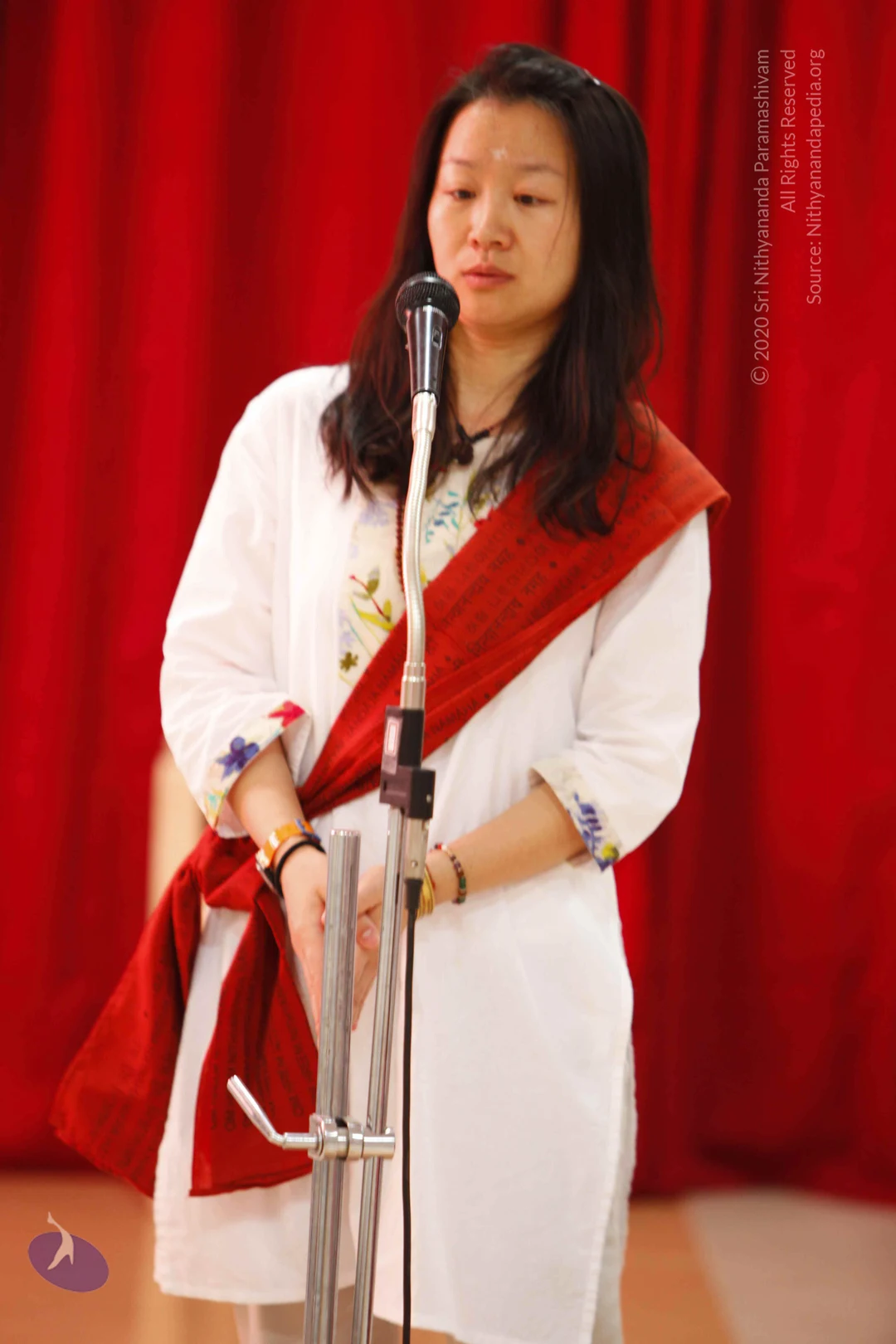
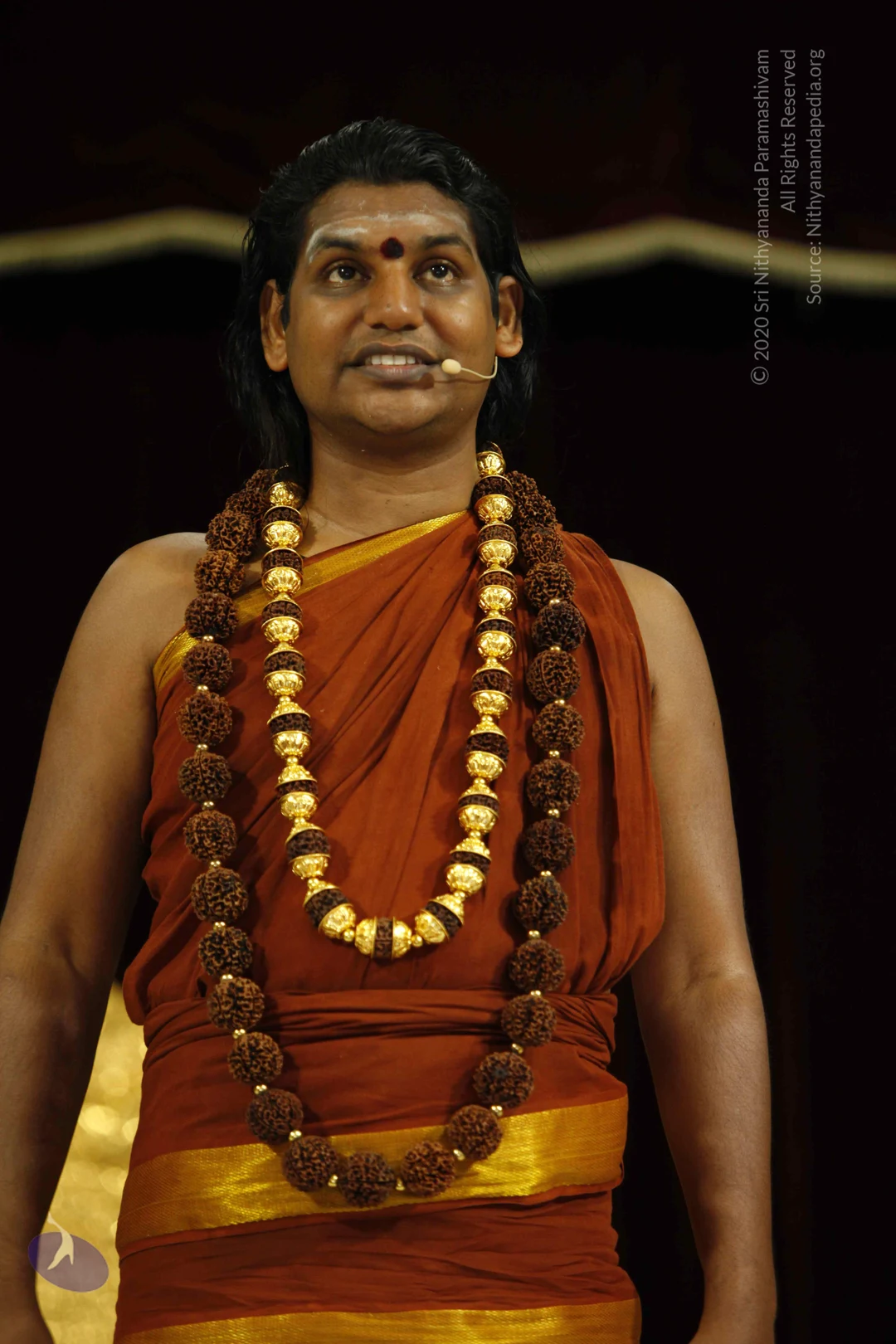
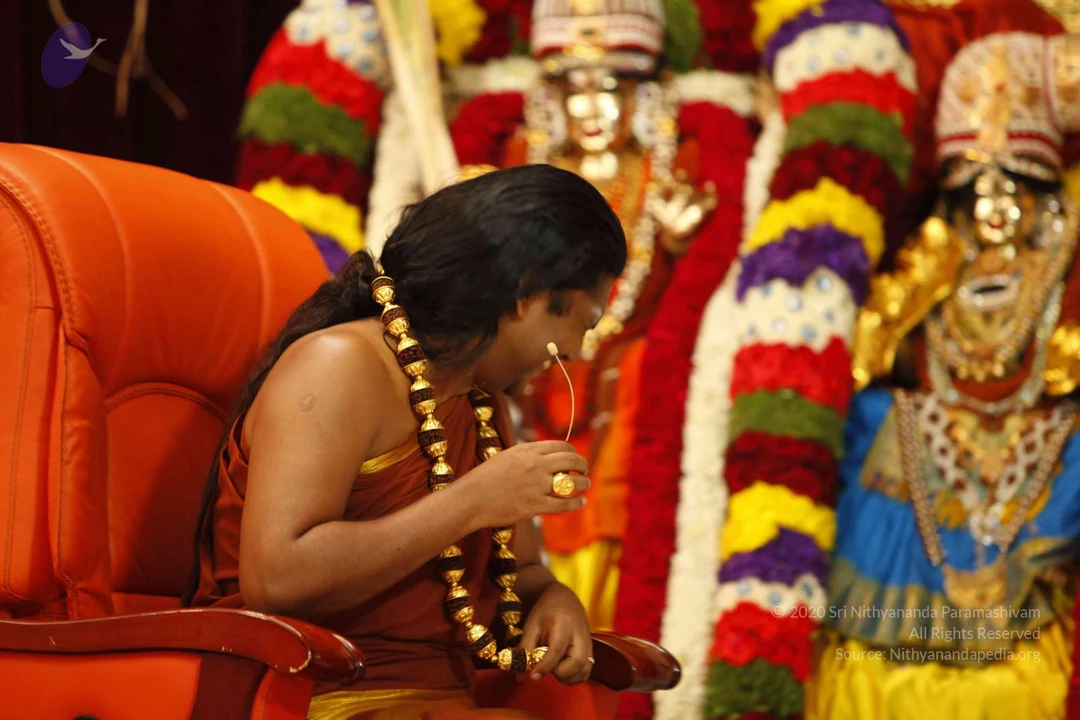
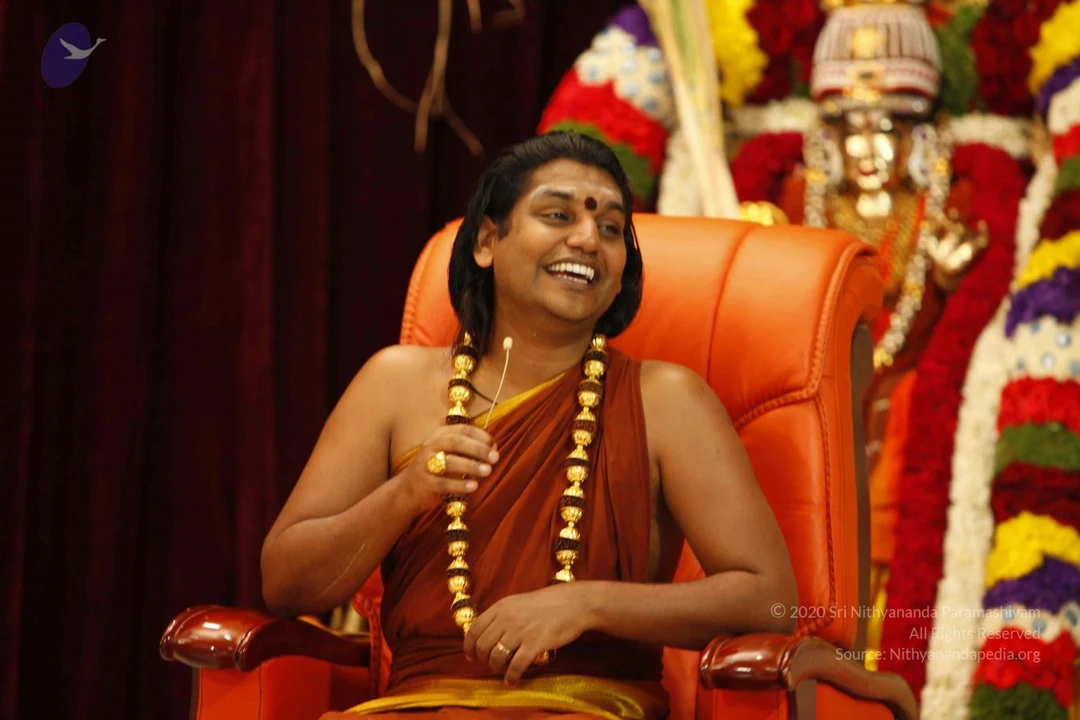
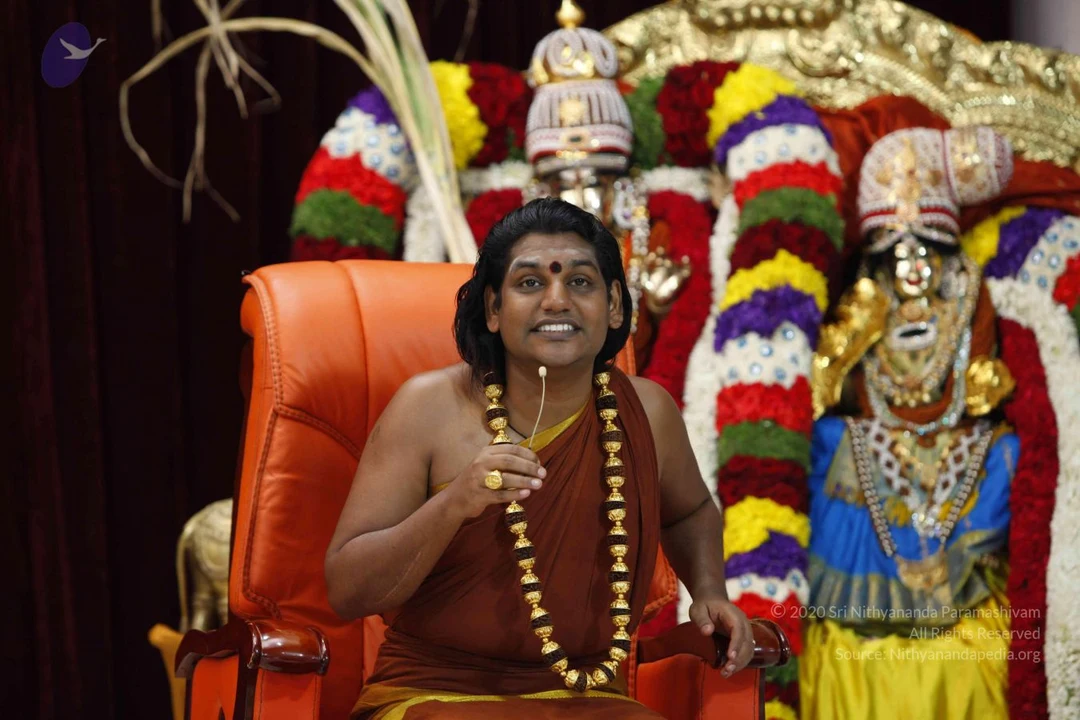
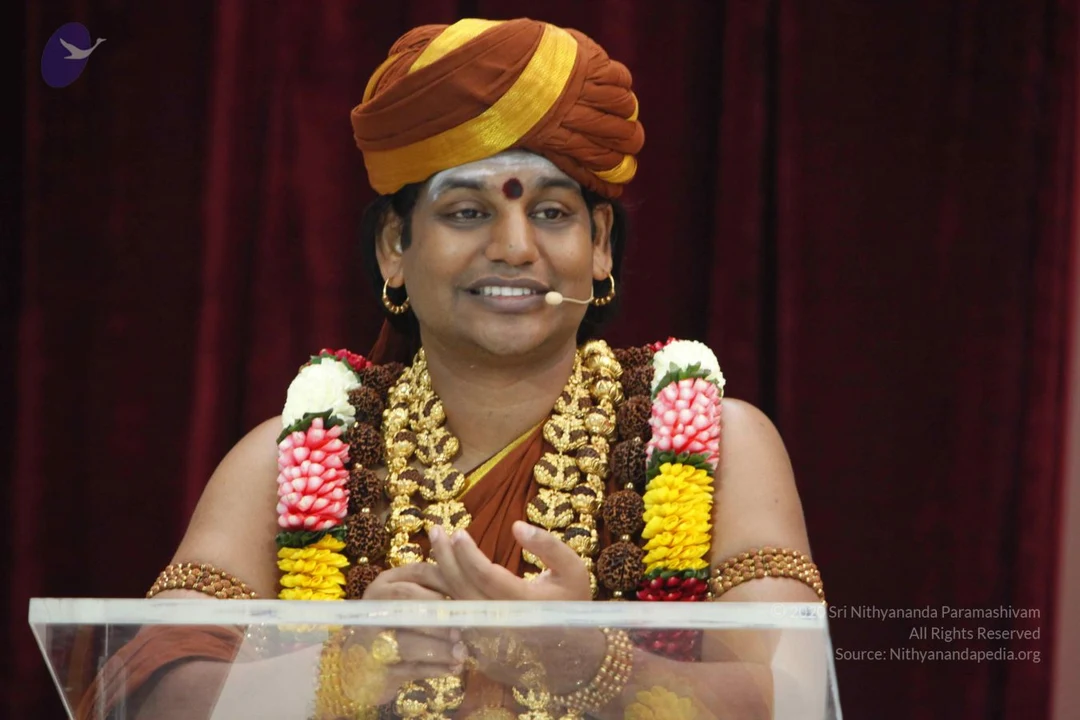
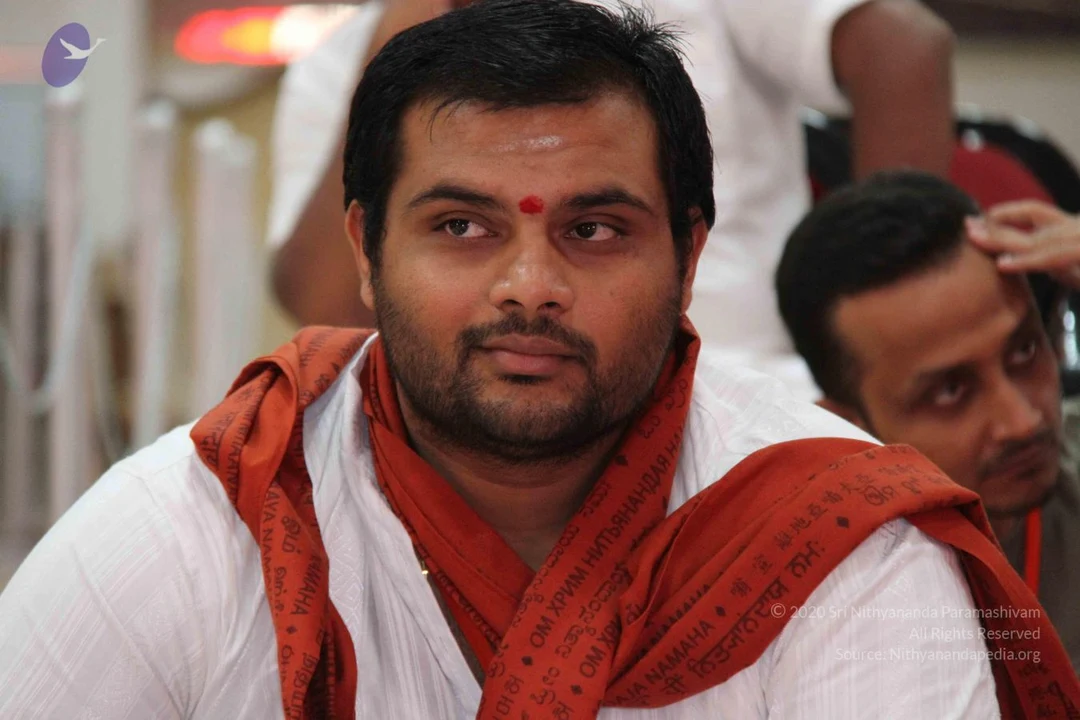
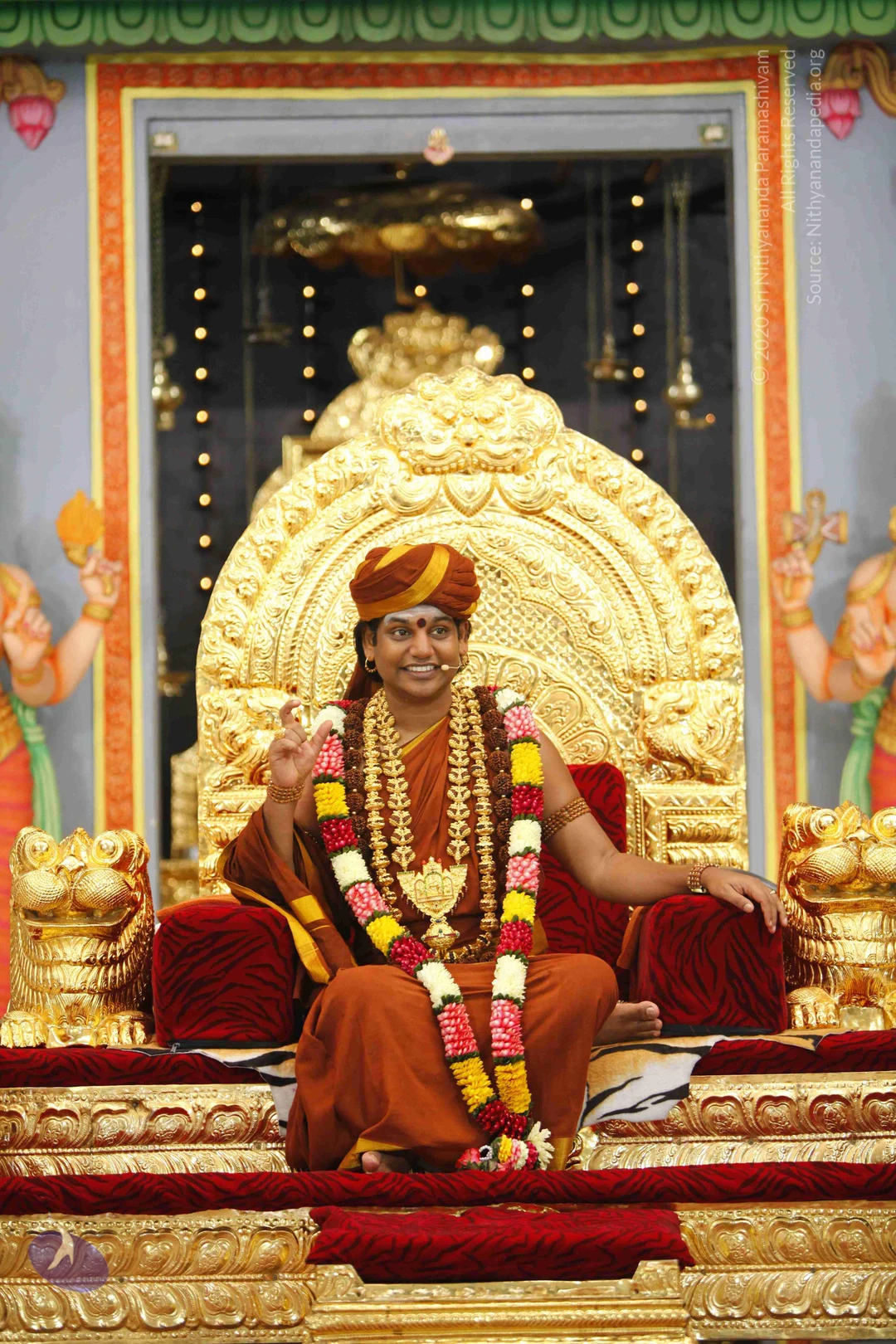
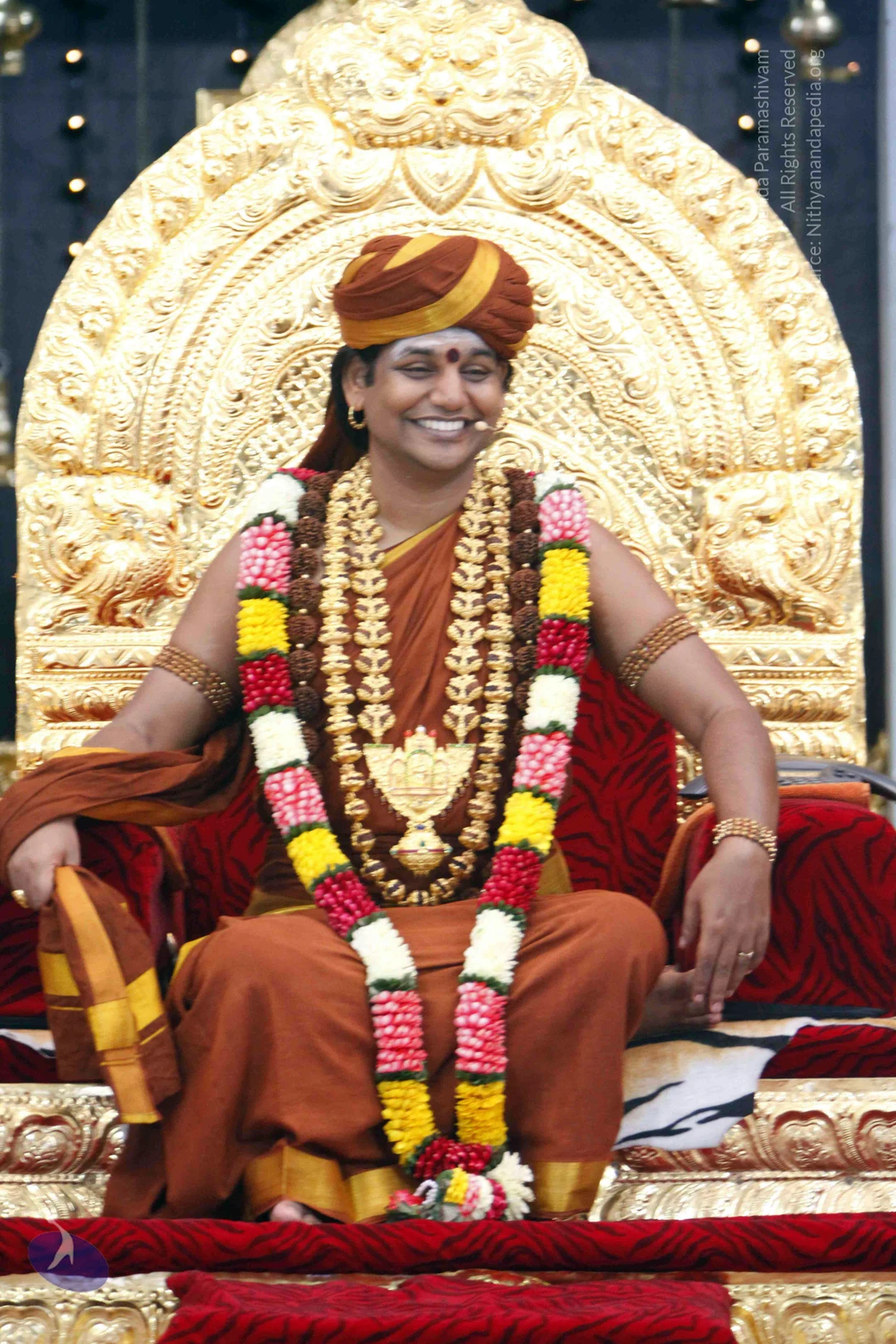
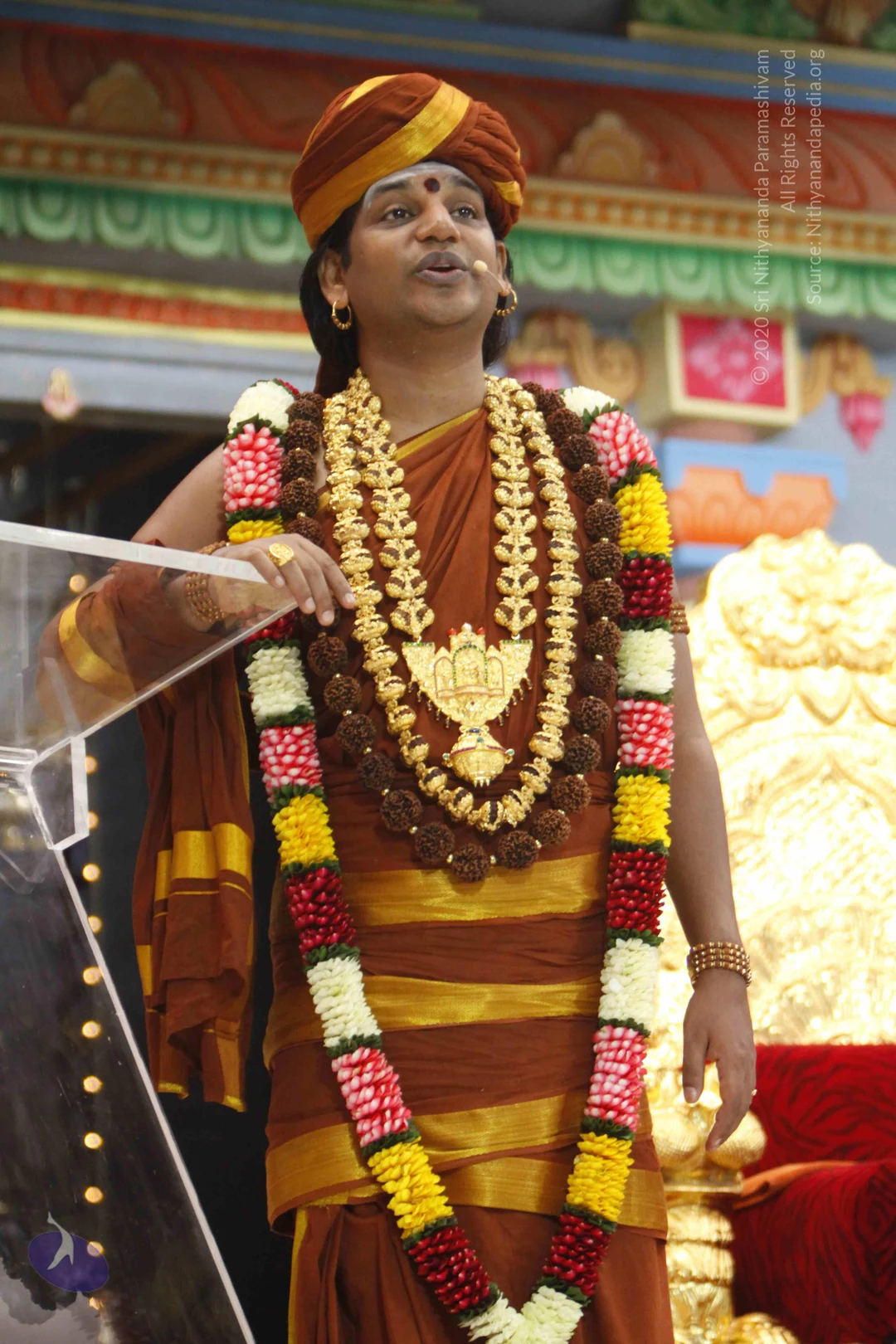
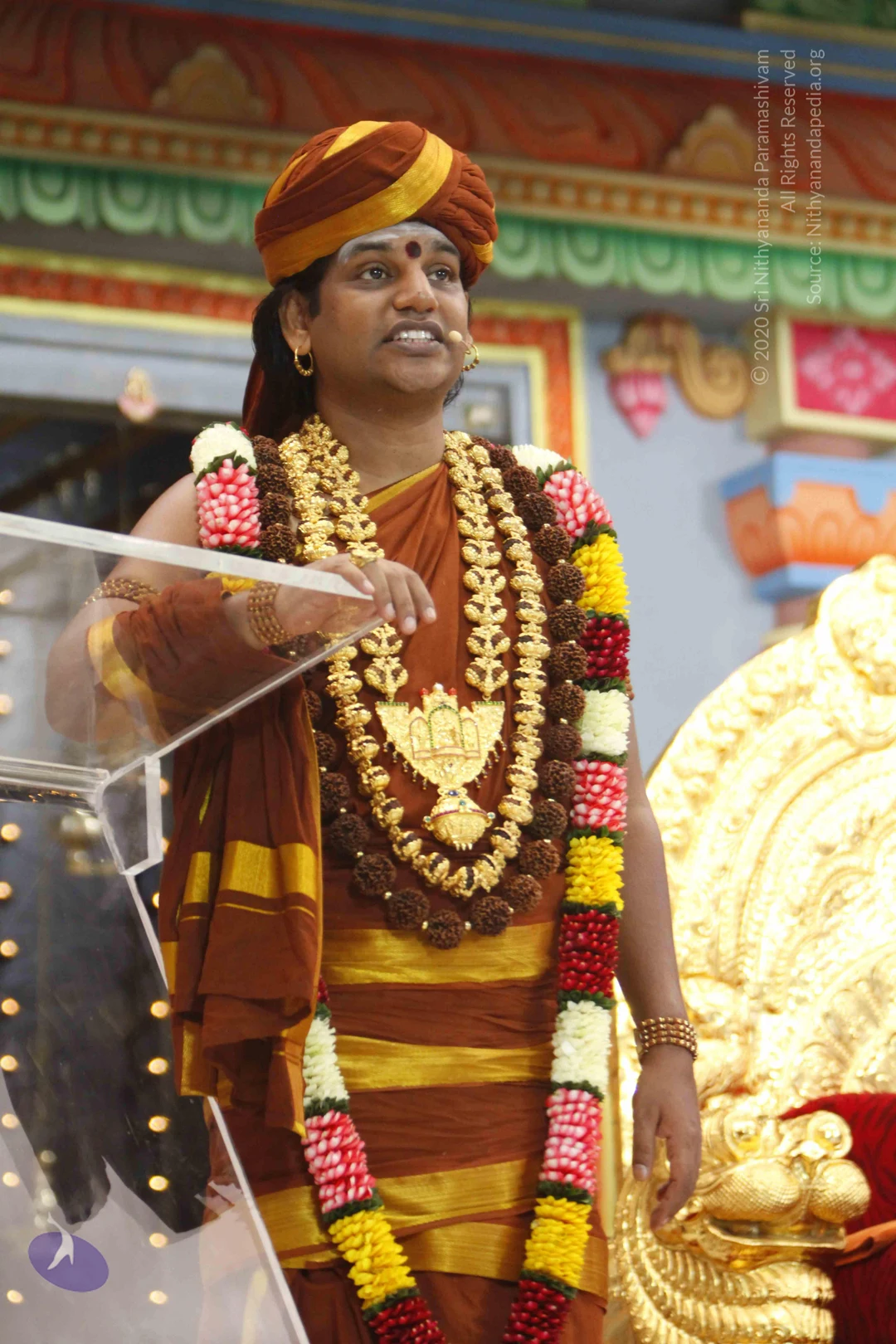
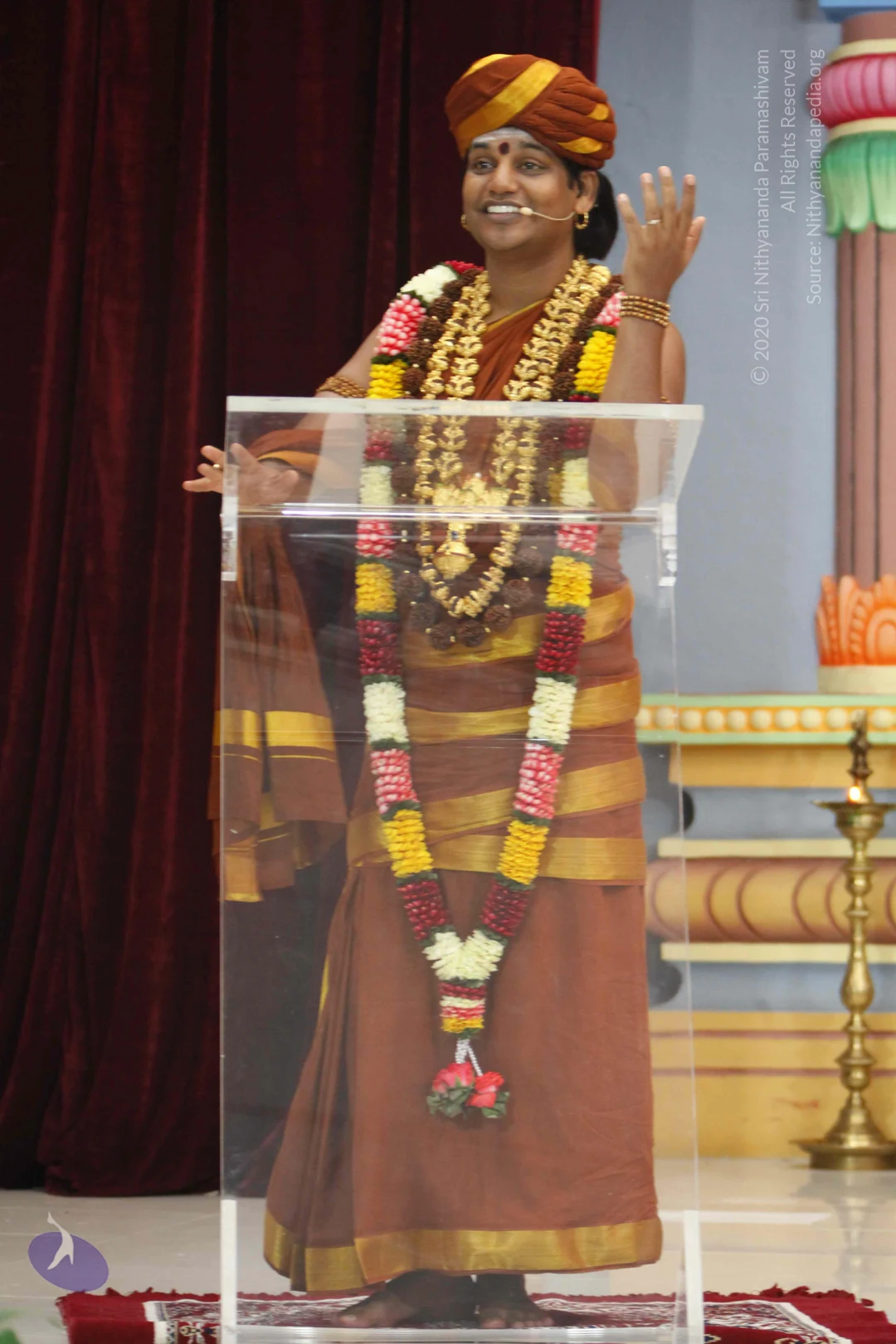
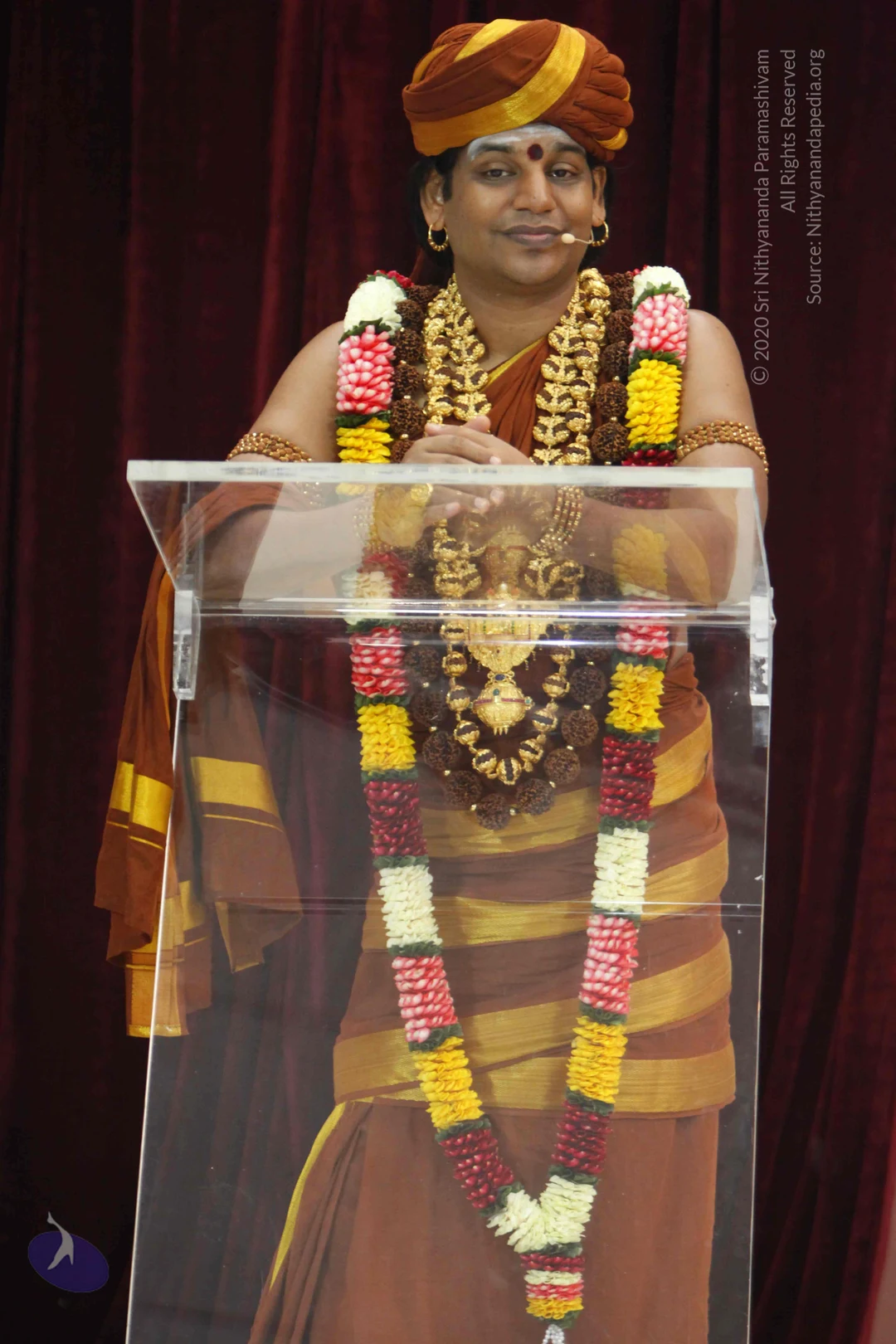
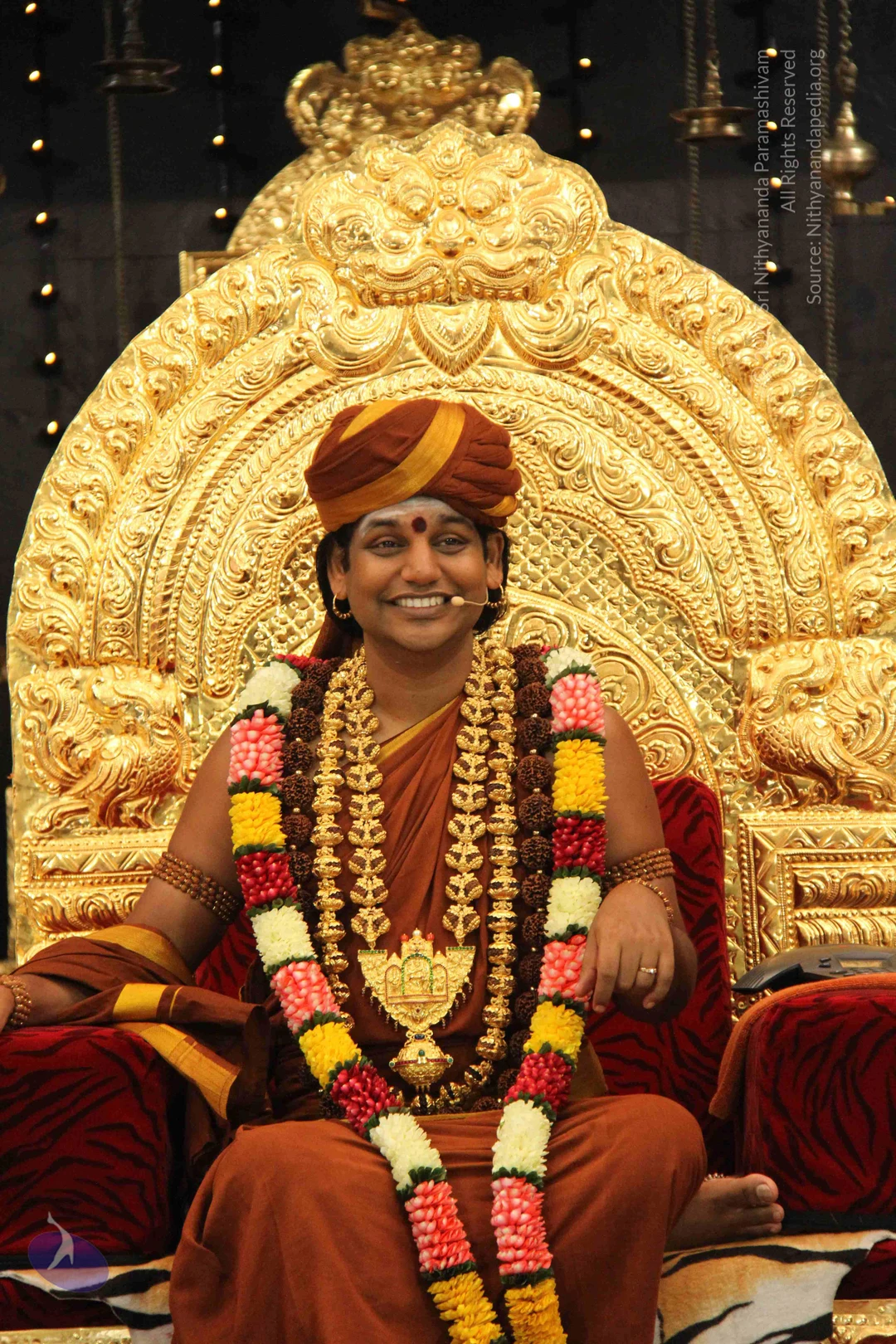
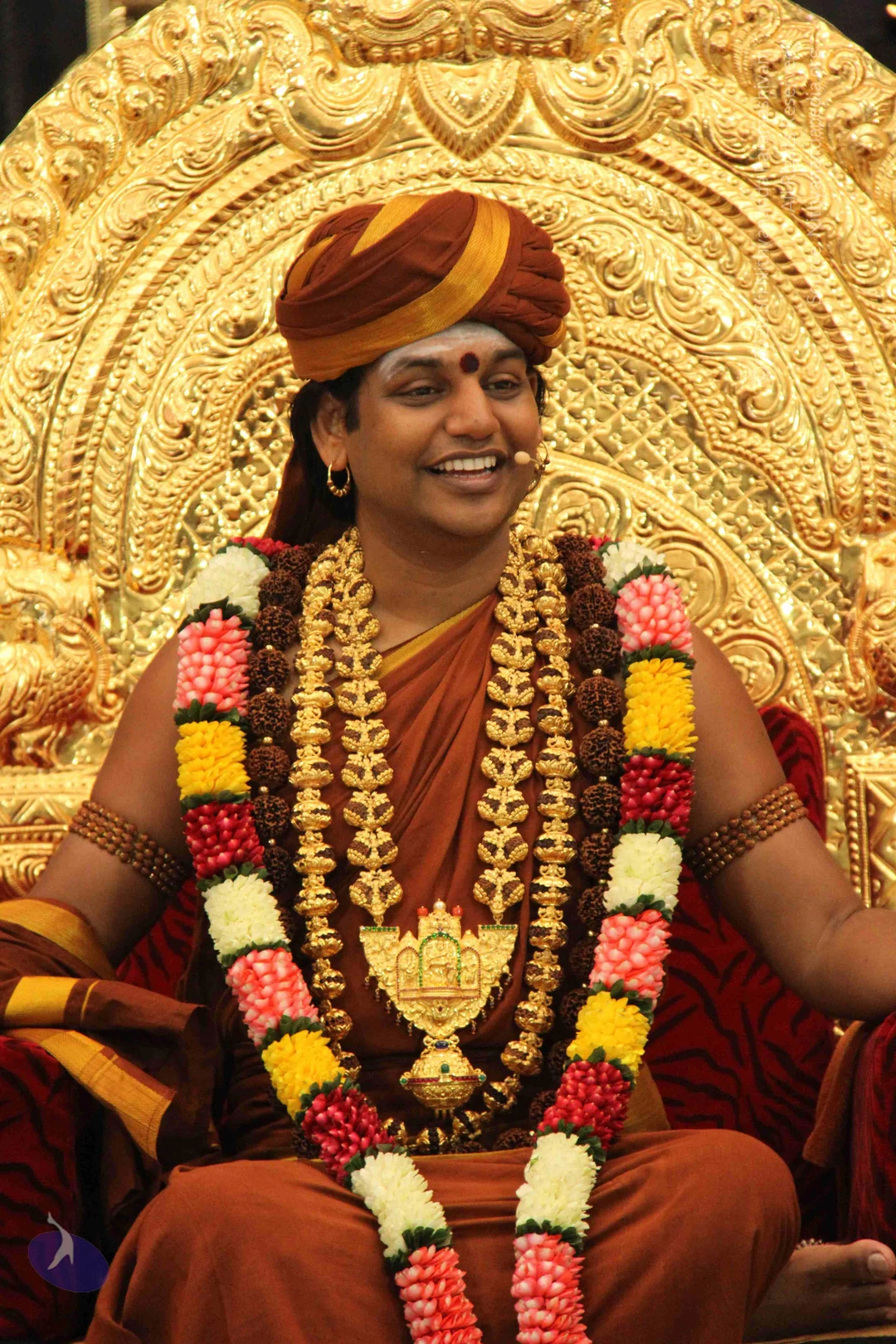
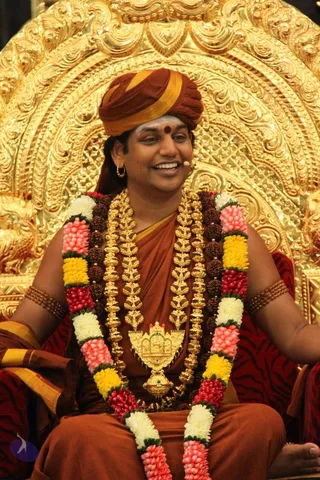
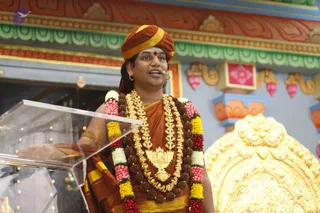
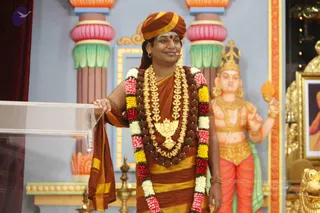
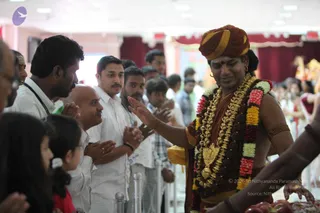
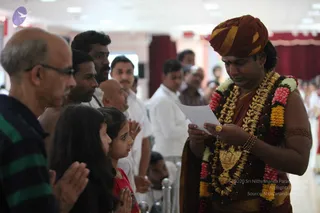
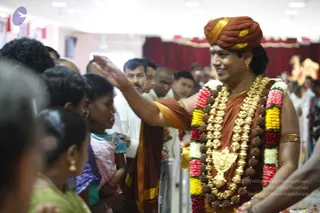
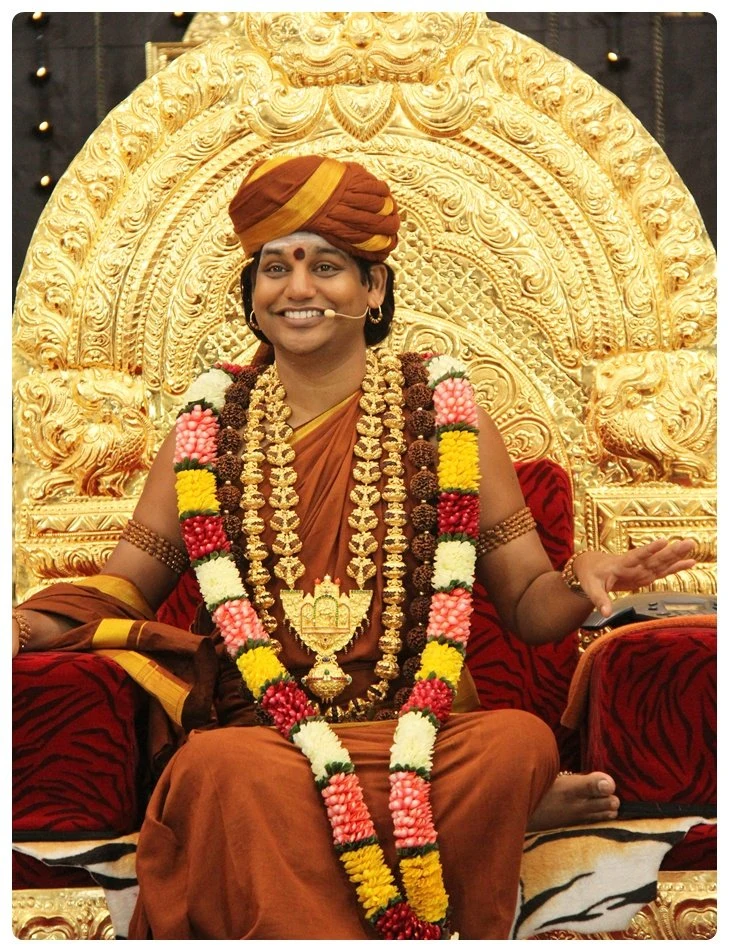
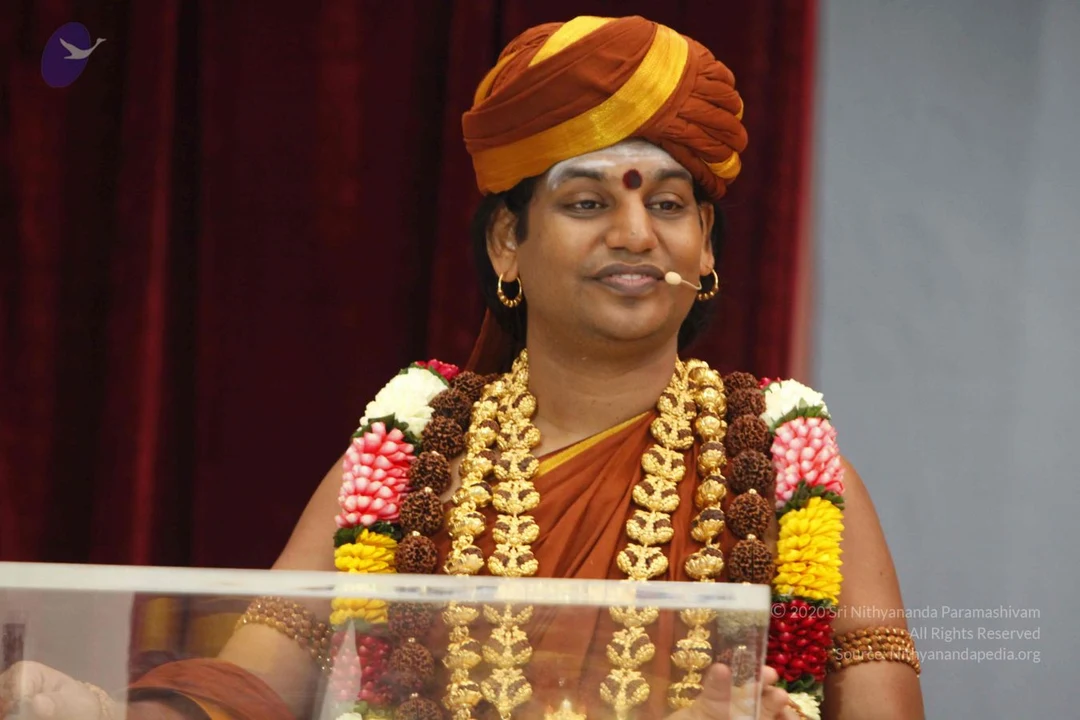
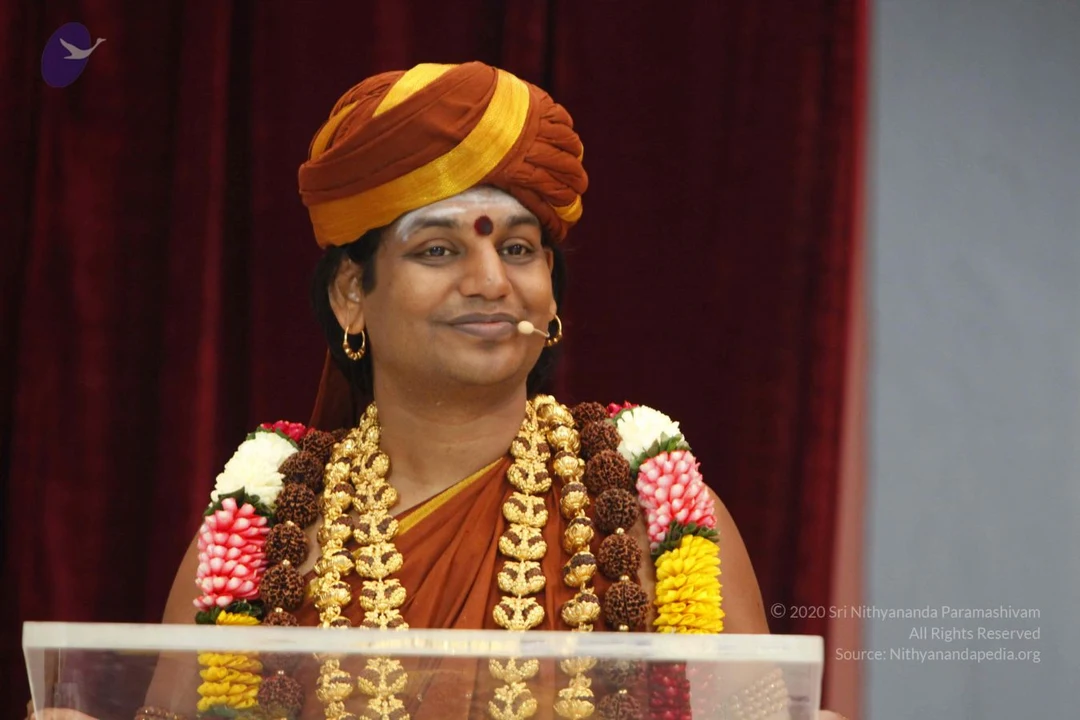
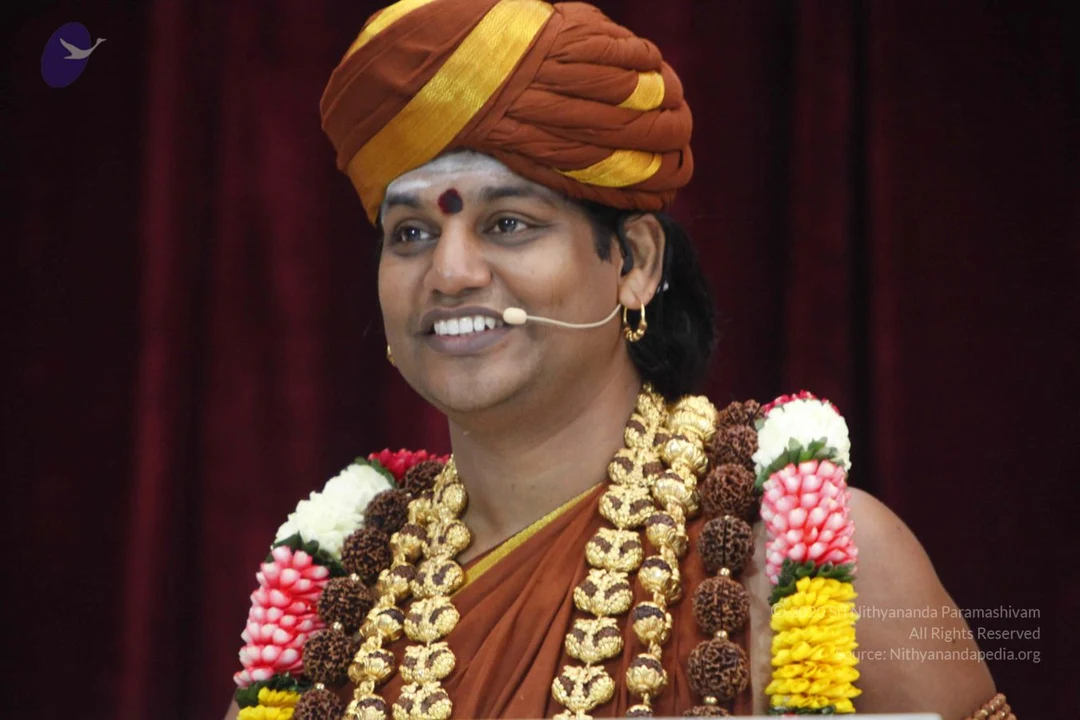
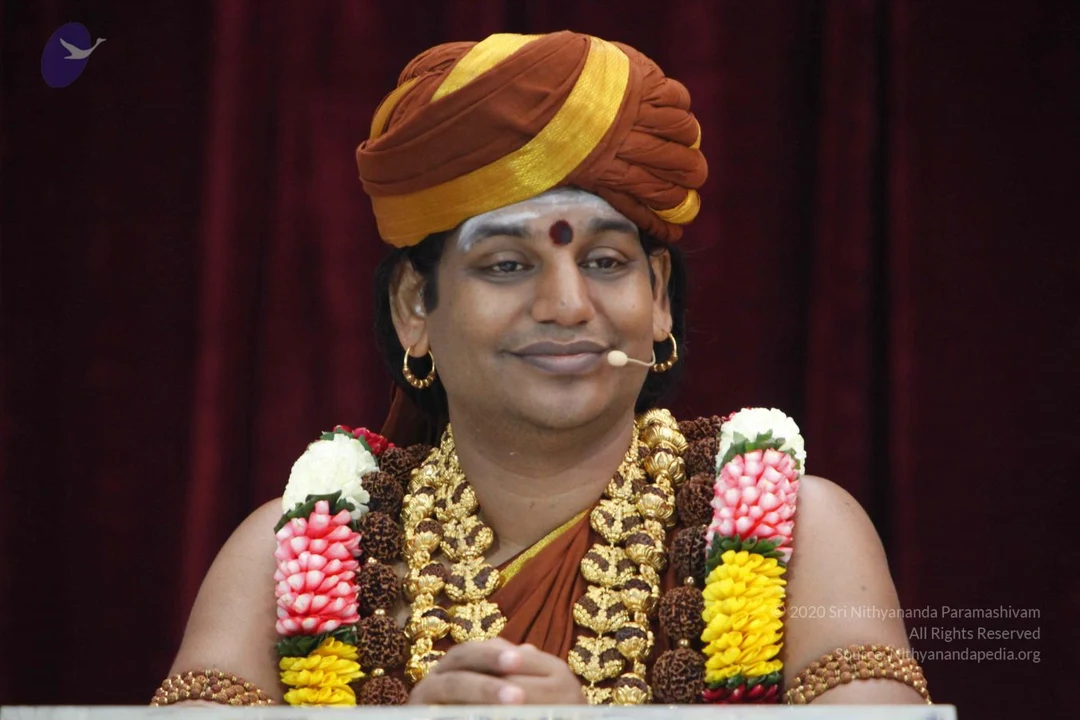
A man in an orange and gold turban and saffron robes stands behind a clear acrylic lectern, raising his right hand in a gesture of teaching while speaking into a small headset microphone. He wears layered gold necklaces, a long rudraksha and flower garland with pink and white blooms, gold bangles on his wrists, and a red bindi on his forehead. Behind him hangs a deep red velvet curtain. The lectern is the focal point of a discourse setting, with his hands and garlanded chest prominently visible. Swamiji (probable) appears as the speaker, identified by his turban, saffron clothing, rudraksha and gold ornaments, and garland.A smiling man in an orange-and-yellow turban and saffron robe stands behind a clear lectern, wearing a head microphone. He has a red bindi and white ash marks on his forehead, gold hoop earrings, rudraksha malas, and a heavy gold necklace with bead chains. Garlands of pink, white and yellow flowers drape over his shoulders. The background shows red drapery and a pink-and-green pillar at the right edge.Close-up photo of a man with short dark hair, a short beard and a red tilak mark on his forehead, wearing a white kurta and an orange-red shawl printed with repeated mantra text. He looks off to the side with a serious expression. Behind him, another man with short hair and an orange lanyard turns his head, and a blurred white-clad figure appears at the top. The shawl bears Om Sri Nithyananda Namaha style printed text. Indoor setting with blurred background.

July 12 2013

Original wiki page
Contents

Title:

Completion - Essence of all Spiritual Practices

Description:

In today’s morning Satsang, Paramahamsa Nithyananda reveals deeper truths about performing completions. It is essential that we not only bring awareness to our incompletions and their causes, but that we know in what context we are making the completions. Apologies come from a state of guilt, powerlessness, the feeling we made a mistake or did something wrong, and fear. Let us realize that, in the past, our actions came from an inadequate cognition. But now, we have the knowledge that completion means shifting the cognition from one that is inadequate to one that puts us into a space of expansion. The most important thing for us to learn is that completion is everything, so let us start completions now!

Link to Video:

VideoAudio

Title

How to Experience Completion at Muscle Memory & Bio Memory , Inner Awakening

Link to Video:

VideoAudio

Transcript:

COMPLETION: ESSENCE OF ALL SPIRITUAL PRACTICES

Nithyanandeshwara Samaarambhaam Nithyanandeshwari Madhyamaam | Asmadaachaarya Paryanthaam Vande Guru Paramparaam ||

I welcome you all with my love and blessings!

Today, I will continue to expand in Nithya Satsang about “COMPLETION”.

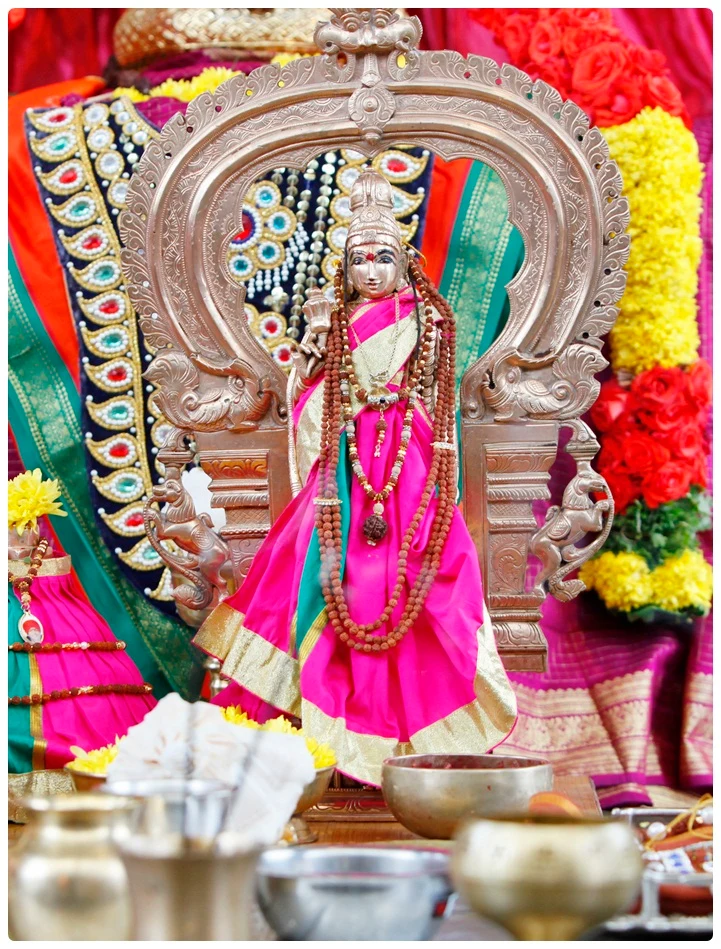
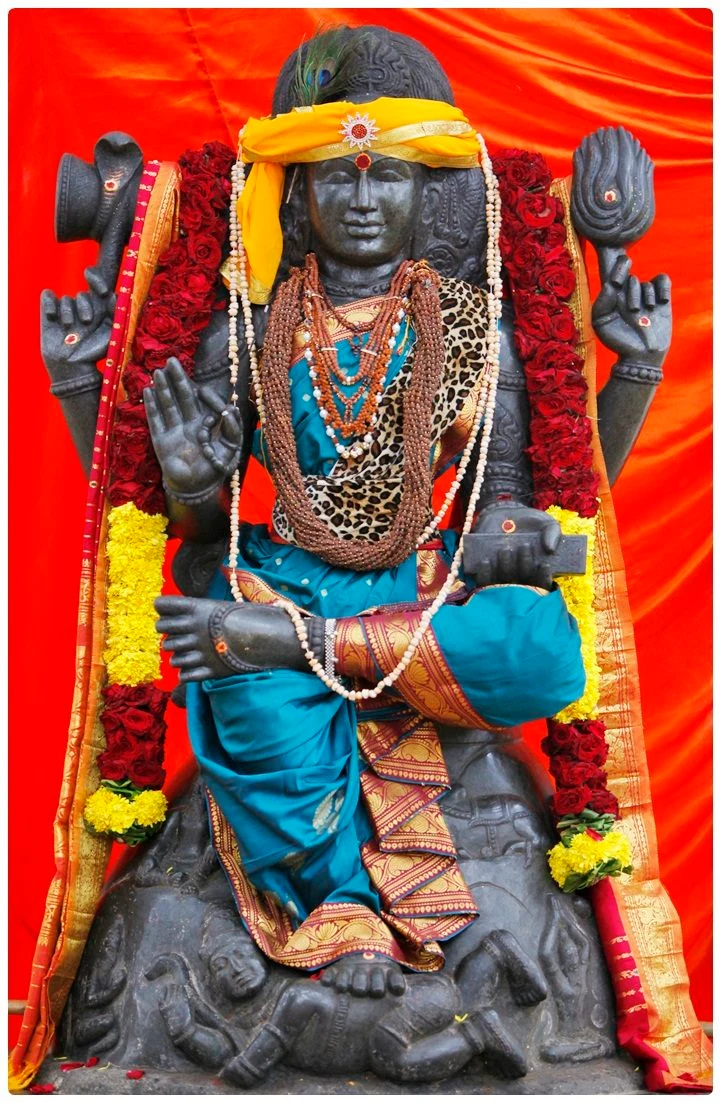
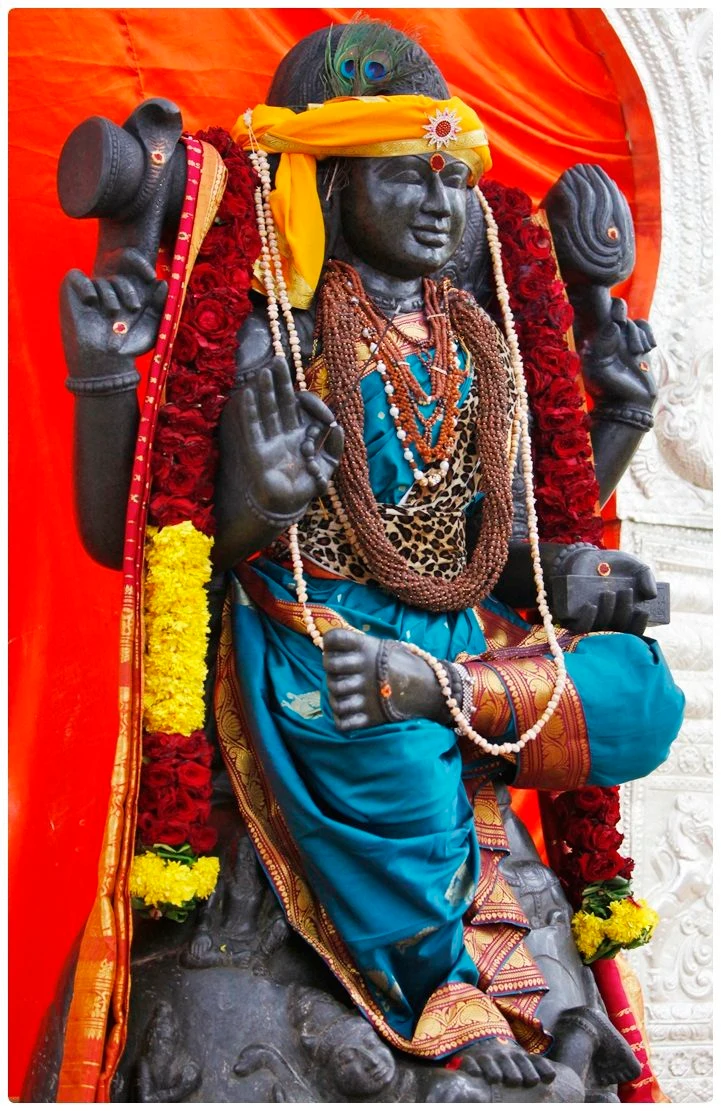
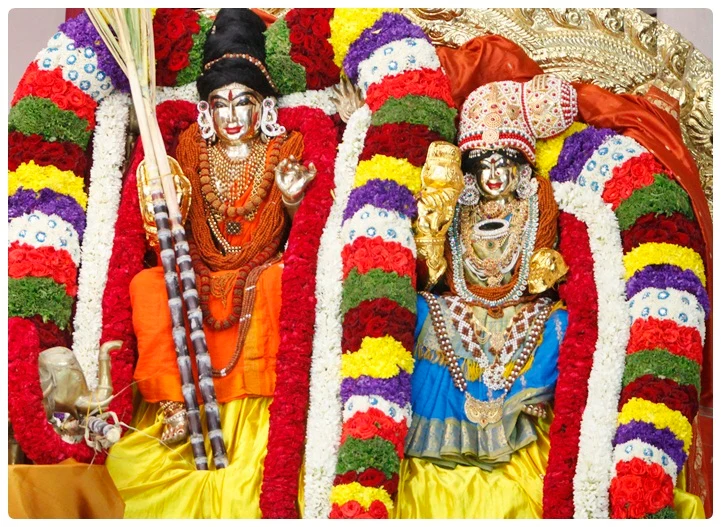
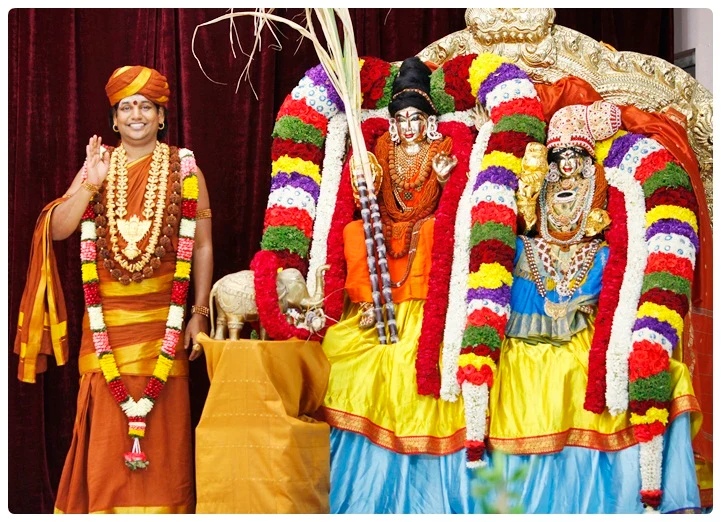
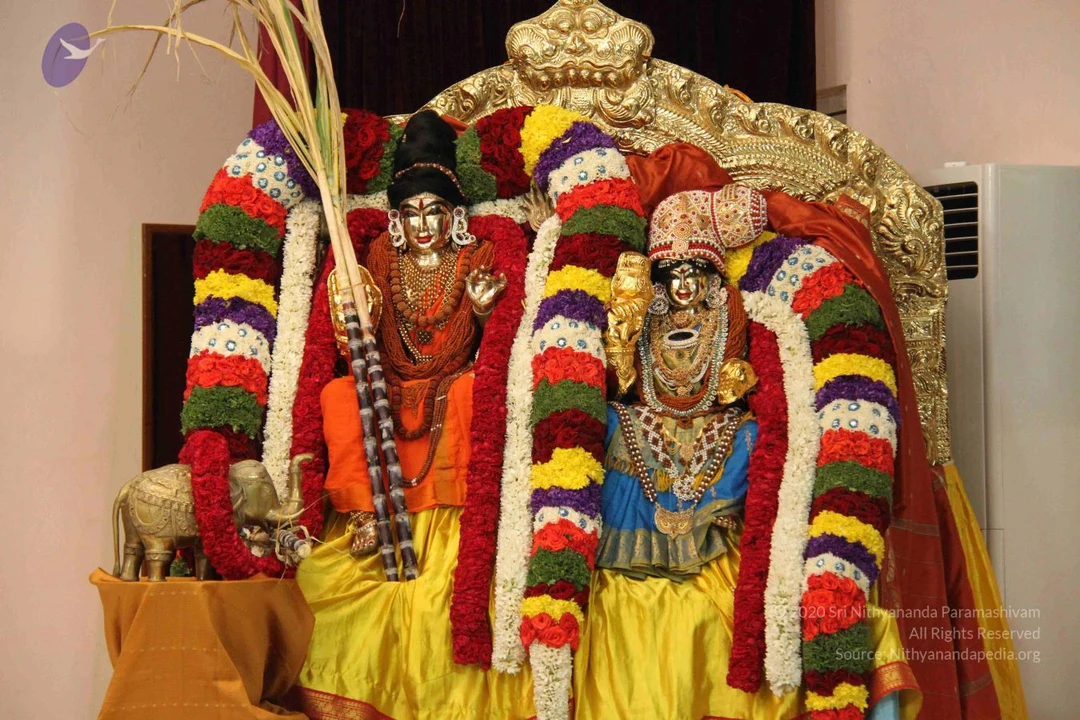
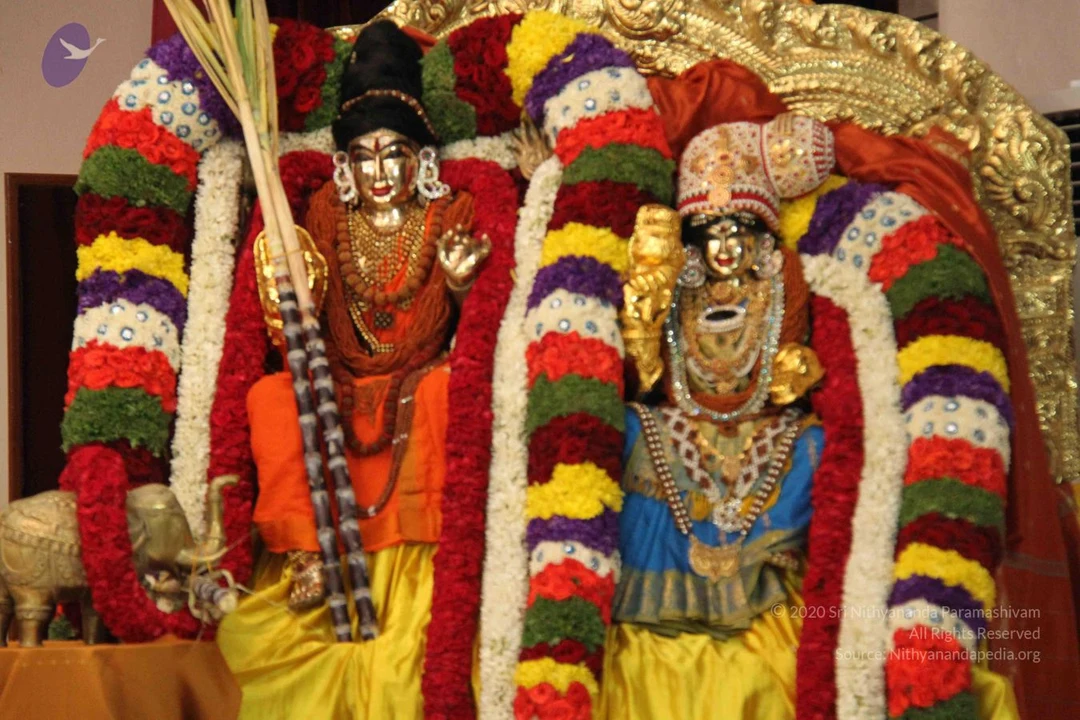
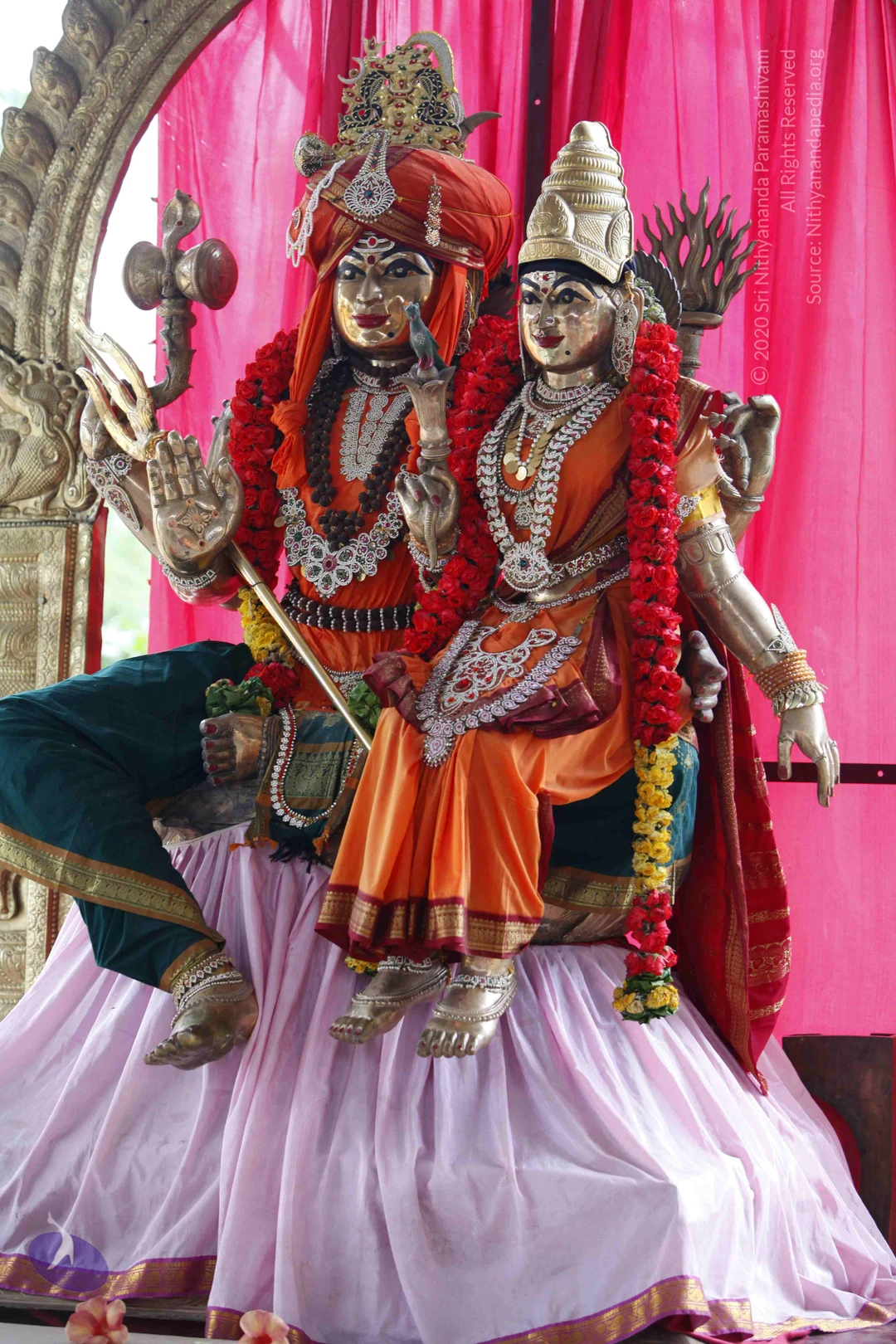
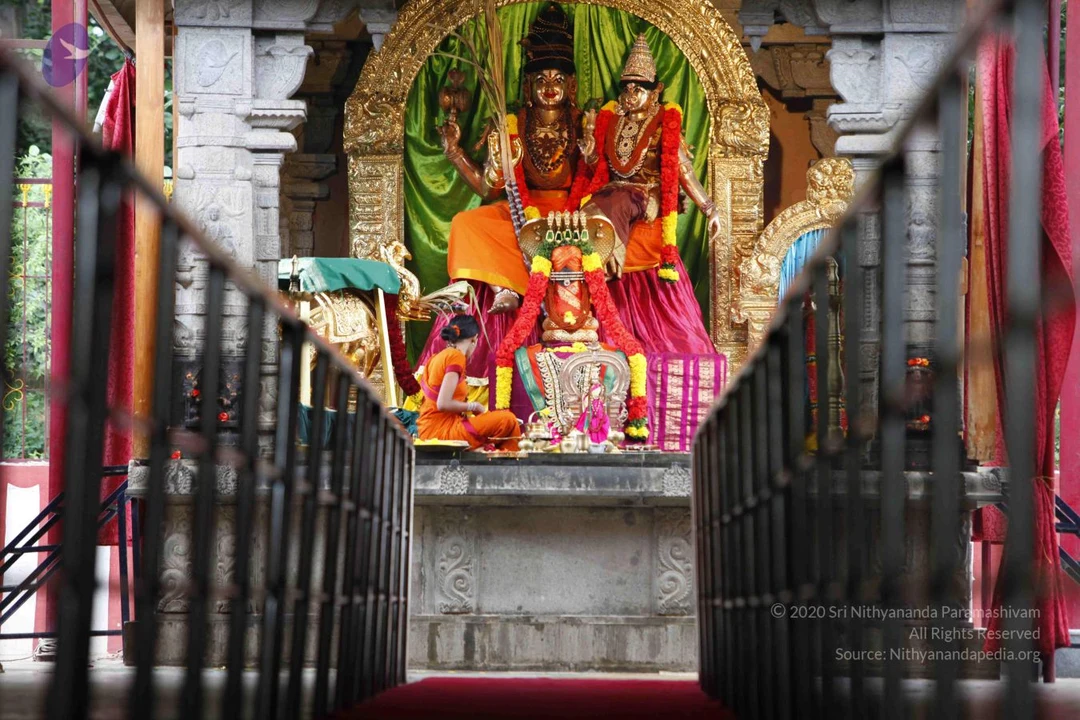
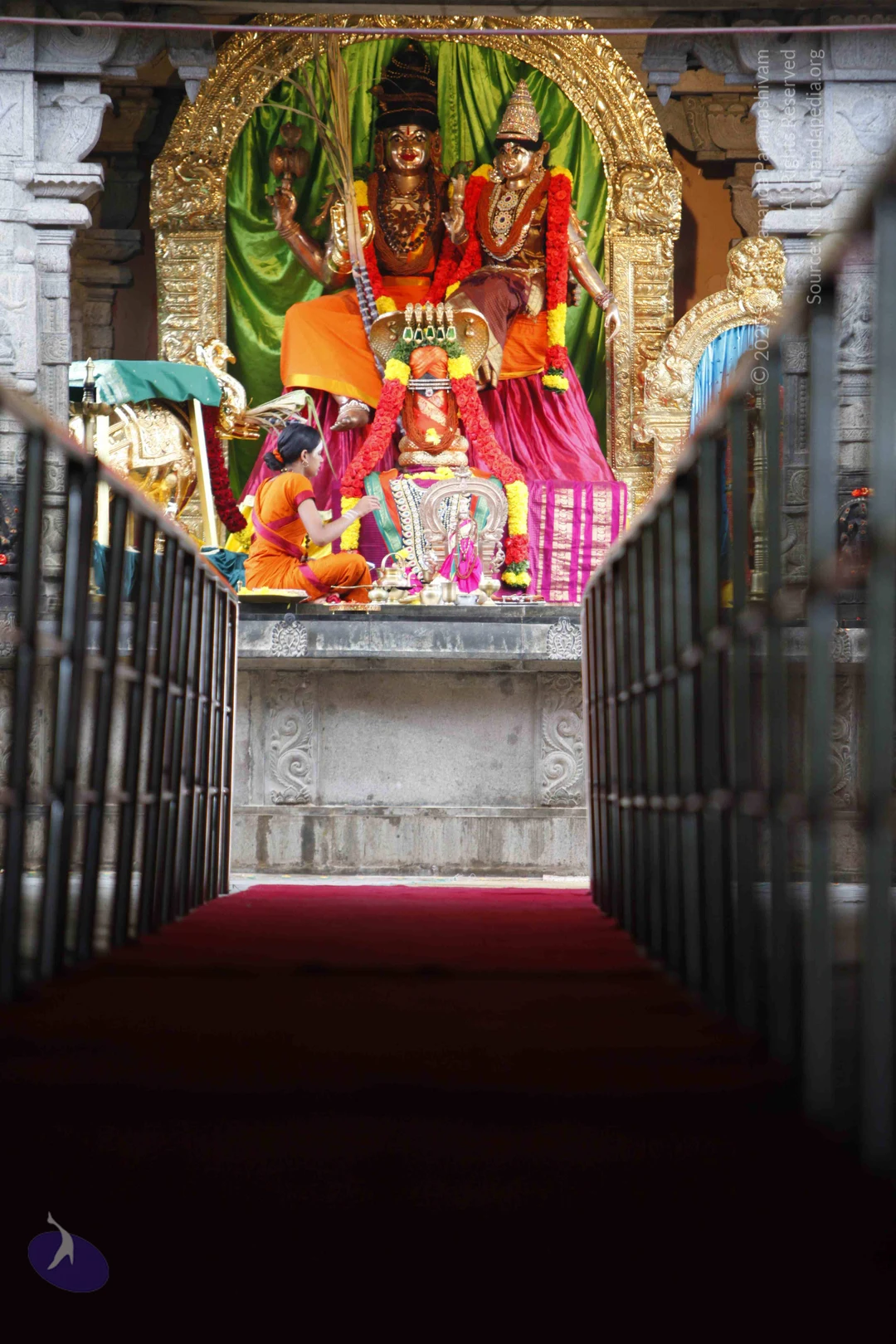
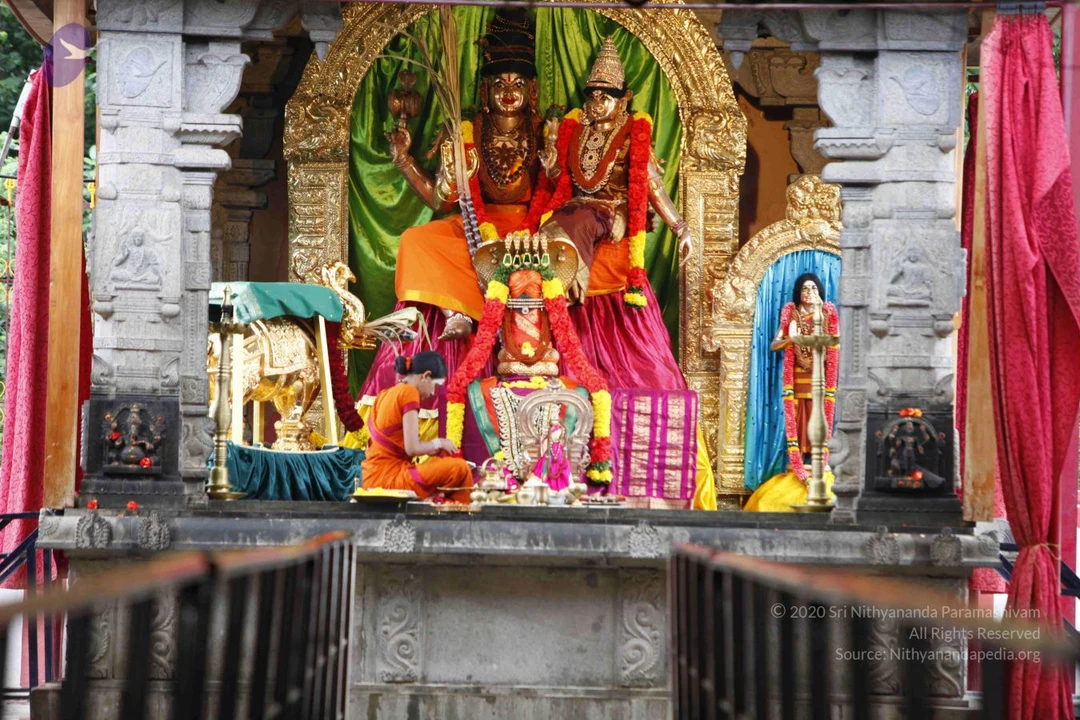
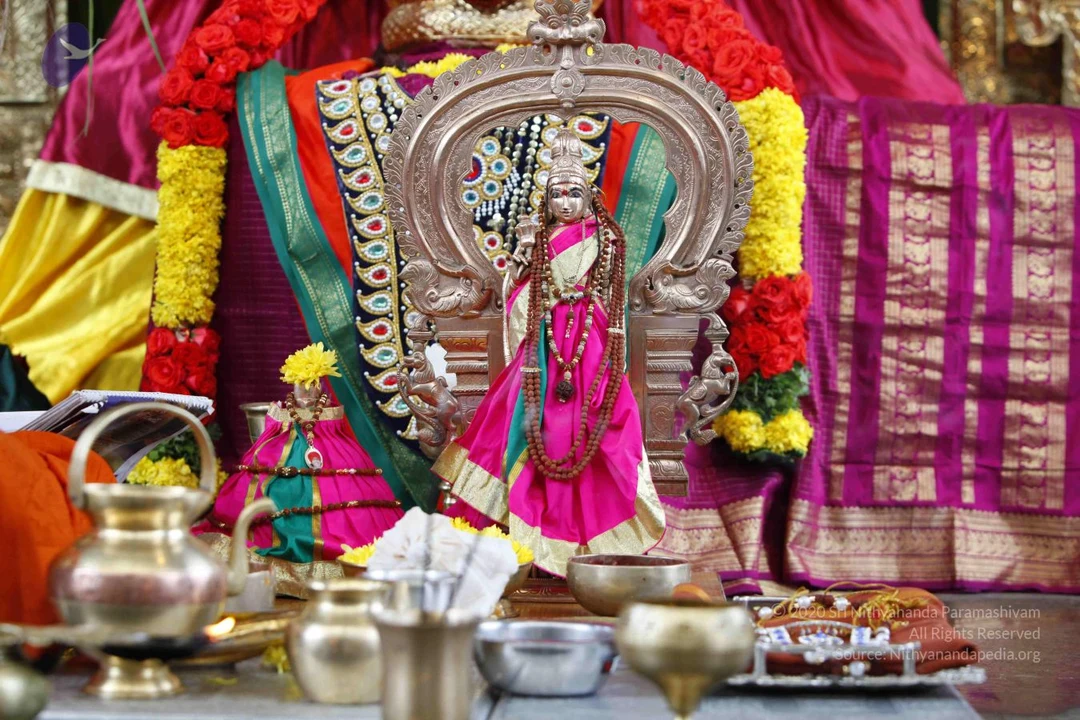
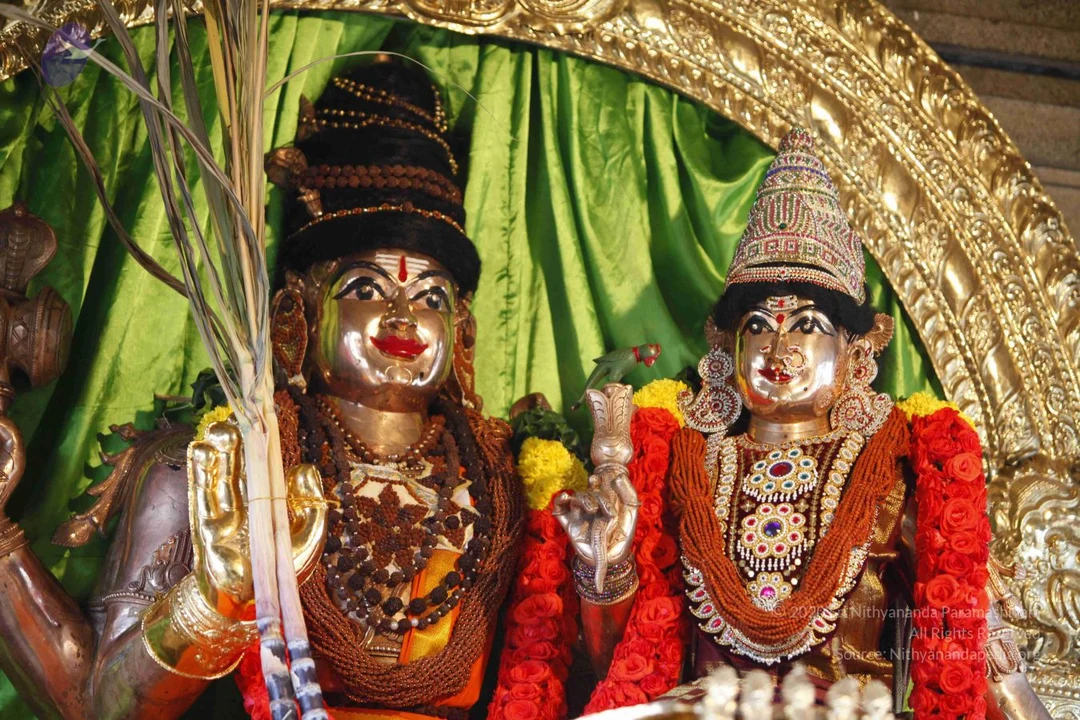
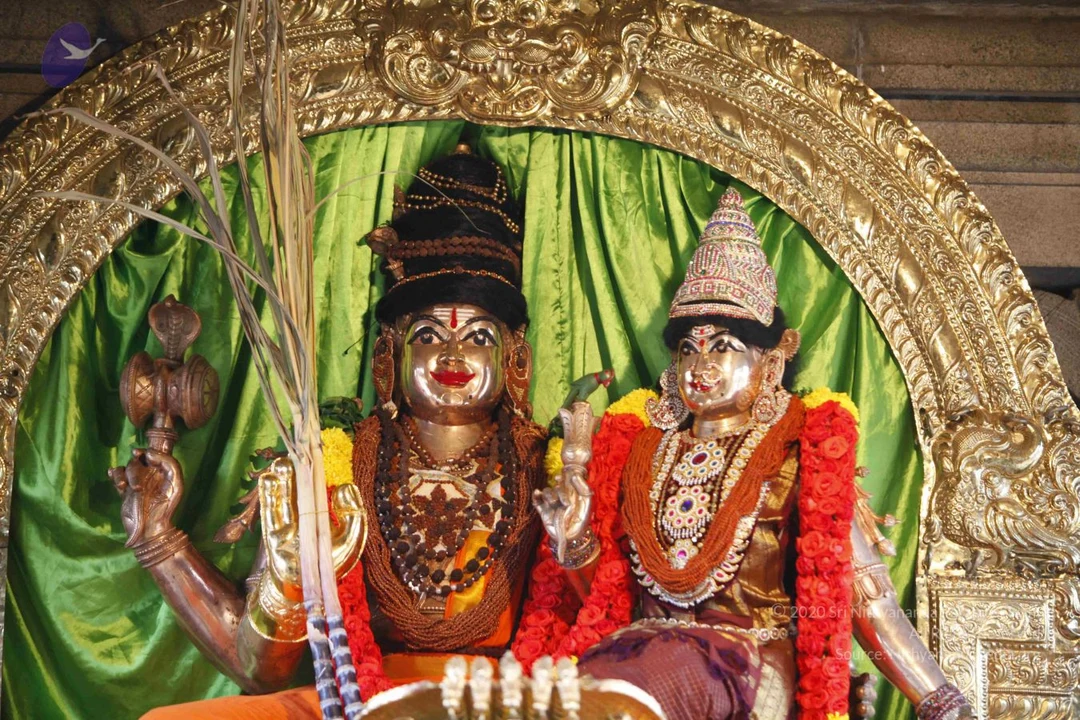
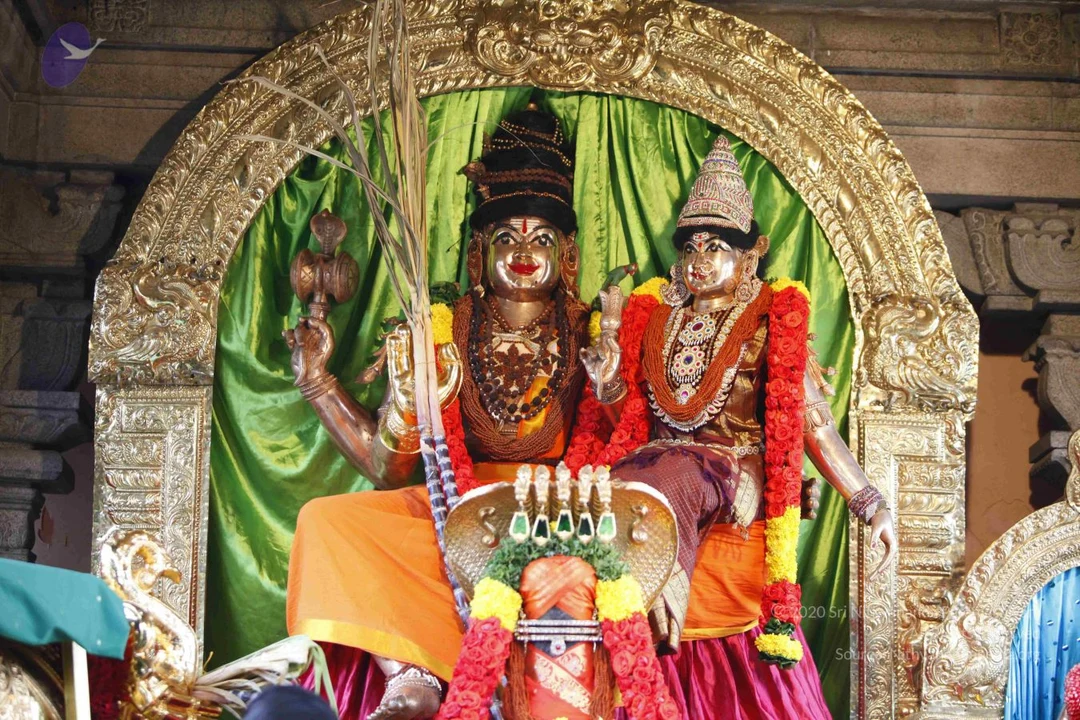
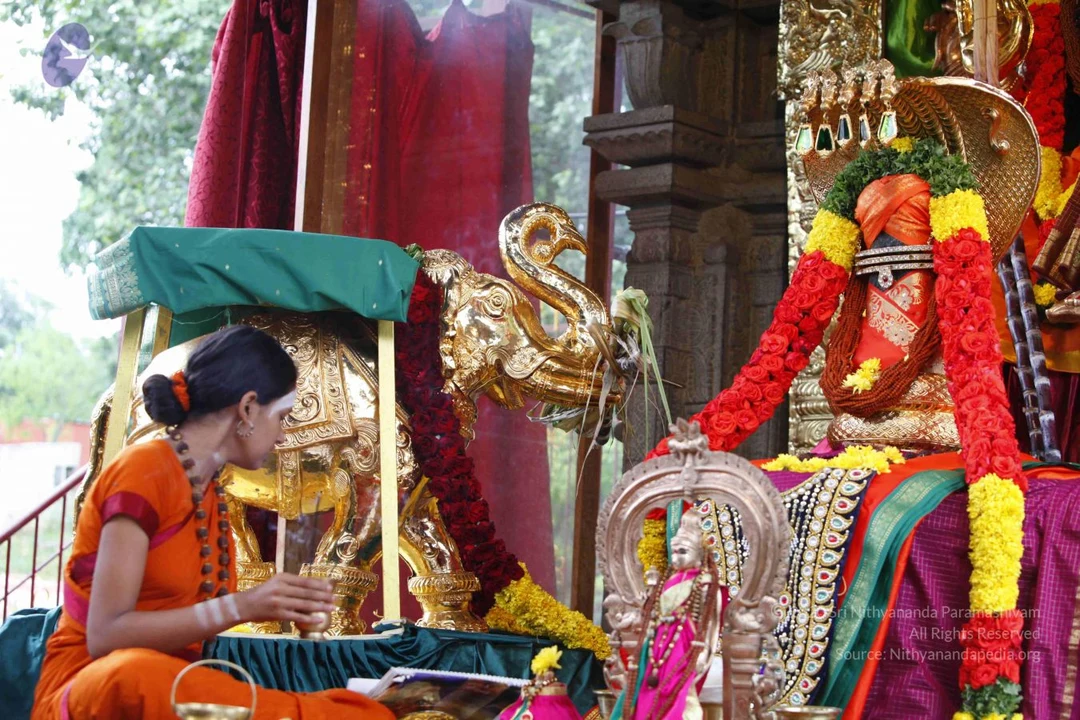
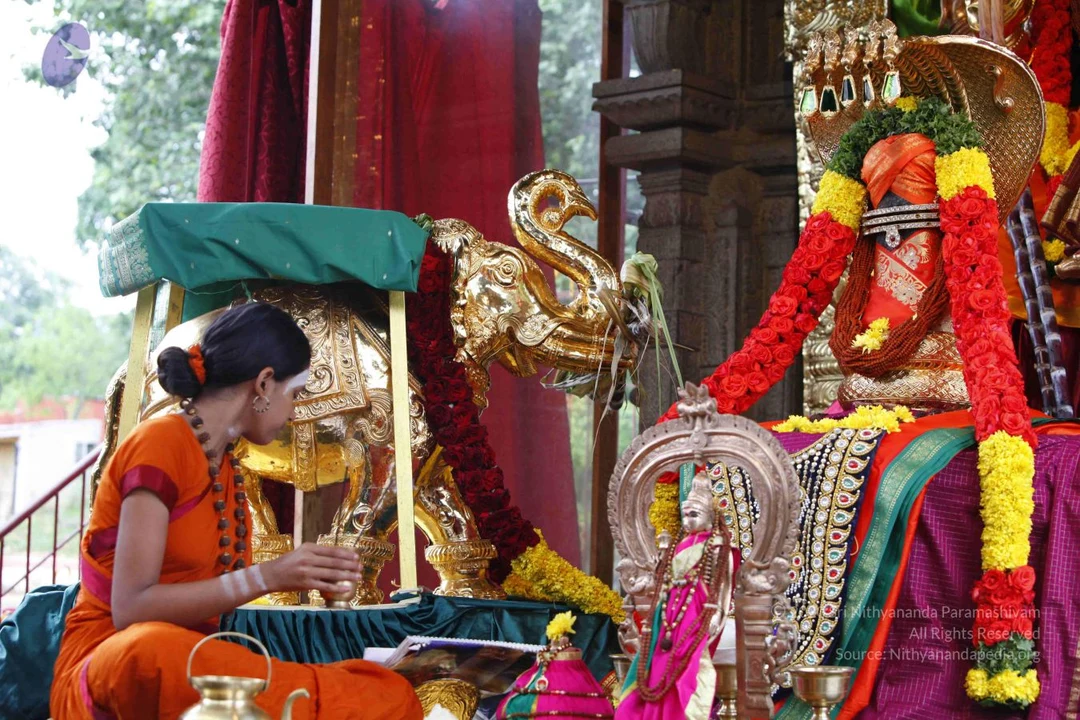
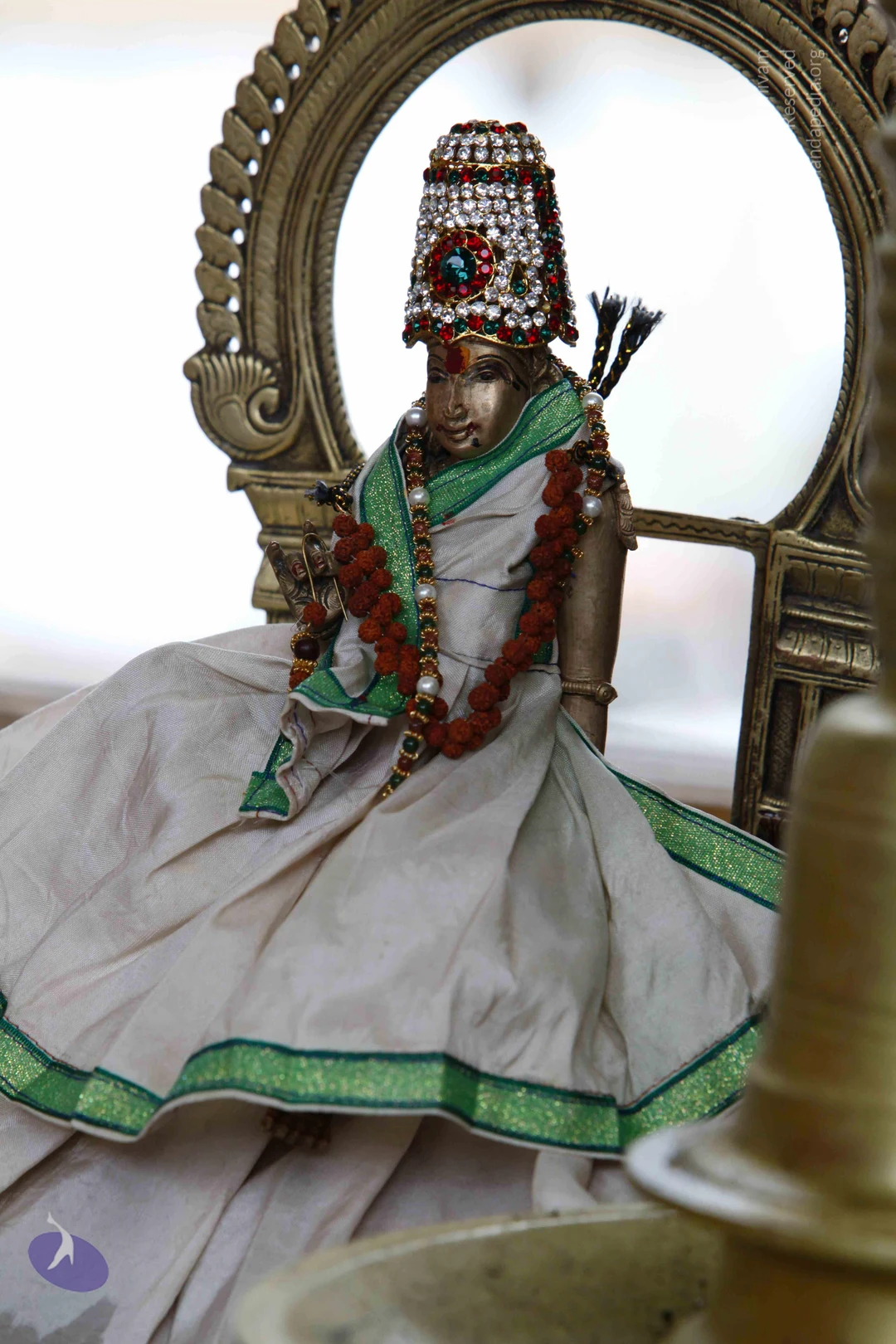
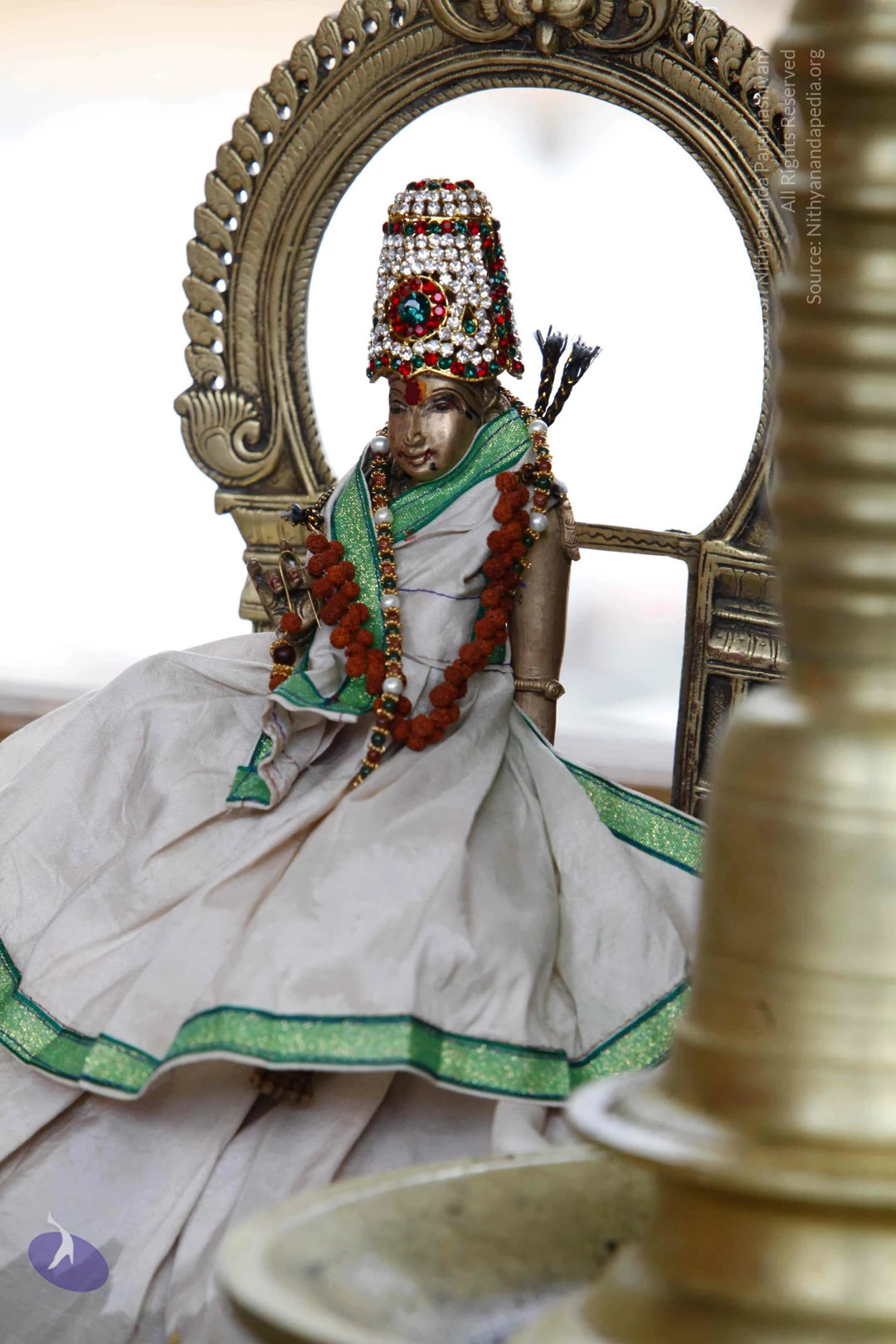
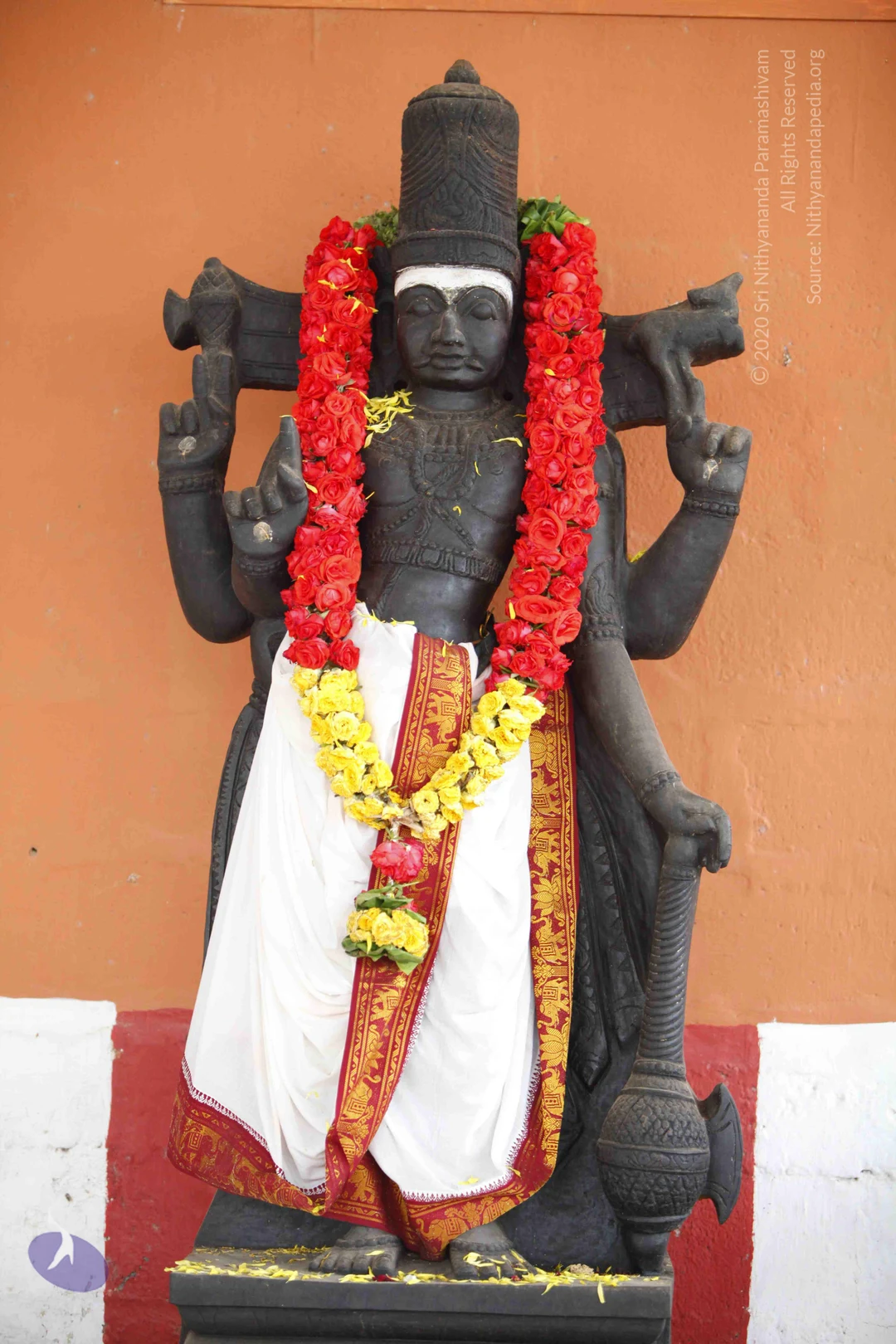
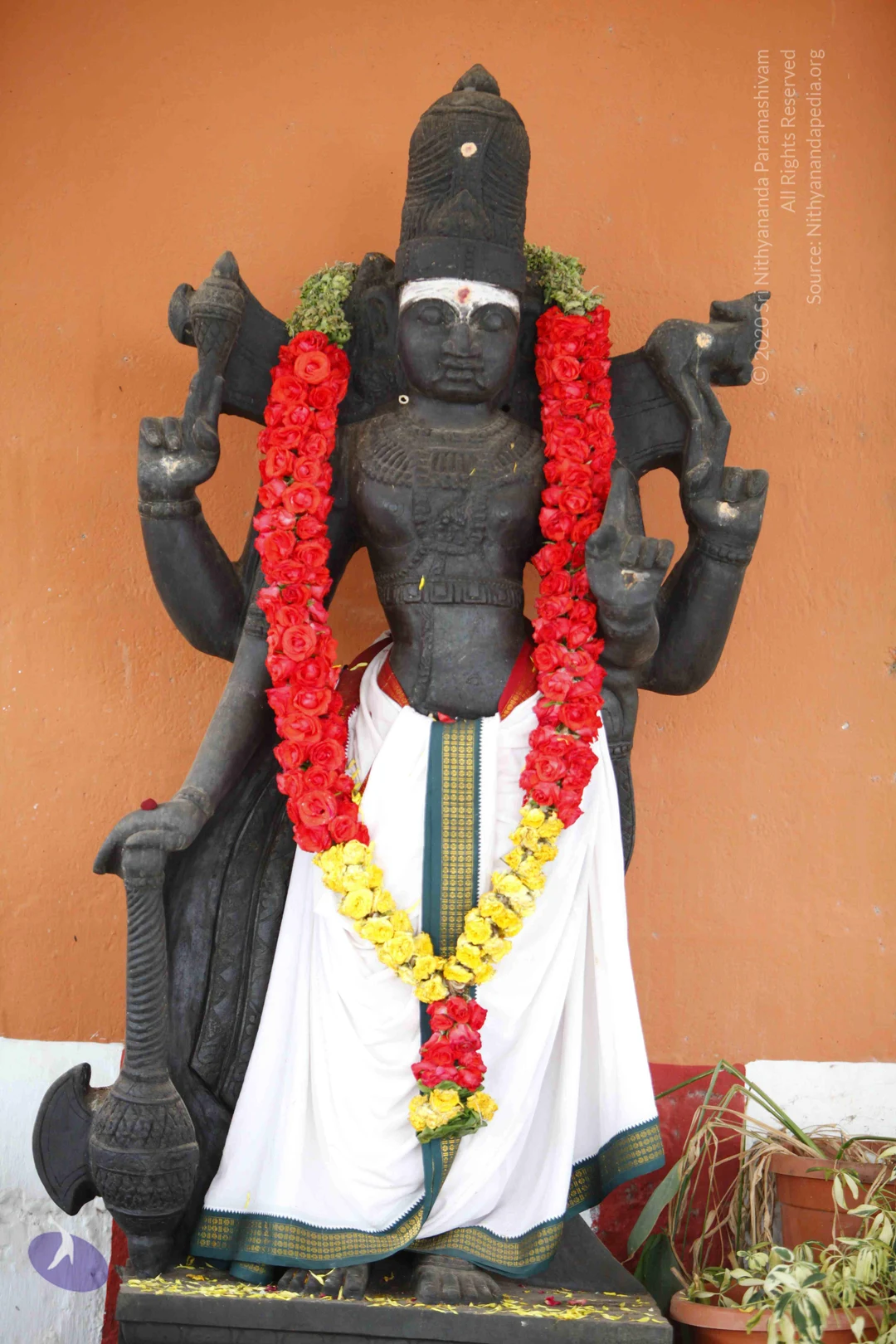
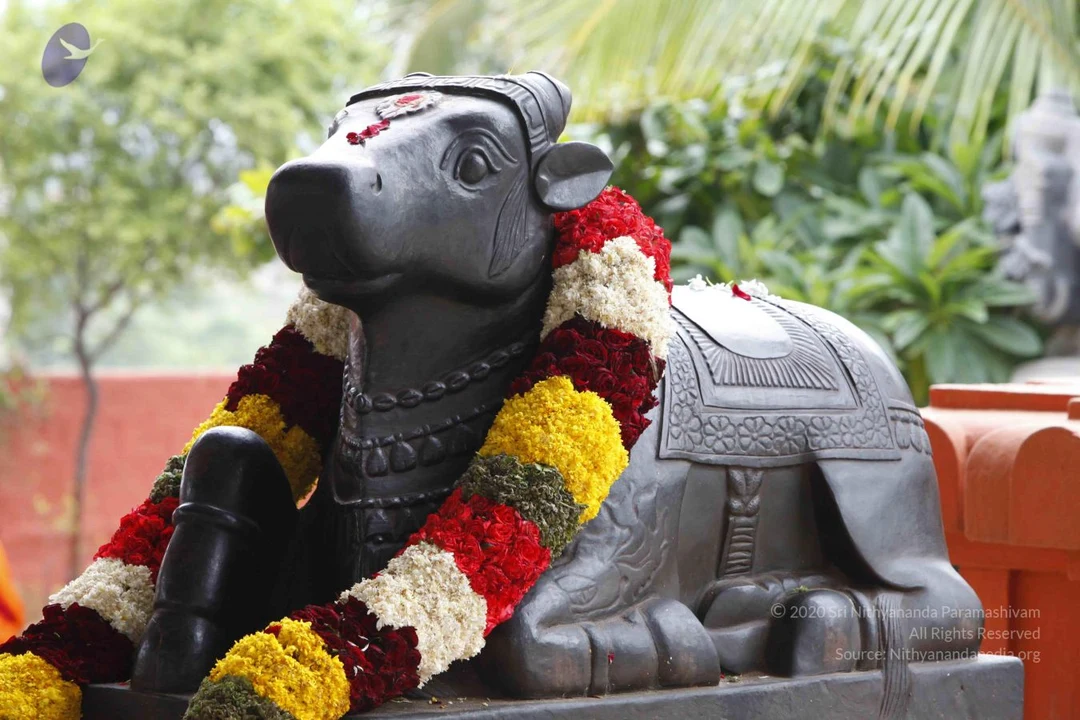
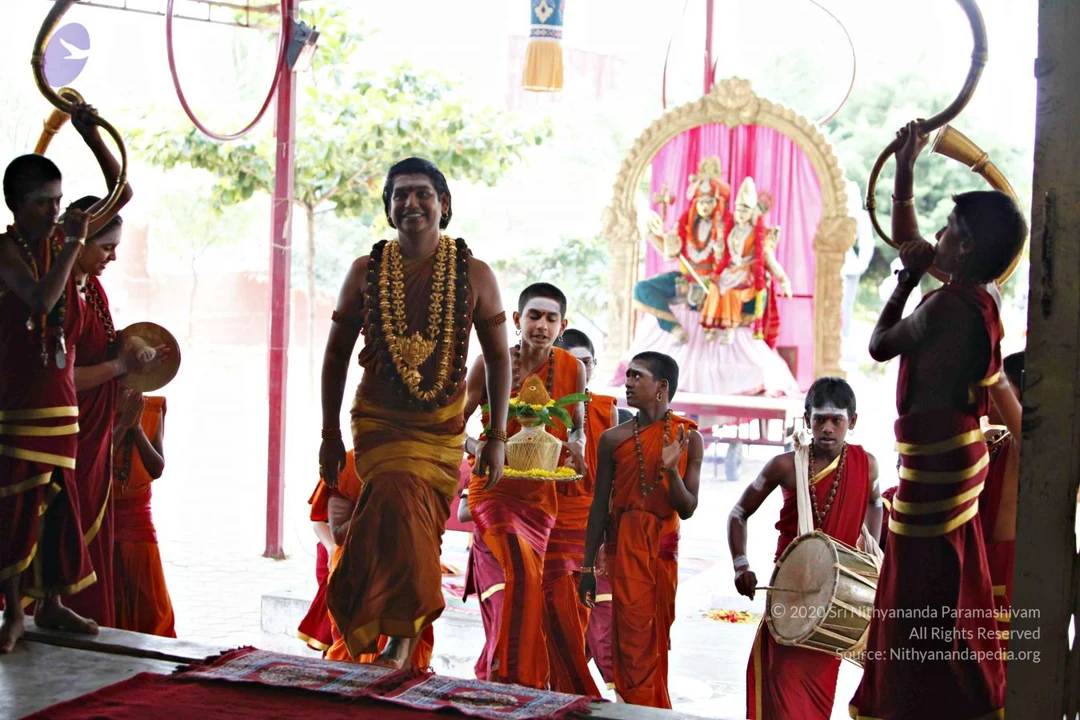
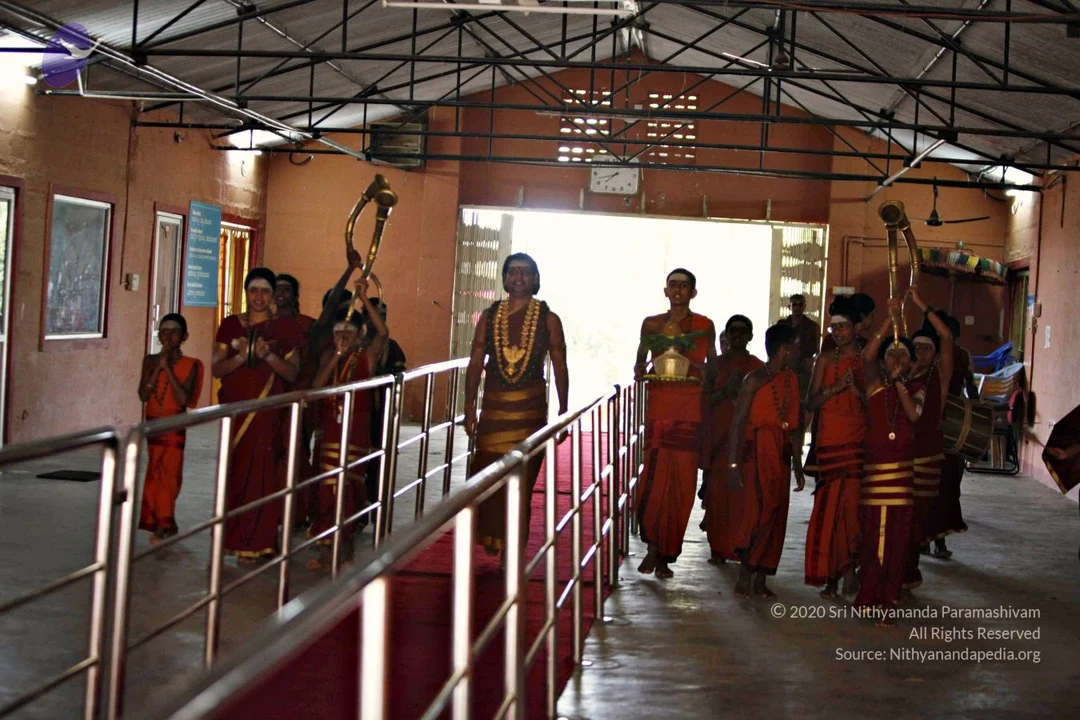
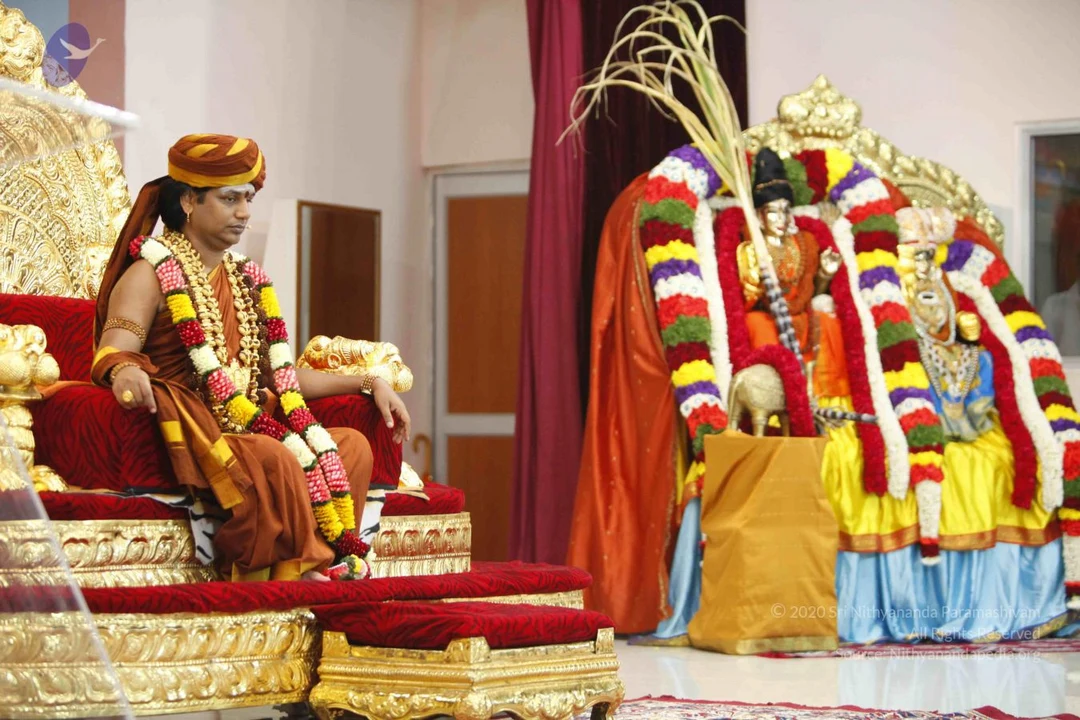
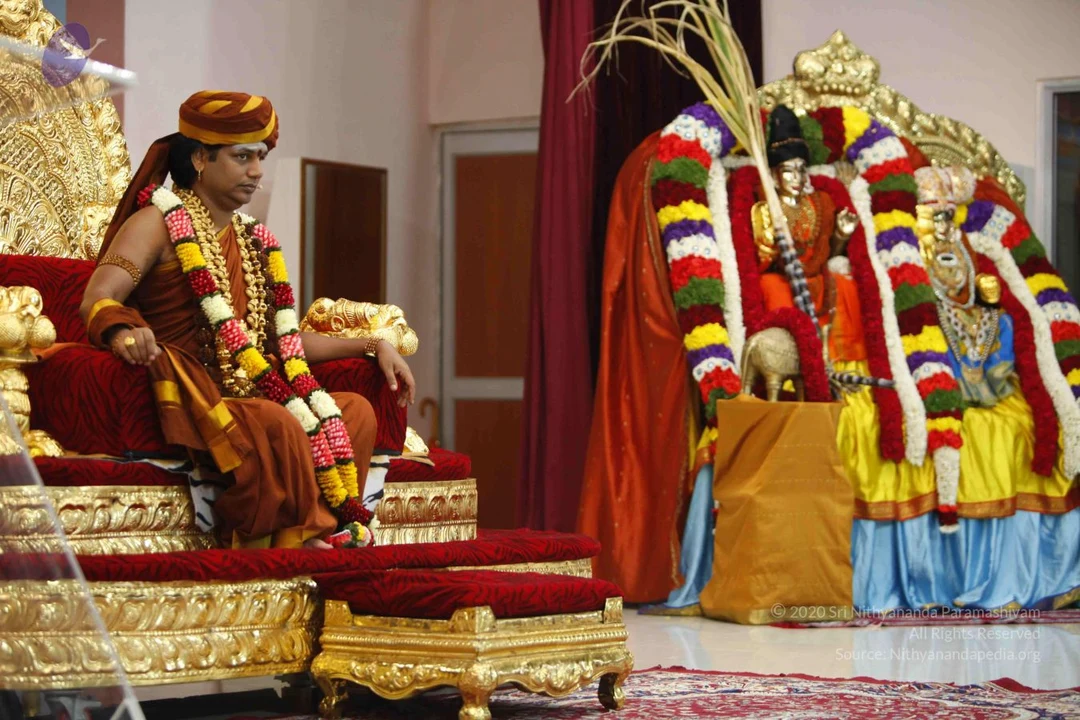
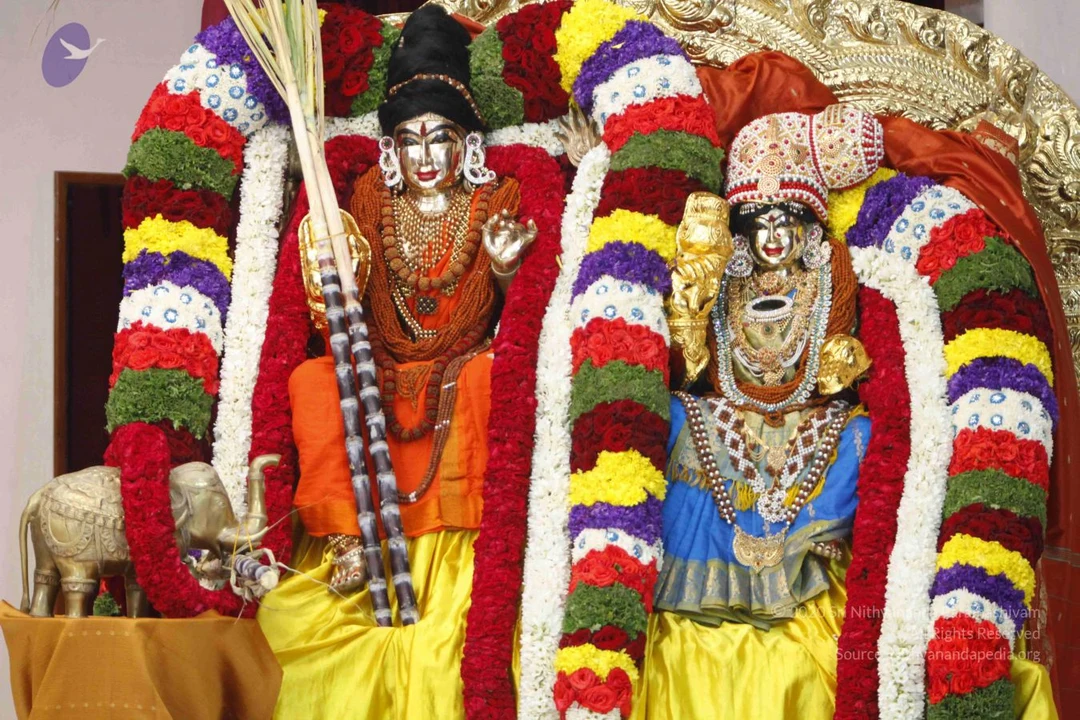
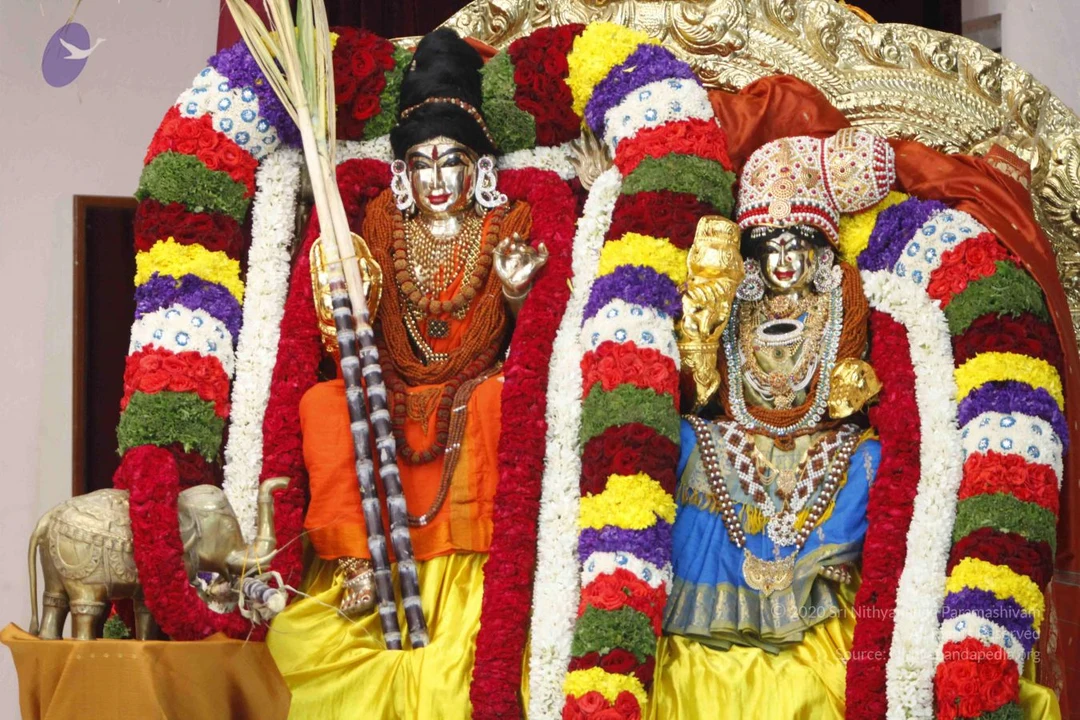
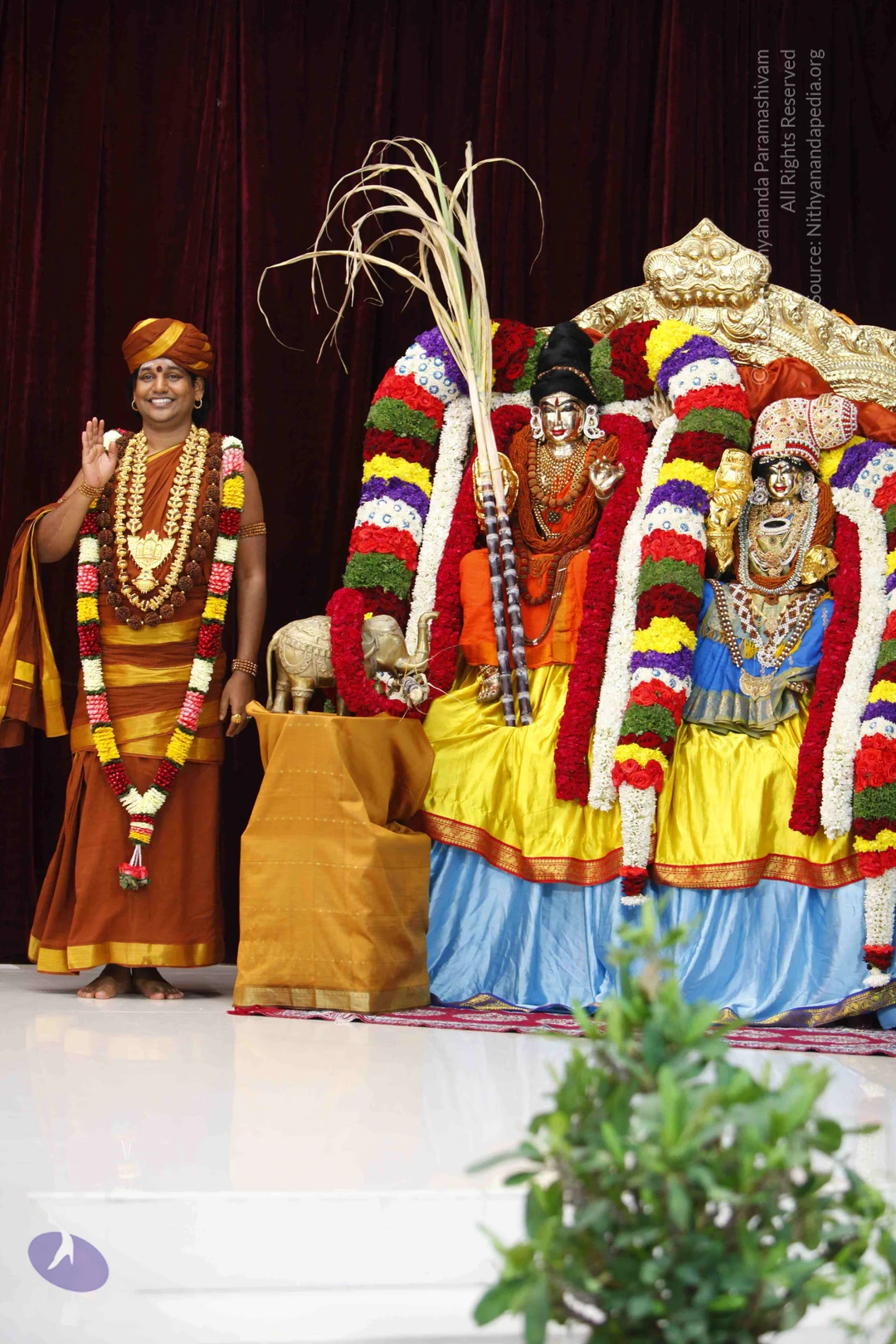
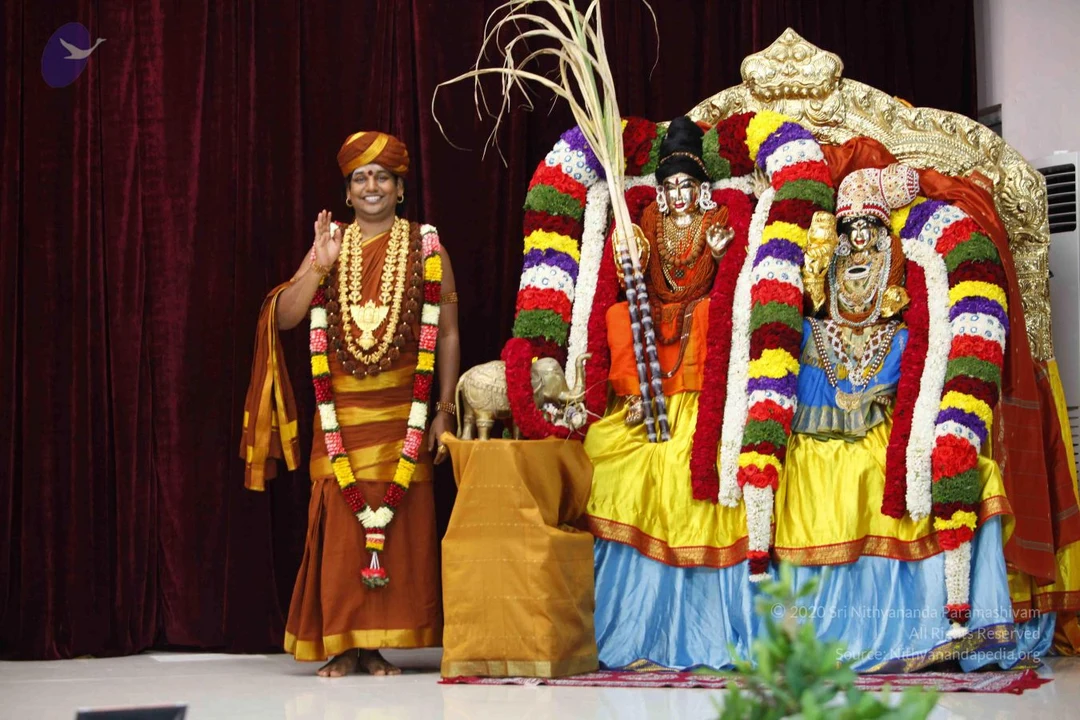
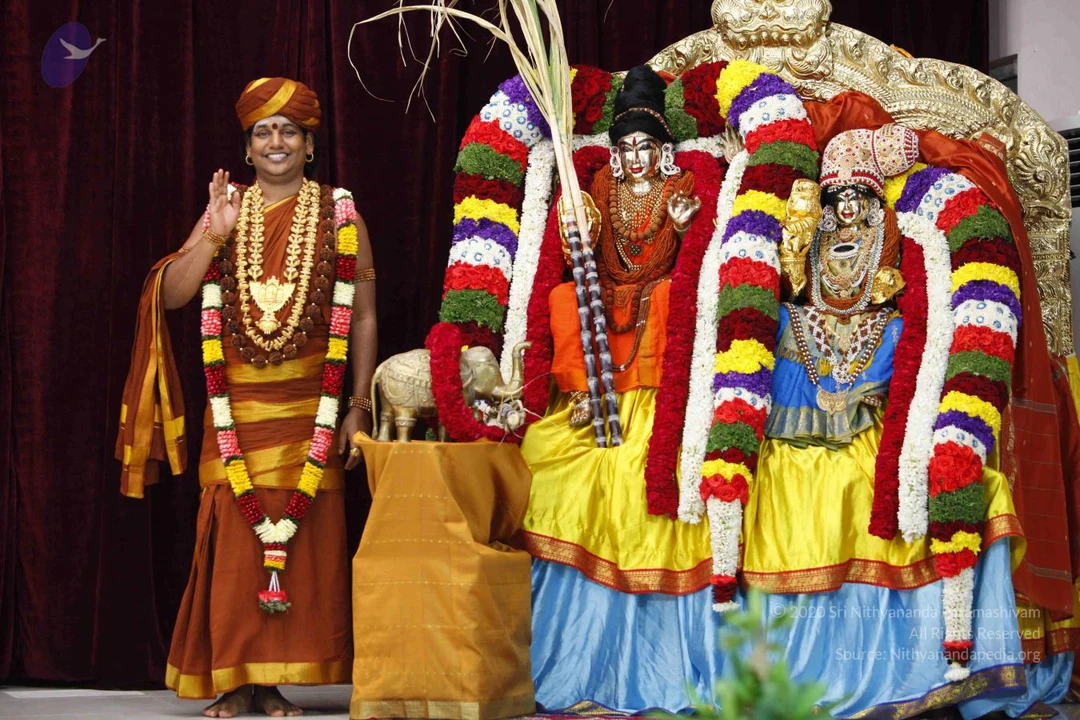
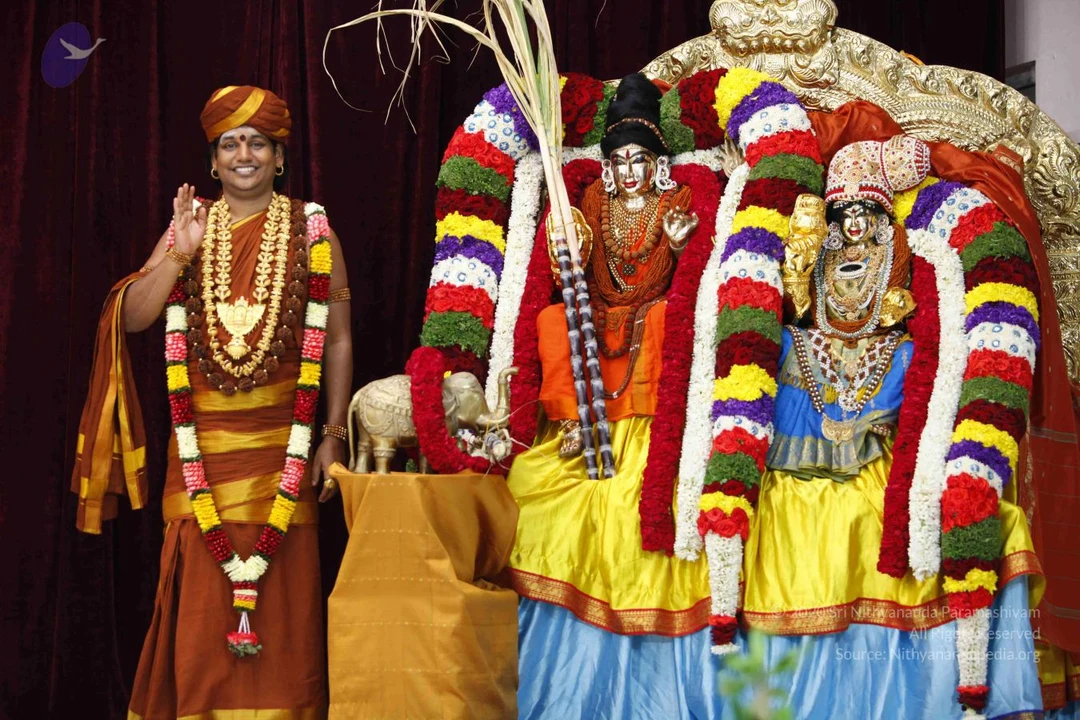
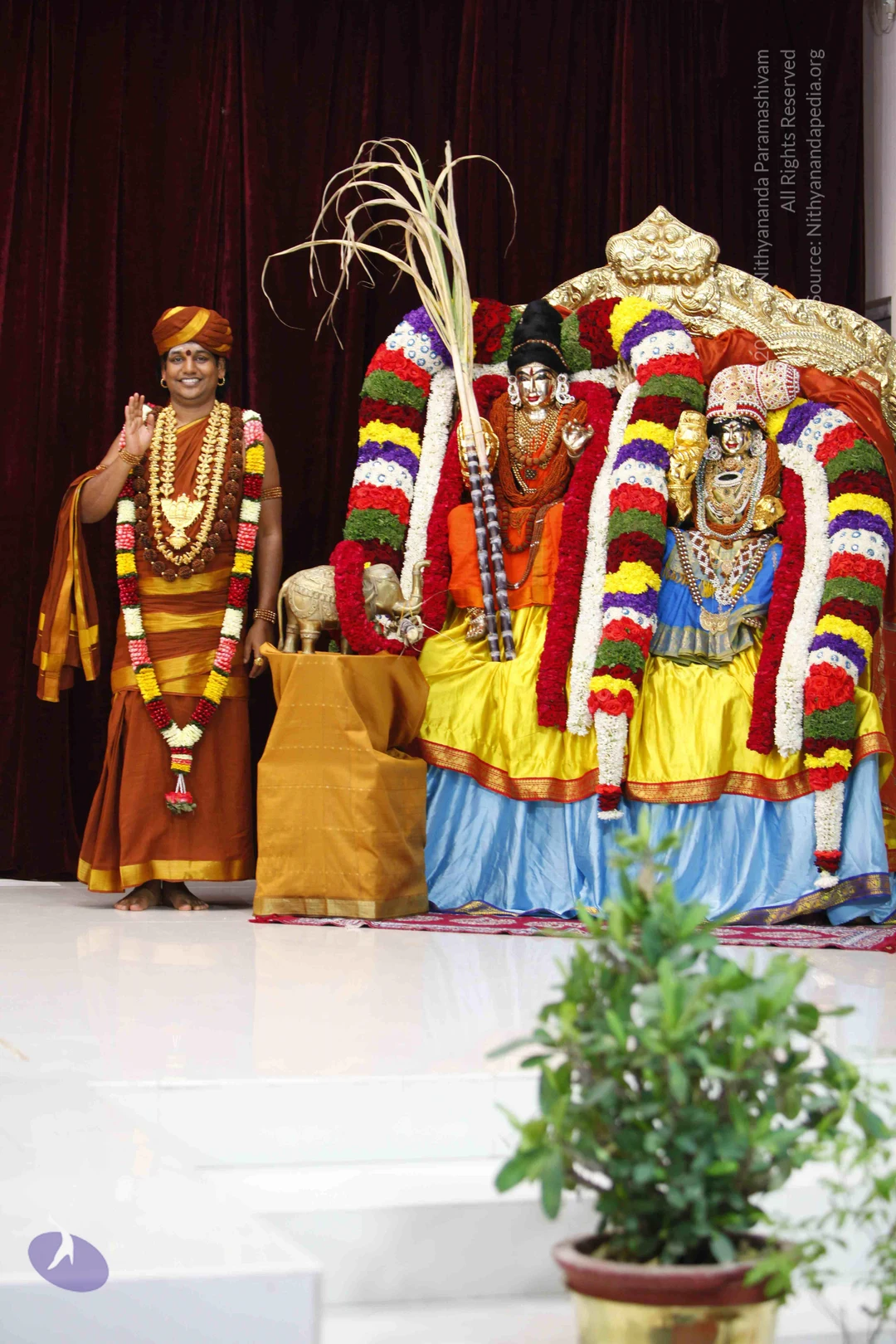
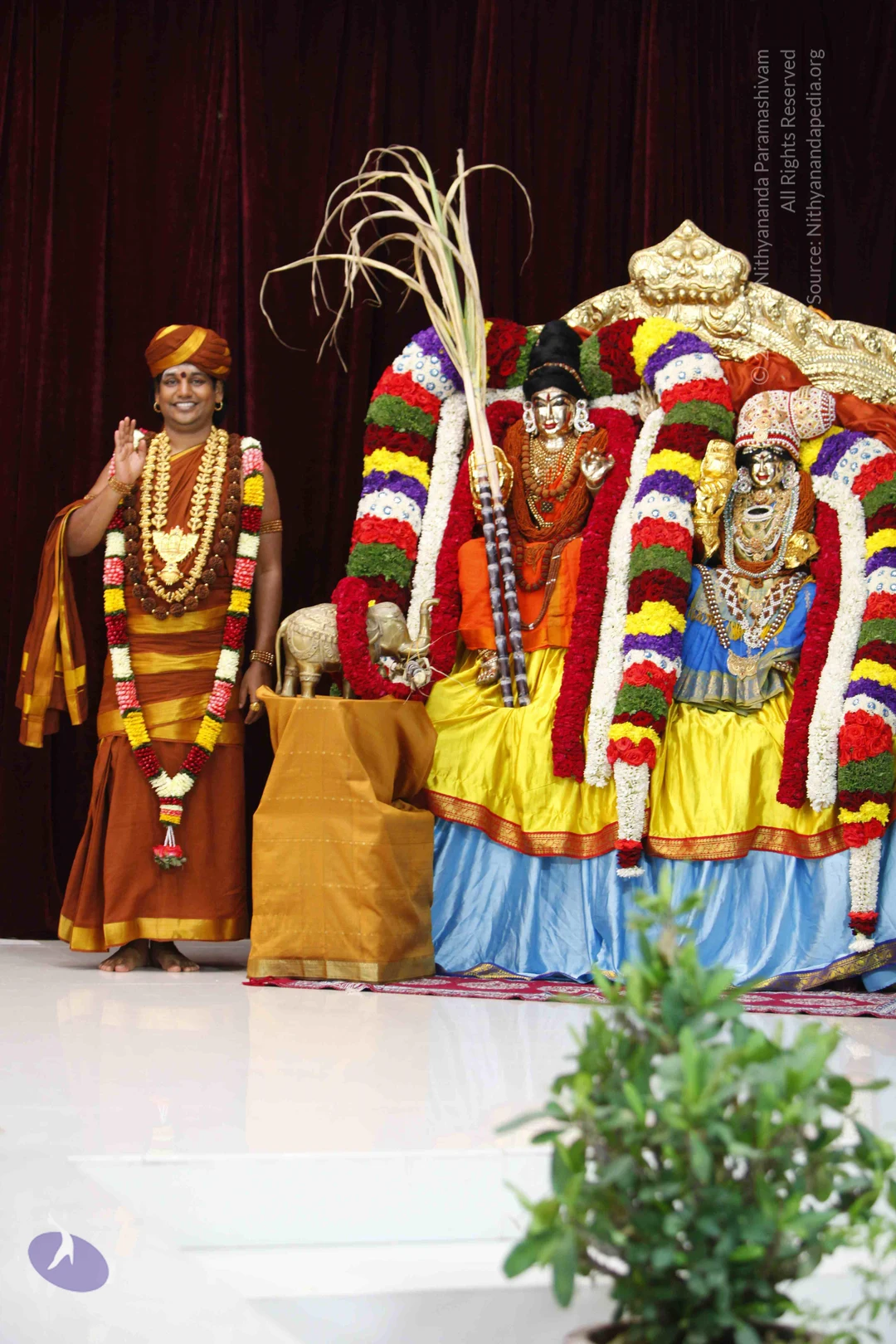
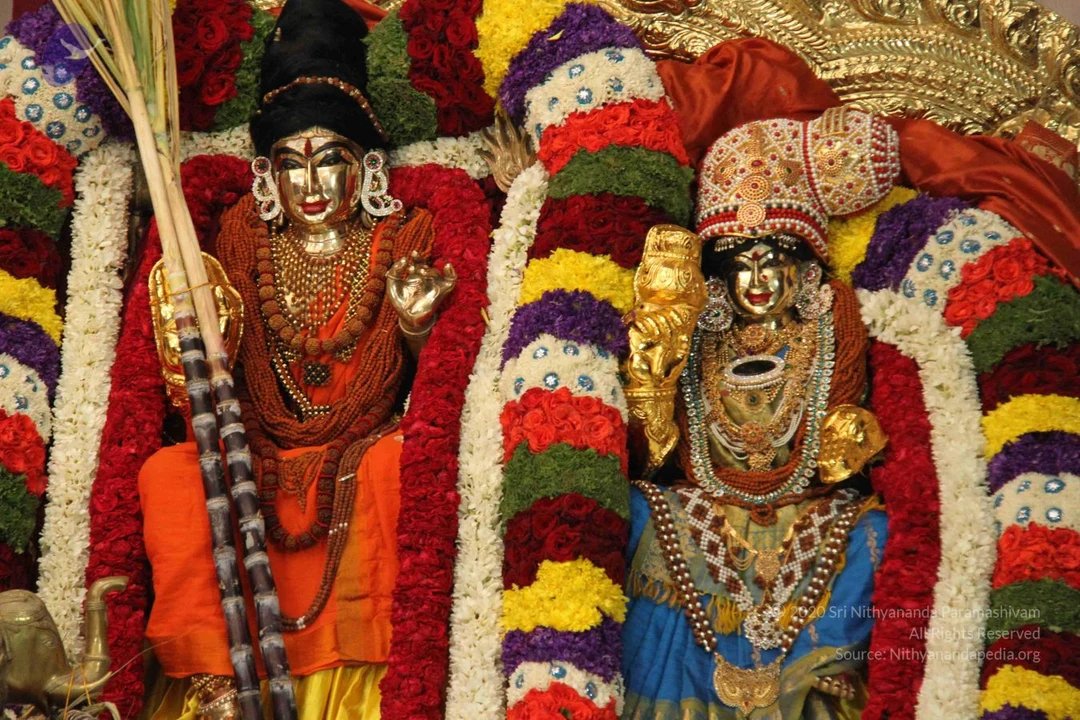
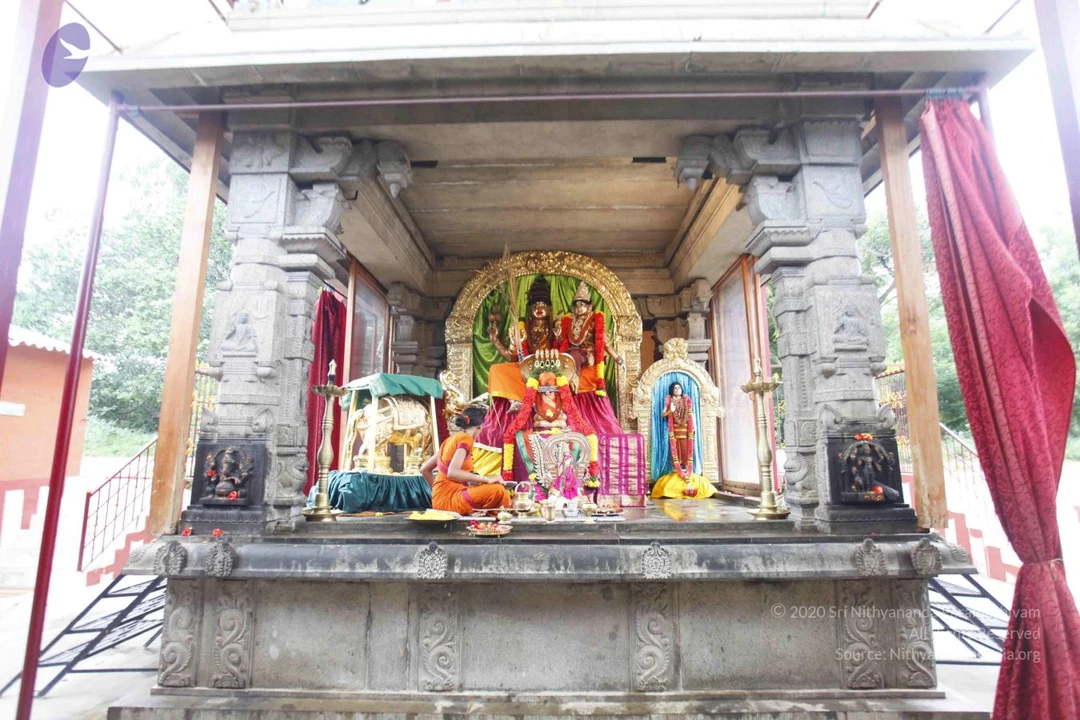
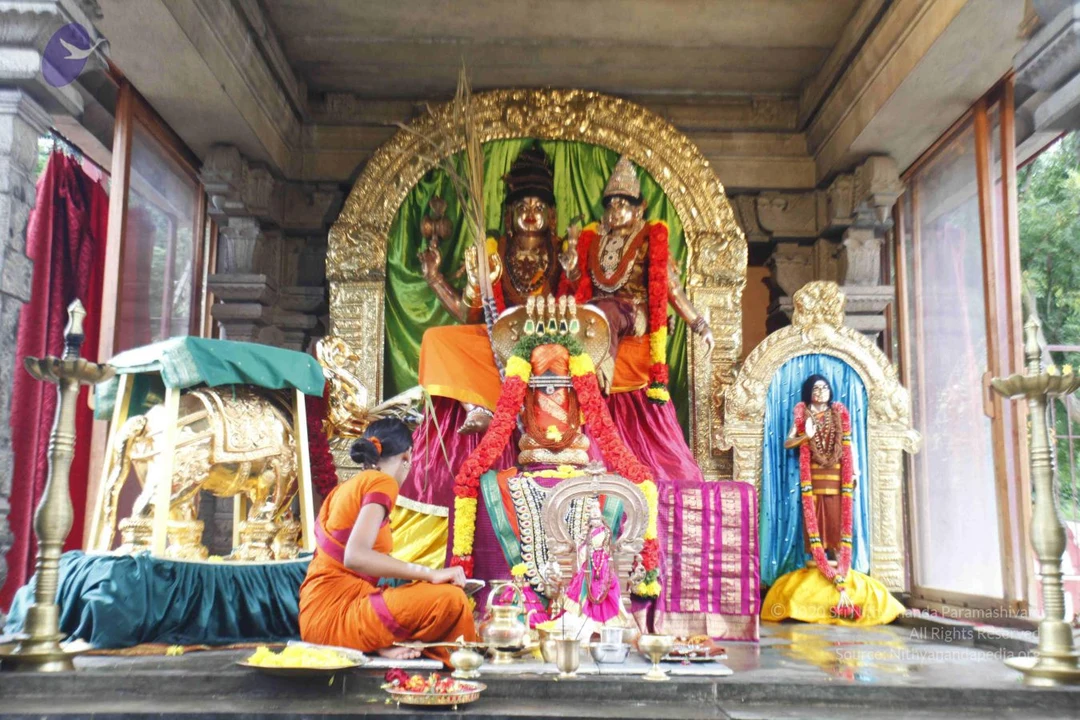
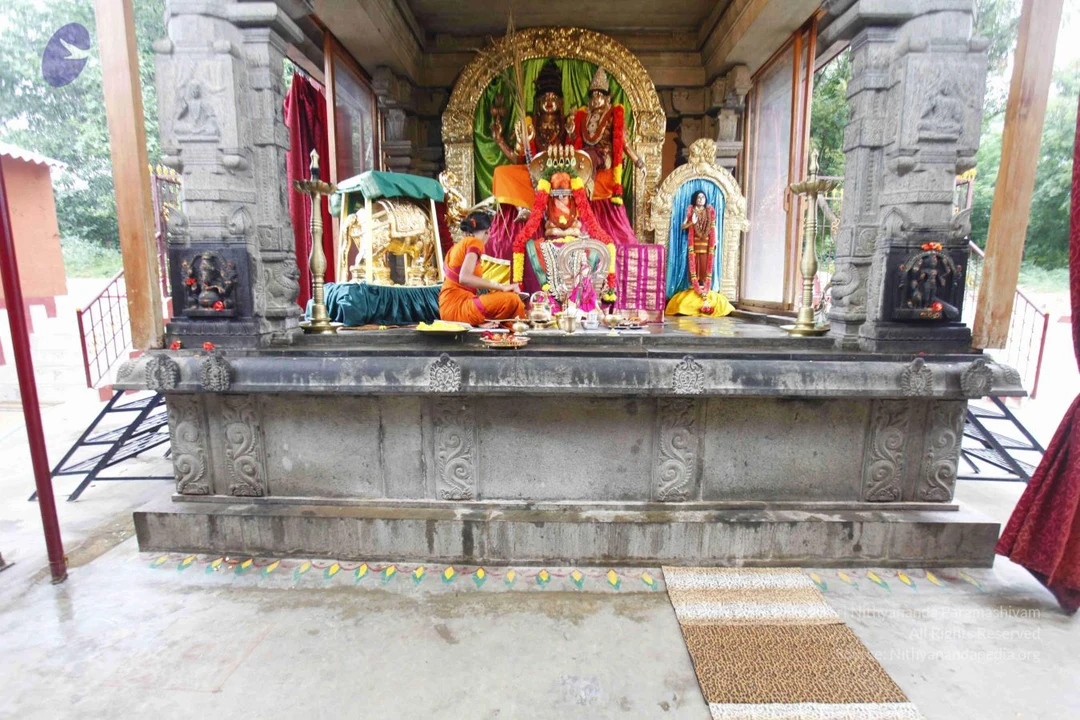
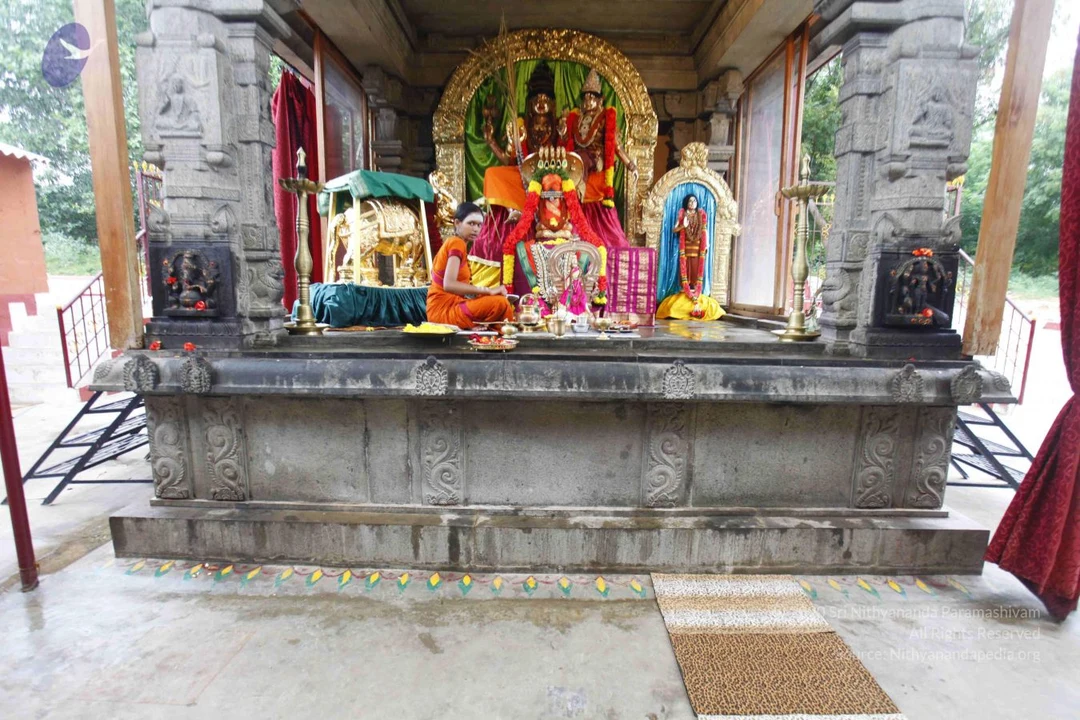
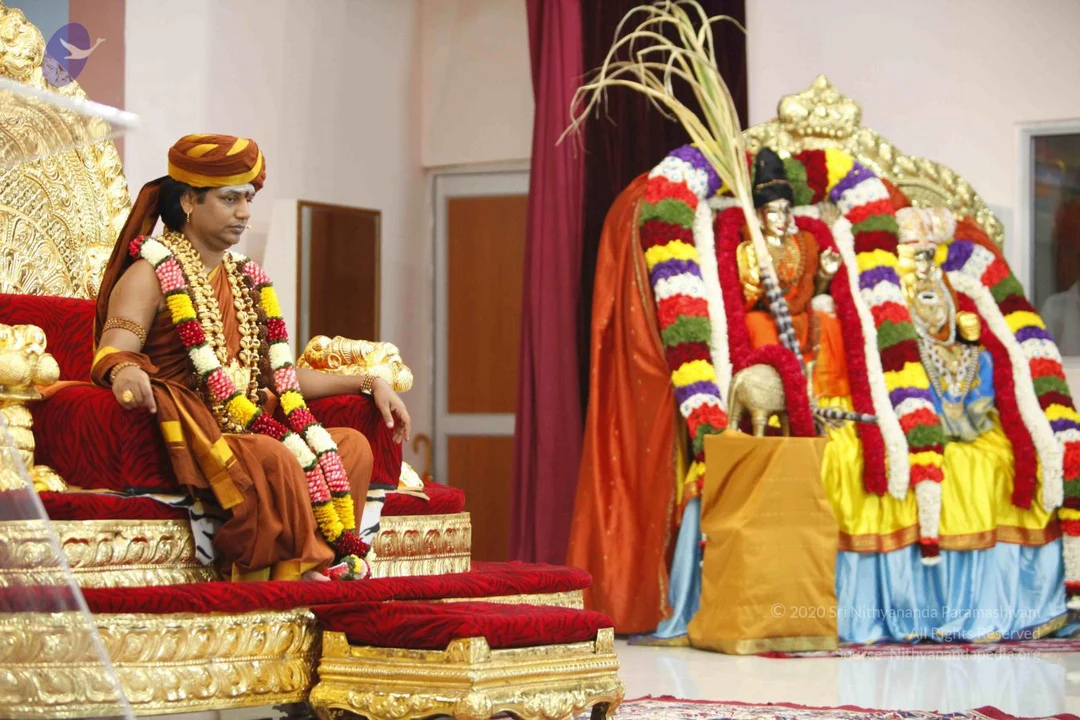
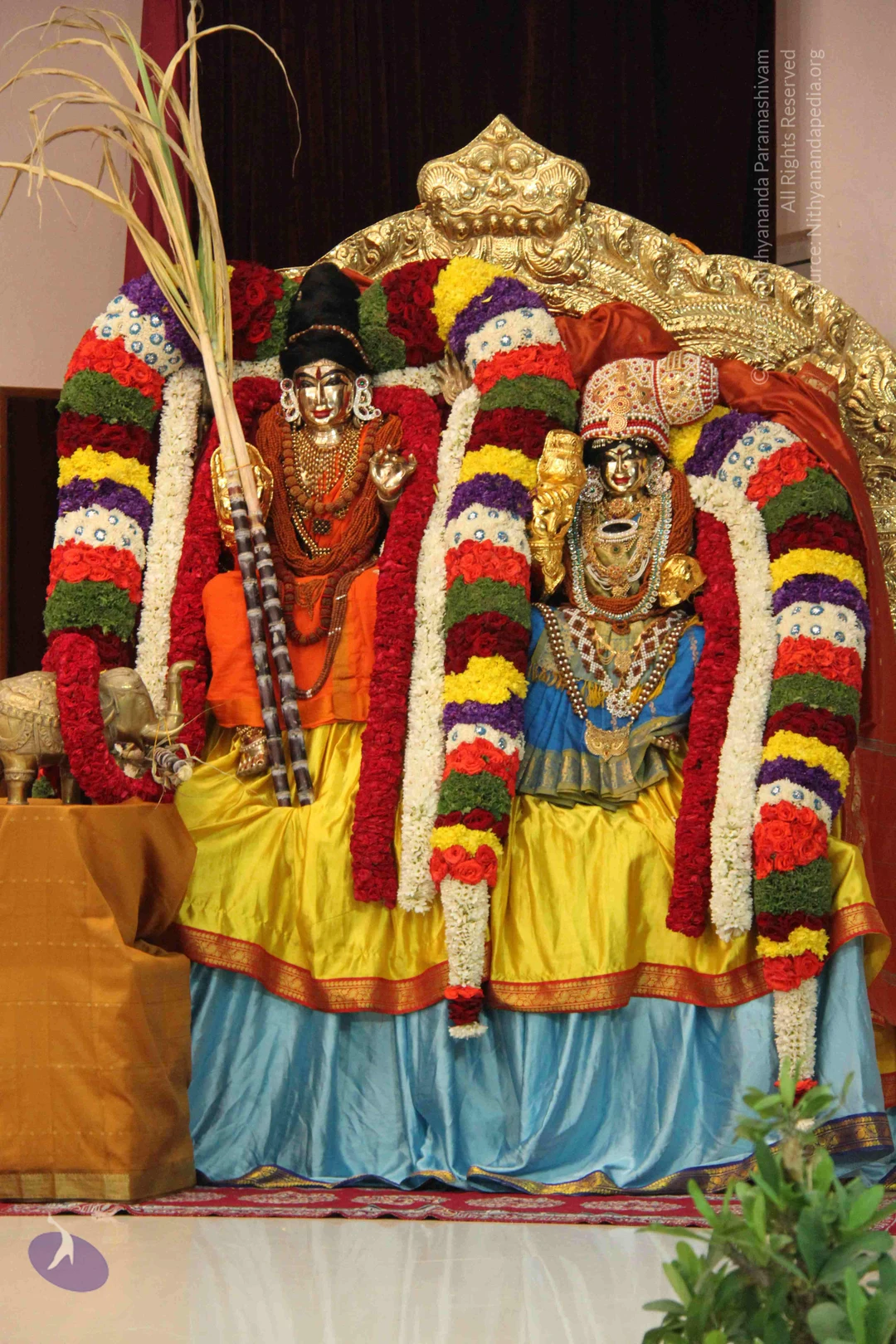
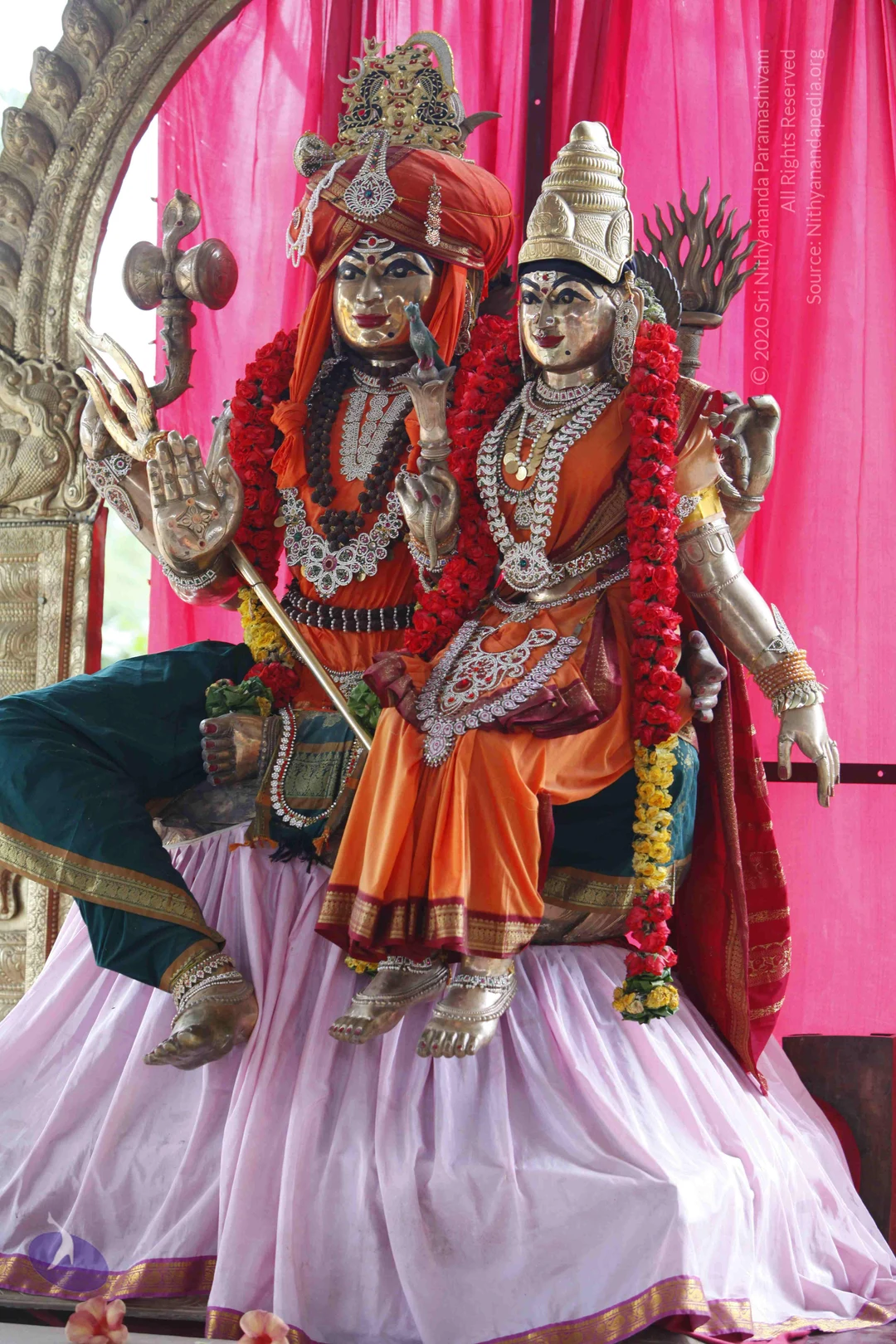
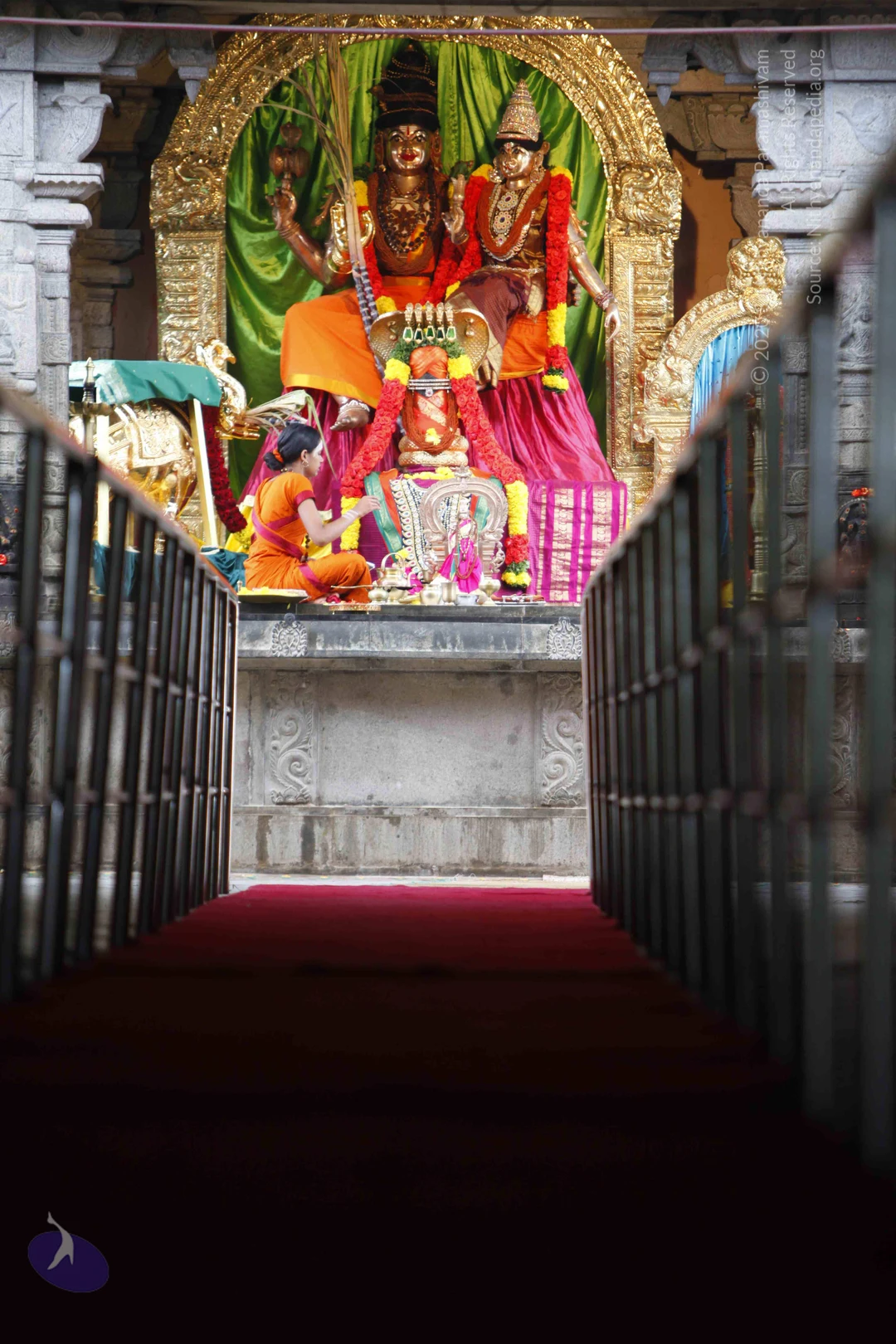
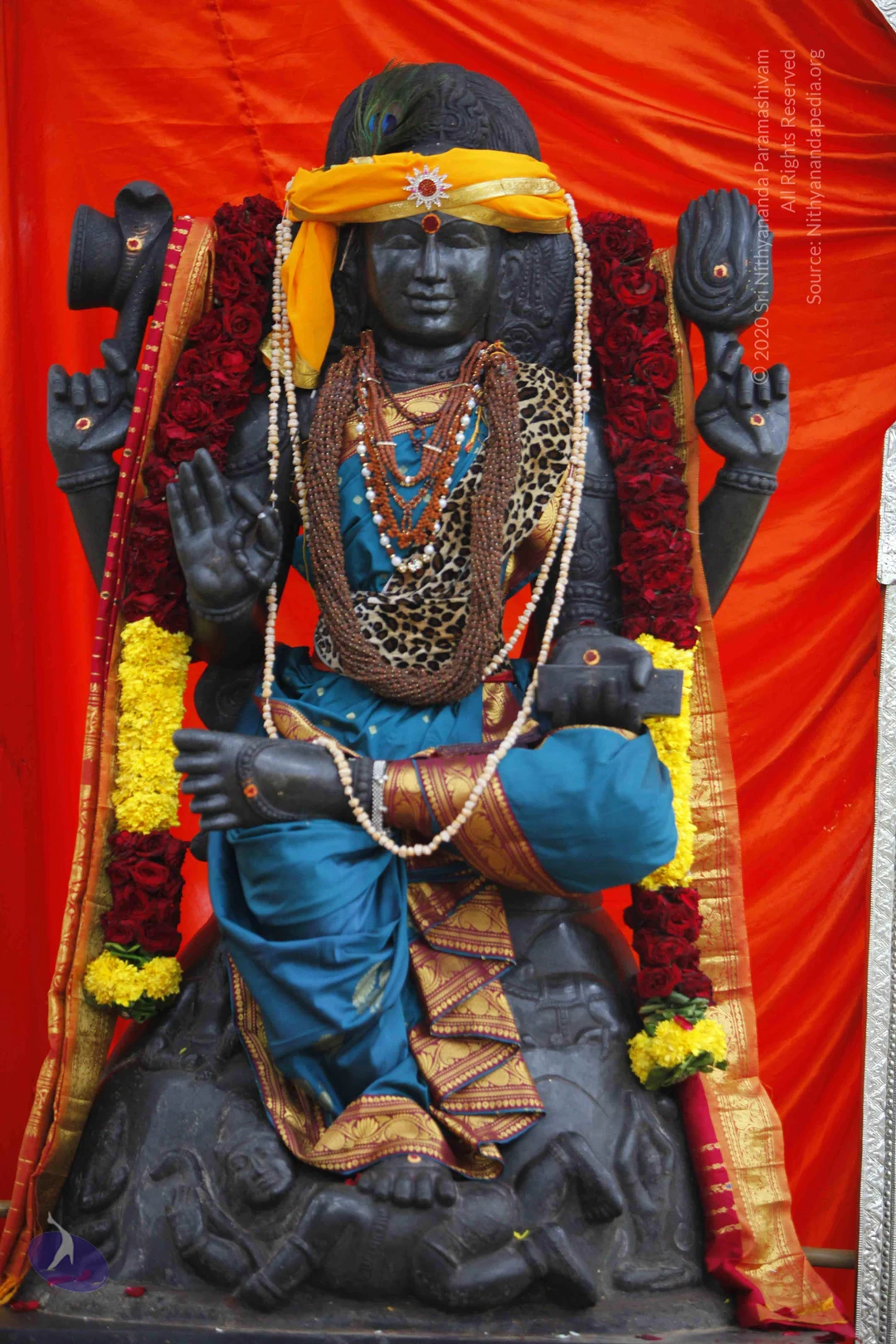
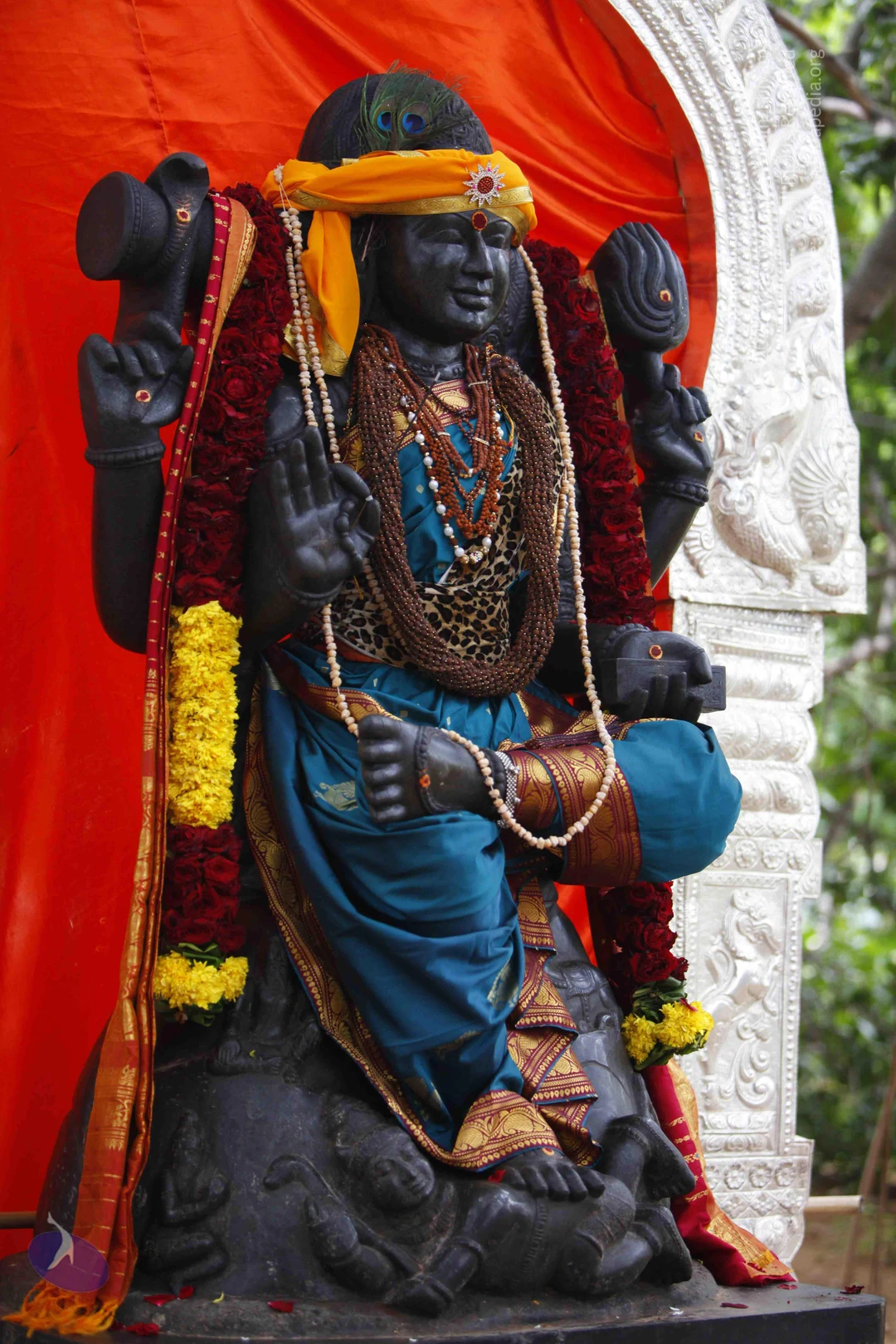
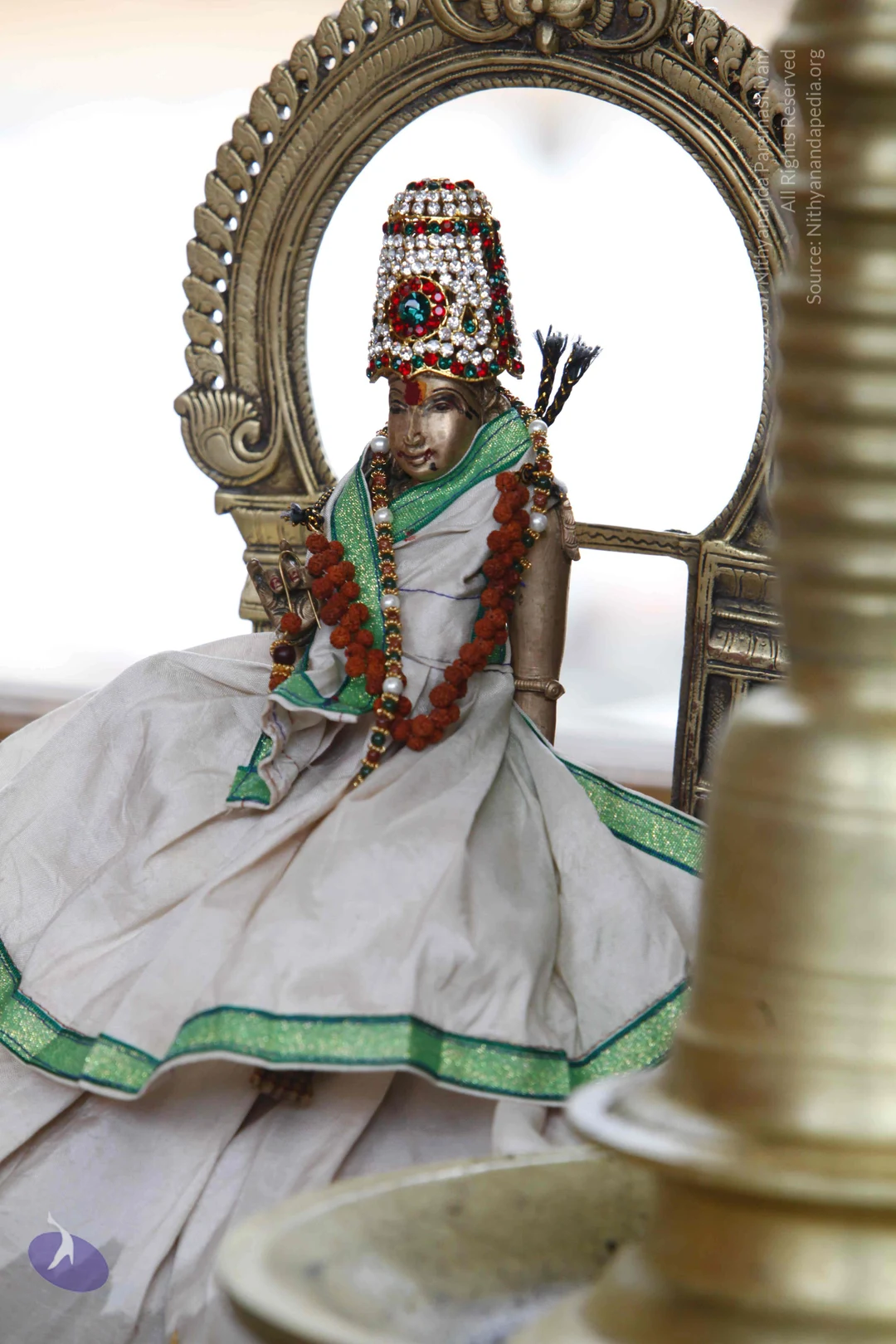
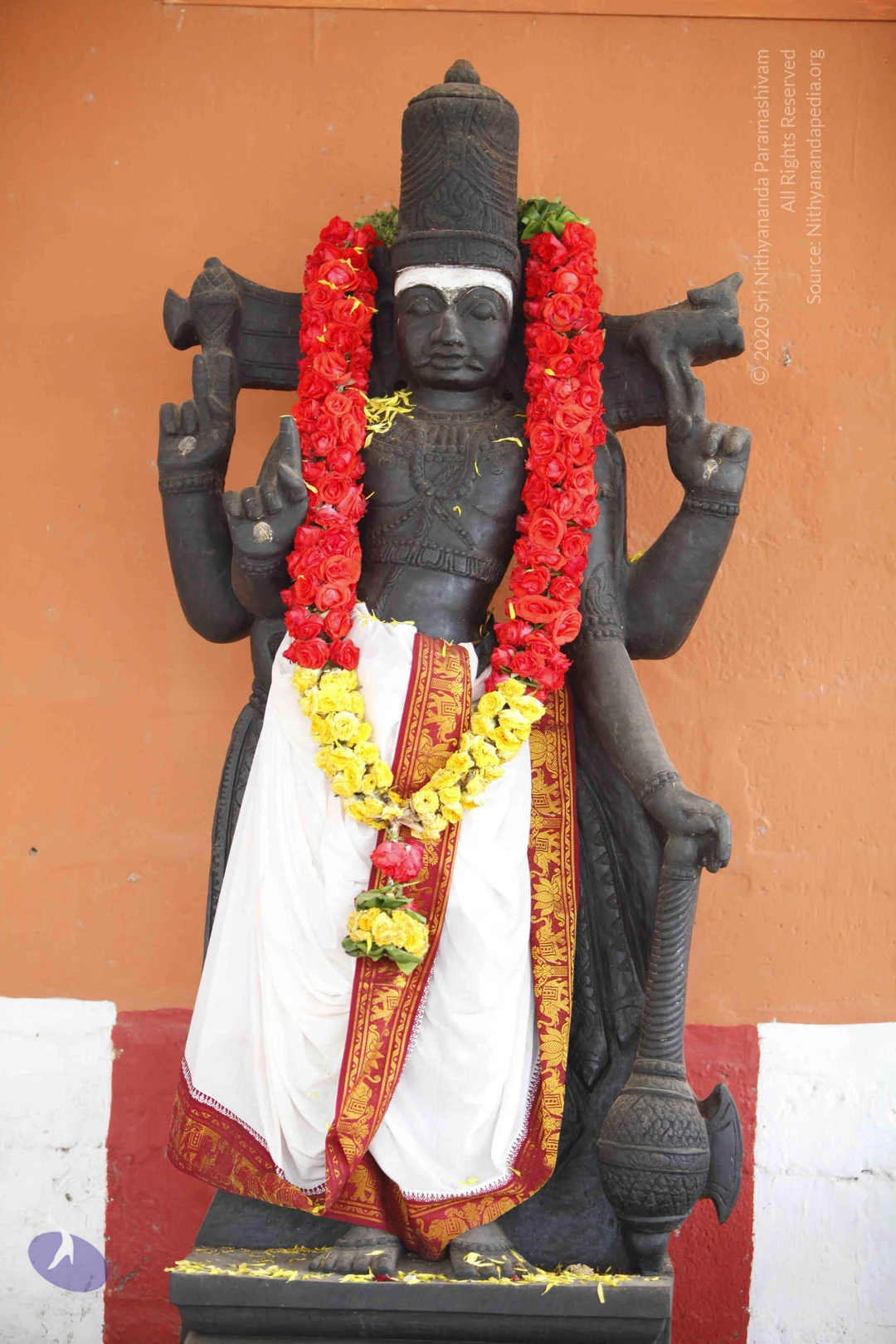
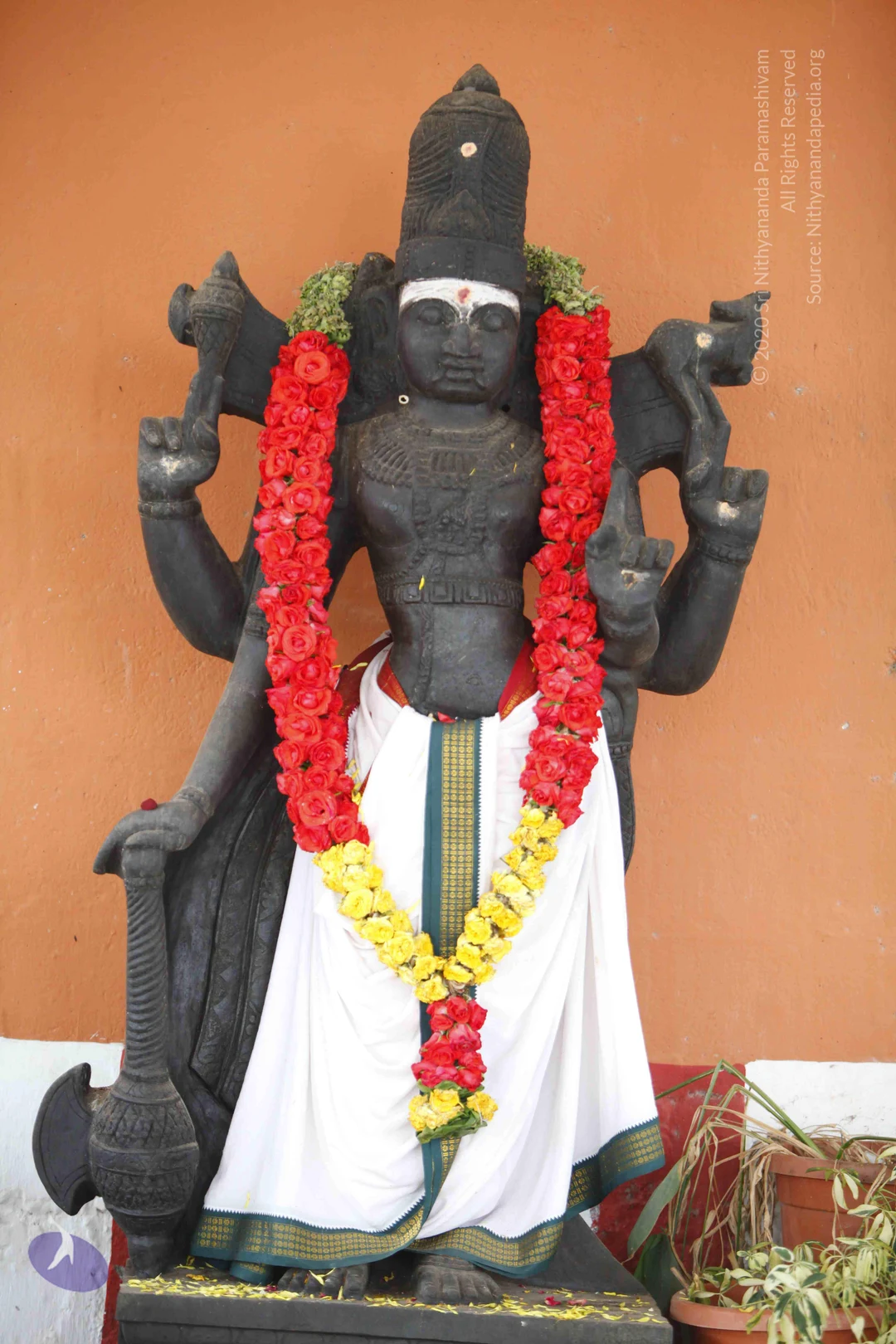
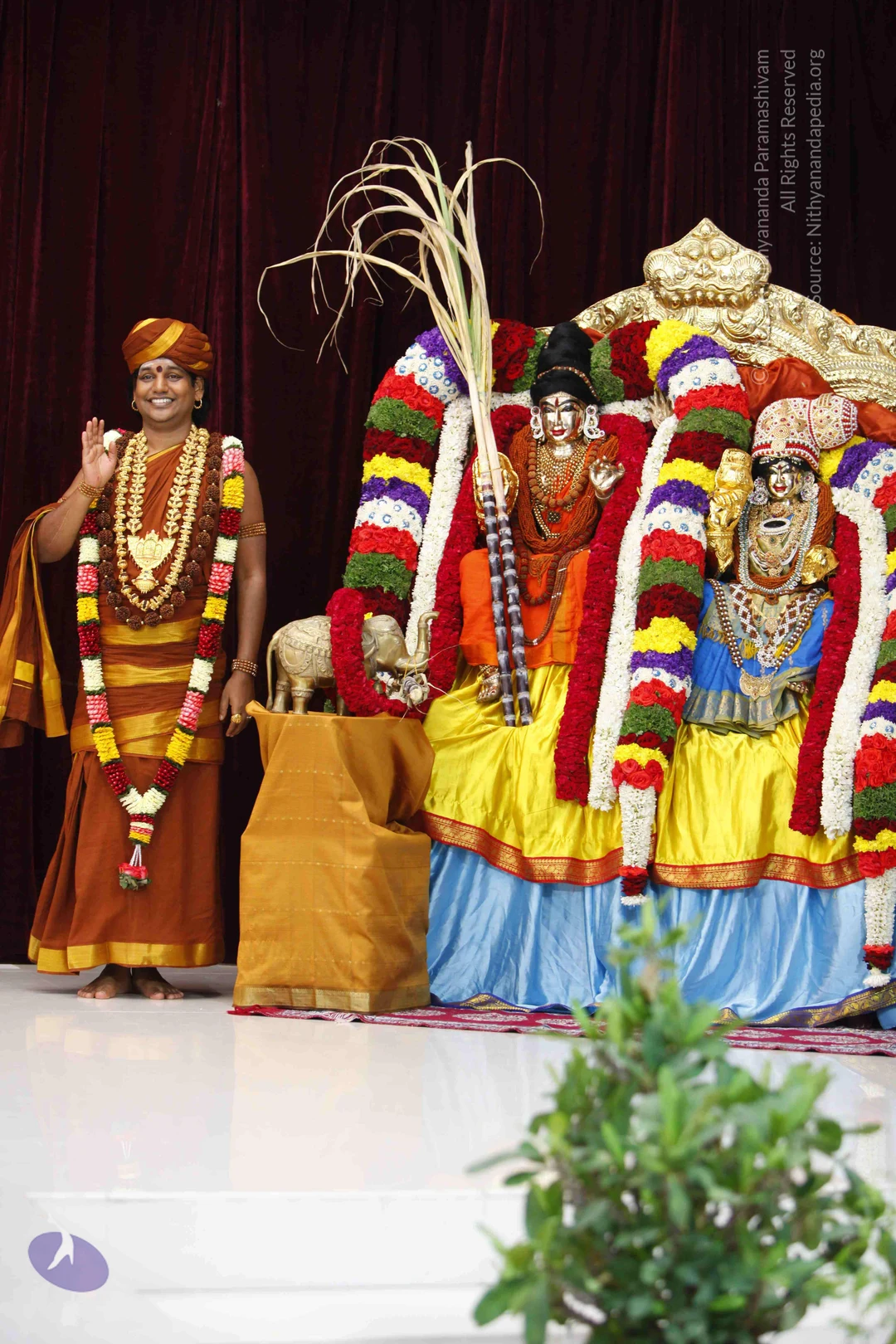
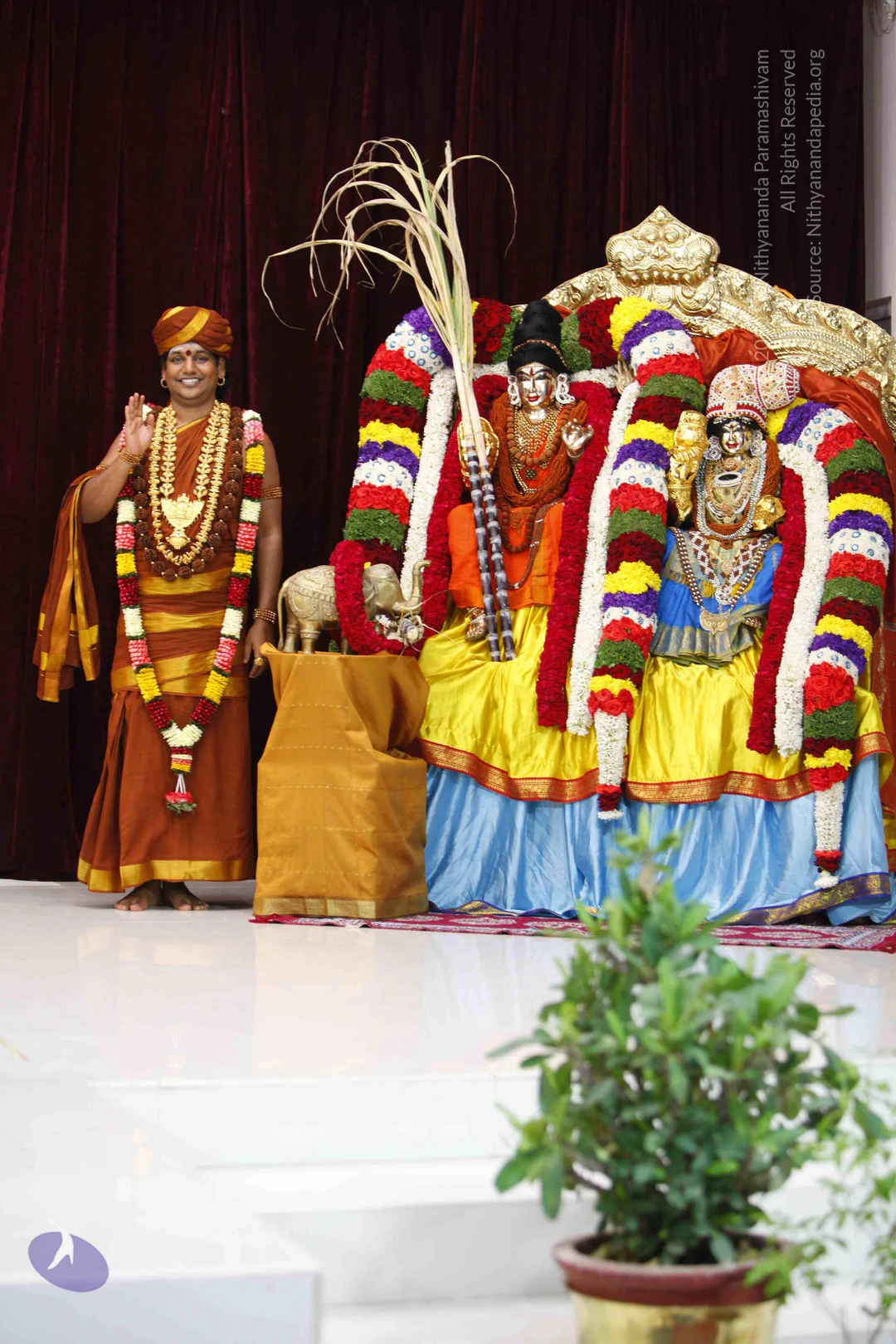
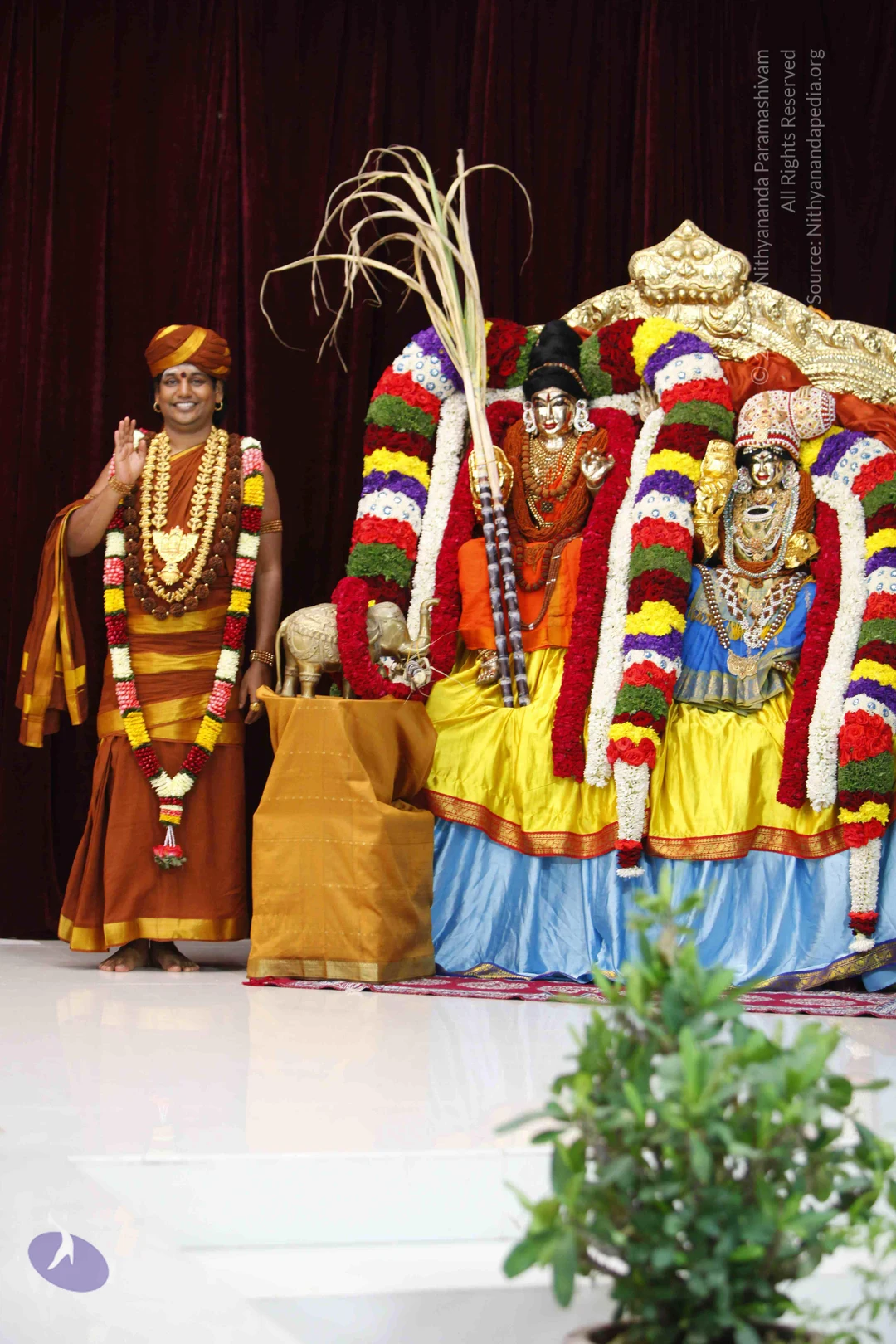
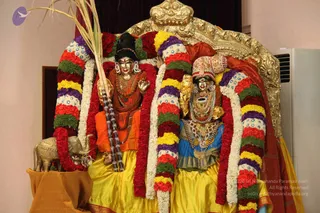
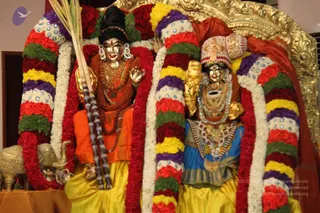
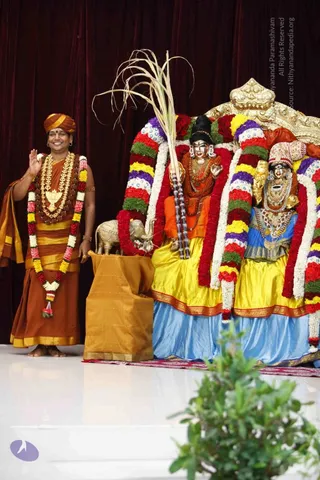
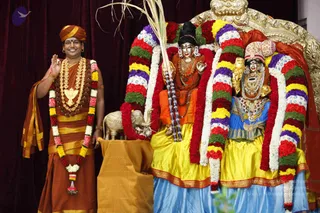
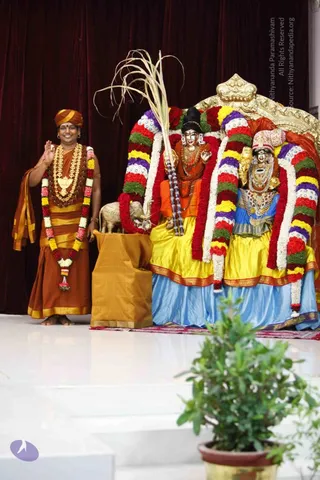
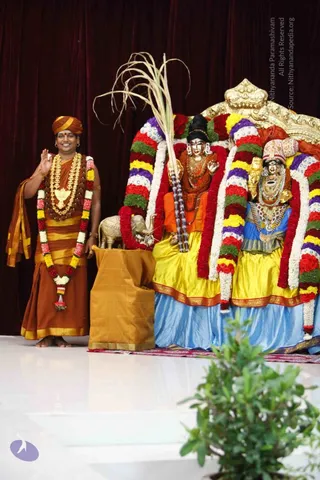
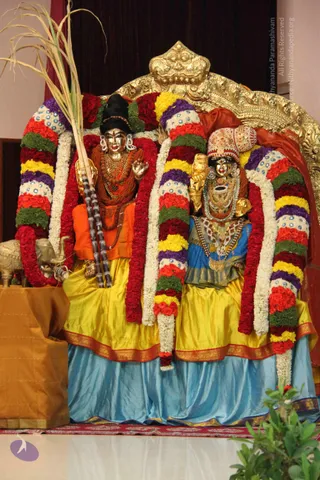
Today Mahadeva is gracing us in the leela “Kal Yaanaikku Karumbu Oottiya Leelai”. The leela means, “feeding sugarcane to a stone elephant”.

See, once in a while, Mahadeva comes down just for a casual walking in Madurai, assuming human body. So, one day, He came down for a casual walk, for a vacation. Actually, it is a very nice feeling. How it feels I‘ll tell you. You go to the U.S. and settle down leaving your old village. I am telling about born and brought up in an Indian village, who was struggling for food in the house. Somehow he goes to U.S. and settles there. He becomes very rich. And, after thirty years, he comes back from the U.S. to his hometown. The money which he has now, he can buy the whole village! He comes back like a vacation. And whatever items damaged in his house which he will be selling in his garage sale or putting them in dustbin, like old camera, old shoes, old cooling glass, old DVD player, all that he will bring. That will be a great gift and asset for those village boys who will be running behind him, ‘Mama, Mama (uncle, uncle), give me something! Mama, Mama, what did you bring from the US?’ I tell you that is the exact feeling when an incarnation visits Planet Earth!

Whatever human-beings think as extraordinary power, I tell you it is all useless! That is the essence, message. Whatever you think as extraordinary powers are all useless, rejected things from above. And the real thing is the science of how this village boy became that rich. So, how an ordinary man can become divine, that science is the real thing. Everything else, the hat, shoes, sweater, DVD player, old cooling glass, everything is what? Useless rejected pieces! The extraordinary powers are not the purpose of existence! Sometimes it is shown, may be to inspire those villagers, you also become like me. You can! Just for that!

Understand the context in which I am presenting the story. If you misunderstand, you will be hurt. So, don’t misunderstand. Otherwise you’ll think, ‘are we all like small kids running behind the old Mama or what?’ No! I’m not comparing you with the small kids! All I am trying to tell you is how that man from the U.S. returns, what all things are useless for him, he distributes as a gift, and people think that is too big a thing. Same way, whatever you think as too big, all those powers are nothing but rejected things in Mahadeva’s place, Kailaasa! Only one thing you need to know, how that man went from the village and became so rich there! Means, how he evolved. You also need to know only that science of how you can evolve.

Let me come to this story.

Mahadeva comes down for a vacation in Madurai assuming human form. He goes and sits in one corner in the temple, starts all his drama, means, so beautifully described in the original purana. He was sitting in the form of a sadhu. So, Madurai people are always respectful towards sadhus. If some old man comes and touches His feet and asks for blessing, He will make him young! If some young fellow goes without touching His feet, or respecting him, recognizing Him, He will just make him old! It’s so beautiful! There is a beautiful description (in Tamil). He is just sitting and playing the game, energy game, out of His joy, and turning this fellow into that, that fellow into this! Some poor fellow comes and touches His feet, He suddenly showers him with wealth! Some old lady comes and touches His feet, He makes her a young girl, beautiful girl! Left and right, He is playing with miracles! In a few minutes, the whole Madurai kingdom comes to know what is happening in the temple. And He is continuing His leelas, playing His drama!

The king came to know there is a sadhu sitting in the temple doing all these dramas. So, he sends his ministers, ‘go and bring that sadhu to court, I want to see him!’ The ministers go and call him, ‘hey, the king wants to see you! Hey sadhu, come!’ He says, ‘No, I am not interested in seeing anybody. If anybody wants to see me, tell them to come here!’ The ministers go and report to the king, ‘this is what the sadhu replied.’ The king sends (must be a little foolish fellow!) the warriors, army, to forcibly bring that sadhu. The whole army goes and tries to pick up that sadhu, and He (the sadhu) just waves his hand and all of them (the army) become statues! Stood still! And the king receives the news that all of them have become stones. The king was shocked! Then he runs to the sadhu. The sadhu was sitting without even being bothered about the king. And, the king was really offended and he got humiliated. But still that fellow (the king) was so egoistic, I think Mahadeva came down just to teach a lesson to the king. Still he was so arrogant and standing.

Exactly at that moment, some devotee brings a sugarcane and puts it at the feet of the sadhu and does namaskar. The king asks the sadhu just to check, ‘If you are that big a yogi, can you feed this stone elephant with this sugarcane?’ The sadhu just smiles at the stone elephant. Suddenly the elephant became alive and started roaring with a trumpeting sound, ate the whole sugarcane! Not only that, it just snatched away the king’s pearl mala and ate that also! The king got frightened! He was shaken! Then he understood the glory of the sage and fell at his feet of the sage and apologized and asked Him to bless for a male child to take care of the kingdom. Because the king has realized now that Somasundara Himself is the sage! None other than Somasundara!

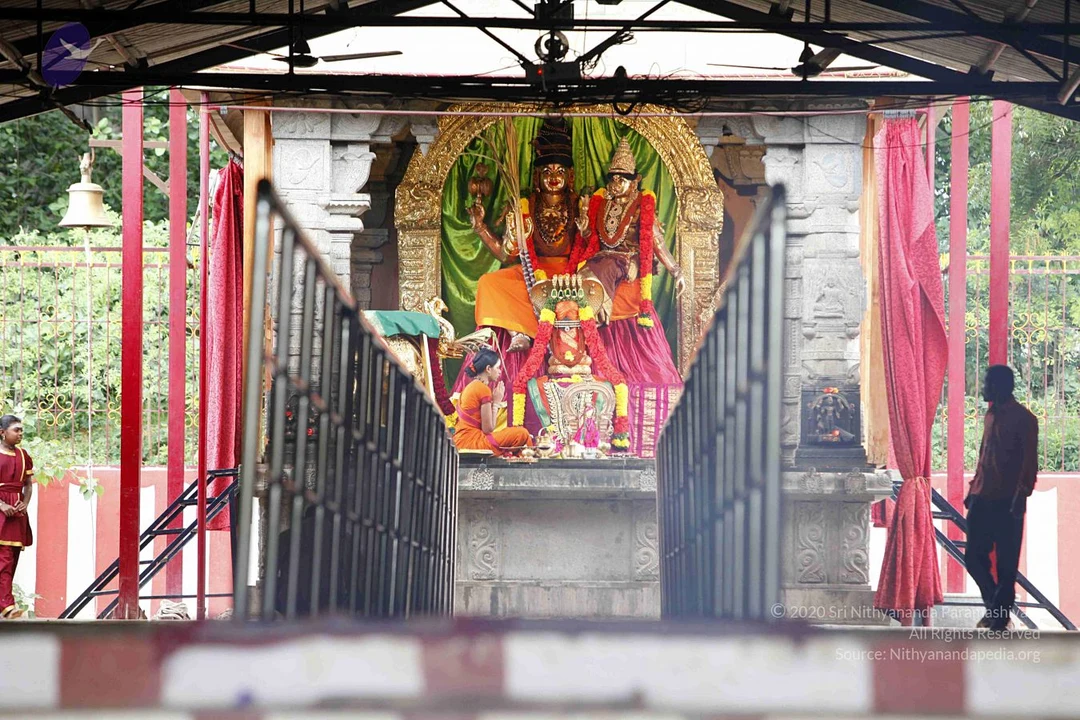
And then, once Mahadeva taught the lesson to the king, He just disappeared into the temple, into the main deity. And still He is worshipped as “Ellaam Valla Siddhar”, who came down to feed the elephant. Just near the same elephant which ate the sugarcane in the Madurai temple, Ellaam Valla Siddhar has a separate shrine. A private shrine!

And, the king also got a male child who is known as Vikrama Pandya and became his successor. Whenever somebody becomes atheists, Mahadeva himself comes down and puts them on track.

Today, Mahadeva is in that leela, reminding all of us about His beautiful leelas which continue even now!

Today is the first ever spiritual talk show by kids in the world, on Nithyananda TV and Lotus TV in Tamil at 7:30pm! All are welcome to watch. Today is second episode.

Disclaimer!! Get ready to be bowled over by the little avatars!!

In Tamil there is a proverb, ‘even if the snake is little, the poison will not be less!’ so, even if they are little avatars, the energy and intelligence will not be less!!

I will continue to expand on “COMPLETION”.

Listen! When completion happens in you, the context with which you do the completion is also important. Yesterday, we were discussing, I was having a session about completion with the Inner Awakening Level-2 participants. That time I was sharing some of the insights which I wanted to share with all of you, because I know most of the TV viewers are practicing many of the spiritual principles I am teaching in the morning Nithya Satsang, because I get a lot of calls to our Enriching Temple. Enriching Temple is the department which attends to all your calls. So many people practice these truths, these messages! So, understand, I wanted to continuously make you all understand the deeper and deeper levels of truths, so that you can practice this science wherever you are.

First thing, completion is not “apologizing”. Understand, in completion you may apologize not because you feel powerless, but because you feel powerful now; not because at that time you did some mistake, but because in those days you had inadequate cognition.

Please understand, as a law of life, your cognition will continue to grow. As a law of life, your cognition will continue to grow. As a law of life, you will continue to expand. Then, now you have only two choices: One, either you go on crying about your past as a wrong mistake, or you can look at the whole thing as inadequate cognition and raise your cognition level.

I tell you, when you complete, do not have apologetic mood, do not feel the guilt that you have done something wrong. No! Because, if you feel guilty, you will not go through all the past and complete. Because, even one or two will make you so tired, you will be agitated, irritated. You will think, ‘What is this? Why should I do this?’ So, you will develop a subtle hatred towards completion. You will never sit for completion sessions. How many of you feel, bored or tired and don’t want to sit for completion? (People raise their hands). All of you, you need to know, you are only having a deep guilt about the past. You should know, you have not done something wrong in the past, but, listen! You have not done anything wrong in the past, but, it was just inadequate cognition. You expecting you should have adequate cognition from the childhood is impractical expectation in this society. Then you should have become my gurukul child. In the society, you can’t expect to have a complete cognition; you can’t expect society to allow you to continue to have a complete cognition. A child is allowed to have a complete cognition only in my gurukul! And, if you just allow the complete cognition, full brain of a child to be functioning, helping the child, encouraging the child to learn. So beautiful! So beautiful!

So, first thing you need to understand is, completion is not feeling guilty about your past, remembering your past inadequate cognition and completing it, so that that decisions and patterns you developed during inadequate cognition does not need to continue to exist in your present inner space and affect your life now. If you are bored, unhappy, do not want to sit for completion, be very clear, you are not completing, you are just sitting with your past guilt and just brooding over! Just brooding over!

Listen! And understand, completion is not apologizing. Same way, when you are completing with others, don’t be in the apologetic mood. You are not apologizing. Sometimes, apologizing may happen. See, many times, only if you feel powerless, if you fall into the powerless mode, you apologize. Don’t fall into powerless mode. Sit powerfully, remember very clearly when you had those powerless moments, some parts of you have been stuck with others. Now you are reclaiming those parts. That’ all. For example, if I had a fight with my elder brother when I was six, and still that memory is there in me, that fear is there in me, feeling is there in me, means, still that six-year-old child is influencing me. So, all I am trying to do is I am liberating myself from that fear pattern which I created at the age of six, which happened due to fighting with my brother! I am not now going and apologizing to my brother. ‘Oh, sorry, that time I beat you, now I apologize.’ No! You may apologize at some time. But, completion itself is not just apologizing. It is like making the other person understand and making yourself understand that fighting in the young age created a strong, fearful, powerless pattern in you which is responsible for still you struggling, suffering with the wrong cognition, improper, inadequate cognition. Completion means shifting the cognition from an inadequate cognition which is restrictive, to an expansive cognition which expands you and the other person!

I tell you, completion brings Integrity in you. Completion brings Authenticity in you. Completion brings Responsibility in you. Completion brings Enriching in you. Completion brings Listening in you. Completion brings Completion in you. Completion is Tapas. Completion is Yagna. Completion is Puja. Completion is Kriya. Completion is Homa. Completion is Jnana. Completion is Bhakti. Completion is Yoga. Completion is Completion!

Completion in every level! Completion in every step! Completion in every way!

Completion is Shraddha! Completion is Shraaddha! Completion is Tapas! Completion is Puja!

All the candidates who have applied for Sannyas, all the Sannyas Training participants, I request all of you to be in the campus before Monday, means 15th. Because, from 15th, you have to start doing completion, so that the Sannyas initiation rituals can start.

Completion! Completion! Completion! Completion makes miracles happen in you. Completion makes health happen in you. Completion makes joy happen in you. Completion makes bliss happen in you. Completion makes space of positivity happen in you. Completion makes space of possibility happen in you. Completion makes space of knowledge happen in you. Completion makes space of leadership happen in you. Completion makes Enlightenment itself happen in you!

The right space is created in you only by completion! I tell you all, anybody who thinks I am your guru, the first instruction for you, six months you should take up completion. First six months is completion.

Now, to introduce Completion and teach the basic science of Completion, I am introducing a new program; four-day program in all Inner Awakening, first four days of every Inner Awakening. The program will be called “Intro to Inner Awakening”. This program is all about Completion, teaching the science of Completion.

Please understand, in the Inner Awakening, first four days will be the Inner Awakening Introduction level. Then, first ten days (which includes the first four days of Introduction level) will be Inner Awakening Level-1, and next eleven days will be Inner Awakening Level-2. I am opening the doors for the people who can’t have, who can’t afford so many days in their lives. Of course, every day in the morning satsang I am sharing, but, unfortunately, human-beings do not start till the right space is created, till the right space is created. So, we are starting this program from August: August 16th through August 19th, we’ll be having this program. I welcome everyone to come and experience the space of completion, the knowledge of completion. You will be initiated into the completion process, into the Poornathva Kriya.

In Introduction to Inner Awakening, Intro Level Inner Awakening, you will have the Knowledge of Listening, Right Listening, and the Four Tattvas, Identifying your Conflicting Patterns, Identifying your Root-Pattern, Samskara Dahana Kriya, and initiation into Nithya Dhyaan. You will be having the basic intelligence, knowledge about completion.

Completion brings peace in the world. Completion brings bliss in the world. Completion brings coexistence in the world. Completion brings co-existence in the world. I tell you, with completion you become human-being, with completion you become divine being. Everything, everything, completion makes everything, every right thing in your life. Completion does every good thing in your life.

Understand, I also sincerely request all the volunteers, samajis, satsangis to attend this four-day Intro for IA. If you have done Inner Awakening before the Dec 2012. If you’ve done Inner Awakening program before 2012, I request you to do this four-day program. I think only in February Inner Awakening 2013, I introduced the science of root-pattern and completion. Till then, I was developing it, organizing it from our traditions and shaastras and scriptures. If you have done Inner Awakening before 2013, I request, please do this four-day program, “Introduction to Inner Awakening”. So, you can participate in completion and you can upgrade your intelligence. And this four-day program will be available even on two-way video-conferencing; even on two-way video-conferencing. Even in India we will be having two-way video-conferencing. People can do it from their own cities. Even in India, people will be able to do in their own cities.

So, completion, completion, completion. I tell you, completion brings relationships back in your life. Completion brings knowledge in your life. Completion brings new being in your life.

And Guru Purnima is the celebration of completion! Actually, even traditionally, the whole Guru Purnima program rituals are based on the principle of completion. You complete with your guru. So, even the Guru Purnima ritual, people usually offer Guru Dakshina to guru, gifts in whatever form they can, do completion with the guru, and receive the prasada, the rice from guru. Guru gives whatever he got through the bhiksha from the disciples. Guru Purnima day, tradition says, anything disciples offer, guru has to accept. He can’t say no! Still I follow the tradition. Guru Purnima is the only day you will see me receiving from your hands. Otherwise, anything you bring, I’ll say, ‘give it to them.’ How many of you have observed, anything you bring, I’ll never take it from my hand? I’ll touch it and say, ‘give it to them’.

Even Ramakrishna, anybody brings anything, he will never accept. He will touch it and say, ‘alright, do what you want, leave it and go.’ Guru Purnima is the only day he will receive it in the hand. So, Guru Purnima is the only day I receive it directly in my clothes or in my hands, because it is celebration of completion. People offer coconut and rice. Coconut denotes your ego, head, thickhead; and rice is all the incompletions, karmas. You offer both to guru, because whole Guru Purnima is the process of completion.

You experience new life with completion!!

The essence of today’s satsangh:

Completion is everything. Learn the science of completion and start completion in your life, because completion is everything!

Today, 15th batch Nirahara Samyama, Level-3, 1st day.

We’ll start the Nirahara Samyama.

All the Nirahara Samyama participants, please sit straight. Close your eyes and cognize you have become Bidadi Kalpavruksha, and inhale through both the nostrils and the mouth, hold as long as you can comfortably inside you. When you feel can’t hold any more comfortably the air inside you, slowly exhale through both the nostrils not through the mouth, keeping the mouth tightly closed. Continue this process and continue this for next 21 minutes.

I bless you all, with Integrity, Authenticity, Responsibility and Enriching, with eternal bliss. Let you all experience intense Kundalini awakening and live health, bliss and enlightenment! Namah Shivaya!

Let you all achieve, experience, live, express, radiate, share and explode in eternal bliss. Nithyananda!

Photos From The Day:
Photos Of The Day:

ShivaleelaPicture

a_Temple

PadukaPuja

Nithya_Satsang

SarvaDarshan

Final_Blessing

Swamiji_Deities

IA_Day12

Tags:

Paramahamsa Nithyananda, awareness, incompletions, apologies, powerlessness, cognition, knowledge, expansion, completion.

Photos Of The Day:

Shivaleela-Picture

Temple

Paduka-Puja

Nithya-Satsang

SarvaDarshan

Swamiji-Deities

IA-Participants

IA-Yoga

kalabhairava-Reading-darshan

1-Shiva-Leela

20130712_Photo_1000_IMG_4354_CMP_WM

10-Kalabhairava-Reading-Darshan

2 -Temple

3-Paduka-Puja

4-Nithya-Satsang

5-Sarva-Darshan

6-Final-Blessing

7-HDH-Deities

8-IA-Participants

Photos from this day

View all 316 photos

Photos From The Day:
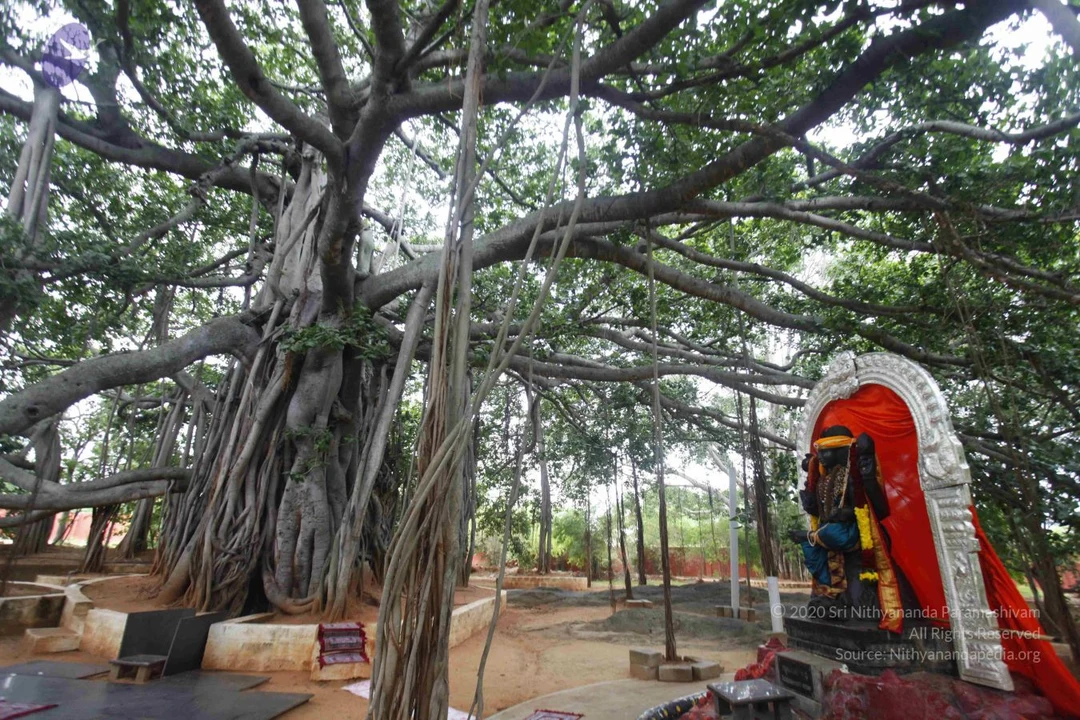
27 photosSource gallery
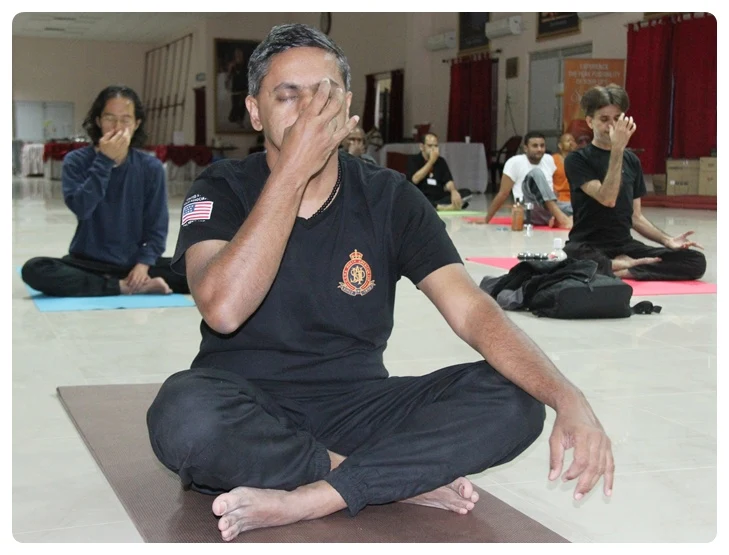
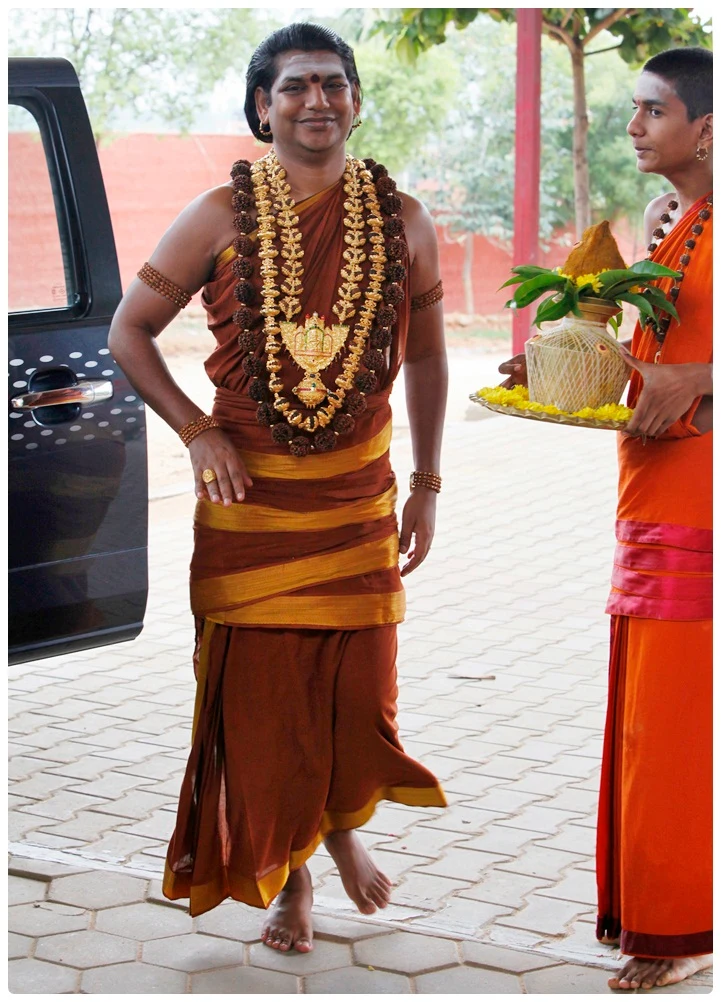
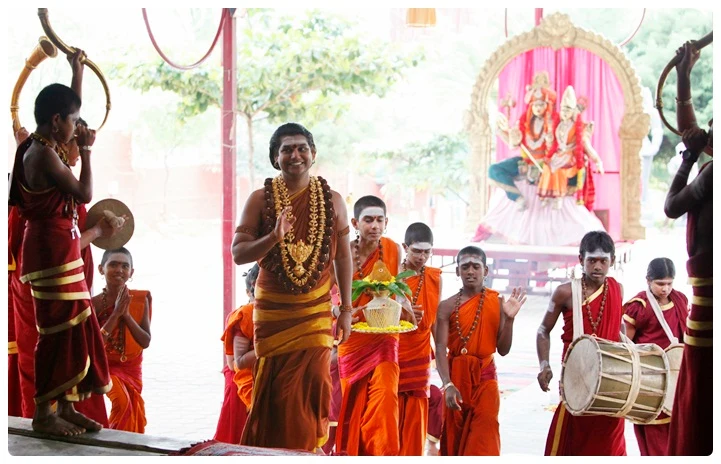
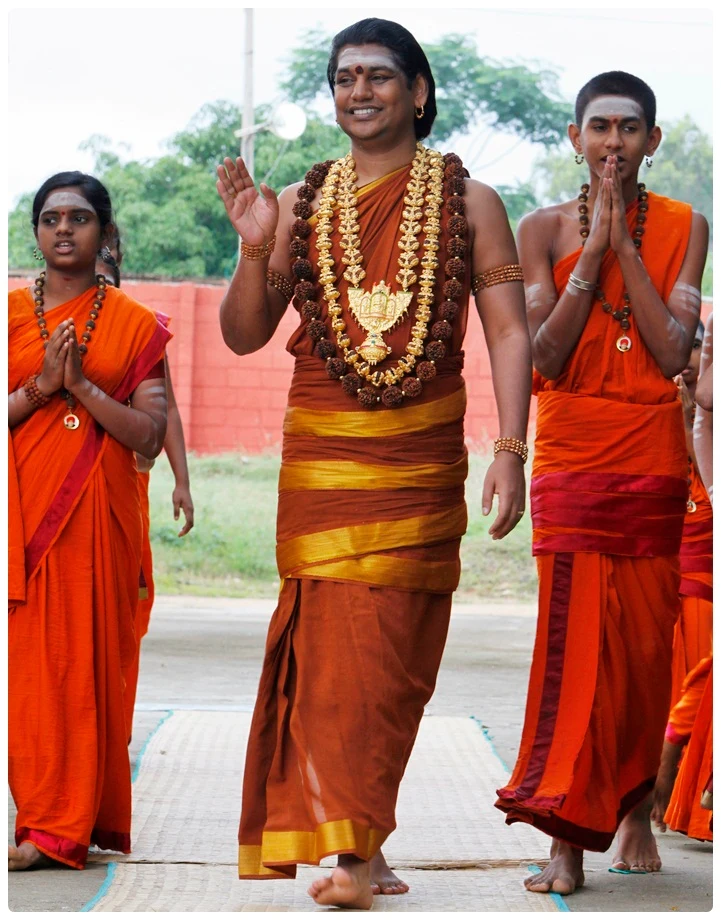
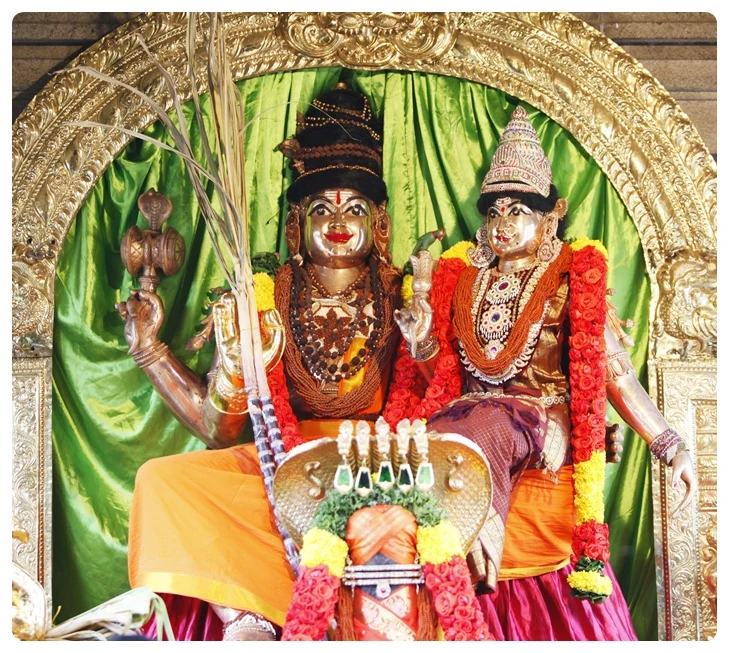
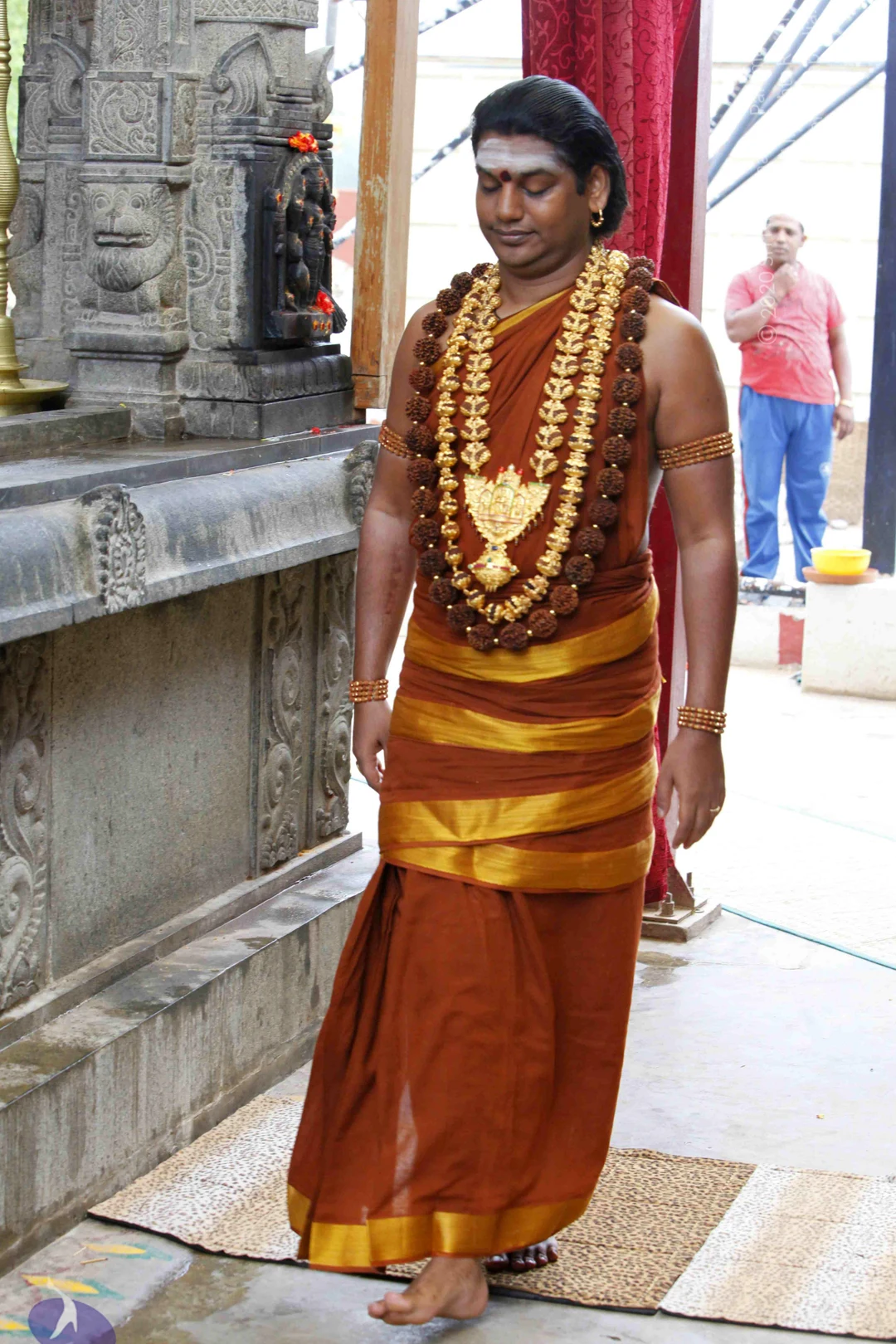
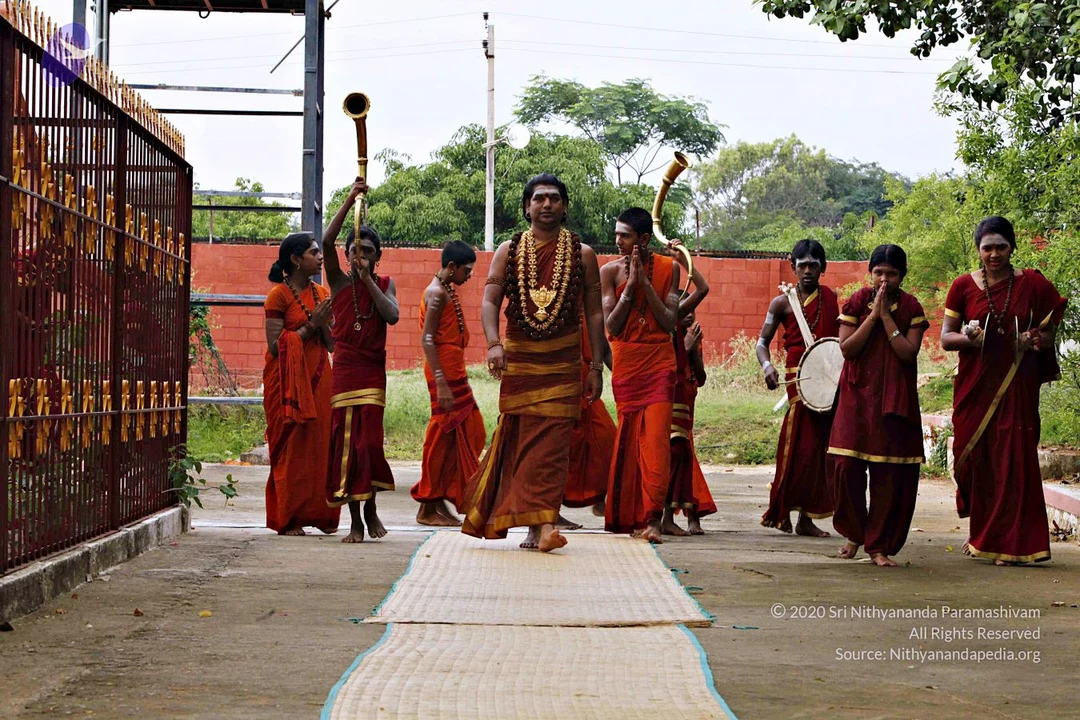
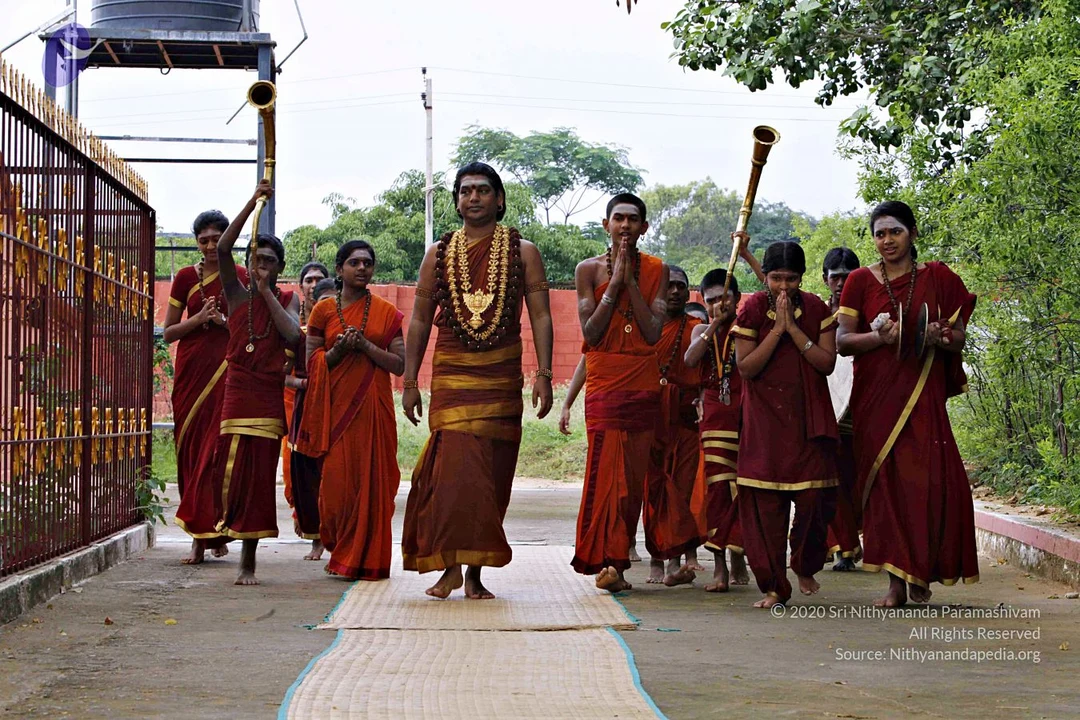
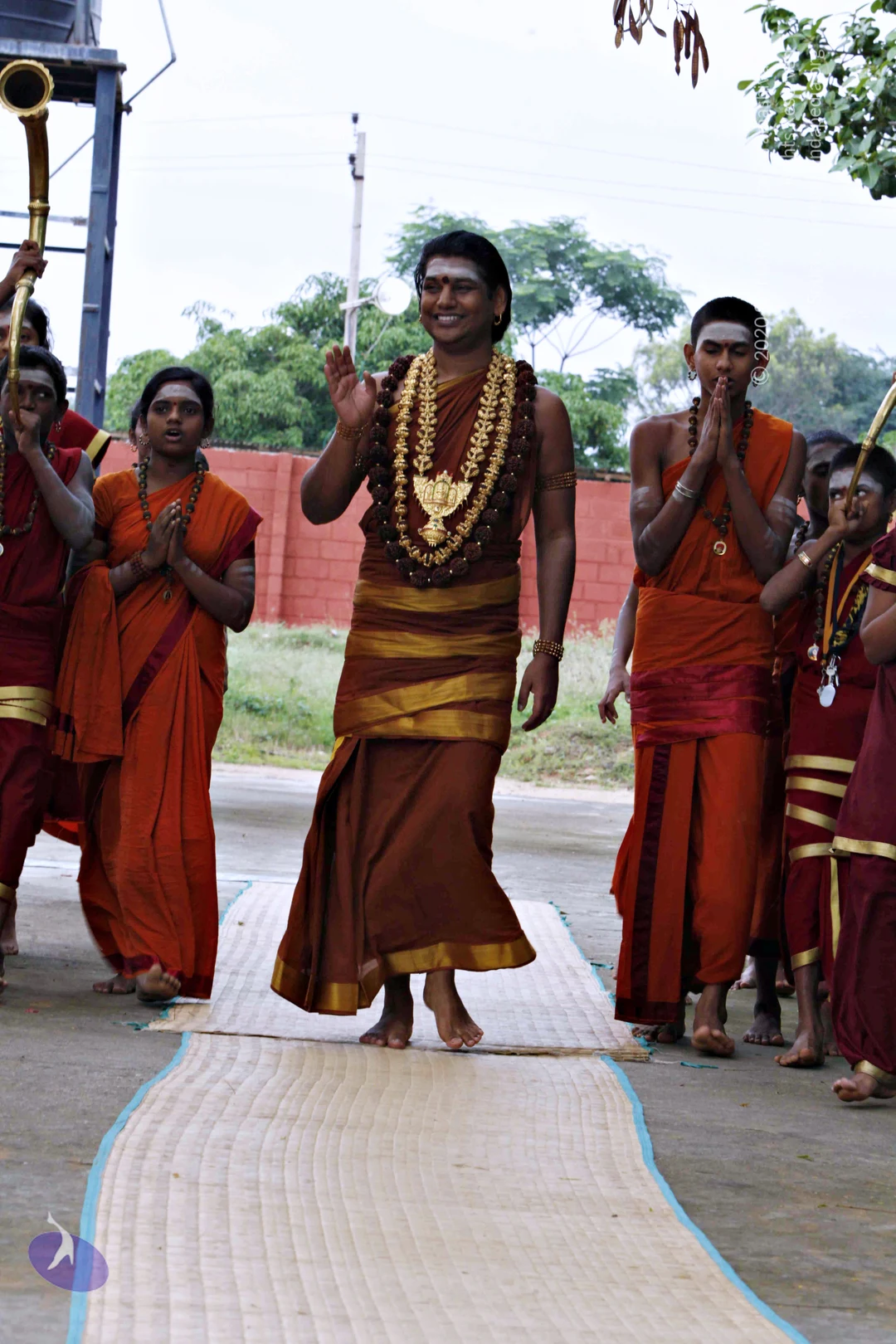
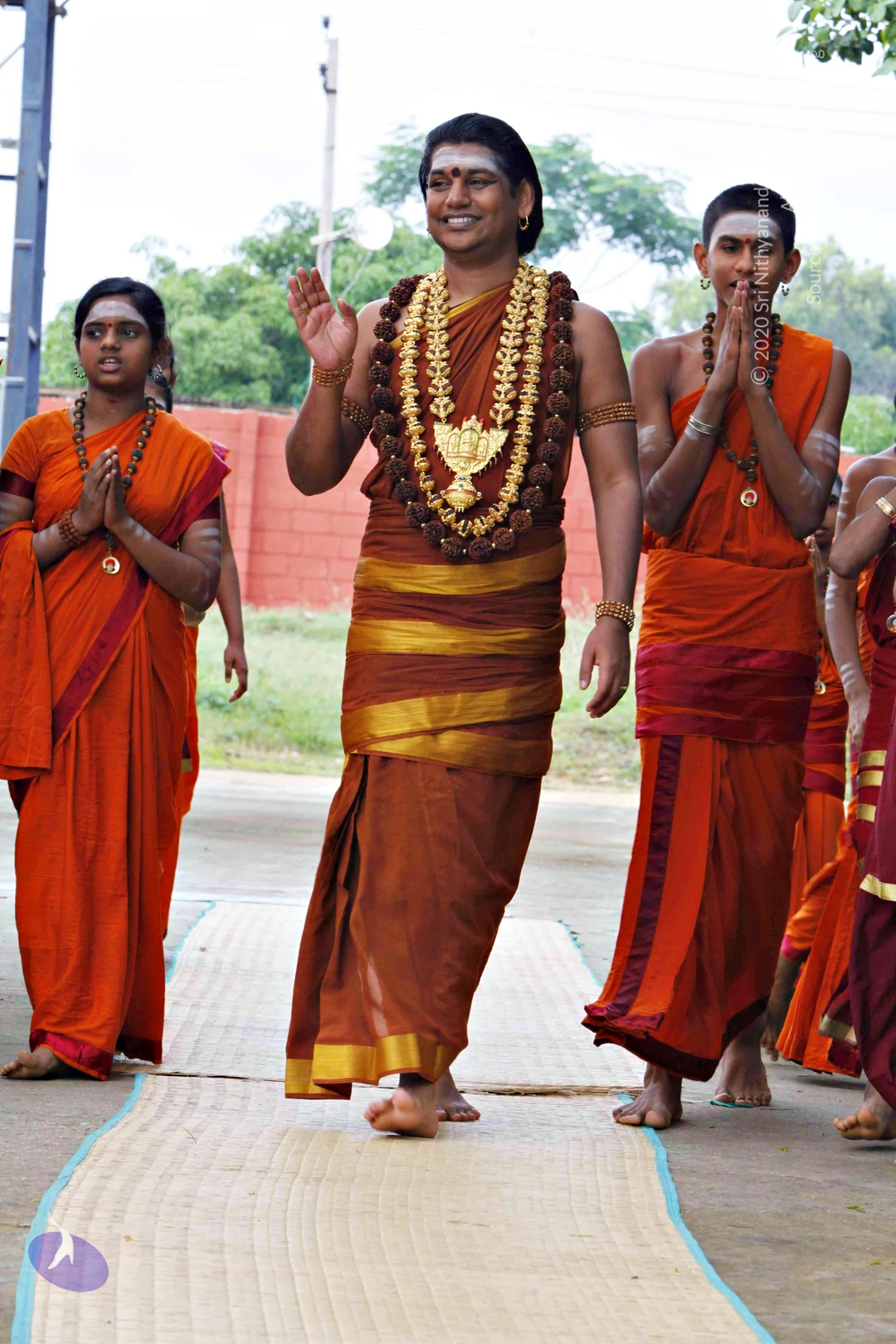
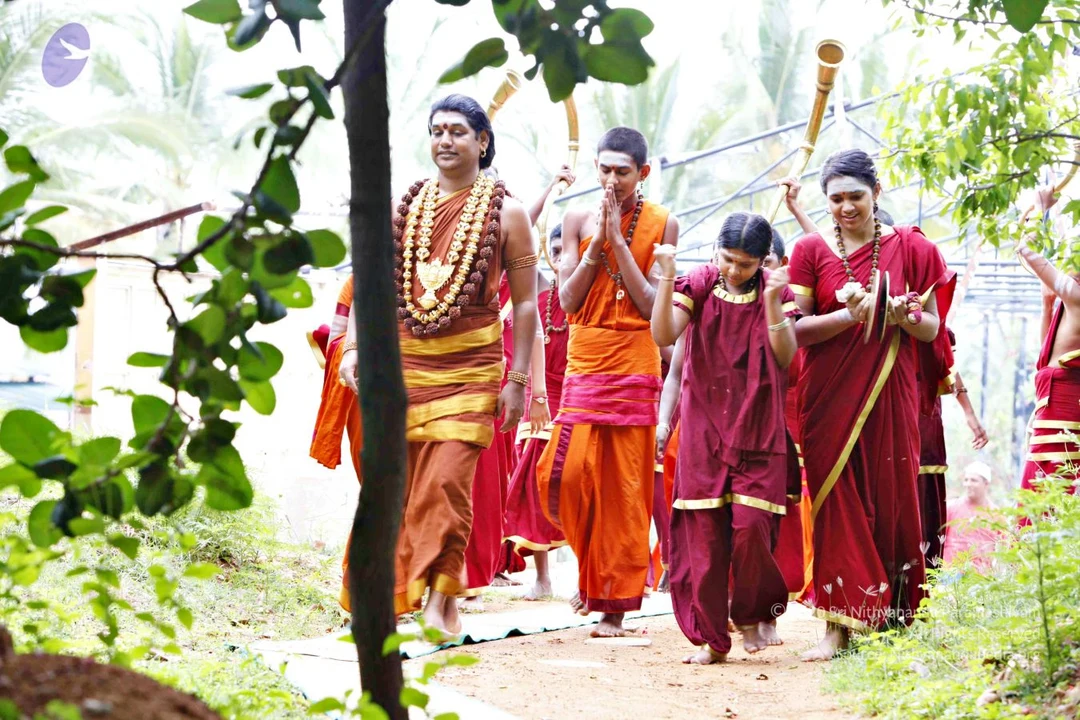
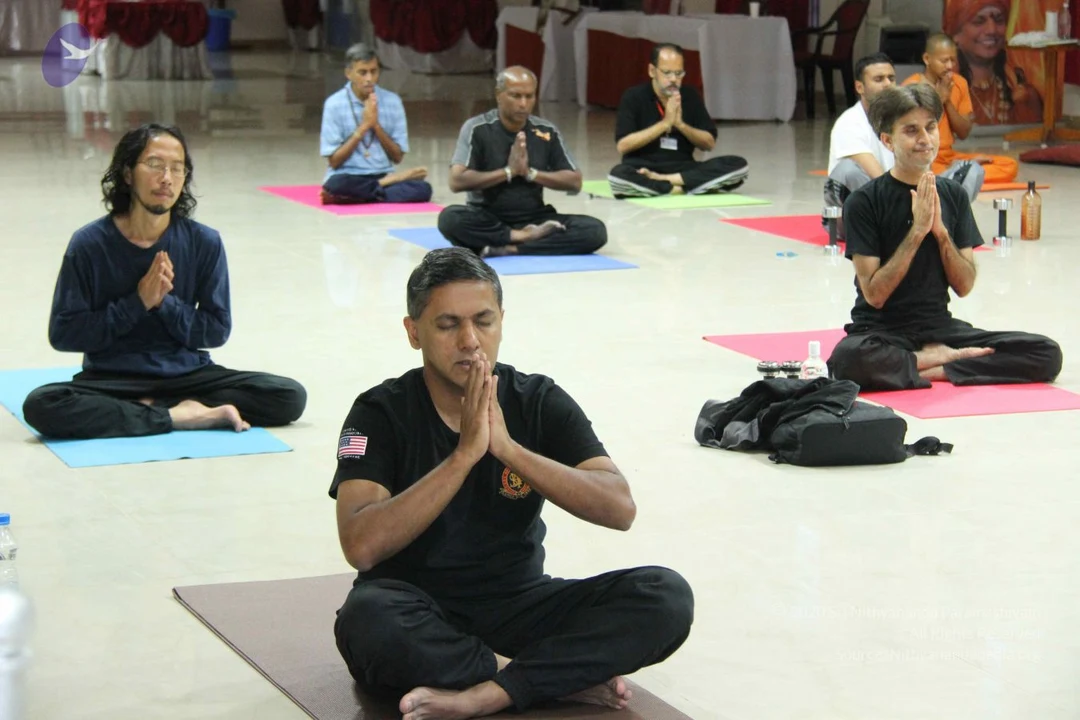
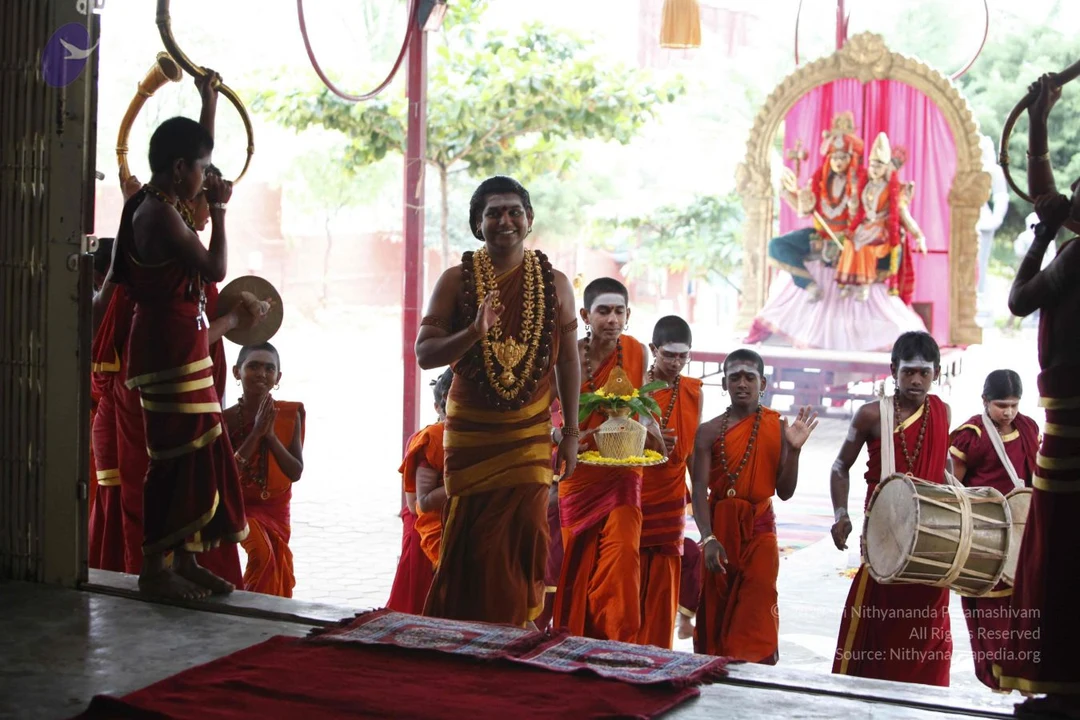
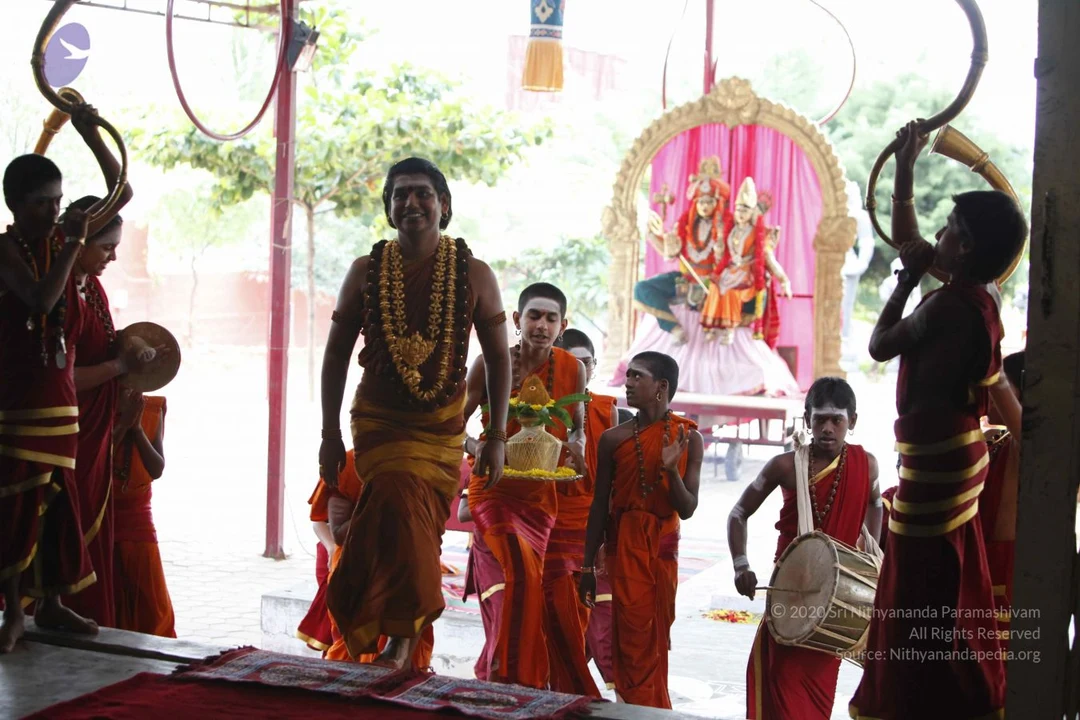
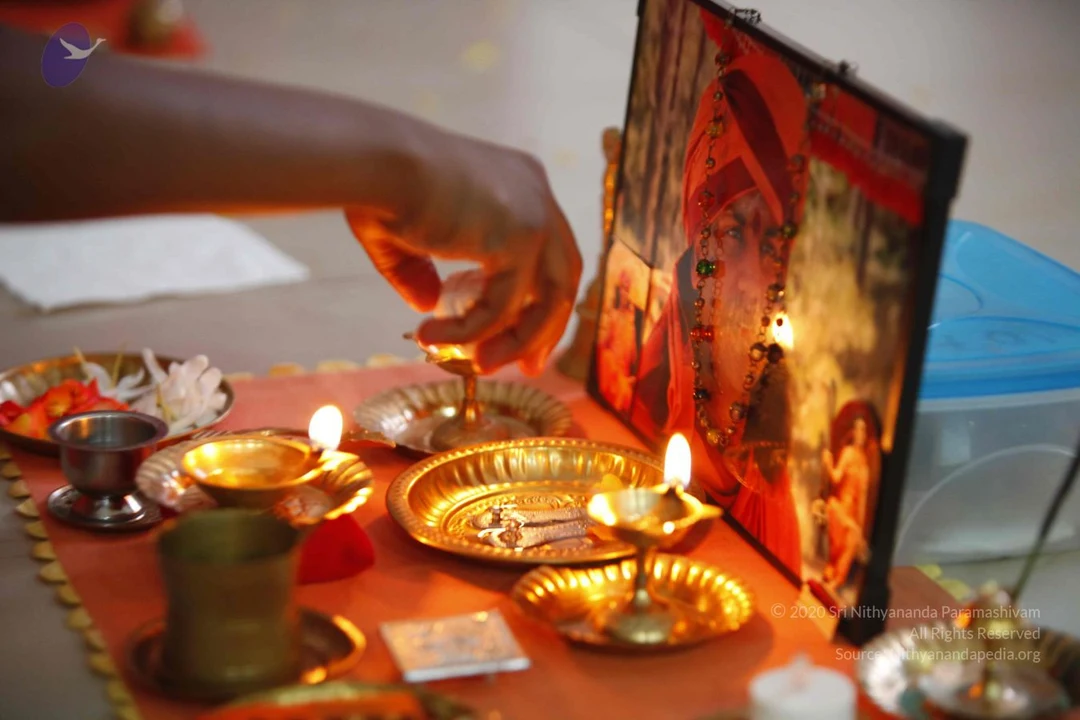
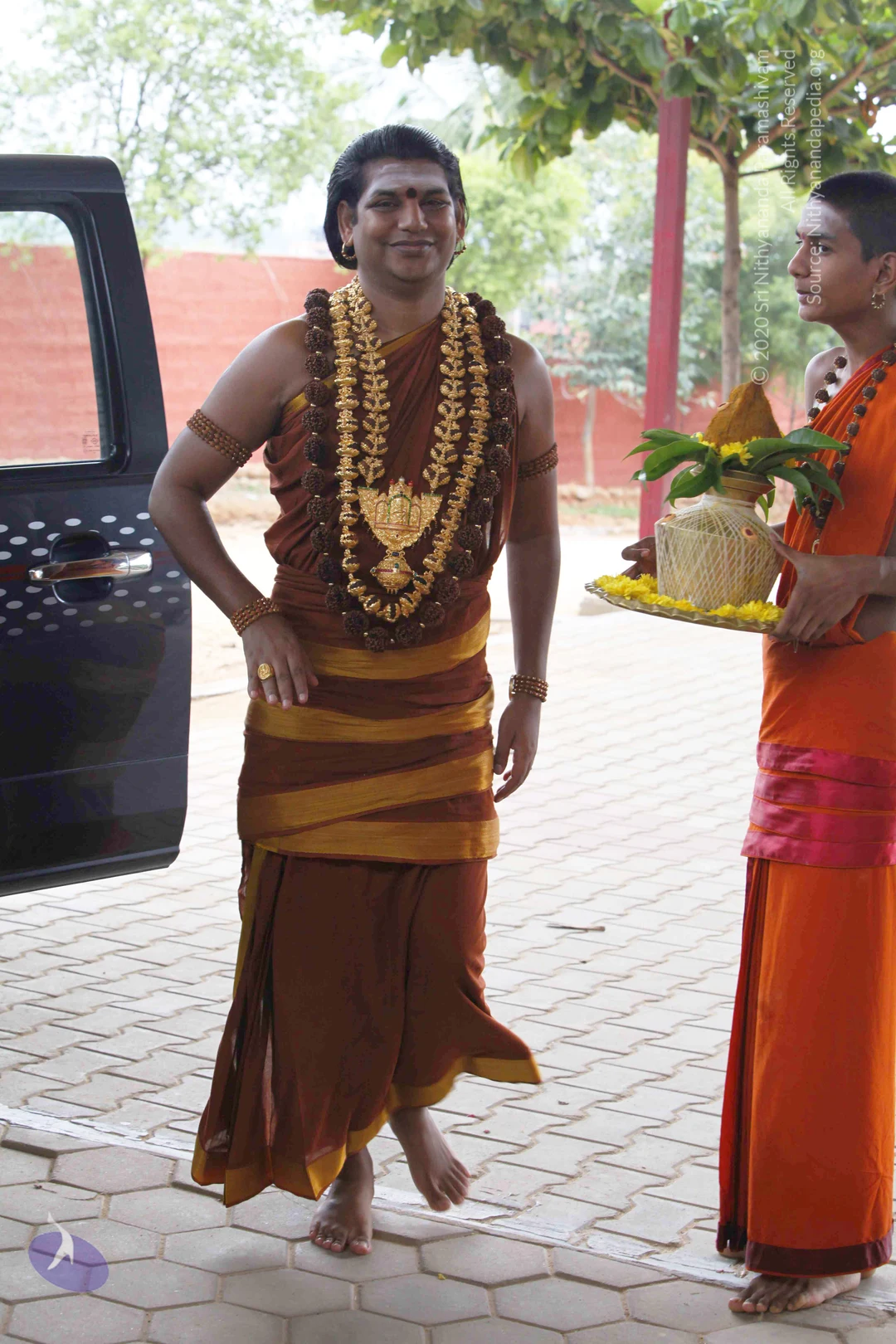
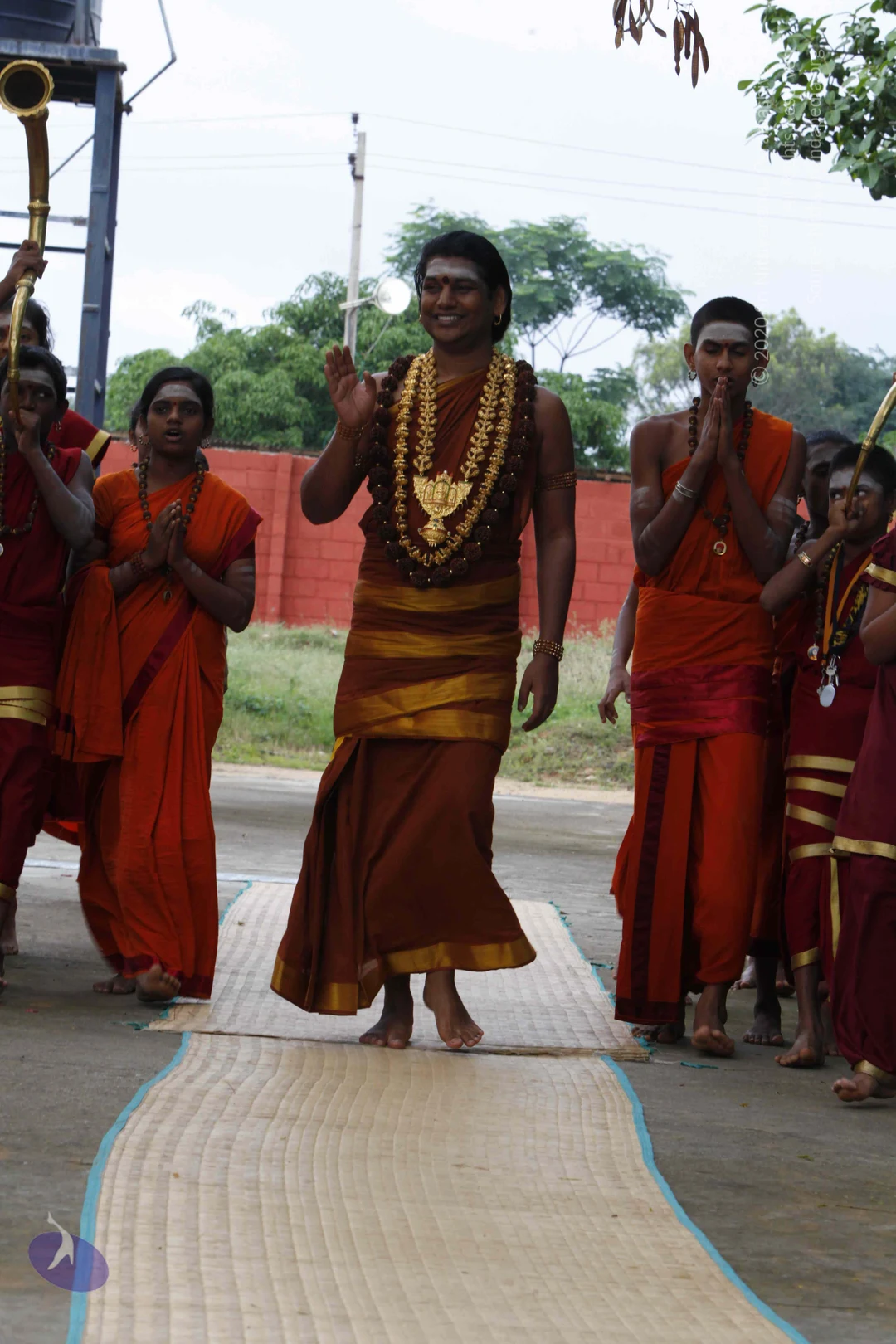
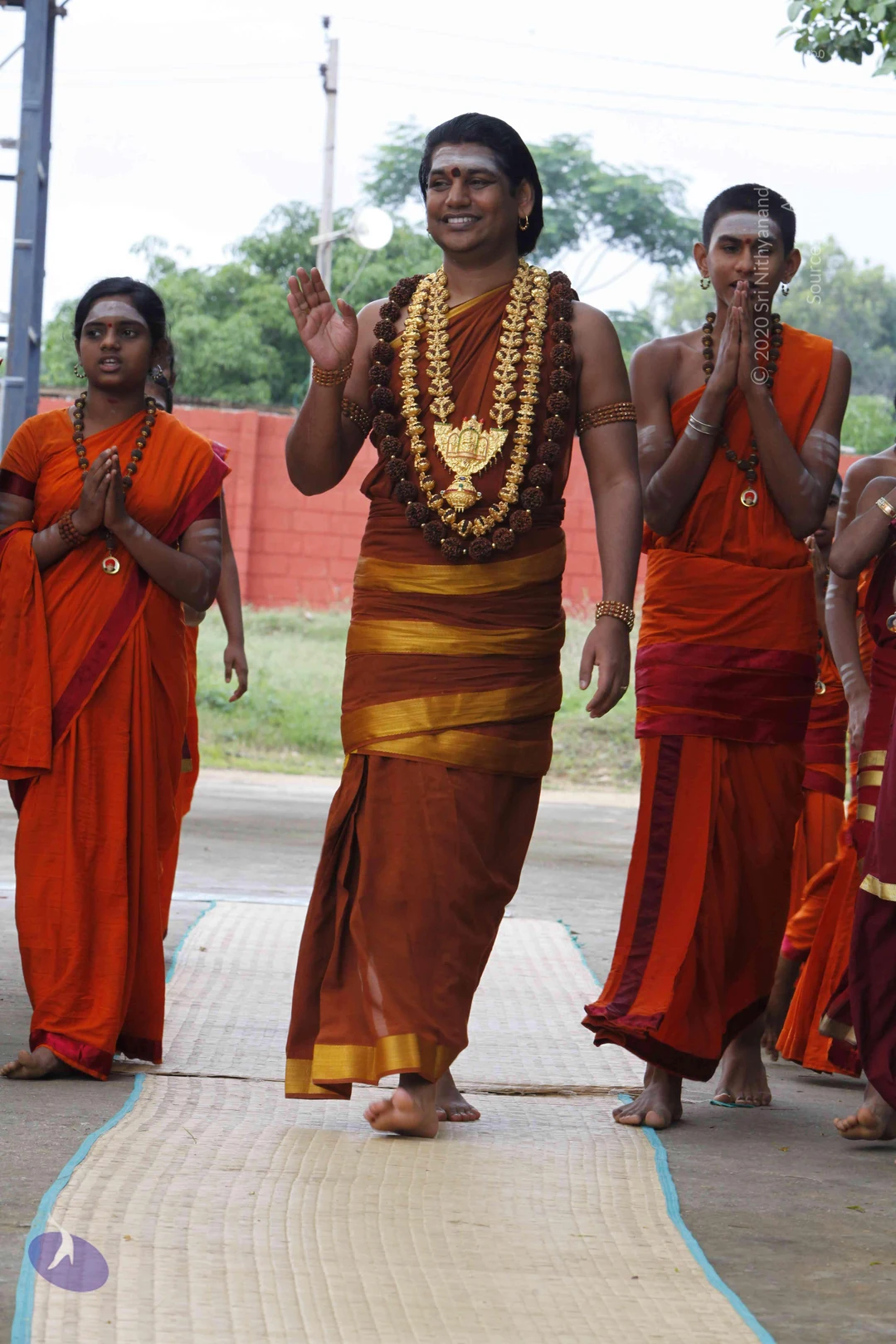
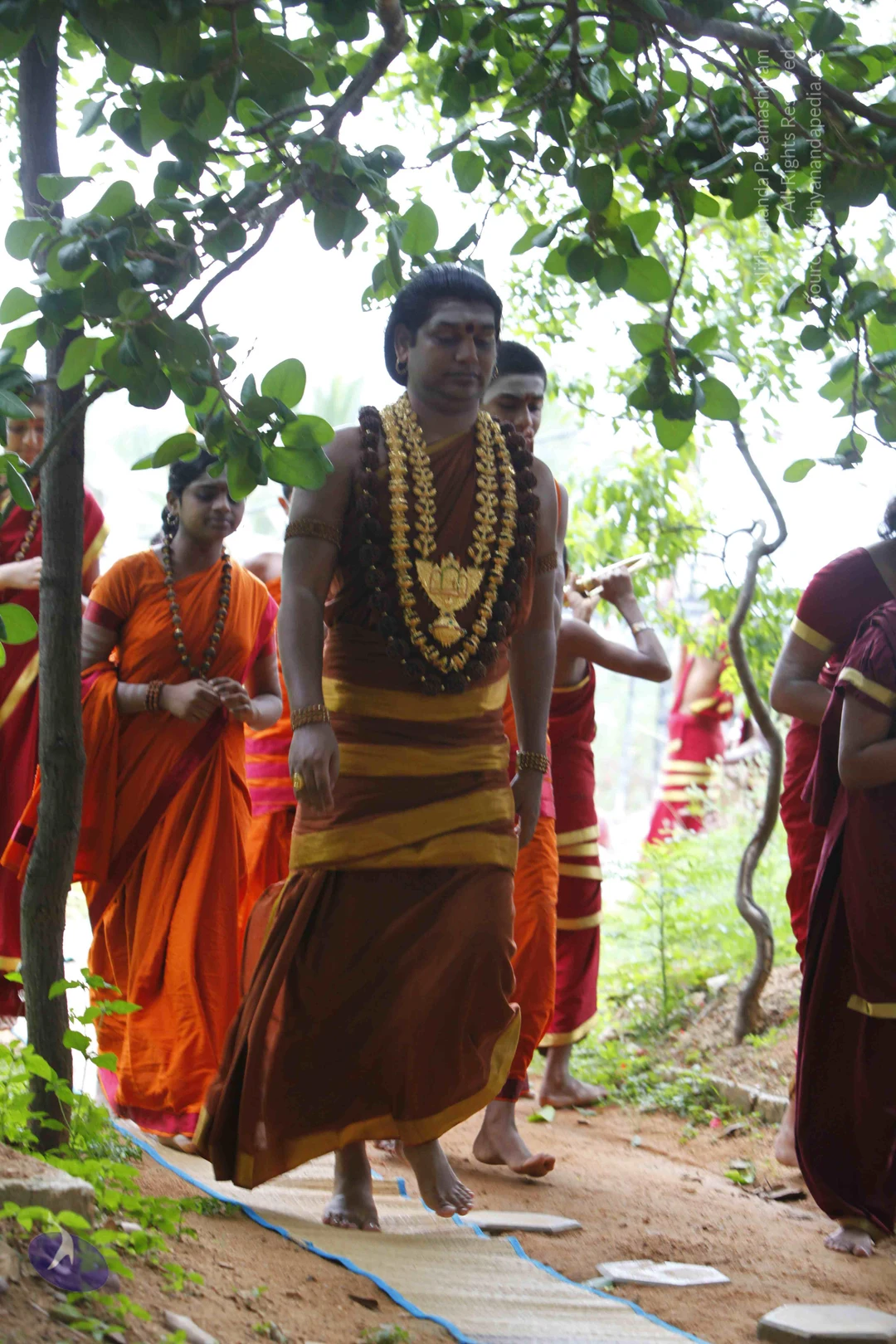
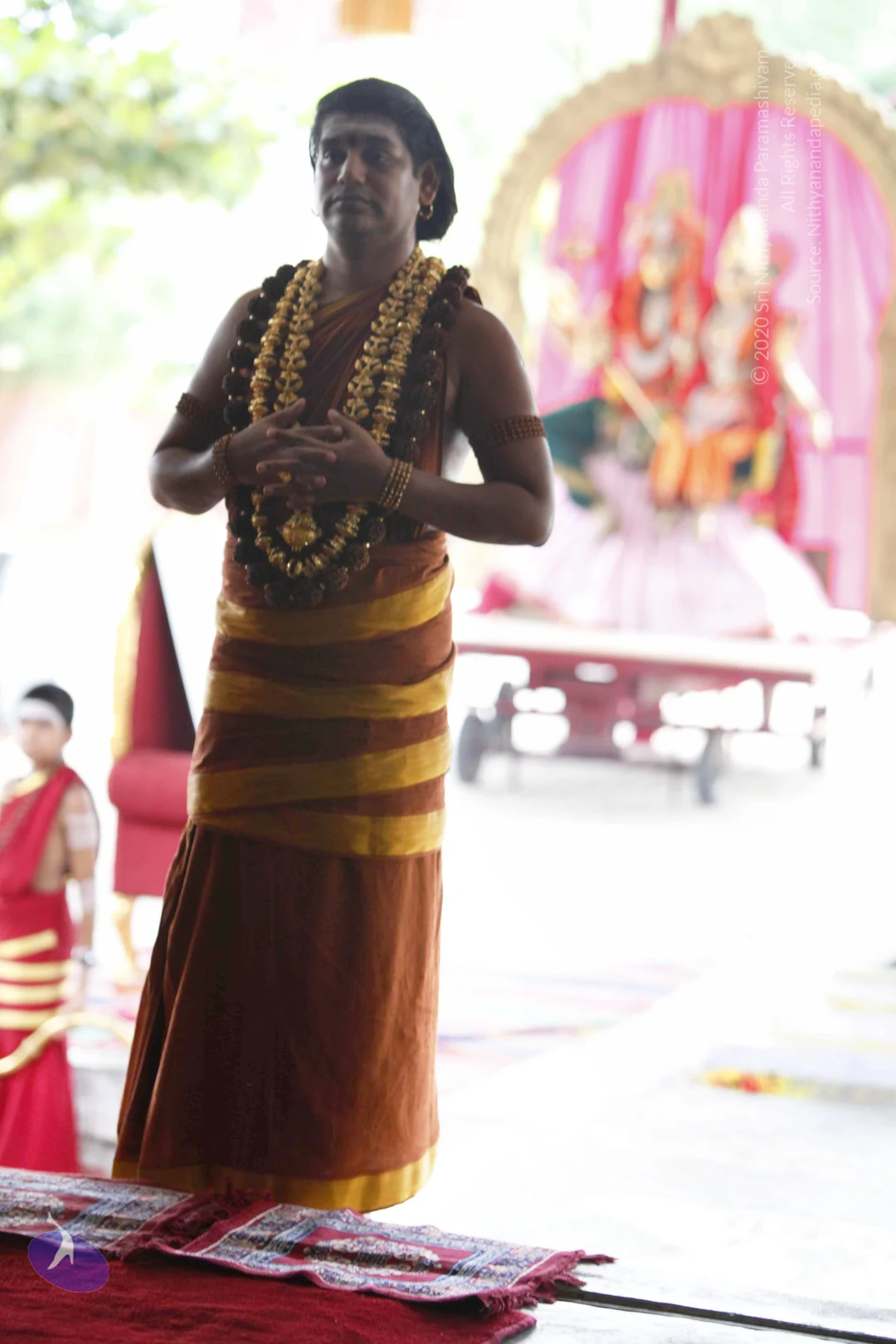
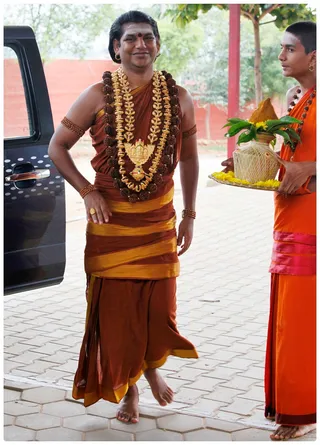
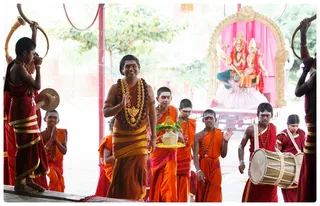
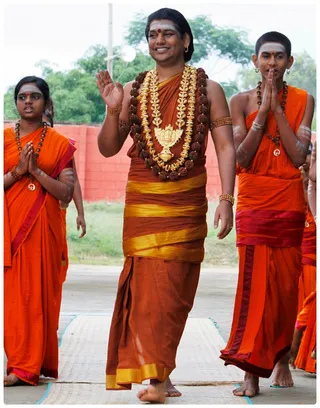
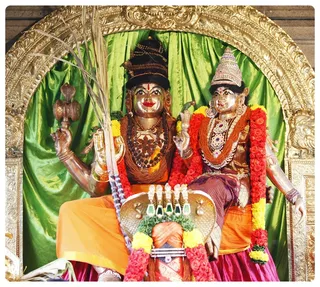
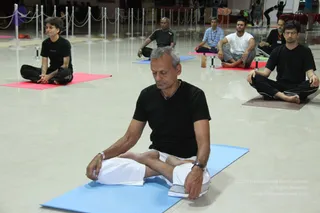
Several men sit cross-legged on coloured yoga mats on a pale tiled floor, palms pressed together at the chest in anjali mudra with eyes closed. The central man in the foreground wears a black t-shirt with a small flag emblem and black trousers. Others wear dark tees, a blue shirt and blue-grey clothing. In the background, a person in orange robes and a saffron-clad figure with a turban sit among the group, with a white-draped table and a small bottle and black bag on the floor nearby. This appears to be a group meditation session.Indoor yoga session on a tiled floor in a hall with red curtains and framed pictures on the wall. In the foreground, a man in a black t-shirt with a red crest and black trousers sits cross-legged on a brown mat, performing a nadi shodhana breathing practice with his right hand raised to his face. Behind him, several people sit on yoga mats in similar cross-legged postures, one in a dark blue top at left and another in an orange top at right, also raising hands to their faces. A black bag and water bottles sit on the floor near the mats, with a table and chairs visible in the background.A man walks barefoot across a paved courtyard beside a dark car with white polka-dot door trim. He wears a rust-brown and gold-bordered draped garment, gold armlets and bangles, a gold ring, and a long necklace of rudraksha beads with a large gold ornament. Beside him, a younger person in an orange robe with pink-and-orange border holds a tray of yellow flowers and a woven basket with a coconut and green leaves. A red-brick wall and trees are in the background. a person: the man has long swept-back hair, ornate gold jewellery and rudraksha mala cues, consistent with the page's claim of his presence, but the appearance is only partially distinctive.A photograph of a procession inside a temple courtyard. At the centre, a smiling man with long dark hair wears an orange-brown cloth, a large gold pendant and a multi-strand garland of flowers and beads, and holds his right hand in a blessing gesture. Behind him, a young man in orange robes holds a brass tray with a kalasha-like vessel, a lamp and green leaves. Around them, young men and boys in orange and saffron garments with rudraksha malas and tilak marks carry the tray and play instruments: a large drum on the right and curved horns raised by players in red and gold robes on the left. A pink and red shrine holds deity murtis in the background, framed by an ornate gold arch.Outdoor photo of a central man walking barefoot on a light mat path, palms raised in a greeting wave. He wears a saffron-orange garment with gold-bordered wrap, a red-and-gold sash, a gold lotus pendant on a gold necklace, layered rudraksha malas, gold bangles and a red bindi, with a sweeping dark hair style. Two young saffron-clad attendants flank him with hands folded in anjali, wearing rudraksha malas and white forehead markings, against a red brick wall and green grass.Two metal deity murtis seated side by side on a golden-brown throne against a green silk backdrop framed by an ornate gold arch. The figure on the left has a tall dark crown, a rudraksha mala, an orange dhoti and holds a staff and a ritual item; the figure on the right wears a pointed silver crown, layered jewelled necklaces, a purple and orange skirt and holds a lotus-like stem. Both are garlanded with red roses and yellow marigolds, and a bowl-shaped offering with small lamps sits in front. No physical people are visible.

ShivaleelaPicture

2 photosSource gallery
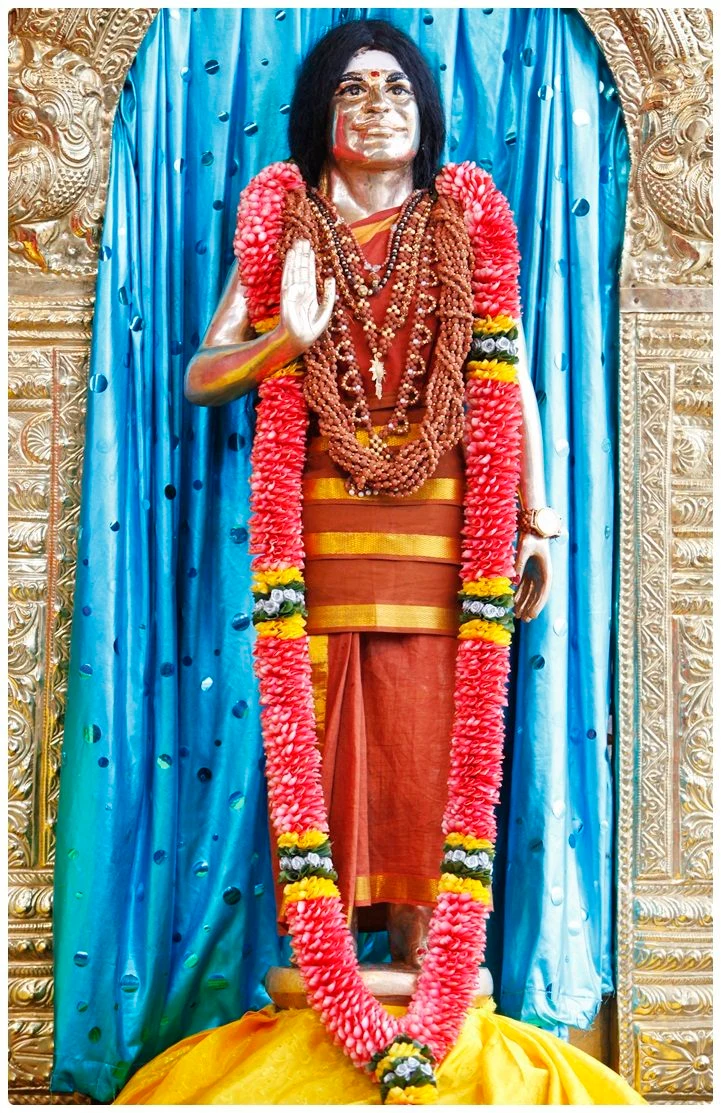
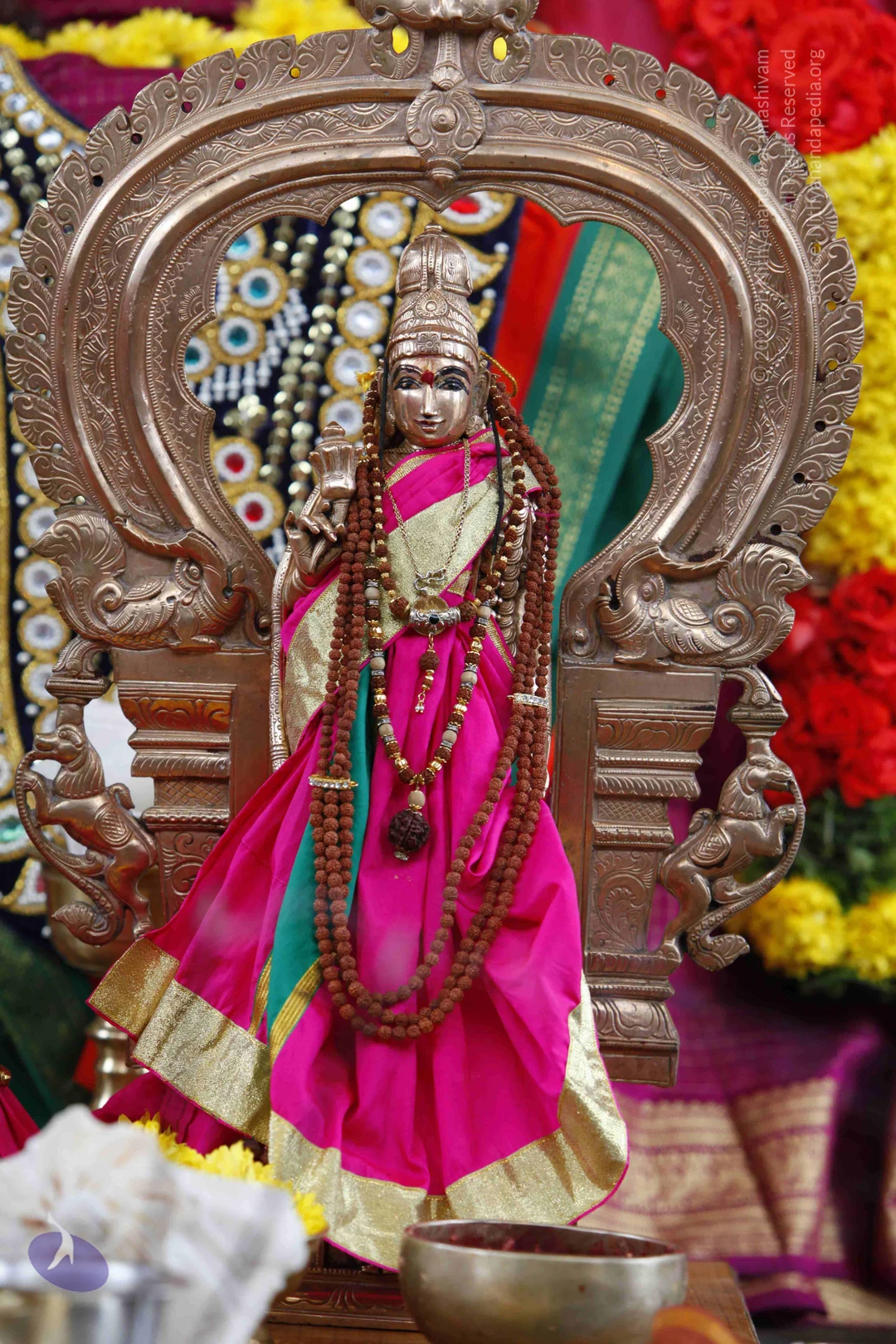
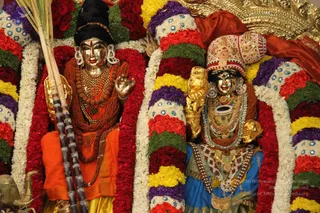
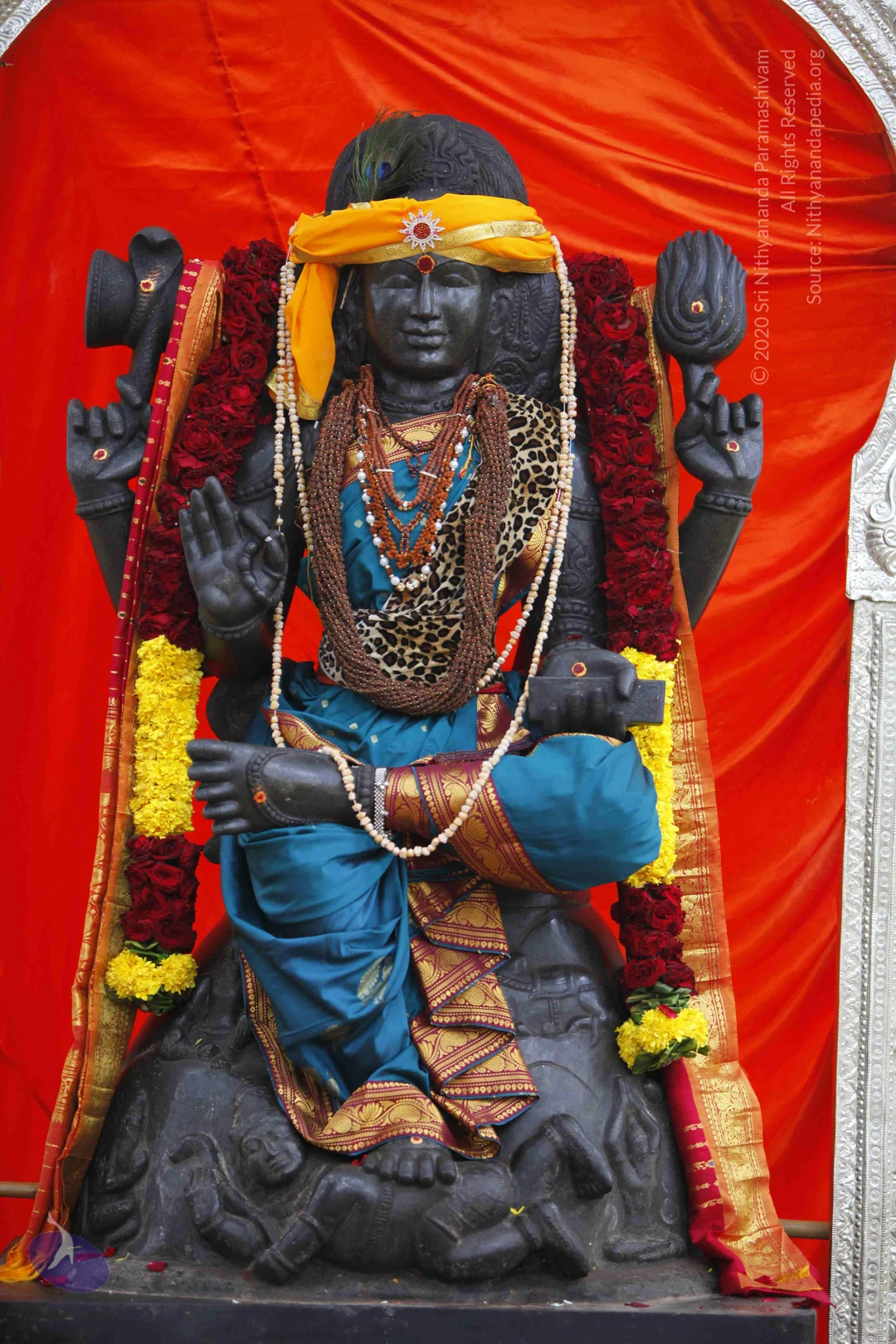
Two metal deity murtis sit side by side on a gold-framed throne against a pale wall, draped in long garlands of red, orange, yellow, purple and white flowers. The figure on the left, in an orange garment with a gold-coloured yellow lower cloth, holds a trident-like staff and wears a tall crown-like hairdo, rudraksha-style beads and a bindi. The figure on the right wears a blue blouse, layered beaded necklaces, a gold crown and a yellow skirt. A small brass elephant stands at the left base beside a palm-leaf fan and an orange cloth. No physical people are visible.A photograph of two gilded deity murtis seated side by side on a raised platform, framed by a tall arch of garlands in red, yellow, purple, green and white flowers. The figure on the left wears an orange garment over yellow dhoti, a black cap, a rudraksha-style bead necklace and holds a staff; the figure on the right wears a blue-and-gold garment, an ornate crown-like headdress, layered necklaces and holds a golden object. A brass elephant figure sits at the lower left. A gold-decorated backdrop sits behind. These are statues, not people.

a_Temple
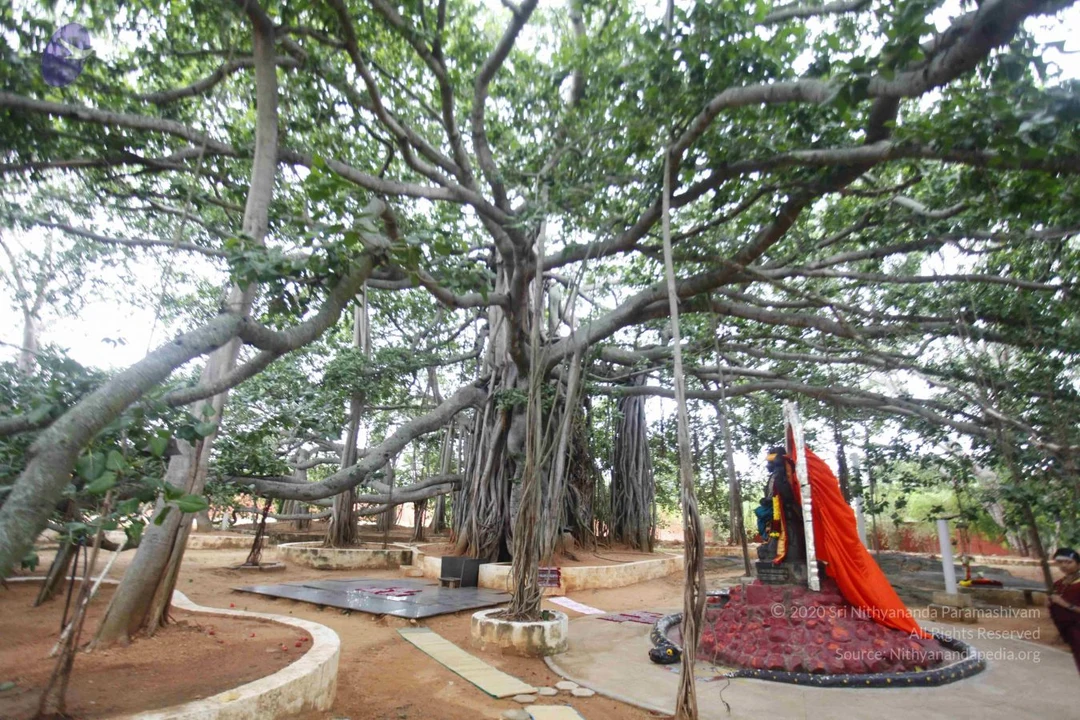
69 photosSource gallery
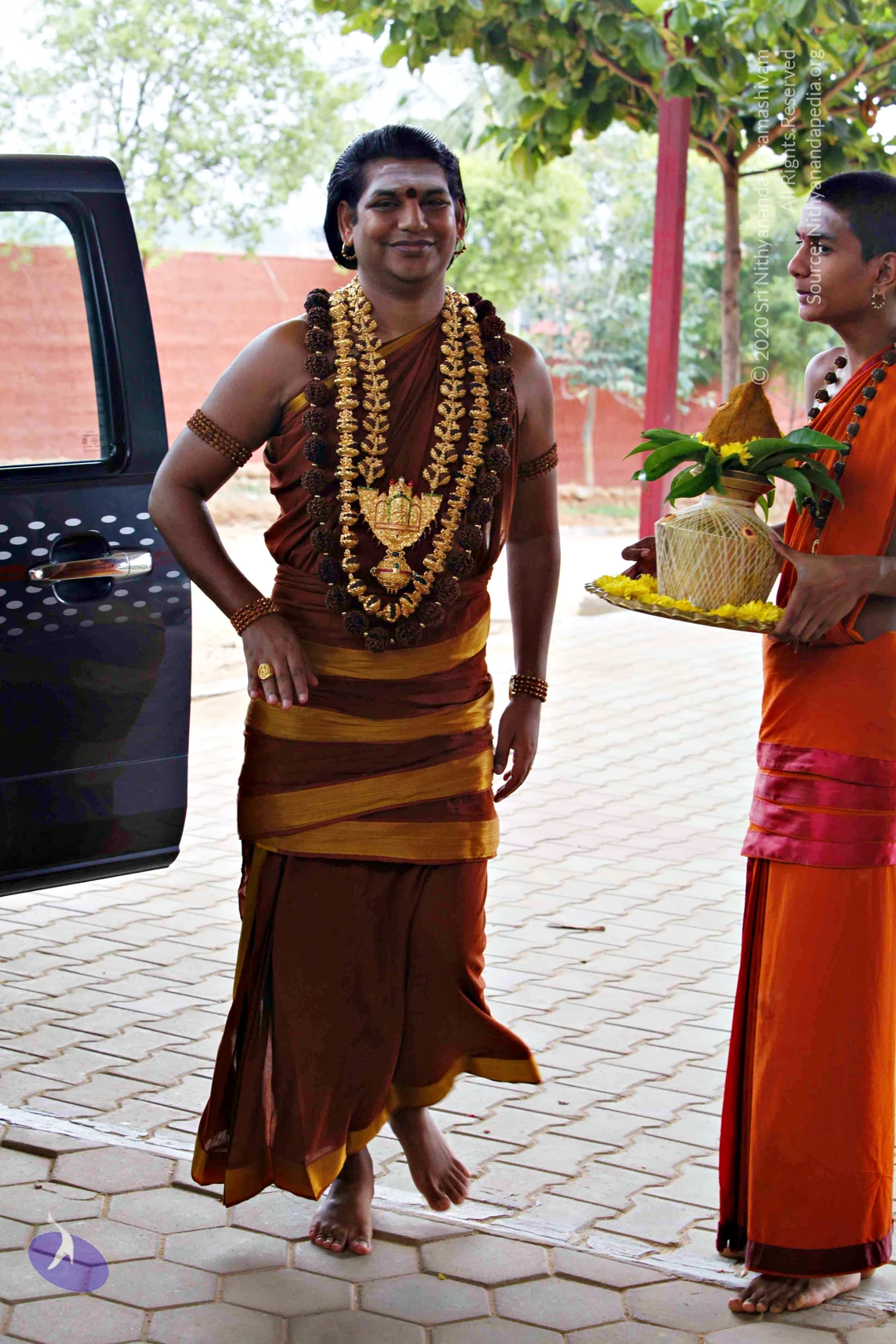
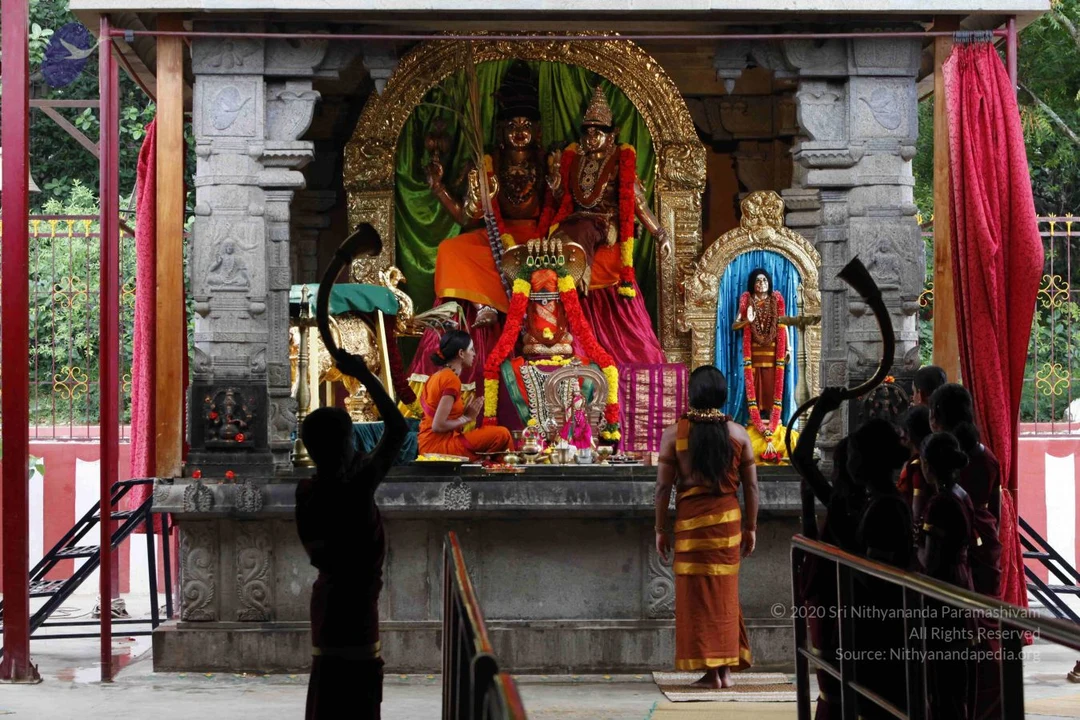
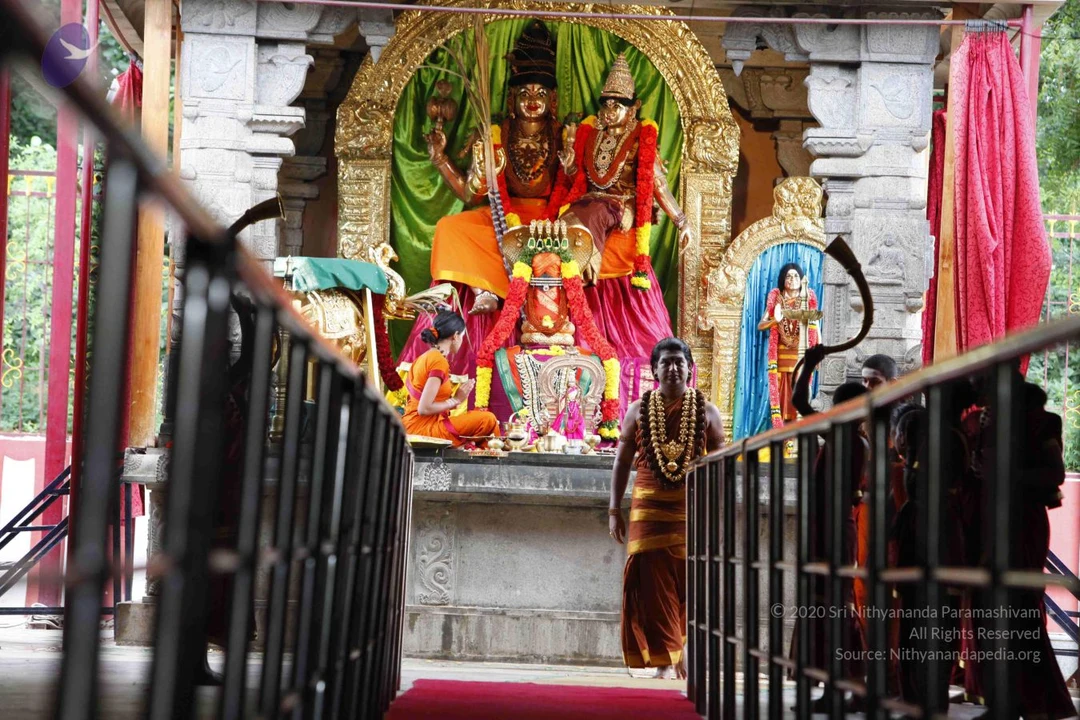
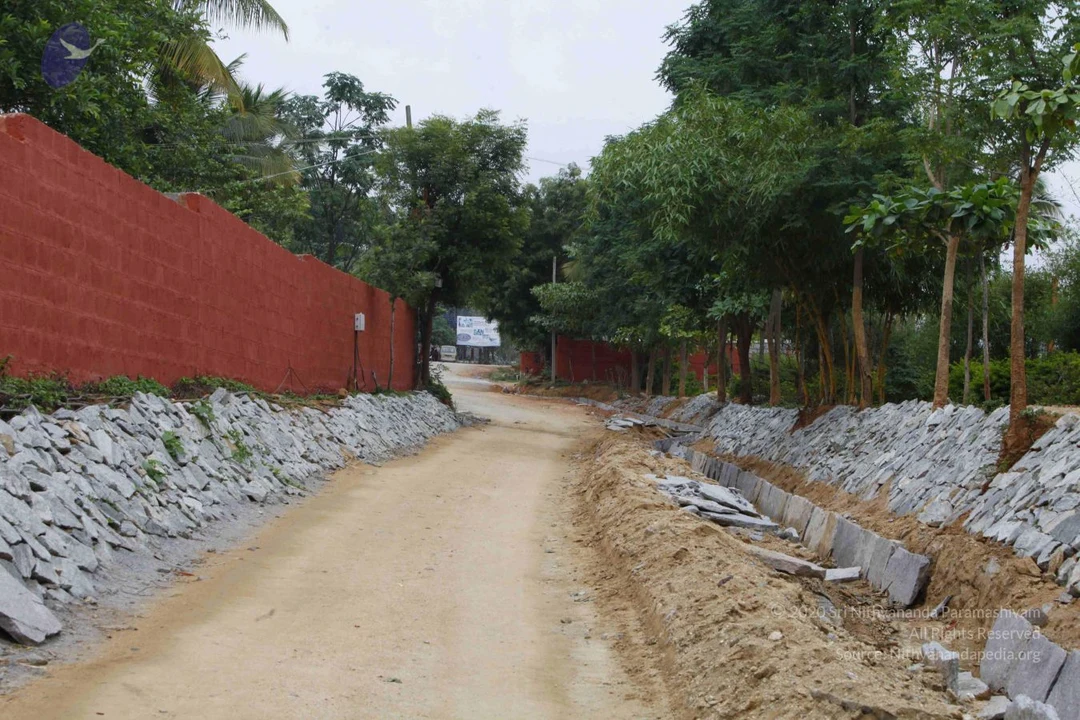
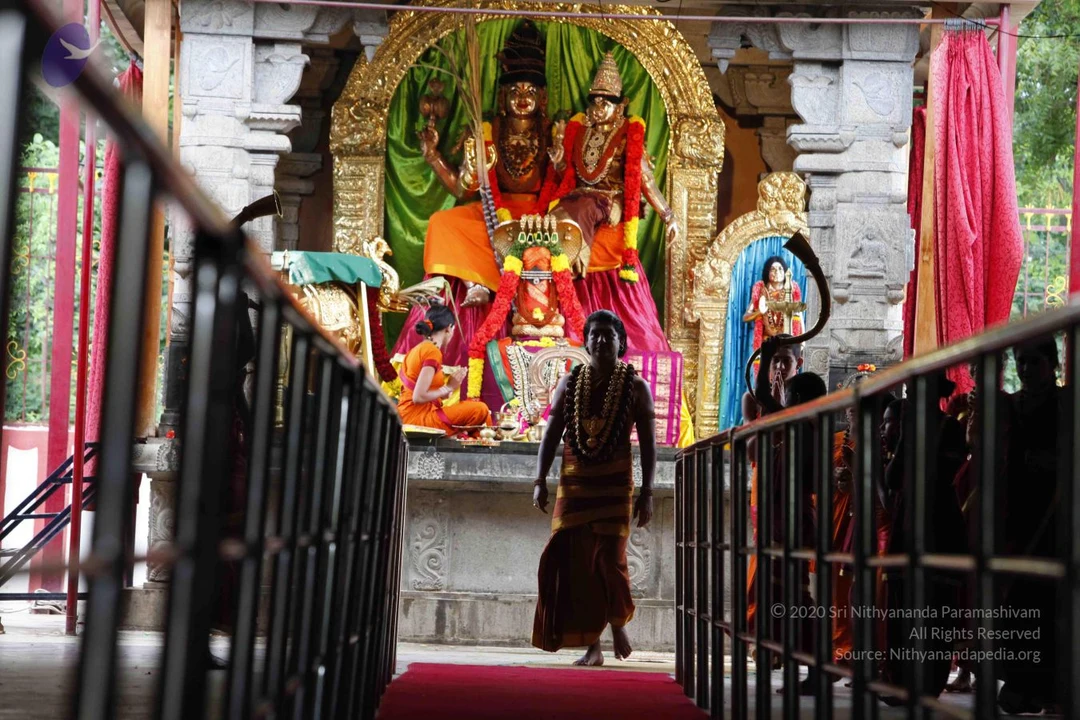
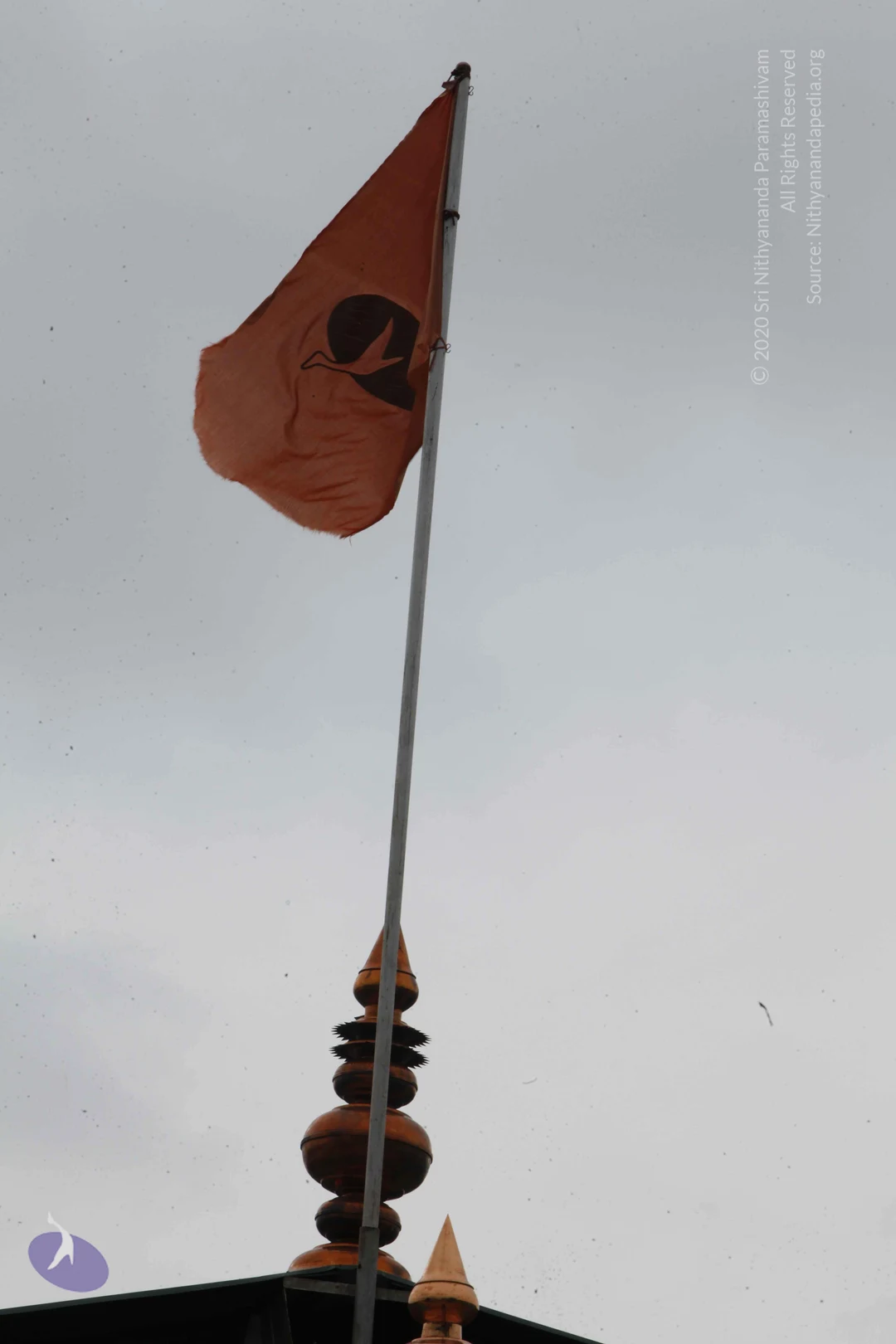
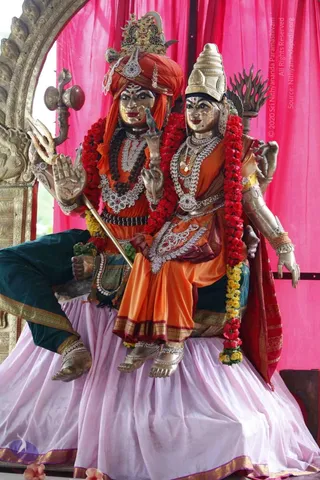
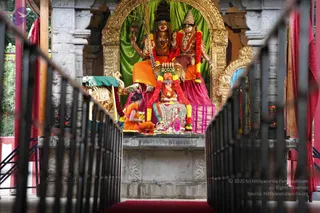
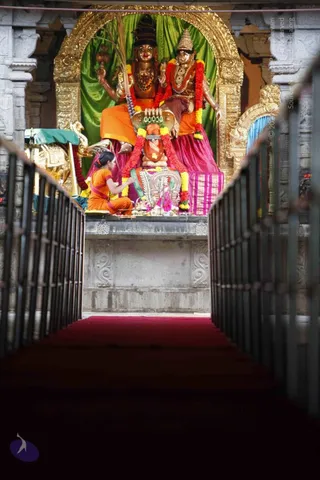
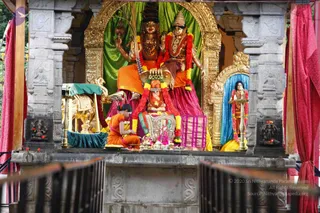
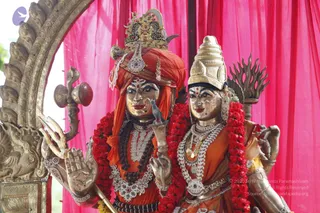
A saffron-orange flag with a blue circular emblem flies on a tall silver pole above a dark corrugated metal roof. Two ornate copper-coloured finials with tiered, bulbous shapes sit on the roof ridge against an overcast grey sky. No people are visible.A dirt road runs between two rows of stacked grey slate stone edging, with a red brick boundary wall along the left and a line of young trees with slender trunks on the right. A roadside drainage trench lies beside the right edging, and a distant signboard is visible at the far end. No people are present.Photograph of a pair of silver-finished statues of a seated deity couple, a male figure in an orange turban and orange garments with a trident and damaru, and a female figure in a gold crown and orange sari with a trident-like staff, both adorned with red and yellow flower garlands, rudraksha and jewelled necklaces. They sit on a pale pink draped cloth before a bright pink backdrop and an ornate gold arch. No physical people are visible; the figures are statues, so the a person field is depiction only if a candidate is present, and here none is shown as a person.A photograph taken through a black iron railing down a red-carpeted aisle toward a shrine. Three deity murtis sit on a raised stone platform beneath a gilded arch with a green backdrop; the central figure wears a crown and a red-and-gold garland, flanked by seated figures in orange and magenta garments adorned with red and orange flower garlands. A small devotee in an orange robe sits cross-legged at the foot of the platform, facing the murtis. Silver and gold ceremonial items, a gold-framed palanquin-style seat, and red drapery frame the scene.A photograph down a long aisle lined with dark metal railings and a red carpet, leading to a shrine. Two large gilded deity murtis of a seated couple stand in the niche, the male with a tall dark crown and four arms, the female with a pointed headdress, both draped in orange and magenta cloth and heavy red-yellow marigold garlands. Before them is a red lingam-like form with a silver base and flower garlands. A woman in orange sari kneels at left on the platform, attending the altar with a brass vessel, offering plates and a palm-frond fan. A green silk backdrop and gold arch frame the shrine. No physical person is in the aisle beyond the kneeling attendant.A temple shrine photographed from the front, with a golden arched niche framed by grey stone pillars and a green cloth backdrop. Two large deity murtis stand together in the back, one with multiple arms and a crown and one with a tall crown, both draped in orange and pink cloth and garlanded with red and yellow flowers. A smaller seated deity murti in the centre, decorated with flower garlands, sits on a silver base. A woman in an orange sari kneels at the front of the platform, tending the offerings and lamps. A golden figure of a bull or animal vahana, a tall brass lamp stand and a small figure in a blue niche with a garland stand beside the deities. Pink curtains hang at the sides and metal railings line the foreground.

PadukaPuja

8 photosSource gallery
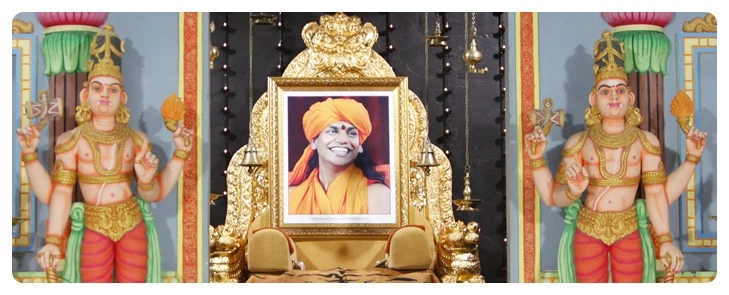
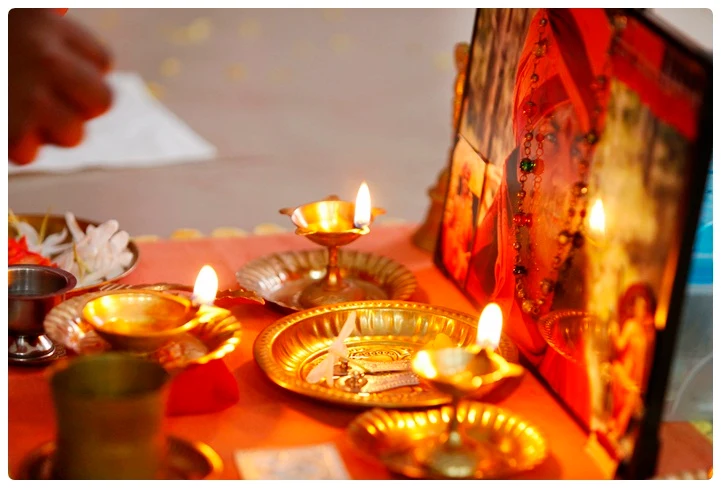
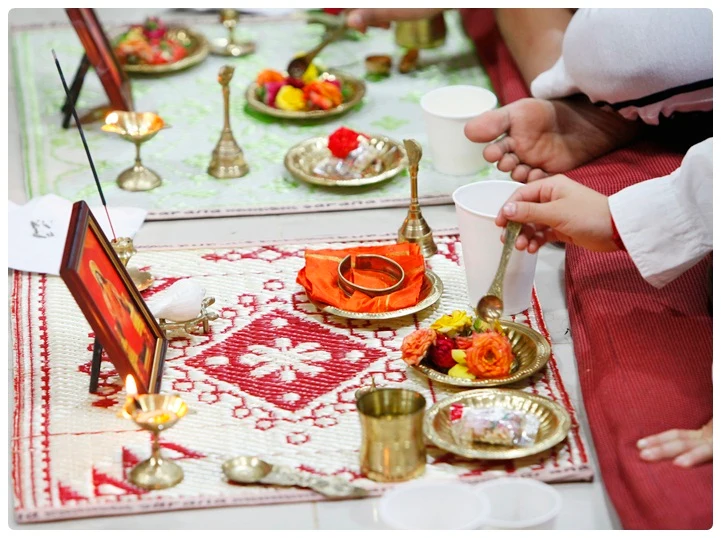
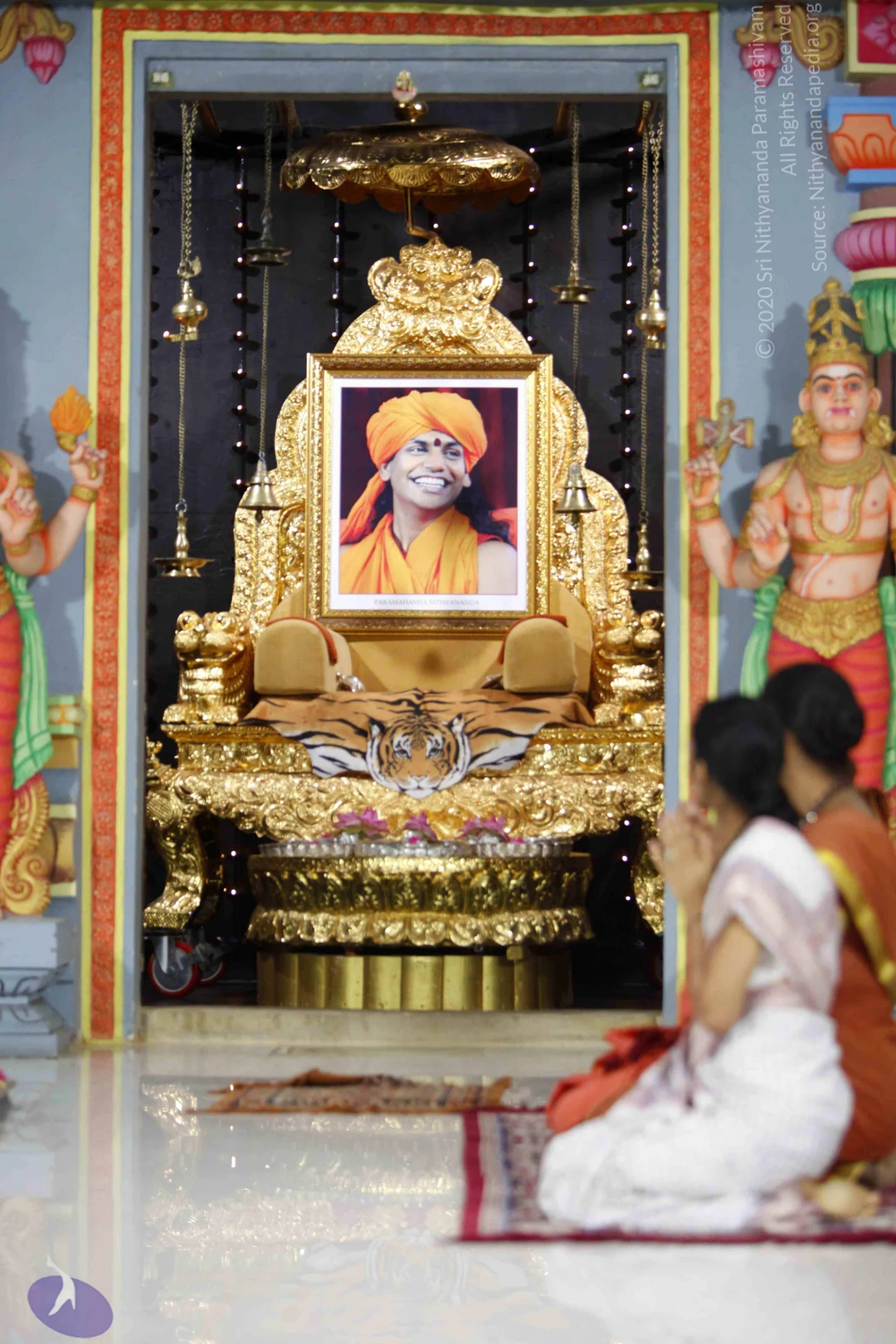
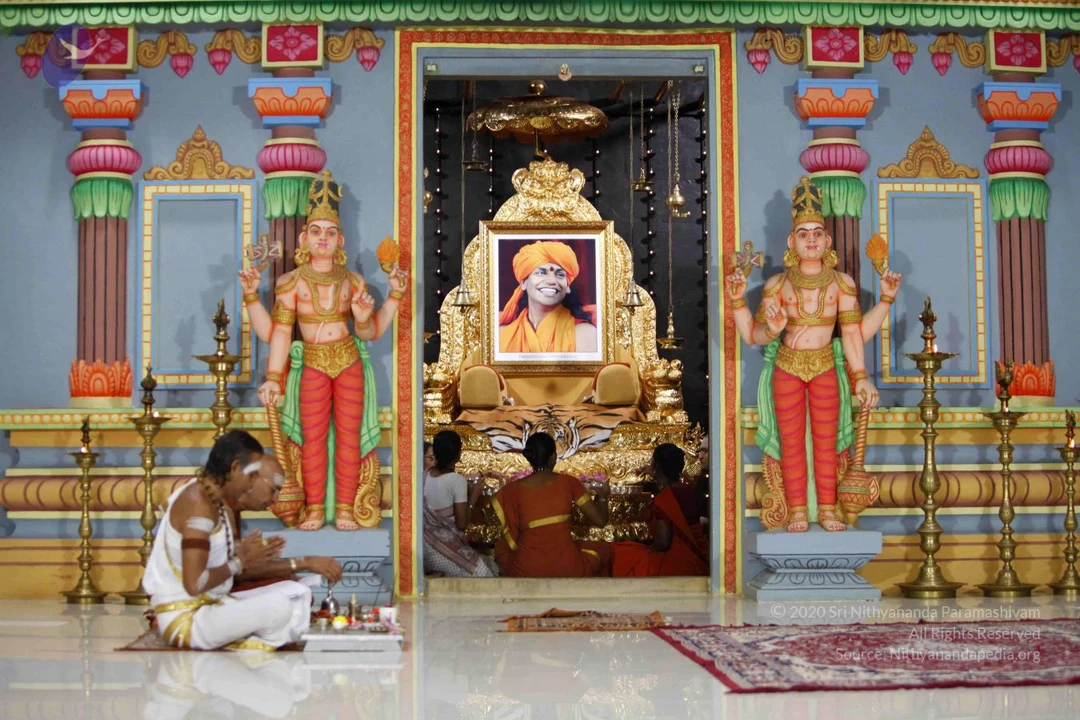
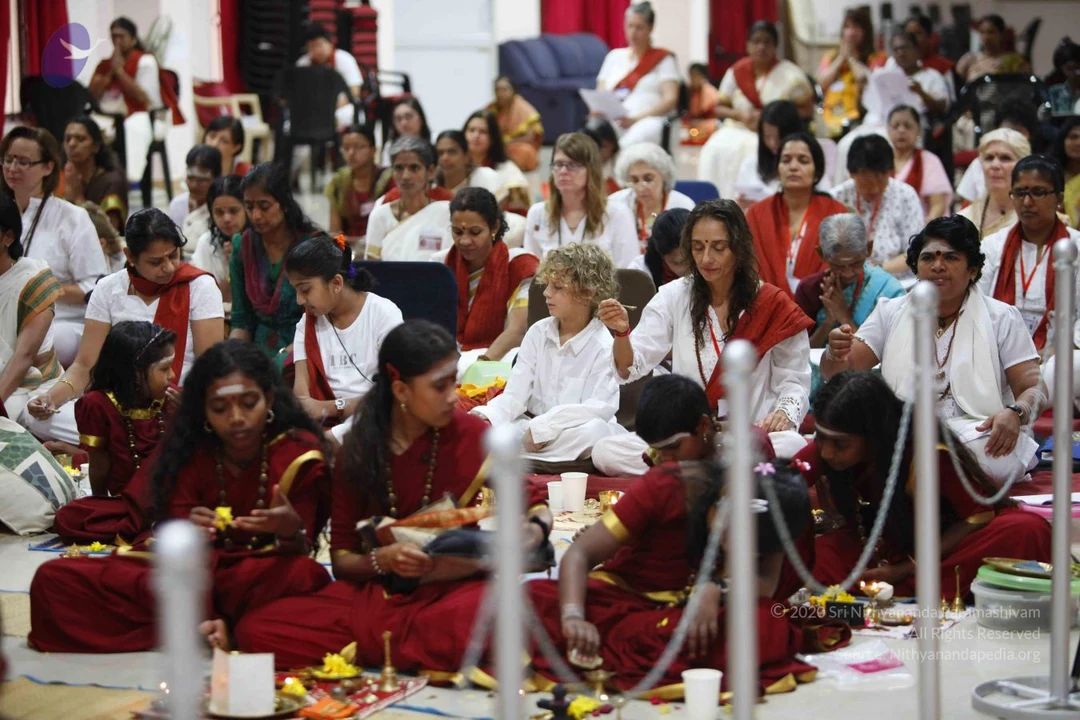
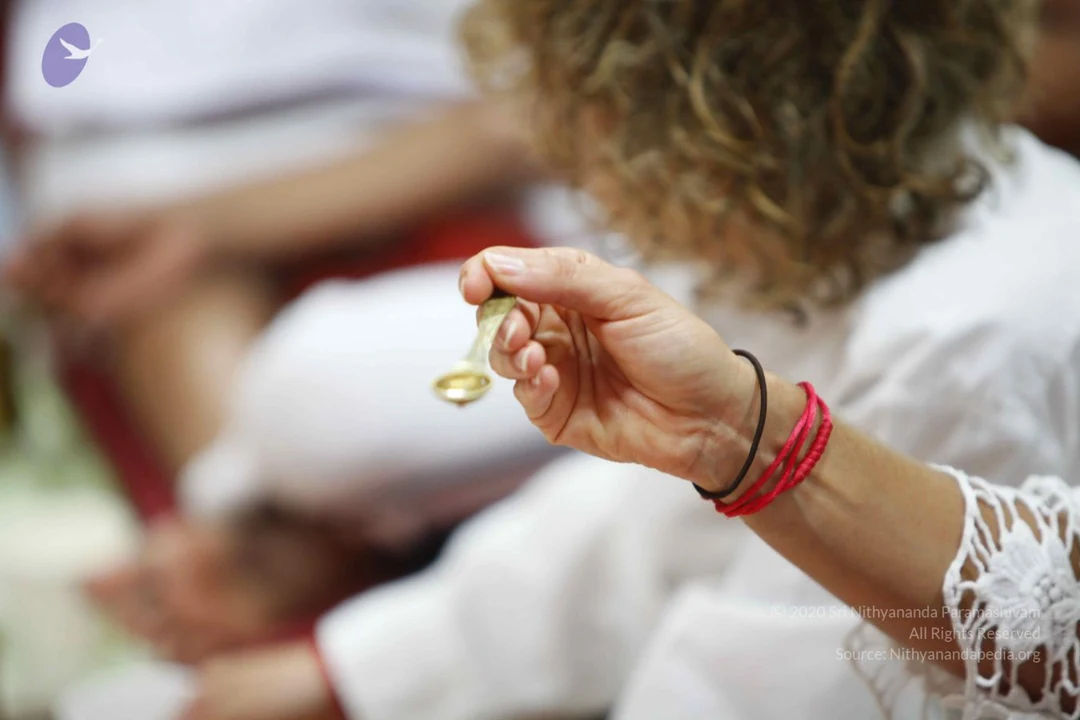
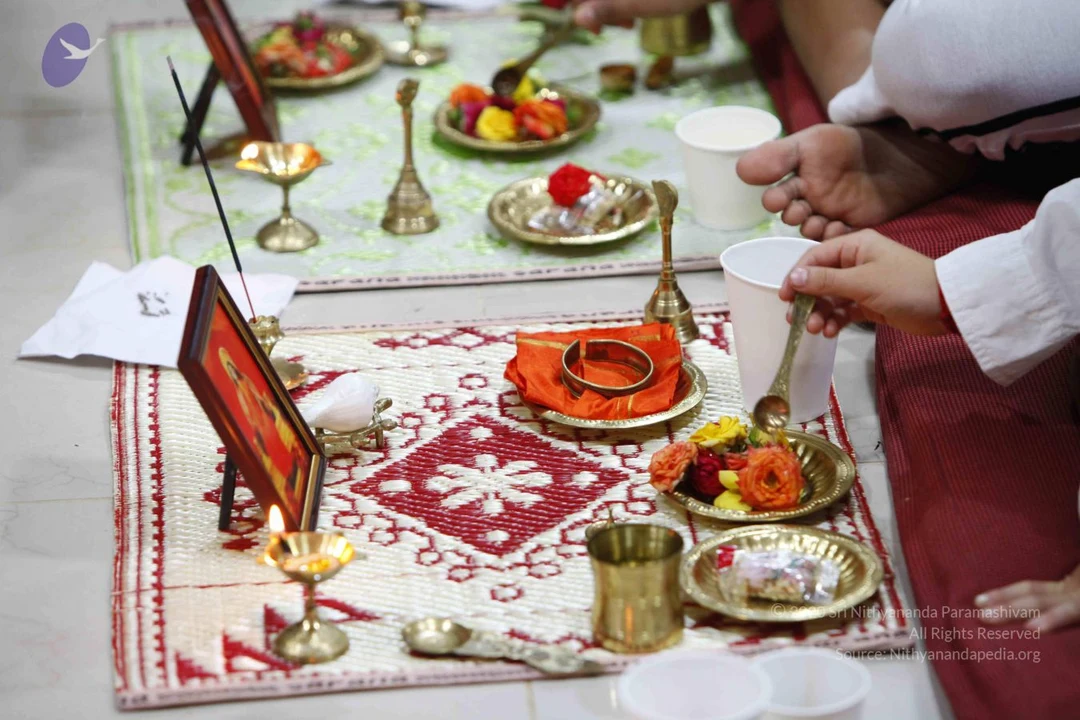
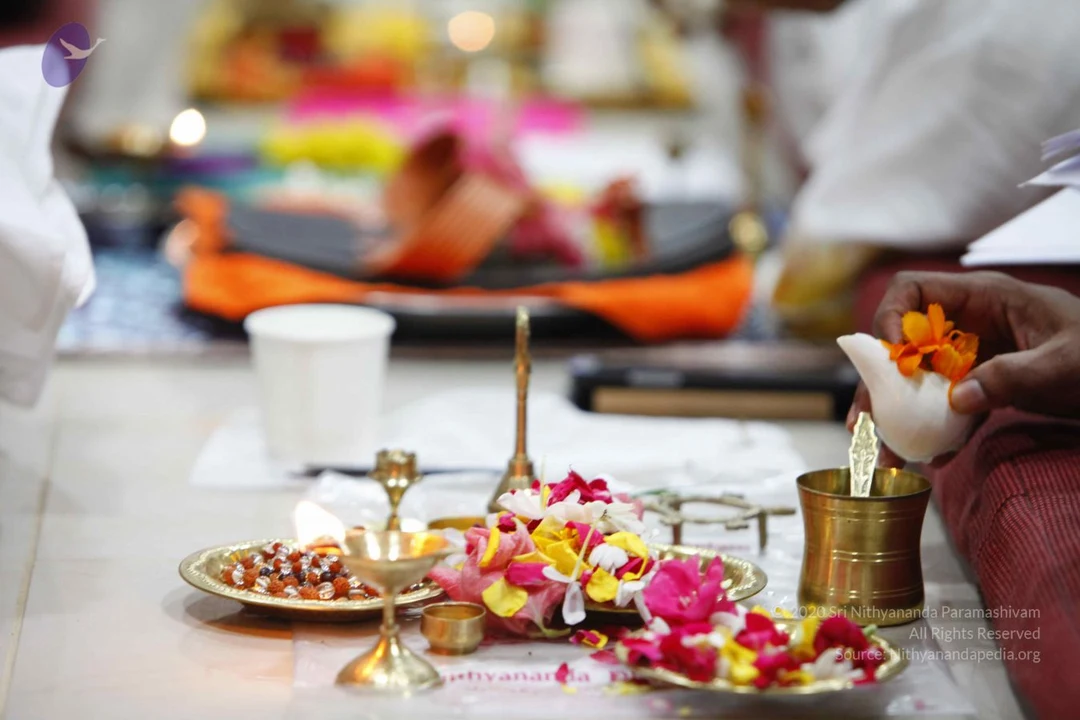
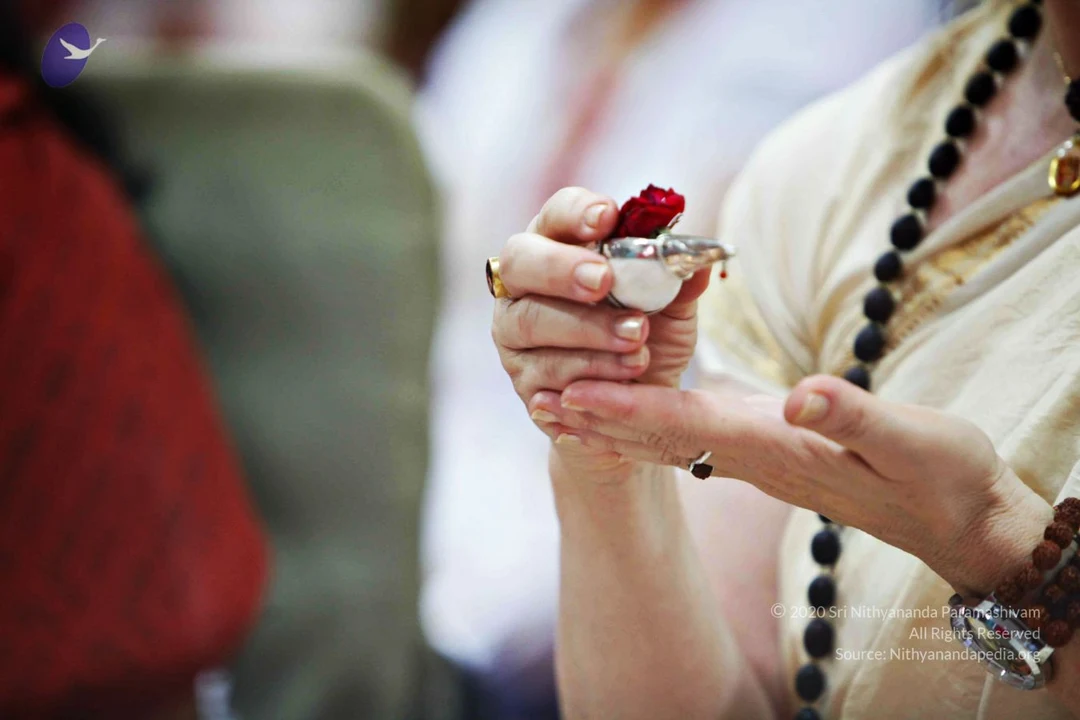
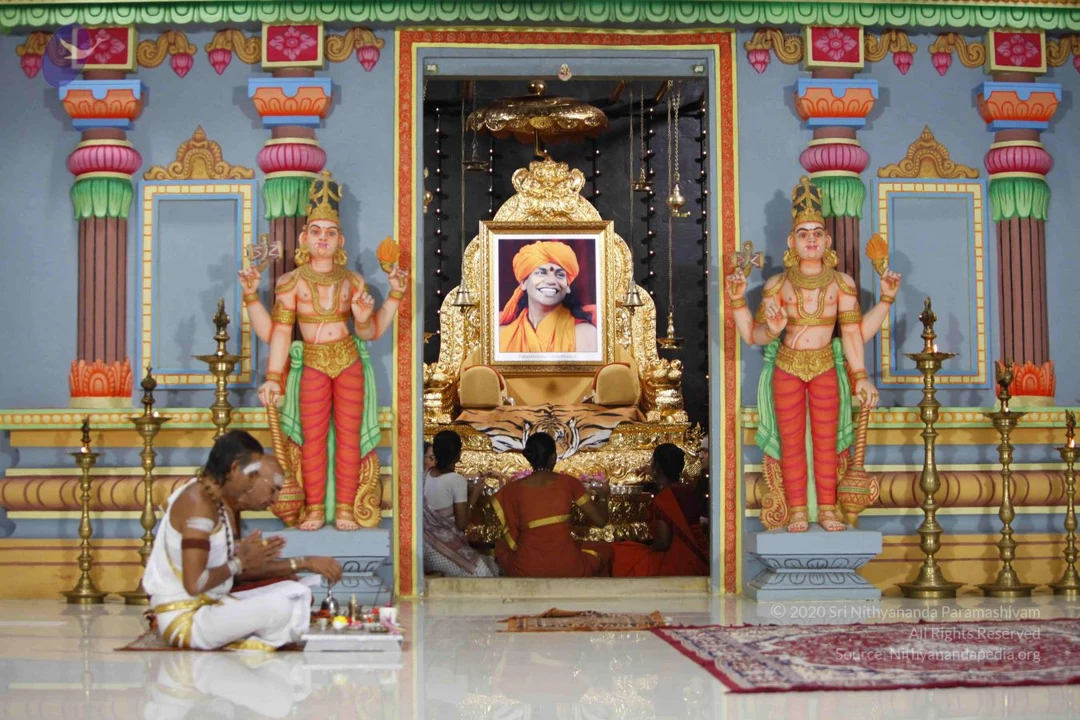
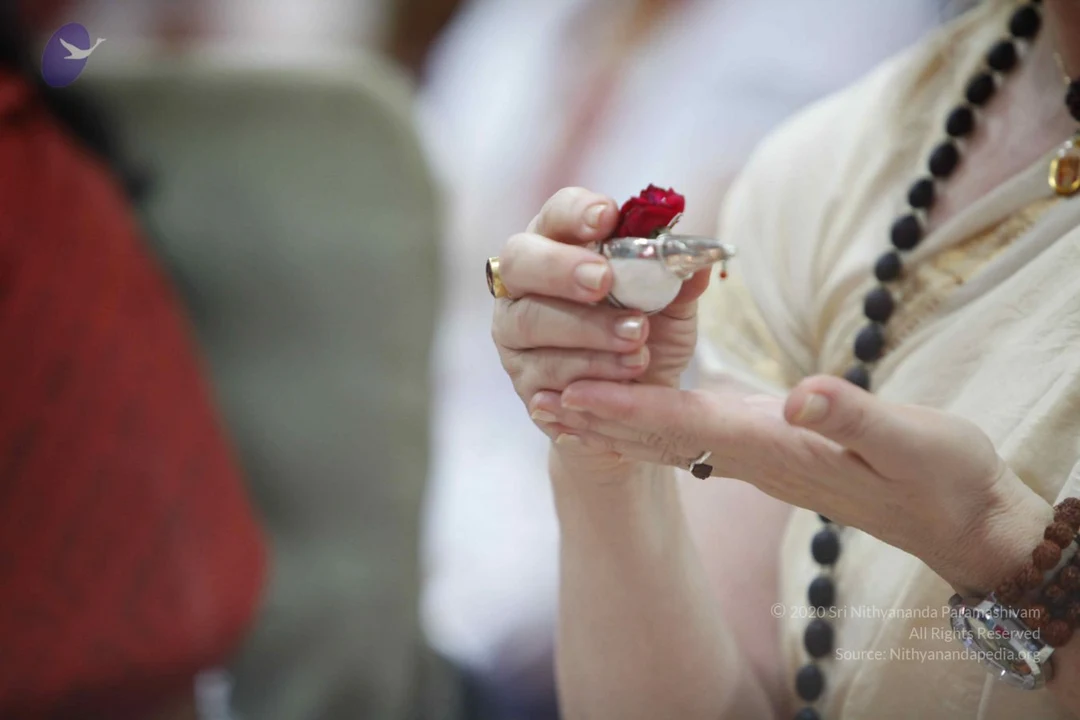
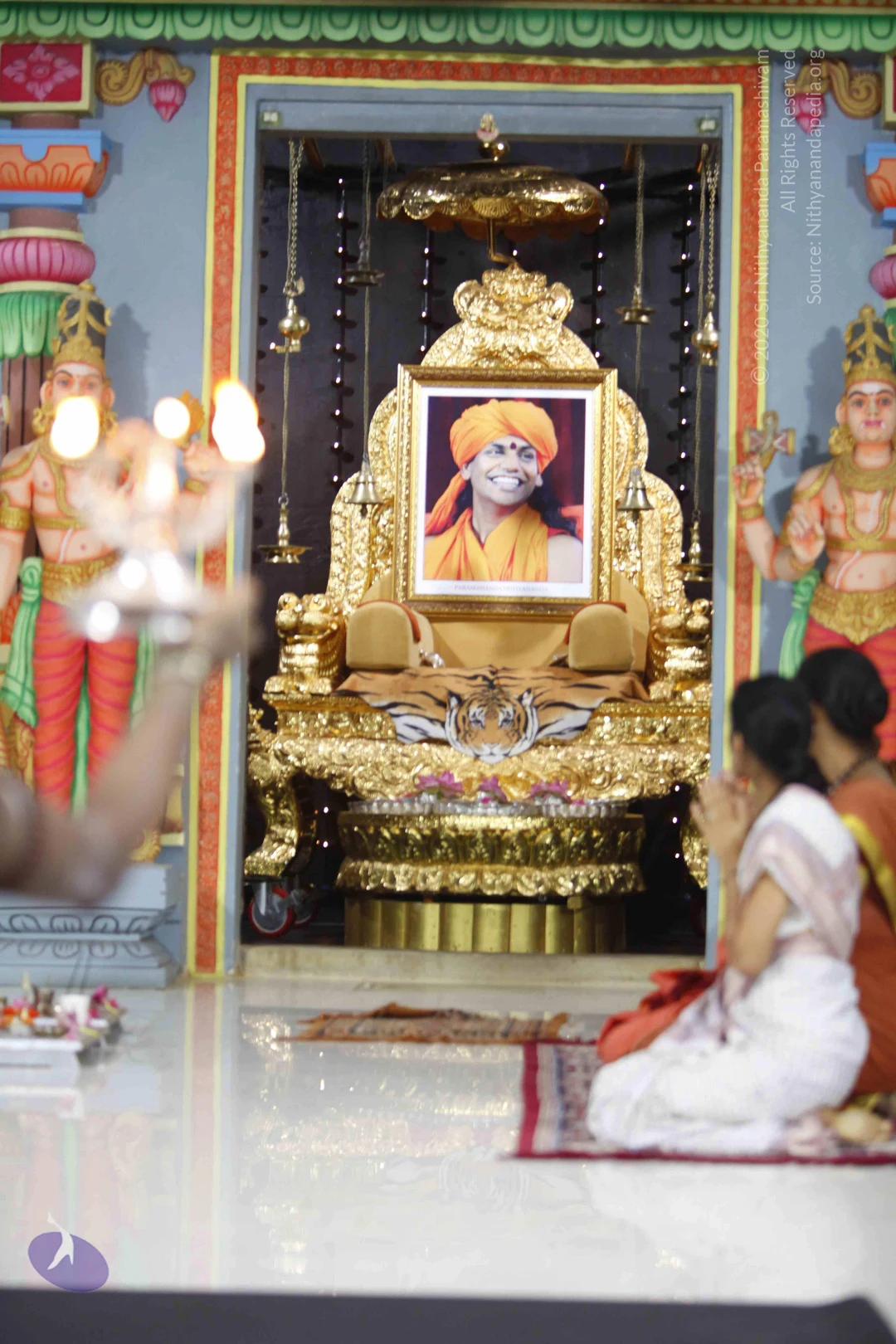
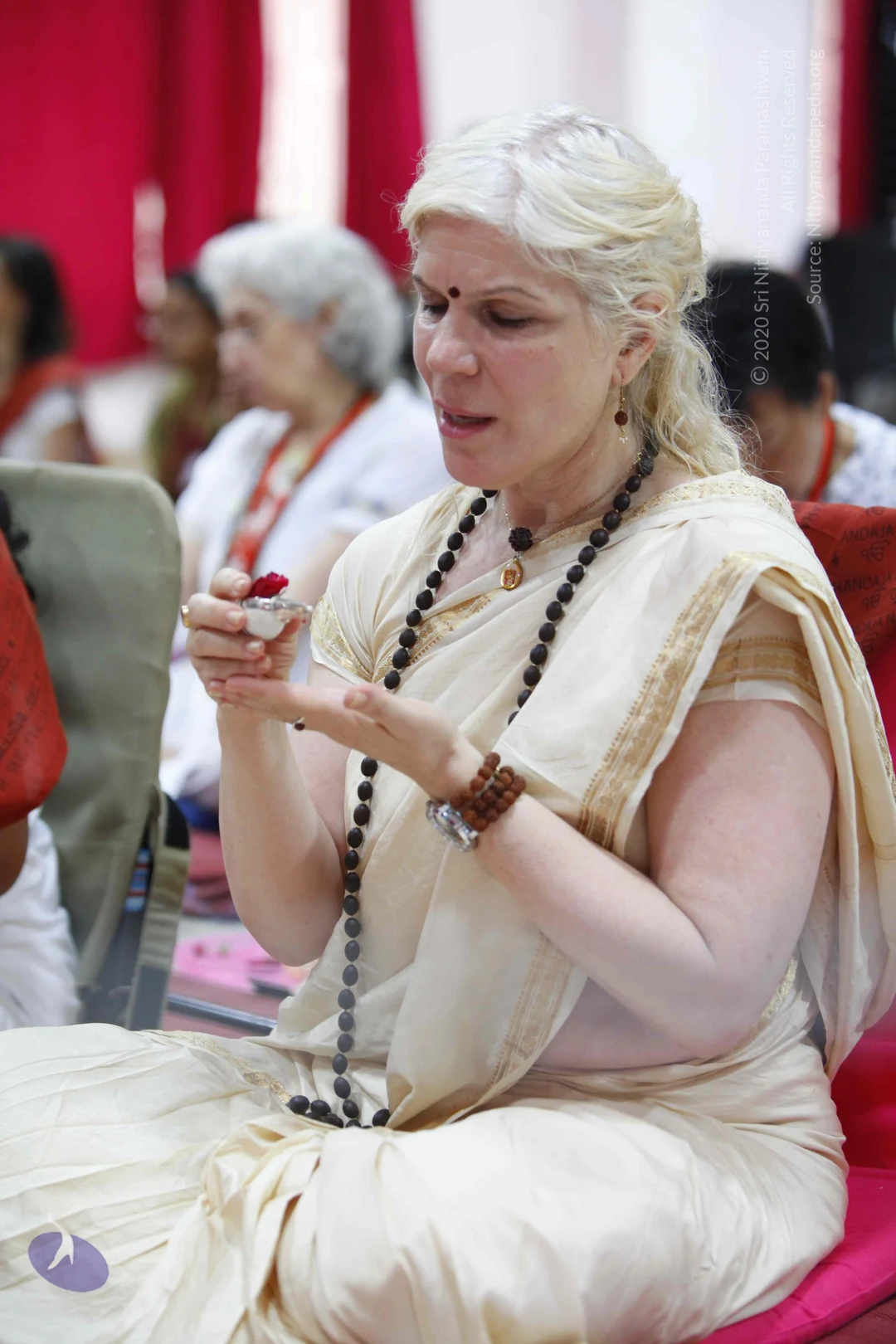
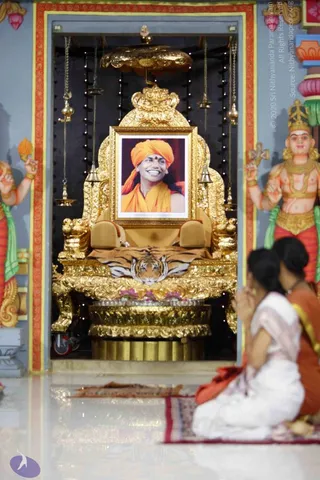
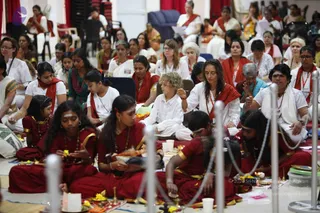
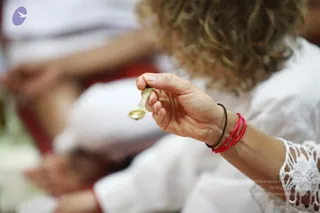
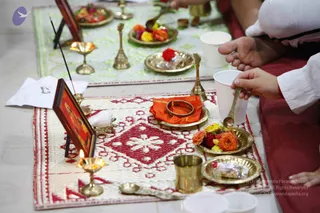
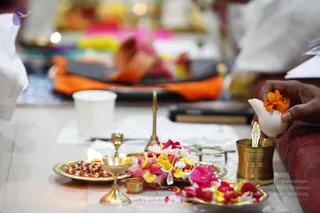
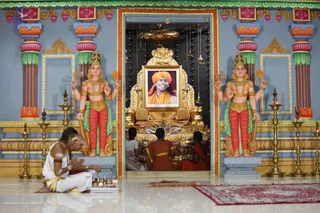
A photograph inside a temple shrine. A large ornate gold throne with a tiger-skin cloth and a gold canopy stands in an alcove. On the throne sits a framed portrait of a smiling man wearing an orange turban and orange robe with a red tilak, labelled "Paramahamsa Nithyananda" on the frame. Two painted, multi-armed deity murtis in red and green flank the alcove. In the foreground, two women in white and orange saris sit kneeling with hands folded in namaste, facing the throne. Hanging bells and lamps decorate the shrine.A seated ritual gathering in a hall with red curtains, where many devotees in white and red shawls sit on the floor and in chairs. In the foreground, young women in deep red saris with gold borders sit near brass oil lamps, flower petals and small plates, with a central brass lamp and metal stanchions in view. A woman in white with a red shawl and a red-and-white beaded necklace sits at right, and a curly-haired child in white sits nearby. A few people in the back hold papers. The setting resembles a satsang or puja with lamps and offerings, with no identifiable leader clearly visible.Close-up photo of a woman with curly light-brown hair seated in white clothing, holding a small gold spoon or ladle in her raised right hand. She wears a black and red braided bracelet and a white lace-trimmed sleeve. Blurred figures in white and red garments sit nearby in a satsang or ritual gathering. No identifiable a person figure is visible.A photograph of a ritual puja setup laid out on woven mats with red and cream patterns. Brass oil lamps, a small framed picture on a stand, incense sticks, brass bowls holding flowers and sweets, a brass bell, and an orange cloth holding a brass bangle are arranged on the mats. Two people, one in white and one in a red-striped garment, reach in from the right, one holding a white cup and a brass spoon. Visible hands and forearms only; the people are partly cropped.Close-up photo of a puja setup on a white table. A hand in a red-striped garment holds a white cup of orange marigold petals. Brass plates hold rudraksha beads, pink, yellow and red flower petals, and a brass oil lamp with a lit flame. A brass lota and a small brass cup stand nearby, with blurred orange cloth and flowers in the background. No people are fully visible beyond the hand and arm.Close-up photograph of a woman's hands holding a small silver cup or bowl with a red rose bud on top, in a ritual gesture. She wears a cream or off-white garment, a long black bead mala, a wooden rudraksha mala on her wrist, a gold ring on one finger and a gold bangle. The background is softly blurred, showing a red garment and a white-clad figure at left and right.

Nithya_Satsang

33 photosSource gallery
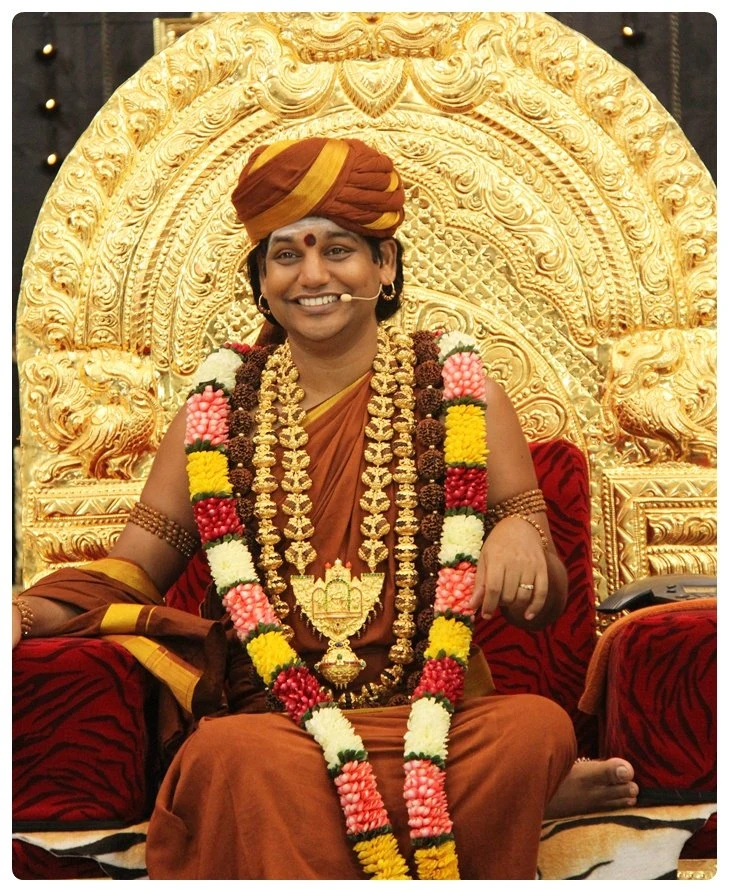
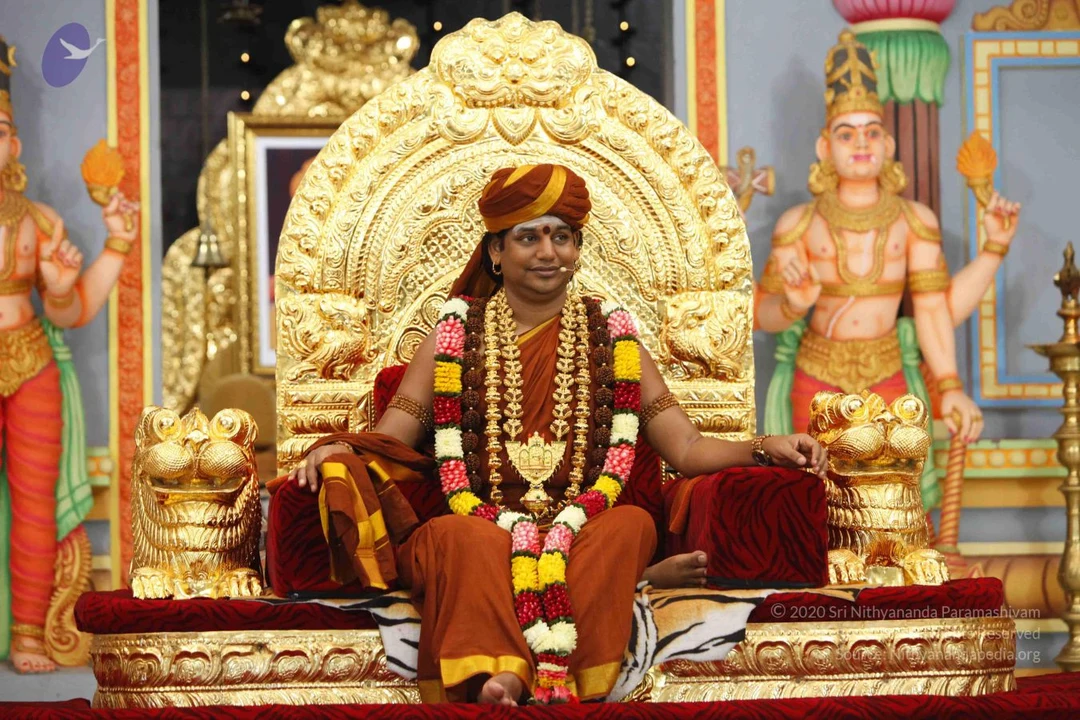
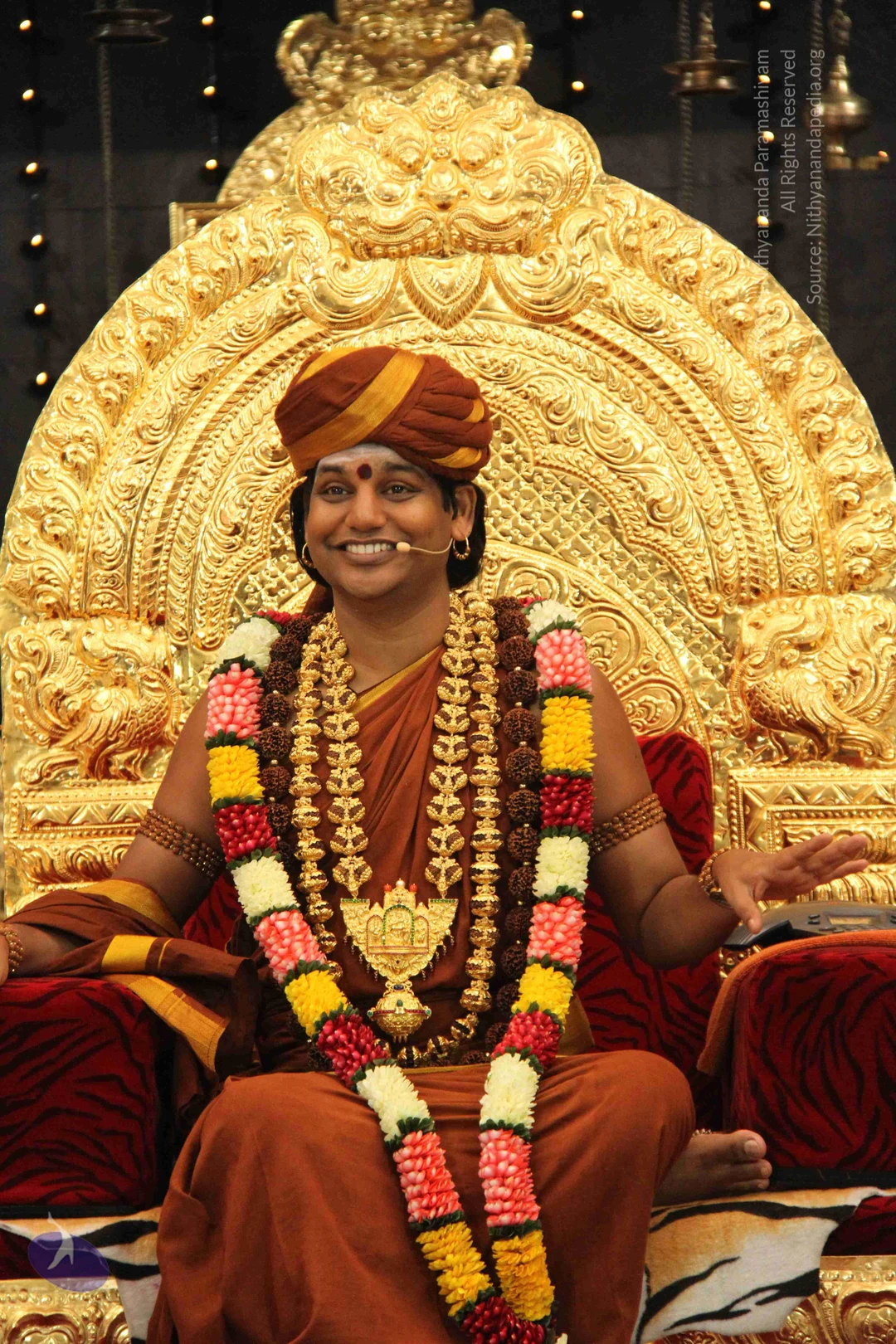
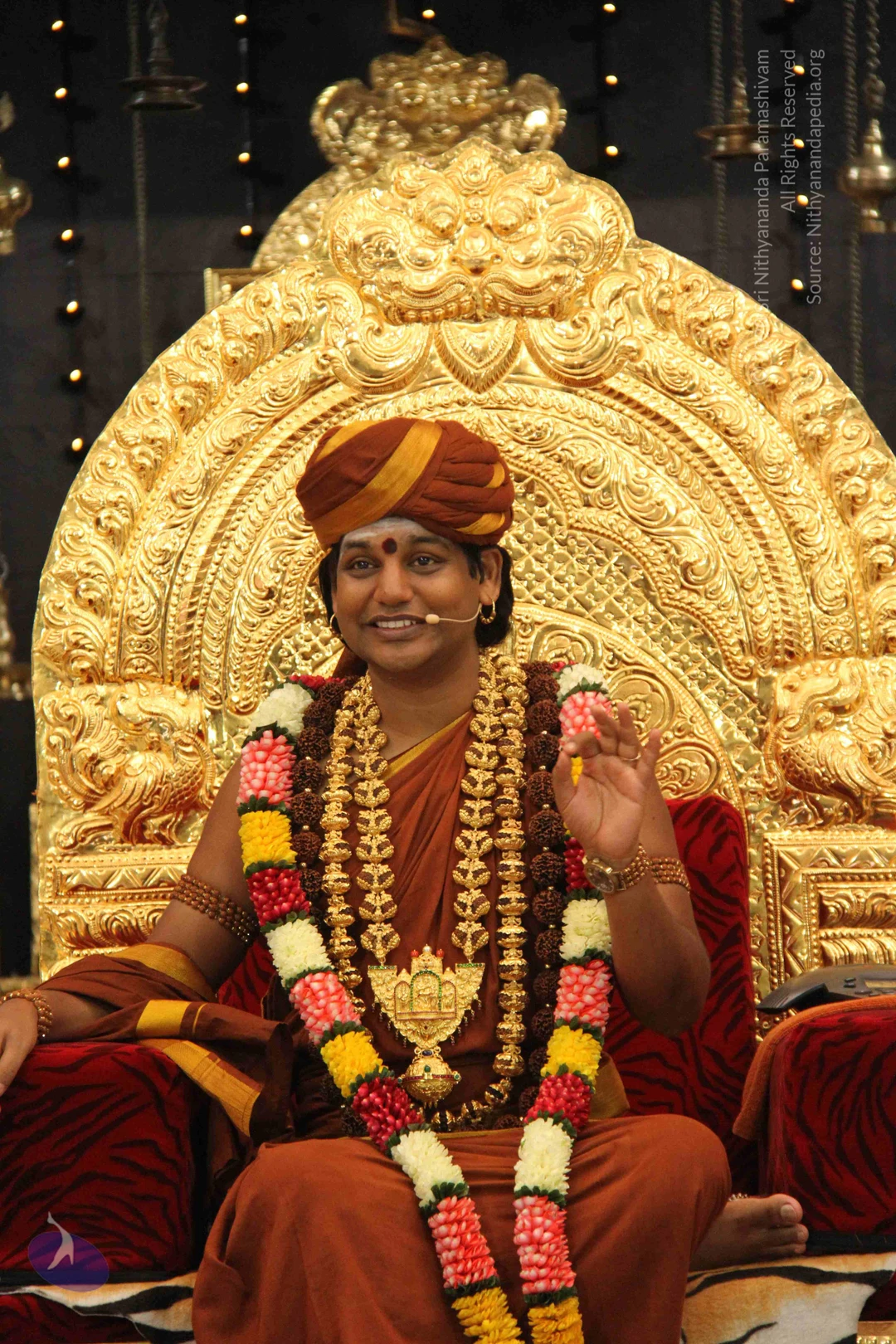
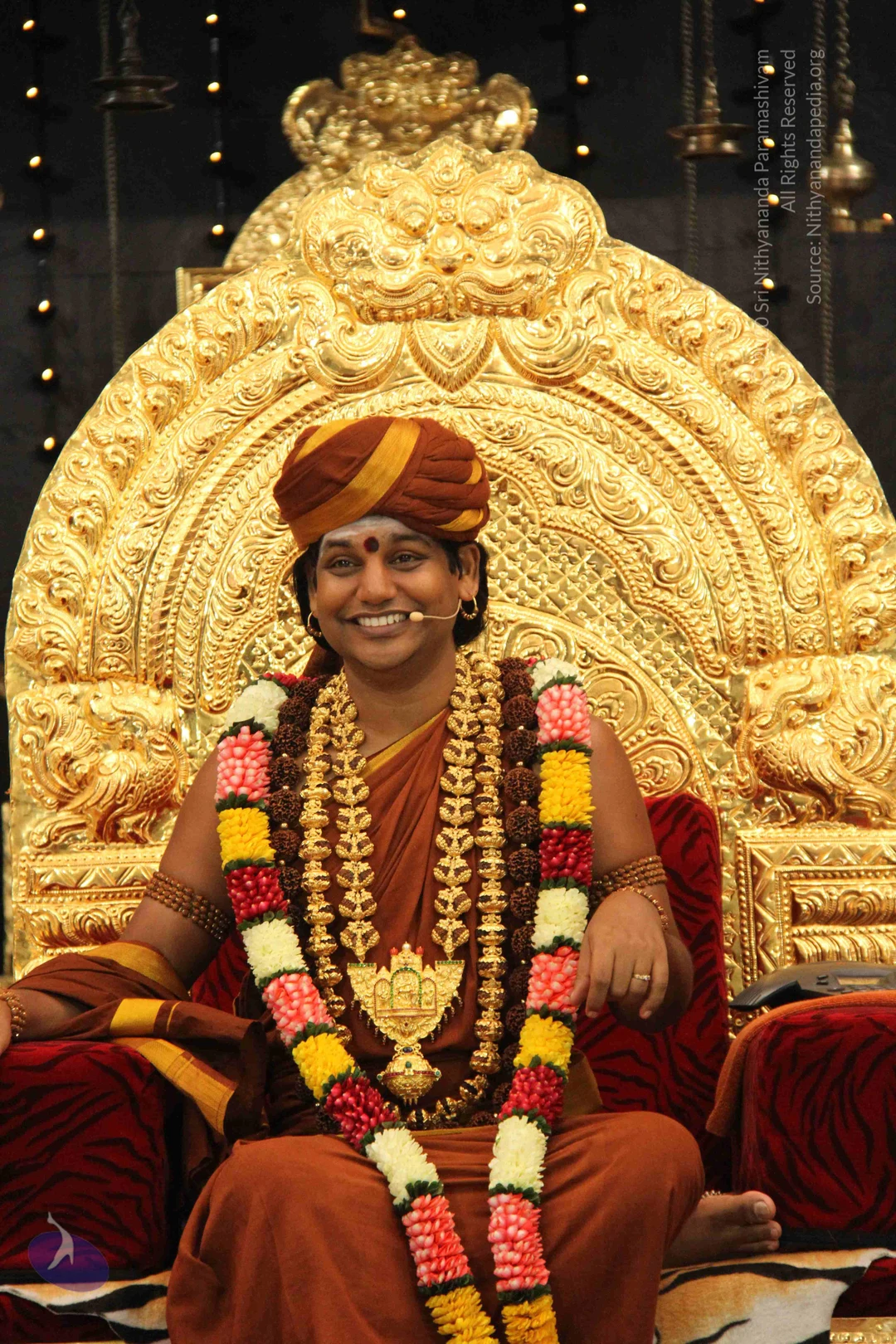
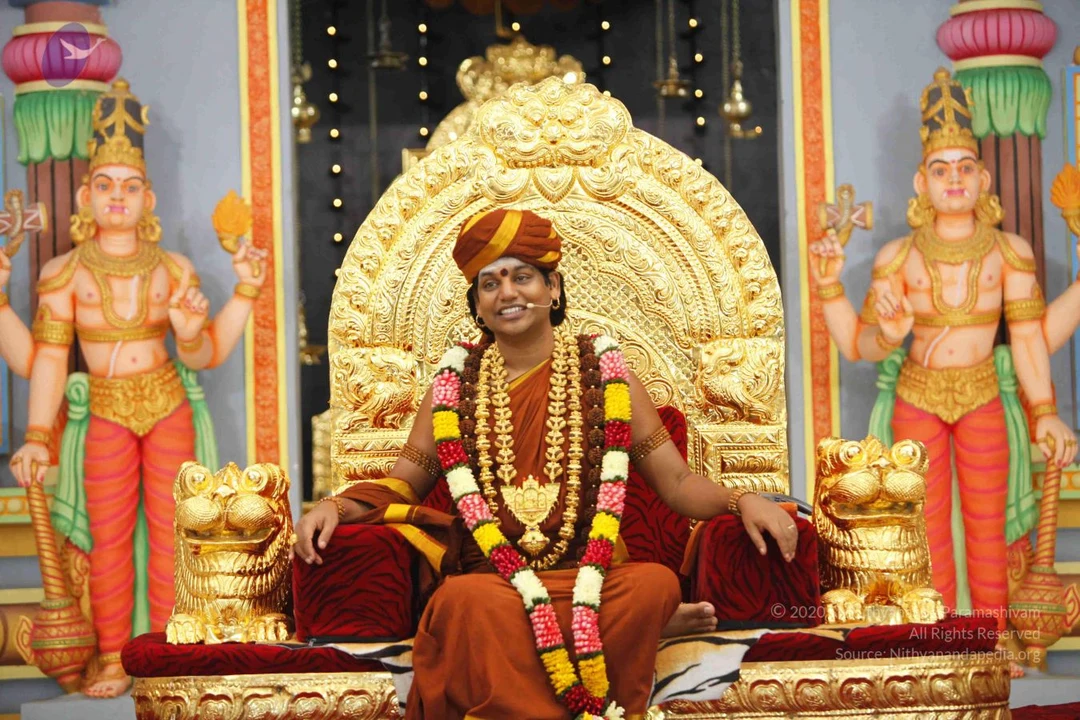
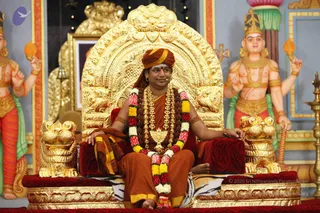
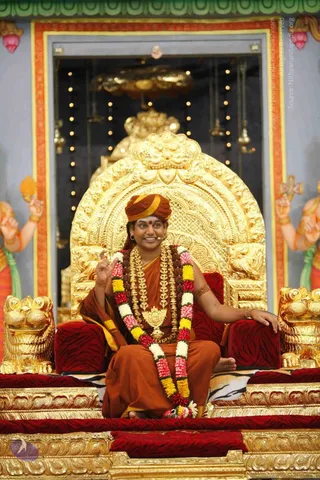
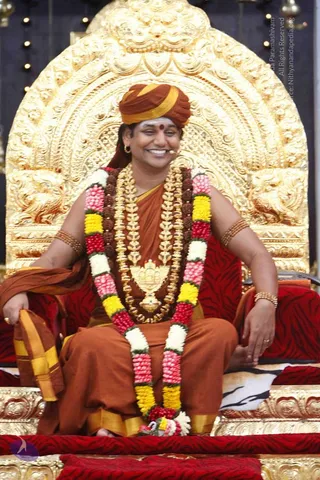
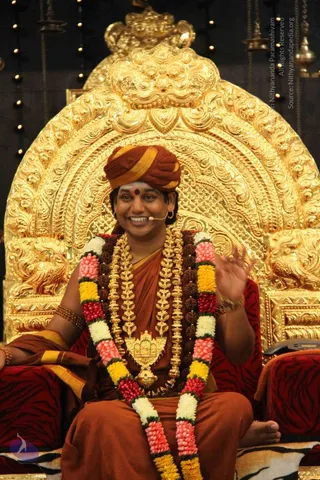
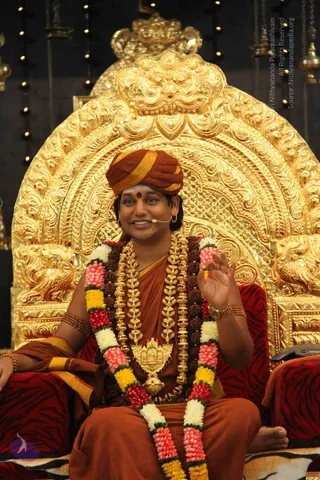
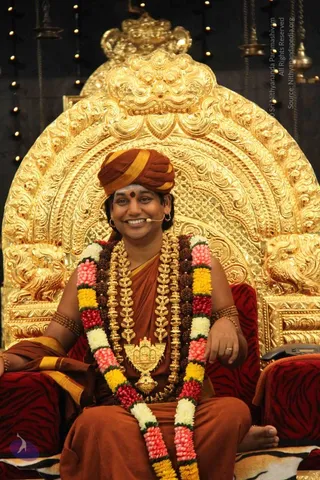
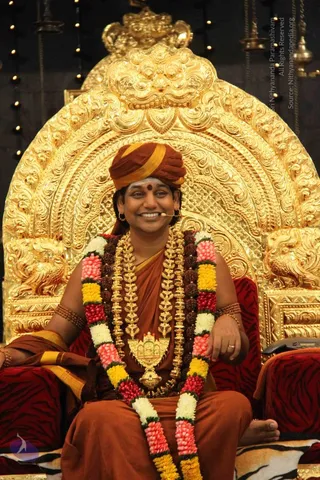
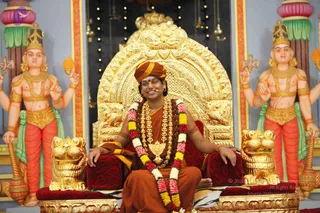
A photograph of a man seated cross-legged on an ornate gold throne with lion-head armrests and a golden arched back, draped in red and gold cushions over a striped tiger-print cloth. He wears a saffron-orange turban, saffron robes with a gold-bordered shawl, a long gold necklace with a gold pendant, and a thick garland of rudraksha beads interspersed with red, yellow and white flowers. Two gilded deity statues with raised arms stand on either side of the throne, and a brass oil lamp is visible at the right edge against a red and blue painted wall. The features resemble Swamiji (probable) based on the saffron turban, saffron robes, rudraksha mala and ceremonial gold necklaces, seated in a central throne position during a discourse setting.A seated man on an ornate gold-and-red throne, wearing an orange-brown turban, saffron-brown dhoti-style garment, a long gold necklace and a multicolour flower garland. He sits in profile looking to the side, with gold bangles on his wrist and a tilak on his forehead. Beside him stands a deity murti draped in a red-orange cloth, with a tall ceremonial garland of red, yellow, green and purple flowers, a crown, and a wooden stick with a tuft leaning on its shoulder. A second murti in a yellow and blue sari-style garment, wearing gold jewellery and a crown, stands on a gold-trimmed pedestal with flower garlands. Red carpet and white walls form the setting.Photo of a seated man on an ornate gold-and-red throne in a bright hall, wearing an orange-brown turban and saffron-toned robe with a multicoloured flower garland and gold-beaded neck garlands. He gazes off to one side with his arm resting on the armrest. Beside him stands a deity murti in a richly decorated gold-and-red setting, dressed in an orange cloth and yellow-blue silk, draped with a red, yellow and white flower garland, holding a staff-like object with a palm-leaf plume. Red carpet and a red curtain frame the room. a person seated on the peetha, with ornate gold, flower garland and saffron-tone cues.A seated man in an orange-brown robe and saffron-and-yellow turban sits on an ornate gold throne flanked by golden lion figures, with red tiger-striped cushions. He wears layered gold necklaces, rudraksha beads, and a multicolour flower garland, and gestures with one raised hand while speaking into a headset microphone. Behind him are a gilded arch, a shrine area with hanging lamps and bells, and painted deity figures on the side pillars. The setting resembles a satsang discourse hall. Swamiji (probable) is the central figure, identified by the swept turban, saffron robes, ornate gold jewellery, rudraksha malas and throne setting.A smiling man in a saffron-orange turban and saffron robes sits on an ornate gold throne with a red tiger-striped cushion. He wears a long multicolour garland of white, yellow, pink and red flowers, rudraksha beads and a layered gold necklace with a gold pendant, plus gold armlets and a red tilak on his forehead. A small microphone is visible near his face. Gold and red stage decor with a small logo at lower left.A man stands behind a clear acrylic lectern on an ornate stage, speaking into a headset microphone. He wears an orange-and-gold turban with a red bindi, a saffron-orange robe with a gold trim, a heavy garland of red, white and yellow flowers, long rudraksha beads, and a large gold ceremonial pendant with multiple gold chains. Gold bangles adorn his wrists and gold hoop earrings. Behind him are green, red and orange decorative friezes and a gold ornamental panel at the lower right. The swami-style presentation with turban, rudraksha and ceremonial gold cues matches the page's identification, so this is a probable Swamiji (in person) giving satsang discourse.

SarvaDarshan

15 photosSource gallery
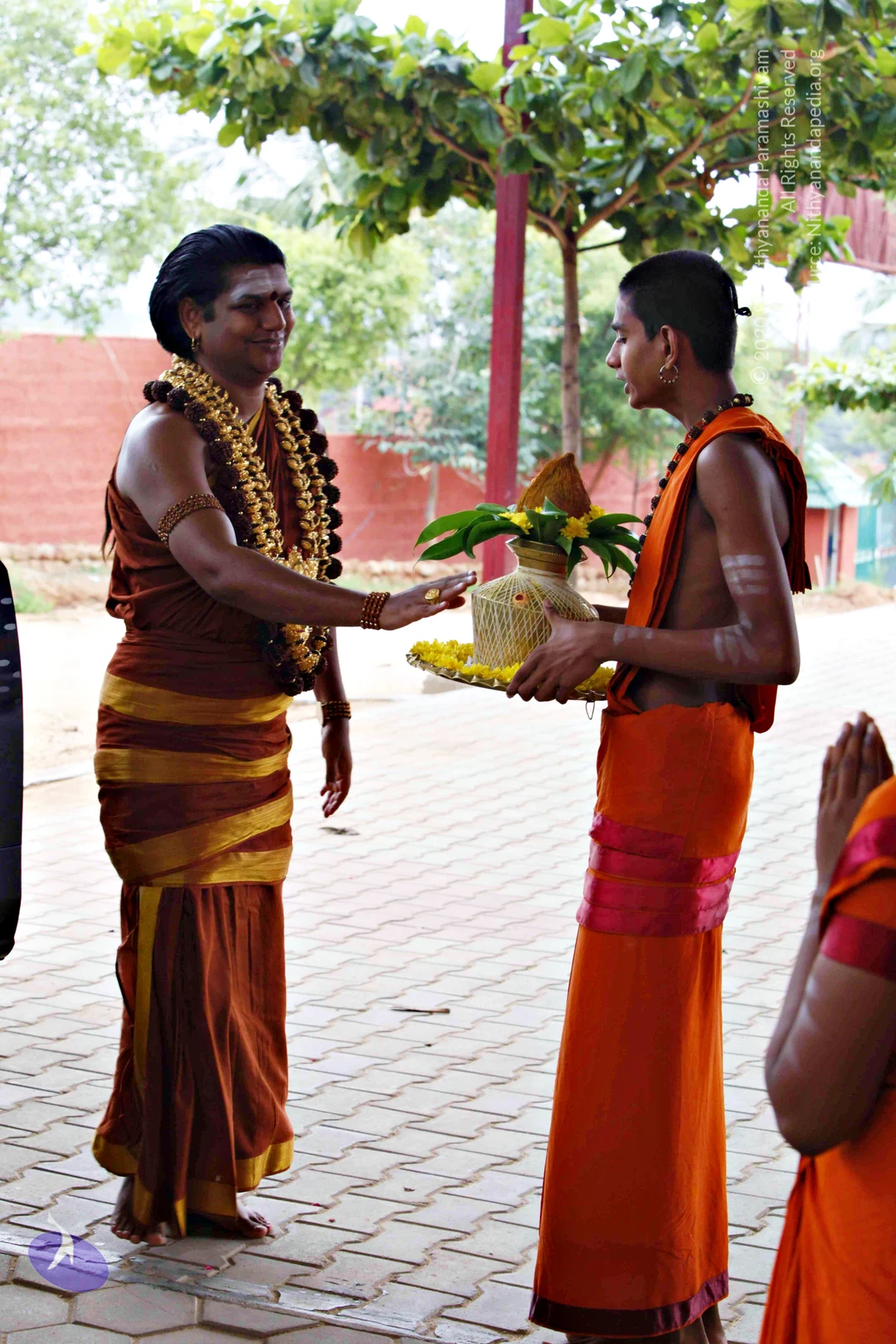
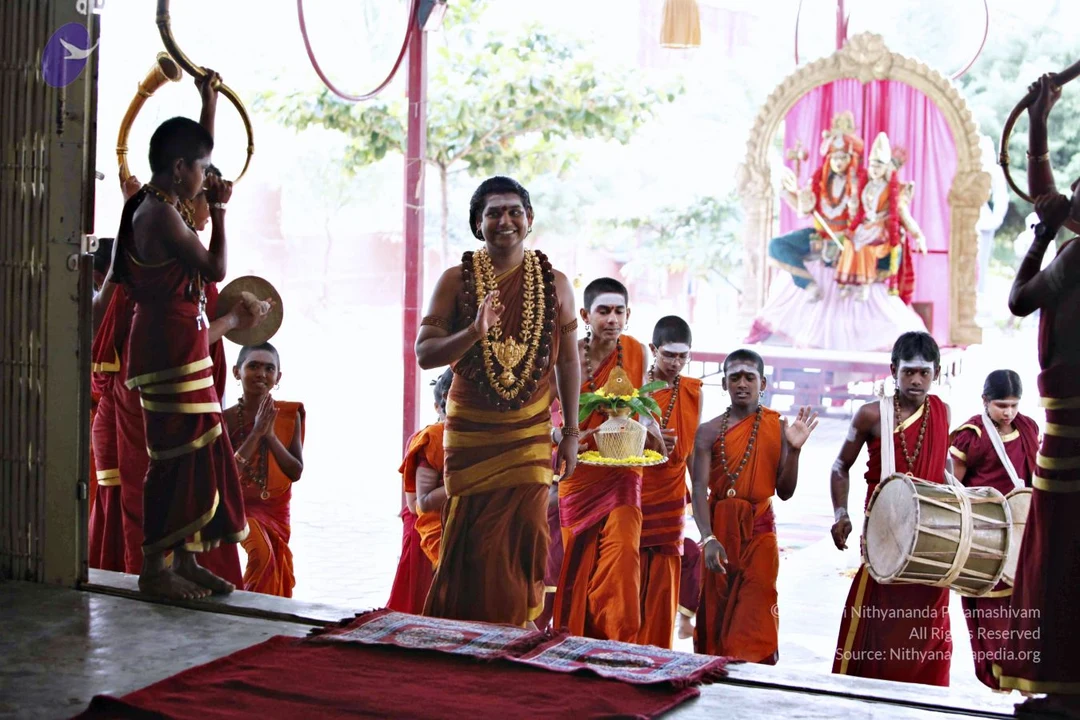
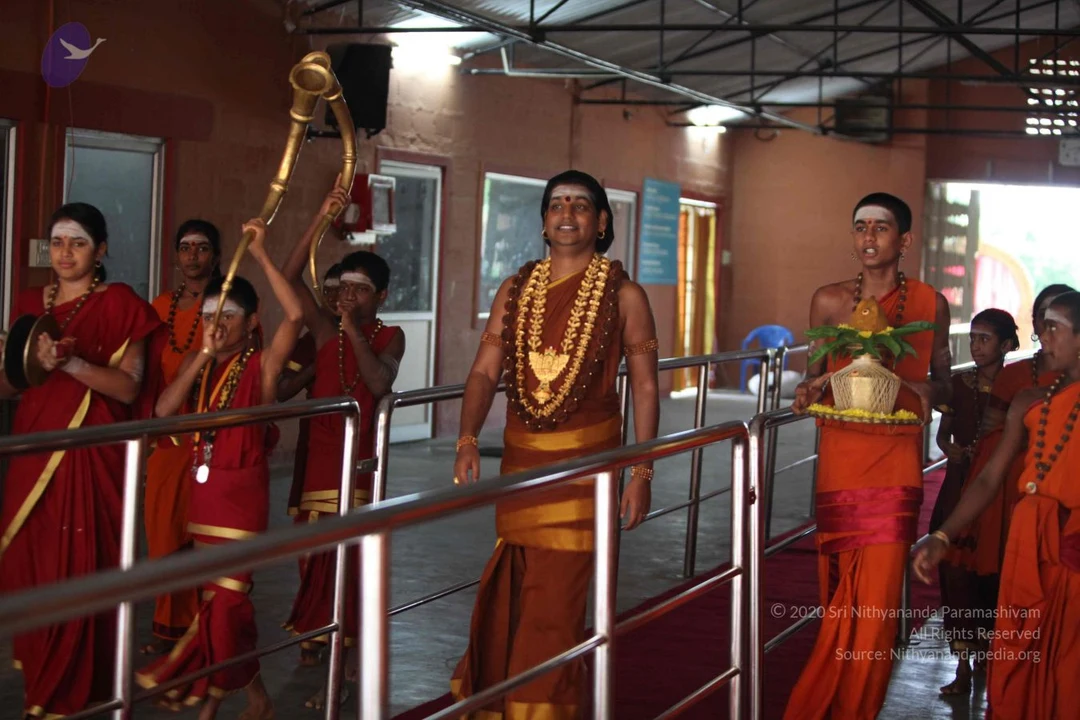
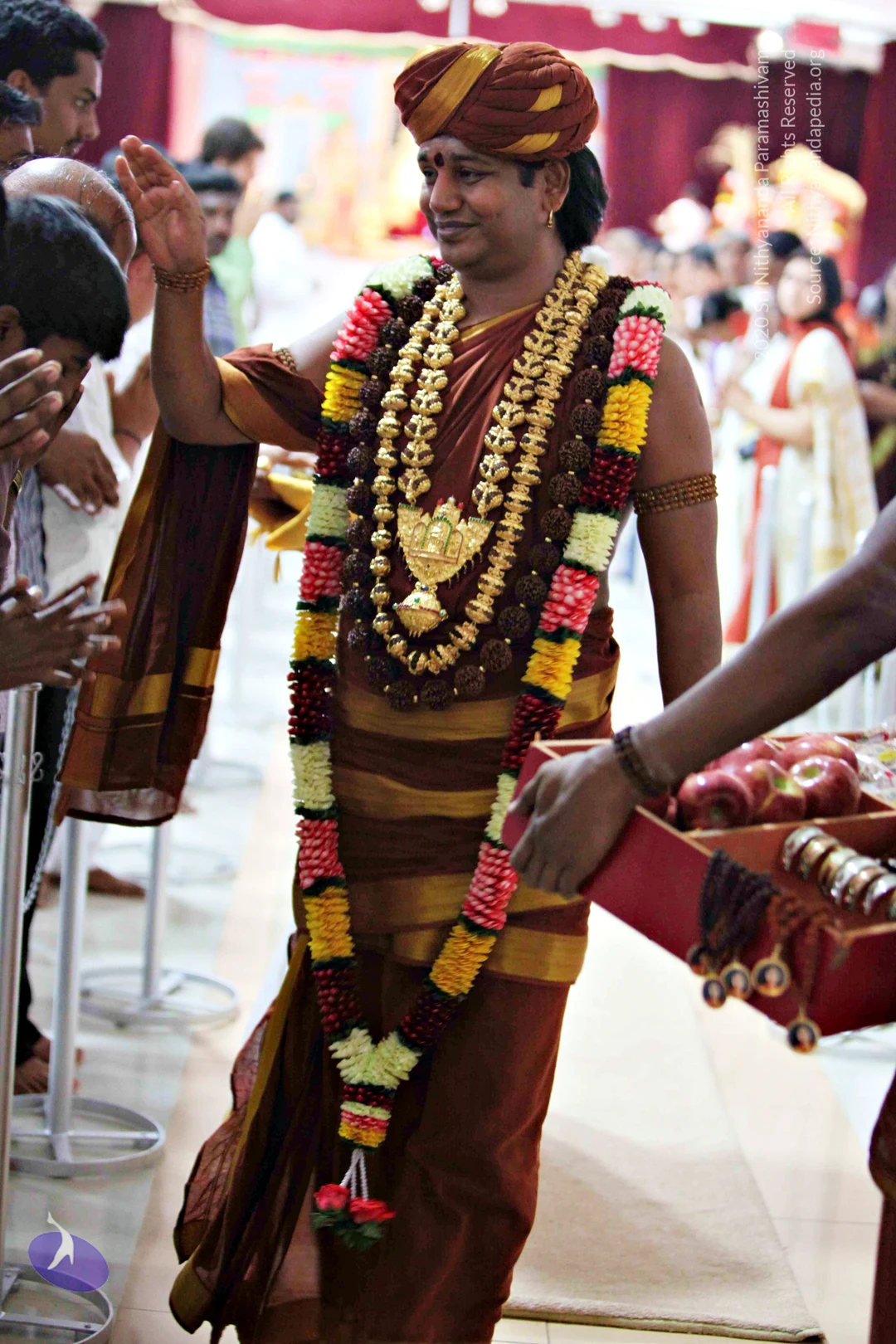
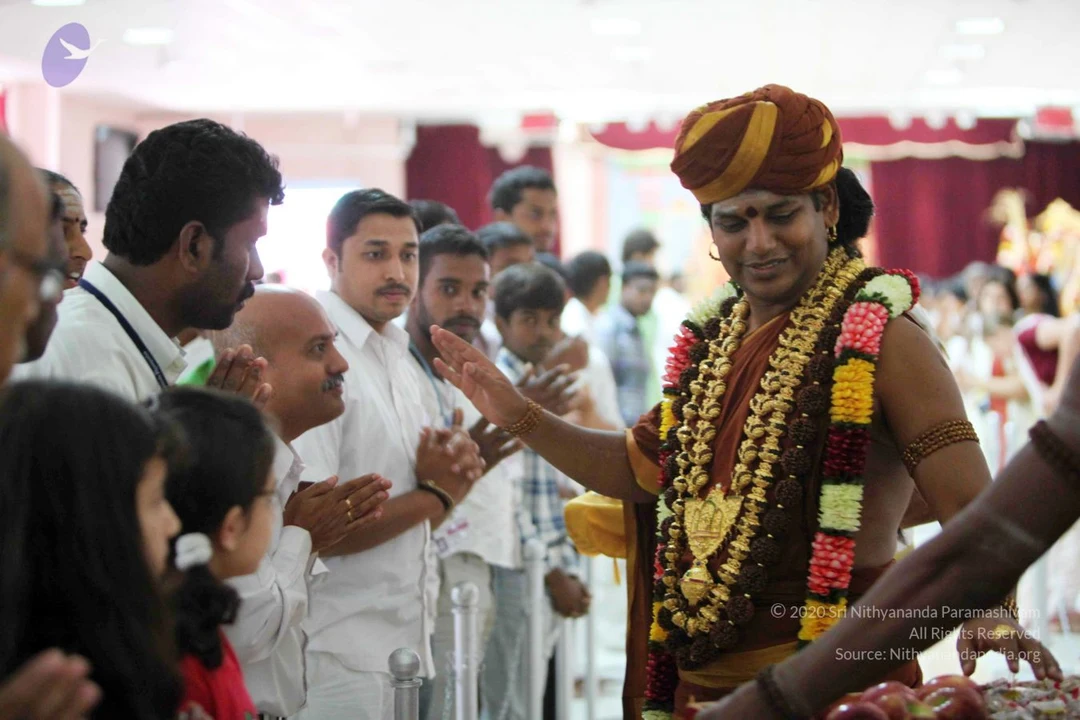
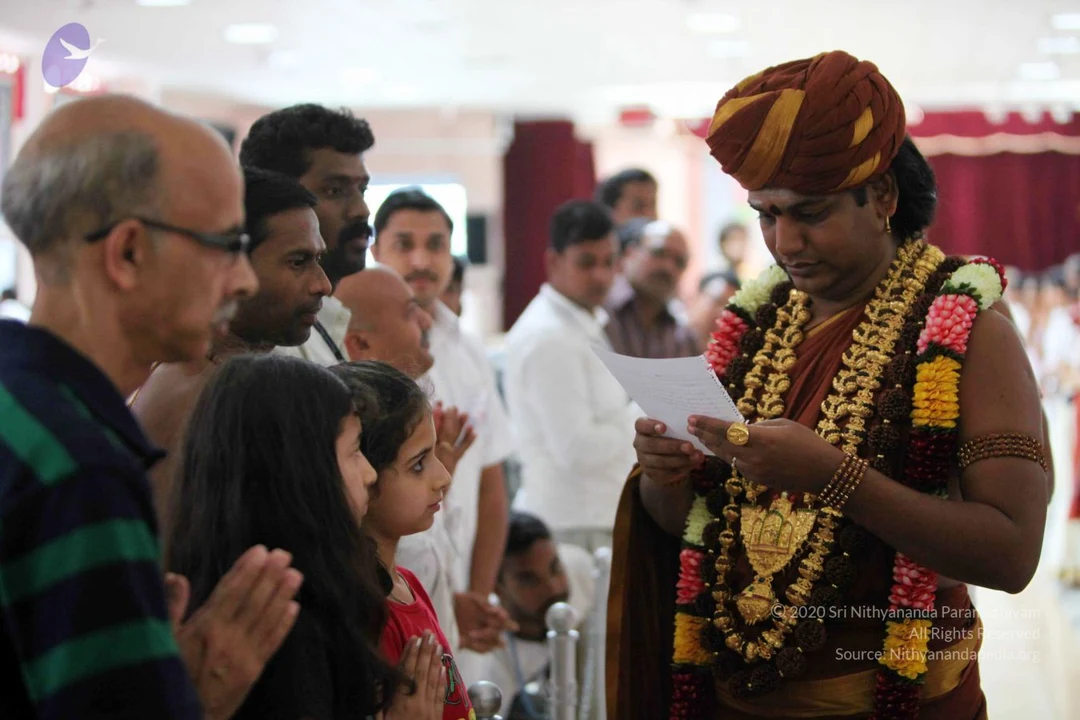
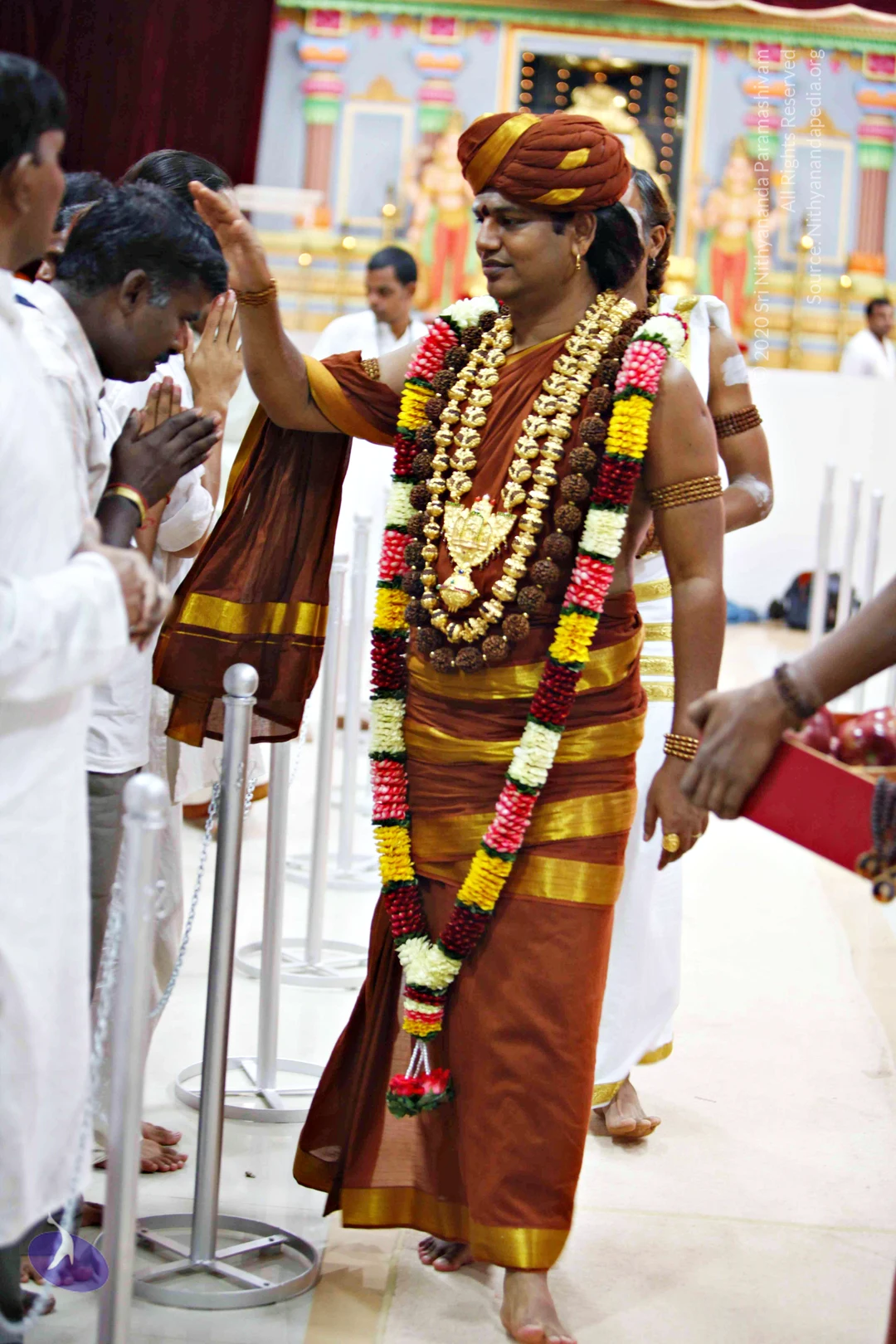
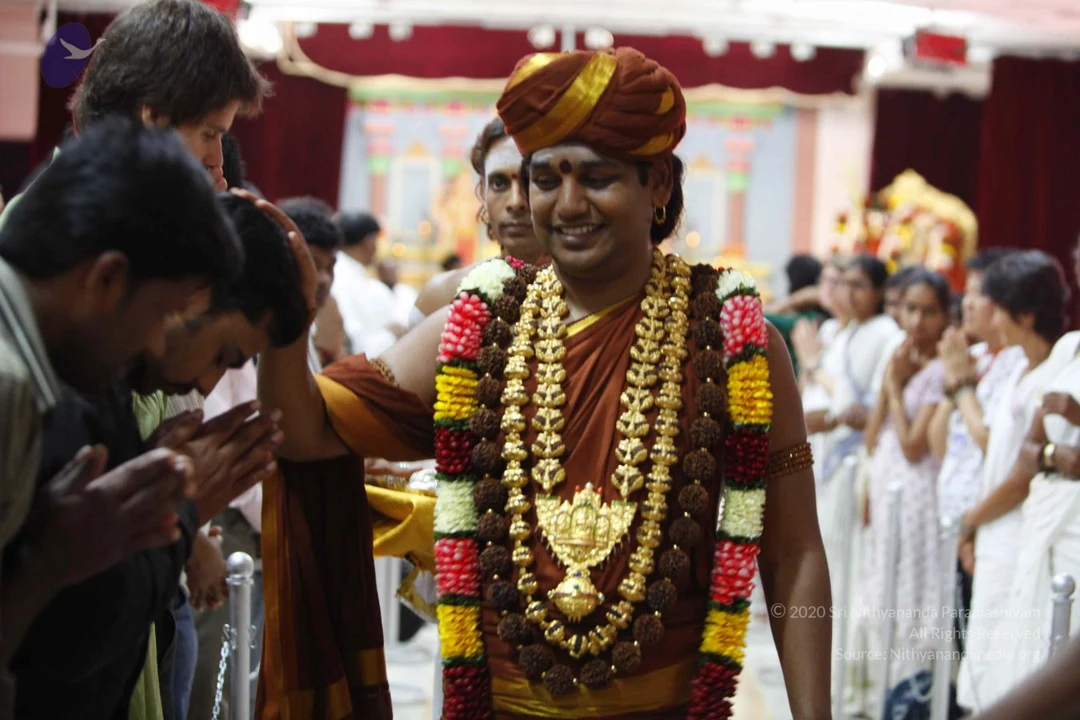
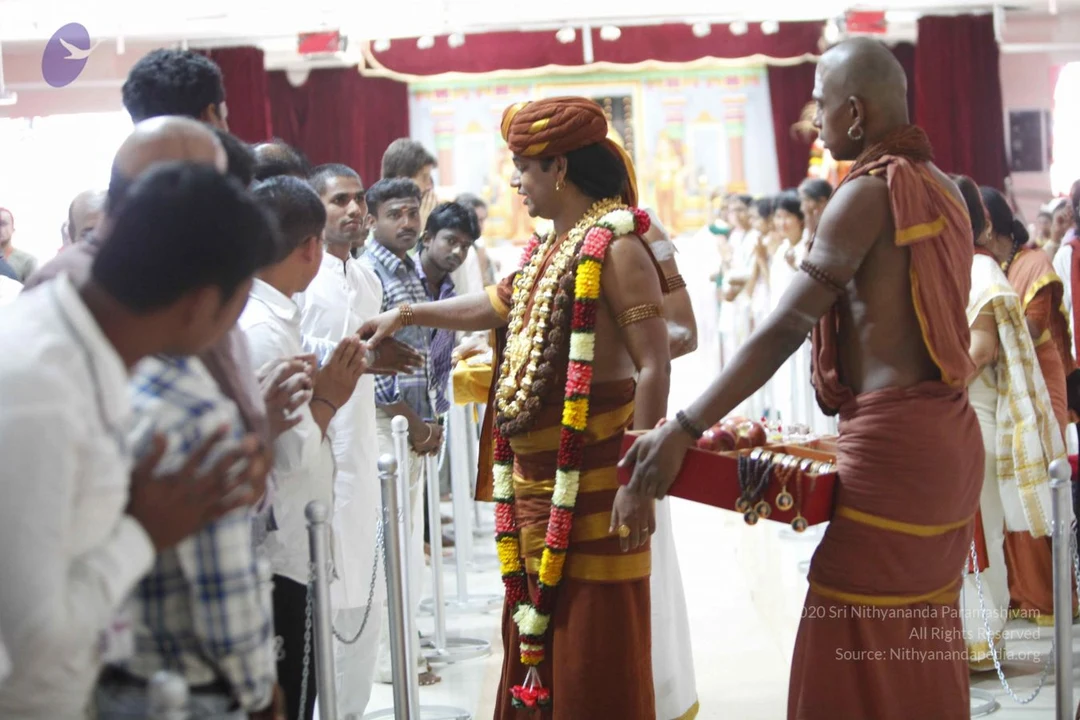
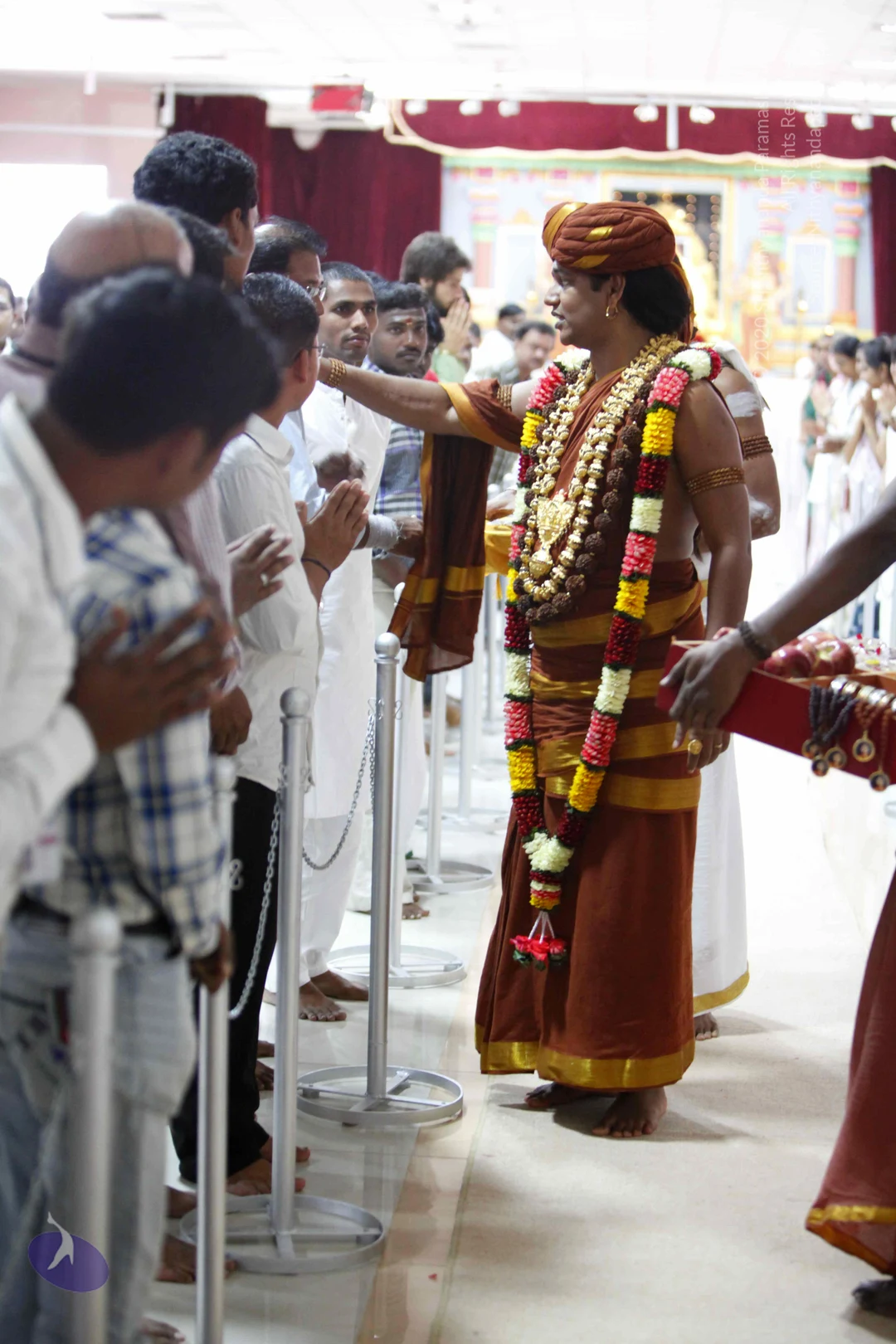
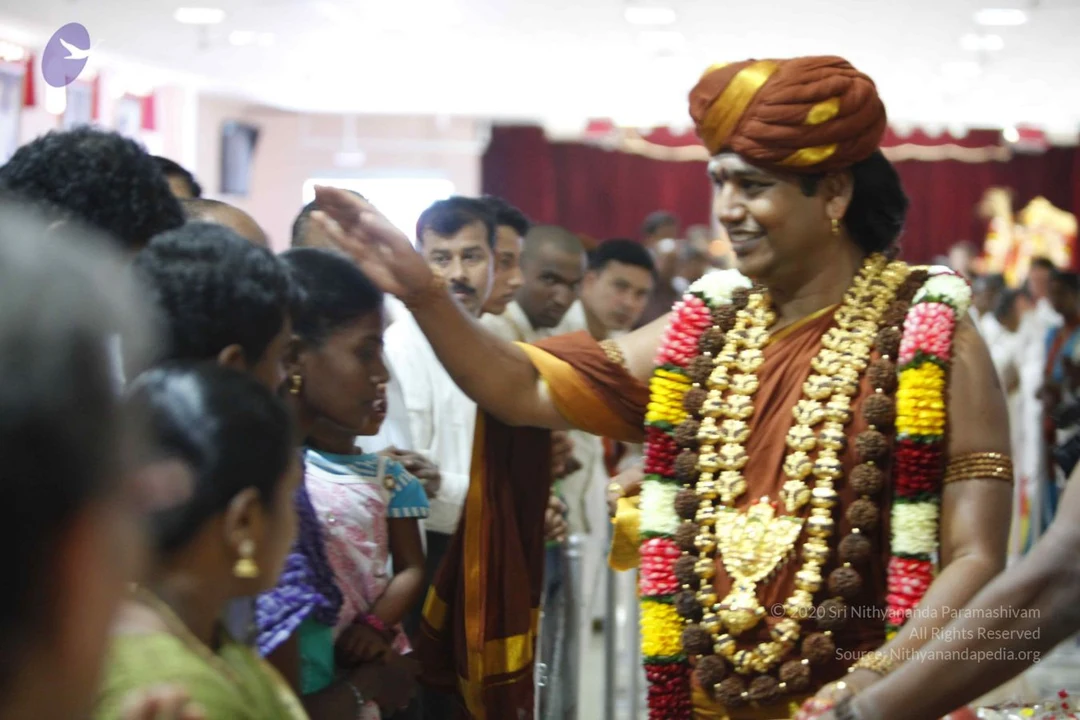
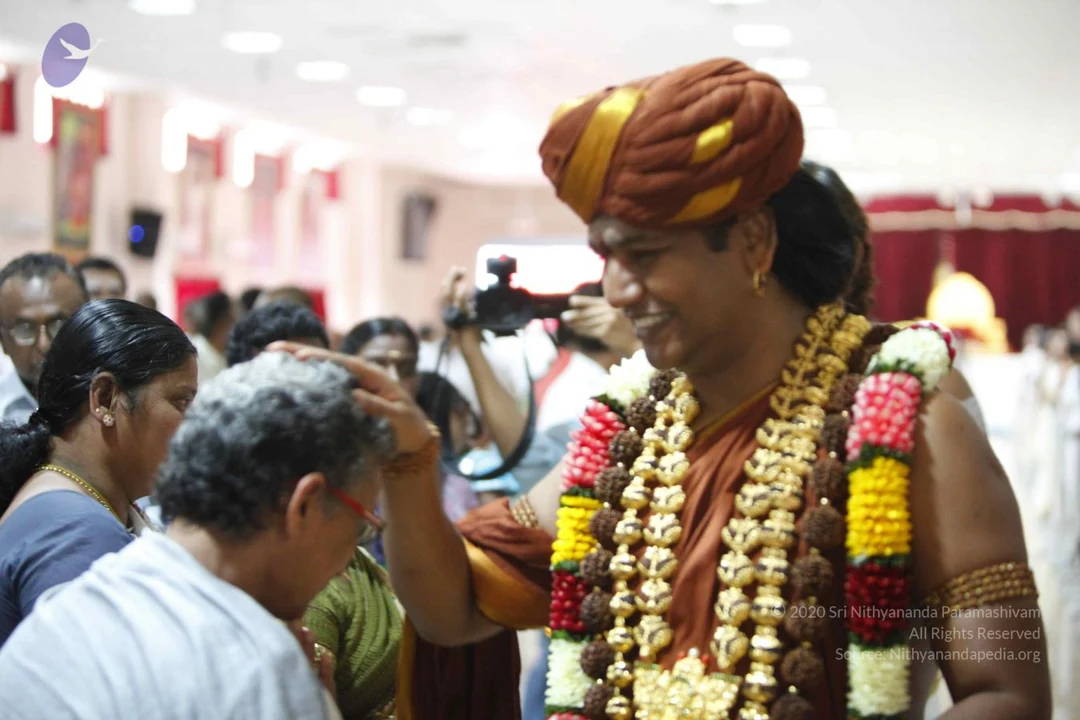
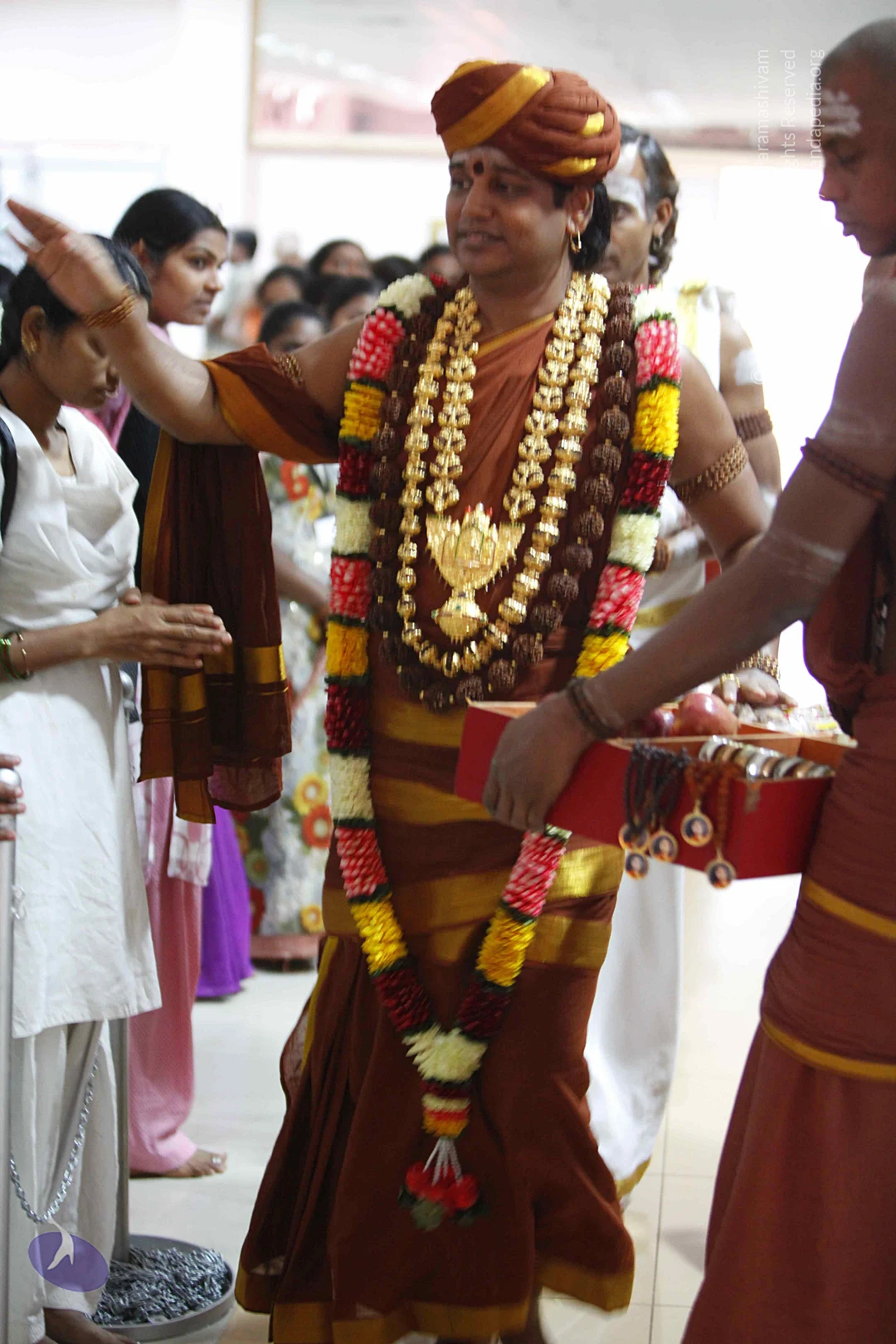
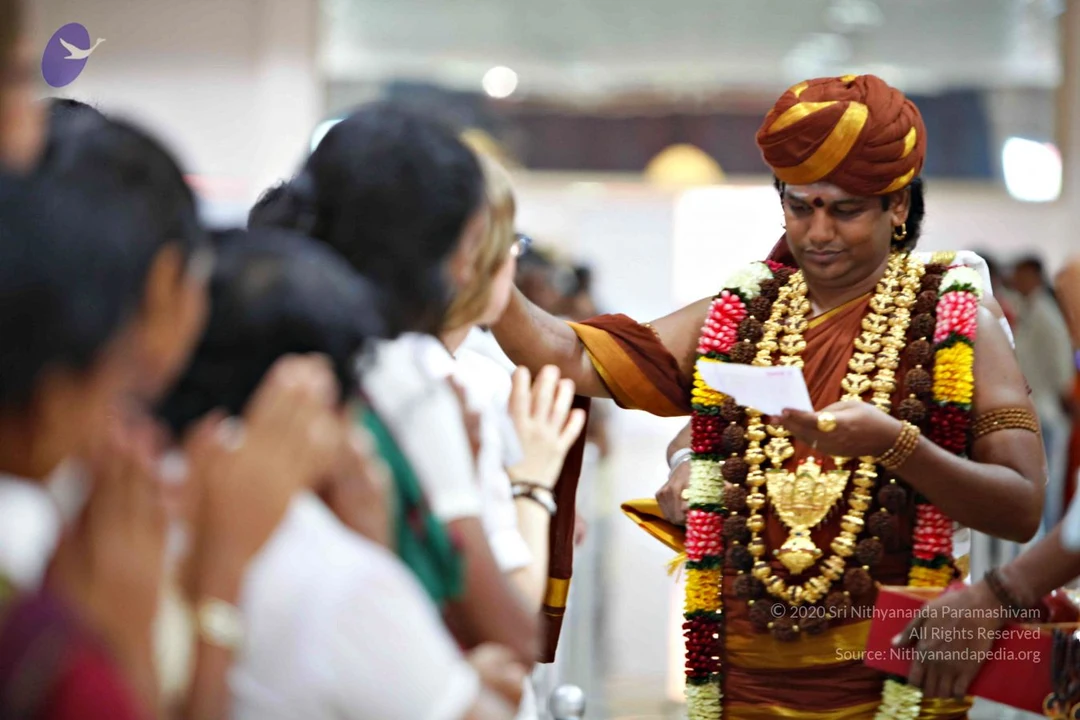
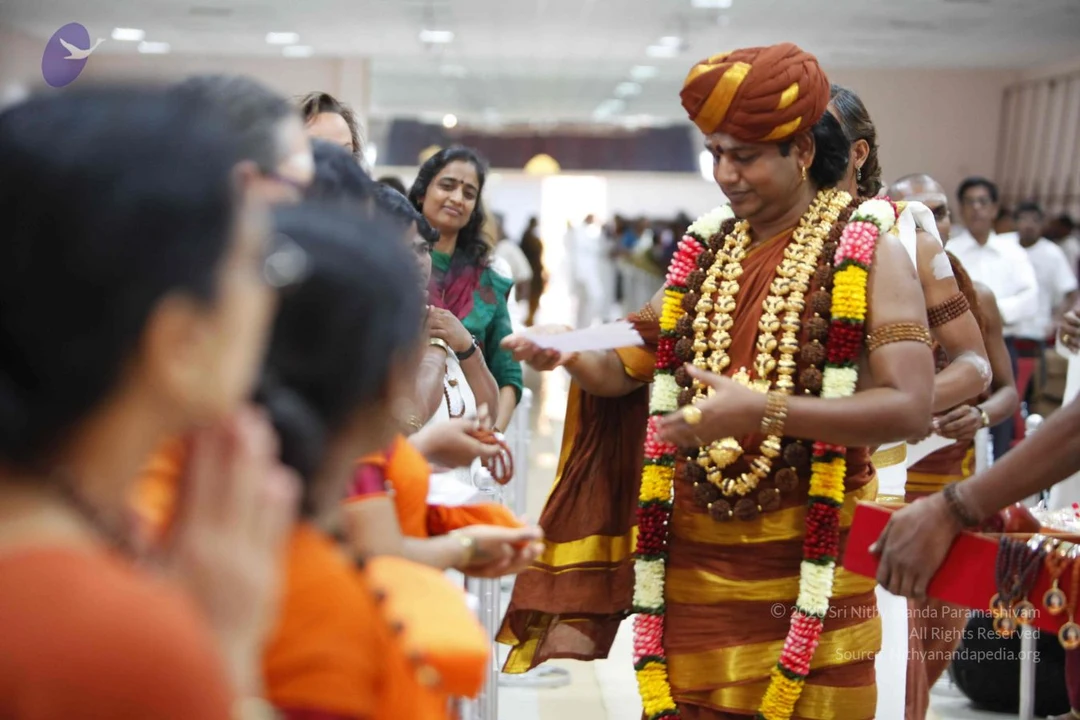
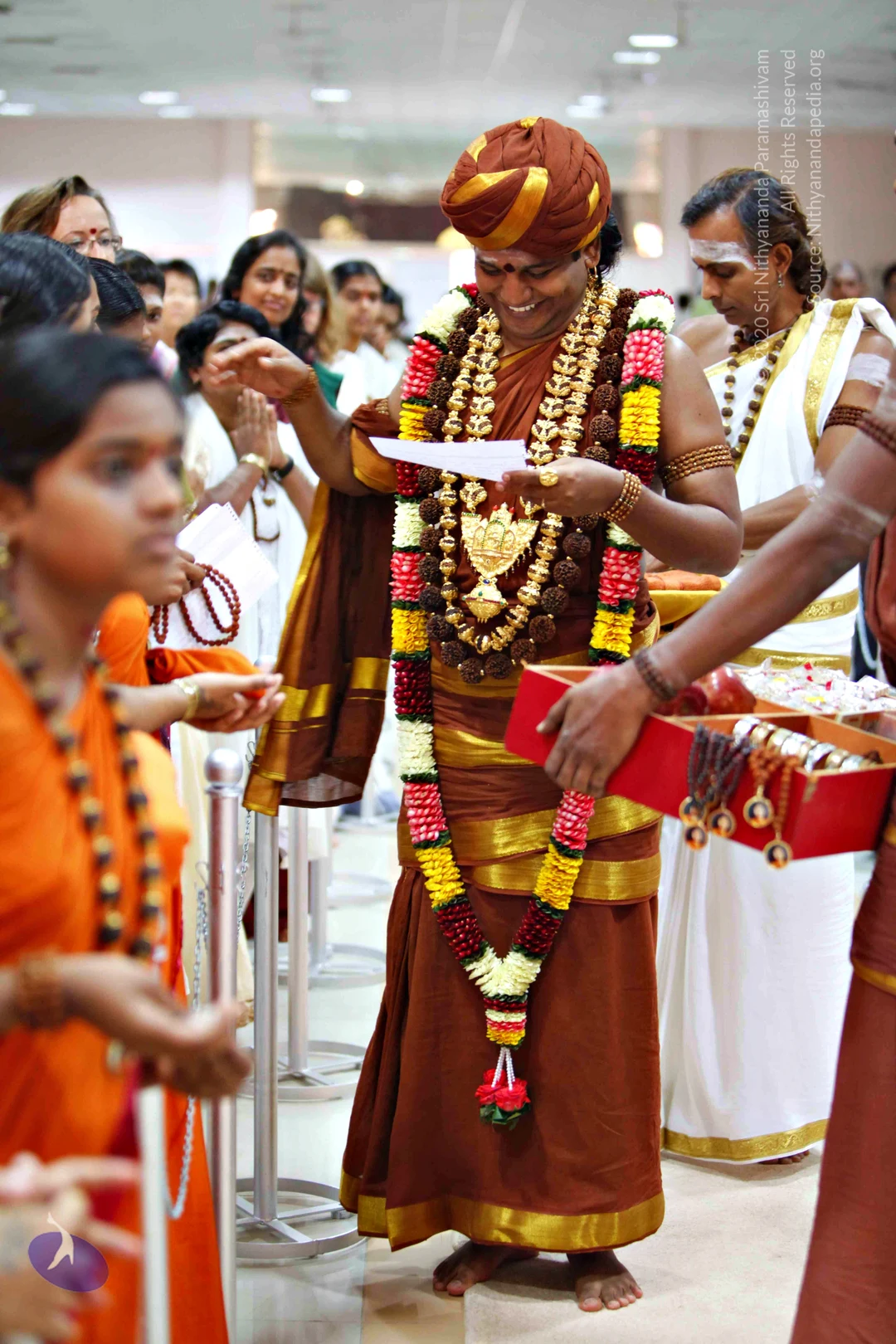
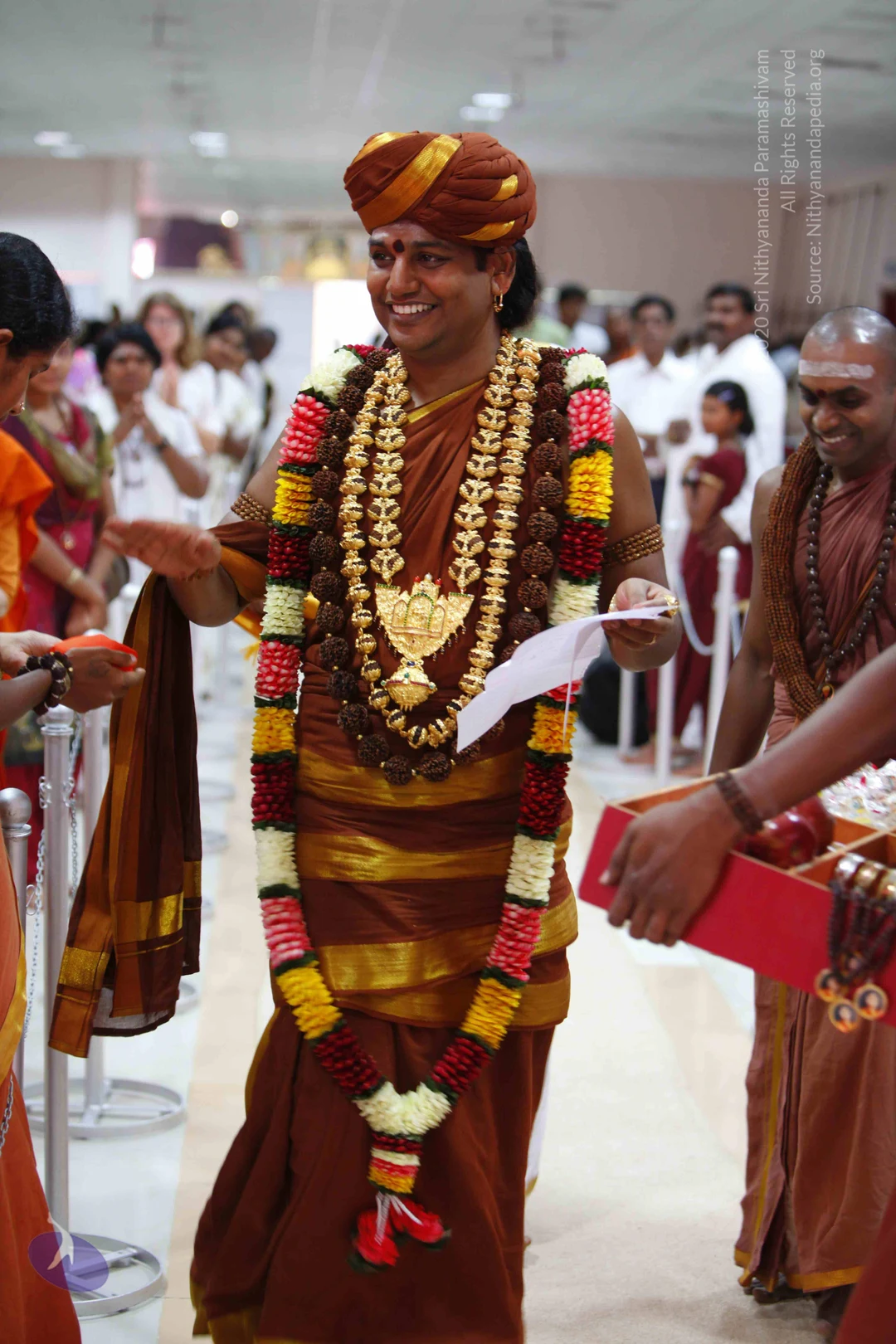
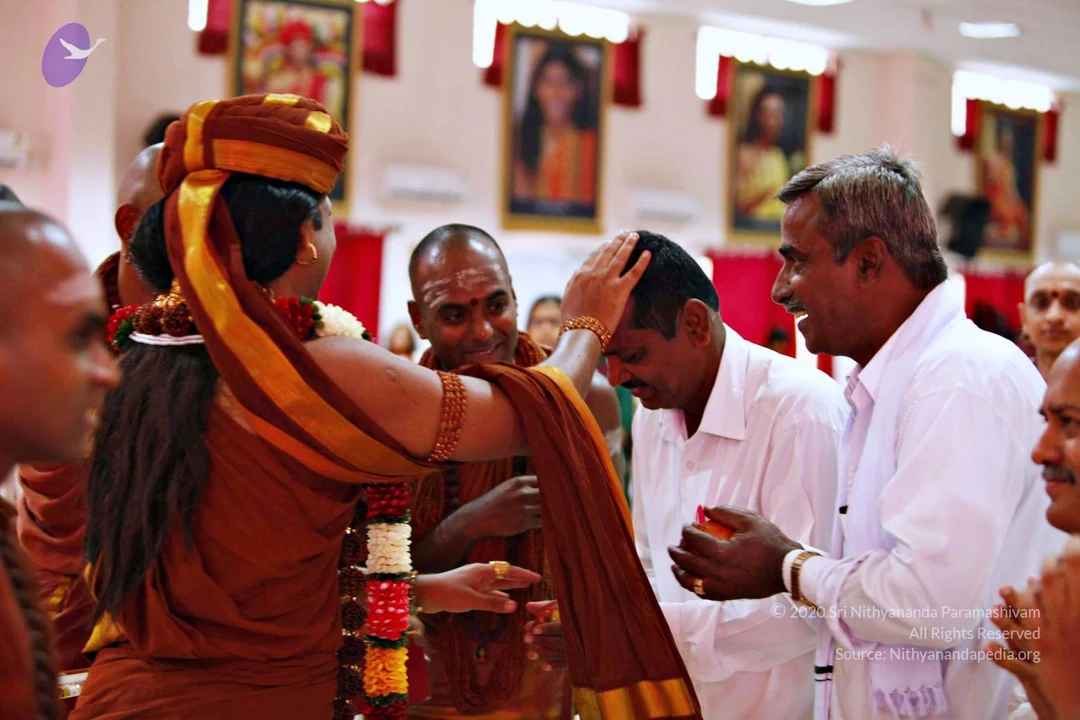
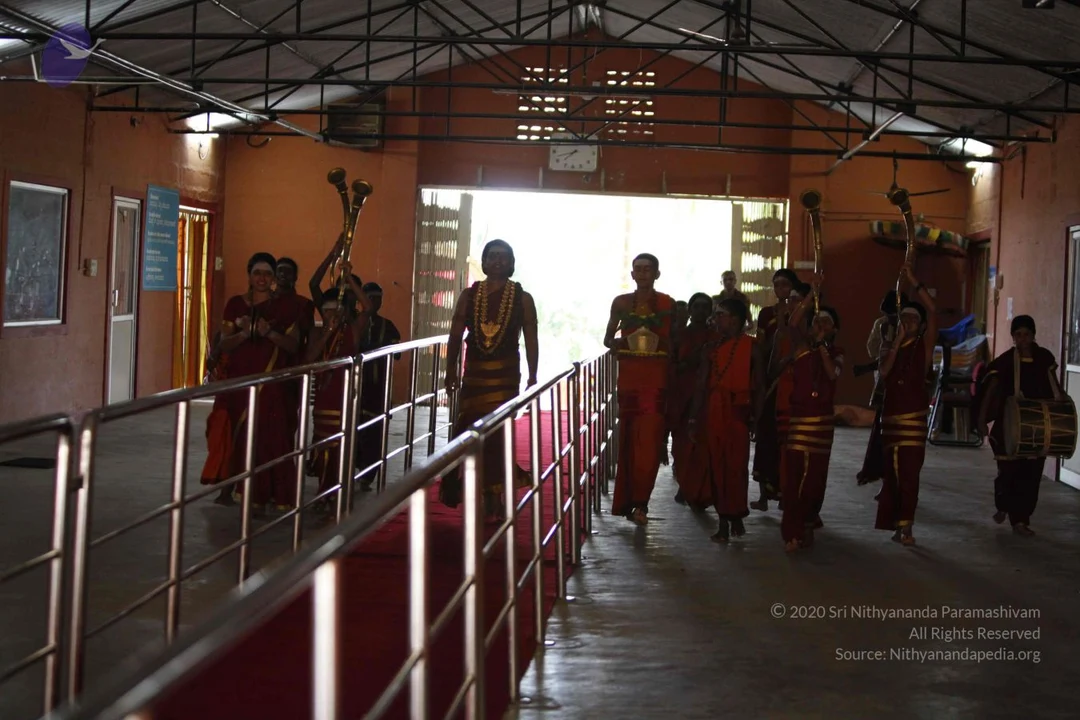
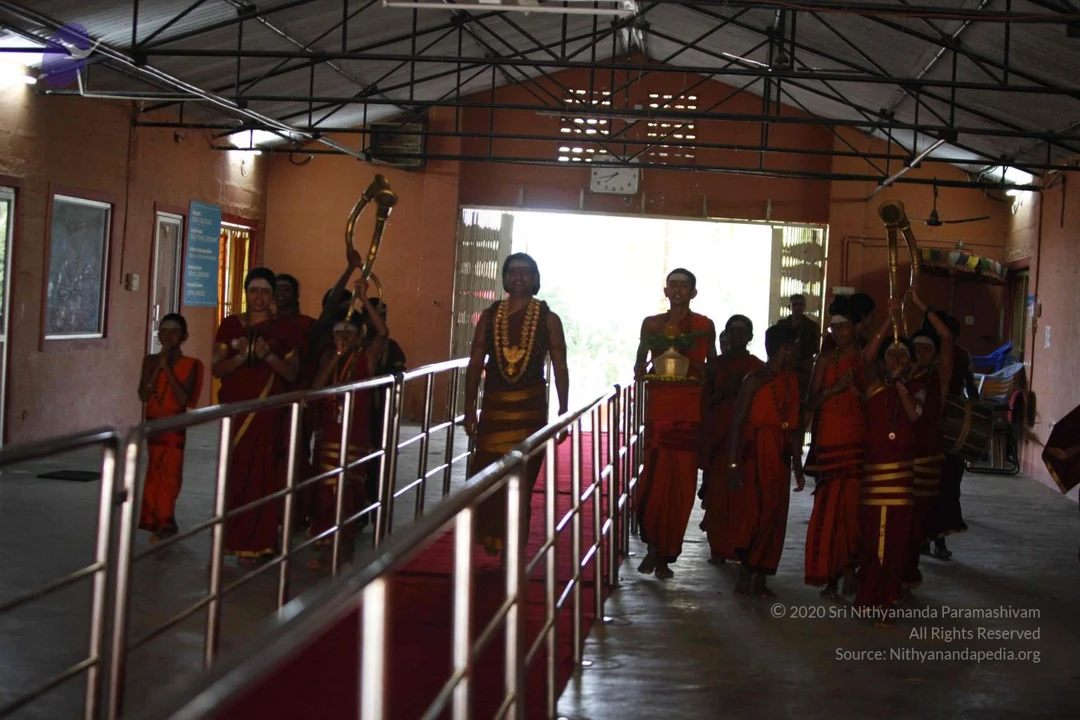
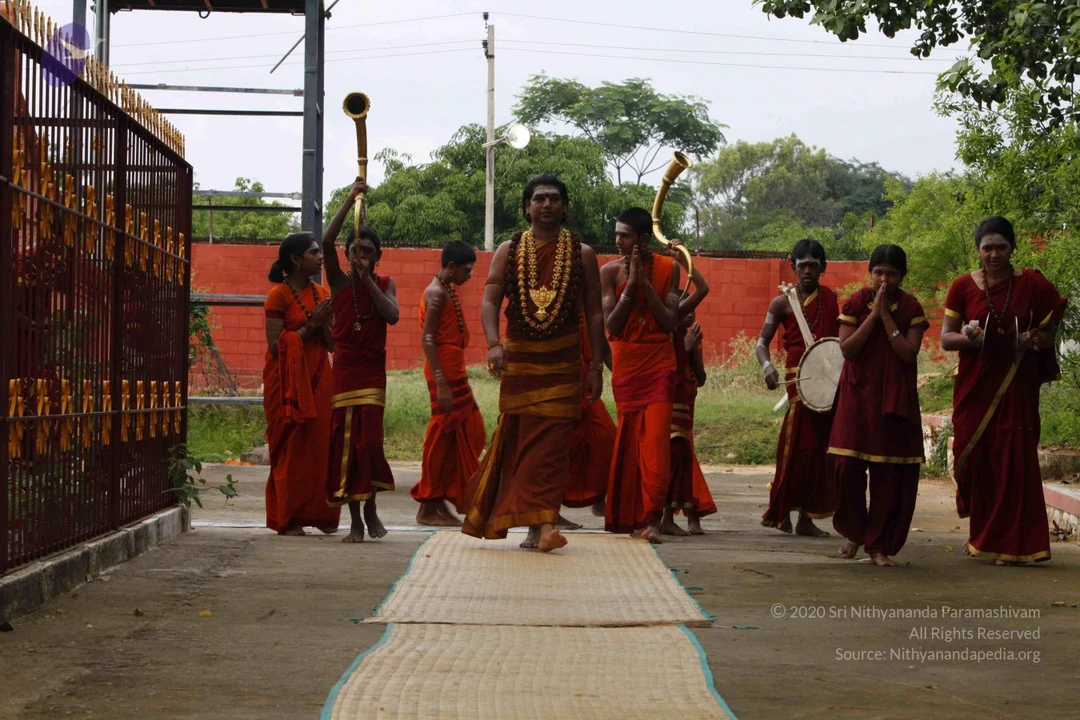
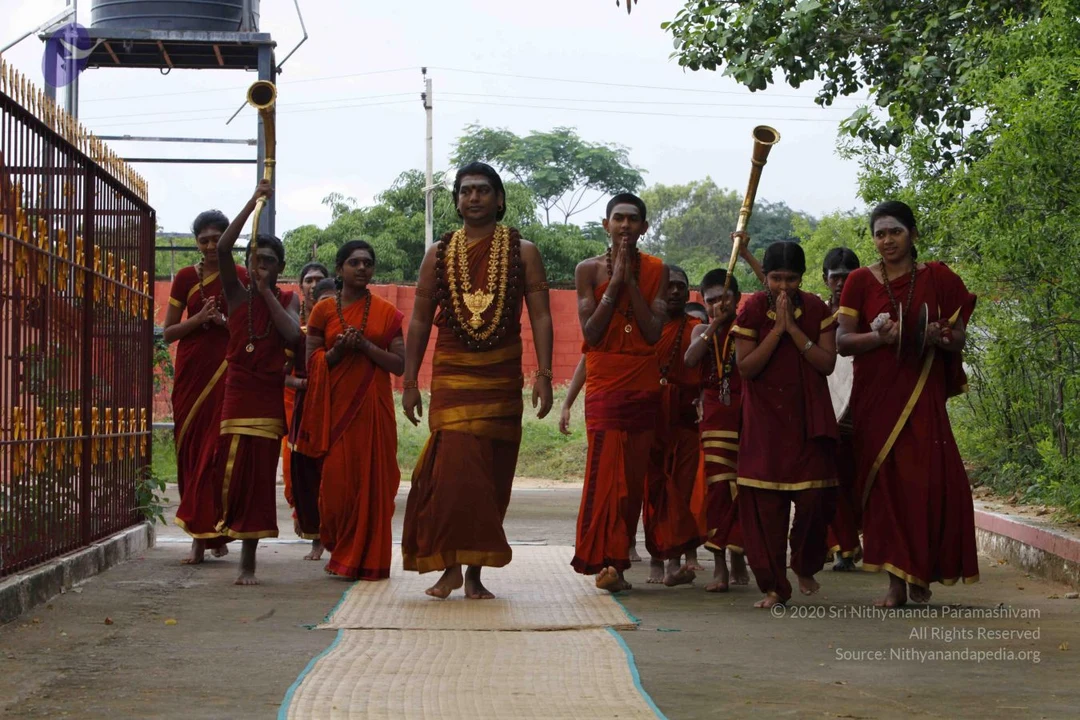
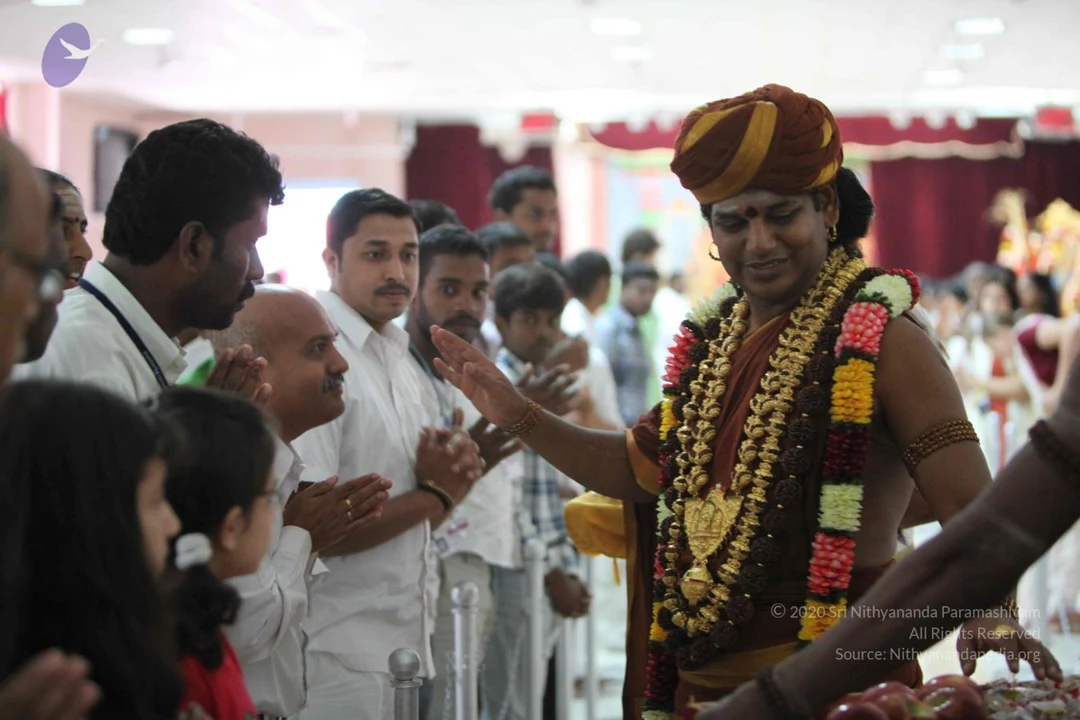
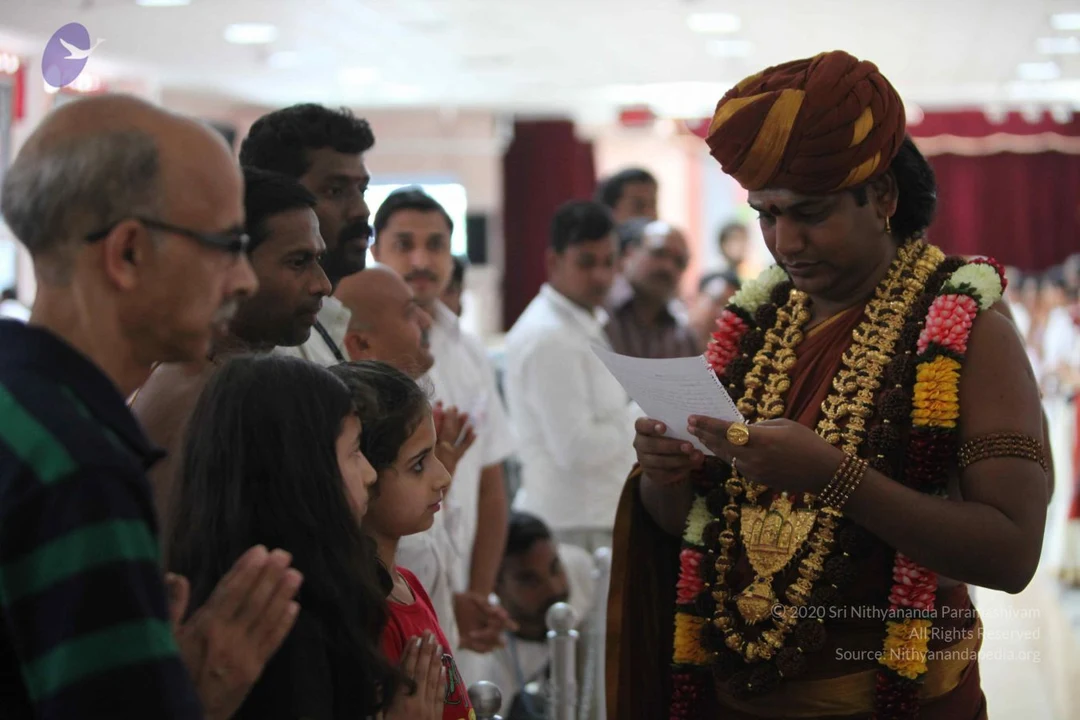
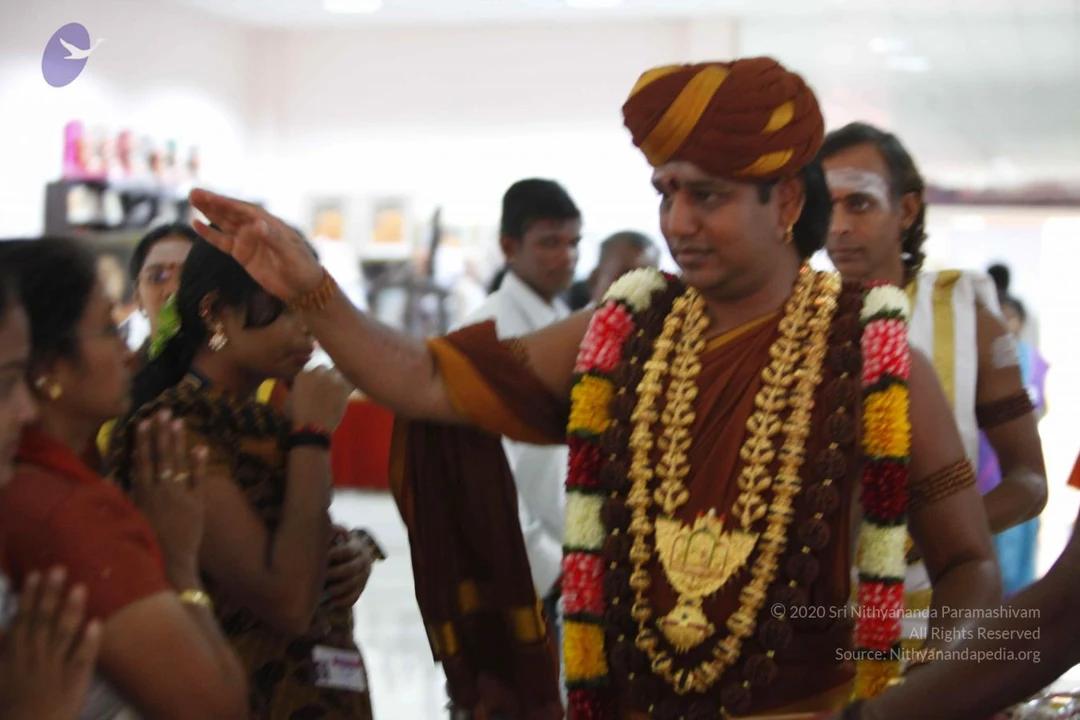
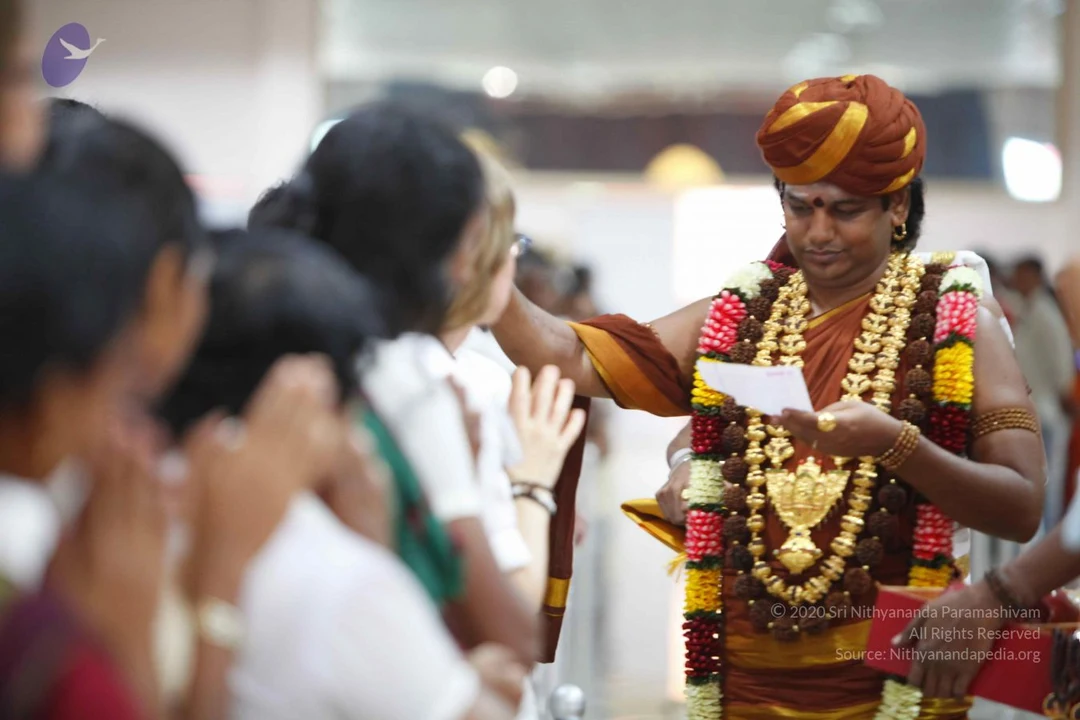
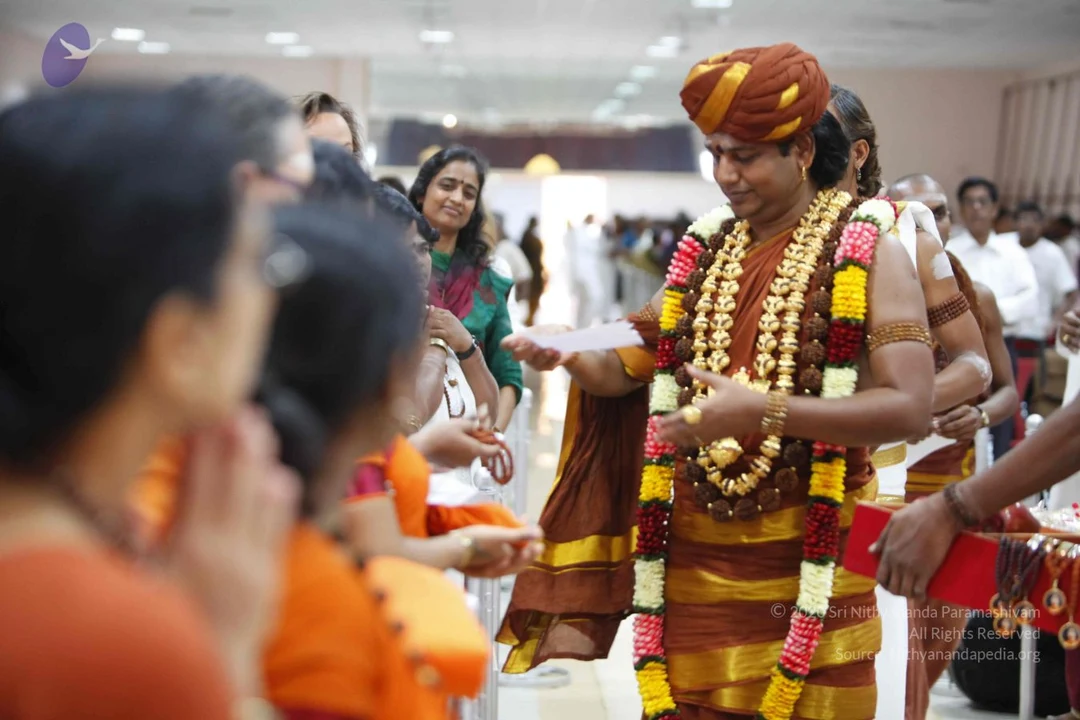
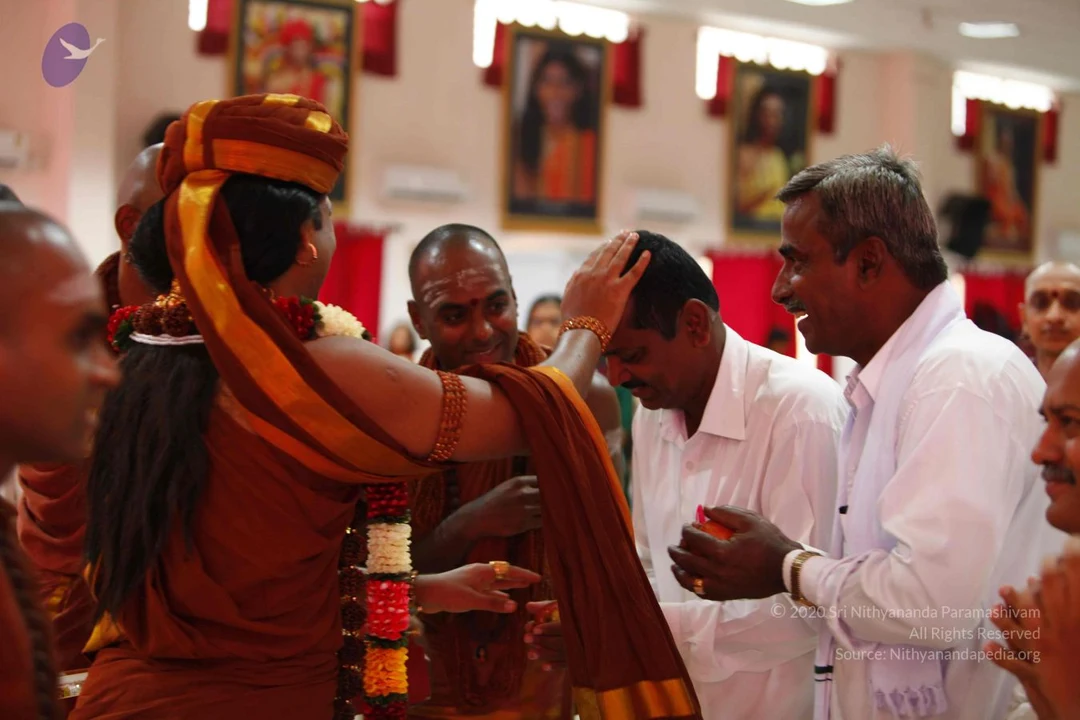
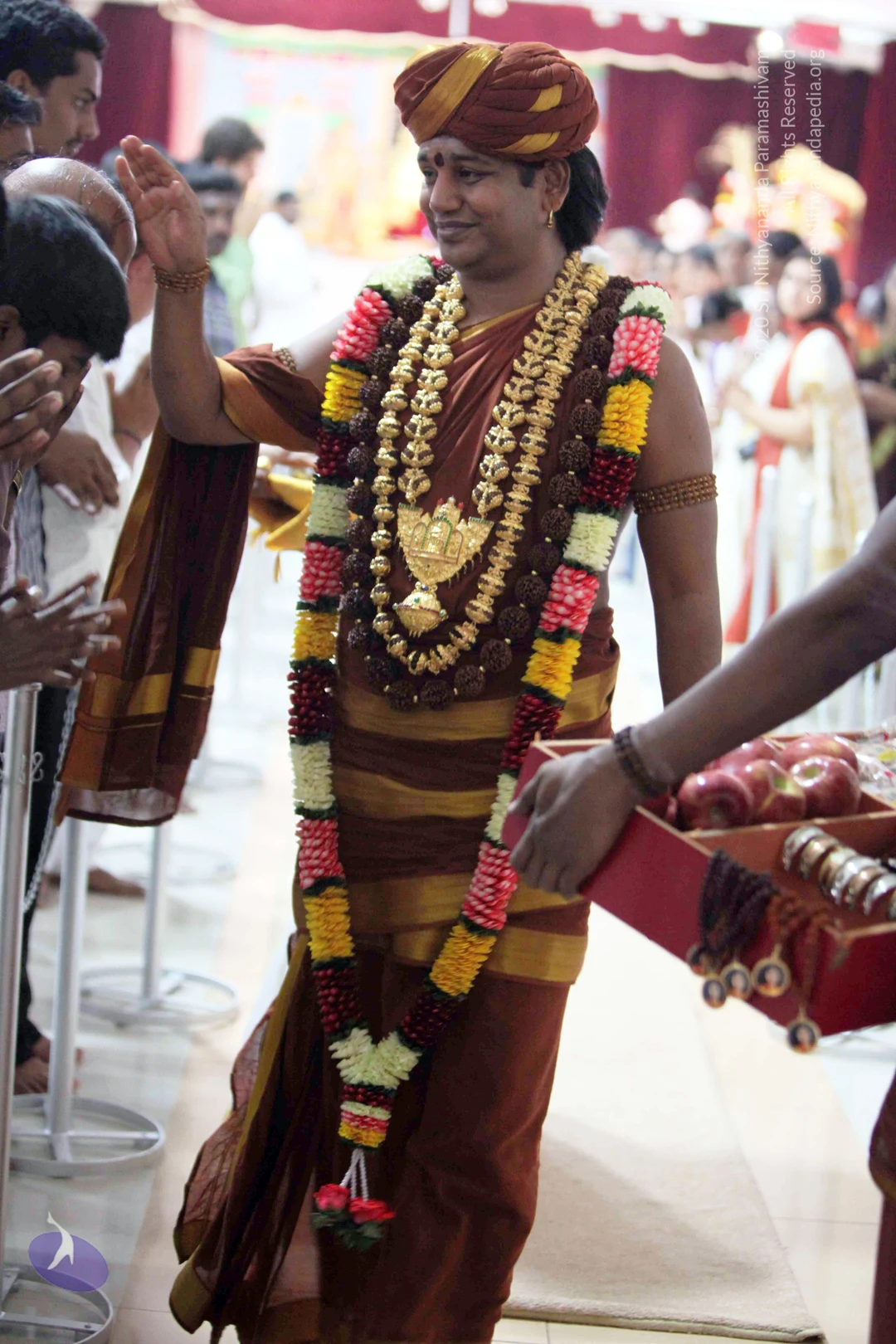
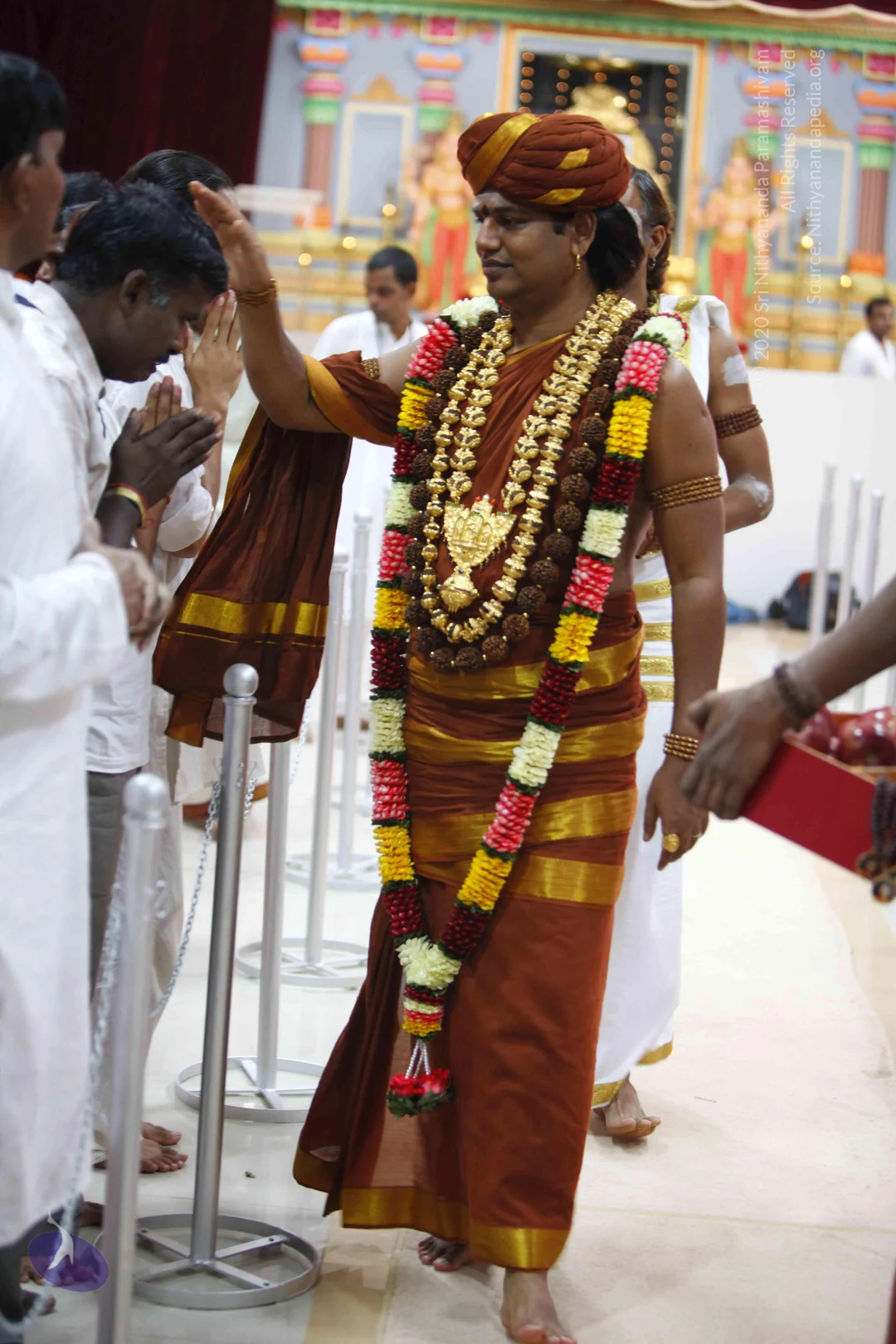
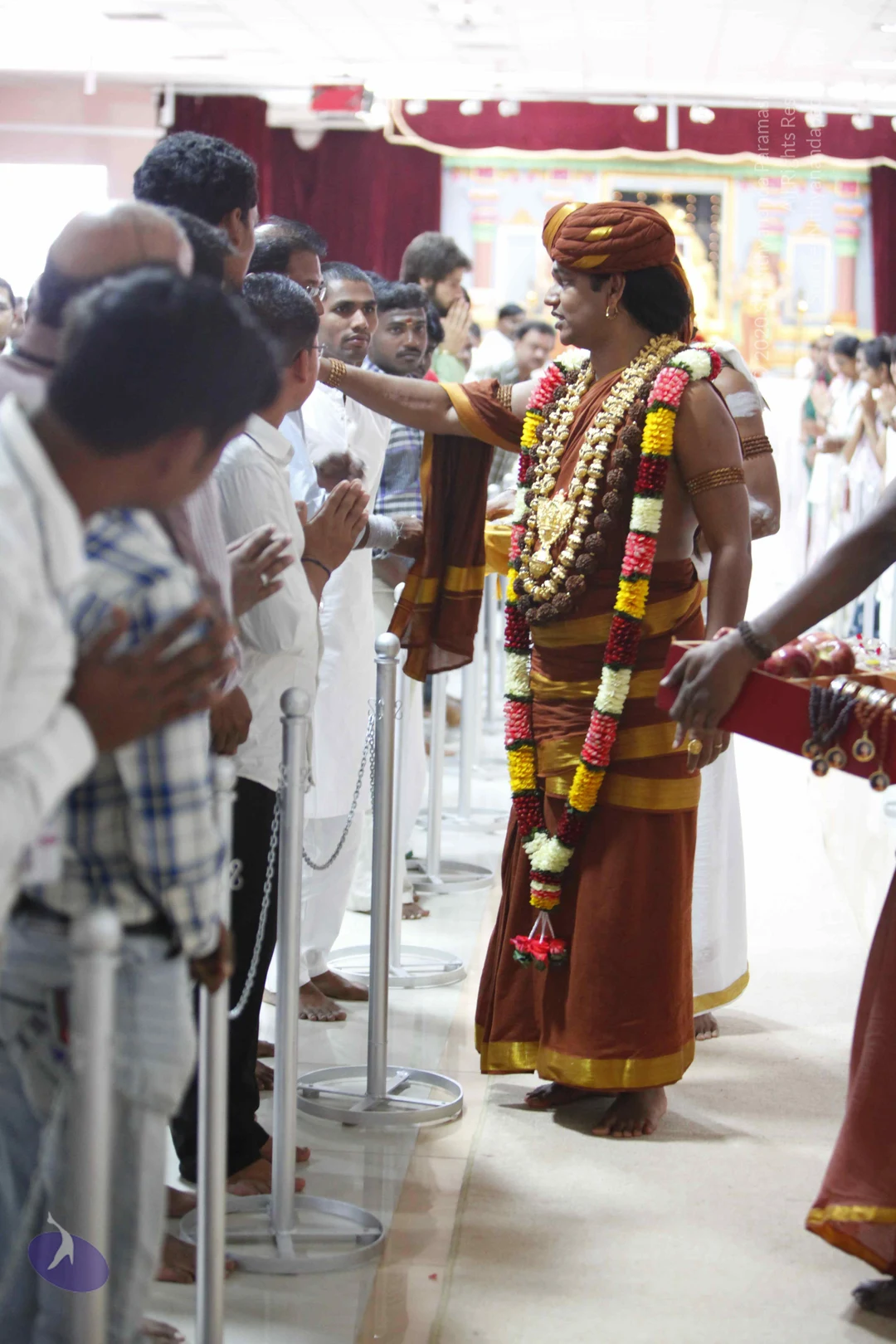
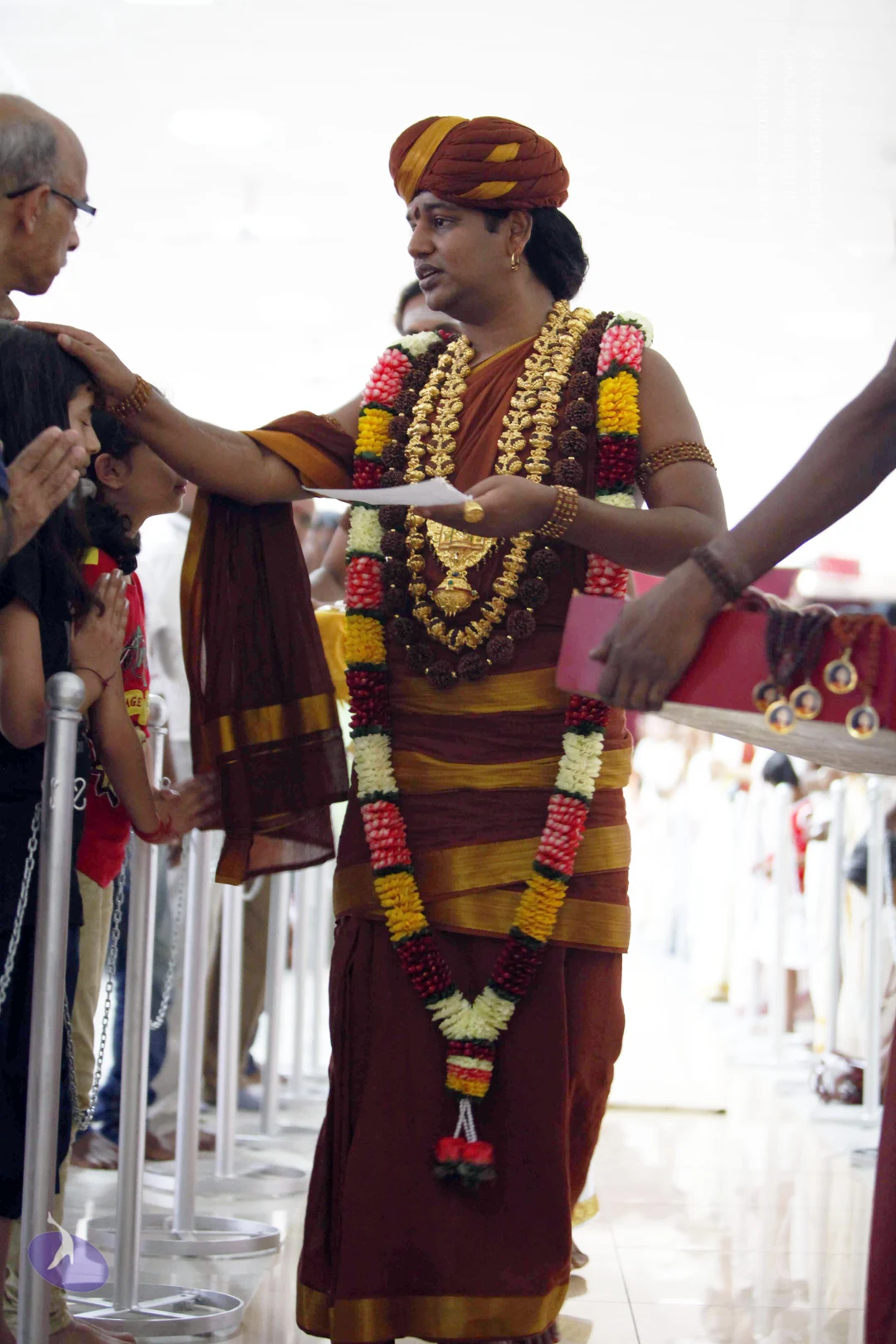
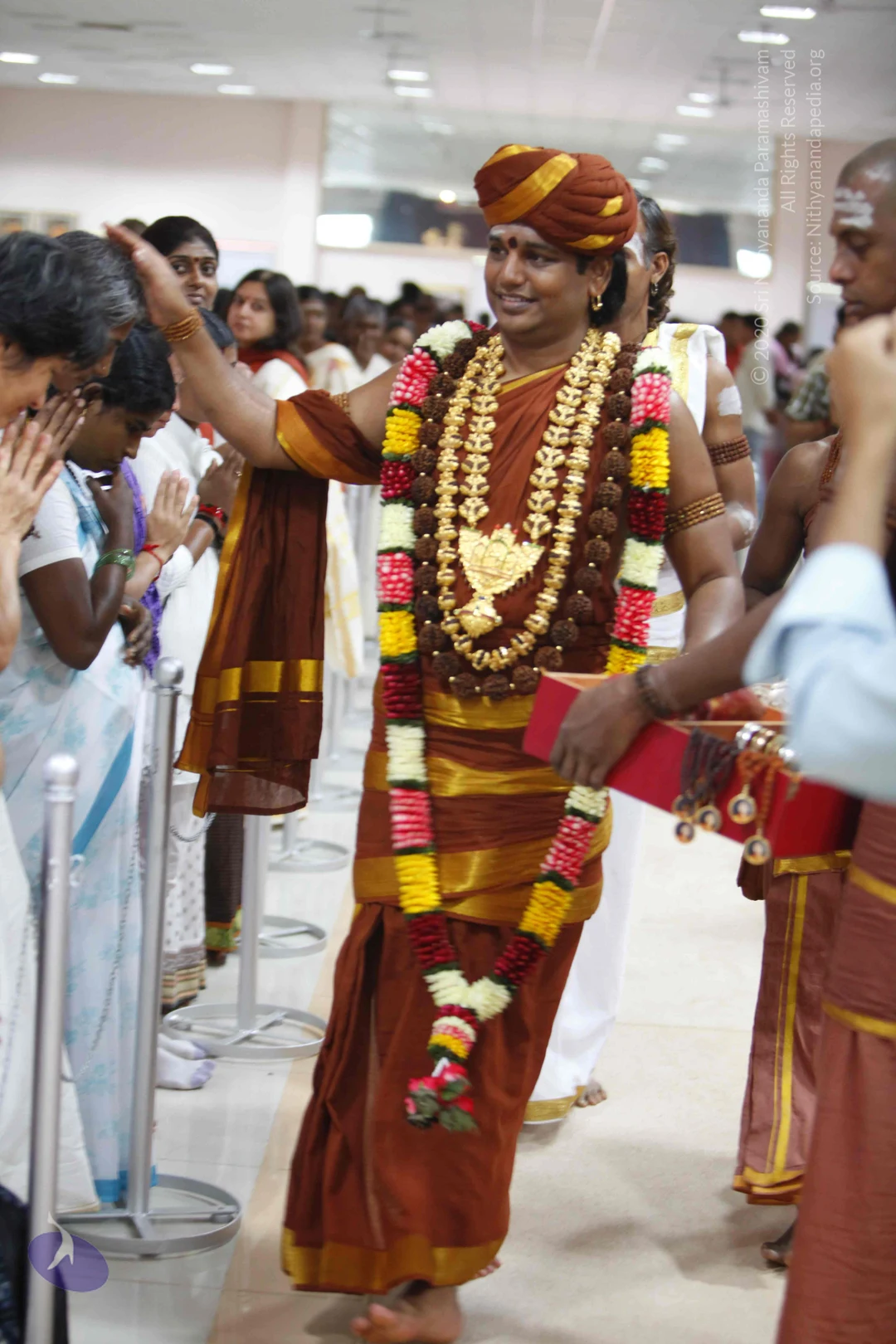
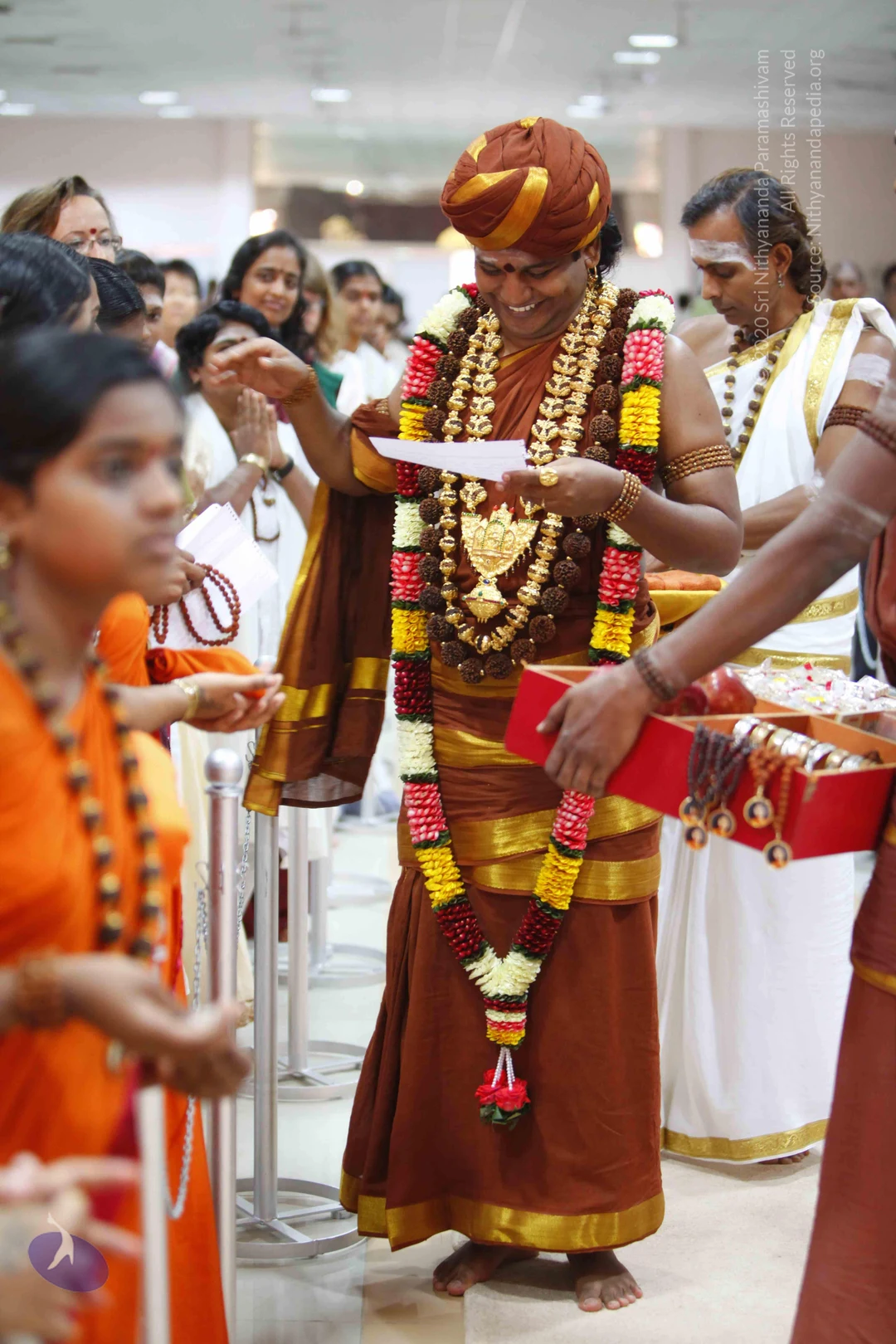
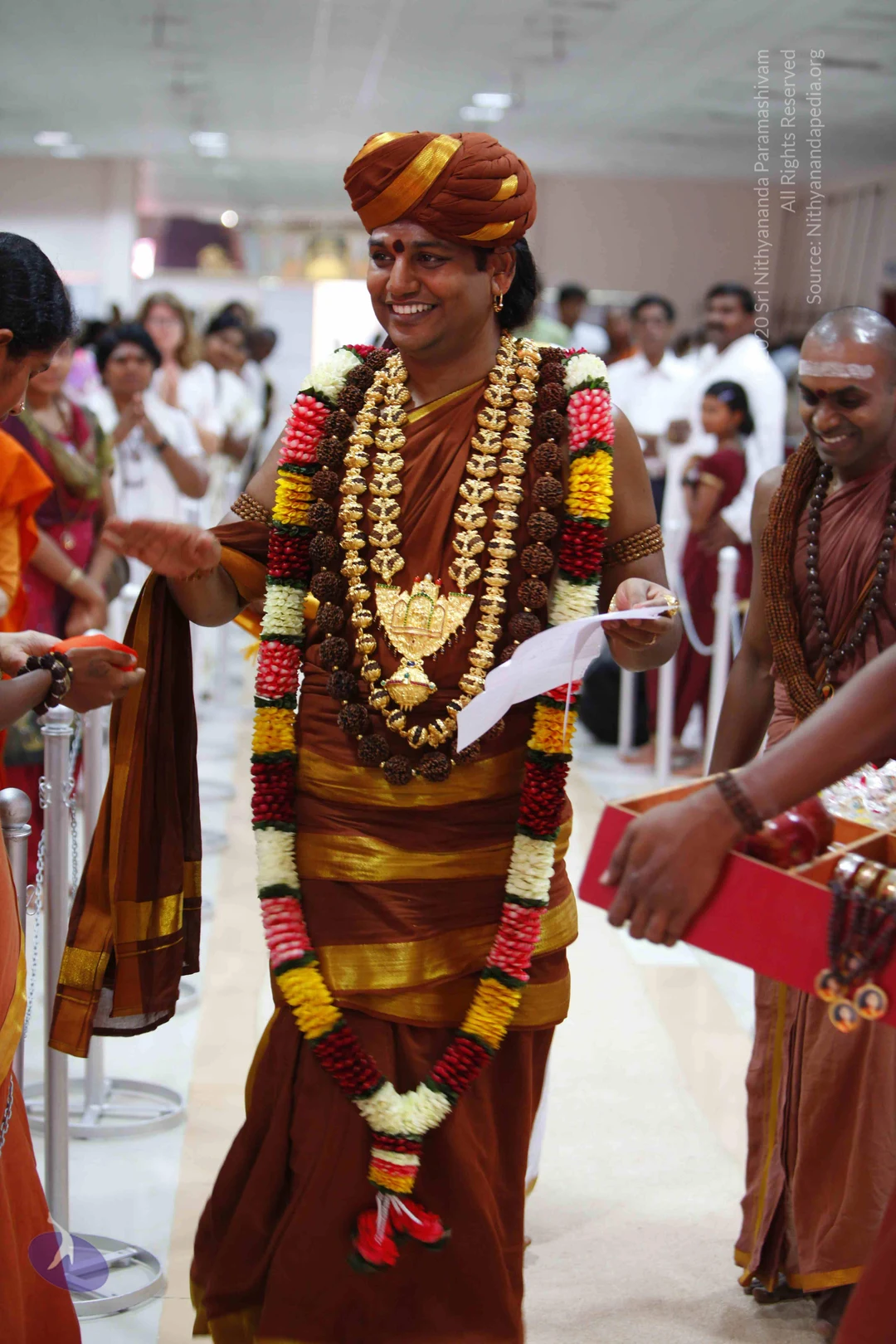
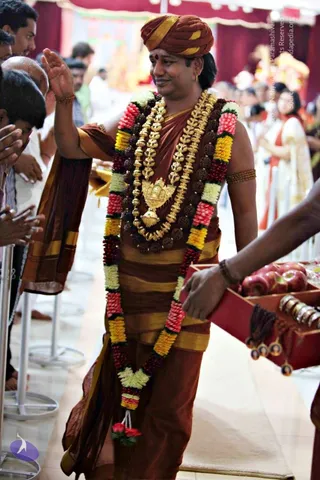
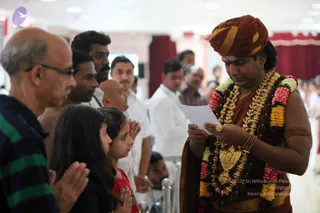
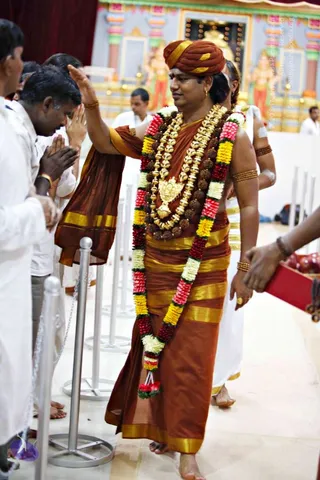
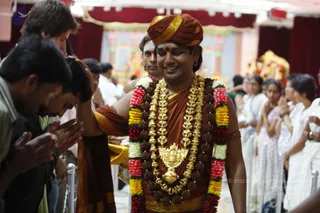
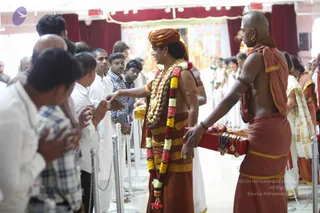
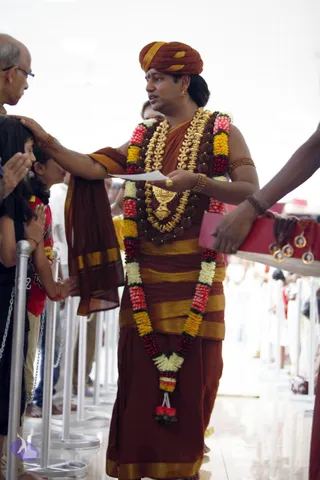
A procession inside a covered hall with a red-carpeted walkway and metal railings. In the centre, a man with swept-back dark hair and a red bindi wears a saffron-orange dhoti with a golden border and a long garland of marigolds and rudraksha beads with a gold pendant; his bare arms carry gold bangles. Behind him, a young attendant in orange holds a brass kalasha-style tray with yellow flowers and a green leaf arrangement. Around them, several young participants in red and orange saris and dhotis, many with white tilak marks and rudraksha malas, walk along; a woman at left holds a dhol-style drum and two others raise long curved brass horns. The procession suggests a ritual walk, possibly ratha or aarti-related, but the scene shows only the walking participants.A man in a rust-brown turban and matching brown dhoti with gold borders walks through a crowd, smiling and raising one hand in greeting. He wears layered garlands of red, yellow and white flowers, multiple strands of gold beads, and rudraksha malas, with a gold pendant at his chest. Devotees line the rope barrier on the left, and on the right an attendant holds a red tray of apples and small framed pendants. Red drapes and a decorated background suggest a temple or ashram hall. Swamiji (probable): the visible cues are the rudraksha malas, ceremonial gold necklaces, ornate garlands and turban, and he is being greeted by devotees as an honoured guest.A photograph of a ceremony in a bright hall with red curtains. A man in a rust-orange turban and orange-brown dhoti-style cloth stands at right, reading from a sheet of paper in both hands. He wears long multi-strand gold and brown beaded necklaces, a gold pendant, a rudraksha-style mala, pink and yellow flower garlands, and a beaded armlet. Several people stand at left with palms pressed together in namaste, including a bald older man in glasses and a striped navy-green shirt, a man in a dark shirt, and two young girls in dark and red tops. Other people in white and light clothing stand behind them.A barefoot man in a rust-brown turban and rust-brown dhoti with gold borders walks down an aisle lined with silver stanchions, raising his right hand in blessing toward devotees on the left. He wears layered gold necklaces, a large gold pendant, rudraksha beads, and a multi-coloured garland of red, yellow and white flowers draped across his chest. Gold armlets and bangles are visible on his arms. Behind him, a man in white ritual clothes follows. On the left, devotees in white clothes stand with palms pressed together in namaskar. Gold-painted deity figures and pillars decorate the temple hall behind them.A photograph of a smiling man in an orange-brown turban and brown-orange dhoti-style wrap, wearing layered rudraksha malas, a large gold necklace with a central pendant, and thick garlands of red, yellow and white flowers draped over his shoulders and arms. He stands in a procession-like walkway, with a man in front bowing with palms pressed together while another man leans forward to touch his head. Several people in white clothing stand along the sides with hands folded in namaste. Behind them are pink and red drapes and a decorated altar with golden ornaments and flowers. Swamiji (probable) cues: turban, rudraksha malas, ornate gold necklace and saffron clothing, with the figure receiving devotees' reverence.A photograph of a temple or ashram hall where a man in a saffron-orange turban and orange-brown robe stands at center, wearing a long garland of white, red and yellow flowers over a rudraksha mala with gold beads and a gold necklace. He extends his hand toward a row of devotees on the left, many with palms pressed together in namaskar. A second man in orange-brown dhoti, bare-chested with a shawl over his shoulder, holds a red tray with fruit, flowers and small items. Devotees in white shirts and dhotis stand behind metal barrier posts. A red and gold backdrop with a deity murti or temple decoration is visible behind them. Around 15 to 20 people are visible.

Final_Blessing

4 photosSource gallery
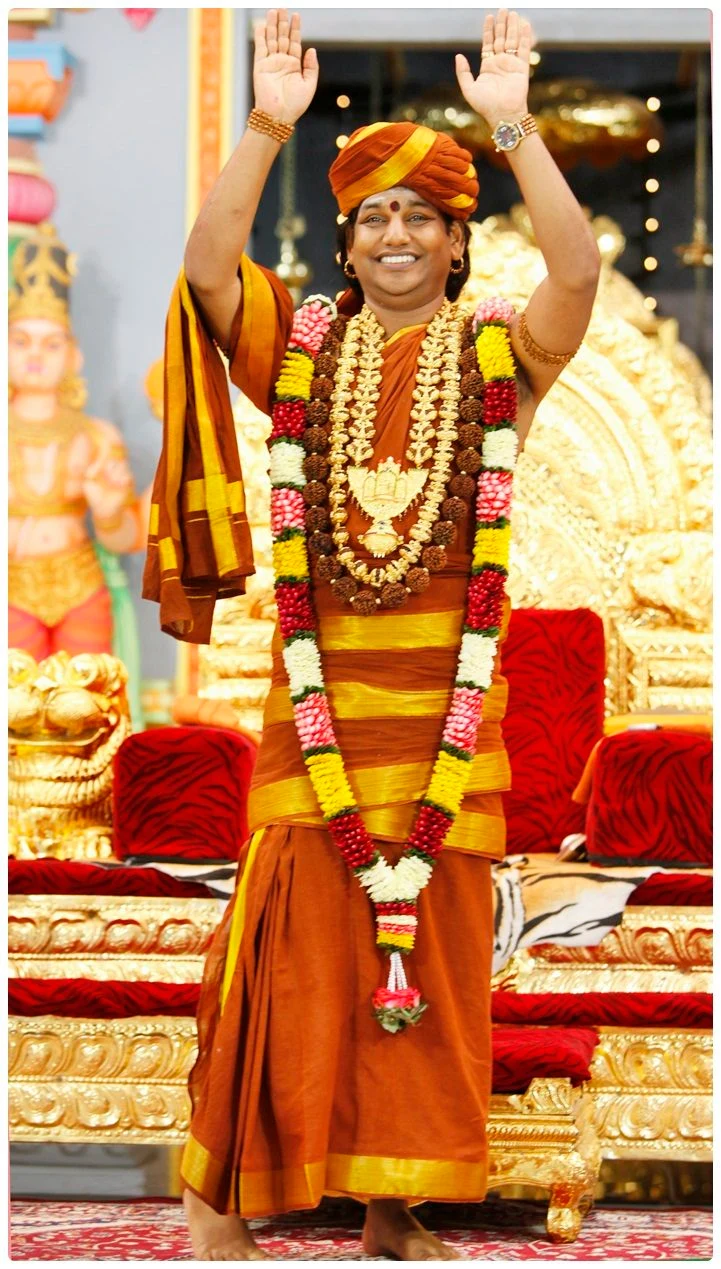
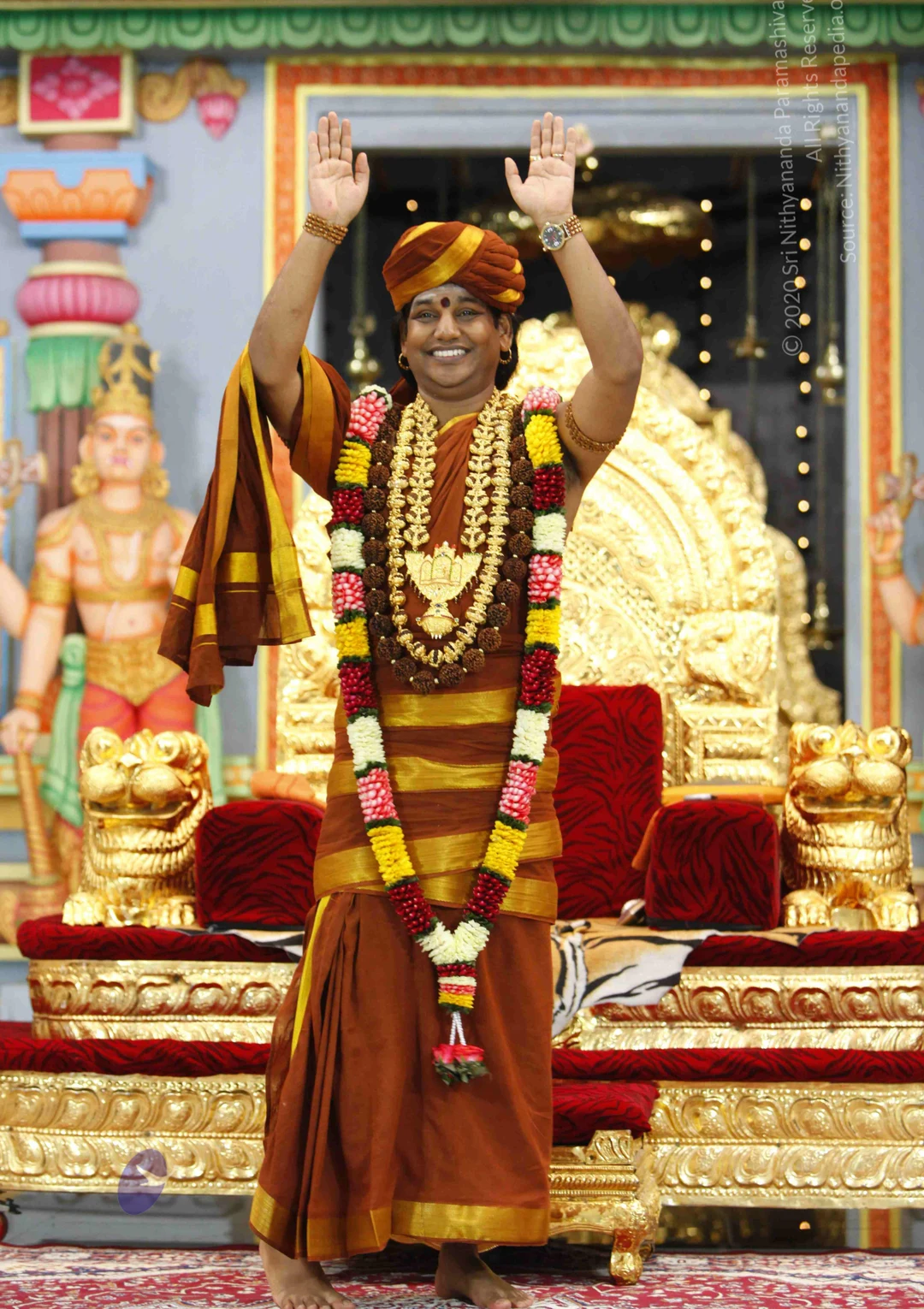
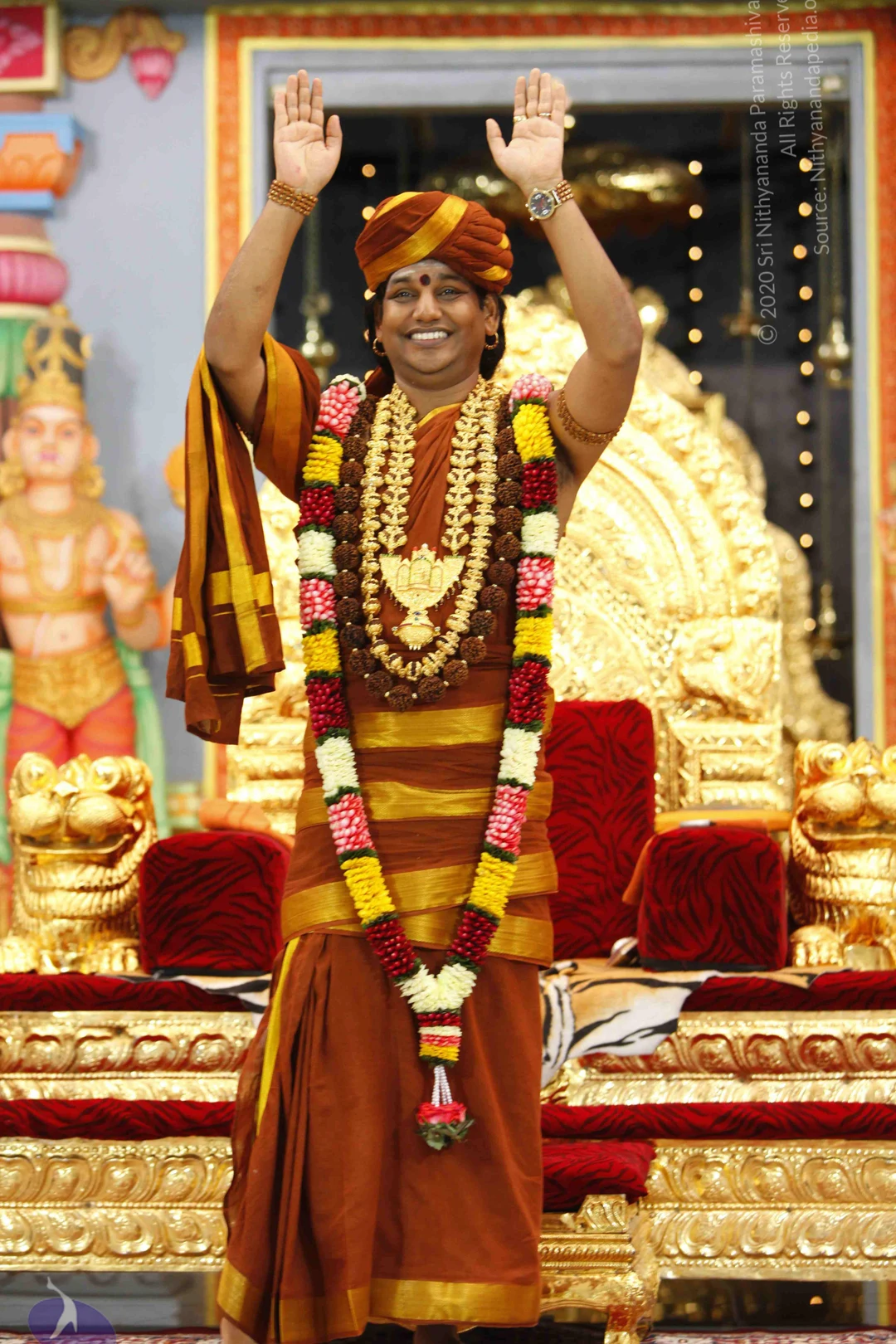
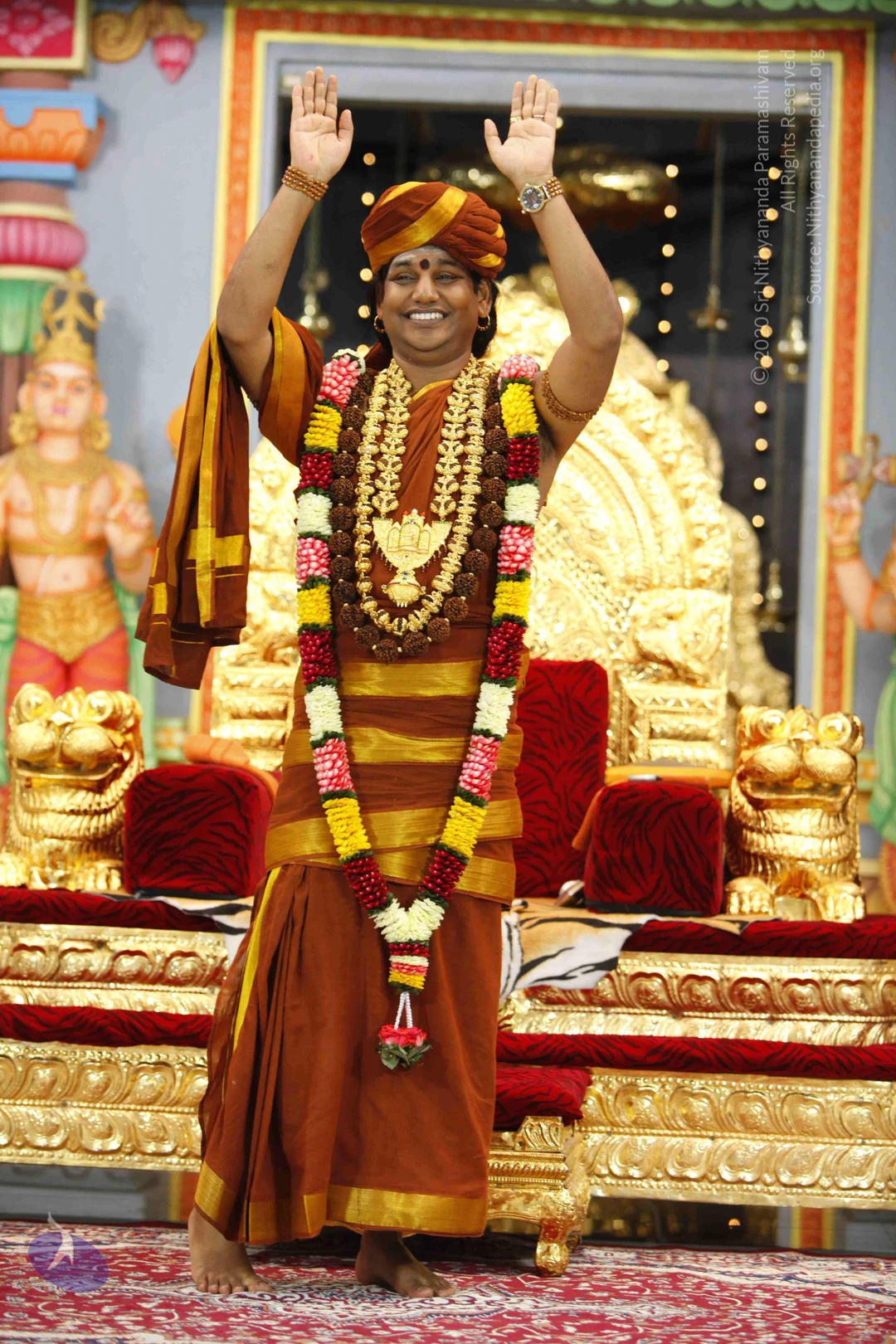
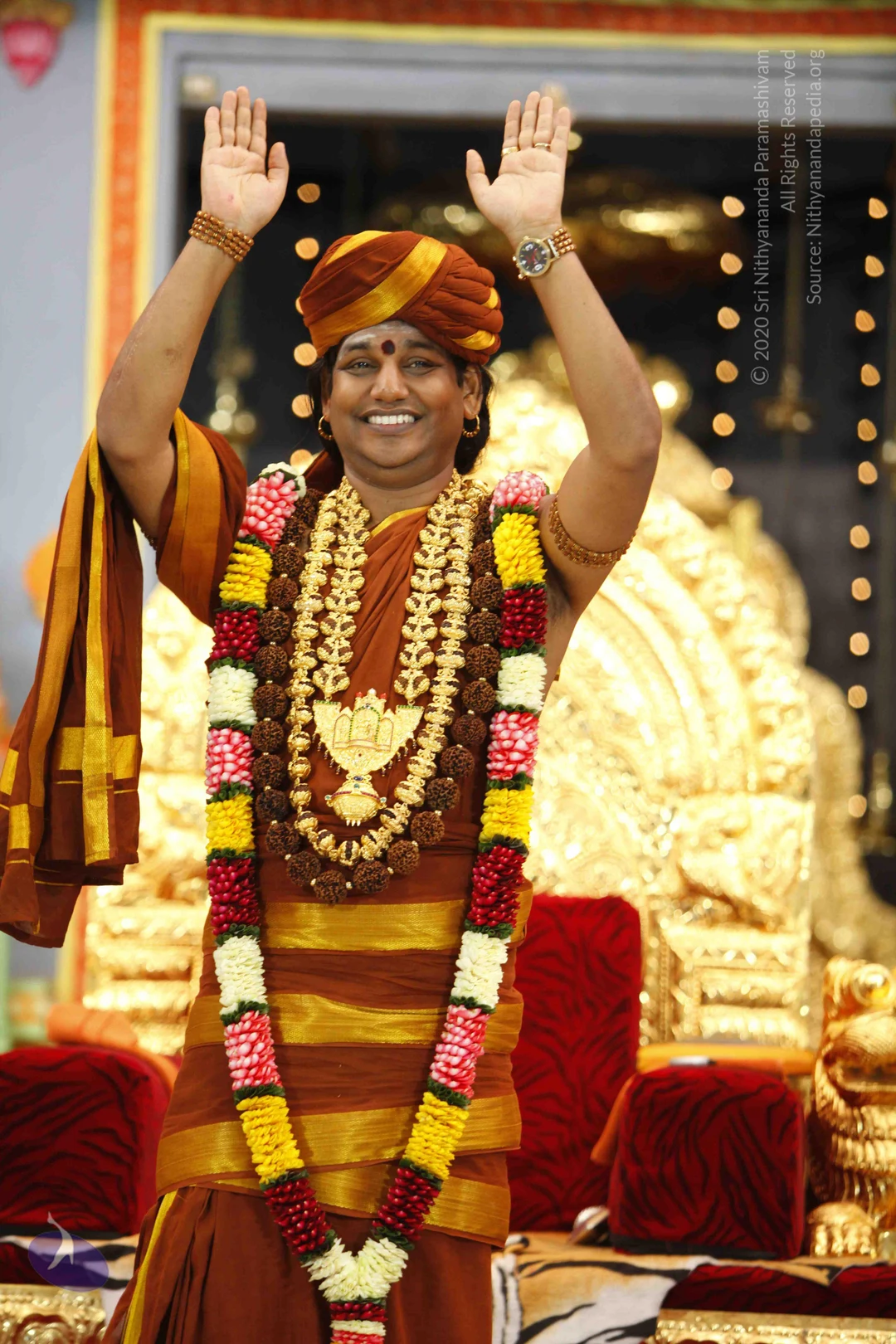
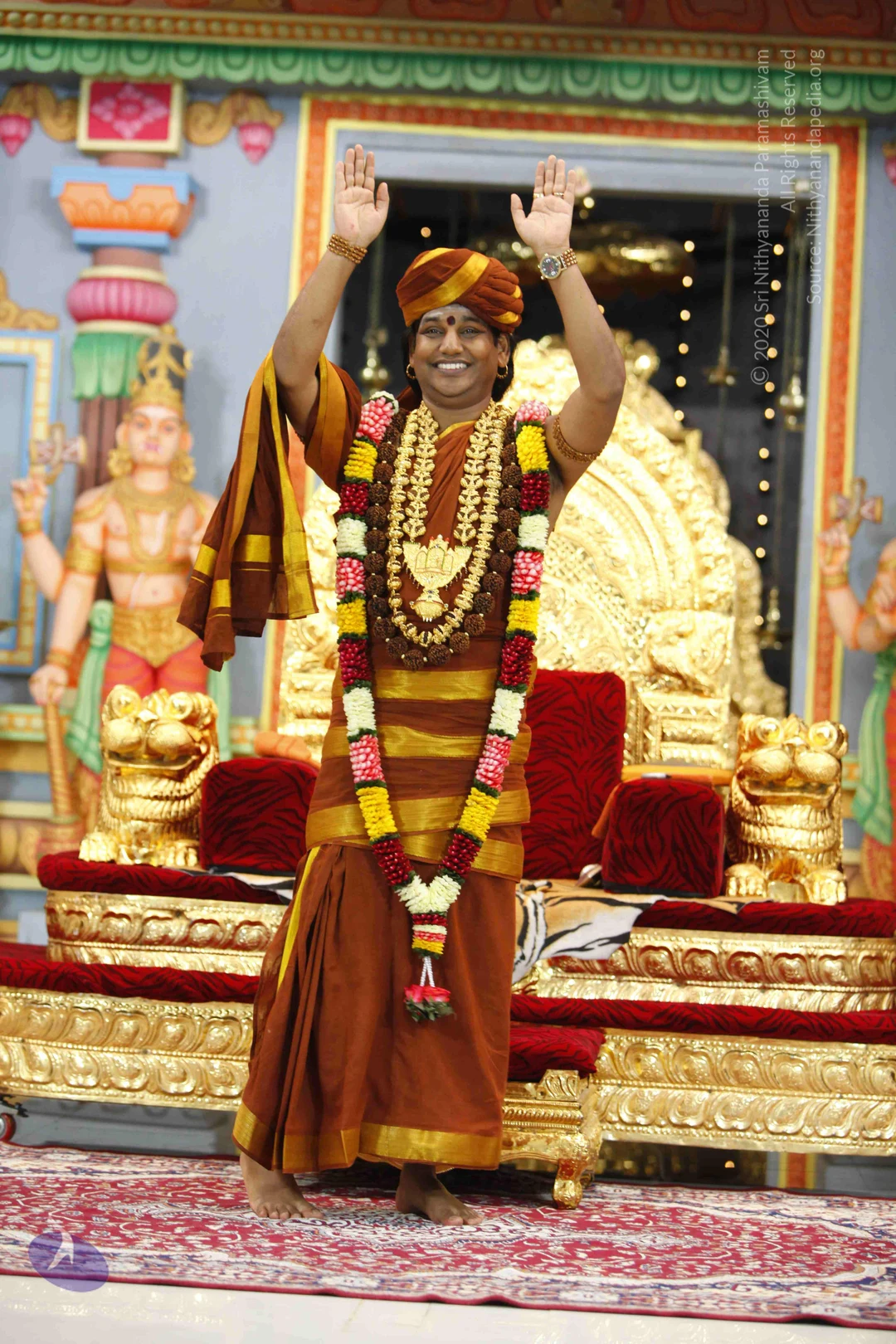
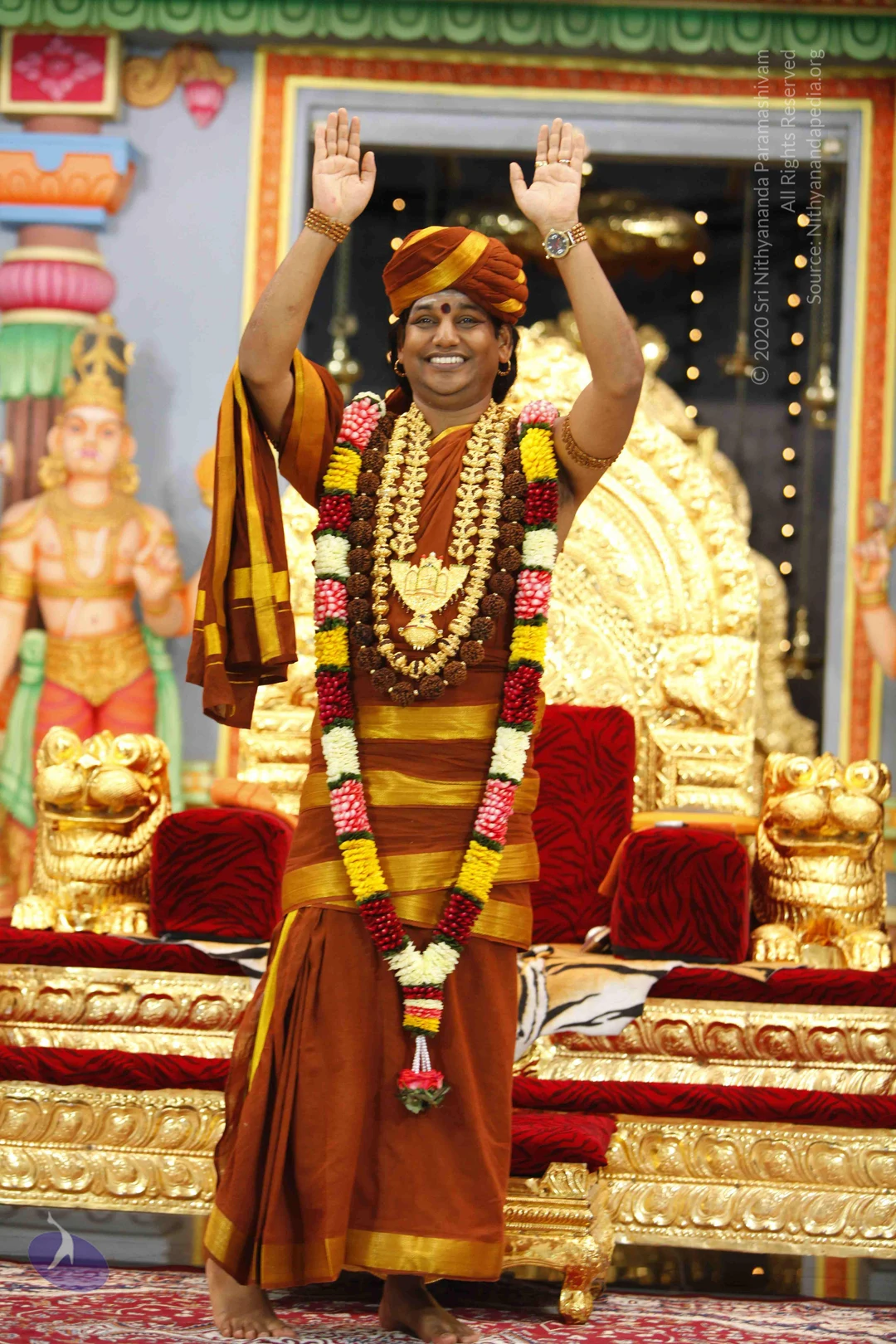
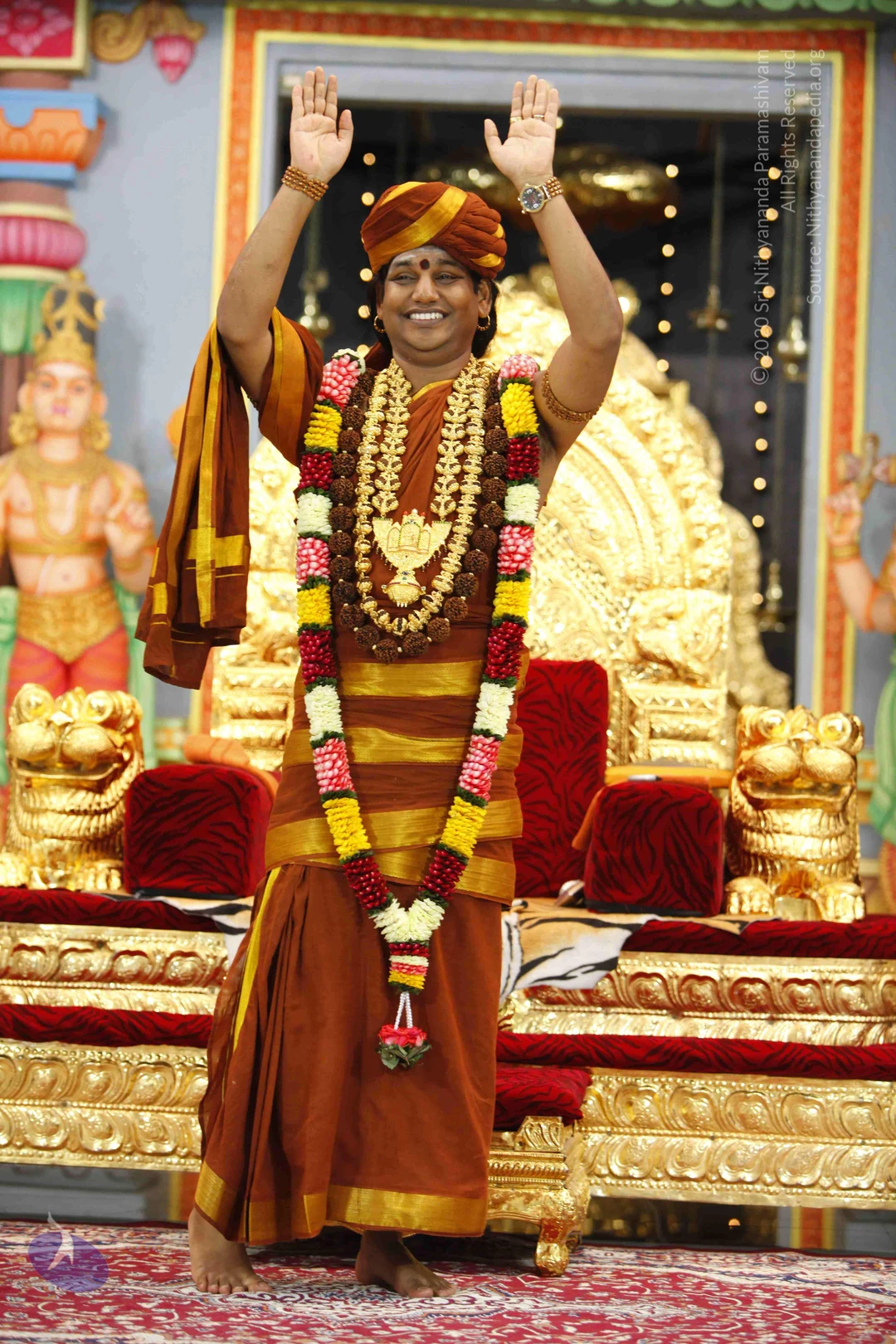
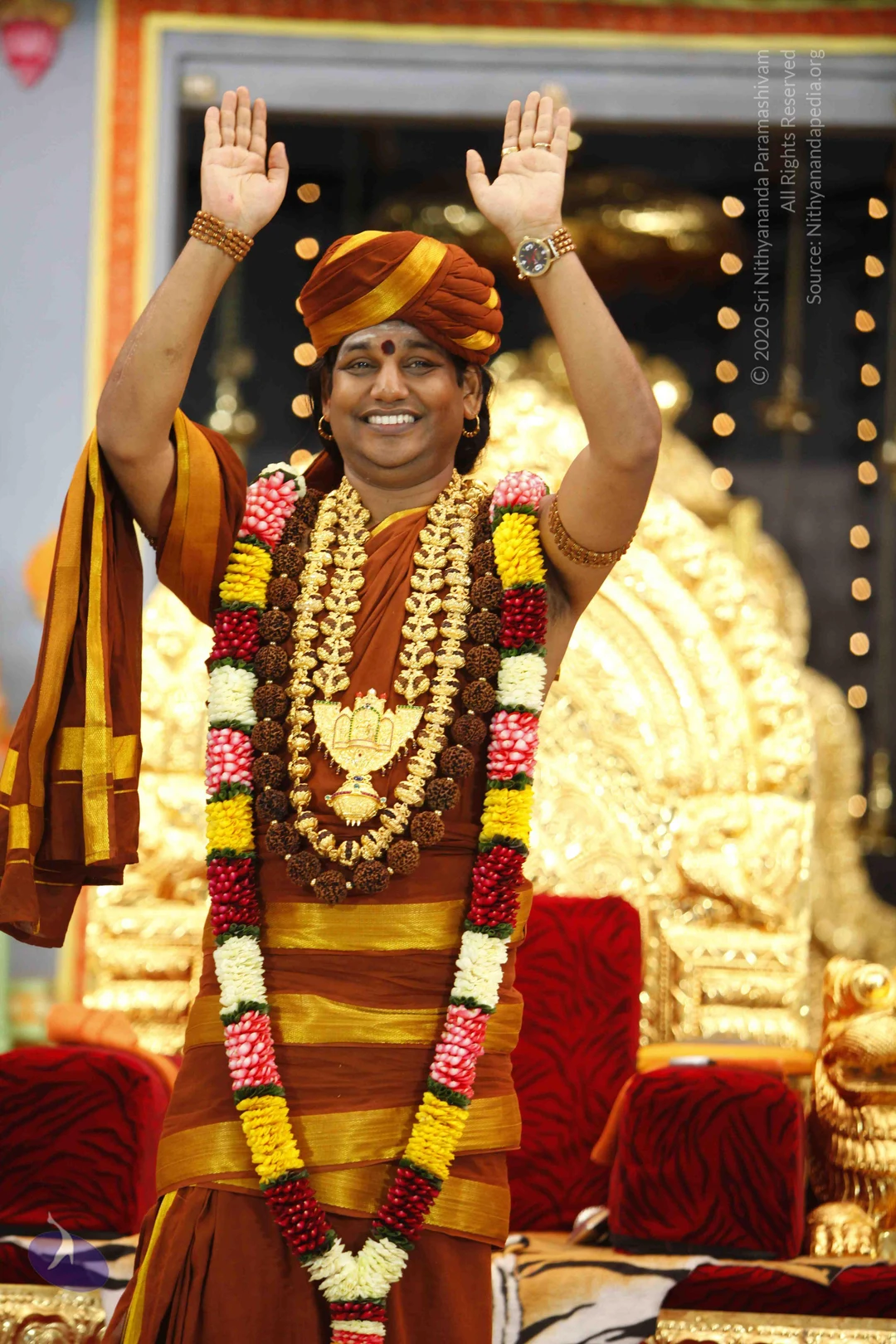
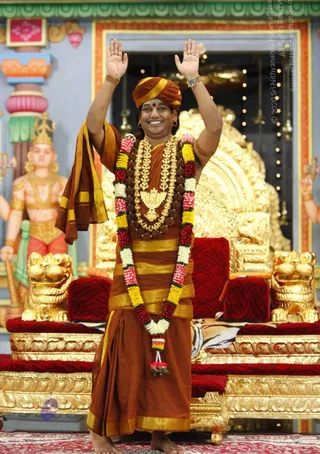
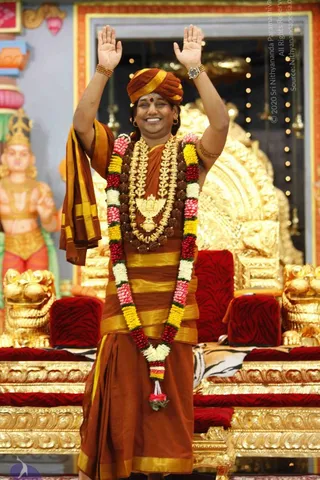
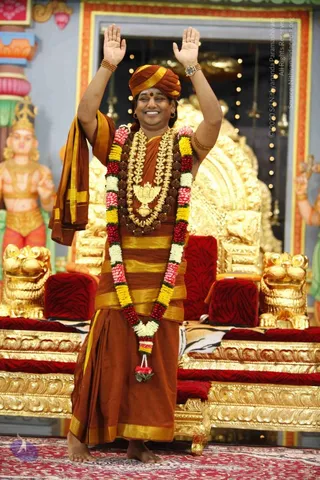
A smiling man in a rust-brown turban with a red bindi stands barefoot with both arms raised in greeting before an ornate golden throne with red velvet cushions and gilded lion heads. He wears a brown-and-gold draped robe, a multi-strand rudraksha mala with a gold pendant, a long garland of red, yellow and white flowers, gold bangles and a wristwatch. Behind him a painted deity statue with a crown and golden ornaments stands beside a gilded arch and hanging brass lamps. Red and gold tones dominate the temple-like hall.A smiling man stands in front of a golden throne with both hands raised in greeting. He wears a rust-orange turban, an orange and gold-bordered garment draped over his shoulders and wrapped at the waist, a multi-strand rudraksha mala, and a long garland of red, white and yellow flowers. A gold ceremonial necklace with a central pendant hangs on his chest, and a red tilak marks his forehead. Behind him are a gold-carved throne with red cushions, lion-shaped gold armrests, and a painted deity statue in a red and gold dhoti at left. Warm lights hang in the background. An appearance-based probable Swamiji candidate is present, identified by the turban, rudraksha mala, ceremonial gold necklace and garland cues, standing before the throne.A smiling man stands barefoot on a red patterned carpet with both arms raised in greeting. He wears an orange-brown turban, a rust-orange robe with gold borders, a multi-strand gold necklace with a central gold pendant, rudraksha beads, and a long garland of pink, red, yellow and white flowers. A red dot marks his forehead. Behind him stands an ornate gold throne with red velvet cushions and gold lion-head armrests, beside a painted deity figure with a gold crown. The appearance of the man matches the Swamiji (probable) cues: a saffron turban, ornate gold ceremonial jewellery and rudraksha malas, with the page indicating his presence at this satsang.A smiling man stands with both hands raised in greeting before a gilded ornate backdrop with a golden throne and red velvet tiger-striped seats. He wears a rust-orange and gold turban with a red bindi, a rust-orange robe with gold borders, a multi-coloured garland of pink, yellow, white and red flowers, long gold chains, and a rudraksha mala, plus a gold bracelet and a wristwatch. Appearance-based probable Swamiji cues: ornate saffron-toned clothing, turban, ceremonial gold necklaces and rudraksha malas; the page names him as present.

Swamiji_Deities

6 photosSource gallery
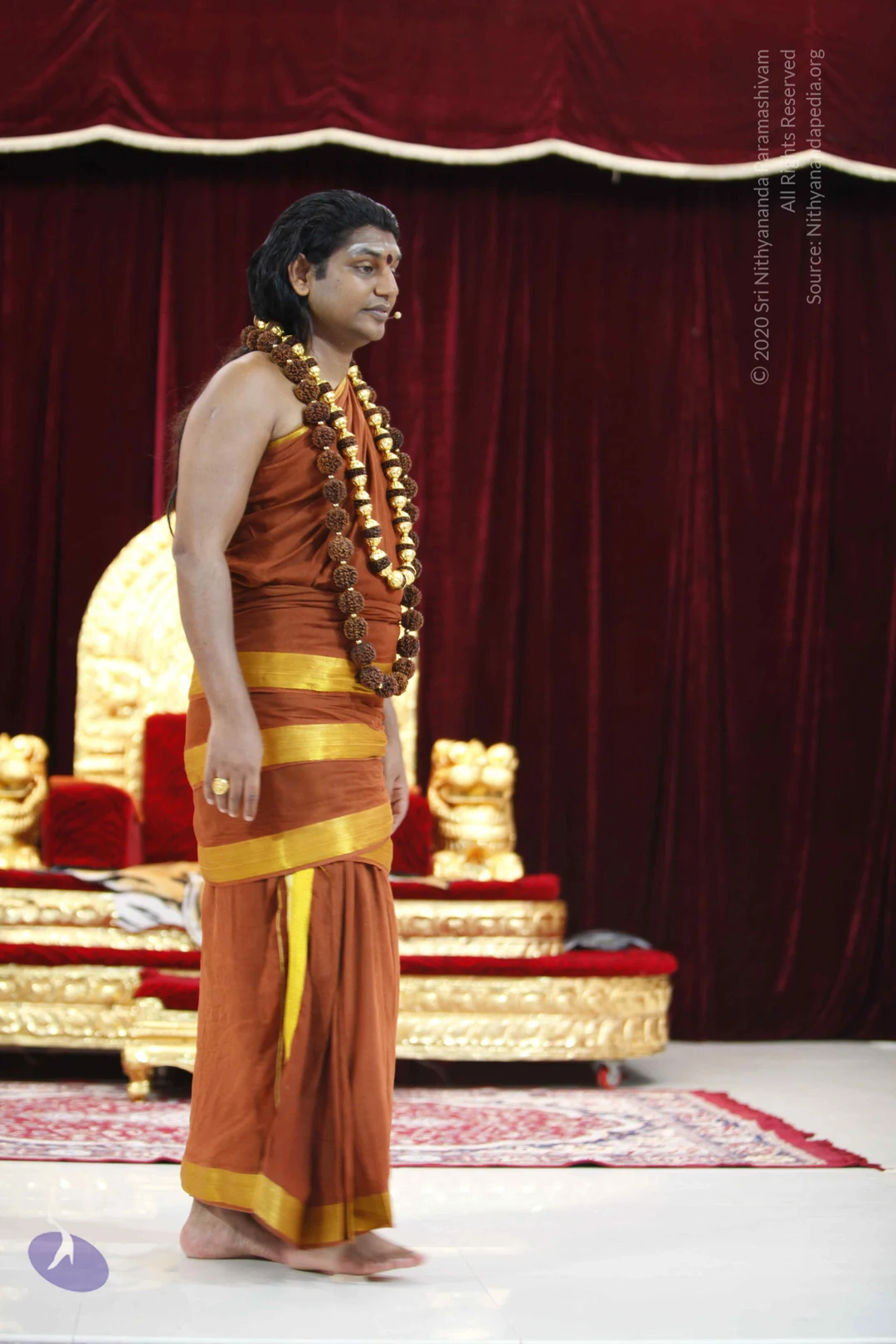
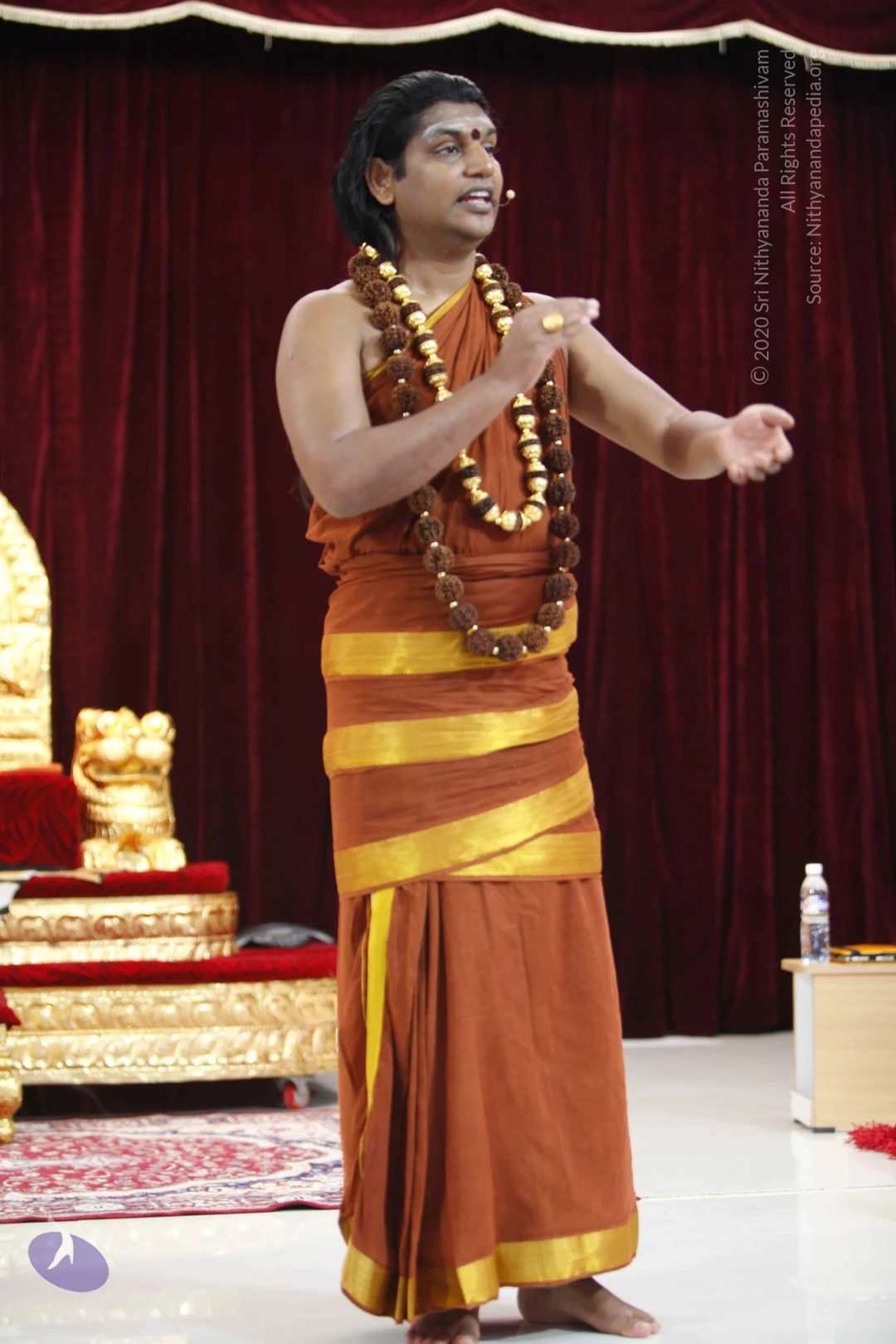
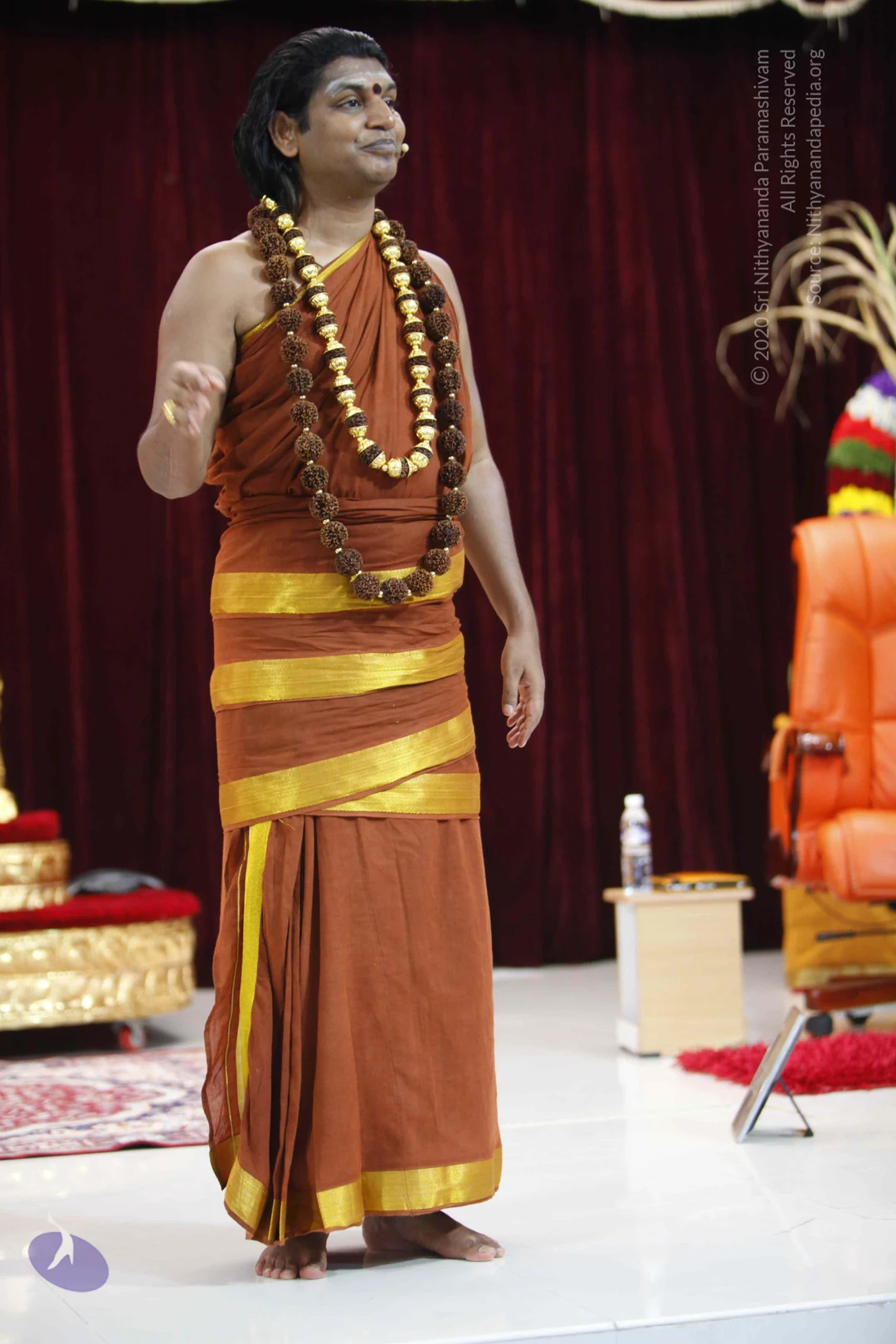
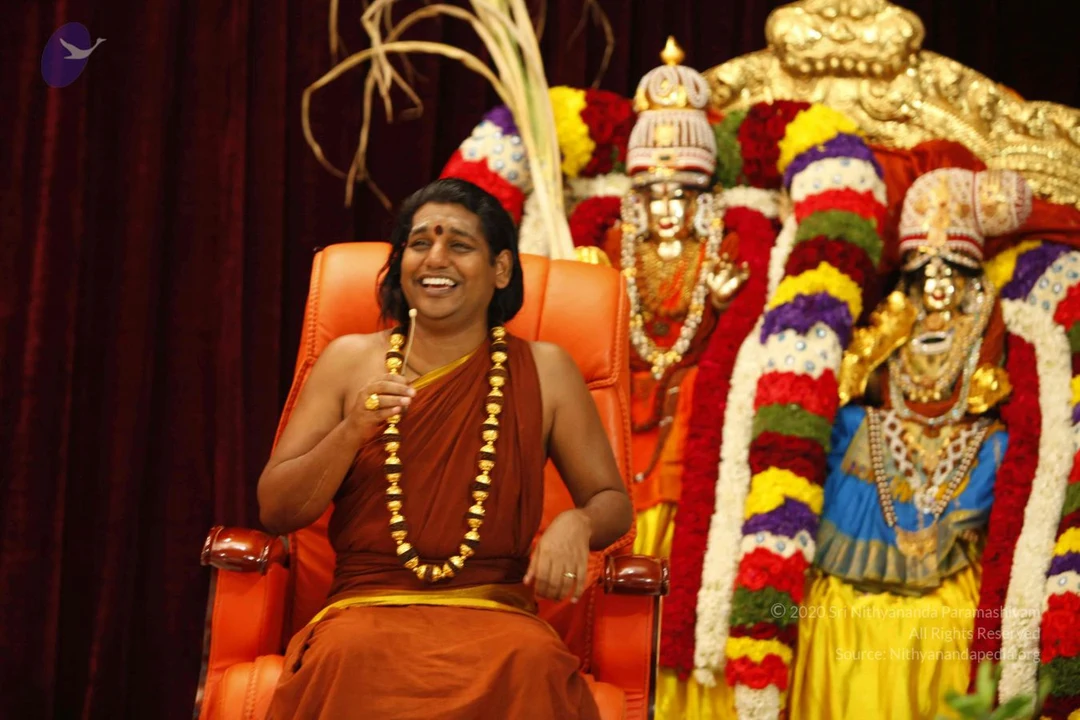
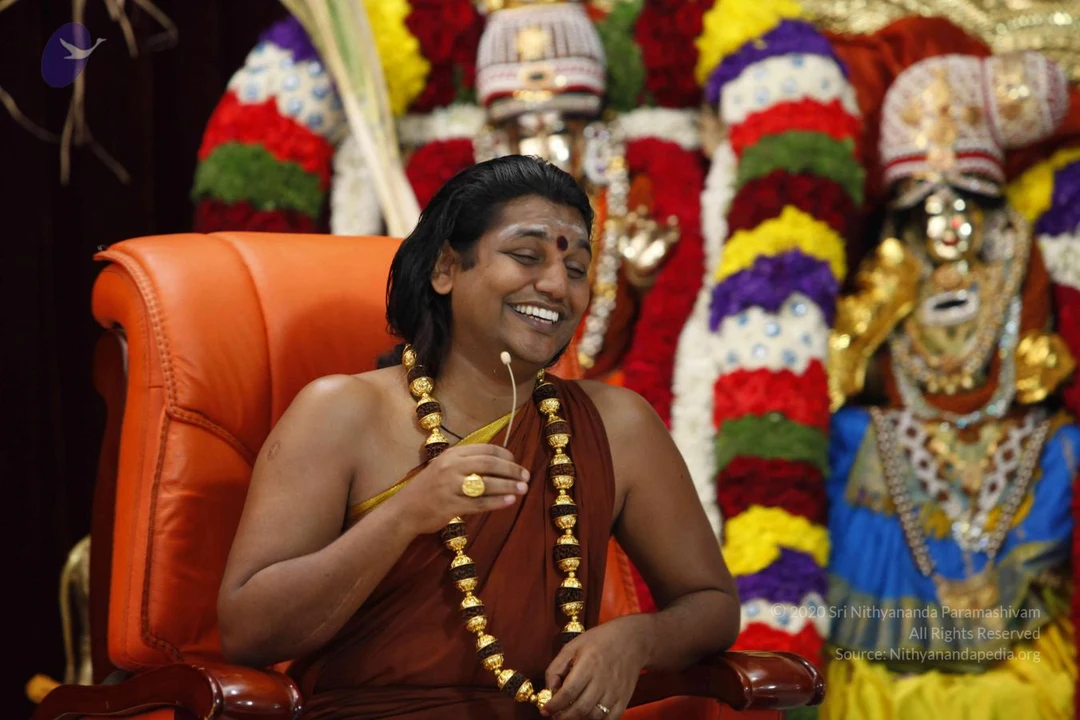
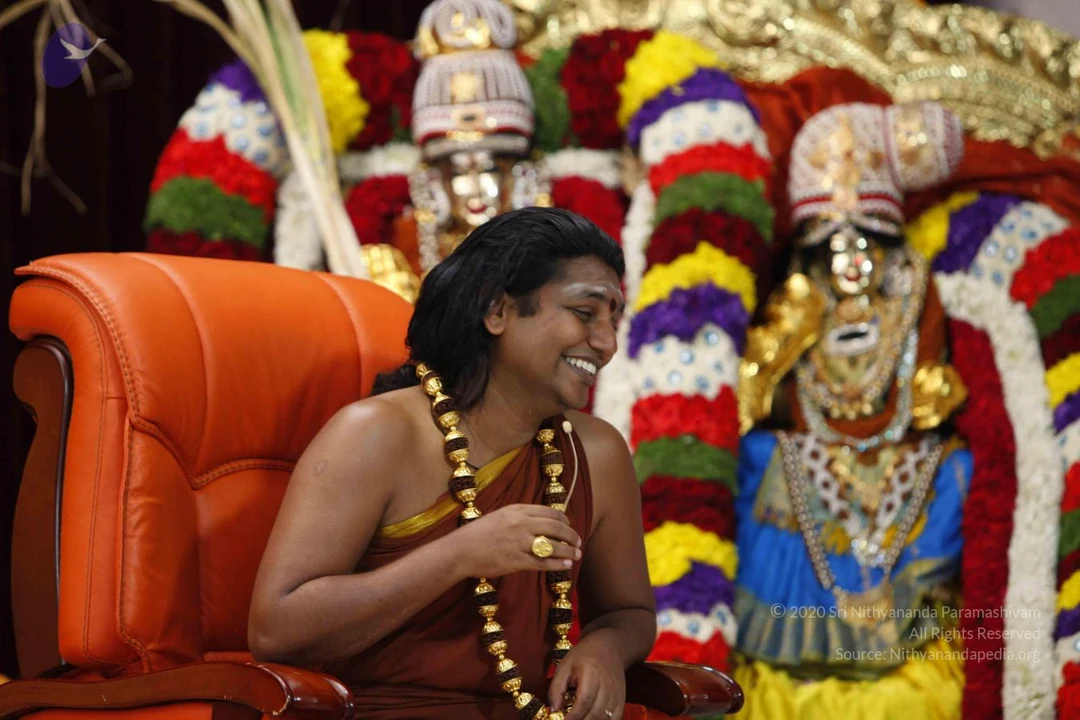
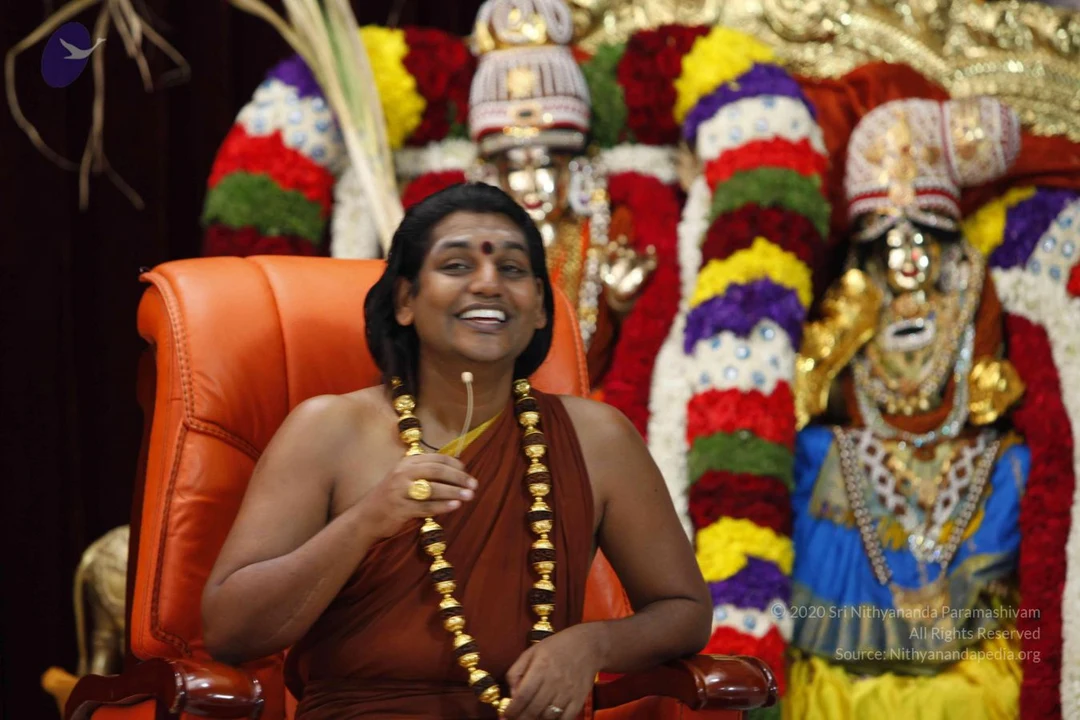
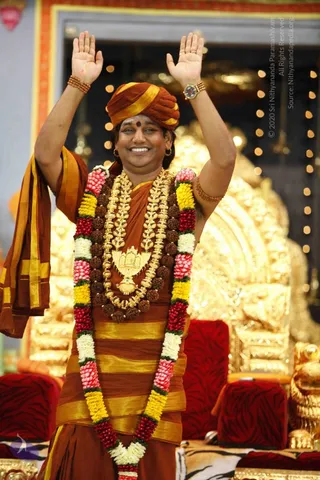
A standing man in an orange-brown turban and matching orange-brown dhoti with gold borders waves to the audience on a white stage before dark red velvet drapes. He wears a long layered garland of red, white, yellow and green flowers, rudraksha beads and a gold pendant. Beside him, two large decorated deity murtis sit on a golden throne, adorned with flower garlands, a sugarcane stalk, and a brass elephant figure at the base. The murti on the left wears an orange blouse and yellow skirt, while the murti on the right wears a blue skirt and gold crown. A green potted plant sits in the foreground.A photograph of a standing man in an orange-brown saffron-toned dhoti and shawl, wearing an orange-and-gold turban, a heavy gold necklace, a rudraksha mala and a multicoloured flower garland. He raises one hand in greeting on a stage with dark red velvet curtains. Beside him stand two large ornately dressed deity murtis on a gold-framed throne draped with garlands in red, white, yellow and green; one wears a yellow sari with blue, the other a yellow-and-orange outfit, with a small golden elephant figure and a tall sugarcane stalk in front. Appearance-based probable Swamiji cues are present: saffron-orange clothing, a turban, rudraksha and gold necklace.A man stands on a stage in front of a deep maroon curtain, waving his right hand with a smile. He wears an orange-brown turban, a saffron-orange shawl over an orange-brown dhoti, and a long multicoloured garland of red, white, green, yellow and purple flowers, plus a gold ceremonial necklace and a rudraksha mala. Beside him sit two decorated deity murtis on a golden peetha throne with a garland-draped canopy: the left figure wears an orange and yellow garment and gold jewellery, the right wears a blue garment with gold necklaces and a pink crown. A brass elephant figure stands on a golden stool in front, with a green plant at lower right.A standing man in an orange-and-gold dhoti and orange turban waves with his right hand, wearing a gold-and-white garland, a large rudraksha mala and a gold pendant. Beside him, two deity murti statues are dressed in multicoloured flower garlands with white and yellow blooms, a yellow silk skirt, orange and blue cloth, and gold ornaments. A small brass elephant and a sugarcane stalk stand near a gold-coloured throne backdrop, with a maroon curtain behind.A standing man in an orange-brown turban and rust-orange robe with gold border waves his right hand on a white stage before a deep maroon curtain. He wears a gold-and-flower garland, a rudraksha mala, gold bangles and bare feet. Beside him sits a large seated pair of deity murti in gold-framed throne with floral garlands: the left figure wears orange and a jeweled crown, the right in yellow and blue silk. A brass elephant, a sugarcane stalk and a potted plant in the foreground complete the scene.A standing man in a rust-orange turban and orange dhoti with a gold-bordered wrap waves his right hand on a white stage before a dark red velvet curtain. He wears a gold ceremonial necklace, a rudraksha mala, and a long multicoloured flower garland of red, yellow, purple and white blooms. Beside him sit two large decorated deity murti figures on a gold-framed seat: one in orange and yellow, the other in blue and yellow with an ornate crown. Both are draped in red, green and white flower garlands. A brass elephant figure and a sugarcane stalk stand near the seat, and a potted plant sits in the lower foreground. a person is the standing figure, shown here in a waving pose with the murti beside him.

IA_Day12

51 photosSource gallery
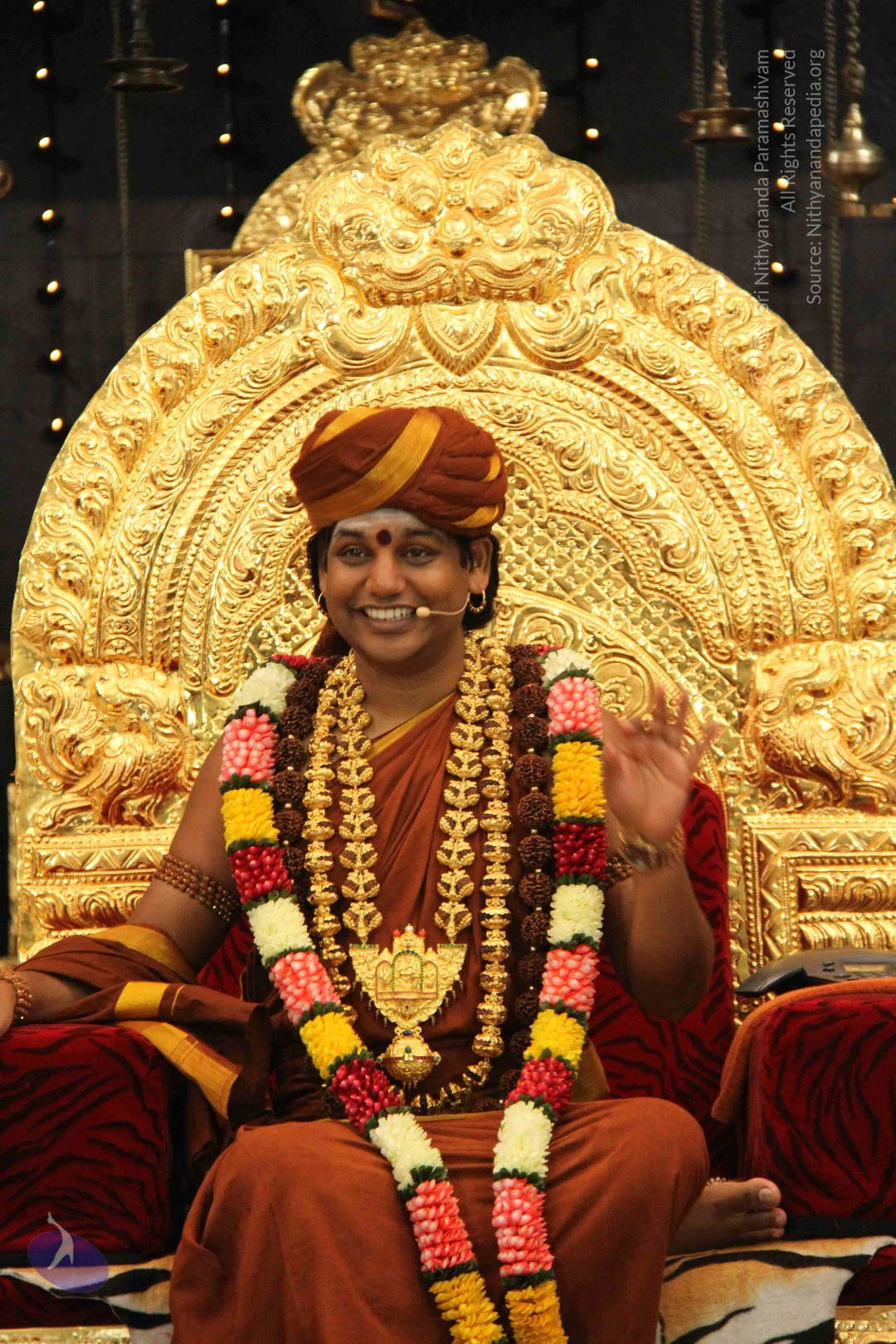
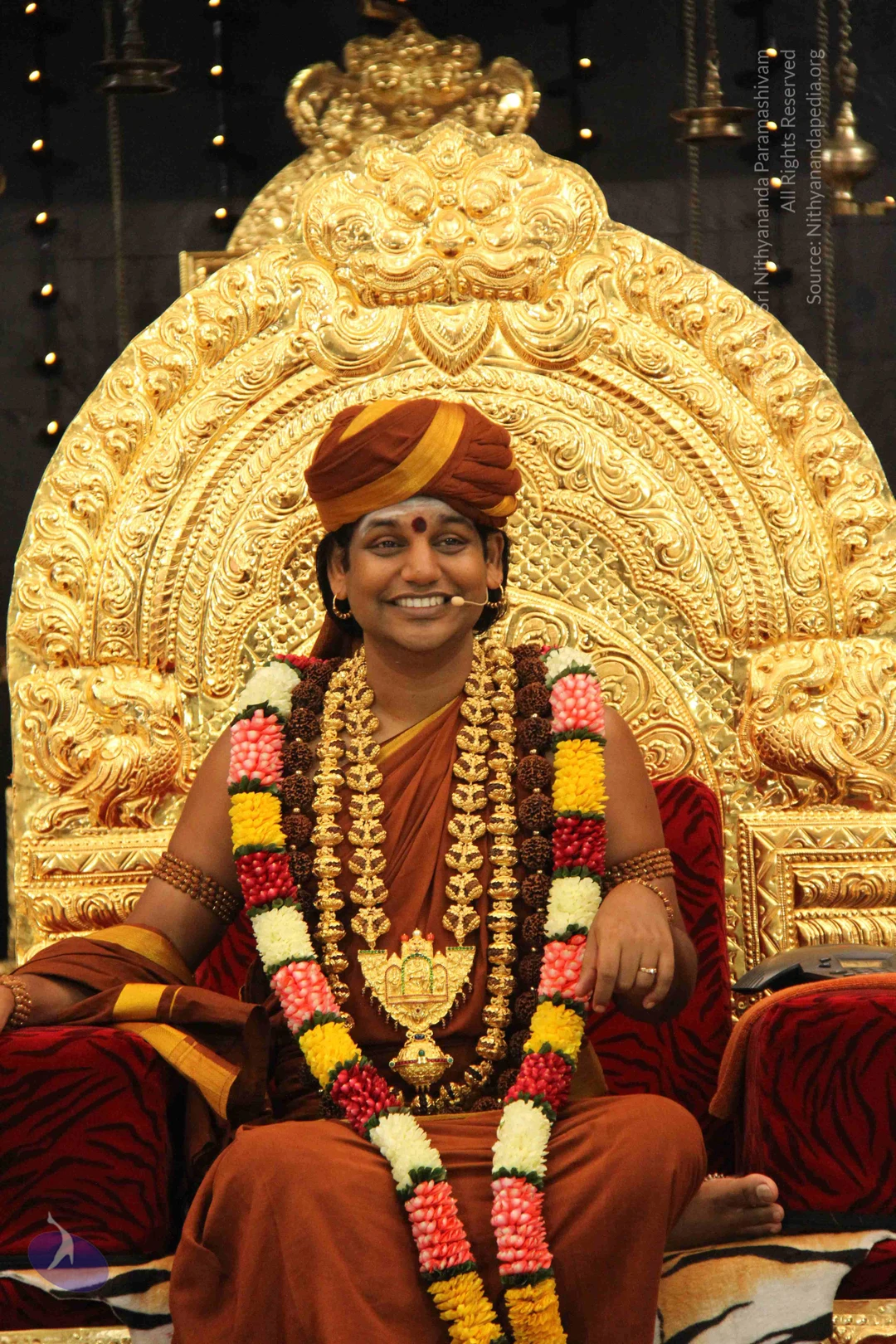
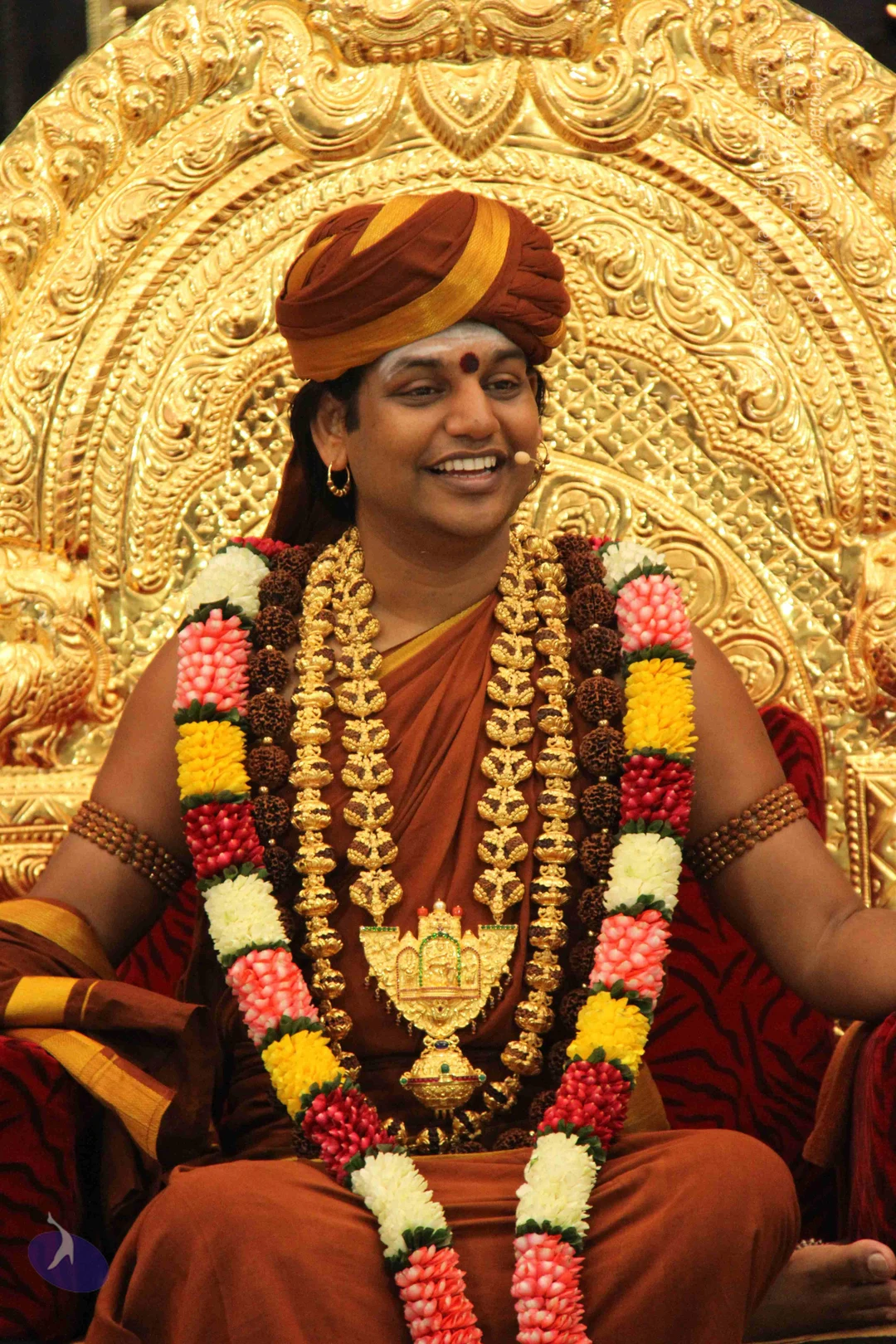
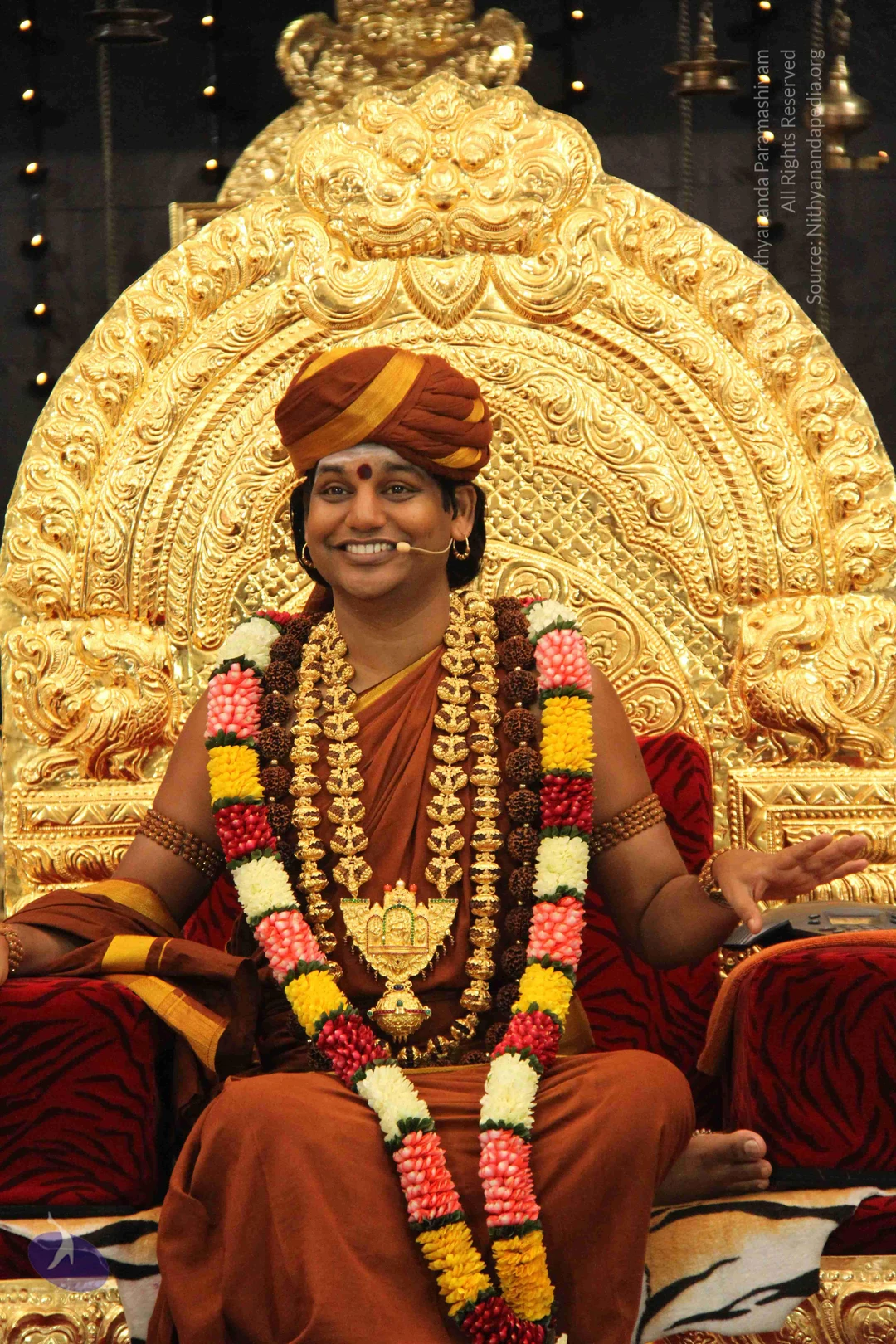
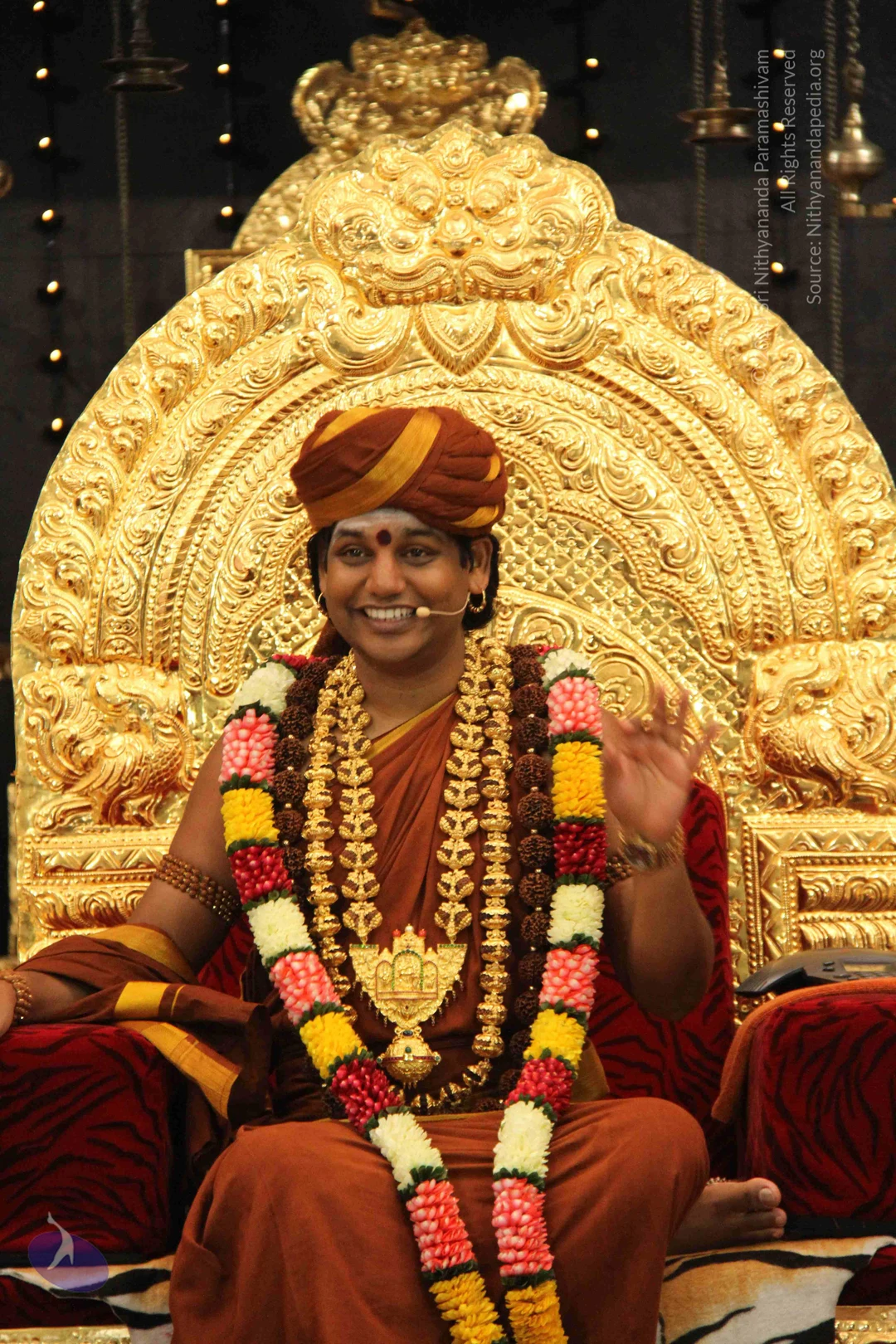
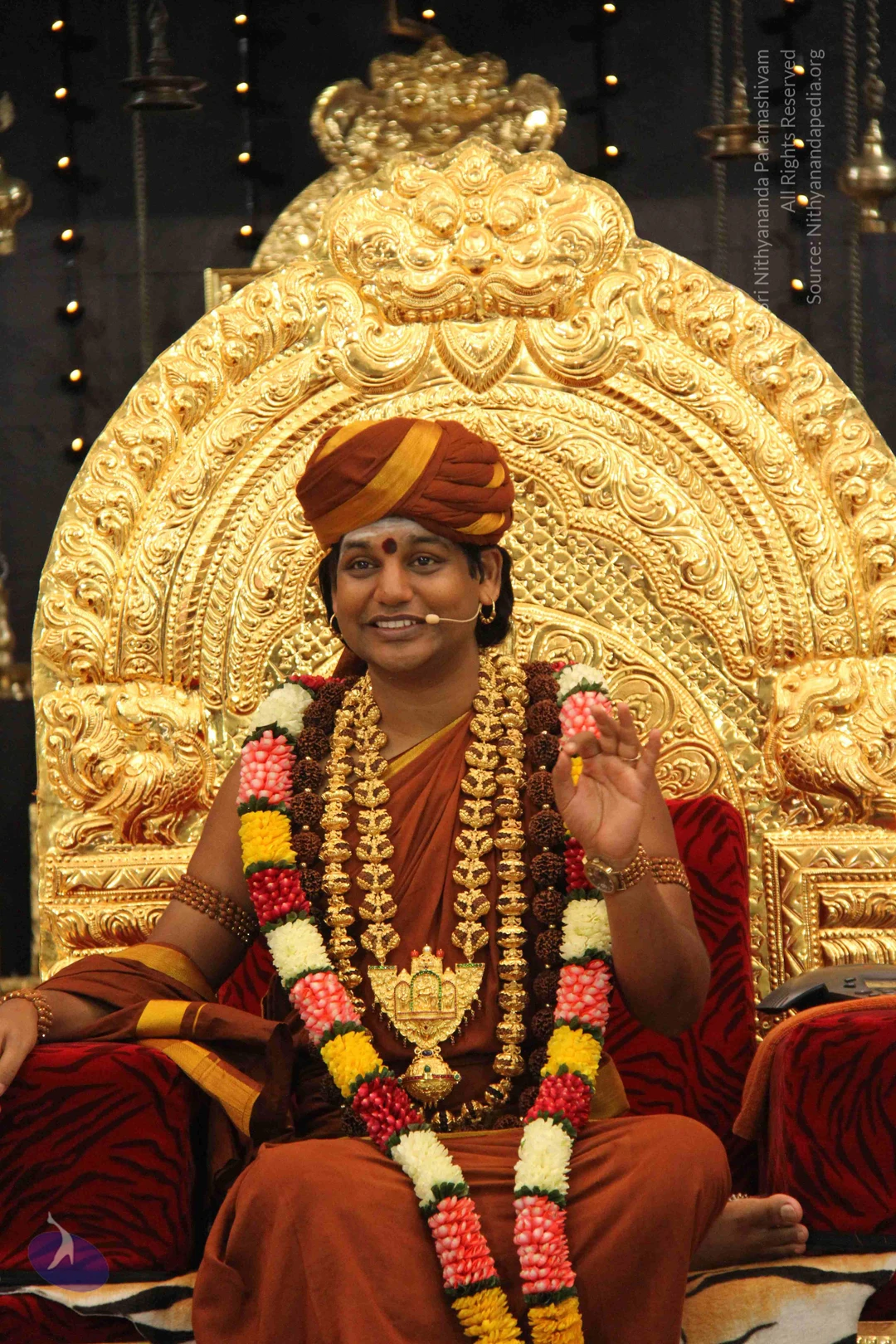
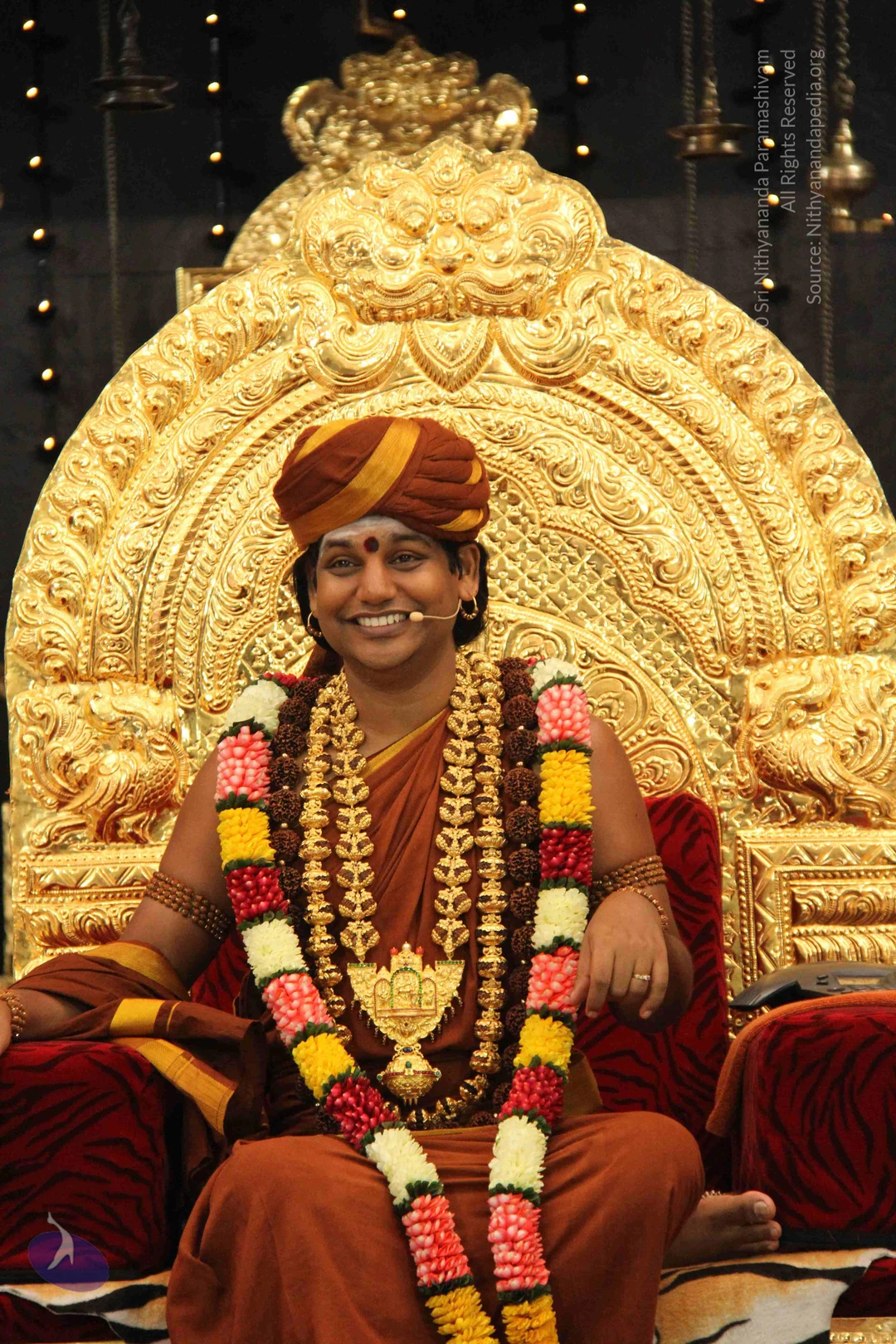
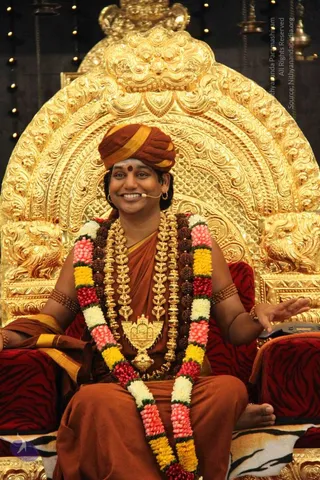
A smiling man sits on an ornate gold throne with a carved backrest and red tiger-striped cushions. He wears a rust-orange turban, orange robes, a gold pendant, layered gold chains, rudraksha malas on his neck and arms, and multicoloured flower garlands in pink, yellow, white and red. He has a red bindi and tilak, and a headset microphone, and he gestures with one open hand as if speaking to an audience. Lamps hang in the background.A smiling man in an orange-brown turban and matching saffron robes sits on an ornate gold throne with a carved gilt back, waving his right hand. He wears a long multi-strand garland of pink, white and yellow flowers, layered gold necklaces, rudraksha beads, a gold pendant and a headset microphone, with a red tilak on his forehead. Behind him hang brass oil lamps and fairy lights. The red-and-black tiger-striped cushions and gold throne suggest a formal satsang setting. A printed caption on the right edge reads Sri Nithyananda Paramashivam and the source credit.A seated man in an ornate golden throne with a carved arched back and red-and-black tiger-striped cushions, wearing an orange-red turban with yellow stripes, rust-orange robes, multiple rudraksha malas, a gold ceremonial necklace with a gold pendant, and a long garland of pink, white and yellow flowers. He has a red bindi and tilak, wears a small lapel microphone, and raises one hand while speaking. Swamiji (probable) is the appearance-based label: the cues are the orange-red turban and robes, rudraksha malas, ceremonial gold necklace and the throne setting. Oil lamps hang in the background.A smiling man in saffron-orange robes and a rust-orange turban with a red bindi sits on an ornate gold throne with a carved lion-face crest. He wears layered gold necklaces, a rudraksha mala, rudraksha bracelets and a jeweled pendant, and a long garland of pink, white and yellow flowers hangs over his shoulders. A small headset microphone is clipped near his face, and hanging brass lamps and a string of lights are visible behind the throne. A red-and-black striped cushion sits beneath the throne. The figure is the probable Swamiji, identified by the saffron-orange clothing, turban, rudraksha malas and ceremonial gold necklaces, and the page notes his presence at this satsang.A smiling man sits on an ornate gold throne with a red-and-gold turban, orange-brown robes, and a vertical red-and-white forehead mark with a red bindi. He wears multiple rudraksha malas and ceremonial gold necklaces, and a large gold pendant, with thick garlands of pink, yellow and white flowers draped across his chest and arms. A red tiger-striped cushion sits beside him, and brass oil lamps hang in the dark background. Probable Swamiji is shown with a turban, saffron-orange robes, rudraksha malas and gold necklaces, seated as a speaker or honoured guest.A smiling man seated on an ornate gold throne with an elaborately carved golden backrest. He wears an orange-and-gold turban, a red bindi, gold hoop earrings and a small headset microphone, and a saffron-orange robe. Layered gold necklaces and a dark rudraksha mala are draped over his chest with a gold pendant, and he wears multicolour flower garlands in white, yellow, pink and red. Rudraksha bracelets are on his upper arms.

Shivaleela-Picture

3 photosSource gallery
Two metal deity murtis sit side by side on a gold-framed throne against a pale wall, draped in long garlands of red, orange, yellow, purple and white flowers. The figure on the left, in an orange garment with a gold-coloured yellow lower cloth, holds a trident-like staff and wears a tall crown-like hairdo, rudraksha-style beads and a bindi. The figure on the right wears a blue blouse, layered beaded necklaces, a gold crown and a yellow skirt. A small brass elephant stands at the left base beside a palm-leaf fan and an orange cloth. No physical people are visible.Two gilded metal deity murti are seated side by side, heavily decorated with garlands of red roses, yellow marigolds, white flowers and green leaves arranged in bands. The figure on the left wears an orange dhoti, a high black crown, rudraksha mala and layered gold necklaces, holding a staff and a small golden hand gesture. The figure on the right wears a blue sari with a red and gold headdress, pearl-and-bead necklaces and a gold drinking-style vessel held in hand. Gold ornamental backdrop and a brass object sit at the lower left.A photograph of two gilded deity murtis seated side by side on a raised platform, framed by a tall arch of garlands in red, yellow, purple, green and white flowers. The figure on the left wears an orange garment over yellow dhoti, a black cap, a rudraksha-style bead necklace and holds a staff; the figure on the right wears a blue-and-gold garment, an ornate crown-like headdress, layered necklaces and holds a golden object. A brass elephant figure sits at the lower left. A gold-decorated backdrop sits behind. These are statues, not people.

Temple
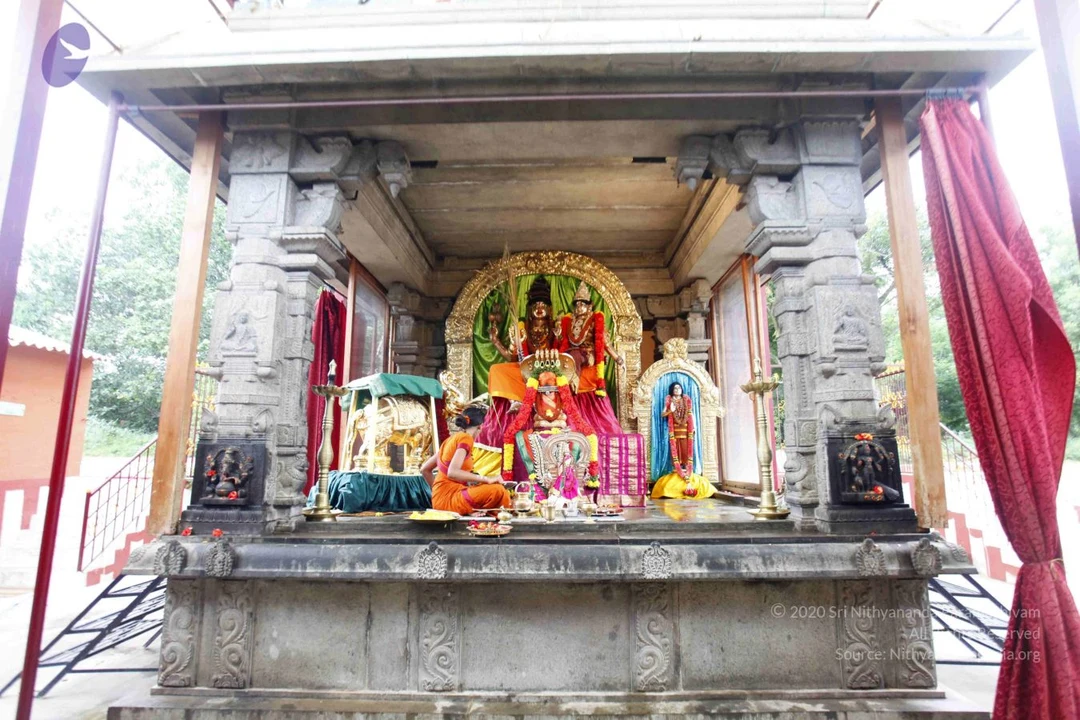
46 photosSource gallery
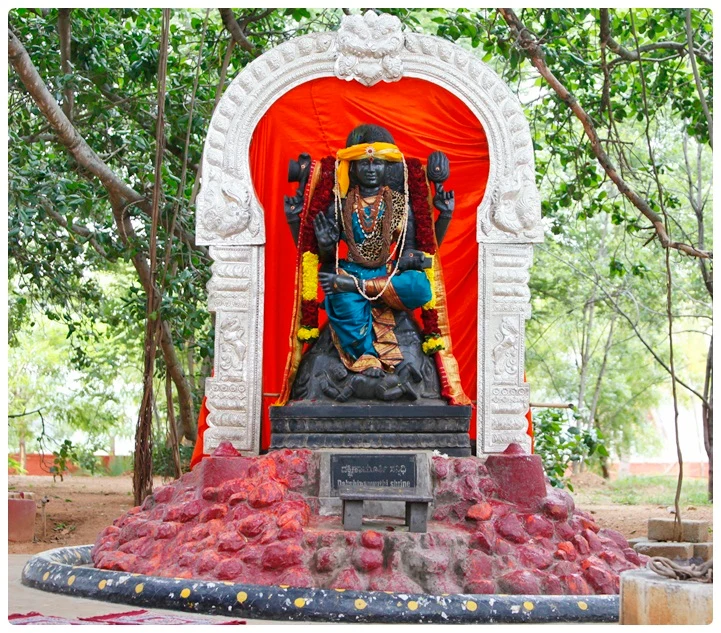
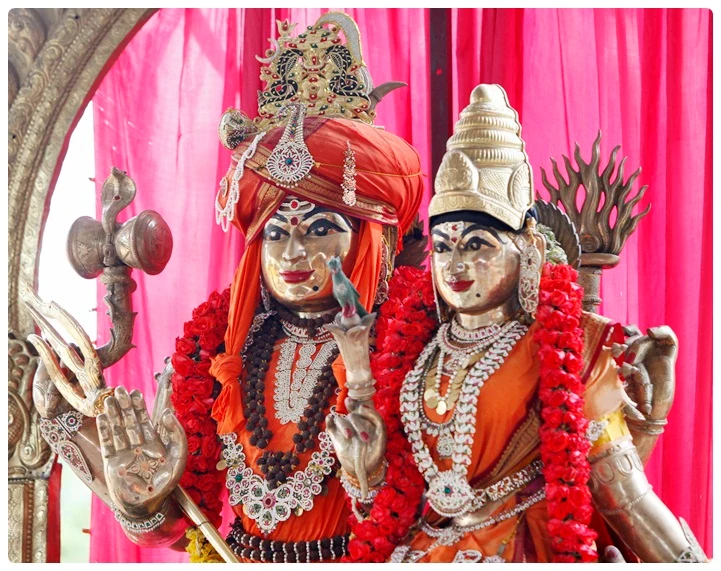
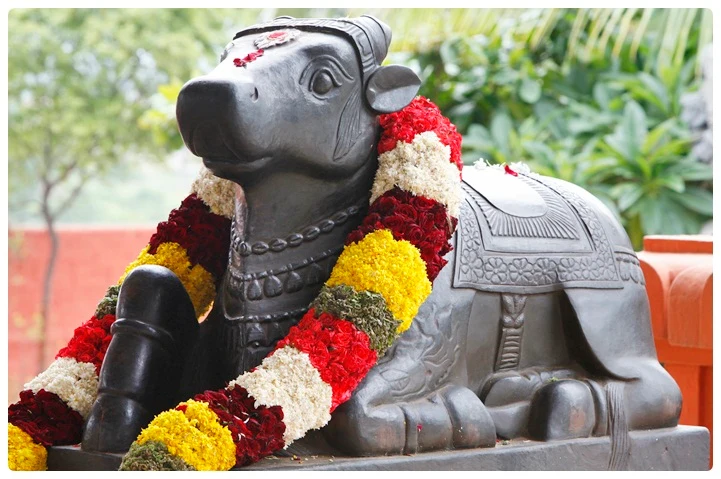
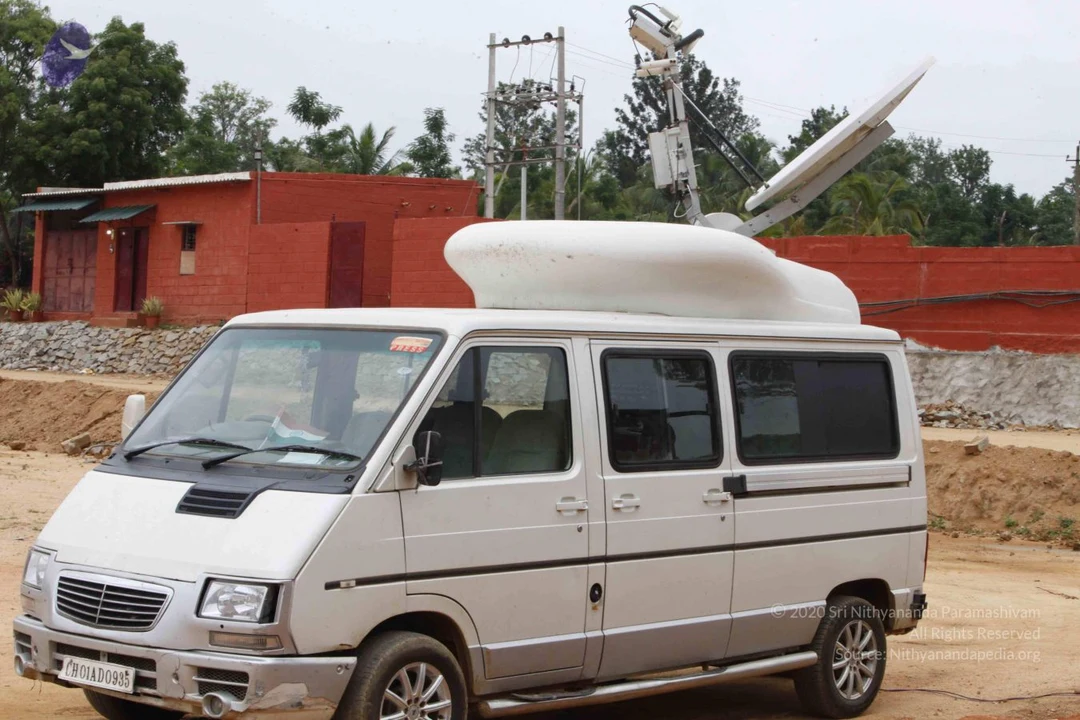
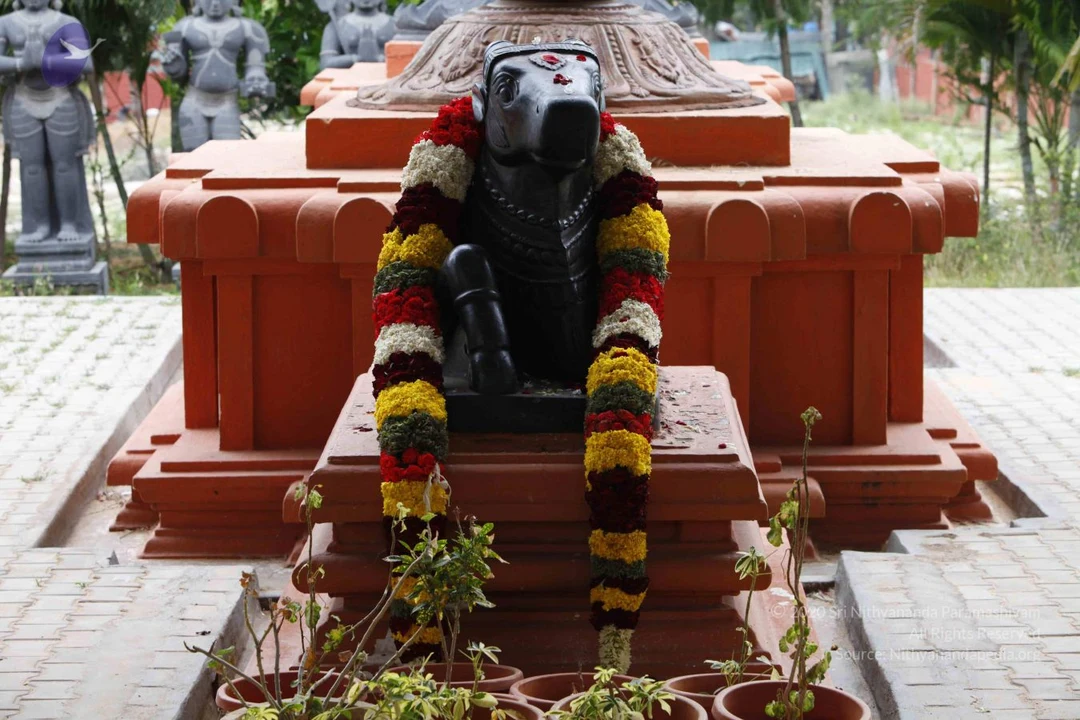
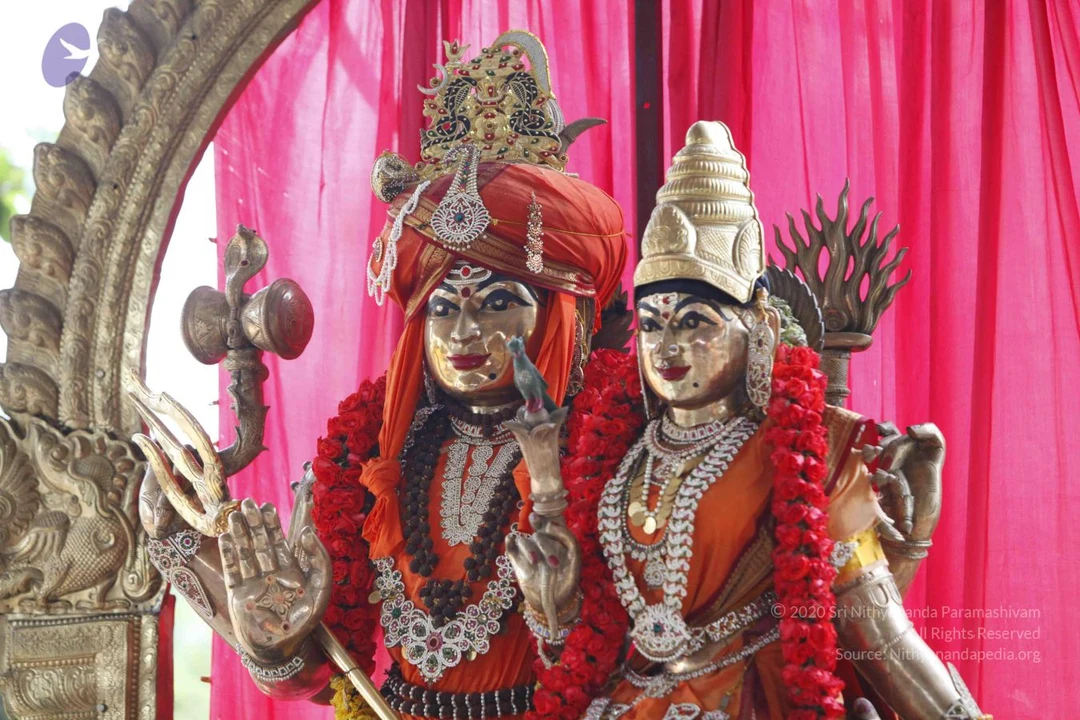
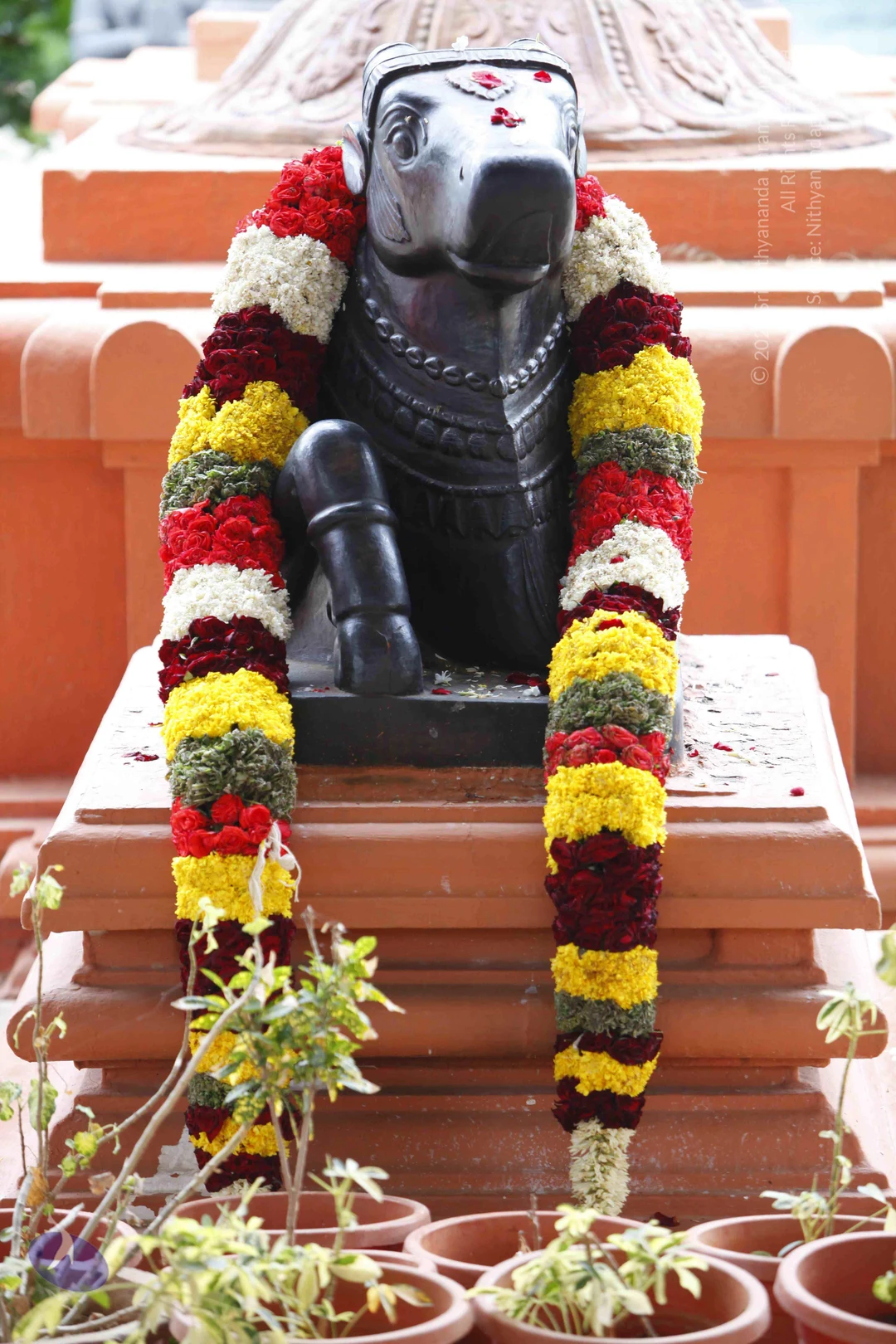
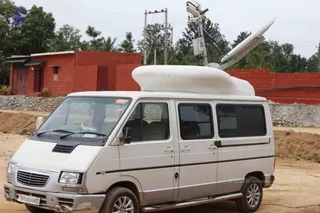
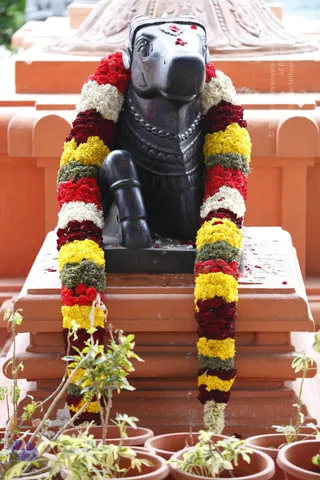
A white Tata Winger-style minivan parked on bare sandy ground in front of a red brick compound wall and a red gate. A white satellite dish mounted on a pole sits on the van's roof, pointed skyward, with a white cover over the roof equipment. Utility poles and palm trees stand behind the wall under an overcast sky. The van bears a registration plate reading CH01AD0935. No people are visible. The photo carries an archive copyright credit reading '' along the lower right, which is excluded from the text fieldA saffron-orange flag with a blue circular emblem flies on a tall silver pole above a dark corrugated metal roof. Two ornate copper-coloured finials with tiered, bulbous shapes sit on the roof ridge against an overcast grey sky. No people are visible.A black stone Nandi bull sculpture sits on a tiered red-orange pedestal in an outdoor temple garden. The bull wears a flower garland of red, white, yellow and green blossoms draped over its back and down both sides, and a red-and-white tilak mark on its forehead. Behind it stands a larger red-orange shrine base topped with a carved dome. Grey standing deity statues with raised hands stand in the background among green foliage, and small potted plants sit in front. No people are visible.A photograph of two golden metal statues of deities, placed in front of a bright pink cloth backdrop with an ornate gilded arch at the left. The figure on the left wears an orange-red turban and a crown, rudraksha beads, a white ornamental necklace and red flower garlands; it holds a trident in one hand and a drum-like instrument in the other, with a small bird perched on its raised hand. The figure on the right wears a gold crown, layered white and gold necklaces, red garlands and an orange garment, and holds a lotus-like object.A photograph taken through a black iron railing down a red-carpeted aisle toward a shrine. Three deity murtis sit on a raised stone platform beneath a gilded arch with a green backdrop; the central figure wears a crown and a red-and-gold garland, flanked by seated figures in orange and magenta garments adorned with red and orange flower garlands. A small devotee in an orange robe sits cross-legged at the foot of the platform, facing the murtis. Silver and gold ceremonial items, a gold-framed palanquin-style seat, and red drapery frame the scene.A temple shrine photographed from the front, with a golden arched niche framed by grey stone pillars and a green cloth backdrop. Two large deity murtis stand together in the back, one with multiple arms and a crown and one with a tall crown, both draped in orange and pink cloth and garlanded with red and yellow flowers. A smaller seated deity murti in the centre, decorated with flower garlands, sits on a silver base. A woman in an orange sari kneels at the front of the platform, tending the offerings and lamps. A golden figure of a bull or animal vahana, a tall brass lamp stand and a small figure in a blue niche with a garland stand beside the deities. Pink curtains hang at the sides and metal railings line the foreground.
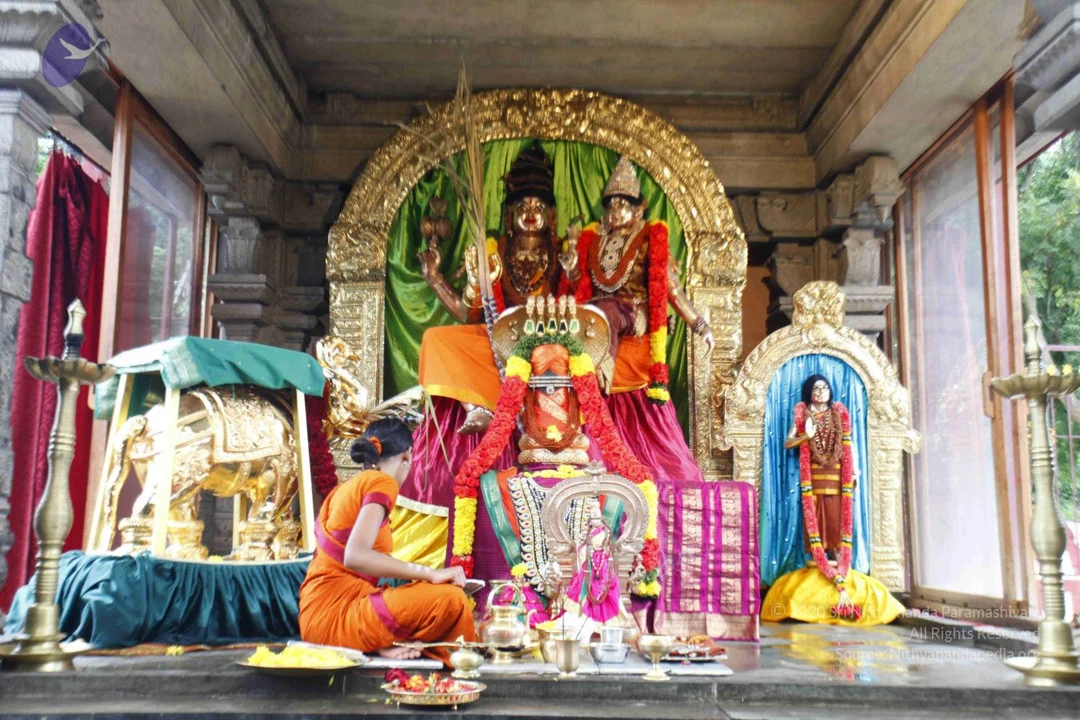
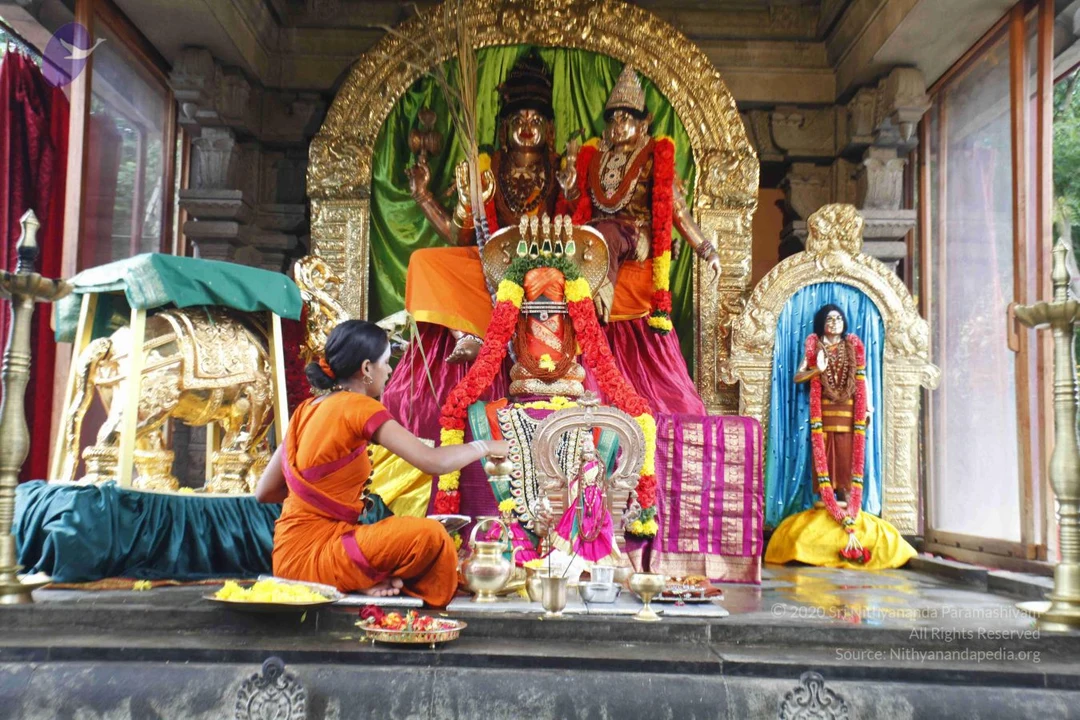
Paduka-Puja

8 photosSource gallery
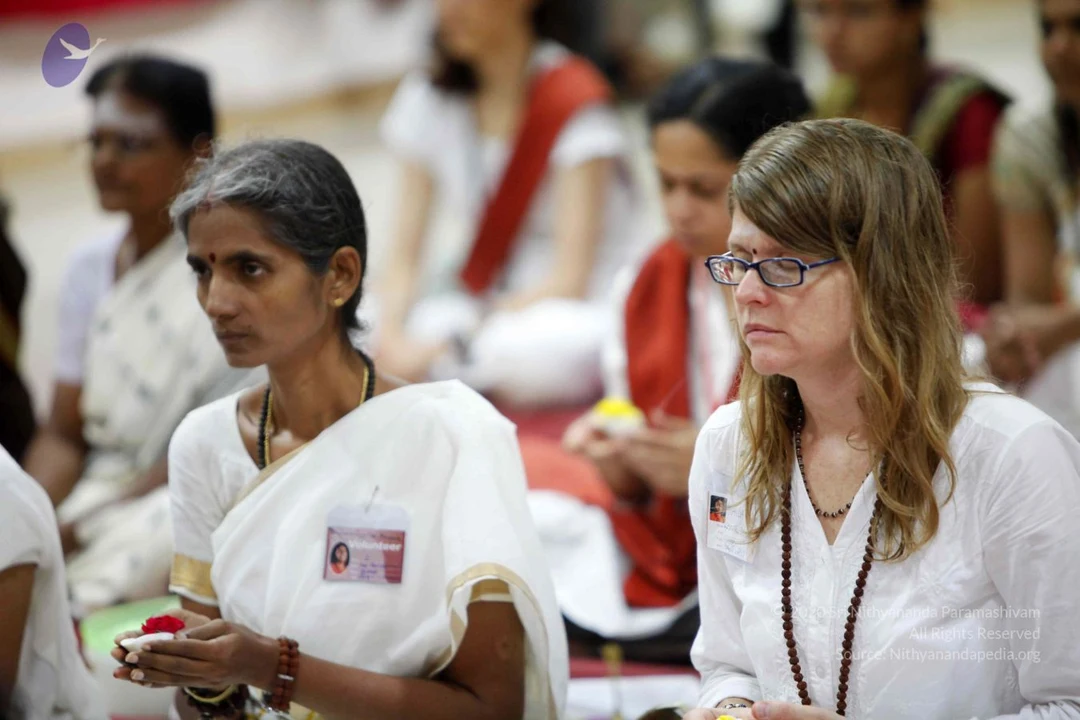
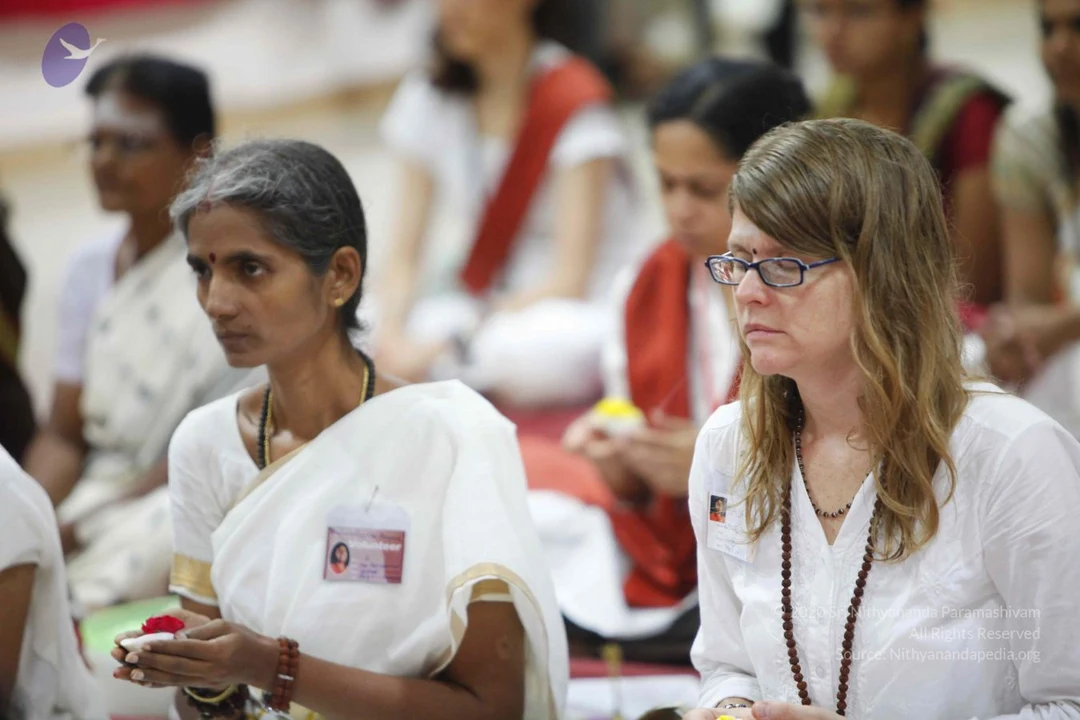
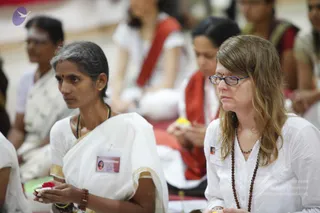
A temple sanctum shrine with a gilded throne-like altar bearing a framed portrait of a smiling man with an orange turban and orange robes, shown as a printed photo on the altar. Two painted guardian figures with multiple arms, crowns and red dhotis flank the doorway. A priest in white ritual clothes with white body markings kneels at left, performing puja with a tray of offerings. Devotees in orange and white sit inside the shrine before the altar, which has a tiger-skin cloth. Brass oil lamps stand on the floor, and a red carpet lies at right.A seated ritual gathering in a hall with red curtains, where many devotees in white and red shawls sit on the floor and in chairs. In the foreground, young women in deep red saris with gold borders sit near brass oil lamps, flower petals and small plates, with a central brass lamp and metal stanchions in view. A woman in white with a red shawl and a red-and-white beaded necklace sits at right, and a curly-haired child in white sits nearby. A few people in the back hold papers. The setting resembles a satsang or puja with lamps and offerings, with no identifiable leader clearly visible.Close-up photo of a woman with curly light-brown hair seated in white clothing, holding a small gold spoon or ladle in her raised right hand. She wears a black and red braided bracelet and a white lace-trimmed sleeve. Blurred figures in white and red garments sit nearby in a satsang or ritual gathering. No identifiable a person figure is visible.A photograph of a ritual puja setup laid out on woven mats with red and cream patterns. Brass oil lamps, a small framed picture on a stand, incense sticks, brass bowls holding flowers and sweets, a brass bell, and an orange cloth holding a brass bangle are arranged on the mats. Two people, one in white and one in a red-striped garment, reach in from the right, one holding a white cup and a brass spoon. Visible hands and forearms only; the people are partly cropped.A seated group of devotees in white clothing at a satsang gathering. In the foreground, a woman with grey-streaked hair, a red bindi and a gold-edged white sari holds a small red flower and white offering in her hands, wearing a dark beaded necklace and red bangles. Beside her, a woman with long light-brown hair, wearing glasses, a white kurta and a rudraksha mala, sits with eyes closed. Behind them, other devotees in white and saffron-red shawls sit in meditative attention in a hall.Close-up photo of a puja setup on a white table. A hand in a red-striped garment holds a white cup of orange marigold petals. Brass plates hold rudraksha beads, pink, yellow and red flower petals, and a brass oil lamp with a lit flame. A brass lota and a small brass cup stand nearby, with blurred orange cloth and flowers in the background. No people are fully visible beyond the hand and arm.
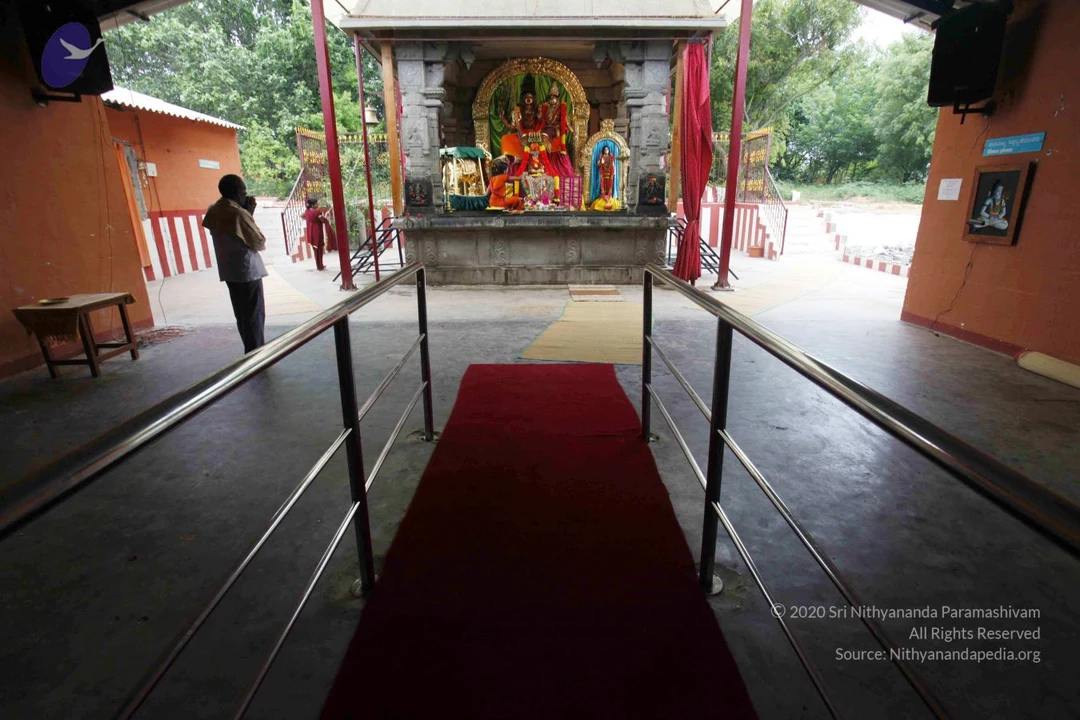
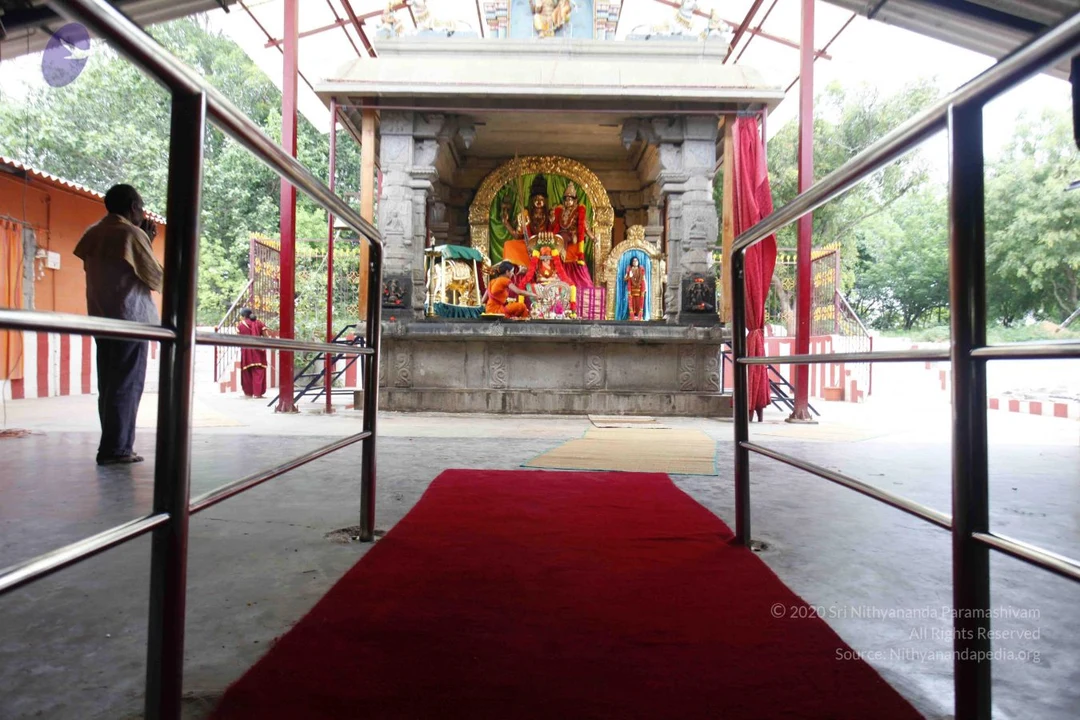
Nithya-Satsang
29 photosSource gallery
A photograph of a man seated cross-legged on an ornate gold throne with lion-head armrests and a golden arched back, draped in red and gold cushions over a striped tiger-print cloth. He wears a saffron-orange turban, saffron robes with a gold-bordered shawl, a long gold necklace with a gold pendant, and a thick garland of rudraksha beads interspersed with red, yellow and white flowers. Two gilded deity statues with raised arms stand on either side of the throne, and a brass oil lamp is visible at the right edge against a red and blue painted wall. The features resemble Swamiji (probable) based on the saffron turban, saffron robes, rudraksha mala and ceremonial gold necklaces, seated in a central throne position during a discourse setting.Photo of a seated man on an ornate gold-and-red throne in a bright hall, wearing an orange-brown turban and saffron-toned robe with a multicoloured flower garland and gold-beaded neck garlands. He gazes off to one side with his arm resting on the armrest. Beside him stands a deity murti in a richly decorated gold-and-red setting, dressed in an orange cloth and yellow-blue silk, draped with a red, yellow and white flower garland, holding a staff-like object with a palm-leaf plume. Red carpet and a red curtain frame the room. a person seated on the peetha, with ornate gold, flower garland and saffron-tone cues.A seated man in saffron-orange robes and an orange turban sits on an ornate gold throne with lion-head armrests and red cushions, smiling with hands resting on the arms. He wears a multi-strand rudraksha mala with pink, yellow and white flower garlands and a gold ceremonial necklace with a pendant. A small lapel microphone is visible near his face. Flanking the throne are two tall painted deity statues with multiple arms, crowns and gold jewellery, holding ritual implements. Above, gold bells and hanging decorations fill the background.A man stands behind a clear acrylic lectern on an ornate stage, speaking into a headset microphone. He wears an orange-and-gold turban with a red bindi, a saffron-orange robe with a gold trim, a heavy garland of red, white and yellow flowers, long rudraksha beads, and a large gold ceremonial pendant with multiple gold chains. Gold bangles adorn his wrists and gold hoop earrings. Behind him are green, red and orange decorative friezes and a gold ornamental panel at the lower right. The swami-style presentation with turban, rudraksha and ceremonial gold cues matches the page's identification, so this is a probable Swamiji (in person) giving satsang discourse.A man in saffron and orange robes stands behind a clear acrylic lectern, speaking into a head microphone. He wears an orange and gold turban, a red bindi, layered gold necklaces, a gold pendant, and a thick multi-strand rudraksha mala with red, white and yellow flower garlands. Behind him is an ornate gold throne back with a carved floral motif, set against a temple-style wall painted with red, green and blue decorative bands and small pink and gold architectural motifs. The setting looks like a satsang discourse. Only one physical person is visible.A standing man in an orange-and-saffron turban and orange-brown robes stands beside a clear acrylic lectern in a temple-style hall. He wears layered garlands of pink, yellow, white and red flowers, a long rudraksha mala, and a gold ceremonial pendant necklace, with a red bindi on his forehead and a small microphone at his ear. His right hand rests on the lectern. Behind him stands a gold-crowned deity murti holding a lamp-like object, beside pink and green decorated pillars and a gilded shrine frame.
SarvaDarshan

9 photosSource gallery
A procession inside a covered hall with a red-carpeted walkway and metal railings. In the centre, a man with swept-back dark hair and a red bindi wears a saffron-orange dhoti with a golden border and a long garland of marigolds and rudraksha beads with a gold pendant; his bare arms carry gold bangles. Behind him, a young attendant in orange holds a brass kalasha-style tray with yellow flowers and a green leaf arrangement. Around them, several young participants in red and orange saris and dhotis, many with white tilak marks and rudraksha malas, walk along; a woman at left holds a dhol-style drum and two others raise long curved brass horns. The procession suggests a ritual walk, possibly ratha or aarti-related, but the scene shows only the walking participants.A man in a saffron-orange turban and bare chest, wearing a thick gold-and-white flower garland over rudraksha beads and a gold pendant, stands in a hall extending his right hand toward a tray of fruit. Several men in white shirts stand behind a metal barrier with palms pressed together in namaste, and a few children in the foreground watch. Red curtains and draped decorations fill the background.A photograph of a satsang-style gathering in a hall with red curtains. A man in a rust-orange turban and orange-brown robe, wearing layered gold-toned garlands of white, pink and yellow flowers, gold bangles and a gold pendant, stands at right reading from a sheet of paper held in his hands. Beside him on the left, a bald older man in glasses and a dark striped shirt and two younger men stand with palms pressed together in namaste; two young girls in dark and red tops also stand with hands joined. Several men in white and dark clothes stand behind them in the crowd.A photograph of a smiling man in an orange-brown turban and brown-orange dhoti-style wrap, wearing layered rudraksha malas, a large gold necklace with a central pendant, and thick garlands of red, yellow and white flowers draped over his shoulders and arms. He stands in a procession-like walkway, with a man in front bowing with palms pressed together while another man leans forward to touch his head. Several people in white clothing stand along the sides with hands folded in namaste. Behind them are pink and red drapes and a decorated altar with golden ornaments and flowers. Swamiji (probable) cues: turban, rudraksha malas, ornate gold necklace and saffron clothing, with the figure receiving devotees' reverence.A photograph of a temple or ashram hall where a man in a saffron-orange turban and orange-brown robe stands at center, wearing a long garland of white, red and yellow flowers over a rudraksha mala with gold beads and a gold necklace. He extends his hand toward a row of devotees on the left, many with palms pressed together in namaskar. A second man in orange-brown dhoti, bare-chested with a shawl over his shoulder, holds a red tray with fruit, flowers and small items. Devotees in white shirts and dhotis stand behind metal barrier posts. A red and gold backdrop with a deity murti or temple decoration is visible behind them. Around 15 to 20 people are visible.A photo of a man in a rust-orange turban with gold trim and an orange-brown shawl, wearing layered gold necklaces, a large gold pendant, and long rudraksha mala strands alongside multicoloured floral garlands of pink, yellow and white. He smiles and extends his right hand toward a crowd of people, including women and children, while others in white and light clothing stand nearby. The background shows a hall with red drapes and a garlanded decorated area.

Swamiji-Deities

3 photosSource gallery
A photograph of a standing man in an orange-brown saffron-toned dhoti and shawl, wearing an orange-and-gold turban, a heavy gold necklace, a rudraksha mala and a multicoloured flower garland. He raises one hand in greeting on a stage with dark red velvet curtains. Beside him stand two large ornately dressed deity murtis on a gold-framed throne draped with garlands in red, white, yellow and green; one wears a yellow sari with blue, the other a yellow-and-orange outfit, with a small golden elephant figure and a tall sugarcane stalk in front. Appearance-based probable Swamiji cues are present: saffron-orange clothing, a turban, rudraksha and gold necklace.A man stands on a stage in front of a deep maroon curtain, waving his right hand with a smile. He wears an orange-brown turban, a saffron-orange shawl over an orange-brown dhoti, and a long multicoloured garland of red, white, green, yellow and purple flowers, plus a gold ceremonial necklace and a rudraksha mala. Beside him sit two decorated deity murtis on a golden peetha throne with a garland-draped canopy: the left figure wears an orange and yellow garment and gold jewellery, the right wears a blue garment with gold necklaces and a pink crown. A brass elephant figure stands on a golden stool in front, with a green plant at lower right.A standing man in an orange-and-gold dhoti and orange turban waves with his right hand, wearing a gold-and-white garland, a large rudraksha mala and a gold pendant. Beside him, two deity murti statues are dressed in multicoloured flower garlands with white and yellow blooms, a yellow silk skirt, orange and blue cloth, and gold ornaments. A small brass elephant and a sugarcane stalk stand near a gold-coloured throne backdrop, with a maroon curtain behind.

IA-Participants

29 photosSource gallery
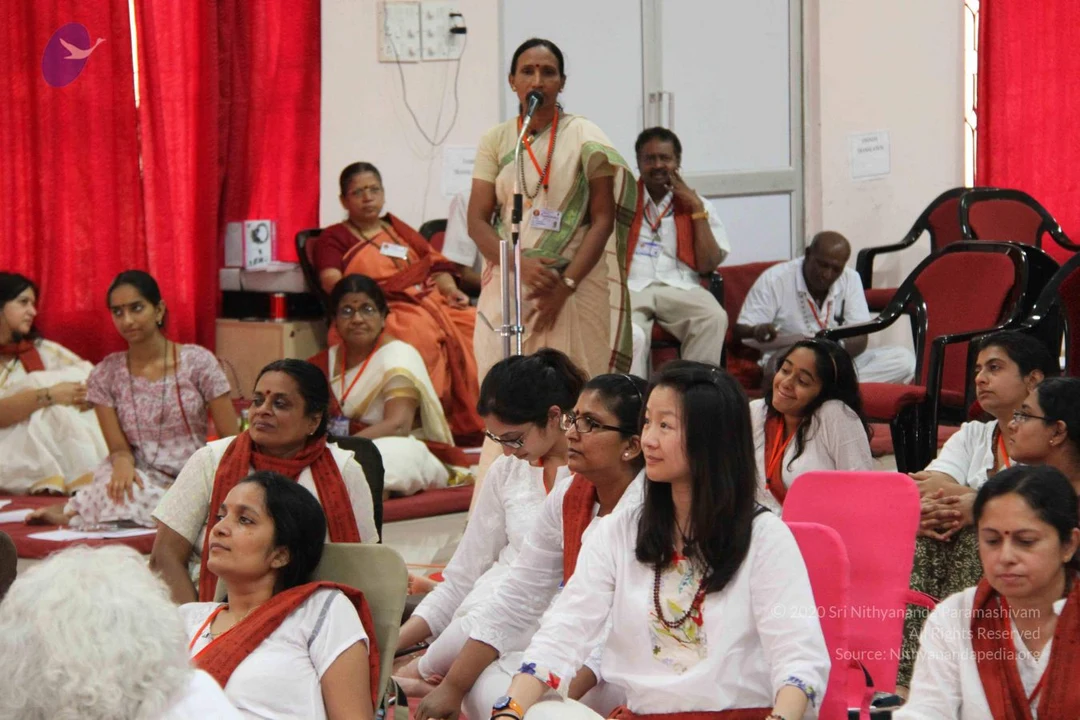
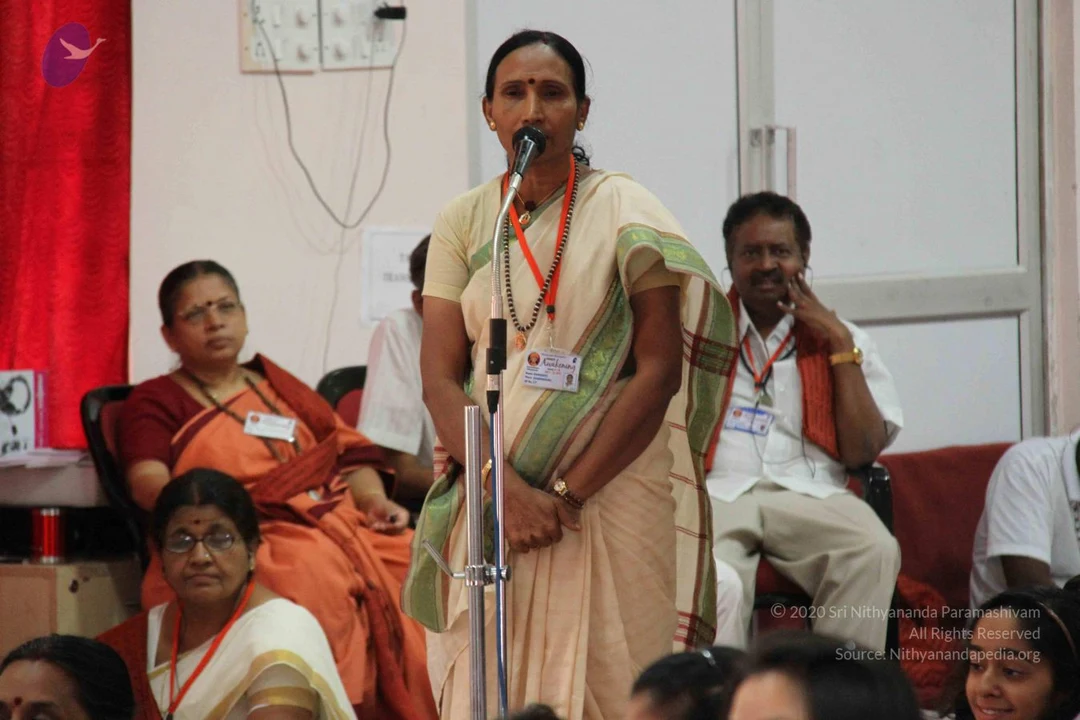
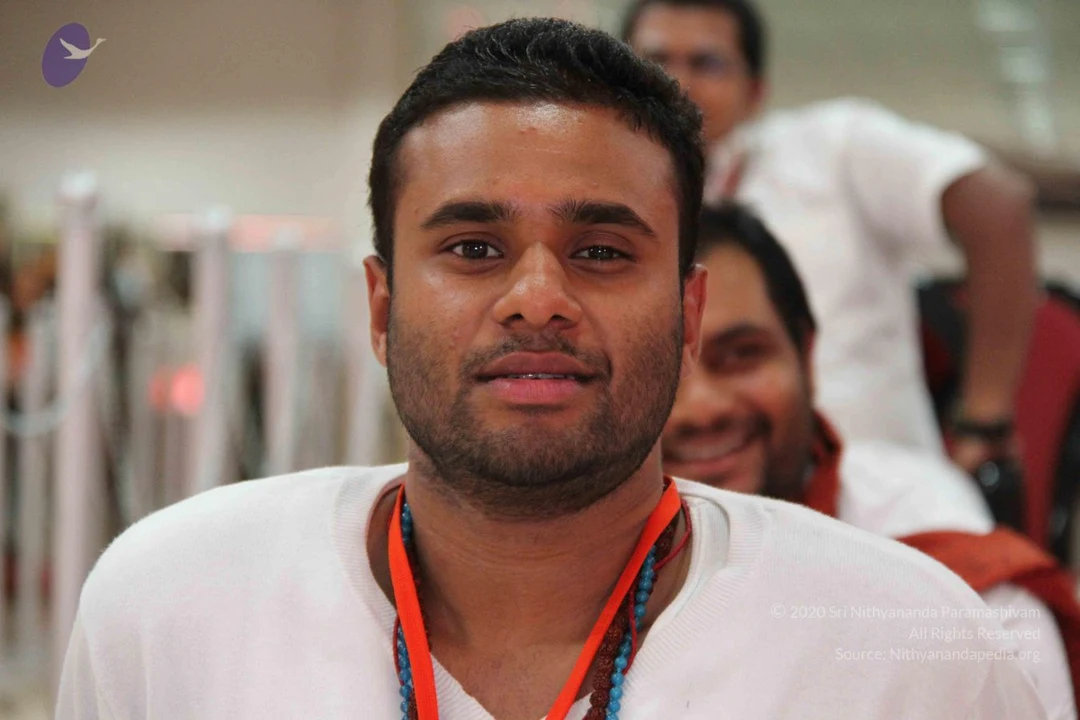
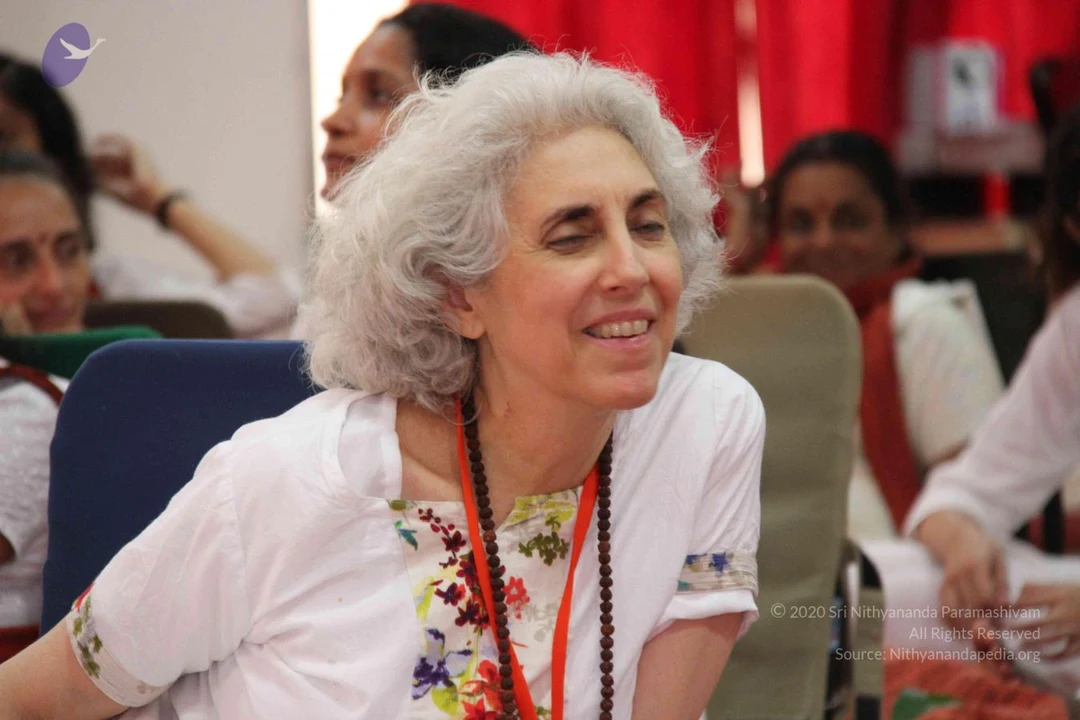
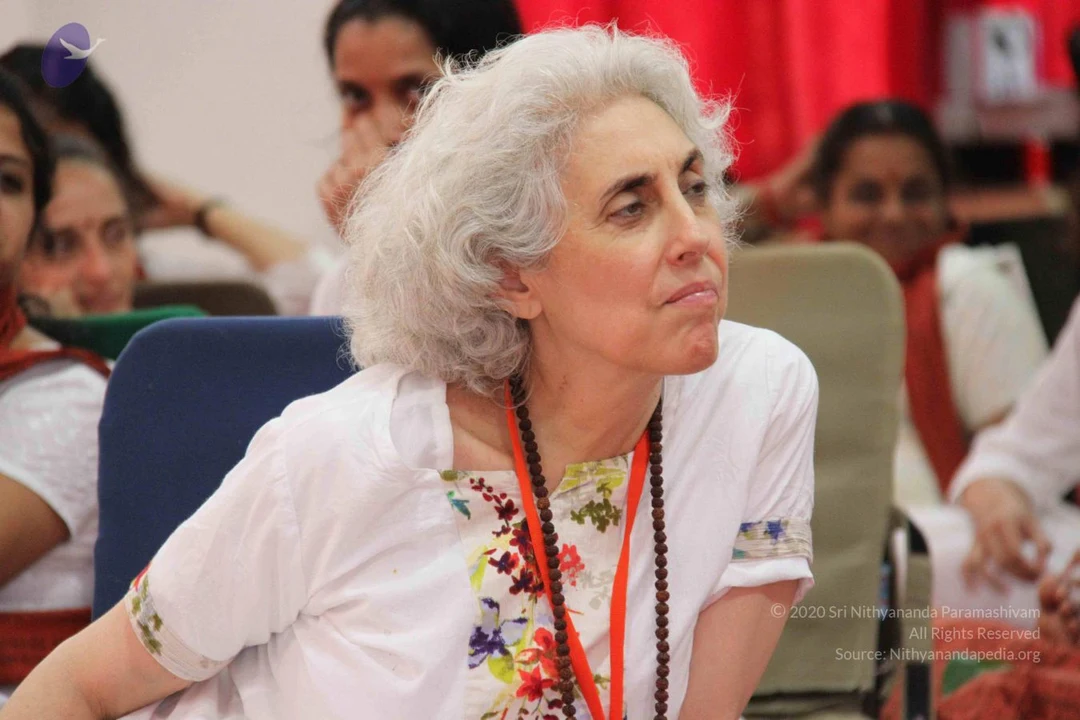
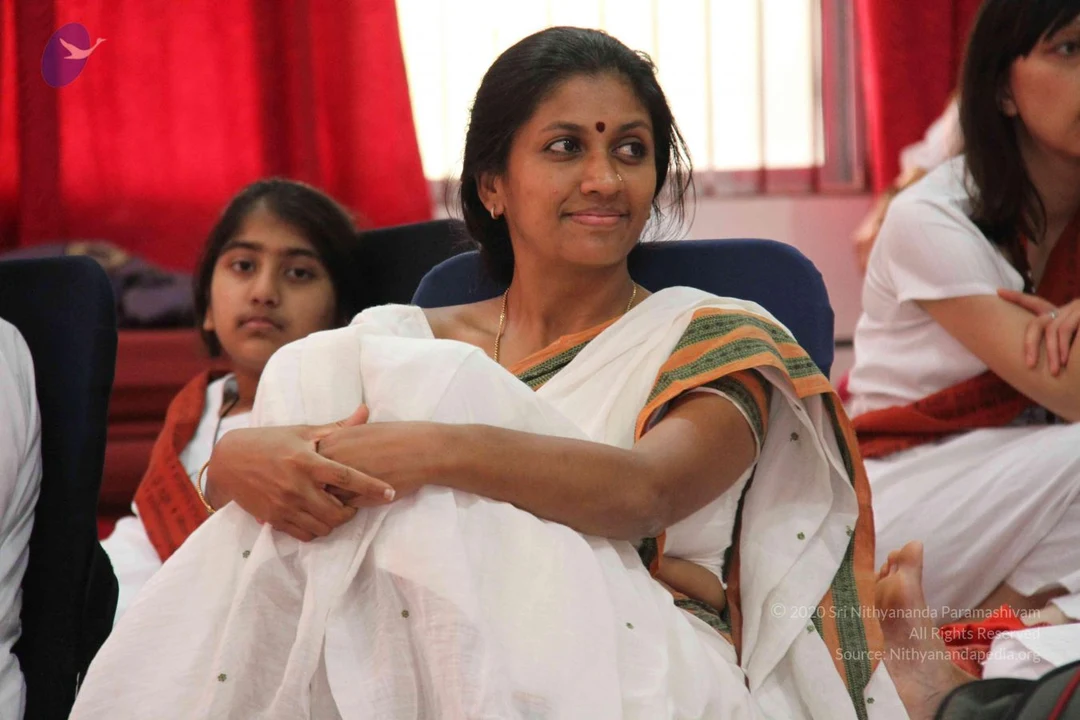
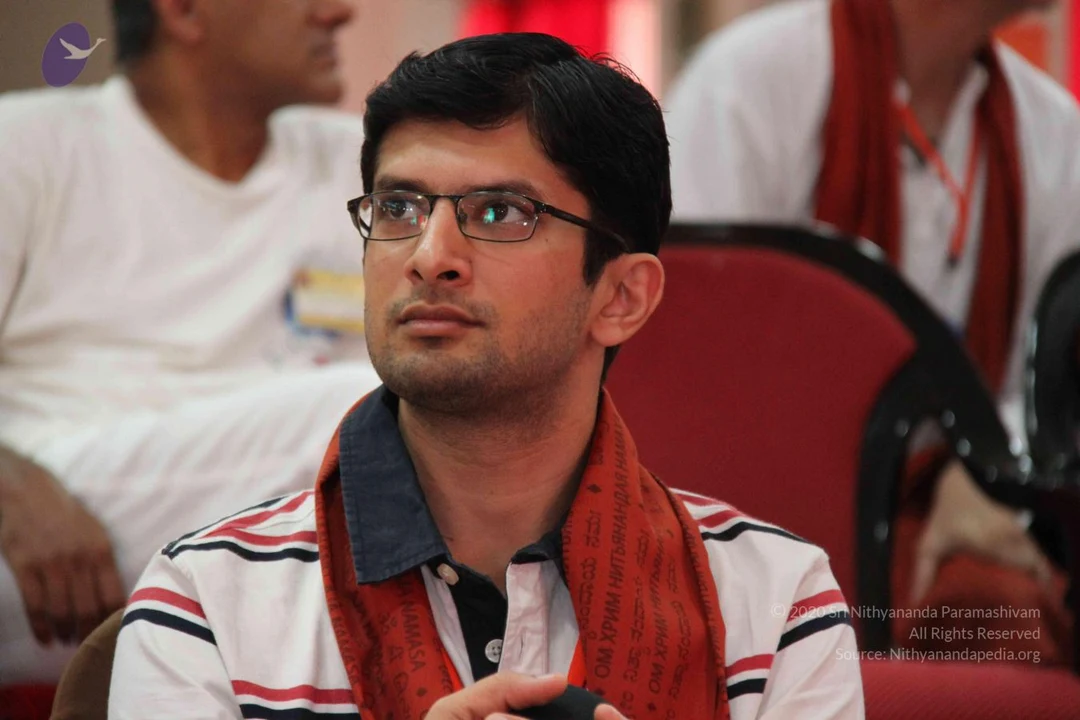
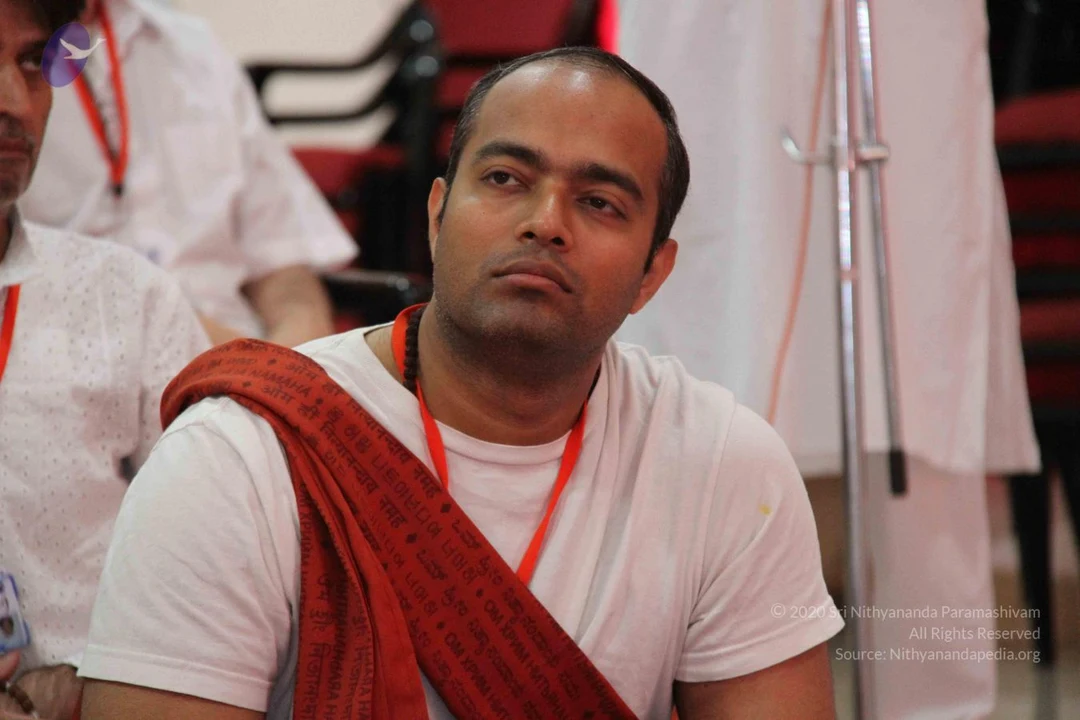
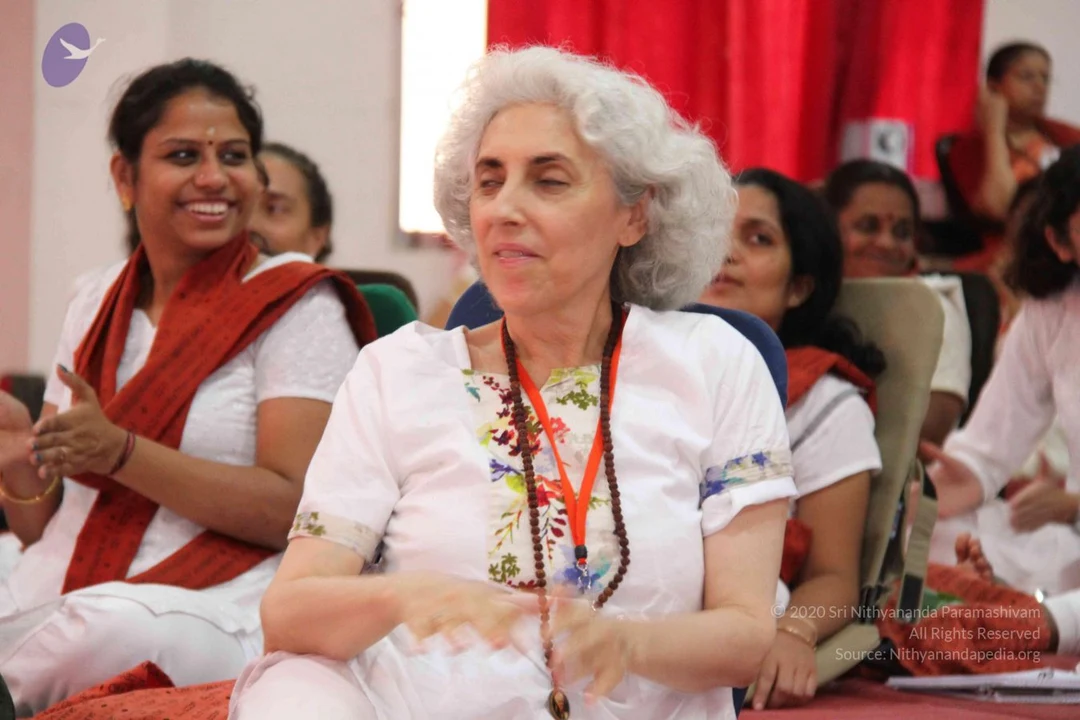
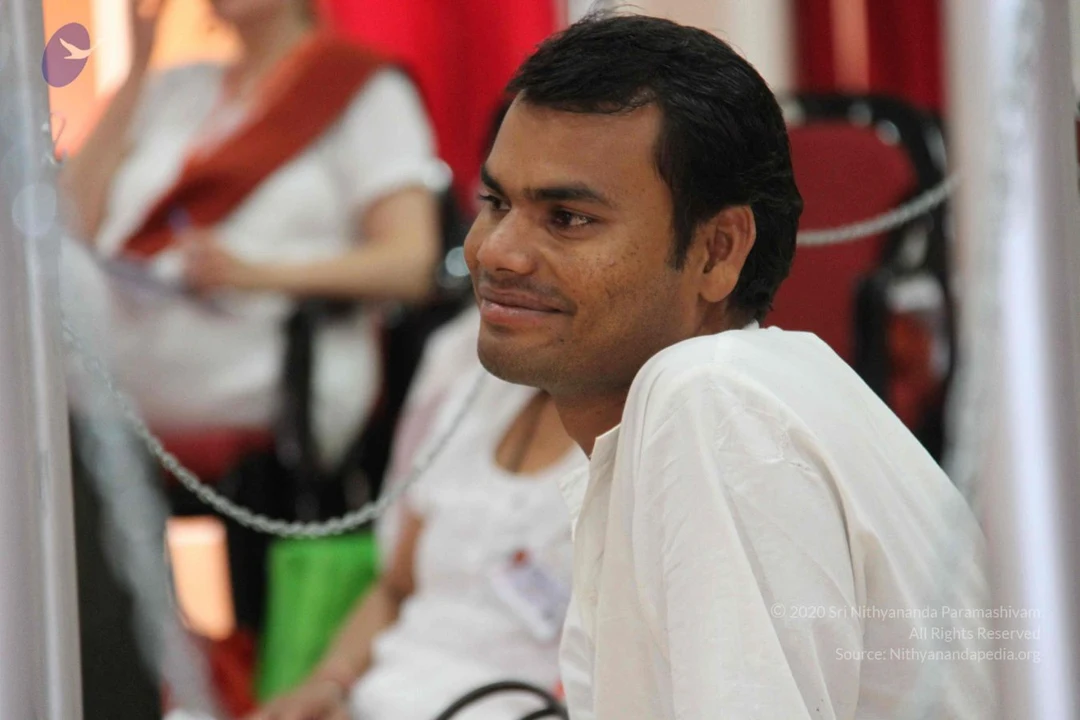
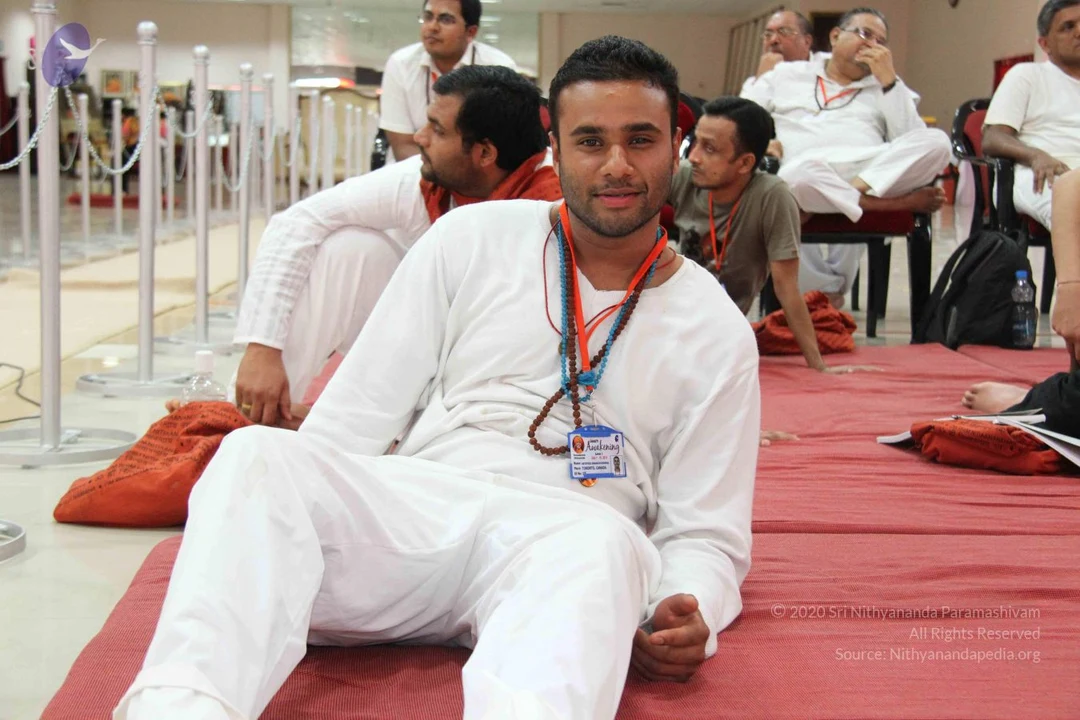
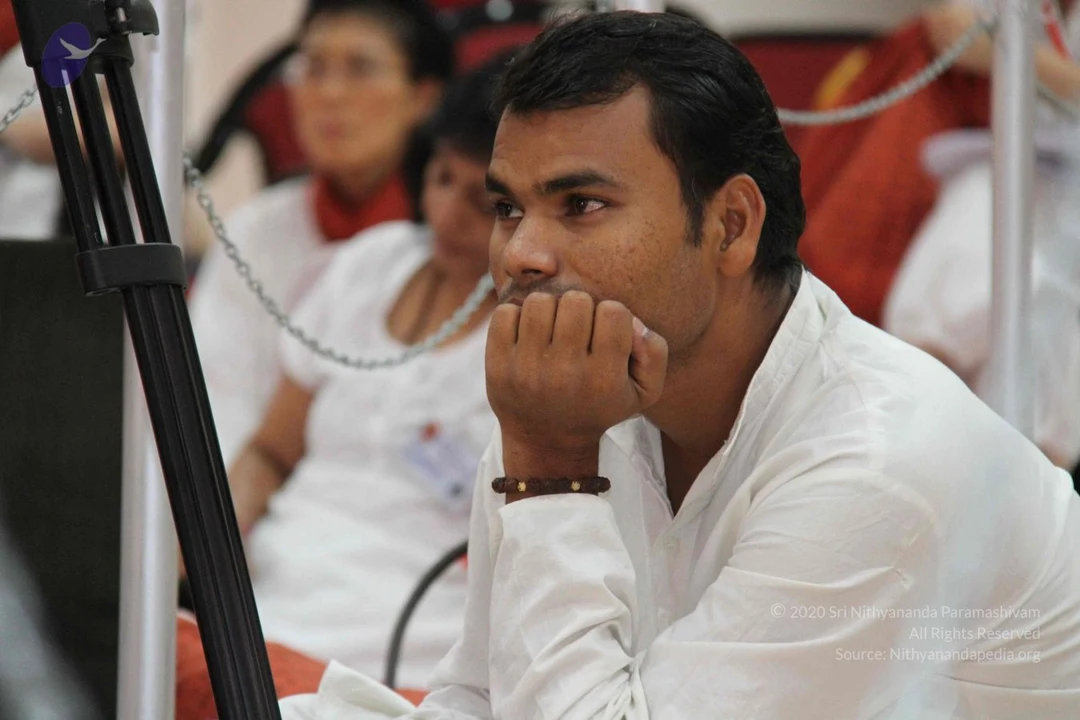
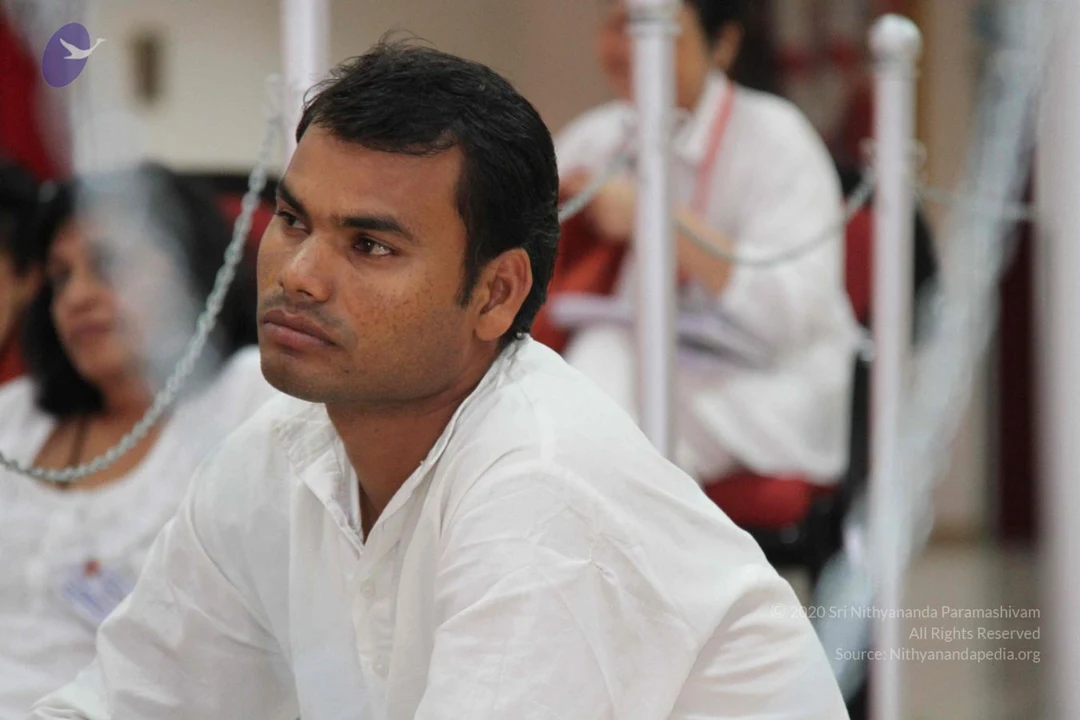
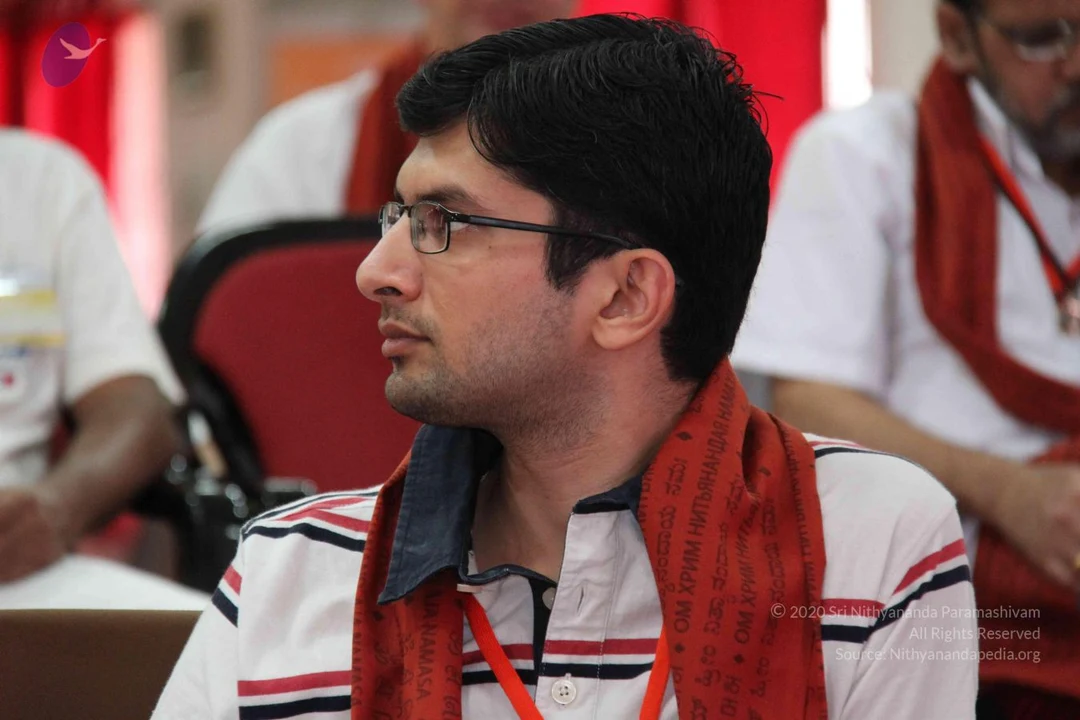
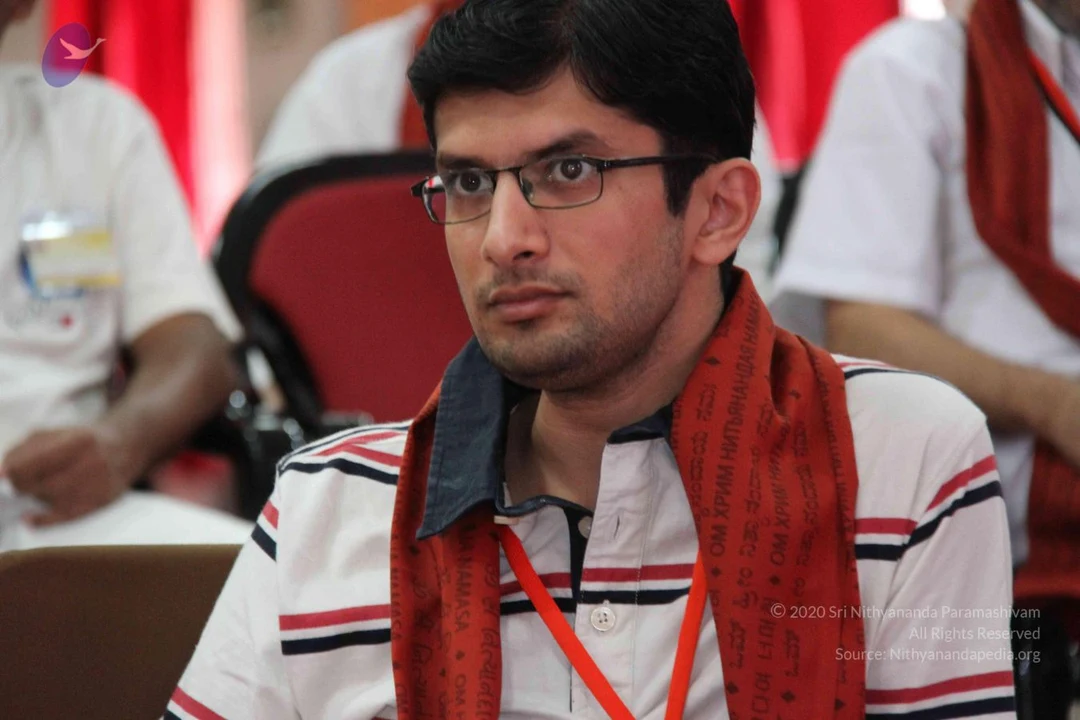
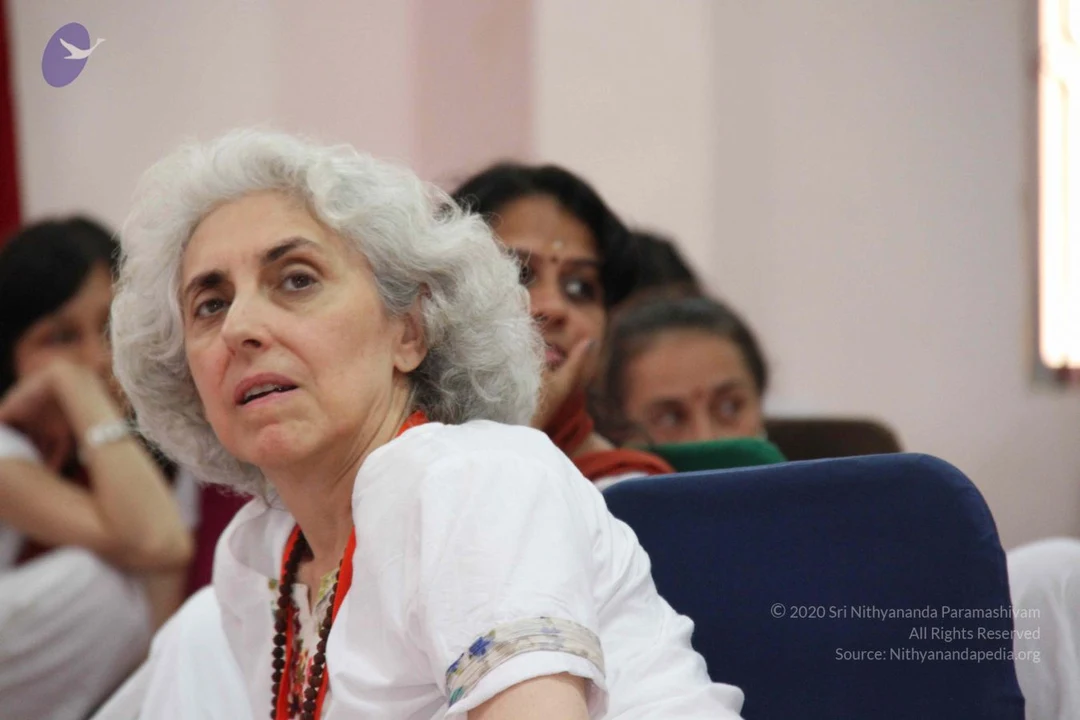
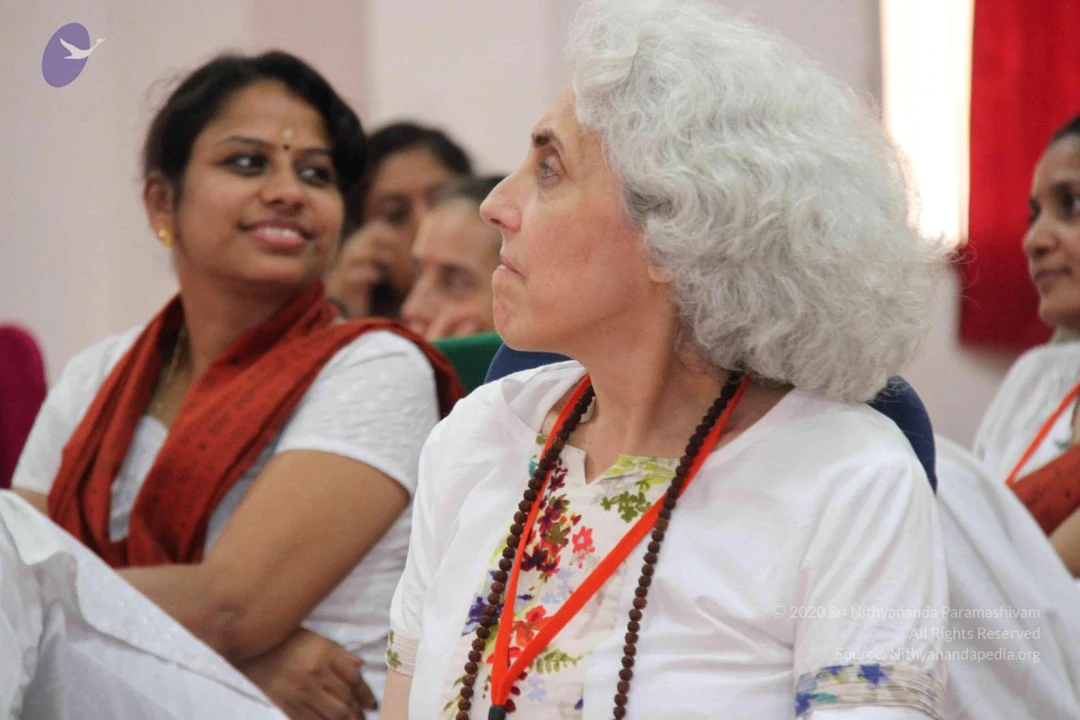
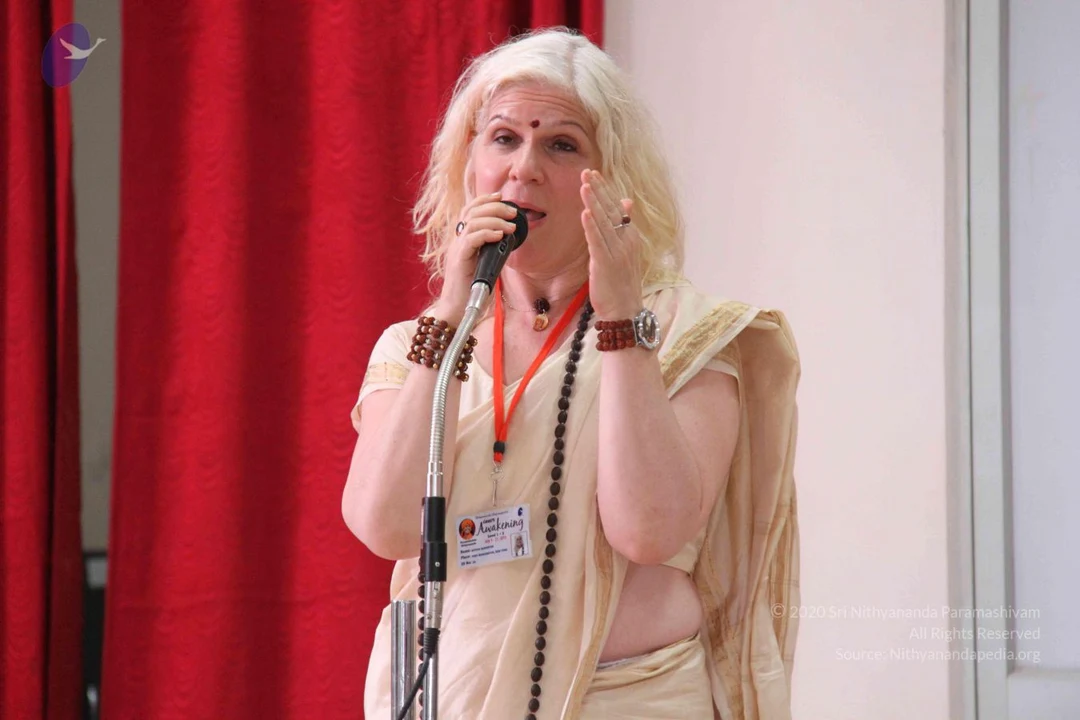
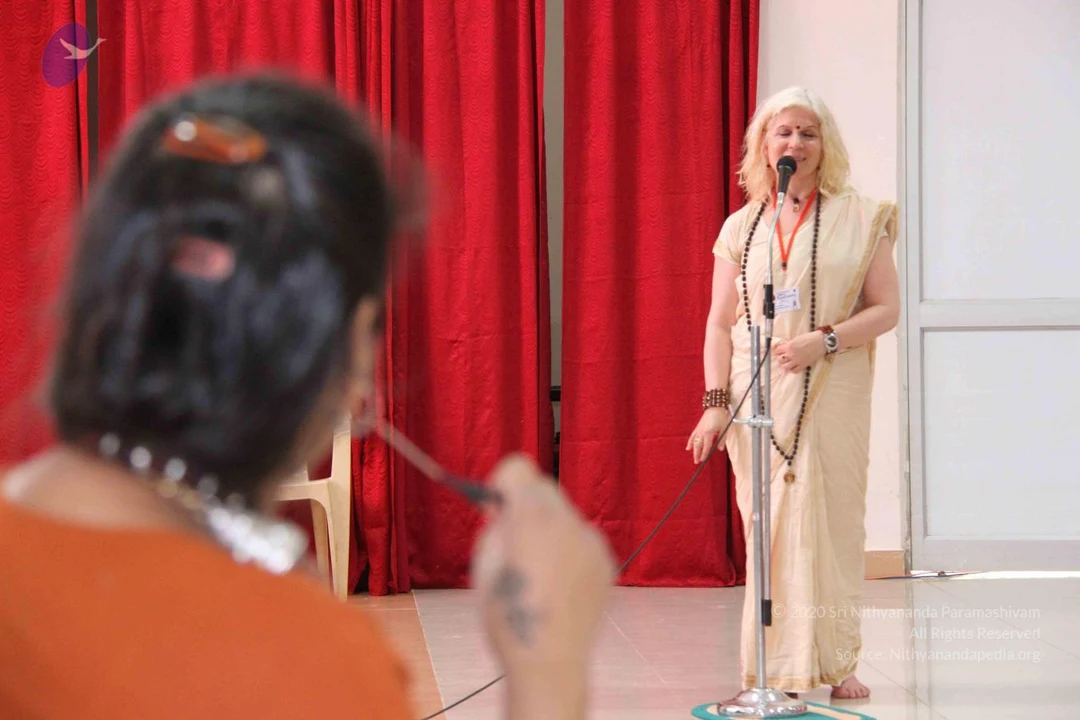
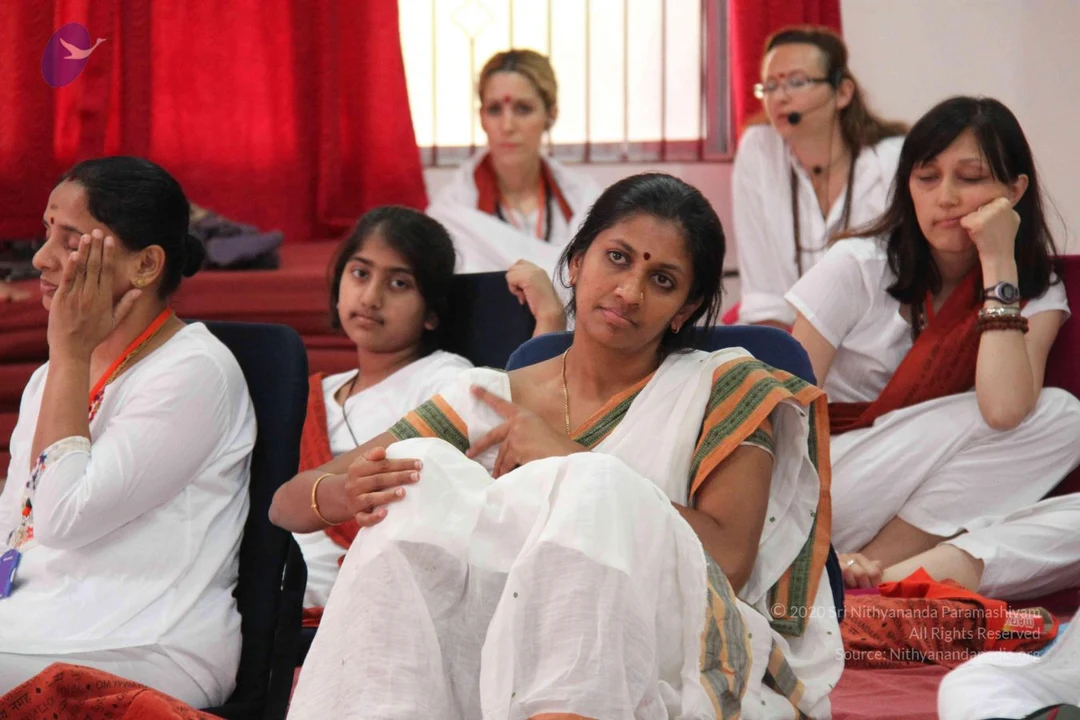
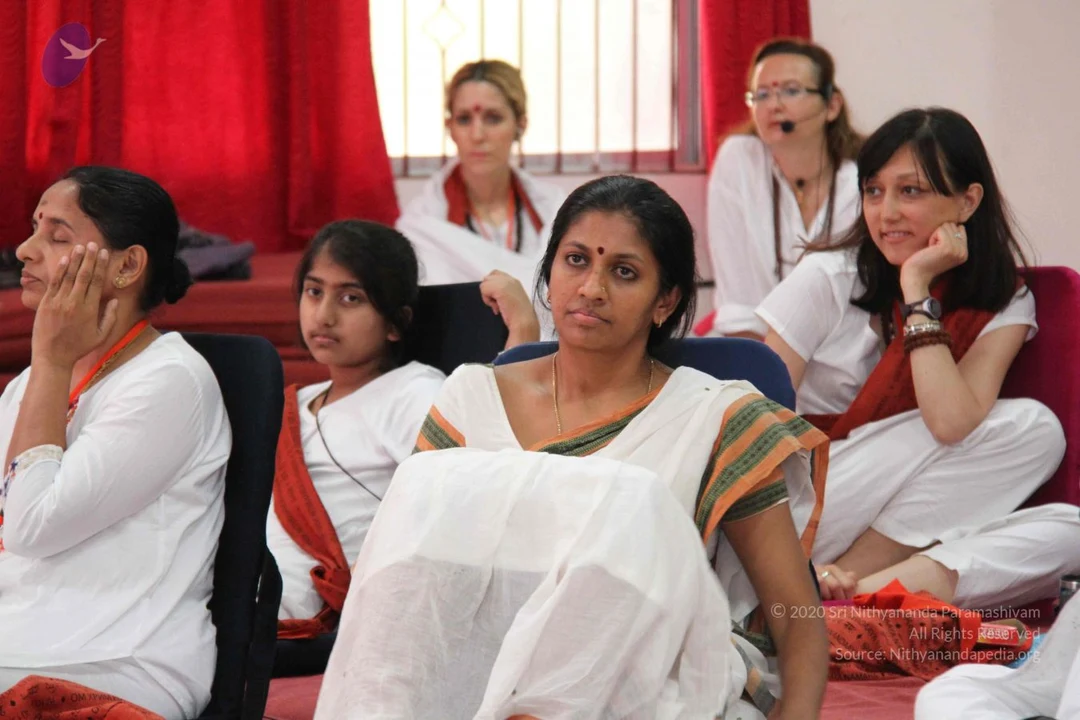
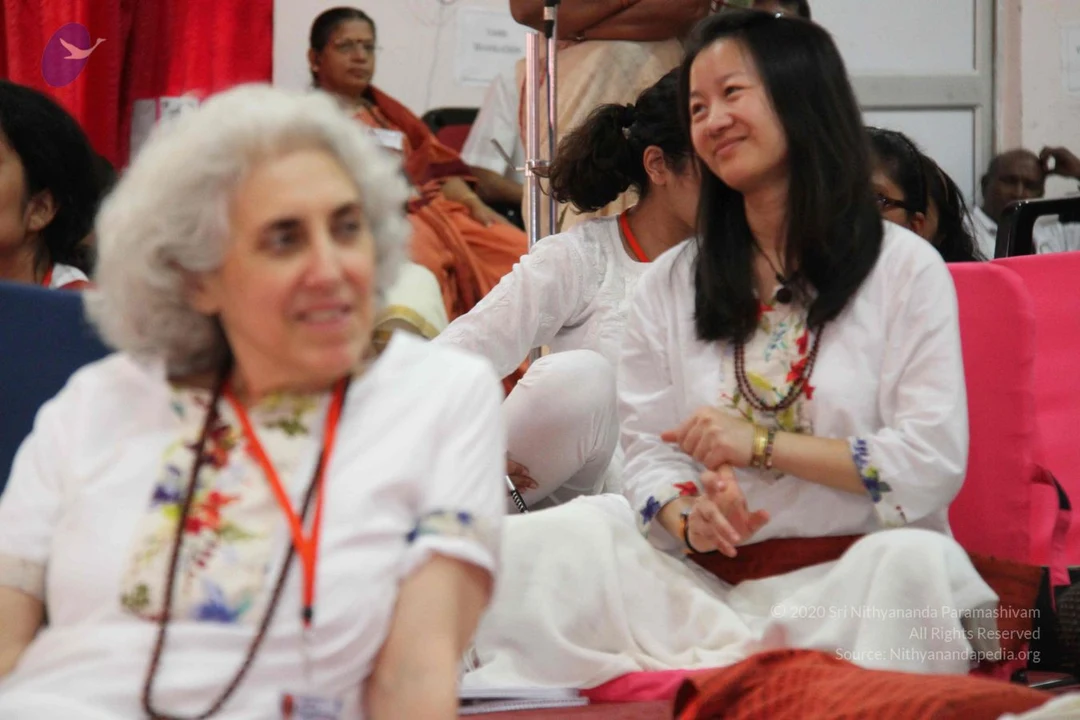
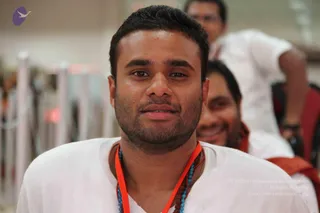
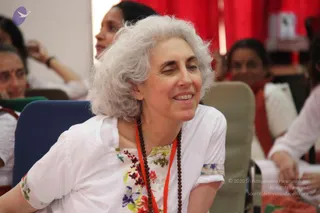
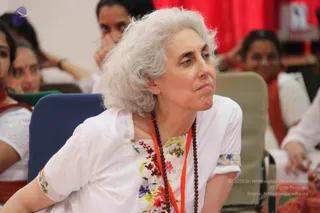
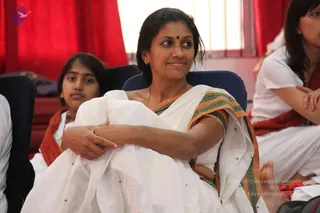
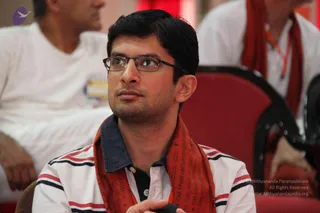
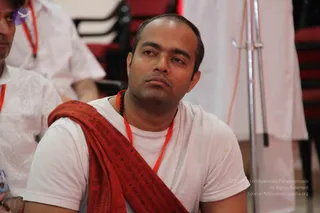
Close-up photograph of a young man with short dark hair and a short beard, wearing a white collarless top and an orange lanyard with blue beaded and rudraksha-style mala necklaces. Behind him, a smiling man in a red-orange shawl and another person in white clothing are partly visible in a bright indoor hallway with metal barriers.A woman with curly silver-grey hair smiles broadly while leaning forward in a chair at a seated satsang gathering. She wears a white top with a floral print panel and a red lanyard with a dark rudraksha-style bead mala. Behind her, other women in white and red sit in rows, and red curtains hang in the background. Indoor hall setting with padded chairs and papers visible at right.A close-up photograph of a woman with curly silver-grey hair seated in a white chair at a seated gathering. She wears a white top with a floral print in red, green and purple, and a long orange lanyard with a dark rudraksha-style bead mala around her neck. Behind her, other seated women in white and red-orange shawls are visible, and a red banner with white markings hangs in the background. The woman gazes to her left with a neutral expression.A seated woman in a white sari with an orange and green woven border sits in a satsang hall, with a red bindi on her forehead, gold earrings and a thin gold necklace. She rests her arms across her lap and gazes to the side with a faint smile. Behind her a young girl in white with an orange shawl sits on a blue chair, and at right a woman in white with a red shawl sits beside a red curtain. The setting is a meeting hall with red drapes and blue-cushioned chairs, and a purple bird logo appears in the top left corner.A seated man with short dark hair and rectangular glasses looks off to the side in a red-upholstered hall. He wears a white and navy striped polo shirt under an orange-red shawl printed with repeated Sanskrit mantra text. Behind him, another seated person in white clothing and a red scarf is partly visible, along with a red chair.A man with short dark hair sits in a seated gathering, looking to the side with a neutral expression. He wears a plain white t-shirt and a red-orange shawl printed with repeated Sanskrit mantra text, and a red-orange lanyard hangs around his neck, with a rudraksha mala visible at his throat. Behind him, another person in white and a metal stand are partly visible, with red chairs in the background. The setting suggests an organised satsang or event hall. Appearance is ordinary white clothing with a shawl rather than the ornate cues needed to label him as a person.
IA-Yoga

12 photosSource gallery
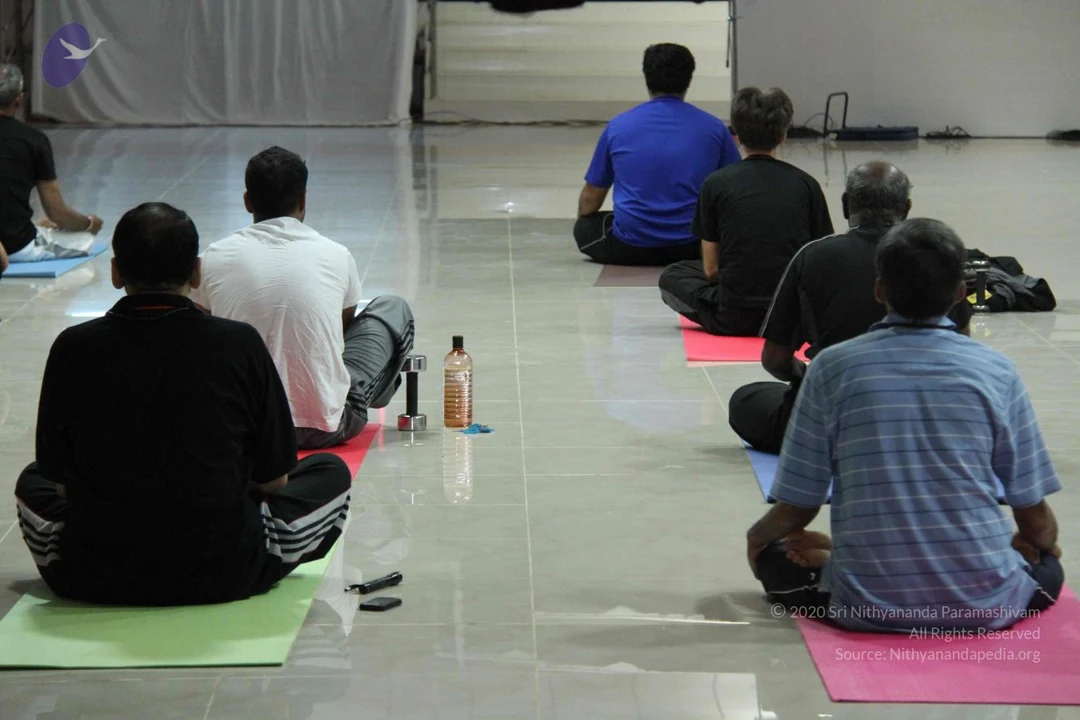
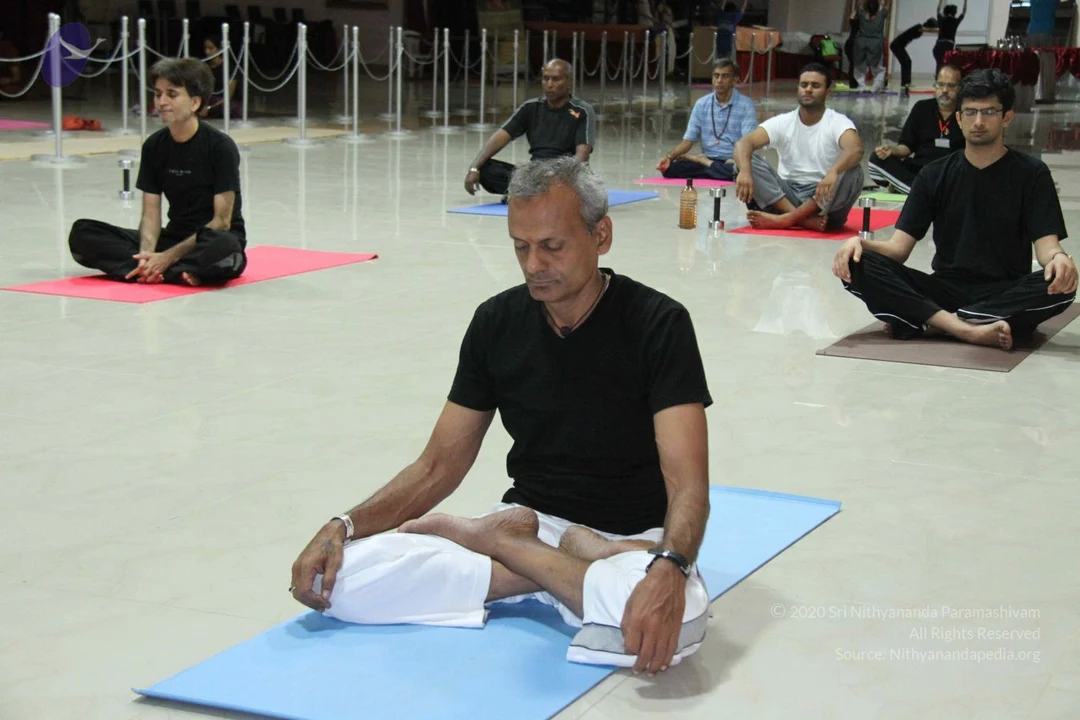
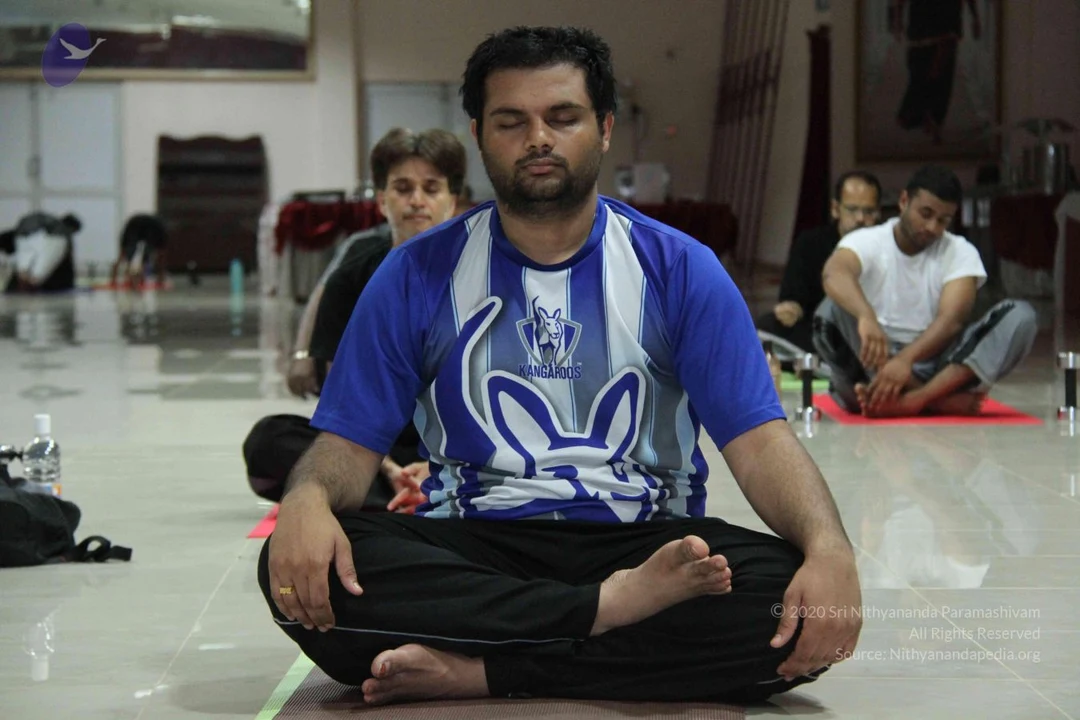
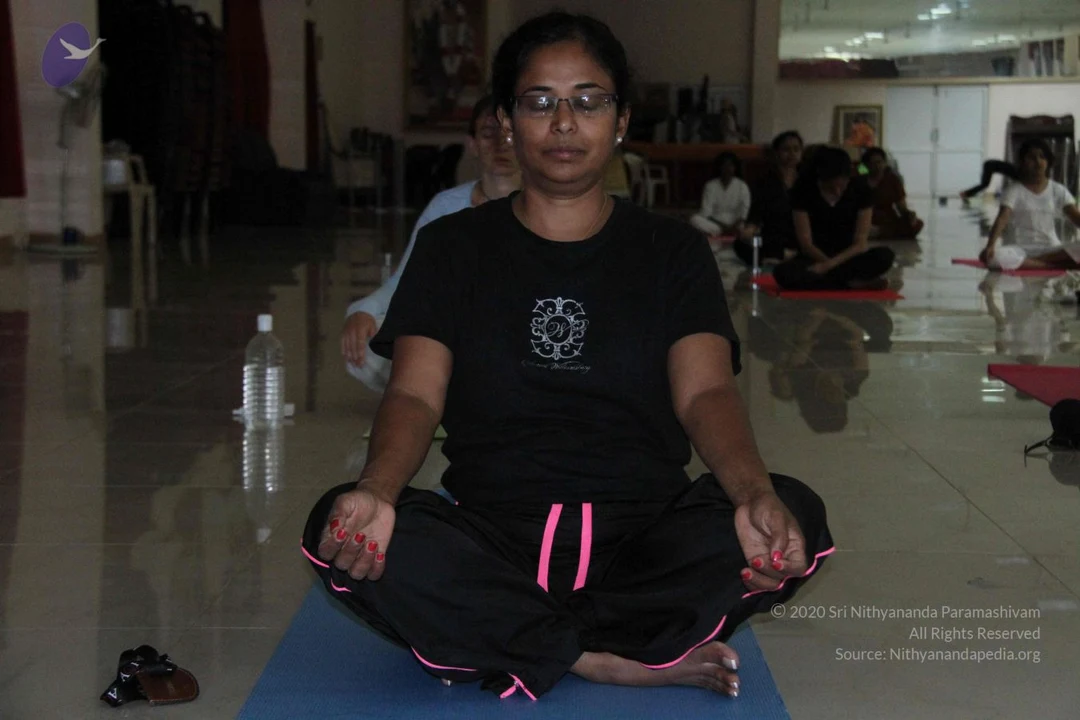
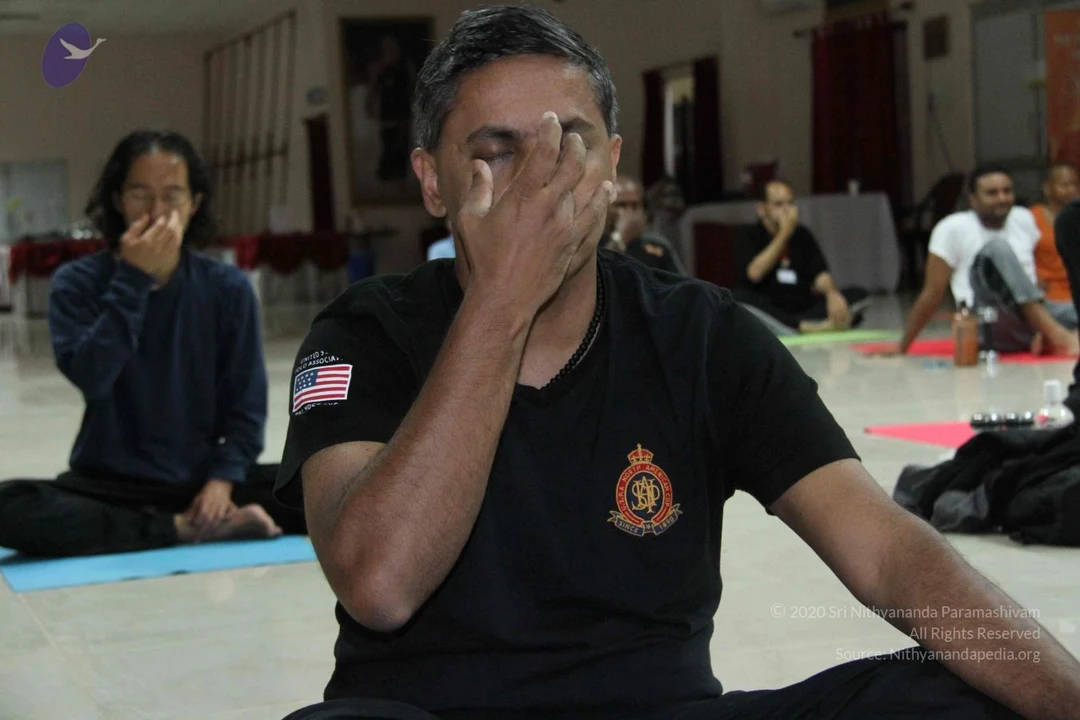
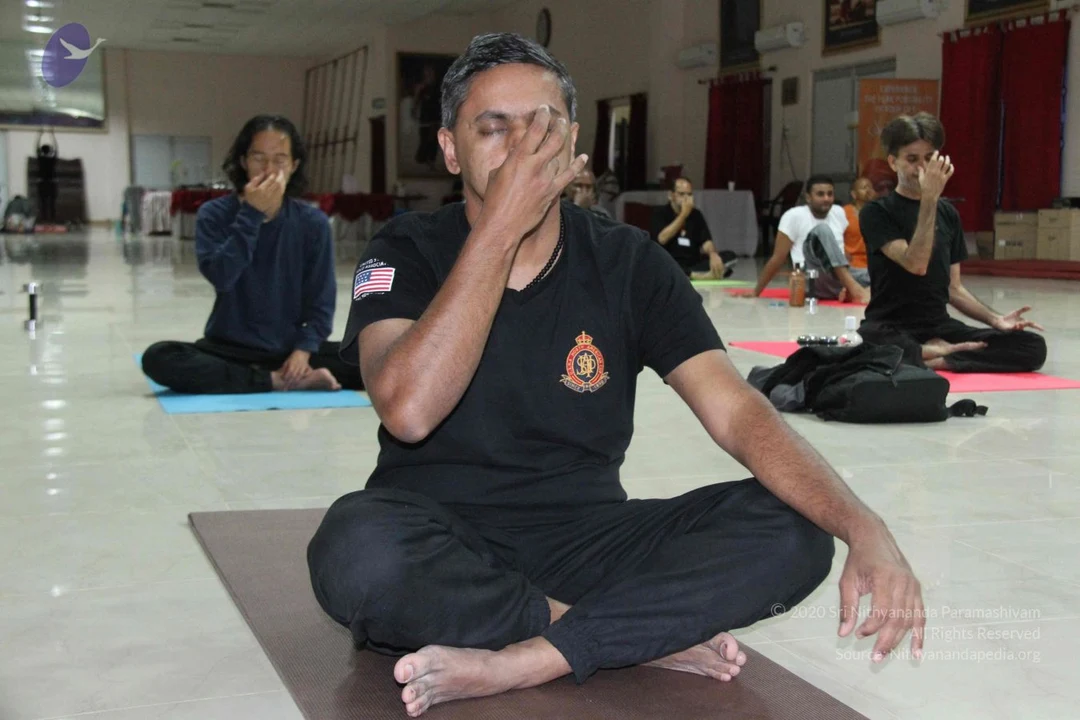
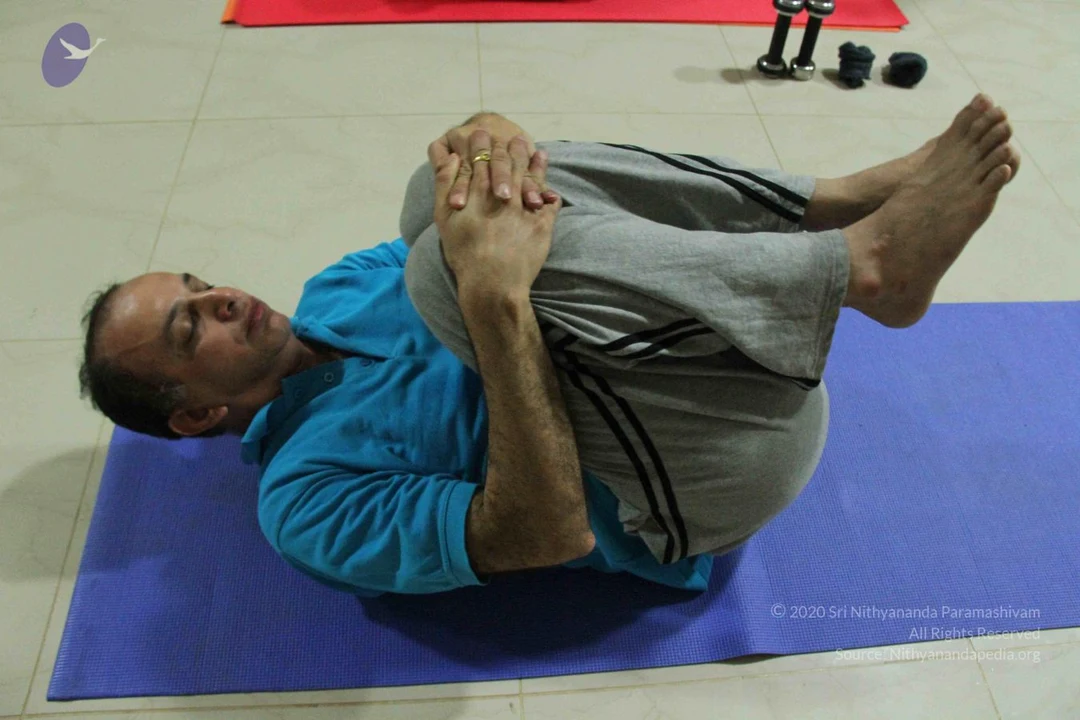
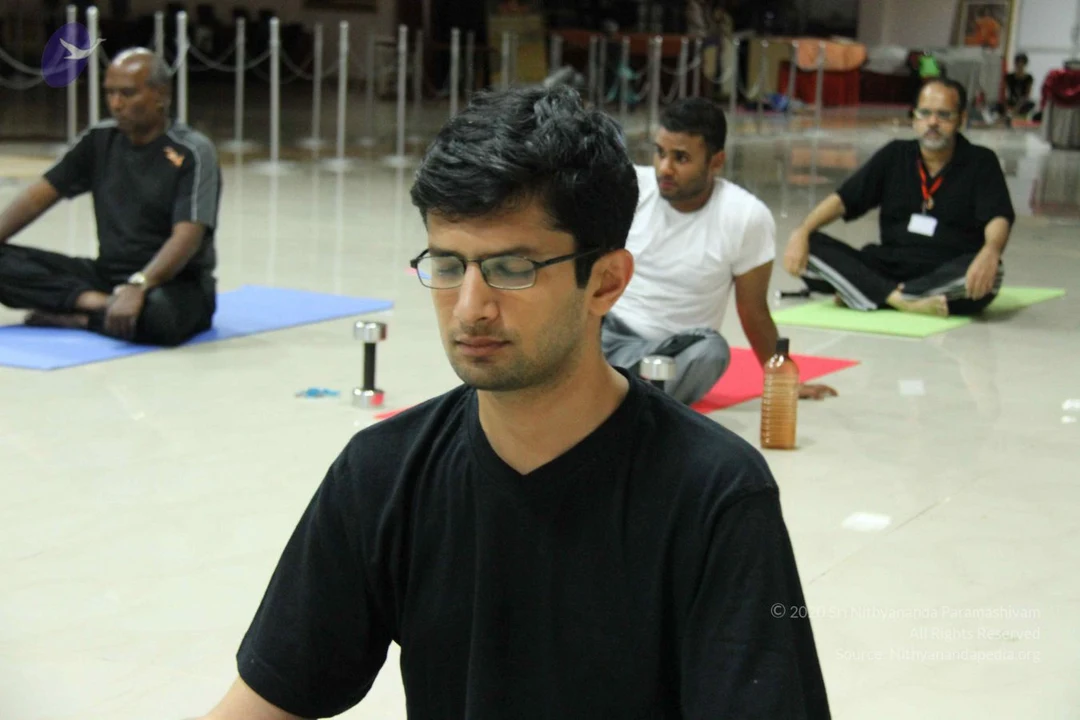
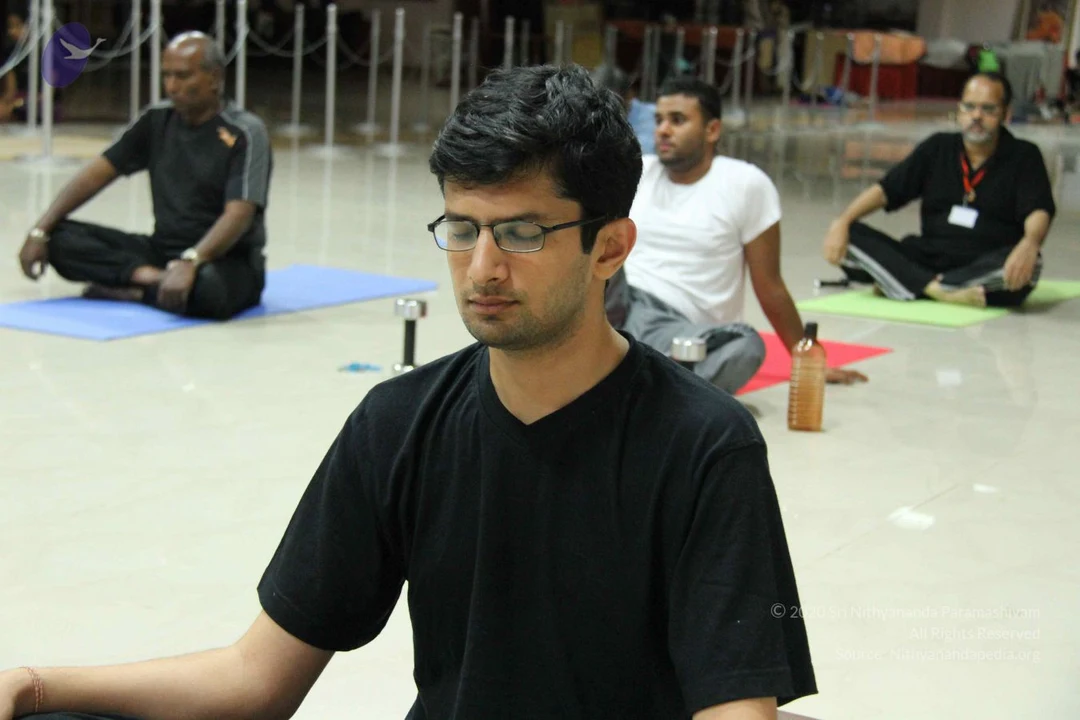
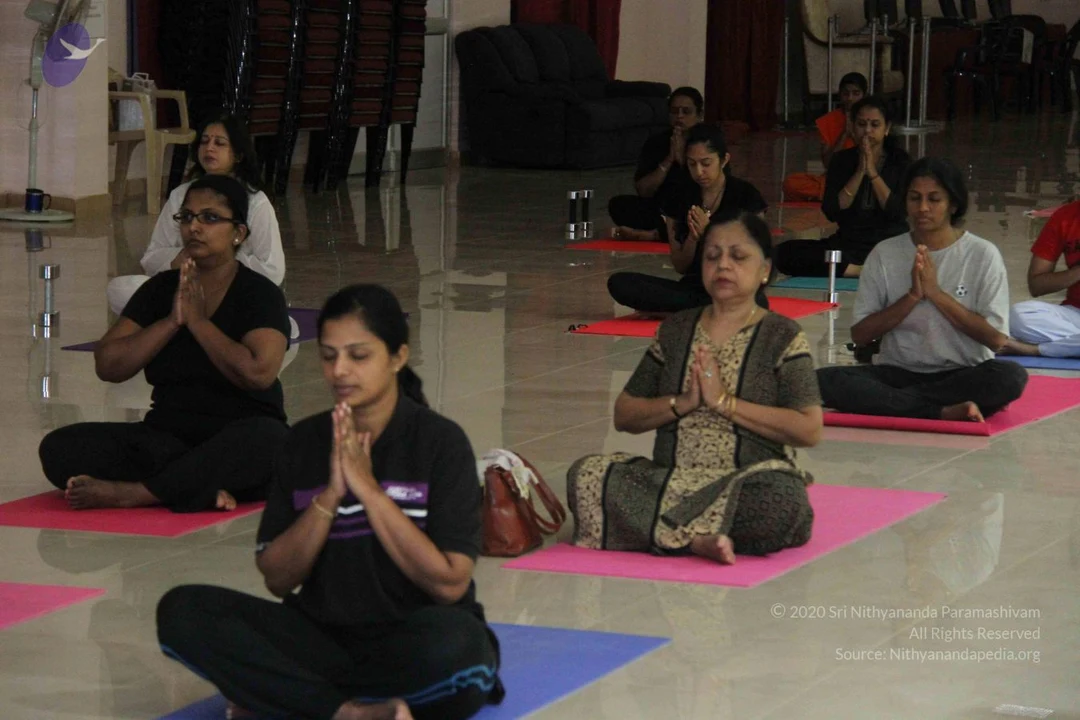
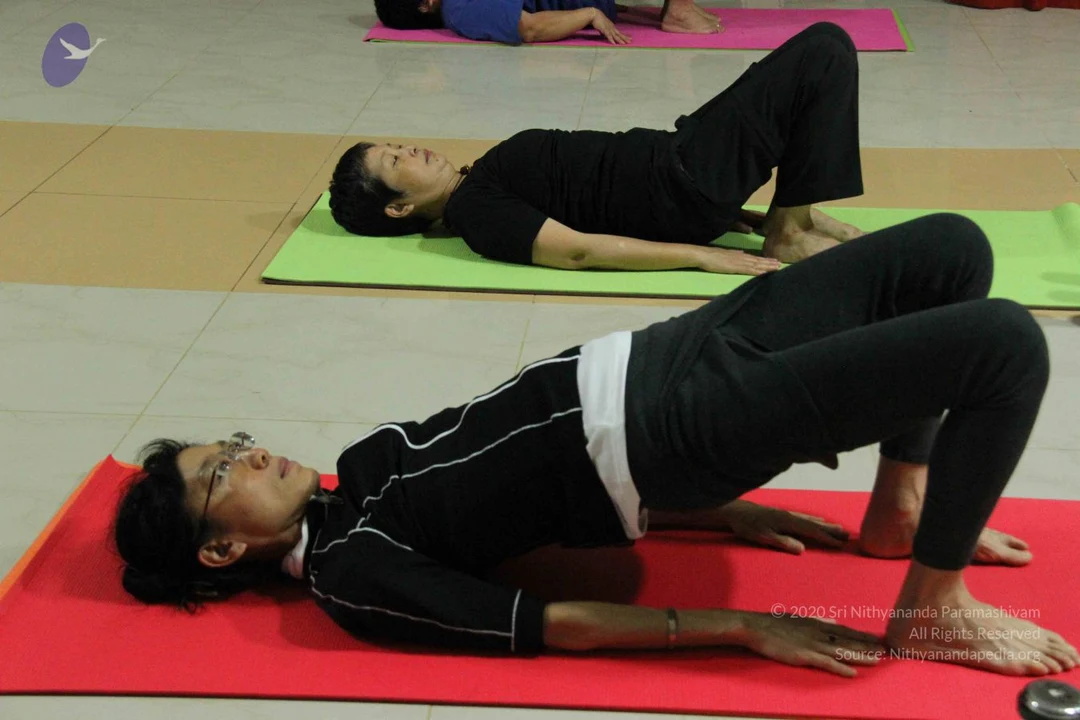
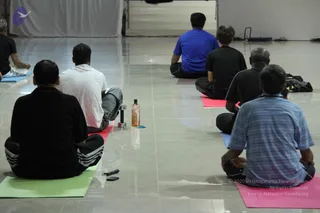
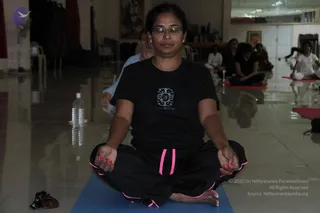
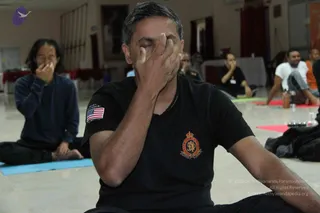
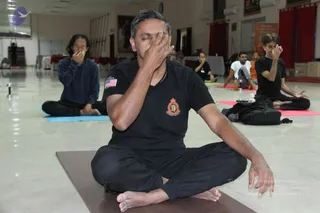
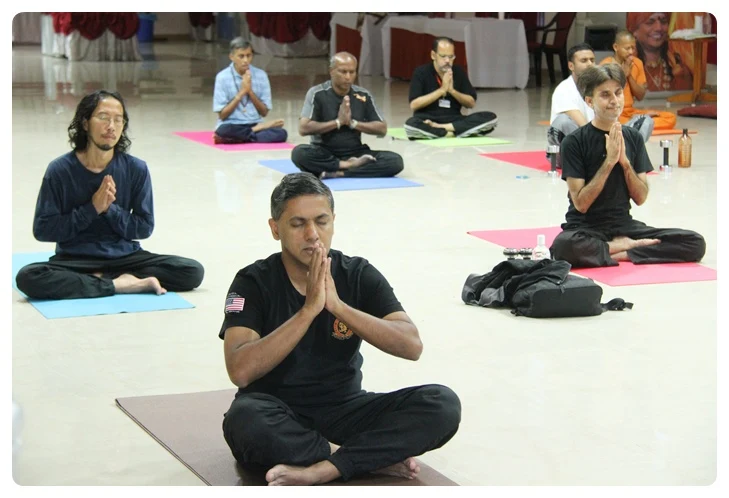
Photograph from behind of a group of men seated on colored yoga mats on a polished grey tile floor, facing a stage area. The front-left man wears a black t-shirt, the next wears a white t-shirt and grey shorts, a man in the back wears a blue athletic top, and the right-foreground man wears a blue striped polo. Other seated participants wear black clothing. A water bottle and a small dumbbell sit on the floor between them, and a grey curtain and steps are visible at the back of the room. No a person candidate is visible.A photograph of a meditation or yoga session in a bright hall with glossy pale floor. A man in the foreground sits cross-legged on a blue mat with eyes closed, wearing a black t-shirt, white pants and a wristwatch, with a beaded necklace visible. Behind him, several men sit cross-legged on pink, blue and red mats in black or white t-shirts, one in a light blue shirt, one wearing glasses. Stanchions with white posts and rope barriers line the floor and a red-draped table appears at the back right.A photograph of a bearded man in a blue and white striped Kangaroos sports shirt and black trousers sitting cross-legged on a glossy floor with his eyes closed in meditation, hands resting on his knees. Behind him, several other people sit in meditation poses on red mats in a large hall with a white floor, a red-draped table and framed artwork on the walls. The setting suggests a group meditation or satsang session.A woman seated cross-legged on a blue yoga mat in a bright hall with polished tiled floor, eyes closed, hands resting open on her knees in a meditation pose. She wears a black t-shirt with a small embroidered emblem and black trousers with pink trim, and has red painted nails and glasses. Behind her, several other people sit on red mats in a meditation session, some in white and some in black clothing. A plastic water bottle and black sandals sit near the mat, with cabinets and framed pictures along the back wall.A photograph of a group meditation or yoga session in a bright hall with a light tiled floor. In the foreground a man with short greying hair sits cross-legged in a black V-neck T-shirt with a small gold crest on the chest and a flag patch on the sleeve, his right hand raised to his face in a nasal breathing gesture with his eyes closed. Behind him a man in a dark long-sleeved top and another in a dark top sit on coloured mats, also performing the hand gesture. Further back a man in a white T-shirt sits on a red mat and a man in orange sits on the floor, with a draped table and red curtains in the background. Water bottles and a black bag lie on the floor.A photograph of a yoga or breathing session in a bright, tiled hall. In the foreground a man in a black t-shirt with a small red crest and an American flag patch sits cross-legged on a brown mat, one hand raised to his face in a nadi shodhana-style nostril gesture. Behind him, several participants sit on coloured mats: a person in a dark blue sweater, a man in a white t-shirt, a person in black, and others in the background, some also with hands raised. Red curtains, a table with water bottles, and cardboard boxes are visible at the edges.

kalabhairava-Reading-darshan

17 photosSource gallery
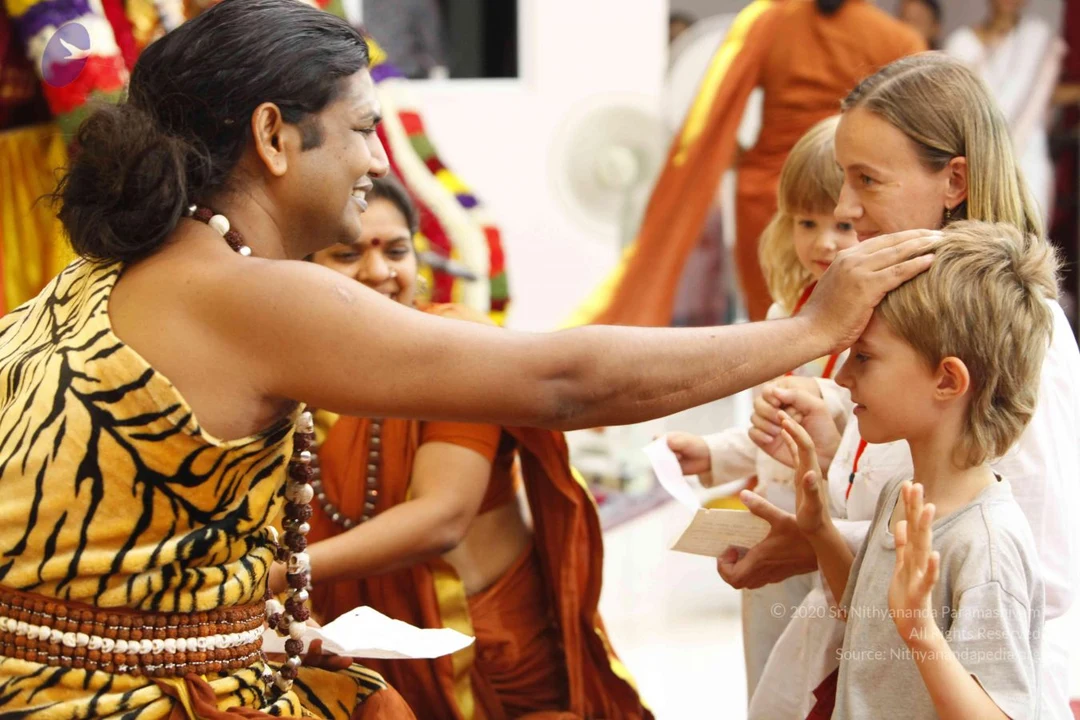
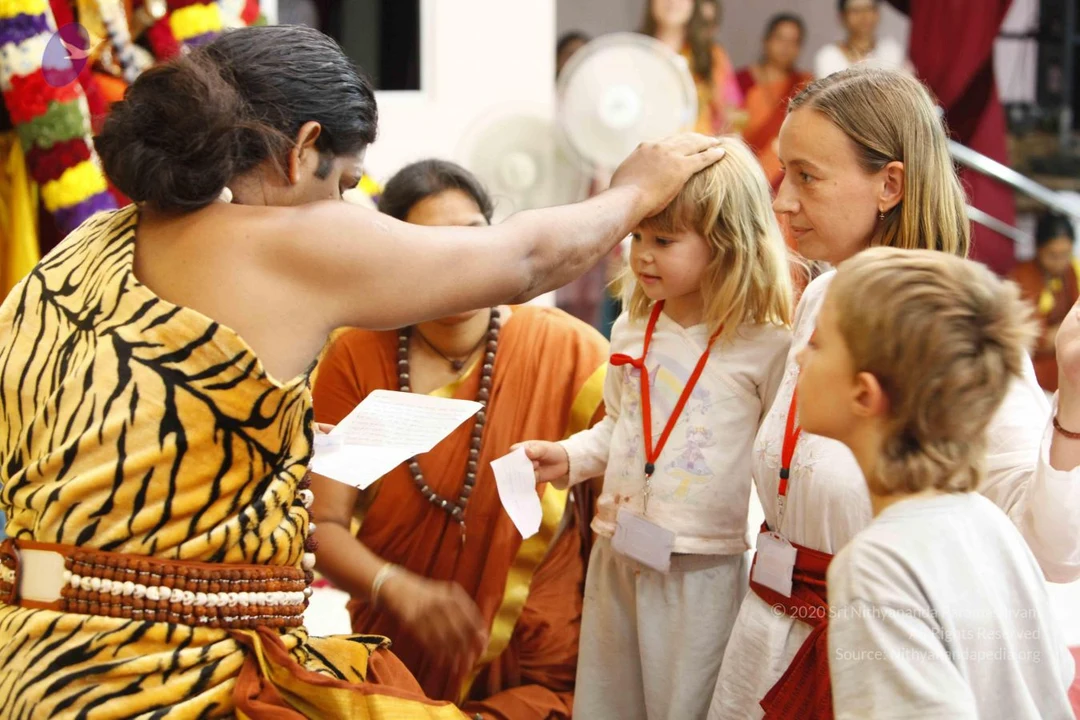
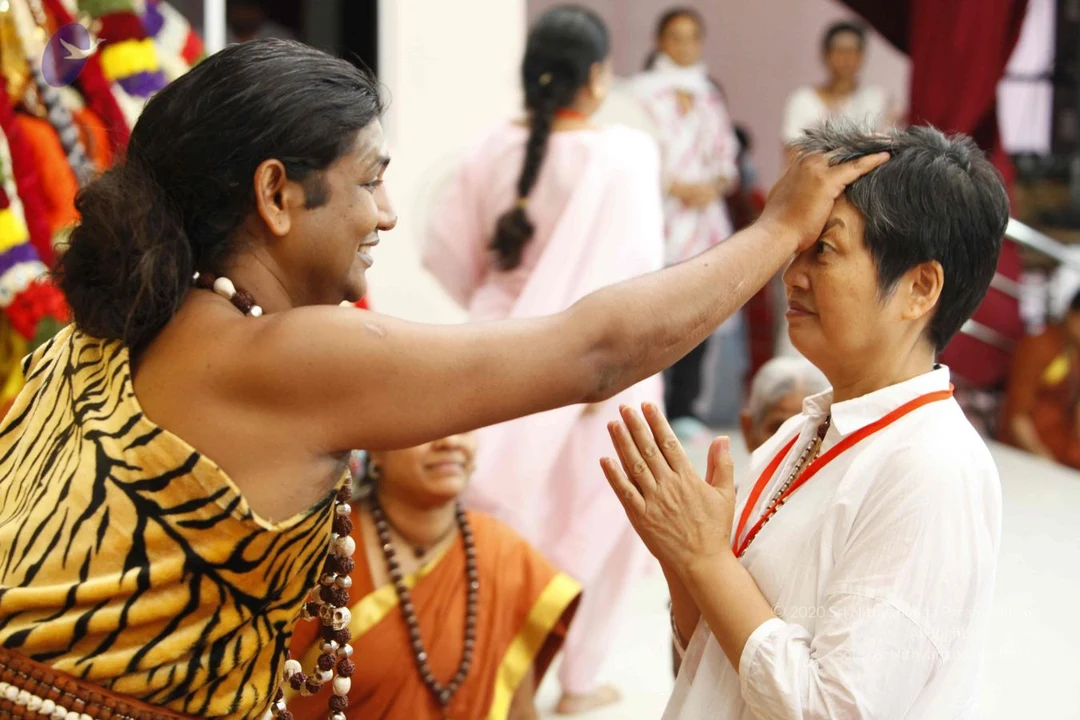
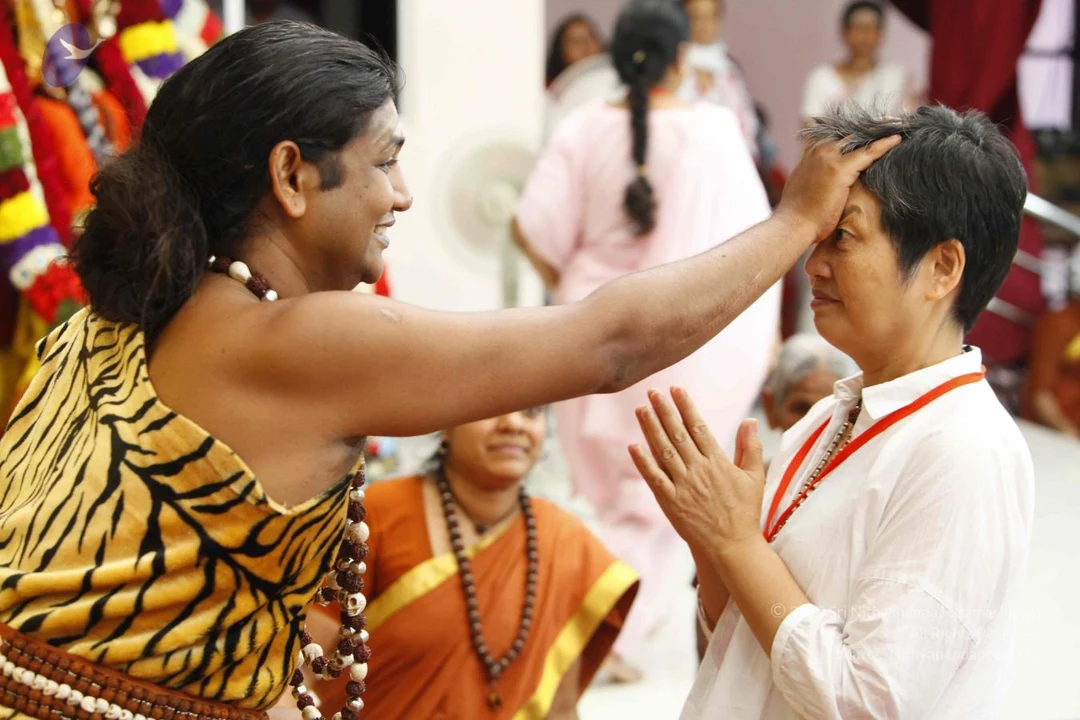
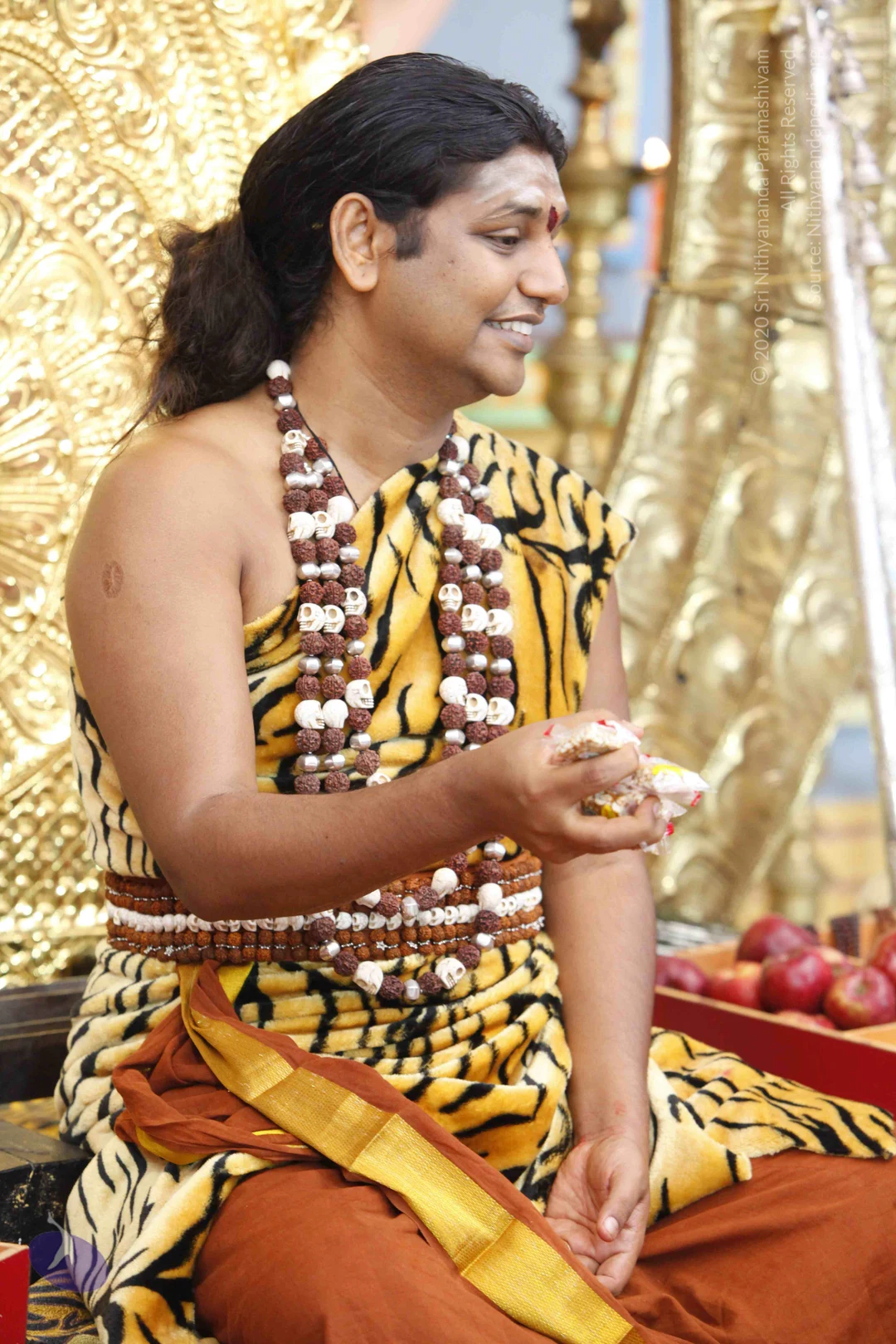
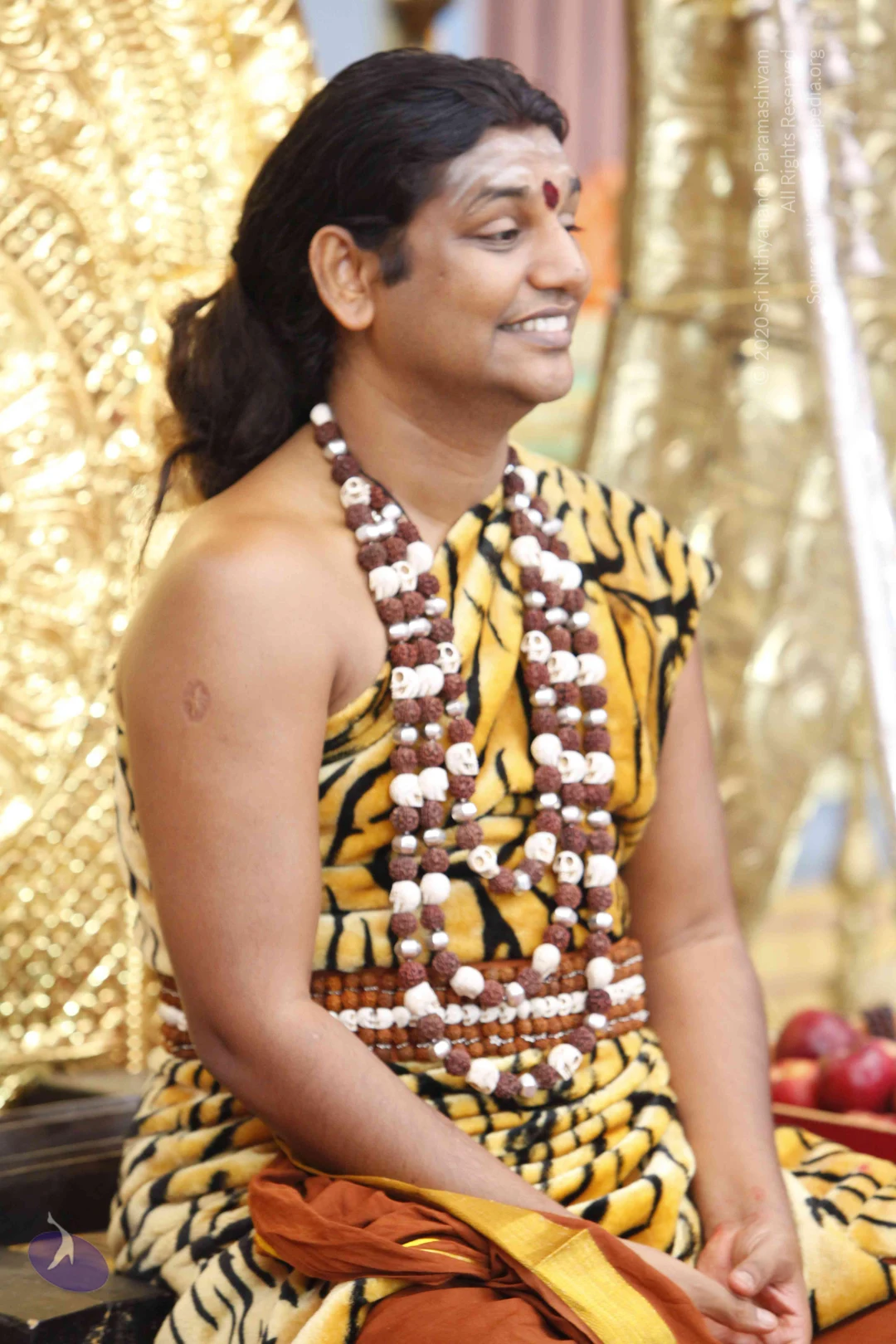
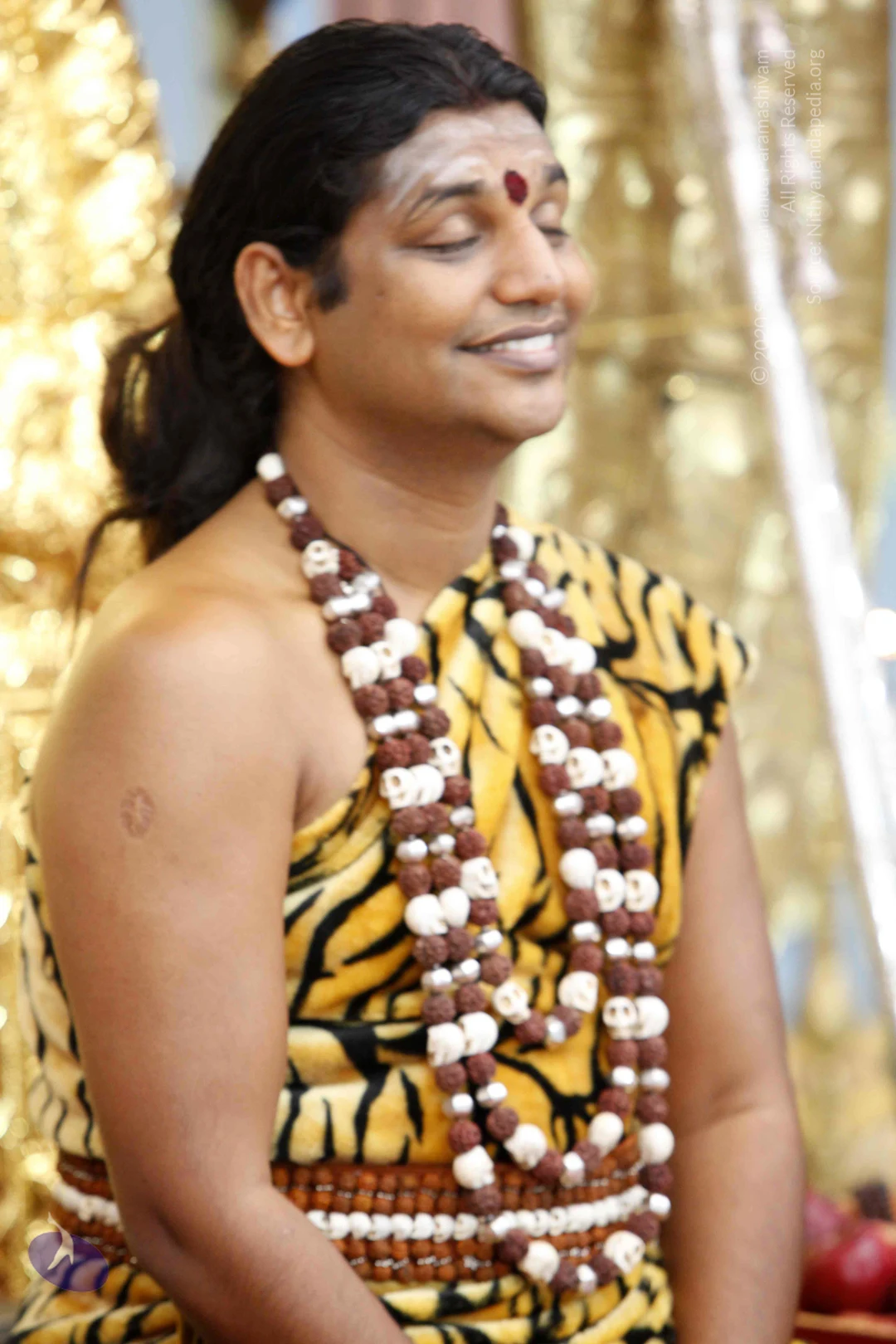
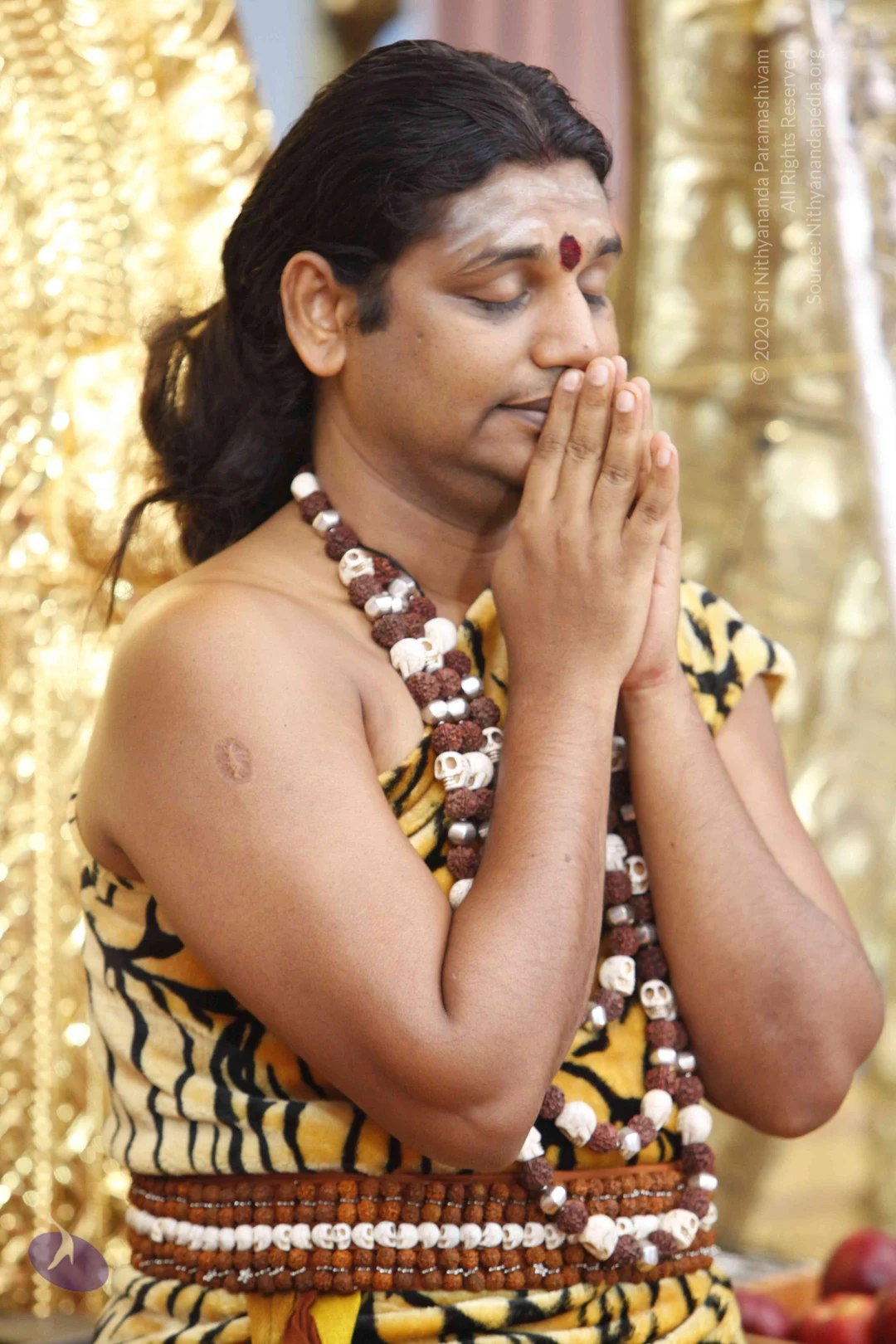
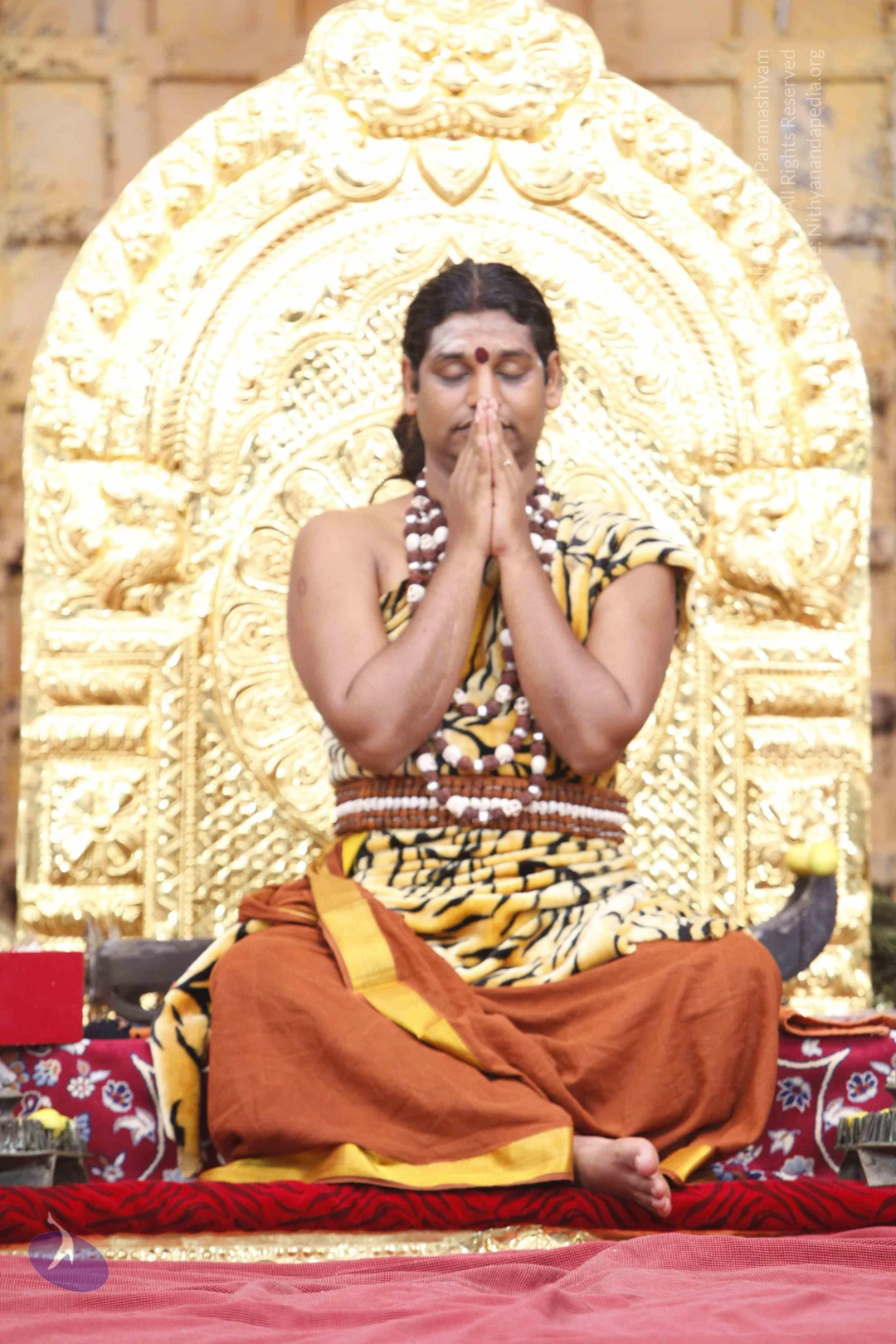
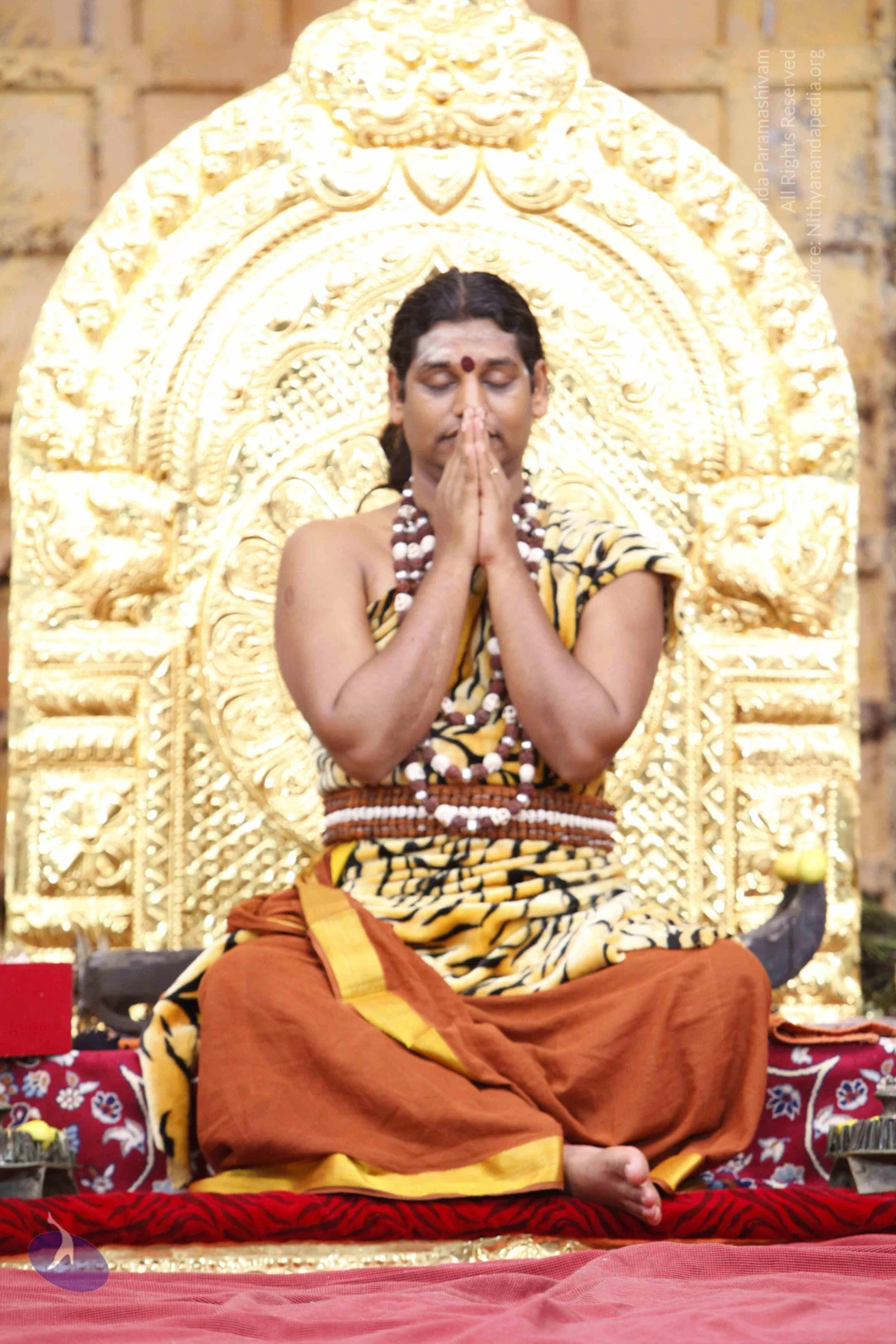
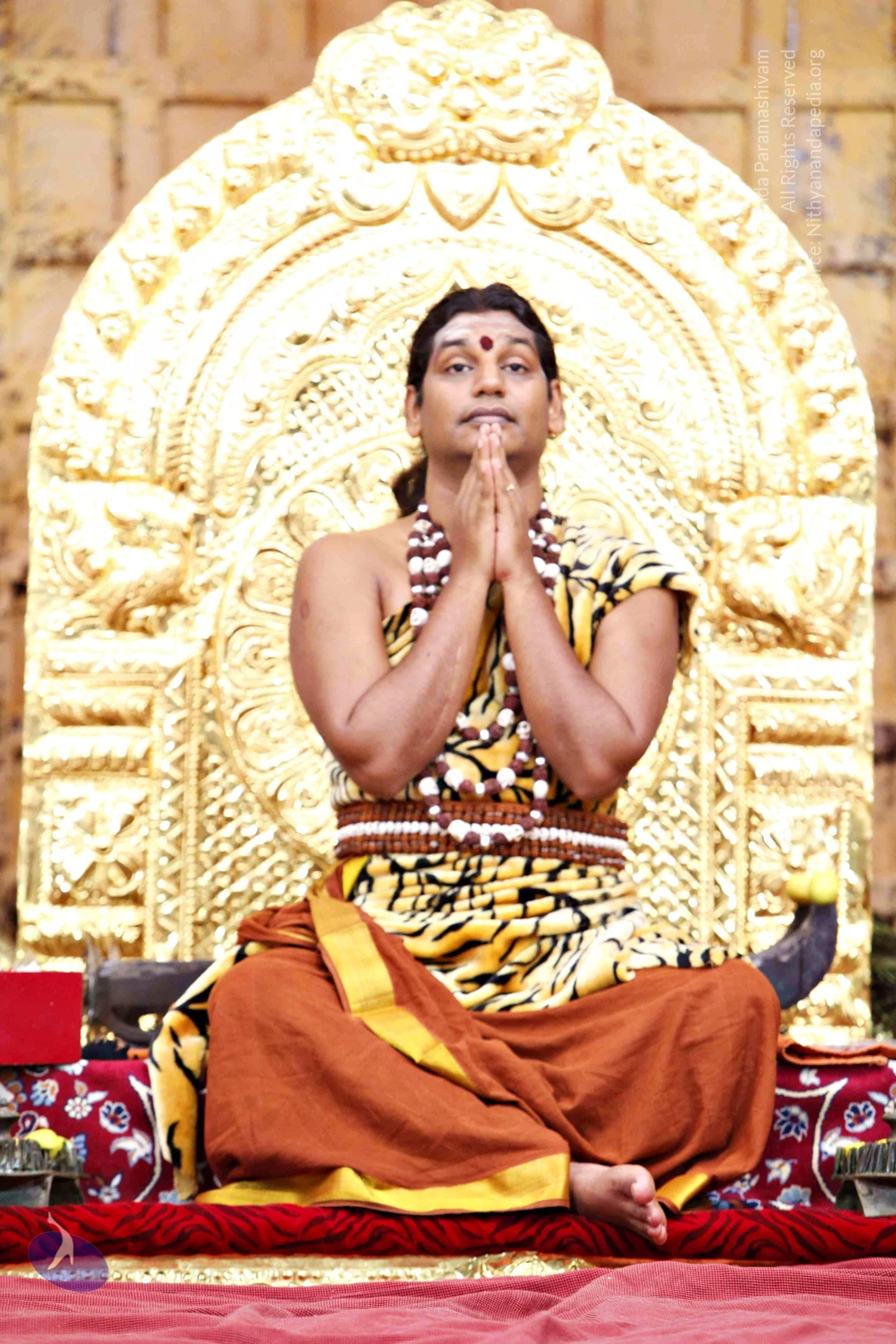
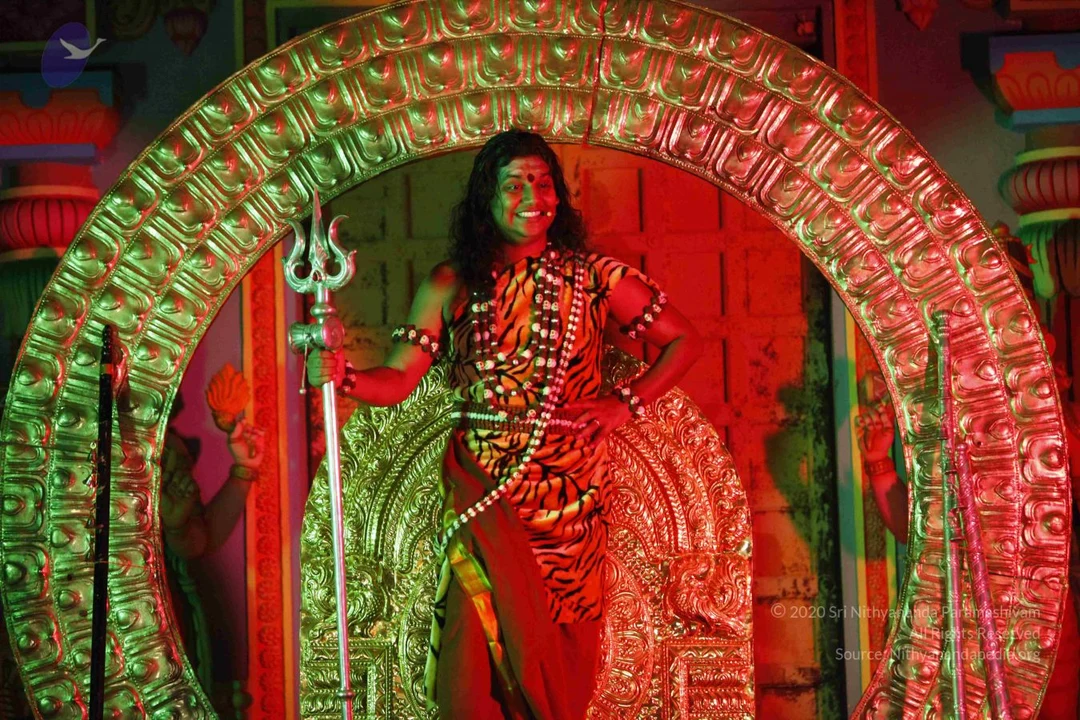
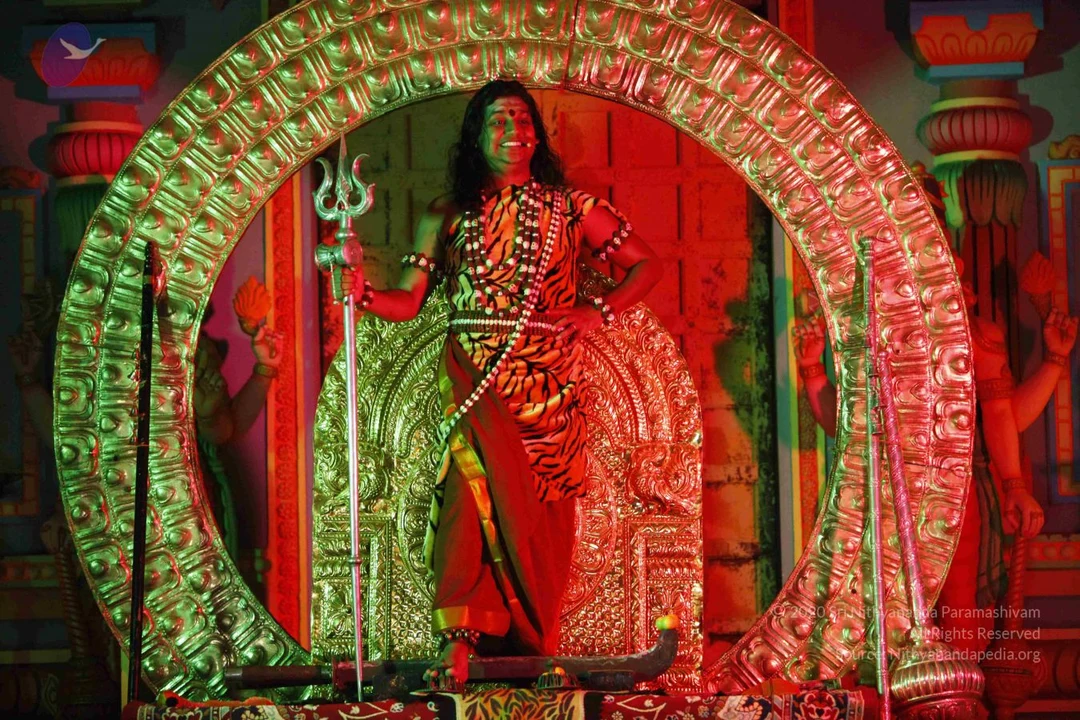
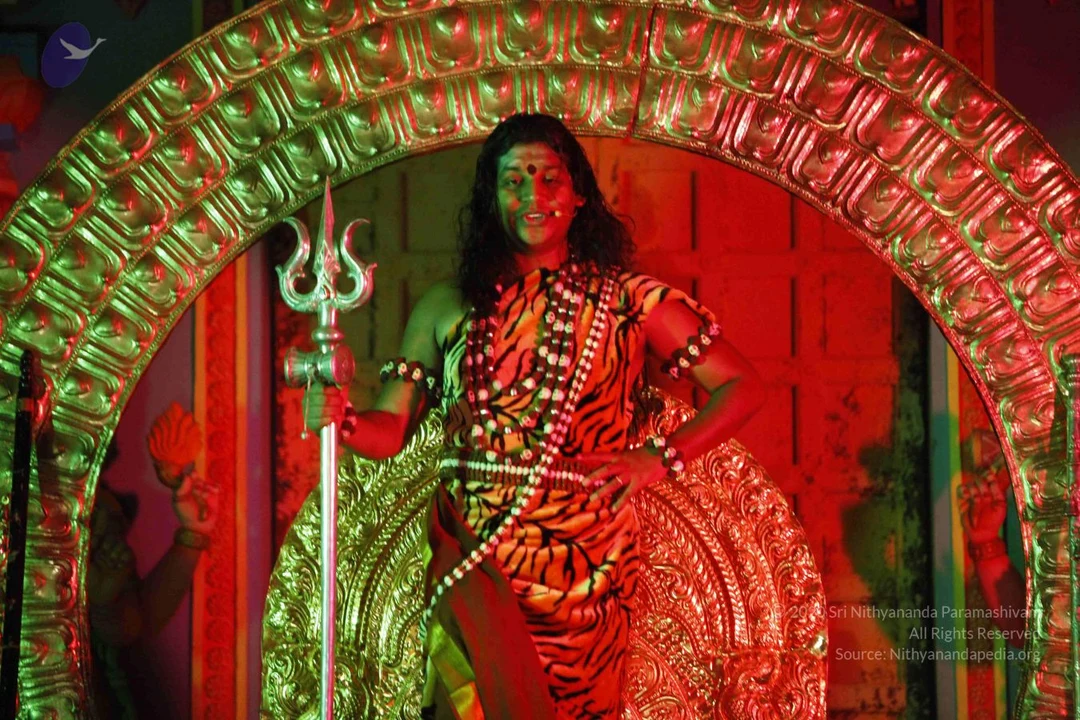
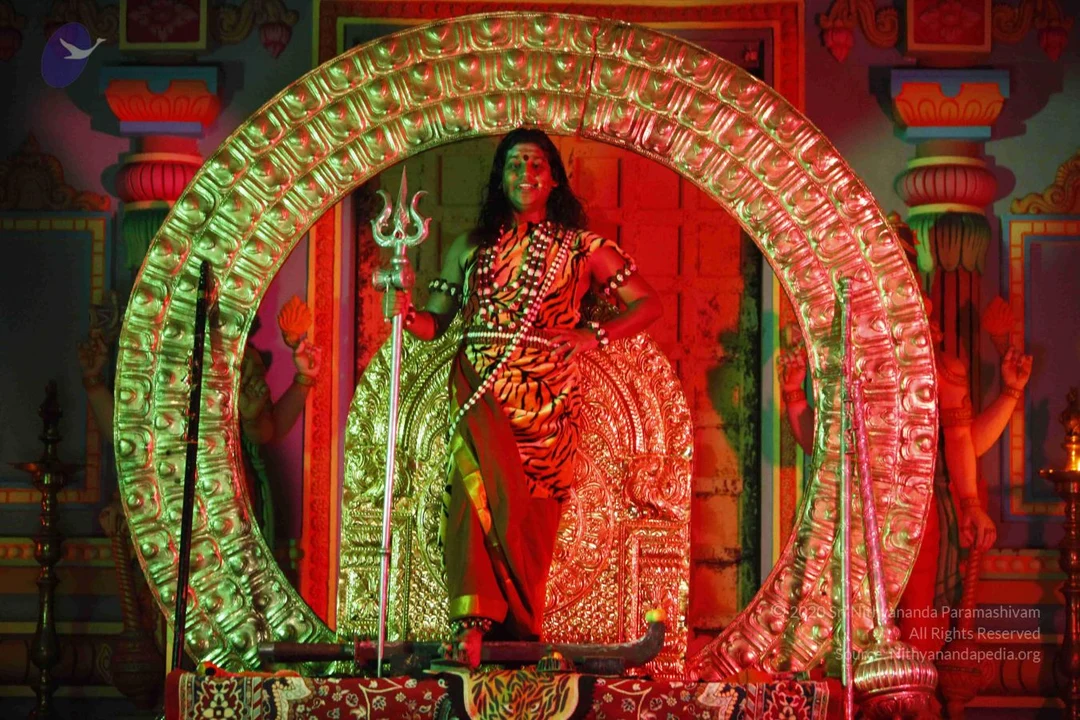
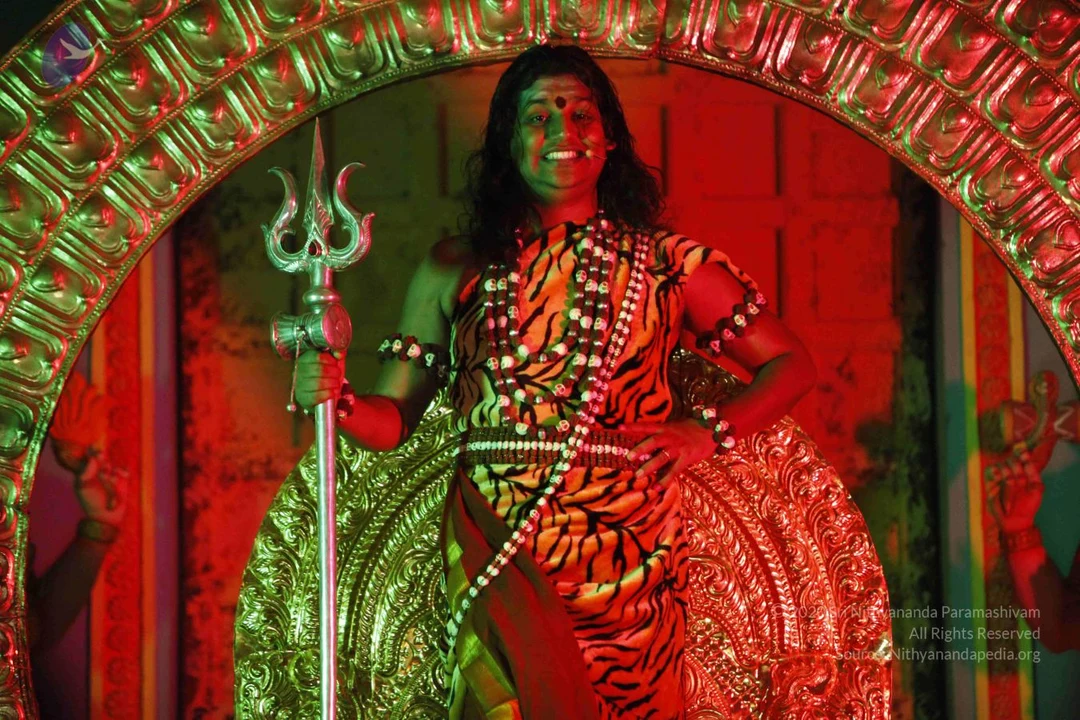
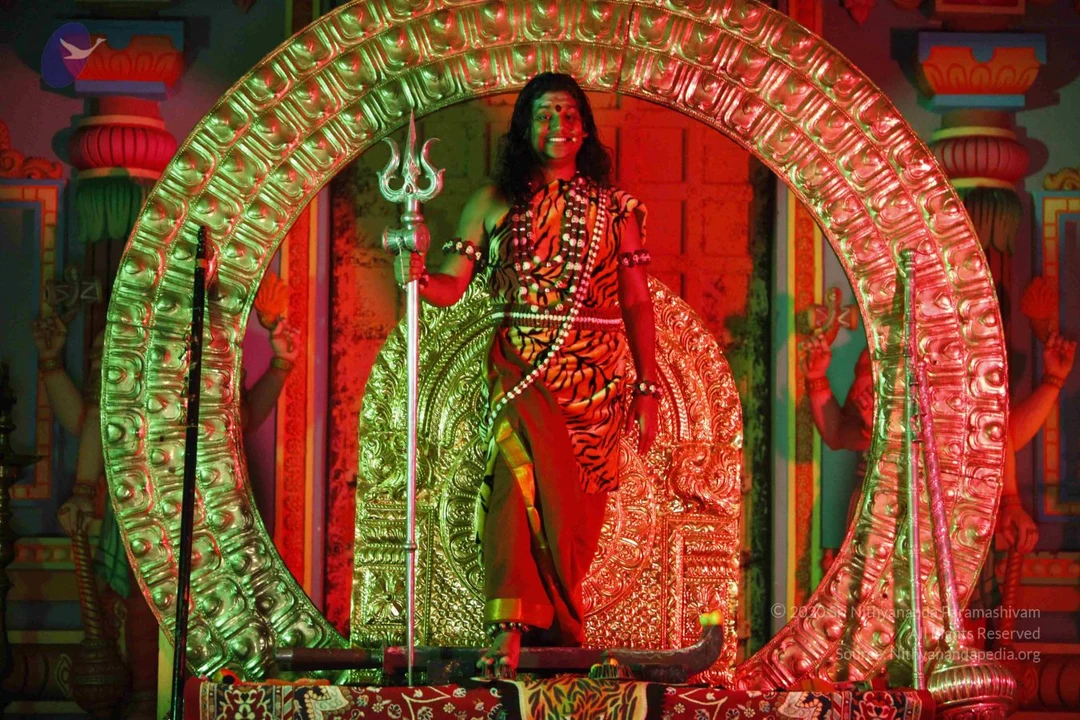
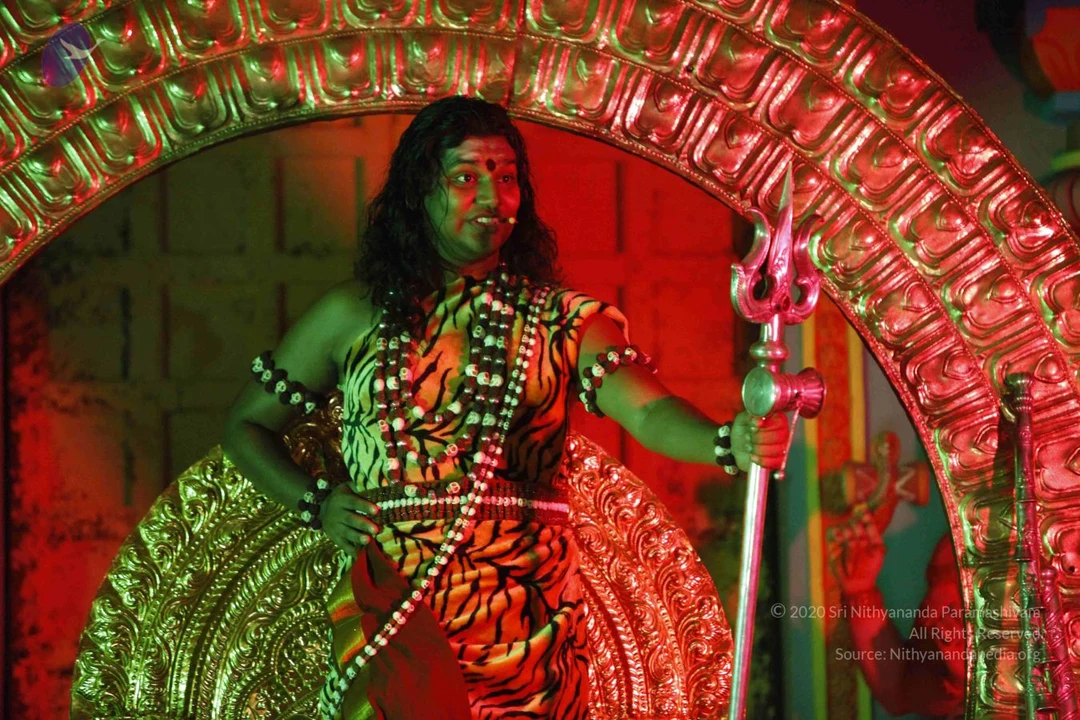
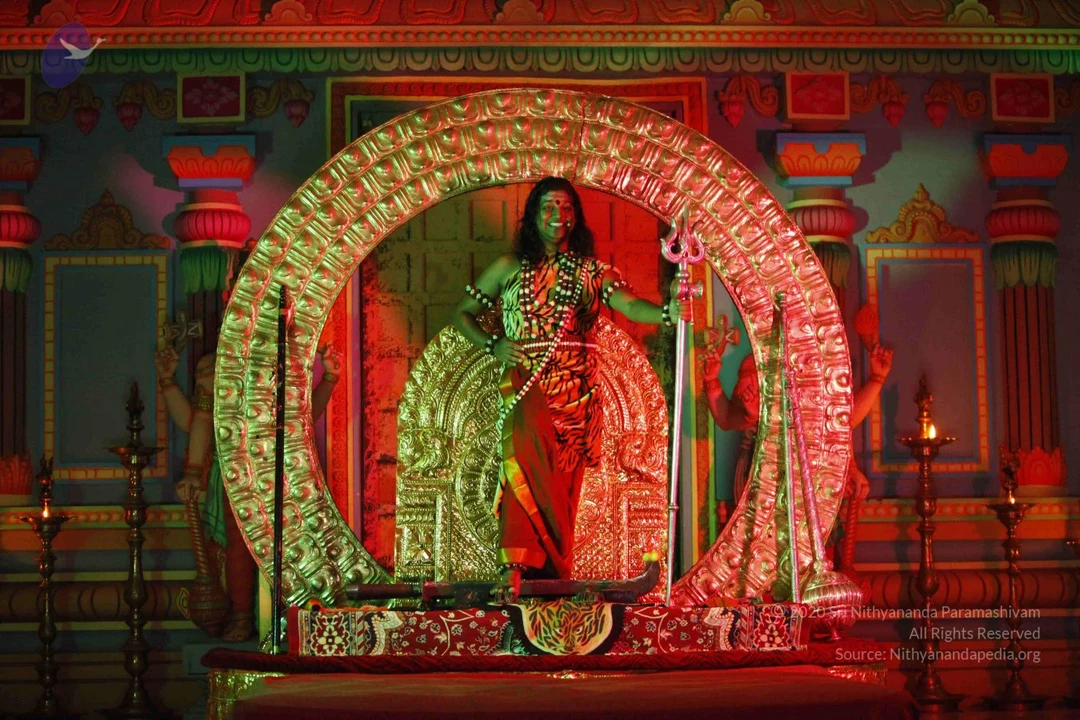
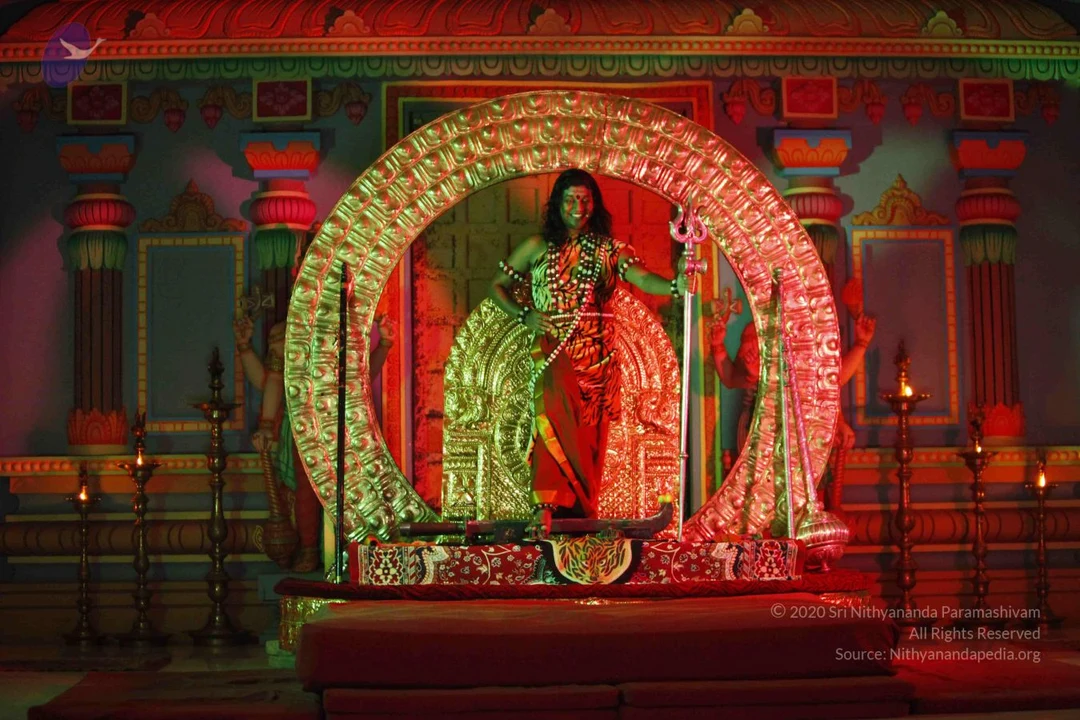
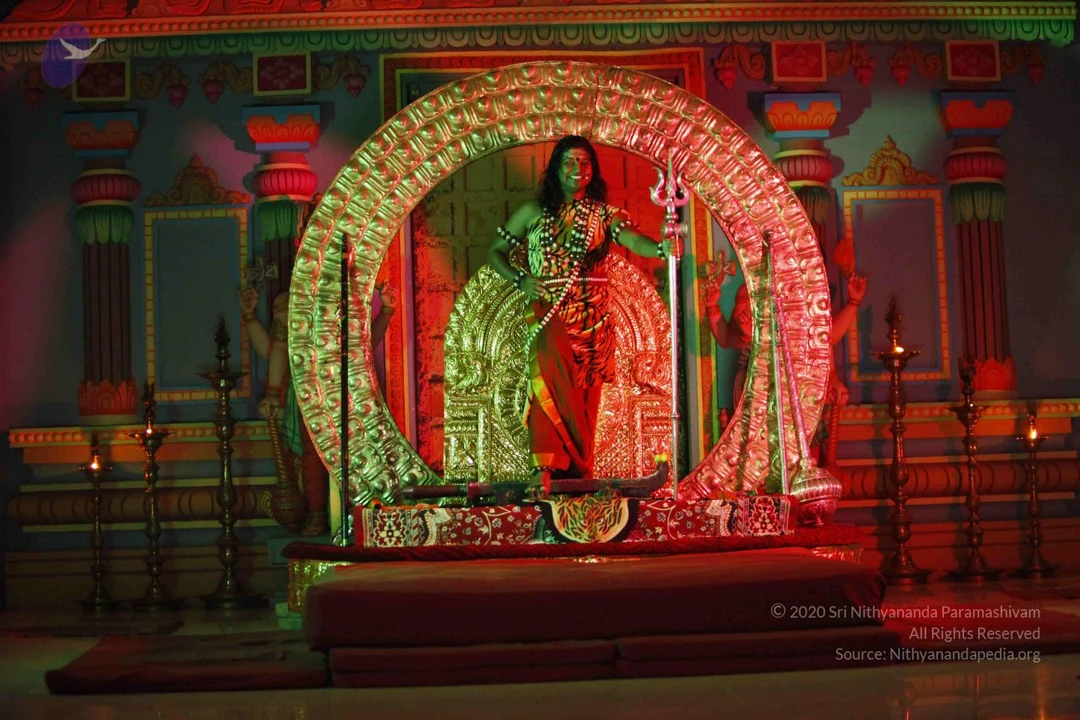
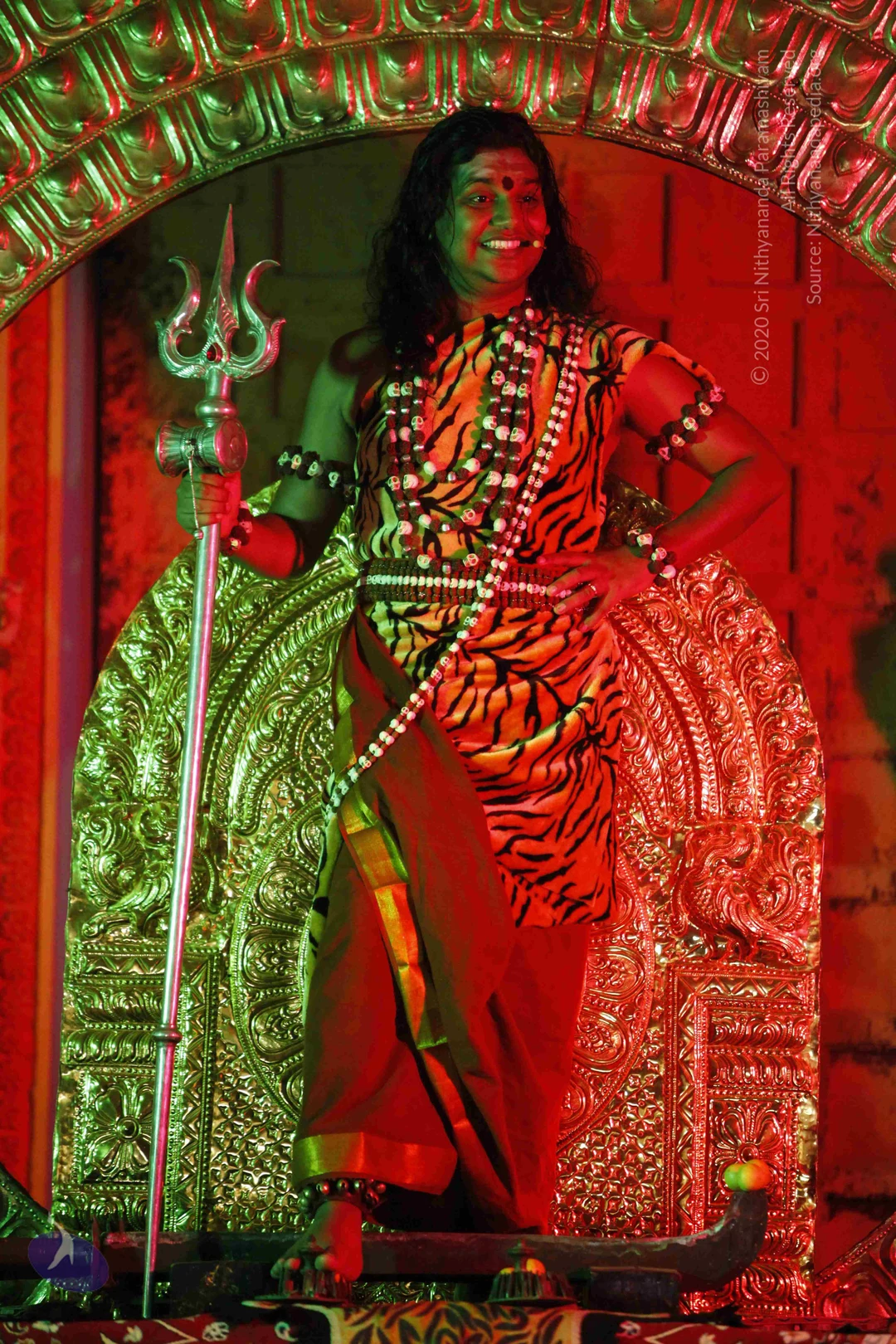
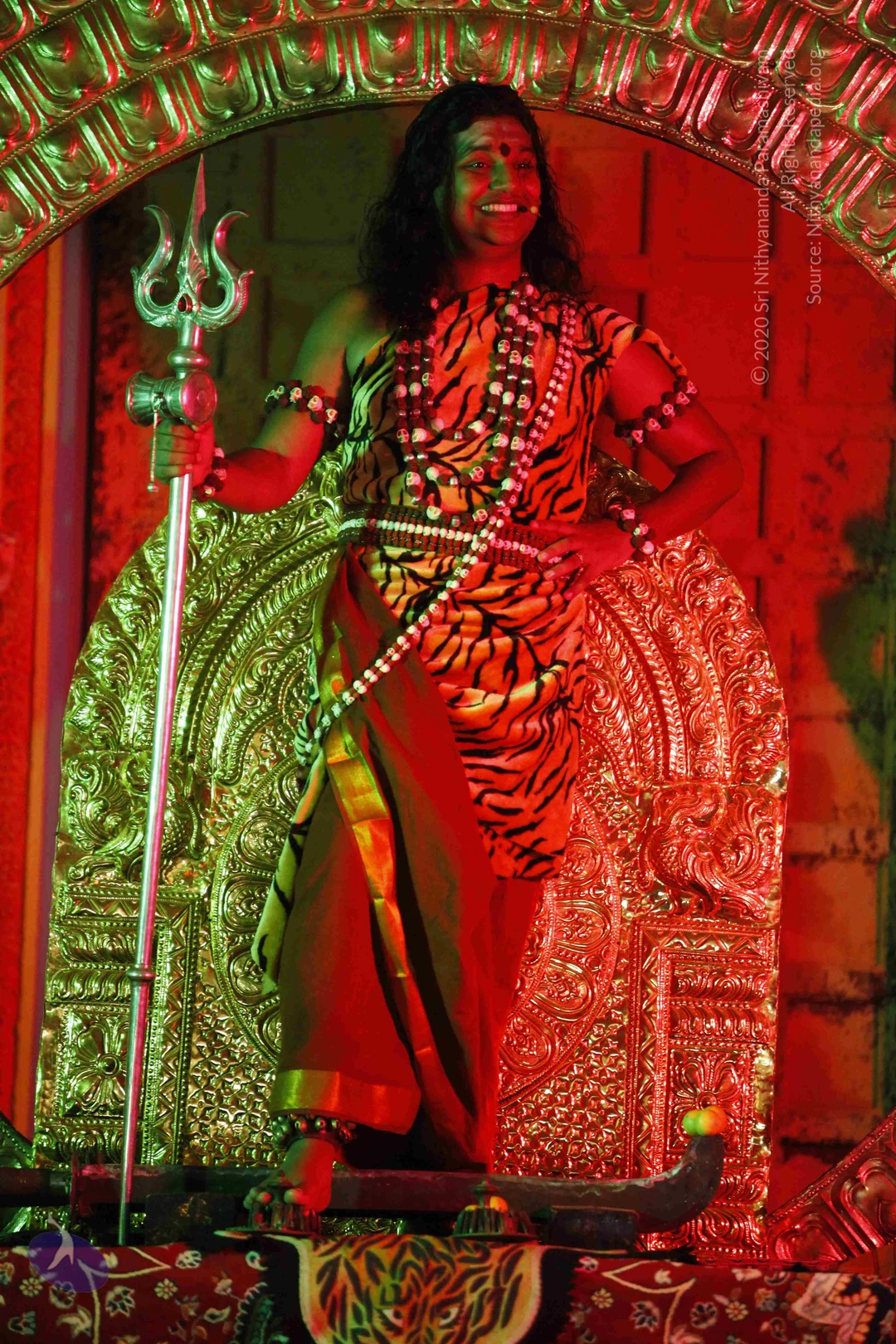
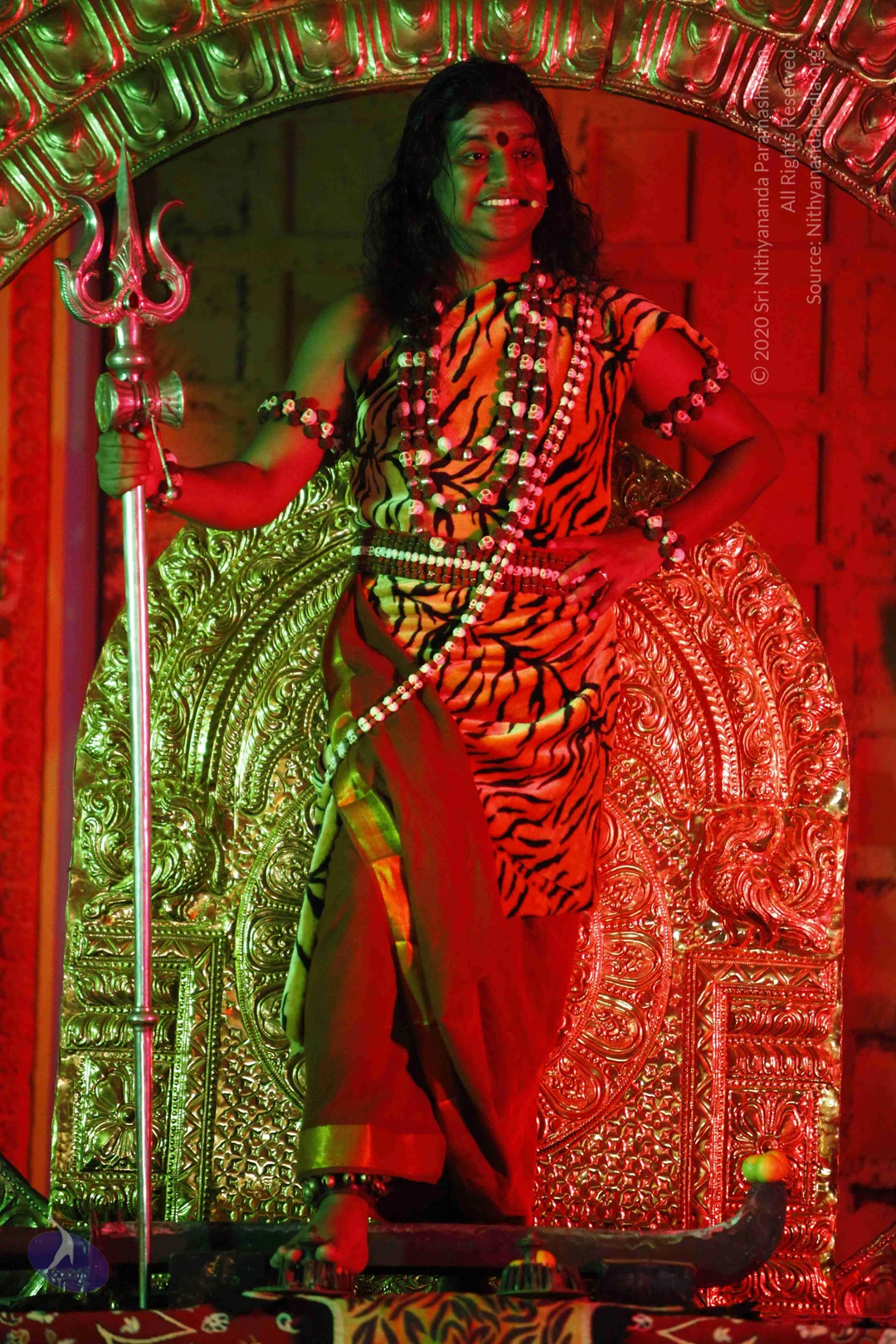
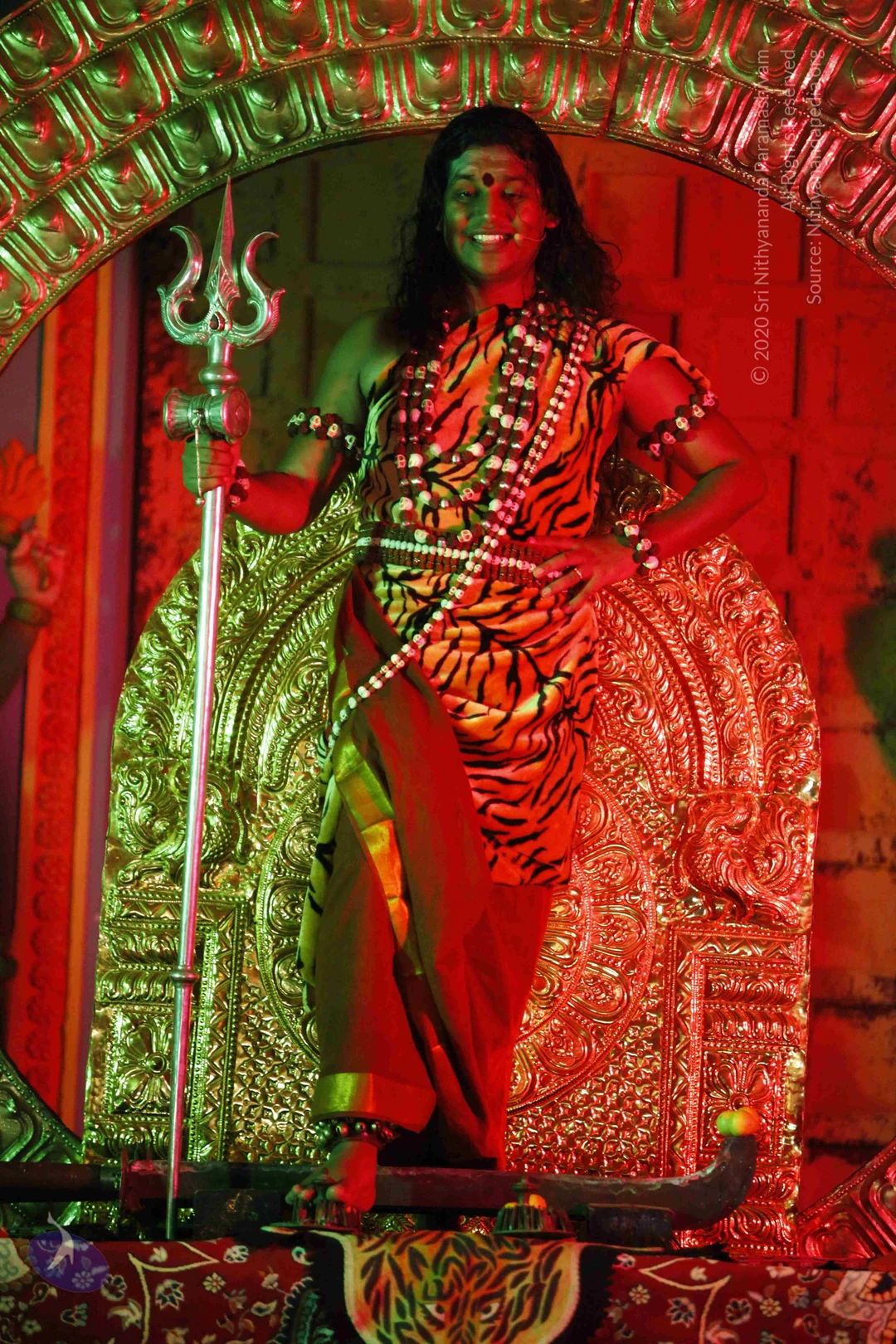
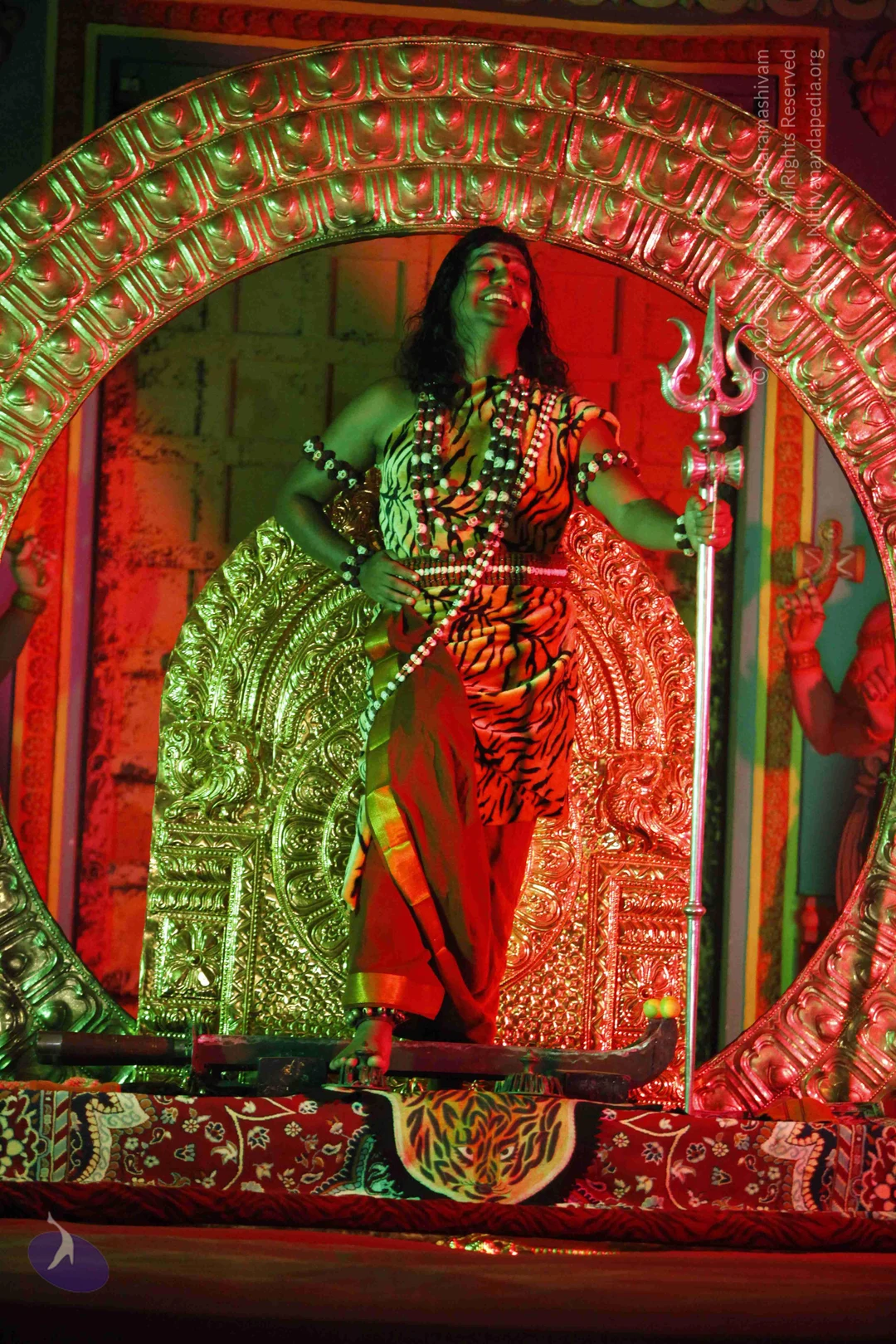
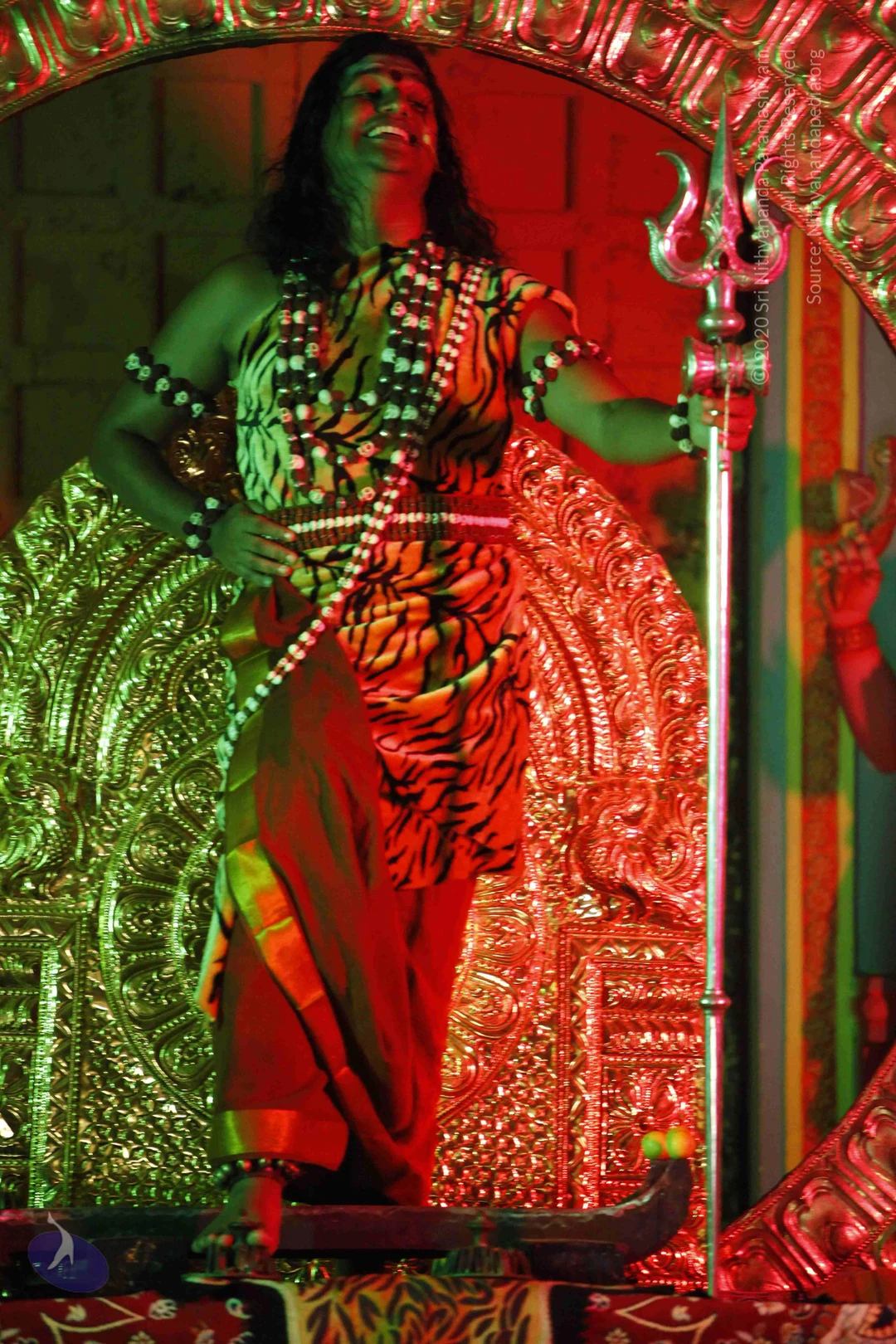
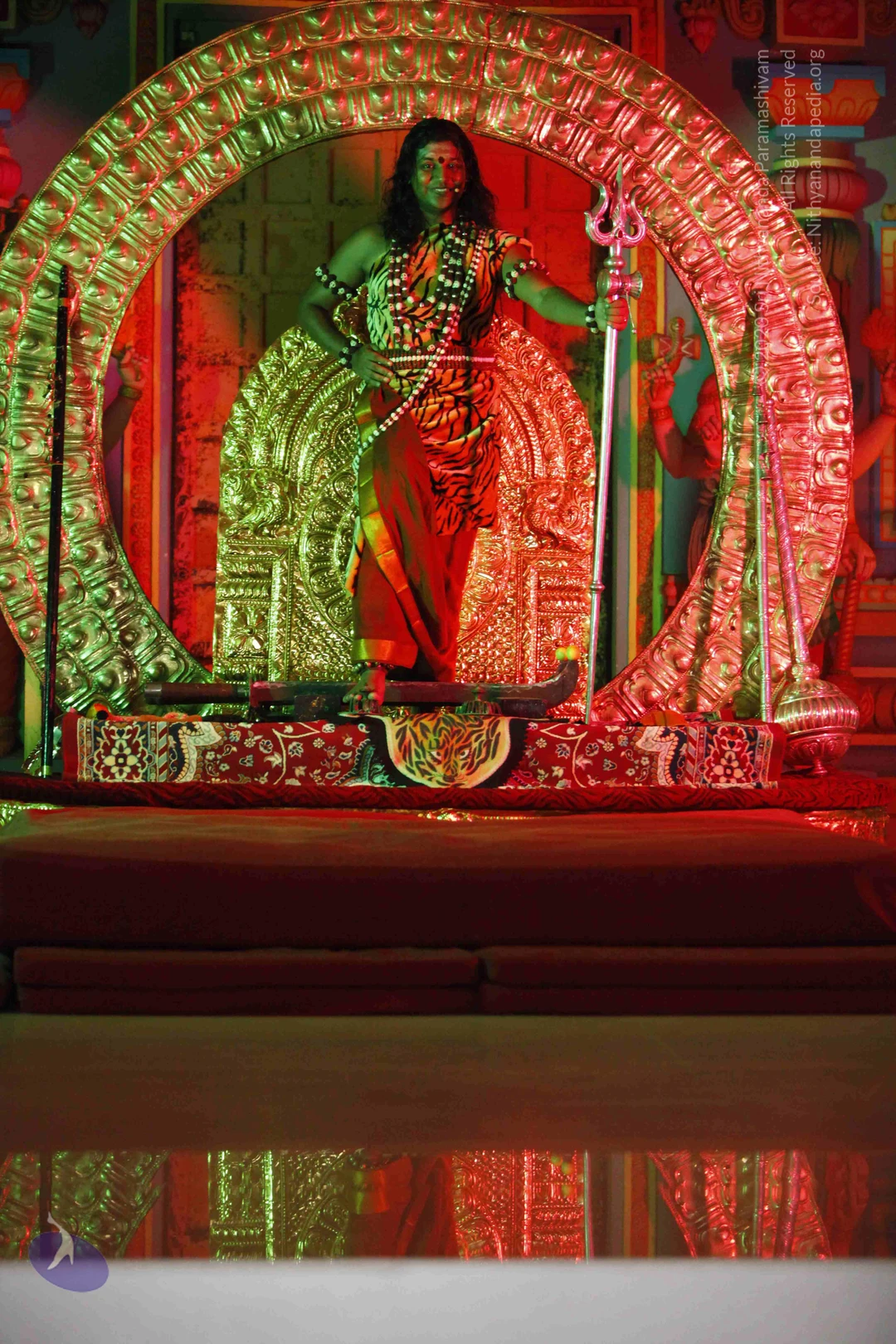
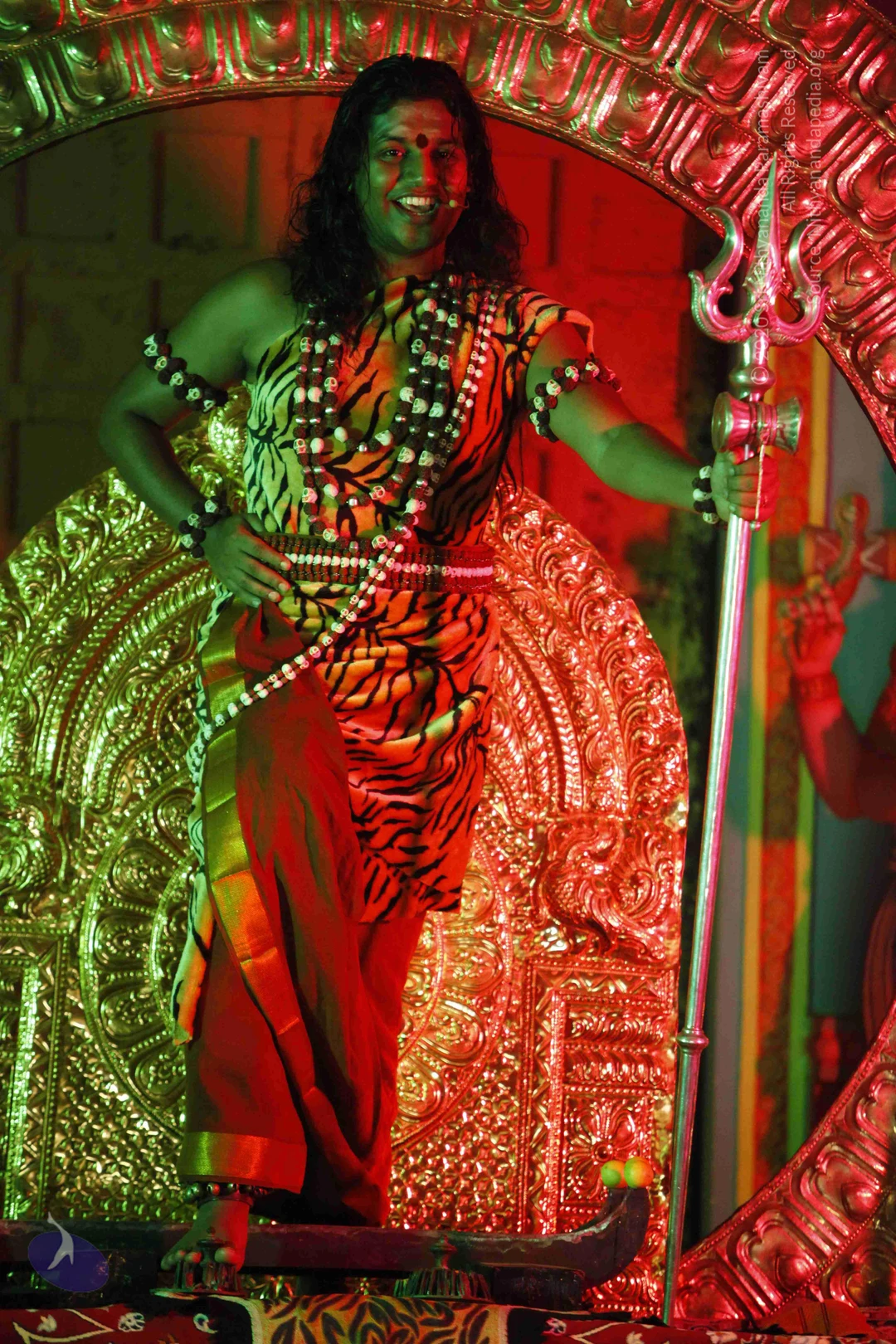
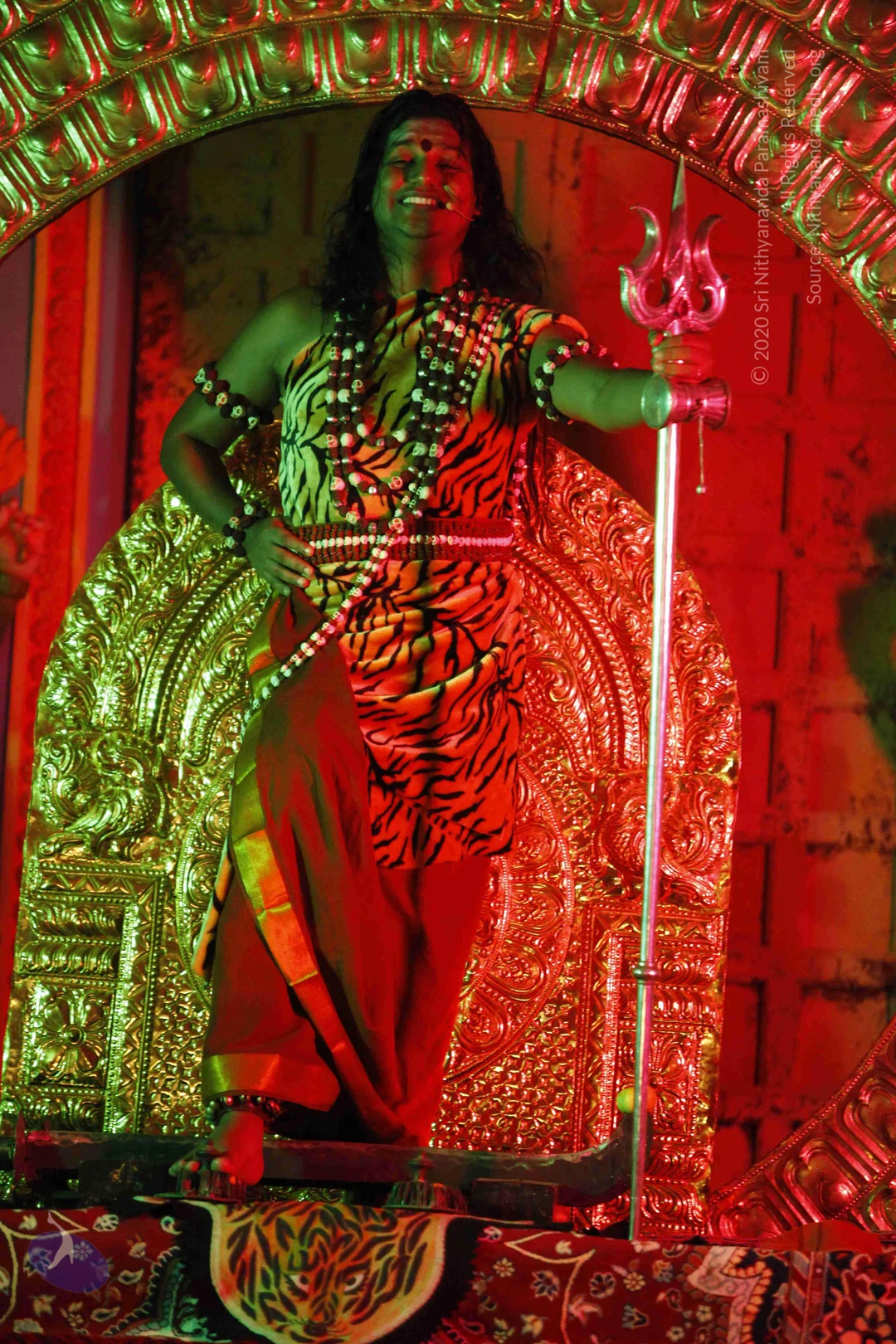
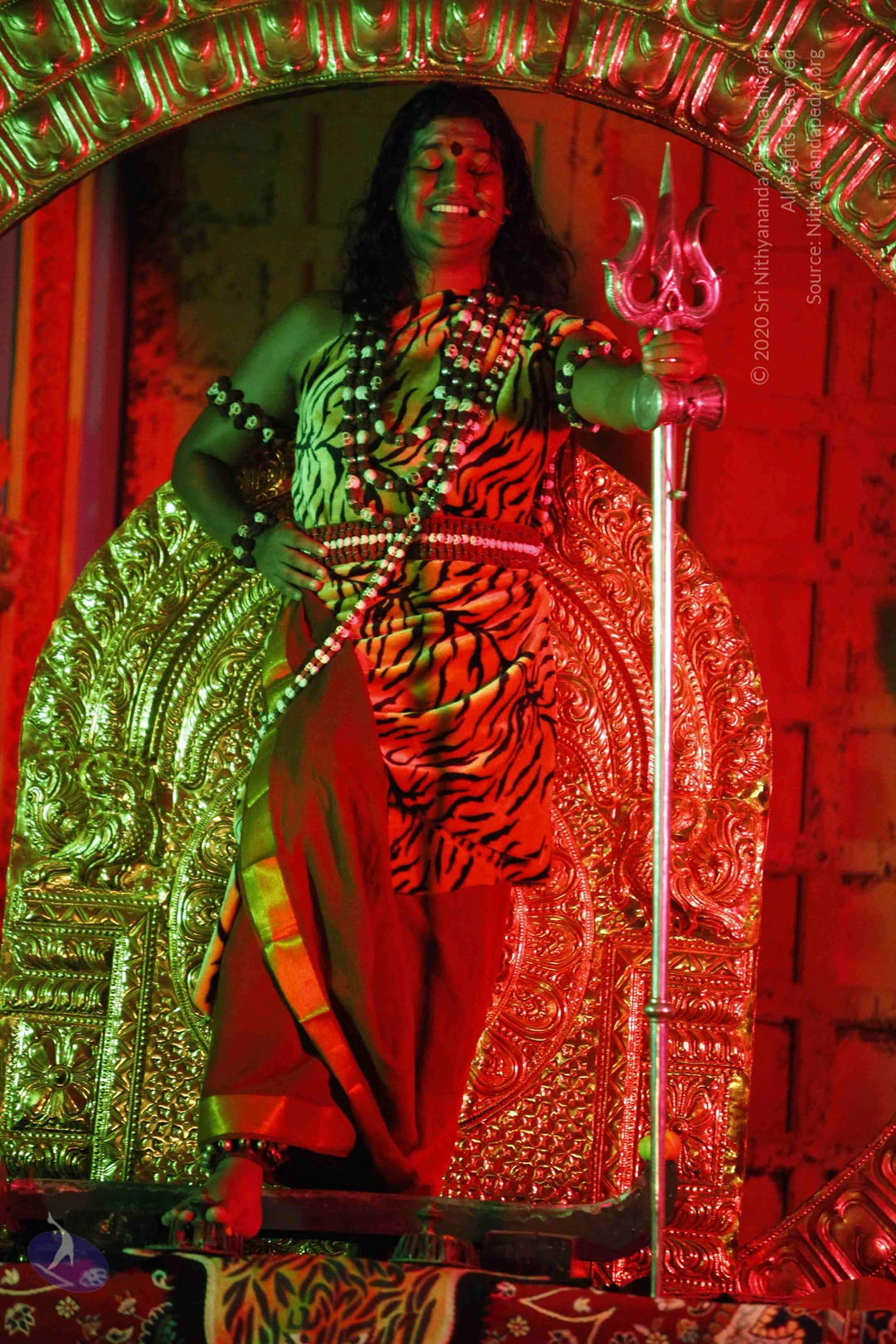
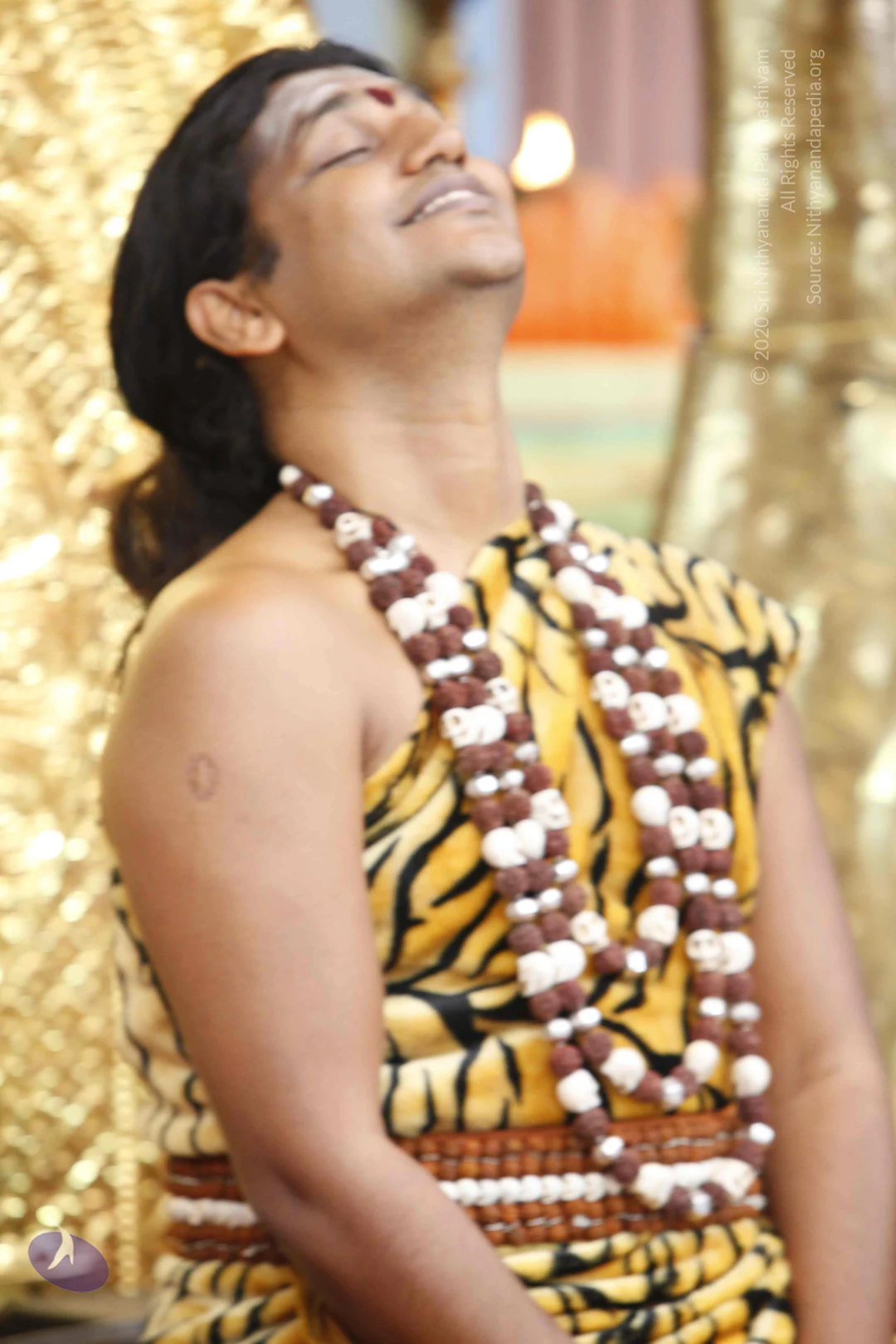
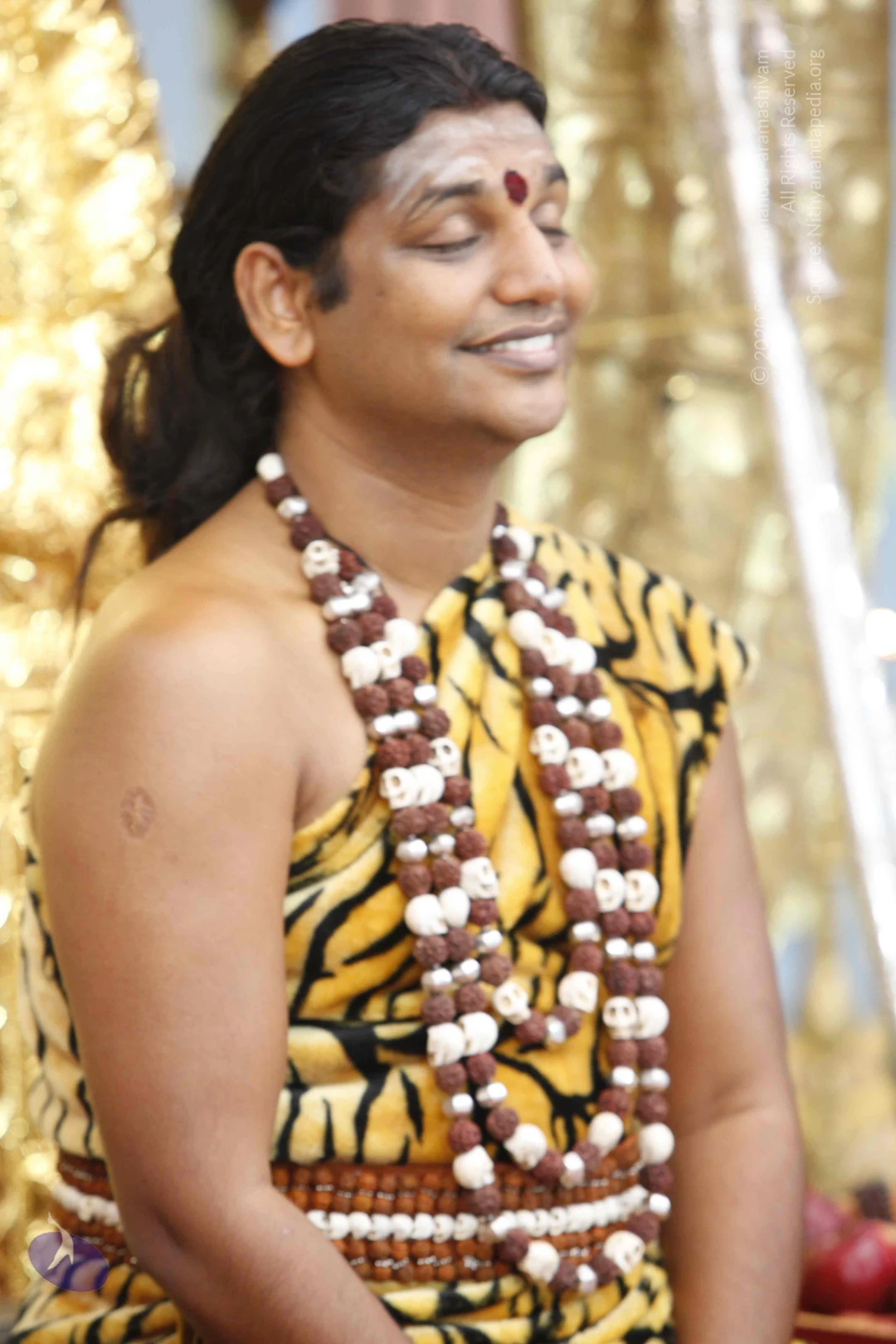
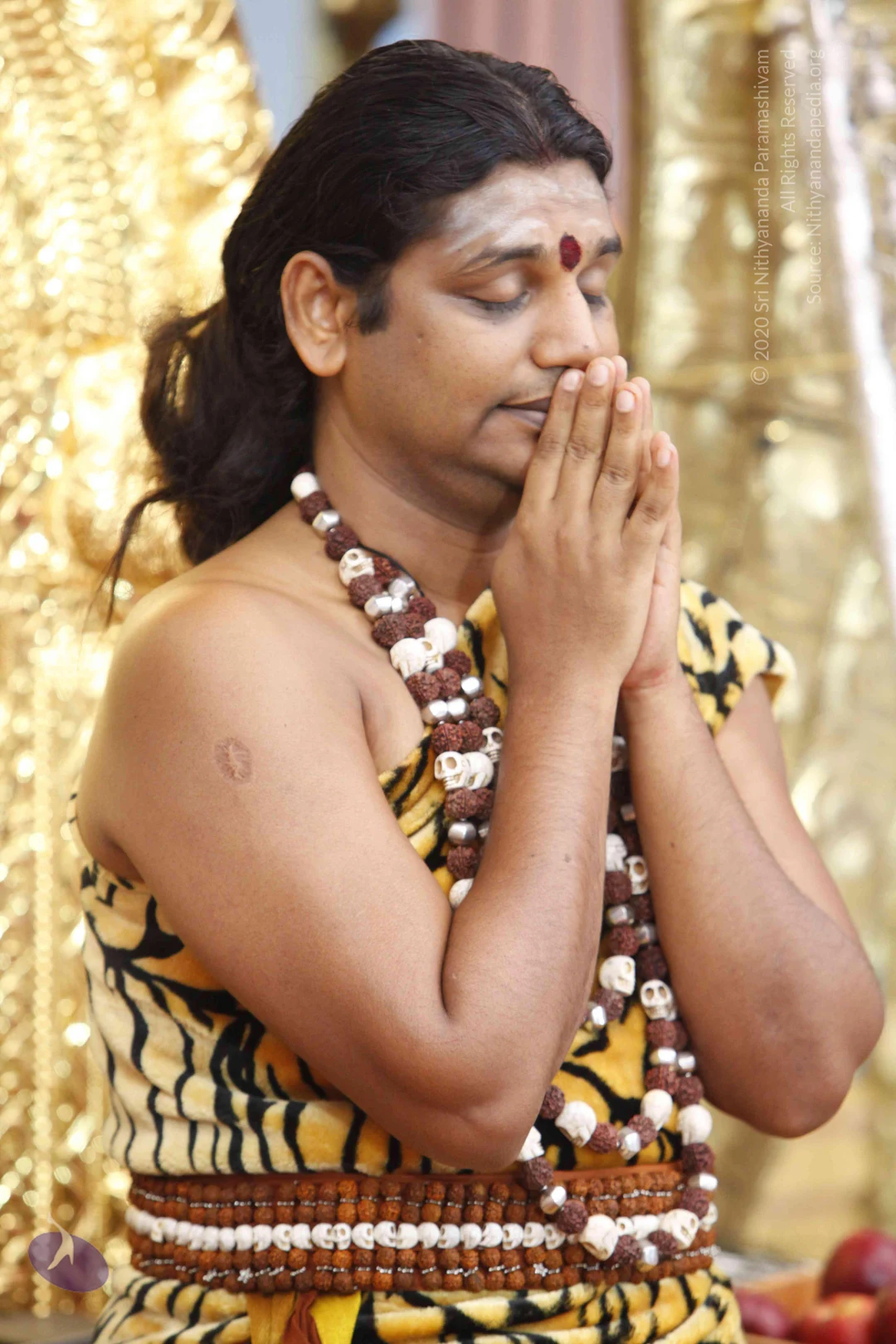
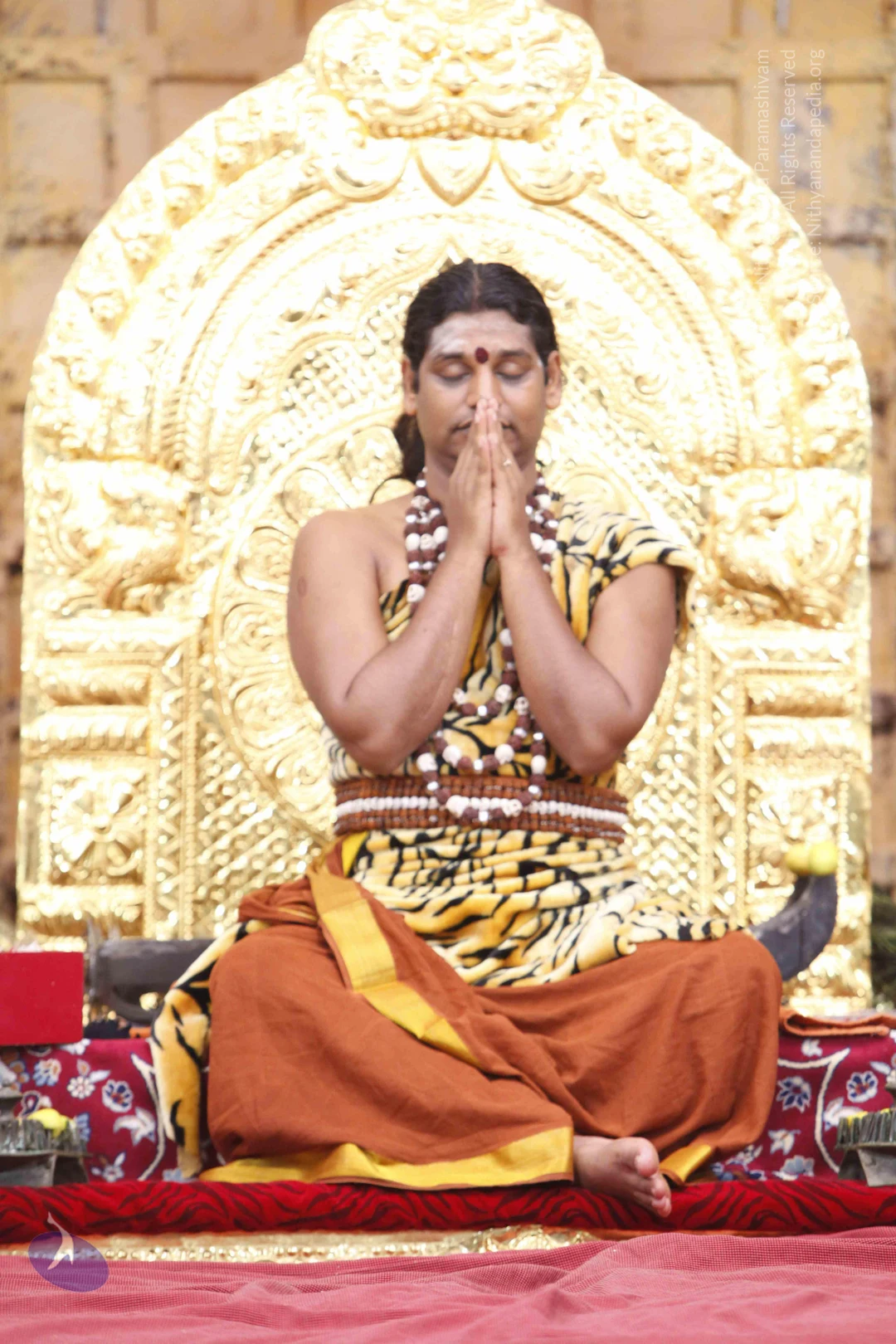
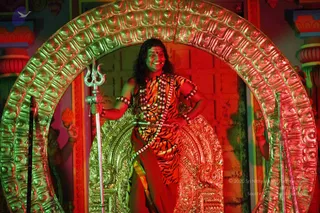
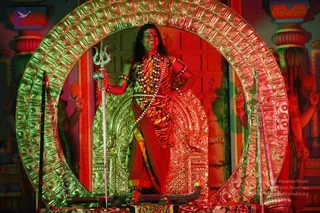
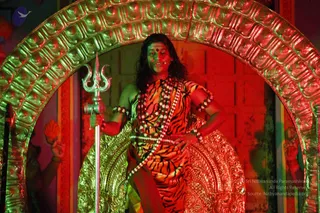
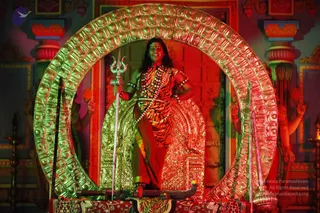
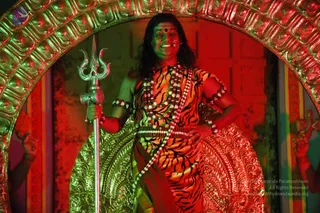
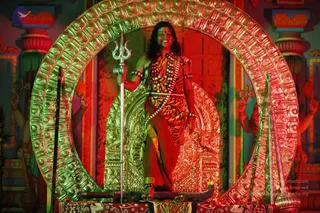
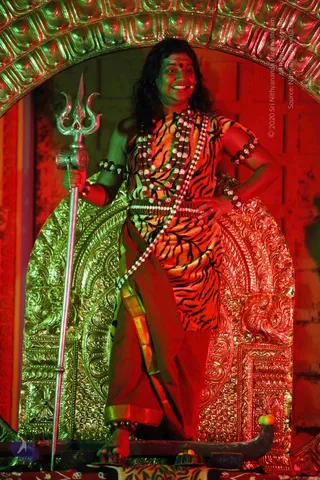
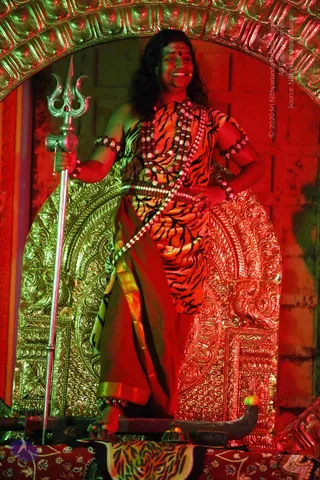
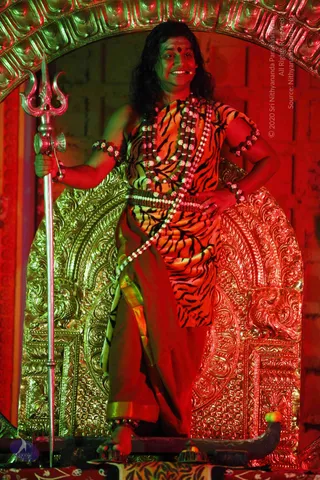
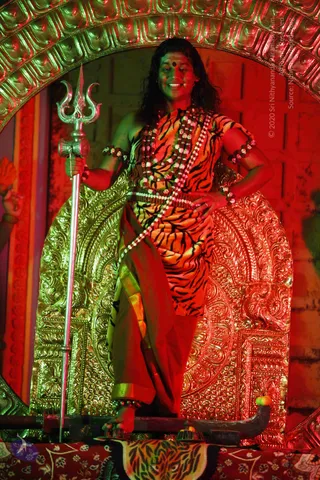
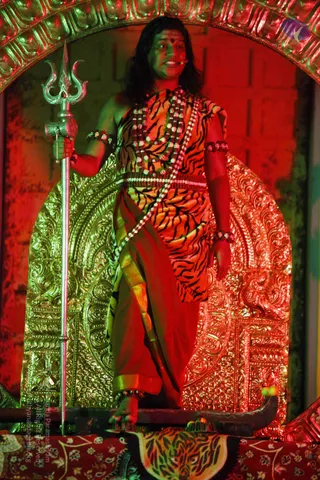
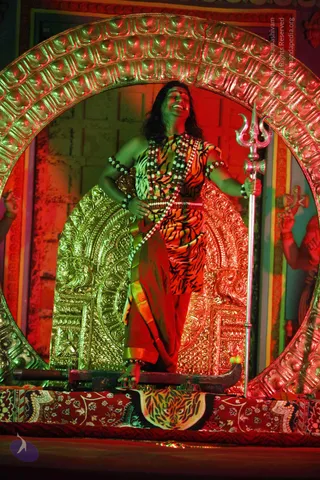
A smiling man stands centrally under a large ornate golden circular arch lit with red and green stage lights, posed as a deity figure. He wears an orange and black tiger-striped garment, layered rudraksha-style beaded necklaces, beaded bracelets on the arms, and a red tilak on the forehead. He holds a silver trident in his right hand and rests his left hand on his hip. Behind him stand an ornate golden throne-like backdrop and red carved pillars. The outfit and cues are consistent with a ceremonial stage tableau; the figure is a costumed performer posed as a deity, and his identity cannot be confirmed from appearance alone.A standing figure in a tiger-striped orange and black garment with a bead mala across the chest and waist stands within a large ornate gilded arch. The figure holds a silver trident in one hand and rests the other on the hip, with long dark hair and a smiling expression. Behind the arch are gold-and-red decorated panels, painted pillars, and arms of multi-armed deity murtis on either side. Red and green stage lighting washes the scene, and a decorated cloth covers the platform. Swamiji (probable): the figure has long swept-back hair, saffron-and-tiger-patterned clothing, rudraksha beads and a trident, matching the page's Swamiji reference, though the image is a staged tableau with a deity-like presentation.A performer stands under an ornate gilded arch lit with red and green stage light. He has long dark wavy hair and wears a tiger-striped orange and black garment with a gold-patterned skirt and many beaded rudraksha-style necklaces and bangles. He holds a silver trident in his left hand and rests his right hand on his hip, smiling. Behind him are red and gold panels, and a second figure is partially visible at the left edge. The setting resembles a stage tableau rather than a formal ritual.A figure stands framed inside a large ornate gold-toned circular arch in a temple-like stage setting with painted columns, red and orange lamps, and warm red lighting. The central figure wears long dark hair, a tiger-striped orange and black garment, layered beaded necklaces, bangles, and holds a silver trident. Beside the figure stand an ornate gold throne-like seat and a small brass oil lamp; a red and patterned cloth covers the base. Two decorative deity statues with multiple arms flank the scene. The figure appears to be a costumed portrayal of a deity form rather than a clearly identified person.A person stands within an ornate golden arch lit with red and green light, smiling and holding a silver trident in the left hand while the right hand rests on the hip. The figure wears a tiger-striped orange and black garment, a red and gold skirt with embossed pattern, layered beaded necklaces in pink and white, matching beaded bangles and a belt of white beads, with a red bindi on the forehead. Long dark hair falls to the shoulders. Behind is a red-walled backdrop with painted figures at the edges.A standing figure stands before a golden ornate arch and gilded throne in a richly coloured temple-style setting lit with red and green light. The figure, with long dark hair and a smiling expression, holds a silver trident and wears an orange and black tiger-striped garment, layered beaded necklaces, rudraksha-style malas and bangles. Colourful painted deity figures with multiple arms flank the arch. A low altar with a patterned cloth is in the foreground, and a brass oil lamp stands at the left edge.

10-Kalabhairava-Reading-Darshan

13 photosSource gallery
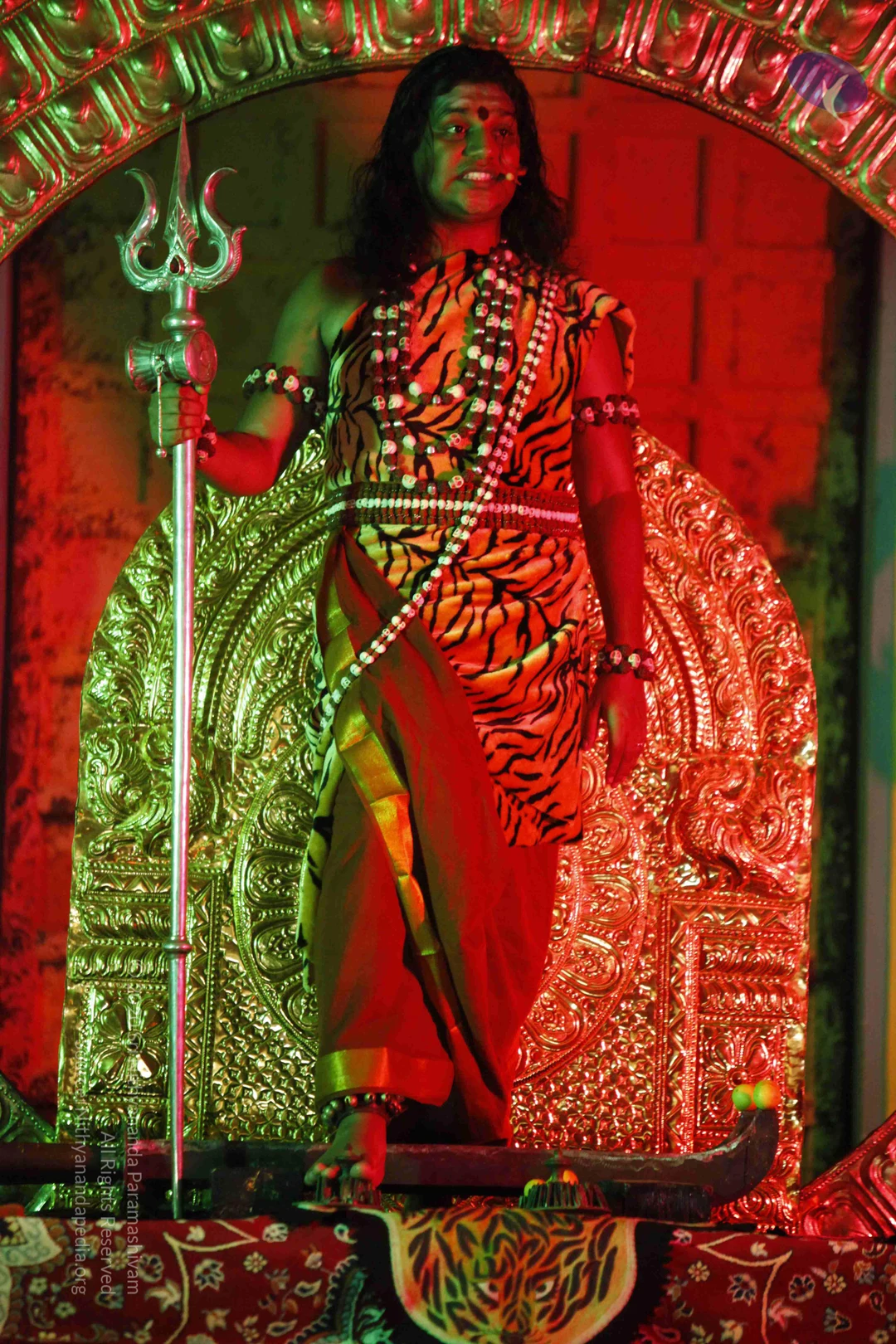
A man with long, dark, swept-back hair stands on a gilded golden throne or altar framed by an ornate gold-and-red arch, in a red-toned stage light. He wears an orange and black tiger-striped garment, multiple strands of rudraksha-style beads across his chest and waist, beaded bracelets, and a red bindi on his forehead. He holds a silver trident in his left hand and rests his right hand on his hip, smiling at the audience. Appearance-based candidate: a person, shown in person in a costumed, deity-like pose with trident and beaded adornments.A man with long dark hair stands in a gilded, ornately carved golden arch on a red-lit stage, smiling. He wears a tiger-striped orange and black garment, a red dhoti with gold border, layered pink and white beaded malas across his chest and waist, and matching beaded armbands. He holds a silver trident in his right hand and rests his left hand on his hip. A tiger-print cloth lies at the base of the stage.A standing figure with long dark wavy hair and a red dot on the forehead holds a silver trident in the left hand while the right hand rests on the hip. He wears an orange and black tiger-striped garment with a red-and-green wrap, layered rudraksha-style beaded necklaces and beaded armbands. He stands before an ornate gilded arch and golden throne-like backdrop lit in red and green.A smiling person with long dark hair and a red bindi stands on a raised golden ornate throne-like structure framed by an arch, under red stage lighting. They wear a tiger-striped orange and black garment with a red-beaded rudraksha-style mala necklace, beaded armlets and waist beads, and hold a silver trident in one hand while the other rests on the hip. A tiger-print cloth covers the platform below. The costume and pose evoke a deity-like stage display.A figure stands in a golden ornate arched shrine lit in red and green light, holding a silver trident in his right hand. He has long dark hair, a red bindi, and wears a tiger-striped orange garment with a red-and-gold waist sash and layered beaded necklaces, plus beaded bracelets on his arms. He stands on a wooden platform draped with a tiger-patterned cloth, with a pair of small decorative fruits or offerings at the base. The look is theatrical. A large gilded peetha-style backdrop frames him. Appearance-based label: Swamiji (probable), given his long hair, tiger-striped garment and beaded adornments.A performer dressed as Kalabhairava stands in an ornate golden arched frame under red and green stage lighting. The figure wears a tiger-striped orange and black garment, multiple strands of rudraksha-style beads across the chest, beaded bracelets, and red-and-gold cloth at the waist. It holds a silver trident upright in one hand and stands on a wooden platform draped with a tiger-face cloth. Behind is a gilded ceremonial backdrop with a red wall and a painted figure at the right edge.

2 -Temple
13 photosSource gallery
A dark stone Nandi bull statue sits on an orange-red stepped plinth, decorated with long garlands of red roses, white jasmine-style flowers, yellow marigolds and green leaves draped down both sides of its neck. A red-and-white tilak mark and scattered red petals adorn its forehead and base. Potted plants with green leaves stand in the foreground, and the orange temple architecture surrounds it. No living people are visible.A dark stone relief of Ganesha, the elephant-headed deity, seated with four arms and a trunk curling toward a bowl or sweet at his front. Red and yellow kumkum or turmeric marks dot his head, trunk, arms and belly, and two red-and-white flowers rest at his left hand and lower right. Carved lotus petals form the base beneath him. No people are visible; the image shows only the carved murti on a temple wall.A statue of a standing male figure in a gilded, ornately carved arched shrine niche with a blue draped fabric backdrop dotted with small mirror-like sequins. The figure has long dark hair, a red-brown robe with a gold border, layered rudraksha and bead malas, and a sacred mark on the forehead. The right hand is raised in abhaya-style blessing. A thick garland of red, yellow and white flowers hangs from the shoulders to the base, and a yellow silk cloth lies at the feet. This is a statue, not a living person, and it is a depiction; its identity cannot be confirmed from appearance alone.A black stone murti of Dakshinamurthi seated on a carved pedestal inside a silver-coloured arched shrine frame against a red cloth backdrop. The deity has four arms, a yellow head cloth with a red bindi-like ornament and a peacock feather, teal and gold garment, leopard-print shawl, rudraksha and coral malas, pearl garlands, and red and yellow flower garlands. A small plaque reads Dakshinamurthi shrine, and red-powdered offerings surround the base under trees. No people are visible.A large black stone murti of a multi-armed deity seated on a pedestal in front of a bright red cloth backdrop. The figure wears a yellow headband with a red and white ornament, a peacock feather, and a teal blue dhoti with gold brocade borders. Layers of rudraksha beads, red rose garlands, yellow marigold garlands and white pearl-like strands adorn the figure. One hand is raised in abhaya mudra while others hold a trident-like and drum-like emblem. Carved reliefs appear at the base. This is a photograph of a sculpture, not a living person.A dark stone murti of a four-armed deity stands against an orange cloth backdrop beside a carved white arch. The figure wears a peacock feather in a yellow headband with a red bindi, a teal and gold-bordered dhoti, a leopard-print garment, layered rudraksha and bead malas, and red rose and yellow marigold garlands. One raised hand shows abhaya gesture and another holds a conch-like object. The figure rests on a carved pedestal with flowers at its base.

3-Paduka-Puja
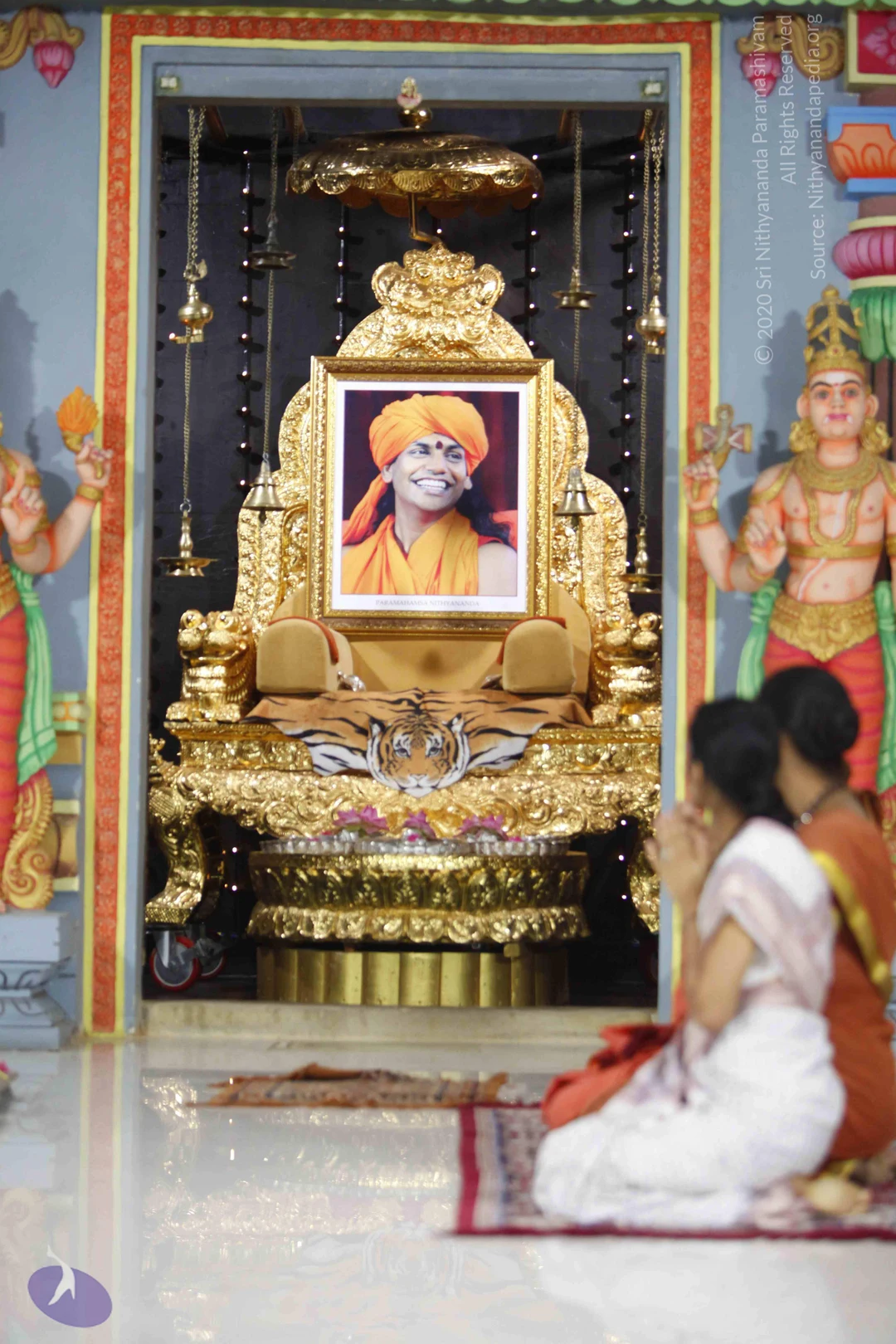
2 photosSource gallery
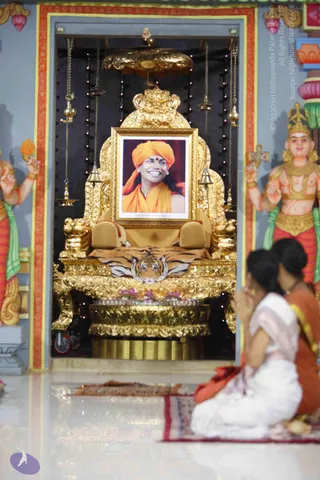
Photo of a gilded ornate throne shrine with a golden canopy and a tiger-skin cloth on the seat. A framed portrait labelled "PARAMAHAMSA NITHYANANDA" sits on the throne, showing a smiling man in an orange turban and orange robe. Two devotees kneel in prayer with palms pressed together in the foreground: one in a white sari, the other in an orange sari. Flanking the shrine are painted deity figures with multiple arms, and hanging brass lamps and bells surround the throne.Ornate golden throne (peetha) with a tiger-skin cloth draped over its seat, set in a temple shrine framed by painted dvarapala guardian figures with gold ornaments. Above the throne hangs a golden canopy and a framed portrait labelled "Paramahamsa Nithyananda" showing a smiling man with an orange turban and saffron robe, with a red bindi. In the foreground, a blurred hand holds a lit oil lamp (aarti). On the right, two women kneel on a mat with hands folded in prayer, one in a white sari and the other in an orange sari, before the shrine. Fresh flowers sit at the base of the throne.

4-Nithya-Satsang

1 photoSource gallery
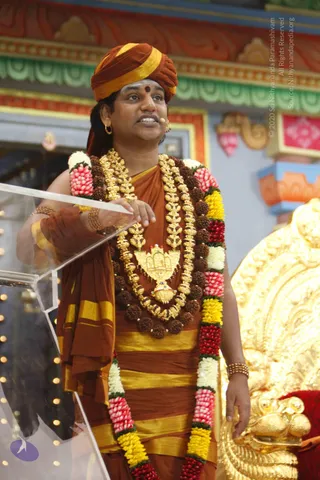
A man stands at a clear acrylic lectern on a temple-style stage, speaking into a headset microphone. He wears a rust-orange and gold turban, a red bindi, and rust-orange robes with gold borders. He is layered with multiple gold necklaces, rudraksha mala beads, and a garland of white, pink, red and yellow flowers. His right hand rests on the lectern. To his right is an ornate gold throne or peetha with carved gold filigree and a red-clad figure partly visible at its base. The background shows painted red, green and gold temple architecture.

5-Sarva-Darshan

2 photosSource gallery
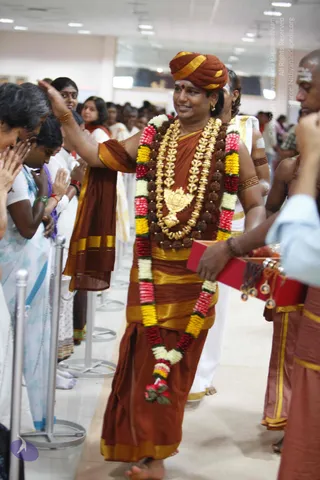
A photograph at a darshan line where a man in a maroon-and-orange turban and rust-brown draped garment stands behind a metal crowd barrier, his hand resting on the head of a bowed person. He wears layered gold necklaces, a gold pendant, rudraksha malas, and multi-coloured flower garlands of red, yellow and white blossoms. He holds a folded white paper in his other hand. To the left, a bald older man with glasses presses his palms together, and children with folded hands stand at the barrier. On the right, a hand holds a red tray of medallion pendants on rudraksha cords. The background is bright white and several other people stand in line.A man in a rust-orange turban and rust-orange dhoti with gold borders walks down an aisle, wearing a long multicolour garland of red, yellow and white flowers, a gold ornamental pendant necklace and a rudraksha mala, with a gold bangle on his wrist. He raises one hand toward devotees lined along a metal barrier who stand with palms pressed together. Another man in white ritual dress and a red-and-gold box with bells follows behind him. Pale floor and bright ceiling lights frame a crowded hall.

6-Final-Blessing

2 photosSource gallery
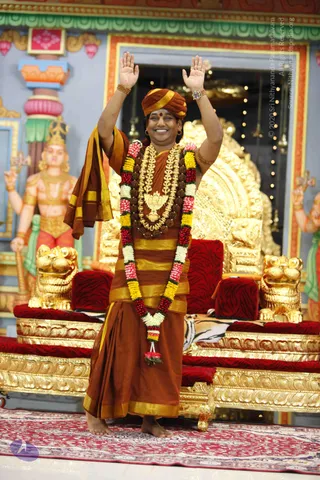
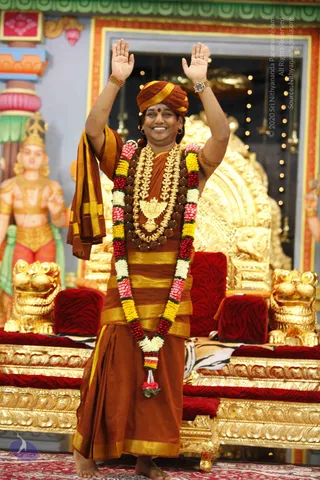
A smiling man in a brown and gold saffron-toned garment stands barefoot with both hands raised in greeting on a red patterned rug. He wears a brown and gold turban with a red bindi, a long multicolour flower garland of red, yellow and white blooms, a rudraksha mala, and a gold ceremonial pendant necklace. Behind him a gold ornate throne with red velvet cushions and golden lion-head armrests stands before a painted temple wall, with a painted deity figure on a pillar to the left and a golden fringed canopy above.A photograph of a smiling man standing barefoot on a carpeted stage, arms raised in greeting with palms open. He wears a rust-orange and gold turban, a rust-orange robe with gold borders, multiple rudraksha malas and a gold ceremonial pendant, and a long garland of red, yellow and white flowers. Behind him stands a gold throne with lion-head armrests, red velvet cushions, and a golden peetha backrest. To the left stands a painted deity murti in orange and pink. Hanging lamps are visible in the background.

July 12 2013

1 photoView all
A photograph of two gilded deity murtis seated side by side on a raised golden throne with an ornate arched back. Both figures wear multicolored flower garlands in red, yellow, green, purple and white, with white jasmine strands. The figure on the left has a black hair bun, orange garments, a rudraksha-style mala and holds a sugarcane stalk; the figure on the right wears a red and gold crown, a blue blouse and layered gold necklaces. Both sit on yellow silk drapes with blue fabric below. Brass elephant figures and a gold cloth-covered table stand at left, and a green plant appears in the foreground. No physical people are visible.