Skip to content
Thursday

11 July 2013

Dated photos
402
Source pages
1
Media
6
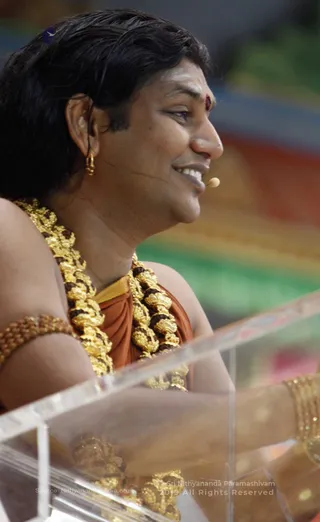
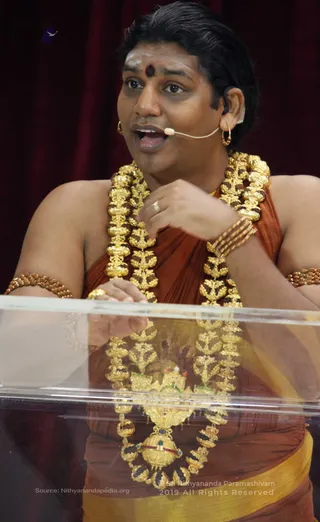
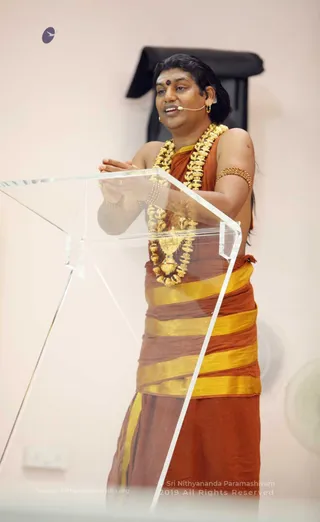
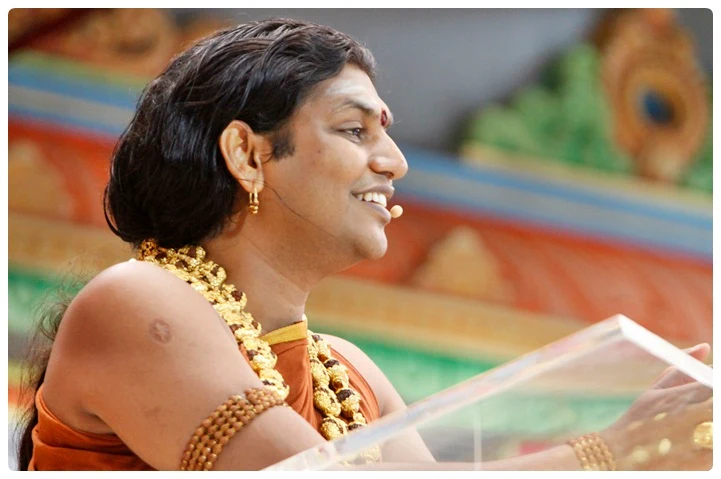
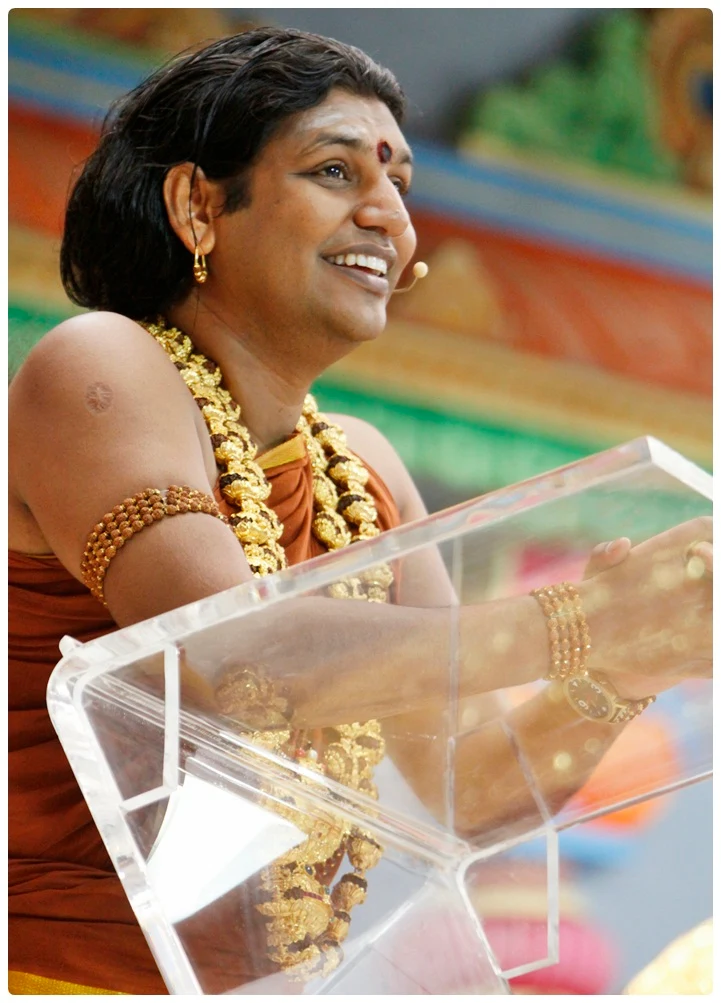
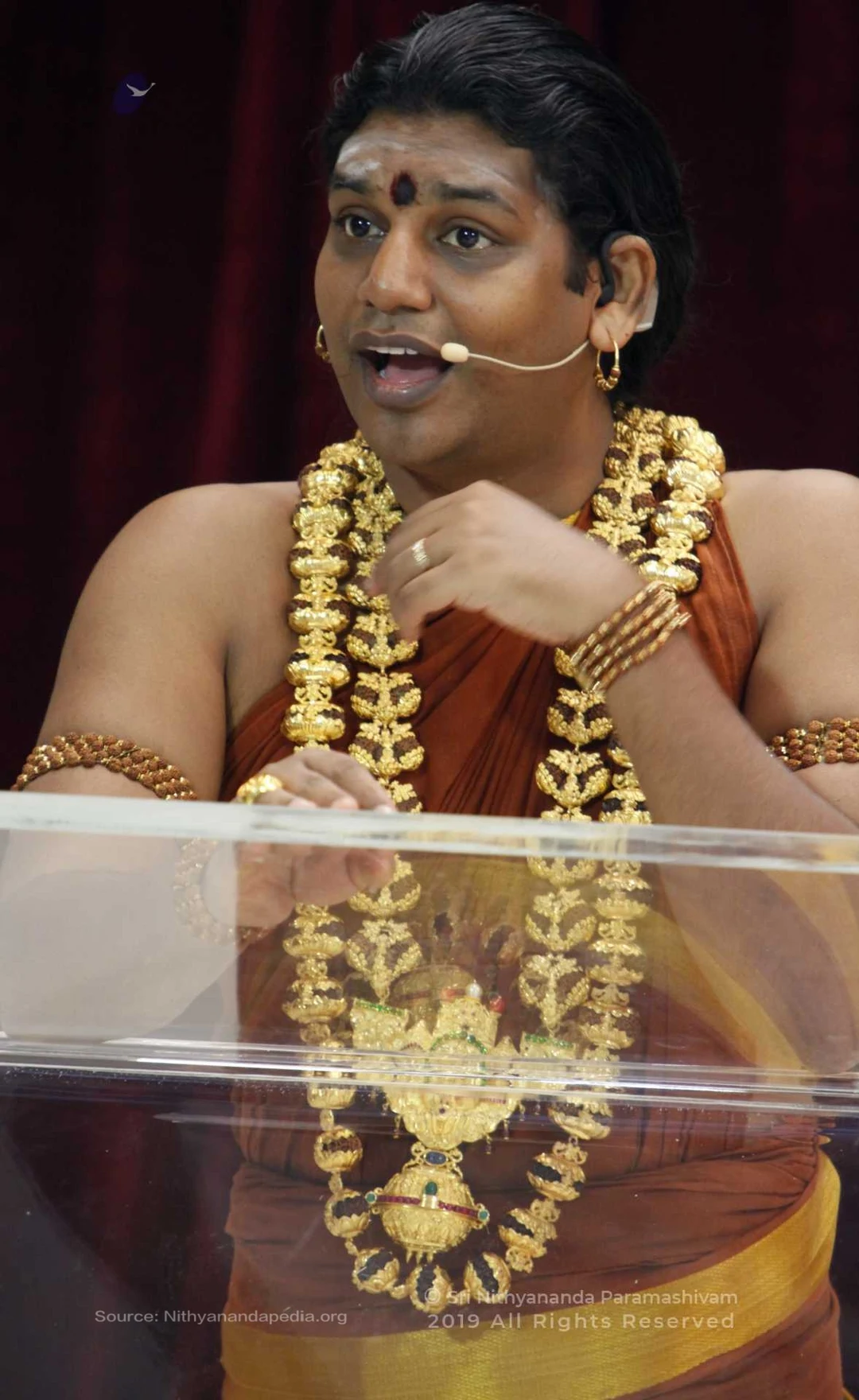
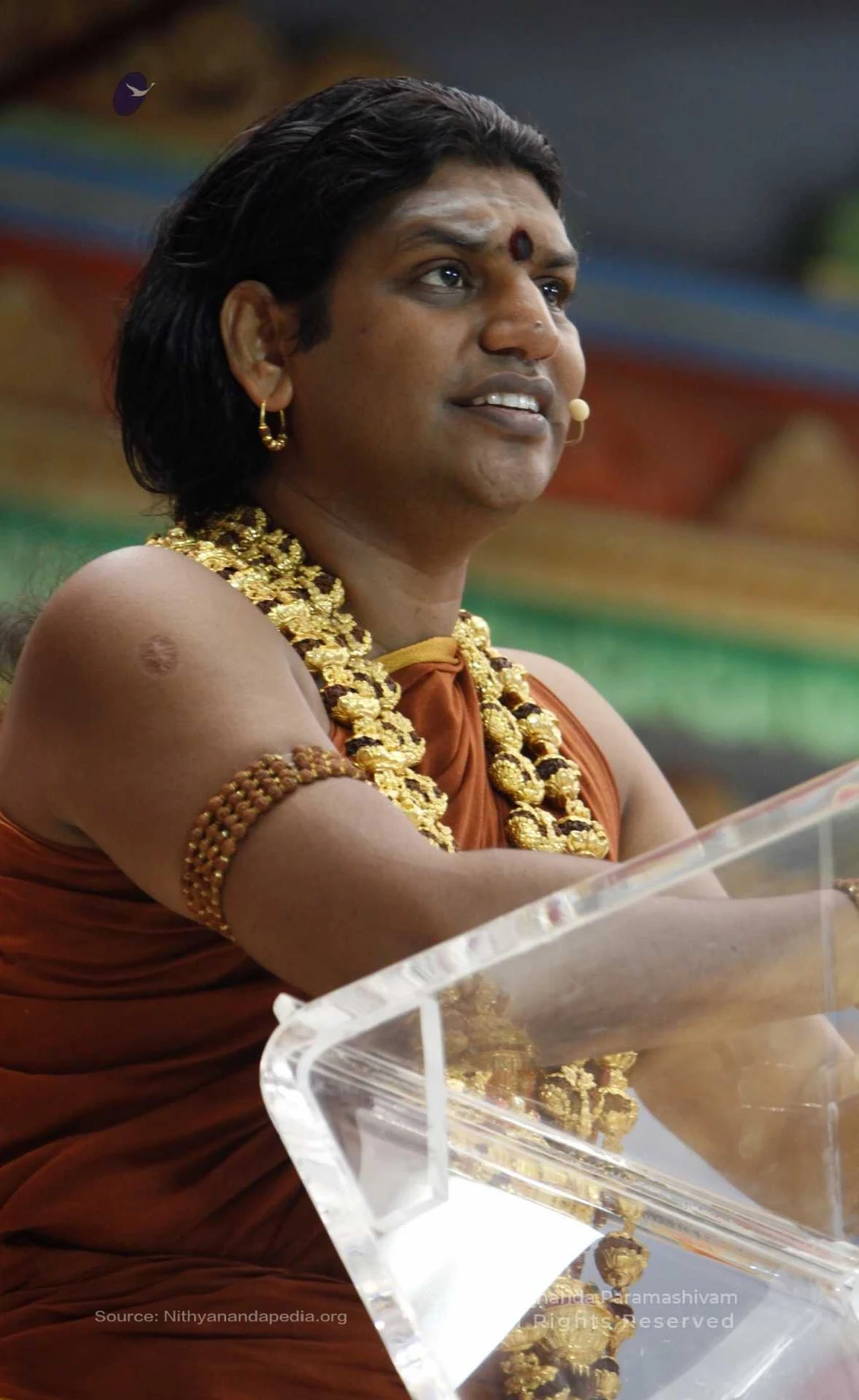
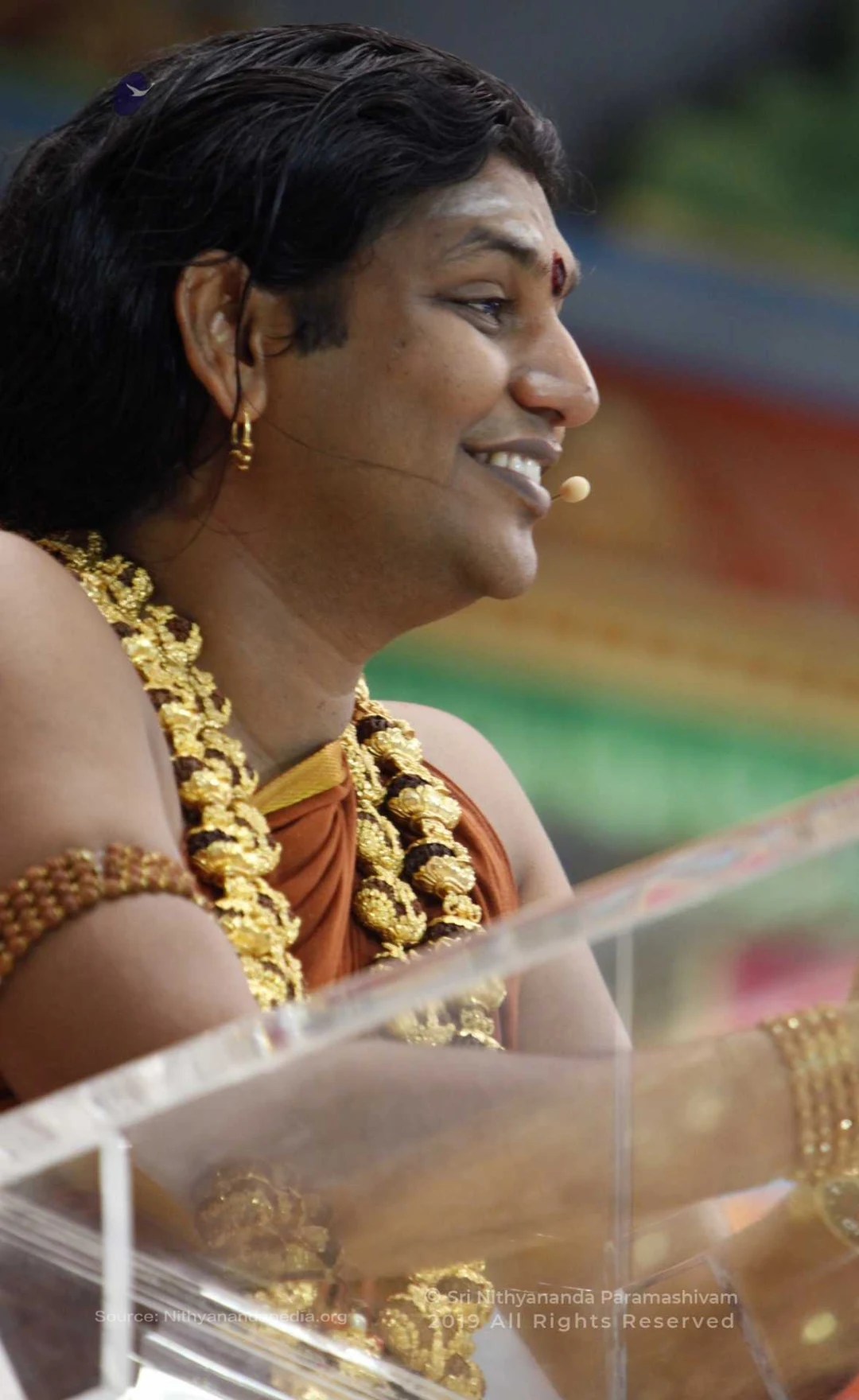
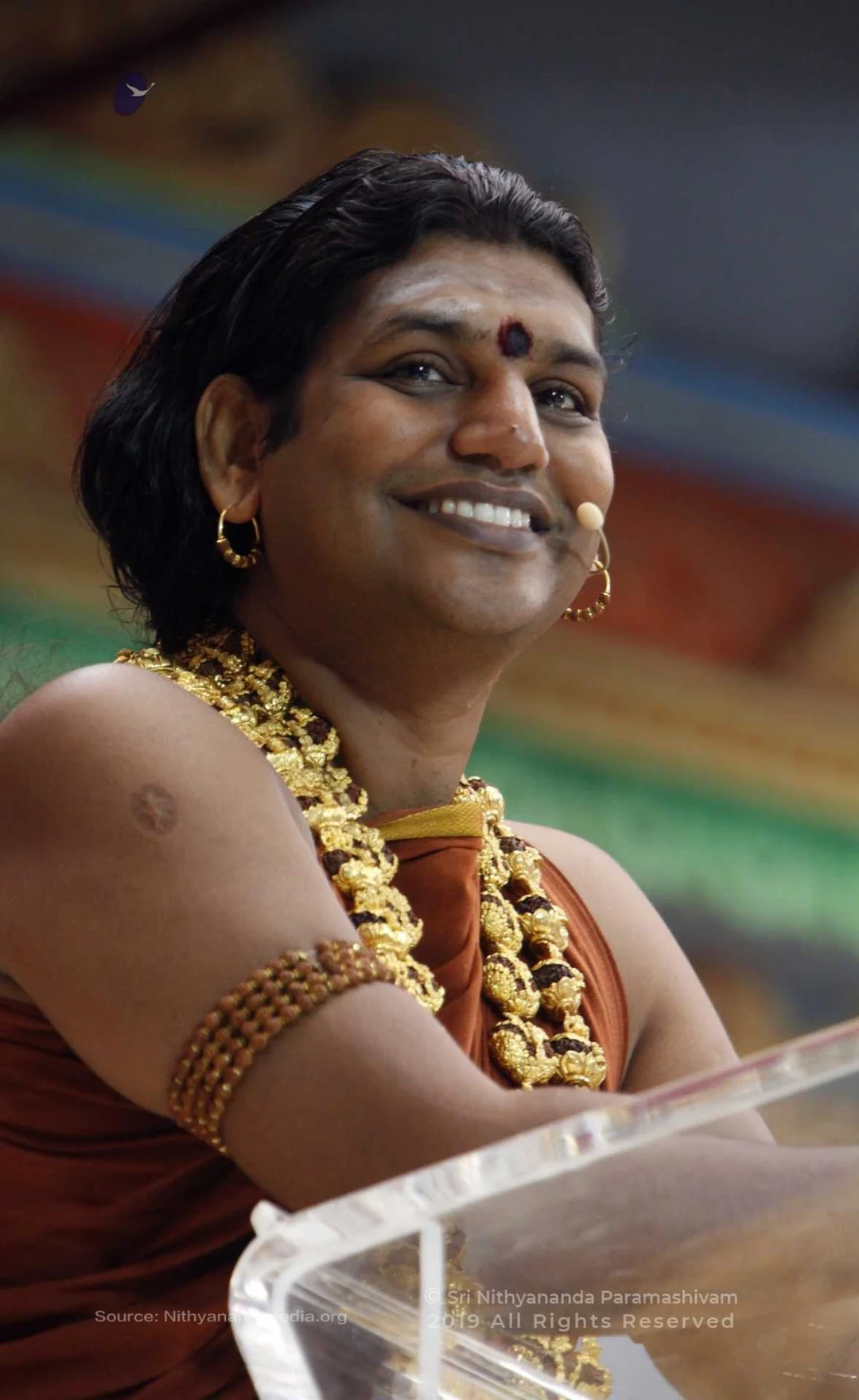
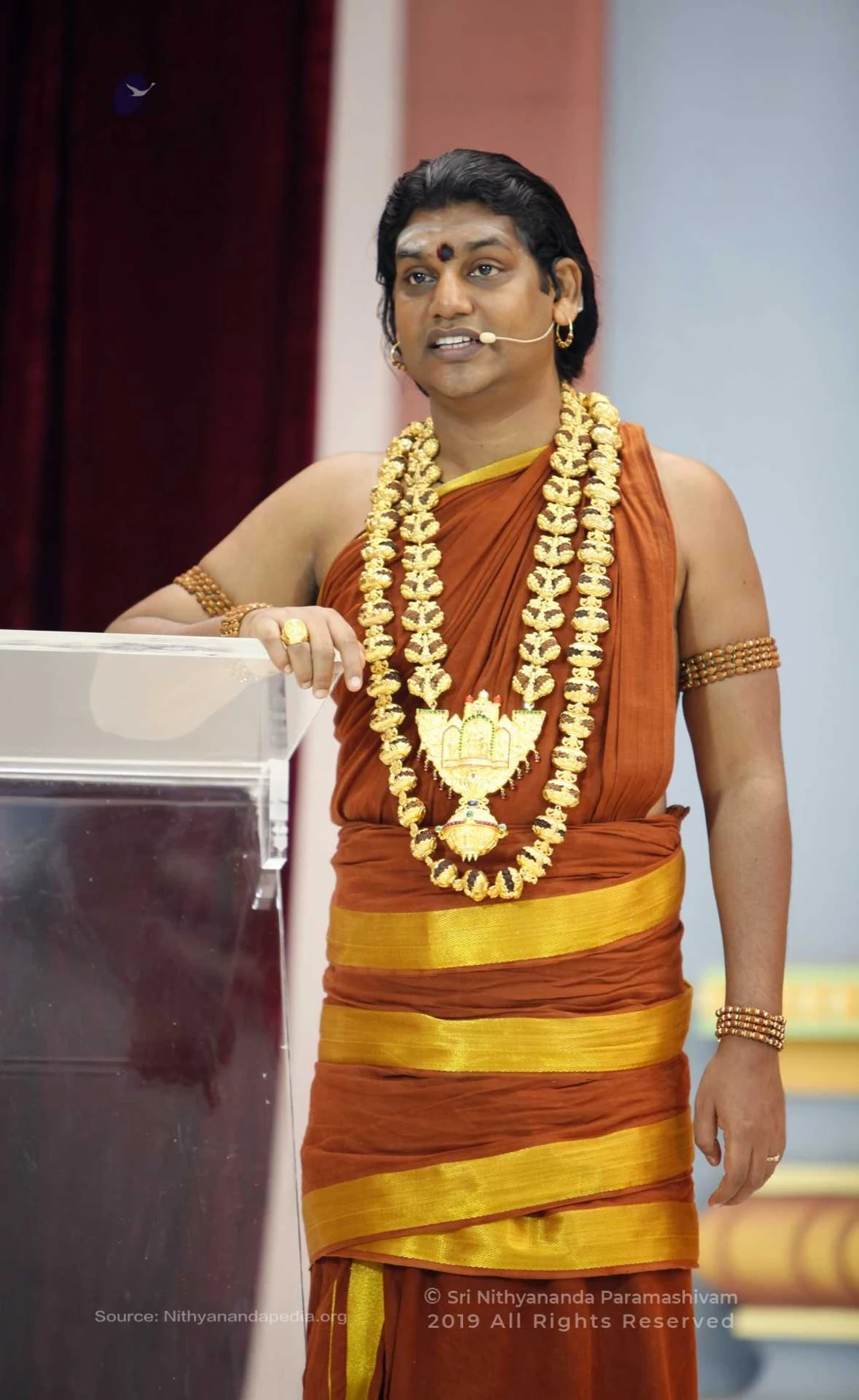
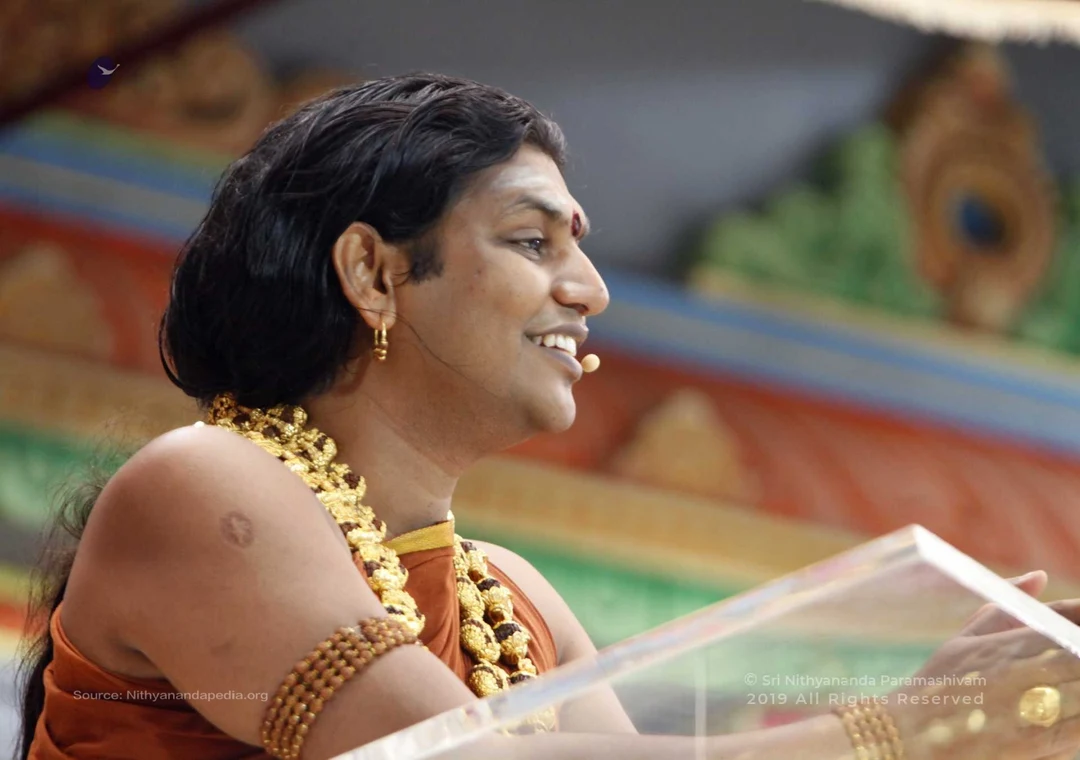
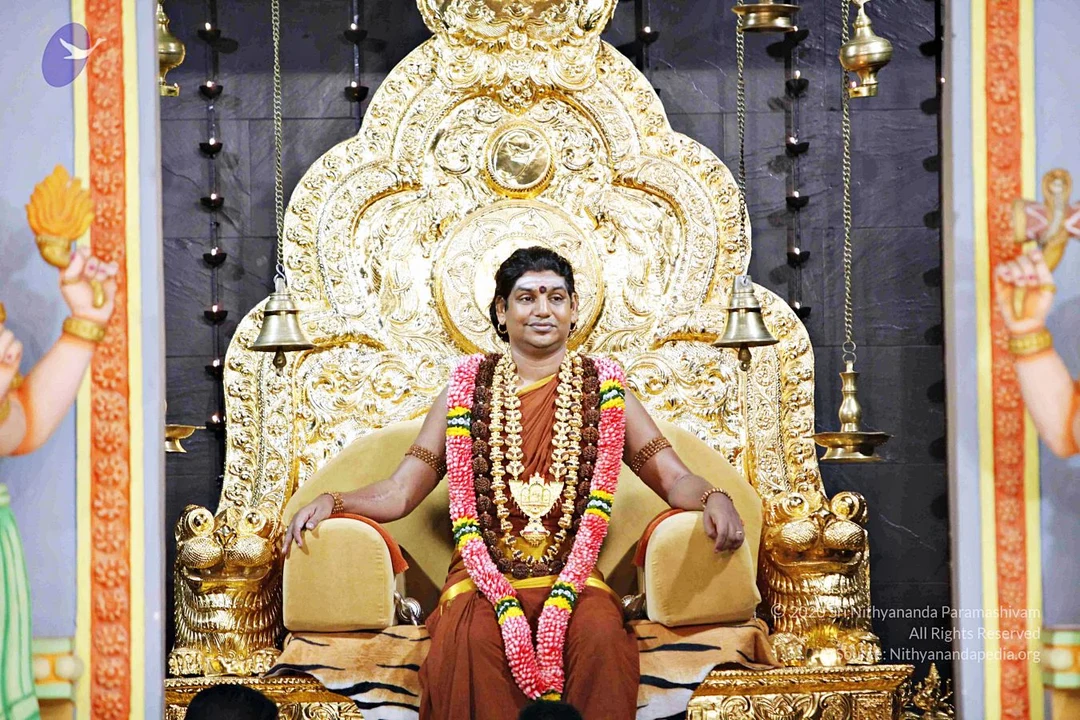
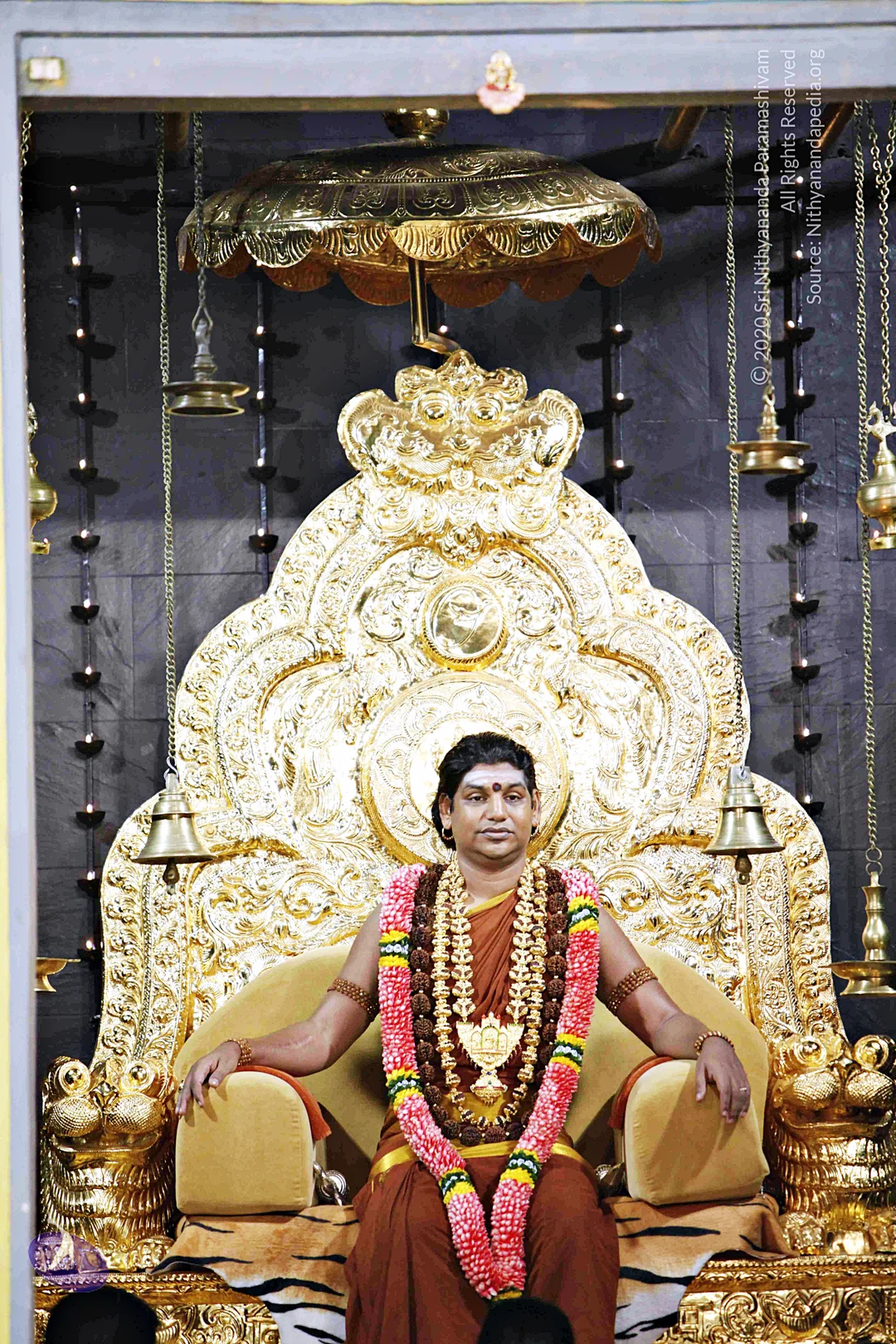
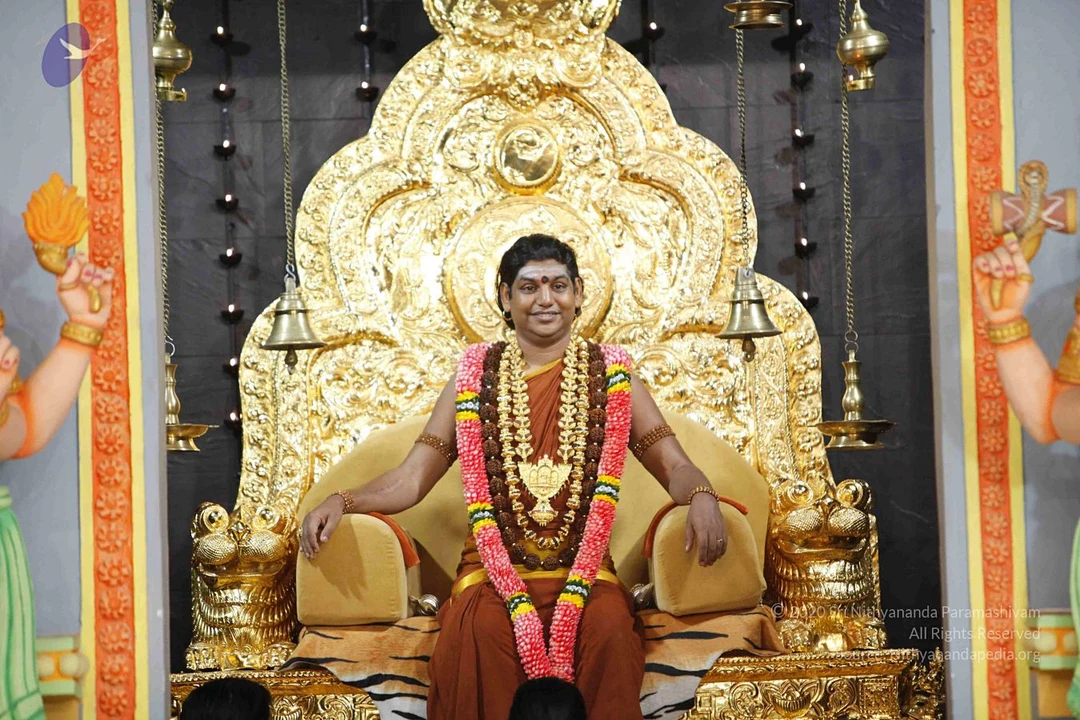
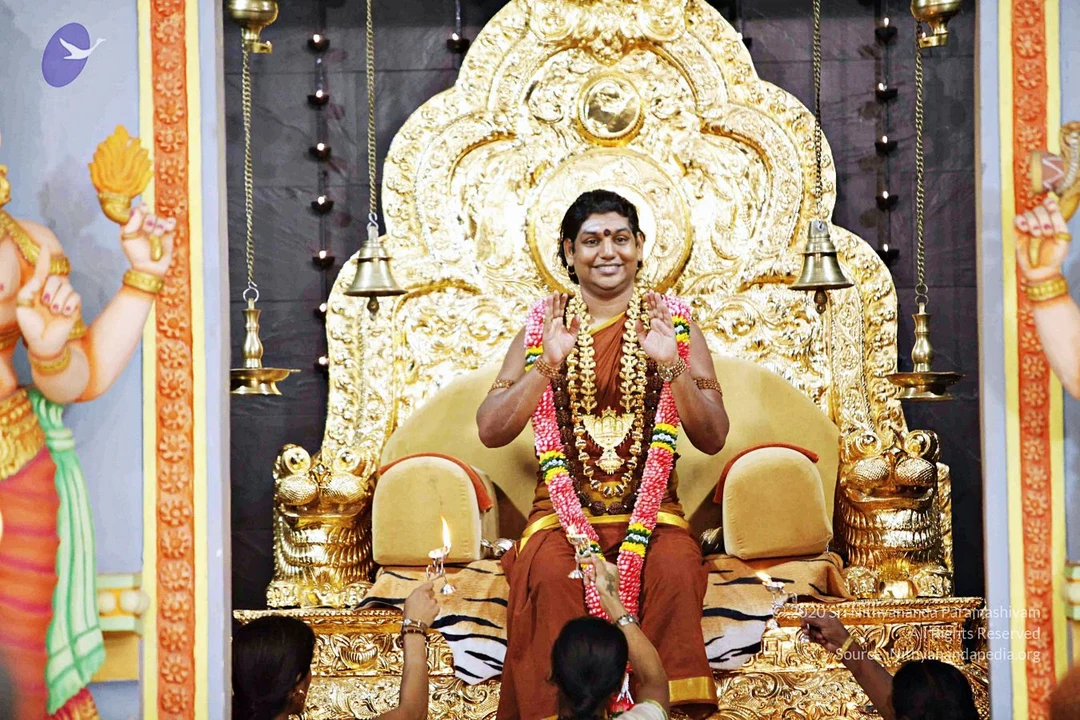
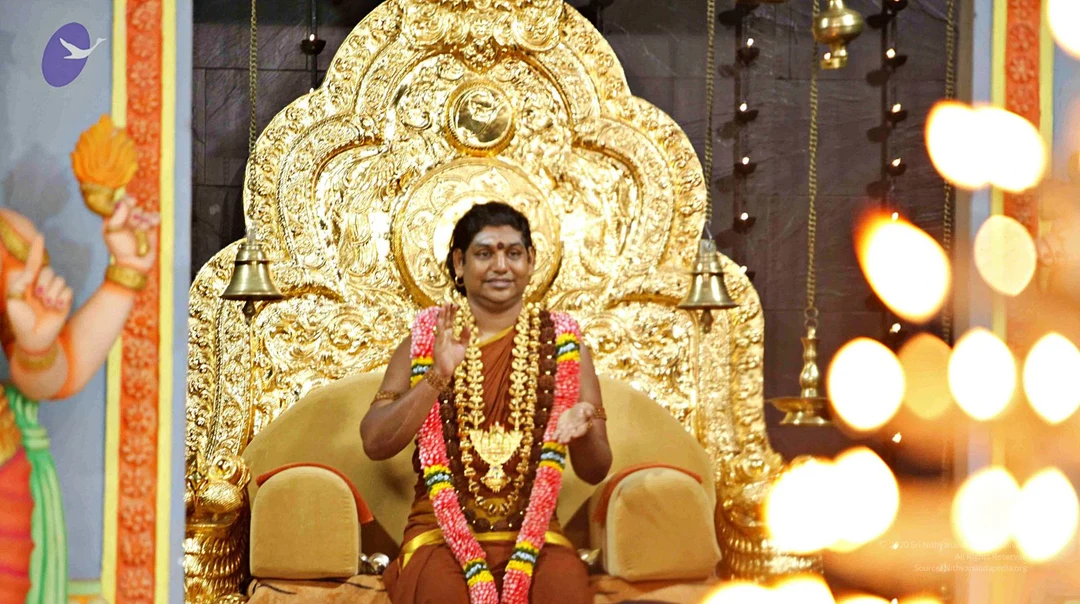
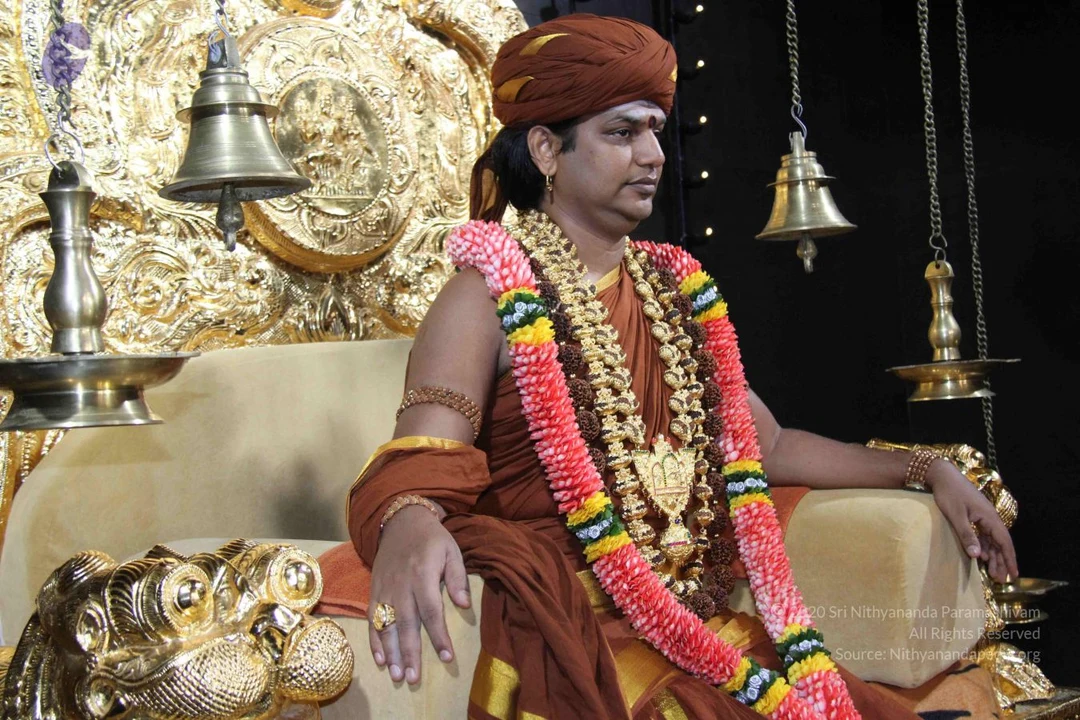
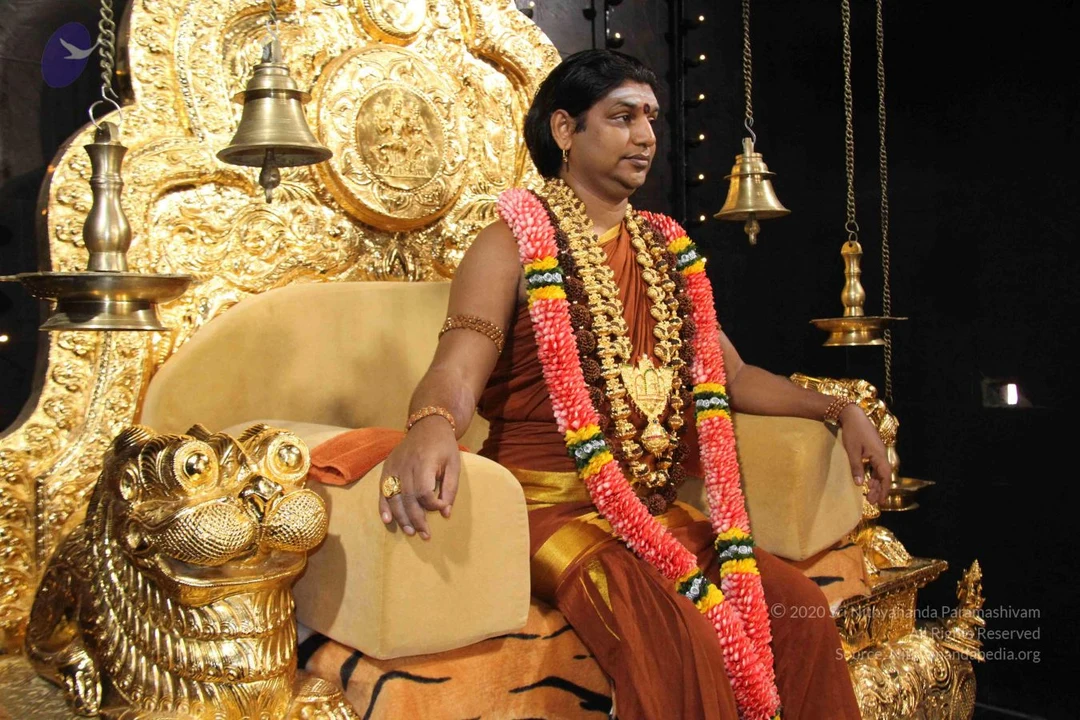
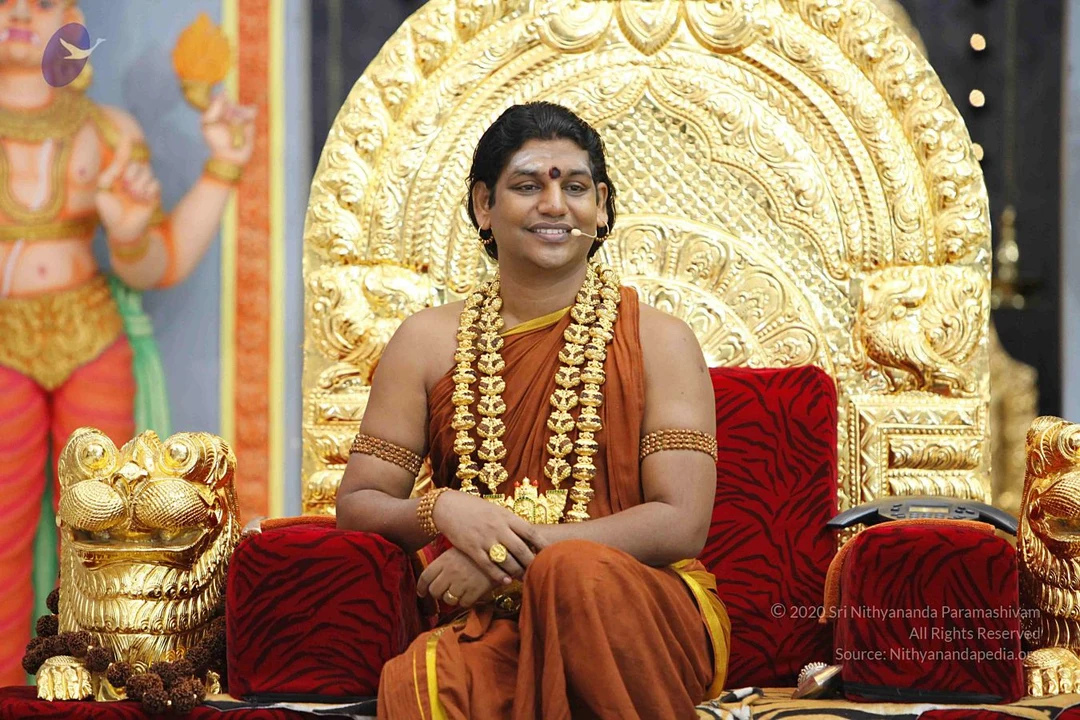
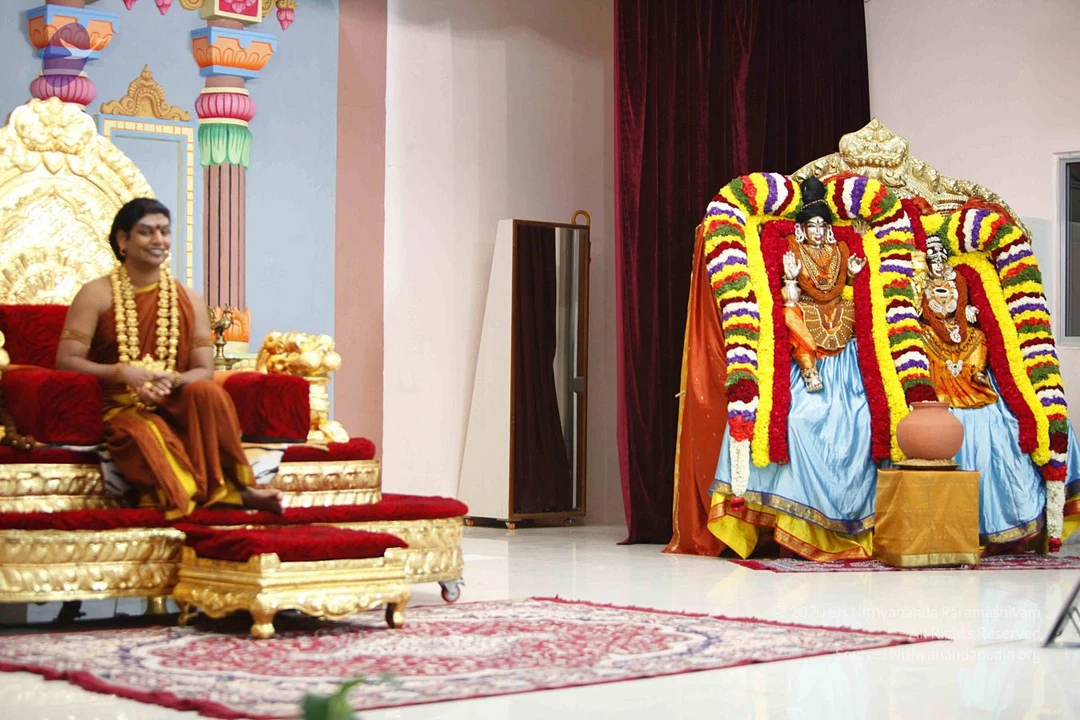
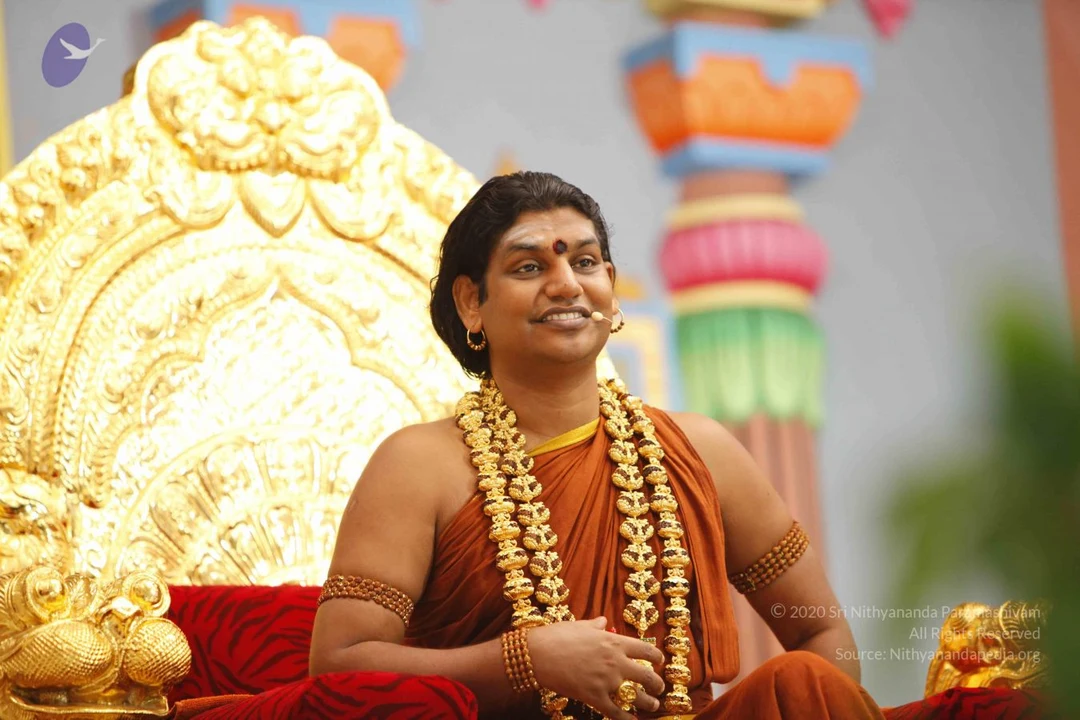
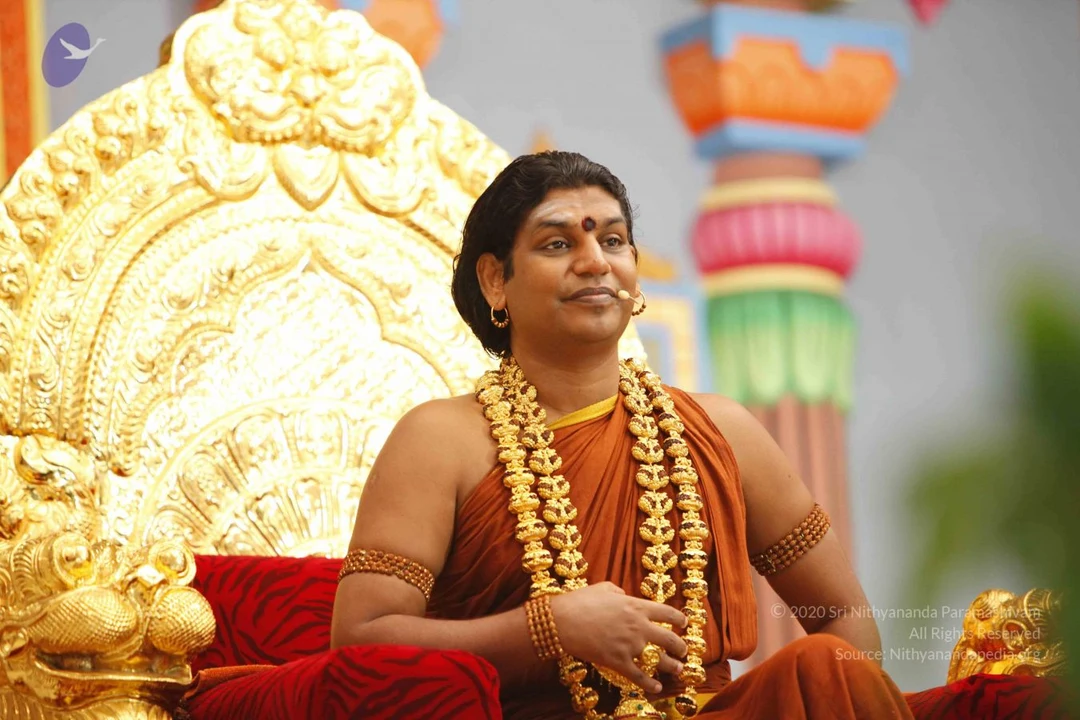
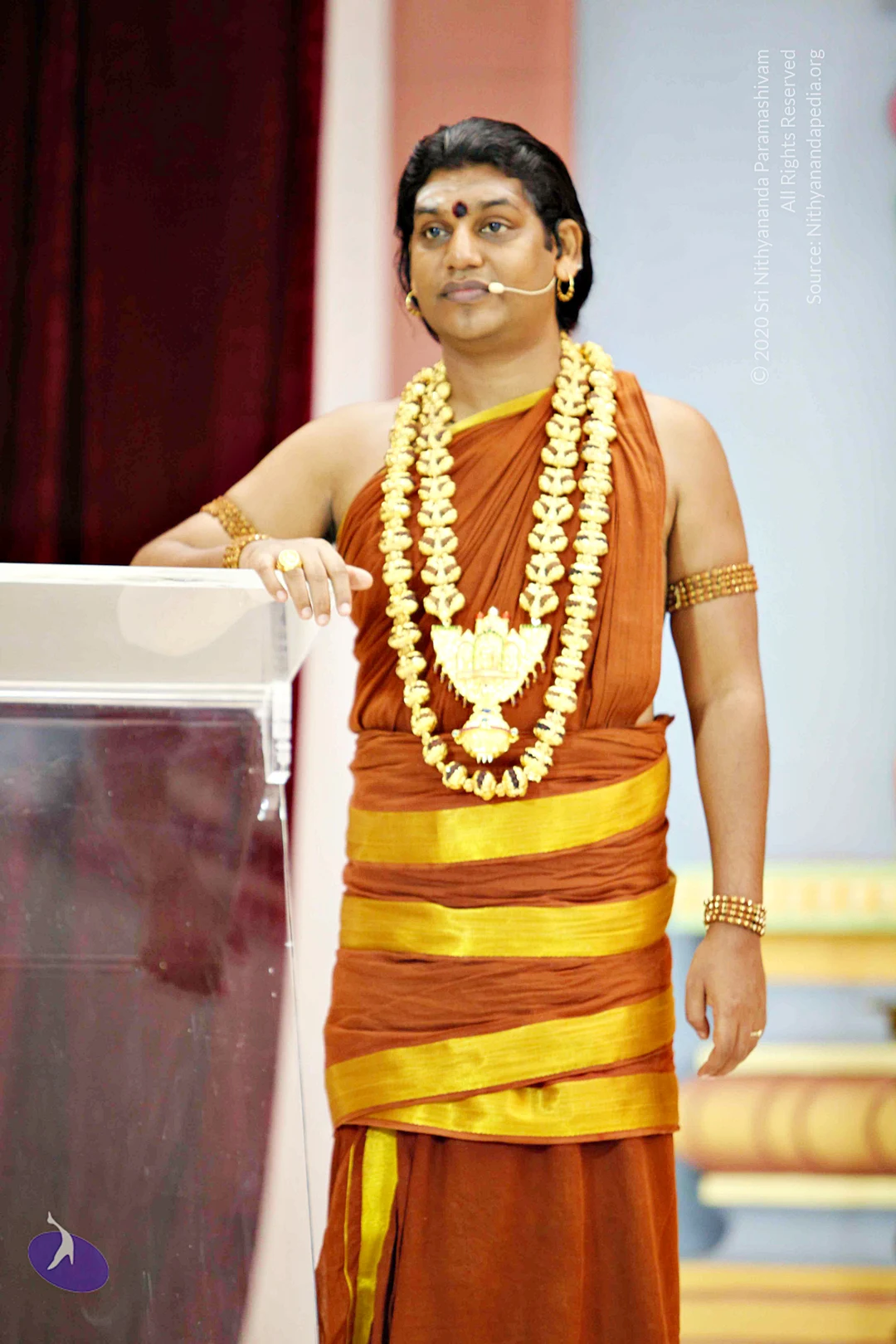
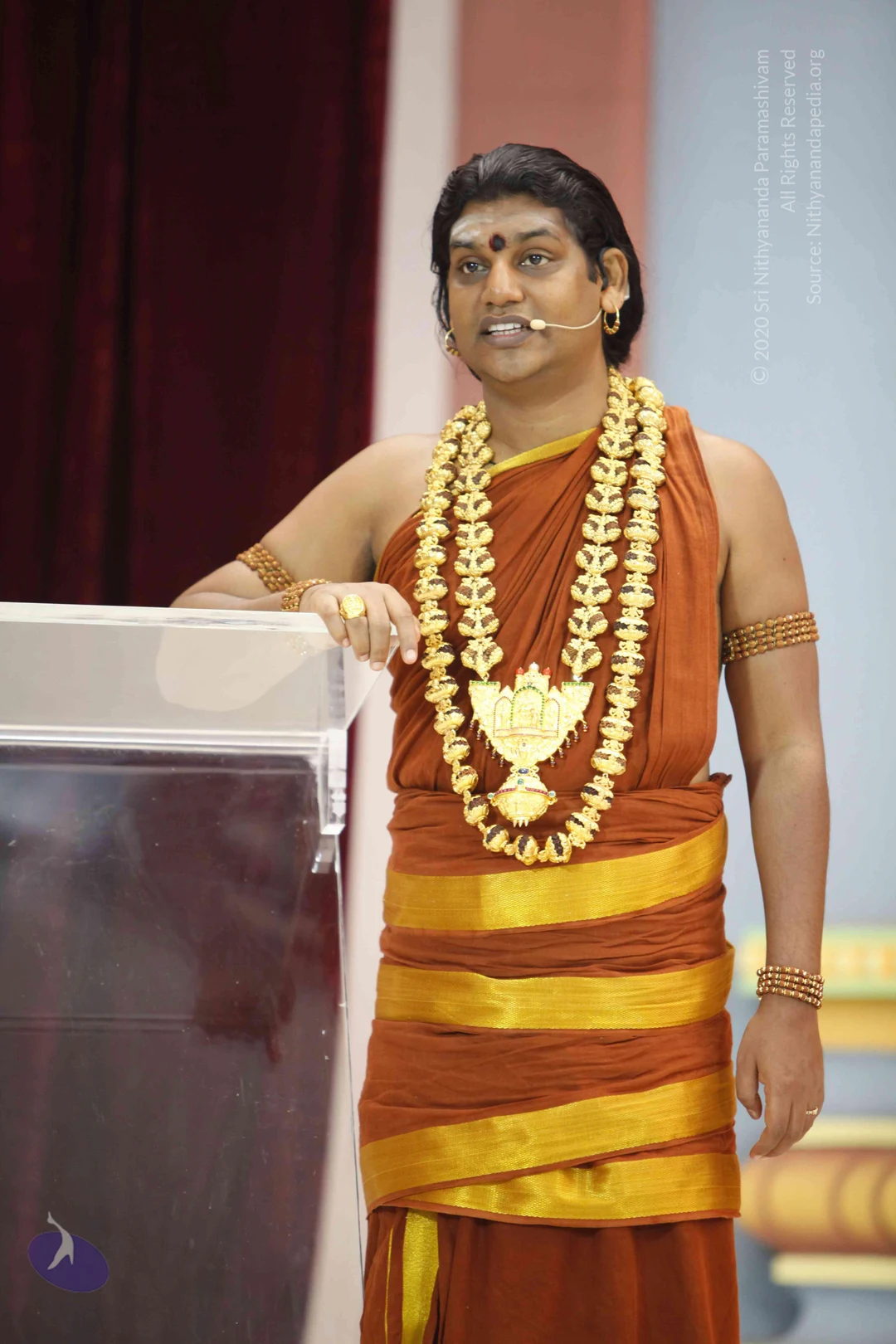
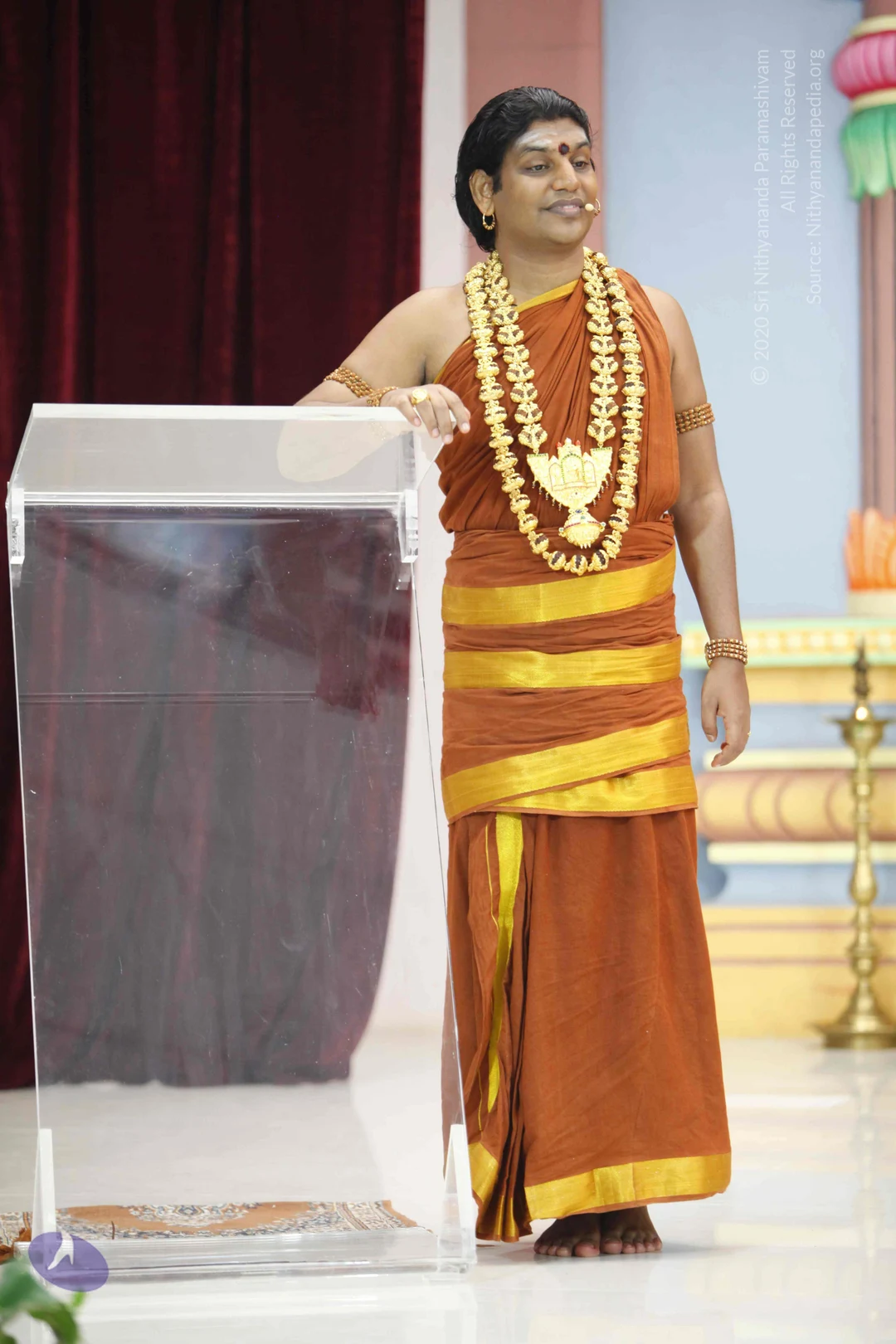
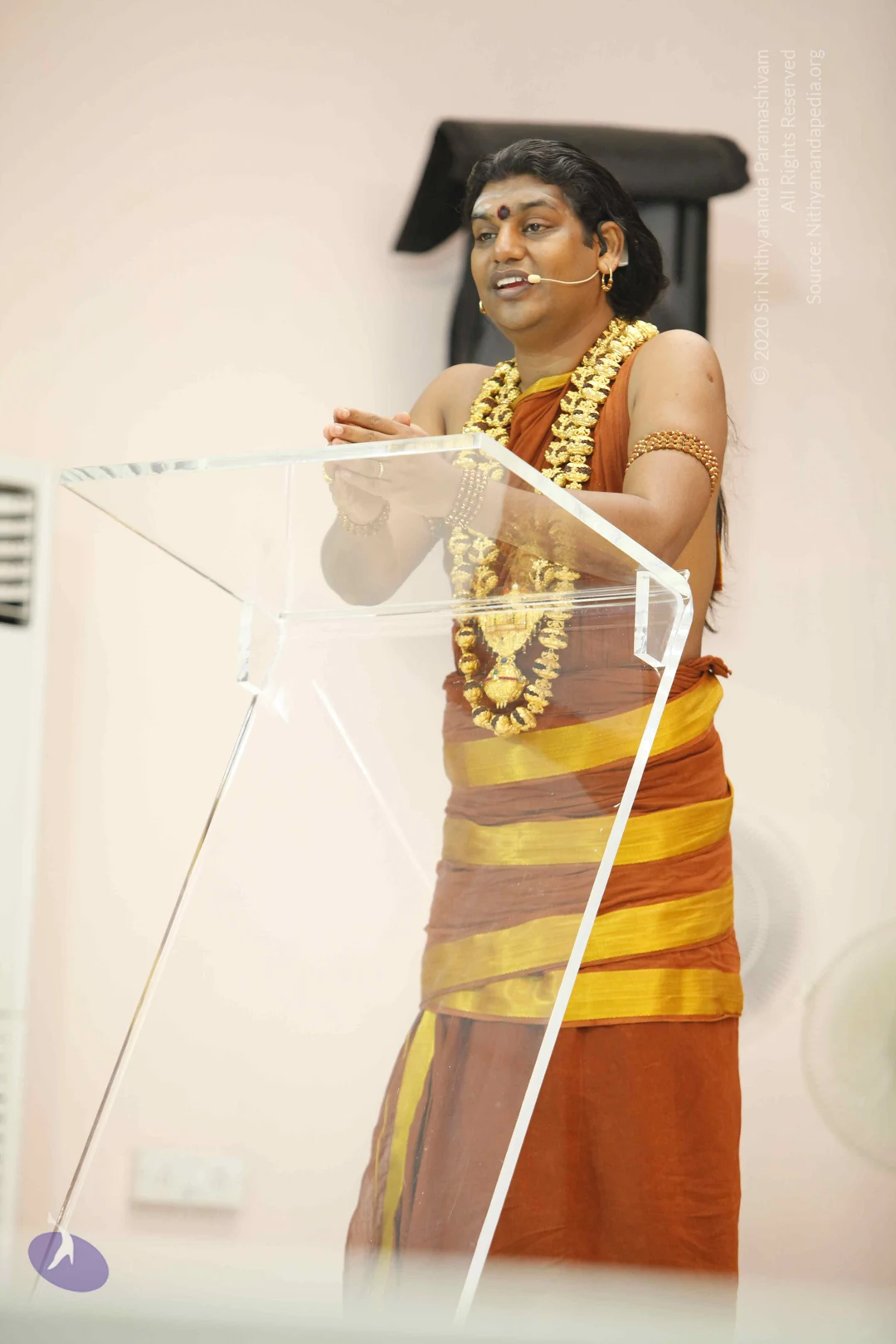
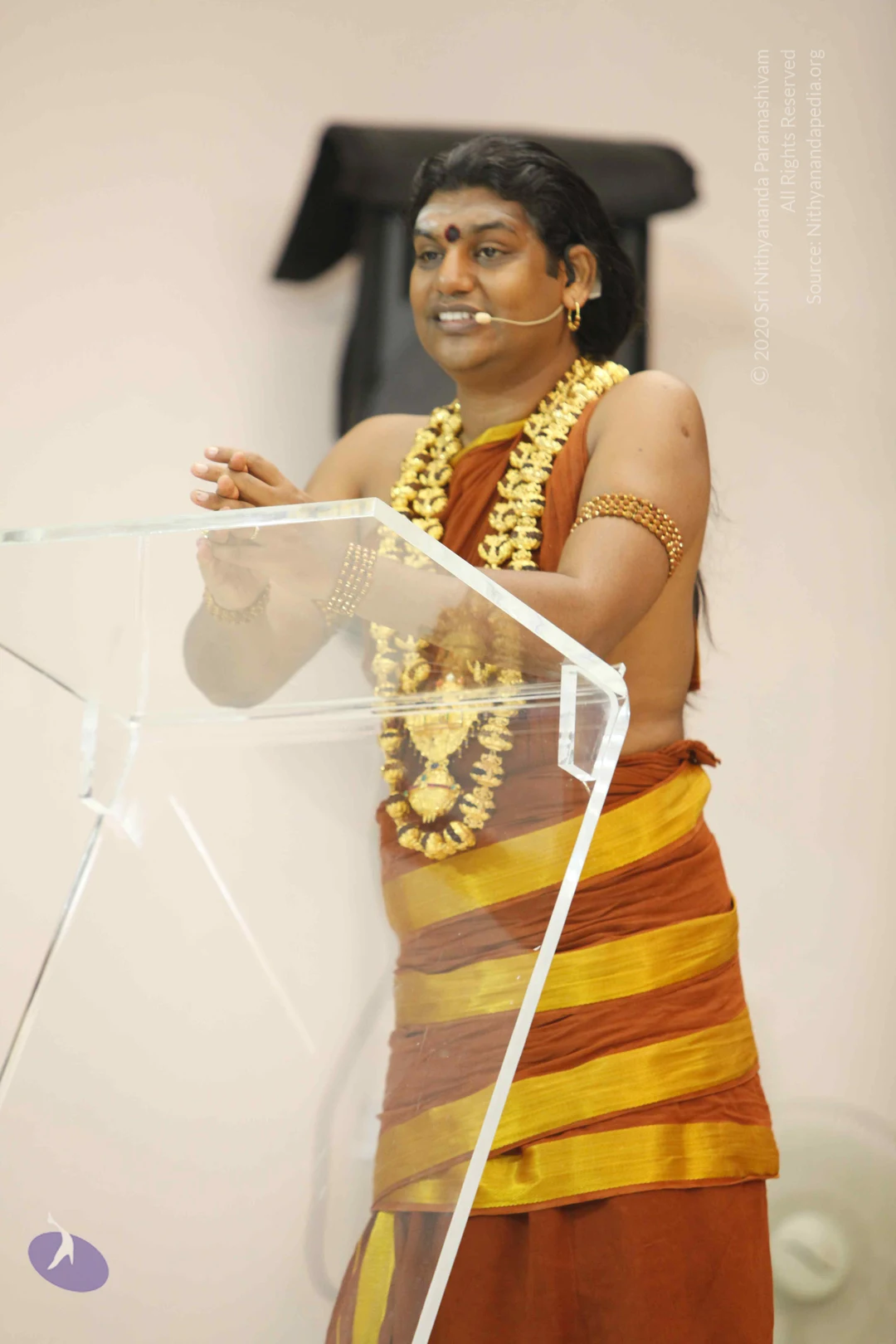
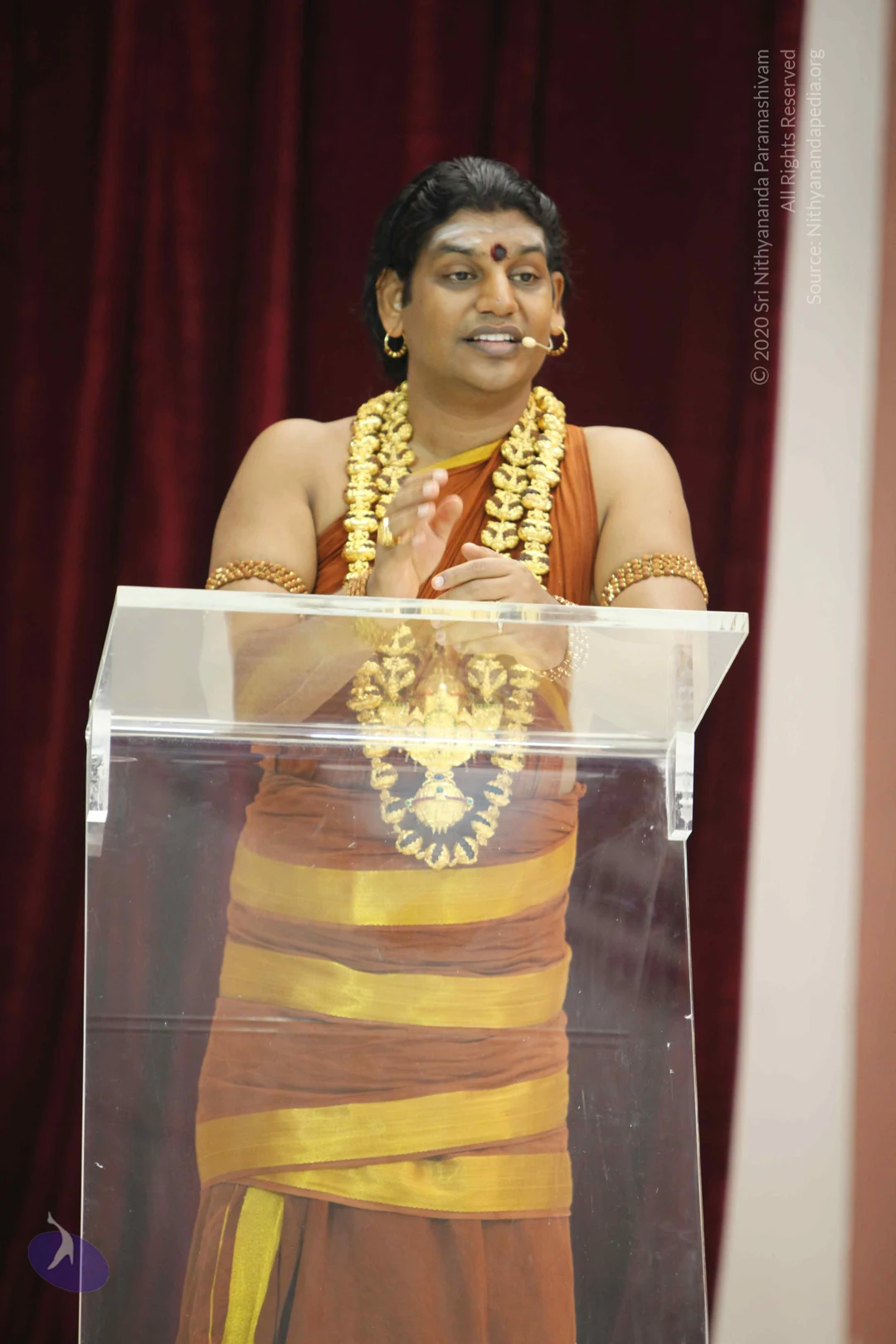
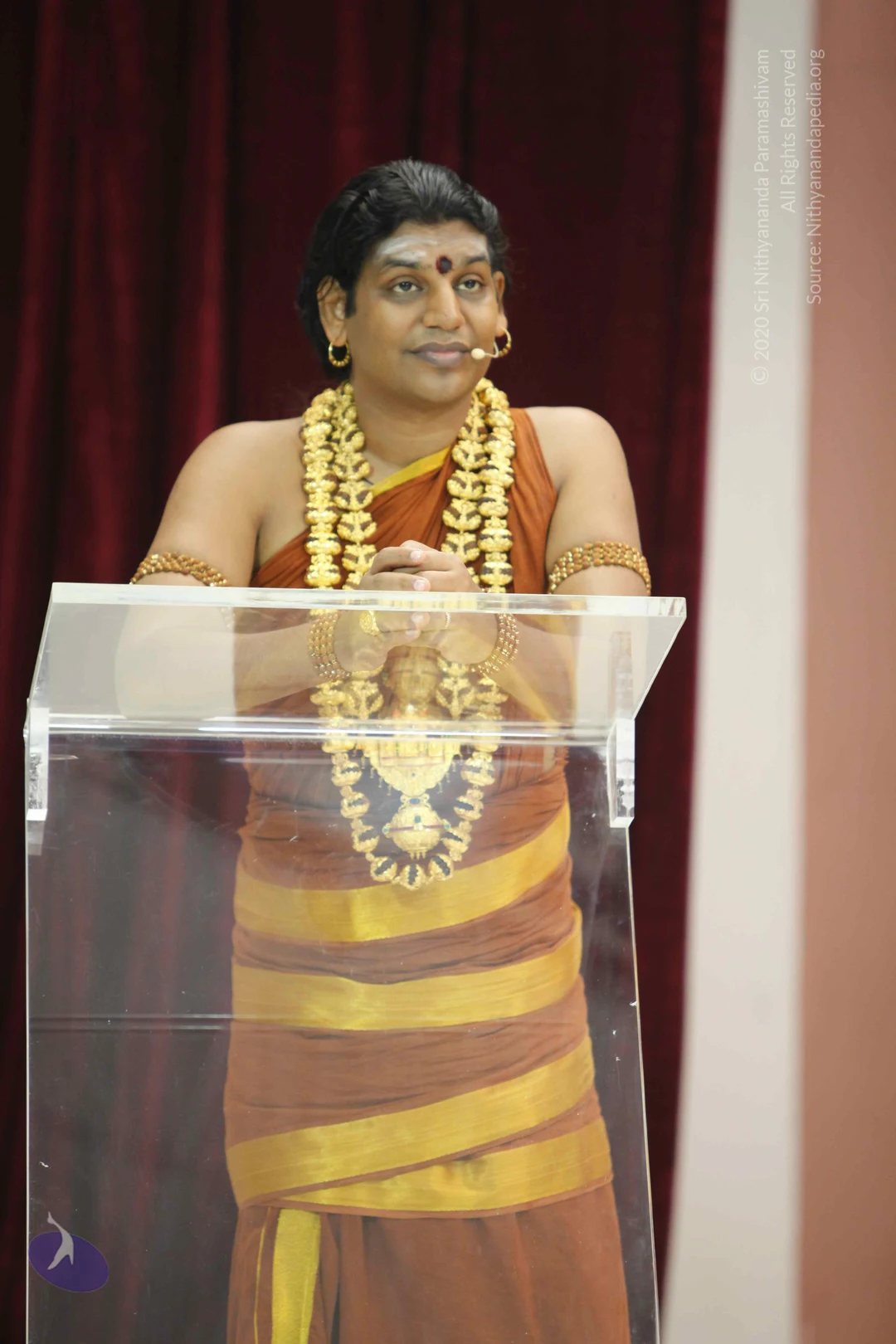
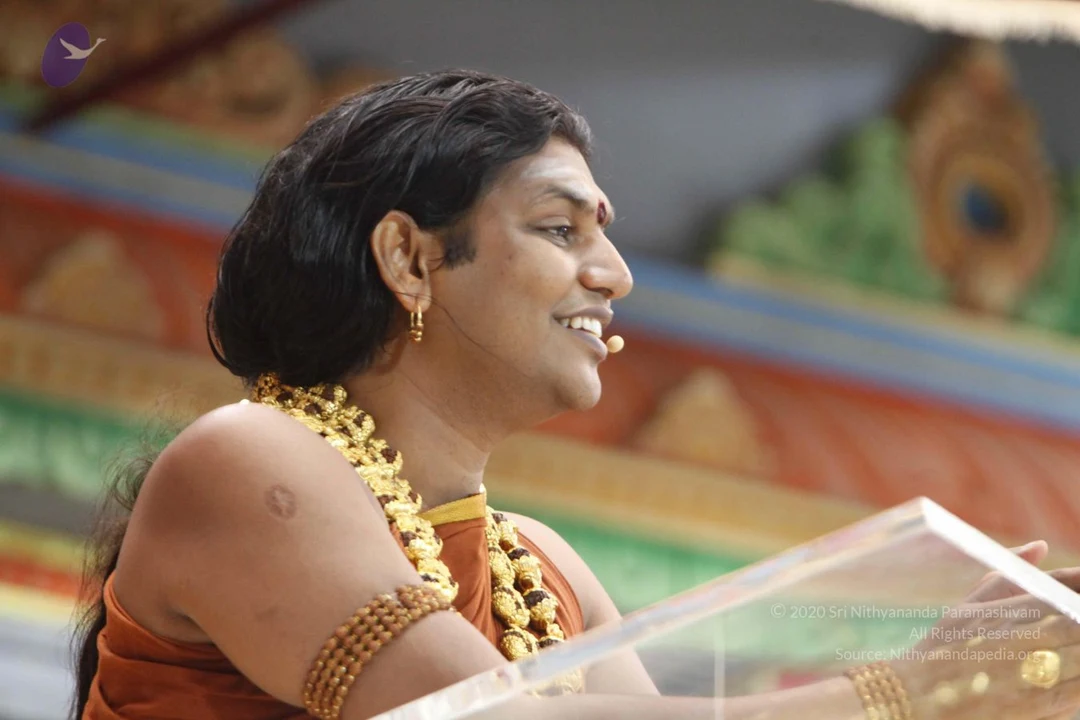
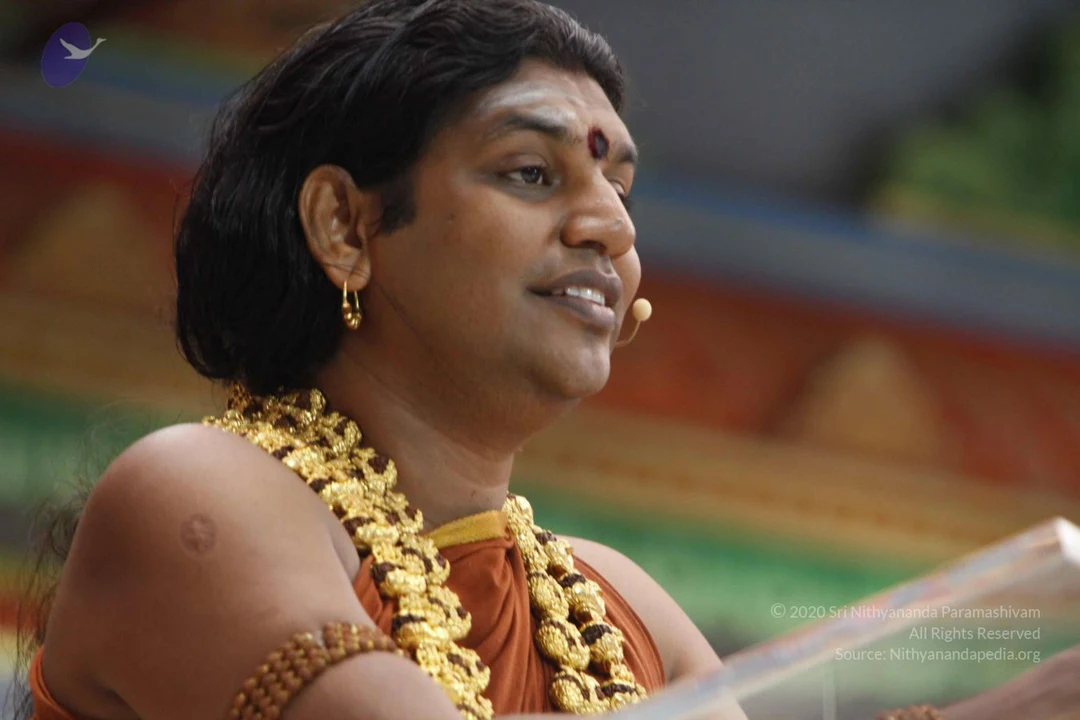
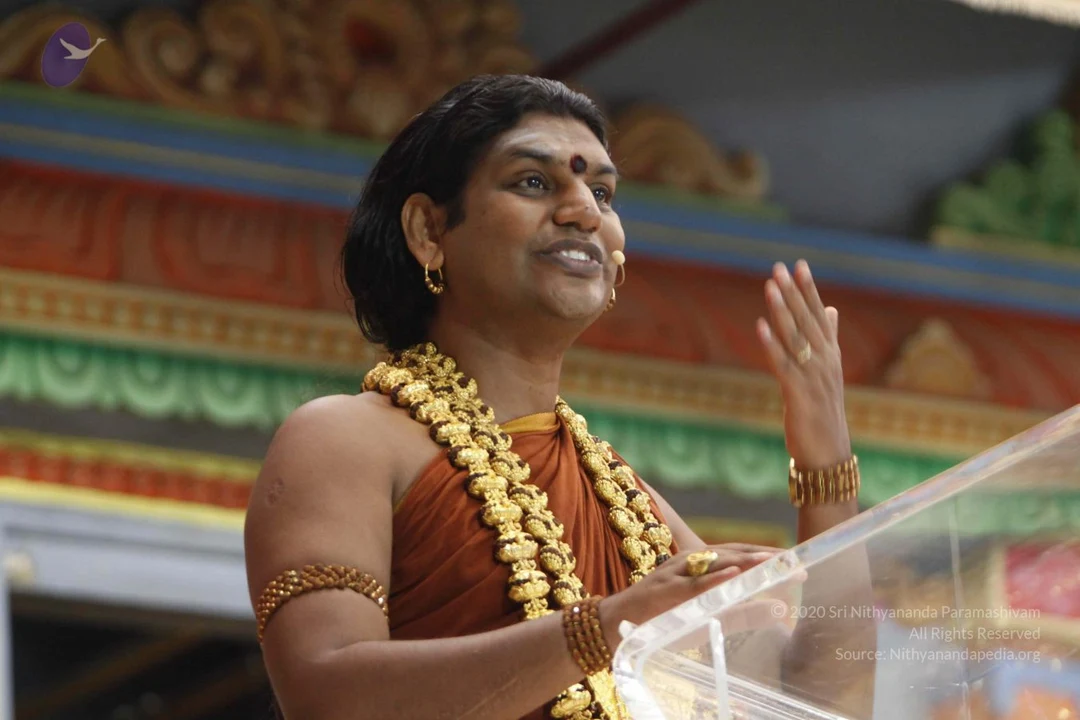
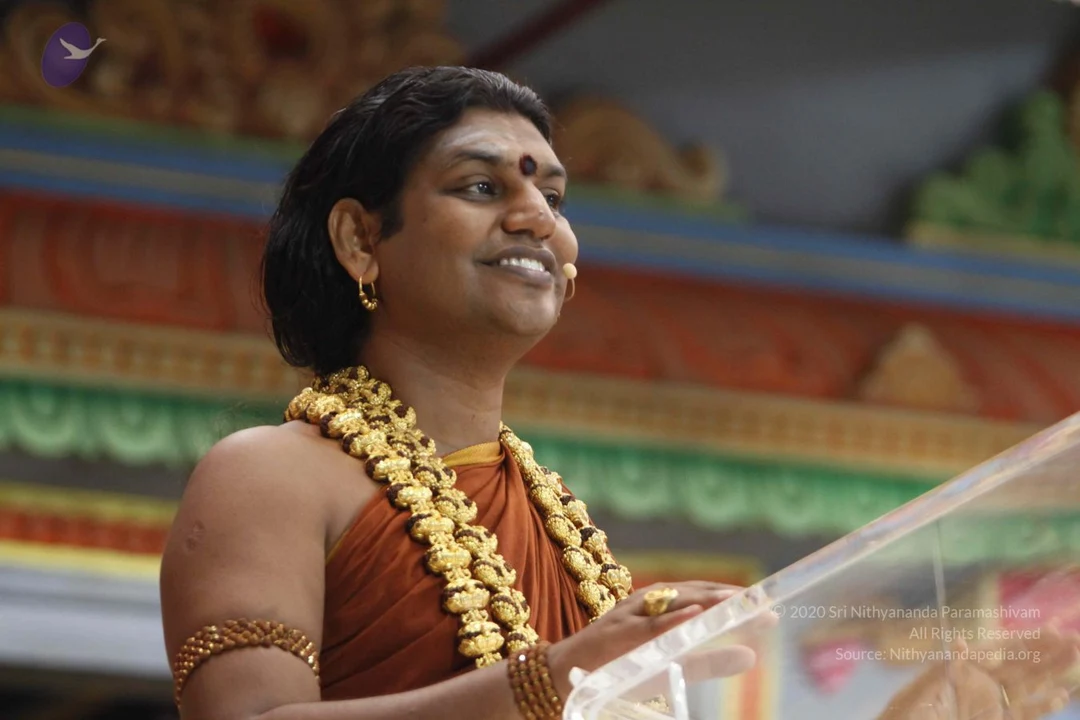
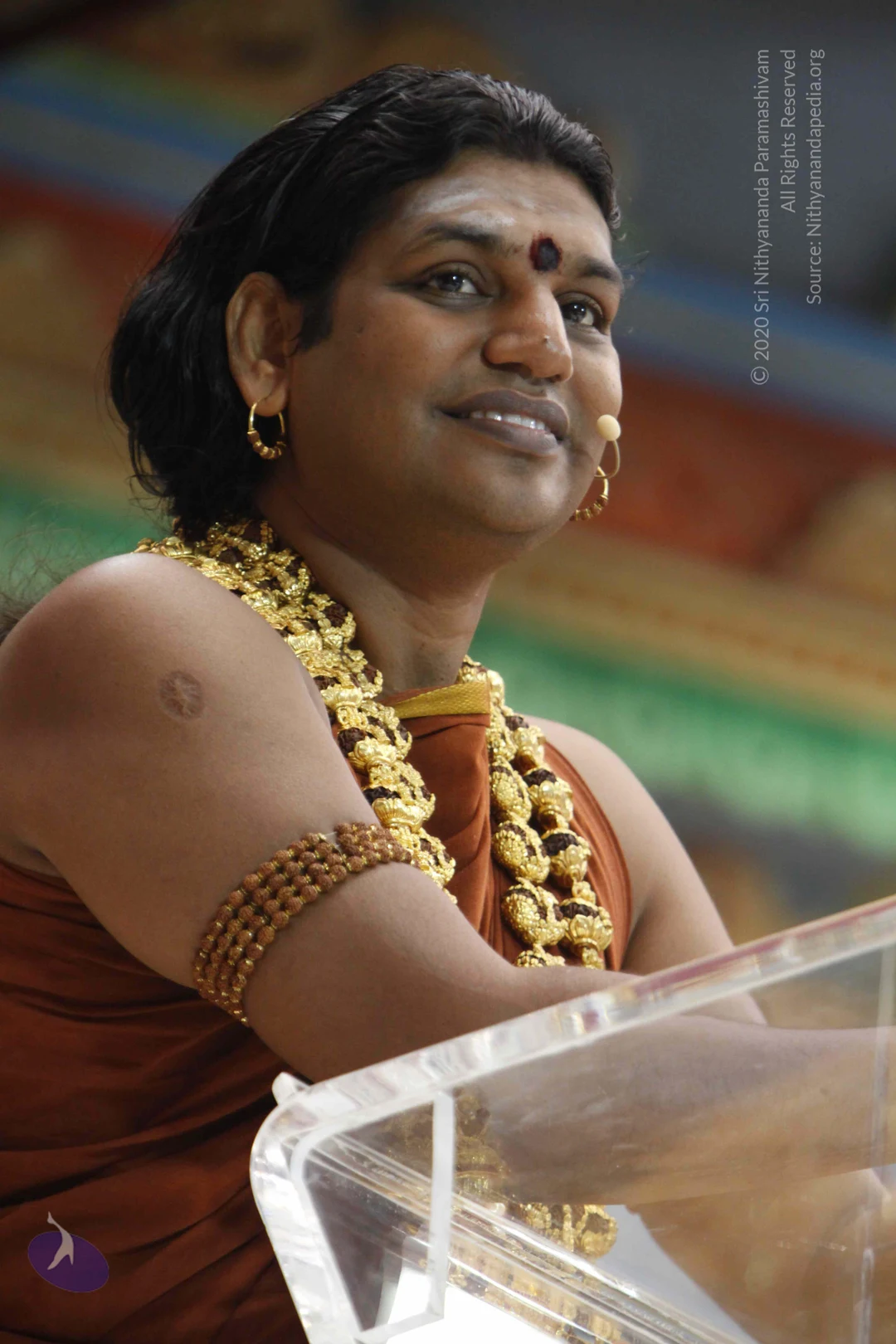
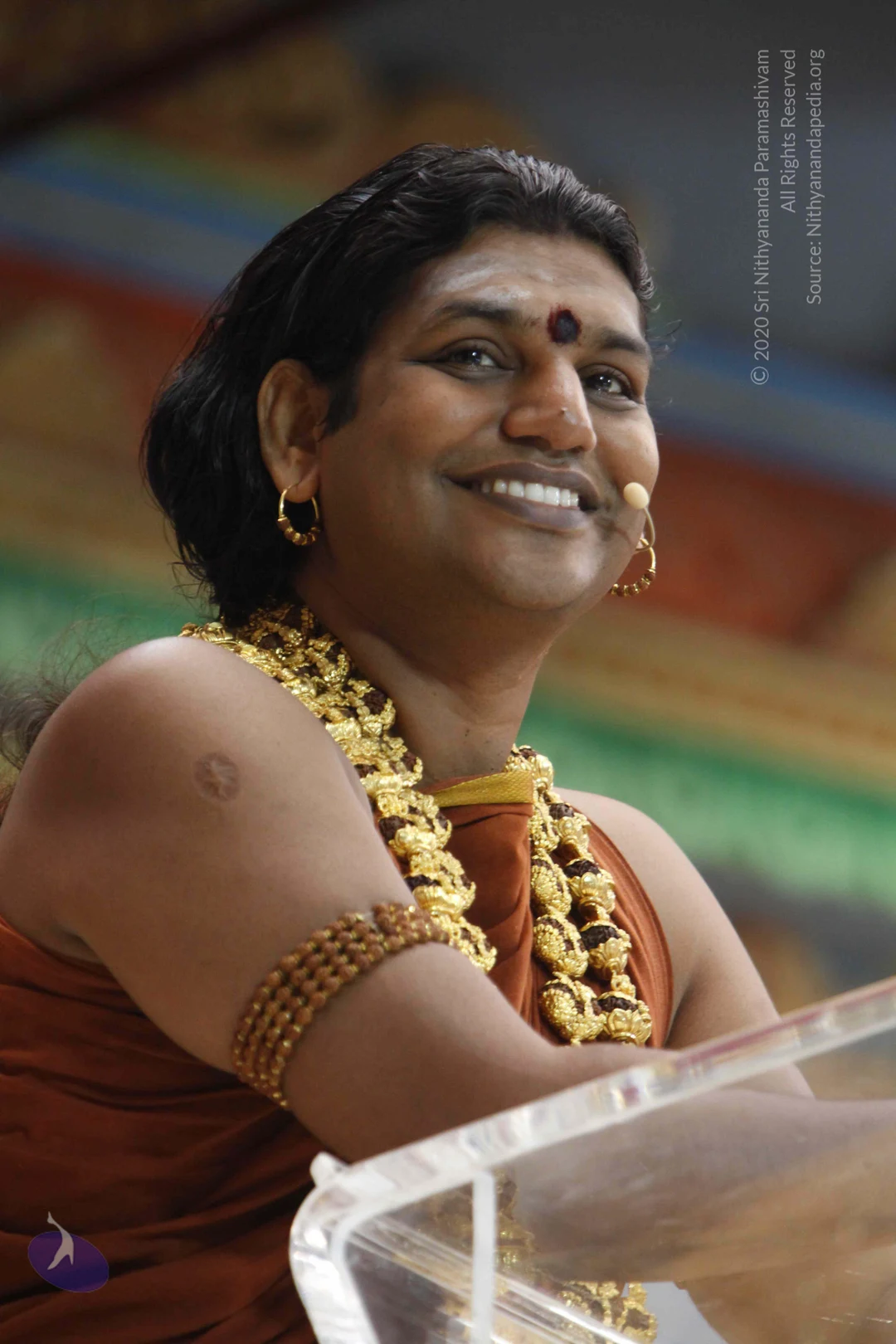
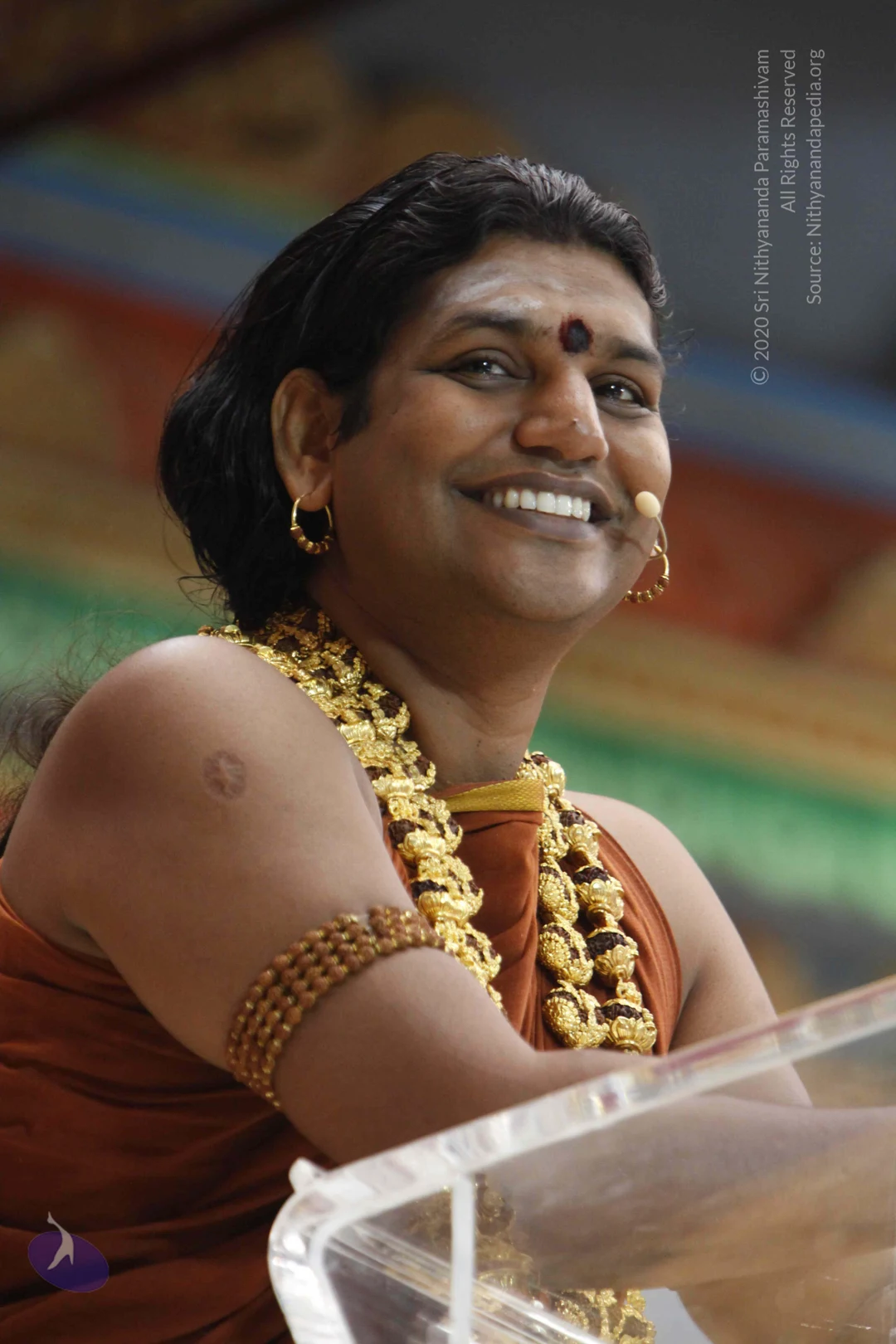
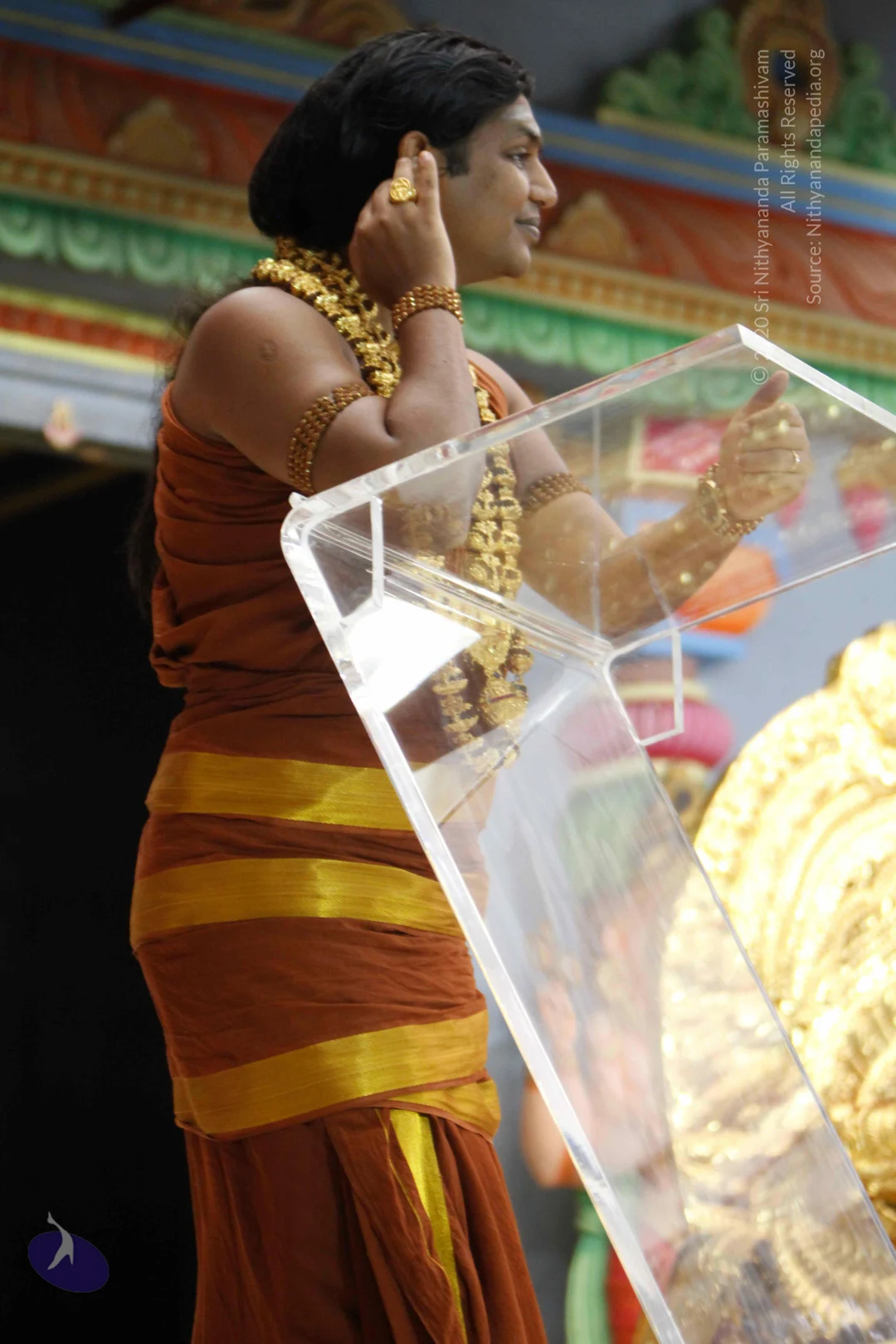
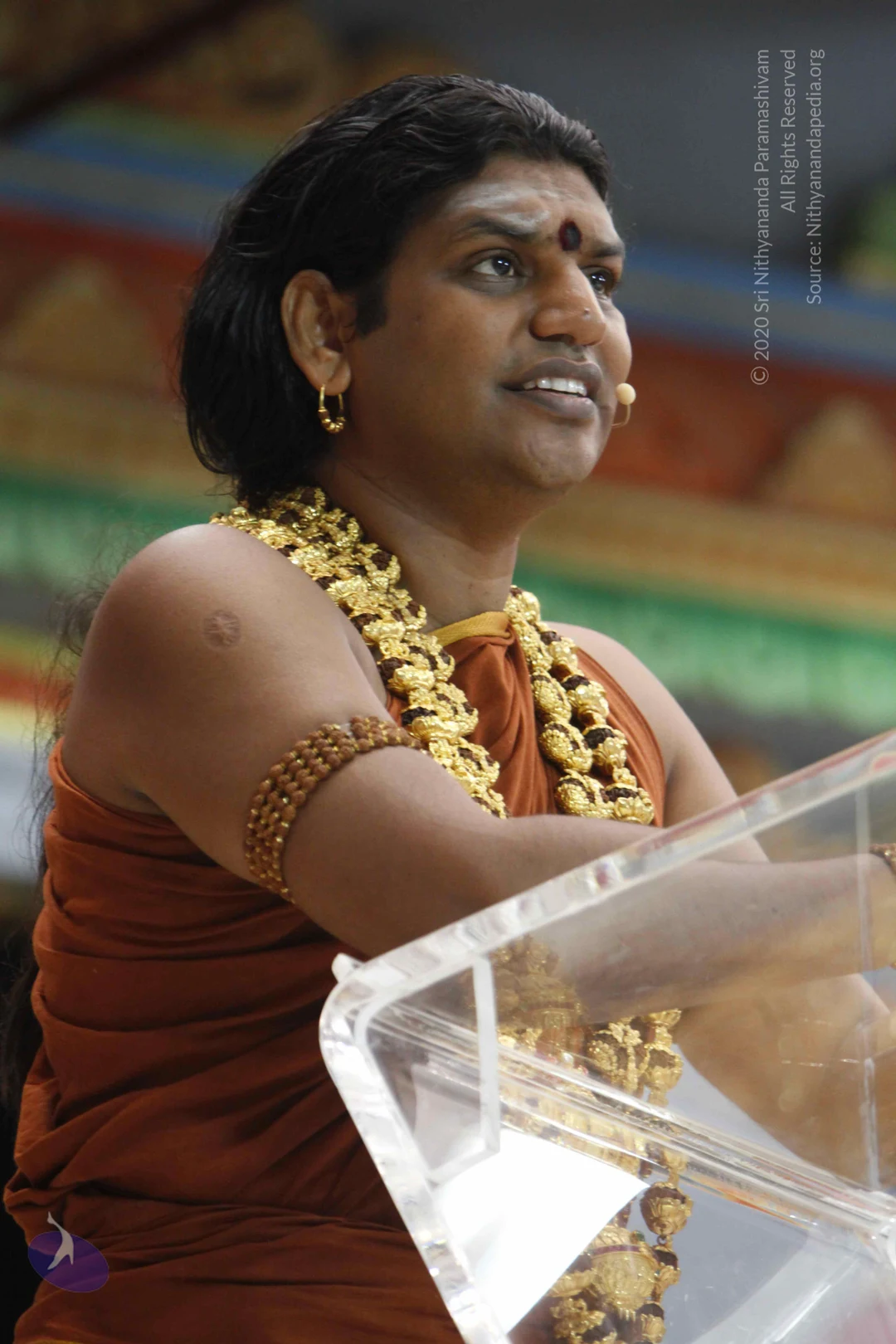
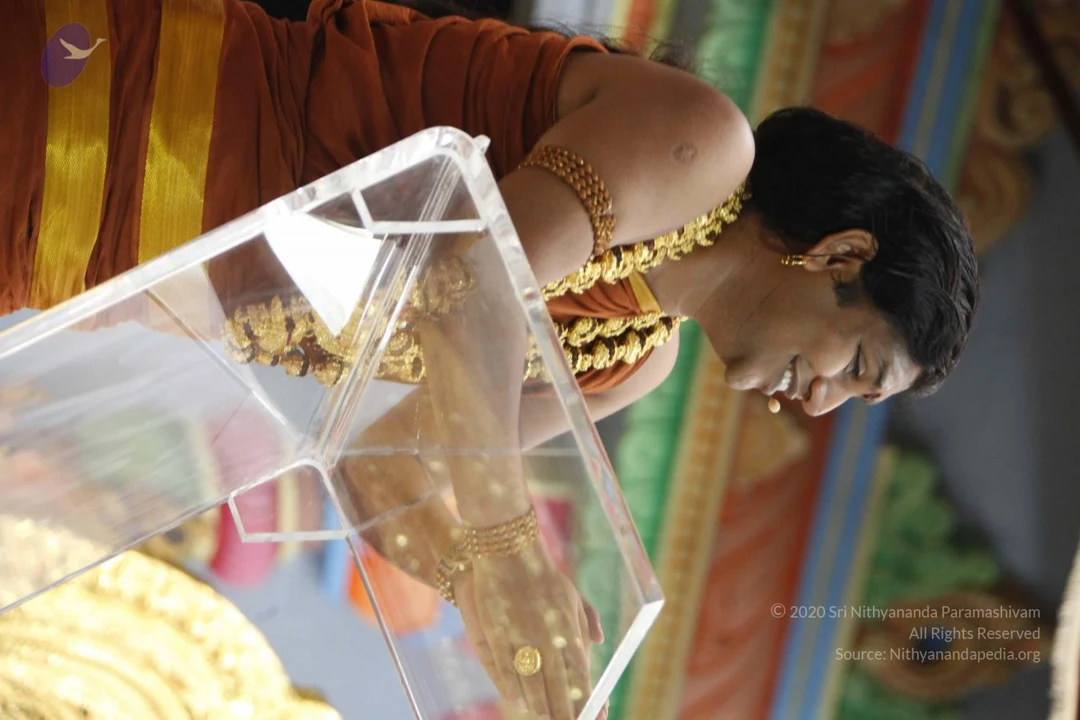
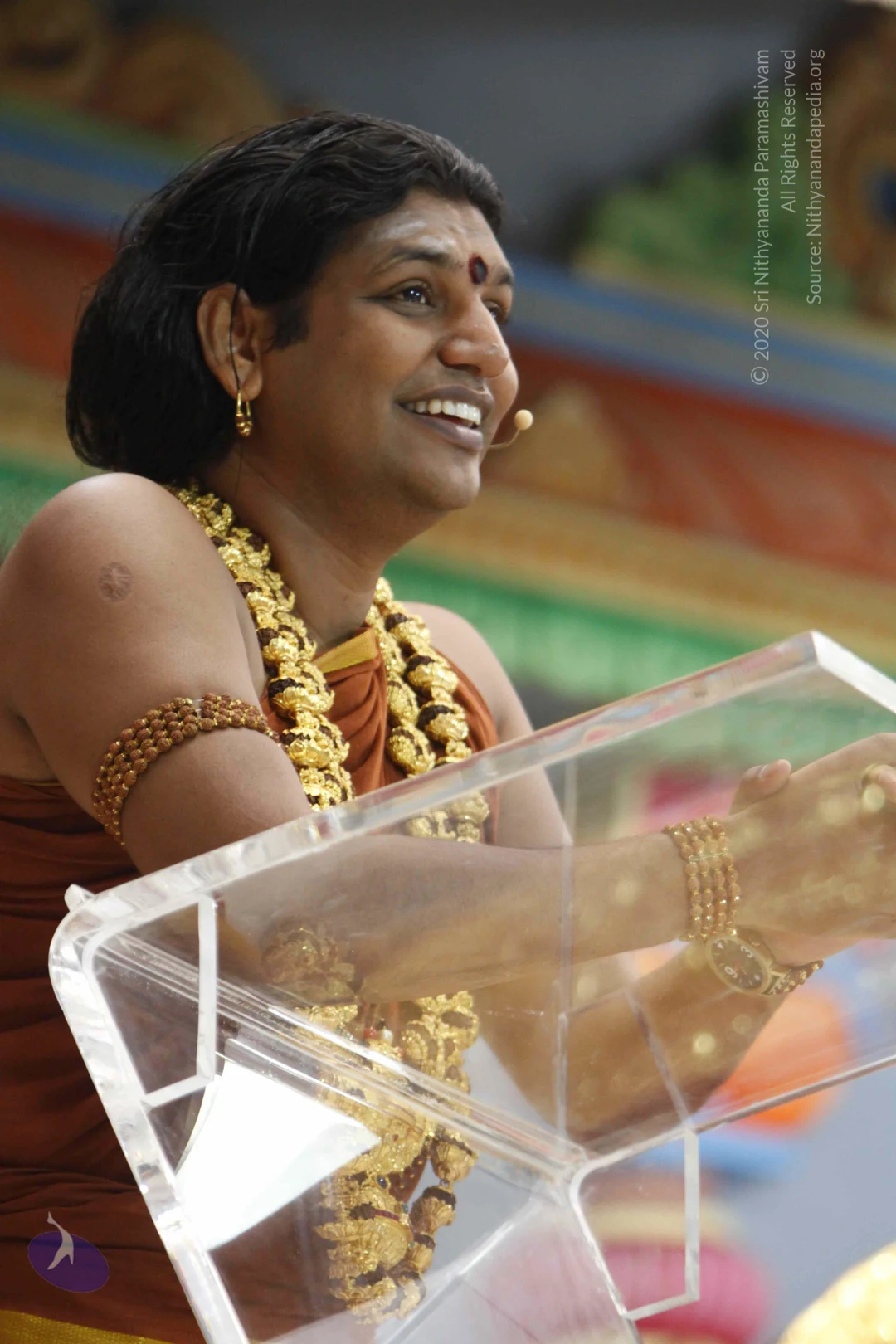
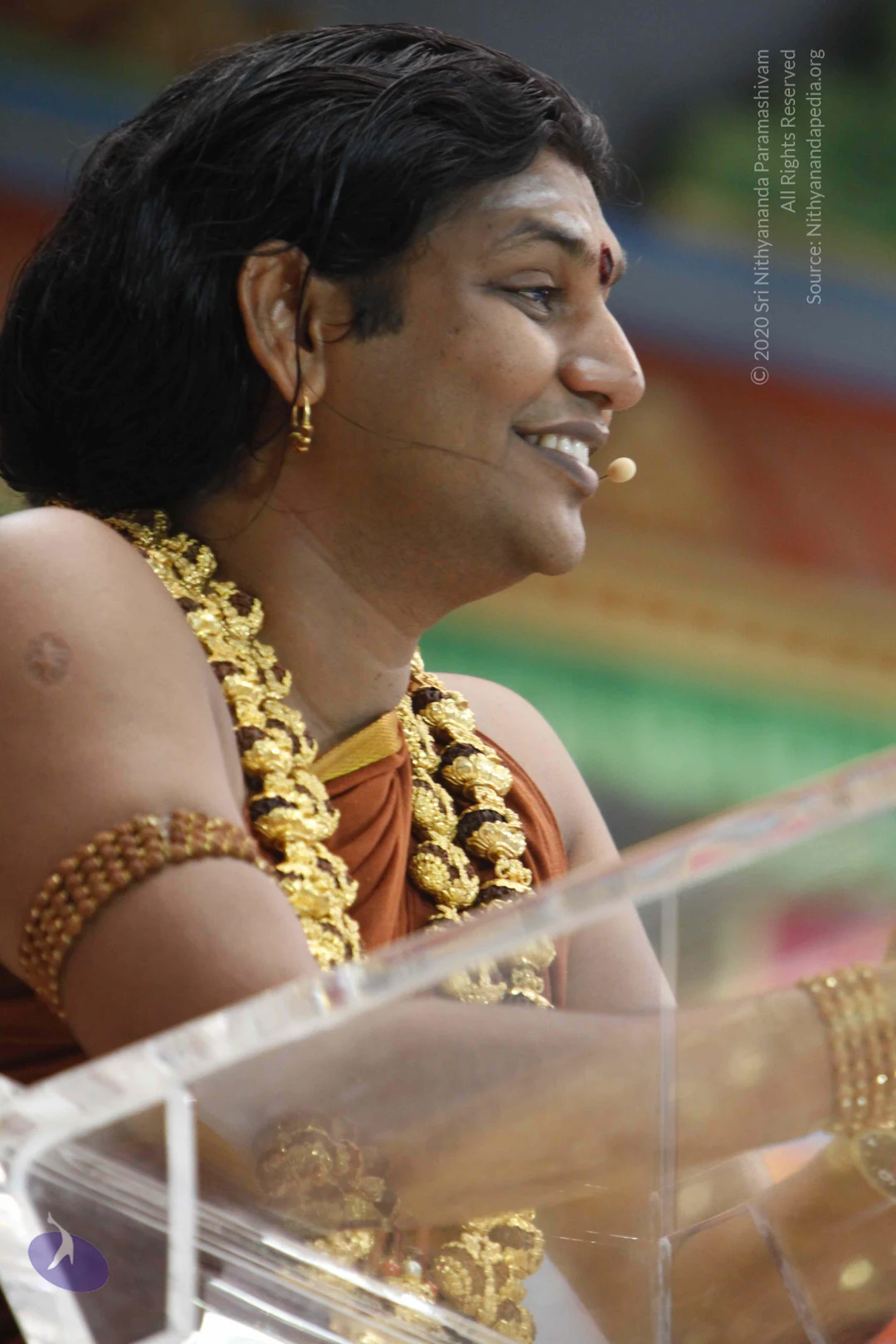
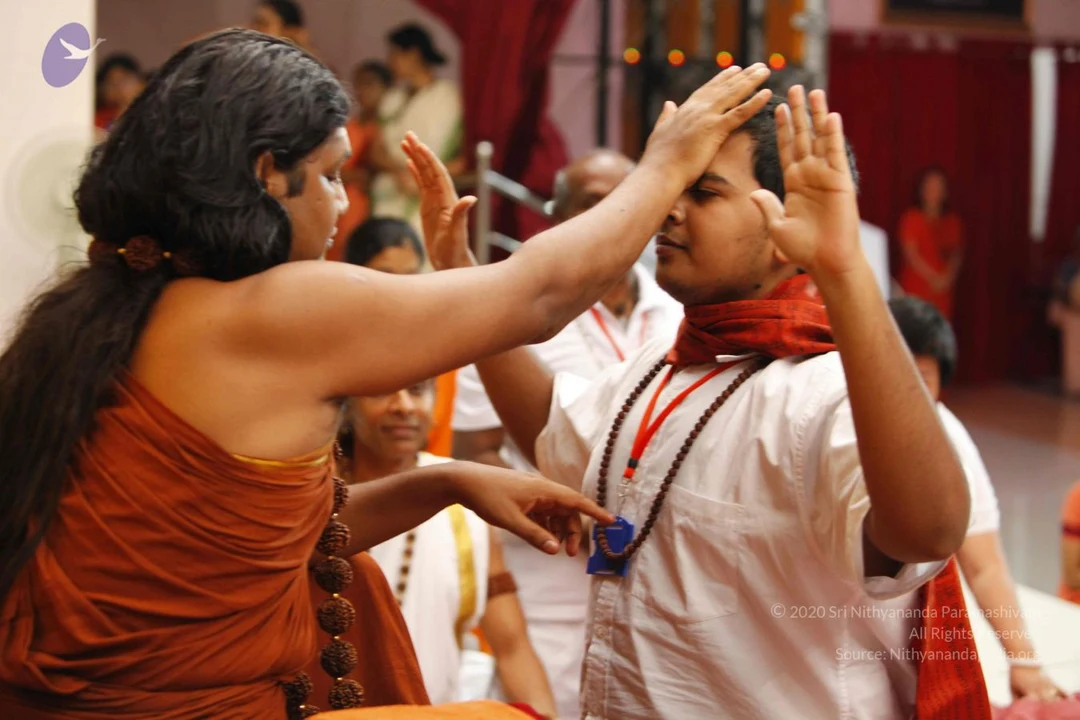
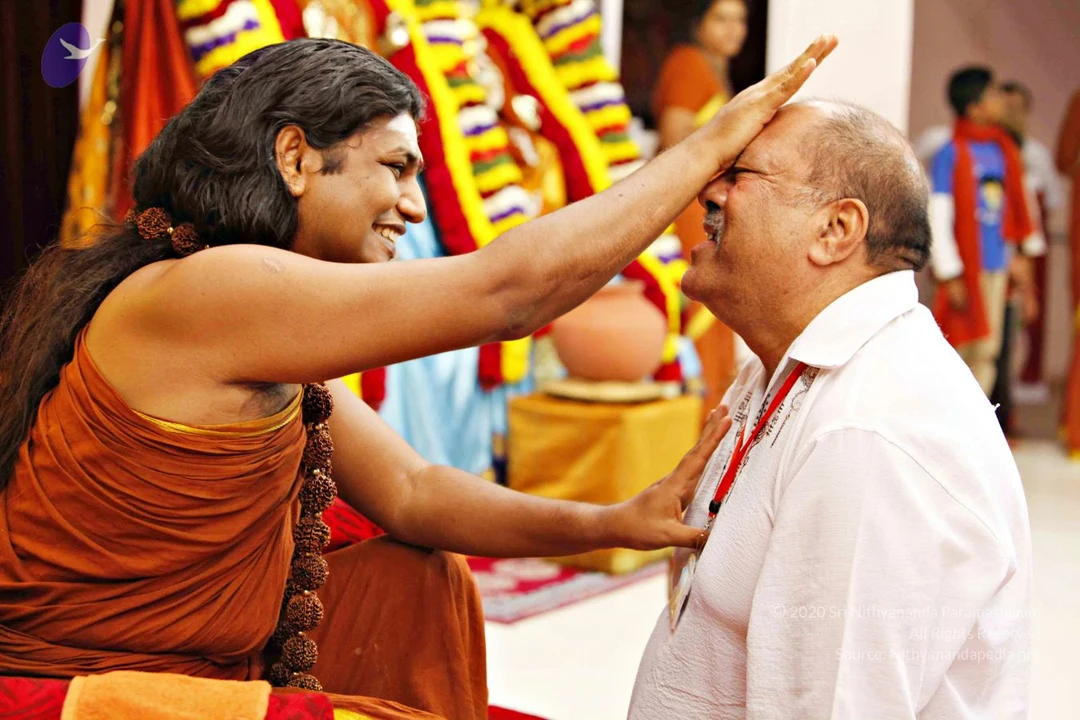
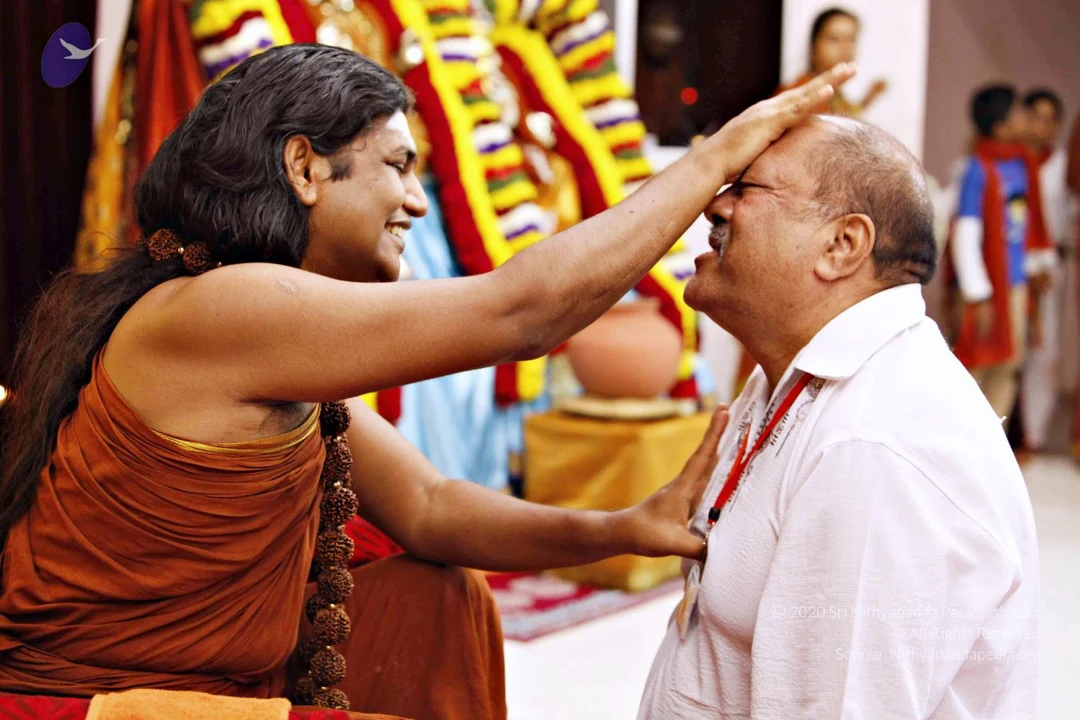
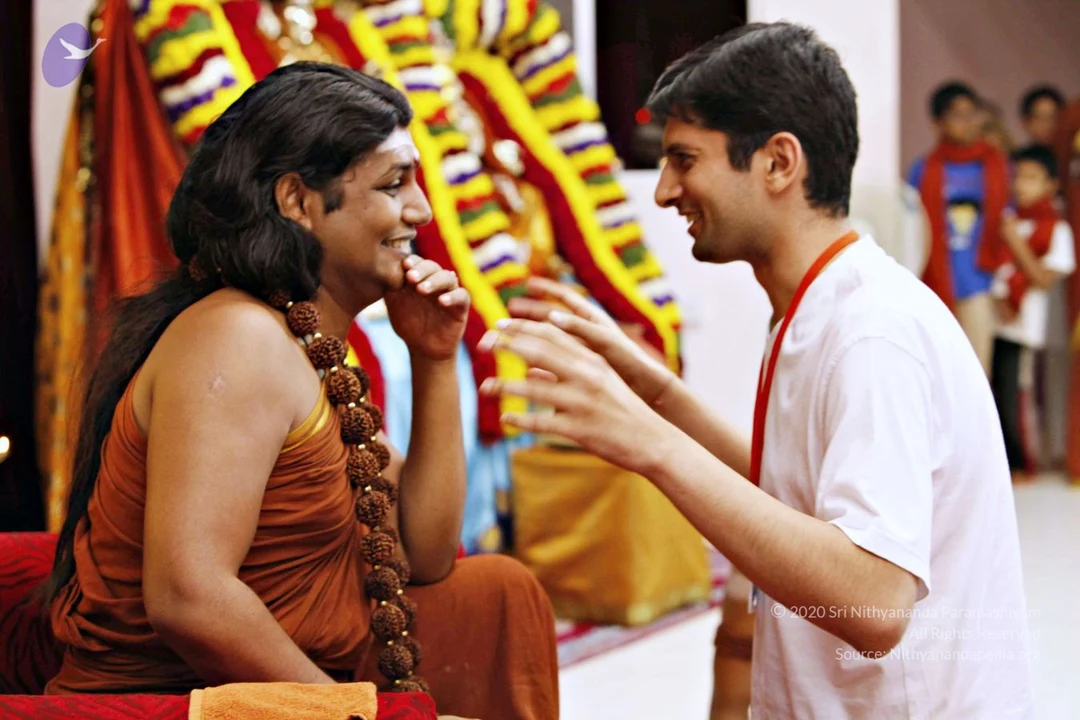
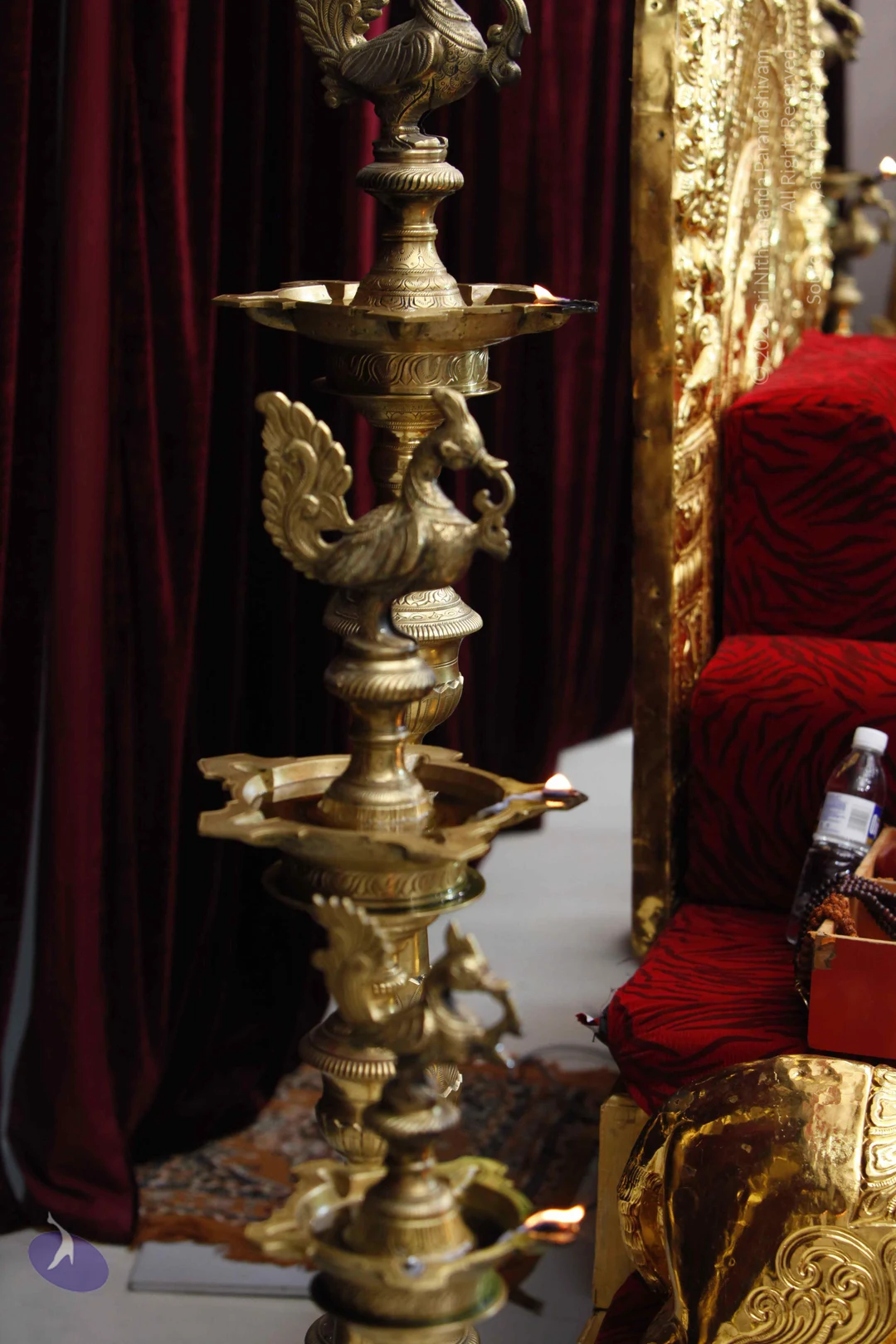
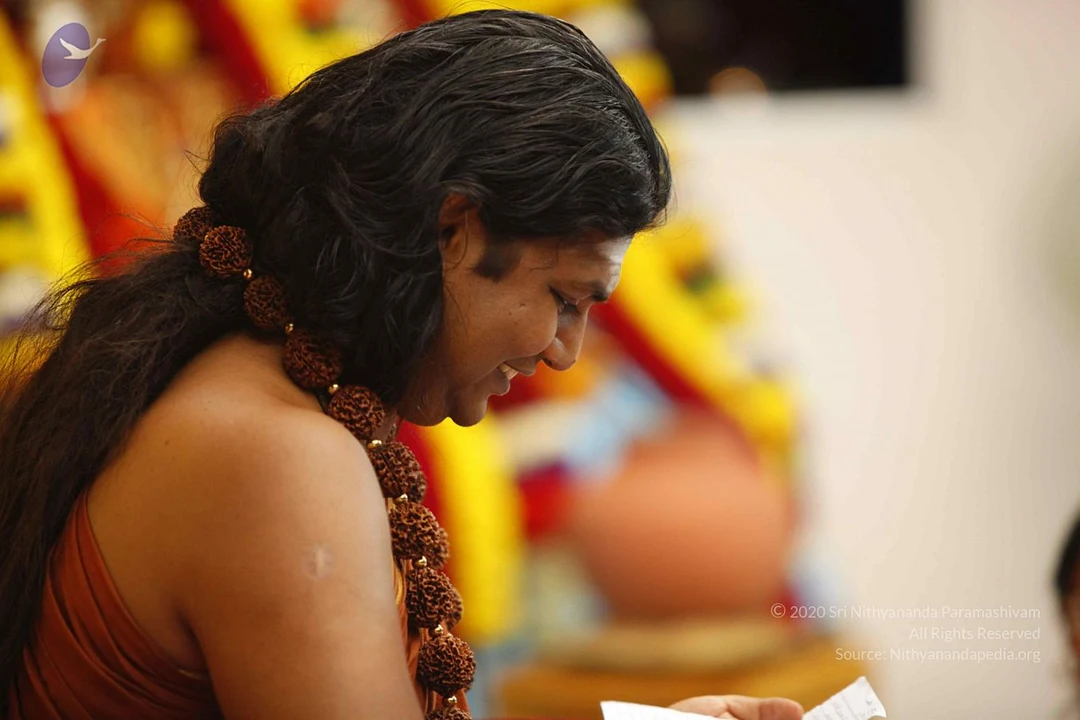
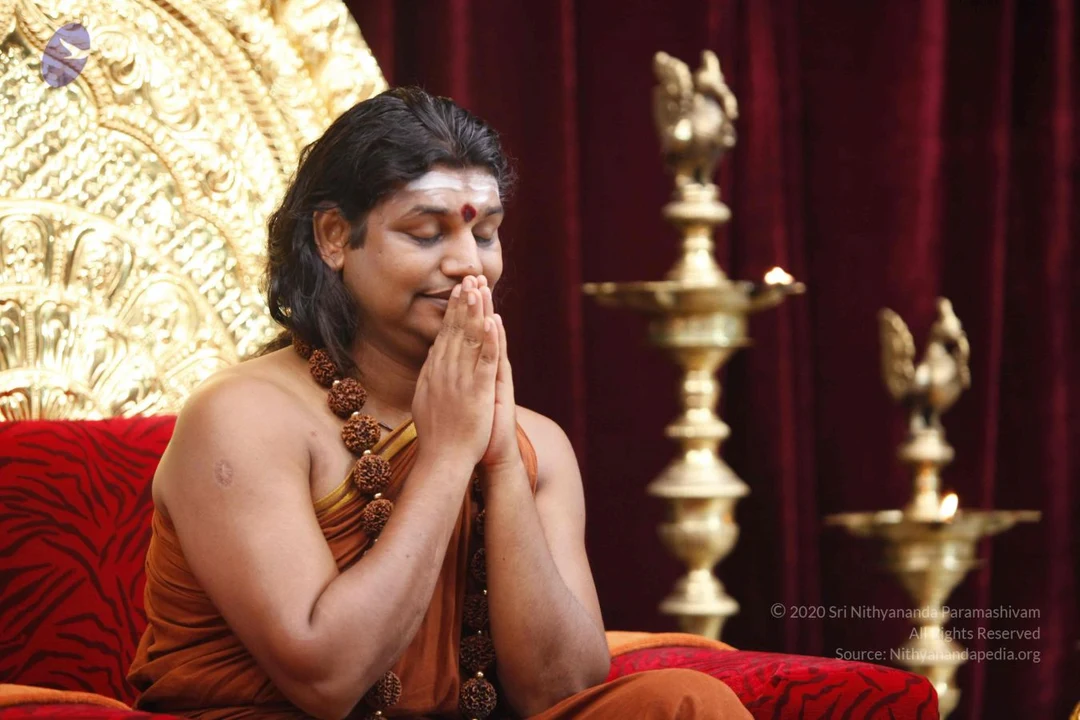
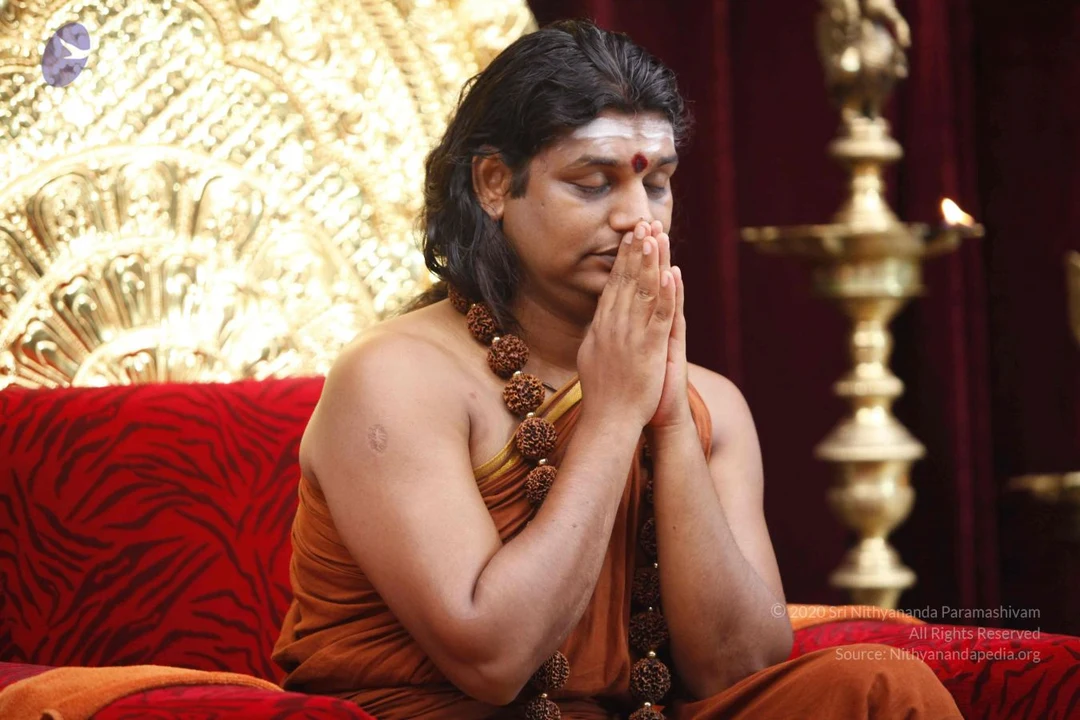
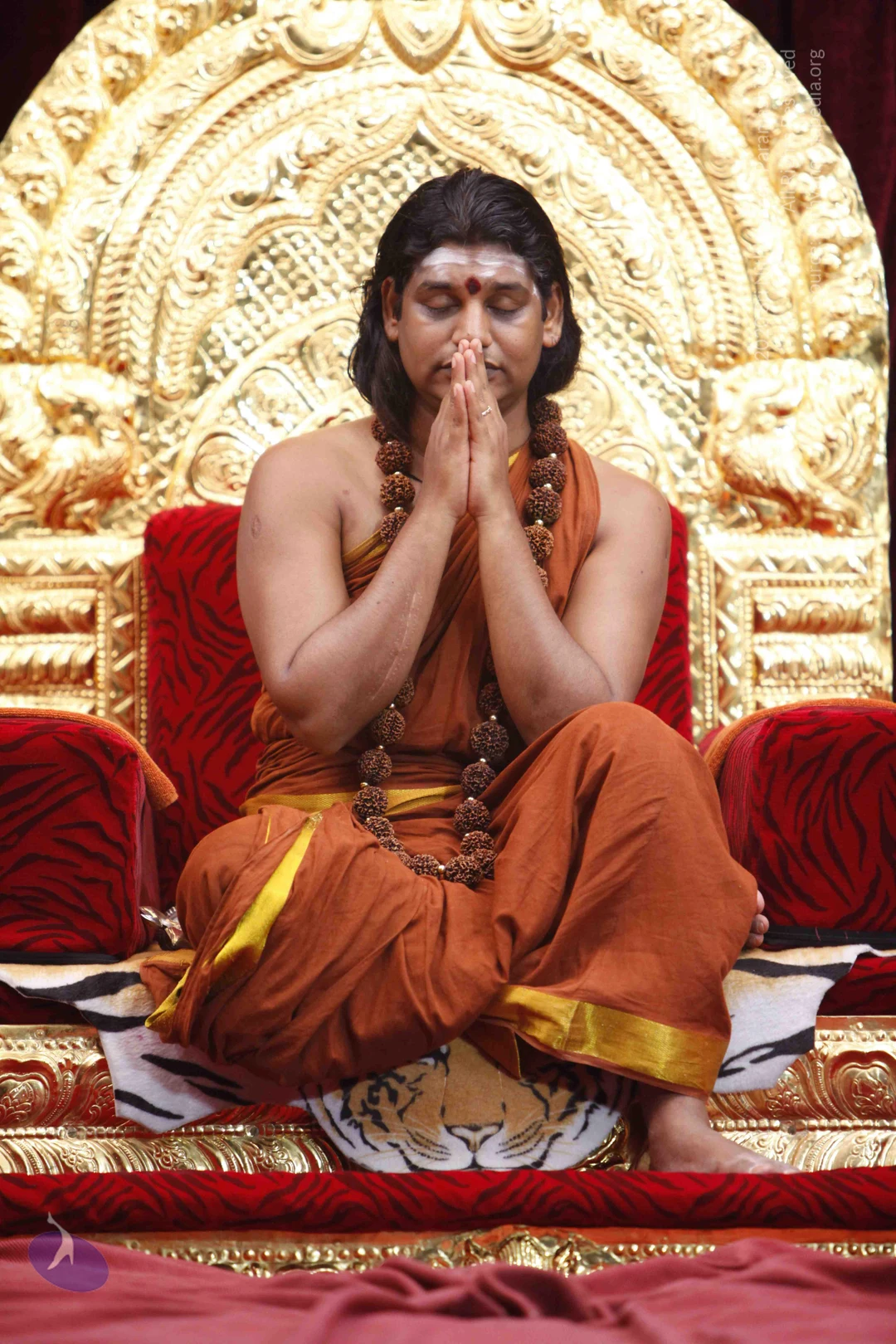
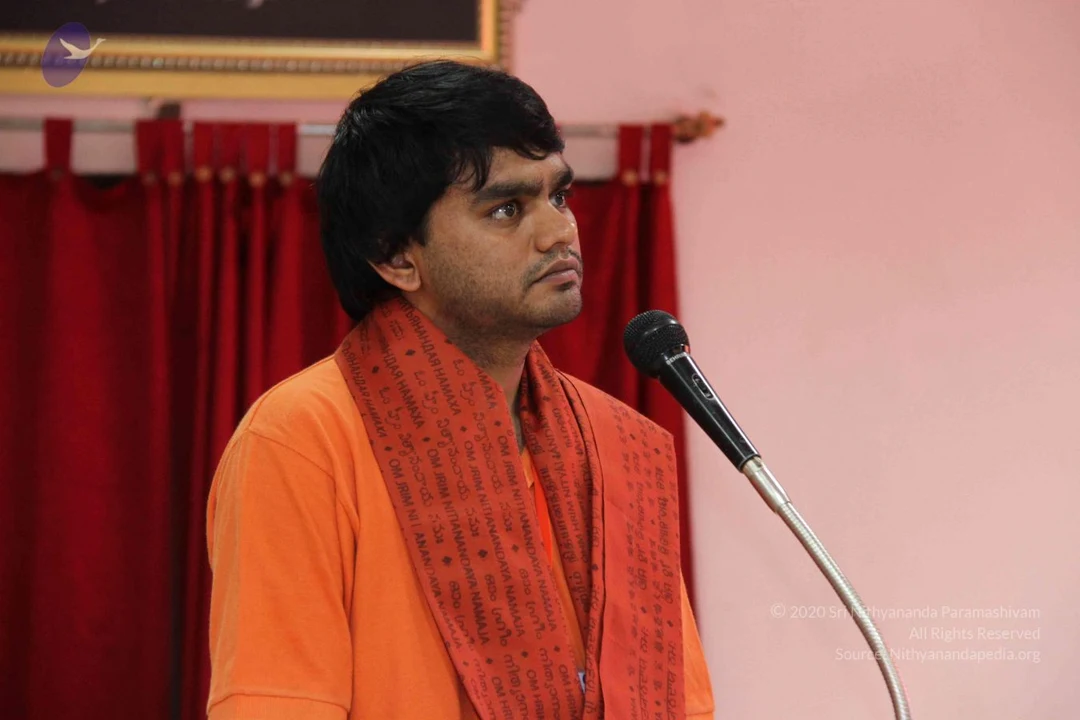
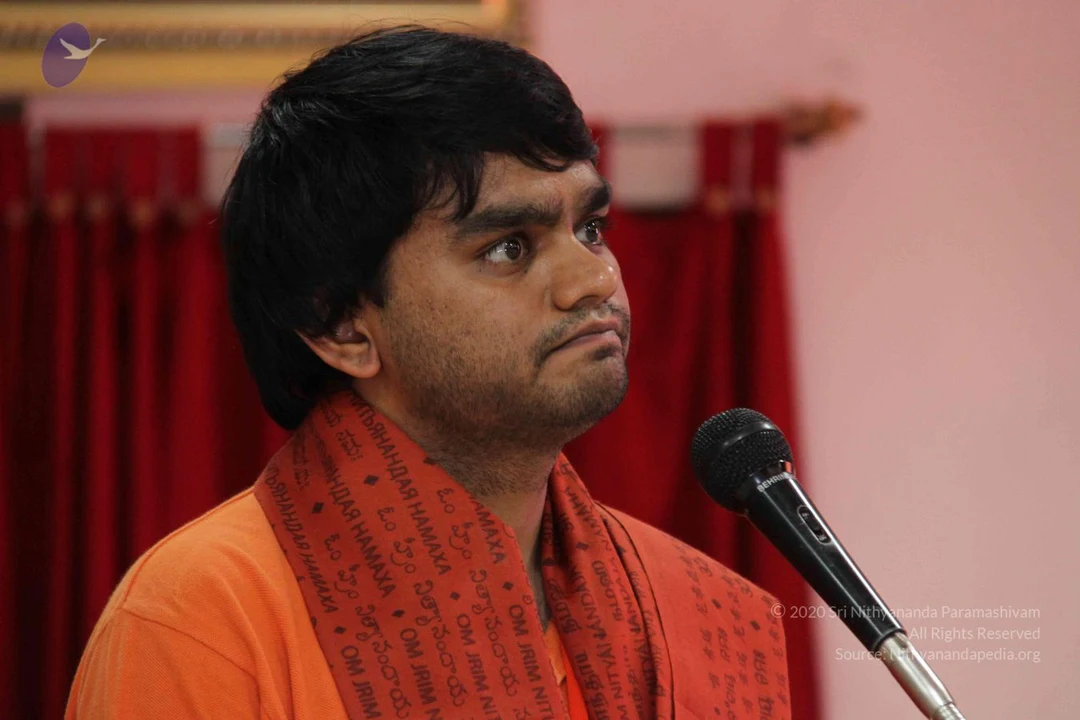
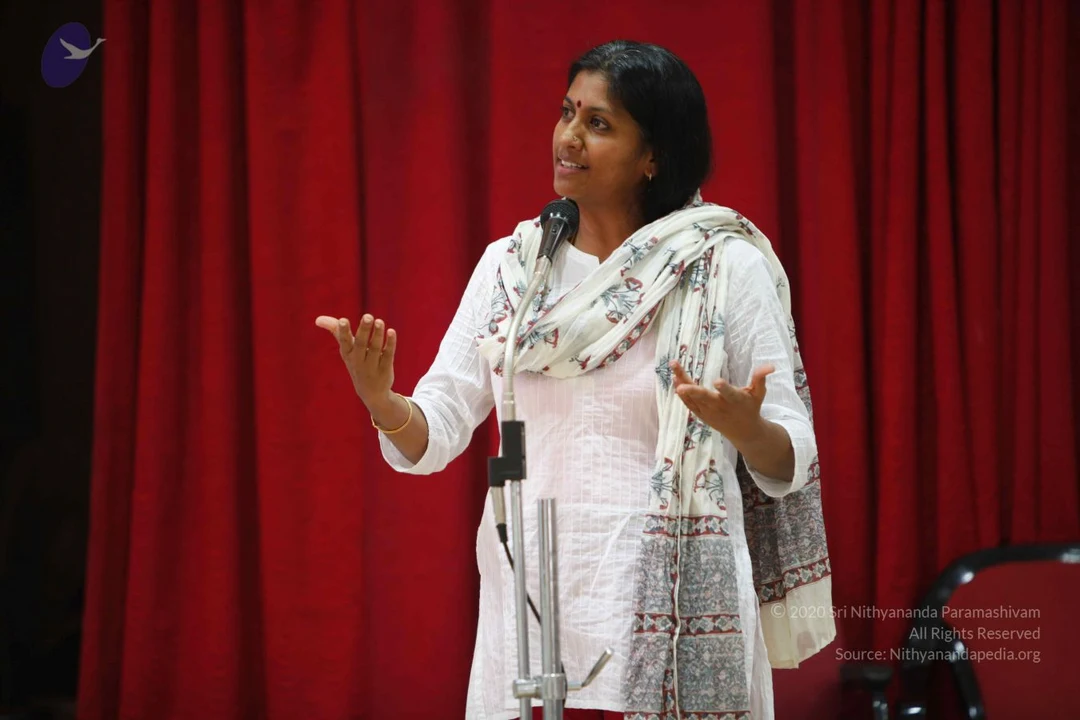
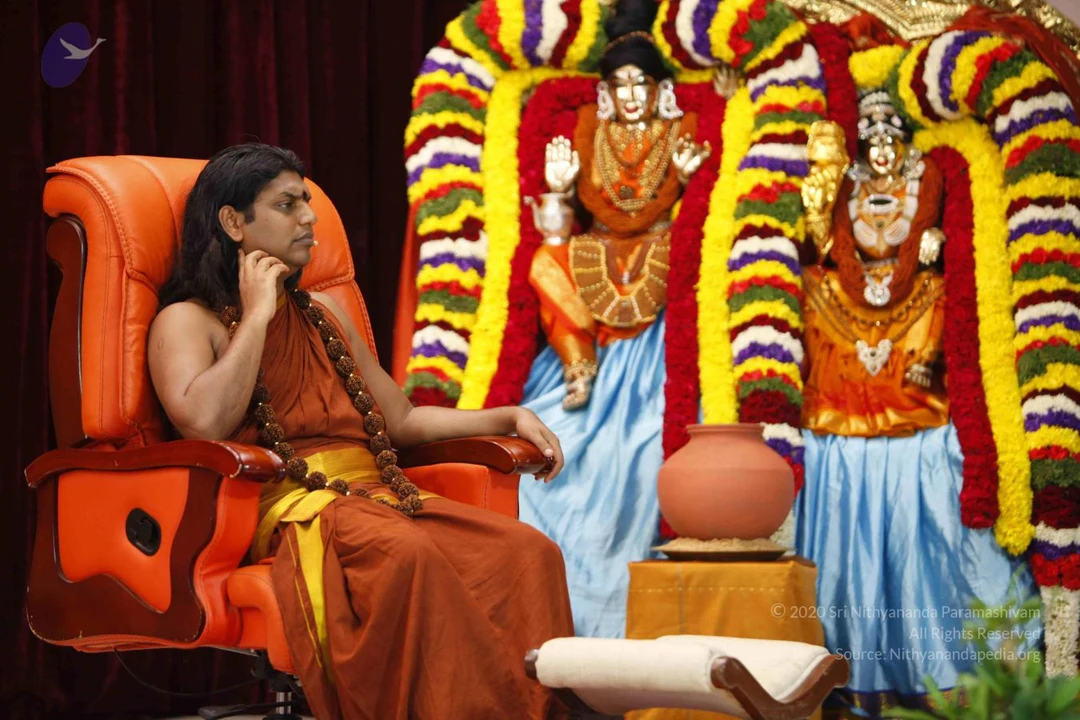
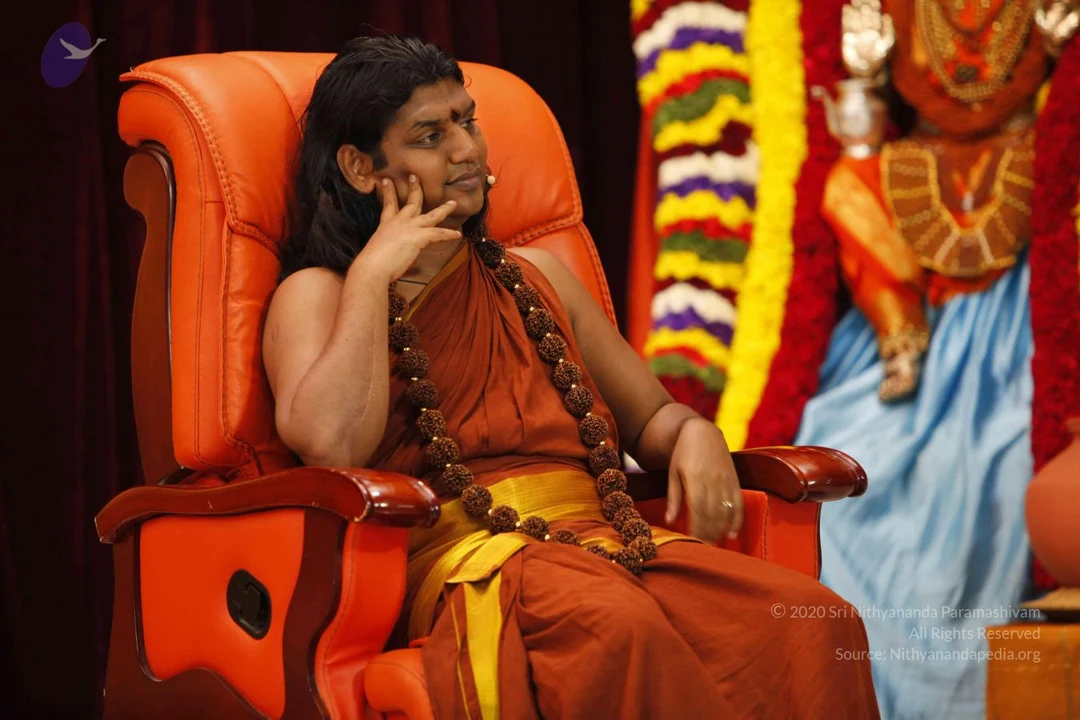
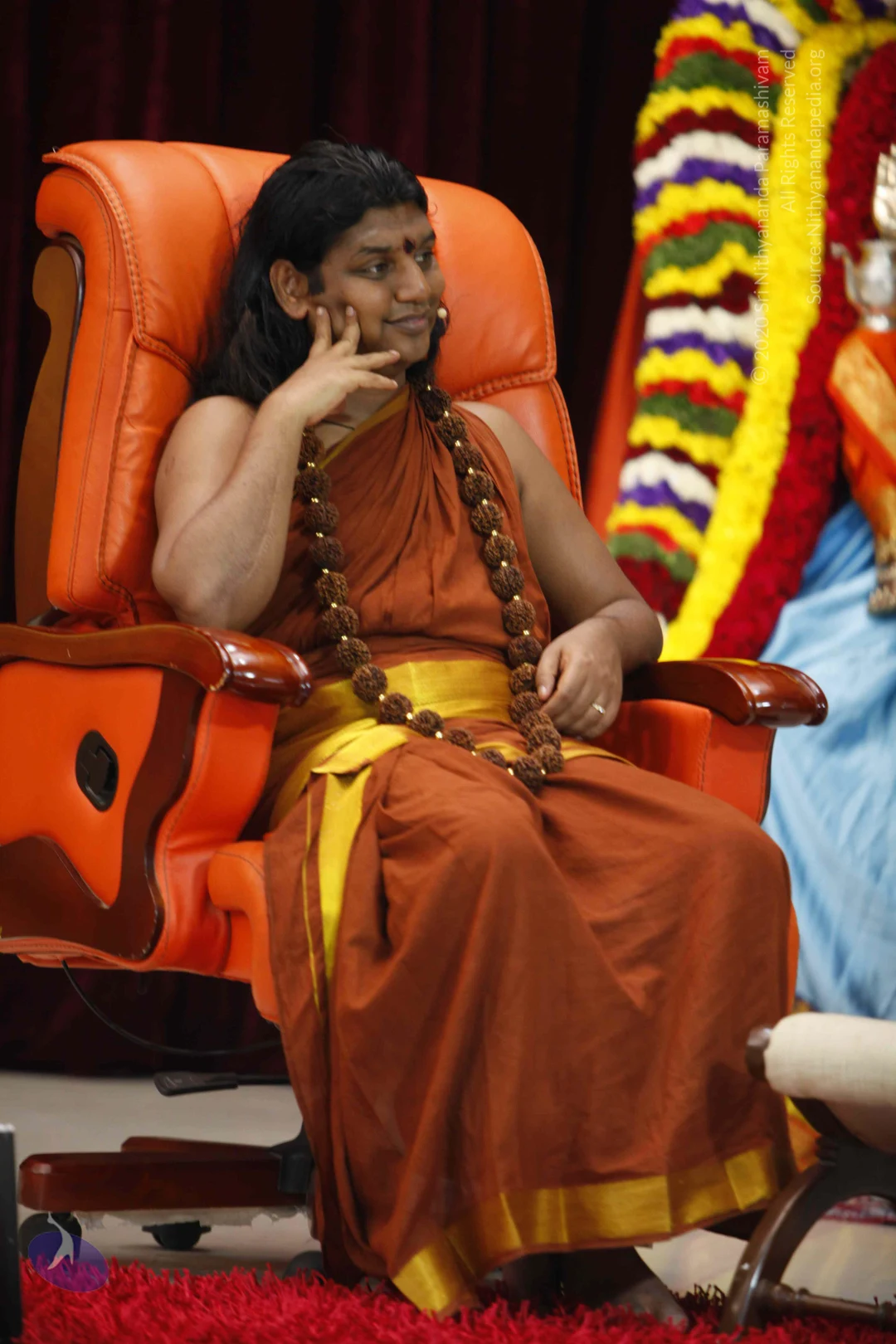
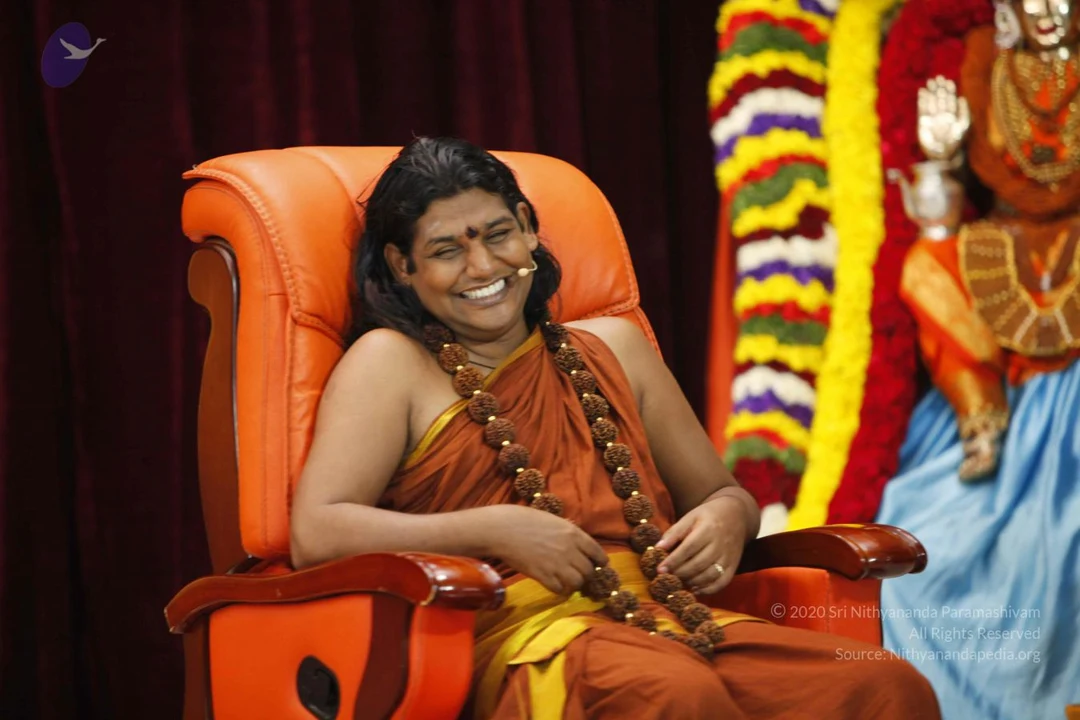
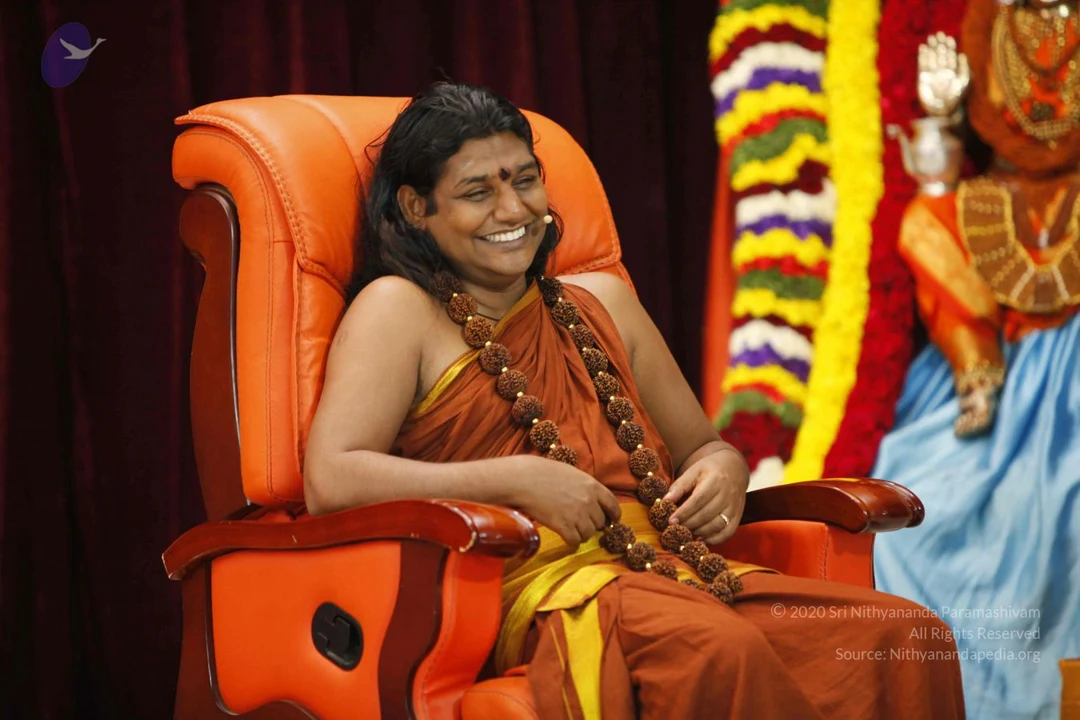
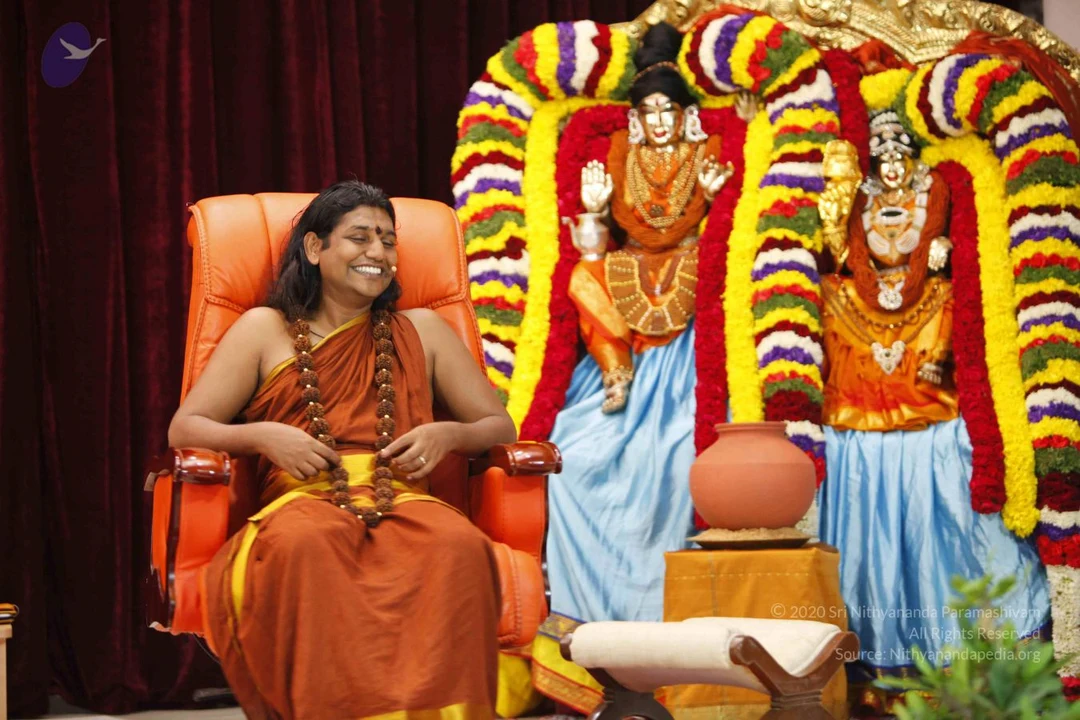
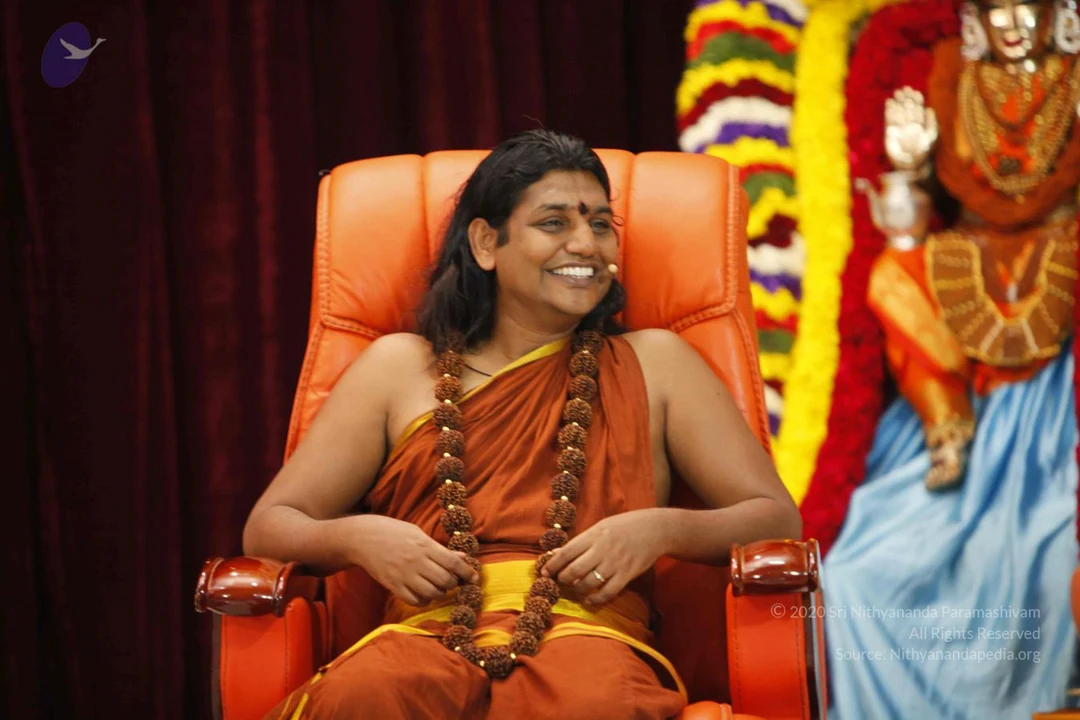
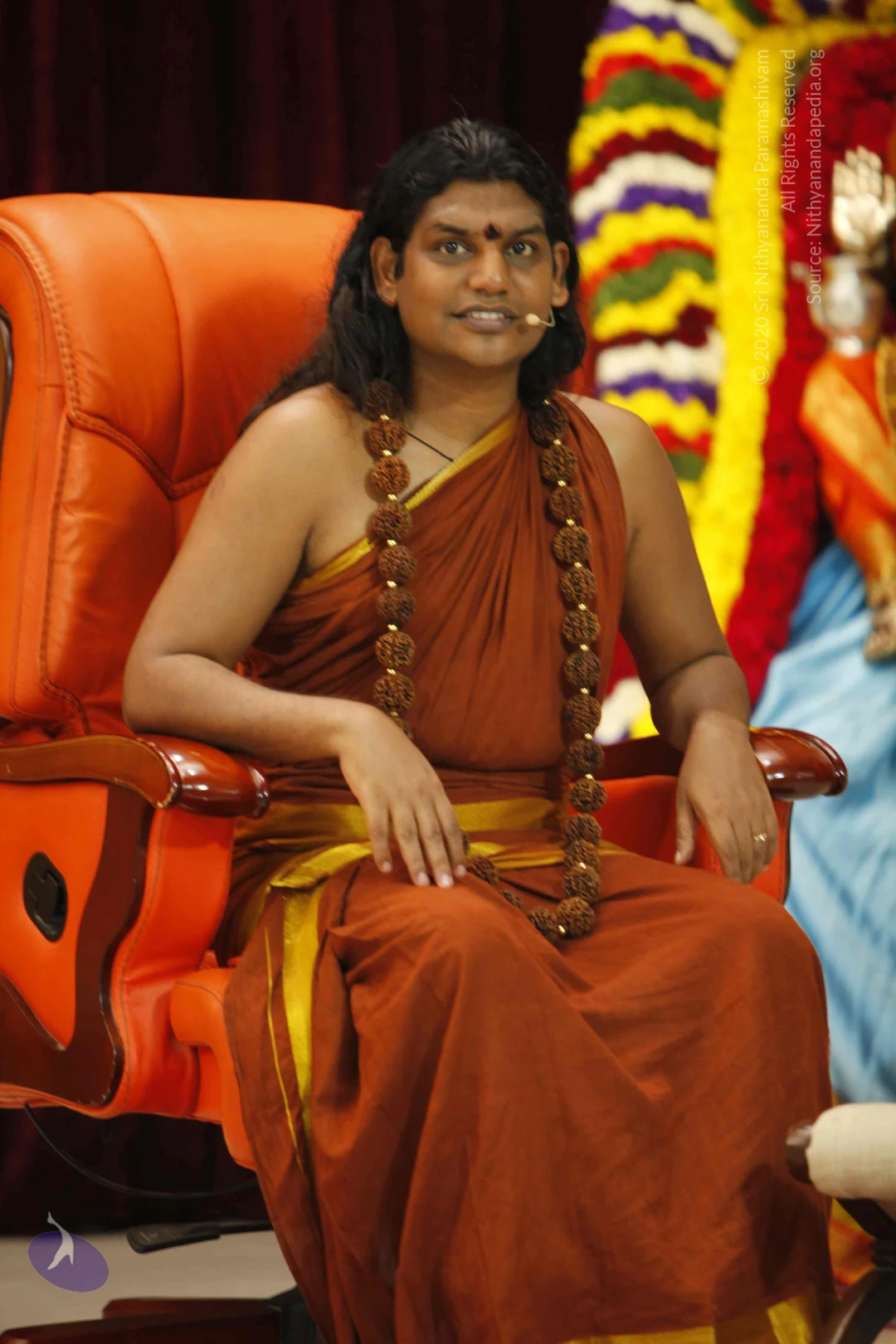
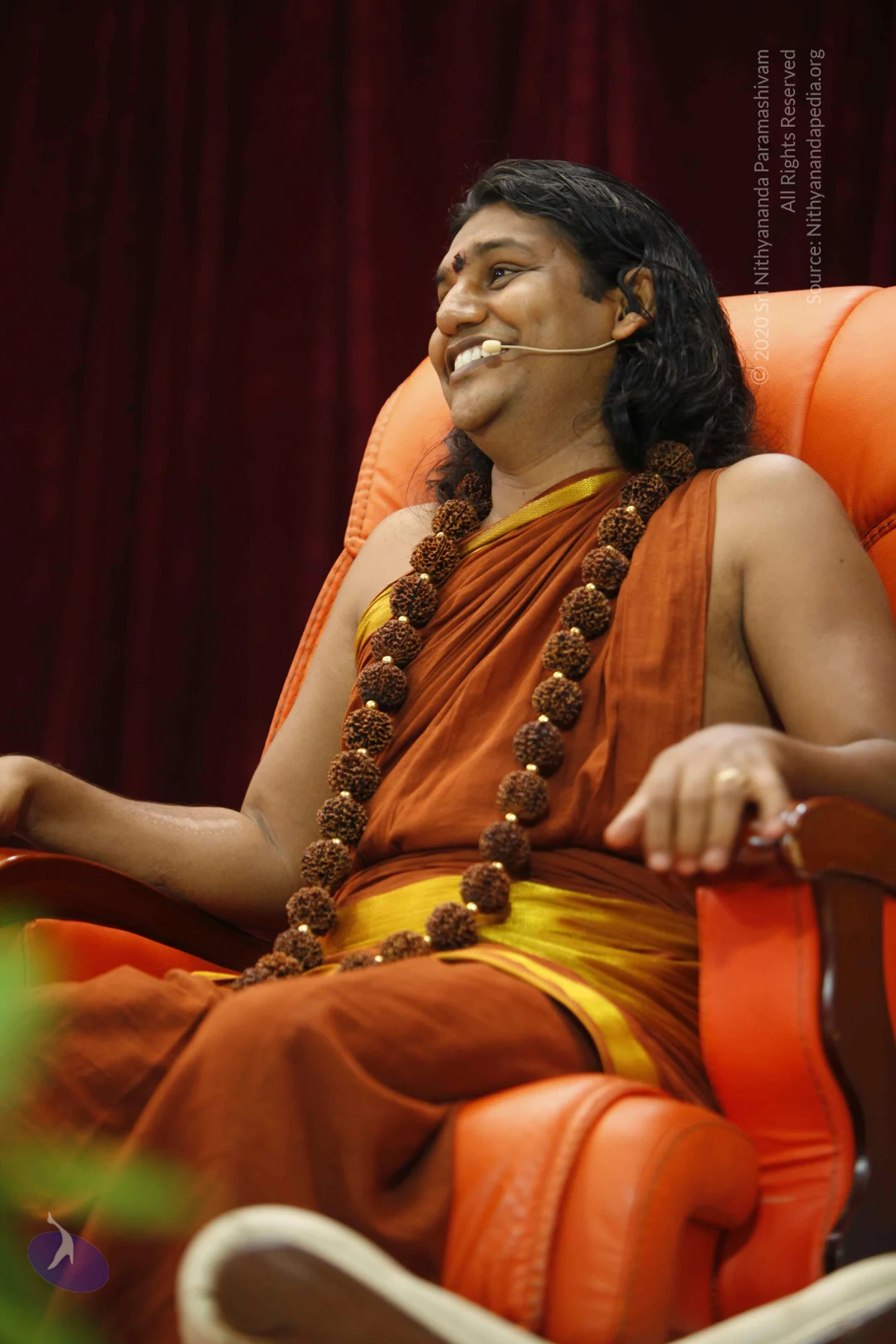
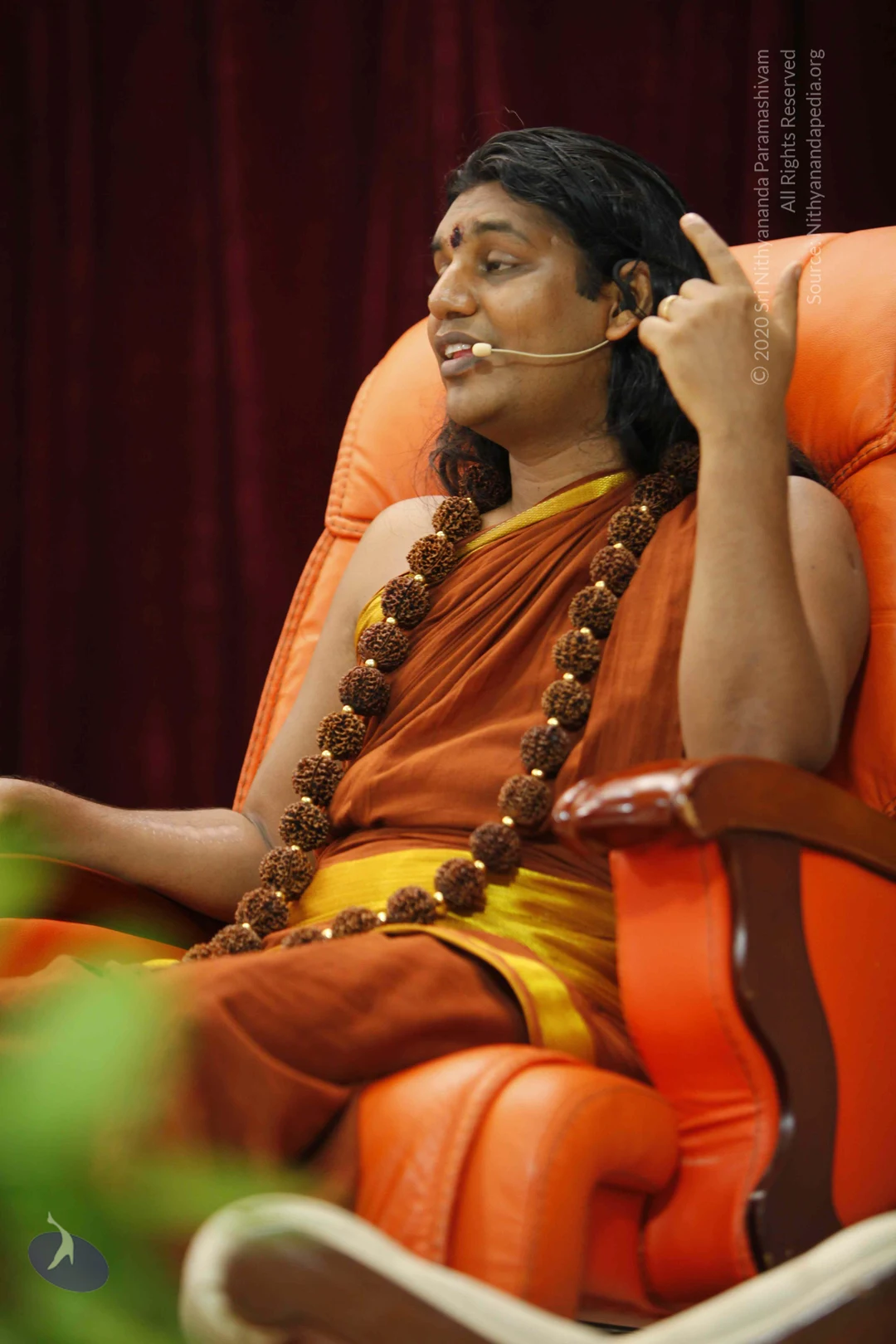
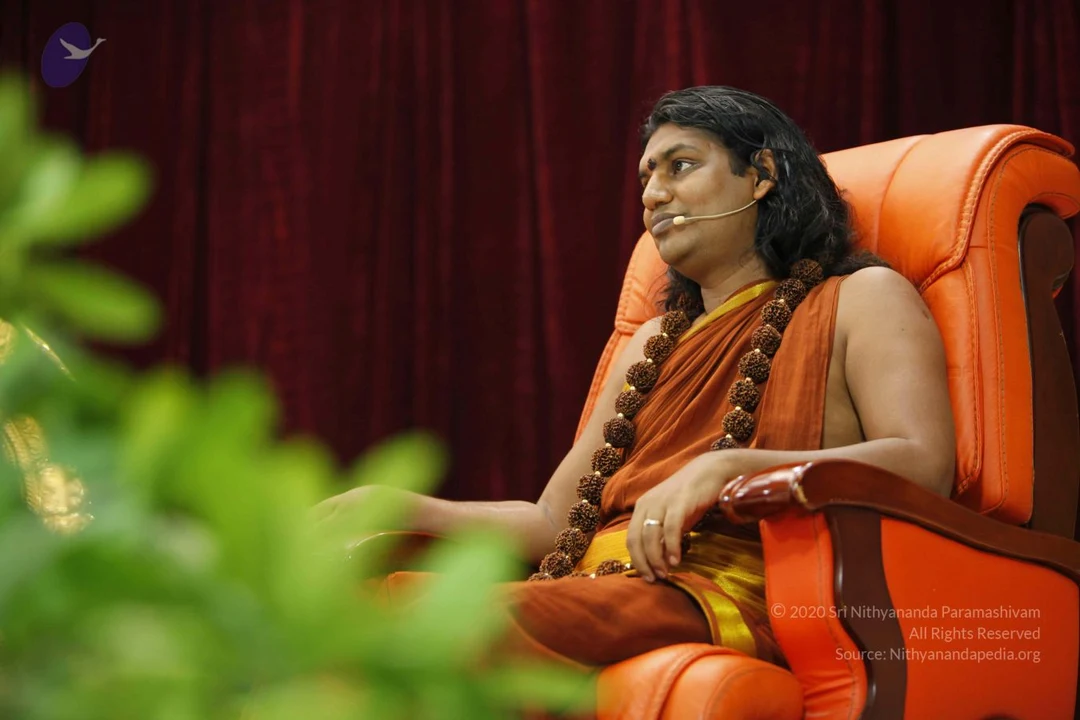
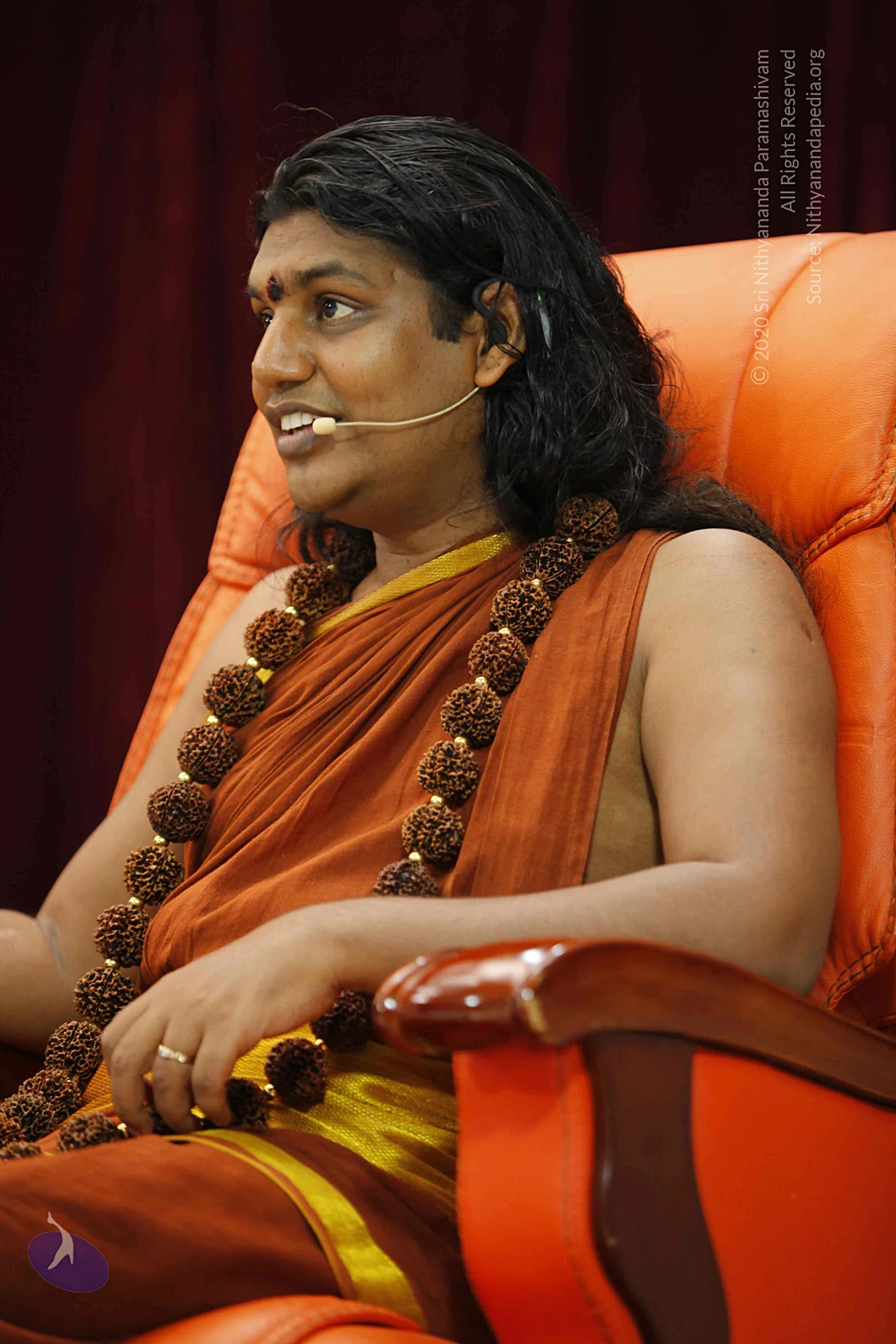
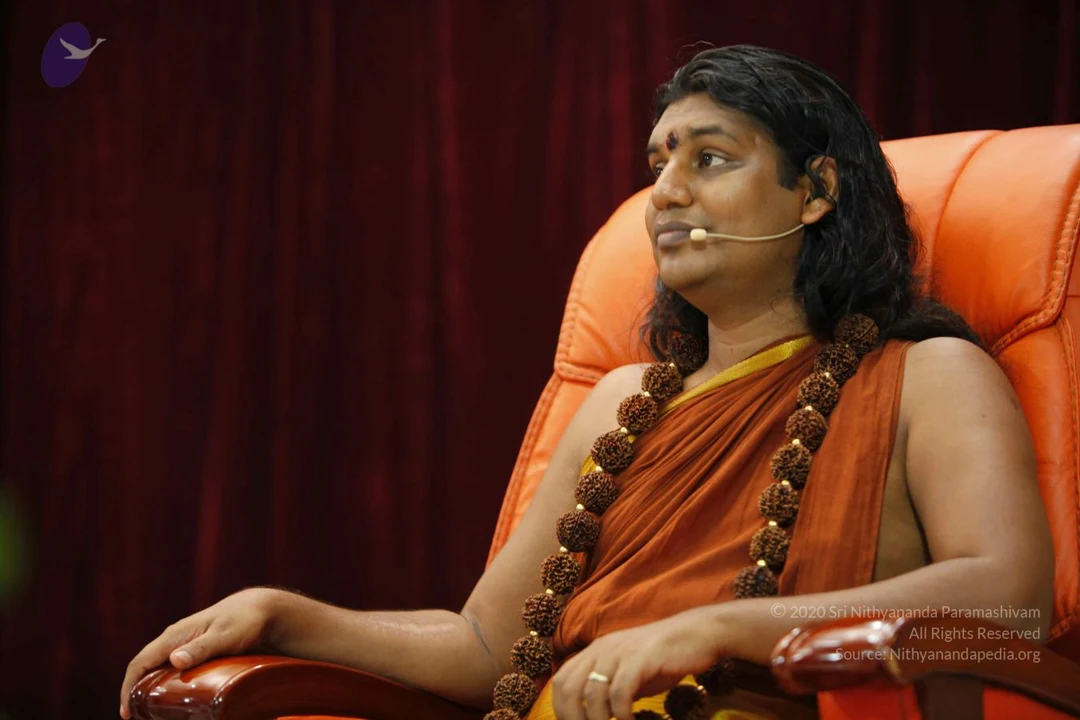
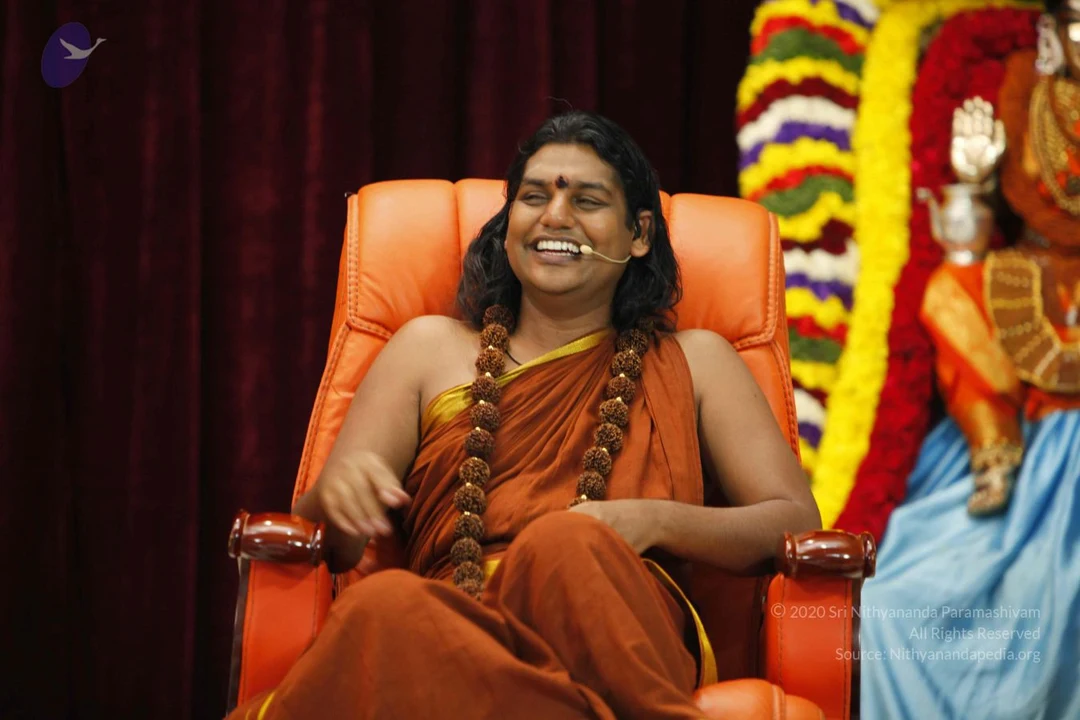
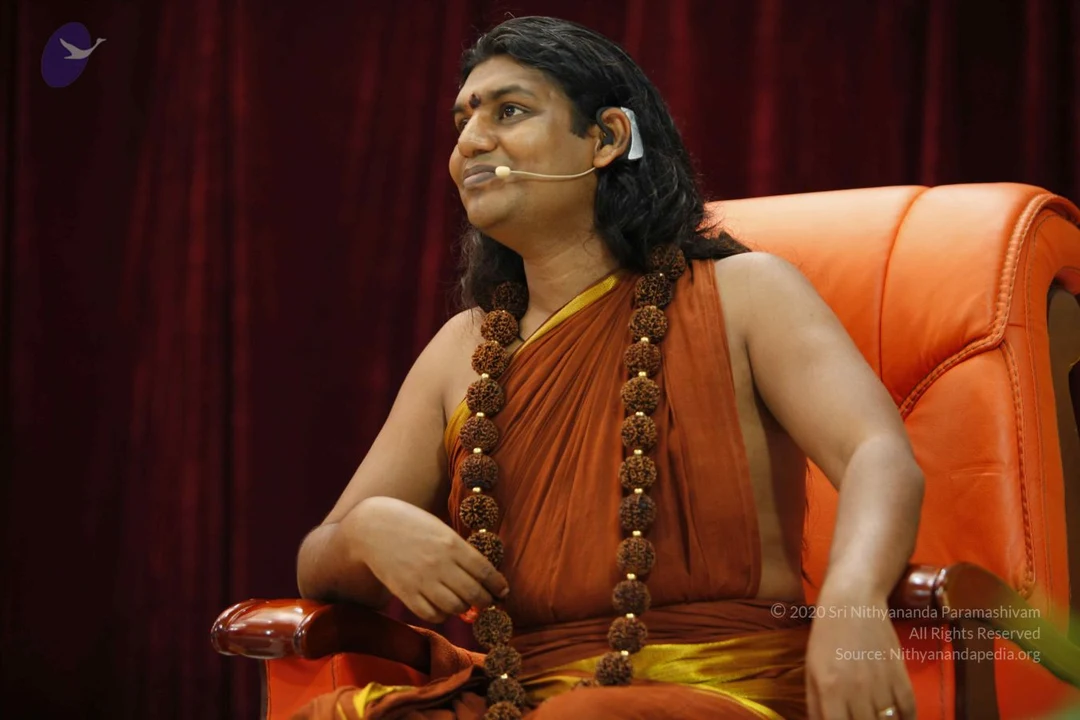
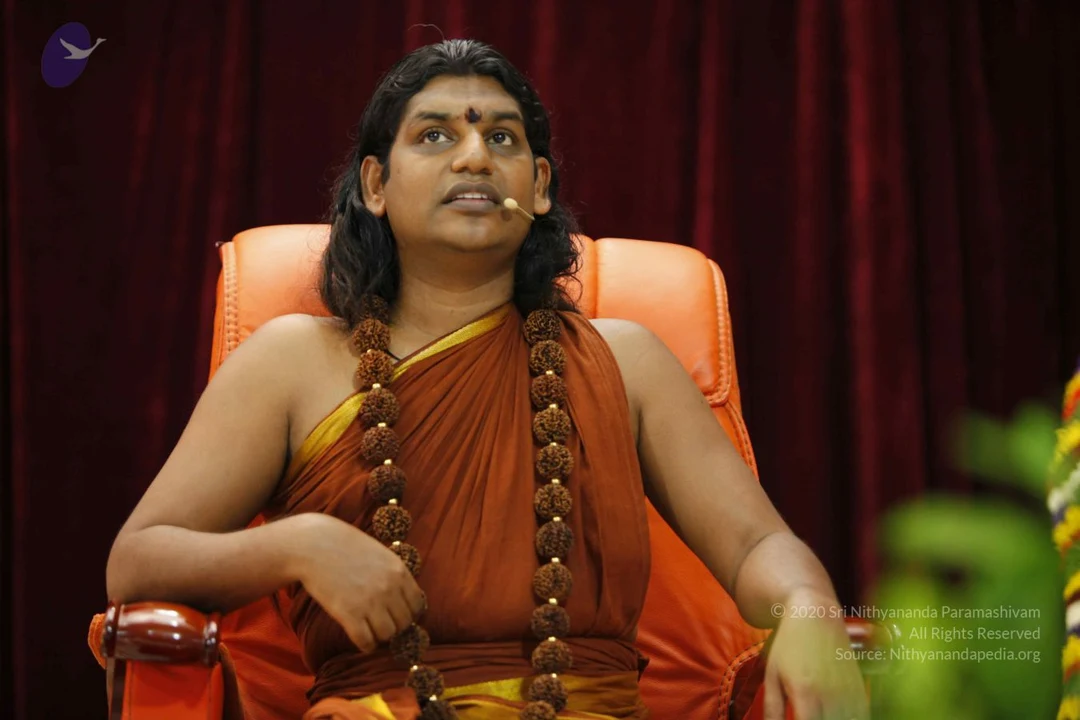
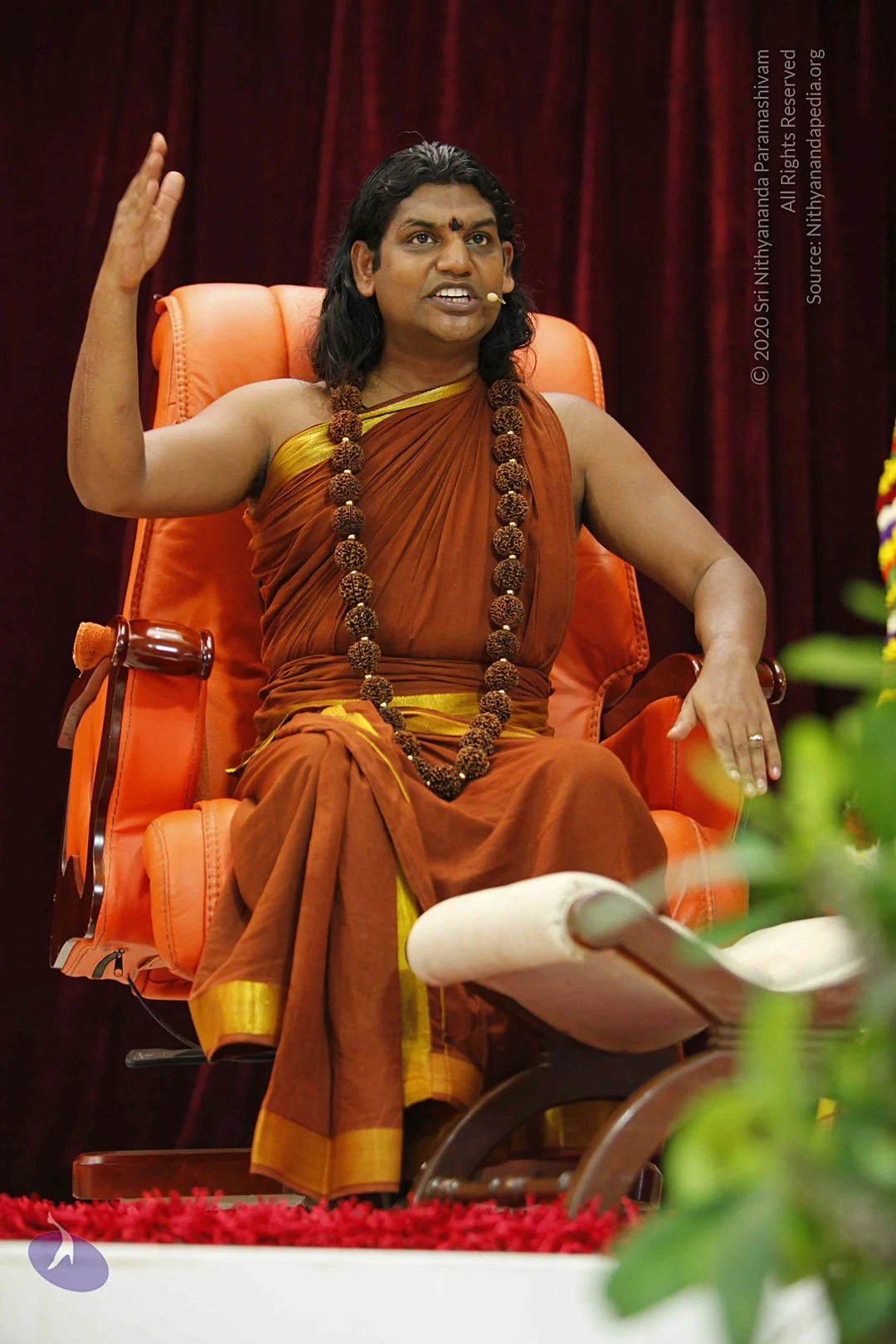
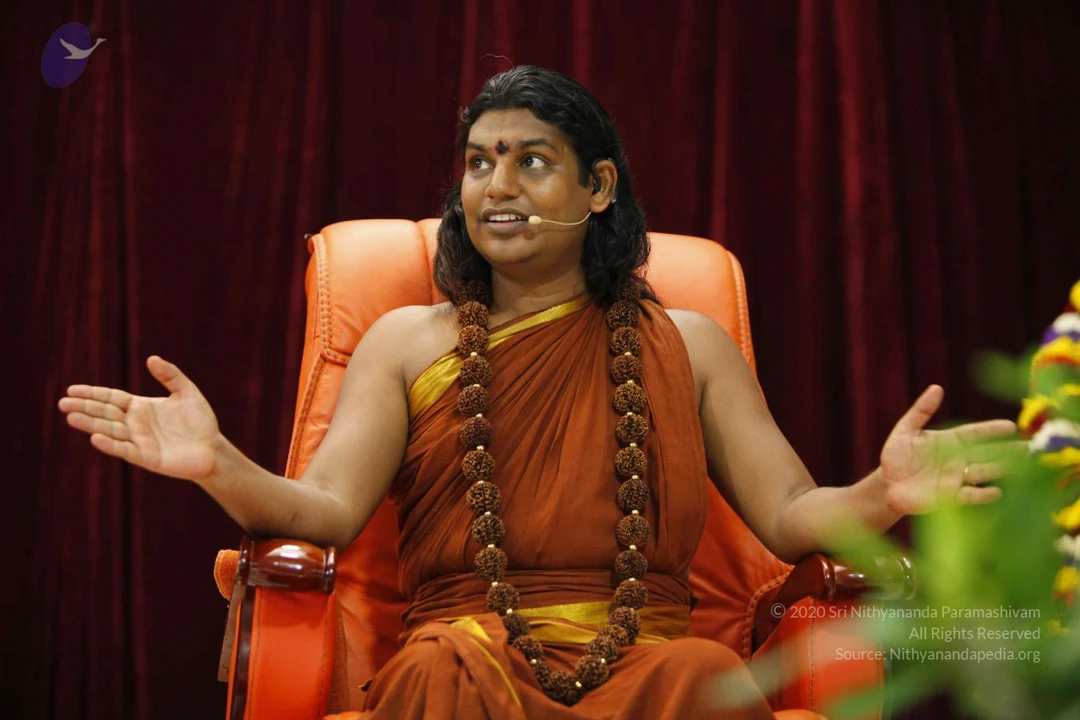
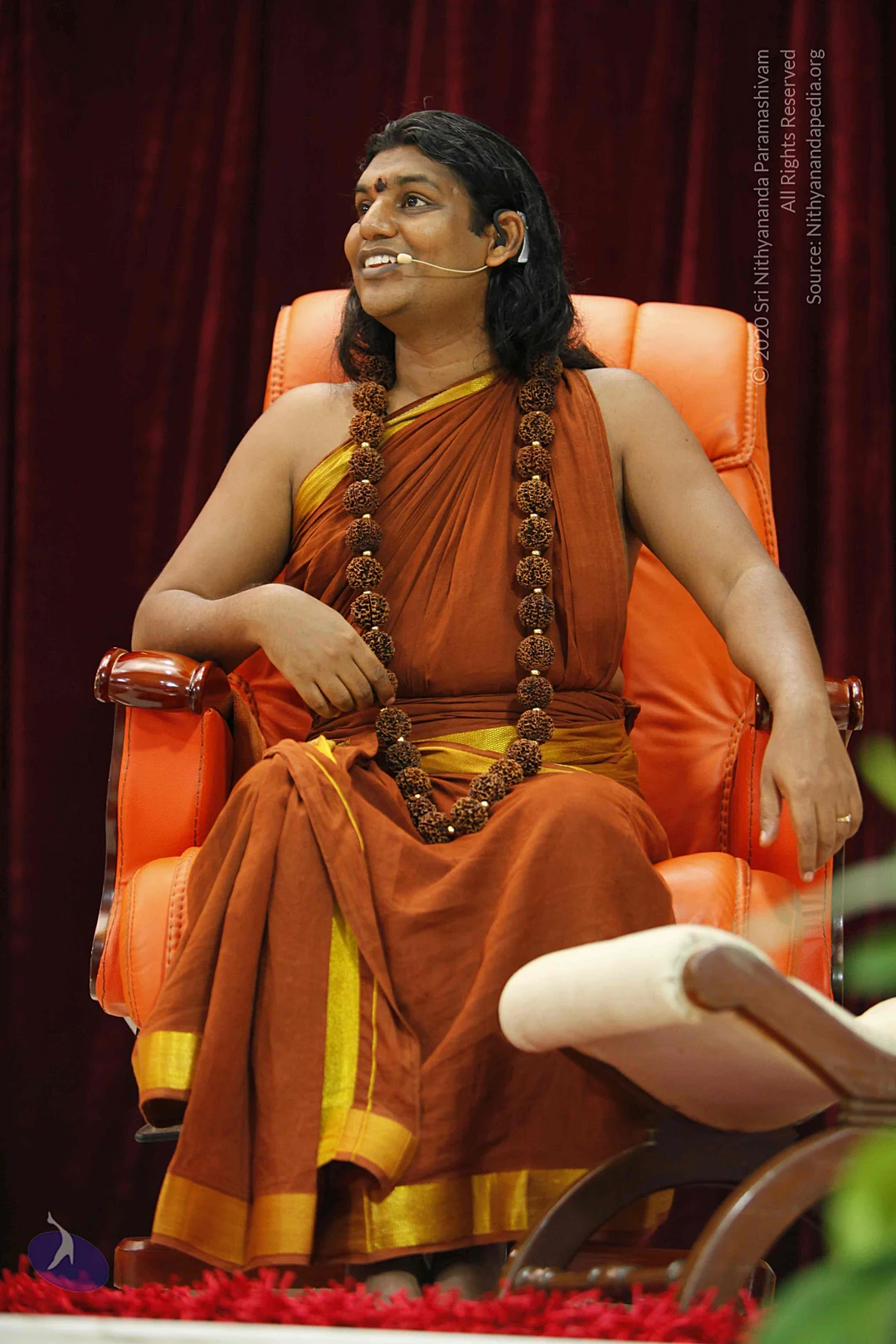
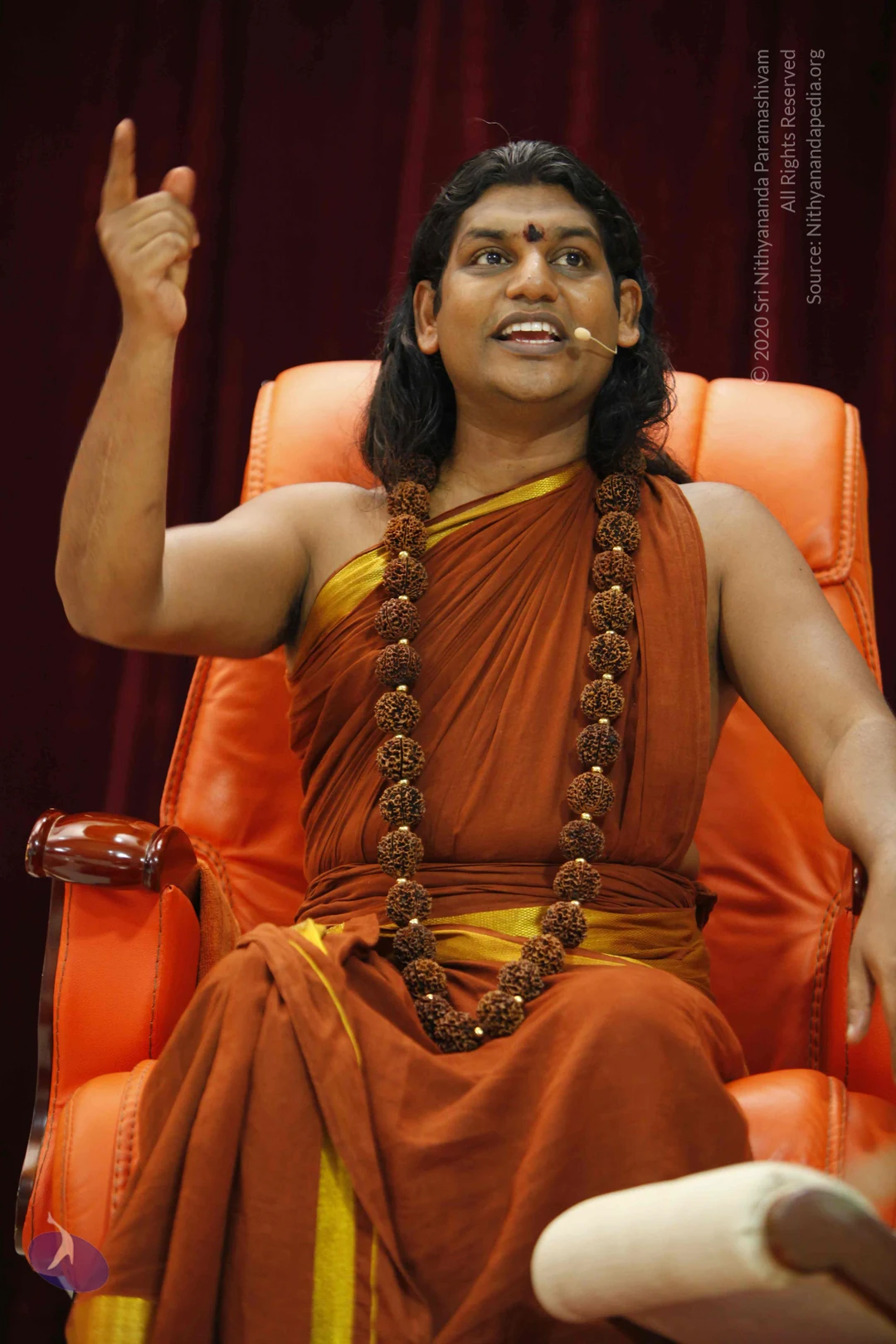
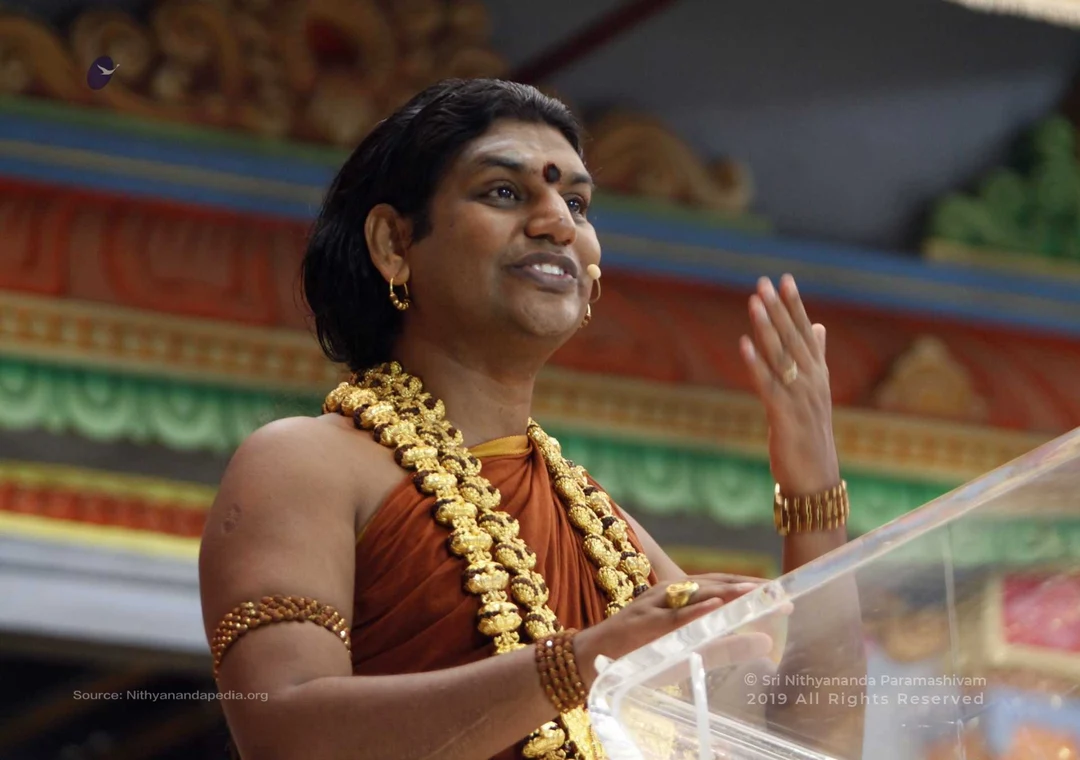
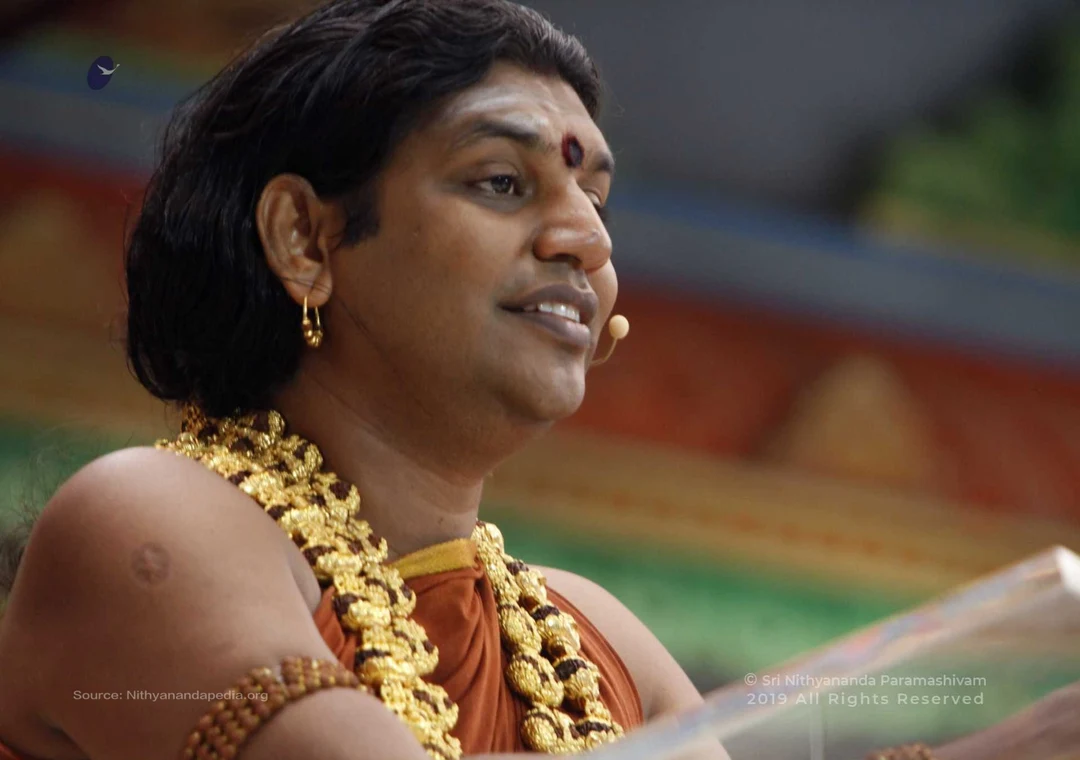
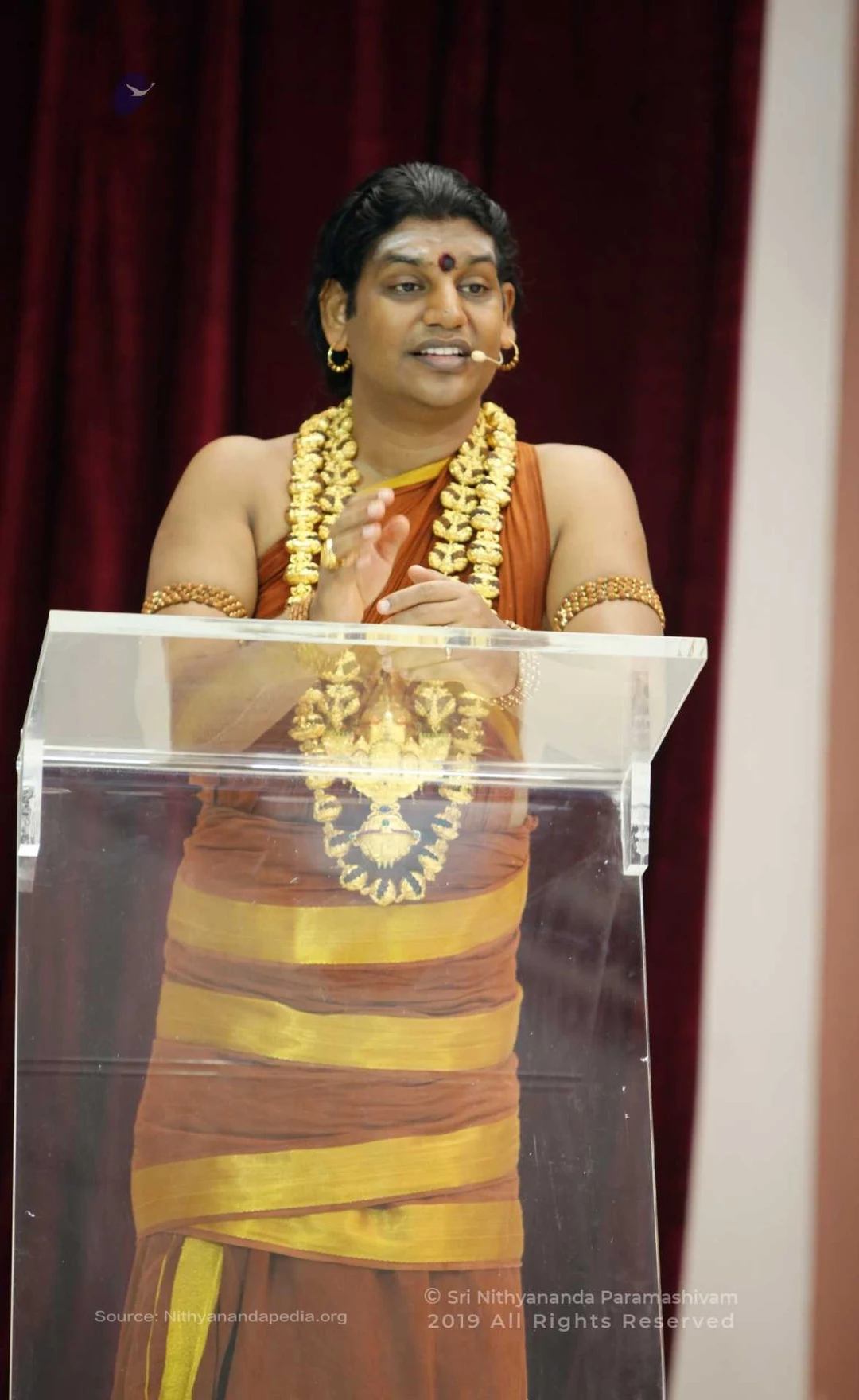
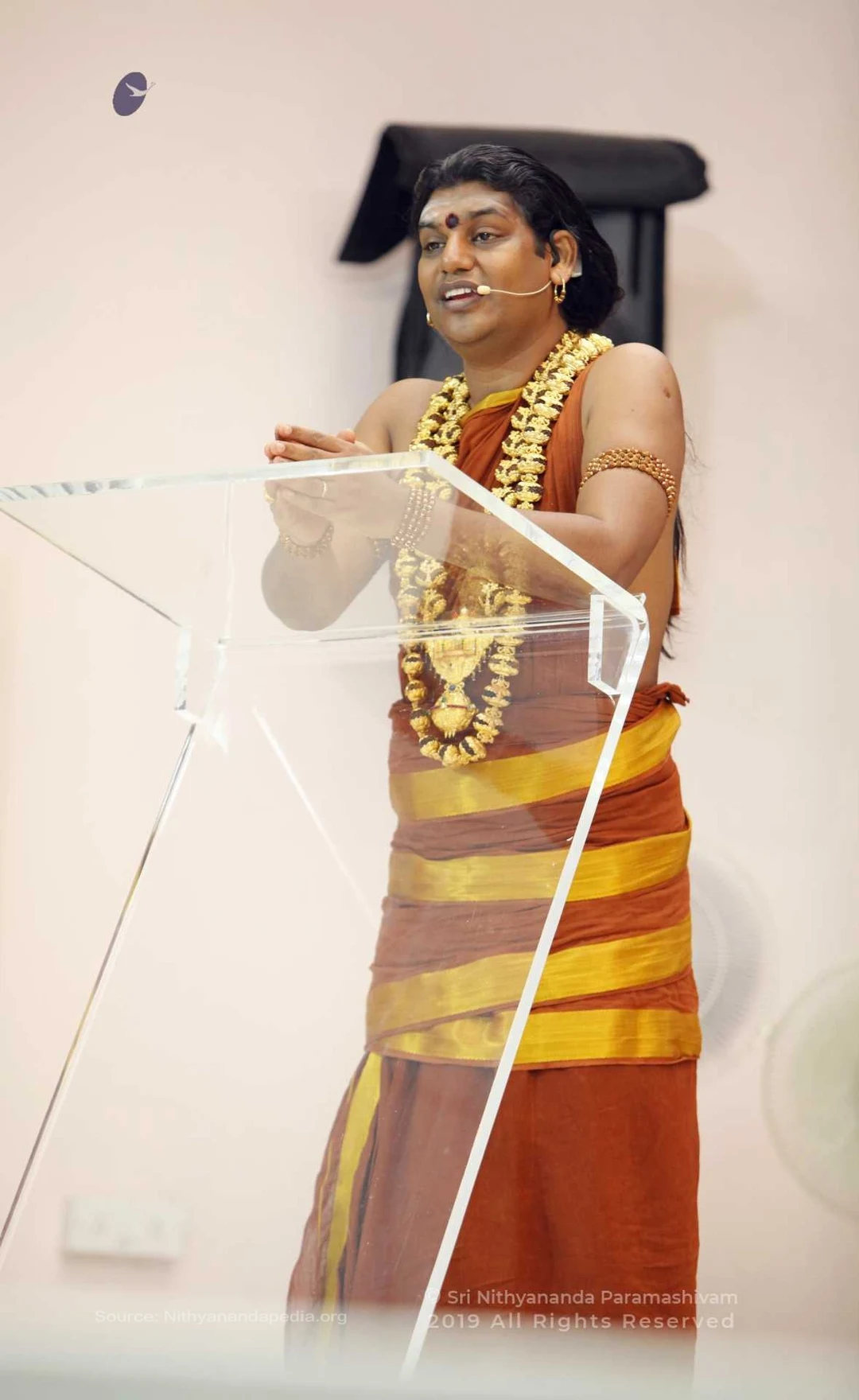
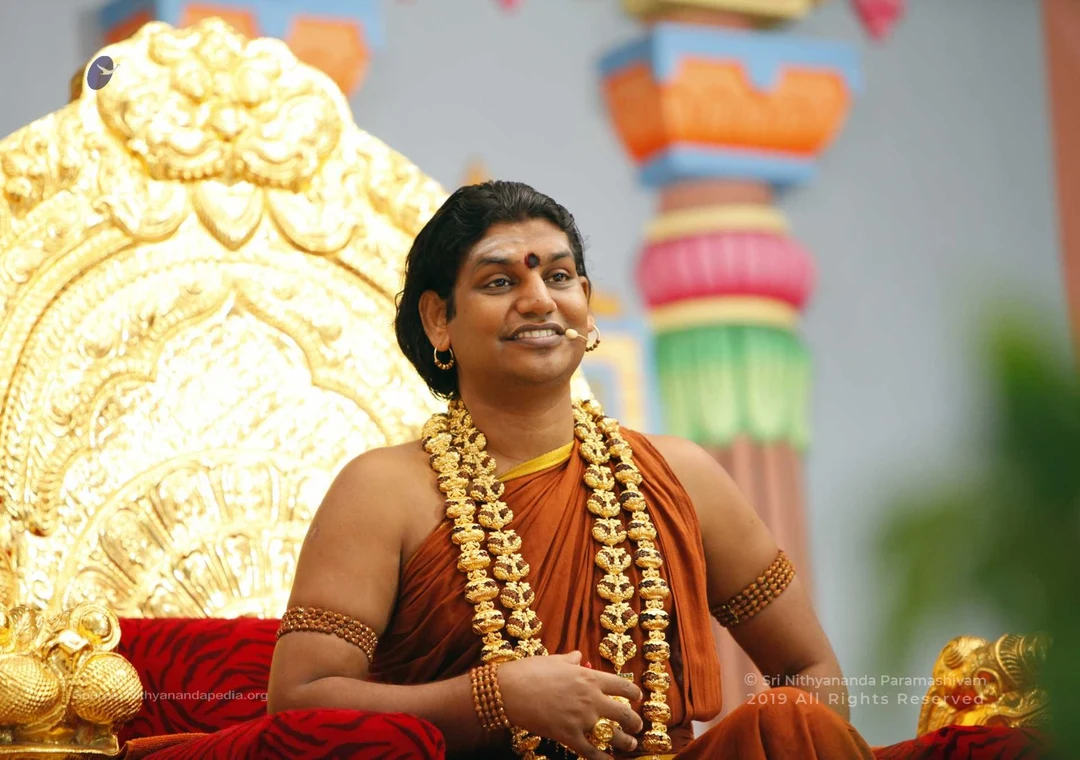
Close side profile of a smiling man with swept-back dark hair, a red bindi and white vertical marks on his forehead, a small headset microphone at his mouth, and a gold ear stud. He wears a saffron-orange garment with a yellow edge and heavy gold-and-rudraksha necklaces, plus a rudraksha bracelet on one arm. He sits behind a clear acrylic lectern. The background is a blurred multicolour backdrop of green, red and yellow.A man in a rust-orange wrap with a gold-and-gold-bead garland layered over his chest speaks at a clear acrylic lectern against a deep red velvet backdrop. He wears a head-mounted microphone, gold hoop earrings, a red-brown forehead mark, rudraksha armlets and bracelets, and a gold ring on one hand. The lectern, multiple heavy gold-and-rudraksha malas and the ceremonial shawl are clearly visible. Appearance cues are consistent with a person, given the ornate gold malas, rudraksha adornments and orange clothing, though the face is not used for identification.A man stands behind a clear acrylic lectern, speaking with a headset microphone at his ear. He has long dark swept-back hair, a red bindi on his forehead, and wears a saffron-orange garment with broad gold-striped borders wrapped at the waist. A thick gold-toned garland hangs over his shoulders and chest, with a gold arm band on his upper arm and beaded bracelets on his wrists. His hands are pressed together in front of the lectern. Behind him is a black chair with a high backrest against a pale pink wall. The.

July 11 2013

Original wiki page
Contents

Title:

Rediscover Yourself through Completion

Description:

In today’s morning Satsang, Paramahamsa Nithyananda presents us with more compelling insights on completion. It is time we go around and reclaim the bits and pieces of ourselves that we carelessly tossed away in our unconsciousness. We need to continue our completions until we realize we are one with the Cosmos and are continuously relaxed in the space of restful awareness. Once we realize that space and that the masculine power and the feminine grace are both within us, regardless of our genders, we know we have gathered up the final piece of ourselves and are now complete Beings.

VideoAudio

Transcript:

REDISCOVER YOURSELF THROUGH COMPLETION

Nithyanandeshwara Samaarambhaam Nithyanandeshwari Madhyamaam | Asmadaachaarya Paryanthaam Vande Guru Paramparaam ||

I welcome you all with my love and respects. I welcome all the devotees, disciples, samajis, satsanghis sitting with us all over the world through Nithyananda TV, Lotus TV and Sadhana channel, and two-way video-conferencing. I welcome all of you with my love and blessings. I will continue the satsang after a small break.

We will start the satsang.

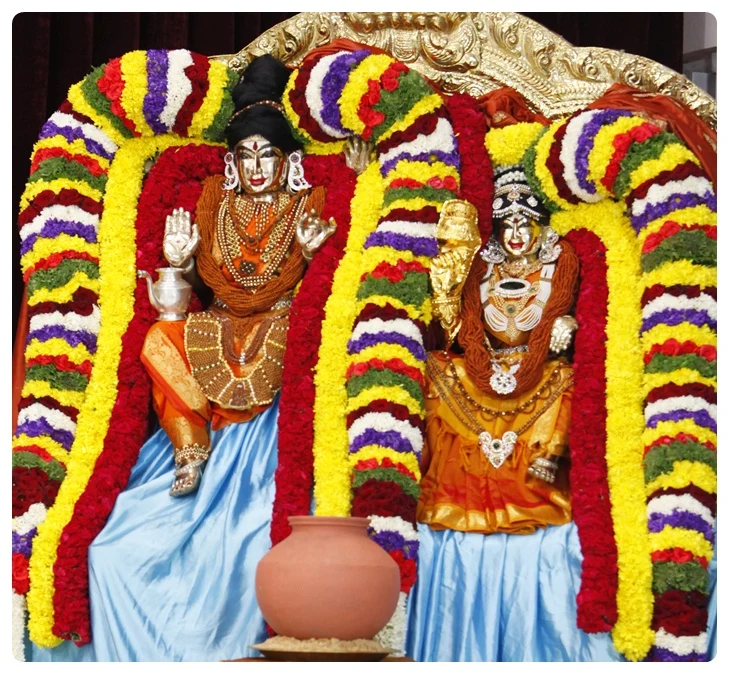
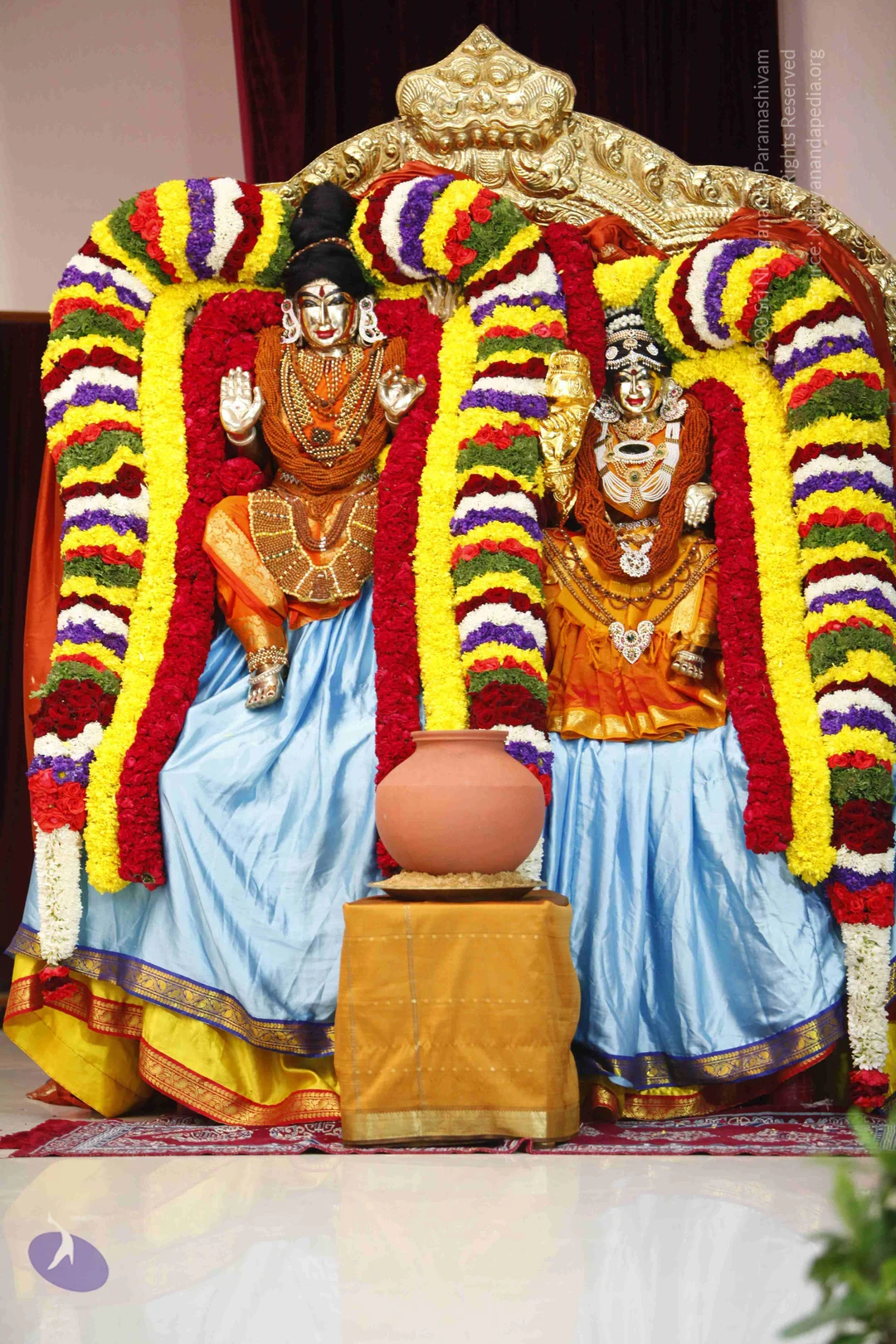
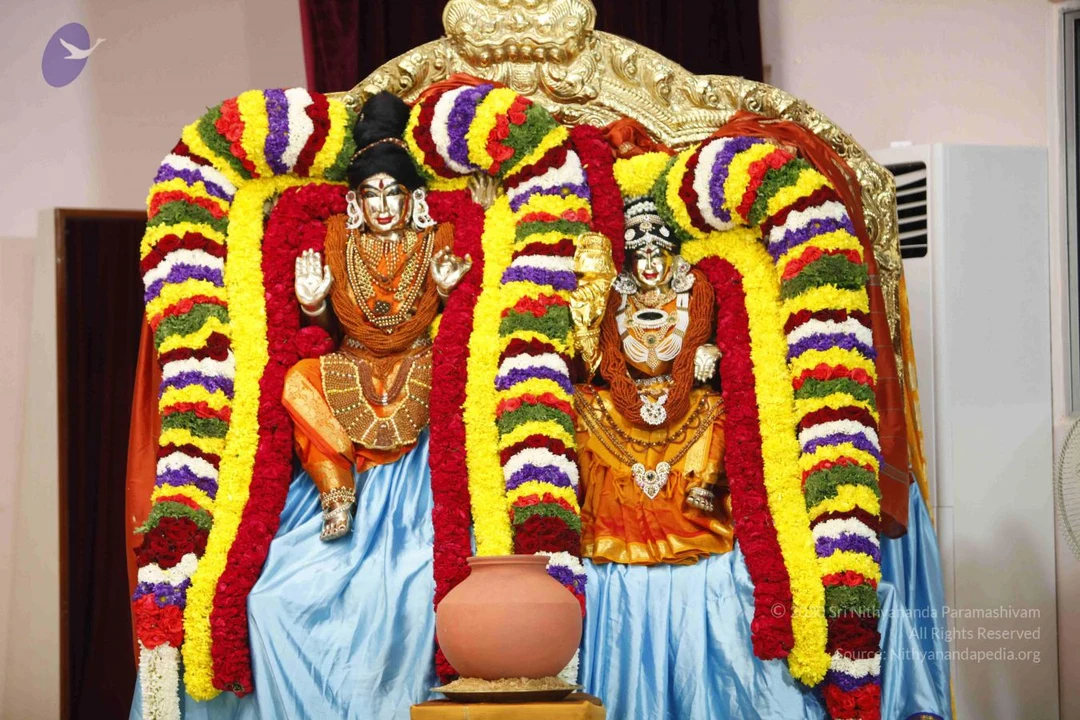
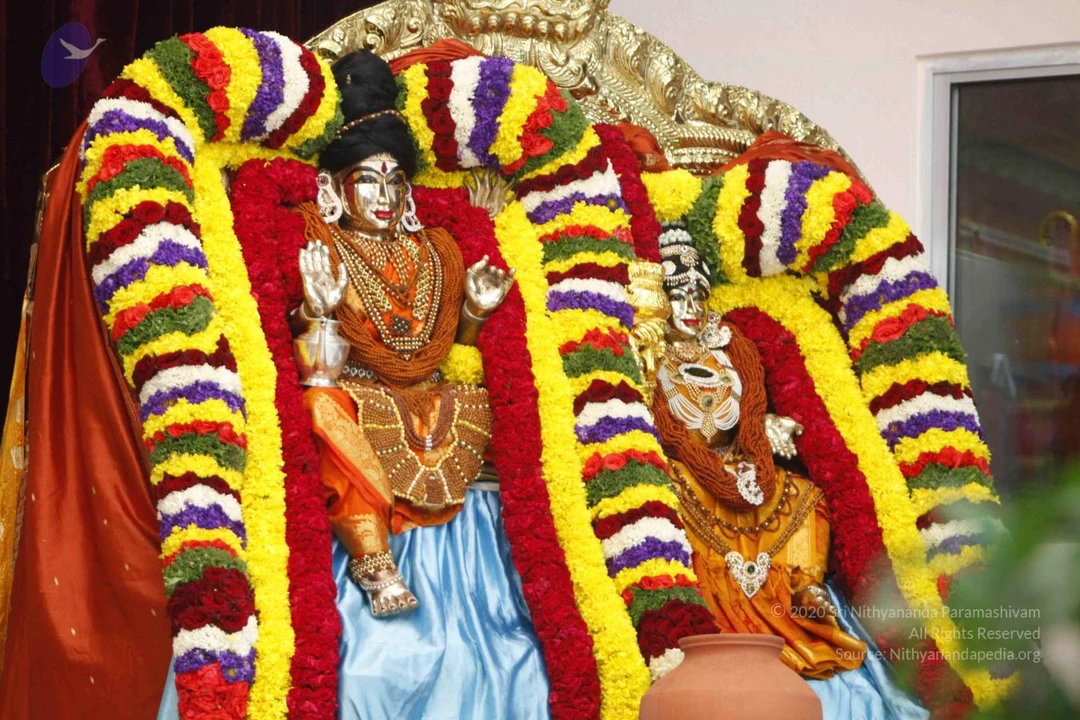
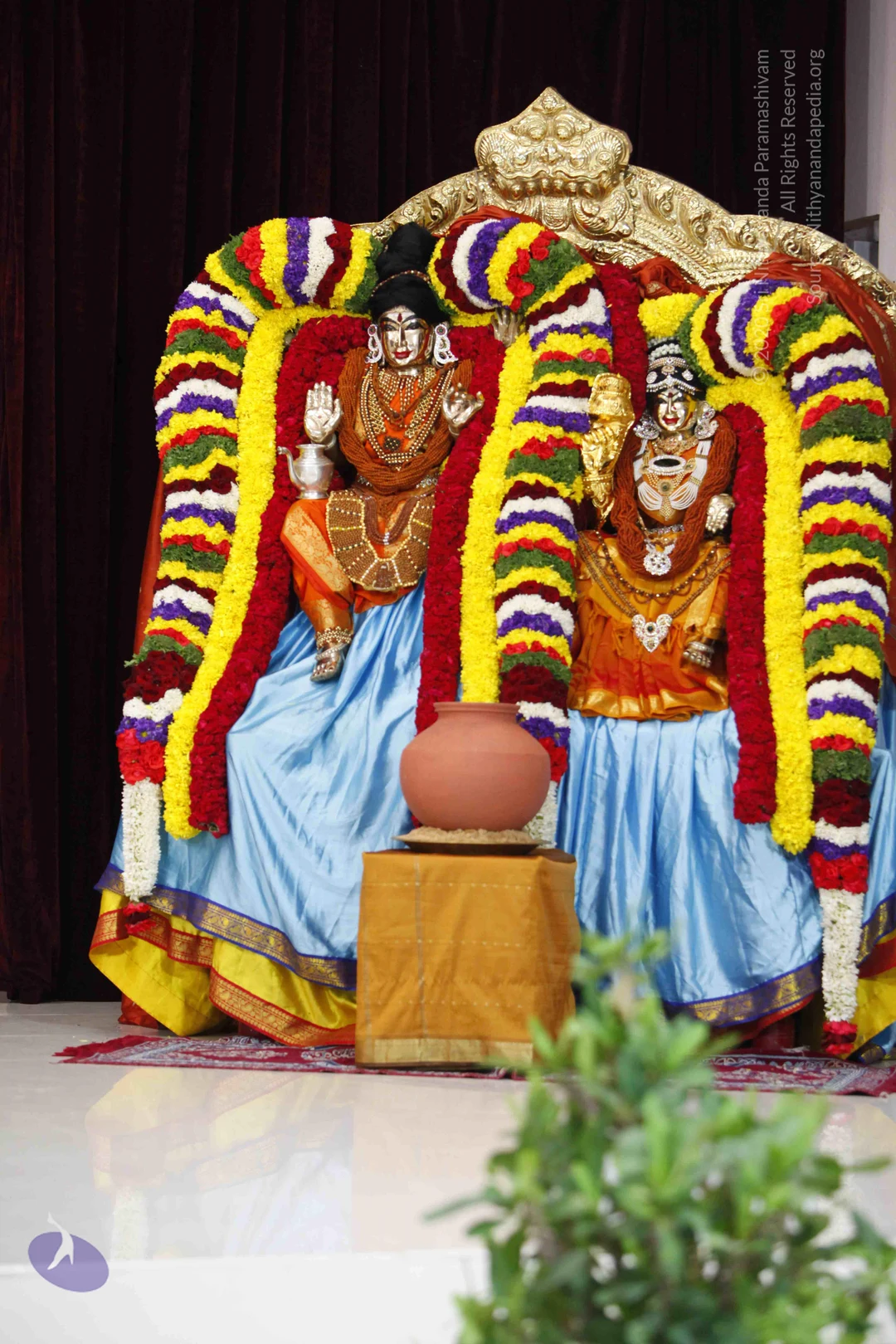
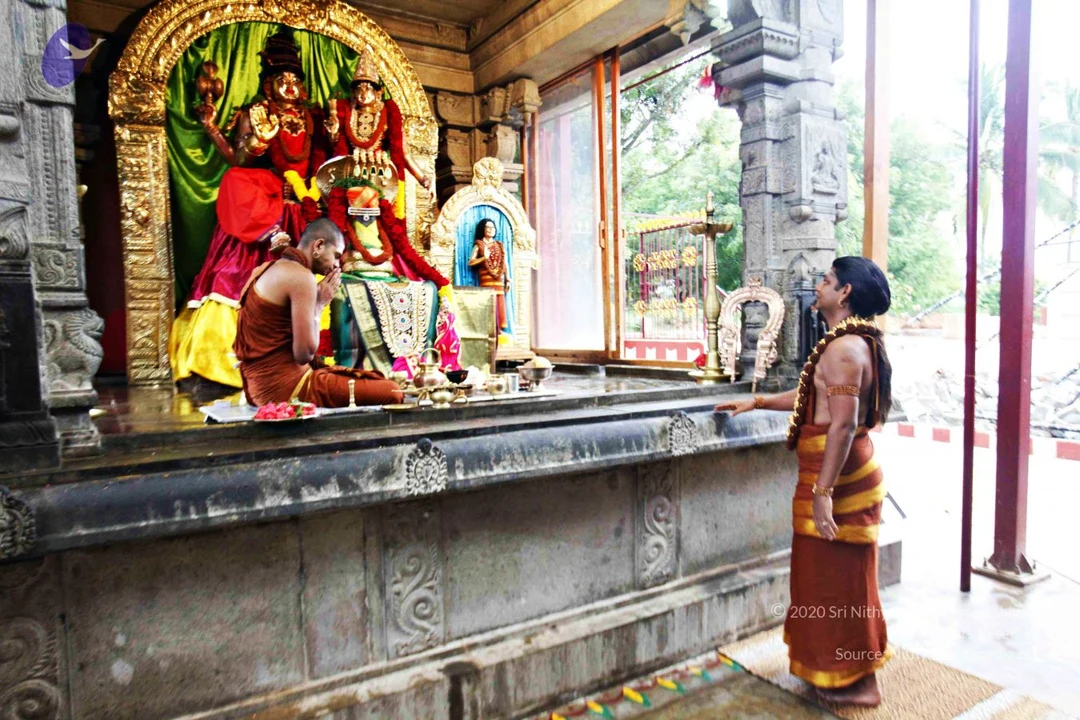
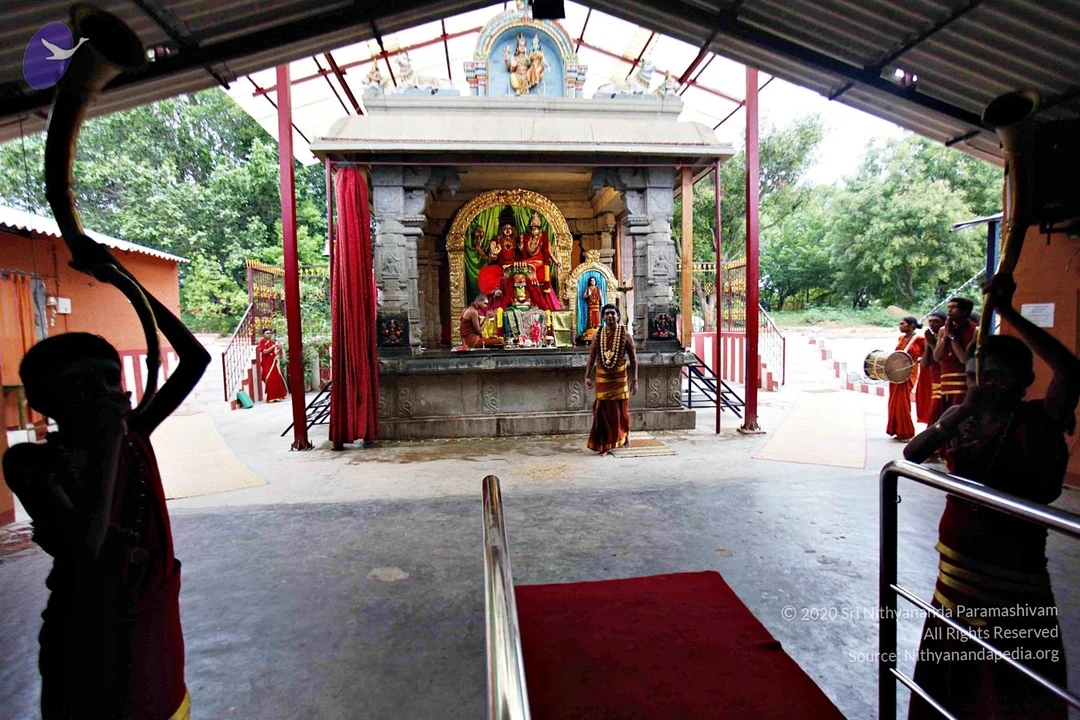
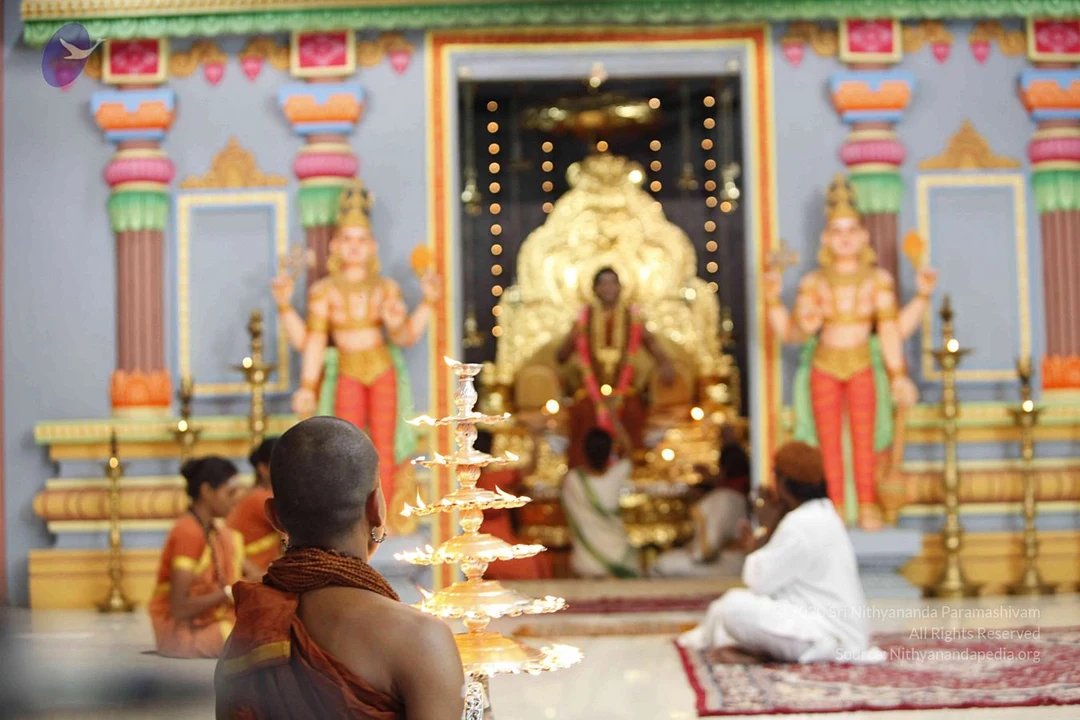
Today Mahadeva is gracing us in “Thanneer Pandhal Aruliya Leelai”, means, “making a tent where drinking water is supplied”. It is a very beautiful leela. Once there was a war between Rajashekhara Pandiyan and the Chola King. The same Pandiyan for whom Shiva danced changing his leg, Rajashekhara Pandiyan, in Madurai. During the war with Chola king, both sides army became so thirsty, because there was no water in that area. They did not get water. Pandiya king, as usual, they have 911, immediately he calls Sundareshwara, ‘O, Mahadeva, do something!’ and Sundareshwara appears and makes a tent where the drinking water is supplied, and supplying drinking water only to Pandiya Kingdom. Pandiyan army, He saved the whole Pandiya kingdom. That is the beauty! He (Sundareshwara) was so specific to protect that which He created. That is why I say, Mahadeva is so visibly available in Madurai. His commitment that He will protect all the three Peethas – one he created for the Language, one He created for the kingdom, and the spiritual seat, Sarvajna Peetha. He is so strongly available even now! So, today, He is gracing us in this form.

Today’s subject for Nithya Satsang, again I will continue to expand on “COMPLETION”, because even today we are going to work on Completion; completion next level. I will expand on Completion.

Please listen! Come to the space of listening! Please listen! Come to the space of listening!

Completion! Please listen! I am defining Completion.

Completion is nothing but reclaiming the bits and pieces you threw away in unconsciousness. Listen! Parts of you, bits of you, pieces of you, you shared or threw it with so many things and people in your life unconsciously. Reclaiming all that back, becoming complete with you, is Completion! If you have an emotional connection, it means you shared yourself. If you have a hatred connection, you threw yourself on them! But you need to know, emotional connection or hatred connection, both are connections, and both are incompletions. Both are connections and both are incompletions. Both are connections and both are incompletions!

Understand, look into you step by step. Completion should be continued till you realize you are one with the Cosmos, till you realize your ultimate state, your ultimate restful awareness, your joy, your eternal bliss. I tell you, when a man completes, he will realize, he is half woman. When a woman completes, she will realize she is half man. Till you realize the grace and the power, till the man realizes the grace side of him, the woman realizes the power side of her, completion needs to be done. Completion removes conflicts inside you, contradictions outside you, commotion from the society. Contradictions, conflicts, commotions, everything is removed from the human life, human society, just by completion. Bring completion, completion, completion!

Listen! From the birth, every child should be taught how to retain his original space of Advaitha, the treasure with which he came down. It is unfortunate, the society does not put its strength and energy in helping a child to retain its original Advaithic state. He has to become pieces and then he has to be searching for his pieces. Sometimes your pieces have been taken away by somebody! It will take too much of energy and time for you to reclaim it. It is like somebody with whom you were in love in the young age, puppy love, the person is not even there in the country. Now how will you complete with that person?

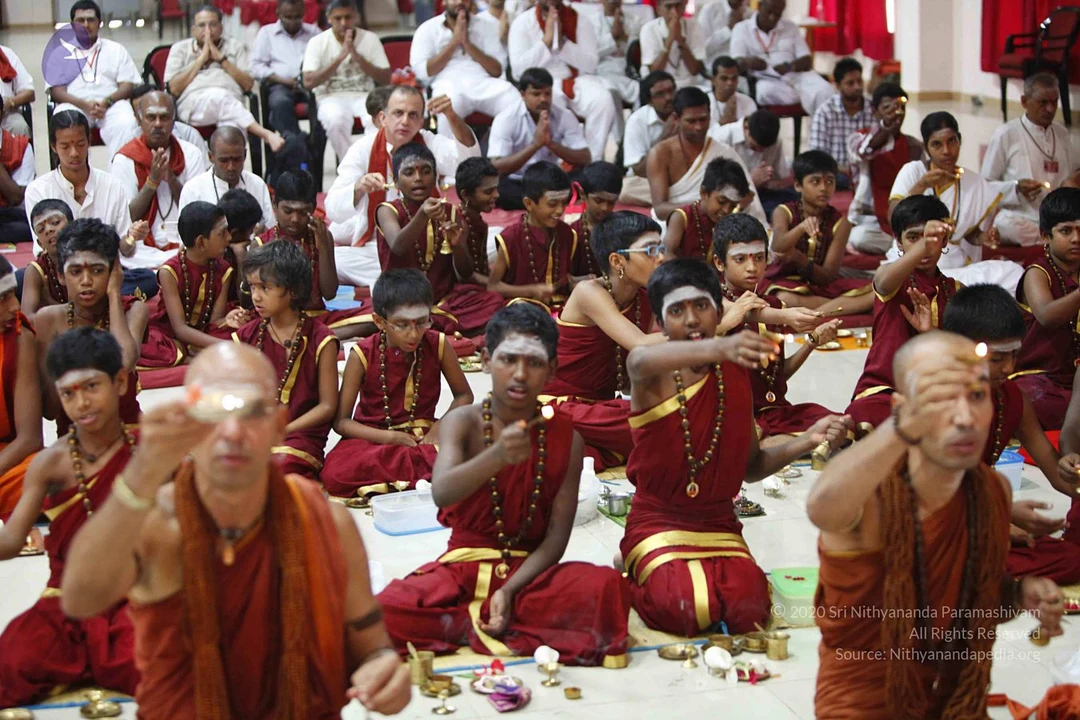
Listen! This should be the vision, motto for our Gurukul. We are already working with this vision, and I wanted this to become more powerful. Even the parents should be taught this science, the science of teaching a child to remain in completion, in the original space of Advaitha which he brought with him as a birthright, as a birthright. When a child comes down, he comes down with the space of Advaitha.

Please understand, even if you are not enlightened in the past birth, even if you are broken to pieces in the past birth, every time when death happens, it is like a new consciousness given to you. Life expects, ‘alright, at least from now live completion.’ But after coming down, because of the ambiance, you start breaking yourself to pieces. Because you start breaking yourself to pieces, the past pattern of breaking also comes up. That is why the lack of Integrity, Authenticity, everything, lying, hypocritical. Sometimes you are broken to pieces so thoroughly, even you don’t understand your pieces! Listen! Many a time you are not even aware, you are not even aware you are broken to pieces. First you should complete, complete, complete, complete.

Let me define completion once more from another angle. Sitting with the declaration you will reclaim the part of you which is sitting in many people, many things outside you. This can be done in thousands of ways. It can be done by re-living wherever your emotions are stuck, patterns in which you are stuck, the incidents which have created strong impact in you and the cognitions you created deeply in you. Re-living all of them you can reclaim. Listen, reliving all your inadequate cognition in all the moments of your incompletion, you can reclaim and become complete. That is the first thing.

Second: deciding, cognizing, whenever your incompletions happened, the personality who created the incompletion and the personality who is now in your body are two different. So, healing that personality which created incompletion and assimilating, means, relating with that person, saying that, ‘O, six years of me, my version which is a six-year-old, six years of me, please understand, at that time your cognition was inadequate, now you have an expanded cognition, so please come on and dissolve into this expanded cognition. Let us become one with this expanded cognition’. Ask your small version of you, ask your six-year-old version of you, ask your junior of you, ask the child in you, ask, ‘Is your cognition adequate, or the cognition which I am having now is adequate? Whichever is adequate, we will just merge in that’. This is the flow with which the whole Hinduism functions.

Please understand, if you see the whole flow of Hinduism, the religion of Bharat, the religion of India: that is the right word! In a way I accept the word given to us by the invaders, “Hindus” I accept, because there is no way you can describe Hindus; this is the only way: “people who lived that side of the Indus river”; because we were so evolved in so many dimensions – each Master who came, if he can take us to the higher, better cognition, we just go and merge with him. See the whole flow! When Shankara comes, all the Buddhists just merge with him. If I have to see from that time a little early, when Krishna comes, all the worshippers of Indra, Nature worshippers, merge into Krishna. When Krishna is able to take us to the higher cognition, we are ready to drop the Nature worship cognition. And when Krishna said, ‘no need to worship Indra; come on, worship this Govardhana.’ we are ready to move. When Buddha comes, the whole country just follows. When he is able to lead us to the better cognition, the whole country follows. And when Shankara comes, the whole Buddhists follow him. It is like whenever somebody comes who is able to lead people to a better cognition, the whole country follows. After Shankara, when Nagarjuna comes, the whole Hindus become Buddhists again. And after Nagarjuna when Vidyaranya comes, the whole Buddhists become Hindus again. Then, when Ramanuja comes, the whole Buddhists, Hindus become Vaishnavites again. When Jnana Sambandhar comes, the whole Jains, Buddhists, everyone becomes Shaivites. If somebody can take us to the higher cognition, we are ready to go with him.

The religion of completion is Hinduism! If somebody can lead us to the higher level of completion, we are there with him. I tell you, this is the best structure of a religion which can never be destroyed! A pond can be destroyed, because it is defined with boundaries. River cannot be destroyed, because it is flowing! And you need to know, the common Hindus are not uneducated masses. They are highly educated in the field which is required for them. Go and talk to any villager in India, he will know the philosophy of life more than any Ph.D. in the U.S. No, I challenge! He will talk about more philosophy, he will know more of philosophy, he makes many of his decisions based on philosophy. I have seen hundreds and thousands of incidences I can tell where if the property disputes come, they go to the local priest who reads Mahabharatha. And that guy picks up the Mahabharatha, reads out and solves the property dispute, saying that, ‘Property dispute led to the whole destruction of a clan (the Kauravas)! The clash of the clan happened just because of the property dispute. You should settle it.’ He comes to the conclusion and the whole group accepts!

Please understand, even now the local Panchayats (local self-government in Indian villages) reign all over the country! Local Panchayats give judgments, people accept. It’s not that we are uneducated, so when Shankara comes we run behind him! When Ramanuja comes we run behind him!

Understand, no way, nowhere any one of our incarnations converted based on sword or force! Ramanuja never took sword and went and converted people. No! Shankara never took a sword and converted people. No! Buddha never took a sword and converted people. No! None of them converted anybody with sword. No! Swaminarayan did not convert people with sword. Even Naga sadhus, our Mahanirvani Peetha, we never went and killed anybody or attacked anybody for converting. We used our weapons only to defend ourselves, protect ourselves, protecting our knowledge, our libraries, our manuscripts. Mahanirvani Peetha’s library was robbed, burnt for months together continuously!

Everyone talks about Nalanda library, Takshashila library, which is Buddhist. But nobody knows about the Mahanirvani Peetha’s library.

Understand! Listen to the truths! Live the truths!

A river has to flow over different terrains, and it takes the size and shape of the terrain over which it is flowing; but it retains its originality of being created and filled with water. Hinduism also evolves according to changes, but it retains its essence of completing and completion! Whoever was able to take us to the next cognition, adequate cognition, we were ready to go behind them. We were not uneducated. It’s not that people who lived in the time of Shankara, they were uneducated, and just because Shankara came they all simply followed him. No! They were highly educated in Buddhism. But they understood that Shankara can lead them to a better cognition, they went behind him. When Ramanuja came, it’s not that people were uneducated; they were highly educated in the philosophy of Shankara; but they could see that Ramanuja could lead them to a higher cognition; so they just went behind Ramanuja.

That is why I wanted to tell all the world’s religious leaders, don’t come to our country to convert! If you think my country people are fools, you are wrong!

And we are not political game players. In India, this conversion is used more for political game. It is used like a vote bank. For vote bank politics it is used. We don’t care! We never bothered Moguls ruling us as long as they did not disturb our religious freedom, our spiritual freedom. When this fellow, Aurangzeb, lost his brain and started breaking our temples and destroying, forcibly converting us, then all our guys just stood up and created the space, simply the whole Mogul kingdom got destroyed!

Understand, the one and only way we won the game of life is creating the space! That is why still Hindu Dharma is invincible! I am only afraid of one thing. Now people have started losing faith in creating the space. That is the only fear I have. If I can bring people back to the ability to create the right space and trusting the space, that’s it! I know, nobody can do anything. I am trying to do only one thing. I am not fighting with any religion, I am not against anybody living any religious concepts. No! I am only trying one thing: I am trying to make Hindus to live Hinduism! That’s all! Create the right space, right cognition! Right space and right cognition!

I have a story:

A Jewish man lives in a Catholic neighborhood. Every Friday, the Catholics are driven crazy, because while they are morosely eating fish, the Jew is outside barbecuing steak. So the Catholics work on the Jew to convert him to Catholicism. Finally, after many threats and so much pleading, the Catholics succeed. They take the Jew to a priest who sprinkles holy water on the Jew and says, ‘Born a Jew, raised a Jew, now a Catholic!’ The Catholics are ecstatic! No more delicious but maddening smells every Friday evening. But the next Friday evening, the smell of barbecue wafts through the neighborhood. Catholics all rush to the Jew’s house to remind him of his new diet. They see him standing over the cooking steak. He is sprinkling water on the meat saying, ‘Born a cow, raised a cow, now a fish!’

Arrey, that is what happens! Conversion is one of the foolishness! Transformation is the only intelligent thing. I believe in transformation, not conversion! In India, these conversion-based organizations….Please understand, already the International Human Rights Association in Geneva has passed a resolution that religious conversion is violation of human rights. It is violation of human rights! In India, because conversion is a political game for number, vote bank politics, politicians also encourage it, and these people also do this only for vote bank. That is why even the preachers, leaders don’t care about the principles of their religion. Otherwise, why will you have discourses on rebirth and chariot processions? Anyhow, in this country, whoever leads to a better cognition, we go behind him.

Sannyas is the ultimate cognition! People ask me, why sannyas? Sannyas is the ultimate cognition! Living the ultimate completion space and creating a space for millions to experience completion is Sannyas! Sannyas is ultimate cognition and ultimate completion! The answer for the question, ‘Why Sannyas?’ is: to live the ultimate cognition and ultimate completion is Sannyas! What is ultimate cognition? Ultimate cognition is feeling everything is part of you. Just remember, just visualize, create a space. If thousand people experience that all thousand feel everything is part of them, and if that kind of thousand people live together, that is what I call Nithyananda Loka, Akshardham! Thousand people in completion, total completion, in highest cognition, living together, that is Nithyananda Loka. And I commit, ‘oh the Cosmos! I’ll create one to show to the humanity it is possible! The model community, it is possible!!

With this, I‘ll move to the next segment of the program, satsang. After today’s satsang, Samyama is over, today you can eat. Tomorrow please eat and come for satsang, because tomorrow we’ll be starting the third level. Please, today eat all three times, and come tomorrow after eating. We will have the third level Nirahara Samyama which will be for eleven days. Now I‘ll move to the Nirahara Samyama Kriya.

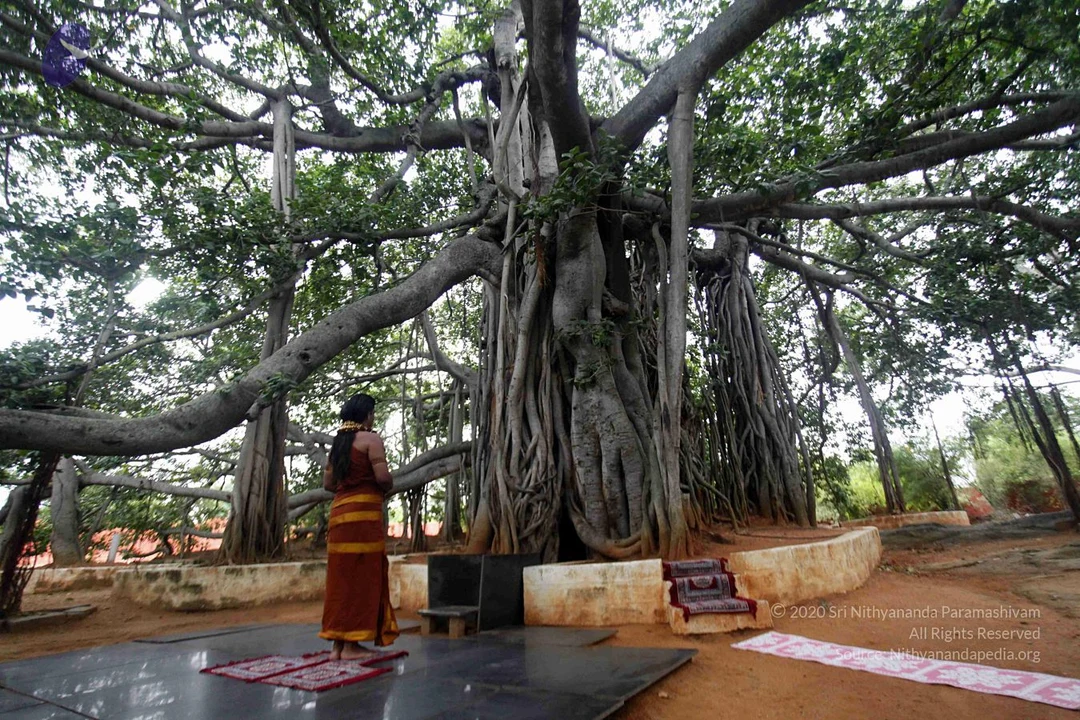
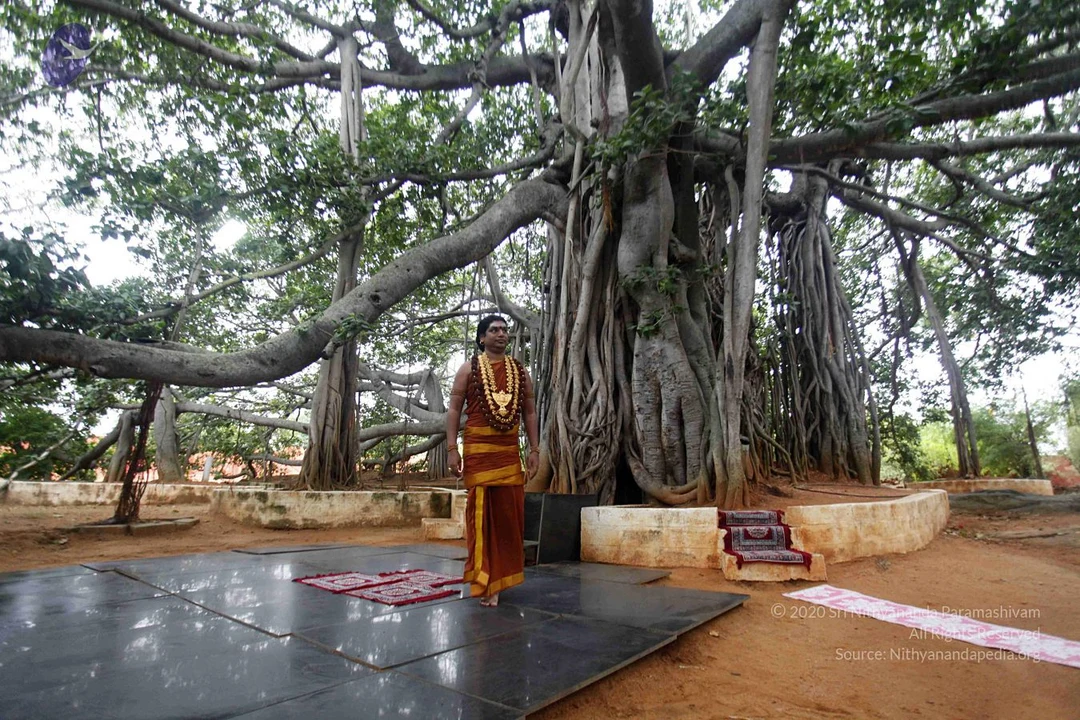
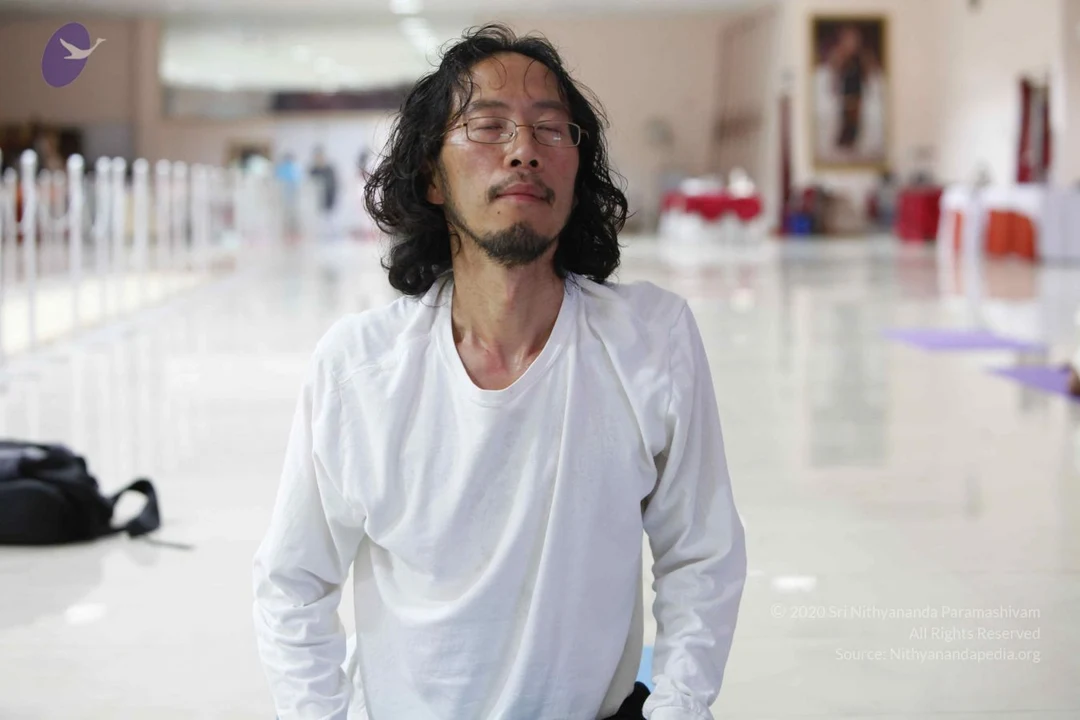
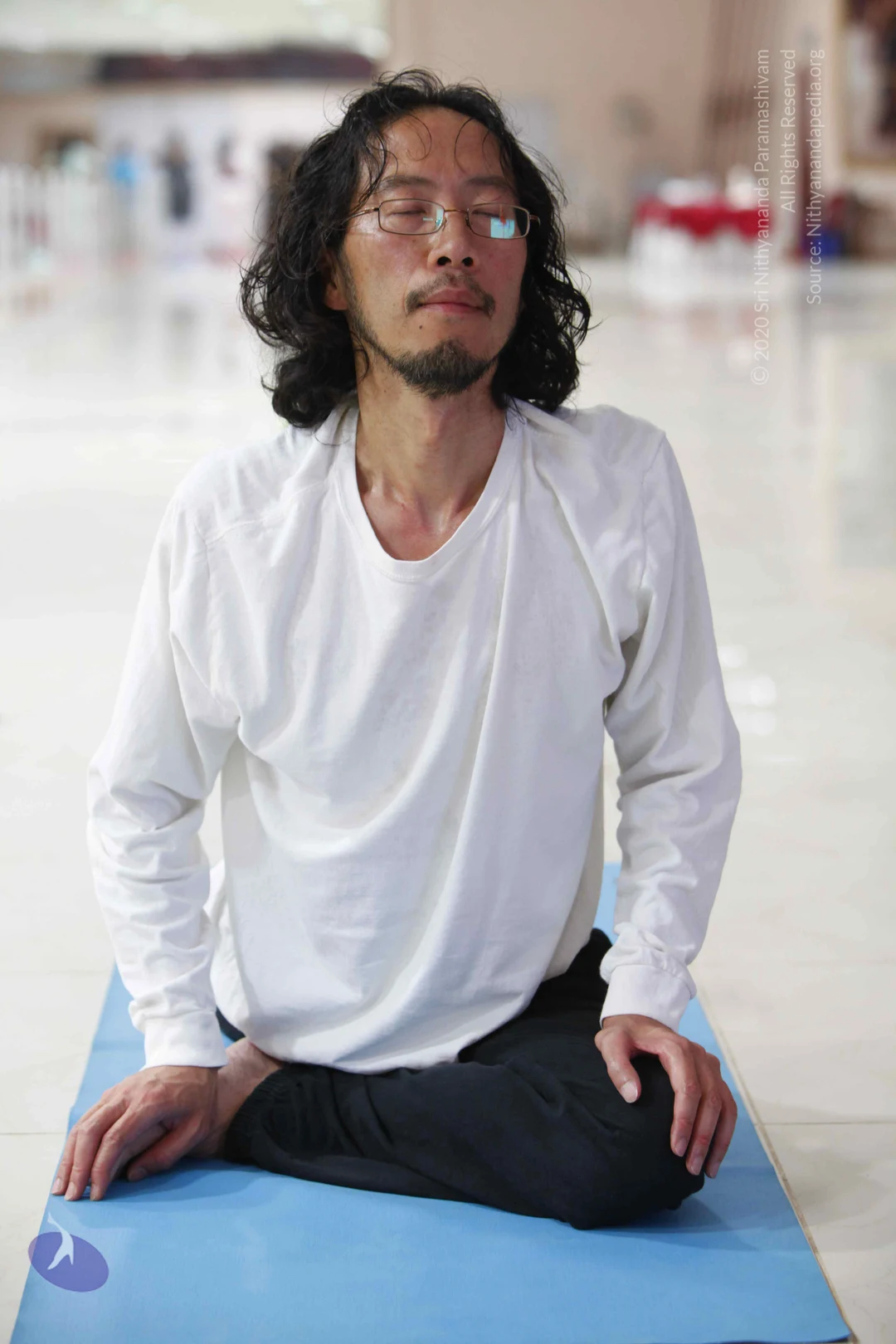
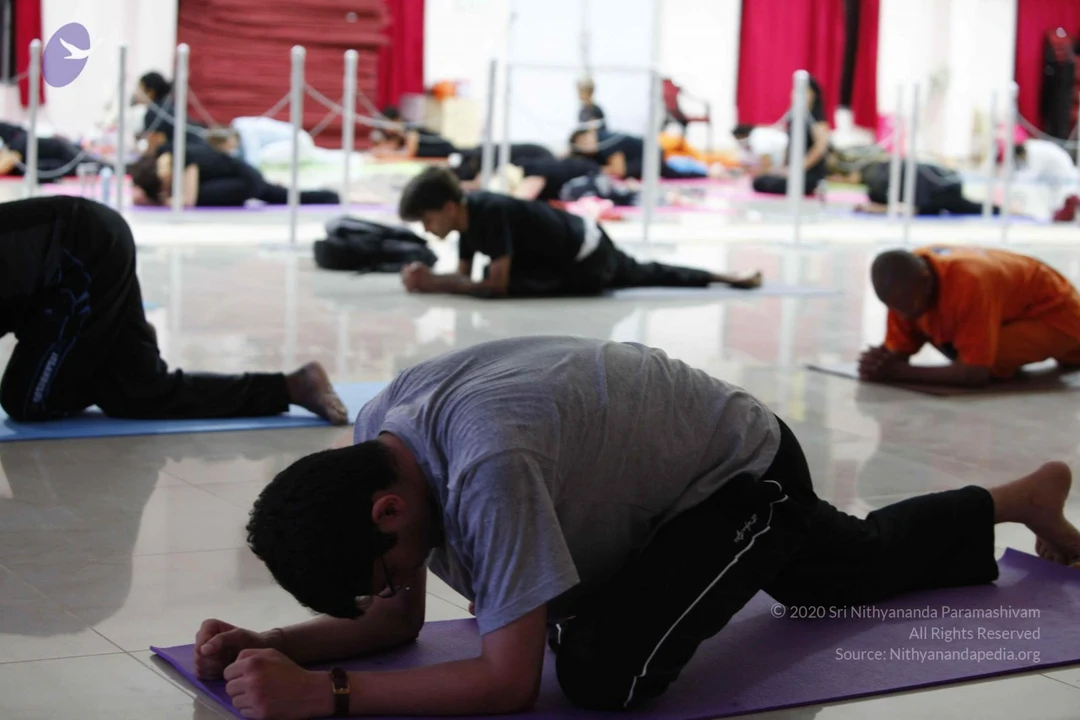
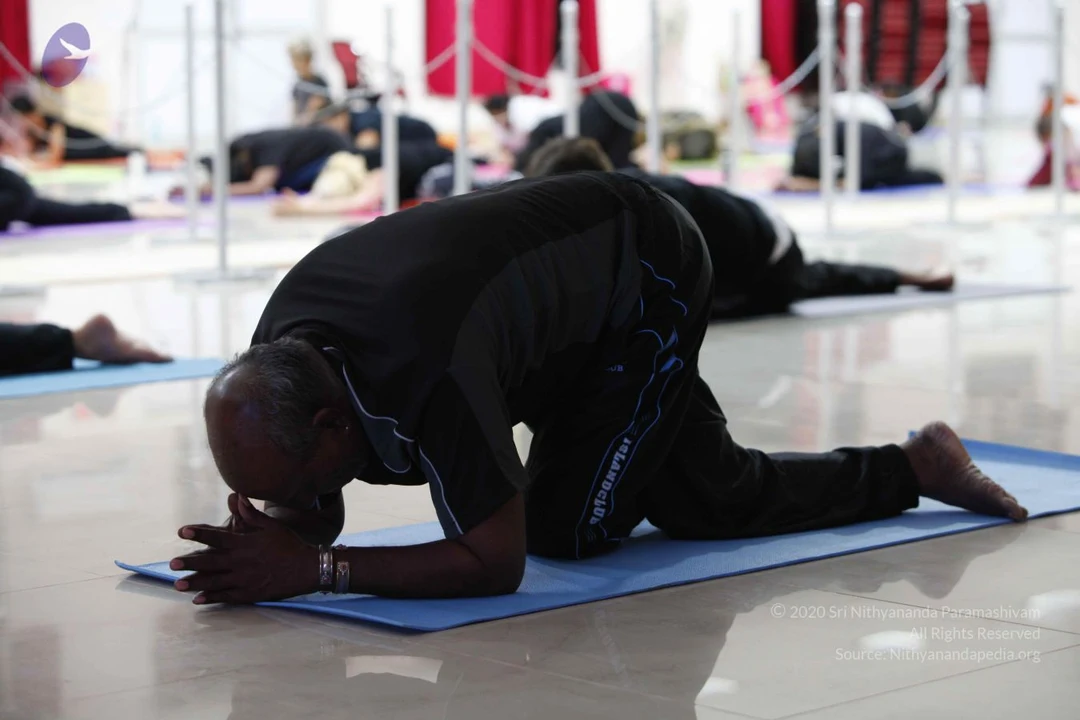
All the Nirahara Samyama participants, please sit straight. Close your eyes and visualize you have become Bidadi Vatavruksha, and inhale through both the nostrils and the mouth and hold as long as possible comfortably. When you can’t hold any more, exhale only through both the nostrils by keeping the mouth closed. With Integrity, Authenticity, Responsibility and Enriching, I bless you all. Let you all experience intense Kundalini awakening and produce the energy directly from space and live health, bliss and enlightenment! Namah Shivaya!

Let you all radiate with Integrity, Authenticity, Responsibility and Enriching, with eternal bliss, Nithyananda! Thank you!

Title

Even Incarnations Complete || Part 1 || Inner Awakening || 11 July 2013

Description

In this video Supreme Pontiff of Hinduism HDH #Nithyananda Paramashivam answers #spiritual question from the delegates. Delegates got the chance to ask any spiritual question they wanted. HDH Bhagavan Sri Nithyananda Paramashivam gives healing, life solutions and deep spiritual truths through His answers. In this video HDH speaks about temples, deities, gratitude and his lifestyle, following the authentic vedic rituals given by Manu, the first law maker in India, in the world

Even Incarnations Complete || Part 2 || Inner Awakening || 11 July 2013

Even Incarnations Complete || Part 3 || Inner Awakening || 11 July 2013

Photos
Photos Of The Day:
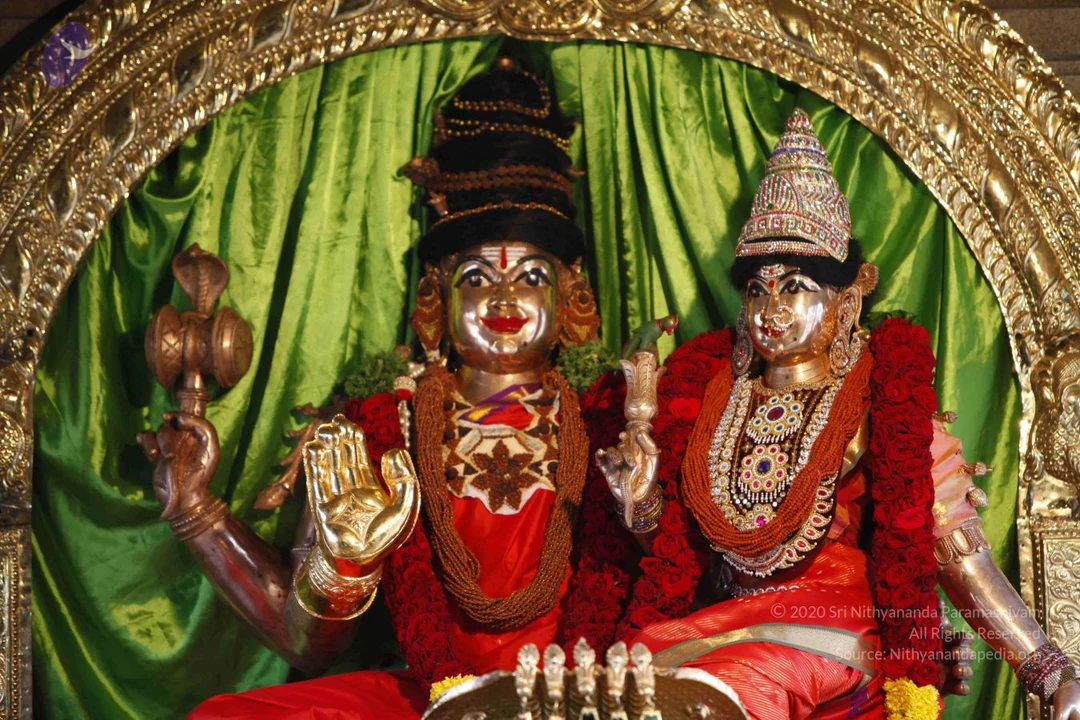
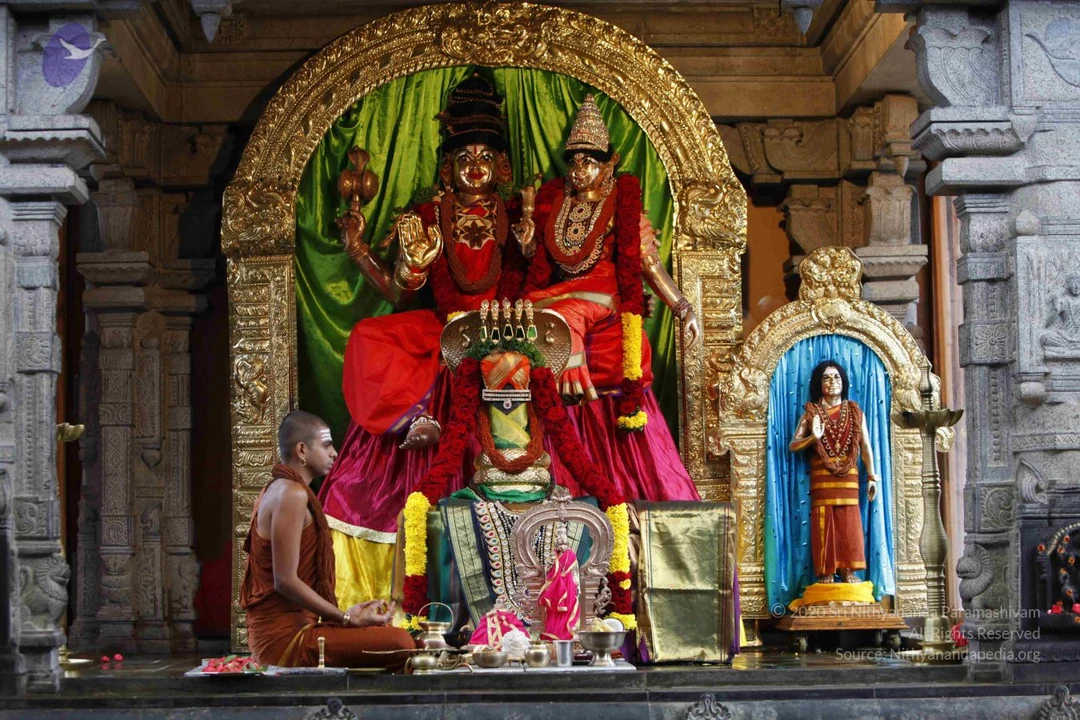
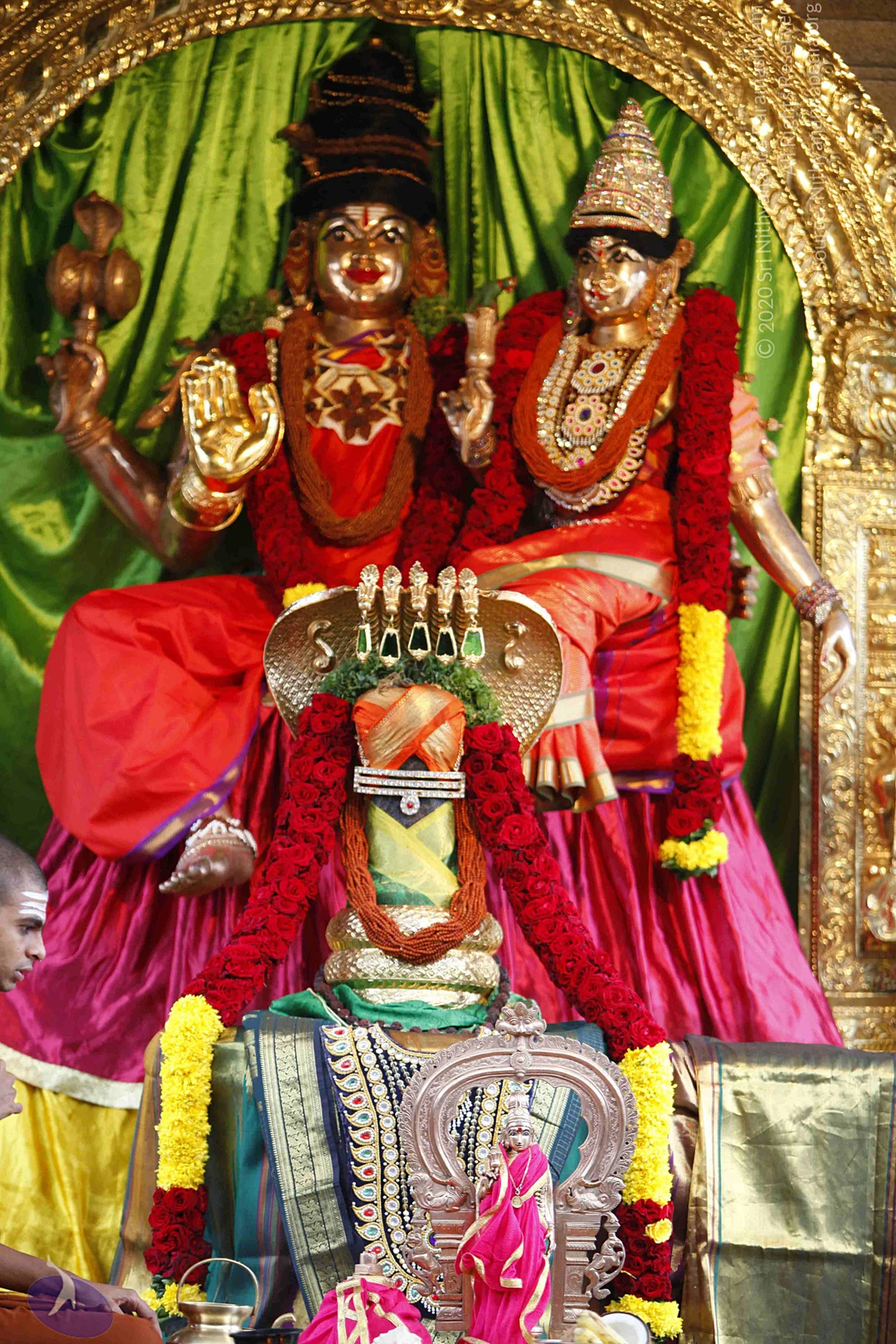
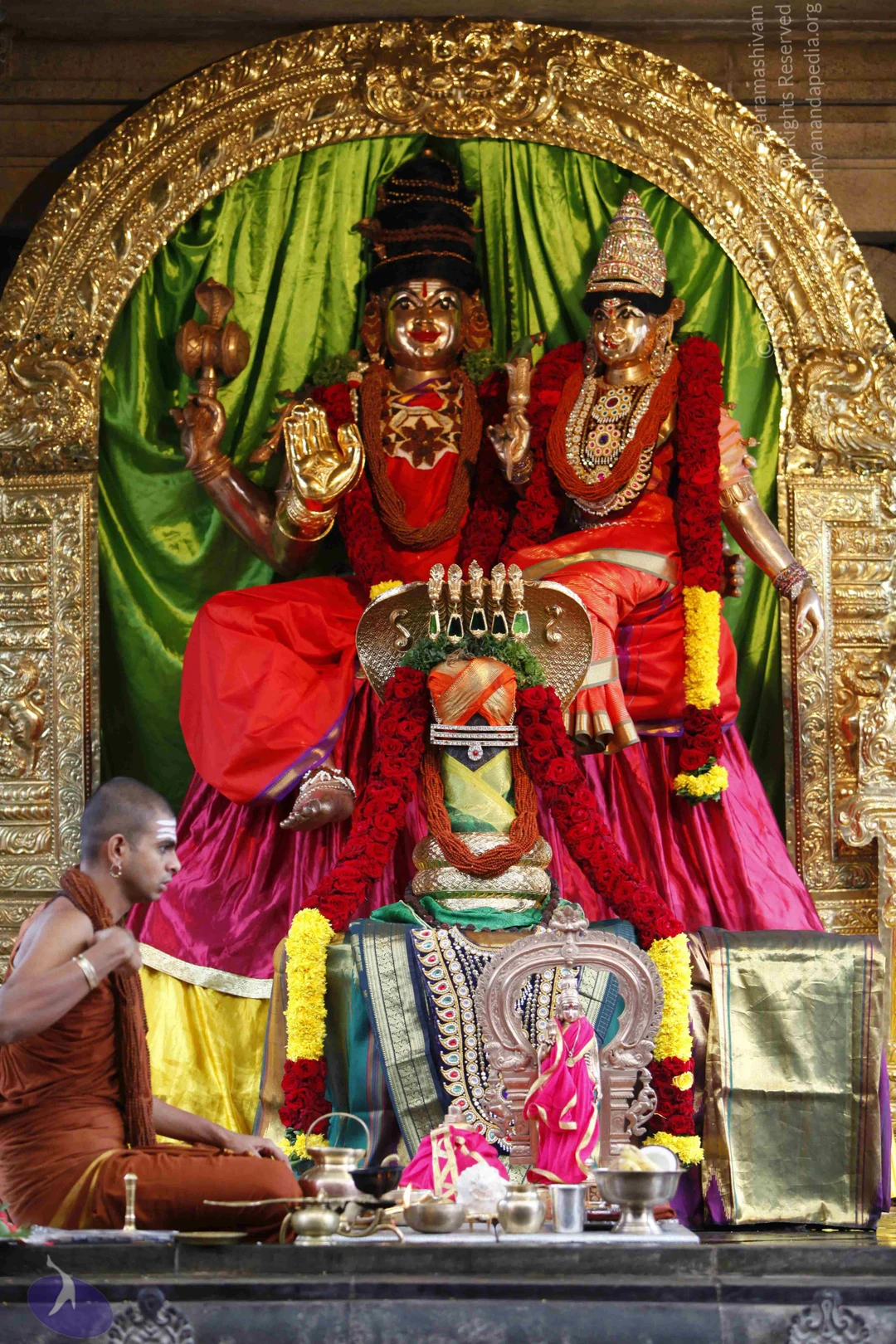
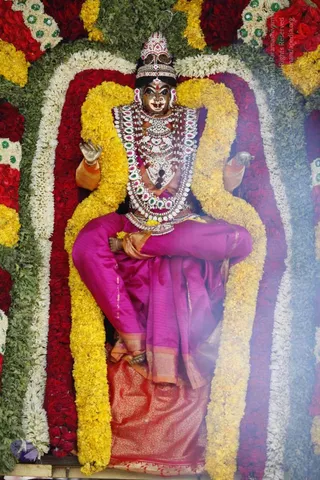
Deity Alankar

Temple Swamiji

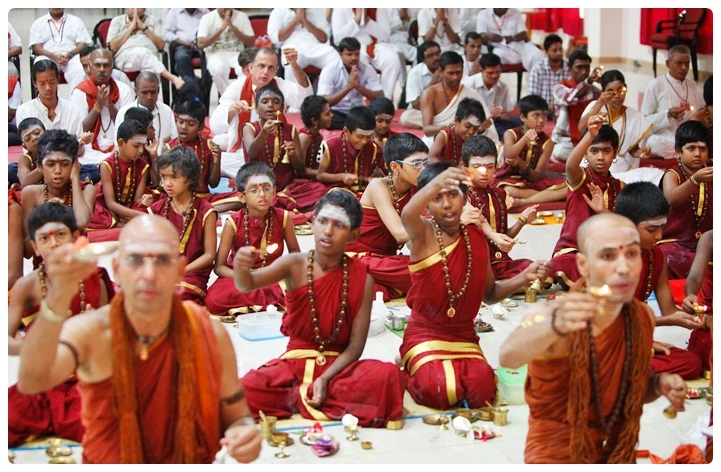
Pratyaksha Padapuja crowd shots

Pratyaksha Padapuja

Swamis

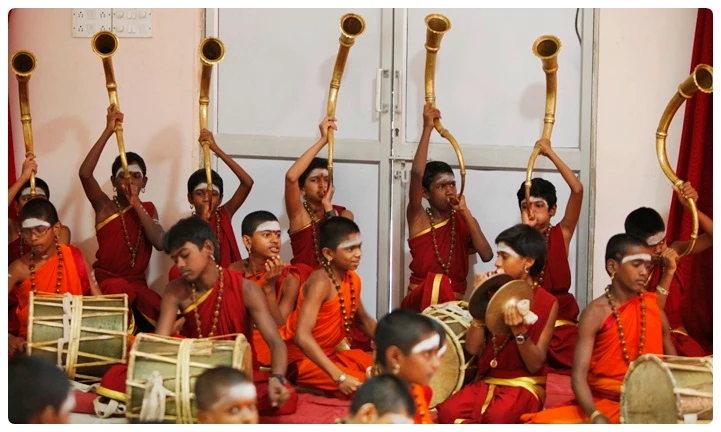
Gurukul Instruments

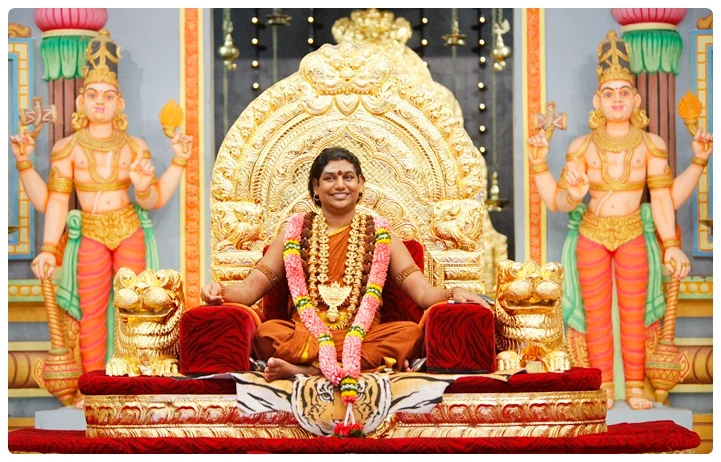
Nithya Satsang

SarvaDarshan

Final Blessing

IA Day 11

Construction_Photos
SacredArts_Photos
Paramashivoham Oneness Capsule

Description:

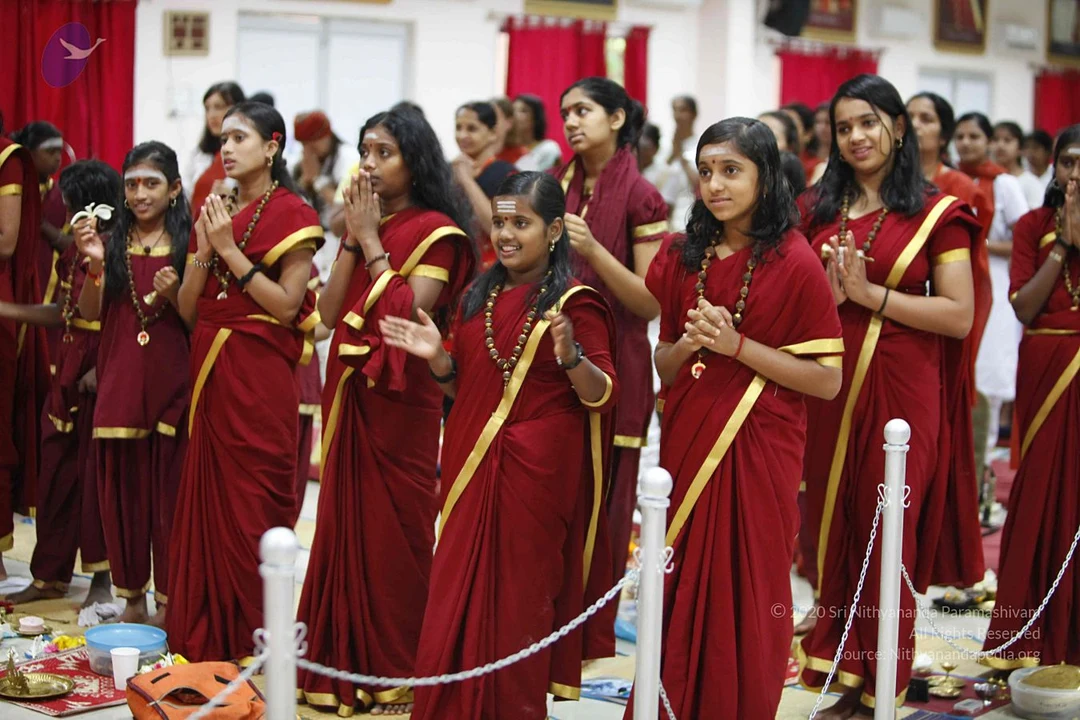
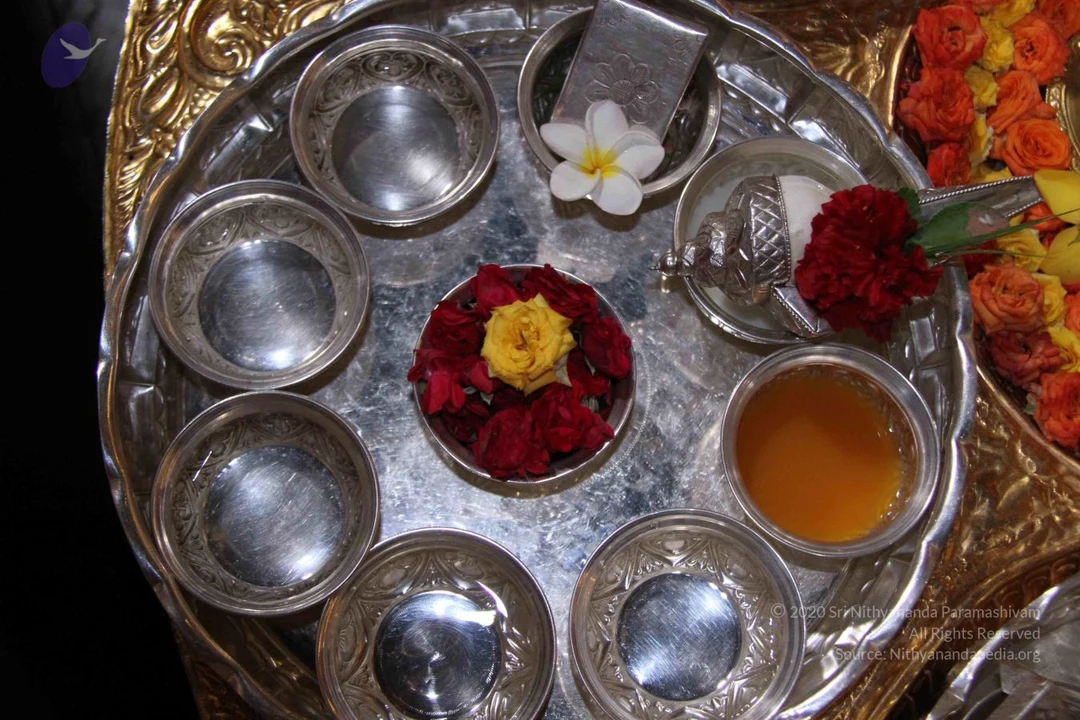
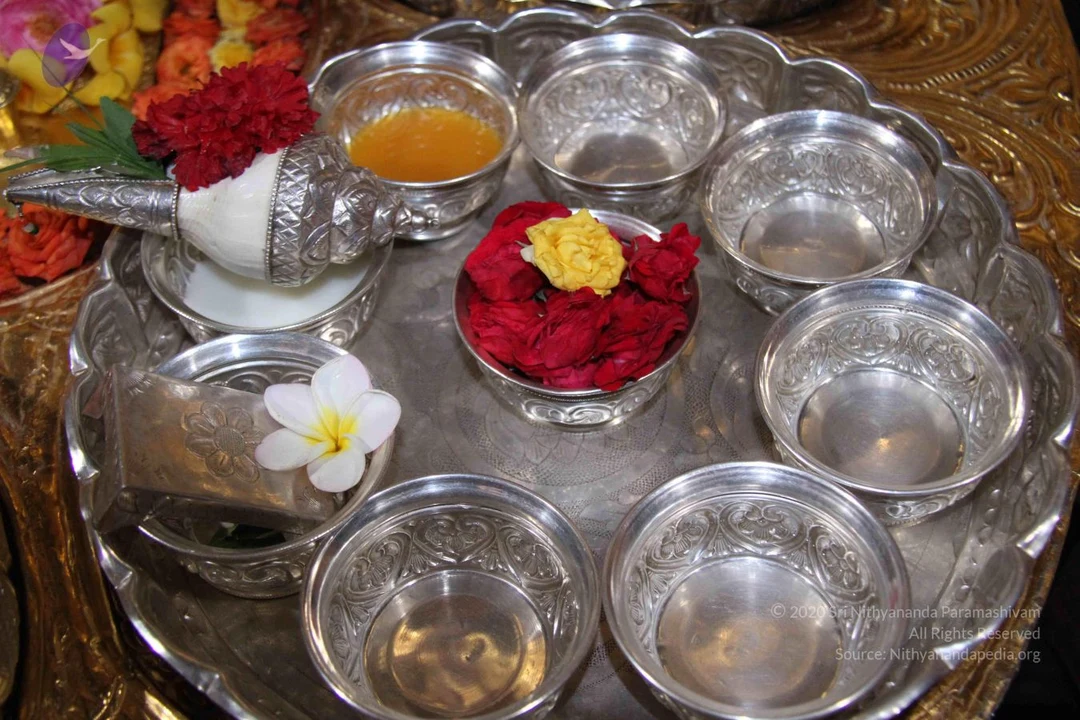
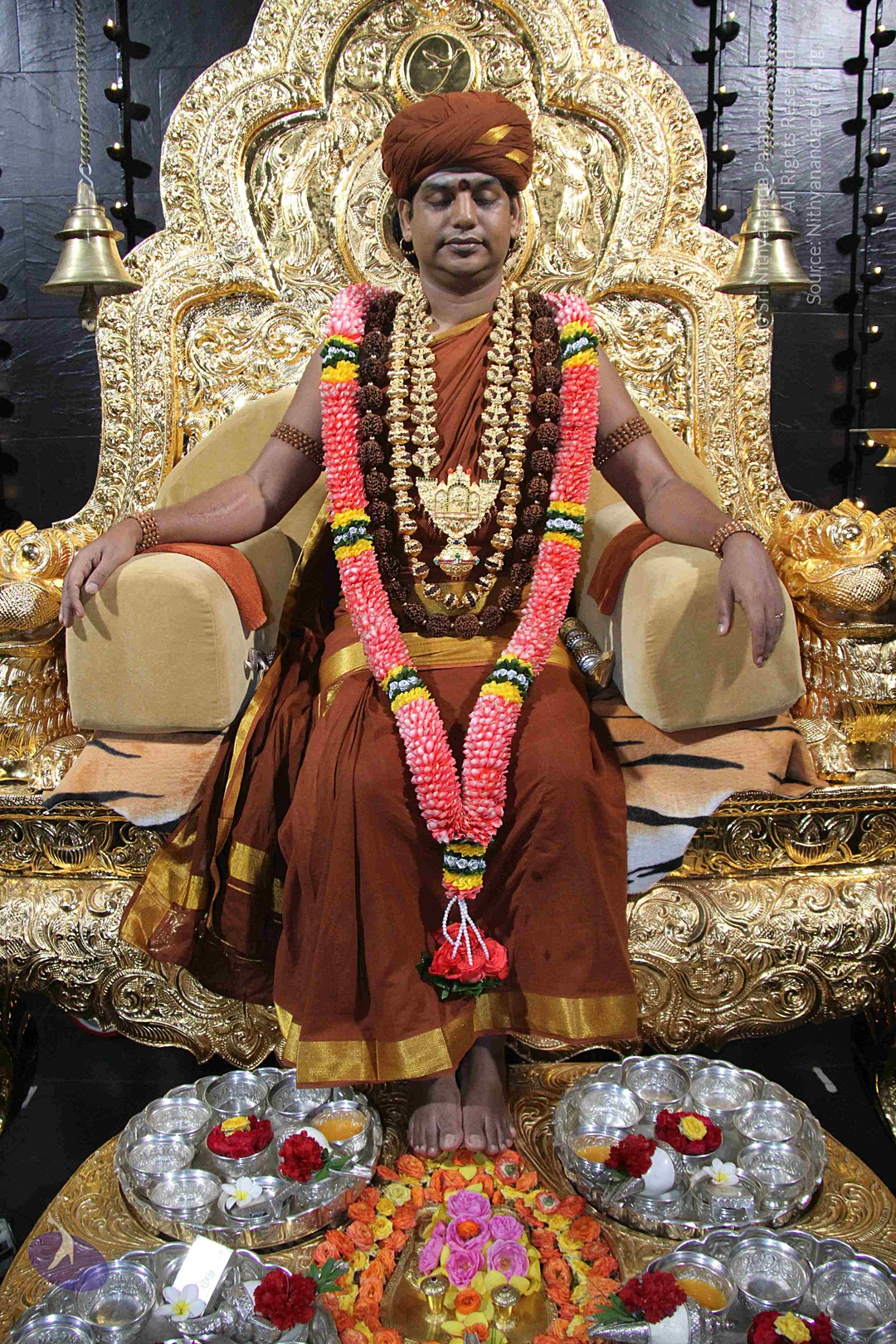
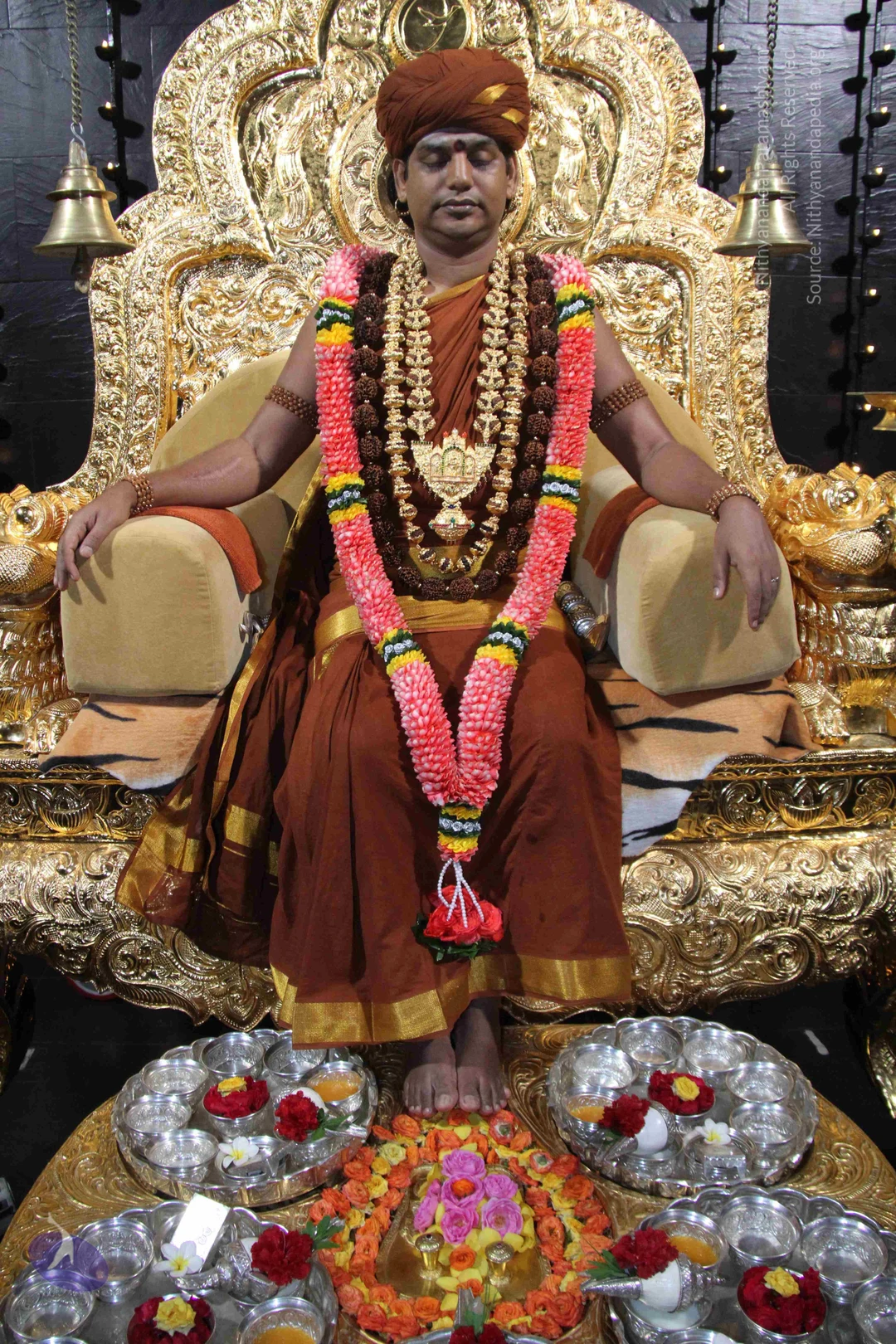
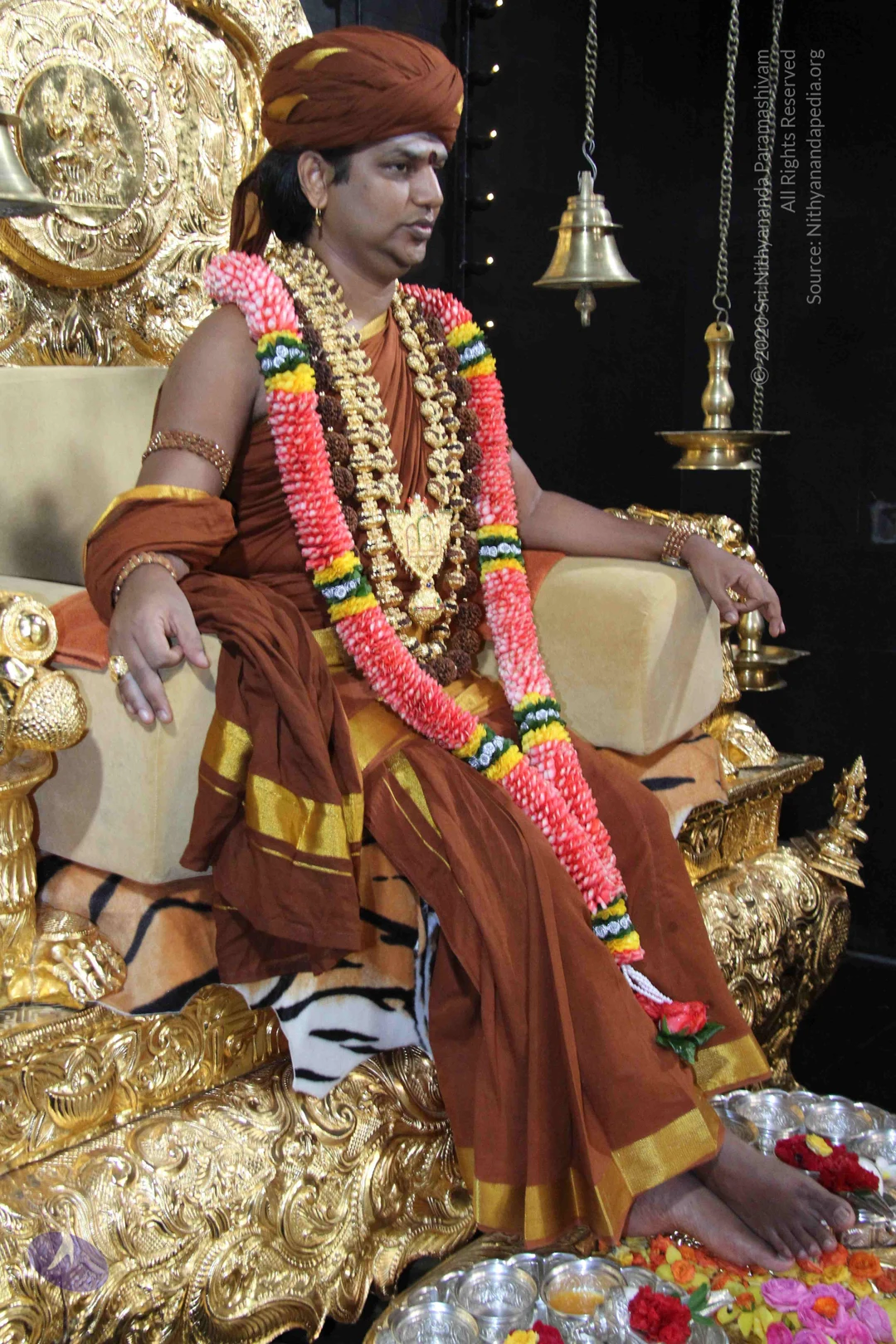
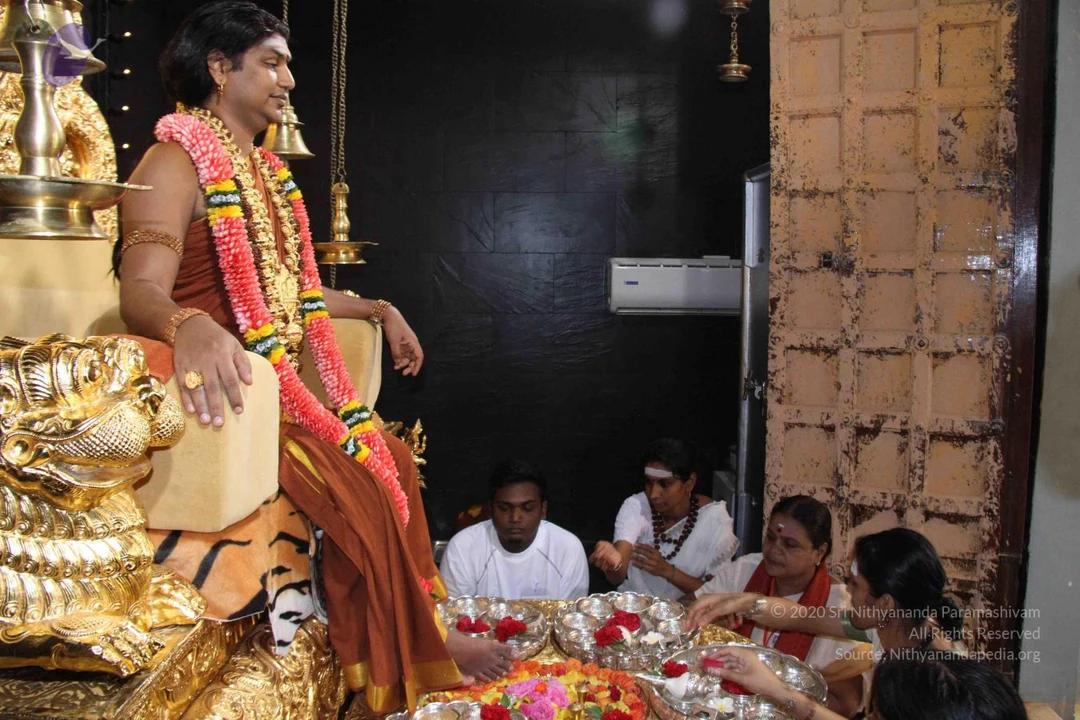
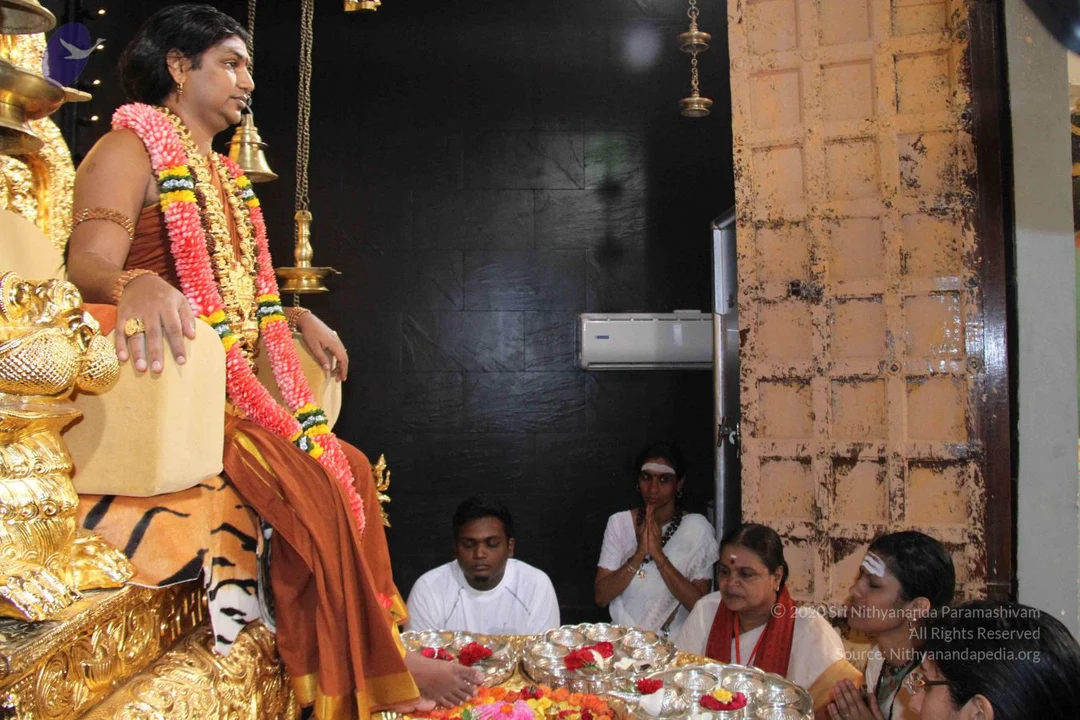
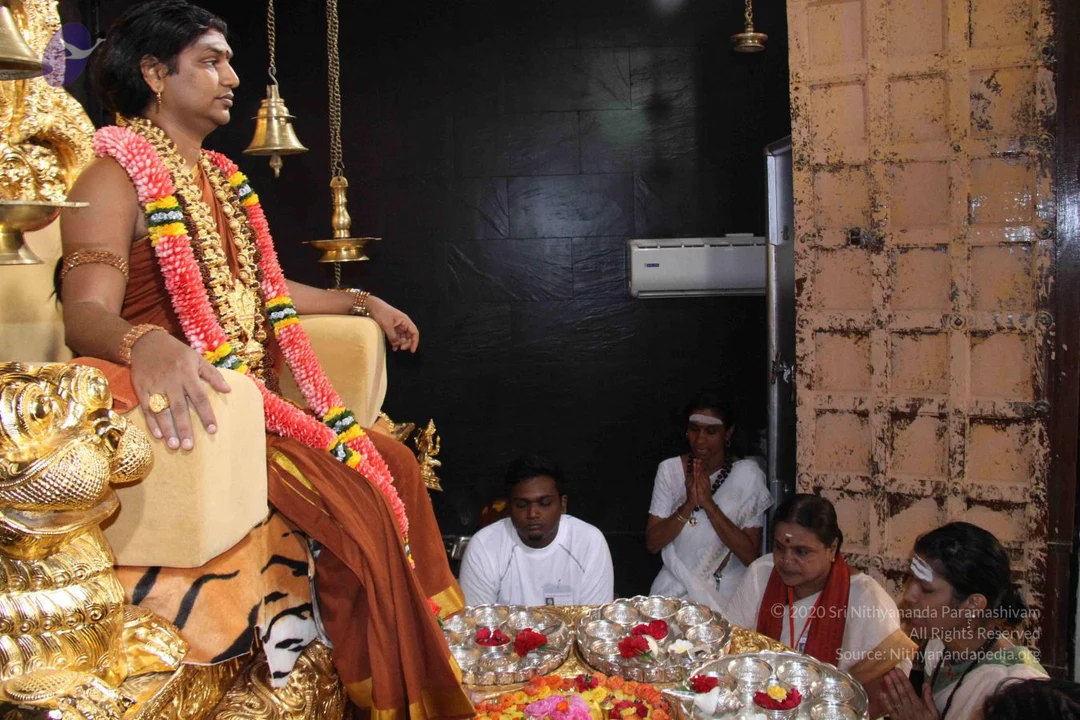
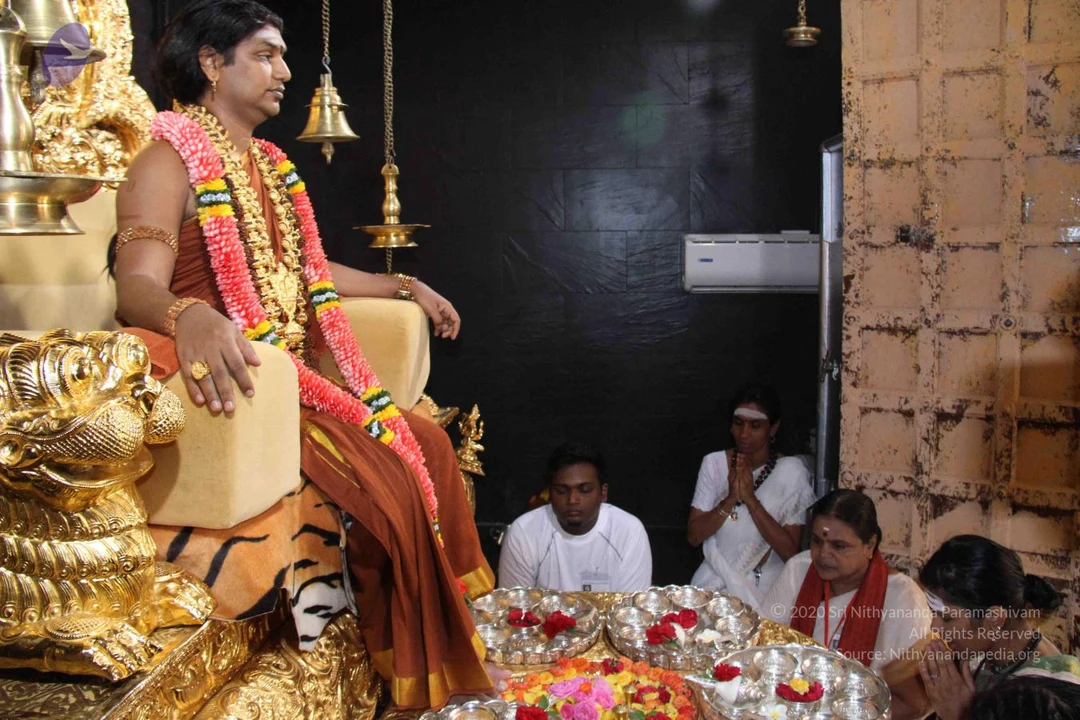
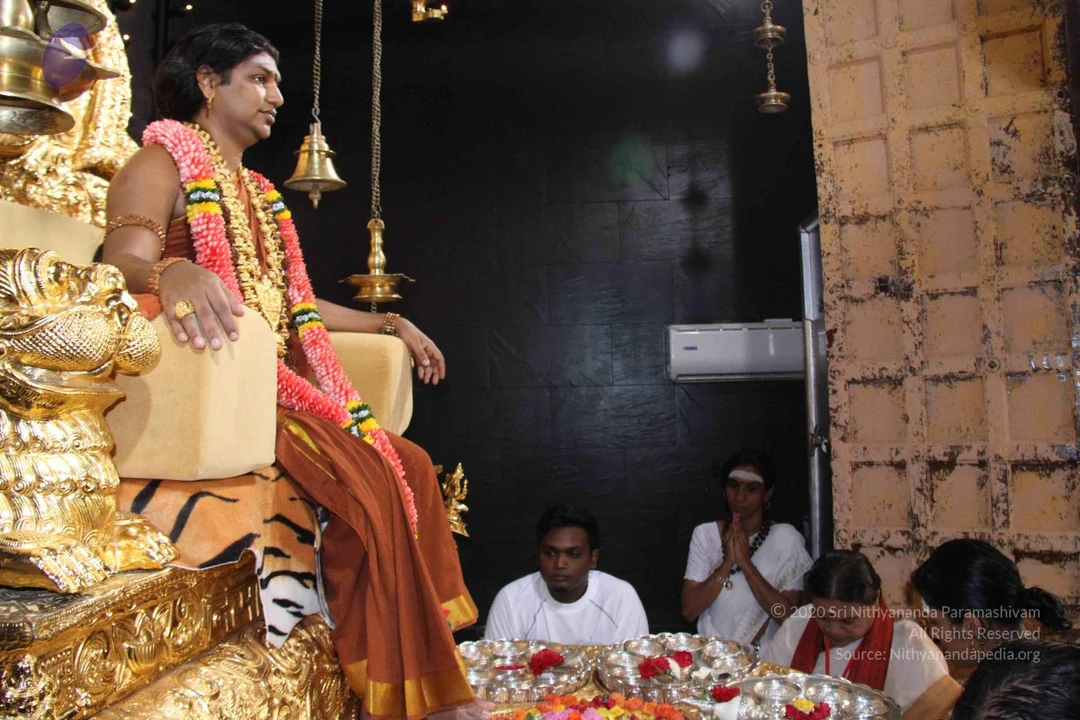
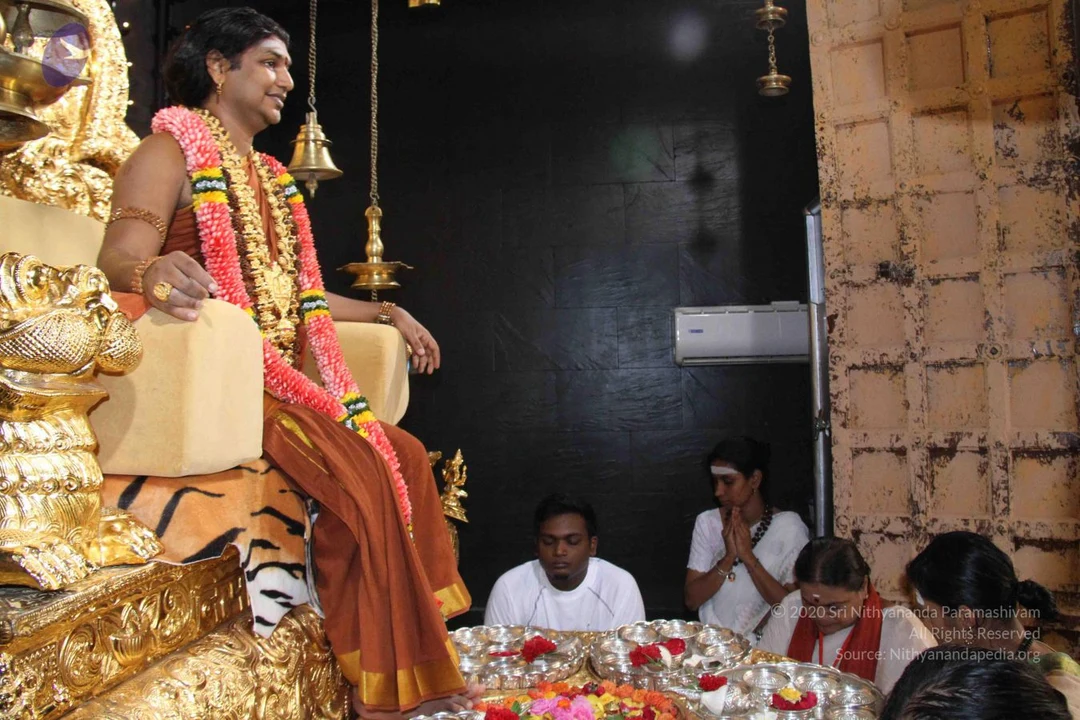
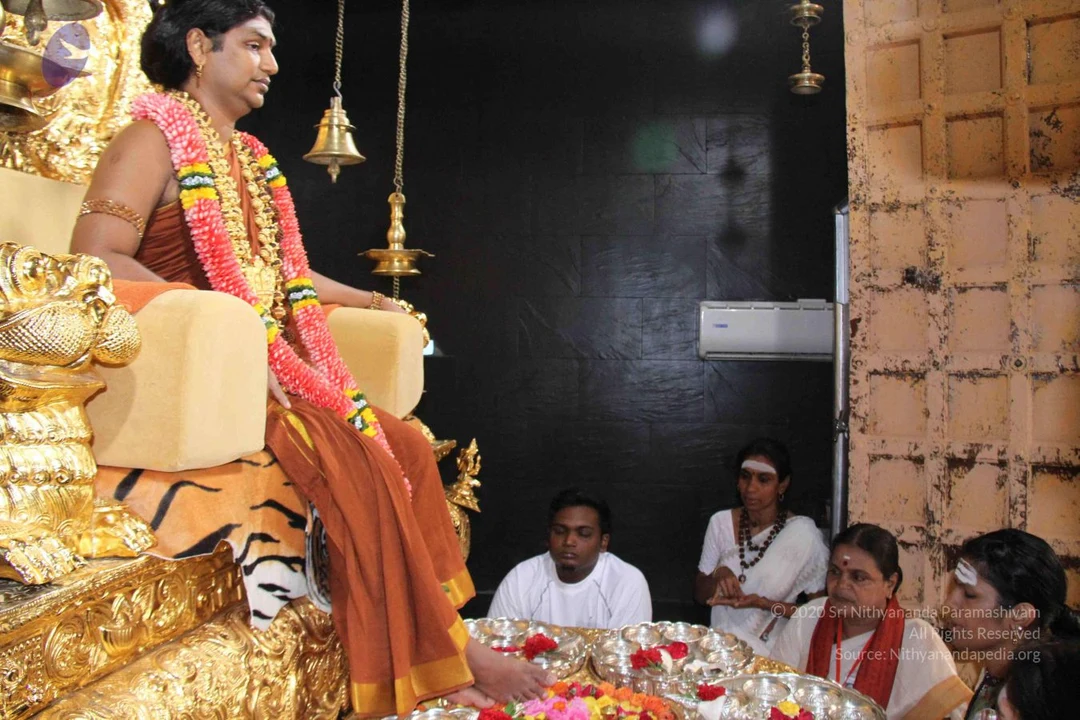
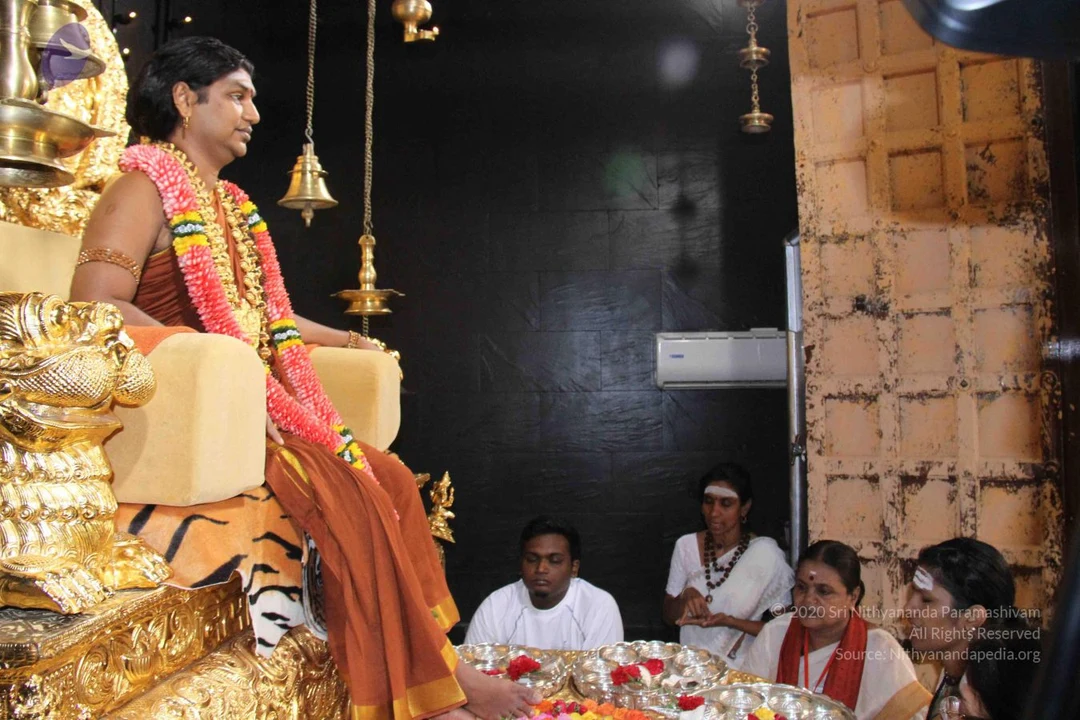
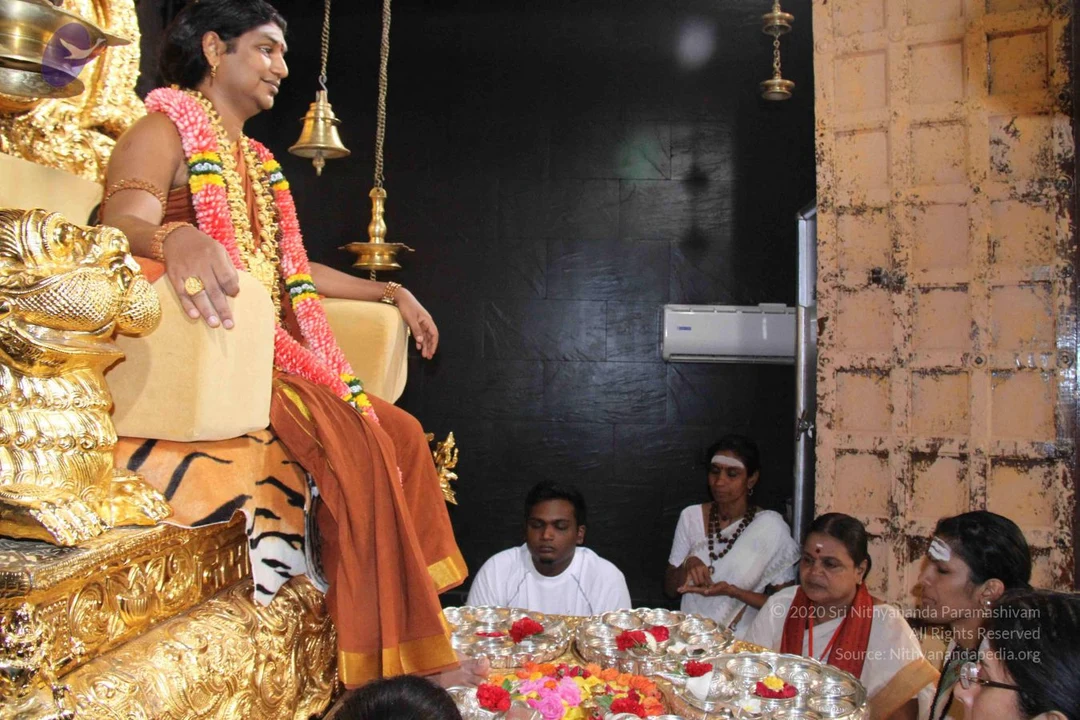
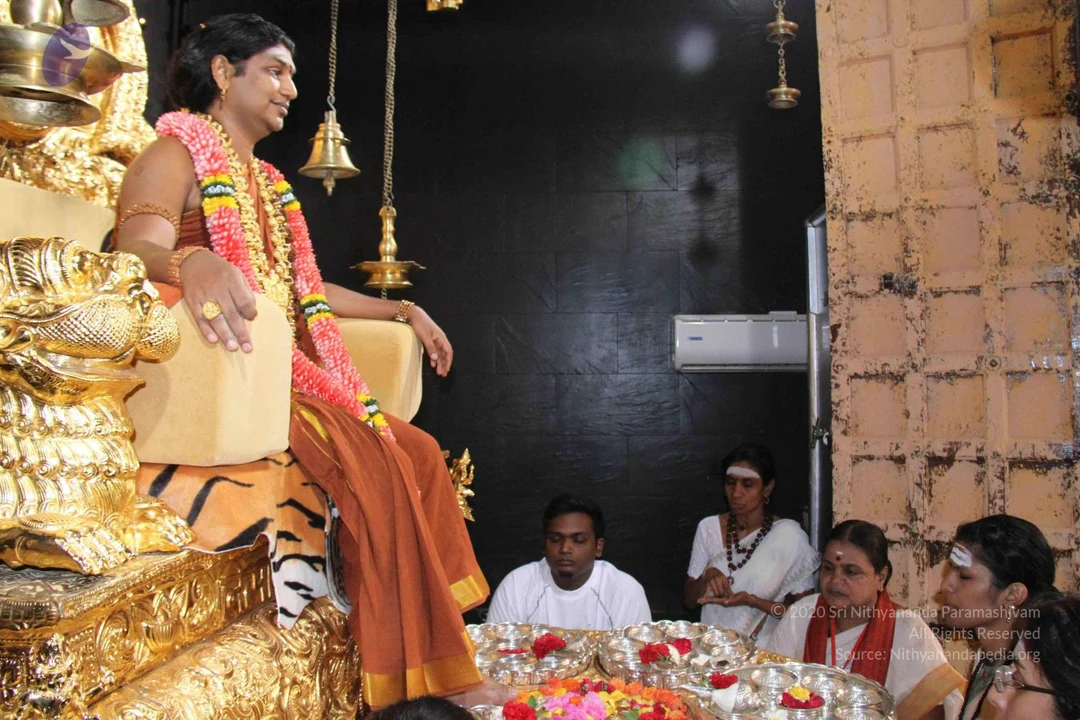
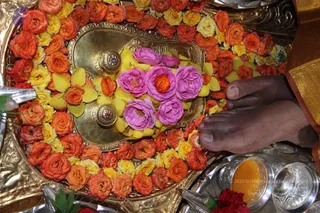
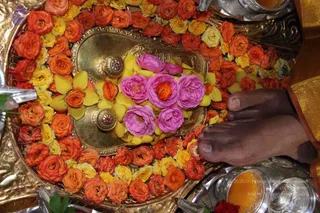
(11 JUL 2013) On this auspicious day, devotees lovingly offered Pada Puja to His Divine Holiness Paramahamsa Nithyananda, Paramashiva Incarnate. Pada Puja is a unique celebration of expressing overflowing deep gratitude to The Avatar and our beloved Guru, His Divine Holiness Paramahamsa Nithyananda. The word 'pada' means ‘sacred feet’ in Sanskrit; Pada Puja means to honor the Guru in loving devotion and gratitude at his lotus feet. It is the direct grace and ultimate blessing of Paramashiva that He Himself has happened in our lives as Guru.

Photos from this day
View all 402 photos
Photos

37 photosSource gallery
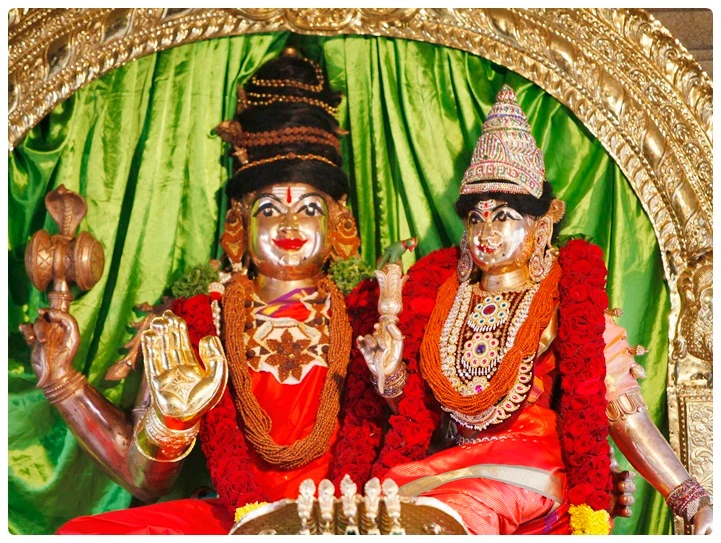
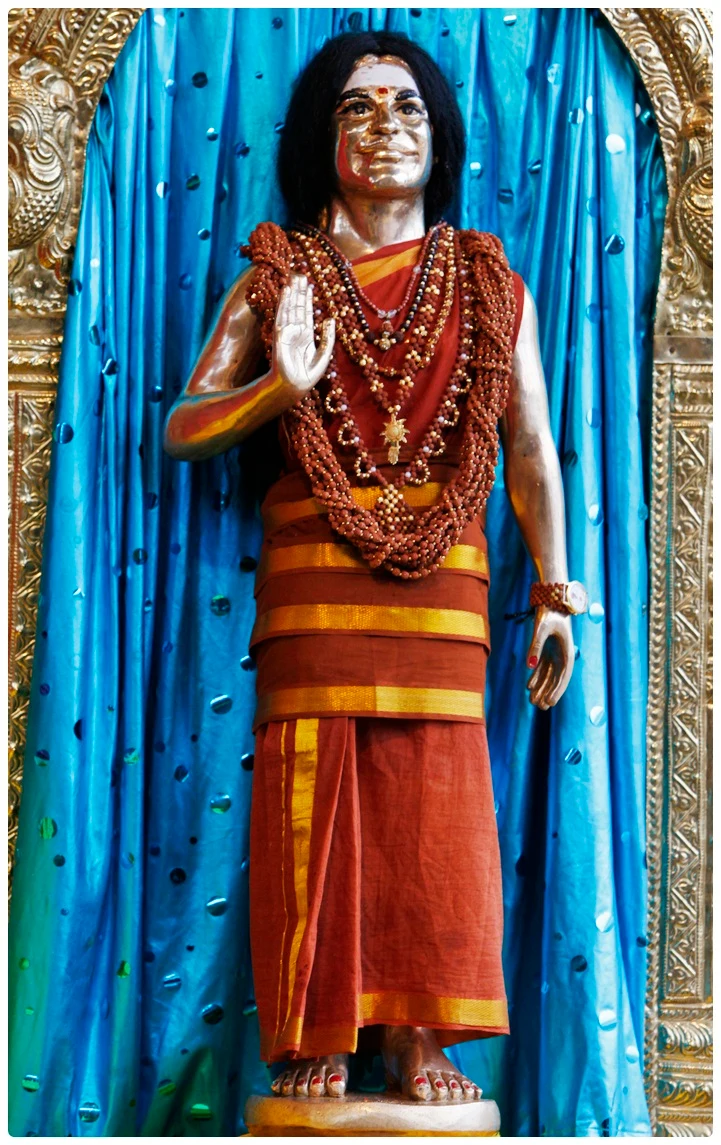
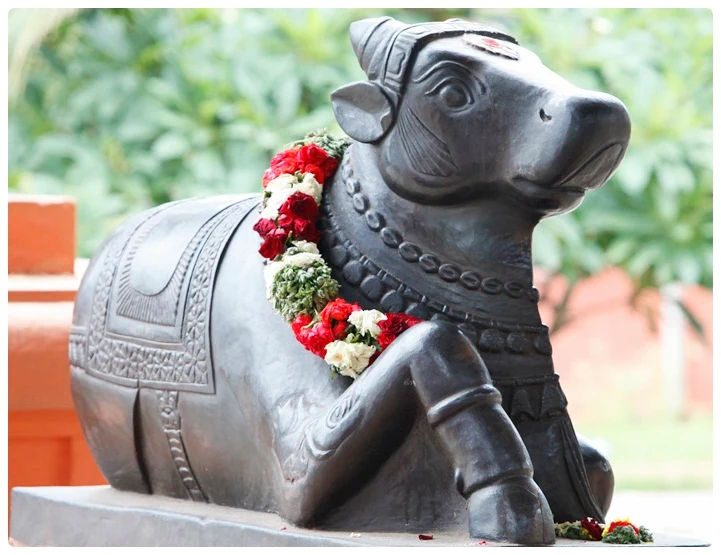
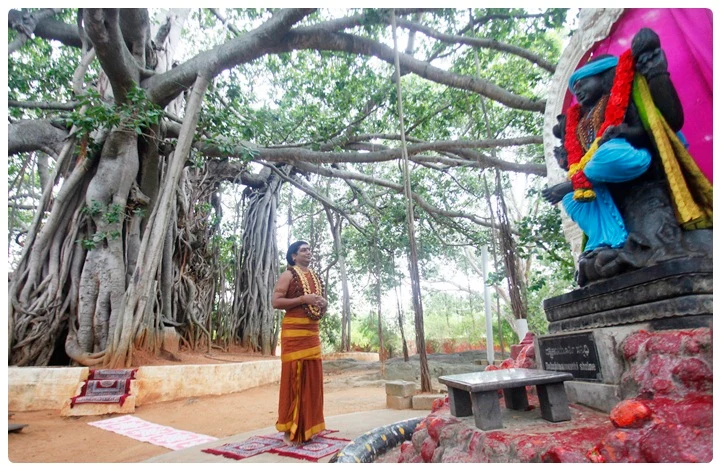
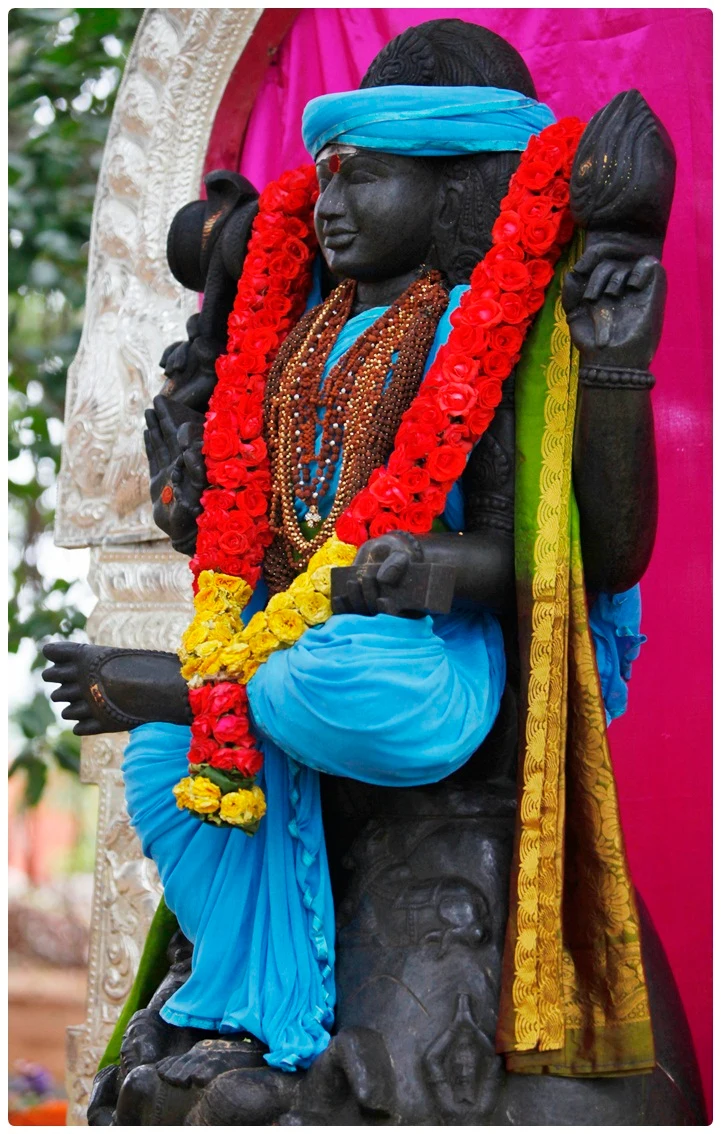
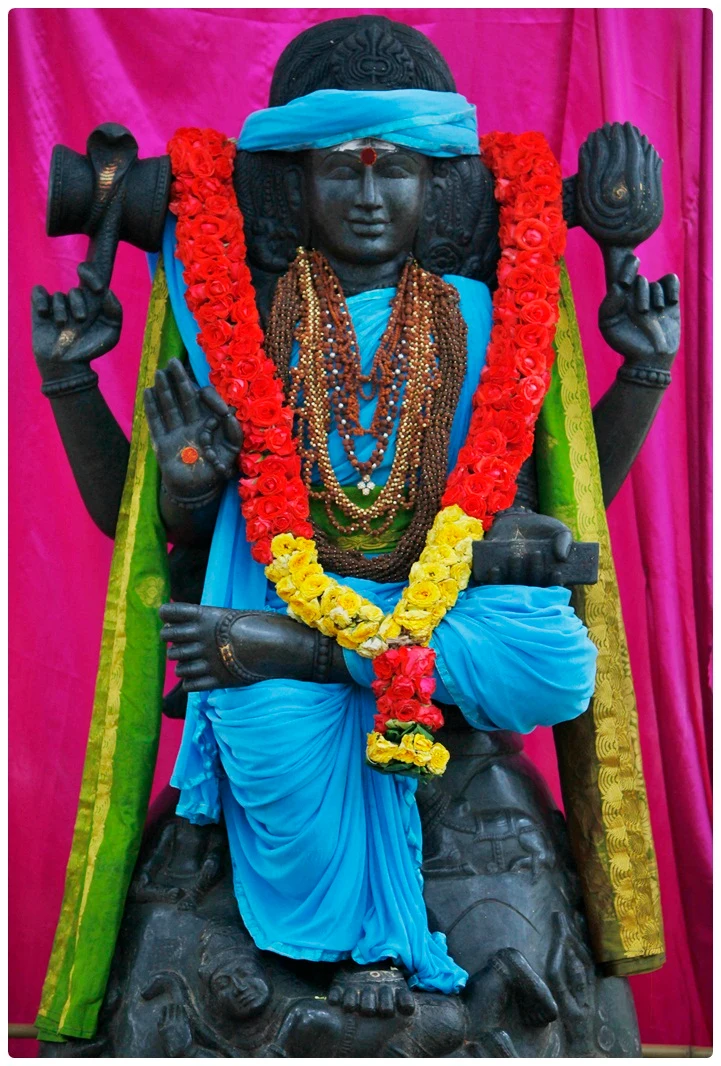
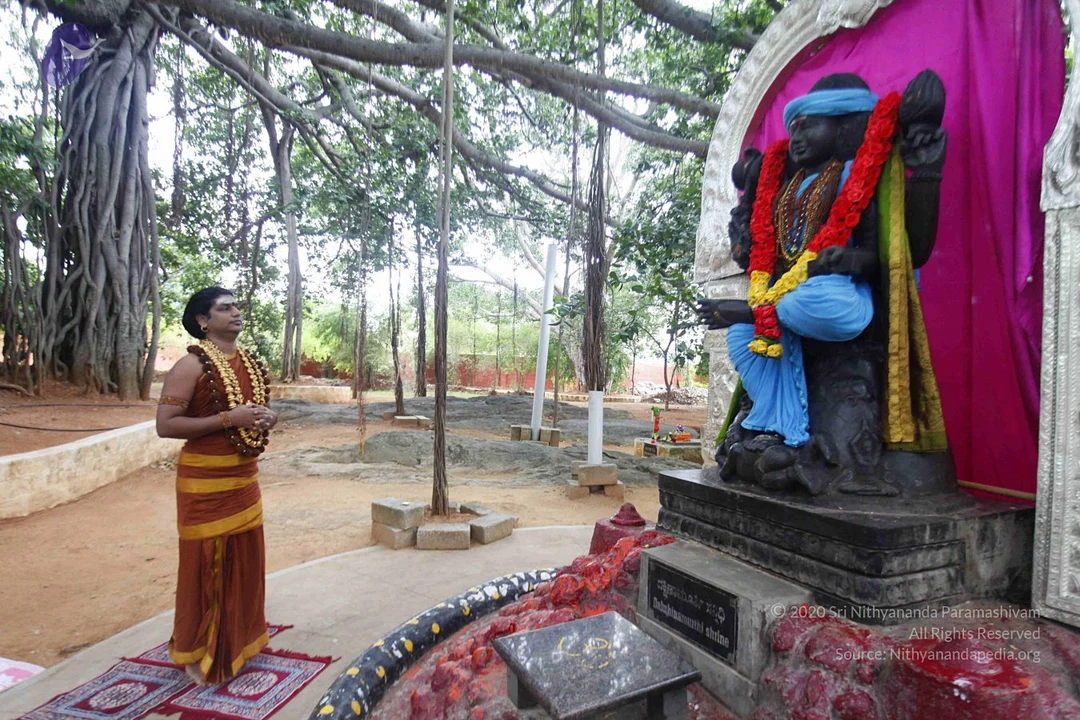
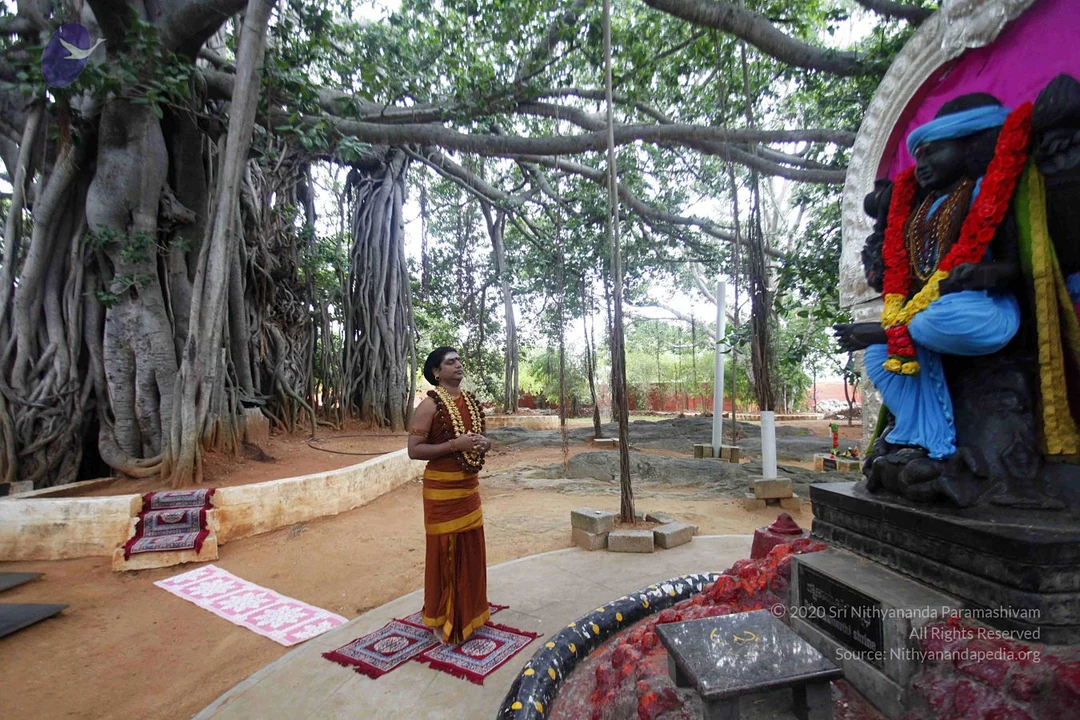
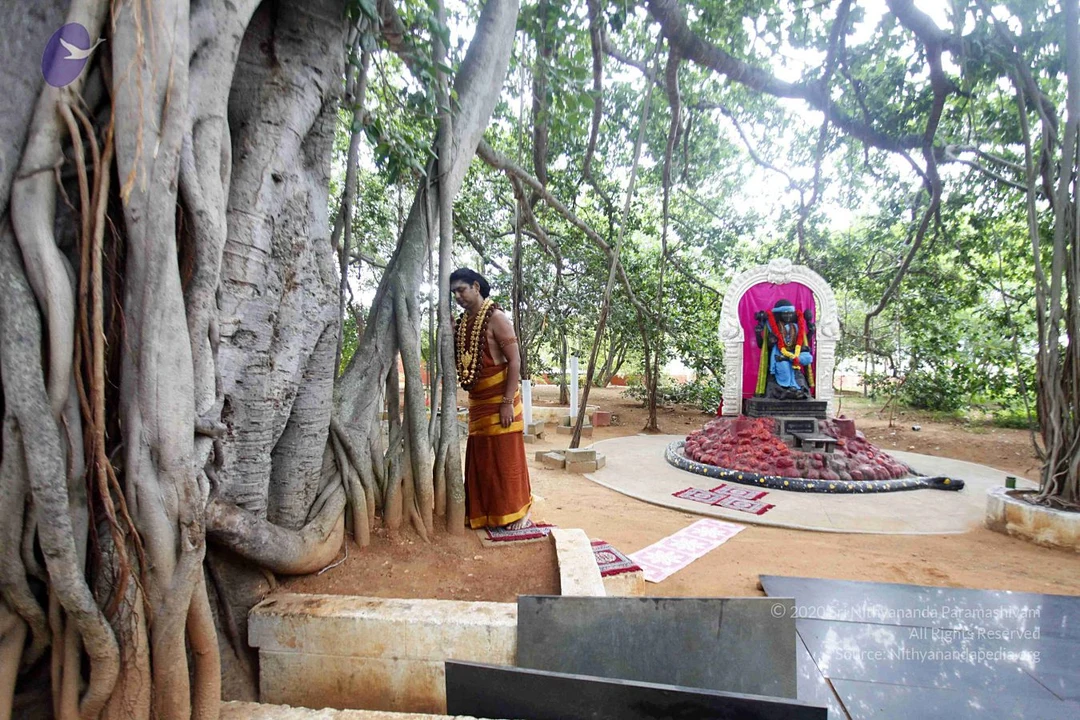
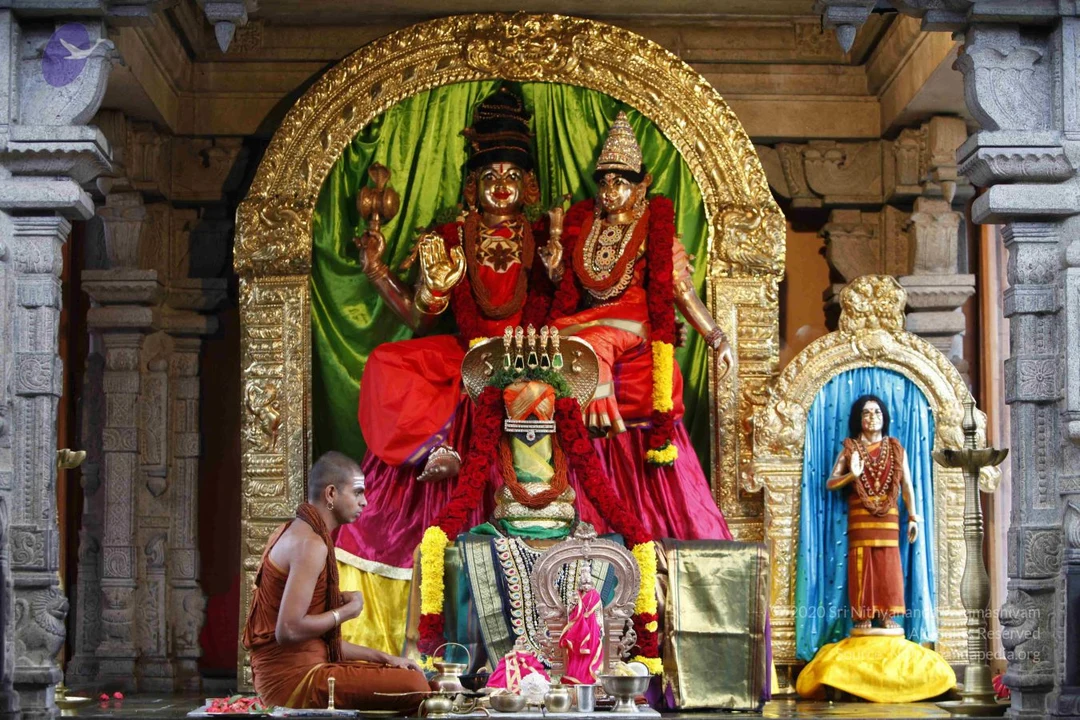
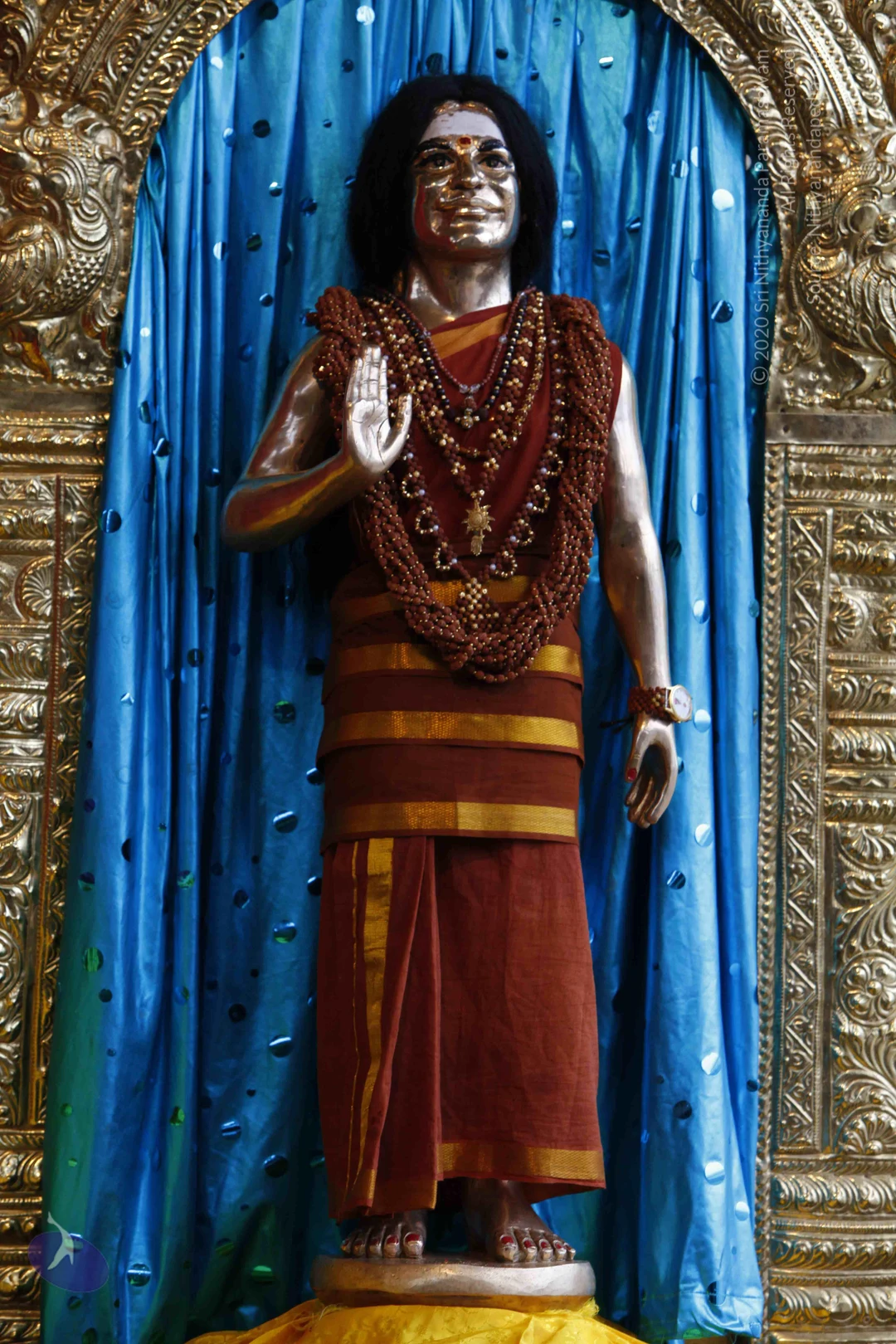
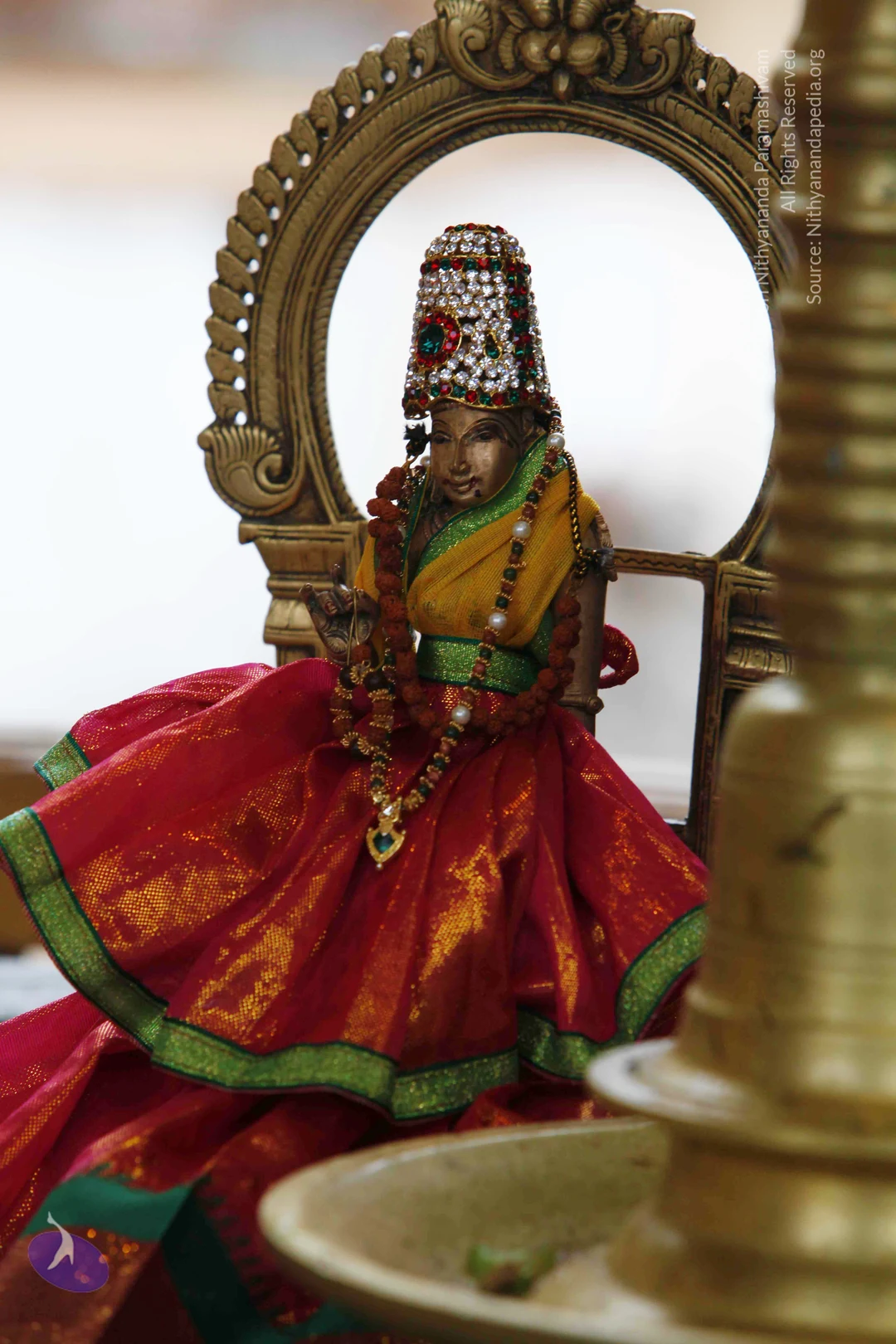
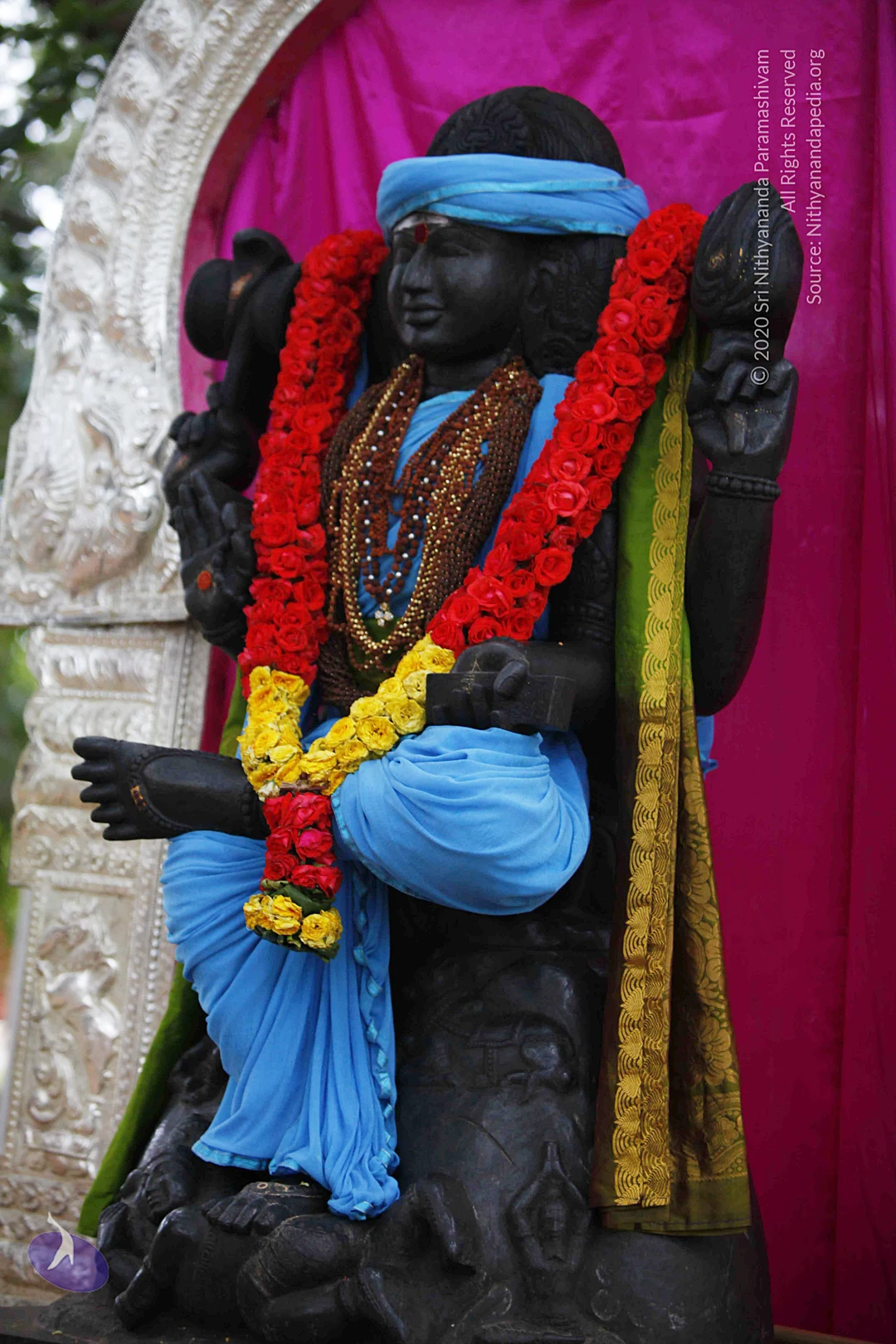
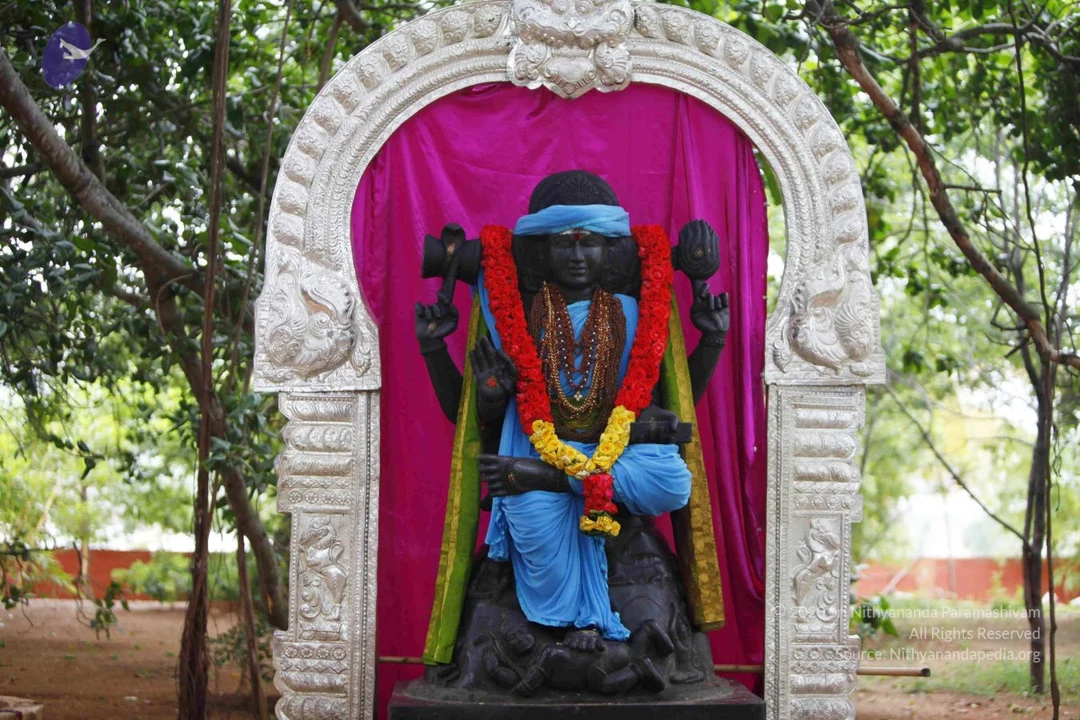
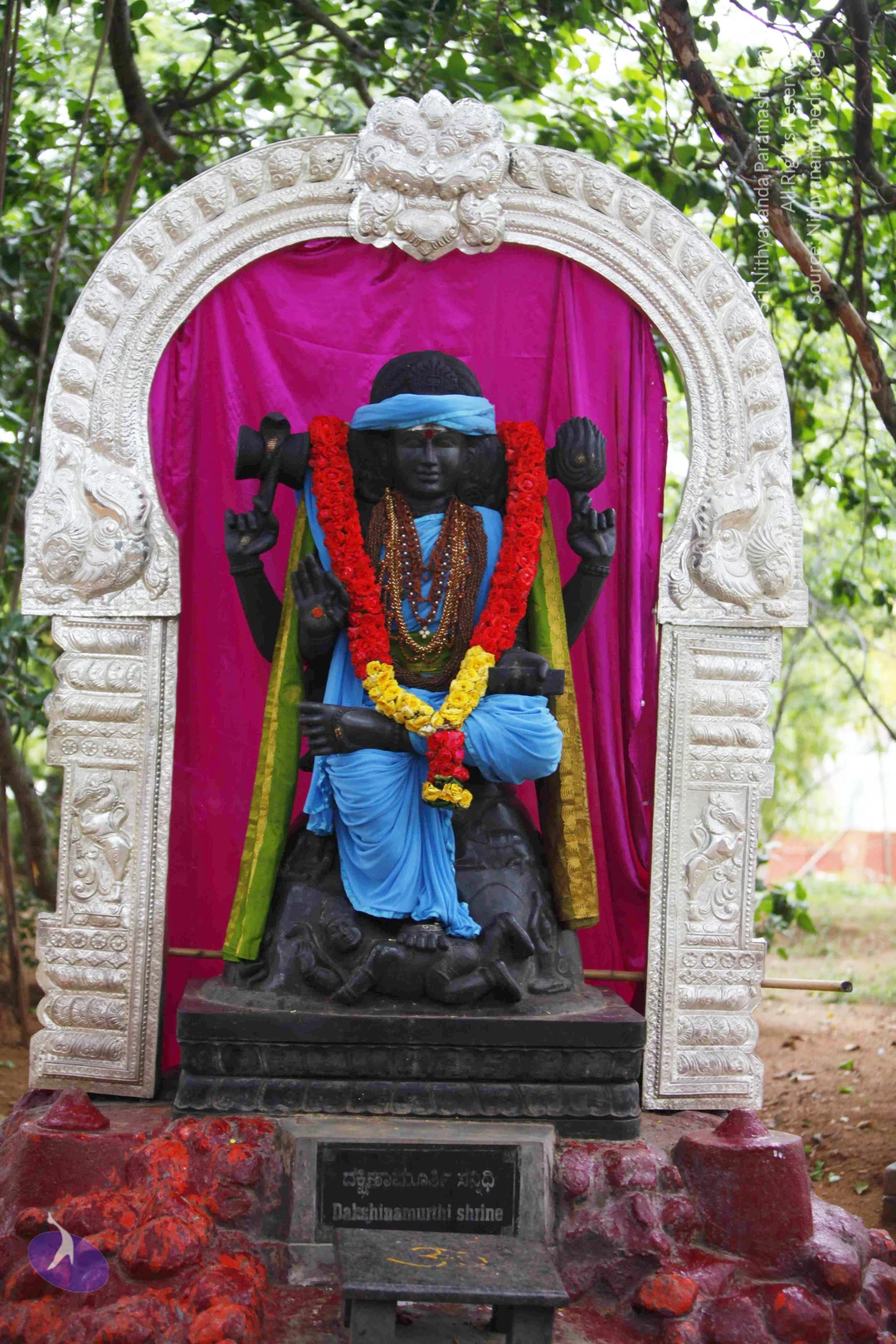
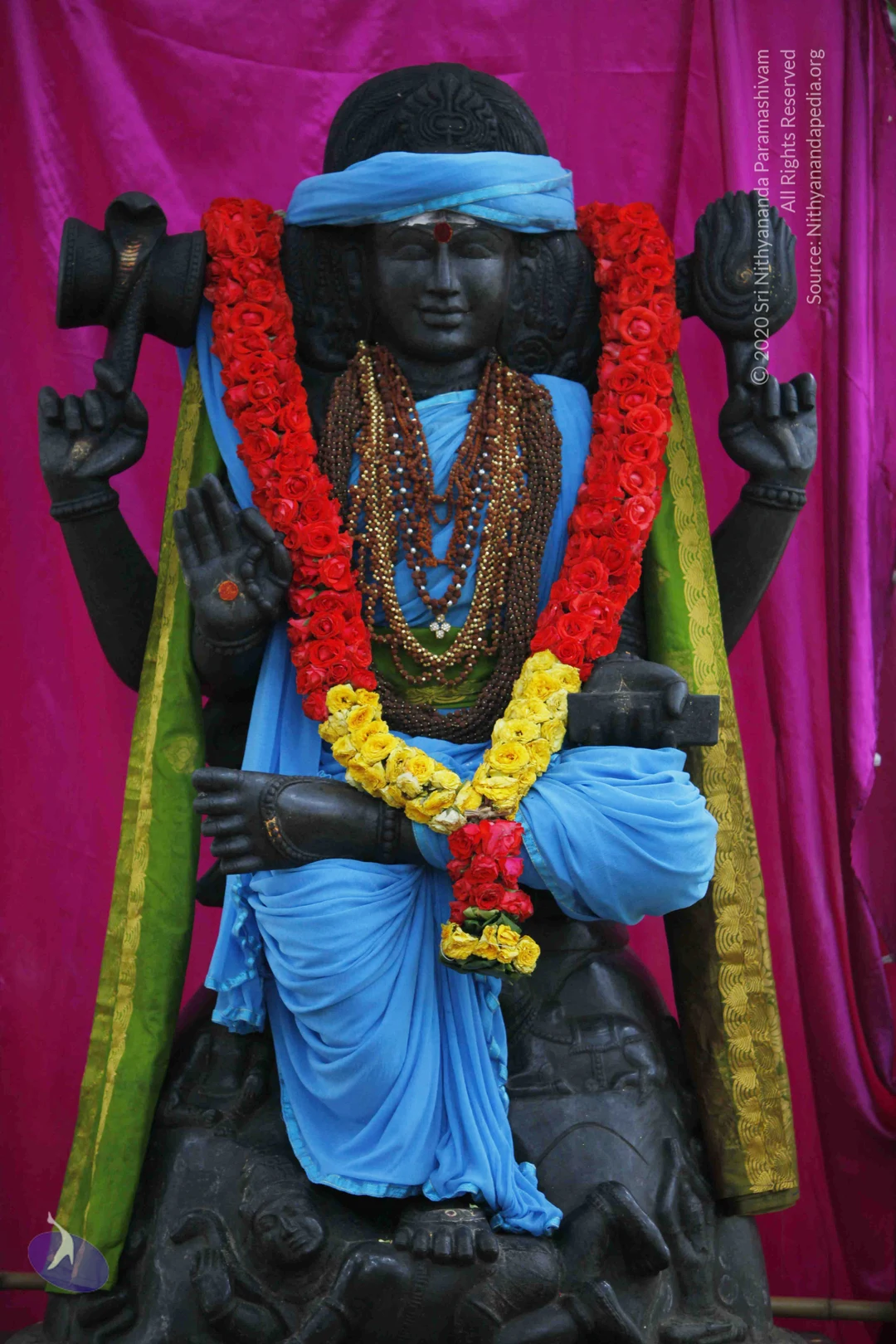
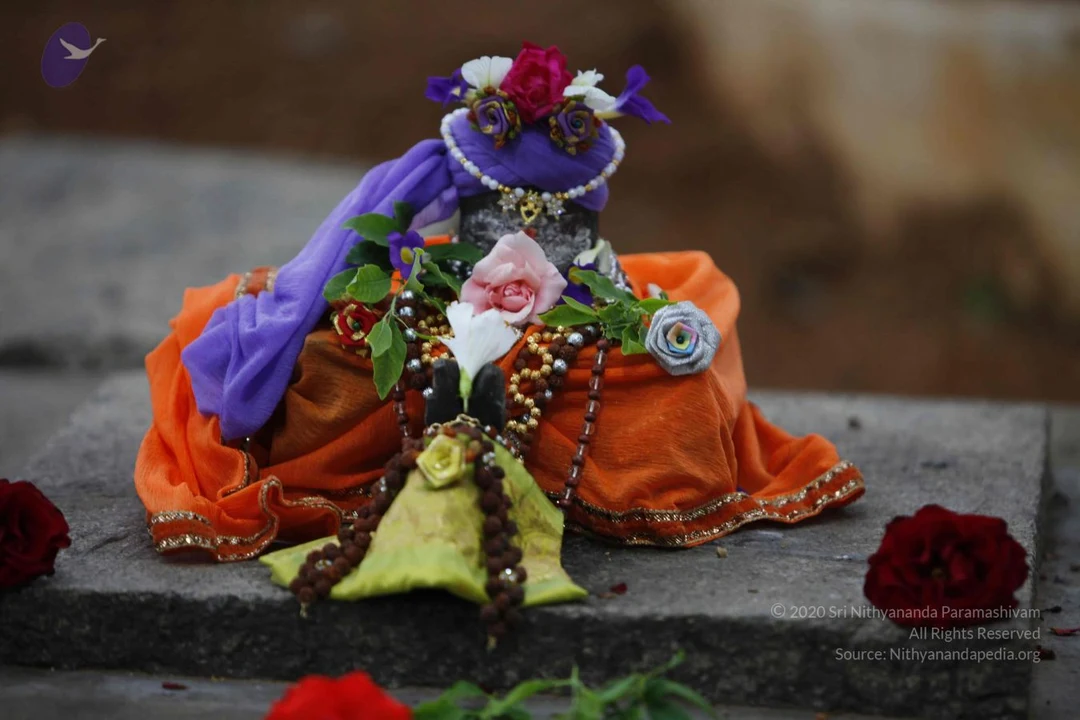
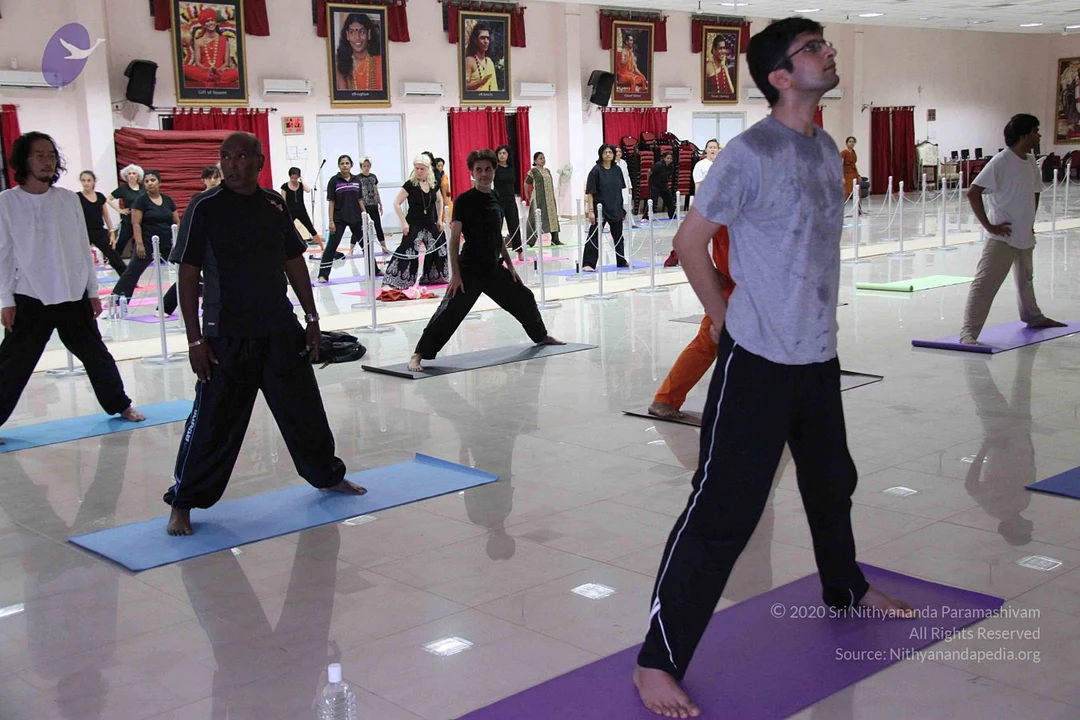
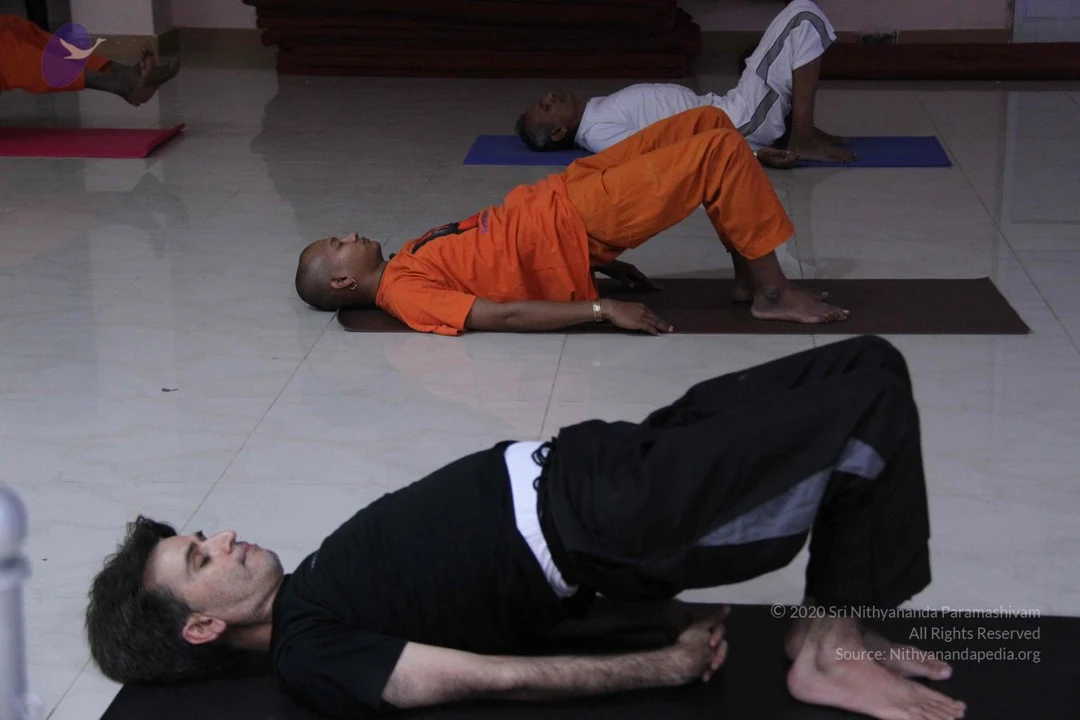
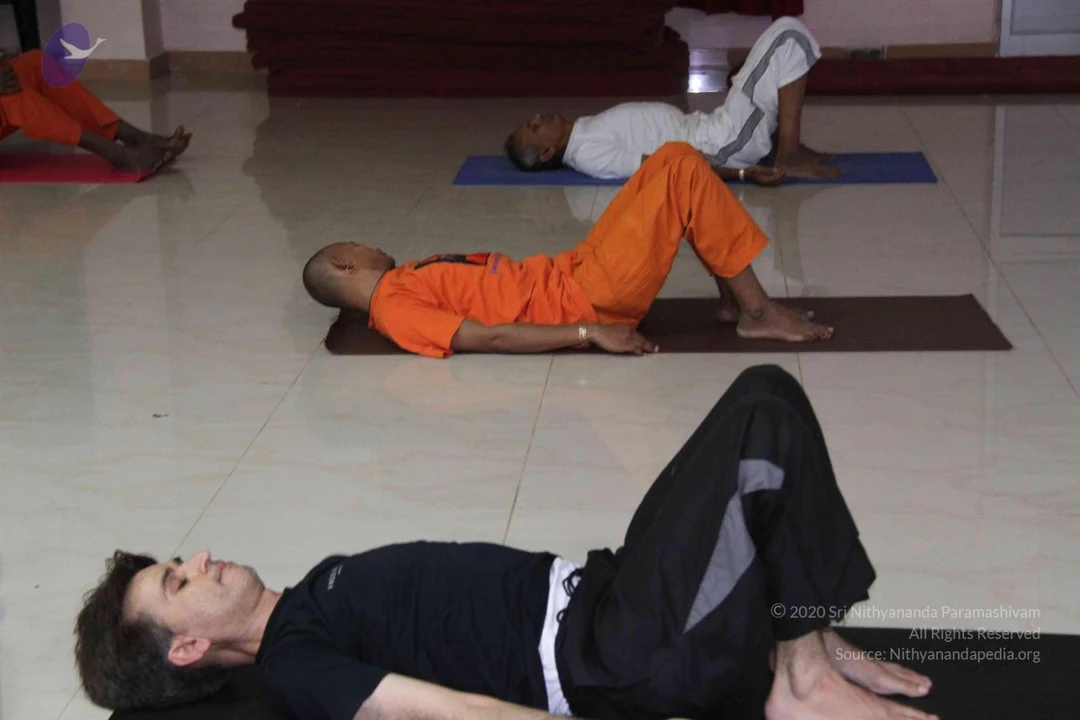
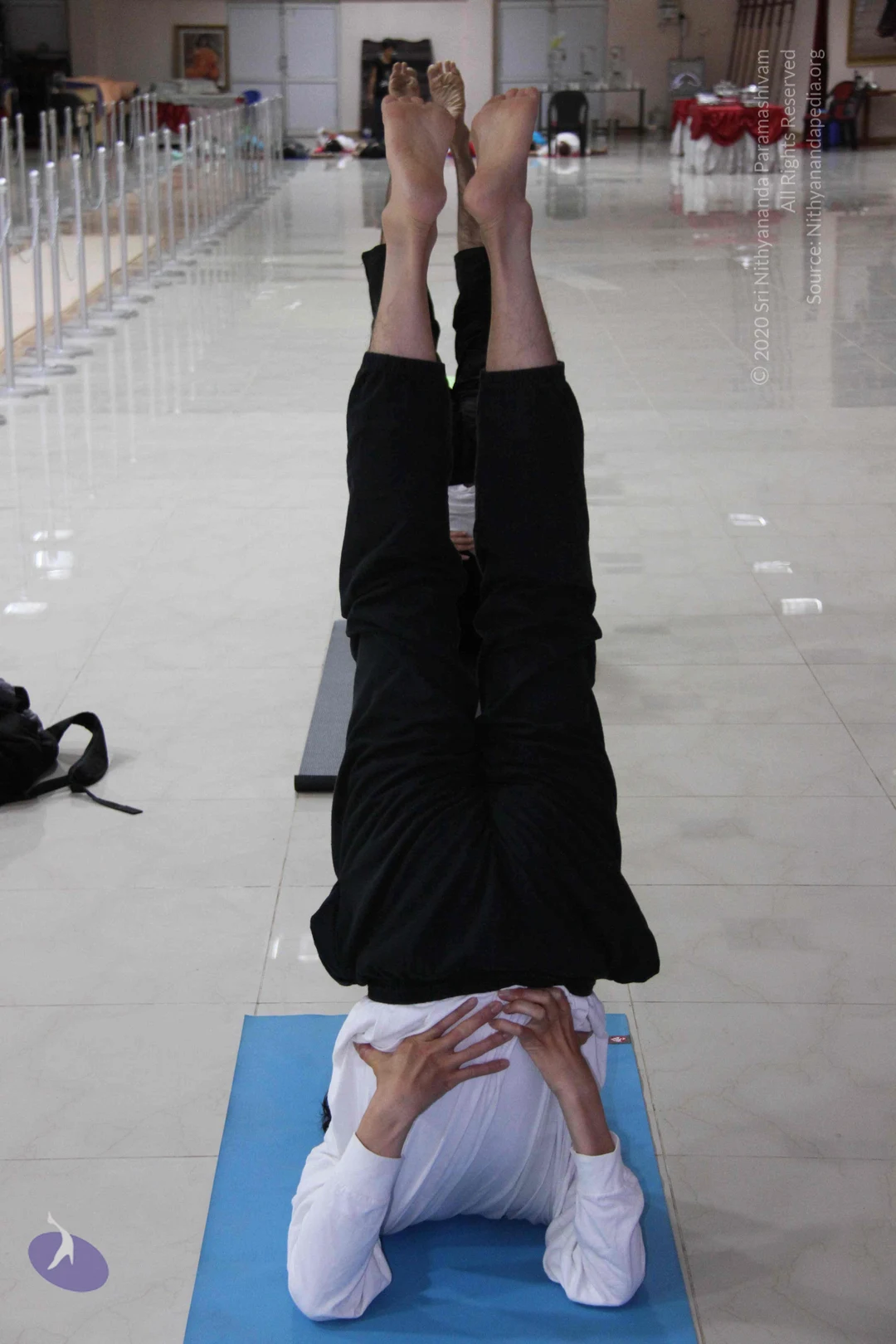
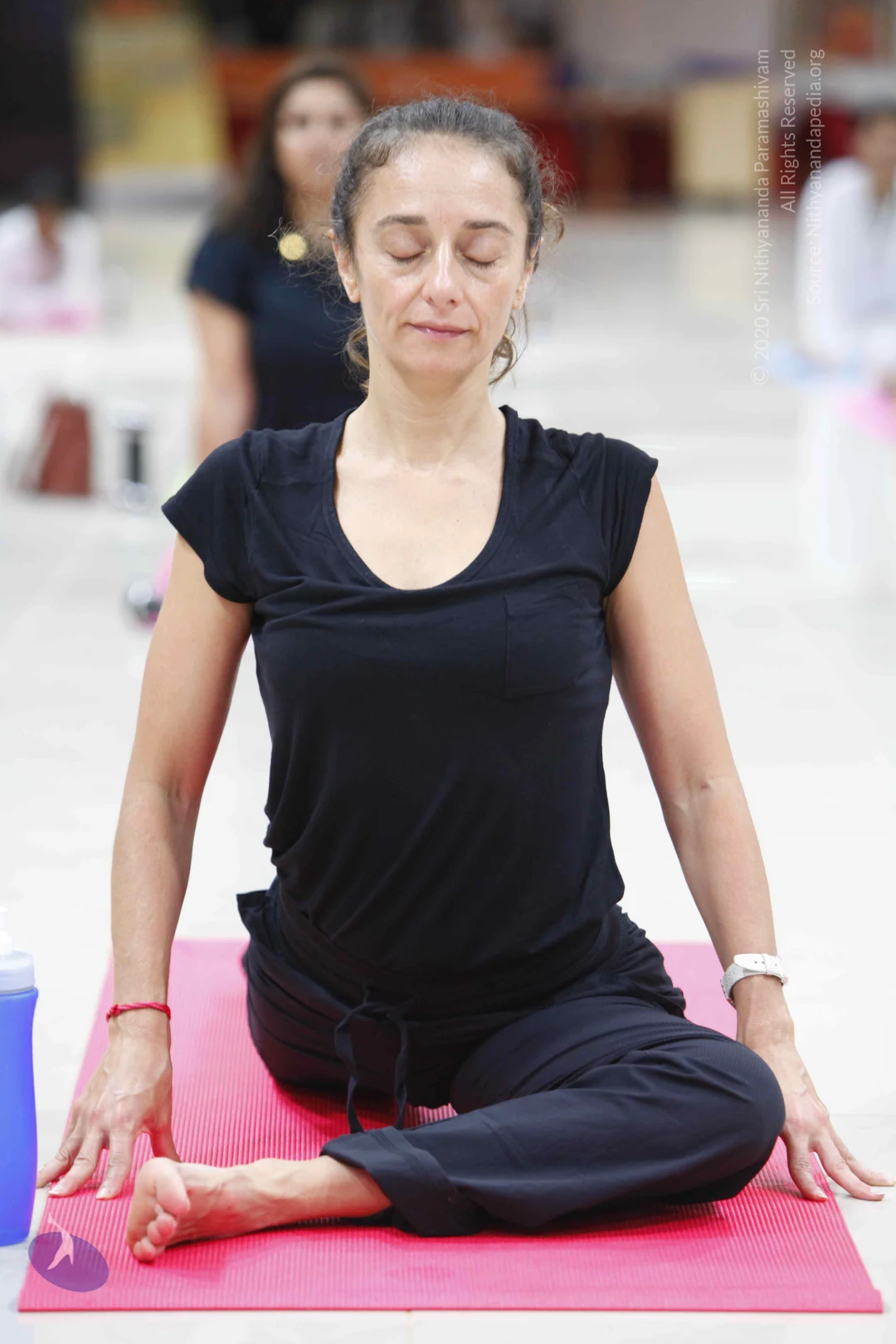
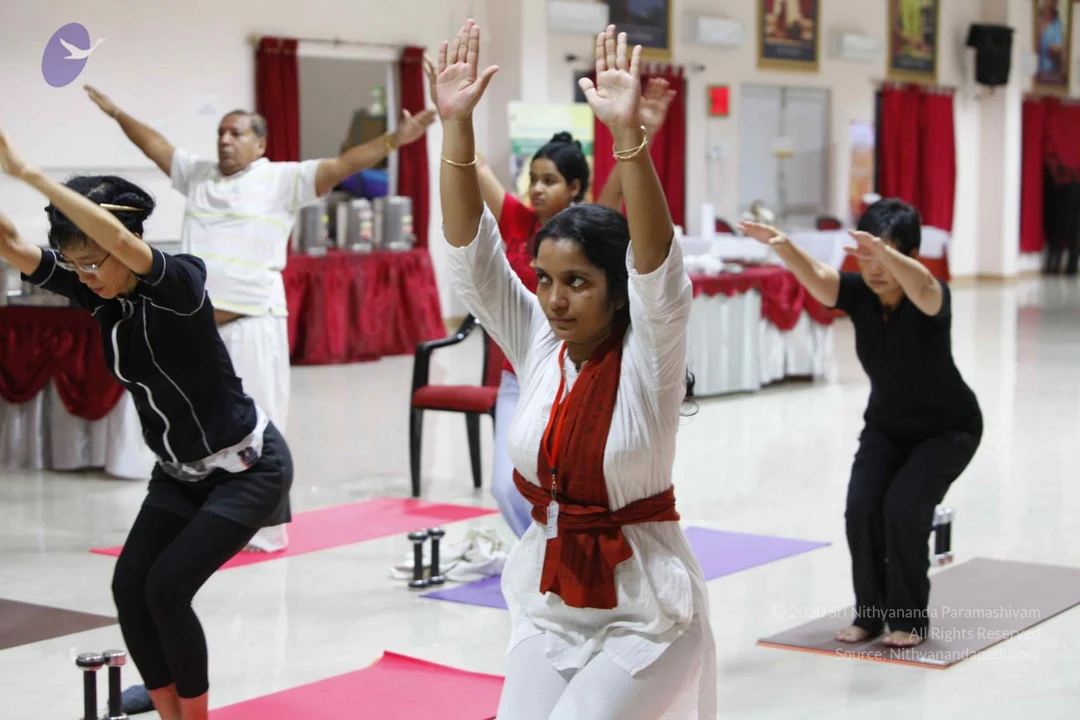
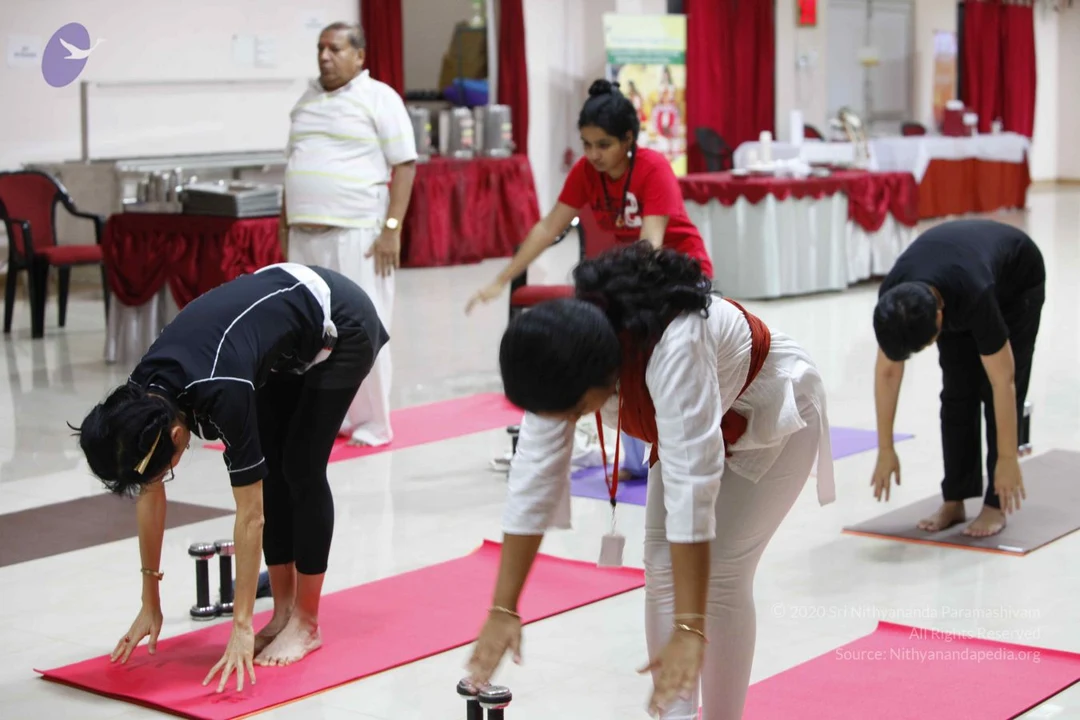
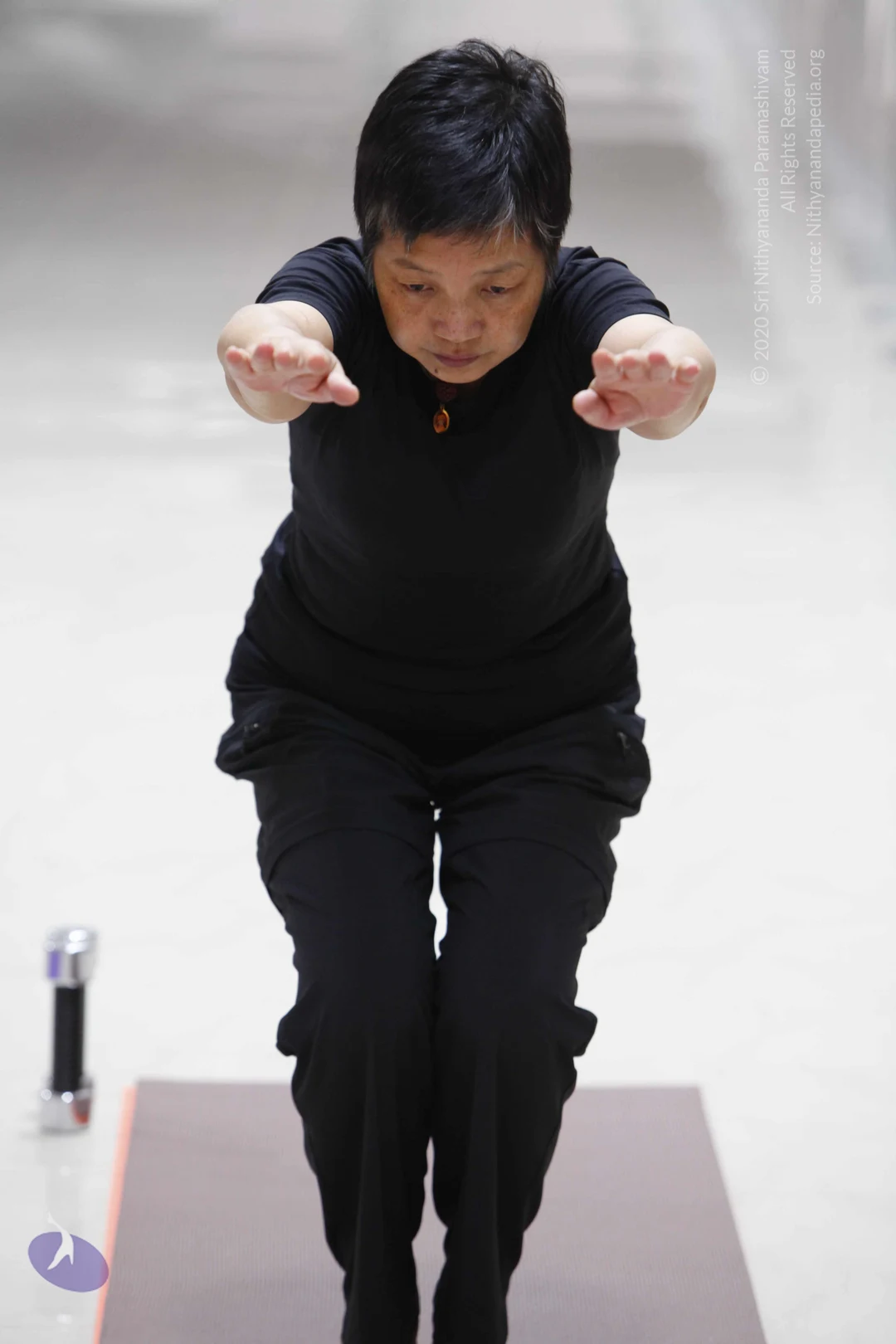
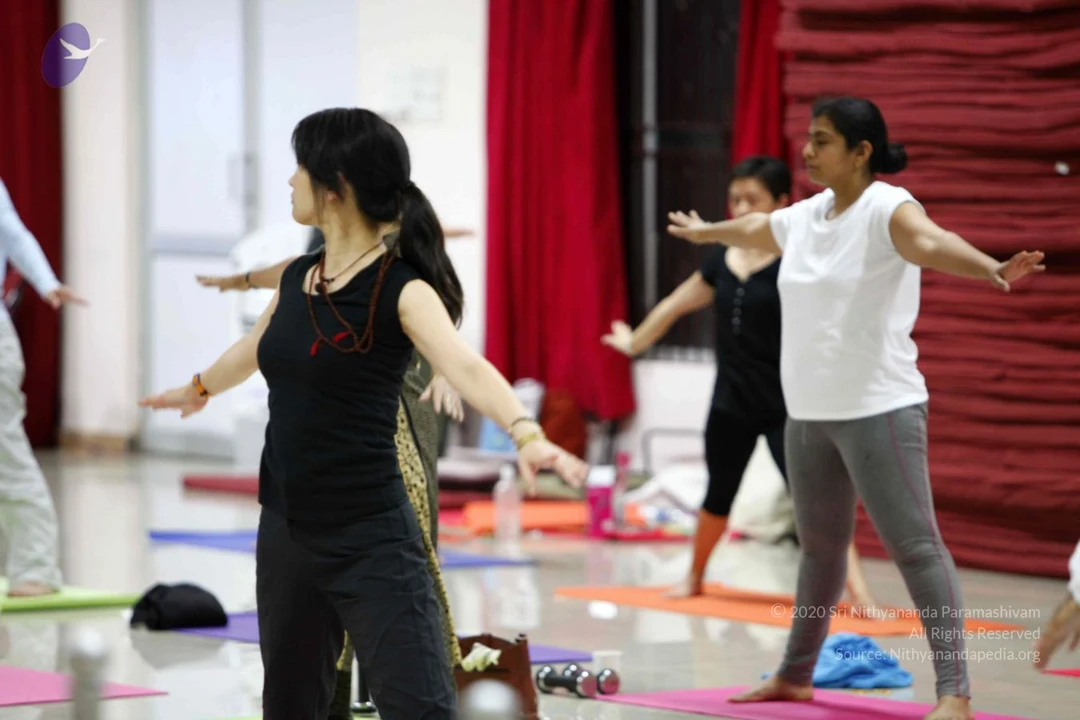
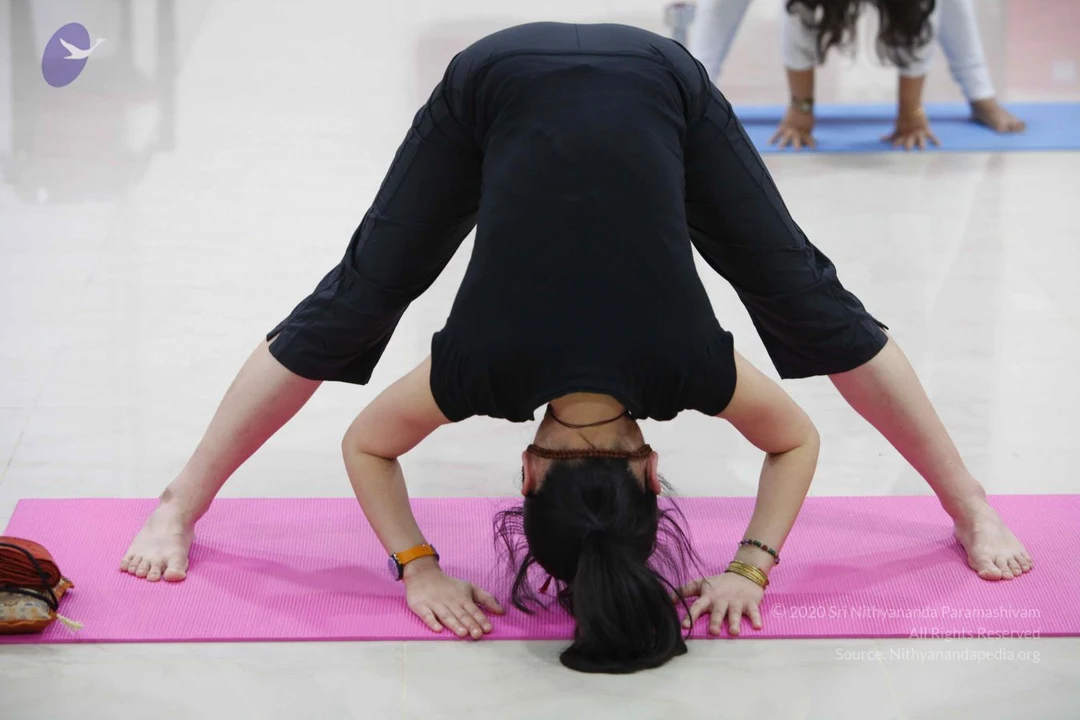
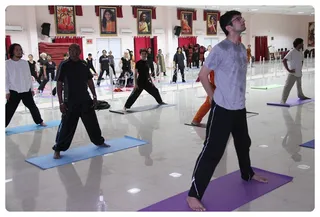
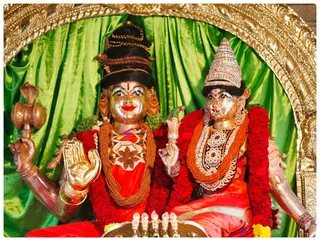
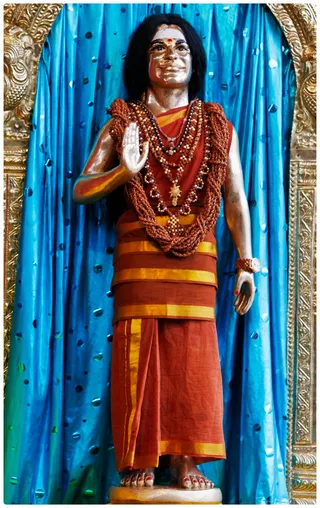
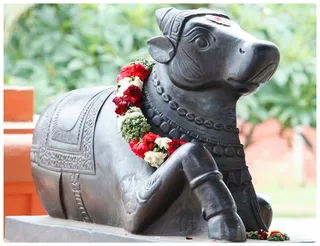
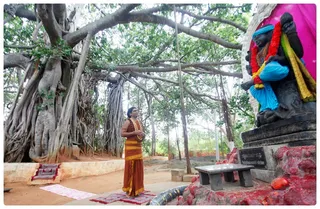
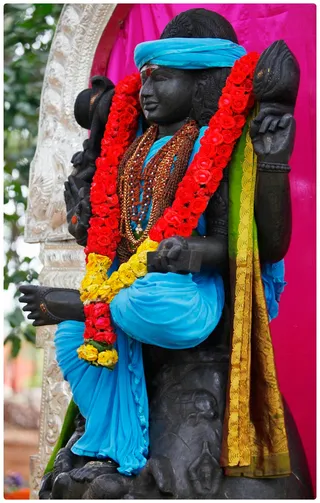
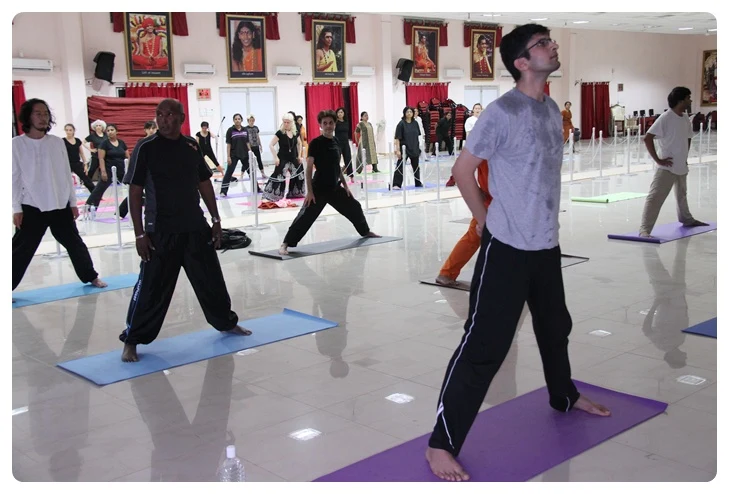
A large bright hall with tiled floor and cream walls where a group of about two dozen people stand barefoot on coloured yoga mats in a lunge stance, arms extended. Foreground: a young man in a grey t-shirt and black trousers, a man in black tracksuit beside him, and a man in white shirt and black trousers at left. Behind them more practitioners in black and orange clothing. Above, several framed portraits hang on the wall, showing robed figures in red and orange, but these are pictures on the wall rather than physical people. Air conditioners, red curtains and a water bottle are visible.A photograph of two painted metal or gilded deity murti seated side by side on a raised seat before a green silk drape framed by an ornate gold arch. The figure on the left, shown with a trident-like staff and a cobra motif, has a dark tall crown, red garment and a long garland of red roses; its right hand is raised in abhaya mudra. The figure on the right wears a silver-and-jewelled conical crown, a red and gold sari, a multicoloured jewelled necklace and a garland of red roses, with a small flower and a kalasha-like item in hand. Red and yellow flowers lie at their feet. No physical people are visible.A life-size statue of a standing male figure with a silvery-gold painted face and long dark hair, set in a golden ornamental niche against turquoise draped fabric with sequin-like dots. The figure wears a rust-red garment with broad gold borders over a dhoti-style lower cloth, with multiple strands of rudraksha beads and gold-bead necklaces, a gold pendant, and a red wristband. The right hand is raised in abhaya mudra, the left hand hangs by the side, and red-tipped feet rest on a golden pedestal. This is a statue, not a physical person, so no living people appear in the scene.A dark stone statue of Nandi, the bull mount of Shiva, reclining on a grey pedestal outdoors. The bull has a carved saddle cloth, a beaded collar and a garland of red and white flowers draped over its neck and foreleg, with loose petals on the base. A red tilak mark is on its forehead. Green foliage and a terracotta-coloured wall stand in the background. No people are visible.A photograph of a large banyan tree with many aerial roots and hanging branches in an open outdoor area. In the foreground a man with a shaved head stands barefoot on a small mat wearing an orange-yellow dhoti and a matching shawl, his hands folded in front of his chest and his face turned upward toward the branches. To the right, a black stone deity murti with a blue cloth and red-and-yellow garlands sits on a raised pedestal near a pink-draped niche, and a small grey stone bench sits on red-painted ground. A white mat with a red border lies on the ground nearby. The scene appears to be an outdoor shrine setting with no visible crowd.A black stone statue of a seated deity stands before a bright magenta backdrop, its head wrapped in a turquoise cloth with a red tilak on the forehead. Two large garlands of red roses and yellow marigolds hang over its shoulders. Strands of brown rudraksha-style beads cover its chest, and it wears a turquoise dhoti with a green and gold embroidered shawl draped over one side. The carved stone frame beside it is white and ornate. No physical people are visible.

Deity Alankar

8 photosSource gallery
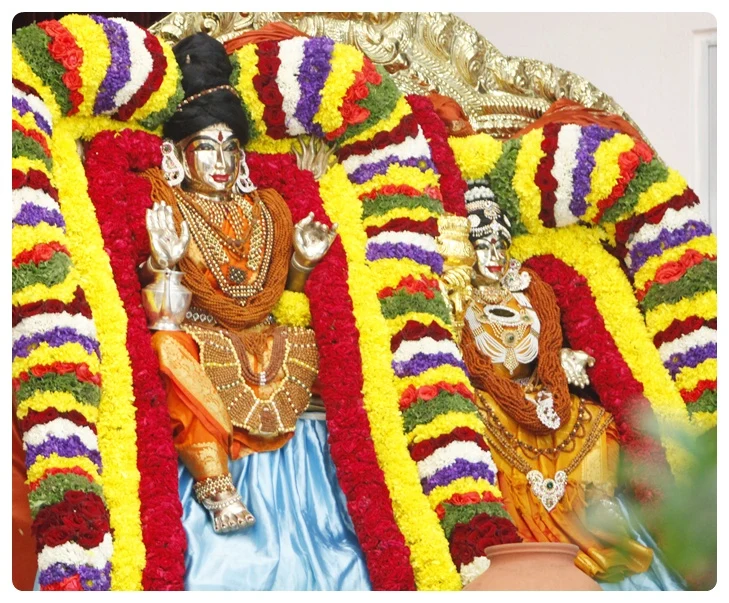
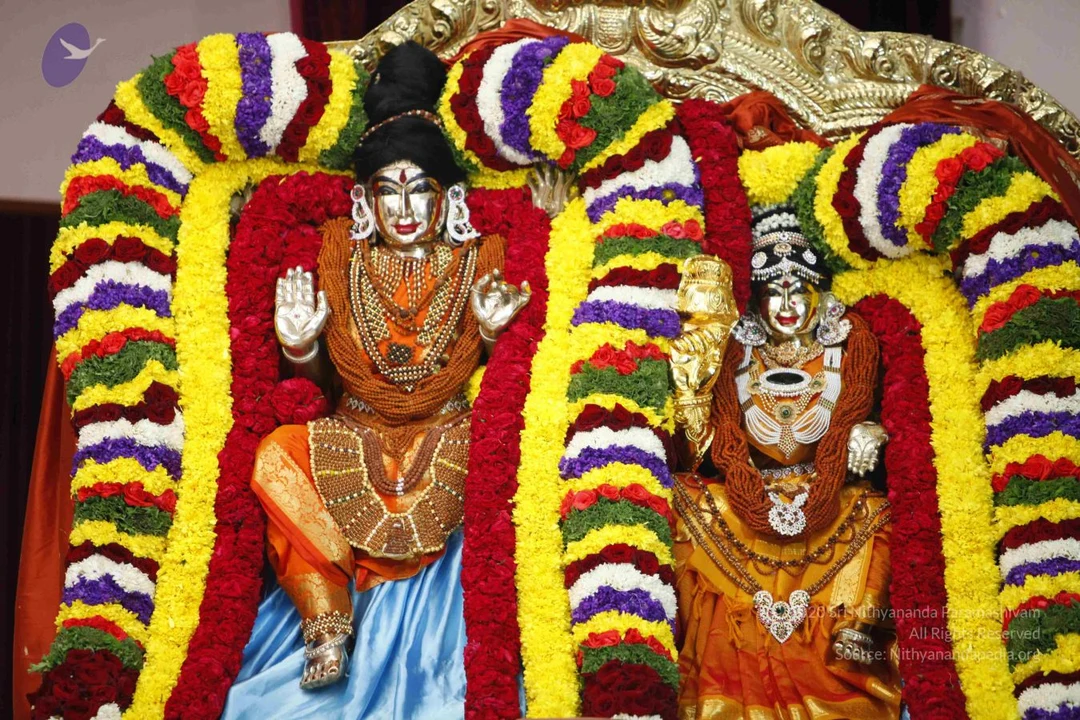
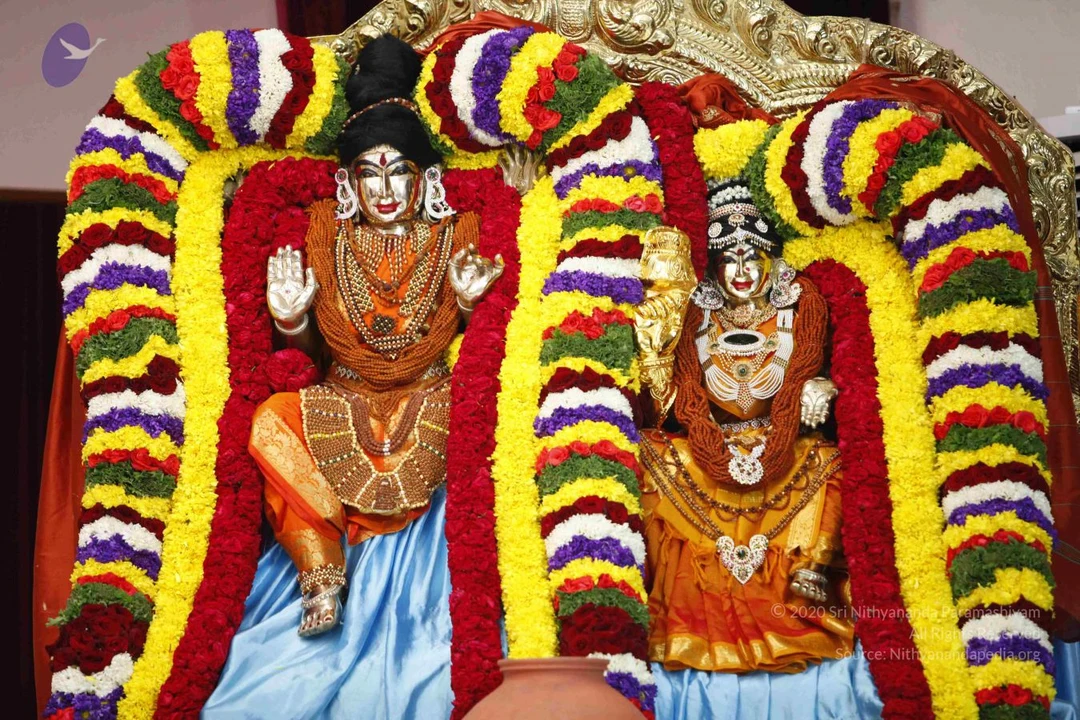
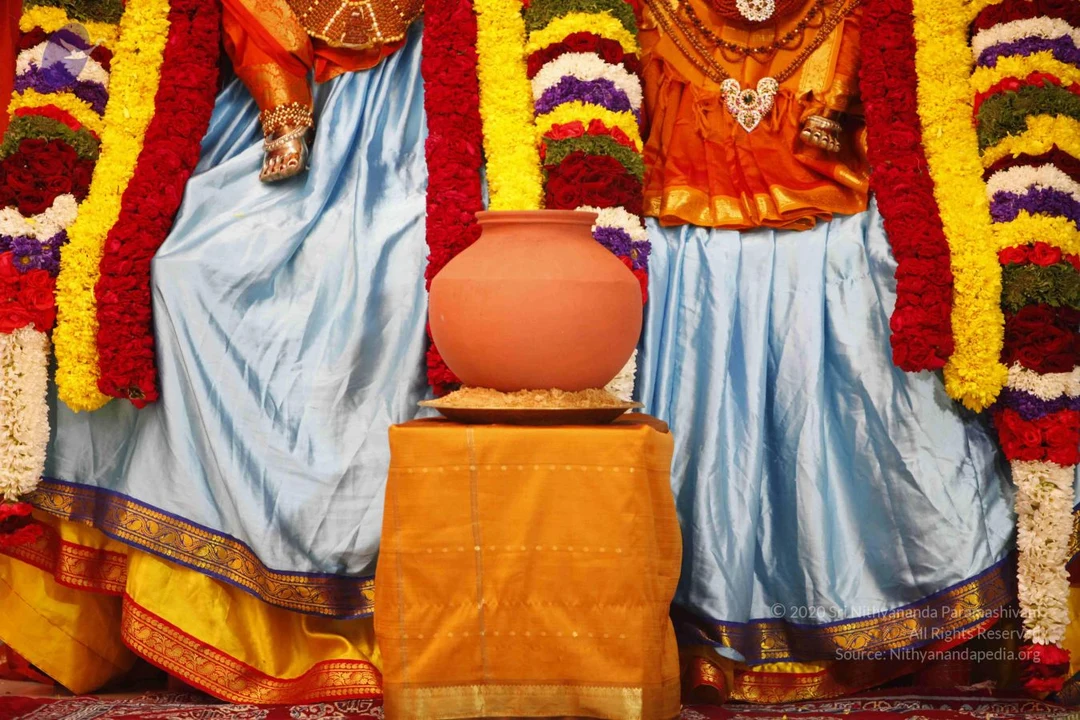
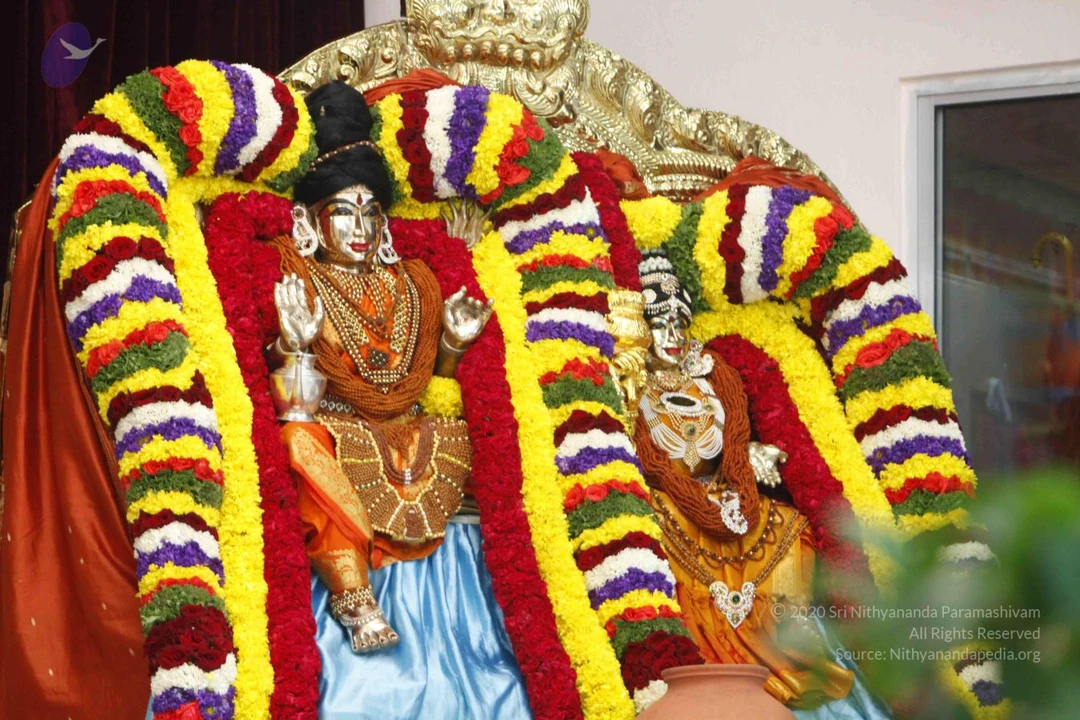
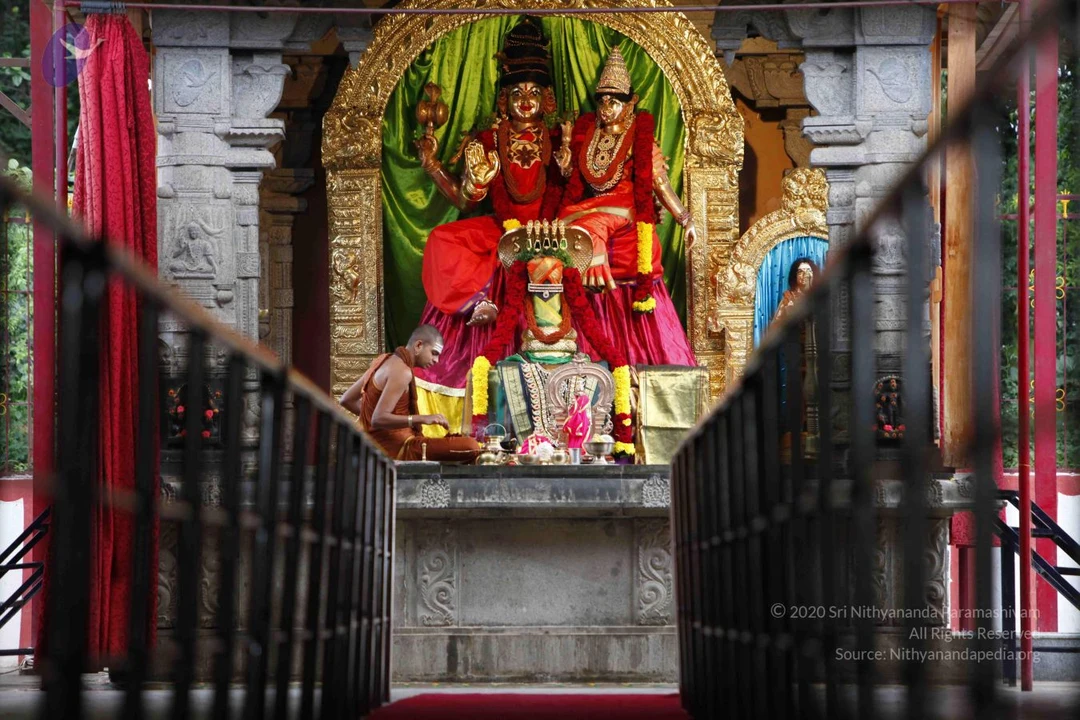
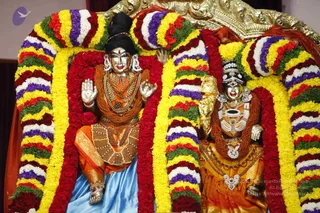
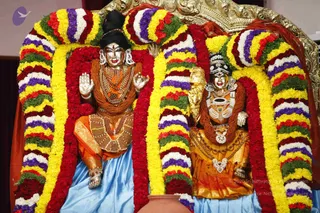
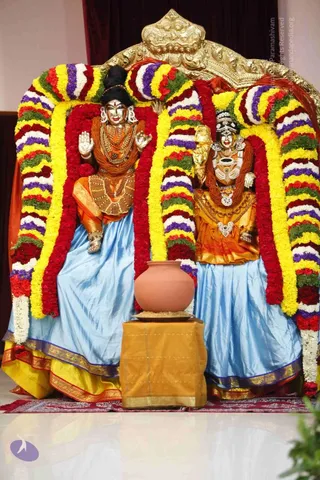
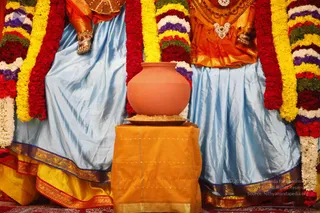
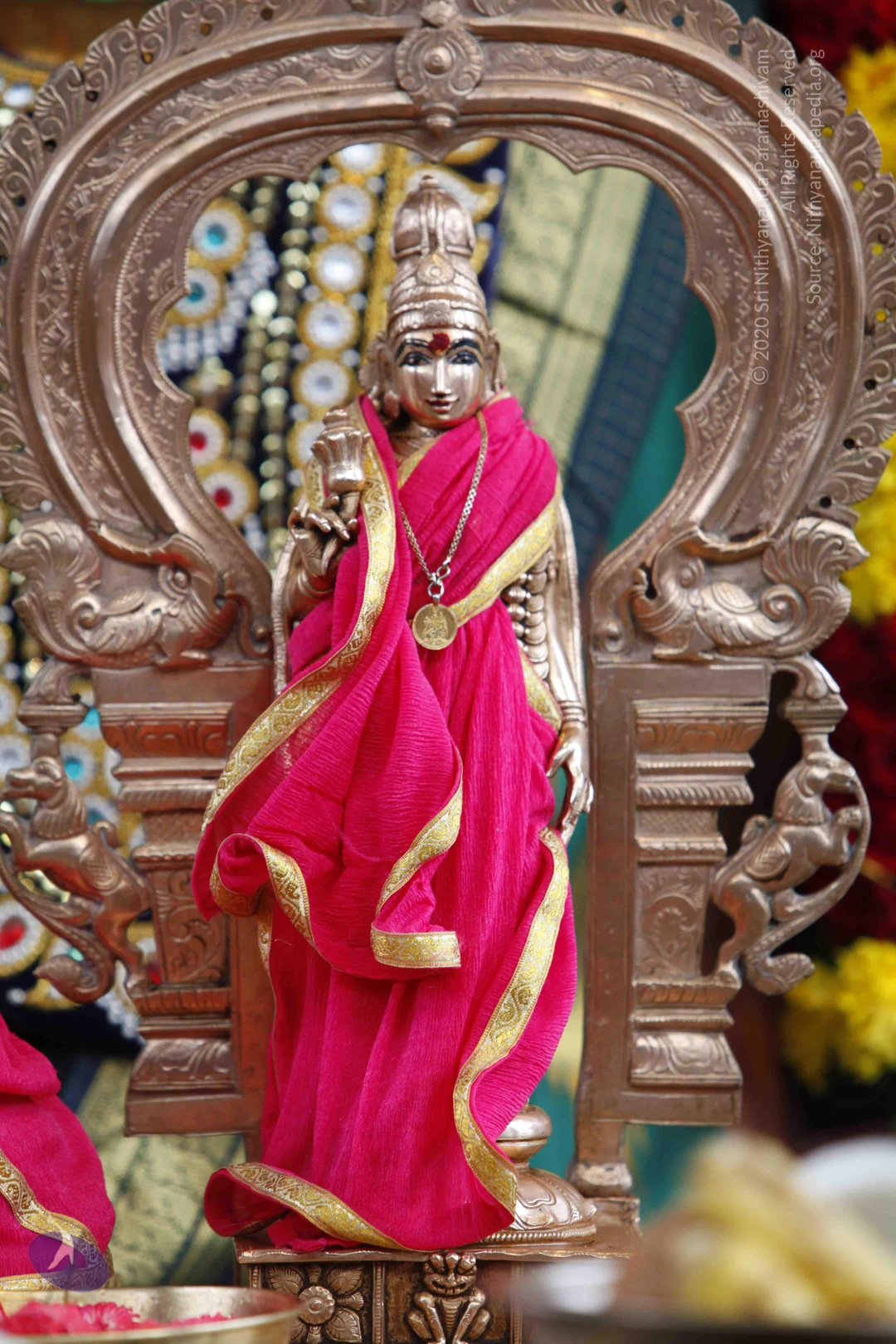
Two gilded deity murtis, a male and a female form, sit side by side in a shrine framed by an arch of garlands in yellow, red, white, purple and green flowers. The male figure, on the left, has a raised right hand in abhaya gesture and wears an orange dhoti, layered beaded necklaces and a jewelled waist ornament. The female figure, on the right, wears an orange silk sari, a crown, a ruby pendant and white and gold jewellery, and holds a golden kalasha-like vessel.Photograph of a shrine altar with two silver-faced deity murtis seated side by side under an arch of garlands in red, yellow, white, purple and green flowers. The figure on the left wears an orange dhoti, orange-brown beaded necklaces and a gold waist ornament, with raised hands. The figure on the right wears an orange-gold garment, a white and gold bead necklace and a gold crown-like headpiece. A golden ornate backdrop frames the scene over blue draped cloth, with a small kalasha-style vessel in front.Two silver-faced deity murtis are seated side by side on a golden ornate throne, adorned with multicolored flower garlands in yellow, red, purple, white and green. The figure on the left wears an orange garment with gold jewellery and raises a hand in blessing; the figure on the right wears orange with a heart-shaped pendant and holds a golden staff-like object. Both are draped in light blue silk skirts with gold borders. A terracotta kalasha pot sits on a gold-cloth covered stand in front of them, on a red patterned rug. Scene is an ornamental shrine display with no physical people visible.Close view of two deity murtis dressed in pale blue silk sarees with gold and maroon borders, adorned with red, yellow, white and purple flower garlands. A large terracotta kalasha pot sits on a plate on an orange silk-draped pedestal between them. Gold jewellery, bangles and an ornate necklace are visible on the figure to the right, while only the lower body and feet of the figure to the left show. No people are visible.A photograph of a decorated shrine showing two white-painted deity murti seated side by side on a blue satin-draped platform. The figure on the left wears an orange dhoti, gold jewellery and a dark topknot, with one hand raised in blessing. The figure on the right wears an orange garment, a crown and layered white and gold necklaces. Both are framed by a large arch of marigold and rose garlands in yellow, red, purple and white, with a gilded arch behind. A terracotta kalasha sits in front on the platform, and a wall-mounted air conditioner is visible at right.Two silver-faced deity murtis seated side by side on a golden throne, draped in thick multicoloured garlands of yellow, red, purple, white and green flowers. The figure on the left wears an orange and gold skirt, a tall black crown, gold necklaces and bangles, and holds a hand in abhaya pose. The figure on the right wears an orange garment, silver ornaments and a pearl necklace. A terracotta kalasha stands in the foreground beside a blue cloth, with a window and green plants at the right edge.

Temple Swamiji
53 photosSource gallery
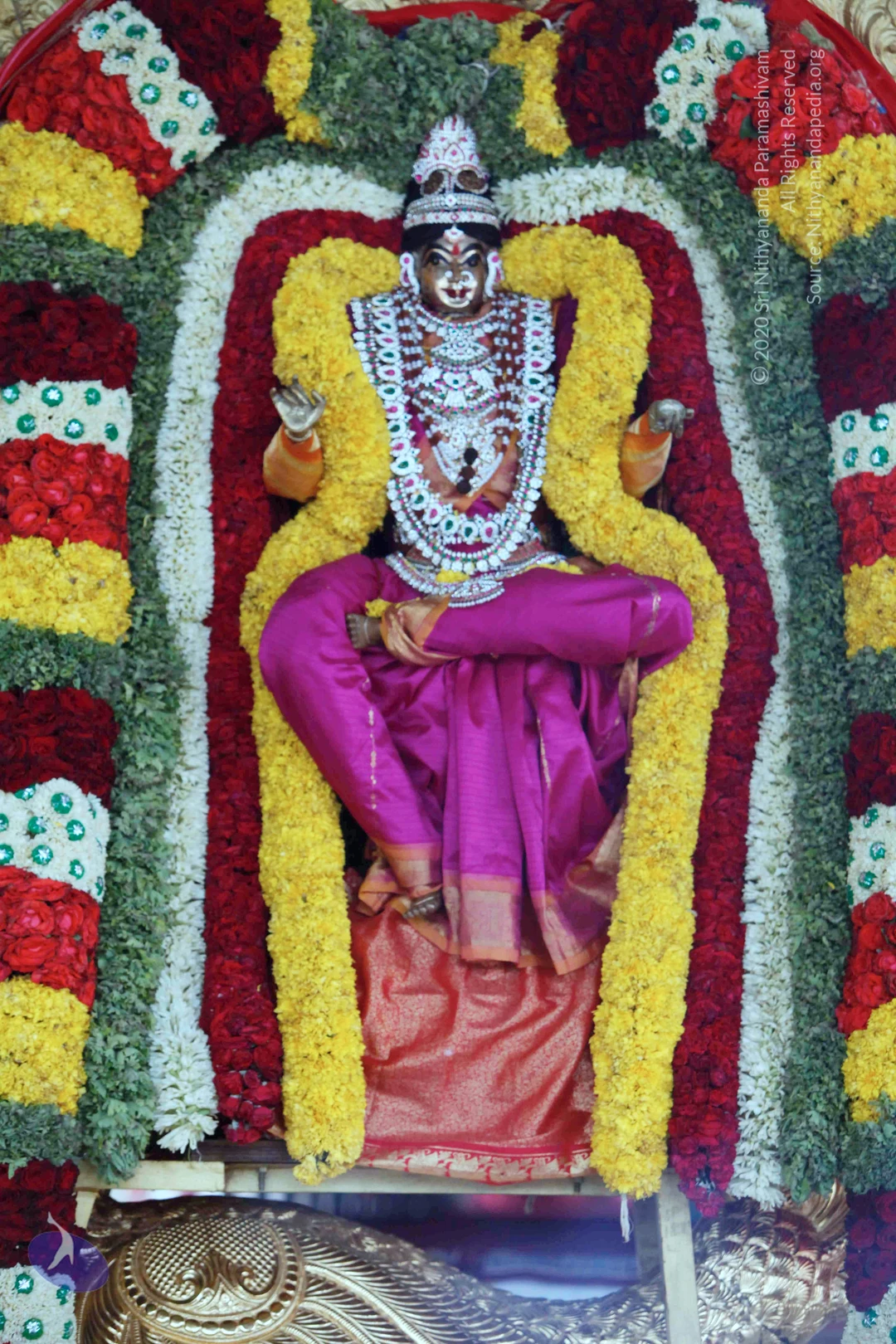
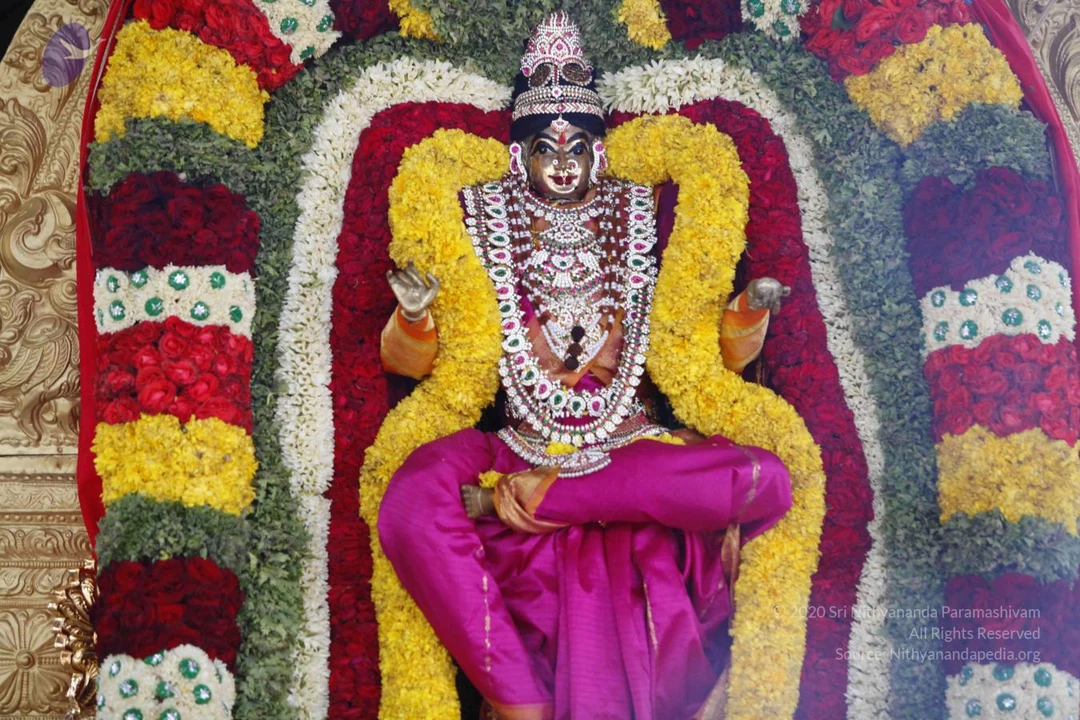
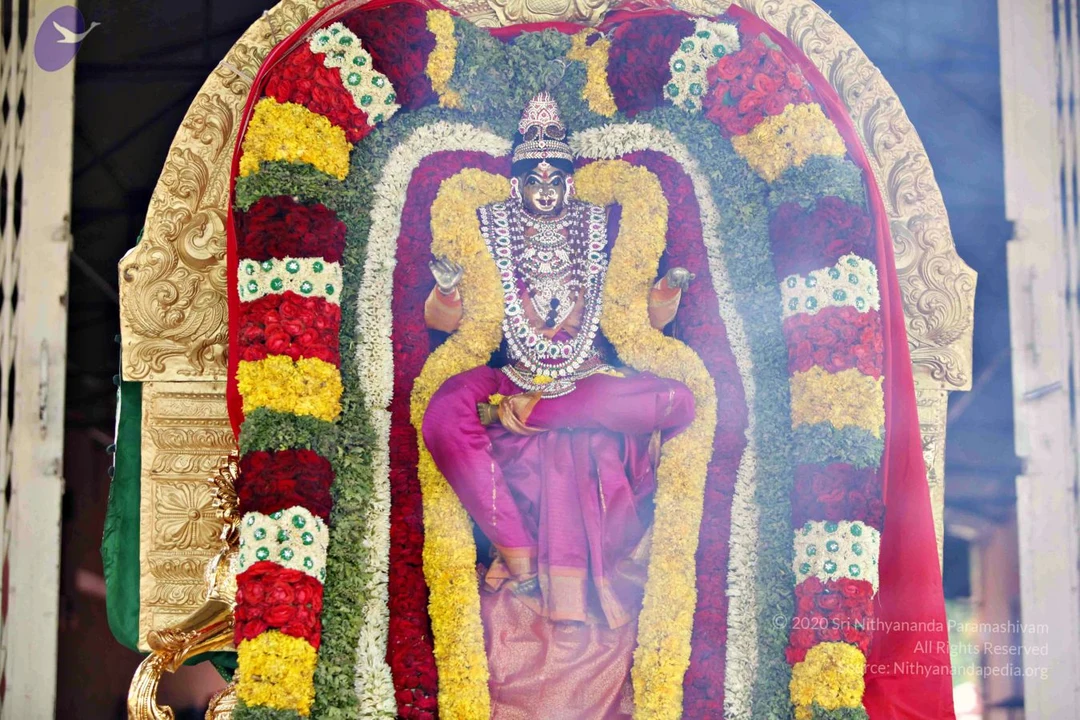
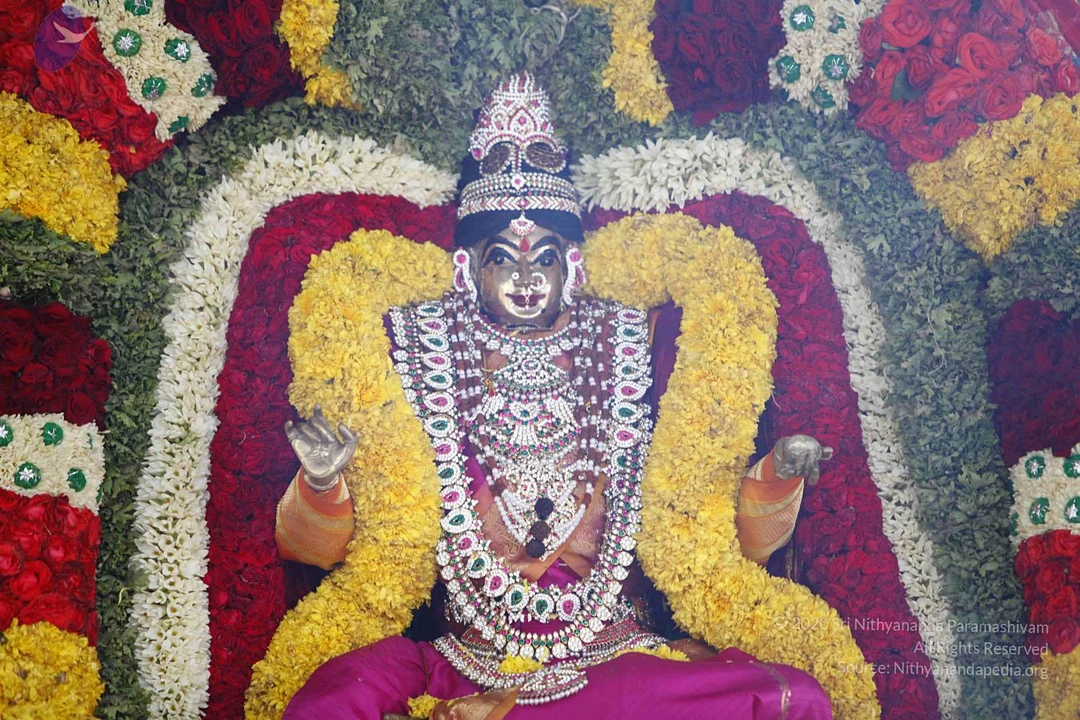
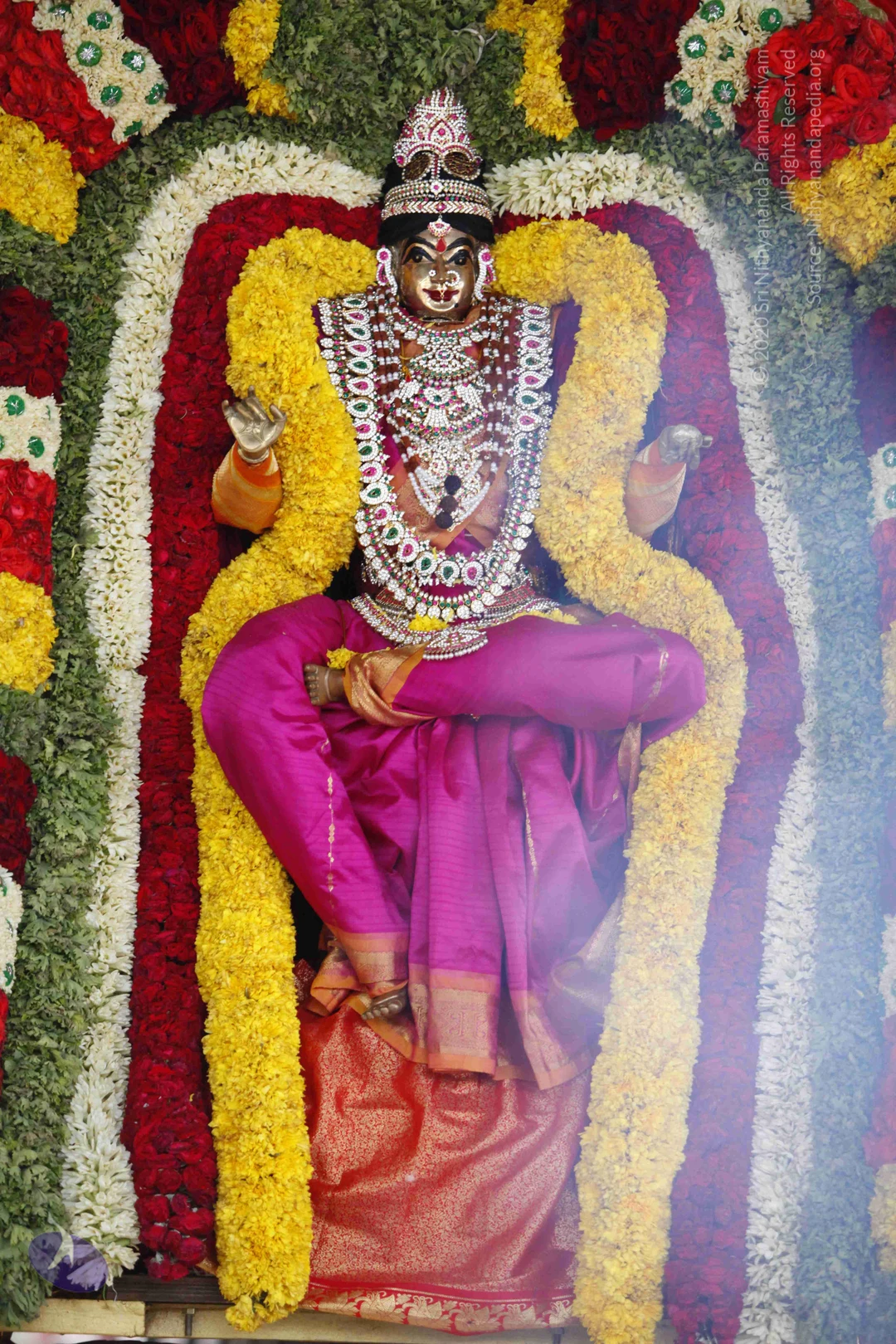
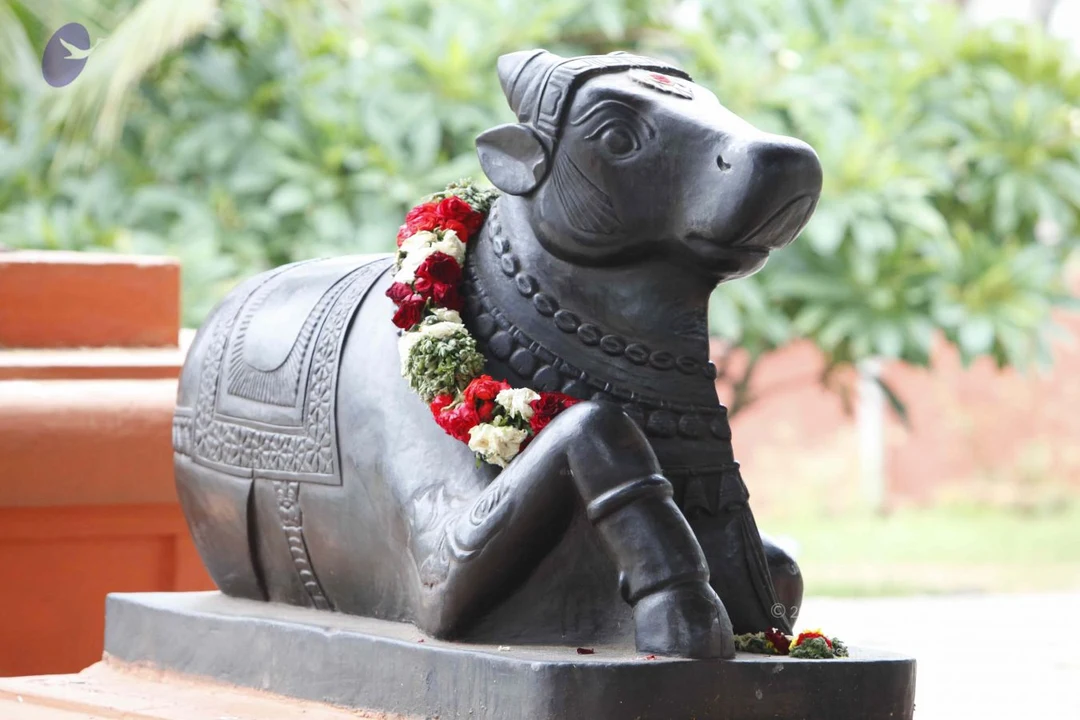
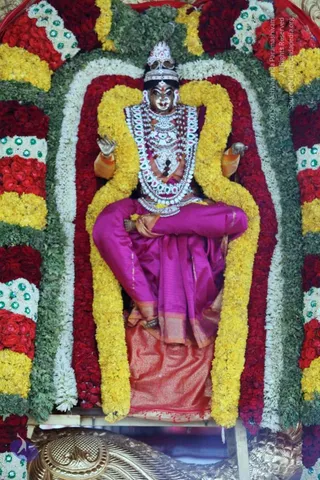
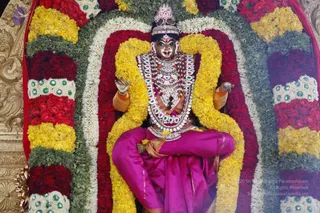
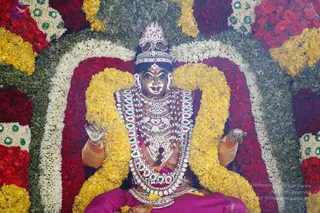
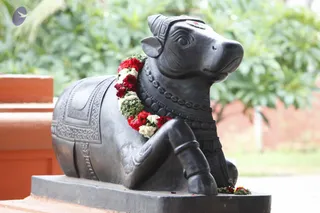
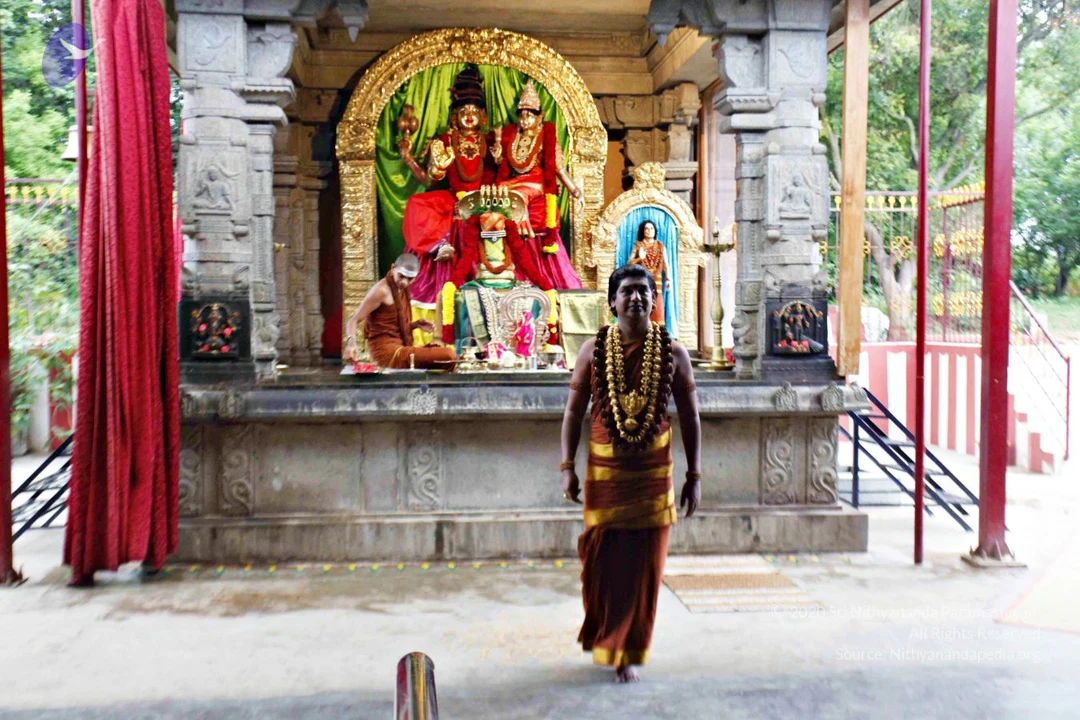
A seated deity murti. The figure sits in a flower-framed niche of red roses, yellow marigold garlands, white jasmine and green leaves, with green-jewelled white flower strands. The figure's hands are gold-toned and rest near the lap on a red and gold cloth. No living people are visible.A seated deity murti decorated with fresh garlands framing it in bands of red roses, white jasmine, yellow marigolds and green leaves. The figure wears a jewelled silver crown and a heavy ornamental necklace set with green and red stones, with a magenta silk dhoti draped over crossed legs. Its hands rest in mudra poses. The murti is a statue, not a physical person, and no living people are visible.A photograph of a deity murti seated within a richly decorated gold-and-red arched shrine frame. The murti wears a silver crown, silver necklaces and jewelled garlands, and a magenta silk garment with a pink-gold cloth draped below. Its hands hold small ritual objects. The arch is wrapped with bands of red roses, yellow marigolds, white flowers and green leaves, and a red cloth hangs at the right. Incense smoke drifts across the frame. No people are visible.A metal deity murti seated in a decorated shrine, covered in fresh garlands of yellow marigolds, white jasmine and red roses, with leafy greens framing the arch behind it. The murti wears an ornate silver crown, layered jewelled necklaces with green and pink stones, large earrings, and a magenta dhoti with orange-gold shawl. Its hands are raised in a blessing gesture. No people are visible, only the decorated murti and the floral arrangement.A photograph of a seated deity murti decorated with dense garlands of yellow marigolds, white jasmine and red roses arranged in an arched frame. The figure wears a jewelled crown, layered silver and gemstone necklaces, and a magenta silk sari with red-and-gold border. Its hands are raised in gesture and a faint smoke or incense haze drifts across the lower right. No physical people are visible.A dark stone Nandi, the bull mount of Shiva, sits on a raised plinth outdoors. It wears a garland of red and white flowers around its neck and has a red tilak mark on its forehead. A carved saddle cloth and a beaded collar decorate its body. Green foliage blurs in the background, and scattered petals lie on the base.

Pratyaksha Padapuja crowd shots

33 photosSource gallery
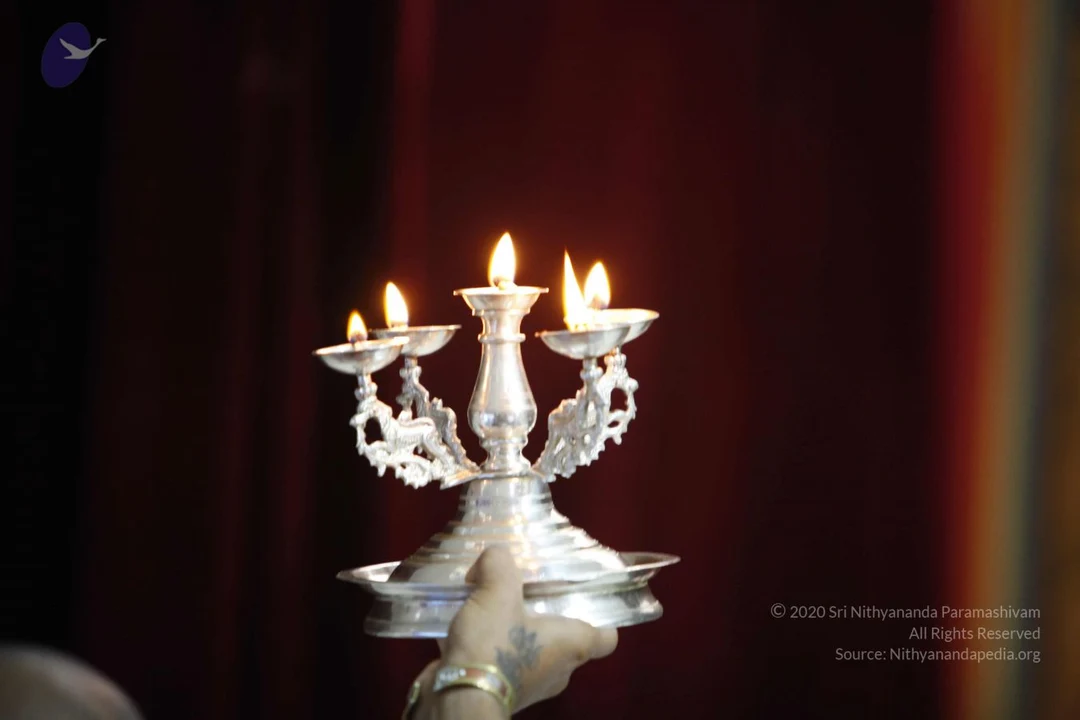
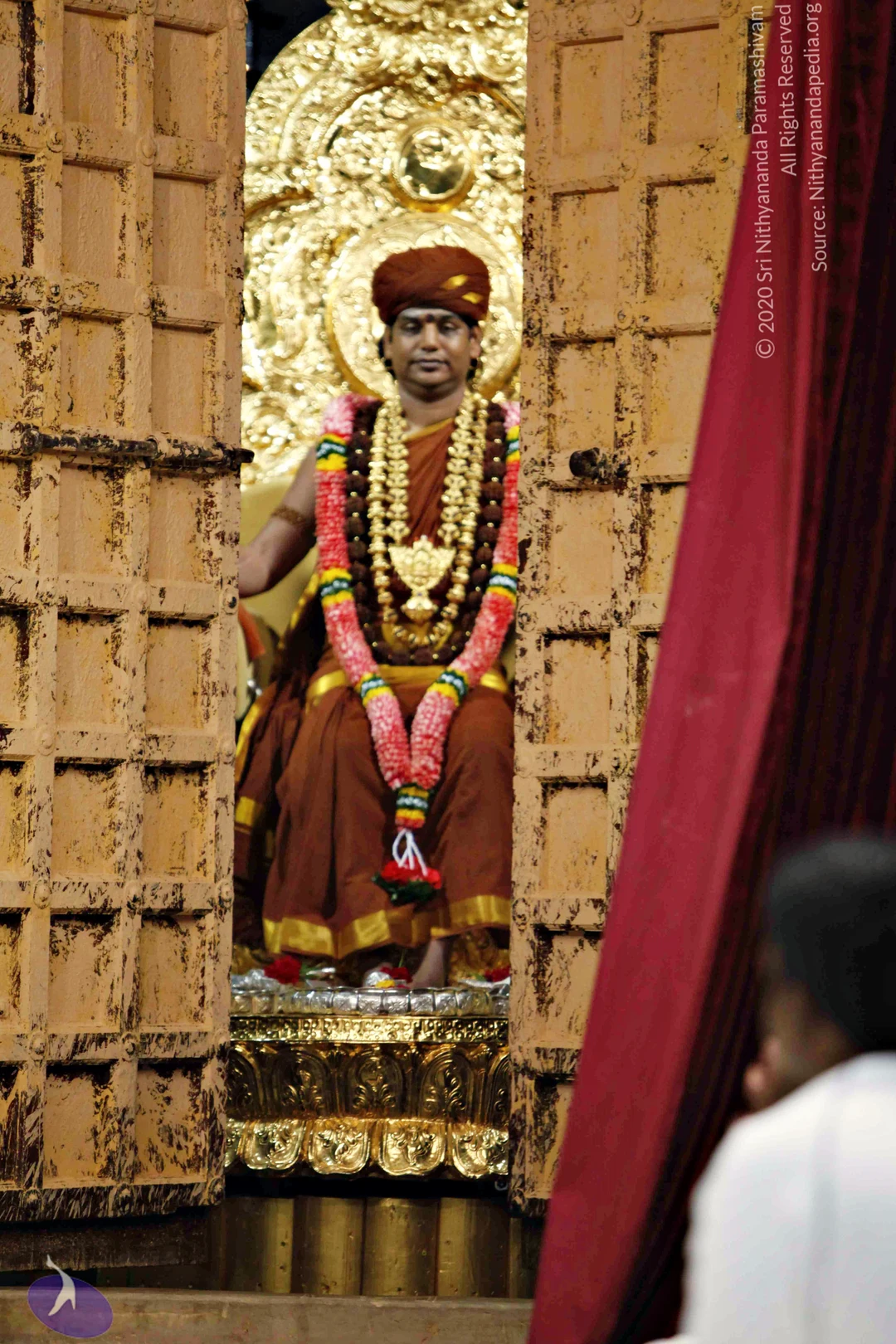
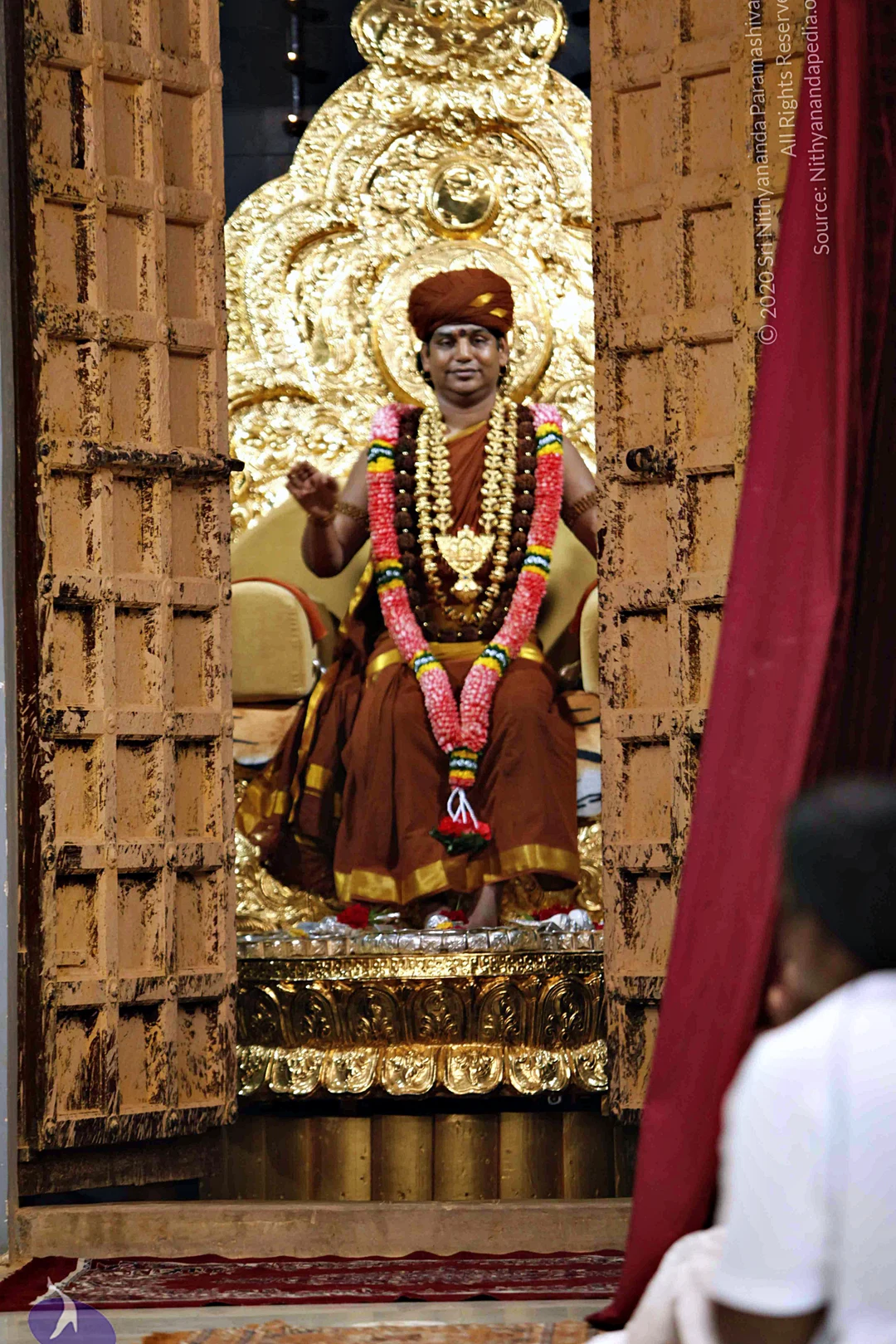
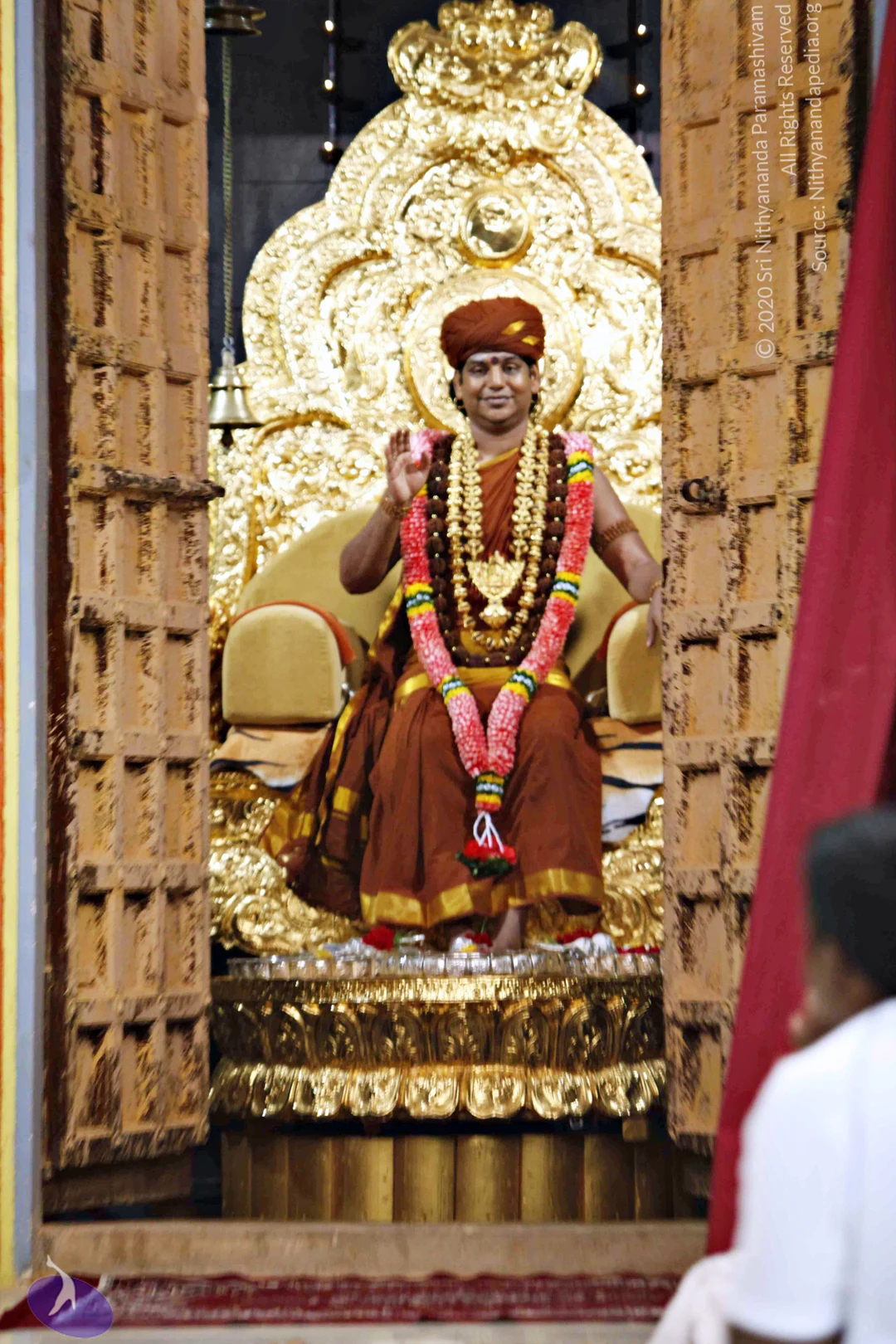
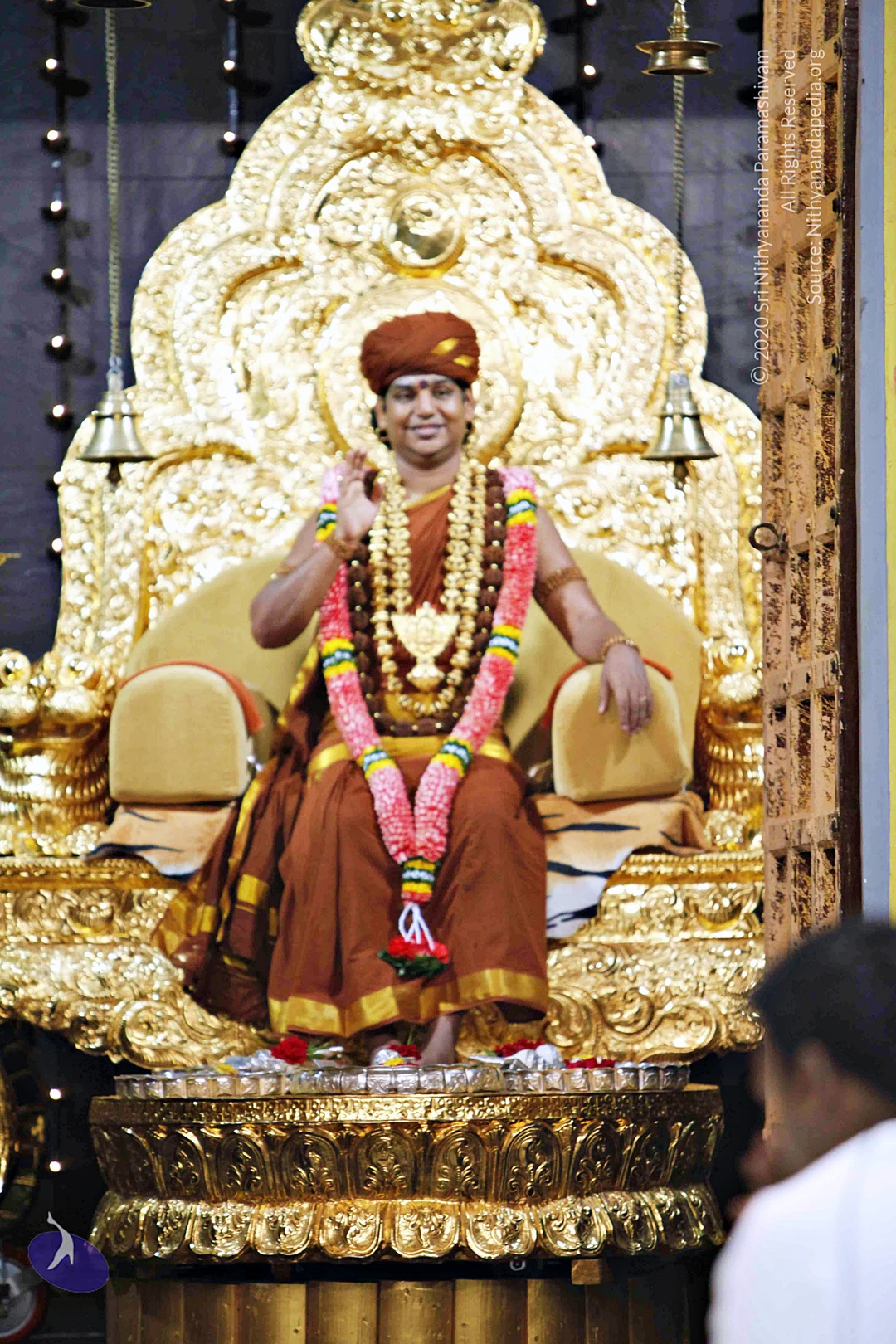
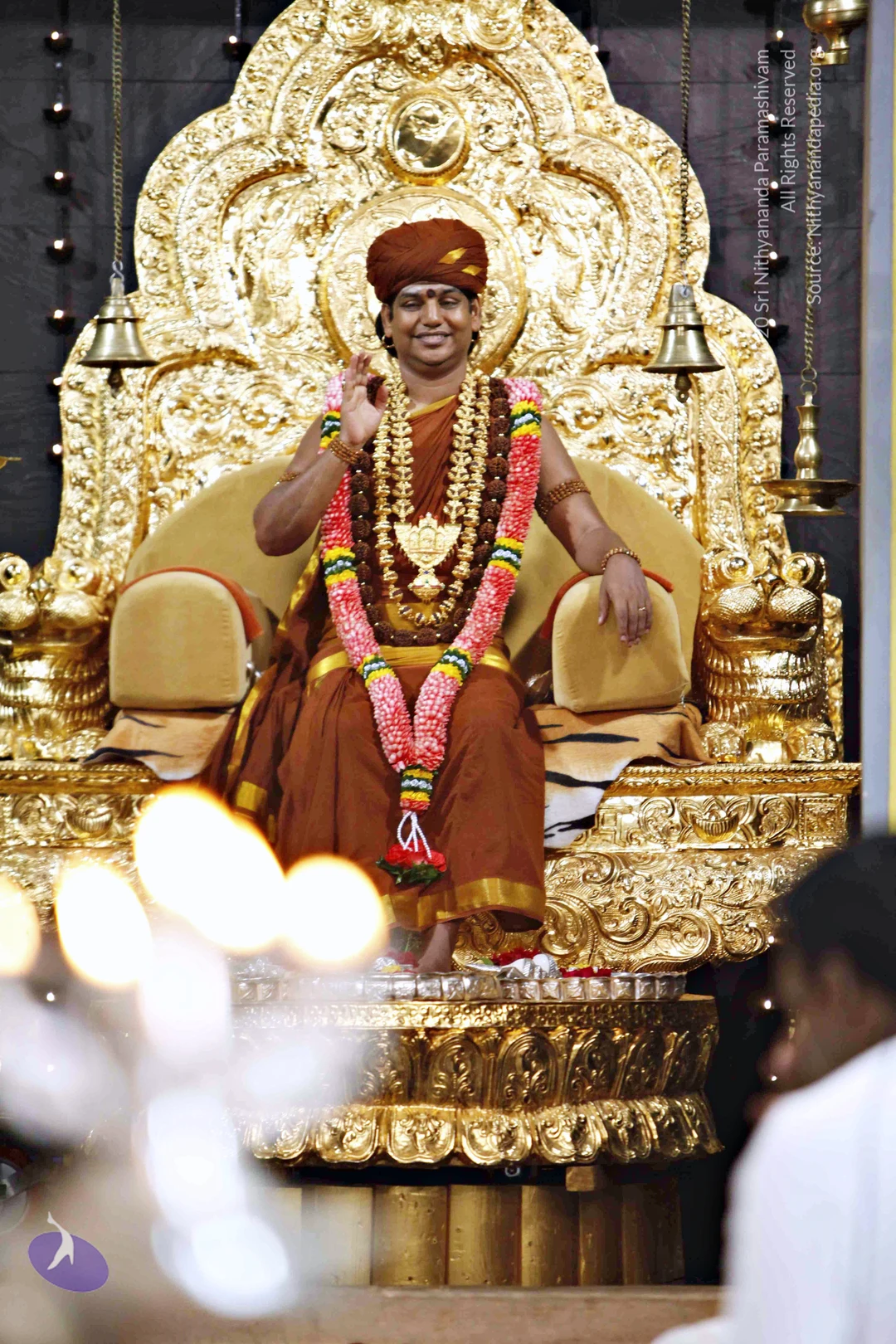
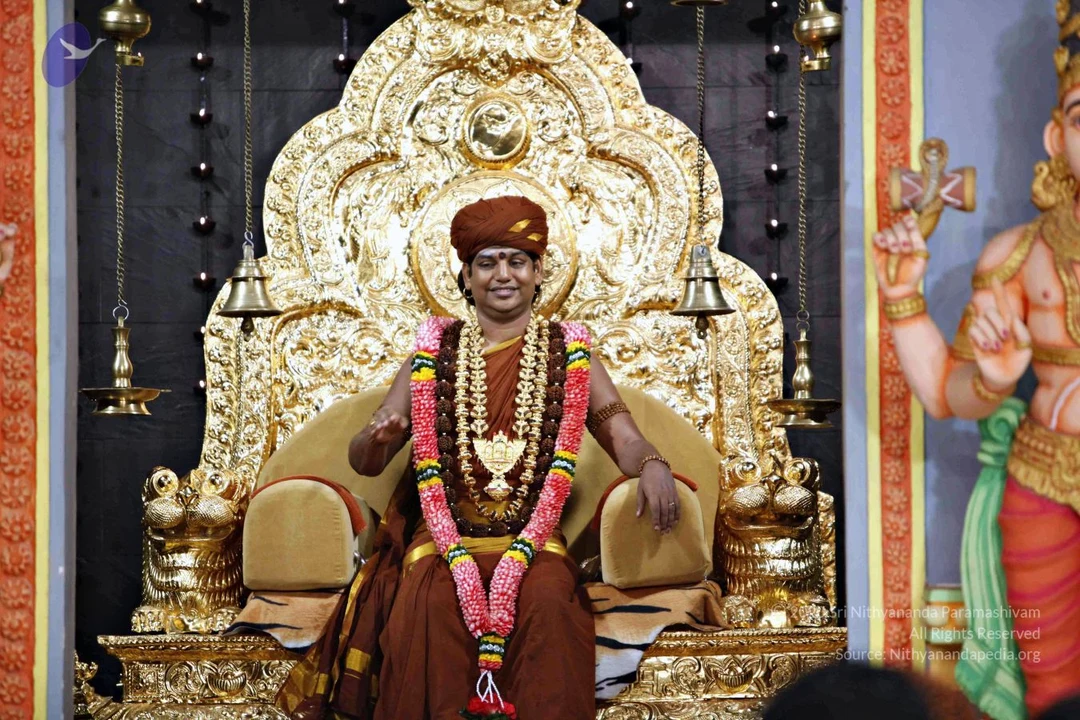
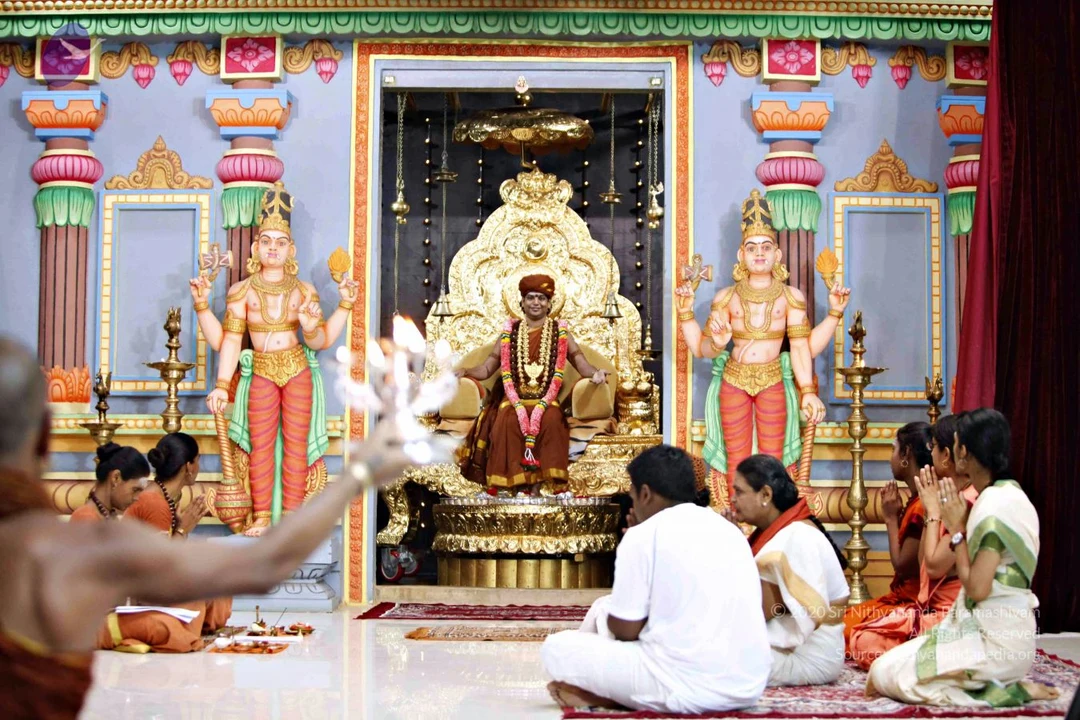
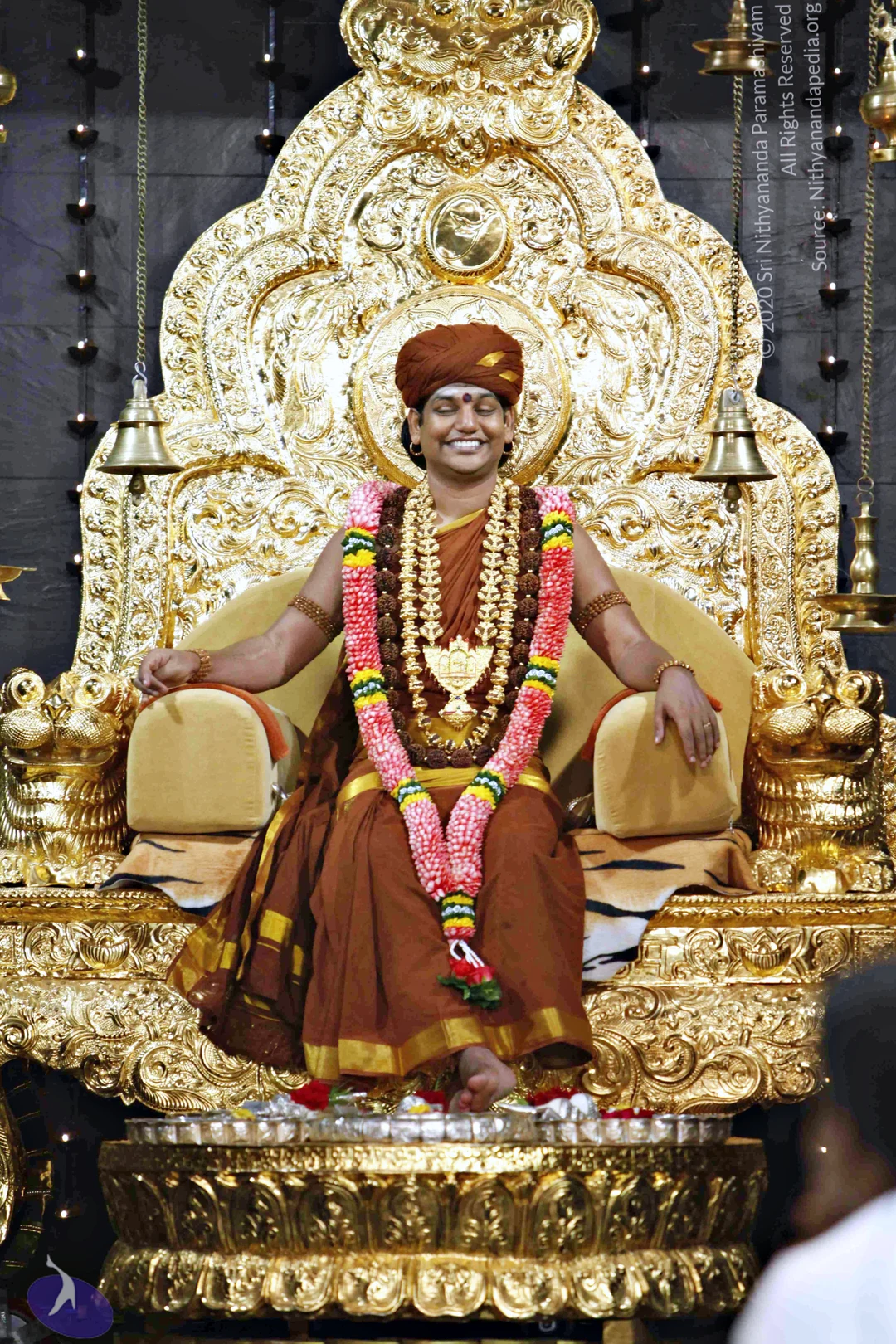
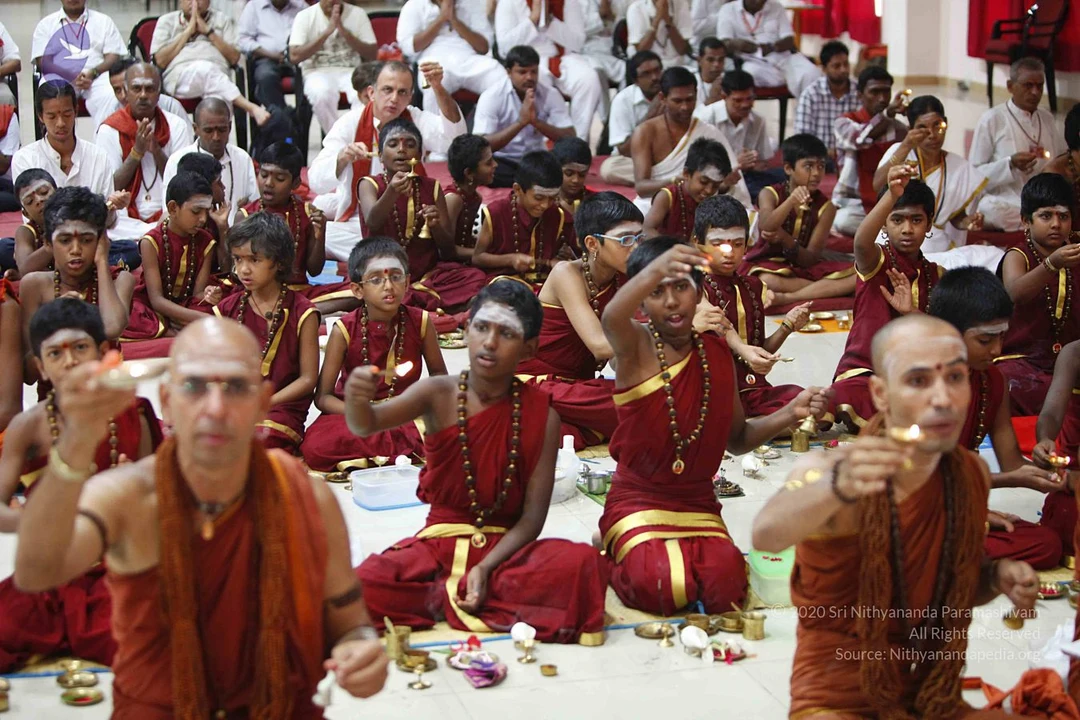
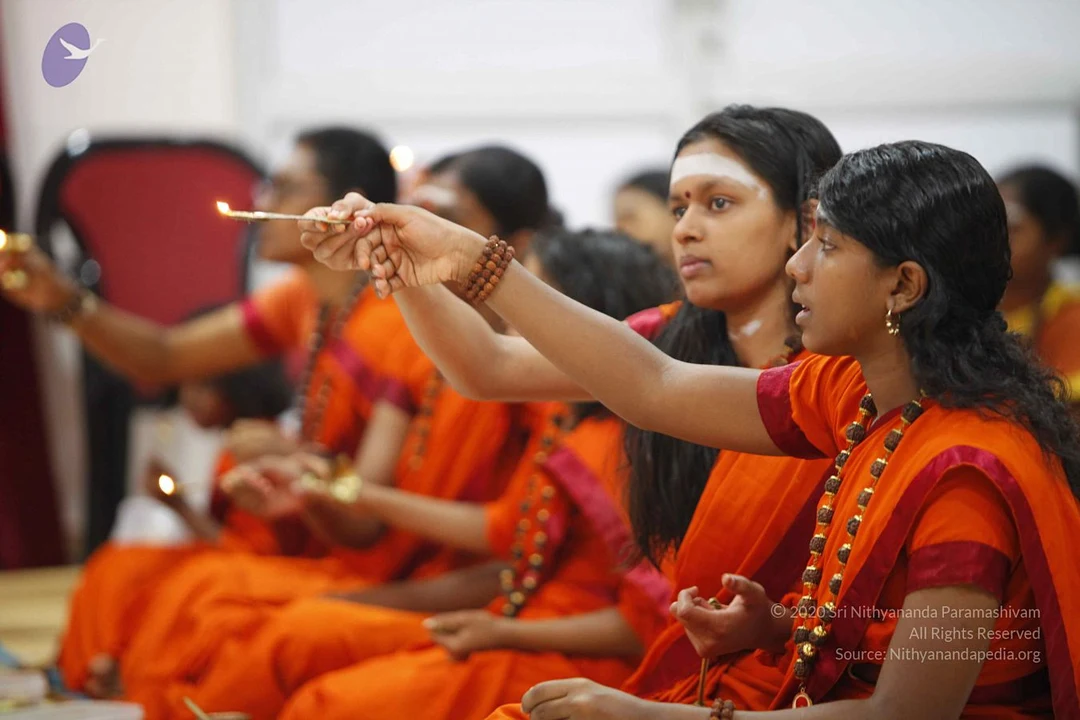
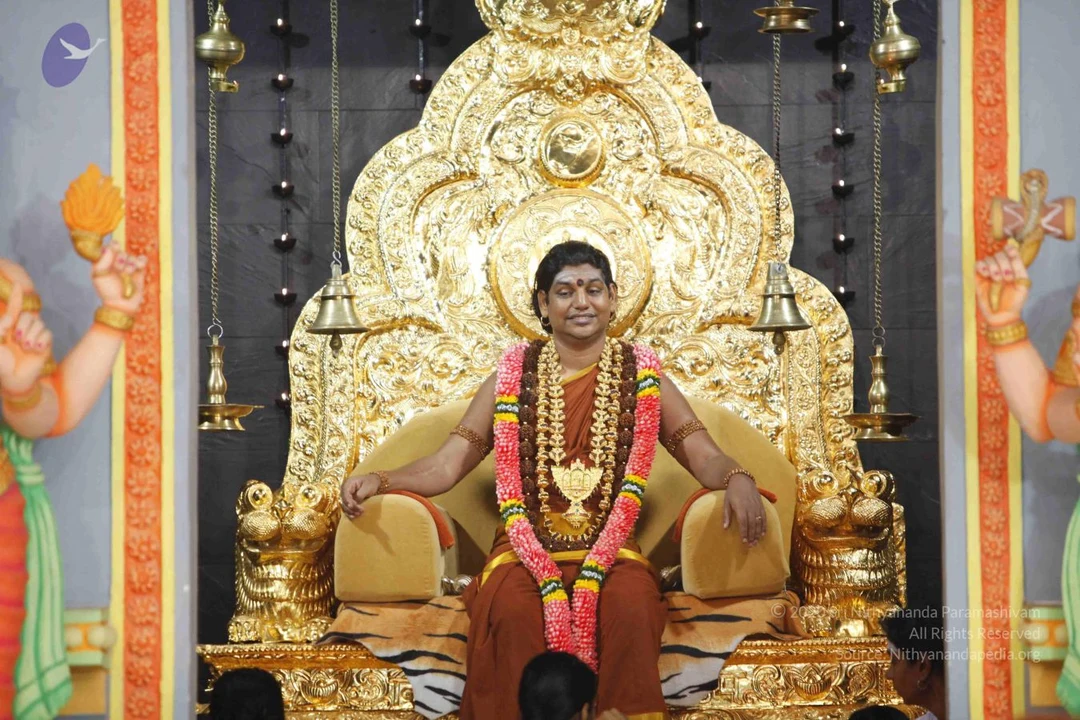
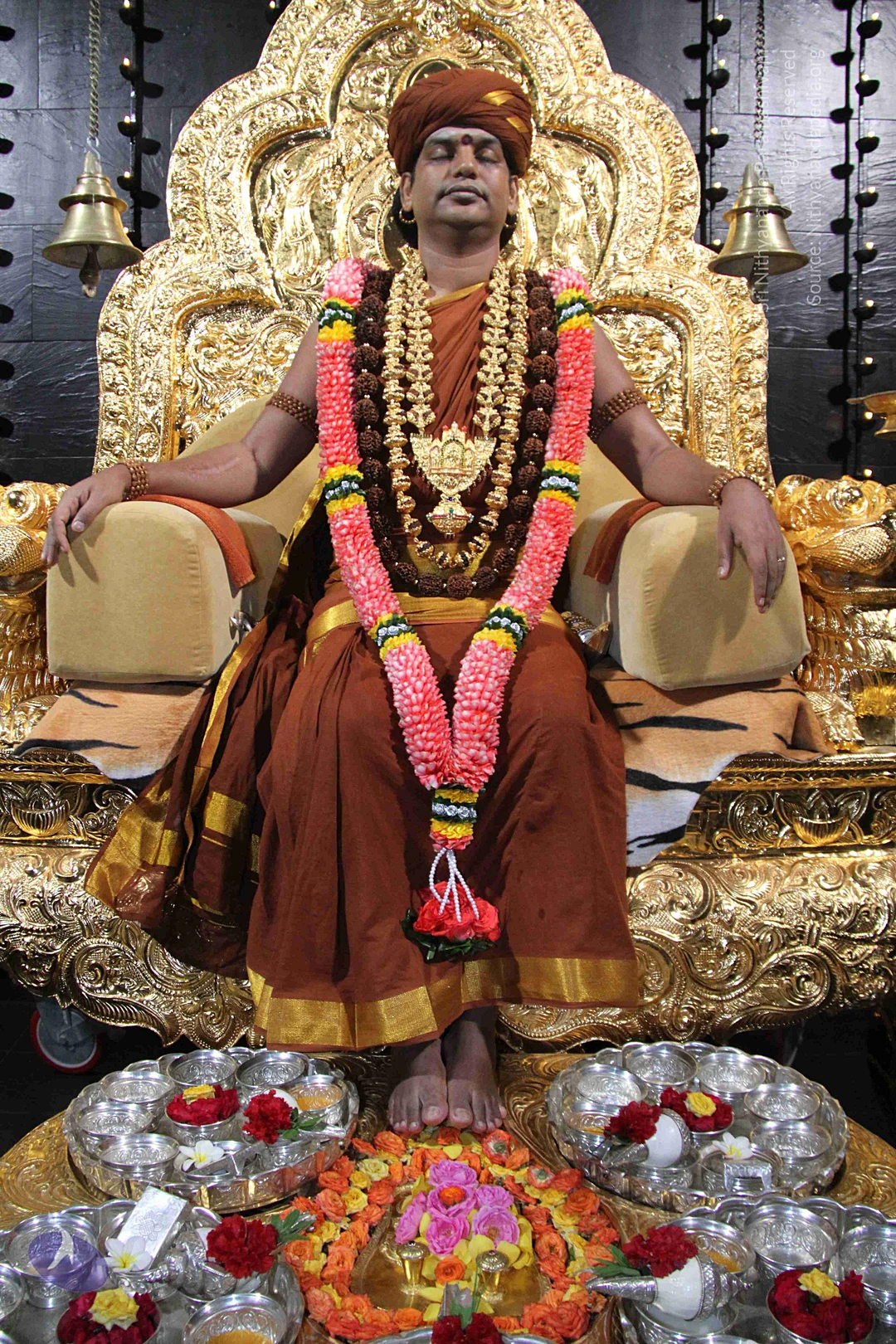
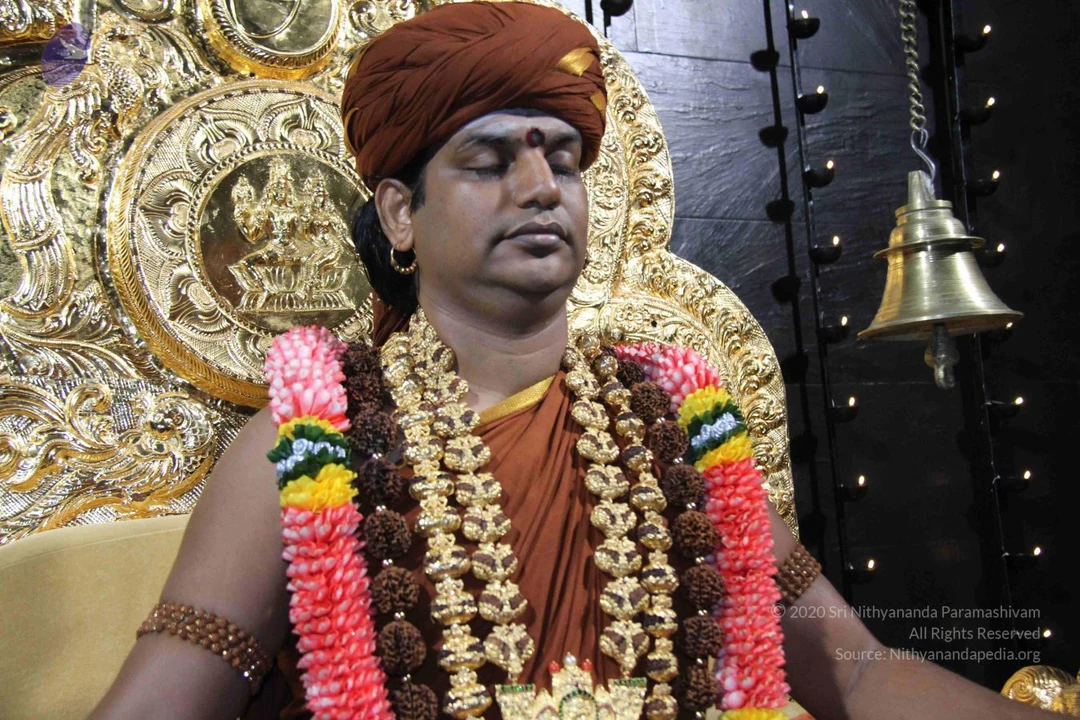
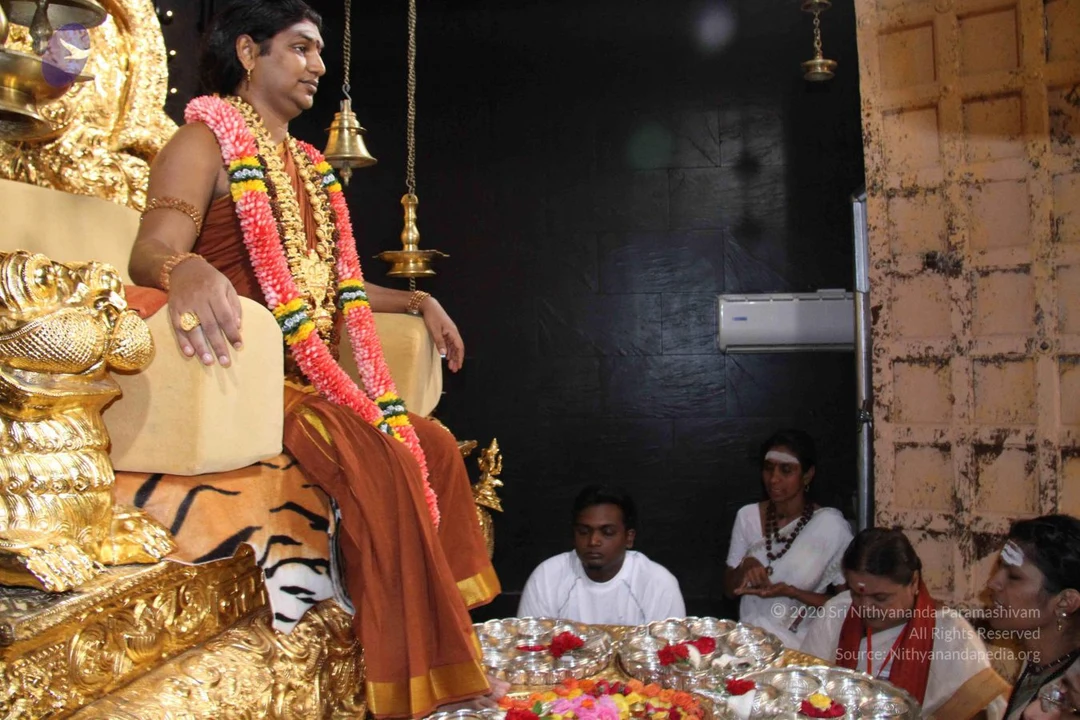
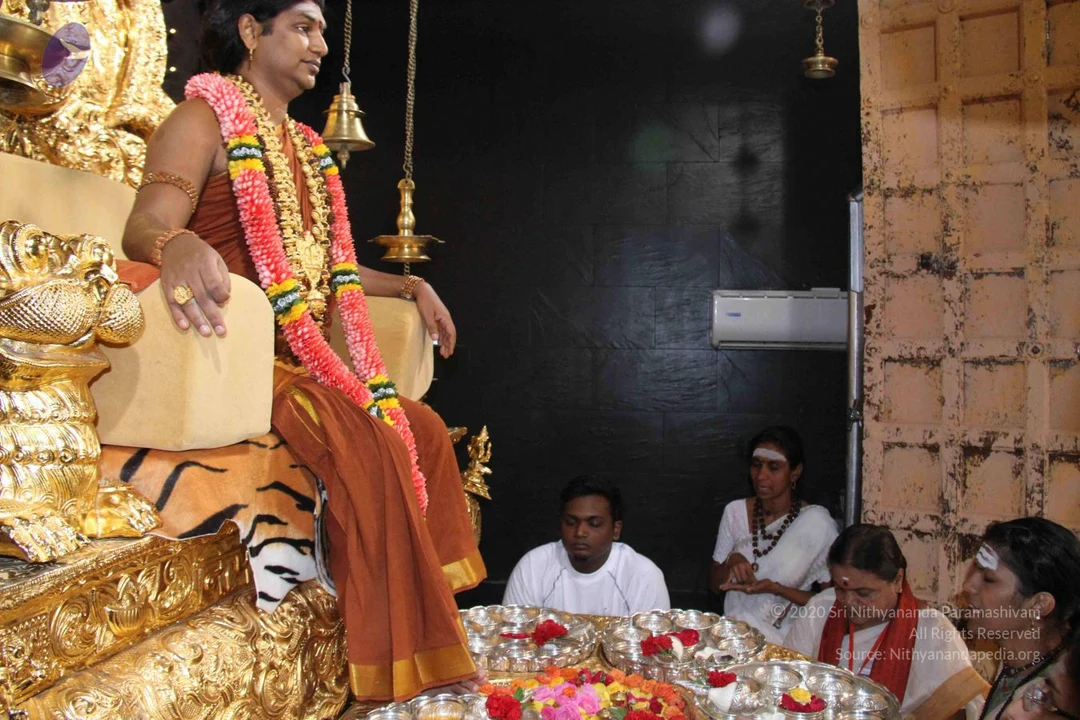
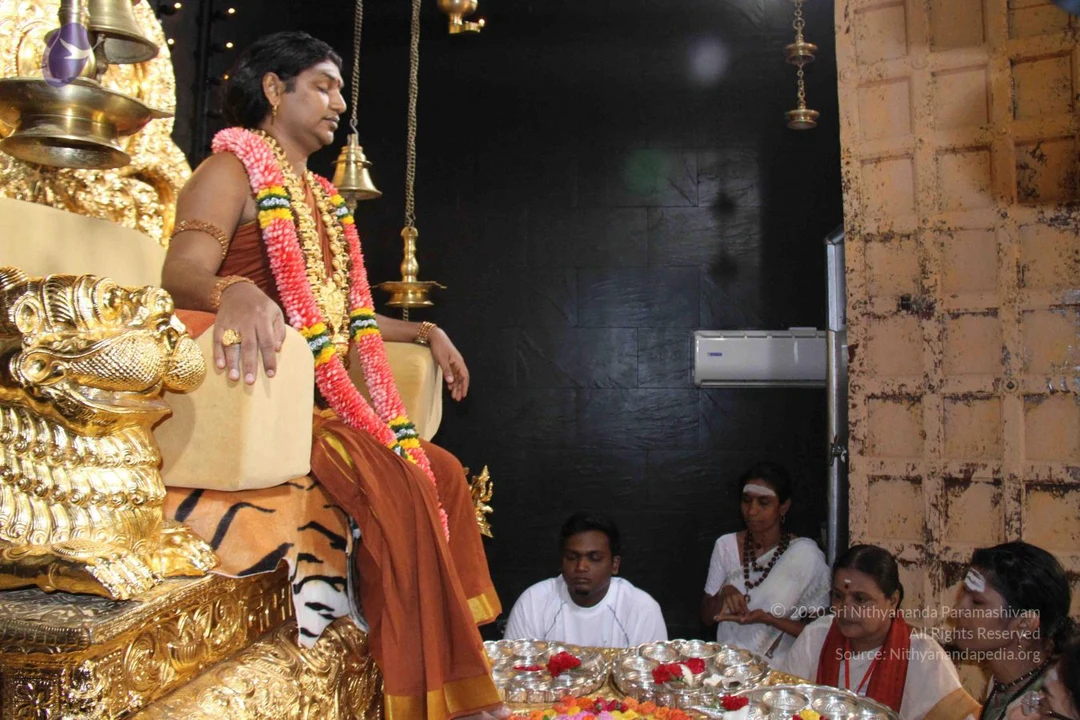
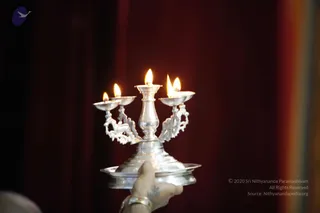
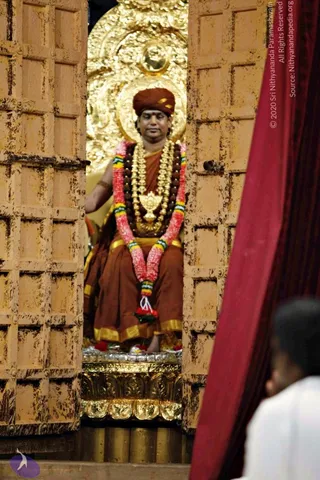
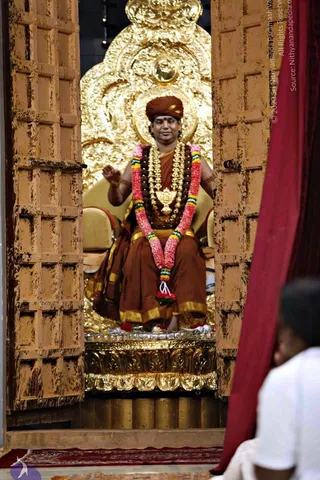
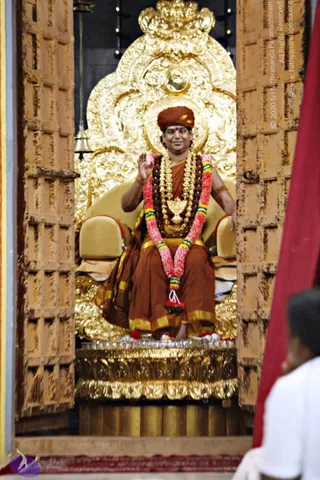
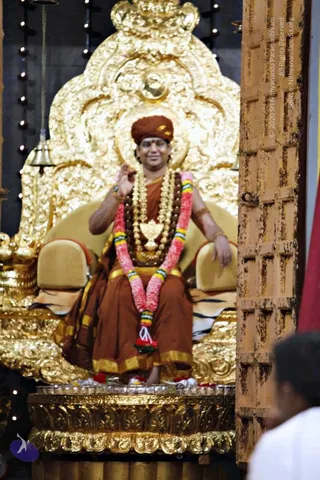
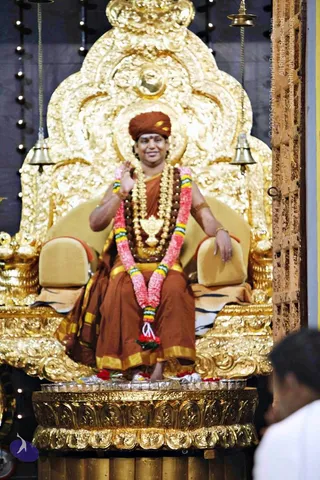
A close photograph of a silver multi-branch oil lamp held up in a hand, with five lit wicks flaming on its cups. The lamp has ornate filigree arms and a tiered base, and a dark red curtain forms the blurred background. A hand wearing a gold ring and a tattoo supports the base. No people are visible beyond the hand.A seated man in a rust-orange sannyasi-style robe and matching turban sits on a golden throne framed by carved wooden doors and an ornate gold backdrop. He wears a long multicoloured garland of pink, yellow and green flowers, many strands of rudraksha beads, and layered gold necklaces with a gold pendant. A red velvet curtain hangs at right, and a blurred person in white sits in the lower right foreground. Gold-leaf floral panels and a silver-patterned platform with red flowers support the throne.A seated figure in a rust-orange turban and orange robe with gold border sits on a gilded throne framed by ornate golden carved doors. He wears a long multicolour flower garland, a gold necklace and a thick rudraksha mala, with his right hand raised in a blessing gesture. Gold-carved peetha and a silver-tray offering area sit below him. In the lower right corner a partially visible person in white sits with a red curtain nearby.A seated figure in an orange-brown robe with a matching orange-brown turban sits on an ornate gold throne framed by carved wooden doors. He wears layered rudraksha malas, a gold ceremonial necklace and a multicoloured garland of pink and white flowers with yellow-green-red ribbons. His right hand is raised in a blessing gesture. A golden kalasha-style crown rises above the throne, and a white-clad attendant is partly visible at the lower right edge. a person, seated on a gold peetha in a doorway with a blessing mudra.A seated figure on an ornate gilded throne with a large gold repoussé backrest and a gold-covered platform base. The central person wears a rust-brown turban with gold accents, rust-brown robes with a gold border, multiple strands of rudraksha beads, a gold ceremonial necklace, and a long garland of pink and white flowers with yellow and green striped ribbons. He raises one hand in blessing while seated before a tiger-striped cloth. Flower offerings and small glass bowls sit on the platform in front. Hanging bells and a dark wood-panelled wall are in the background, and a partly visible person in white stands at the right edge. Swamiji (probable): the appearance cues of a turban, rudraksha malas and ceremonial gold necklace match the page's claim, so this is a probable in-person candidate.A man seated on an ornate gold throne with a golden back panel and tiger-striped cushion, on a gold pedestal decorated with flower offerings. He wears an orange-brown turban, a rust-orange robe with gold border, multiple rudraksha malas and a gold ceremonial necklace, and a large pink, yellow and green flower garland. He raises one hand in blessing while smiling toward devotees. Hanging brass bells frame the throne, and a partly visible person in white sits at the lower right edge. a person seated in ceremonial satsang attire.

Pratyaksha Padapuja

33 photosSource gallery
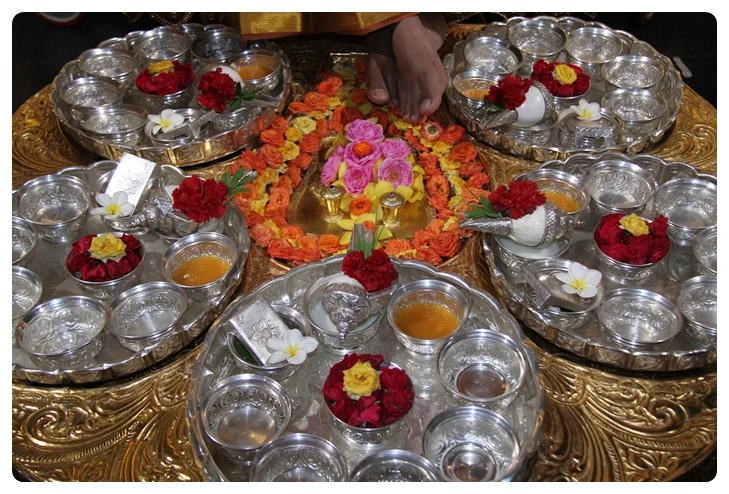
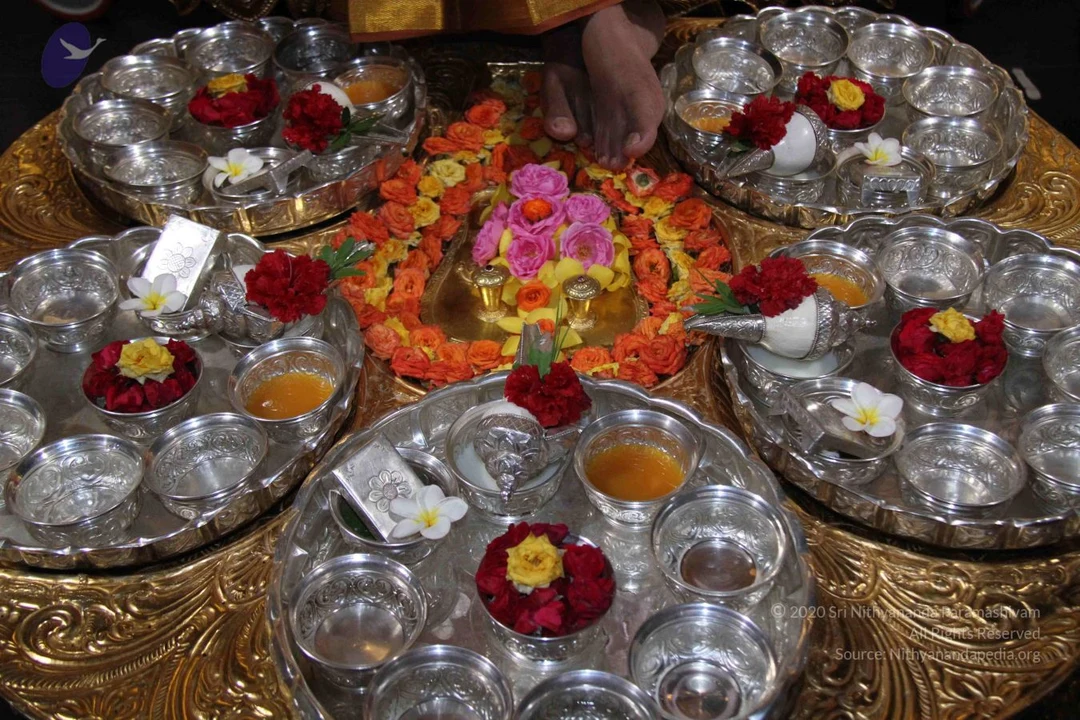
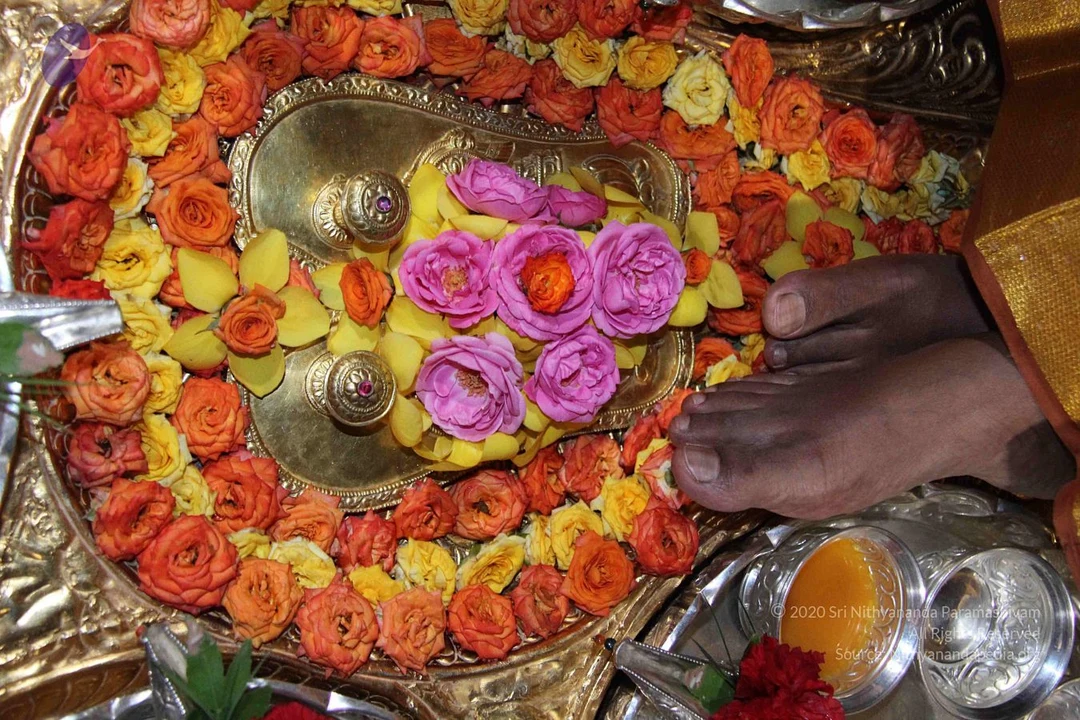
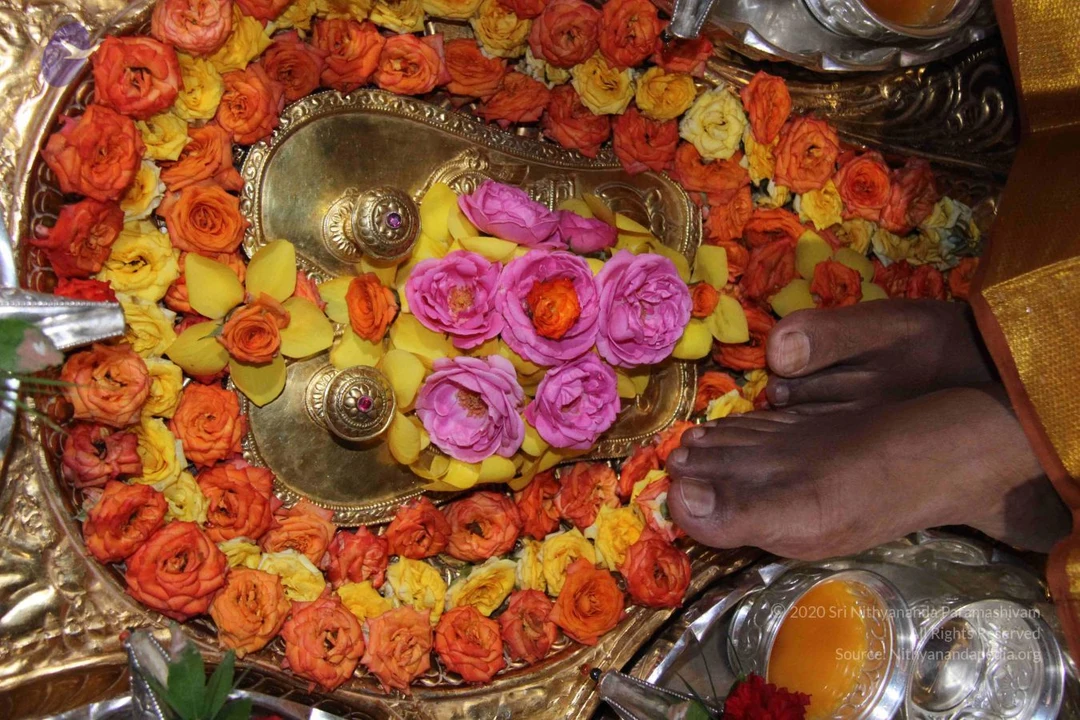
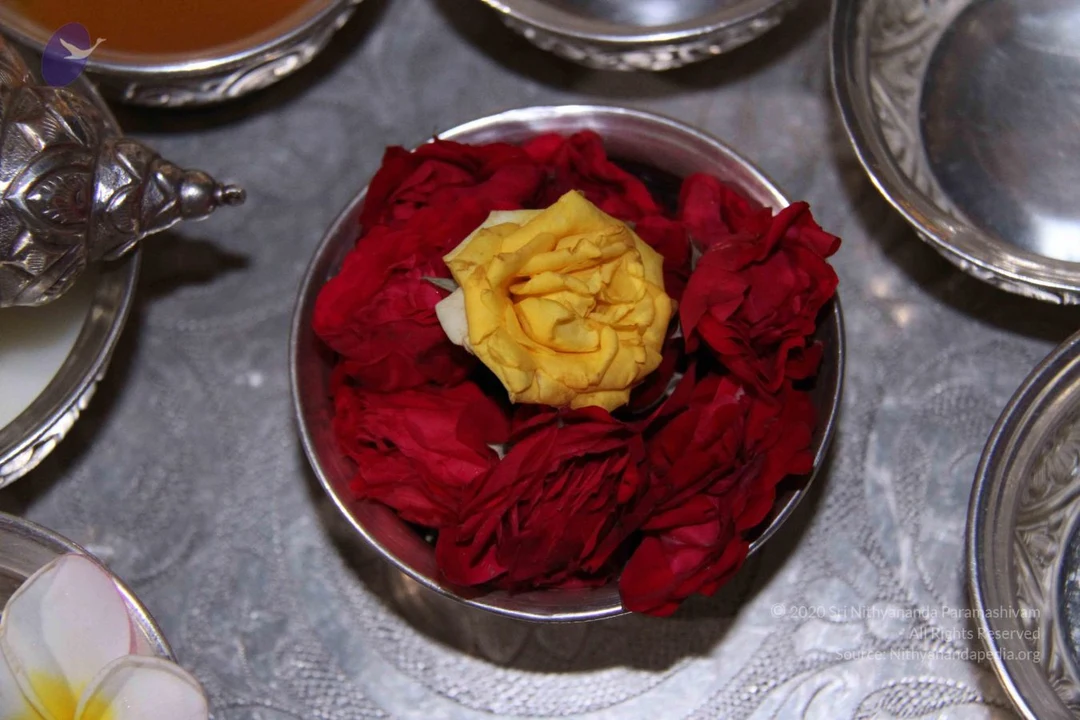
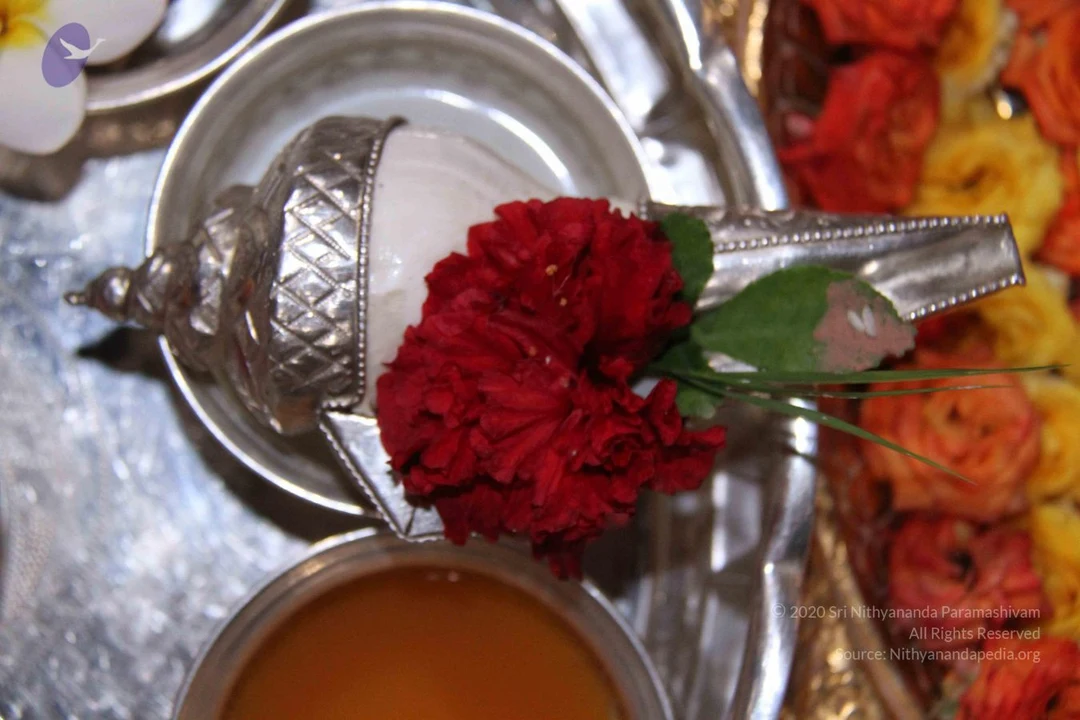
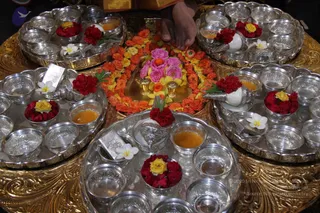
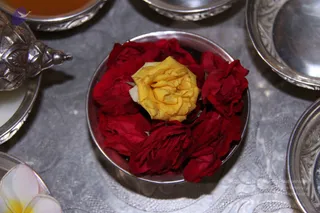
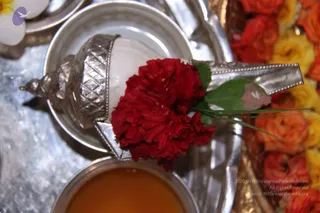
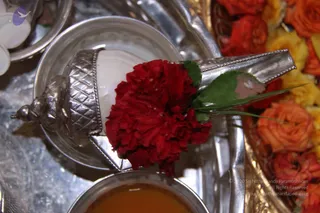
Top-down photo of a ritual arrangement on ornate gold trays. Central tray holds a ring of orange marigold-type flowers around pink and yellow blossoms, with brass vessels and a bare foot visible at top. Surrounding silver bowls hold red flower heads with yellow centres, white plumeria flowers, honey-coloured liquid, and silver pitchers and spoons. Appears to be a puja or abhishekam offering setup; no person's face or identity is shown, only a foot.Close-up photograph of a bare foot resting on a gold-coloured ritual plate heaped with orange, yellow and pink rose petals and whole roses. The foot, with a dark complexion and visible toenails, is set on the plate's centre, where a golden ornamental base with a jewelled knob sits among the flowers. Silver bowls holding a yellow-orange liquid and a red flower appear at the lower right, and the edge of a saffron-gold cloth is visible at the right. The scene suggests a padapuja, a ritual washing or honouring of the feet with flowers, though no person's face is shown.Close overhead photo of a padapuja ritual. A pair of bare feet rests on an ornate gold tray scattered with red, orange and yellow rose petals and pink rose blossoms, with a few pink flowers arranged in the centre. The feet belong to a person in orange-and-gold clothing at the right edge, and silver and gold puja vessels with yellow liquid and a red flower sit at the bottom. Only feet are visible, so no face or identity cue is shown.Overhead close-up of a round silver bowl filled with red rose petals surrounding a single yellow rose at the centre, set on a hammered silver tray. Small silver bowls and a silver vessel with a lid are visible at the edges, and a white and yellow frangipani flower lies at the lower left. No people are visible.Close overhead photo of a silver ritual vessel with a spouted lid, a red carnation tucked against its side, green leaves and a small grass sprig. Below is a shallow bowl of amber liquid, and at upper right is a tray of orange, red and yellow flower petals or blooms. A white flower sits at the top left on a silver tray. No people are visible; the scene is a puja setup with offerings.Close overhead view of a ceremonial offering on a polished silver tray. A silver conch-shaped vessel with a white shell body and ornate silver-etched cap holds a bright red carnation tucked into its opening, with a green leaf beside it. Behind it, a silver bowl of yellow and orange rose petals and roses sits on the tray, and a small amber liquid cup rests in the lower foreground. No people are visible; the scene suggests a puja or abhishekam offering arrangement.

Swamis

4 photosSource gallery
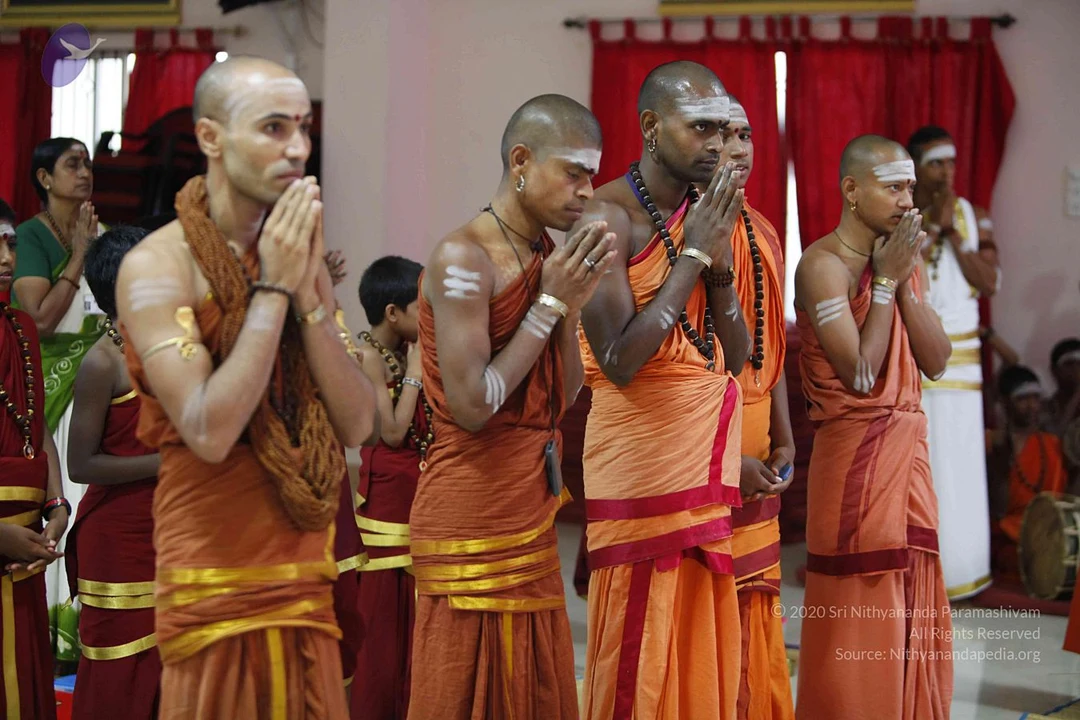
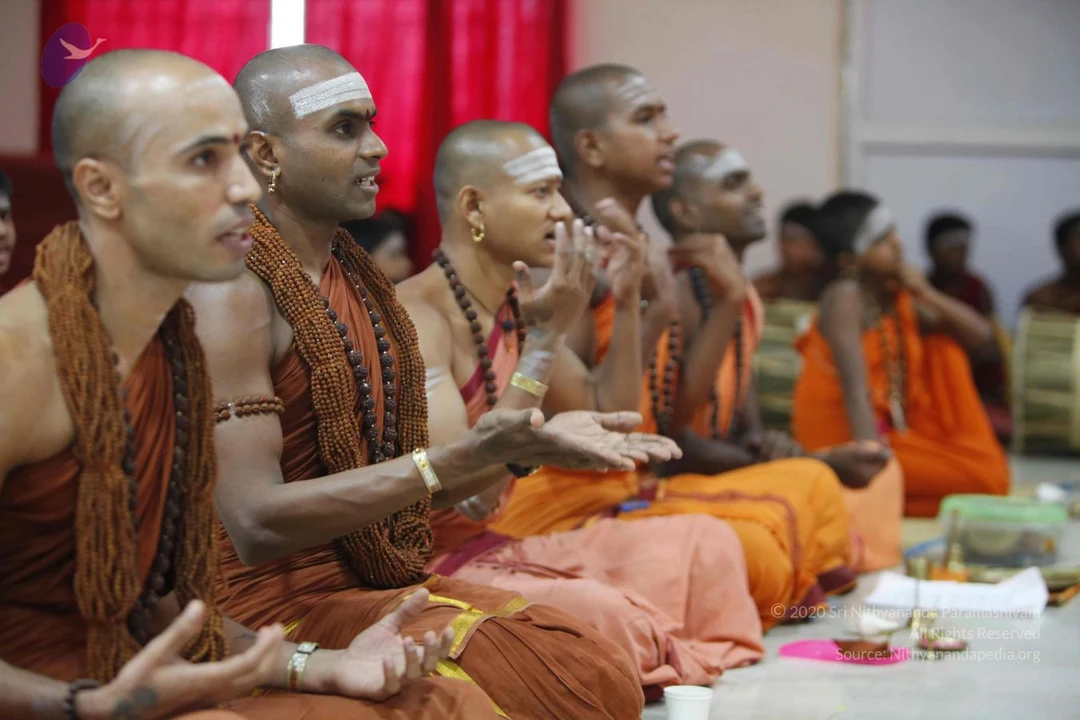
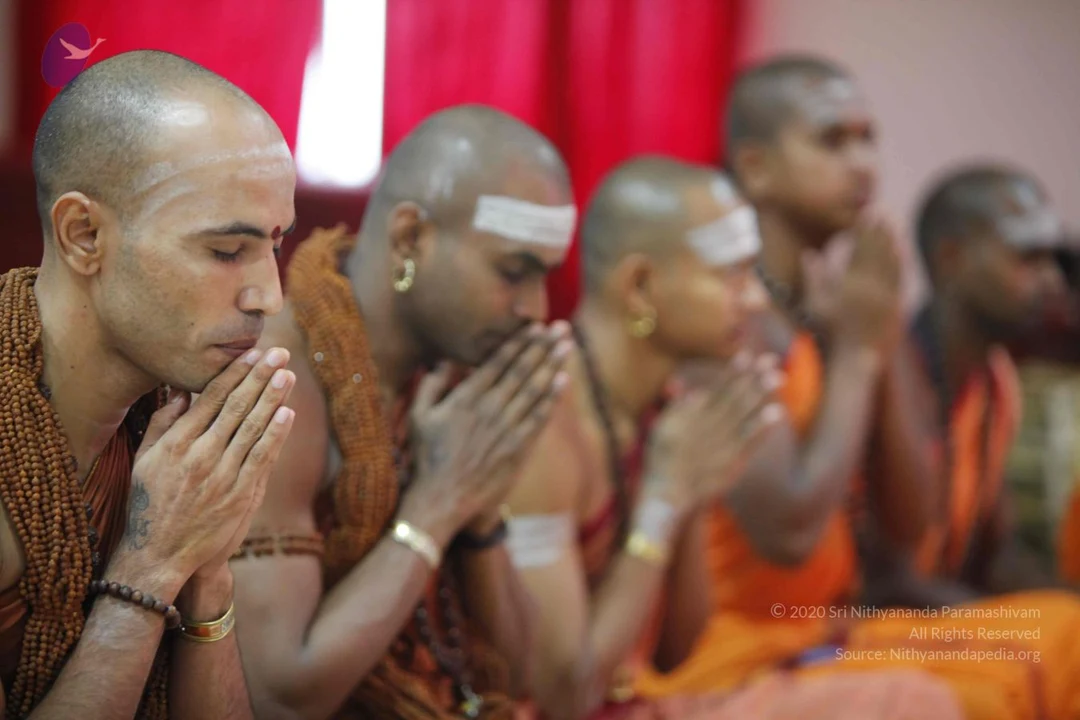
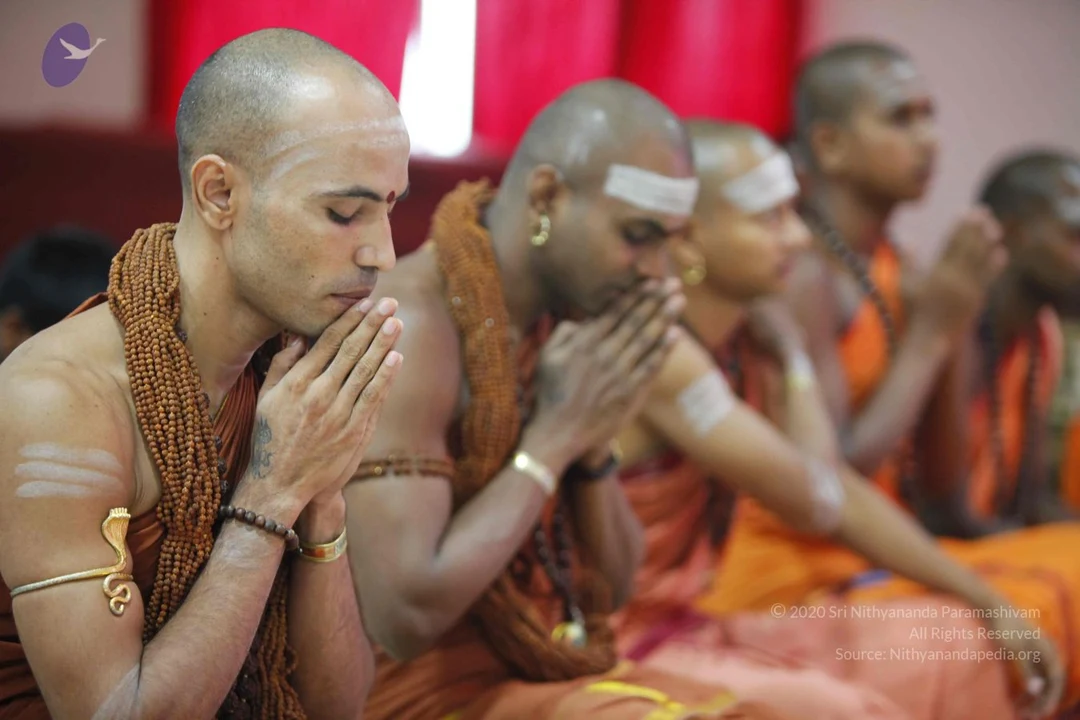
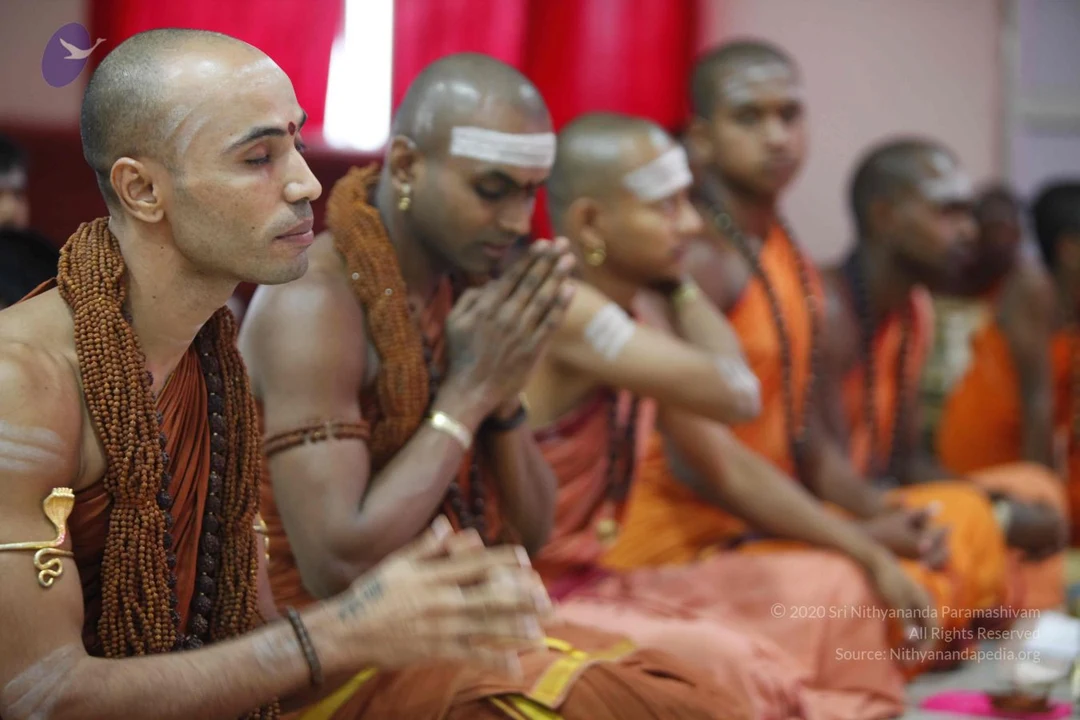
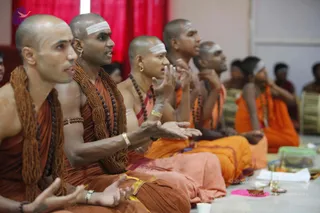
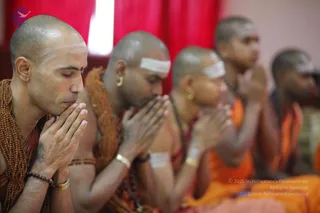
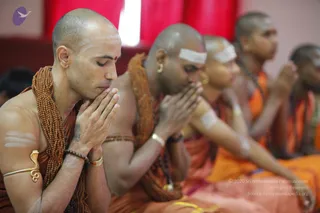
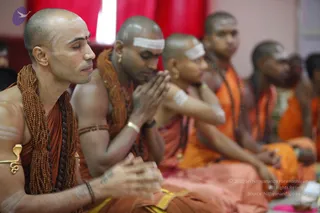
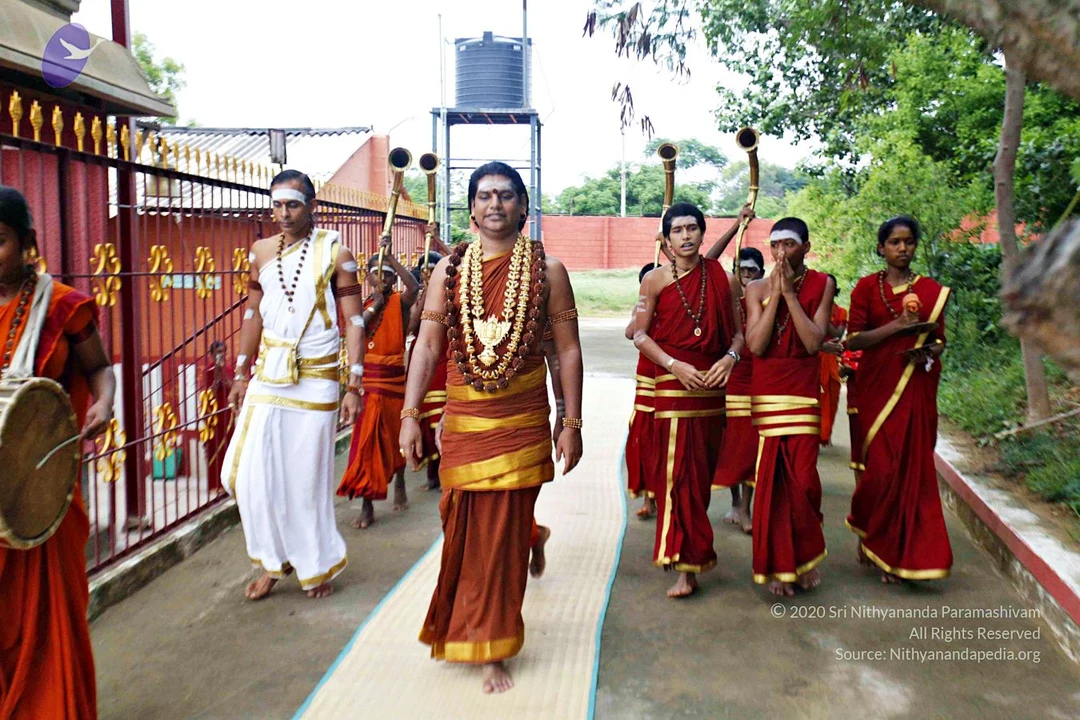
A photograph of a row of shaven-headed male monastics seated on the floor in orange and rust-brown robes, several wearing rudraksha and bead malas and white vertical tilak marks on their foreheads. The foremost men on the left gesture with open palms while speaking or chanting, and the others sit attentively with hands raised or clasped, facing toward the left. Behind them, a red curtain hangs against the wall, with more seated devotees in orange cloth and a drum at the right edge. A small cup and offering items rest on the floor in the lower right. The men on the left wear ornate golden bracelets and beaded necklaces, with one older man in front wearing a gold earring.A photograph of a row of shaven-headed sannyasis seated in prayer with palms pressed together at the chest, eyes closed. The foreground man on the left wears brown and rudraksha beads and a red bindi; the others wear saffron-orange robes and white tilak marks on their foreheads, with gold earrings and bangles on some. A red curtain forms the backdrop.Photograph of several shaved-headed sannyasis in orange and saffron-brown robes seated in a row, hands pressed in anjali mudra and eyes closed in prayer or meditation. The foreground man wears a gold serpent armlet, a long rudraksha mala over his shoulder and a red bindi, with white vibhuti horizontal lines on his forehead and upper arm. Behind him others wear white forehead bands, rudraksha malas and gold earrings. A red curtain and wall form the background.A photograph of several saffron-robed monks seated in a row during a satsang, eyes closed and palms pressed together in prayer. The foremost monk on the left wears a rudraksha mala necklace, a gold snake-shaped armlet and beaded bracelets, with a red bindi on his forehead. The monks beside him have white horizontal tilak marks across their foreheads, orange shawls and rudraksha malas. Red curtains and a few offering items sit in the background. The monks appear devoted and absorbed in meditative prayer.

Gurukul Instruments

3 photosSource gallery
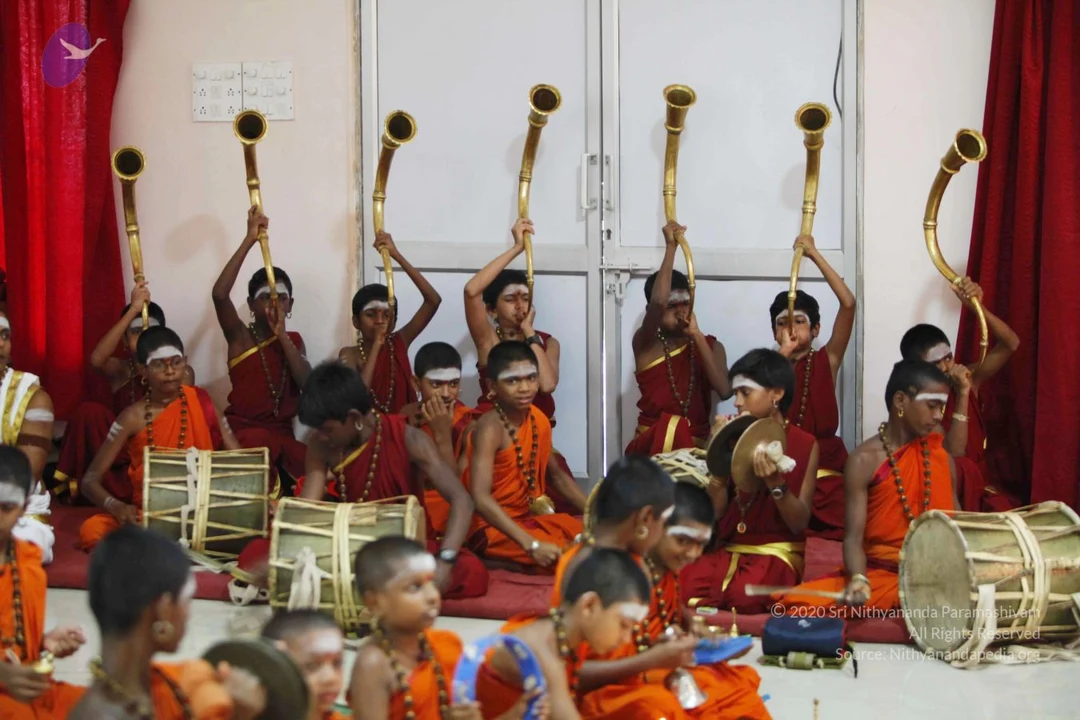
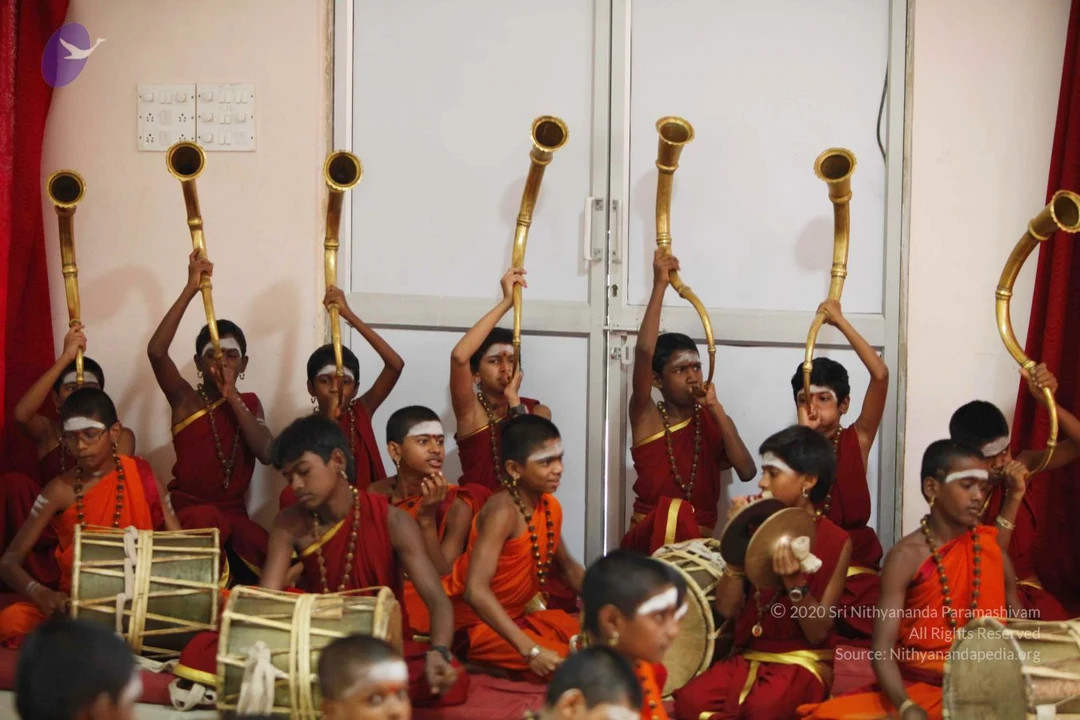
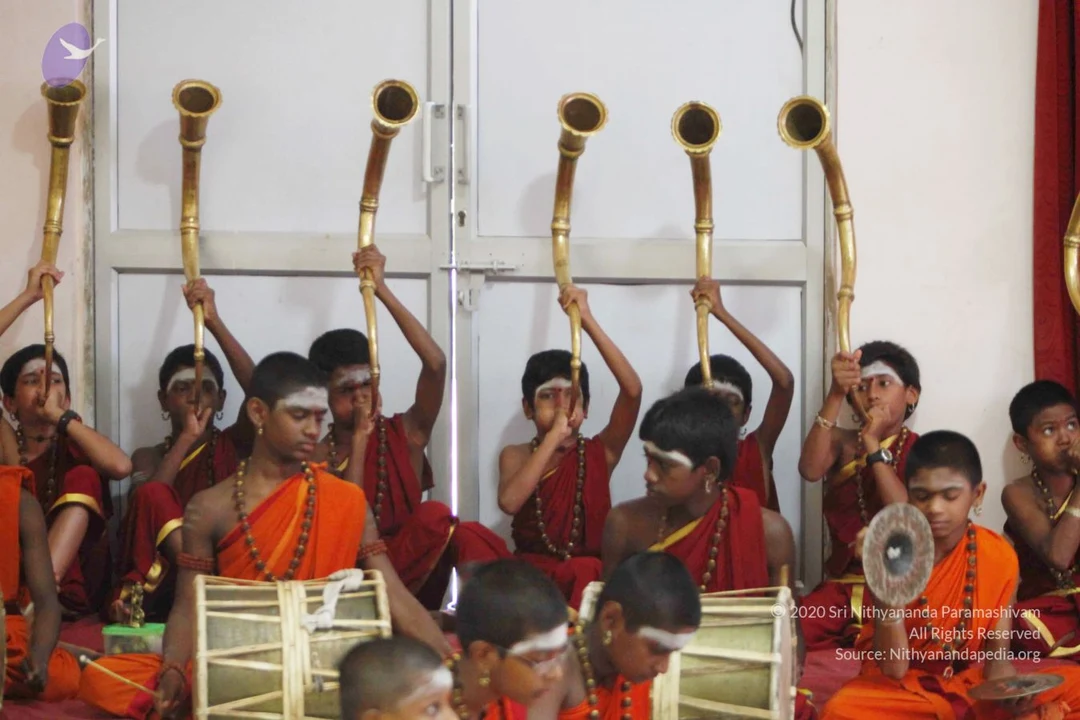
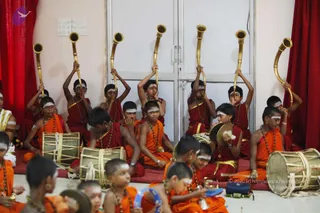
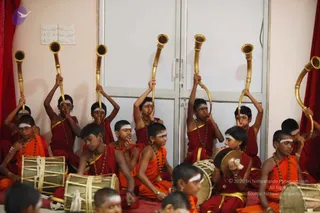
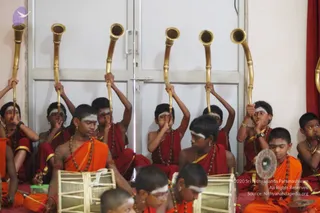
A group of young boys in orange and saffron cloths with rudraksha malas and white forehead markings play traditional instruments in a room with red curtains. Several hold long curved gold-coloured brass horns raised overhead, while others sit on red mats playing hand drums and cymbals. The boys have white ash or tilak painted on their faces and chests. Some drums rest on the floor in the foreground.A group of young boys in saffron and red robes perform a ceremonial musical ensemble, seated on the floor in front of white sliding glass doors and red curtains. Many hold long, curved brass horns (ceremonial trumpets) raised overhead or to their lips, while others play barrel drums and a small cymbal-like instrument. Most wear rudraksha malas and have white tilak markings on their foreheads. Several are shirtless with gold armbands and bangles. A small purple logo appears in the upper left corner of the frame.A group of young boys seated on the floor in front of a white metal door and red curtain play ceremonial instruments. Several boys hold long curved gold-coloured brass horns upright with both hands and blow into them, while others play two-headed hand drums and a small hand cymbal. The boys wear orange and red robes with yellow borders, white forehead markings, and wooden rudraksha-style bead necklaces. Some have bead bracelets and dark thread. The setting appears to be an indoor hall with a plain light wall.

Nithya Satsang

31 photosSource gallery
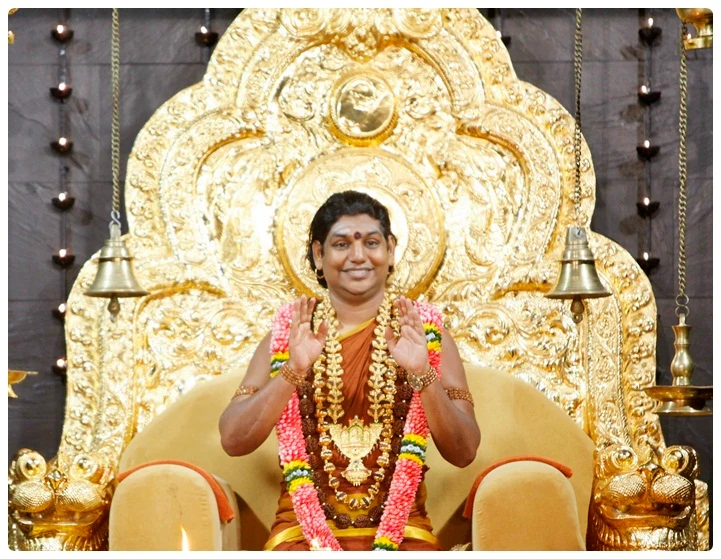
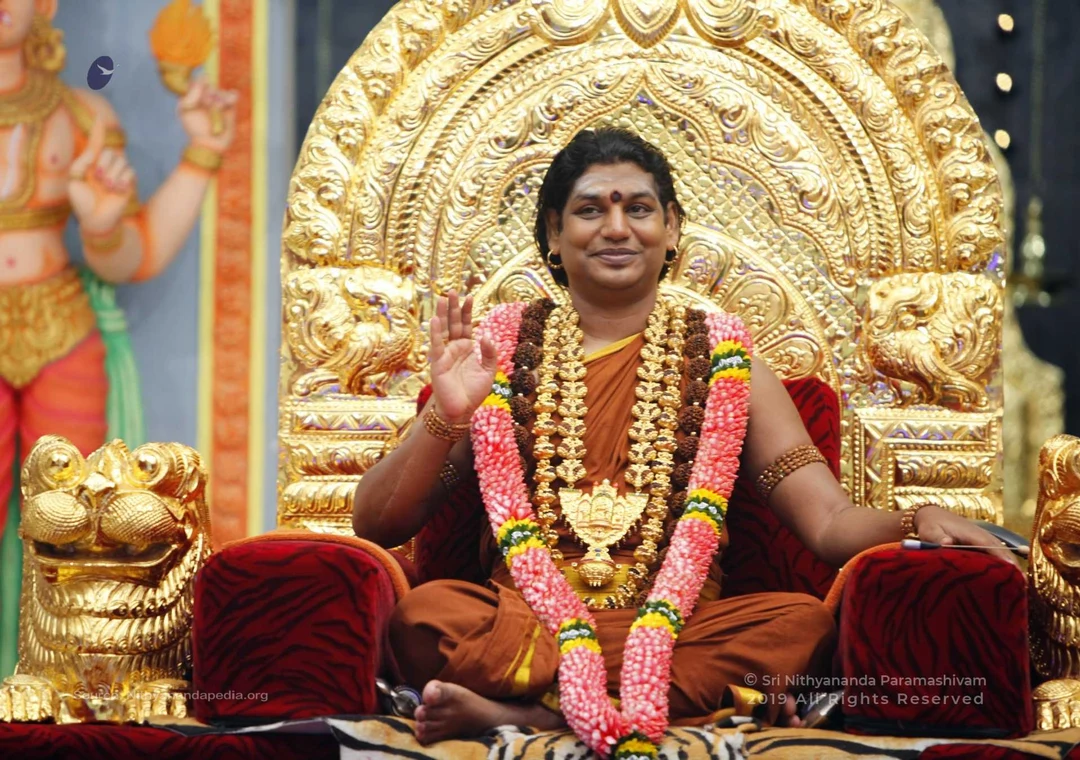
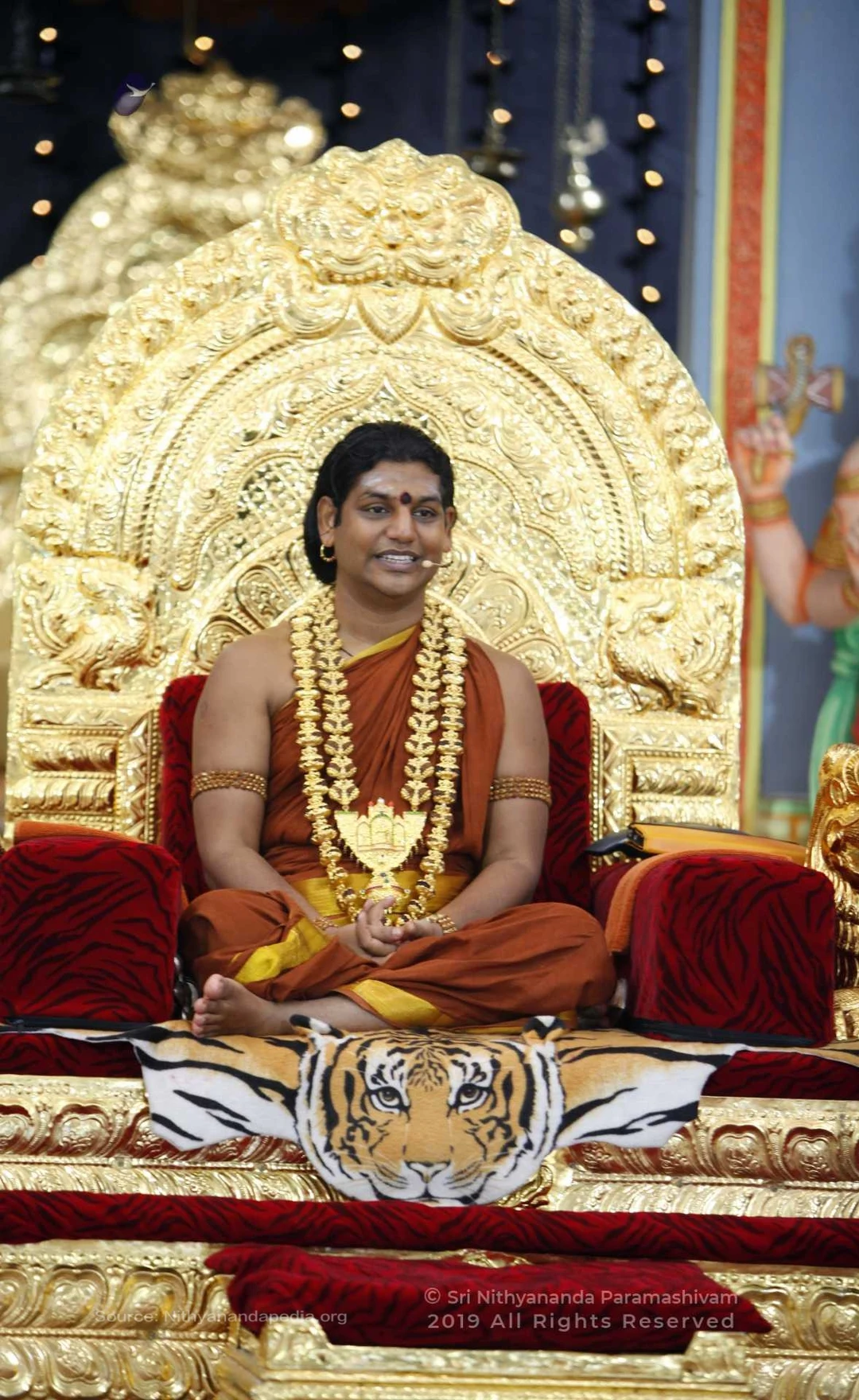
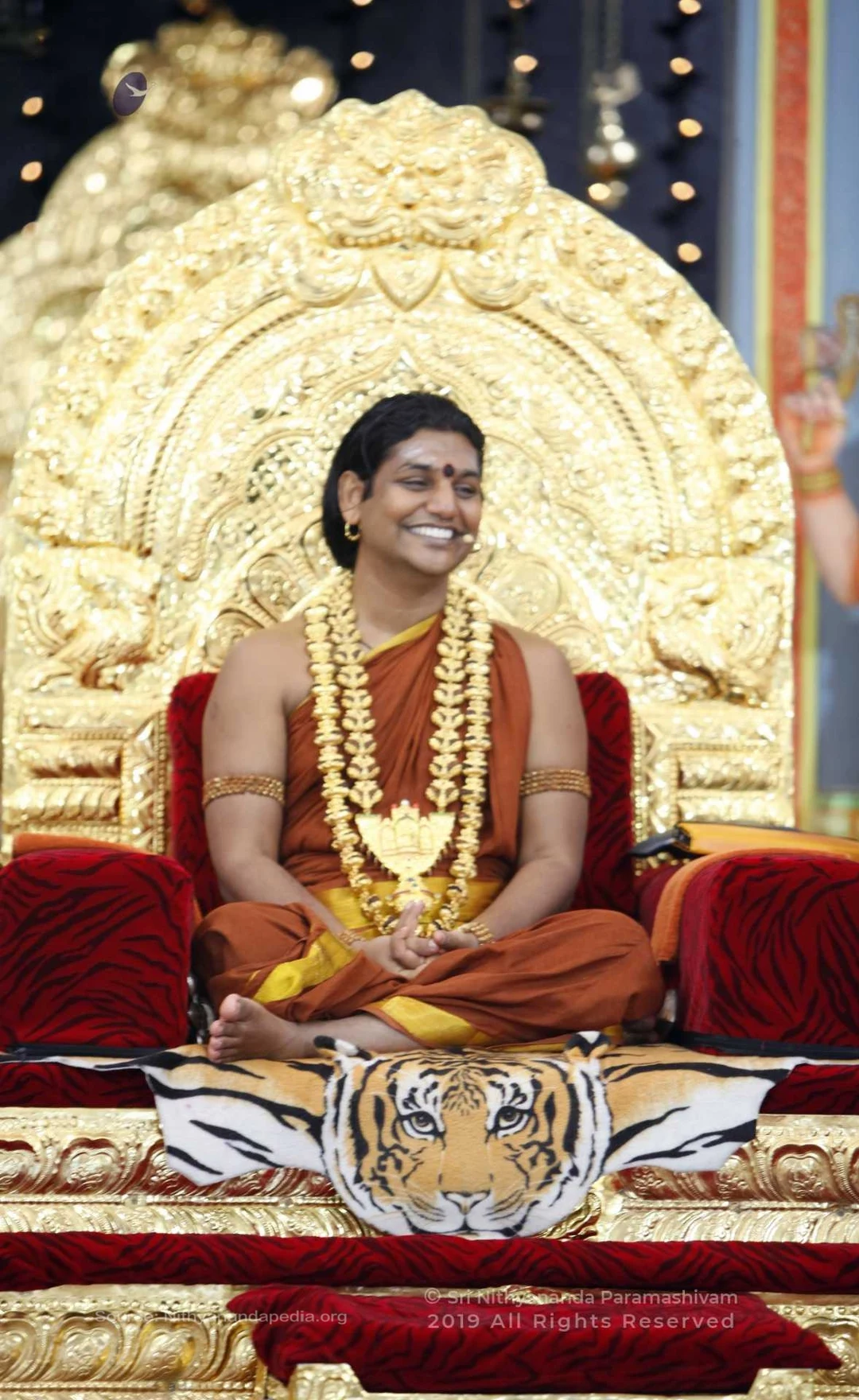
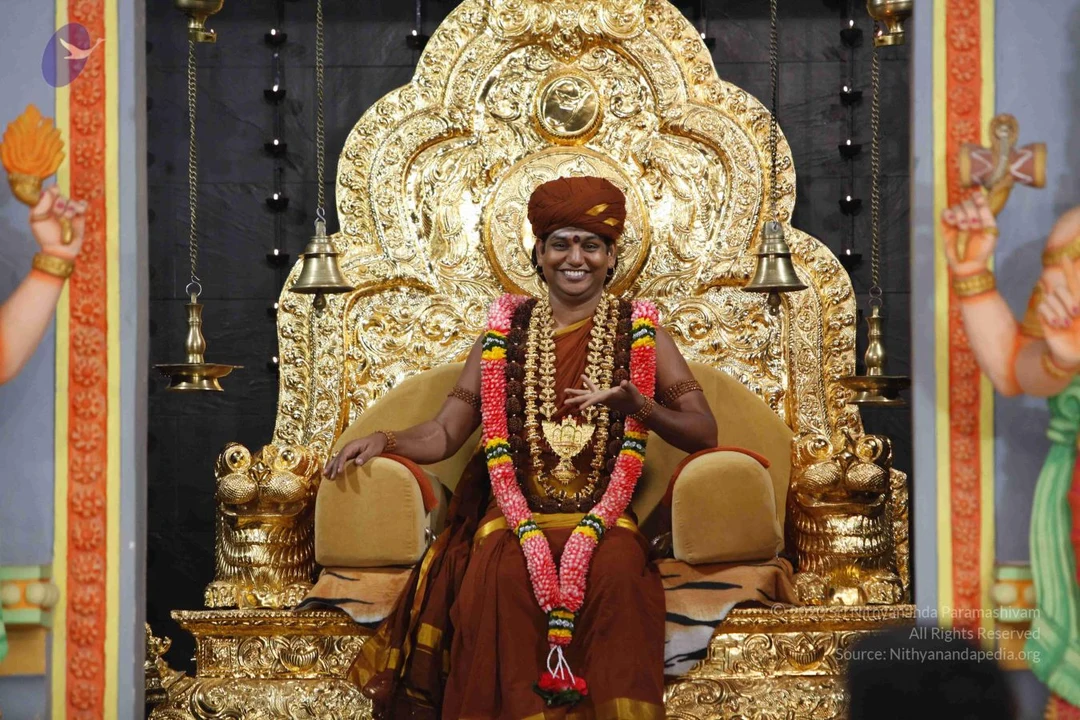
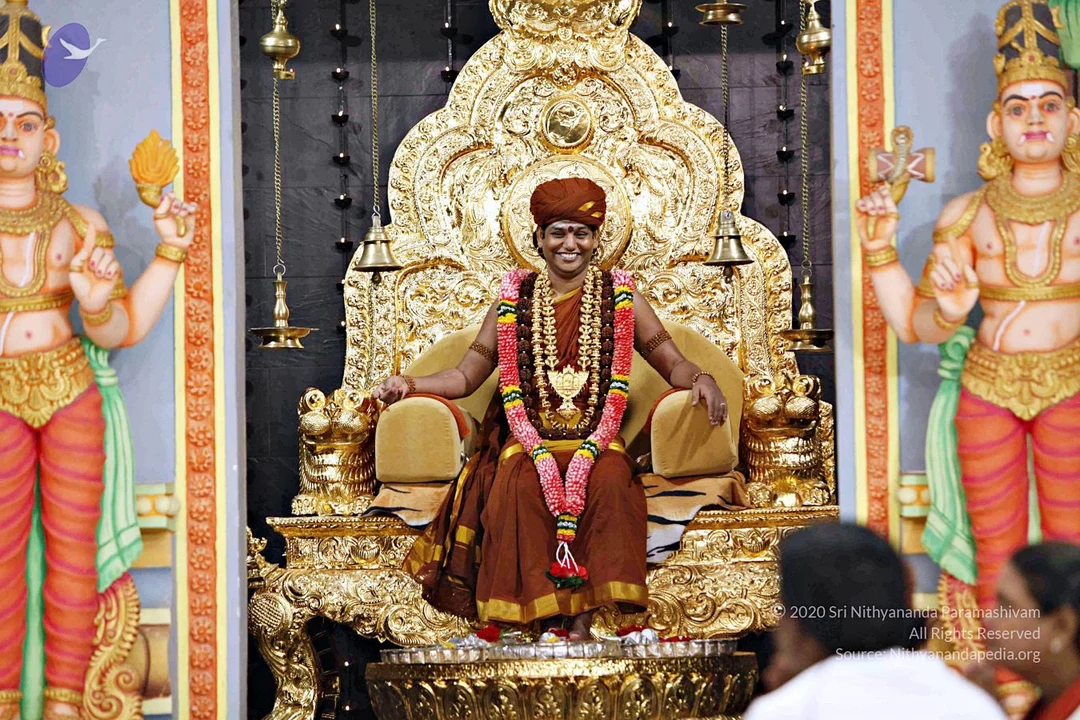
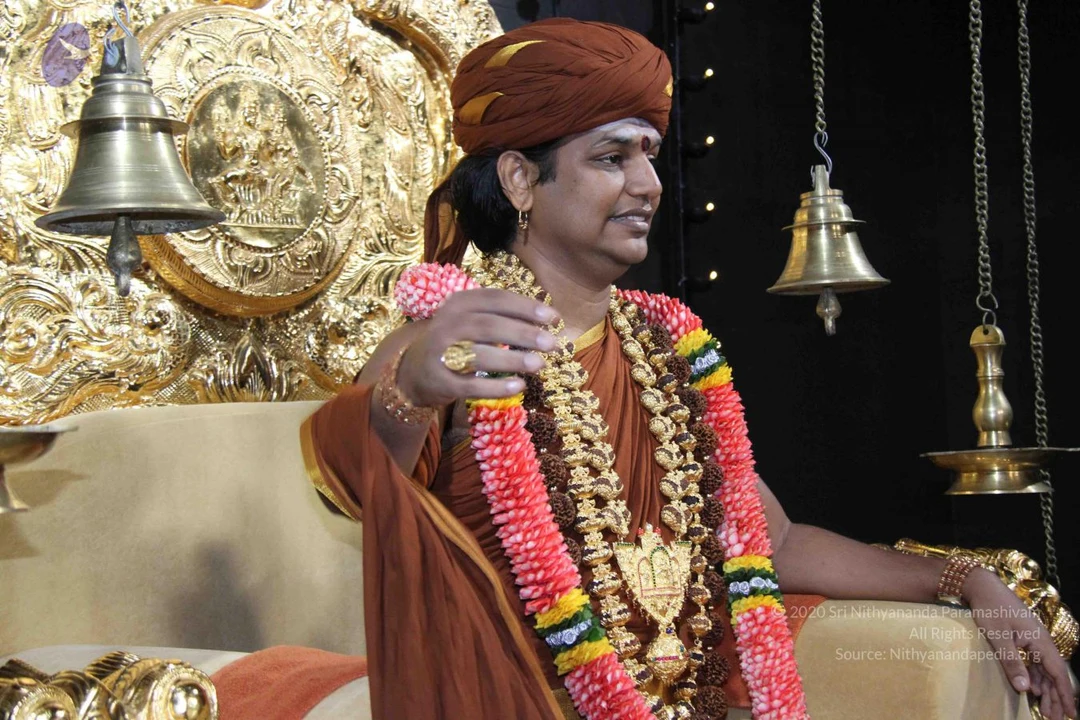
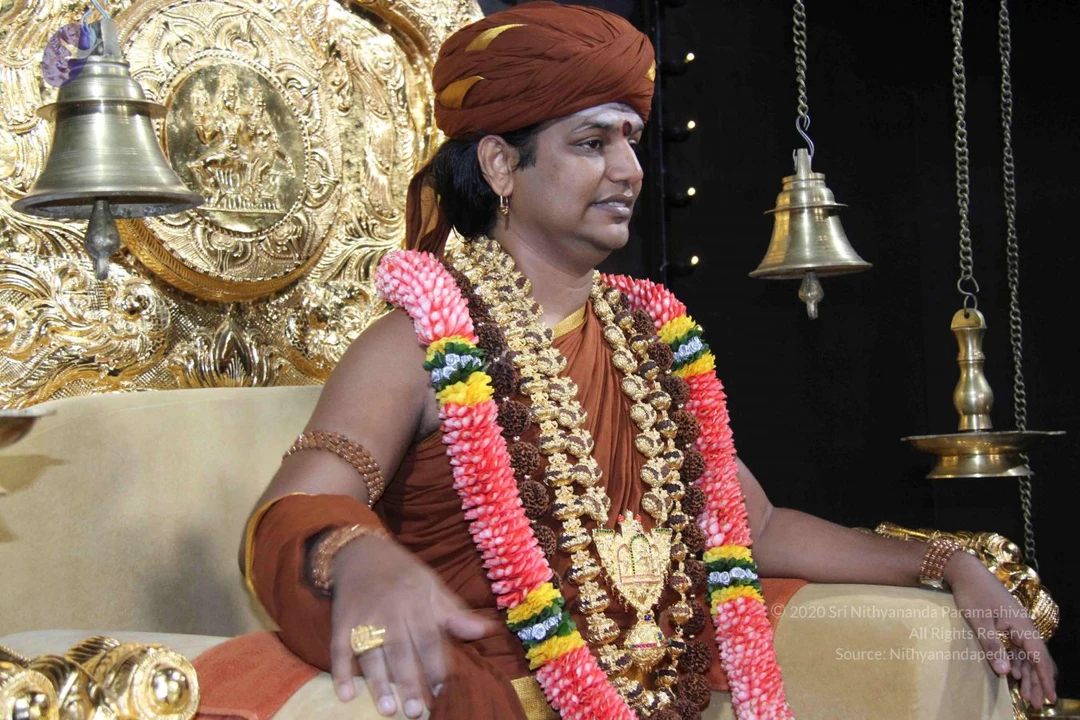
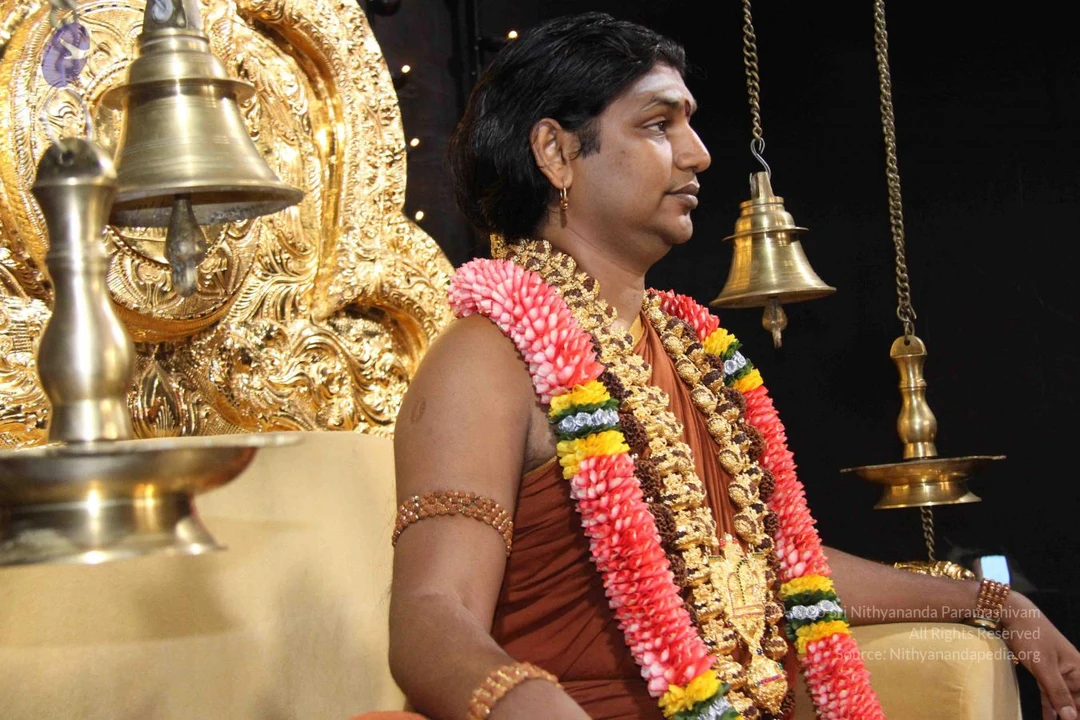
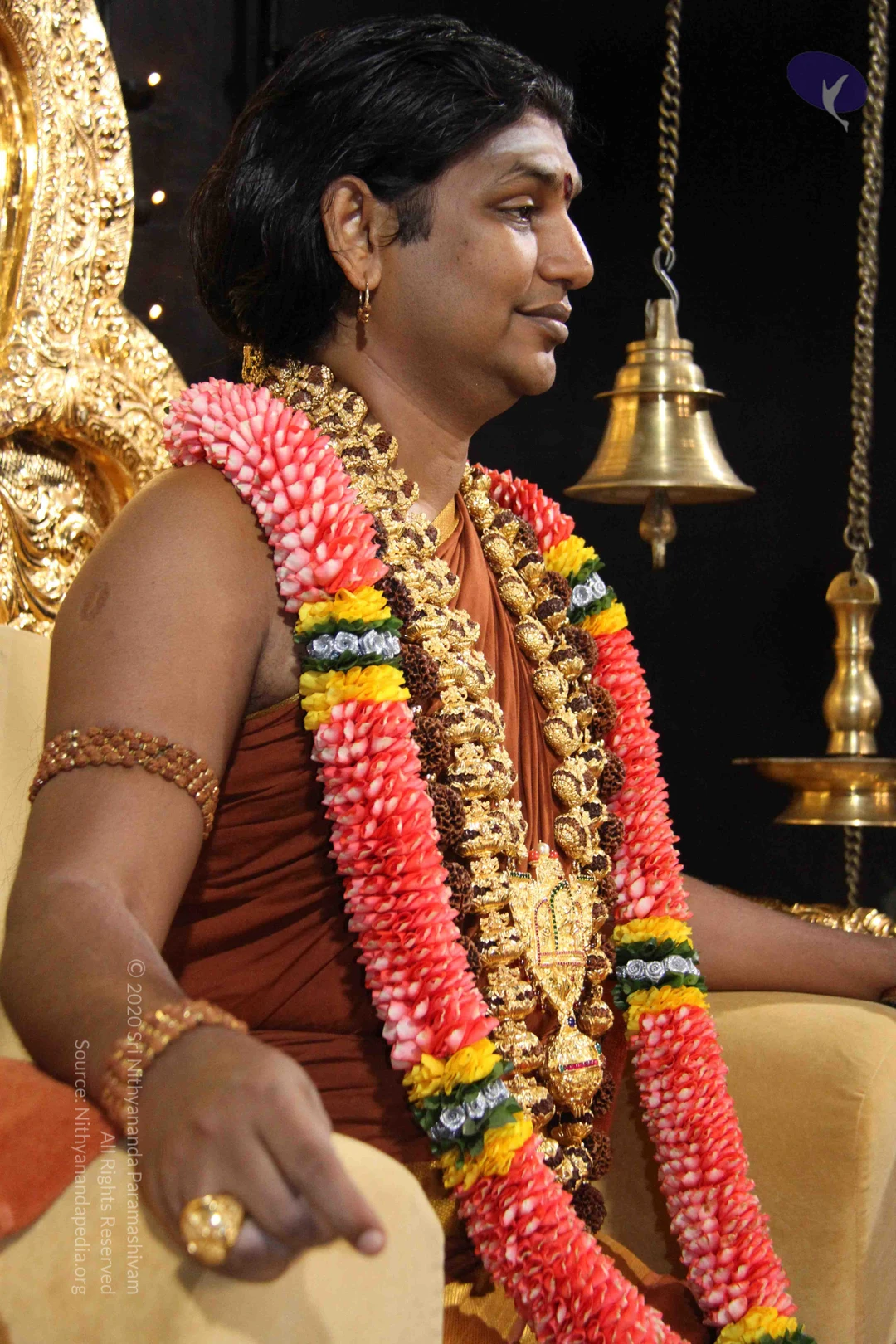
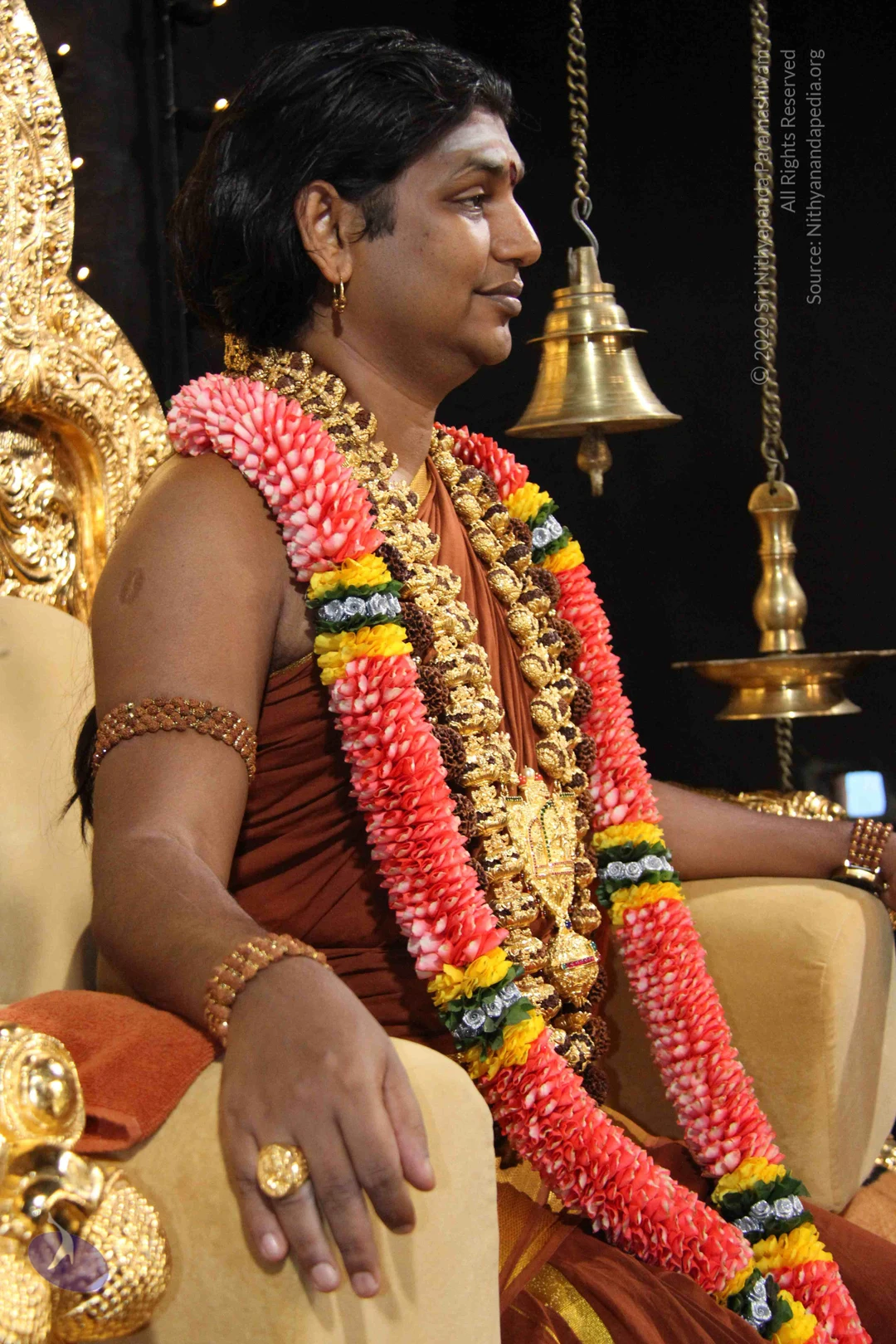
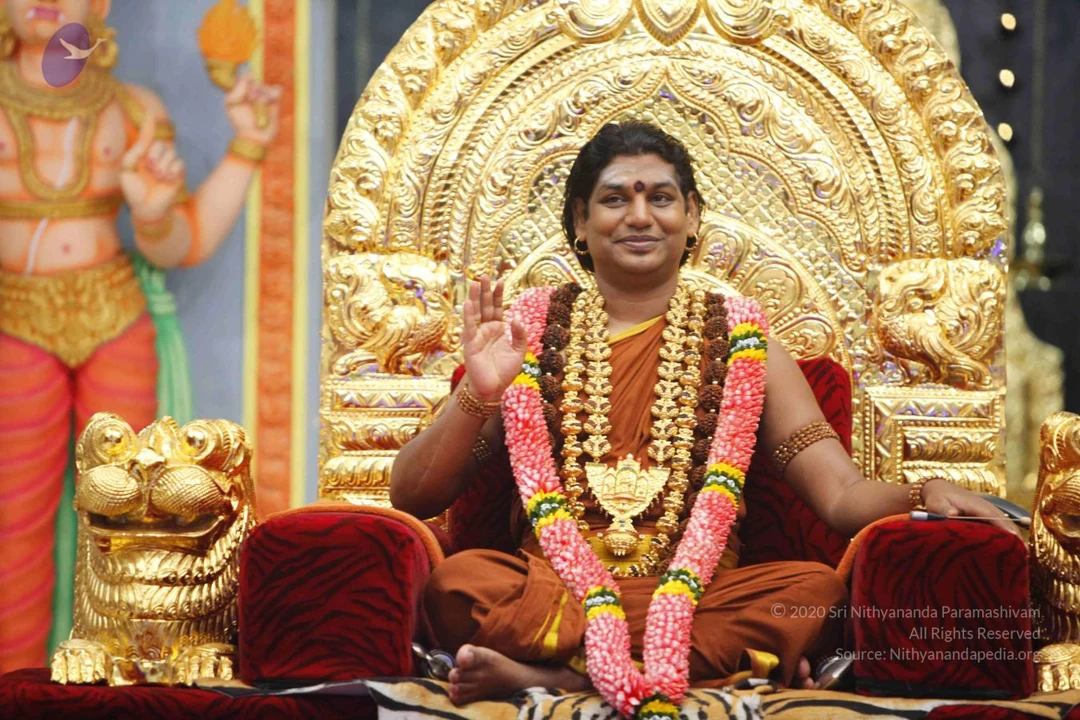
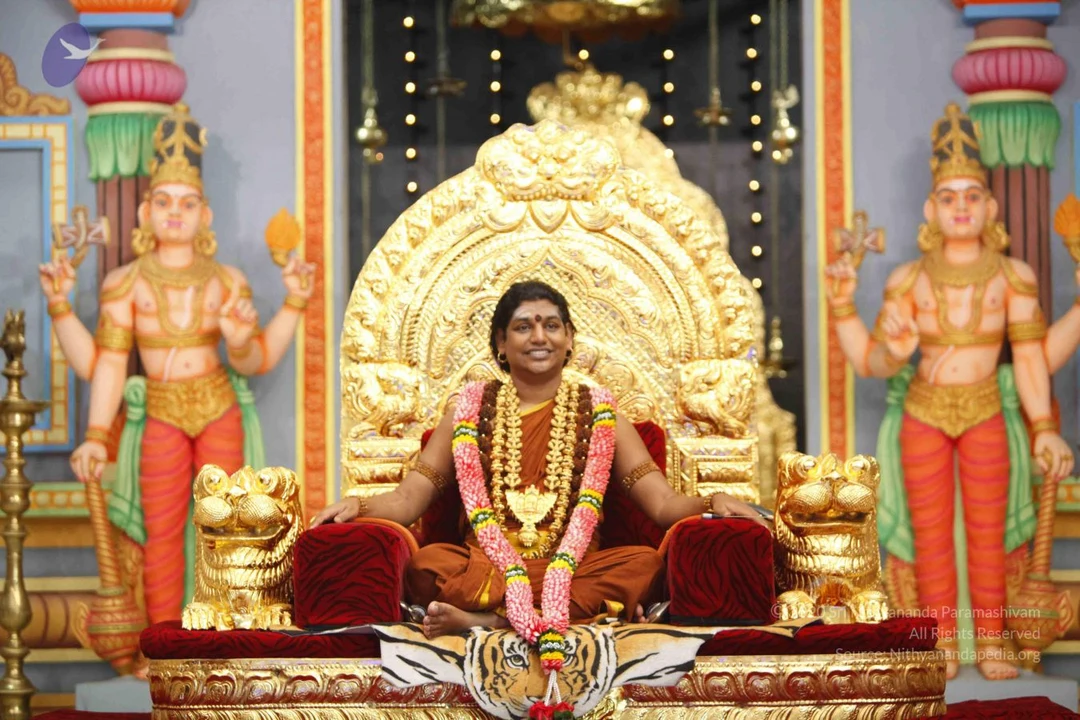
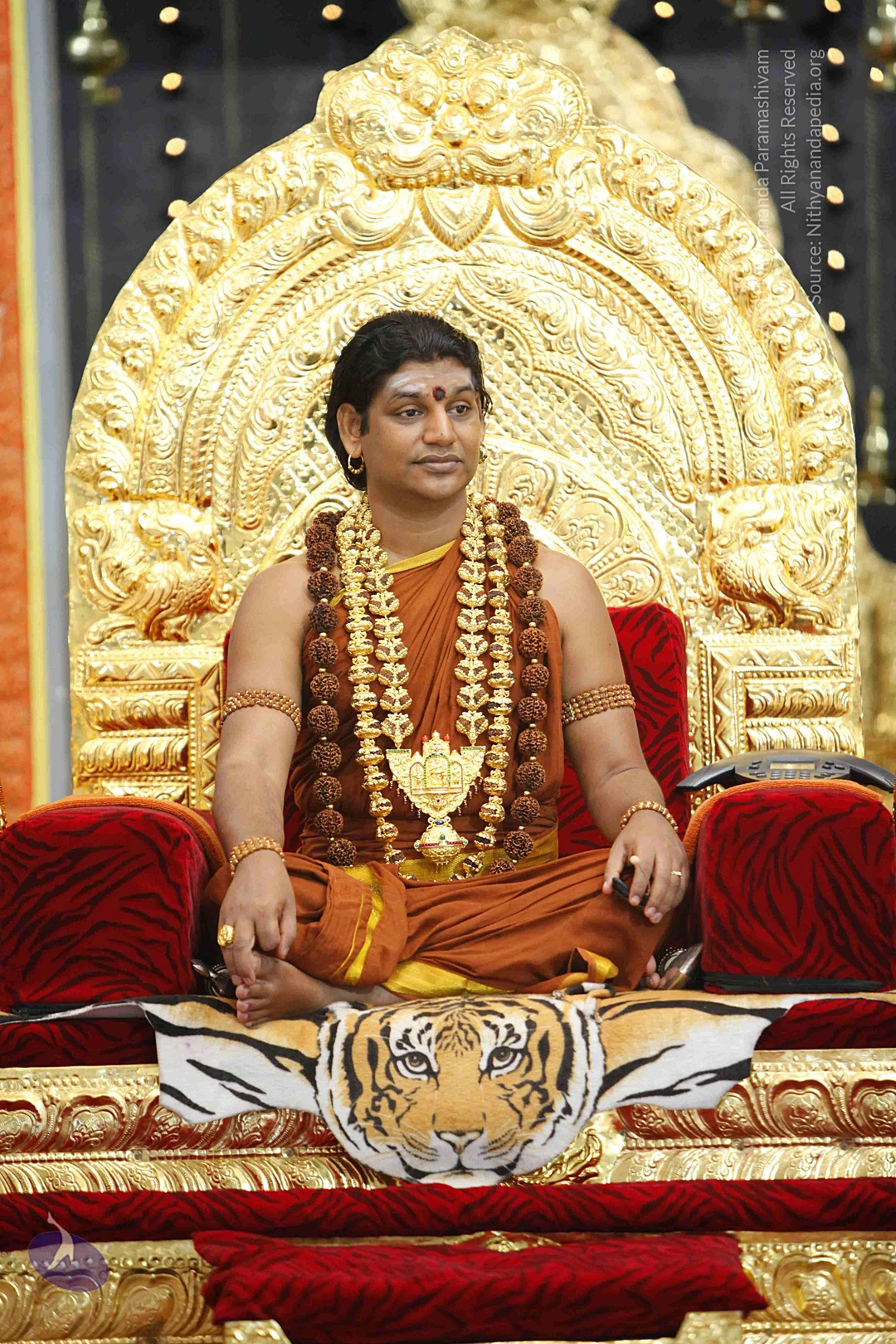
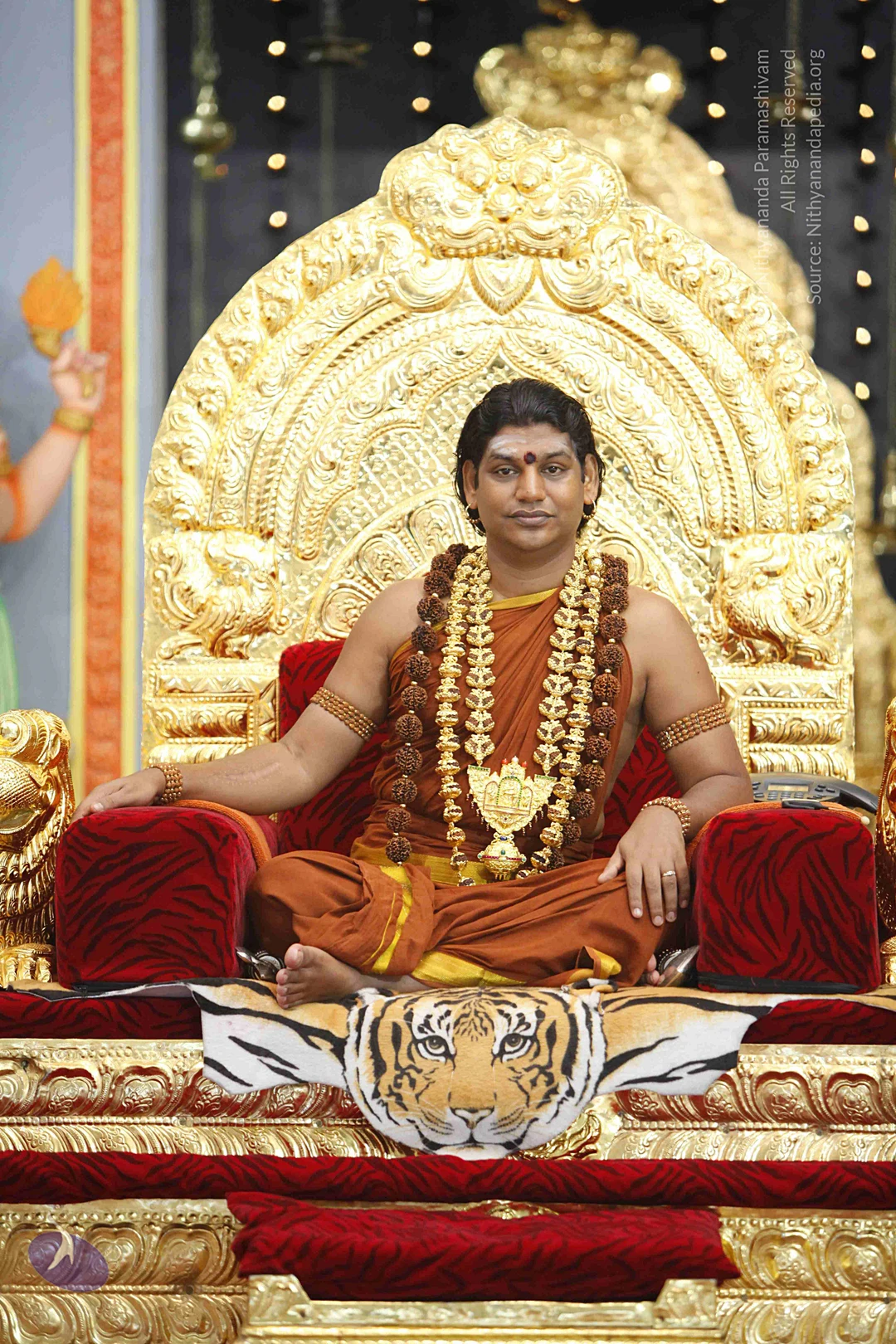
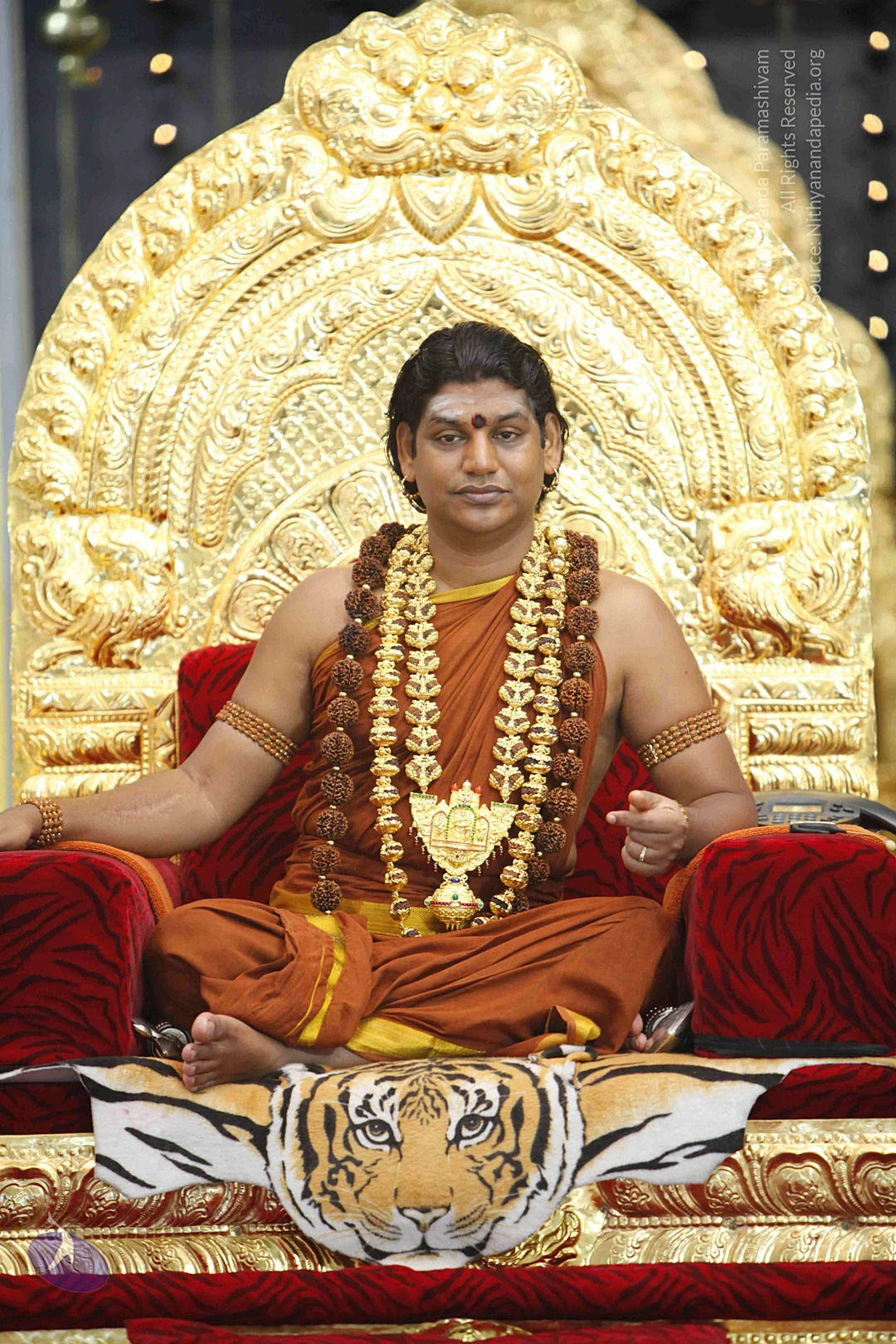
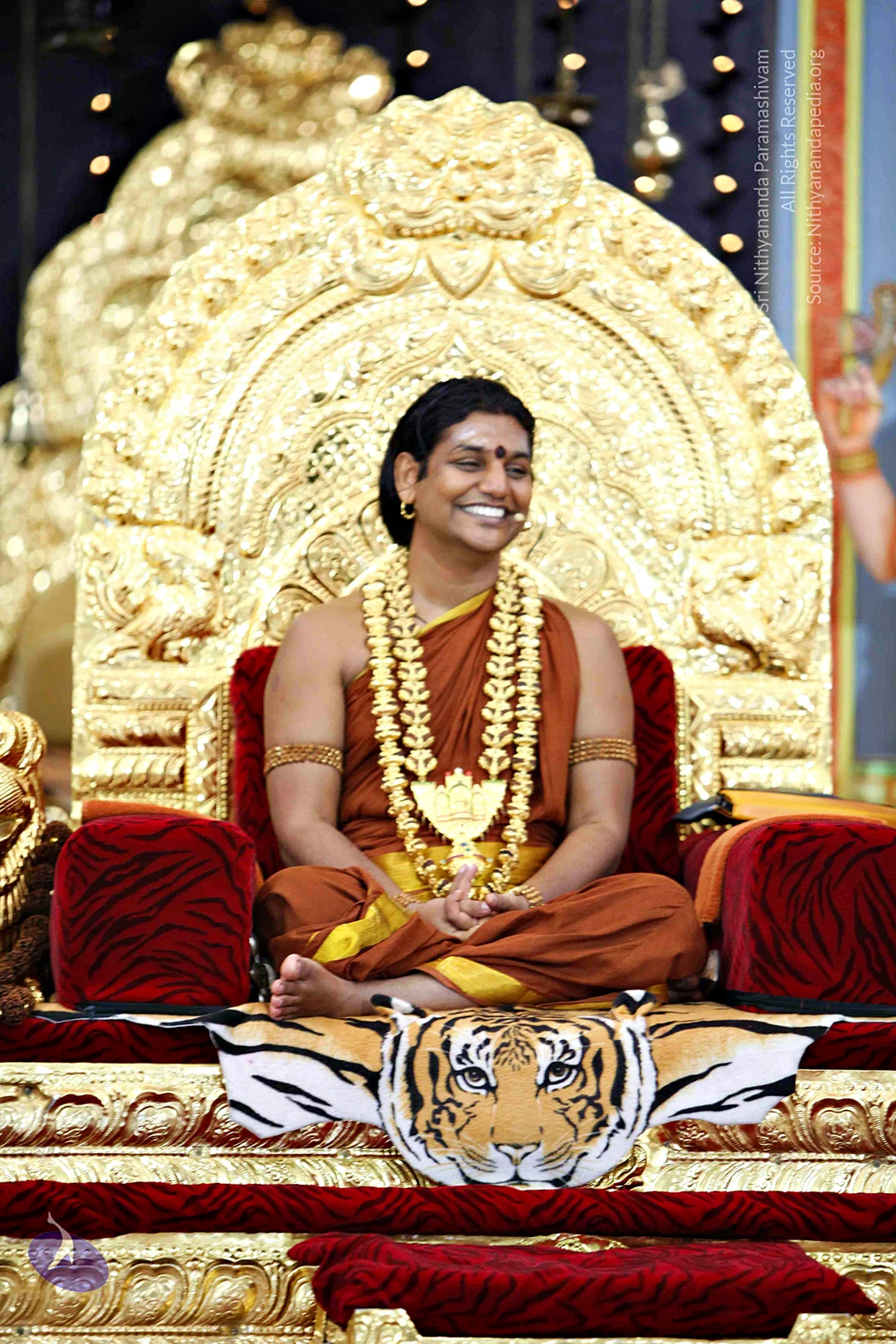
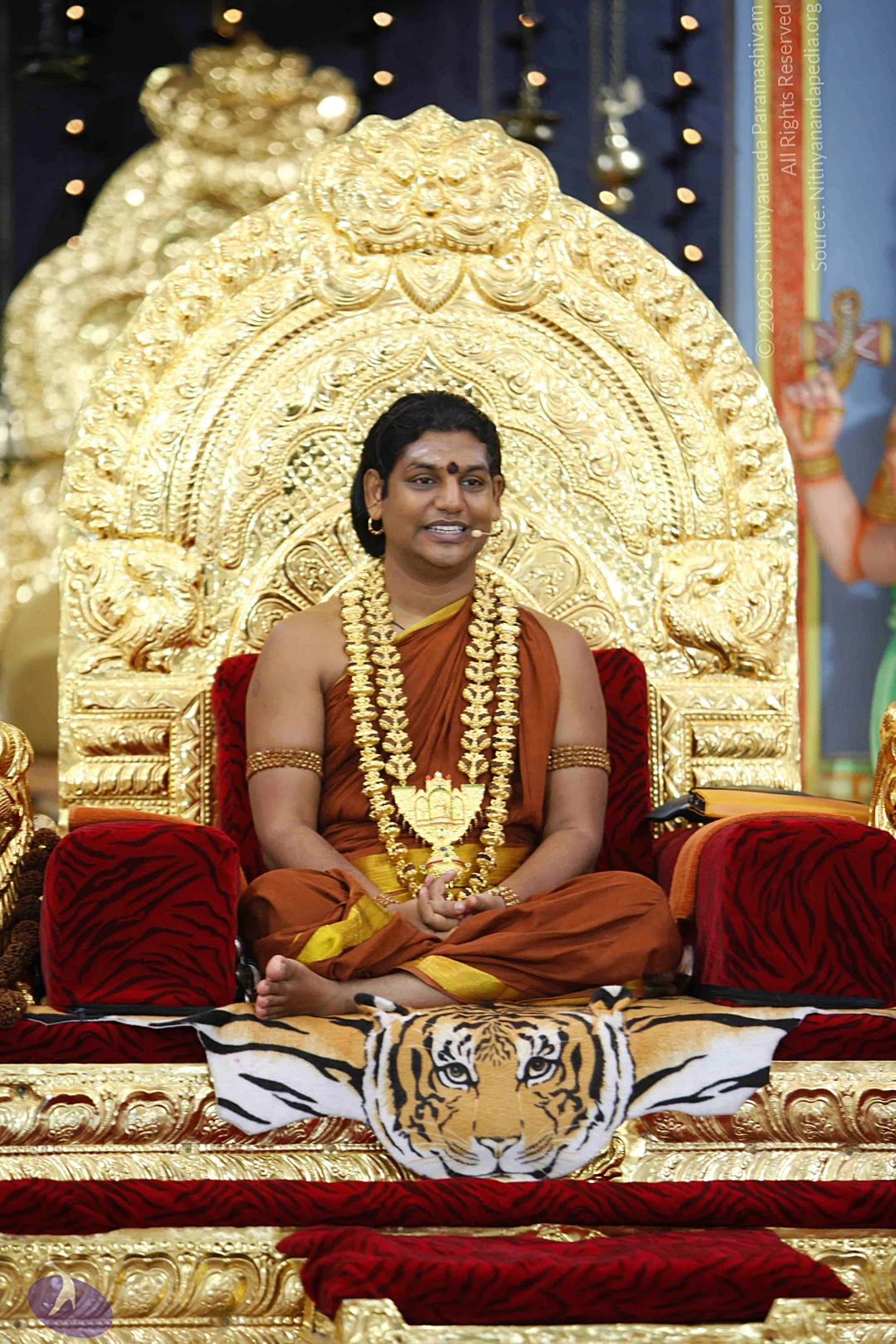
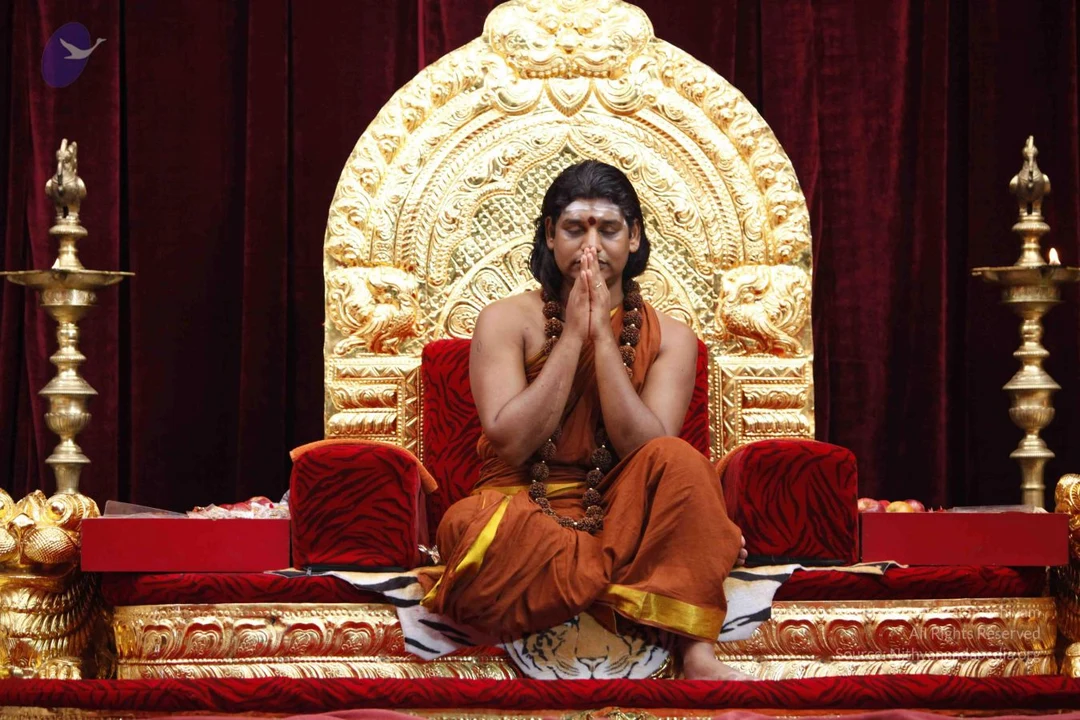
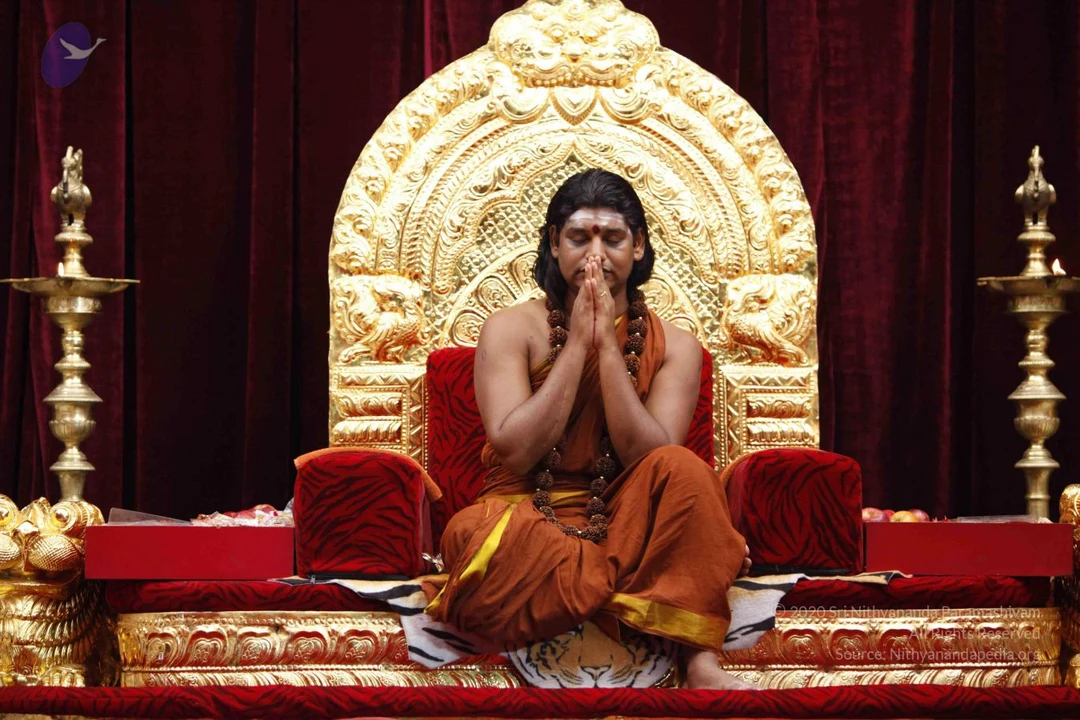
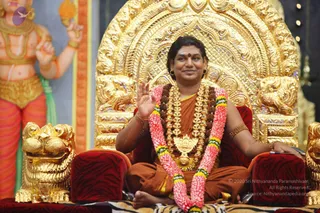
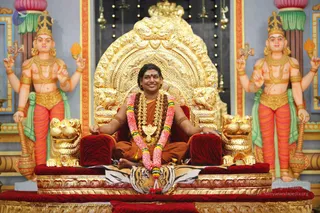
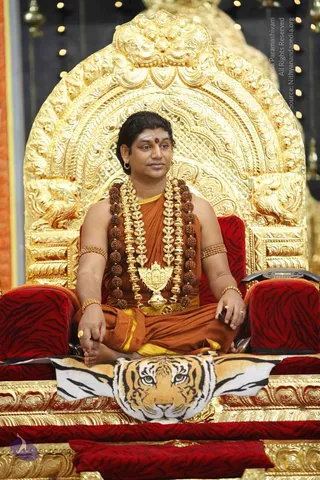
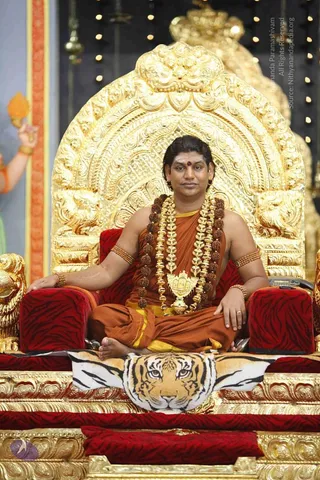
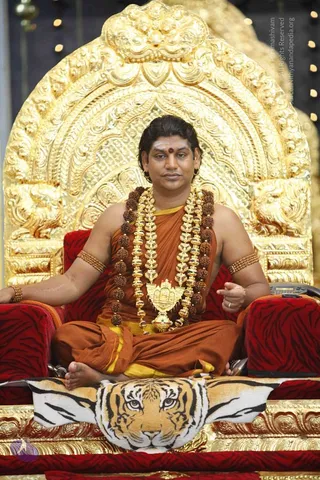
A seated man in saffron-orange robes sits on an ornate golden throne with lion-shaped armrests and a red cushioned seat, draped with a tiger-striped cloth. He wears multiple rudraksha malas, a large gold pendant with a lotus motif, and gold bangles, and has a red tilak on his forehead; he raises his right hand in blessing while smiling. He is adorned with a pink and white flower garland with green and yellow ribbons. Behind him, a gold-painted deity murti with four arms and orange-red skirt stands beside a flaming oil lamp. The setting resembles a satsang hall. Swamiji (probable): the seated man is the central figure, with long swept-back hair, saffron robes, rudraksha malas and ceremonial gold necklaces, seated on a throne in the position of teacher.A seated man in saffron-orange robes sits on an ornate gold throne with lion-armrests and red velvet cushions, draped over a striped tiger-skin mat. He wears a multi-strand rudraksha mala, a pink and green flower garland, and a gold ceremonial necklace, with bangles on his wrists. Two large painted deity statues flank the throne, each with four arms, gold crowns, orange dhoti and green sashes, holding ritual objects. Gold kalasha finials and pink lotus-shaped pillar tops frame the scene. a person: the seated man has saffron/orange robes, rudraksha mala and gold necklace on a throne, which fits the page's reference to a person.A seated figure sits cross-legged on an ornate gold throne with red velvet cushions, flanked by two gold lion-head armrests and a tiger-skin cloth draped across the dais. He wears an orange-saffron robe, a multi-strand rudraksha-style mala, a heavy gold necklace with a pendant, and a large pink, yellow and green flower garland. Two gold-and-red painted deity guardian figures with multiple raised arms stand on either side of the throne, and brass oil lamps appear at the left edge. A gold arched backdrop with hanging lamps frames the scene.A seated man in saffron-orange robes sits cross-legged on a red tiger-striped cushion before an ornate gold throne with carved lion figures and a tall gold arch. He wears layered rudraksha and gold bead malas, a large gold ceremonial pendant, rudraksha armlets, gold bangles and a red bindi on his forehead. His hands rest on his lap while he looks off to the side. A tiger-face rug lies across the dais in front of him. The appearance and seated throne suggest the probable Swamiji, with long swept-back hair, rudraksha malas and ornate gold adornments, though identity is uncertain from appearance alone.A man sits cross-legged on an ornate gold throne with a red-and-black tiger-striped cushion, bare-footed, in a saffron-orange garment with gold border. He wears layered rudraksha malas and a heavy gold necklace with a central gold pendant, gold armlets and bangles, and a red bindi with a white forehead marking. His hands rest on the armrests. Behind the throne are gold-leaf carvings, lamps with bulbs and a gold deity figure partly visible on the left. Swamiji (probable): long swept-back hair, saffron clothing, rudraksha malas and ceremonial gold necklace are the qualifying cues, seated as the satsang speaker.A seated man in an ornate gilded throne with carved lion-like motifs and red tiger-striped upholstery, wearing an orange-brown saffron cloth over one shoulder, a yellow waist cloth, multiple rudraksha malas and a large gold ceremonial necklace with a gold emblem pendant, rudraksha armbands, and a red bindi with white tilak on his forehead. He sits cross-legged on a tiger-face rug, one hand raised in a gesture while the other rests on the armrest. The shoulders and hair are visible, and the background shows gold ornamentation and lights.

SarvaDarshan

12 photosSource gallery
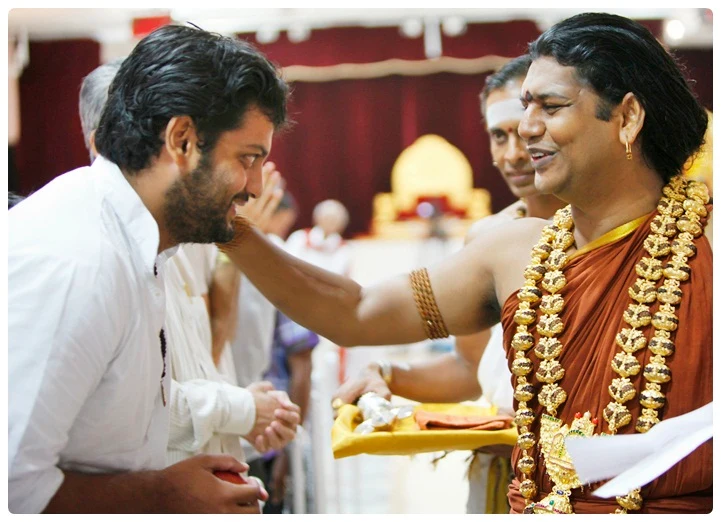
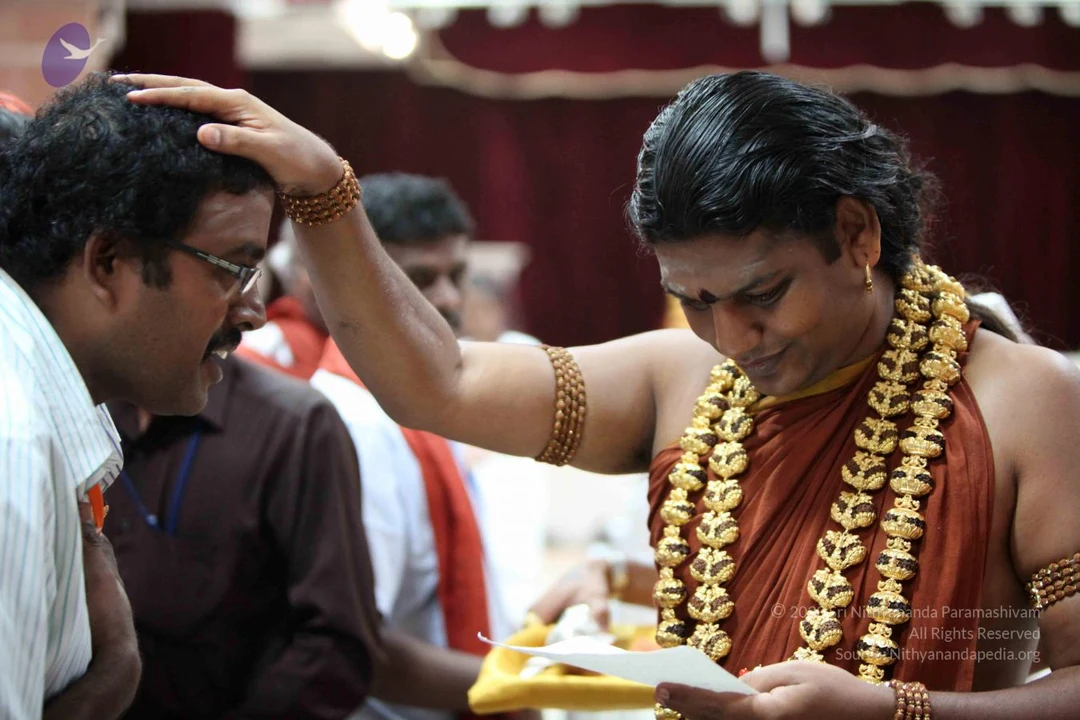
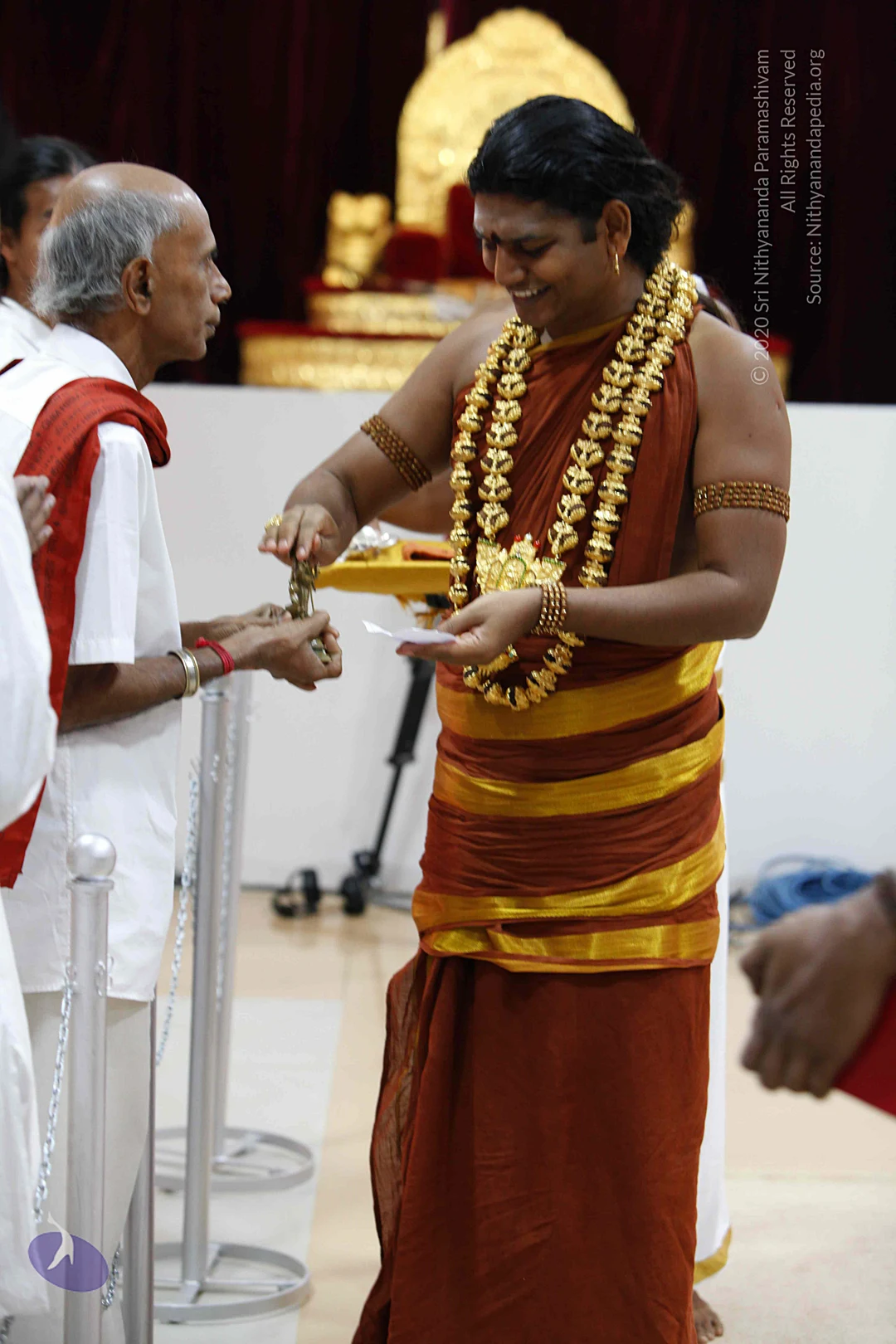
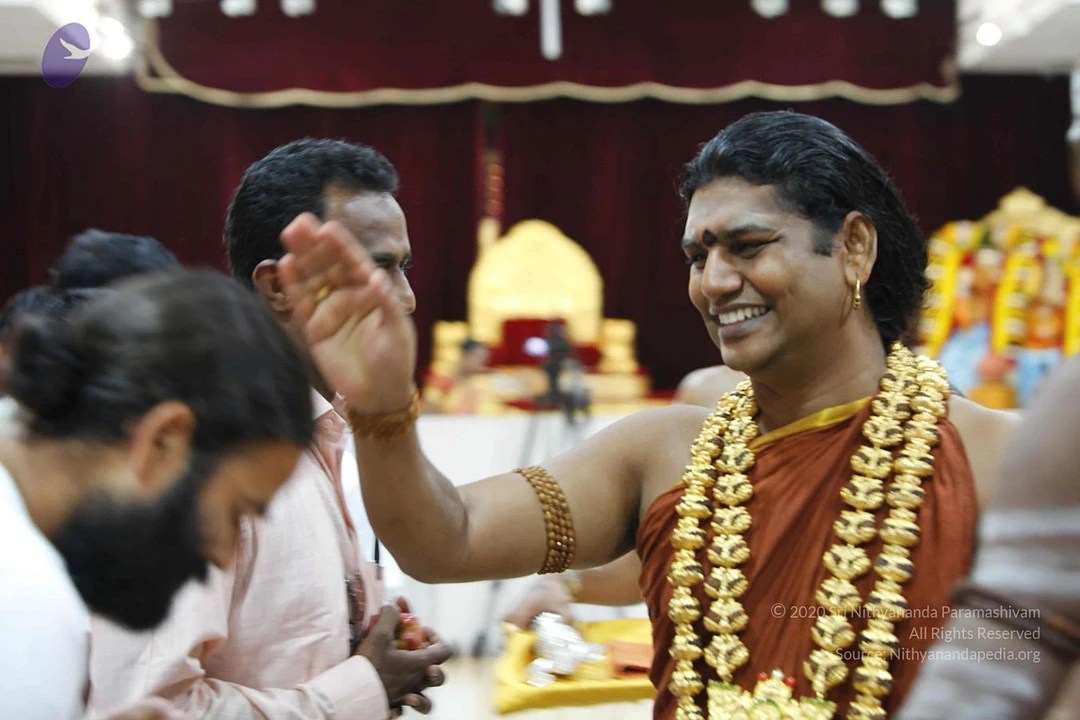
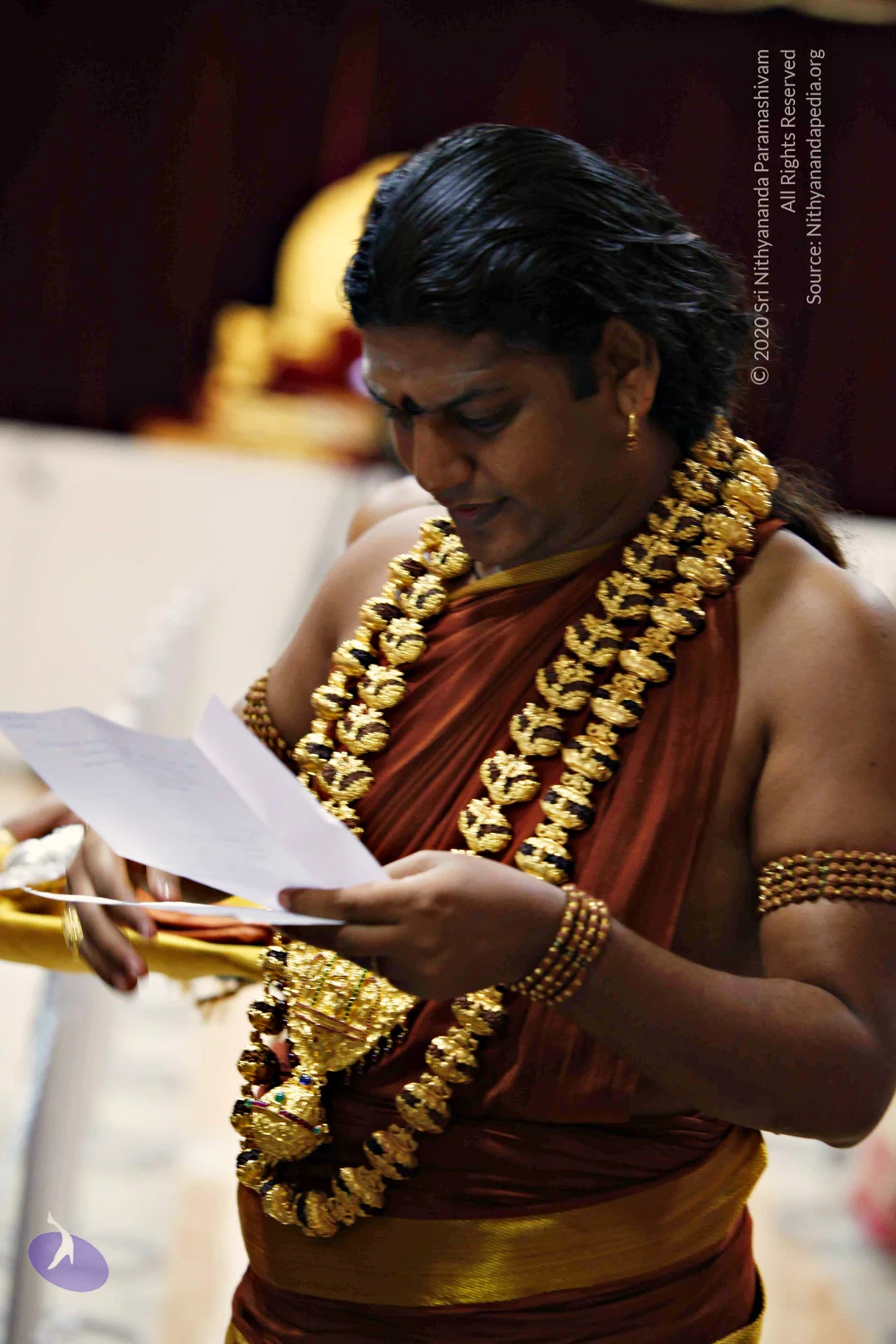
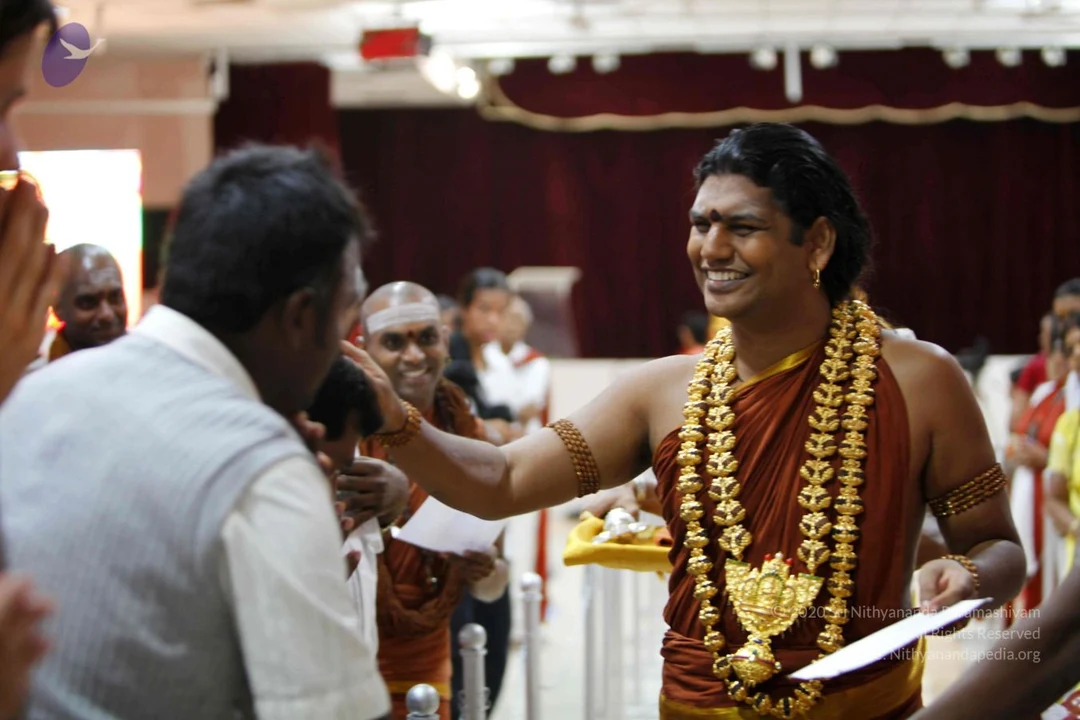
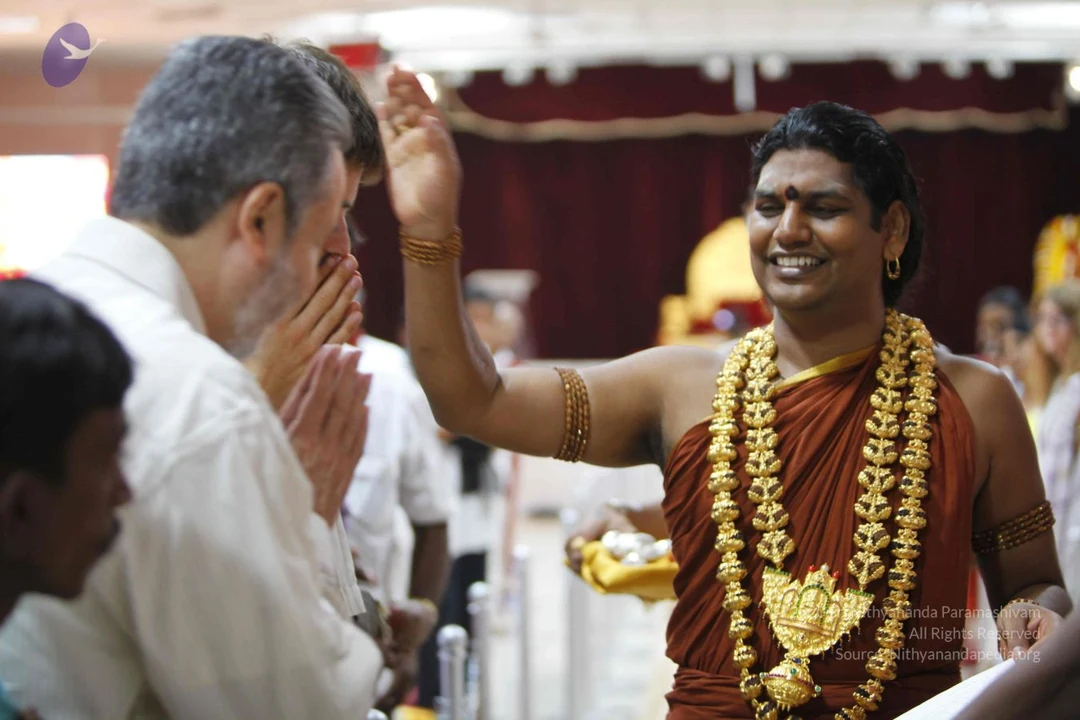
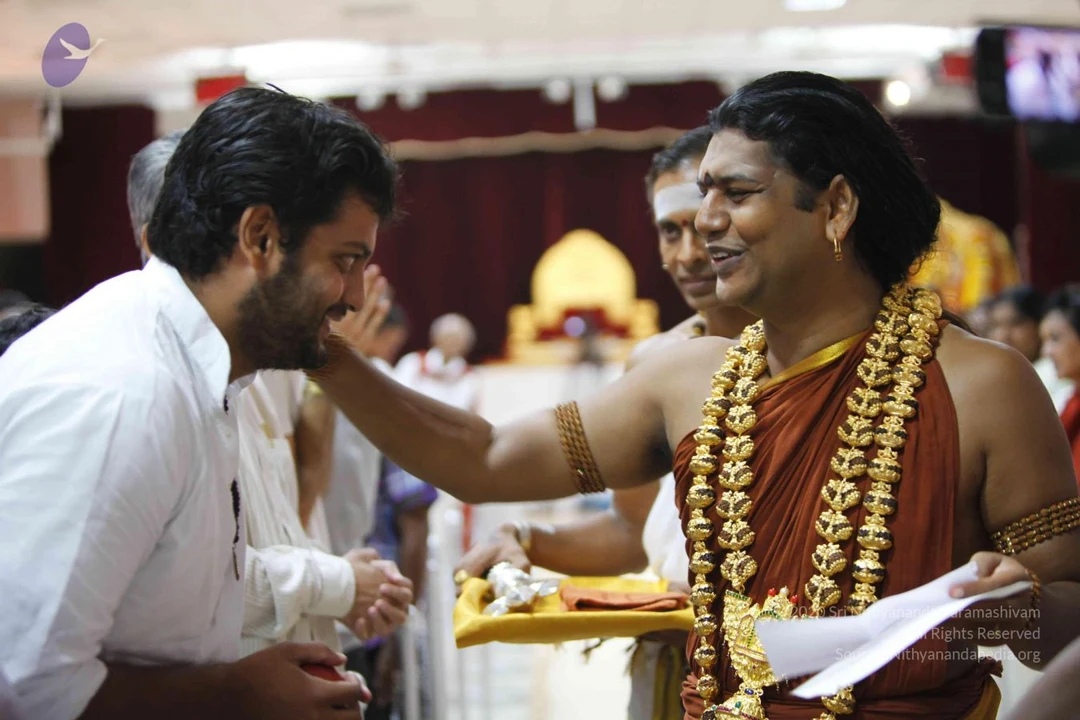
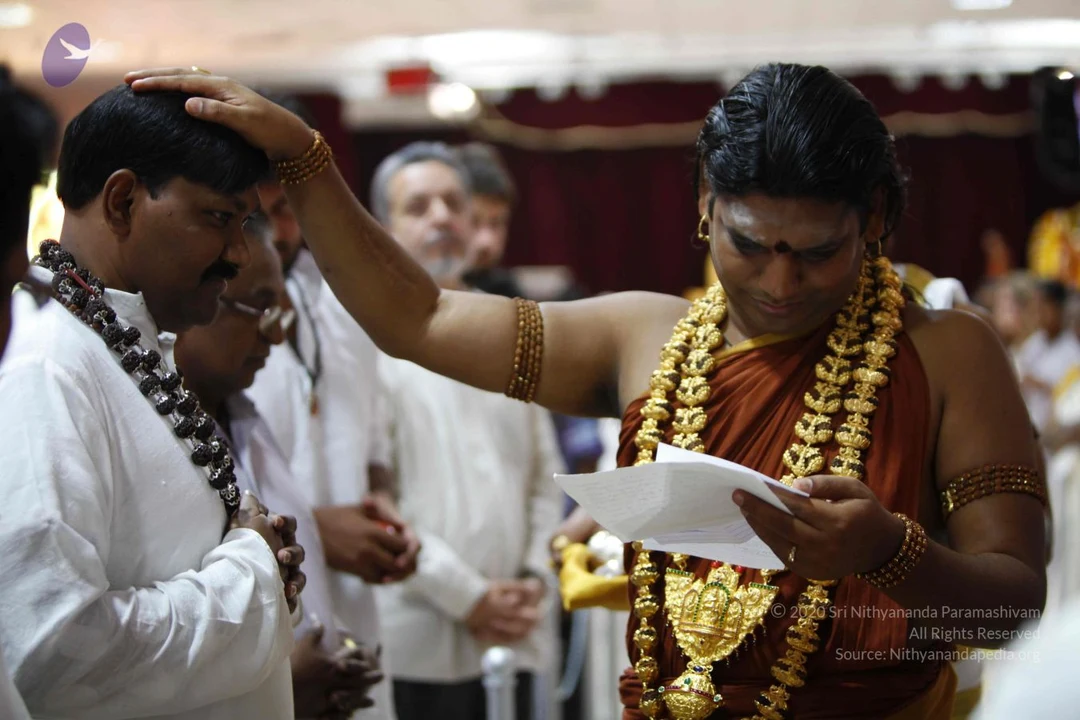
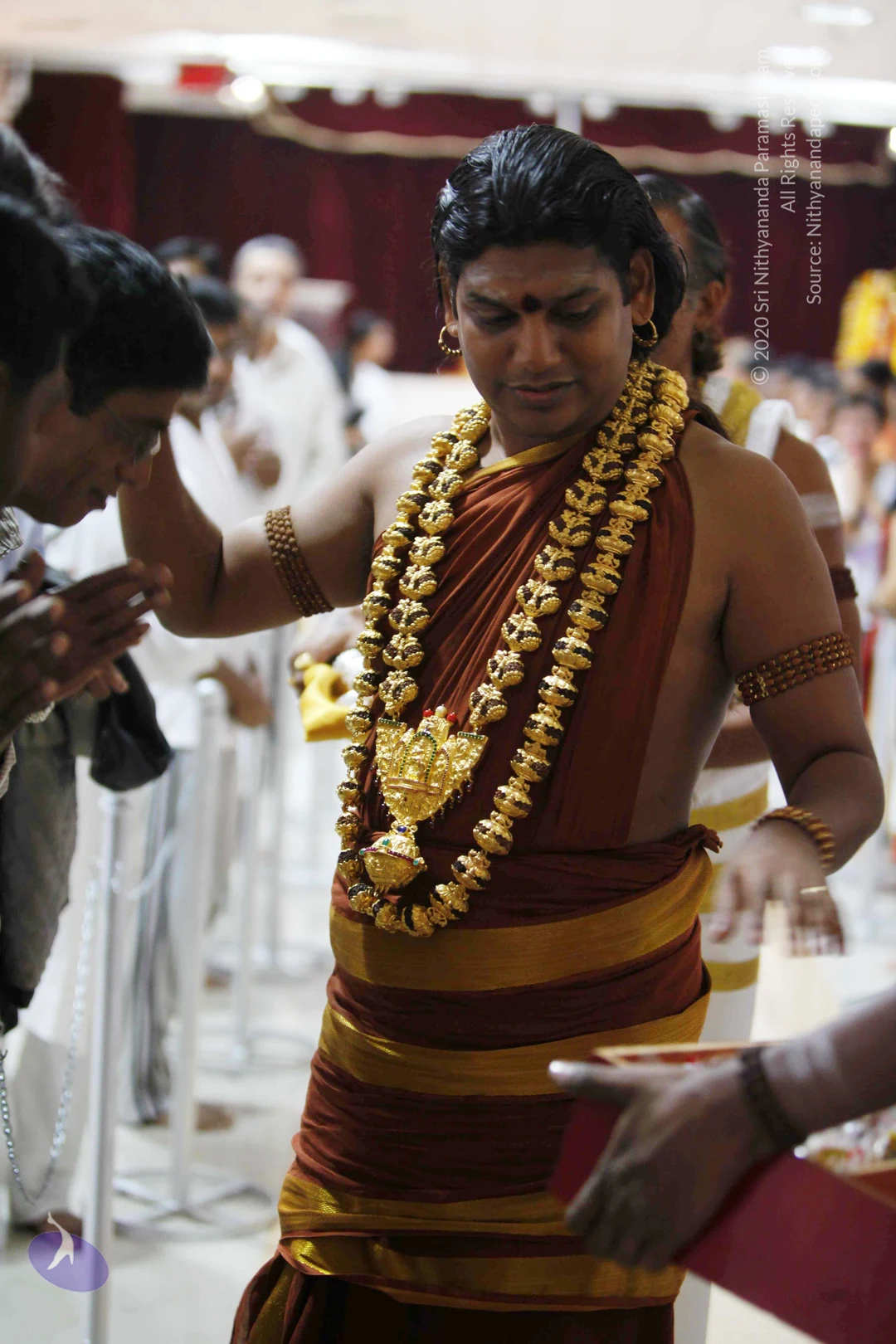
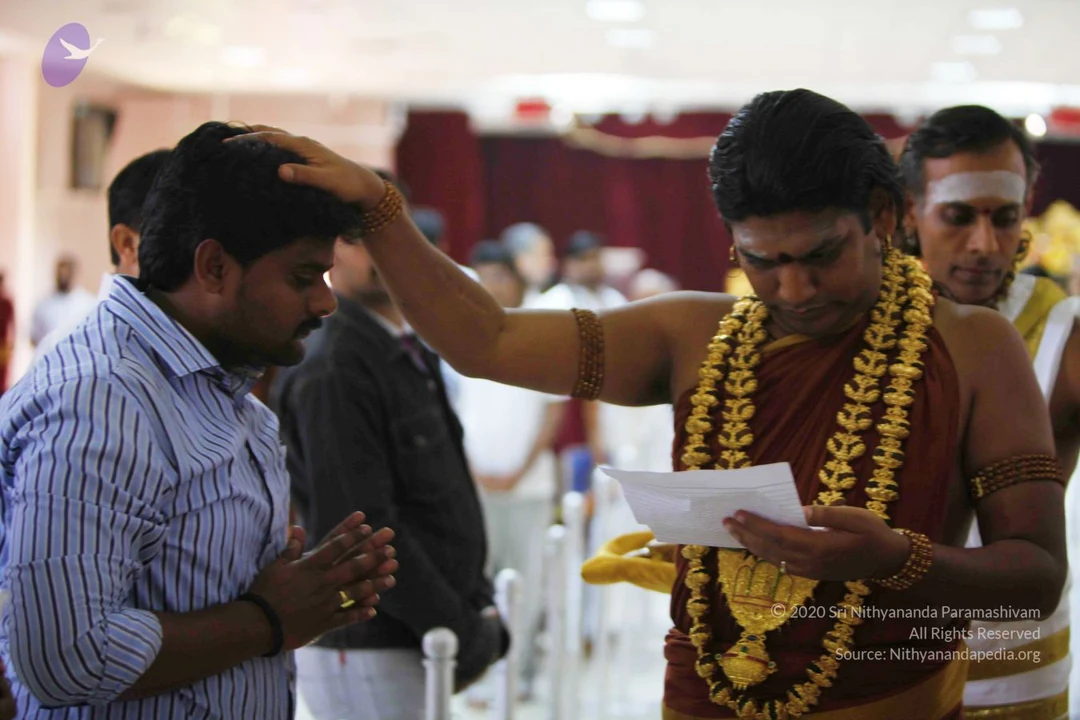
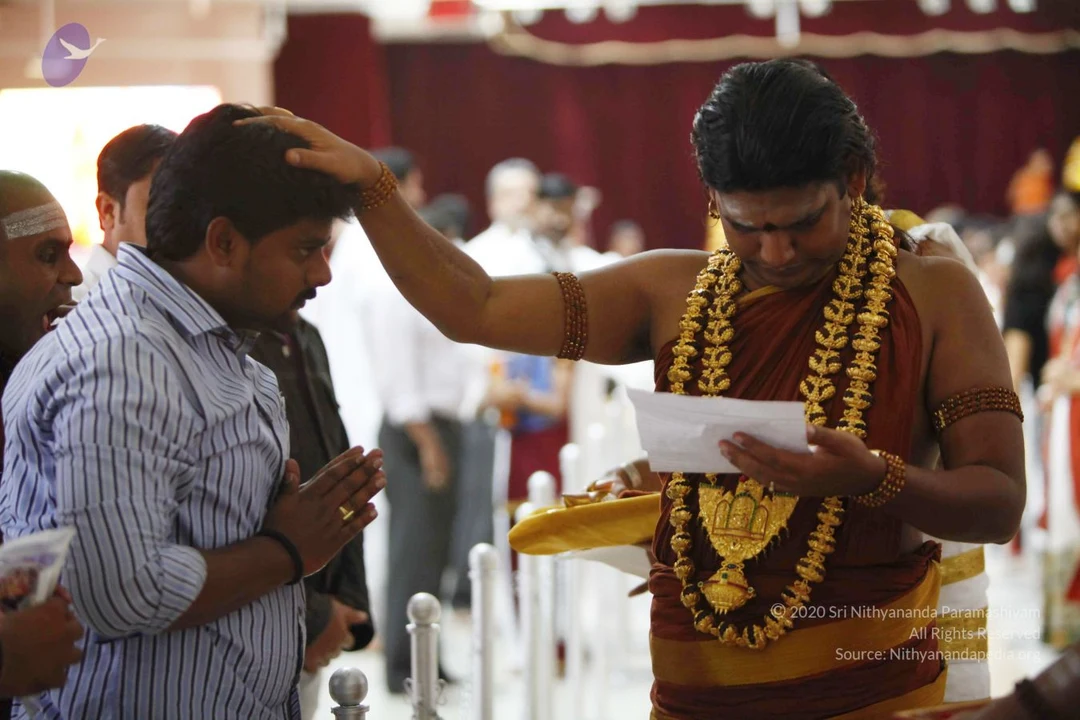
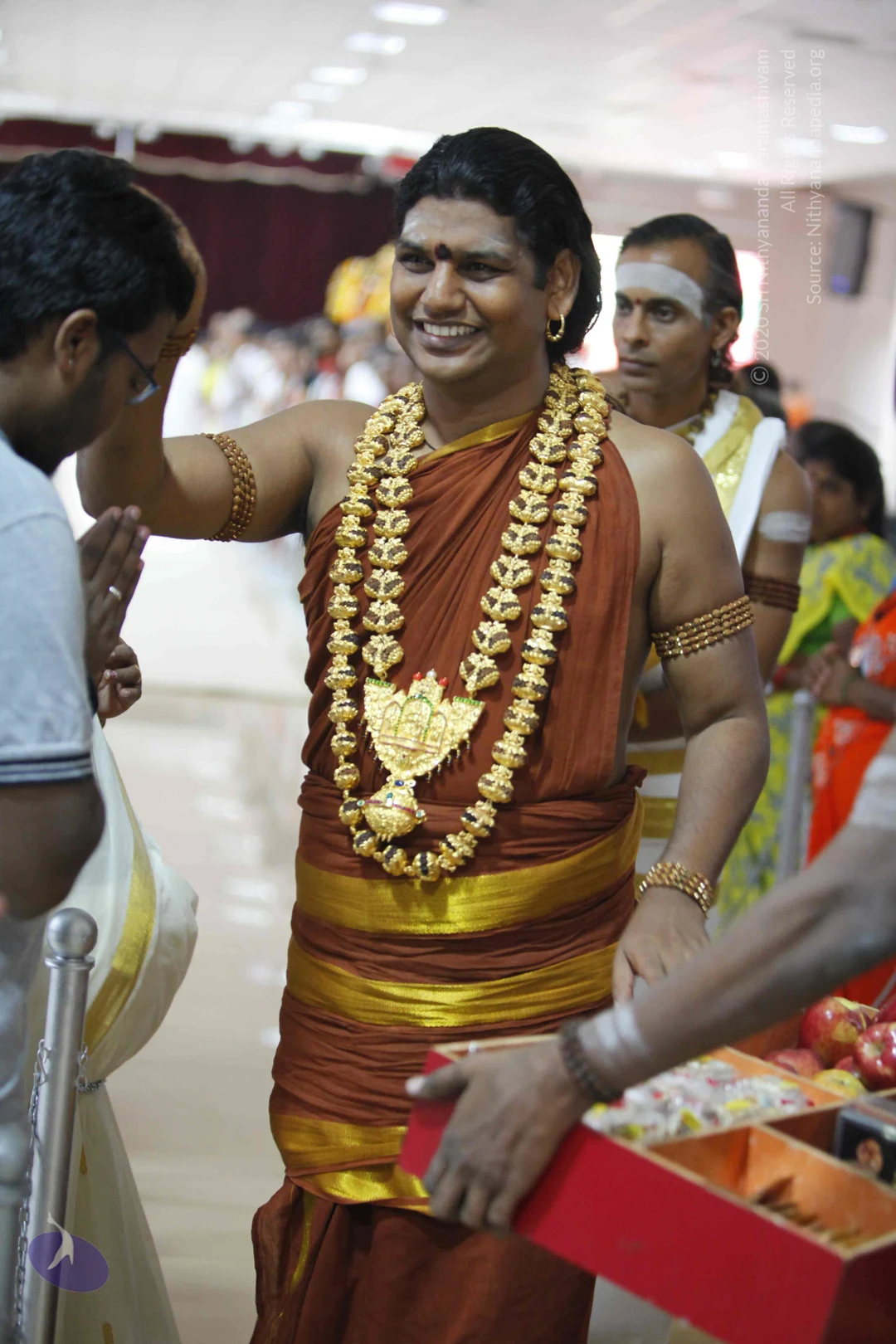
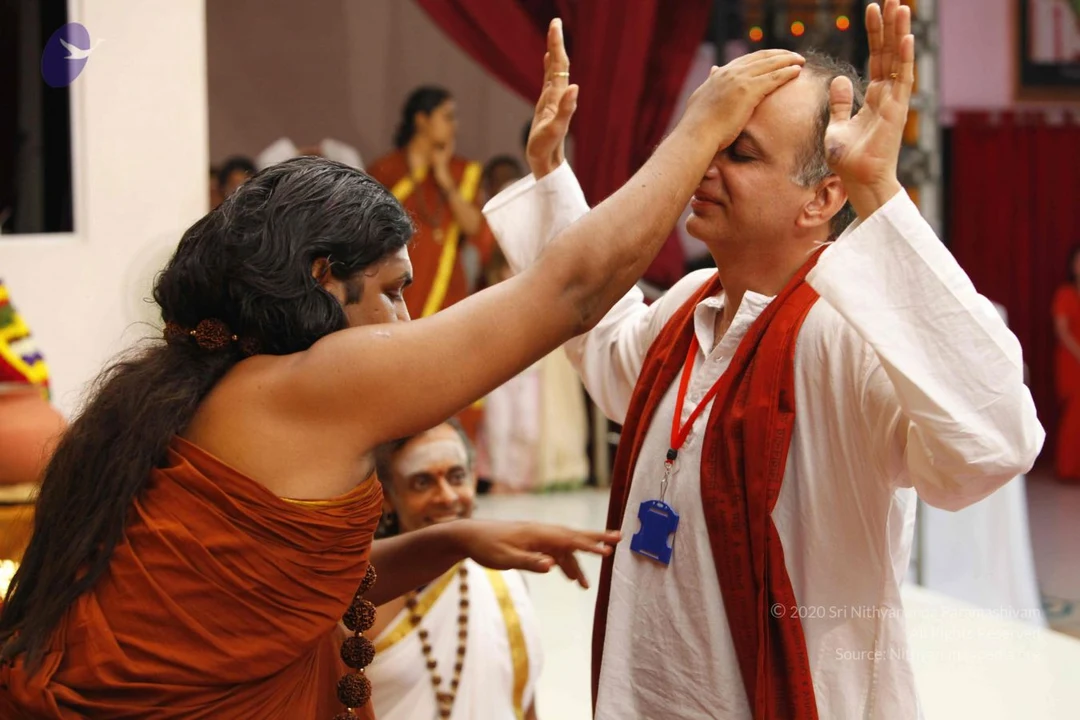
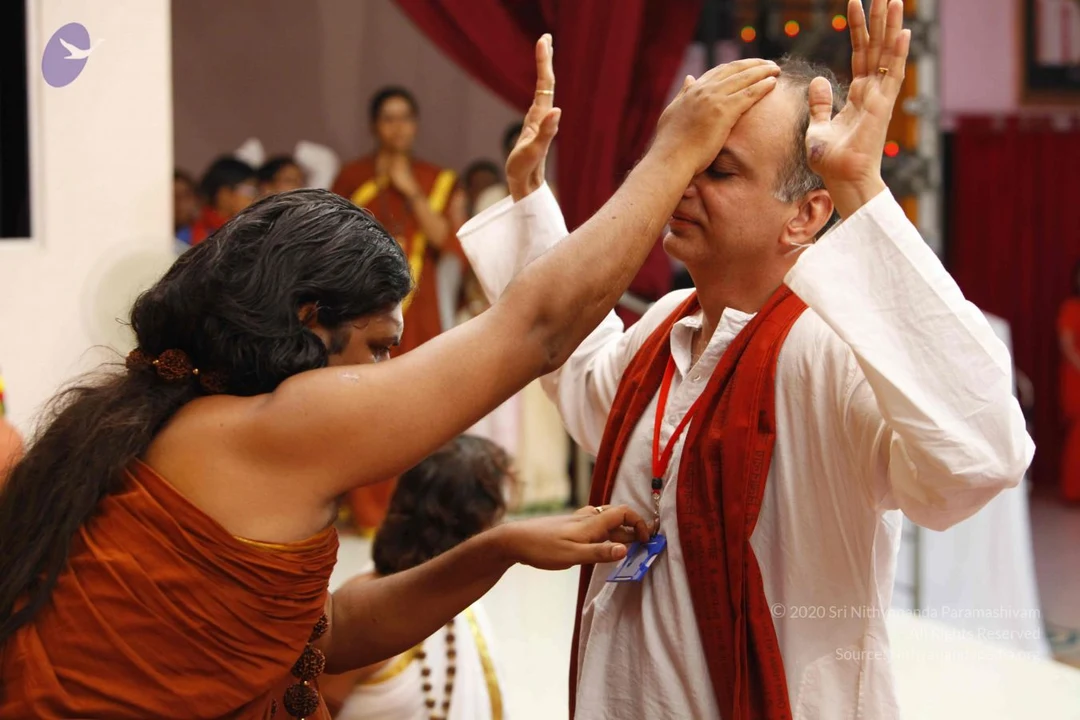
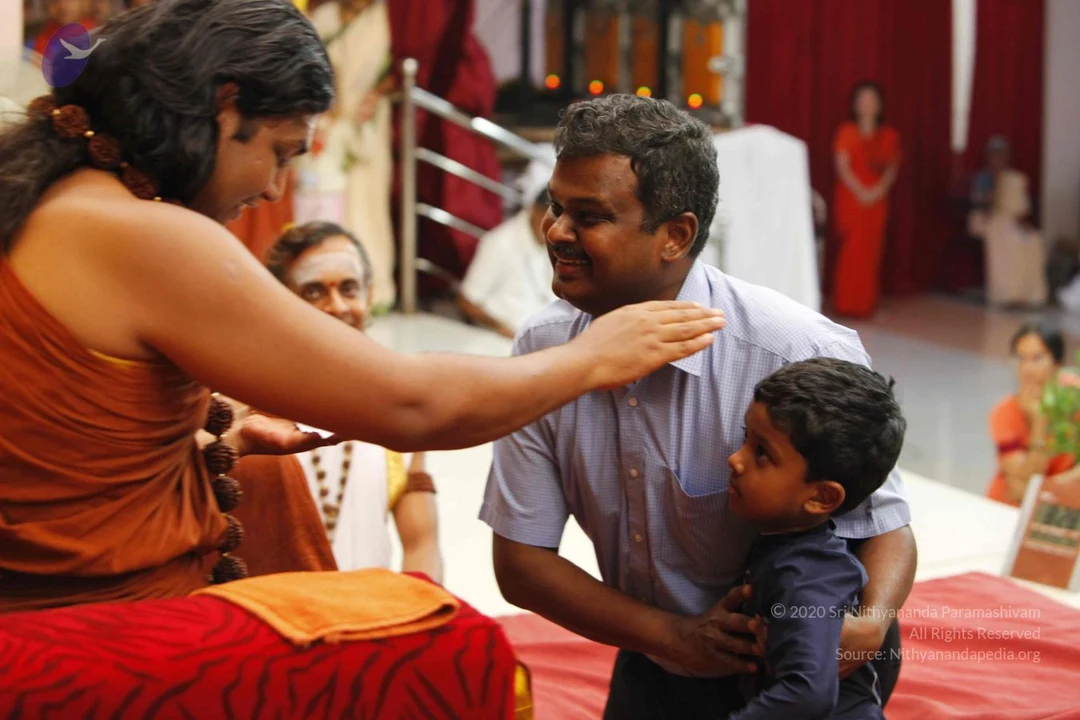
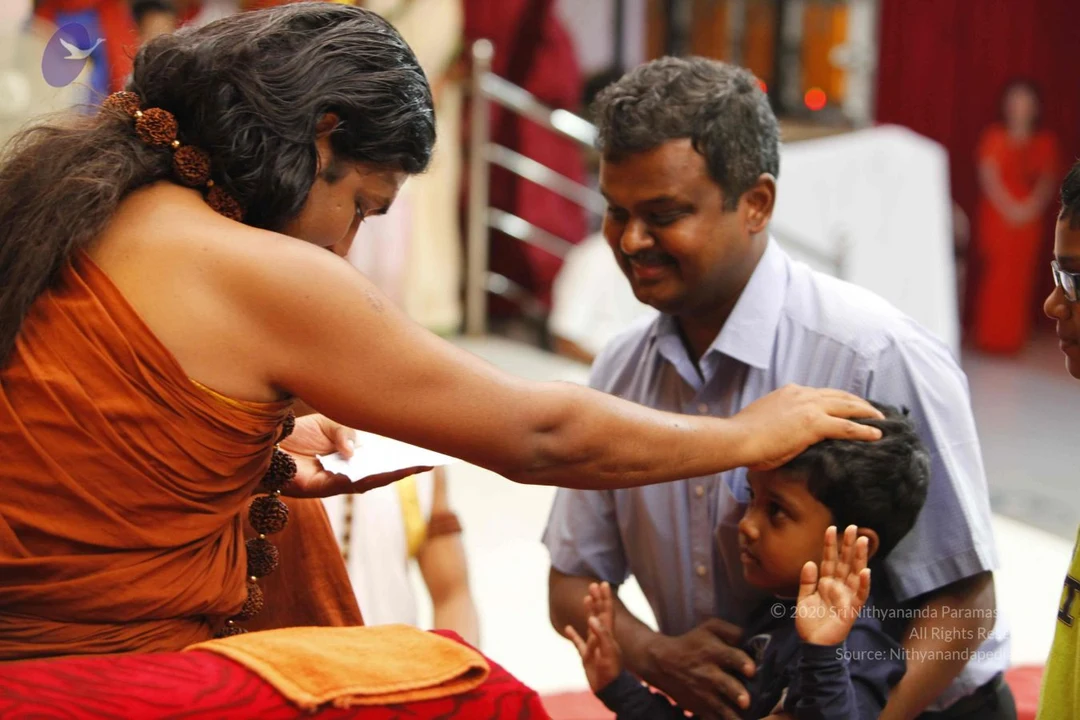
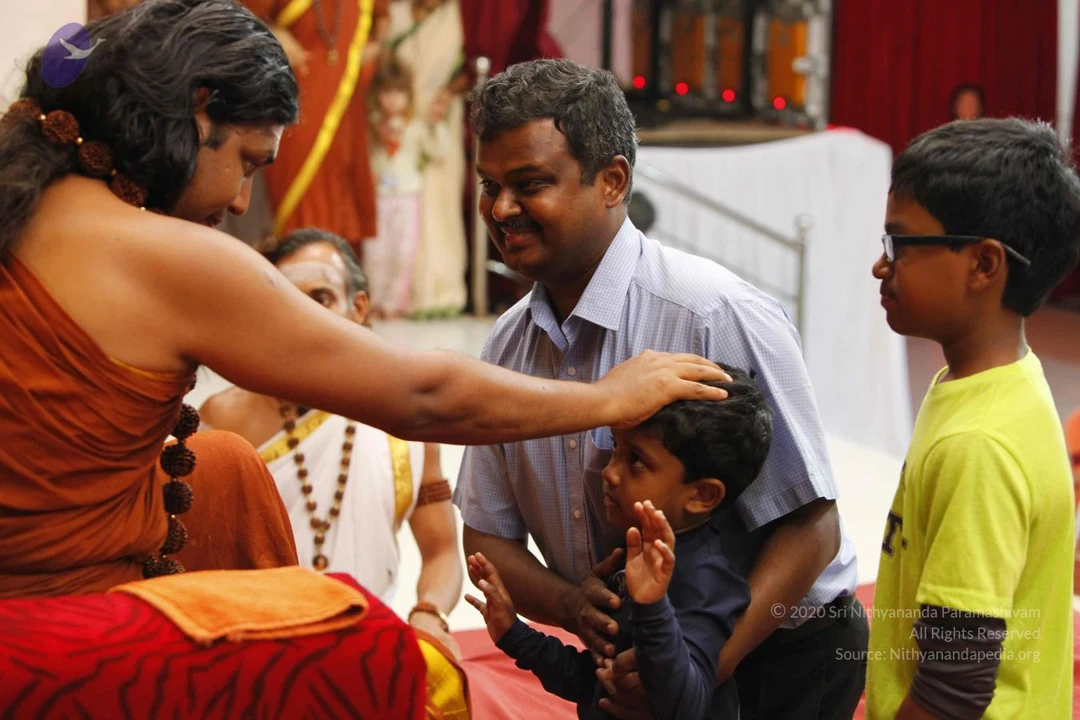
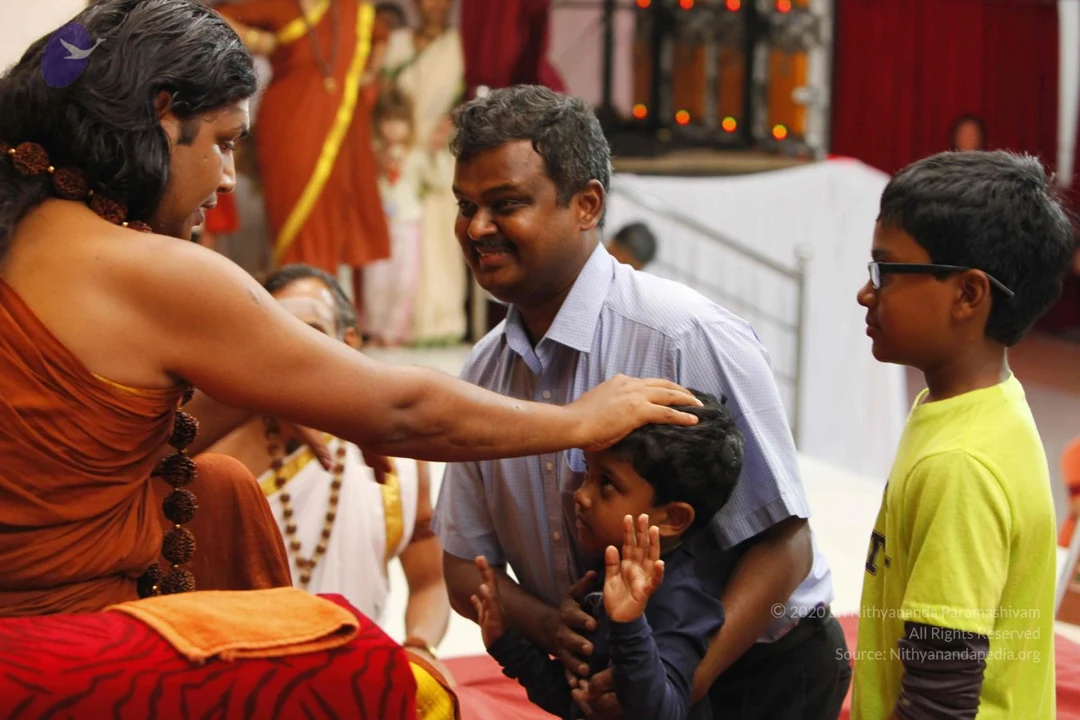
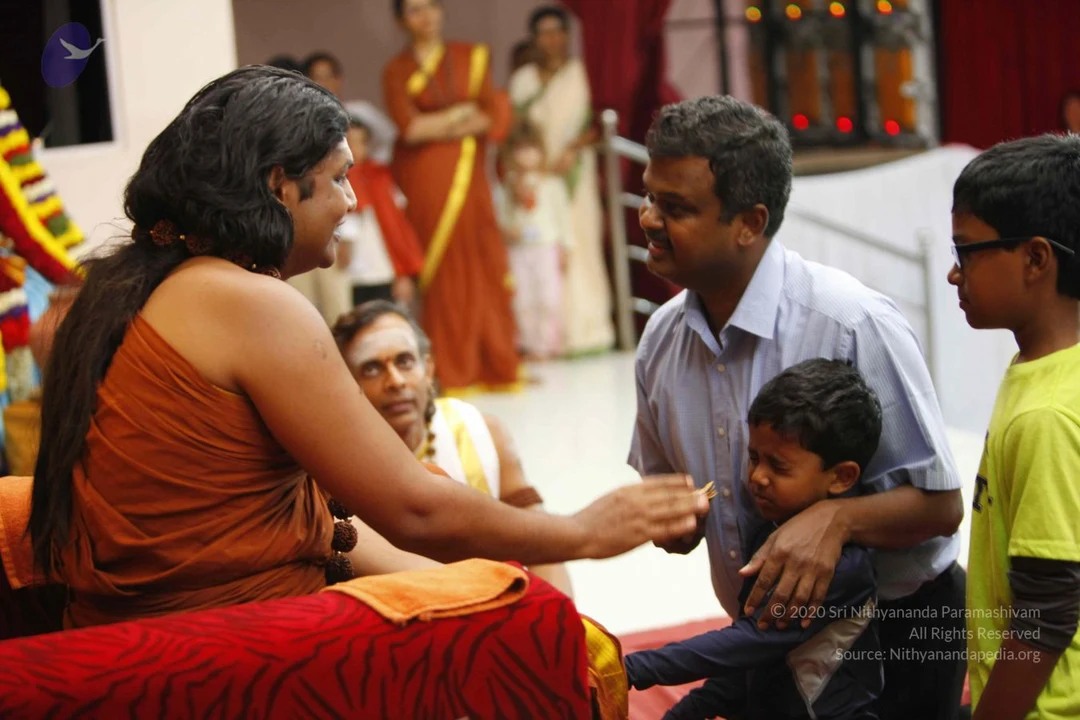
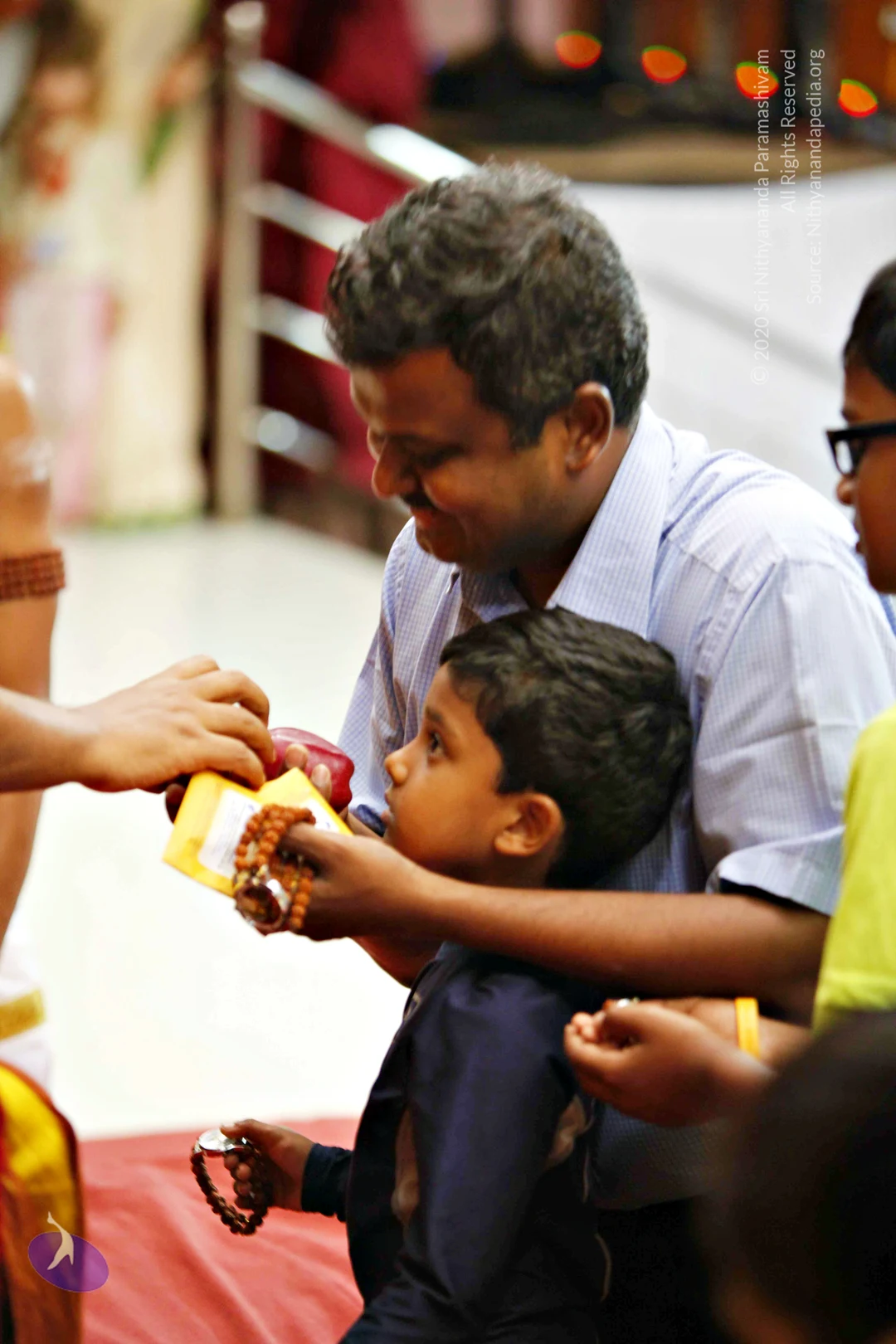
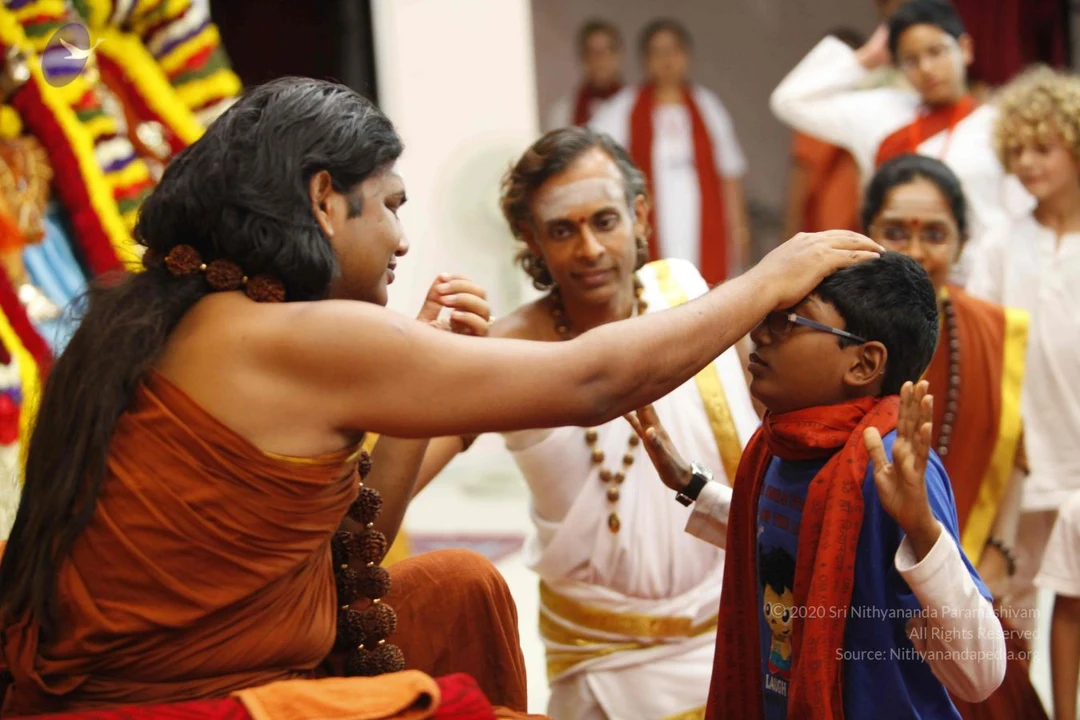
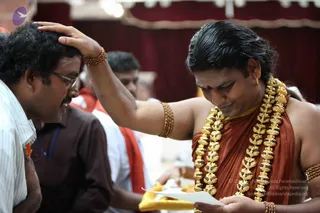
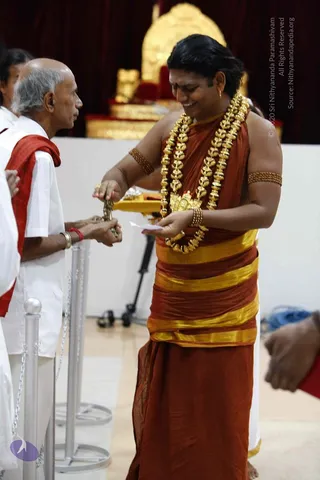
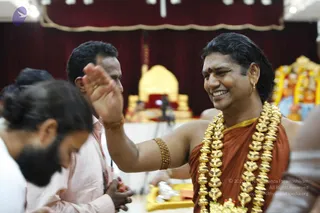
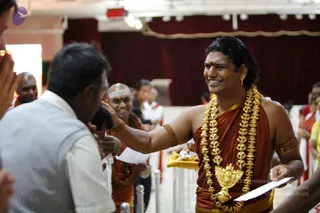
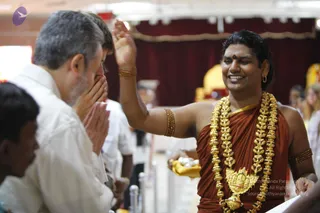
A photograph of a man with long swept-back dark hair and a gold-toned ceremonial necklace of large beaded pendants, wearing a rust-orange shawl draped over a bare shoulder and rudraksha-style bracelets on the upper arm. He looks down at a white paper in his hands while his other hand rests on the head of a seated man with short curly hair and glasses, who wears a white striped shirt. Behind them, other people in orange and white clothing are partly visible against a deep red curtain.A smiling man in saffron-orange robes with a gold-and-yellow sash and a long gold-bead garland stands barefoot, holding a small white card and reaching toward an elderly white-clad man with a red shawl and bald head who holds a small brass object. The orange-robed man wears gold armlets and a bindi, and a golden throne with red cushions is blurred in the background. Steel barriers and a stand are visible beside them. A sannyasi in gold-trimmed robes and a white-clad devotee exchange an item during an exchange in a golden-hued hall. a person cues: long swept-back dark hair, gold ceremonial garland, saffron robes.A photograph of a smiling man with long swept-back dark hair, wearing a saffron-orange shawl draped over one shoulder and heavy gold ceremonial necklaces with a gold bracelet, raising one hand in greeting. Beside him a man in a pink shirt holds a small object near a yellow tray, and a bearded man in white sits blurred at the left edge. Behind them is a golden throne with red cushions and a decorated deity murti garlanded with yellow flowers in a hall with maroon drapes.A man with swept-back dark hair and a tilak mark on his forehead stands in profile, reading from a sheet of white paper held in both hands. He wears a rust-orange draped garment with a gold border, a heavy gold necklace of beaded gold pendants and rudraksha-like dark beads, a gold armlet and a gold bracelet. Behind him a blurred gold-and-red decorated backdrop suggests a ceremonial hall, and a yellow cloth is visible at the lower left.A smiling man with swept-back long dark hair, a red tilak mark on his forehead, and gold hoop earring wears an orange-red saffron-toned cloth draped over his bare shoulder and a long layered gold necklace with a large gold pendant. He has gold bangles on his wrists and upper arms and reaches out to greet a man in a white collared shirt and grey vest at left, who has his palms pressed together in namaste. Behind them a bald man with white forehead markings and other people in white and red clothing stand near metal barrier rails in a hall with dark red drapes.A photograph of a devotional blessing. A smiling man with swept-back dark hair, a red bindi and small gold earrings, wears a saffron-orange wrap and heavy gold necklaces with a large gold pendant. He raises his right hand in blessing toward a kneeling older man in a white shirt who presses his palms together in namaskar with eyes lowered. Gold bangles are on the blessing man's arms; a gold-and-white offering tray with a yellow cloth is visible near his waist. Behind them, red drapes and a gold-coloured deity murti or decorated shrine are partly visible, with other people in the background.

Final Blessing

2 photosSource gallery
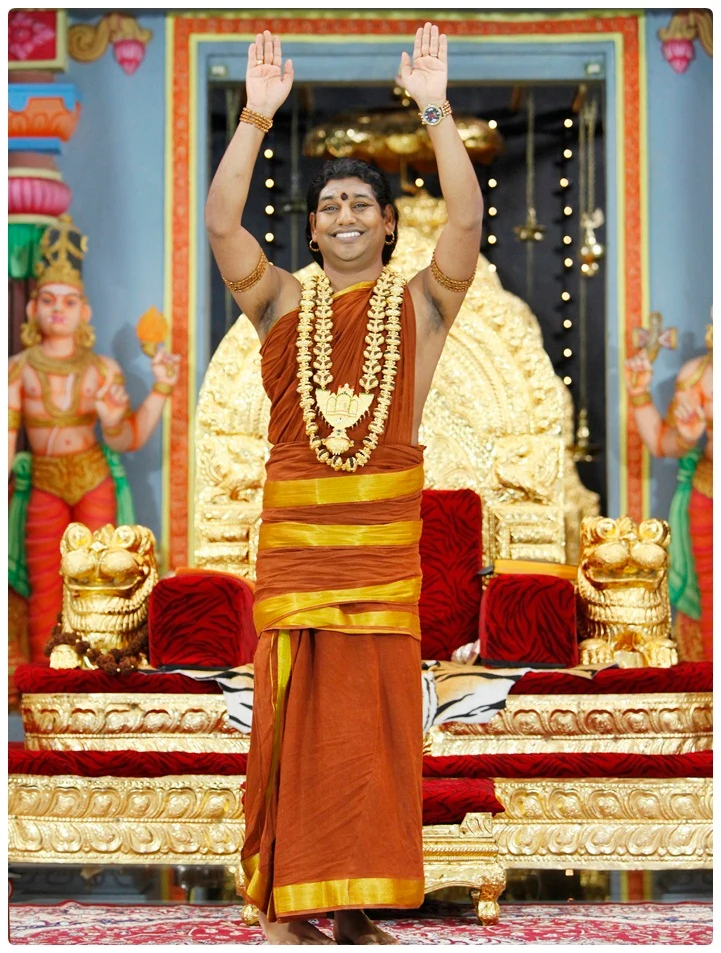
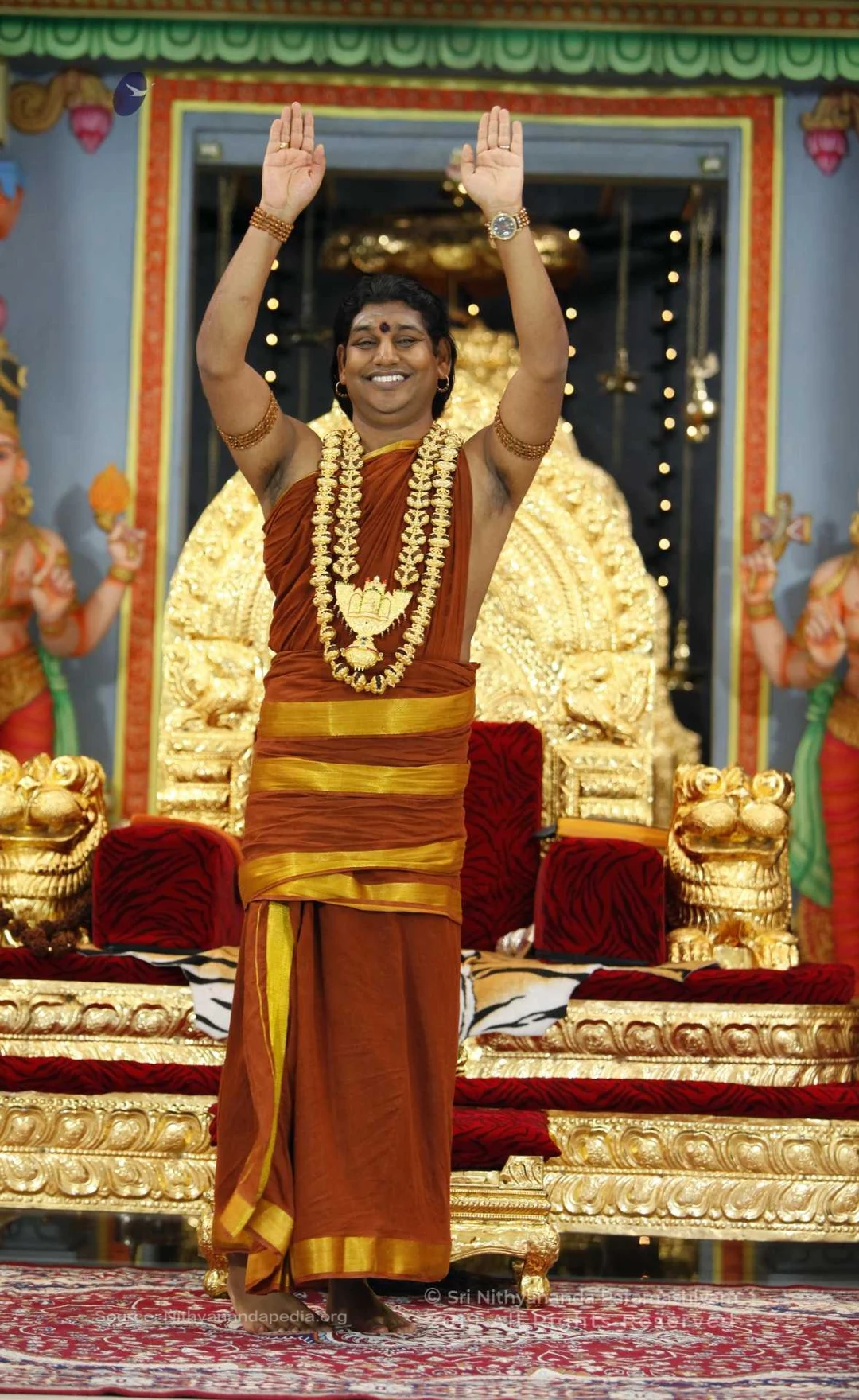
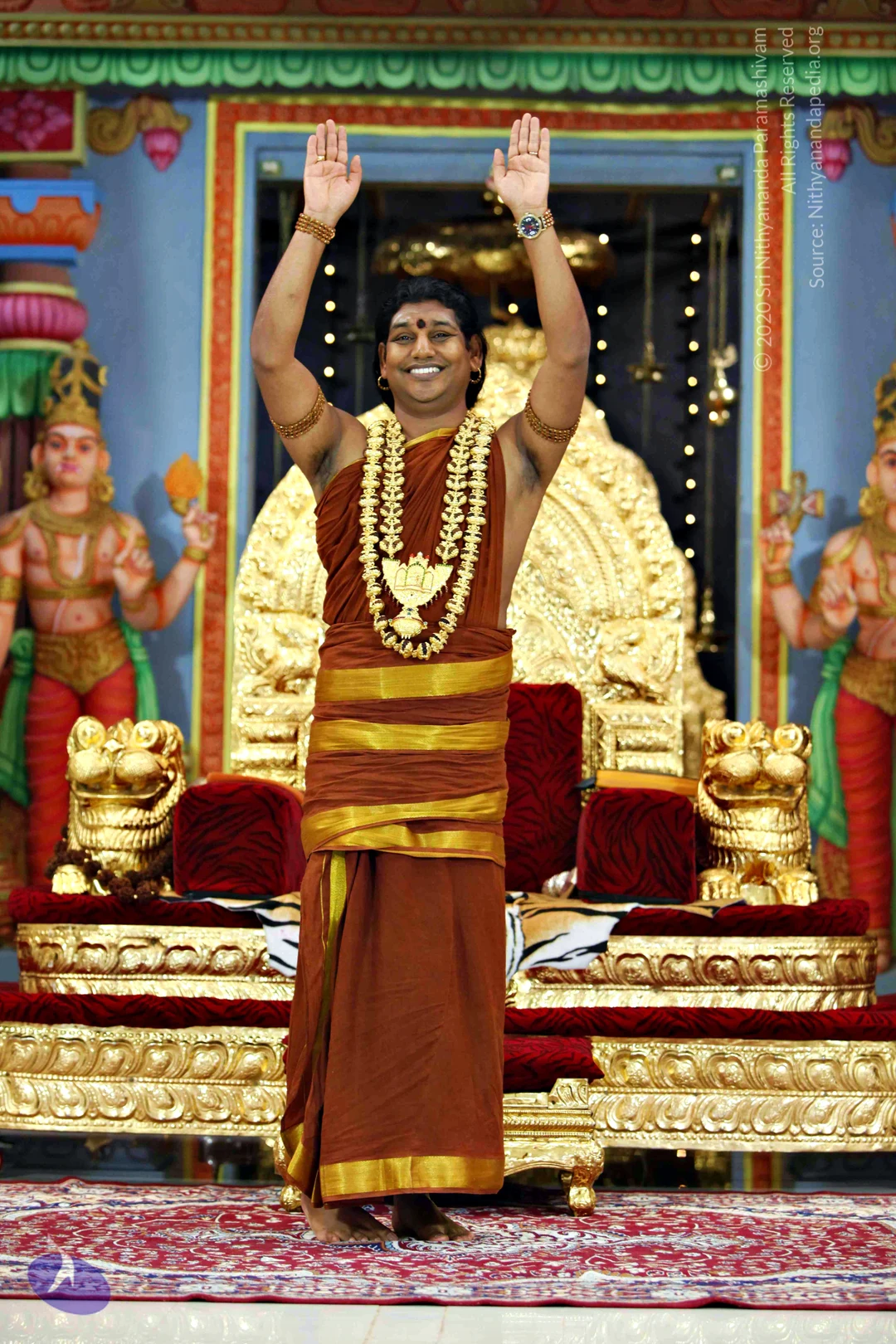
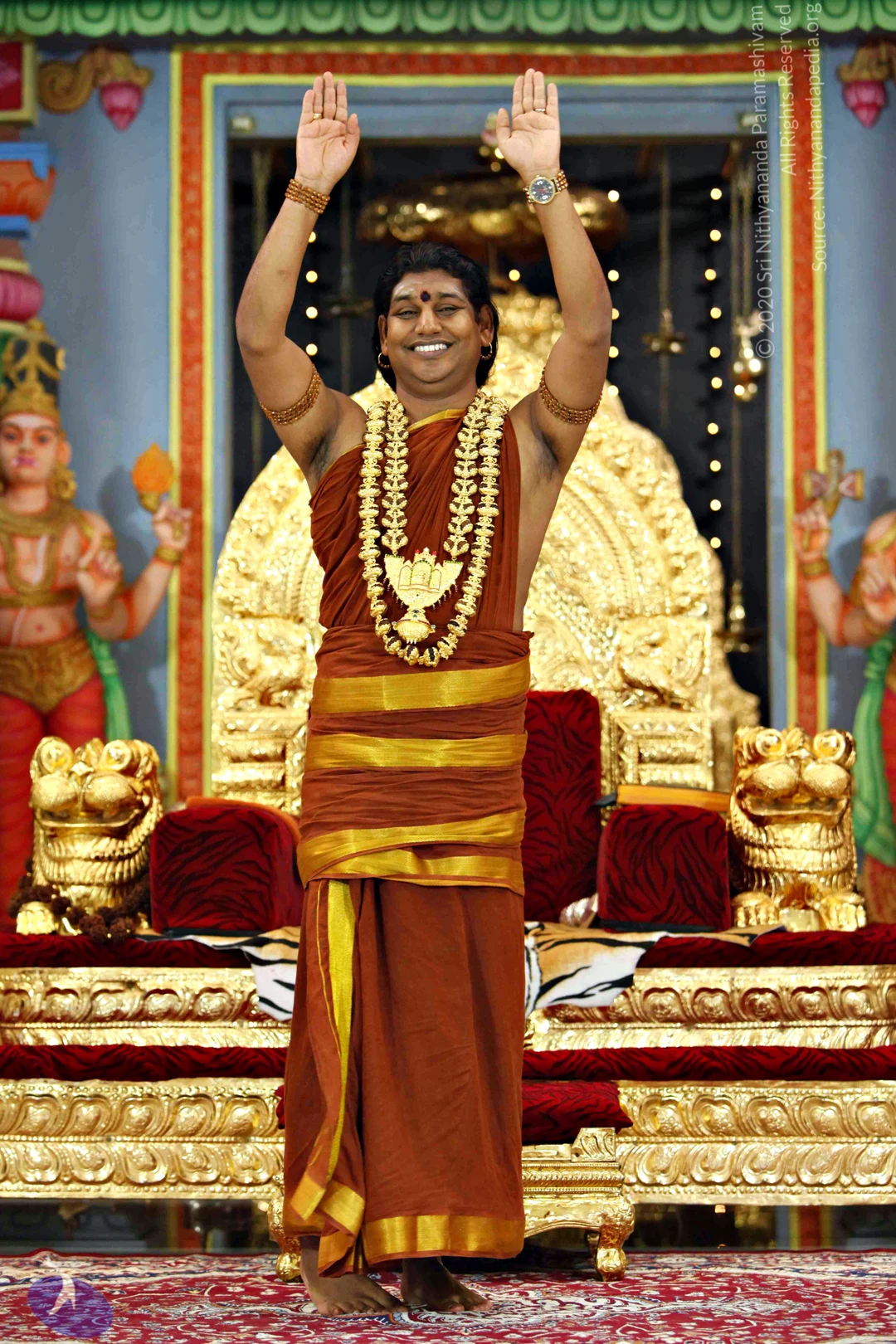
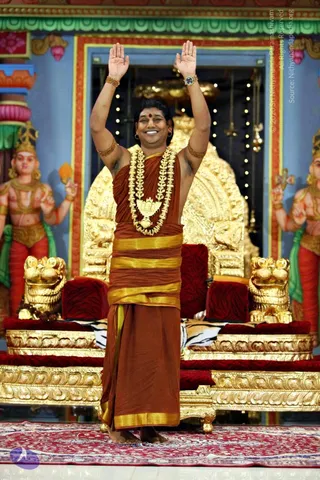
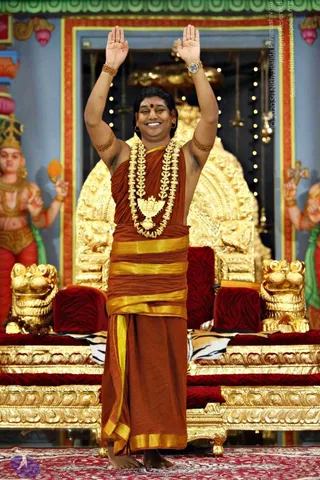
A smiling man stands barefoot on a red patterned rug with both arms raised overhead in a welcoming gesture. He wears a rust-brown saffron-toned dhoti and shawl edged with gold bands, a multi-strand gold necklace with a lotus pendant, gold armlets and a wristwatch, and a red bindi on his forehead. Behind him stands an ornate golden throne flanked by gold lion heads and red velvet cushions, with two painted deity figures in red and gold on either side and hanging lamps in the background. The page links this scene to a morning satsang on completion.A smiling man stands barefoot on a red patterned rug with both arms raised overhead, palms open. He wears a rust-brown robe draped over one shoulder and wrapped at the waist with gold-bordered cloth, a double strand of gold-and-white flower garlands and a gold pendant, gold armlets and a red bindi. Behind him stands a gold ornate throne with lion-head armrests and red tiger-striped cushions, flanked by painted deity figures. The setting appears to be a satsang stage. Swamiji is shown with an appearance-based candidate of probable identity, with long swept-back hair, rudraksha-style gold garland and saffron-toned robes; the printed caption identifies Sri Nithyananda Paramashivam on the image border.

IA Day 11

155 photosSource gallery
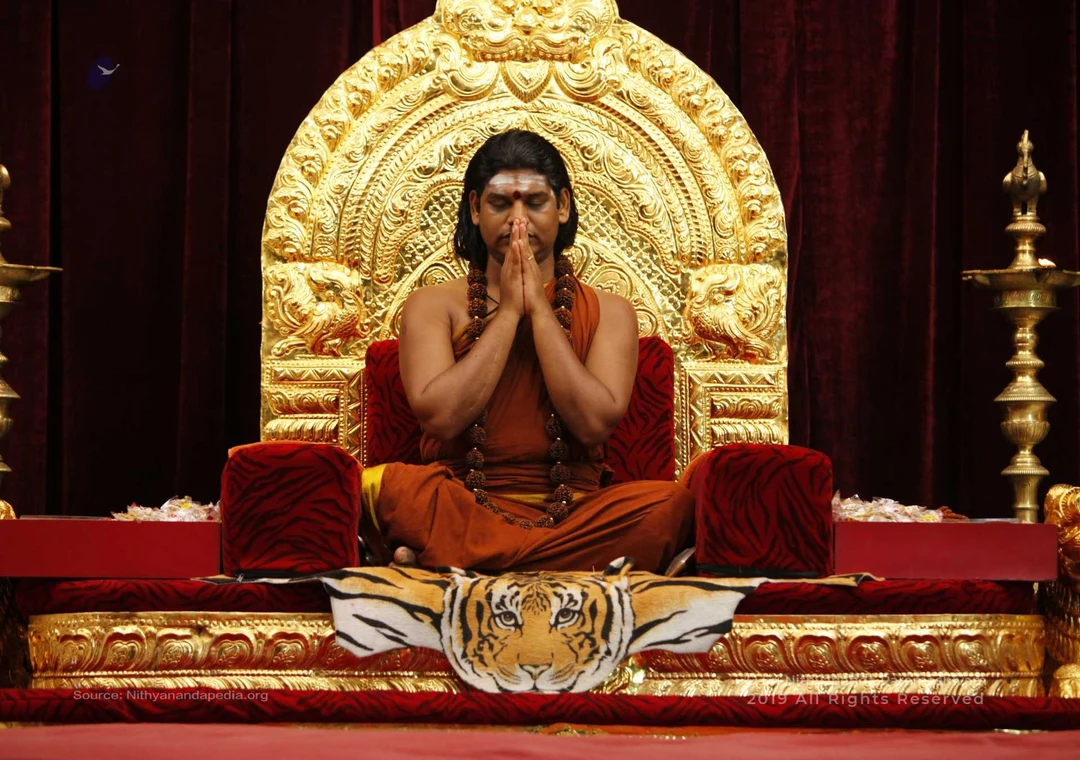
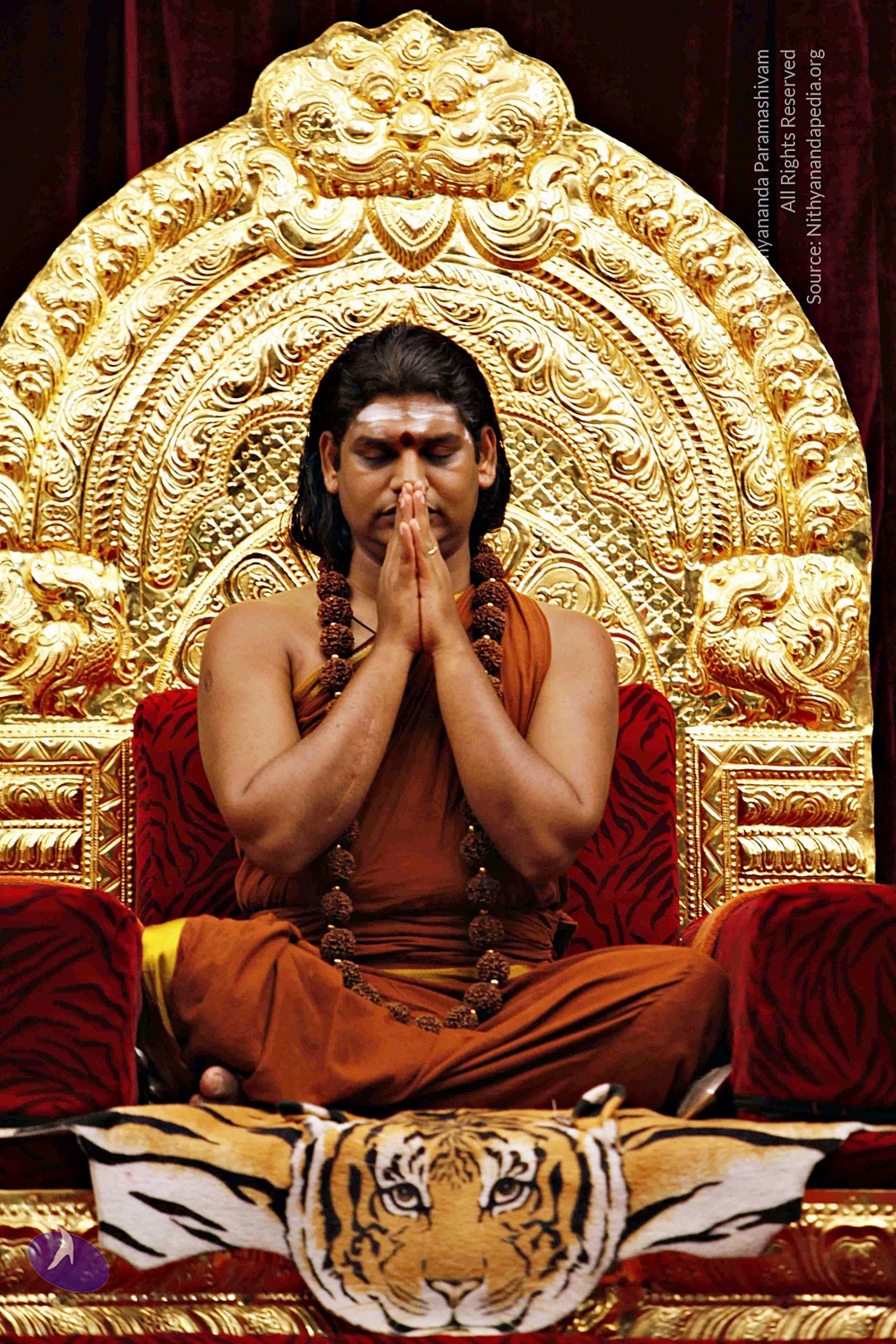
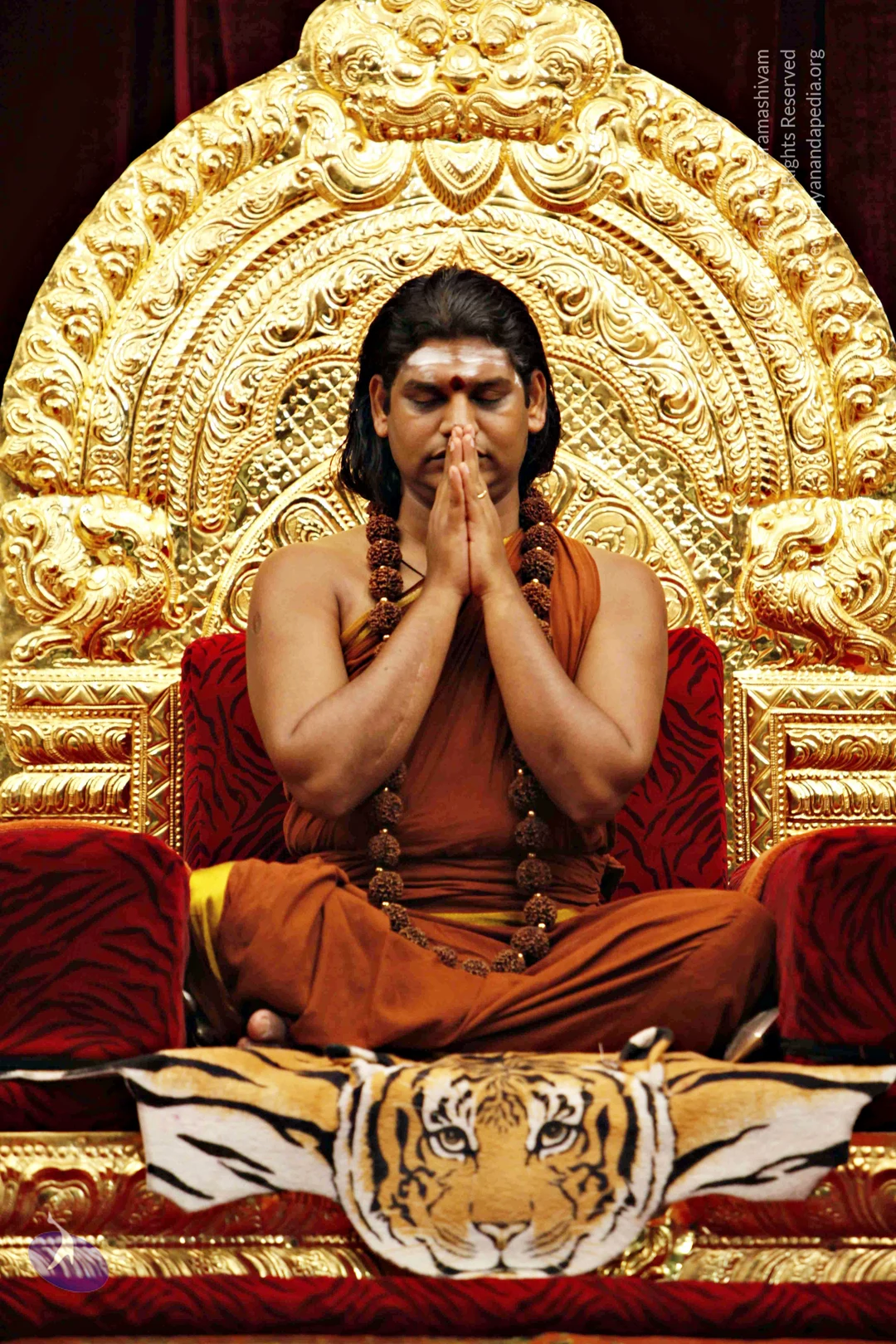
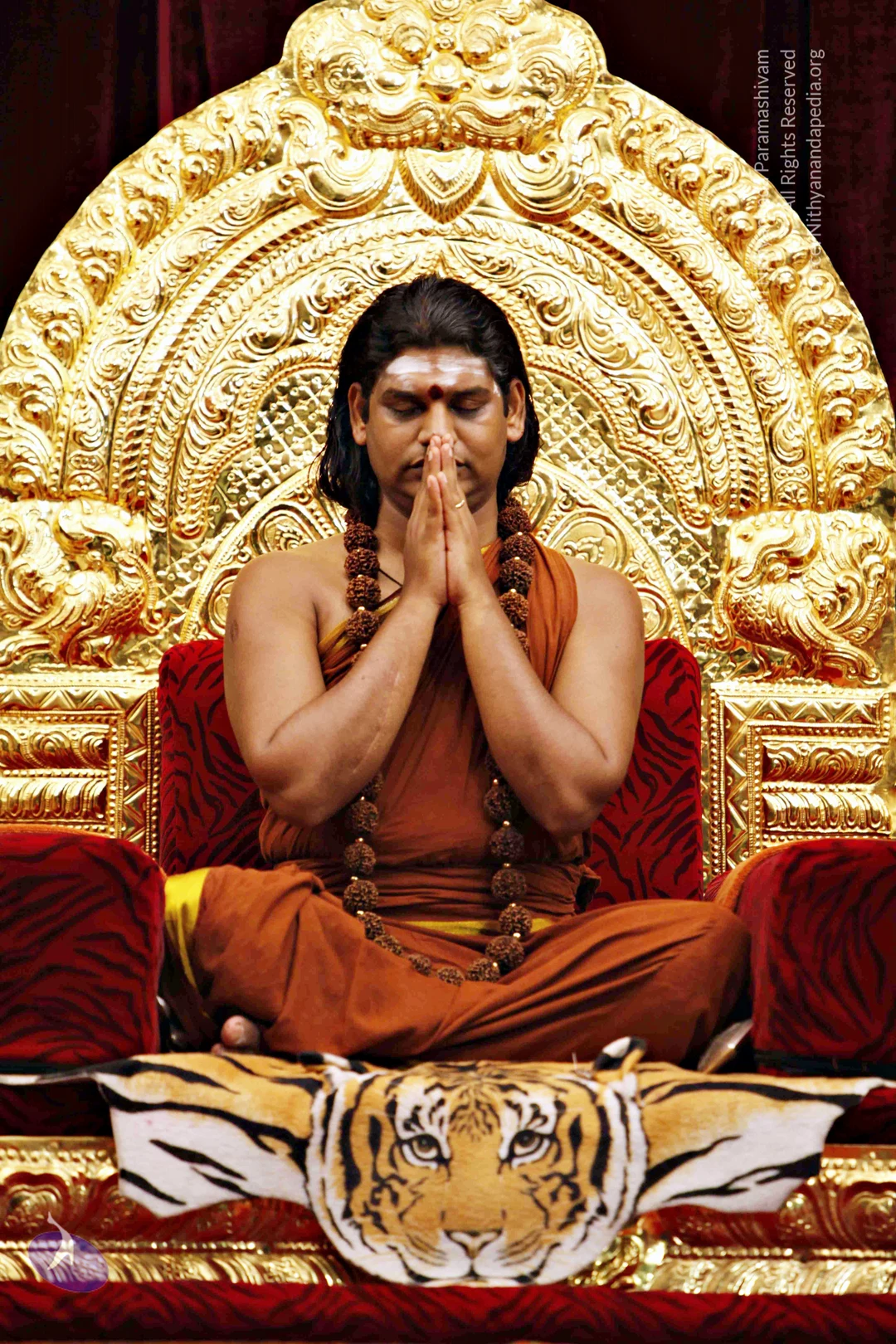
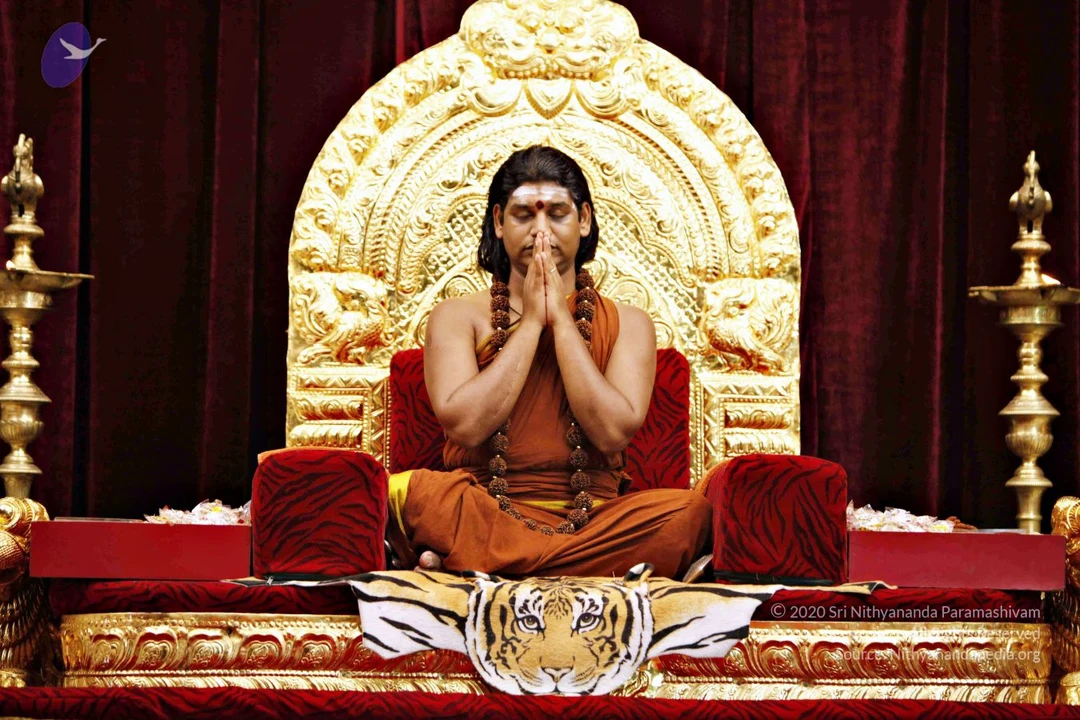
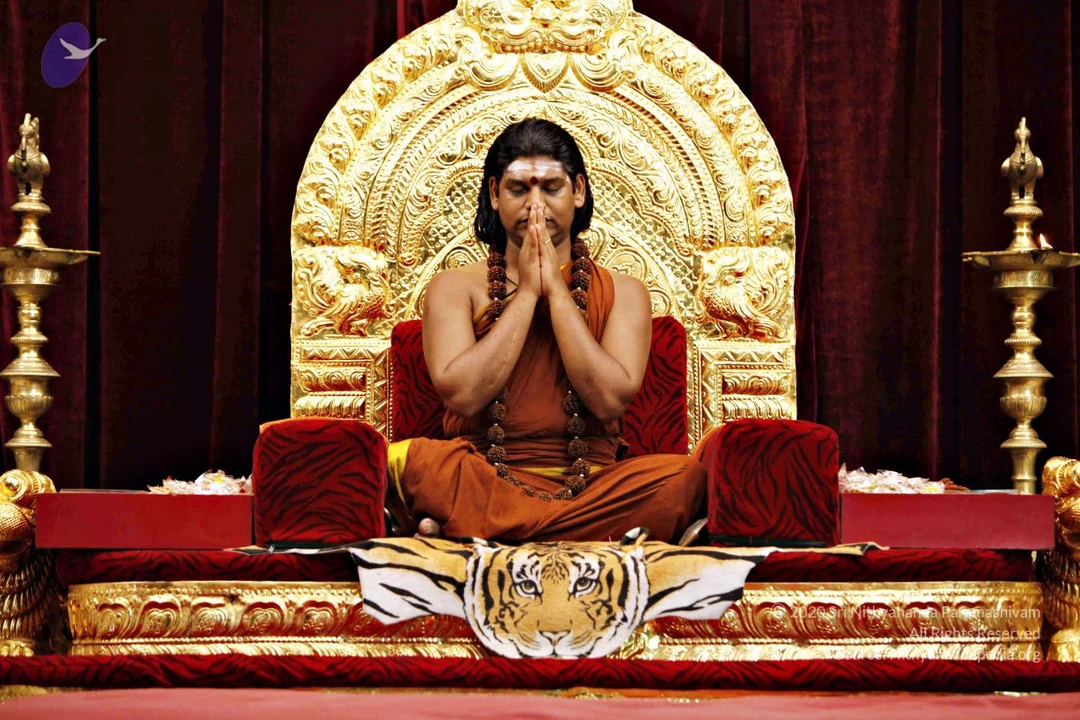
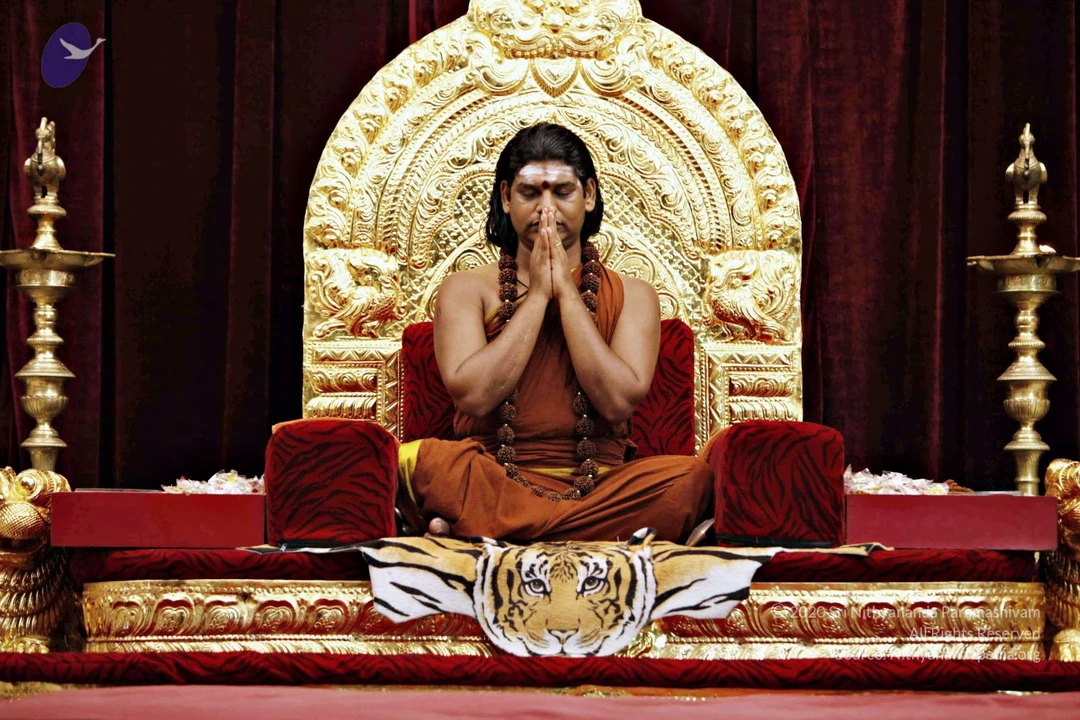
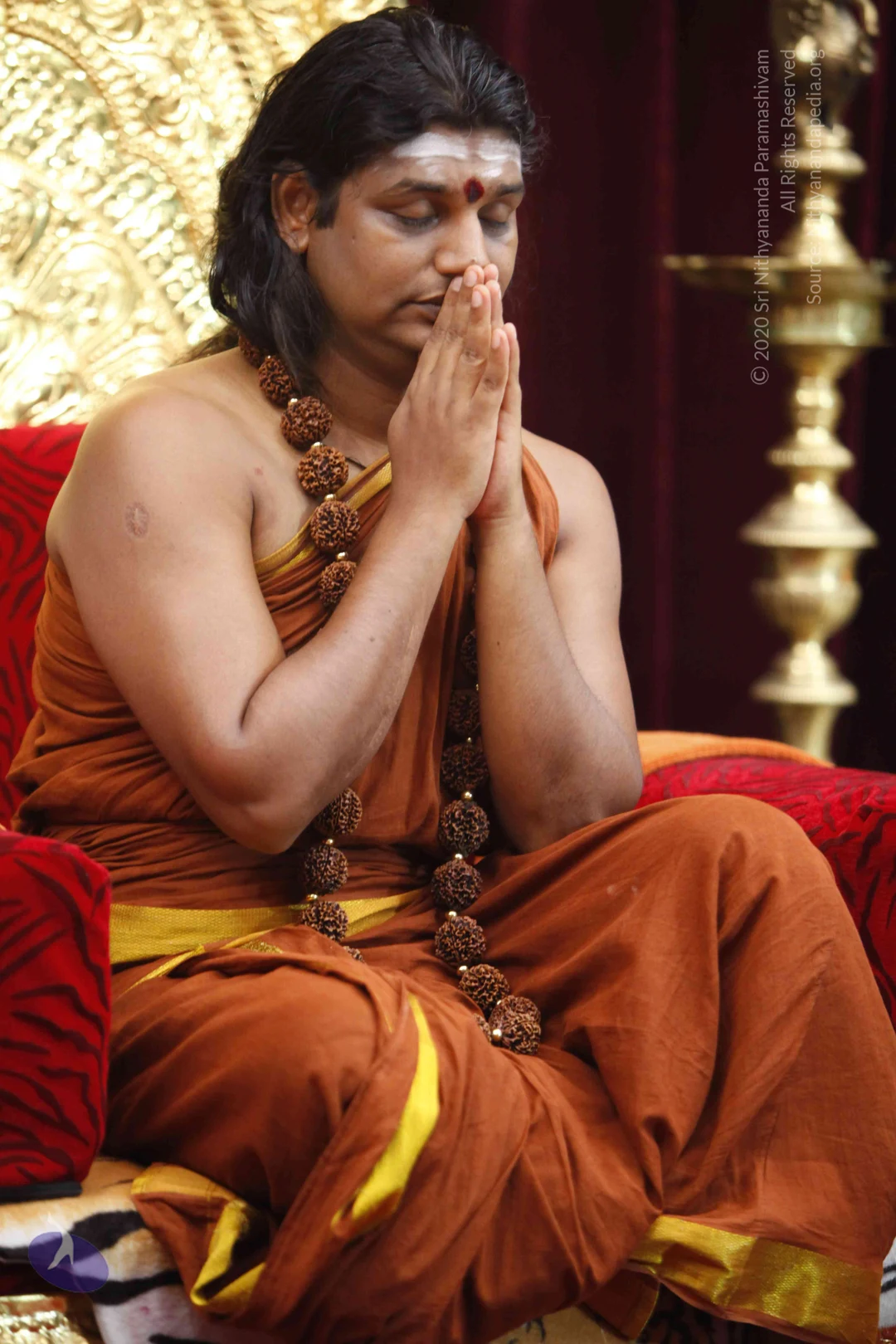
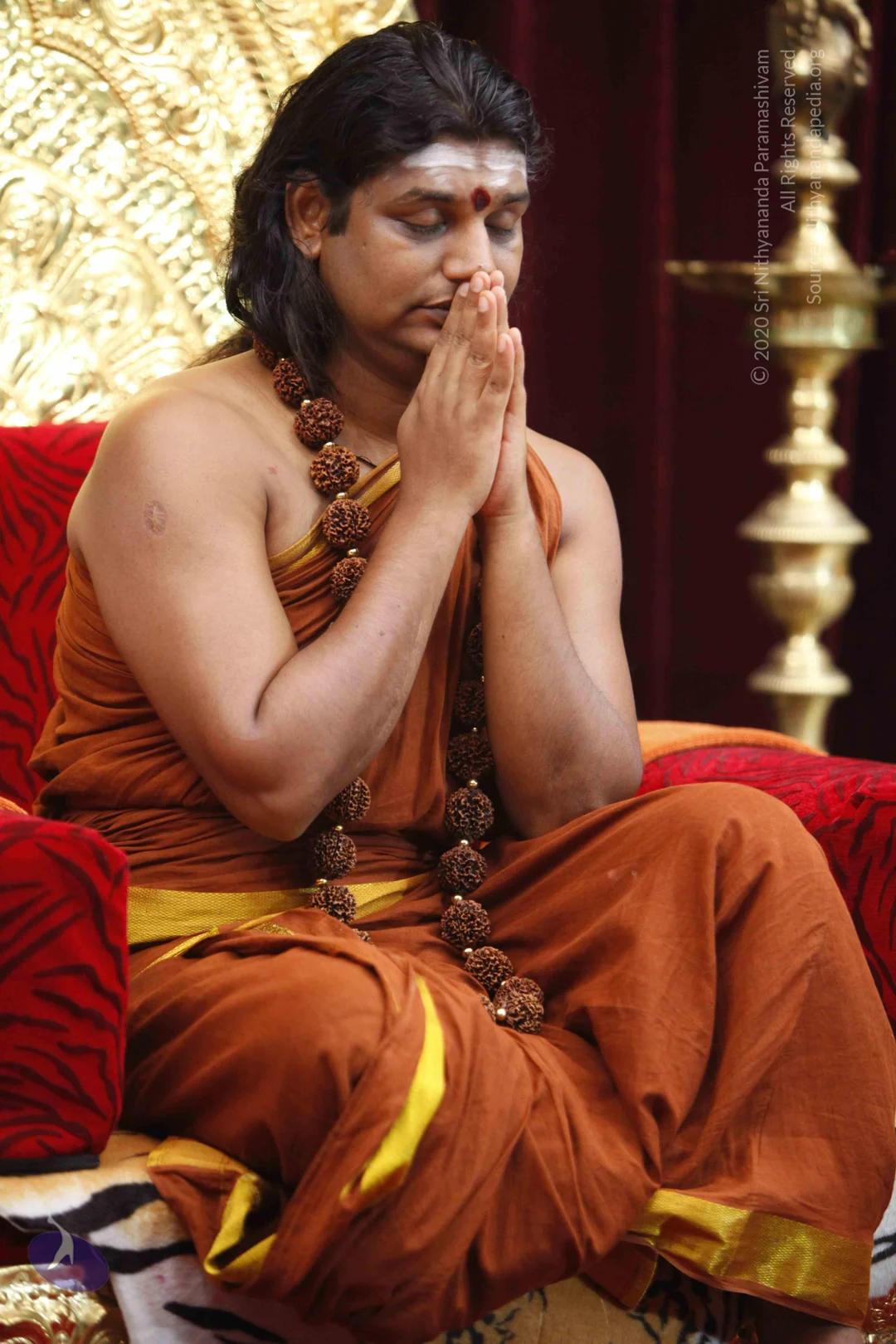
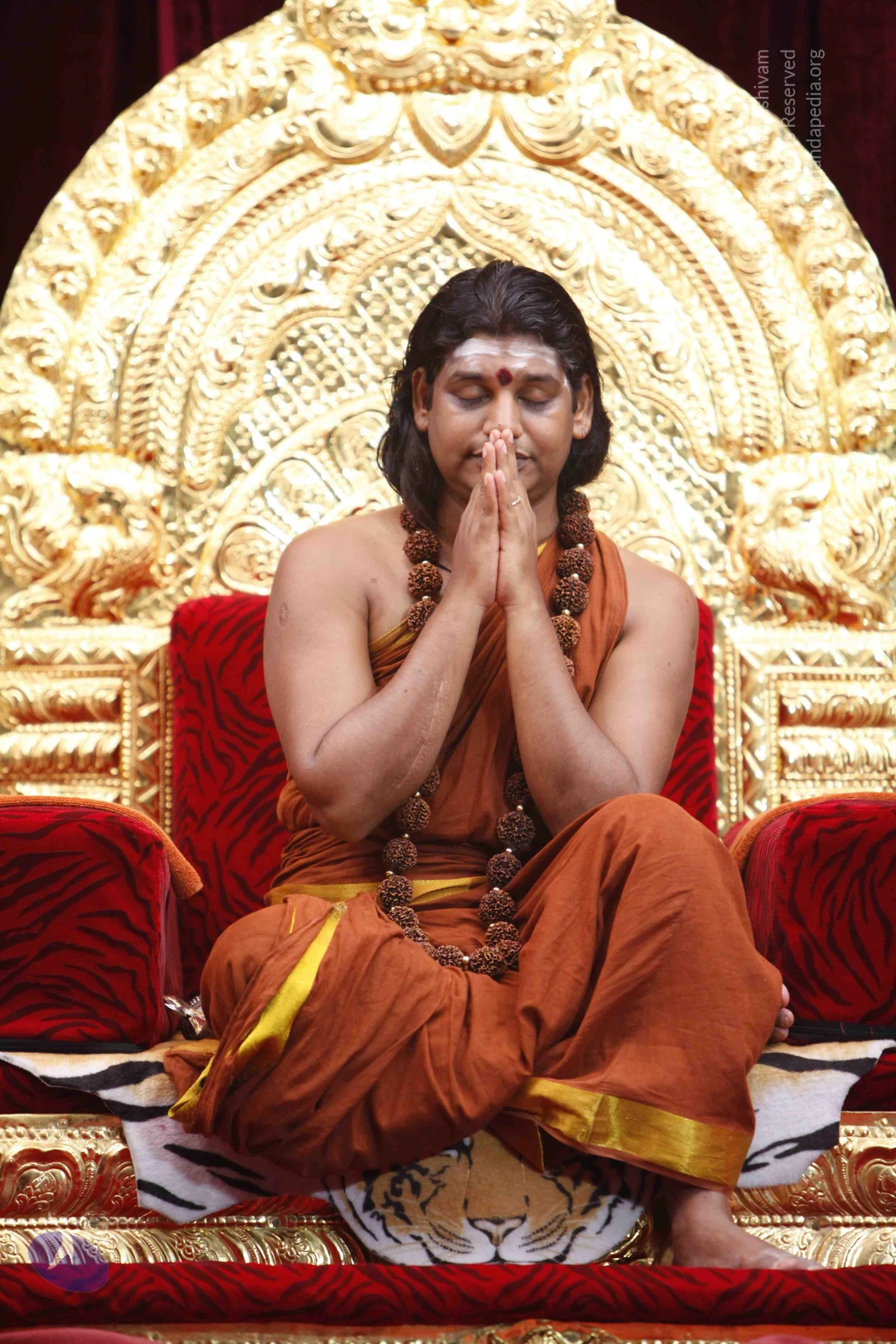
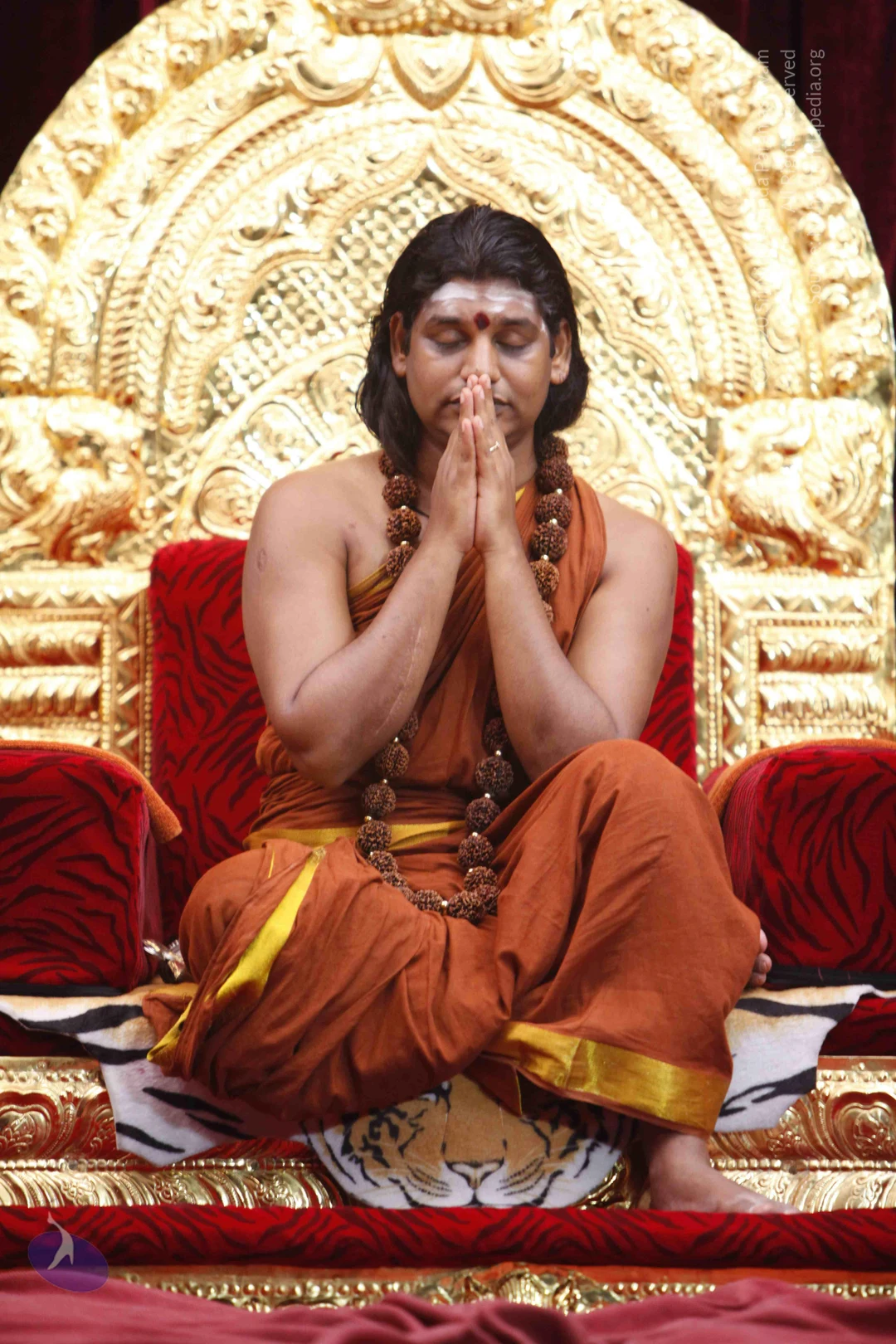
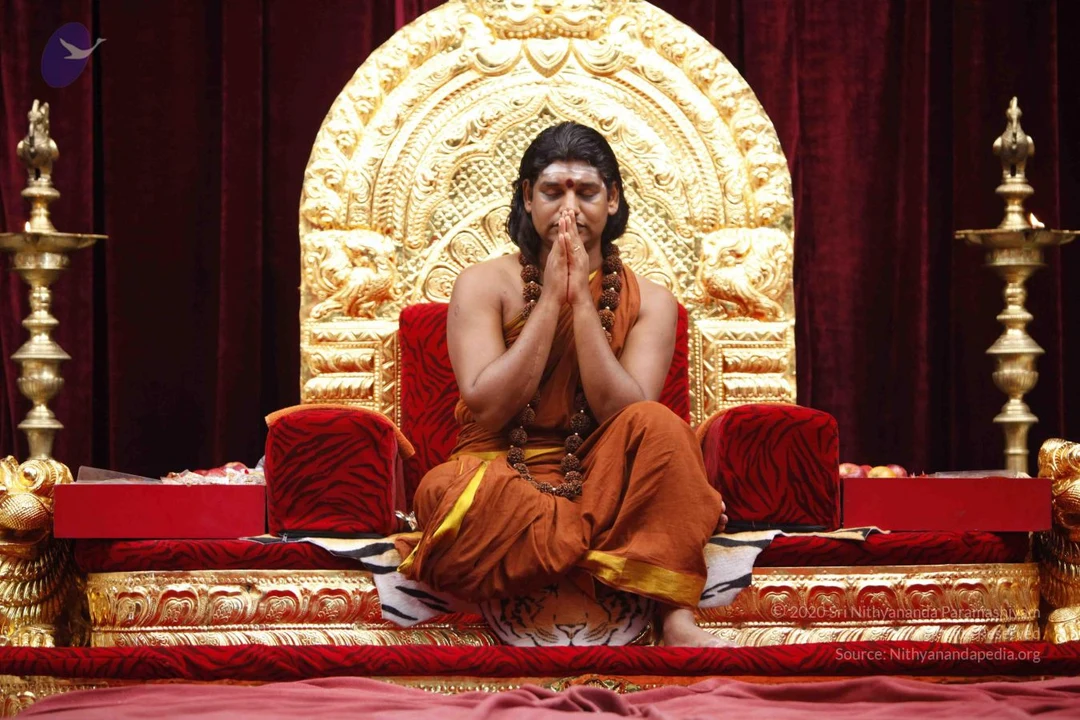
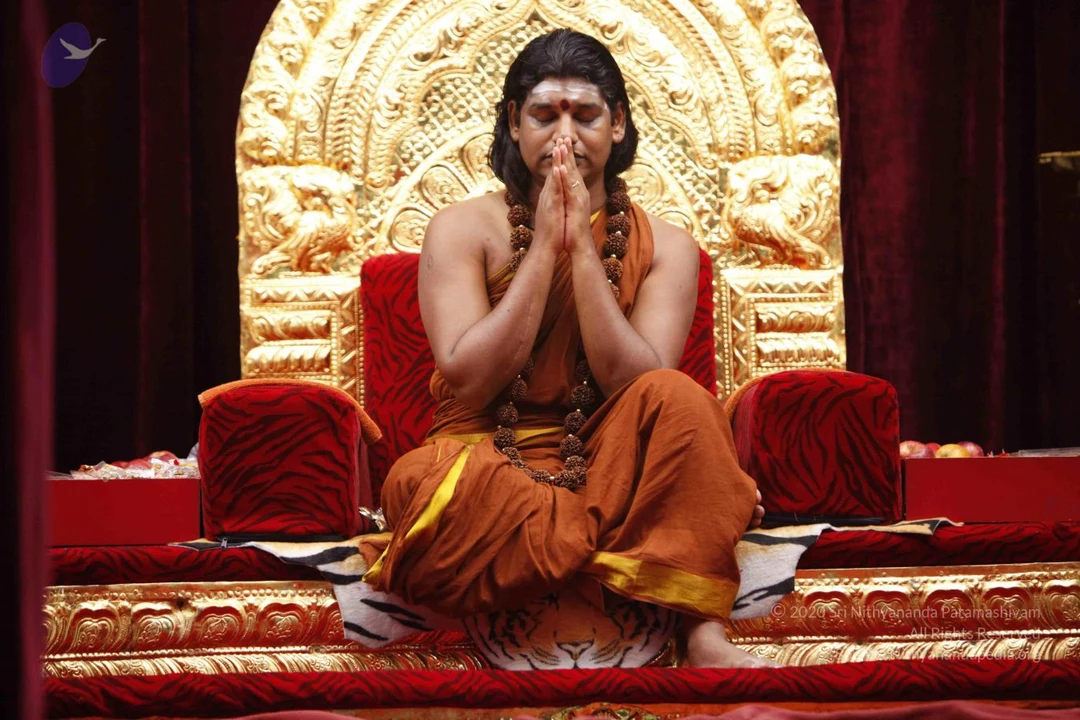
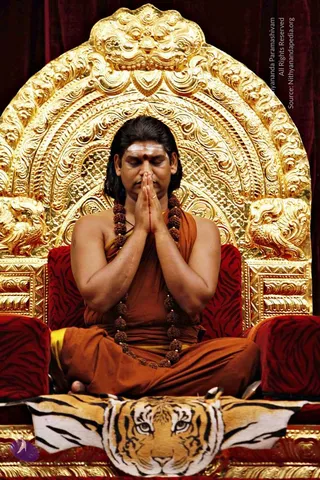
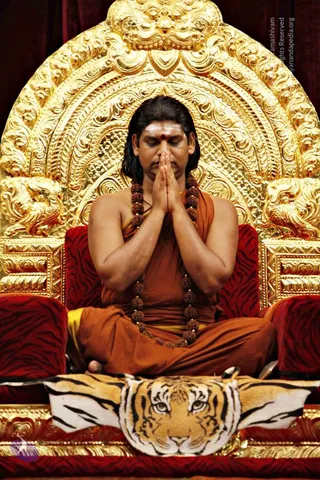
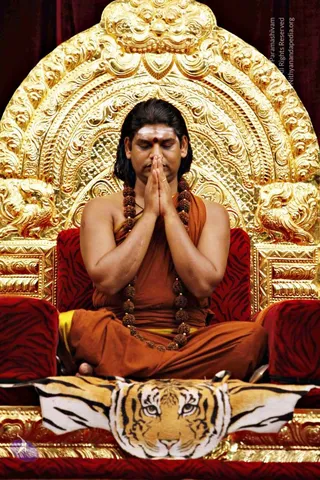
A seated man in orange-saffron robes sits cross-legged on a red tiger-striped throne in front of an ornate gold arch carved with floral and lion motifs. He presses his palms together in namaste with eyes closed, wearing a white vertical tilak with a red bindi and a long rudraksha mala draped over his shoulders. A tiger-face rug lies across the throne base. Posed seated worship scene.A seated man with long dark hair and a white-and-red forehead mark sits cross-legged in saffron-orange robes on an ornate golden throne with a red tiger-striped upholstered seat. He wears a long rudraksha mala and his hands are pressed together in namaste with eyes closed. A tiger-skin rug with a printed tiger face lies before the throne.A man with long swept-back dark hair, white vertical forehead markings and a red bindi sits cross-legged in front of an ornate gold repoussé throne backrest, eyes closed, palms pressed together in anjali mudra. He wears a saffron-orange wrap over his shoulder and a long rudraksha mala with a golden necklace. He sits on red tiger-stripe cushions, with a tiger-face mat in front of him. The Swamiji (probable) cues here are the long swept-back hair, saffron clothing, rudraksha mala and ornate gold throne, so this is an in-person candidate seated in a satsang-style setting.A seated man in an orange-saffron robe and a red-brown rudraksha mala sits cross-legged on an ornate golden throne with a carved arched back and lion-shaped finials. His hands are pressed together in anjali mudra at the chest, eyes closed, with a red bindi on his forehead. Red velvet cushions with tiger-stripe pattern flank him, and a tiger-face rug lies on the dais below. Gold oil lamps stand on each side and a red velvet curtain forms the backdrop. A white-and-red floral offering sits near the throne. The scene suggests a satsang seat, with a person candidate in the central role. Long dark hair falls past his shoulders.A seated man in orange-saffron robes sits cross-legged on an ornate gold throne with a red velvet cushion and a tiger-skin rug spread across the red dais below. He has long swept-back hair, a red tilak on his forehead, and a rudraksha mala with a second mala around his neck. He presses his palms together in namaskar with eyes closed. Gold oil lamps with flames stand at either side, flowers are scattered on the dais, and deep red curtains hang behind the throne. The swept-back hair, saffron clothing and rudraksha malas match the Swamiji (probable) appearance cues, presented in a satsang setting.A seated man with palms pressed together in anjali mudra sits on an ornate gold and red throne with a carved golden arched back and lion-head armrests. He wears an orange-saffron dhoti and shawl, a long rudraksha mala around his neck, and a vibhuti tilak on his forehead. Long hair is swept back. A striped tiger-face cloth lies across the dais, and gold oil lamps stand on either side under red velvet drapes.
Construction_Photos
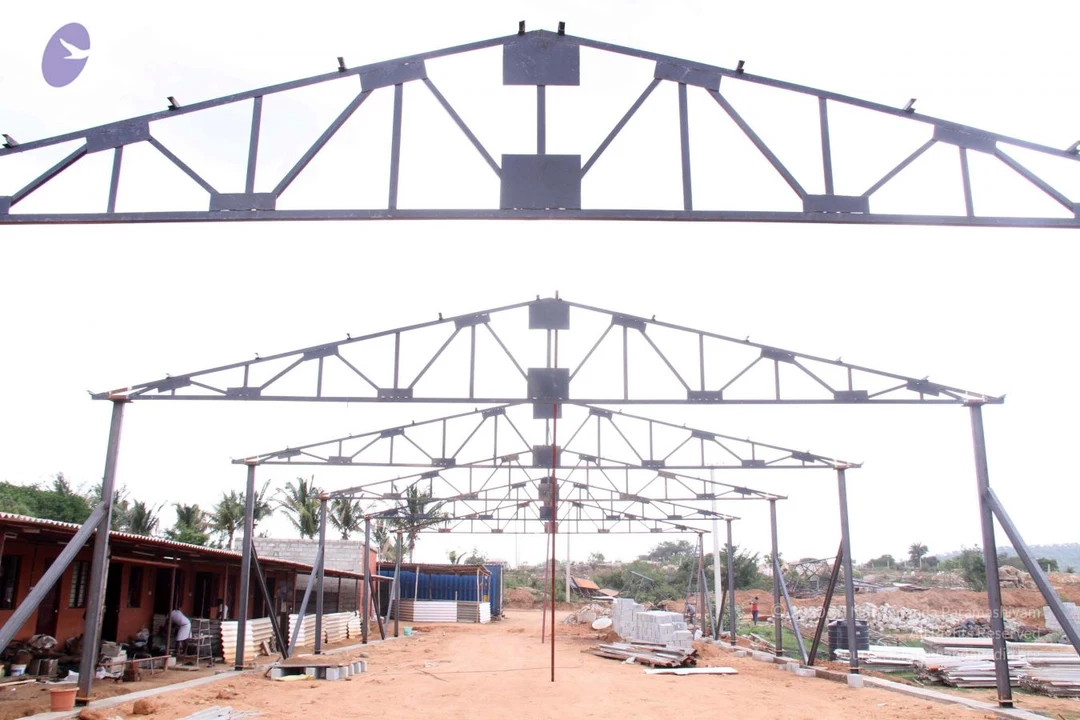
12 photosSource gallery
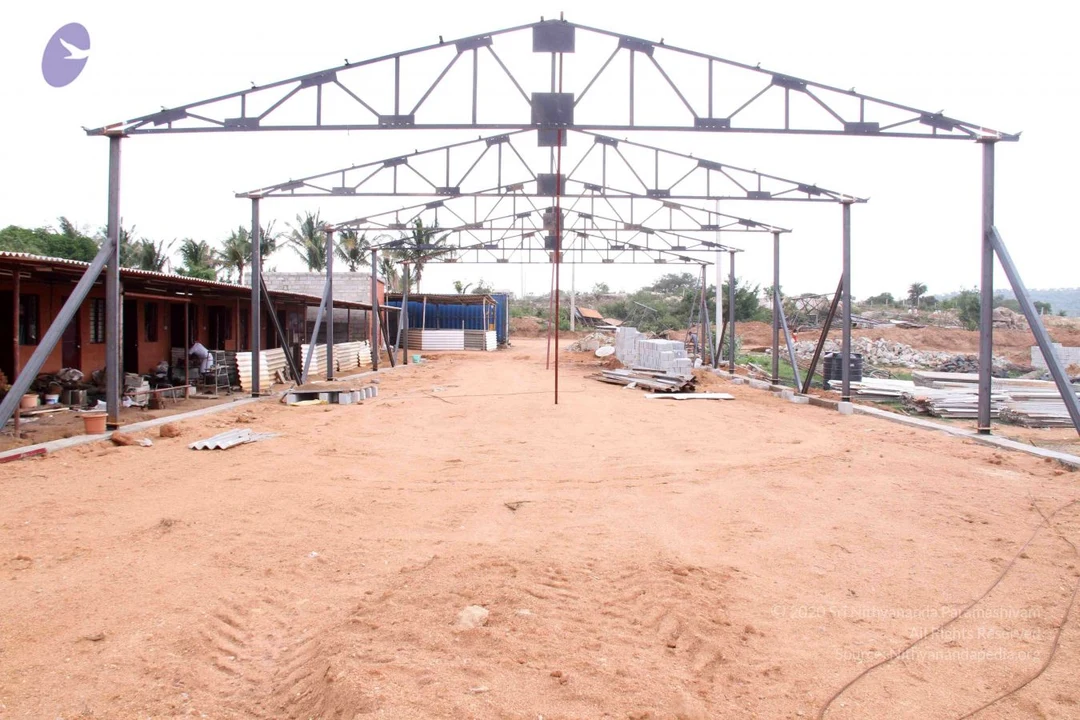
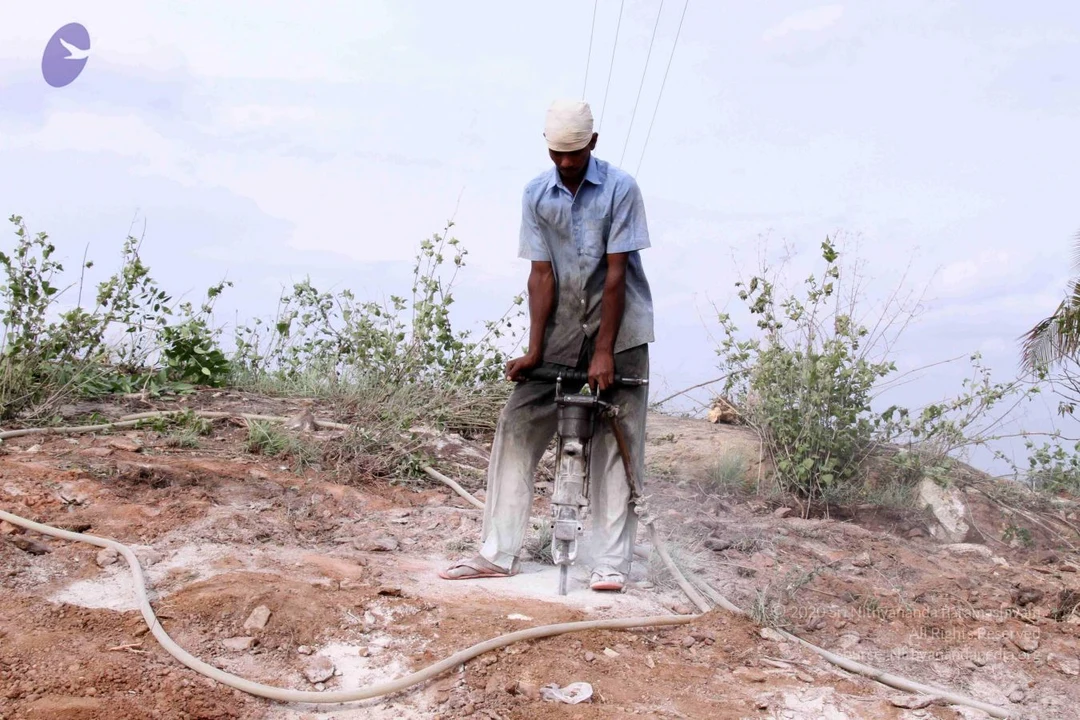
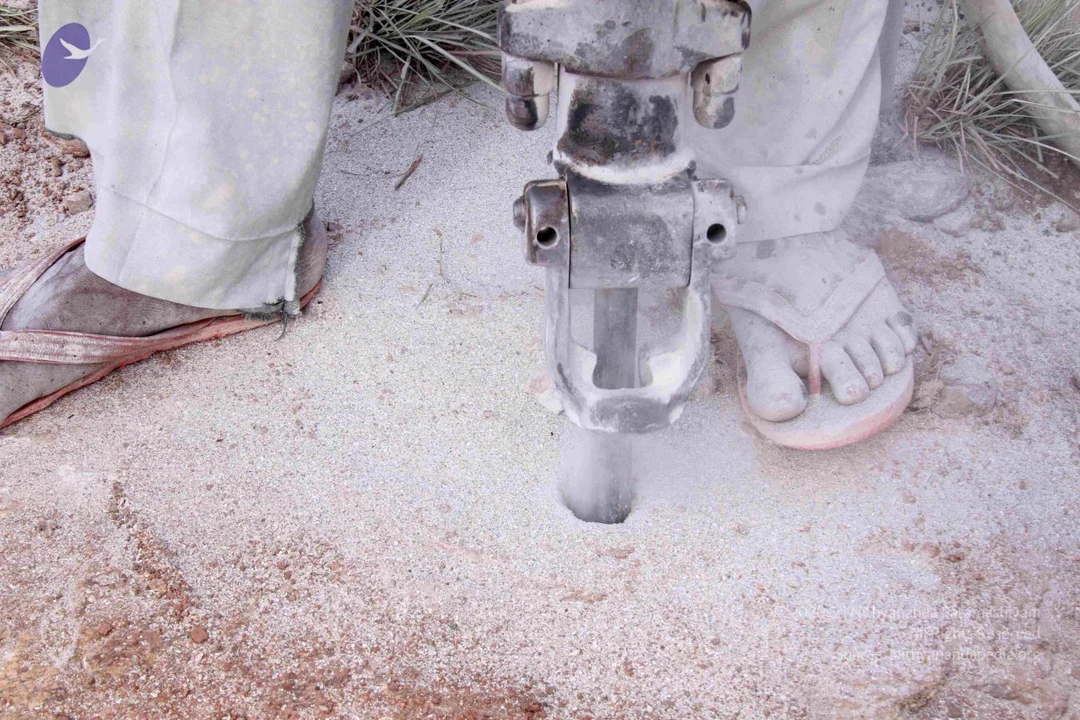
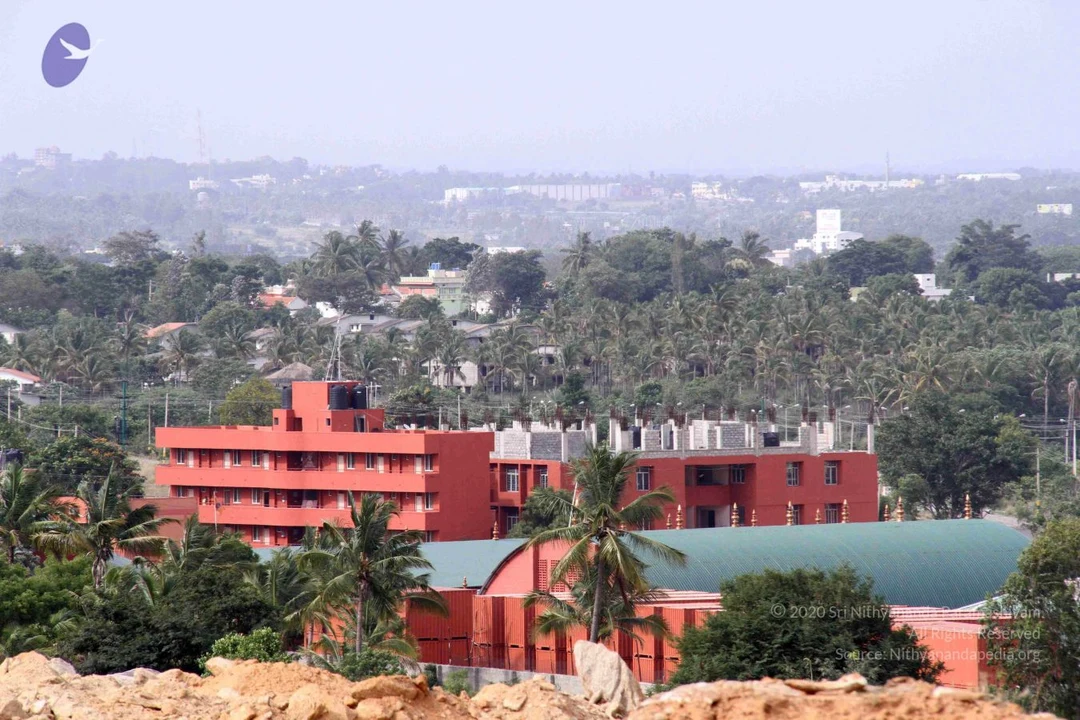
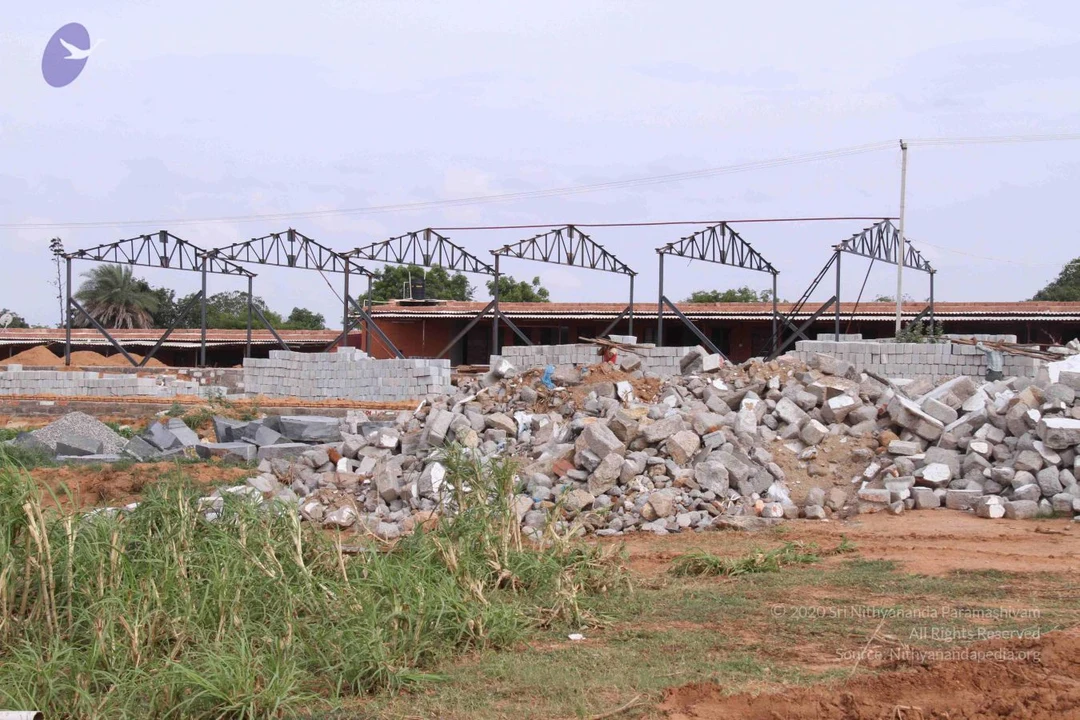
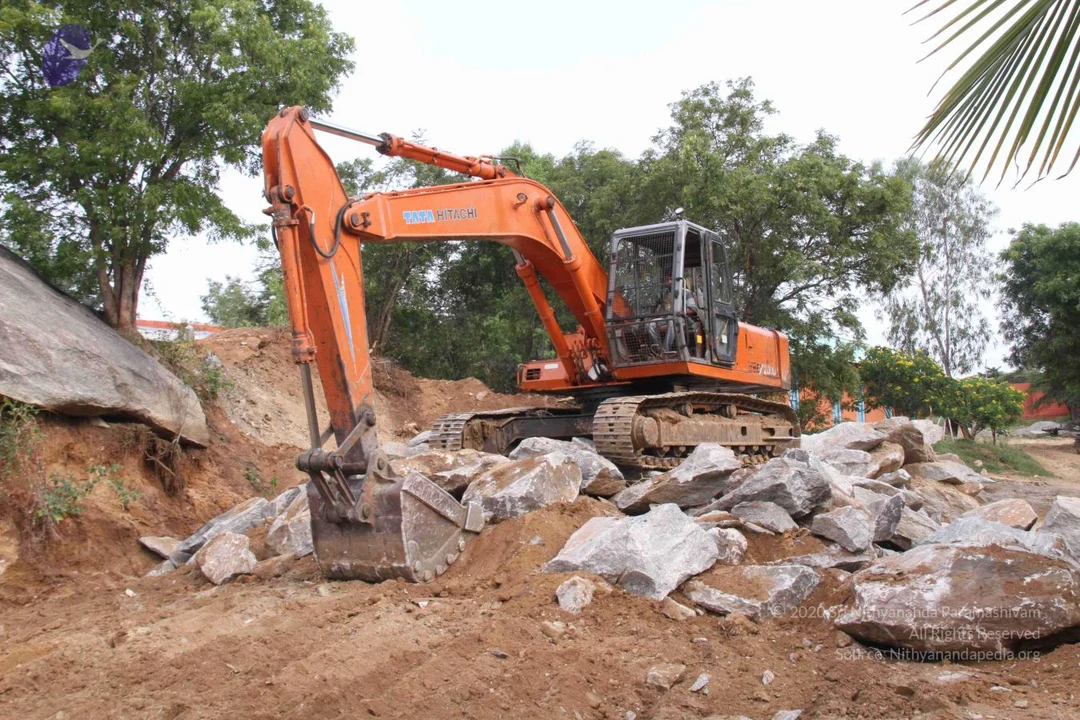
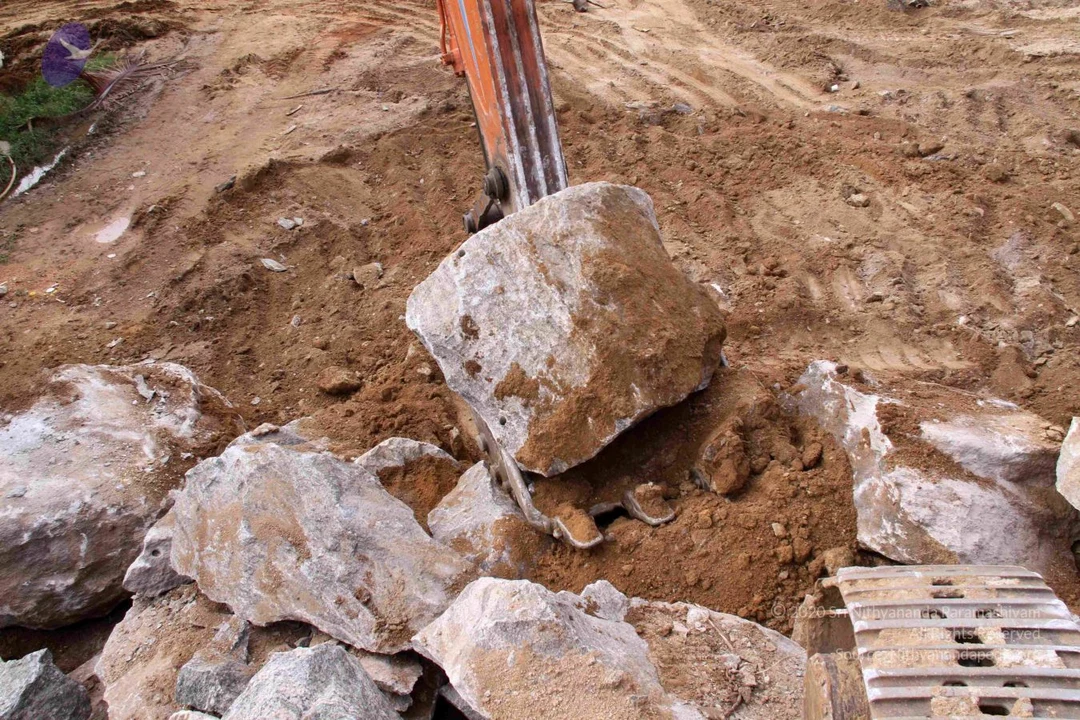
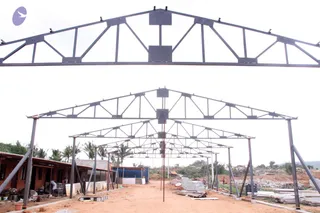
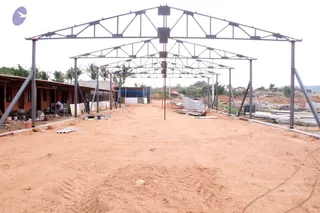
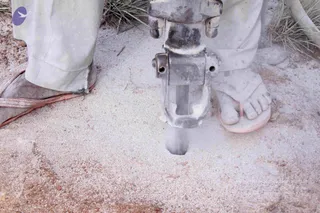
A construction site showing a large steel truss roof frame under assembly, with repeated triangular steel trusses supported by tall grey steel columns on a bare dirt ground. Piles of stacked grey concrete blocks, corrugated sheets and building materials lie to the right, and a low orange-roofed building stands at left.A dirt construction site showing a row of steel roof trusses and columns forming open framed bays across a bare red-earth ground. Stacked concrete blocks, metal sheets and rubble lie to the right, and a low red-brick building with a tiled roof sits at left. Palm trees and scrubland fill the background under a pale sky. No people are visible in the scene.A man in a light blue short-sleeved shirt and grey trousers stands on bare red earth operating a pneumatic jackhammer or rock drill. He wears a white head wrap and pale flip-flops, and a grey hose runs across the ground to the machine. Scrubby bushes and overhead power lines are visible against a pale sky, with a faint white dust patch on the ground around the drill.Close-up photograph of a person's lower legs and bare feet standing on dusty, pale grey-white ground with scattered reddish soil and dry grass. A metal drilling or boring tool with a hollow bit is pressed into the ground, drilling a hole in the soil. The person wears loose white trousers and worn grey-brown sandals with straps.A yellow and black Volvo EC210B tracked excavator works on a red-earth excavation site, its boom and bucket digging into soil piled beside large grey and pale rocks. A wire mesh fence, scrubby green trees and a palm and hills lie in the background under an overcast sky. No people are visible, and the scene shows only construction machinery and ground works.A yellow and black Volvo EC210B tracked excavator works on a reddish-brown earth site, lifting a large rock in its bucket above a pit. Scattered boulders and rocky soil surround the machine, with a wire mesh fence and green shrubs and palm trees in the background. The excavator cab and body display Volvo branding. No people are visible at the site.

SacredArts_Photos
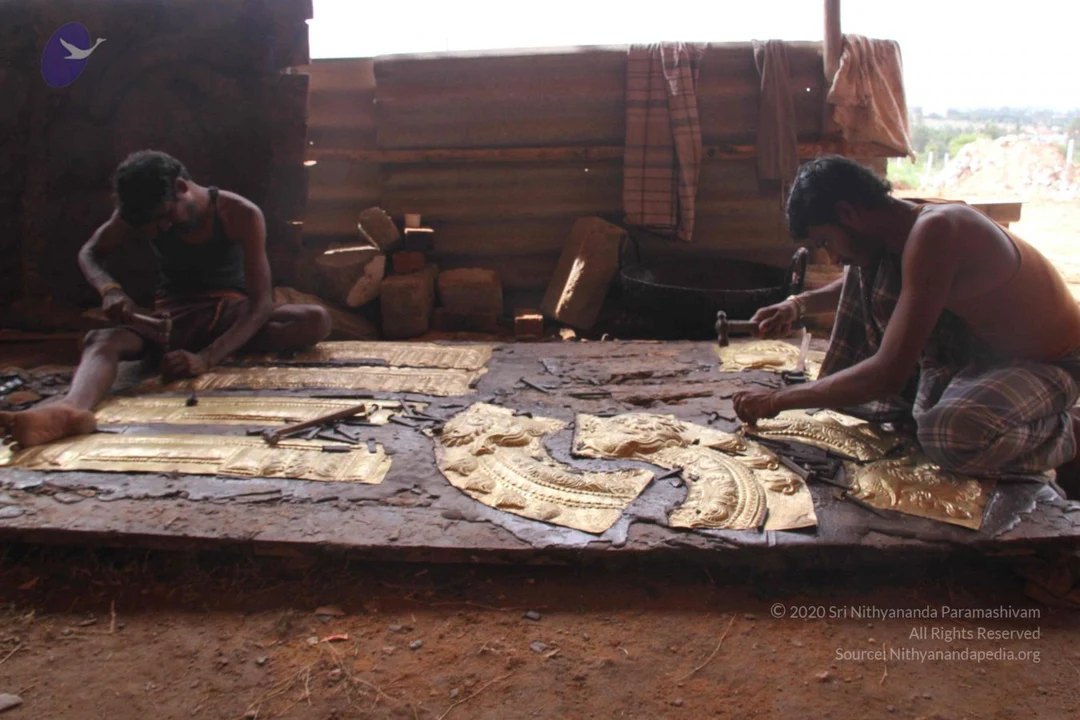
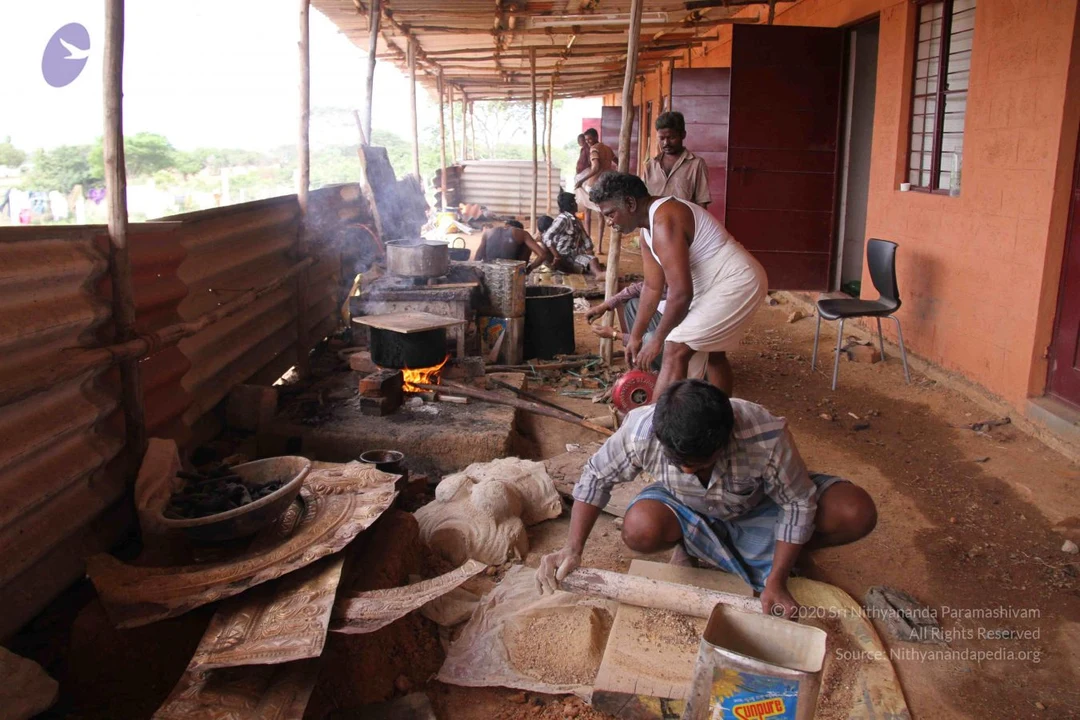
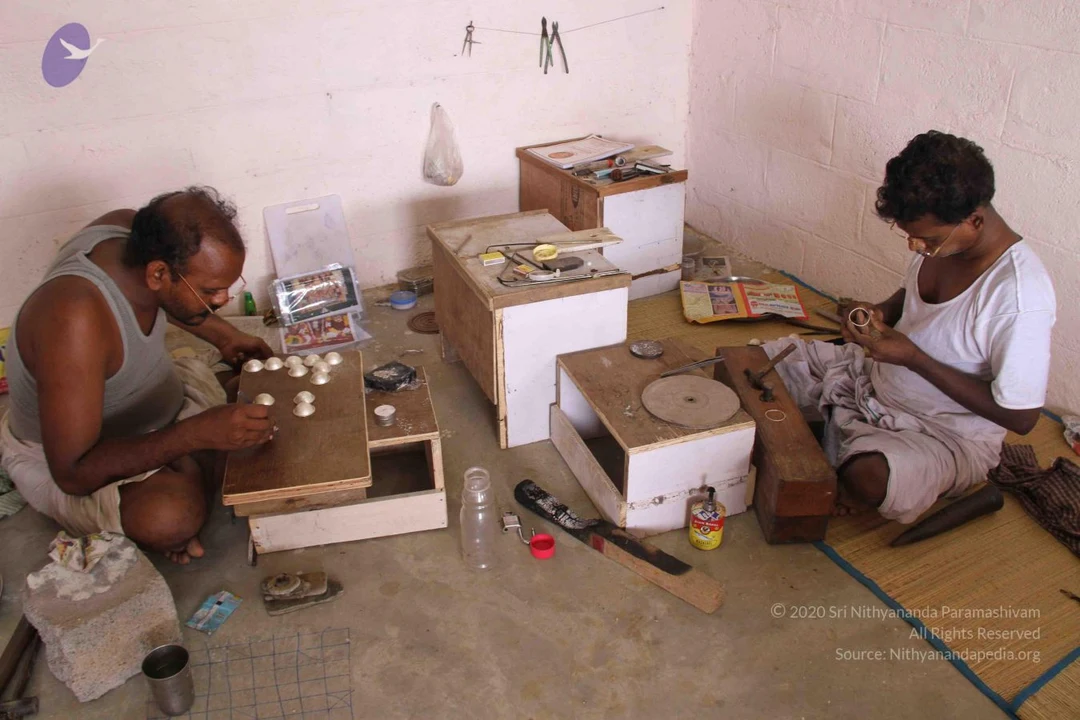
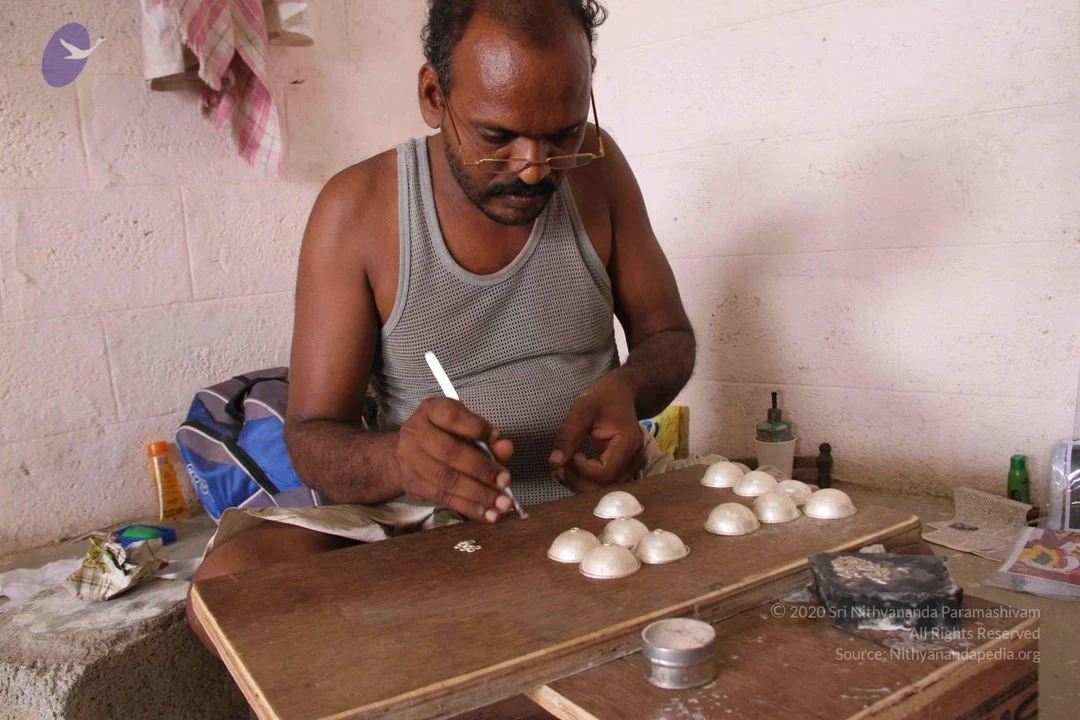
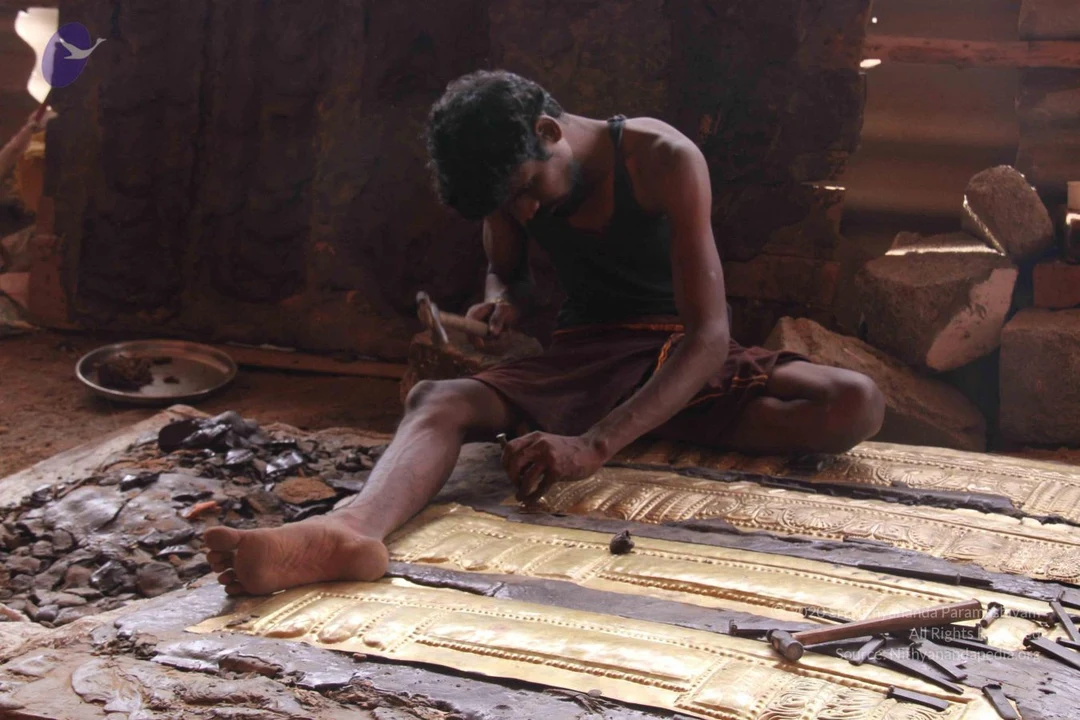
19 photosSource gallery
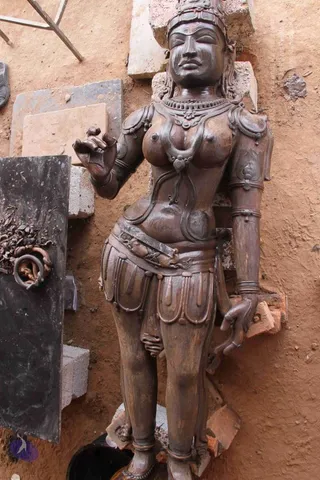
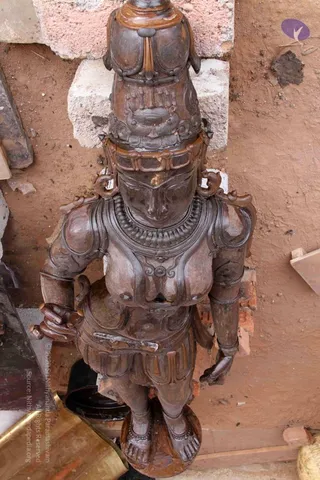
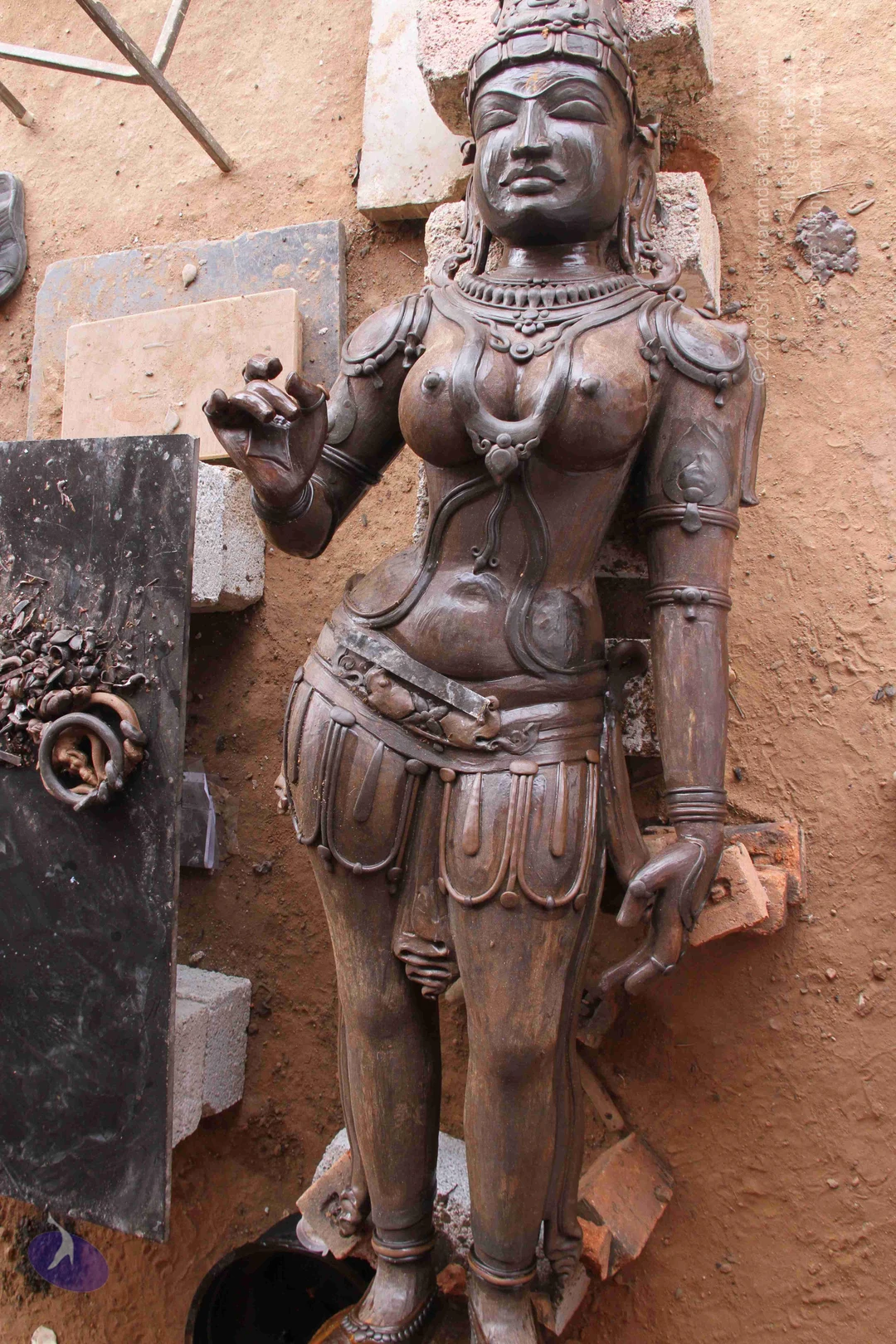
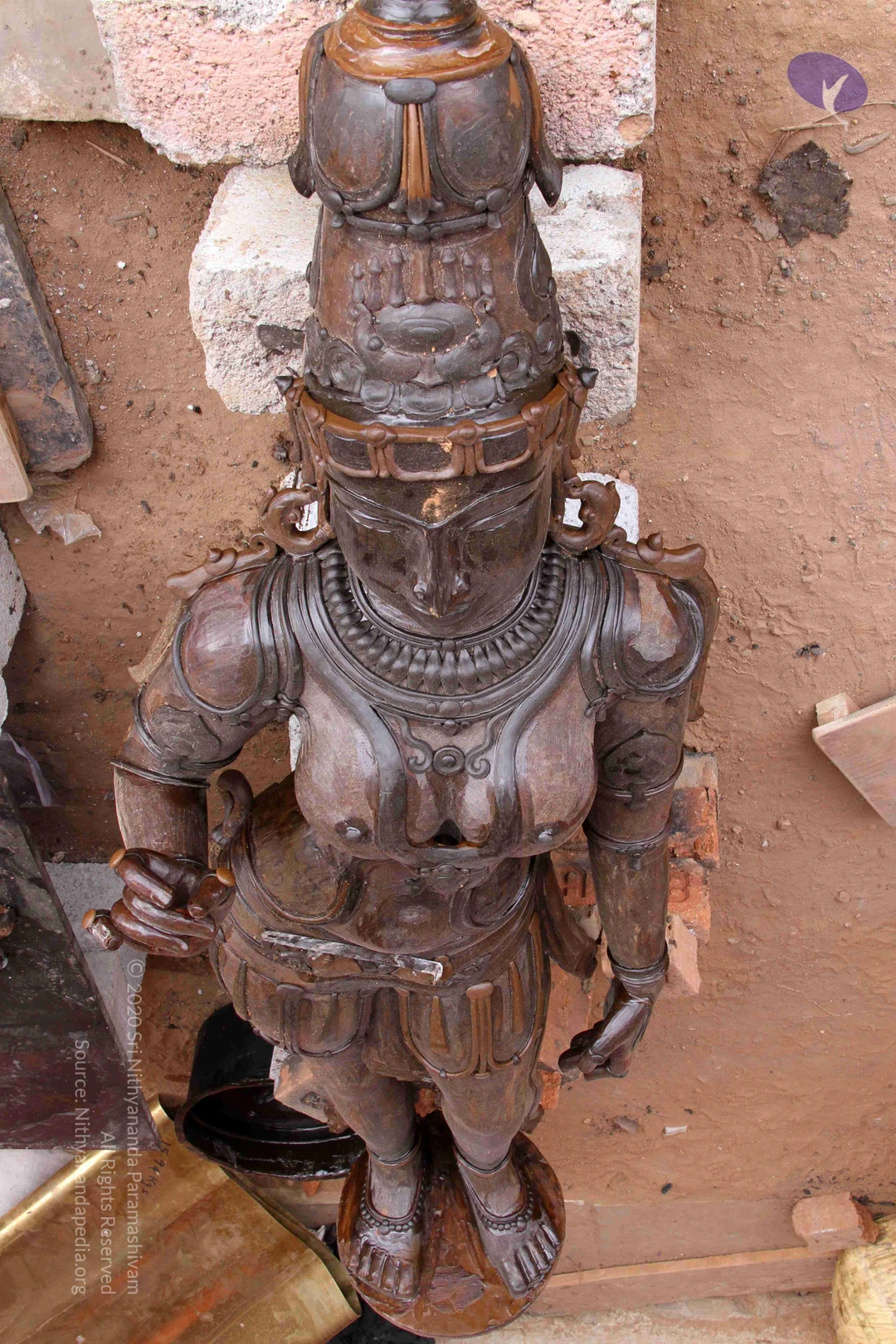
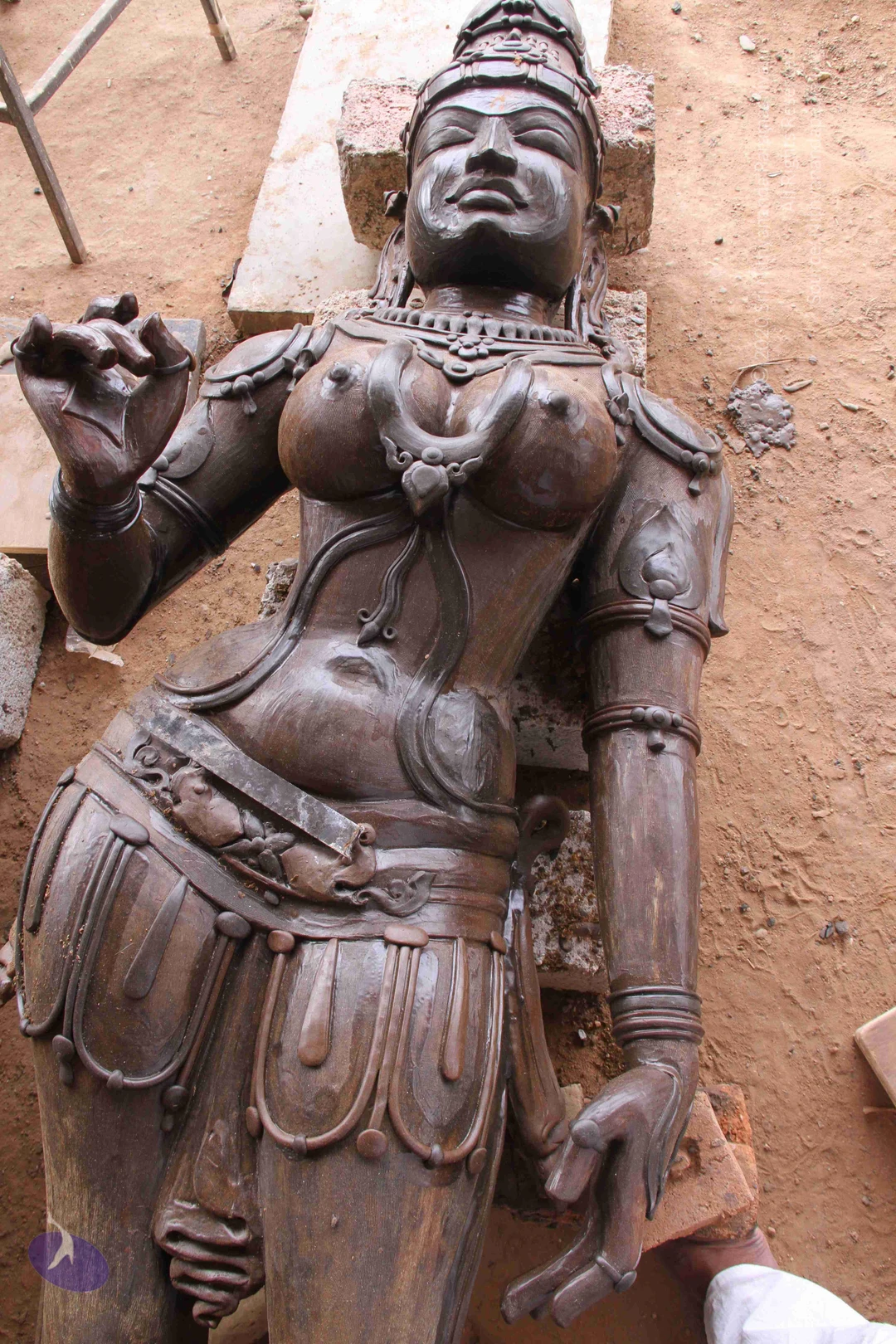
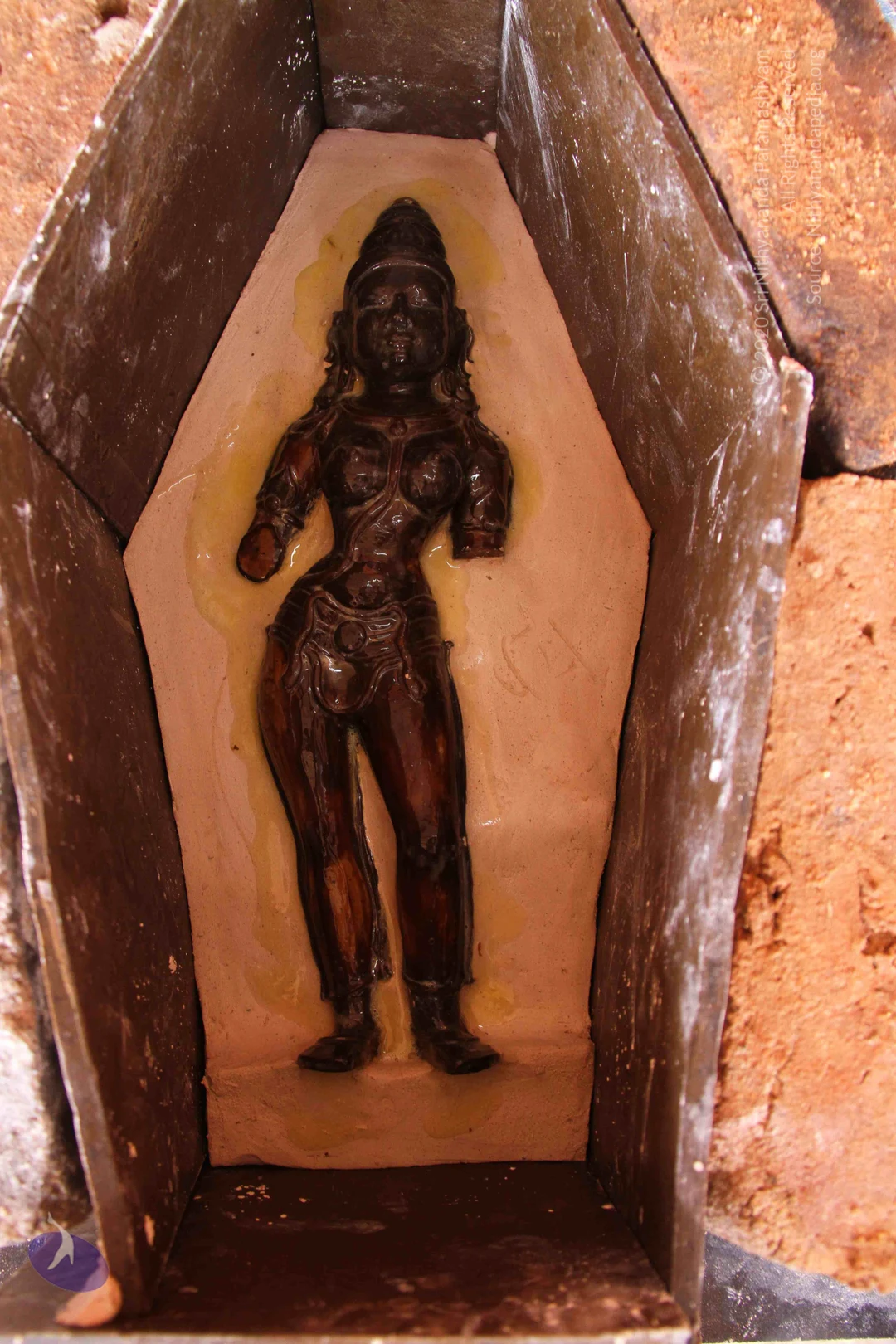
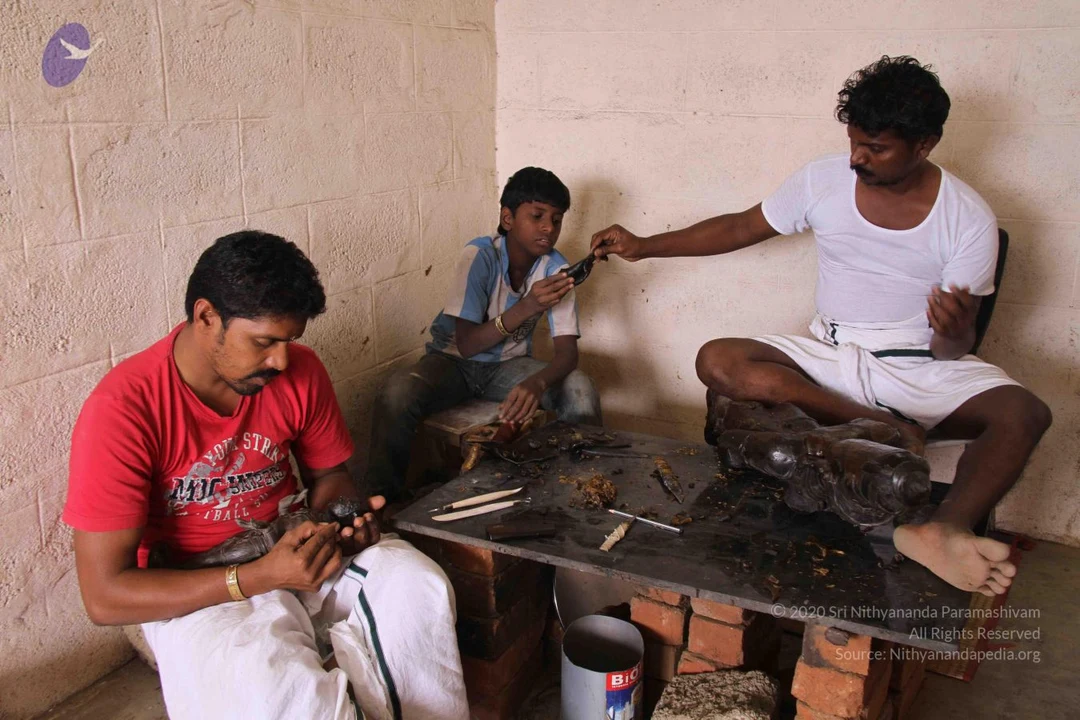
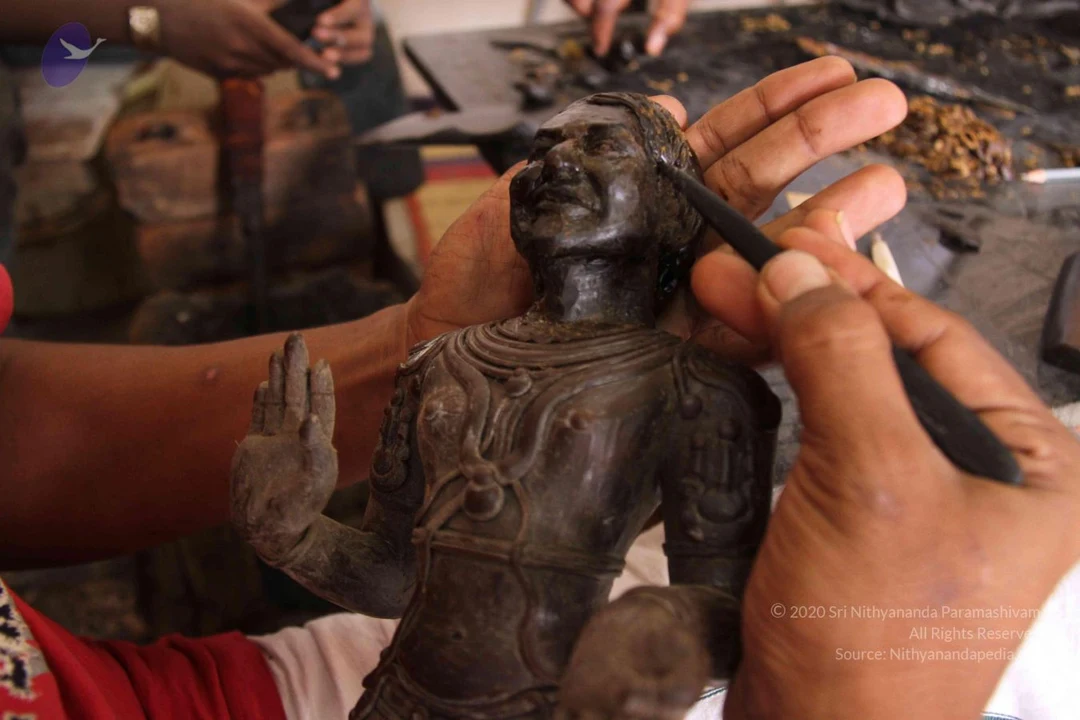
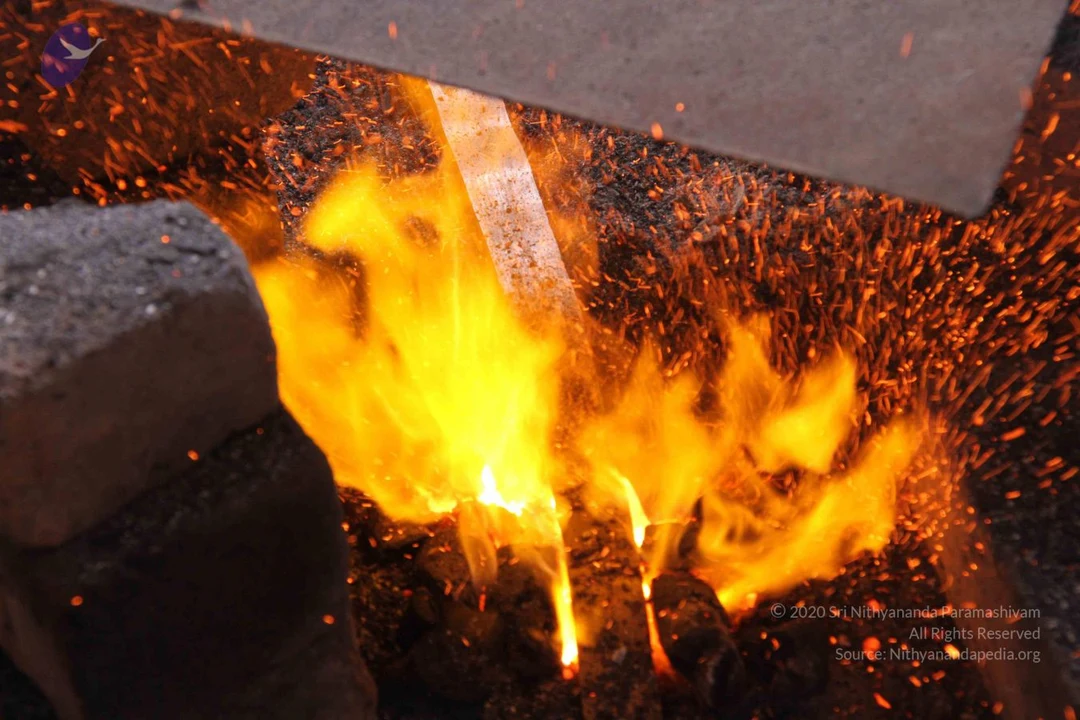
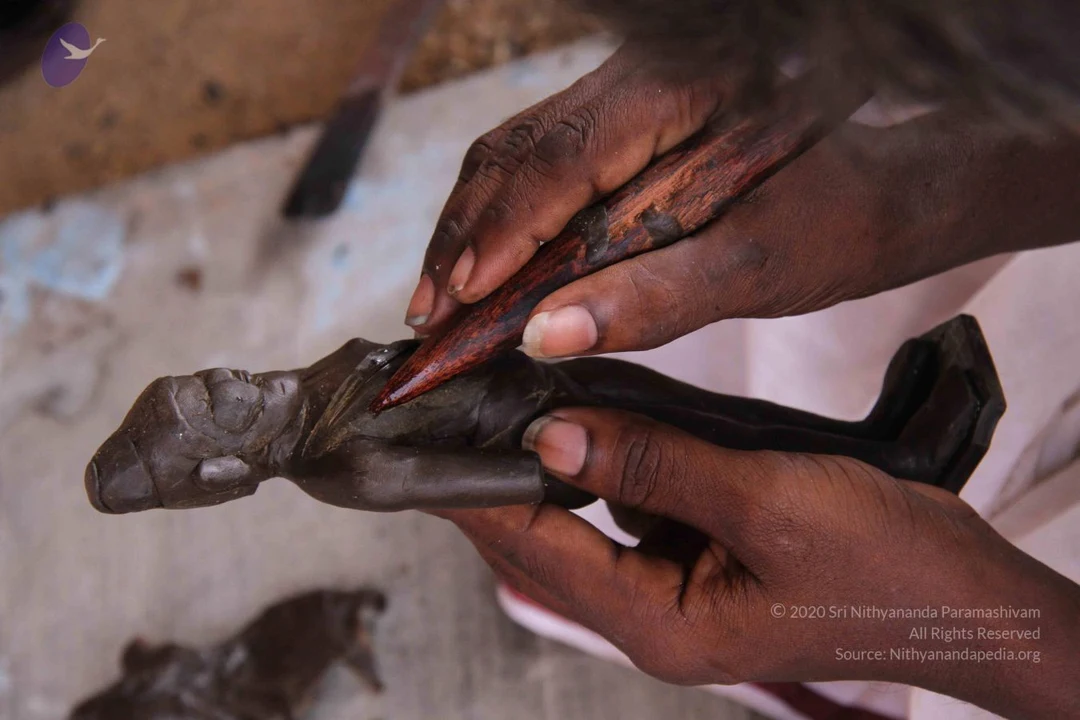
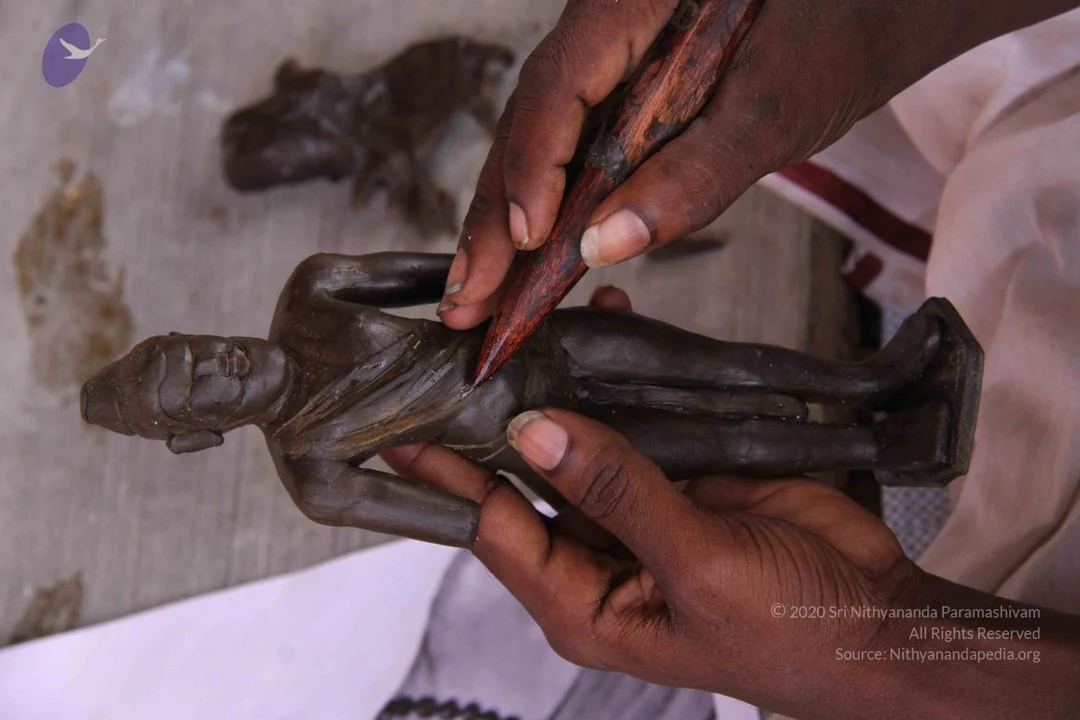
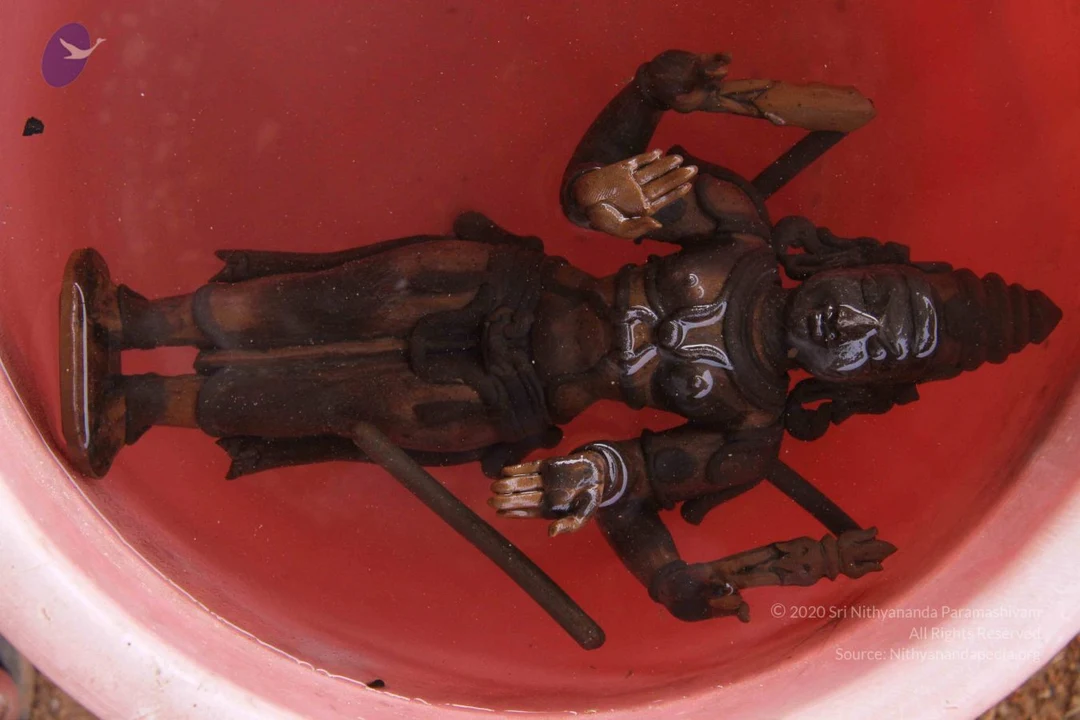
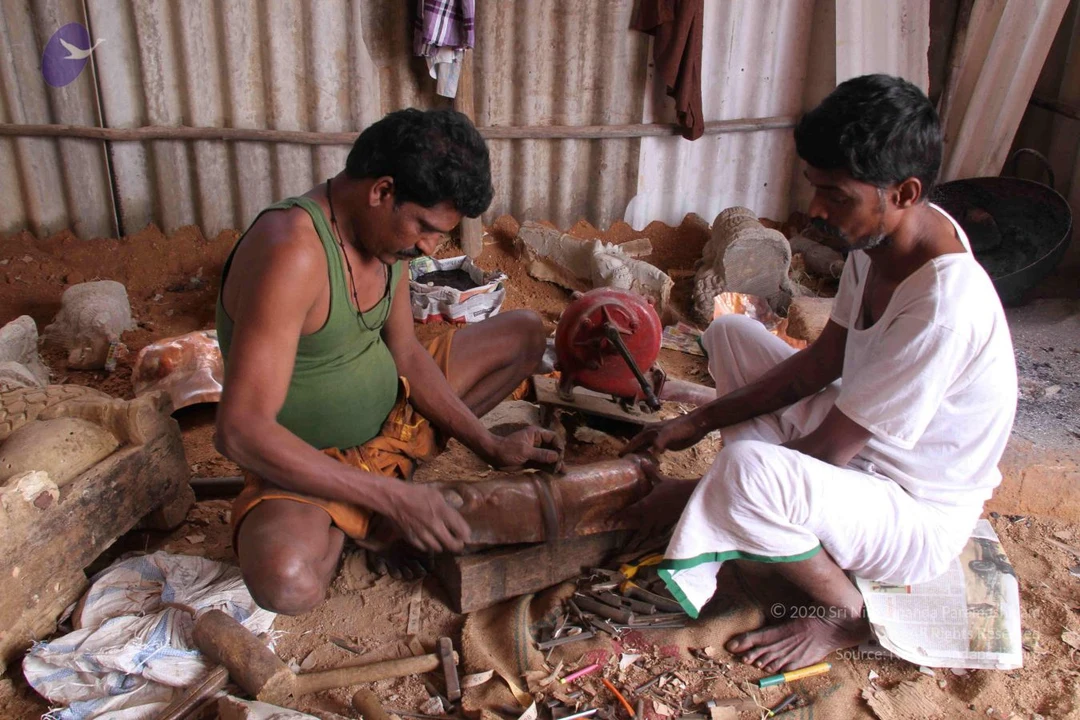
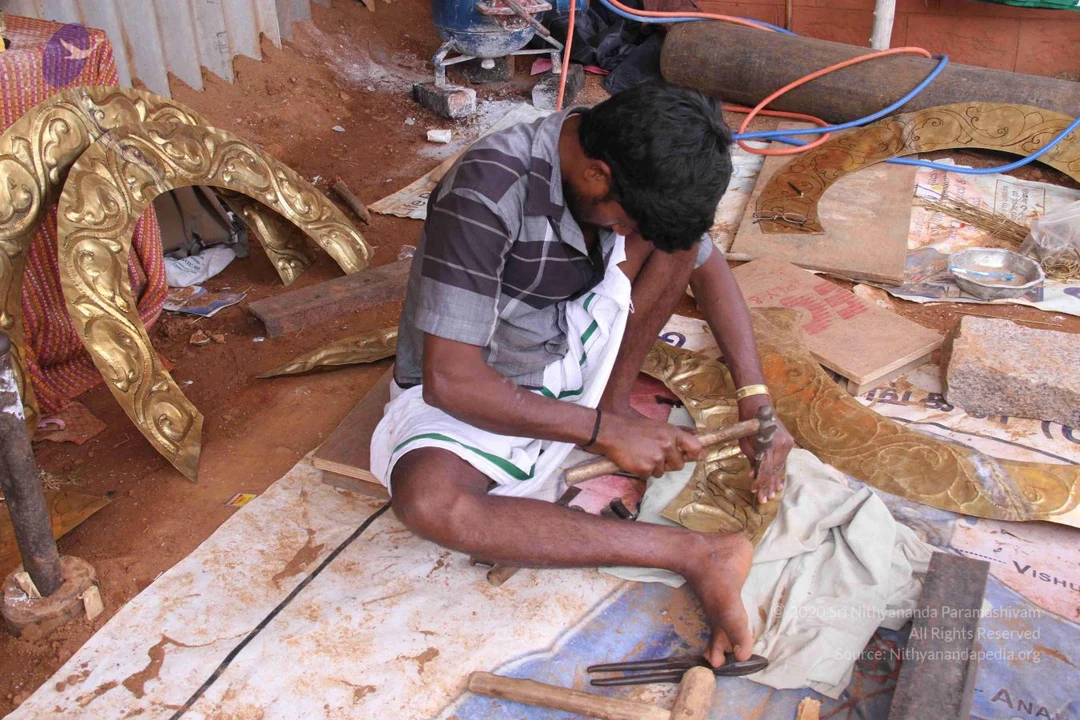
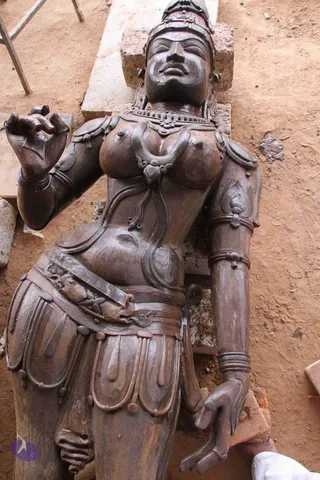
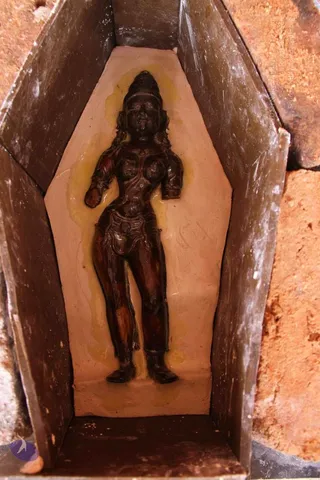
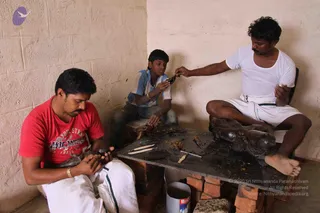
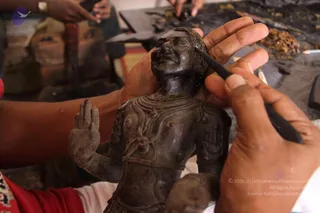
A large dark bronze-coloured standing statue of a female deity murti, shown in a dusty outdoor work yard against rough brick and stone blocks. The figure wears a tall crown, layered necklaces, armlets, a waist belt and a pleated skirt with hanging tassels. One hand is raised in a gesture while the other hangs at her side. Scattered metal scraps, a dark slab and building materials surround the statue.A large dark brown carved wooden statue of a standing deity murti, shown from above against a dusty earthen ground with broken brick and stone pieces. The figure wears a tall ornate crown with bands and tassels, a broad beaded collar, layered armlets and a decorated waist panel. Its feet rest on a round base. Beside it lie a bronze-coloured sheet and a dark object. The photo is a watermarked archive image of the statue, with no people present.A large dark bronze or clay-coloured sculpture of a female deity lies on sandy ground at a construction site, propped on rubble and stone blocks. The figure wears an ornate crown, a broad collar, a jewelled chest ornament and a heavy waist girdle with pendant tassels. Its raised left hand is held in a mudra and the right hand rests near the hip. Wooden scaffolding and a partly visible person in white clothing appear at the edges of the frame. Unfinished surfaces suggest the statue is still being made.A dark bronze or metal deity murti stands in a shallow niche with pale plaster or clay backing and wooden or stone side walls. The figure is slender and upright with a tall, tiered crown or headdress, elongated face, and a jewelled waist ornament and girdle. Oil or ghee stains glisten on the pale backing around the figure. The niche sits in a rough terracotta-coloured wall. No people are visible; the image shows only the statue and its niche.Three men and a boy work together in a plain whitewashed room carving a wooden figure. A man in a red t-shirt and white dhoti on the left bends over a carved piece in his hands, a boy in a blue-and-white shirt in the centre holds a small chisel-like tool, and a shirtless man in a white vest and white dhoti on the right sits on a stool, reaching toward the boy. A dark metal worktable holds carving tools, wood shavings and a large carved wooden sculpture of a seated figure. A paint can sits on the floor. This appears to be a craftsman's workshop for sculpting wooden murti figures.A photograph of a craftsperson working on a dark bronze figure of a standing deity or devotee with raised right hand in an abhaya-like gesture and a headdress or hair band. A hand in a red garment steadies the head while another hand holds a fine dark tool to refine the face. Workshop tools and metal shavings lie on a dark bench behind. The figure is a sculpture, not a living person, and no a person candidate is visible.