Skip to content
Friday

11 July 2014

Faith System of Hindu Tradition

Dated photos
305
Source pages
1
Media
4
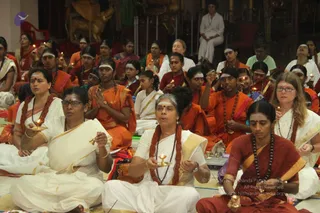
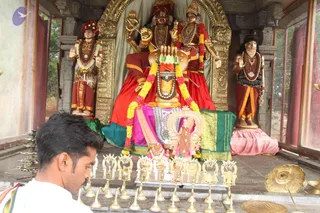
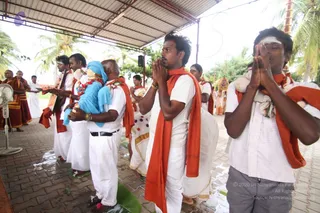
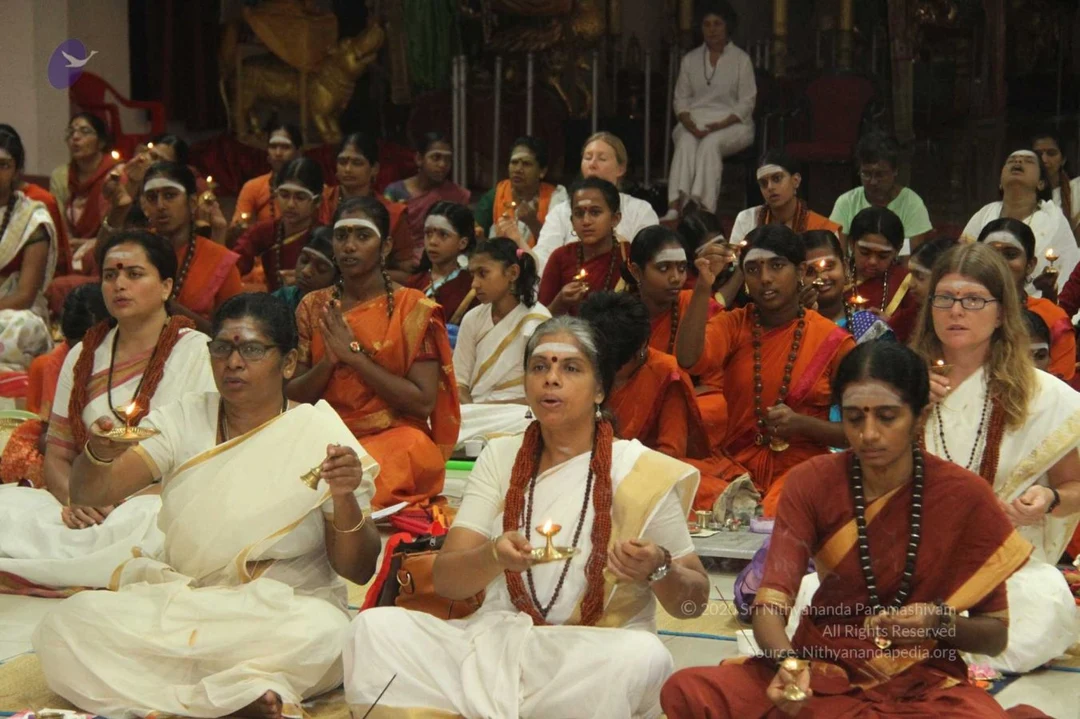
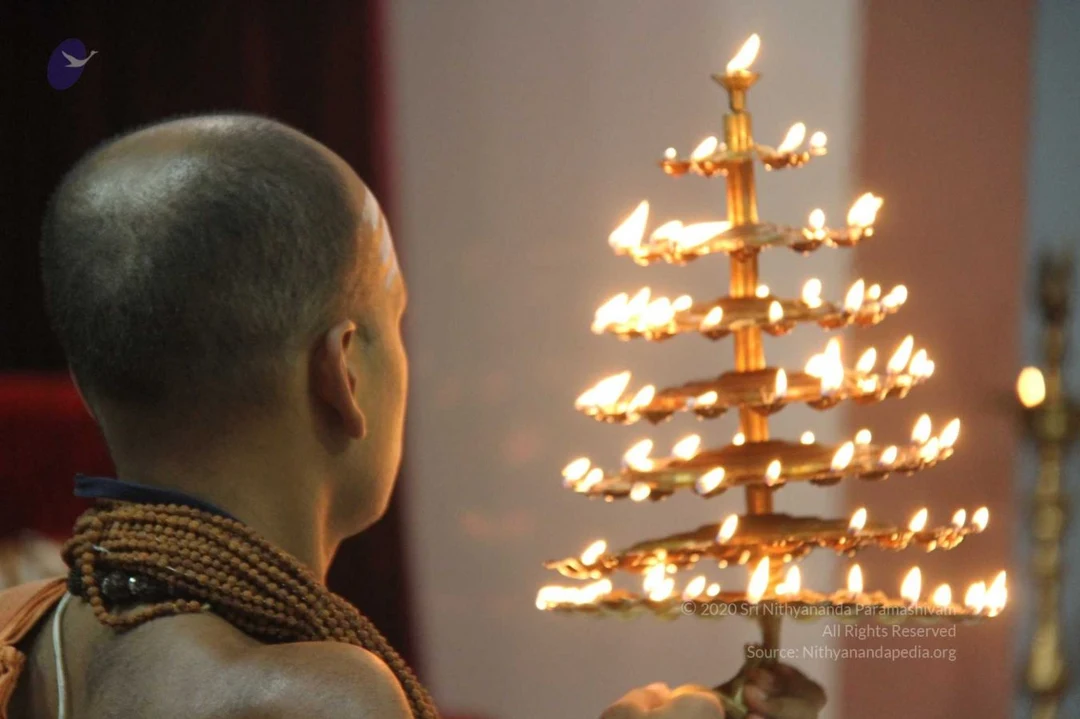
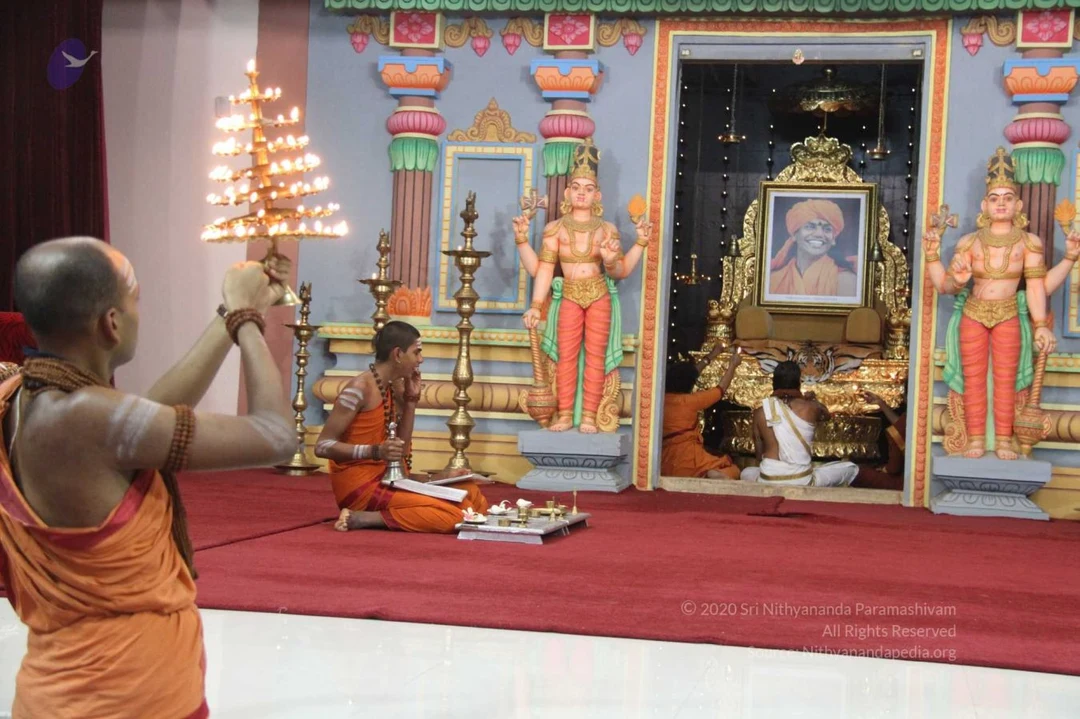
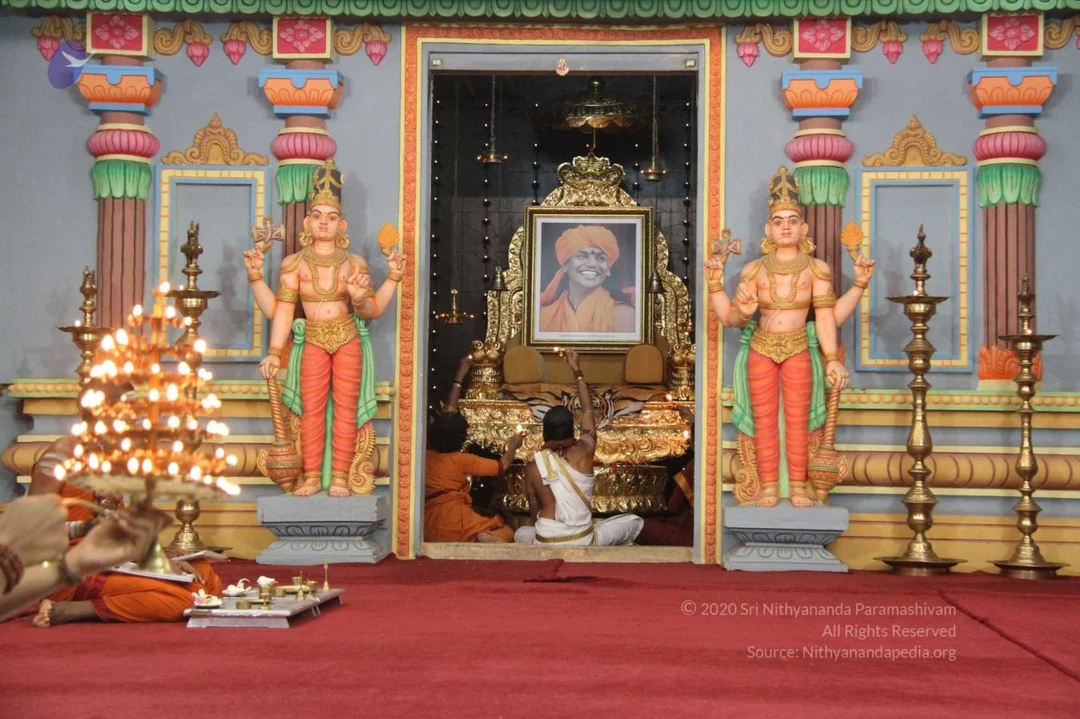
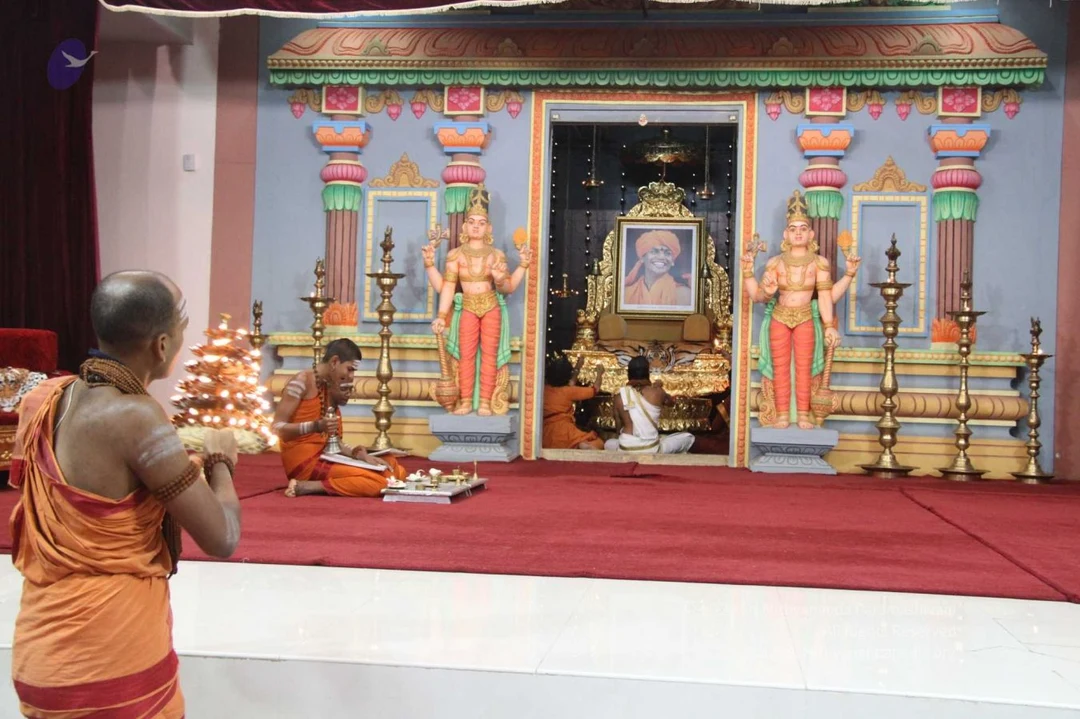
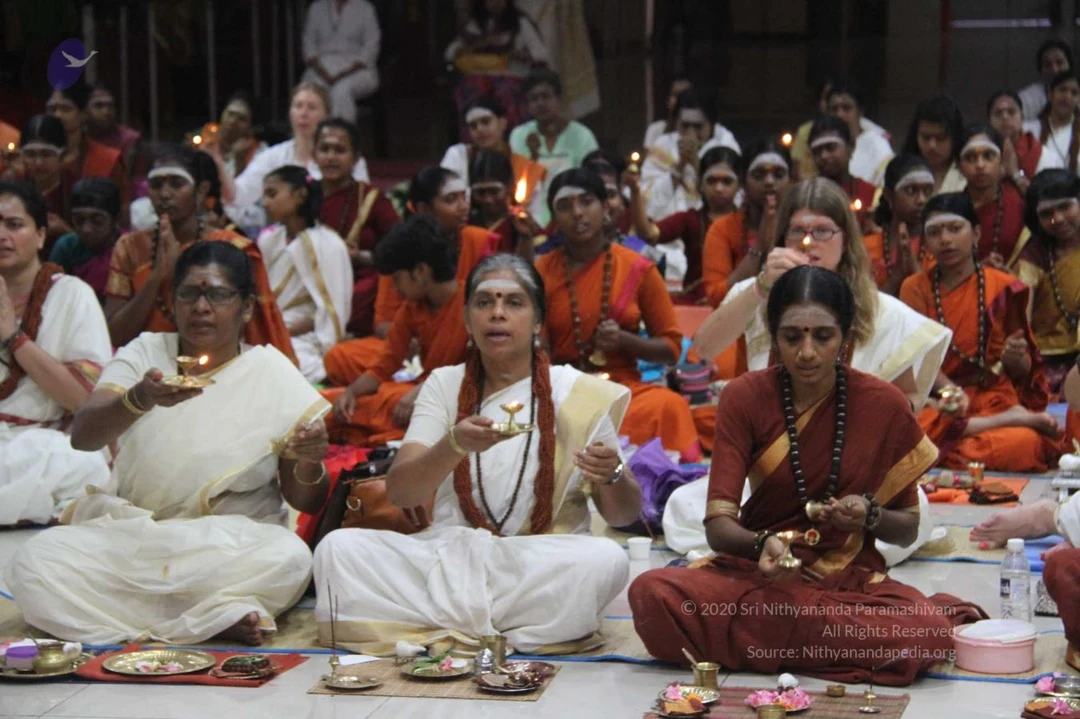
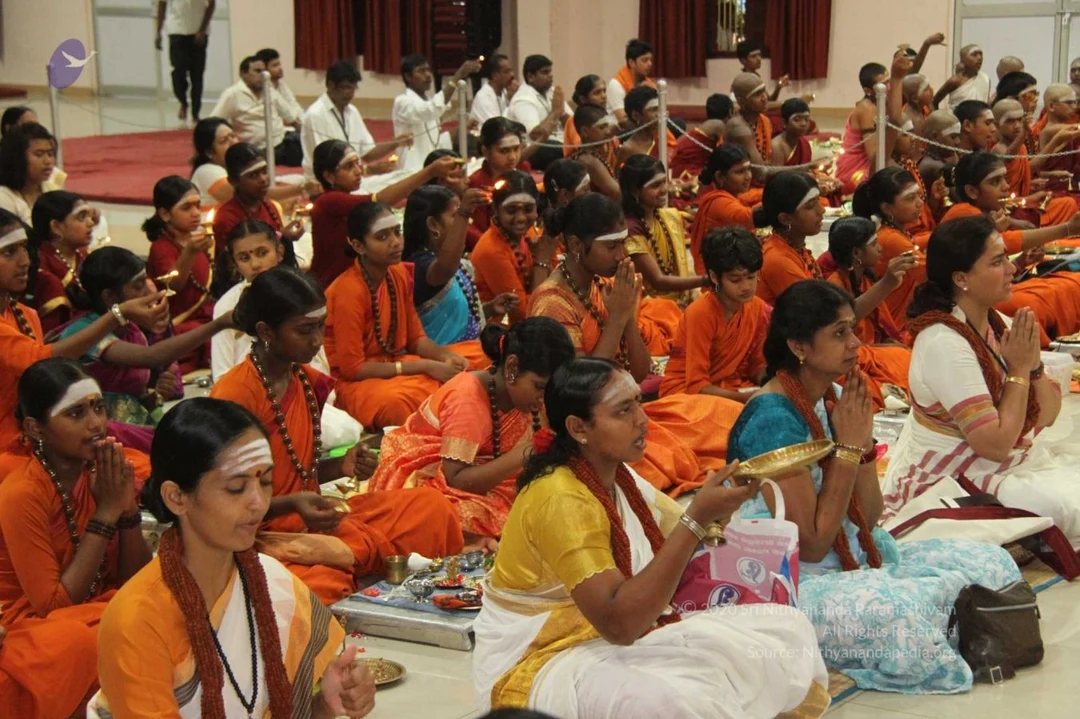
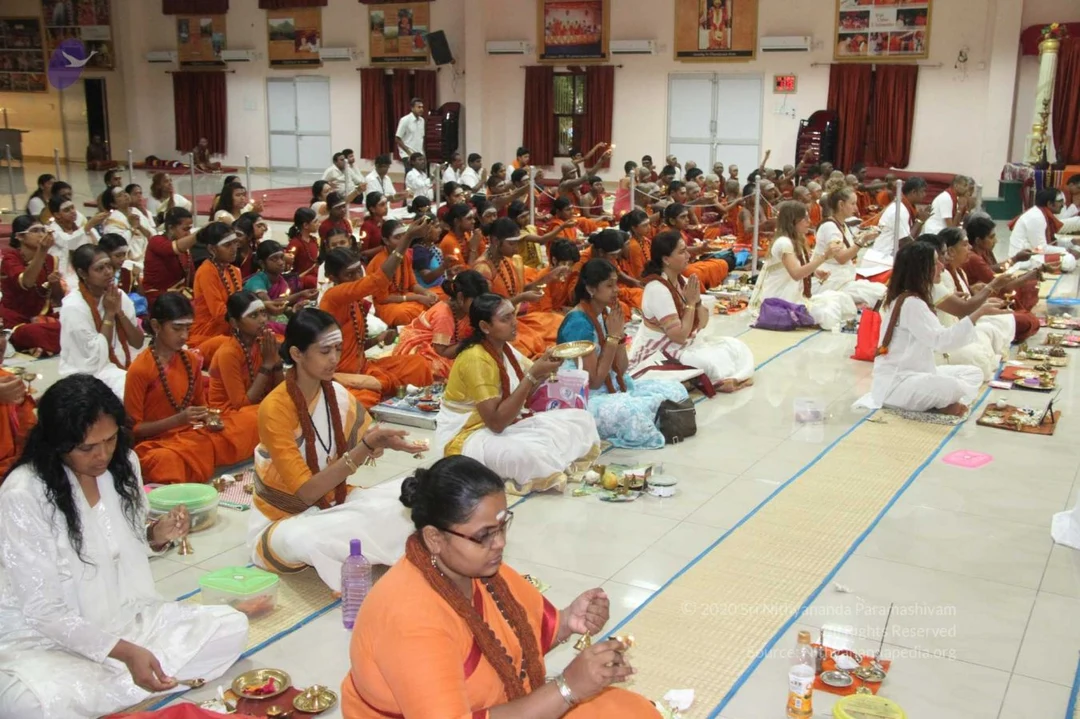
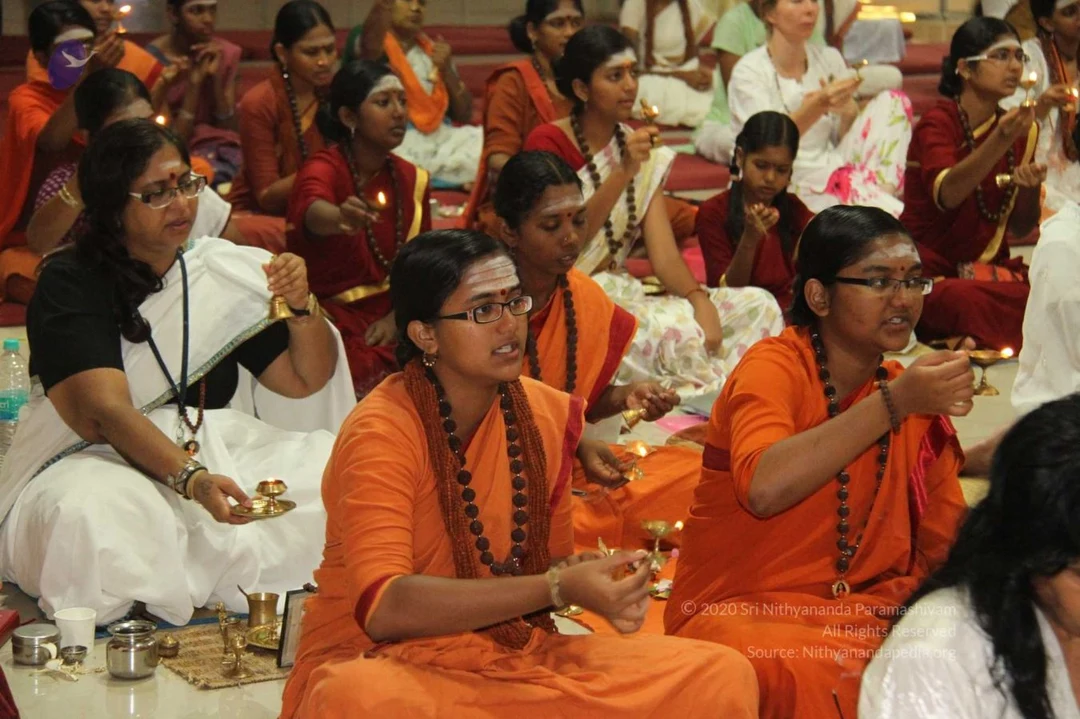
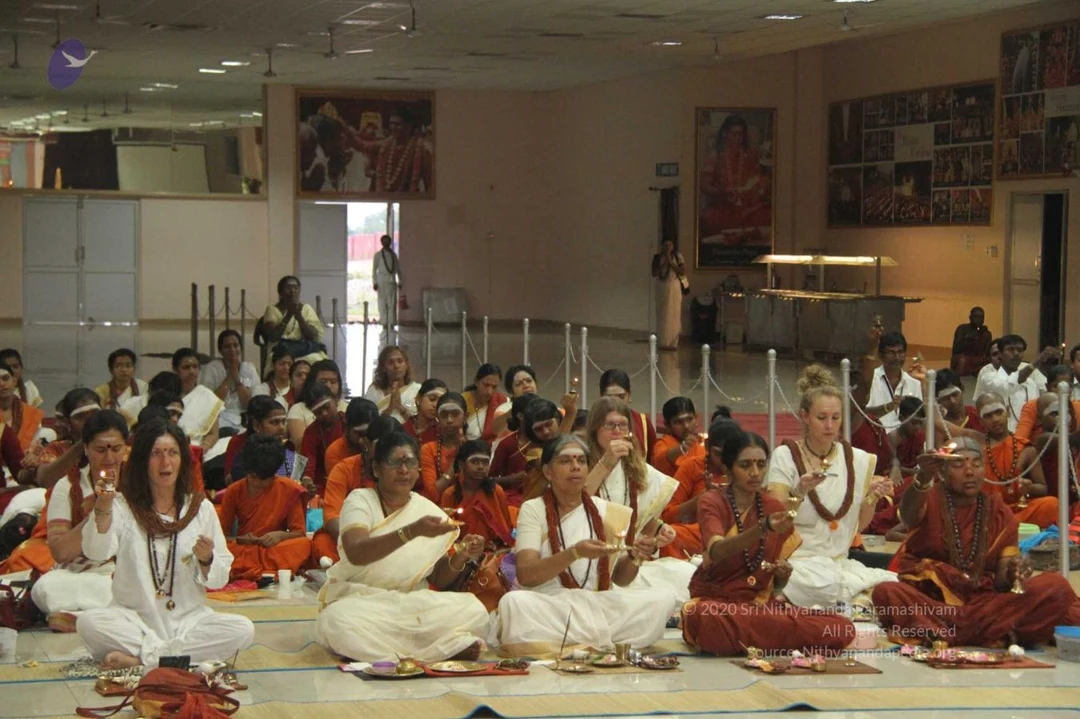
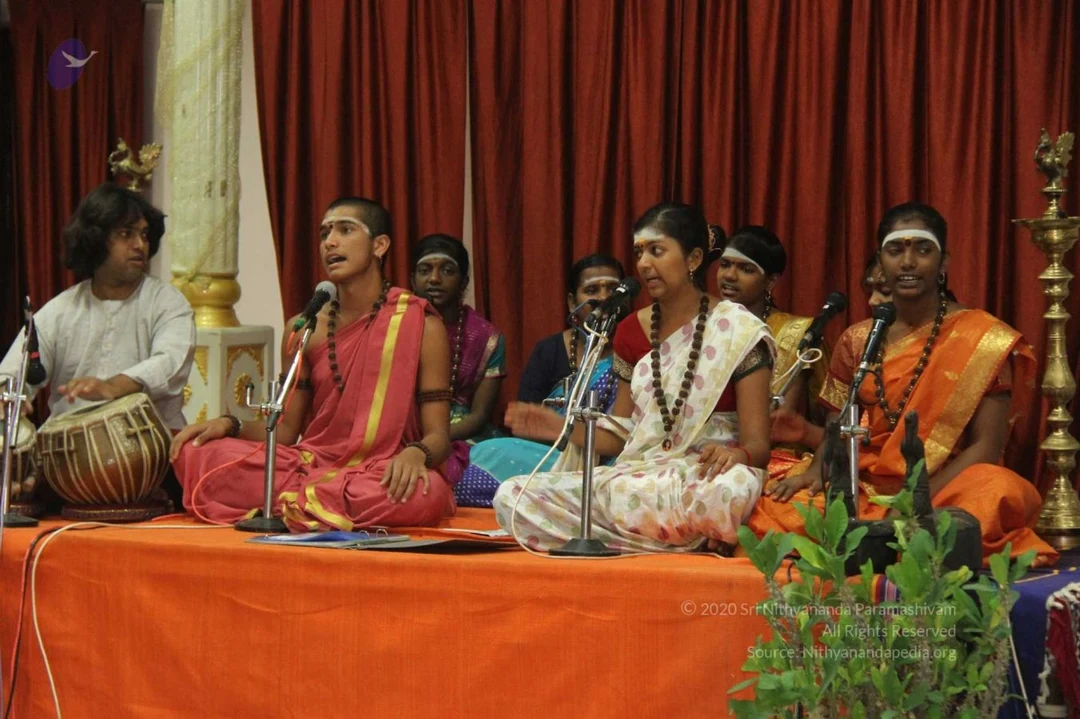
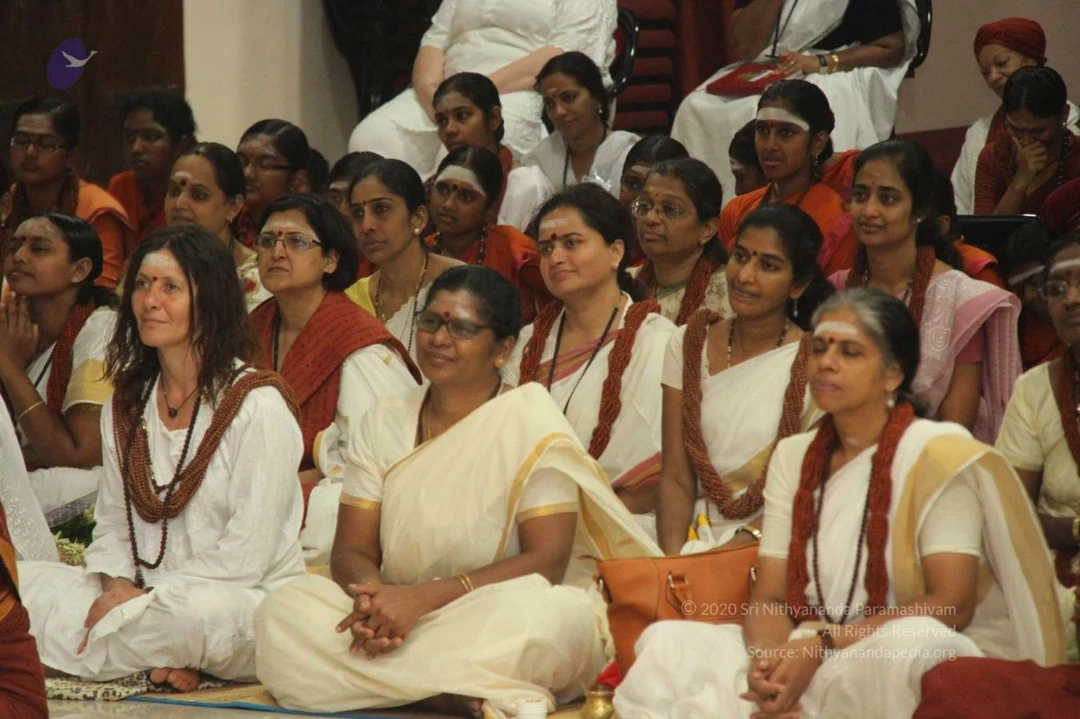
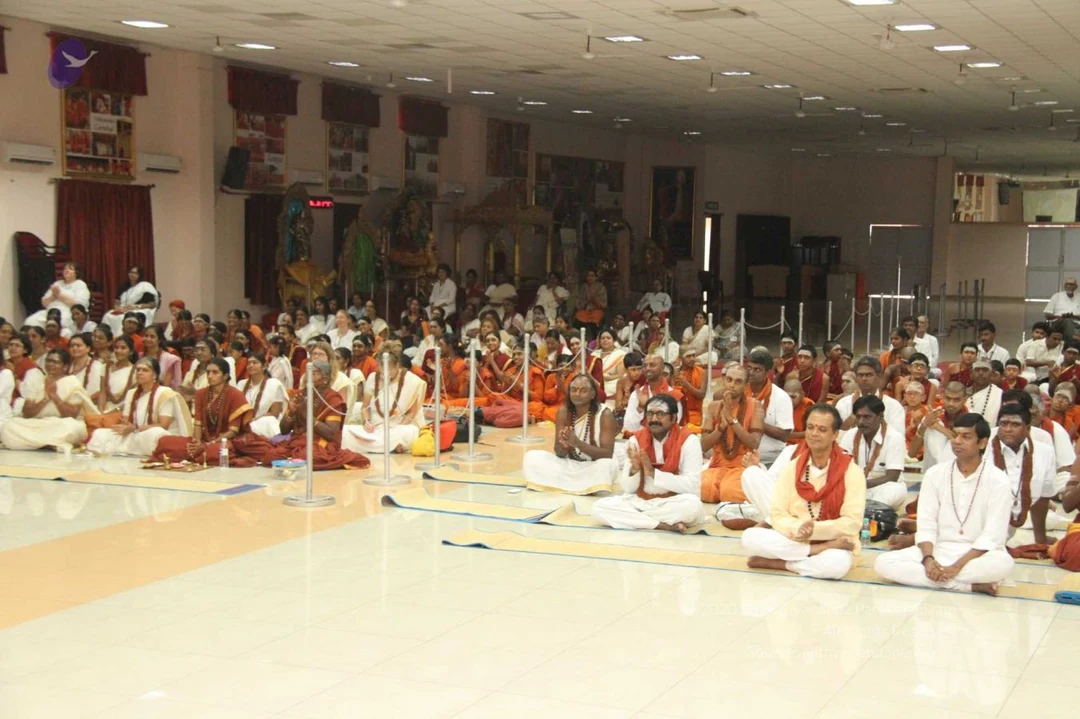
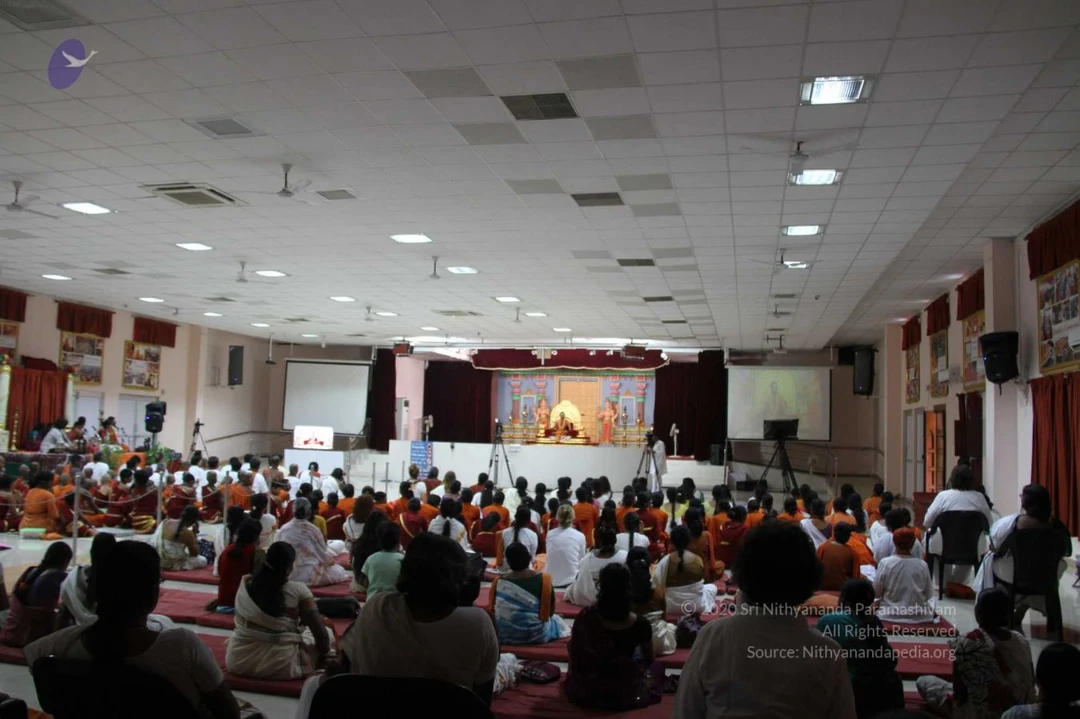
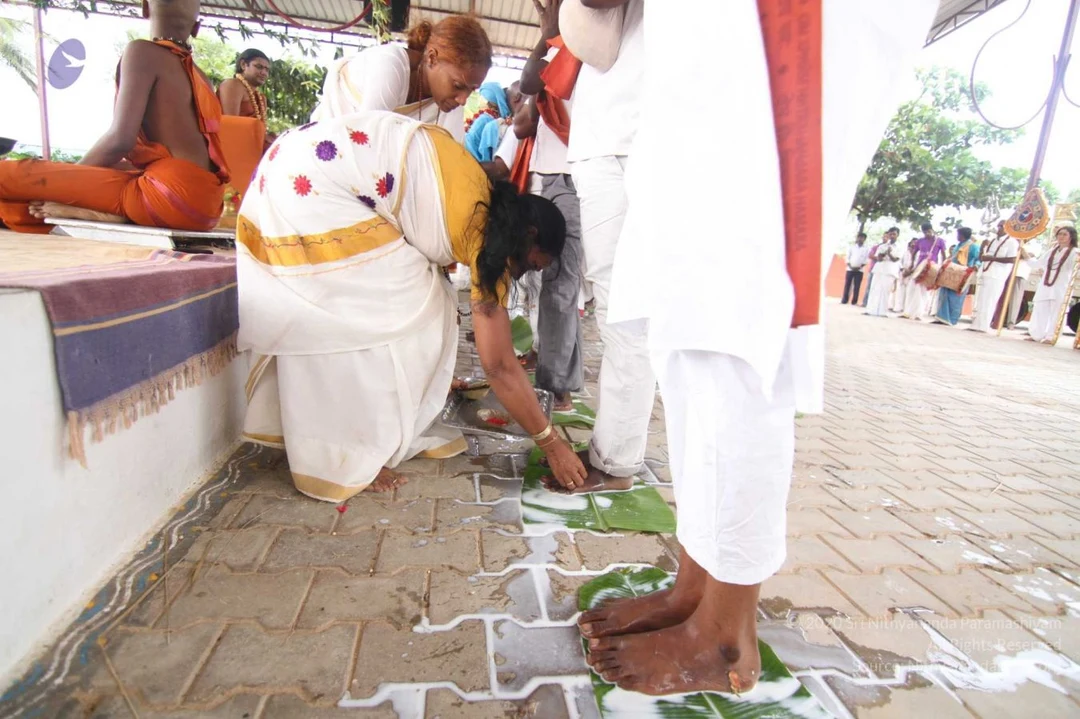
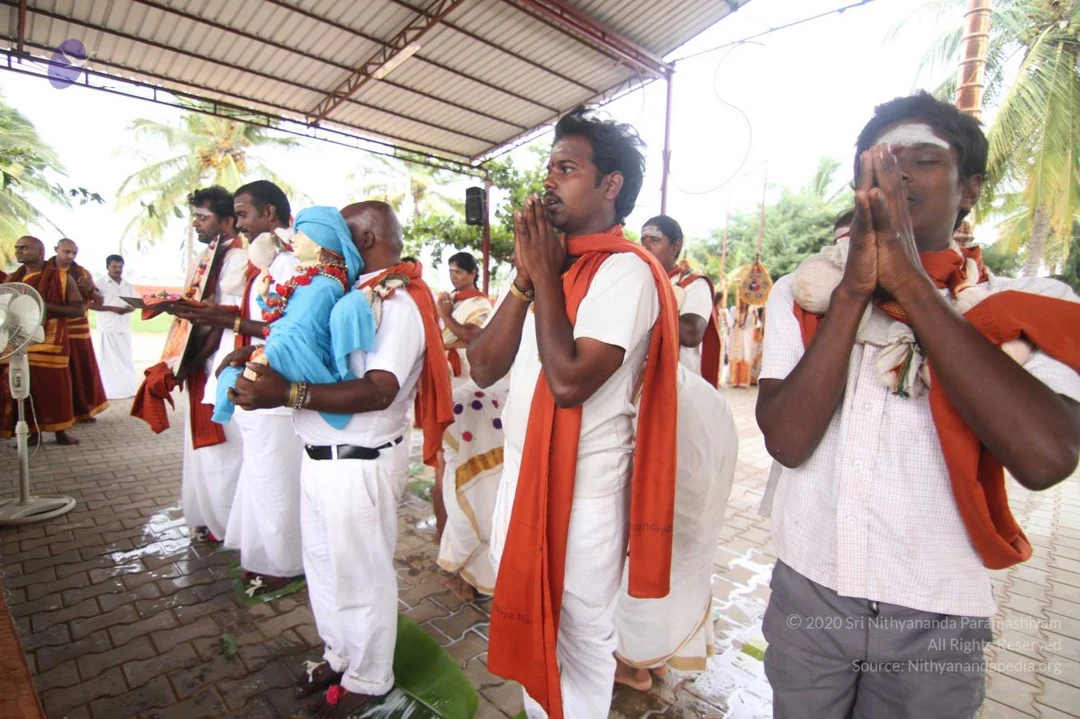
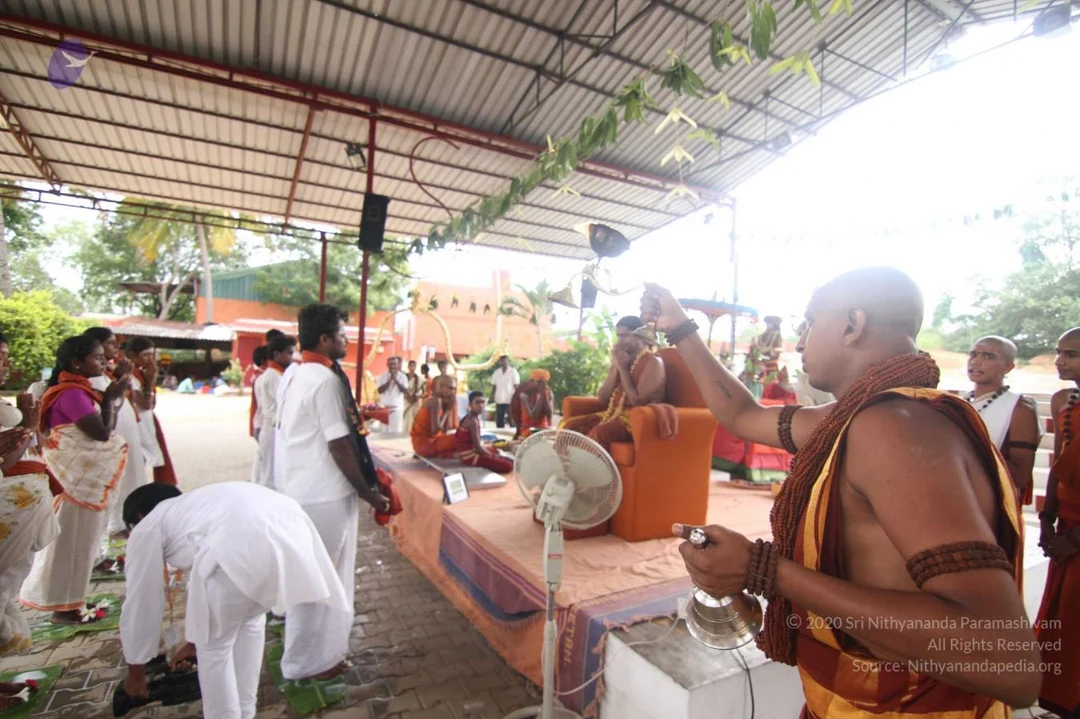
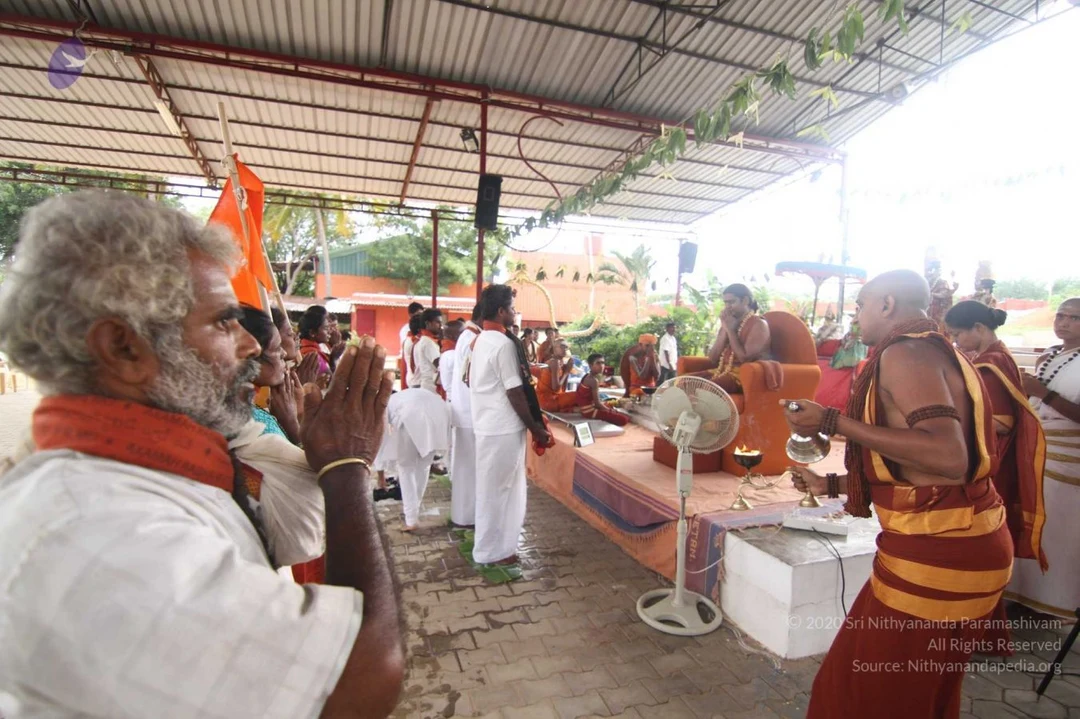
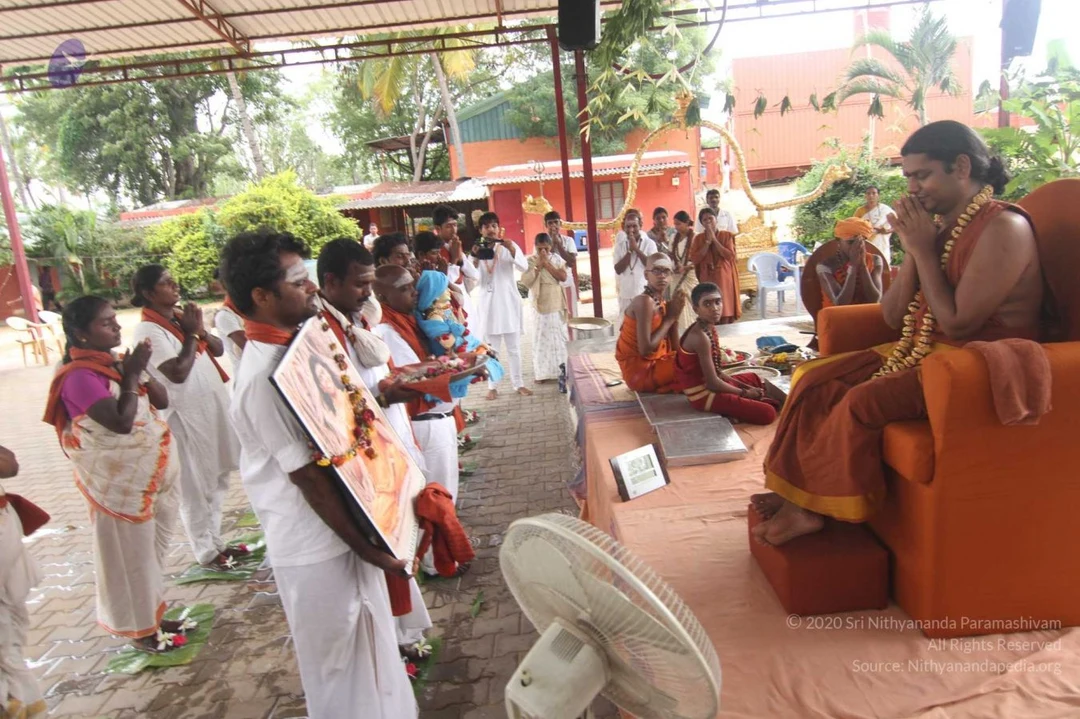
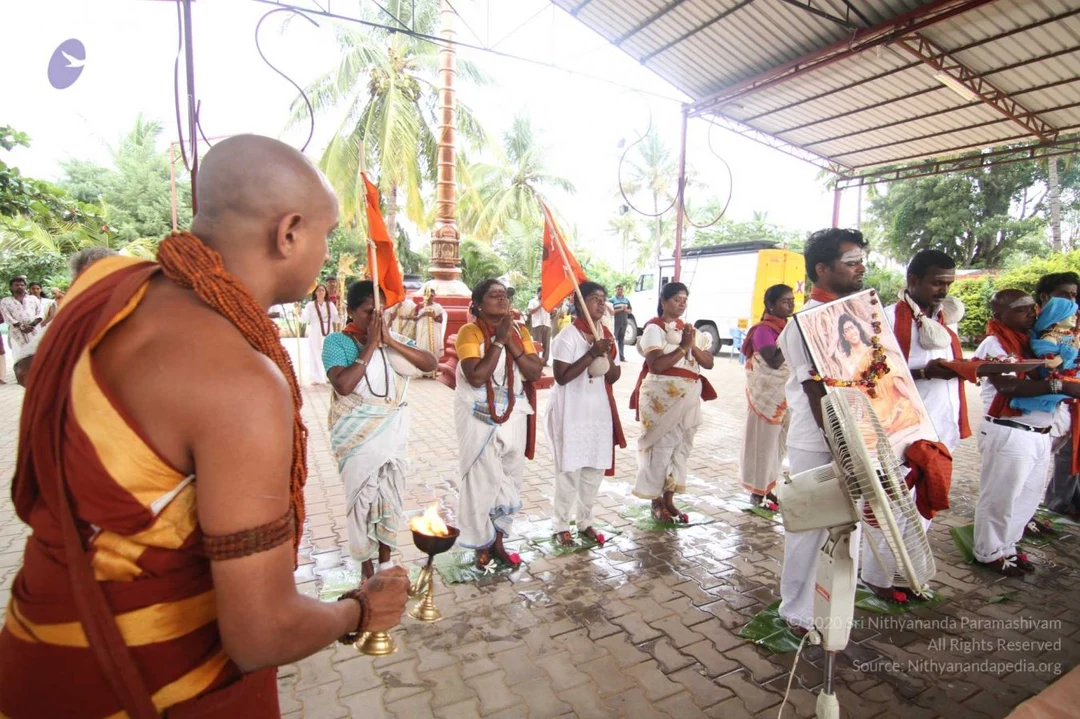
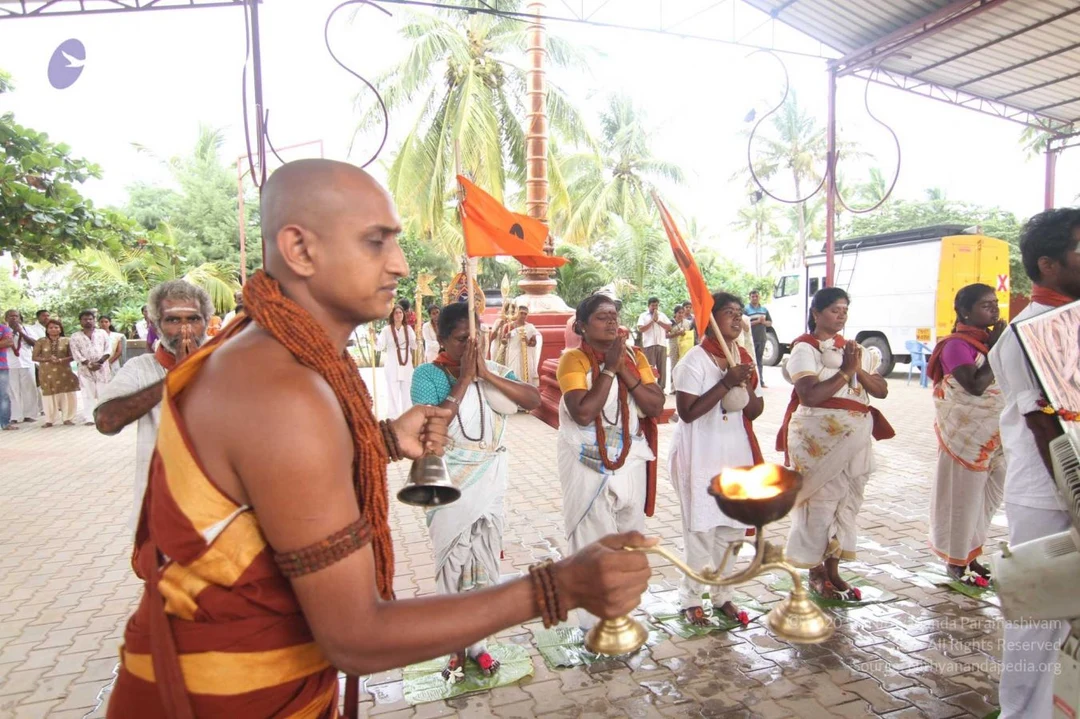
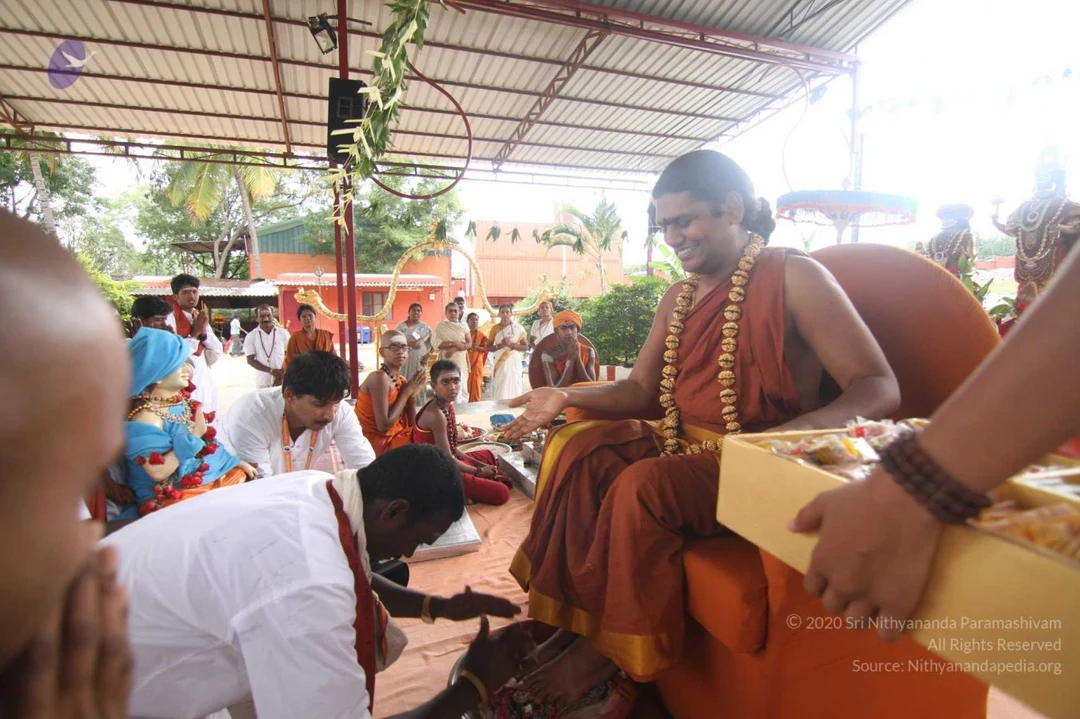
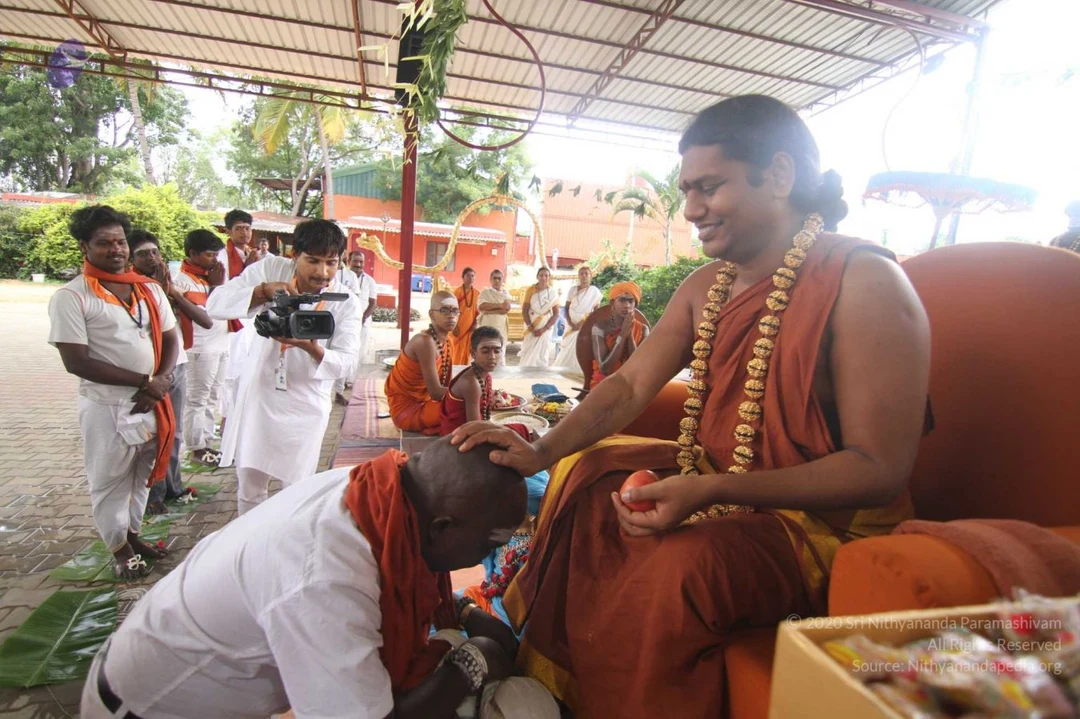
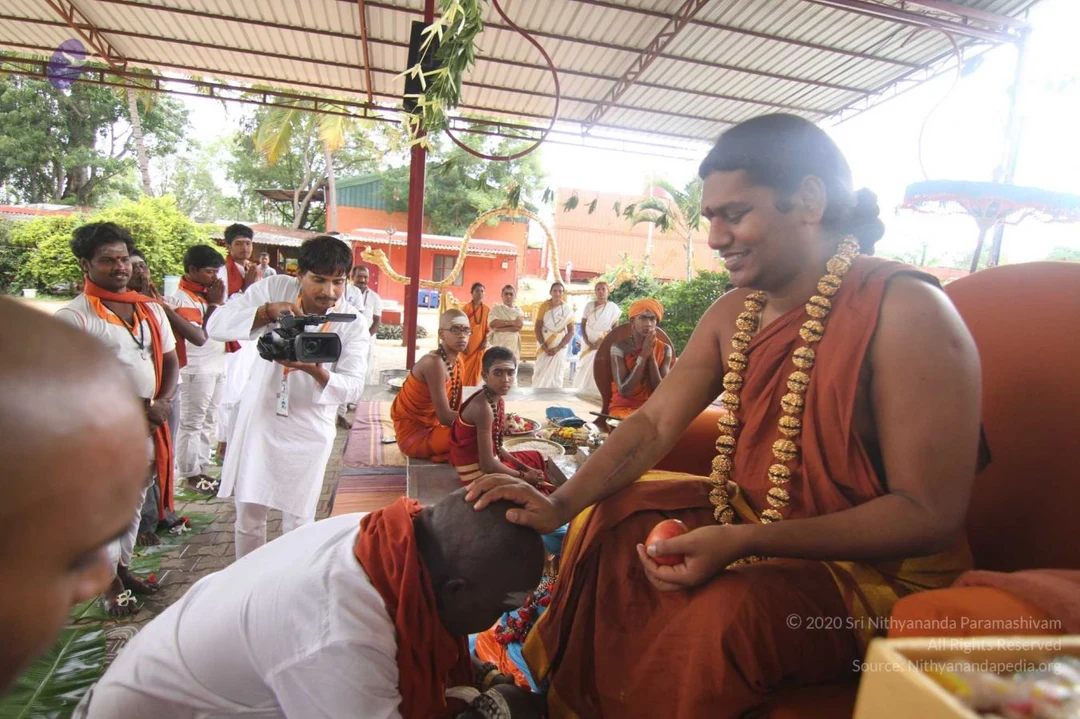
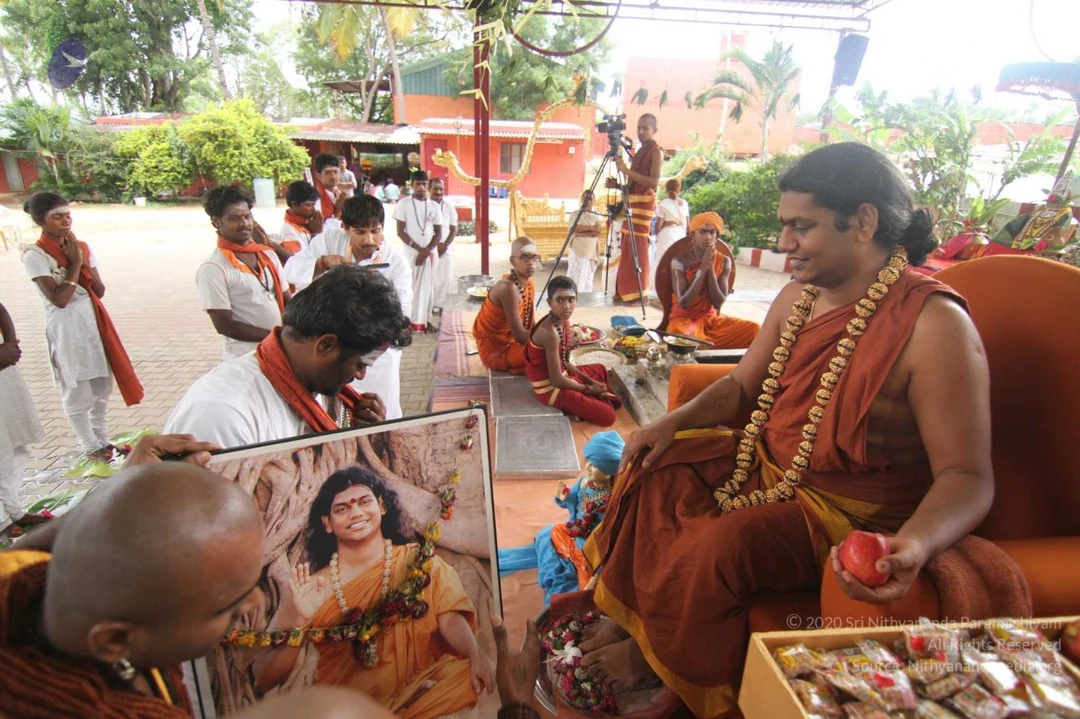
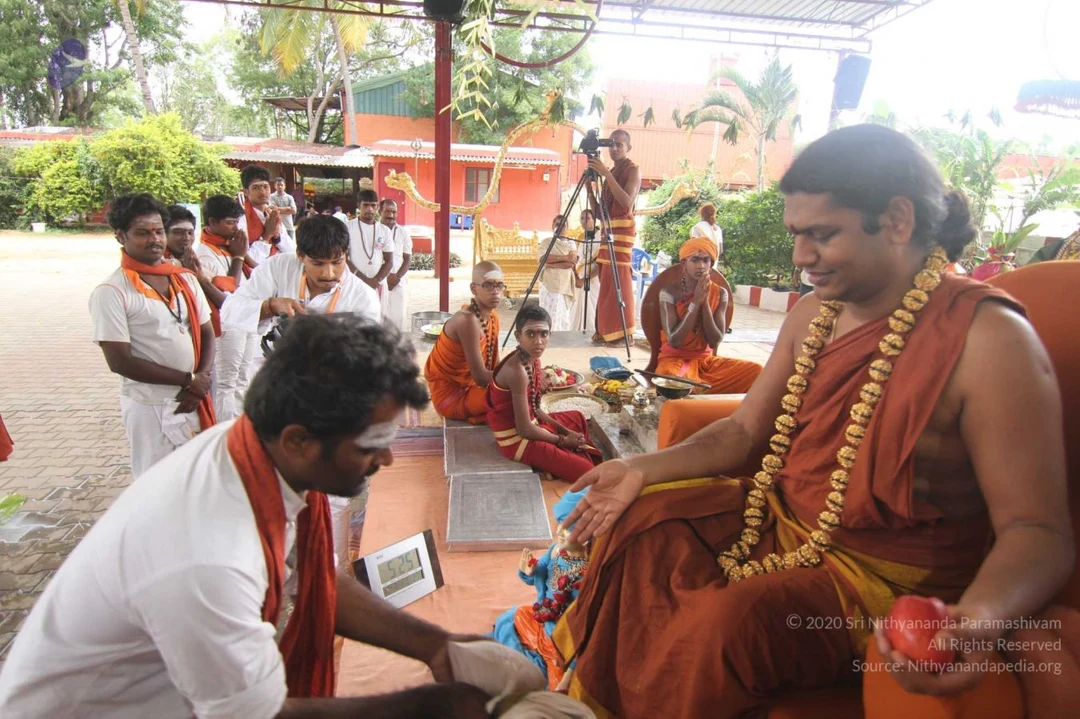
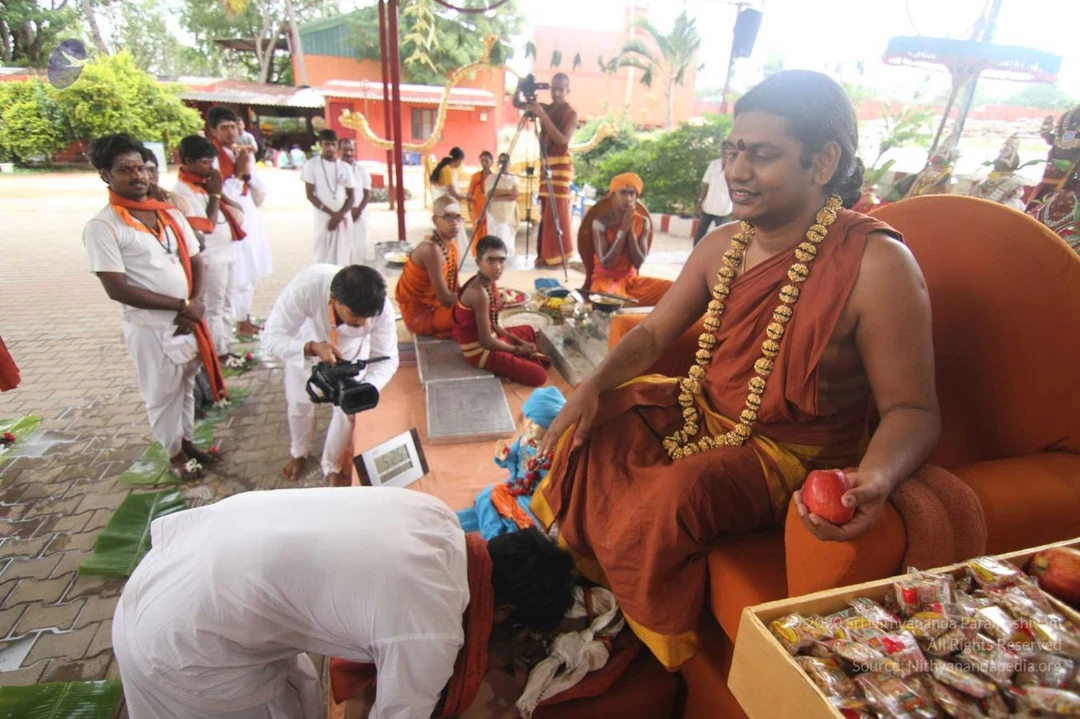
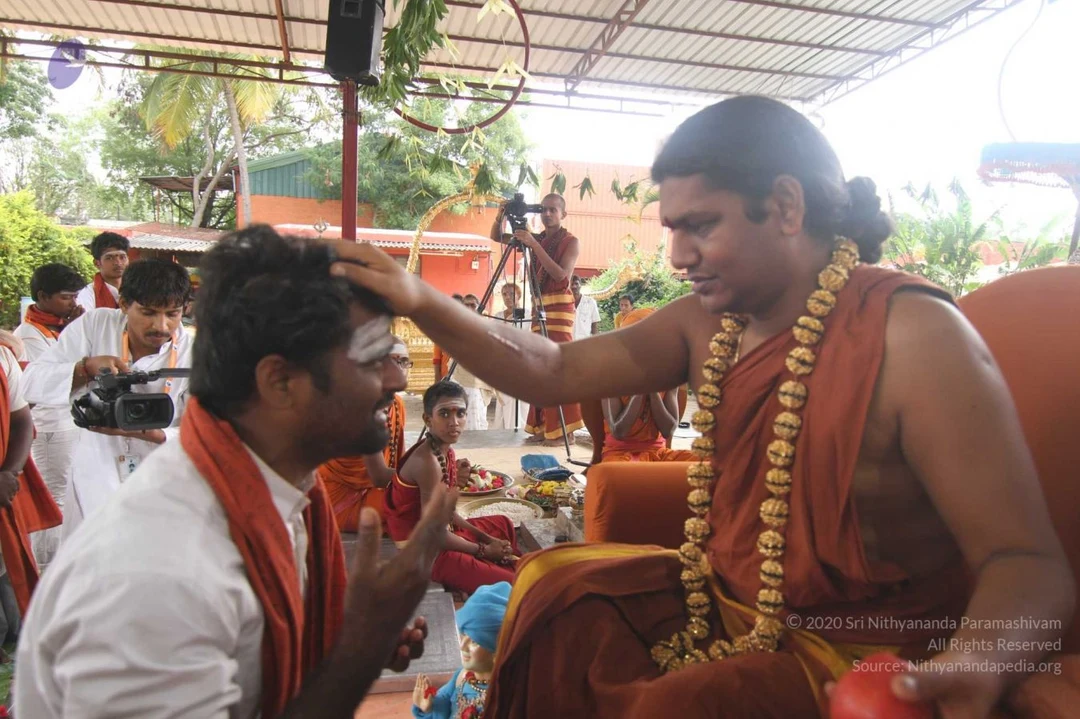
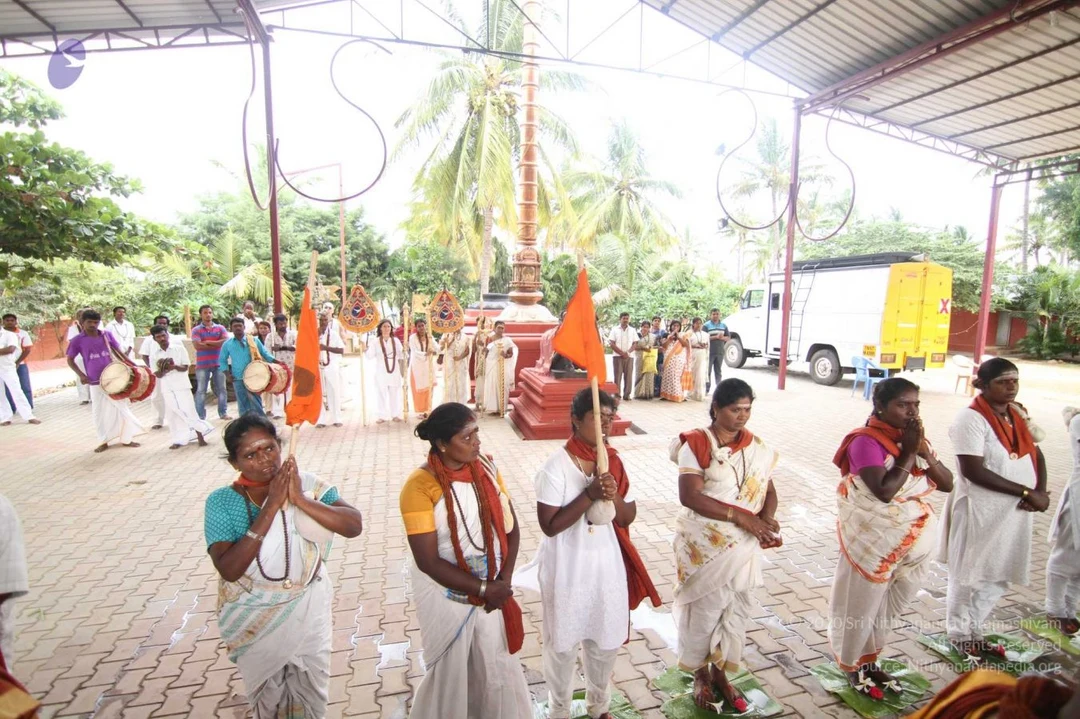
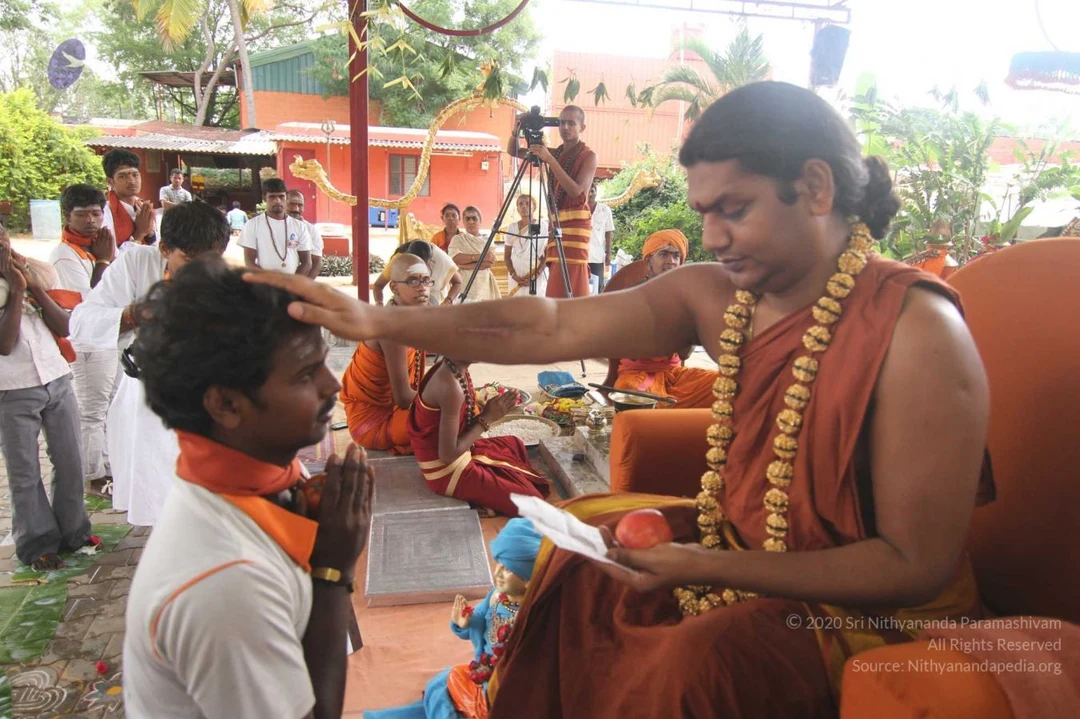
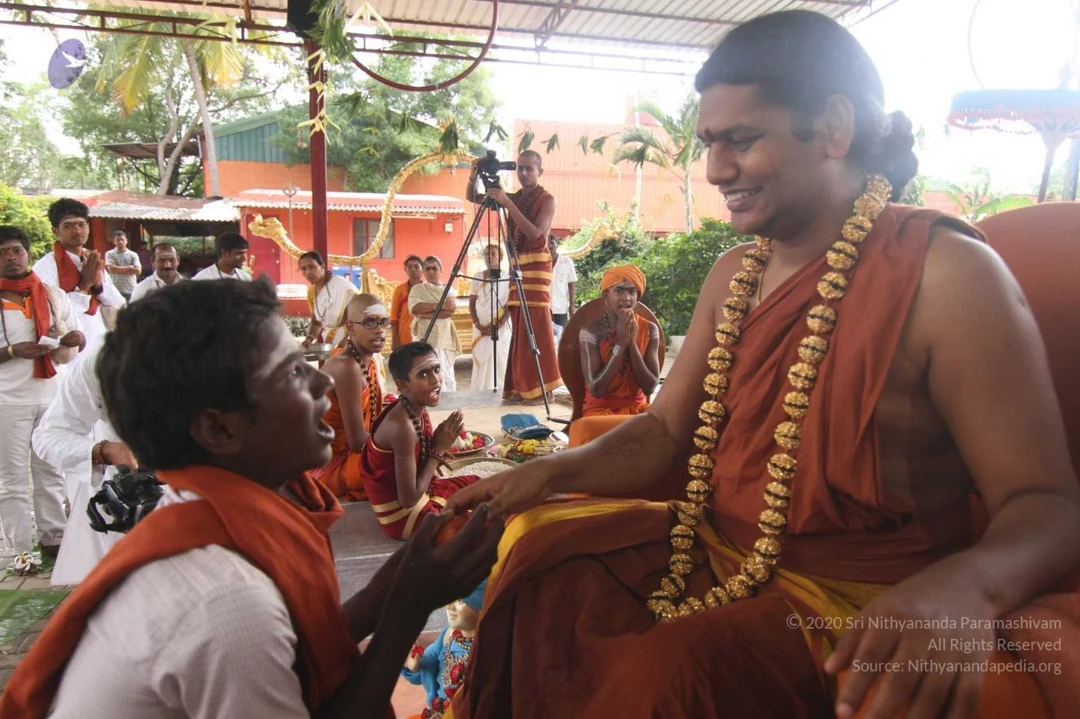
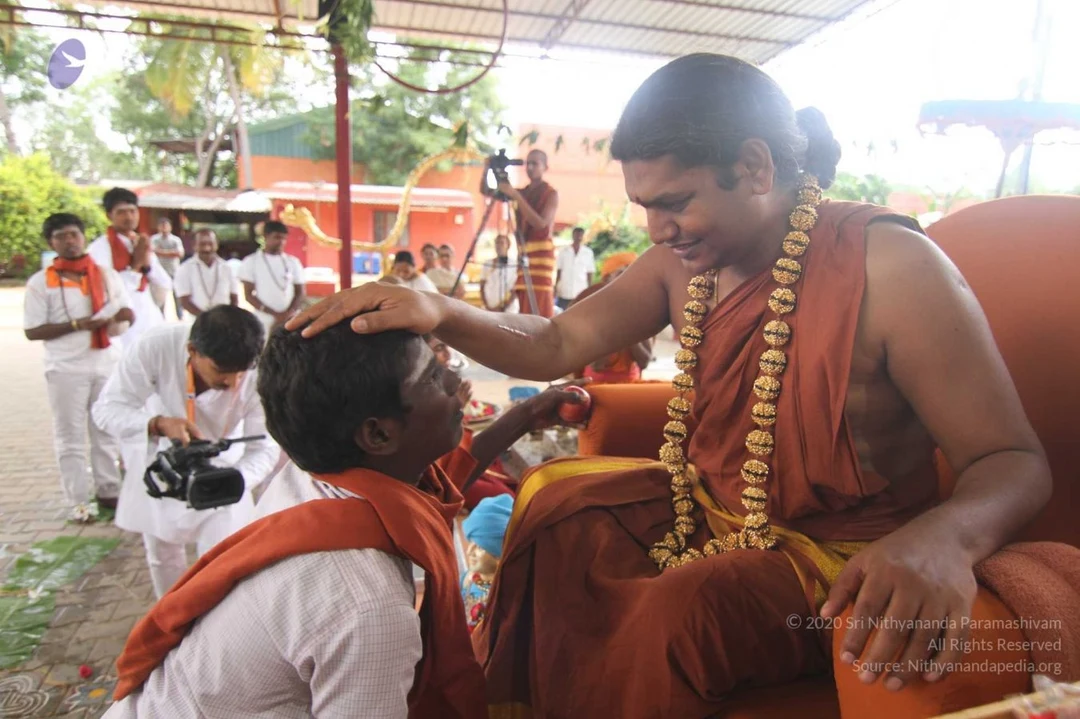
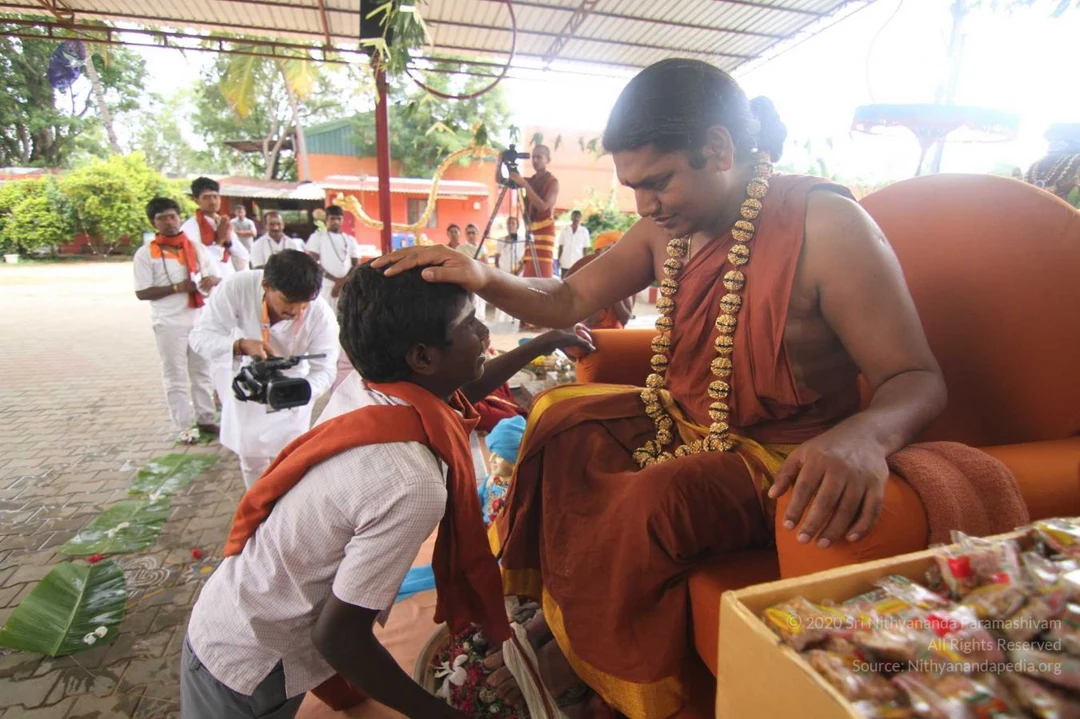
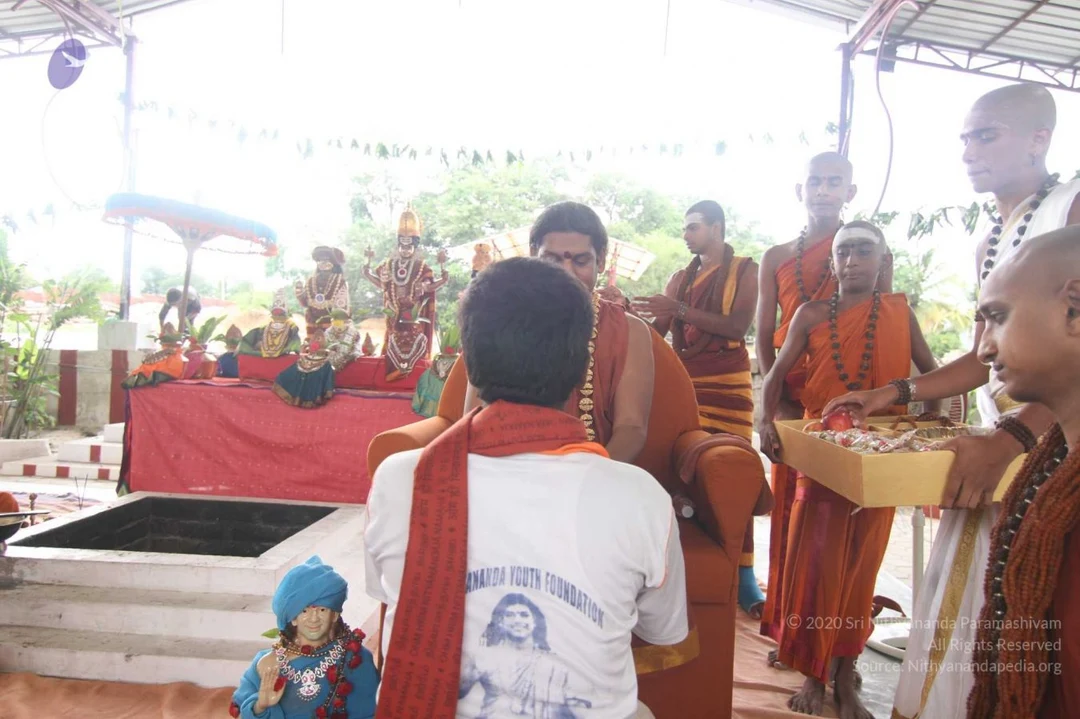
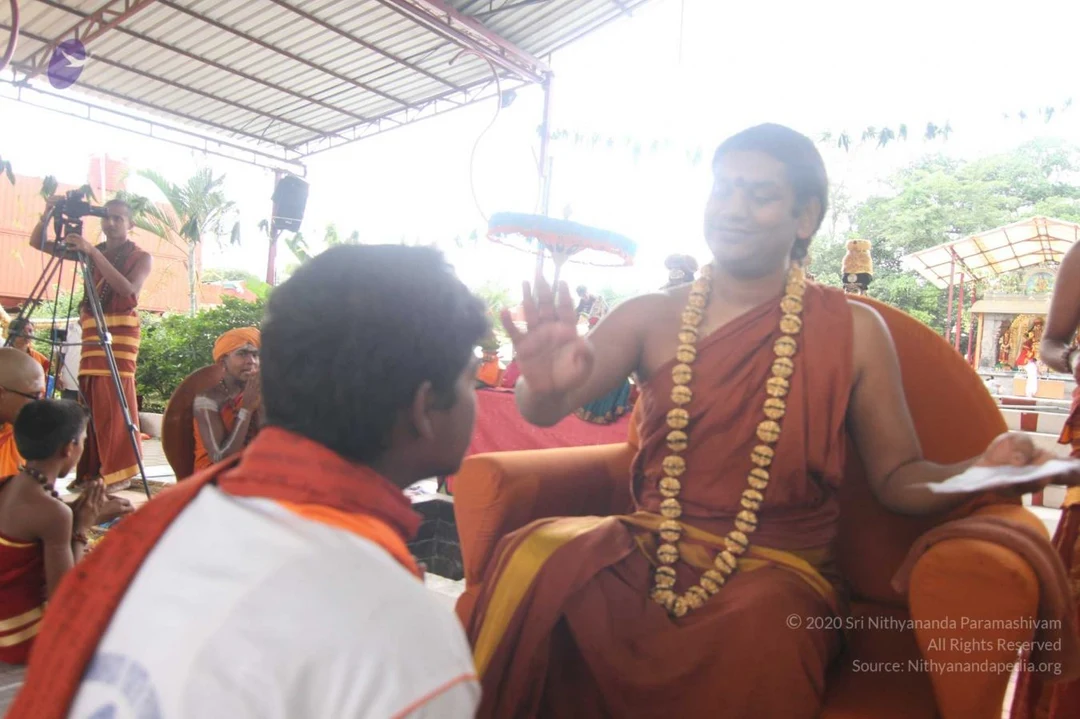
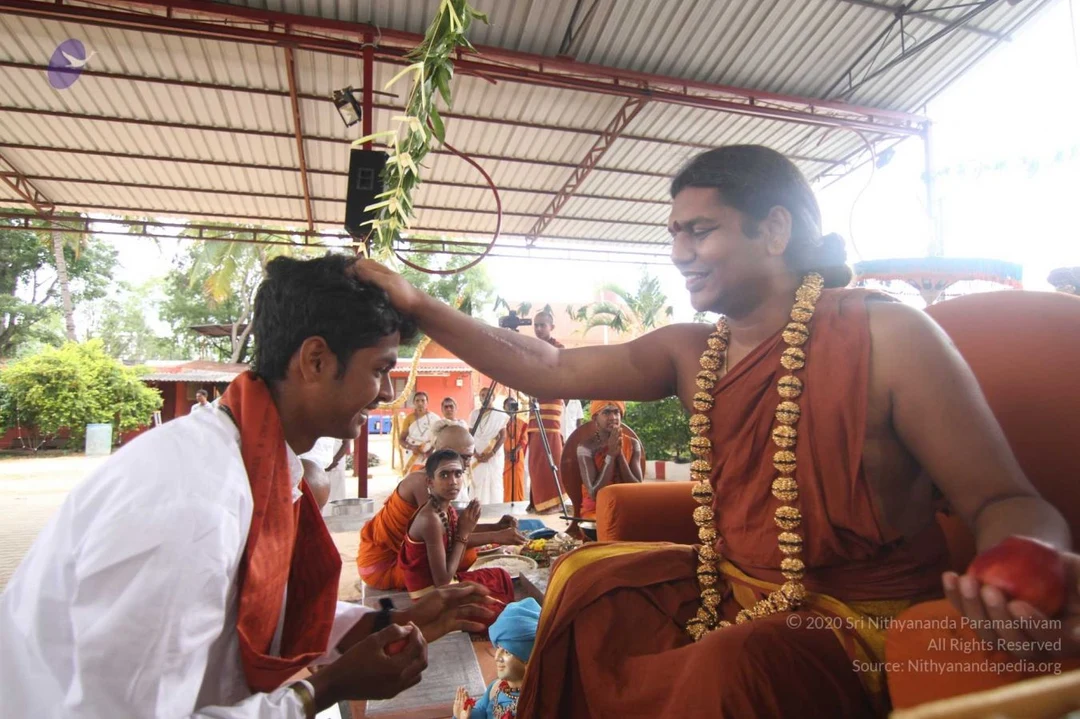
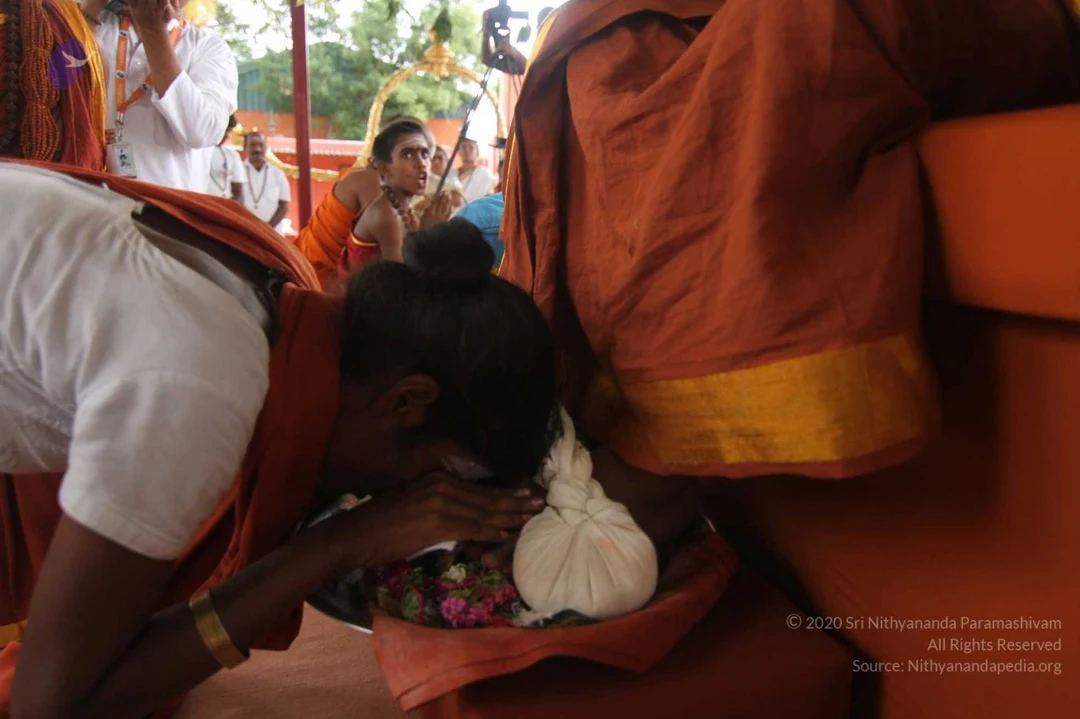
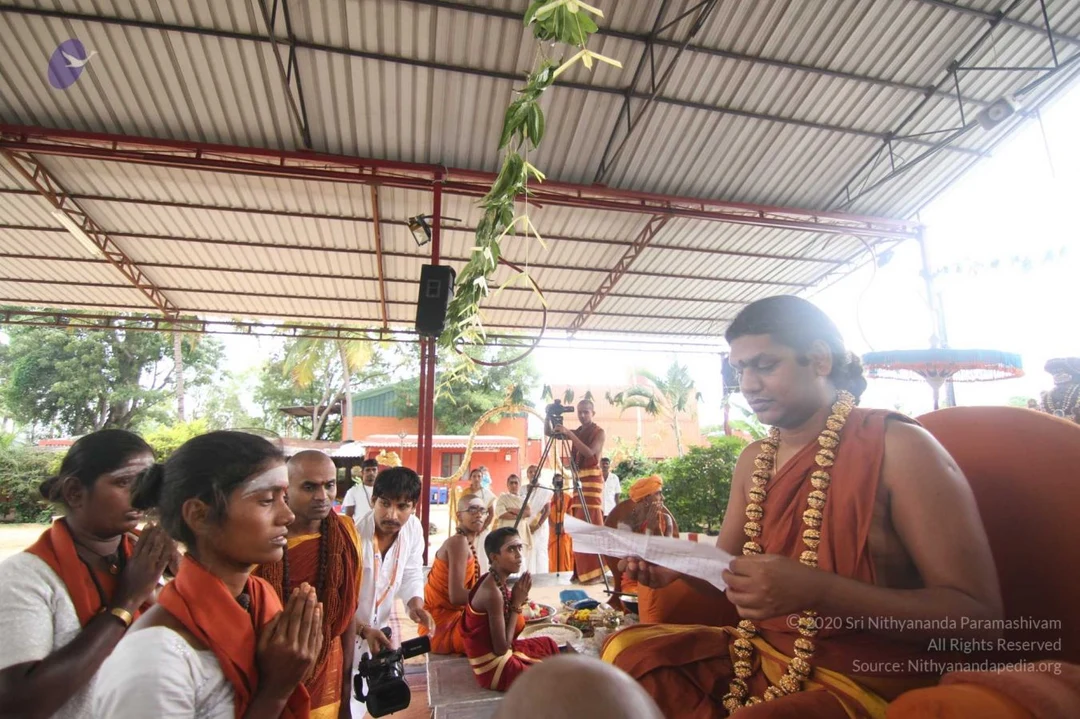
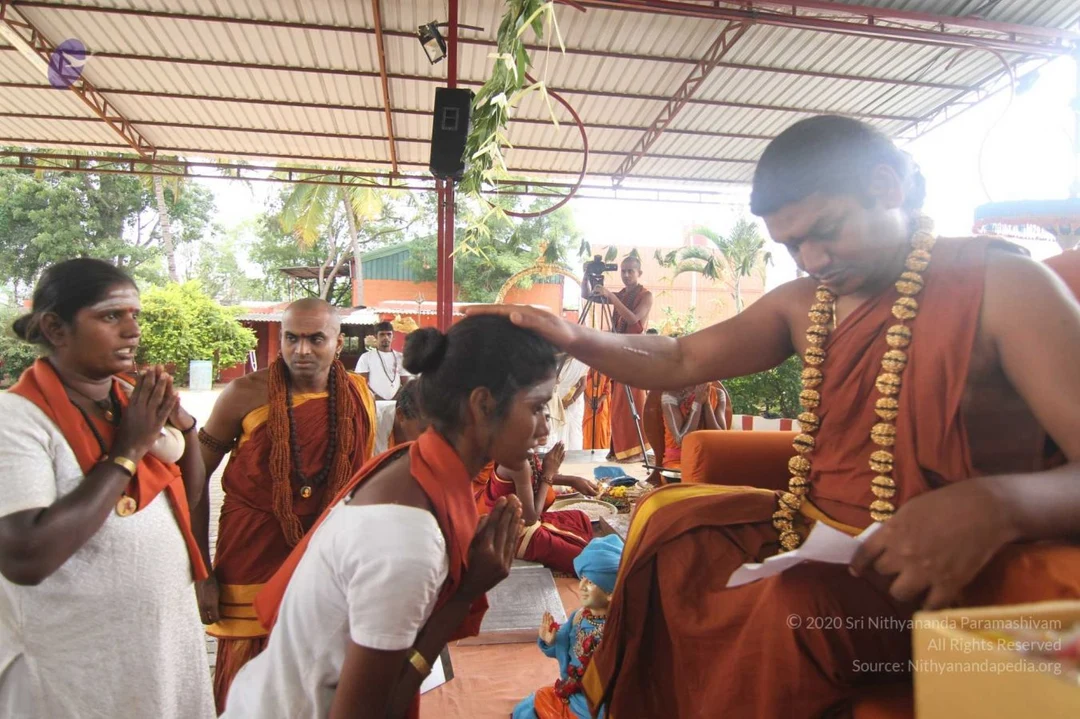
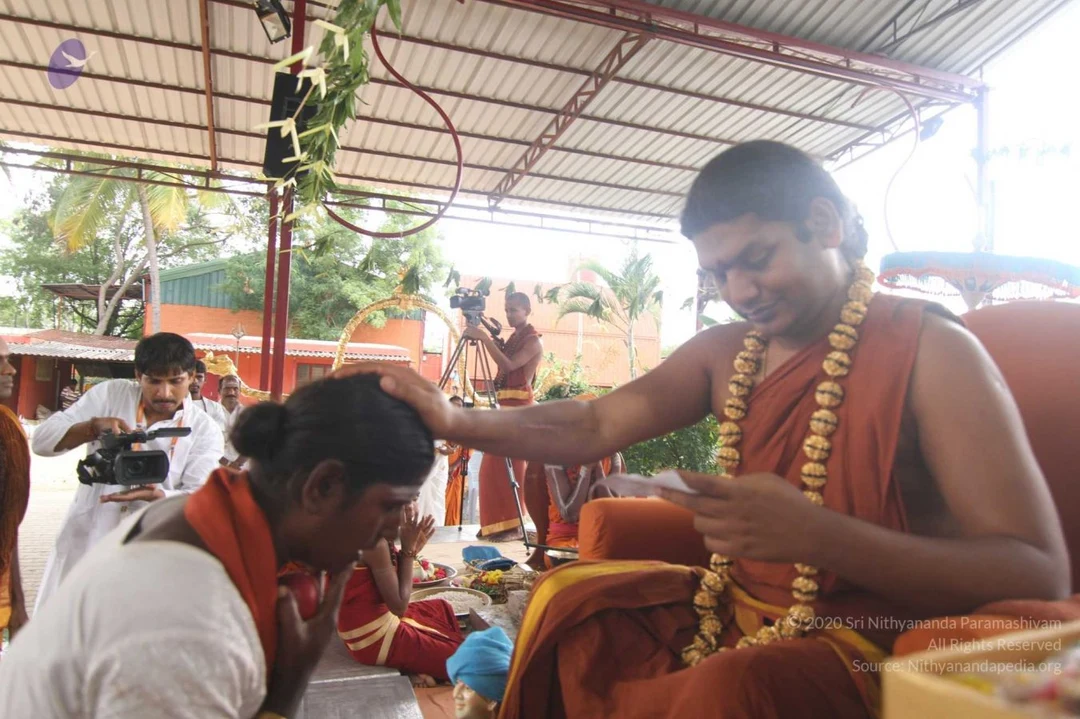
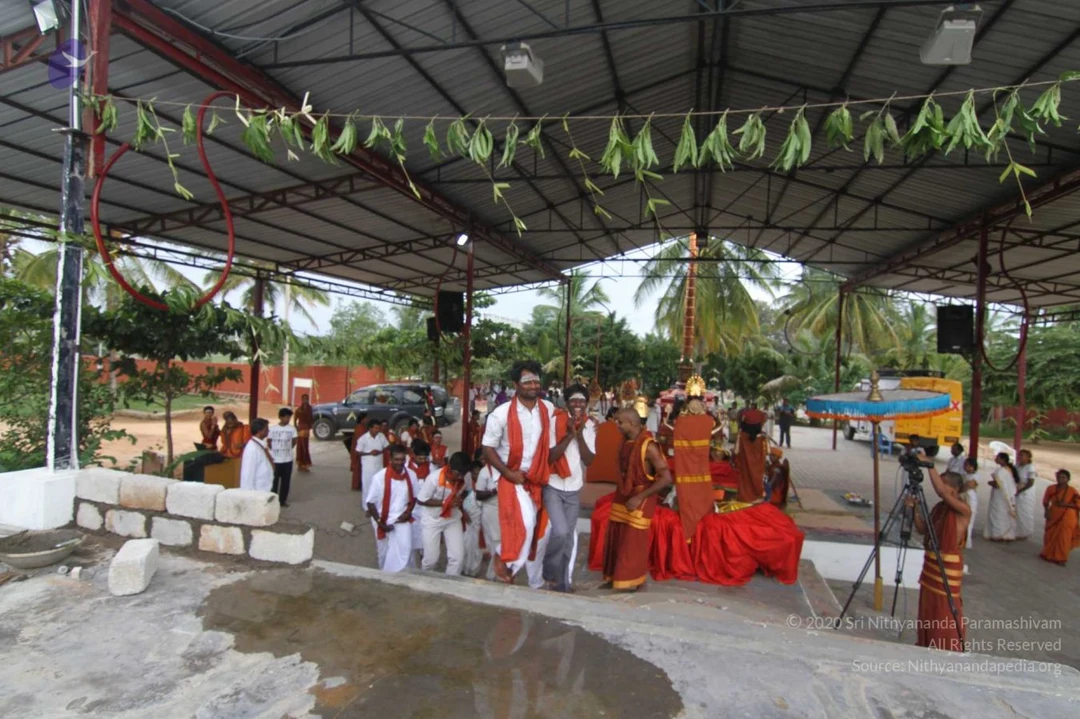
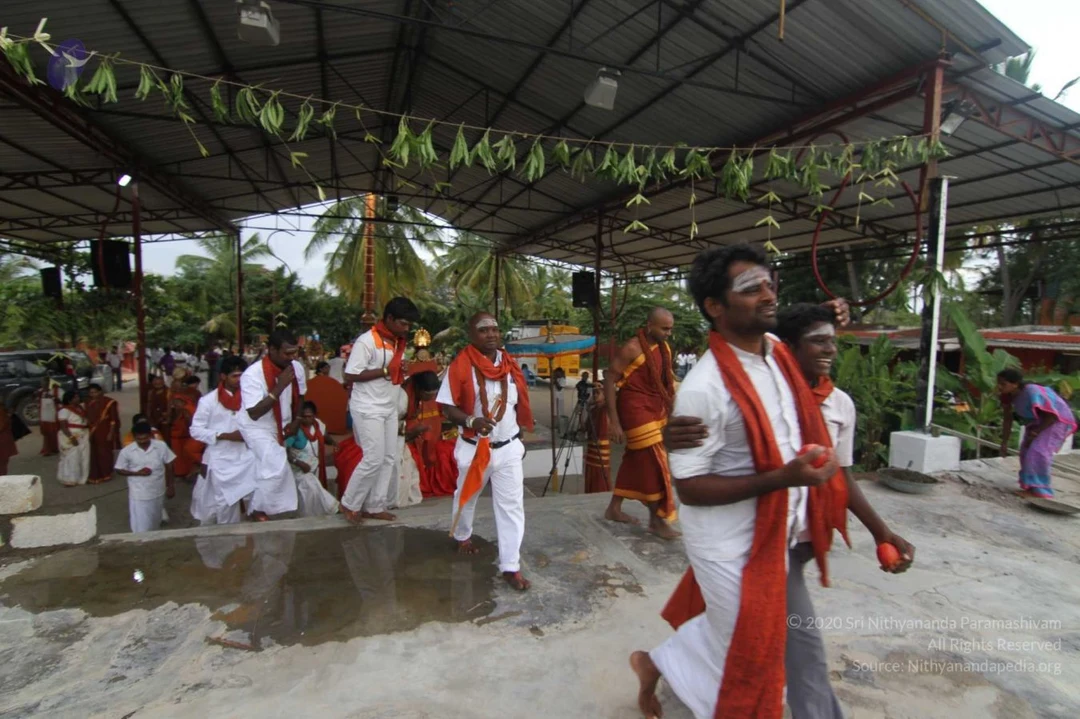
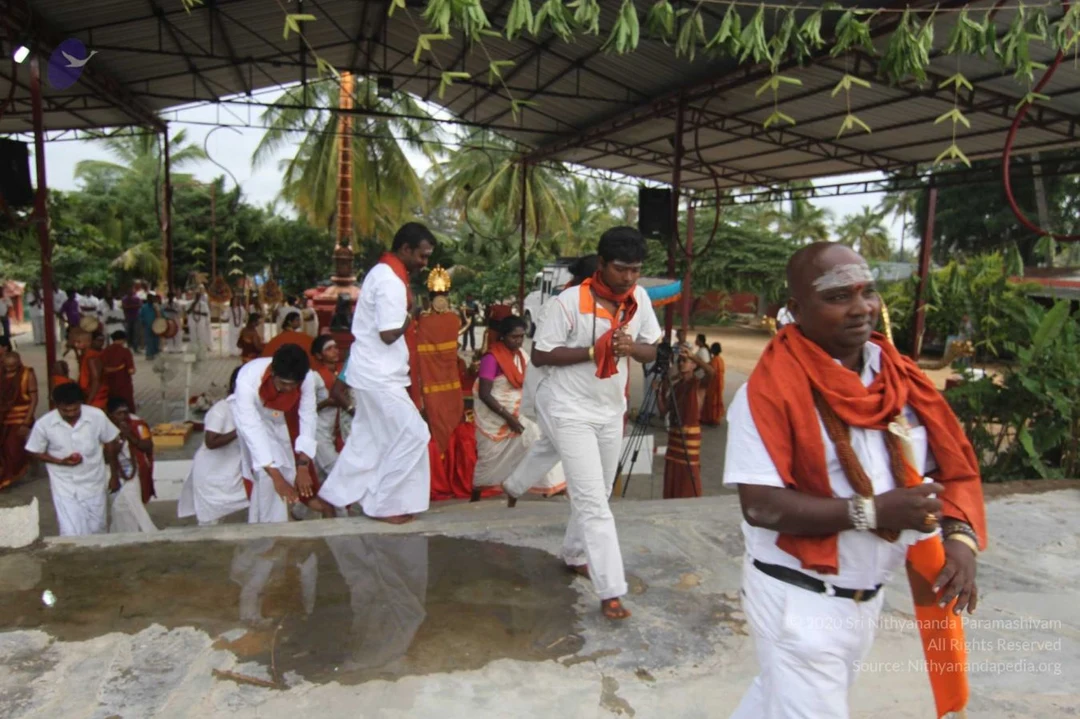
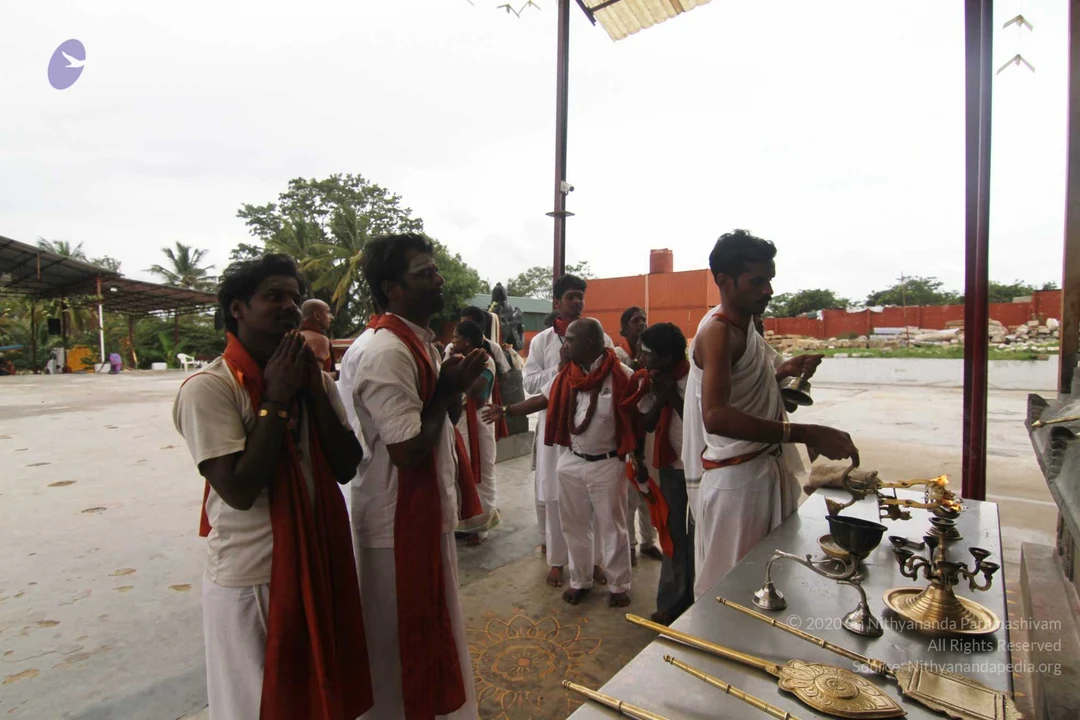
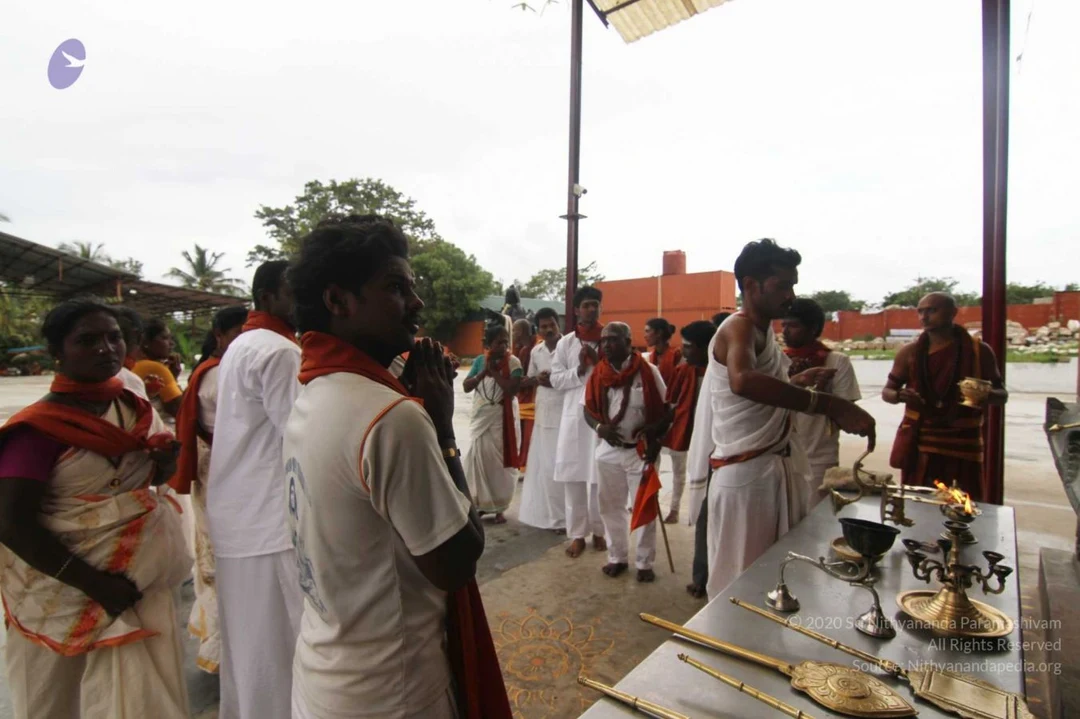
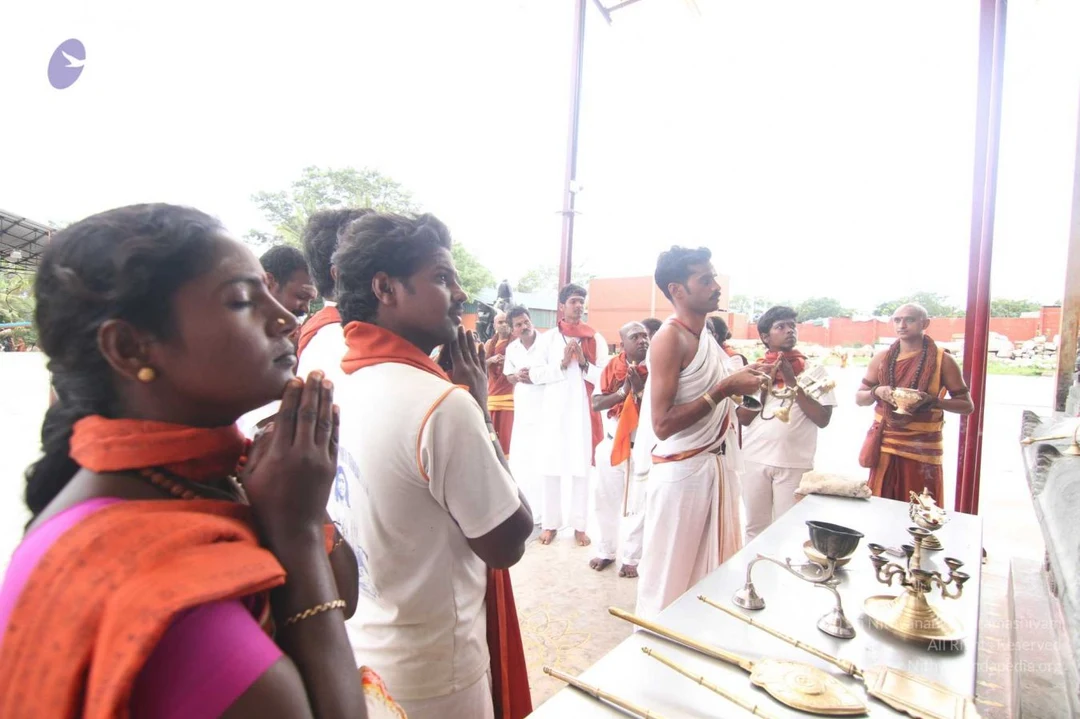
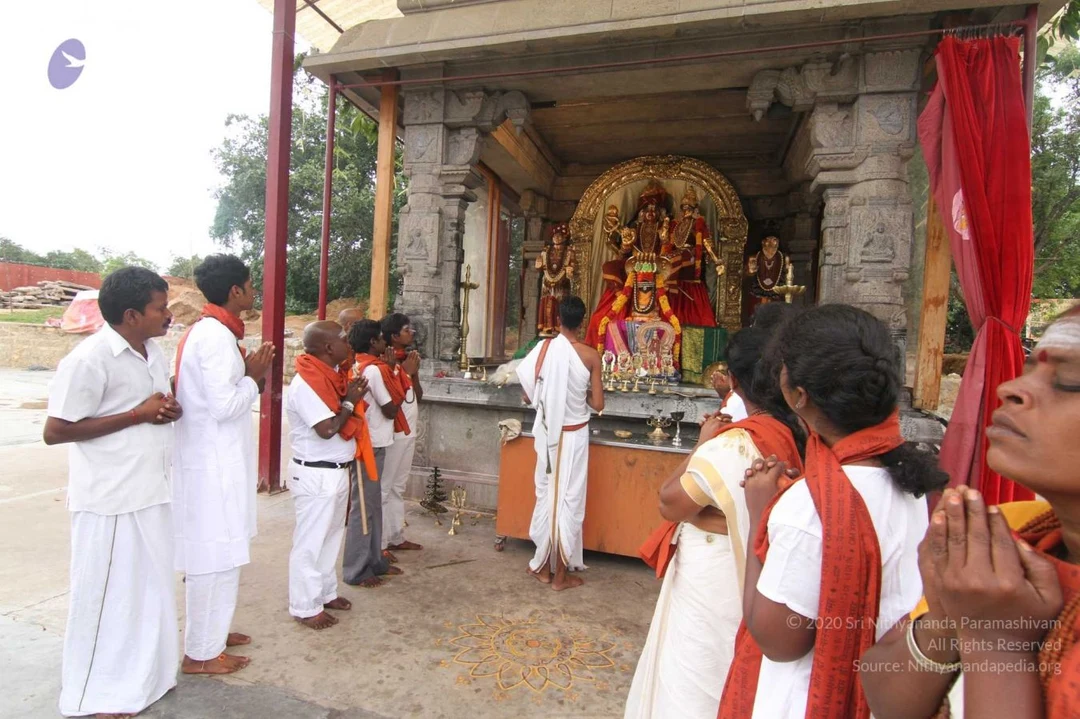
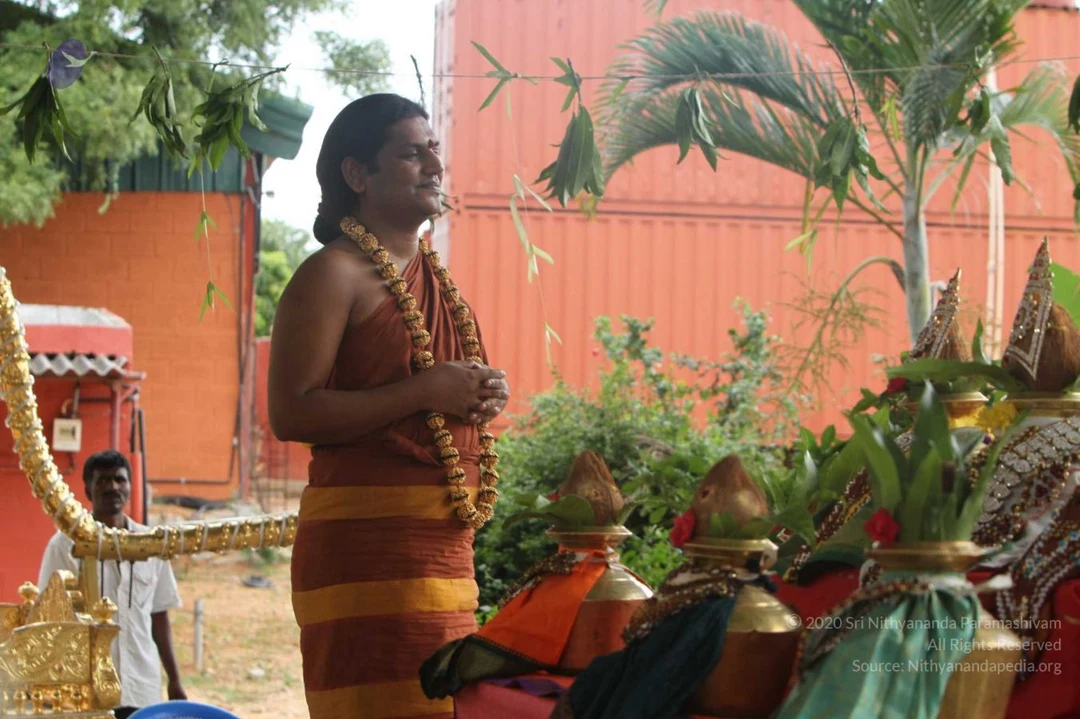
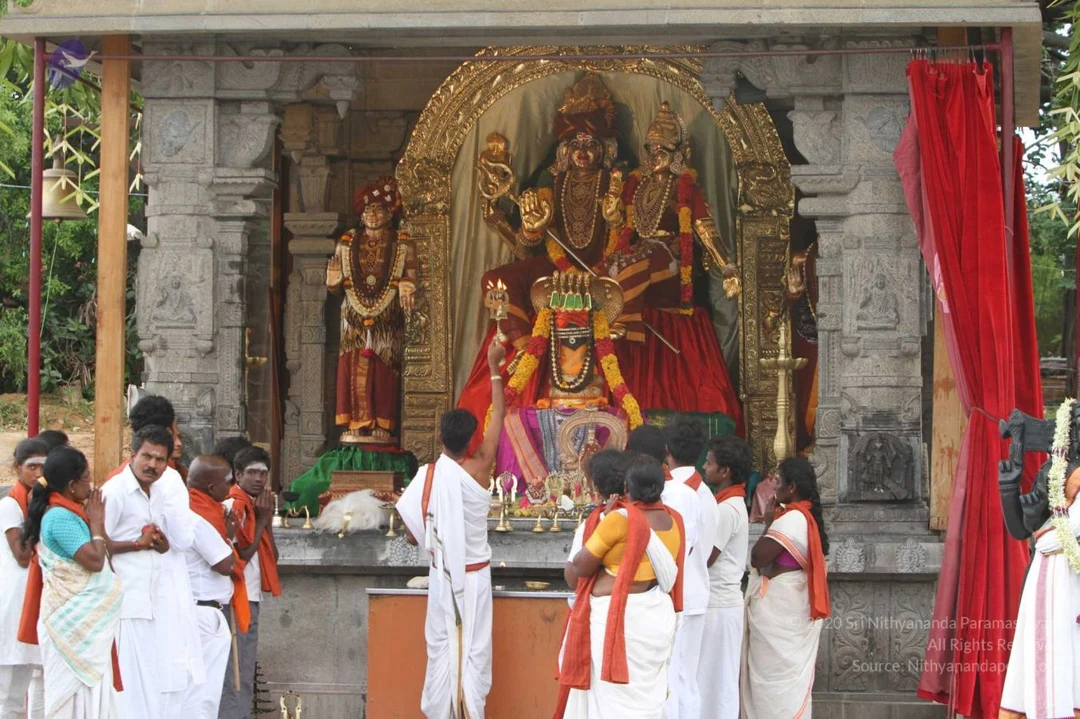
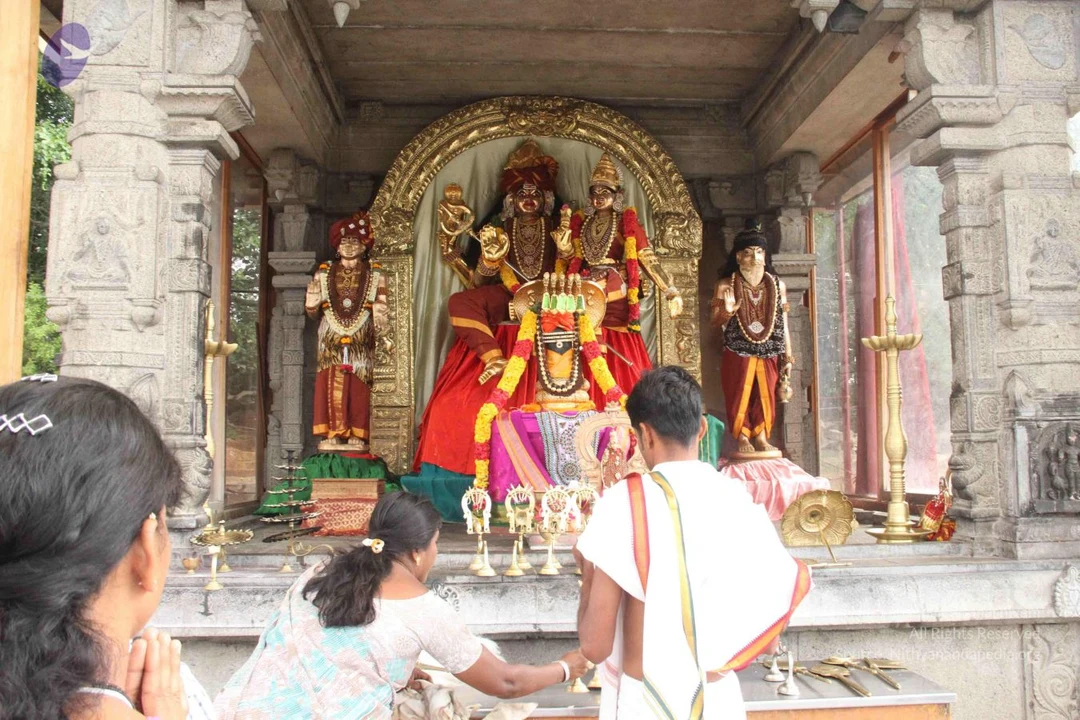
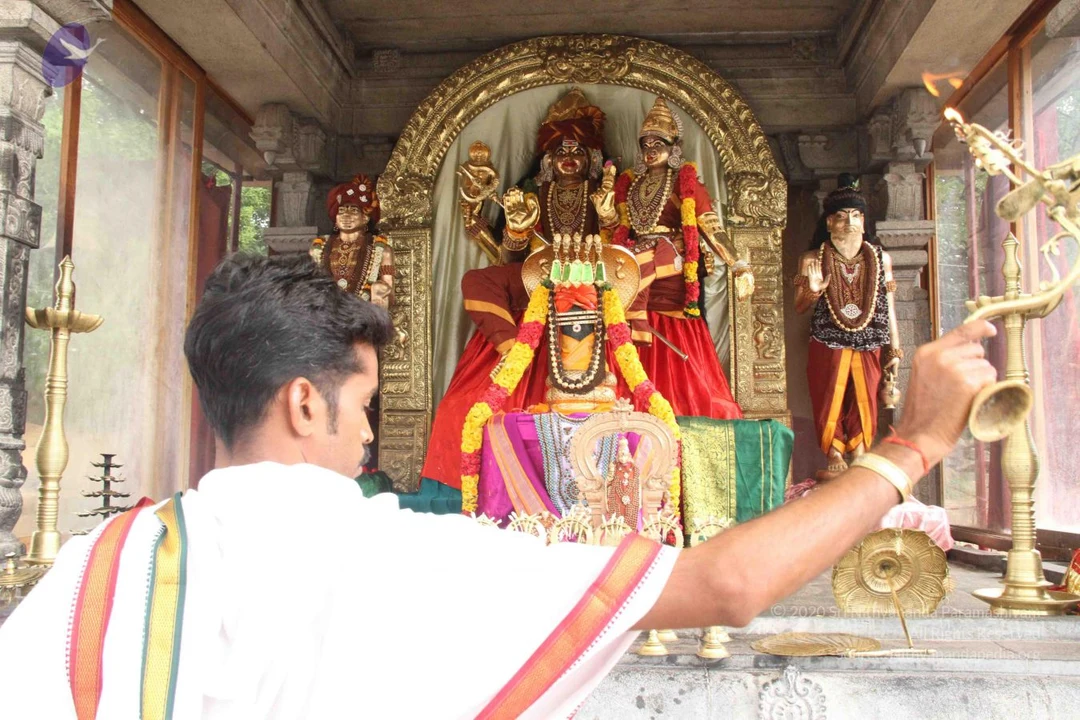
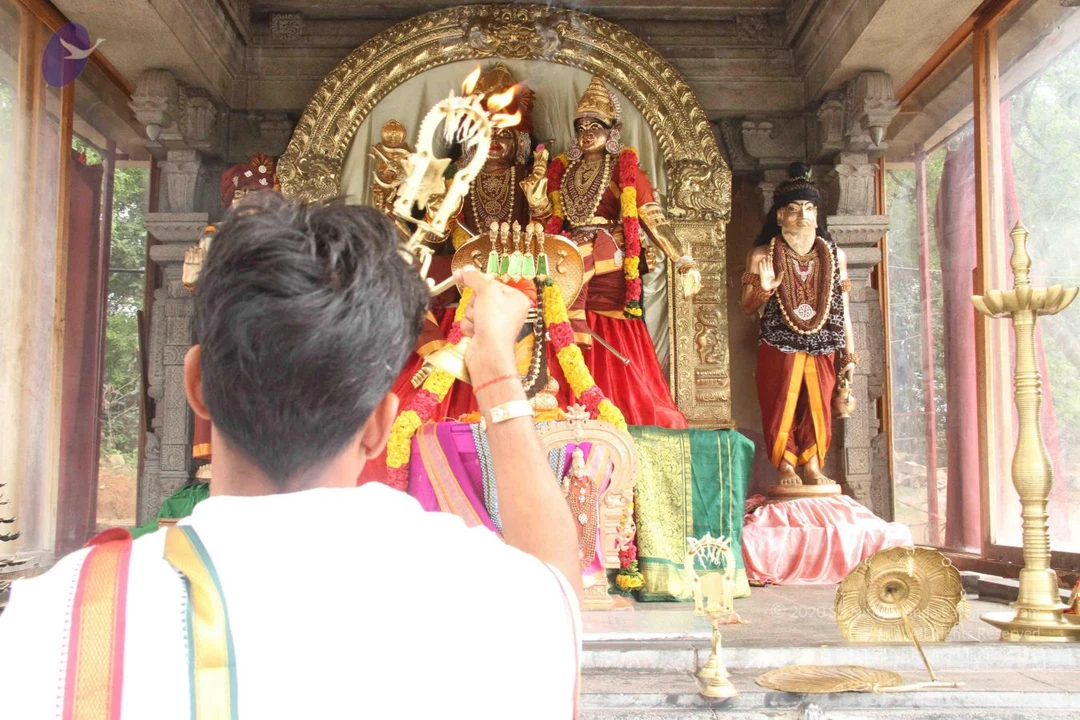
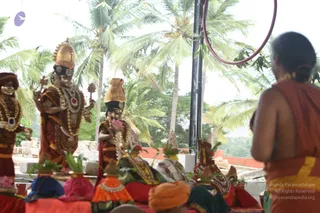
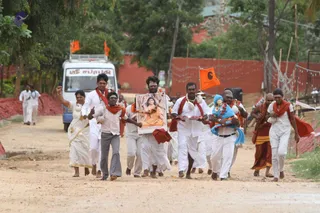
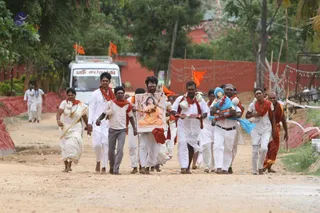
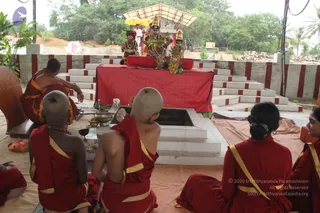
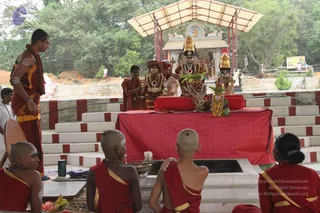
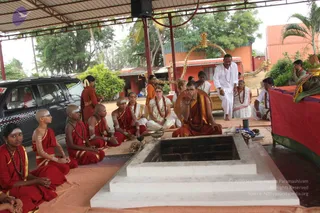
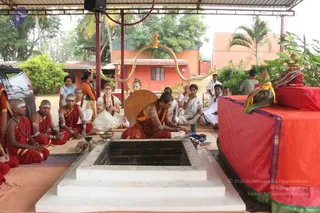
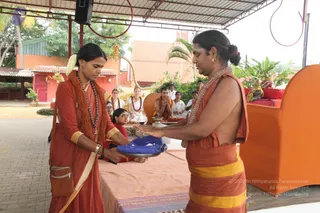
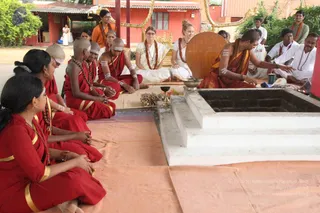
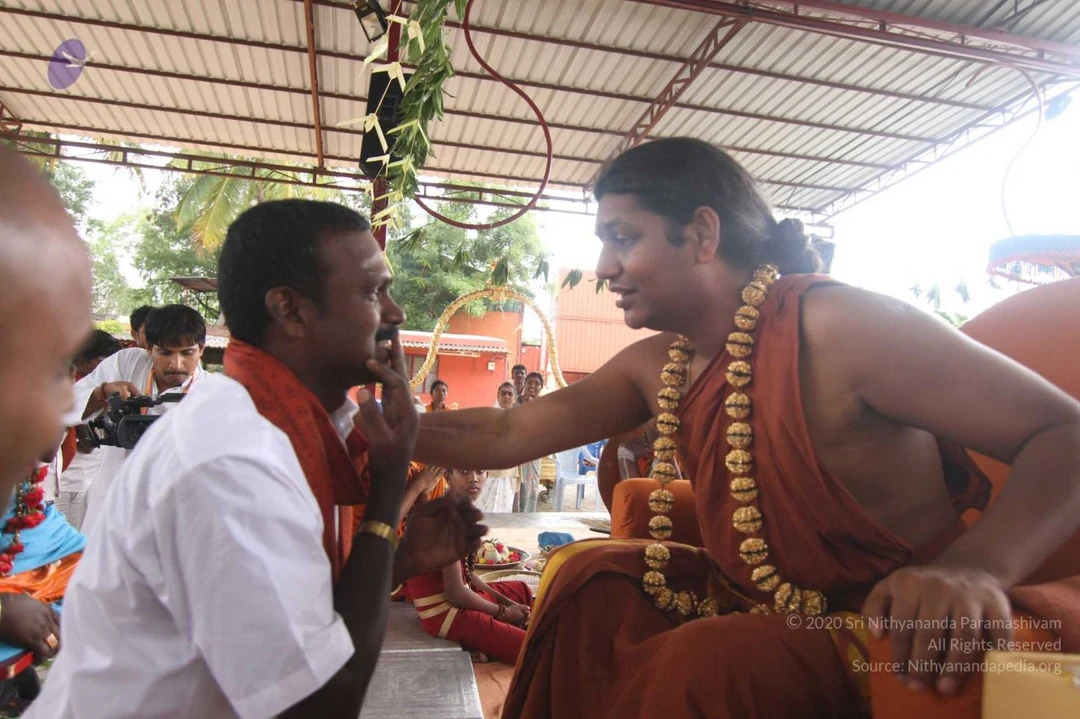
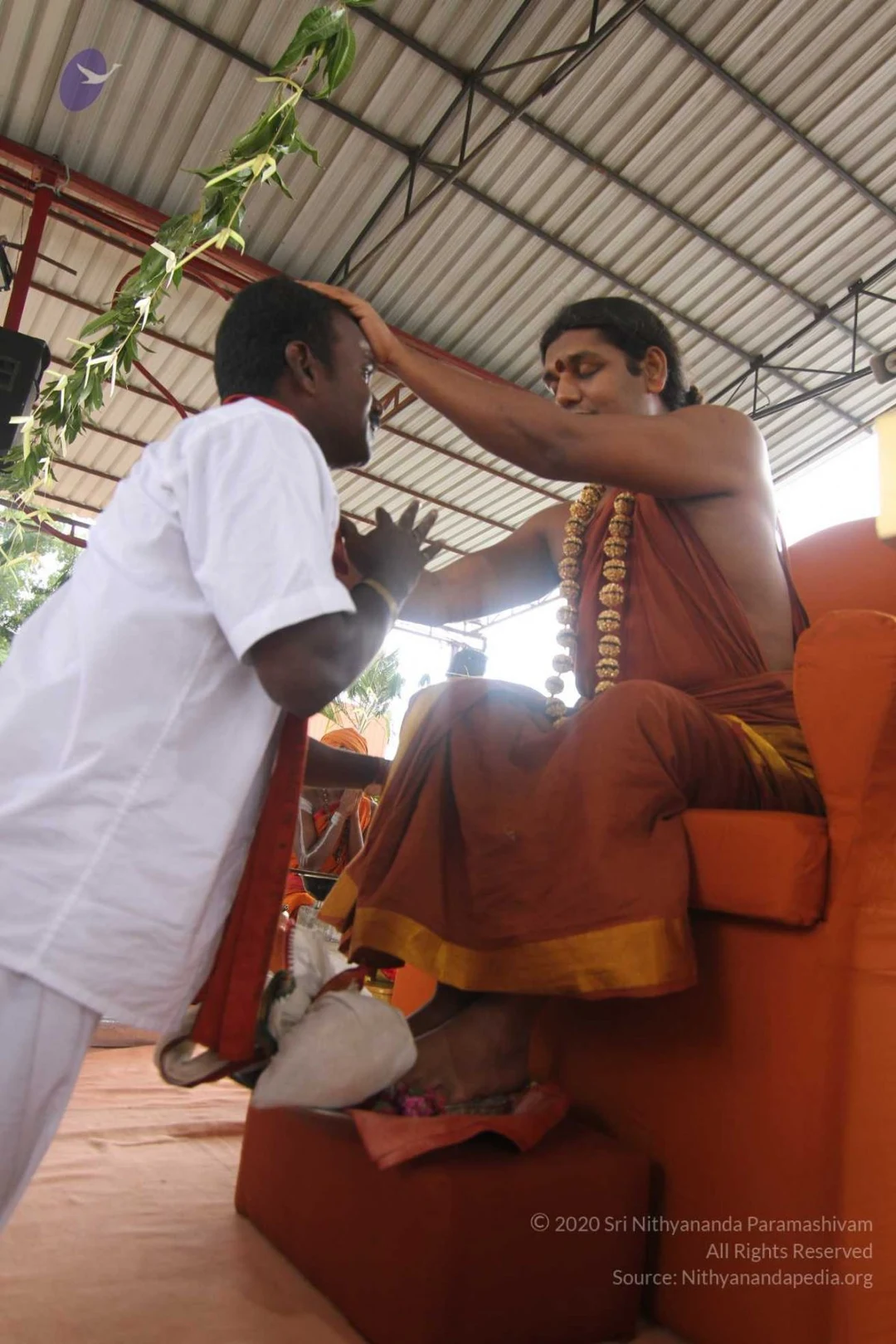
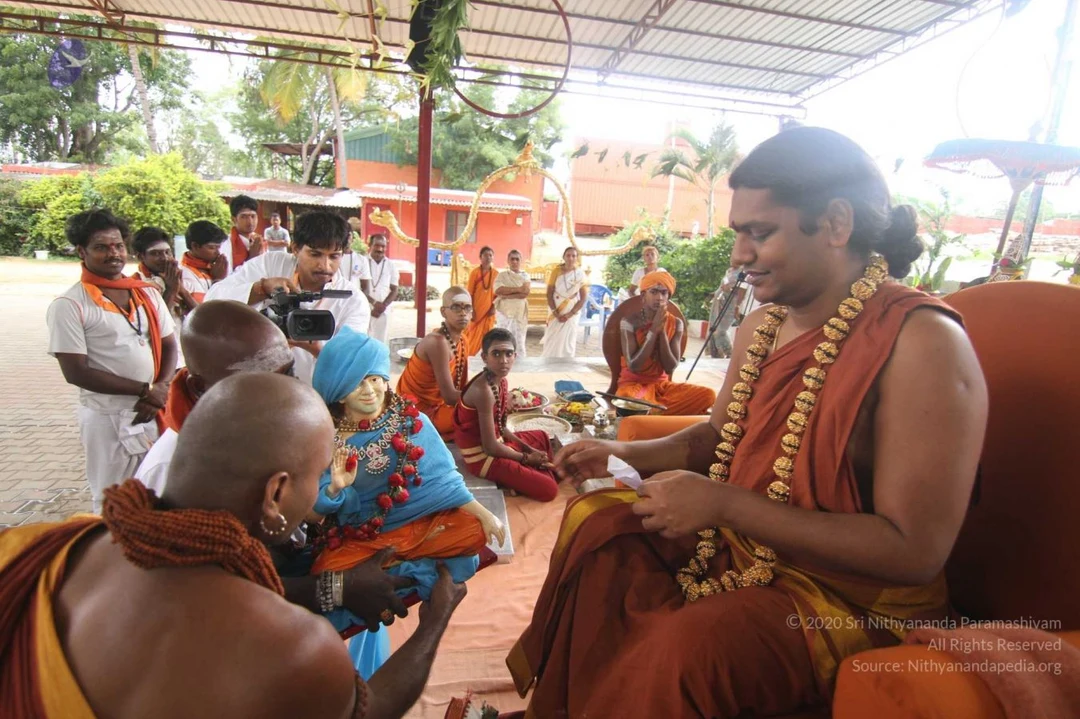
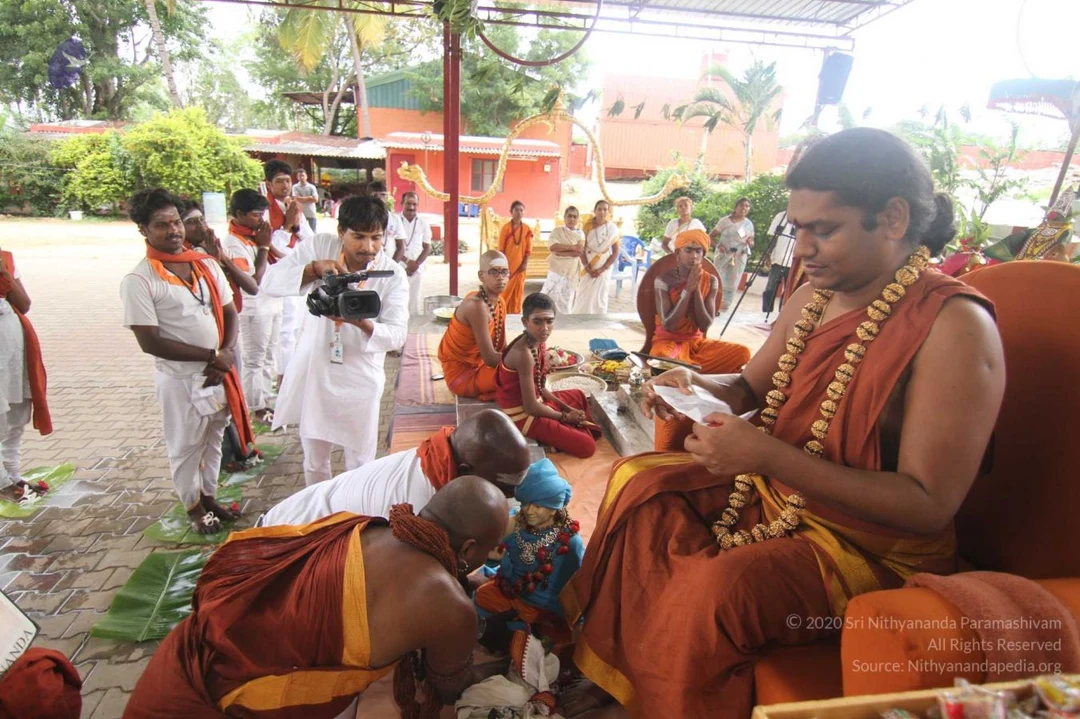
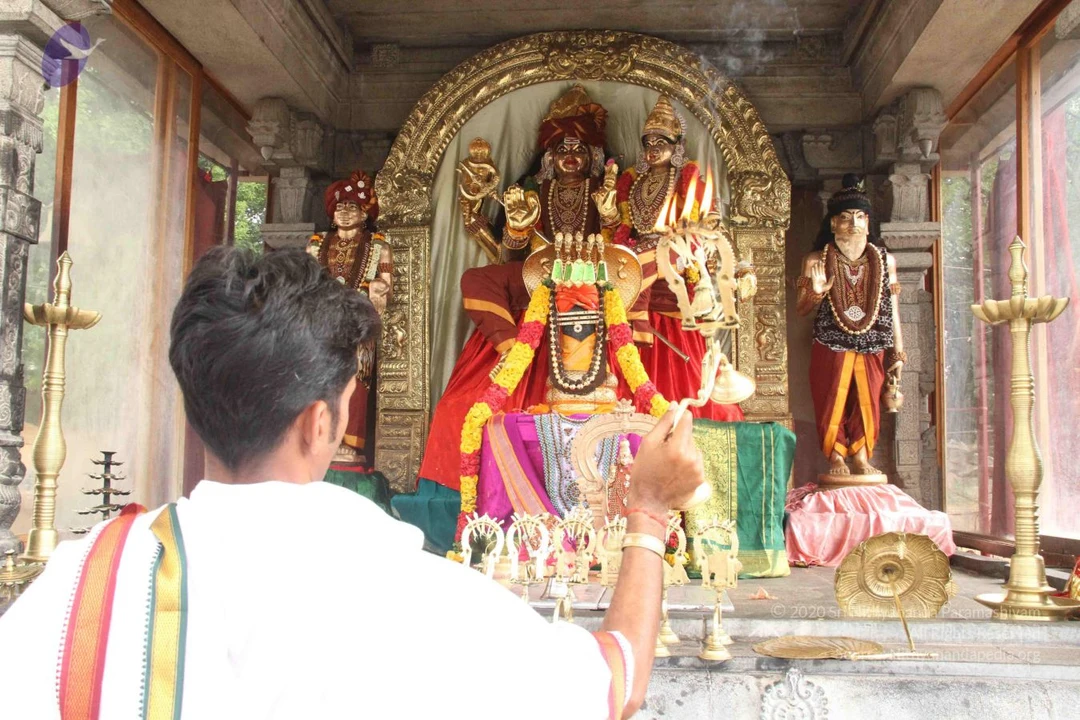
A seated group of devotees performs a lamp ritual in a temple hall with a golden deity murti and a figure in white visible in the background. Foreground women wear white saris with gold borders, orange and red garments, rudraksha malas and white forehead markings; several hold small oil lamps with lit flames. Other participants wear orange or saffron saris and sit closely on mats. A woman in white sits near the back, and a few women in the crowd have their hands raised in prayer. The scene is a devotional gathering with lamps, mats and temple decor.A photograph inside a shrine of a man in white ritual clothes with a saffron and white cloth draped over his shoulder, seen from behind at lower left, facing a row of brass oil lamps set before a dark stone deity murti. Behind them stand large painted statues of deities in red and gold garments, one with a crown and a long garland of yellow and red flowers draped across the central figure. The central murti is adorned with a rudraksha-style necklace and a garland, and sits before a decorative silver-and-gold throne with a green and pink cloth. Two smaller painted figures stand at either side, one wearing a red turban and a bead necklace, the other wearing a black cap. Brass bells and a brass plate lie on the floor. Nothing in the image shows a person figure.A photograph of an outdoor ritual under a corrugated metal canopy with palm trees behind. In the foreground, a young man in a white shirt and an orange-red shawl stands with palms pressed together in namaste. To the right, another young man in a checked shirt with a white forehead mark and orange shawl also holds his hands in prayer. In the centre, a bald man in white clothes and an orange shawl holds a blue-draped deity murti decorated with a red floral garland. Behind them, several men in white dhotis and orange-red shawls stand in line, and a man in saffron robes stands at the left. Green banana leaves lie on the wet paving, and a standing fan is at the left edge.

July 11 2014

Original wiki page
Contents

Title:

Faith System of Hindu Tradition

Description:

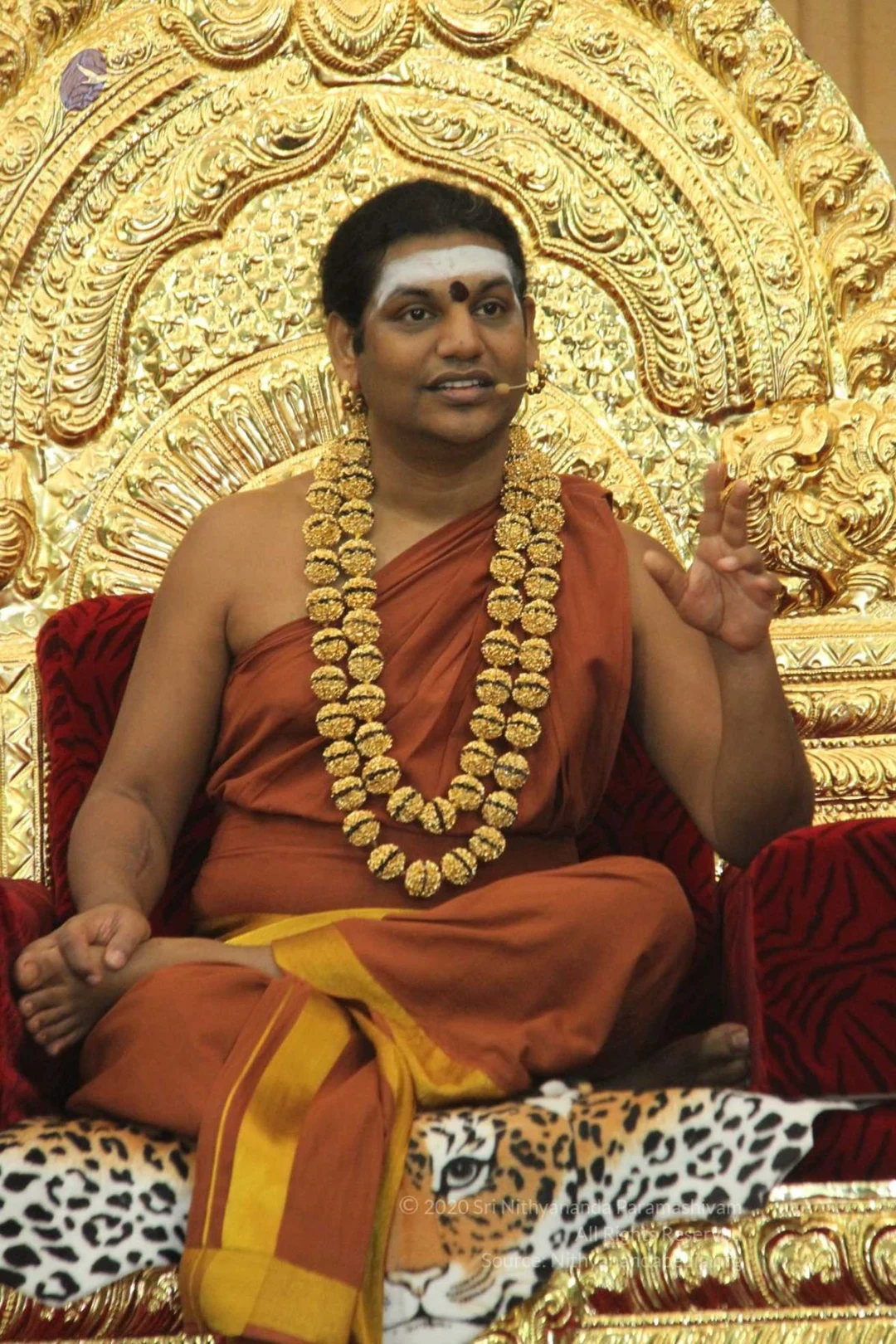
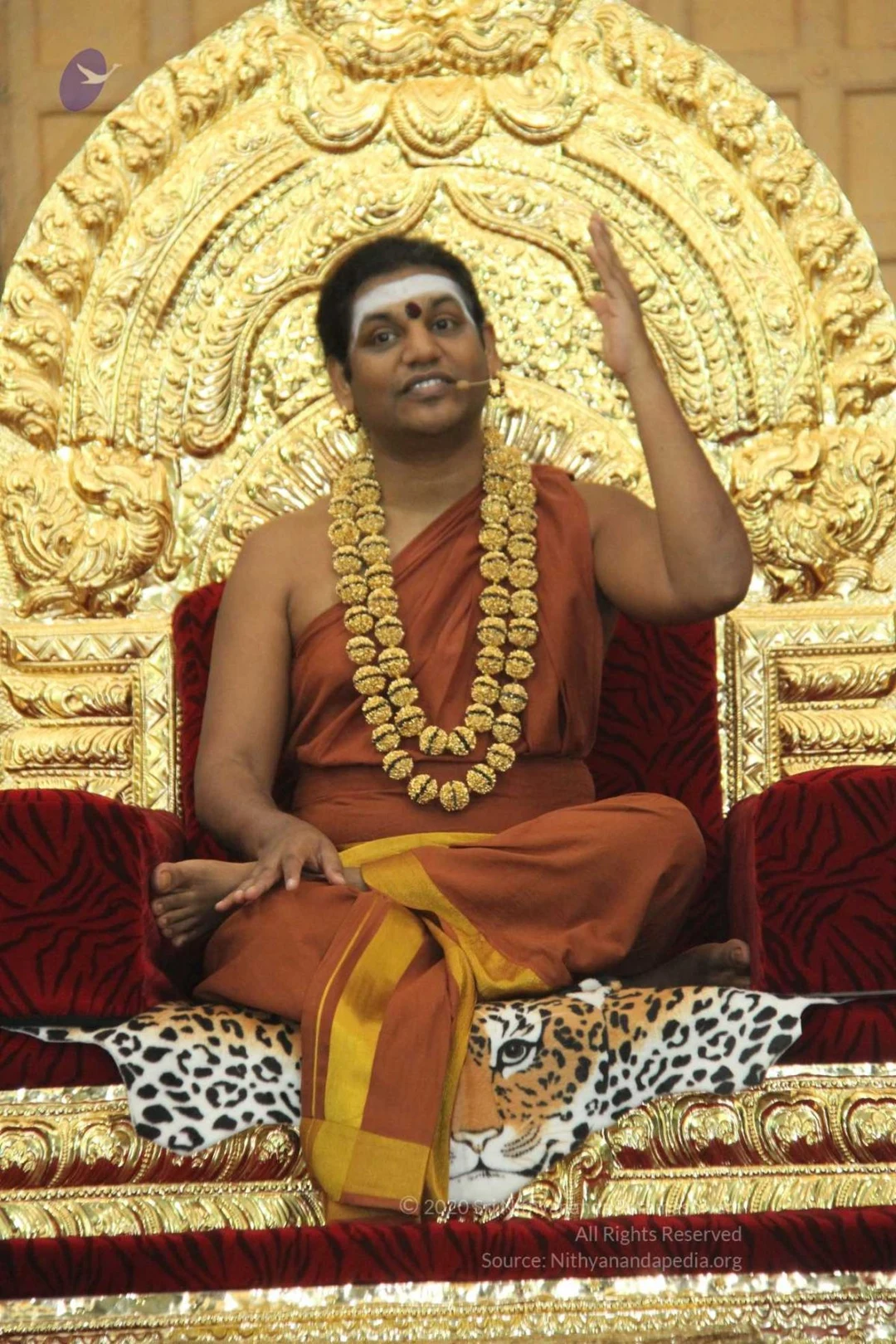
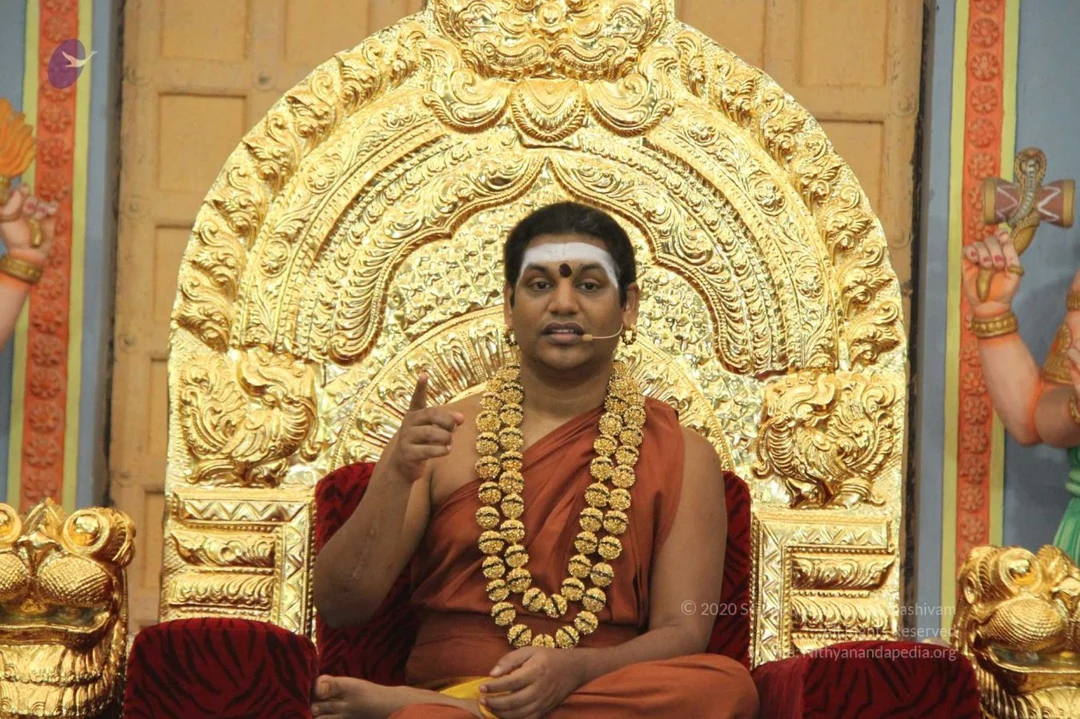
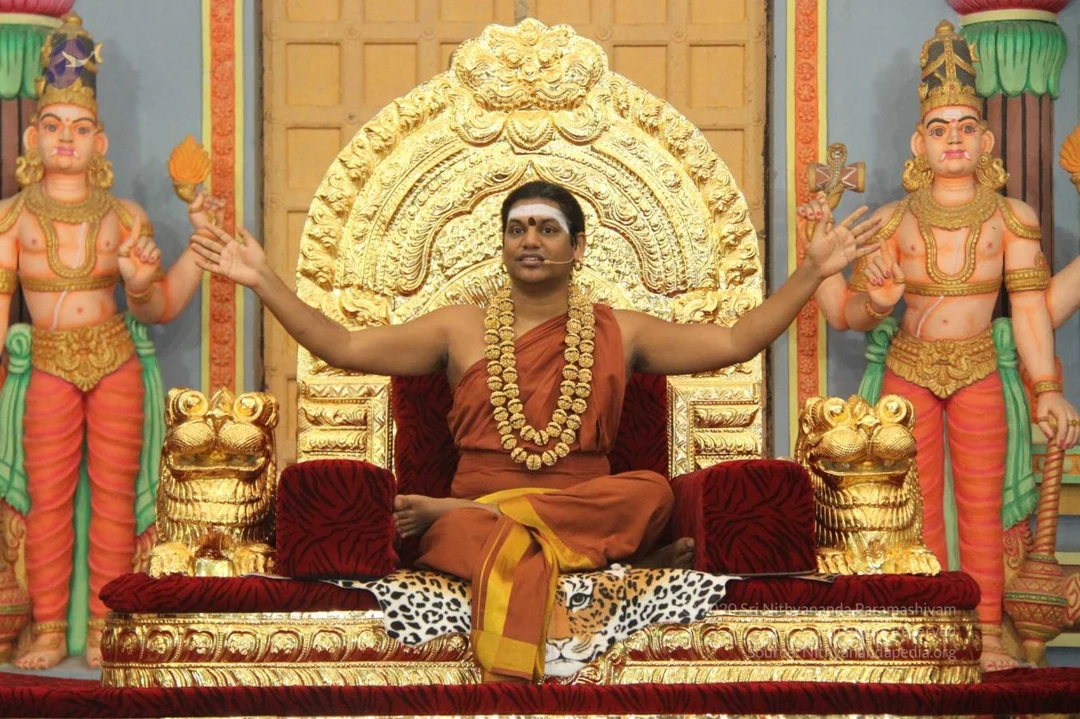
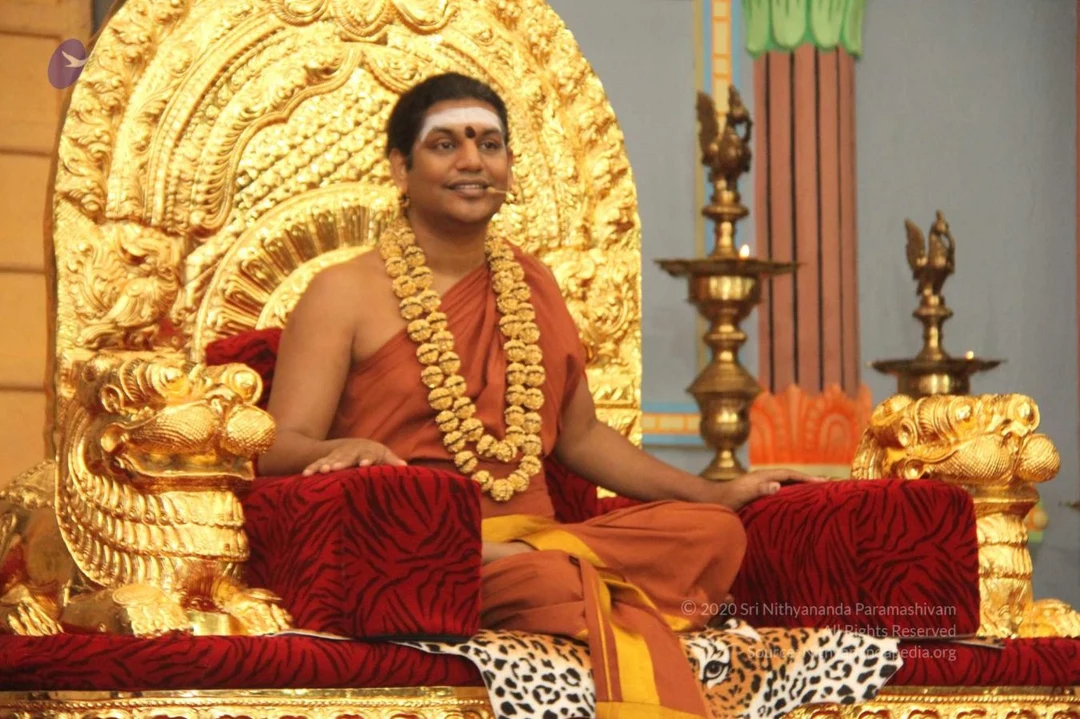
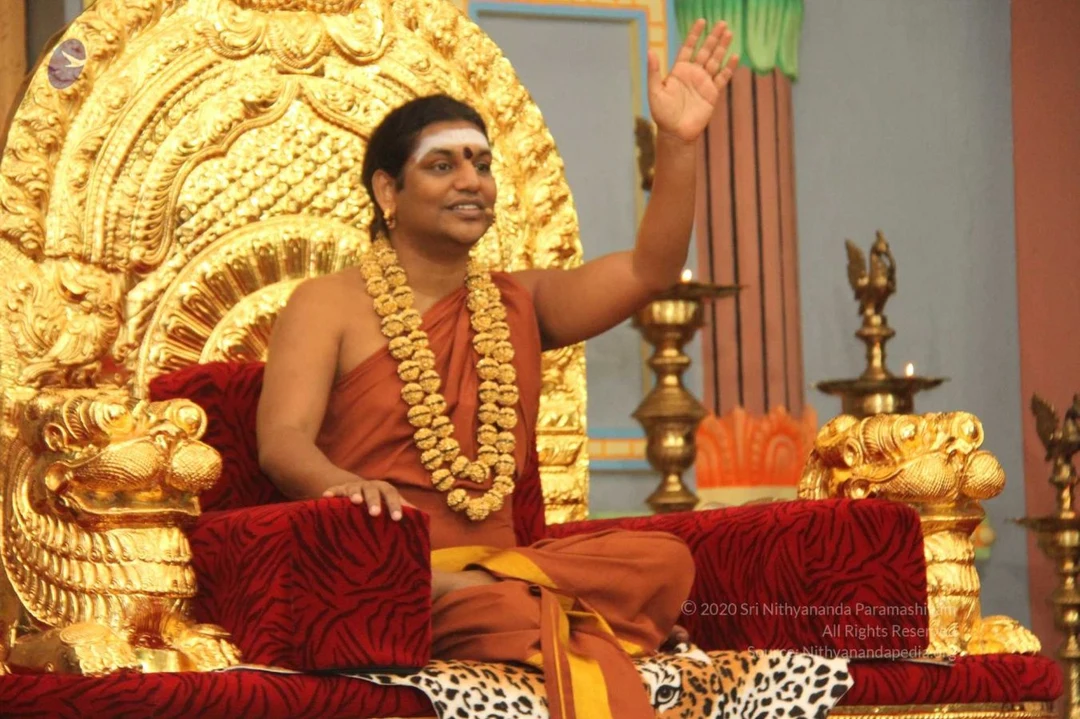
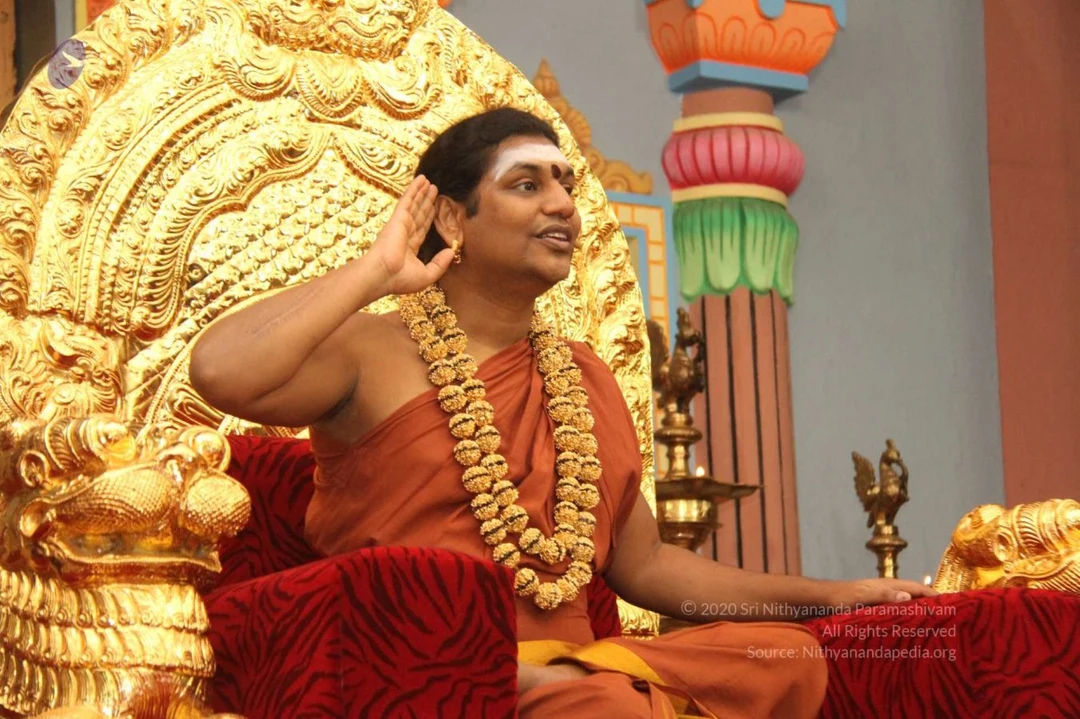
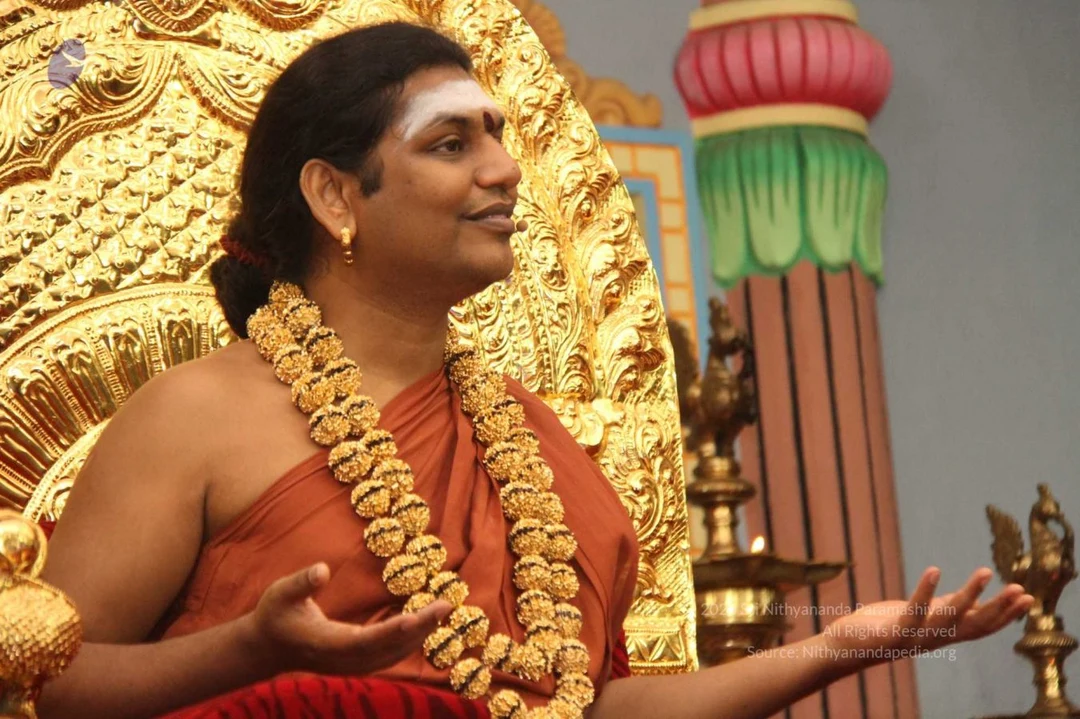
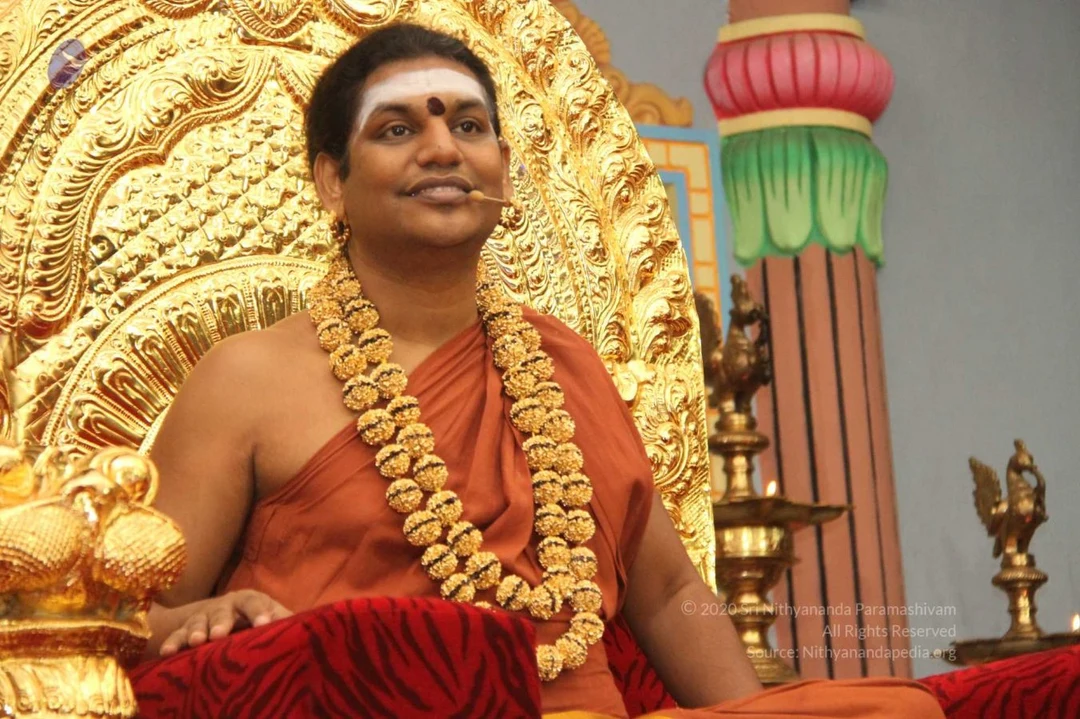
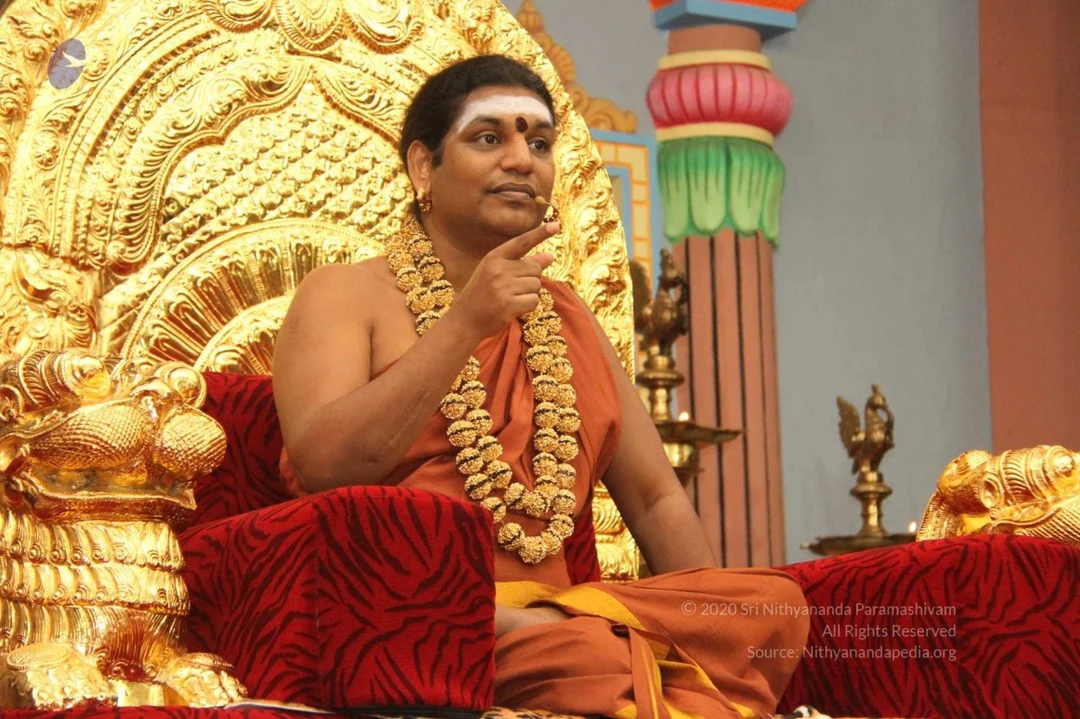
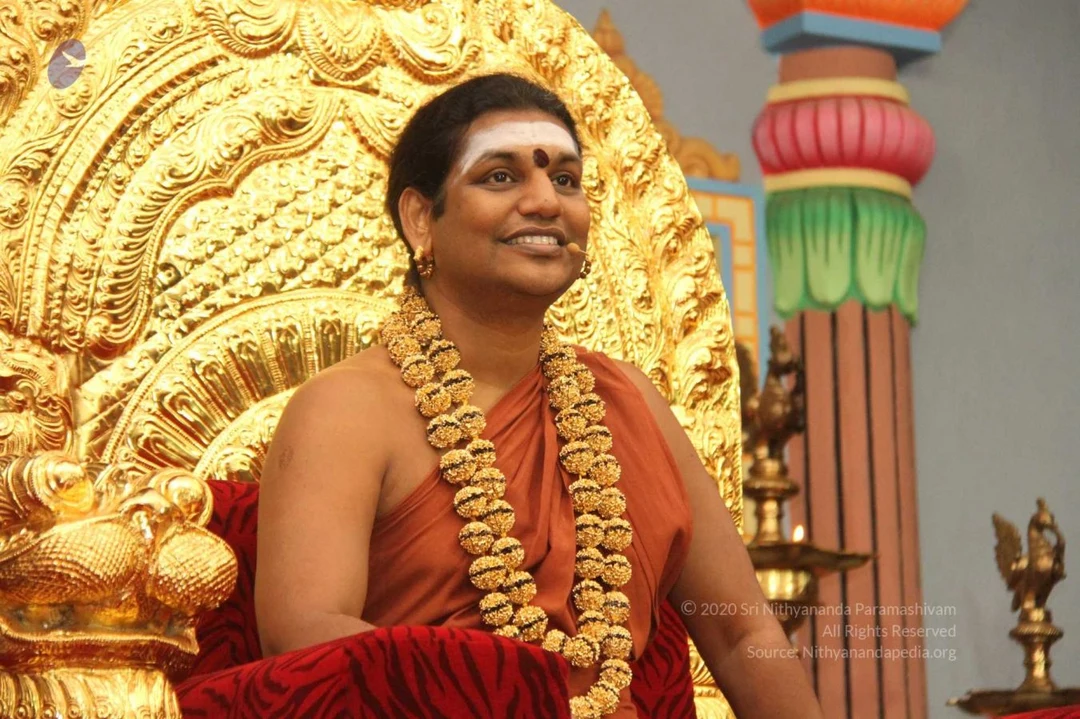
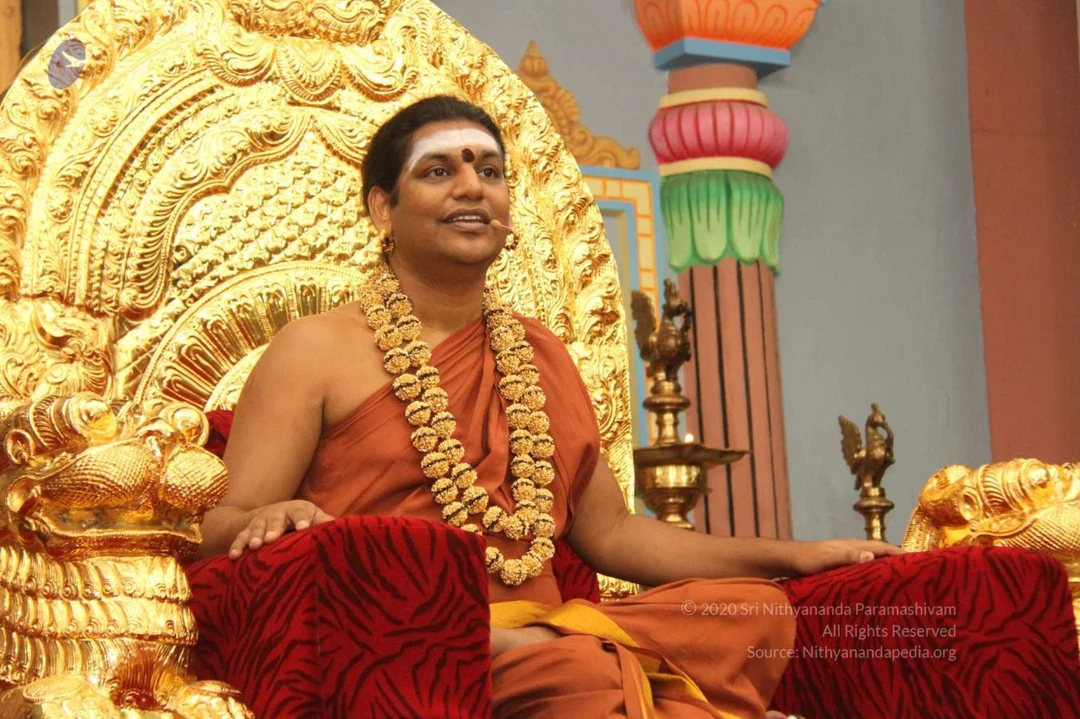
Paramahamsa Nithyananda expounds on the Right Faith System of Hindu Tradition, while intercepting the truths of Kenopanishad on 11 July 2016 from Varanasi. The first Upanishad – Isavasya Upanishad – gives us ultimate conclusions, while the second Upanishad – Kenopanishad is based on pure questioning.

He gives the unique narrative, detailing the qualifications of right faith system.

1. Any faith system offered to you should not give you spiritual shock after you investigate and find the truth.
2. It should help and support you as question and investigate, it should not close you but help you manifest the true experience, THE REALITY.
3. The belief system should have enough space for you to contribute to it once, after doing your own questioning, you experience the truth. The whole philosophical construction should have enough space for you to add the details once you discover THE REALITY of it after your personal pure questioning, once you experience enlightenment.

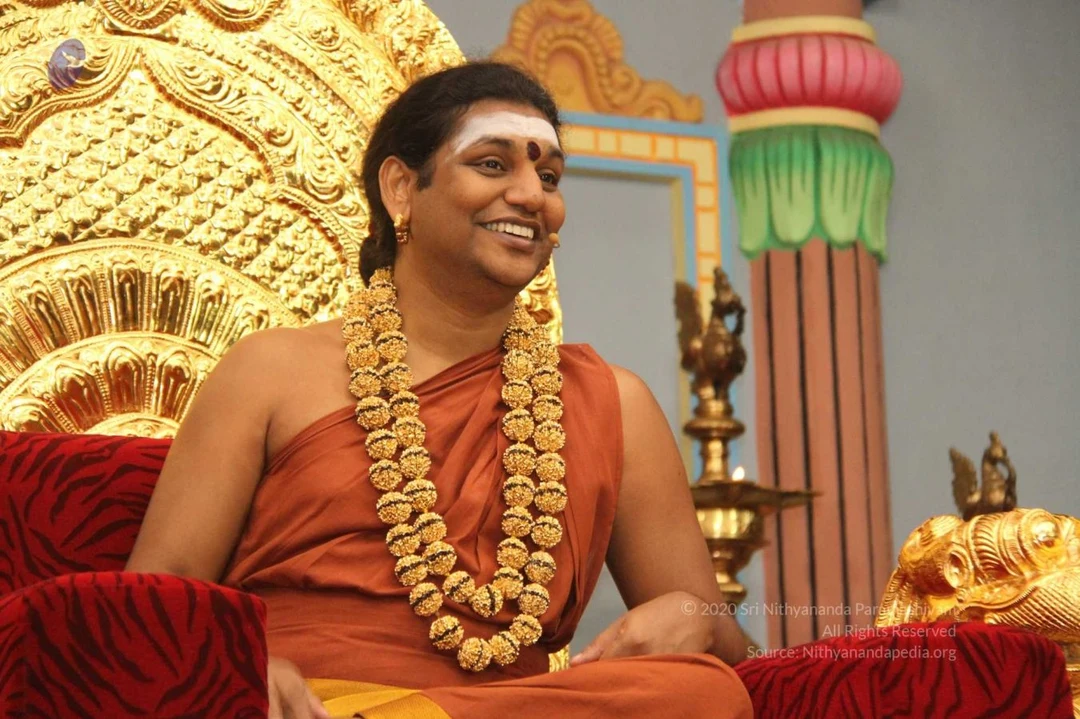
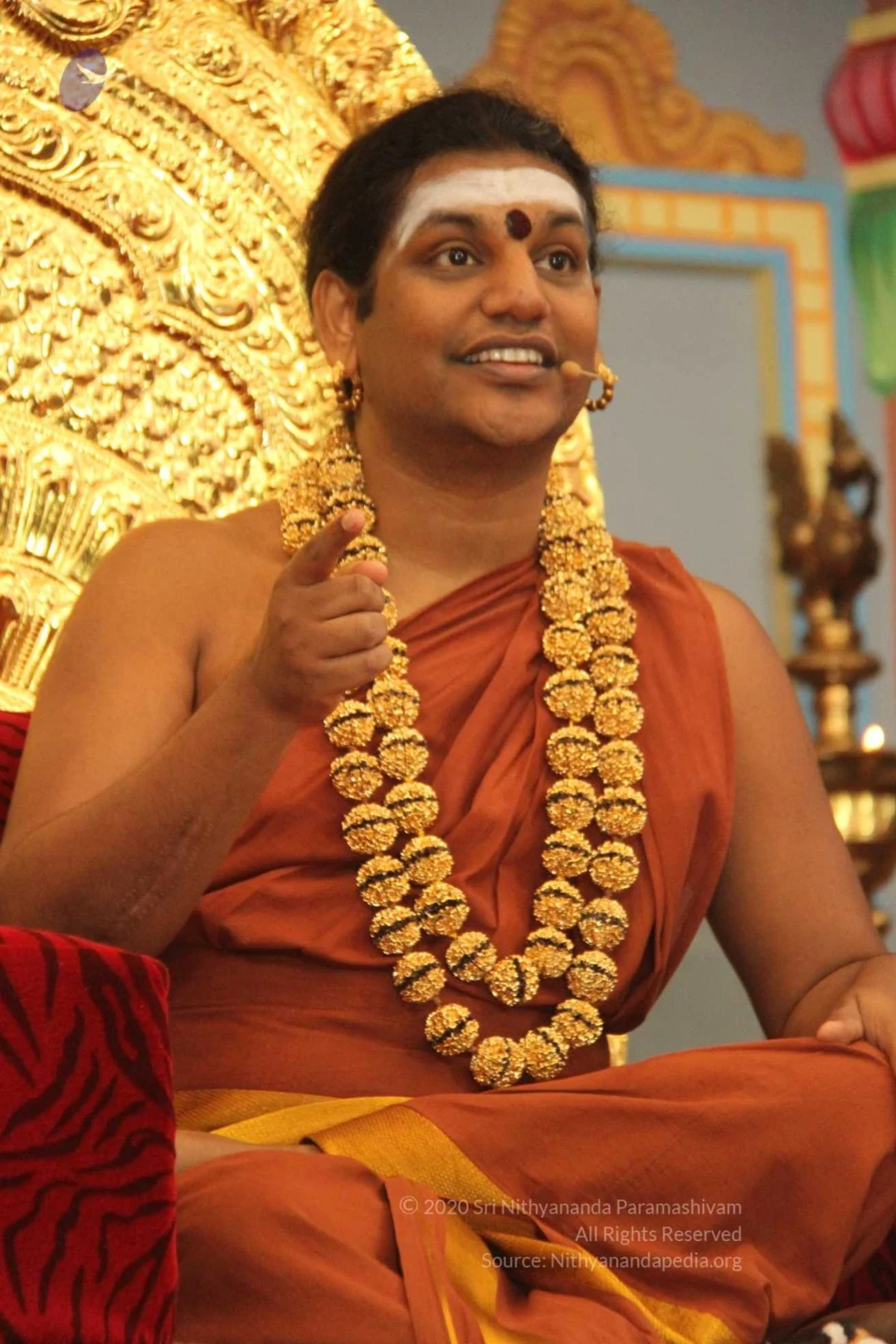
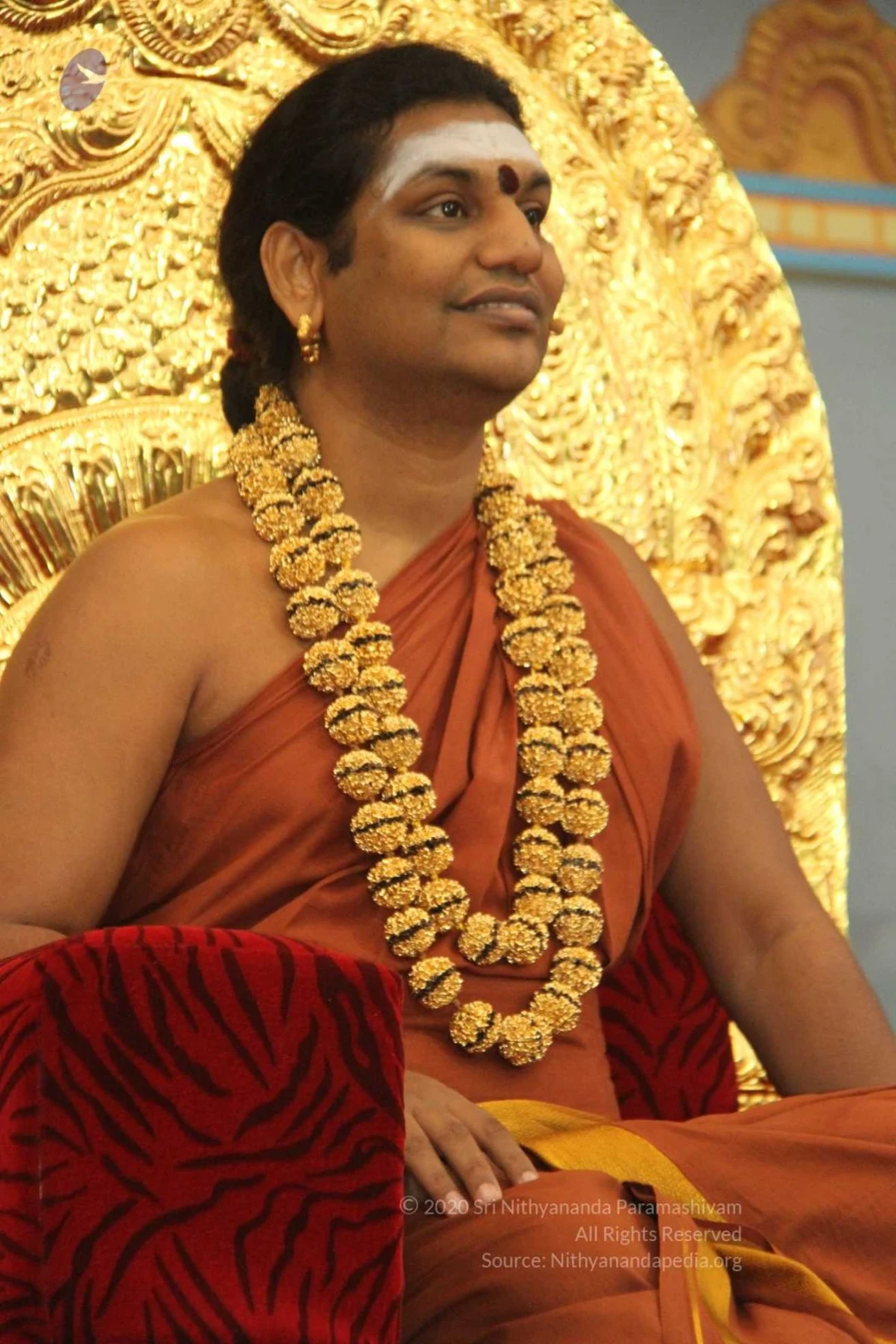
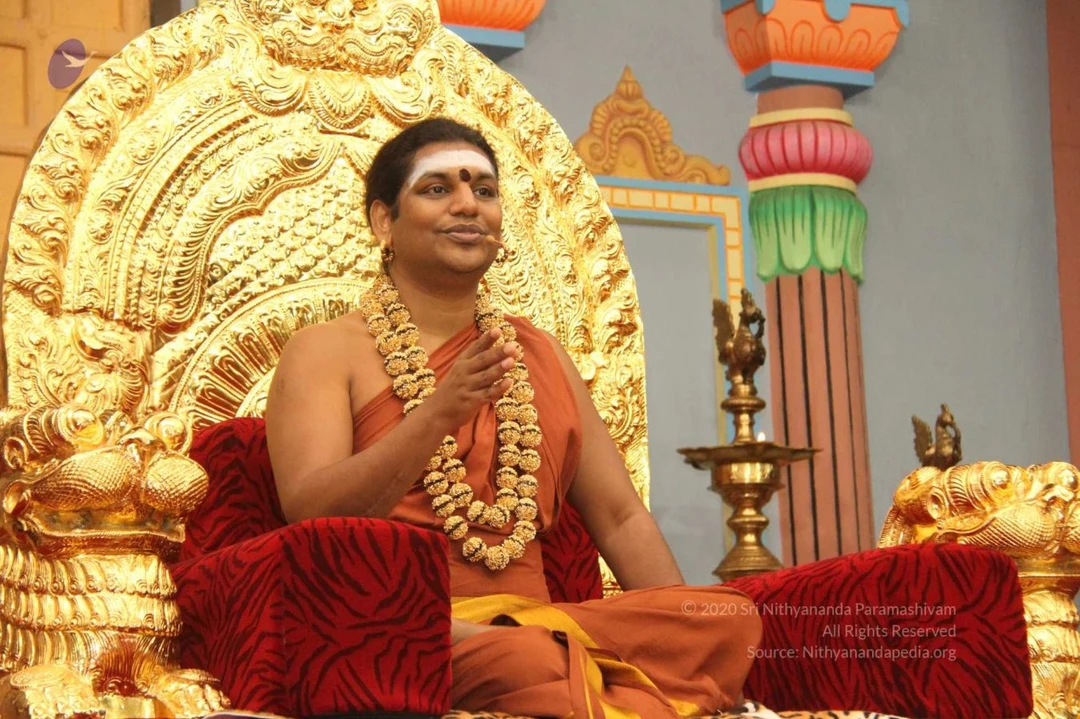
“Your belief system will be the pattern from which you operate until your Enlightenment.” Narrating His biography moments relating the glory of the Hindu faith system, Paramahamsa Nithyananda takes us to his childhood, where the very air in which he grew up gave him the concepts of reincarnation, of Deity worship; His Pure Questioning to contemplate and experience these Great Truths and how his Enlightenment experiences were not a rude spiritual shock to him as they only validated the authoritative truths that he learnt and questioned. He teaches His Gurukul Balasants (child saints) to have the courage of ‘pure questioning’ and question even their own Guru. It is the responsibility of Religious Leaders to teach truths which only stand on Pure Questioning.

Link to Video:

VideoAudio

Transcript

Nithyanandeshwara samarambham, Nithyanandeshwari Madhyamam, Asmad Acharya Paryantam Vande Guru Paramparaam..

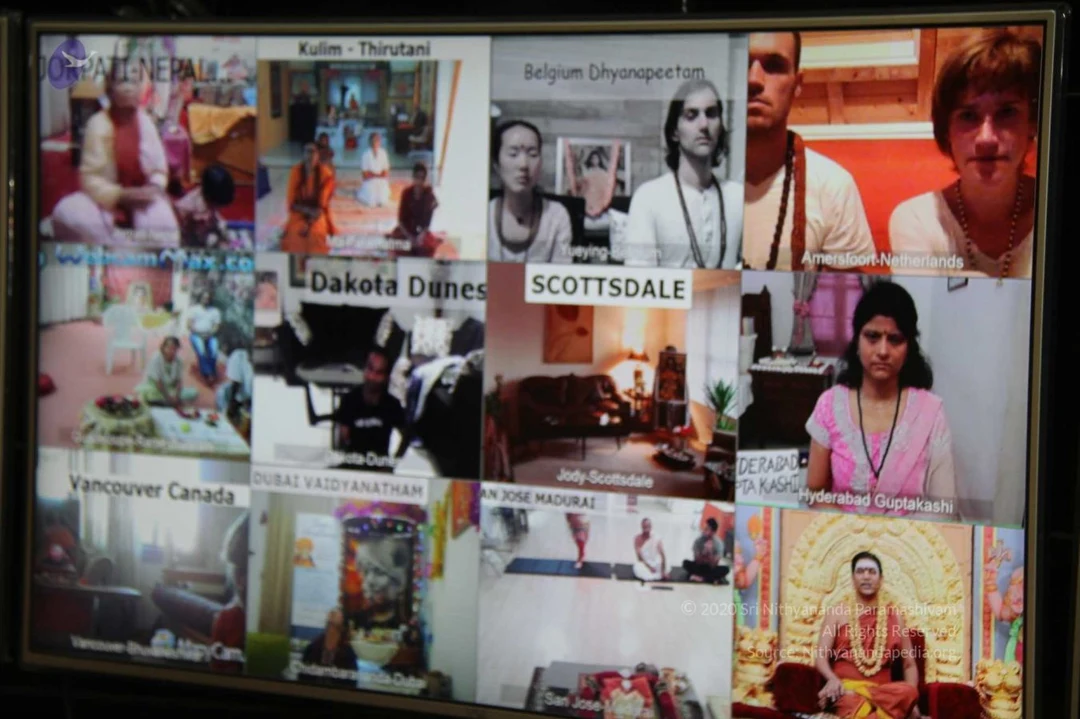
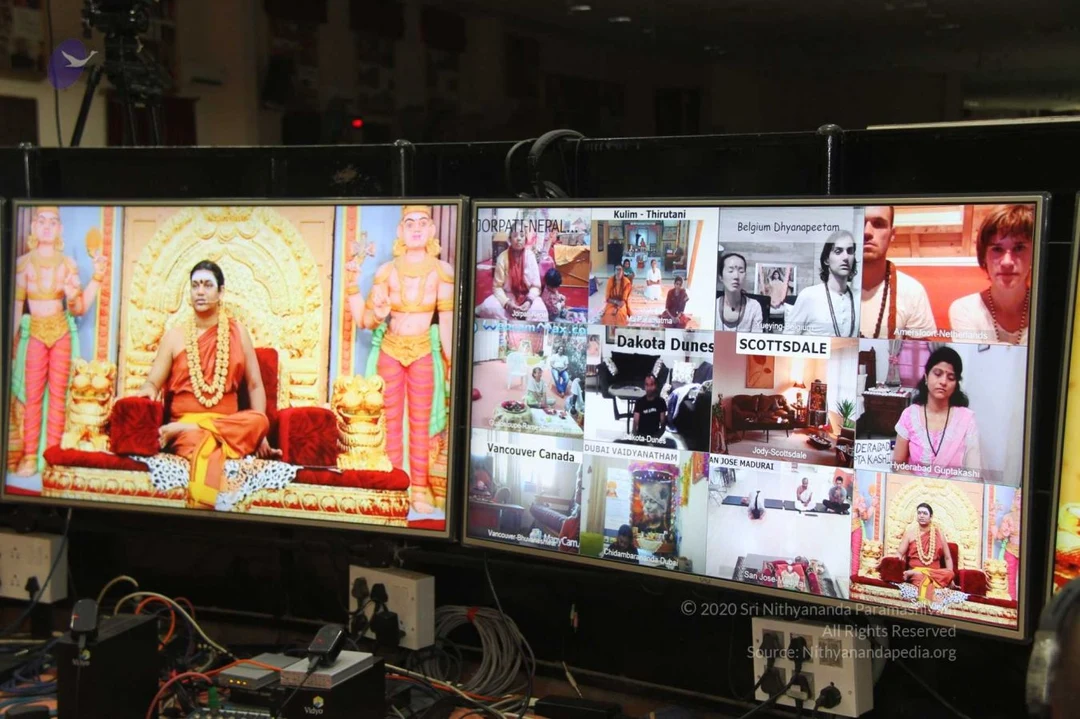
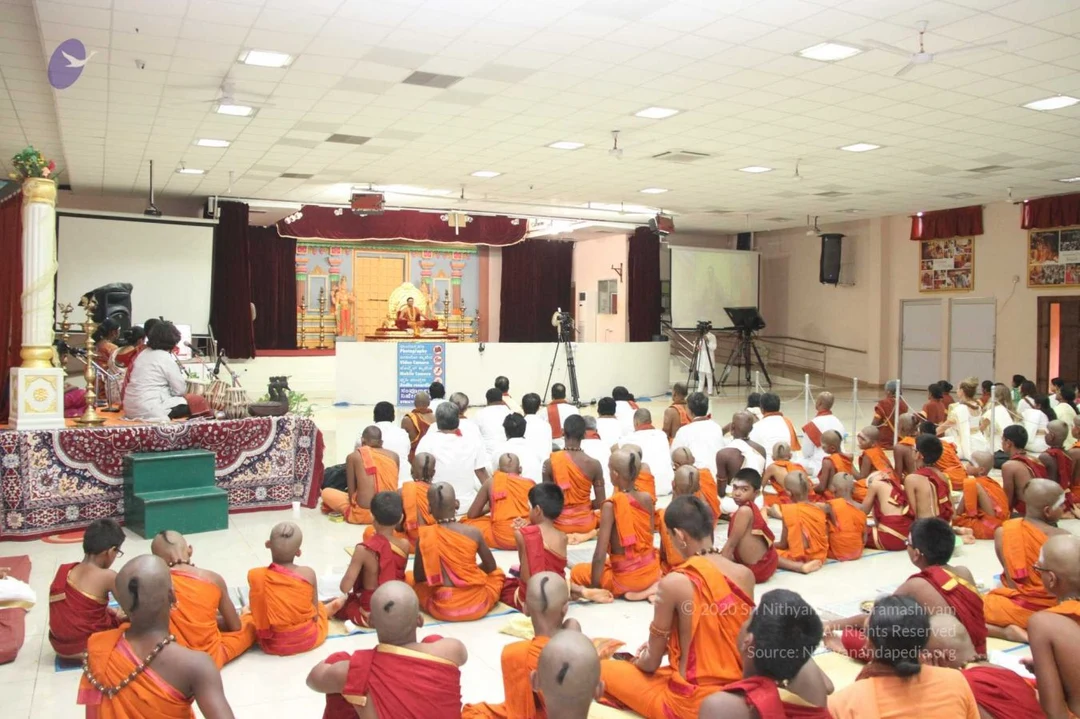
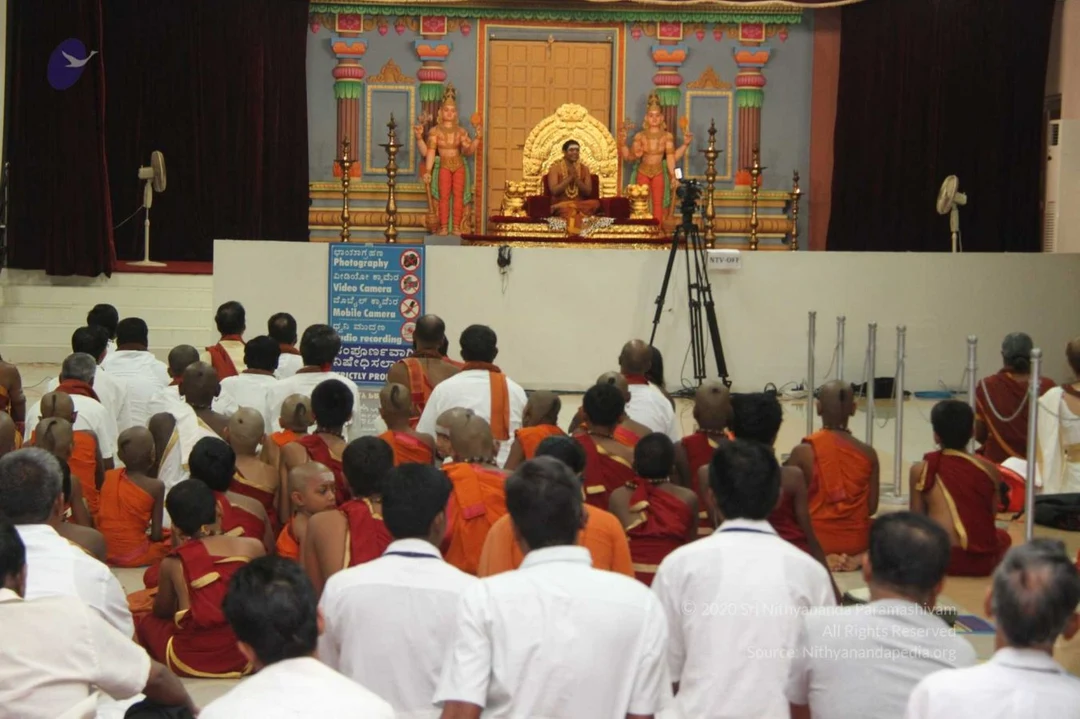
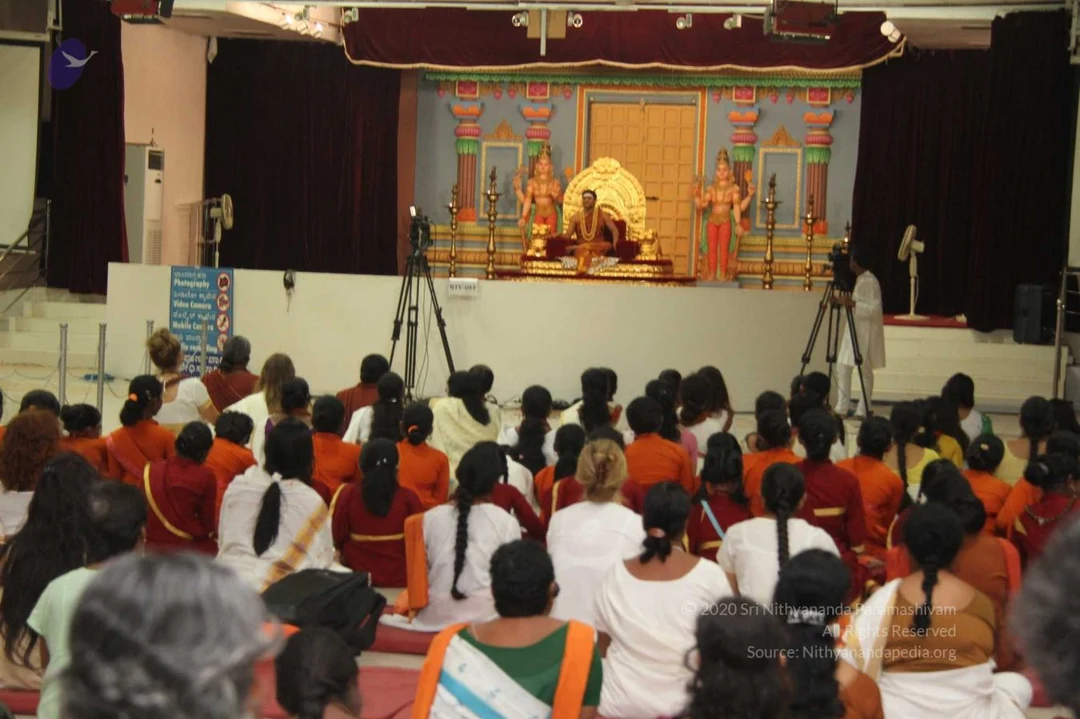
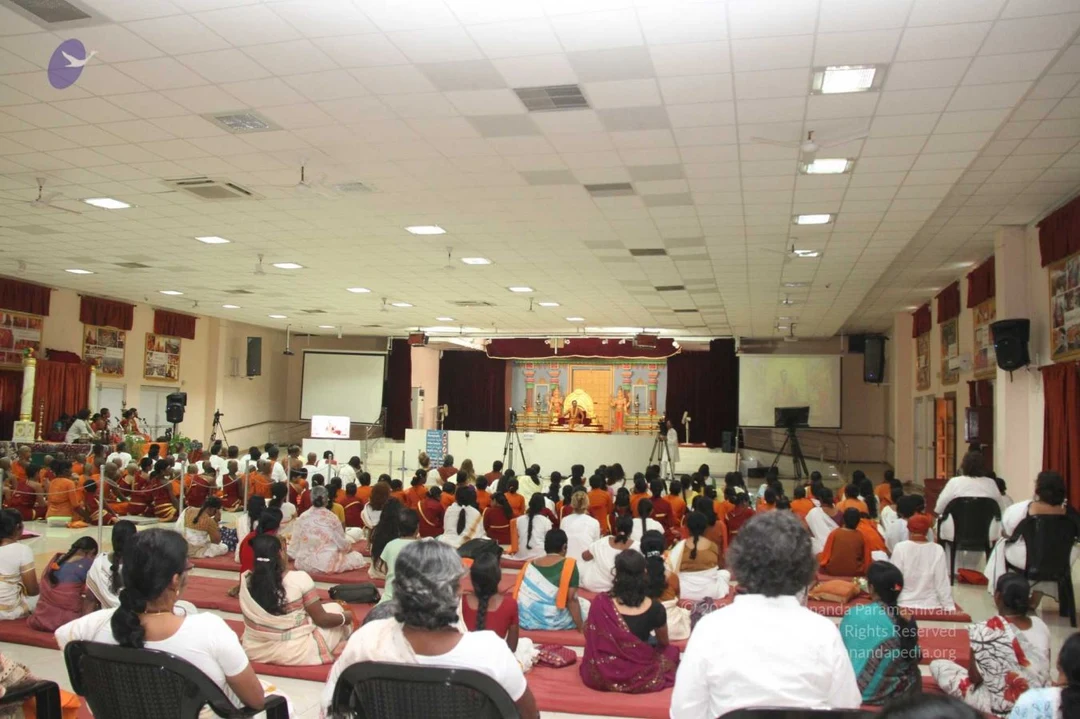
I Welcome all of you,with my love and respects. welcome all the devotees, disciples,Samajis, Satsangis,Shrimahants, Mahants,owners of Sarvagya Peetha,Kotharis, Thanedars,Shivoham participants arriving from all over the world..I welcome all of you with my love and respect and everyone who is sitting with us through Nithyananda TV Sadhna TV2 way video conferencing having Nayana Deeksha.cities starting with us into 2 way video conference having Nayana Deeksha.

Let me introduce Nachiketa! He is the ultimate embodiment and expression of Shraddha ever recorded in human history. Please understand,authenticity, Shraddha,I am translating Shraddha a authenticity not sincerity.I have my own reason to translate and I am allowed to translate in Sanskrit even if it is not accepted as per the society's grammar.

in Sanskrit we have exemption call Arsh-prayoga.when the Rishi’s decide to give certain meaning to certain words they have freedom to do it, because our Masters know language even though it is developed by intellectuals and poets.It doesn't have all the capability to, capabilities to express what enlightened beings want to.

(2:57)

So enlightened beings are given their exemption to interpret and explain.the word as they want and expand the rules of the grammar as they want.So, I am translating this word Shraddha into authenticity. please listen. It is authenticity that is going to take humanity to the next level.I am going to push humanity to the next level through authenticity.

that is going to be the contact point, that is going to be the Central core teaching, that is going to be the authority. Nachiketa, I tell you.See there are books which speaks about the heroes.There are books which celebrates and glorifies the heroes.There are books which speak only about the principles.There are books which are poetry on heroes.

Having somebody write poetry on you(or) stories about you is not something big.Many politicians all over the world get it done.but the book which always talks only about the principals - Upanishad in that book getting men, even your name mentioned means you should have been such an undeniable personality, please understand.Where Nachiketa is mentioned?Shows who he is, in the whole Upanishad, 108 Upanishads not even hundred names of the individuals are mentioned, please understand.

The whole 108 Upanishads, not even 100 individuals names are mentioned.Sada Shiva,Vishnu,Devi, Hanuman as a listener of Muktika Upanishad and one or two Rishis like Yajnavalkya, Maitreya, Gargi,in that space..Kenopanishad mentions the name of the Devi Parvati, in that spaceNachiketa is kept by Upanishadic Rishis.

(6:46)

Please understand,Because Upanishad,from the beginning are very cautious about Dharma centric. being centred on the spiritual truth, not on personalities.Even though my personality is worshipped By many of my disciples.I am very clear, I myself establish myself only Dharma centric. centred on the Dharma, Nachiketa simple authenticity,ferocious innocence, innocence Which is not ready to compromise and become ignorance..becomes Authenticity.

Listen, innocence when it is ready to get bullied for vested interest becomes ignorance, if it stands on its strengths it becomes Authenticity. innocence can be bullied by ignorance, if you protect it by not allowing the bullying, it can just become authentic,It can just become Authenticity.

Here I can see very clearly,The Nachiketa,the way he is standing, I tell you. He is not missing a single word which need to be uttered and he is not uttering a single word which should not be uttered. A true Upanishadic Rishi neither more nor less. and I wanted to record my gratitude to Kashi Vaasis and Kashi Pandit who preserved, protected all these Upanishads, to tell you honestly.It is the Brahmins of Kashi, the Pandits of Kashi protected all the Upanishads by chanting them continuously and keeping it alive.

the posterity should know it is Kashi Vashis protected the Shastras. even though,when they went through so much suffering, they have been attacked so much by the foreign invaders.they protected the Shastra keeping it in their heart. sometimes I feel what would have happened if we would have lost all the upanishads.

Oh God even to think it is horrifying Thanks to Viswanatha,Ganga Mata and Annapoorani that it did not happen.He protected.Kal Bhairav protected the Kashi Vaashi Brahmins Who keep this alive..Nachiketa,is not even telling his dad. dad, what you are doing is wrong.You are not going away whatever is valuable and precious.He is not telling Dad, you are inauthentic, No.

(11:29)

He is not only a good son, best Son ever you can have.he is so satle,he is so beautiful,he is only standing with his authenticity. but a inauthentic person hurts himself, feels terrible hurt the moment he sees an authentic person.because suddenly all your inauthenticity comes up and you are facing God I am reminded of many of my missing links.

when you see a person in front of you, like whom you always wanted to be it hurts you. why you did not achieve that..inauthenticity always hurts,inauthenticity you don't even need anything from outside to provoke an inauthenticity person, just if he sees an authenticity person, He will be agitated.

This Yung was scared of meeting A old hermit Raman Maharshi in my native town, he came all the way to Chennai and he even drove halfway, midway.But he was feeling so suffocated, sweating, must have been running for 1/2/3 continuously.in Those days, we would not have had a roadside restaurants.he would have first time using Indian Open Universities and suddenly in Midway told the person was driving his vehicle, Stop.Let's go back to Chennai and he went back. Without meeting Ramana Maharshi all the way from his country he came to Chennai from, Chennai was driving, Midway just stopped and went back.

if that one meeting has happened and this Yung got all his junk out of his head. The history of humanity would have been different.He knows, he is going to meet somebody very authentic.Who knows the field. Its little terrorising.He knows, So, who knows, what he is going to ask And how is going to.. respond See inauthentic person shivers, automatically the moment he sees the authentic person too tall in the fear you start blurting out opening up all your stupidity.

(15:26)

please understand.when you blurt out the way you open your stupidity simply people will catch it,simply people will catch it..Nachiketa is not even hurting Vajashravas.Vajashravas was his Guru Aacharya, Pita, Guru,Aacharya and Raja,source of his food, source of his knowledge, source of his home,source of his very life. He is not hurting Vajashravas,He is only reminding Vajashravas, you are supposed to give everything you love and I know you love me deeply.

To whom you are going to give me? Authenticity is such that it will never hurt. And even if somebody hurts it in ever get hurt.Understand it will never hurt, even if somebody tries to hurt it will never get hurt. Authenticity even if all my teachings are lost. In some Tsunami are some calamity just this one truth is kept alive authenticity.from all my teachings that one is enough.I will produce million Nithyanandas out of this one teaching, that one is intelligent enough, brilliant enough, efficient enough To give enlightenment to millions.. see the power of Authenticity.

The moment Nachiketa ask this question “Dad to whom are you going to give me?”immediately,The inauthenticity in Vajashravas shivering,literally falling into powerlessness and he just want to avoid answering.How much ever you avoid my voice, it will be ringing inside you..So it is too much for Vajashravas.and from unexpected quarter, see a Brahmin who receives the Dana if he has raised the question, come on, you are doing something against Shastras Vajashravas knows how to justify, ah person who receives the Dhana should not see the quality of the product he receives.

He would have quoted another one Shastra and shutting him down.If the opposition is from a minister, come on, Rajdharma, a Minister should listen to the Raja, he would have quoted some other Sutra or Shastra, shut him down.

if the resistance was from any side,He was prepared to handle.but it is from the most unexpected quarters and the person whom he loves for whose sake he is doing everything.including protecting all the best things. He knows he is going to leave the body, Vajashravas, then why is protecting all the things instead of blowing away, he could have lived like “let my last check bounce”.

No.He is keeping everything close, why, for Nachiketa and that guy is questioning him.. He is not even questioning, he is reminding him.Understand the moment you don't know how to react you lost the game, Be very clear, simply surrender.Don't try to continue the fight, it will be stupid.If you don't know how to react, it means your inauthenticity has been questioned and your sheevering inside come on, beautiful chance to become Authenticity.

(20:50)

But it is too much for Vajashravas, Ah, Ah, Ah I think I should direct to tell you, TV serial on Nachiketa only then whatever I want to convey will be conveyed to through the body language.By now the eyes of Vajashravas should be (uncomfortable face) moving from powerlessness to, shivering to,Non listening, please understand.. that is one of the most stupid weapon Inauthenticity uses to escape from Authenticity, non listening,shutting down.

Don't go.Escape.Don't listen.Its too much.. too many things are at stake. With inauthenticity, the first response of inauthenticity to protect itself from authenticity is non listening, even third eye awakening, many people think the power can be given just like one cup of coffee, or tea, or hanky.

Listen I have to first expand your vision.your perception,Once that expansion happens only the power can be given.If it can be just given like a hanky, we would have started a postal service. (smiles)Please send MO, PP, Arr Sorry, VPP, MO all that, in all those days they used to doMO this much money and received by courier.No! (Or) We would started selling in Flipkart, Snapdeal No!

it is neither a Plasma TV to sell in Flipkart Nor a battery Cell to sell in postal. your inauthenticity need to melt down. the authentic vision needs to happen only then the power I give you, the initiation. I make it, the Kundalini awaken will be stable in you, But when you don't want all that to happen, when you don't want to go through the transformation, you question. How do I know, drr Does he really have a power to Initiate After, all this I don't have to prove I am Barren, I am not Barren (giggles) somebody who had 10,000 kids.. are we really sure that can give birth to kids?

After somebody, after initiating so many,making the experience the power I think Now, I don't need to prove that I can.See..Authenticity even if it deals, when it deals with inauthenticity it does not hurt it, it only tries to remind, but inauthenticity.straight tried, tries to hurt authenticity..see Nachiketa He is not trying to hurt Vajashravas, but see Vajashravas straight trying to hurt Nachiketa Vajashravas is acting as if he is not listening.

(25:35)

But one funny thing is, When authenticity utters something, inauthenticity even if it tries to cover the ears, it is bringing inside. Aayh.. Aayh.. Aayh..You can lock here(shows ears).What about here?(shows heart)I tell you.Upanishad is beautifully recording.

Nachiketa asks only once, but it was echoing in the heart of Vajashravas three times.. (giggles) I tell you this is the most powerful, poetic..poetry with so much of sense whenever you try to avoid.Whenever you try to avoid.the questions of authenticity and you tightly do this but inside HAY..HAY..HAY.. the echoing goes on It so beautiful the way the Upanishads puts it. Nachiketa asked once, “Dad, to whom are you going to give me?”

see the dedication, power of authenticity, just to remind dad about his authenticity is ready to be given away as Charity, if he was given away to some Brahmana, he knows for whole life he has to be a servant for the Brahmana Serving him, taking care of him.If he was given to some Kshatriya, he knows, whole life he has to a soldier for that Kshatriya.

If he was given away to Vaishya, he knows, he has to be shop assistant,accountant for that Kshatriya,sorry that Vaishya.if he was given way to Shudra, he knows, for his whole life he has to be a servant,sub-servant of the Shudra He is ready even to be given away in charity.To remind his father about his inauthenticity, to remind his father about his inauthenticity.All the qualities of authenticity, so beautifully described.

How an Authenticity man will think, how an Authenticity man will talk, how an authentic mail will cognise, how an authentic man will act, react, respond, ponder over and respond.everything is so beautifully describe just in this few verses of the Upanishad I think Upanishadic Rishis were just enamoured by the personality of Nachiketa, they are,They are not able to stop them self.

Singing the glory of Nachiketa,they were not able to avoid putting Nachiketa as a hero, even though they all have come to a conclusion.We will not make anybody Hero including Shiva or Vishnu were never described as heroes in Upanishads.only the energy representatives of the nature's they are shown, described, only as the energy representation of the nature.

Parvati is described in Kenopanishad, but not a single description about whether she had two hands, or four hands, or had a weapon, nothing! just as mother nature Because they were so clear and their resolution.They are going to create a book, just based on the strength of Dharma not based on any Hero, but I think Nachiketa has gone beyond any of their logical editing capabilities?

He is unavoidable,They flowered by his Glory, they just lost and forgotten their resolution. not to make anybody Hero.. Every line in this Upanishad sings the glory of Nachiketa, 7 year old boy is ready to be given away in Charity as a Slave for a Brahmana or Kshatriya or Vaishya or Shudra just to remind Dad about his about his inauthenticity. what a dedication, in front of Nachiketas dedication Nothing, Nobody Else's dedication can even stand.

(31:35)

such a simple thing, just reminding the dad about his inauthenticity. He could have straight away asked, Dad, Do you remember the verse you taught me? That you are supposed to give away all the best things you have, and all the best things you like.See its a beautiful concept, whatever society accepts as best and you have may be Diamond, Gold.

But it's not that always what society thinks as best, is what you also think as best, for you it may be just a mango, or little salt the best thing in your life.That is what has happened yesterday in the noon when I was Resting the Swamis who take care of me.They came and started describing, this person is donating this, this person is given this, they started reporting to me.I said just get me one mango and little salt. I am not interested in anything else now. (giggles)I said what society thinks as best is one, what I think as best now is different.

Come on, get me just two mangos and little salt.the Vedas describe, both you have to give up during this Yagya many time what you think as best may not be exactly what society thinks as best.But a king will be having both.What society things as a best and what he thinks as best, both he maybe having it..He will be having it, a King will be have been having both.He could have told father, you are supposed to give away all the best things you have and best things you like.the would have solved the issue. xxxxxxxxxxxxx He could have been satisfied that I have done my job authentically, No!but he is not here doing it, just to justify, many times I can say 90% of your work is just to justify you have done it, not to get the result, look in! Whenever you are working just to justify, you did it, not bothering about the result it is inauthenticity, Nachiketas is not interested in that game.

What can I do? I just told my father, I reminded him.After that what can I do? Then he would have never became Nachiketa and whole Upanishad would not have been singing his Glory.. The Rishis who did not even make them self as heroes and I tell you please understand.renouncing wealth renouncing comforts, renouncing luxurious, renouncing relationship all that is very easy.But renouncing the recognition And the desire to be described as my hero.is literally renouncing very life.

(35:50)

Renouncing the purushatva,renouncing. Being the centre of the action renouncing being described as a hero, these great Rishis who renounced the desire to be portrayed as Hero. desire to be described as Hero I think nachiketas renunciation was too much to be denied..to be avoided.. even these Rishis were are not able to control themselves so they just sang a Stotra on Nachiketa (giggles) they try to pen down Shastra, unfortunately they were so glamourd, and enamoured.They lost themselves in the glory of Nachiketa and sang a beautiful song on Nachiketa, poetry on Nachiketa every line described here is sutle, but so beautiful, describing Nachiketa and his Glory Rama going to the forest because of his father's gratitude for Kaikeyi.Kaikeyi, you was missguided.

Of course, I'm not underestimating it.I am not disrespecting. But Nachiketa ready to go and do anything his master wants being a Slave for whole life under somebody just to remind his father.about Authenticity, seems to be a too big sacrifice, for a too small but important need. when you think something is too important, even if it is too small you will be ready to sacrifice you..

Nachiketas Shraddha Nonviolent,Non hurting,But able to remind his dad.about his inauthenticity..even if the Upanishadic Rishis, declared that they will not sing anybody's Glory. they will not make anybody as Hero. including themselves, even if they are not able to stop singing the glory of Nachiketa, they were just enamored, floored by Nachiketa and singing his Glory in so many verses, me a person full of devotion,How can I stop?

I'll continue to sing...I'll continue to sing the glory of Nachiketa at least for some more days. What a character even if it is imagination I'll just enjoy the character Nachiketa. I know for sure it is not imagination, but even if it is imagination. what a character.What a character to be imagined. what an authenticity. What a Brilliance, What a Brave. What a Power….What a Power...

(40:38)

I will continue to sing the glory of Nachiketa, I am singing the glory of Nachiketa, especially for my kids to understand and imbibe Nachiketa. So today, the subject for Vakyartha Sadas. authenticity does not necessarily to be egocentric or violent not only does not necessarily it should be egocentric and violent, actually it should not be egocentric or violent.How our Authenticity can be expressed help everyone to become authentic or without being egocentric or violent.

That should be today's subject for Vakyartha Sadas.With this I bless you all.Let you all radiate, with integrity, authenticity, responsibility,enriching, causing, living Advaita.. the eternal bliss… Nithyananda... Thank you be Blissful..

Title:

You can change your reality

Description

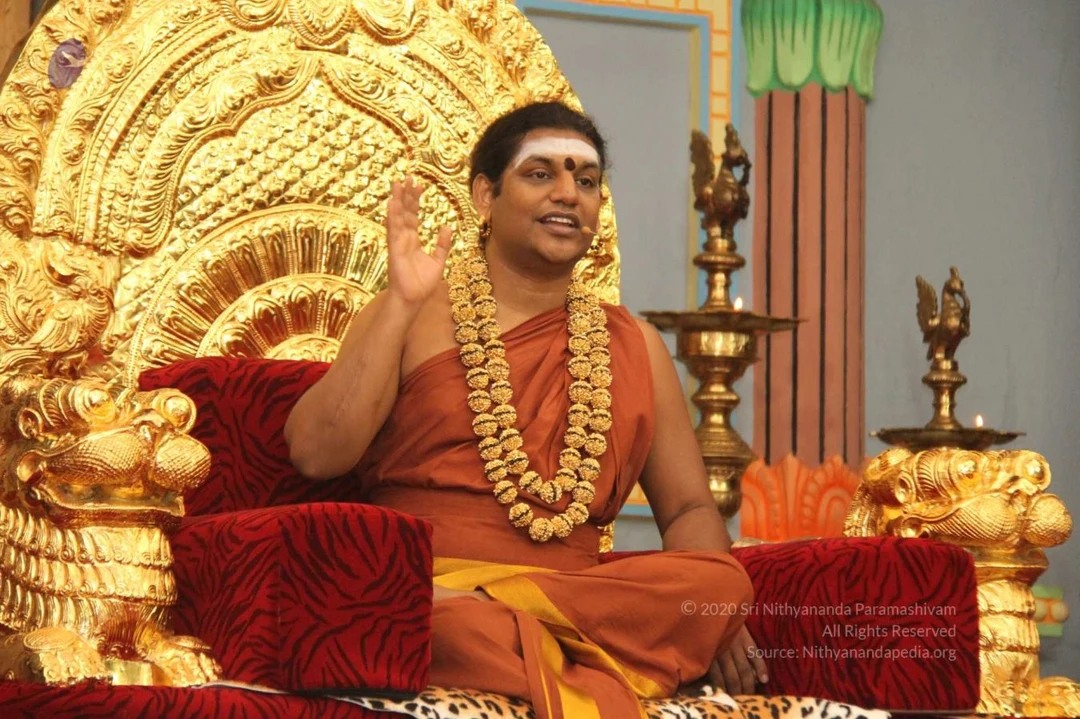
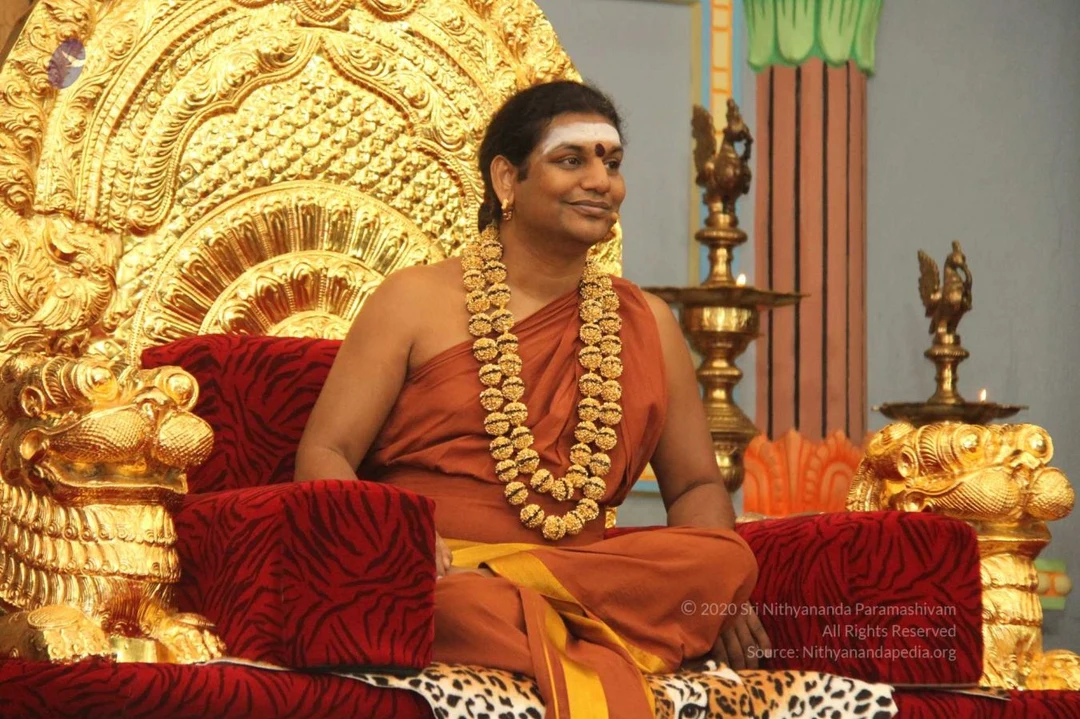
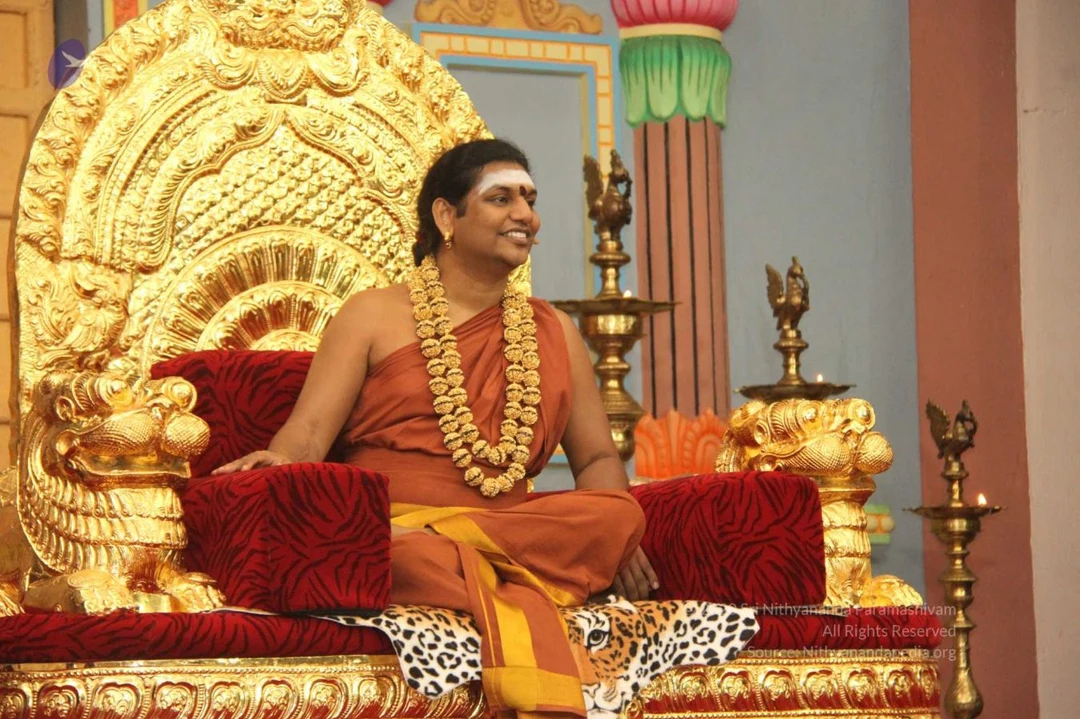
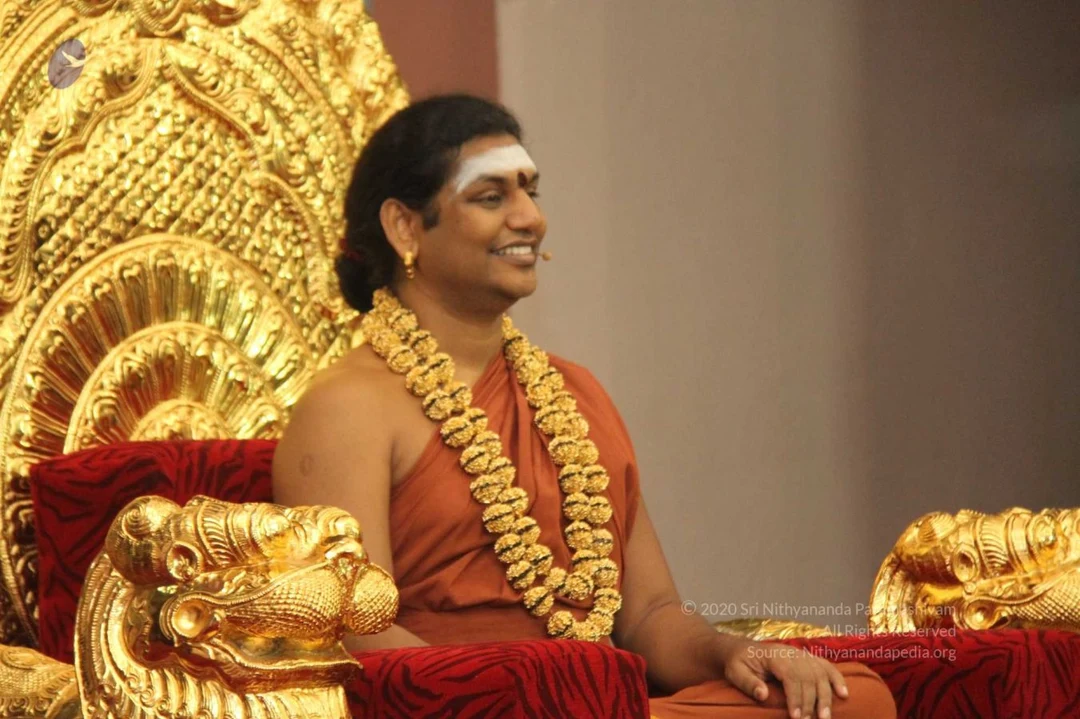
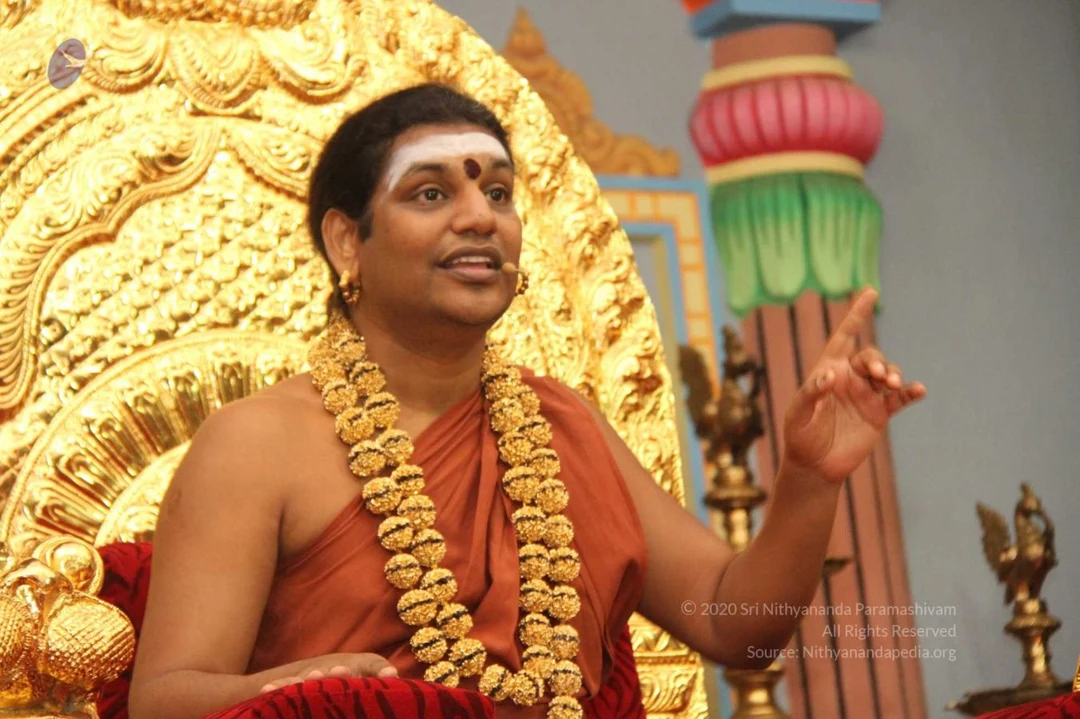
In today’s (11th July 2014) morning satsang Paramahamsa Nithyananda expanded on the space of completion and the space of sangha. He explained how anything we don’t want to see is our ignorance but in truth anything our consciousness is allowed to see without incompletion it can penetrate. It is wrong to allow the pressure in the body of desire and fear to determine what we see. This is allowing powerlessness to exploit us and put us into arrogance which is the state of having our existential reality interpreted by our incompletions. He told us to do completion continually on the incompletions blocking our seeing.

Link to Video:

VideoAudio

Photos

Paduka Puja

Bhajans
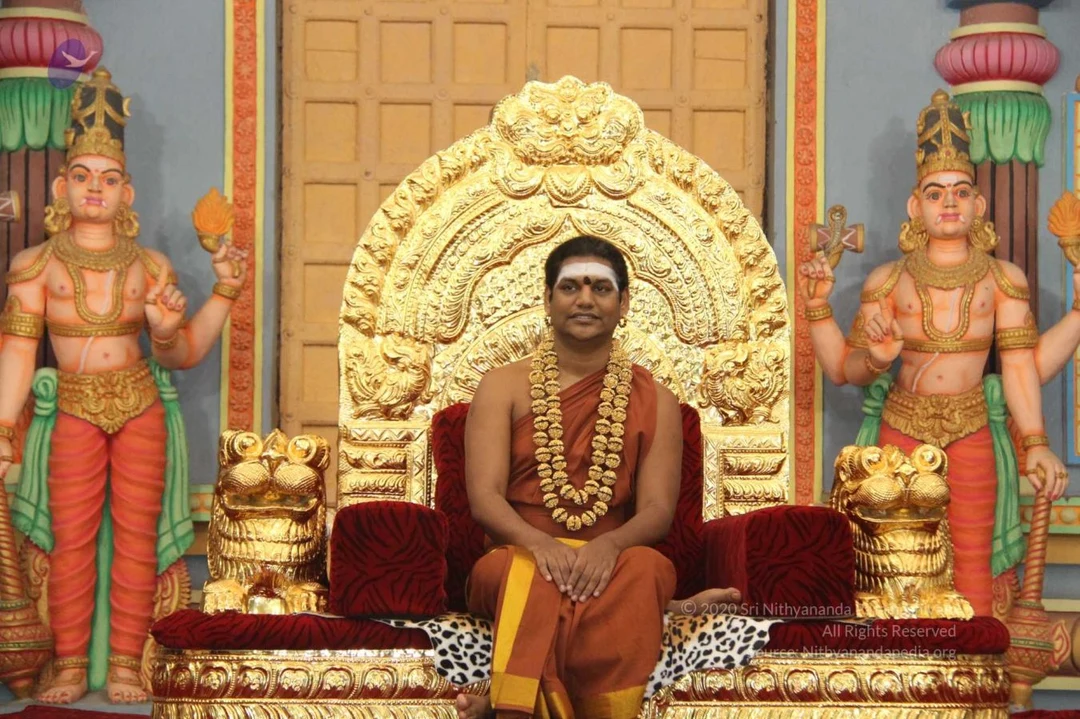
Satsang
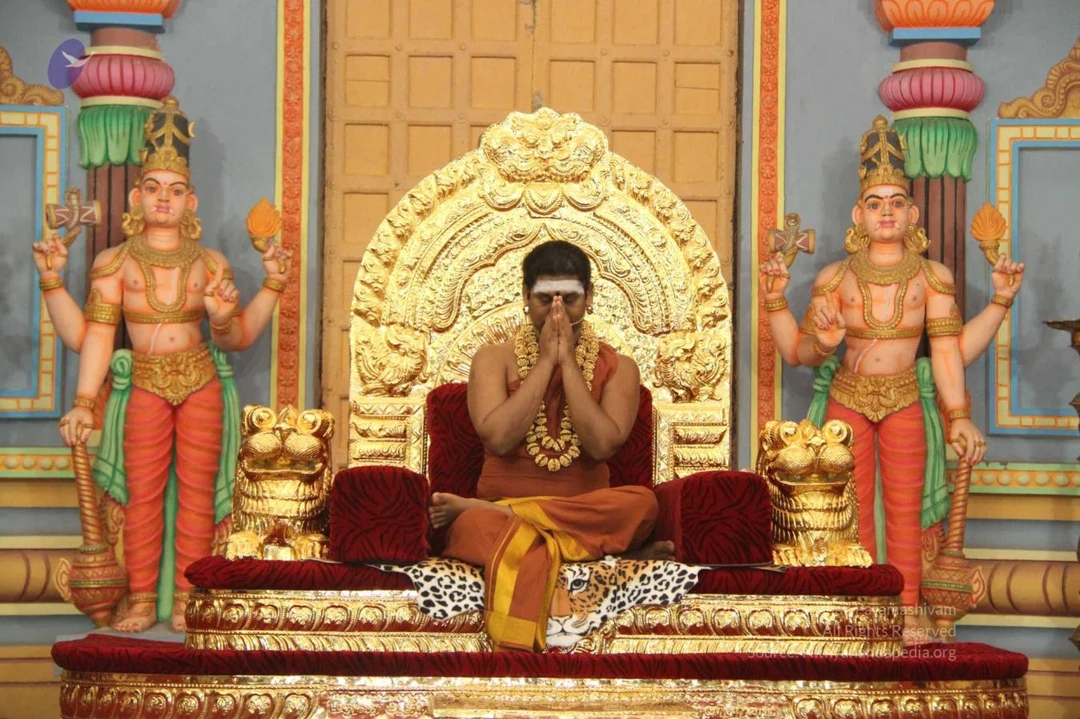
Darshan

Annalaya

Around the campus

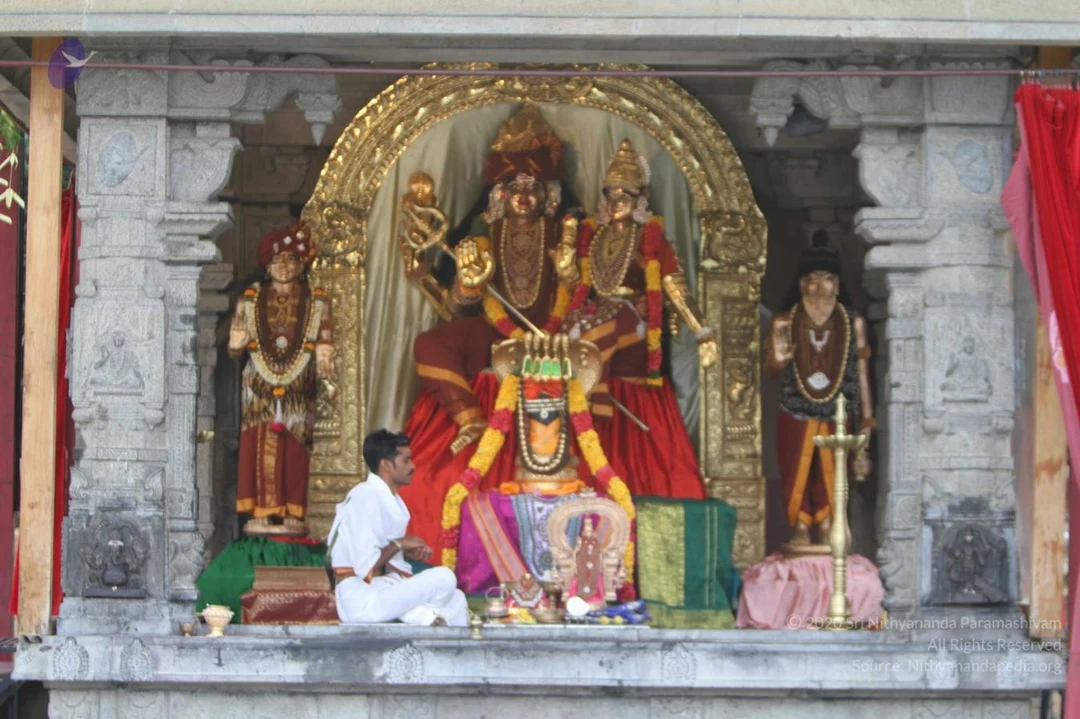
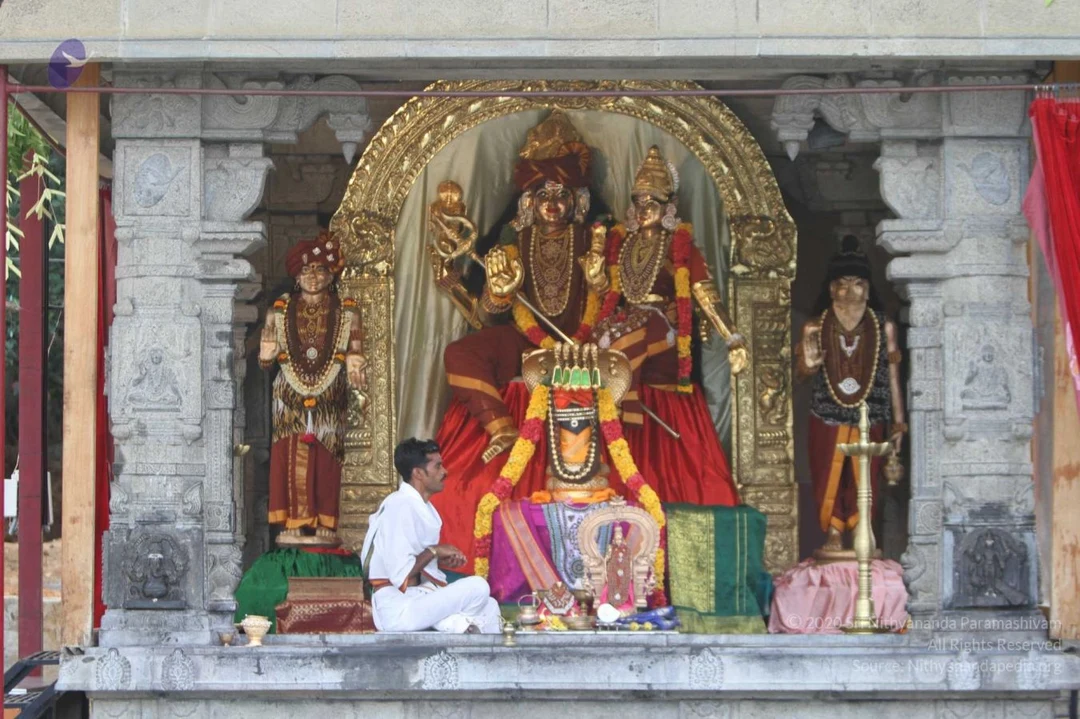
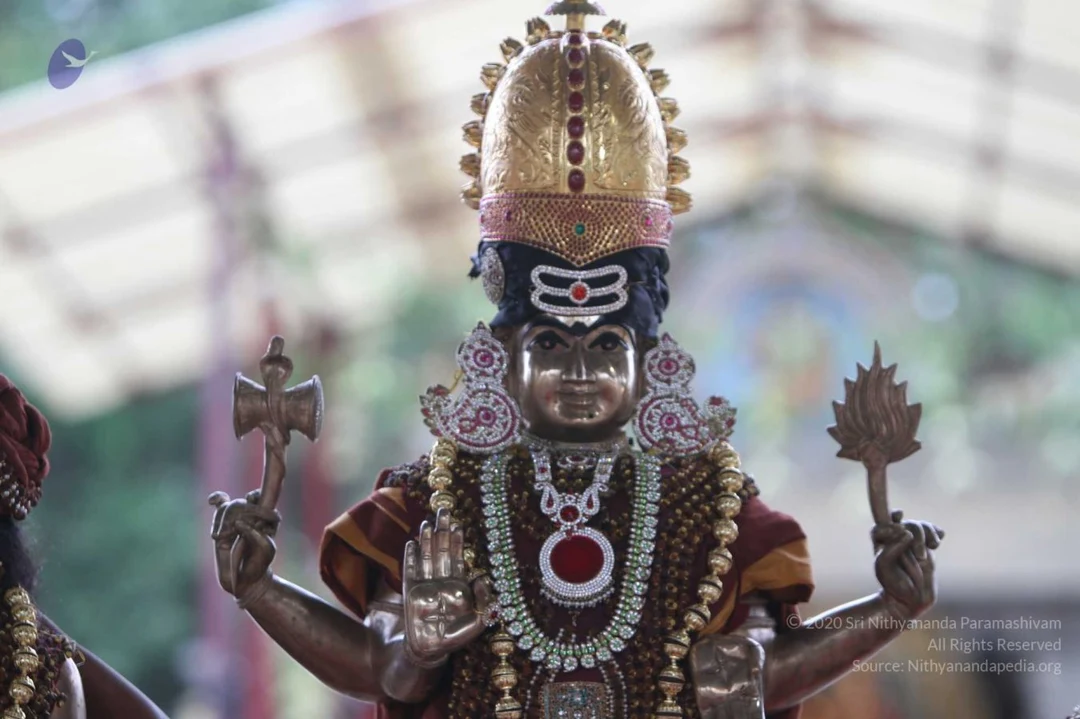
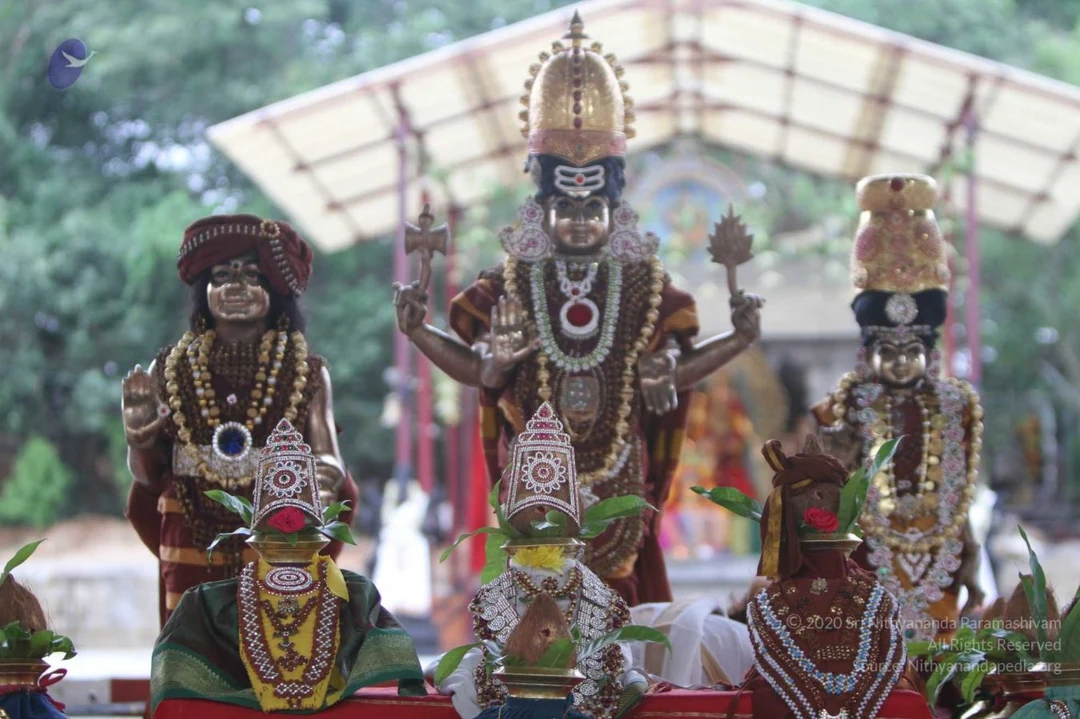
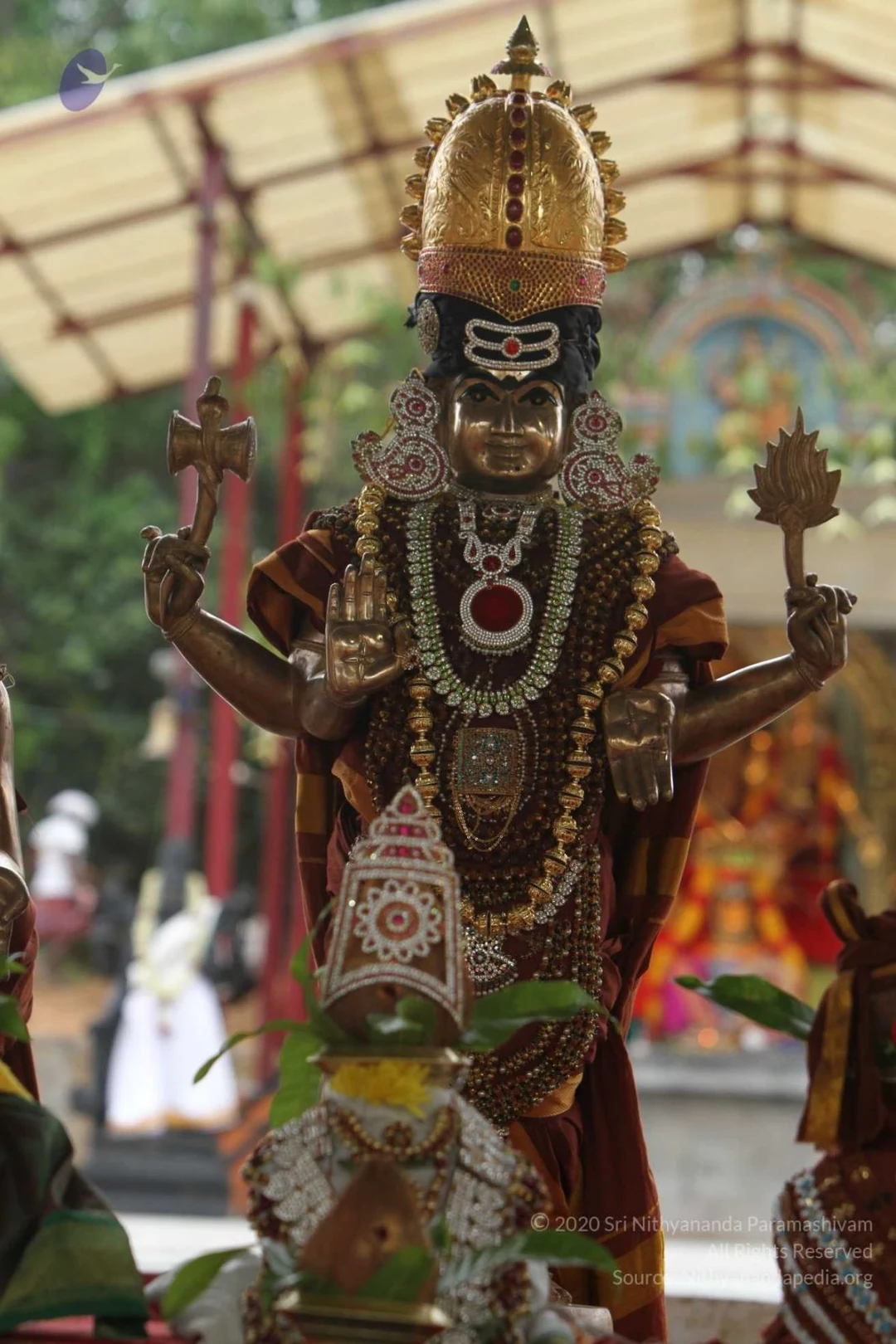
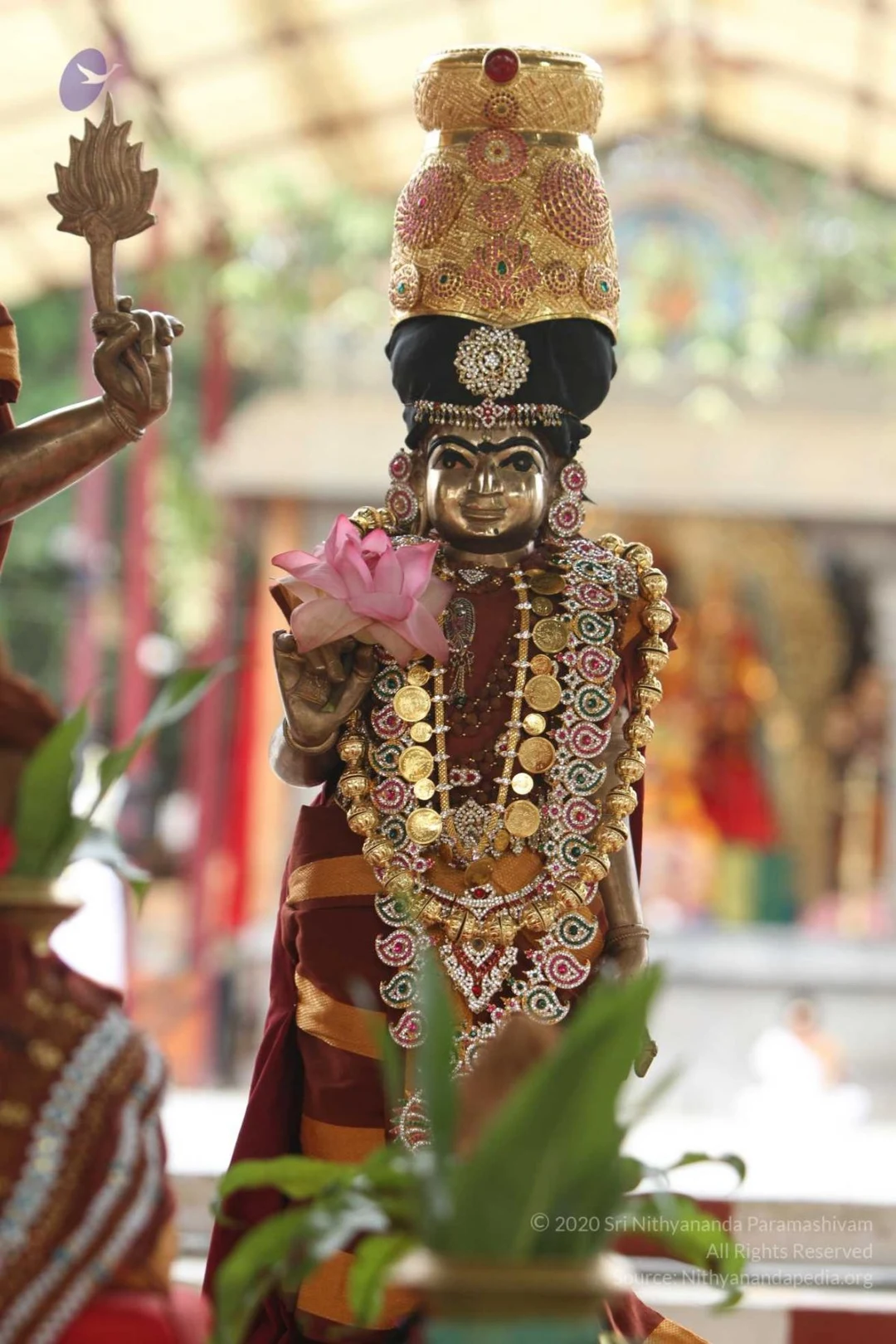
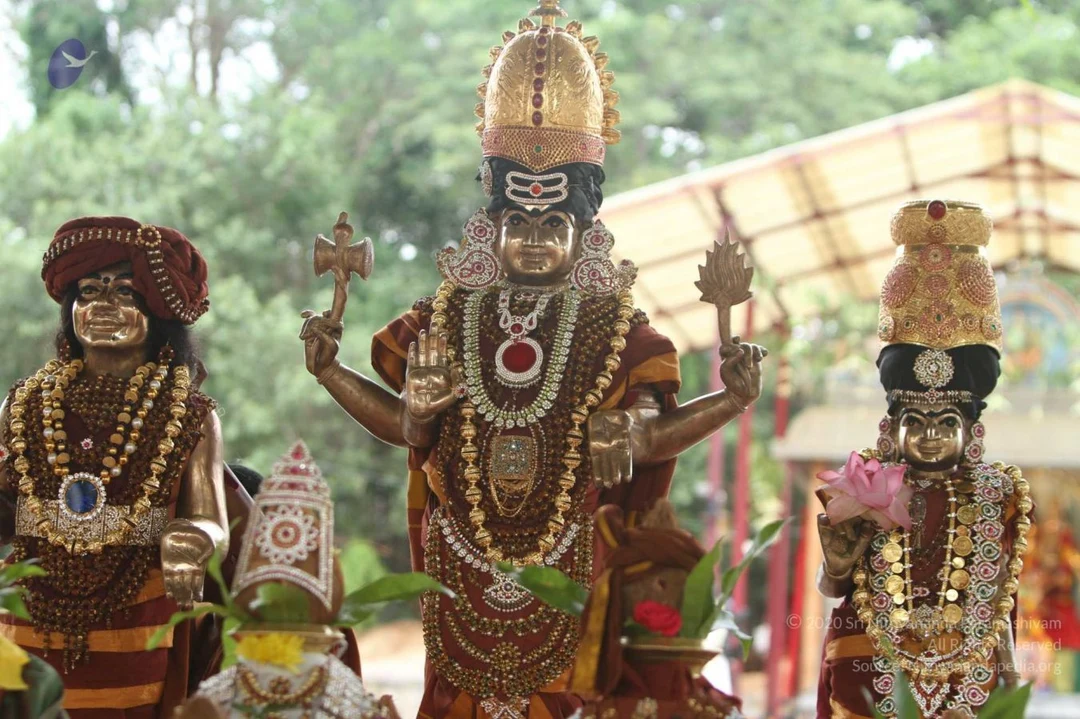
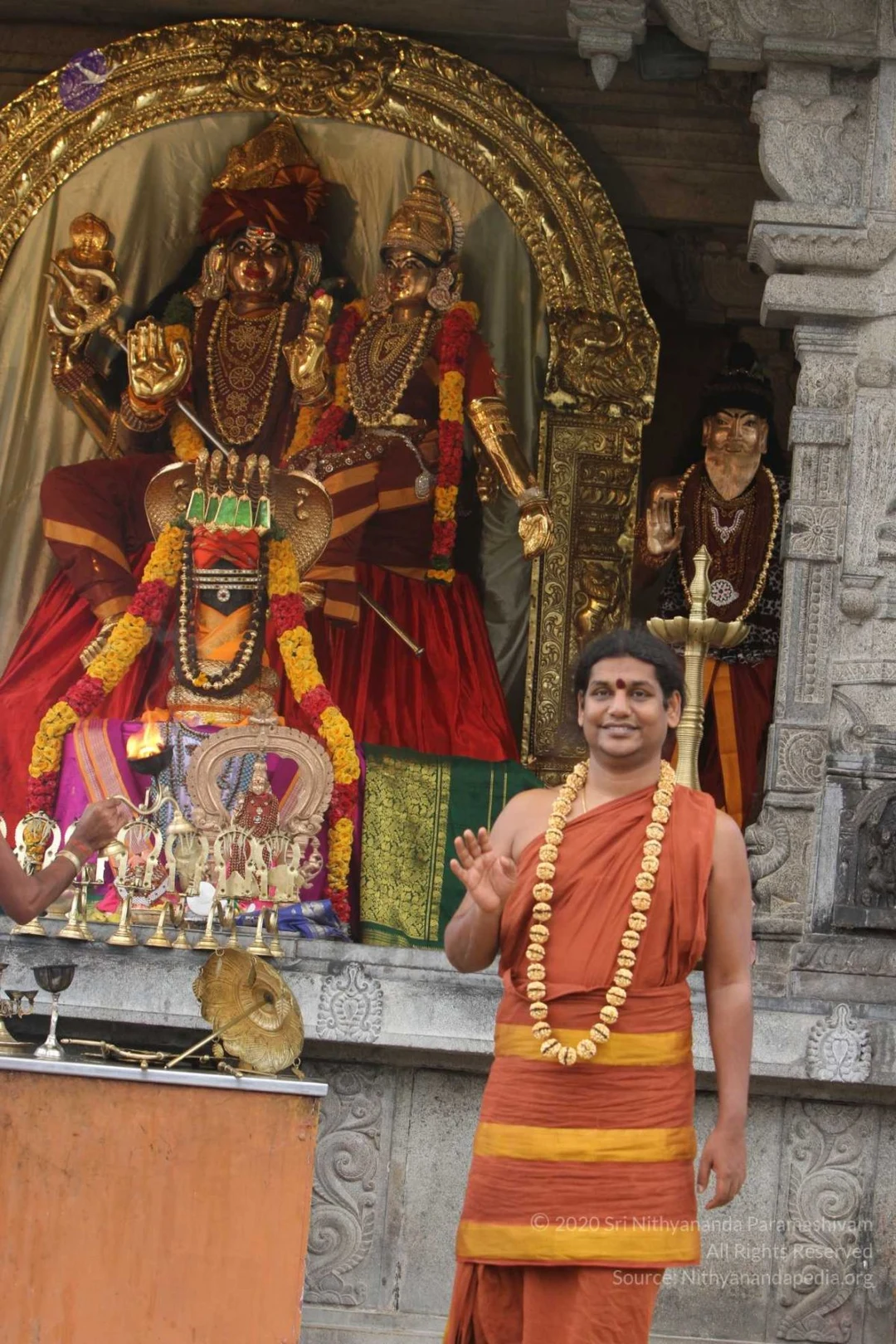
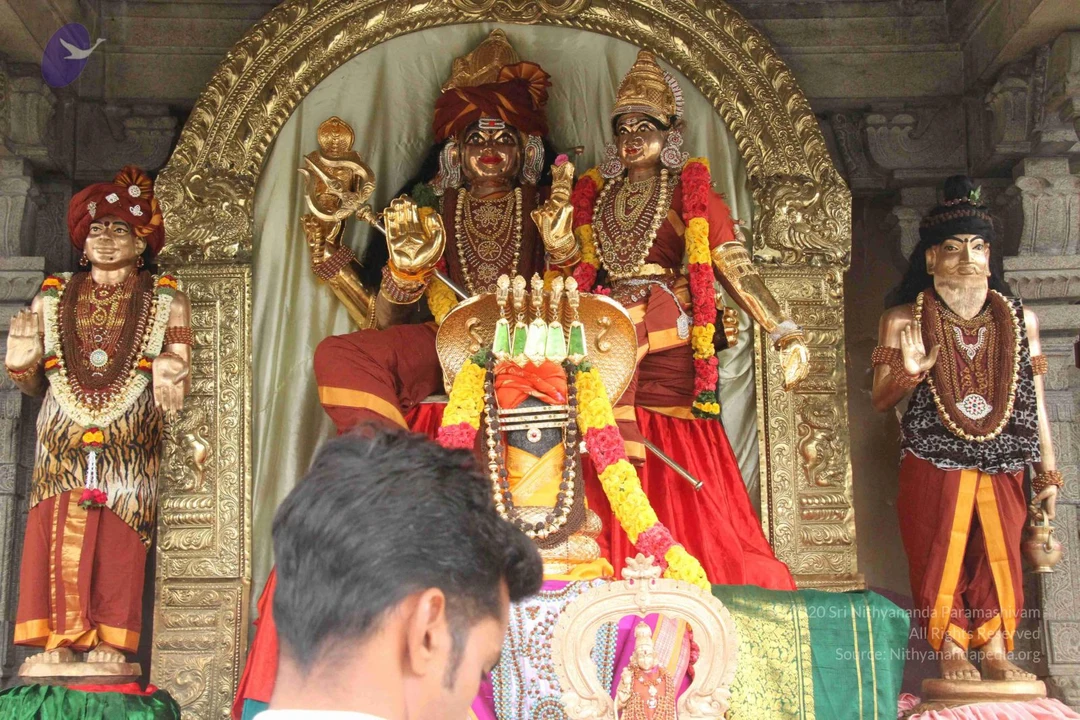
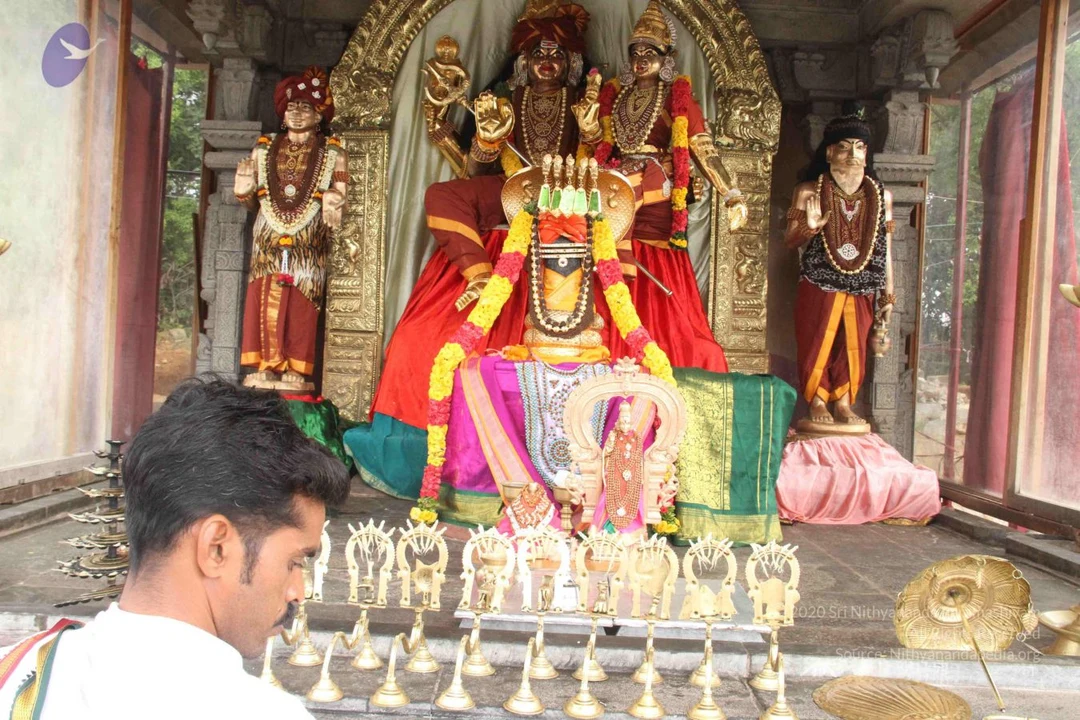
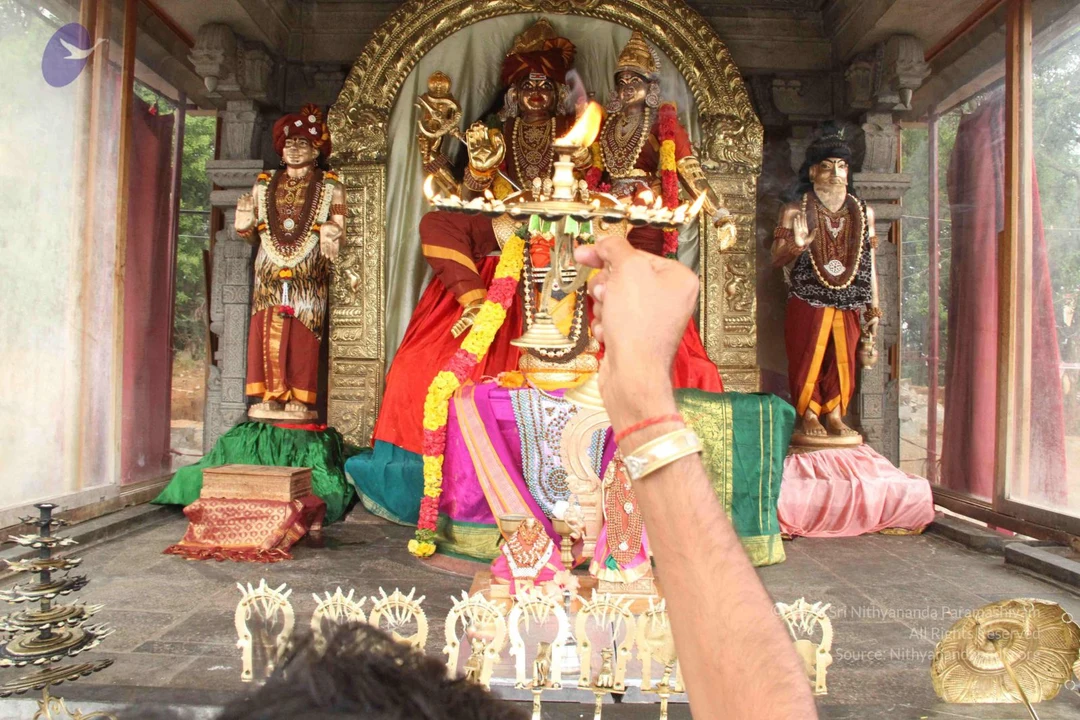
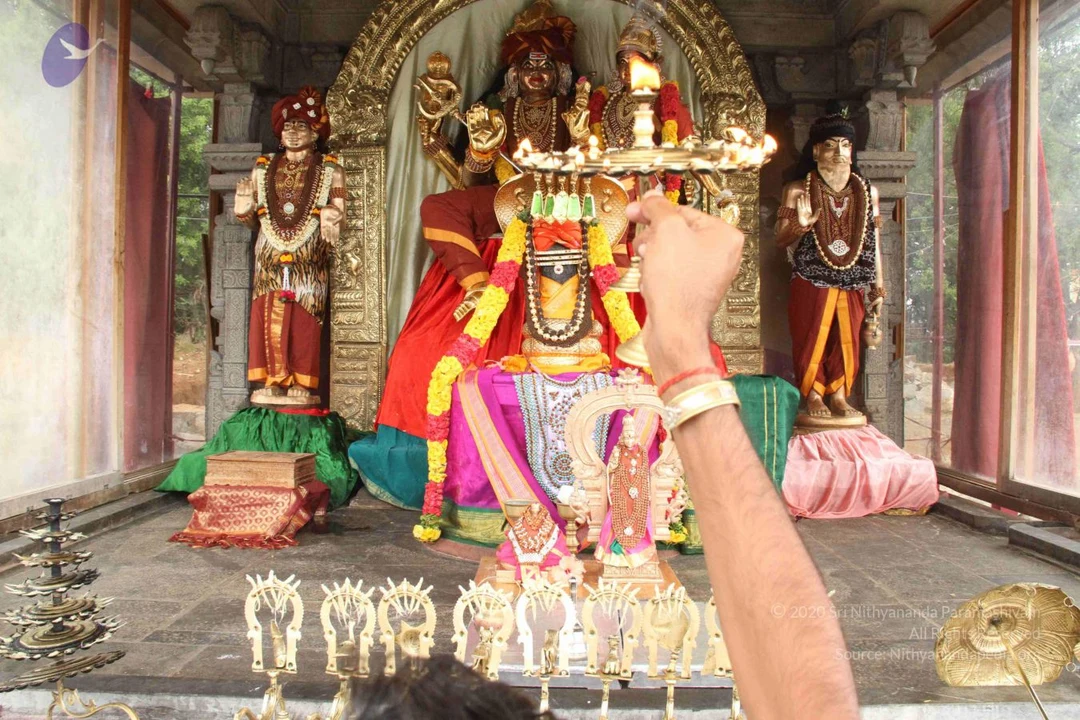
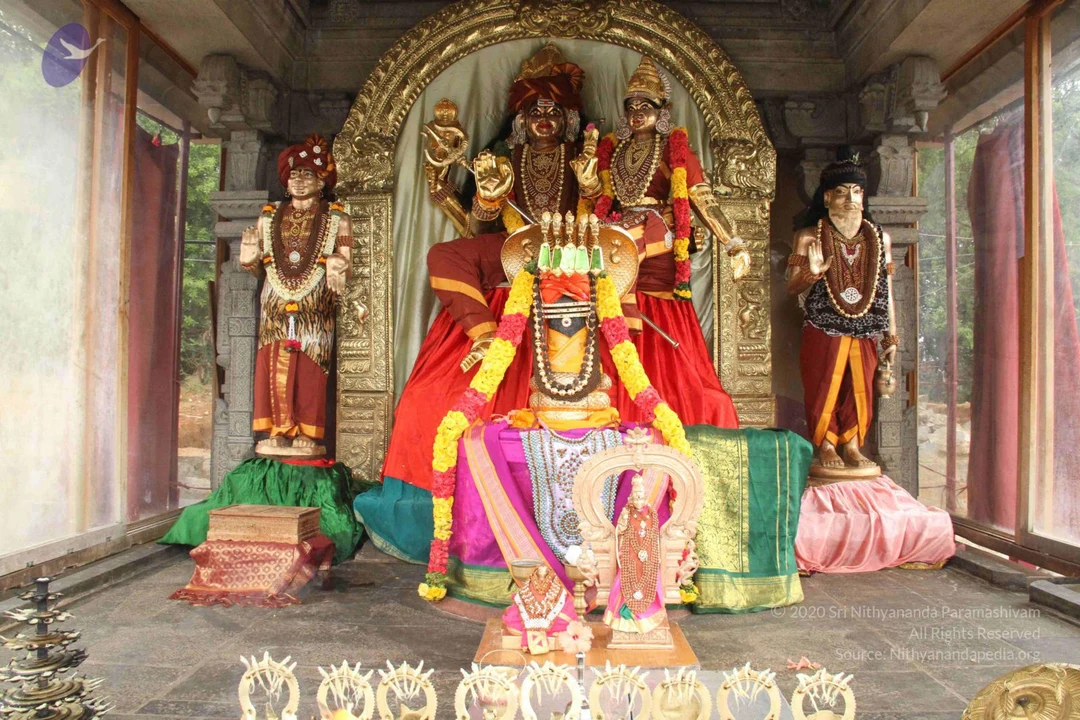
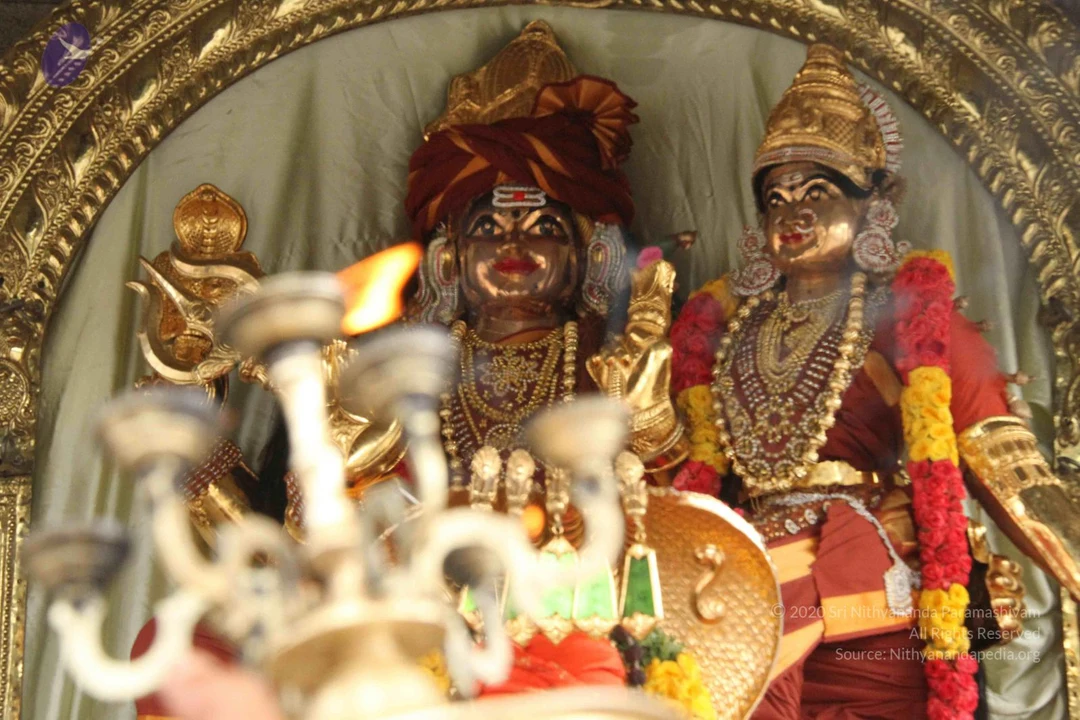
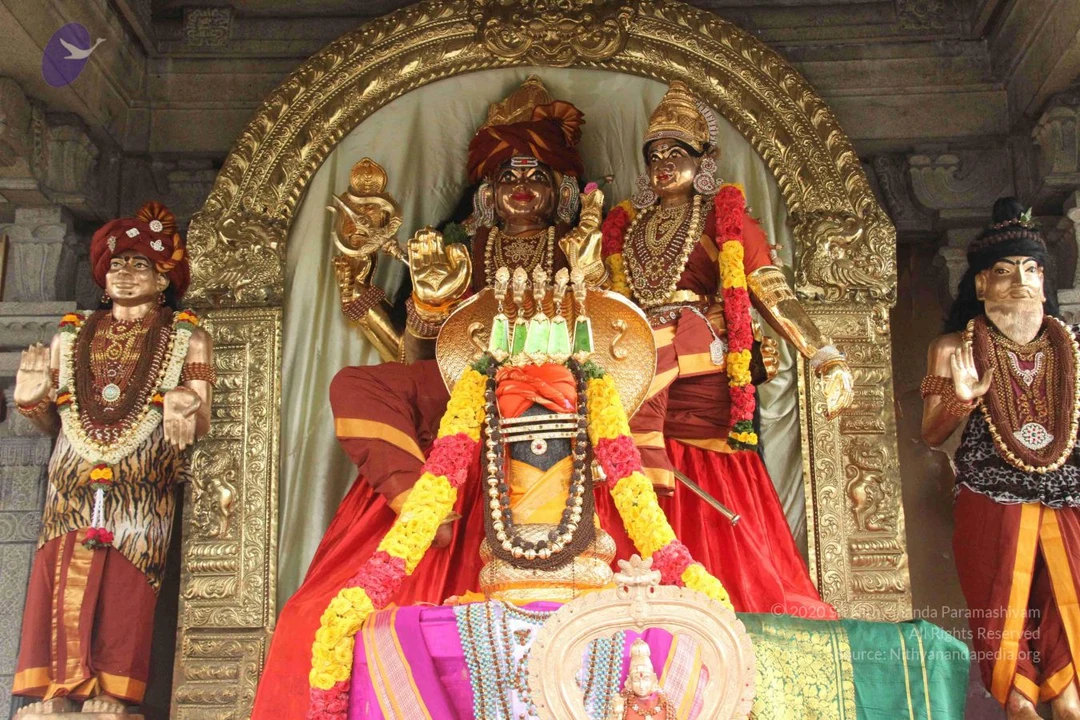
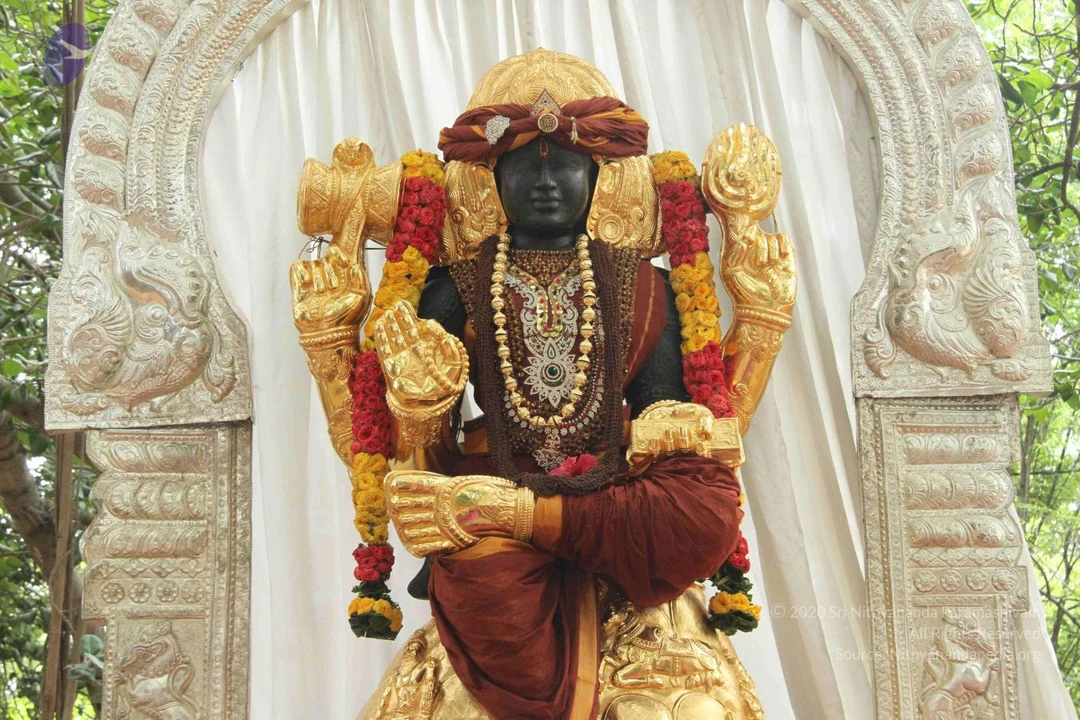
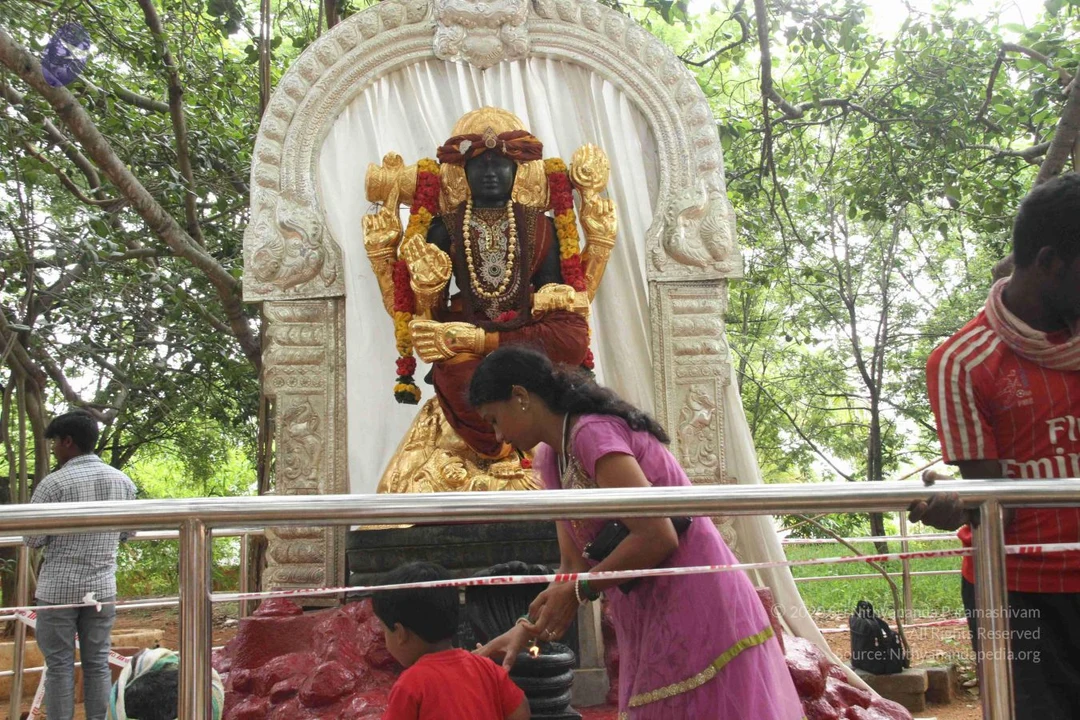
Temple Deities

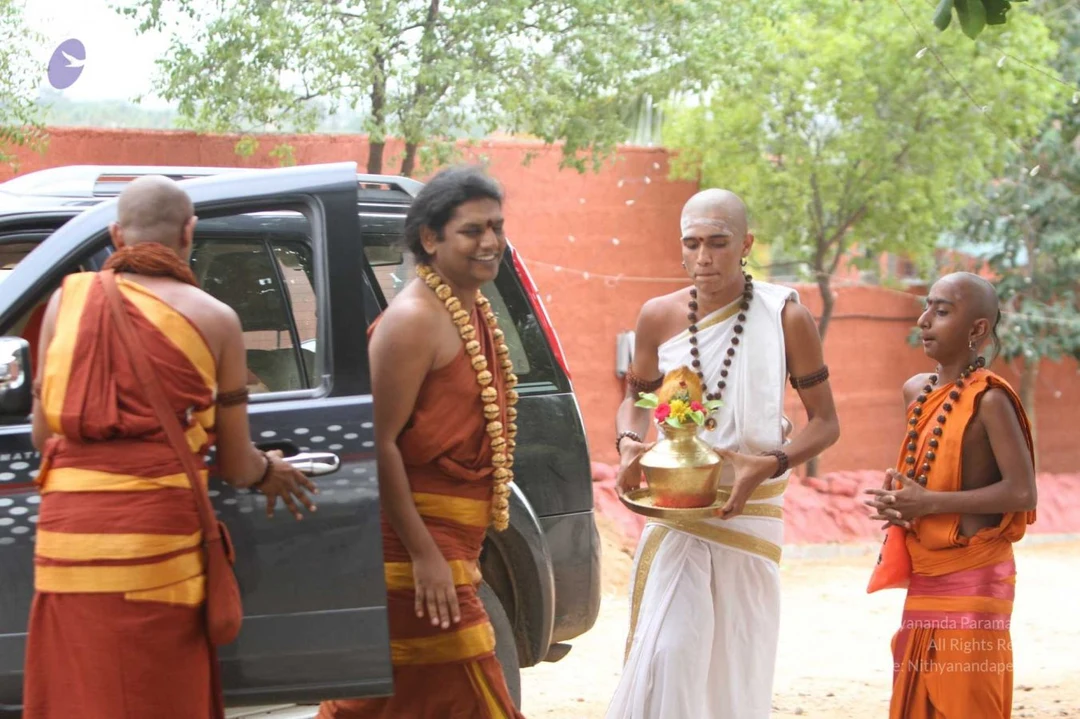
Swamiji arrives

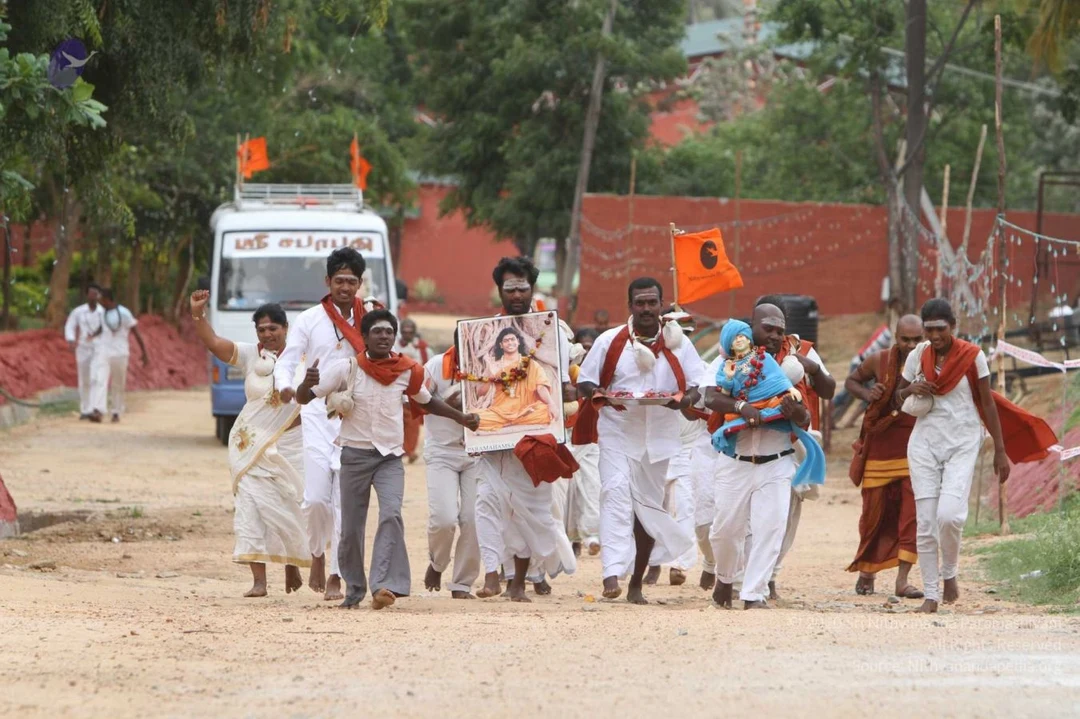
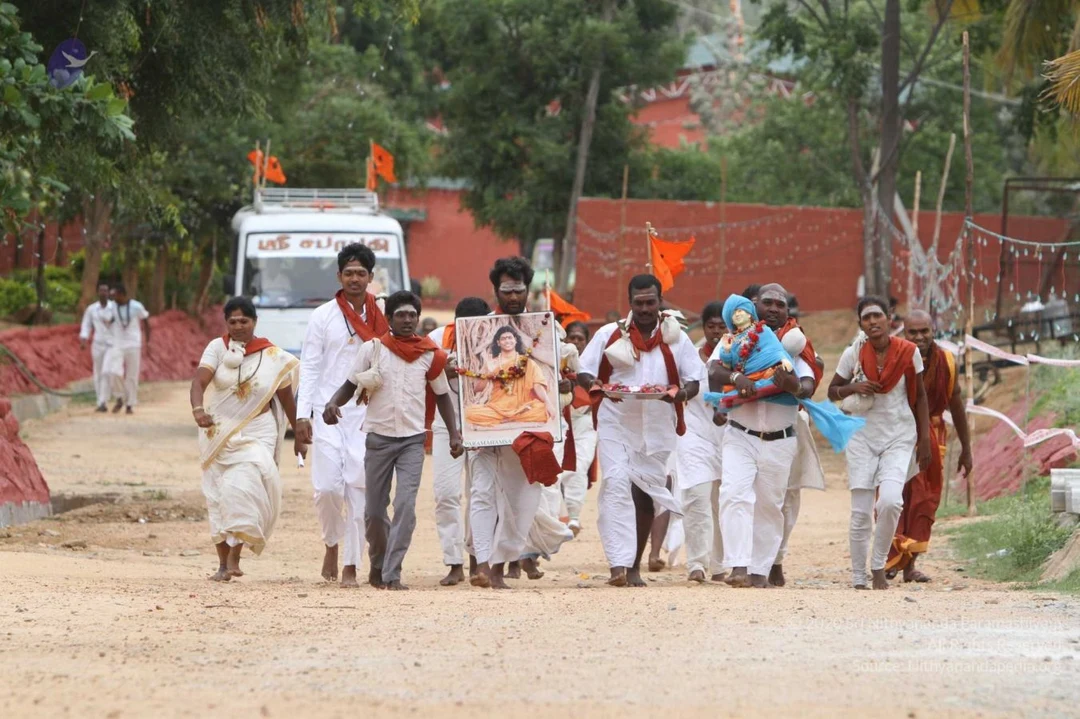
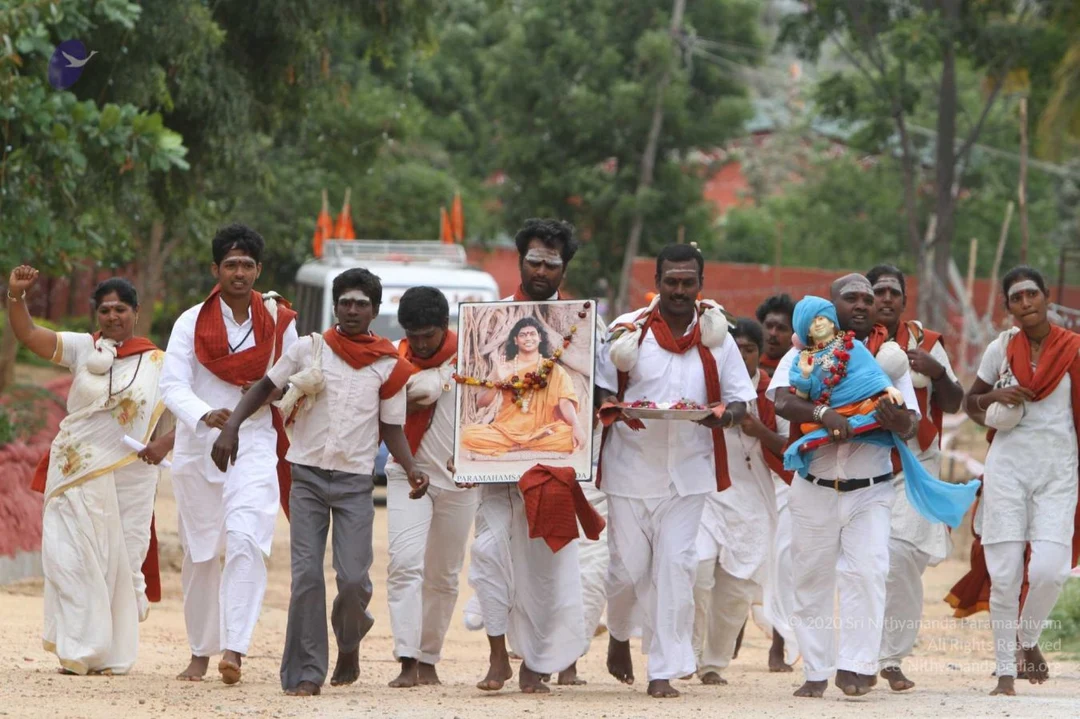
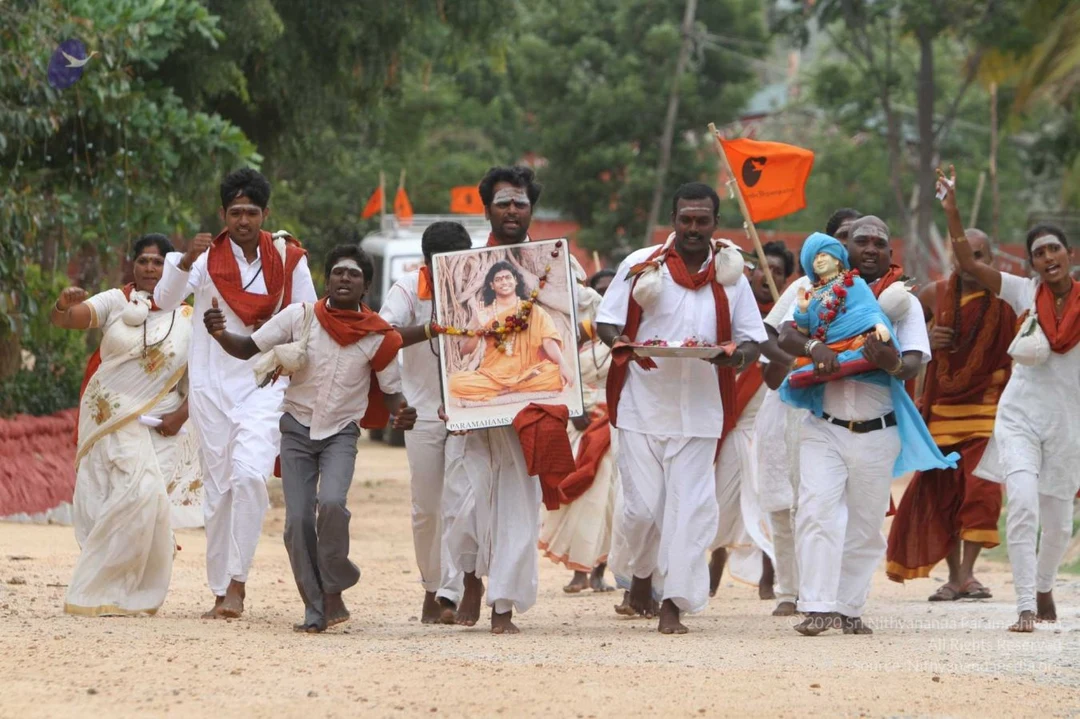
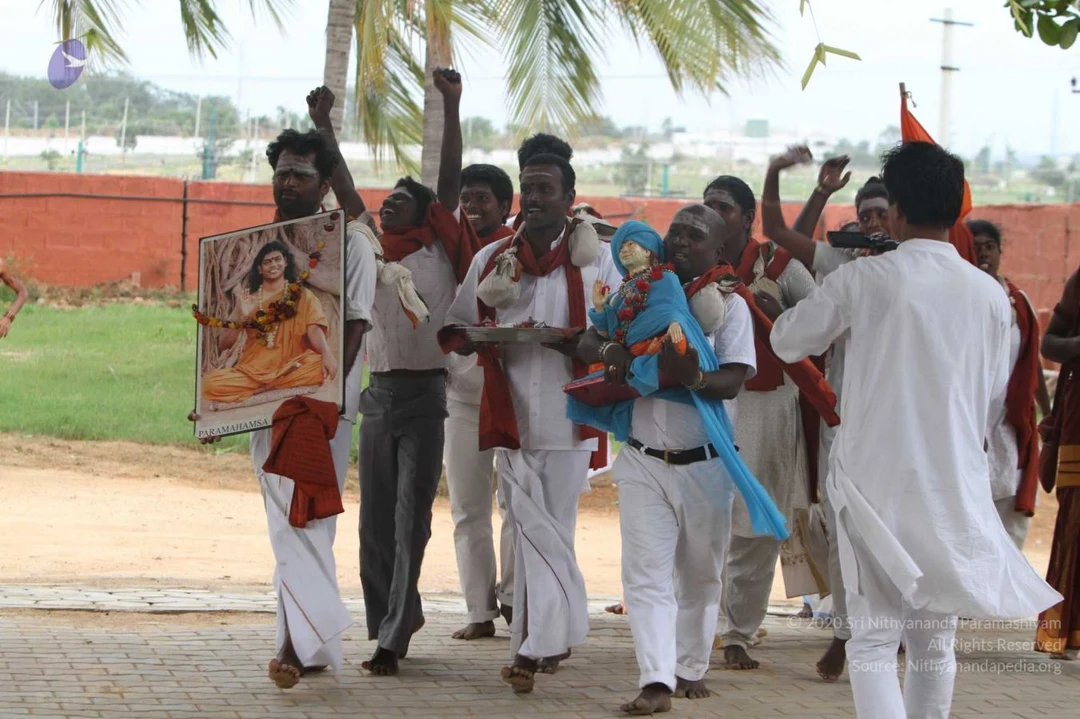
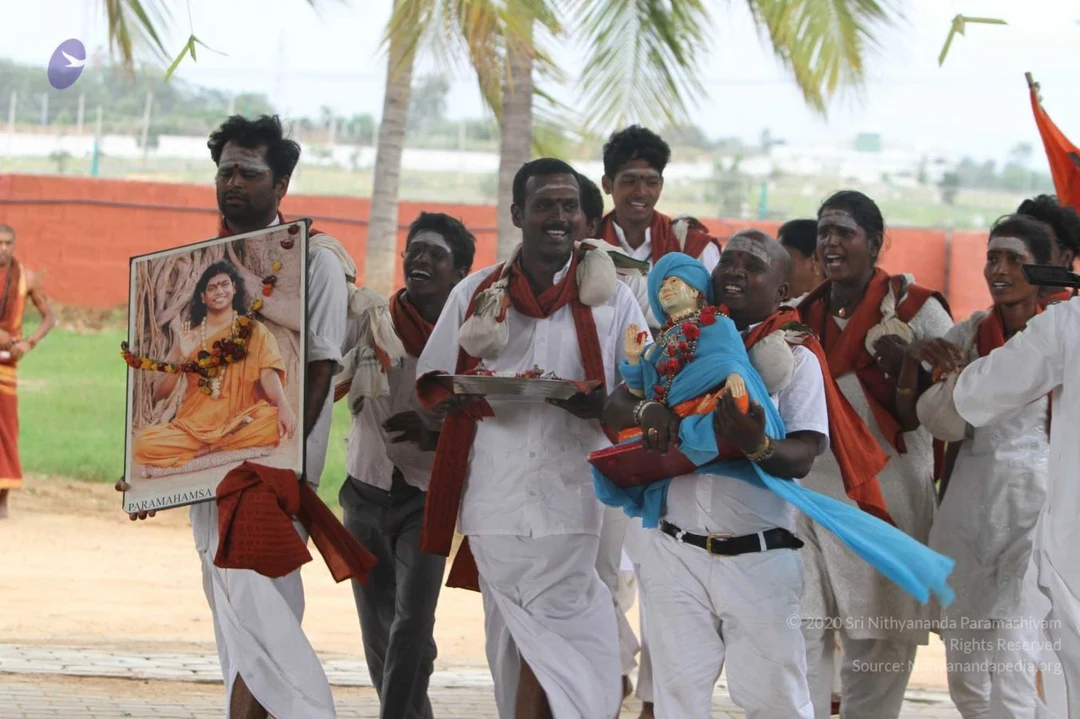
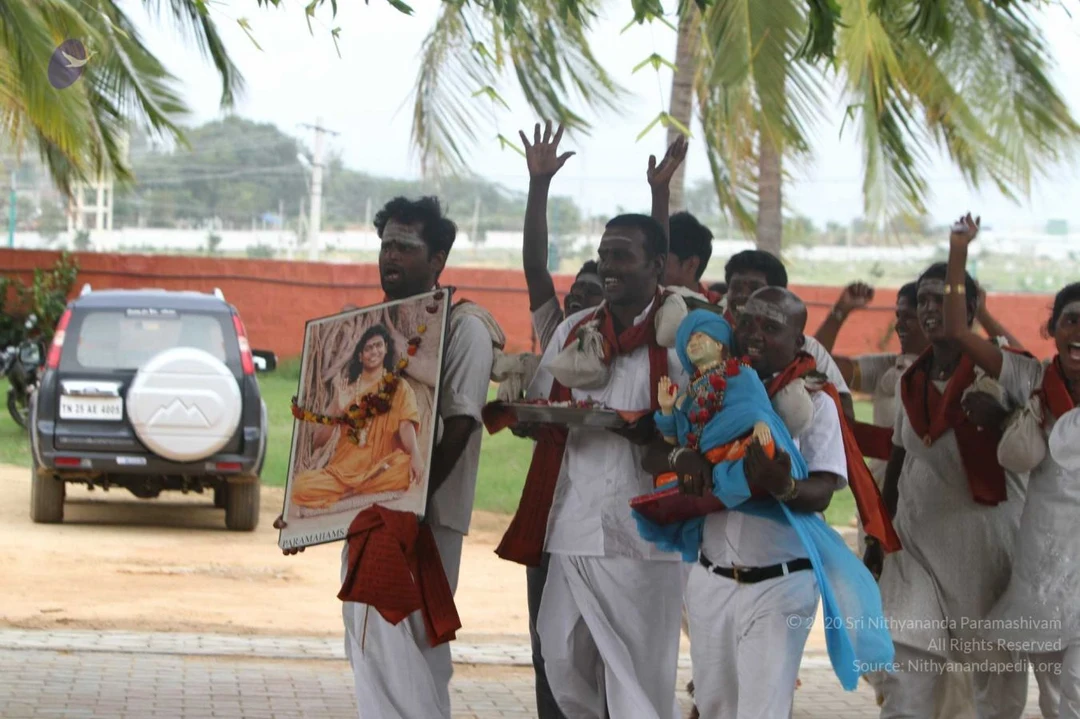
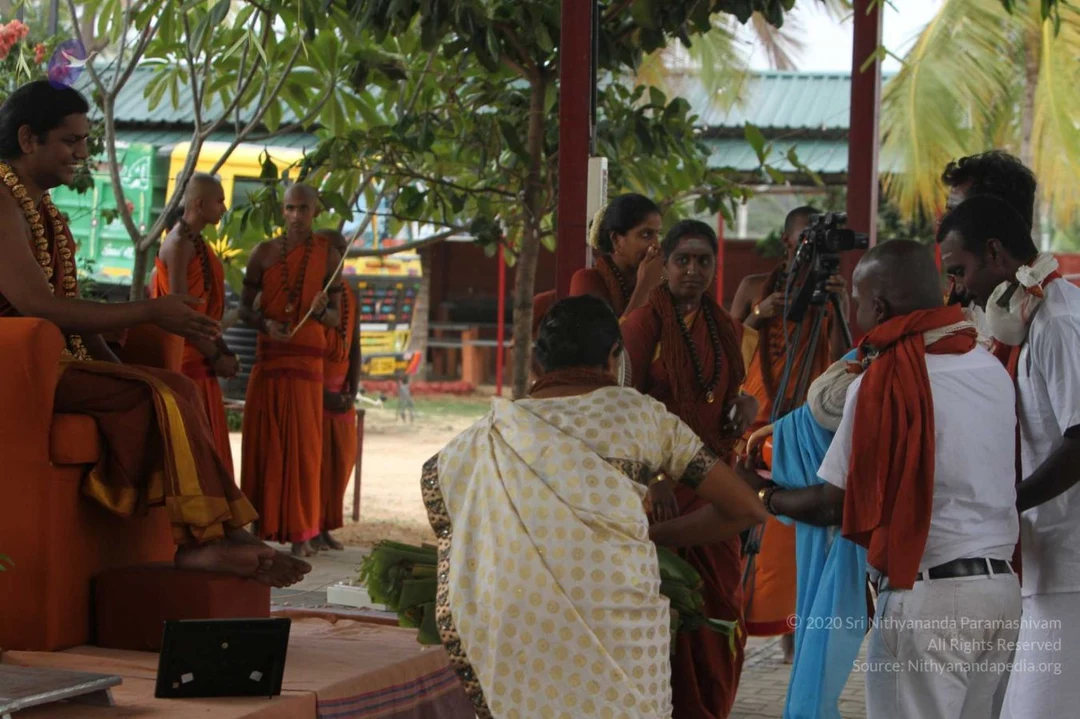
Pada Yatris arrive and get Blessings

Tags:

Paramahamsa Nithyananda, space of completion, sangha, ignorance, consciousness, incompletion, desire, fear, powerlessness, exploit, arrogance, existential reality, seeing.

Photos Of The Day:

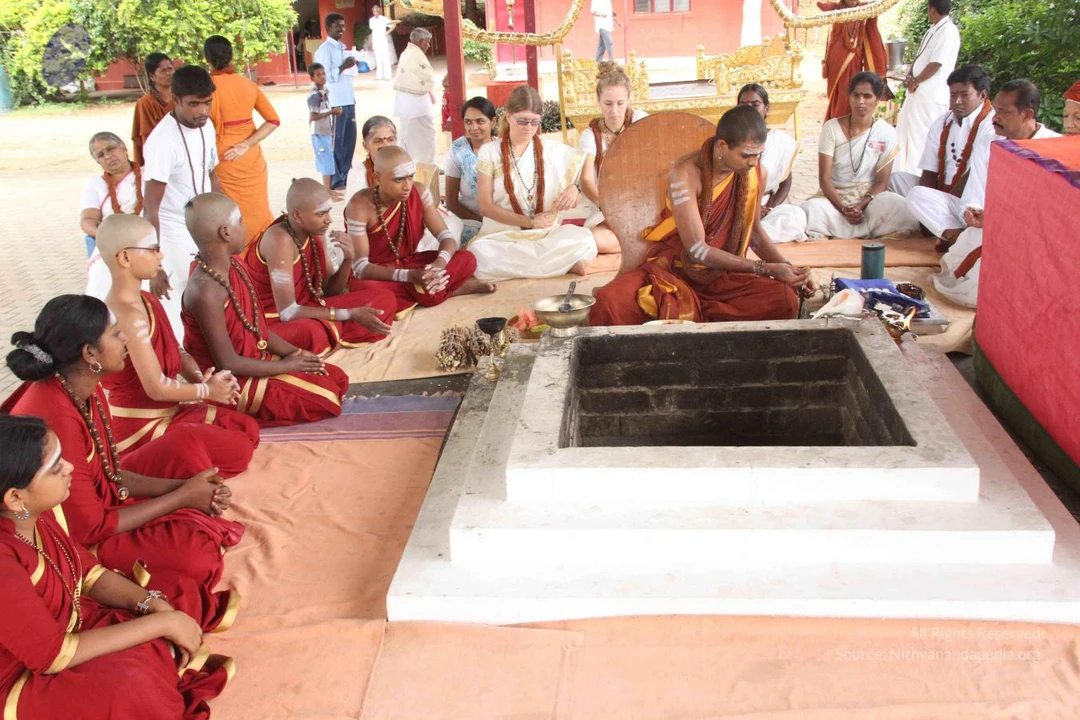
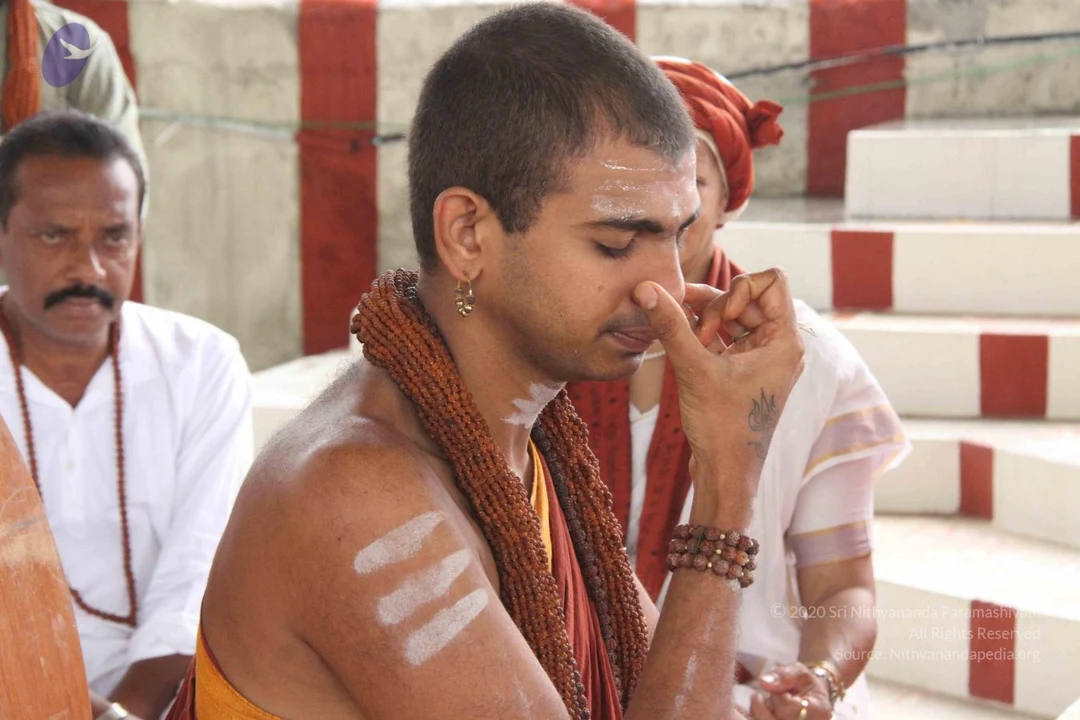
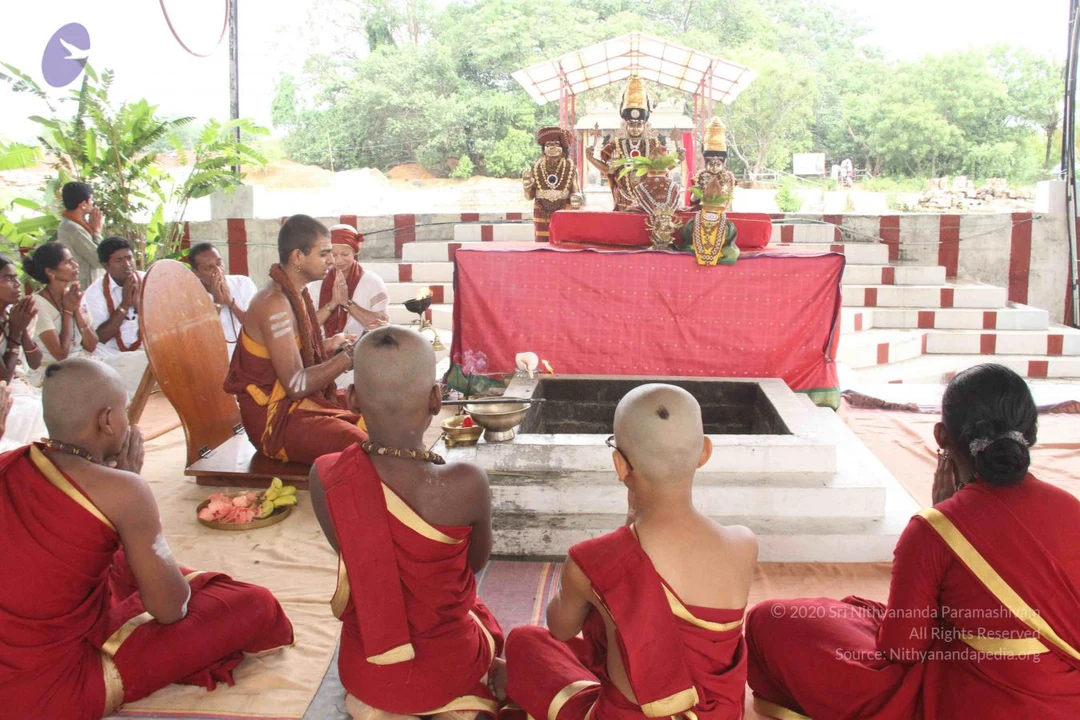
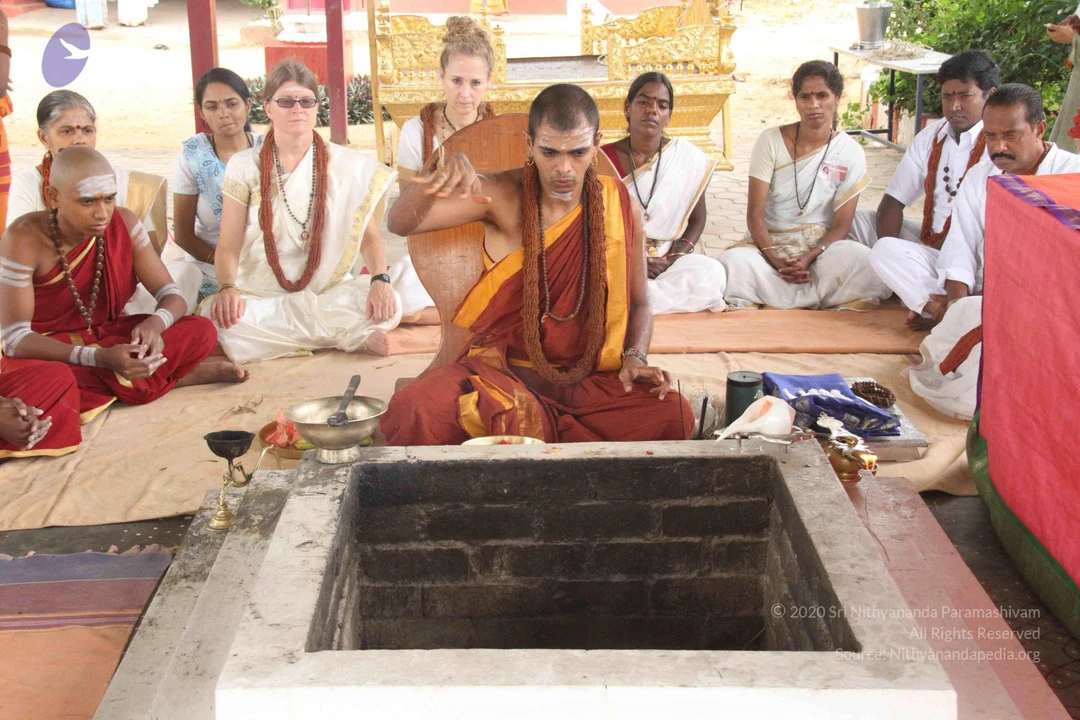
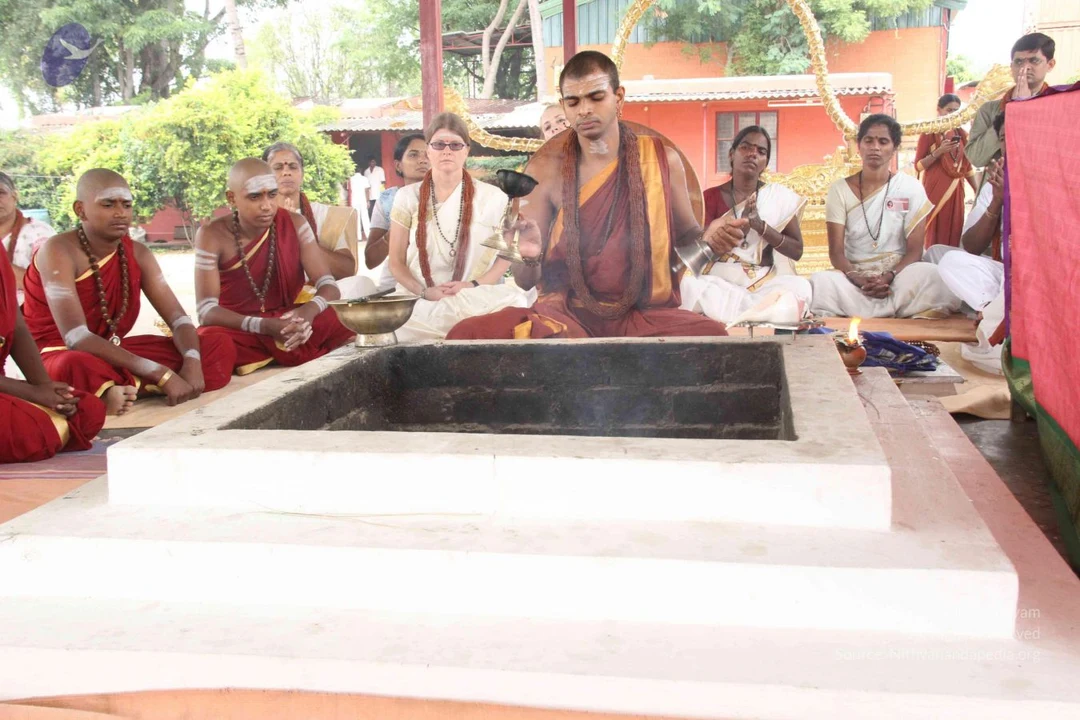
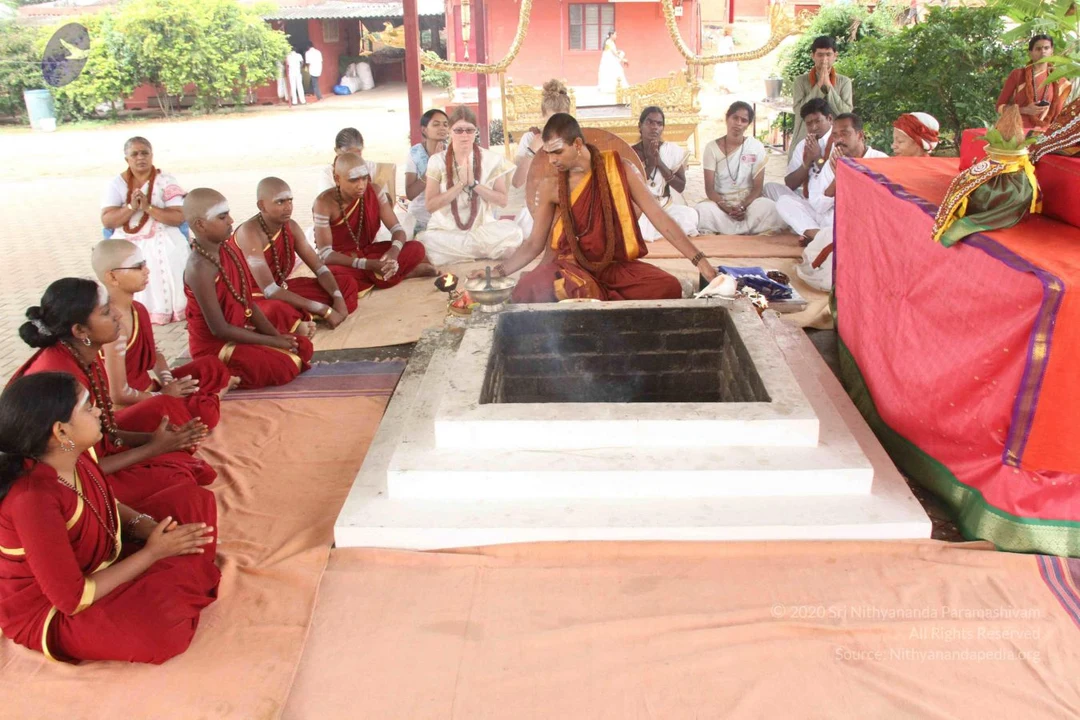
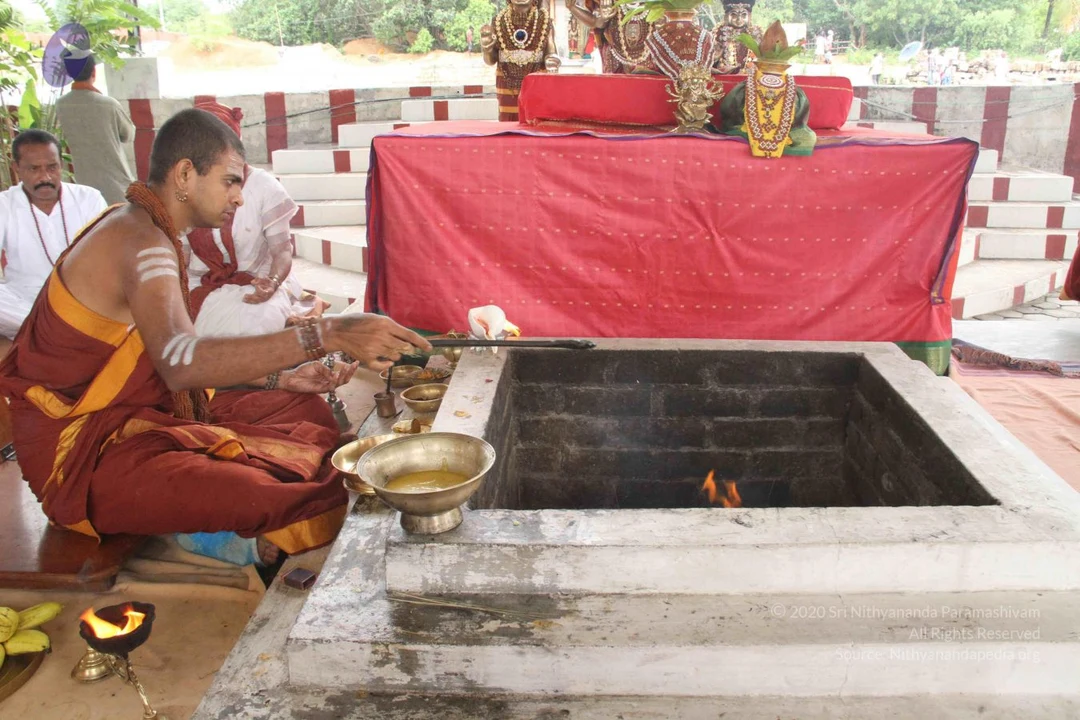
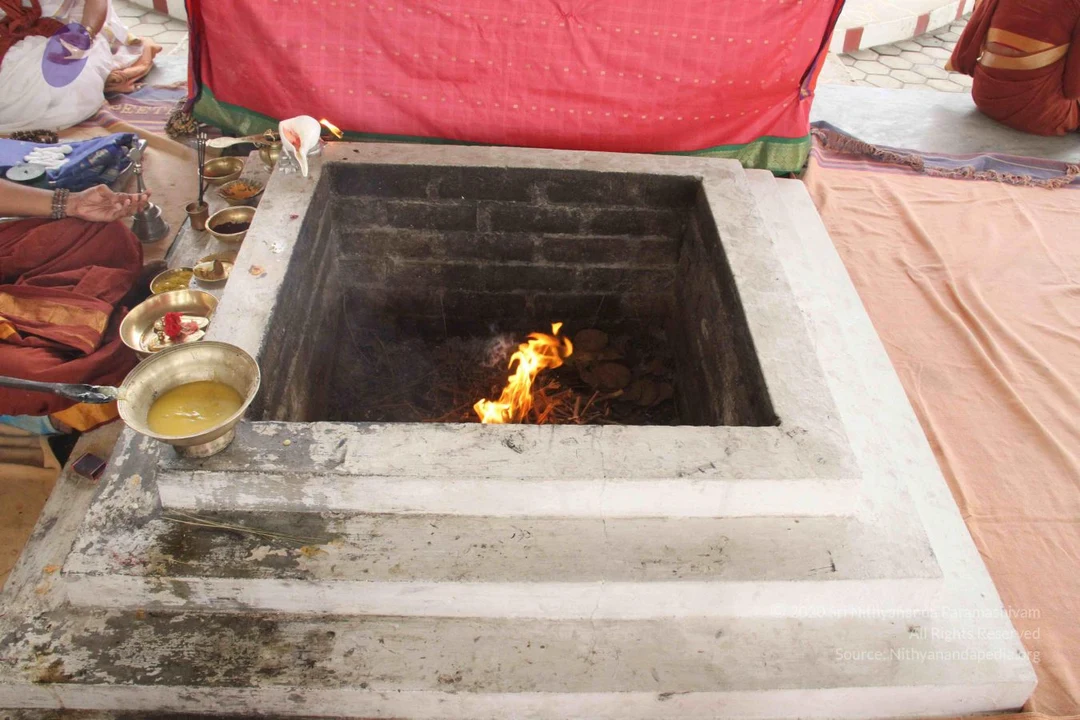
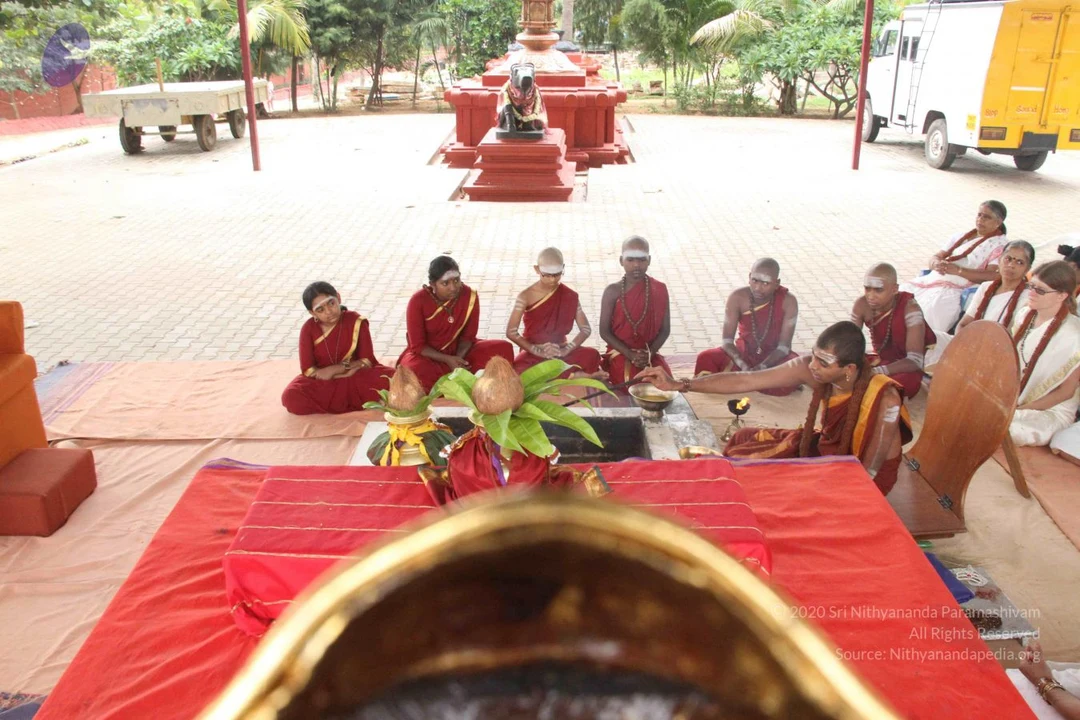
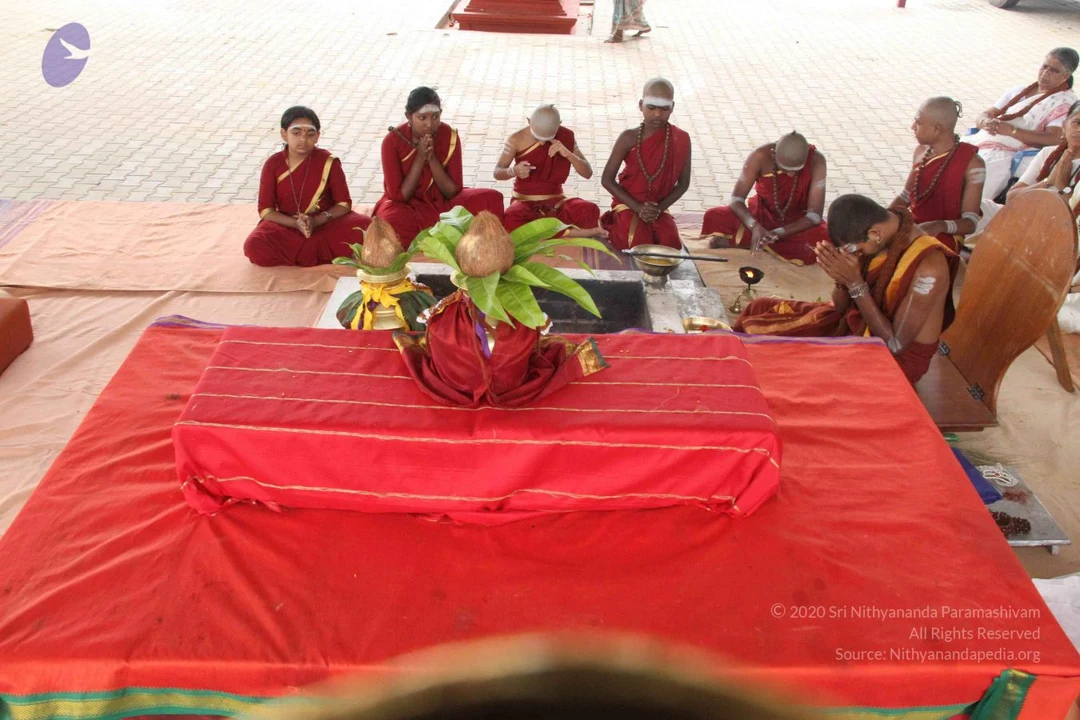
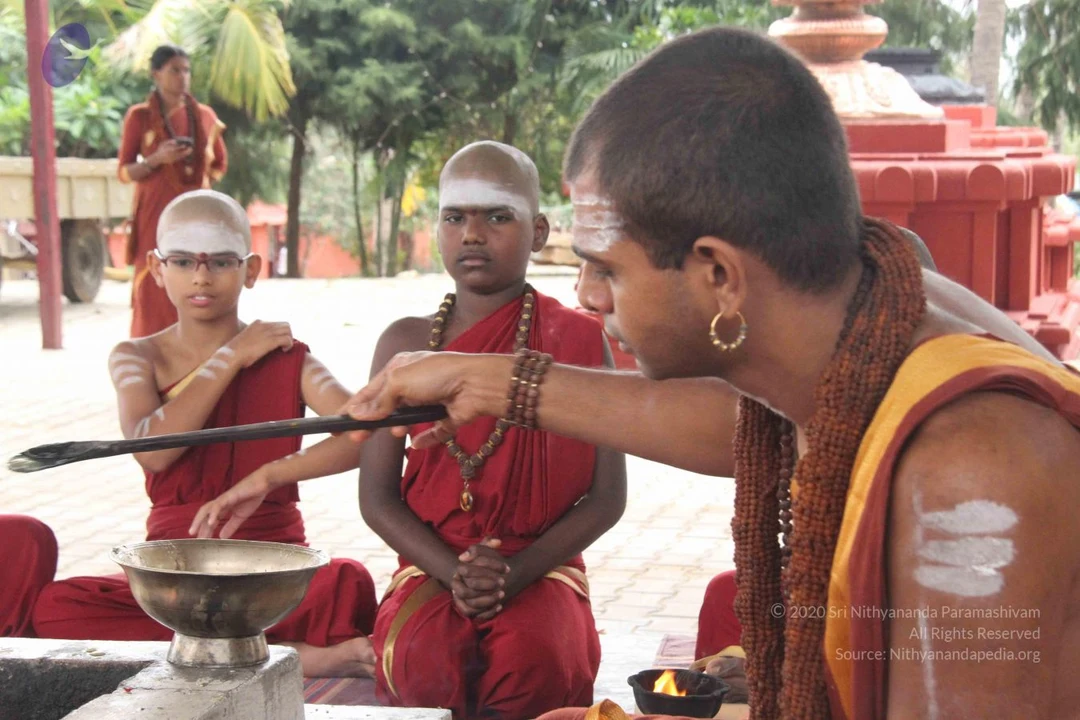
Homa

Photos from this day

View all 305 photos

Paduka Puja

17 photosSource gallery
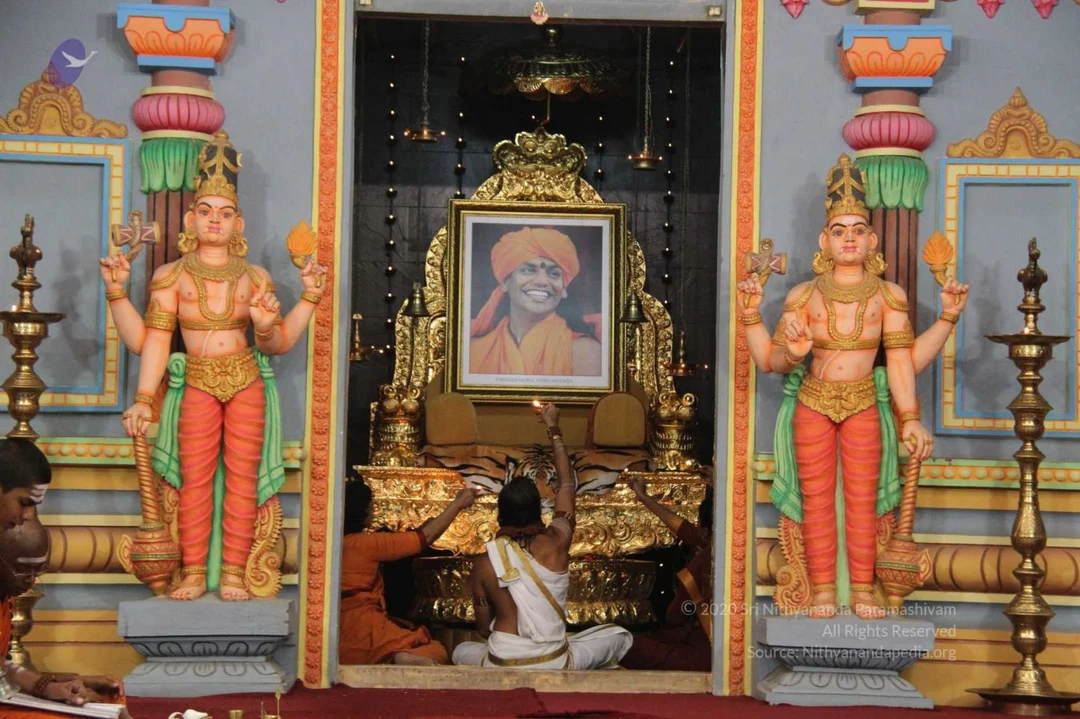
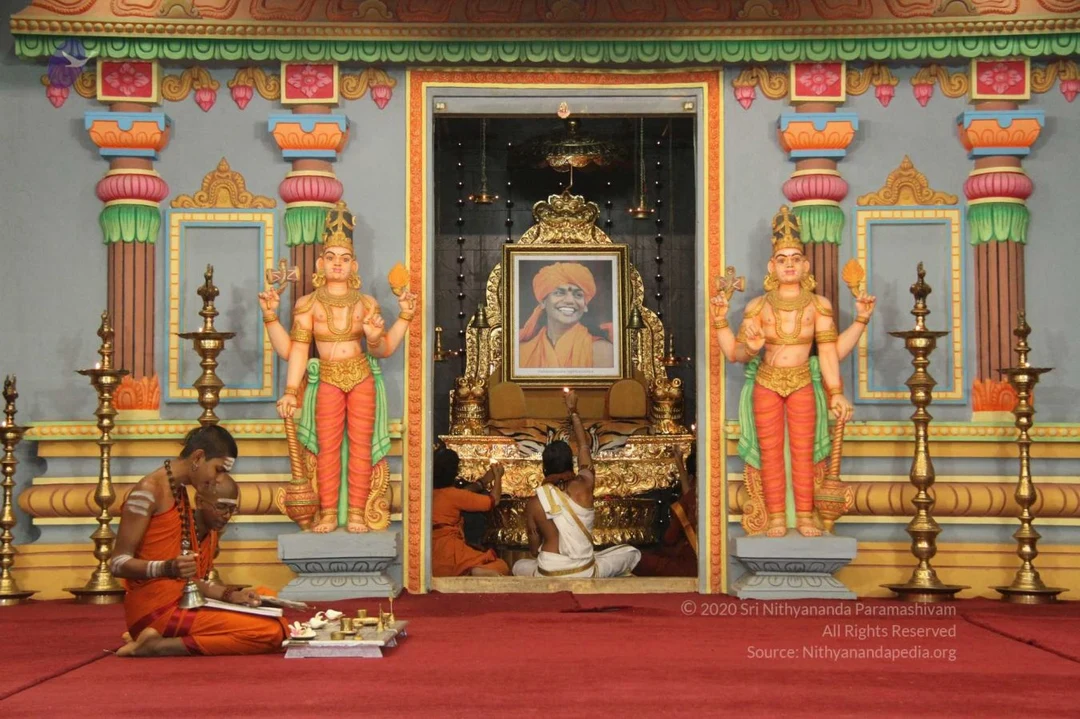
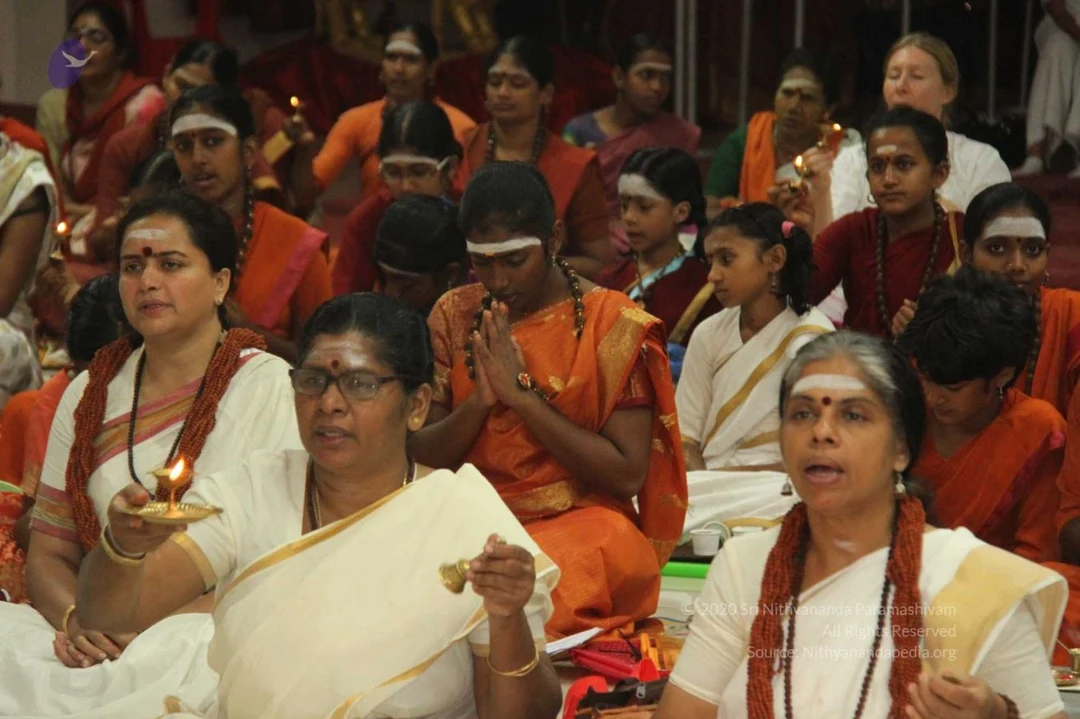
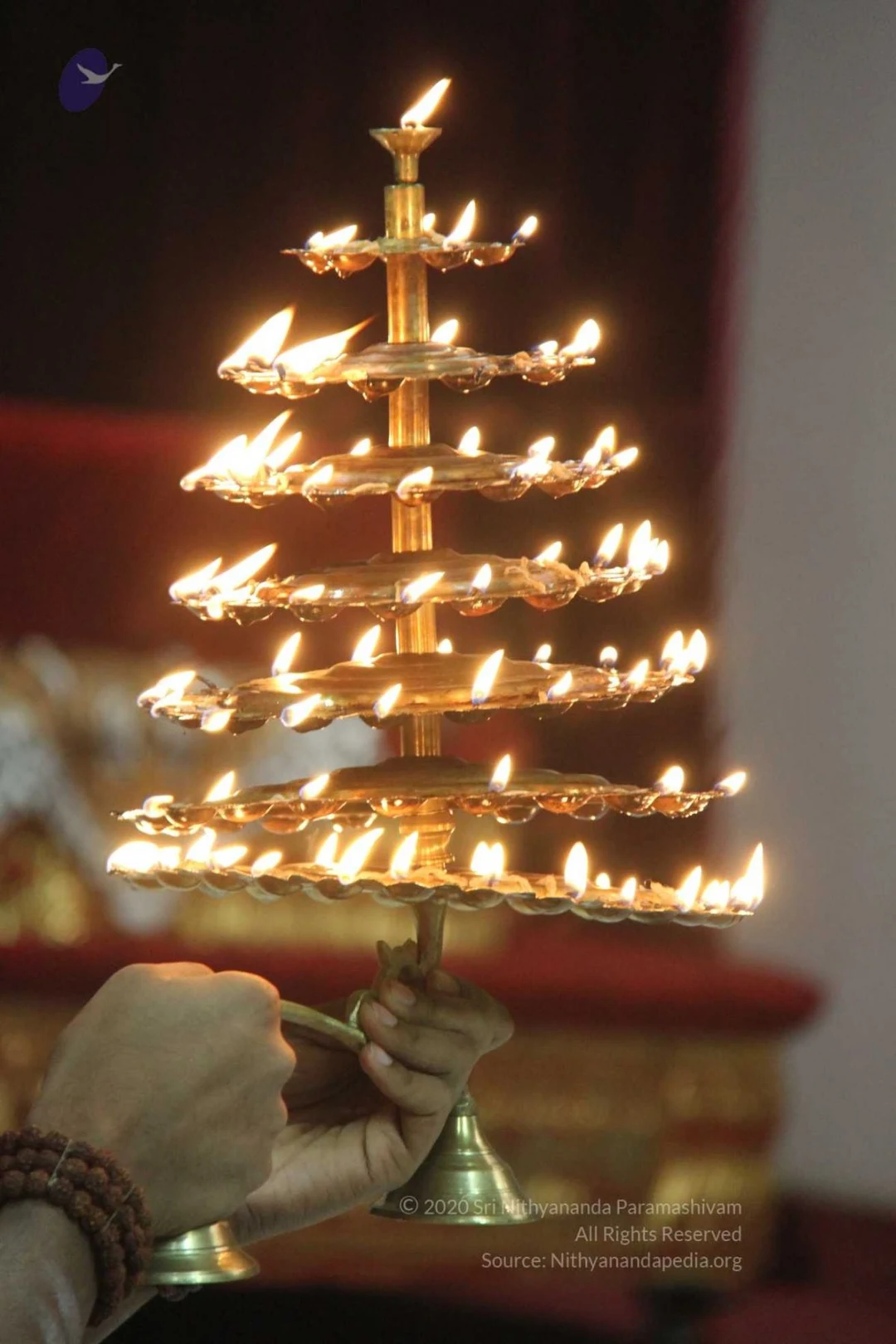
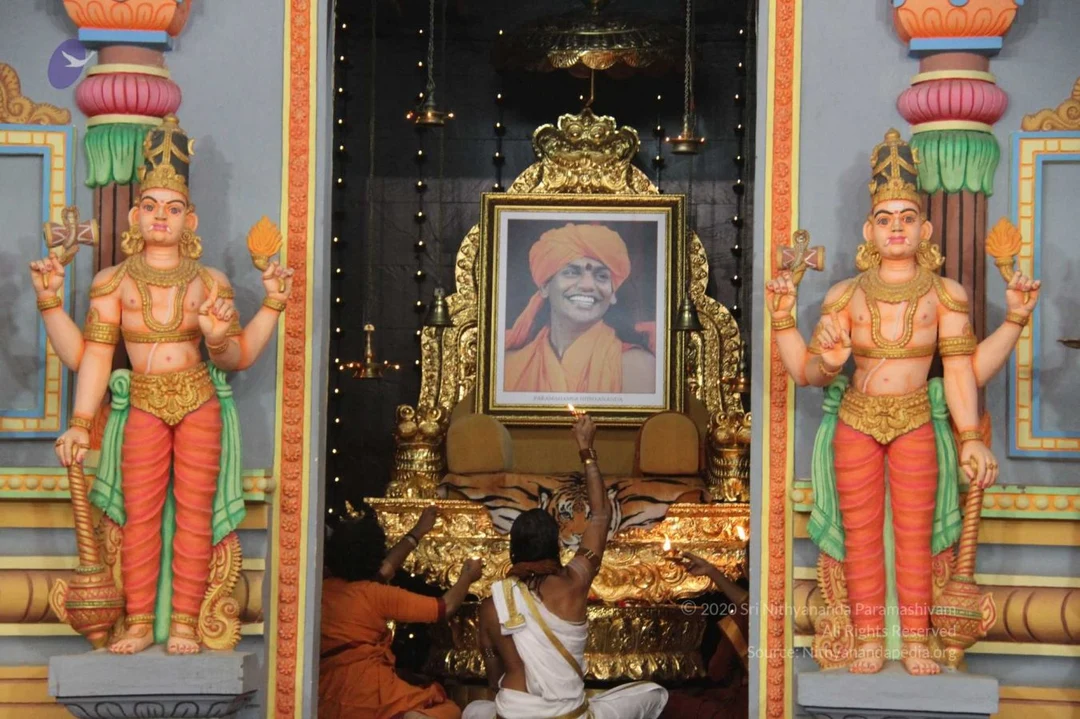
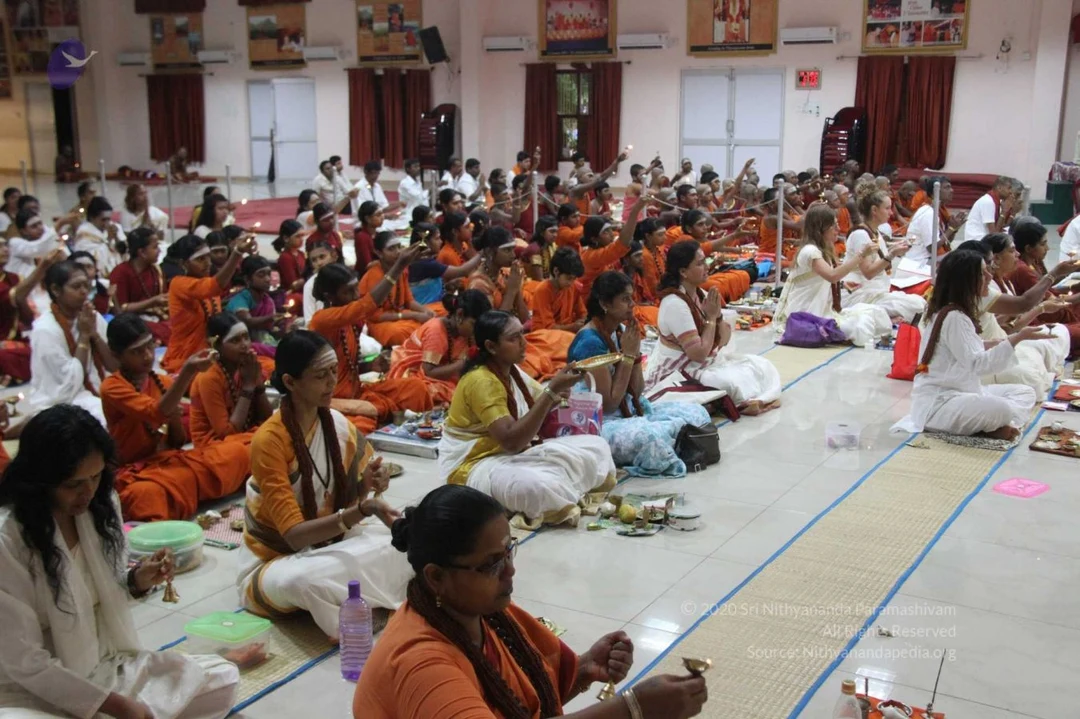
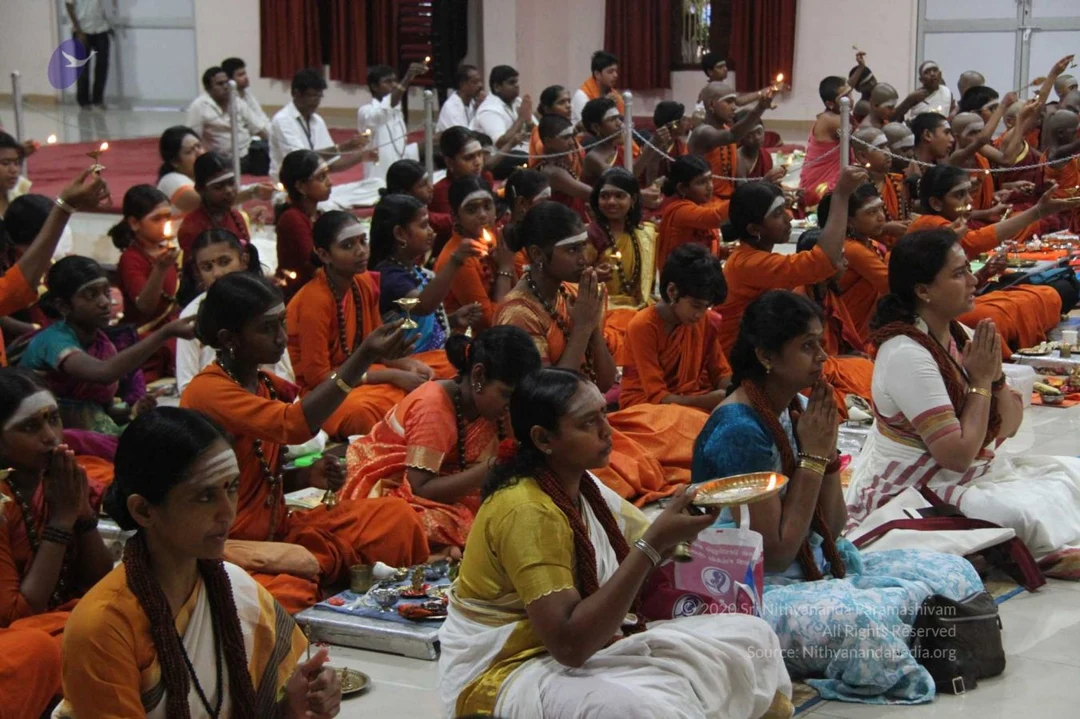
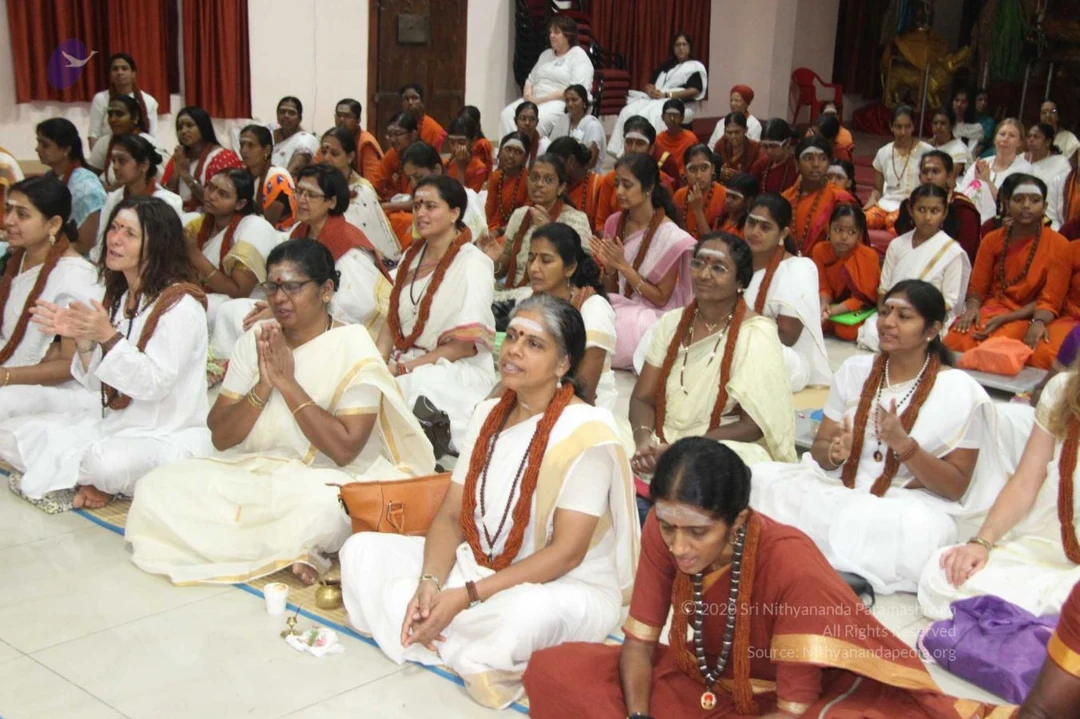
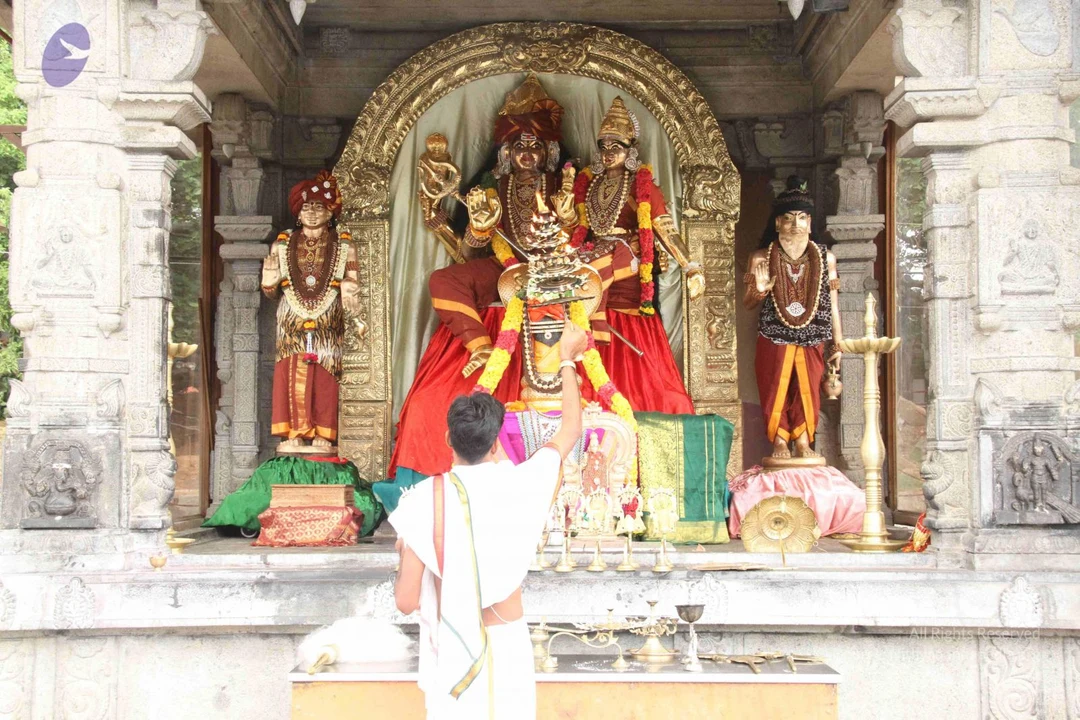
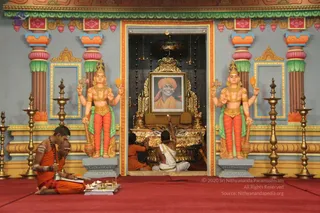
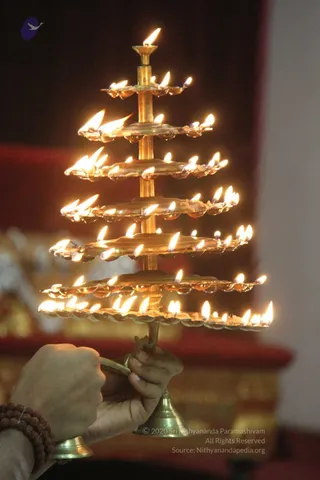
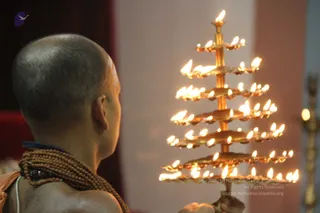
A photograph of a shrine interior with a large framed portrait on a golden throne-like seat draped with a tiger-skin cloth. The framed portrait shows a smiling man in an orange turban and orange robe, with a printed caption at its base. Two painted, multi-armed deity figures in orange-red dhotis and green sashes flank the doorway, holding weapons and lamps. In the center, a figure in white dhoti and white garment sits with bare back, holding up a lit lamp toward the throne, while a person in orange robes assists beside him. Brass oil lamps stand at the sides, and the scene reflects a puja or aarti at the shrine.A temple shrine hall with brightly painted pillars in orange, pink and green. Two large painted standing deity murtis flank the central doorway, each with four arms, a crown, gold necklaces and green and orange dhotis, holding ritual objects. Inside the shrine, a gilded throne is backed by a framed portrait labelled "Paramahamsa Nithyananda" showing a smiling man in an orange turban and orange robe. Brass oil lamps stand along both sides. Three priests are present: one seated on the left in orange clothing with sandalwood marks on the forehead and arms, holding a bell and a tray of offerings; a shaved-headed priest in white dhoti kneeling before the throne, raising one arm; and a figure in orange seated near the throne. The floor is covered with red carpet.A seated group of devotees performs a lamp ritual in a temple hall with a golden deity murti and a figure in white visible in the background. Foreground women wear white saris with gold borders, orange and red garments, rudraksha malas and white forehead markings; several hold small oil lamps with lit flames. Other participants wear orange or saffron saris and sit closely on mats. A woman in white sits near the back, and a few women in the crowd have their hands raised in prayer. The scene is a devotional gathering with lamps, mats and temple decor.A seated group of women and girls in a temple hall performs a devotional ritual with lit oil lamps. In the foreground, a woman in a white and gold-bordered sari and rust-red beaded mala holds a brass oil lamp with a flame in her right hand and a small brass bell-like object in the other. Beside her, a woman in a white sari with a red mala and sindoor on her forehead sits with eyes closed, another in white with a red mala and a white forehead mark sits on the right, and a girl in an orange sari with gold border presses her palms together in prayer. Behind them, many more participants in orange, maroon and white clothing wear white sacred ash marks on their foreheads and hold small lamps or rudraksha malas. No a person candidate is visible.A tiered brass lamp stand with multiple rings of lit oil lamps is held aloft by a hand wearing a rudraksha bracelet of beads. Flames burn on each of the six tiers and at the crown of the stand against a dark red background. The brass lamp appears to be an aarti lamp used in ritual worship. No person's face is visible, and no one else is in the frame.Photograph of a shaved-headed person seen from behind and slightly from the side, bare-shouldered with a sacred cloth over one shoulder and multiple strands of rudraksha beads around the neck, holding up a tiered golden aarti lamp stand with many lit oil lamps in rows across its branches, against a soft pink and red background. The person appears to be performing an aarti ritual. Identity cannot be confirmed from appearance alone, so the figure is described by role as a person performing aarti.

Bhajans

9 photosSource gallery
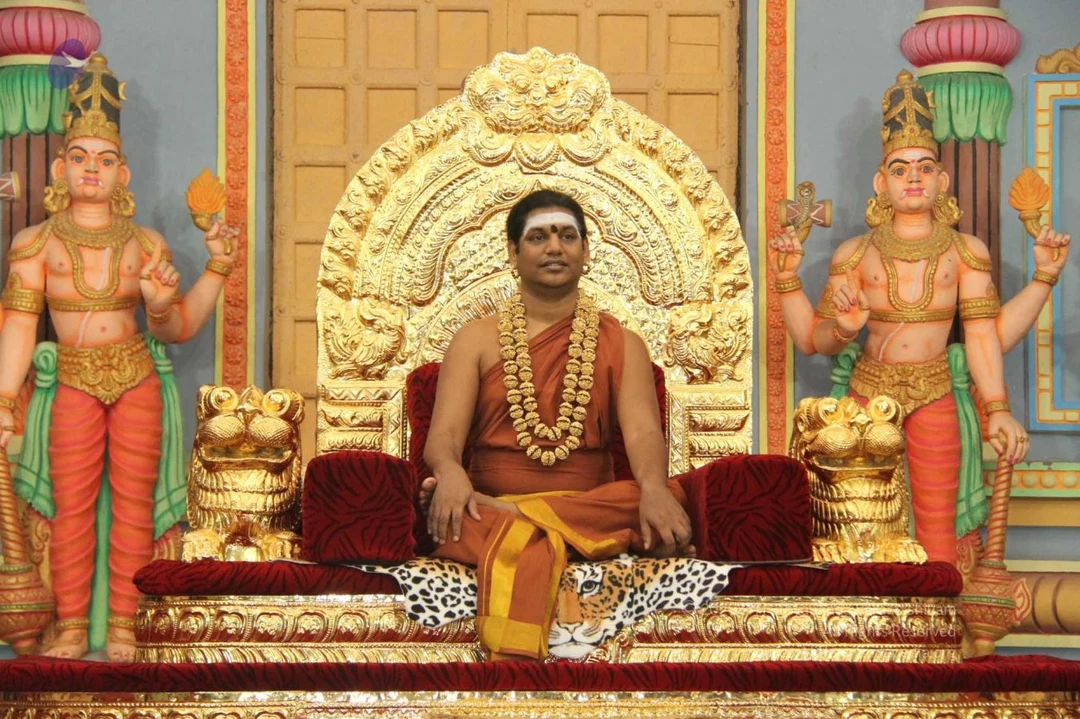
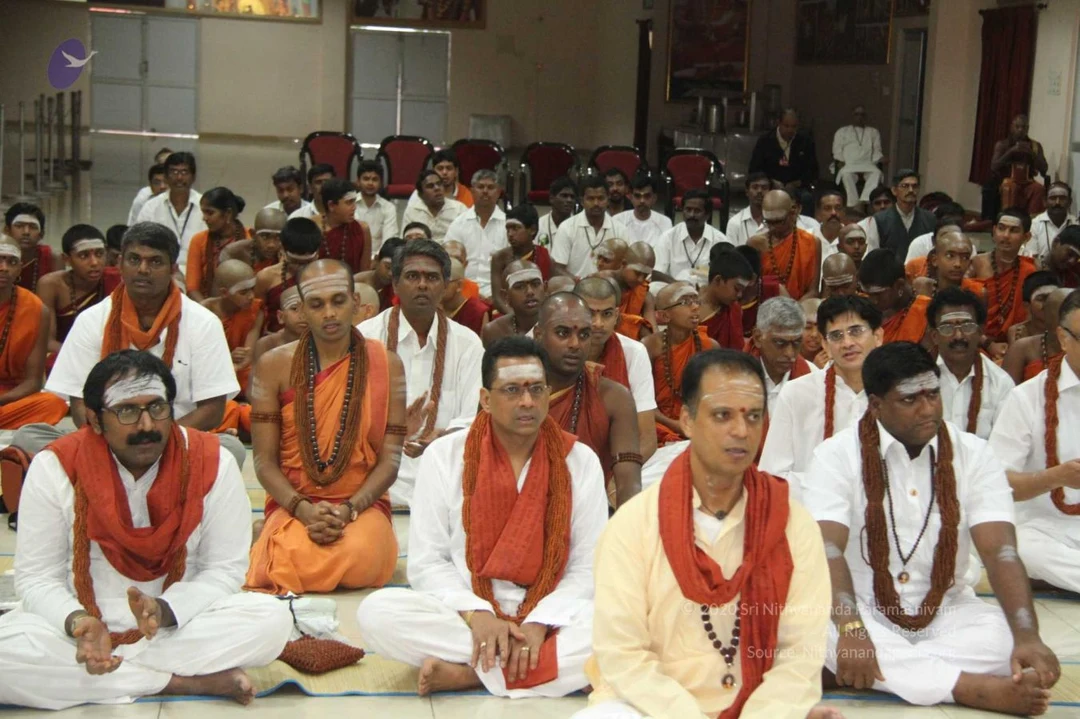
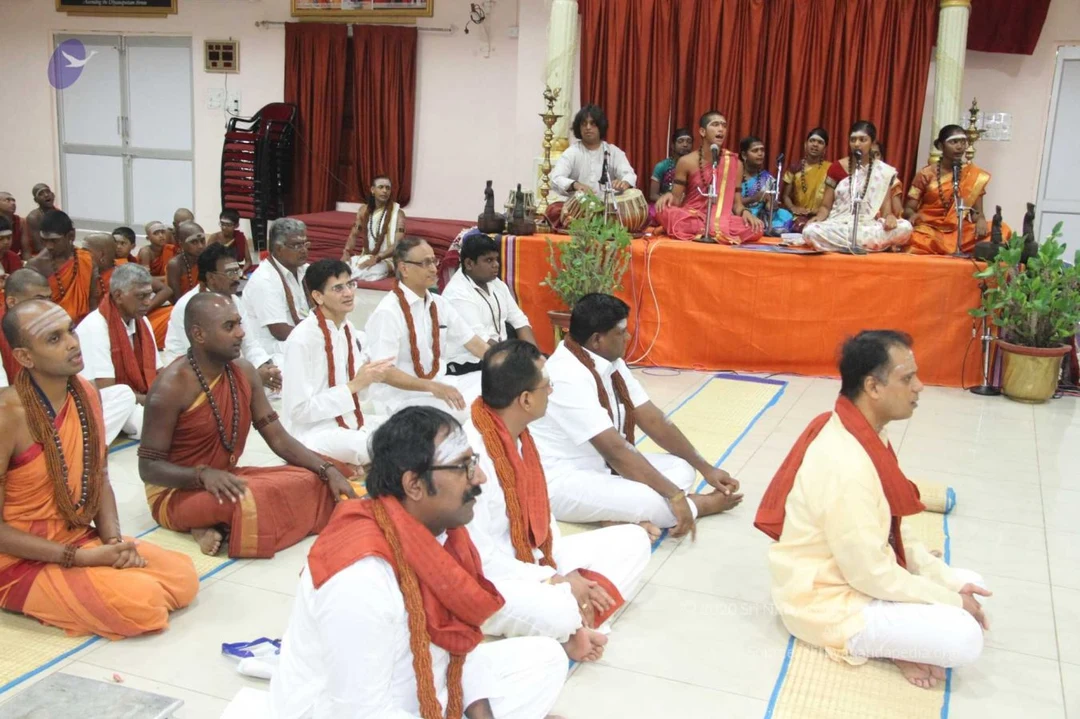
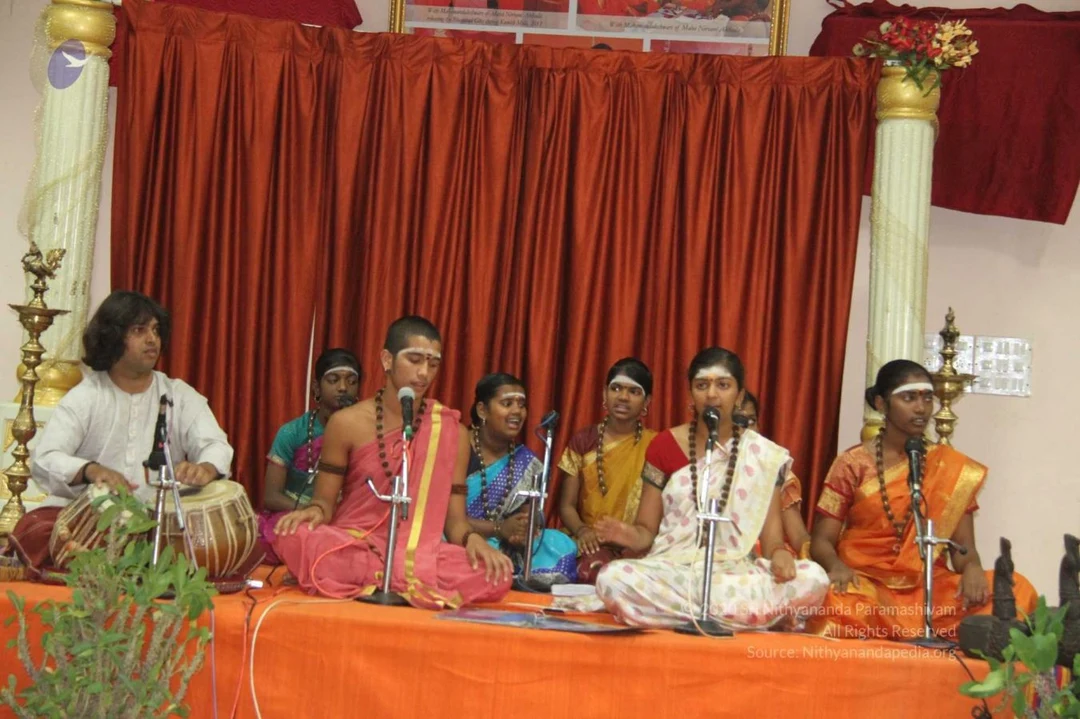
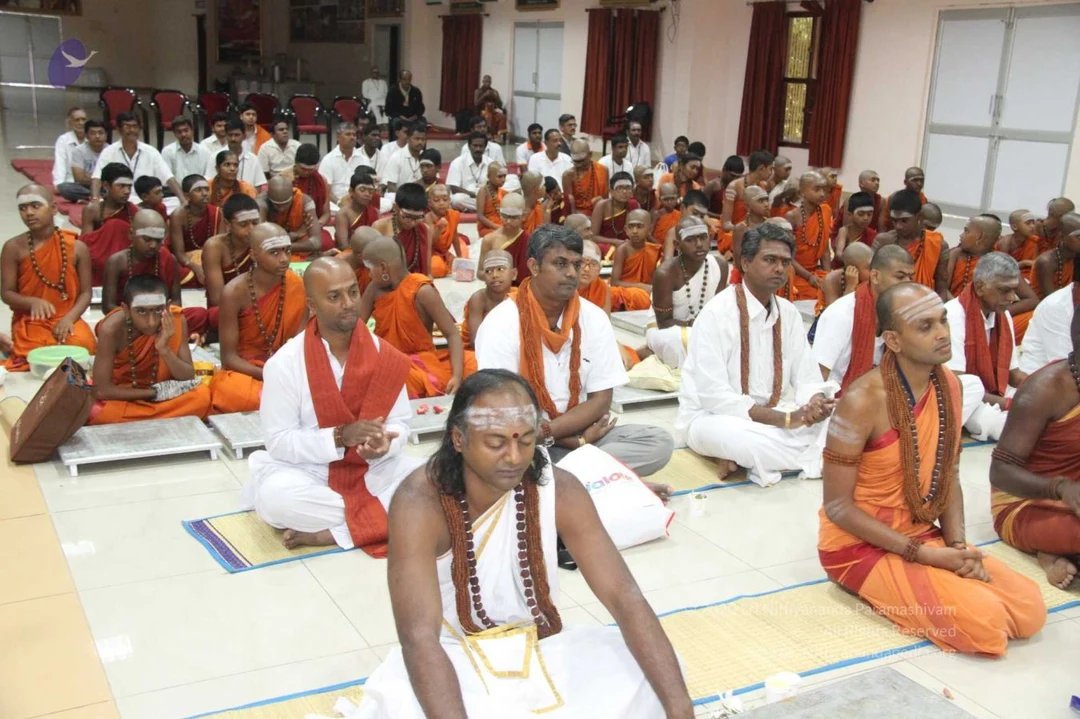
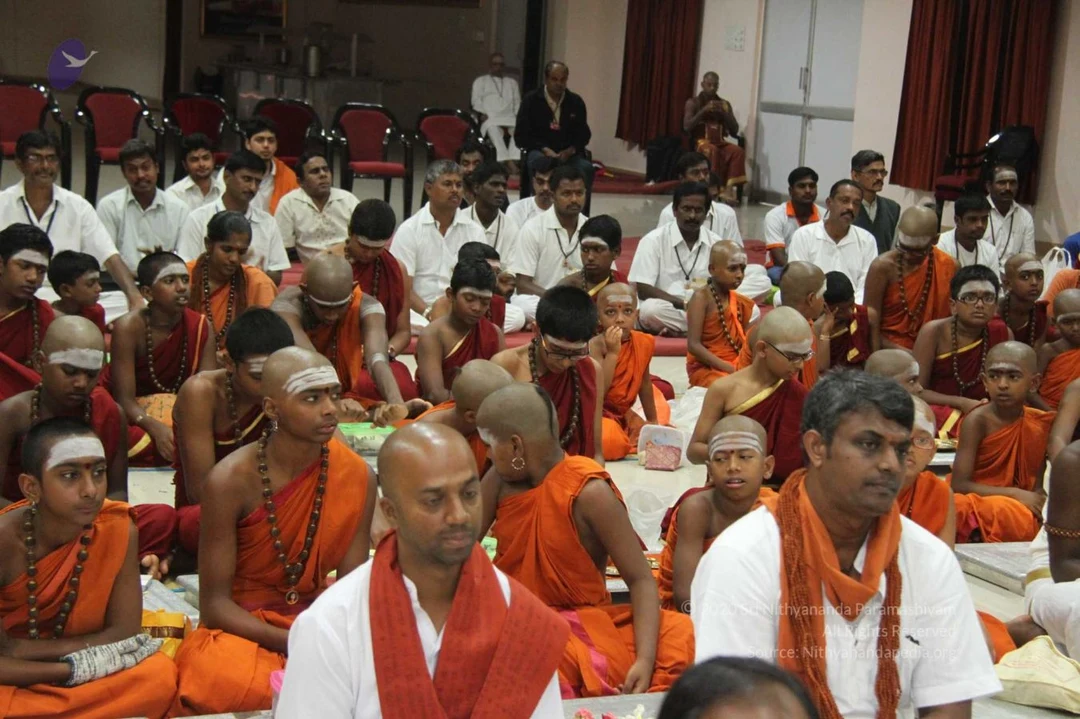
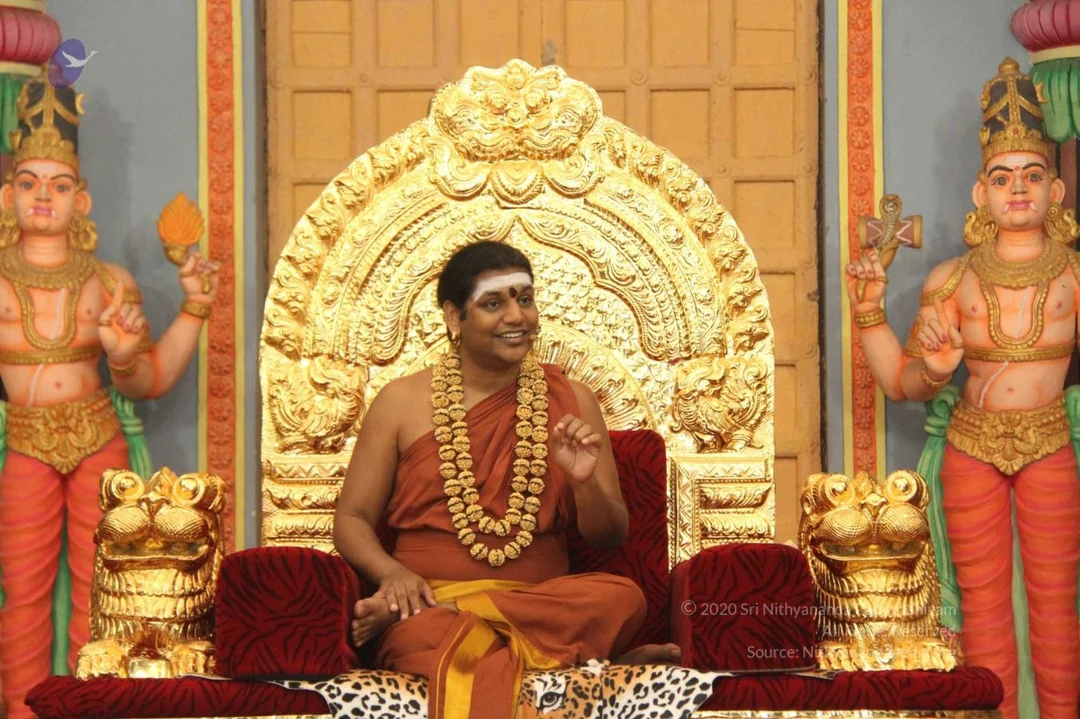
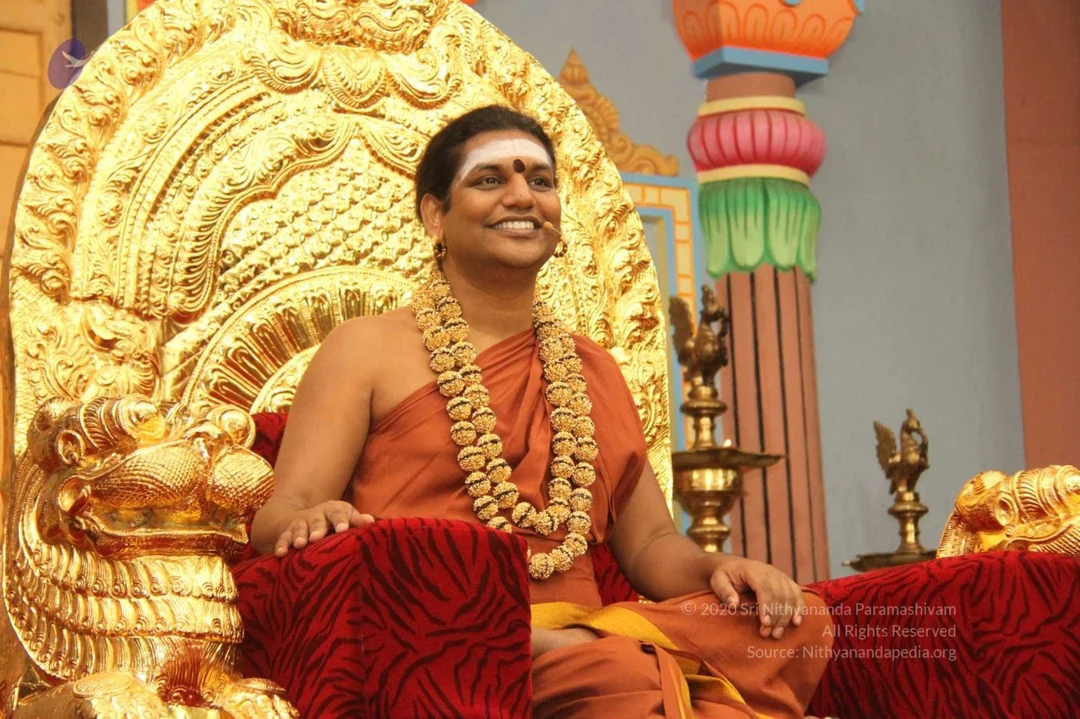
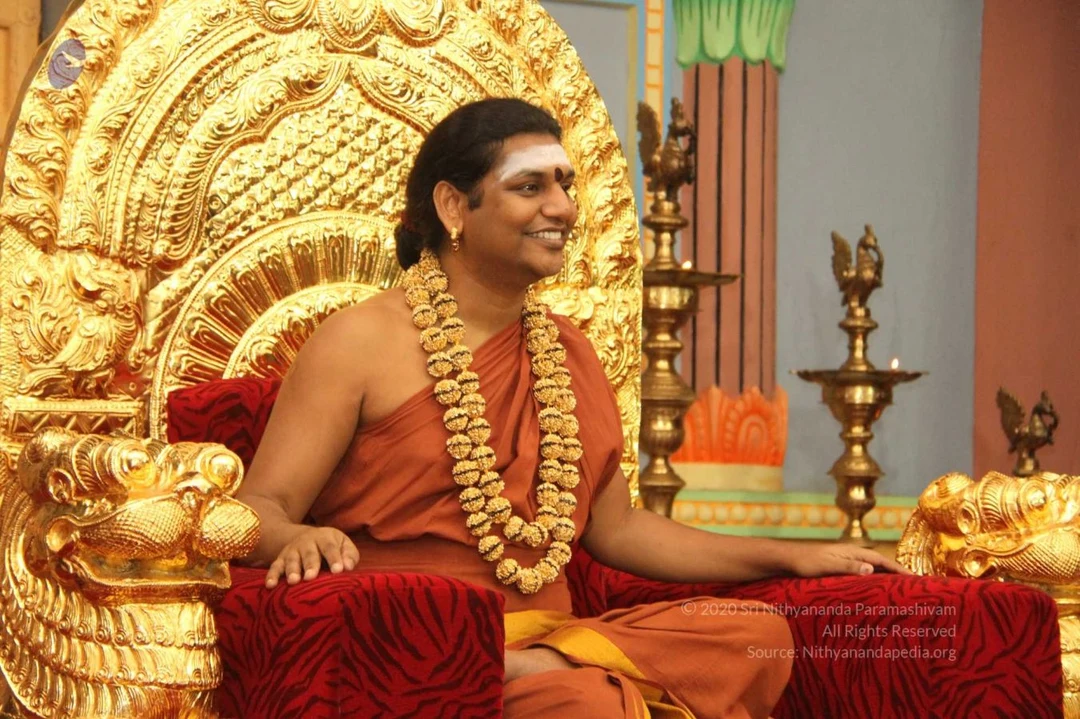
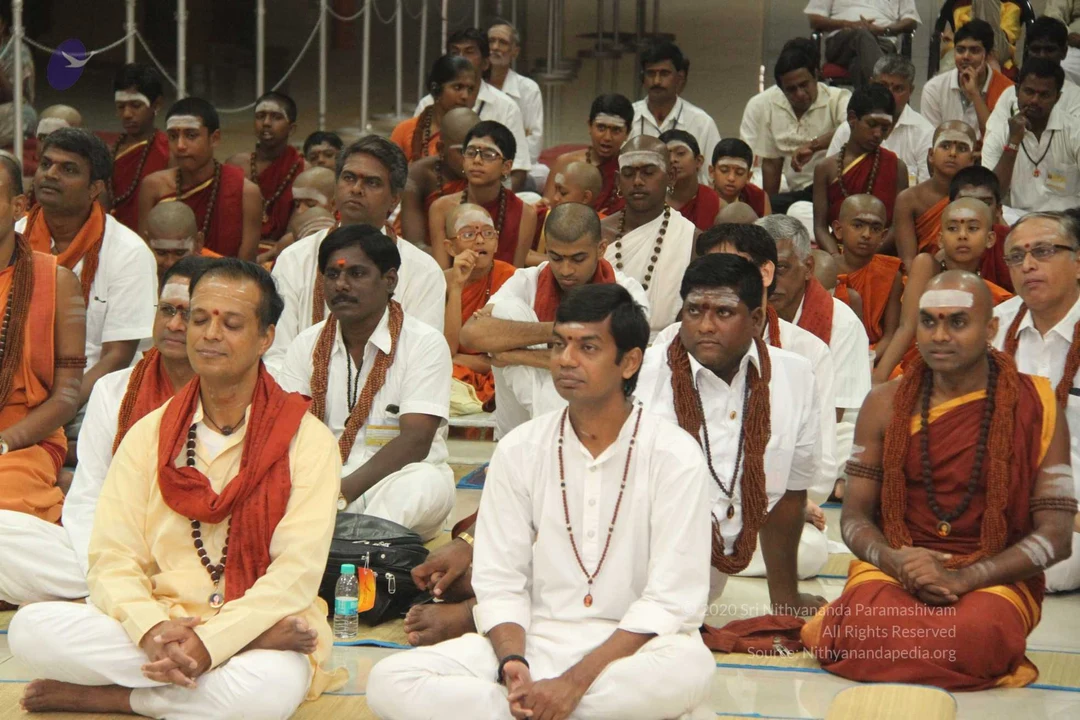
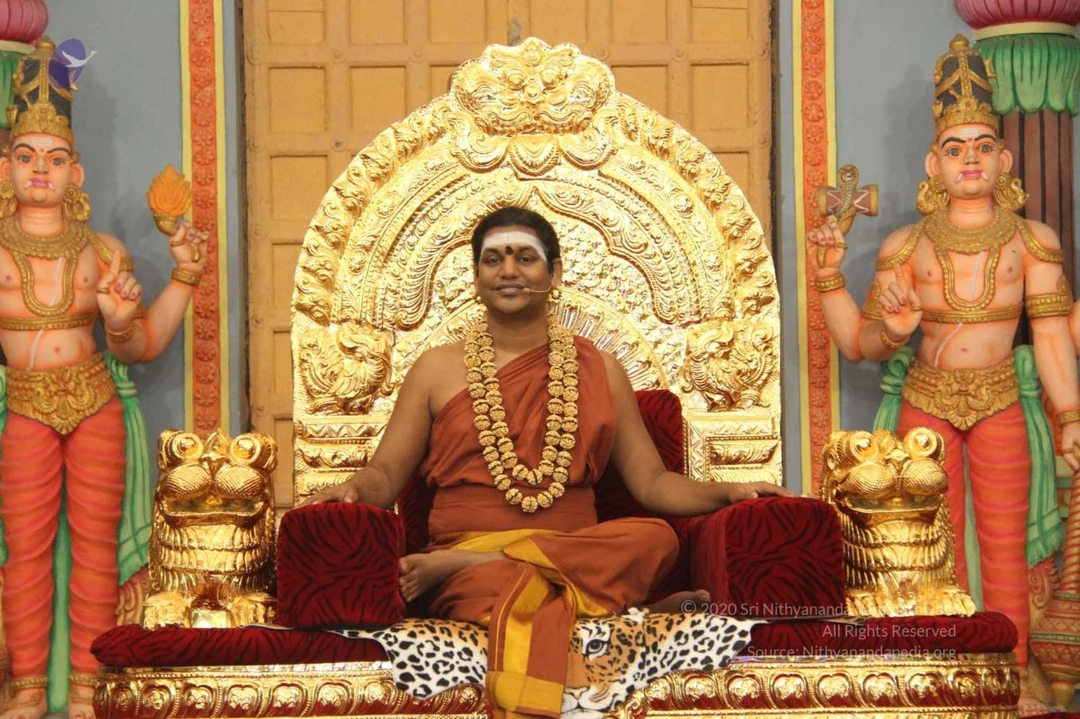
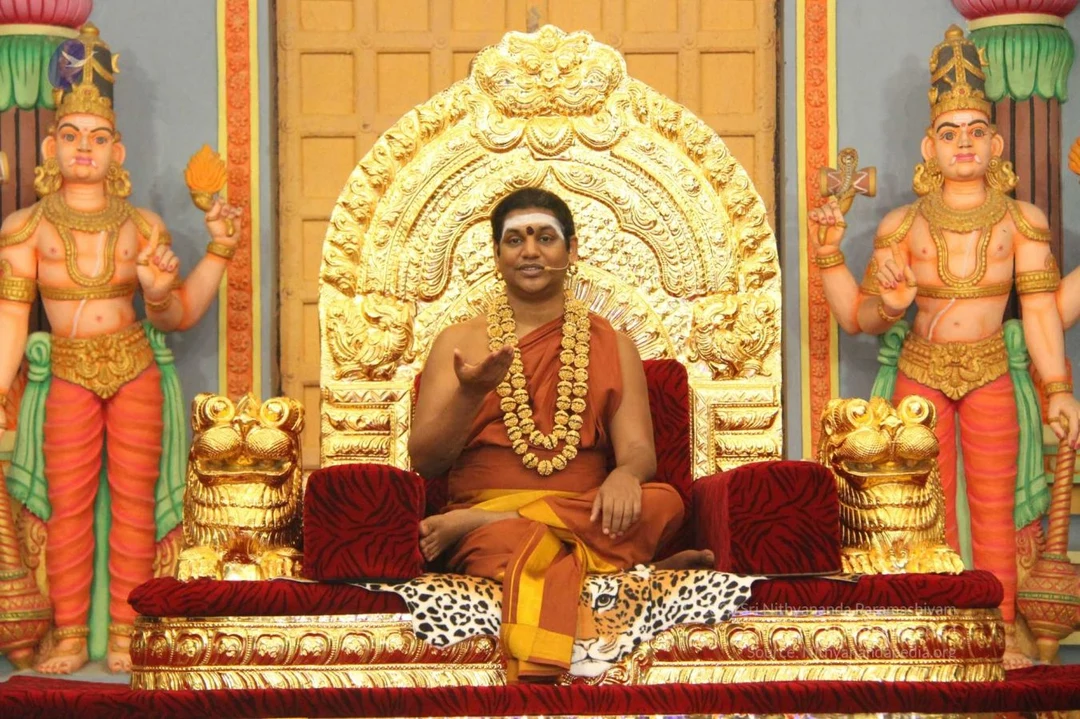
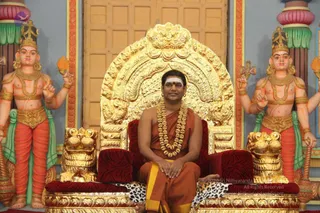
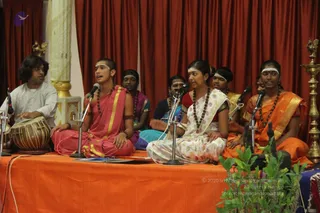
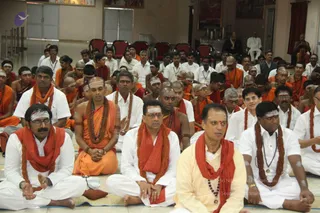
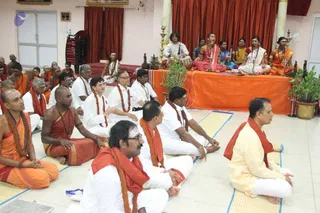
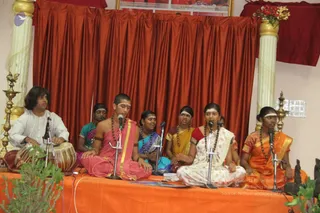
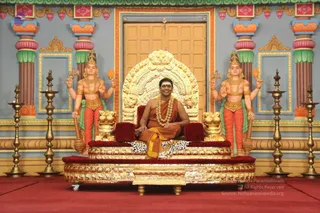
A man seated on an ornate golden throne with red cushions and golden lion-head armrests, set against a gold arched backdrop and a wooden door. He wears an orange-red sannyasi robe with a yellow-and-gold border, a long gold-bead necklace of multiple strands, and a white vibhuti marking with a red kumkum dot on his forehead. His hands rest in his lap. Two large painted deity statues stand on either side, each with multiple arms, crowns, gold jewellery and green-and-red garments, holding ritual objects. Based on the visible appearance cues of the seated figure (orange robe, gold necklace, forehead marking and throne), this is a person seated in person, presented as a teaching setting.A group of devotional singers performs seated on an orange draped stage before red curtains. A young man in a white kurta plays a tabla at the left edge. Seated centre-left, a young man in a red dhoti with a gold border and rudraksha mala sings into a microphone. Beside him, a woman in a white and pink dotted sari with rudraksha mala and red bindi sings. At the right, a young woman in an orange sari with gold border and rudraksha mala sings, and other singers in saffron and teal sit behind them. A brass lamp stands at the right edge and a potted green plant sits in front of the stage.A seated man in saffron-orange robes and a rudraksha mala with ceremonial gold necklace sits cross-legged on an ornate golden throne with lion-head armrests, draped with a leopard-print cloth and red cushions. He wears a white tilak on his forehead and a gold-bordered yellow cloth over his lap. Flanking him are two painted deity murti figures with multiple arms, crowns and red-and-green lower garments, each holding a flaming lamp-like object. Behind the throne is a gilded arched backdrop with a carved door. Cues: the man has a candidate a person appearance (saffron robes, rudraksha mala, ceremonial gold necklace, throne), so this is a person seated in person, presiding over the setting.A photograph of a seated congregation in a hall with red chairs along the back wall. In the foreground, a group of men sit cross-legged on a mat, many wearing white dhotis and shirts with red or orange shawls and rudraksha malas, with white vibhuti marks on their foreheads. Among them, a man in an orange robe with a rudraksha mala sits with palms together in front of him, and another in a cream kurta with a red shawl sits upright. Behind them, rows of shaved-headed young men in saffron-orange robes and red shawls sit on the floor, and a few people stand or sit near the back, with framed pictures on the wall above.A seated devotional gathering in a hall with cream tiled floor and red curtains. On a raised orange-draped stage at the back, a performer in a pink top sings into a microphone while musicians play a harmonium-like instrument and a drum, and women in saris sit beside him. Many devotees sit cross-legged on mats, most in white kurtas or dhotis with red or orange shawls and beaded necklaces. In the foreground a bare-chested man in orange cloth and rudraksha beads sits with a white forehead mark, and a man in a cream kurta sits at the right edge. Potted plants flank the stage.A group of seated performers sings devotional music on an orange-draped stage before a deep red curtain with white pillars and brass lamps. A man in white kurta plays a barrel drum (mridangam-style) on the left. Several women in saris and white forehead markings sit at microphones, and a man in a pink-and-gold dhoti at centre sings with a rudraksha mala. Two brass oil lamps flank the stage and a framed photo sits at the top, with potted plants in front.

Satsang
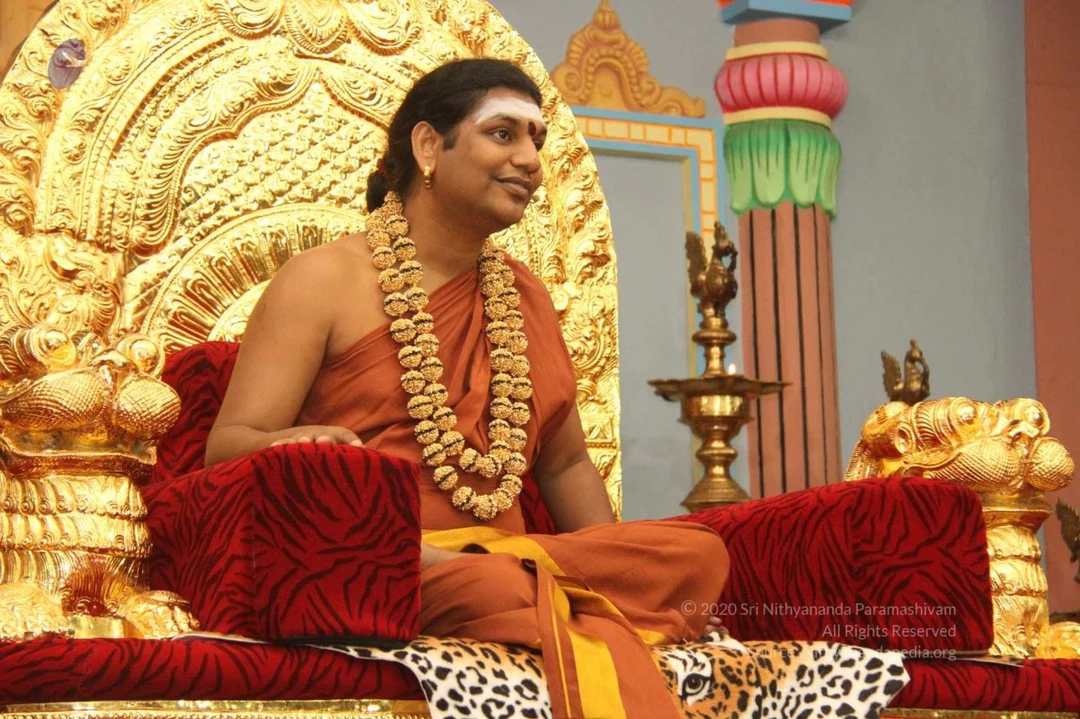
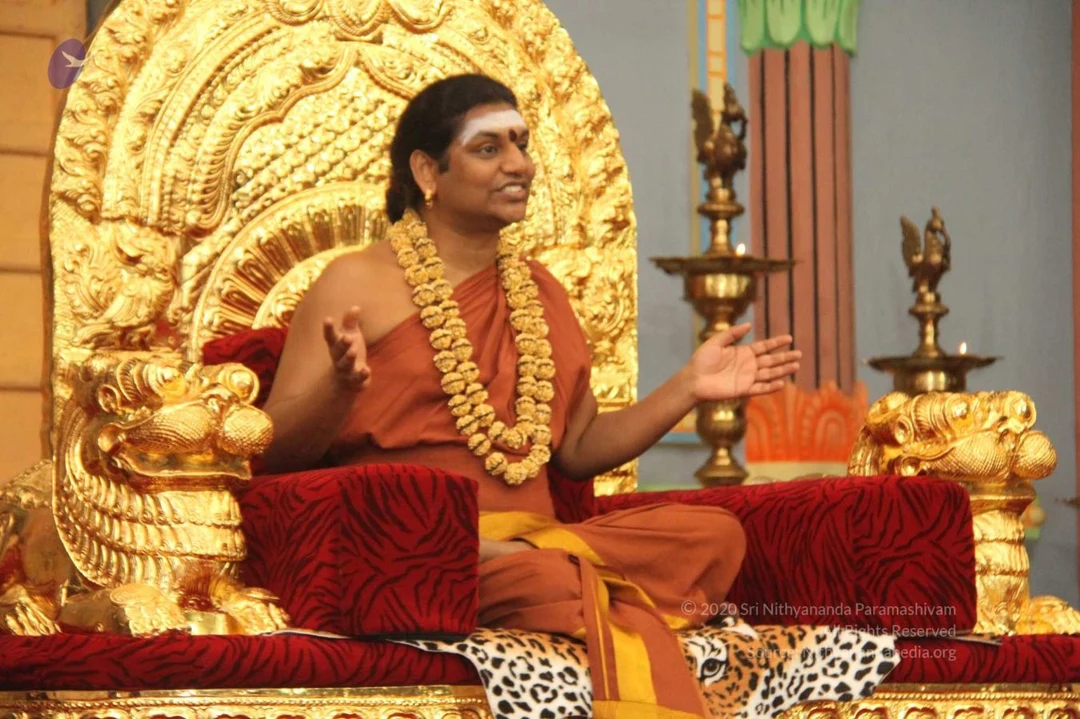
78 photosSource gallery
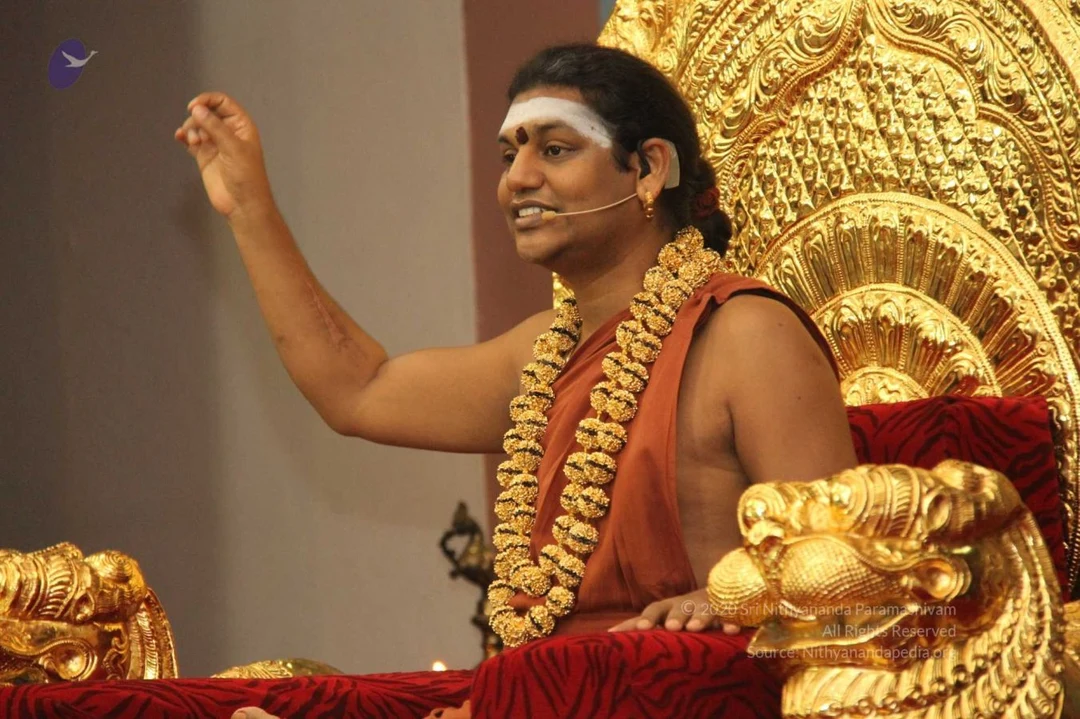
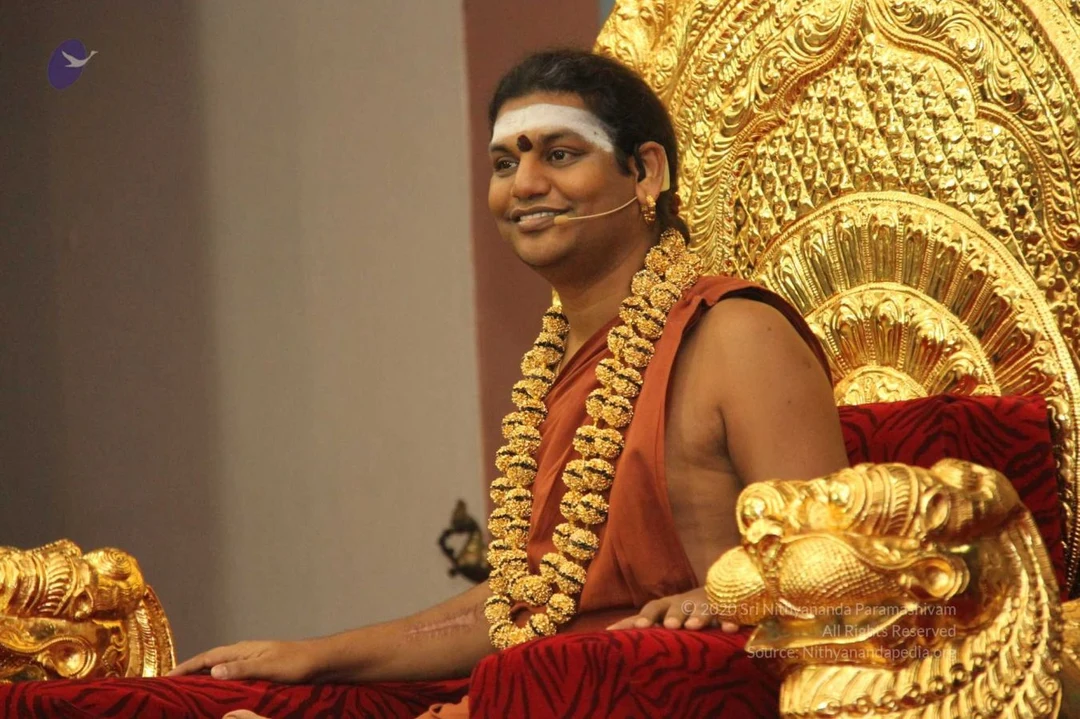
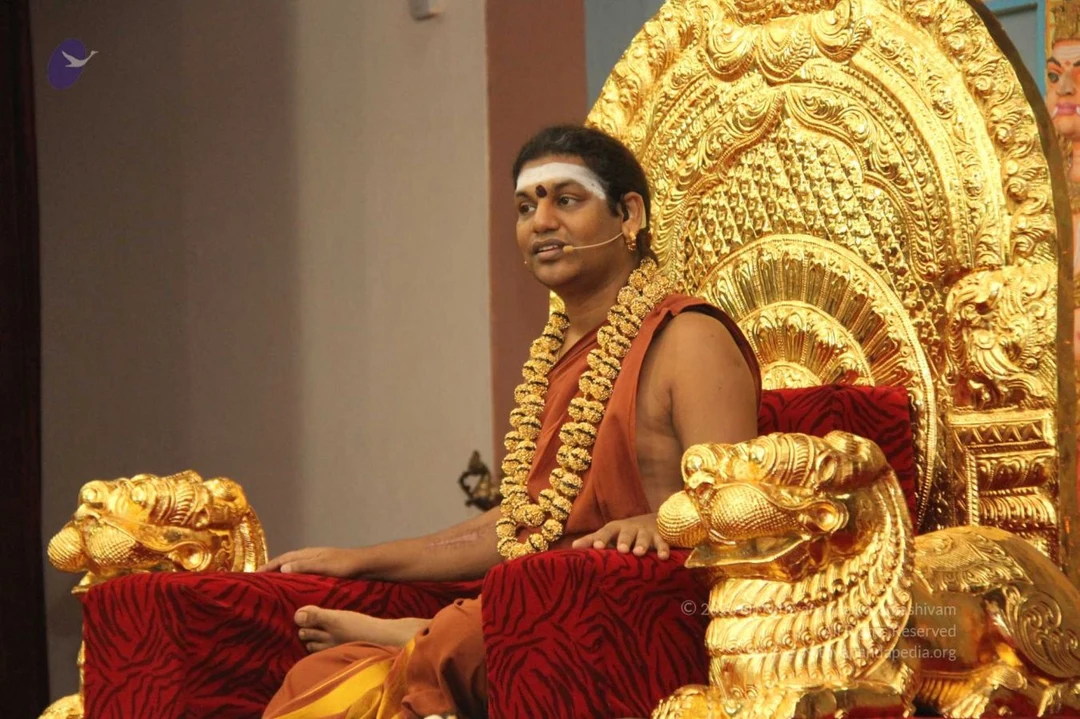
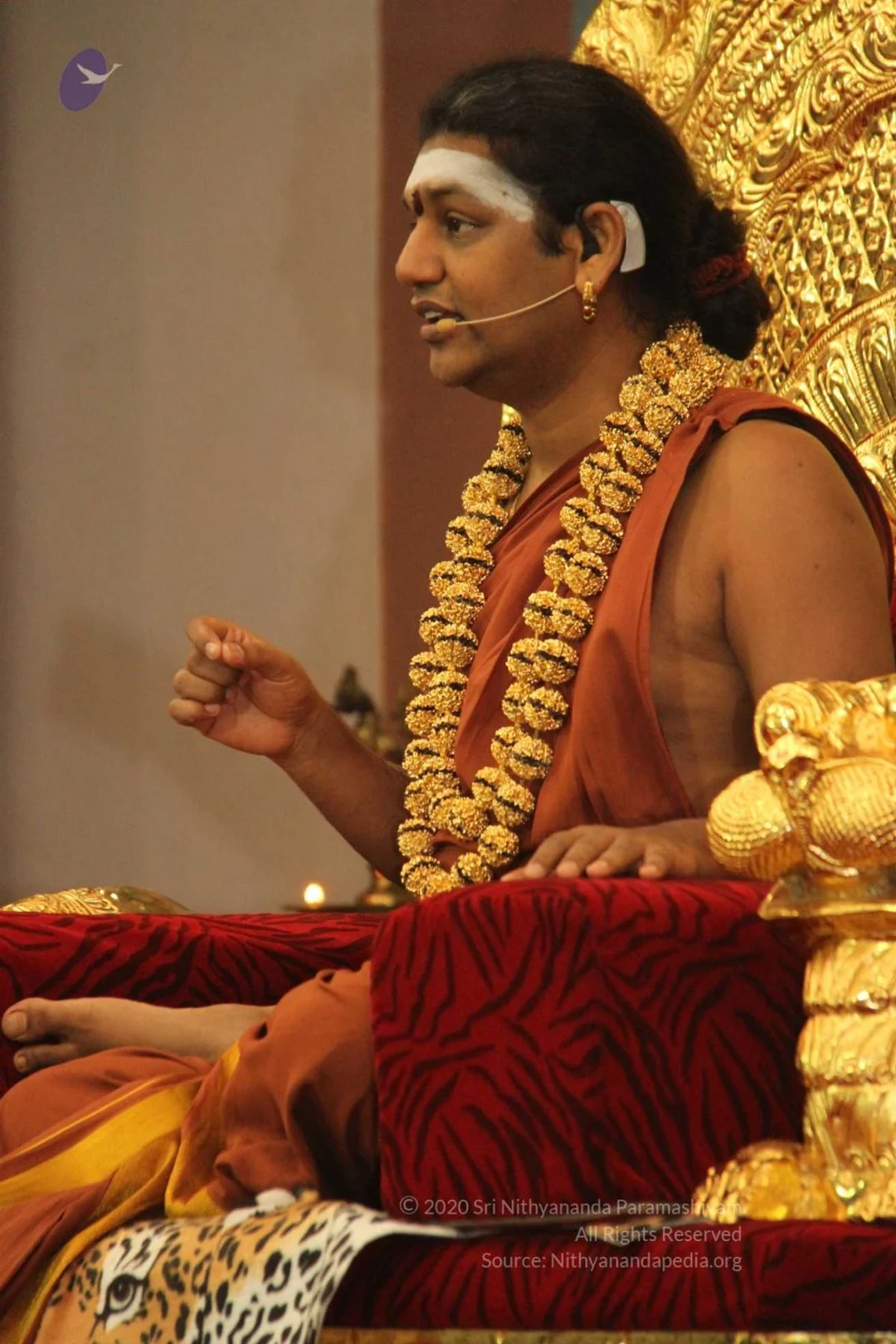
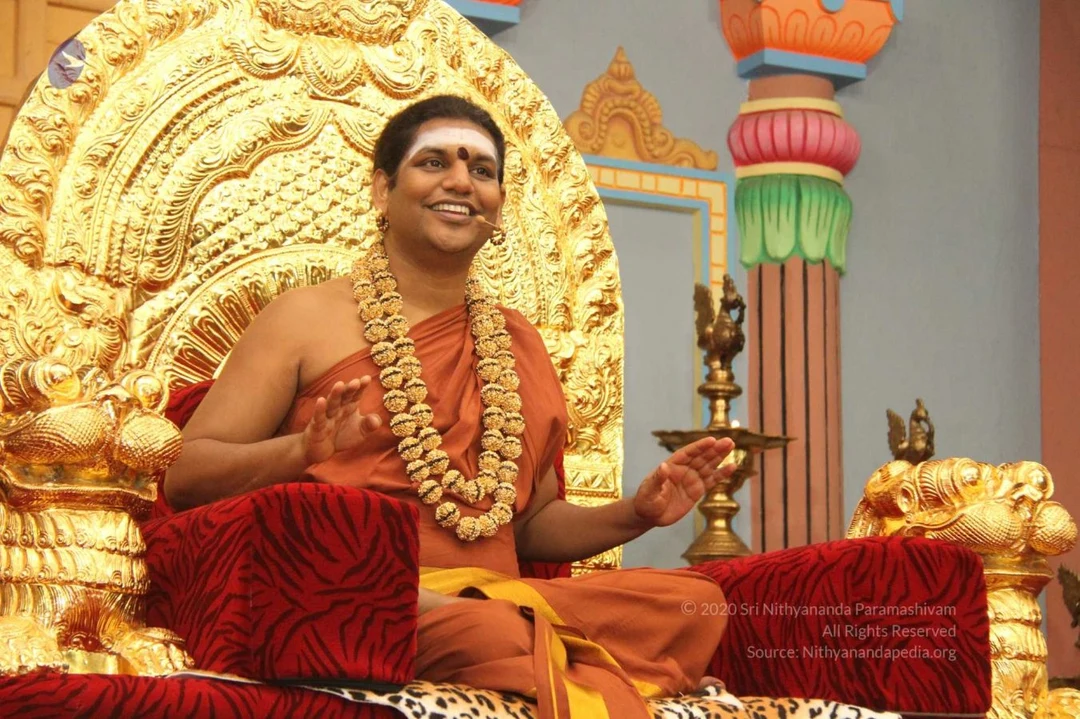
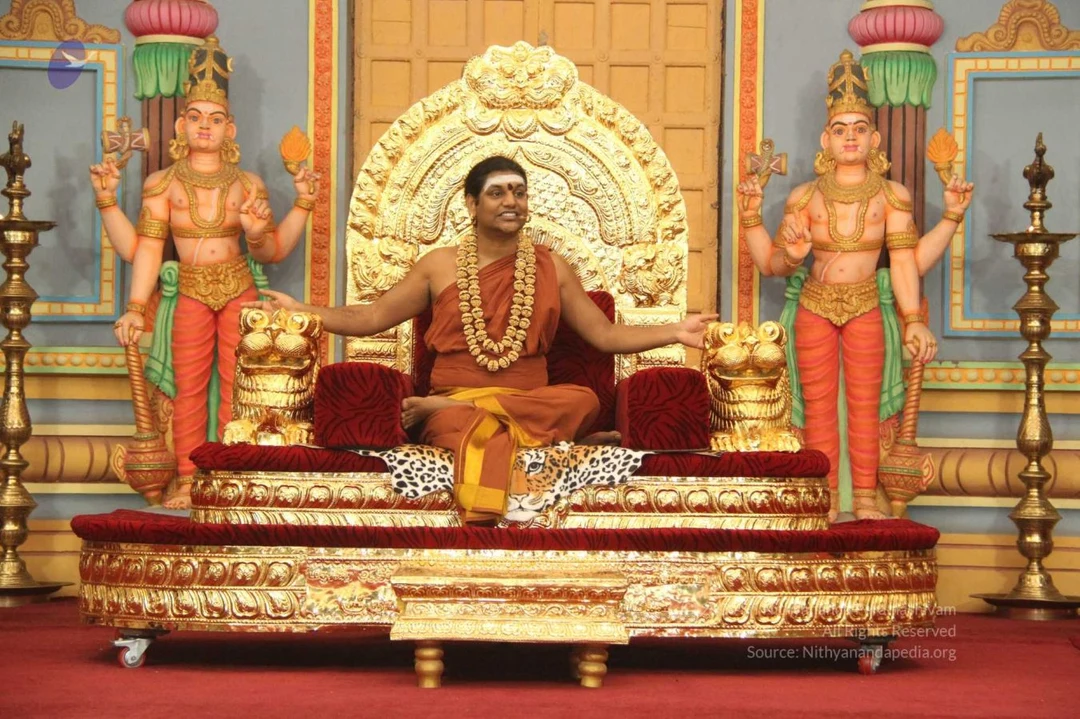
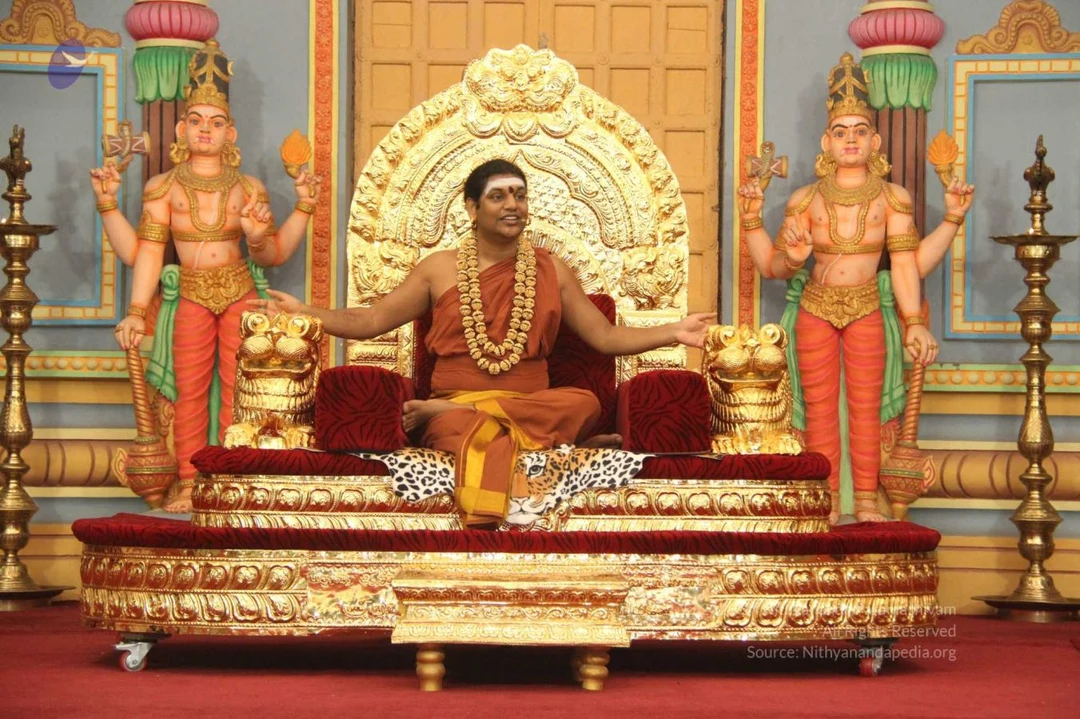
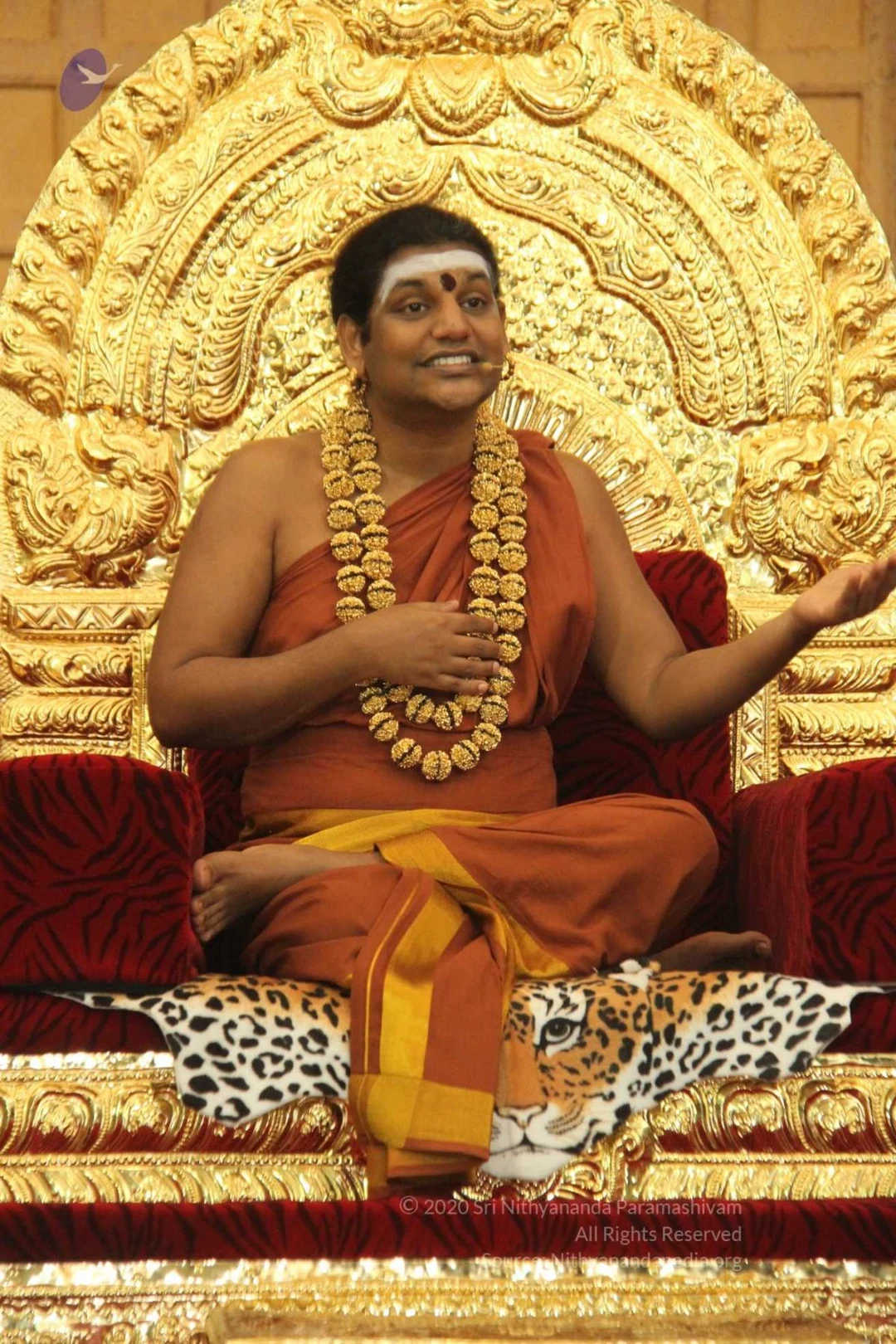
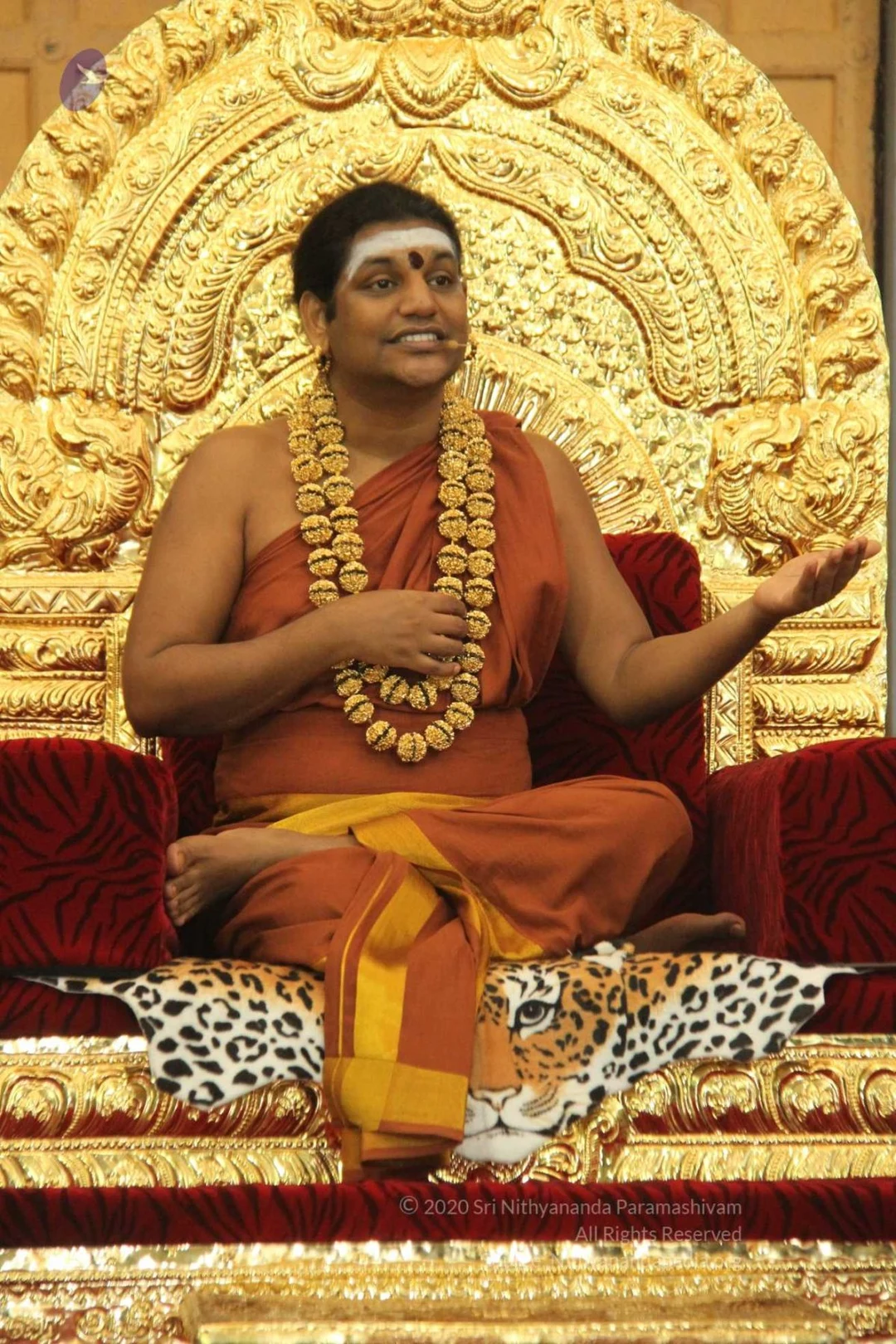
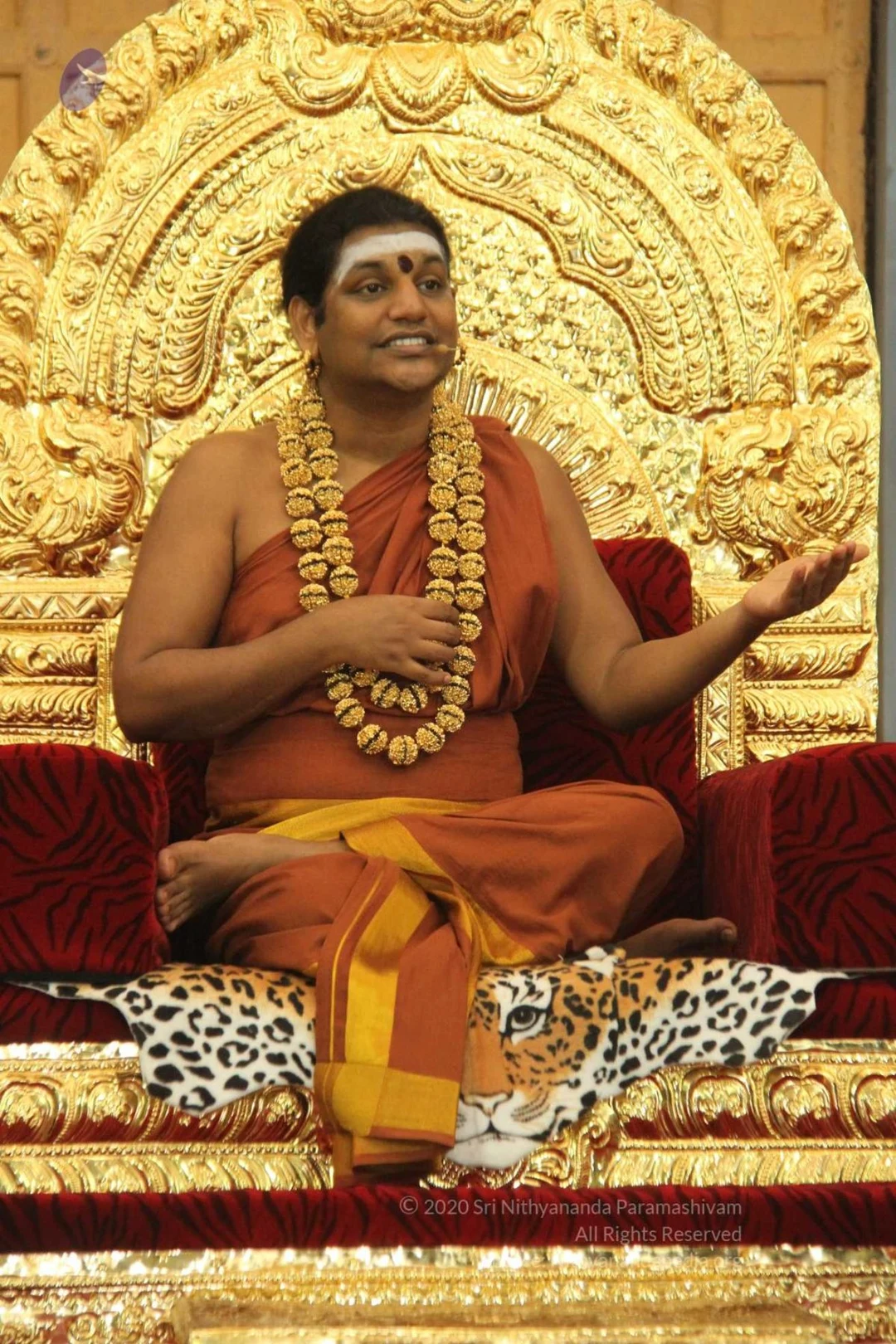
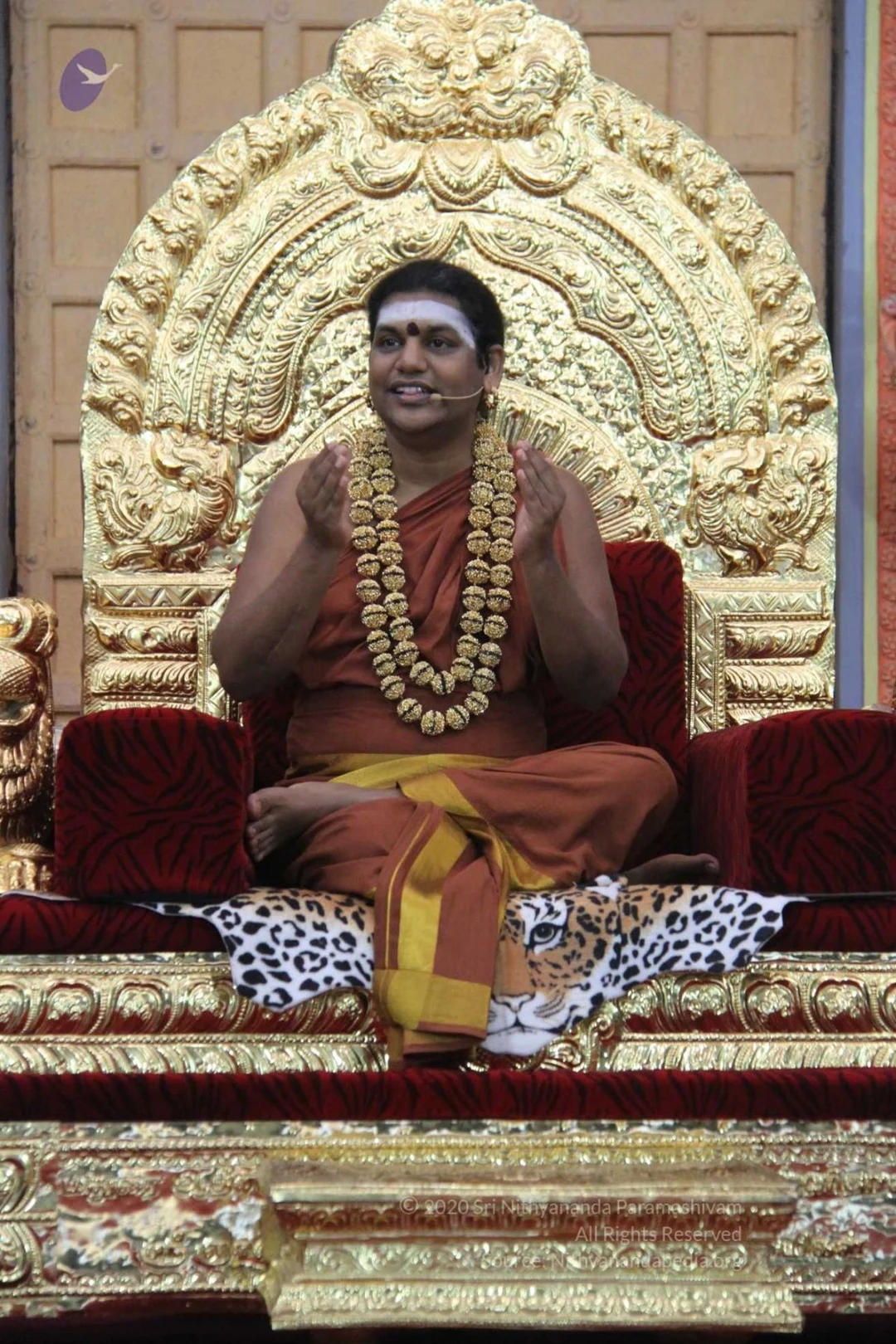
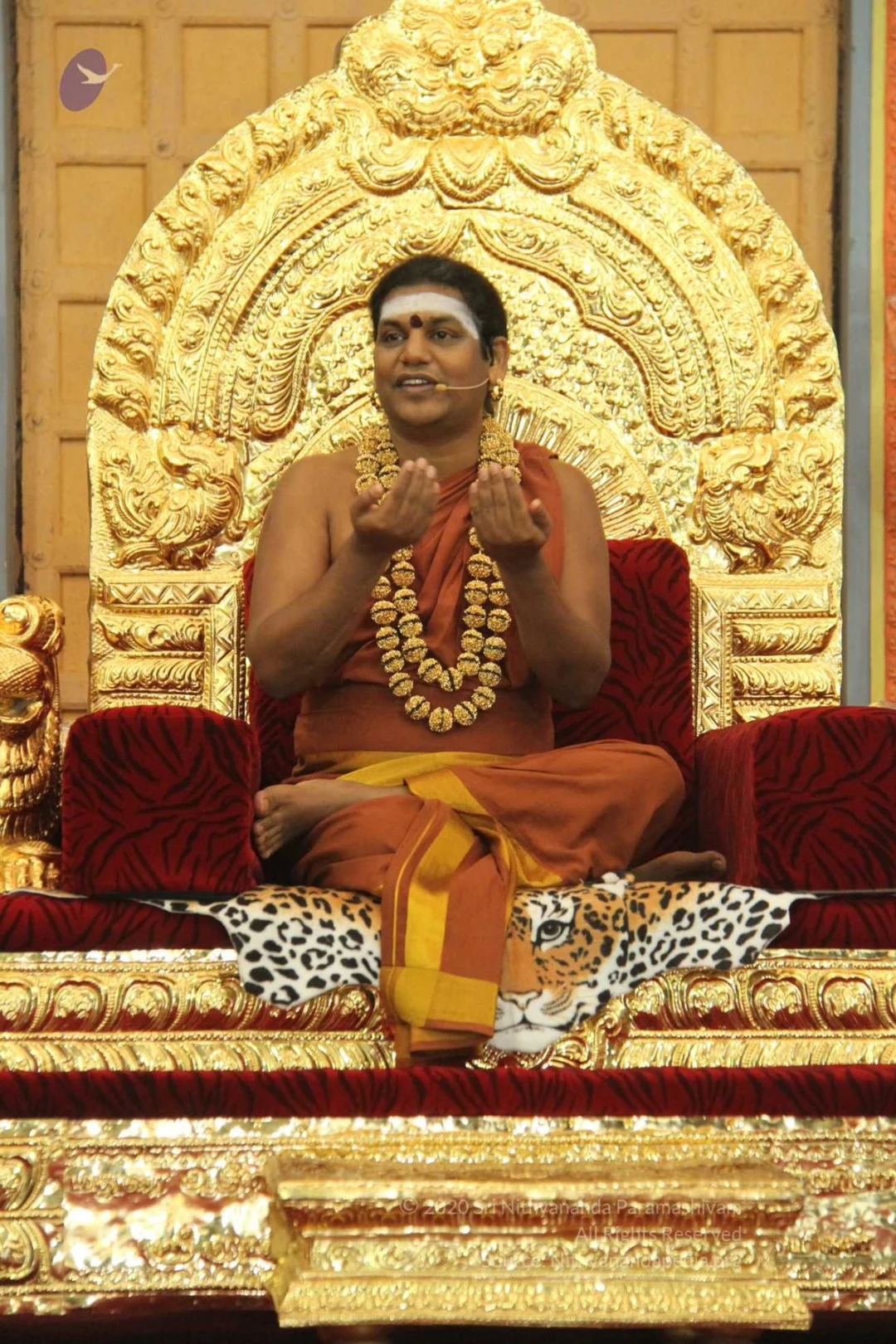
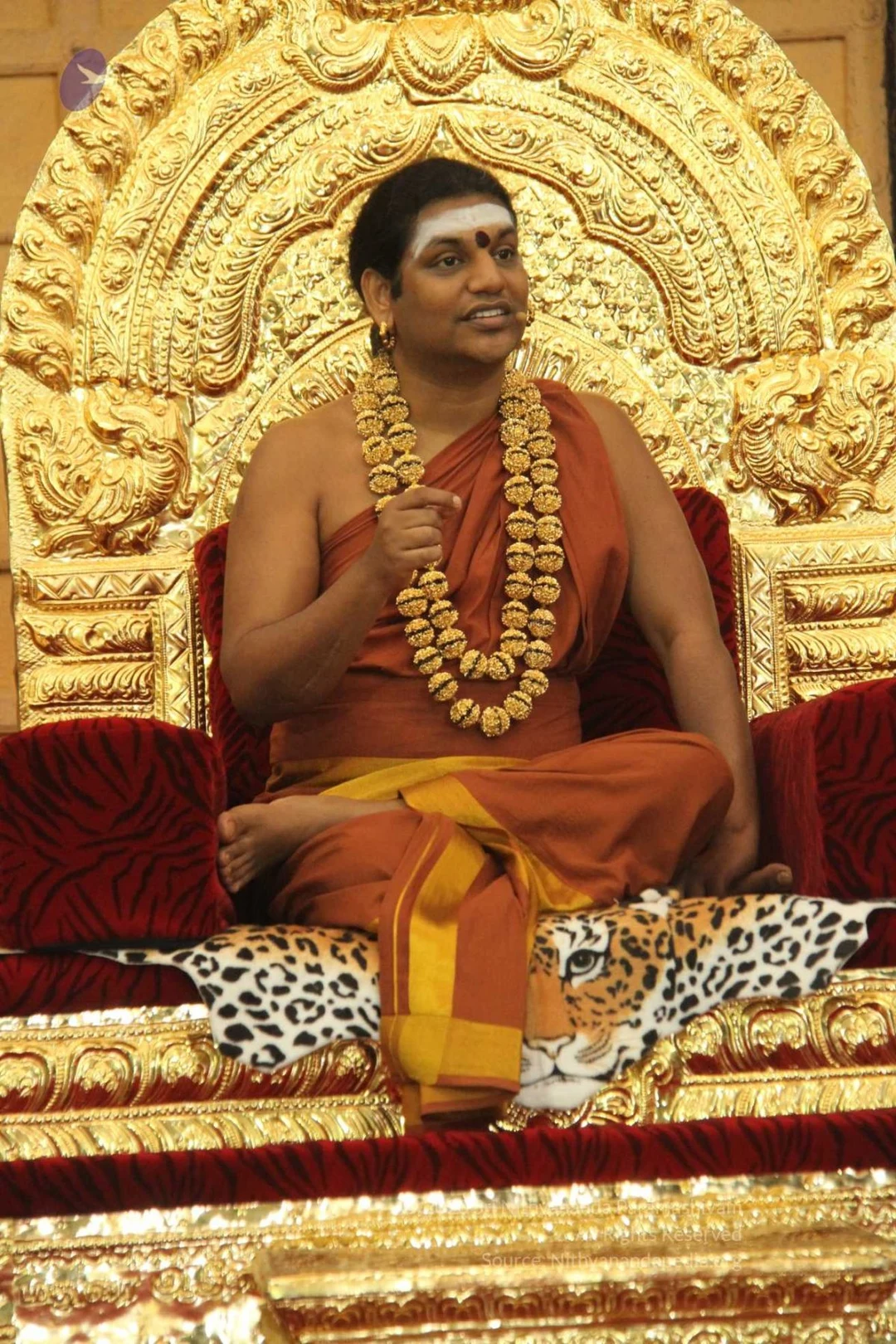
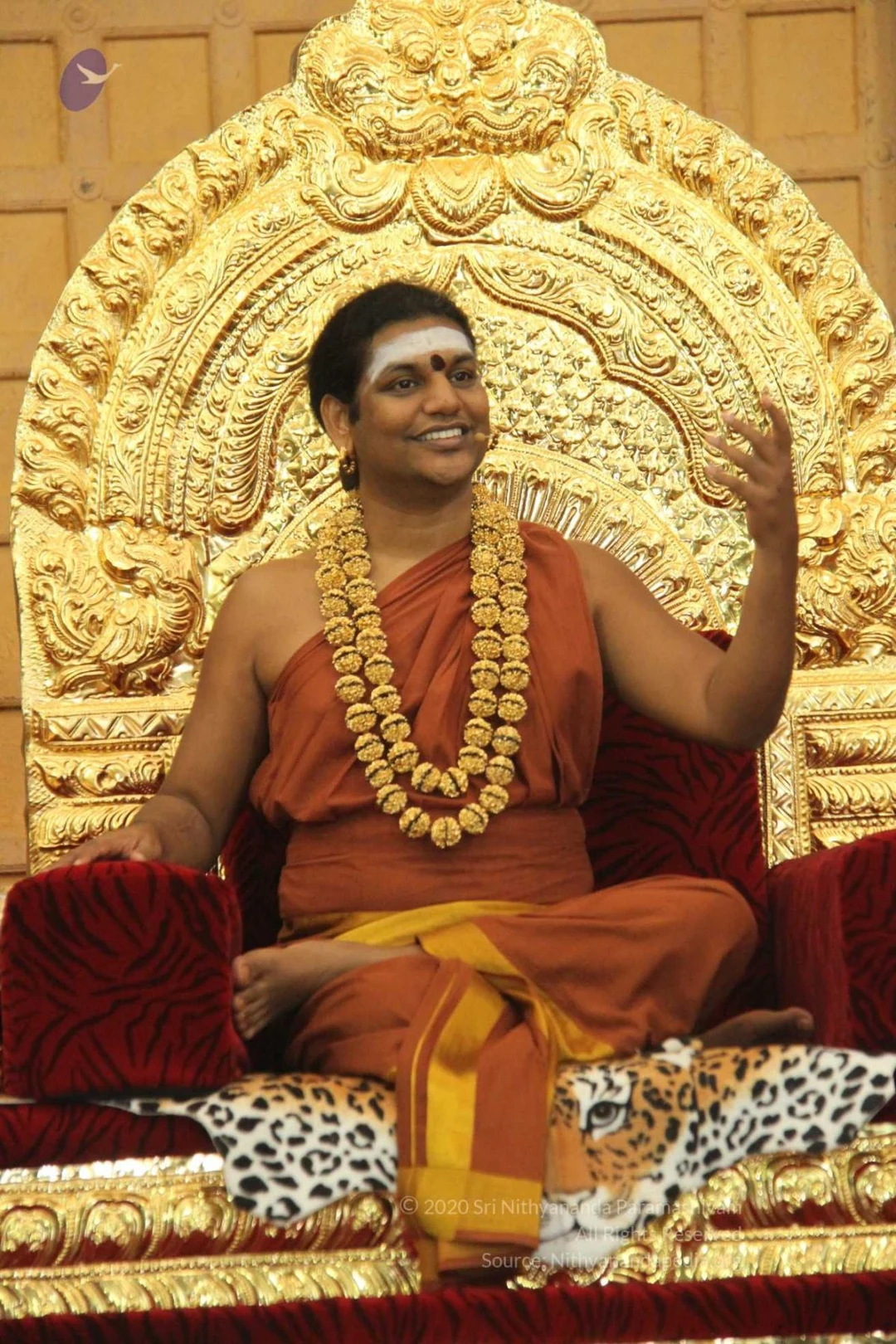
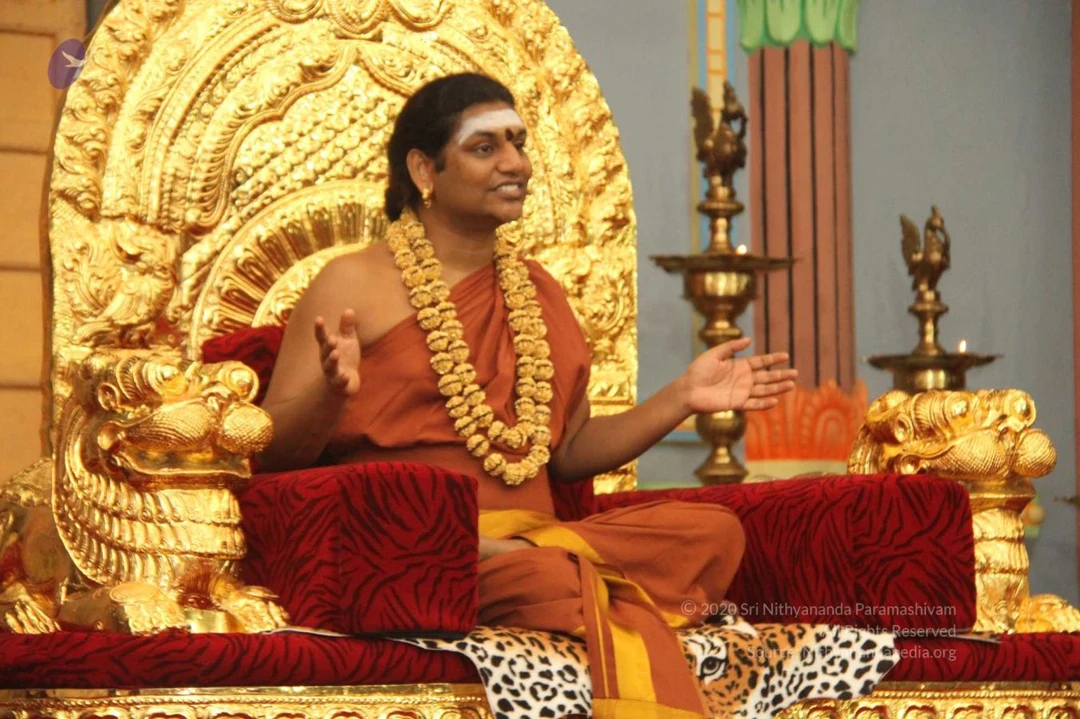
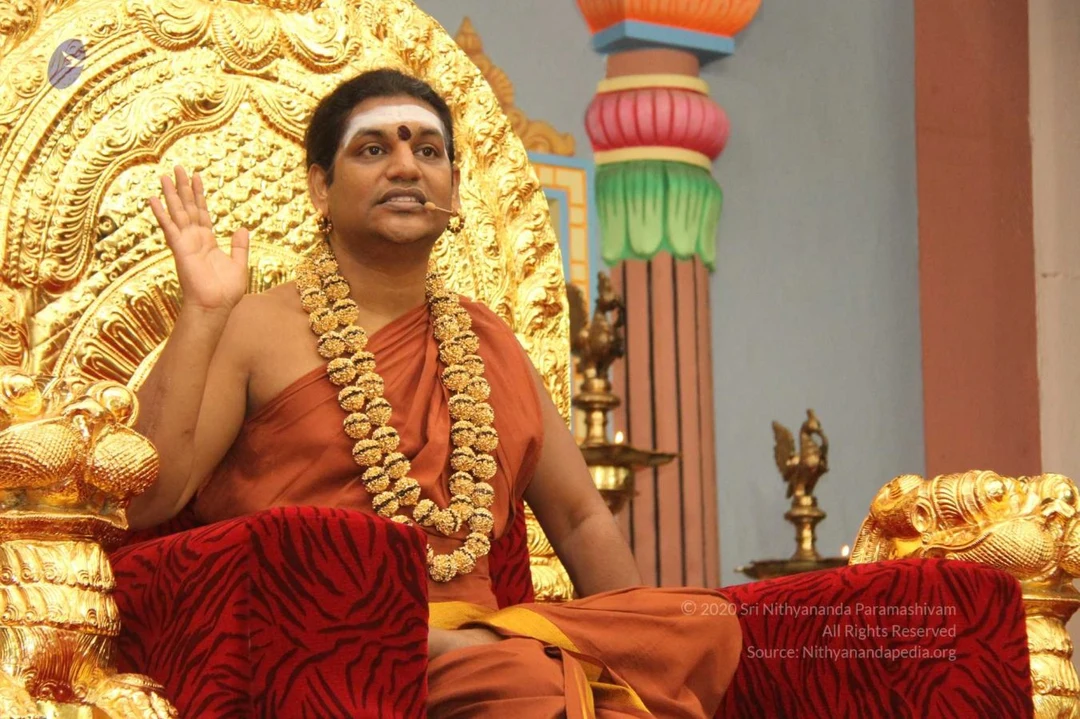
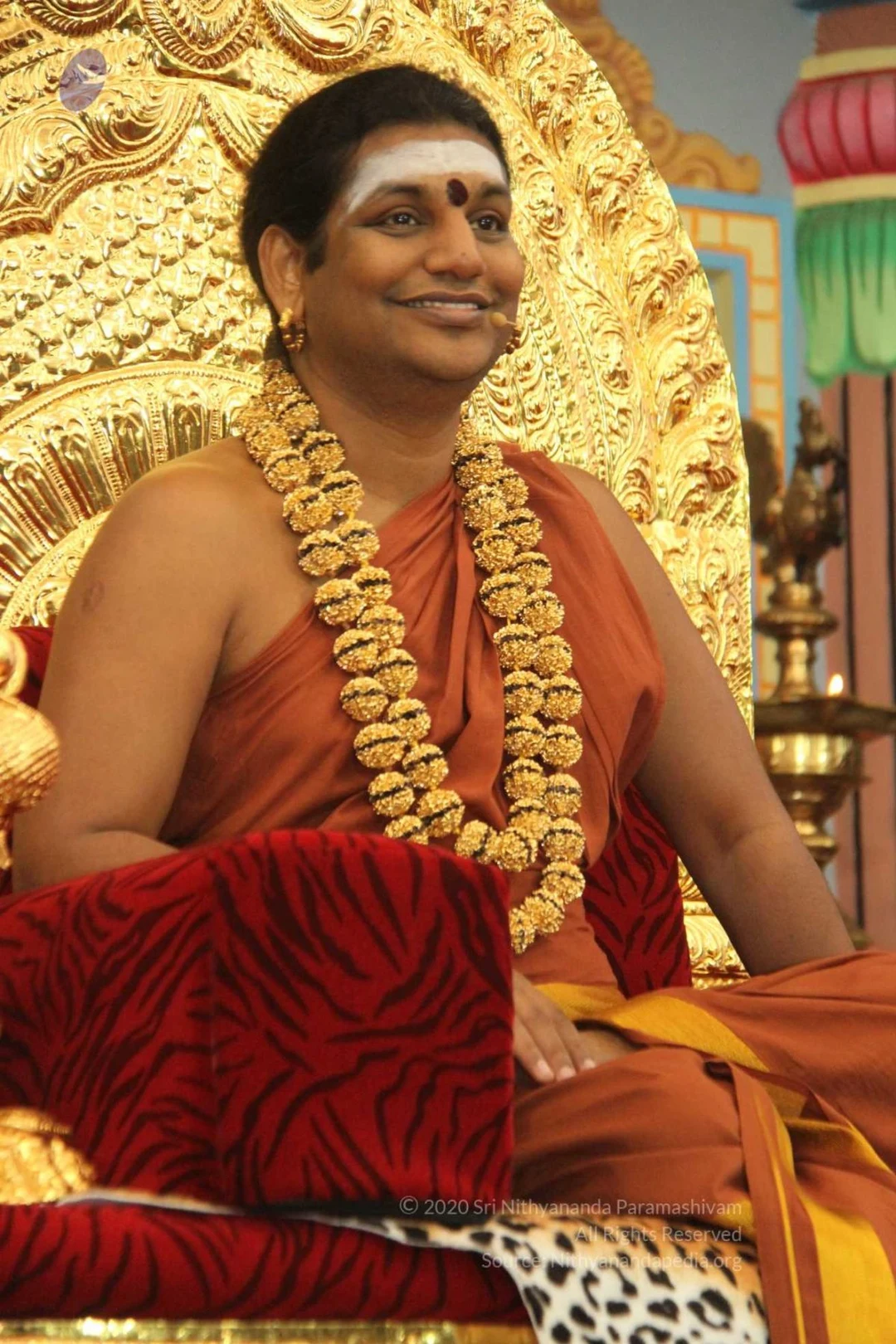
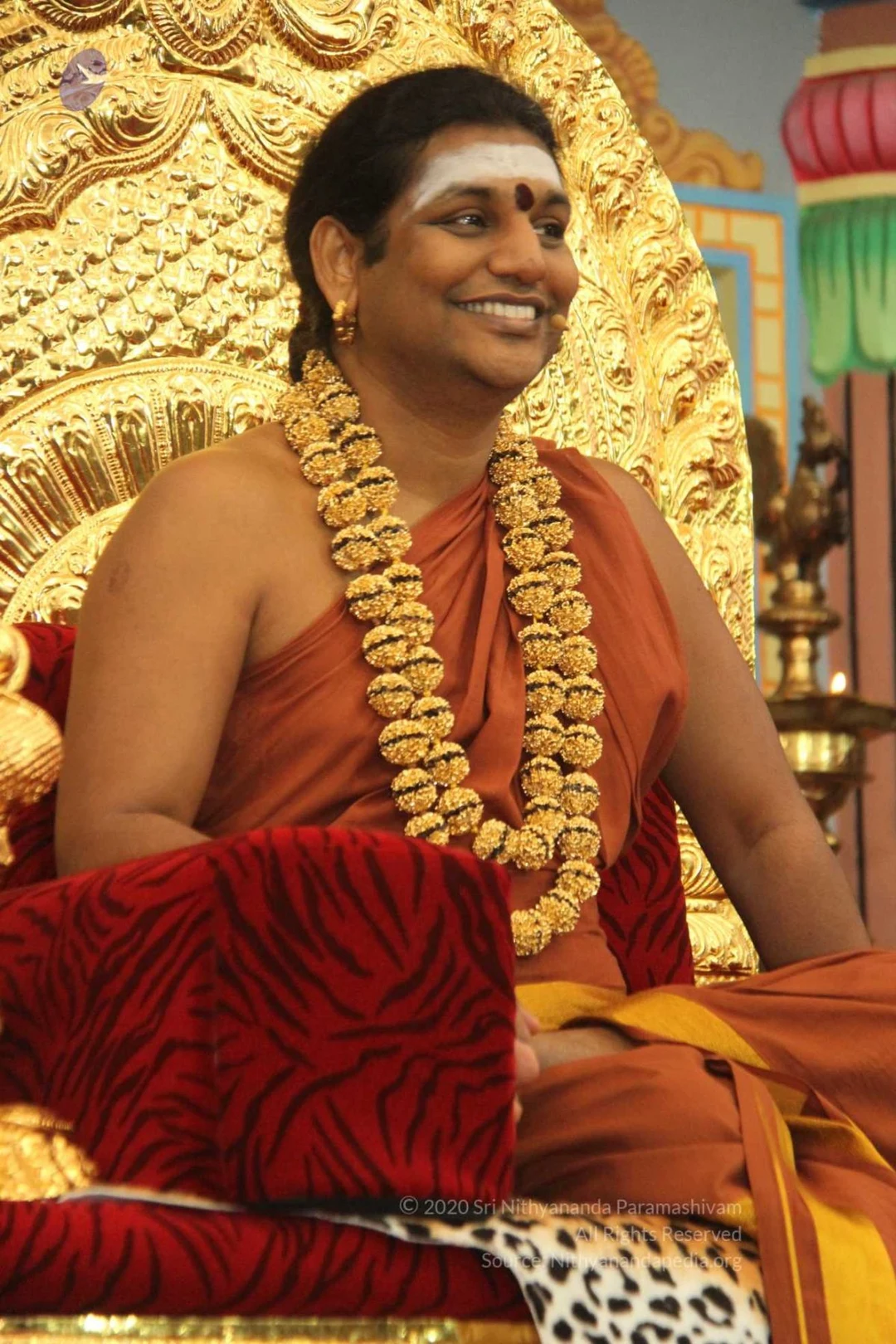
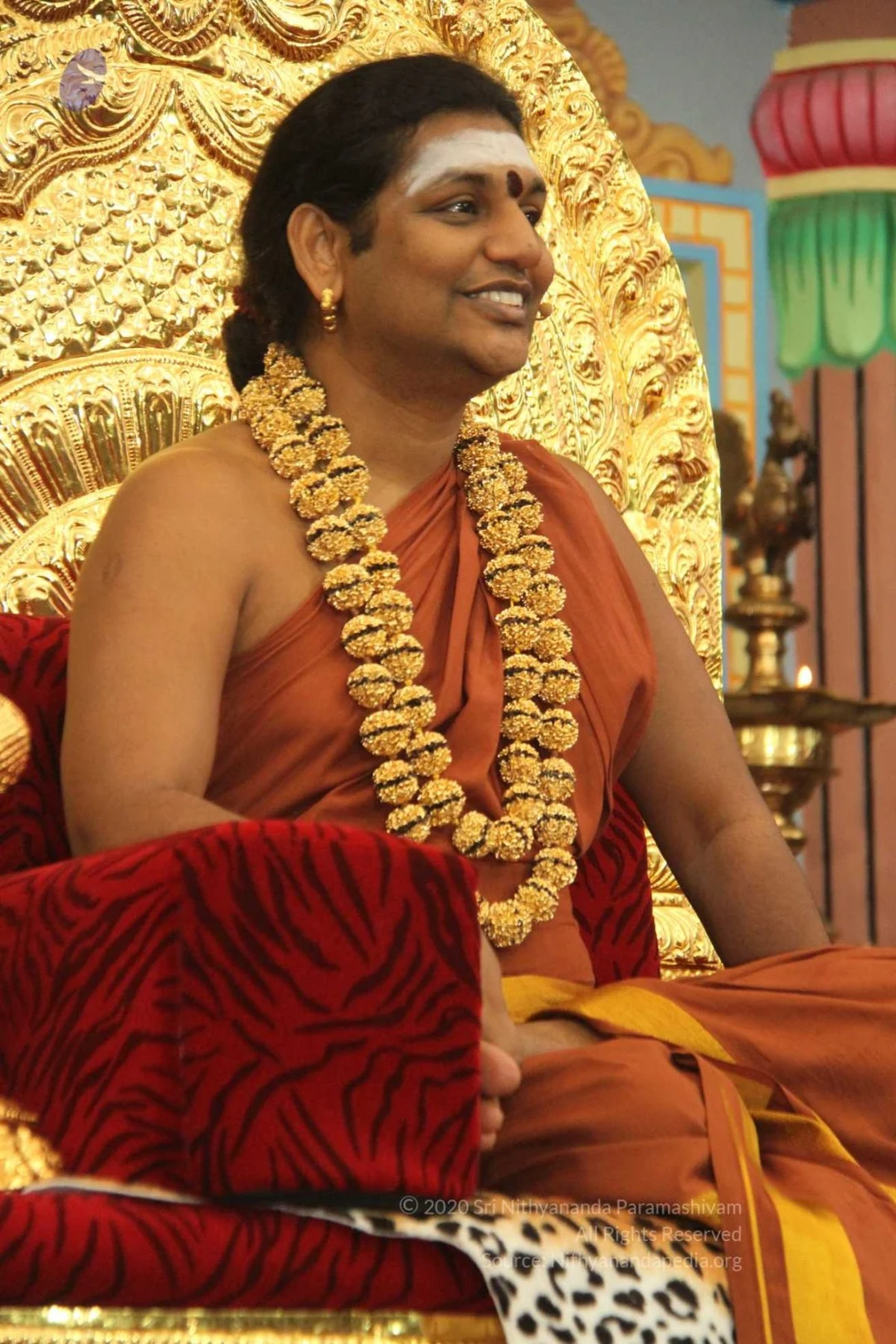
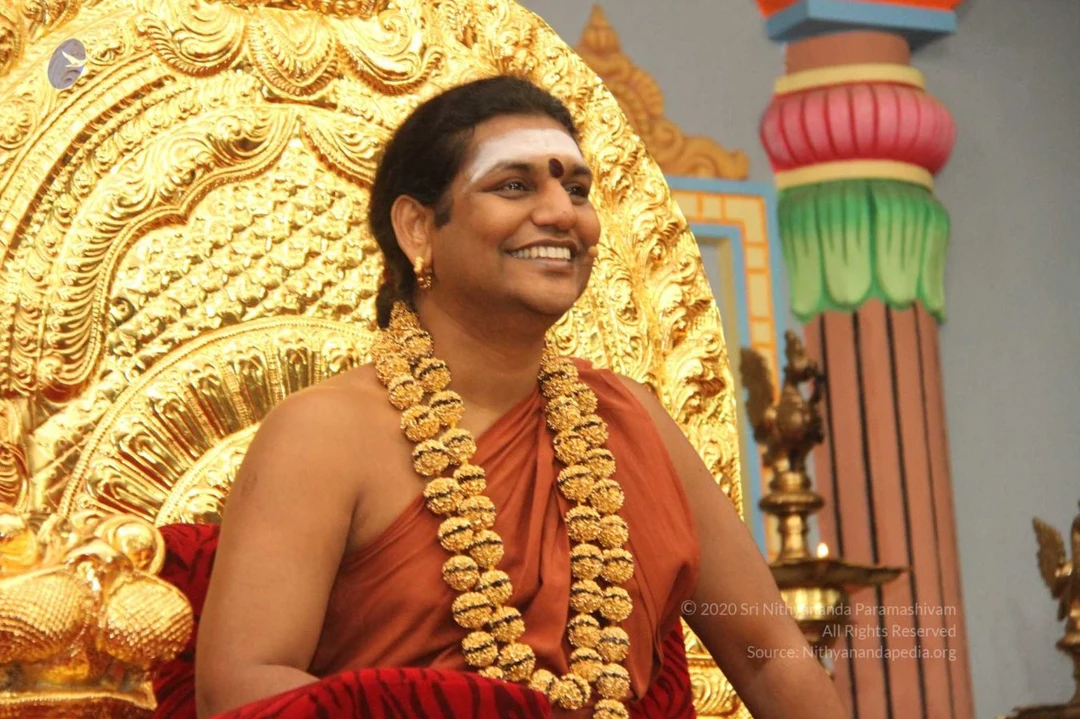
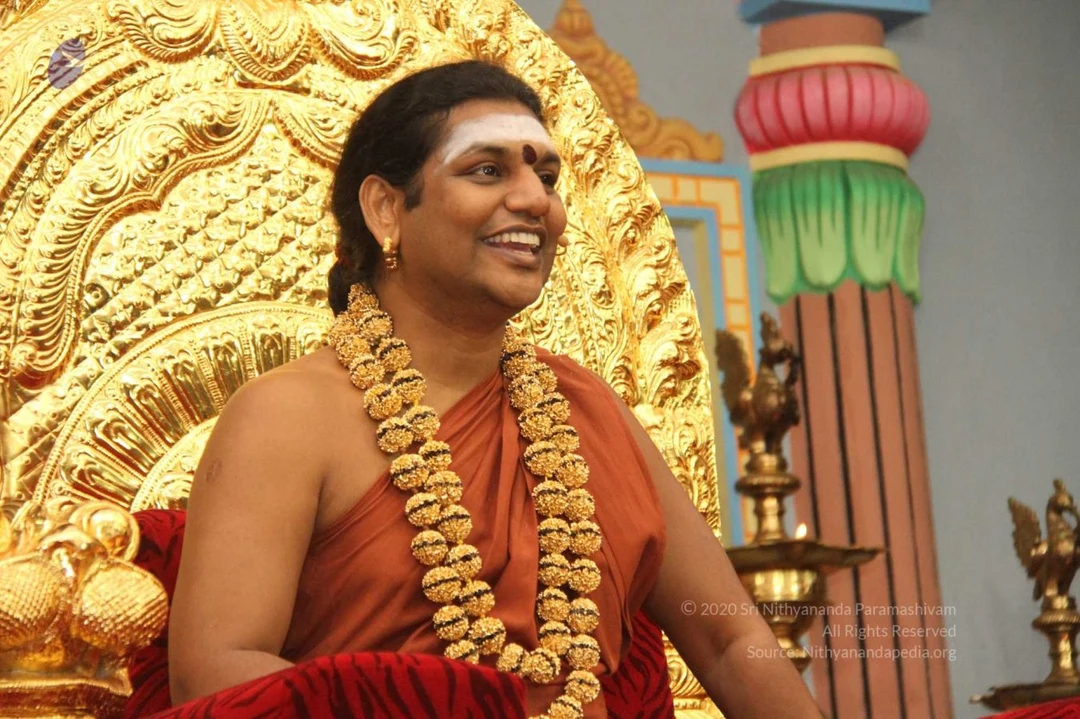
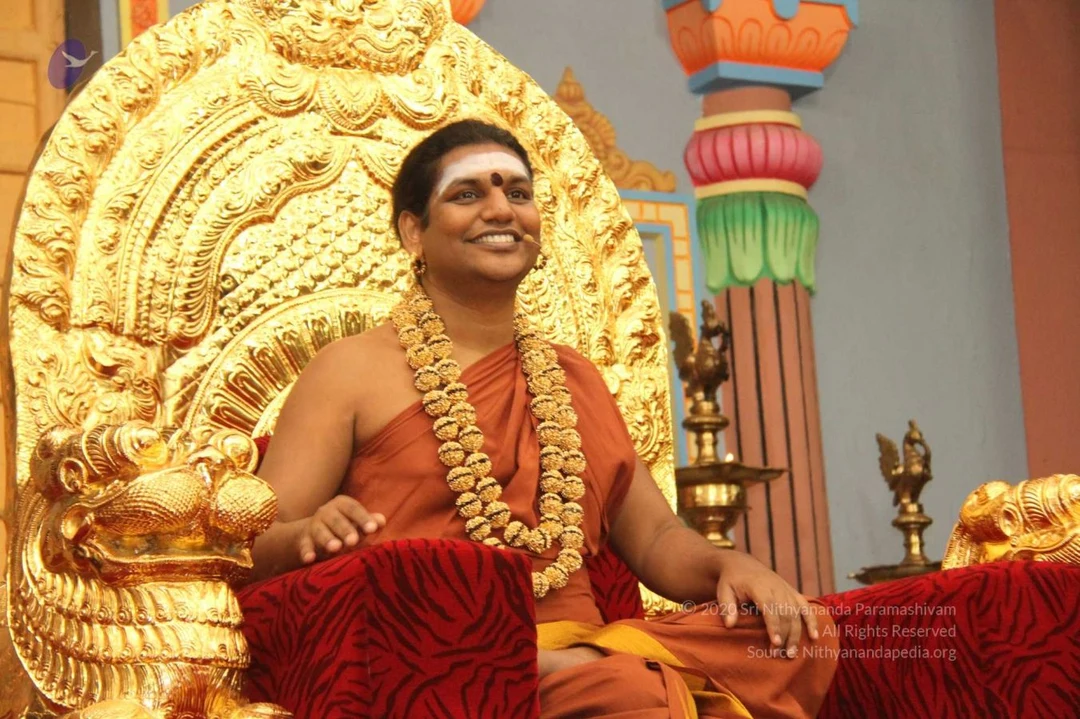
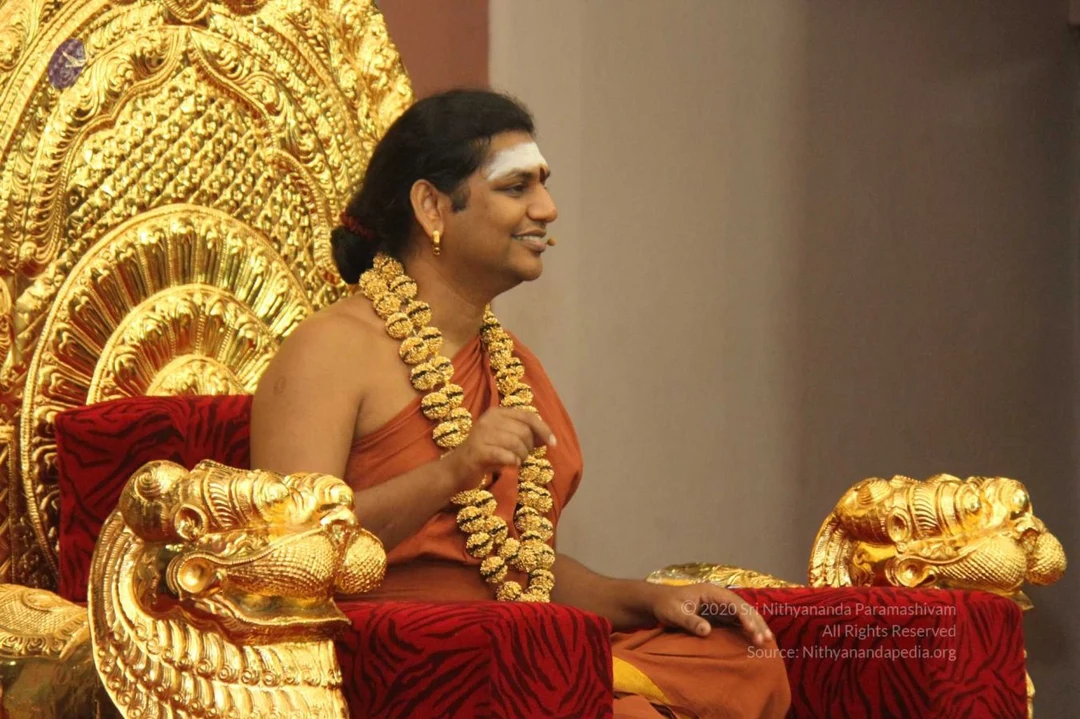
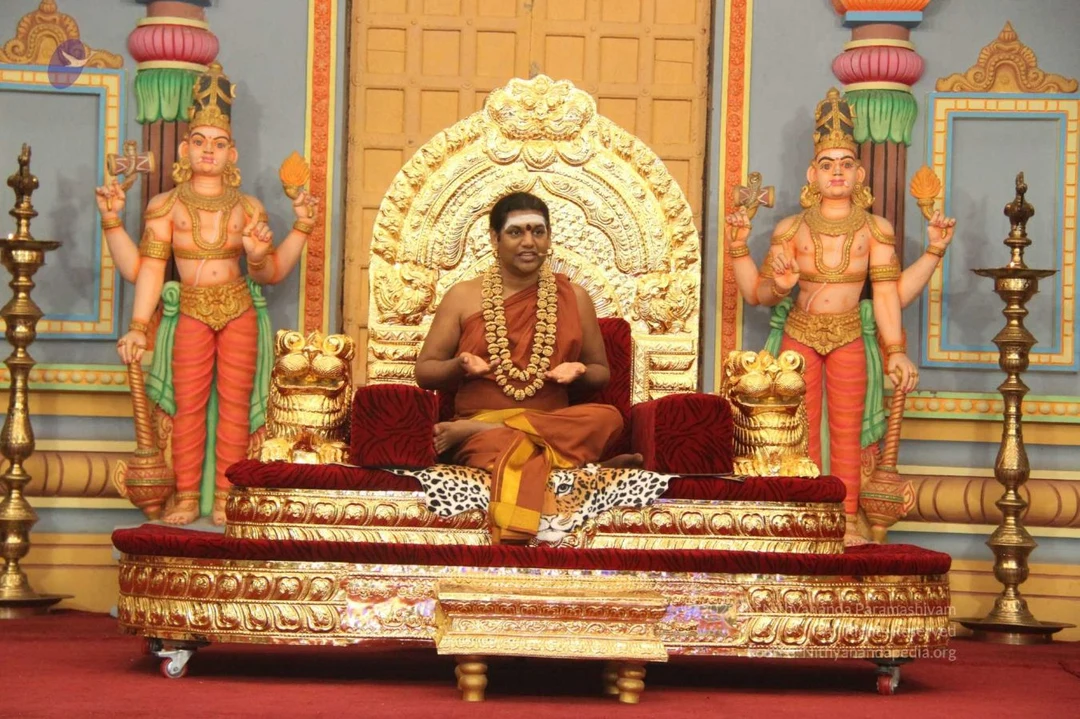
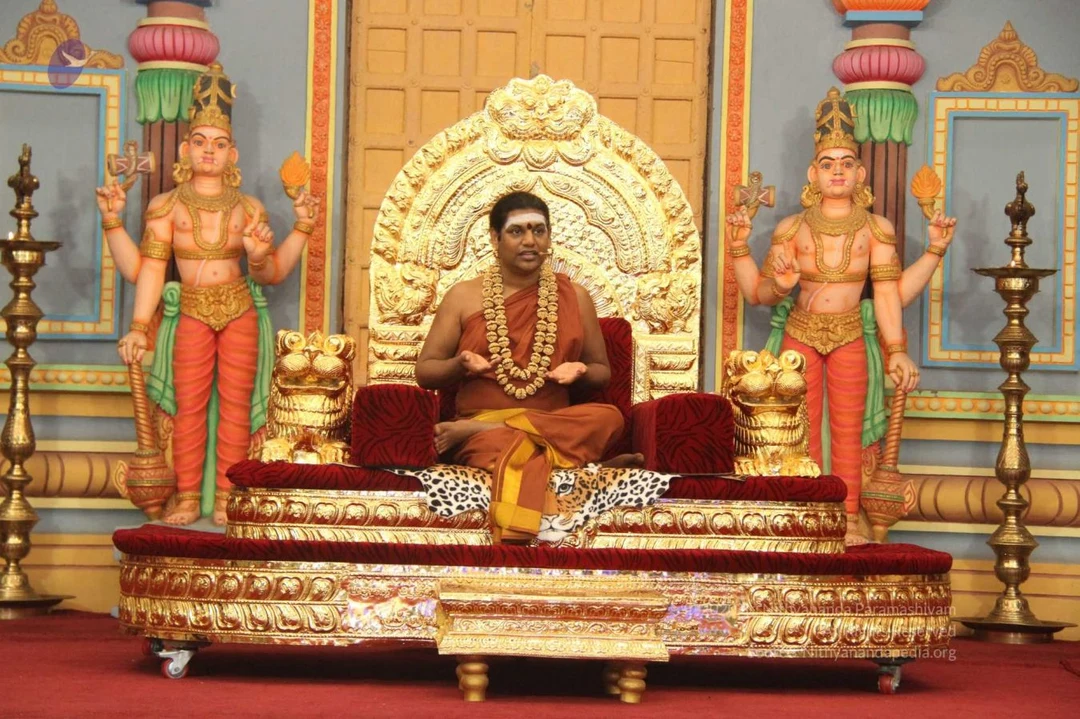
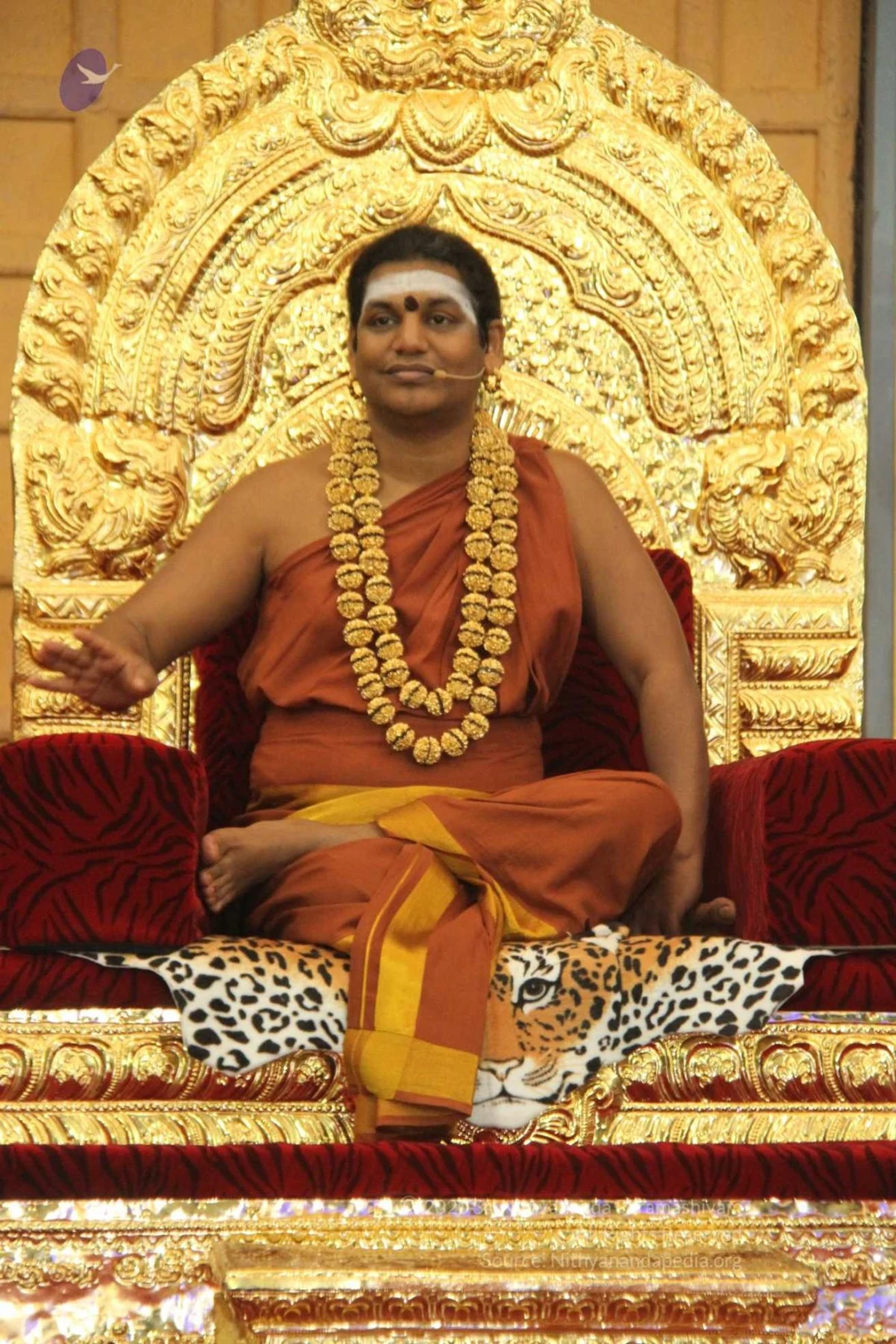
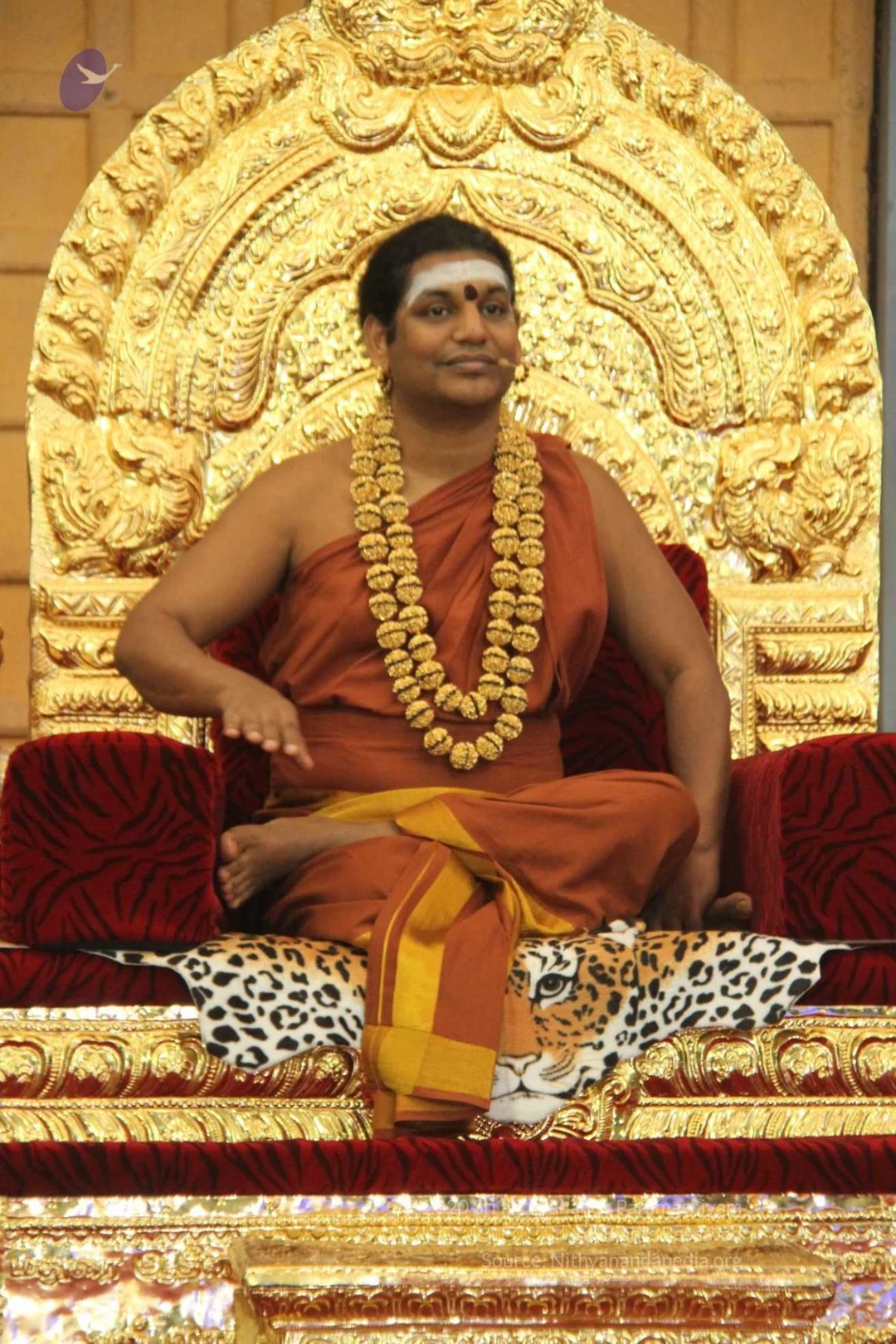
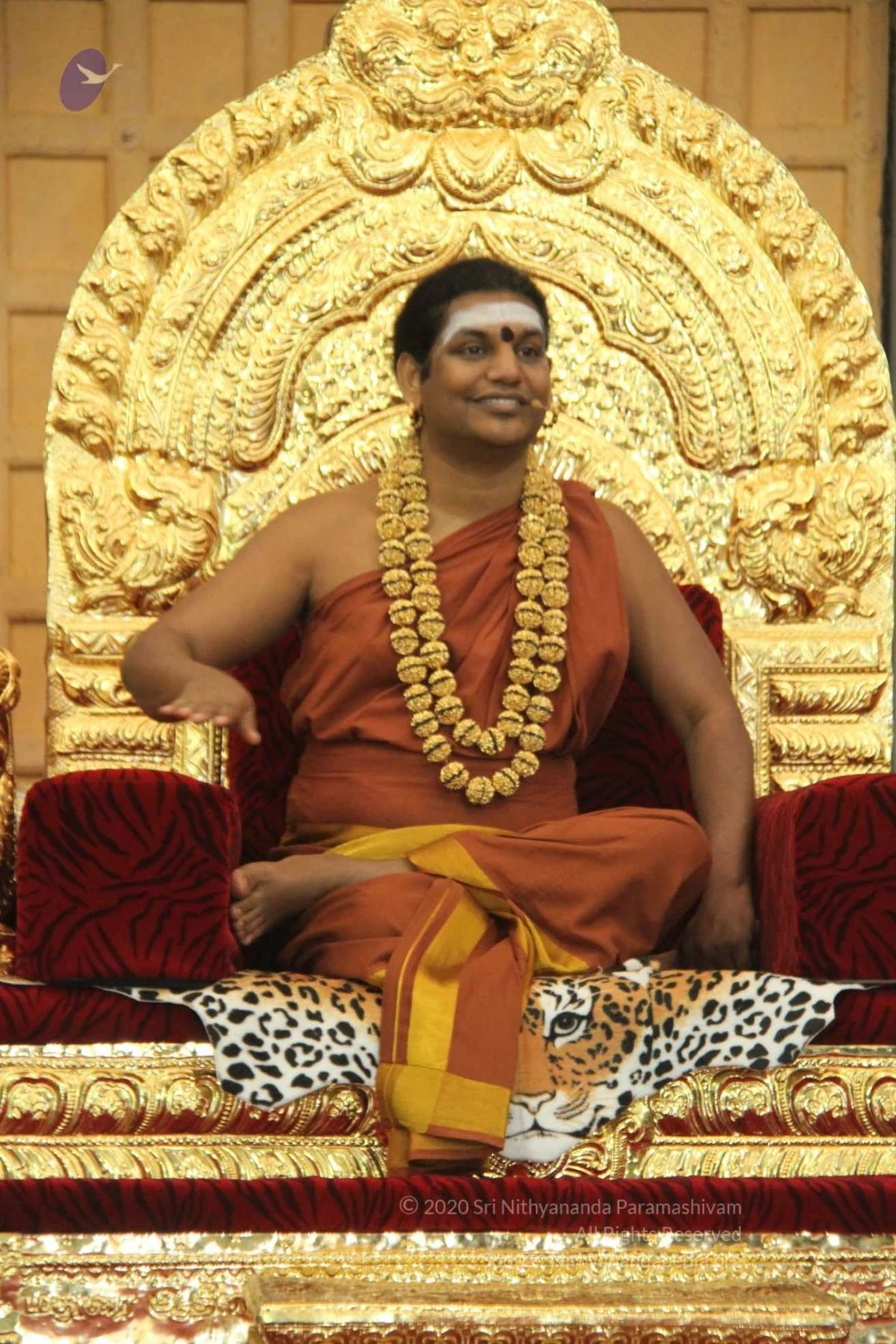
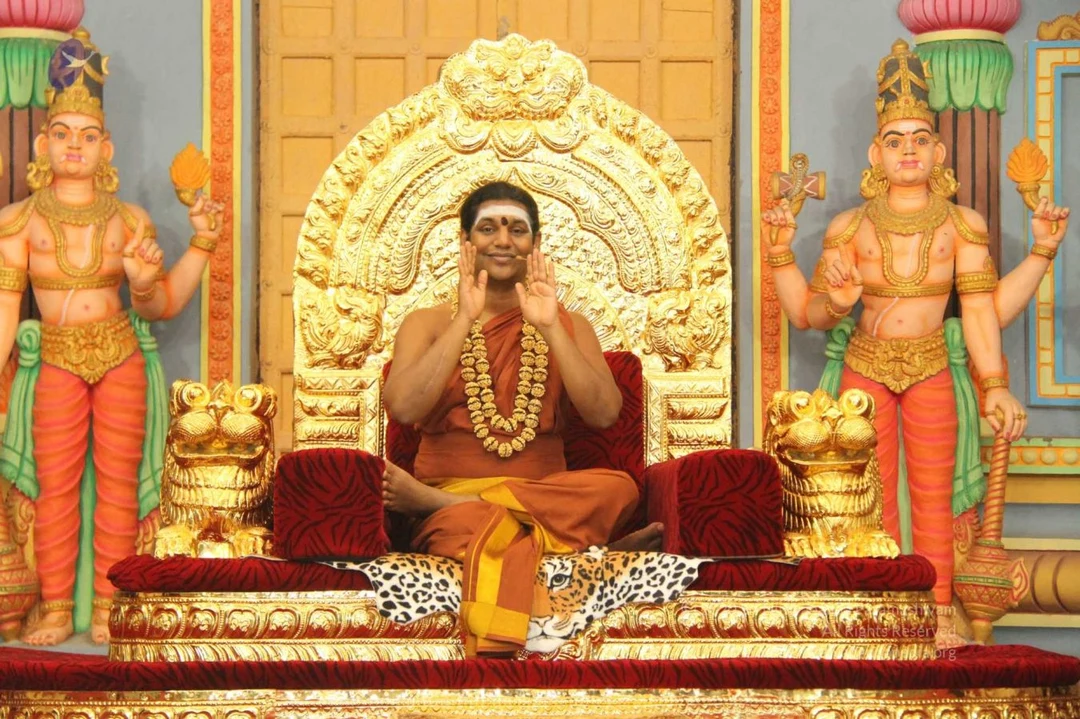
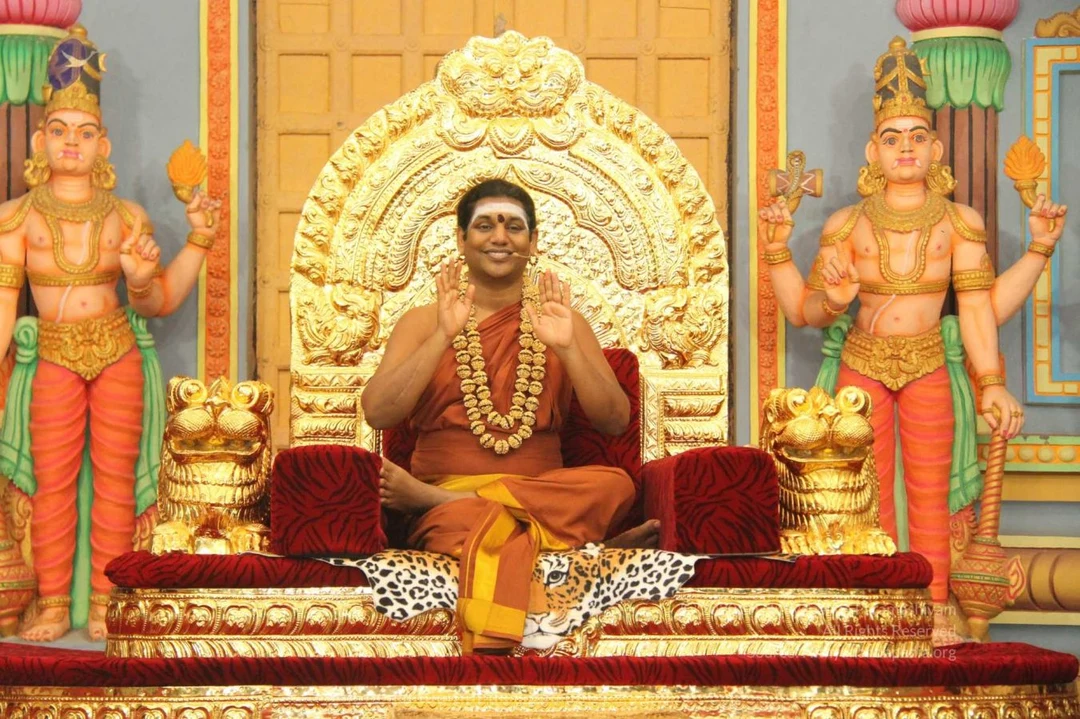
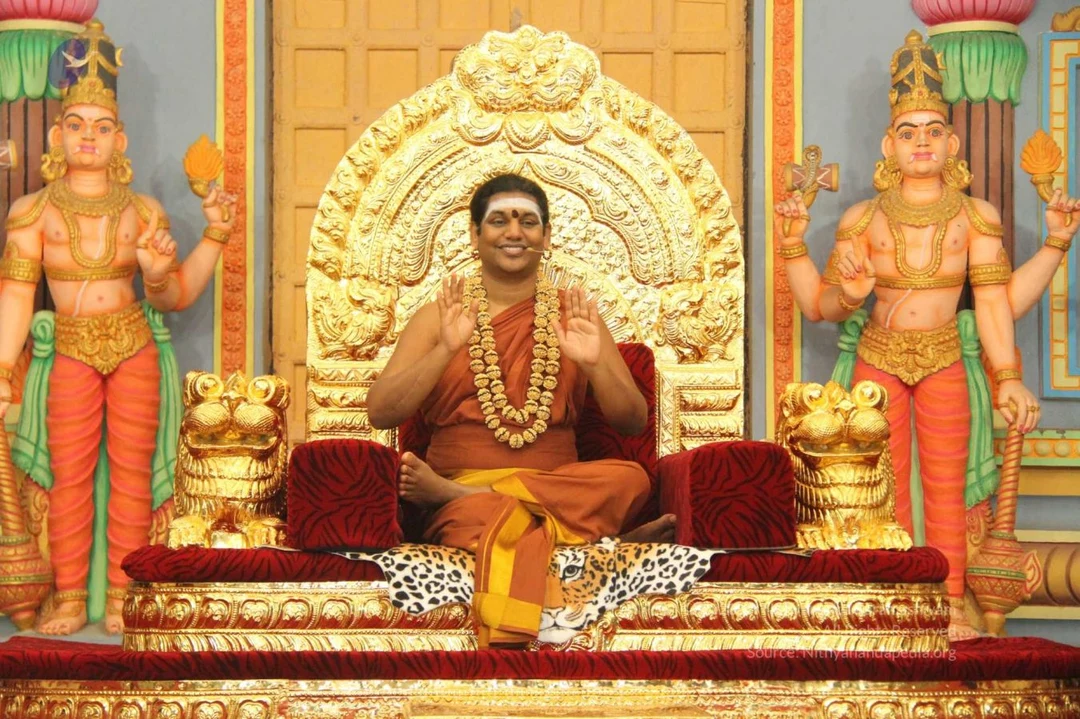
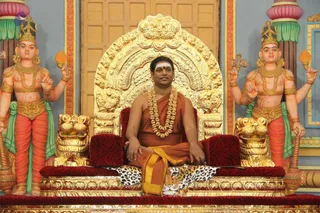
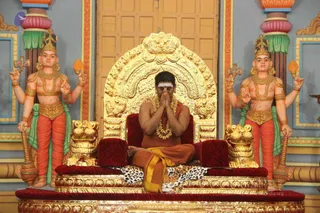
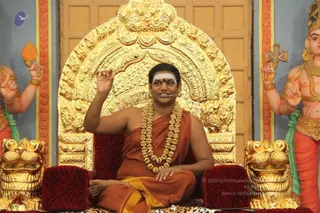
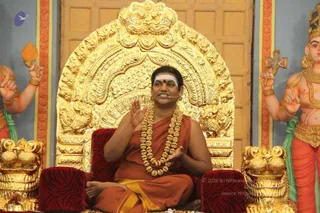
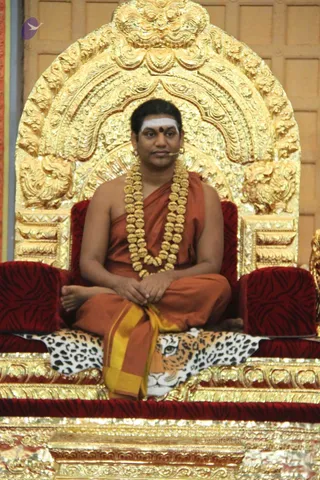
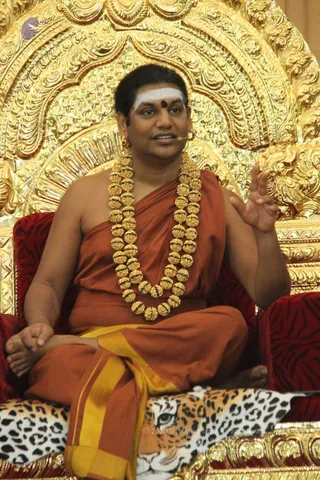
A seated man with a white forehead marking and a dark head of hair sits with palms pressed together in namaste on an ornate gold throne with a red cushioned seat. He wears an orange-saffron robe with a yellow-gold dhoti and a long gold-coloured garland of beads around his neck. Beneath him is a spotted leopard-print cloth. Flanking the throne are two large painted statues of four-armed deities with crowns, bare chests, orange-red dhotis and green sashes, holding ritual objects. A golden lion-shaped armrest sits at each side. The backdrop is a wooden door framed by blue and pink painted columns.A seated man in a saffron-orange robe and a gold-bead garland sits on an ornate gold-and-red throne with leopard-print cloth draped over the seat. Two large painted deity statues flank him, orange-skinned with multiple arms, gold jewellery and crowns, and brass oil lamps stand in front of the colourful temple-style backdrop. The seated man has a tilak on his forehead and is smiling. Swamiji (probable): a long-haired, saffron-robed figure with a rudraksha-style gold garland seated on a throne, presented as the speaker at a discourse. The scene is a stage set with red carpet and a golden arched backdrop.A seated man in saffron-orange robes sits on an ornate gold throne with a carved arched back, gesturing with his raised right hand while speaking. He wears a long ornate gold necklace of beads, a white and red forehead mark, and a small microphone at his cheek. Red velvet cushions with zebra-print covers rest on the throne, and gold lion heads flank the seat. Two gold-coloured multi-armed deity murtis stand on either side, one holding a flower and the other a trident-like staff. A teaching or discourse setting.A seated man in saffron and orange robes with a yellow dhoti speaks while gesturing with both hands, wearing a large gold-bead garland and a white vertical forehead mark with a red dot. He sits on an ornate gold throne with a carved arched back and red velvet cushions flanked by golden lion-head armrests. Two painted deity figures with multiple arms and golden crowns stand beside the throne, one holding a flame-like object. A small microphone is clipped near his face. The setting suggests a discourse hall. The image shows a ceremonial satsang-style discourse with the speaker on a raised throne. The speaker's appearance is consistent with the a person presentation cues (saffron robes, gold garland, ornate throne), so he is identified as a probable candidate in person.A seated man sits cross-legged on an ornate gold throne with a carved arched back and red velvet cushions, draped with a leopard-print cloth. He wears an orange-red saffron-toned robe with a yellow-and-gold border, a double strand of large rudraksha beads around his neck, and a white tripundra with a red bindi on his forehead. A small microphone is clipped near his ear, and his hands rest in his lap. a person: the saffron robe, rudraksha mala, and ceremonial throne are the qualifying cues. Behind him are gold-leaf carved panels and a wooden wall.A seated man in a golden ornate throne speaks to an audience while gesturing with his right hand. He wears a saffron-orange shawl over the shoulder, a yellow-bordered orange dhoti, and a double-strand necklace of large gold rudraksha beads. A white and red forehead mark with a red bindu is visible, along with gold earrings and a small microphone. The throne has red velvet cushions with a leopard-print cloth draped over the seat. Visible cues including the crown-less gold jewellery, saffron clothing and rudraksha malas suggest the presenter described as Swamiji (probable), seated in discourse on the throne.

Darshan

32 photosSource gallery
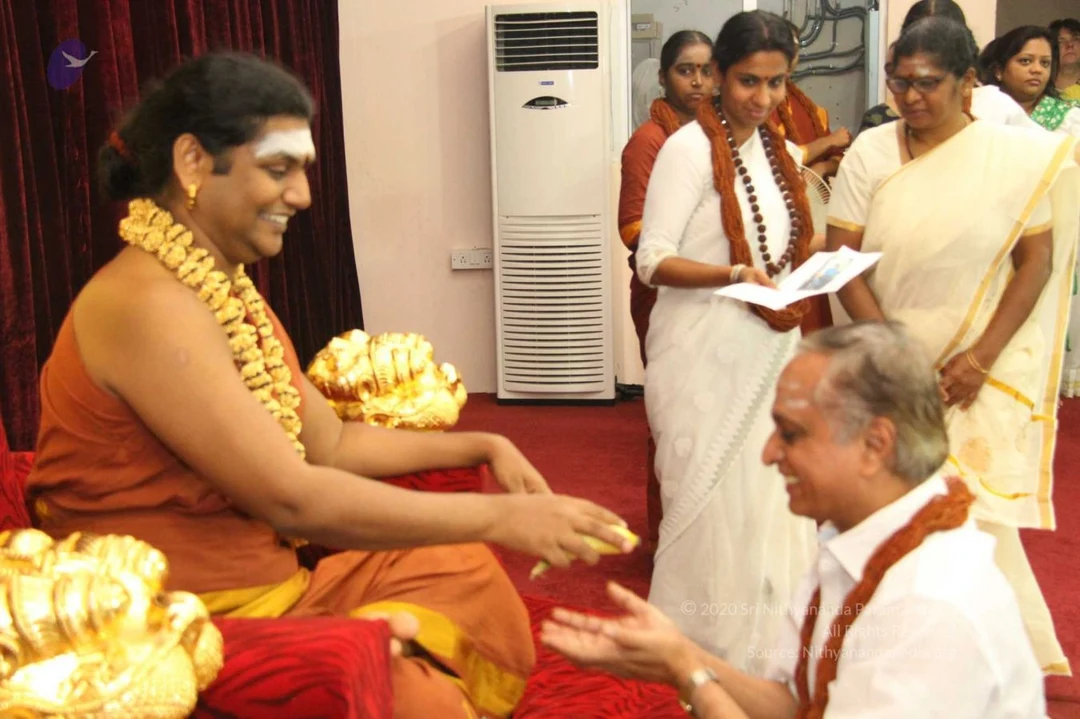
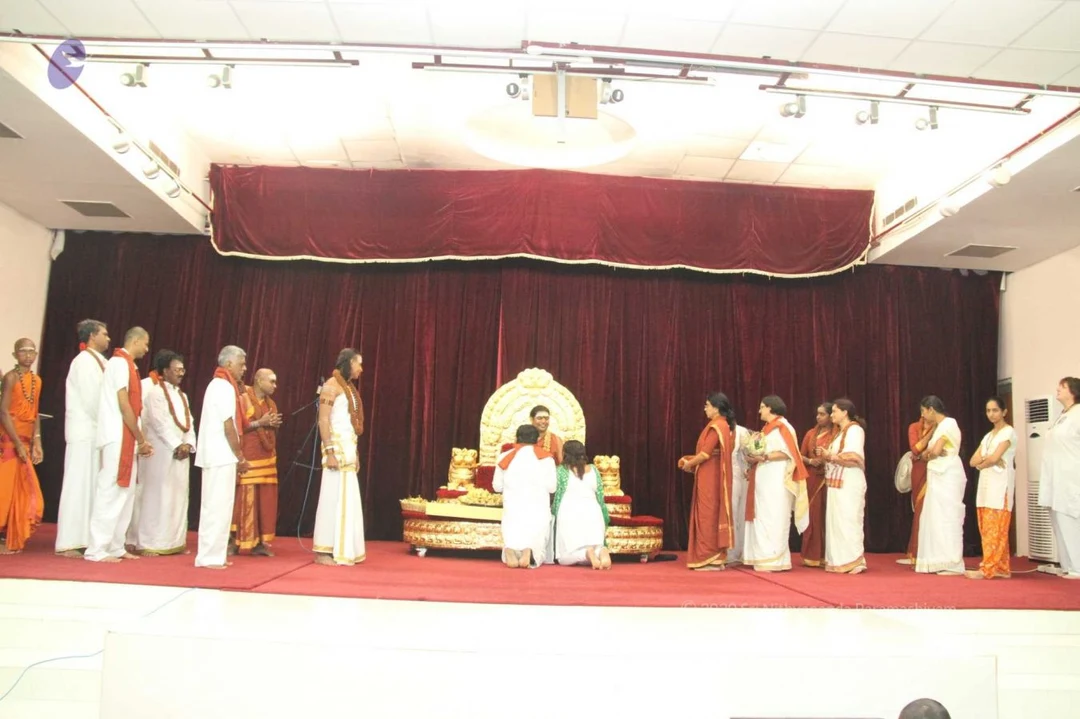
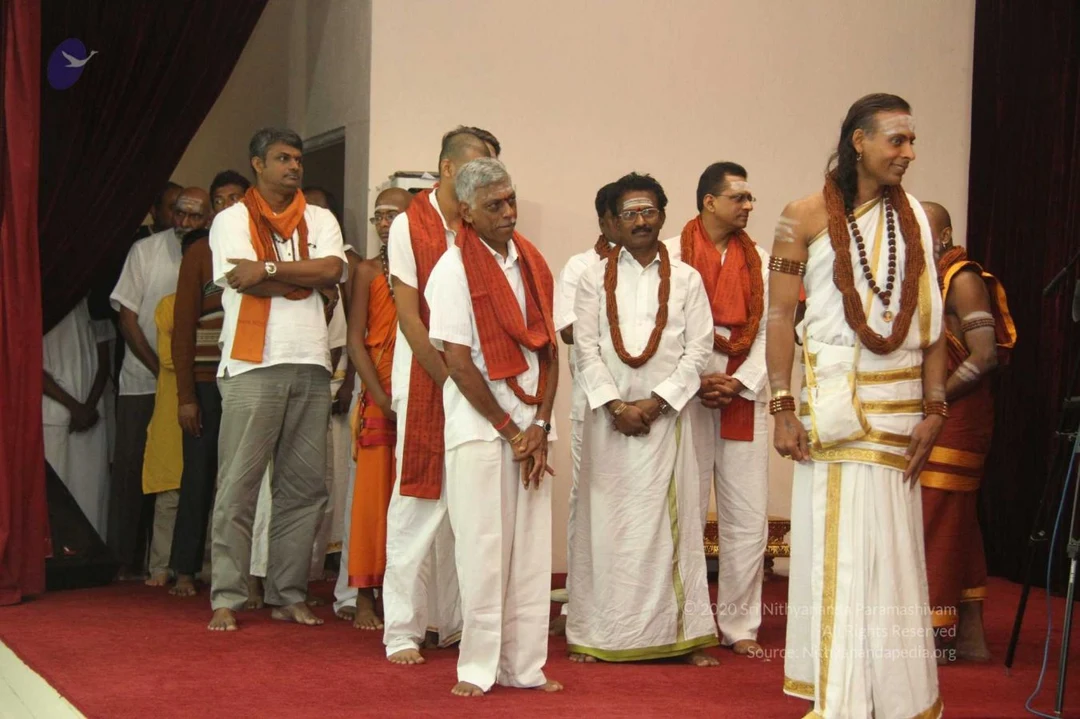
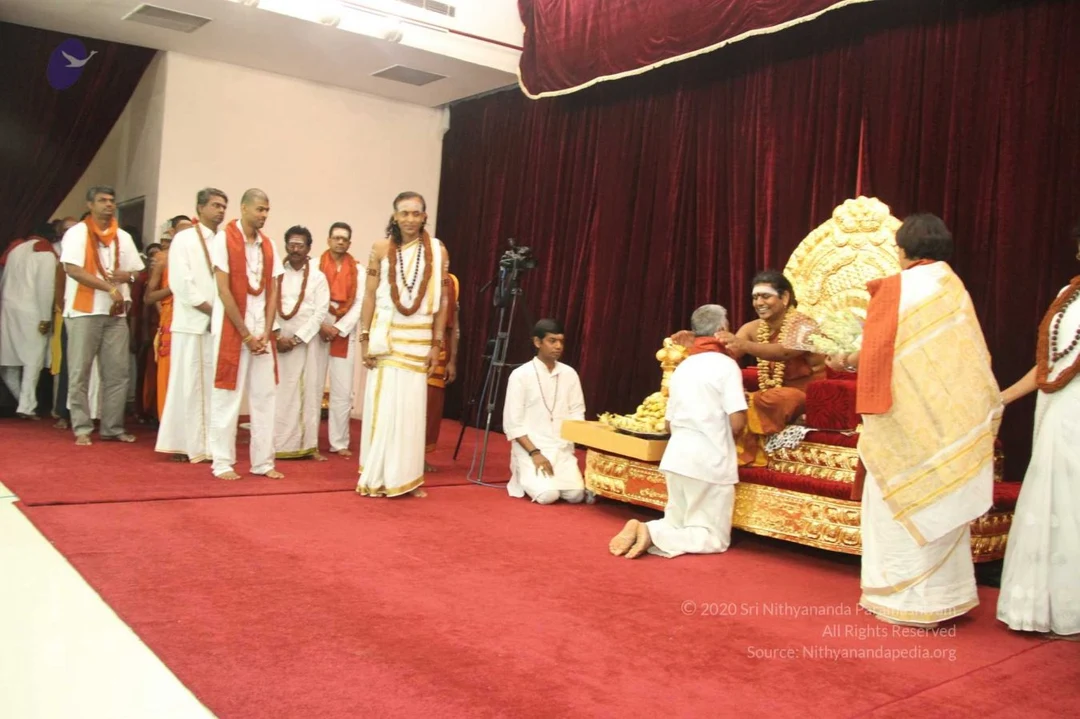
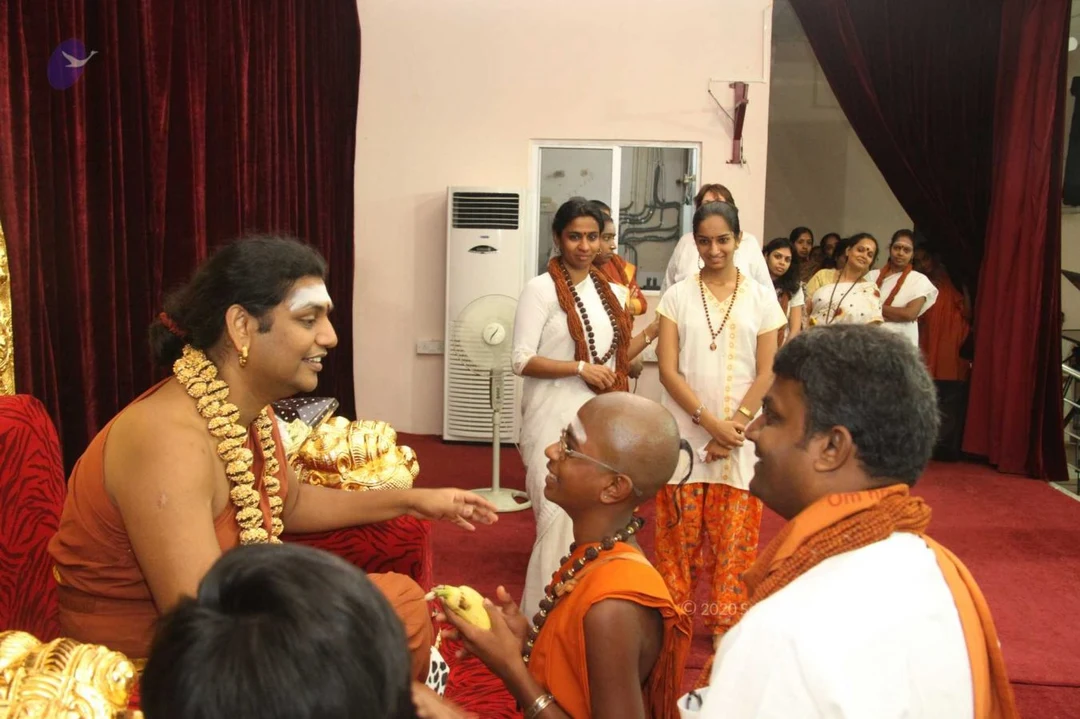
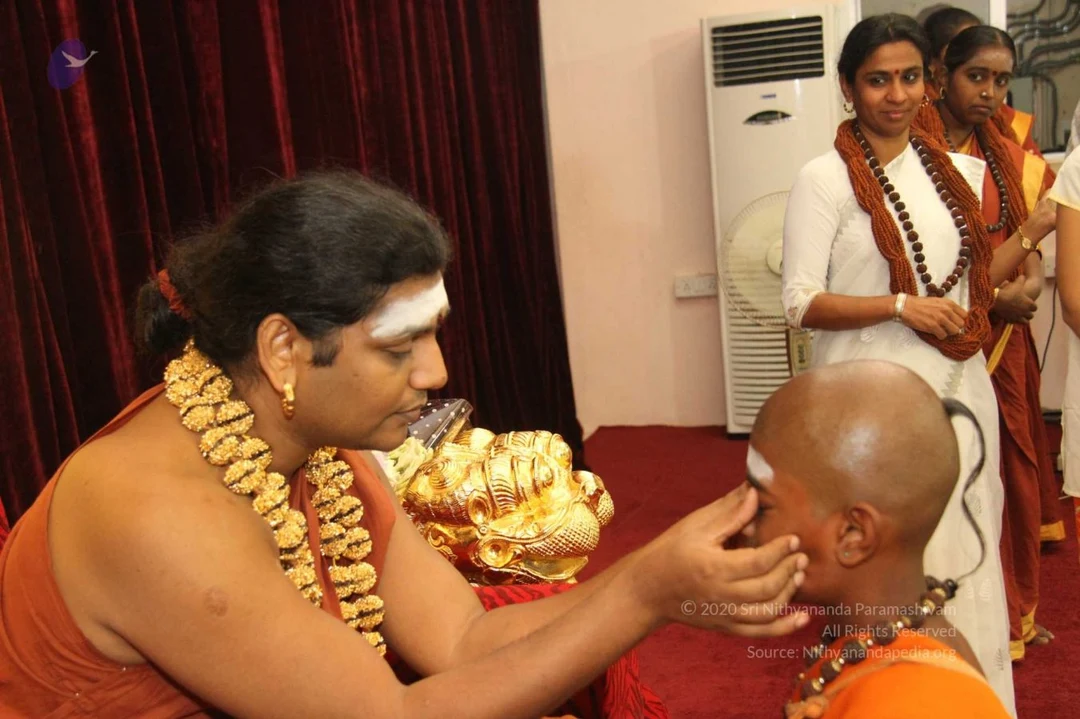
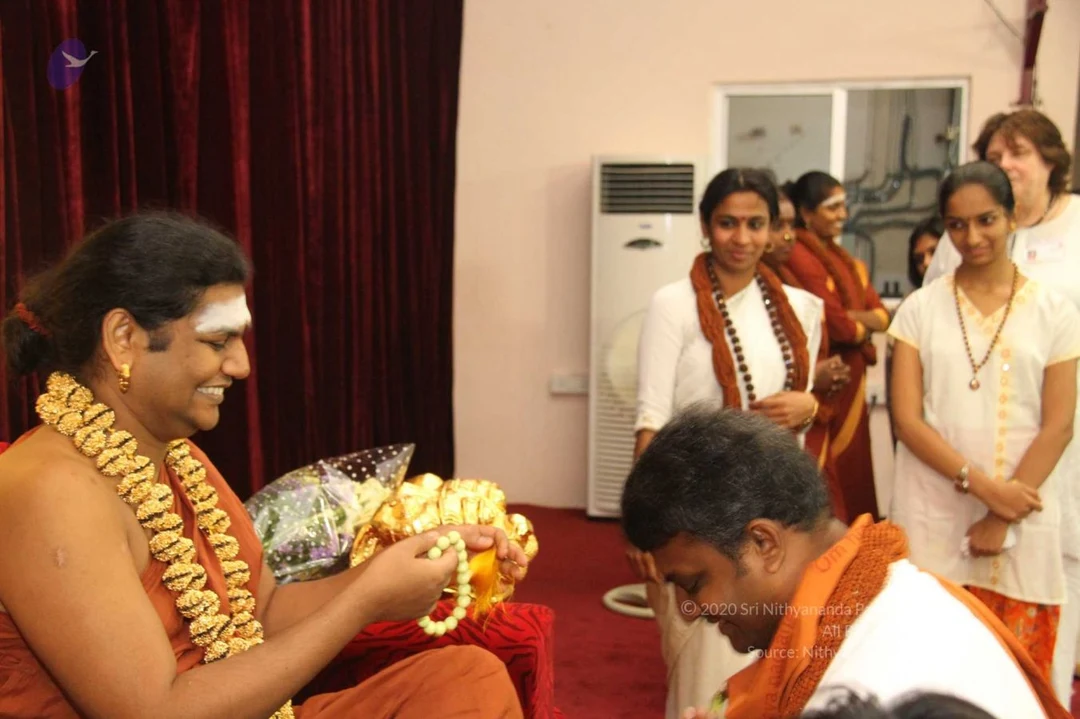
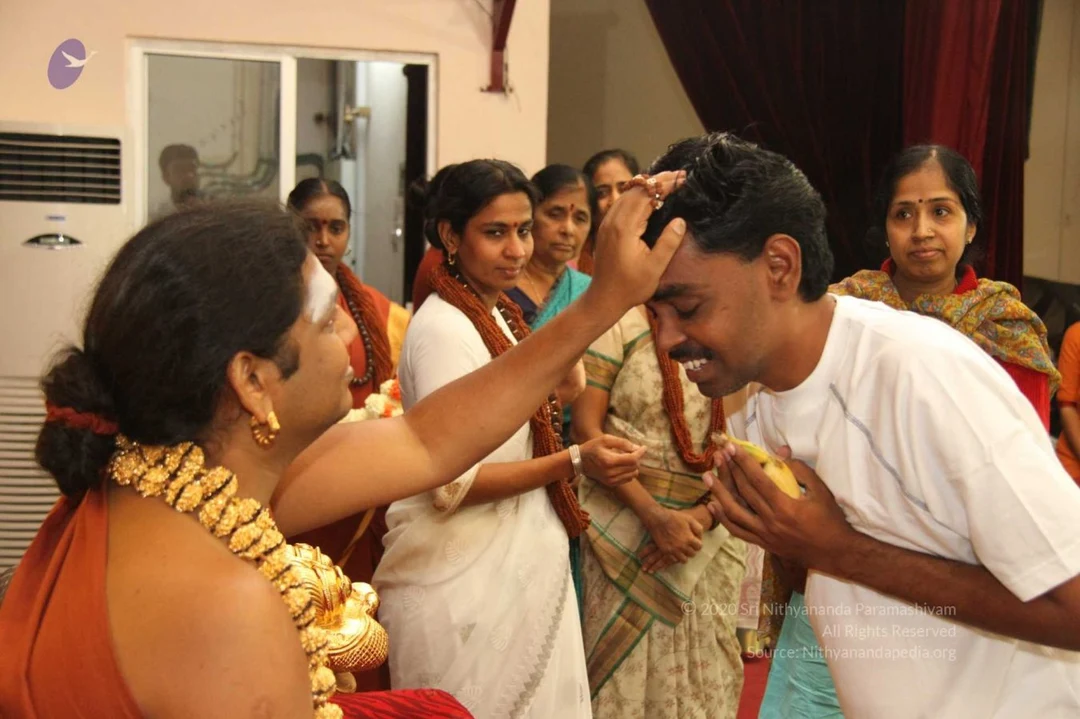
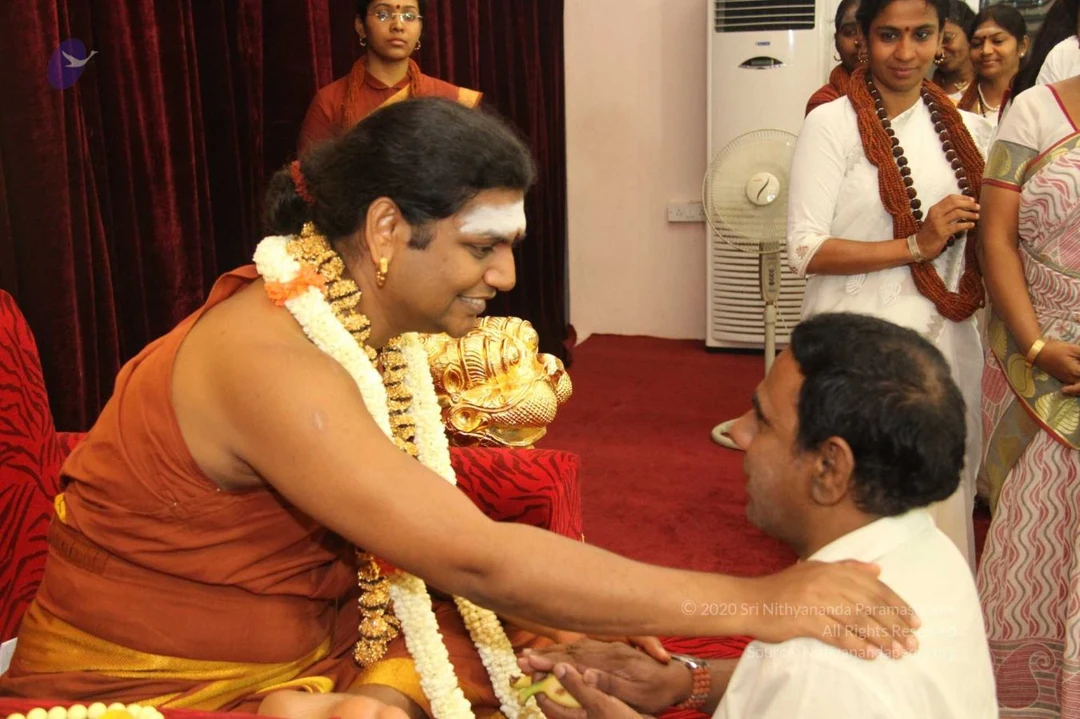
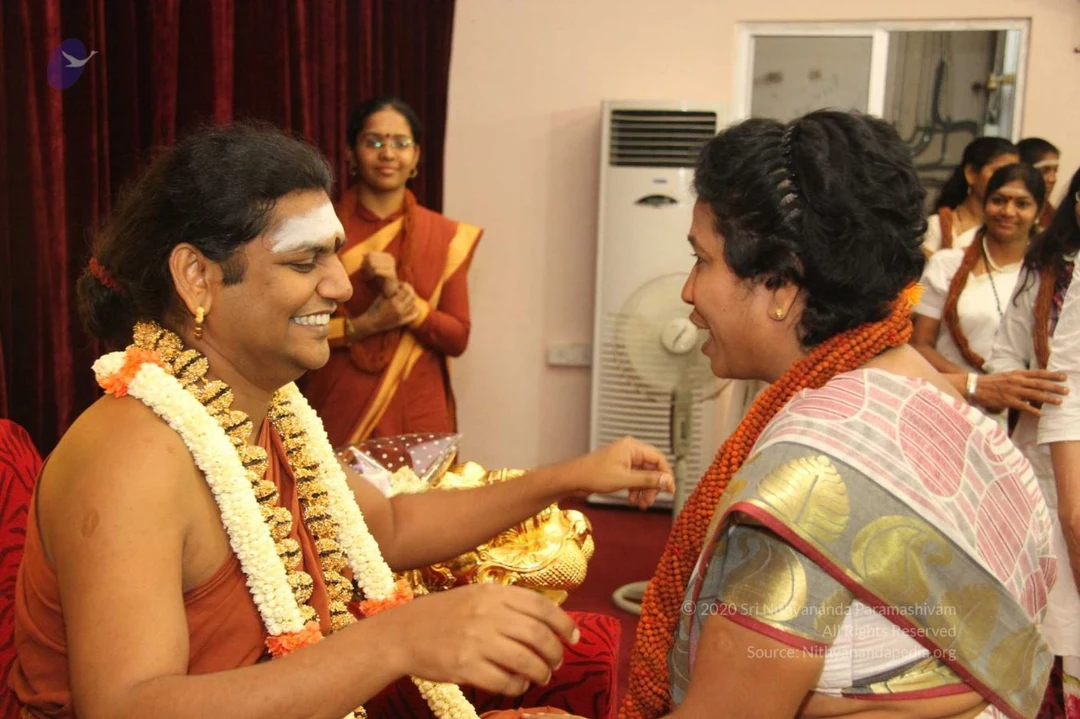
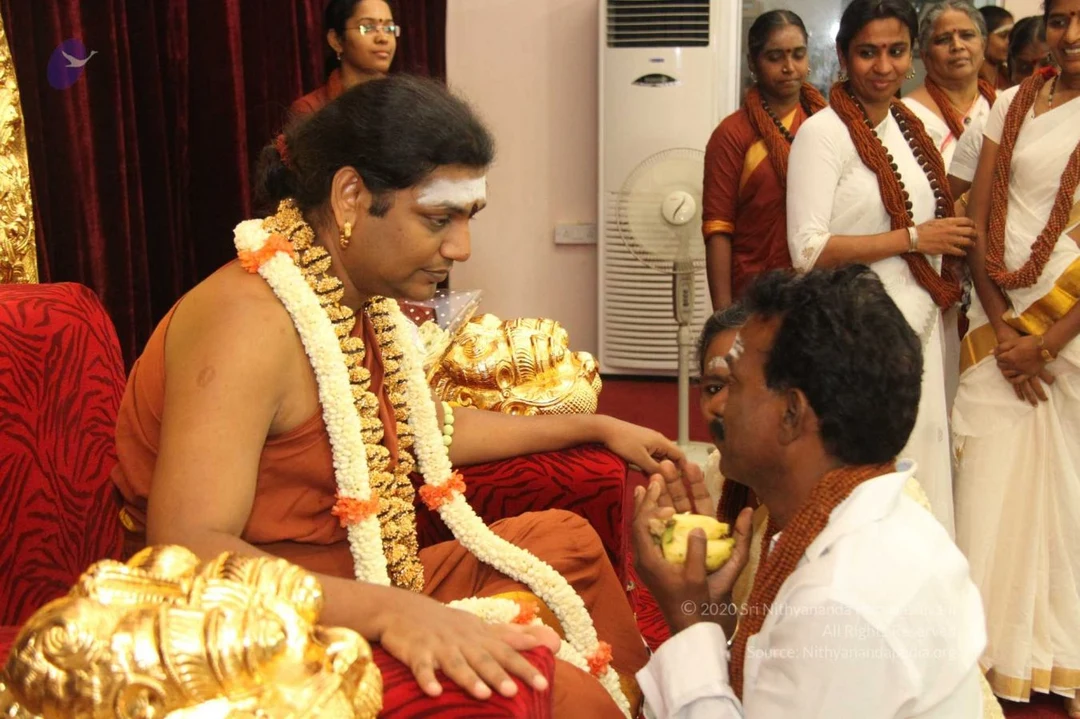
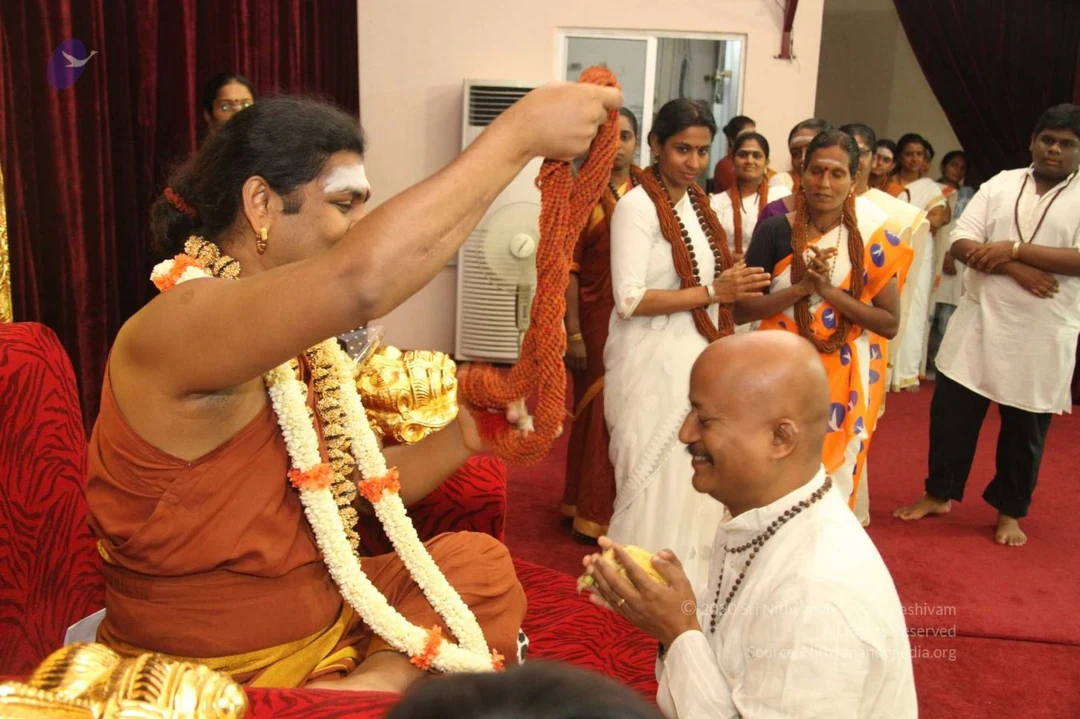
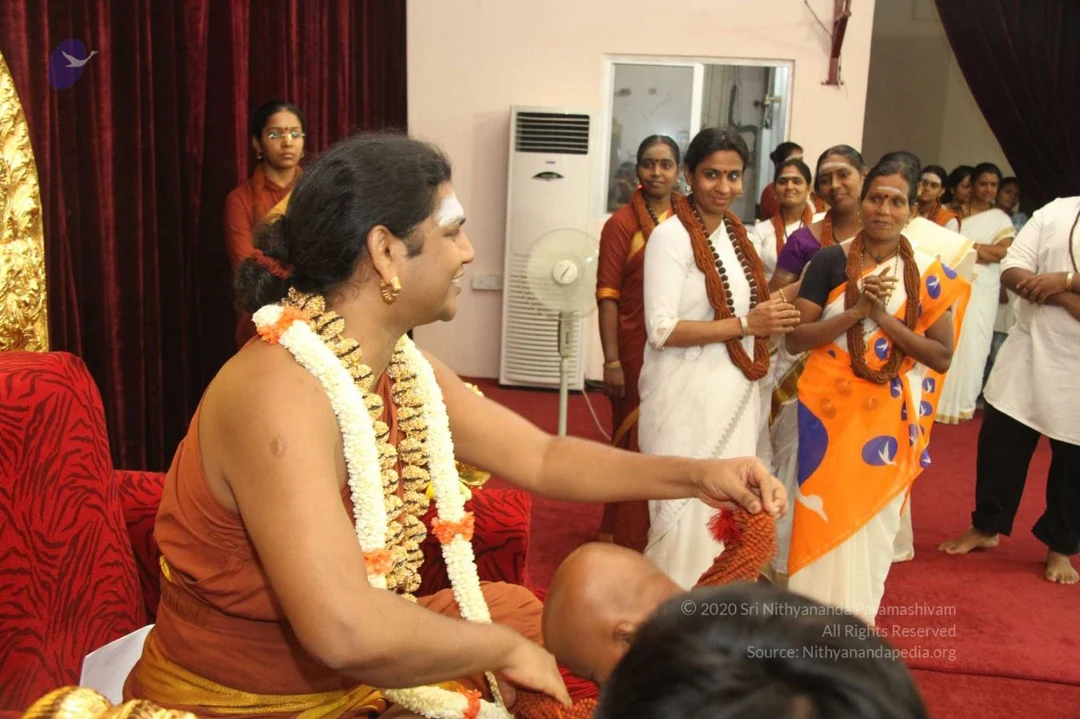
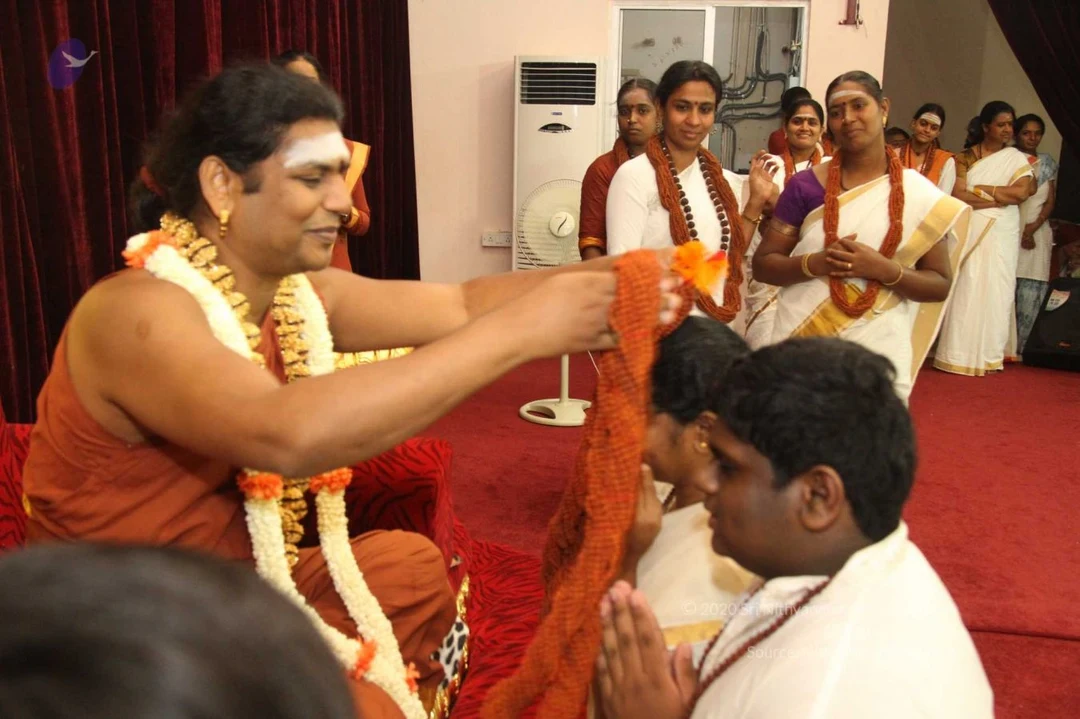
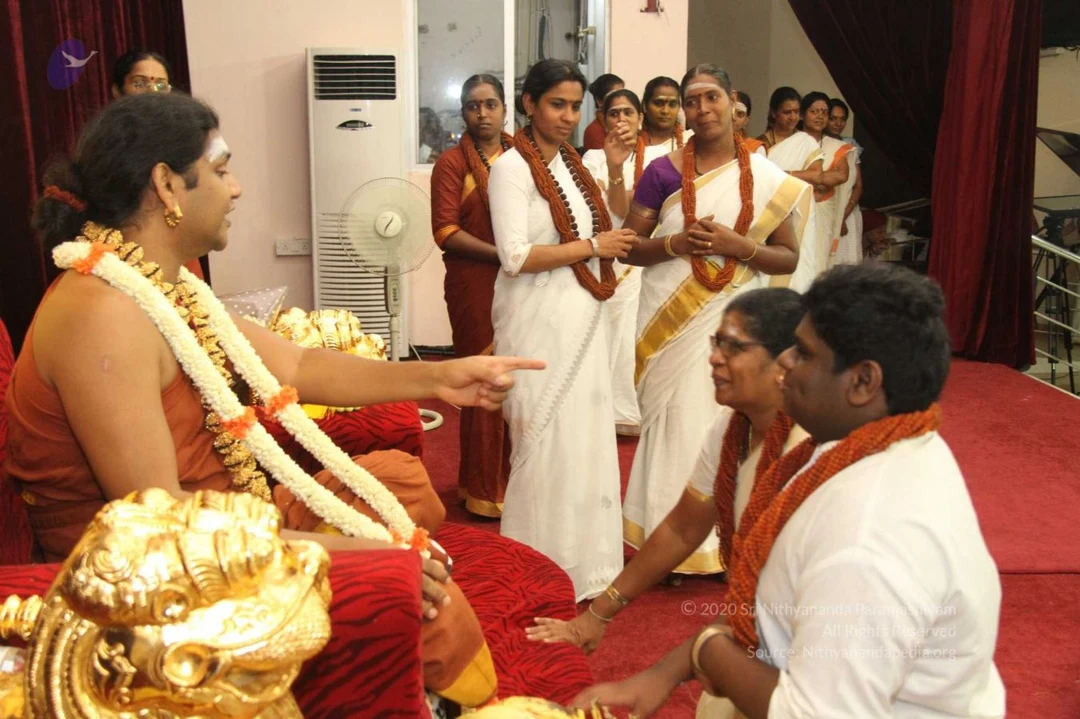
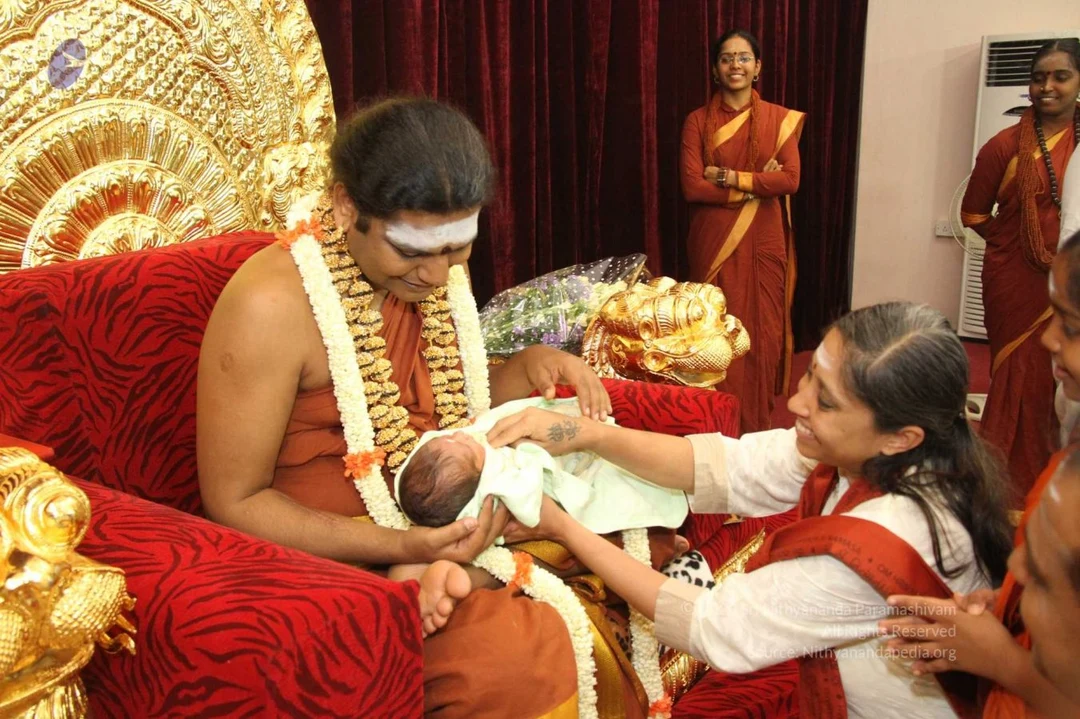
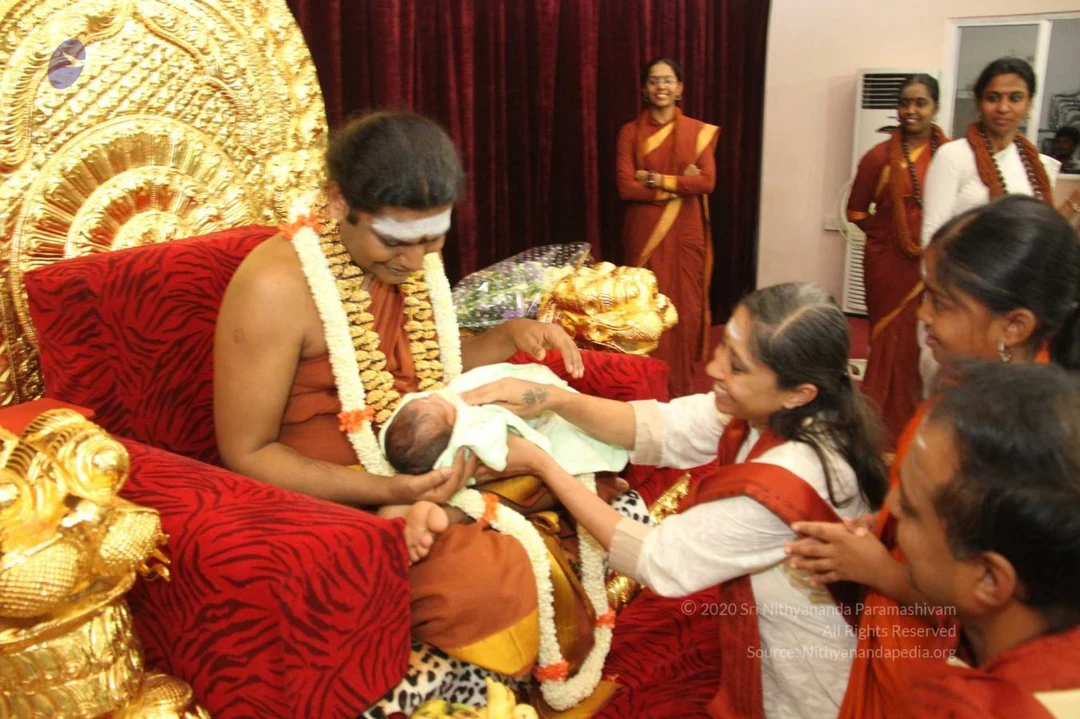
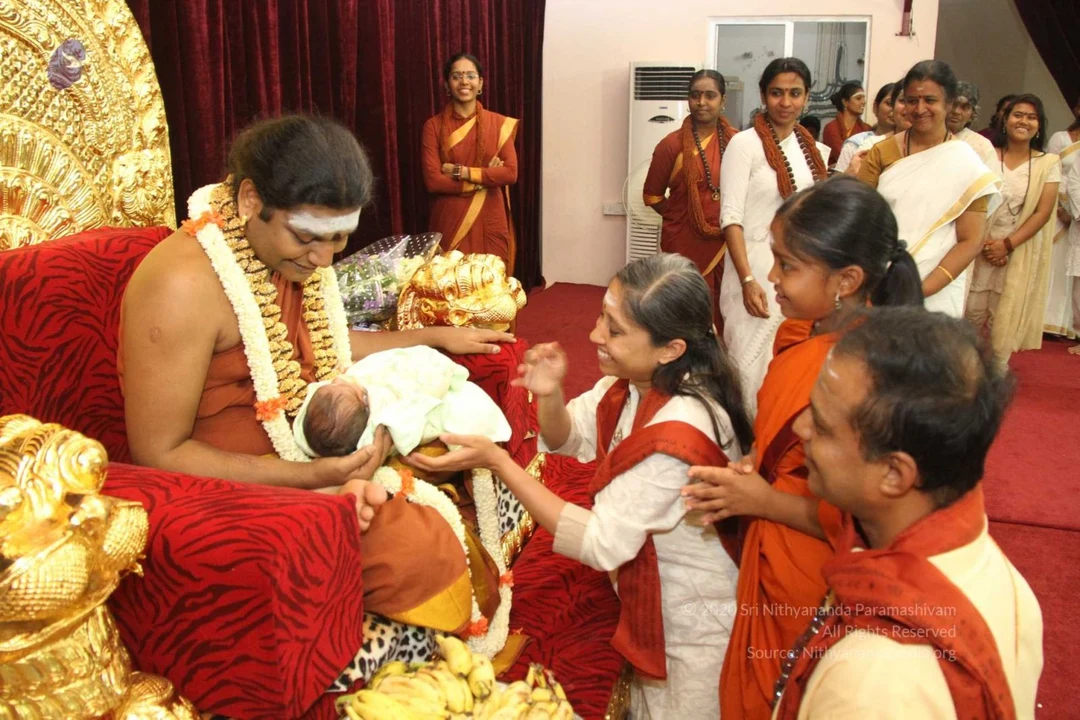
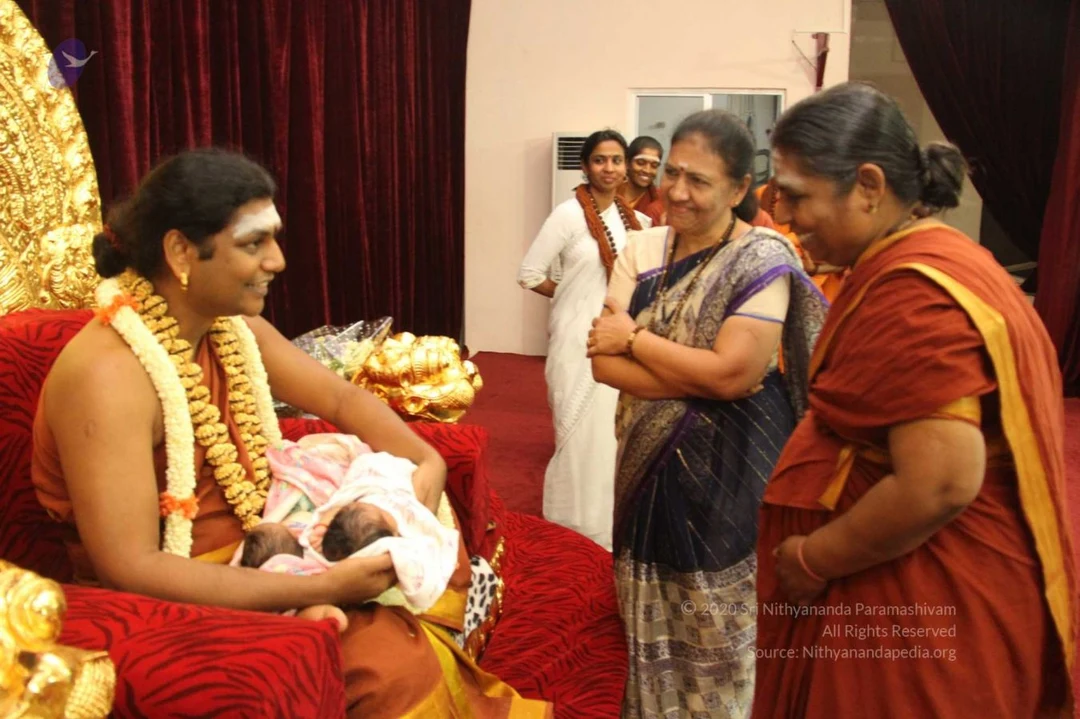
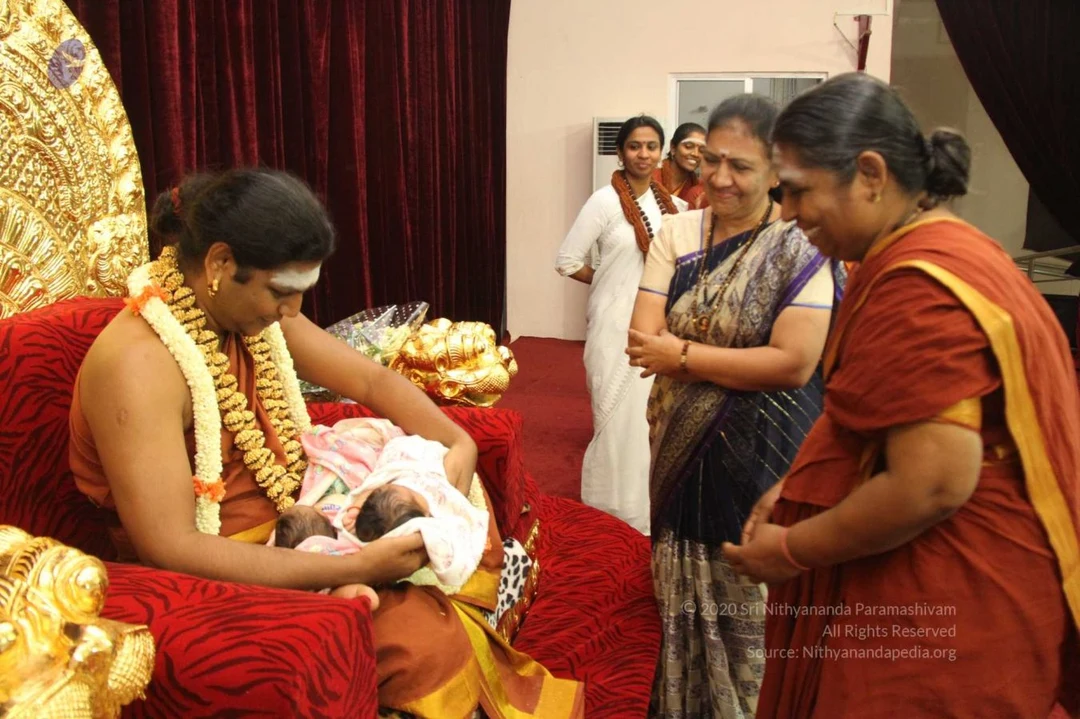
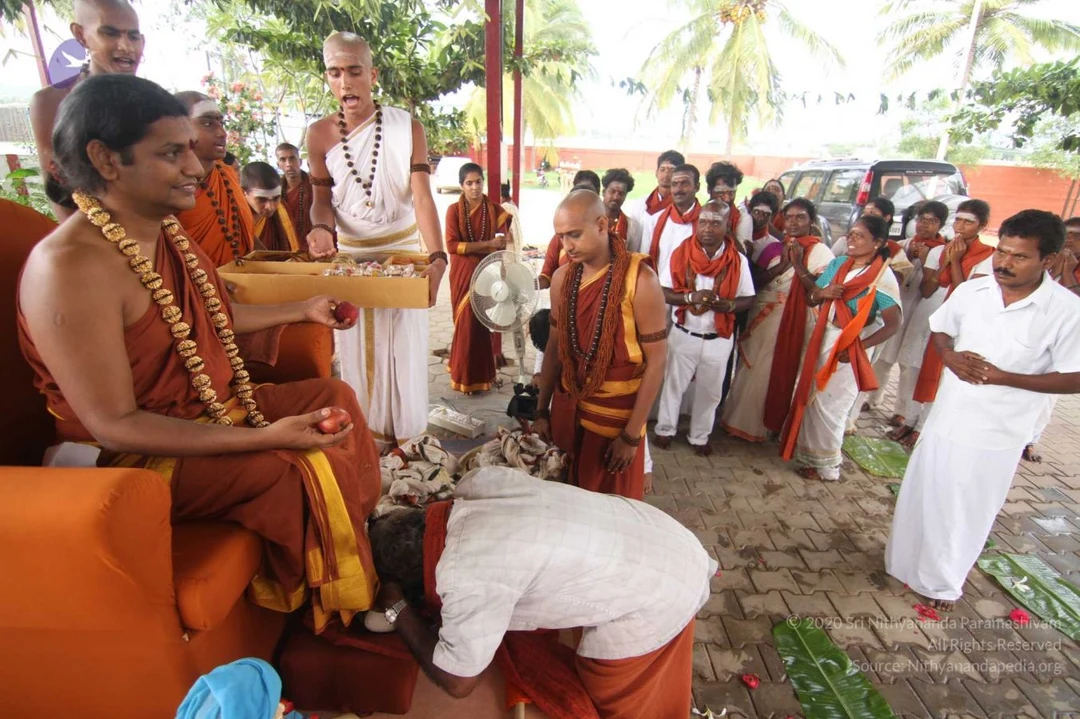
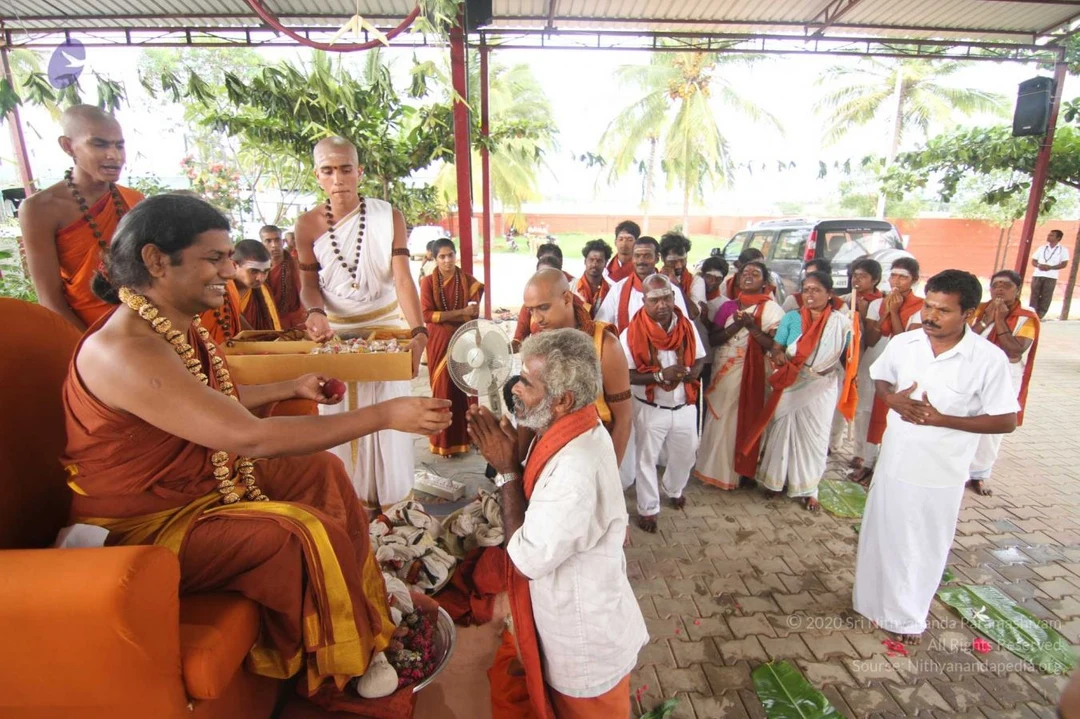
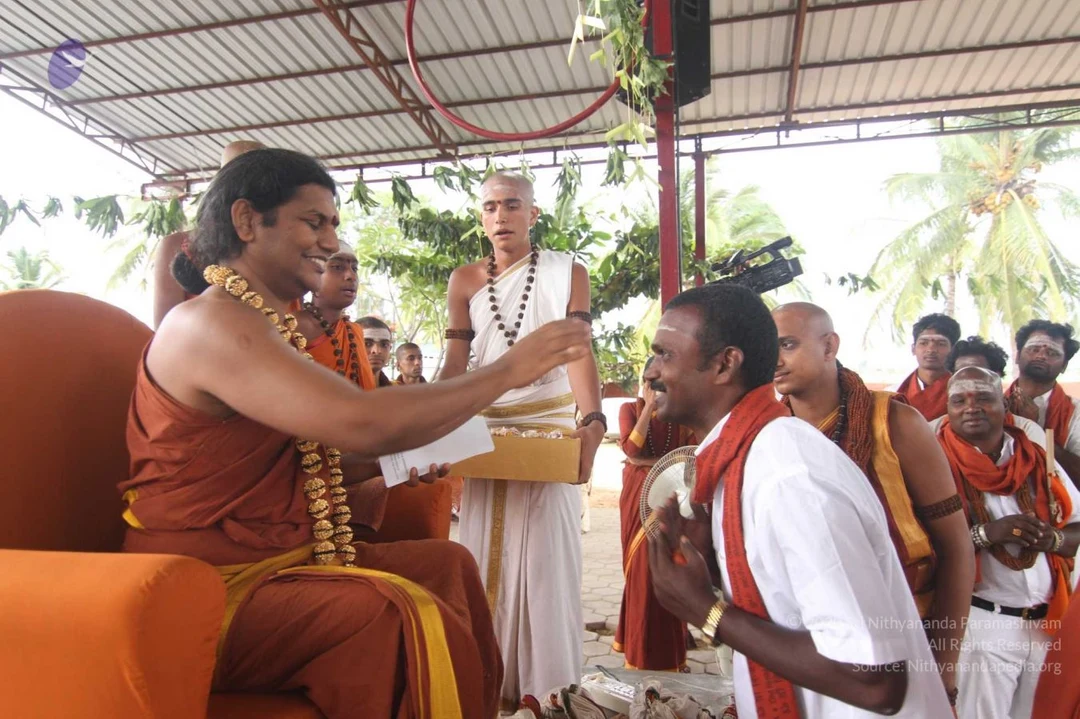
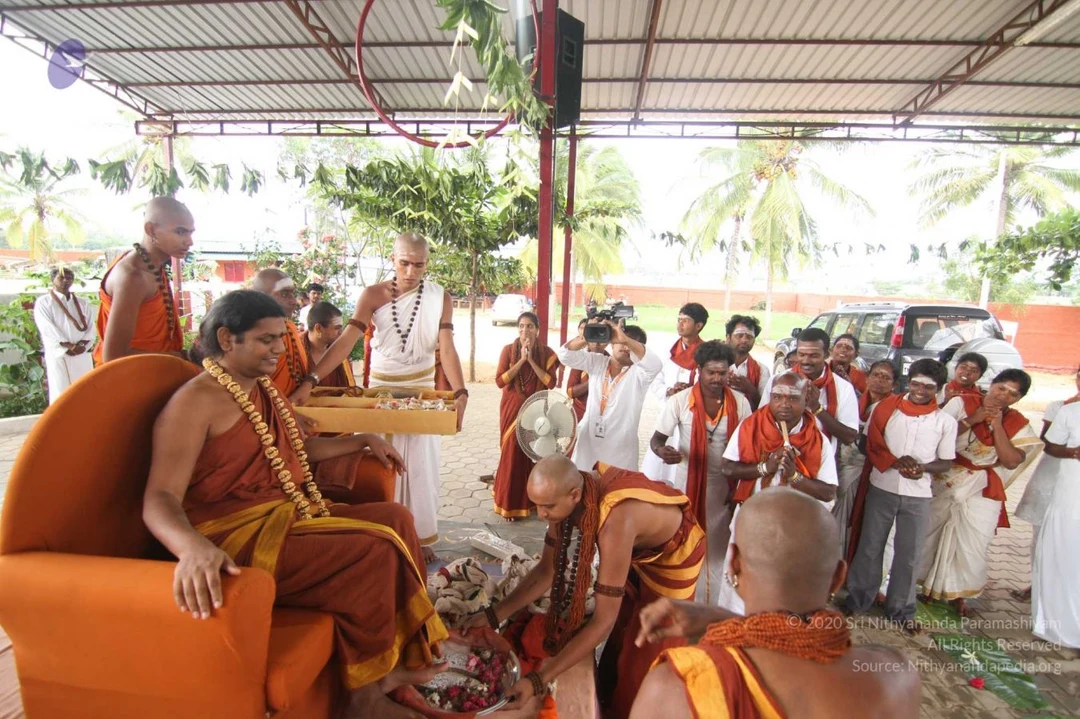
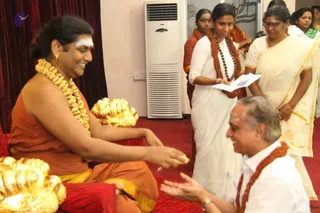
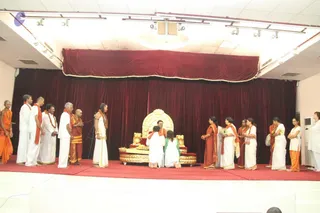
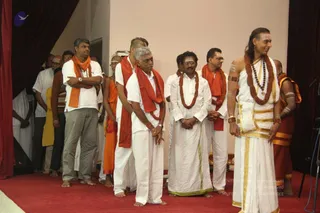
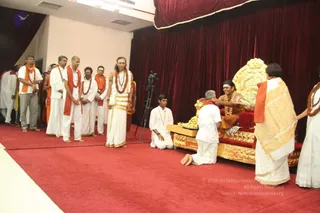
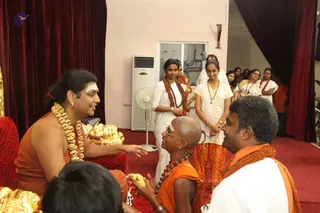
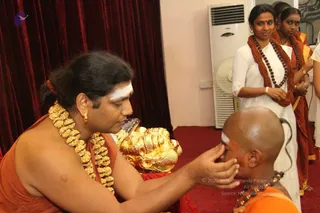
A seated figure in an orange-saffron dhoti and wrap, with a gold-and-white flower garland and a white tilak on the forehead, sits on a red cushioned seat and extends his hands toward a kneeling man in a white shirt wearing an orange-brown garland. Behind them, women in white and cream sarees stand on a red carpet; one holds a printed sheet and wears a rudraksha mala. A white floor-standing air conditioner and red drapes form the backdrop. Gold ceremonial objects rest beside the seat. The seated figure has long hair tied back and gold earrings, presenting a person appearance with saffron clothing, gold ornamental garland and a seated dais role, though this is an appearance-based label only.A stage event in an auditorium with a deep red velvet curtain and a golden-and-red ceremonial throne with ornate gold carvings at centre. Seated on the throne is a small figure in orange-red clothing. Two people in white kneel before the throne in devotion, one of them in a white top with a green-patterned garment. Around them stand a line of about a dozen people: men in white dhotis and white shirts, some with orange shawls and garlands, a man at left in saffron robes with a shaved head and beaded necklaces, and women in white saris with orange or red shawls, several with hands folded in greeting. A tall man in white with a long swept-back hairstyle and an orange shawl stands at the left-centre. Bright overhead spotlights light the stage.A group of men stands on a red carpet in front of a pale pink wall and dark red curtains. On the far right, a figure in a white dhoti with gold border and bare-chested upper body wears a long rudraksha mala, a red-orange shawl, and gold bangles; he has long swept-back hair and white markings on his forehead, and his distinctive adornments and long hair are the cues for a probable Swamiji, so the candidate is in person. Around him, men in white shirts and white dhotis wear orange and red shawls and marigold-style garlands, some with arms folded or hands clasped. A few men in orange or saffron robes stand at the edges. Several people have vertical white or sandalwood forehead marks. A blue bird logo appears at the top left corner.A photograph of a ceremonial reception in a hall with red velvet drapes and a red carpet. A seated figure on a gold-and-red throne with a gold backrest wears an orange garment, a gold necklace and a garland, and is receiving offerings from kneeling devotees. Two attendants in white ritual dress stand beside the throne; one kneels in white to the right of the throne and another kneels before it, while a row of men stands to the left wearing white dhotis and shawls with orange and red wraps, some with rudraksha malas. A tall standing man in white dhoti and shawl with long hair and a mala stands in the centre. A camera on a tripod is visible. Offerings of fruit and flowers sit on a gold tray at the throne's base.Indoor satsang scene in a hall with red velvet curtains and a red carpet. A man seated on a red tiger-striped throne-like seat wears an orange sleeveless garment, a long gold-bead garland, and a white tilak on his forehead; he extends a hand toward a bald monk in orange robes and a rudraksha mala who holds a yellow fruit. A man in white with an orange shawl sits at right. Behind them, women in white and orange garments stand watching, some wearing rudraksha malas and orange shawls. A floor fan and wall air conditioner are visible.A photograph of a long-haired man in an orange-saffron dhoti and shawl, wearing a multi-strand gold bead necklace and gold earrings, with white vibhuti lines on his forehead, leaning forward and touching the cheek of a shaved-headed man in orange clothing who is seated low. Beside them a gold-coloured ornate vessel or kalasha-like object rests on a red cloth. Behind them, a red velvet curtain hangs on the left. Three women stand at right near a wall-mounted air conditioner: the woman in front wears a white blouse and white sari with a red-brown beaded mala, and the two behind wear orange-red saris and similar malas. Red carpet covers the floor. Swamiji (probable) appears in person: the long-haired man has swept-back hair, saffron clothing and a gold ceremonial necklace.
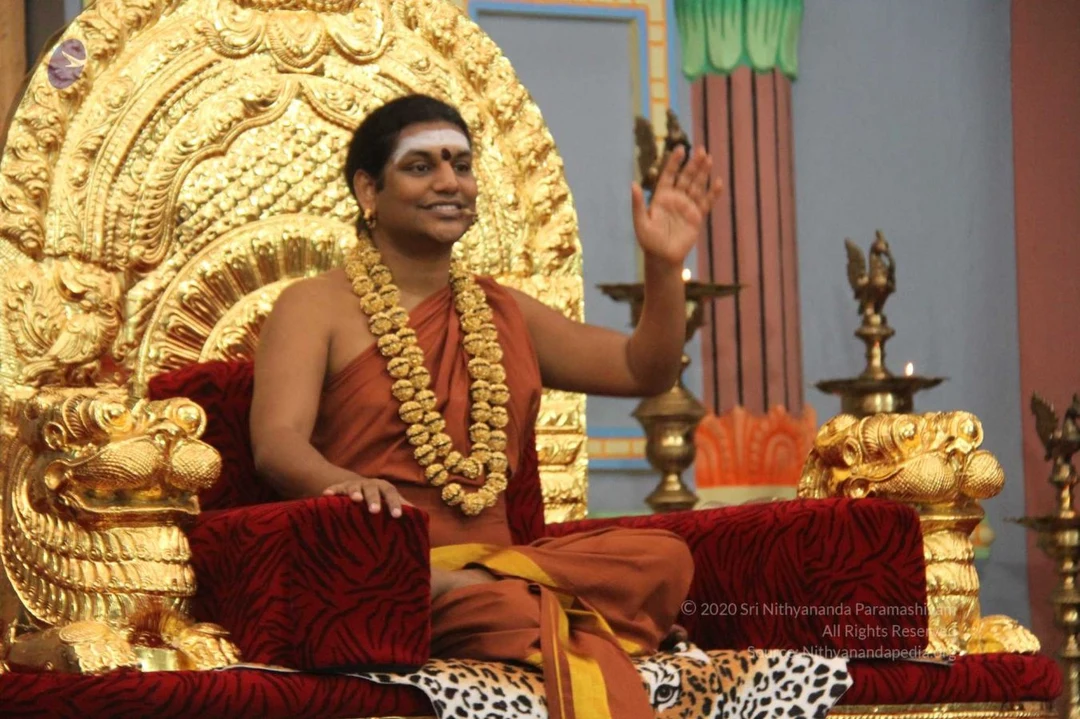
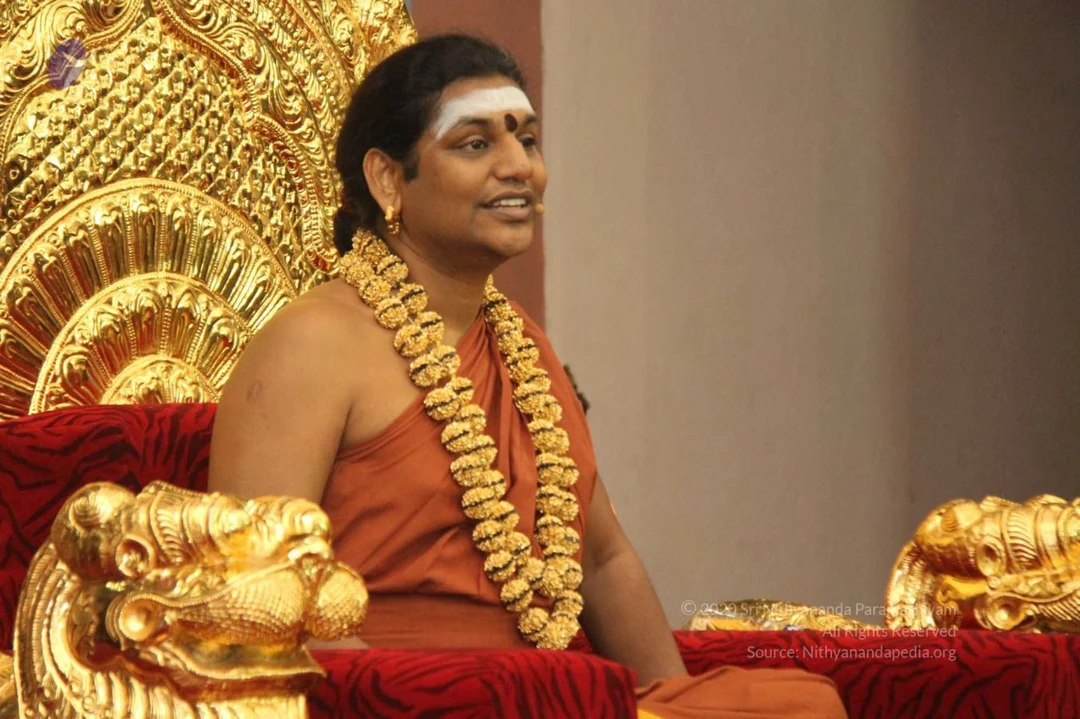
Annalaya
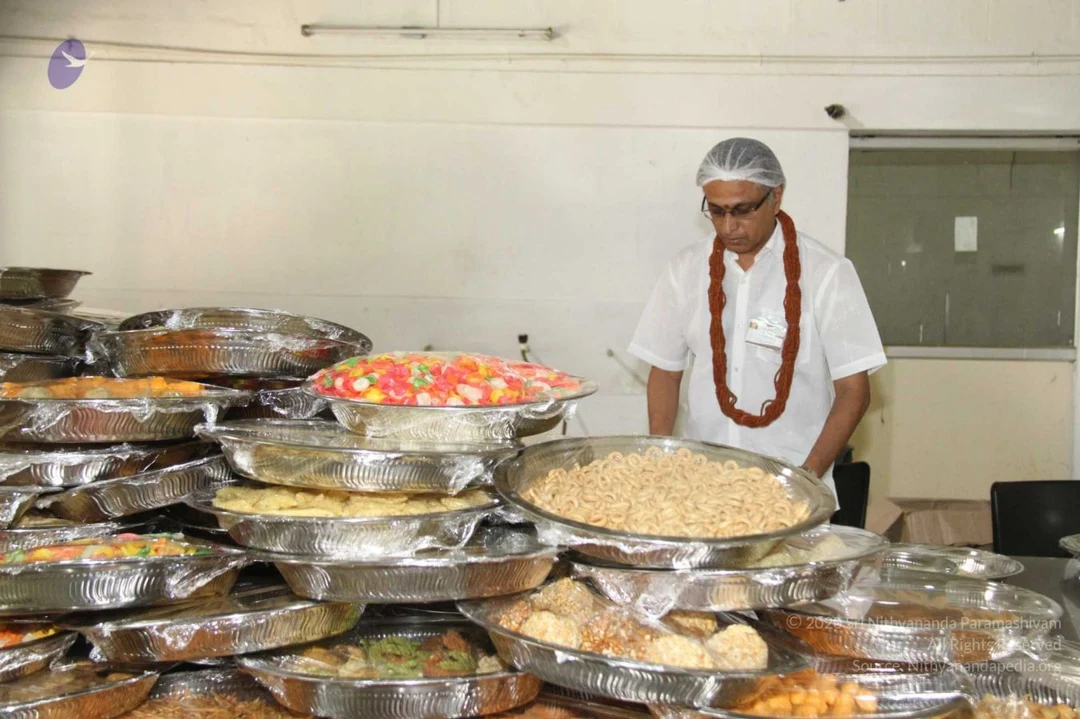
6 photosSource gallery
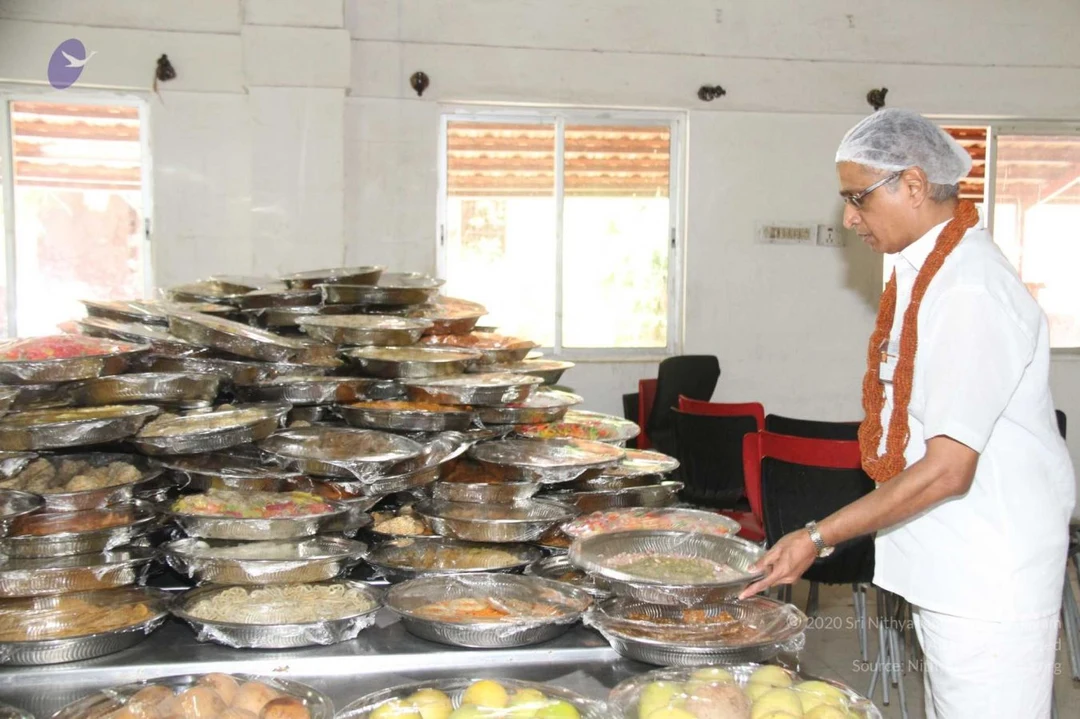
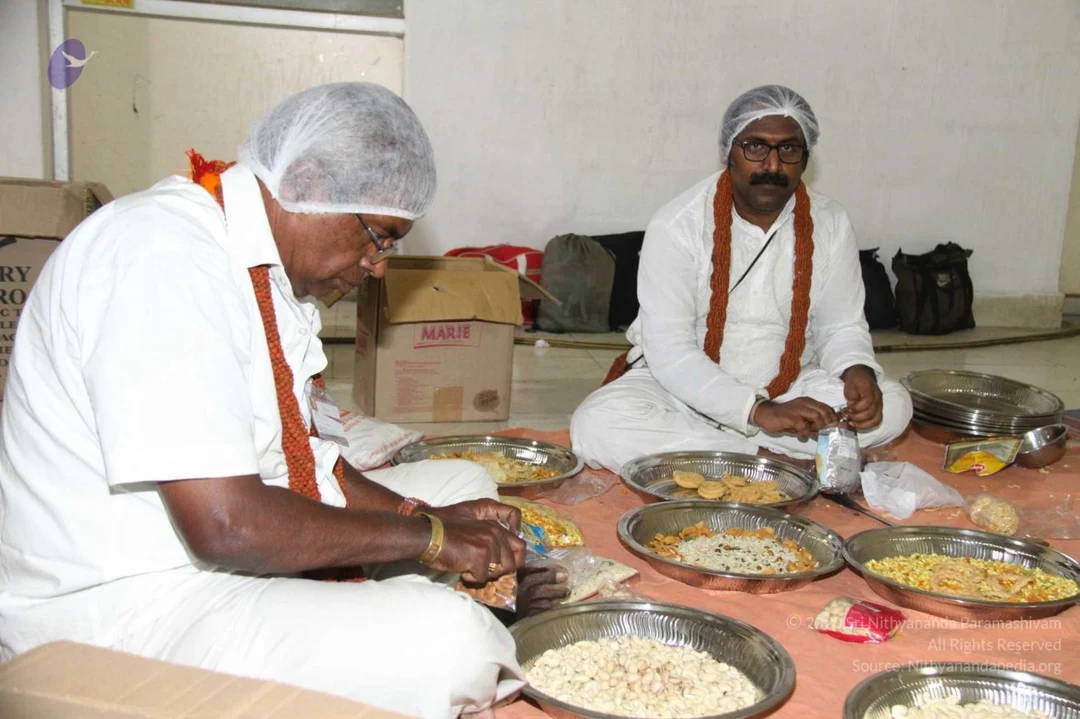
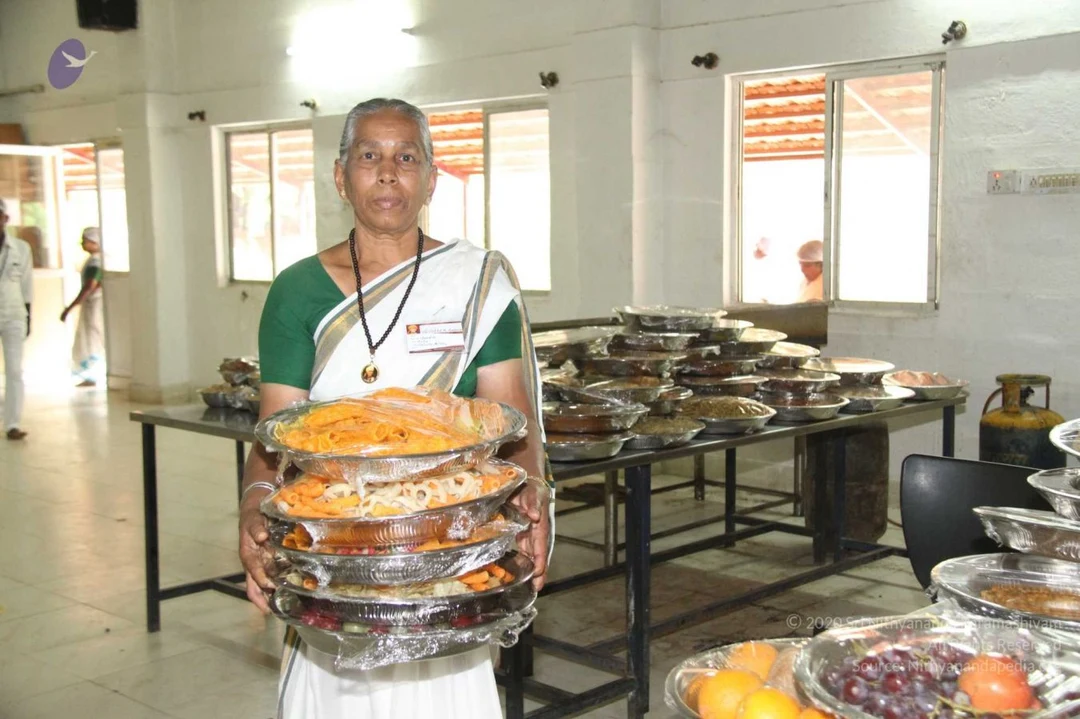
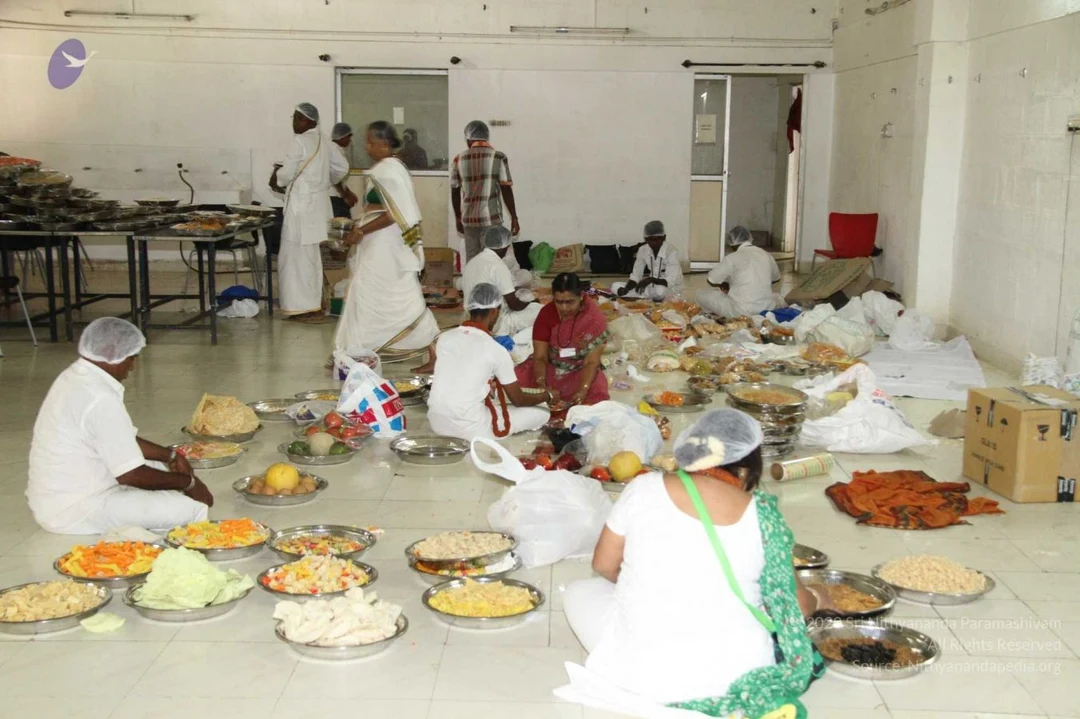
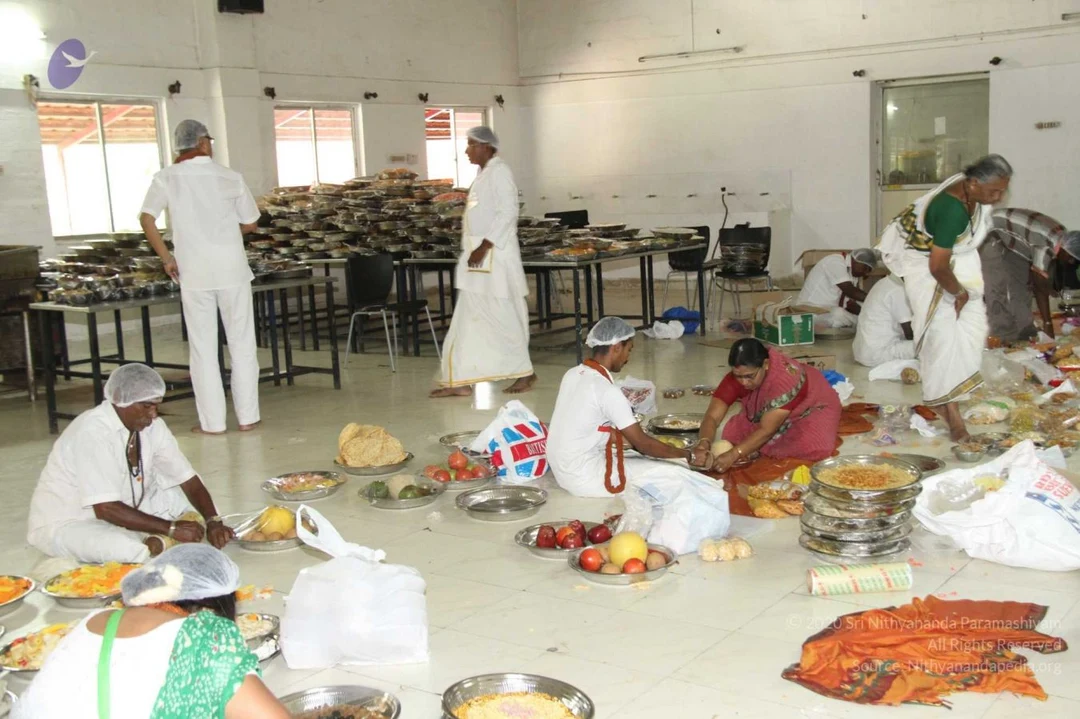
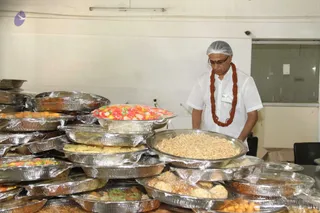
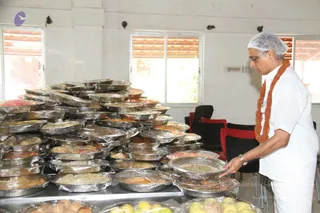
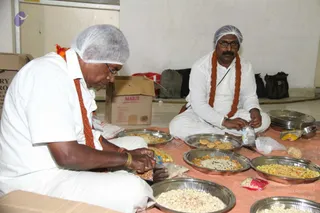
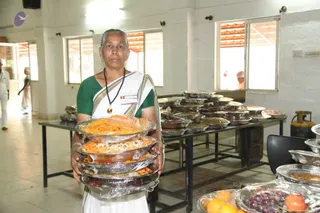
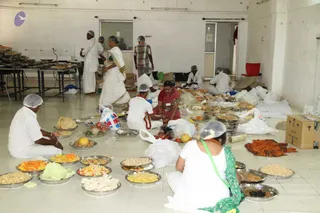
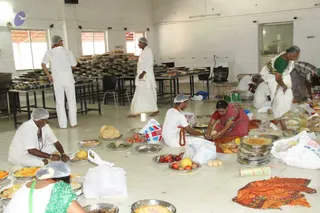
A photograph of a man in a white short-sleeved shirt and a white hairnet standing behind a long table stacked with many silver foil trays of sweets and snacks, including colourful candies, round fried sweets, pale savoury twists and mixed snacks. He wears a reddish-brown rudraksha mala around his neck and glasses, and looks down at the food. The setting is a plain white-walled hall with a window at right and chairs at the far edge.A photograph of a kitchen or dining hall where stacks of aluminium foil trays hold cooked vegetarian dishes, rice, sweets and fruit on a steel prep table. A man in a white short-sleeved shirt and white hairnet stands at right, reaching toward a tray, wearing an orange-and-saffron beaded garland and glasses with a wristwatch. White walls, open windows and red-cushioned chairs fill the background.Two men sit cross-legged on a bare floor preparing food packets for annadan distribution. Both wear white kurta-style clothes, orange-brown rudraksha malas around their necks, and white disposable hair nets. The older man on the left, wearing glasses and a gold bangle, bends over packets with his hands. The man on the right, also with glasses and a moustache, sits behind steel trays holding snack mixes, sweets and nuts spread on an orange cloth. A cardboard box marked MARIE and bags sit against a white wall. The a person appearance cues are not clearly visible, so no candidate is named.A grey-haired woman in a green blouse and white sari with a green border stands in a tiled hall, holding a tall stack of foil-covered steel trays of food, with a black beaded necklace and a name badge on her blouse. Behind her, long tables are lined with many more trays of food, and oranges and grapes sit in the lower right foreground. Two people in white caps and aprons work in the background near a window.A photograph of a large, bare tiled hall where volunteers in white clothes and white hairnets prepare food on the floor. In the foreground, a seated man in white and a woman in a red and white sari sit before many round steel plates heaped with sliced vegetables, cut fruit, chopped cabbage and grains. Other volunteers sit or stand along the walls, and a woman in a white sari with a green shawl sits at the lower right with plates of nuts and dried fruit. Plastic bags, cardboard boxes and an orange cloth lie on the floor, and steel serving trays are stacked on tables at the left.A large white-walled hall where volunteers prepare packed meals for distribution. Men in white shirts and white dhotis, with white hairnets, stand and sit on the tiled floor around steel trays of fruit, rice, and food. Several black-framed tables are stacked with rows of sealed plastic food containers. A woman in a red-and-pink sari kneels arranging items on a steel plate, and a woman in a green blouse and white sari bends over the far right. Orange cloth lies on the floor in the foreground, and plastic carrier bags and cardboard boxes sit among the food. The scene resembles annadan food packing.

Around the campus

2 photosSource gallery
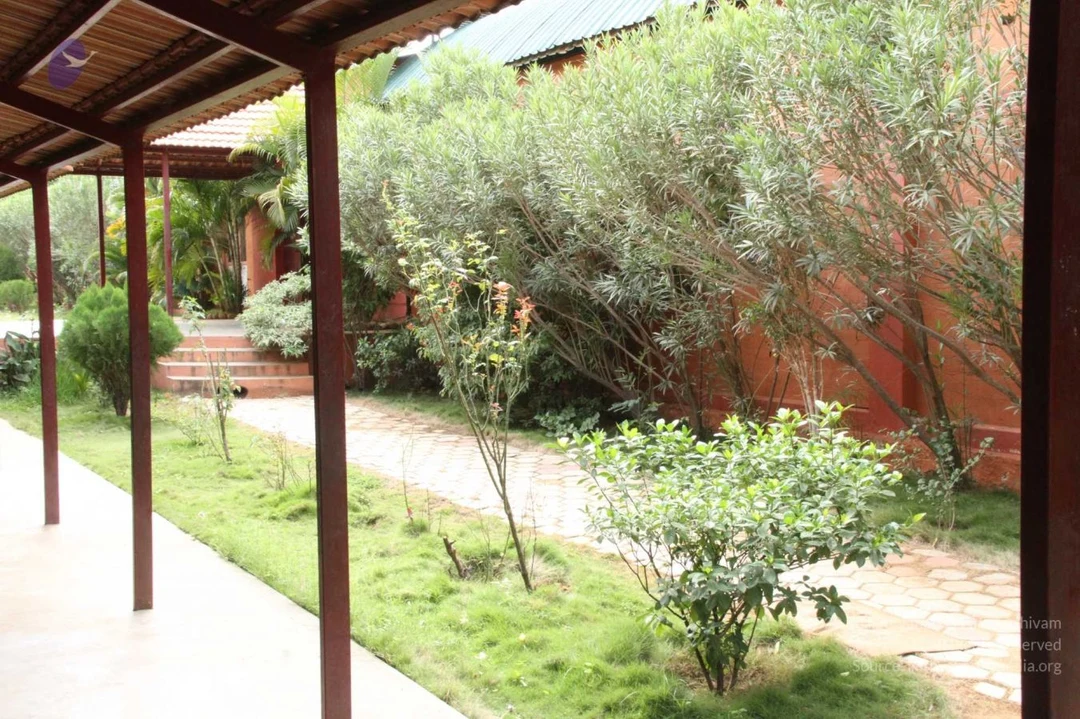
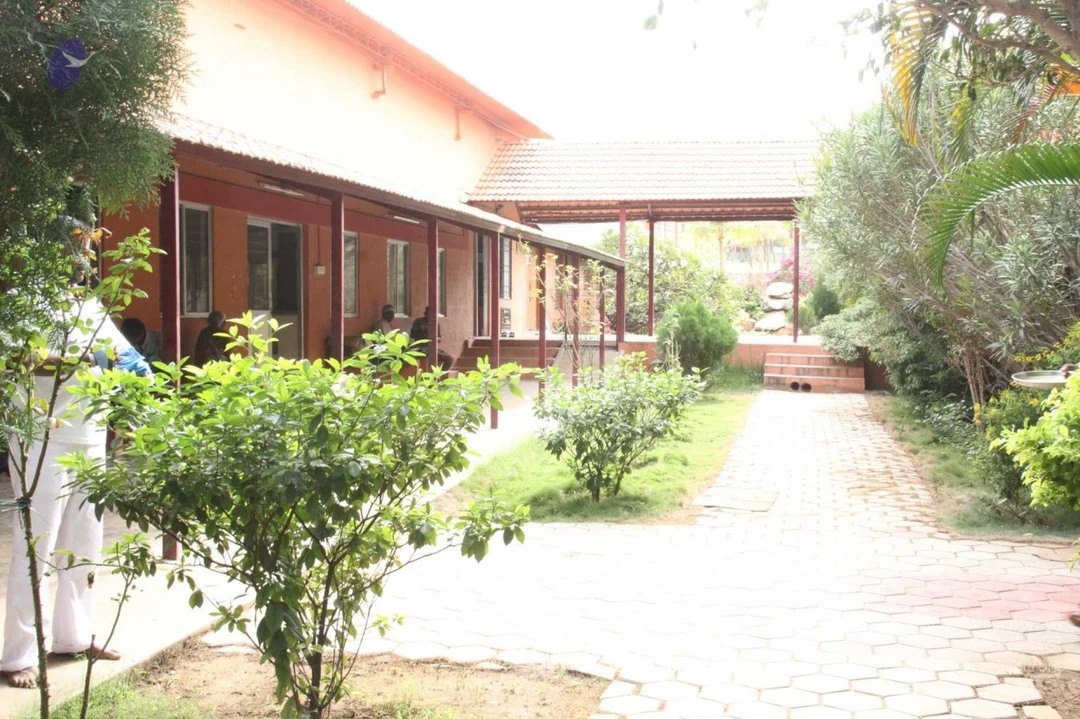
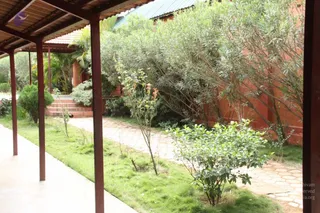
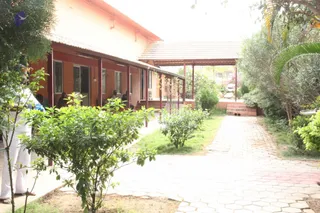
A covered veranda with dark red-brown wooden pillars runs along a pale concrete walkway at left. Beside it, a grassy strip holds small shrubs and a tall, dense hedge of narrow-leafed plants against a terracotta-red wall. A stone-paved path curves through the garden toward a set of brick steps and a corner of palm trees under a green-roofed building. No people are visible.A photograph of an ashram courtyard with a terracotta-roofed building along the left, its covered verandah supported by red pillars. Several seated people sit in the shade under the verandah, and a standing person in white clothing is partly visible at the far left edge. A hexagonal paved path leads through lawn and flowering shrubs toward a covered pavilion with a red tiled roof and a short set of steps. Palms and dense green foliage frame the scene under bright daylight.

Temple Deities

17 photosSource gallery
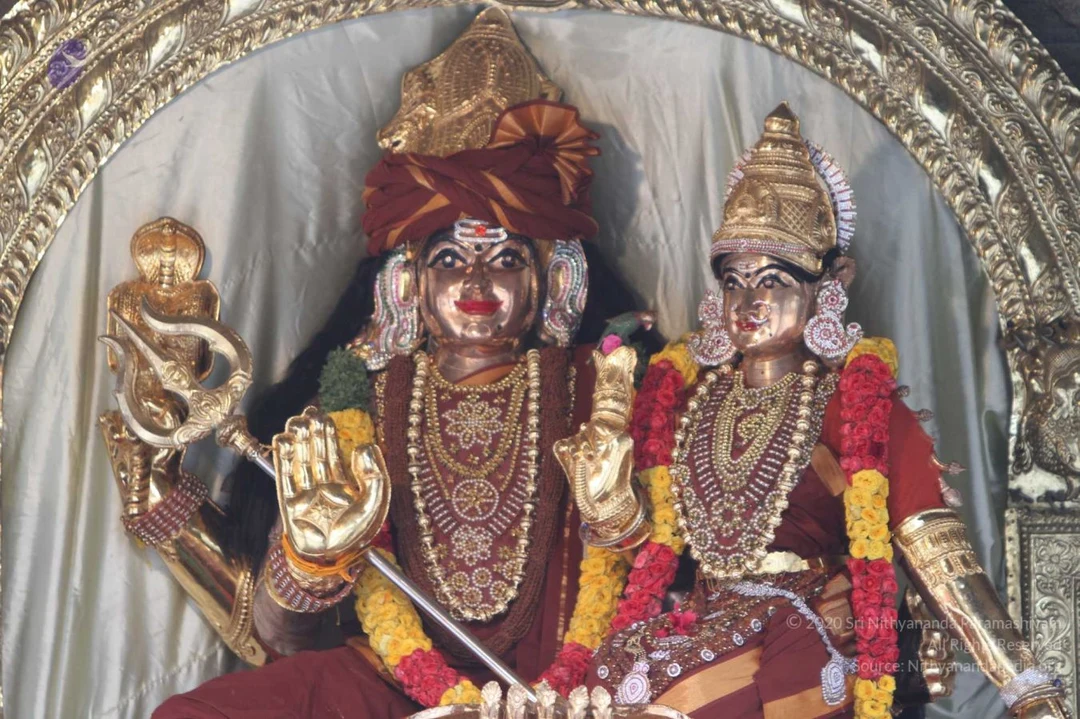
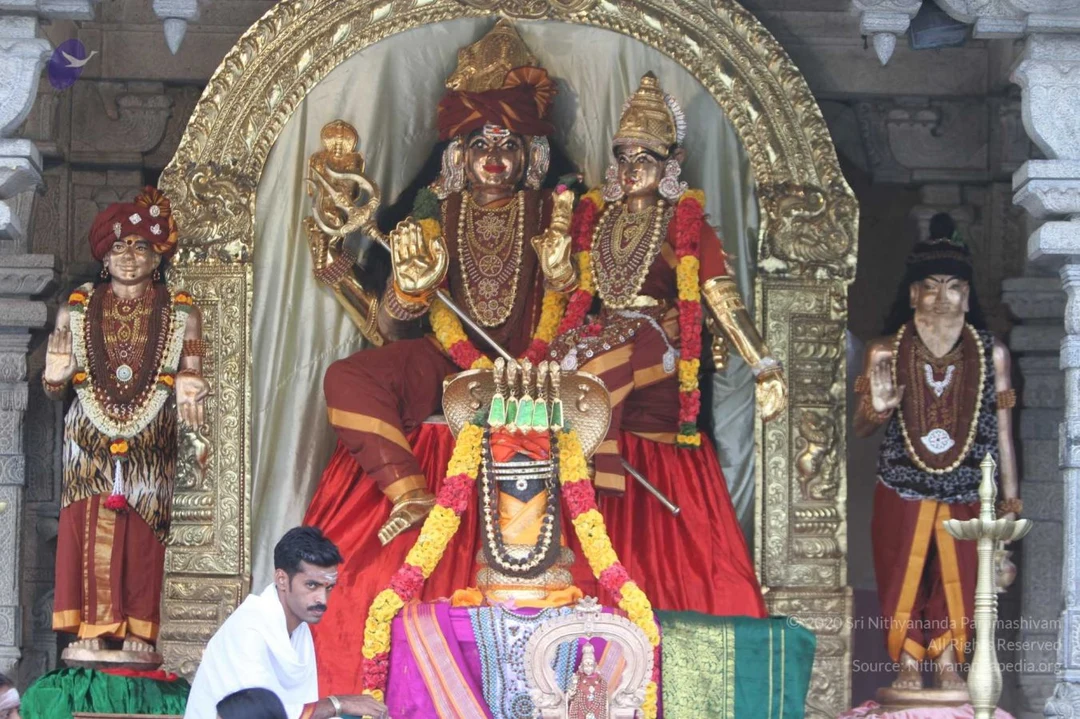
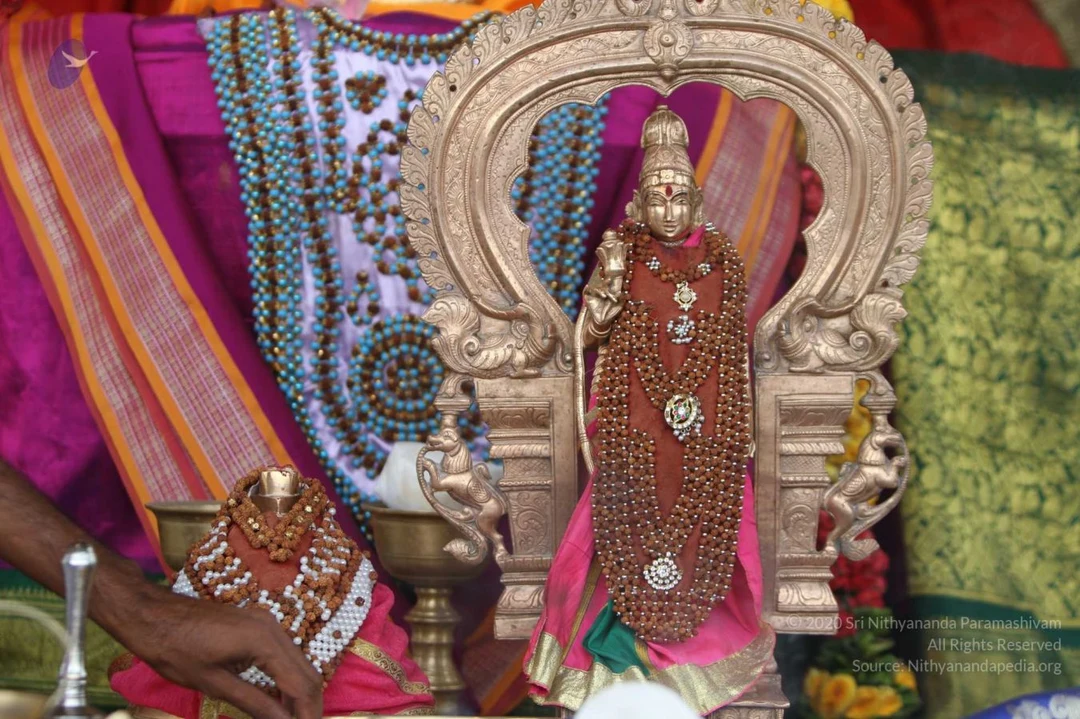
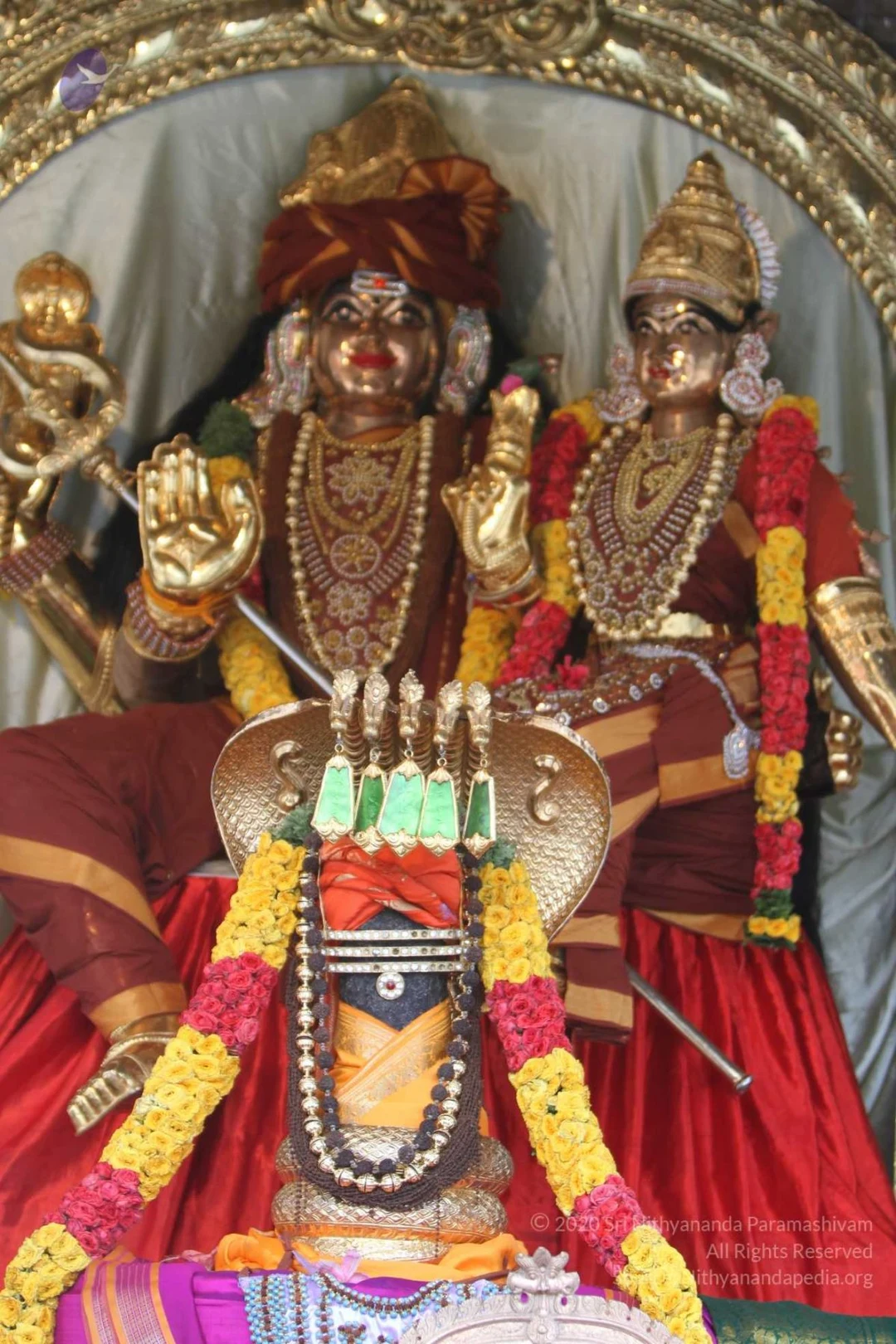
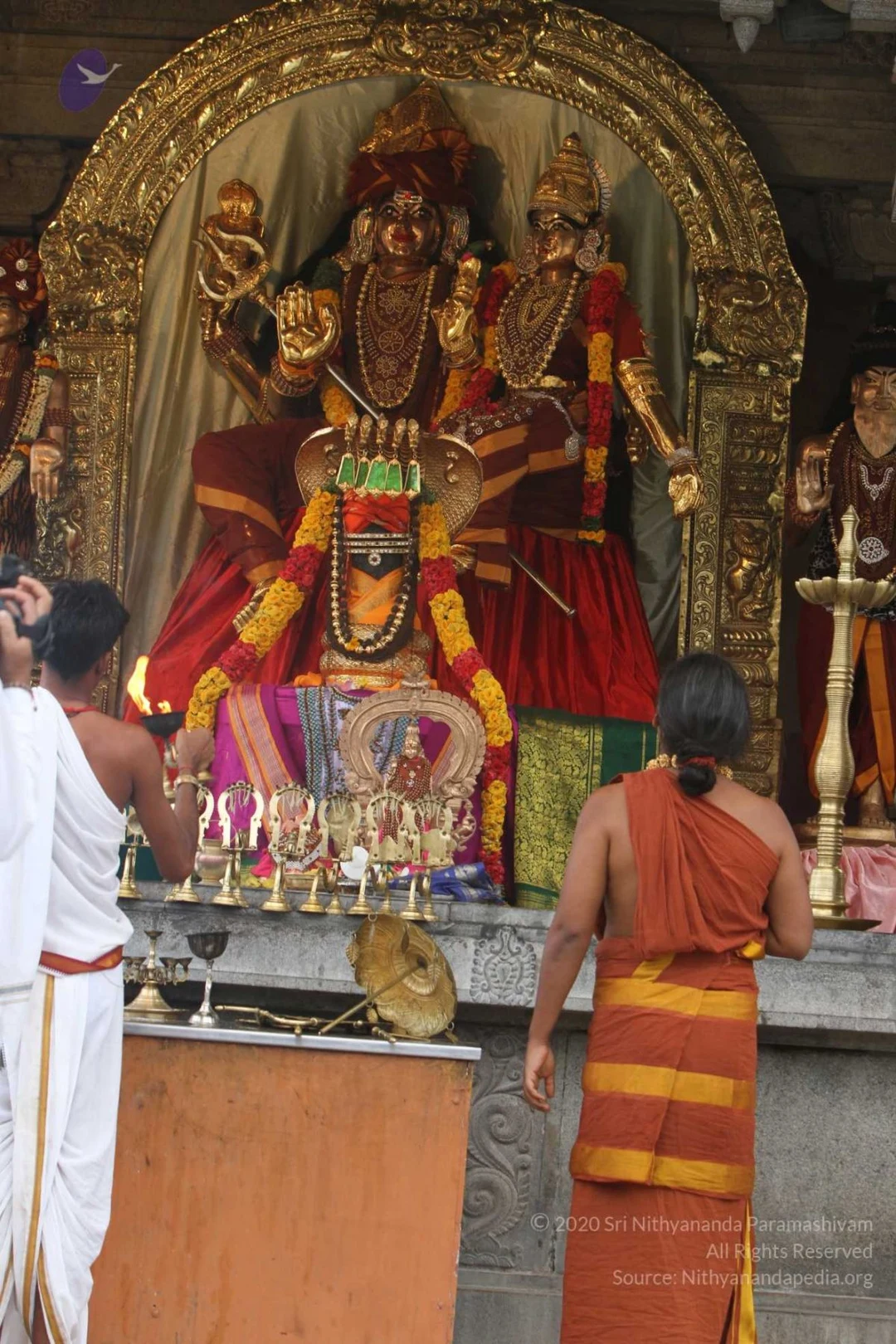
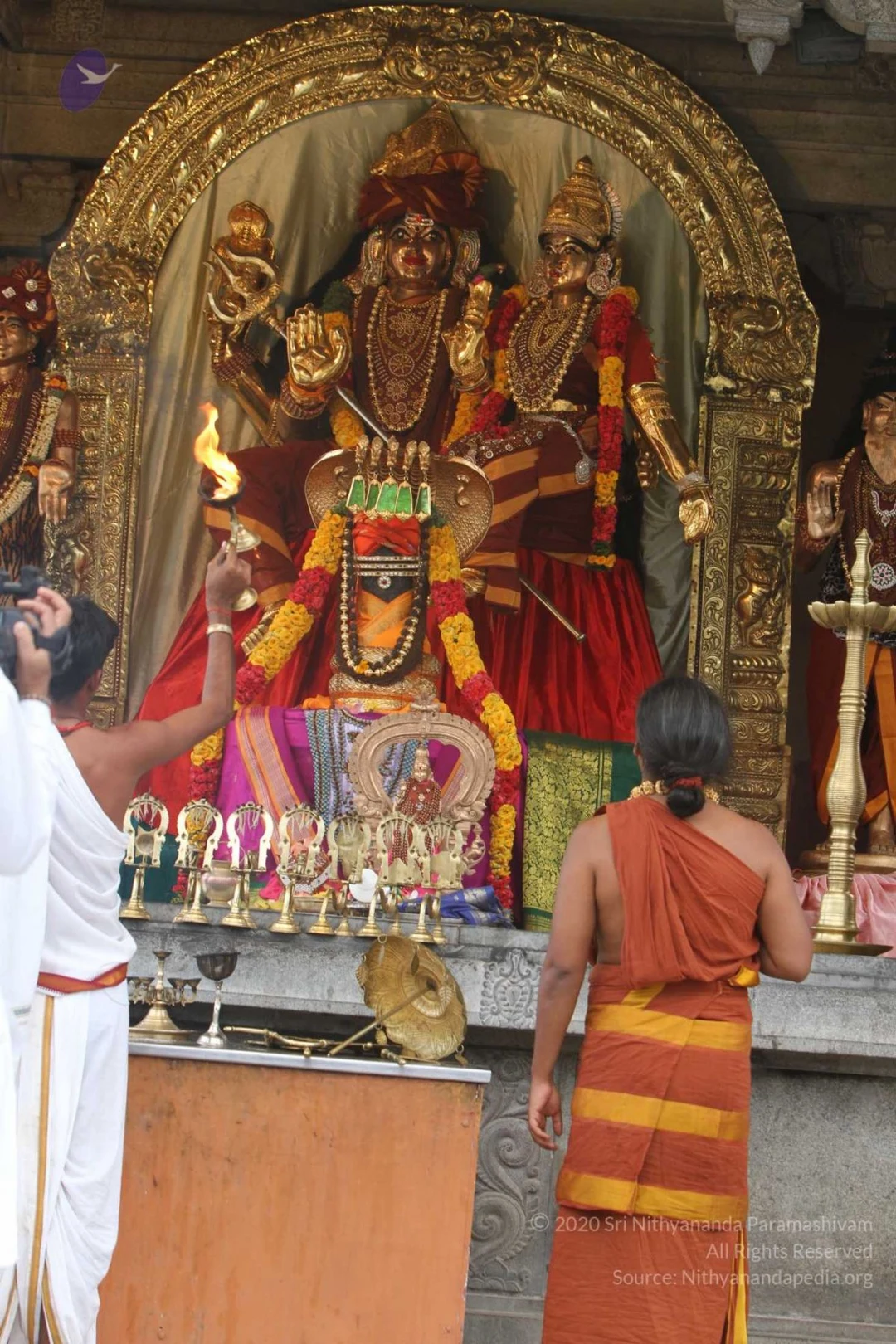
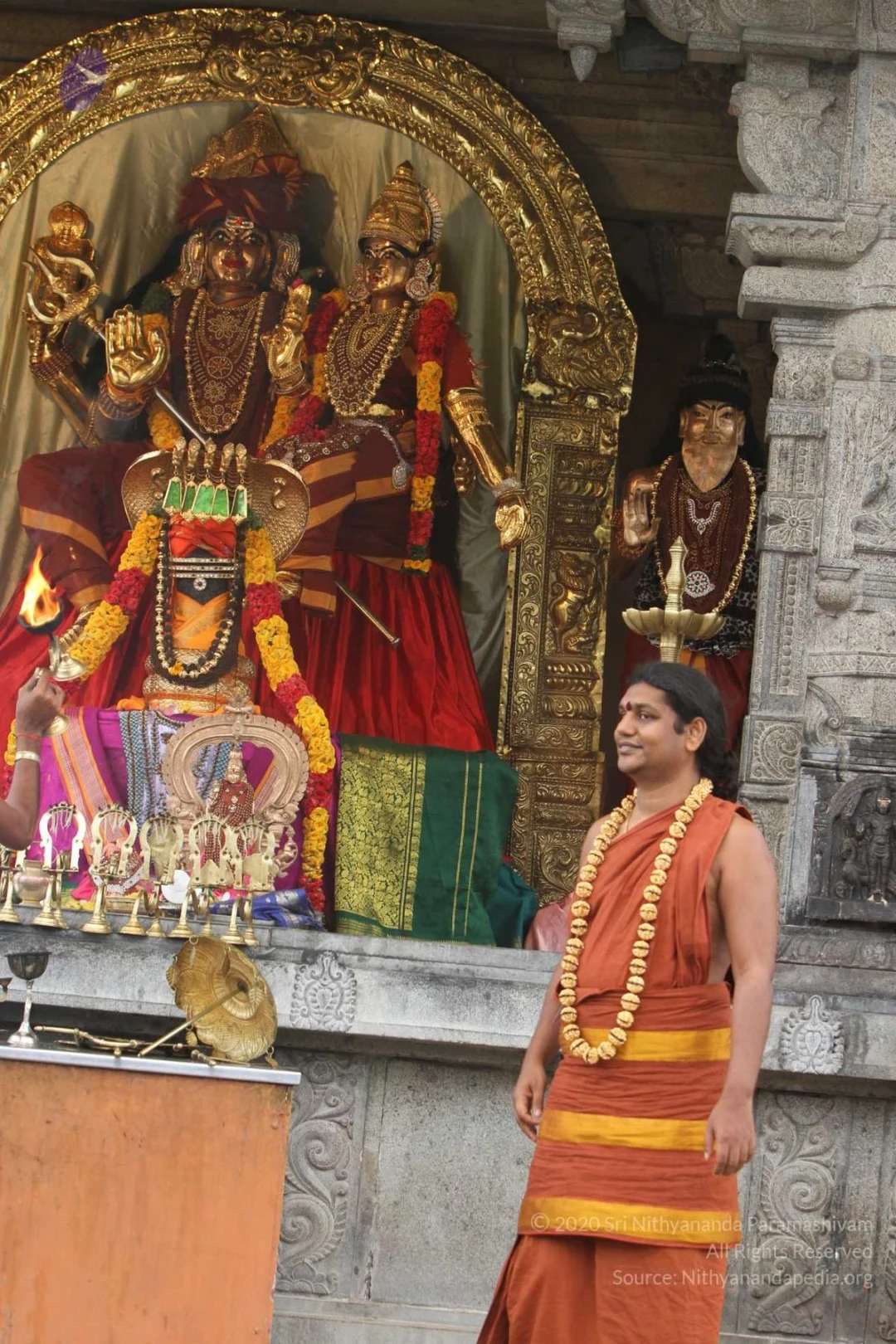
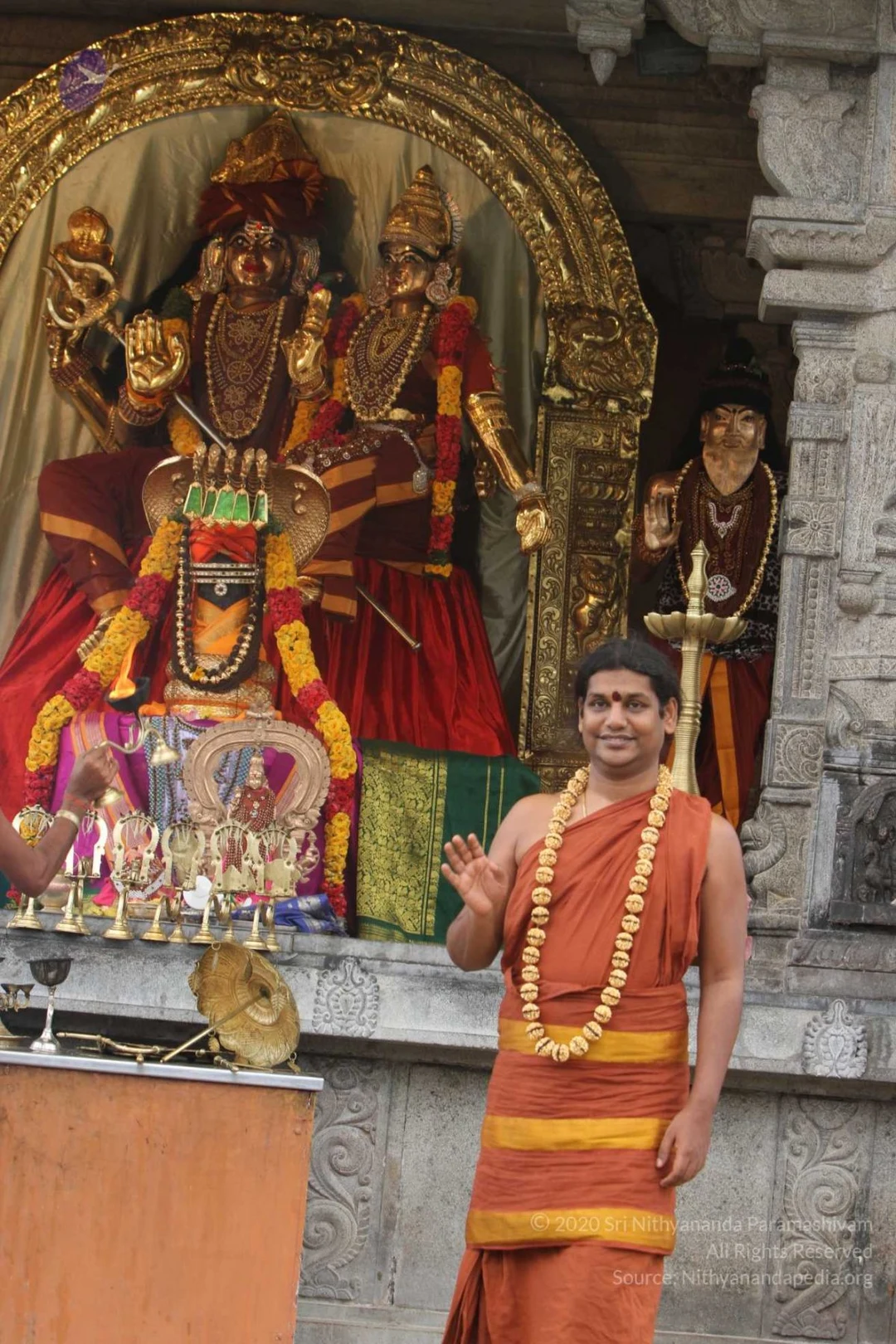
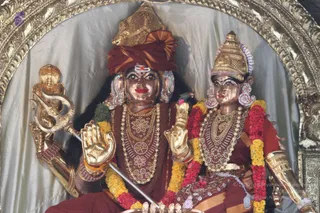
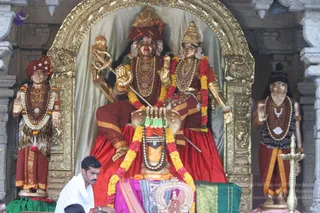
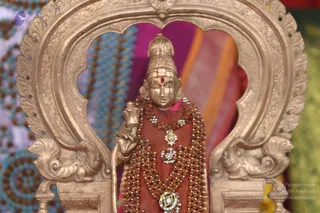
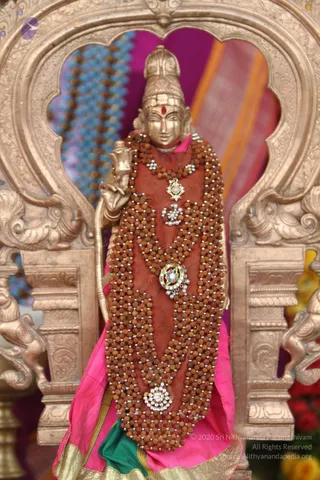
Two golden metal murti statues seated side by side in a silver-lined arched niche with ornate gold filigree border. The figure on the left, a male deity murti, wears a maroon turban with a gold crown above, a red tilak on the forehead, and a gold trident-topped staff held in one hand while the other hand is raised in abhaya mudra. He has layered beaded and gold necklaces and rudraksha-style beads. The figure on the right, a female deity murti, wears a tall gold crown, large gold earrings, a red sari with gold border, and layered gold necklaces. Both are garlanded with red and yellow flower garlands. The scene is a shrine display of deity murtis, not living people.A temple shrine photograph showing a large deity murti of Shiva seated on a throne beneath a gilded arch, holding a trident and a drum-like instrument, with a consort figure beside him in red and gold dress. Flanking figures in red and gold attire and bead garlands stand on either side, and a shivalinga draped with marigold and red flower garlands sits in front. A man in white dhoti kneels at the base, apparently performing a puja or abhishekam. Lamps and brass fittings complete the scene. The statues are not physical people, and no candidate for a person is visible among the physical people.Close-up photograph of a hand holding a metal camphor or oil lamp tray on which white camphor pieces burn with bright orange flames. A wick or flame flares upward at the right while blurred warm yellow and grey background suggests an outdoor ritual setting. No people are fully visible beyond the hand and tongs-like holder, and no a person candidate is visible.A gilded metal deity murti of a standing figure with a tall crown and a tilak on the forehead, raising one hand in blessing and holding a staff. It wears a deep red cloth and a long layered garland of rudraksha beads with silver spacers, plus a pendant and a jewelled ornament at the chest. The murti stands within an ornate golden arched frame with a blurred background of strung beads and pink and orange fabric.A gilded metal deity murti stands within an ornate golden arched shrine niche with carved makara-style scrollwork. The figure wears a tall crown and a red tilak on the forehead, and is draped in a dense multi-strand garland of brown rudraksha beads interspersed with small silver beads, with jeweled ornaments including a pearl and stone pendant and a white stone medallion. A pink silk cloth with a gold border and green fabric covers the lower body, and the raised right hand holds a small ritual object. Behind the figure are blurred pink, orange and blue fabrics and floral decorations. No physical people are visible.Close-up photograph of a bronze oil lamp with a lit wick and a small white camphor tablet, flame rising from the spout against a blurred warm background. No people or deities are visible; the lamp is the sole subject.

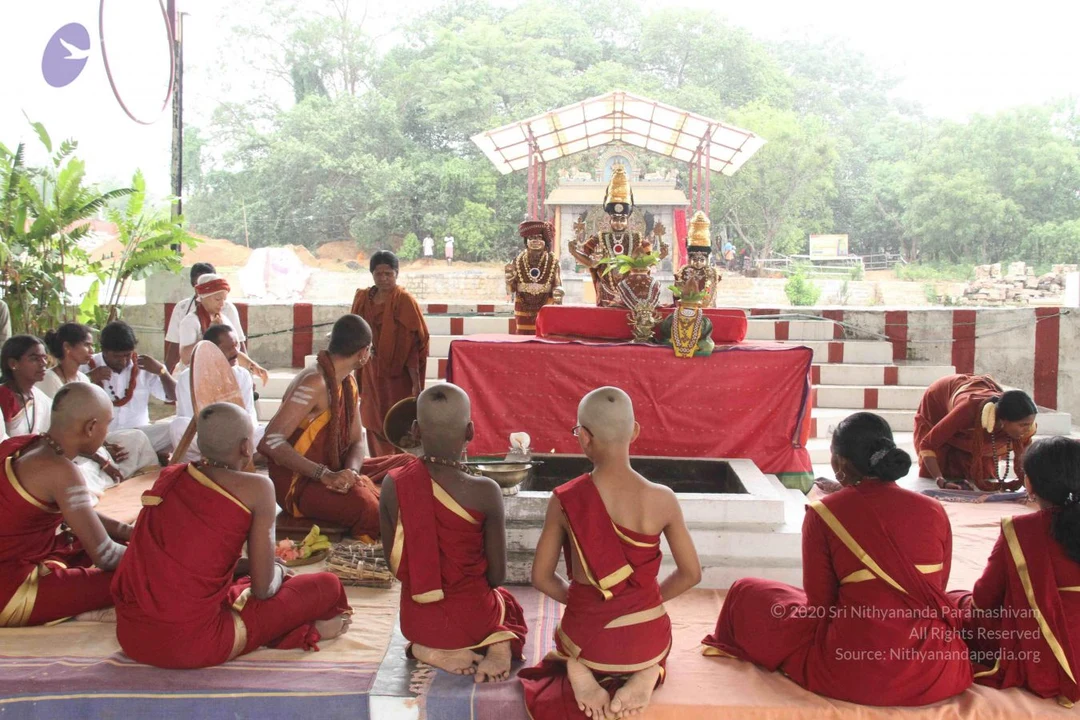
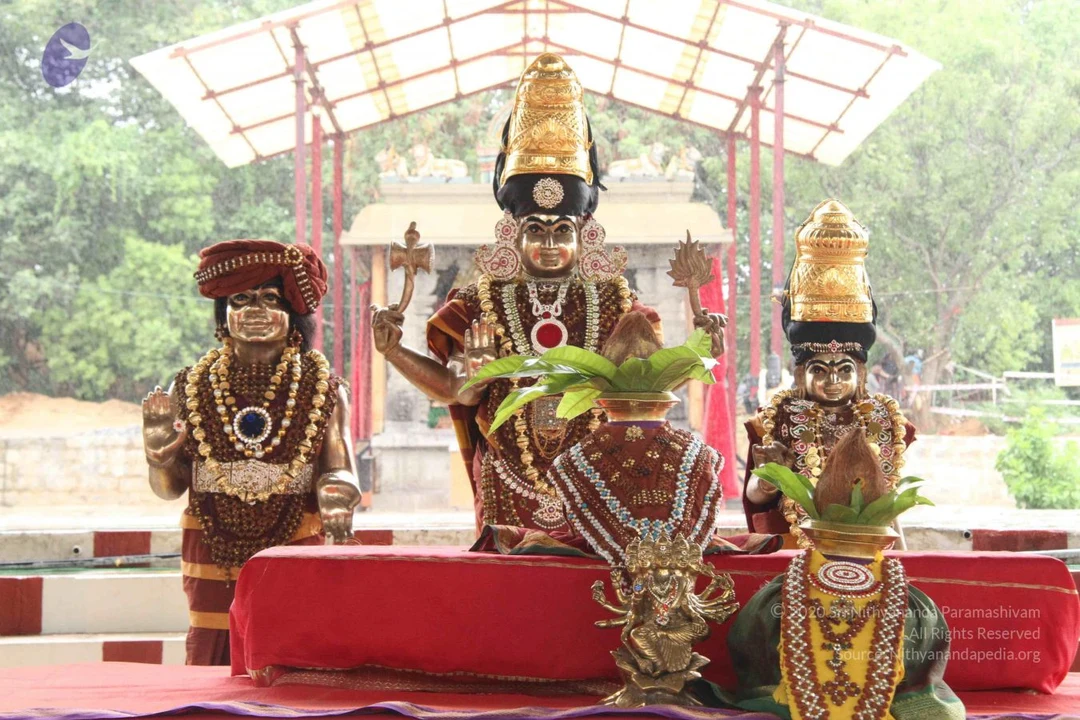
Swamiji arrives

6 photosSource gallery
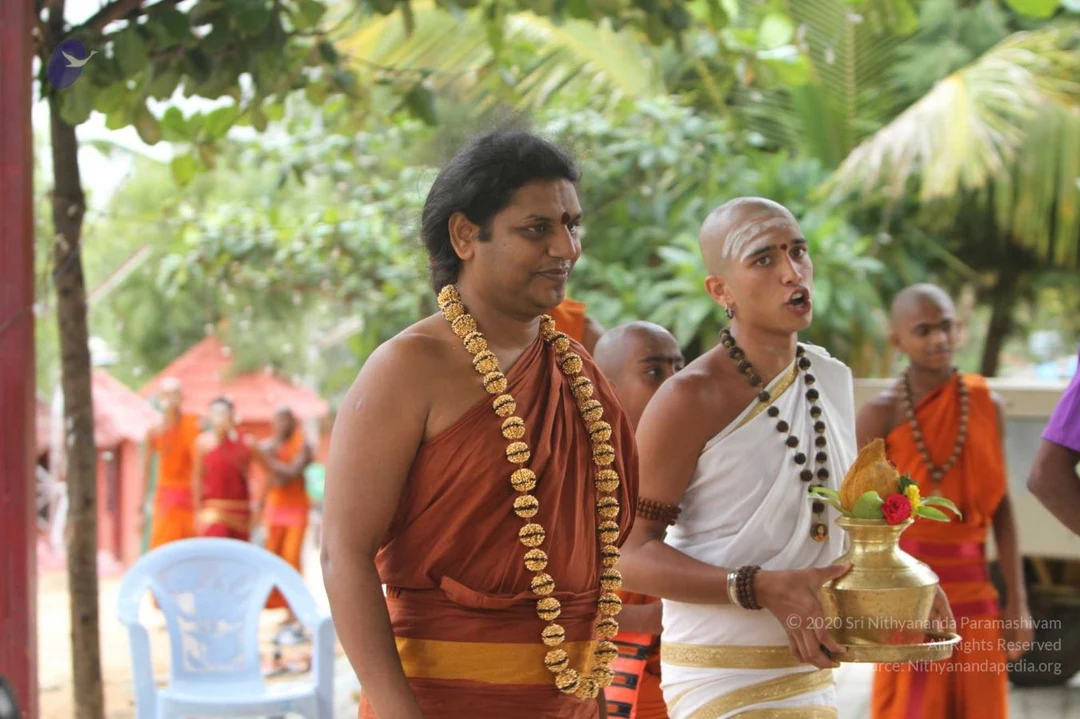
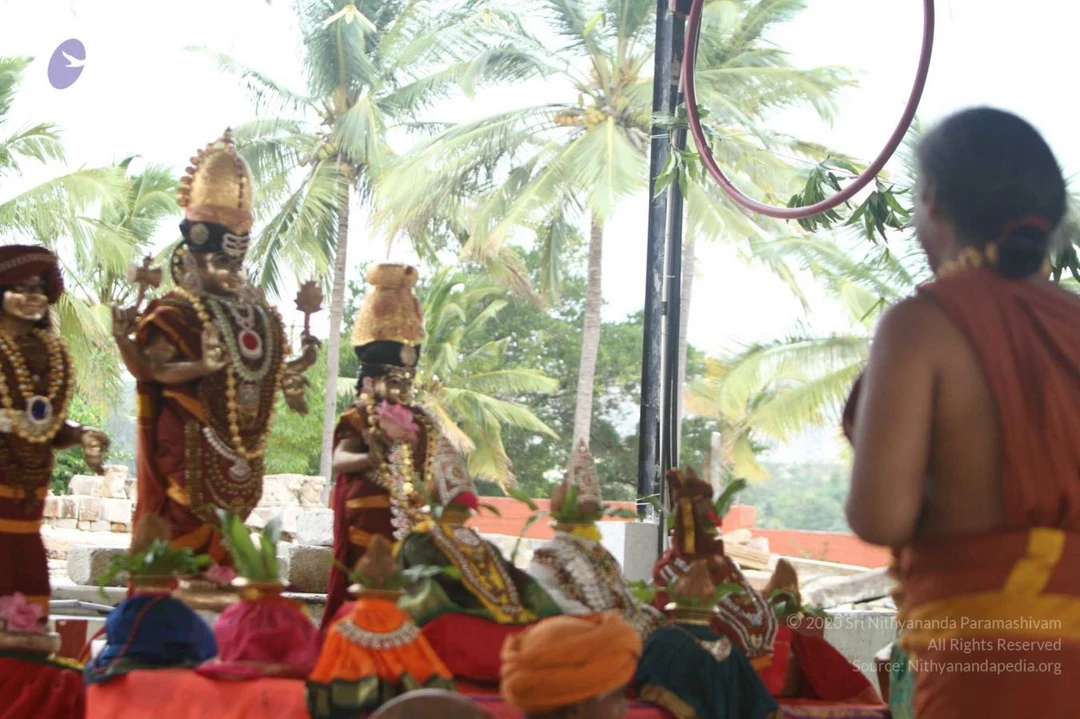
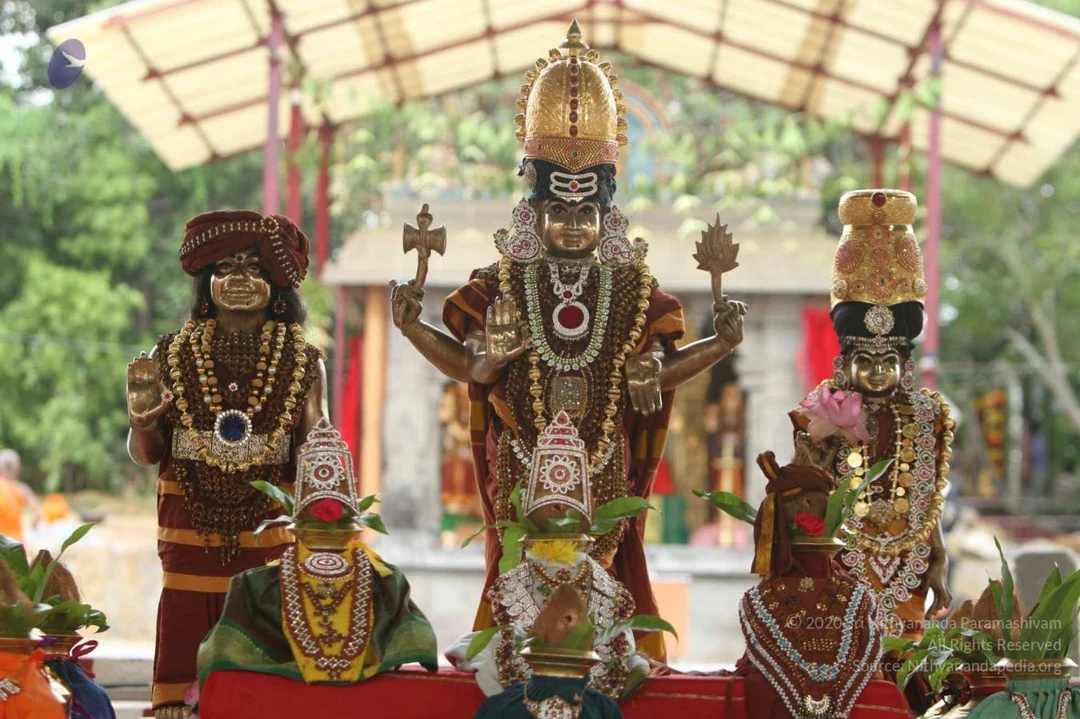
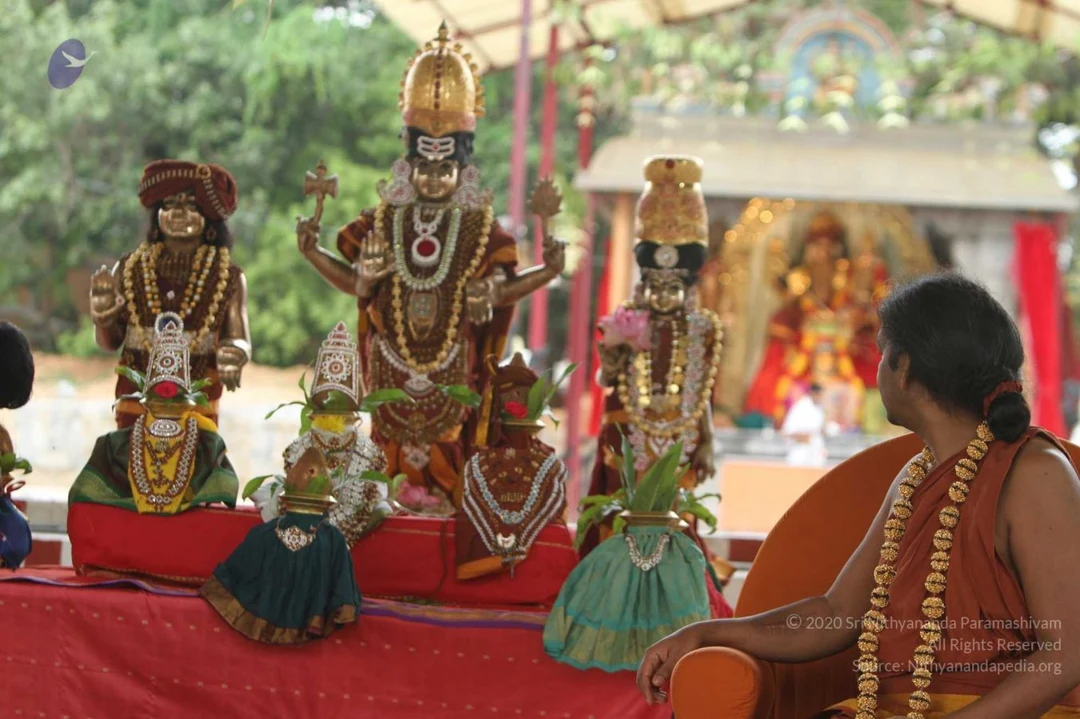
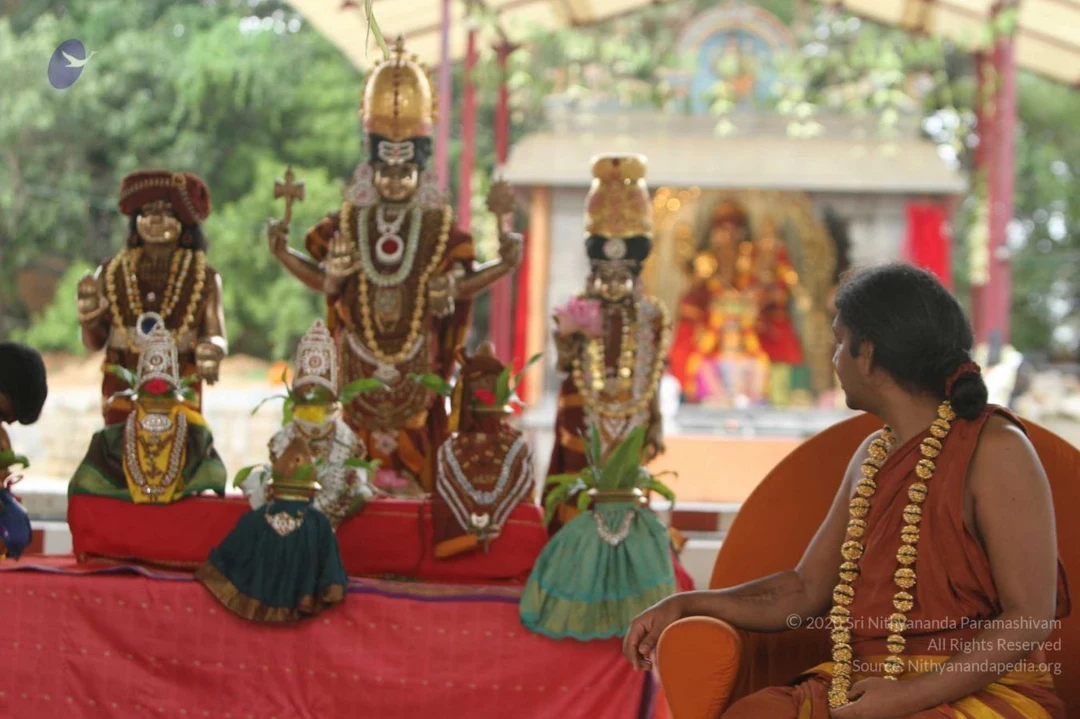
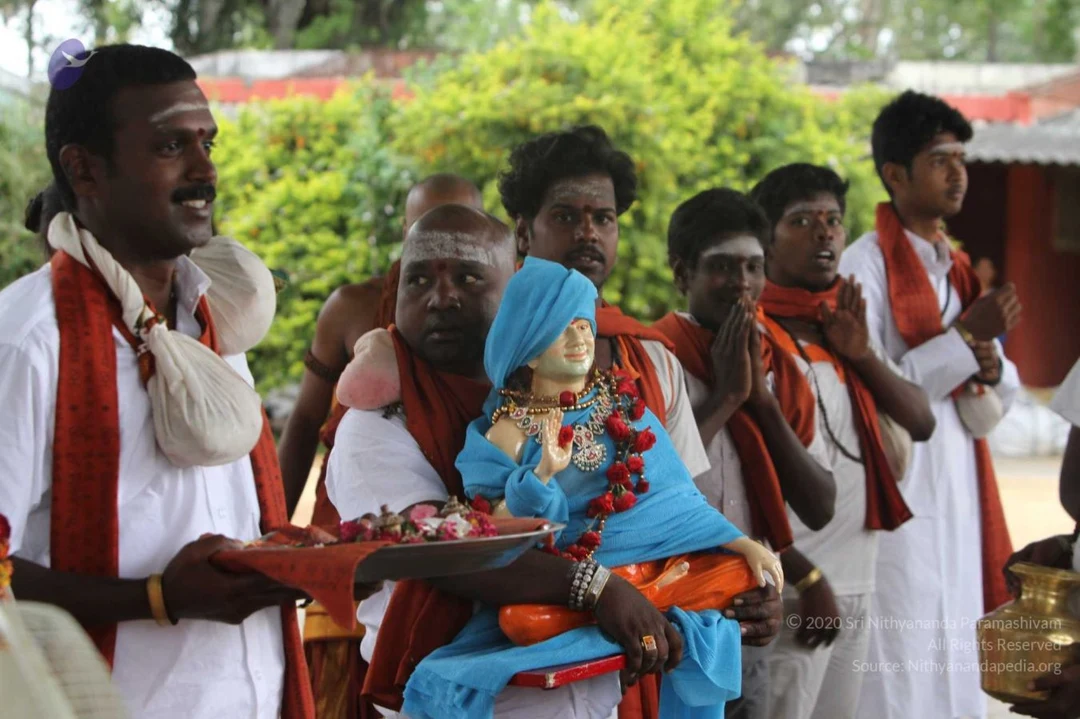
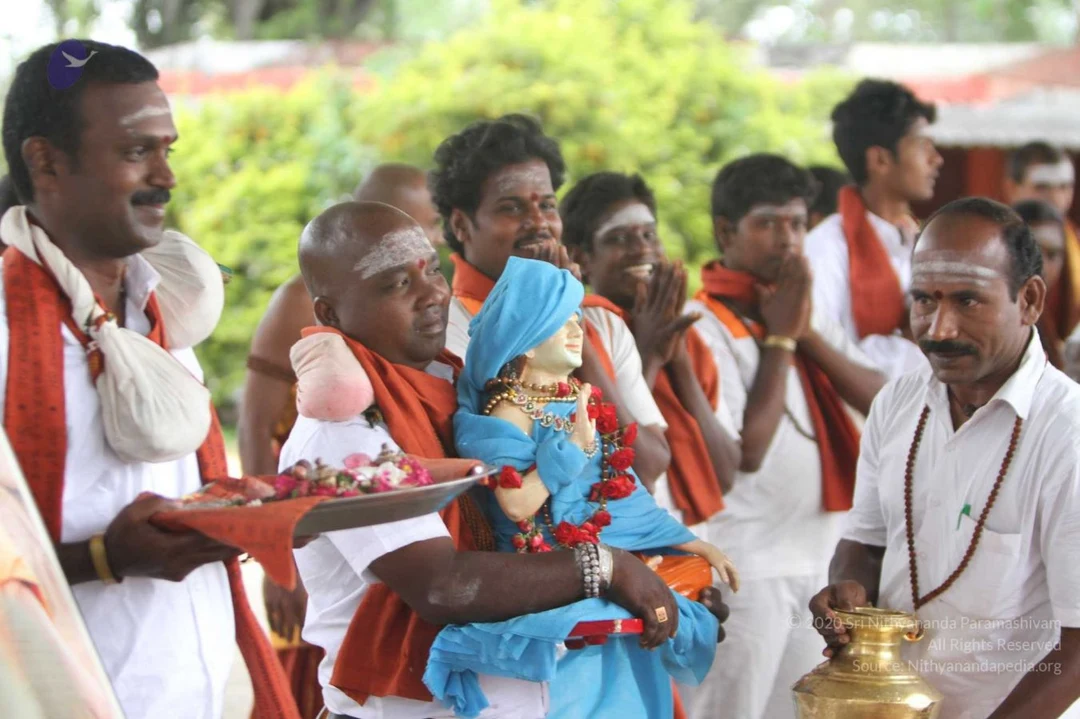
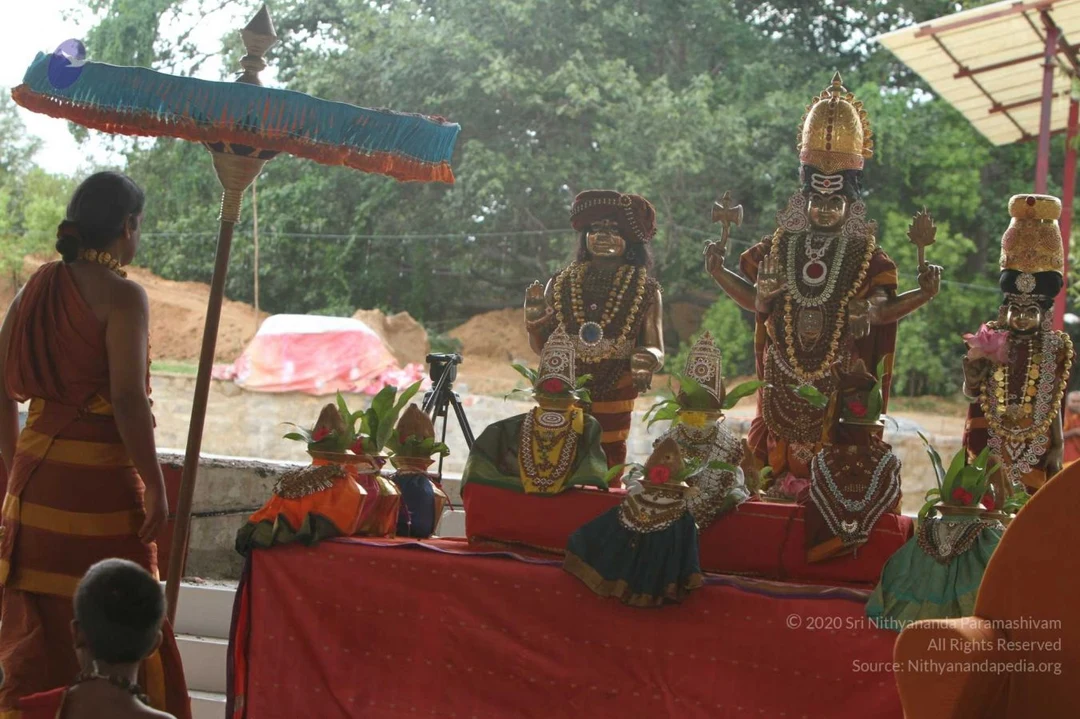
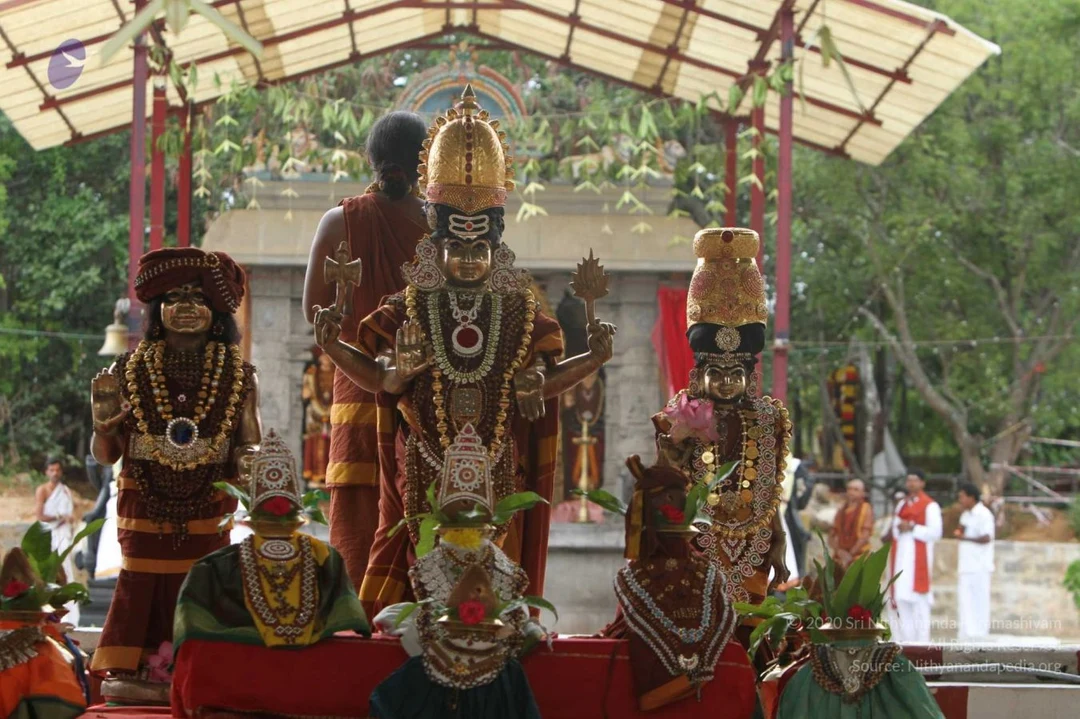
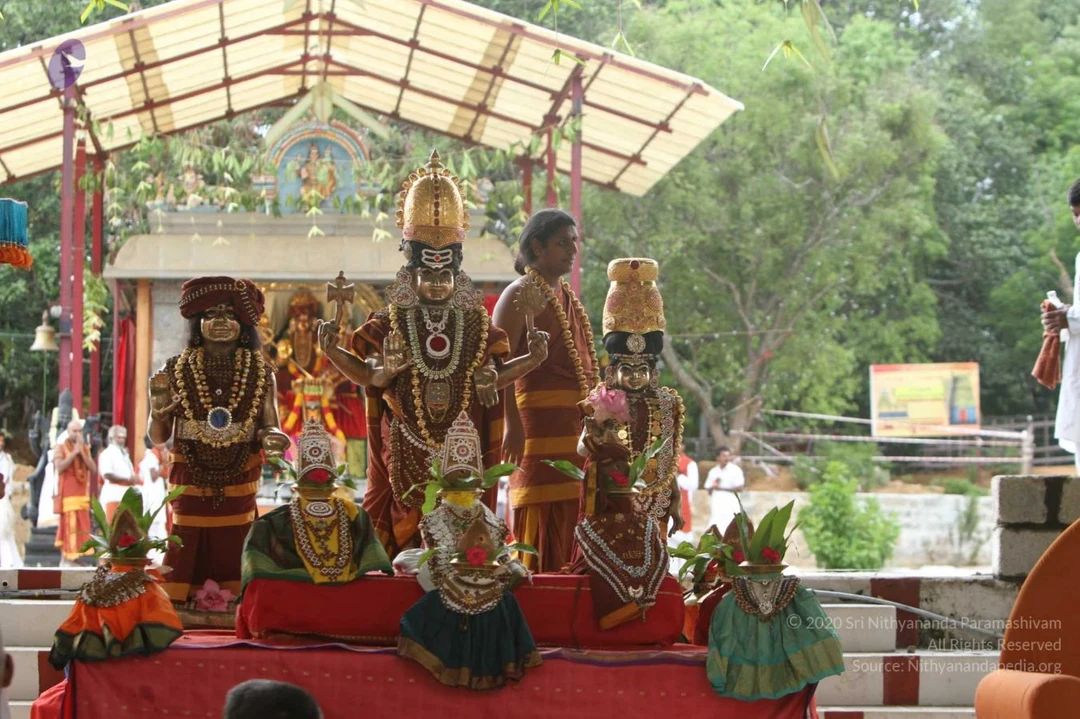
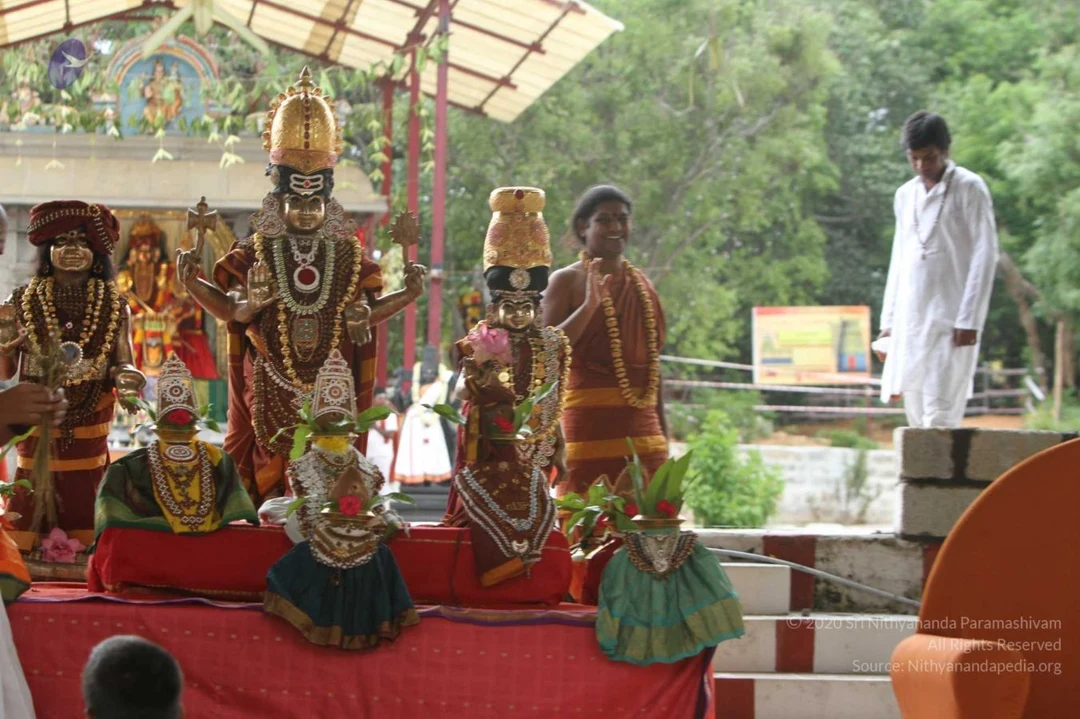
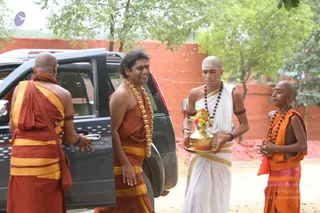
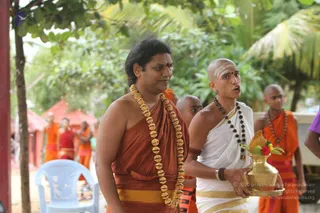
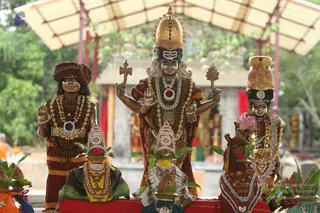
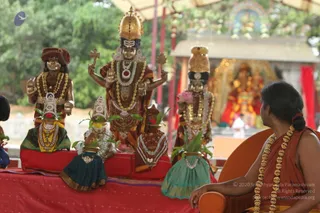
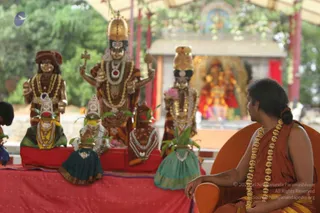
Outdoor arrival scene beside a dark grey SUV with an open rear door in front of a terracotta-coloured wall and green trees. A bald man in saffron robes with a gold-and-white border and a shoulder wrap stands at the open door. In the centre, a man with long dark hair and a broad smile wears a saffron garment and a long garland of white and cream beads. To the right, a bald young man in white dhoti and shawl with gold border, wearing rudraksha malas, holds a brass kalasha with flowers on a brass tray. A young bald attendant in saffron with rudraksha malas stands at far right with hands folded. Dusty ground and a hanging string of decorations are visible.Outdoor photograph of a procession in a leafy setting with palm fronds behind. In the foreground, a man with swept-back dark hair wears an orange-brown (rust) dhoti-style wrap over his shoulder and a long necklace of large golden beads, with a small red-and-yellow mark on his forehead. Beside him, a shaven-headed young priest in a plain white dhoti and shawl, with white-and-yellow tilak marks, wears rudraksha malas and carries a brass vessel with a coconut, fruit, and red flower. Behind them, several orange-robed sannyasis and a figure in red walk among red-roofed structures and a blue plastic chair.A photograph of an outdoor ritual set against palm trees. In the foreground, several small clay-like figures and deity murti are arranged on a red cloth, each topped with a kalasha-style crown and decked with garlands and beaded necklaces; one holds a small trident-like staff. Behind them stands a larger deity murti in gold crown and red garments with rudraksha-style beads. At right, a person with hair pulled back, wearing an orange-red garment with a yellow border, stands with hands folded facing the shrine. A circular red frame hangs from a pole at upper right, and an orange cloth lies in the lower foreground. No a person candidate is visible.Three large statues of deities stand on a red-draped platform under a canopy, with a blurred temple structure and trees behind. The central four-armed murti wears a golden crown, a white tilak, layered garlands, and a red pendant, holding a trident-like staff and a ritual implement. The figure on the left wears a red turban and a heavy beaded garland, while the figure on the right wears an ornate gold crown and a pink flower. Each murti is dressed with ornaments and garlands, and small kalasha-like offerings with green leaves and red flowers sit in front. No living people are visible in the scene.Outdoor photo of a seated person in saffron-orange robes and a long gold bead necklace, viewed from behind and to the side, facing a row of ornately dressed deity murti on a red-draped platform. The central murti has a golden crown, a tall white-and-red forehead mark, a trident-like staff and raised hands, with garlands of flowers and beads. Flanking figures wear red and gold headdresses and garlands, and small kalasha-like vessels with green leaves and red flowers sit in front. Behind, a red-robed deity figure stands in a temple shrine with a red canopy and trees.A seated man in a saffron-orange robe and a long gold bead necklace sits on an orange cushioned seat at the right, facing a row of painted deity statues on a red-draped altar. The central statue is a standing deity with a golden crown, white urdhva pundra markings, a red and white bead garland, and a raised trident and a hand holding a golden staff; flanking figures wear red and gold garments and gold necklaces. Smaller figures in green and red cloth sit in front, with green leaves as decoration. Behind the altar, a larger deity image in red and gold garments is framed by a red pillar and an open-sided pavilion with greenery beyond.

Pada Yatris arrive and get Blessings
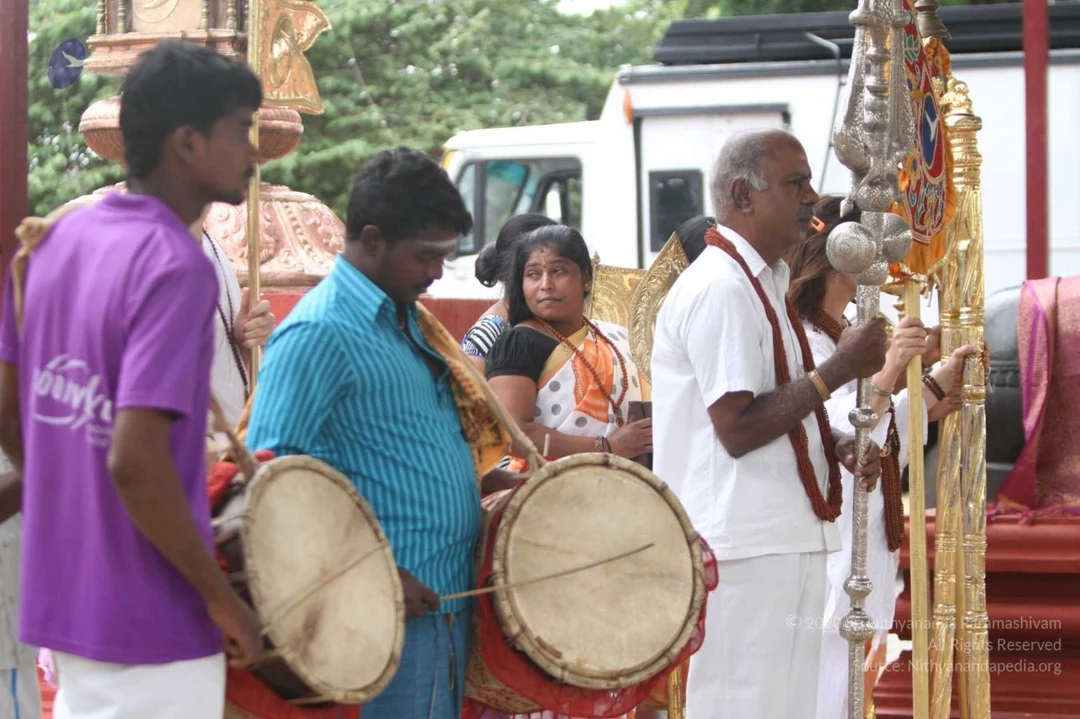
87 photosSource gallery
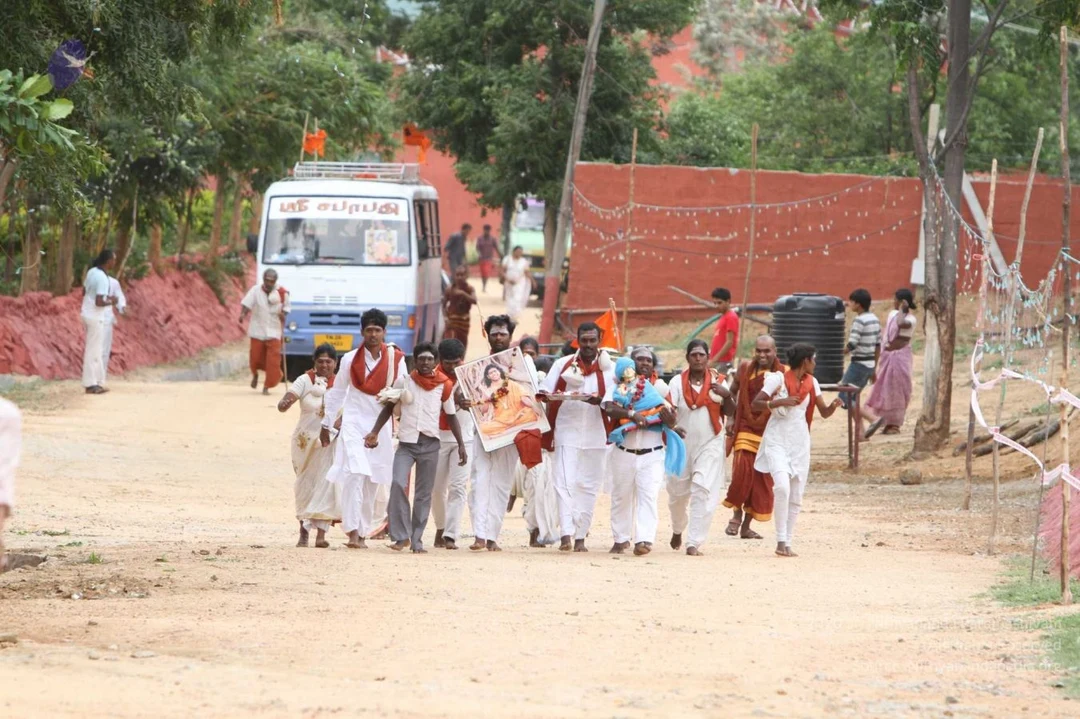
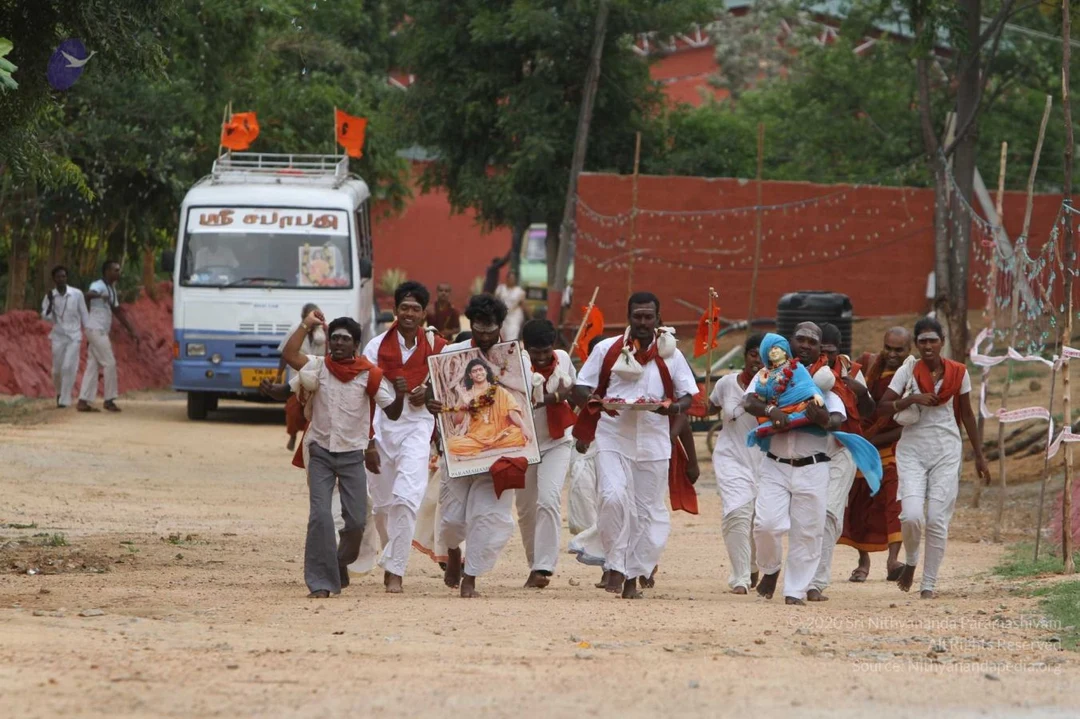
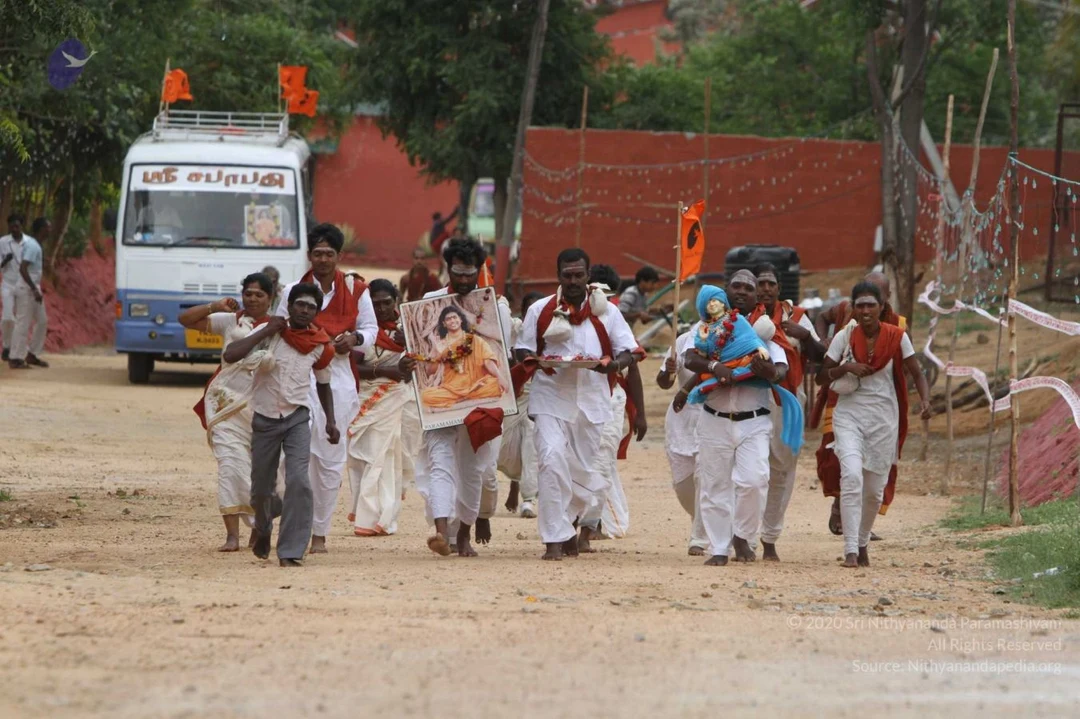
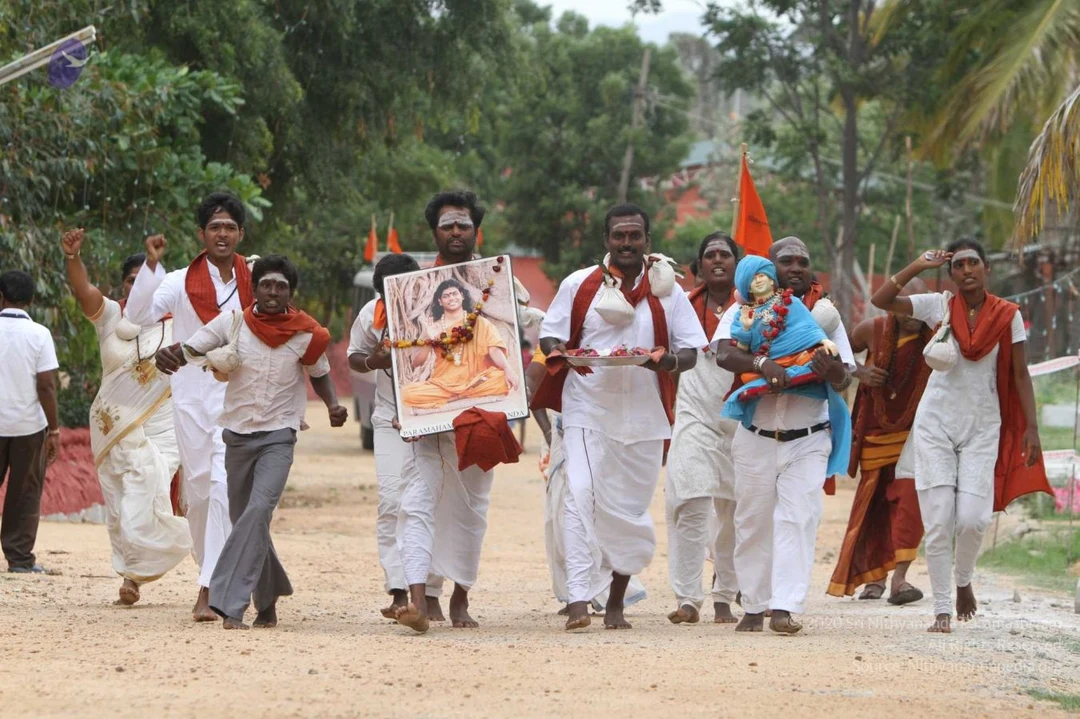
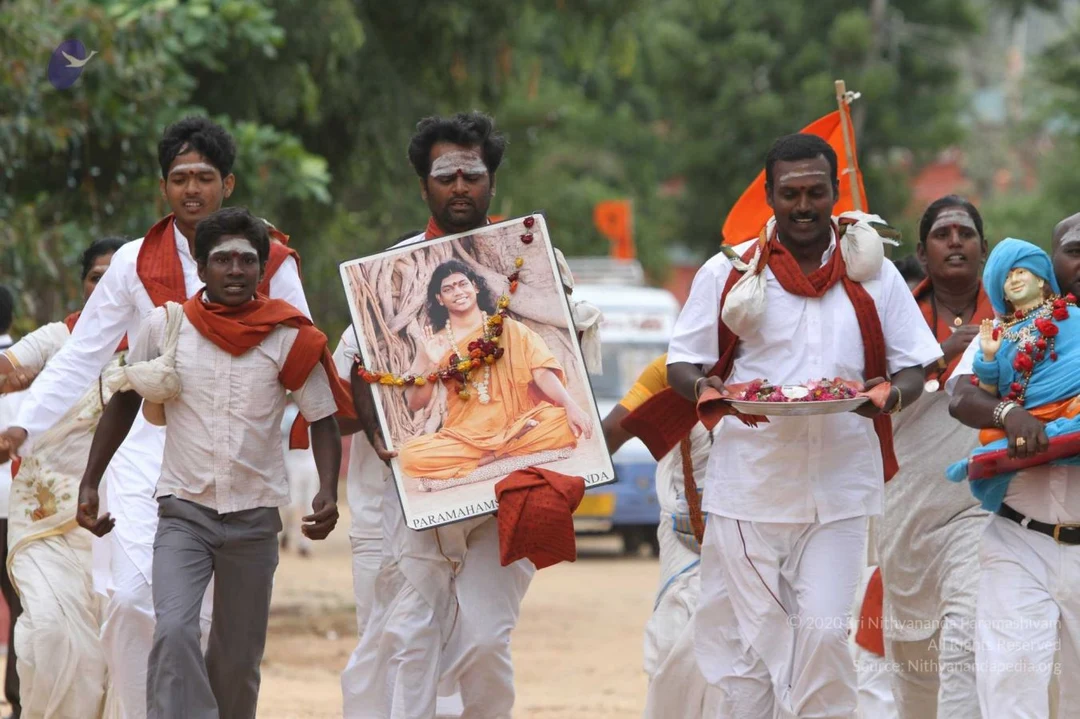
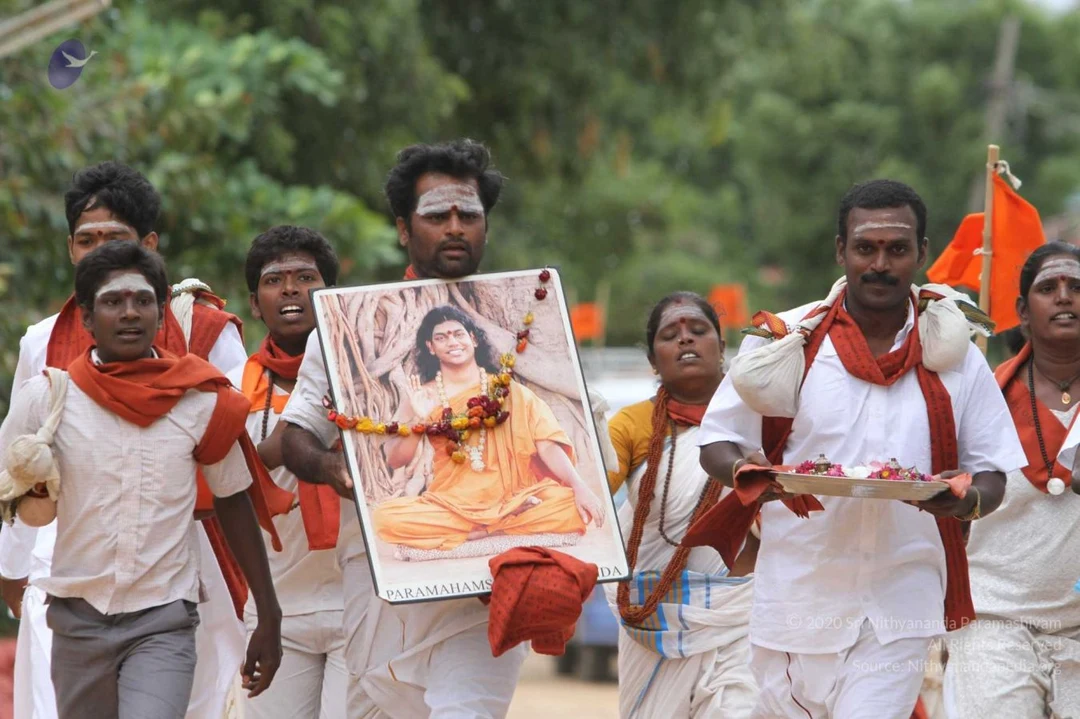
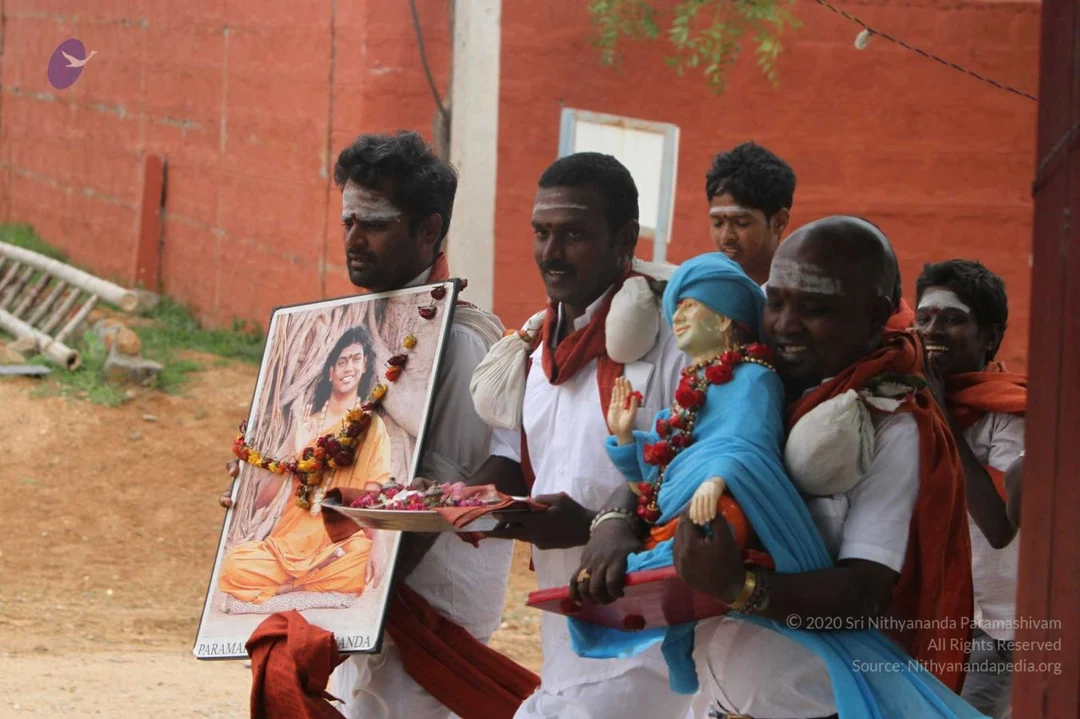
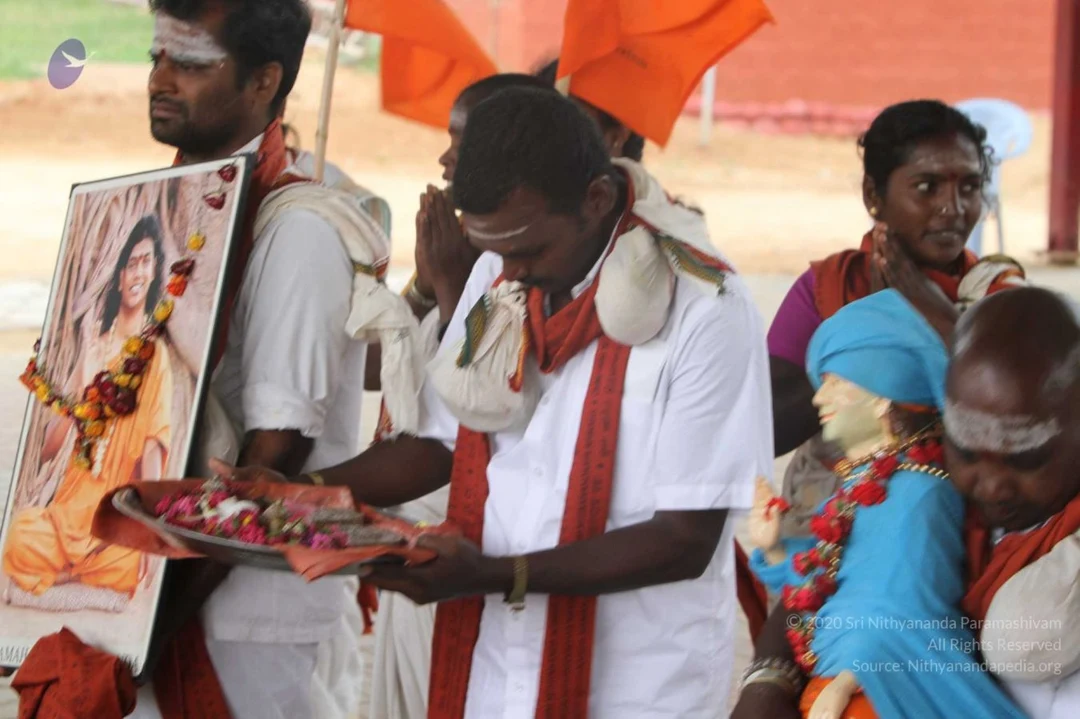
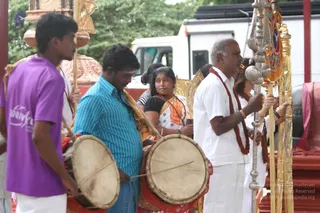
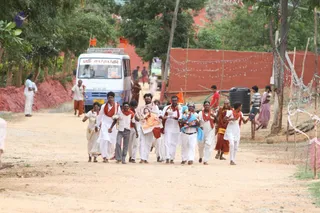
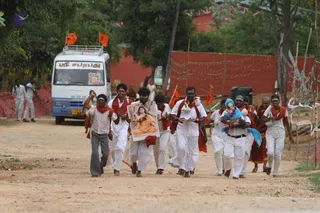
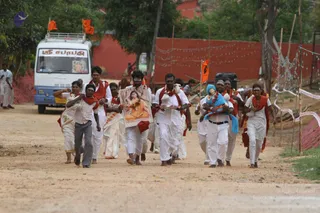
Outdoor procession scene with drummers and devotees beside a golden palanquin-style ratha frame. A young man in a purple t-shirt stands at left holding a long wooden pole. A man in a blue-and-white striped shirt with a dhoti-style cloth plays a large drum held at his side, and a woman in a black blouse and white saree with orange border wears rudraksha-style red beaded necklaces. On the right an older man in white shirt and white dhoti wears a red beaded mala and holds a silver staff with a ceremonial finial, while another person in white stands beside him. Golden and silver ritual poles, a red cloth and a white vehicle are visible in the background.A procession walks along a dirt road lined with trees and a red boundary wall strung with small lights and paper streamers. In front, a man in a white shirt and white dhoti holds a framed printed portrait of a figure in orange robes. Beside him a man in white holds an image of a blue-clad deity murti. Several men wear white with orange or saffron shawls and orange dhotis. Behind them a white and blue minibus with a Tamil-script sign, and a few onlookers and workers stand nearby, including a woman in pink and a child in red.A group of about ten men in white shirts and white dhotis runs down a dirt road lined with bamboo poles, strings of lights and pennants. Many wear red or saffron sashes and some have their faces marked. One man in front carries a framed portrait of a seated figure in orange robes, and another carries a deity murti dressed in blue with flower garlands. A blue and white bus with orange flags on its roof stands behind them beside a red compound wall, and a few onlookers in white stand near the road.A photograph of a group of devotees walking along a dirt road in procession. Several men and women wear white and white-and-red clothing with orange-red shawls draped over their shoulders. The central man in white carries a framed portrait of a figure in orange robes with flower garlands, while another man in white holds a baby wrapped in blue cloth. A white bus with a Tamil sign and orange flags sit behind them, and a red wall and strings of decorative lights line the path.A group of about twelve people runs barefoot along a dirt road in a procession, most wearing white shirts and dhotis or saris with red-orange shawls and sashes. A man in the centre-front carries a framed portrait of a smiling woman in an orange garment with a garland, and another man holds a small blue-draped deity murti with a flower garland. Some participants hold orange flags, and a white van with orange flags and Tamil lettering follows behind a red compound wall with bunting.A procession of devotees walks along a dirt road lined with red walls and orange flags. Men in white shirts and white dhotis wear red-orange shawls. In front, a man carries a framed portrait of a saffron-clad figure with long hair, labelled with printed text. Behind him, a man in white holds a tray of offerings and a man in white carries a small deity murti dressed in blue with red garlands. A woman in a white sari with red border walks at the left. A white van with orange flags stands in the background among trees and string lights.
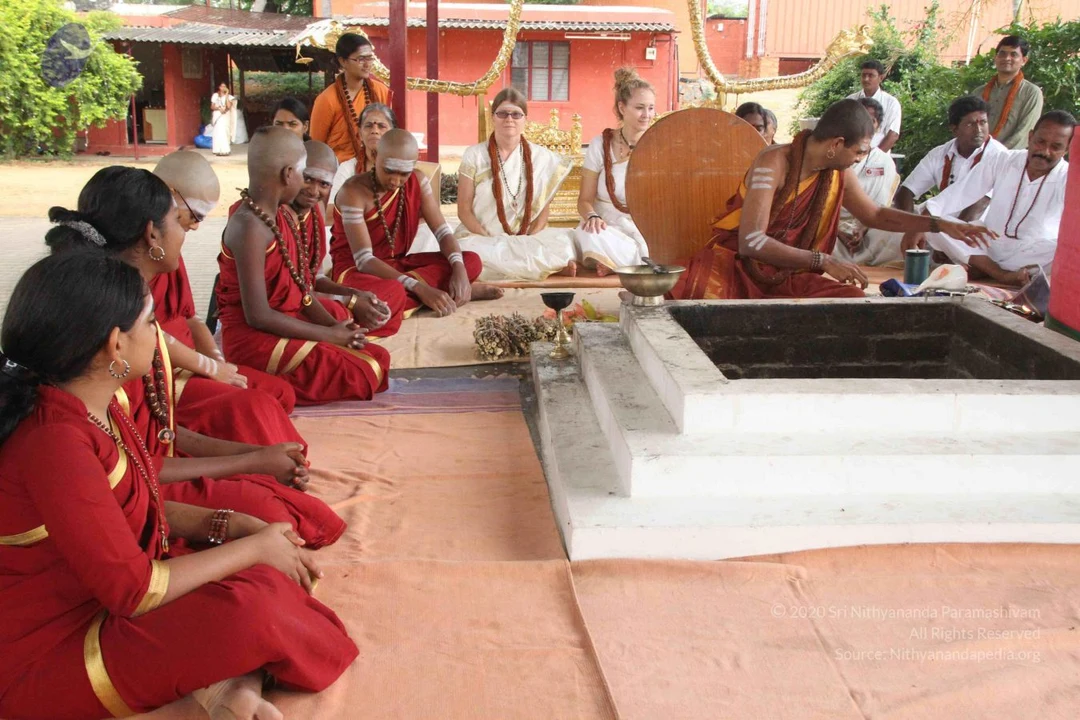
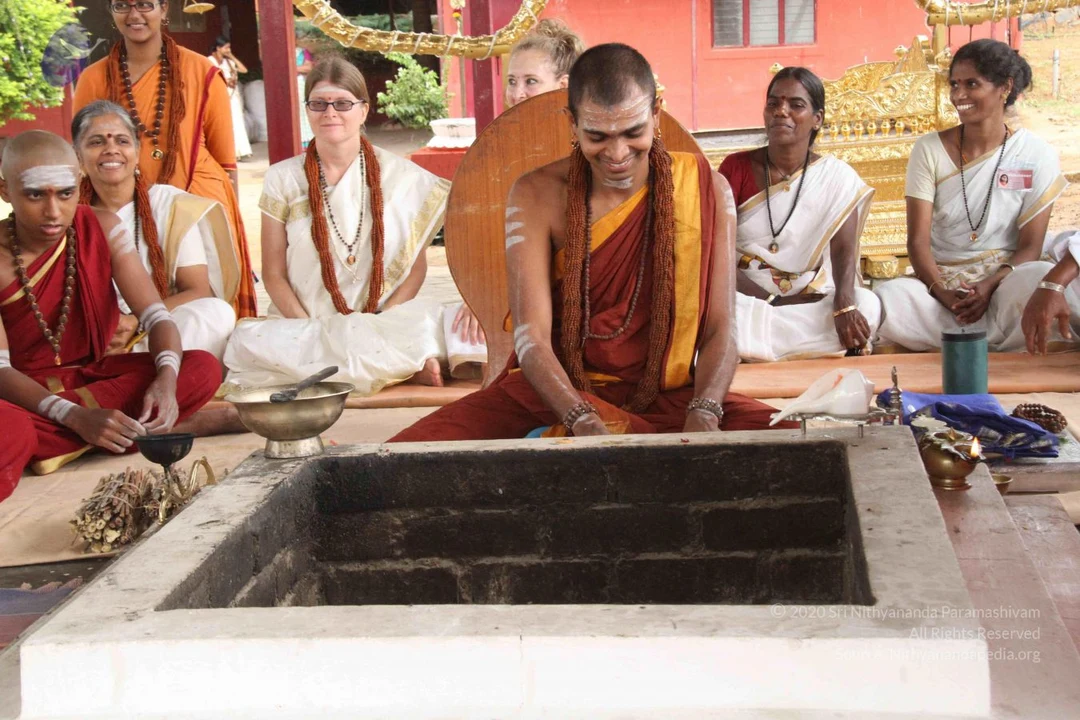
Homa
51 photosSource gallery
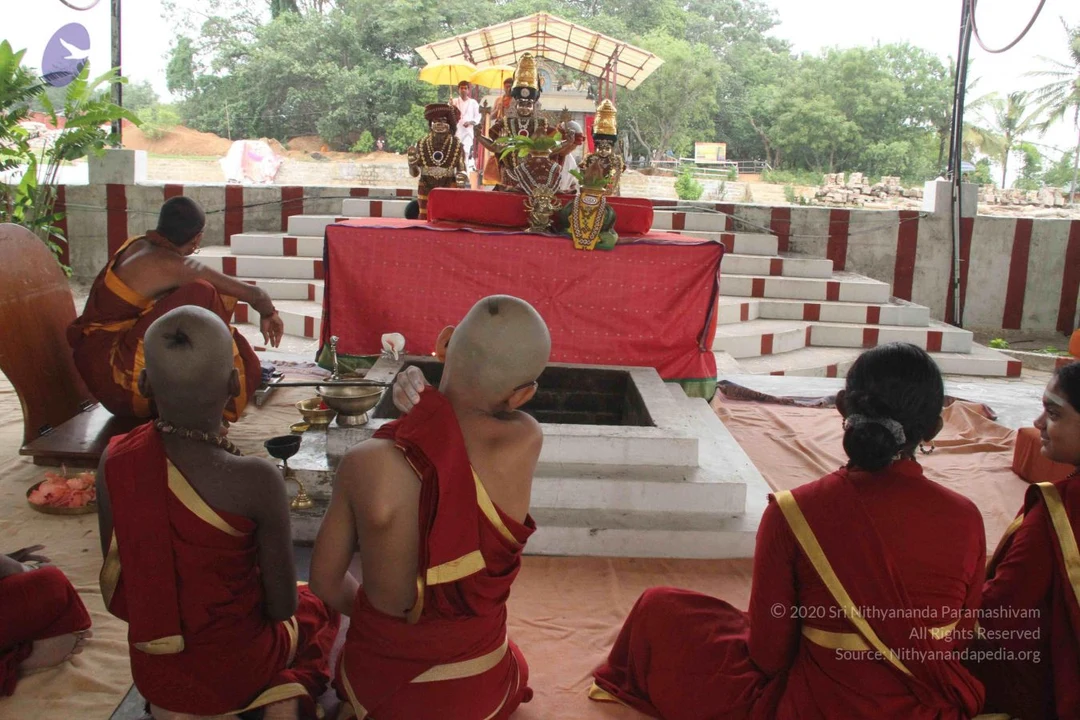
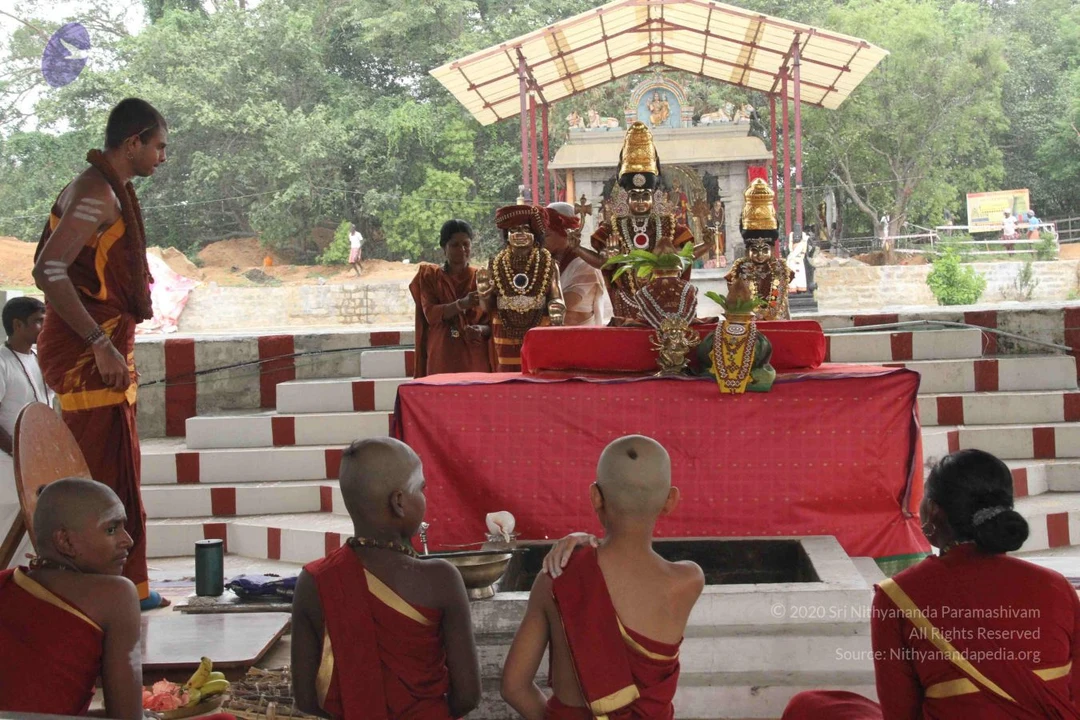
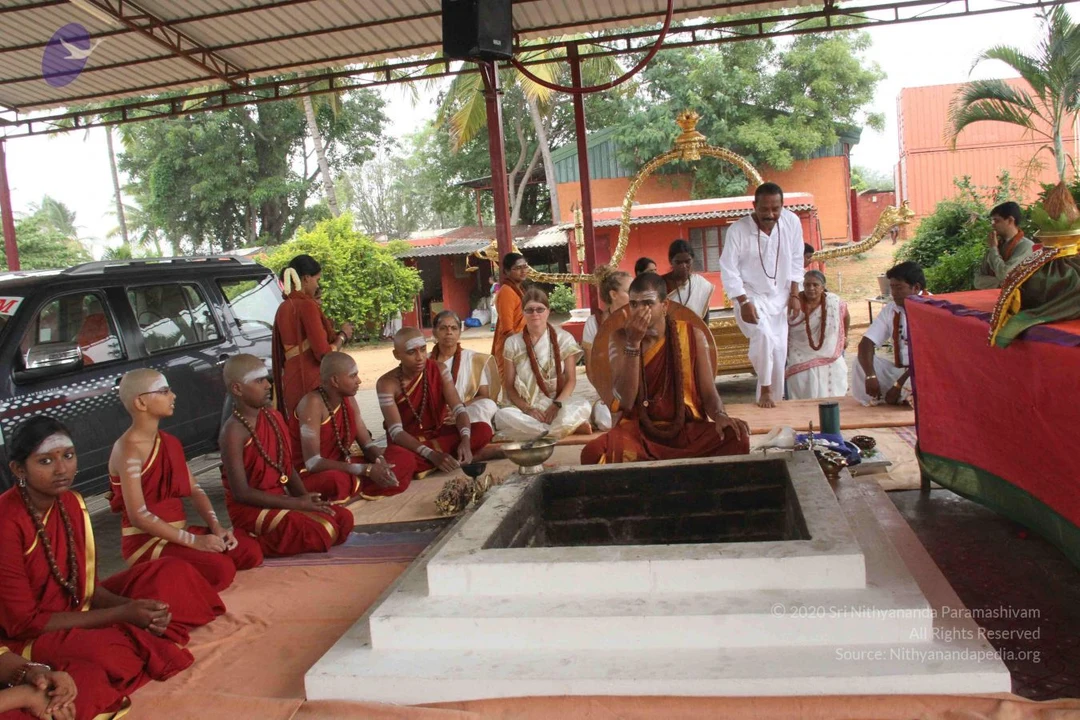
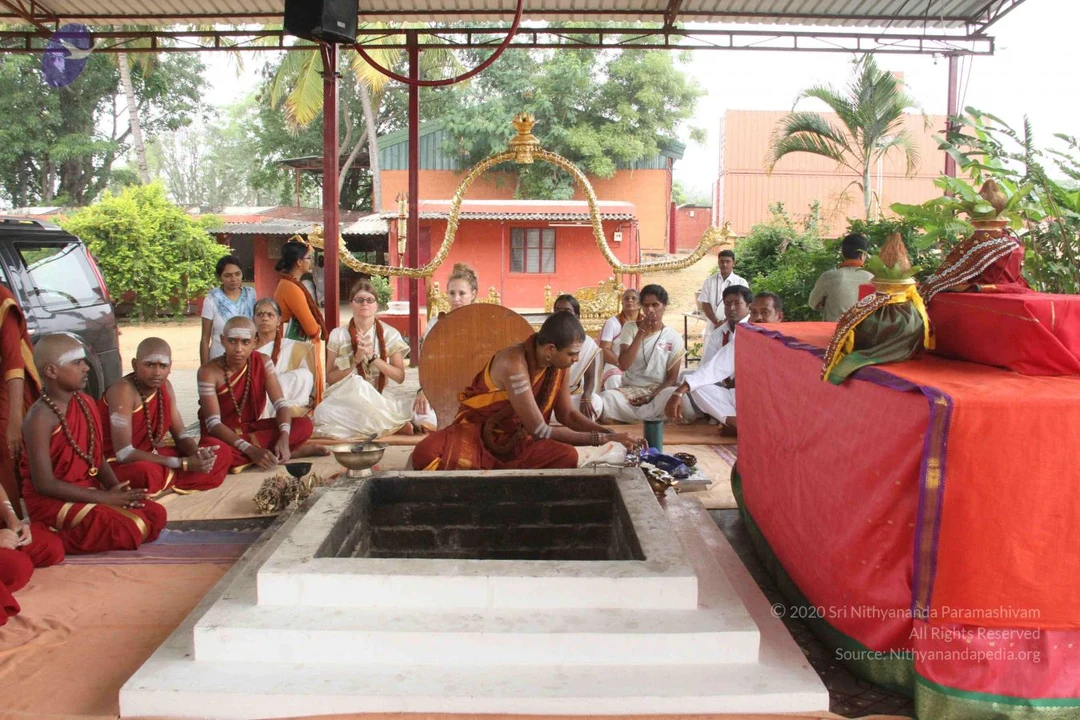
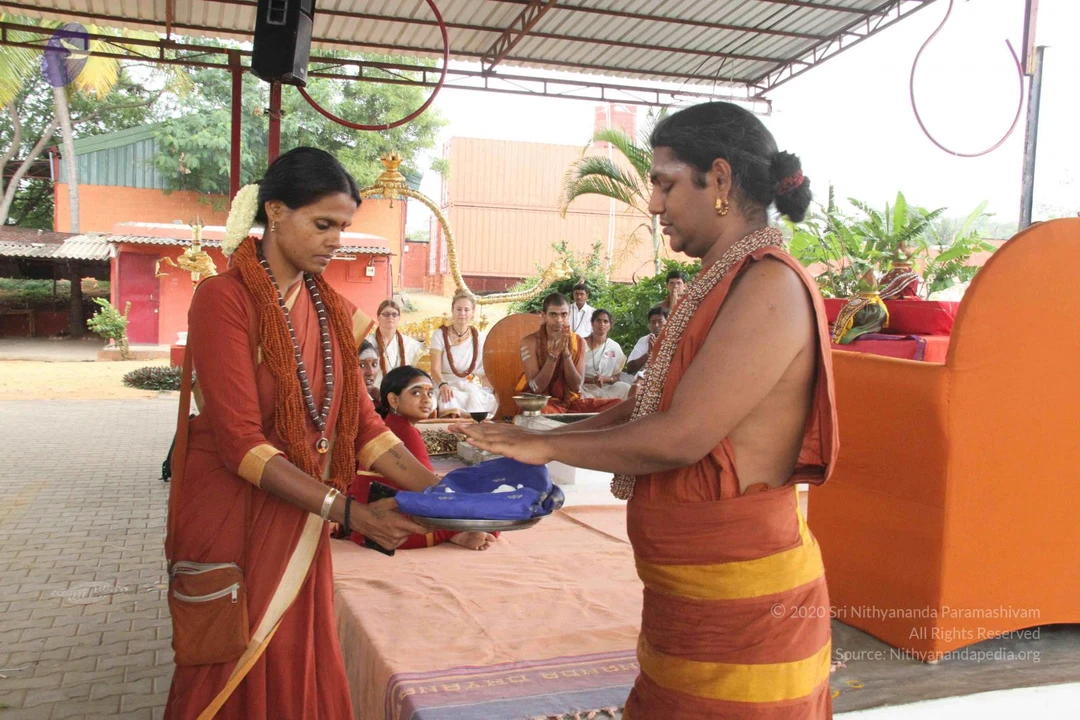
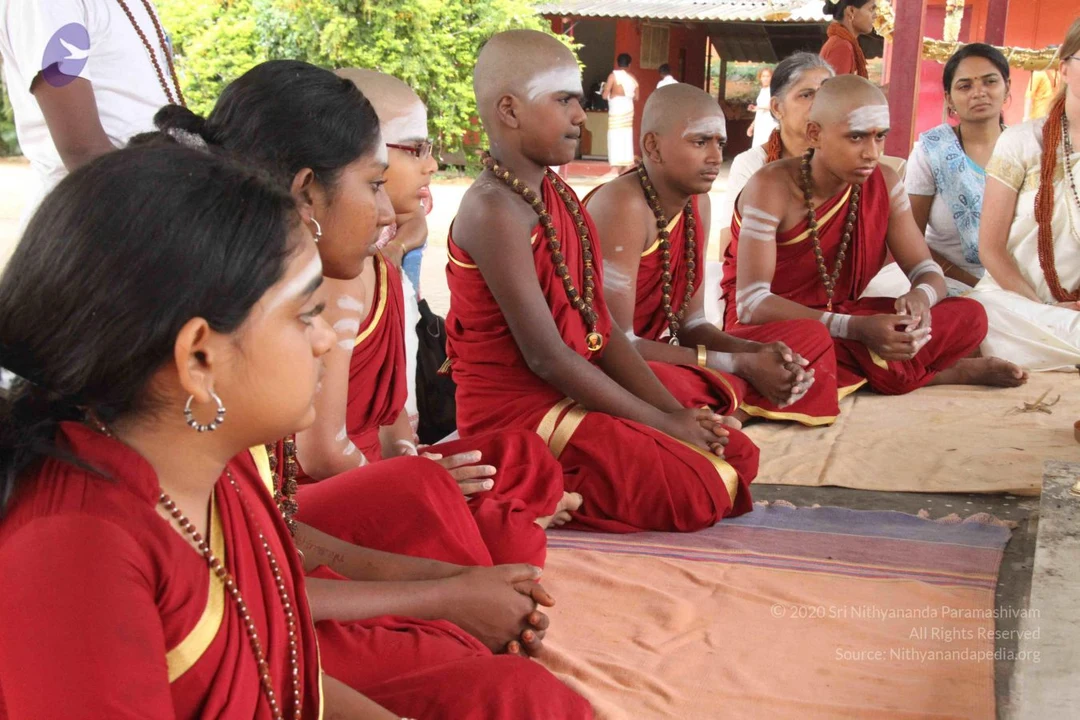
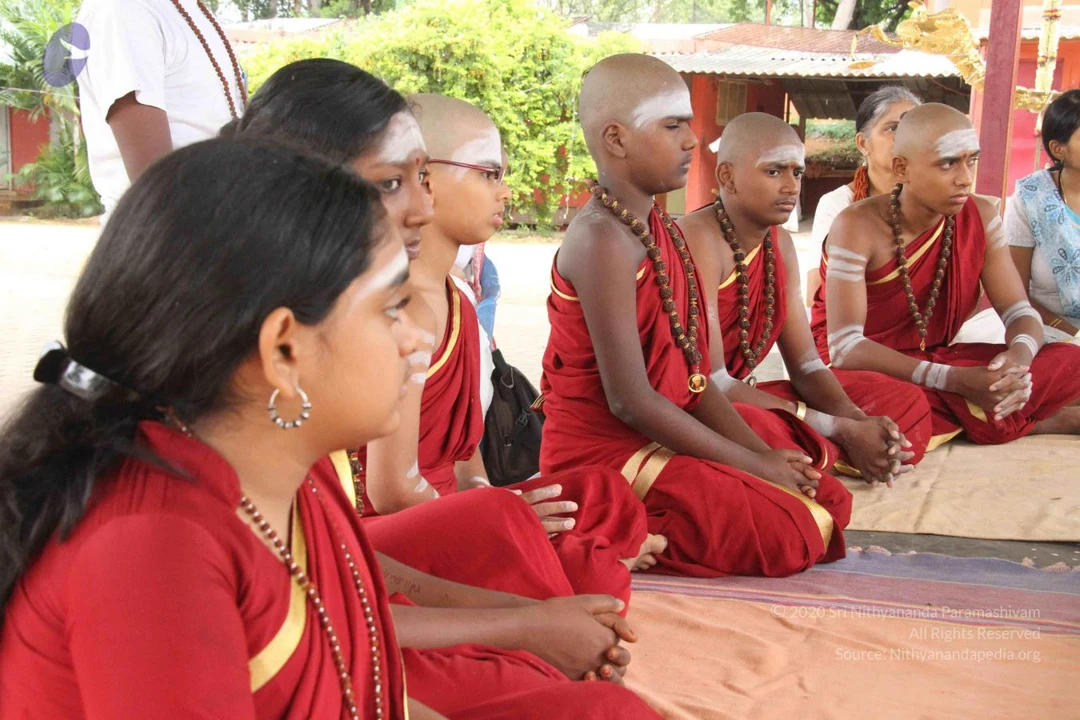
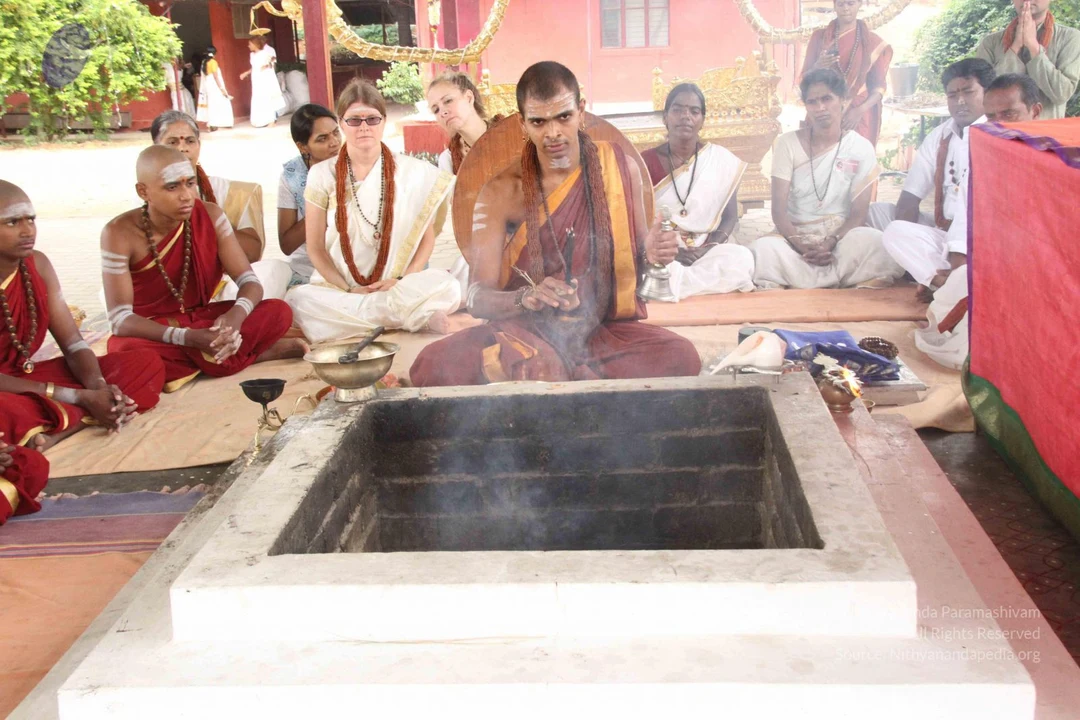
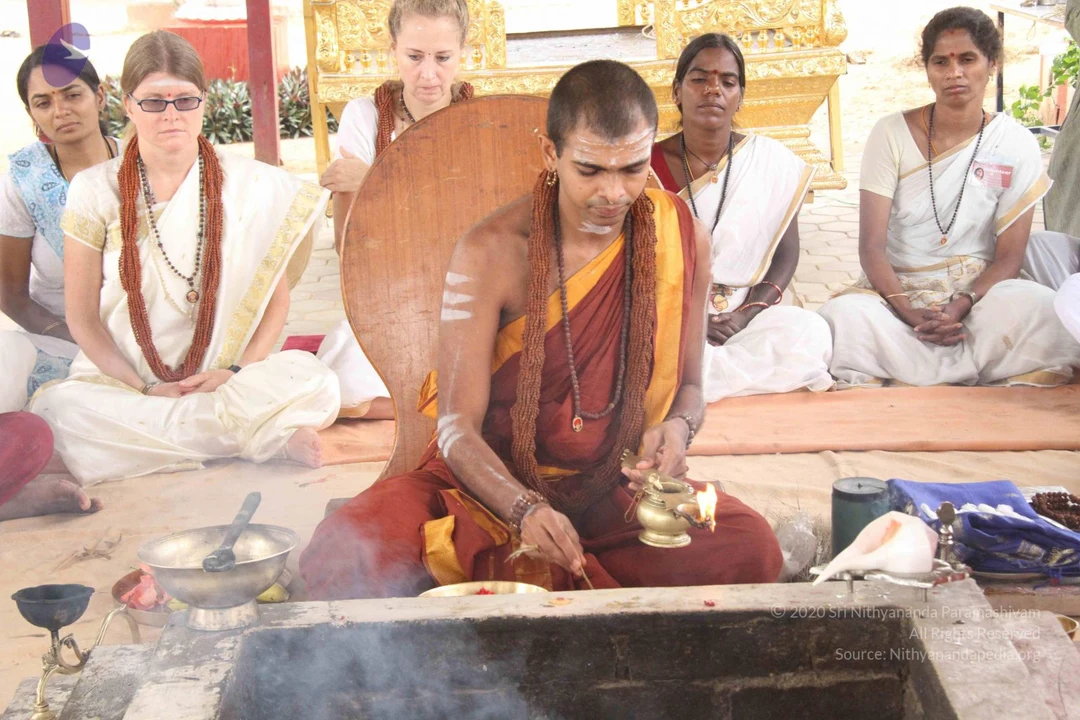
Outdoor ritual scene under a tent canopy with yellow umbrellas. On a raised stepped platform draped in red cloth, several figures with ornate golden crowns and painted faces stand beside a decorated deity murti or ceremonial figure with a red garland. A white-clad priest stands behind them. In the foreground, shaved-headed boys and a young woman in red-and-gold garments sit on cloth, facing a square fire pit, with a brass kalasha, lamps and offering bowls nearby. A man in orange robes sits at left. The setting is open air with trees and a low wall.Outdoor ritual at a shaded stone platform with red-and-white striped steps and a red cloth-draped altar. Several figures are dressed in saffron and orange robes with gold borders; a bare-chested young man with white body markings stands at left, while shaved-headed boys sit in front of a fire pit with a brass vessel, bananas and a tray of offerings. Behind the altar, metal deity murtis wear gold crowns and garlands, flanked by a woman in an orange sari and a figure in a red turban and white dhoti. A small shrine with a painted deity panel stands under a pitched canopy, and trees and onlookers appear in the background. Participants sit and stand around the rite, which appears to be a puja or abhishekam.A photograph of an outdoor homa ceremony under a corrugated metal canopy. A white square fire pit with stepped white edges sits in the foreground. A seated monastic in saffron-orange robes with a shaved head, white forehead markings and a rudraksha mala has hands pressed together near his face, with a light-coloured shawl over his shoulders. Around him sit several shaved-headed young ascetics in red-orange robes with white forehead and arm markings. A woman in white with a red beaded mala sits beside the fire, and a standing man in white robes with a mala and a woman in white are nearby. A golden ceremonial arch hangs behind the pit, and a red-draped table with a green cloth and offering trays is at right. A black van and red-brick ashram buildings with palm trees are behind.A photograph of an outdoor homa fire ritual under a metal-roofed open pavilion. A central square stone fire pit with white steps sits in the foreground. A bare-chested priest wearing an orange-red dhoti kneels at the pit, tending the fire with a ladle, his torso marked with white ash lines. Around him, young priests in red robes with rudraksha malas and white forehead markings sit cross-legged, and a woman in white with a red shawl kneels with hands folded. Behind them, seated devotees in white and a standing man in white observe. To the right, a red-draped altar bears a kalasha-like brass vessel with green cloth and garlands. A gold ornamental arch and red and orange buildings with palm trees stand in the background.Outdoor ashram courtyard with orange-painted structures, a corrugated metal roof and palm plants. In the foreground a woman in orange sari with yellow border and rudraksha mala offers a silver plate holding a folded blue cloth to a person in orange wrap with yellow-striped border and ornate necklace, who extends both hands to receive it. A child in red stands behind the plate. Behind them seated devotees in white and orange, and a figure in orange robes with hands joined in namaste sits near a golden throne-like seat. A kumkum-decorated pot and a plate of offerings rest on a pink-draped table.A seated ritual scene beside a white-rimmed square fire pit at an outdoor ashram courtyard. On the right, a shaved-headed priest in red-orange robes with white forehead and arm markings sits with hands extended over the pit, next to a brass bowl and a small brass vessel. Opposite, a row of shaved-headed young ascetics in red robes and rudraksha malas sits in a semi-circle, several with white forehead bands. Two women in white saris with red malas sit on a raised platform near a golden throne-like seat with gold-leaf canopy supports, and a large wooden drum-shaped object rests behind them. Men in white shirts with red malas sit at the right edge, and a red-walled building forms the background.