Skip to content
Wednesday

10 July 2013

SELF - DOUBT CAN DESTROY YOU

Dated photos
523
Source pages
1
Media
6
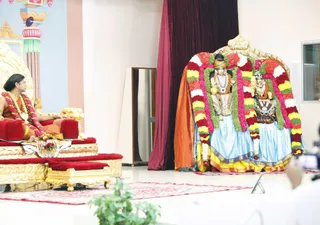
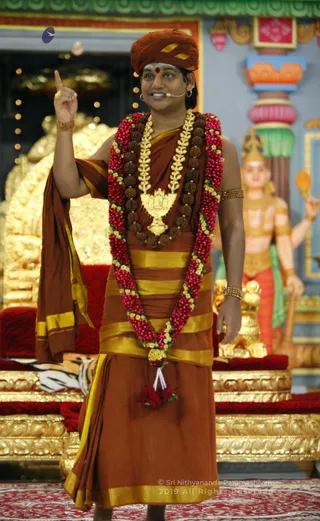
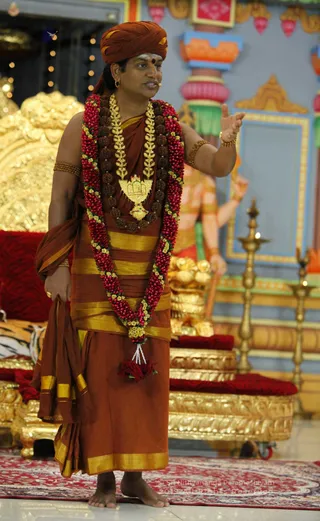
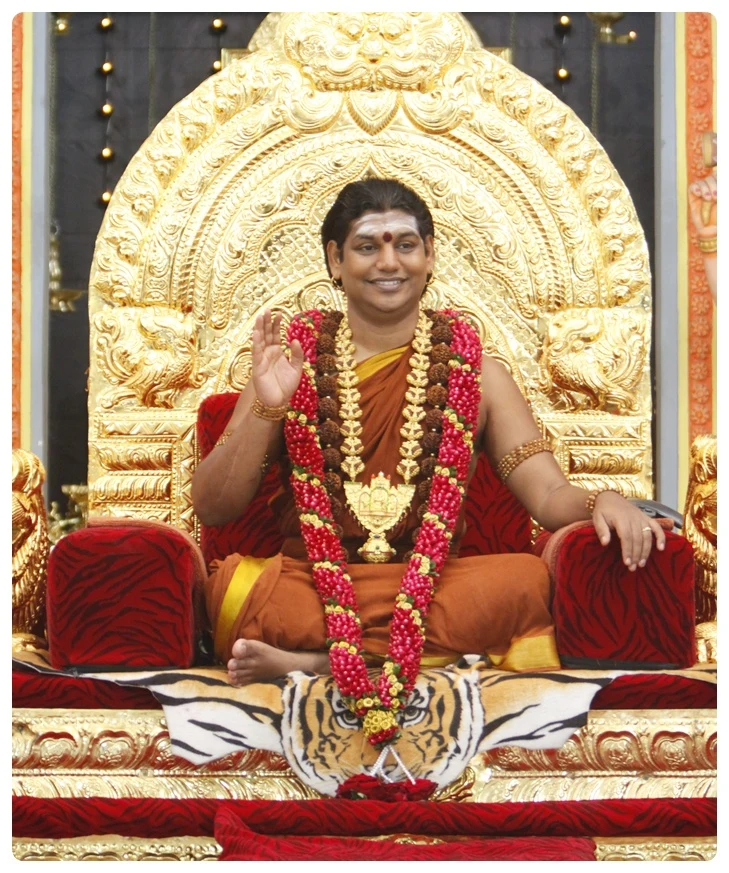
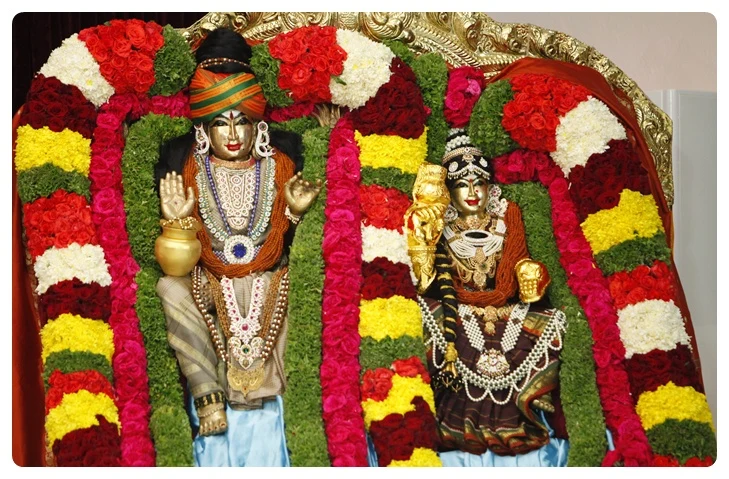
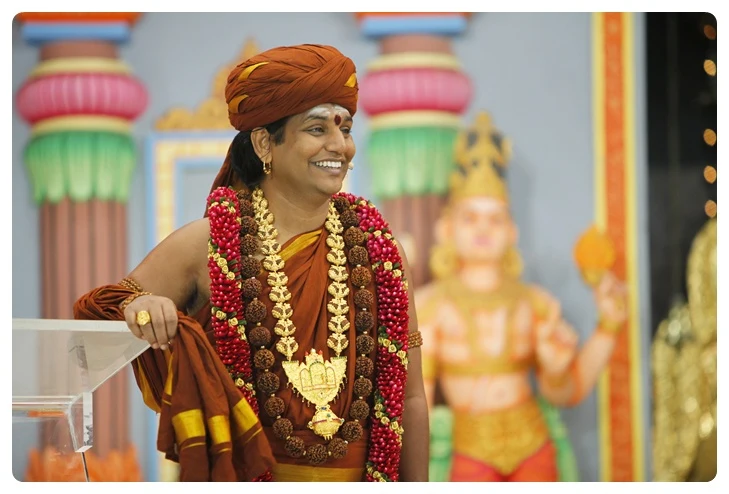
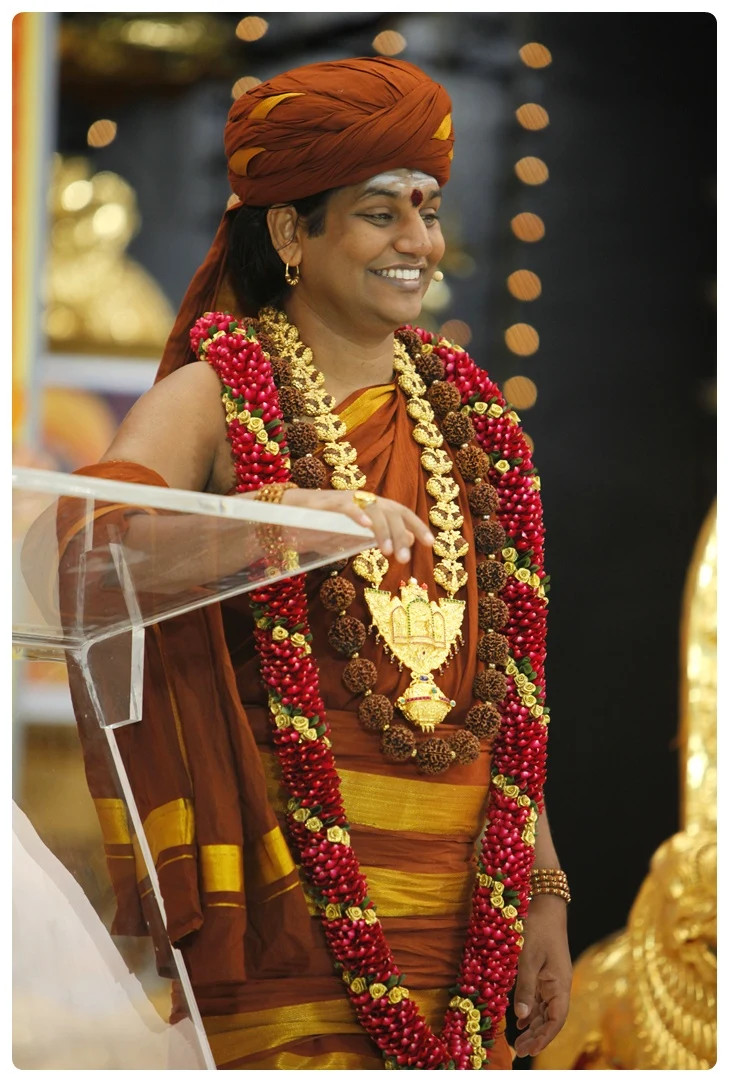
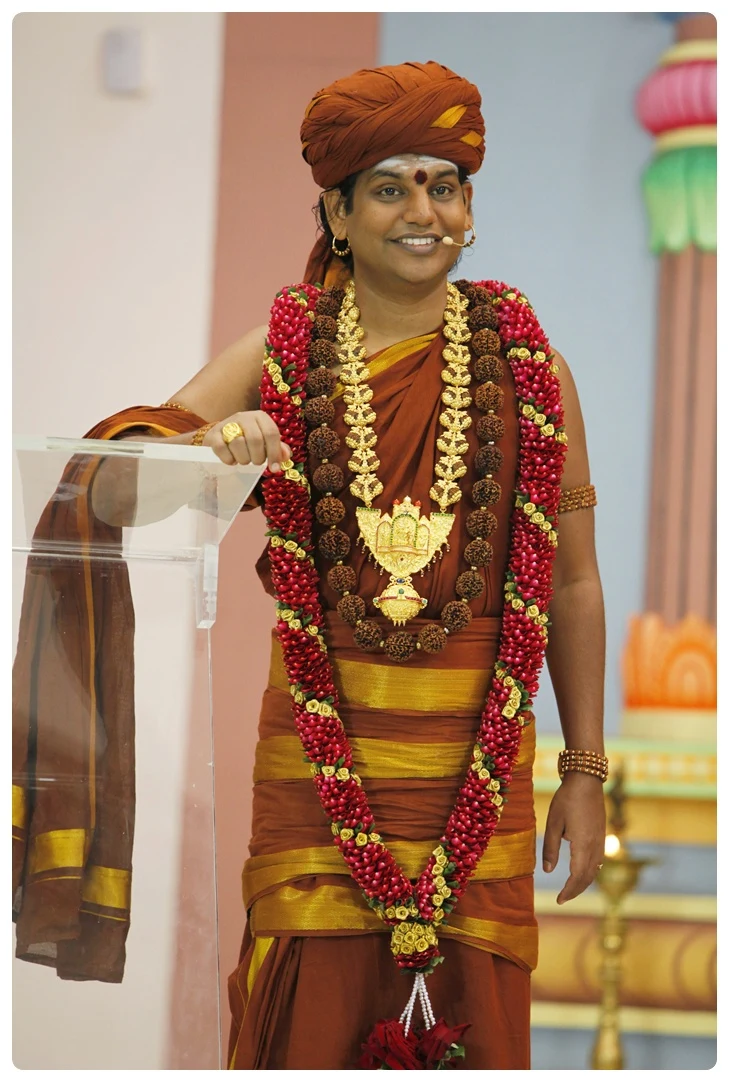
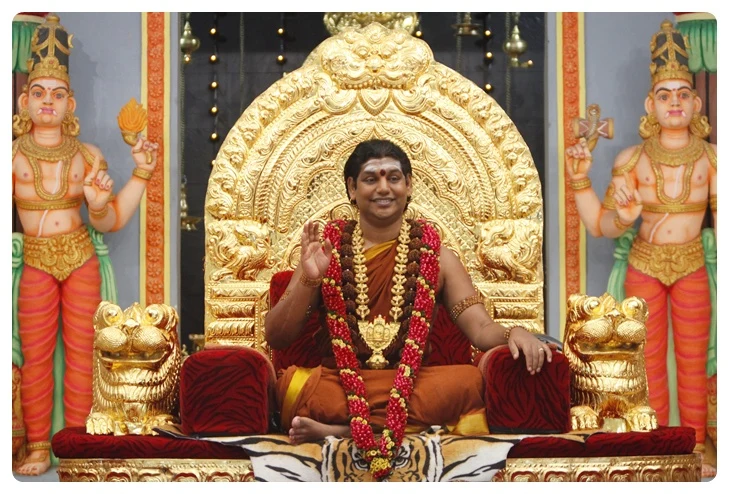
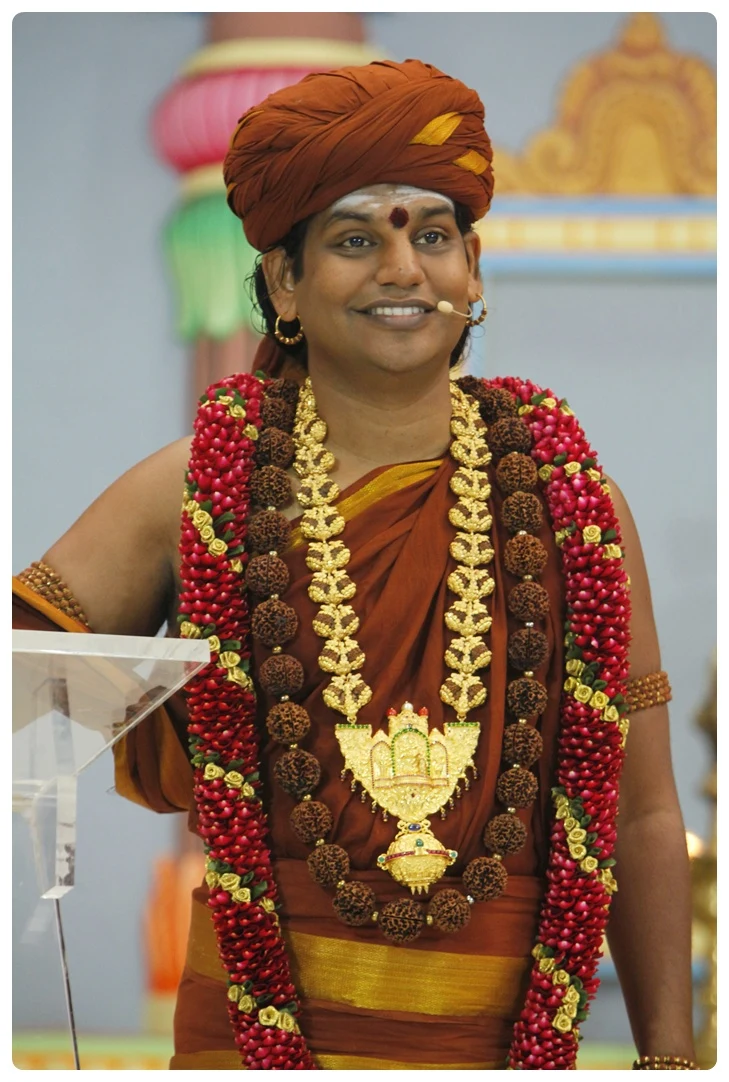
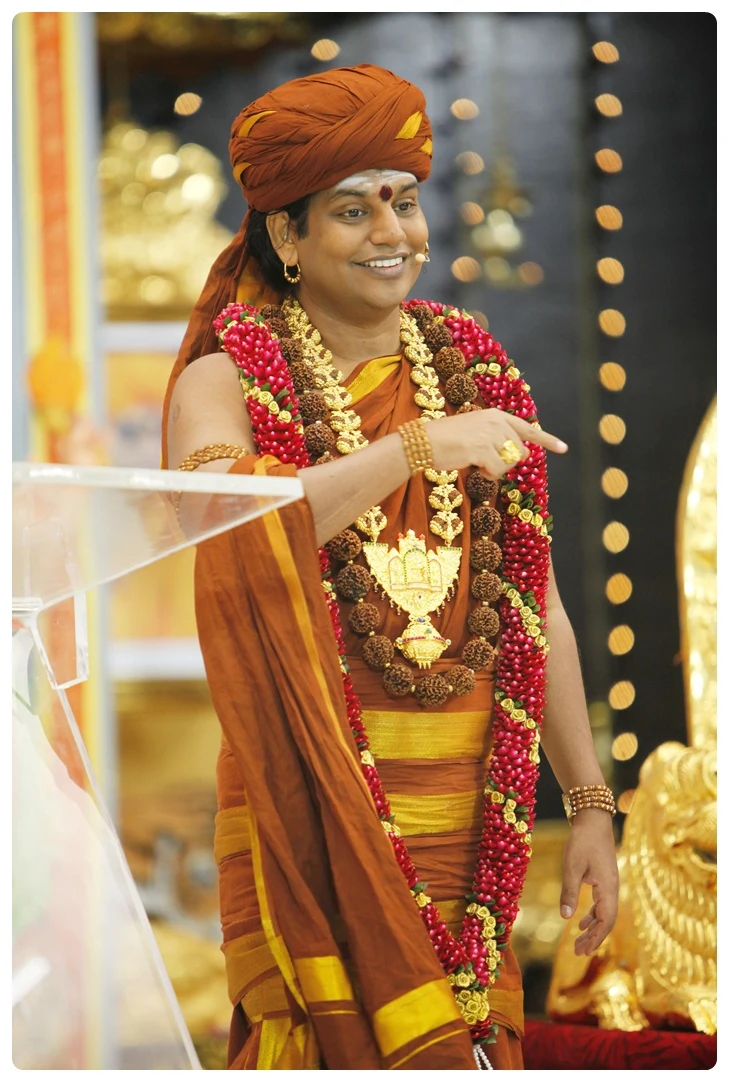
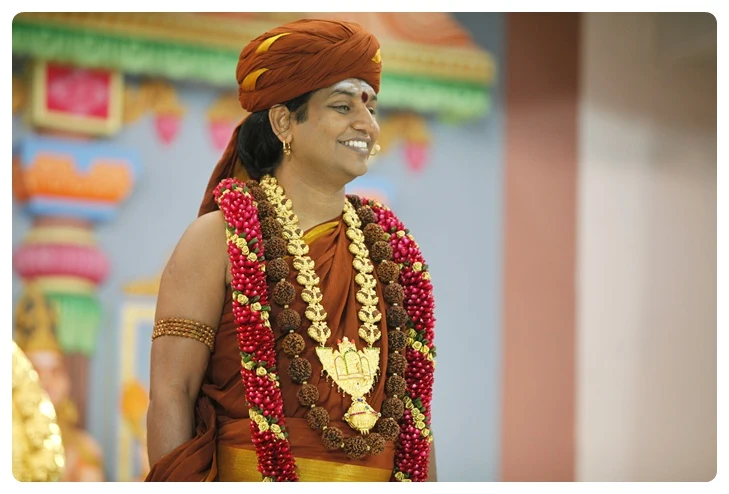
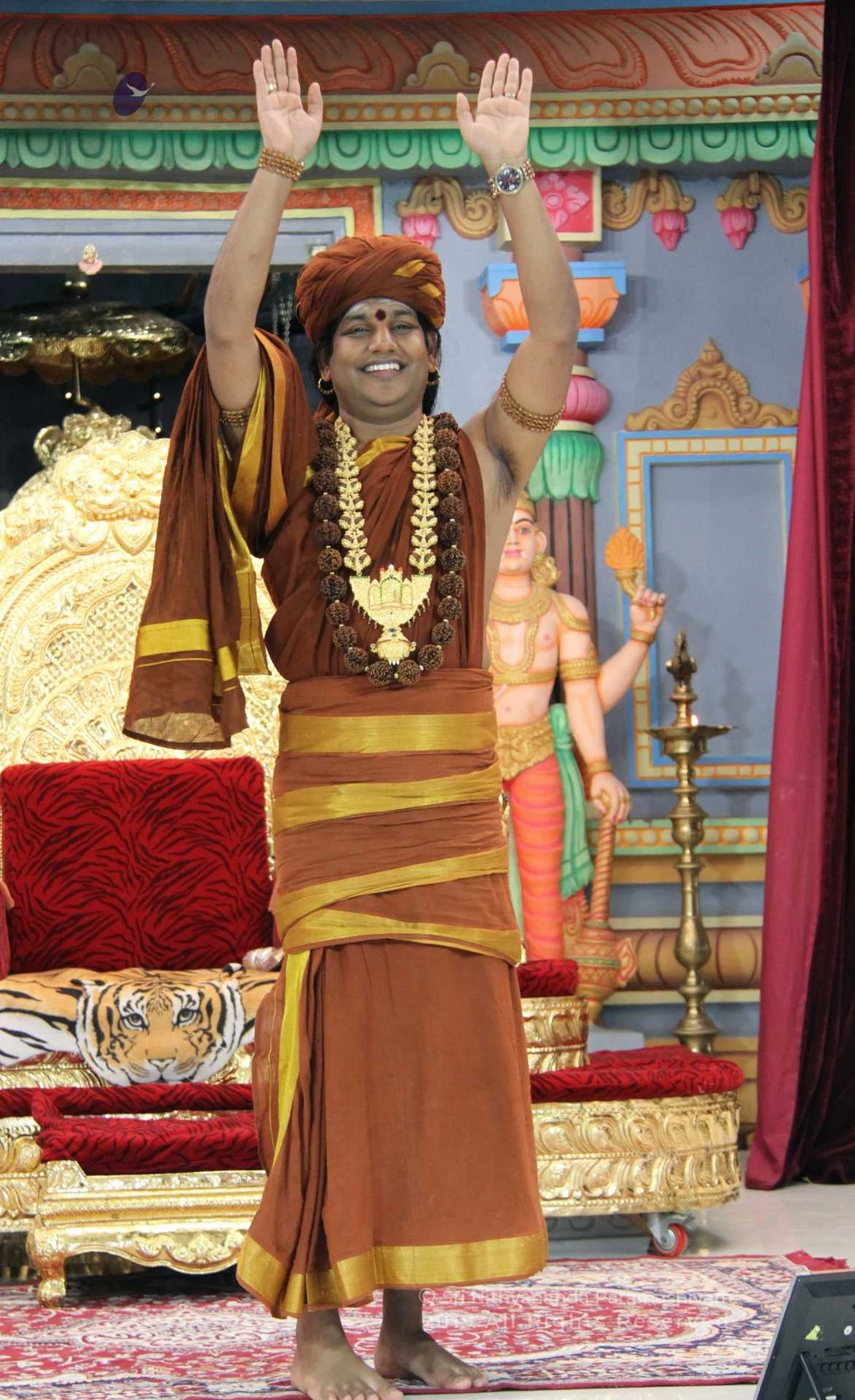
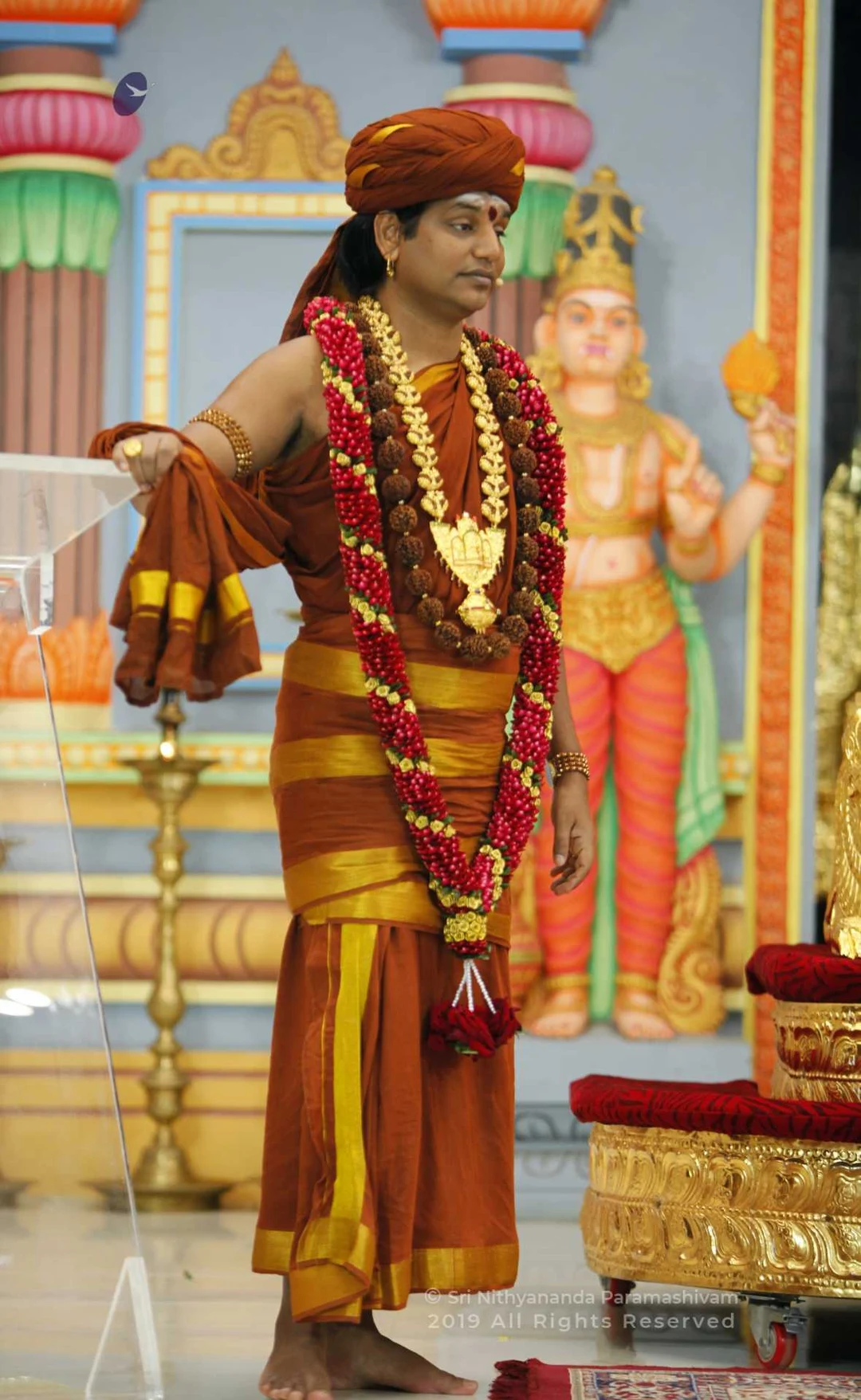
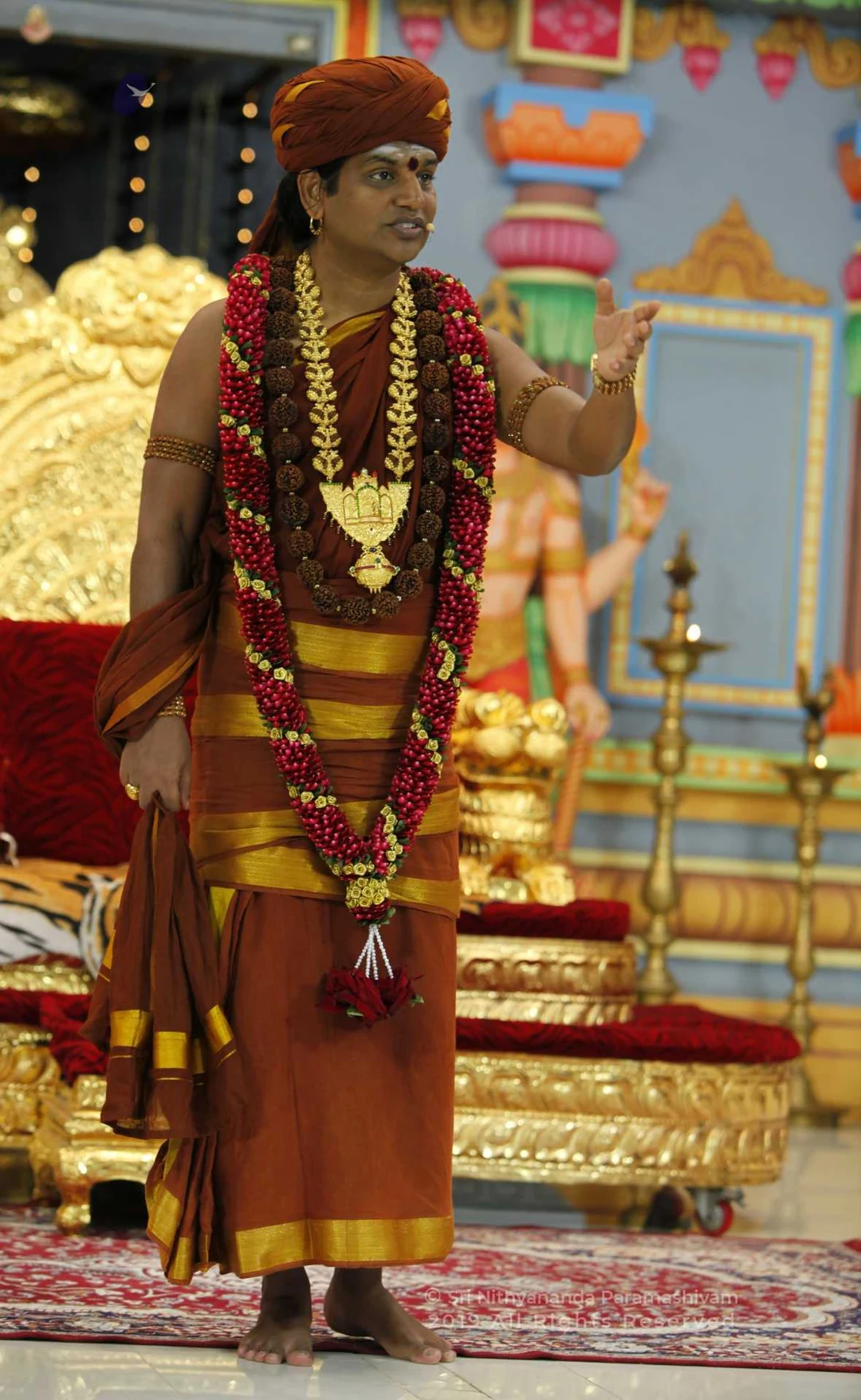
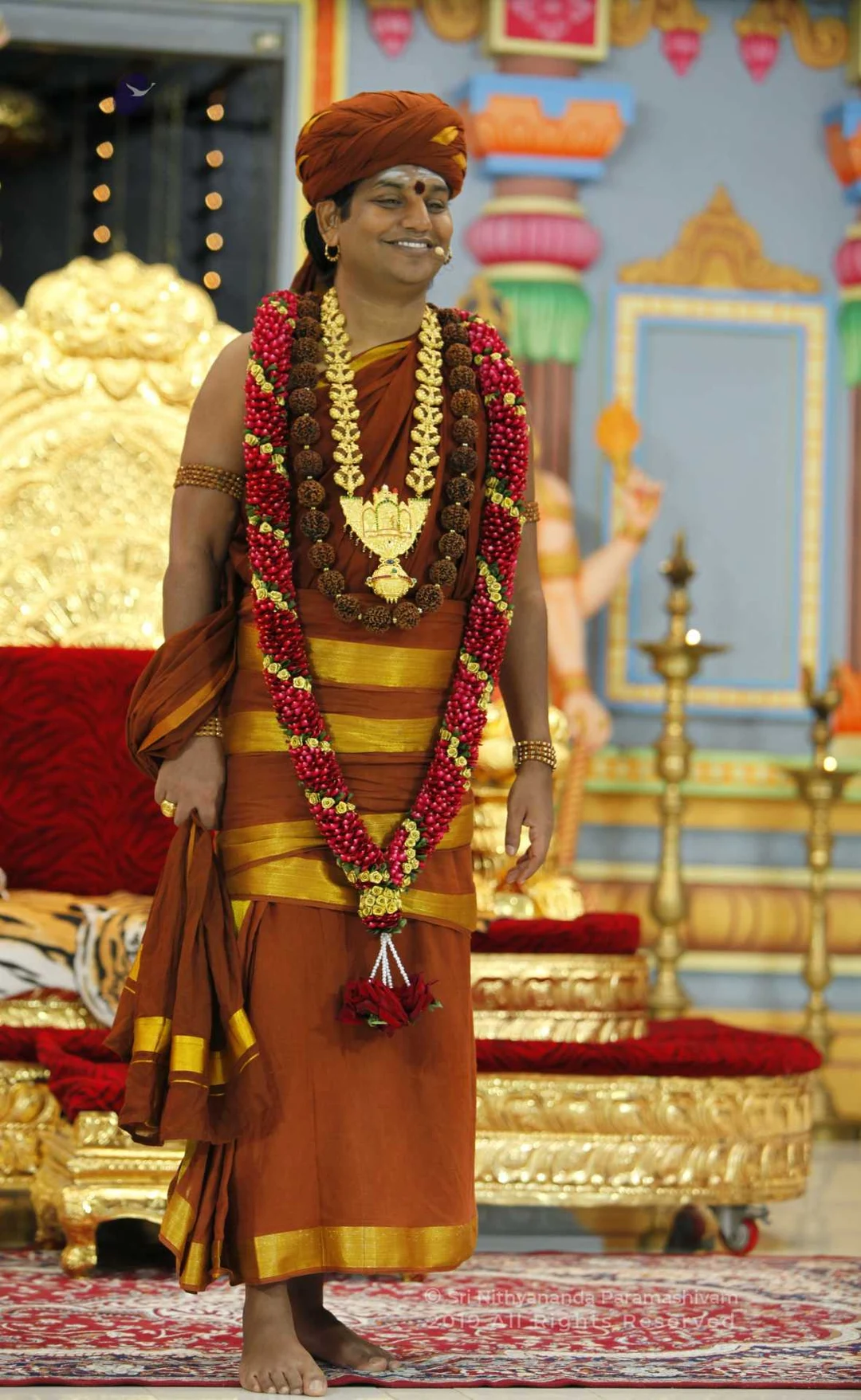
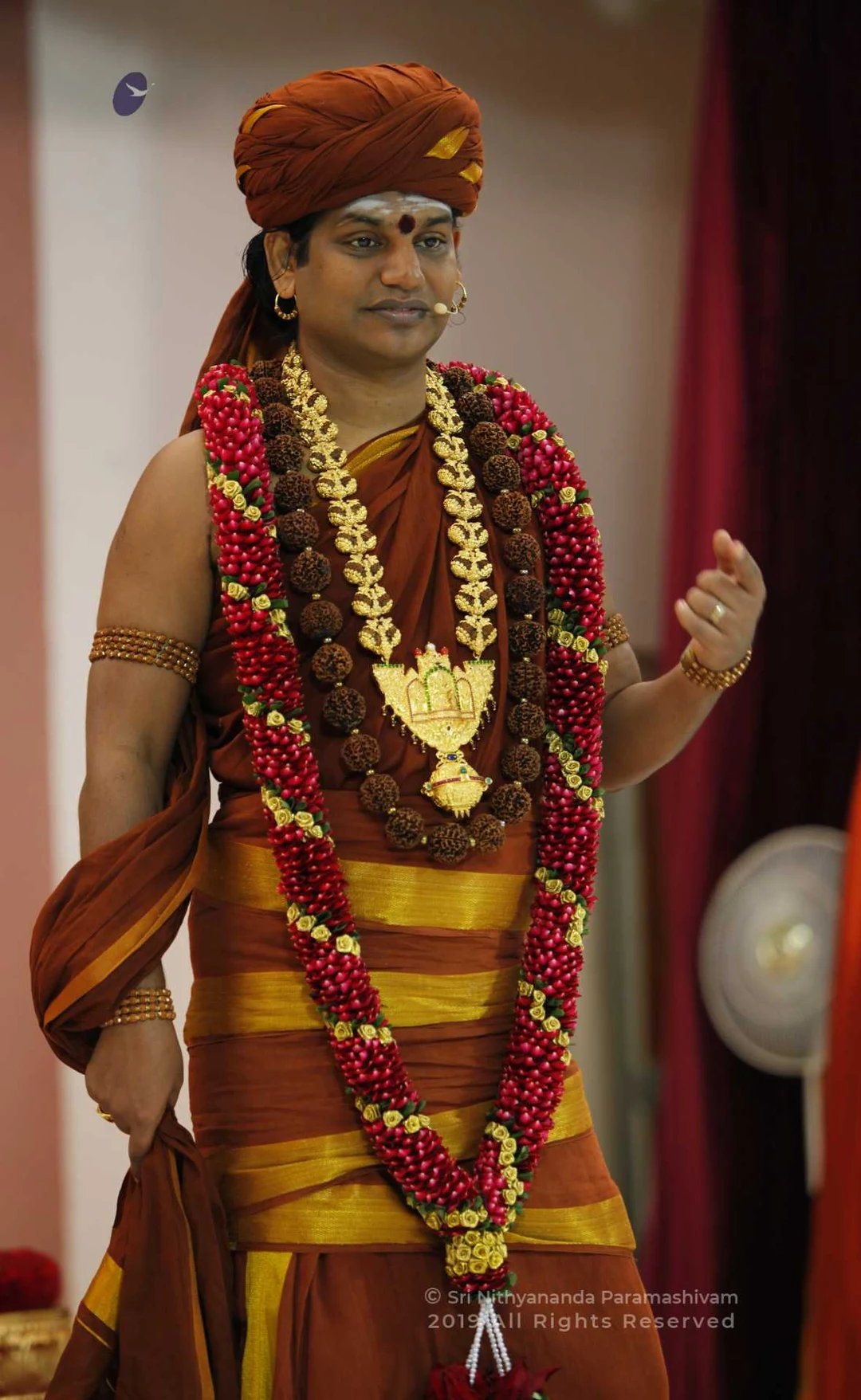
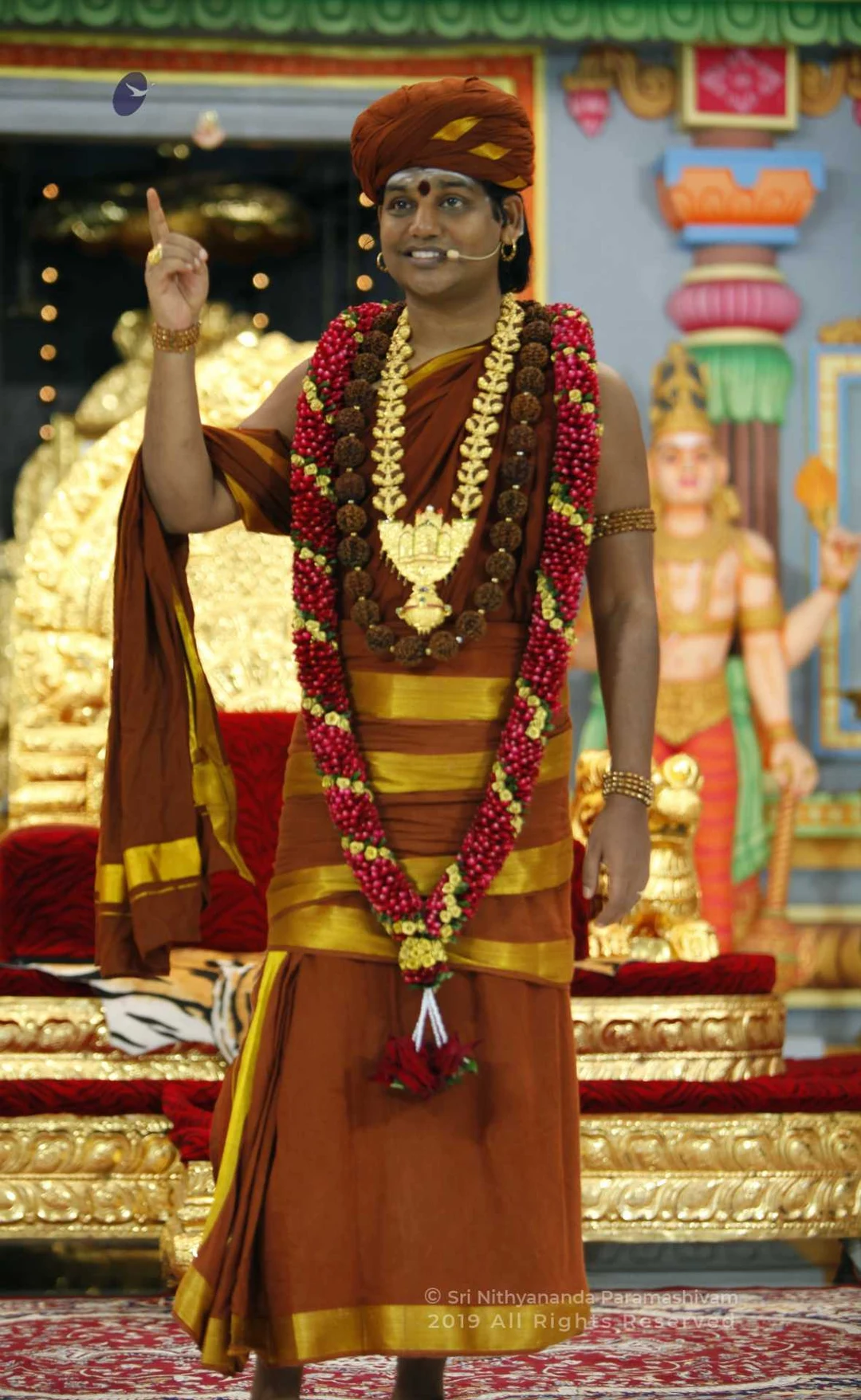
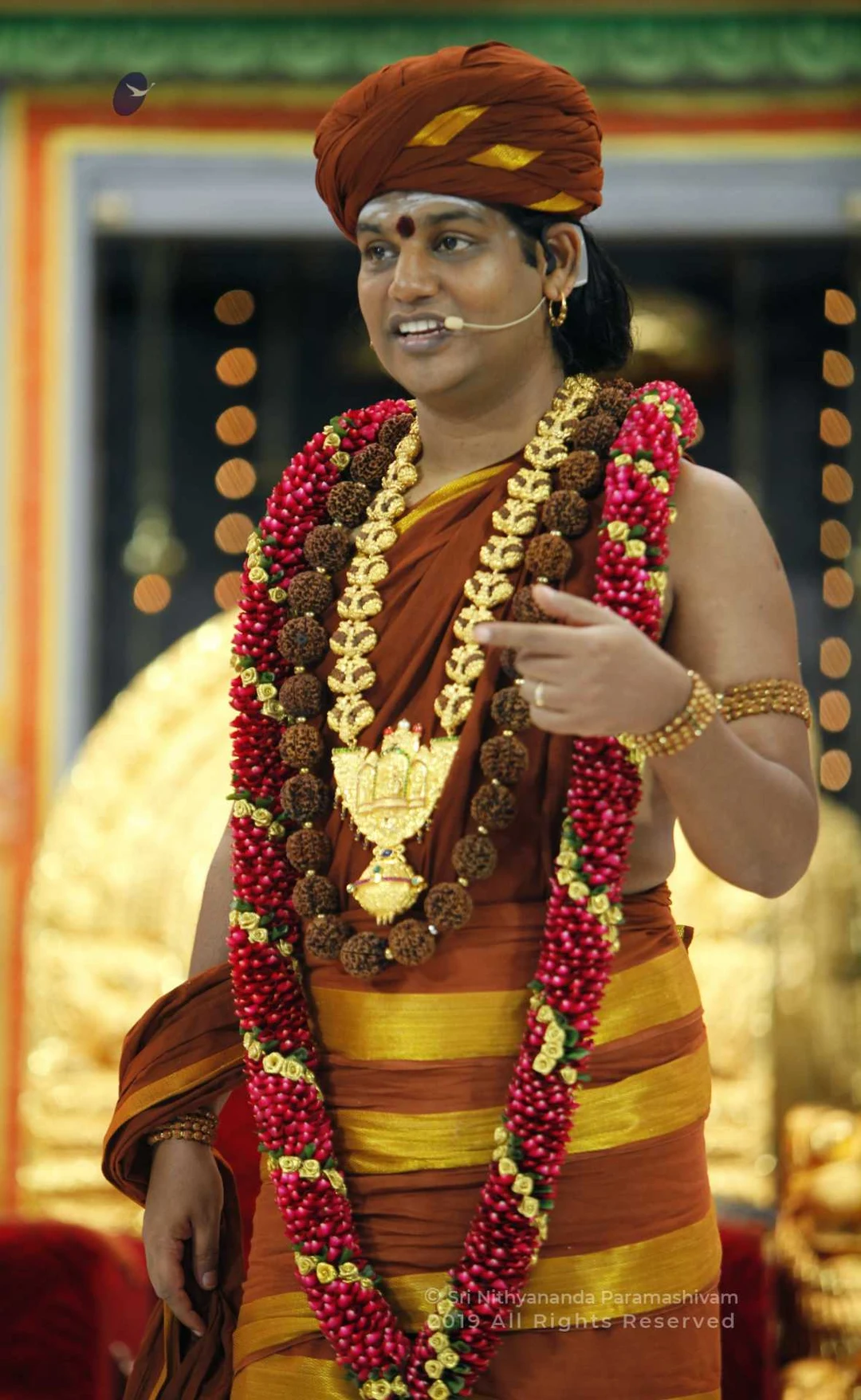
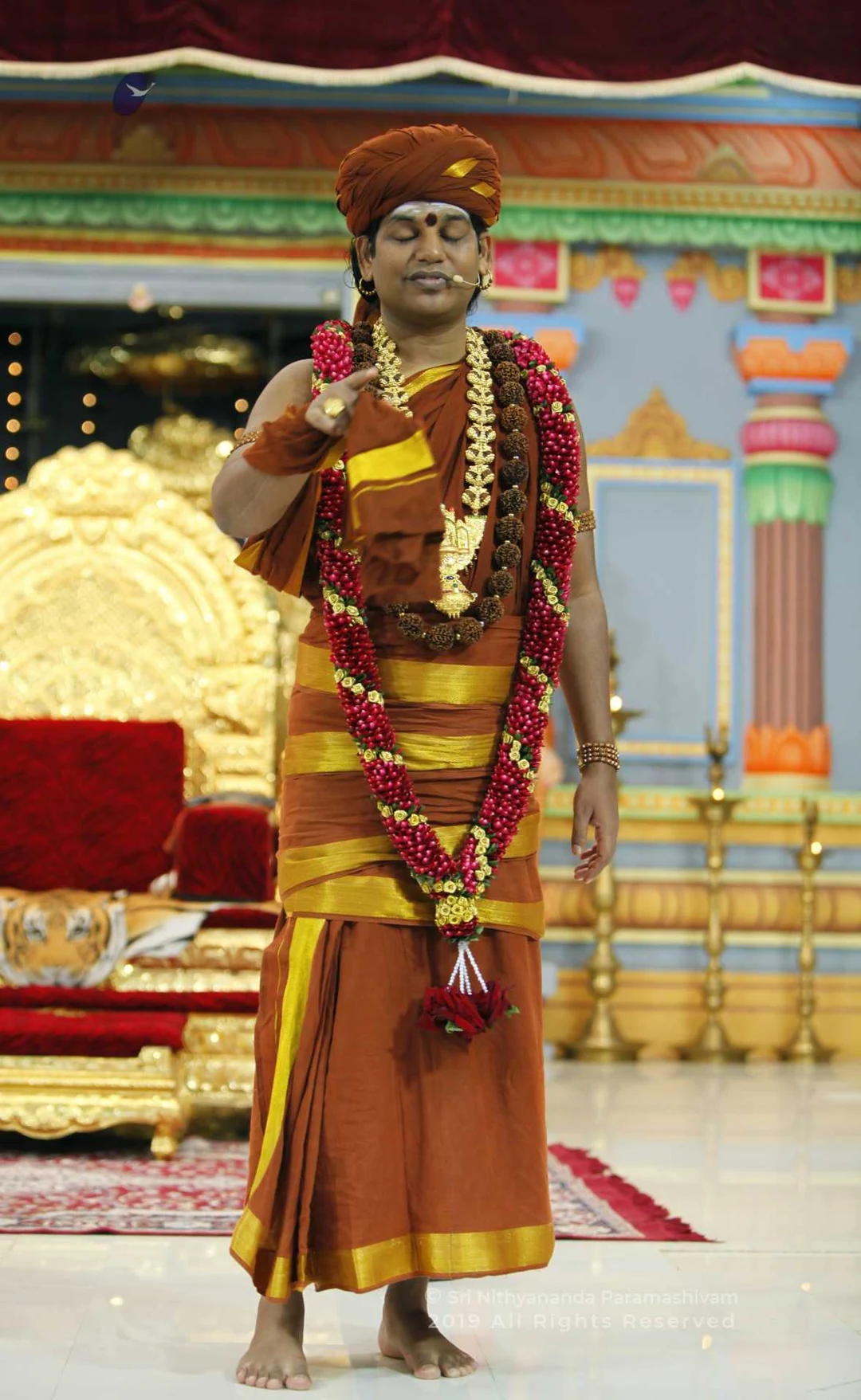
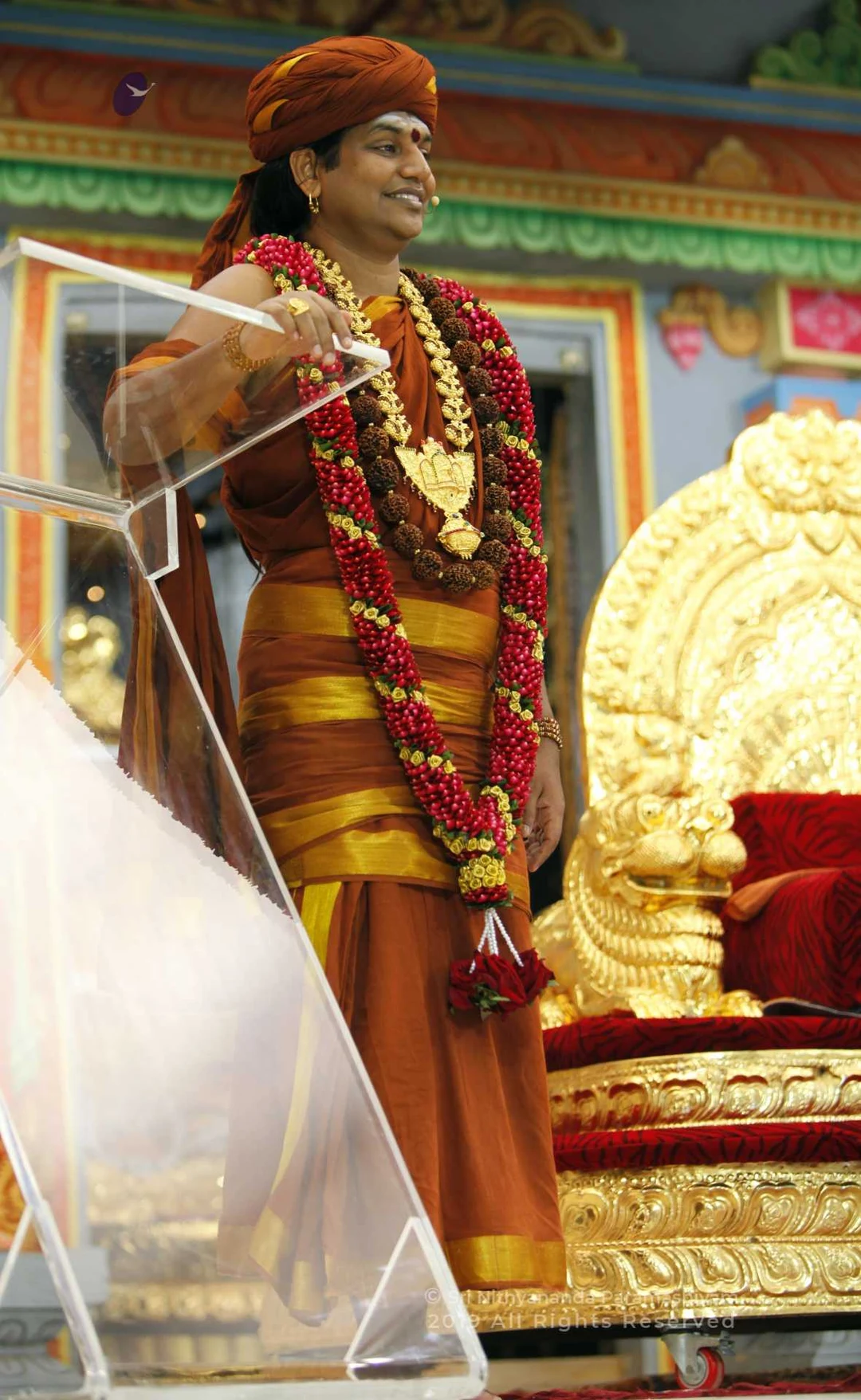
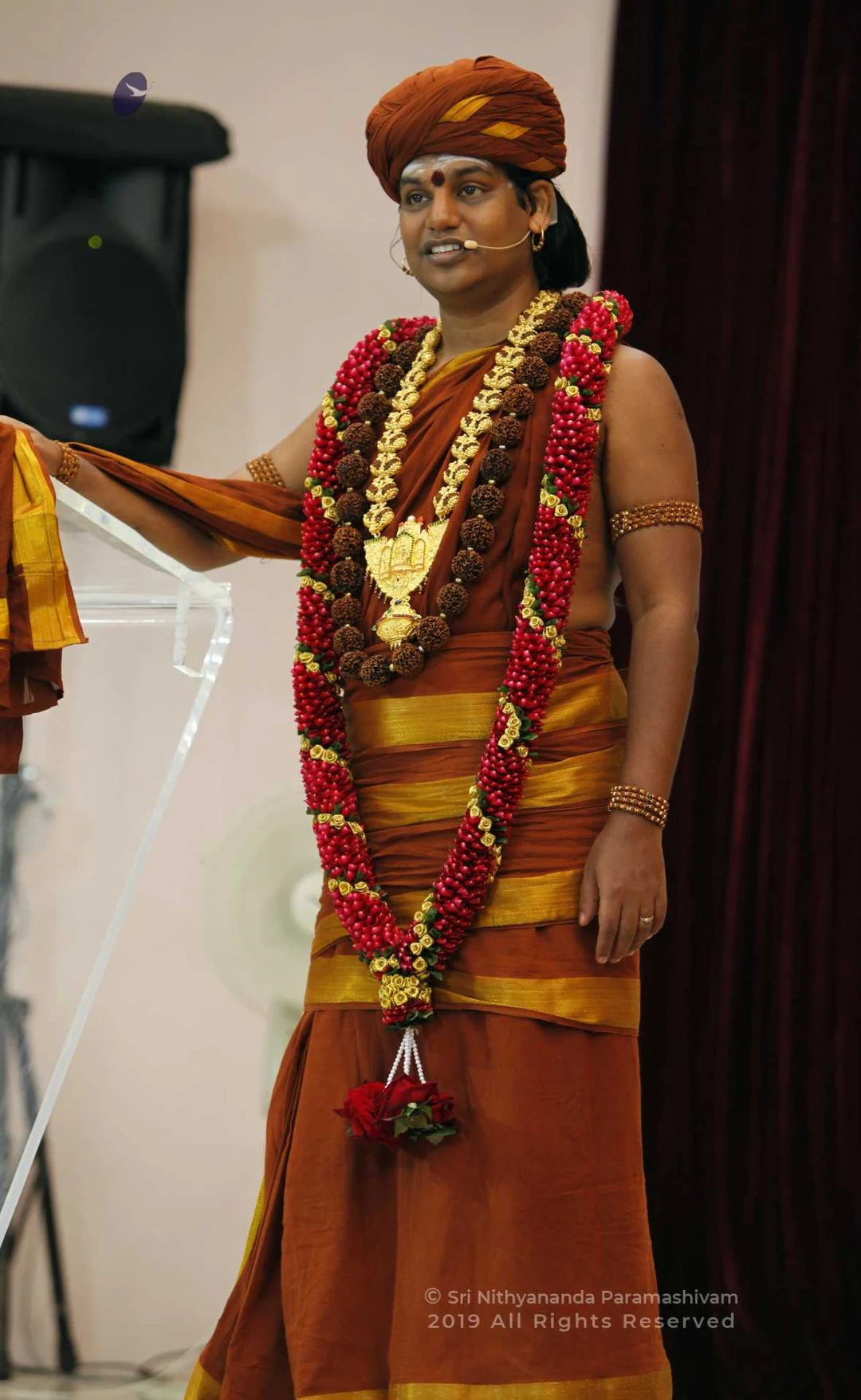
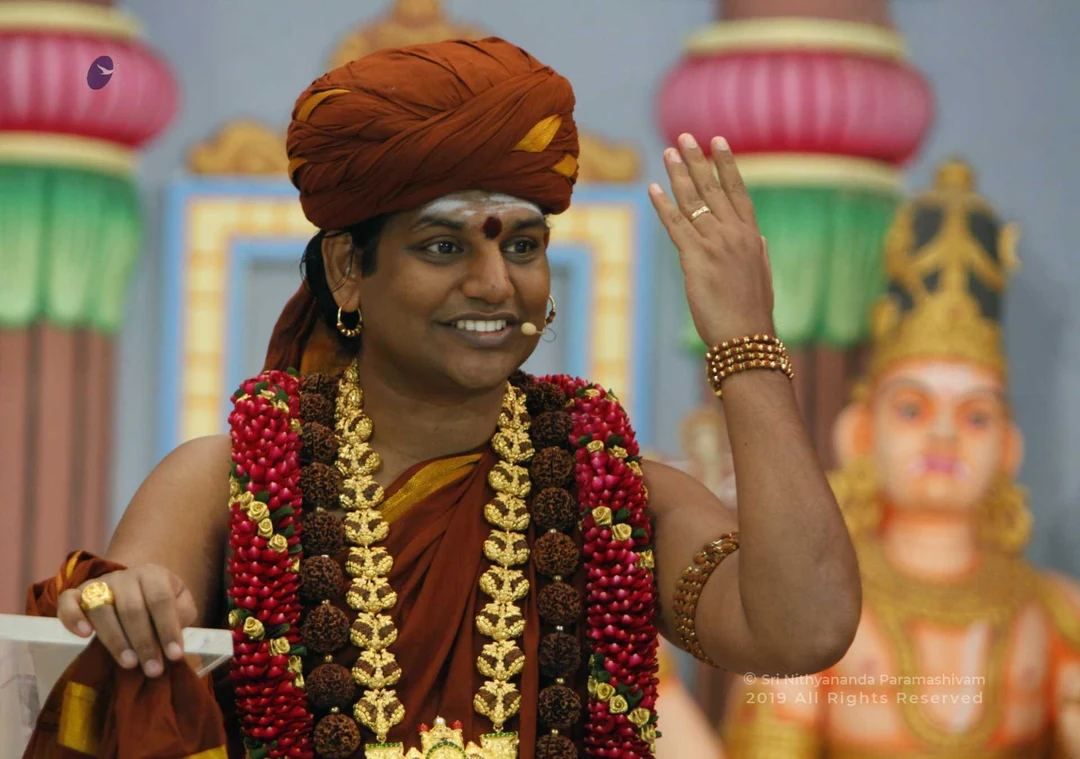
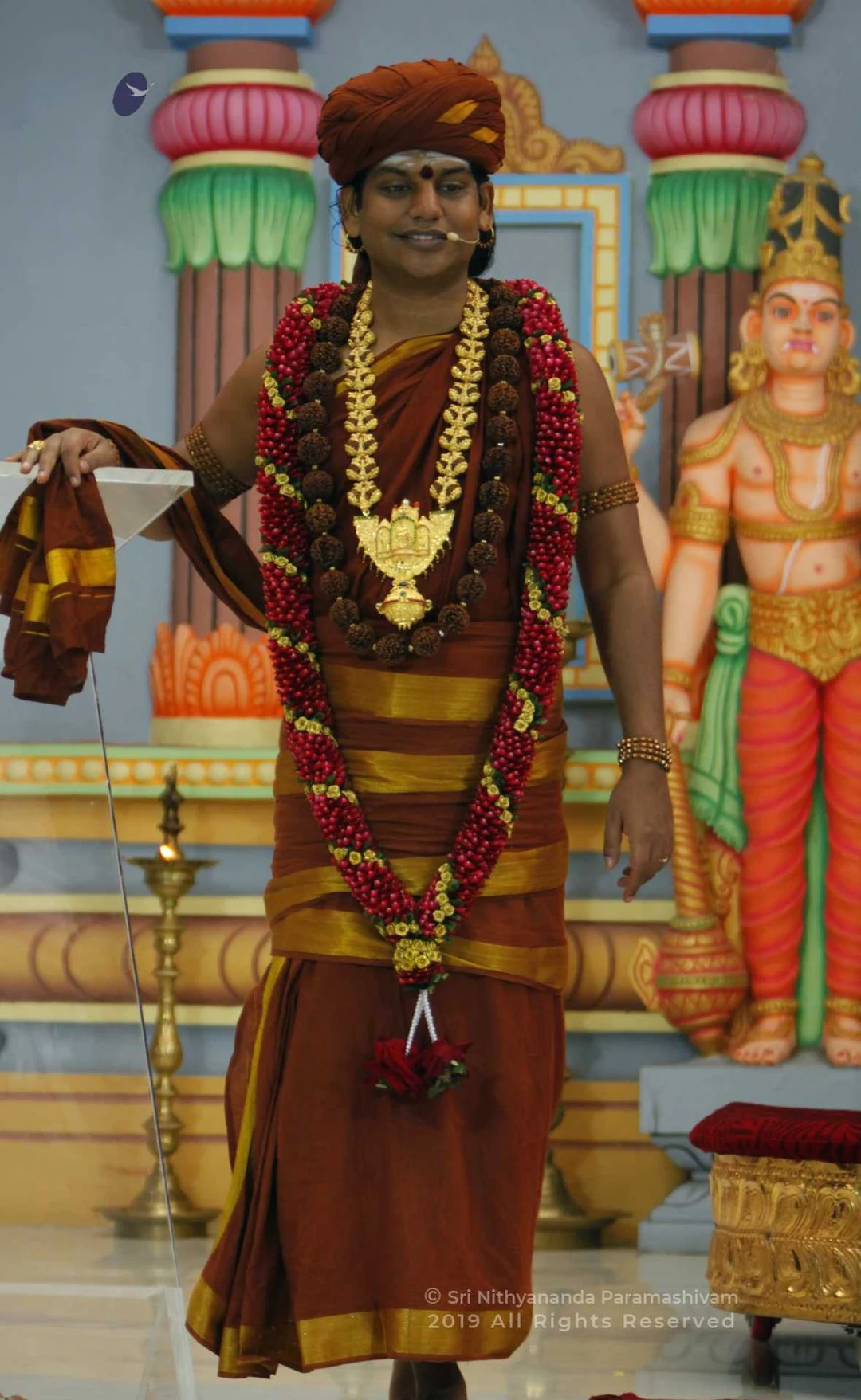
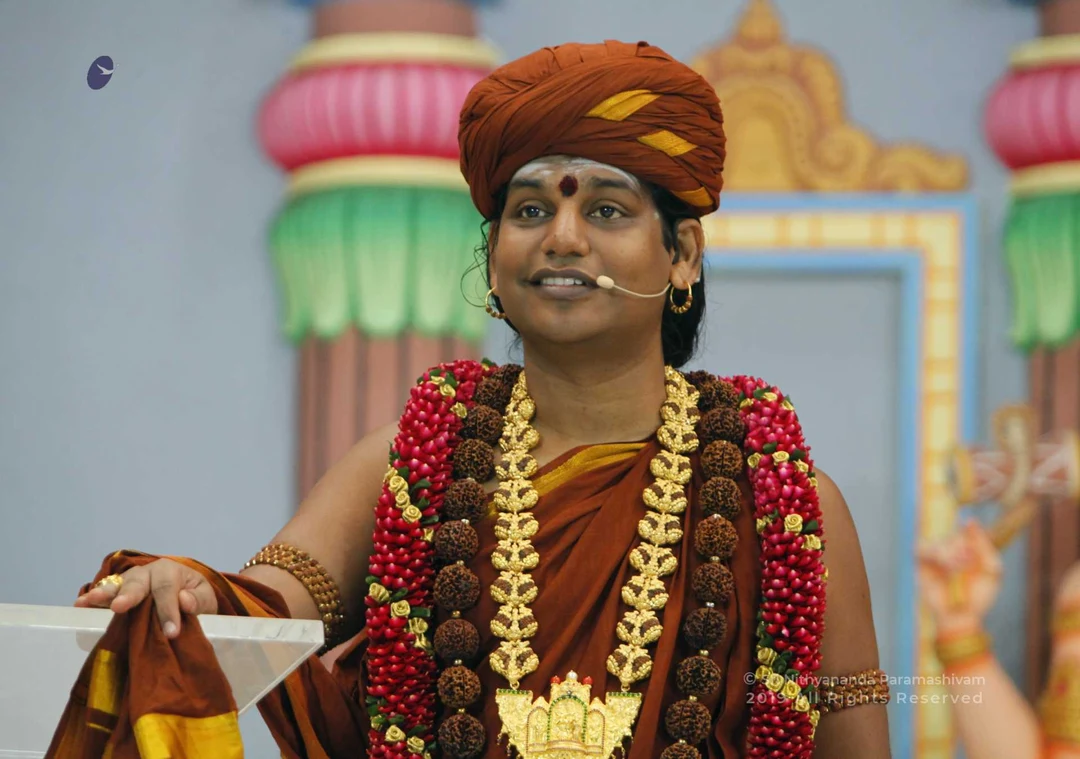
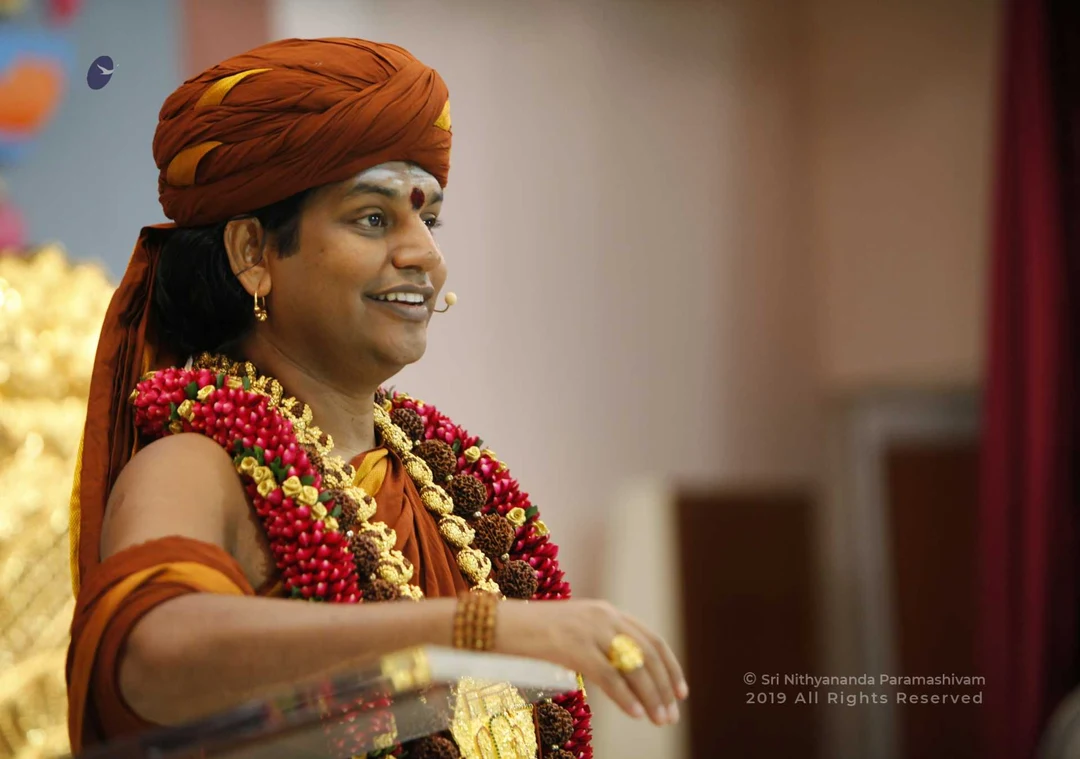
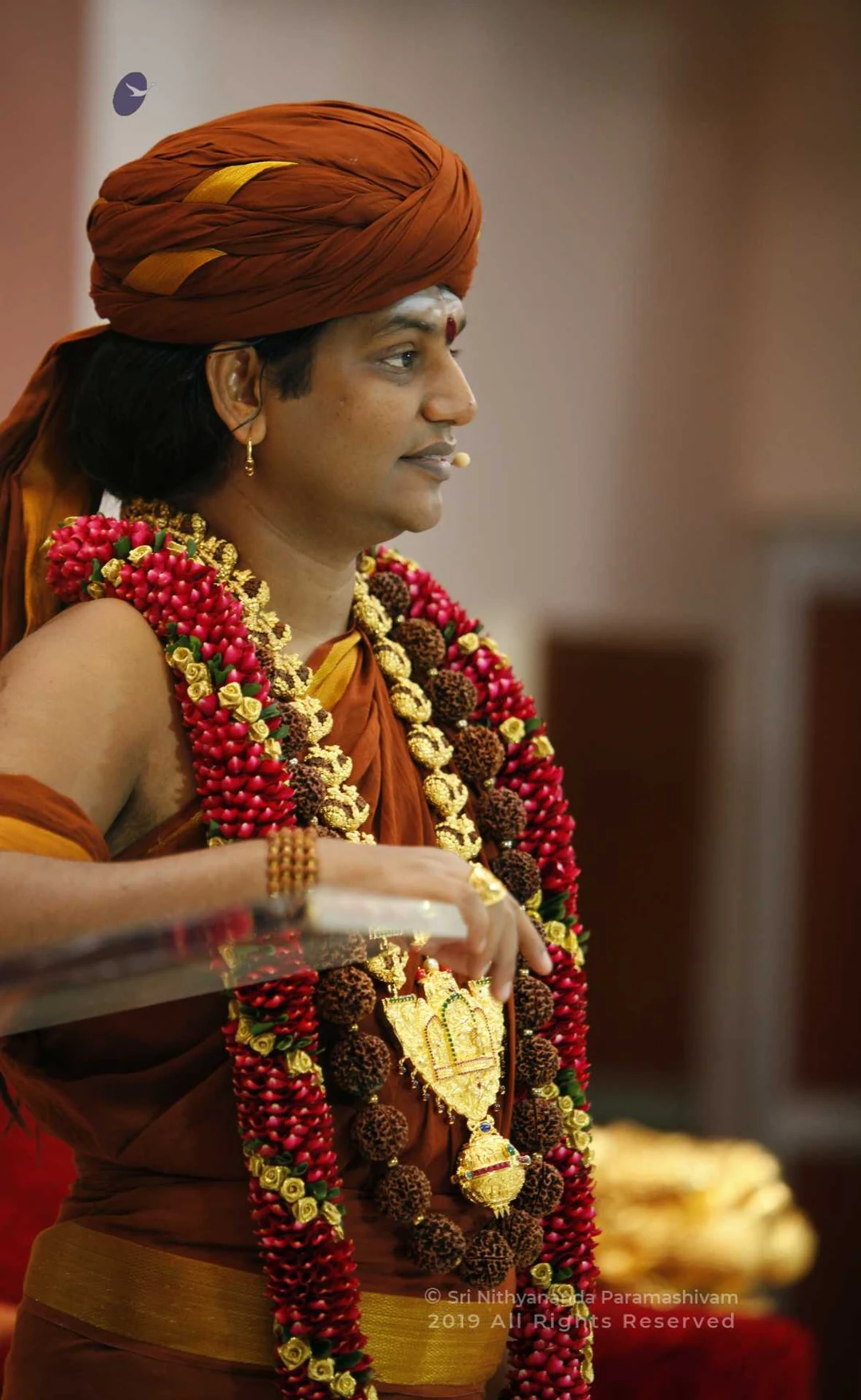
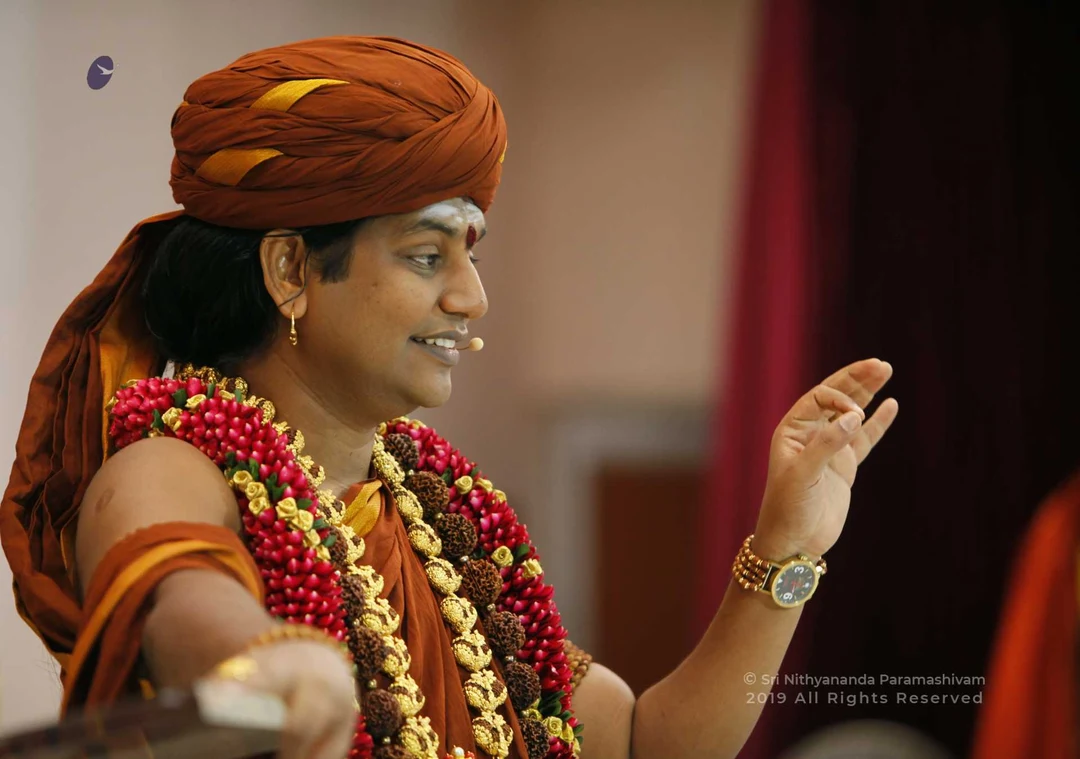
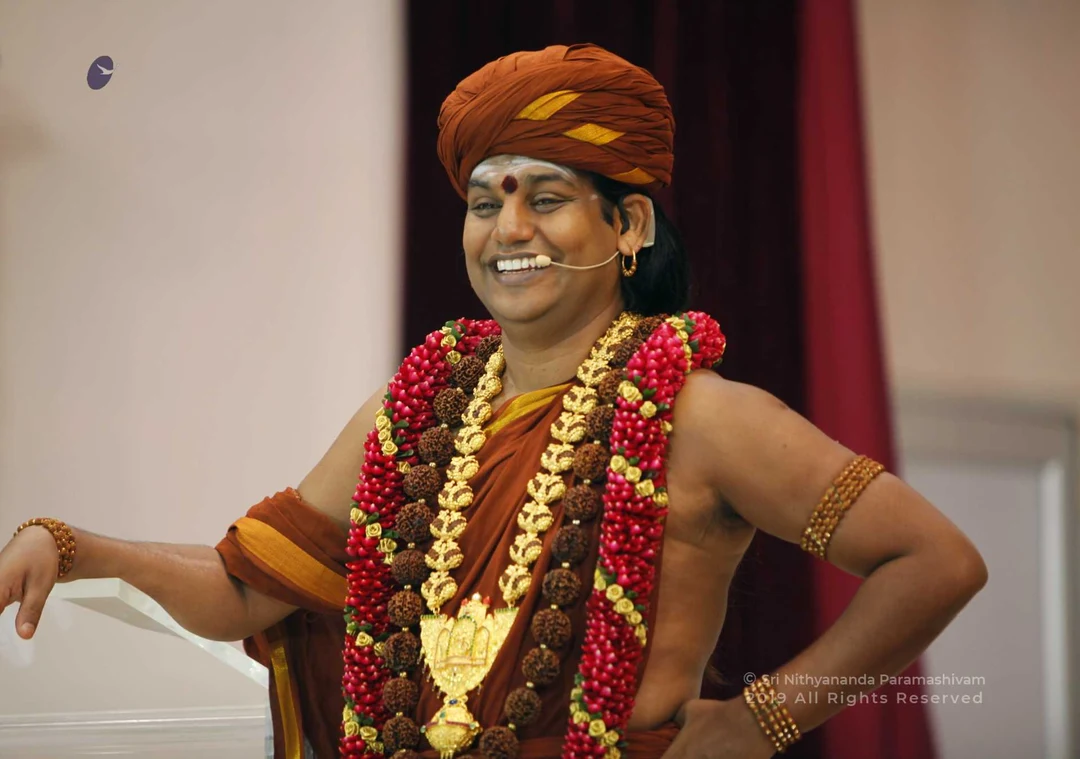
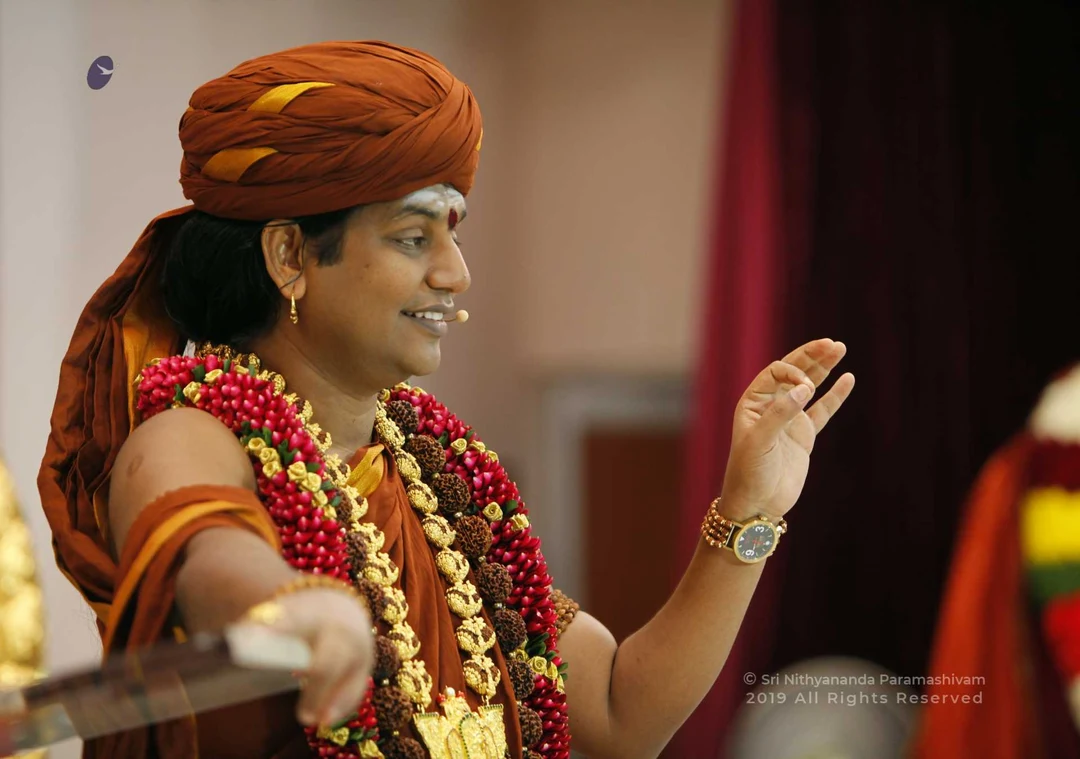
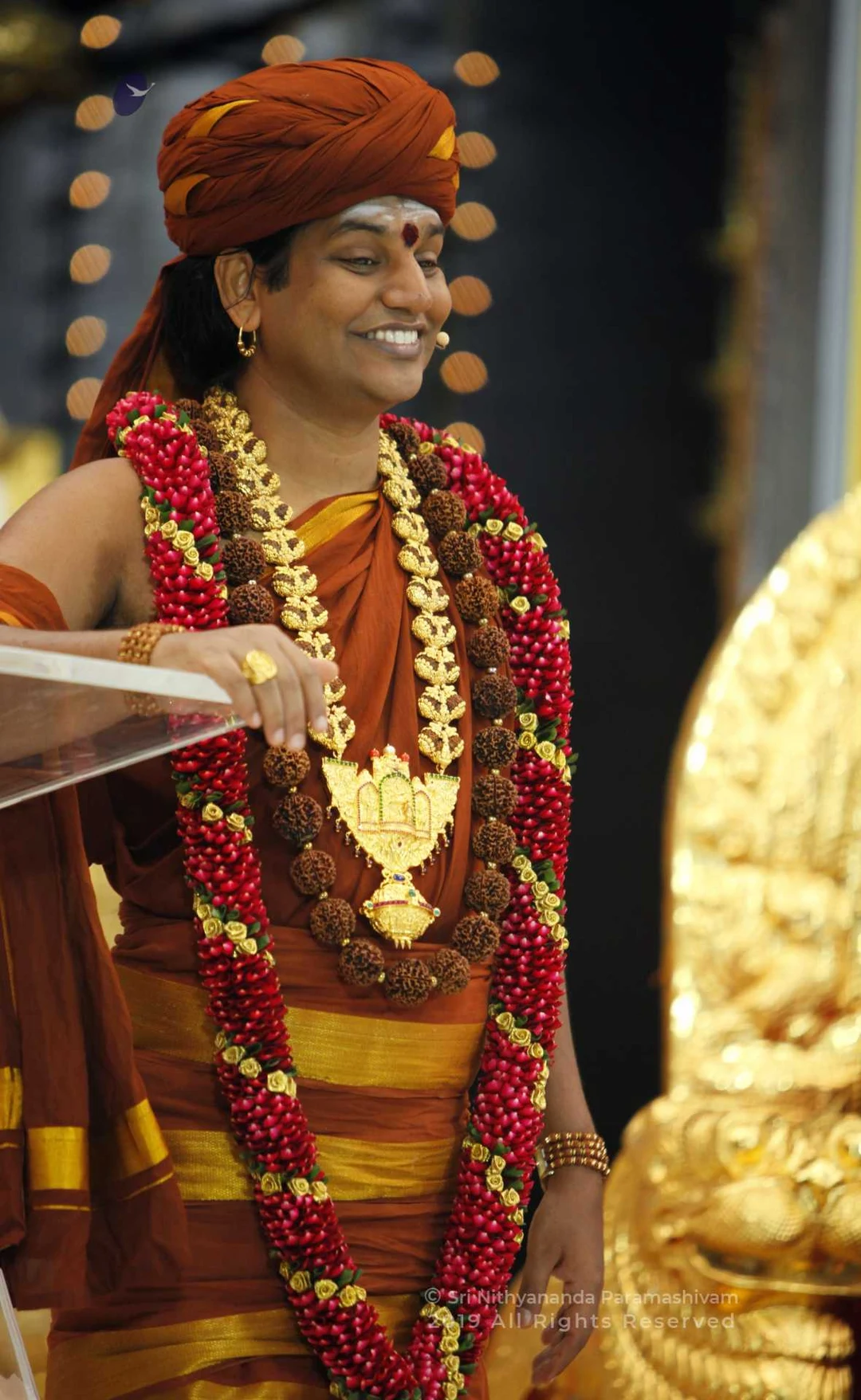
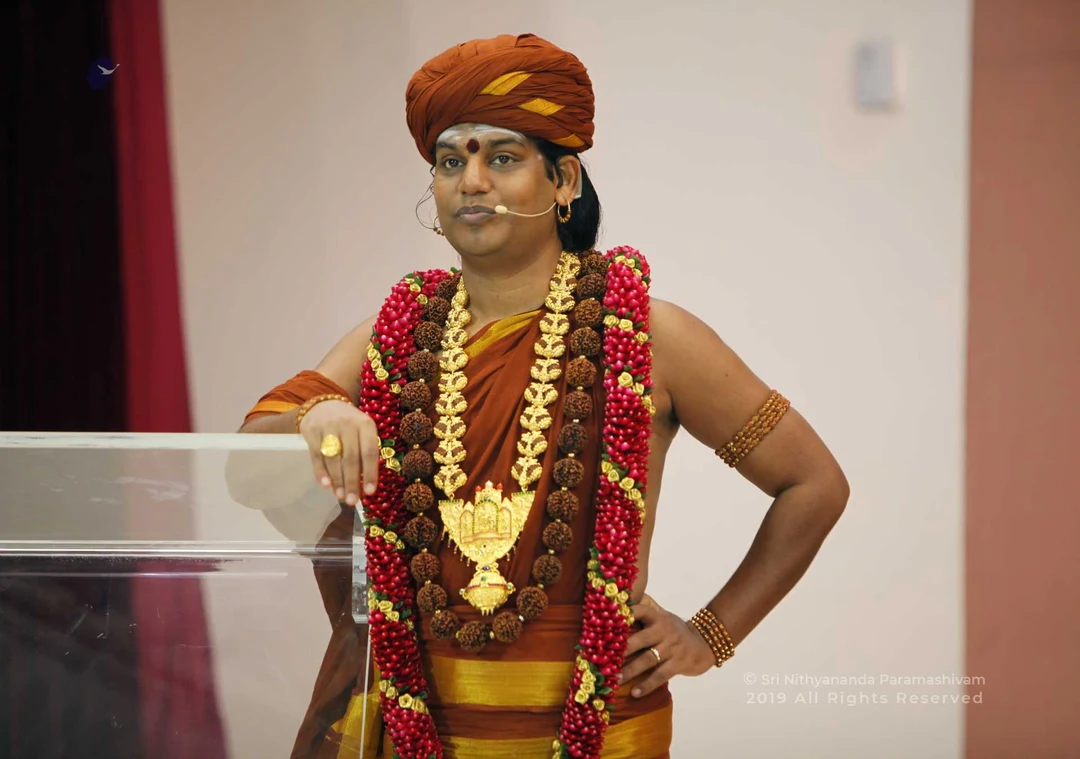
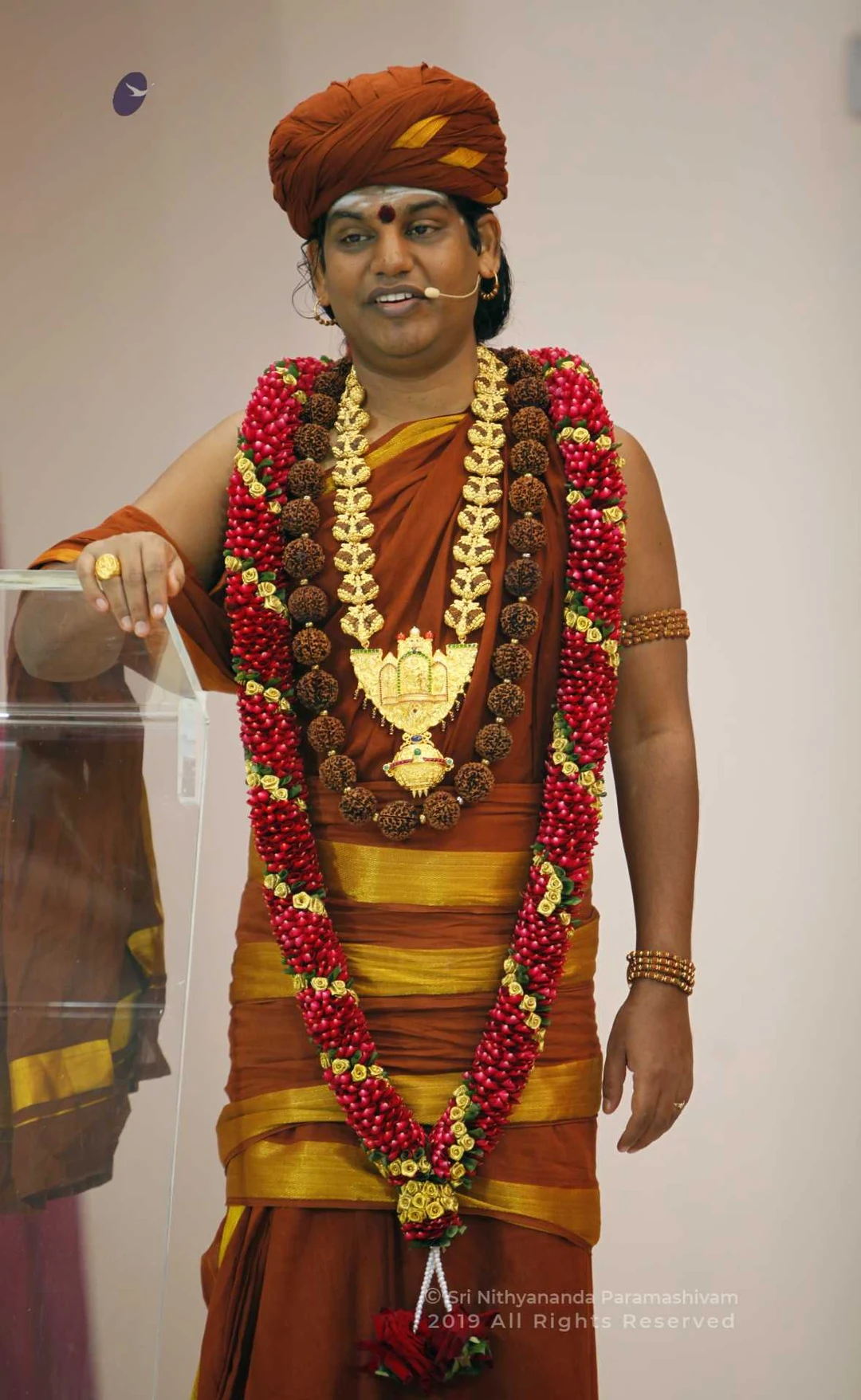
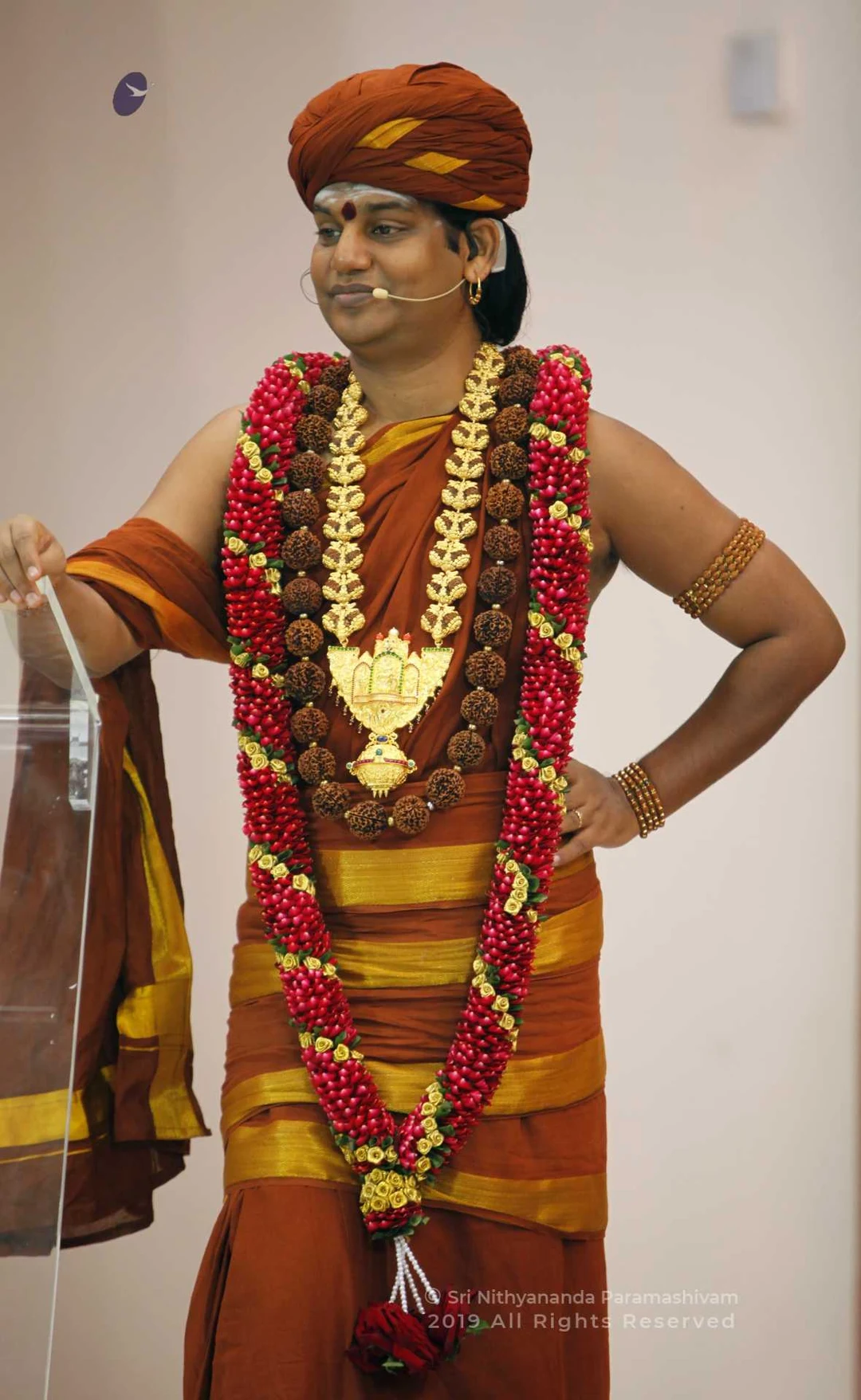
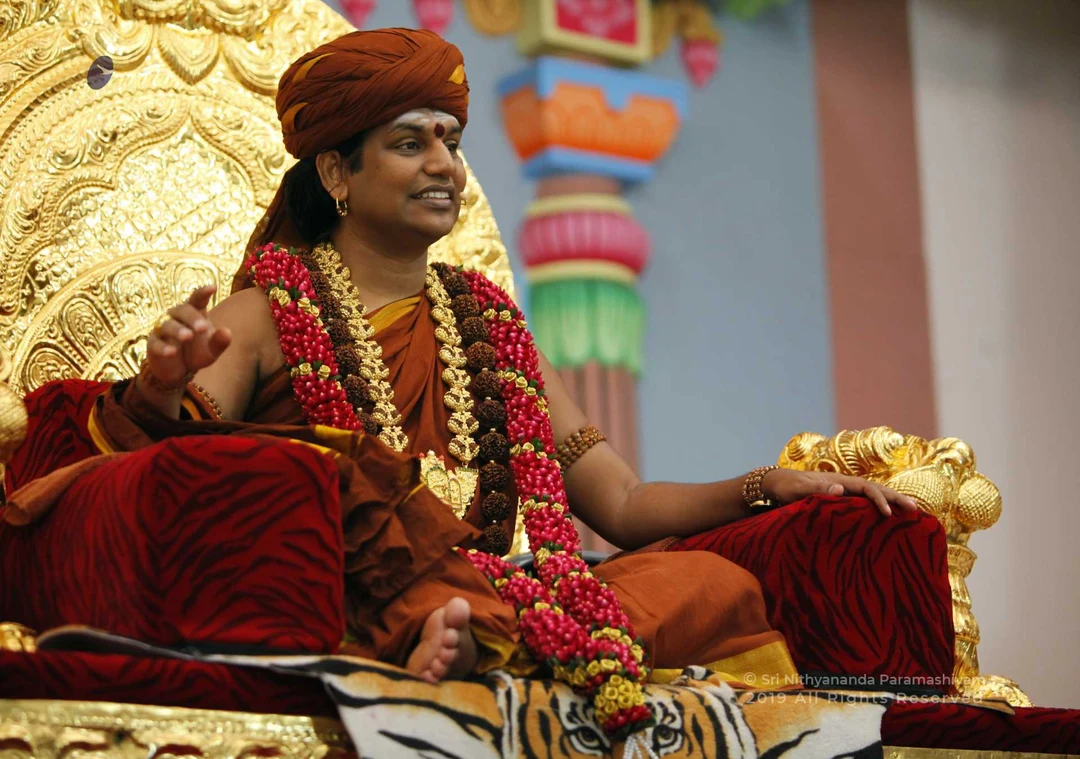
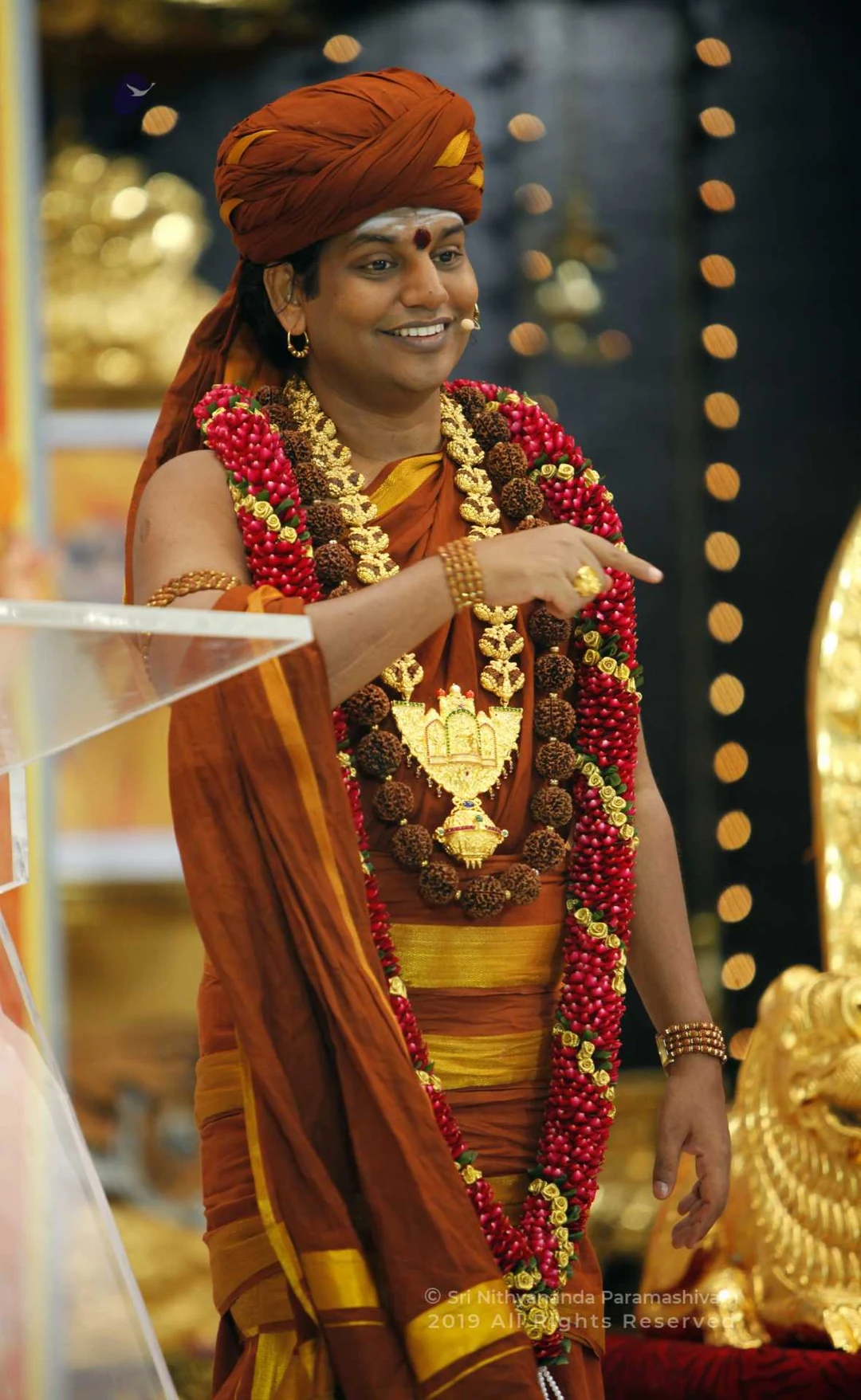
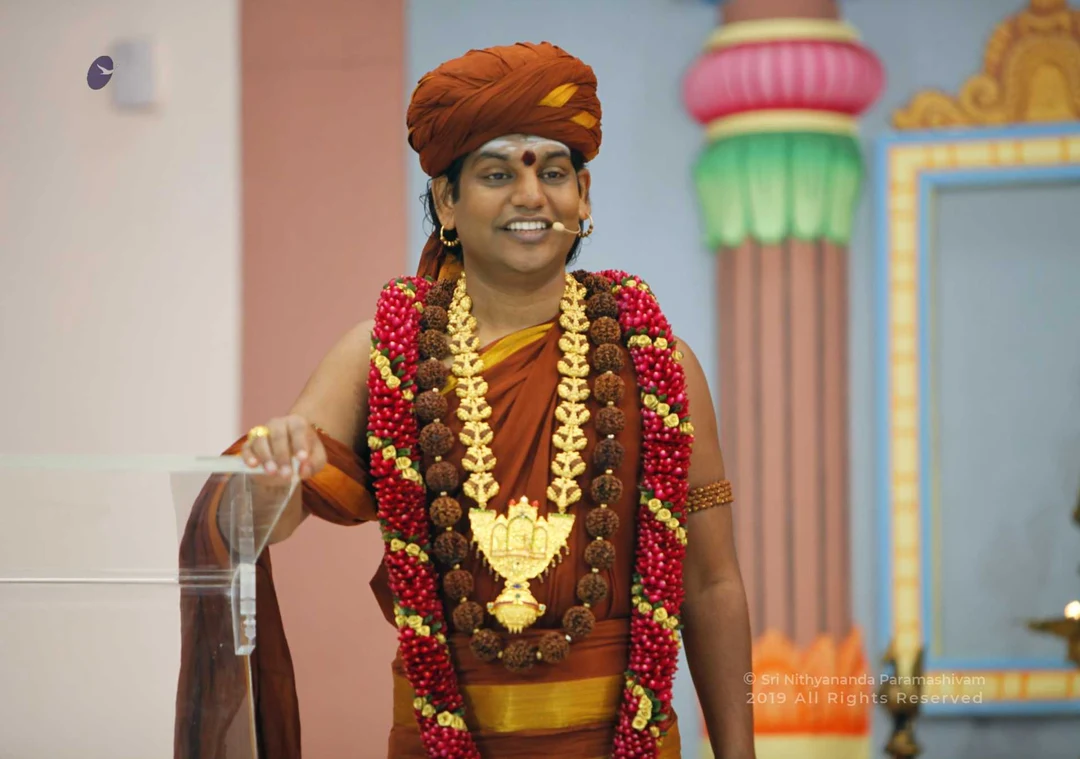
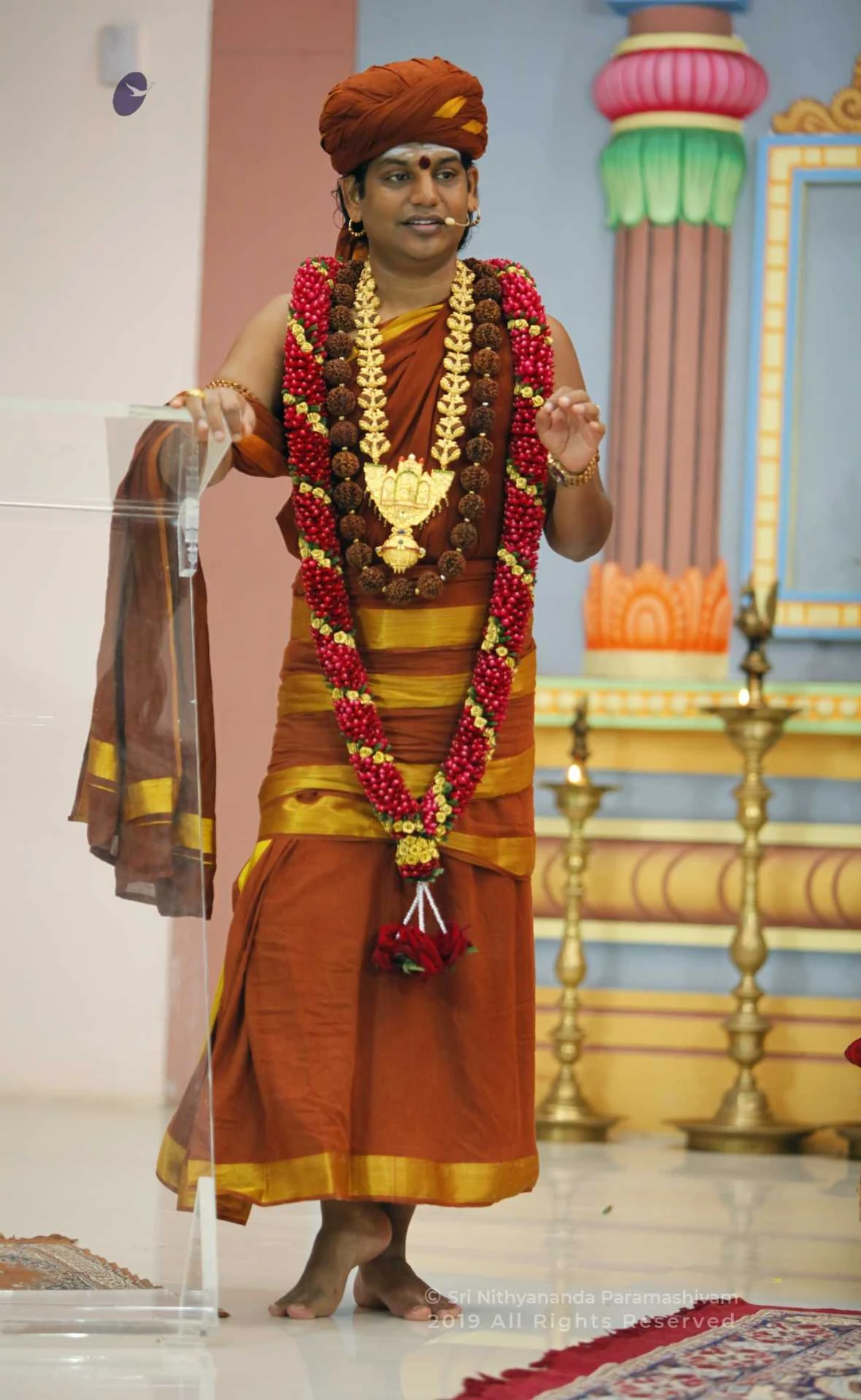
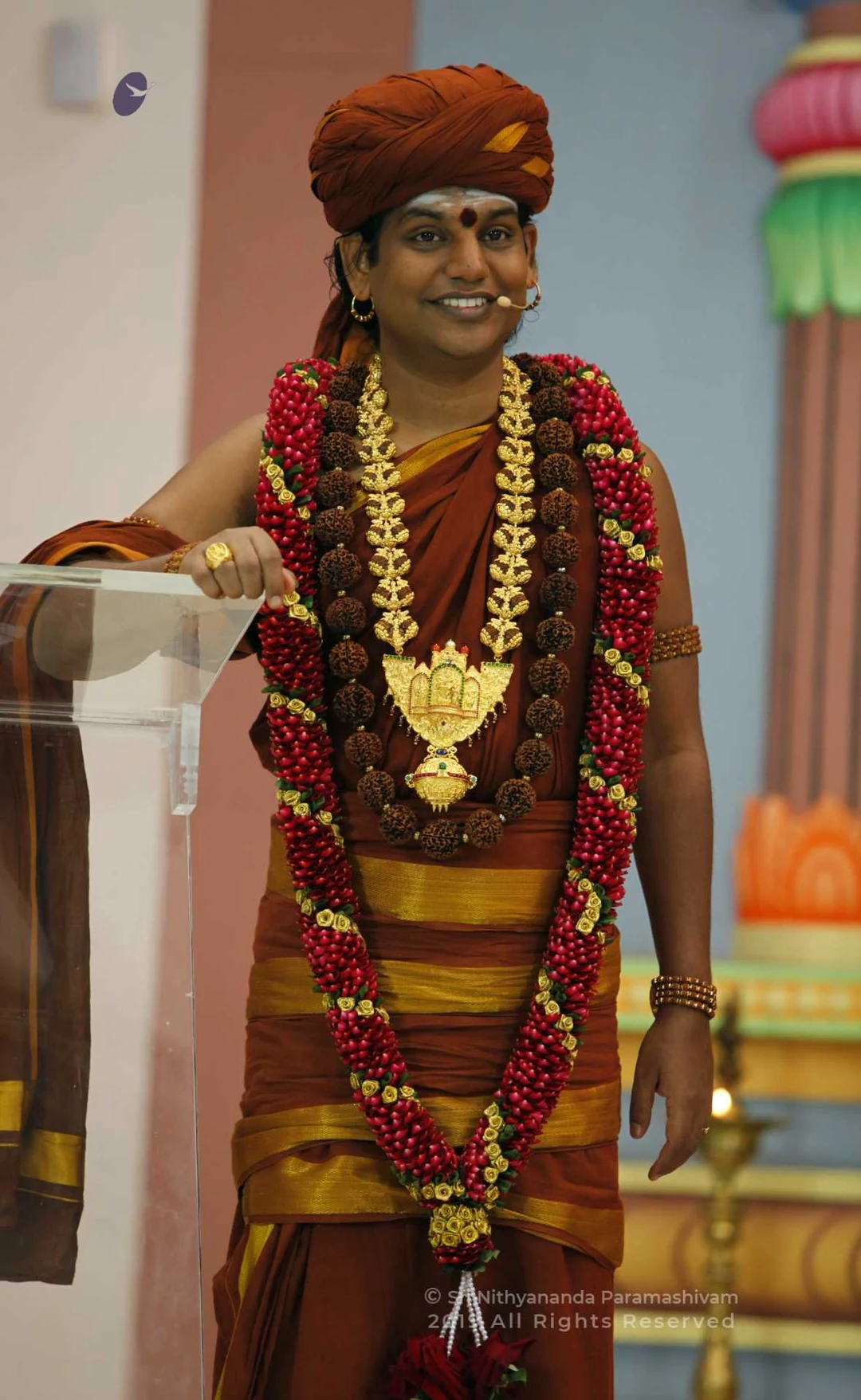
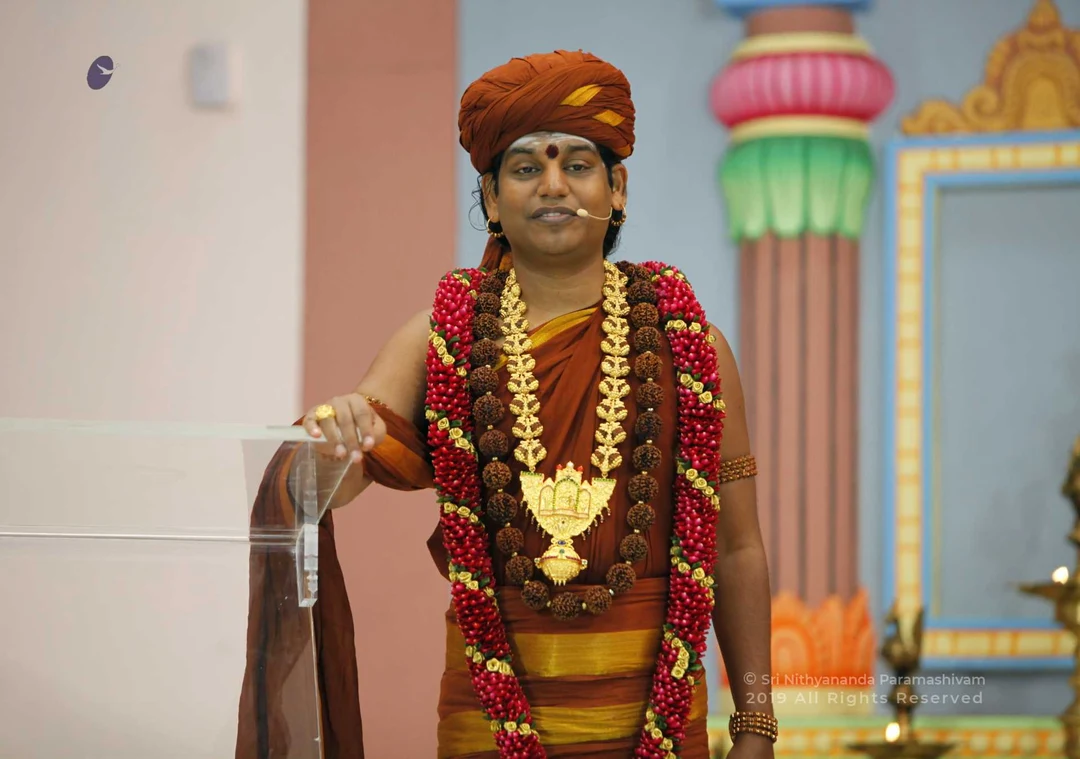
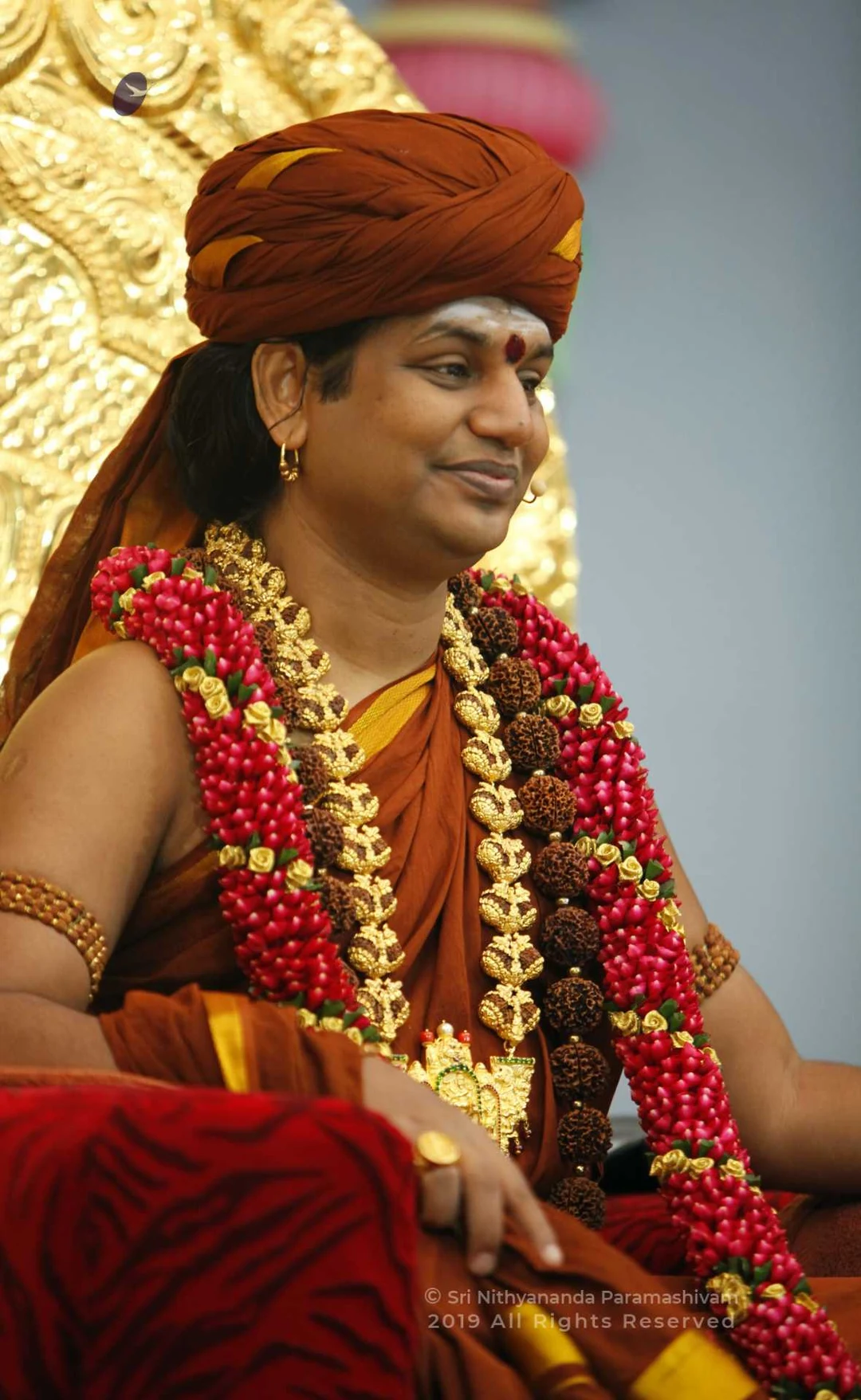
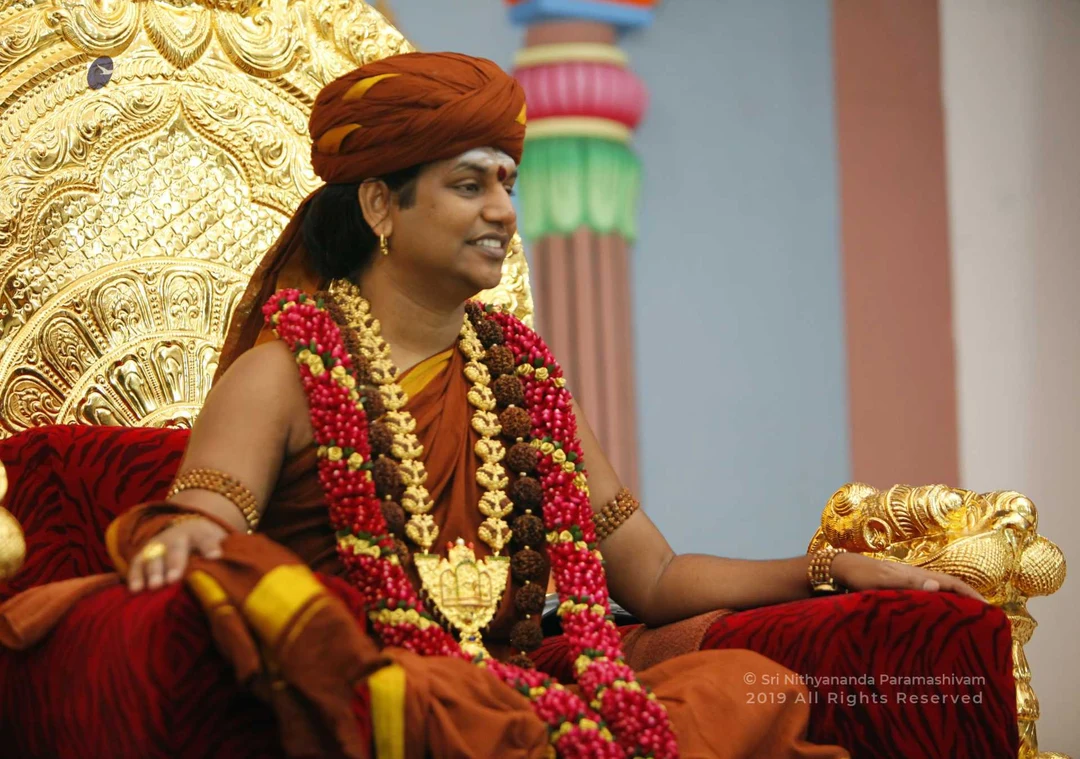
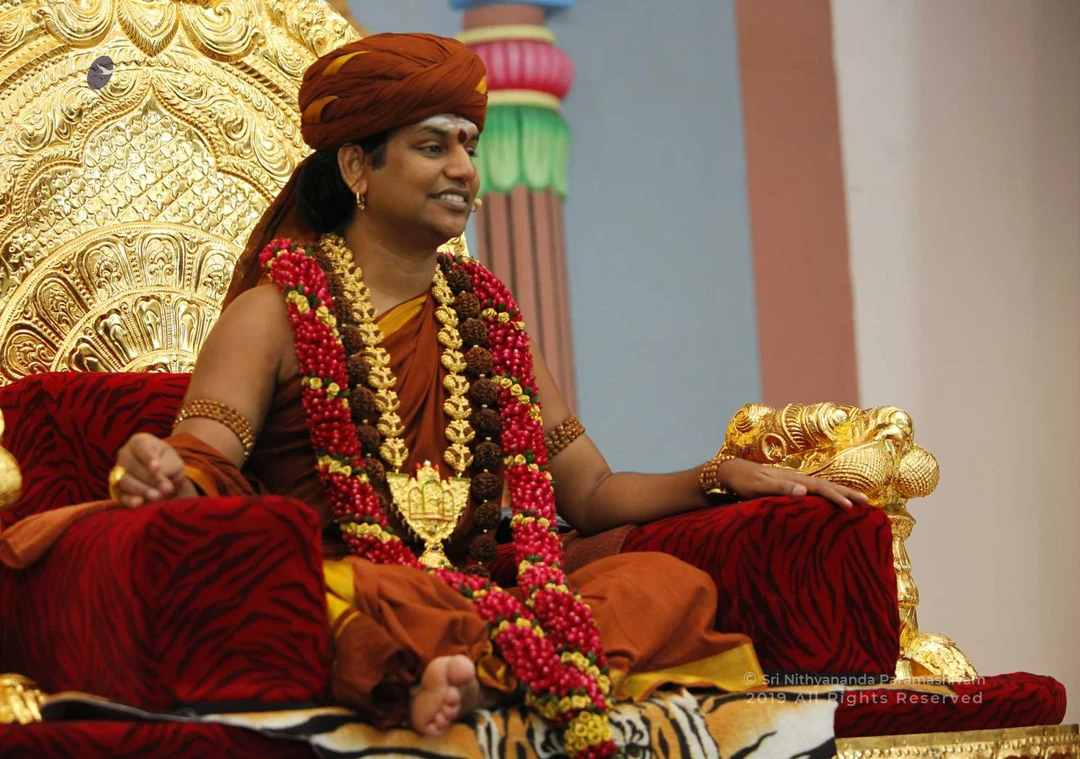
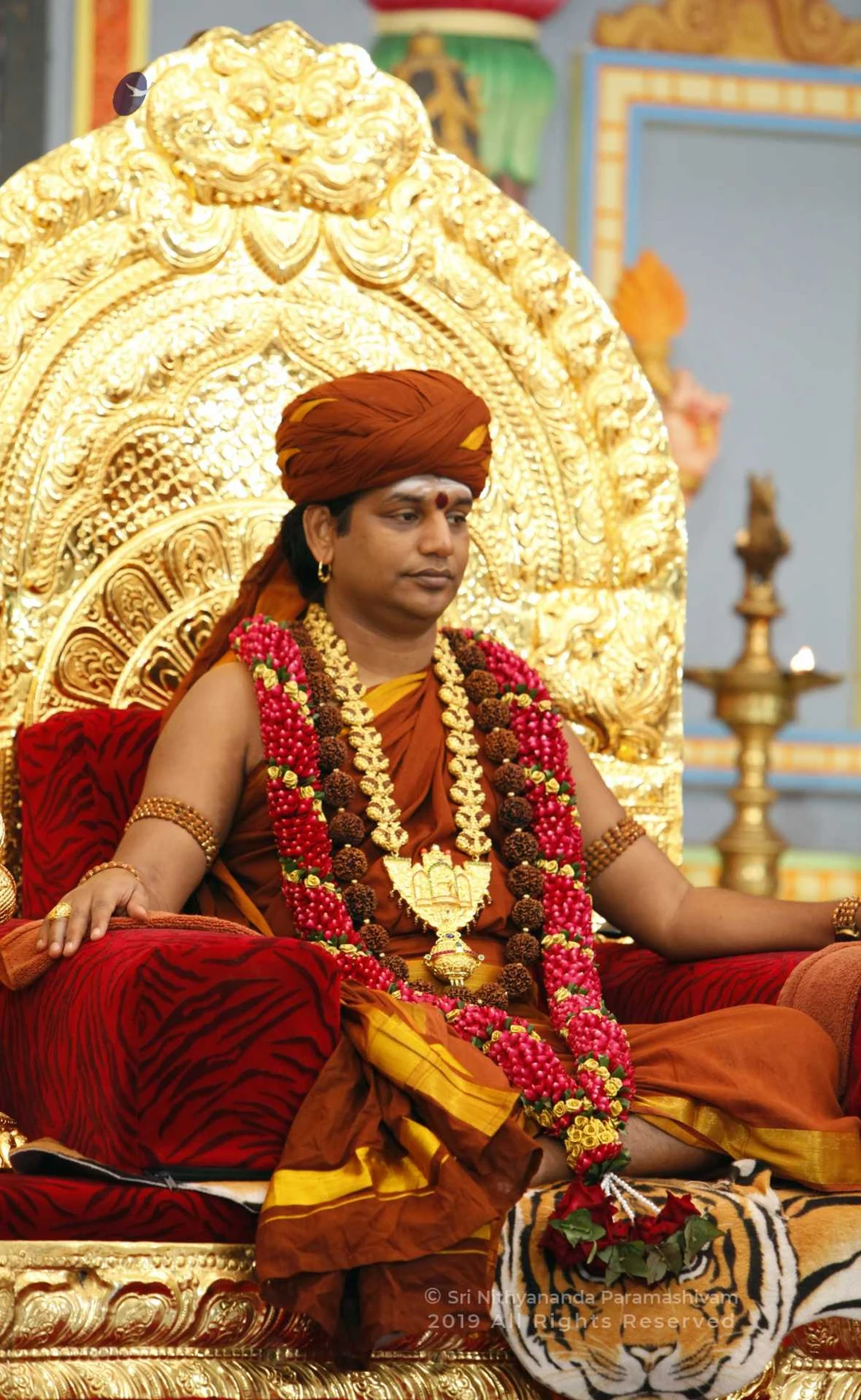
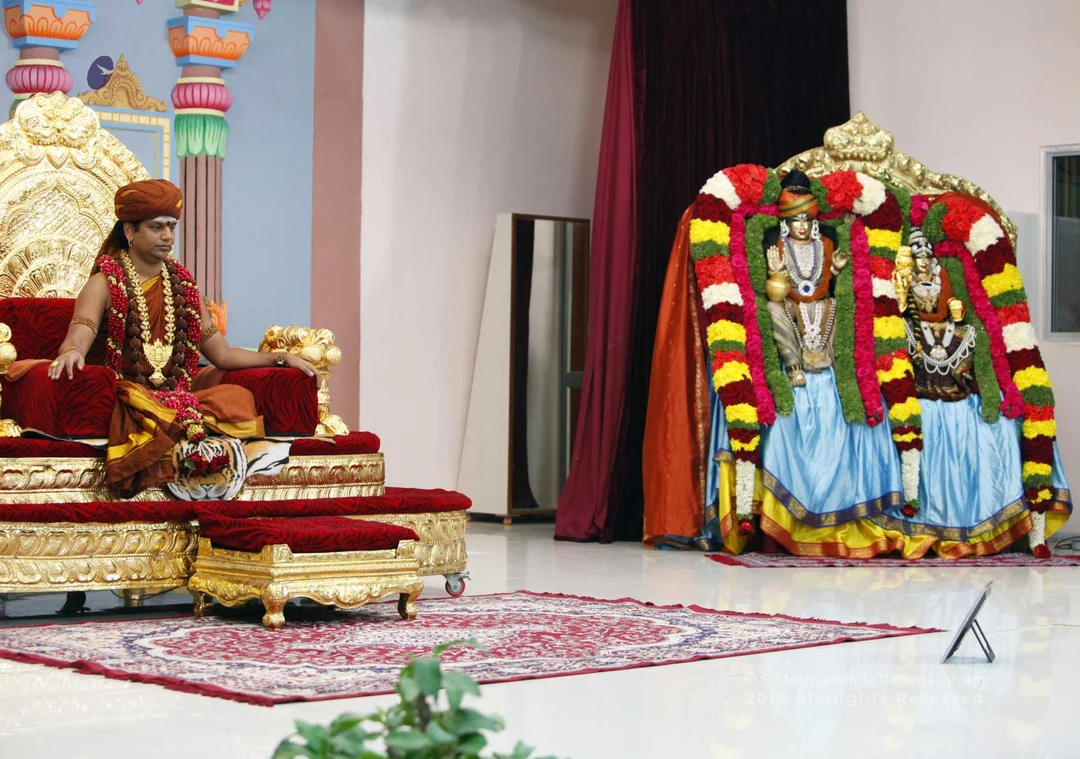
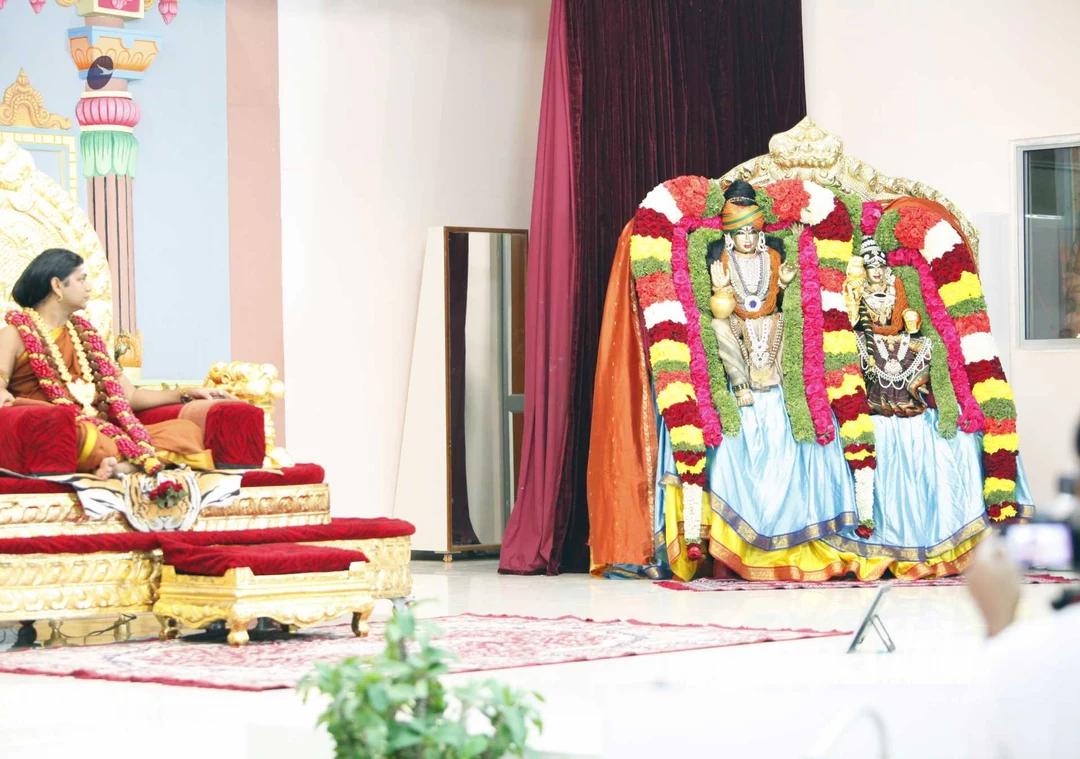
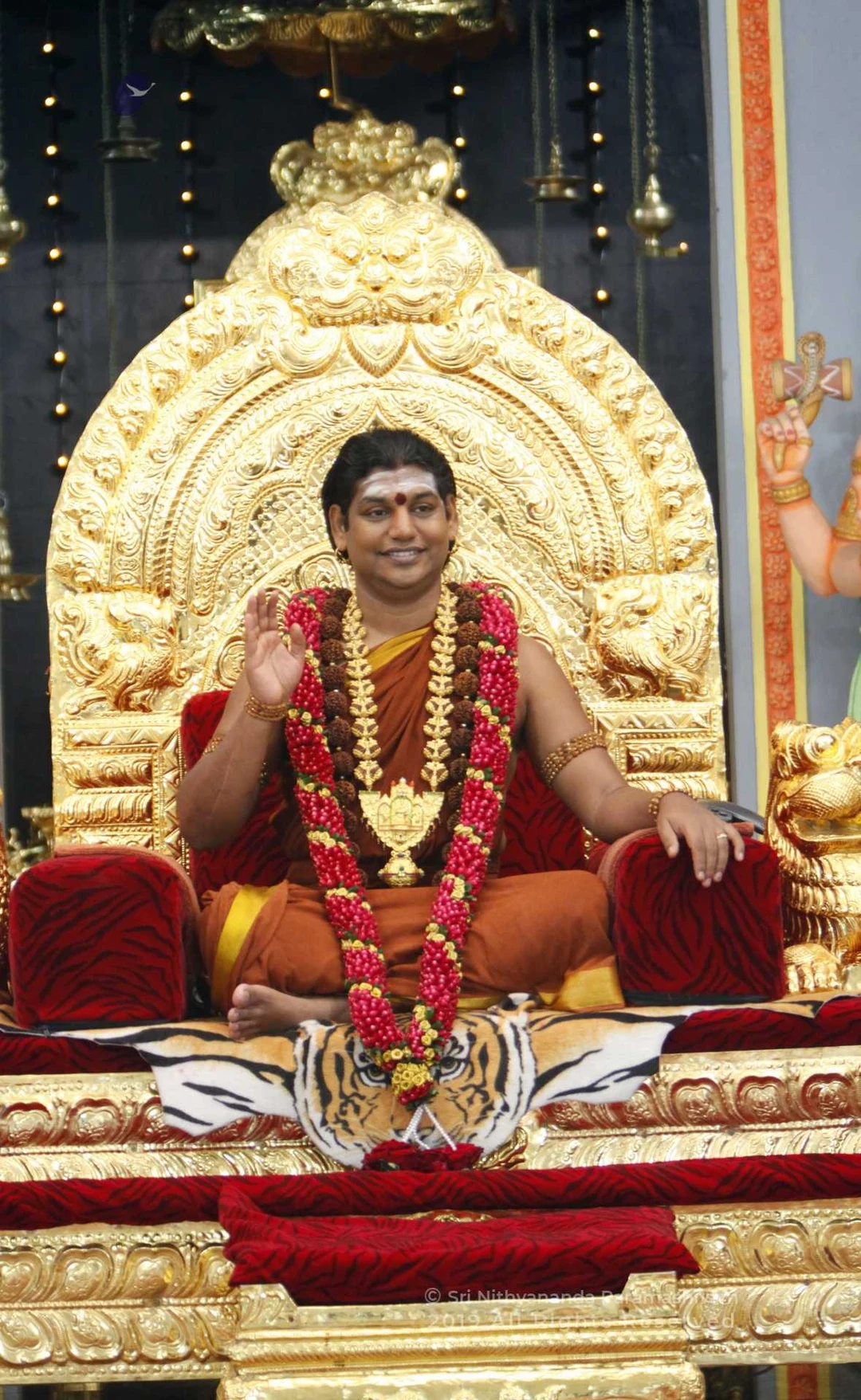
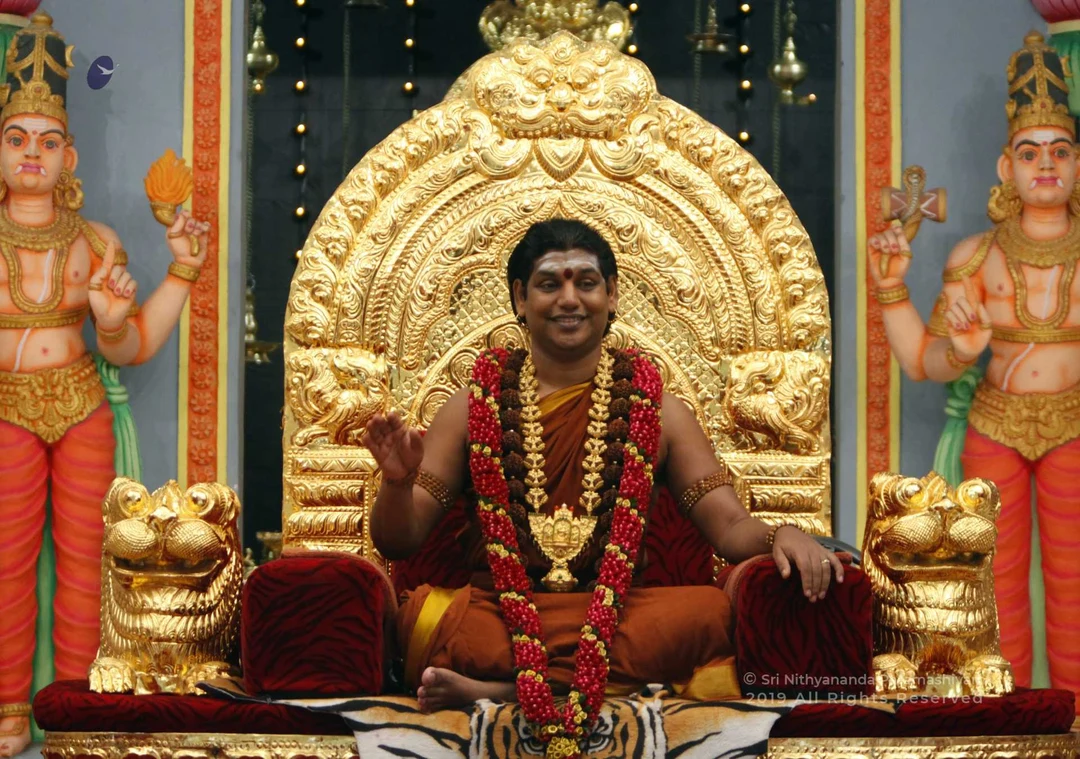
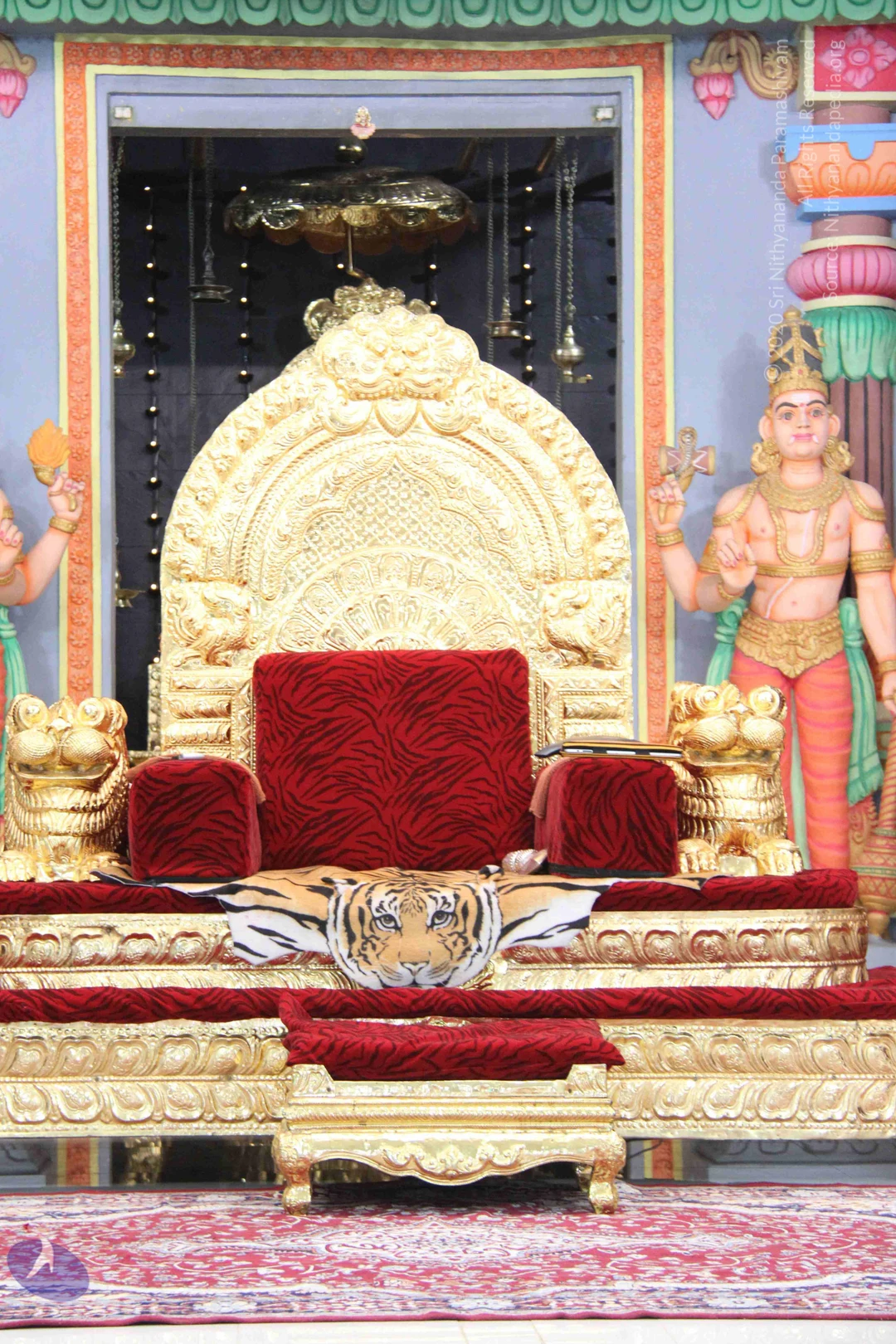
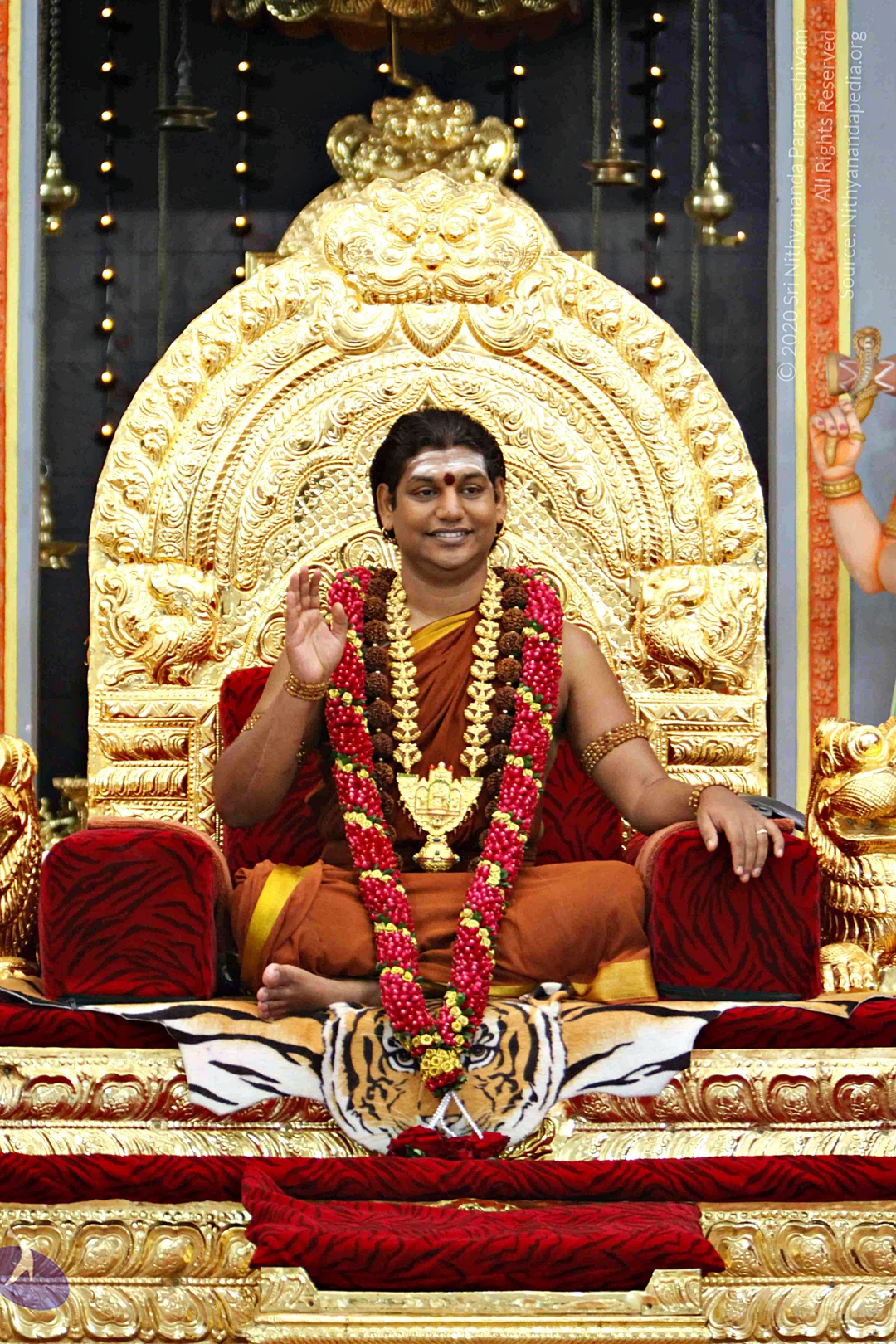
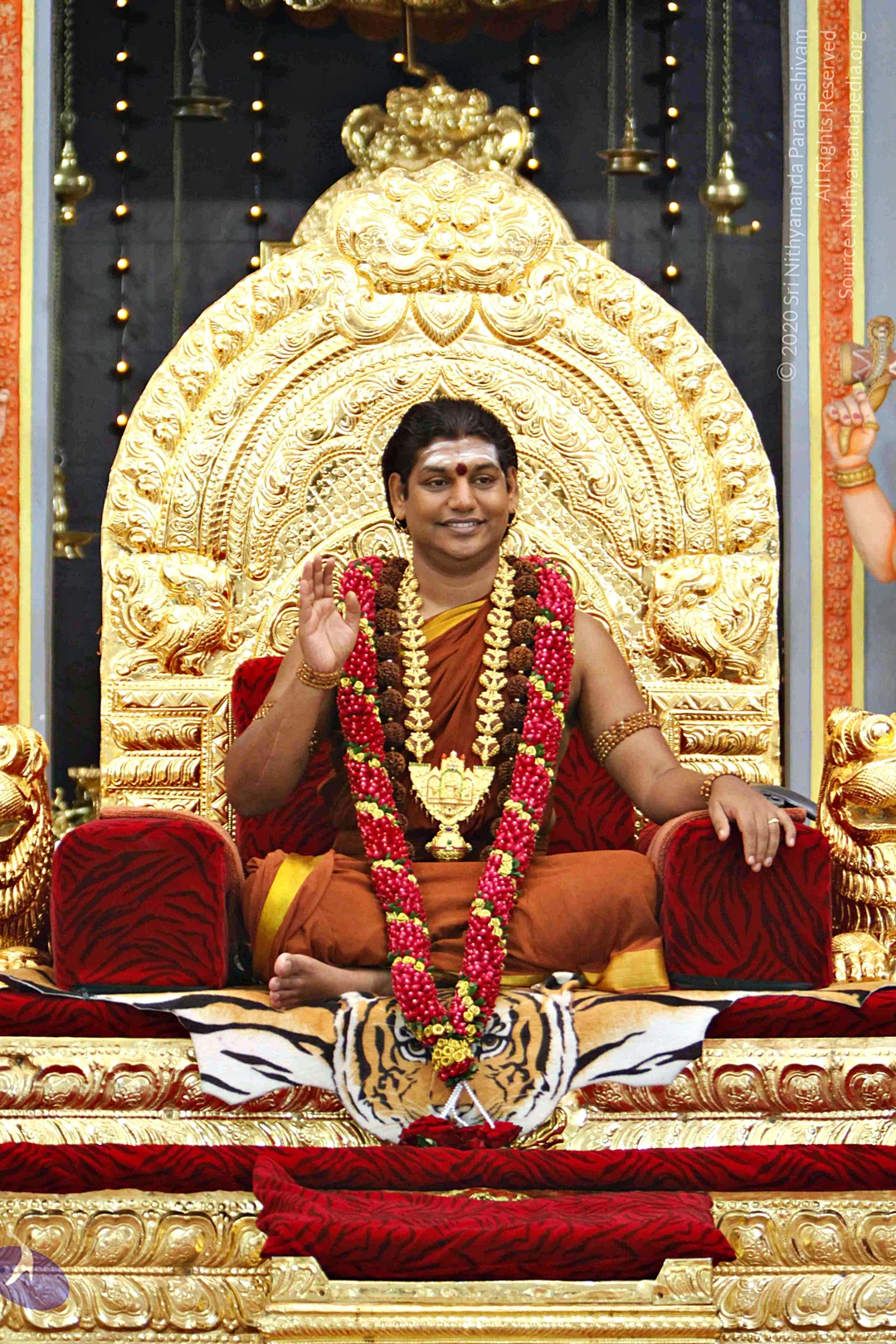
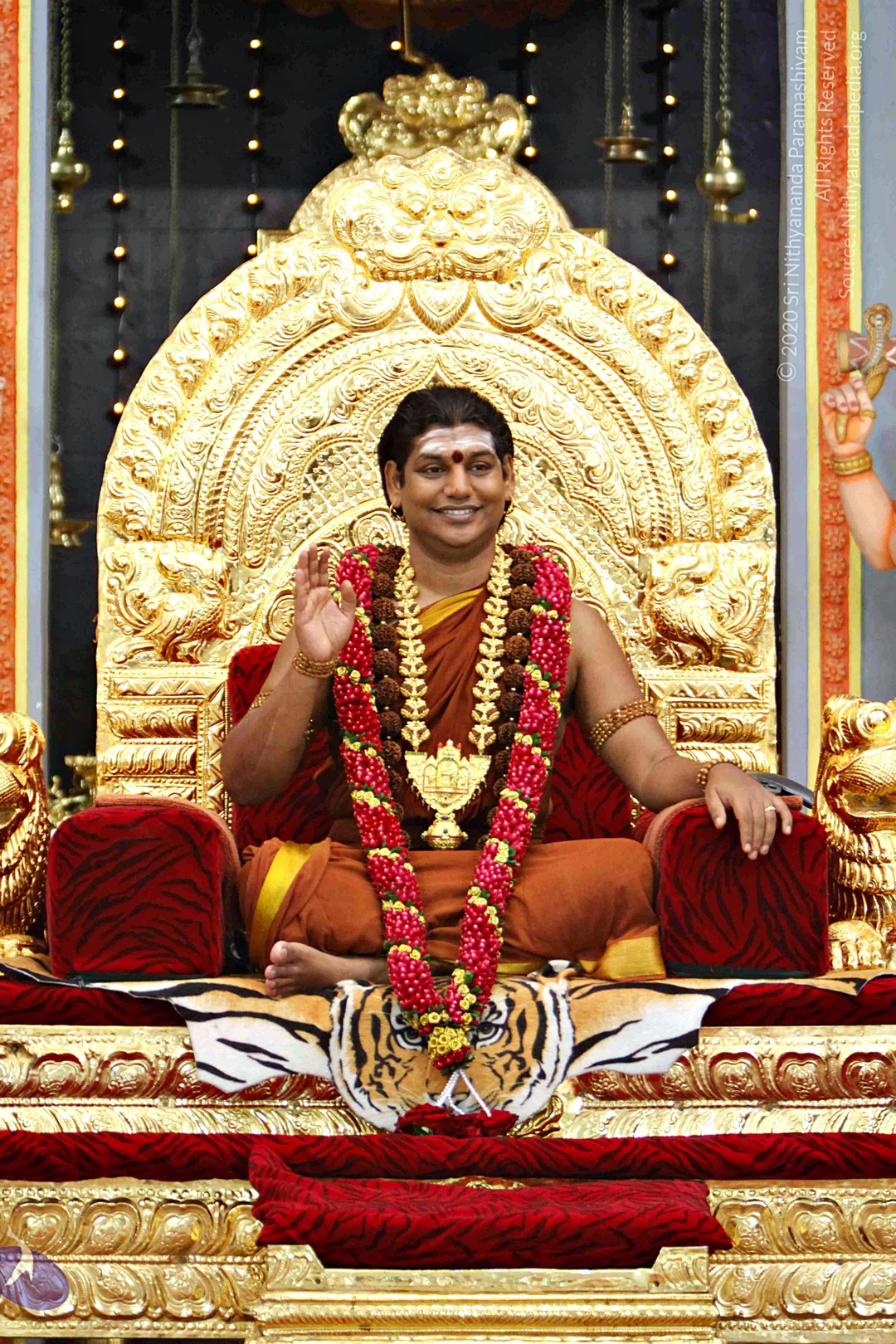
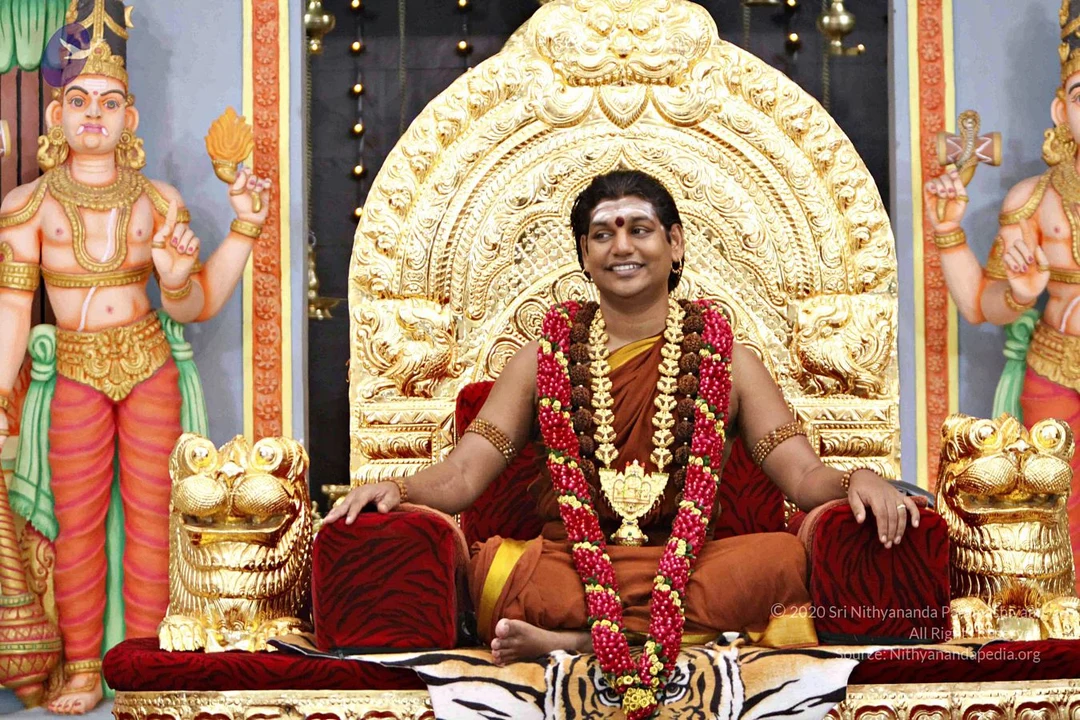
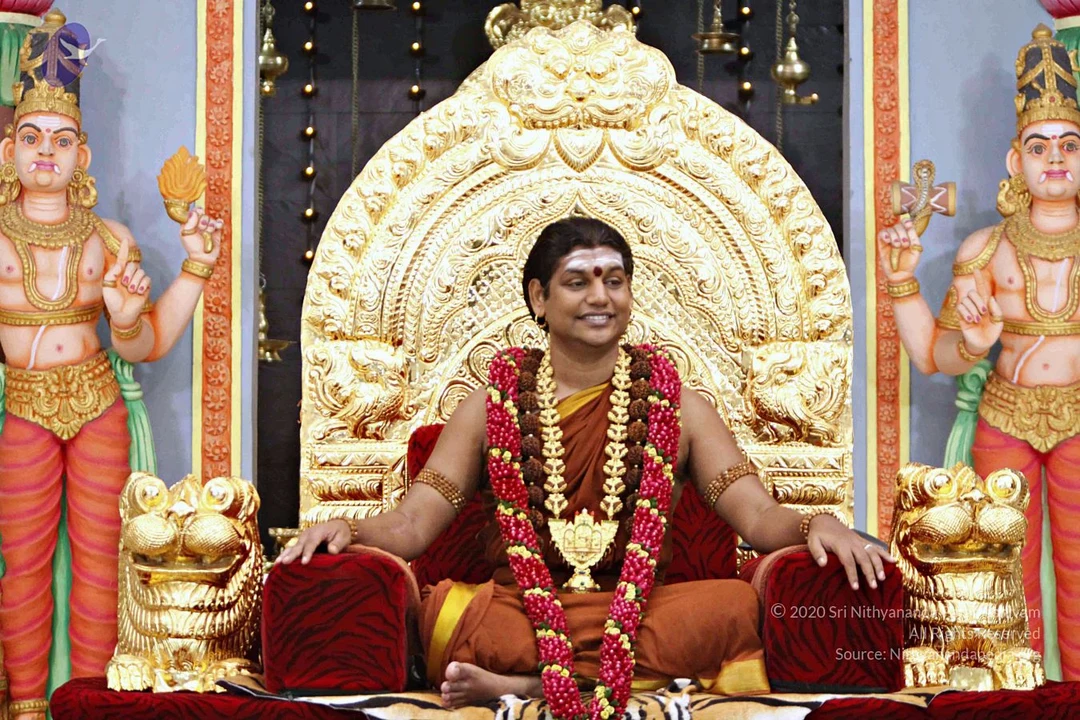
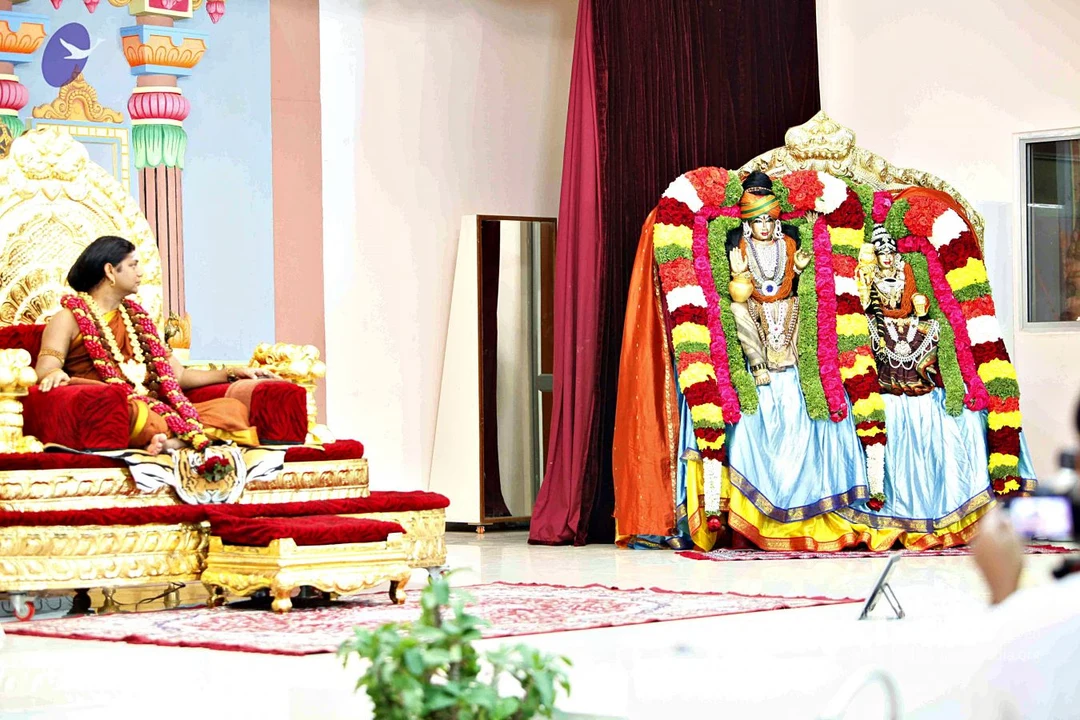
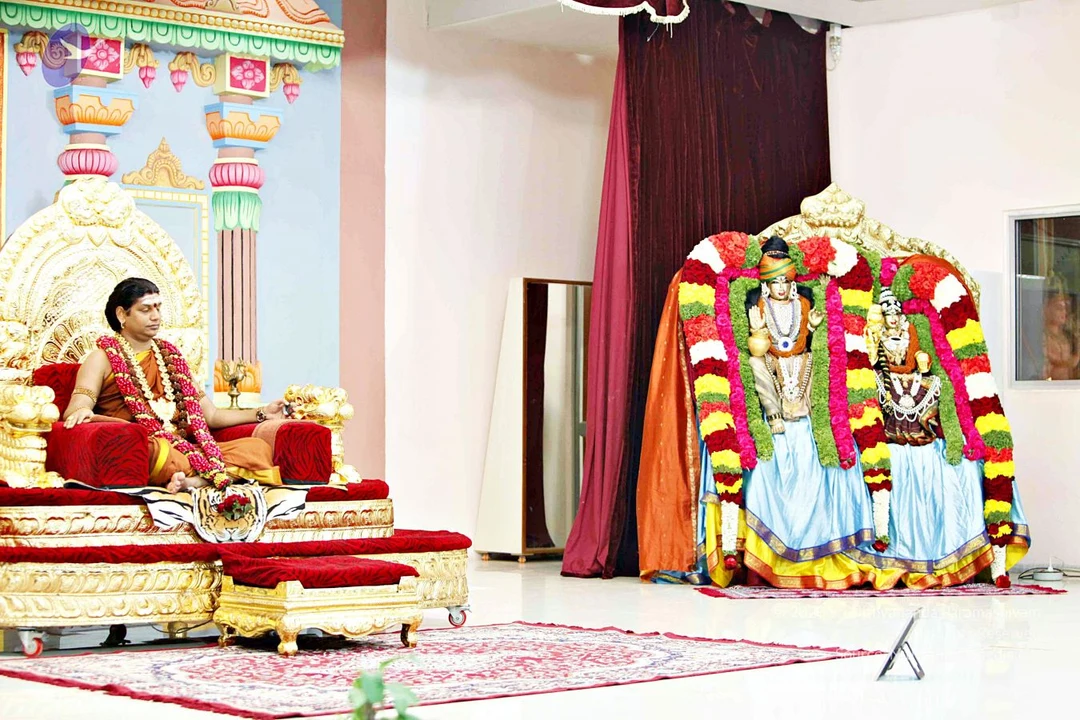
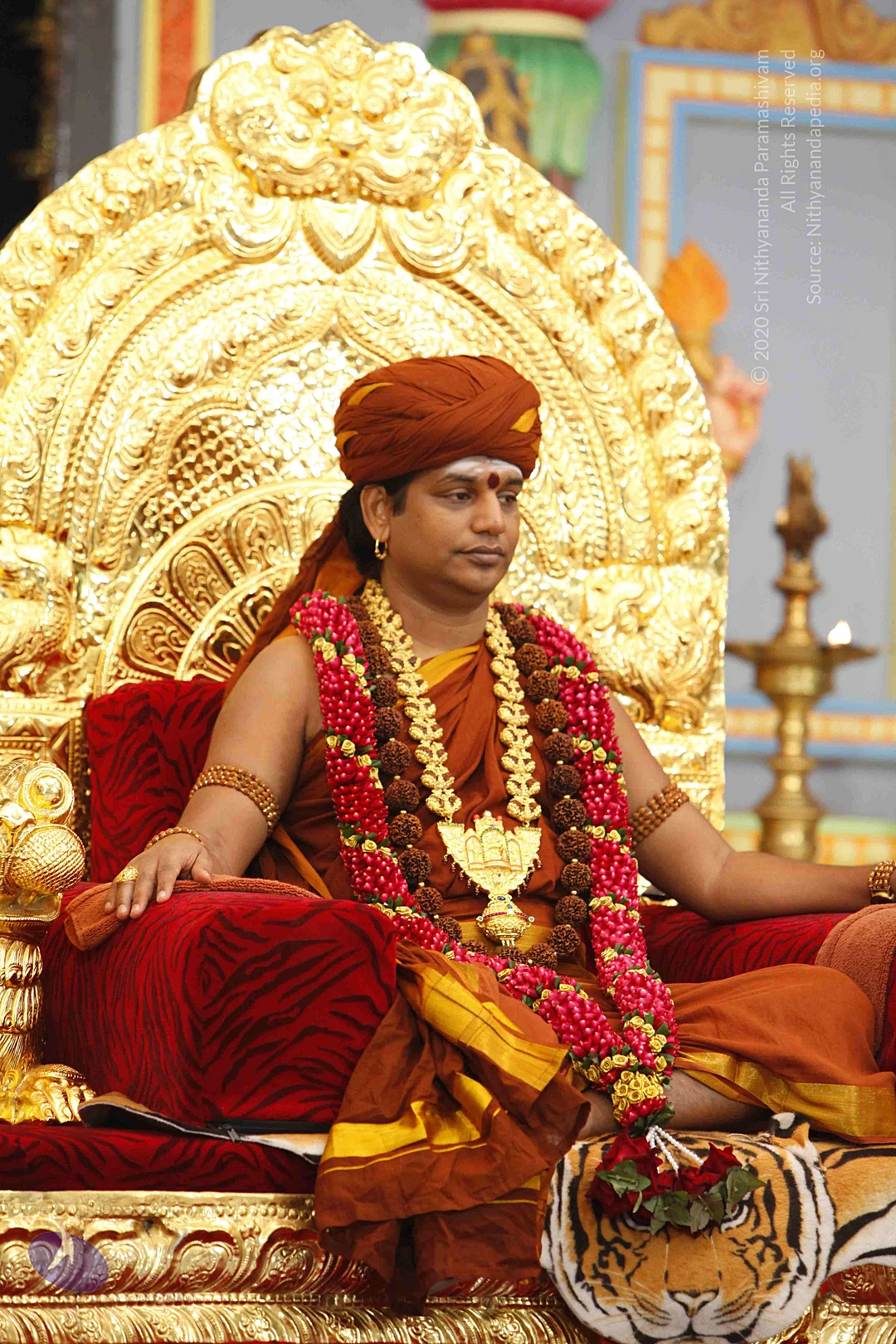
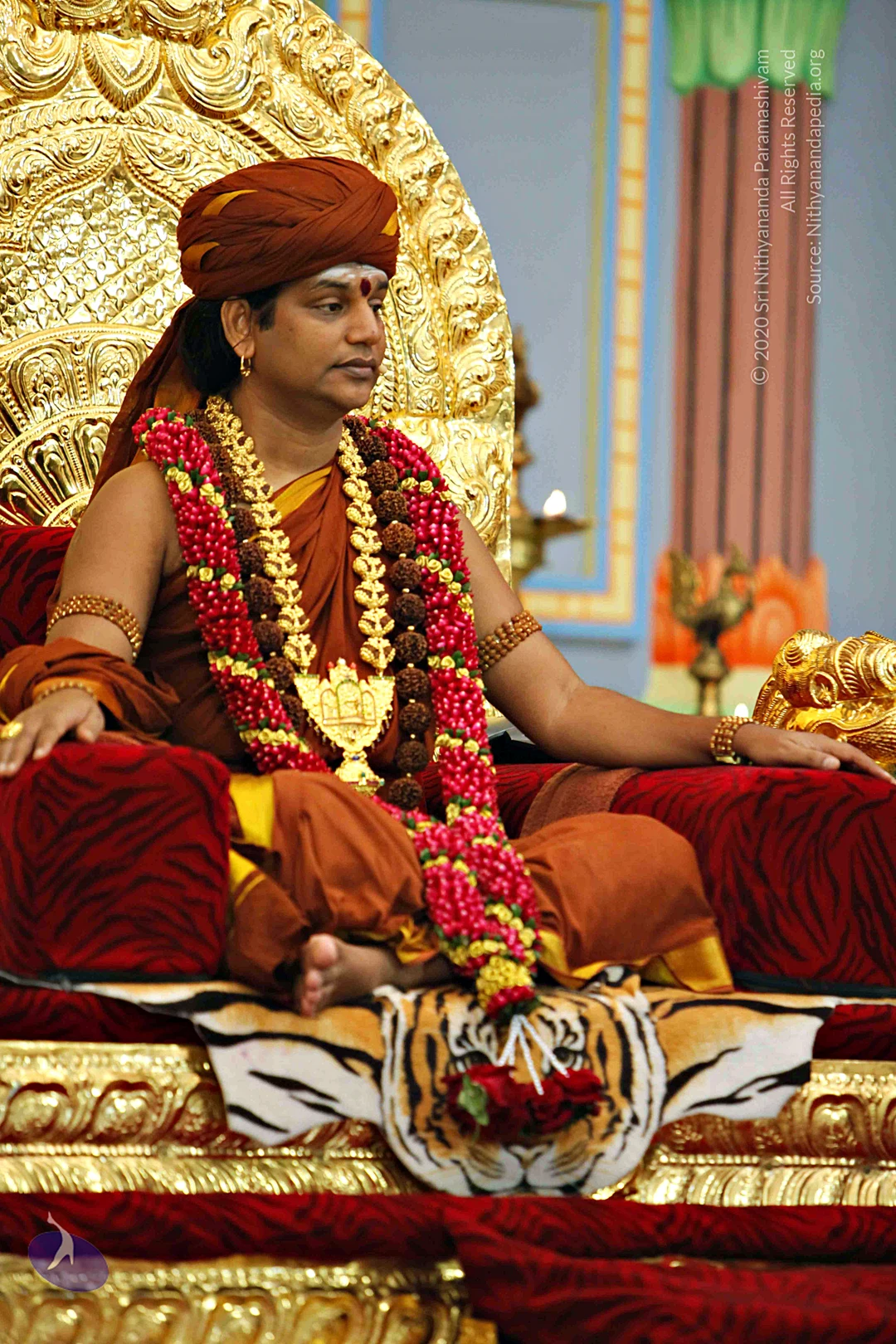
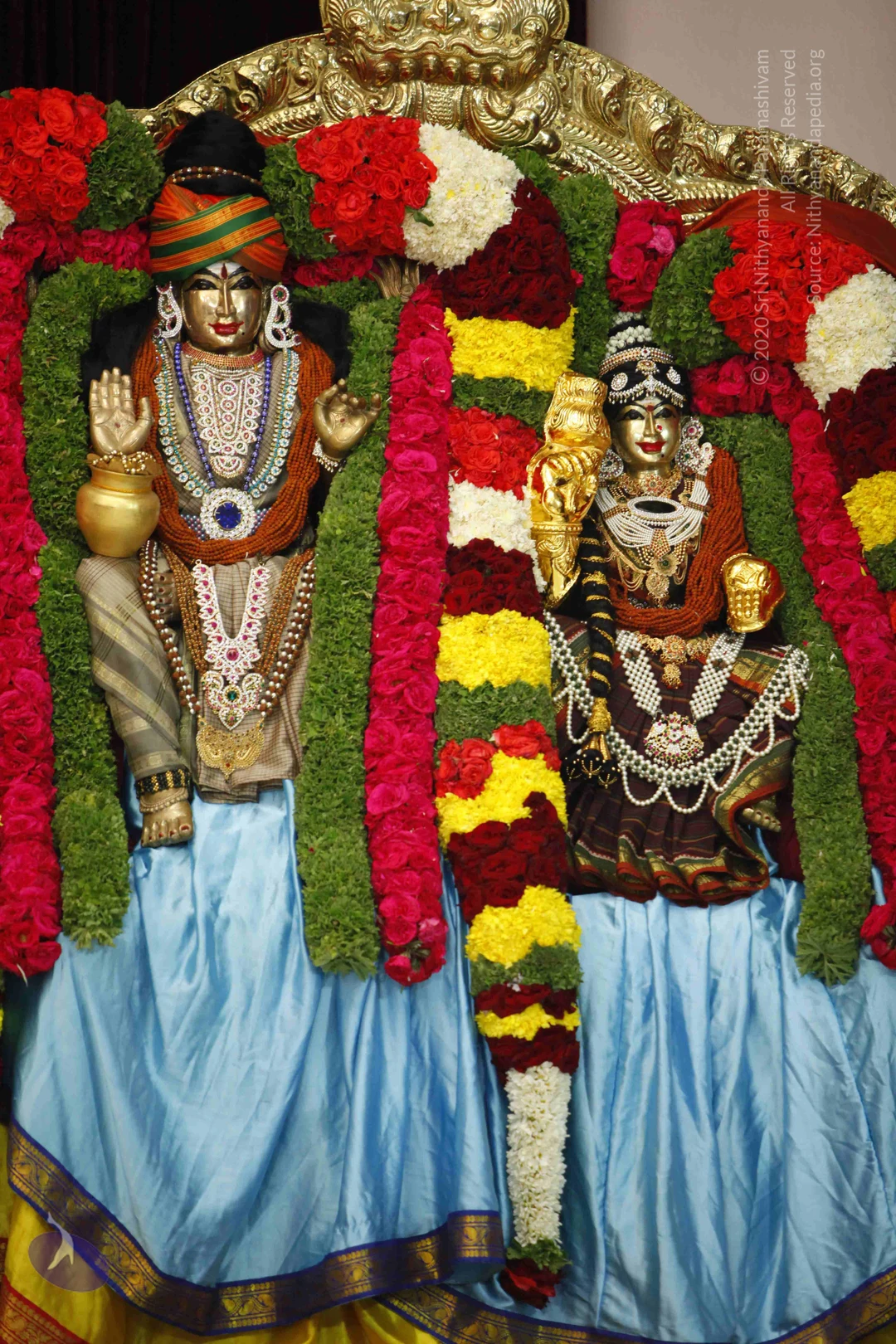
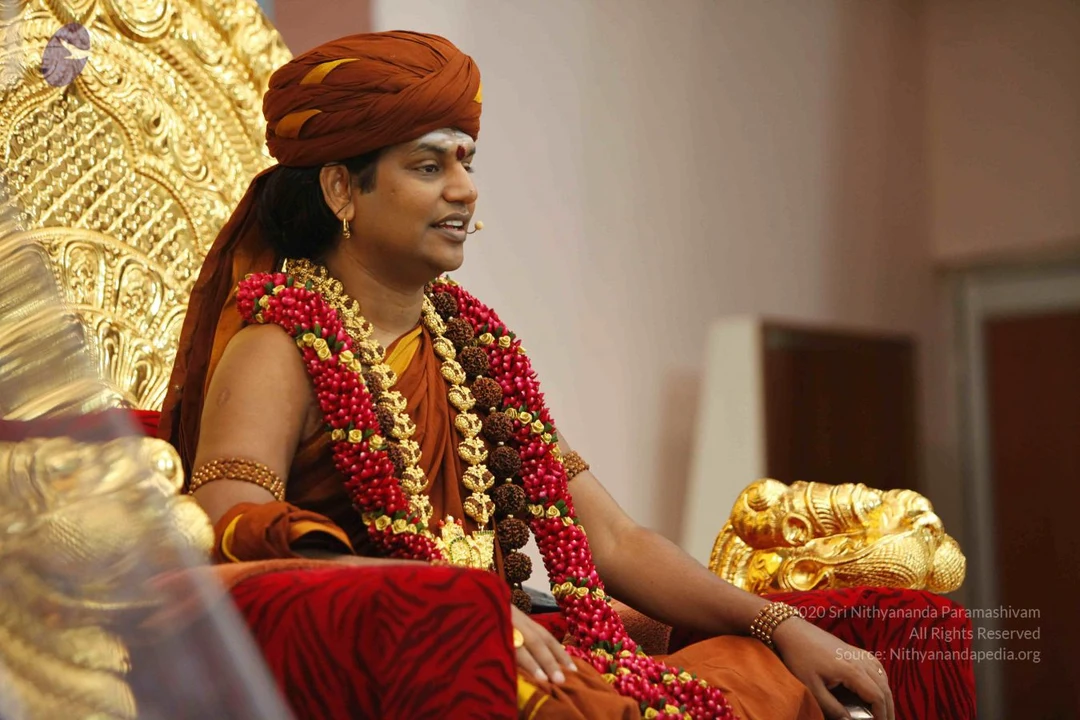
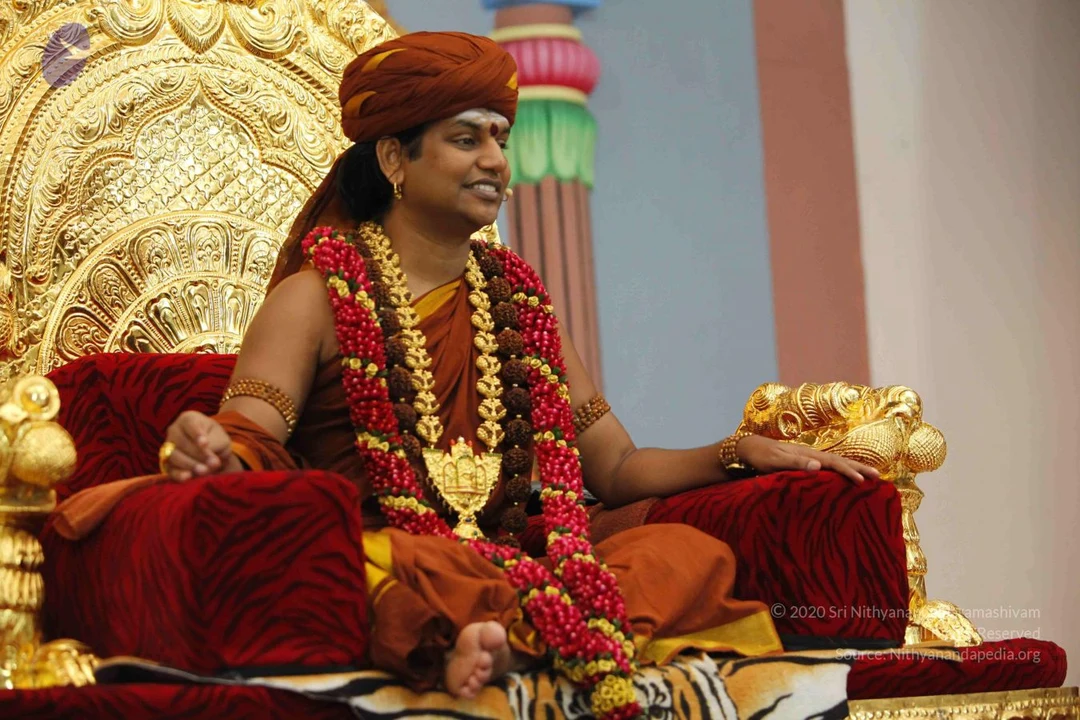
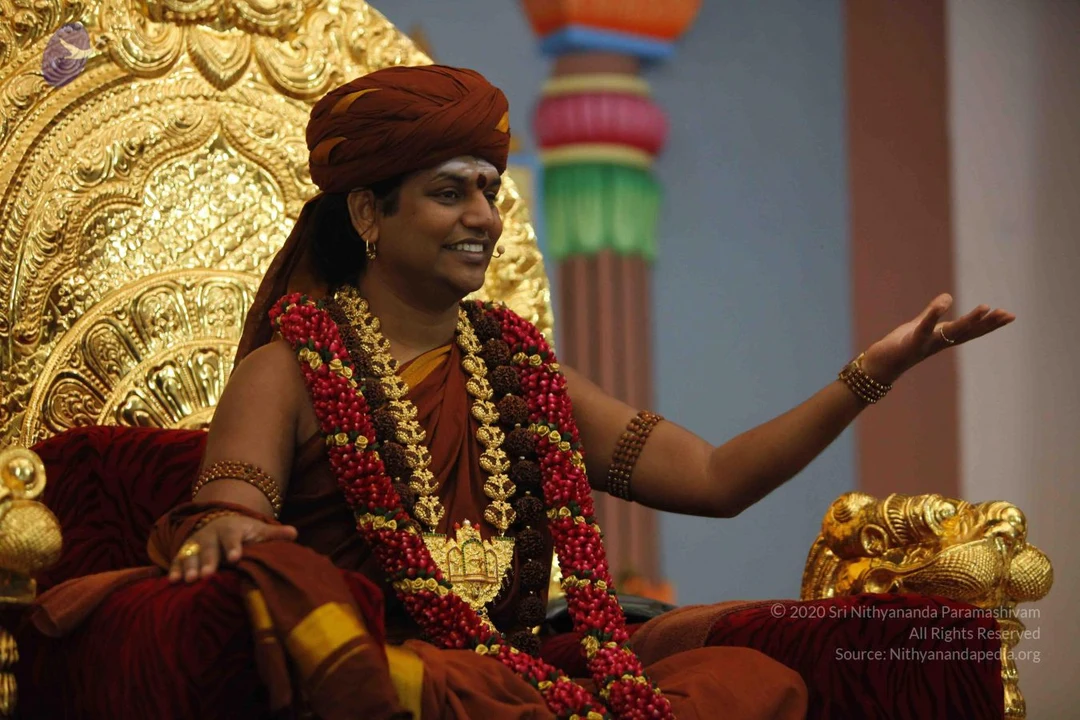
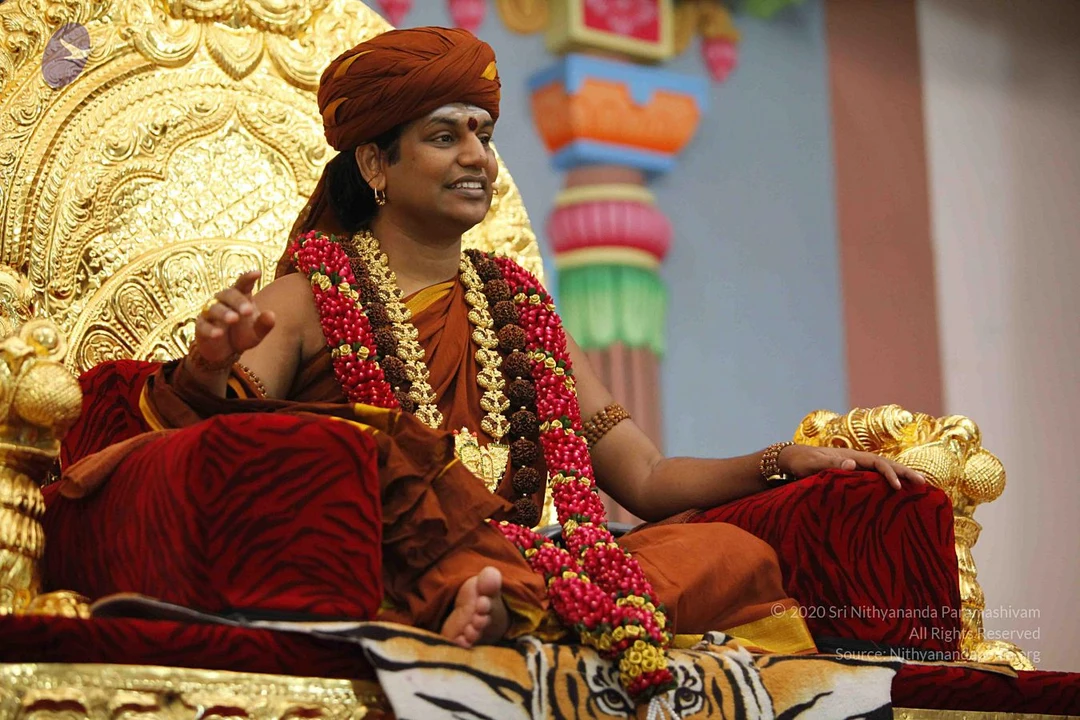
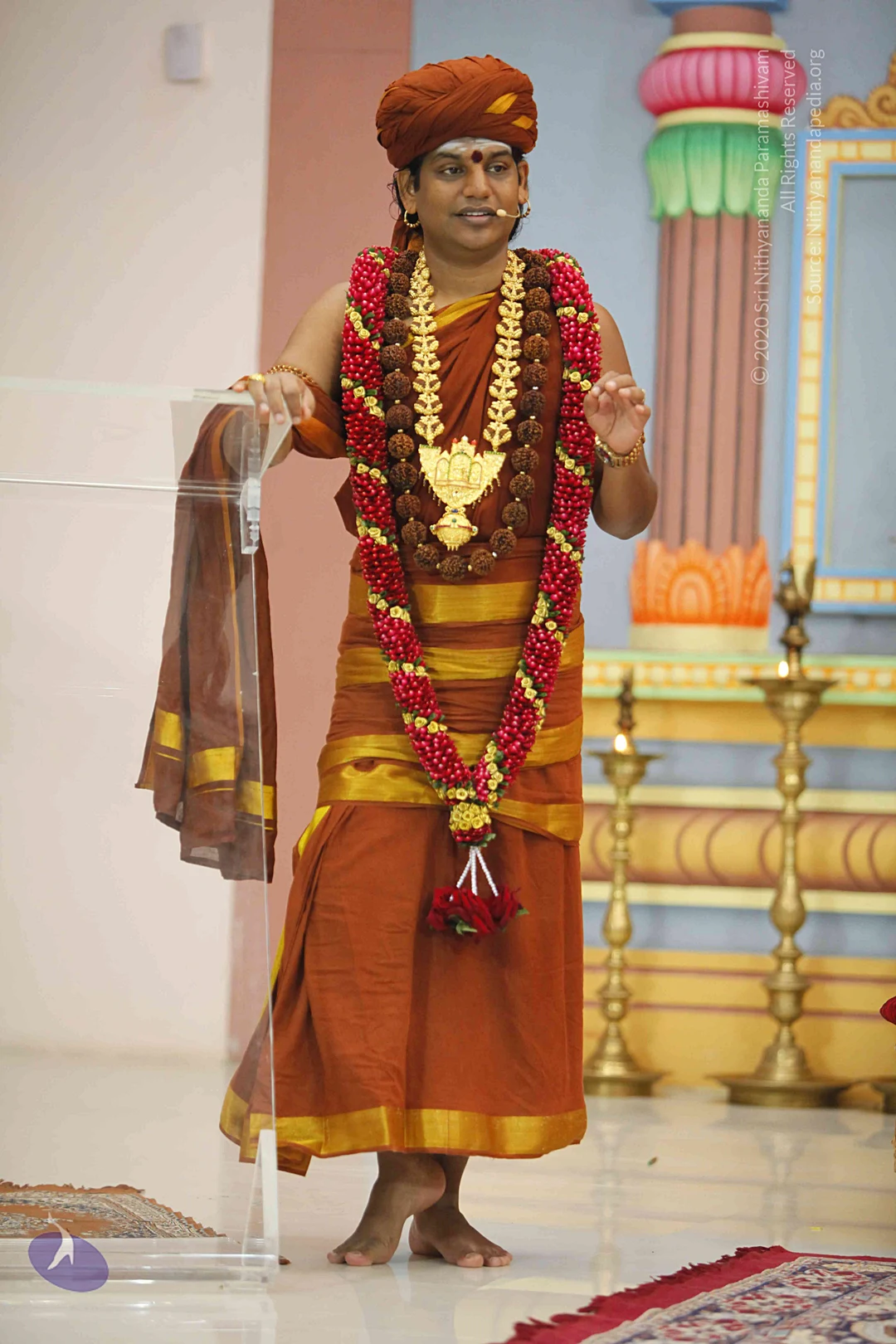
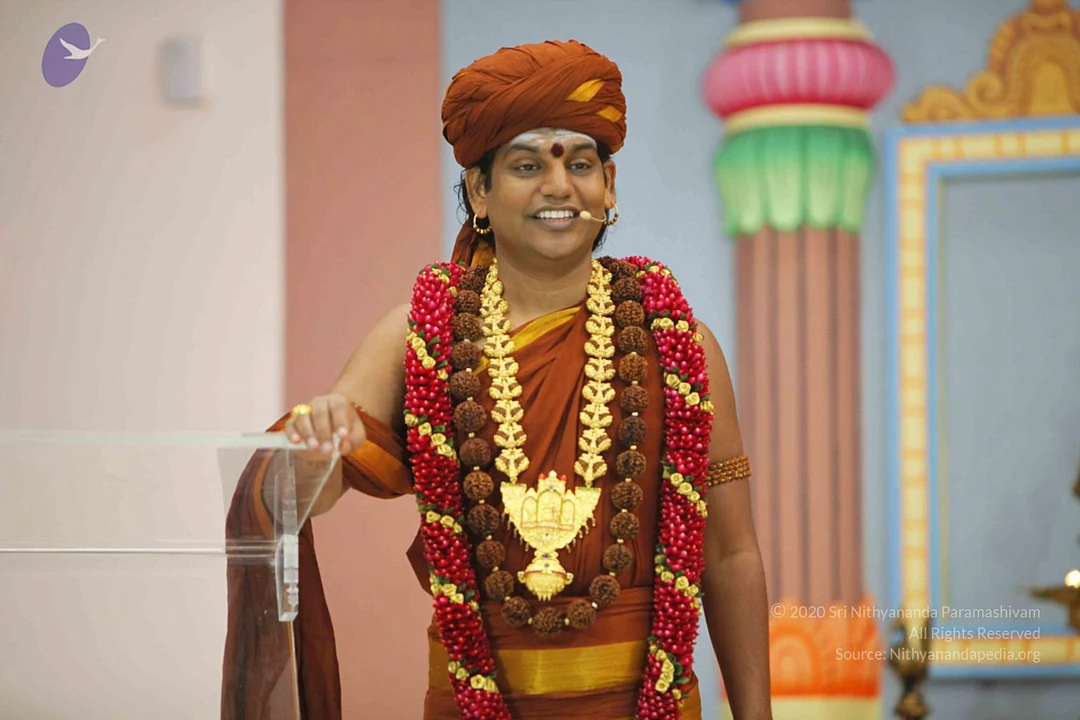
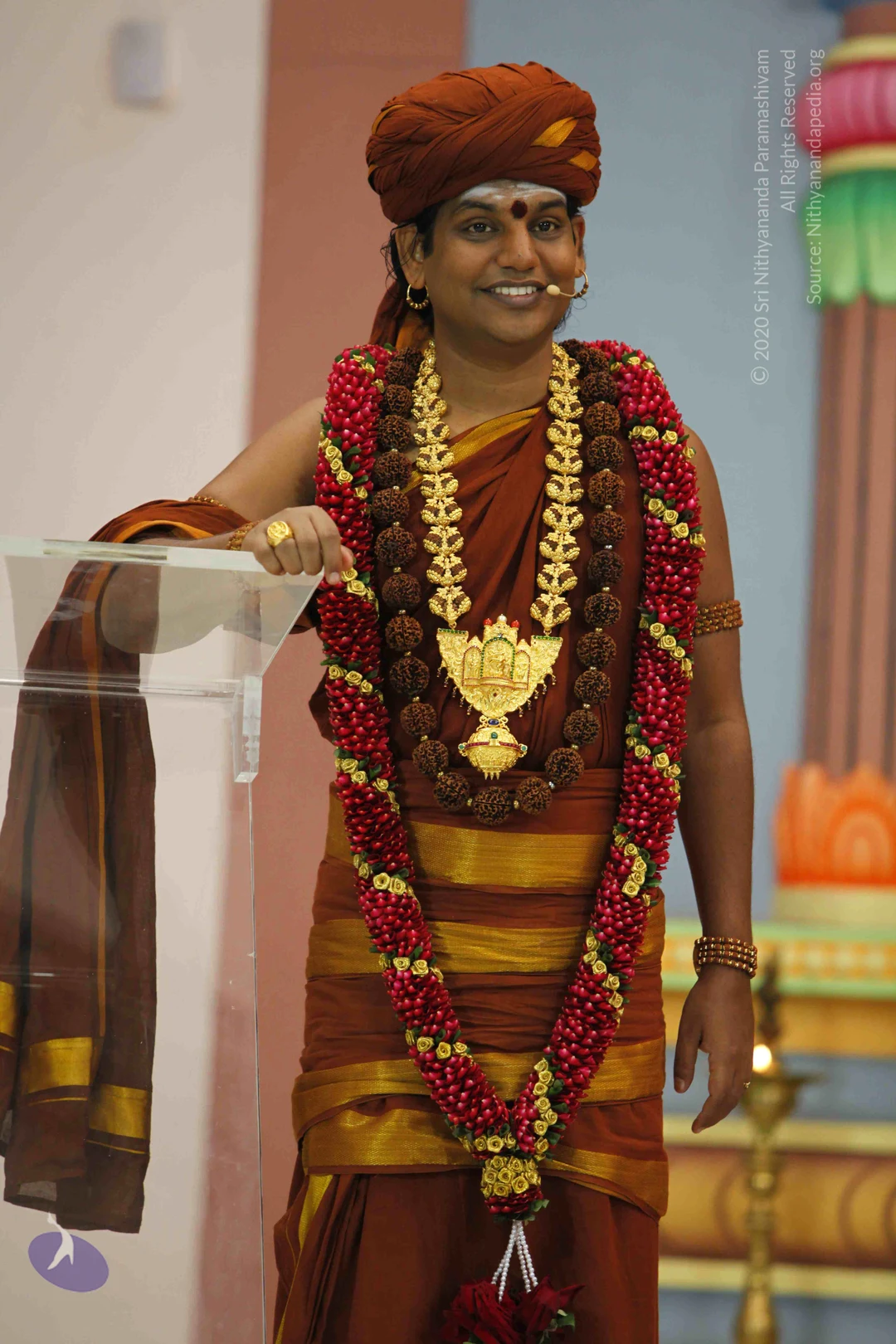
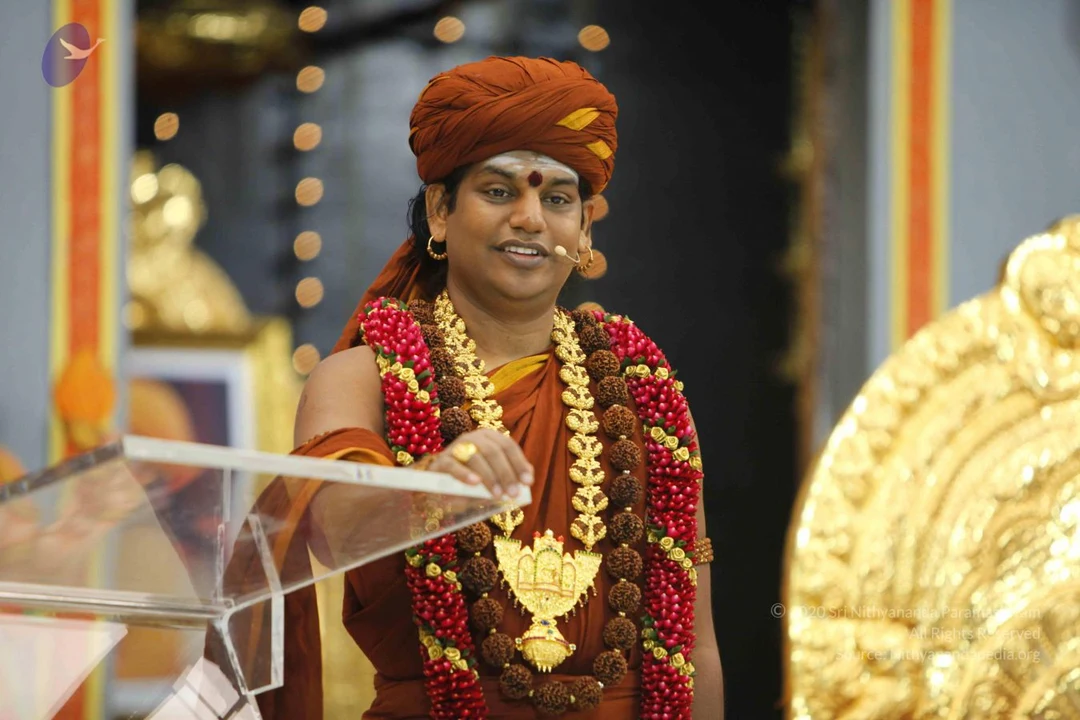
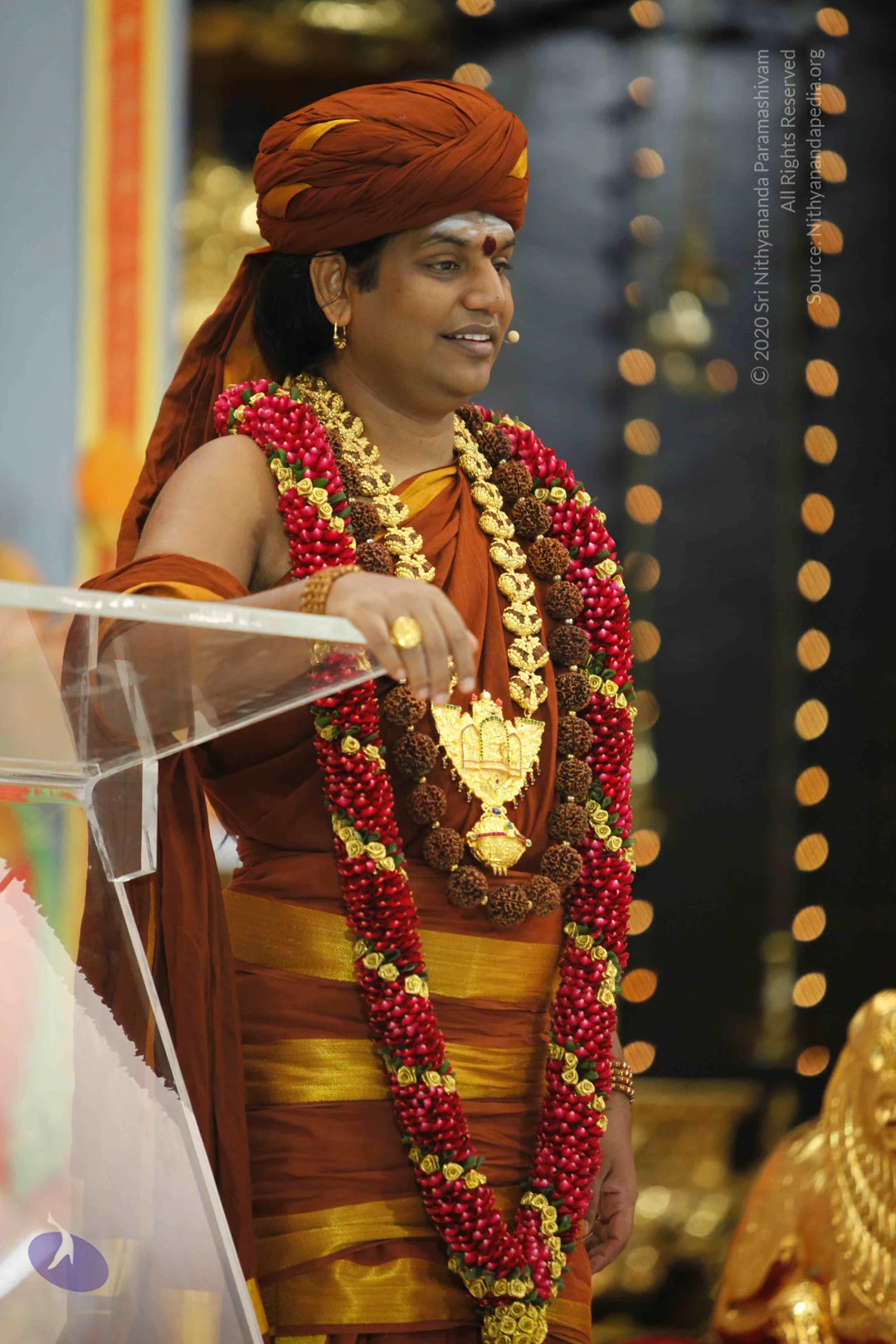
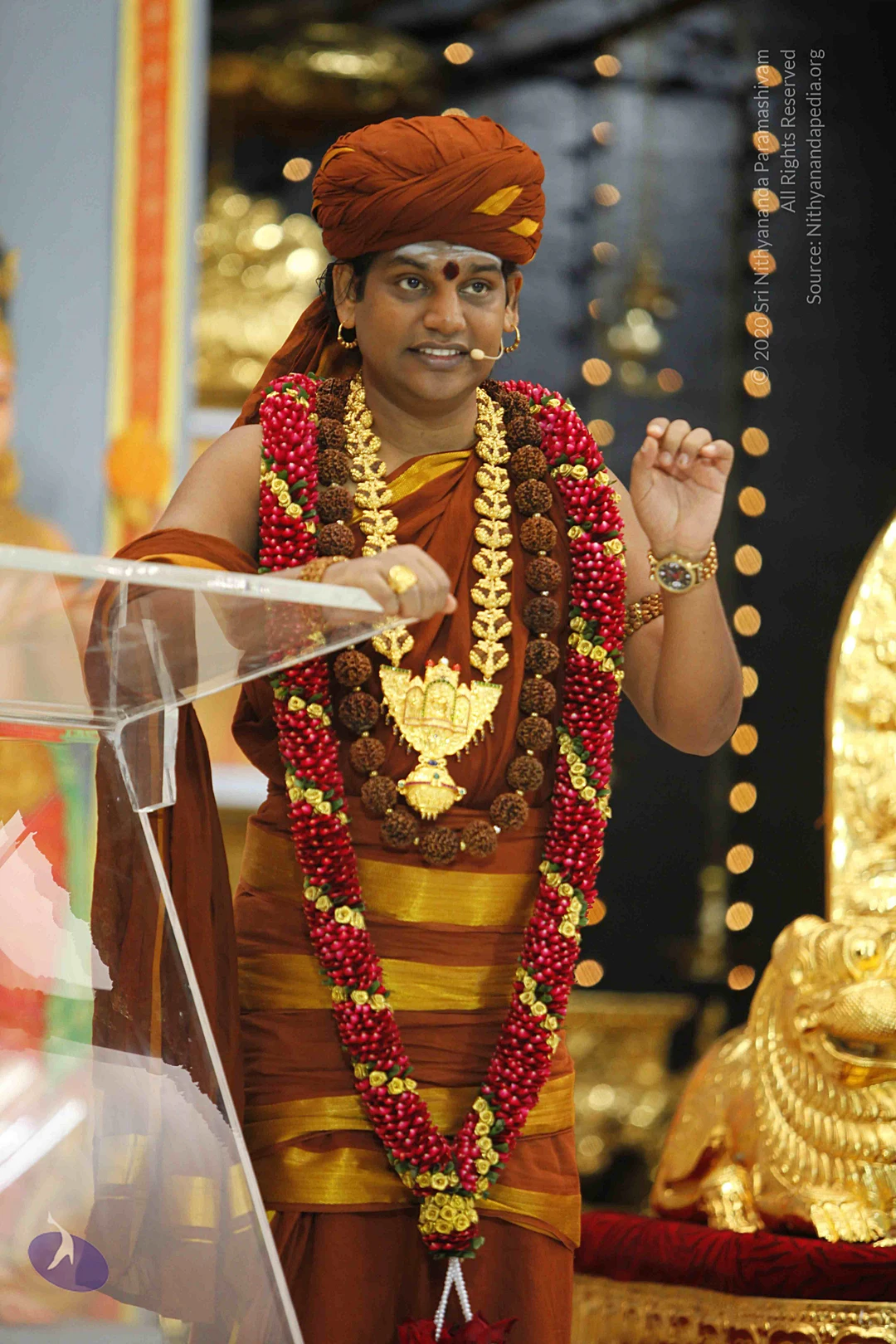
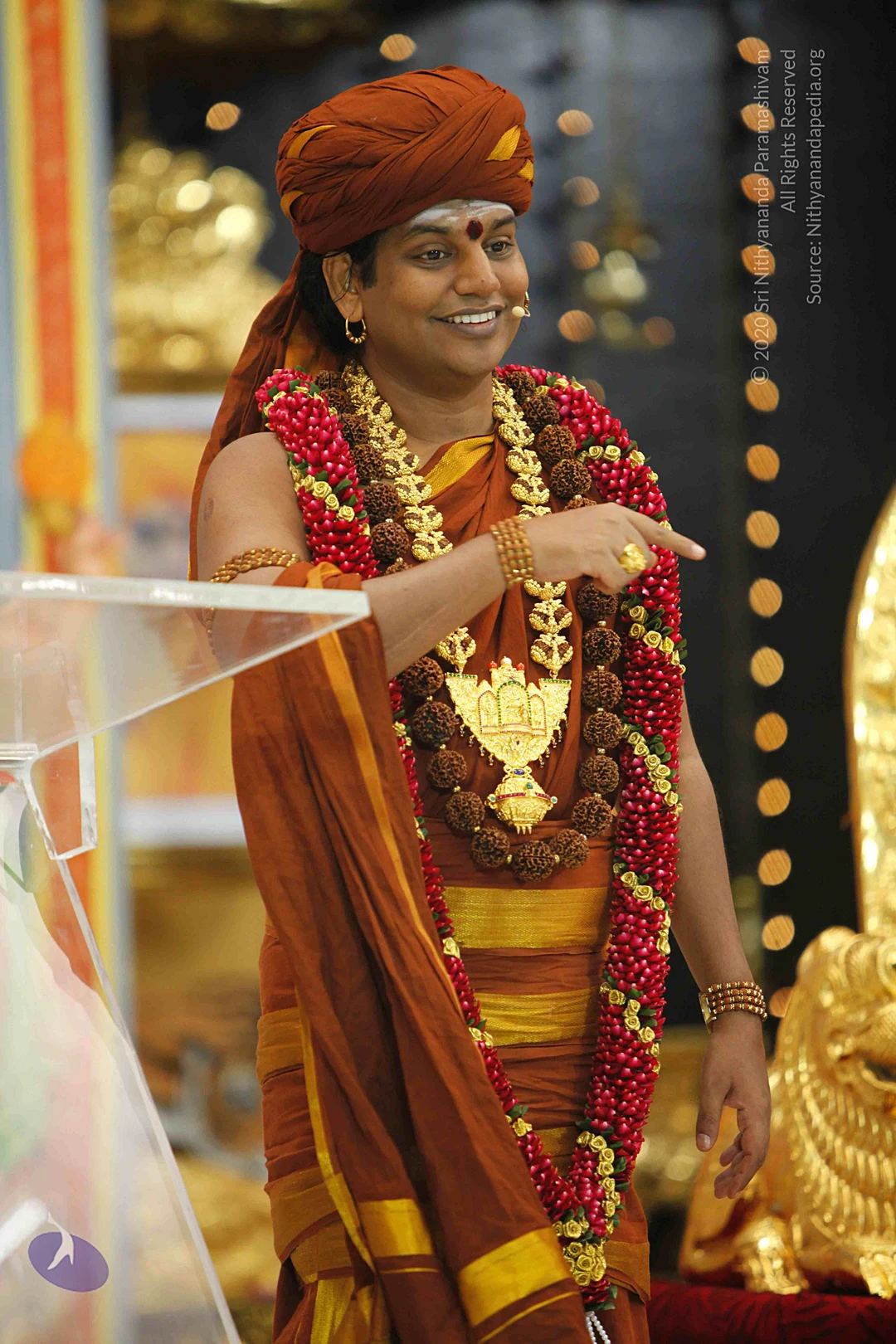
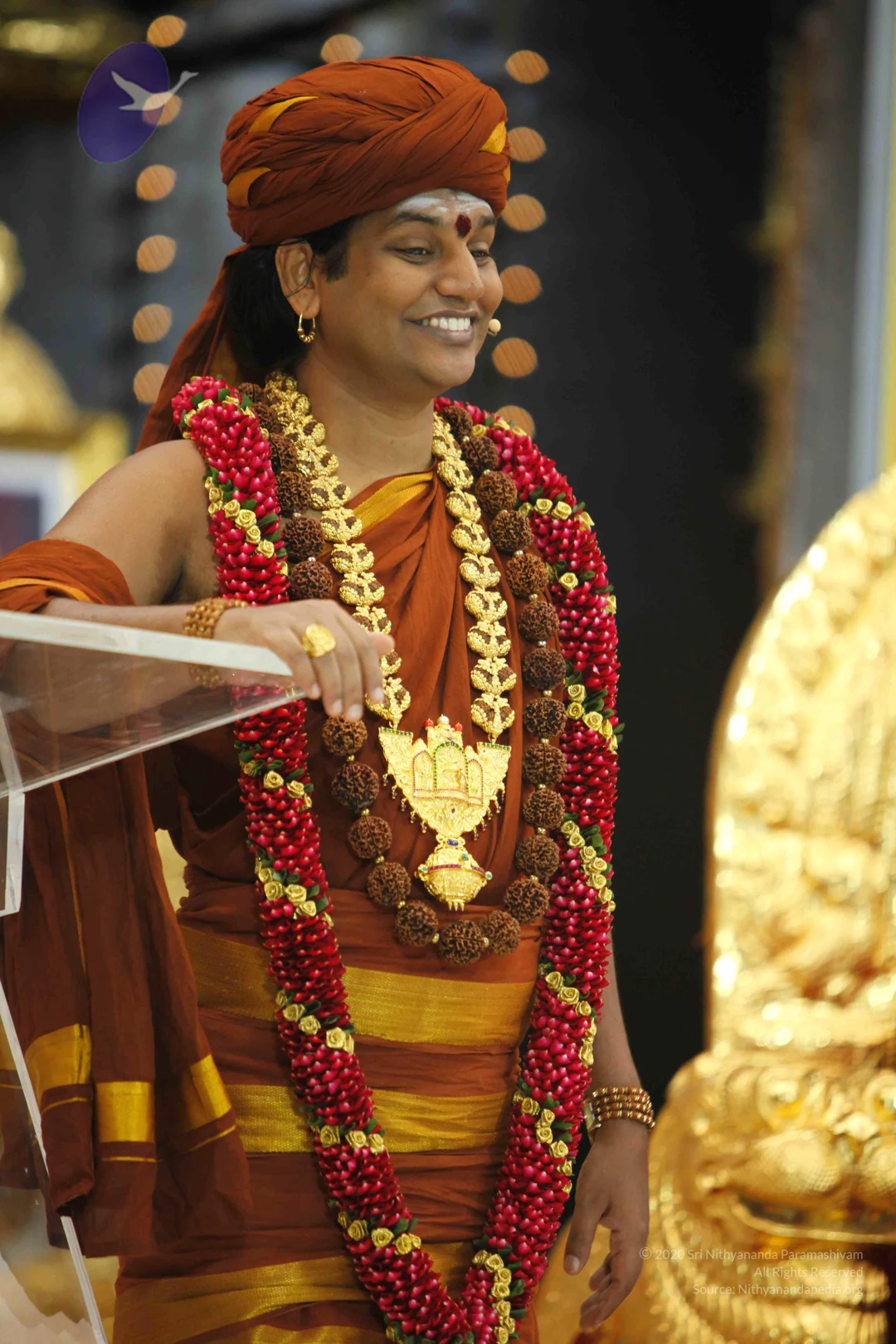
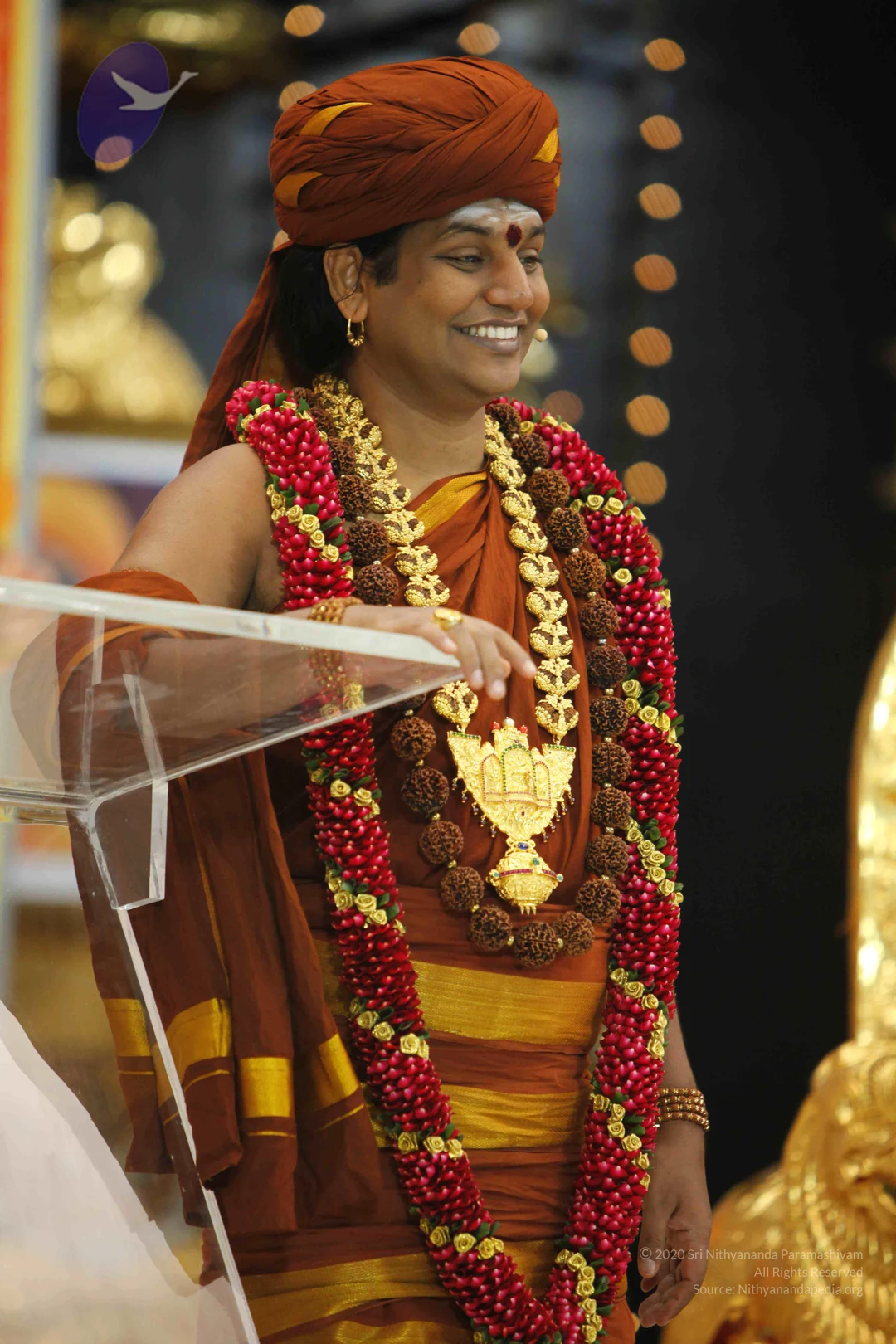
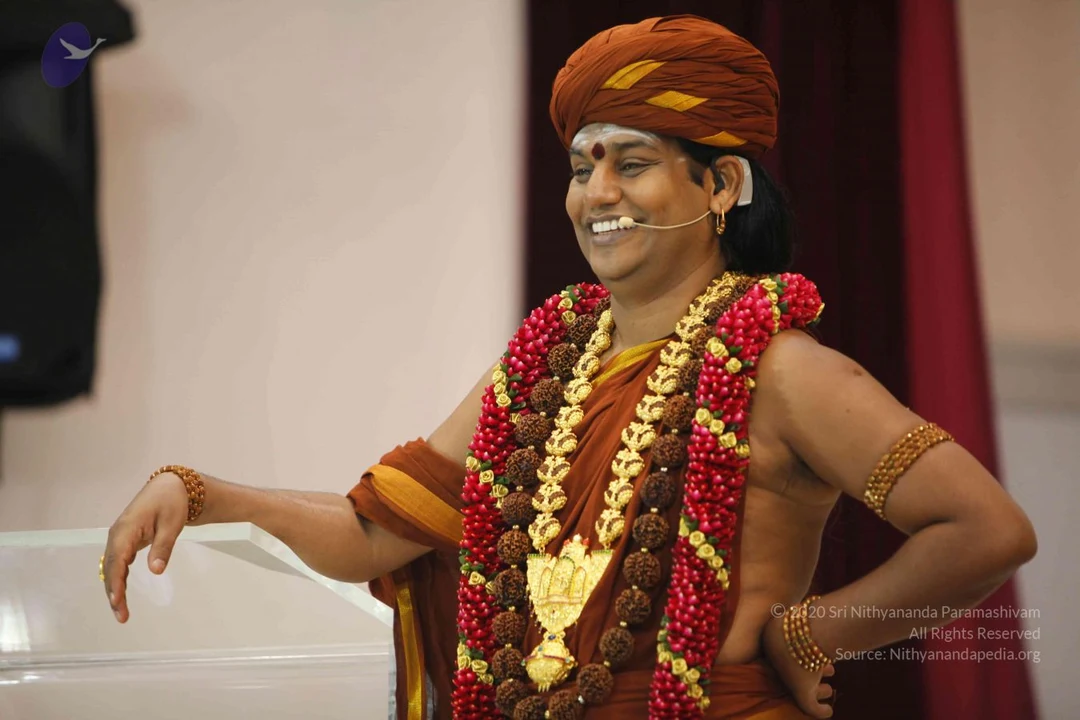
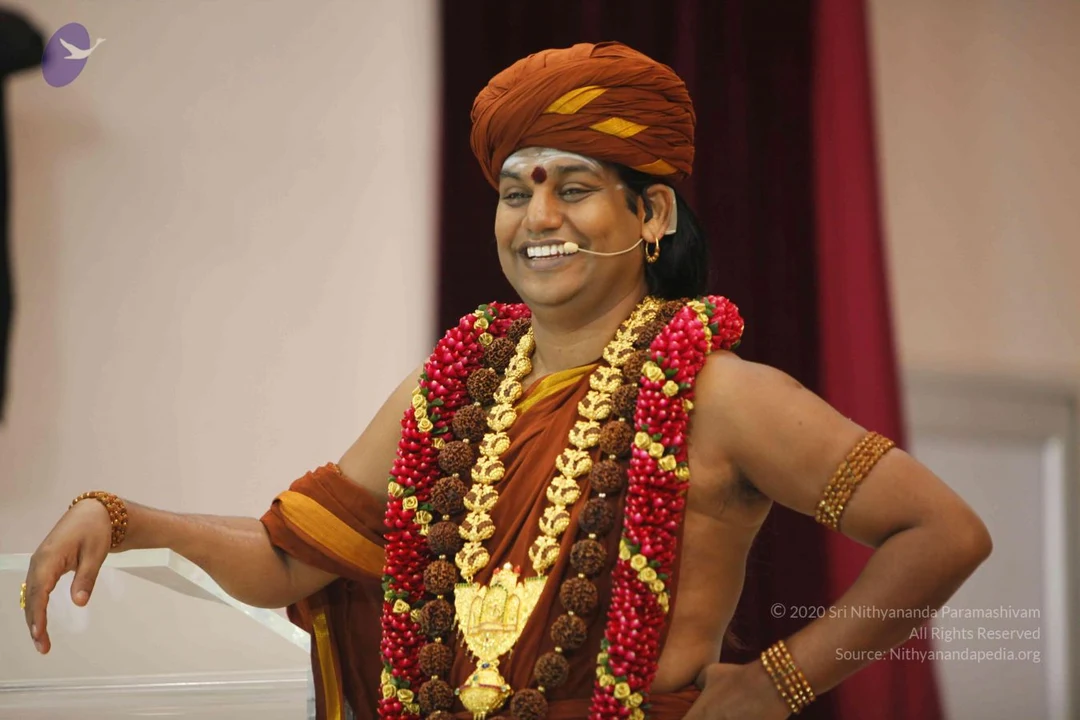
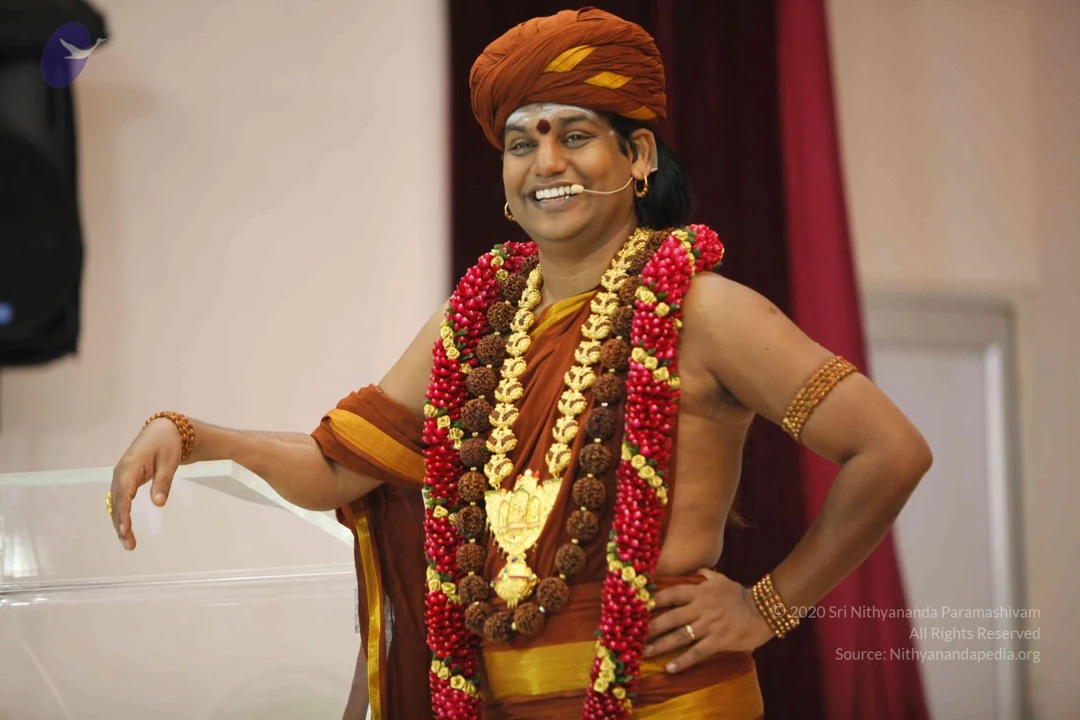
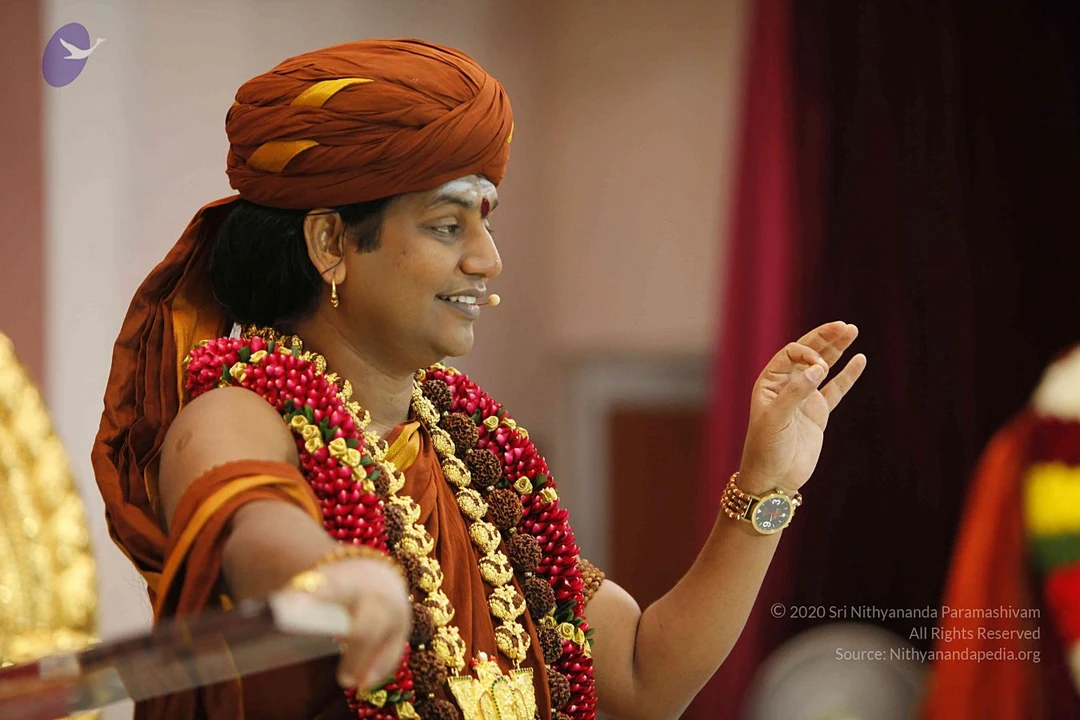
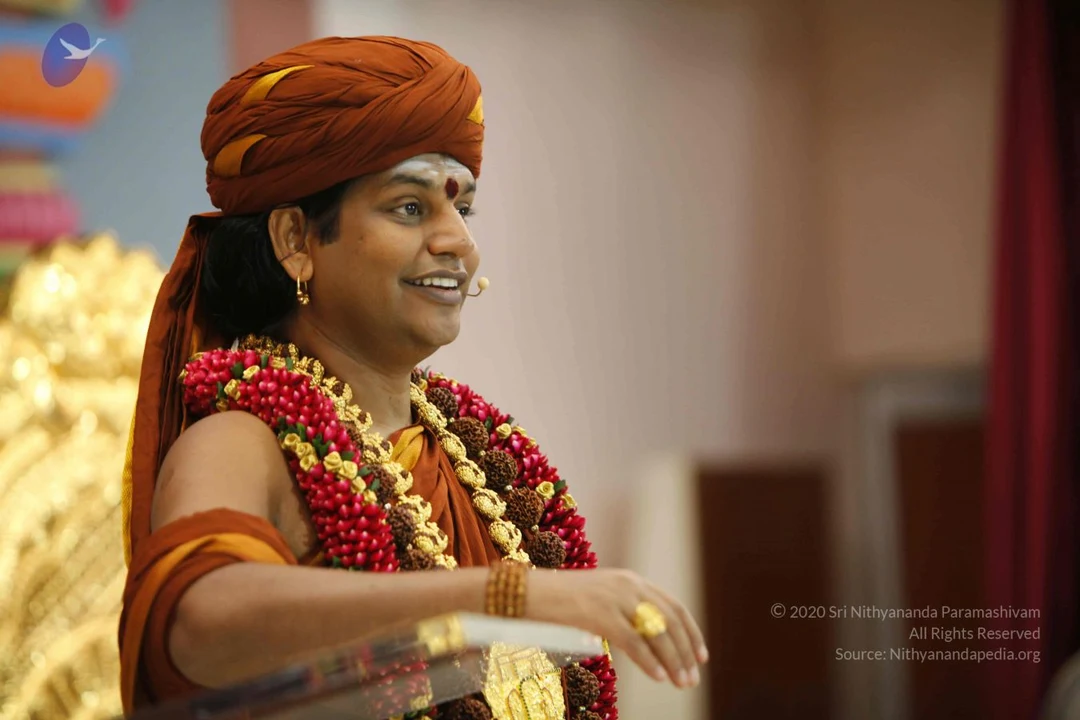
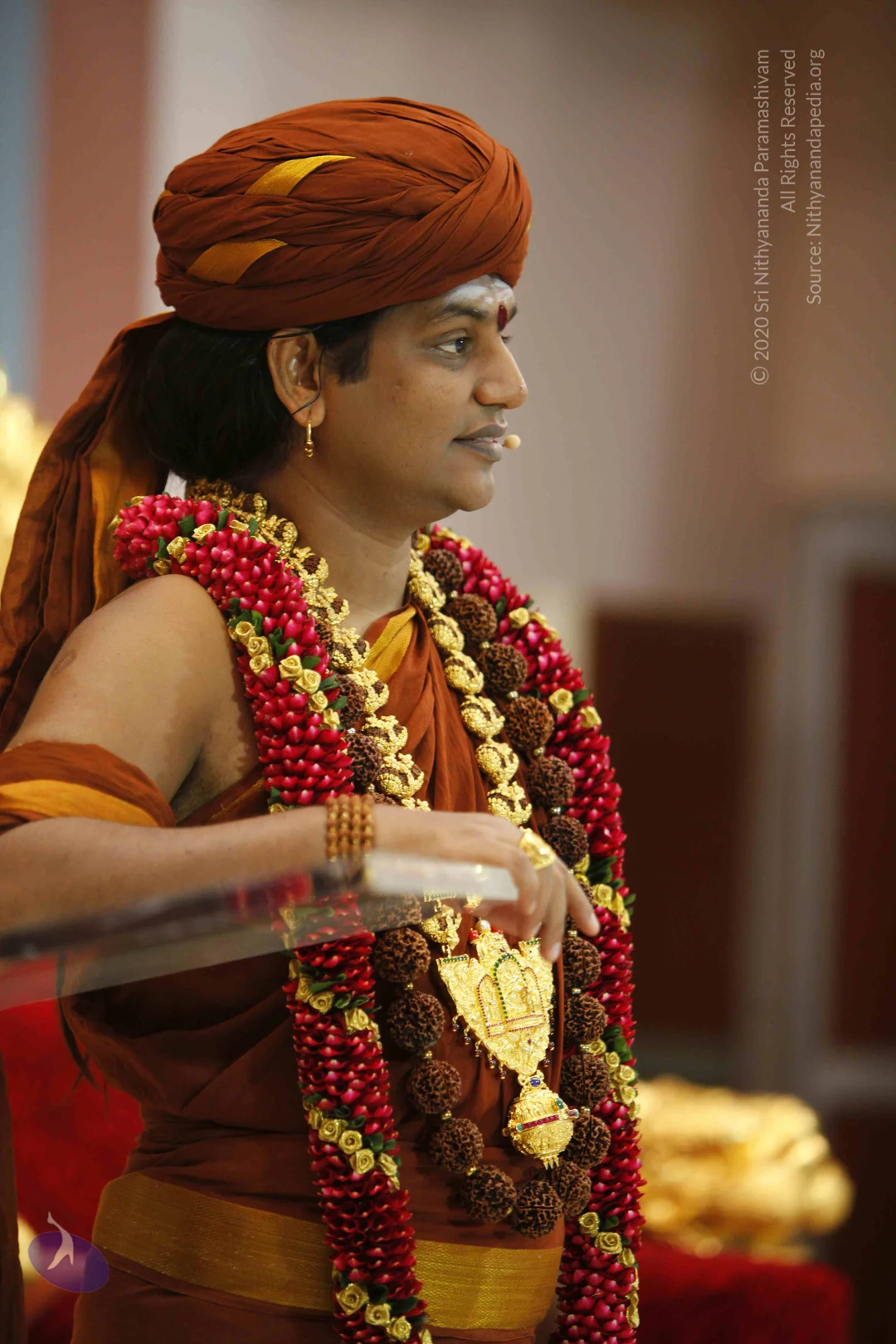
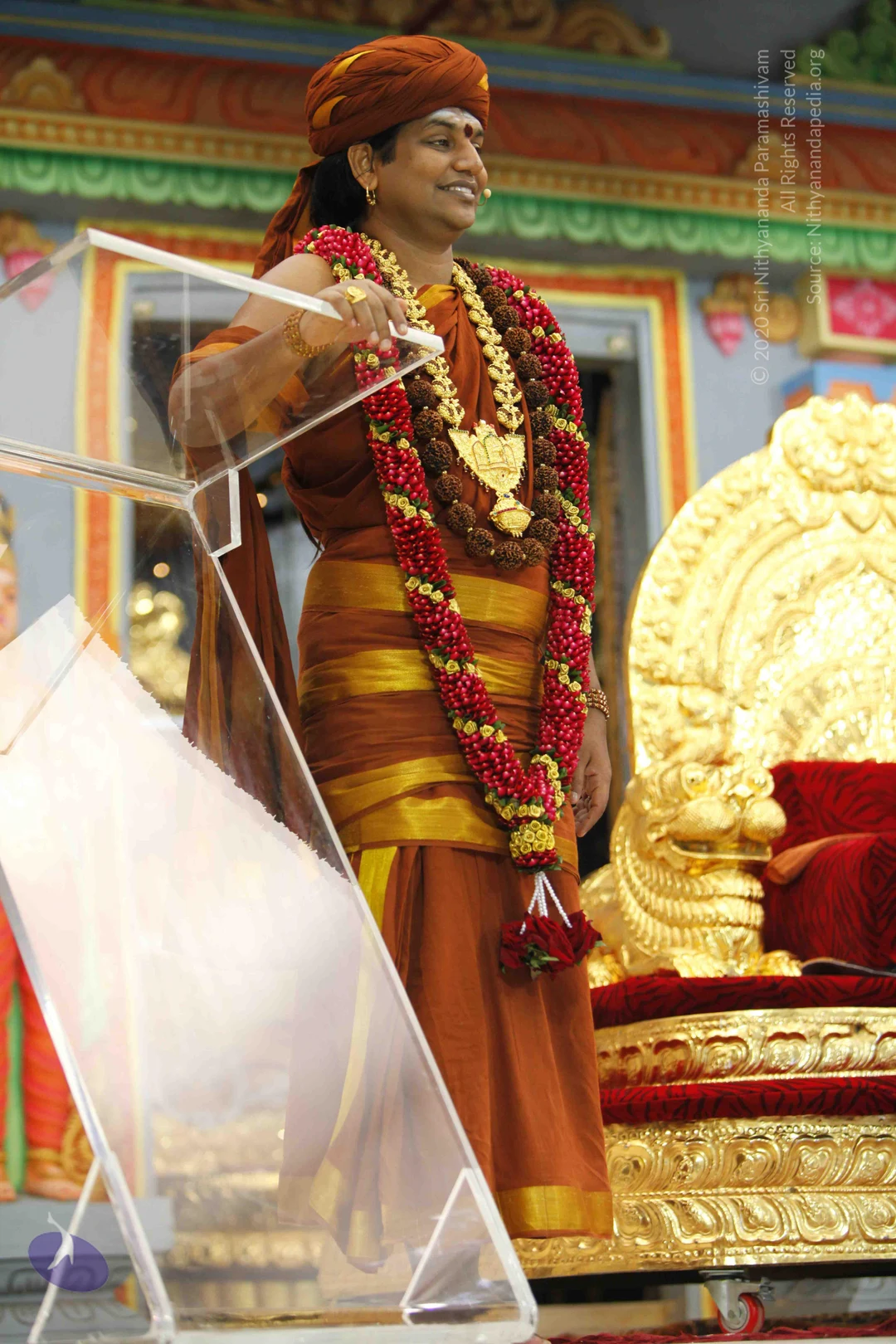
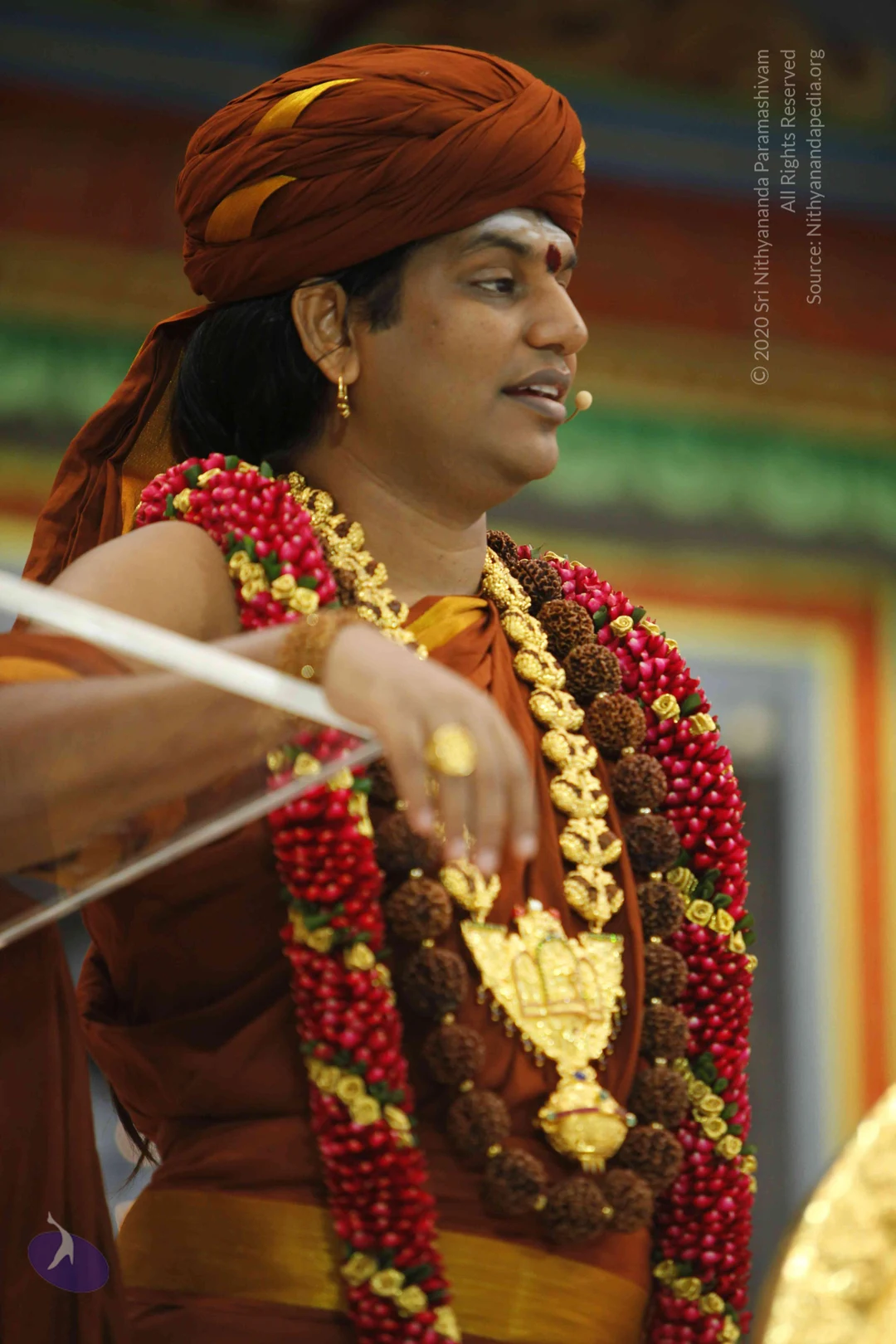
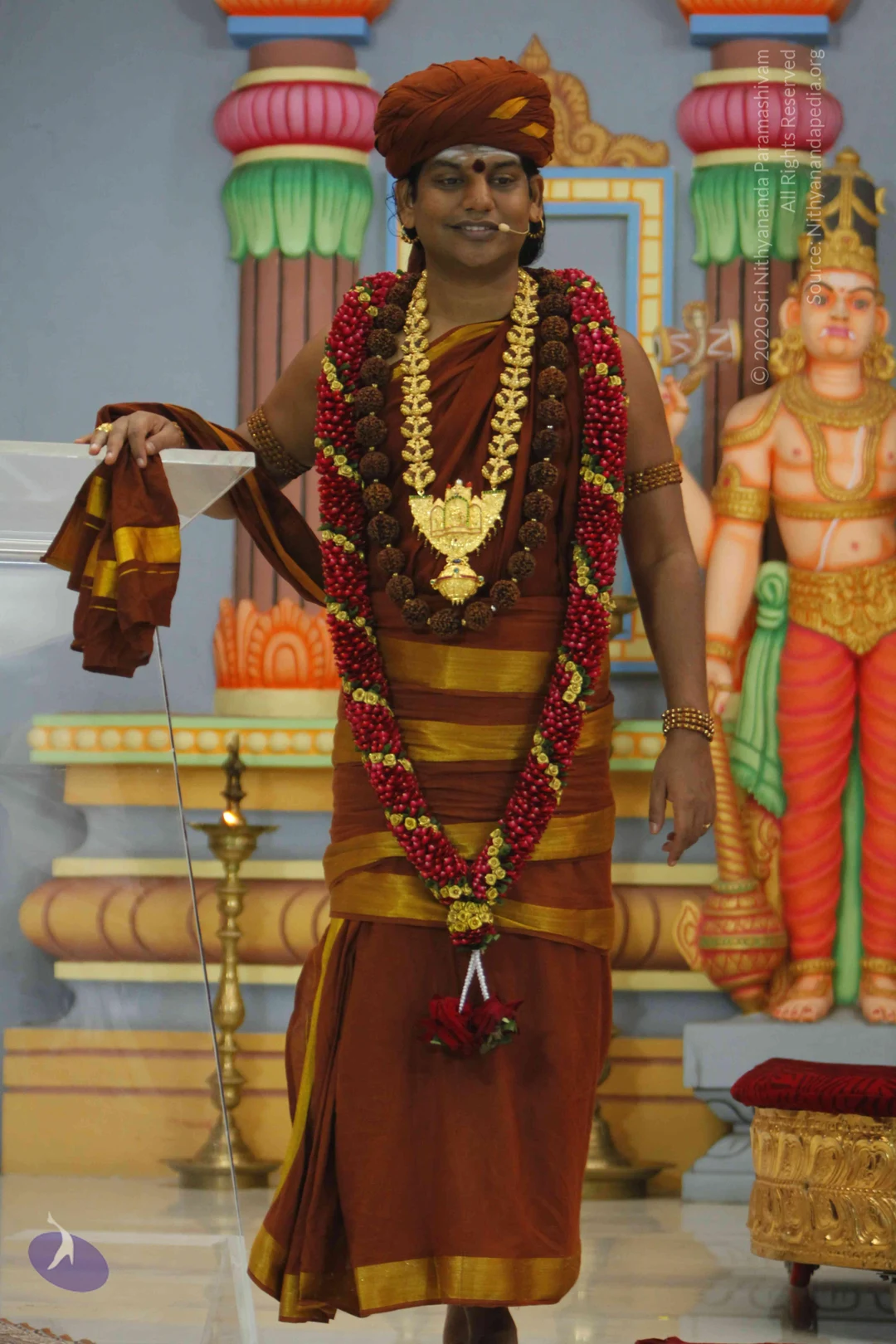
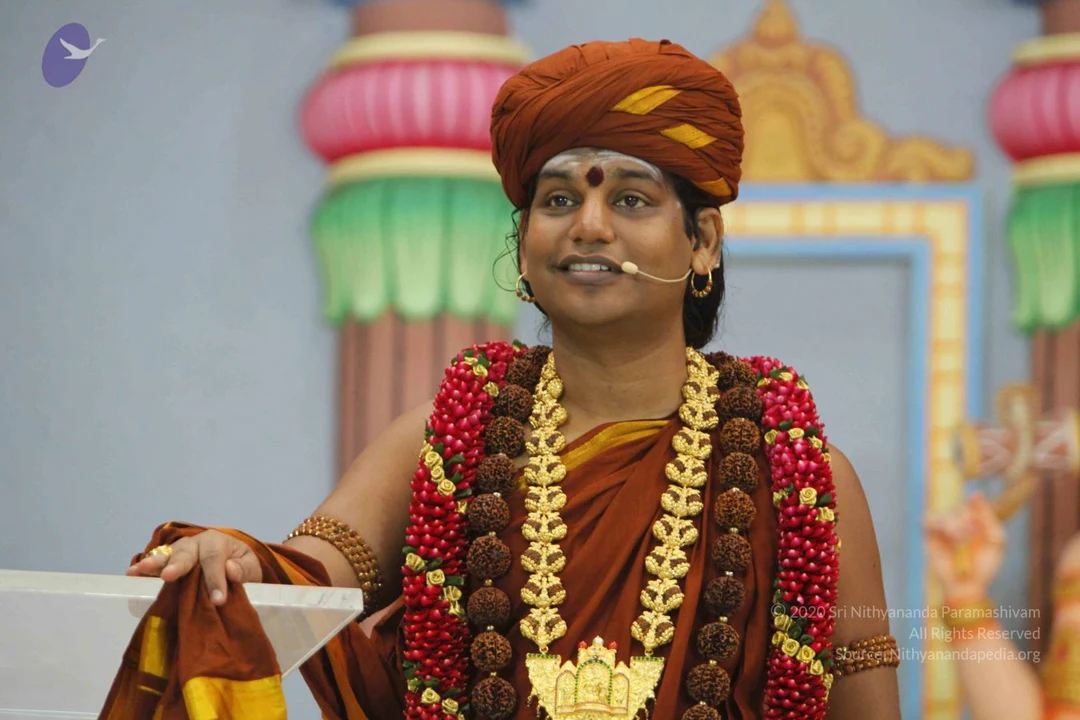
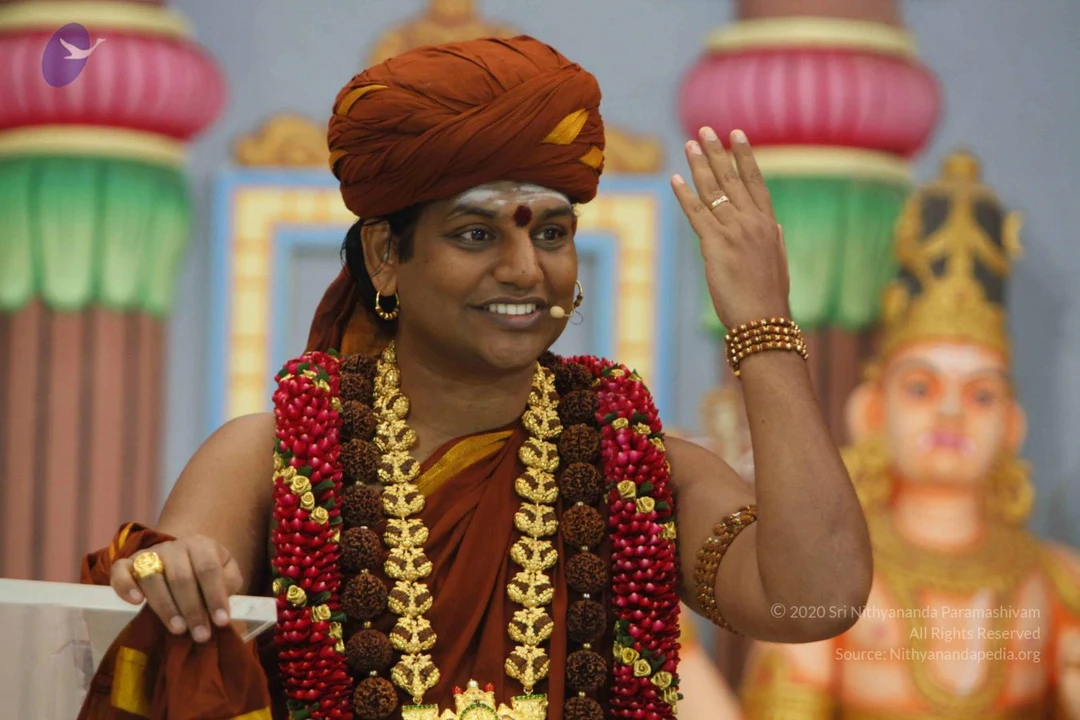
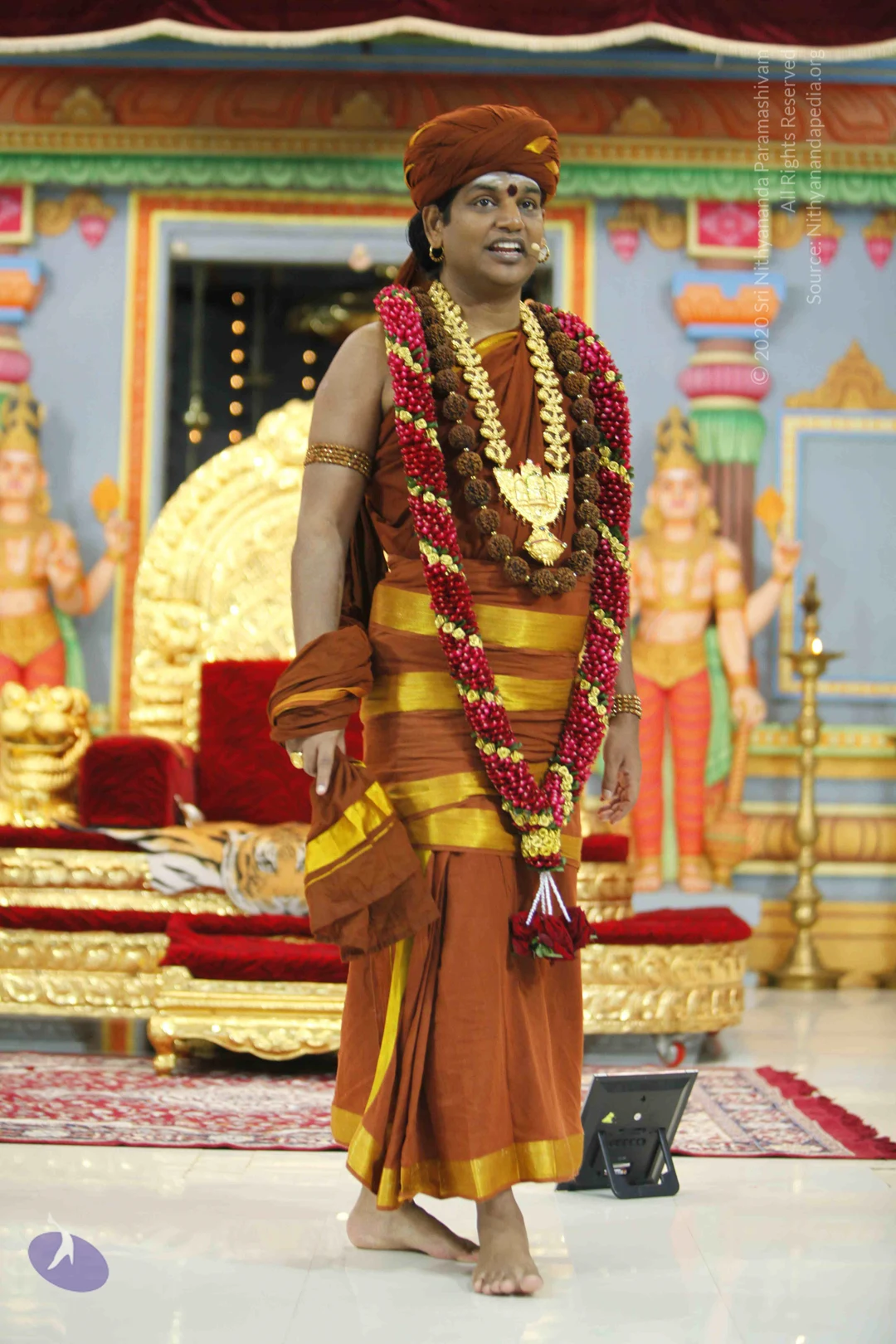
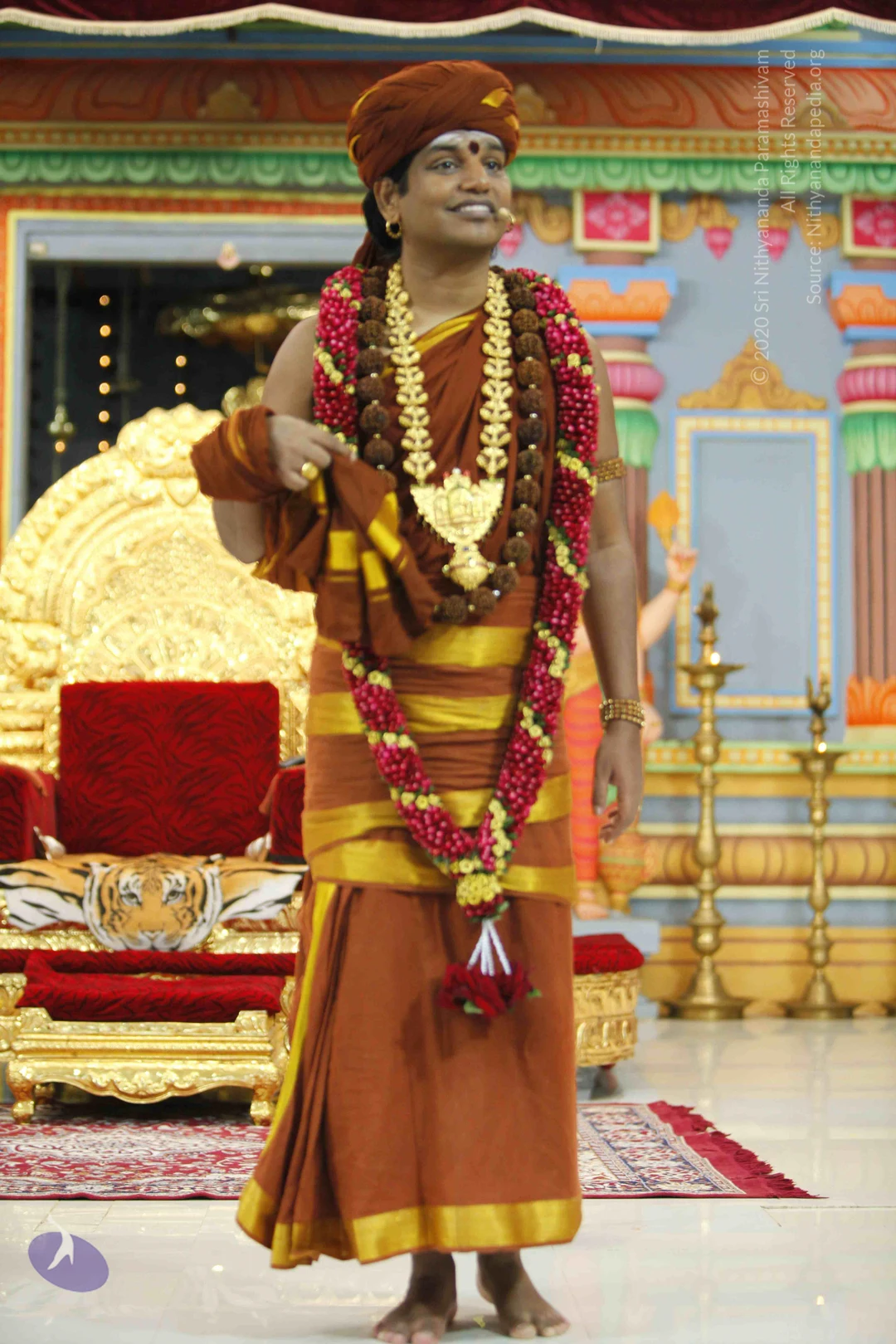
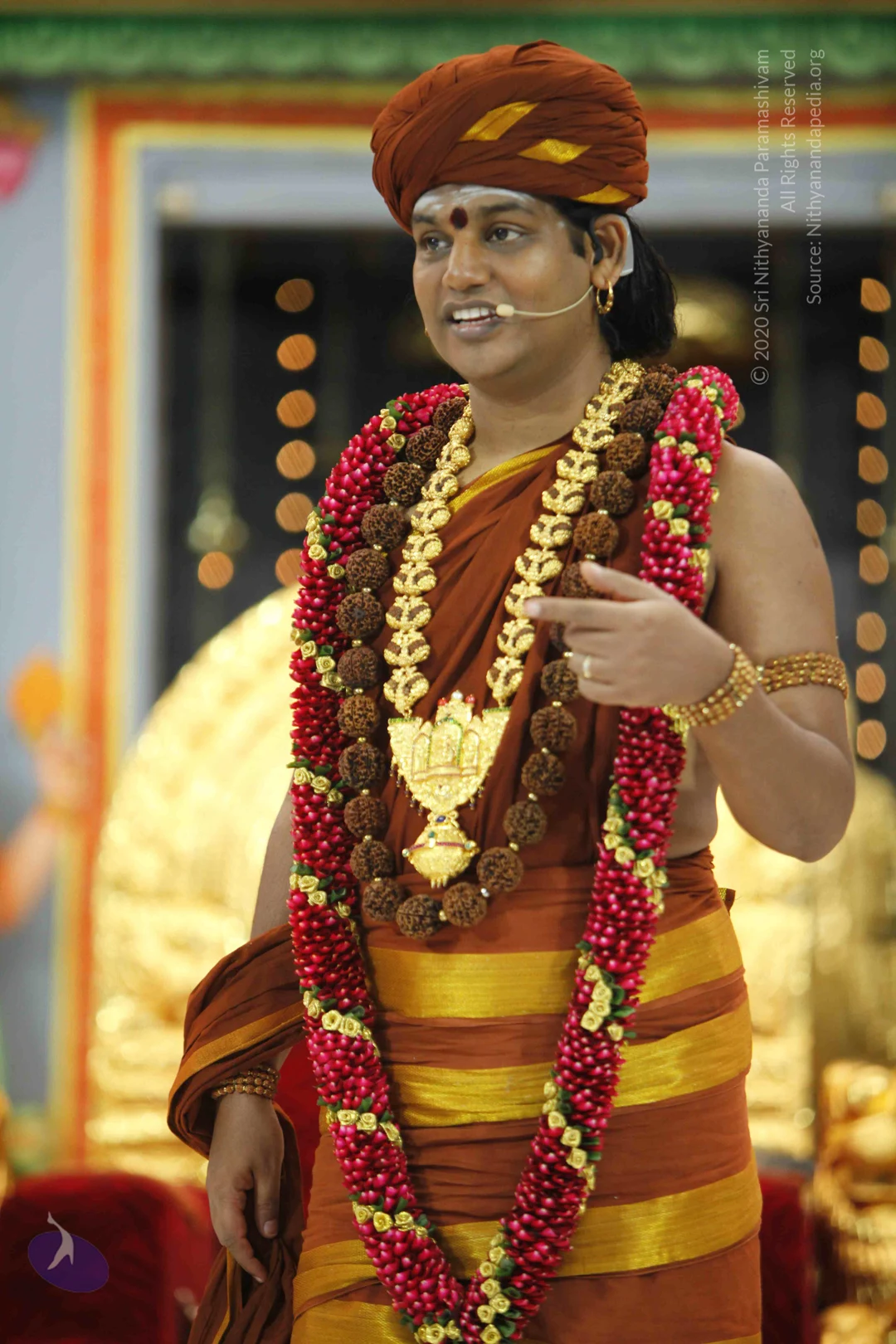
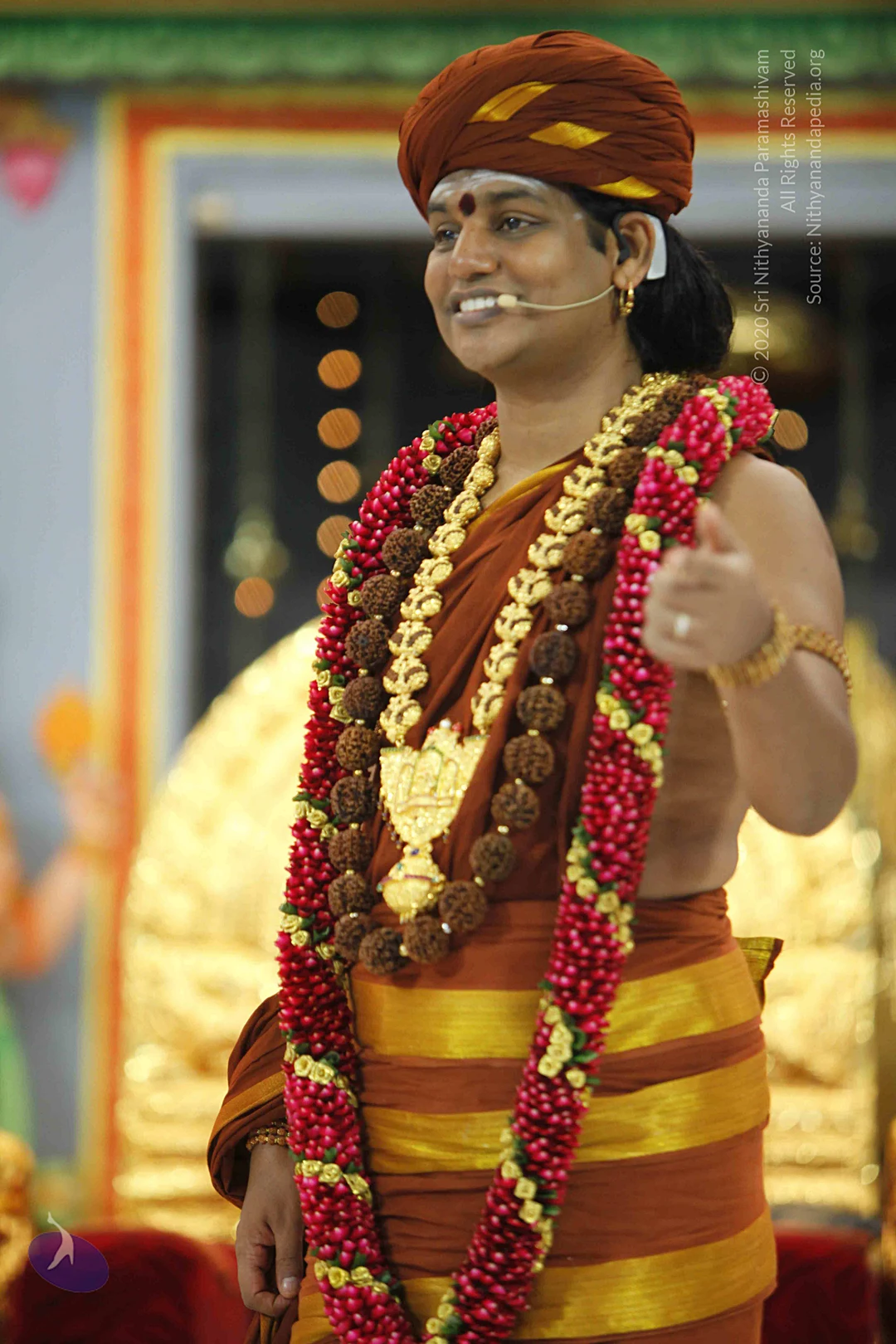
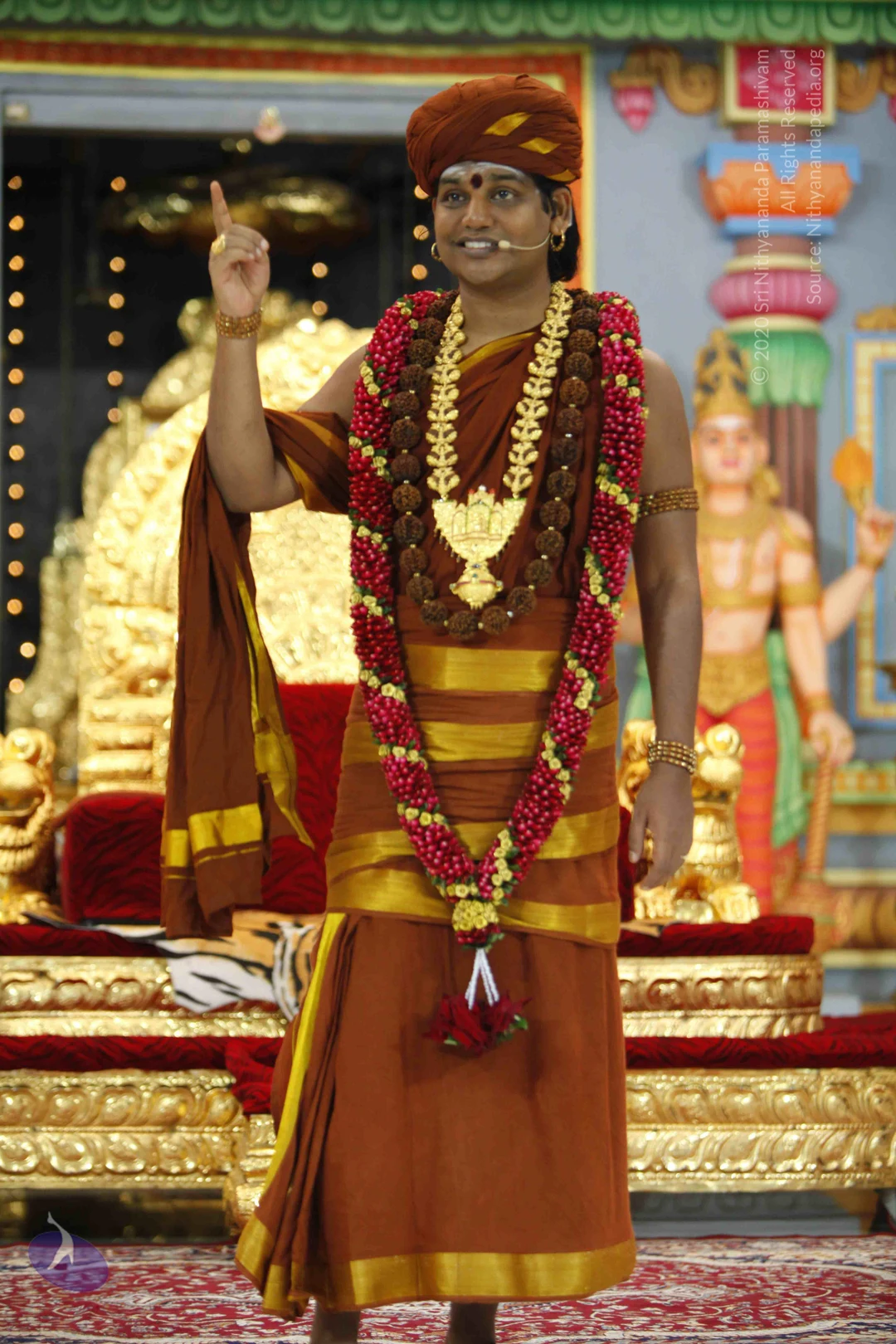
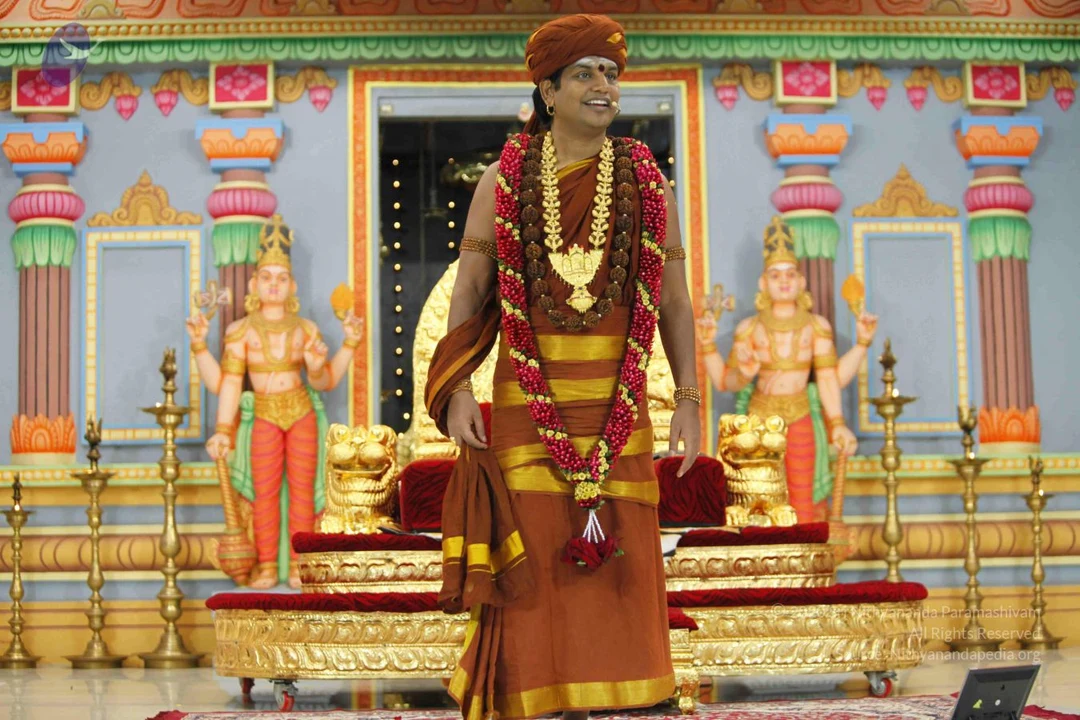
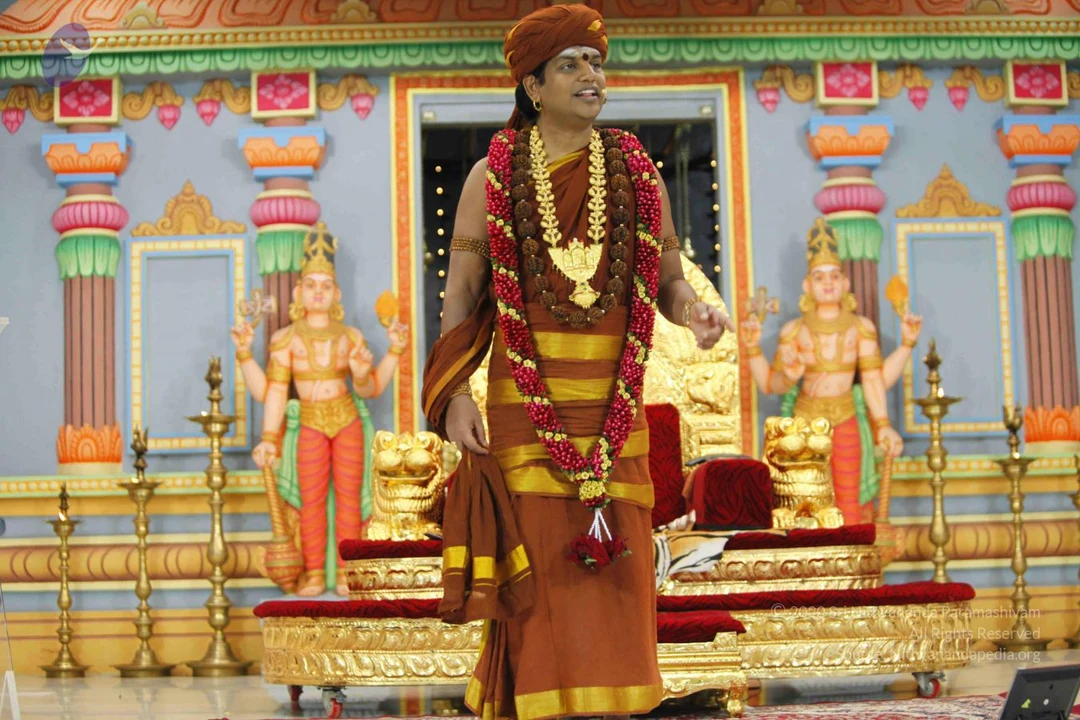
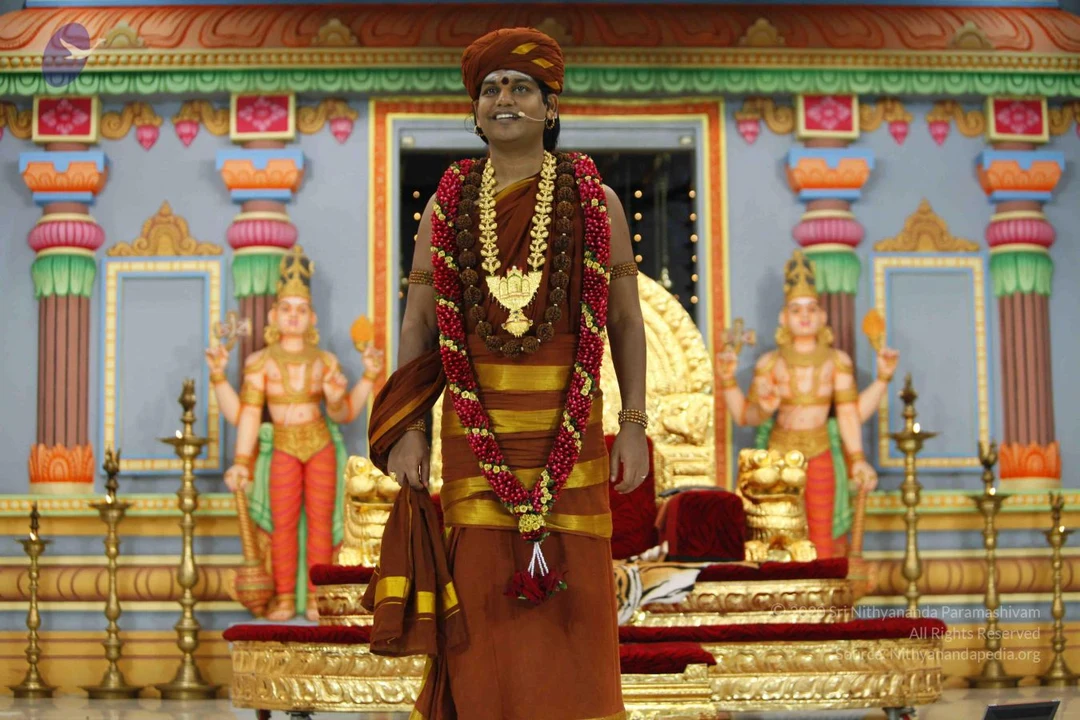
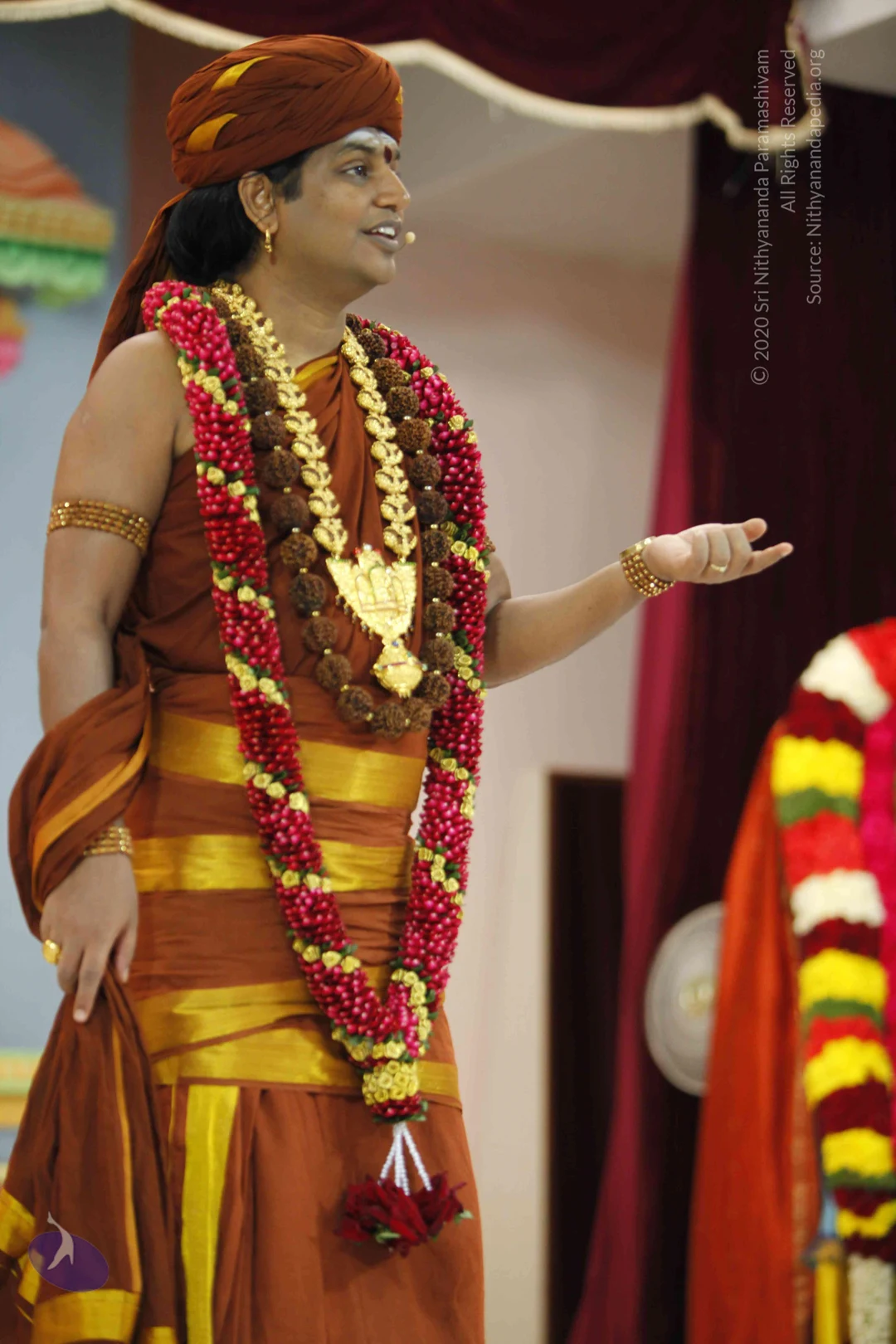
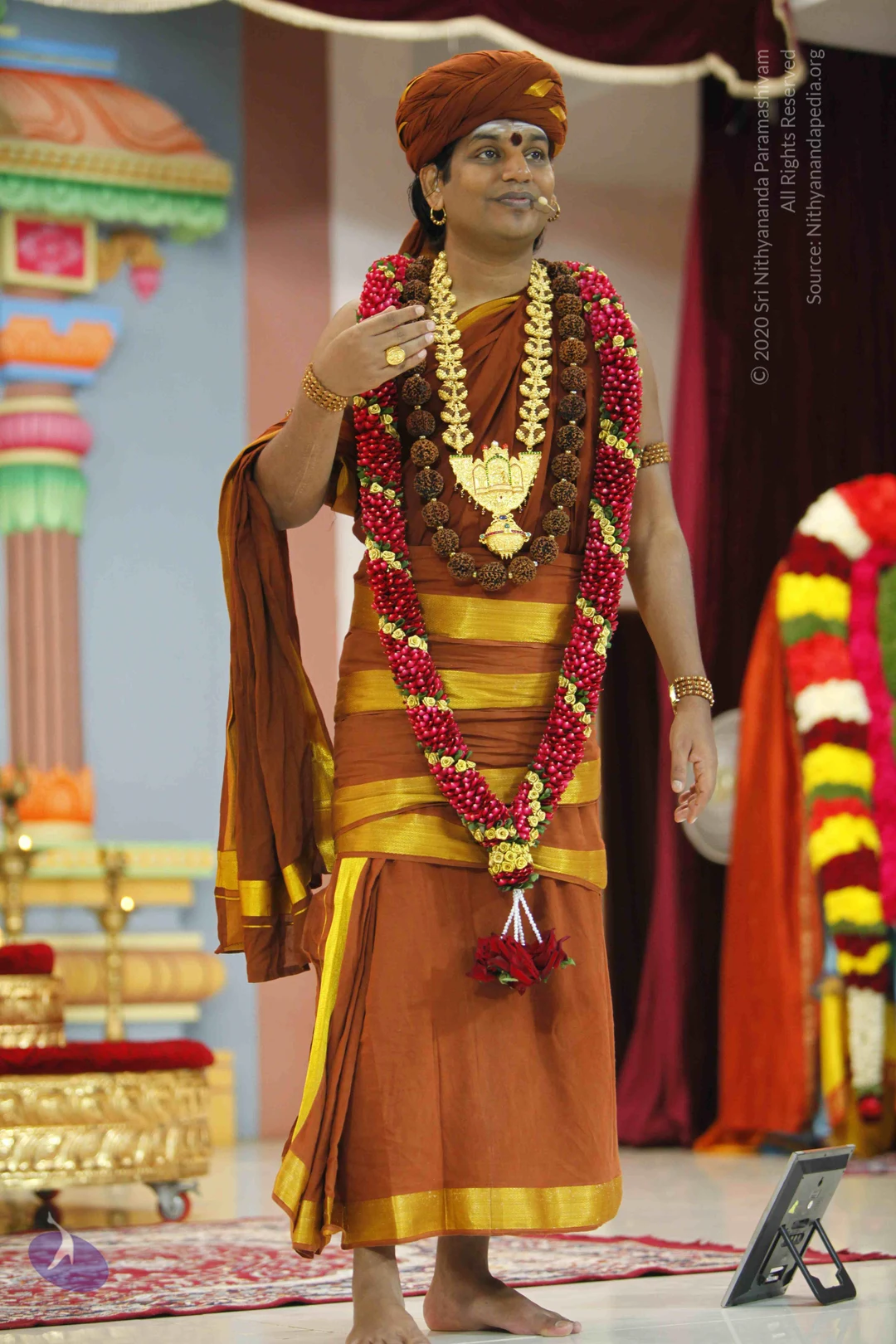
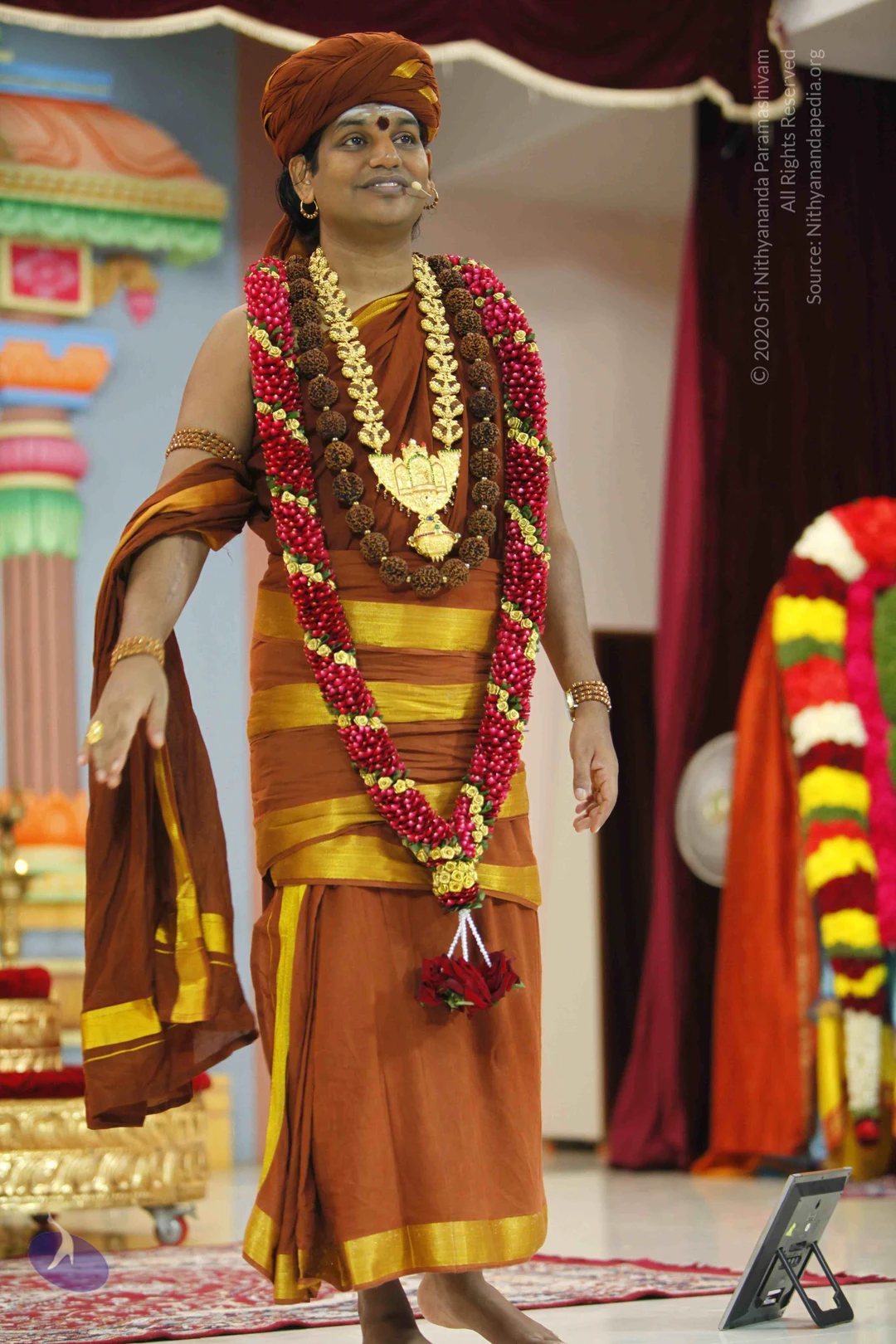
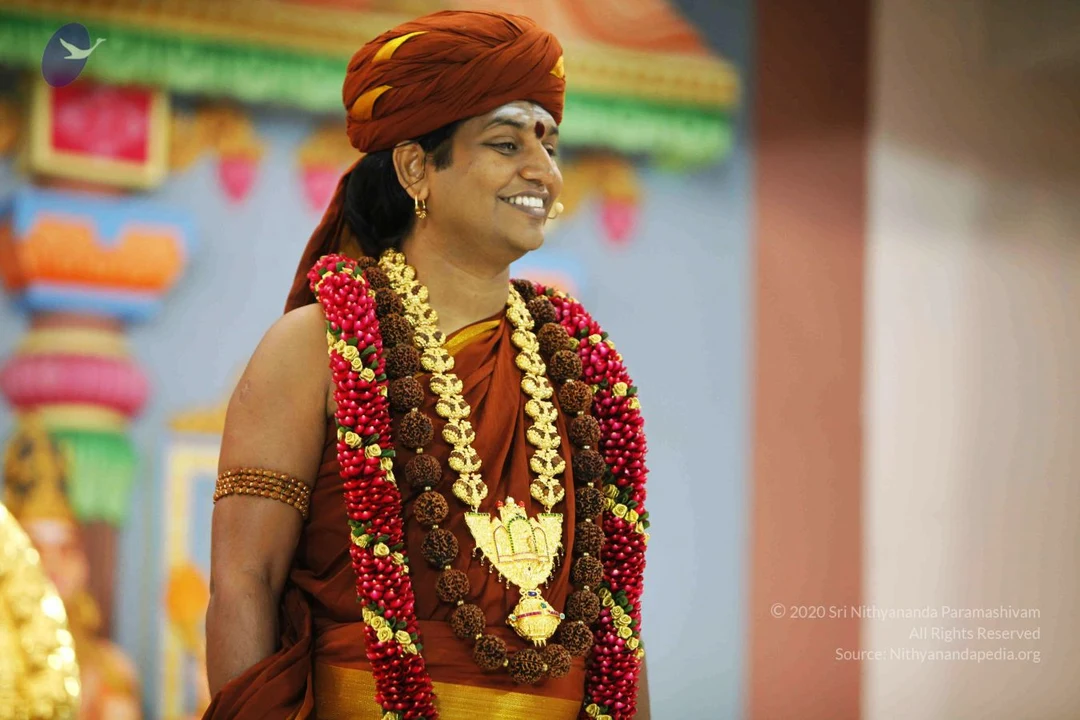
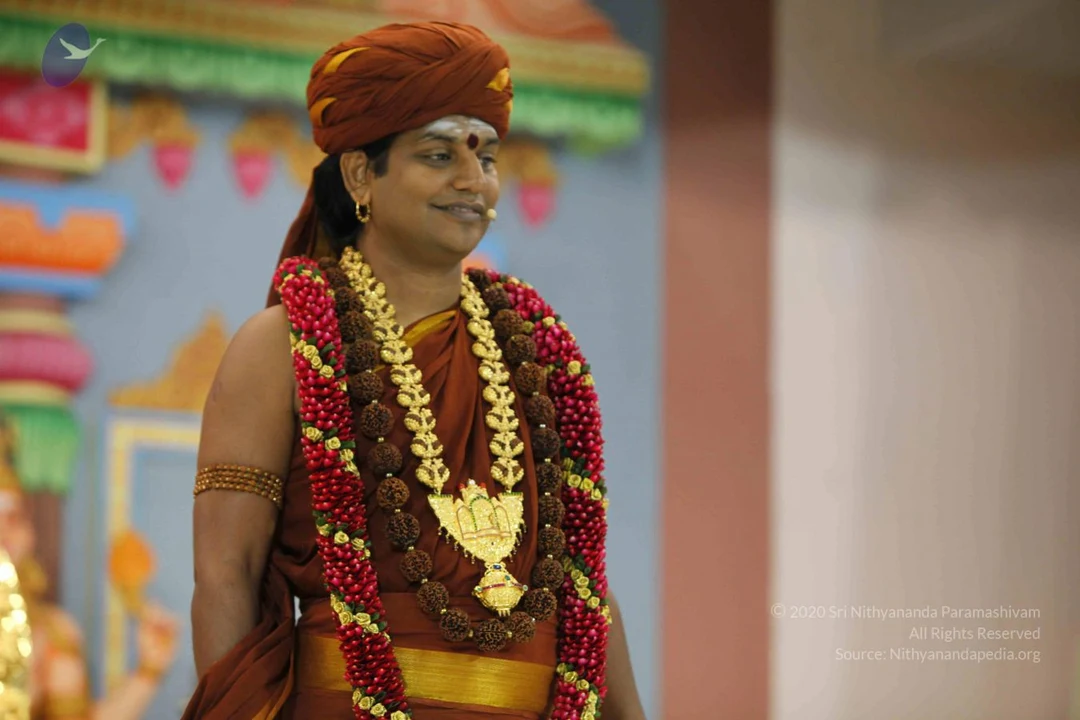
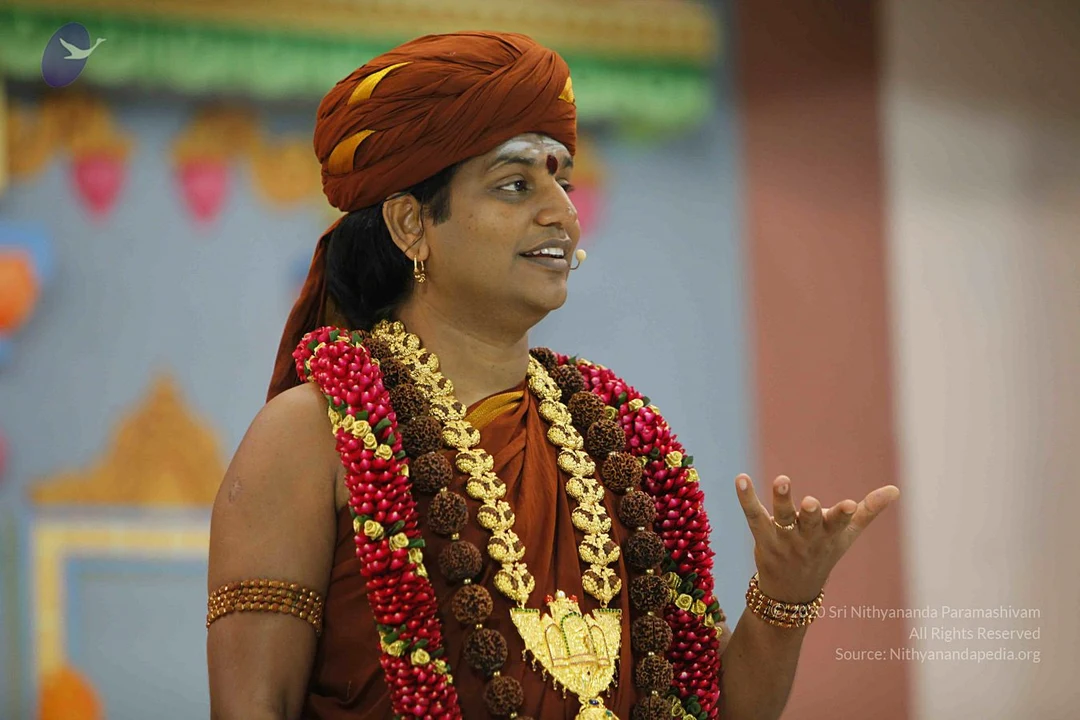
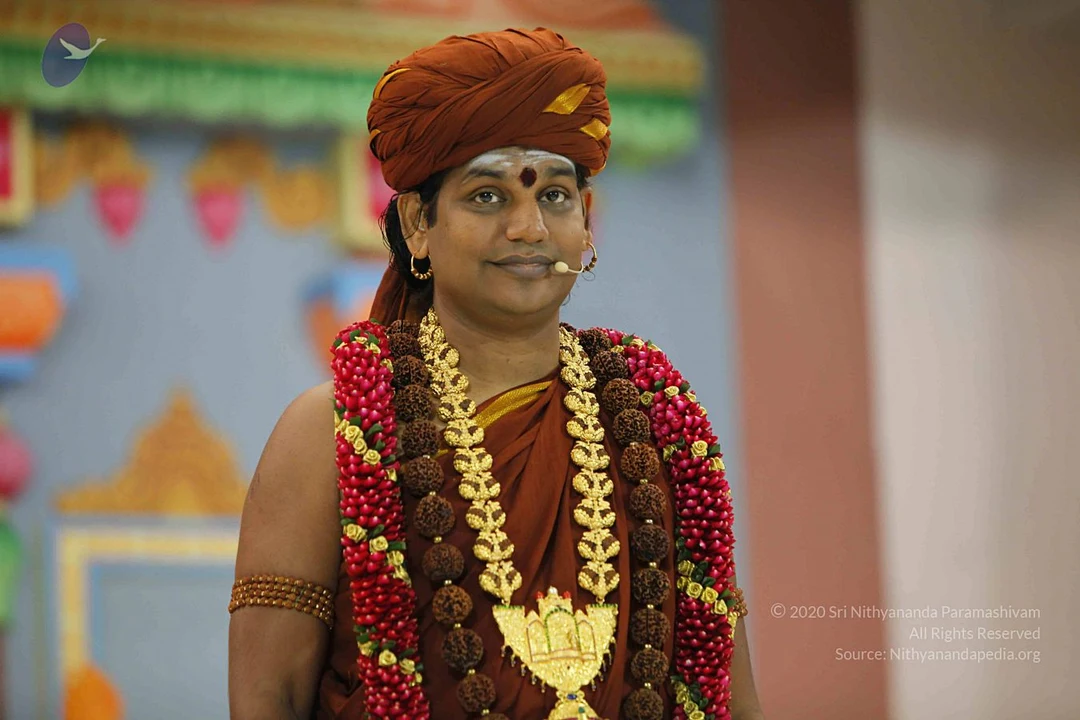
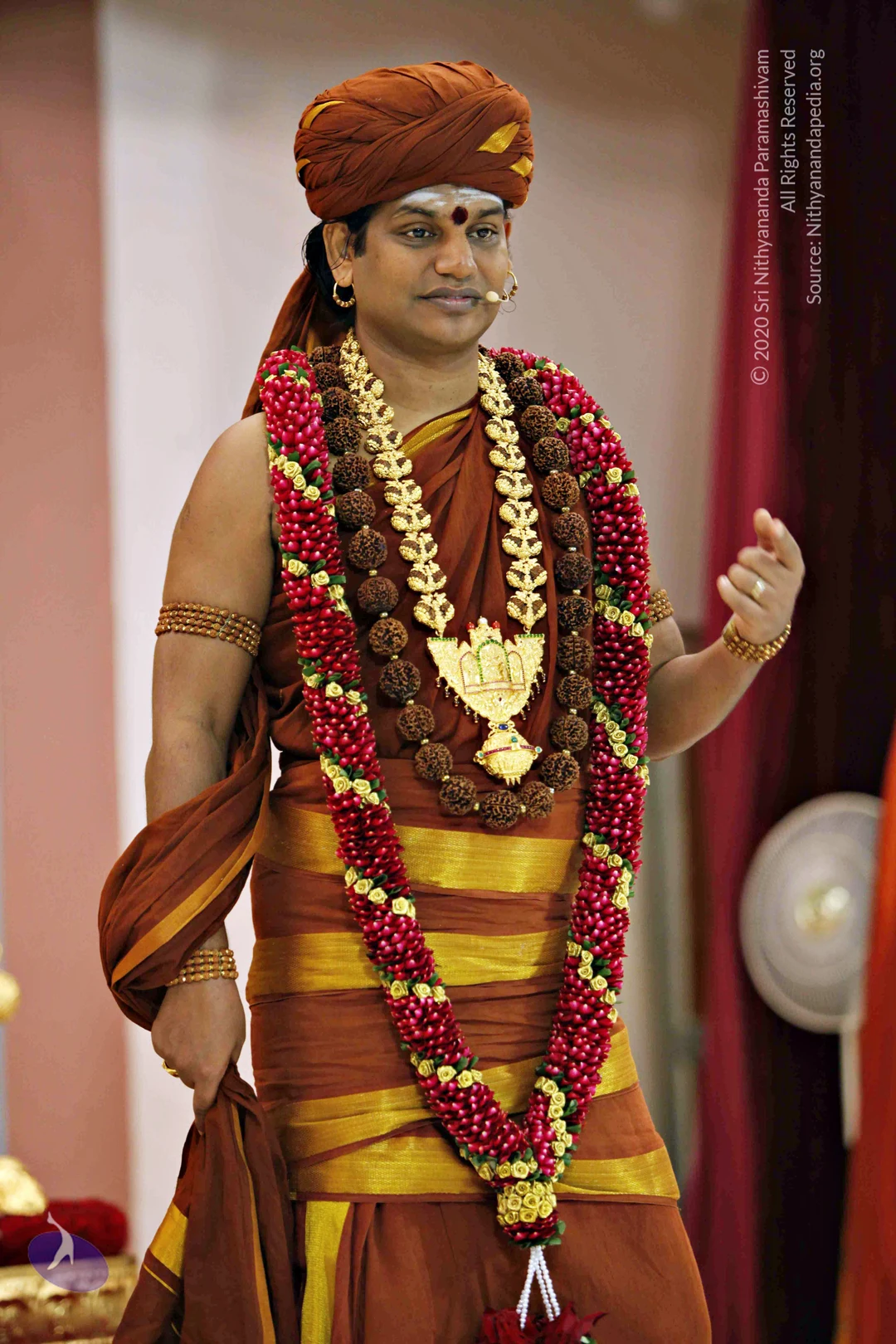
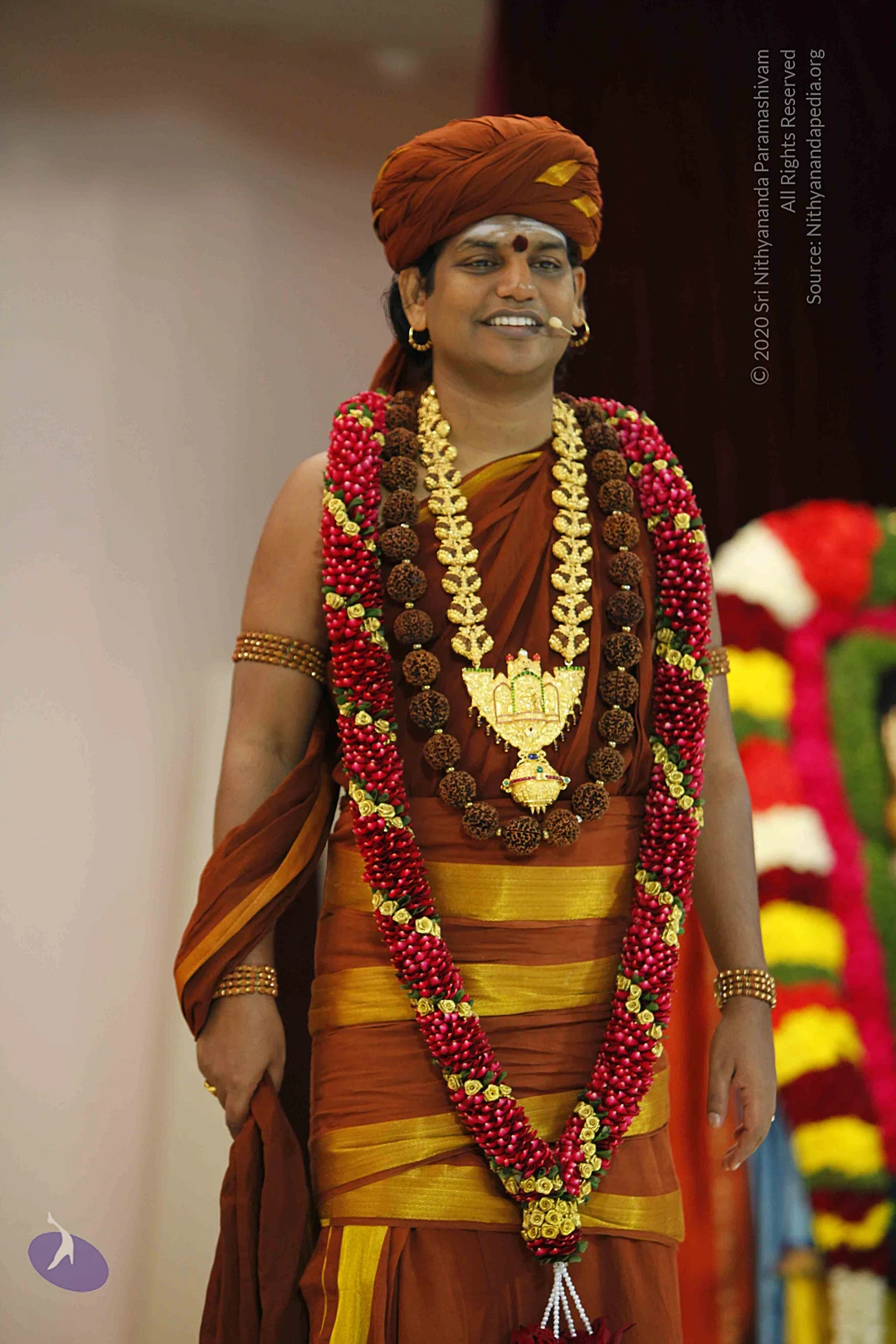
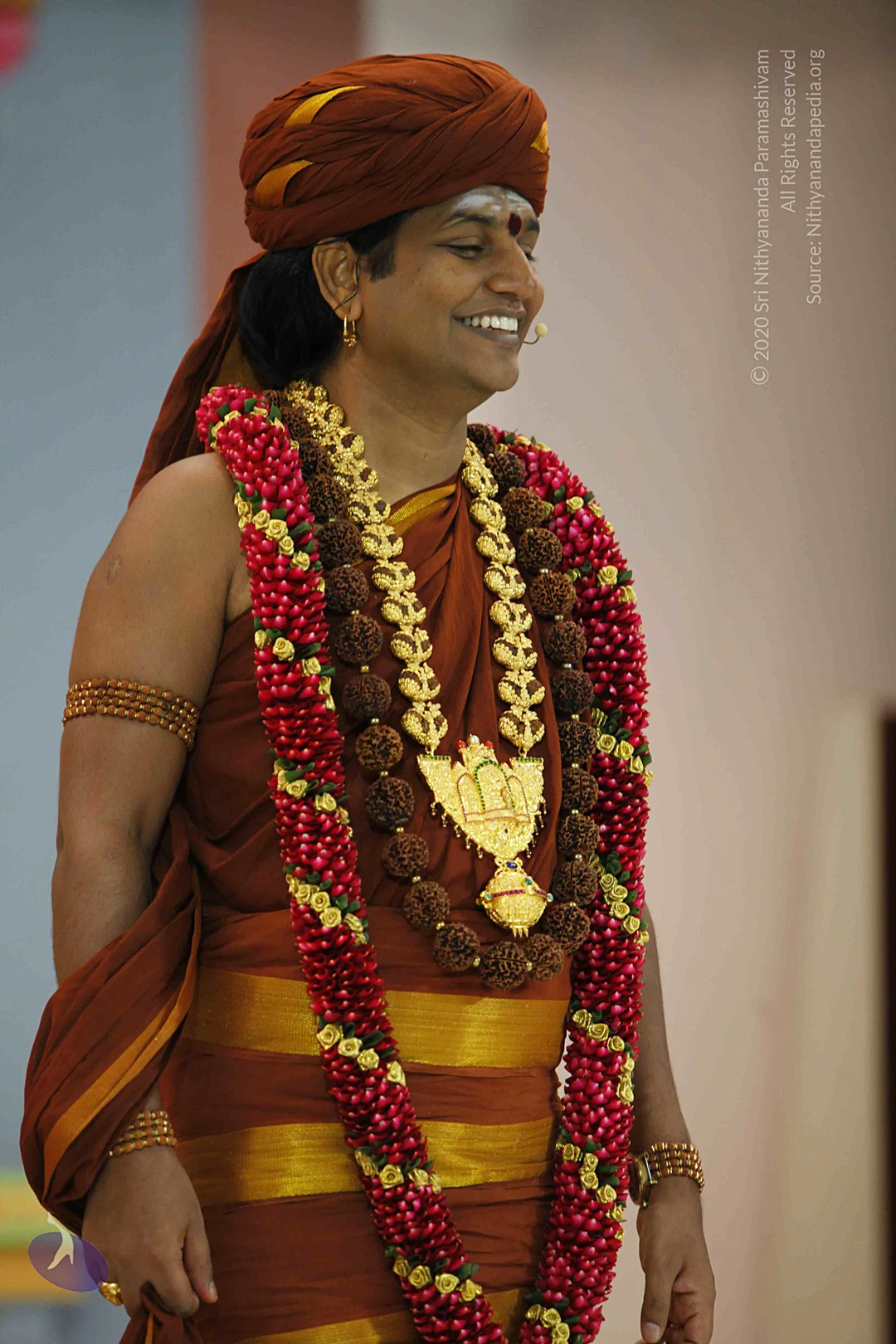
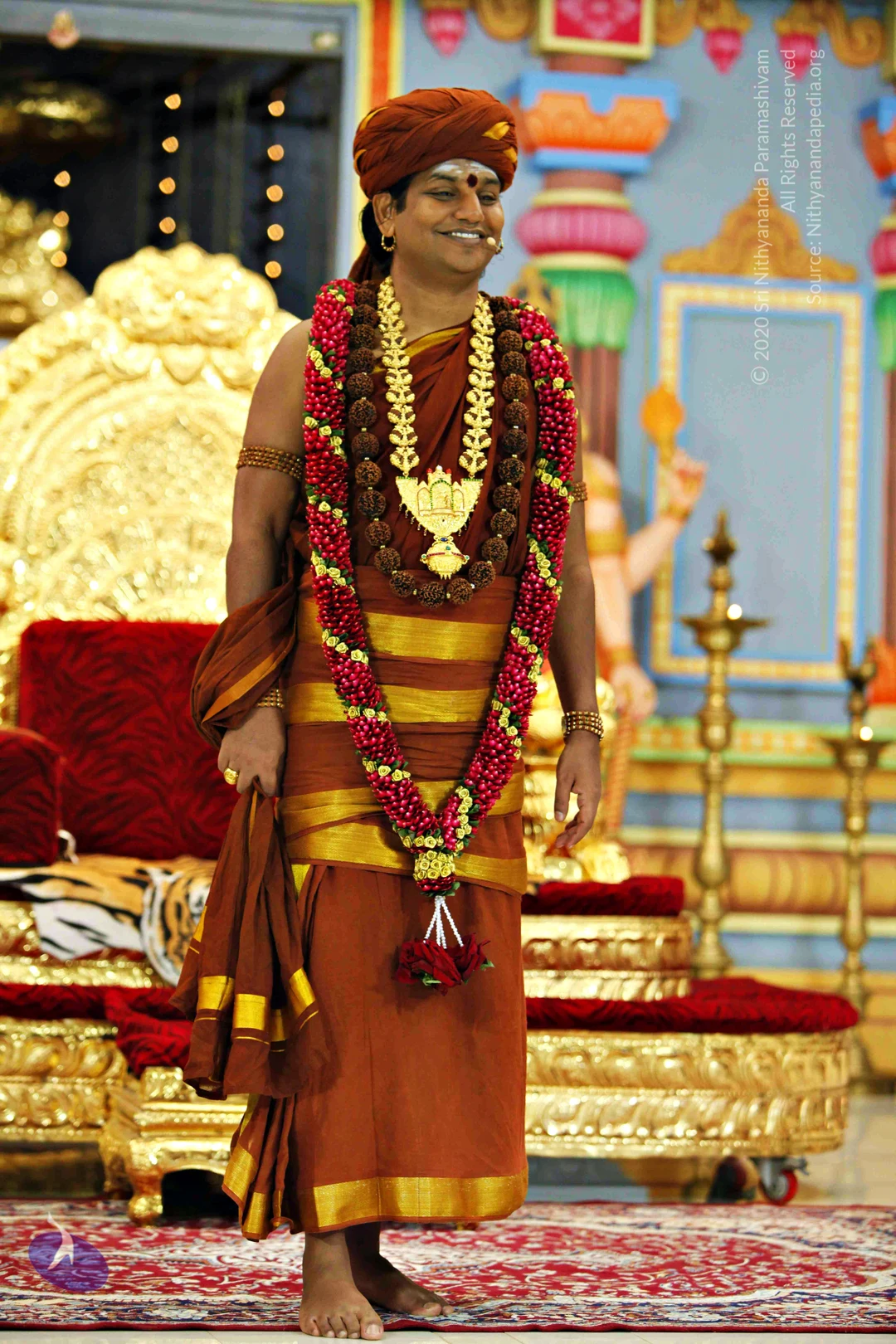
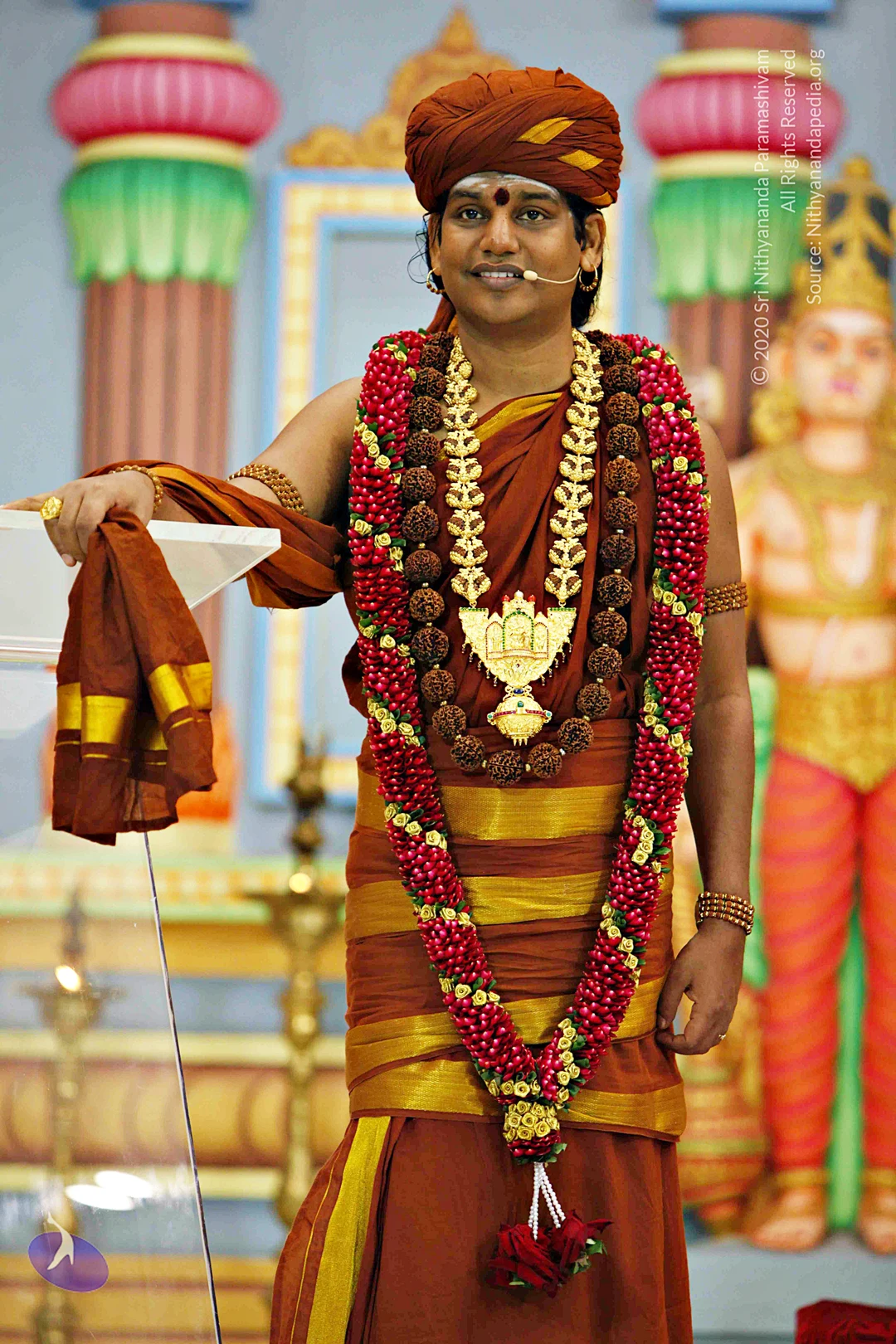
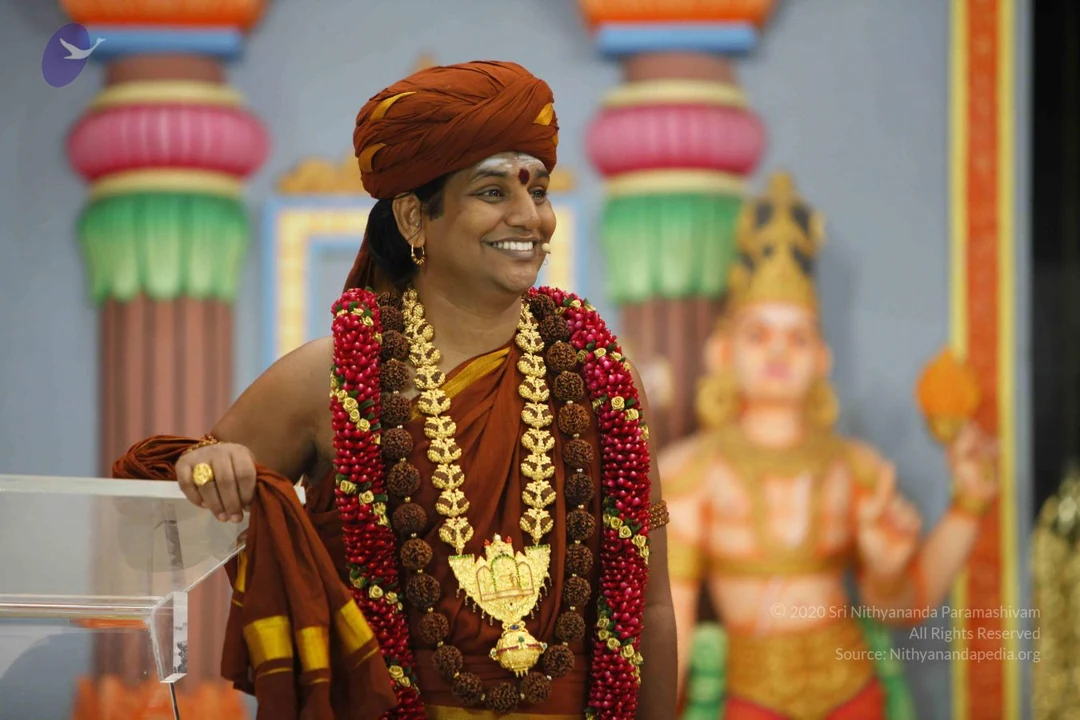
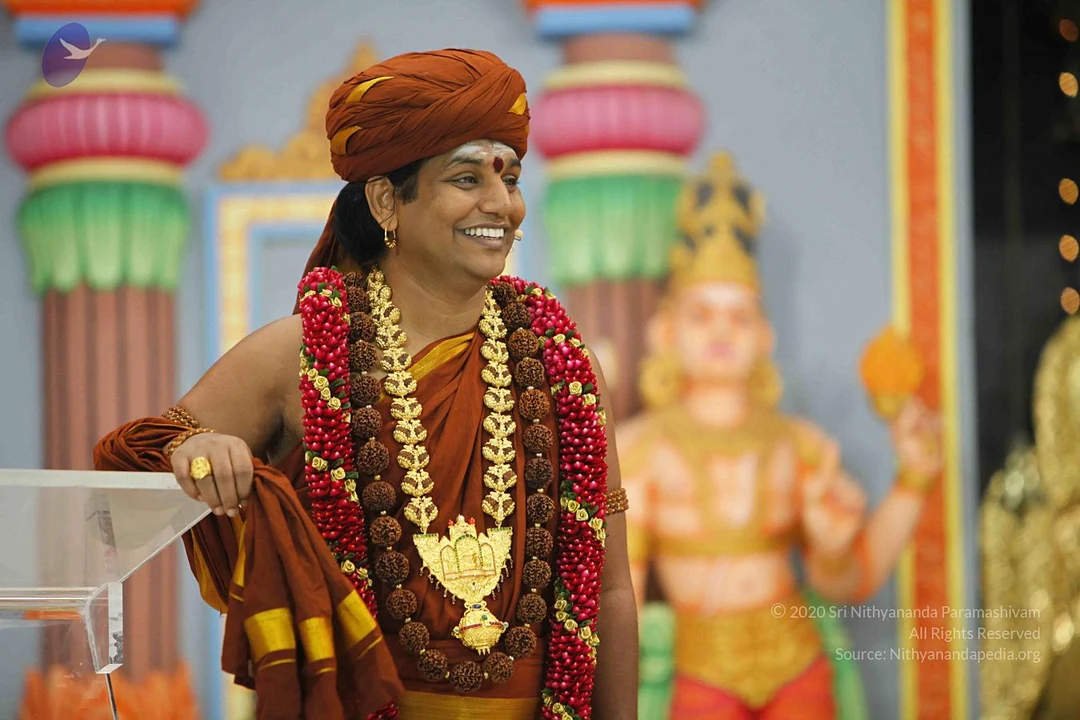
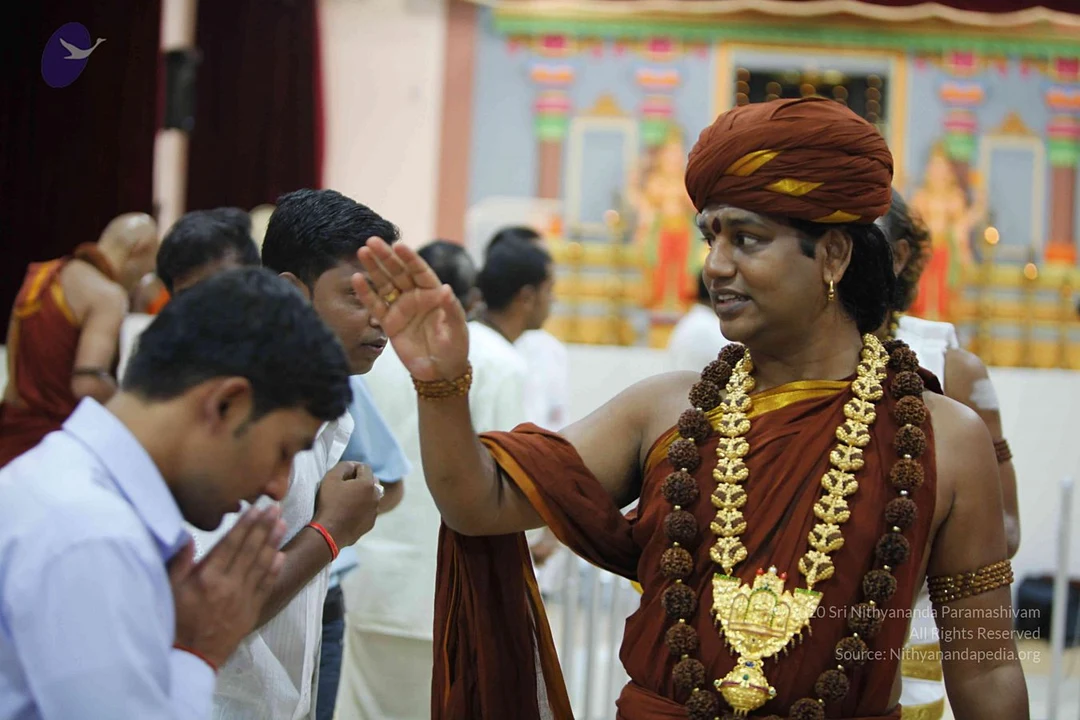
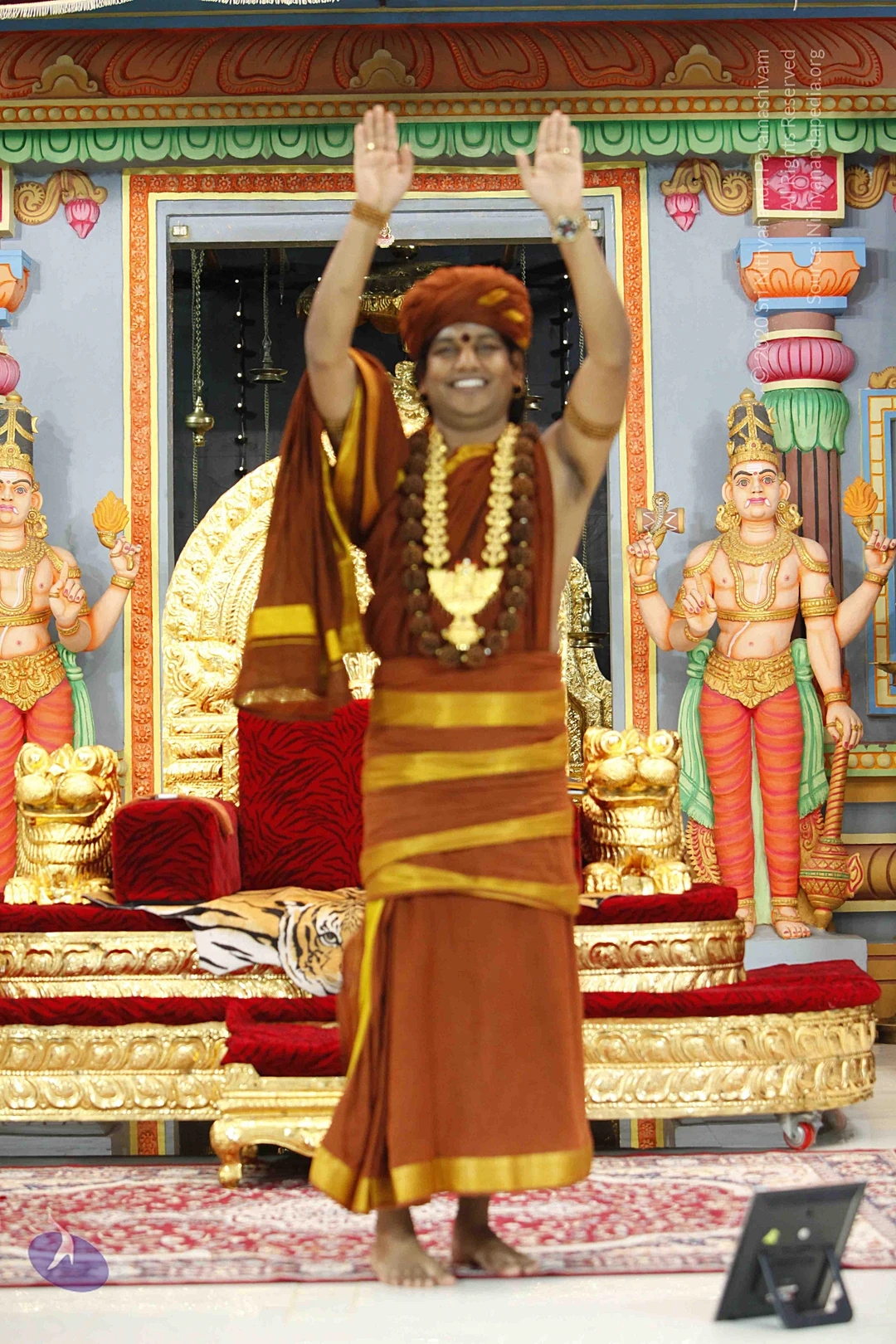
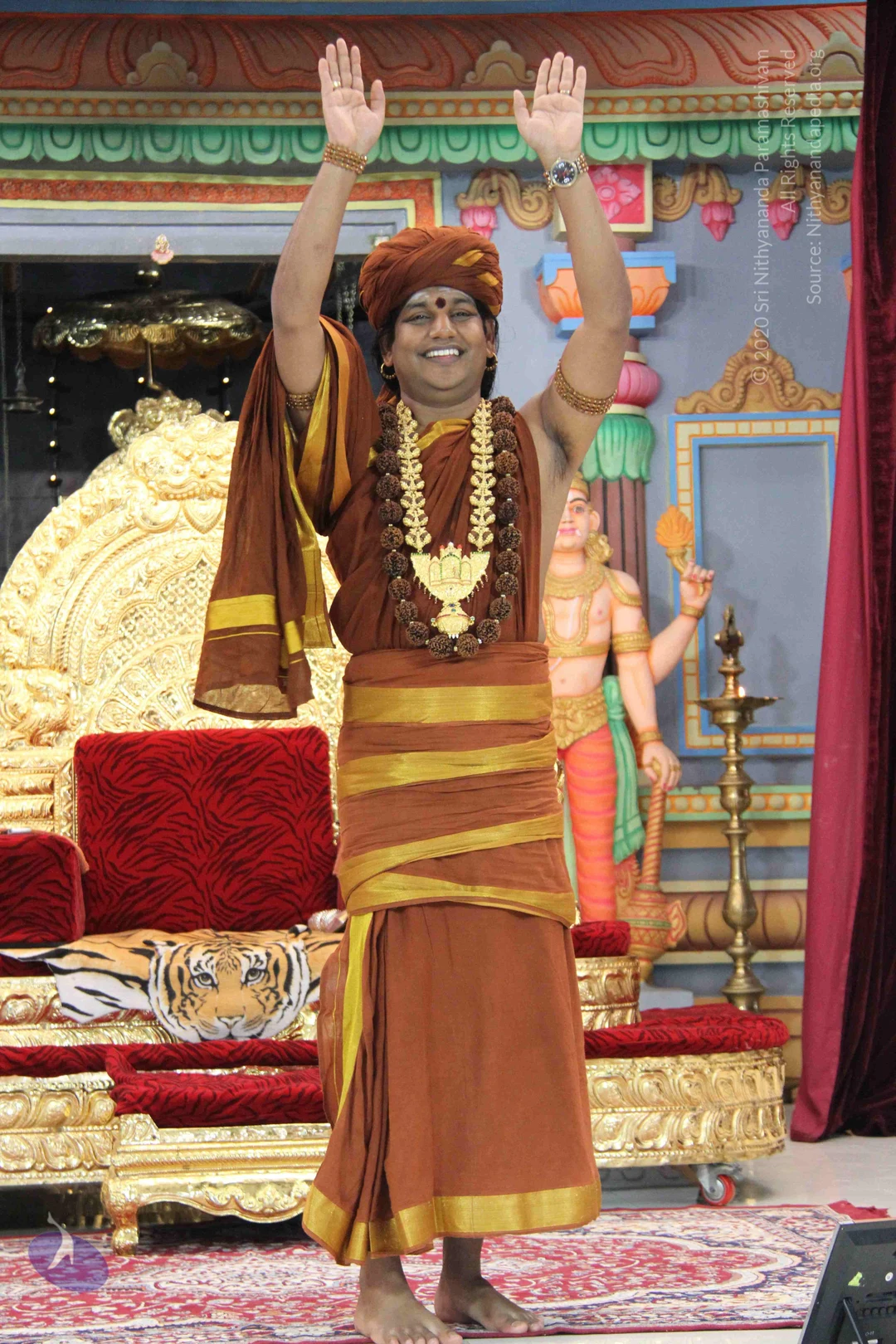
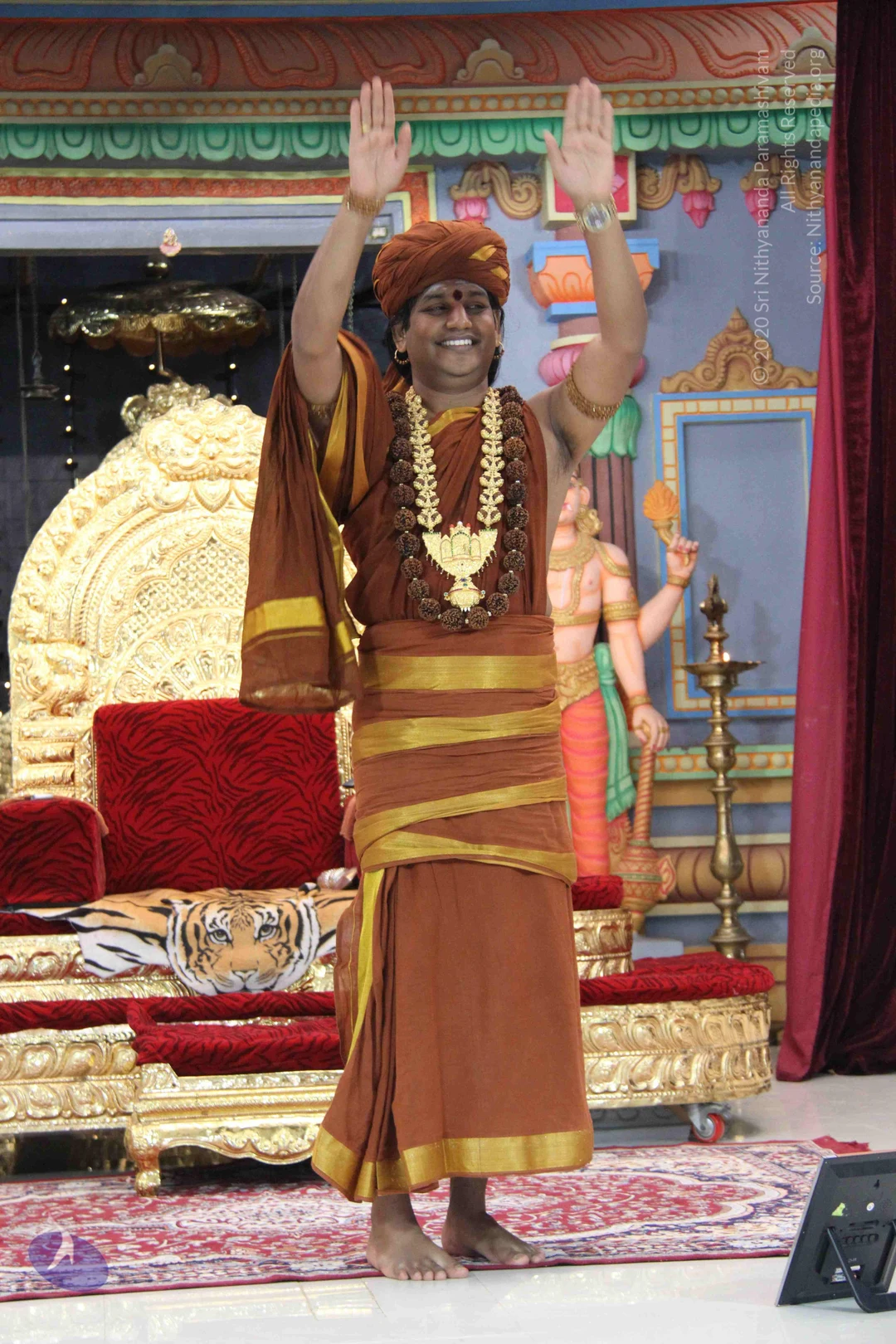
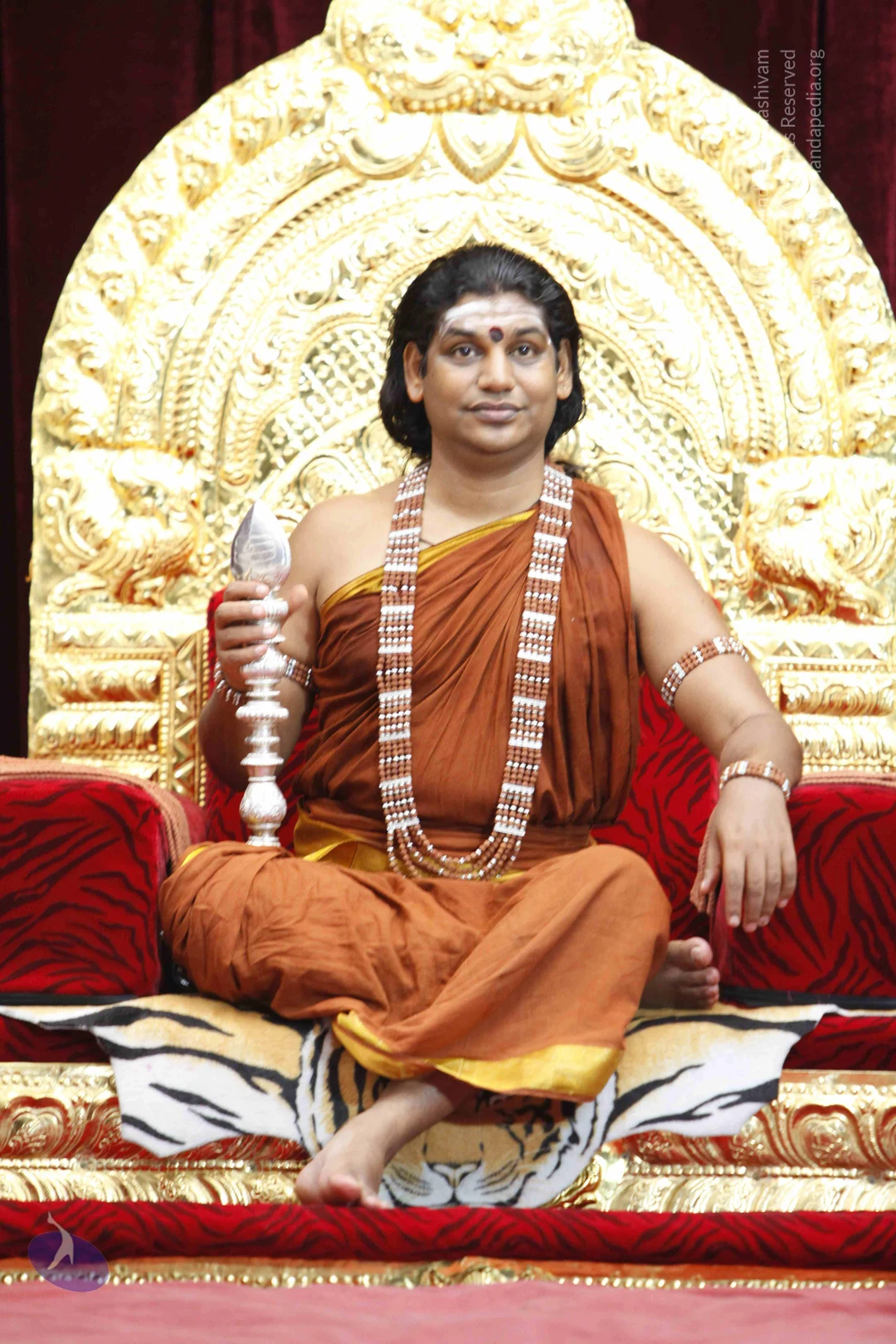
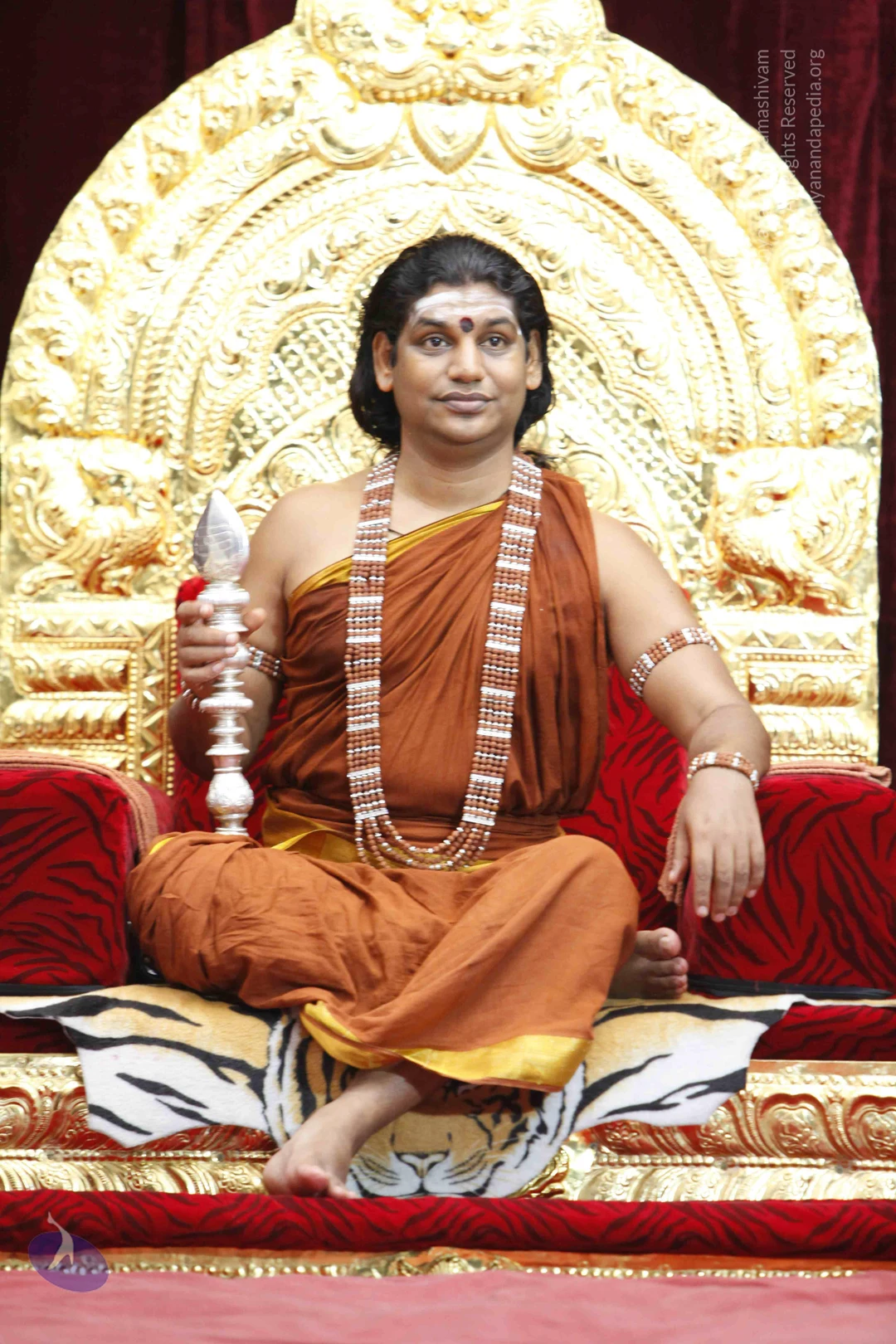
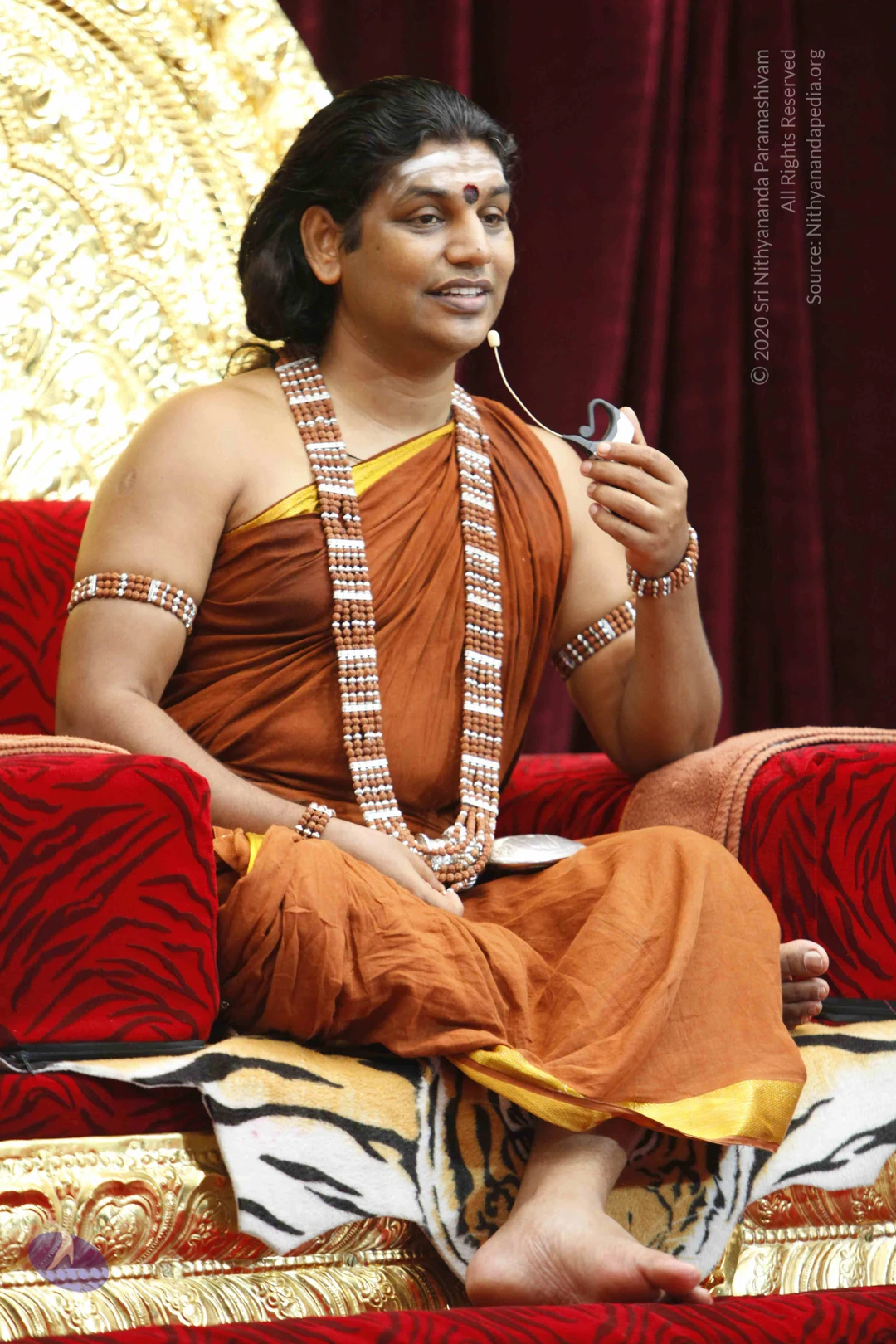
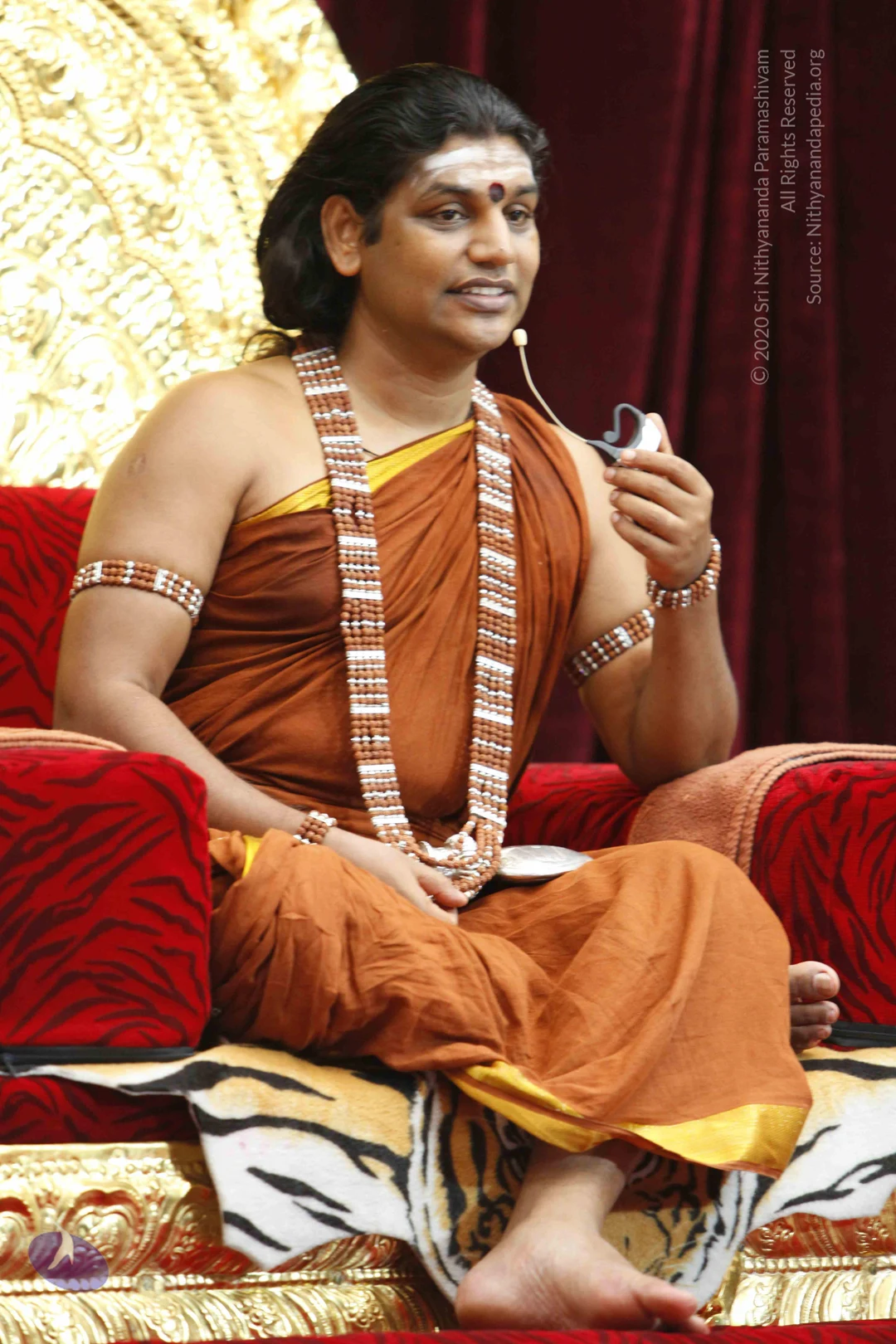
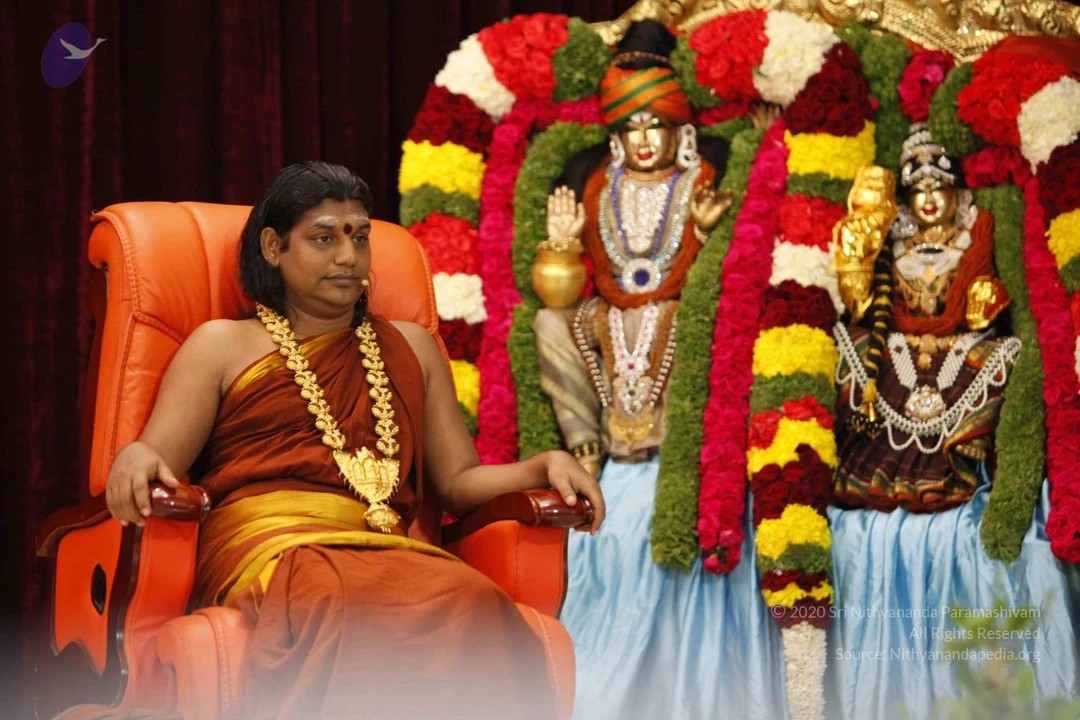
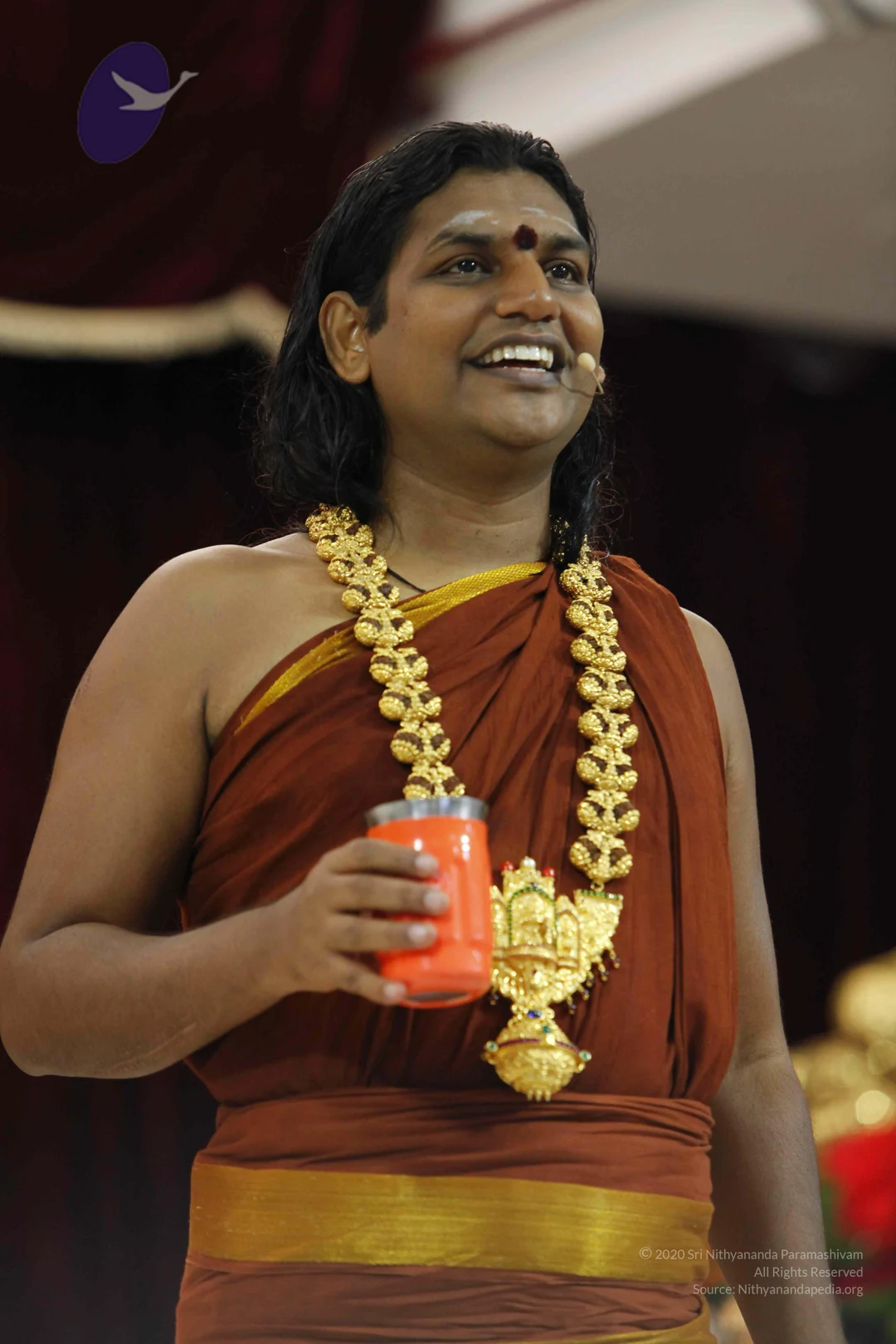
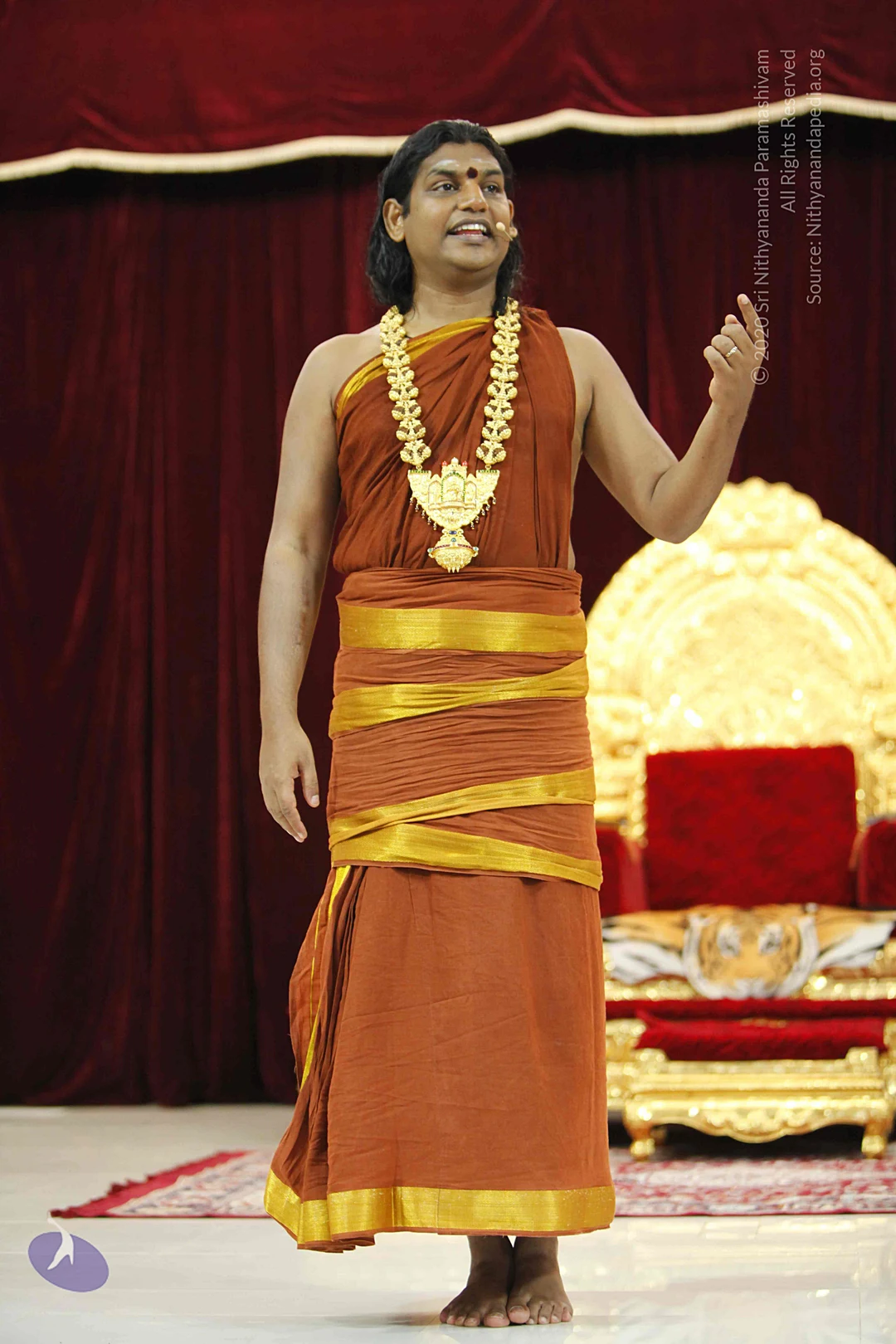
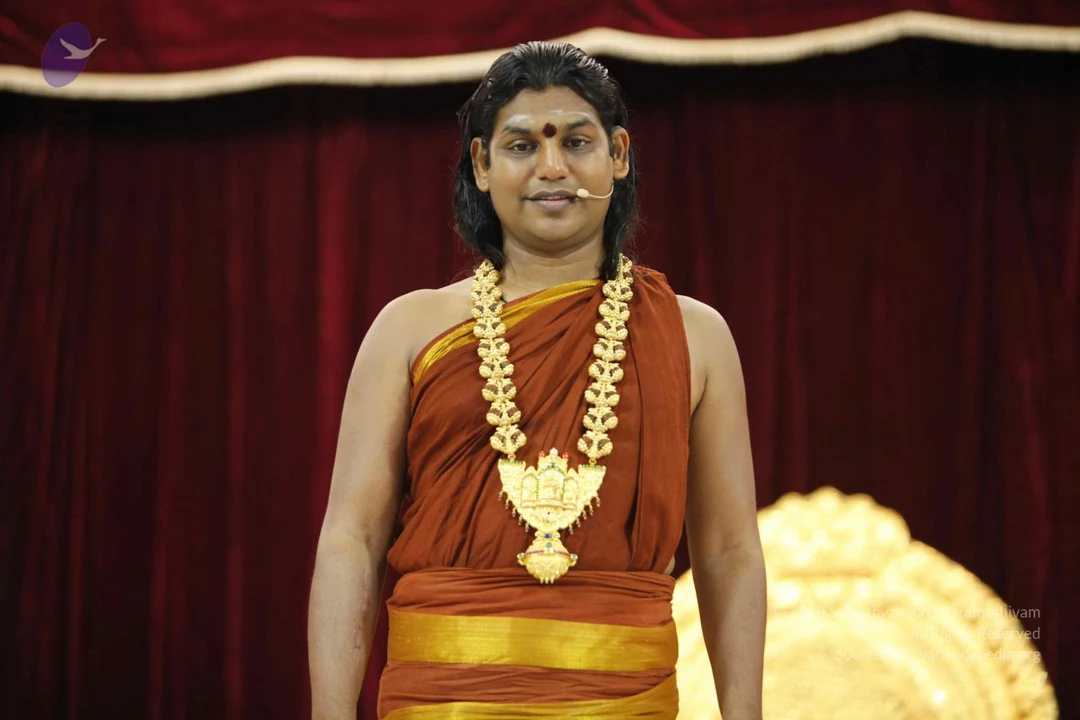
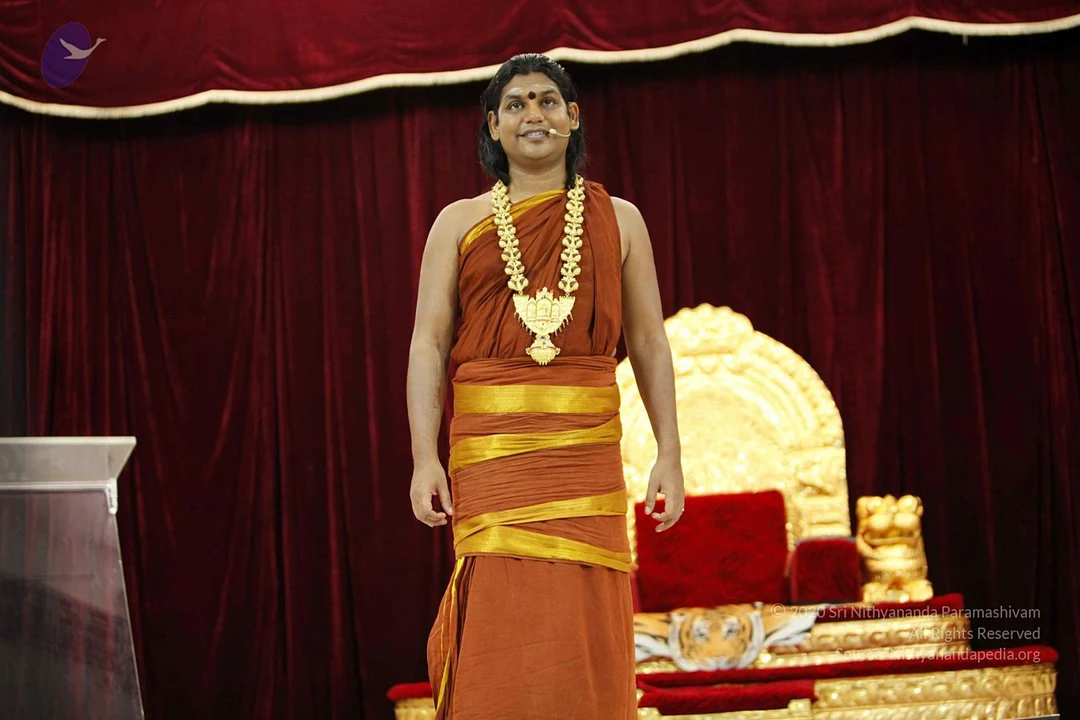
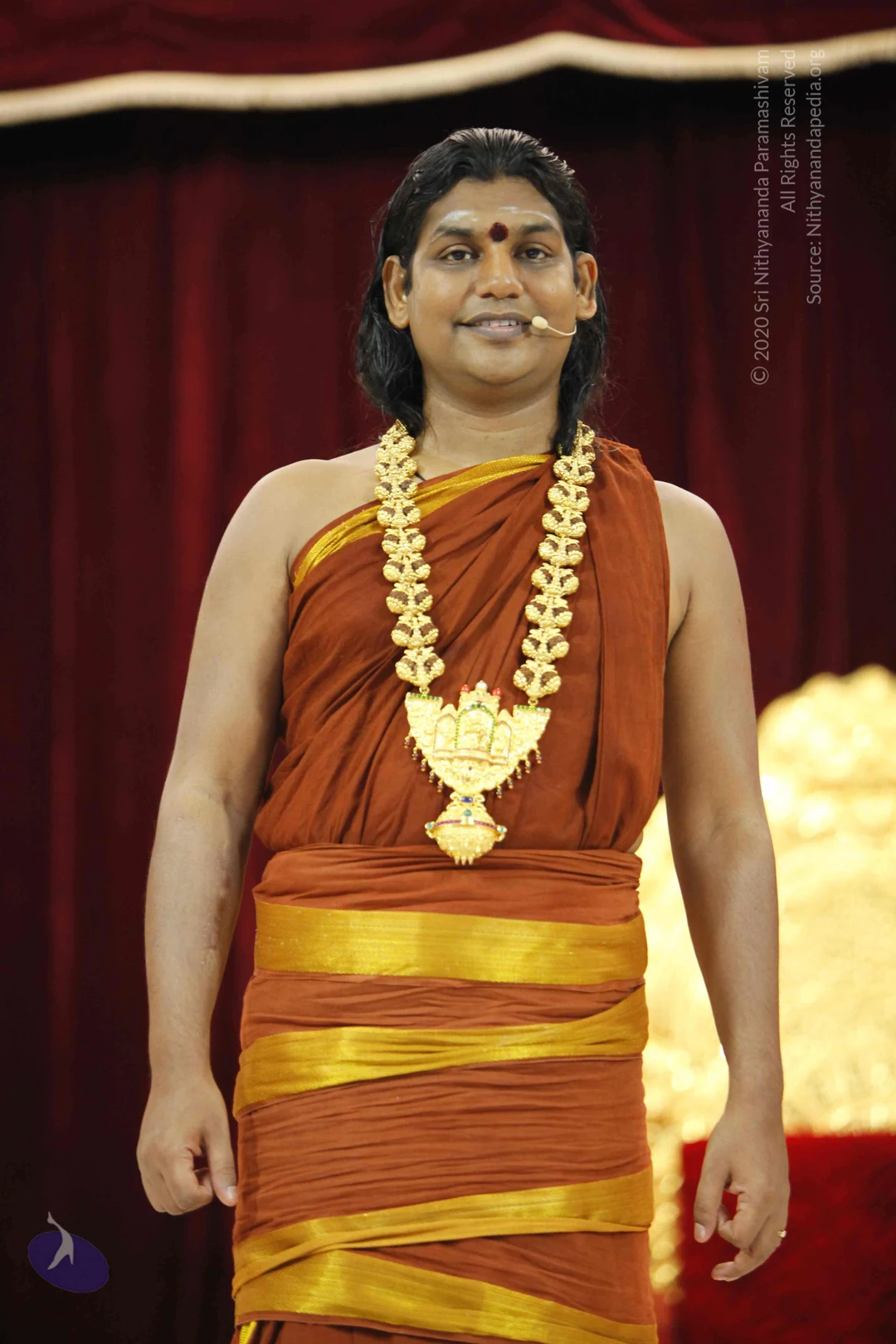
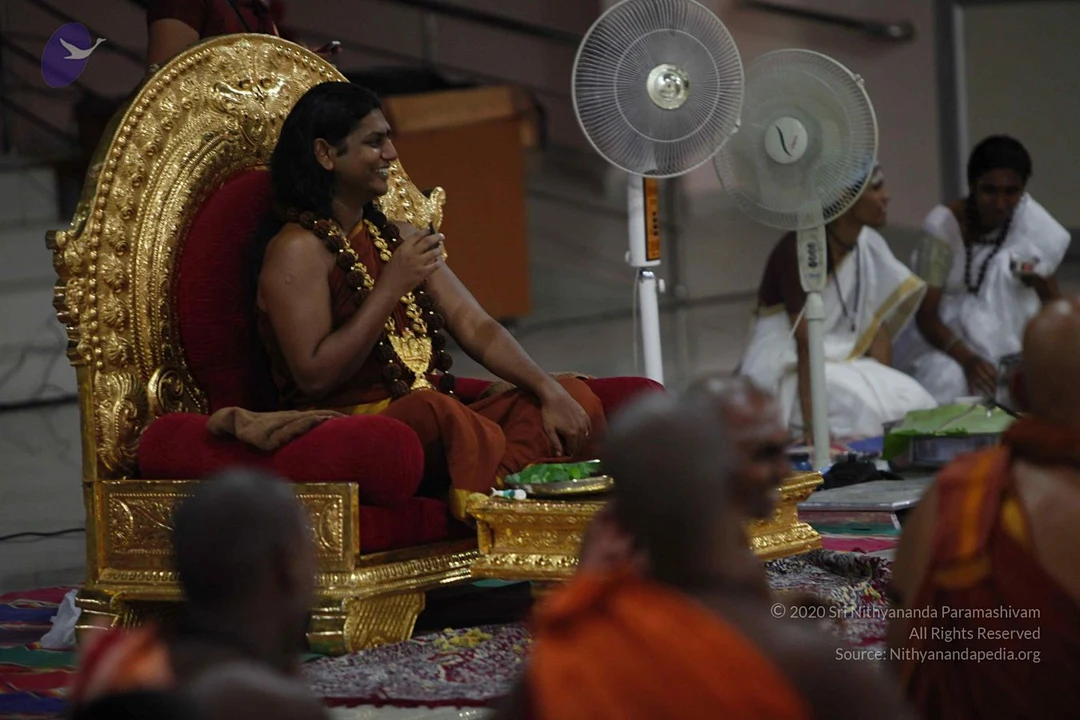
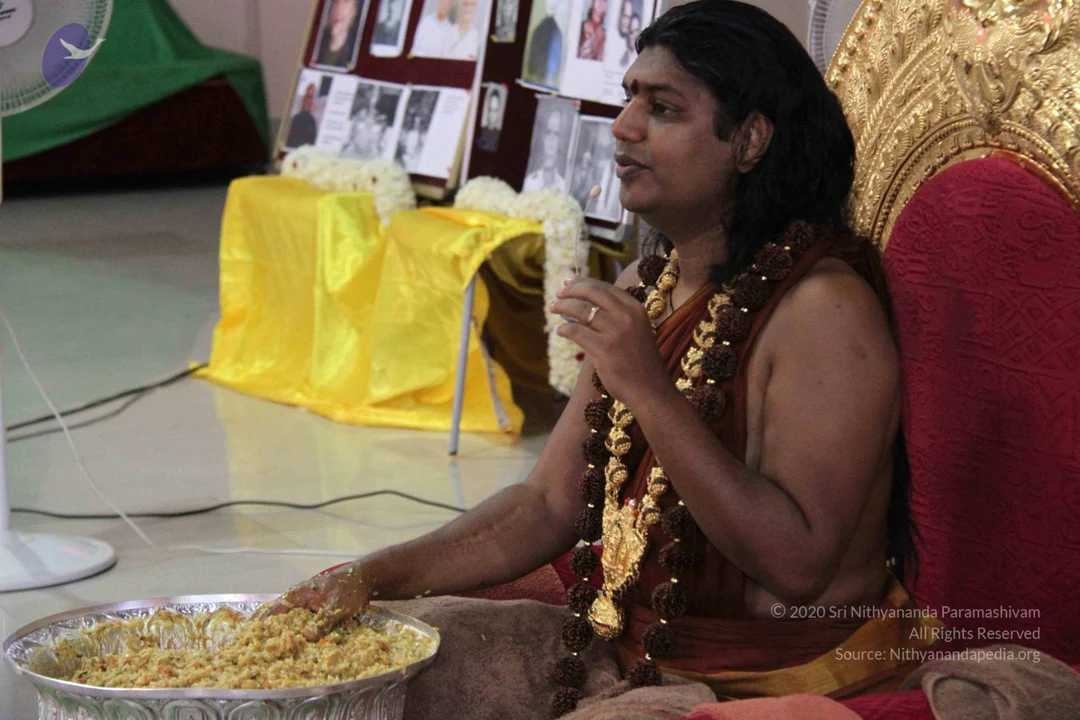
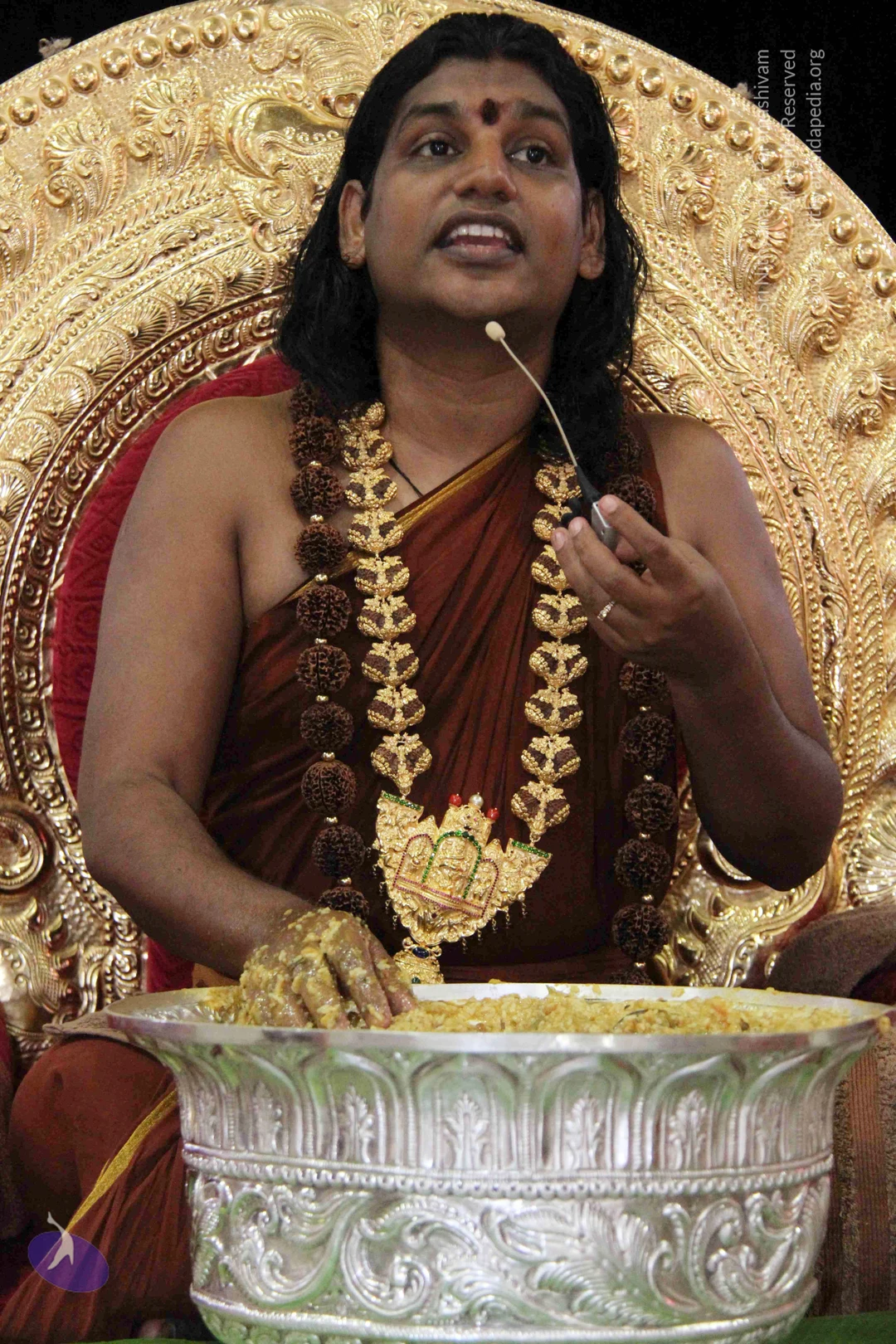
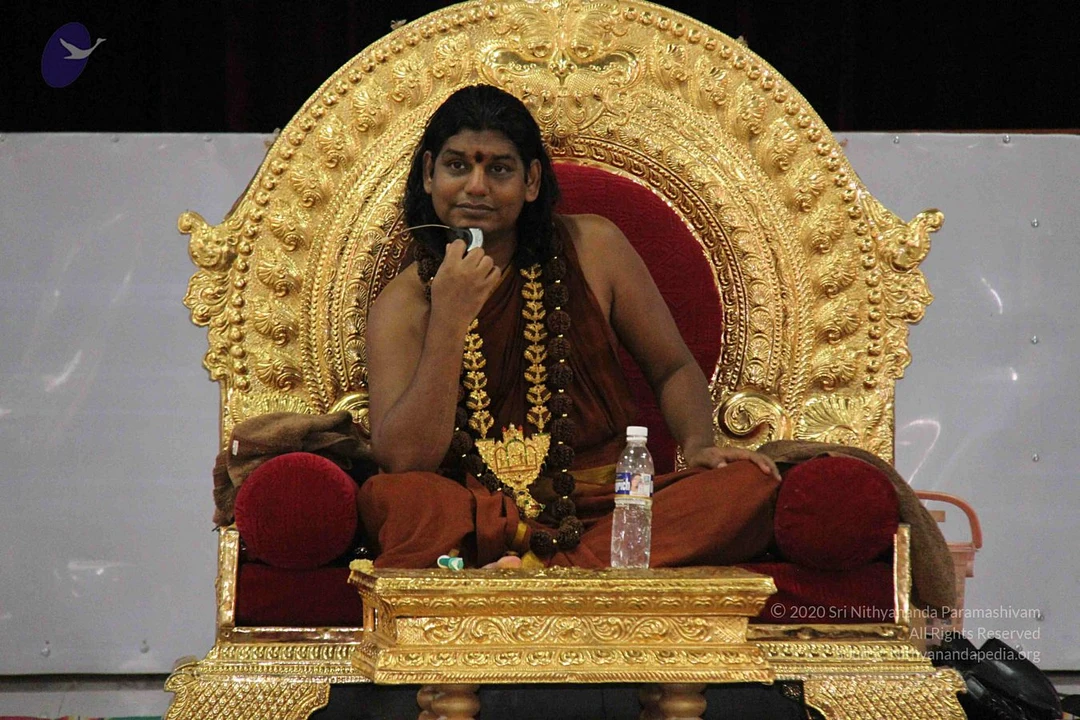
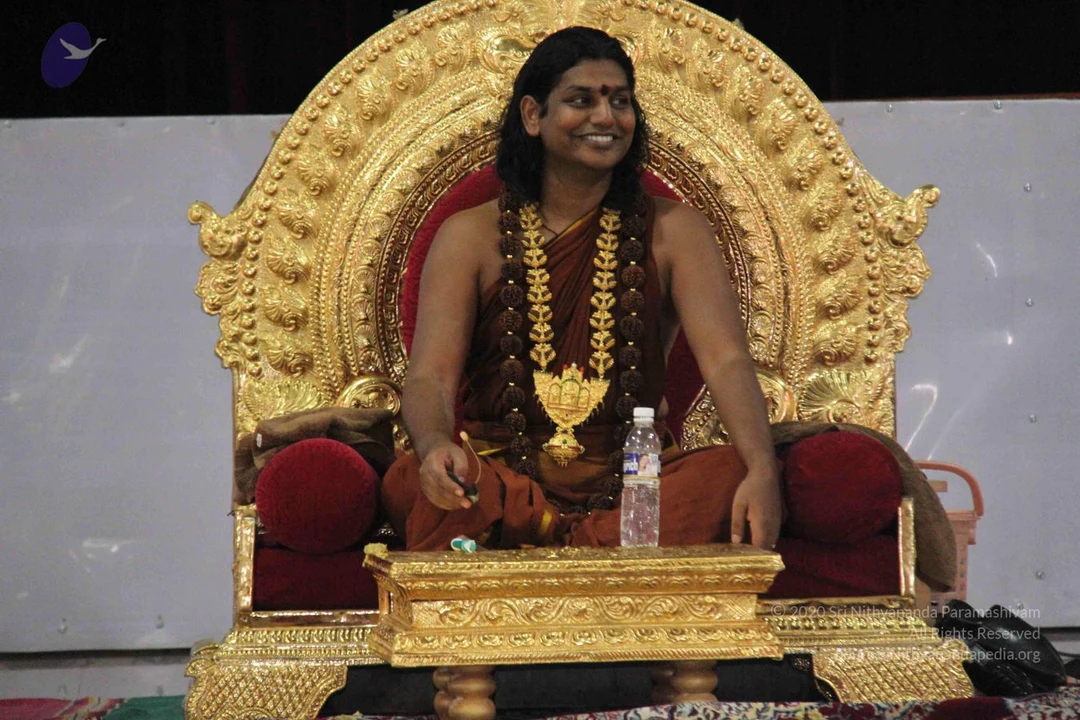
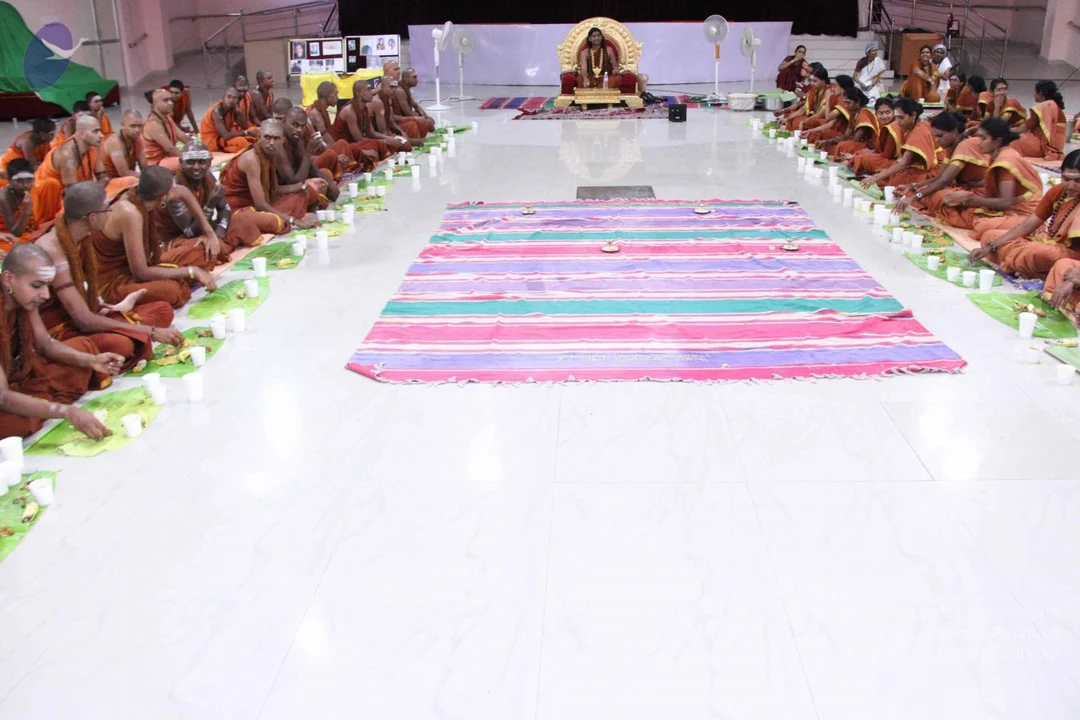
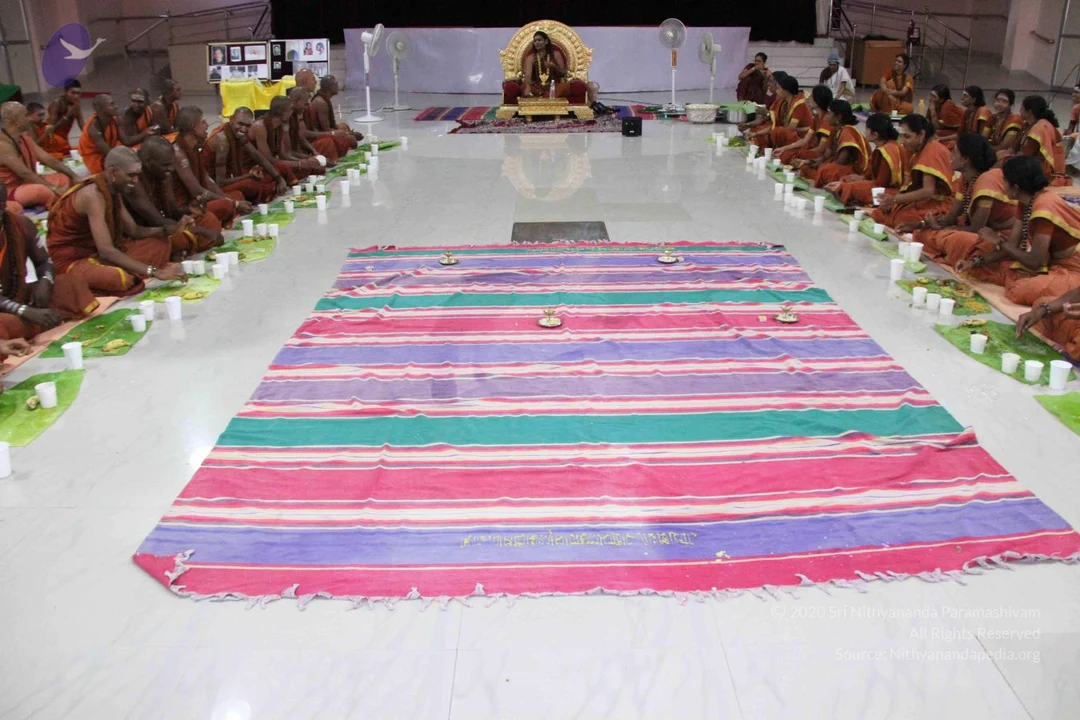
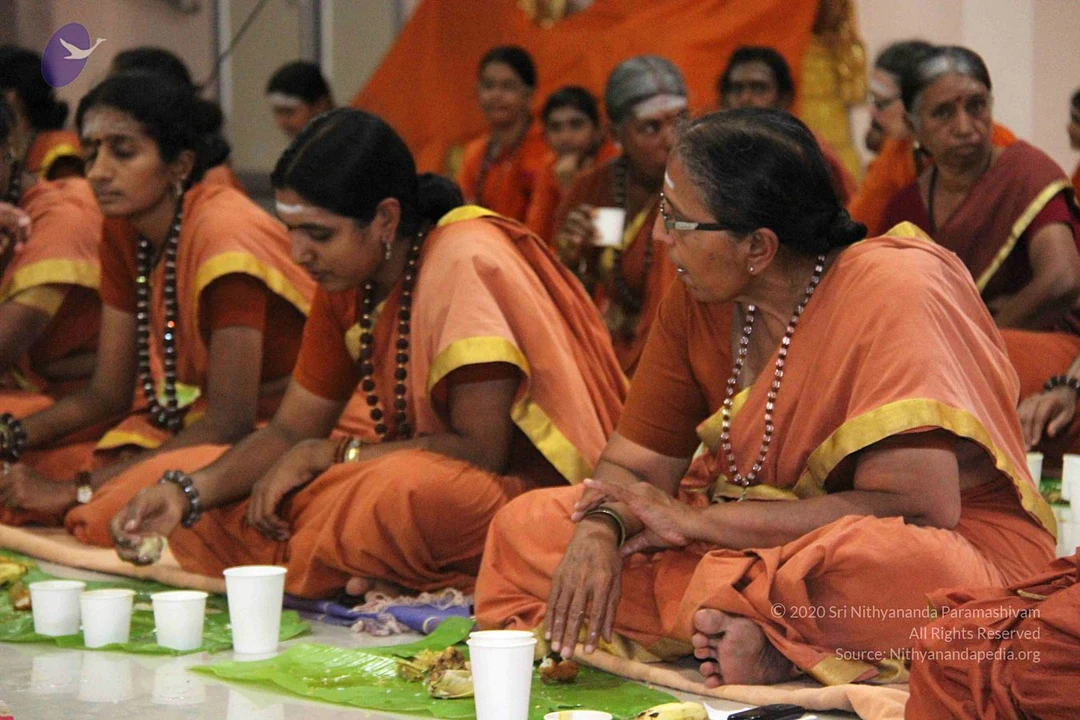
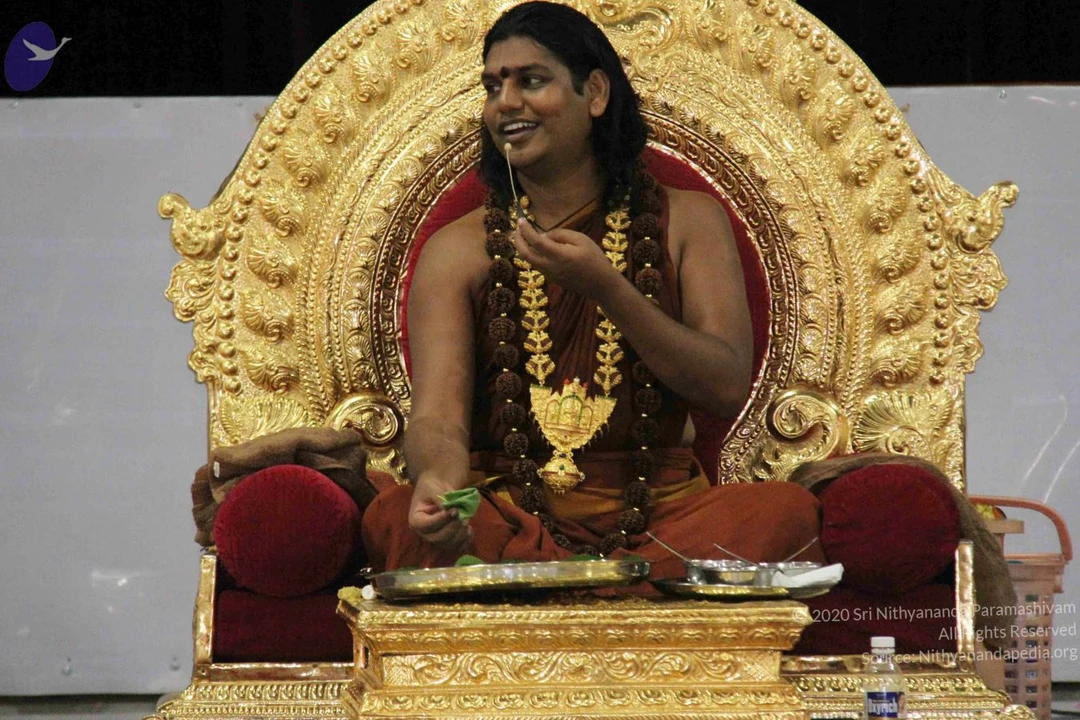
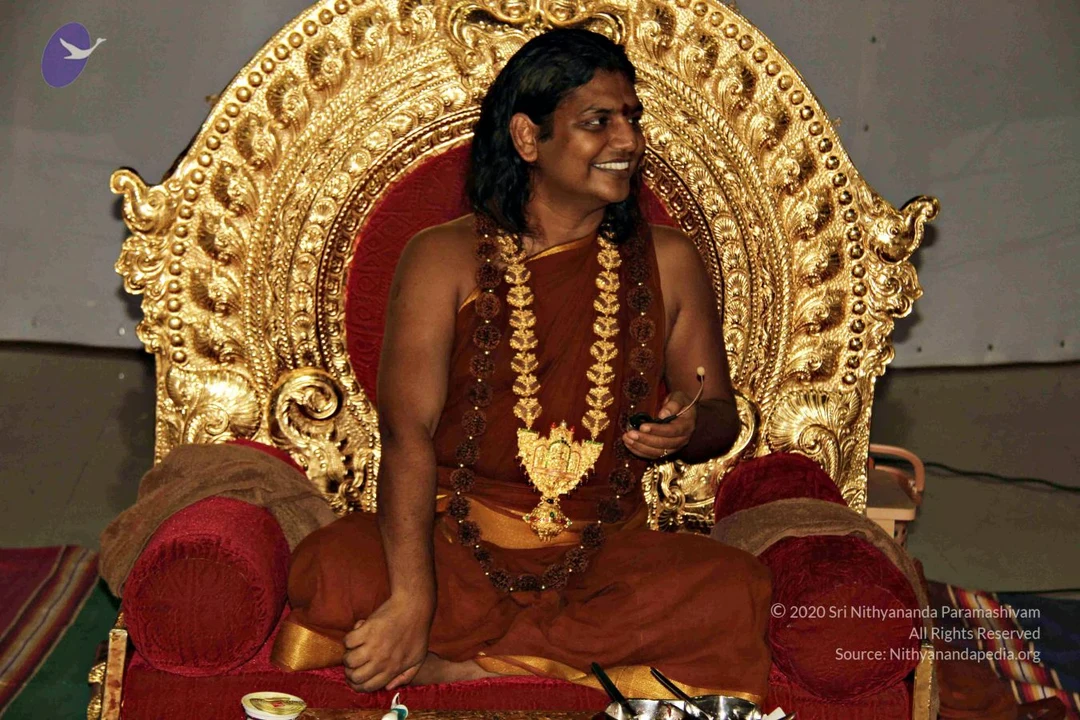
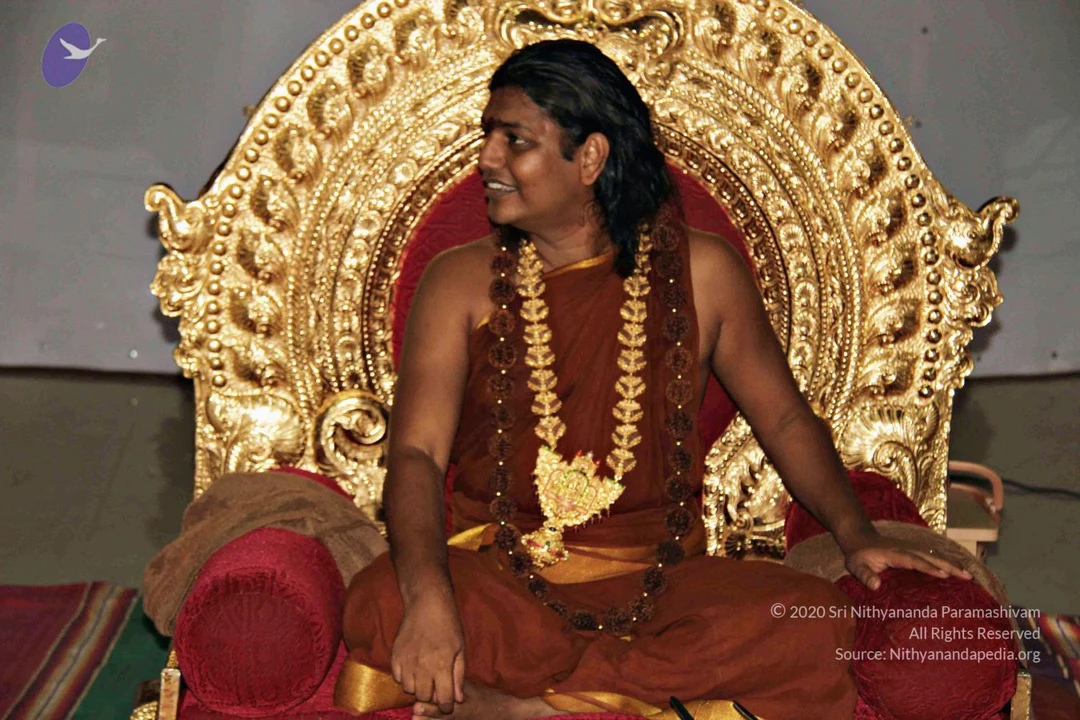
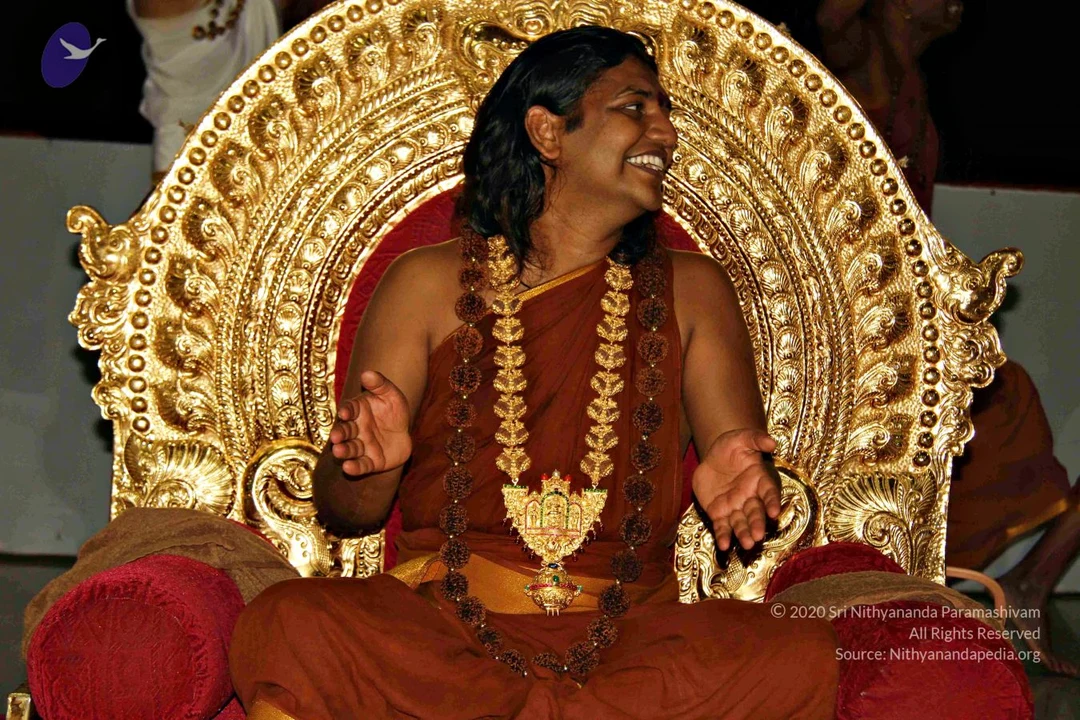
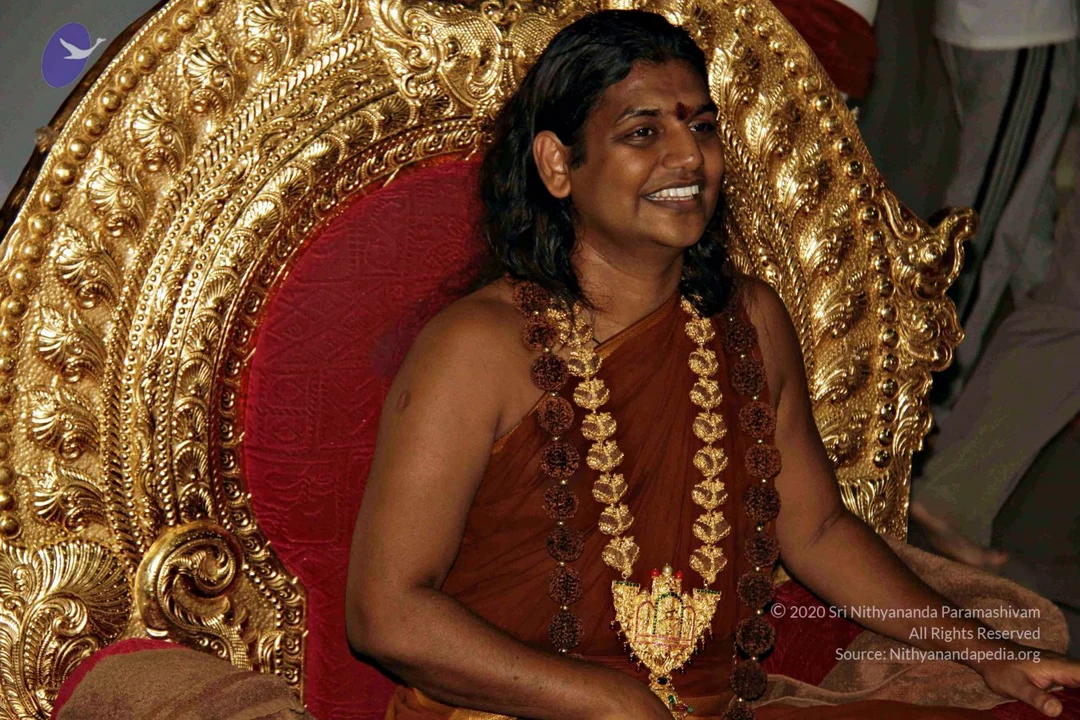
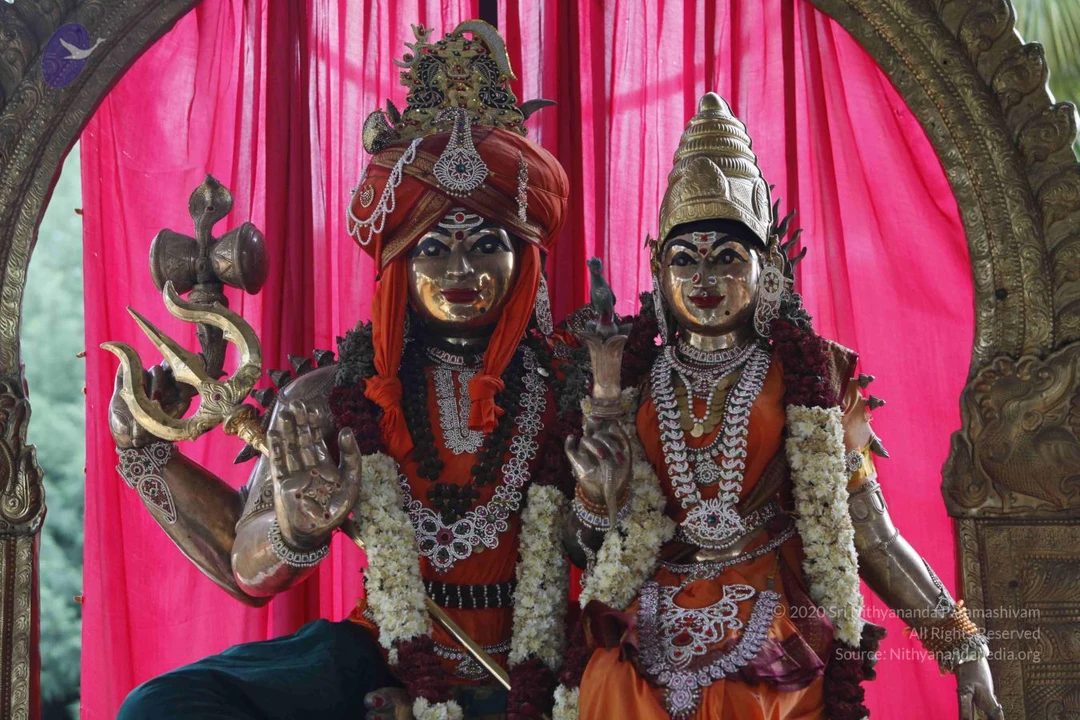
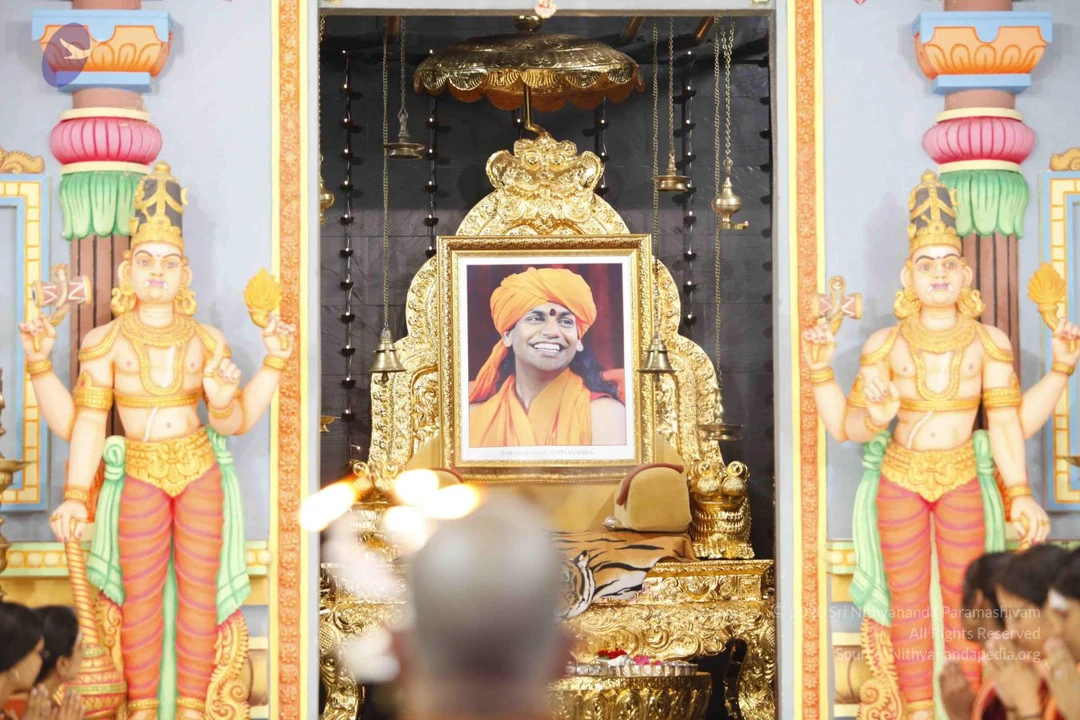
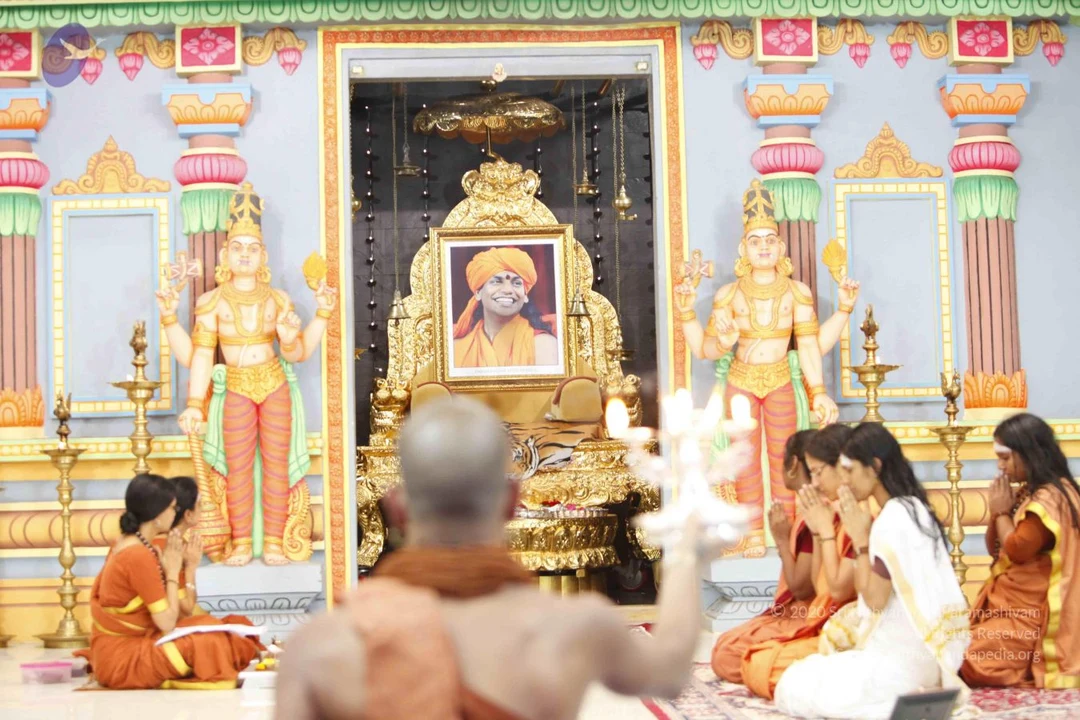
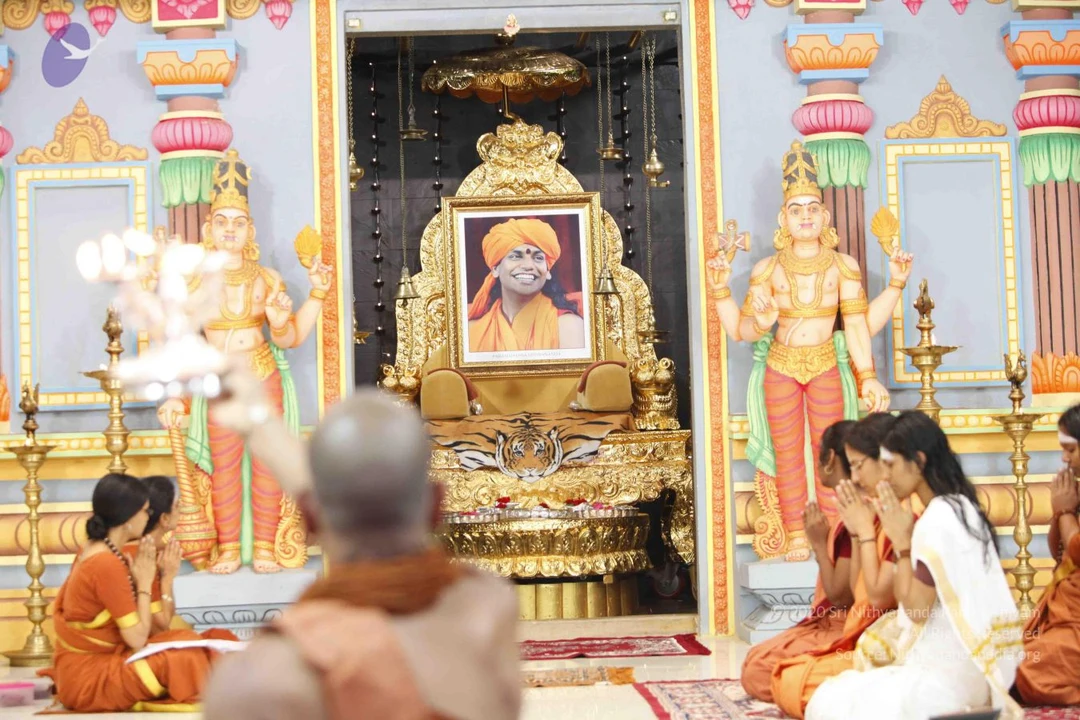
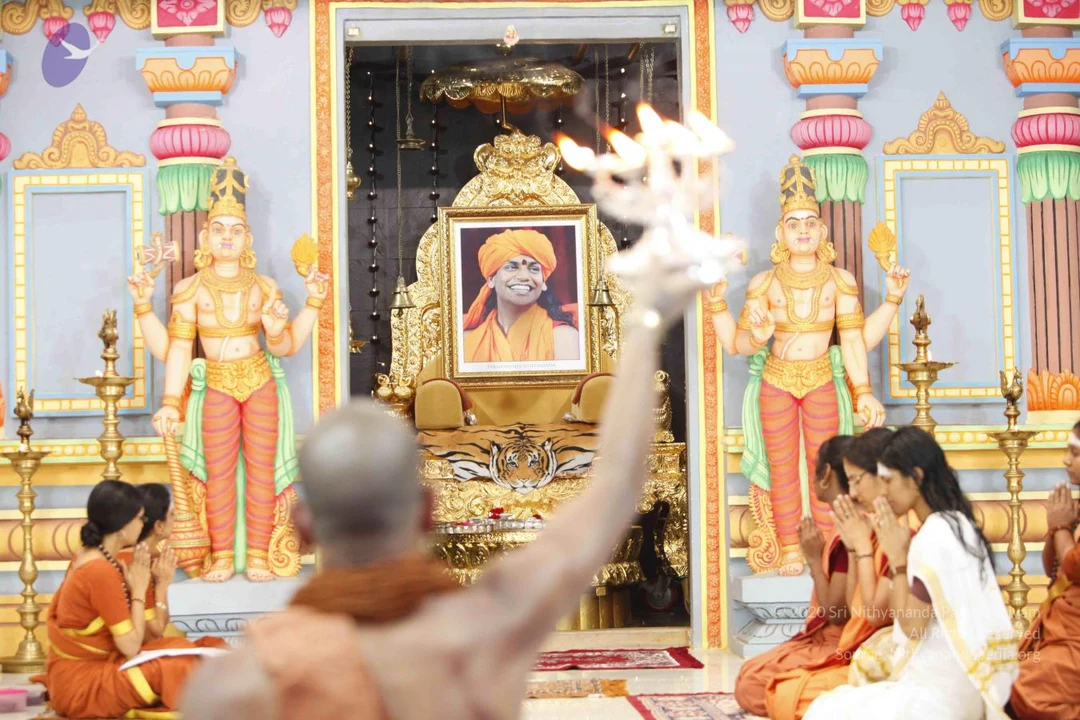
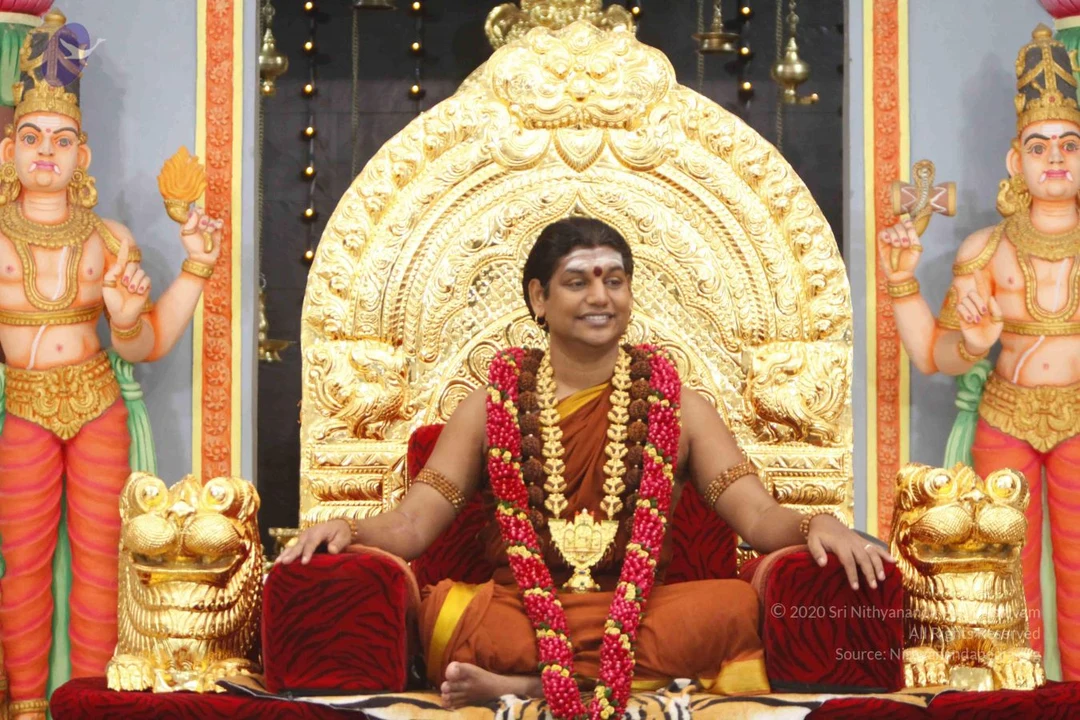
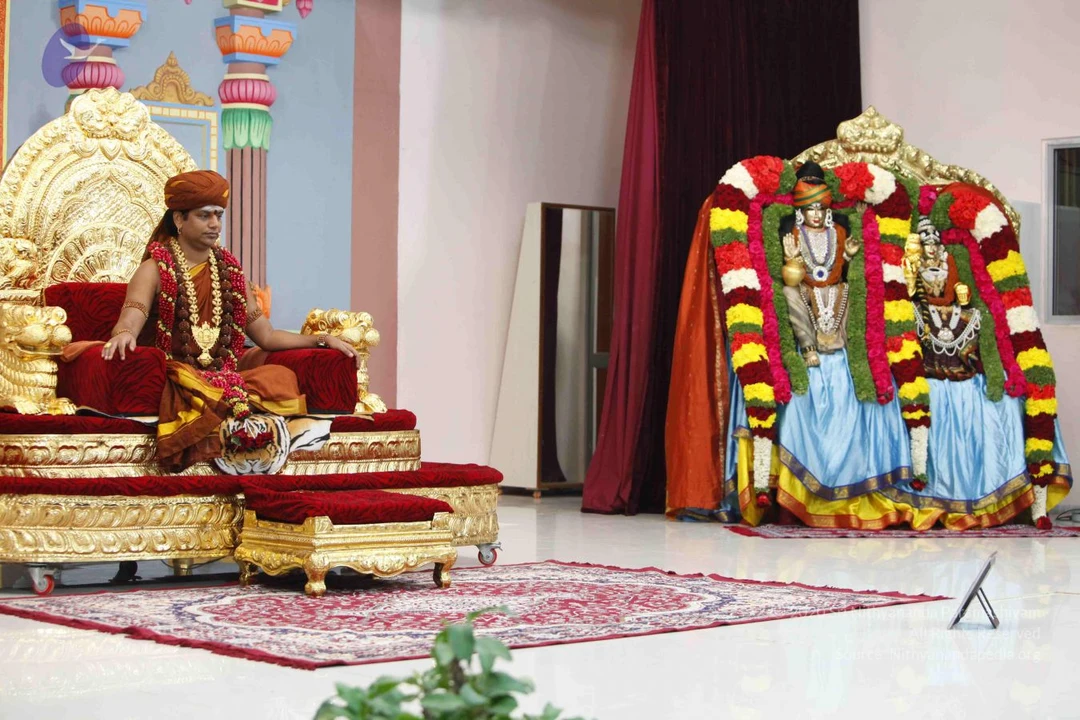
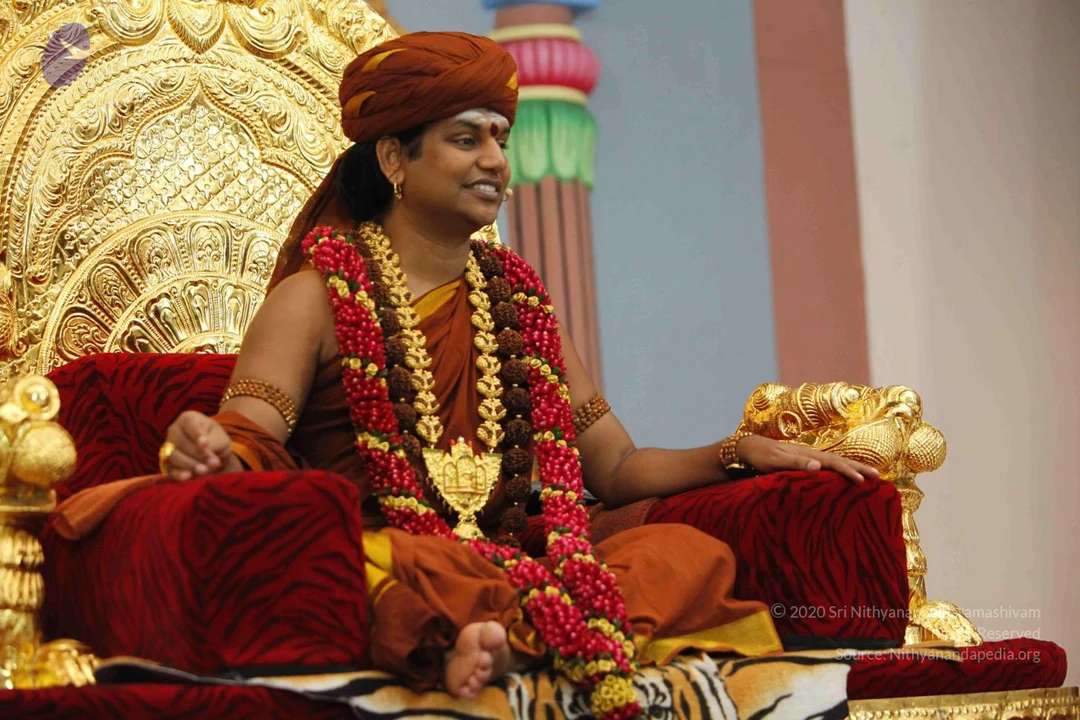
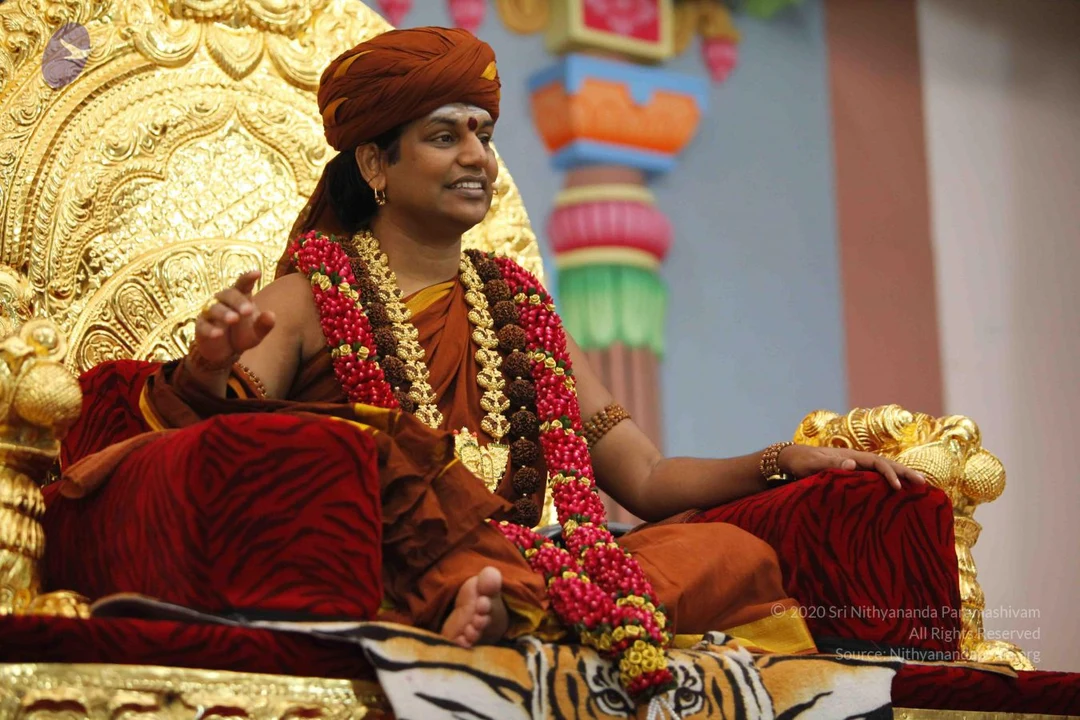
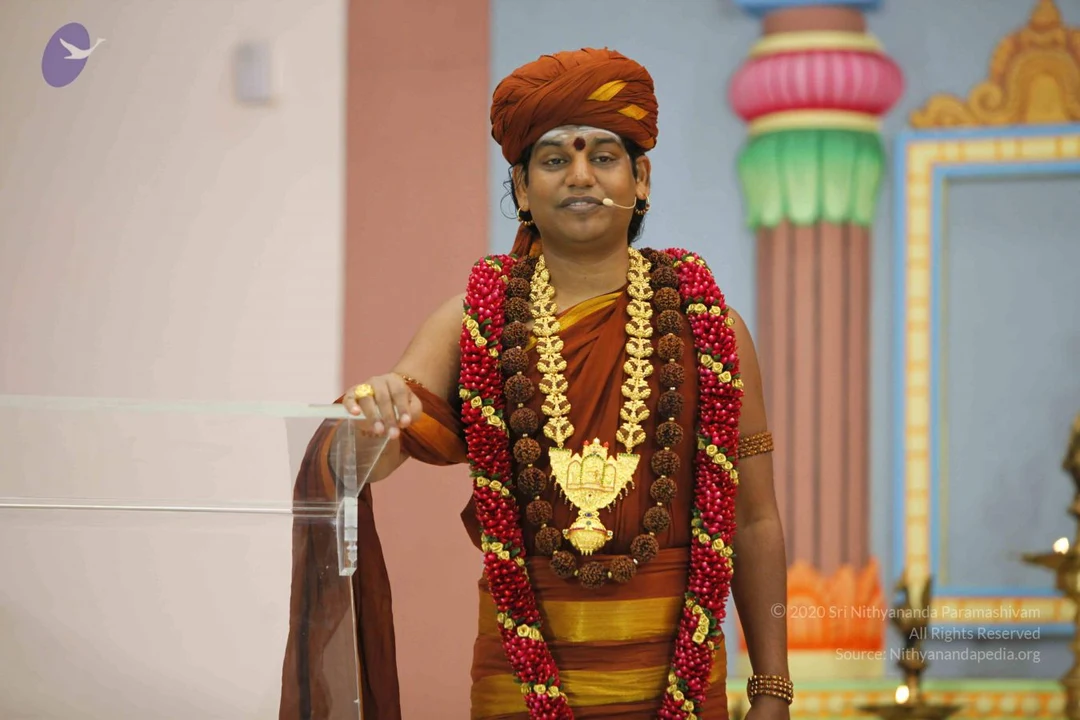
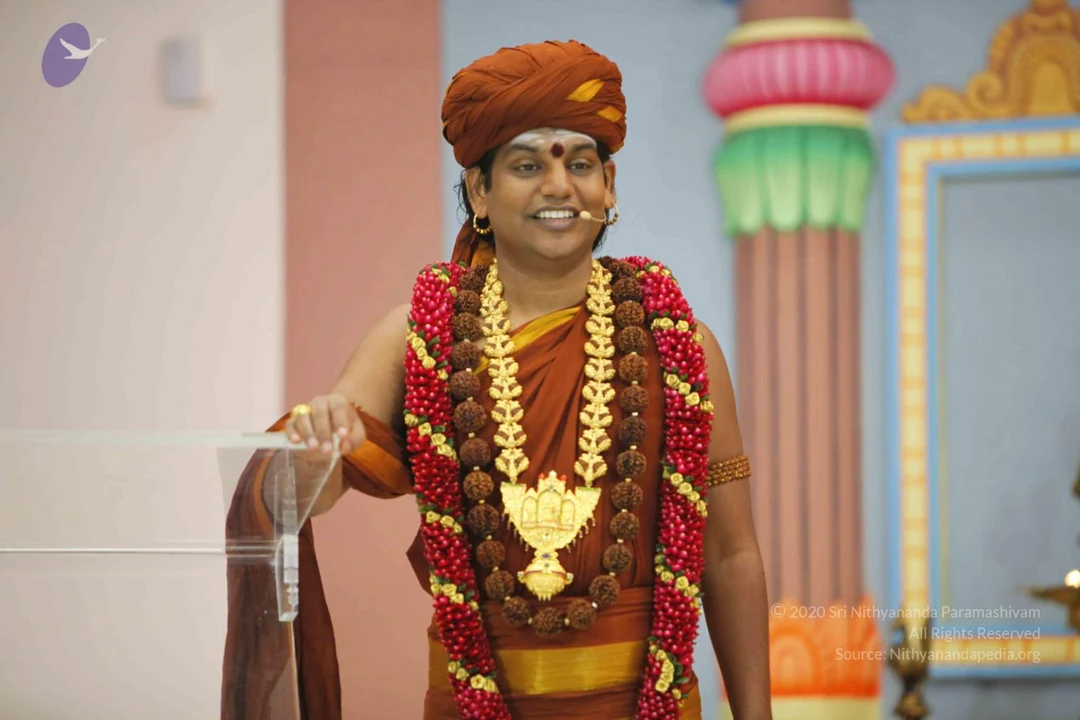
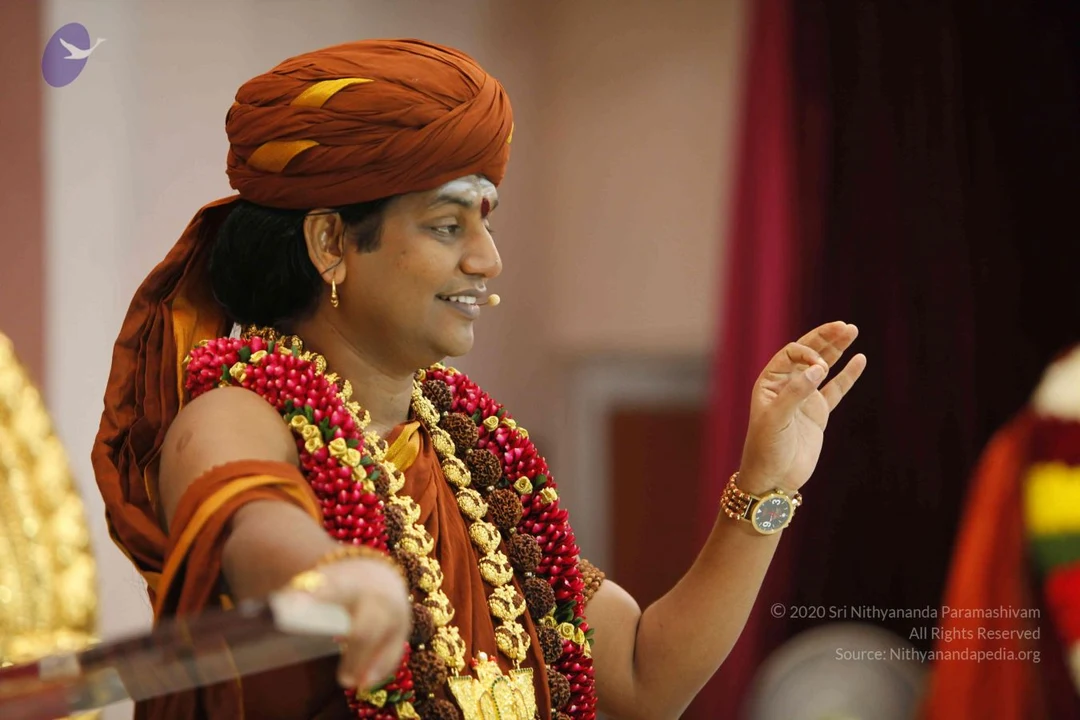
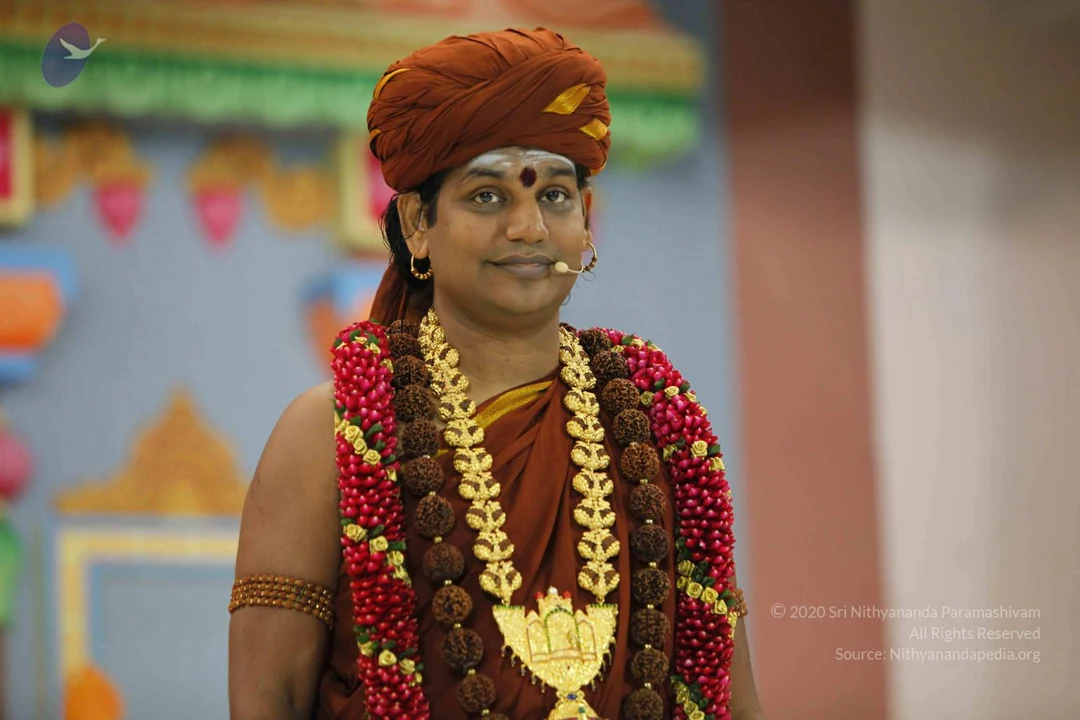
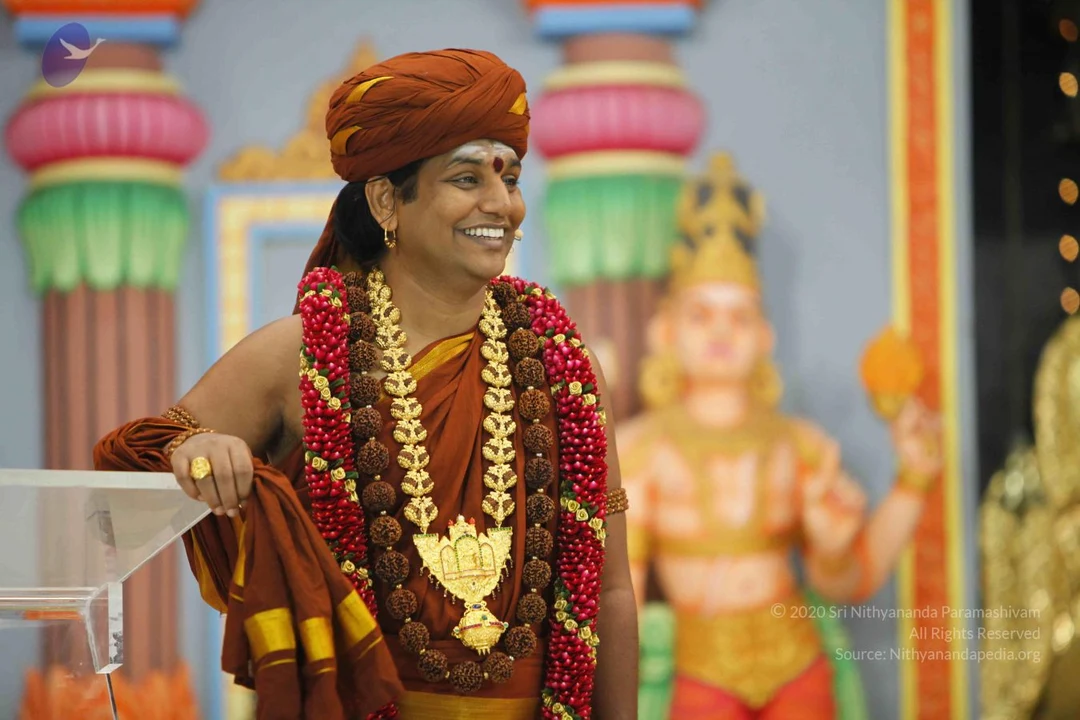
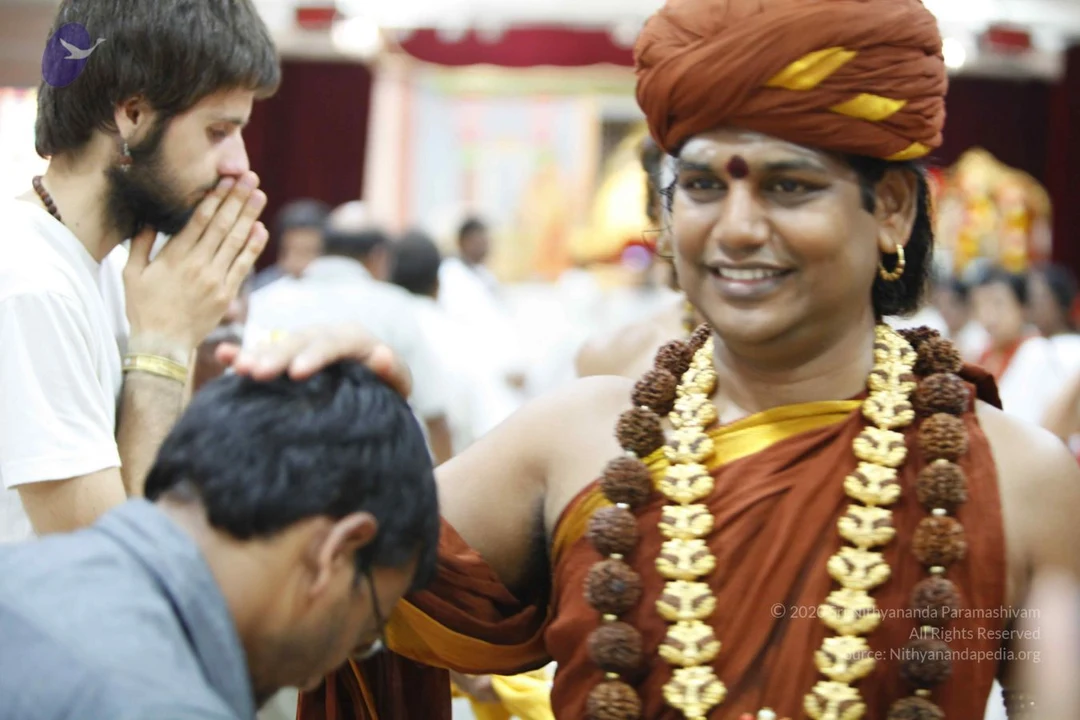
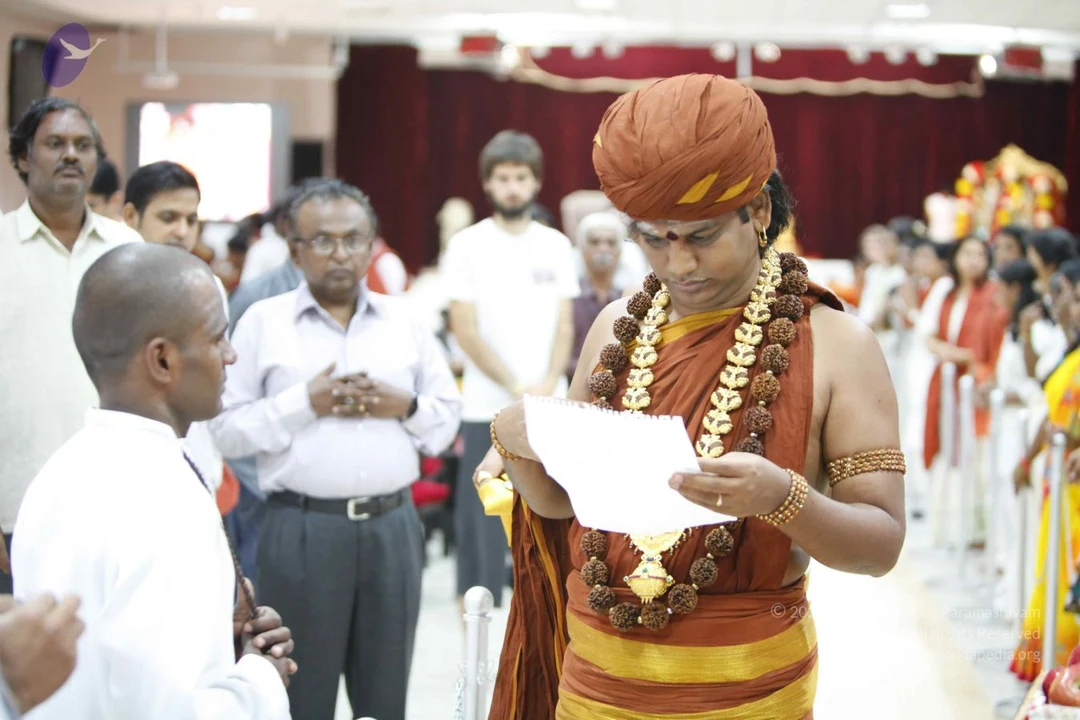
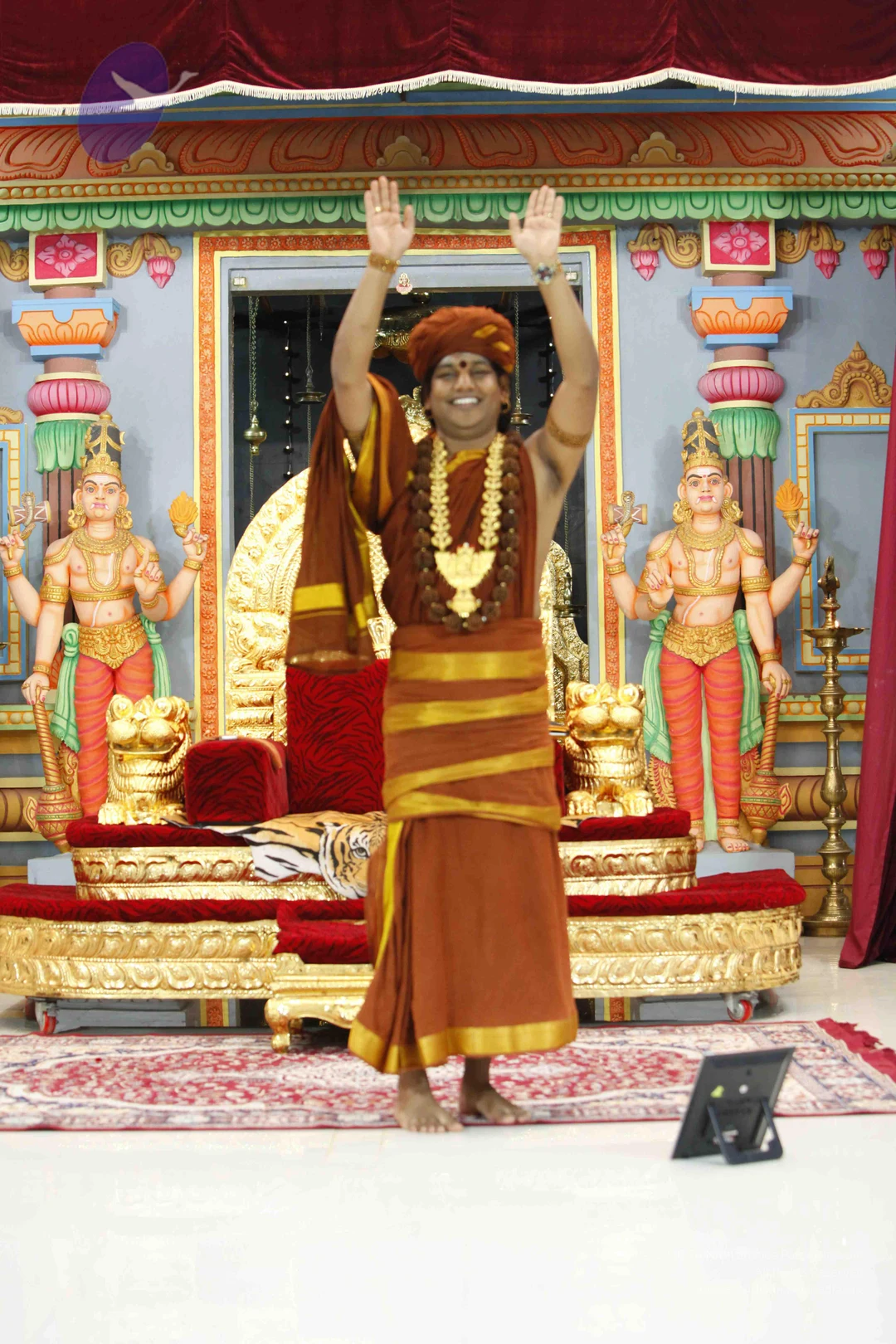
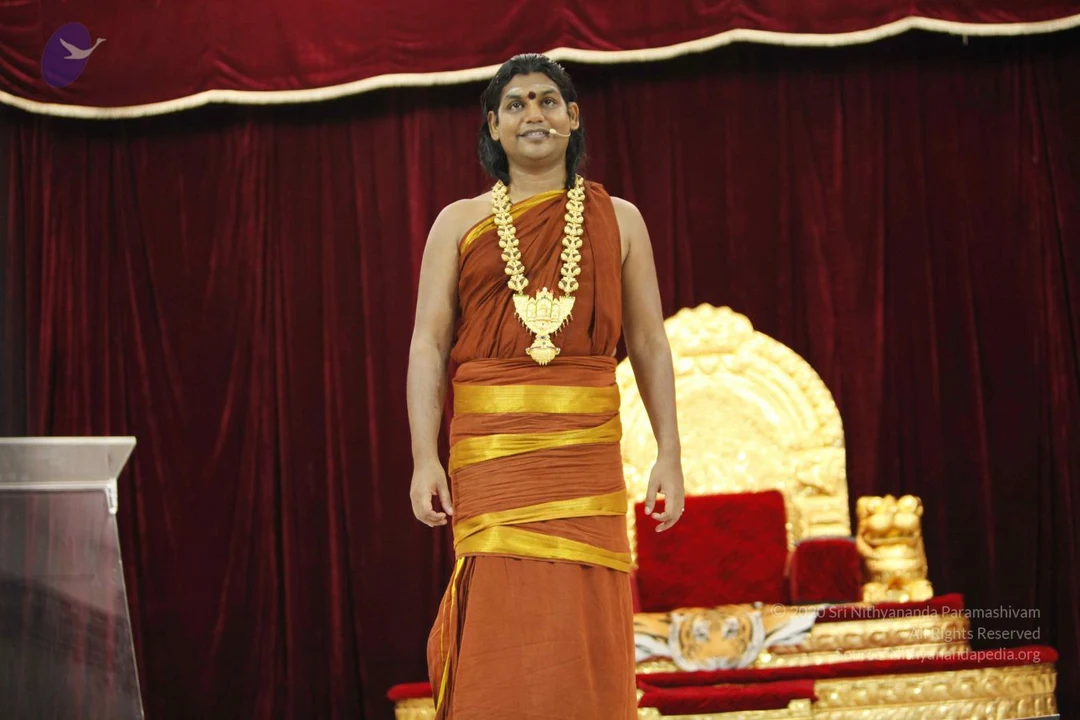
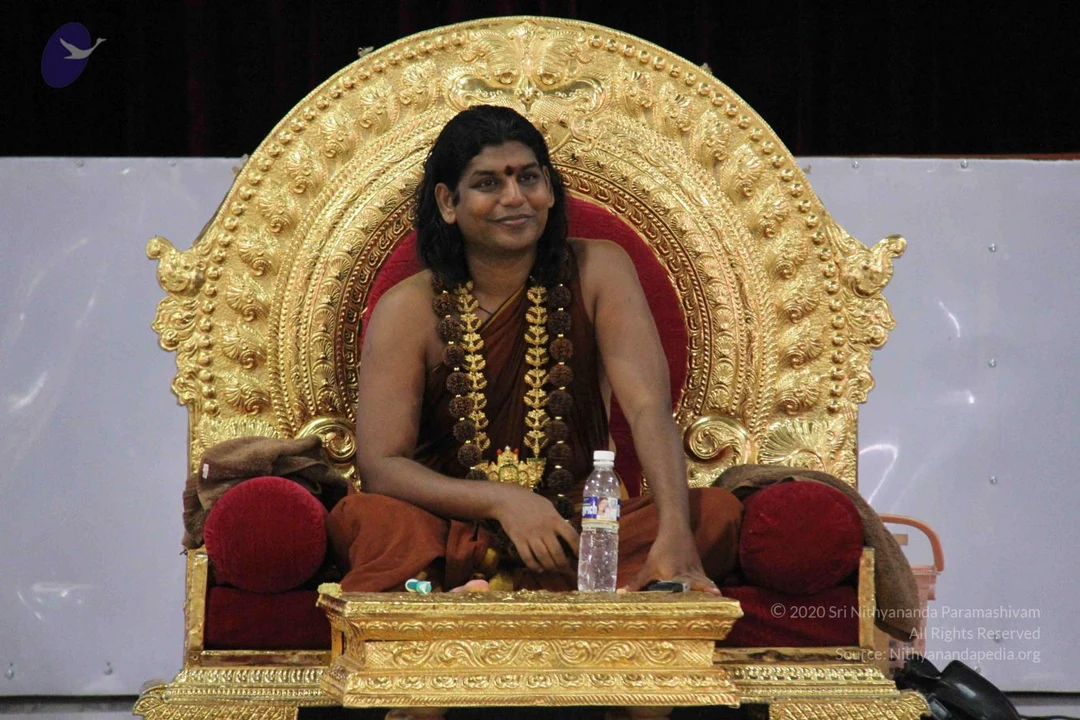
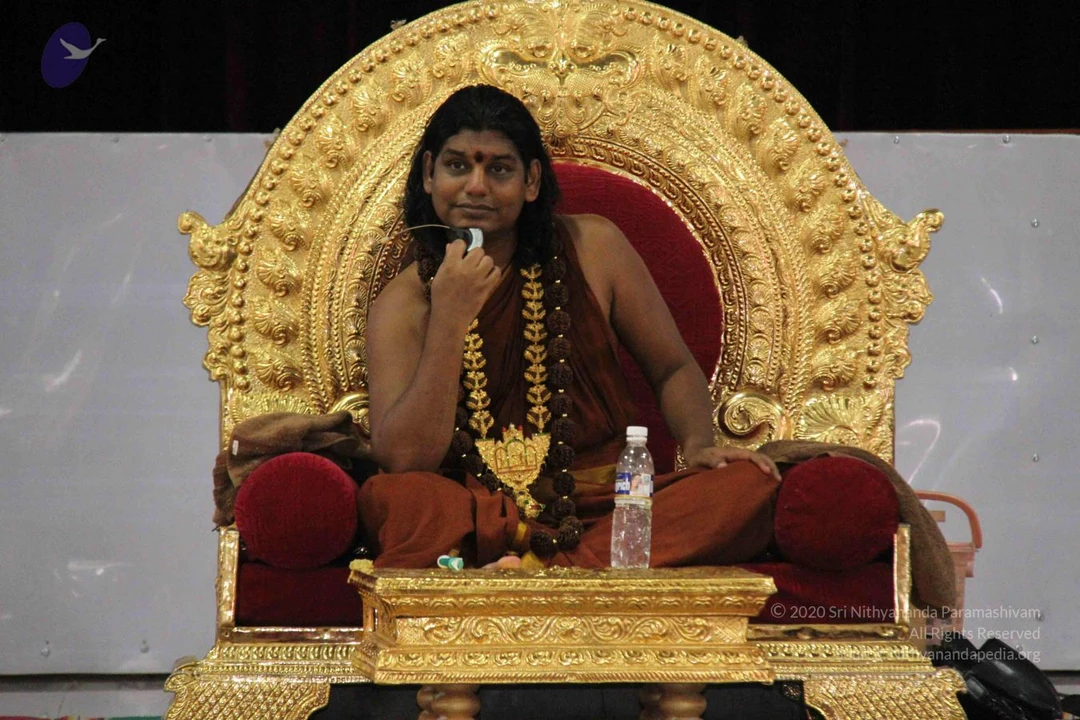
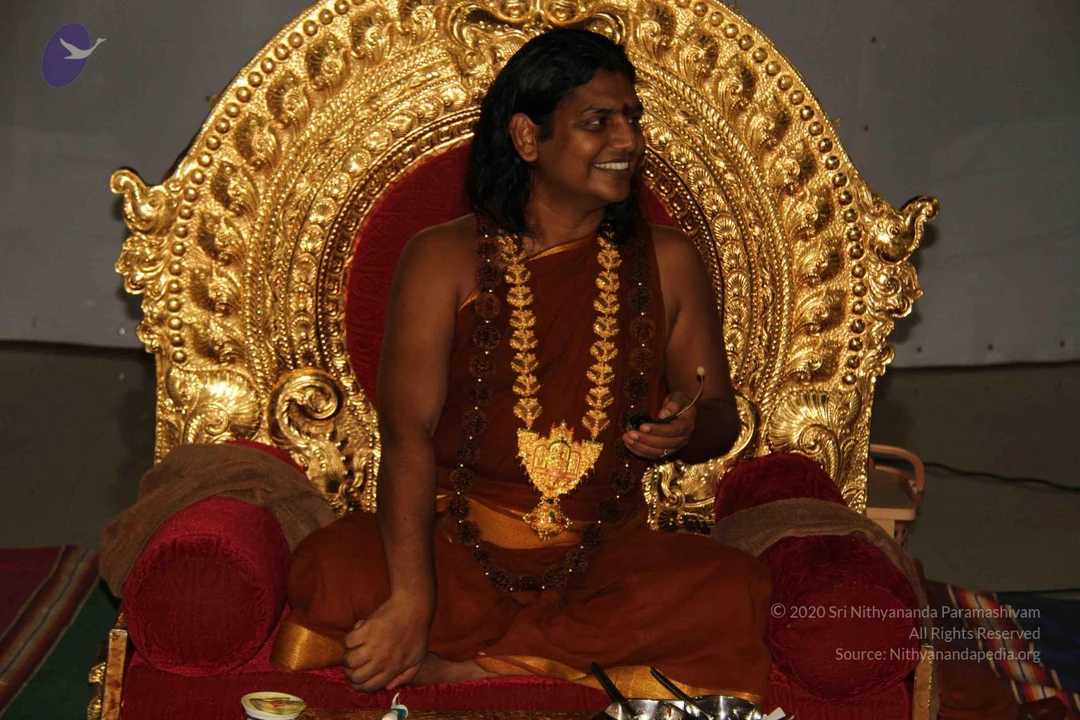
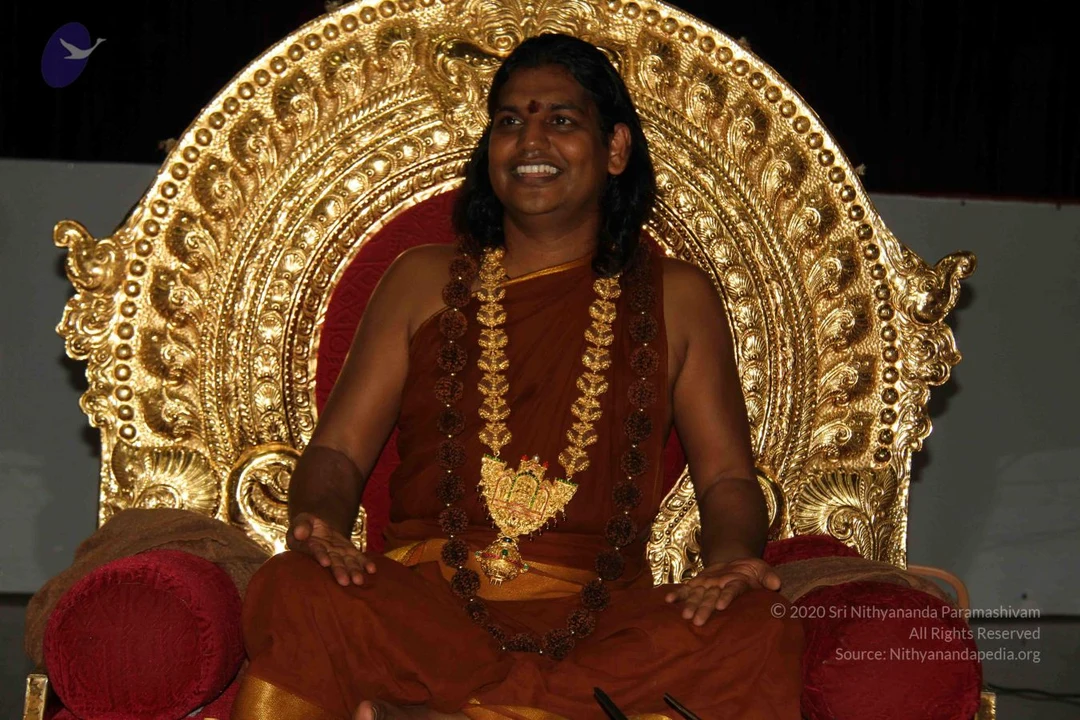
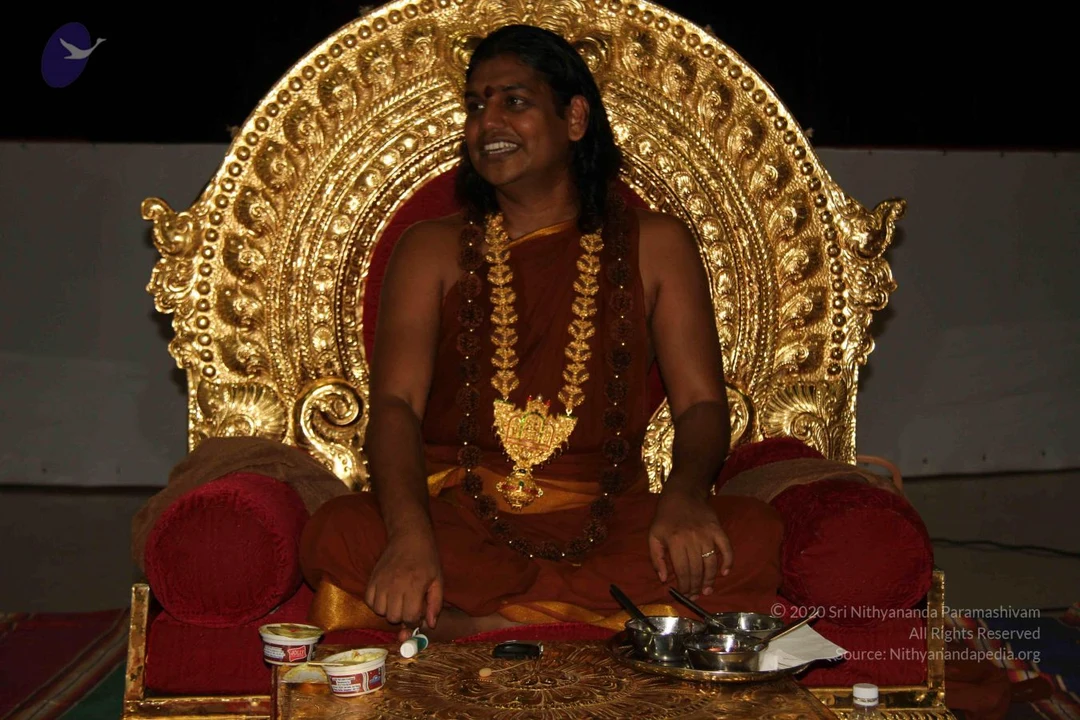
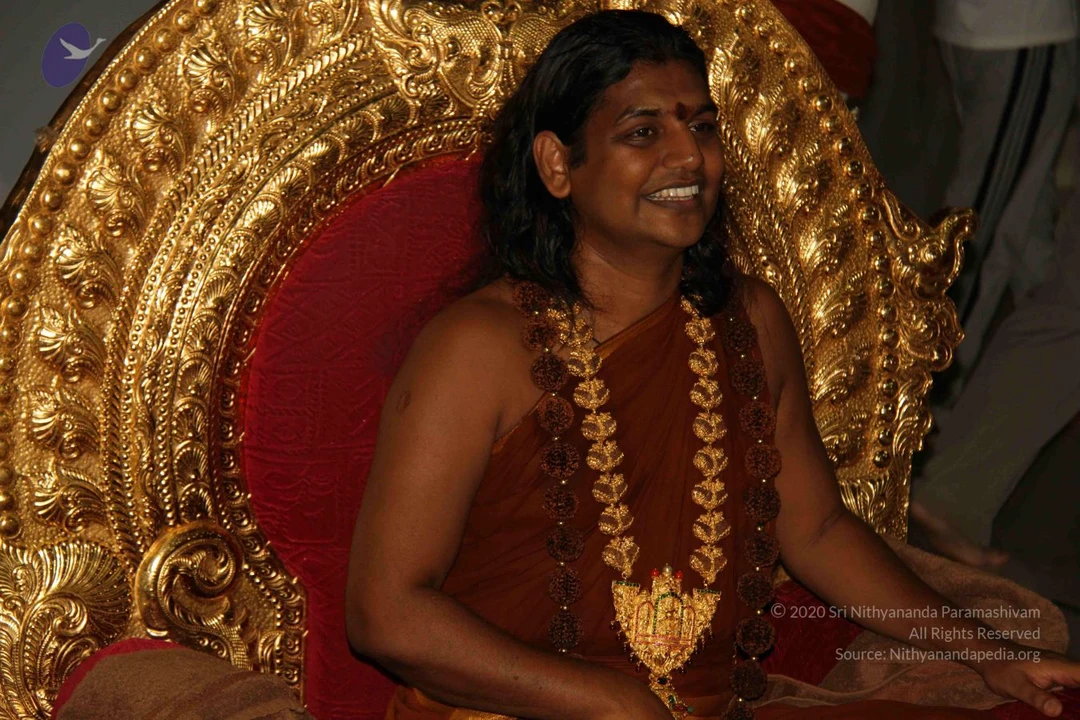
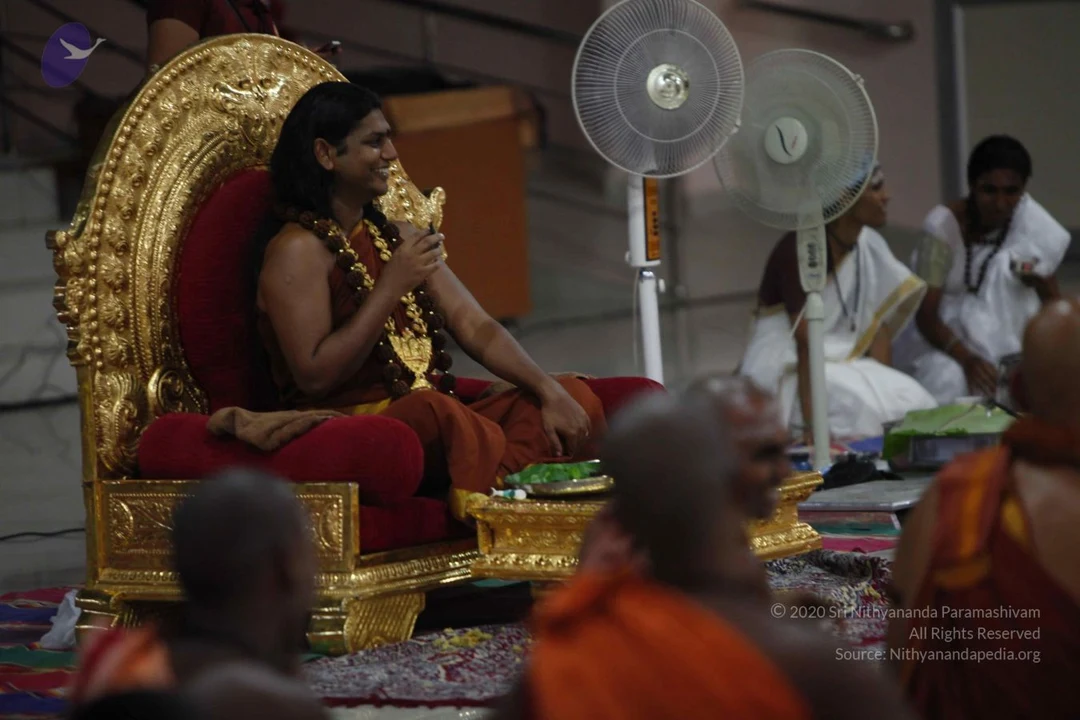
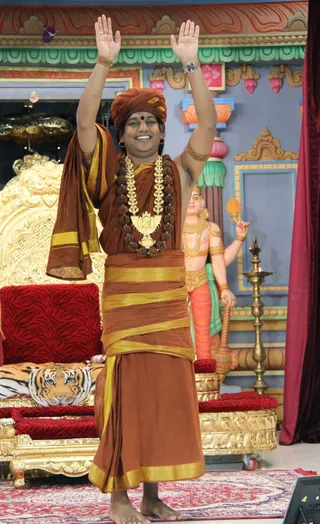
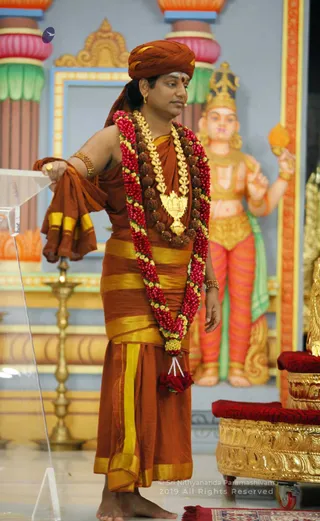
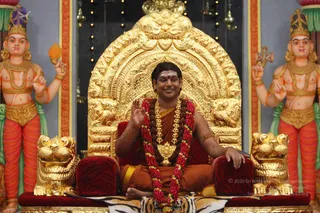
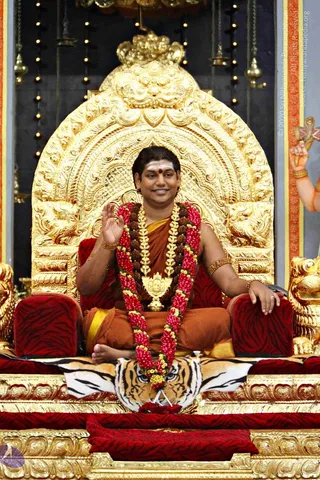
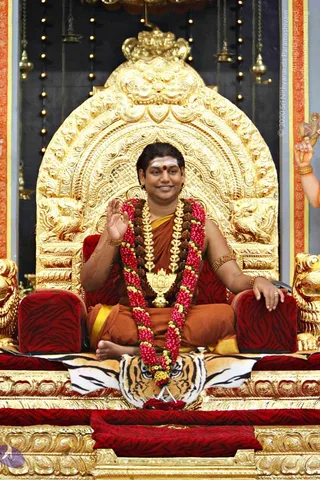
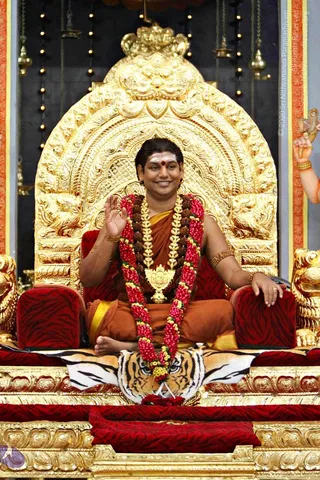
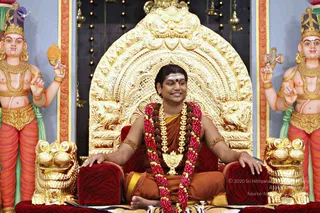
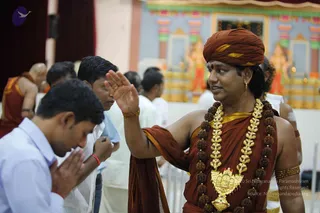
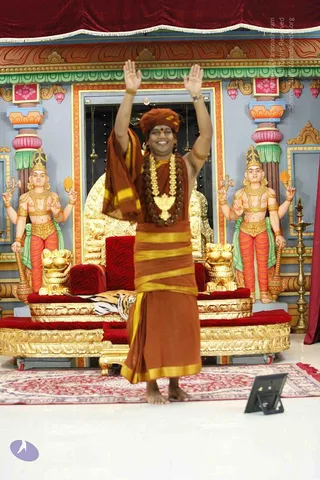
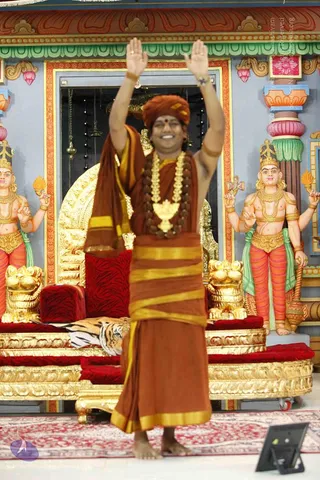
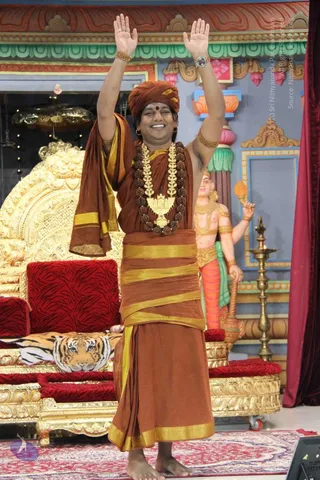
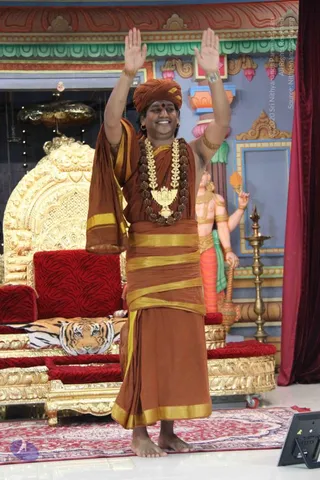
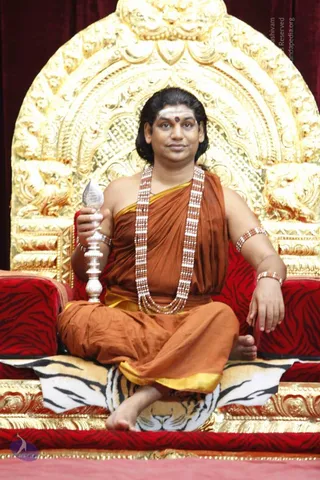
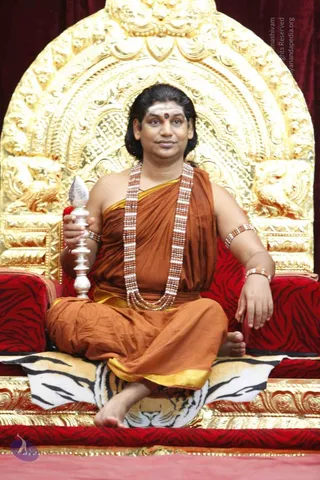
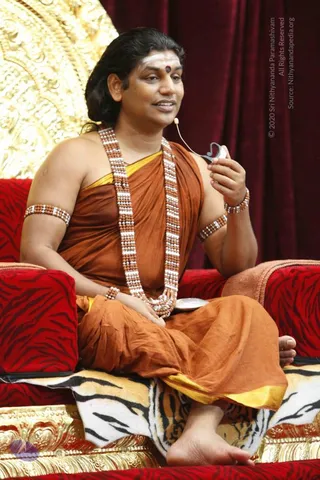
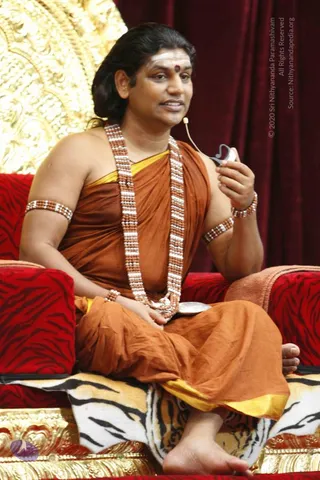
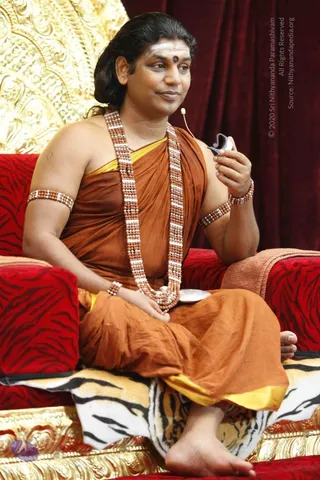
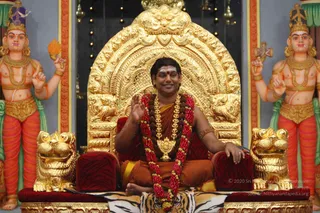
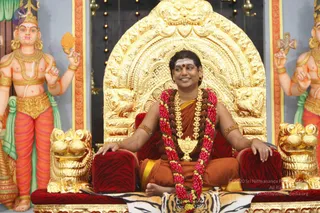
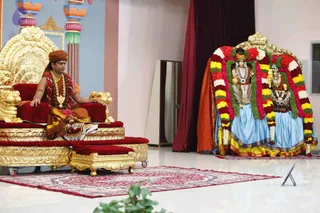
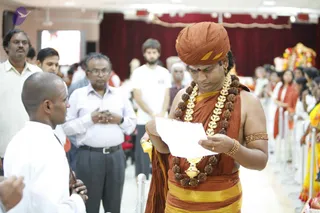
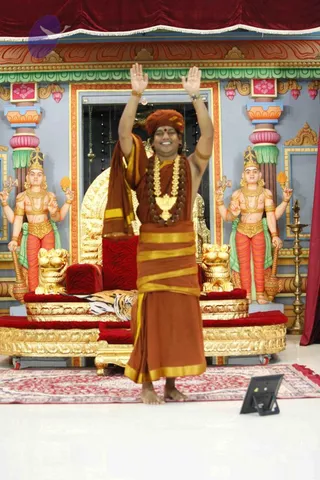
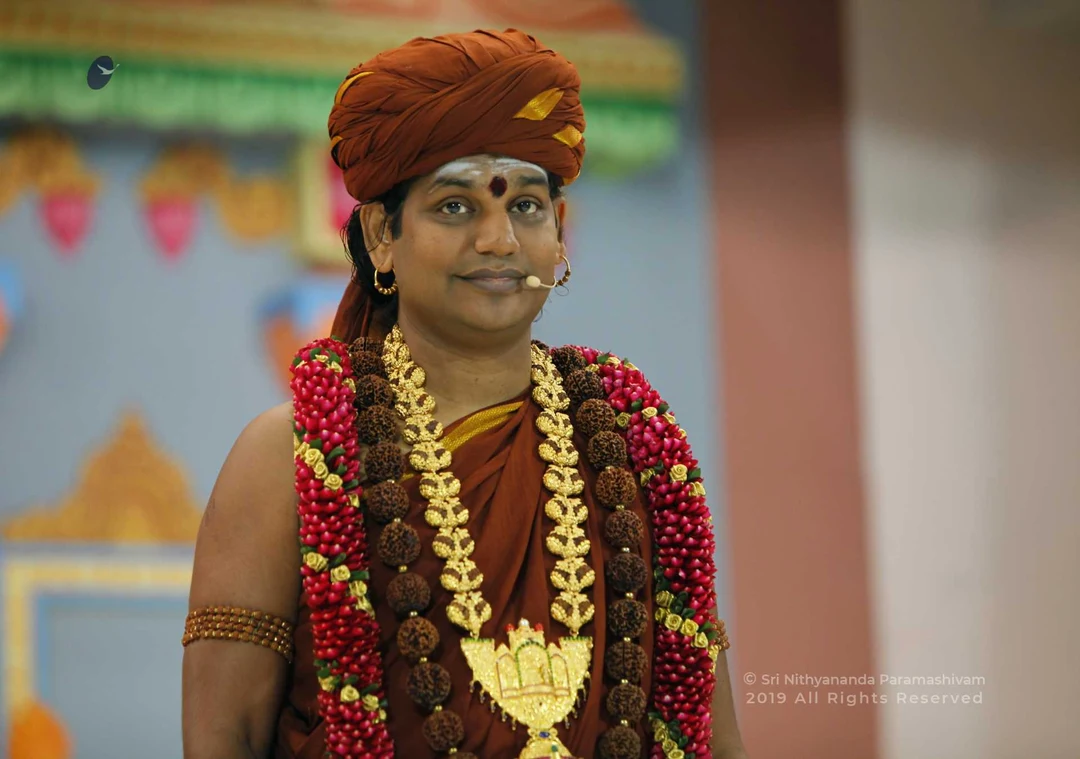
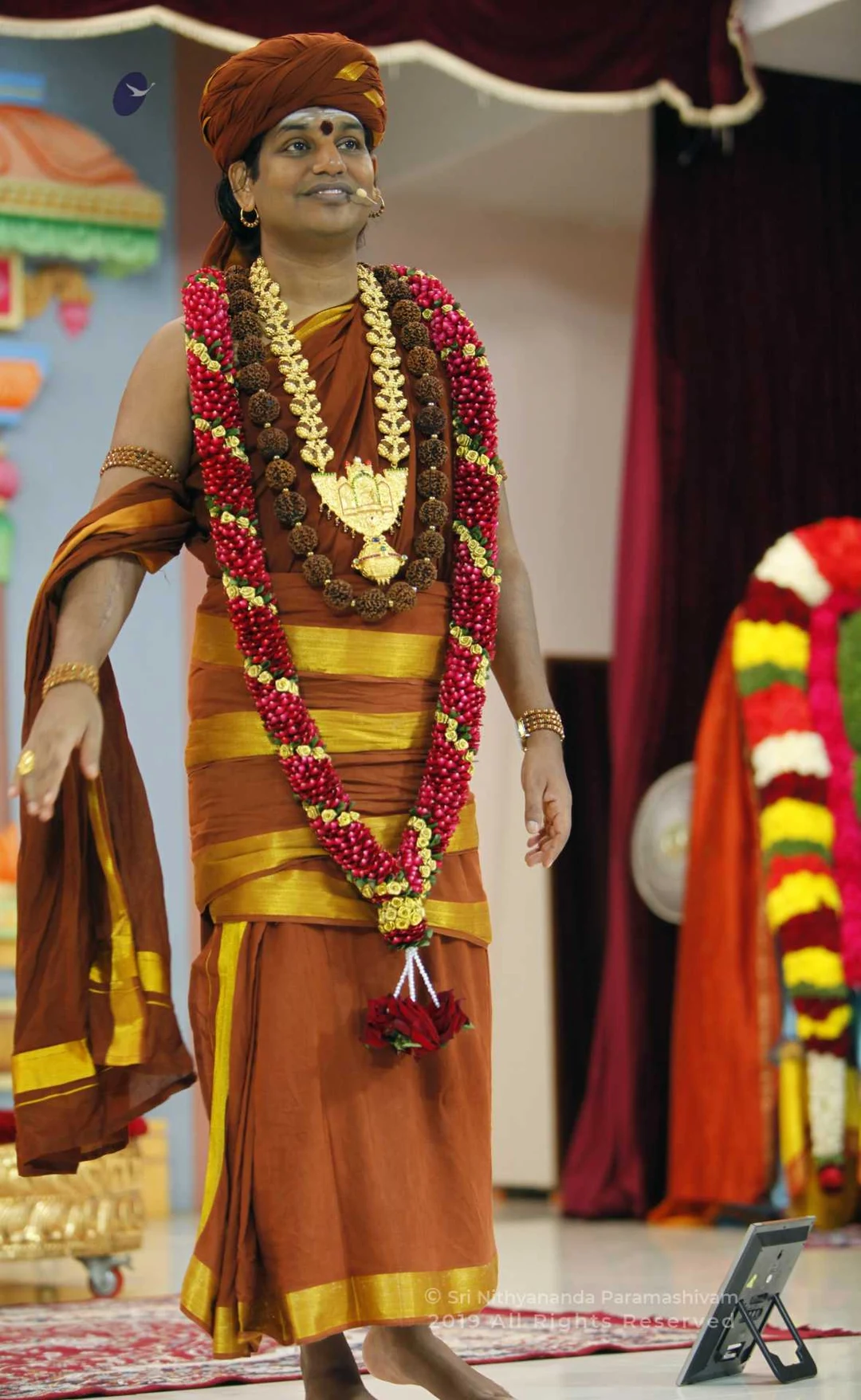
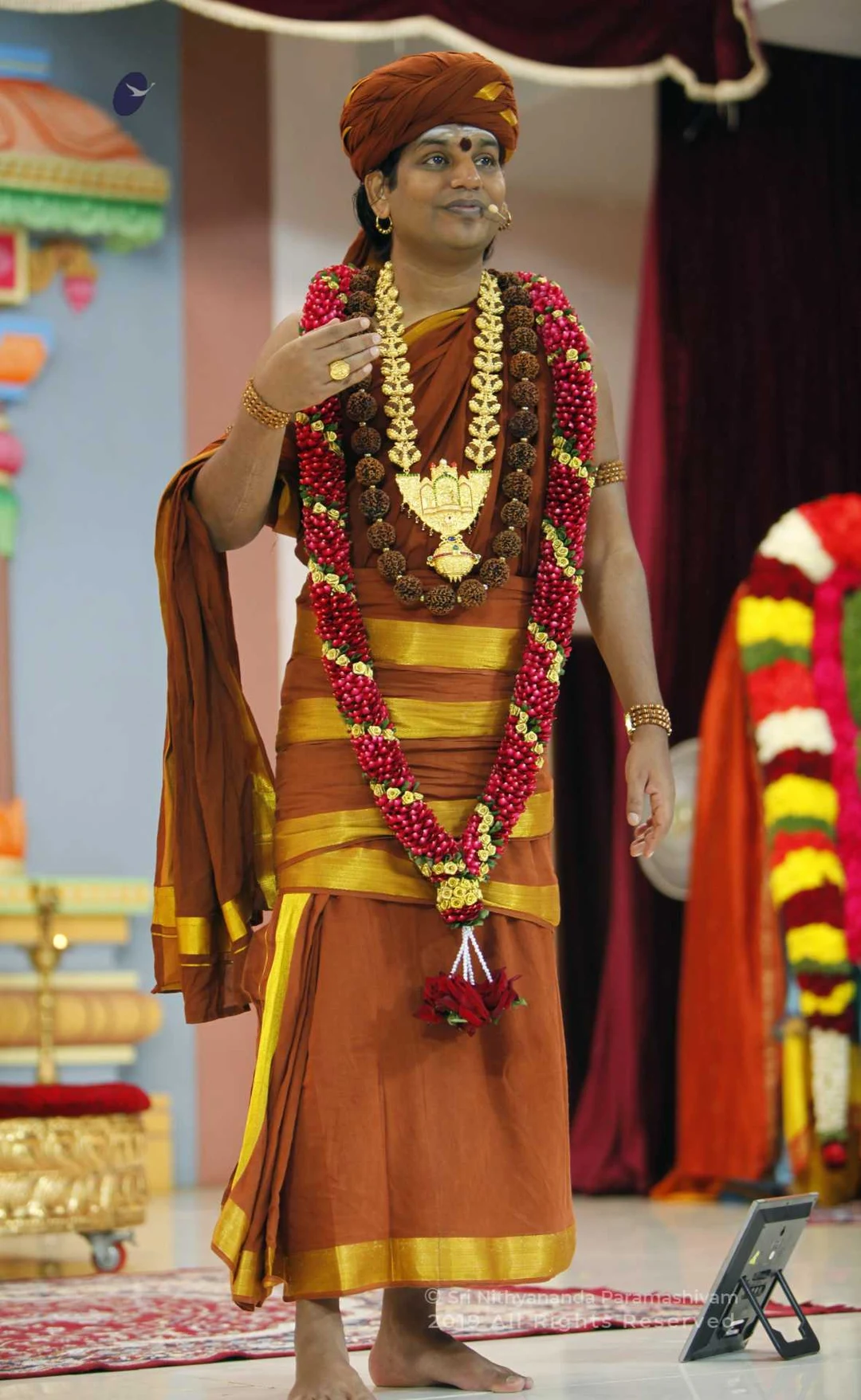
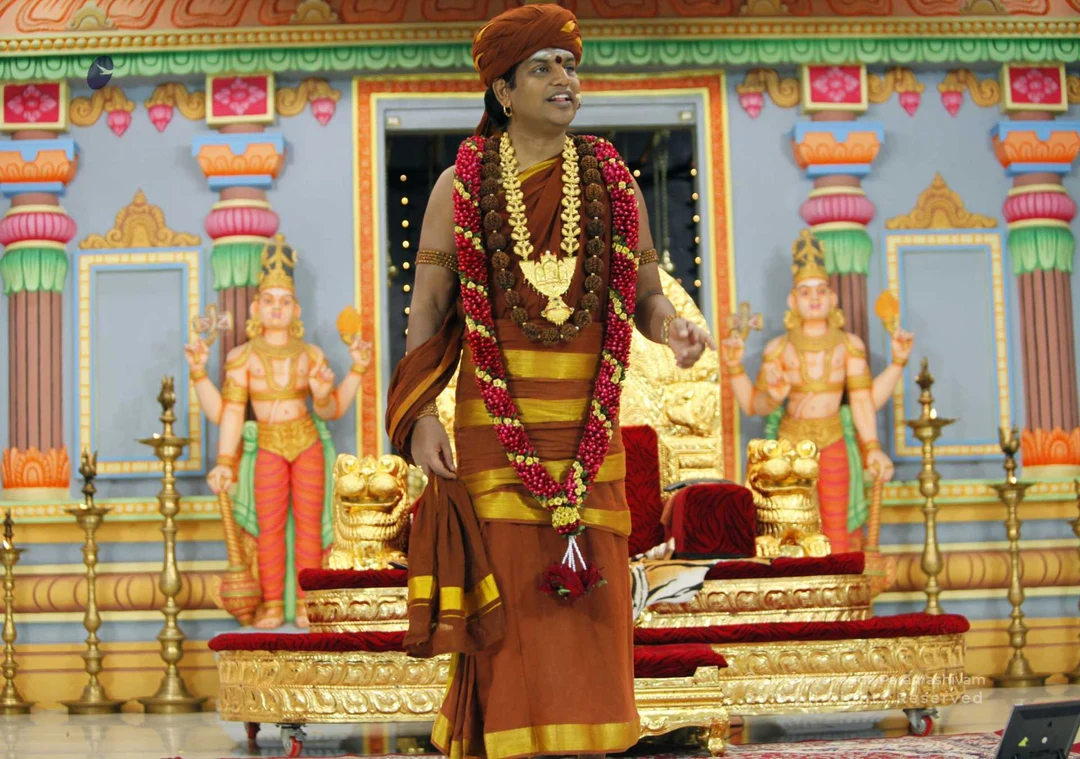
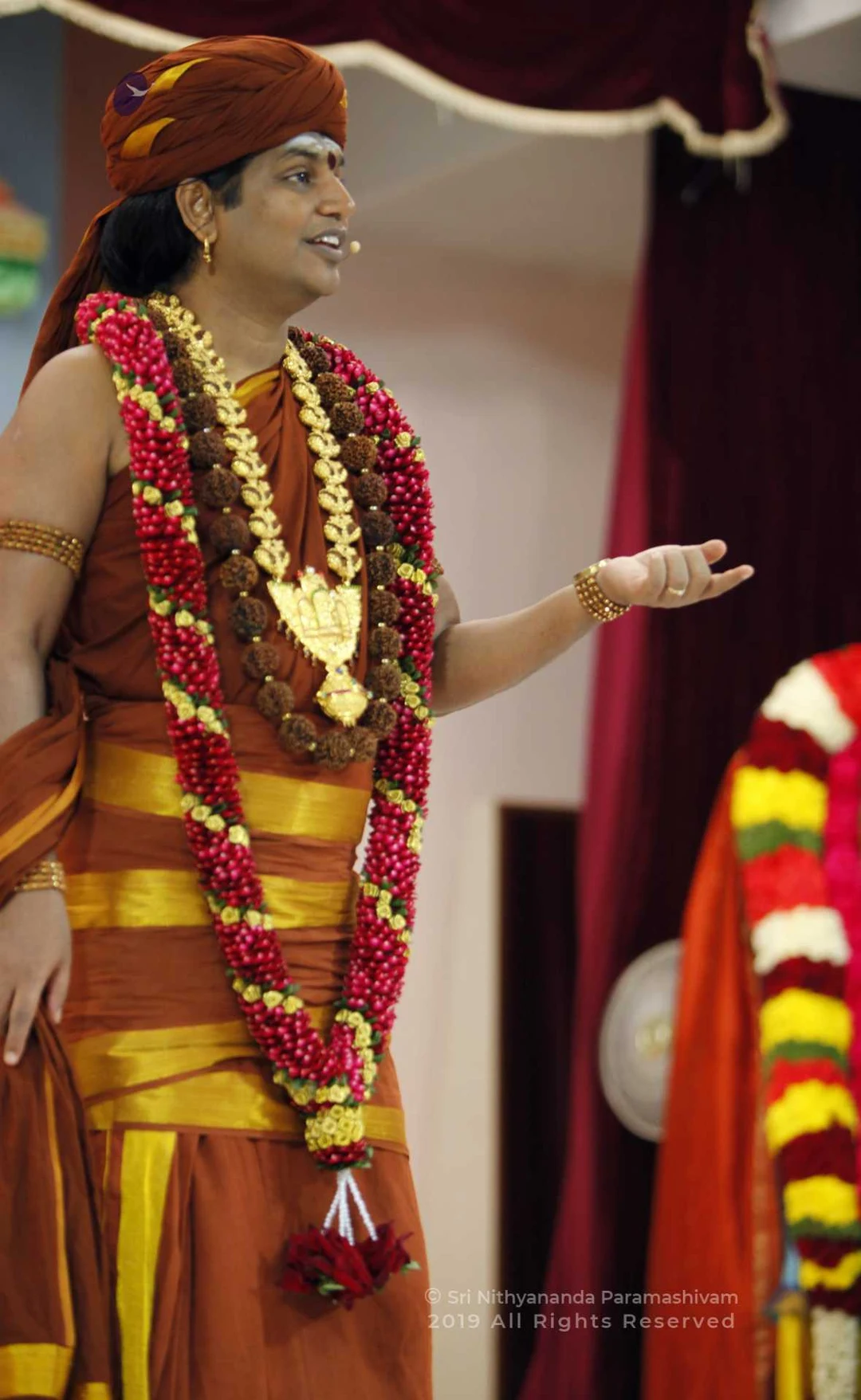
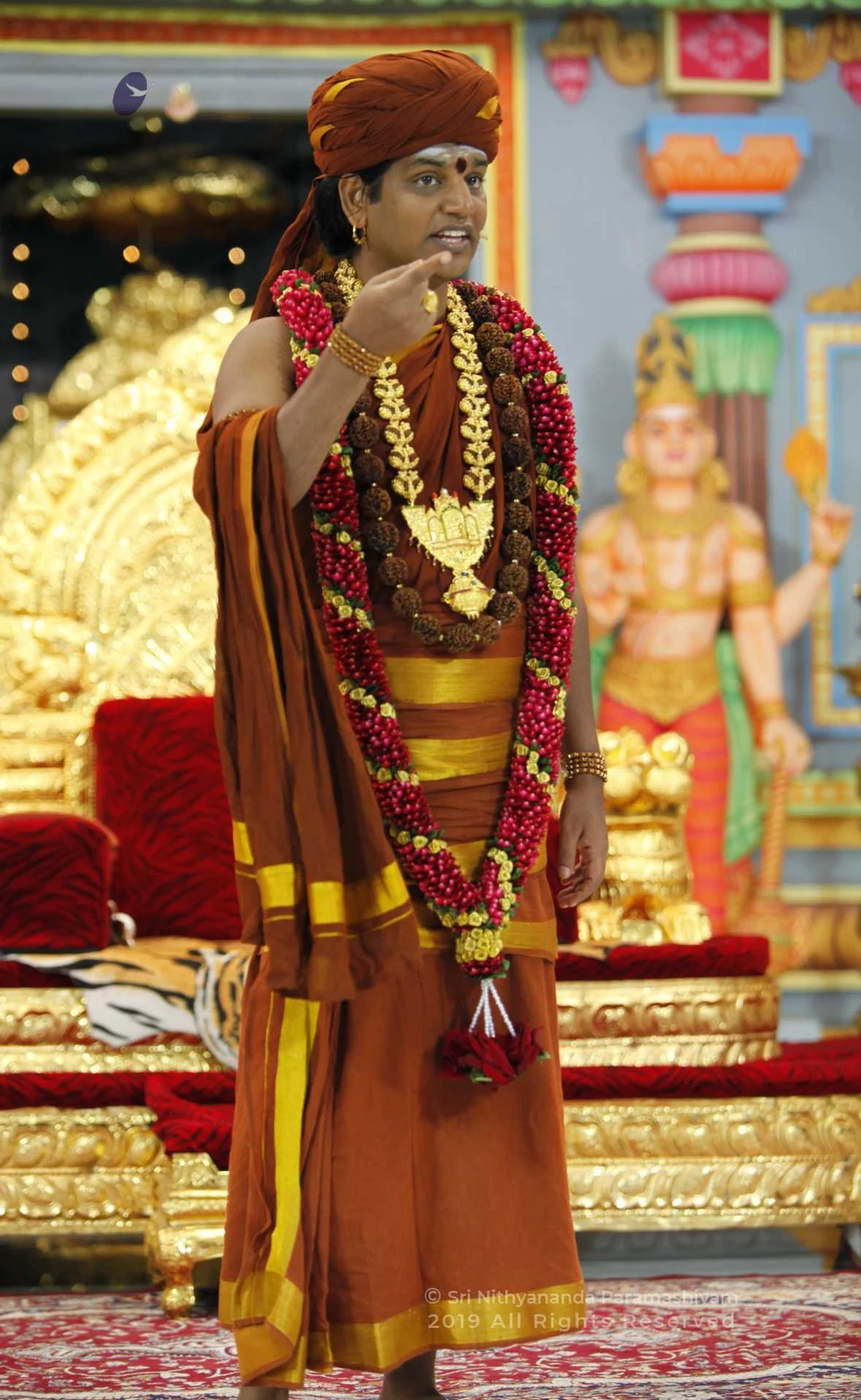
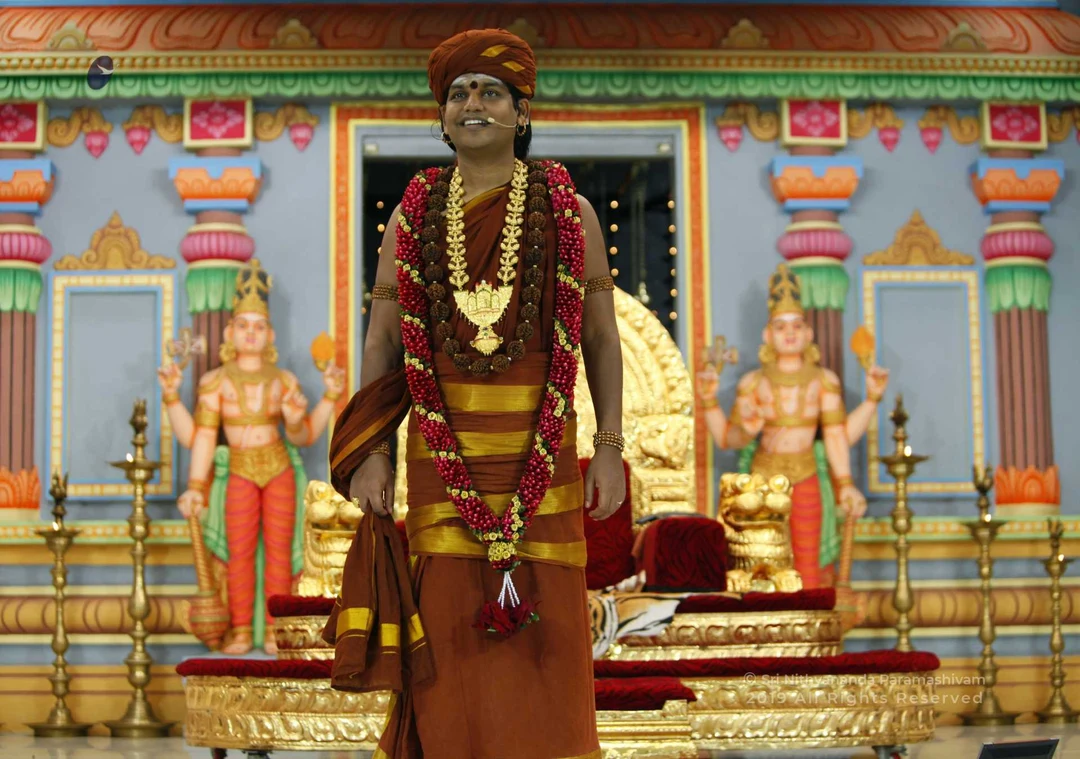
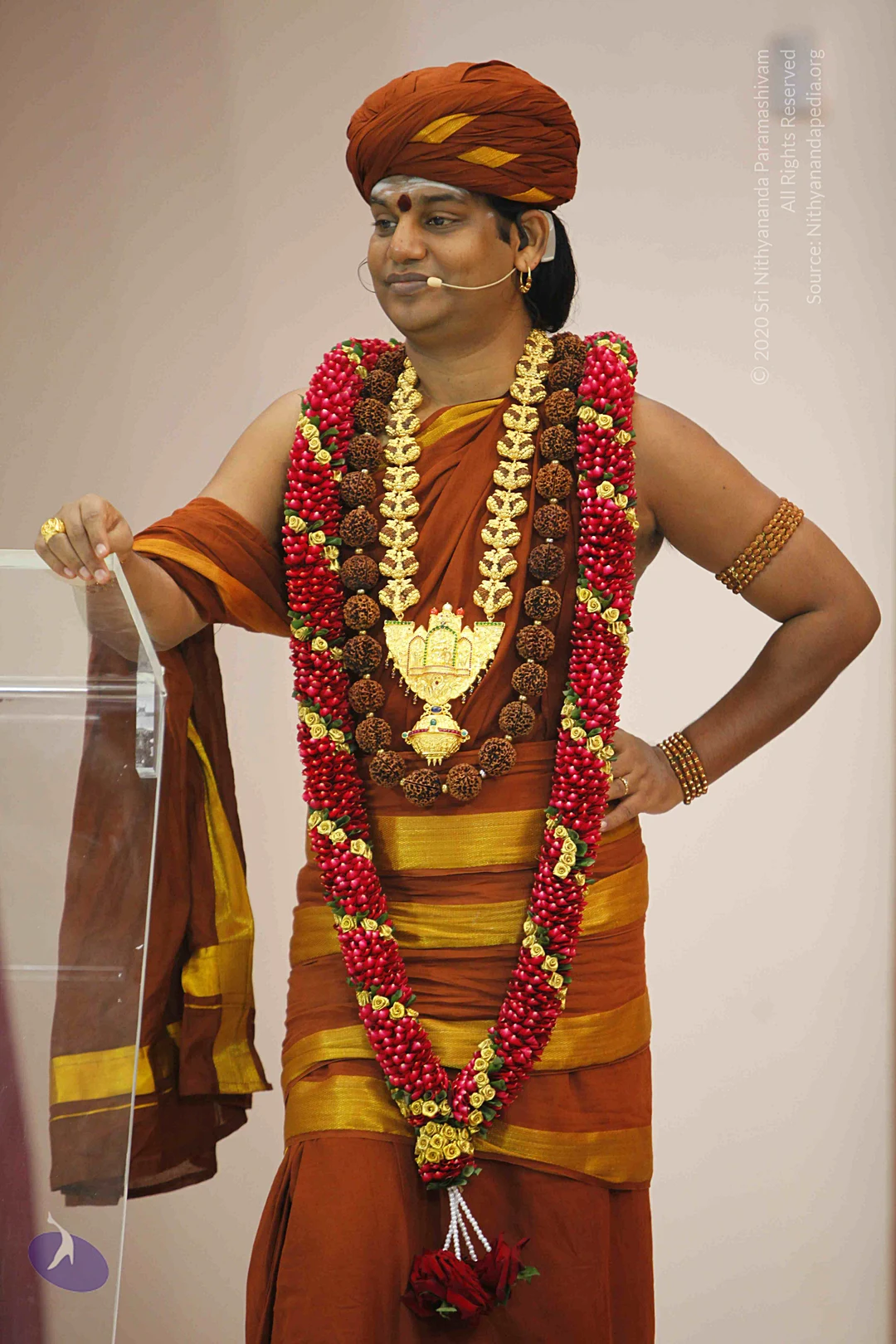
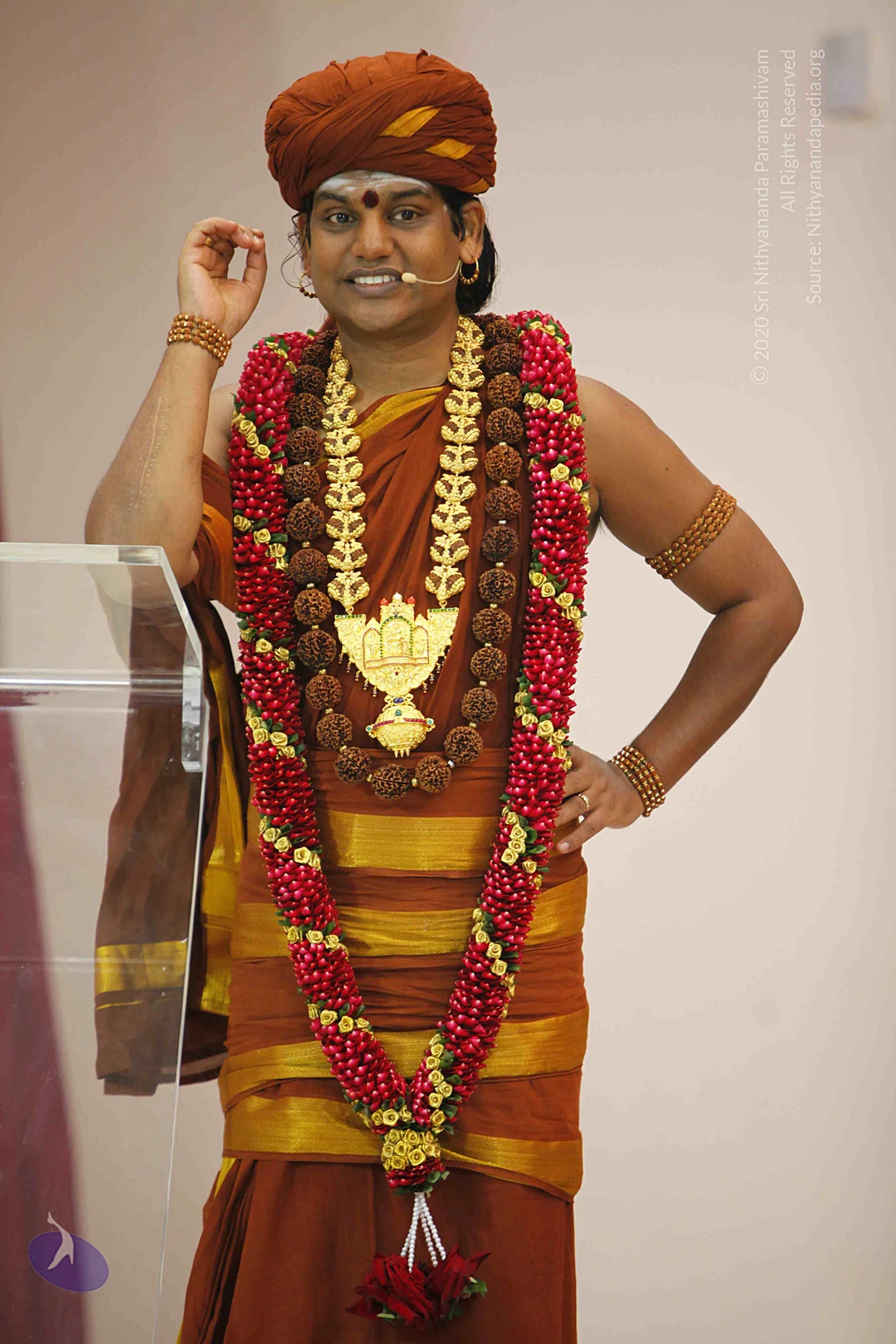
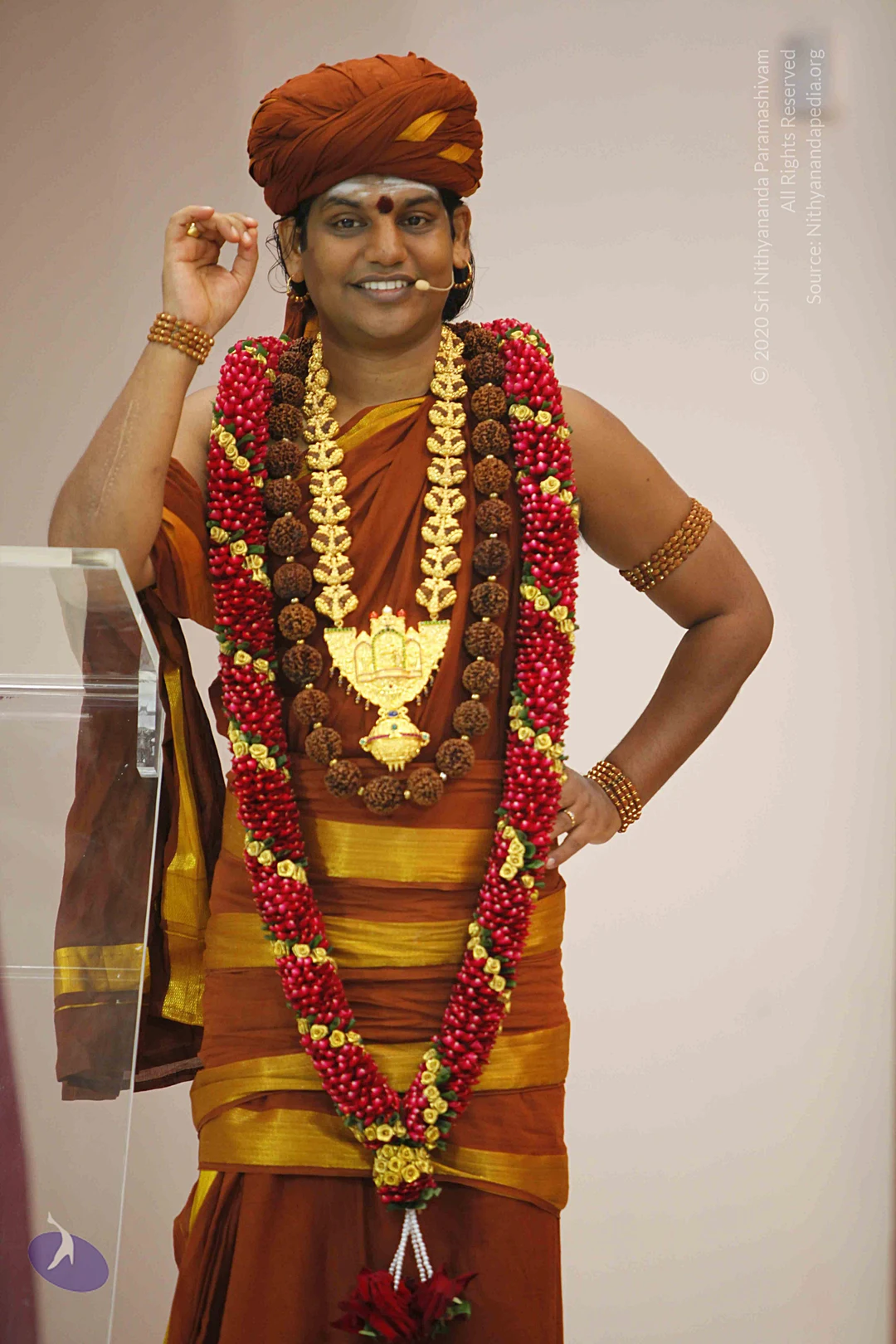
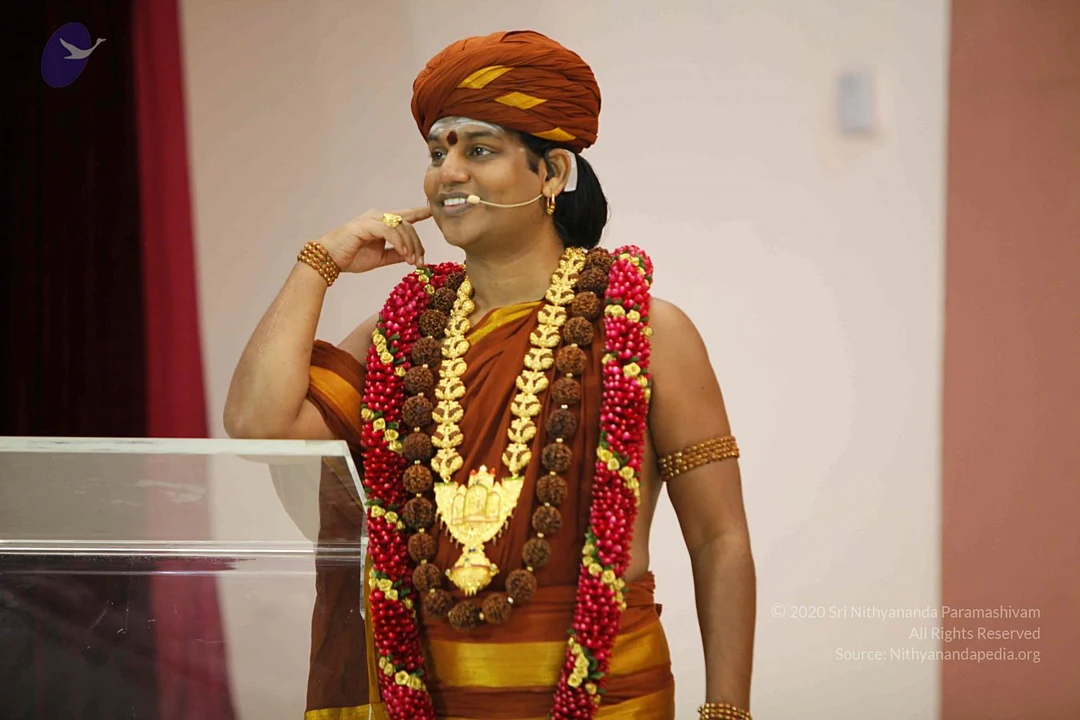
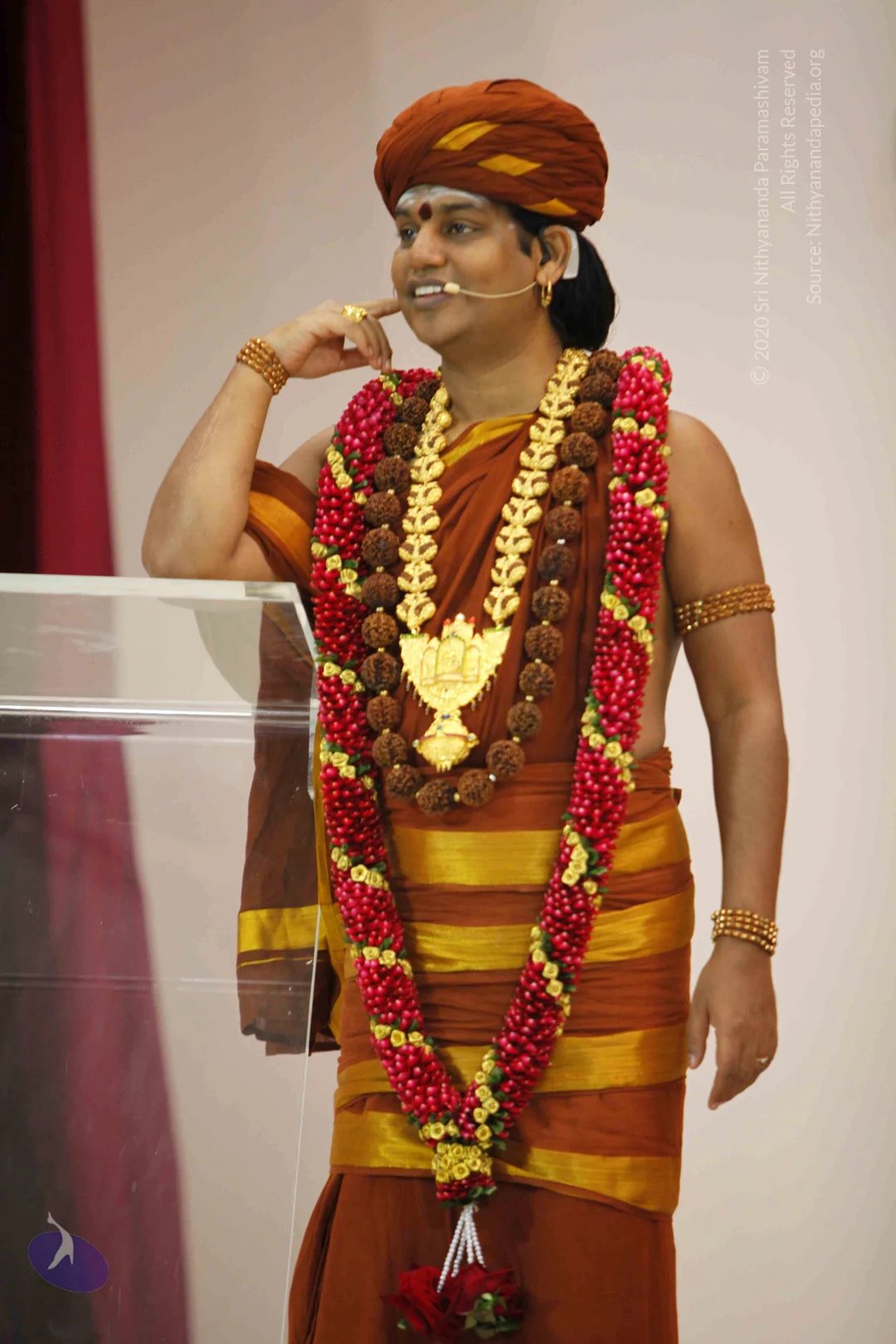
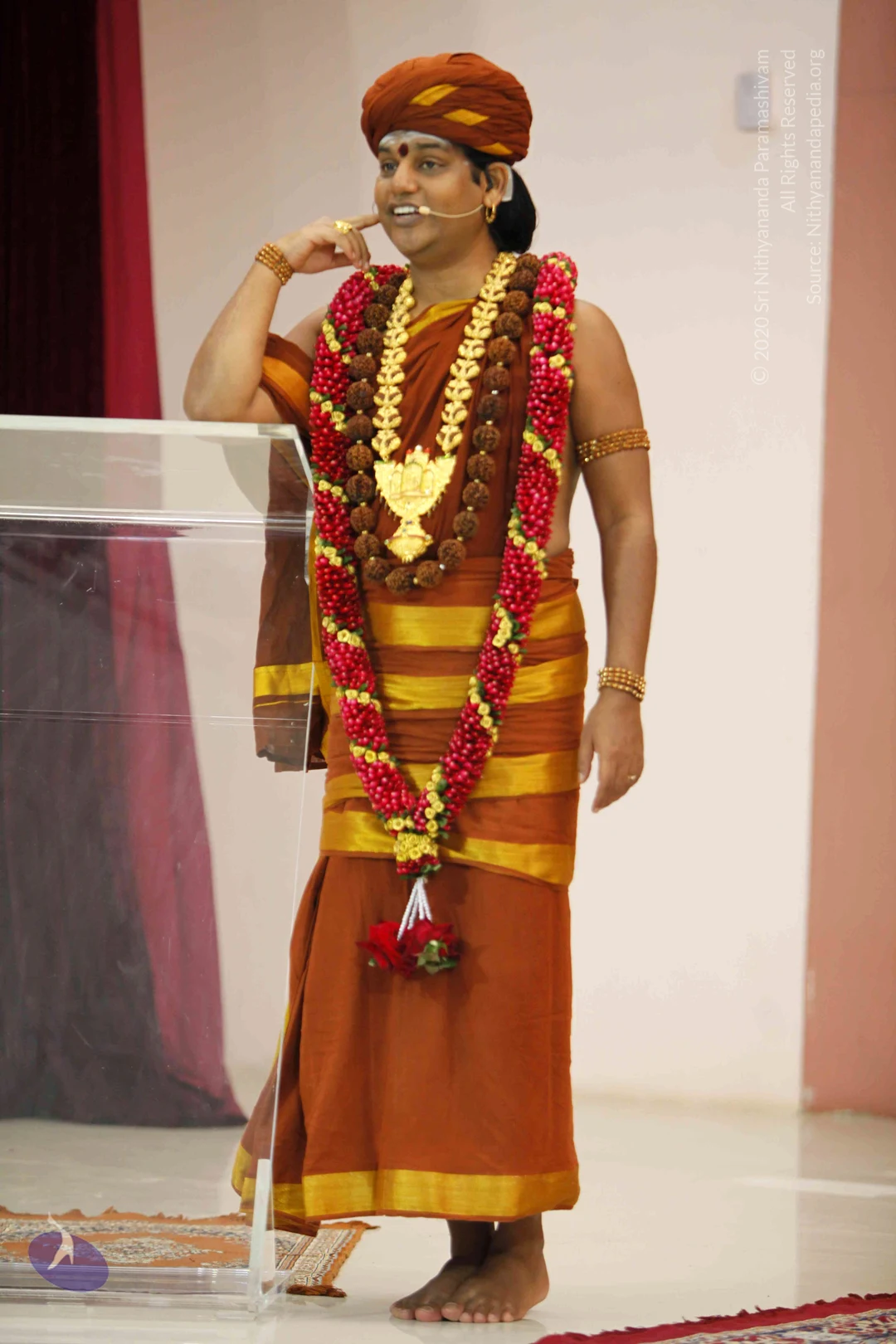
Photo of a satsang hall with a gilded throne at left where a seated person in an orange-and-saffron garment and red-and-gold garlands sits facing right. At right stand two decorated deity murti figures, one male and one female, dressed in blue and yellow skirts with multicoloured floral garlands and gold and pearl necklaces, placed beneath a gold arched canopy with an orange drape. A red curtain hangs behind, and a potted plant and red carpet occupy the foreground. The seated figure has short dark hair and no visible crown or turban, so the a person candidate cues are insufficient.A man stands on a carpeted stage in front of a golden throne draped with red cushions and a tiger-skin cloth, pointing one finger upward while speaking into a headset microphone. He wears a rust-orange turban with gold stripes, a rust-orange dhoti and shawl with gold borders, a long red and white flower garland, layered rudraksha malas and a gold ceremonial pendant necklace, plus gold bangles and armlets. Behind him a painted and gilded deity murti stands holding a staff, with an ornate pillar in orange and pink.A standing man in a rust-orange turban and rust-orange dhoti with gold borders speaks while gesturing with his right hand. He wears a long red and white flower garland, a rudraksha mala, gold ceremonial necklaces with a large gold pendant, gold armlets and bangles, and a red tilak on his forehead. He stands barefoot on a patterned red rug before a golden throne with red cushions. Behind him, a painted deity figure stands beside a gold kalasha, and brass oil lamps flank the scene. Possible a person: the orange turban, rudraksha mala and ornate gold jewellery are consistent with the page's reference to a satsang speaker.

July 10 2013

Original wiki page
Contents

Title:

SELF - DOUBT CAN DESTROY YOU

Description:

In today’s morning Satsang, Paramahamsa Nithyananda presents the deeper dimensions of completion. He stresses that we can make things possible in our lives only when we are complete, especially with the perpetuating pattern of self-doubt. We tend to live with deep inauthenticity because the image we show others is not the same image we carry about ourselves internally. Naturally, we begin to feel others are also showing us a fake identity. Trust in them is lost and as a result, we feed the self-doubt we carry inside. Self-doubt is a horrible consciousness-killing and self-destructive disease. Let us build confidence and intelligent decision making abilities by beginning work today, completing with self-doubt.

Link to Video:

VideoAudio

Transcript:

SELF DOUBT CAN DESTROY YOU

Nithyanandeshwara Samaarambhaam Nithyanandeshwari Madhyamaam | Asmadaachaarya Paryanthaam Vande Guru Paramparaam ||

I welcome you all with my love and respects.

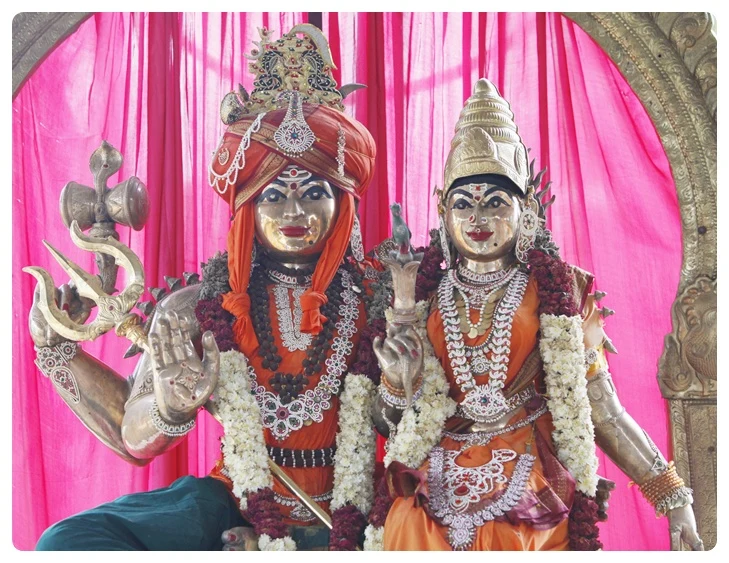
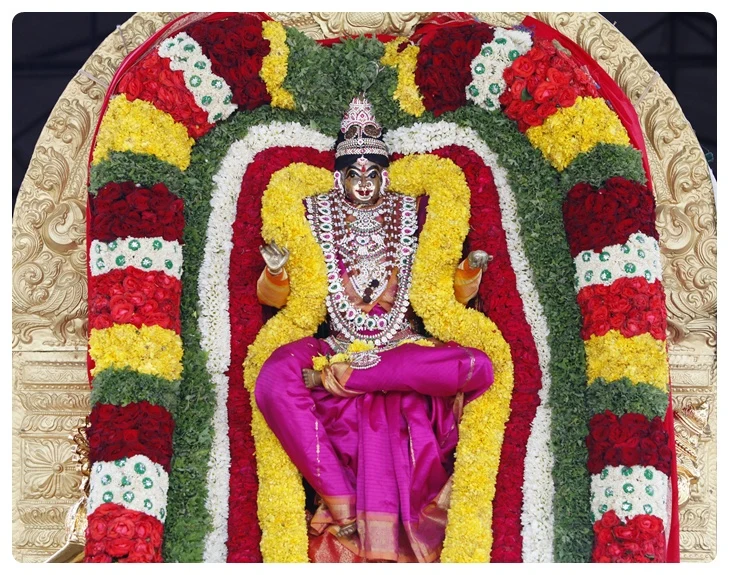
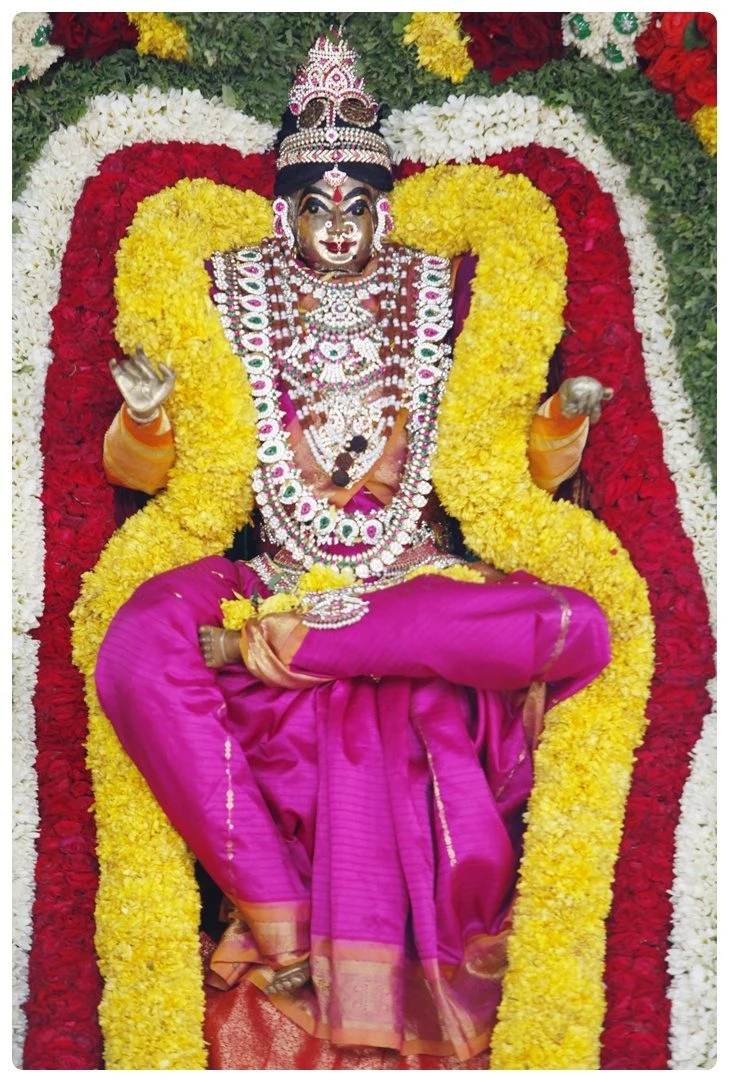
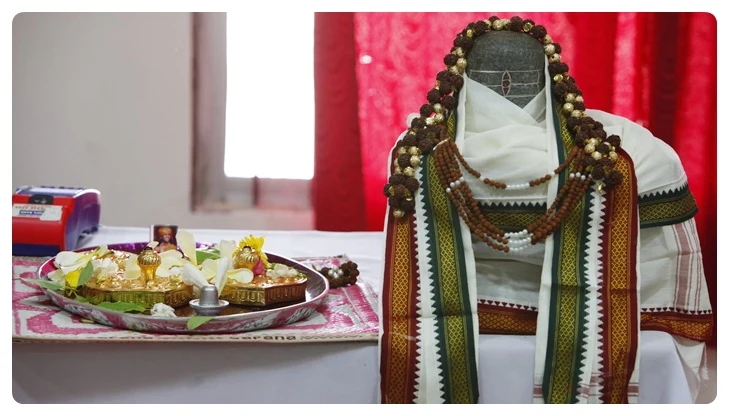
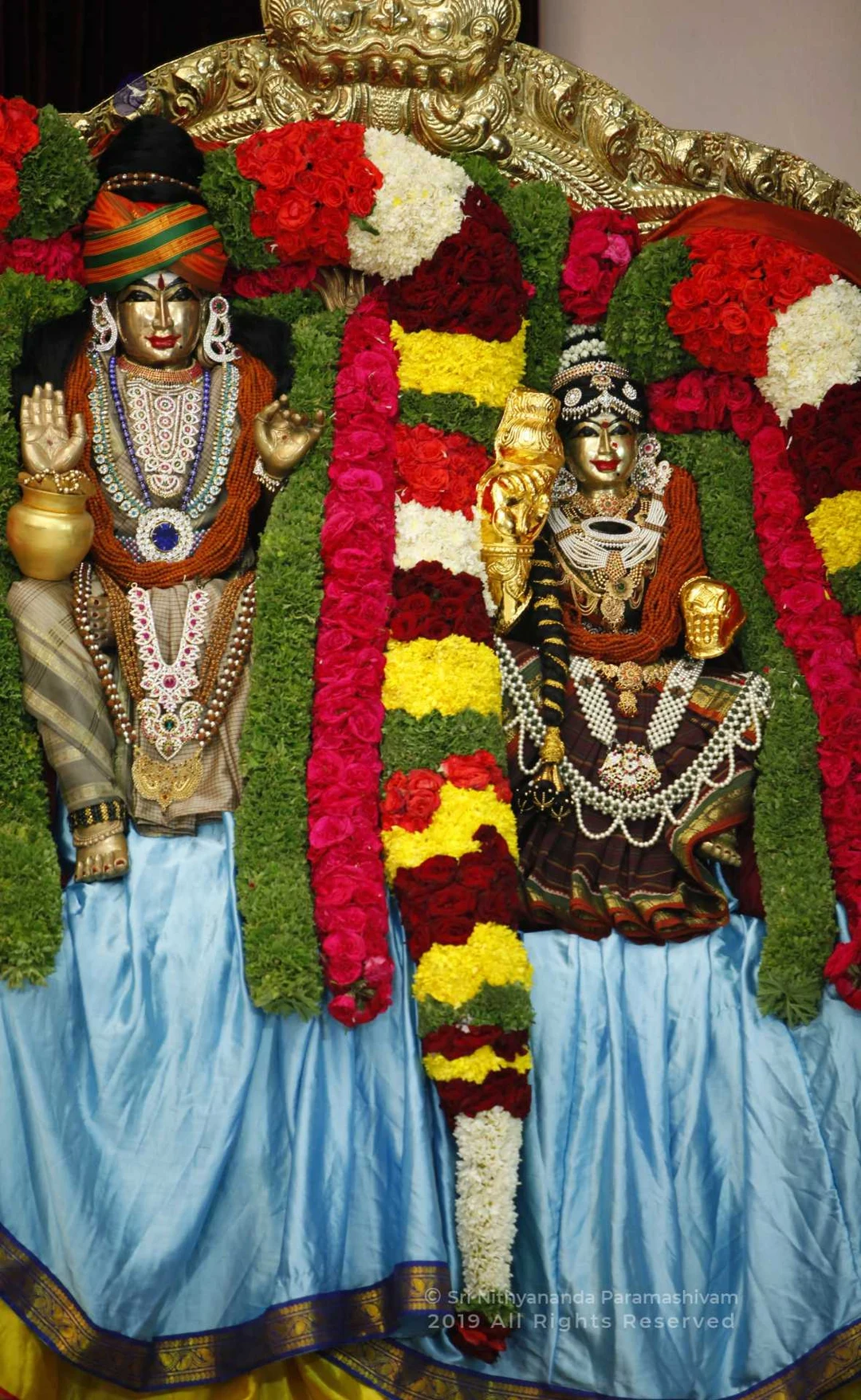
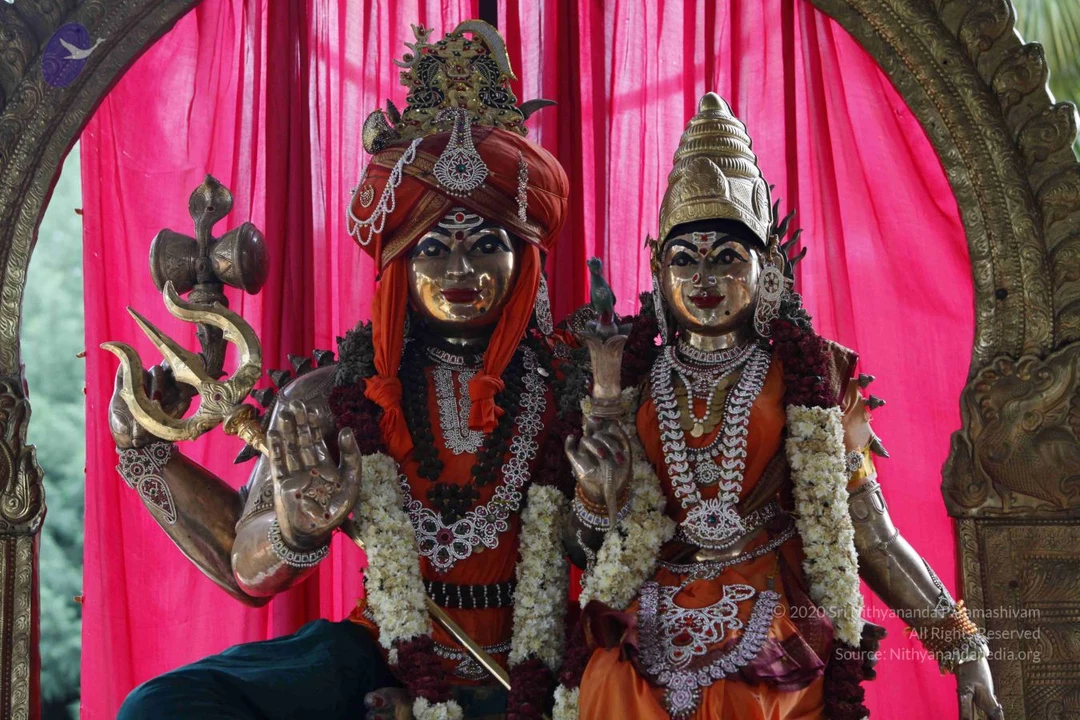
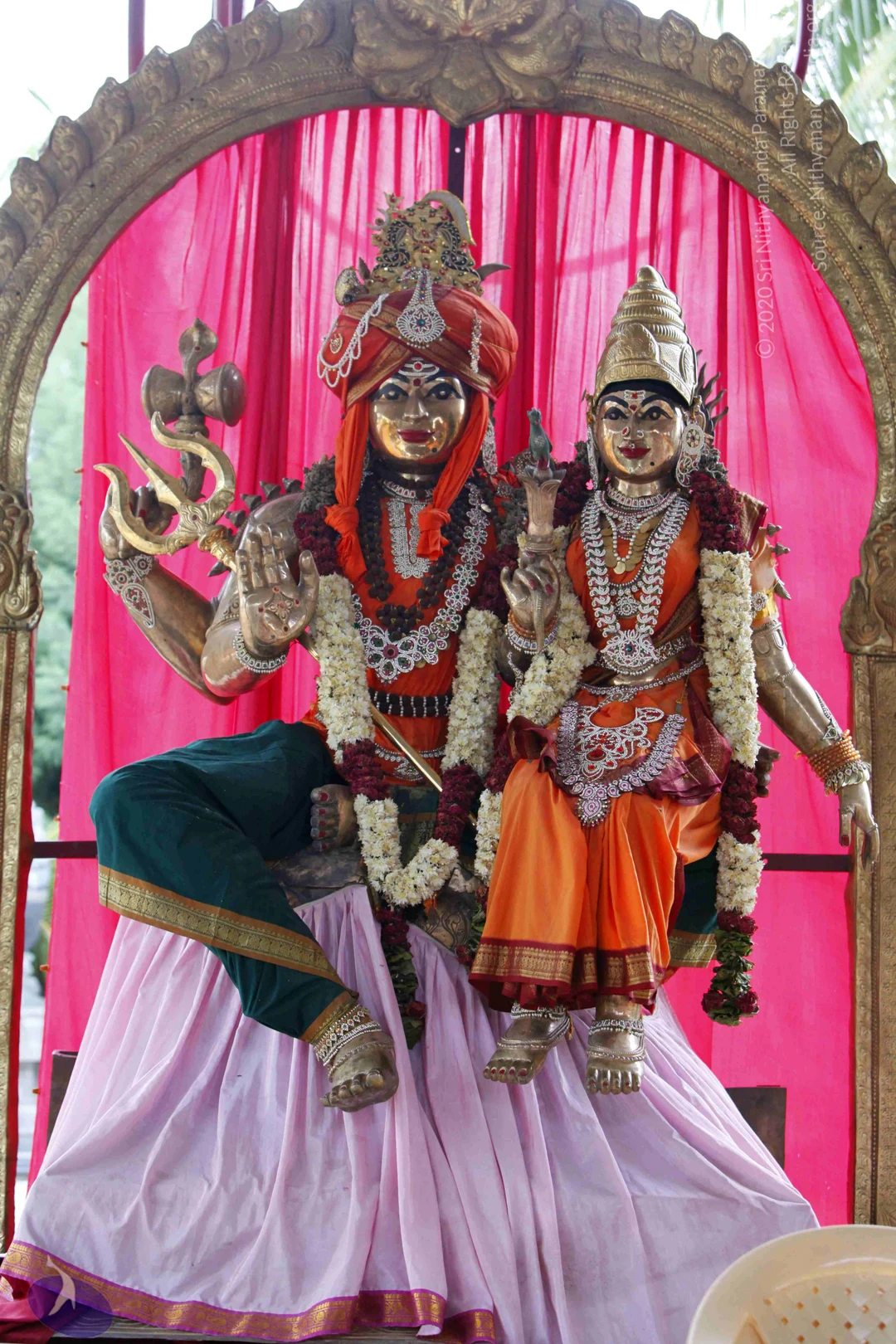
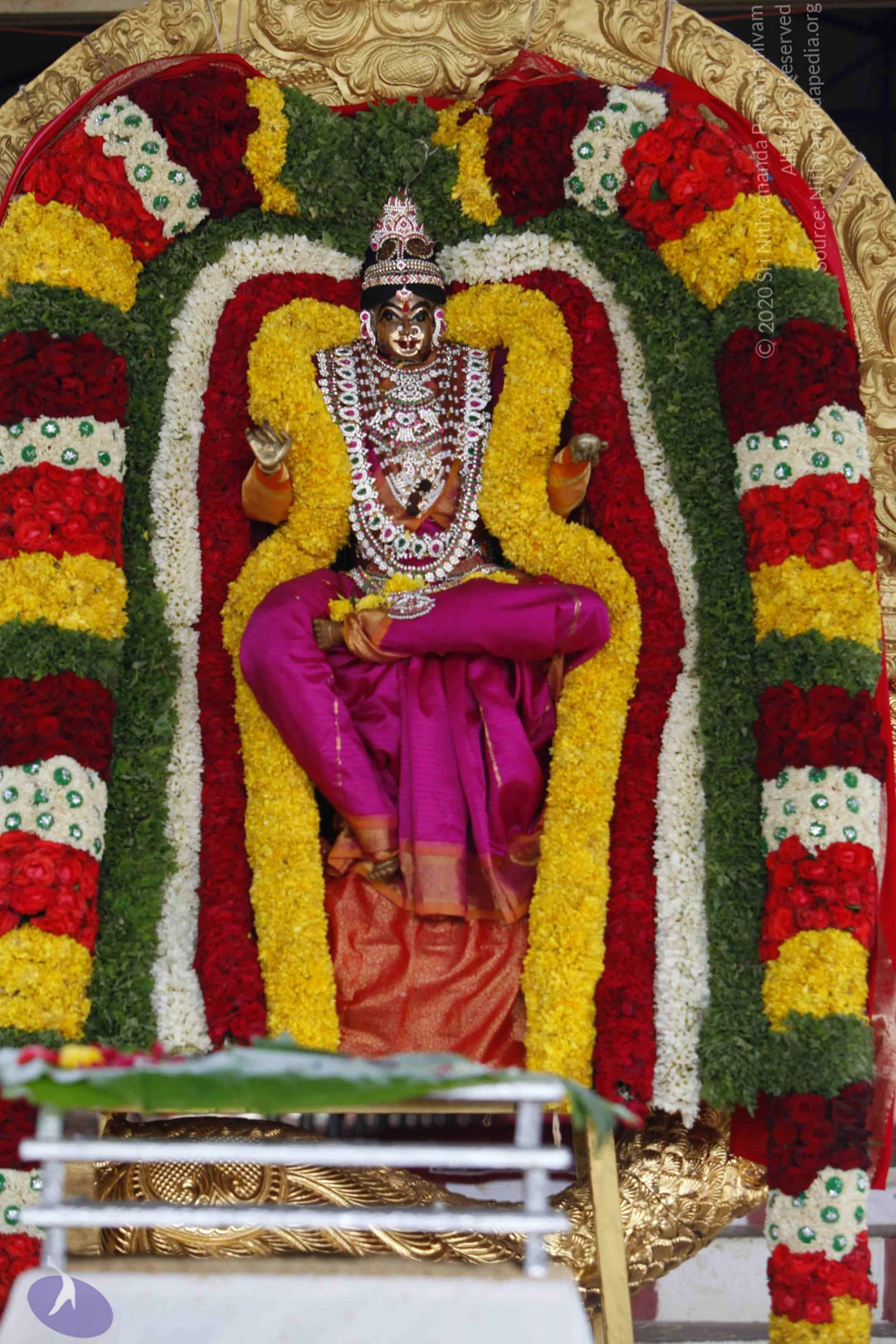
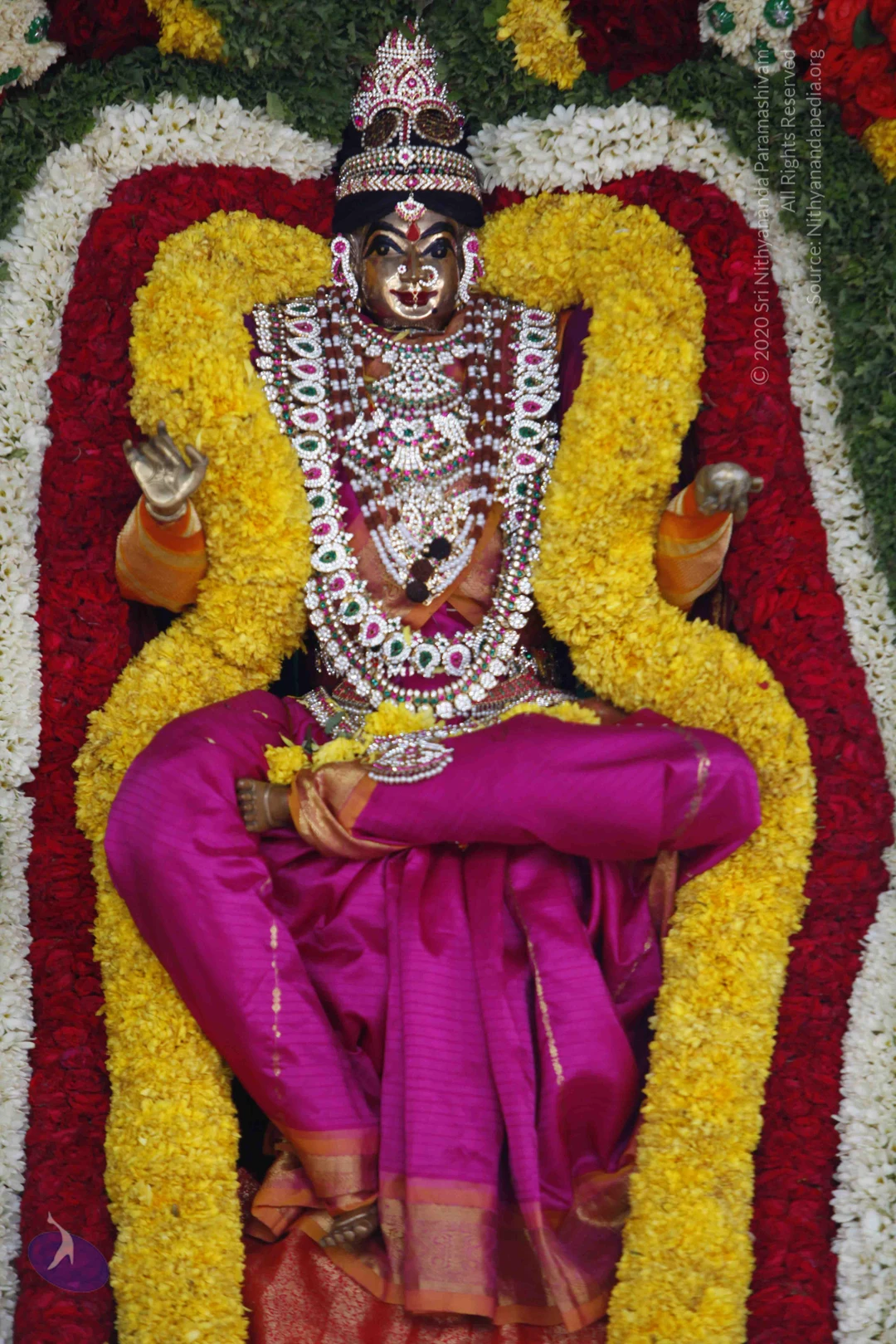
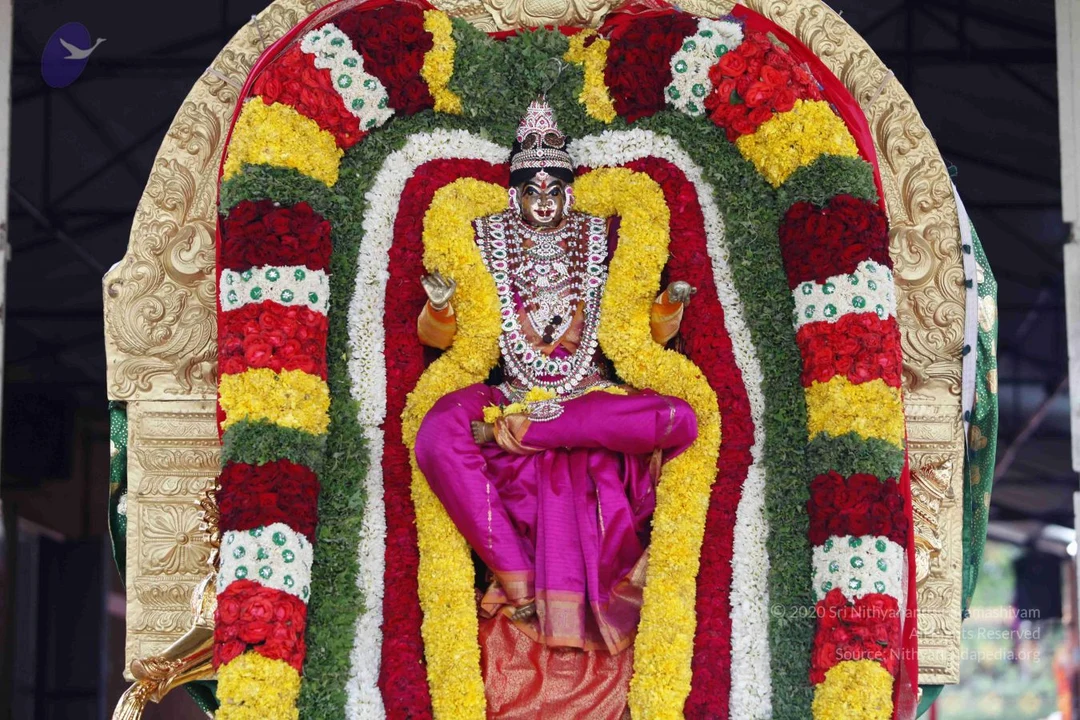
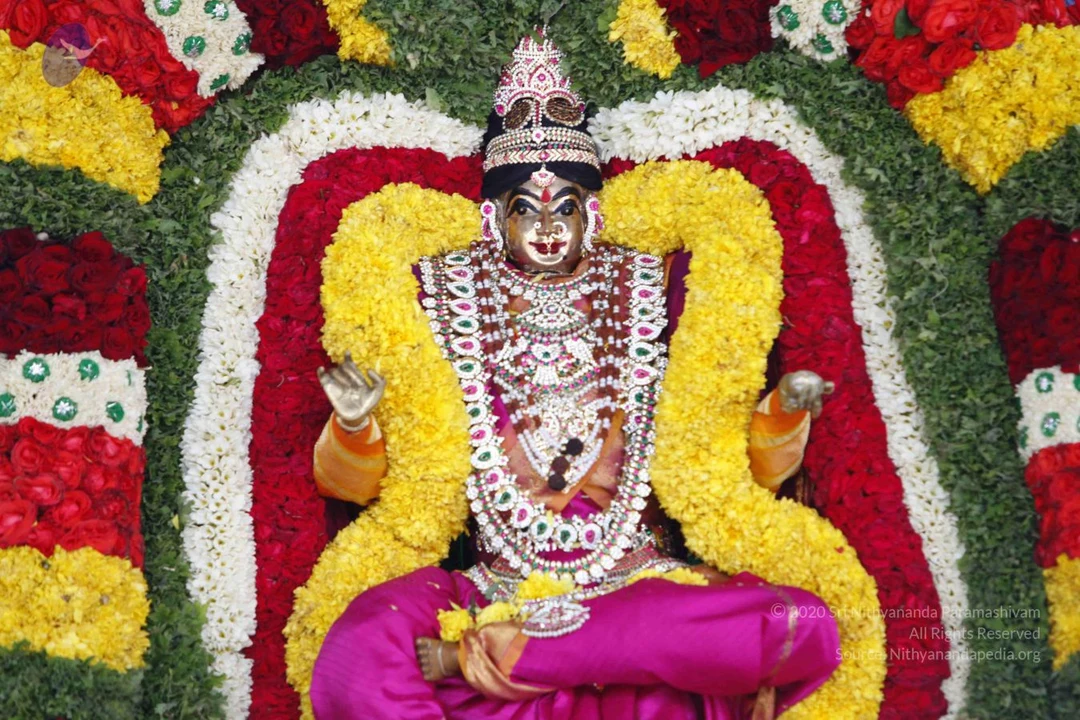
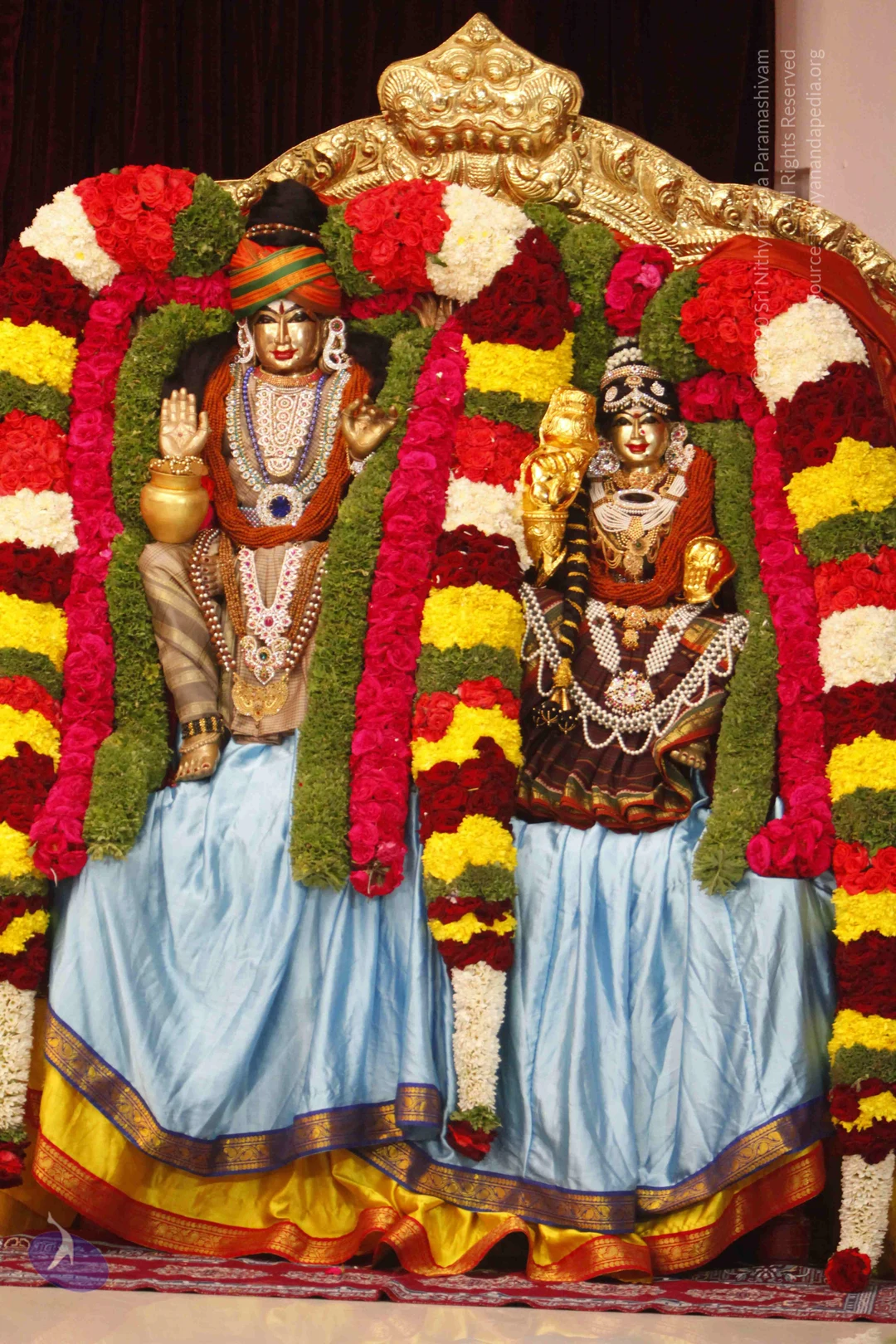
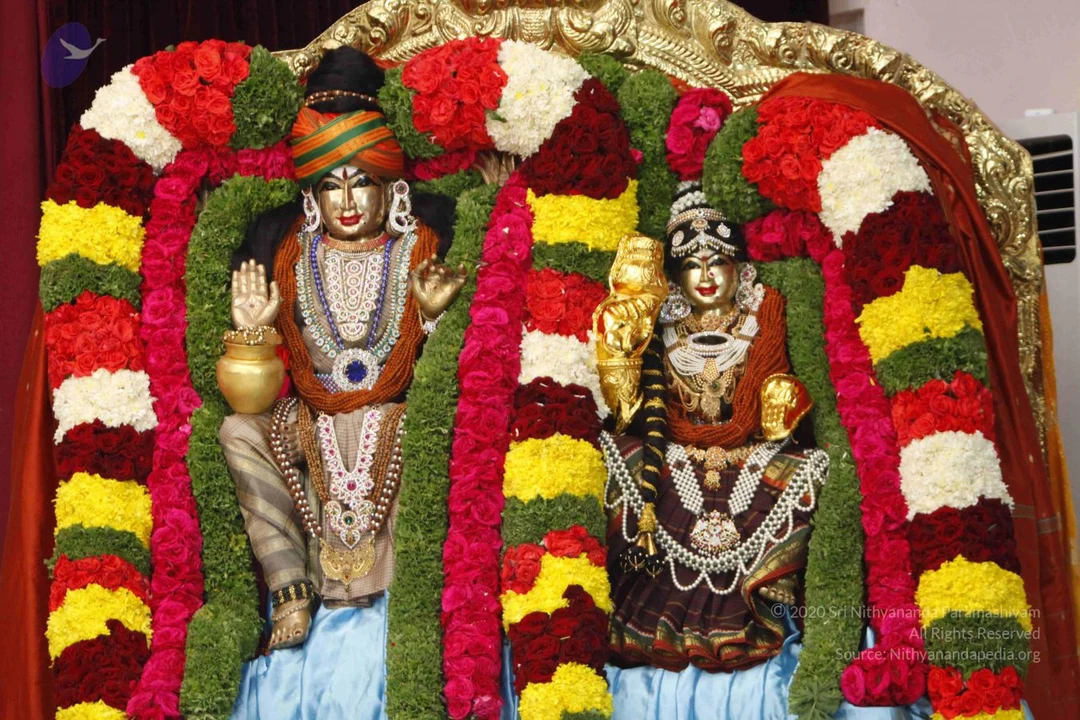
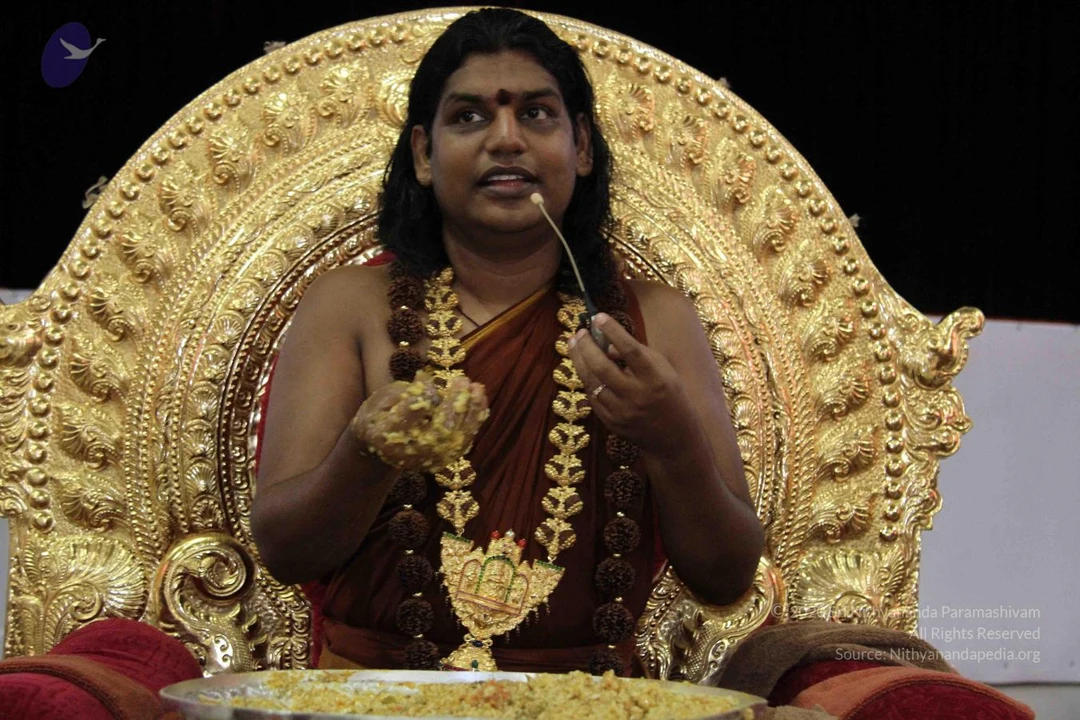
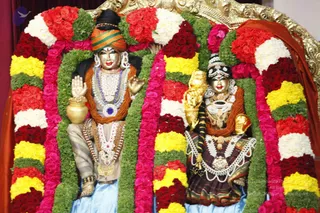
Today Mahadeva graces us in the alankara (decoration), leela alankara of, “Ulavaa Kizhi Aruliyadhu”.

The story behind the scene is, Kulabhushana Pandyan, the king, spent all his money in worshipping Shiva and building the temples, but did not take care of Brahmin scholars, because of which famine and hunger started spreading in the kingdom and the scholars, Brahmins also started moving to other countries in search of food and respect. So, because of that, no Veda Mantra chanting and yajnas happening in the kingdom. The people of the kingdom were also wondering where to go and live. At this time, the king prays to Sundareshwara. Sundareshwara appeared in the king’s dream and said that the famine is because there was no yajnas performed and no Vedic chantings were happening, for the Vedas are the Lord’s own words and ornaments. Then the Lord gives this Ulava Kizhi, means the pot of gold coins which never gets emptied, which will not diminish at all. Sundareshwara blesses the king to feed people with that wealth which comes out of that Ulava Kizhi and encourage the Brahmins and perform the yajnas.

With His grace we will make the whole thing into reality. We request His blessings.

What beautiful stories! The Lord attending to every day-to-day needs of life, literally responding to every simple prayer and every single situation.

In today’s satsanh I‘ll continue to expand on “COMPLETION AND STABILITY”.

Let me expand on the deeper dimensions of Completion.

Listen! Completion: only with completion anything in your life is possible, and I wanted all of you to understand you have to first start completing even with this pattern of self-doubting. See, ‘If I complete is it going to help me? And when I sit in front of the mirror, start completing, I don’t think I feel complete.’ Even these are patterns! Please understand, how many of you feel ‘If I sit in front of the mirror and do the completion process, I don’t know whether I am complete or not?’ This is an important pattern that you need to understand. How many of you feel that way? Raise your hand. (People raise their hands).

So understand, all of you have one important pattern: self-doubting. This self-doubting pattern, unless you complete with that pattern also, completion will not happen. Understand, the pattern of self-doubting! Please listen, along with your root-pattern and split-up of your personality, one more thing has entered into you: constantly doubting. Please listen! Because any part of your personality decides or does anything, the other part doubts that cognition. Whatever your right hand does, left hand is doubting! Whatever your left hand does, right hand is doubting! So, you have to do everything with both hands, only then it will be successful.

So, first of all, you need to complete with this doubting pattern, constantly doubting yourself. Because you constantly doubt yourself, you doubt about the truths of completion, four tattvas, principles, you doubt everything. You doubt you. Because you doubt you, you doubt me. Please listen, if you doubt you, you will doubt me, because I am inside you more than you exist in you! If you are occupying 20-30% of you, I am occupying 60-70% of you. So, naturally, if you doubt you, you will doubt me. And, if you have anger towards you, you will have anger towards me!

Sometimes people think, ‘oh, I don’t have anger towards others, I have anger only towards me.’ But I tell you, when you dig, dig, dig, you will see very clearly, vengeance towards others when you can’t express it, it becomes anger towards you. Vengeance towards others when you can’t express it, when you think, ‘Oh, no! I know they are powerful! I have to be dependent on them!’ then it expresses on you.

Today, I’ll expand only on how to complete with your self-doubt. Listen! Understand, today I will expand just on this one subject: self-doubt! Sit and look in. Look in to find first time when the self-doubting started in you. Please understand, the moment you realize your inner image about you is different and the outer image you project to others is different, self-doubting will start on you. The moment you realize behind the screen you are like something and outside the screen you are like something, or in front of your wife you are something, you have a different way of behaving, and outside when she is not there you have a different way of describing her.

Please understand, when you understand that your inner image about you, your outer image about you, the way you project you and the way you think about you, when these two are different – the way you think about you is Mamakaara, the way you project you is Ahankaara – when these two become different, and one important thing, please listen, especially when others are convinced about the image you project outside, you think, ‘Oh, God! All these fellows are fooled! Even though I am hiding what is and projecting something different, everyone is fooled. Then, I think this is the way everyone is fooling others.’ Then you start doubting everything and you.

Listen! When there is a disconnect between your inner image about you and the image you project about you outside, means your outer image, when there is a disconnect between these two, and especially when you are able to convince others, you are able to convince others about your outer image, the way you project yourself is the true image, when you are able to convince everyone, suddenly the self-doubt starts getting developed. ‘What am I doing? What is this?’

I tell you, the worst conscious killer disease is self-doubt, especially self-doubt established as a pattern in you. You will see very clearly you will work for something, and when it becomes a failure you yourself will take revenge on you. ‘You did all this, this, this! You need this!’ How many of you have this self-revenge pattern? This is called “átma droha”. Understand, first, “átma sandeha”, means self-doubt, then “átma droha”, this leads to “átma hatya” self-destruction. No, that is the poor human-beings!

Look in and start digging out when first time you started having self-doubt. Try to remember, recollect the earliest memory of your self-doubt. When you yourself did not trust the words you uttered, for example even now when you declare, ‘With Integrity, Authenticity, Responsibility, I declare…’ one part of you saying, ‘You neither have Integrity nor Responsibility nor Authenticity! What are you declaring? Keep quiet! Keep Quiet! You are not going to be successful. These are all pseudo drama! What others, they may be telling because they may be having’. Before you even complete one statement, your other part has finished satsang! But I tell you, only by the declarations and making them into reality, the spiritual strength, “the átma bala” is created.

What is “átma bala”? Most of you, your parts, being integrated! See, now you are nothing more than a spare parts shop. You are not a whole vehicle. You are a spare parts shop. In U.S., there will be dump yards where a lot of cars will be dumped. Any spare part you want, you can go into the dump yard and remove it, when you come out you can pay for that and go. You will get even Rolls Royce spare parts in the dump yards! You may get Rolls Royce spare parts, but that does not mean dump yards can become car showroom! All of us are only dump yards, spare parts selling centers! Because we are all in different spare parts, each one is thinking in one, one way. Your tongue goes on visualizing about food and all the decisions about food it puts that file in the front: ‘hey, sign in this first!’ And your eyes, they push their file: ‘hey, hey, hey! Come on! Sign in this!’ And your lust, that fellow when he comes, he pushes everyone out, because he bribes a lot! All files are thrown out! And he says, ‘Come on! Sign in this!’ It is literally a chaotic government office! Chaotic, corrupt government office! Chaotic, corrupt government office and spare parts selling center. Now, first thing you need to do, when the self-doubting started and all the incidents you remember about your self-doubting pattern.

Please understand, the people who have self-doubt only created atheism! Atheism is nothing but the collective expression of self-doubt. Collective expression of confidence on the consciousness is Temples! And, collective expression of self-doubt is Atheism! So, with whatever you associate, you are going to get that, be very clear! Are you going to allow the collective self-doubt to influence you? No, I have read enough of atheist literature! It is nothing but exploiting your self-doubting system. These atheists’ idiots go on telling that “these religious leaders and Gurus are exploiting the innocent, exploiting the emotional weakness of the people”. I tell you, the atheist leaders and atheist Gurus exploit the conscious weakness of human-beings which is self-doubting!

Understand, the pattern of self-doubting: if somebody knows how to touch the pattern of your self-doubting, he can make you doubt anything! But, it will lead to destruction. Based on self-doubt, any doubt you create it will lead more and more ignorance. More and more ignorance!

Please understand, I tell you, many, many fellows who can exploit, who master the art of exploiting your self-doubt, they become atheist leaders, the revolutionaries. And, the guys who can exploit your ability to doubt your emotions, they become poets. Please understand, poetry, cinema, all these arts are nothing but, making you feel that your self-doubt can be healed! I’ll give you the example, why always in all movies the lovers finally unite? And, why they don’t show after they get married, what happens?

See, your emotions, the decisions you take during your emotions, can’t be completely trusted. And one more thing you need to understand, that does not mean you should not take any decision based on emotions. You should take decisions based on emotions which should also be supported with intelligence. So, whenever you are high on emotions and want to take some decision, if you stop taking decisions, you will live as buffalo! If you take decision immediately, you will enter into incompletion. You should raise your intelligence level to your emotions, means, building up completion in you to support why you should do what you want to do. Please understand, I am revealing some of the important basic theories of life. All the movie makers, they try to show the decision you take emotionally, like love marriage or anything, it is always good and right! At least, majority of them try to show, because in their life they realized it is wrong, a lie and a failure! They go on trying to justify, ‘No, no, no, I may not be successful, but the system is successful.’

Listen! Listen! Whenever you are high on emotion, means you are in love with a boy or girl, and you really, really want to get married, if you don’t take the decision in that high emotion, your whole life will be like a buffalo! I have seen people who don’t take any decision. So understand, if you don’t take decisions when you are highly excited, feeling powerful and emotional, you will become a buffalo. Same way, if you take decisions during those high emotions, you will be a failure. Then, what should be done? Build the intelligence to support your decisions during the high emotions, means, building completion, completion, completion! During the high emotions, self-doubt also will be in high frequency. So, complete with that self-doubt. Complete with the self-doubts! I can say, self-doubt is the part of you which does not allow you to take any major decisions in your life.

I have seen many people who literally just want to jump into the Sangha and want to be part of the Sangha. They dream, ‘I think sannyas is my life. Living around him is my life. Oh, God! After so many janmas I recognized he is in the human body! How can I be away?’ All high emotions! High feeling, Inspired! Excited! But then comes self-doubt. ‘Will these emotions stay high? Will I be able to retain this same space? Will I be able to ever be in that same mood, be in that same energy? Oh, I don’t know what to do?’ Over! You are back to your two-bedroom apartment. Two-bedroom apartment means two people staying in that constantly for fighting with each other! Your inner space is like that only. The one who doubts you, and the one who is doubted. These two stay together and they exchange the role also. ‘See, today you doubt me, I‘ll be the doubted. Tomorrow I‘ll doubt you, you’ll be the doubted.’

Understand, whenever the high emotion, excitement happens, understand, you are jumping towards the space of God! You are closest towards your highest existence! But, I tell you, don’t make decision out of that emotion, and don’t be without making decision out of that emotion! You have to make decision after the completion with all the self-doubts, so that the emotion becomes eternal, e-Motion, Enlightening Motion! The people who try to justify their emotions, wrong!

Understand, continuously these patterns of self-doubt destroys you making any major decision in your life. Whether in your career, or in your education, or in your life, in your knowledge, everything, everything, the self-doubt makes it into pieces, destroys it.

The essence of today’s satsang:

Sit with all these self-doubting patterns. Pen them down. Relive and relieve them. Complete with them. Don’t doubt whether you completed with your self-doubts; that will be one more doubt, at least complete with that! If you have self-doubt, complete with it. If you have one more doubt whether you completed with your self-doubt or not, complete with that also. Go on completing.

With this, I‘ll move to the next segment of the morning satsangh – Nirahara Samyama.

I request all the Nirahara Samyama participants, sit straight. Tomorrow level-2 Samyama ends. So, after tomorrow morning satsangh, you can have breakfast, you can break the Samyama. Now let us start the Nirahara Samyama.

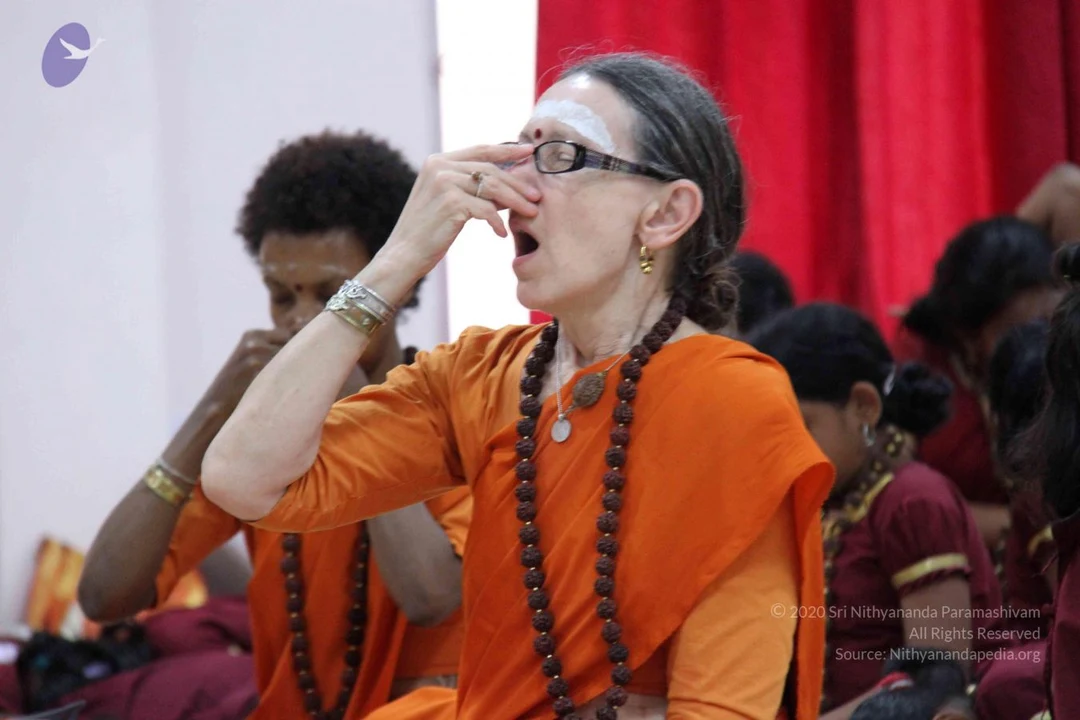
Please sit straight. Close your eyes. Cognize you have become Bidadi Kalpavruksha and inhale through both the nostrils and the mouth. Hold as long as possible. Exhale through both the nostrils.

With Integrity, Authenticity, Responsibility and Enriching, I bless you all. Let you all experience Kundalini awakening, live health, bliss and enlightenment, producing the energy directly from the space! Namah Shivaya!

Let you all radiate with Integrity, Authenticity, Responsibility and Enriching with eternal bliss, Nithyananda! Thank you!

Title:

Drop The Self-Doubt And Trust Yourself Again!

Description

In this excerpt from Inner Awakening Program conducted on 10 July 2013 Paramahamsa Nithyananda talks about how sometimes updating our decisions based on new data, intelligence and facts can lead to self-doubt and how we can complete with it.

Link to Video:

VideoAudio

Title:

WHY in life has no answer || Inner Awakening || 10 July 2013

Description

Title: WHY in life has no answer
Name Program: Inner Awakening
Session on: WHY in life has no answer. Life is not in realm of answer.
Date: 10 July 2013
Venue: Adikailaasa, Bengaluru, India|

In this video Supreme Pontiff of Hinduism HDH Nithyananda Paramashivam explains many things in life has no answer. Life is not in the realm of answer. If it can be in the realm of answer with few books we can finish life. There are many things in life which can’t be answered.

Link to Video:

VideoAudio

Photos
Photos Of The Day:
Temple

PadukaPuja

PadukaPuja_crowdshots

Nithya_Satsang

Sarvadarshan

Final_Blessing

IA_sessionPhotos
MaheswarapujaPictures

Tags:

Paramahamsa Nithyananda, completion, pattern, self-doubt, inauthenticity, identity, trust, consciousness, confidence, intelligent, decision making.

Photos Of The Day:
Temple

Paduka-Puja

Nithya-Satsang

Sarvadarshan

IA-Darshan

Maheswara-Puja

Photos from this day
View all 523 photos
Photos
50 photosSource gallery
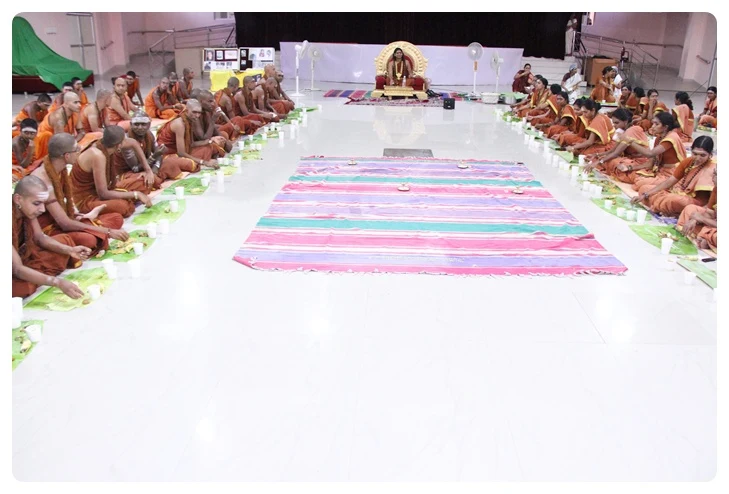
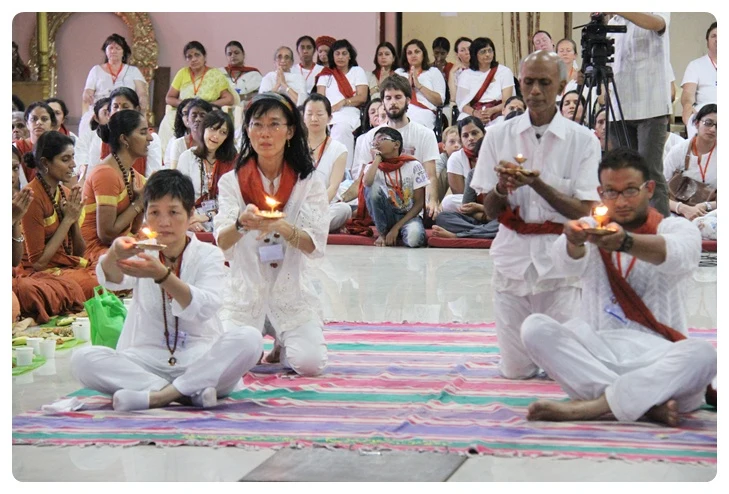
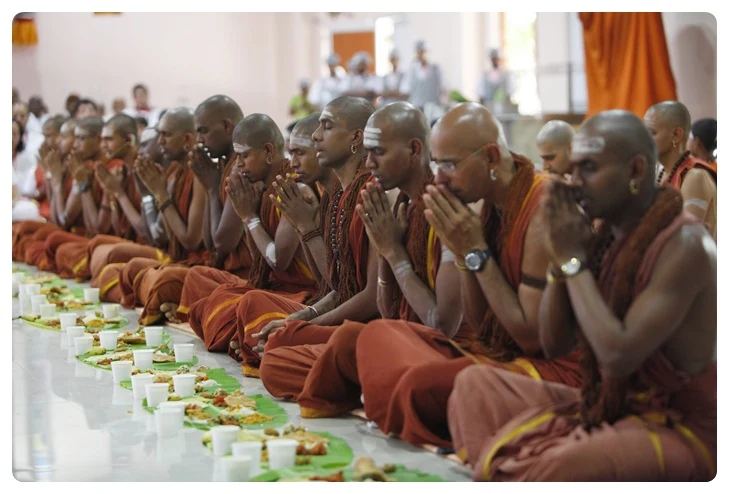
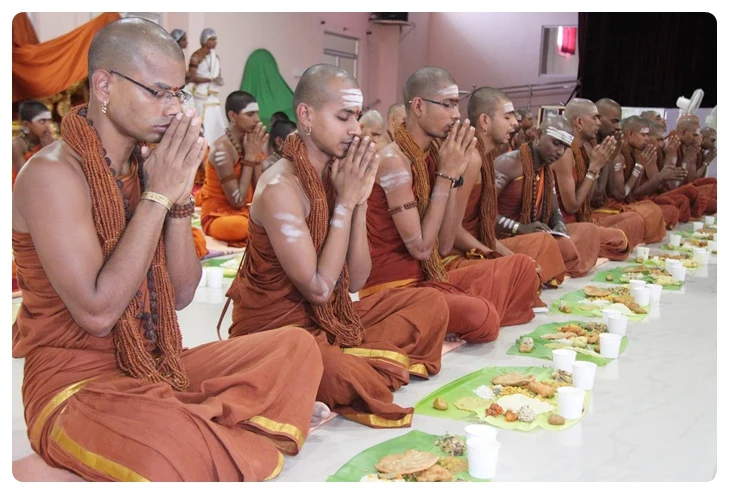
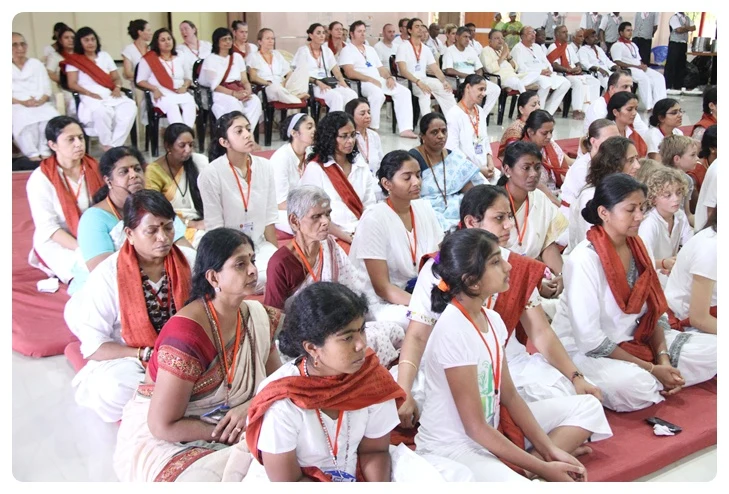
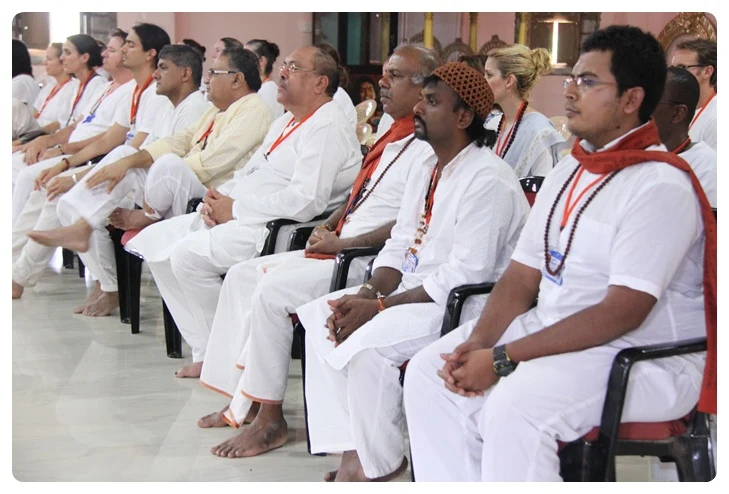
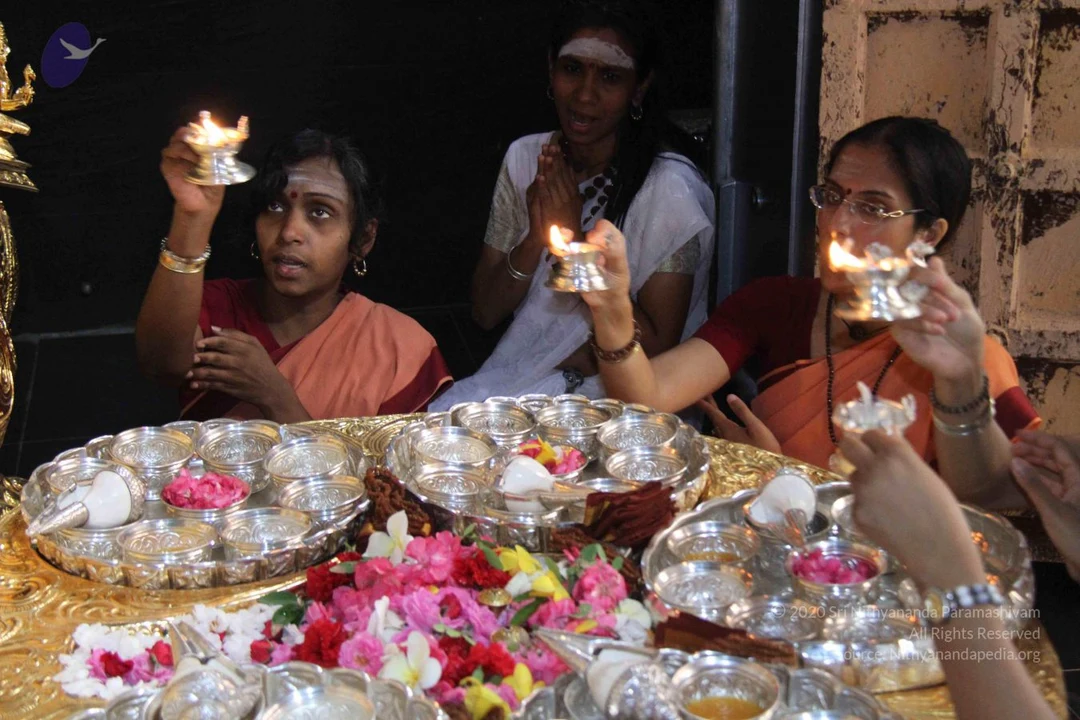
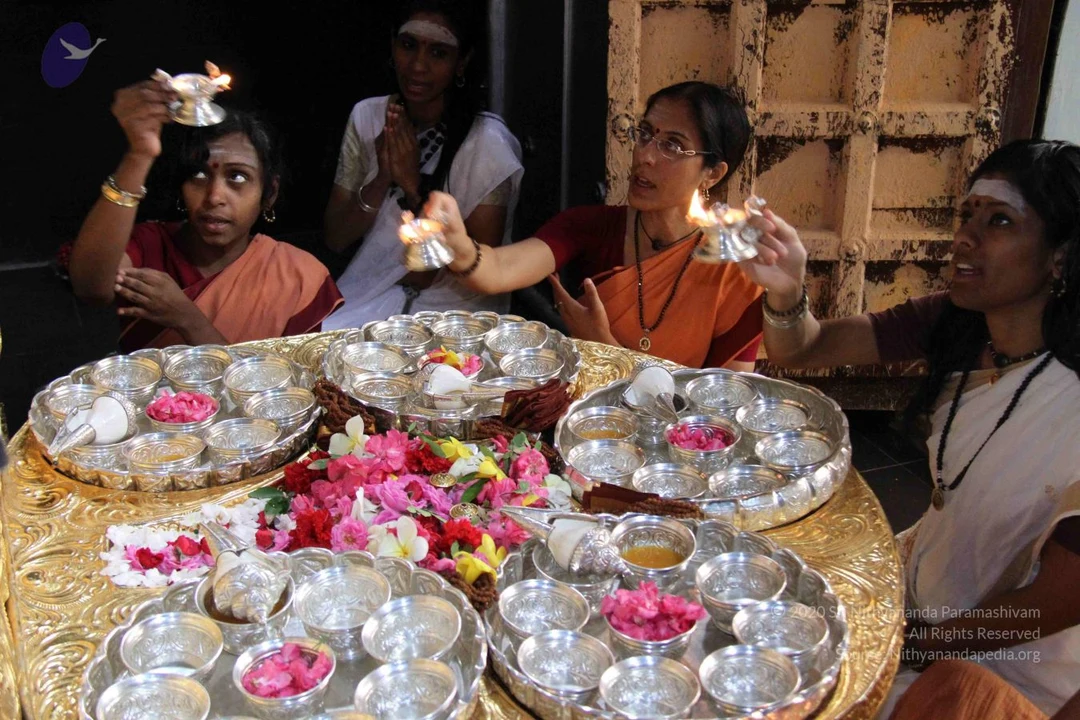
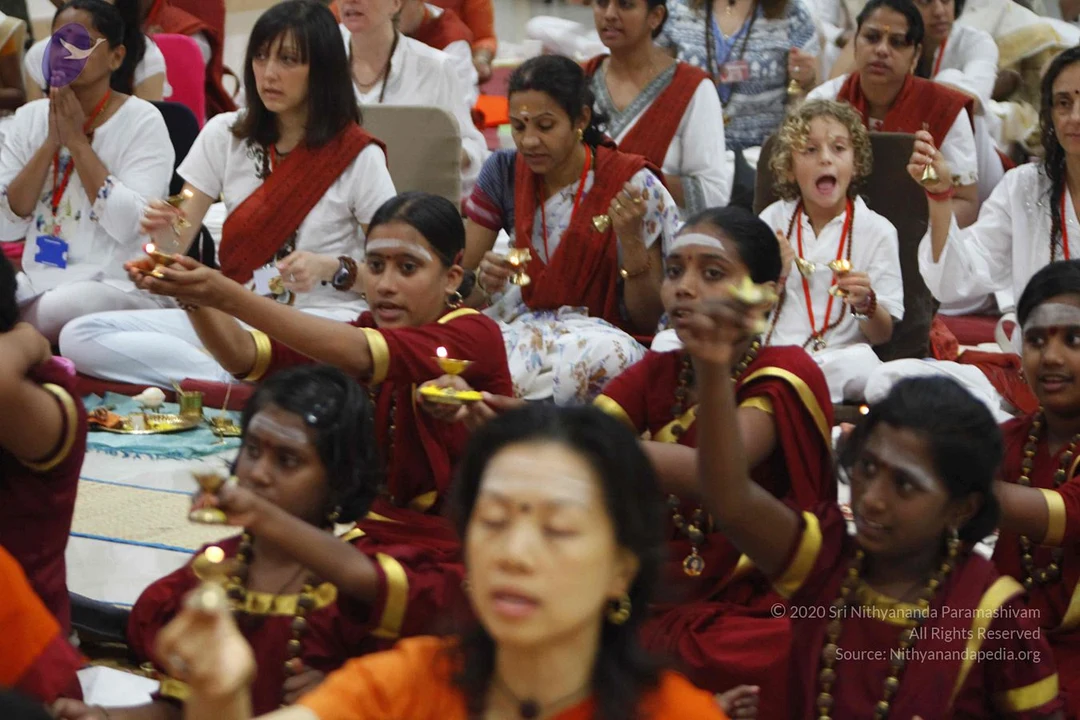
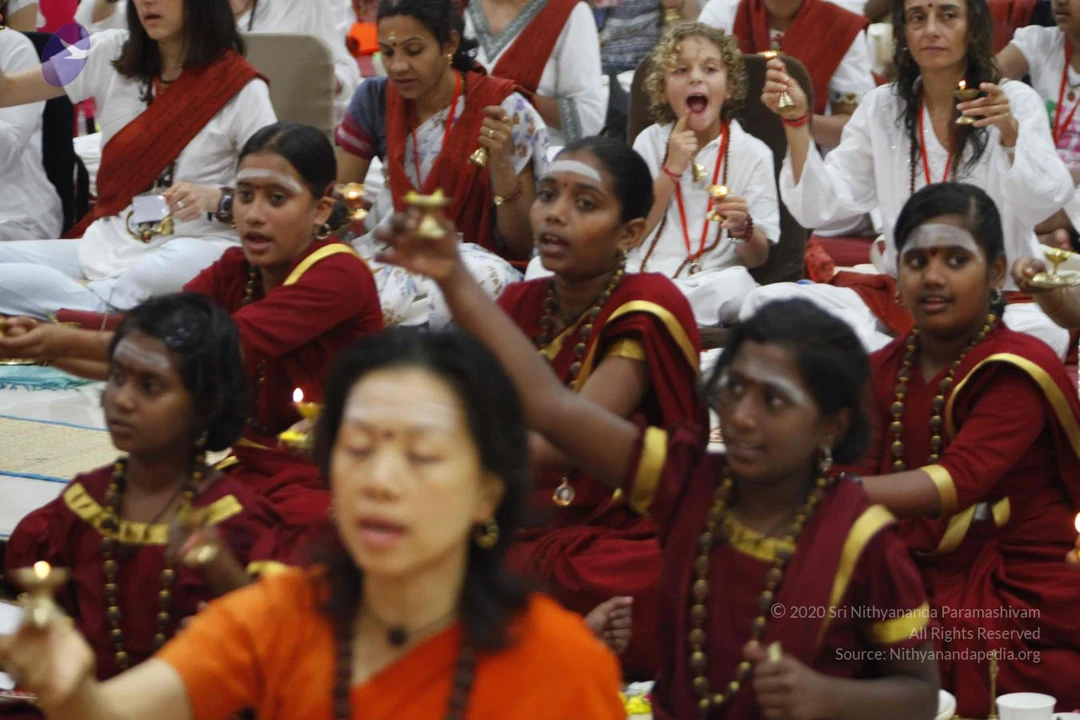
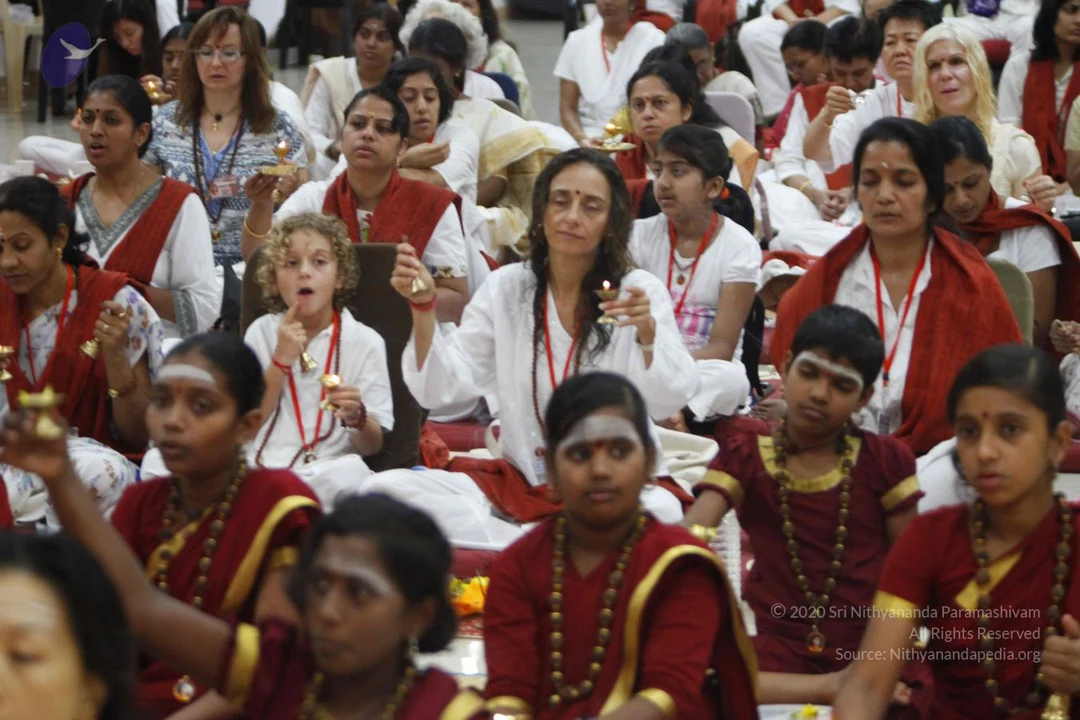
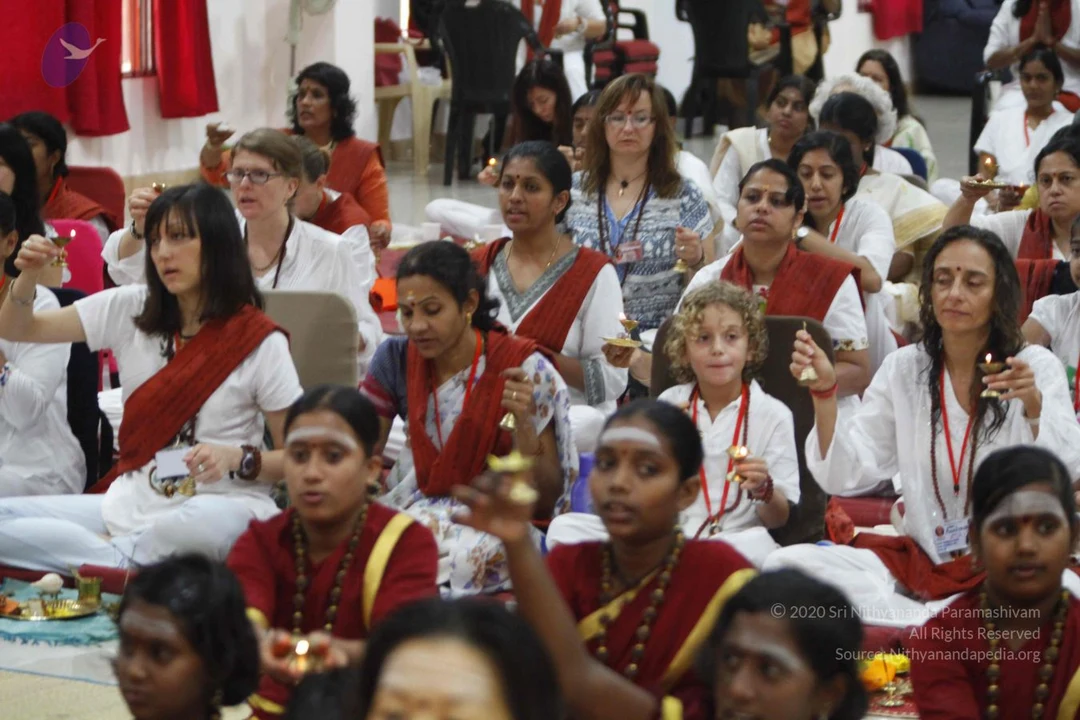
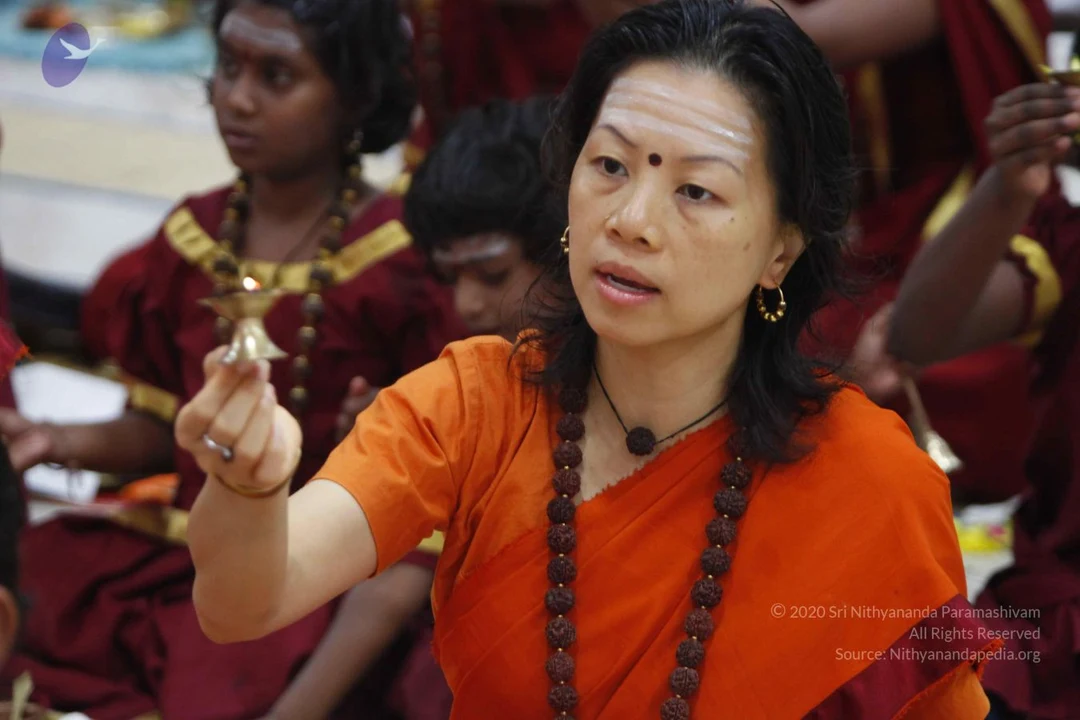
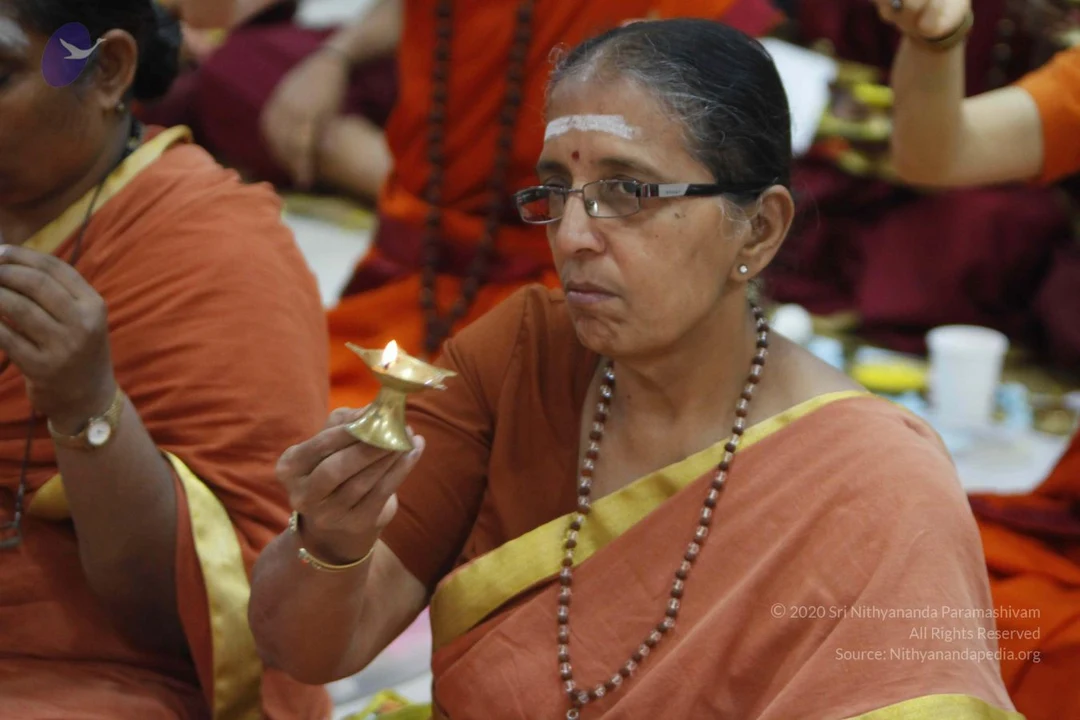
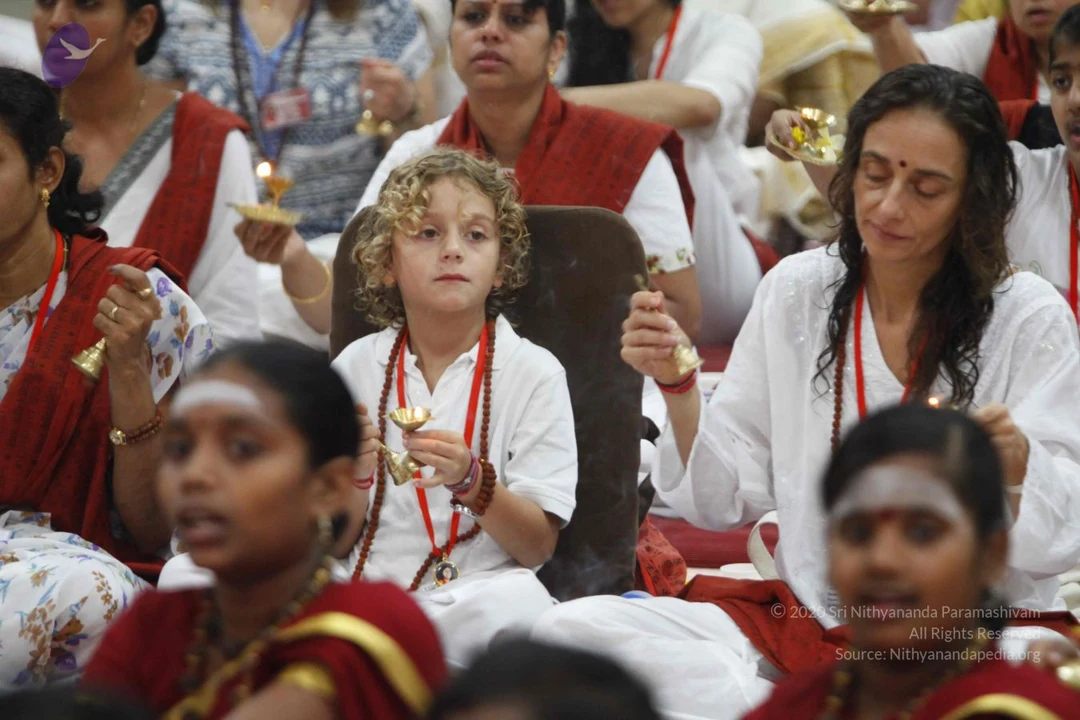
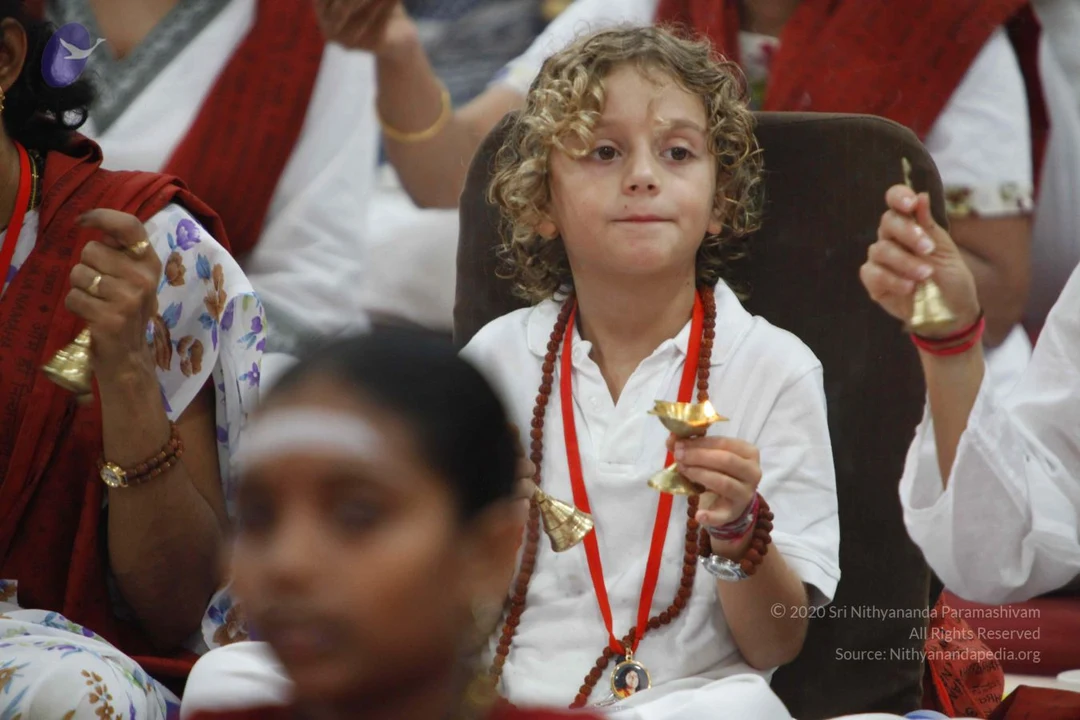
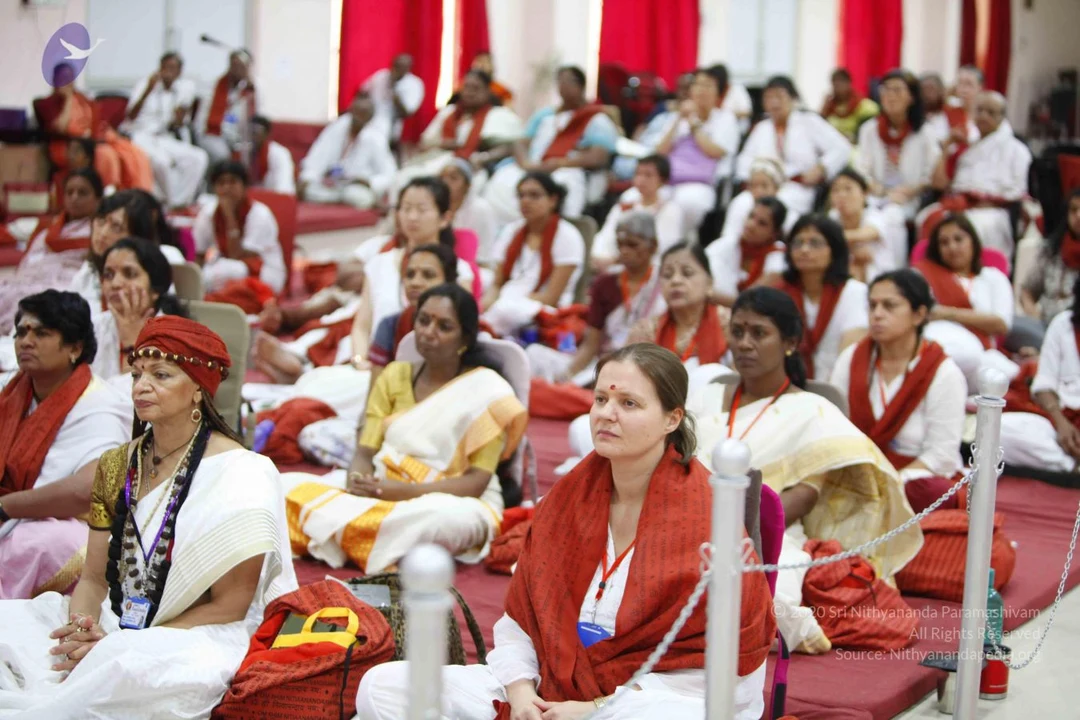
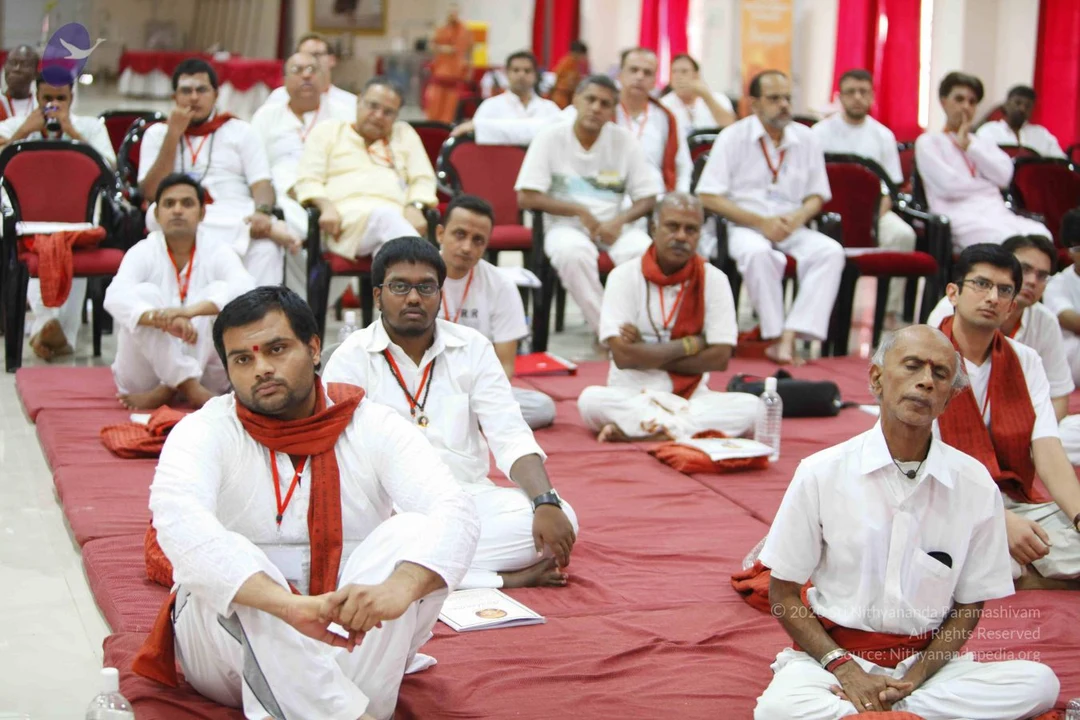
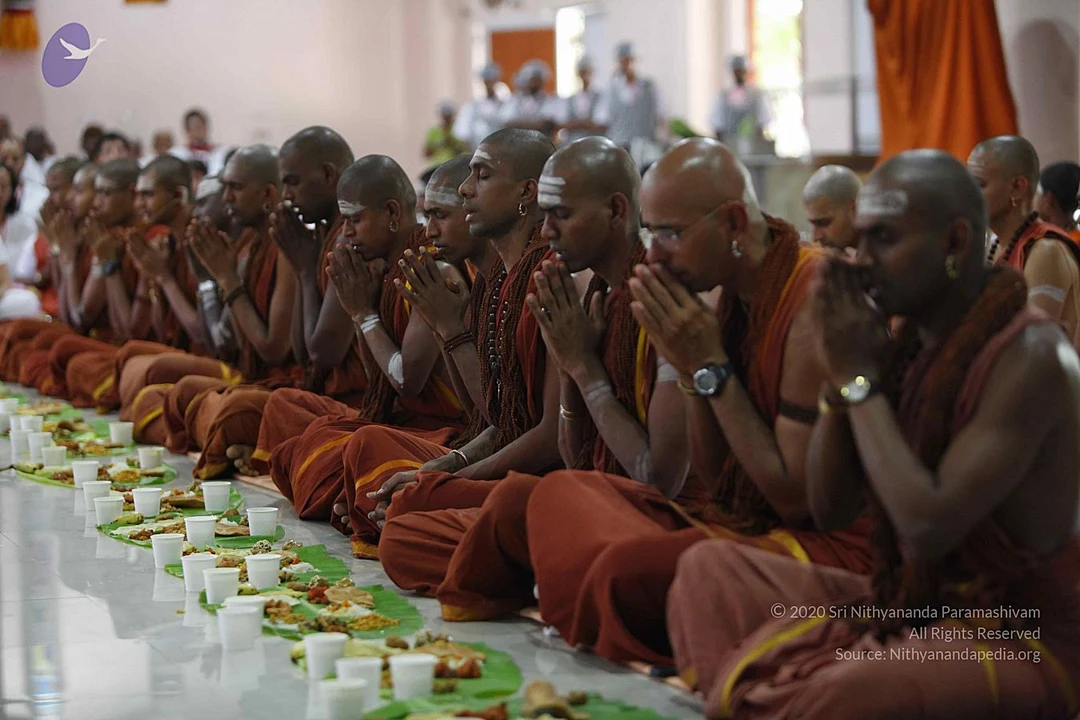
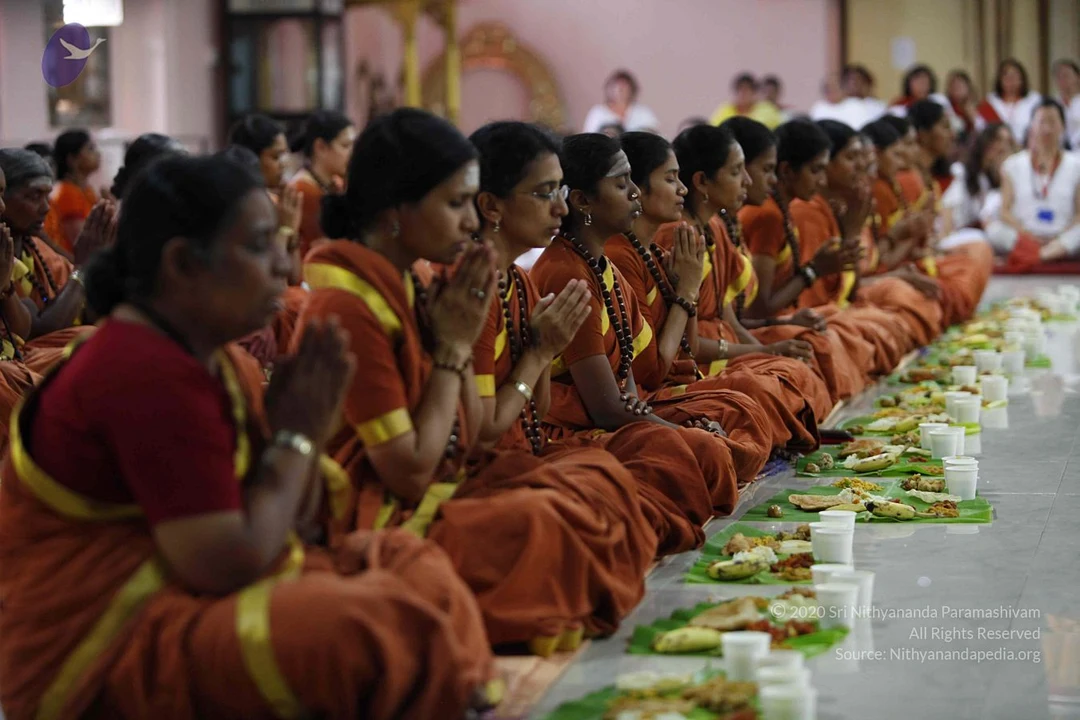
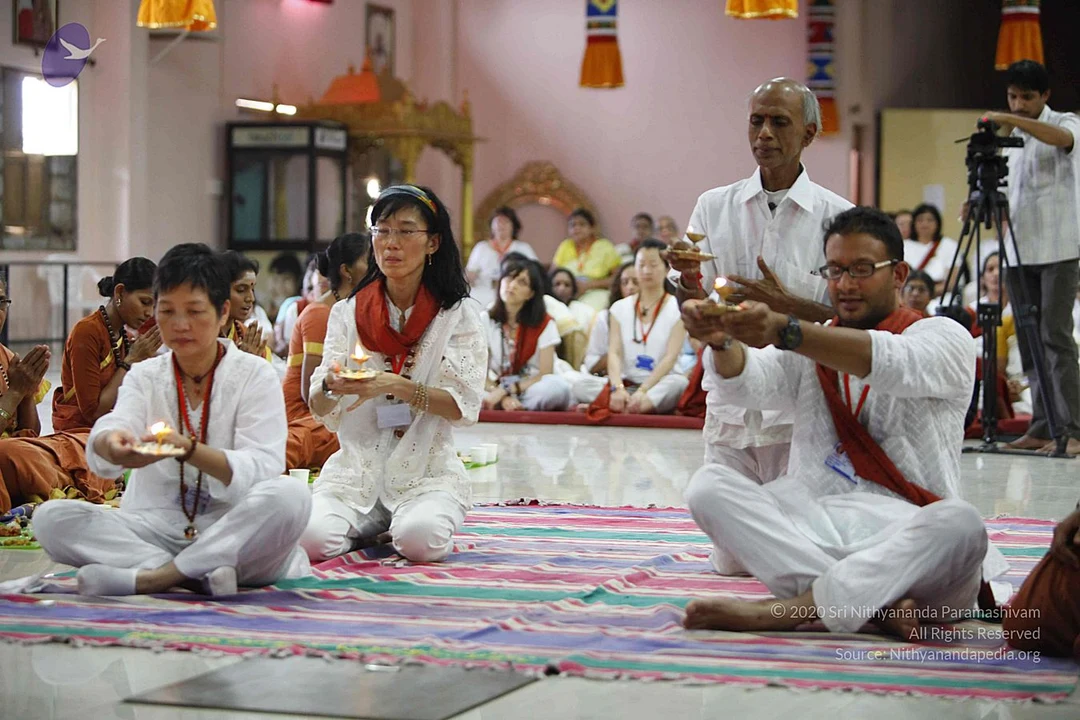
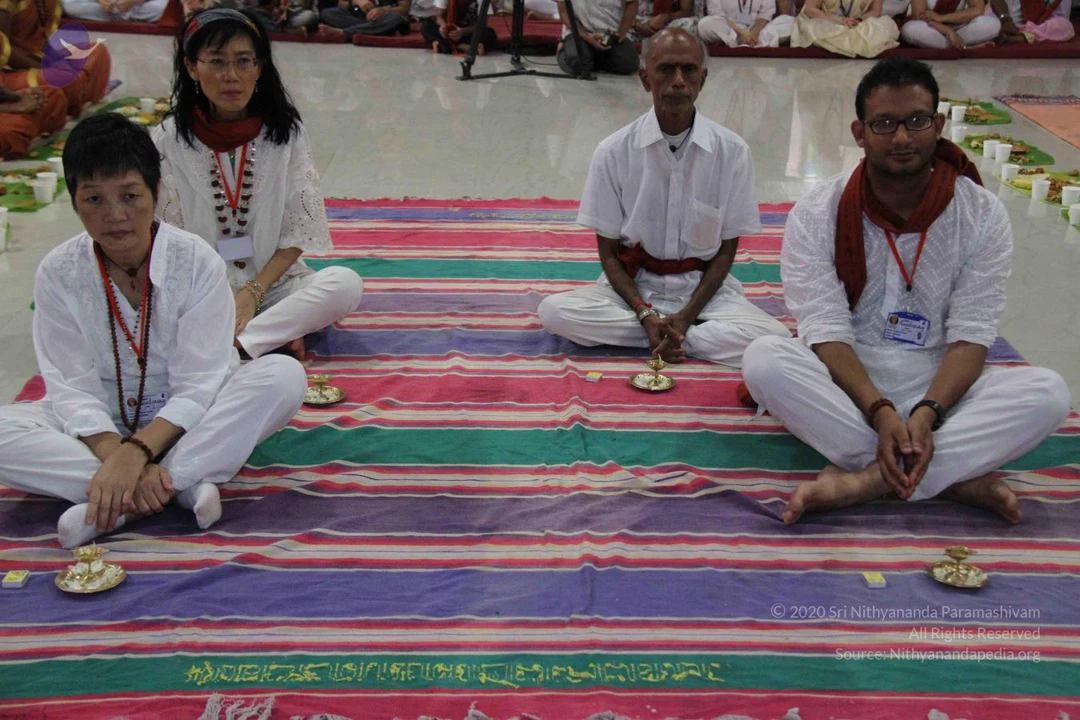
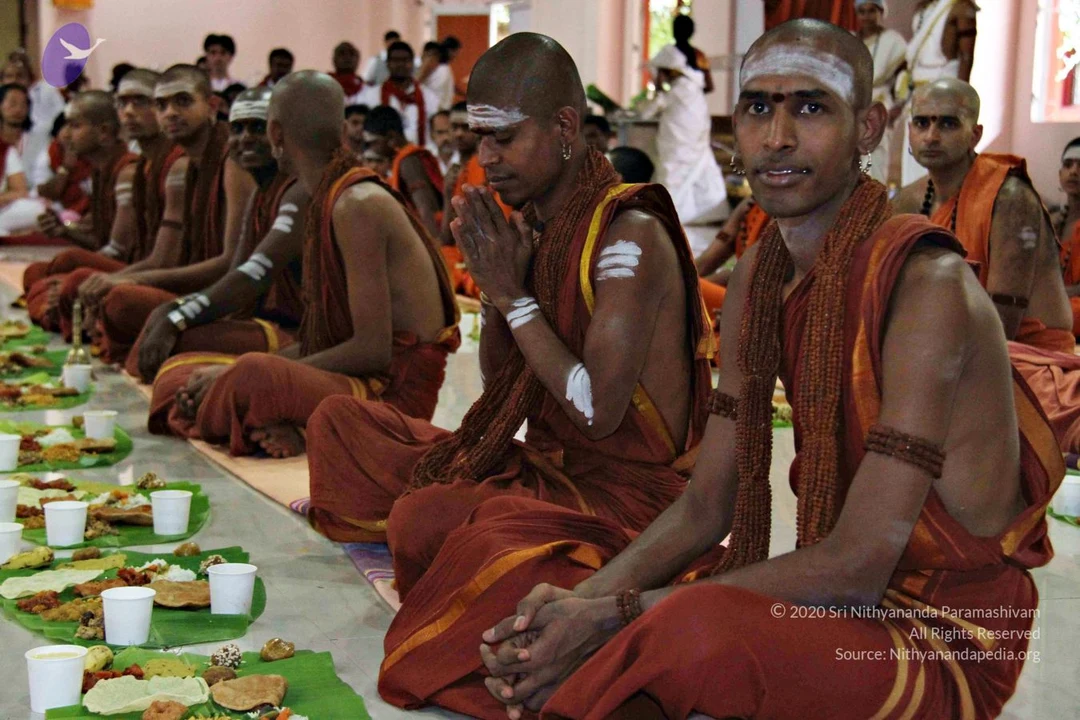
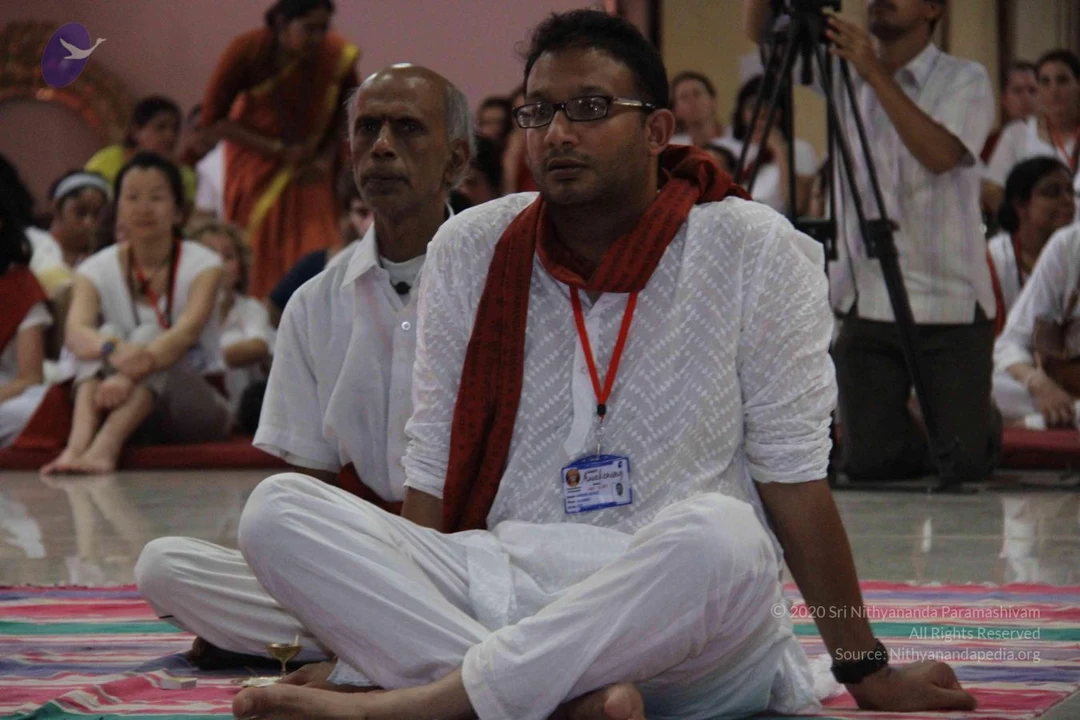
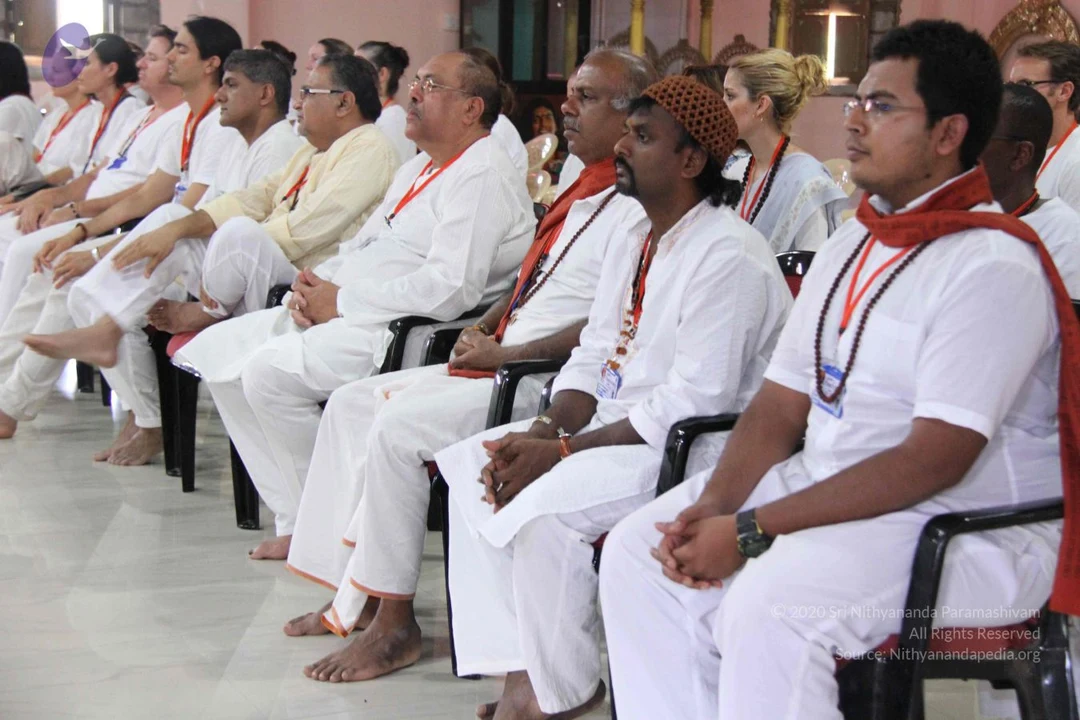
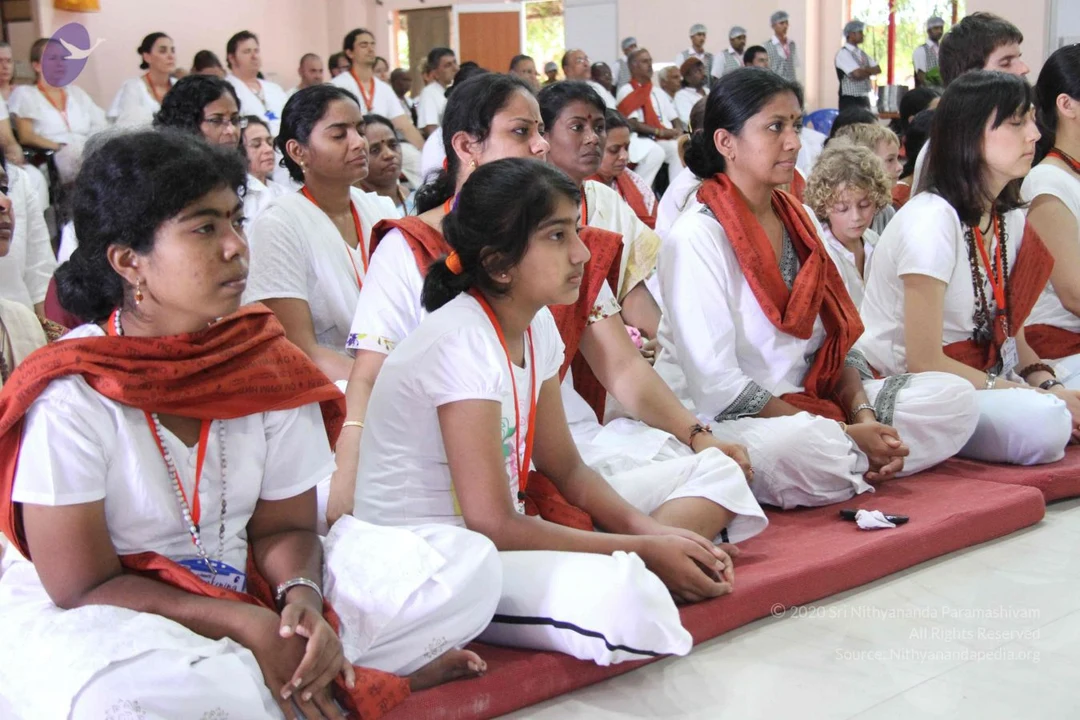
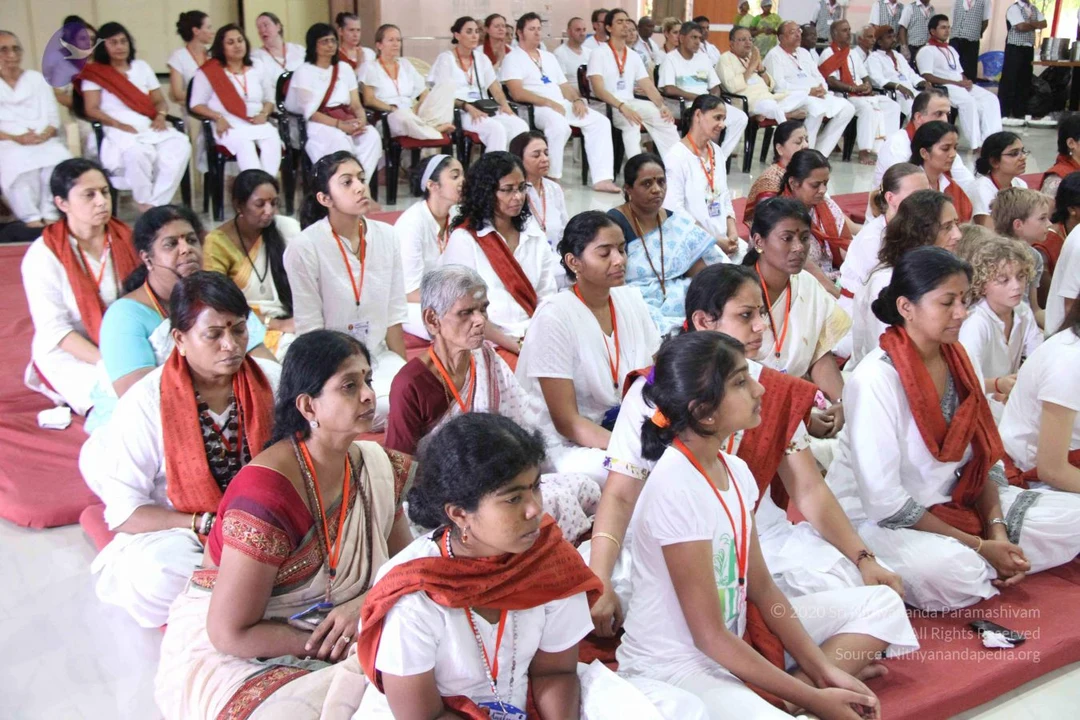
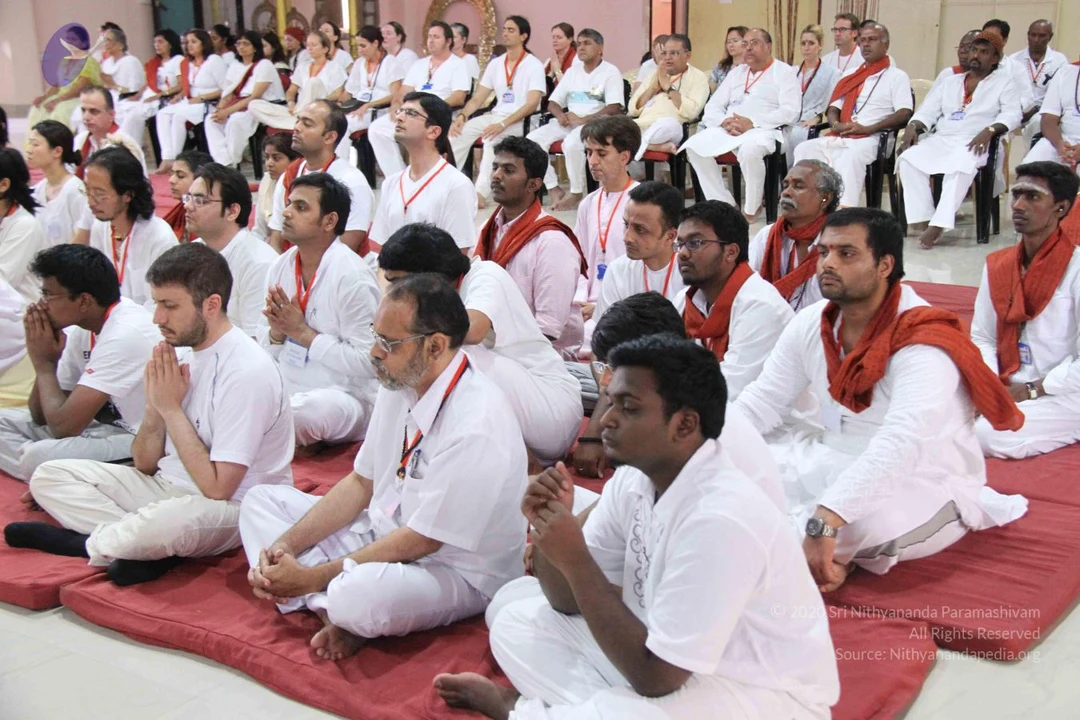
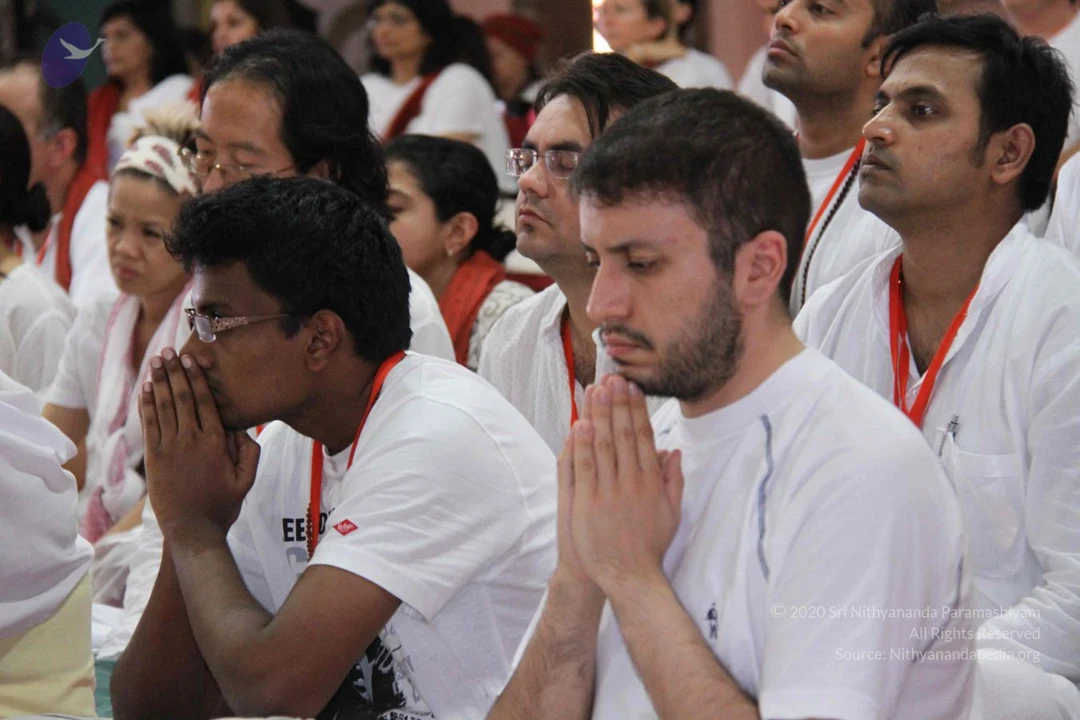
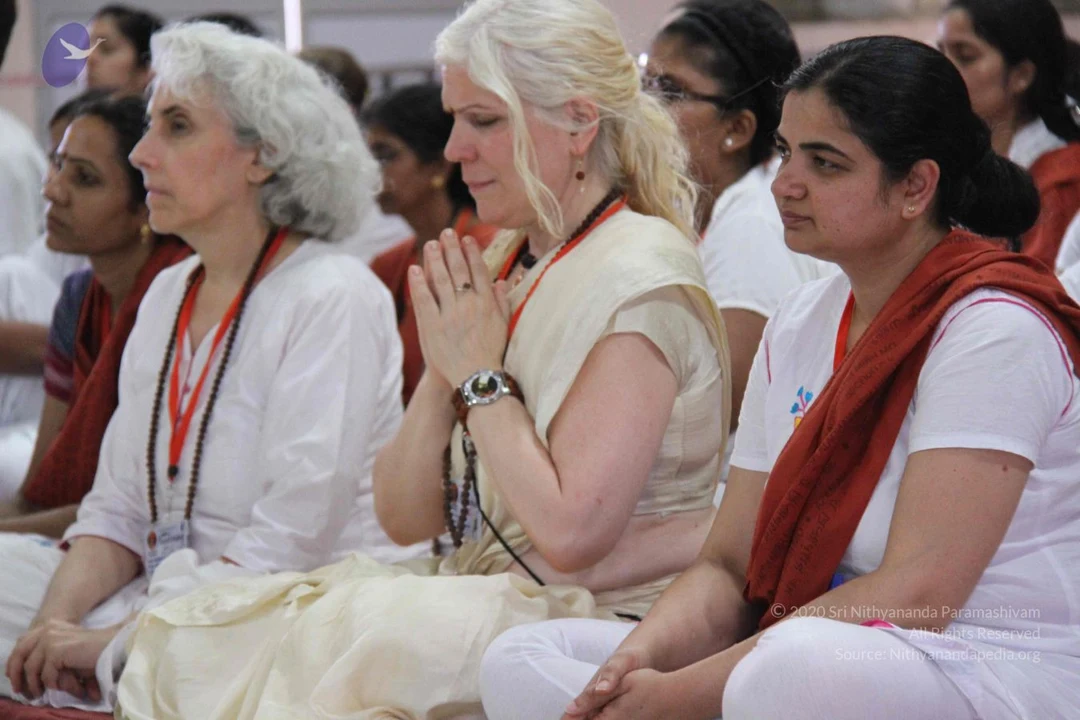
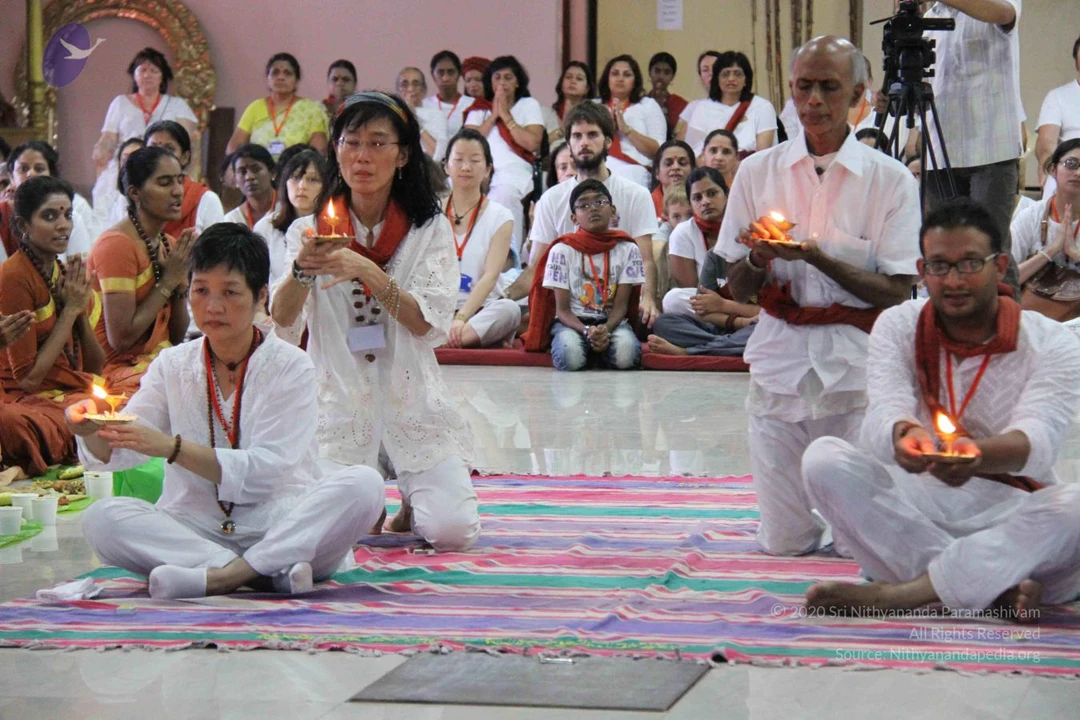
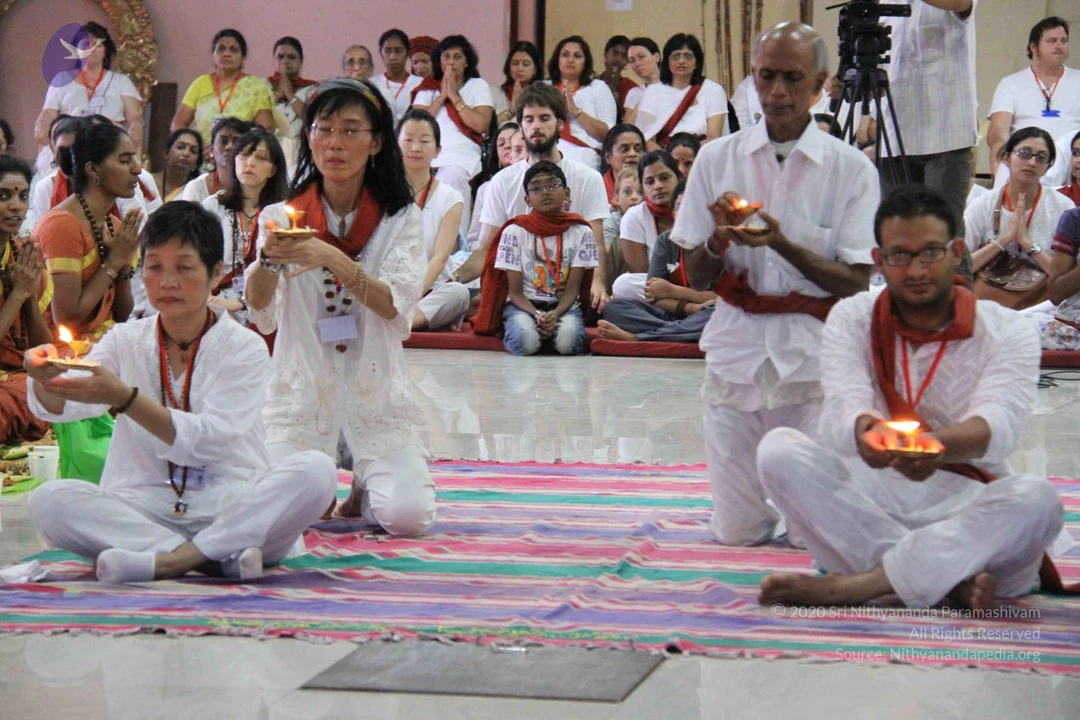
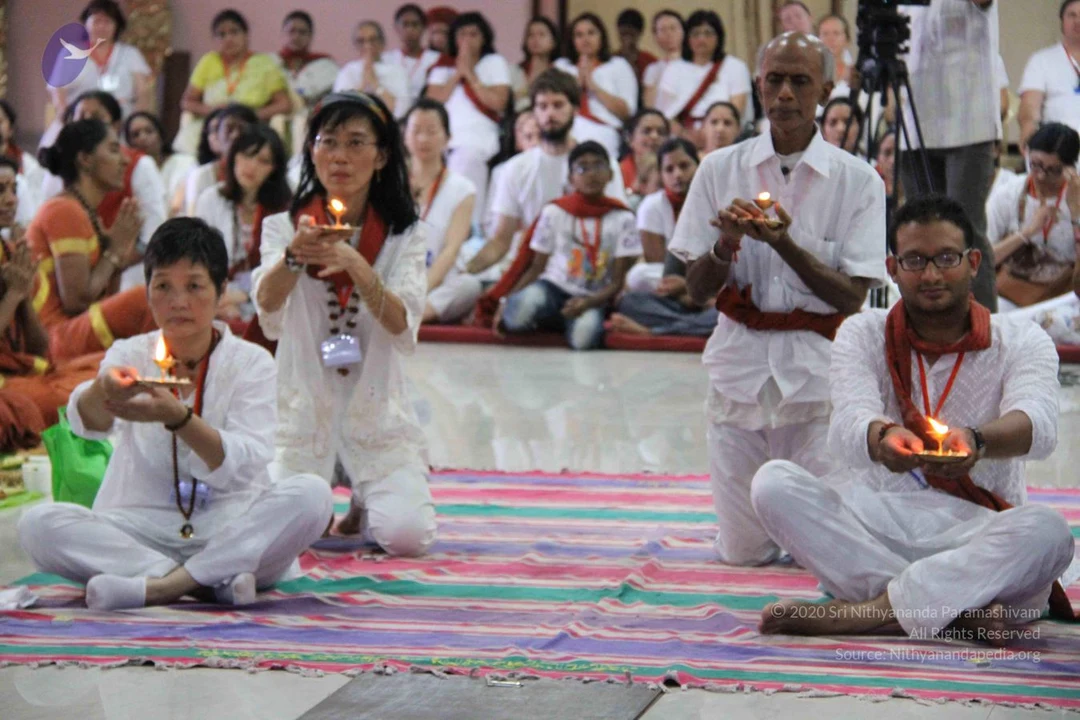
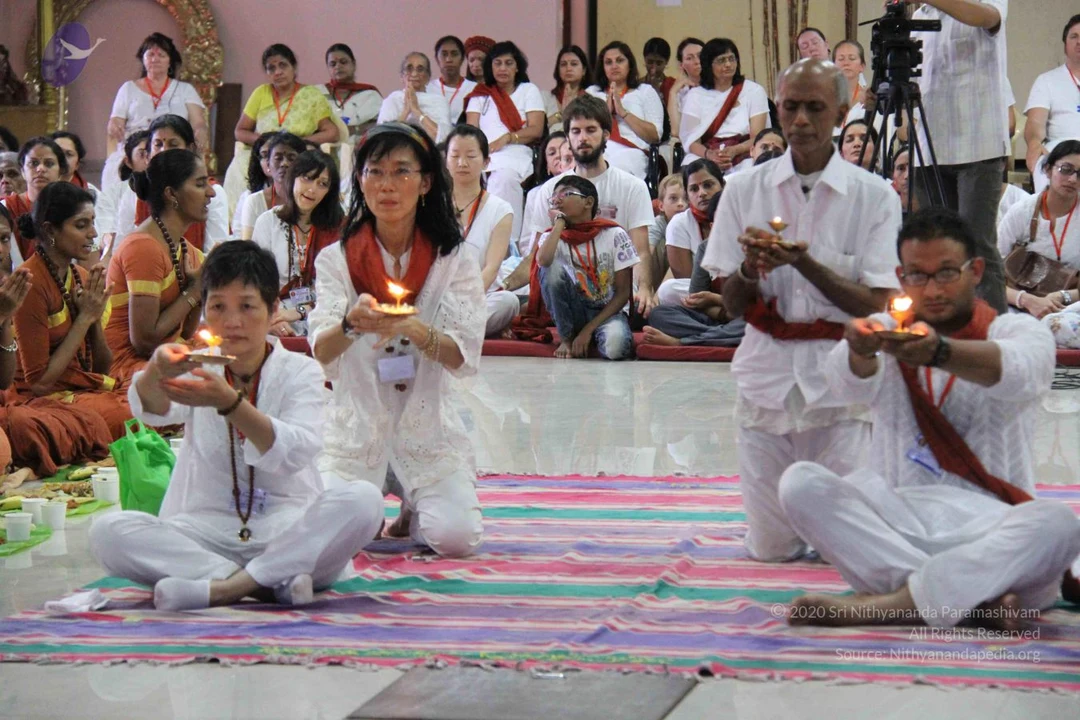
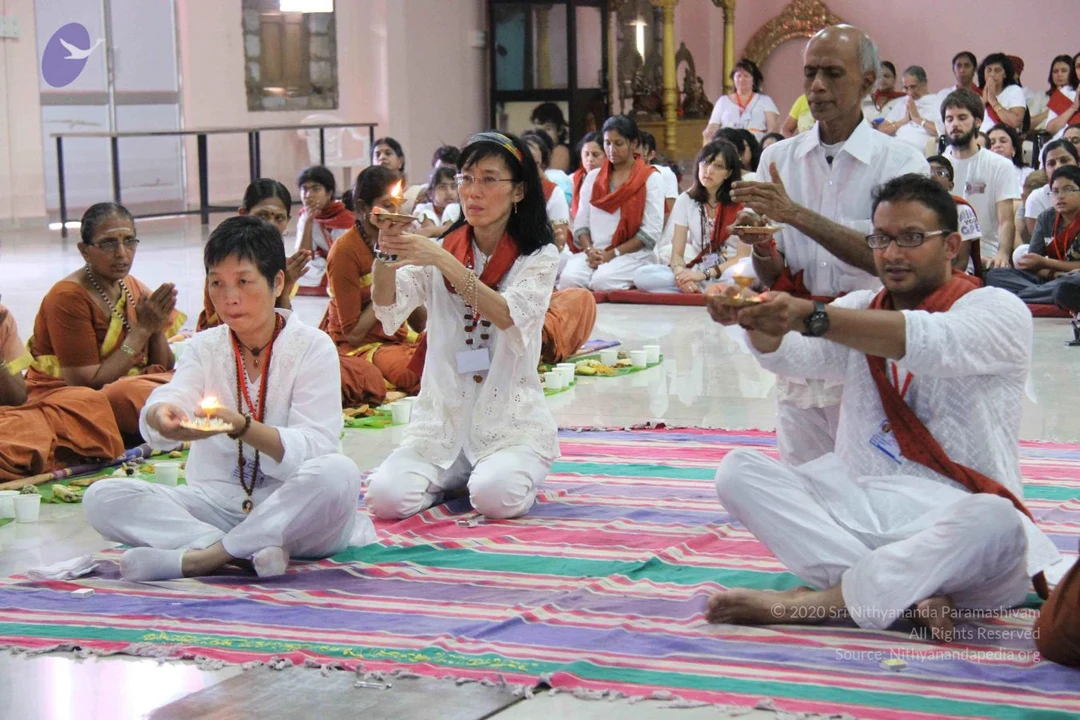
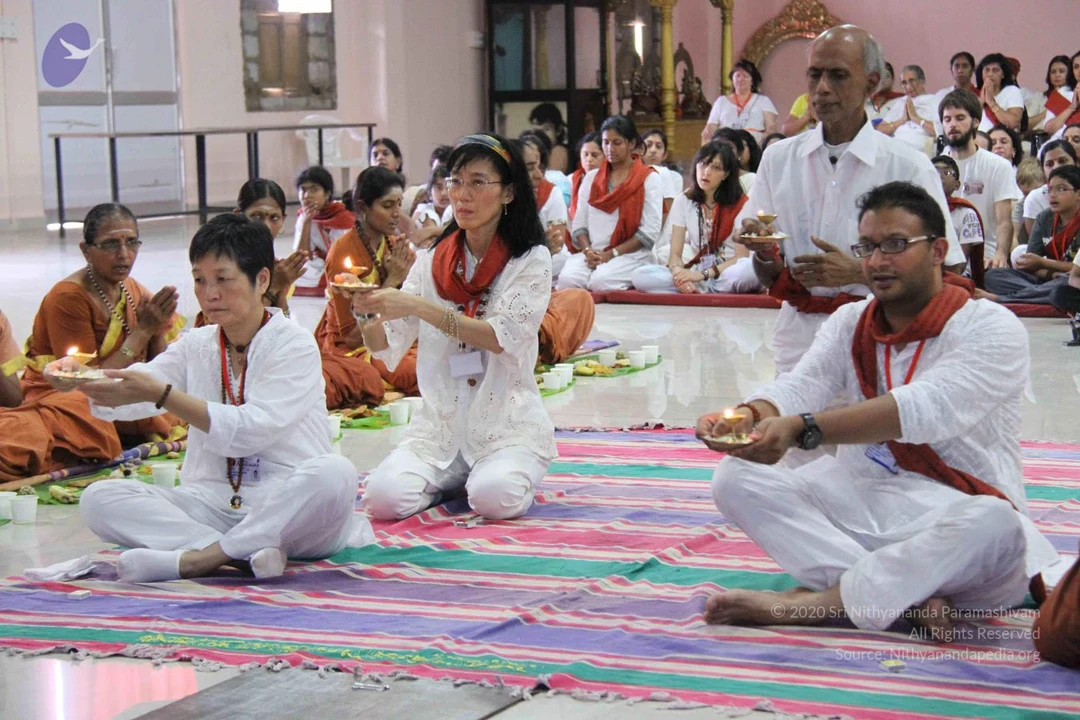
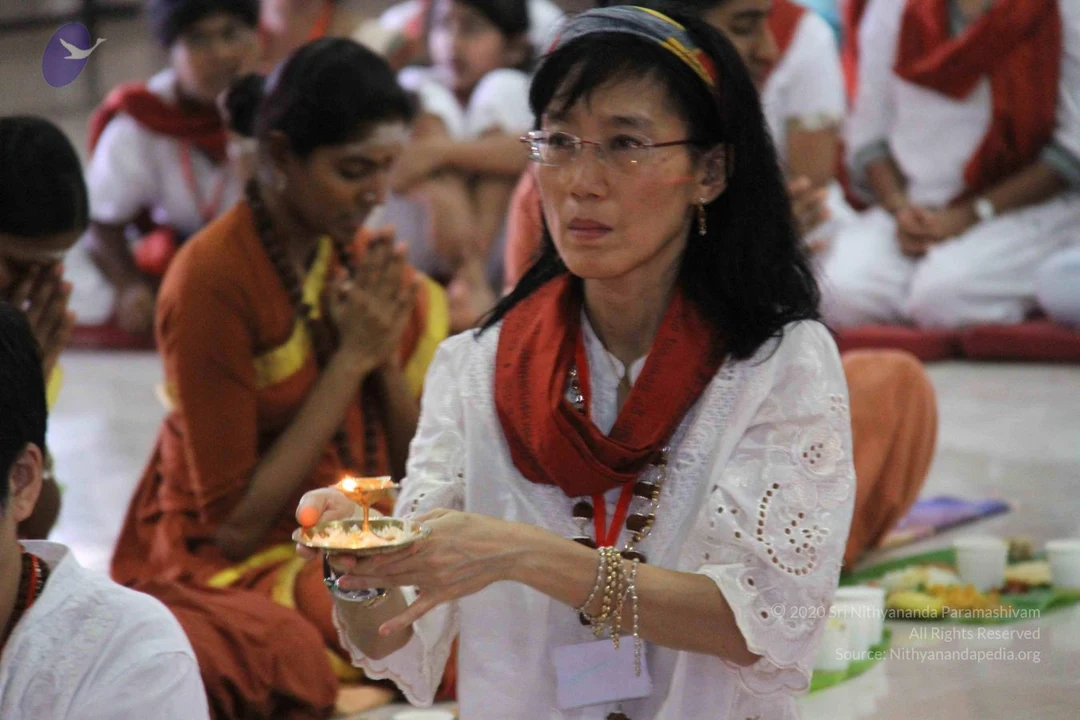
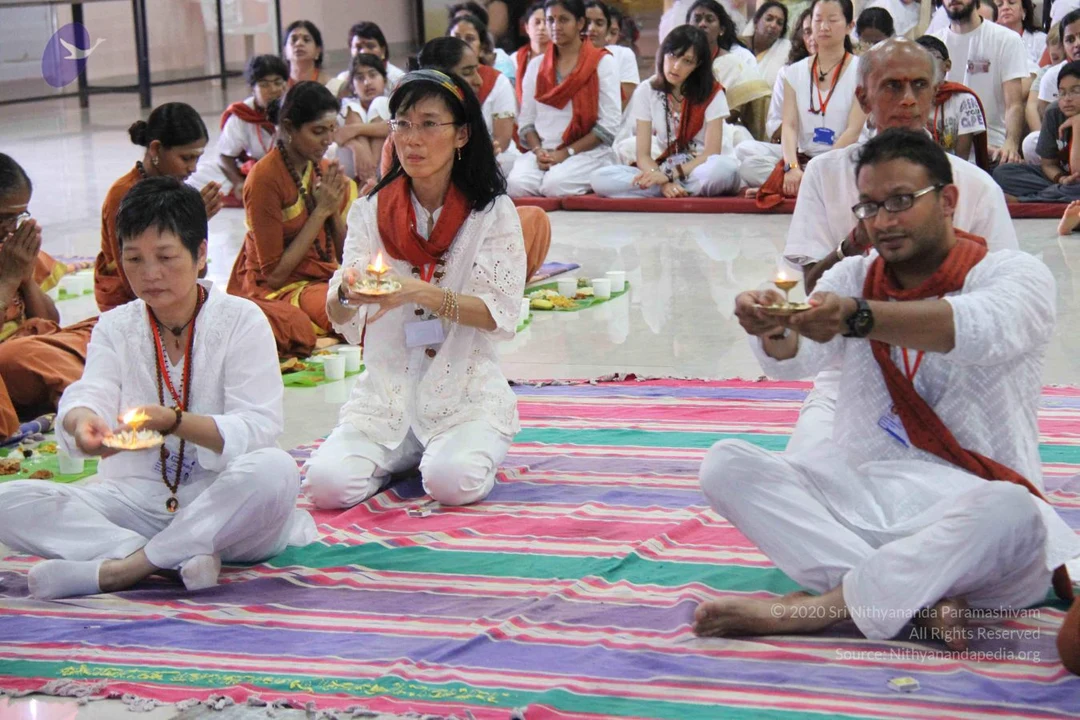
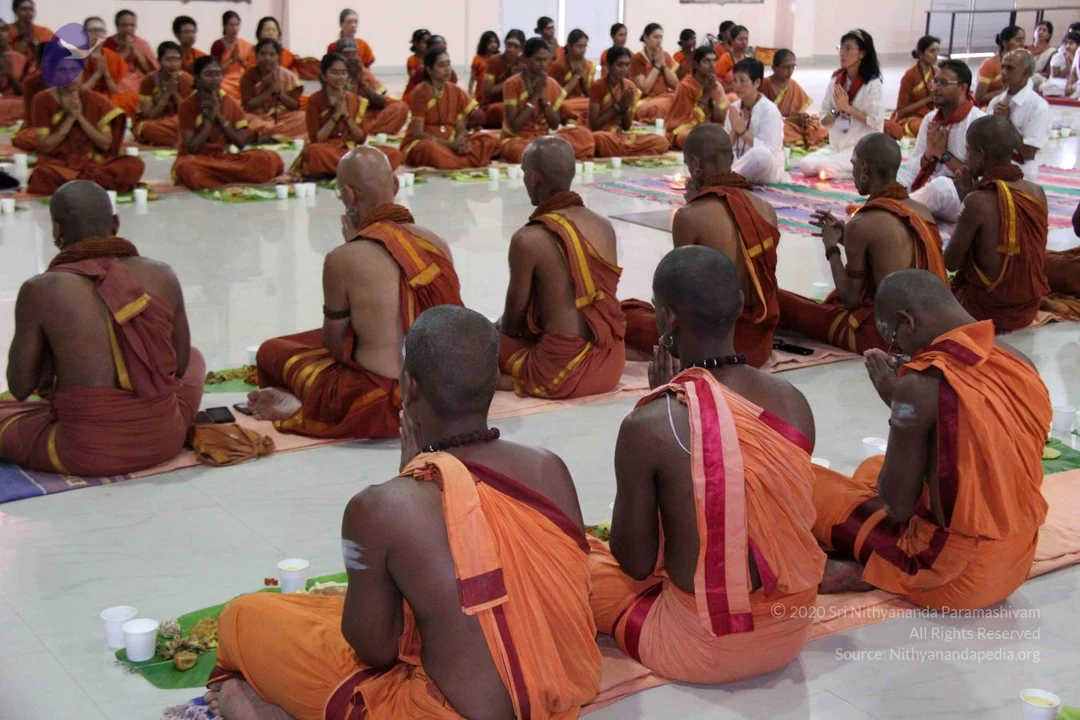
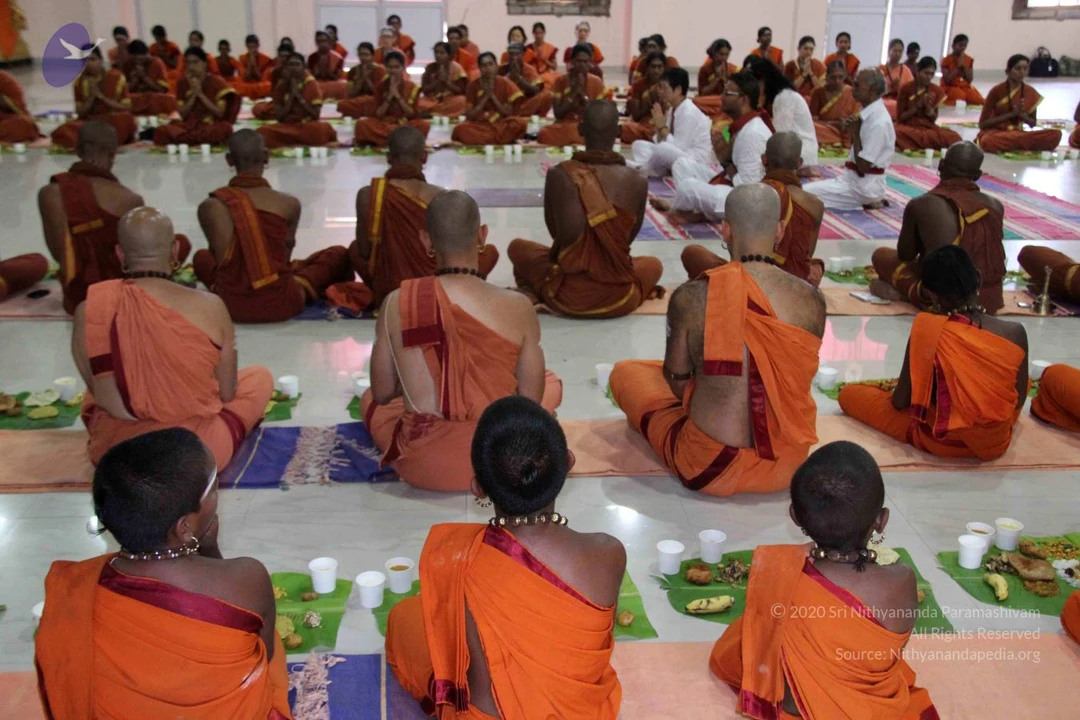
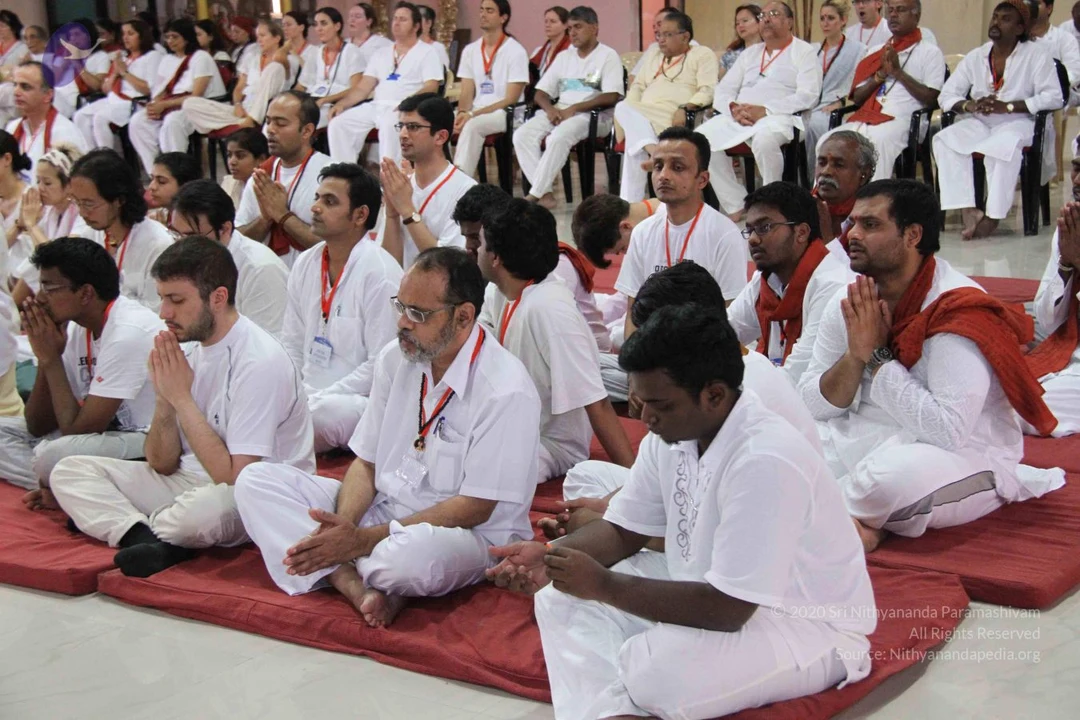
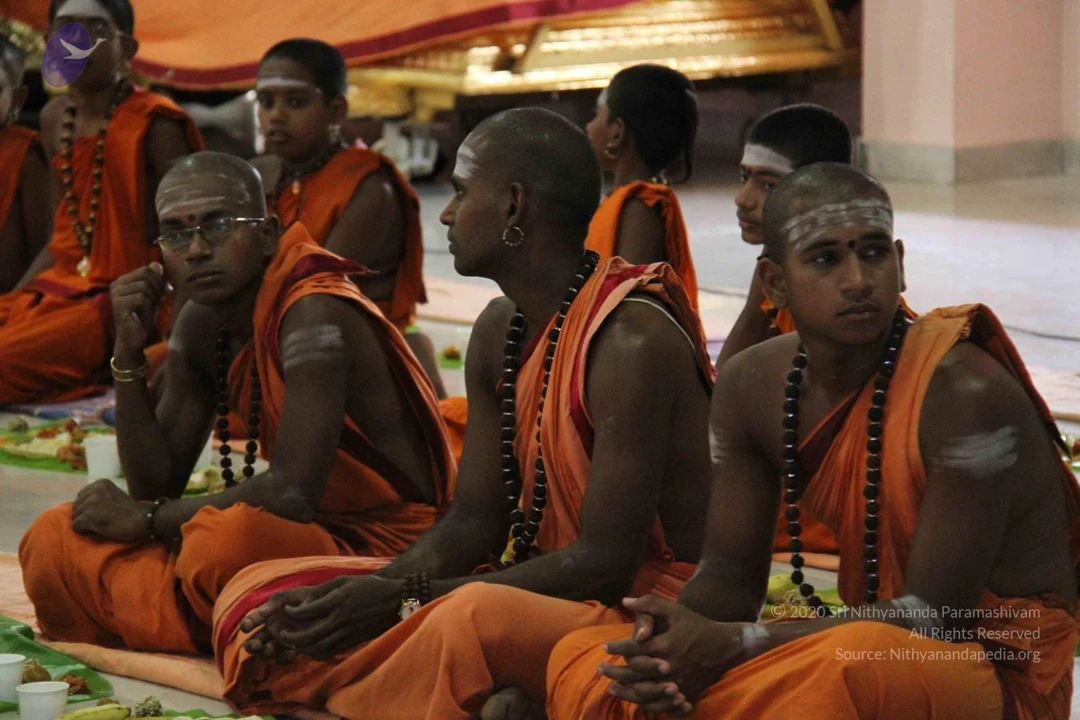
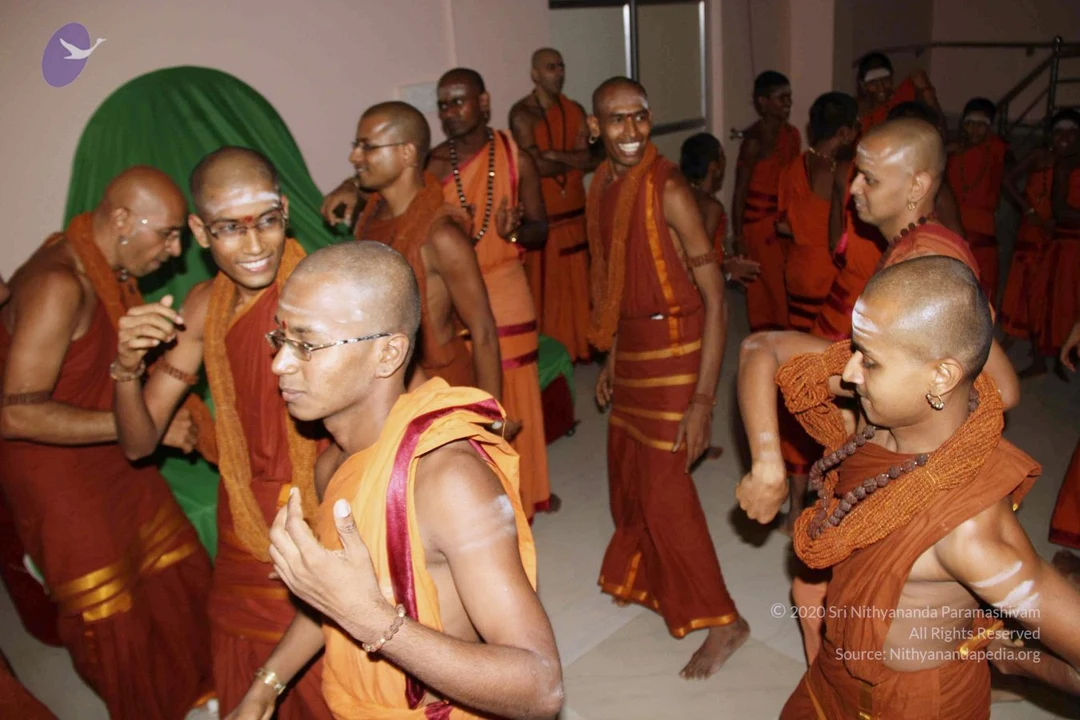
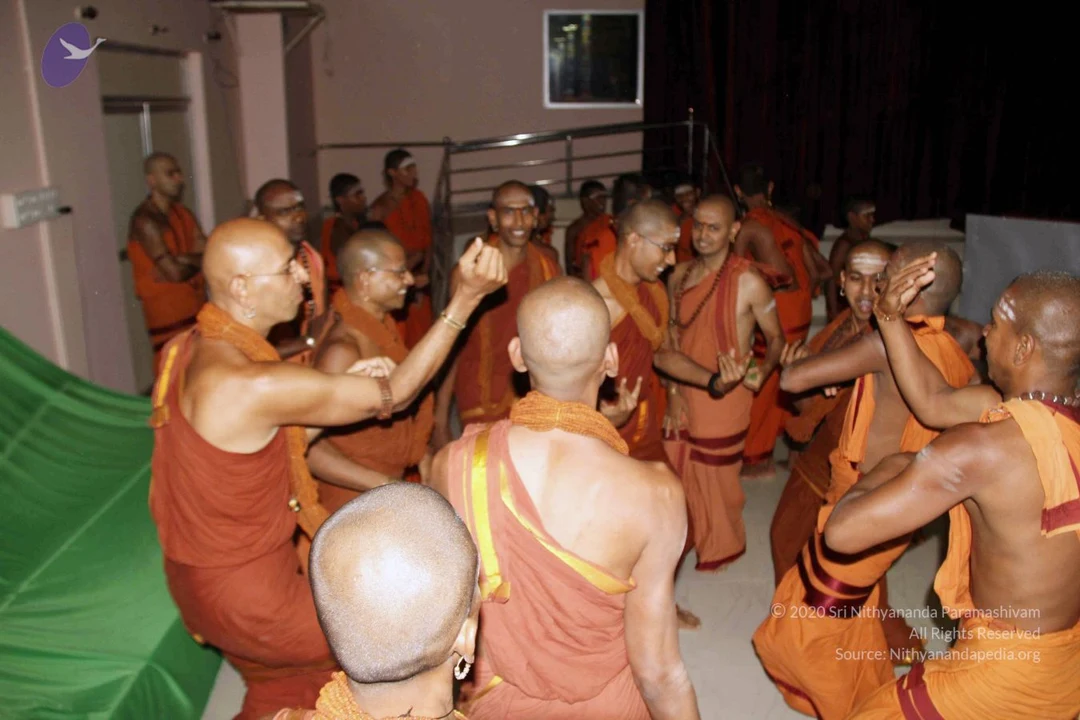
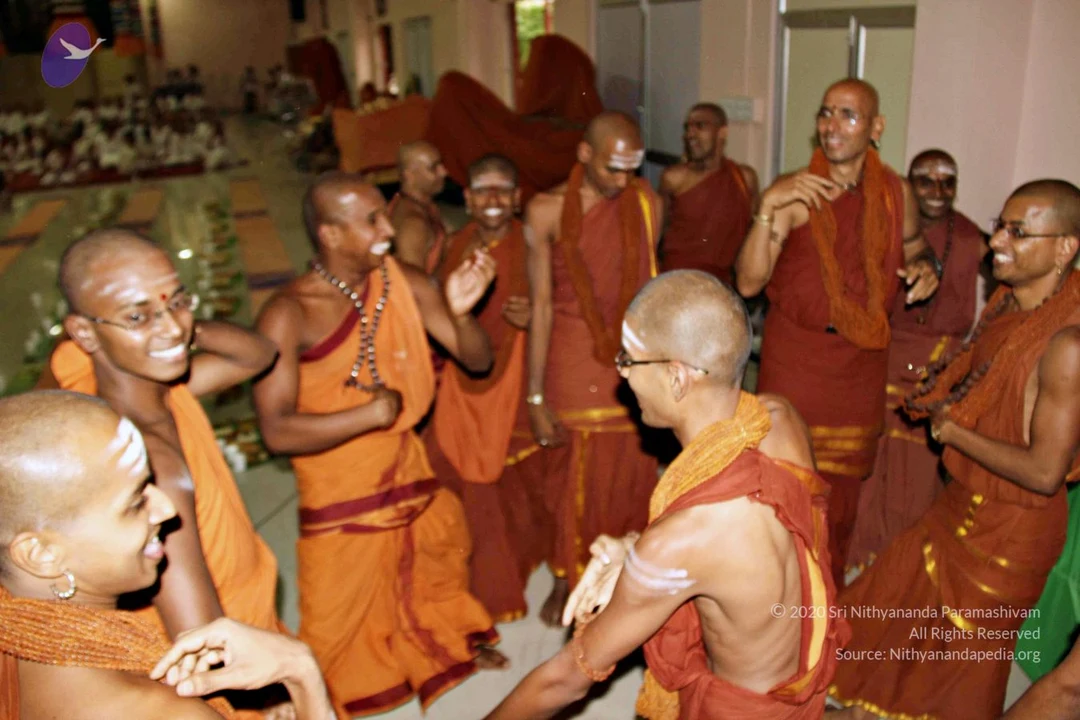
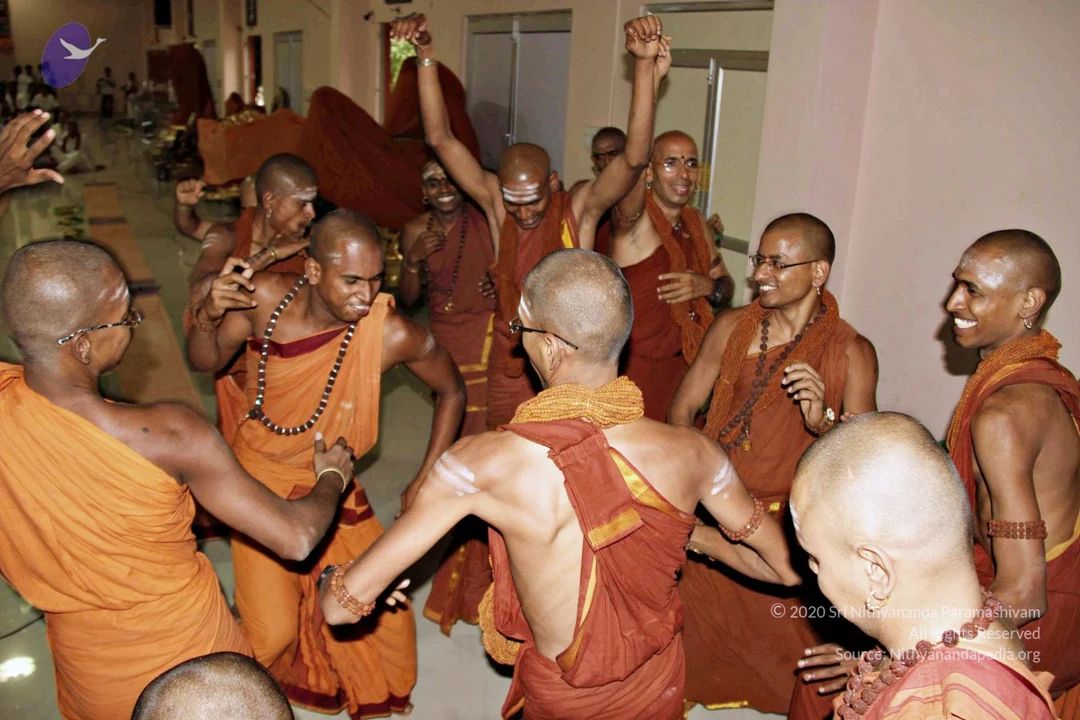
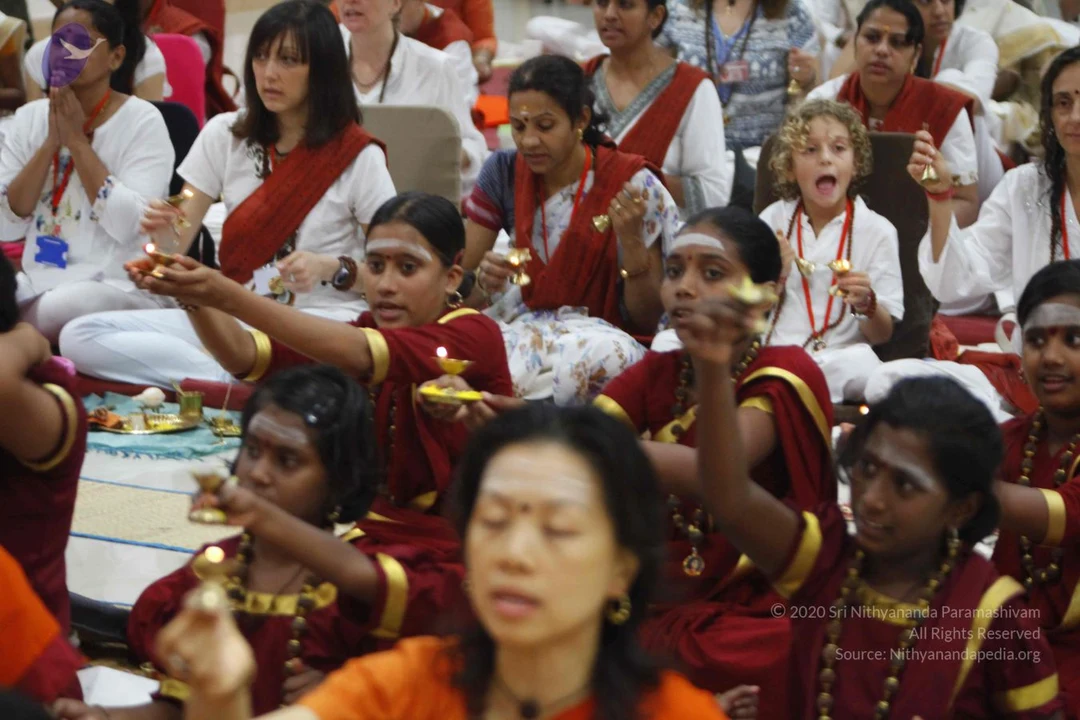
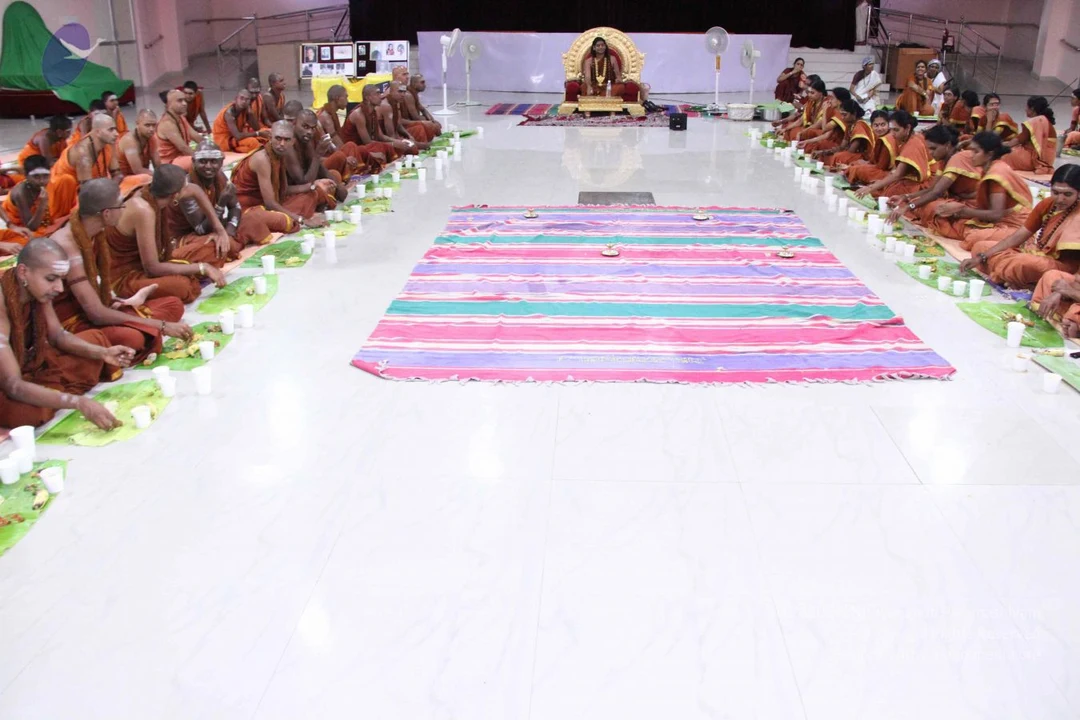
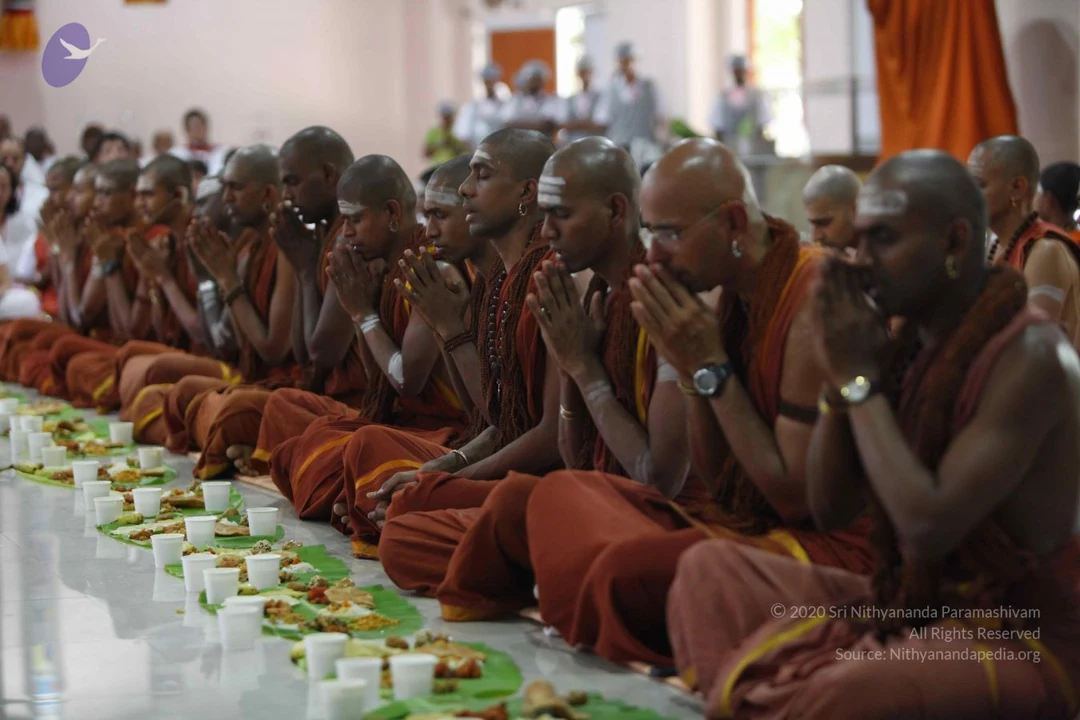
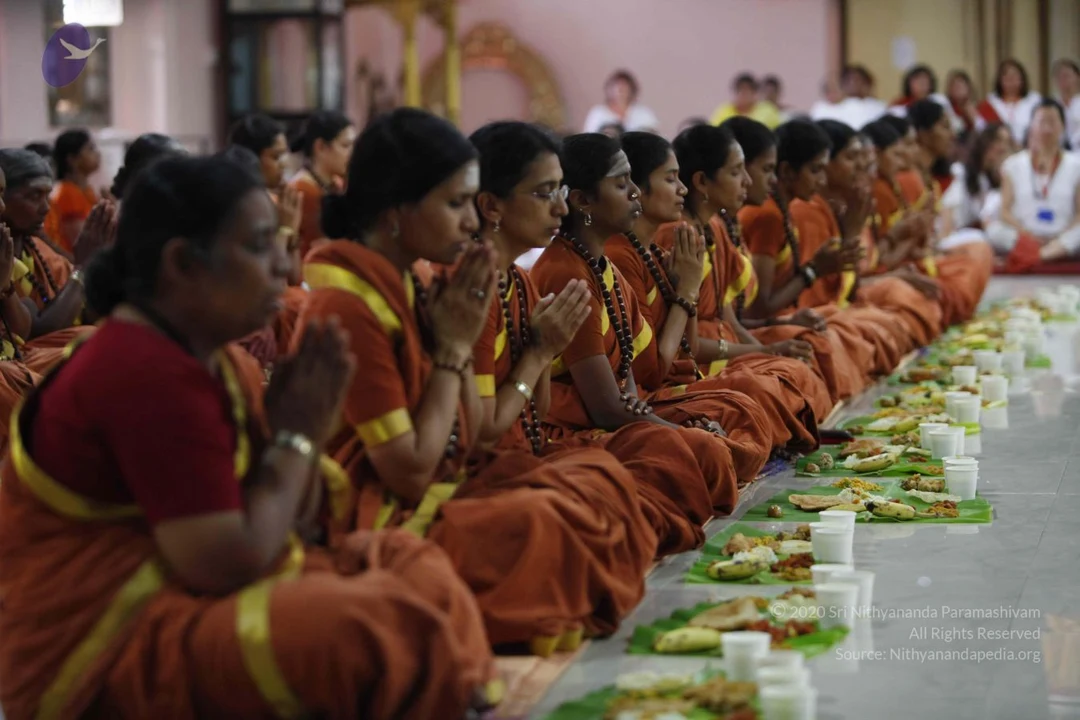
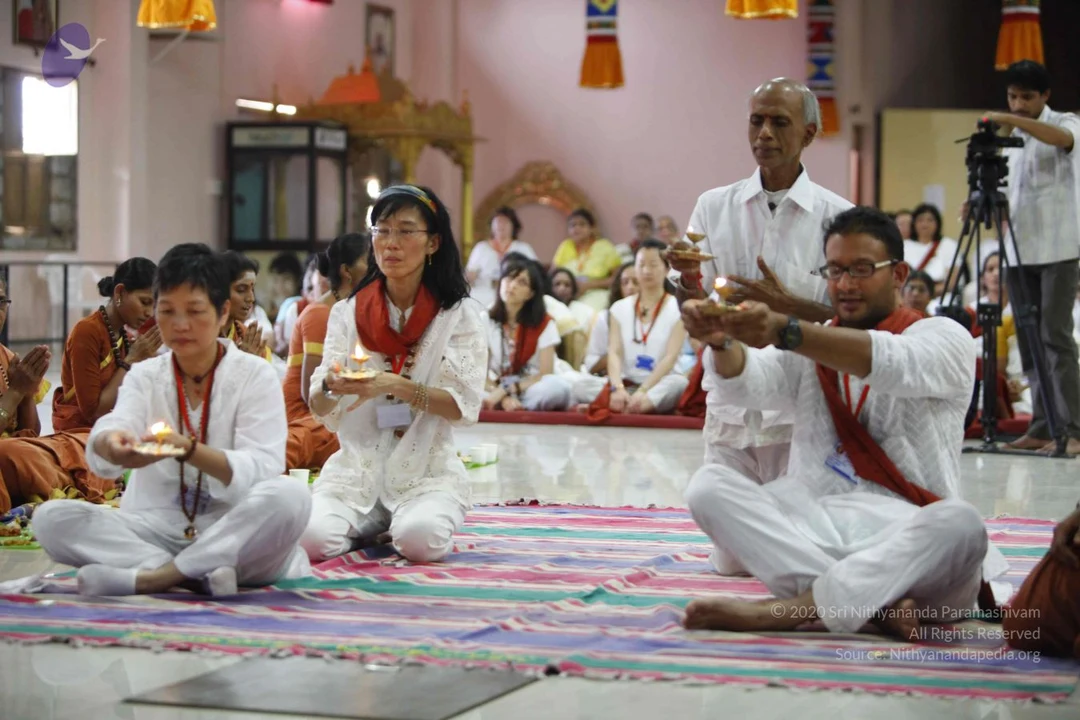
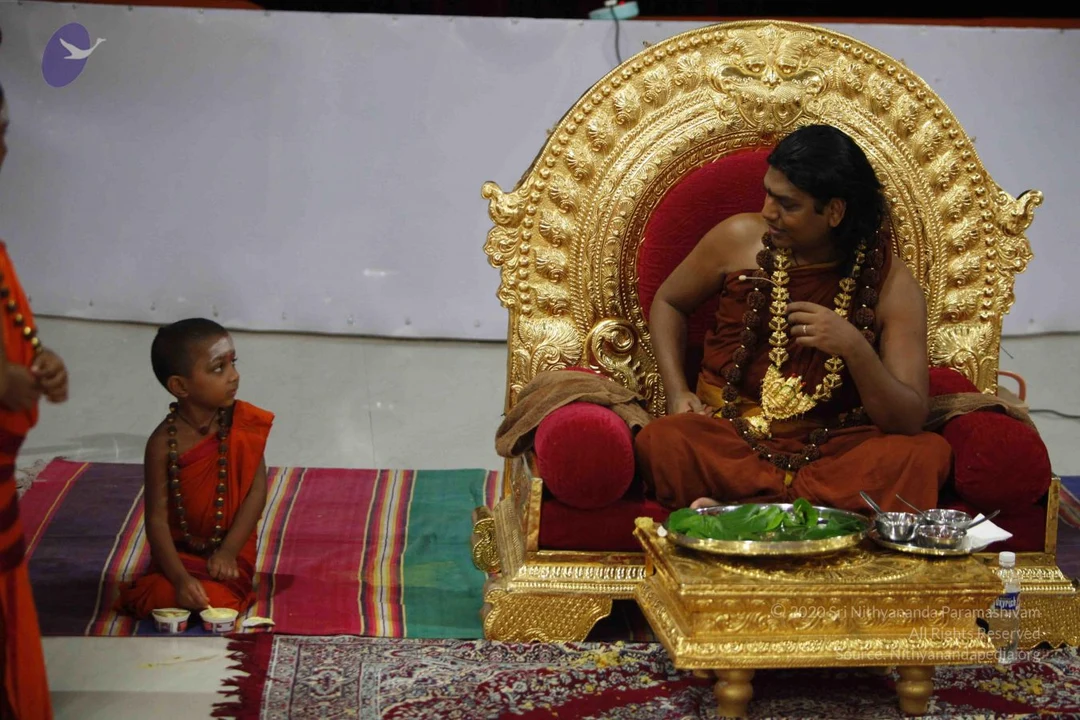
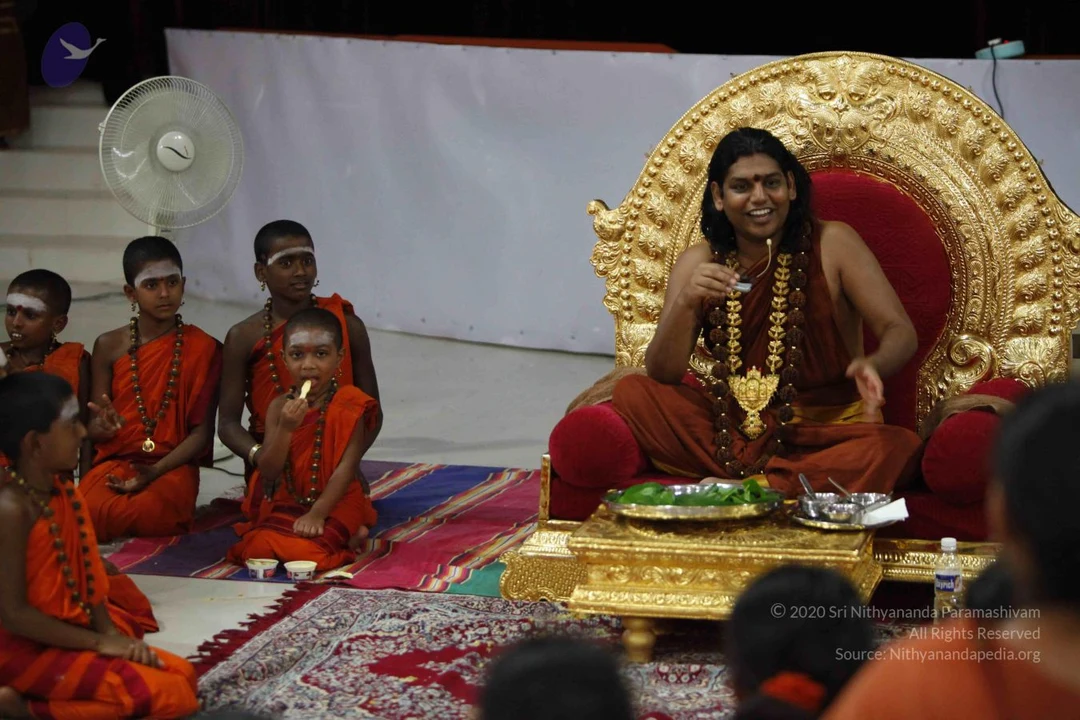
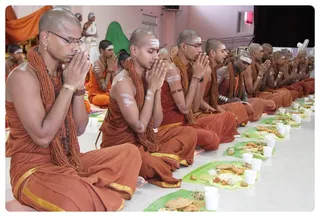
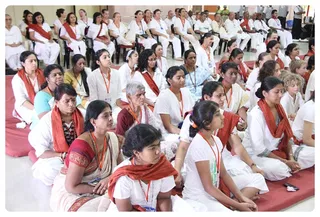
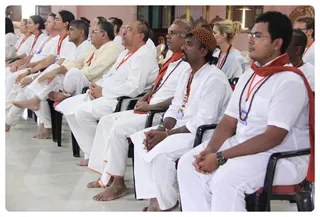
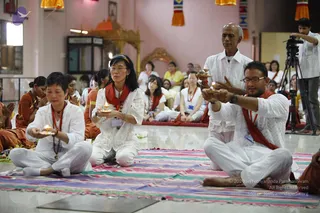
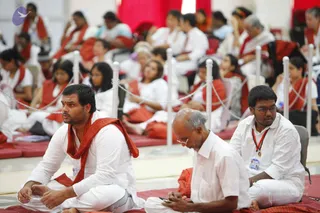
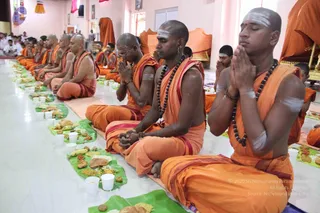
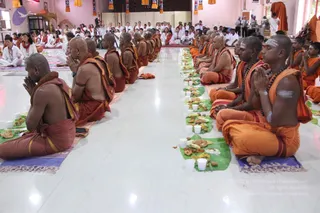
Devotees in white and red sit on a striped floor mat in a temple hall, holding lit oil lamps in cupped hands during a lamp offering. Four people in front raise lamps: a young person in white with a red scarf and rudraksha mala at left, a woman in white with a red scarf and lanyard at centre, an older man in white with a red sash in the middle-right, and a man in white with glasses and red sash at right. Behind them, a large seated crowd in white and red attire, including women in orange saris and a man with a beard, faces forward. A video camera on a tripod stands at upper right. No identifiable a person candidate is visible.A row of shaved-headed male devotees in saffron-orange dhotis and matching shawls sit cross-legged on a white floor with hands pressed together in namaste, eyes closed, in prayer. Several wear rudraksha malas, white vertical tilak marks and white sandalwood-style markings on their arms and chests. In front of them lies a line of green banana-leaf plates holding rice, fried snacks, vadas, sweets and side dishes, with white paper cups placed between them. Behind the seated row, more saffron-clad devotees and a pink backdrop with an orange canopy and a green cloth are visible. No individual is clearly identifiable as a person in this frame.A seated audience of devotees fills rows of red mats on a light floor during a satsang. Most wear white kurta or salwar-style clothing with red or orange shawls draped over their shoulders and orange lanyards around their necks. Women in the foreground include one in a red-and-maroon sari with gold bangles and another in a white outfit with a red shawl, both looking forward attentively. An older woman with grey hair sits near the centre, and several children are visible on the right in white clothing. A few people in the back rows are seated on chairs. No speaker or stage is clearly visible within the frame.A seated row of devotees in white ritual clothing sits on black chairs in a light marble hall during a satsang. Many wear orange or red shawls and rudraksha malas with lanyards. A man in the foreground wears a white kurta, red shawl and mala, his hands resting in his lap. Beside him a man in a rust-coloured cap and white kurta sits barefoot. Further along, a woman in white with a red shawl and a man in a light yellow kurta sit among the others. No one in the row is clearly identifiable as a person from appearance, so the seated people are described by role only.A smiling man in a rust-brown turban and brown and gold draped robes stands barefoot on a patterned red rug with both arms raised palms-out in greeting. He wears a layered rudraksha mala with a large gold ceremonial pendant, gold bangles and a red bindi. Behind him a golden throne with a tiger-skin cushion and red velvet seats sits beside a painted deity murti holding a staff, with a brass oil lamp and a red curtain at the right edge. The appearance-based cues of turban, rudraksha mala and ceremonial gold match the page's Swamiji claim, so this is a probable Swamiji, speaking during a satsang-style event on a decorated stage.A standing man in a rust-orange turban and matching rust-orange and gold-bordered dhoti and shawl stands barefoot beside a clear acrylic lectern. He wears a heavy red and white flower garland, a gold pendant necklace and rudraksha mala, and gold bangles, with a red tilak on his forehead. He holds the edge of his shawl with one hand. Behind him is a painted deity figure with a gold crown, orange body and green cloth, holding a lotus-like object, beside a brass lamp stand. At right, a red-cushioned gold throne is visible. Swamiji (probable) appears in saffron/orange clothing, with a turban and rudraksha mala, as a speaker before the deity painting and throne.

Temple

16 photosSource gallery
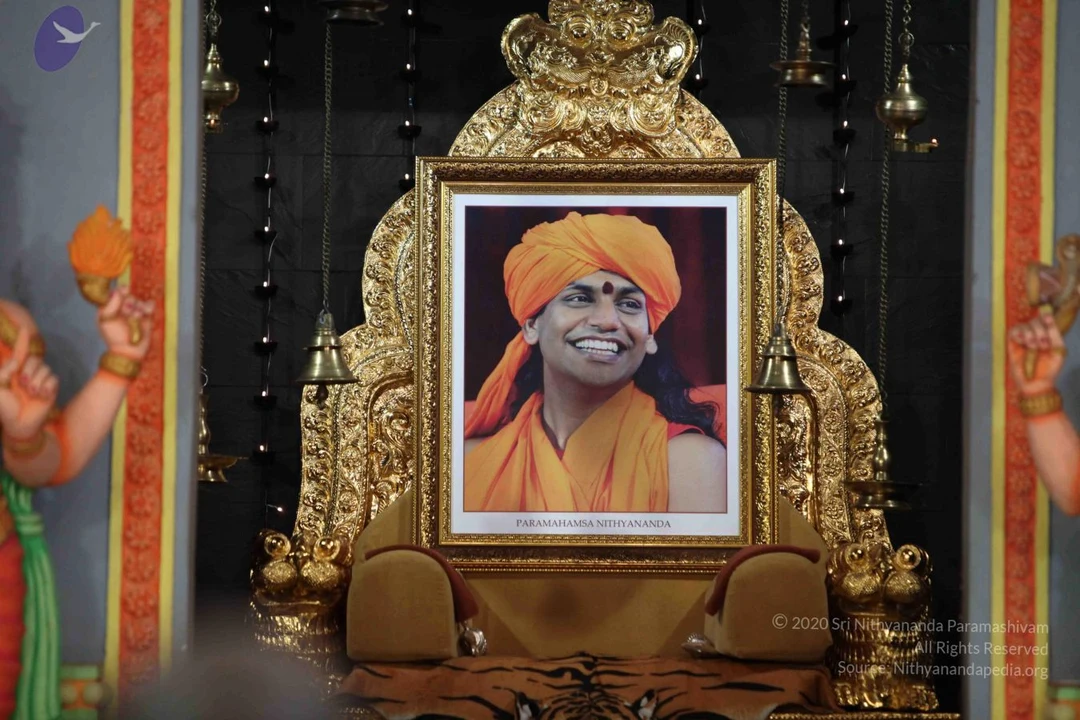
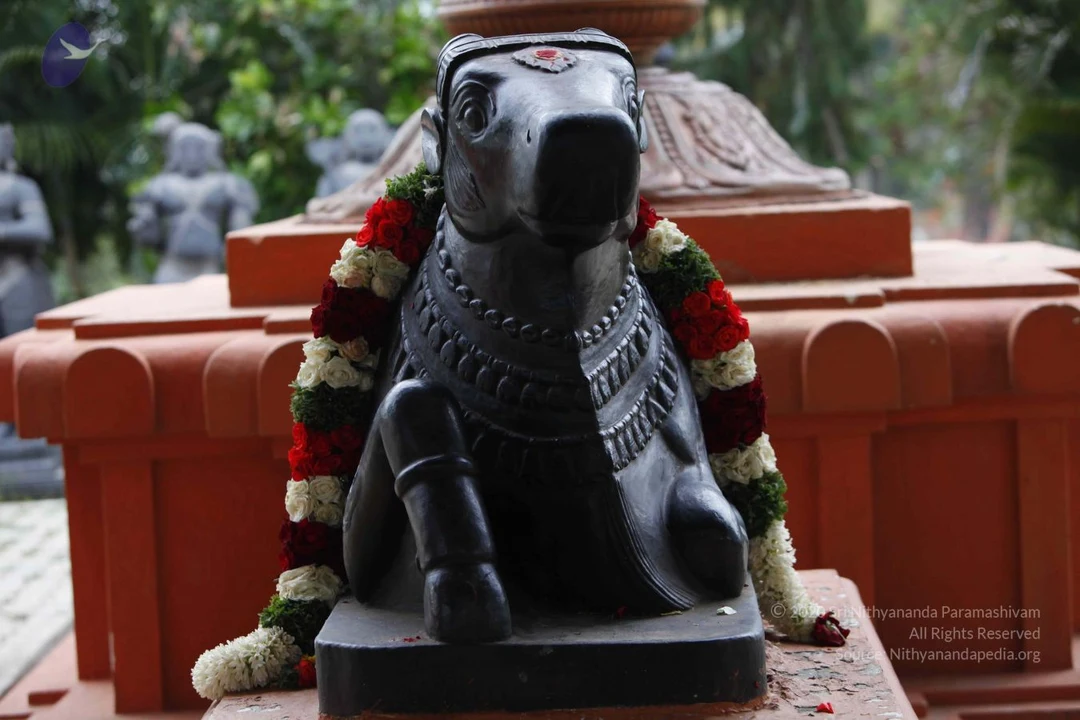
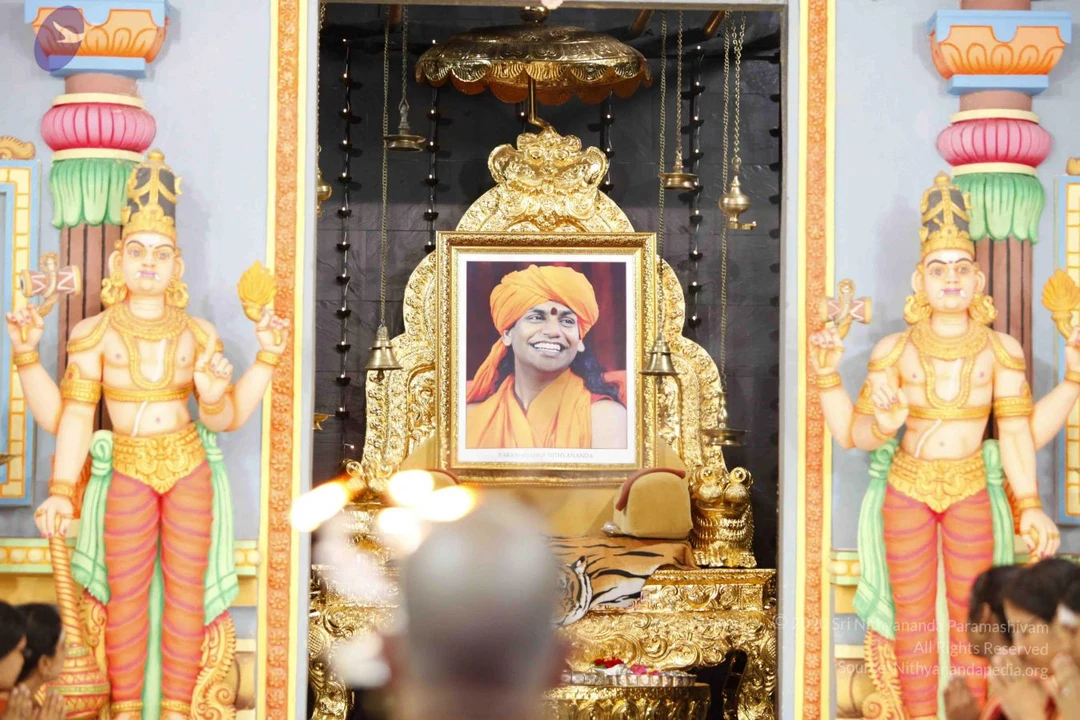
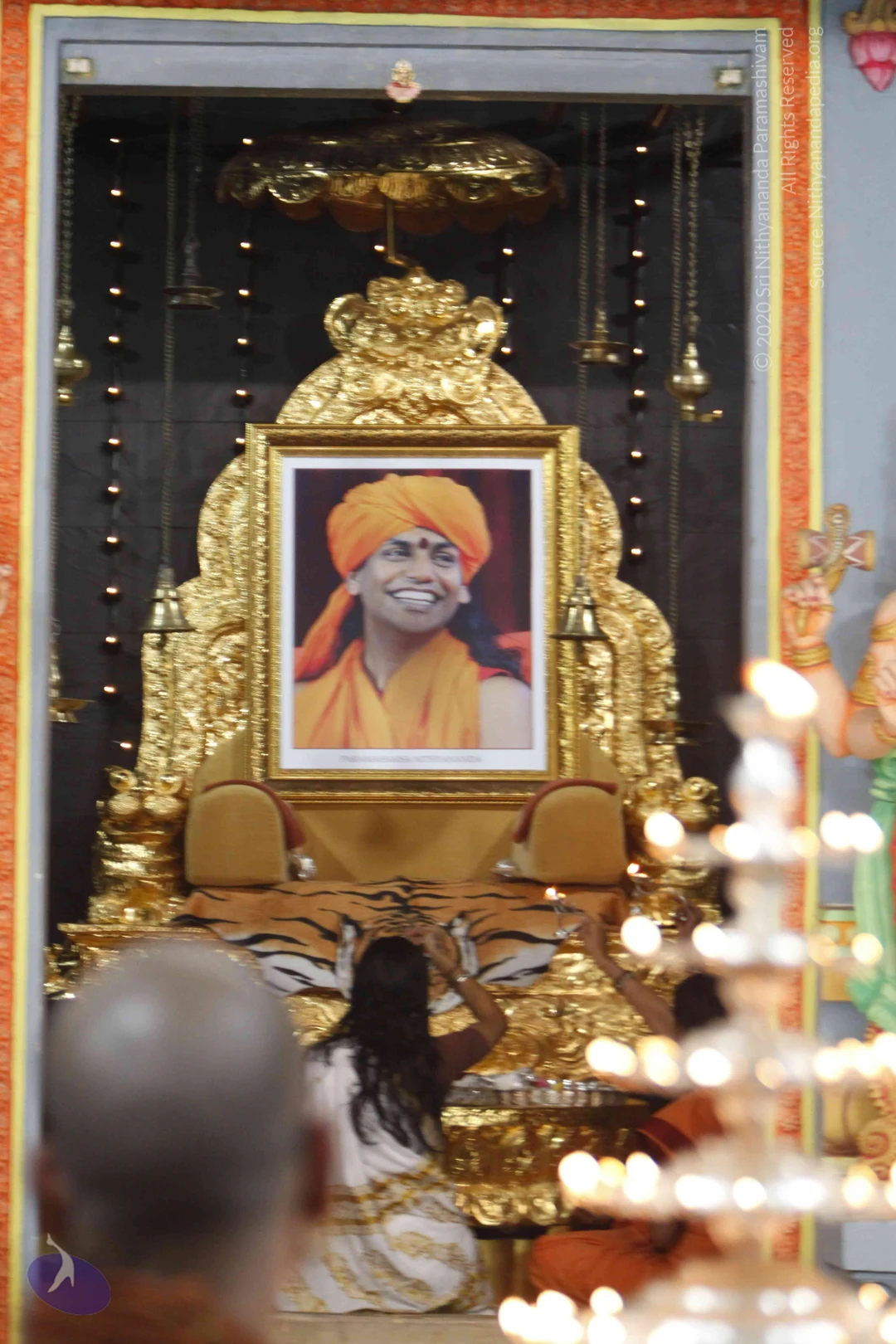
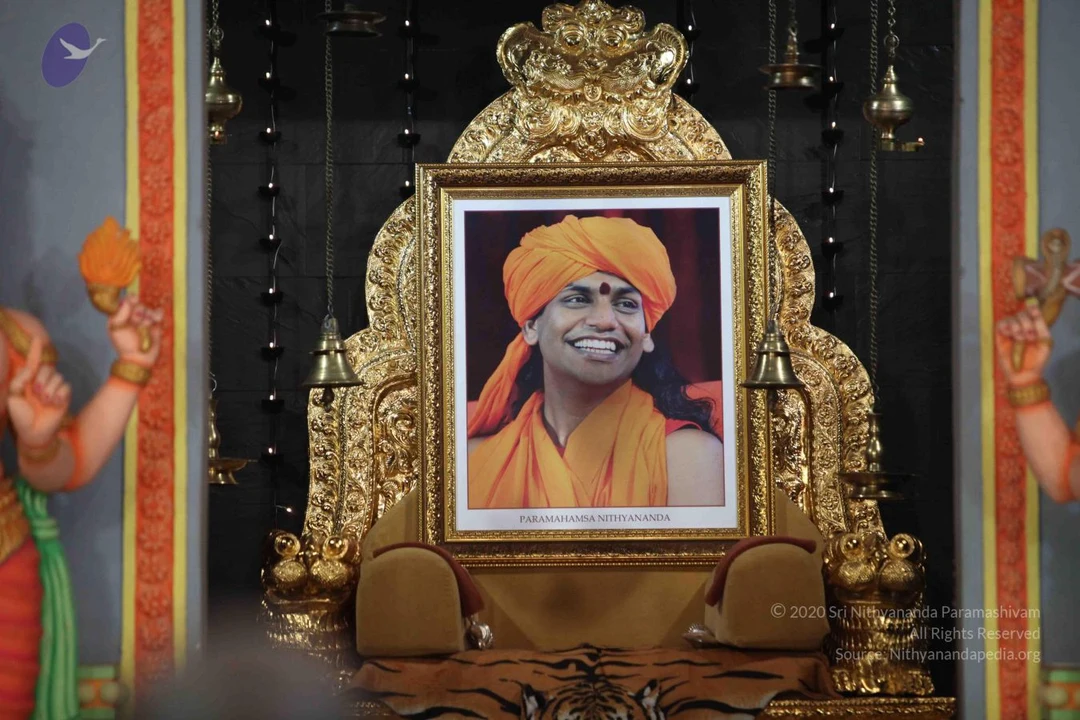
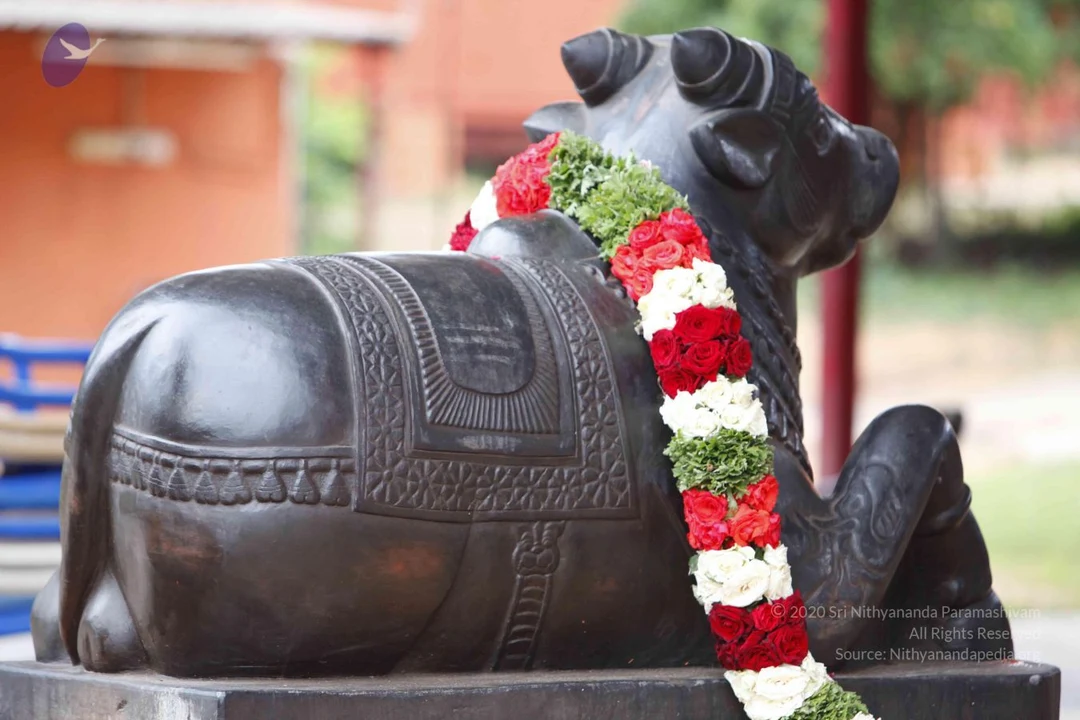
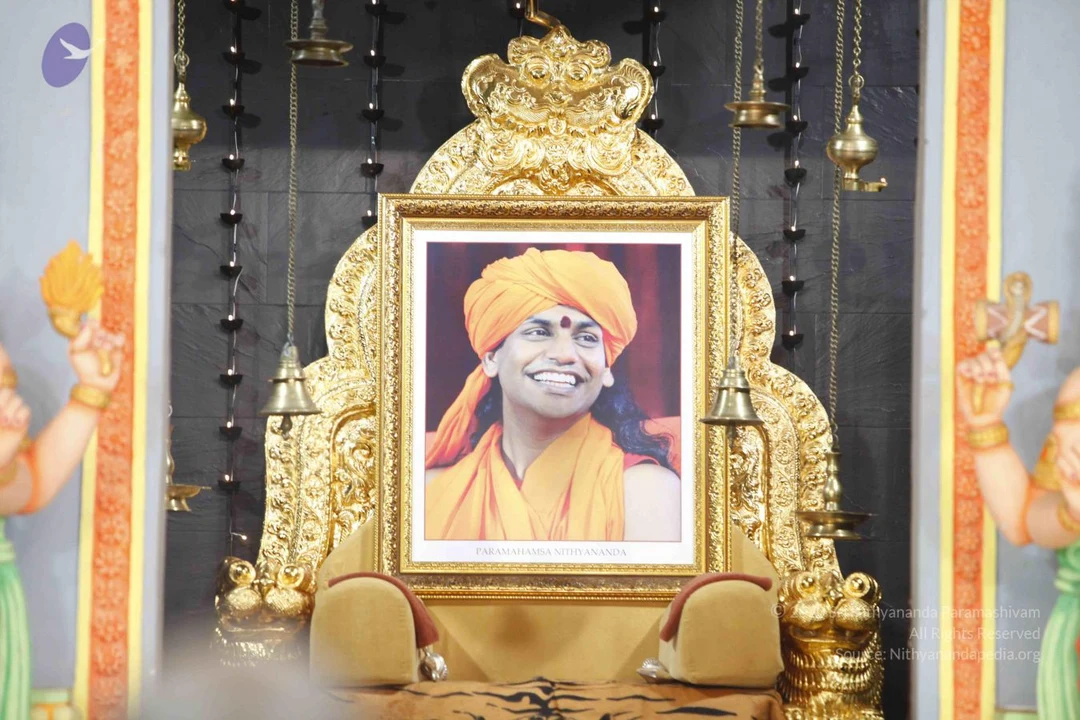
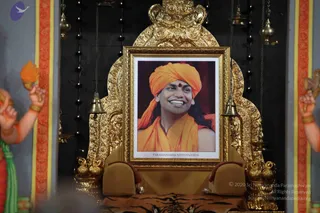
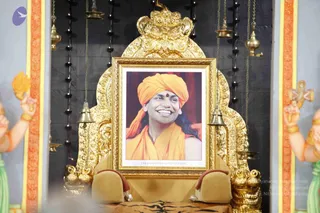
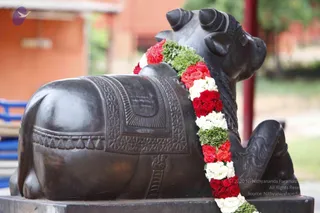
A dark stone Shiva lingam sits within a narrow rock niche, lit by a single flickering oil lamp flame on its top. The lingam has a carved base and ridged shaft, with small red dots on the upper section. Wet dark ground and small scattered petals reflect the lamp light beneath it. No people are visible; the surrounding rock walls frame the shrine closely.An ornate gold throne with a tiger-skin cloth draped over its seat, under a gold canopy with hanging brass bells and lamps. Centrally placed is a framed portrait labelled "PARAMAHAMSA NITHYANANDA" showing a smiling man in an orange turban, orange shawl and red bindi. Small offering plates with flower petals sit at the base of the throne. The scene appears to be a shrine setting with no physical people visible.A framed portrait labelled "PARAMAHAMSA NITHYANANDA" sits on an ornate gilded throne with a tiger-skin cloth draped across its base. The printed portrait shows a smiling man in an orange turban with a red bindi, orange shawl and rudraksha-style attire. Hanging brass oil lamps, bells and beaded strings surround the golden throne against a dark background. No physical people are visible in the scene.A framed portrait photograph of a smiling man in an orange-saffron turban and orange-yellow shawl, with a red bindi, sits centred on an ornate gilded throne-like frame with brass bells and chains hanging beside it. The framed print is captioned "PARAMAHAMSA NITHYANANDA" along its bottom edge. The portrait rests on a tiger-striped cushioned seat, flanked by painted deity statues with raised hands on red and orange side panels. No physical people are present; the only human figure is the printed portrait.A daytime view of a rural road entrance lined with tall coconut palms with drooping fronds. Behind them stands a low orange-red building with a dark sloped roof and a tall ornate finial or flagpole rising above the palms. Scattered rough stones and grass fill the foreground, and a white signboard with blue lettering stands at right beside a gate. No people are visible; the sky is overcast.A dark stone Nandi bull statue sits on a black pedestal, viewed from the side and slightly from behind. It is draped with a garland of alternating red roses, white roses and green leaves that hangs down its neck and chest. The statue has carved saddle cloth patterns on its back. Behind it, out of focus, are orange and red building walls, a blue object and green foliage. No people are visible in the image.

PadukaPuja
27 photosSource gallery
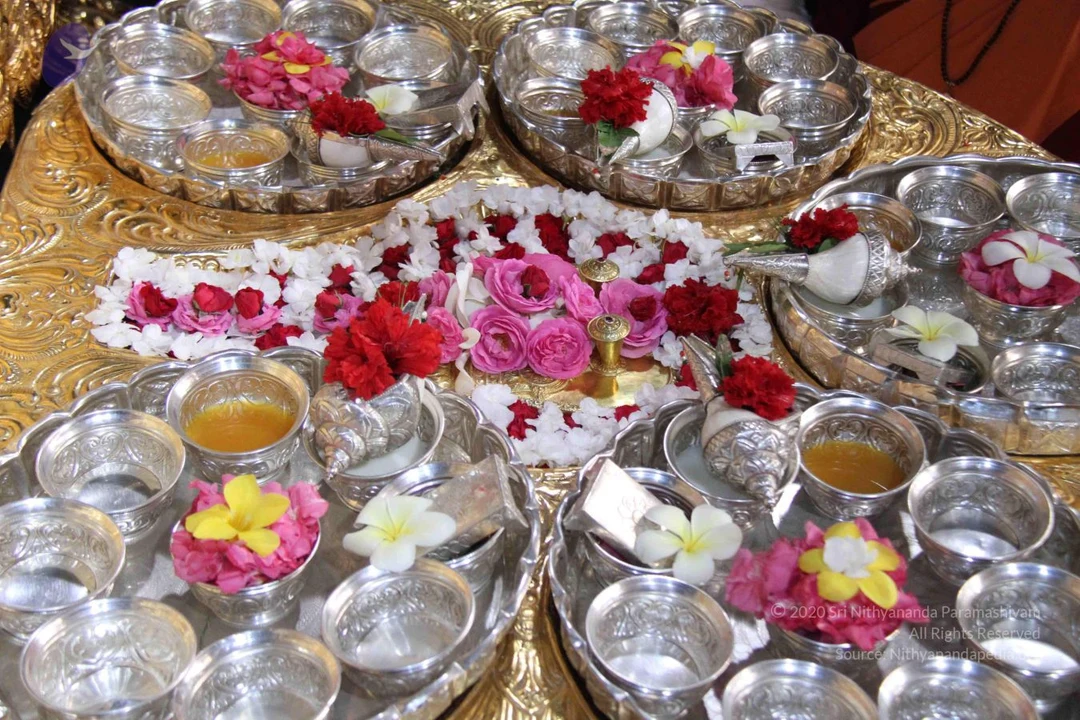
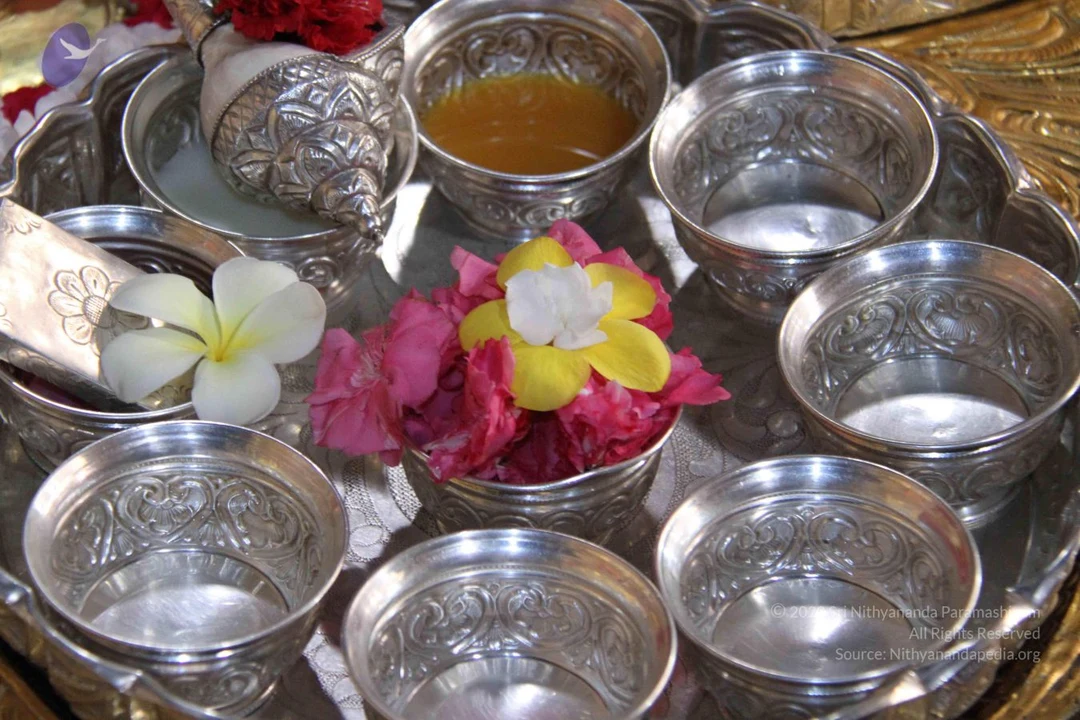
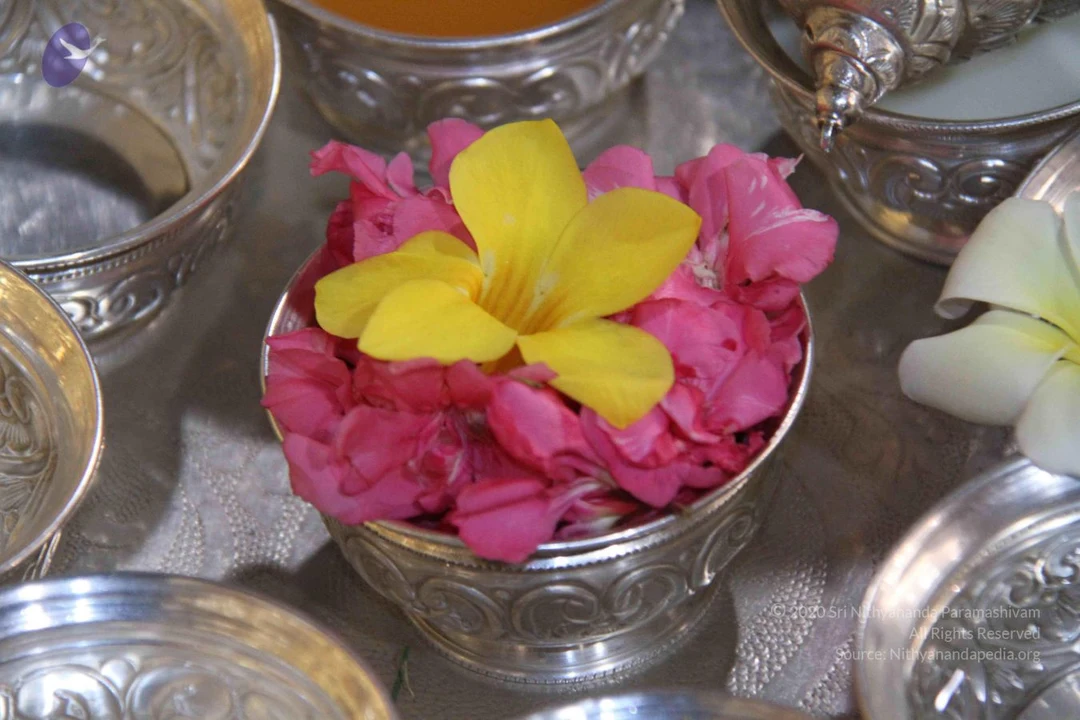
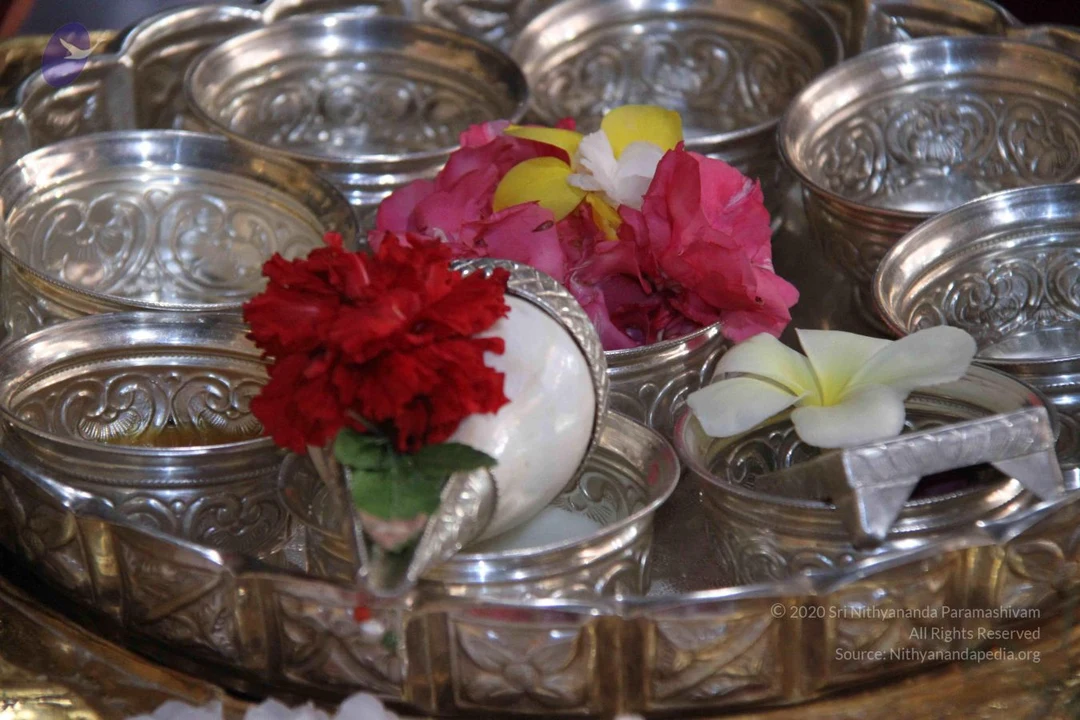
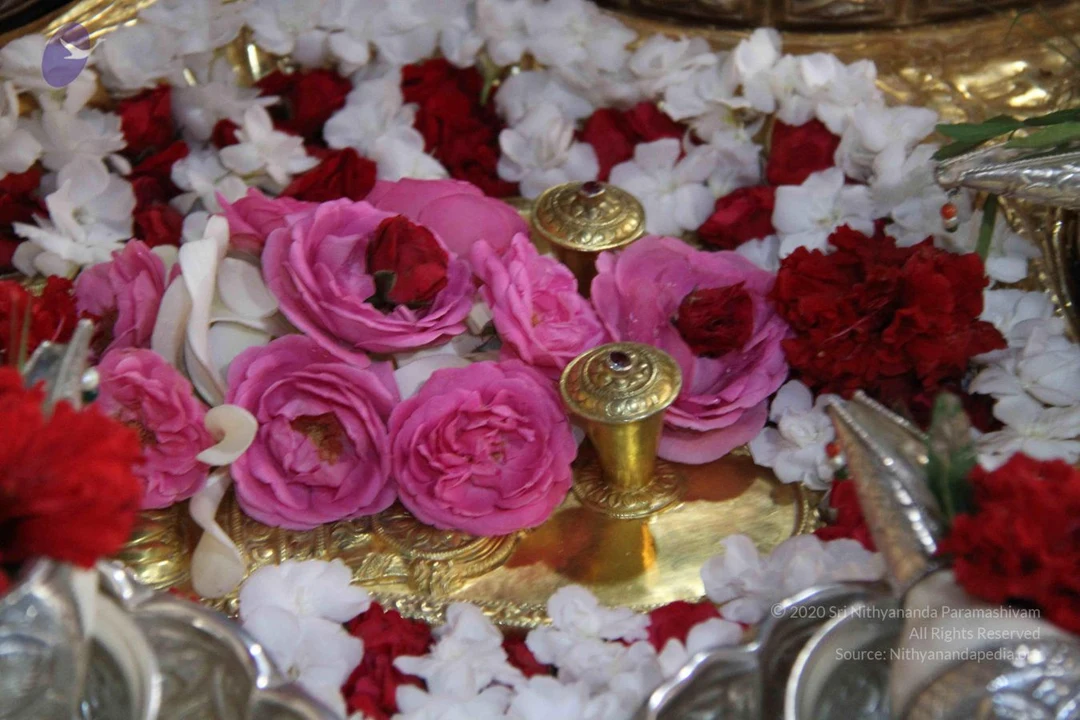
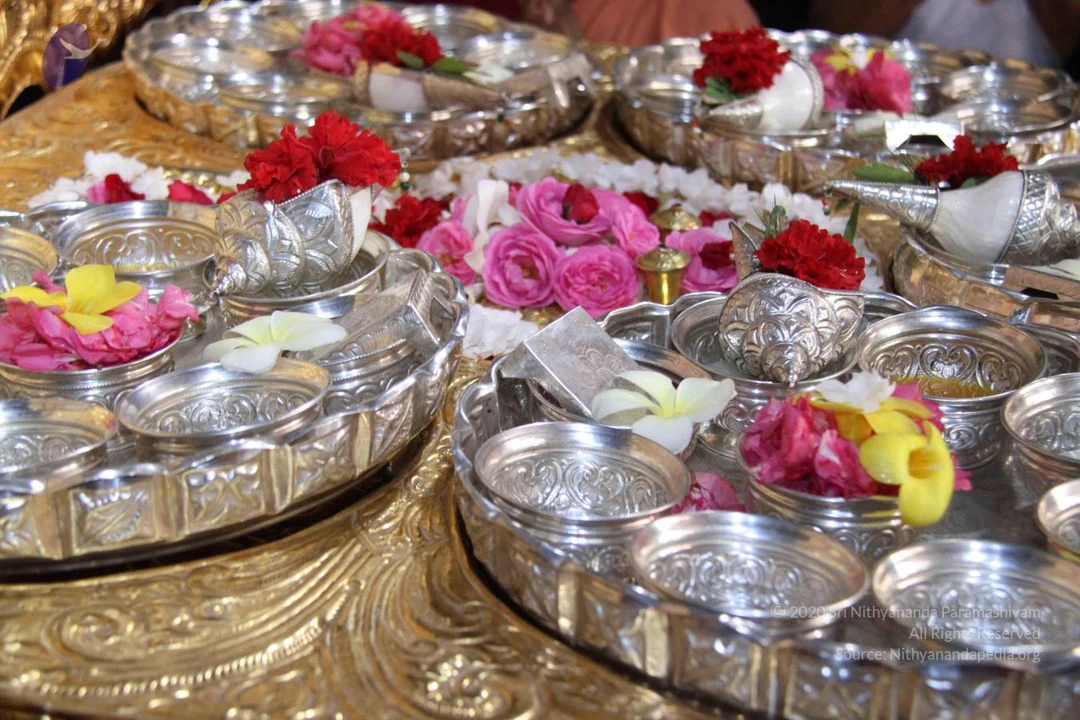
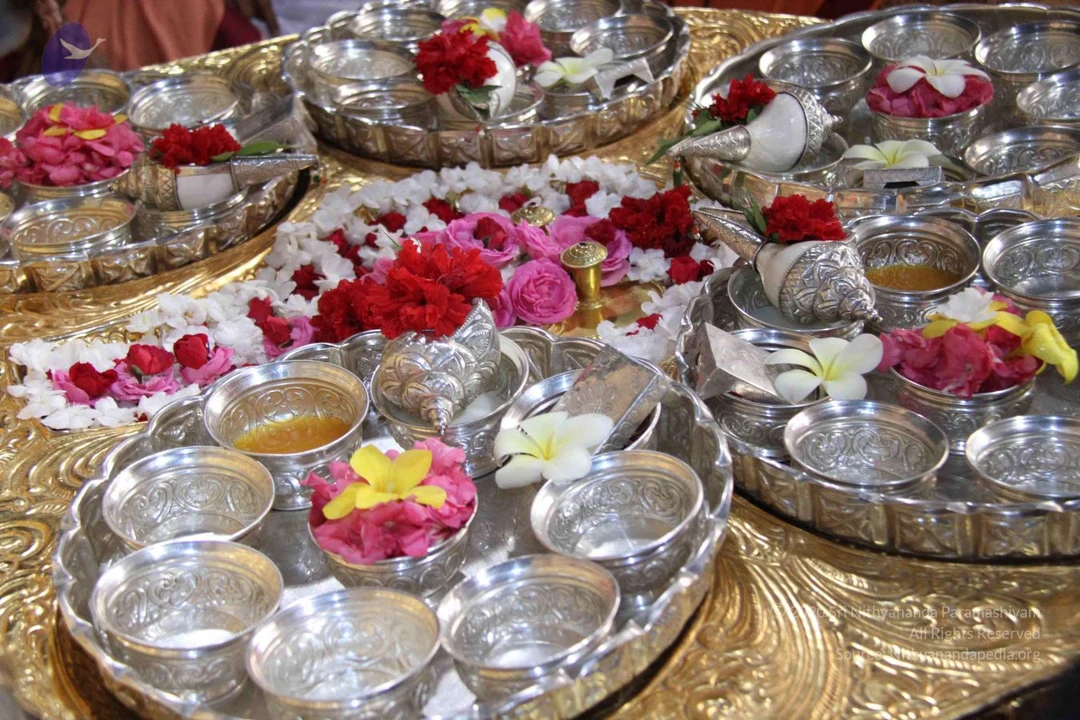
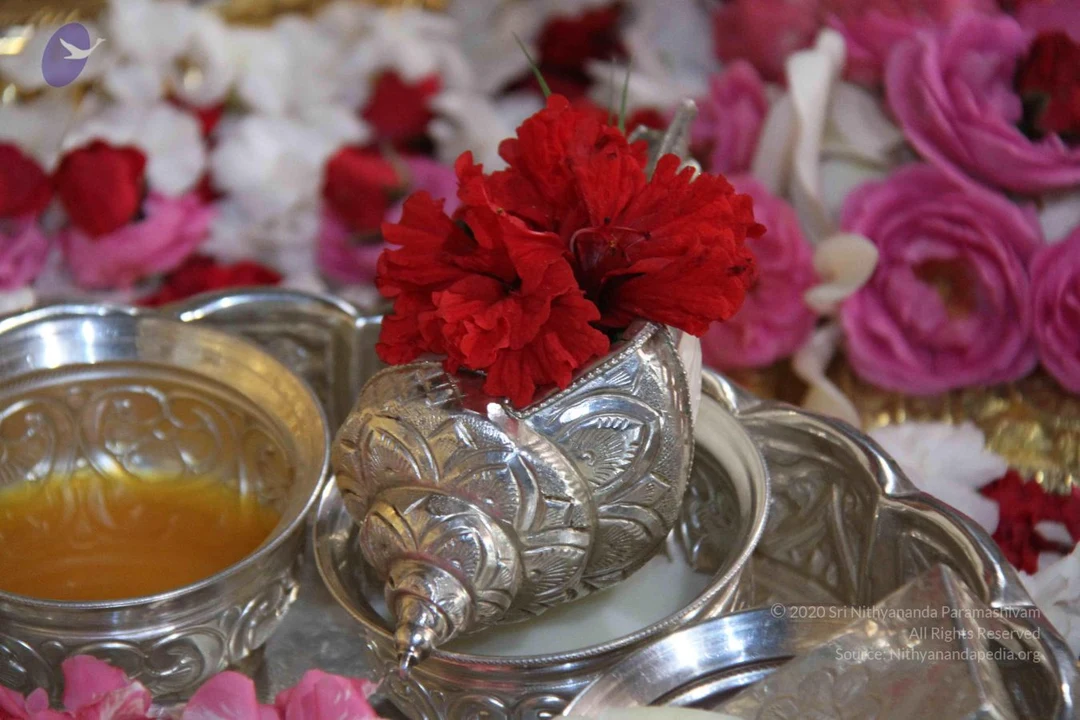
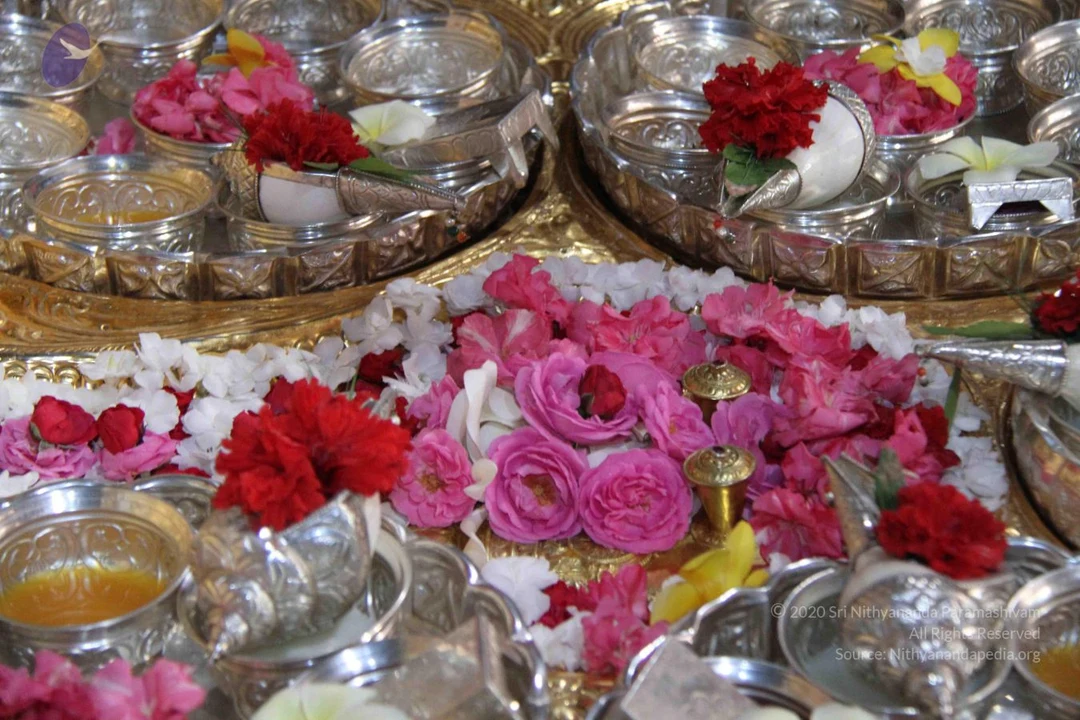
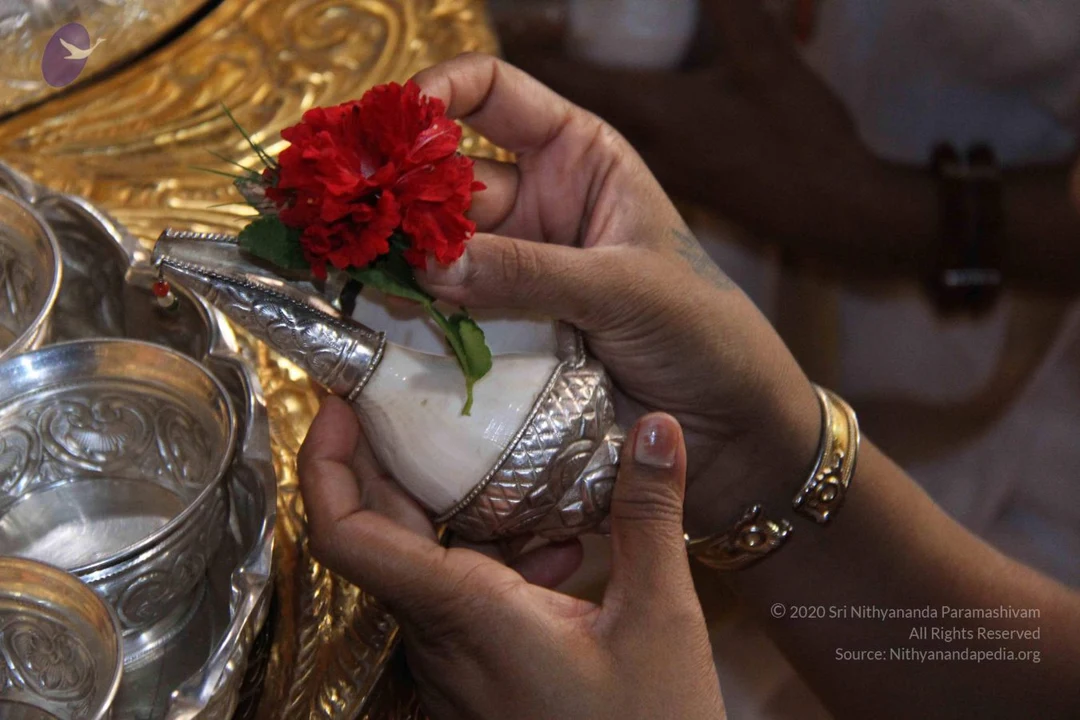
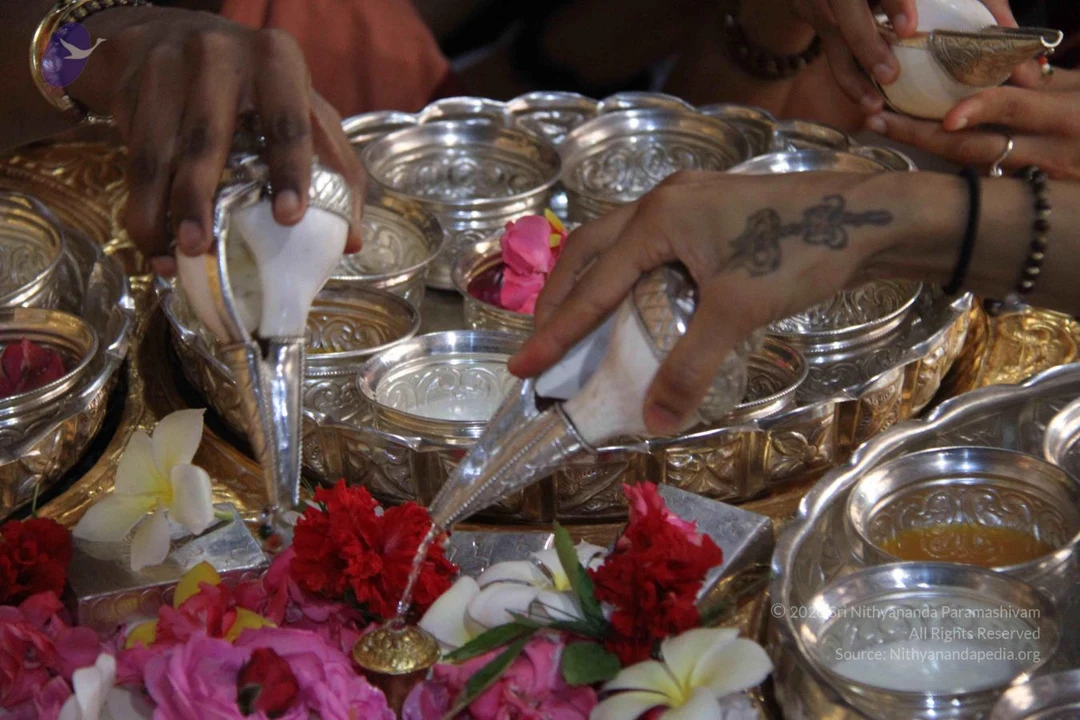
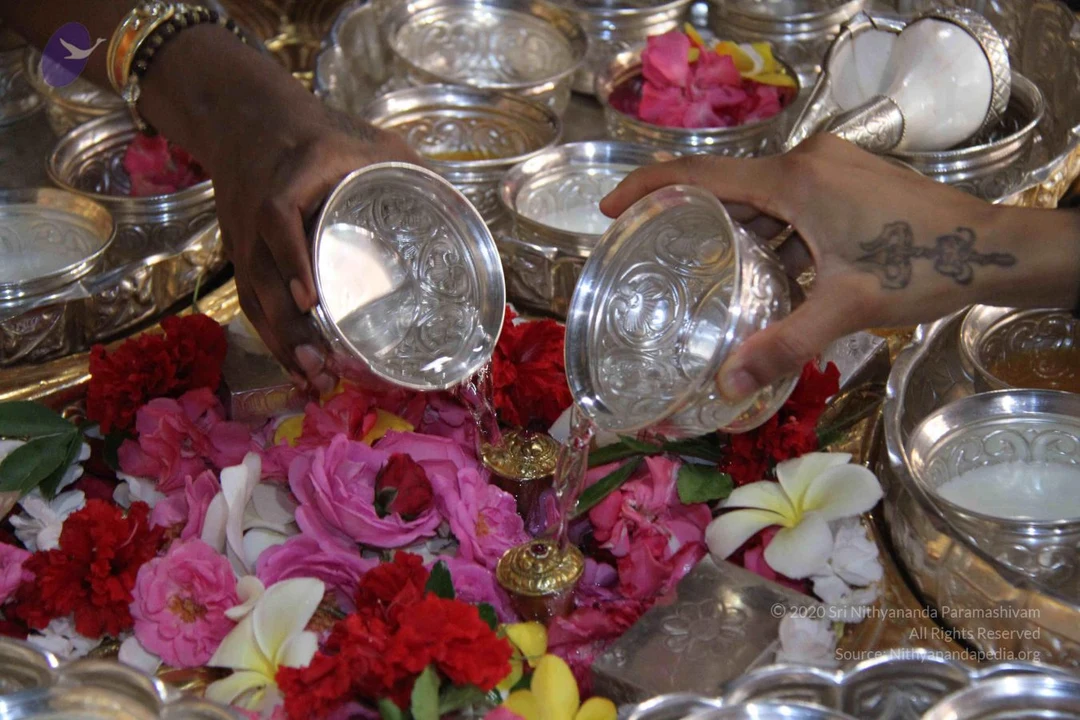
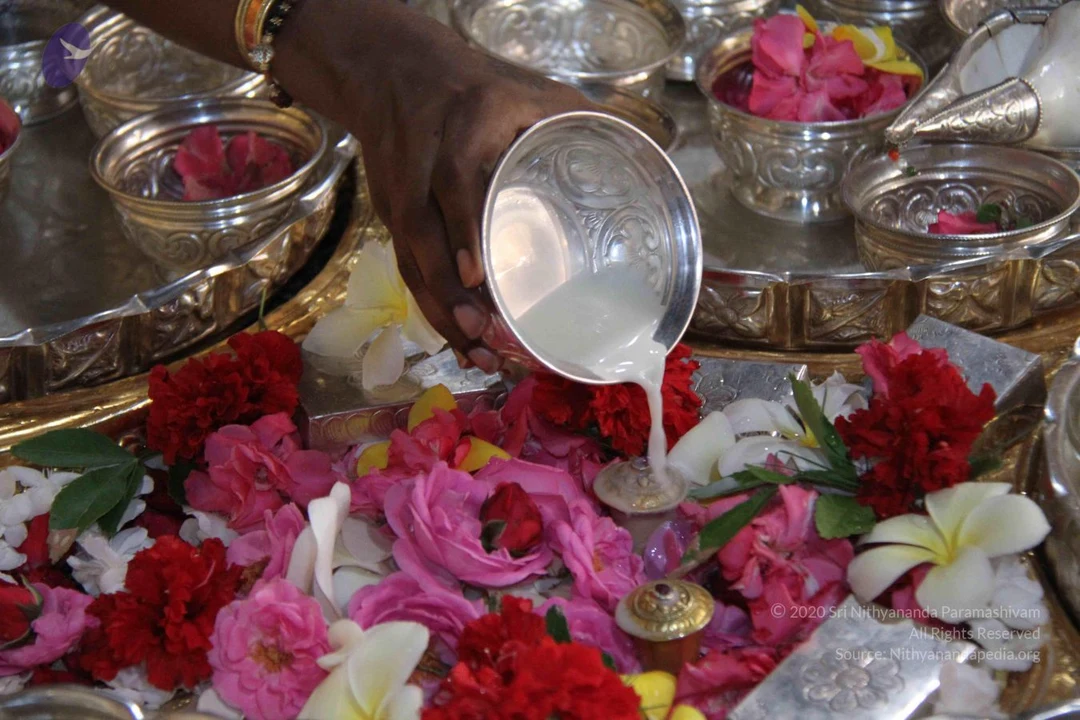
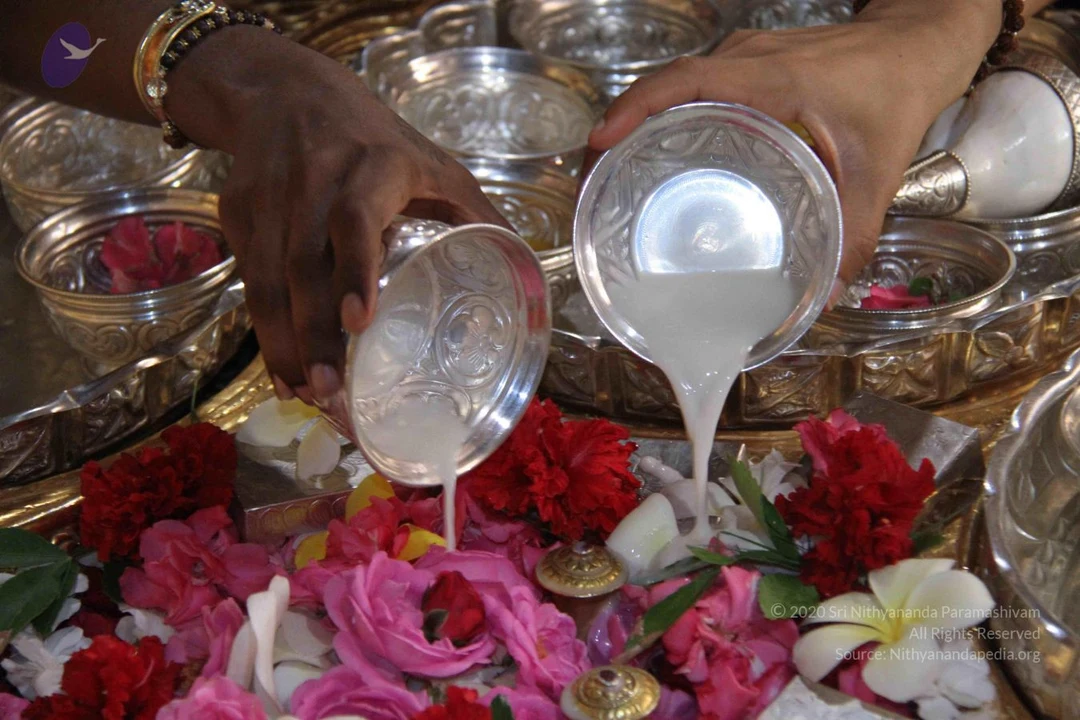
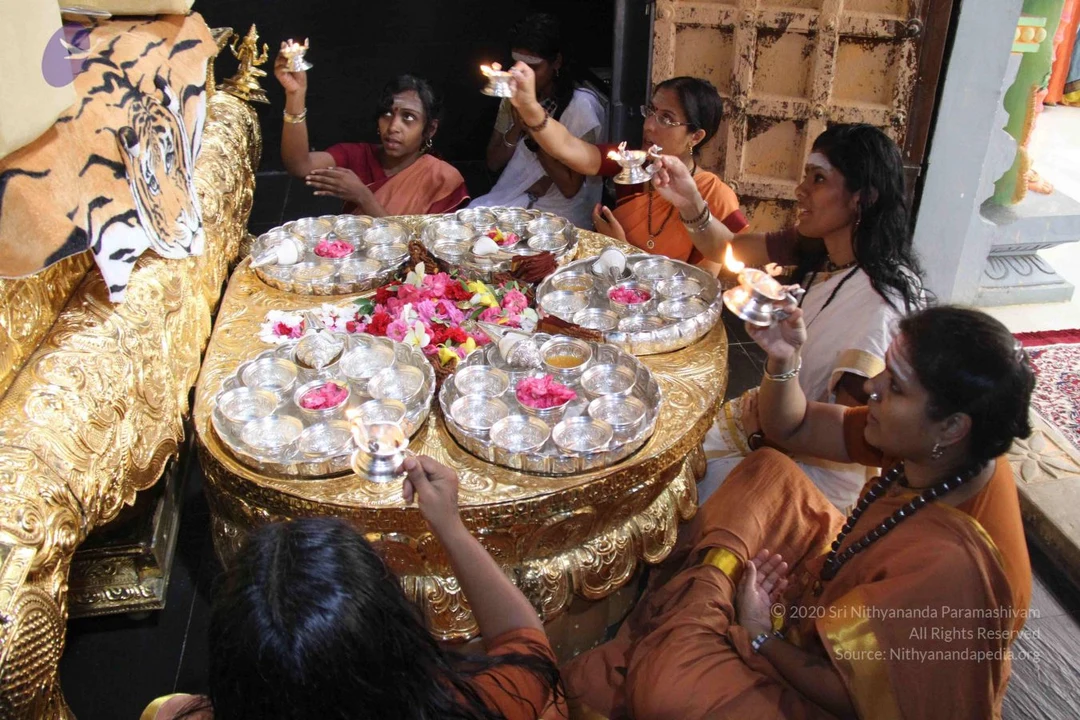
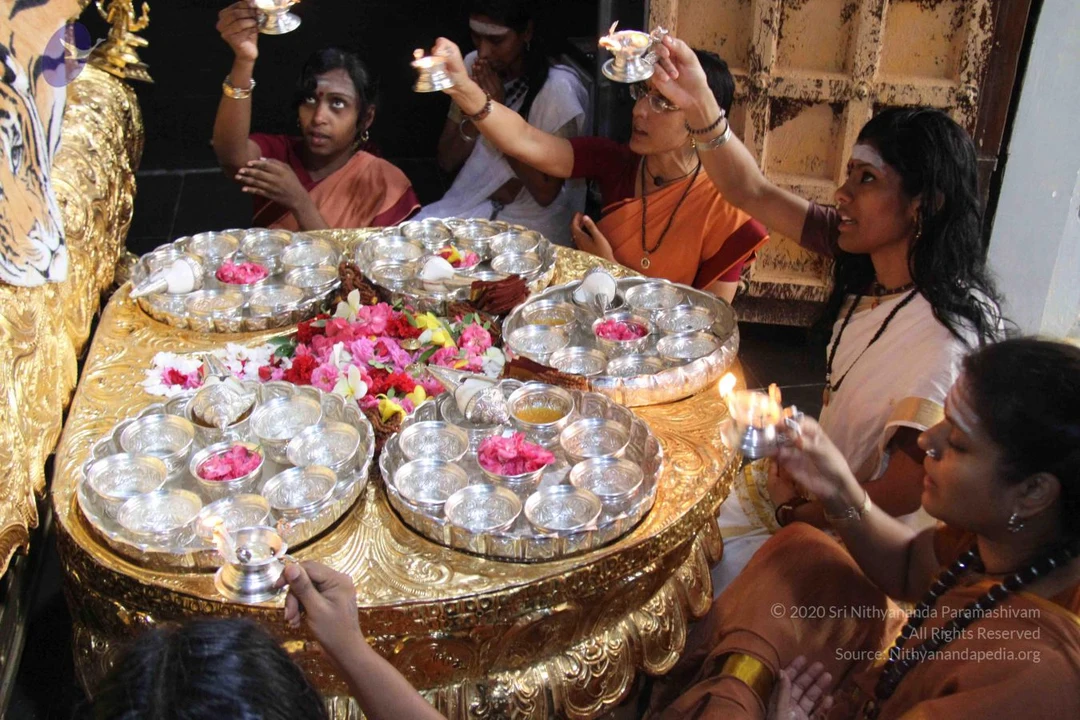
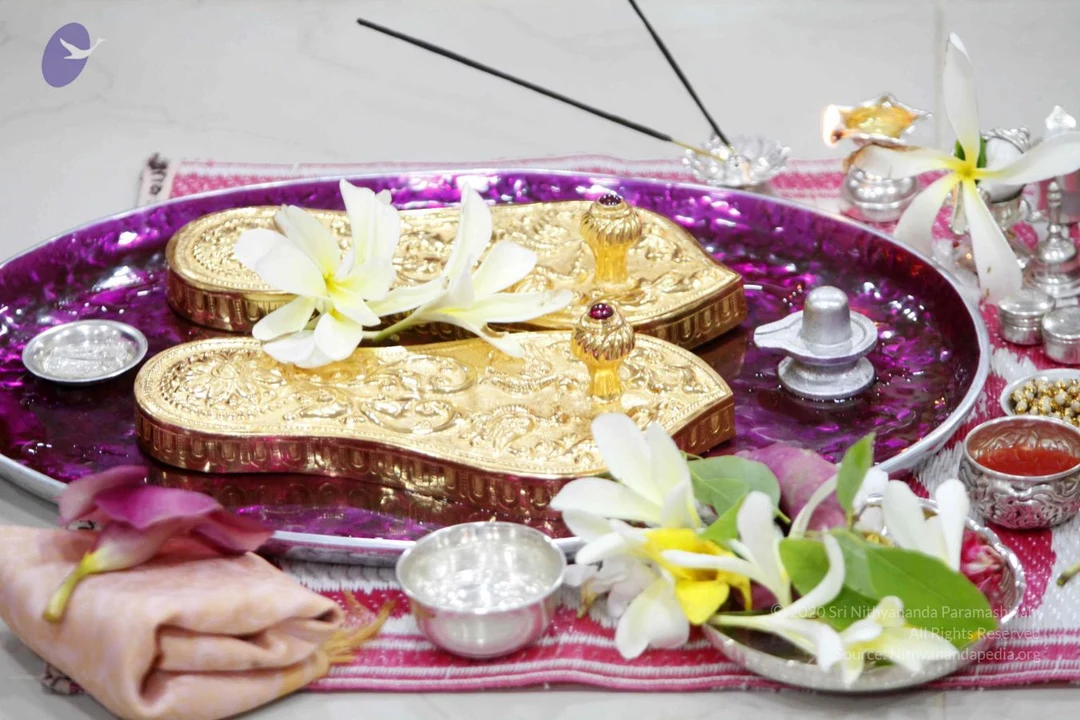
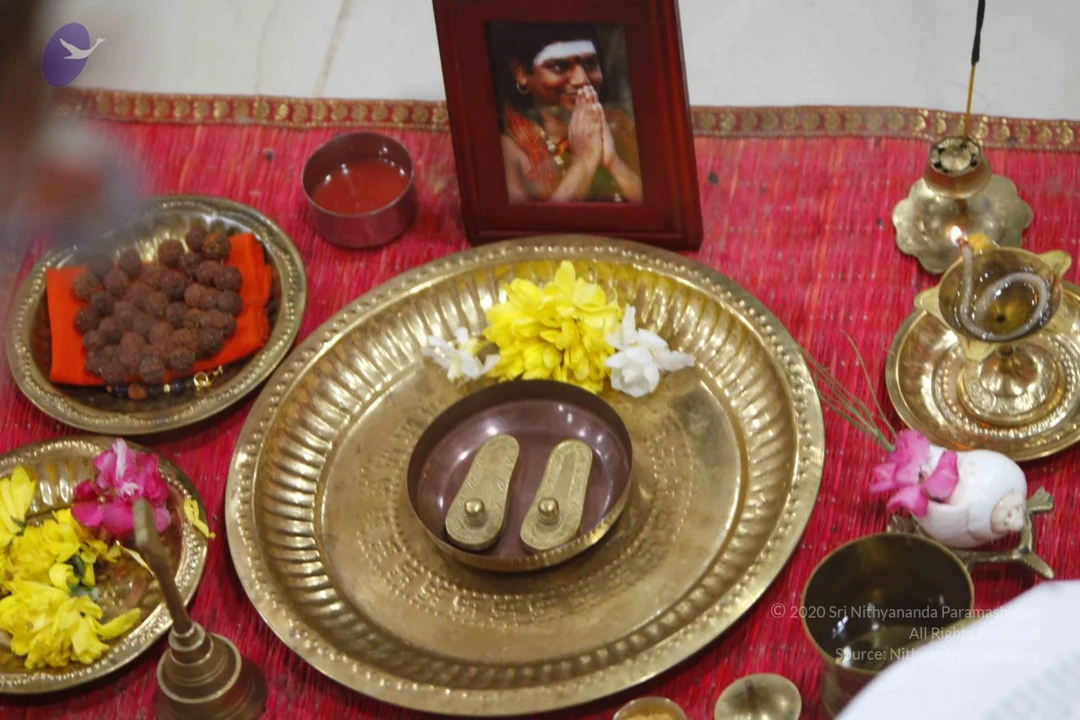
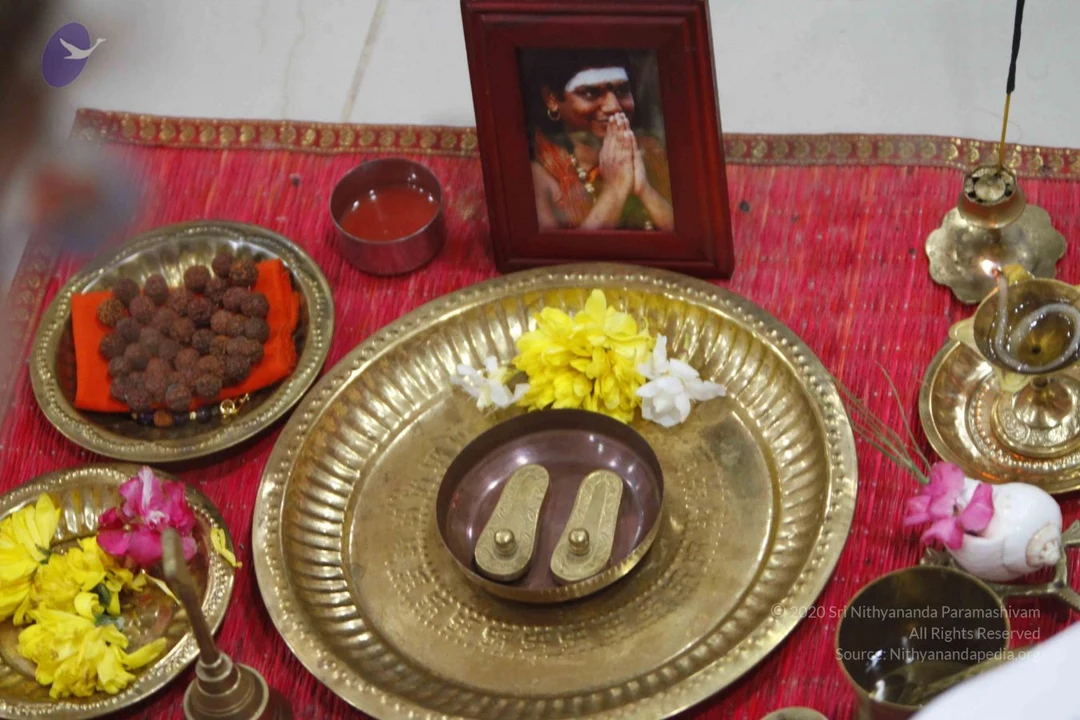
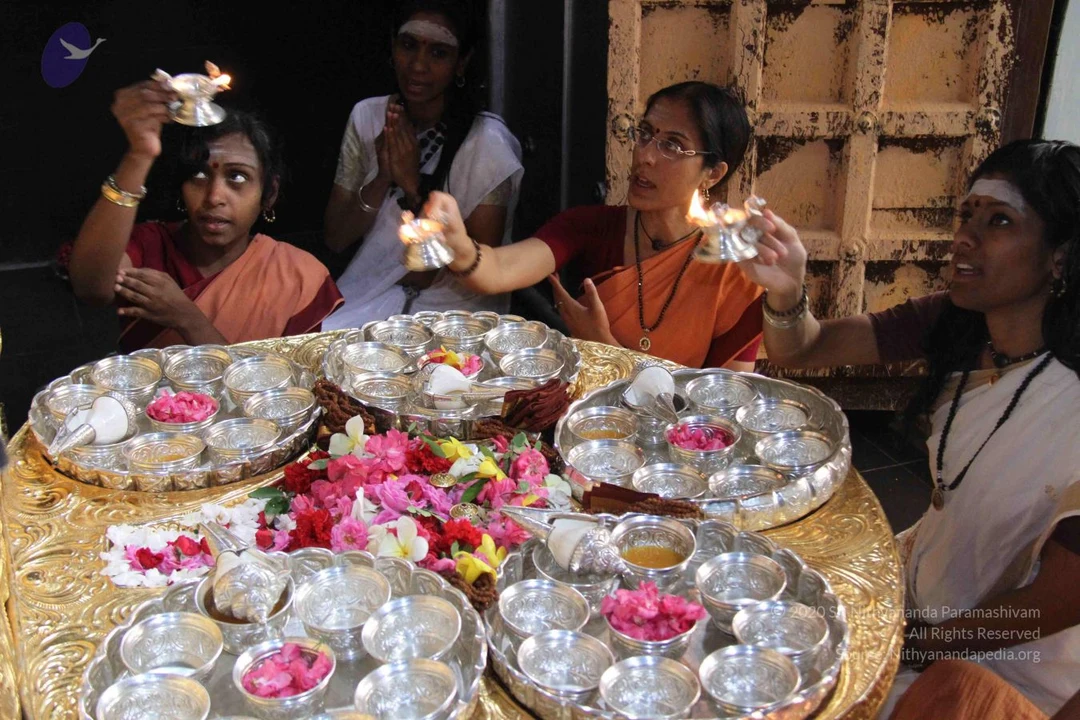
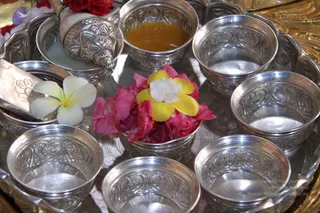
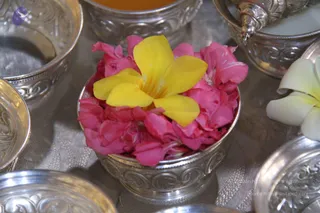
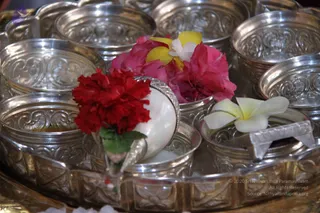
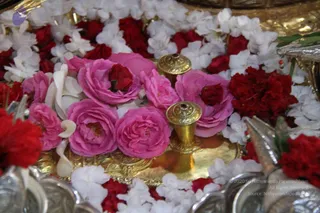
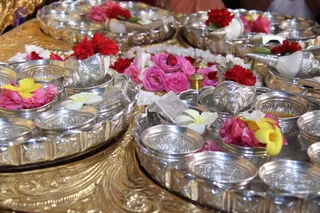
Overhead view of a ritual puja arrangement on a gold-embossed surface. Many small silver bowls hold golden liquid and white liquid, with silver kalasha-style vessels and a brass lamp at the centre. Red carnations, pink roses, white jasmine-like petals and frangipani flowers form a garland-like arrangement around a small brass object. A partially visible figure in orange-brown robes and a rudraksha mala appears at the top right corner, but the body is cut off and no clear face or identity cue is visible. No people are fully visible as the main subject.A top-down photograph of a polished silver tray holding several ornately engraved silver bowls and a silver spouted vessel. The bowls contain clear water and one holds a golden-yellow liquid. Fresh flowers are arranged on the tray: white plumeria, a yellow and white blossom, and pink petals in a bowl. Some engraved sheets of silver lie near the edge. Ritual items such as these are typical of temple puja preparations. No people or a person figure are visible in the scene.Close photo of a round engraved silver bowl filled with pink flower petals and a single yellow plumeria bloom, set on a silver tray with other ornate silver bowls. A white plumeria flower rests at the right edge. No people visible; the setting suggests a puja offering arrangement.Close-up of a silver puja tray with ornately engraved, bowl-shaped silver vessels. Among them sit a white conch shell with a red carnation stuck in its mouth, a cluster of pink and yellow flowers, and a white plumeria blossom resting on a silver dish. No people are visible; the scene shows offering items arranged for worship.Close-up photograph of a floral offering on a gold tray. Pink roses and white jasmine-like blossoms are arranged densely around two small gold cups or stands with dark jewelled tops, and red carnations line the edges. Silver vessels are visible at the lower and right edges. No people are visible in the frame.Close view of ornate silver ritual vessels arranged on a gold-embossed tray during a temple puja. Silver bowls and small silver cups hold pink roses, red carnations, white jasmine strands, and yellow and white plumeria flowers. A silver conical item with a white cloth sits among the offerings. No people are clearly visible; only the edges of a few garments appear at the top. The arrangement suggests a worship setup with flower offerings, possibly abhishekam or puja preparation.

PadukaPuja_crowdshots
34 photosSource gallery
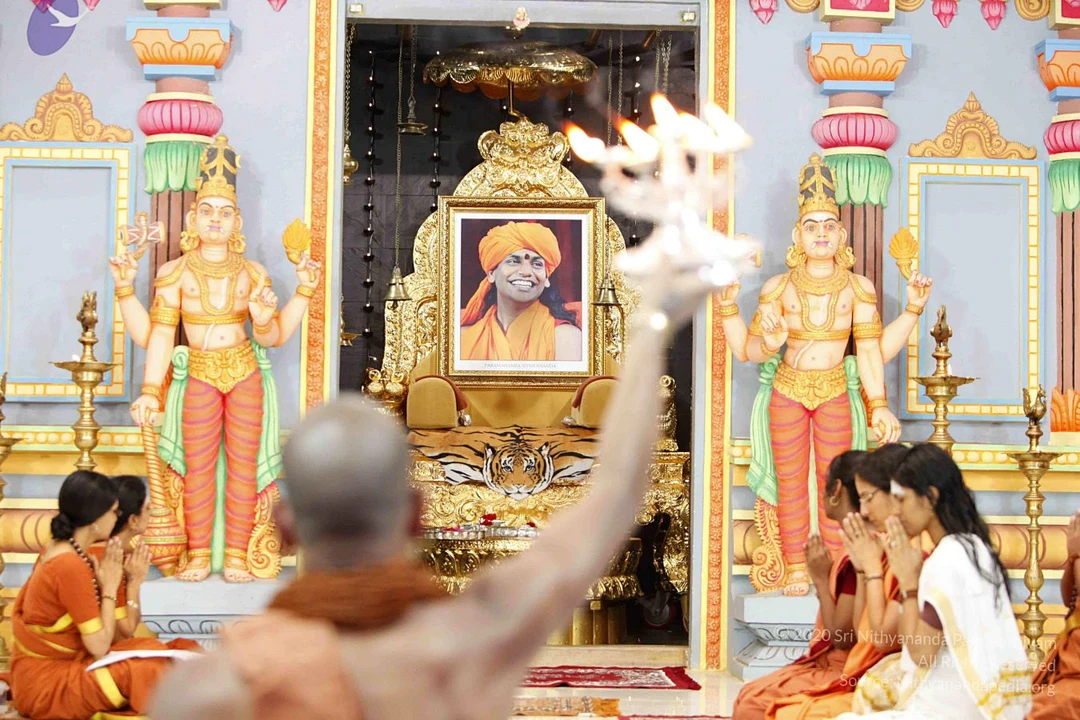
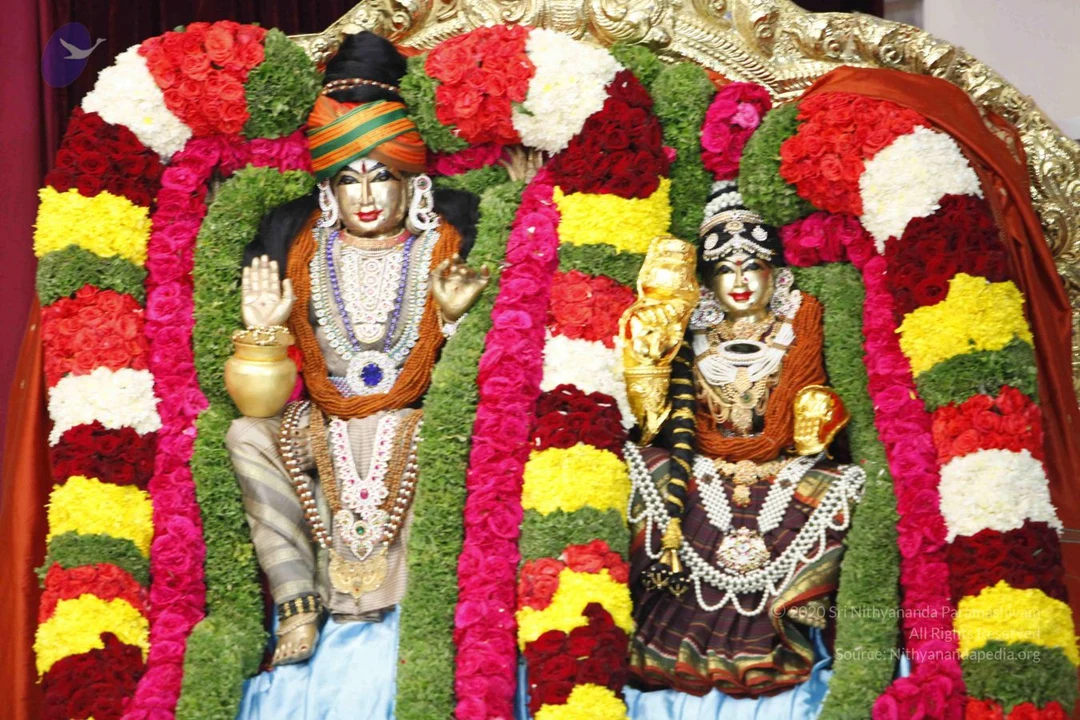
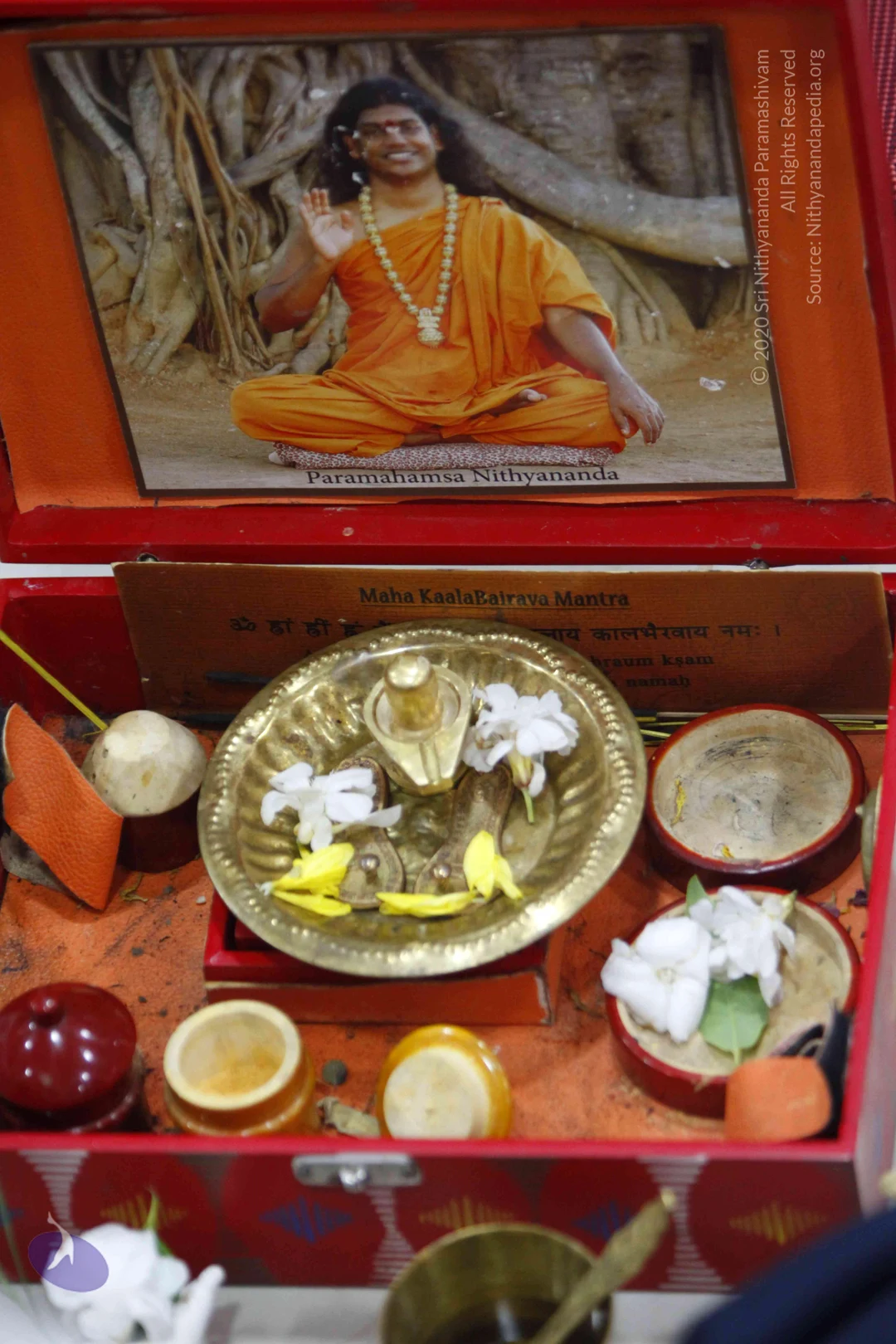
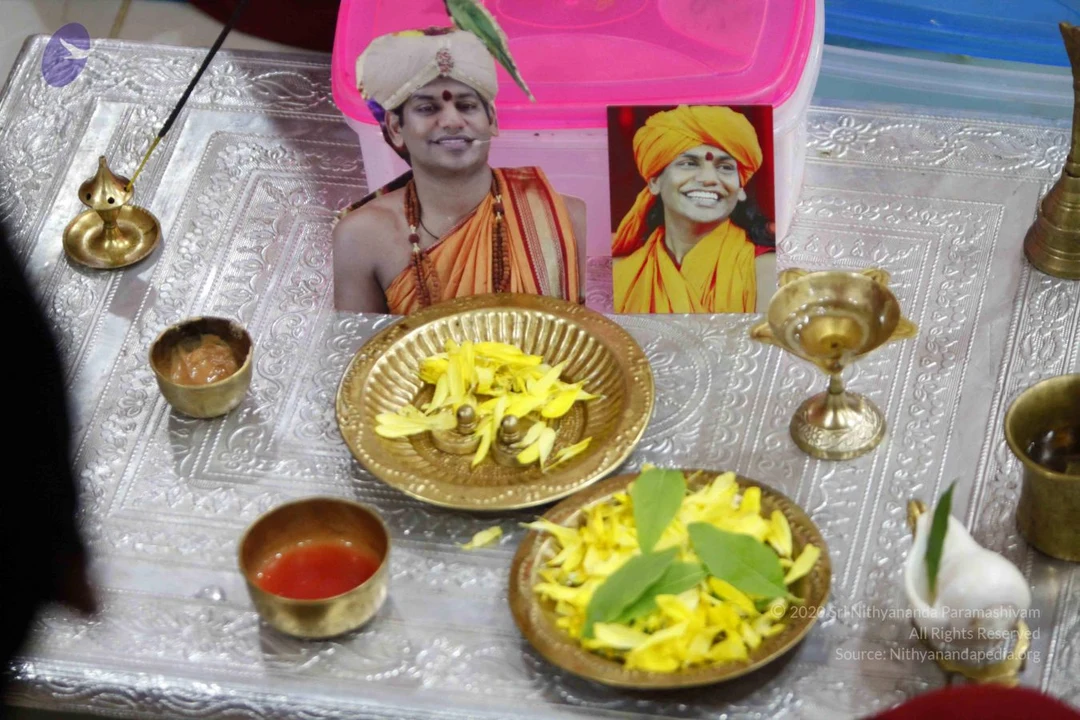
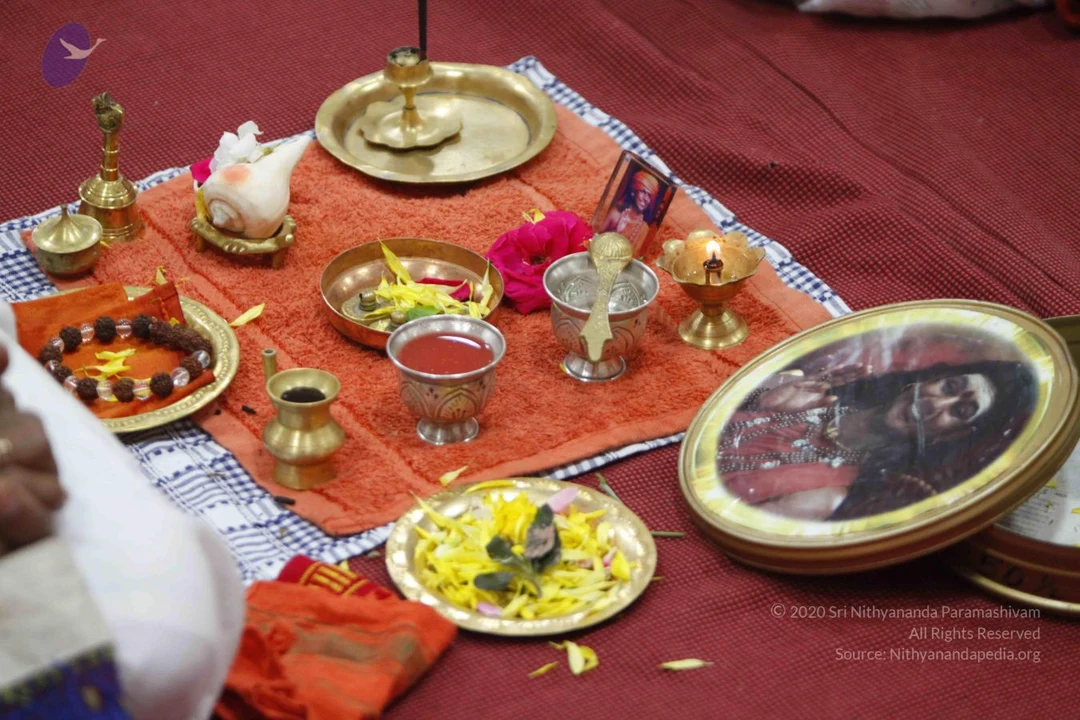
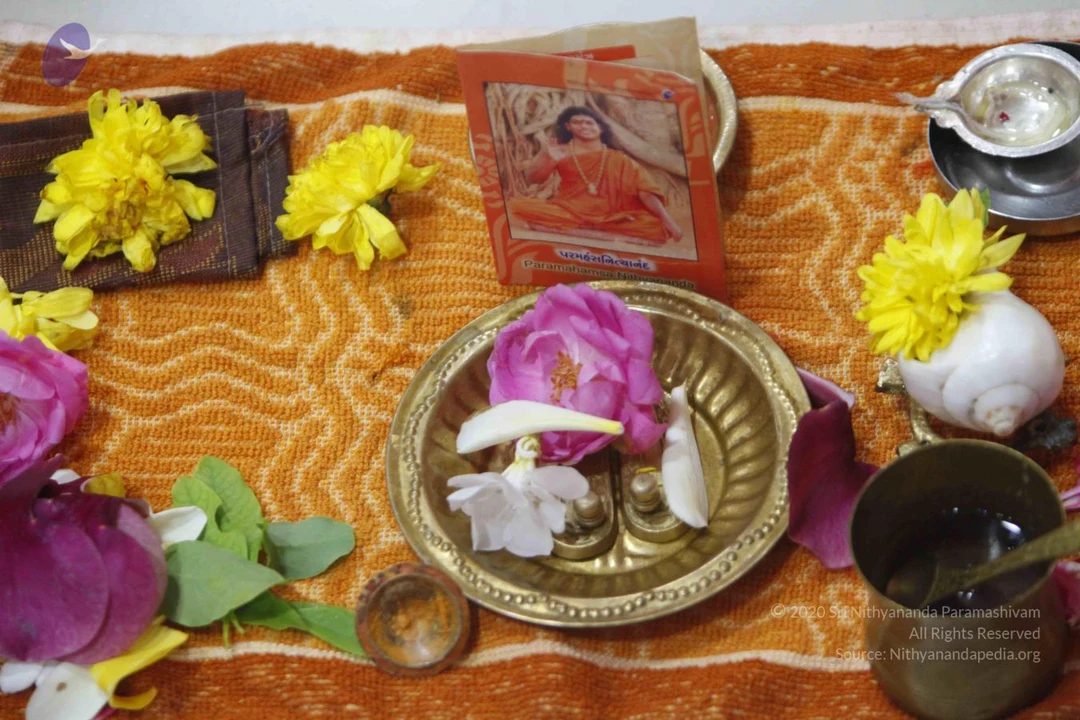
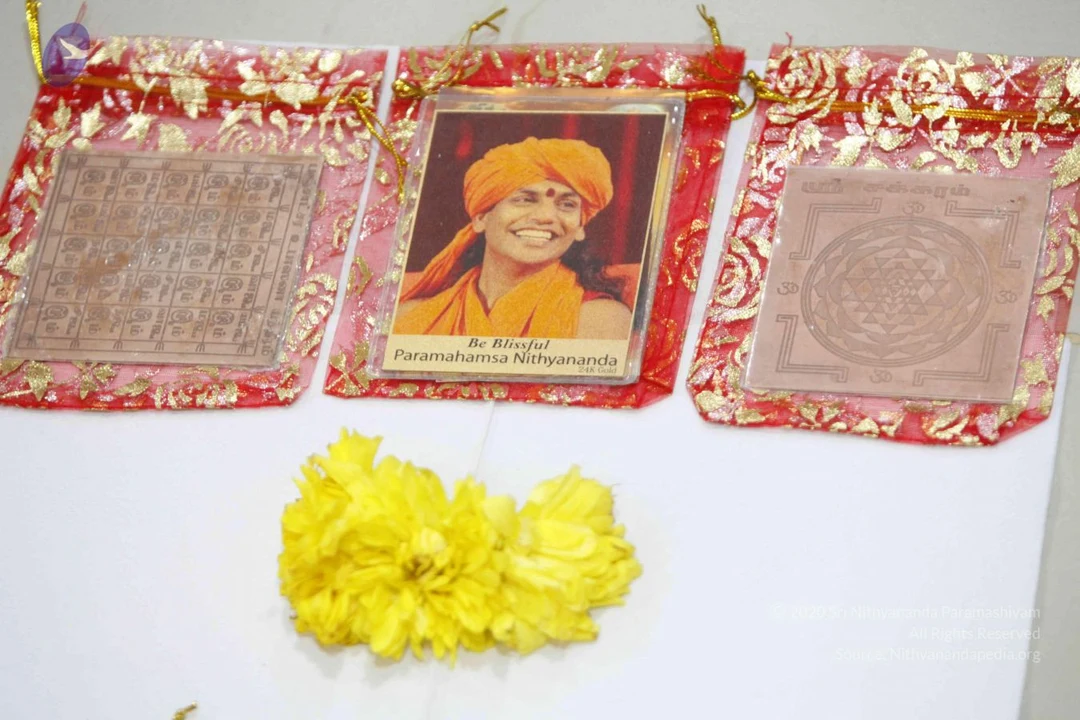
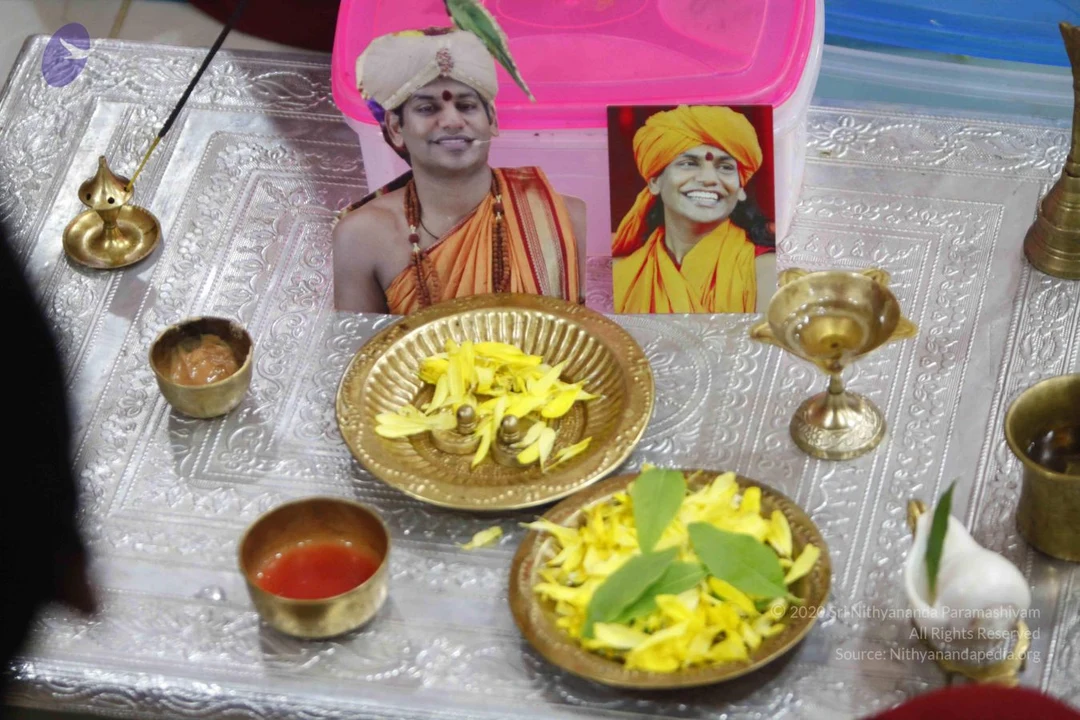
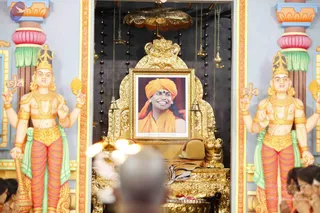
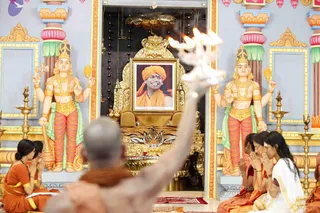
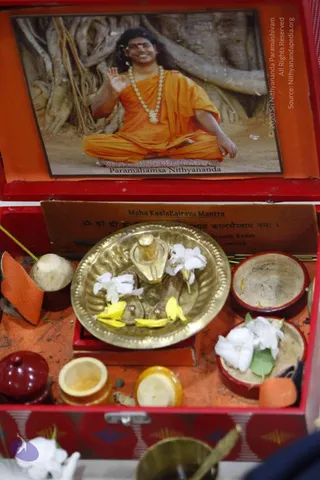
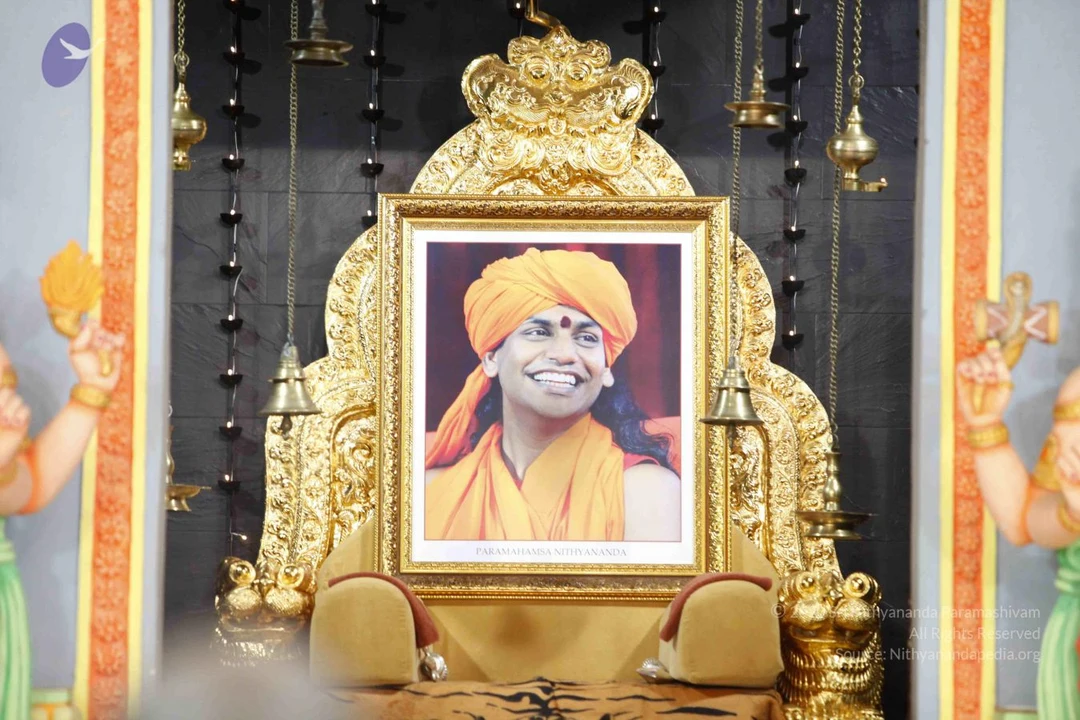
A framed portrait of a smiling man in an orange turban and orange shawl with a red bindi, displayed on an ornate gilded throne with a lion-head armrest and tiger-skin cloth. Hanging brass oil lamps and bells surround the throne, with painted green and orange deity figures flanking it. A printed caption on the frame reads "PARAMAHAMSA NITHYANANDA". The portrait is a printed depiction, not a physical person, and no people are physically present.A framed portrait of a smiling man in an orange turban and orange robe sits on a gilded throne-like seat inside a temple shrine, flanked by two painted dvarapala-style guardian statues with four arms, gold jewelry and striped pink-and-red dhotis. Above the throne hangs a gold canopy with hanging bells and oil lamps. Blurred devotees with folded hands are in the foreground near lit oil lamps, and a tiger-striped cloth covers the seat. The portrait is a printed picture, not a person present in the scene.A temple shrine scene with two large painted dvarapala-style deity figures flanking a gilded throne. On the throne stands a framed portrait of a smiling man in an orange turban and saffron robe, with a tiger-skin cushion beneath it. In the foreground a shaven-headed priest in orange holds a lit aarti lamp aloft, and to the right three women in orange and white sit with palms joined in prayer. Brass oil lamps stand on either side of the shrine.Two ornately decorated deity murtis, a male figure wearing an orange-and-green striped turban and a female figure with a tall hair braid and crown, are framed by a dense arch of red, yellow, white and pink roses and green foliage garlands. The male murti wears layered white and pearl necklaces, a blue-jeweled pendant, an orange shawl, and holds a gold kalasha pot; the female murti wears pearl necklaces, a maroon-and-gold sari, and holds a gold lotus-like object. Both sit on a blue draped base before a gold-framed backdrop. No physical people are visible.A red wooden puja box with an open lid sits on an orange cloth. Inside the lid is a printed photograph of a smiling man with long dark hair, a red bindi and a white flower garland, wearing orange robes and seated cross-legged in front of a large banyan tree; he raises one hand. A printed caption under the photo reads Paramahamsa Nithyananda. Below, a brass plate holds a small brass linga, white flowers, yellow petals and a few leaves. Nearby are small bowls with white jasmine-type flowers, a red lidded container and a brass cup. A card reading Maha KaalaBairava Mantra sits behind the plate.A puja setup on a silver-embossed tray with two printed photographs placed upright against a pink container. The left photo shows a smiling man in a cream turban, orange-striped shawl and rudraksha mala, bare-chested; the right photo shows a smiling figure in a saffron-orange turban and orange robe. Brass bowls hold red and orange powders, a brass oil lamp and an incense stick stand nearby, and a brass plate holds yellow flower petals with bay leaves. A second plate of yellow flowers and green leaves sits in front. No physical people are present; the portraits are printed images.

Nithya_Satsang

62 photosSource gallery
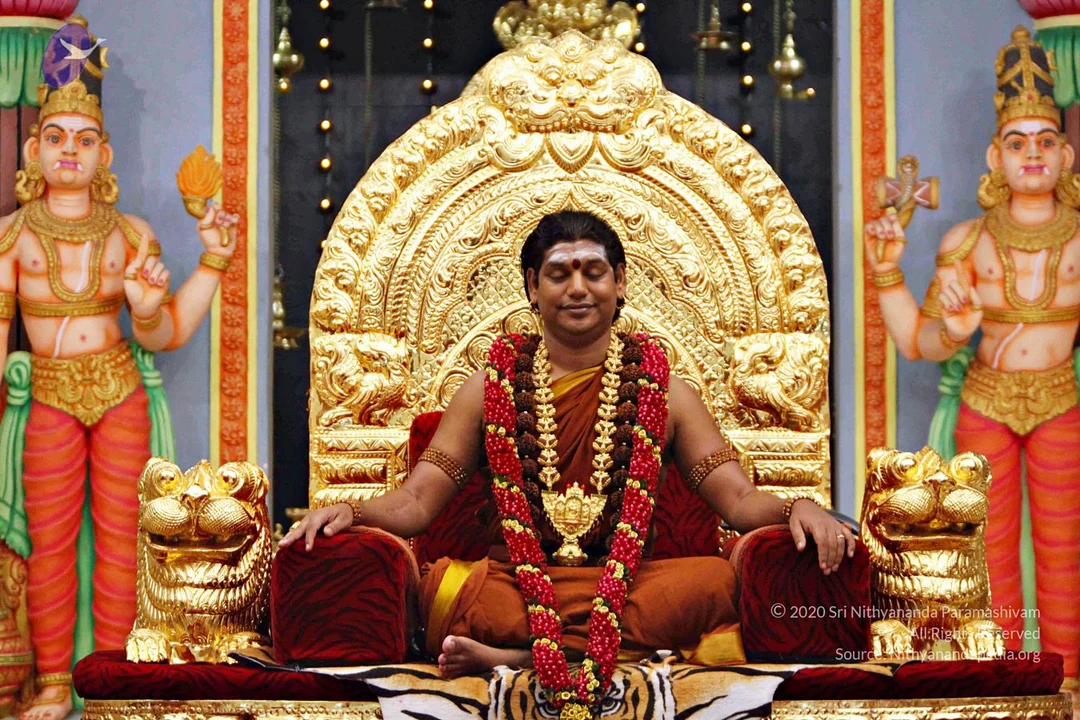
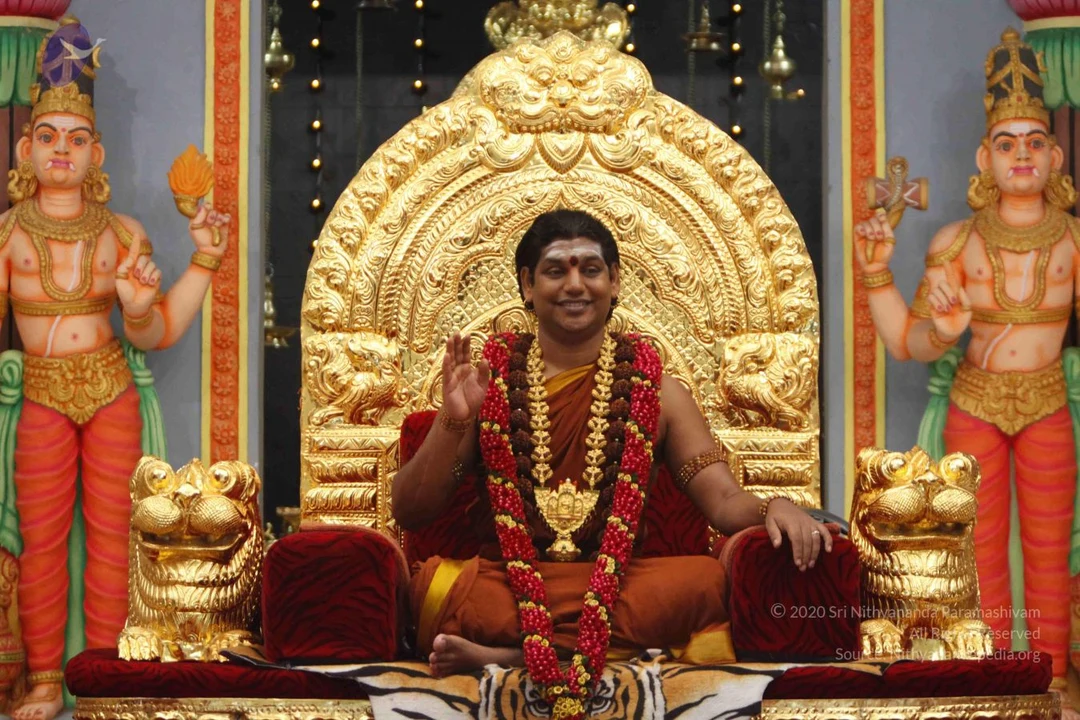
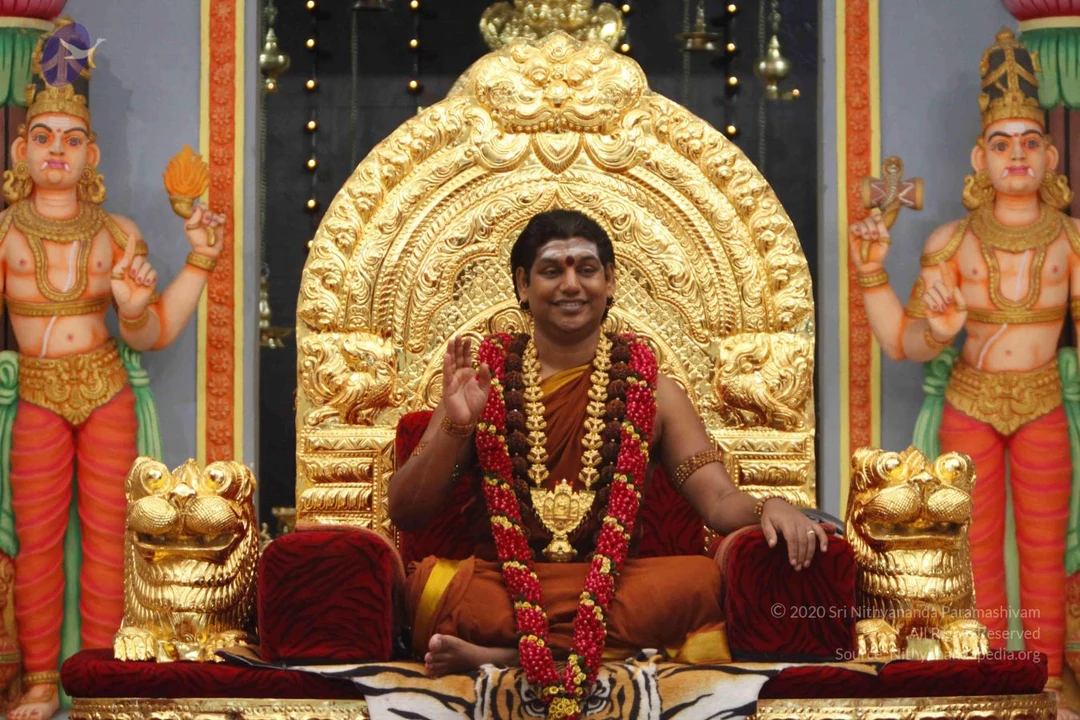
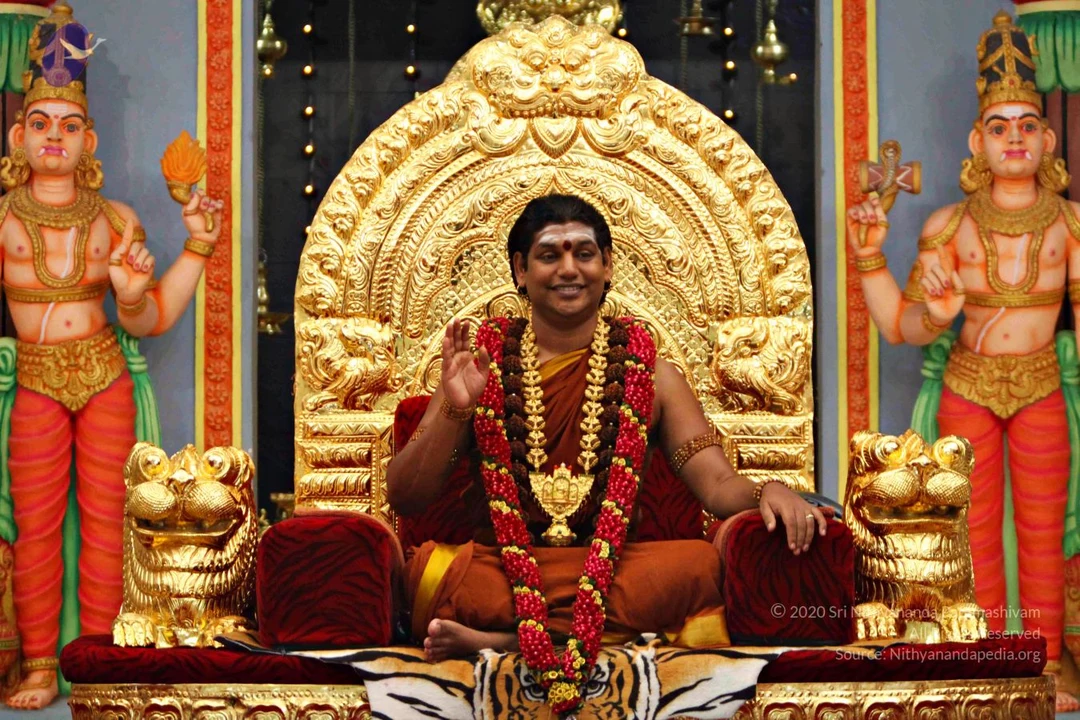
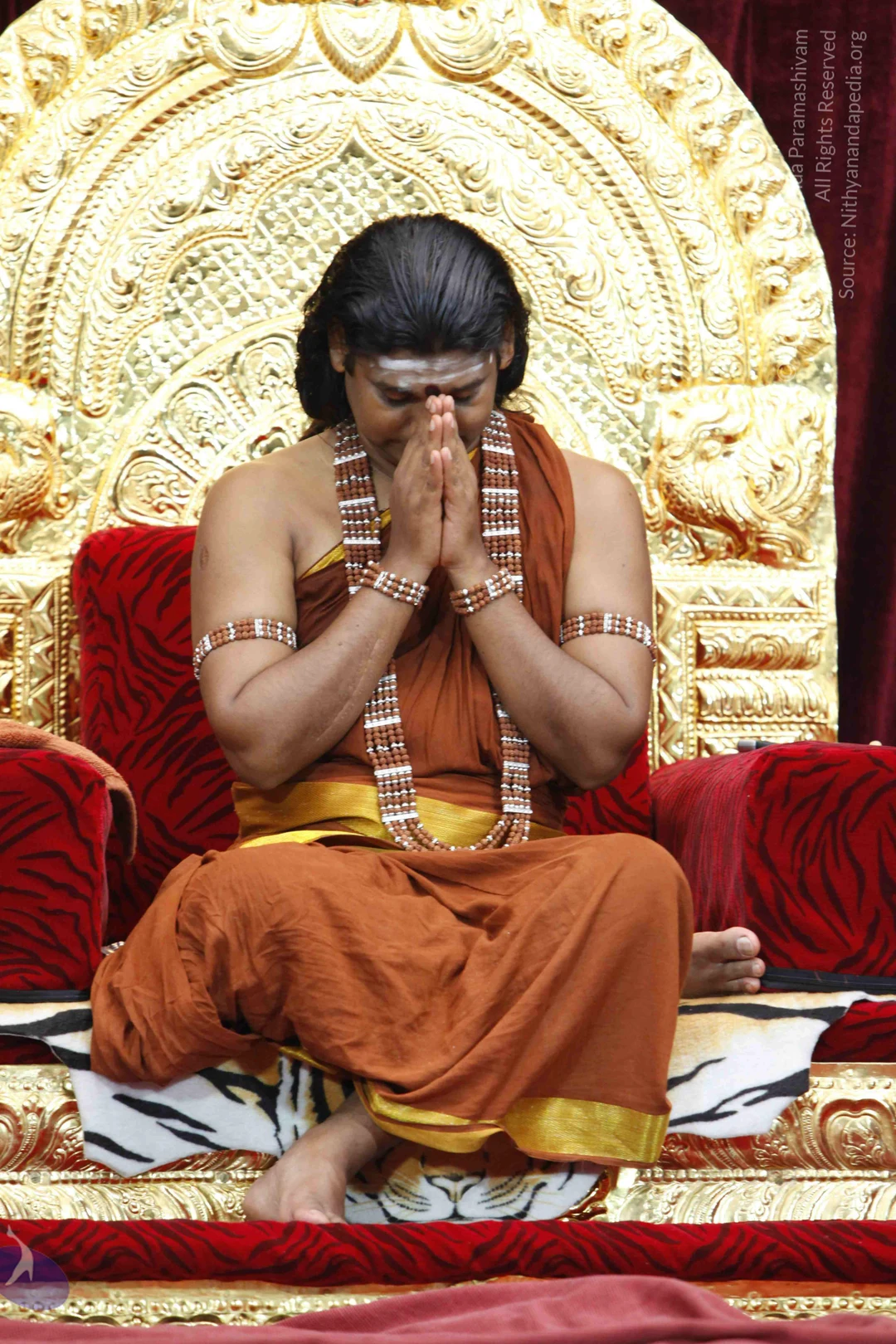
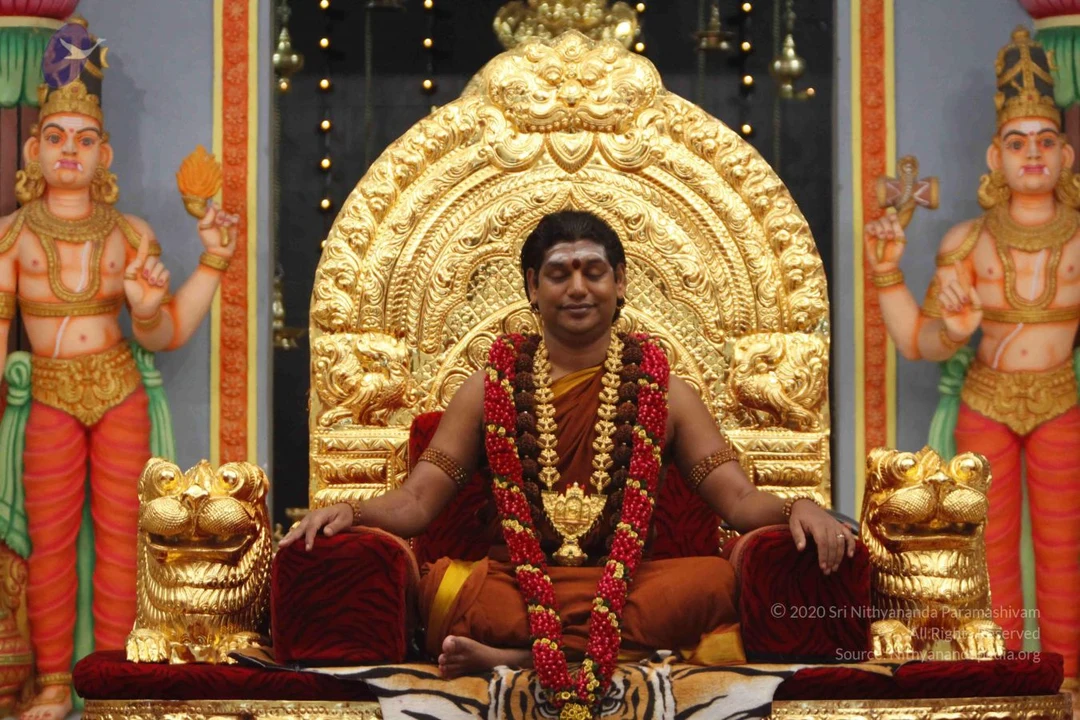
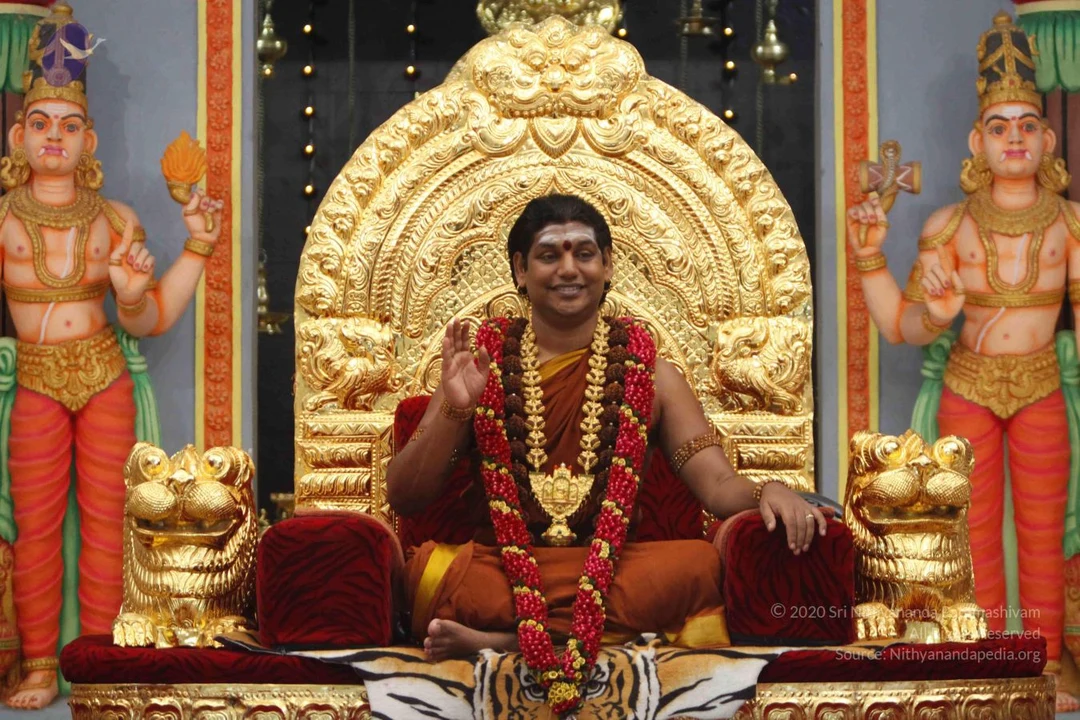
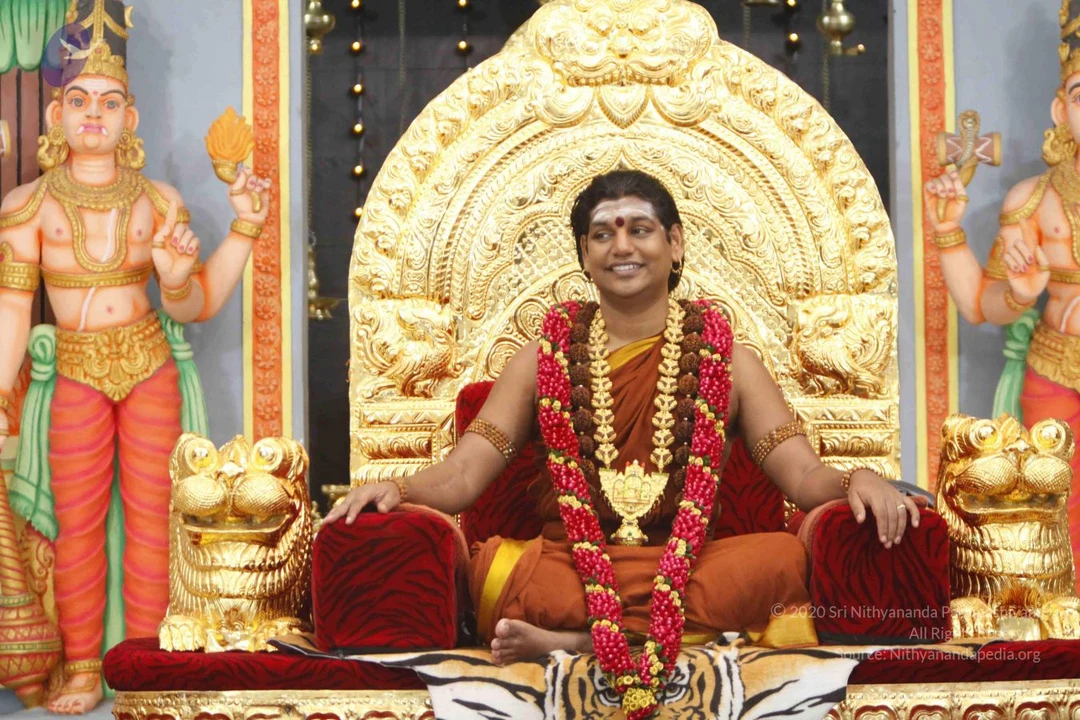
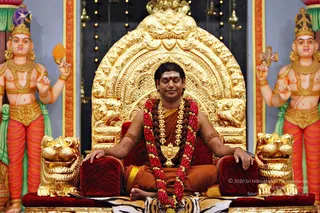
A seated man in saffron-orange robes sits cross-legged with eyes closed on an ornate gilded throne with lion-head armrests, draped in a tiger-striped cloth. He wears a thick red and white flower garland, rudraksha beads, a gold ceremonial necklace and gold armbands, with a red tilak on his forehead. Two painted standing guardian figures with crowns and gold jewellery flank the throne. The scene suggests a satsang or darshan setting in a temple-style hall.A seated man in saffron-orange robes sits cross-legged on an ornate golden throne with a tiger-skin cushion beneath him. He wears a red and white flower garland, a dark rudraksha mala, and a gold ceremonial pendant, and is raising one hand in blessing while smiling. Two large painted statues of guardian figures with crowns and gold jewellery stand on either side, and golden lion-shaped armrests flank the throne. The man appears to be a person, based on saffron robes, rudraksha mala and ceremonial gold necklace, presented in a satsang-style setting.A seated man in a saffron-orange robe sits on an ornate gilded throne with a carved arched back and lion-head armrests, draped with red tiger-striped cushions and a tiger-skin mat. He wears a red-and-yellow garland, a rudraksha mala, a gold ceremonial pendant necklace, gold armlets and bangles, and a red bindi with white tripundra marks on his forehead. His right hand is raised in blessing while his left rests on the armrest, and he smiles. Hanging brass oil lamps and string lights decorate the background, and a painted deity figure with a raised hand appears at the right edge.A seated man in an ornate golden throne with a carved arched back and lion-head armrests, draped in a red tiger-skin rug and red velvet cushions. He wears saffron-orange robes with a yellow border, a rudraksha mala, a long gold ceremonial necklace with a gold pendant, gold armlets and bangles, and a red-and-pink flower garland. He has a tilak and a red bindi, raises his right hand in blessing, and smiles. Hanging brass lamps and a golden decorated backdrop surround him.A seated man in an ornate golden throne with lion-carved armrests and a tiger-skin rug draped over the platform. He wears an orange-saffron robe with a yellow border, a long red-and-yellow flower garland, a rudraksha mala, and a gold pendant necklace. He has white vibhuti lines and a red bindi on his forehead, and raises his right hand in blessing while smiling. Brass oil lamps hang in the background beside a gold-leaf arch and red-and-gold panels. The figure's appearance is consistent with a person from the distinctive saffron robe, rudraksha mala and ceremonial gold necklace, seated in a throne in a satsang setting.A seated man in a golden ornate throne with a carved arched backrest and golden lion-shaped armrests sits centrally, wearing an orange-saffron dhoti and shawl, a rudraksha mala with a gold ceremonial necklace, and a long pink-and-white flower garland, with white tilak on his forehead. Hands rest on red tiger-striped cushions. Two painted deity guardian statues stand on either side in red and gold dhotis with crowns and gold jewellery, one holding a flame-like object. Hanging brass bells and lamps appear in the background. Appearance-based probable Swamiji cues: long swept-back hair, orange-saffron clothing, rudraksha mala and gold ceremonial necklace. The seated figure is present in person.

Sarvadarshan

4 photosSource gallery
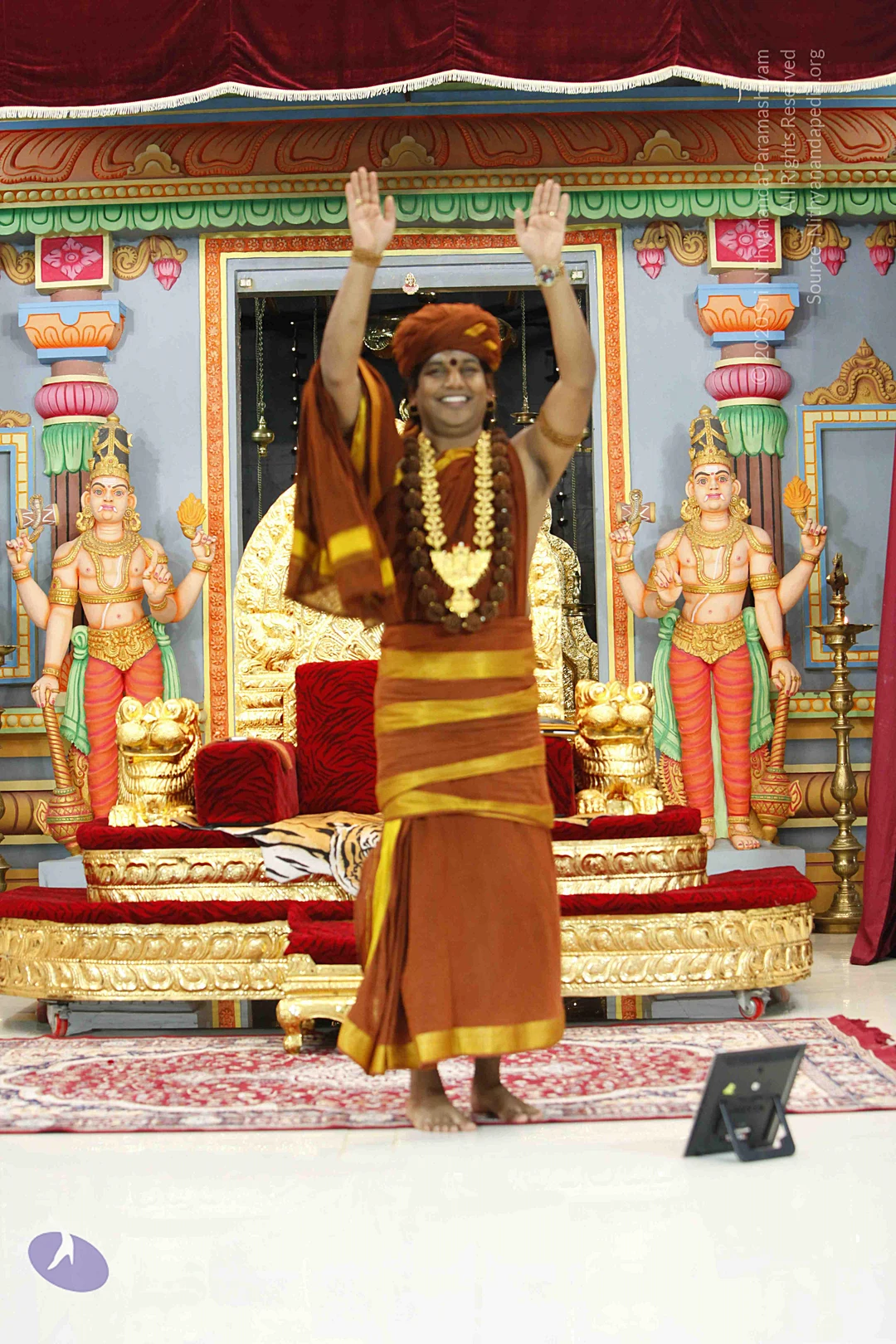
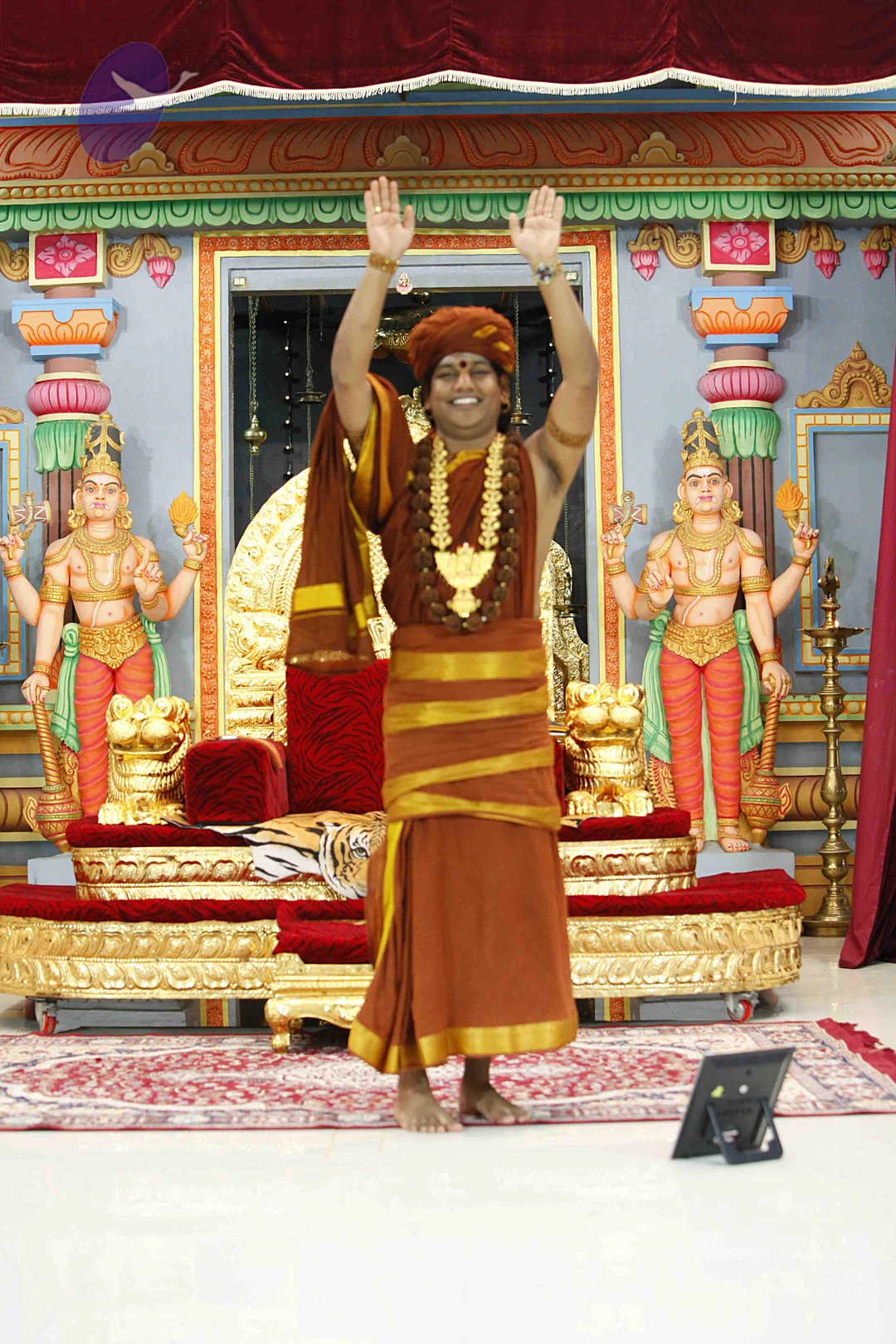
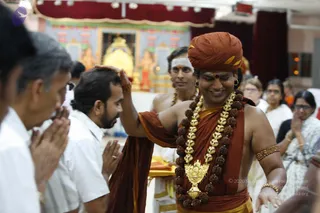
A photograph of a satsang hall. Standing at right is a figure wearing a rust-orange turban, an orange-brown shawl draped over a bare upper body, and a long gold necklace with a large gold pendant and a dense rudraksha mala; he raises one hand in blessing toward devotees. A devotee at left, in a white shirt, has his palms pressed together in prayer. Behind them, other people in white and orange clothing stand or sit, and a painted backdrop shows gold deity figures.Empty ornate gold throne stage set with red velvet cushions, a tiger-skin rug draped over the seat, and gilded lion-head armrests. Two painted statues of four-armed deities flank the throne, one holding a trident-like staff and one holding a flower. A brass oil lamp stands at left, a gold canopy with hanging bells above, and a red velvet curtain at right. No people are visible; a small framed picture sits on the floor at lower right.A man in a saffron-orange turban and orange-brown robe with gold borders stands barefoot on a white floor with both arms raised in greeting, smiling. He wears a rudraksha mala and a large ceremonial gold pendant necklace, with gold bangles on his wrists. Behind him stands a golden throne with red velvet cushions and a tiger-skin cloth, flanked by two gilded lion heads. Two painted deity murti figures with four arms and gold ornaments stand on either side, and brass oil lamps stand at the right. A small screen sits on the carpet at lower right.A smiling man in a saffron-orange turban, orange robe with gold borders, and a long gold necklace with rudraksha malas stands barefoot in front of an ornate golden throne draped with a tiger-skin cloth. He raises both hands above his head in an uplifted welcoming gesture. Two painted, multi-armed deity murti flank him on either side, one holding a flaming lamp, against a colourful temple backdrop with a red-and-gold decorative border. A small black monitor sits on the red carpet at lower right.

Final_Blessing

2 photosSource gallery
A smiling man in a rust-brown turban and rust-brown dhoti with gold borders stands barefoot on a red patterned rug, both arms raised with palms open. He wears a multi-strand rudraksha mala and a large gold ornamental pendant, gold bangles and a wristwatch. Behind him is a gold throne with red tiger-print cushions and a tiger-skin draped over the seat, beside a painted deity murti holding a torch and a brass standing lamp. The scene is a decorated stage with a throne and a tiger-skin, a setting typical of a discourse.A smiling man stands barefoot on a red patterned rug, both arms raised in greeting, in front of an ornate gold throne draped with a tiger-skin cloth and a painted temple-style backdrop. He wears a rust-orange turban with a red bindi, a rust-orange shawl and dhoti edged with gold borders, a gold waist sash, and a multi-strand rudraksha mala with a large gold lotus-pendant necklace. Gold bangles and a gold wristwatch are visible. A brass oil lamp stands at the right and a painted deity figure is partly visible behind him. No other people are visible.

IA_sessionPhotos

76 photosSource gallery
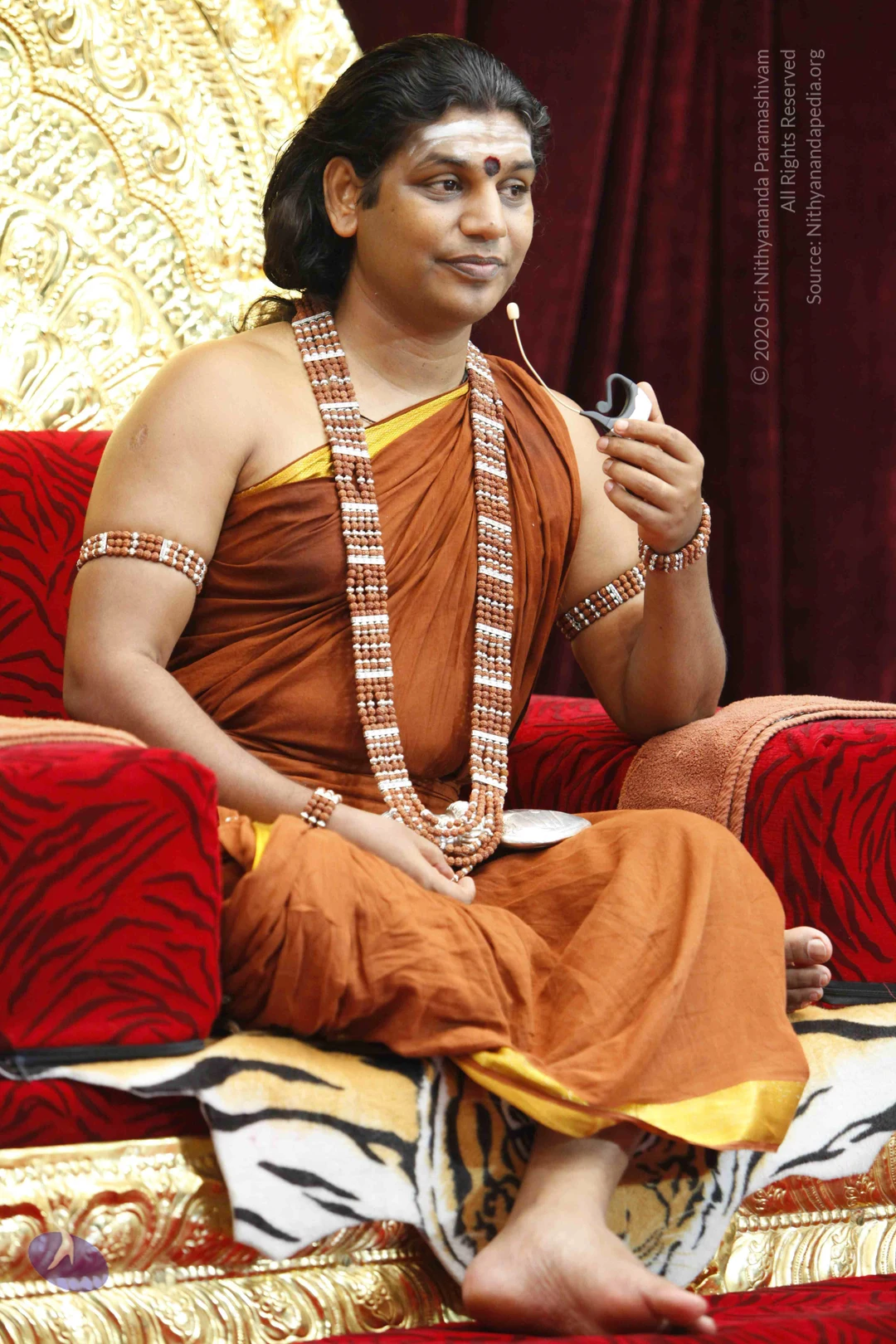
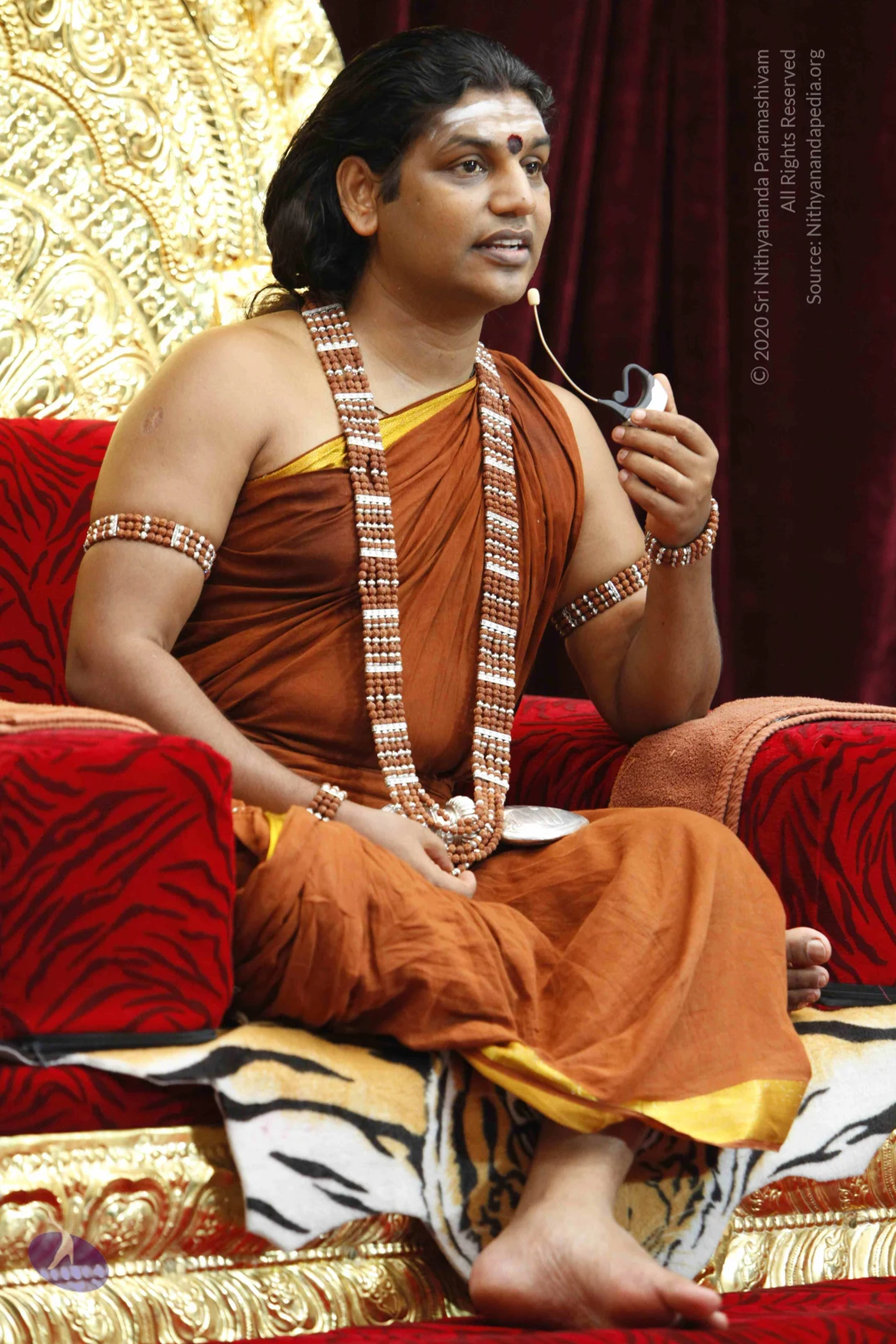
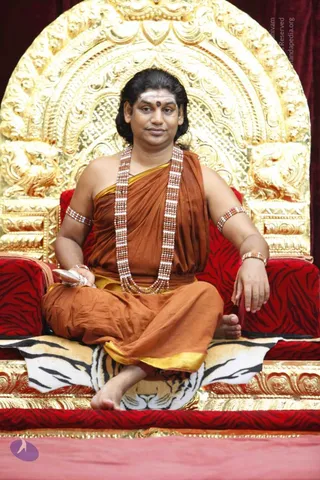
A man with swept-back dark hair sits cross-legged on an ornate gold throne with a red and black tiger-striped cushion, wearing an orange-brown draped cloth with gold edging and a long multi-strand rudraksha mala with white beads. White and red tilak marks show on his forehead and he rests one hand on his lap holding a small silver bowl. Gold lion carvings decorate the throne back and red velvet covers the seat. One person is visible.A man sits cross-legged on an ornate gilded throne with red tiger-striped upholstery and a tiger-skin cushion, holding a polished silver ceremonial staff in his right hand. He wears an orange-saffron dhoti and shawl with gold borders, multi-strand rudraksha-style beads across his chest, and beaded bracelets on his arm and wrist. He has long swept-back dark hair, white vibhuti lines and a red kumkum dot on his forehead. Behind him a large gold arch with carved floral and lion motifs fills the background, and a red curtain hangs at the left. A faint purple logo appears at the lower left. Appearance-based label: a person, seated in person on the throne.A seated man in an ornate gilded throne with a carved arched back, draped on red tiger-striped cushions over a tiger-skin rug. He wears a saffron-orange dhoti and shawl with gold borders, multiple strands of rudraksha beads and white beads across his chest, beaded armlets and a bracelet, a white forehead mark and a red bindi. He holds a silver ceremonial staff topped with a finial in his right hand and rests his left hand on the armrest.A man seated cross-legged on a red tiger-striped throne with gold-embossed armrests and a tiger-print cloth draped over the seat, speaking into a small headset microphone held in his right hand. He wears an orange-saffron cloth over one shoulder with a gold border, long white and brown rudraksha-style mala necklaces, matching beaded armlets and wrist bands, and a white tilak with a red dot on the forehead. Behind him hang deep red curtains and a gold ornamental backdrop.A man sits cross-legged on a red and gold throne with a tiger-striped cushion, speaking into a headset microphone while holding a small object in his right hand. He wears saffron-orange robes with a yellow border, a long rudraksha and white bead mala, matching beaded armbands and bracelets, and a white tilak with a red bindi. A gold-embossed backdrop and maroon curtain frame the scene. A vertical printed copyright line appears at the right edge.A seated man in orange-brown robes with a yellow-edged wrap sits on a red tiger-print cushioned seat in front of a gold ornate throne back and red velvet drapes. He wears long rudraksha and white-bead malas across his chest, matching armlets and bracelets, a white tilak with a red bindi on his forehead, and a small clip microphone at his ear. He holds a small black device in one hand while speaking, and a silver dish rests on his lap. Appearance-based label: Swamiji (probable), with long swept-back hair, rudraksha malas and saffron-orange robes.

MaheswarapujaPictures

156 photosSource gallery
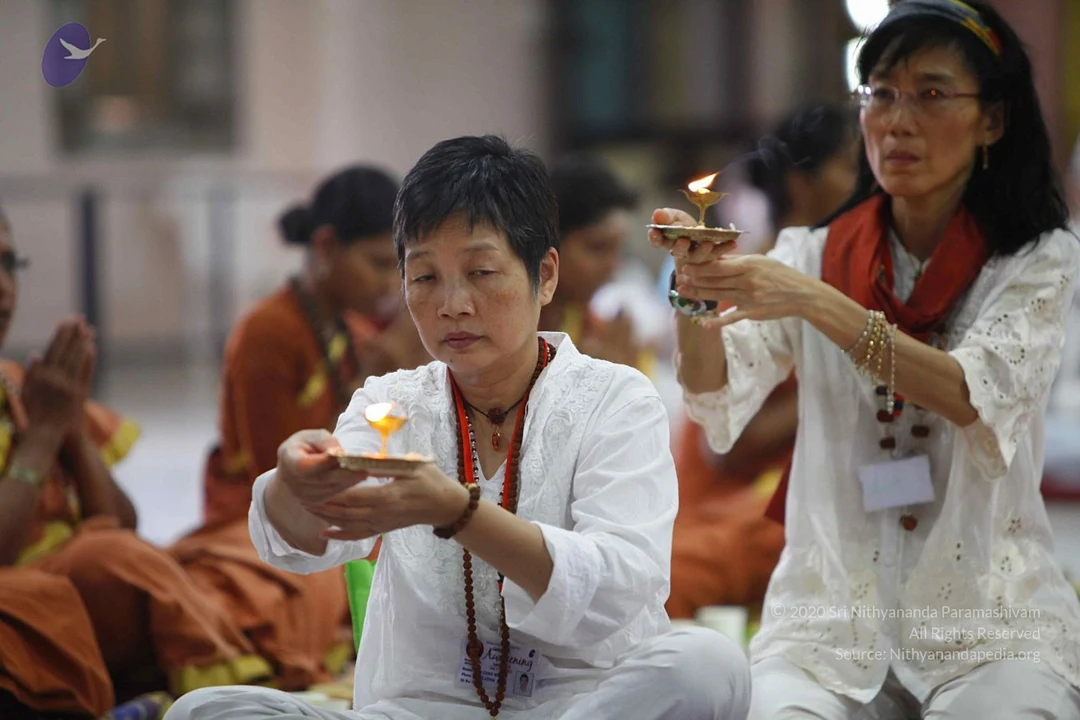
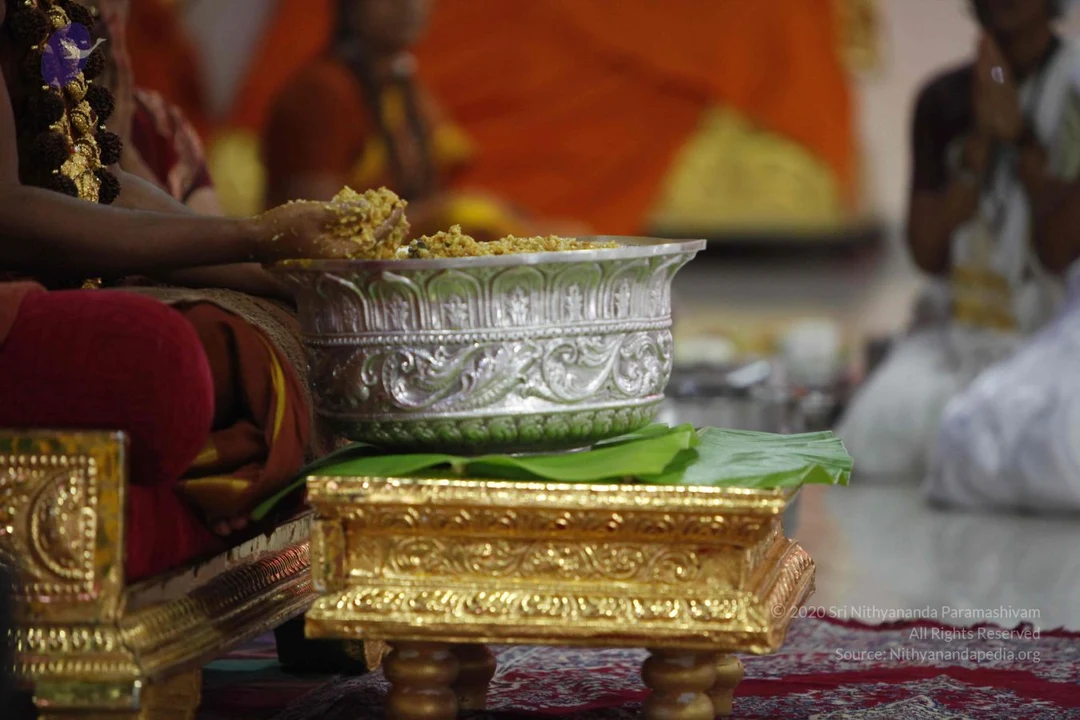
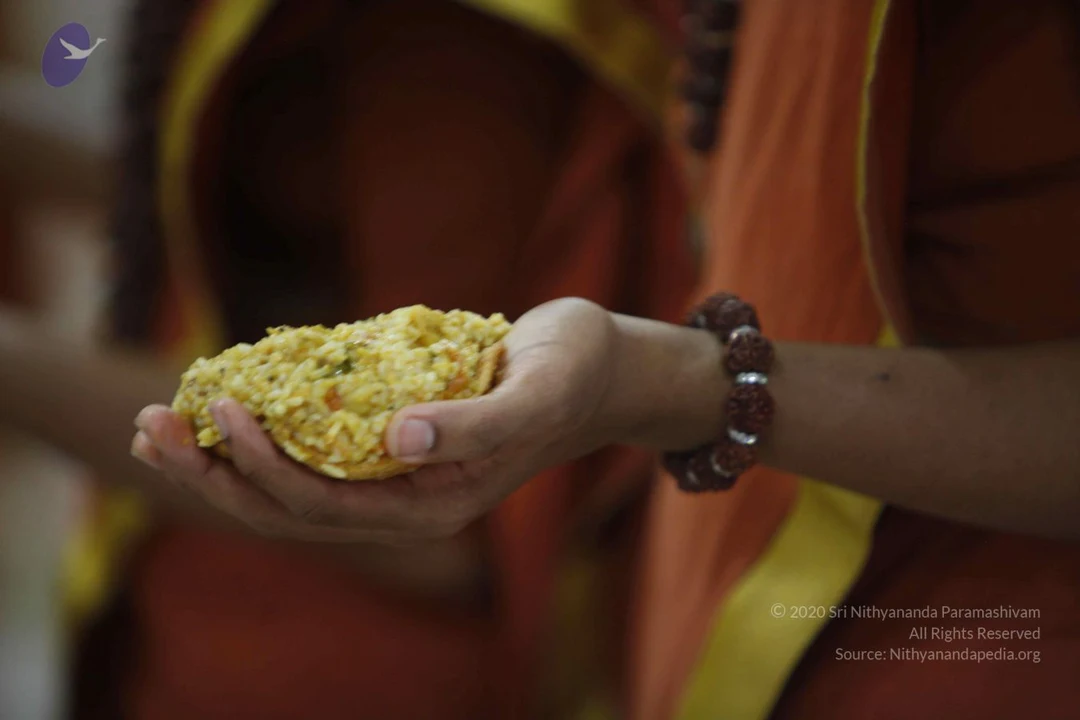
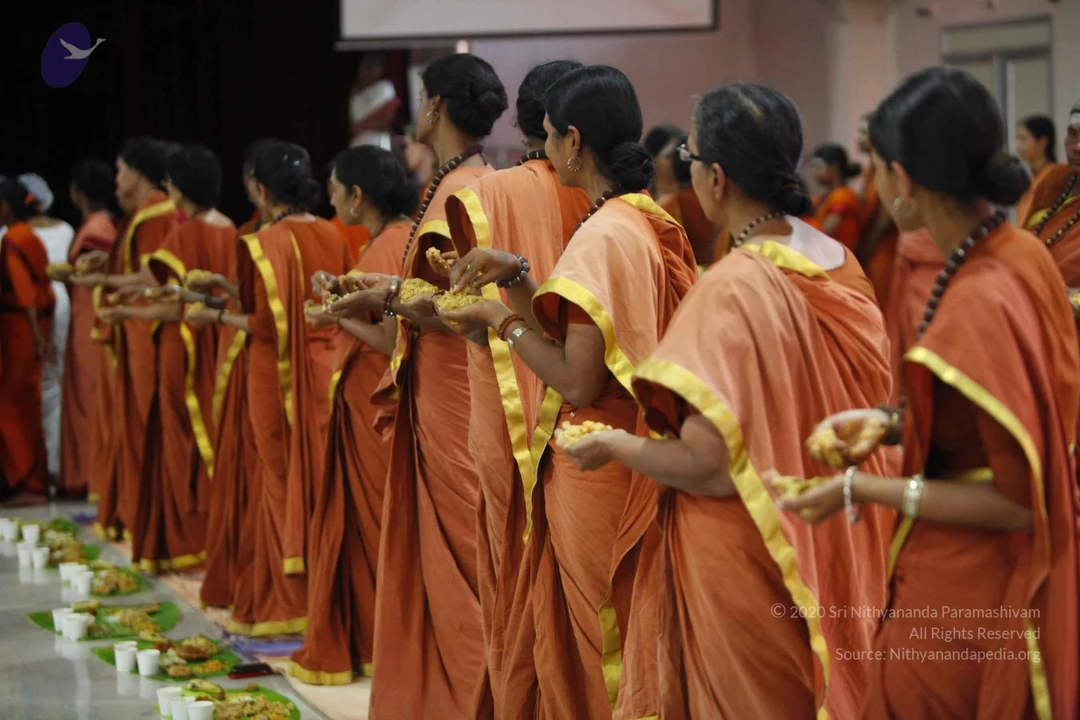
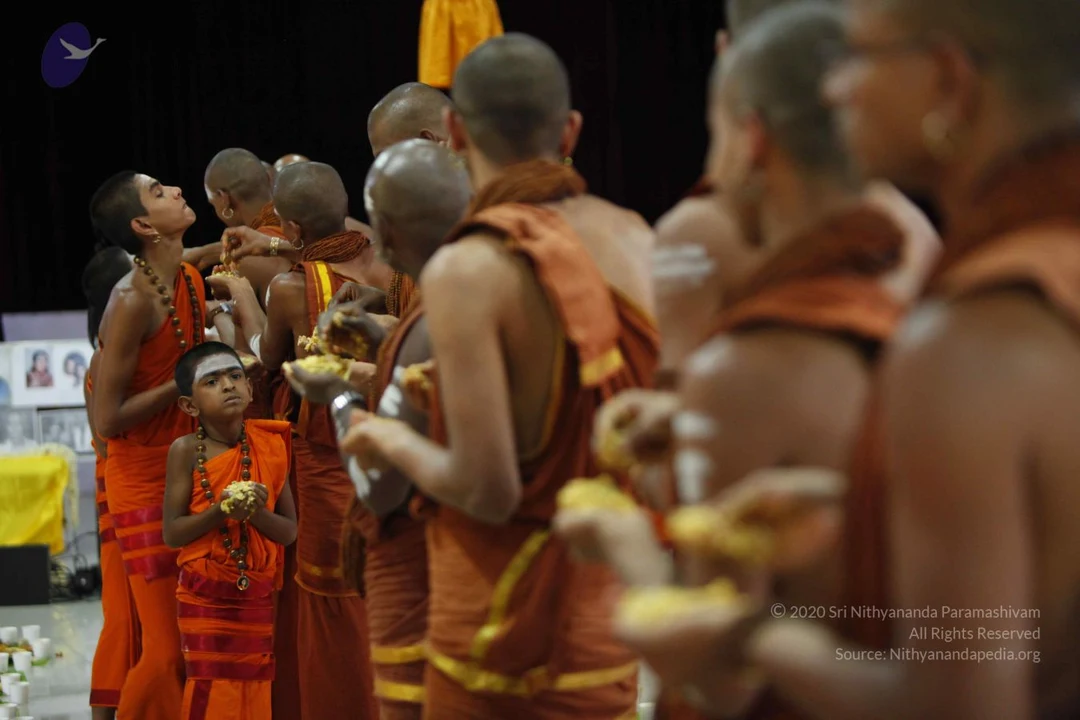
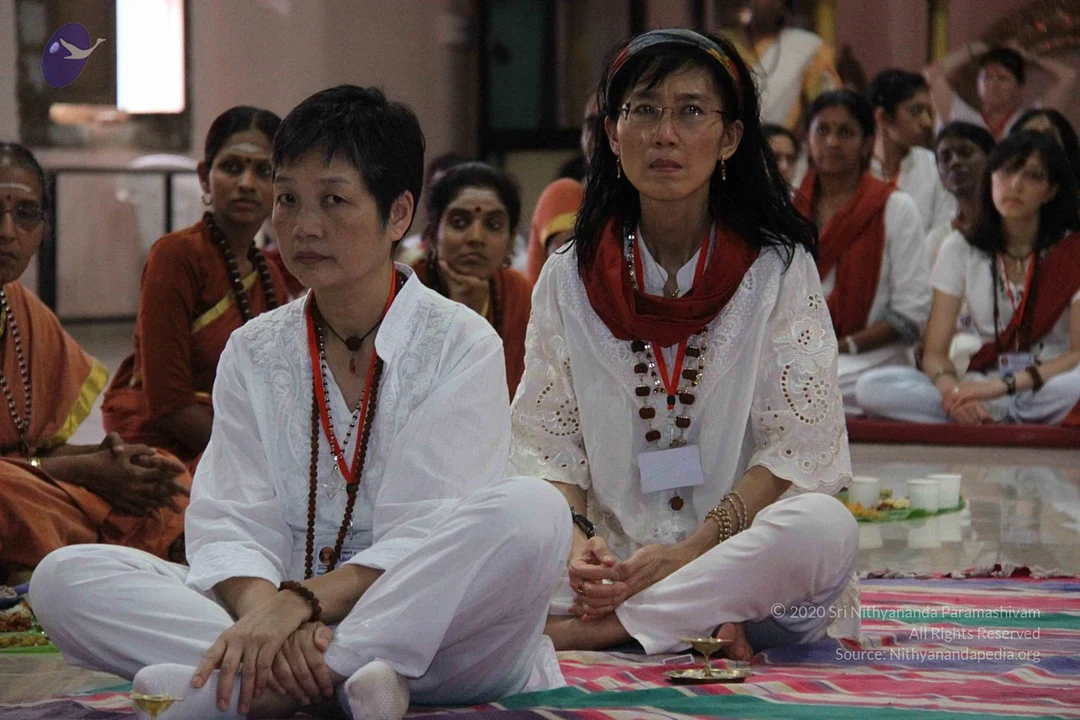
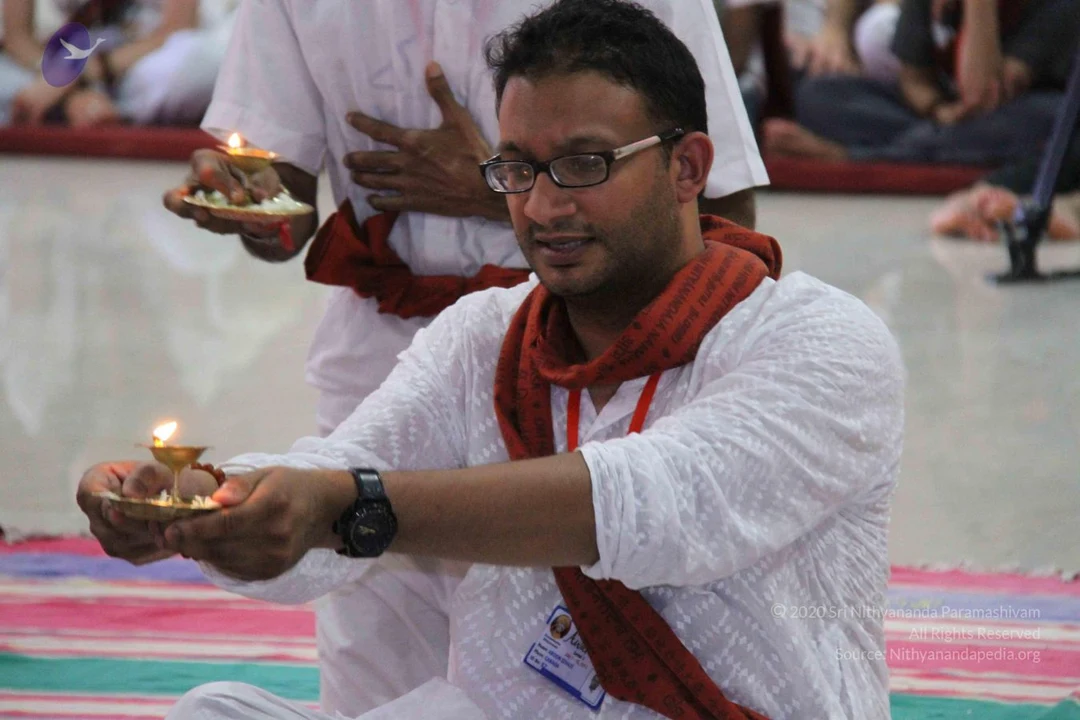
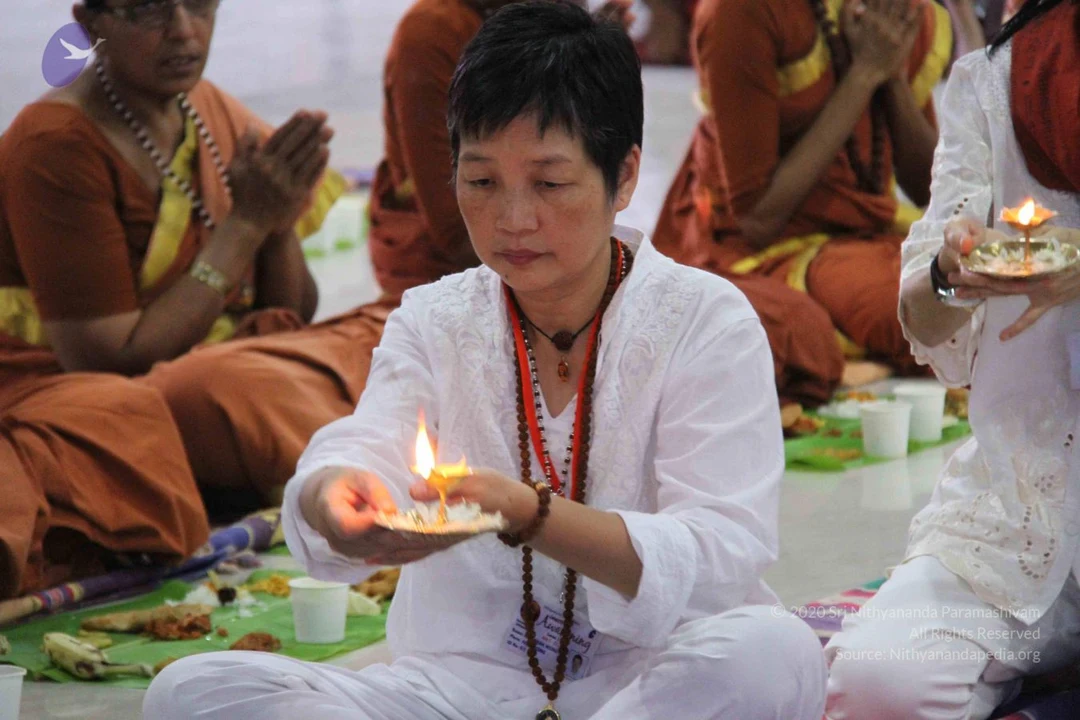
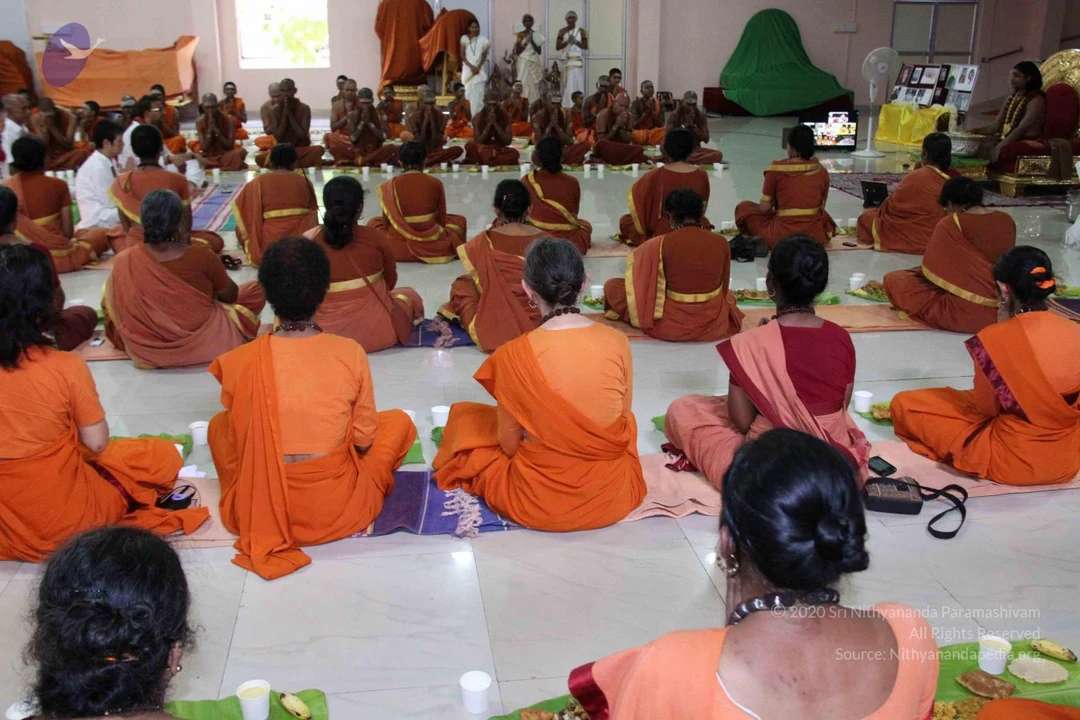
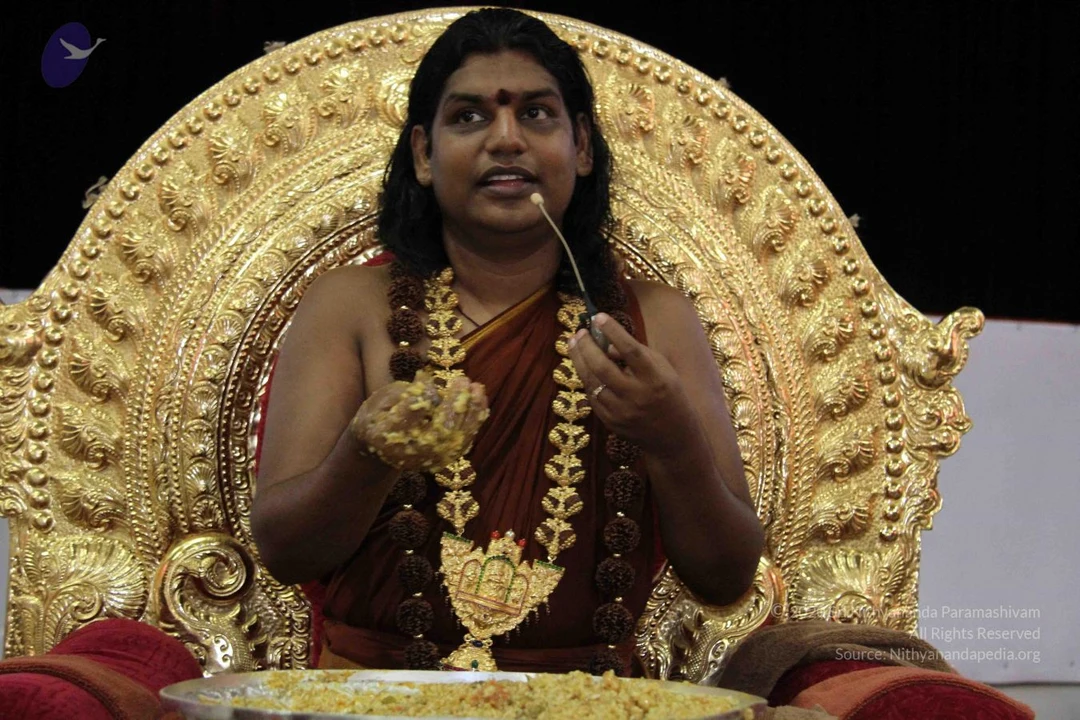
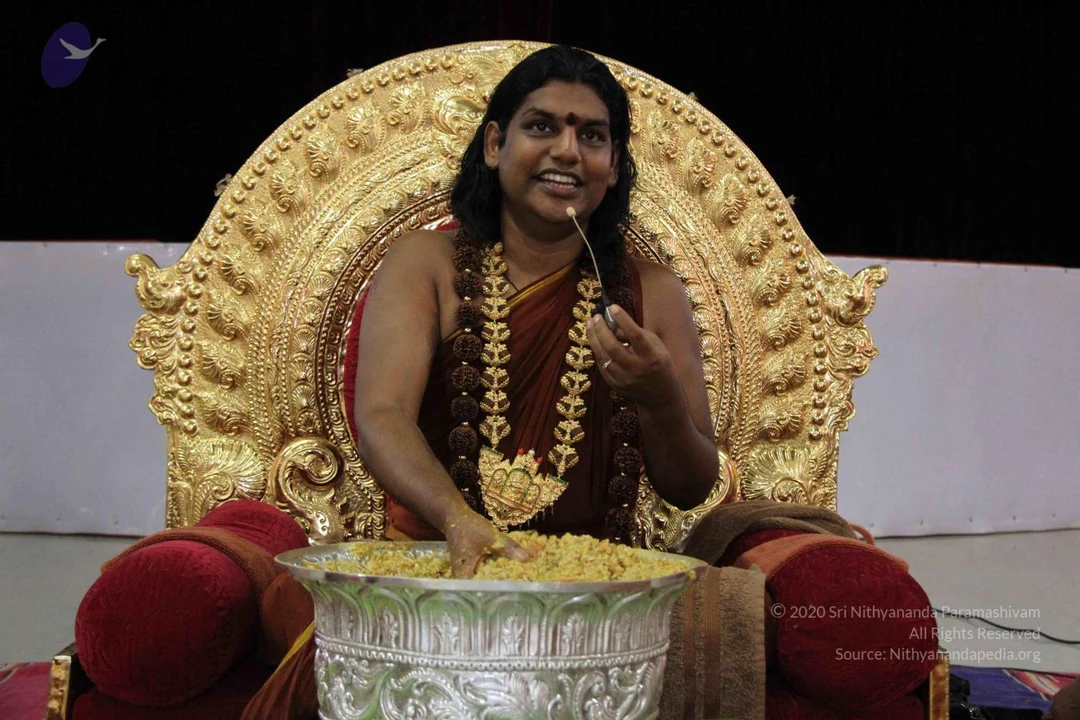
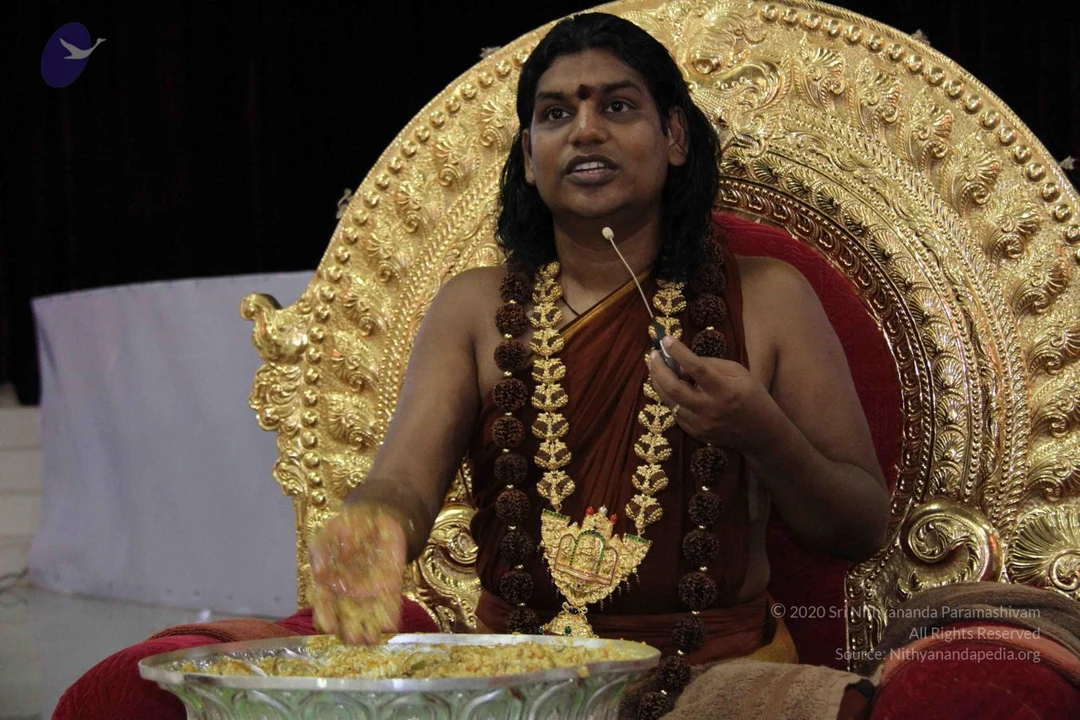
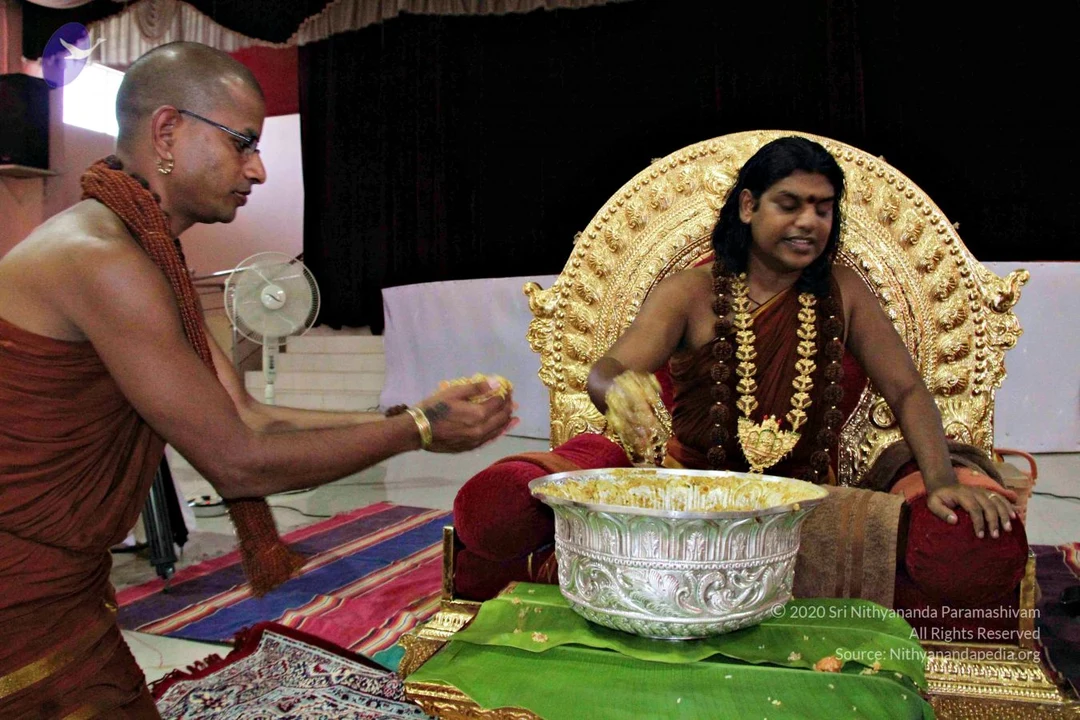
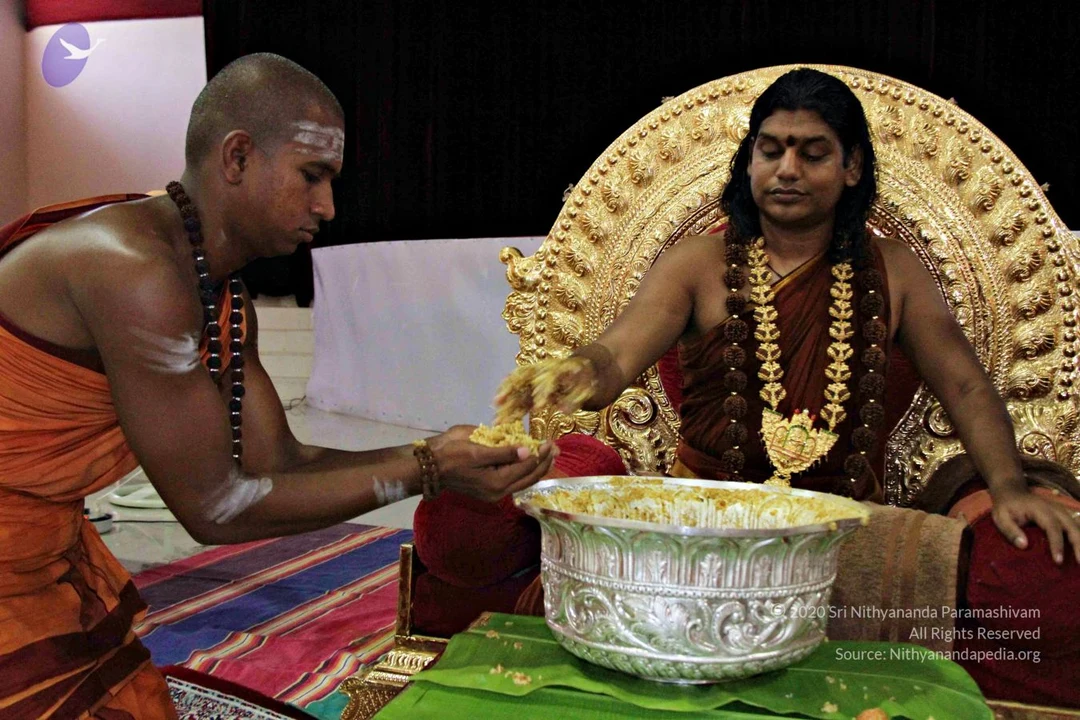
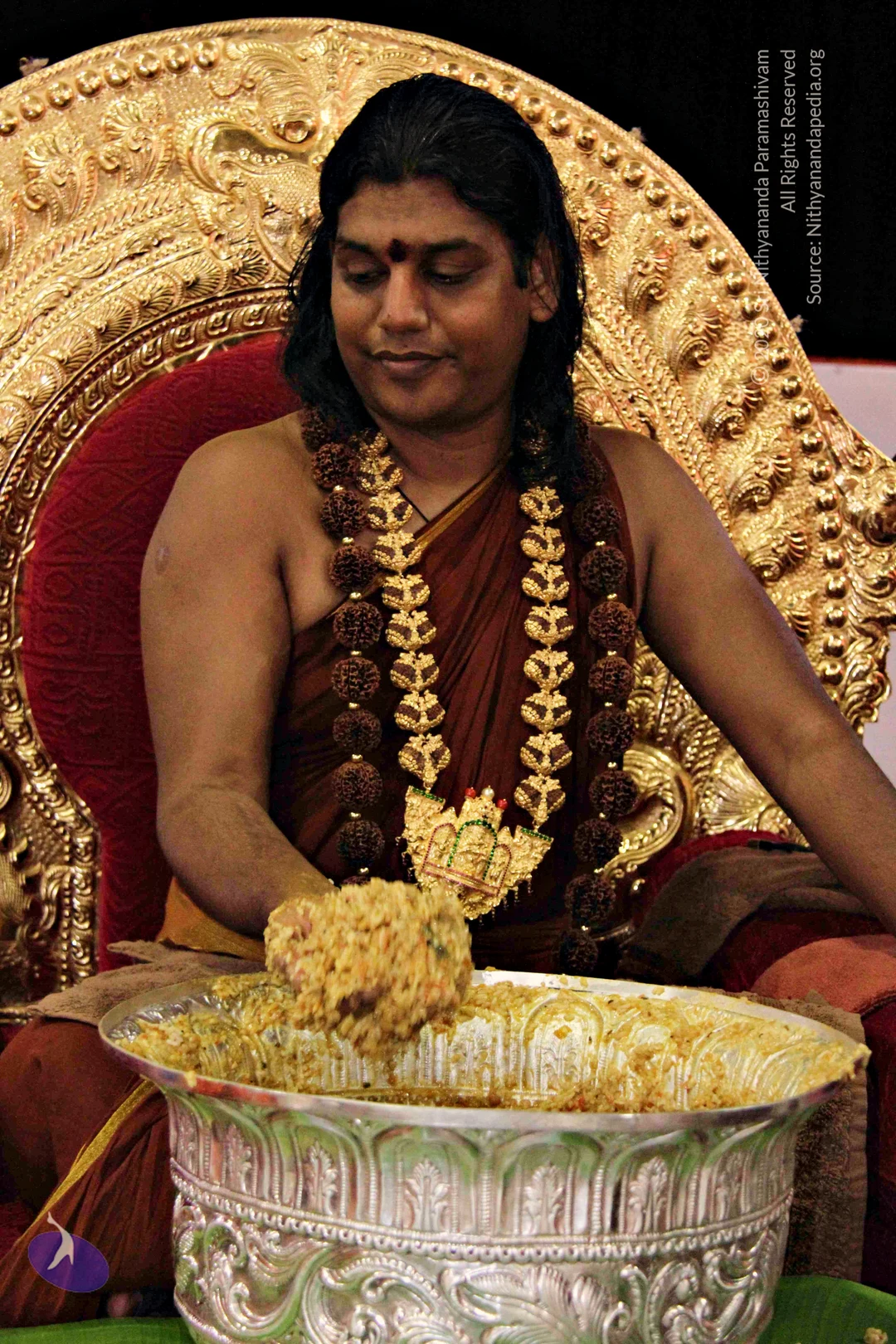
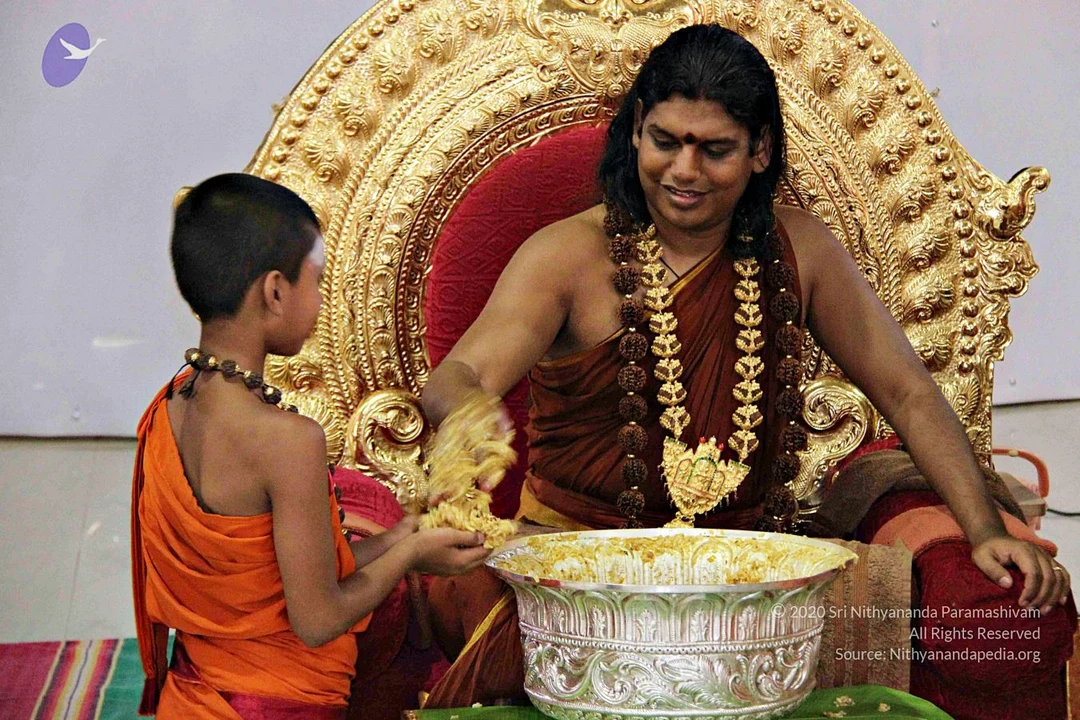
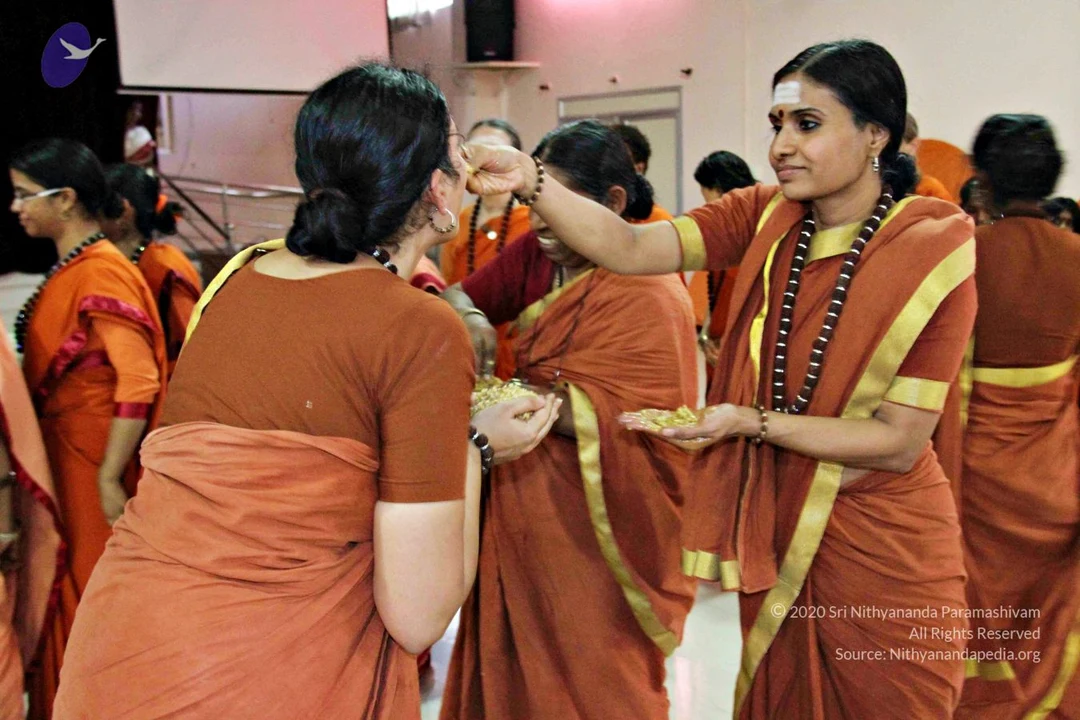
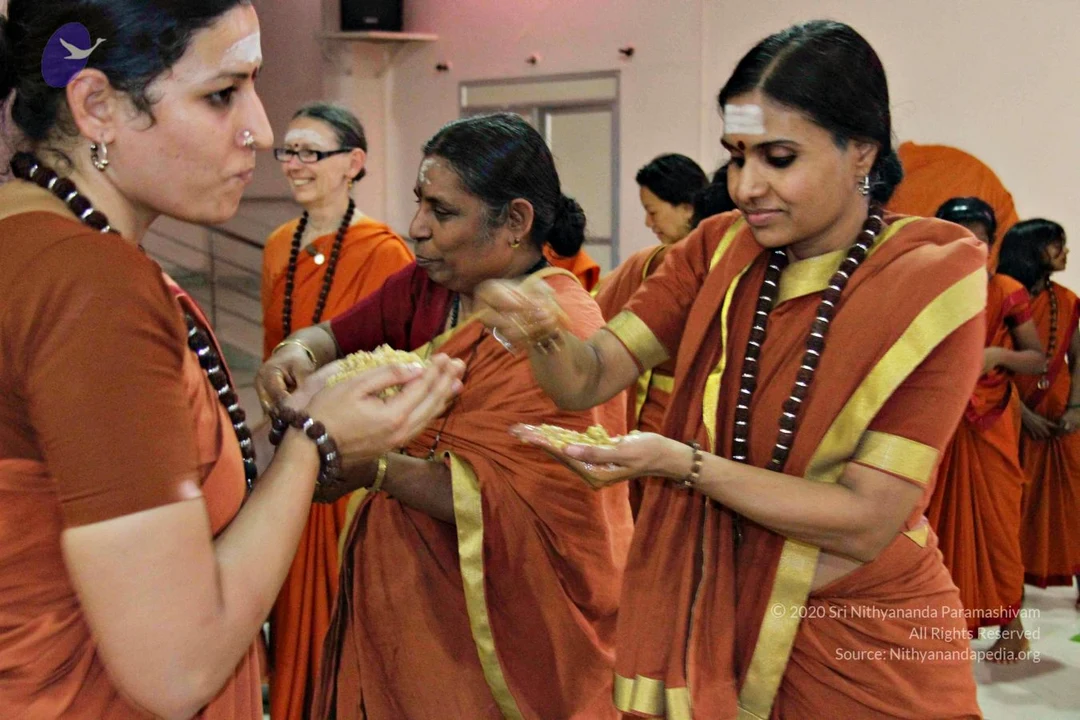
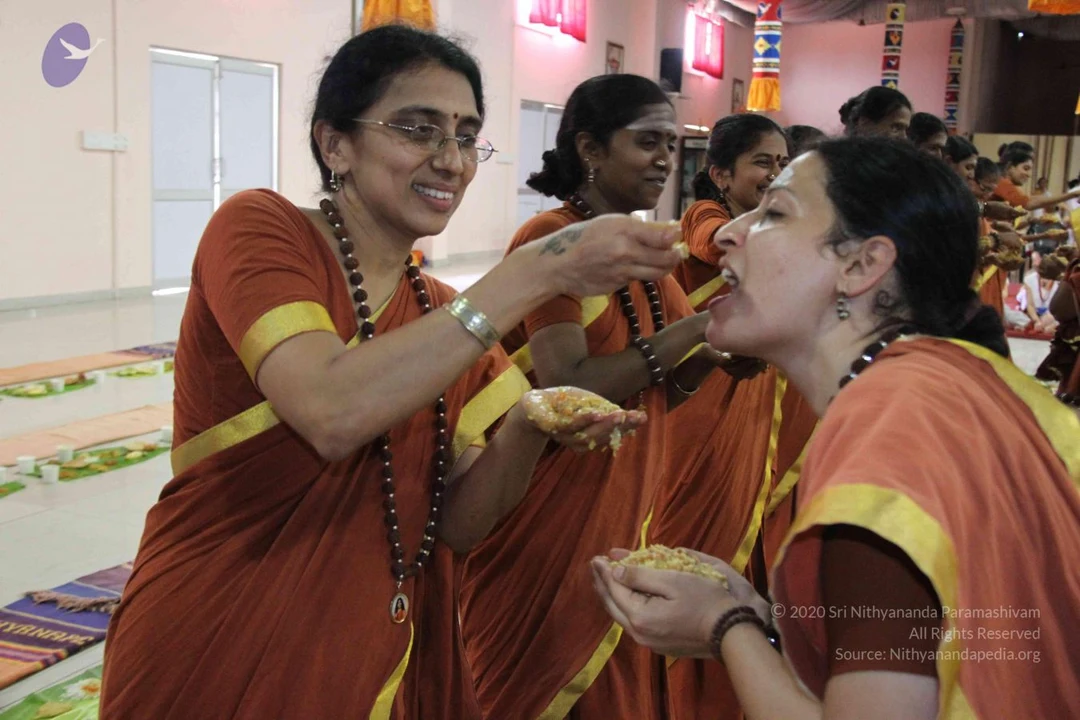
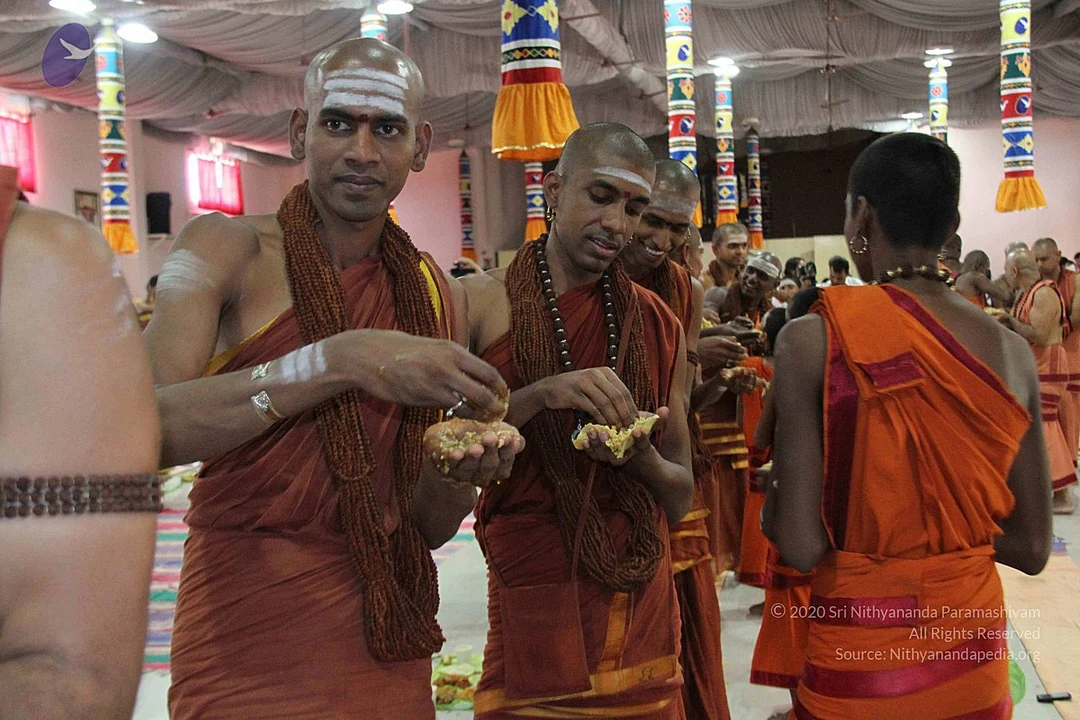
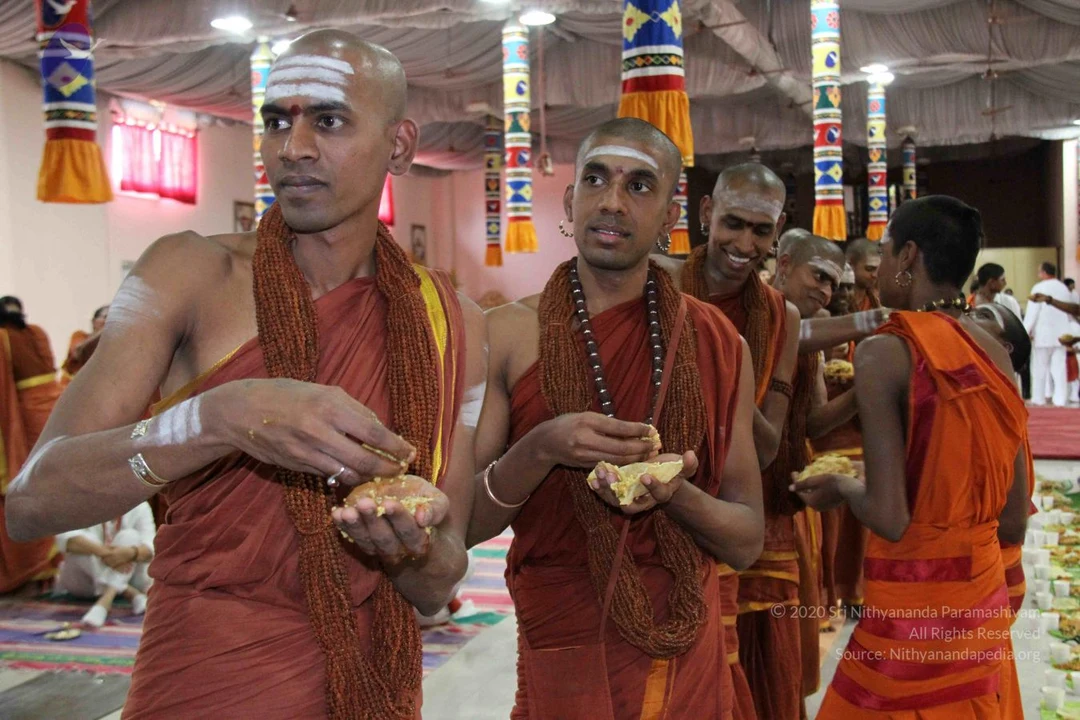
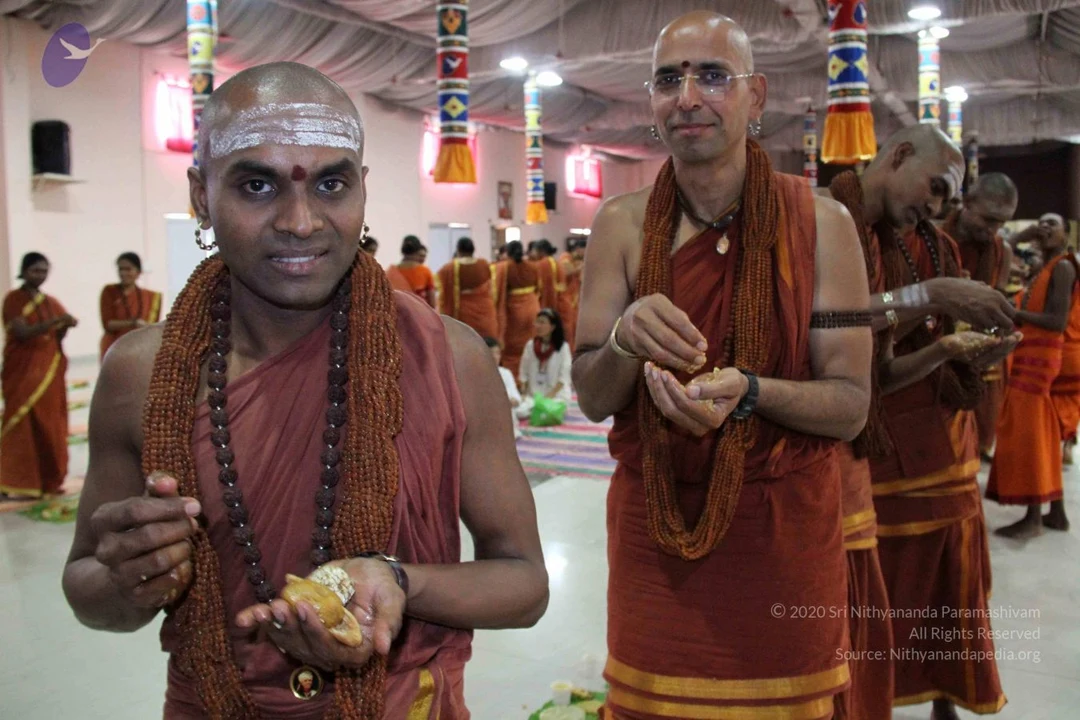
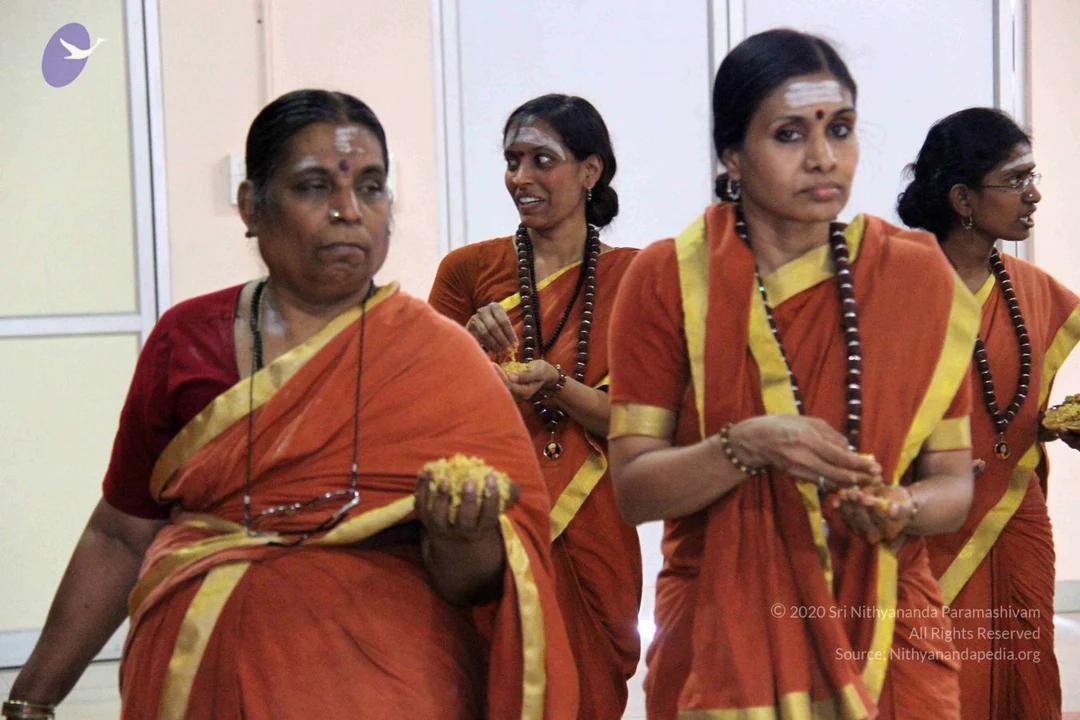
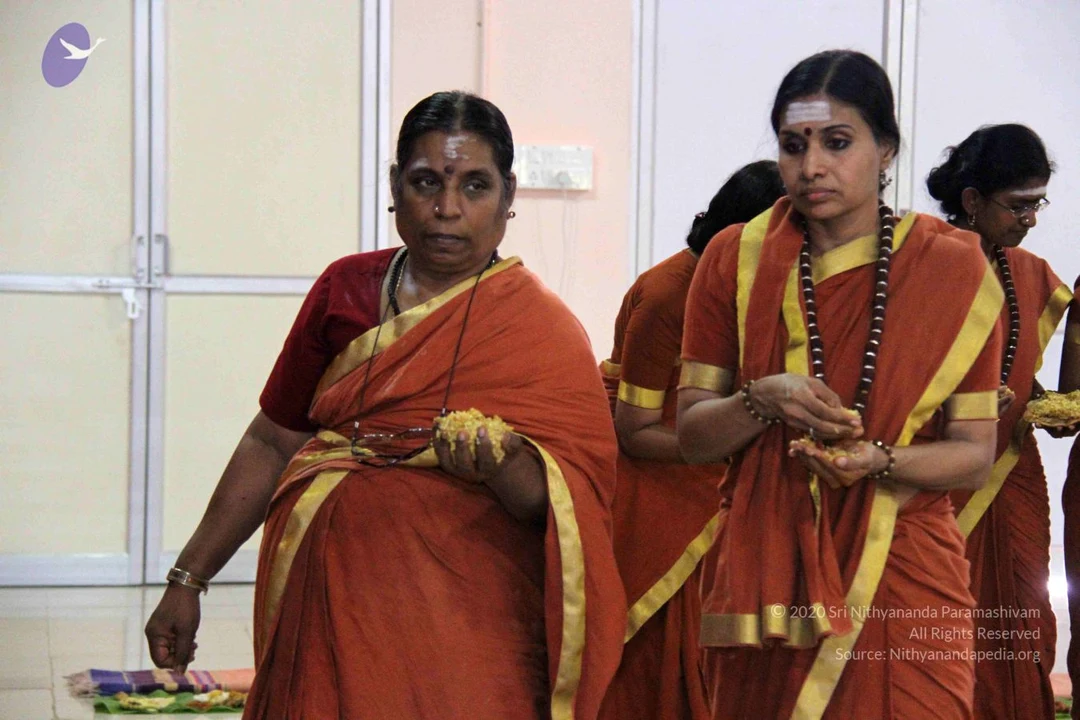
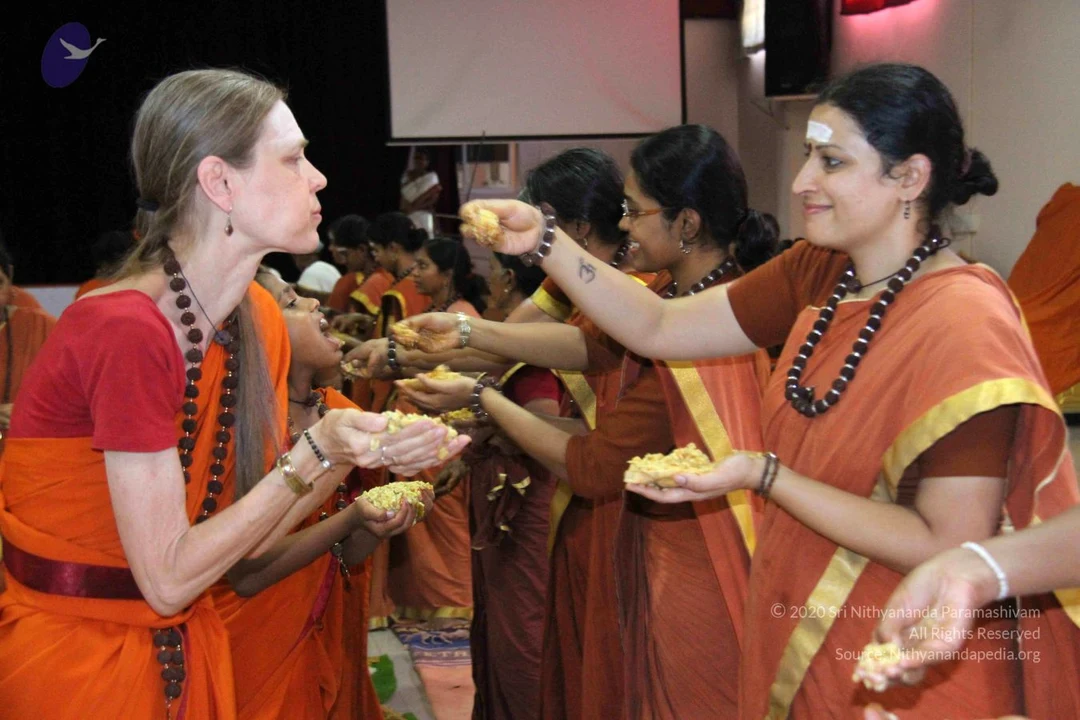
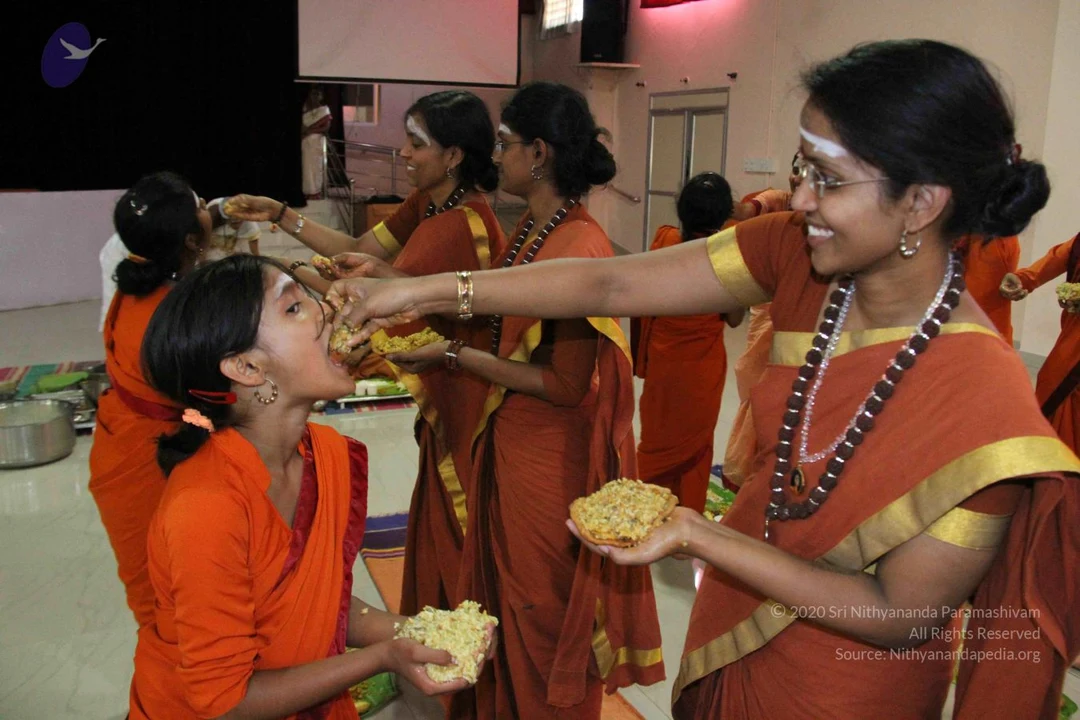
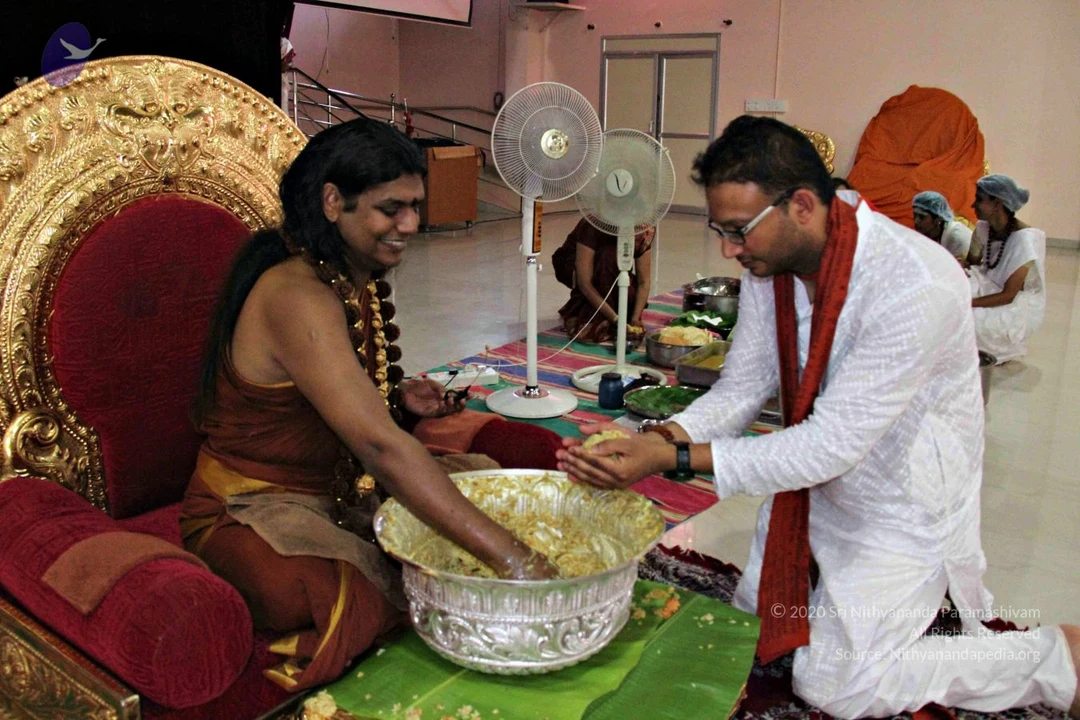
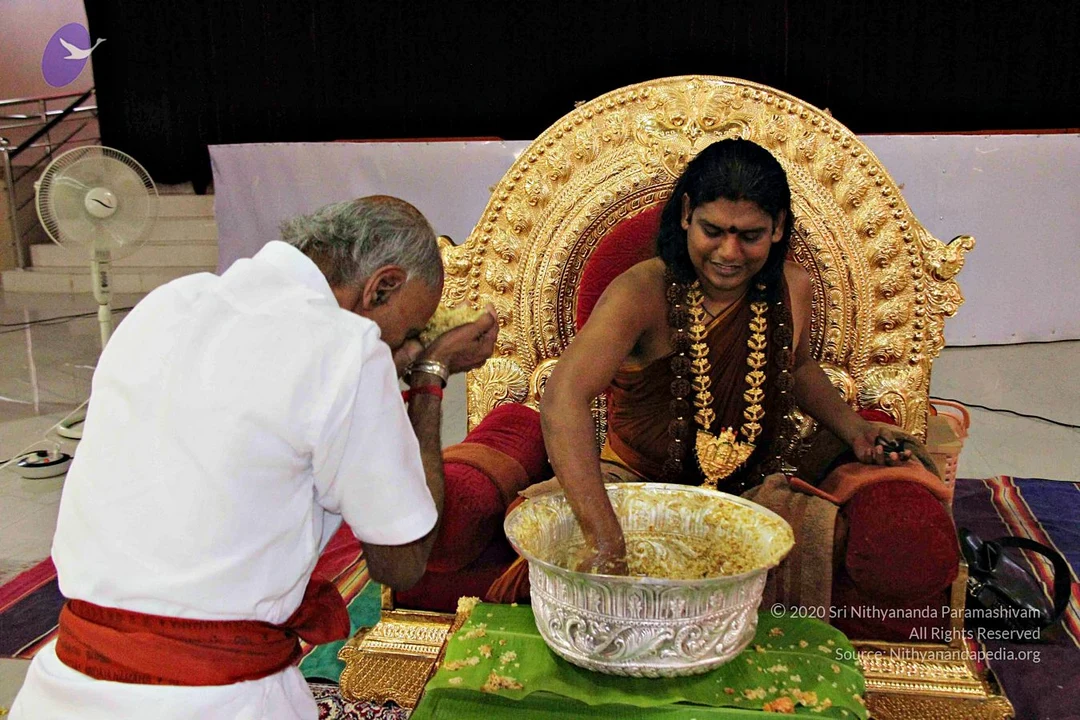
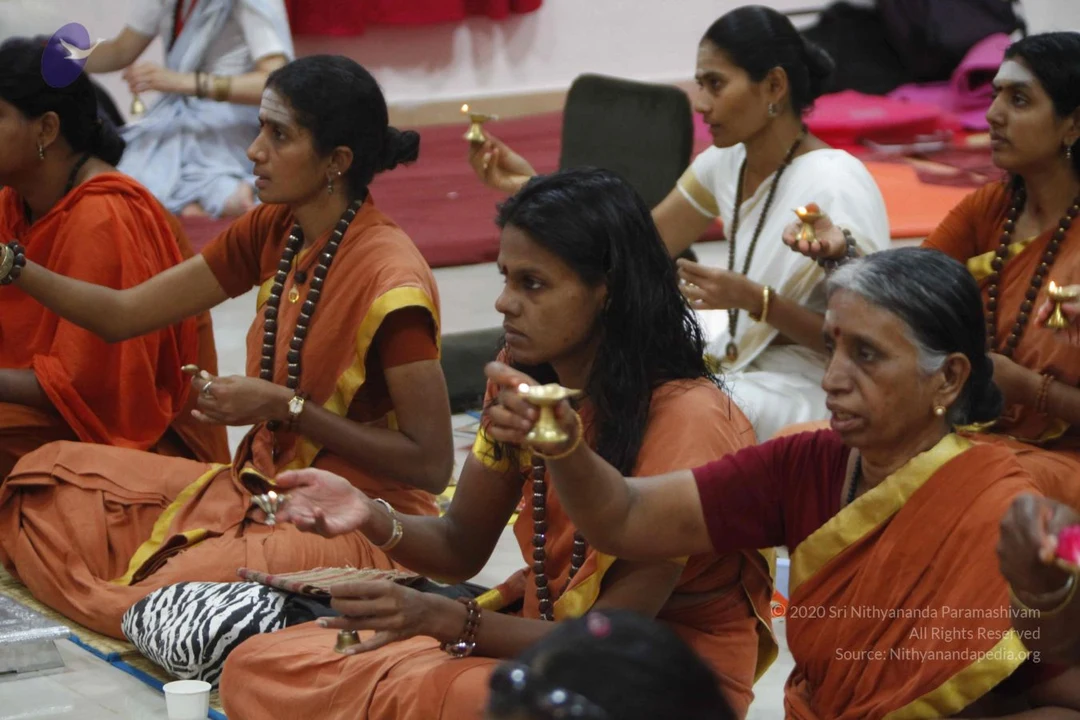
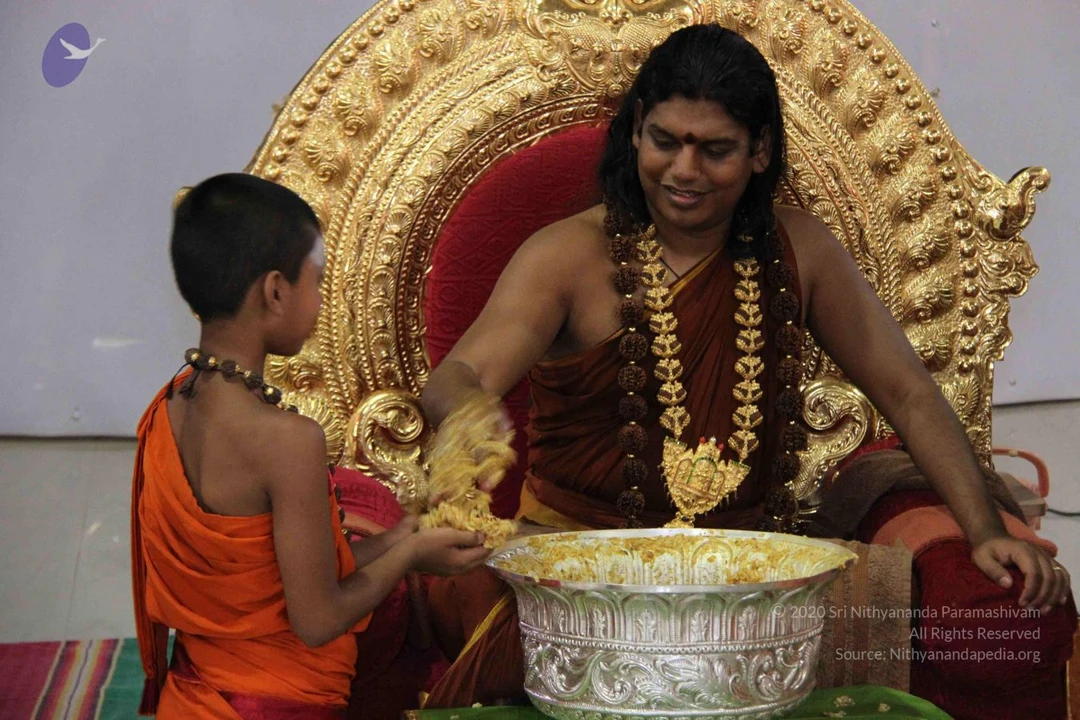
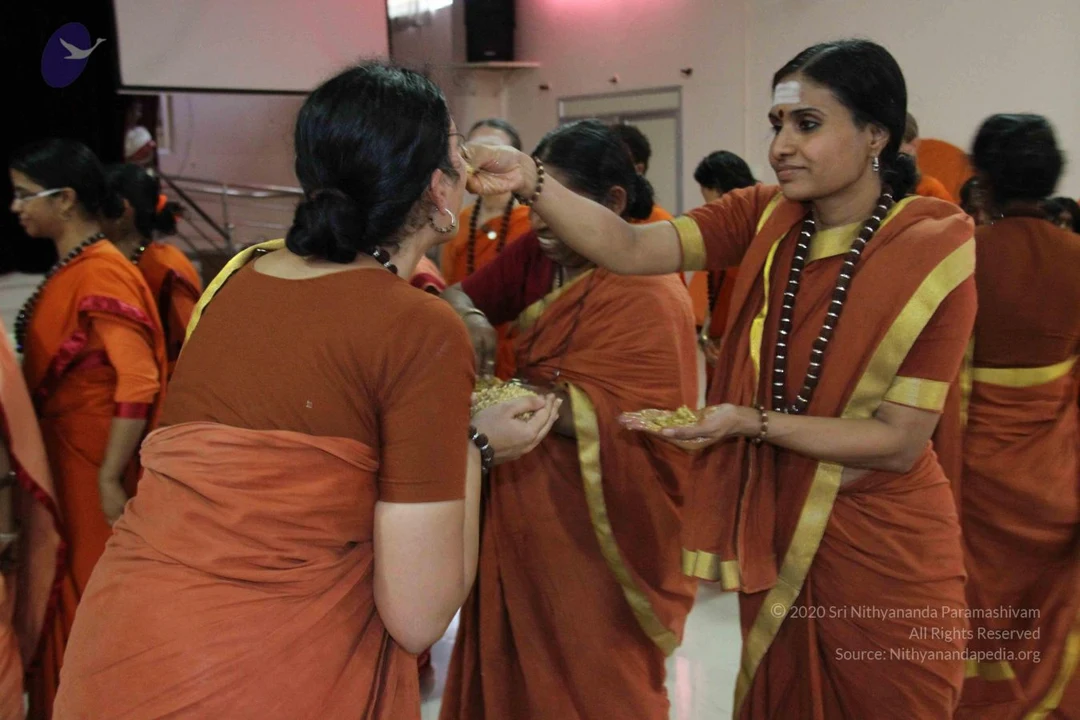
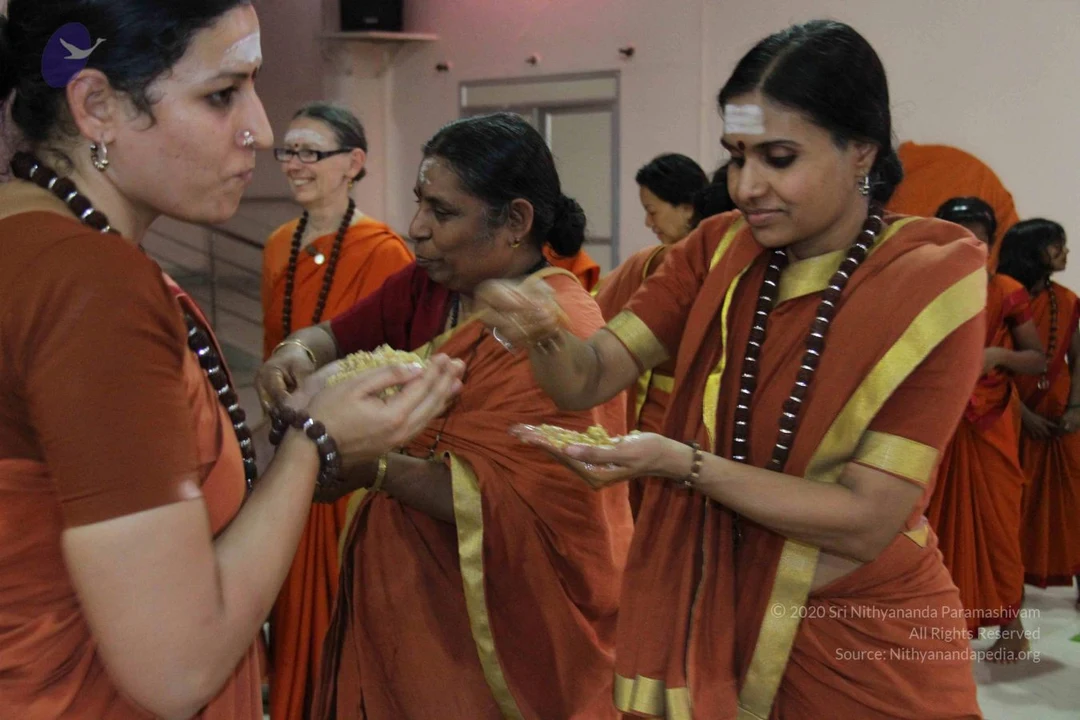
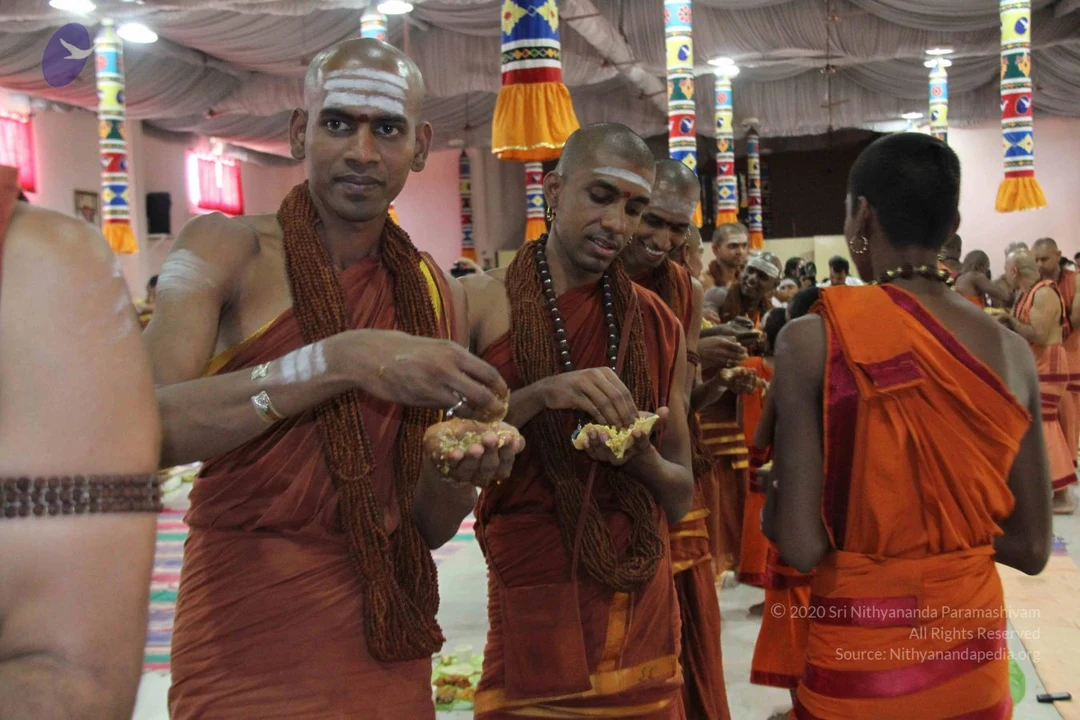
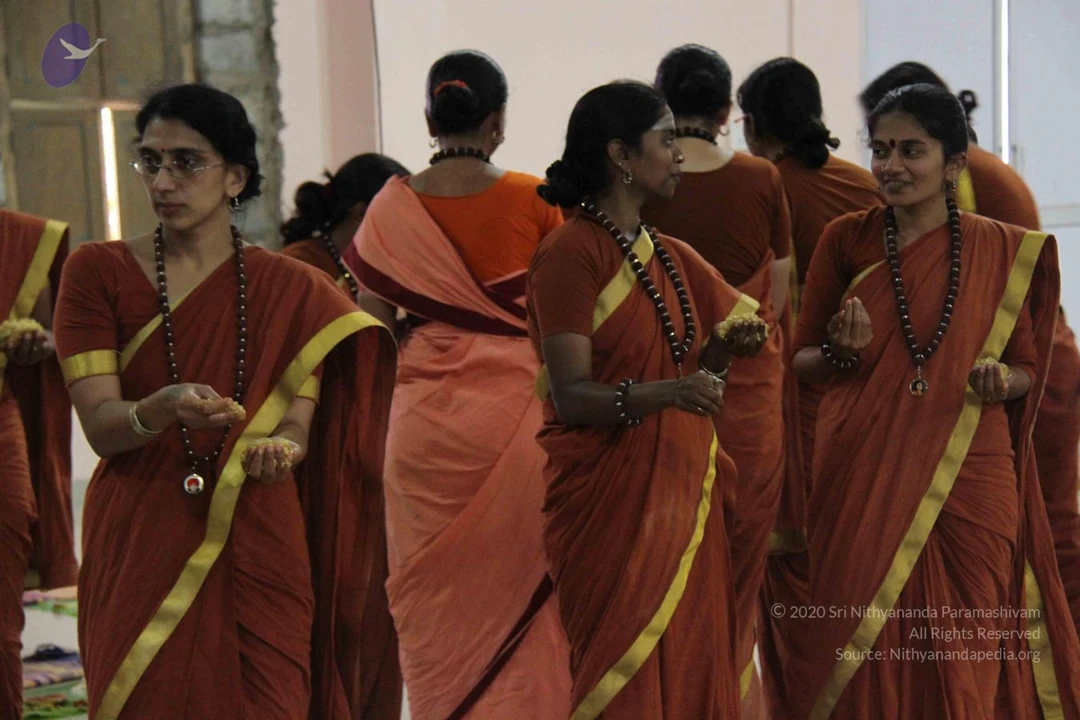
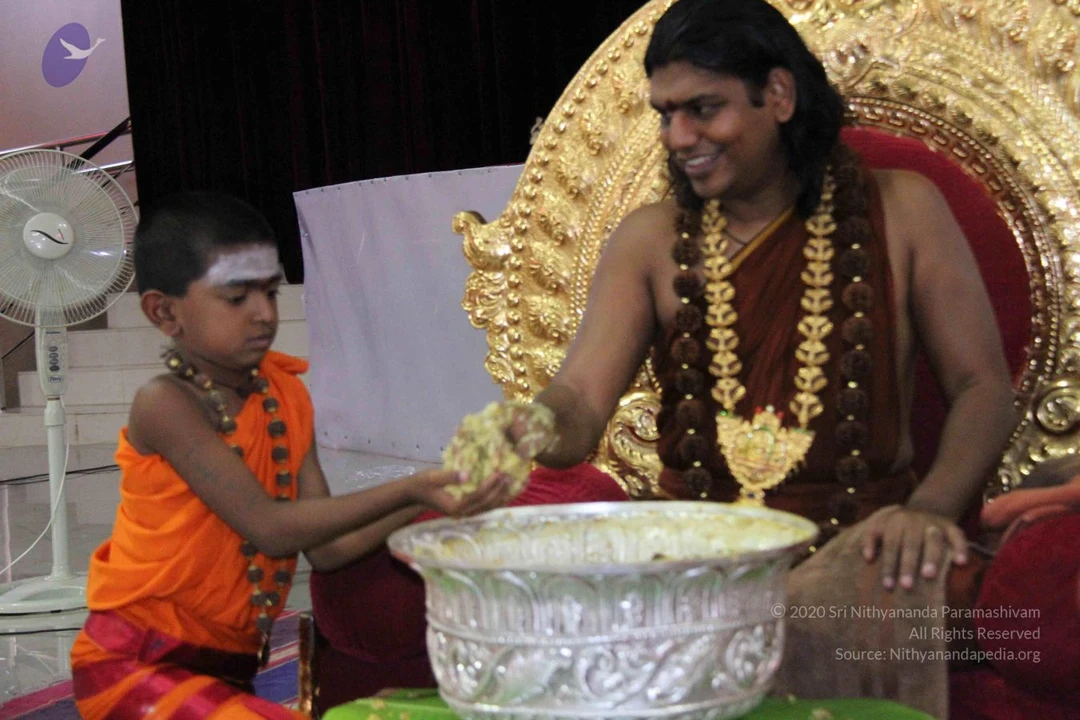
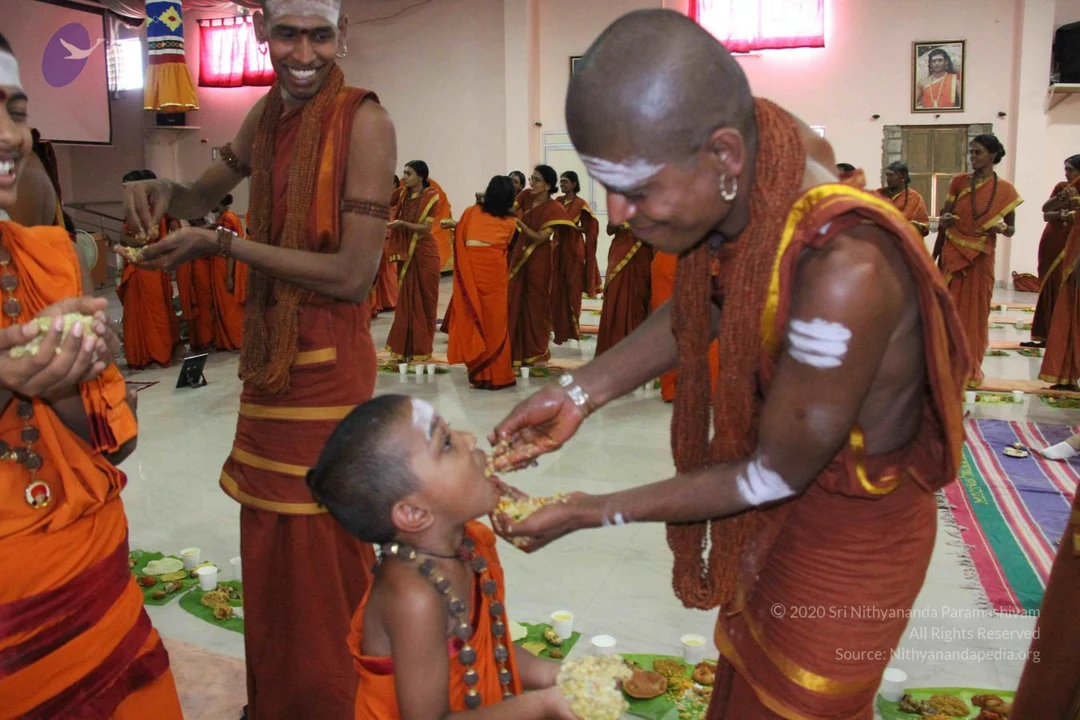
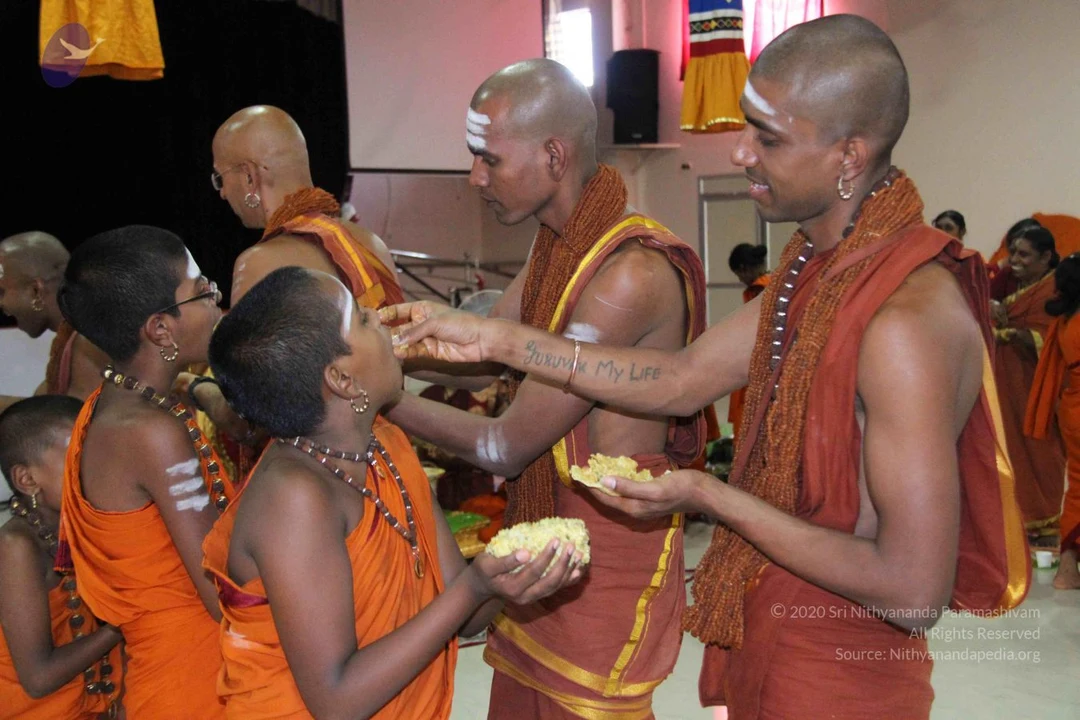
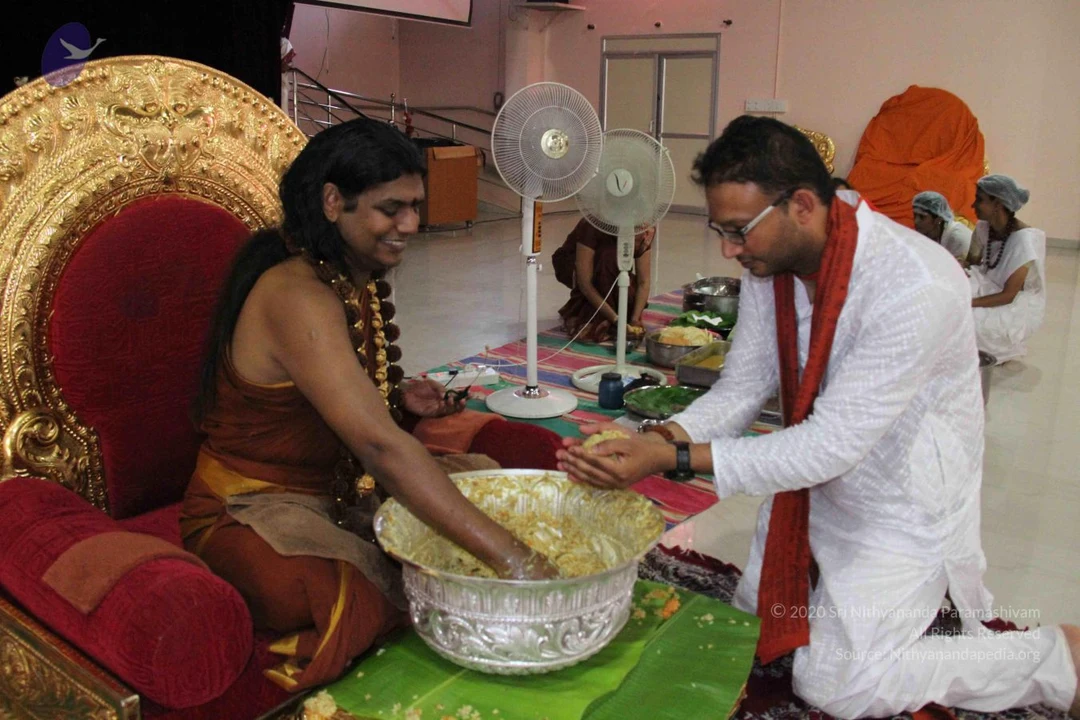
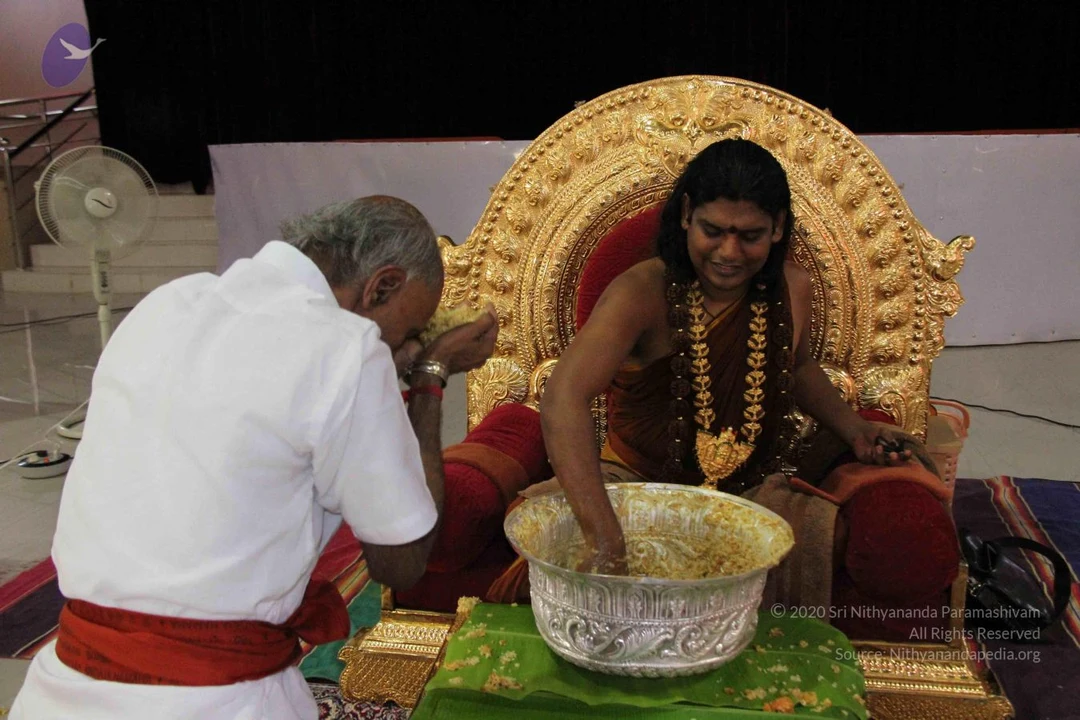
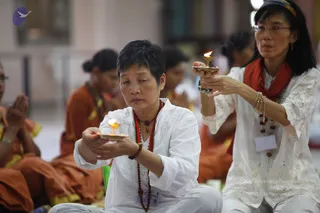
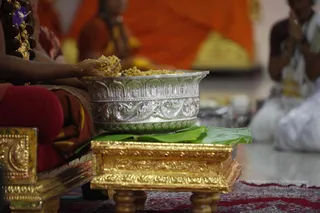
A photograph of a group sitting cross-legged on a striped mat in a pink-walled hall, holding small oil lamps in both hands during a lamp-offering ritual. In the foreground a woman in white with a red scarf and a red-beaded mala holds a lit lamp, a woman in white with a red scarf and glasses holds another, and a man in white with a red shawl and glasses holds a lamp. Behind them an older man in white with grey hair holds a lamp aloft. Seated devotees in white and orange clothing fill the background, and a cameraman films at right. A gold-framed shrine niche and hanging orange-yellow banners decorate the wall.Two women in white clothing hold small brass oil lamps with lit flames during a ritual. The woman in front, with short dark hair and a red rudraksha mala, cups a lamp in both hands while seated. The woman on the right, with glasses, a red scarf and gold bangles, holds a lamp aloft. Behind them, people in orange and saffron garments sit in a hall, some with hands folded.Close photograph of a ceremonial offering: an ornate silver bowl with embossed floral and scroll patterns rests on a green banana leaf placed on a gold-coloured wooden stand with carved legs. A hand, wearing a dark bracelet and reddish-red cloth at the lap, scoops a golden-yellow grain or sweet offering from the bowl. Behind, an out-of-focus figure in orange-saffron robes and a blurred person in white with folded hands suggest a ritual setting.Close-up photograph of a person's cupped hands holding a heap of yellow-cream rice dish. The wrist wears a rudraksha bracelet with silver spacer beads. The person wears an orange garment with a yellow border. Blurred orange-clad figures stand in the background of an ashram setting.A row of women in saffron-orange saris with gold borders stand side by side in a hall, holding food offerings in their hands. Several wear rudraksha malas and bangles, with hair neatly pinned back. In the foreground, white cups and banana-leaf plates arranged on the floor hold portions of food. Behind them, other devotees in orange stand and a screen is visible at the top.A line of shaved-headed monks and young boys in saffron-orange robes stands in a hall, holding small handfuls of yellow food offerings. In the foreground a young boy with a white tilak on his forehead and rudraksha beads around his neck looks forward, holding offerings in both hands. A girl in orange with short hair and a rudraksha mala looks upward on the left. A yellow cloth and framed photographs are visible at the left edge, with a dark backdrop behind. Several figures in the background are out of focus.

Temple

9 photosSource gallery
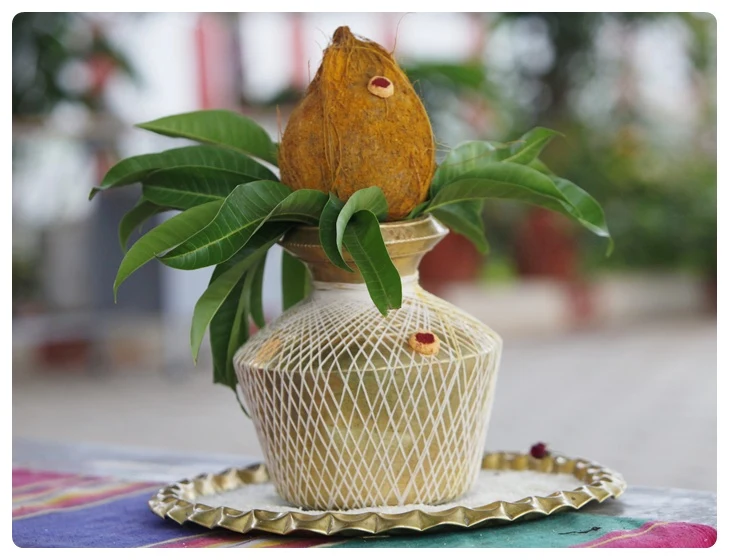
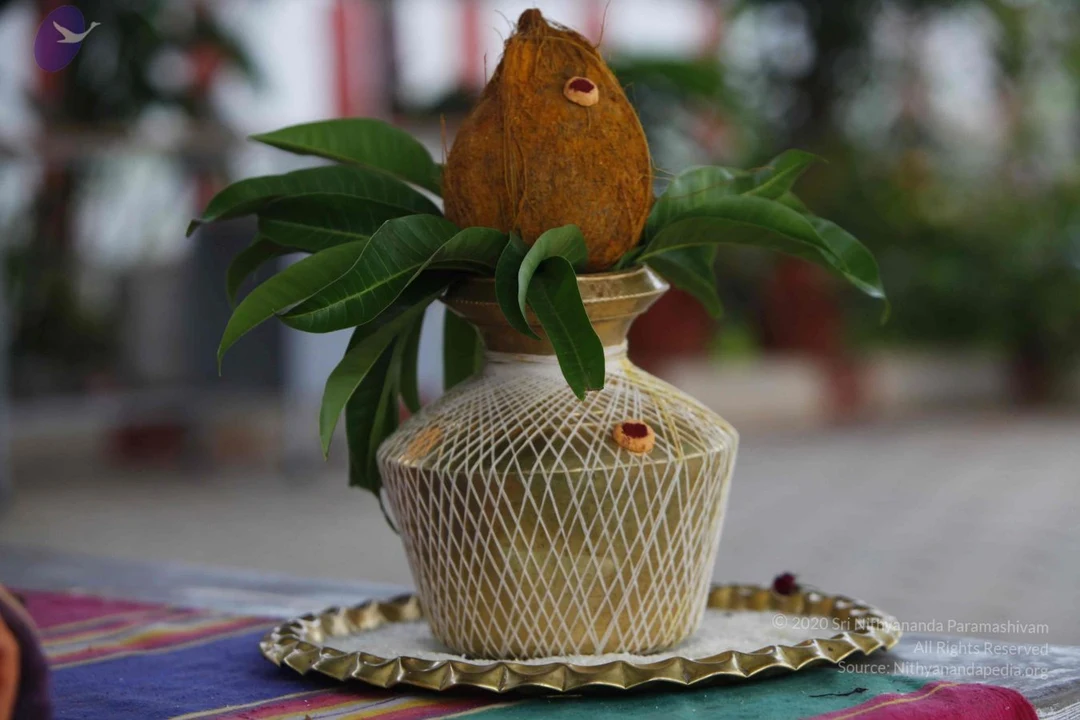
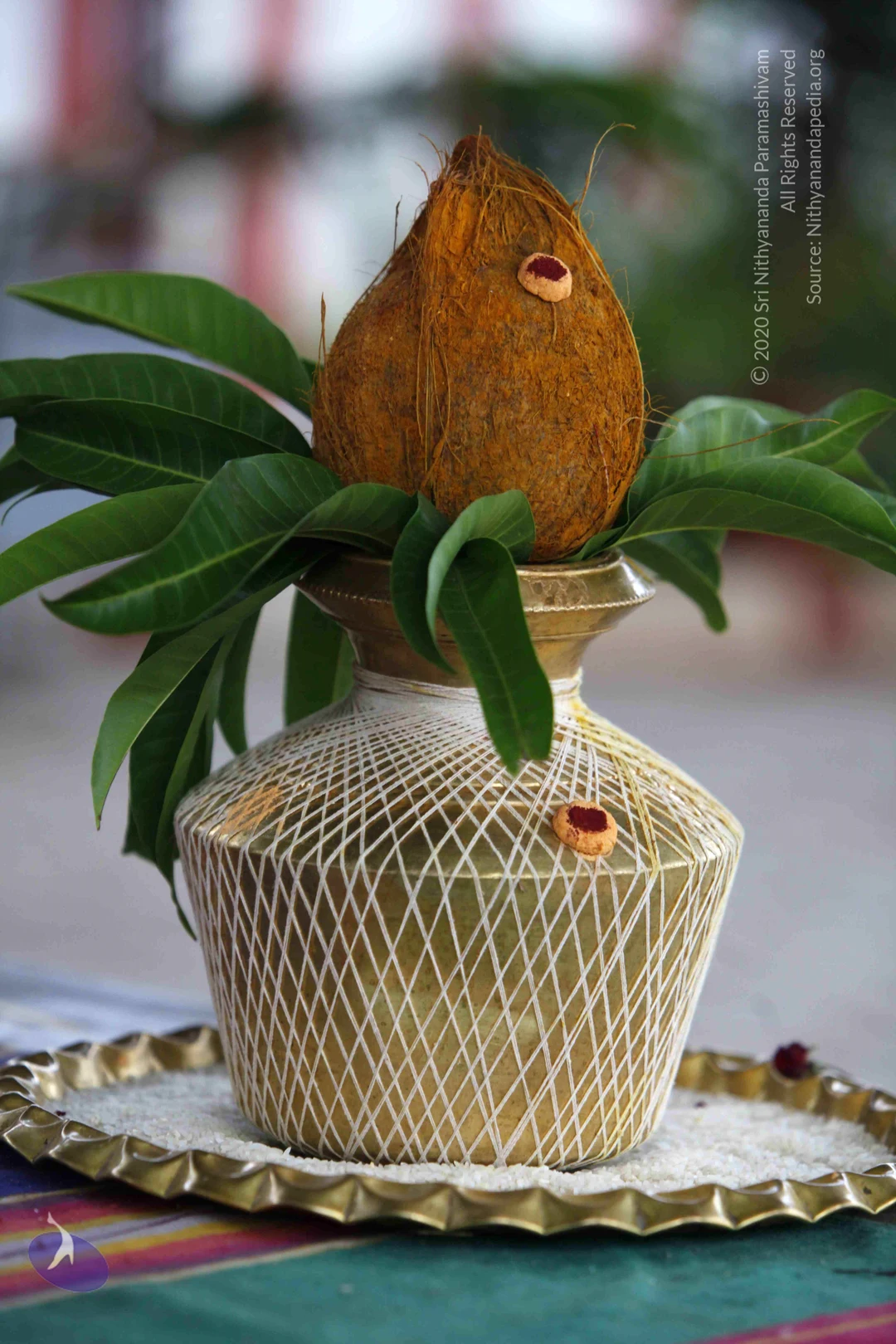
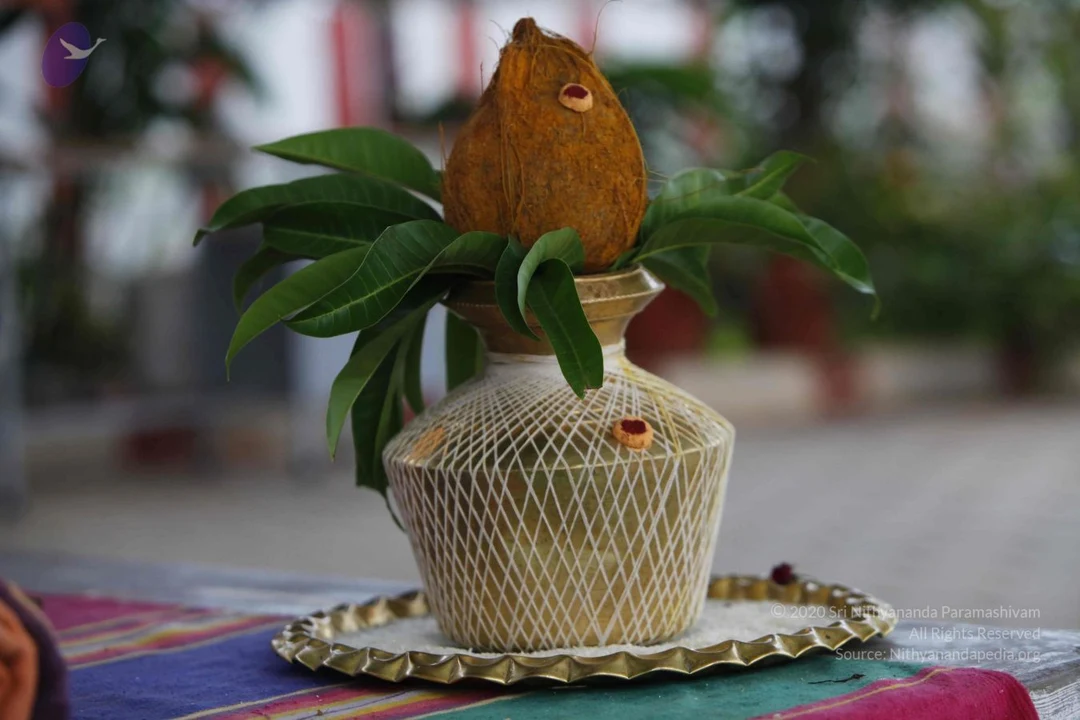
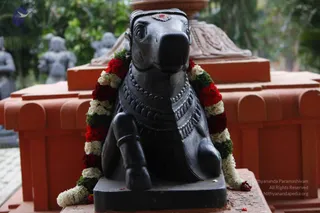
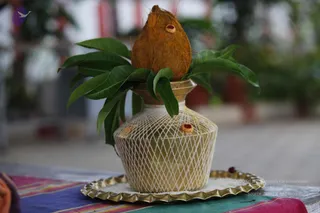
A framed portrait labelled "PARAMAHAMSA NITHYANANDA" sits on an ornate gilded throne with a tiger-striped cushion, flanked by brass hanging lamps and bells. The portrait shows a smiling man in an orange turban and orange robe with a red bindi, and his long dark hair is visible. Gold-painted carved panels frame the throne, and colourful painted deity statues stand on either side of the niche. No living people are visible in the scene.A daytime view of a rural road entrance lined with tall coconut palms with drooping fronds. Behind them stands a low orange-red building with a dark sloped roof and a tall ornate finial or flagpole rising above the palms. Scattered rough stones and grass fill the foreground, and a white signboard with blue lettering stands at right beside a gate. No people are visible; the sky is overcast.Close photograph of a dark stone Nandi bull statue seated on a black pedestal, decorated with a long garland of red roses, white flowers and green leaves draped across its neck and shoulder. The bull's ornately carved saddle cloth is visible on its back. Blurred orange building and greenery form the background. No people are visible; the statue is a deity murti of Shiva's vahana.A dark stone Nandi bull statue sits on a black pedestal, viewed from the side and slightly from behind. It is draped with a garland of alternating red roses, white roses and green leaves that hangs down its neck and chest. The statue has carved saddle cloth patterns on its back. Behind it, out of focus, are orange and red building walls, a blue object and green foliage. No people are visible in the image.A black stone Nandi bull statue sits on a dark pedestal in an outdoor garden setting. The bull wears a red and white flower garland of roses and jasmine, a beaded necklace, and a red tilak mark on its forehead. Behind it, an orange-red stone structure and grey statues stand among green foliage. Rose petals are scattered on the base. No people are visible.A brass kalasha pot wrapped in a fine white woven mesh sits on a gold-rimmed brass plate, topped with a brown husked coconut and a bundle of green mango leaves, with red kumkum dots on the coconut and pot. The plate rests on a striped multicoloured cloth with orange fabric at the edge, and the background is a soft-focus outdoor setting with blurred plants. No people are visible in the frame.
Paduka-Puja

37 photosSource gallery
Overhead view of a ritual puja arrangement on a gold-embossed surface. Many small silver bowls hold golden liquid and white liquid, with silver kalasha-style vessels and a brass lamp at the centre. Red carnations, pink roses, white jasmine-like petals and frangipani flowers form a garland-like arrangement around a small brass object. A partially visible figure in orange-brown robes and a rudraksha mala appears at the top right corner, but the body is cut off and no clear face or identity cue is visible. No people are fully visible as the main subject.A top-down photograph of a polished silver tray holding several ornately engraved silver bowls and a silver spouted vessel. The bowls contain clear water and one holds a golden-yellow liquid. Fresh flowers are arranged on the tray: white plumeria, a yellow and white blossom, and pink petals in a bowl. Some engraved sheets of silver lie near the edge. Ritual items such as these are typical of temple puja preparations. No people or a person figure are visible in the scene.Close photo of a round engraved silver bowl filled with pink flower petals and a single yellow plumeria bloom, set on a silver tray with other ornate silver bowls. A white plumeria flower rests at the right edge. No people visible; the setting suggests a puja offering arrangement.Close-up of a silver puja tray with ornately engraved, bowl-shaped silver vessels. Among them sit a white conch shell with a red carnation stuck in its mouth, a cluster of pink and yellow flowers, and a white plumeria blossom resting on a silver dish. No people are visible; the scene shows offering items arranged for worship.Close-up photograph of a floral offering on a gold tray. Pink roses and white jasmine-like blossoms are arranged densely around two small gold cups or stands with dark jewelled tops, and red carnations line the edges. Silver vessels are visible at the lower and right edges. No people are visible in the frame.Close view of ornate silver ritual vessels arranged on a gold-embossed tray during a temple puja. Silver bowls and small silver cups hold pink roses, red carnations, white jasmine strands, and yellow and white plumeria flowers. A silver conical item with a white cloth sits among the offerings. No people are clearly visible; only the edges of a few garments appear at the top. The arrangement suggests a worship setup with flower offerings, possibly abhishekam or puja preparation.

Nithya-Satsang
21 photosSource gallery
A seated man in saffron-orange robes sits cross-legged on an ornate golden throne with a tiger-skin cushion beneath him. He wears a red and white flower garland, a dark rudraksha mala, and a gold ceremonial pendant, and is raising one hand in blessing while smiling. Two large painted statues of guardian figures with crowns and gold jewellery stand on either side, and golden lion-shaped armrests flank the throne. The man appears to be a person, based on saffron robes, rudraksha mala and ceremonial gold necklace, presented in a satsang-style setting.A seated man in saffron-orange robes sits on an ornate gold throne with a carved arched back and gold lion-head armrests, draped with a red velvet cushion and a tiger-skin rug. He wears a red and white flower garland, a multi-strand rudraksha mala and a gold ceremonial necklace, with a tilak on his forehead, and raises his right hand in a blessing gesture. Two painted, gold-ornamented guardian figures with tall crowns and bare torsos flank the throne. Hanging golden bells and a lamp appear above. a person is shown in person, seated in the blessing posture.A photograph of a man seated cross-legged on a red and gold throne with a tiger-skin cloth beneath him, set before an ornate gold arched backdrop. He wears an orange-saffron dhoti and shawl, a multi-strand rudraksha mala with a large gold pendant, a red and white flower garland, gold bangles and a sandalwood tilak on his forehead. Two tall painted deity figures in gold jewellery and dhotis flank the throne, one holding a flaming torch. Gold lion-head armrests frame the seat.A seated man in an ornate gold throne with red cushions, wearing an orange-saffron head covering and saffron-orange robes with a gold necklace and a red-pink flower garland, rests his hand on the armrest. Beside him, two deity murtis stand adorned with thick garlands of red, yellow, green and white flowers and draped in blue and gold silk garments, backed by an orange drape. A red patterned rug lies on the white floor, with a potted plant in the foreground and a painted pillar in the background. Swamiji (probable): the seated figure's long swept-back hair, saffron-orange turban and attire, gold necklace and garlanded ornaments on the ornate throne fit the page's claim. The image was captioned by the page, with no visible printed name.A seated man in saffron-orange robes and a matching orange turban sits on an ornate gold throne with red velvet cushions. He wears multiple strands of red and white flower garlands, a rudraksha mala and a gold ceremonial pendant, plus gold bangles and earrings. A white tilak marks his forehead, and he smiles while resting his hand on the armrest. Behind him are pink and green pillars and a pale blue wall in a temple-hall setting.A seated man in saffron-orange robes and an orange turban sits on an ornate gold throne with red tiger-striped cushions and a tiger-skin rug. He wears a red and white flower garland, a long rudraksha mala and gold ceremonial necklaces, and gold earrings. His right hand is raised in a teaching gesture while he speaks, and his left hand rests on the armrest. Swamiji (probable) by appearance cues: saffron clothing, turban, rudraksha mala and ceremonial gold necklaces, seated on the throne during a satsang discourse. Behind him are a gold-tinted backdrop and colourful painted pillars with red, orange and green bands.
Sarvadarshan

6 photosSource gallery
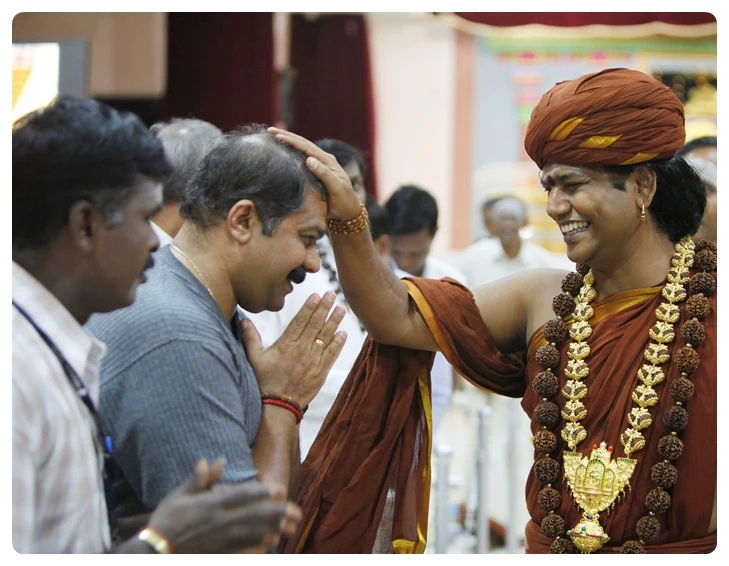
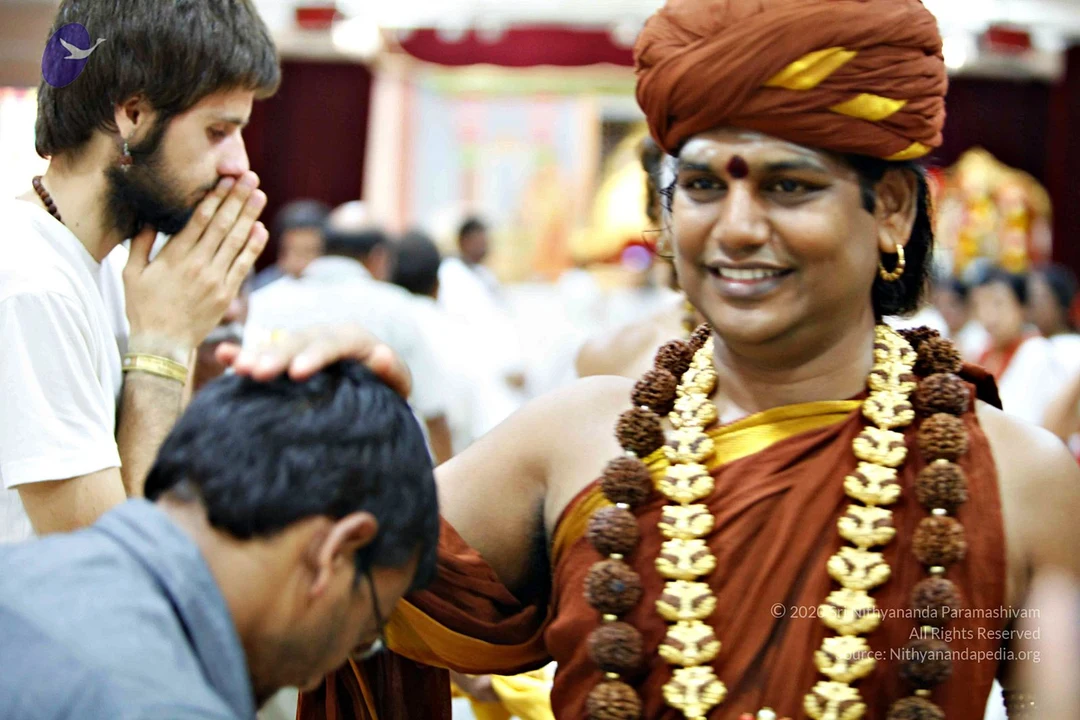
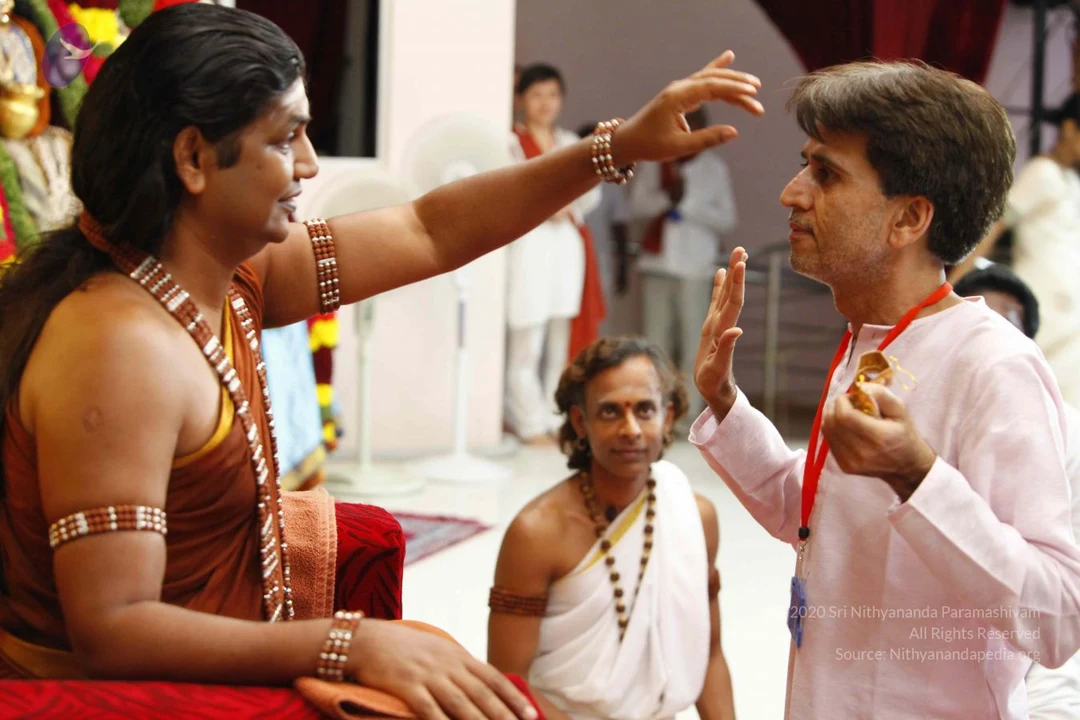
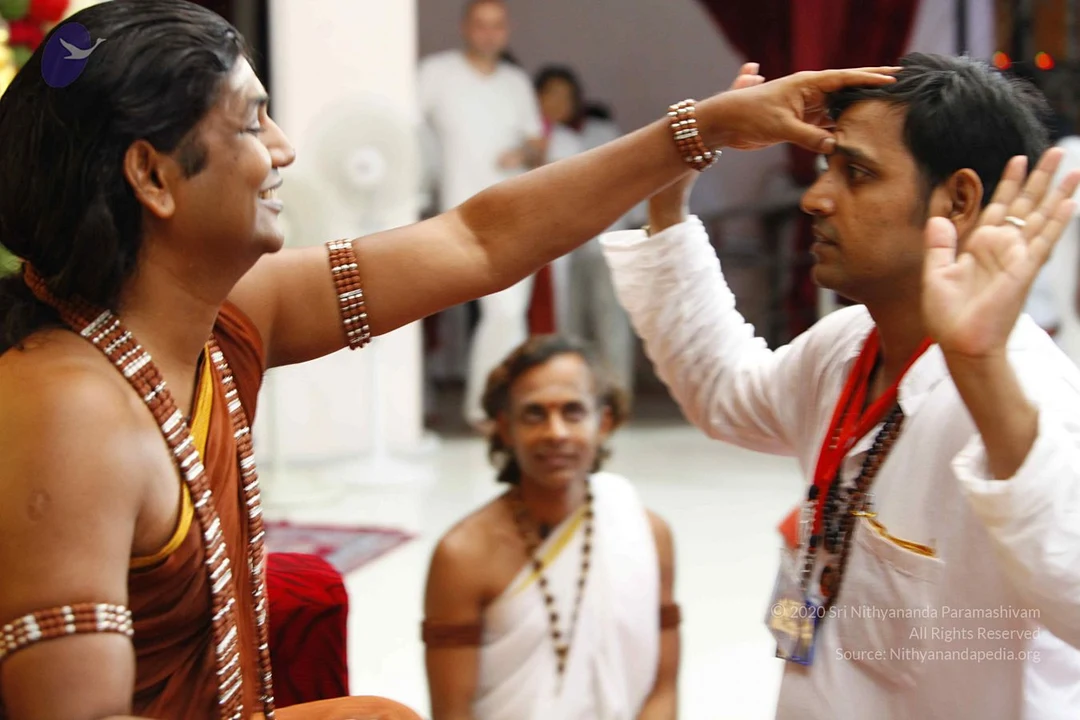
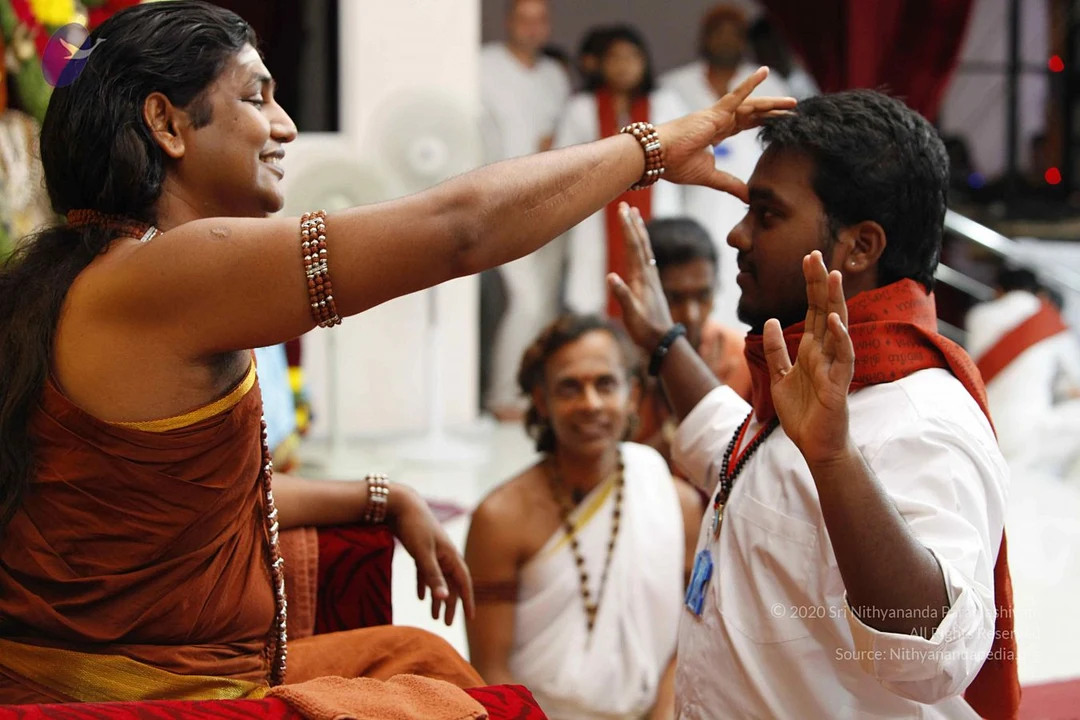
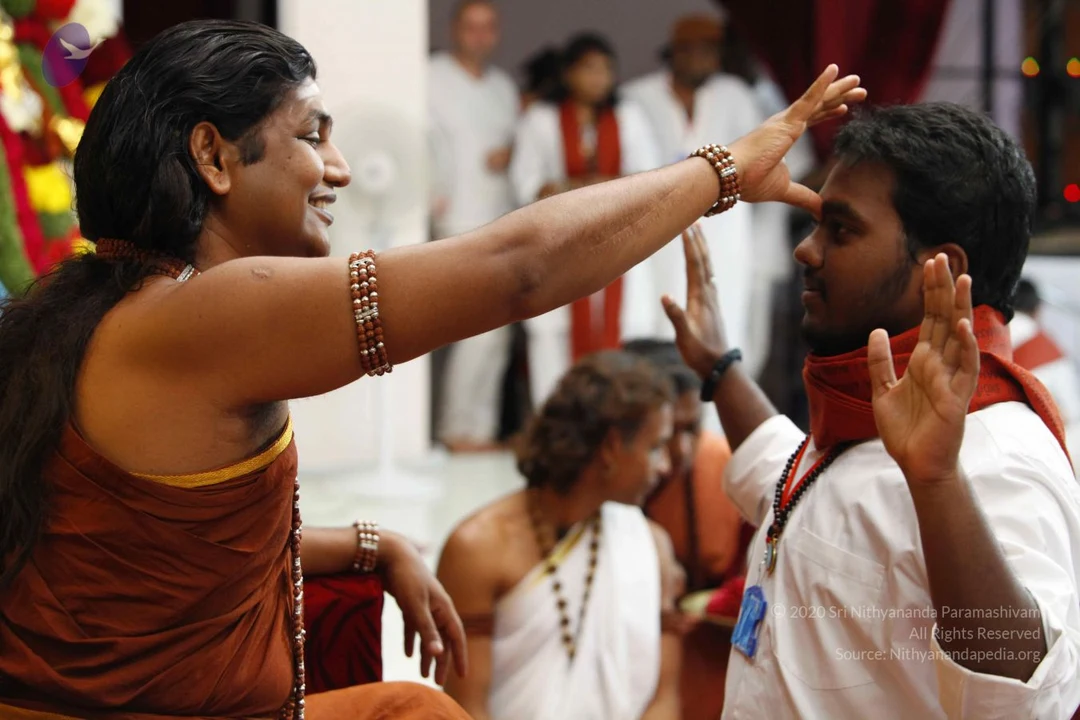
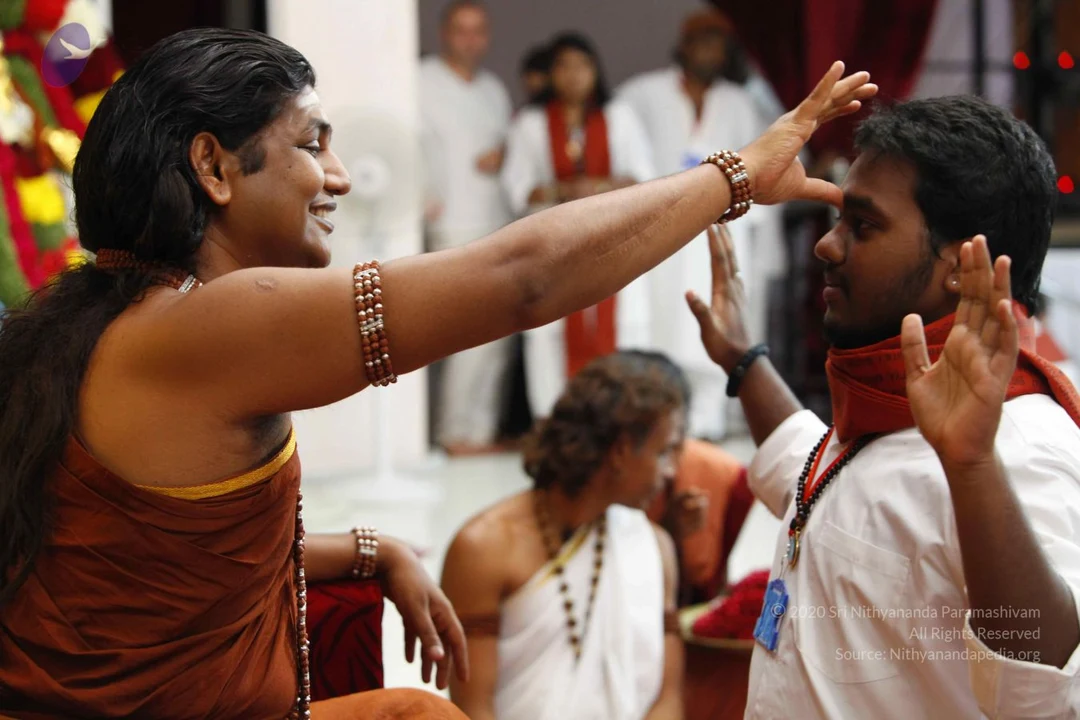
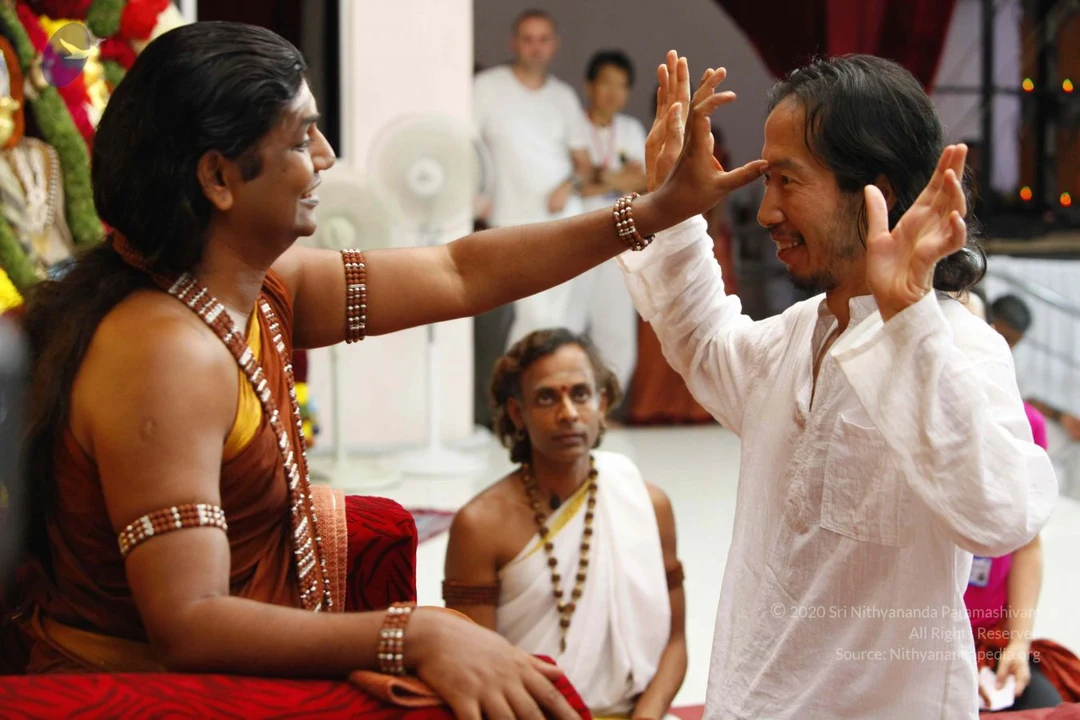
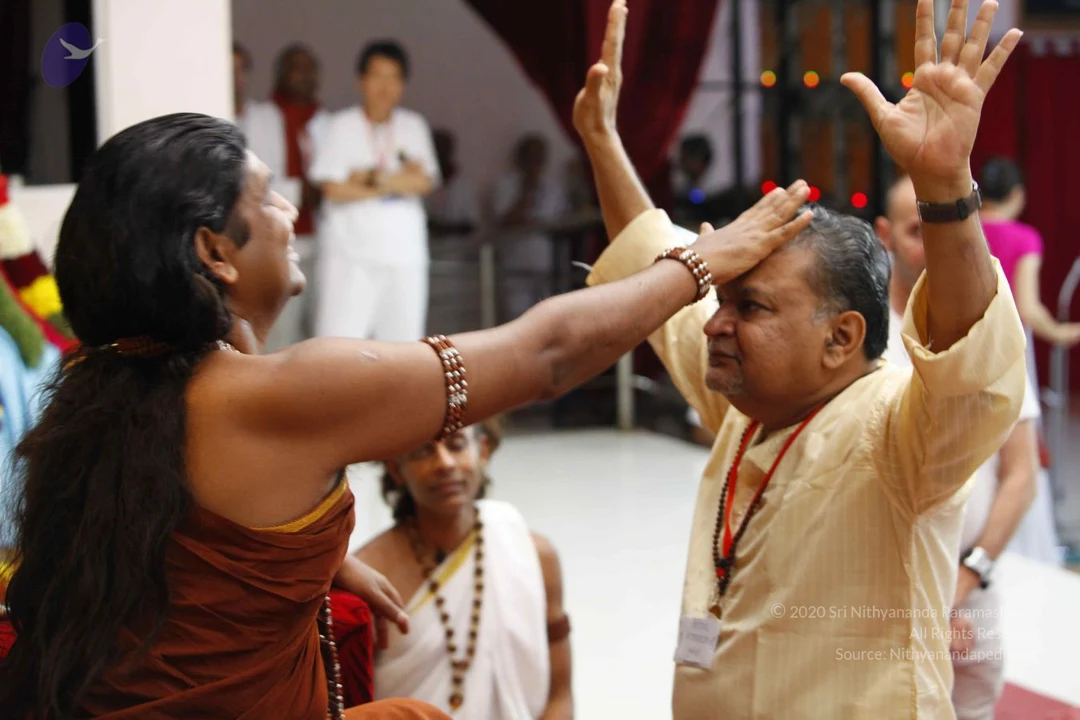
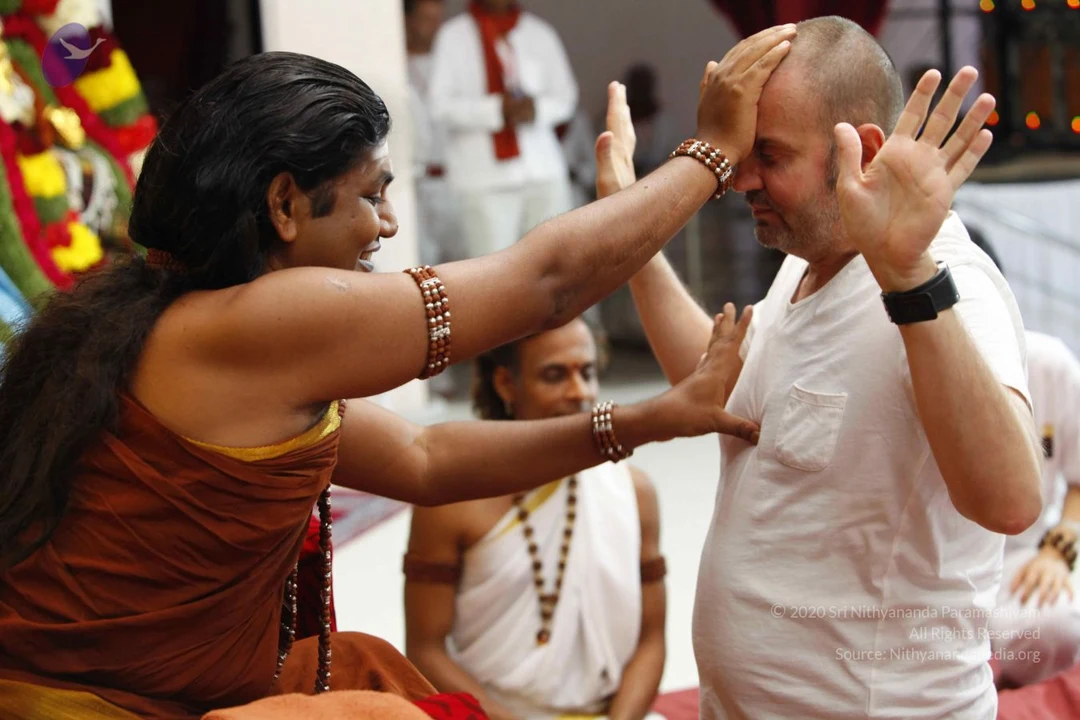
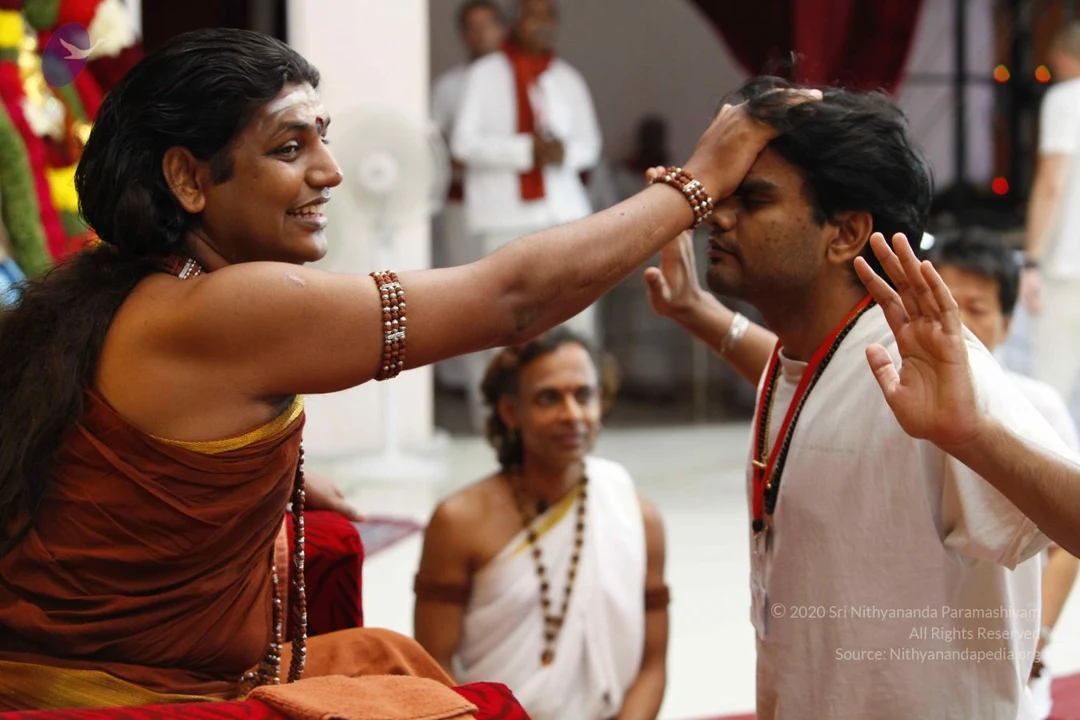
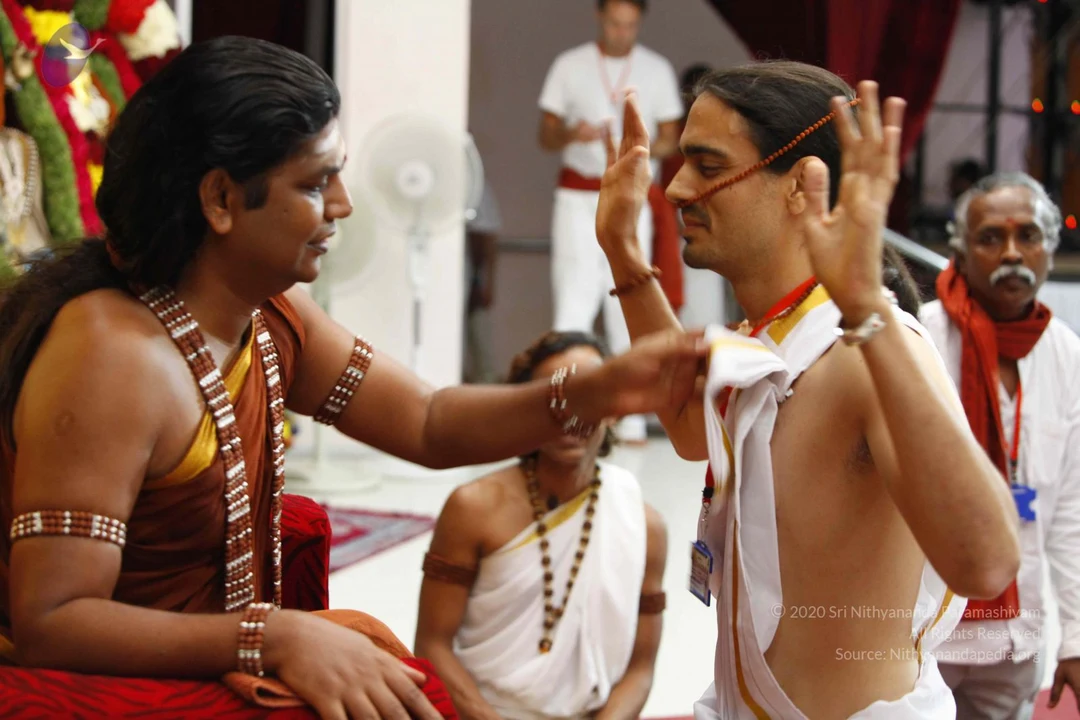
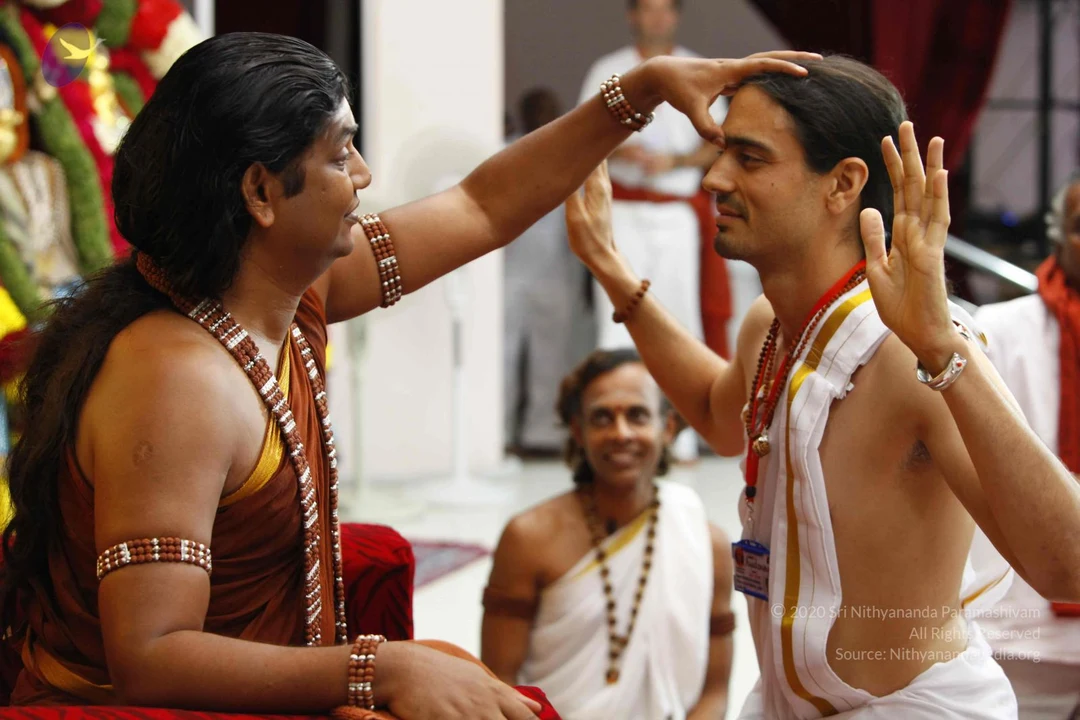
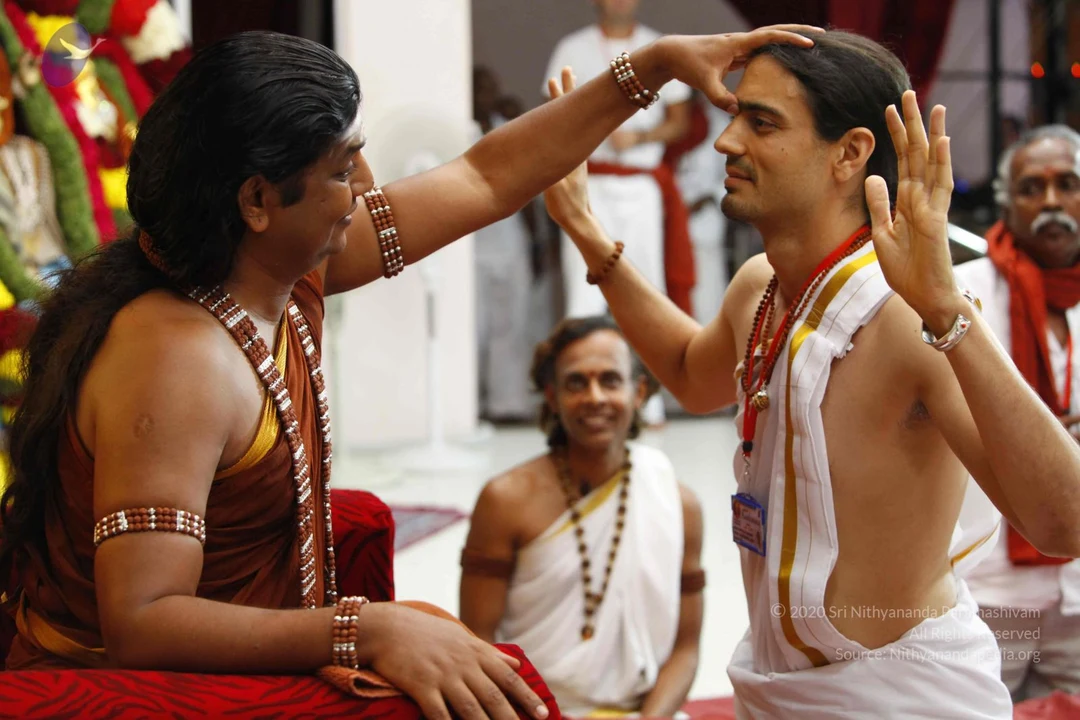
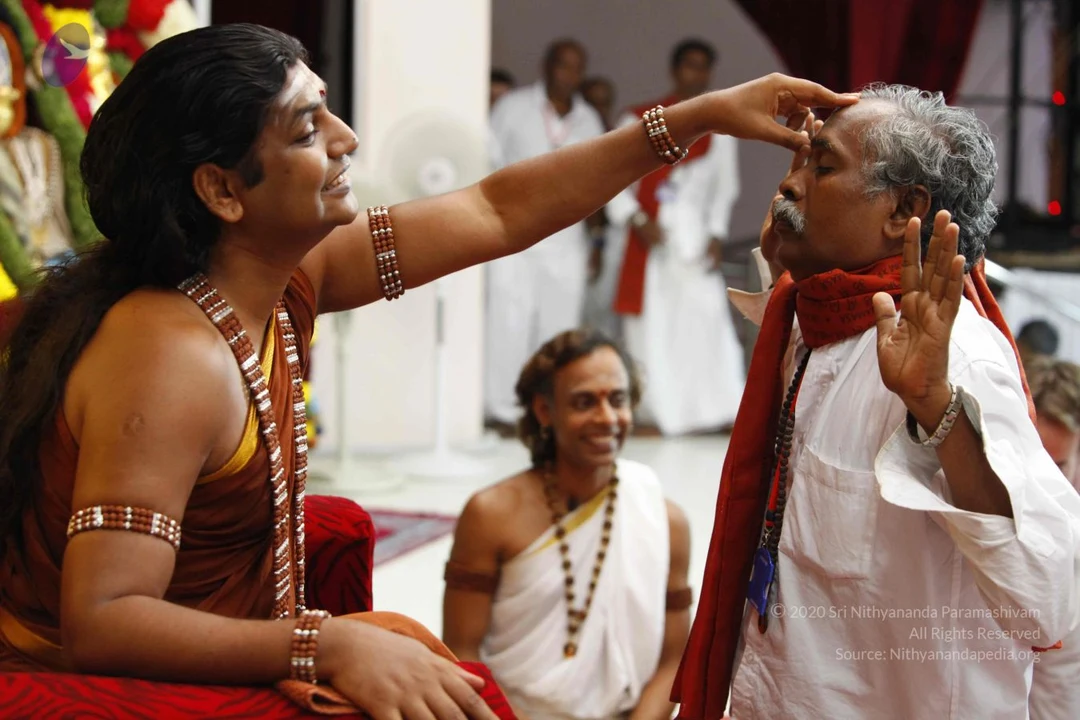
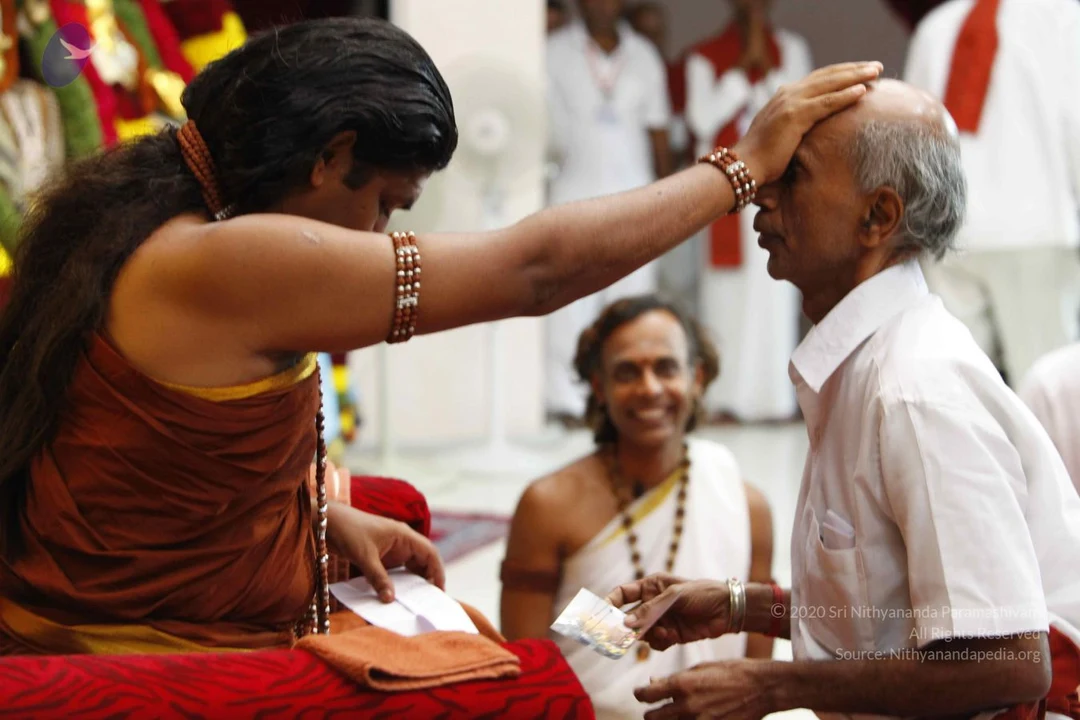
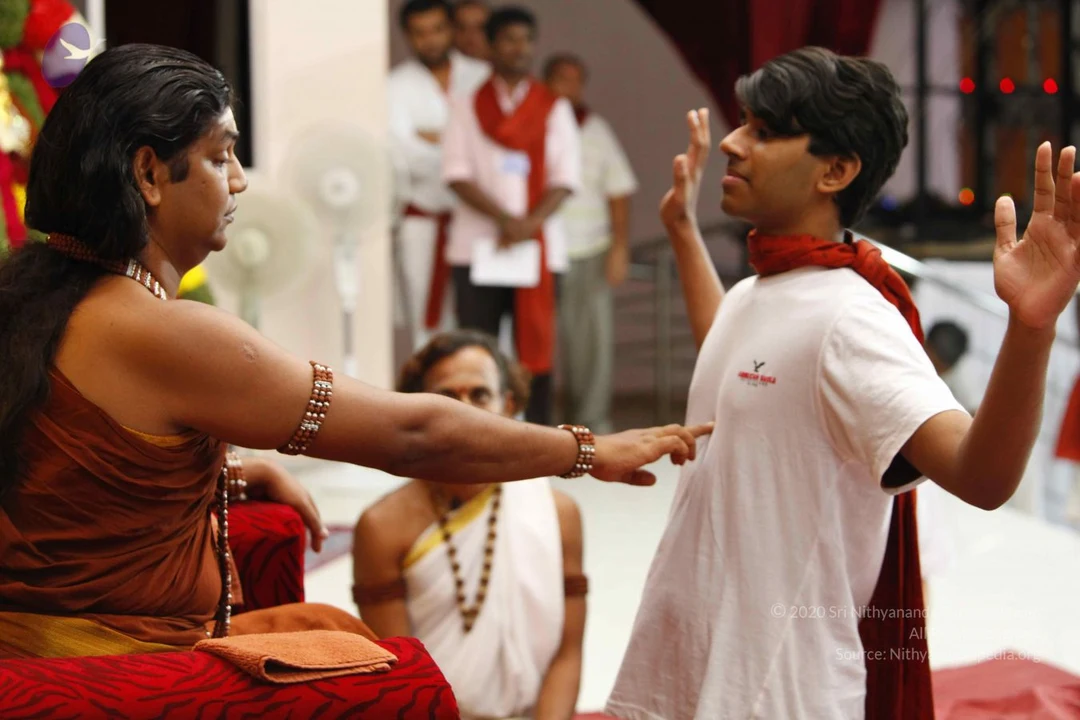
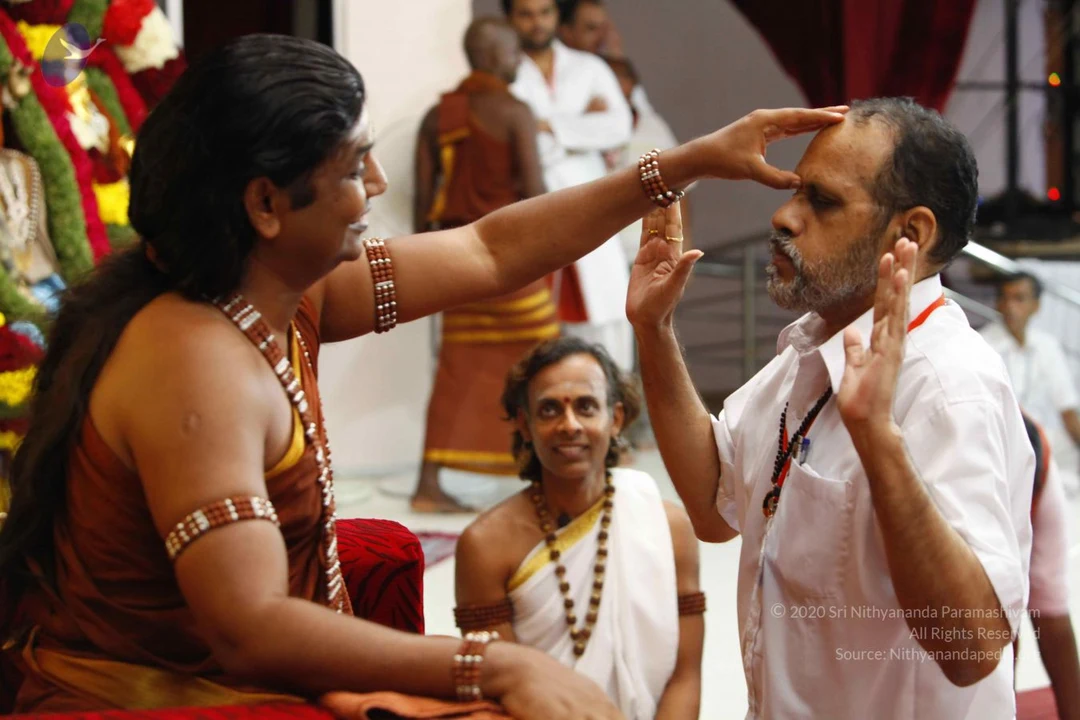
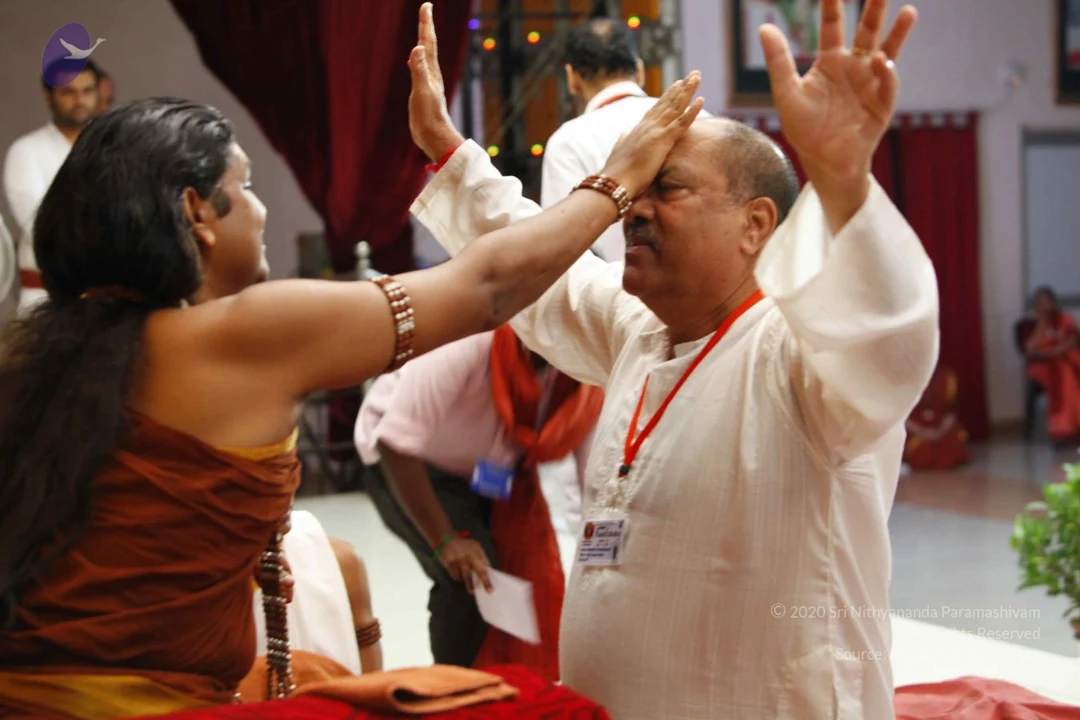
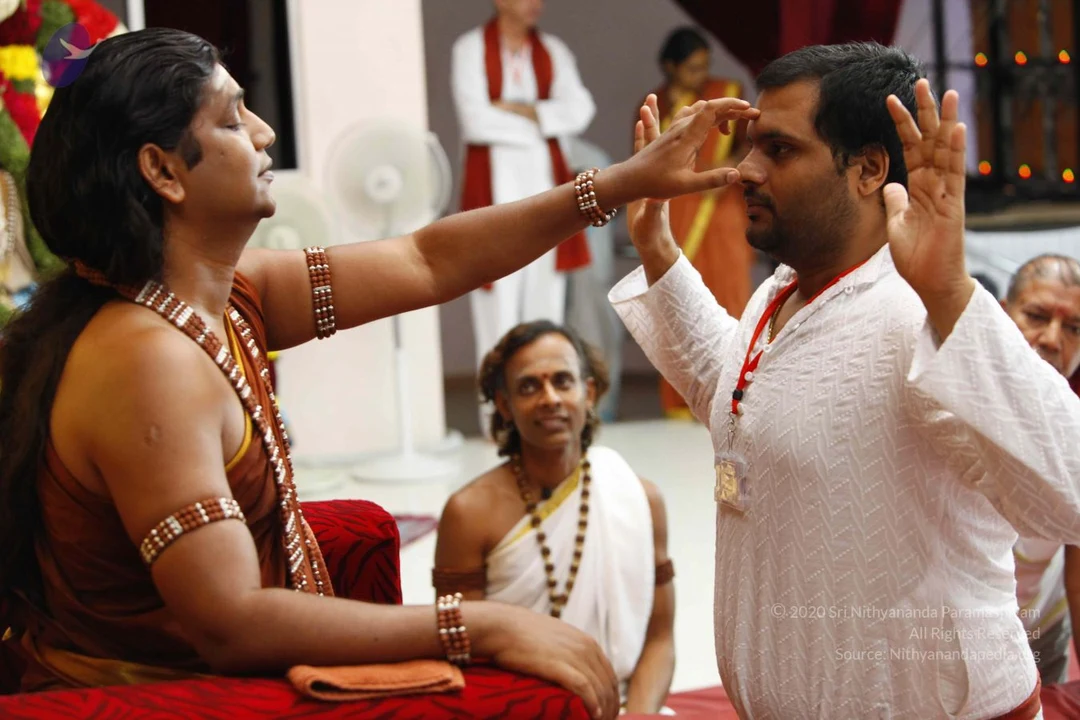
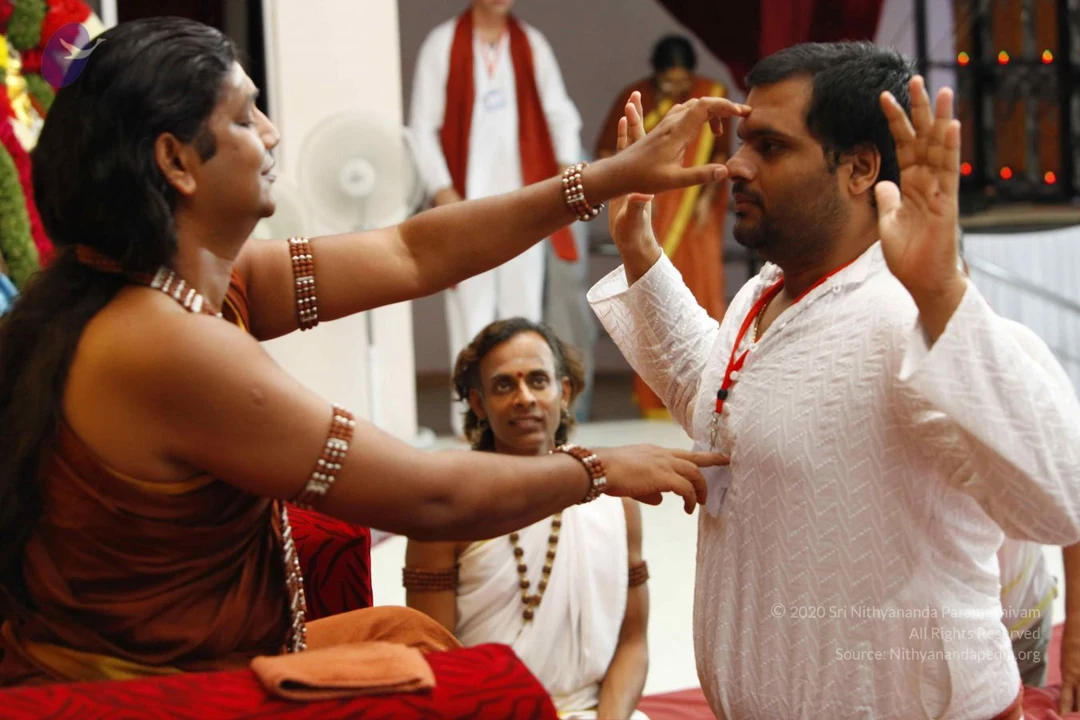
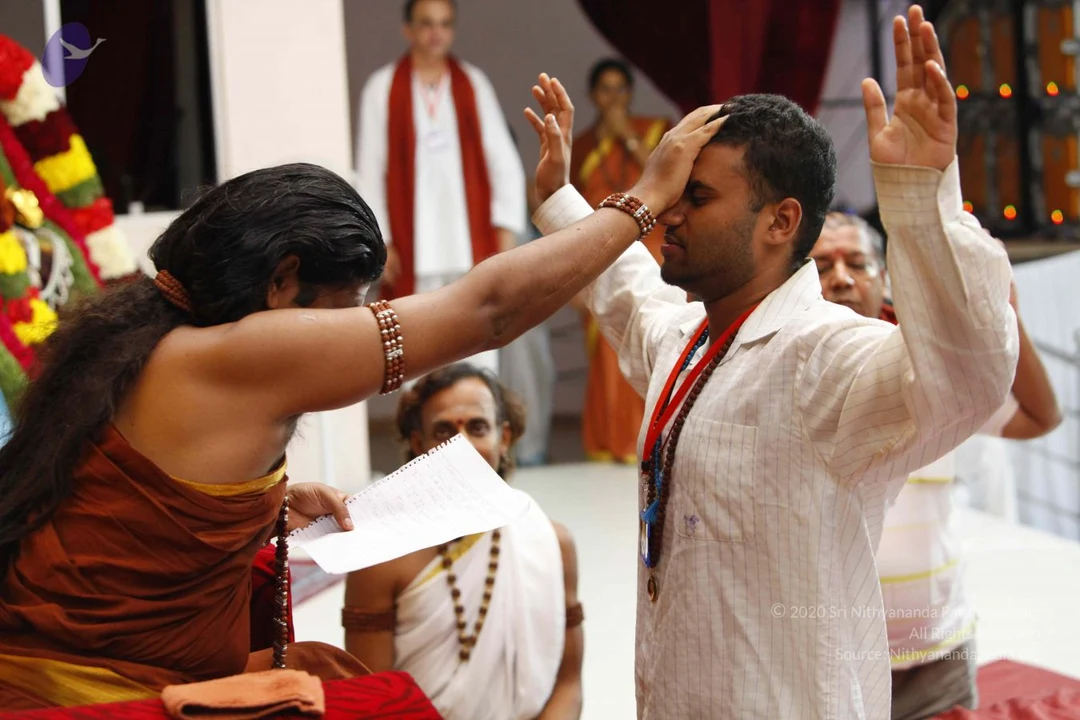
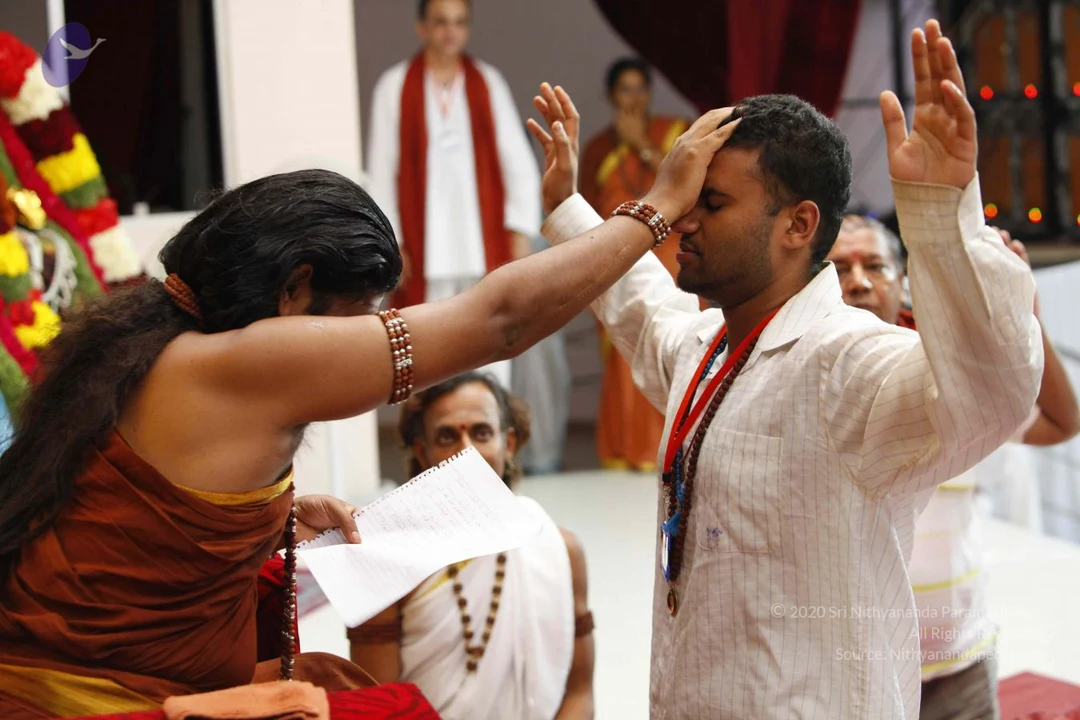
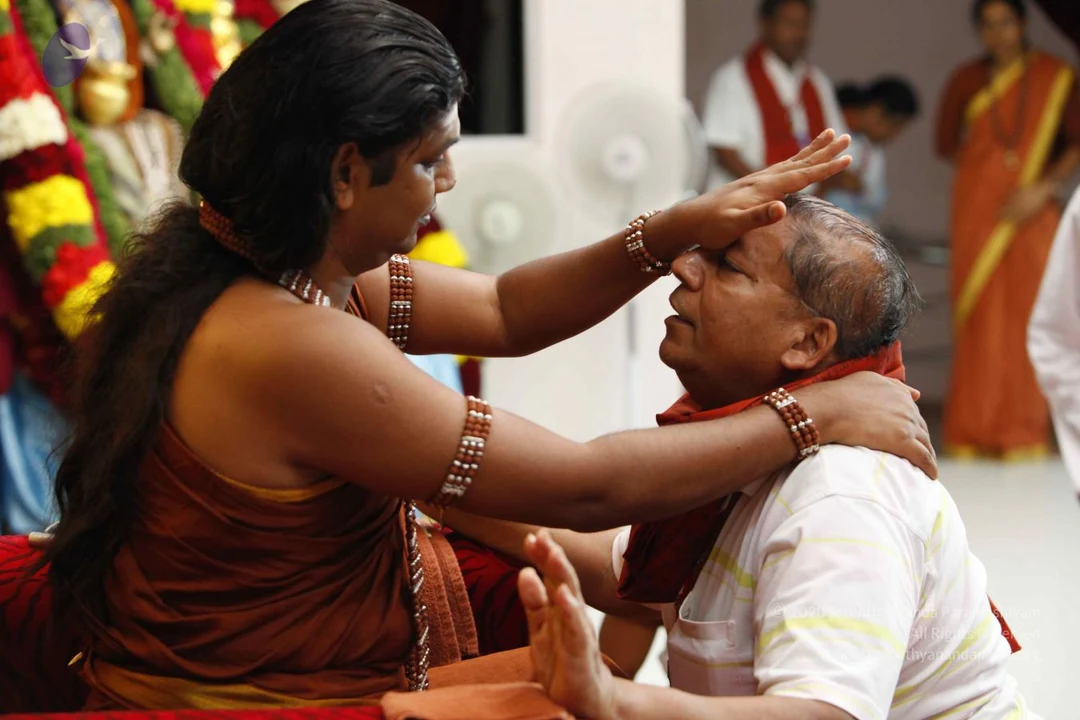
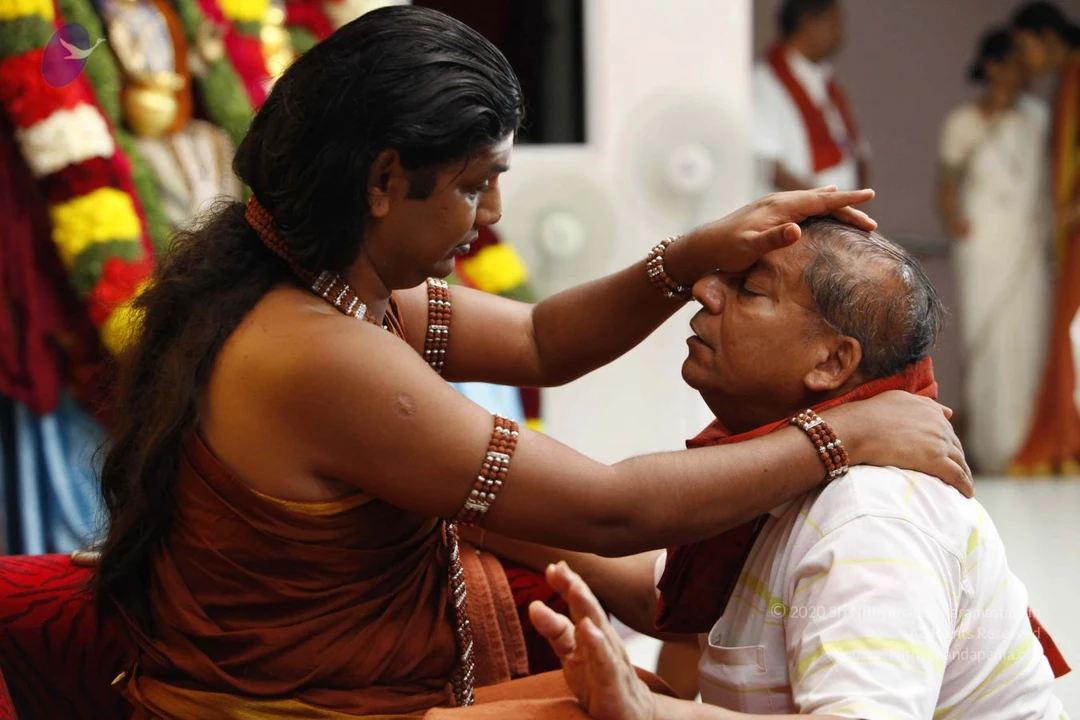
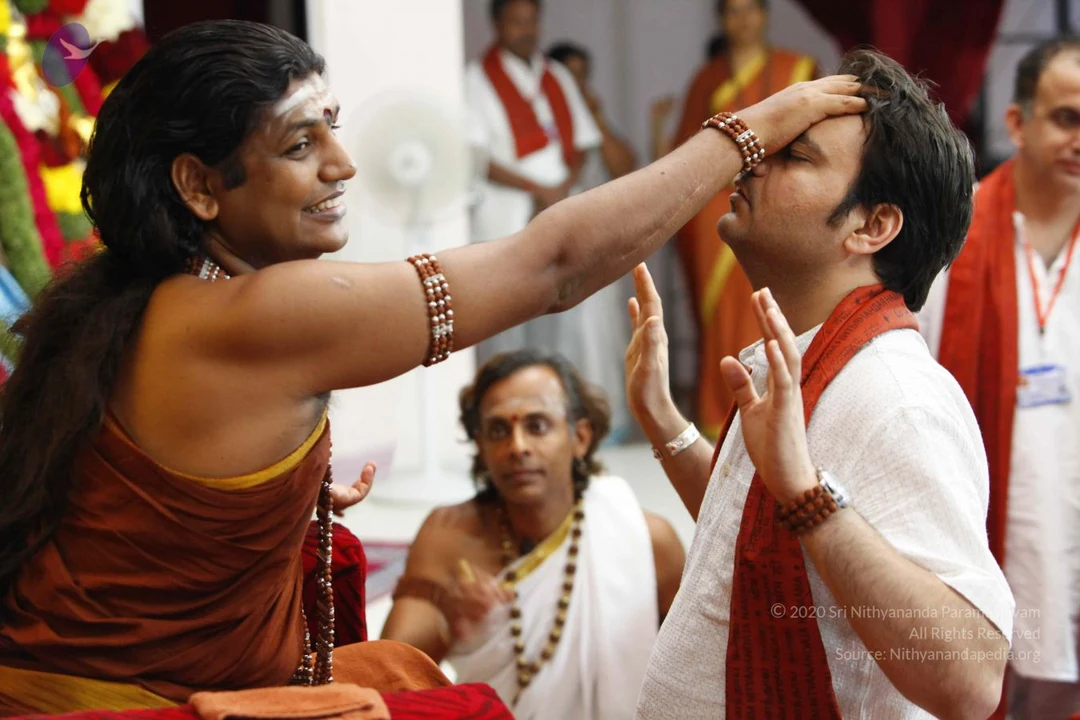
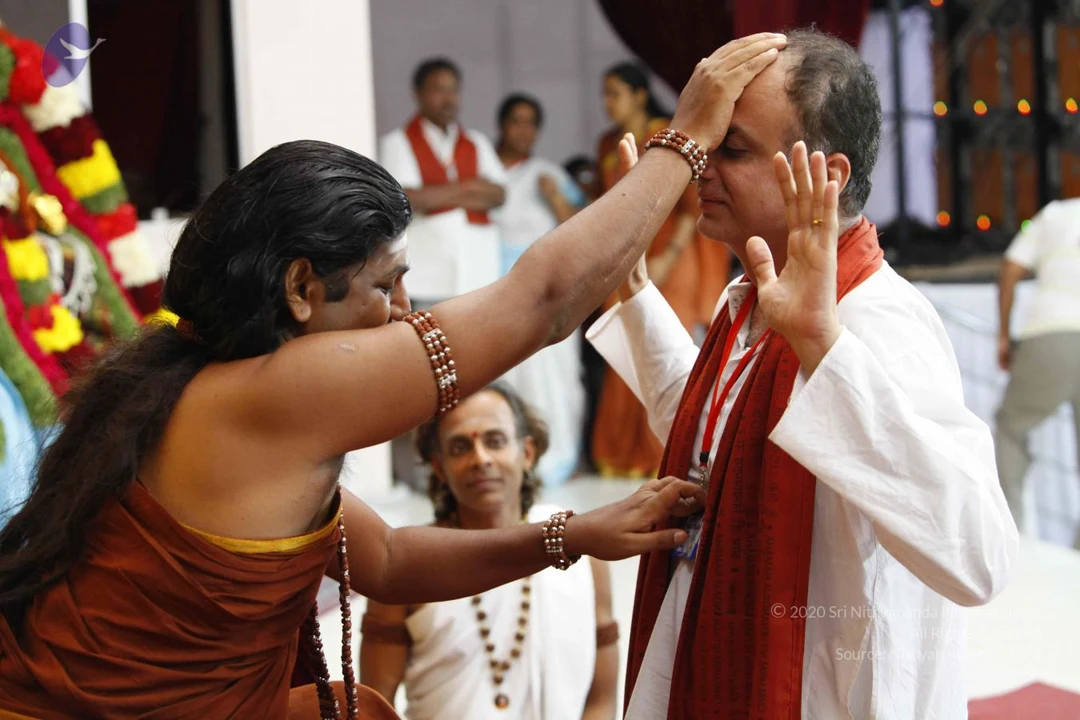
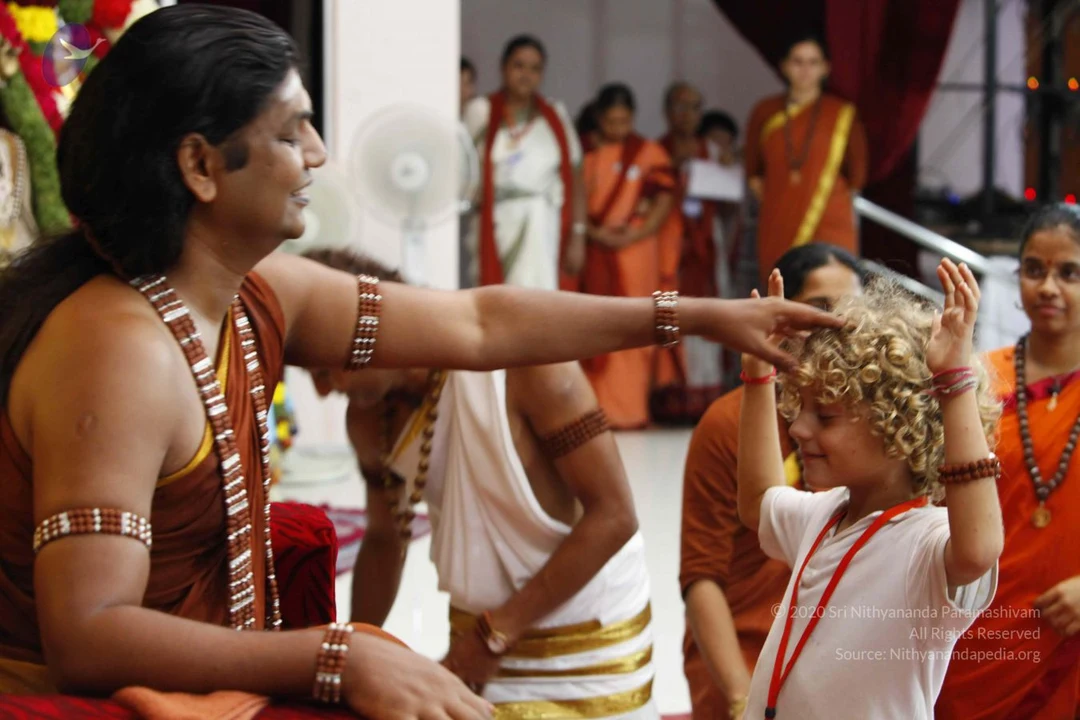
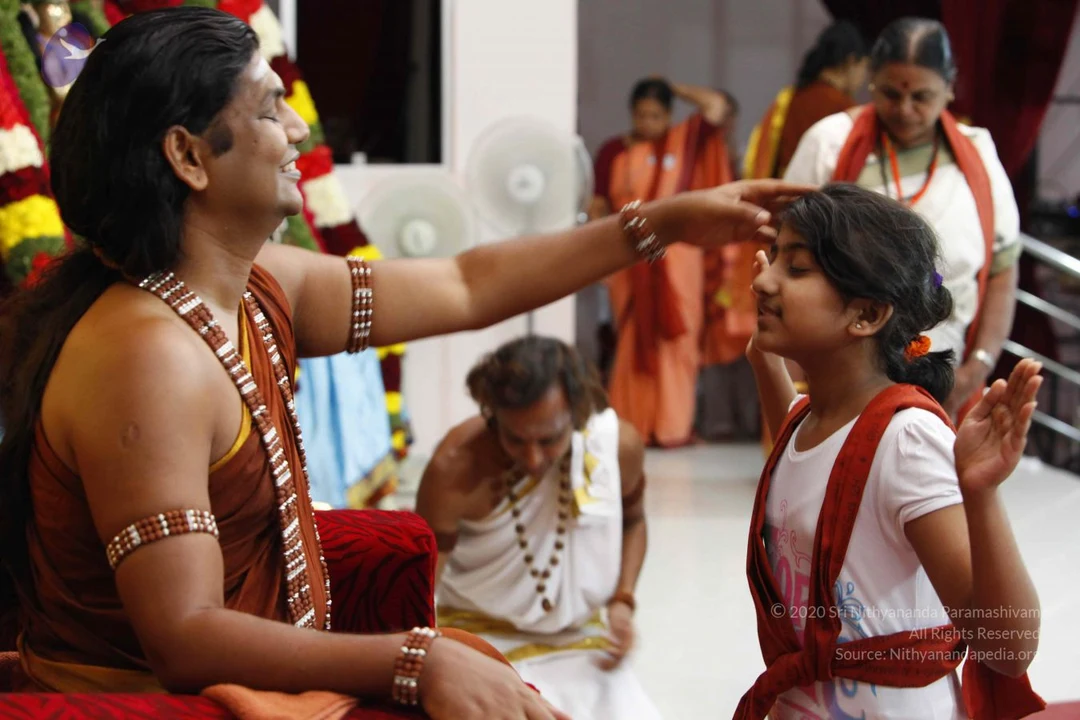
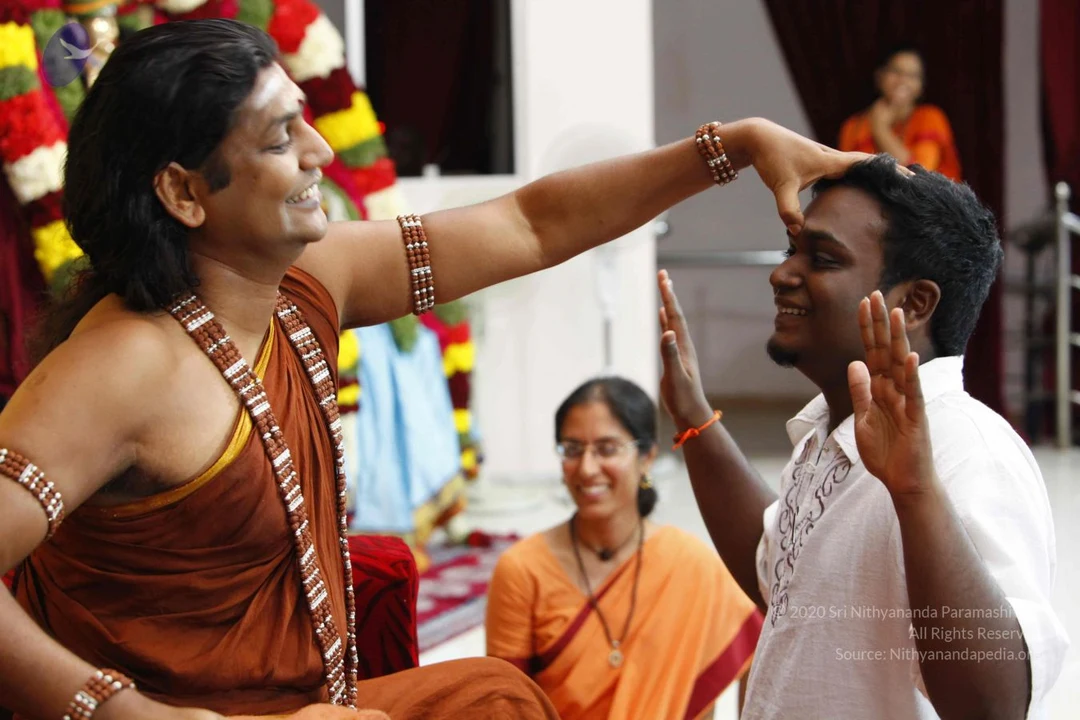
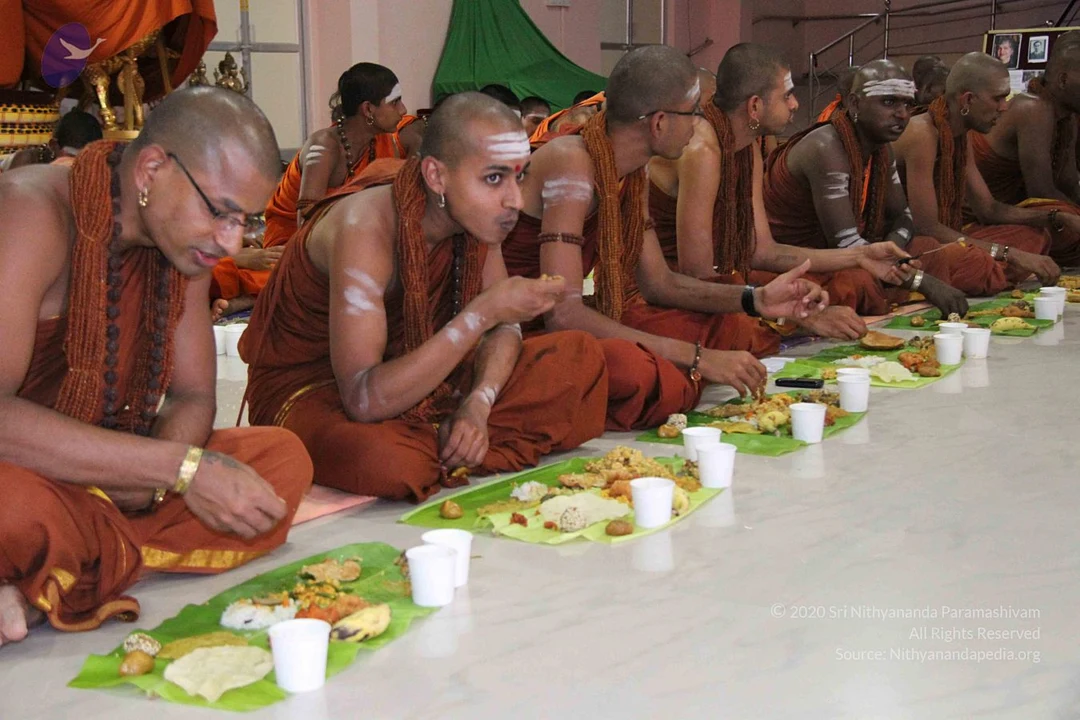
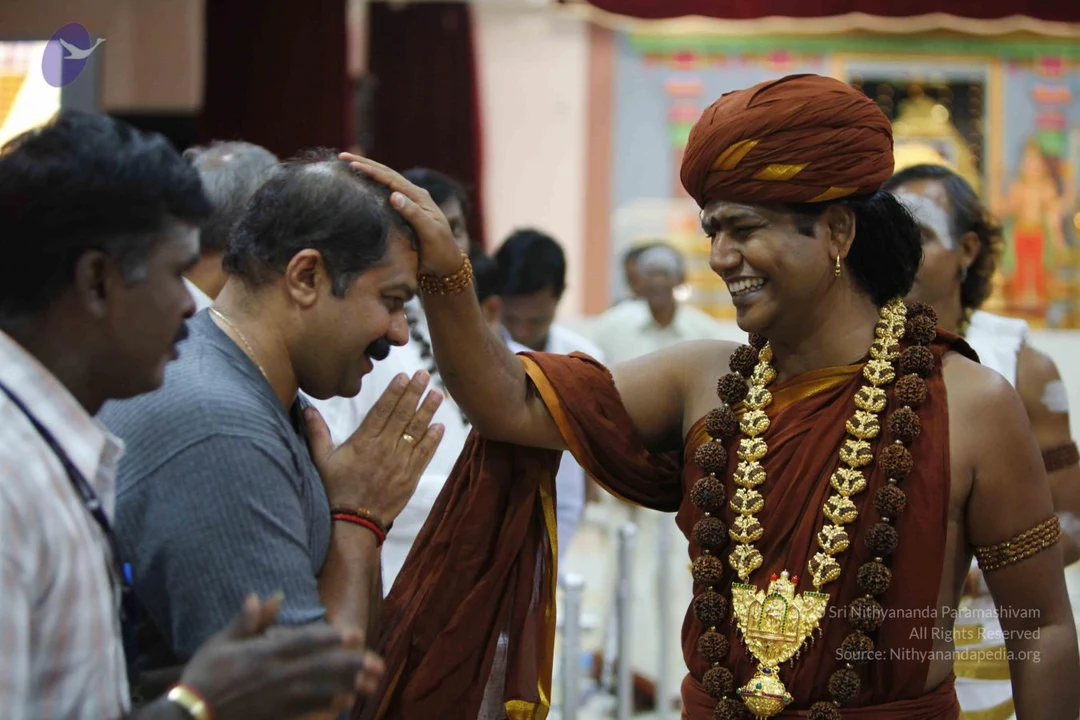
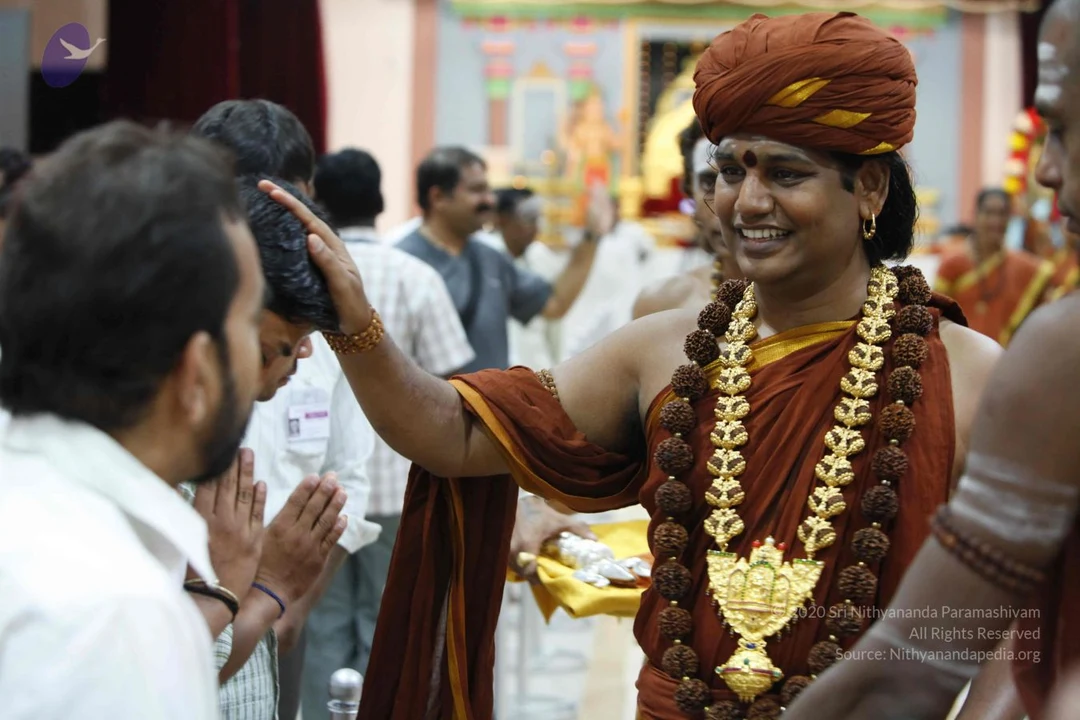
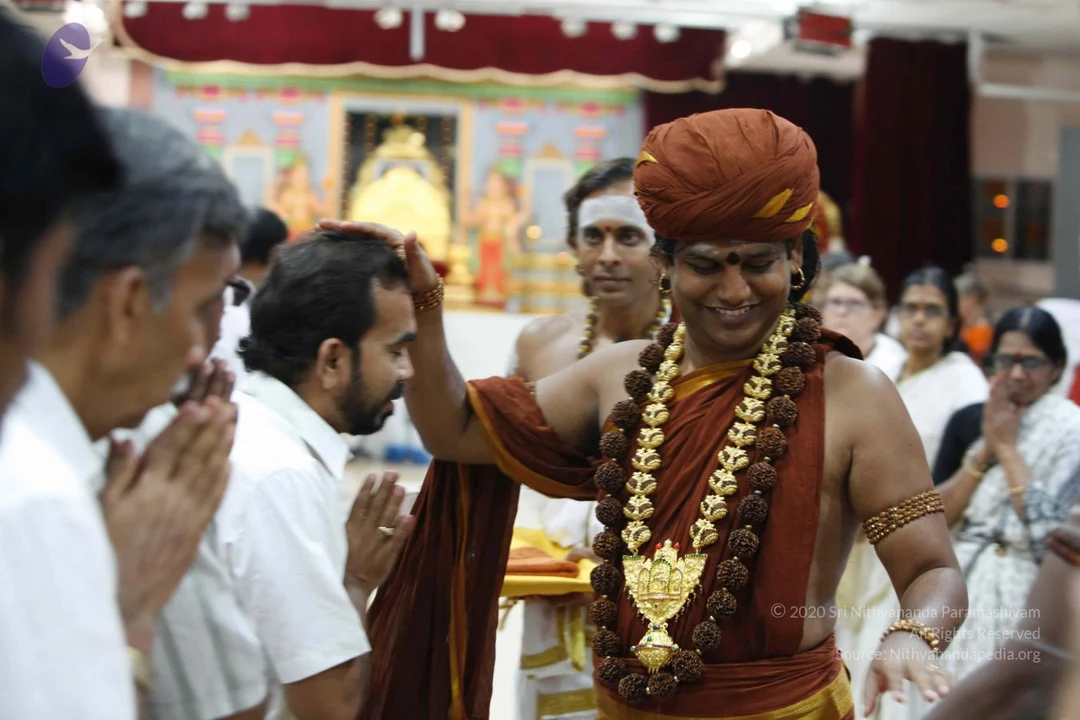
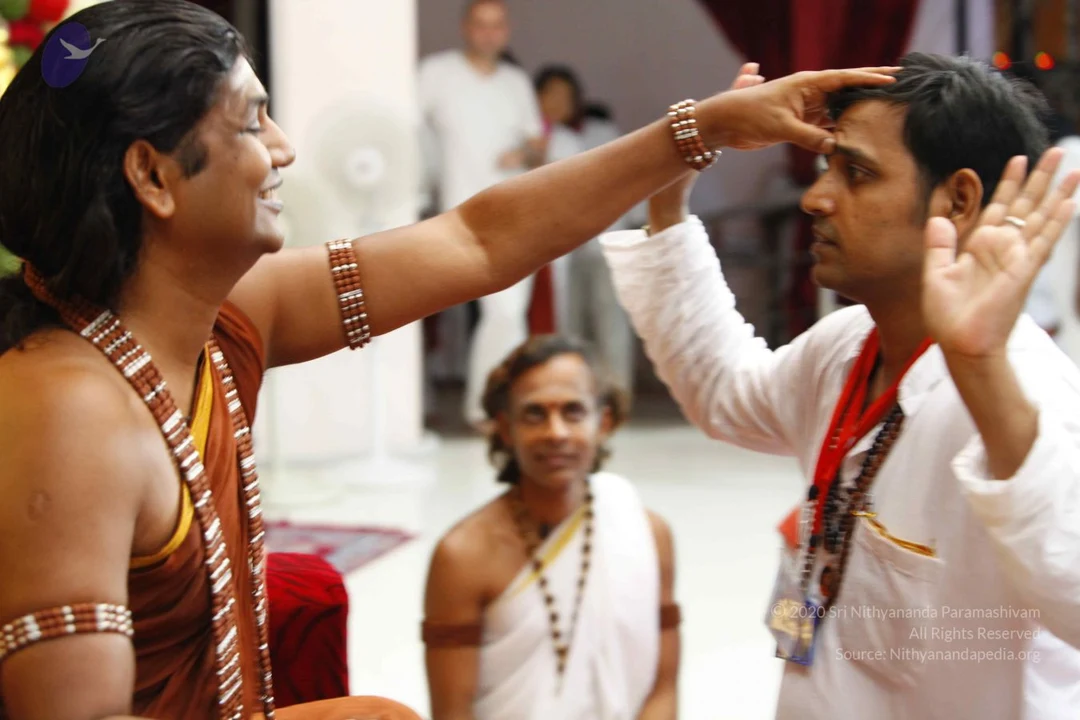
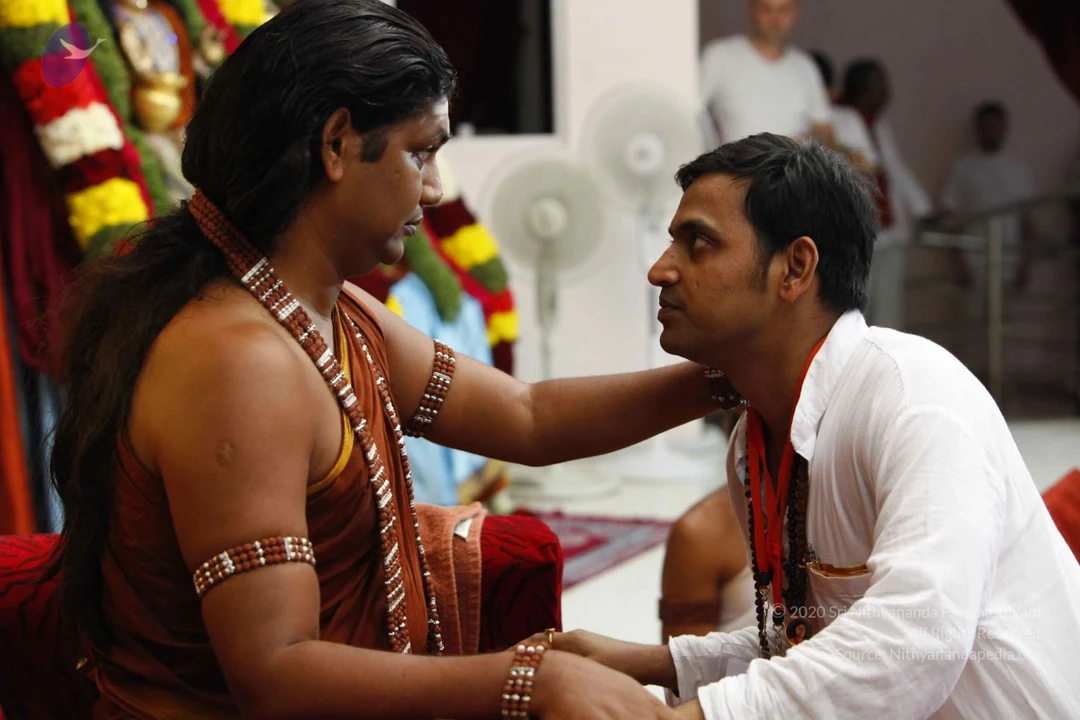
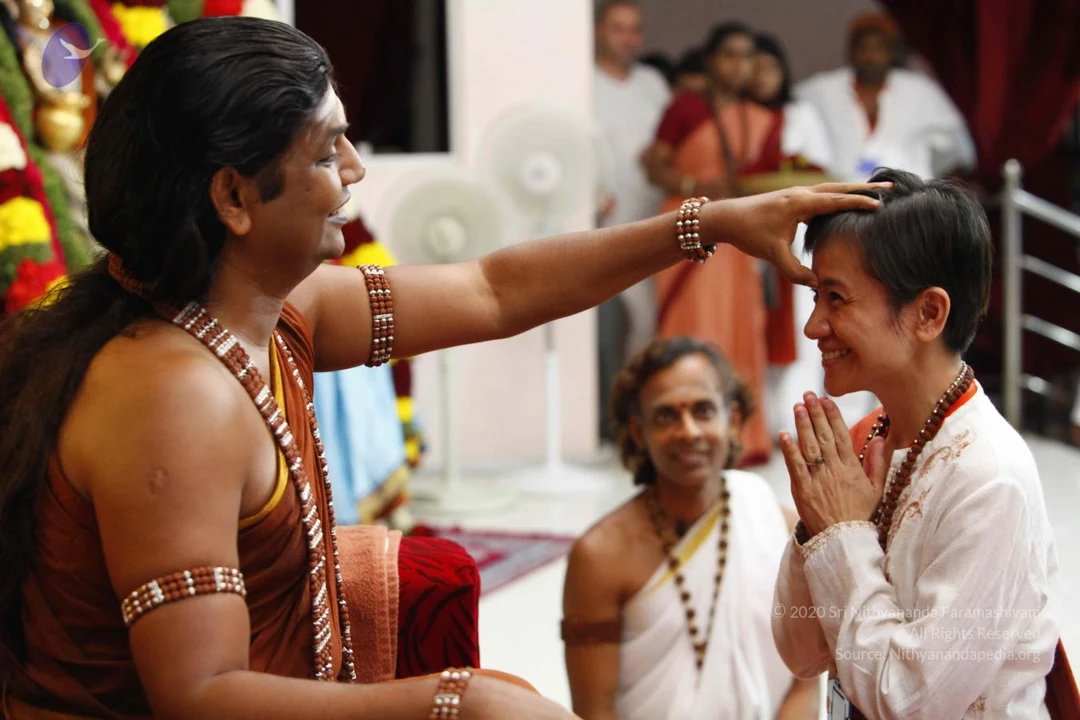
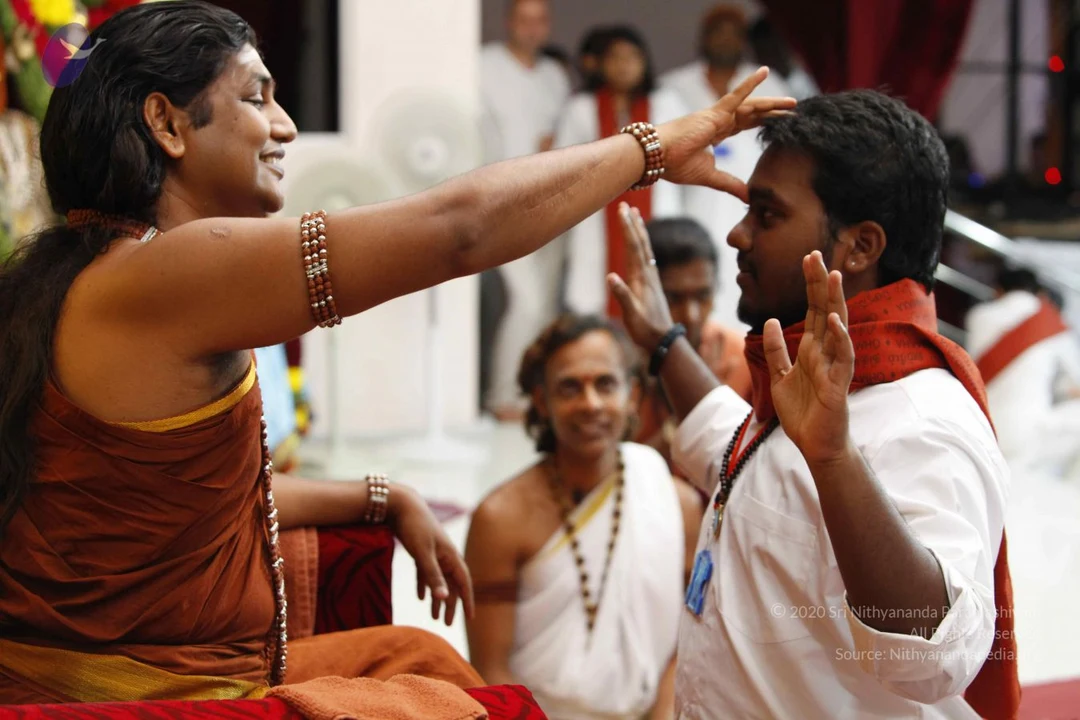
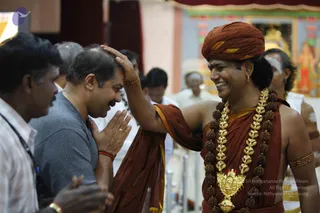
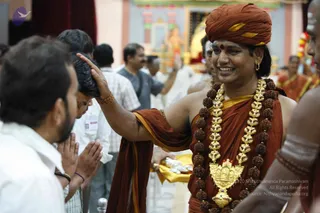
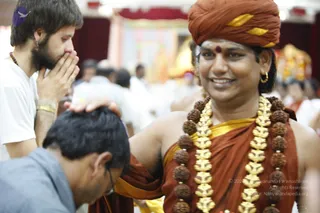
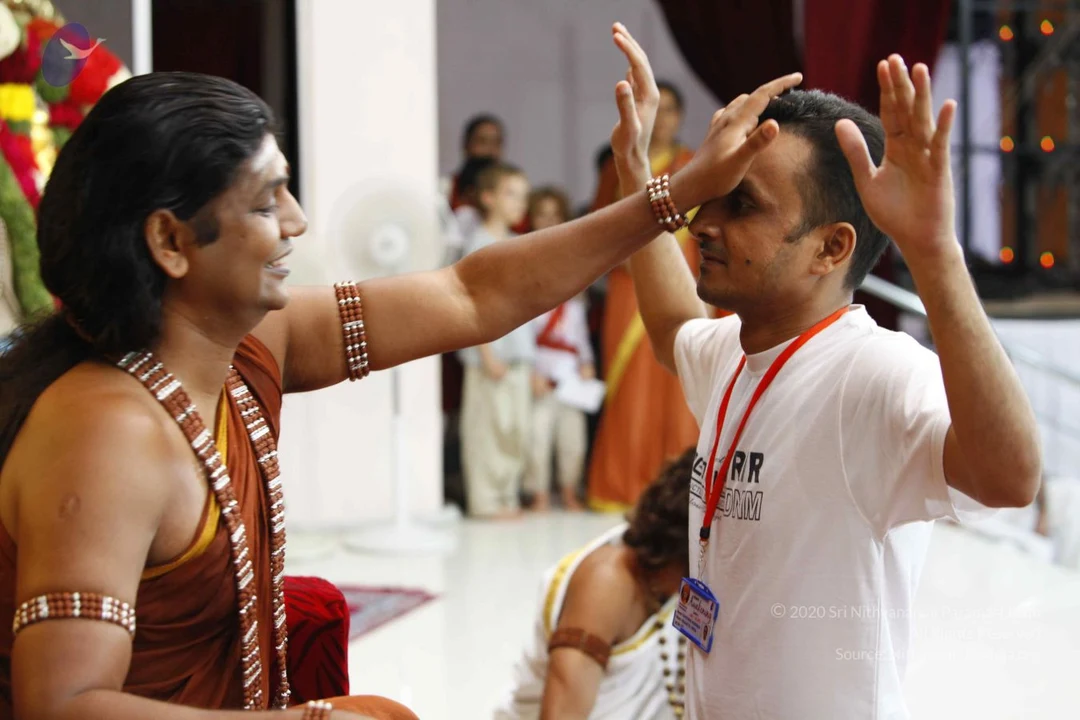
A smiling man in a rust-orange turban and rust-orange robe, wearing a long multi-strand rudraksha mala and a heavy ceremonial gold necklace with a gold pendant, lays his right hand on the head of a man in a grey collared shirt who stands with palms pressed together in namaste. A third man on the left in a striped shirt watches, and devotees in white stand in the background before a temple-style backdrop with painted deity imagery. The appearance cues of the turban-wearing man (orange turban, rudraksha mala, gold necklace) are present, so he is a probable Swamiji candidate, shown in person blessing the devotee.A man in a saffron-orange turban and saffron-orange robe with a gold ornate pendant necklace and multiple rudraksha mala strands stands smiling while extending his right hand to bless a devotee's head. The devotee in white shirt, folded hands in namaste, stands at left. Other people and orange-clad figures are in the background of a temple hall with a deity murti visible. a person: the blessing figure wears a turban, saffron robes, rudraksha malas and a gold pendant.A central figure in a saffron-orange turban and matching orange-red dhoti and shawl stands bare-chested with a long multi-strand gold necklace and dark rudraksha mala, smiling as a kneeling devotee's head is touched in blessing. Behind, a man in white with a white tilak and bare chest assists, and a devotee in white with pressed palms stands at left. Right-side women in white saris watch. Background shows a decorated shrine with painted deity figures and a golden arch.A smiling man in an orange-saffron turban and orange-saffron shawl draped over bare shoulders, wearing a long multi-strand rudraksha mala and a gold ceremonial necklace, places his right hand on the head of a bowing man in a grey shirt. A bearded man in a white t-shirt stands at left with palms pressed together in namaste. A red bindi marks the forehead of the central figure. Blurred devotees and a gold-decorated altar with red drapes fill the background.A photograph of a satsang hall where a man in an orange-saffron turban and orange-saffron dhoti with gold-yellow border stands bare-chested, wearing a long gold-and-rudraksha necklace, rudraksha mala and rudraksha armlets, reading from a white sheet of paper held in both hands. He is distinguished by the orange turban, ornate gold necklace and rudraksha beads, and is presented as the central figure. Facing him on the left, a bald man in a white shirt stands with hands folded. Behind them, standing devotees in white and dark clothes line the hall, with a red curtain and a decorated altar with garlands visible at the back right. a person: the speaker is the central robed figure reading the paper.A man in a rust-orange turban and orange robe with a gold-bordered sash stands barefoot on a white floor, both arms raised with palms open, smiling. He wears a long rudraksha mala with a gold ceremonial pendant. Behind him is a gilded throne draped in red velvet with a tiger-skin cloth, flanked by two gold lion figures. Two painted deity murti figures with multiple arms stand on either side, holding weapons and flames. A brass oil lamp stands at the right edge, and a small framed screen sits on the floor.

IA-Darshan

44 photosSource gallery
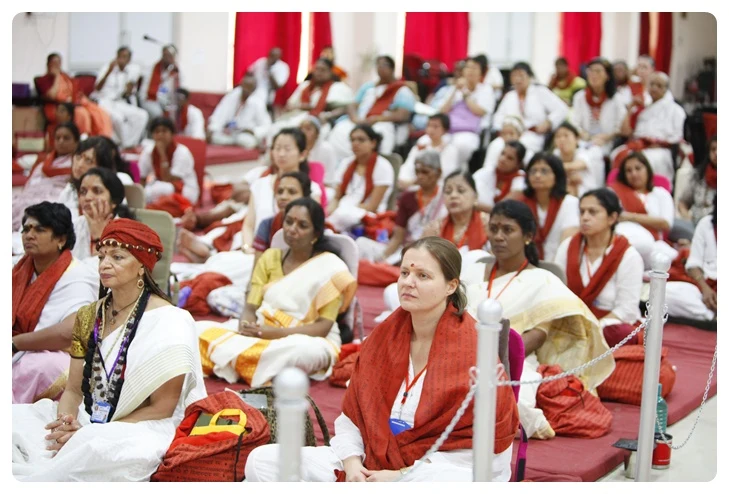
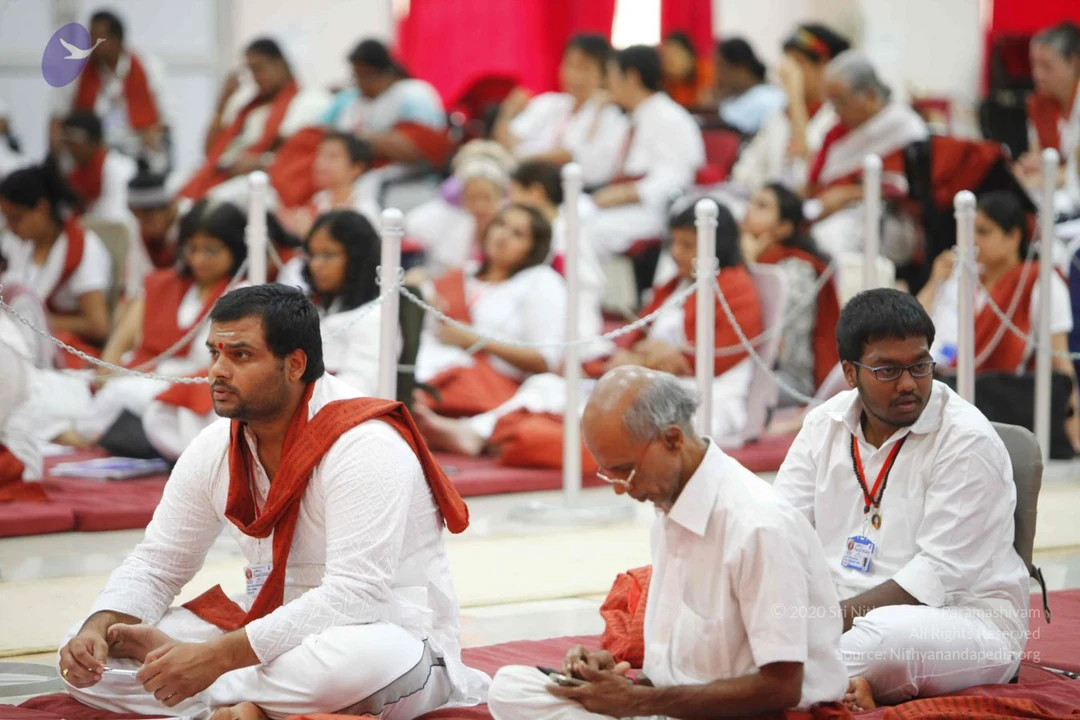
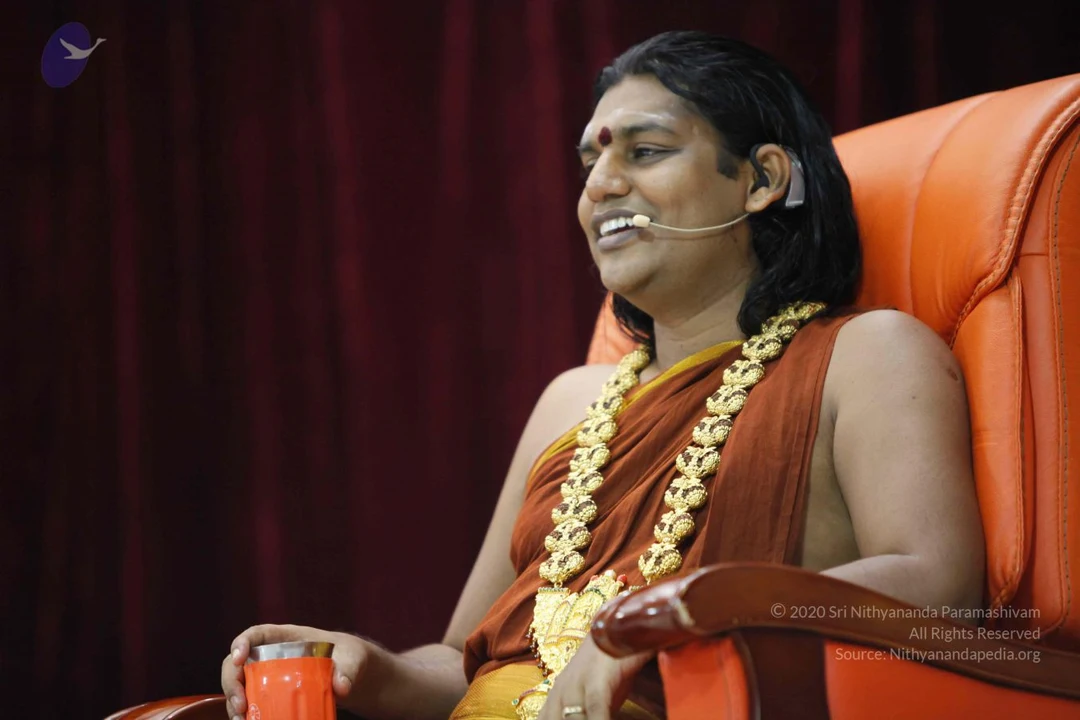
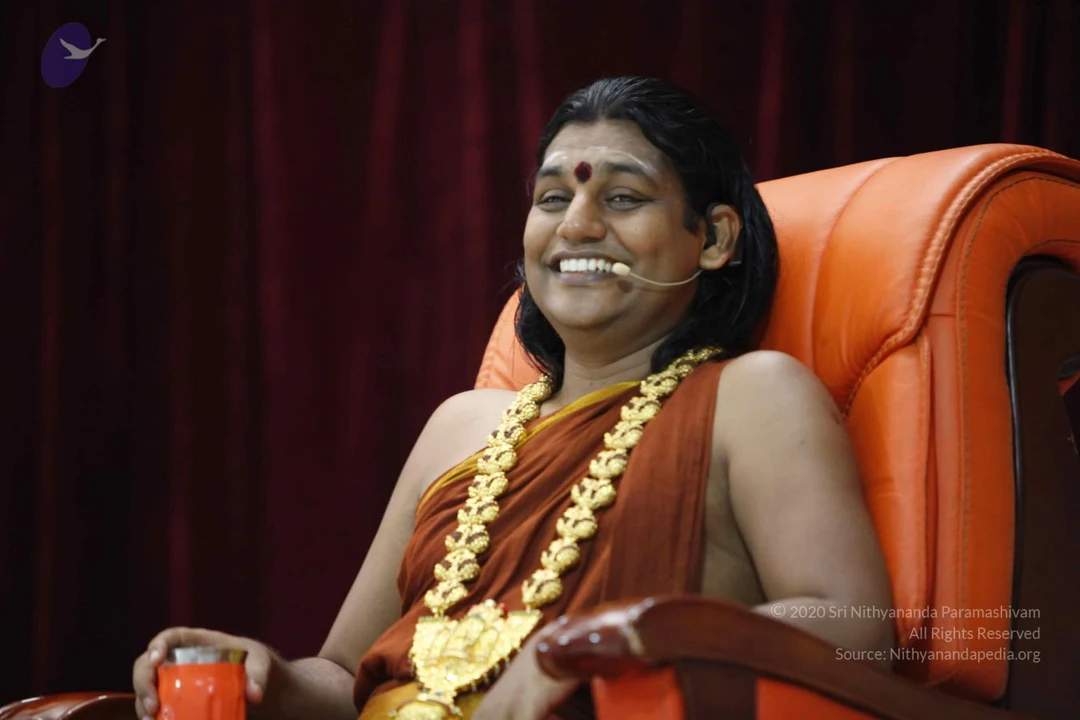
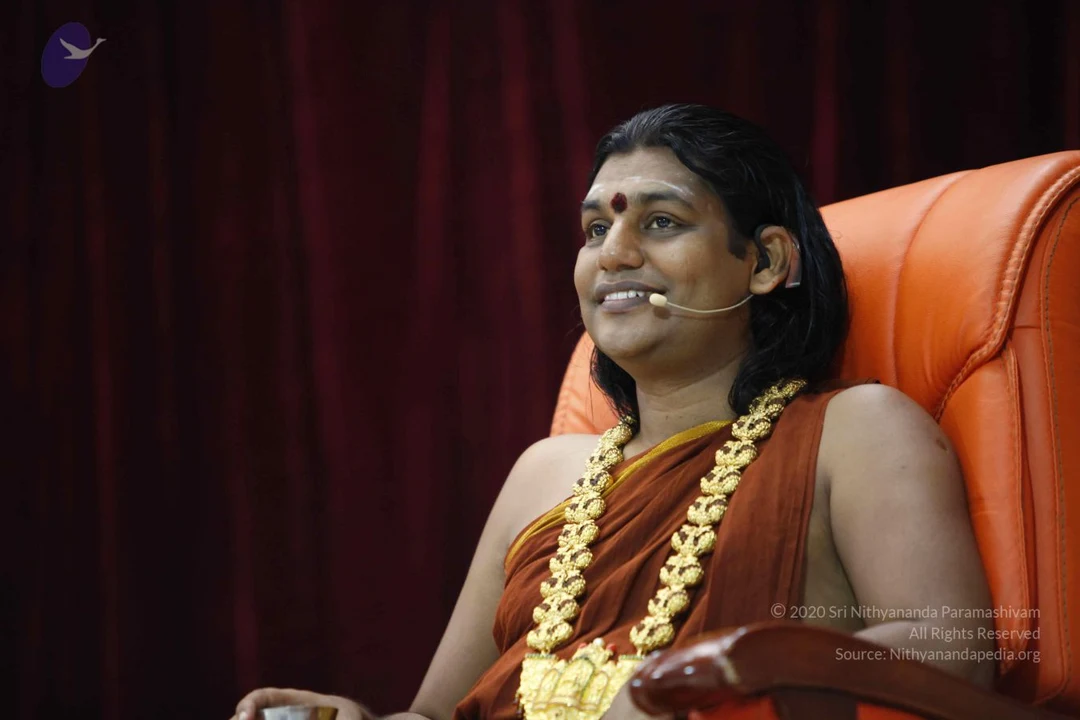
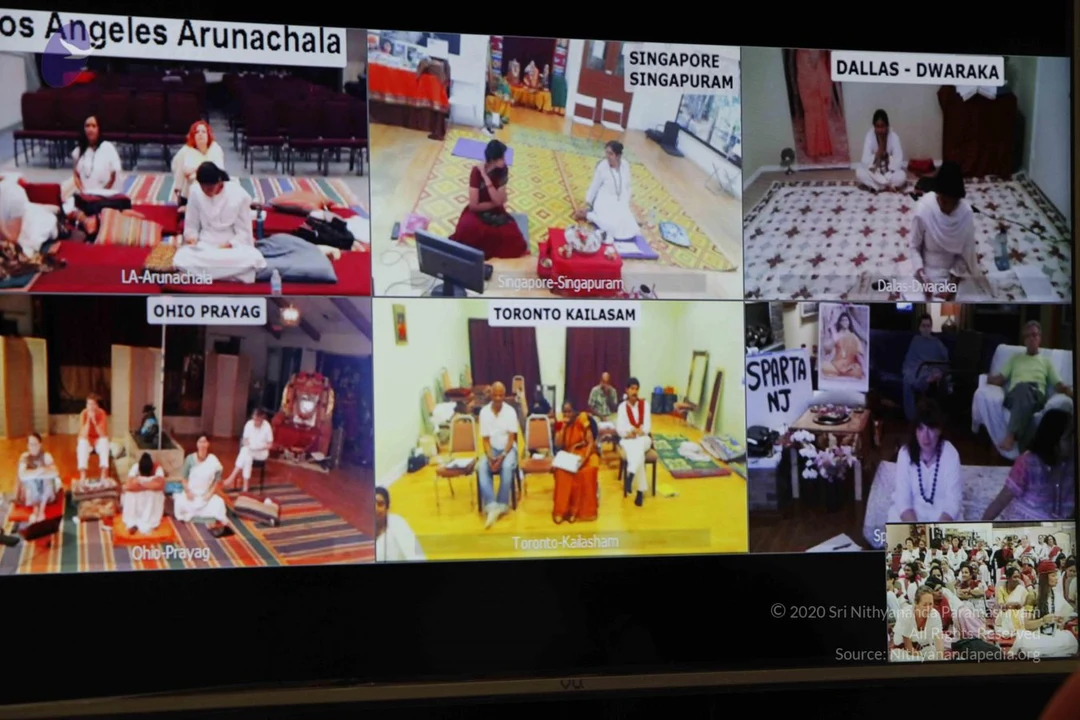
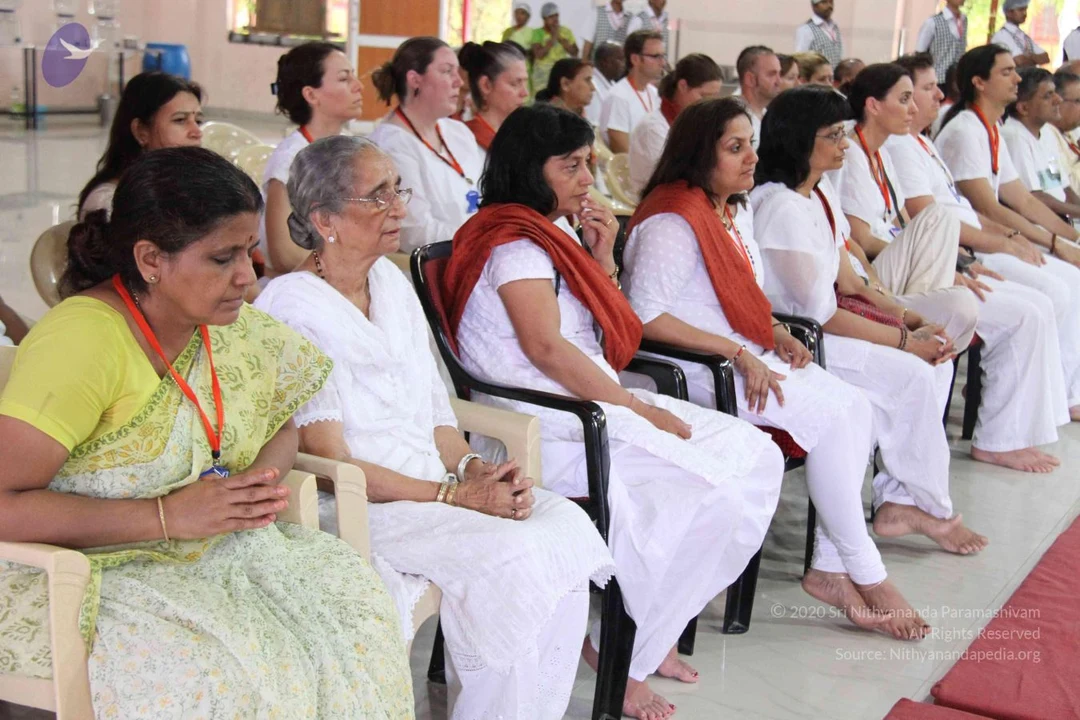
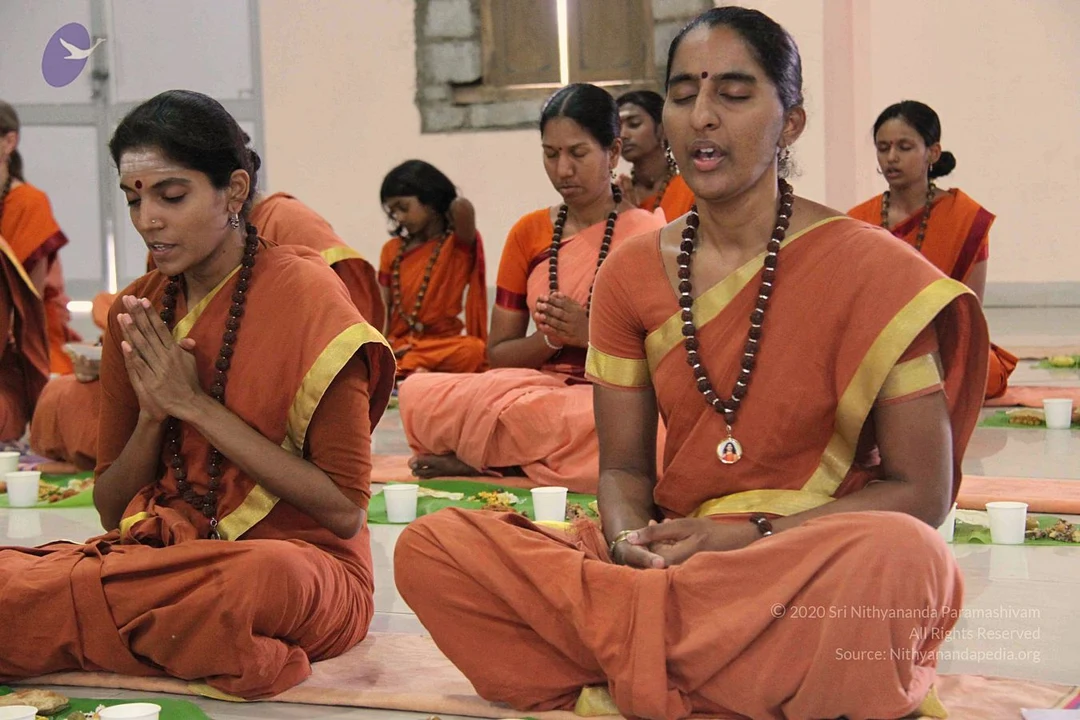
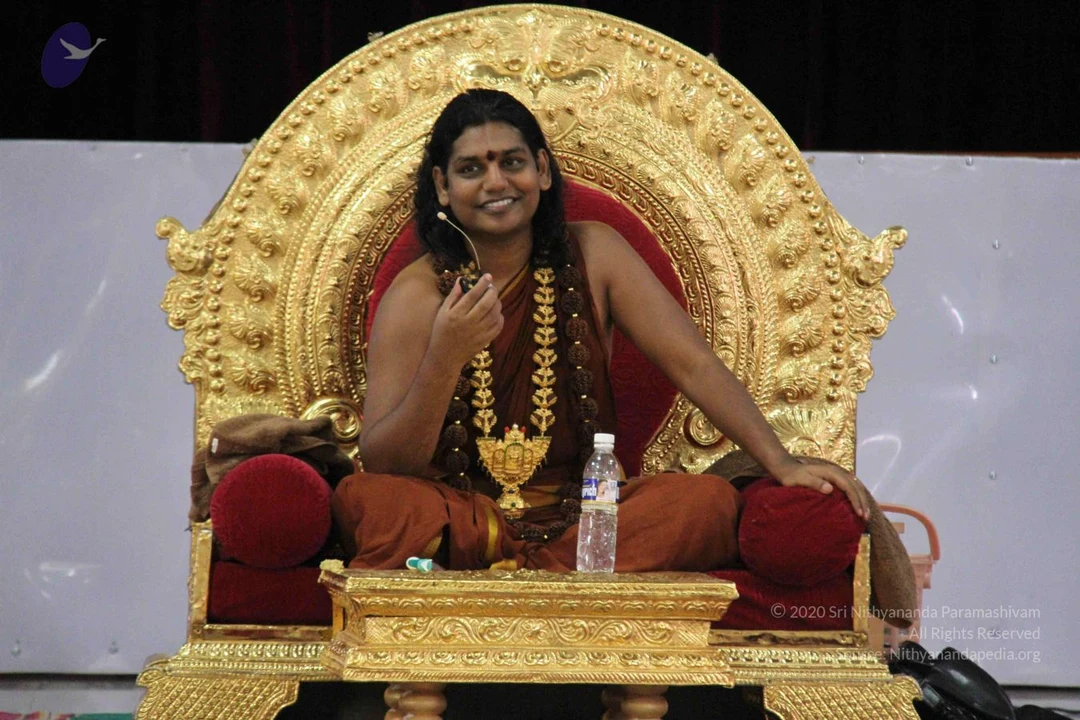
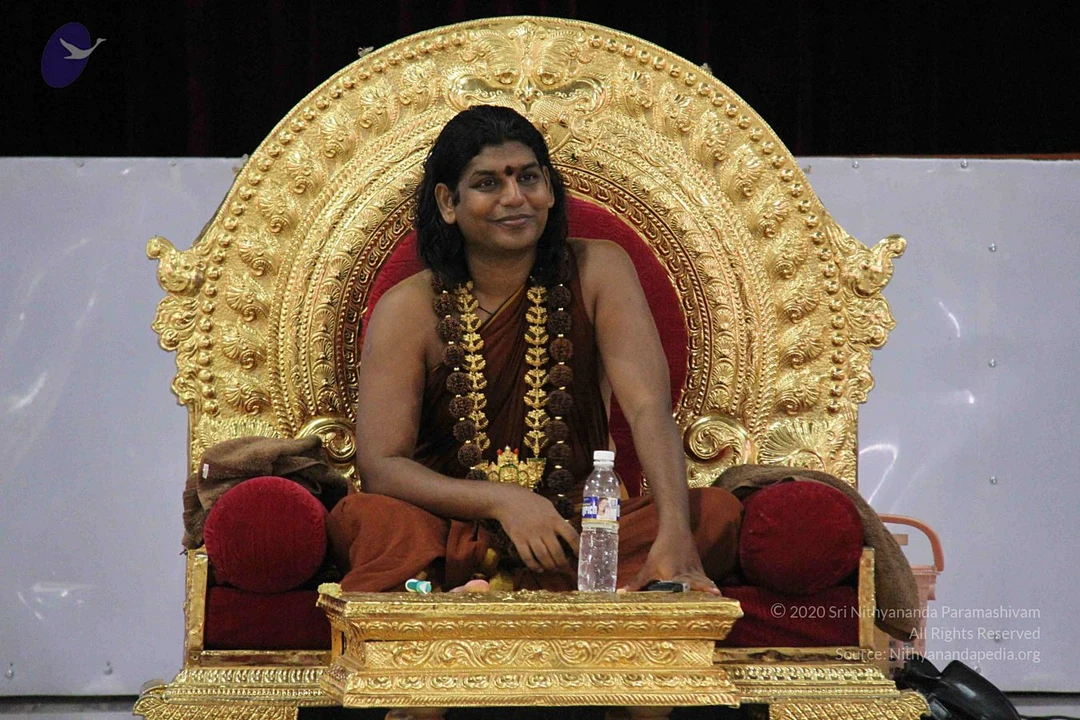
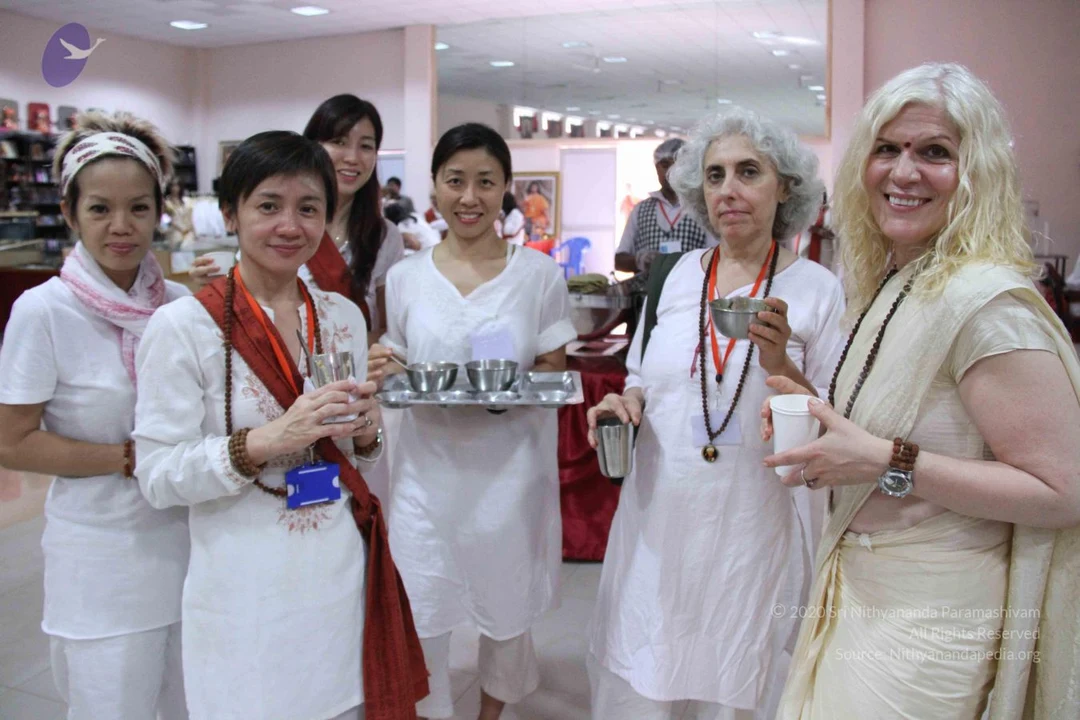
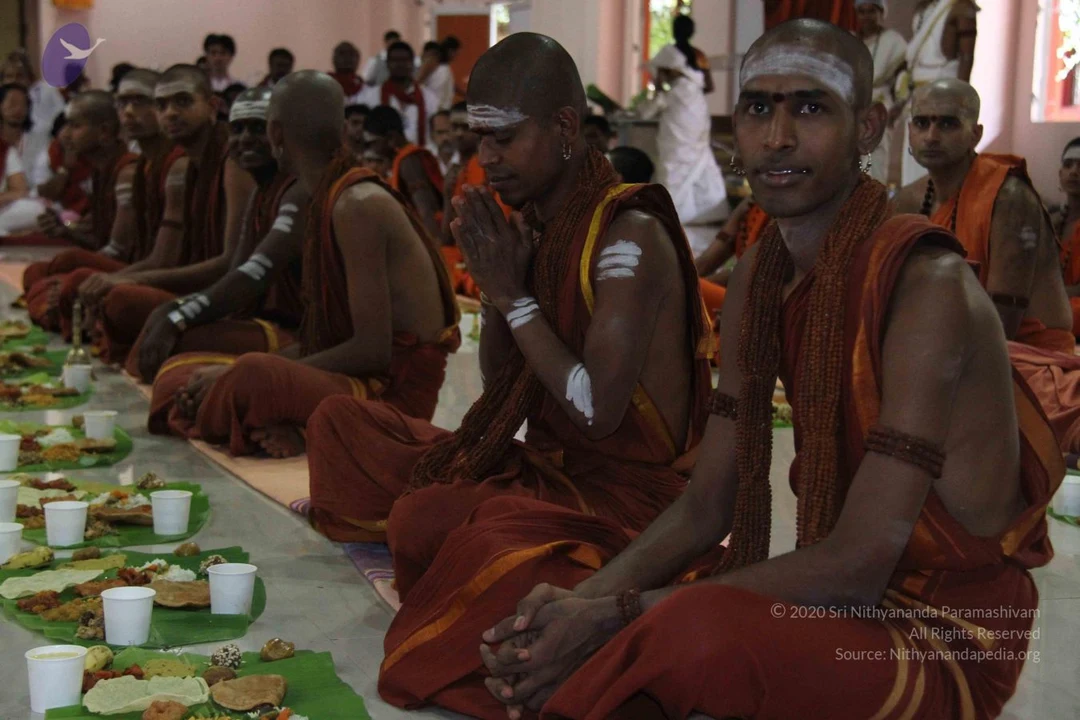
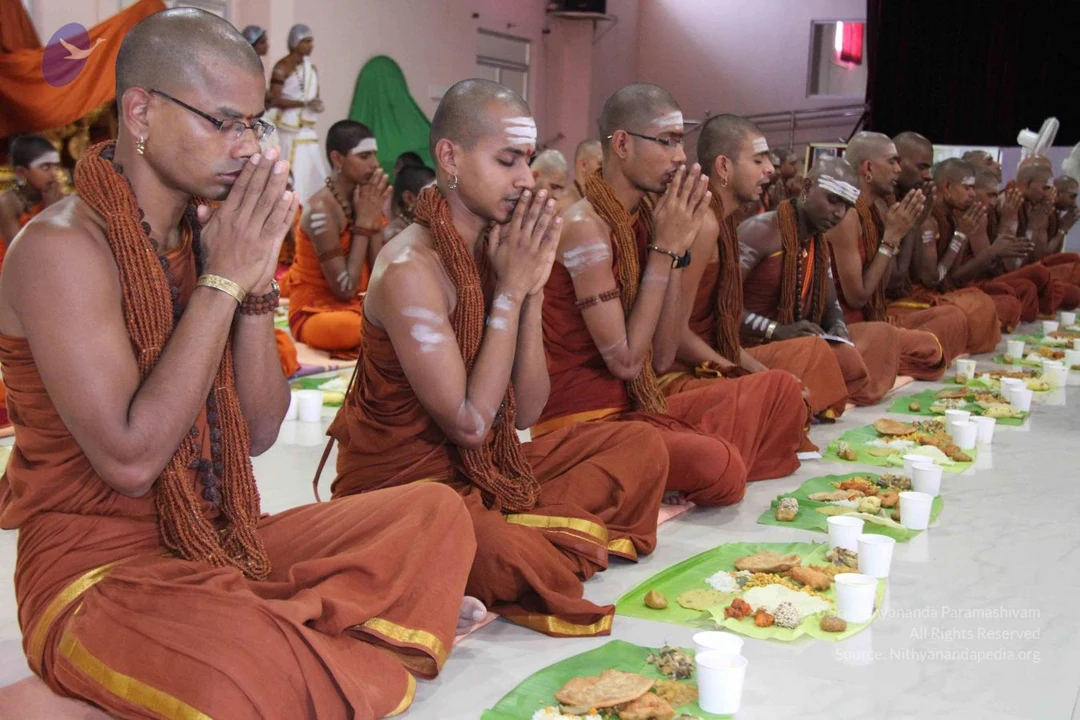
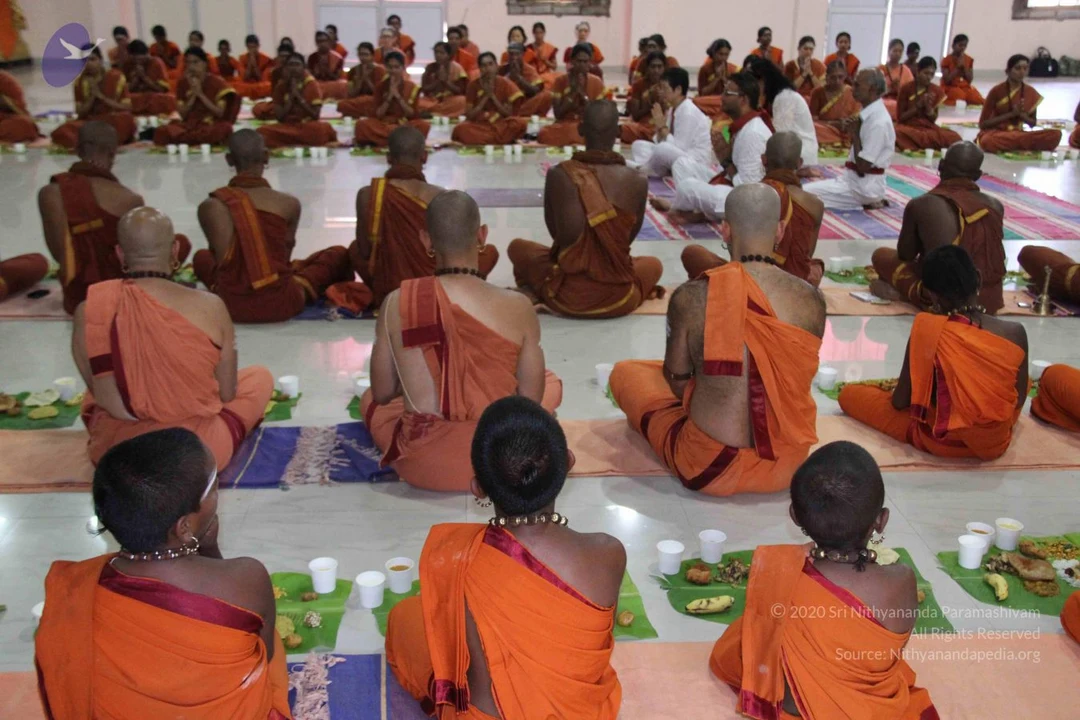
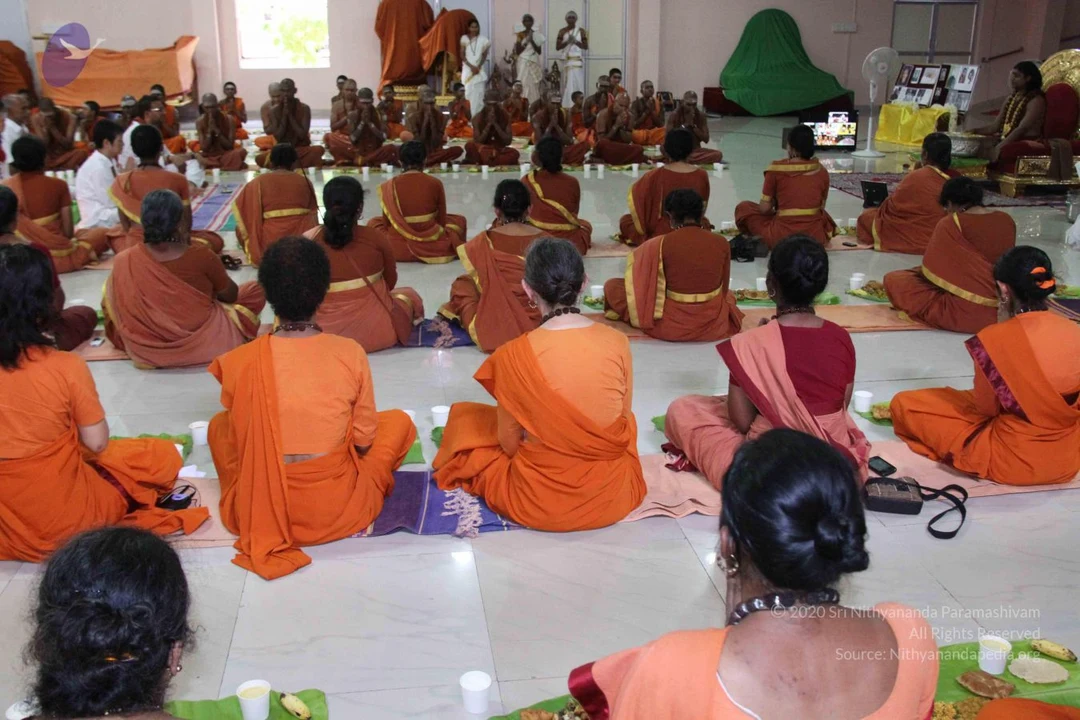
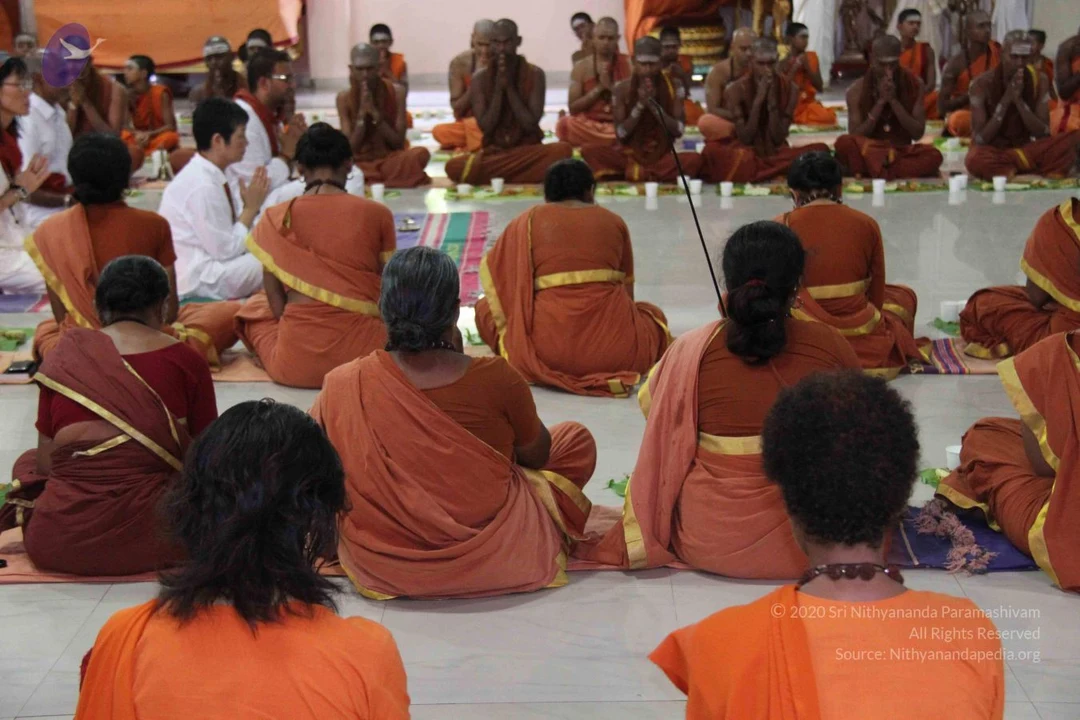
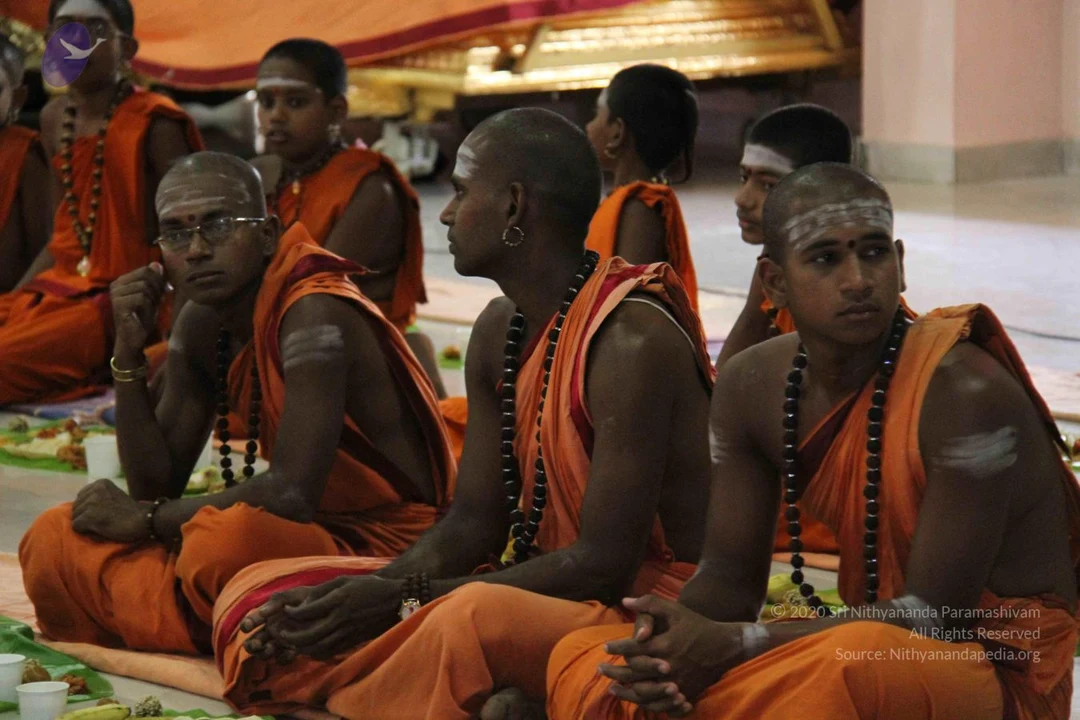
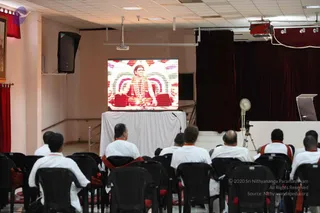
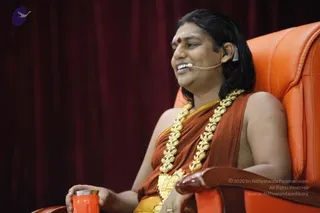
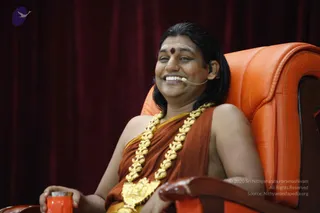
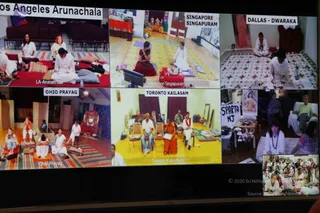
Devotees sit on red mats in a white-walled hall at a satsang, with rows of seated attendees behind white posts and chains. In the foreground, a young man in white kurta with a red-orange shawl sits cross-legged, and beside him an older man in white shirt and dhoti looks down at a phone while a younger man in white with glasses and a red lanyard badge sits on a chair. Behind them, women and men in white and red-orange clothing sit in rows, some with shawls and dupattas. A red curtain hangs in the background. No a person candidate is clearly visible.A photograph of a seated audience in white shirts with orange-red sashes, viewed from behind, watching a projection screen in a hall with red curtains and a stage. The projected image shows a seated figure in red and orange clothing with a beaded garland, flanked by red cushions, against a bright decorative backdrop. A white-draped table holds the screen, with a speaker on the left wall and a camera on a tripod near the stage. Chairs are black plastic.A man seated in a large orange leather armchair against a deep red curtain, smiling and looking to the side. He wears an orange-brown sleeveless garment with a mustard-yellow wrap, a heavy gold necklace of round beads, and a red bindi on his forehead. A small headset microphone is attached near his face and a red-and-silver tumbler sits in his left hand. Swamiji (probable): long, swept-back dark hair and ornate gold necklace with orange-brown ceremonial clothing, seated as a speaker at a satsang.A smiling person with long swept-back dark hair sits in a large orange leather armchair before deep red velvet drapes. He wears a rust-orange sannyasi wrap over a bare chest, a heavy gold ceremonial necklace of floral and leaf motifs, and a small red bindi on his forehead with white vibhuti markings. A headset microphone is at his mouth and he holds a small orange cup in one hand. Swamiji (probable): the long swept-back hair, ornate gold necklace, orange wrap and orange throne match the page's claim of his presence, so the candidate is an in-person figure seated in a satsang setting. Only one physical person is visible.A photograph of a smiling man seated in an orange leather armchair against a deep red curtain. He wears a saffron-orange cloth draped over his shoulders, a red bindi and white forehead markings, a headset microphone, and a long gold ornate necklace. He appears to hold a small object in his lap. The presentation includes long swept-back hair and ornate gold adornment, consistent with the page's reference to a satsang discourse, so this is a person (a person) candidate in person.A photograph of a large screen showing a multi-site video satsang with six live feeds in a grid. Tiles labelled LA-Arunachala, Singapore-Singapuram, Dallas-Dwaraka, Ohio-Prayag, Toronto-Kailasam and Sparta NJ show small groups of devotees seated on mats and cushions in meditation or satsang, many in white clothes. In the Toronto feed, a man in a white shirt sits beside a woman in an orange sari, and a man in a white kurta sits in a chair. A small inset at bottom right shows a crowd of seated devotees in white. Printed copyright text overlays the lower right of the screen.
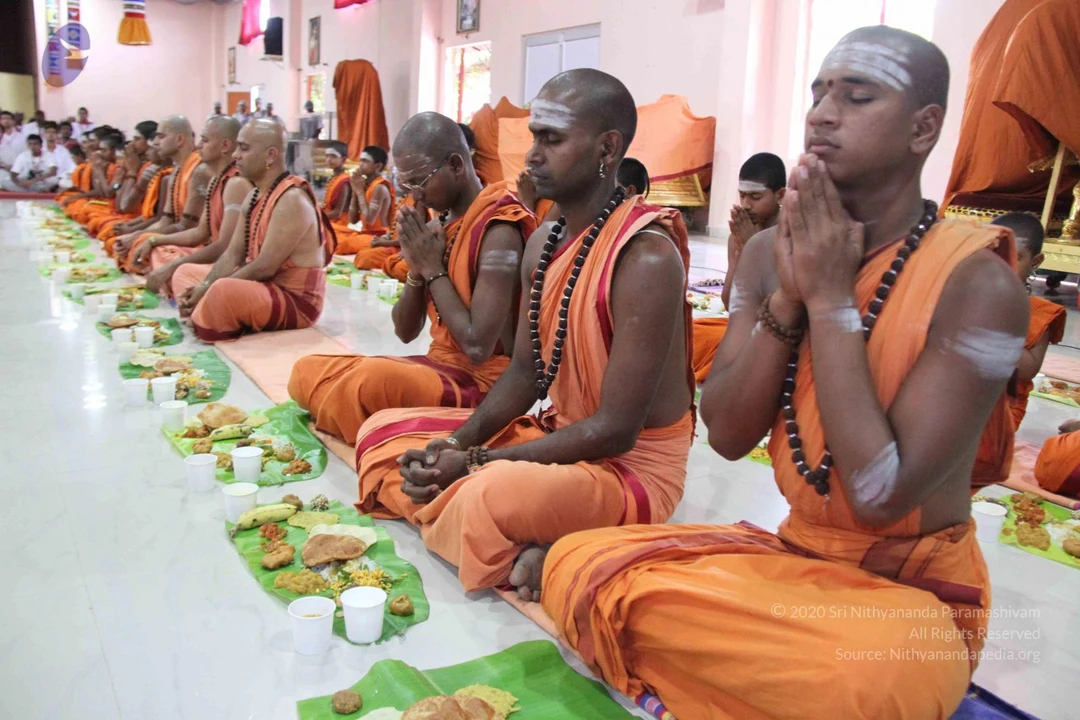
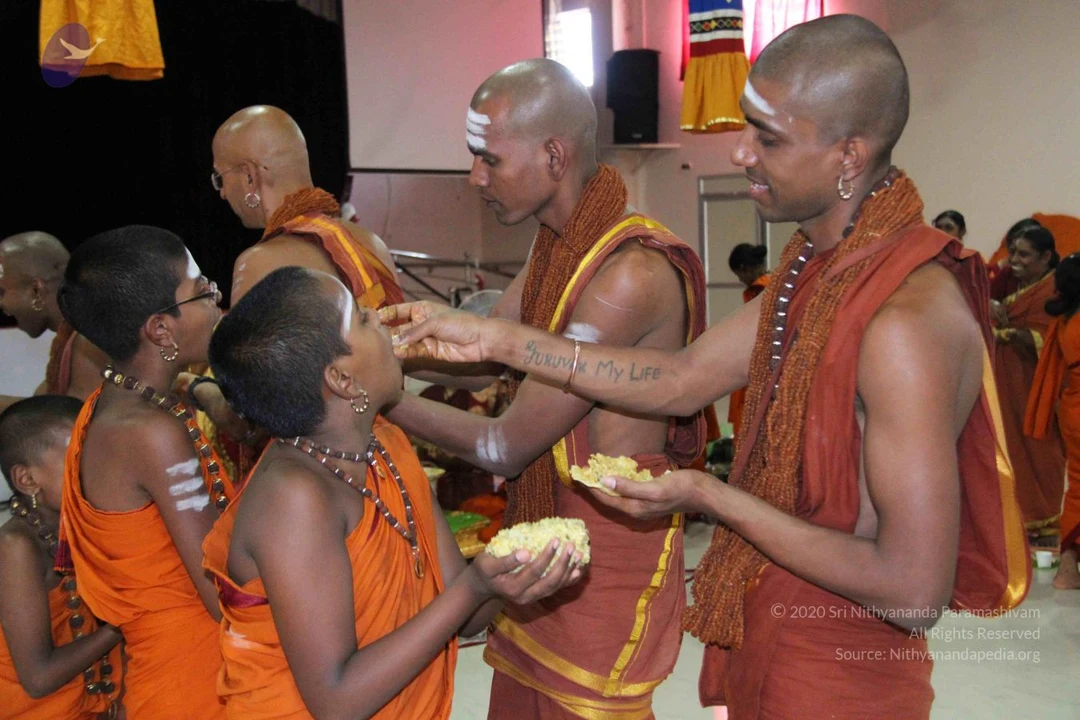
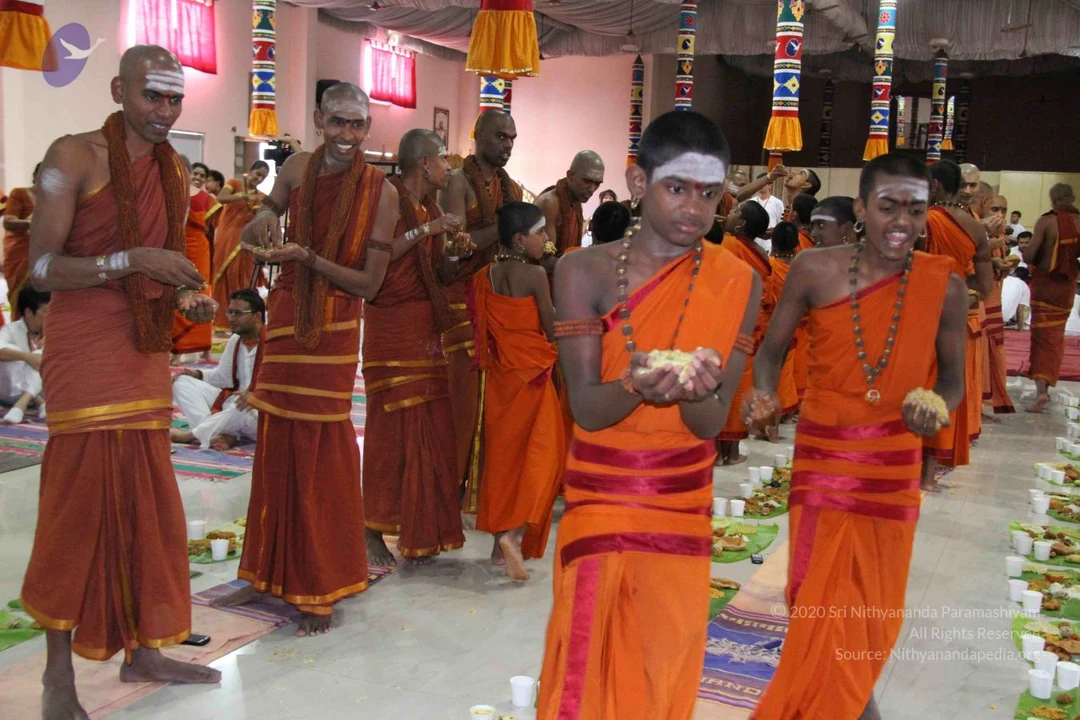
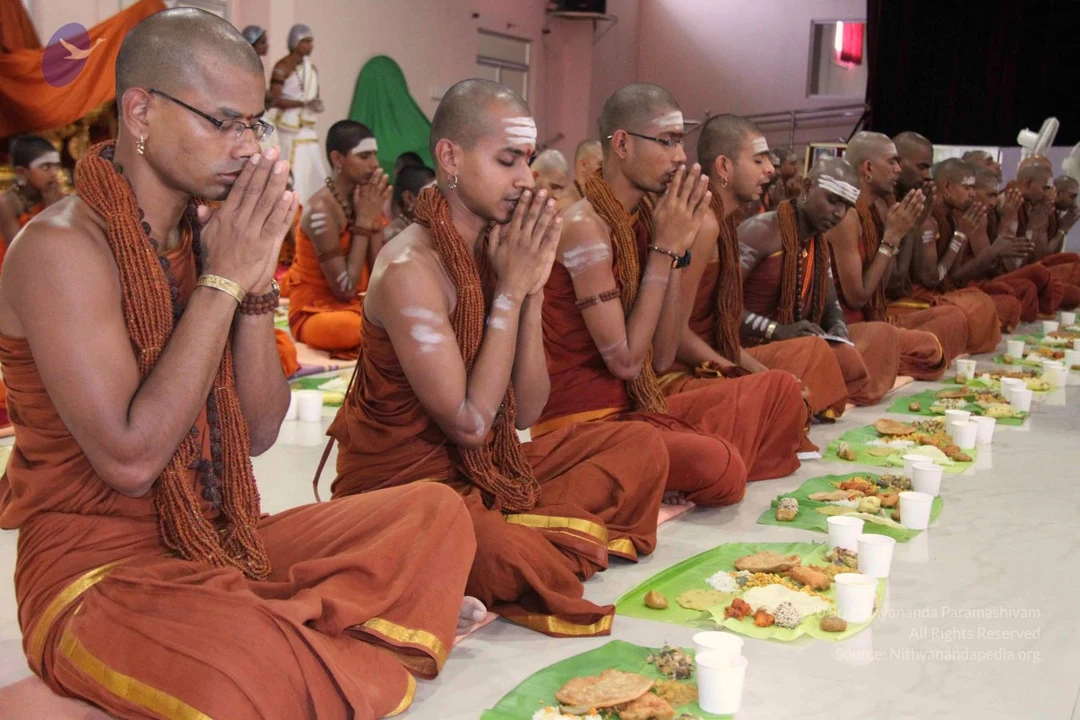
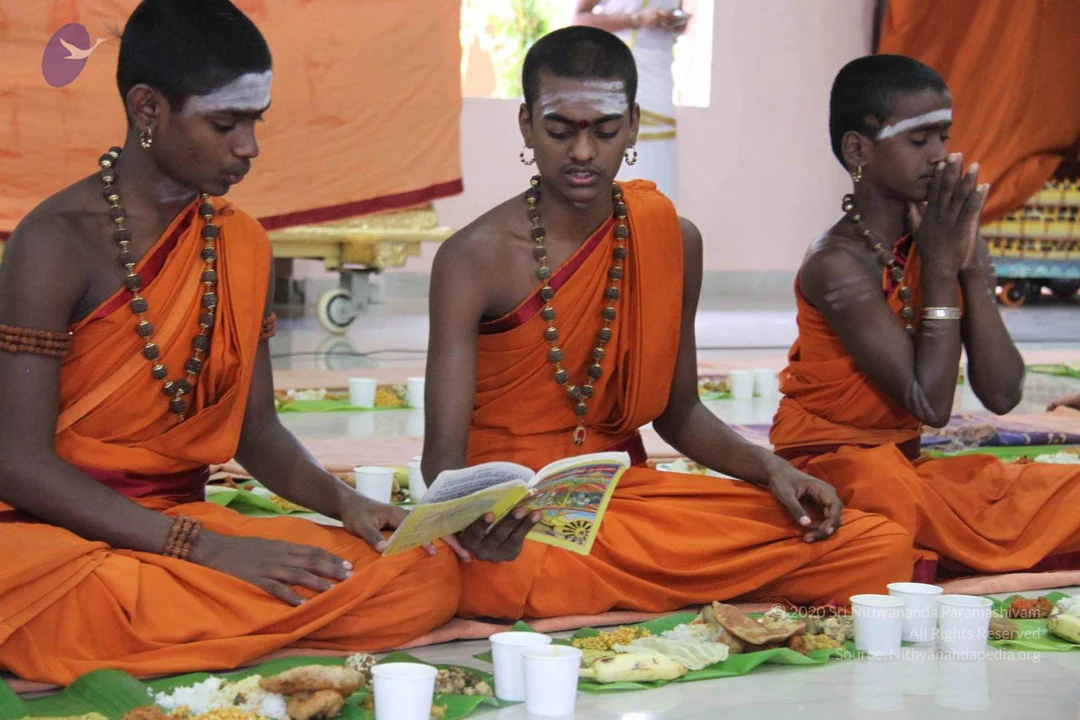
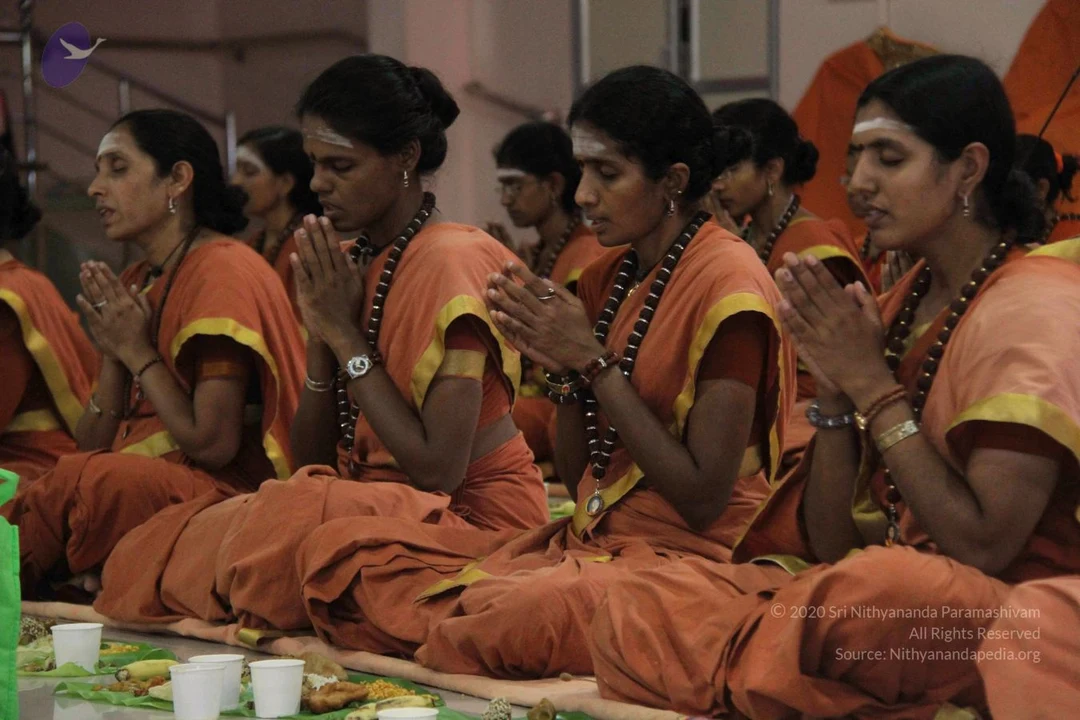
Maheswara-Puja
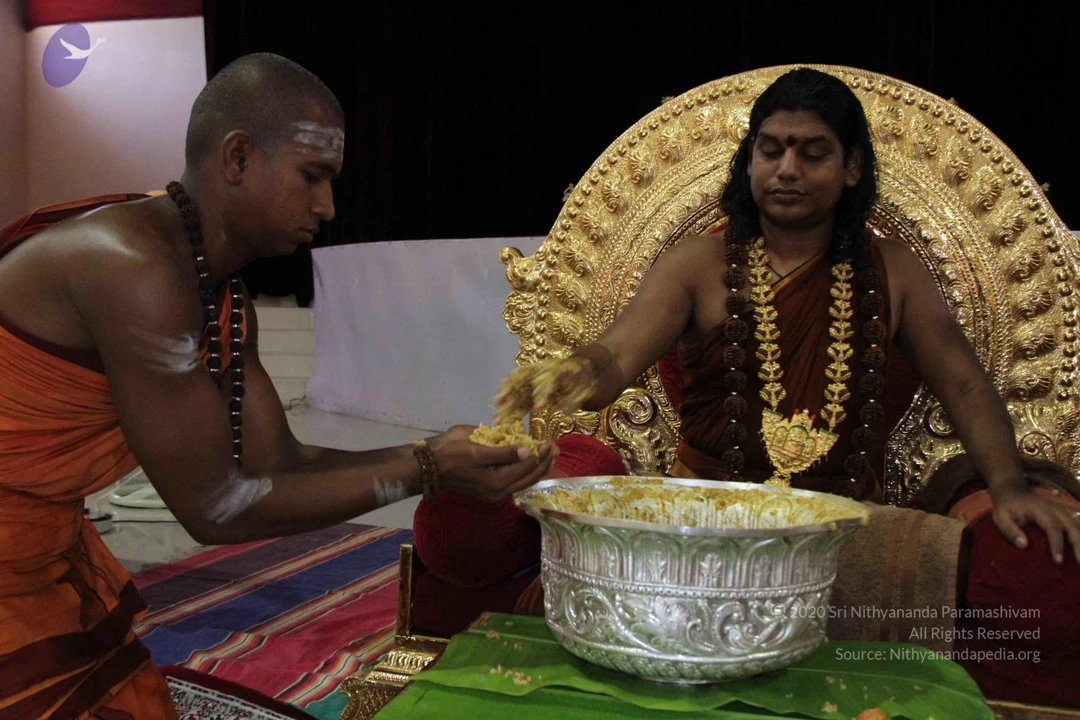
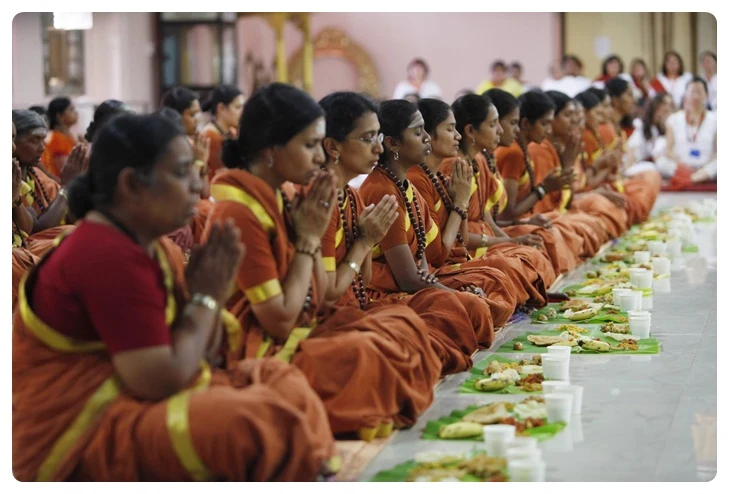
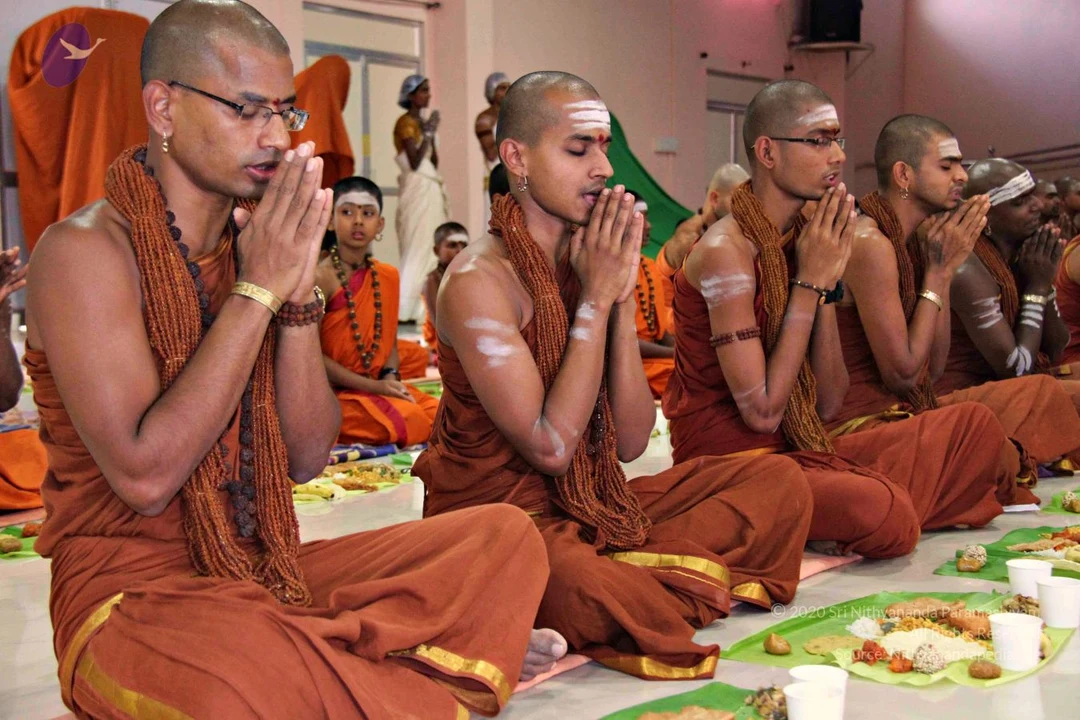
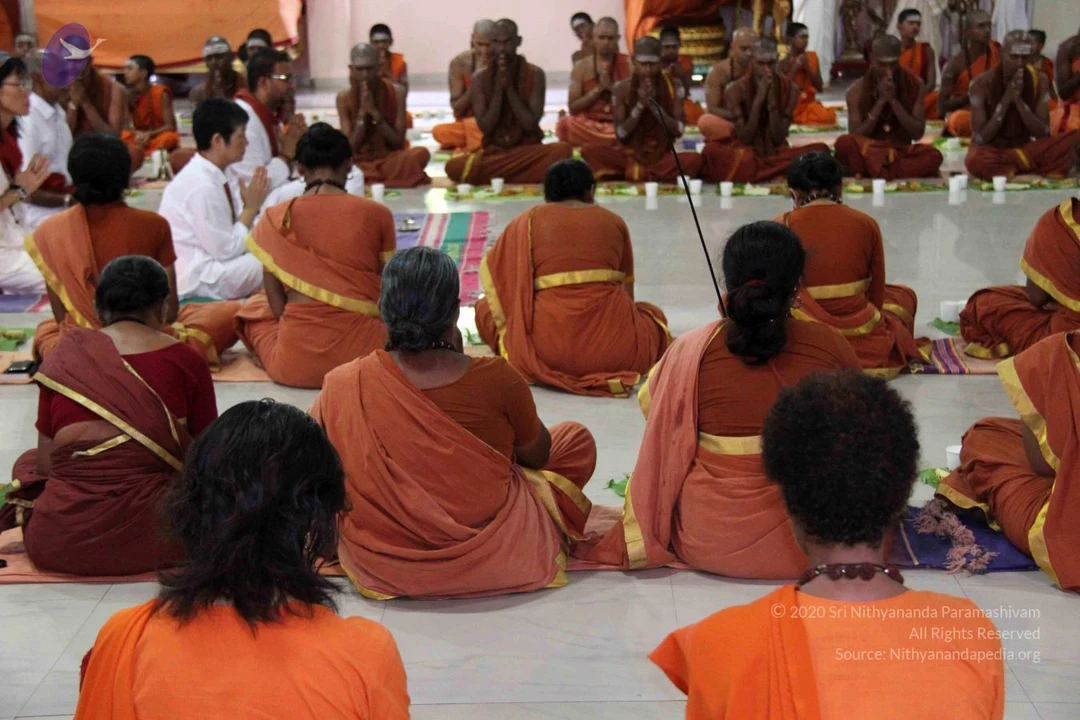
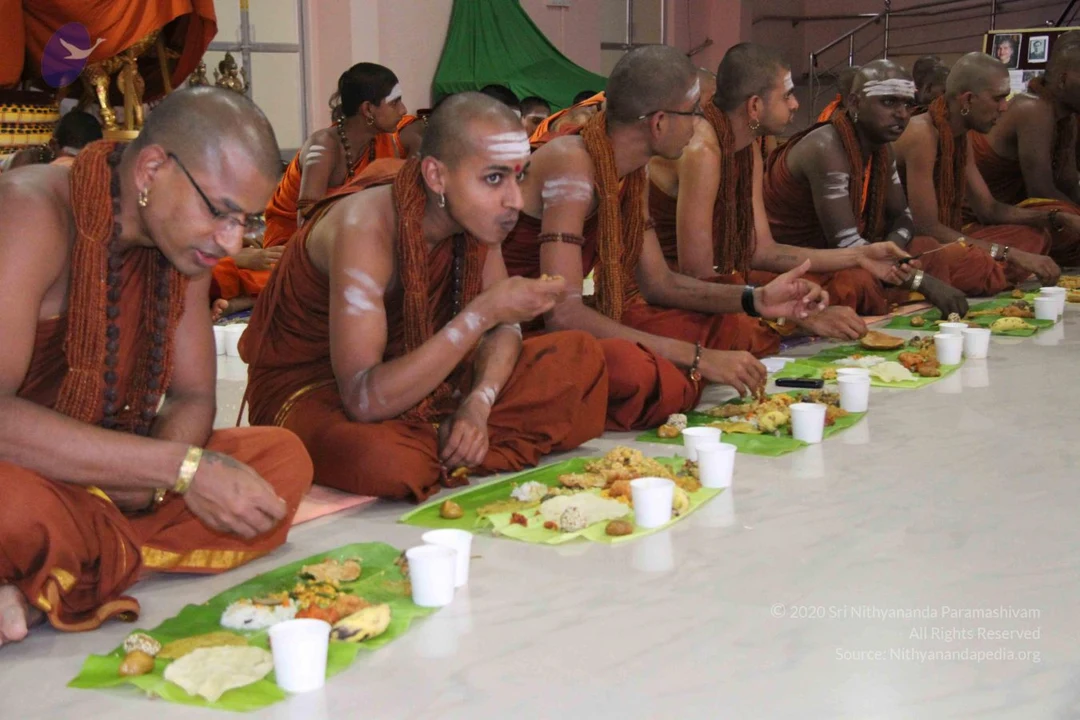
63 photosSource gallery
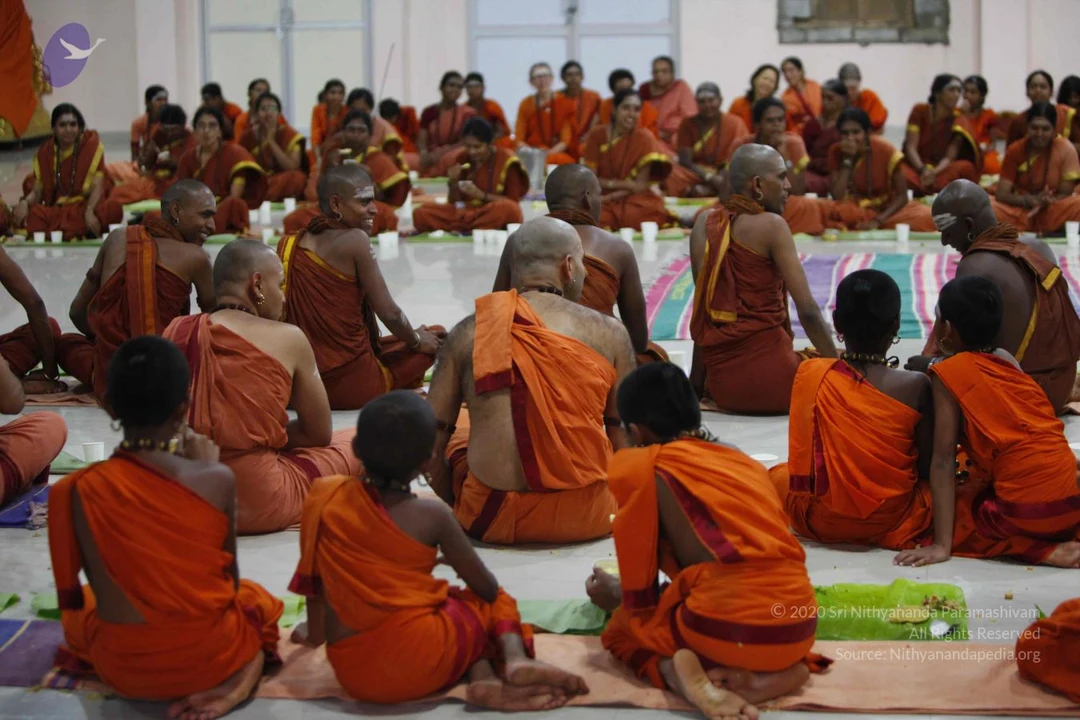
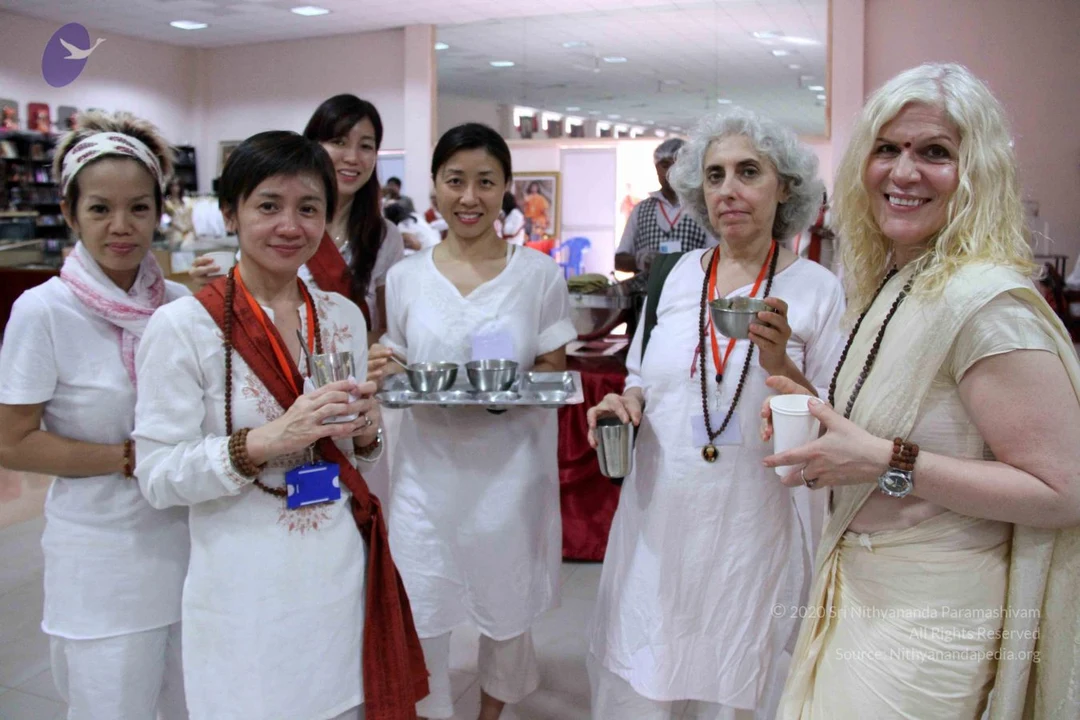
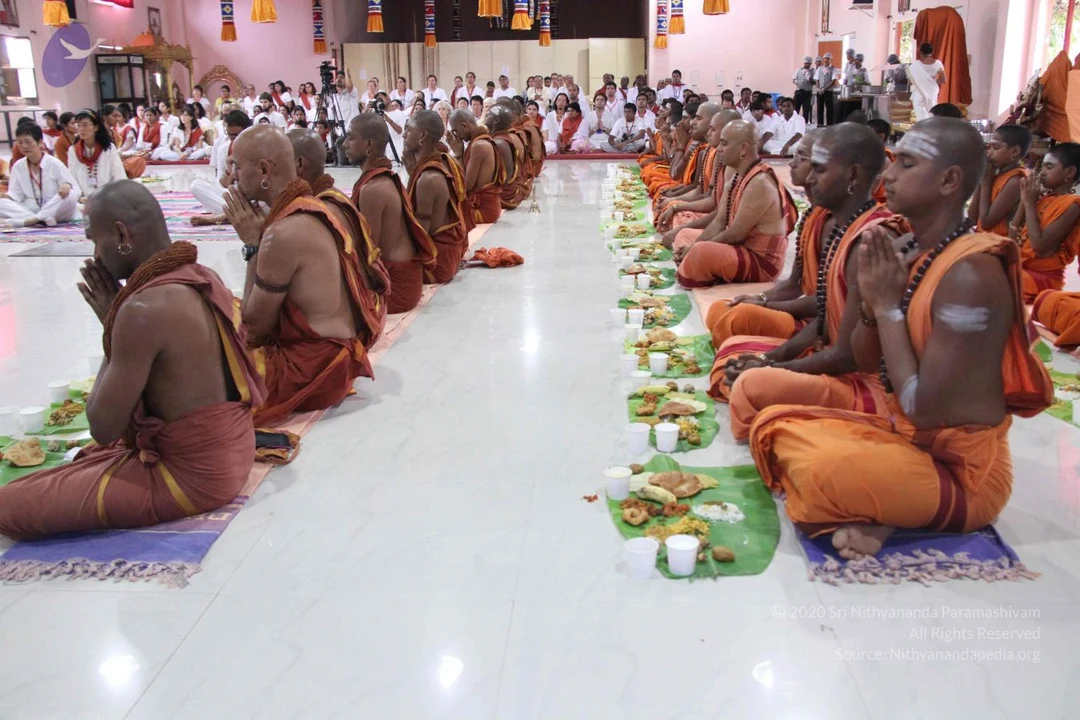
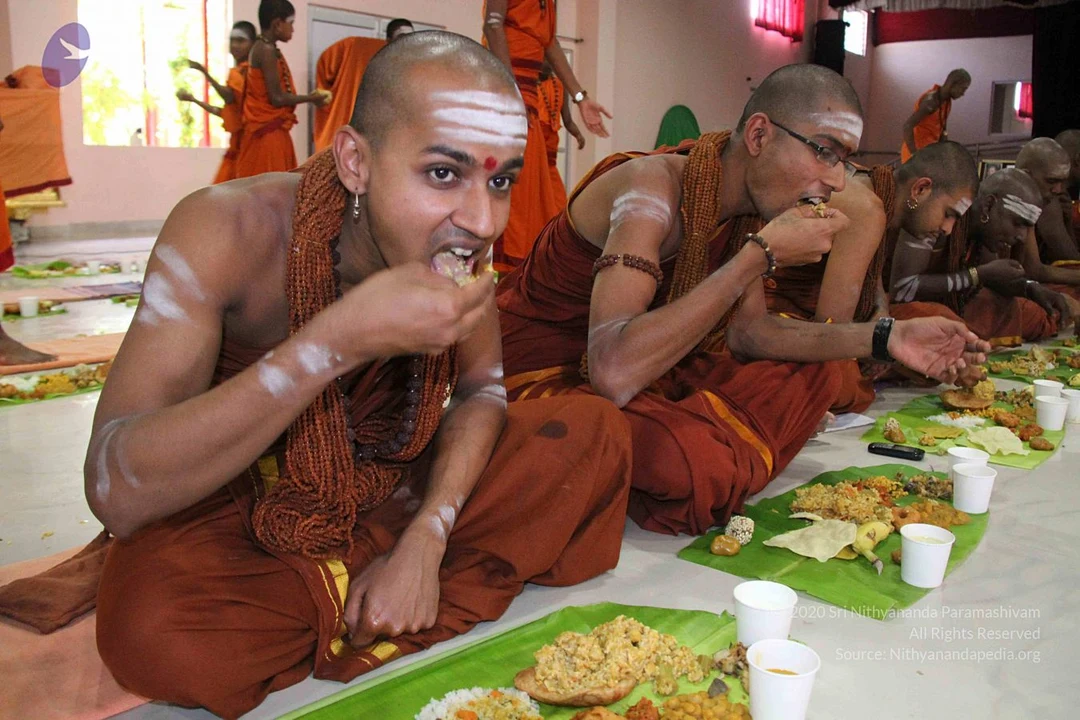
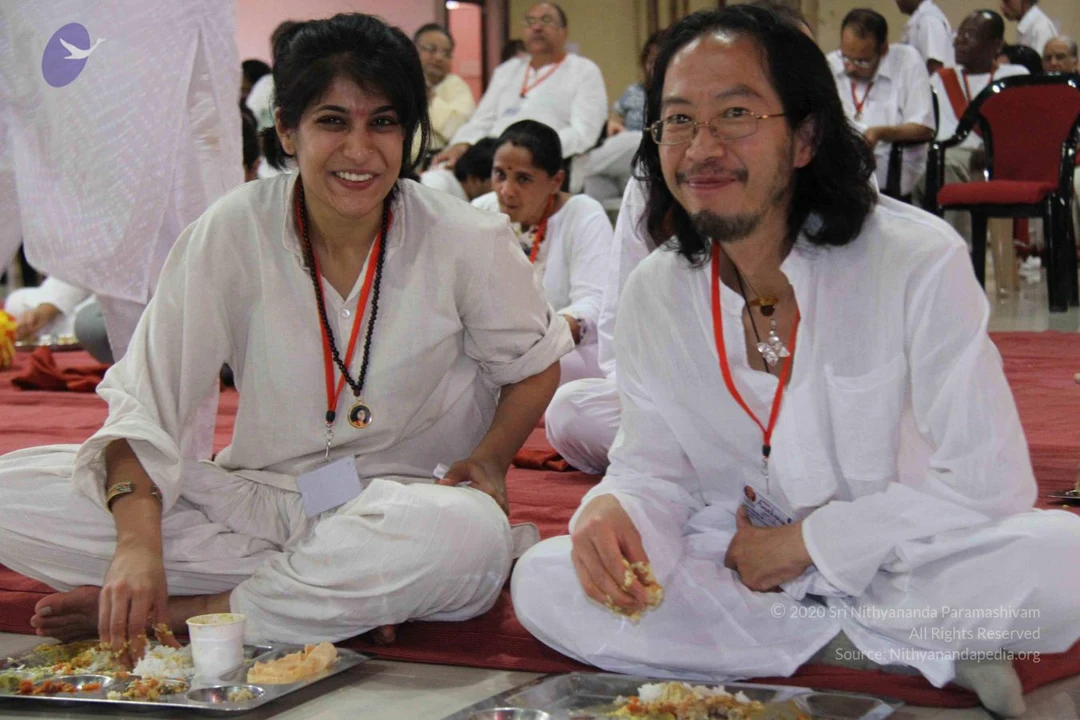
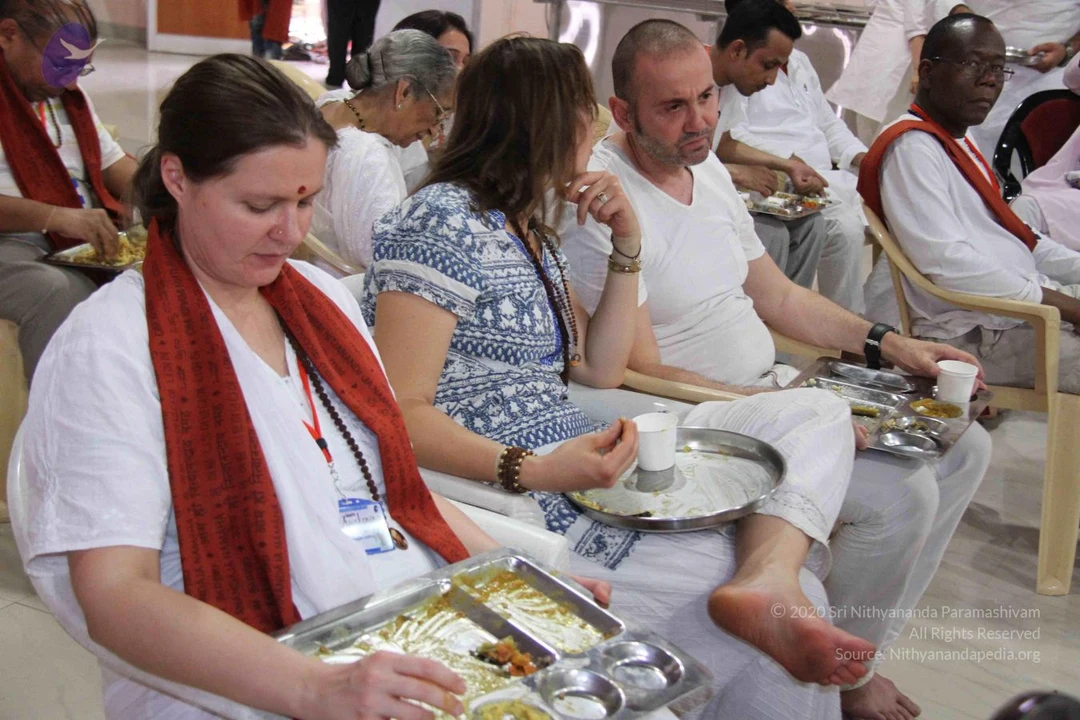
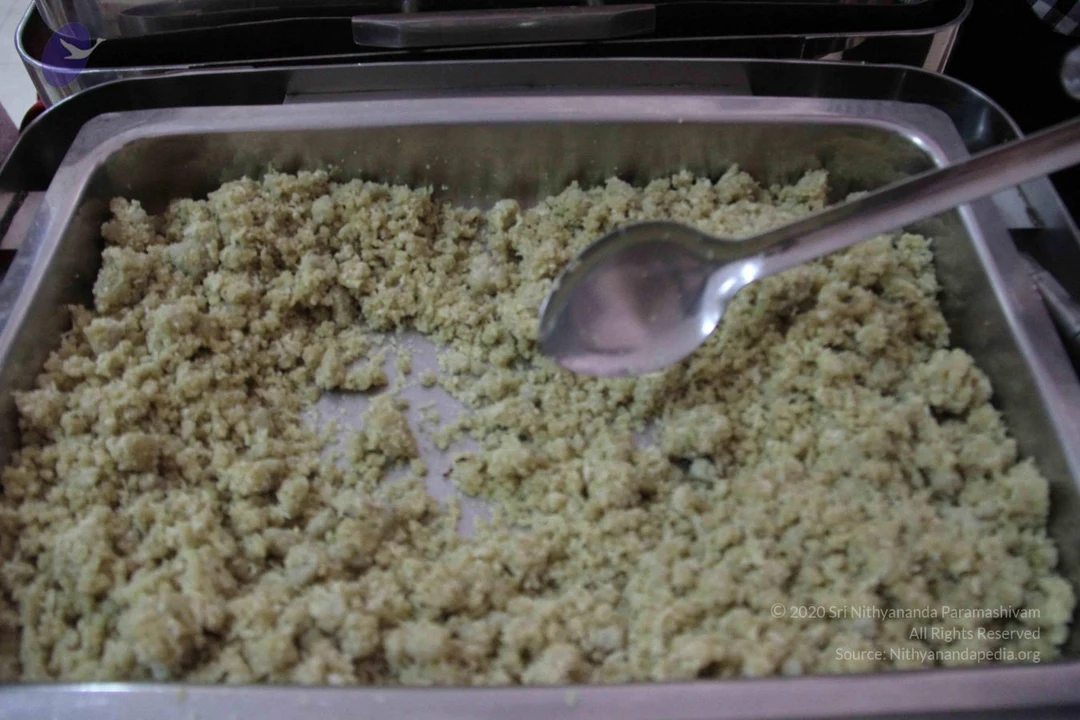
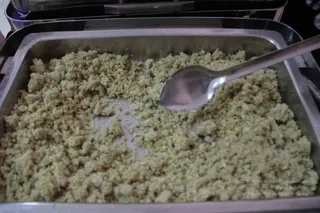
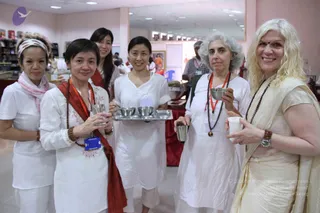
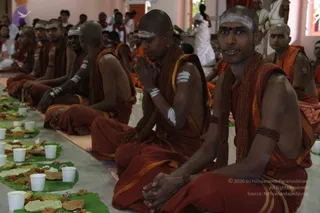
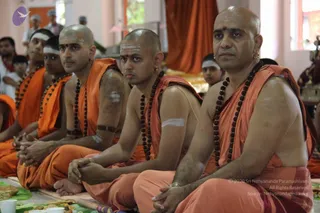
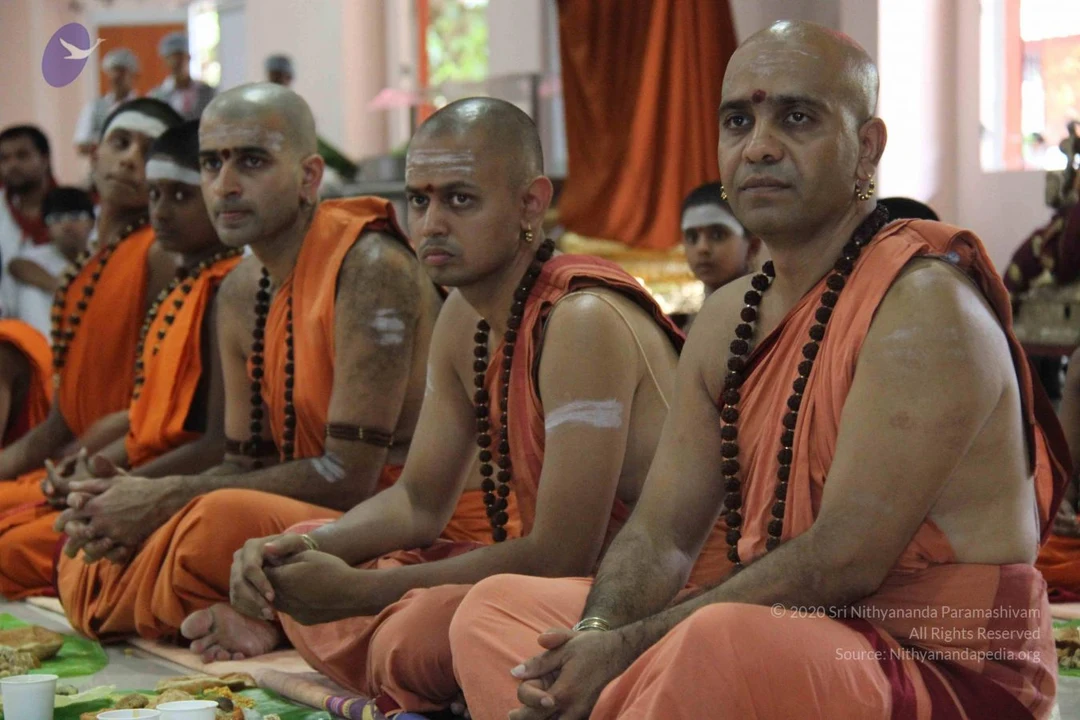
A close-up of a stainless steel chafing tray filled with a crumbly, pale green-grey food. The tray sits on a steel warming stand. No people are visible; the scene is a food serving setup, not a ritual or portrait.A photo of five smiling women in an ashram dining or store area with pink walls and shelves of items behind them. From left: a woman in a white top and white pants with a pink-and-white headscarf; a woman in a white kurta and red shawl with a blue ID badge and wooden mala; a woman in white holding a steel tray with small steel bowls; an older woman with grey hair in a white kurta, wooden mala and orange lanyard, holding a steel bowl; and a woman with light blonde hair in a cream sari with a rudraksha mala, holding a paper cup. Another person in white stands in the background near a red-draped table.Photo of a seated meal in a hall with saffron-robed sannyasi men sitting in rows on the floor, hands folded in namaste at the front. Men wear orange and saffron dhotis and shawls, rudraksha malas, and white tripundra markings on their foreheads and arms. Green banana-leaf plates hold food such as flatbreads and sweets, with paper cups beside them. Background shows more seated devotees, some in white clothing.Four shaved-headed men in saffron-orange robes sit cross-legged on a floor in a temple hall, with white ash markings on their arms and foreheads and rudraksha malas around their necks. The man in front right wears gold earrings and a red kumkum dot, and sits with hands folded in his lap. Behind them are an orange curtain, a seated devotee in a white headband, and a few other people, with banana leaves and cups in the lower left. The group appears to be attending a satsang or ritual gathering.A photograph of a long row of seated monastic devotees in saffron-orange robes, many with bare upper bodies or light wraps, hands pressed together in prayer with closed eyes. Several wear rudraksha malas and white vibhuti tripundra marks on their foreheads. They sit on mats in a white-floored hall before green banana-leaf plates holding rice, fried snacks, vadas and sweets, with white paper cups of liquid placed along the leaves. Behind them, orange cloth hangs and a golden seat is visible in the background. No individual is clearly identified as a person in this frame.A photograph of a long row of shaven-headed men in saffron-orange dhotis and shawls seated cross-legged on mats in a white-floored hall, many with hands folded in anjali. Several wear rudraksha malas and white tripundra marks on their foreheads. Before them are banana leaves set with food, small paper cups and offerings. Behind them, people in white clothes sit in rows, and a few young children in orange sit at the right edge. Saffron drapes hang on the wall at the back. The scene resembles a sannyasi group meal and satsang.