Skip to content
Tuesday

9 July 2013

Dated photos
415
Source pages
1
Media
2
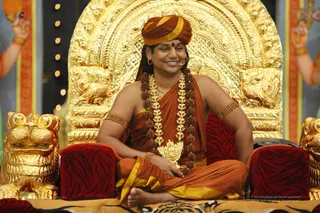
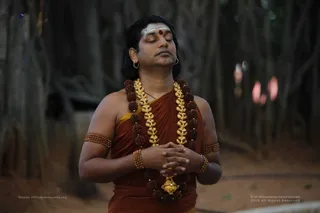
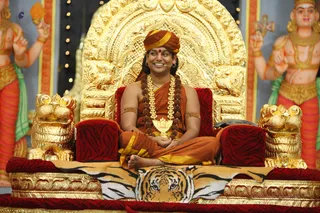
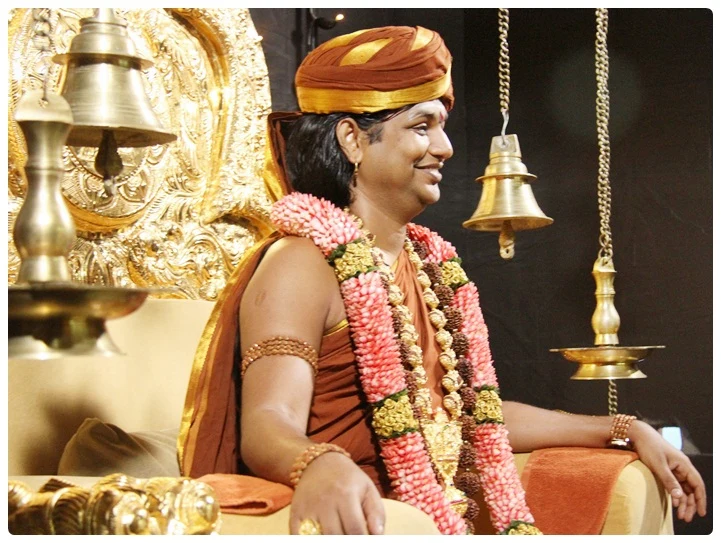
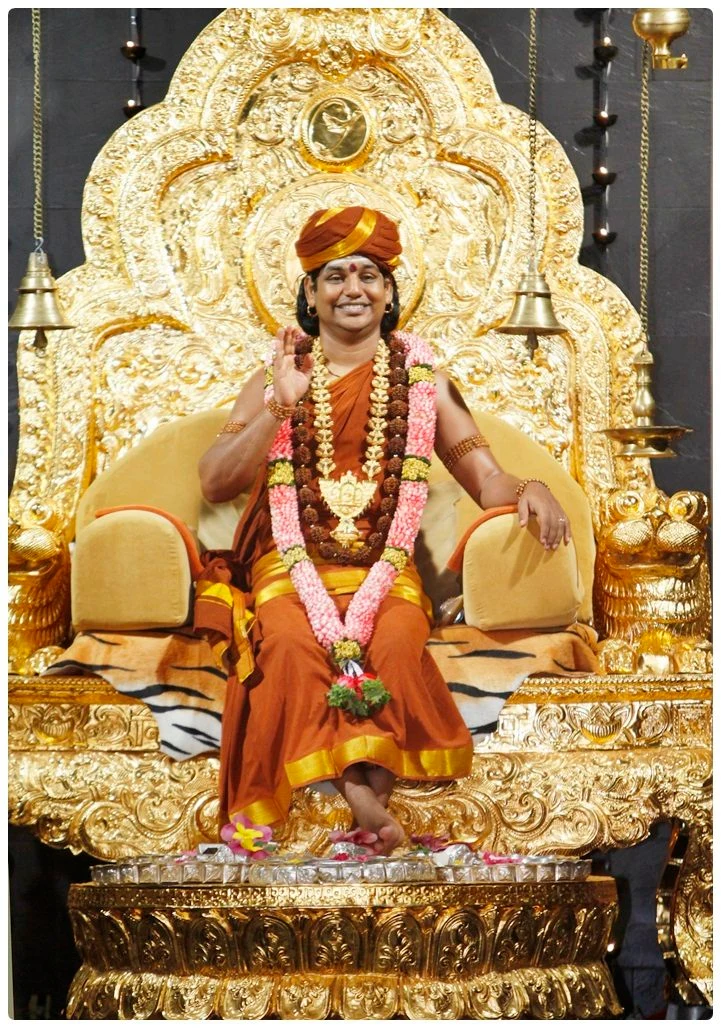
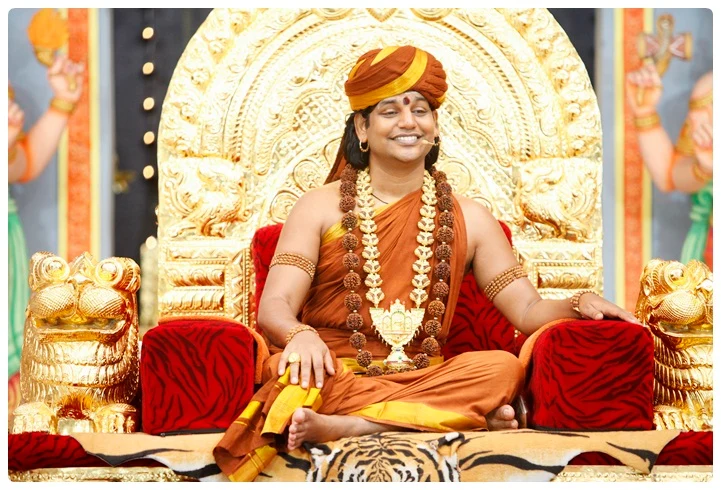
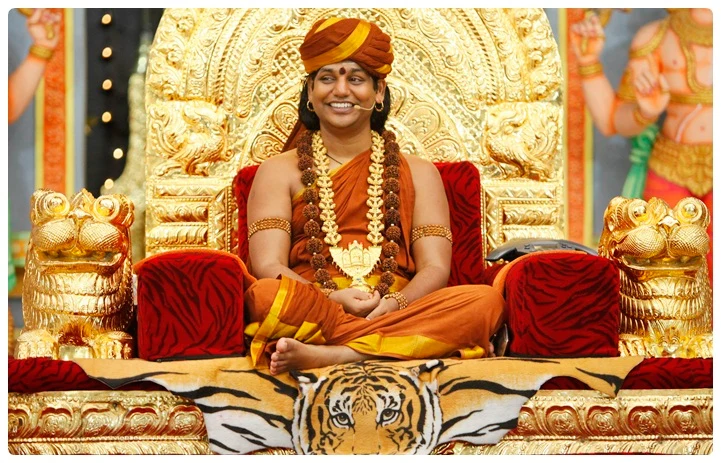
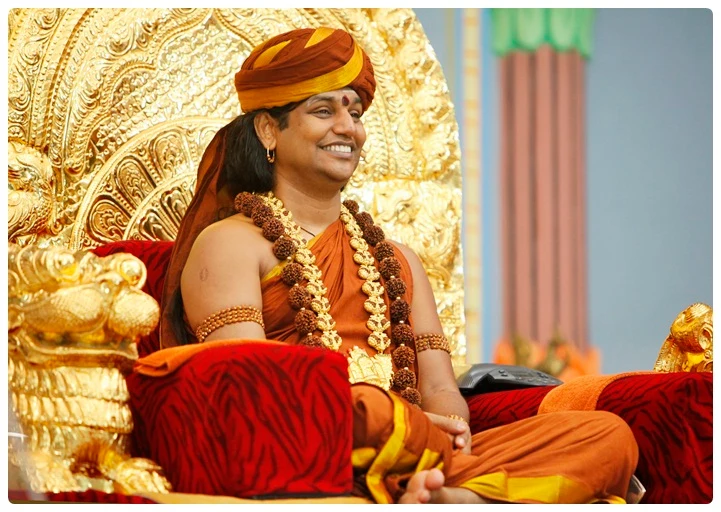
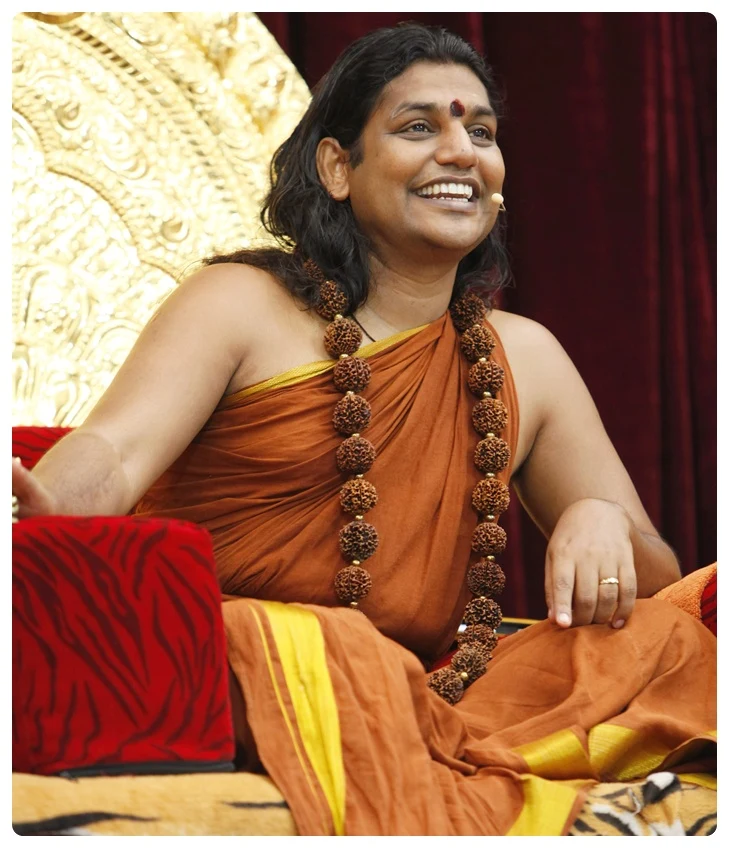
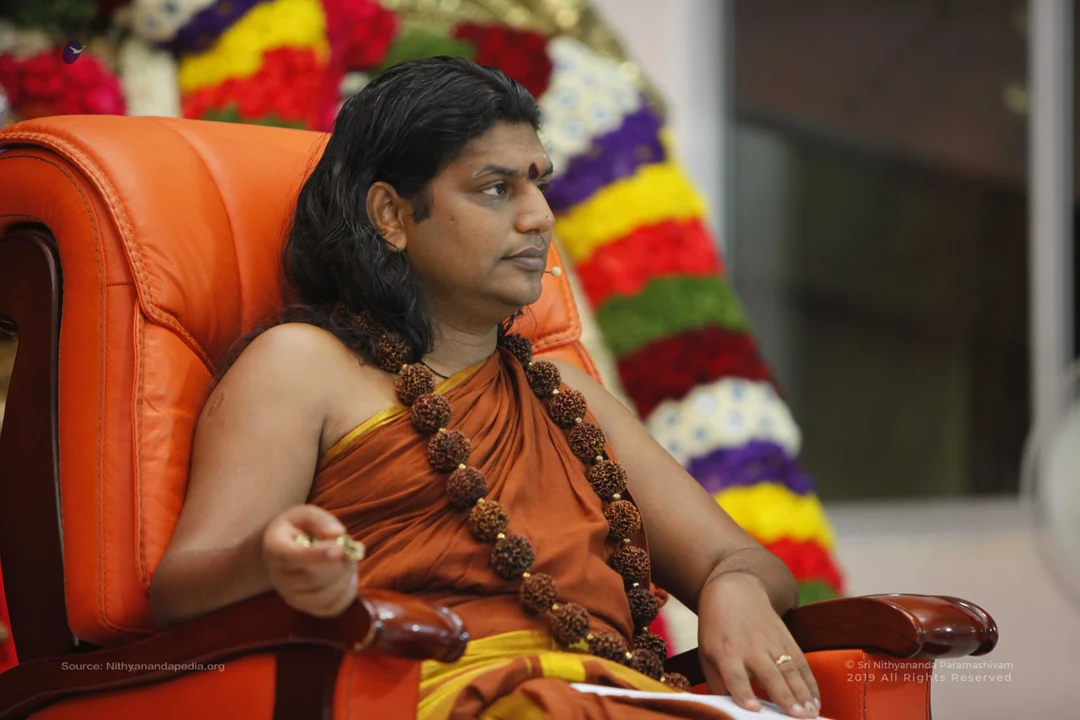
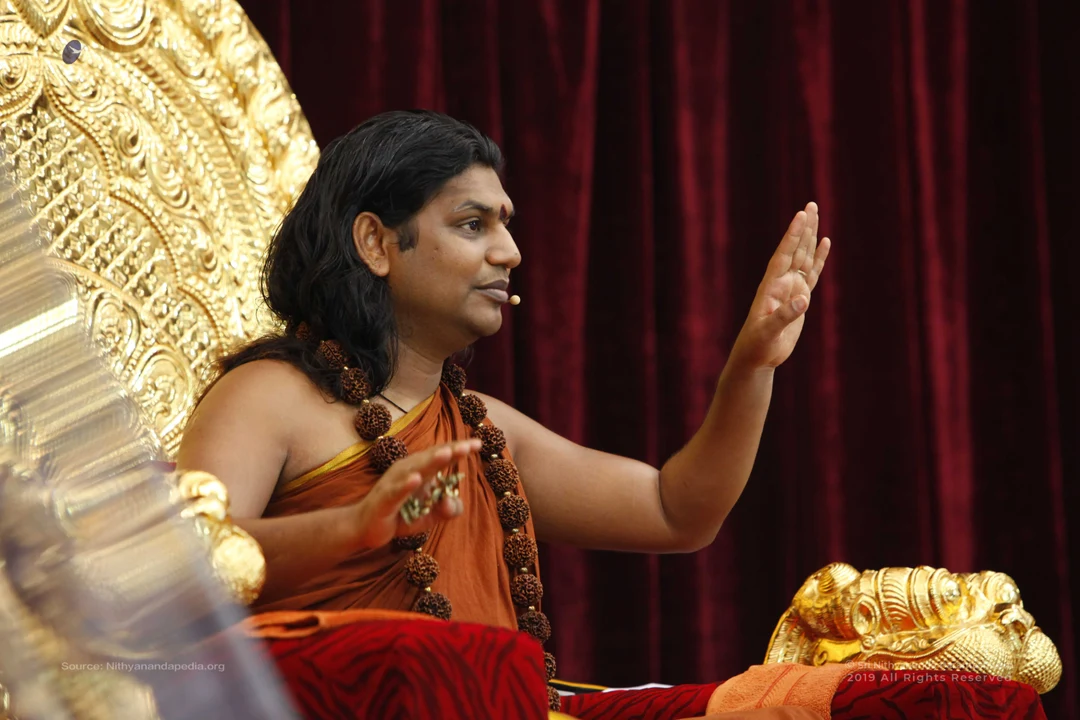
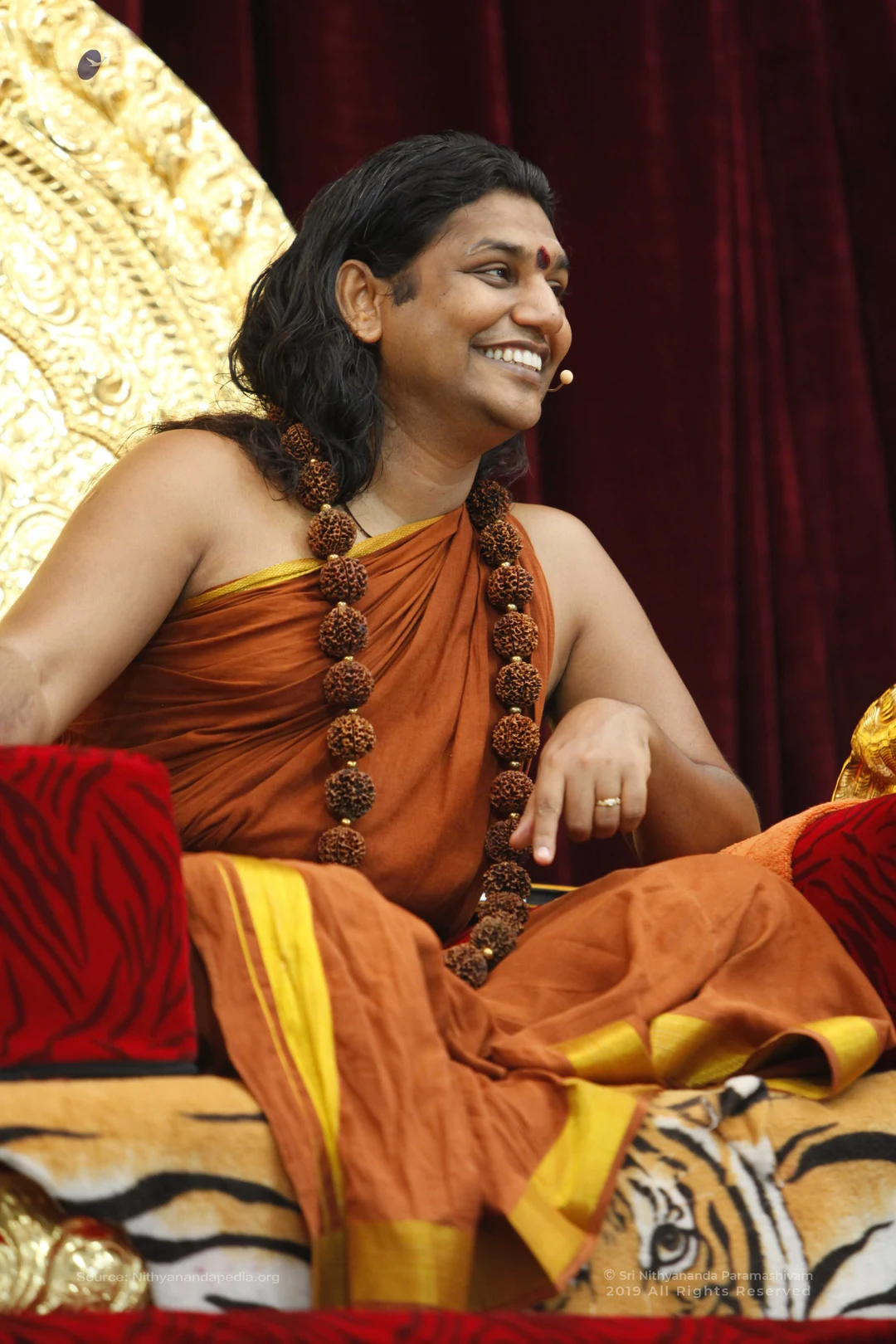
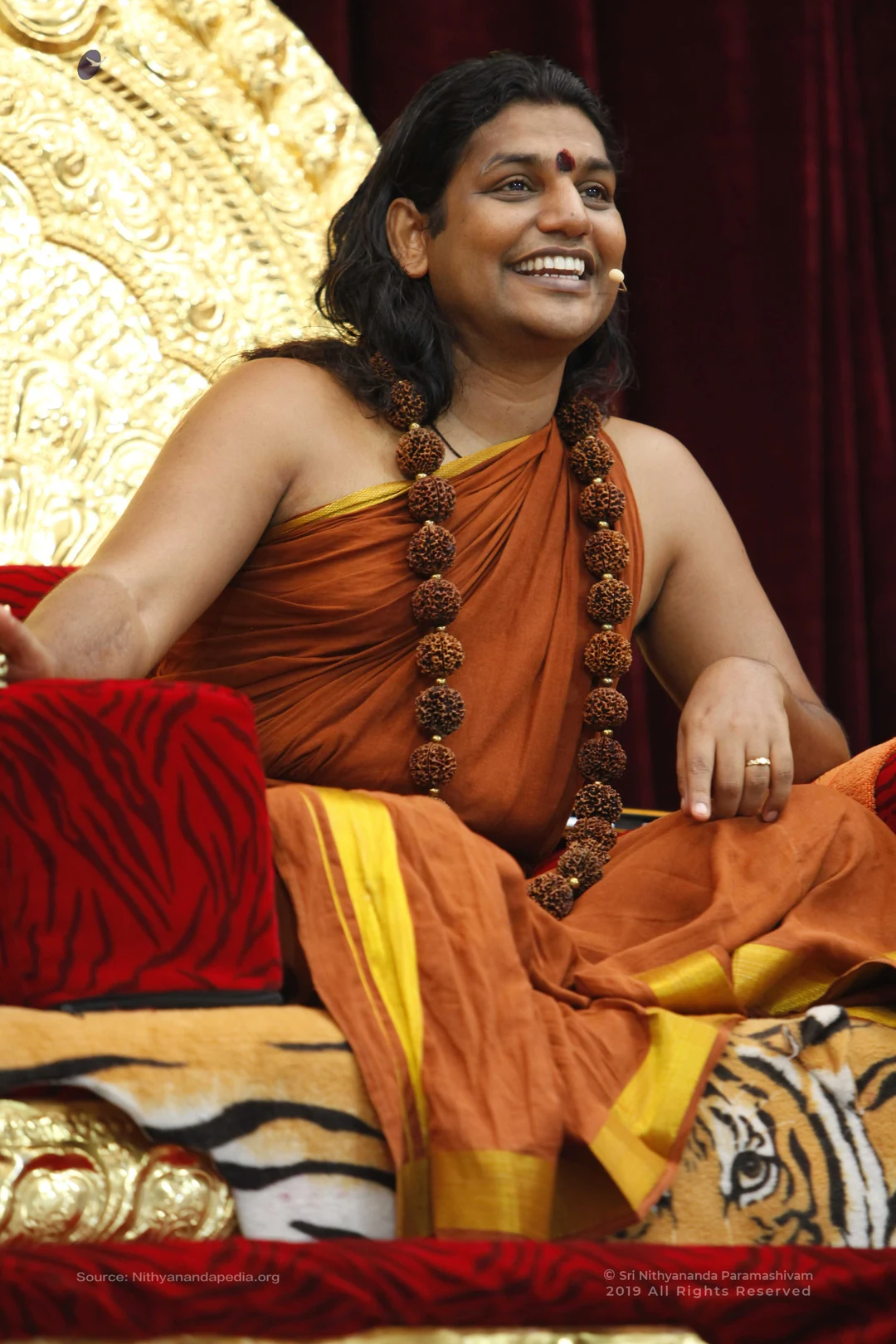
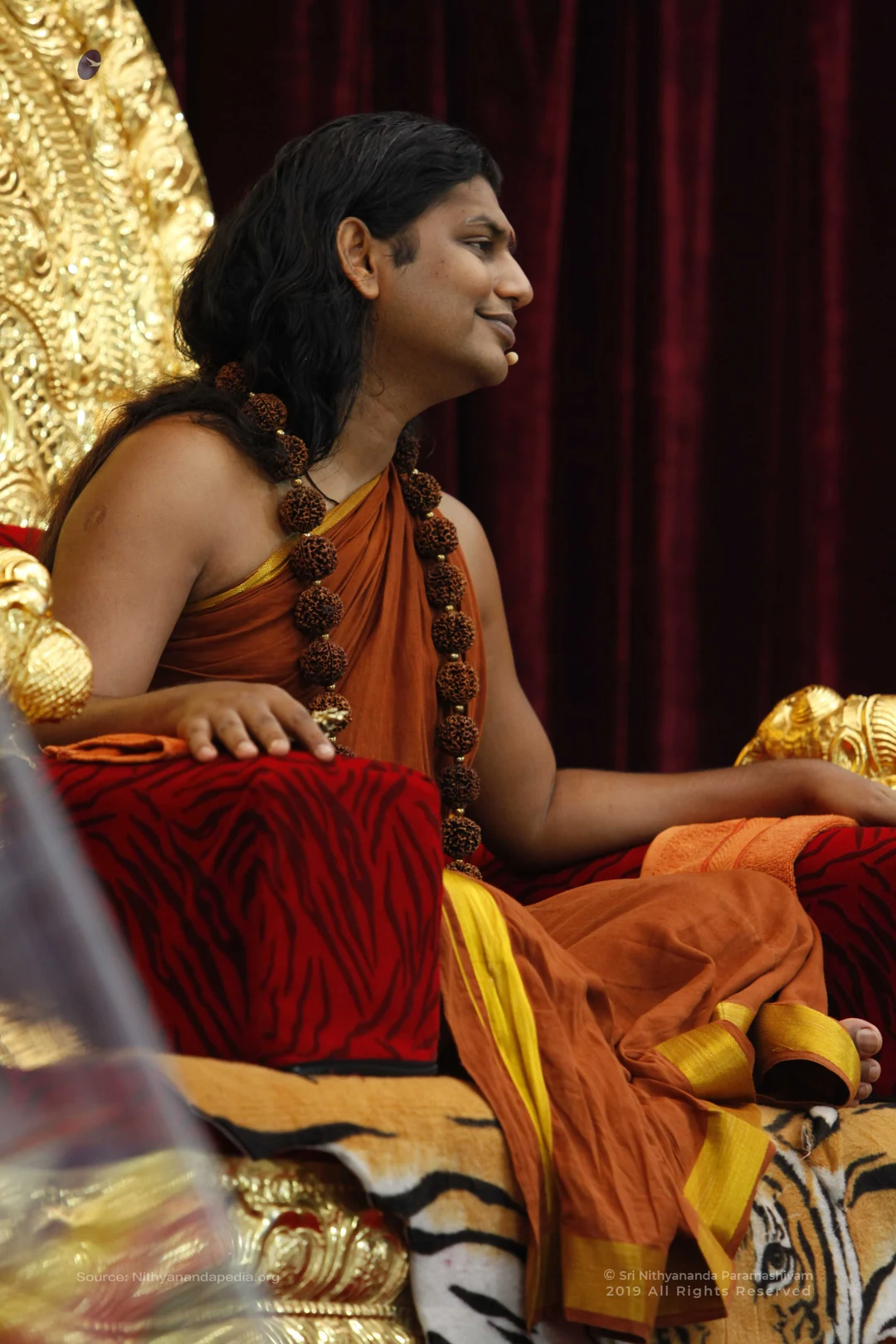
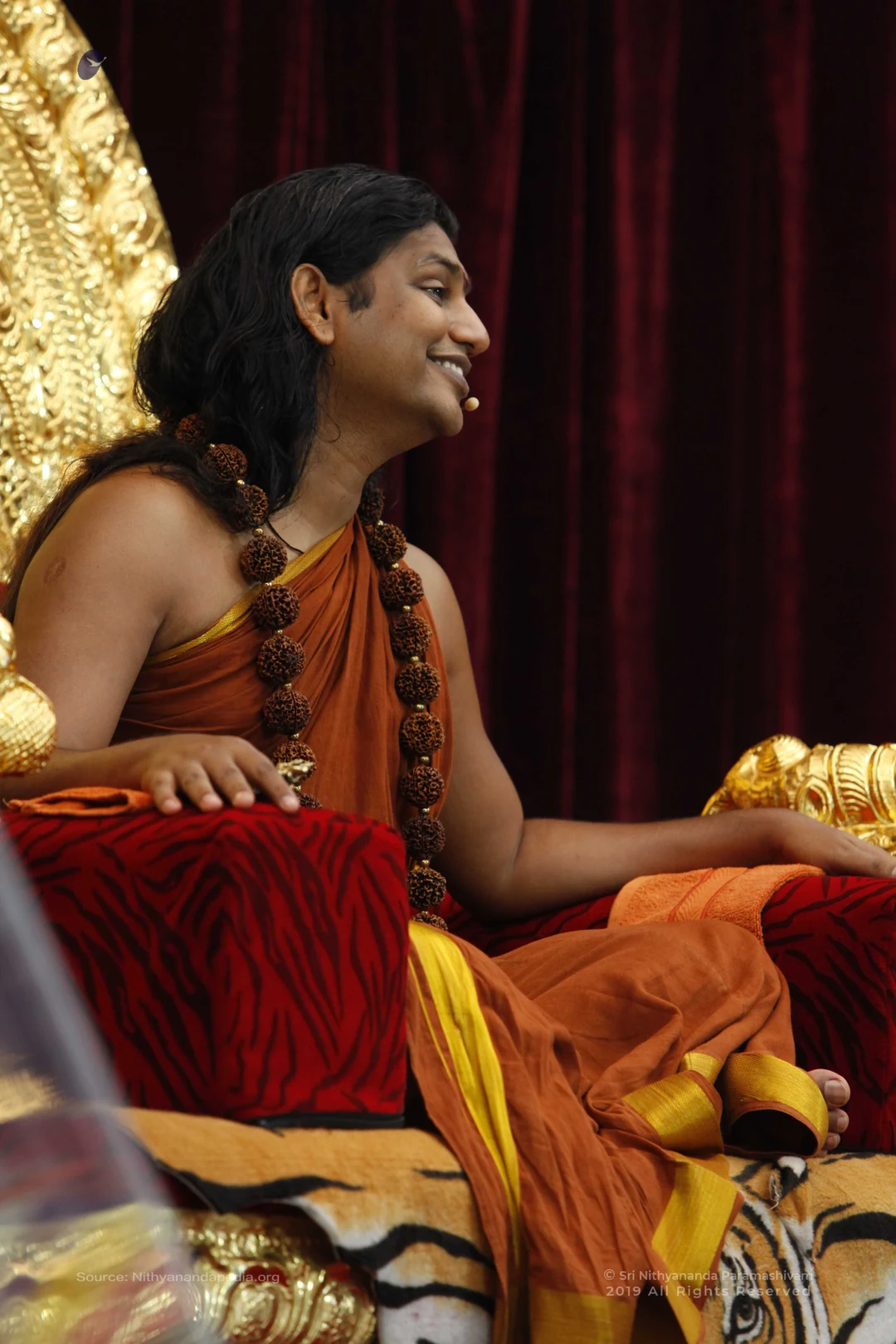
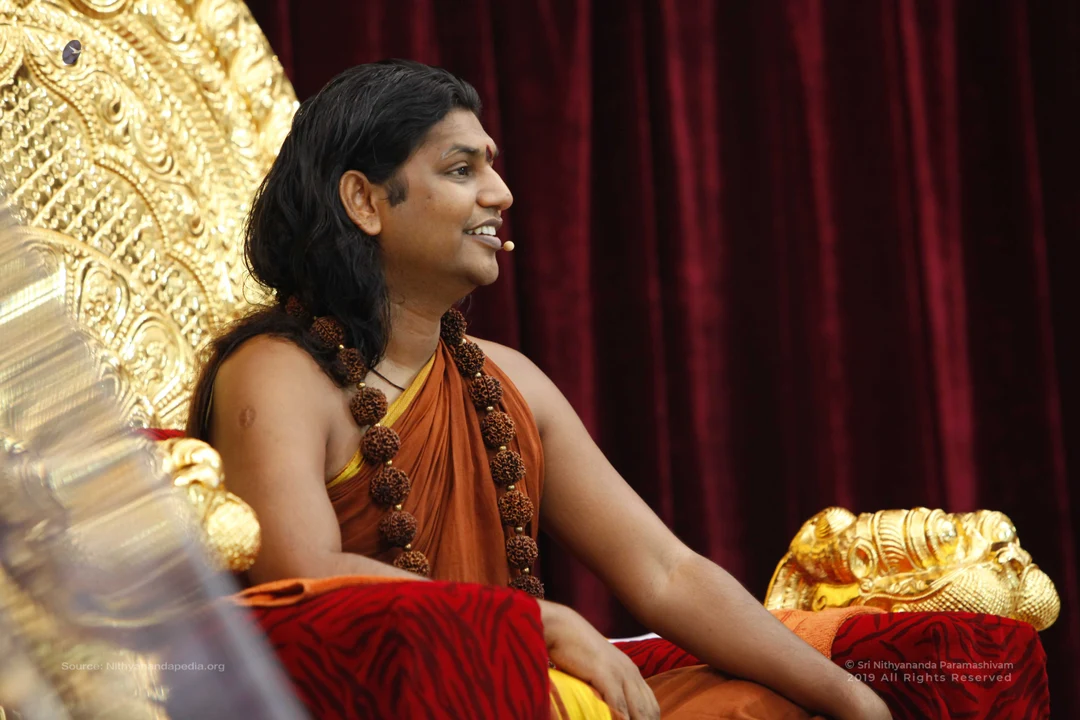
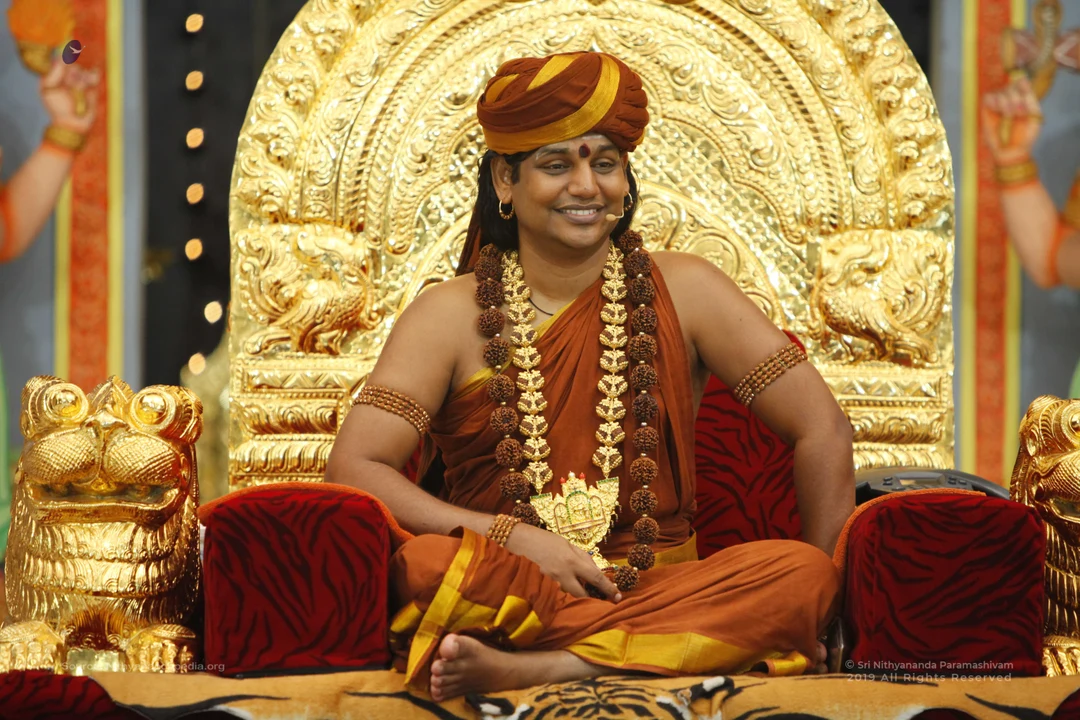
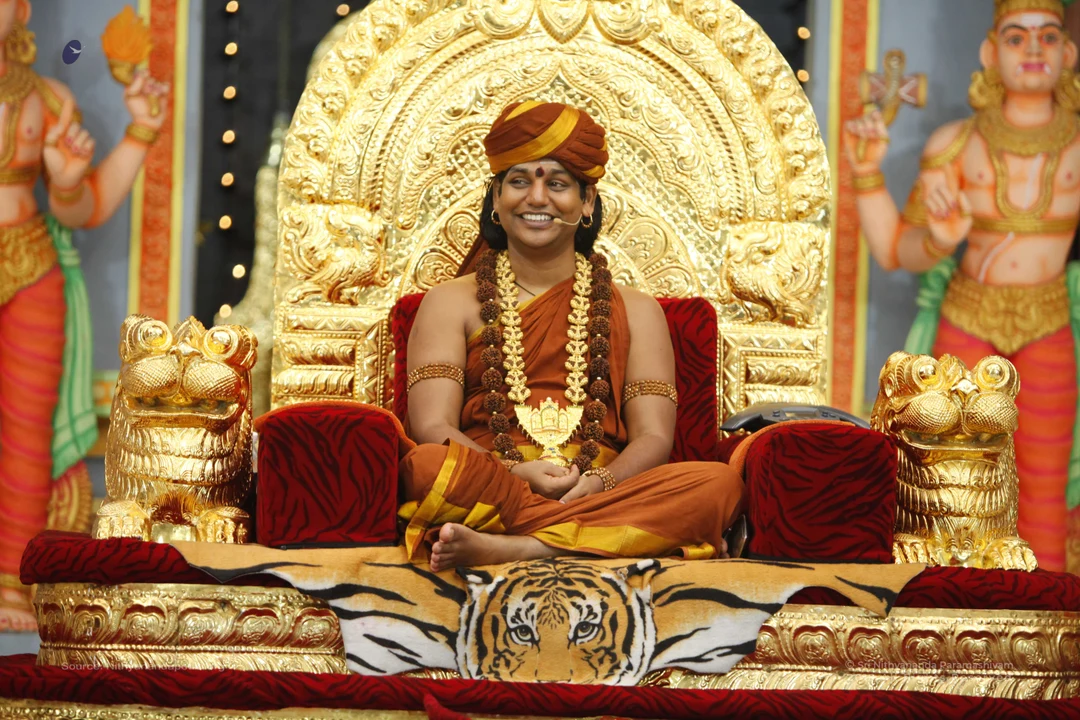
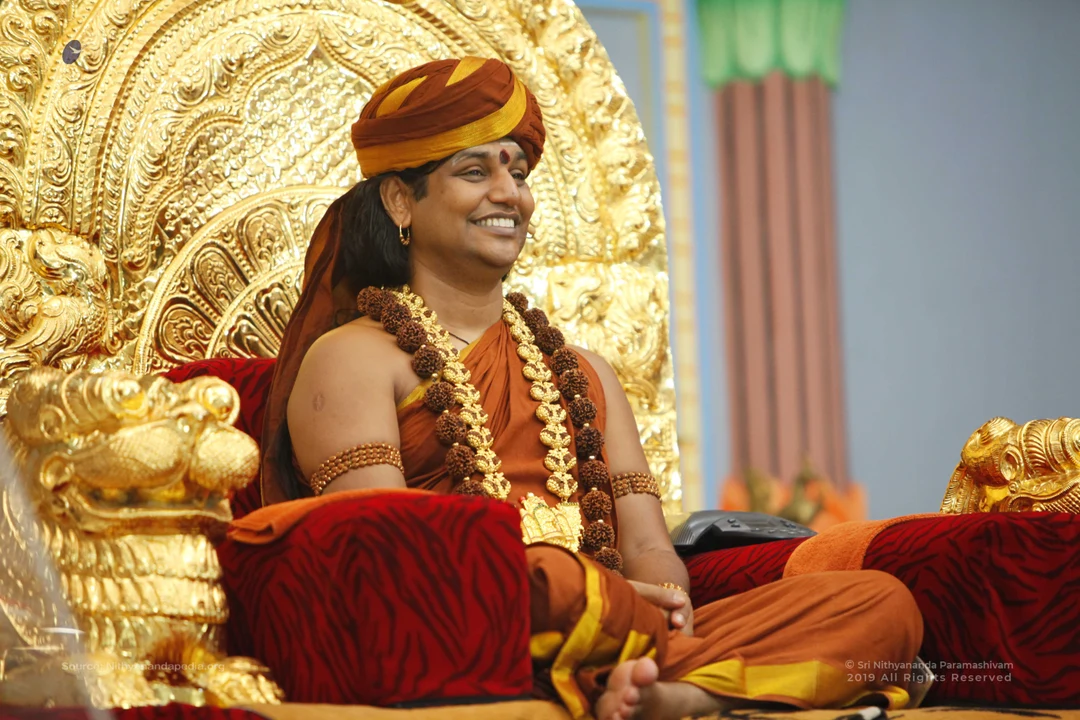
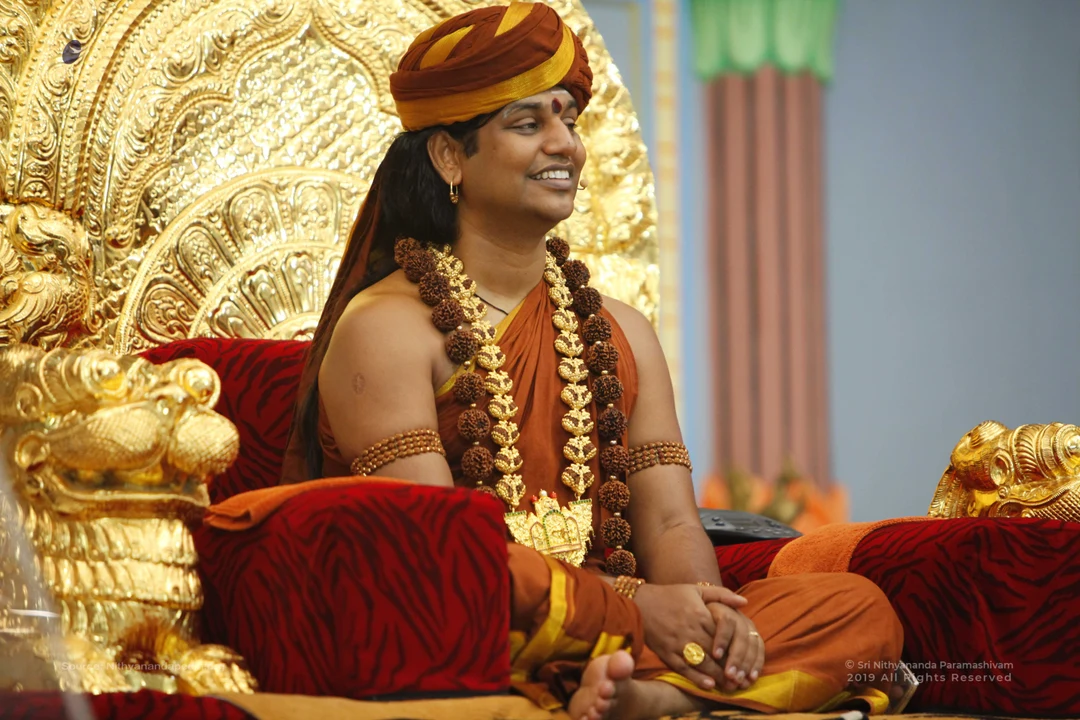
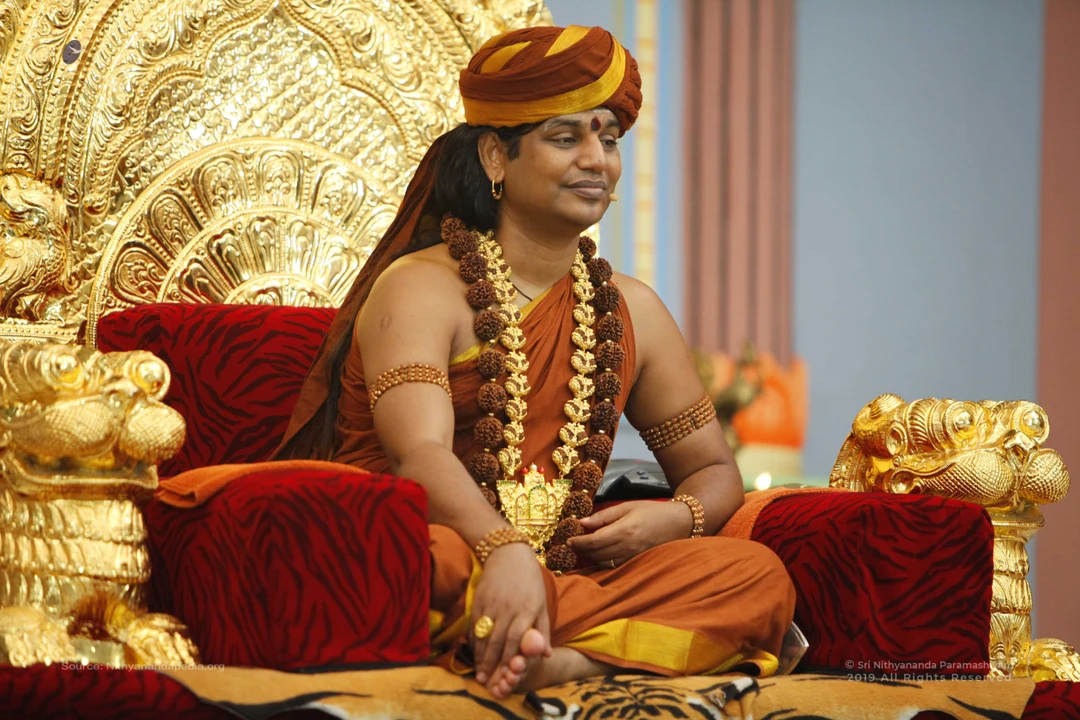
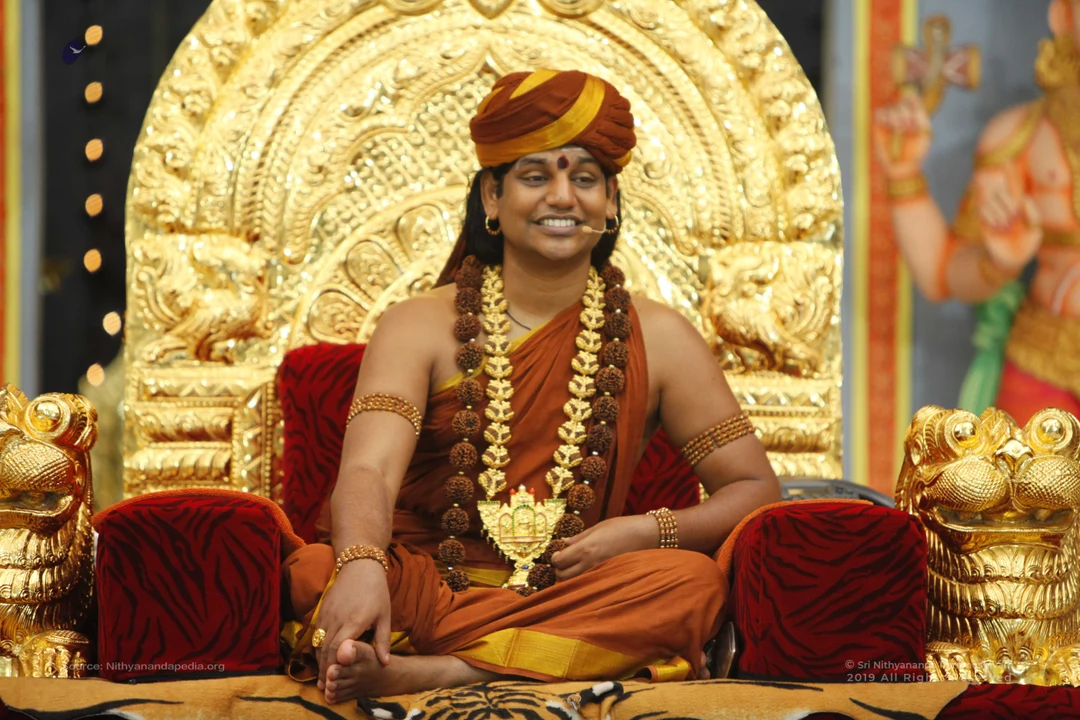
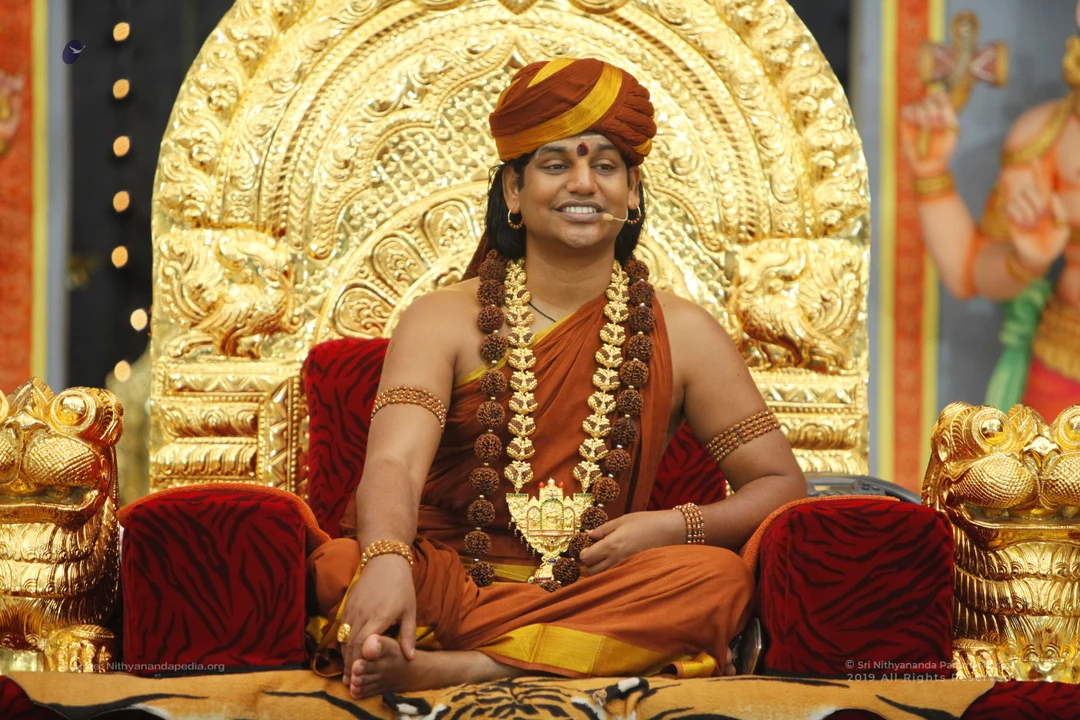
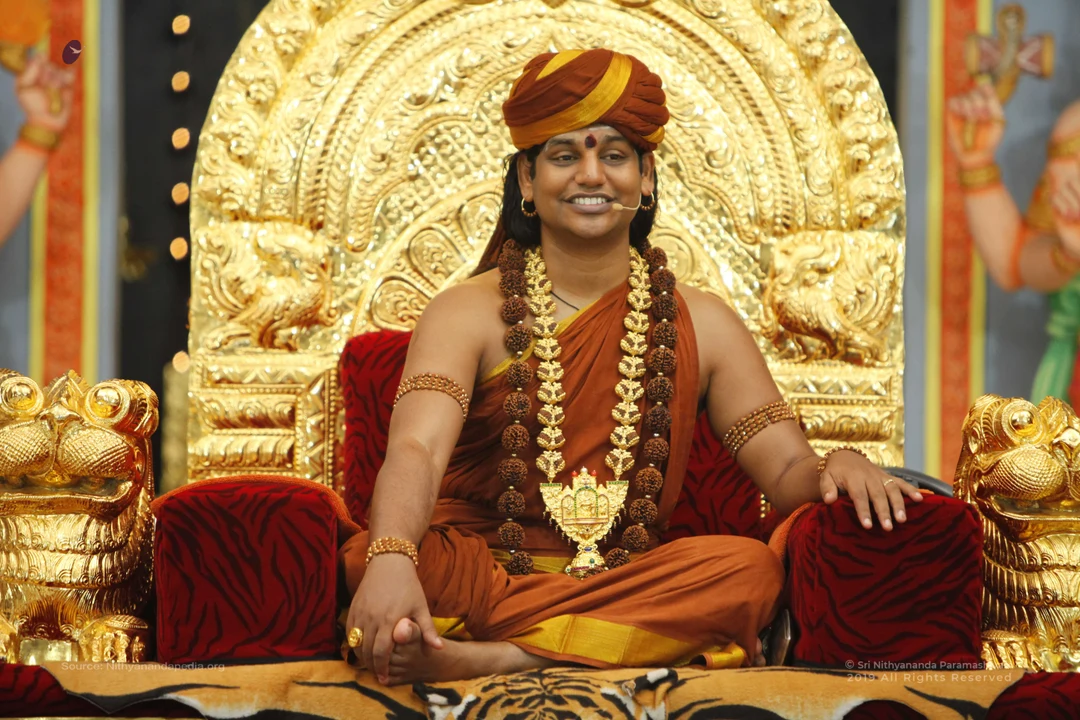
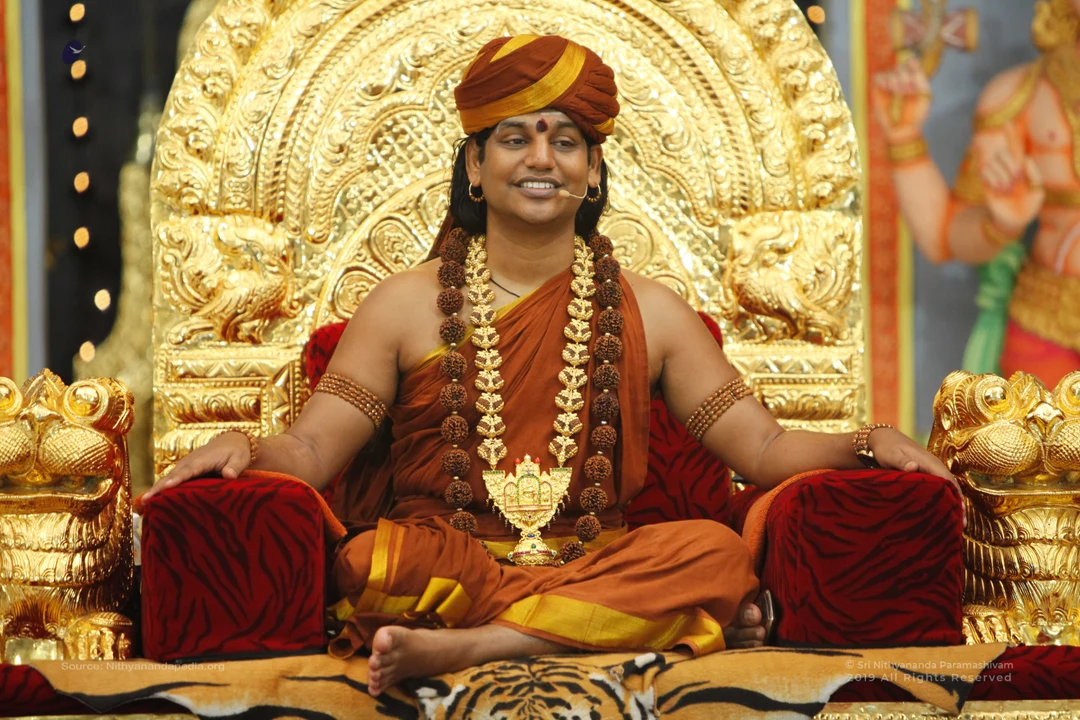
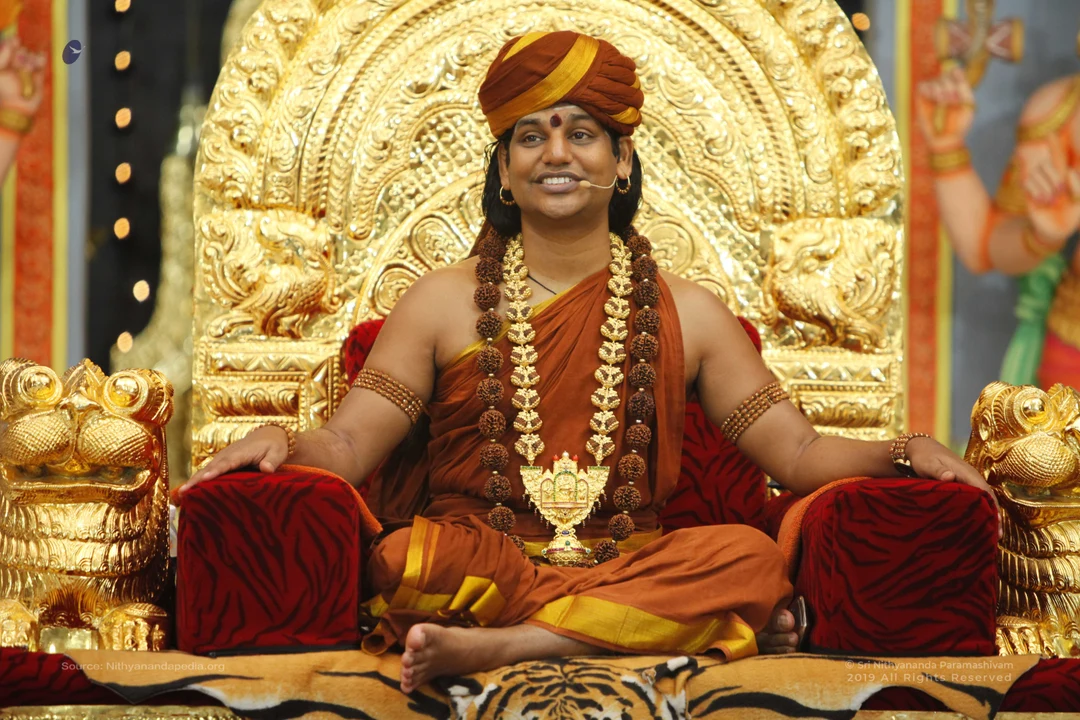
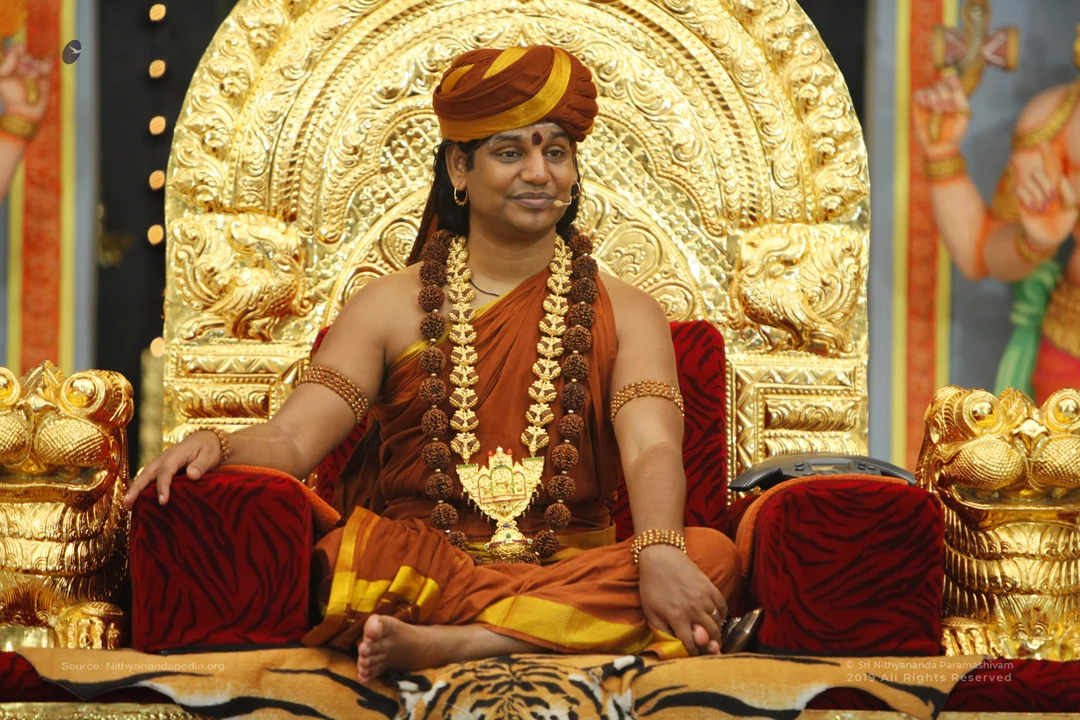
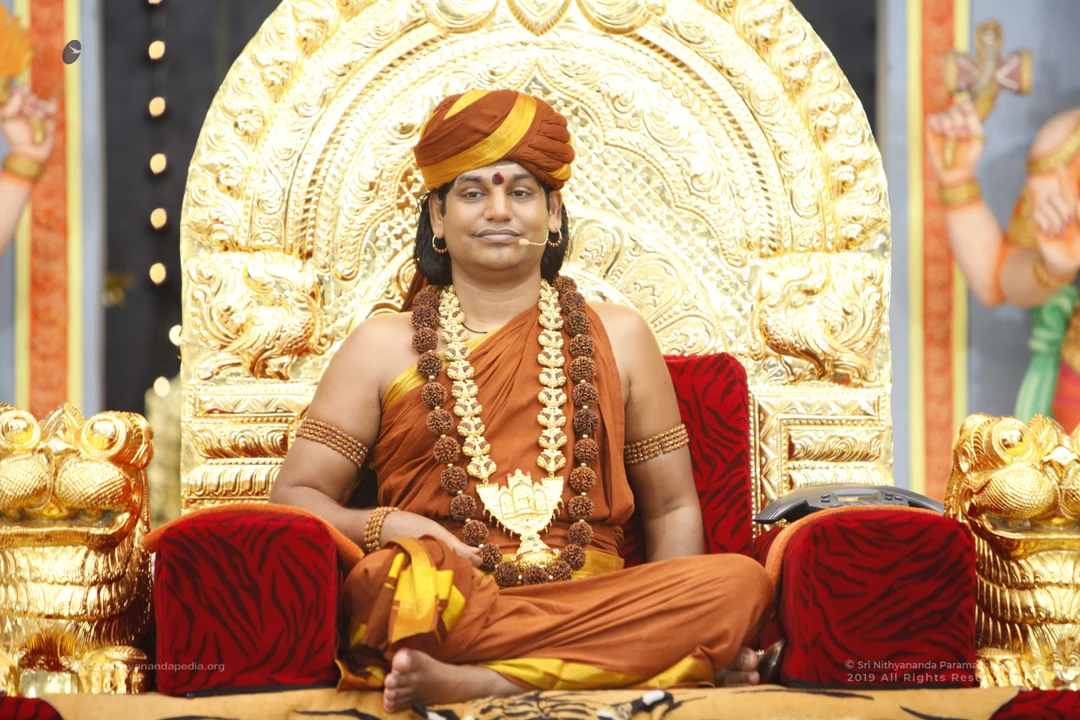
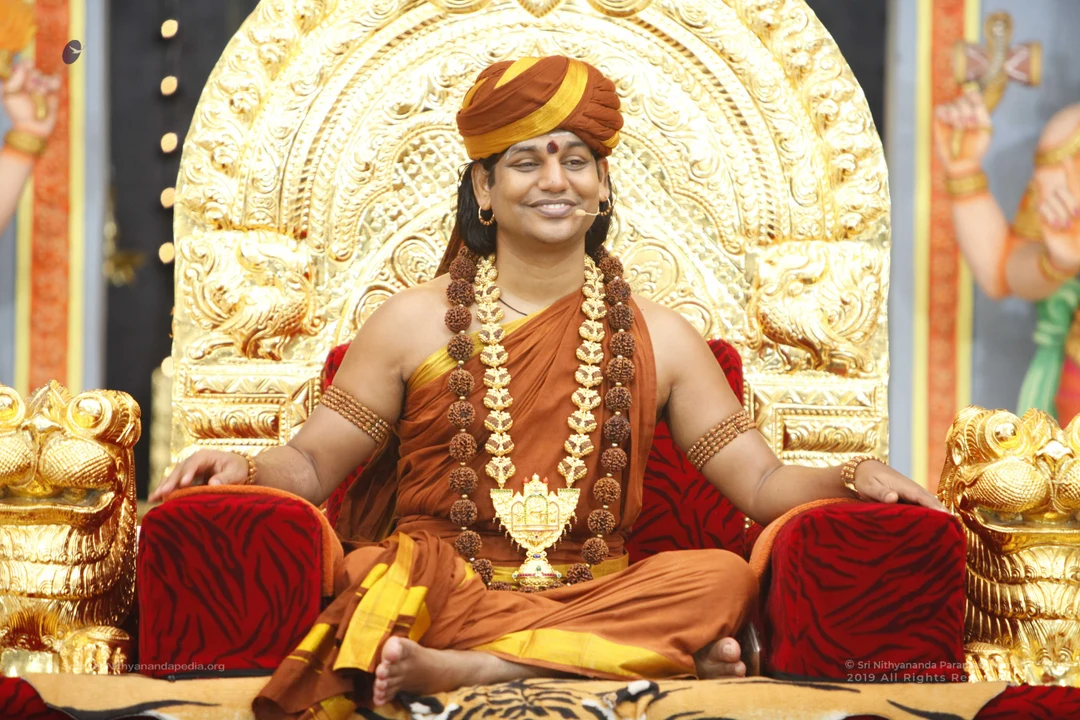
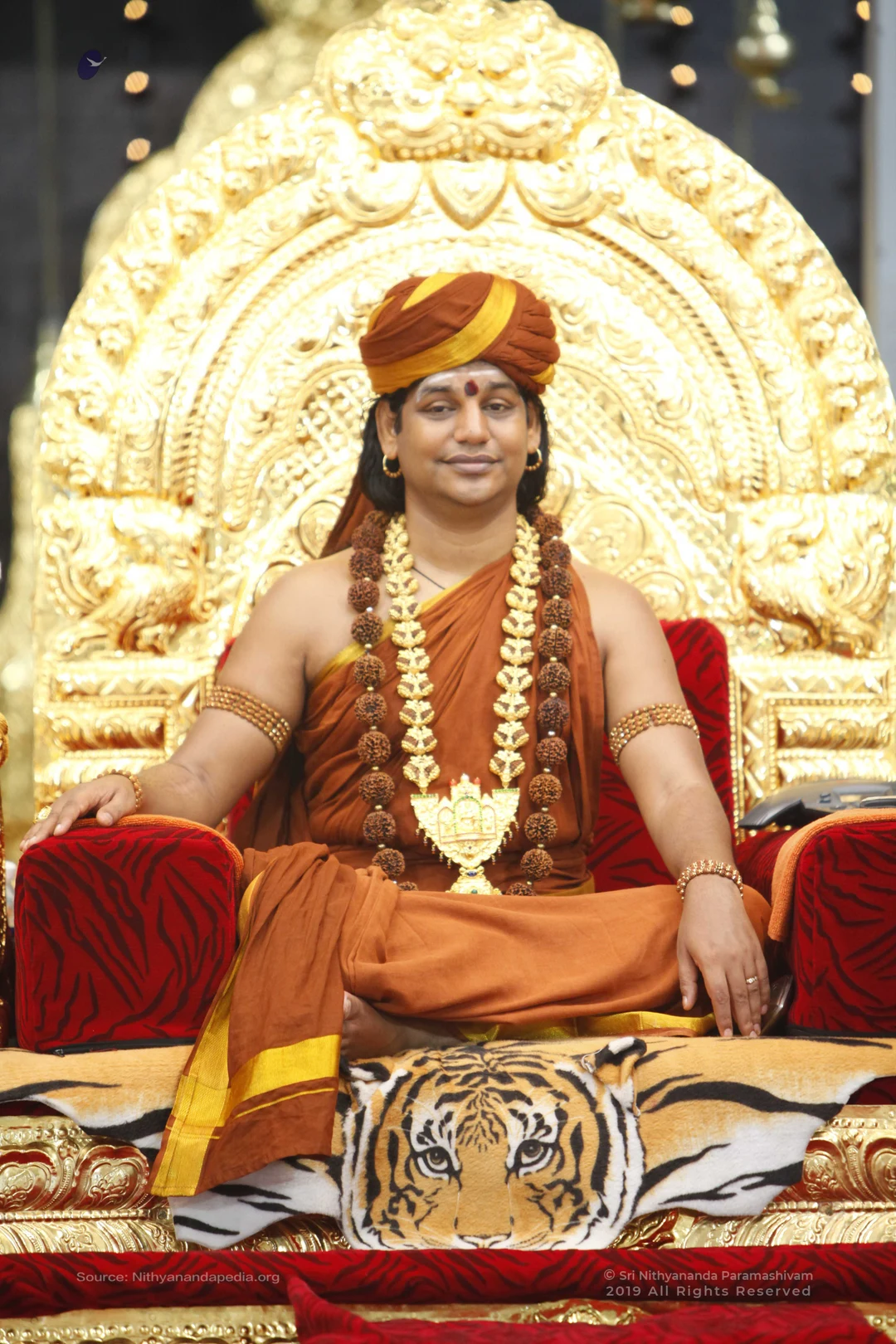
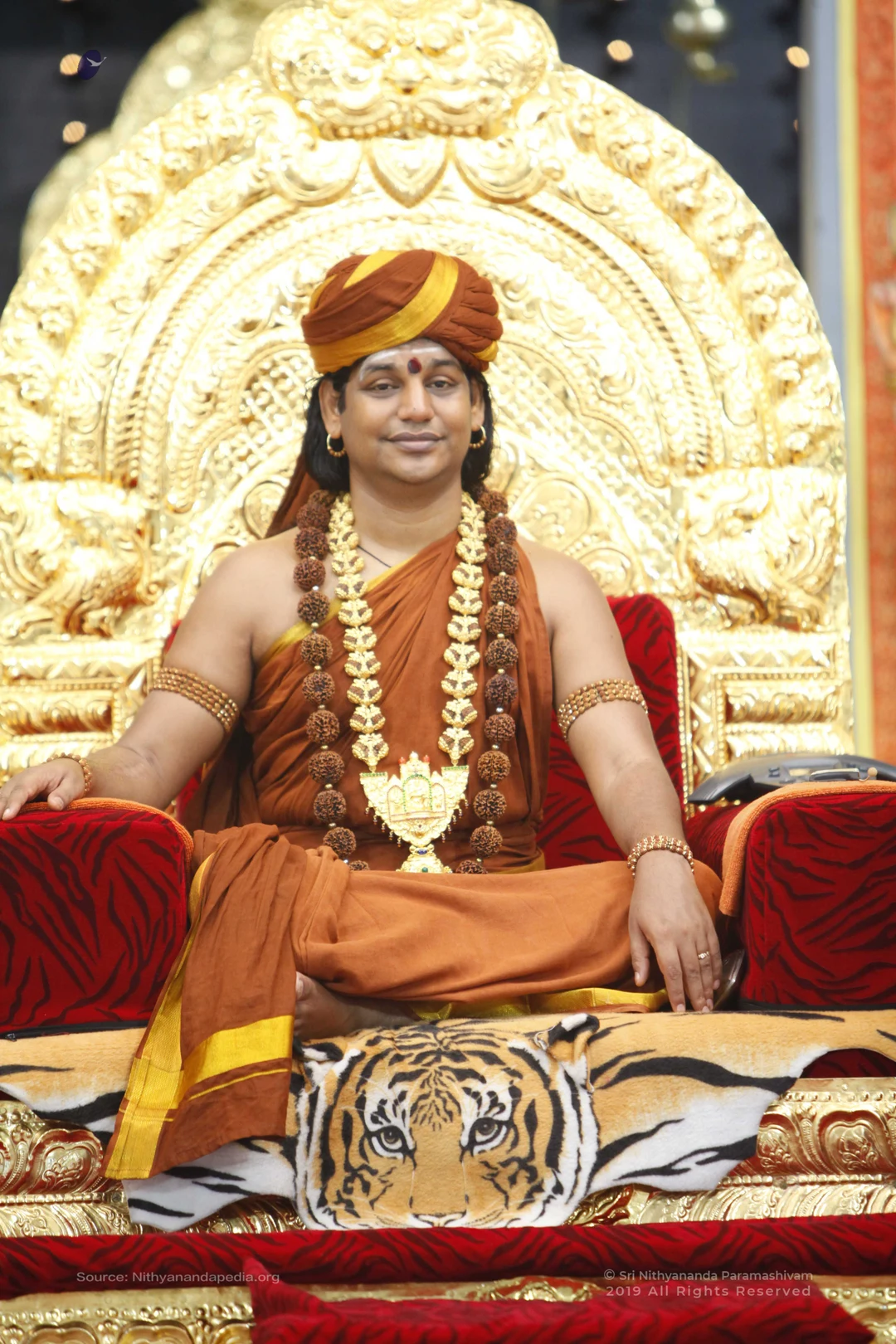
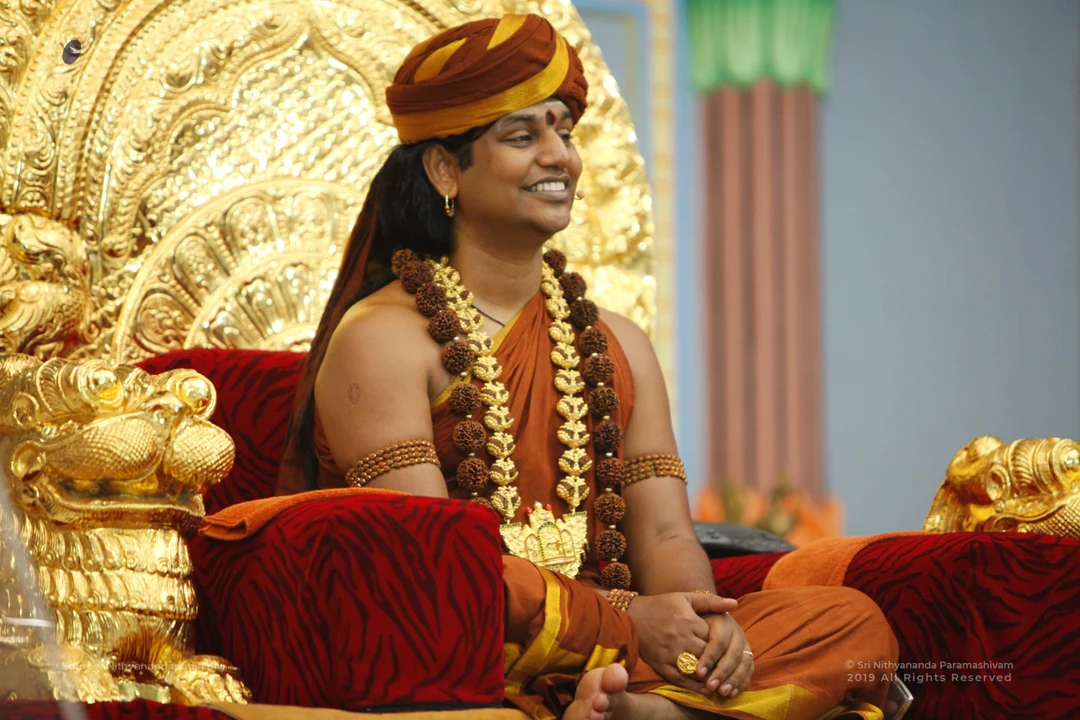
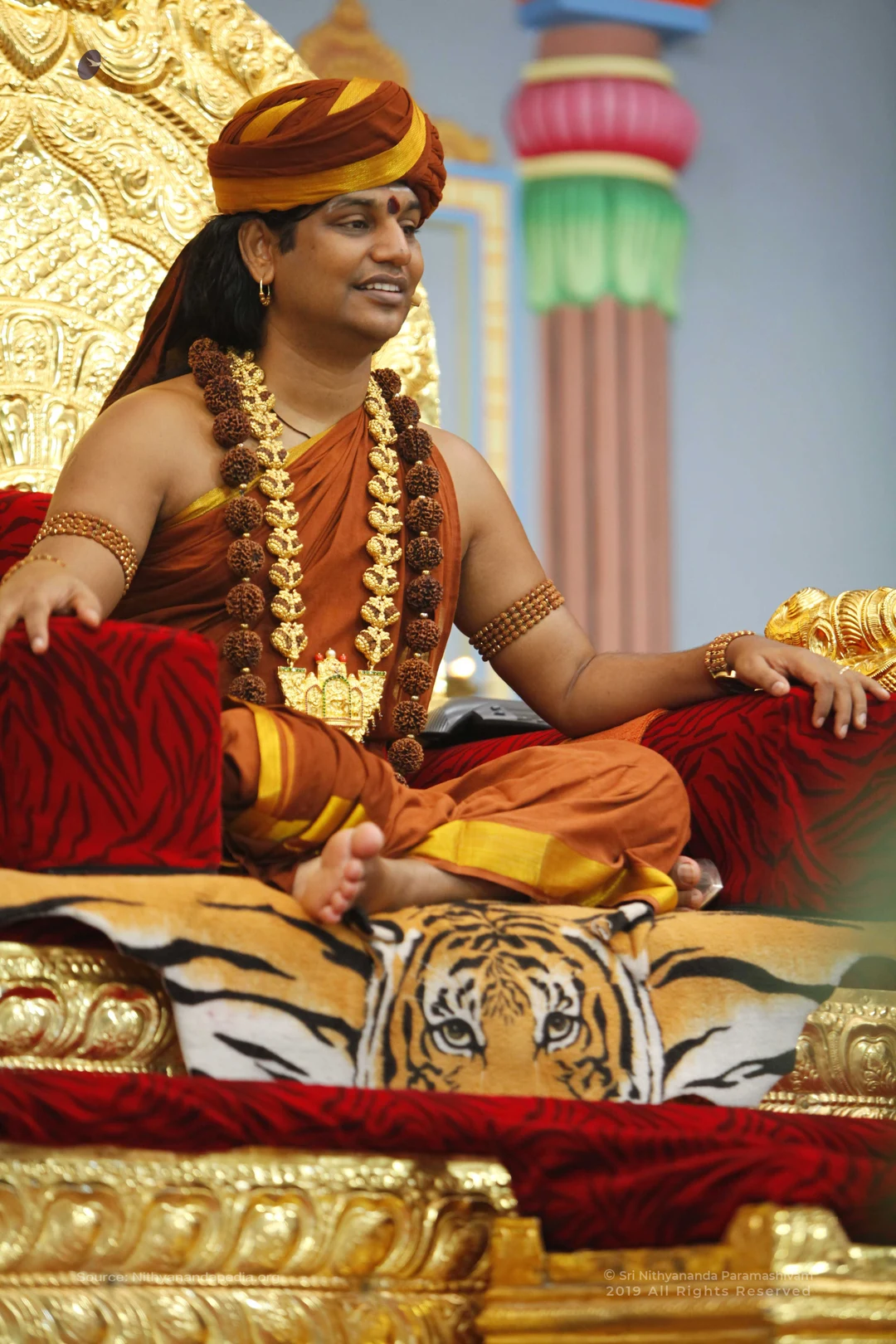
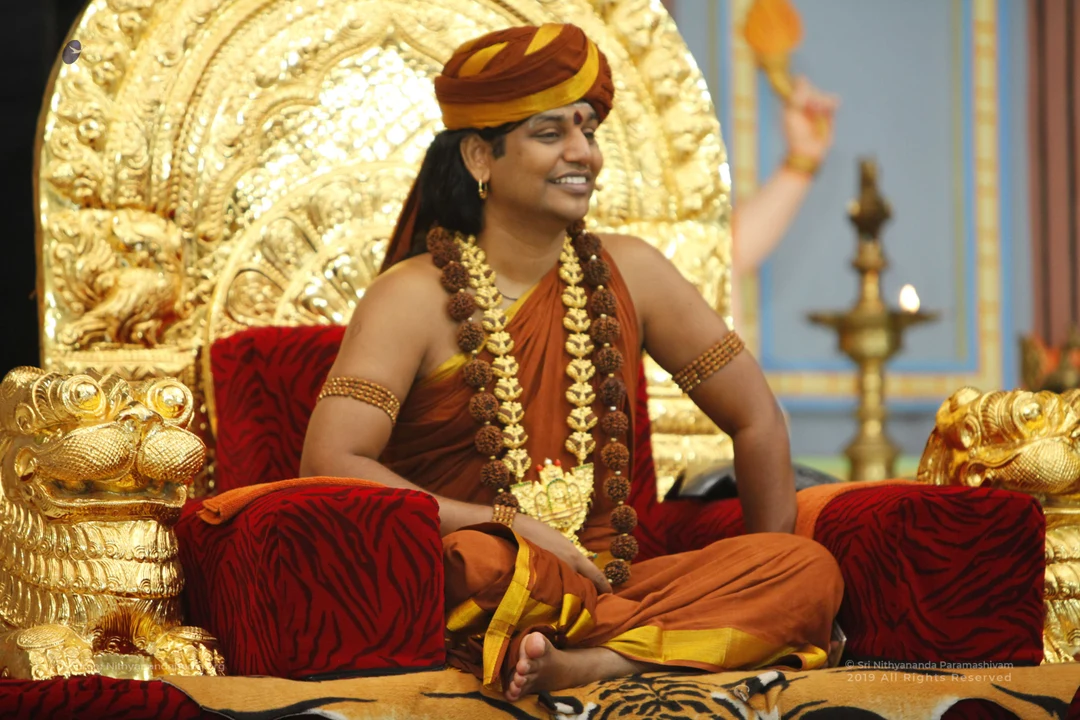
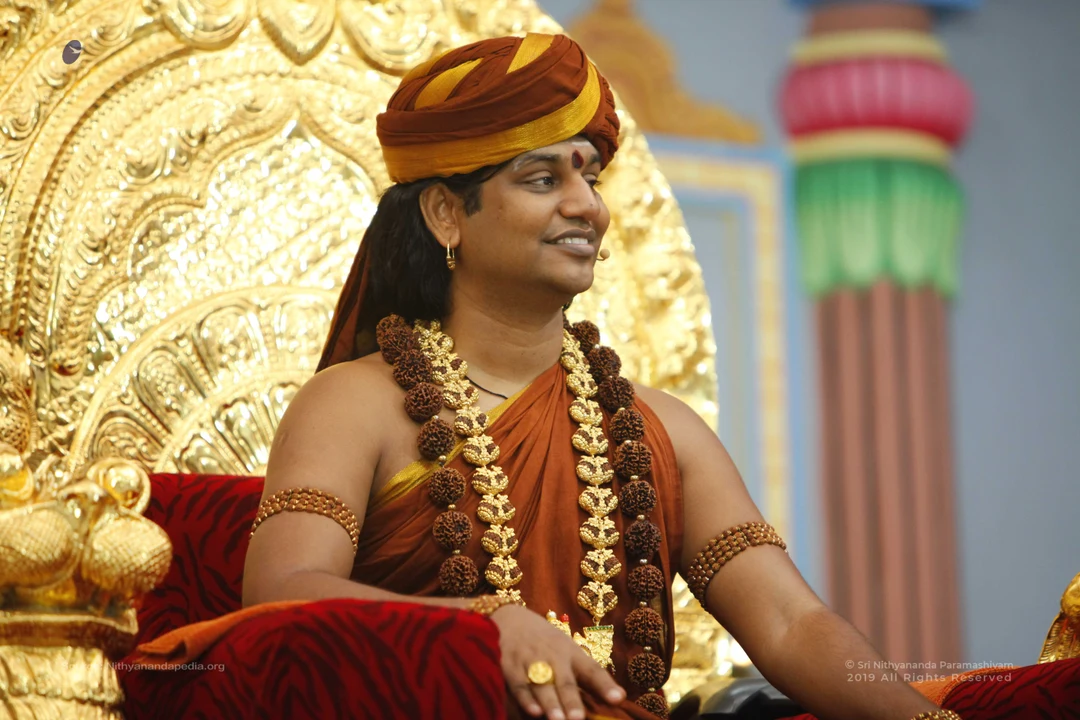
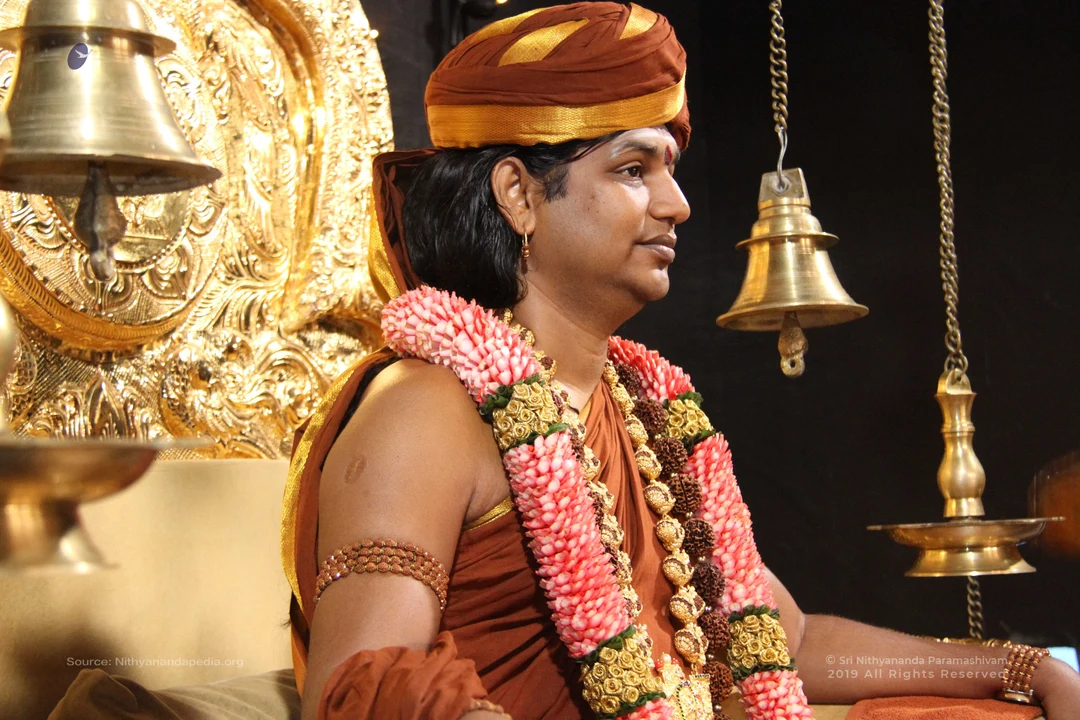
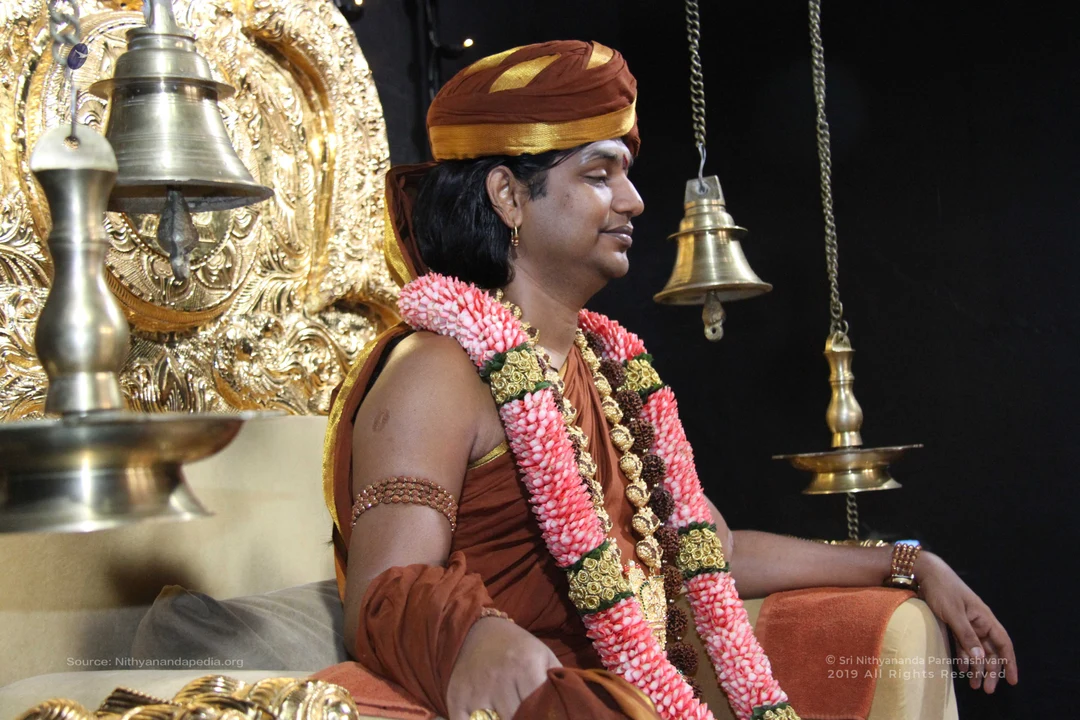
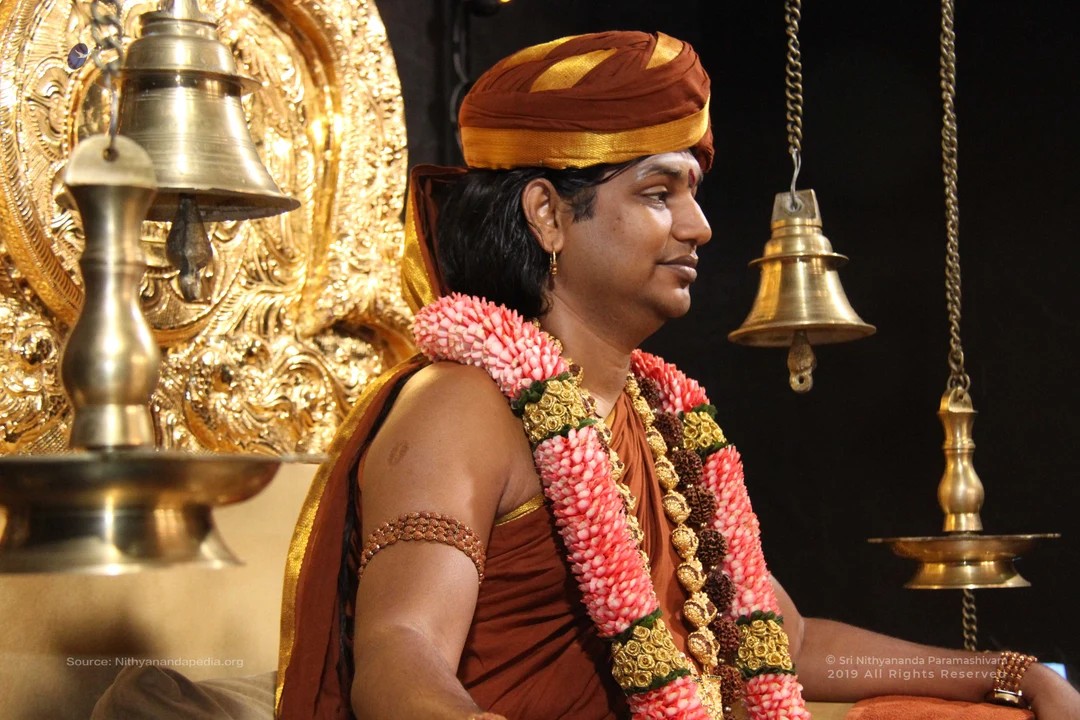
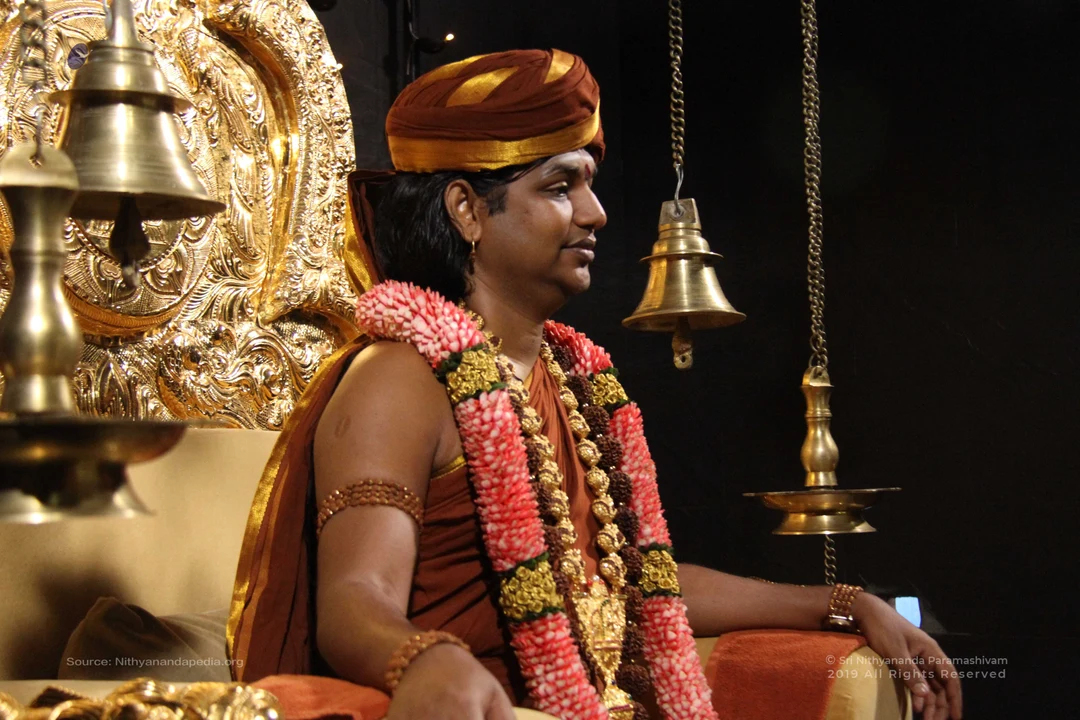
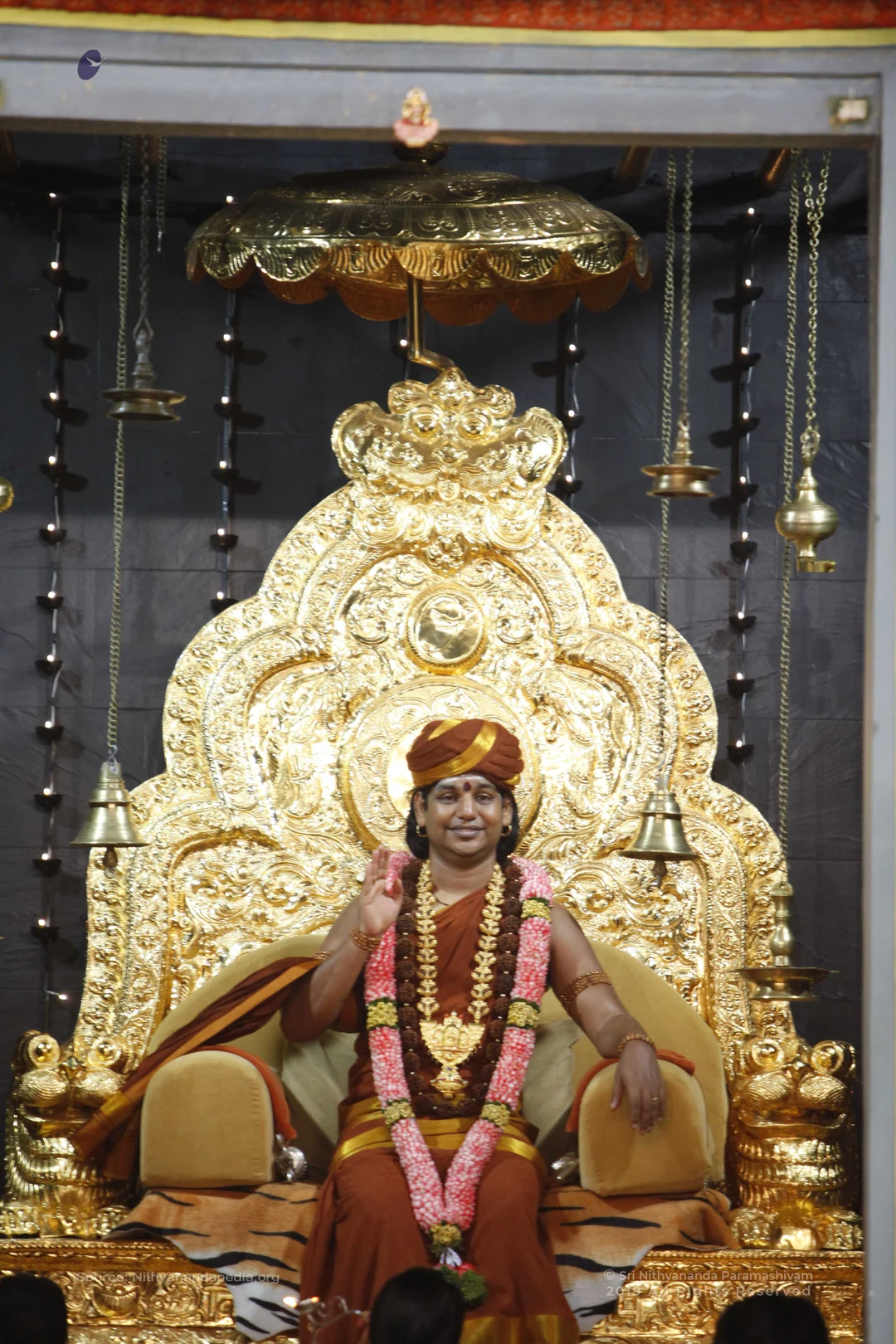
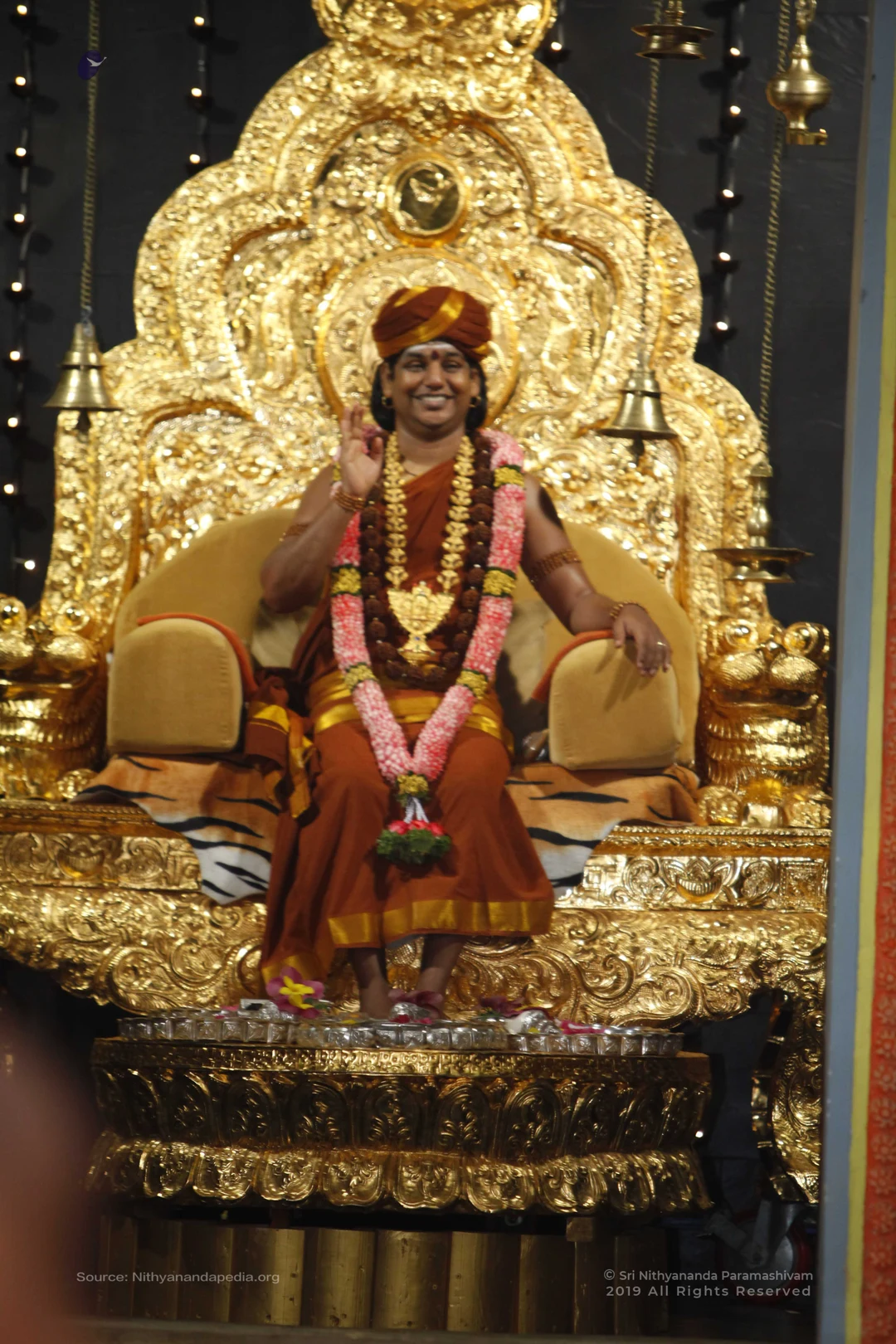
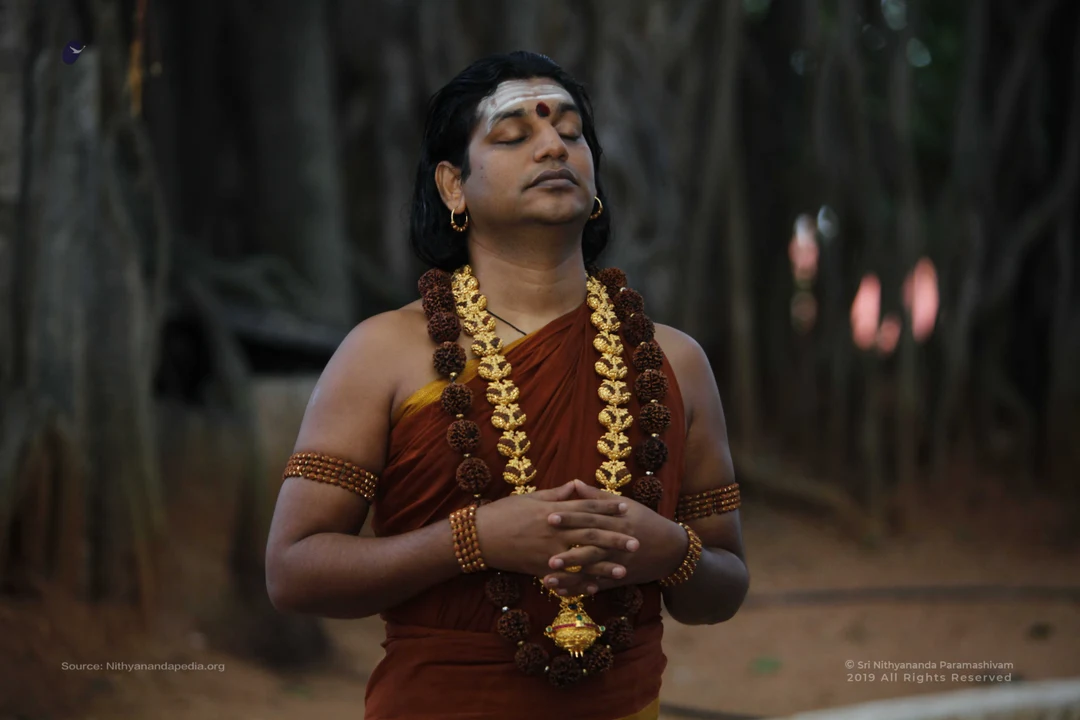
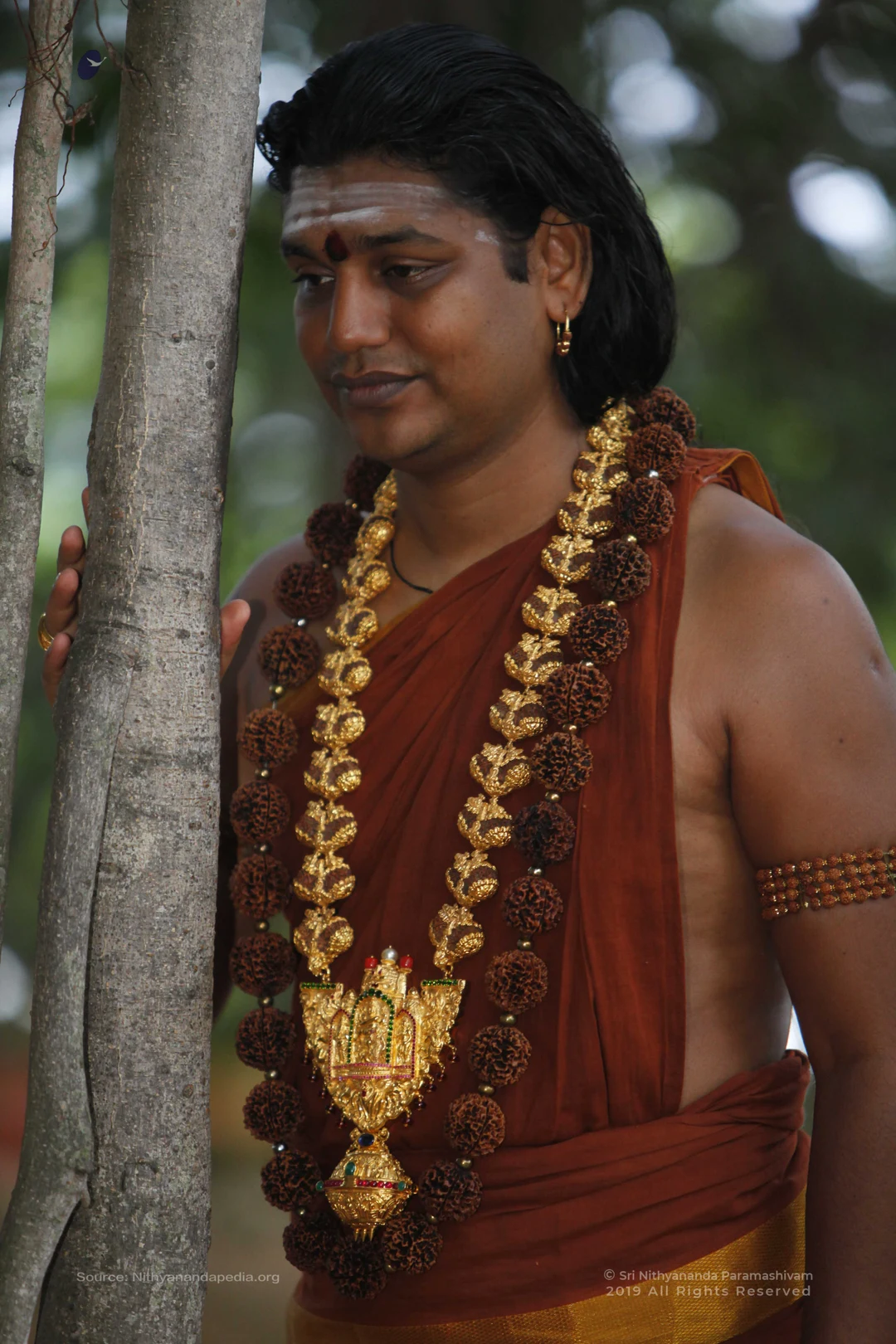
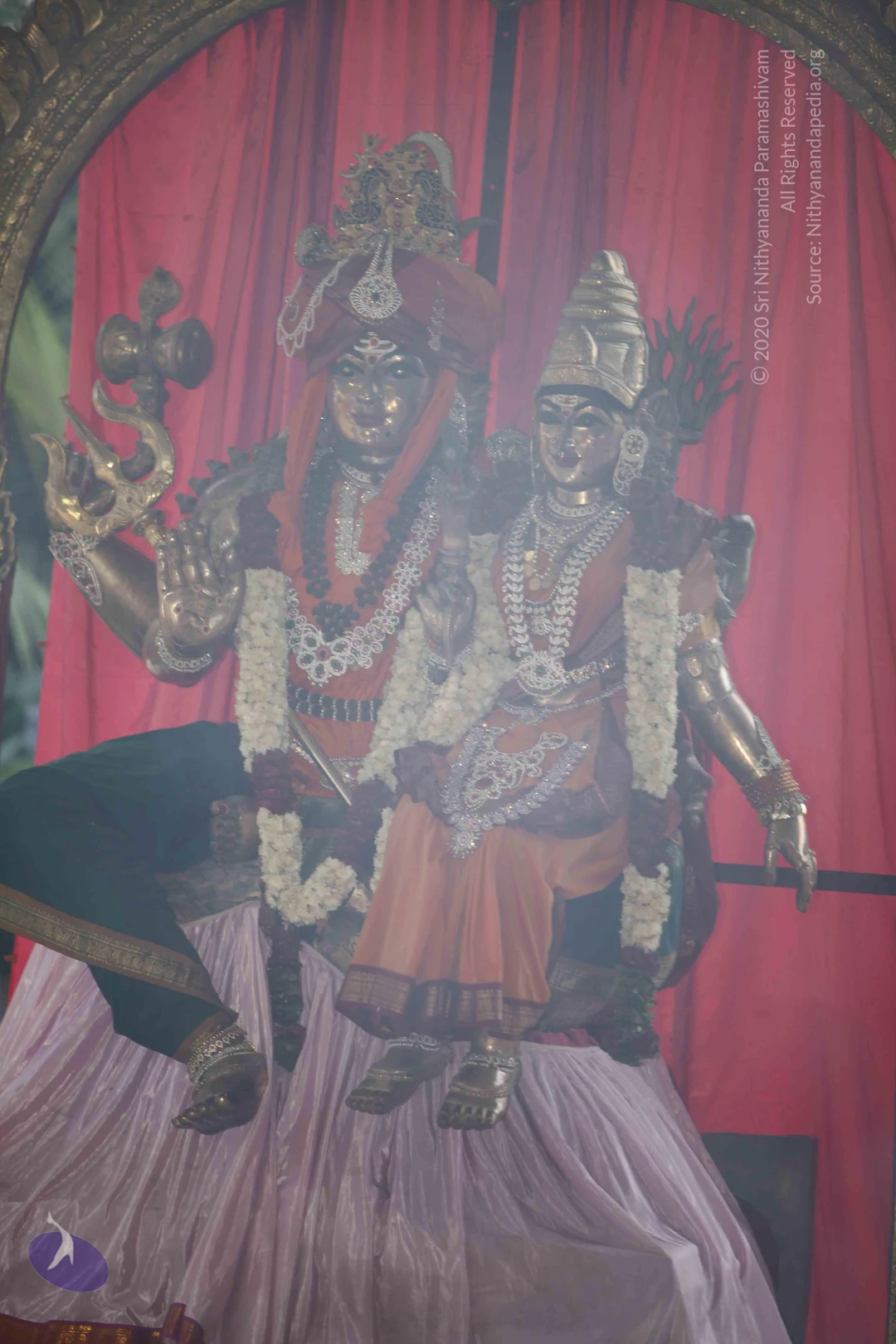
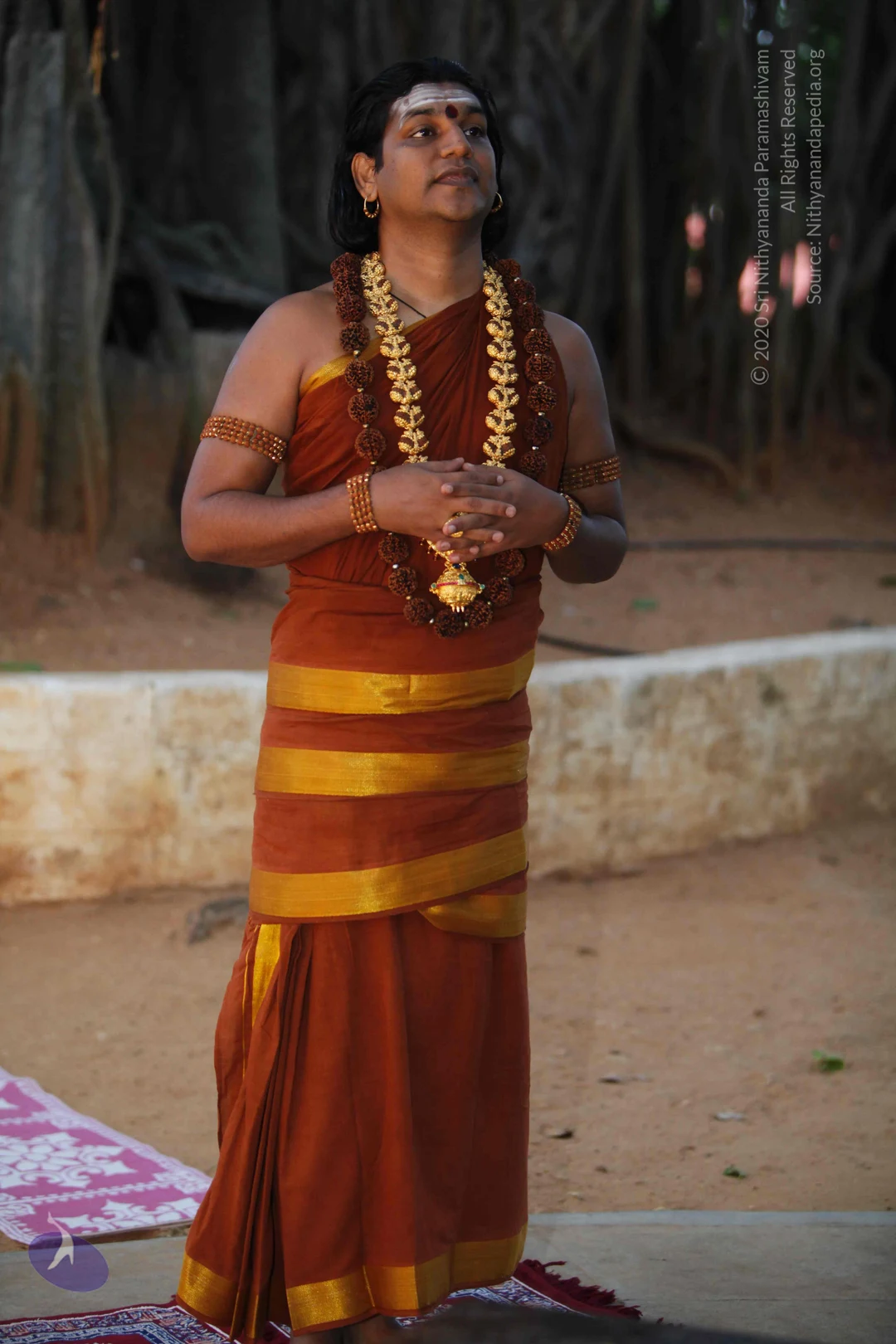
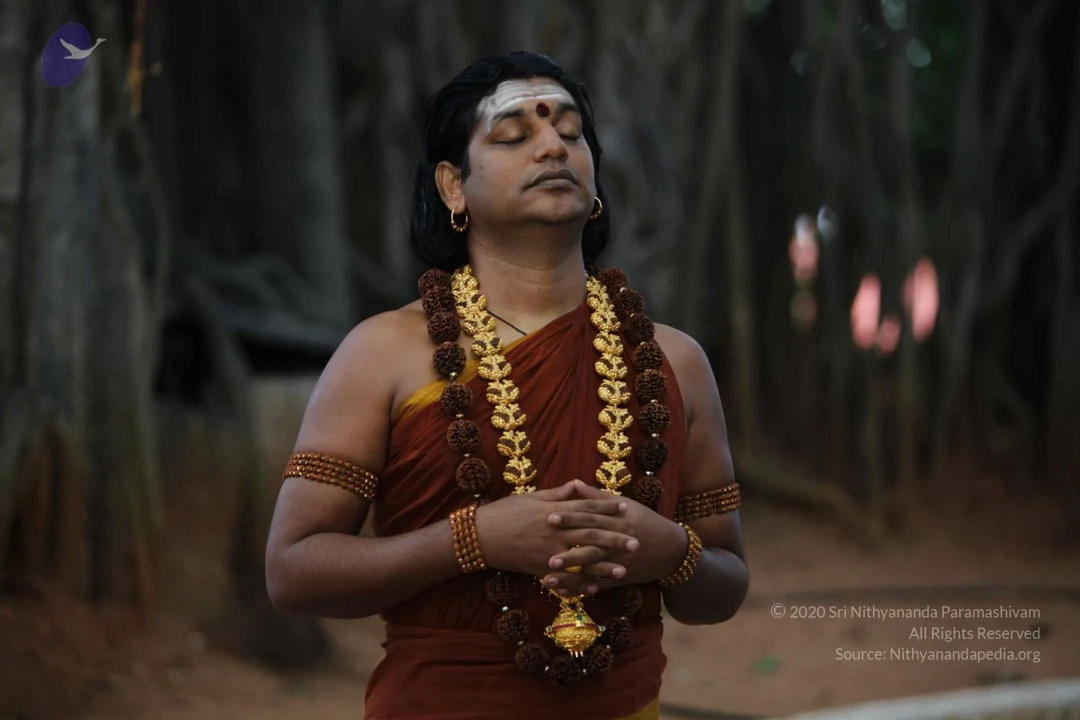
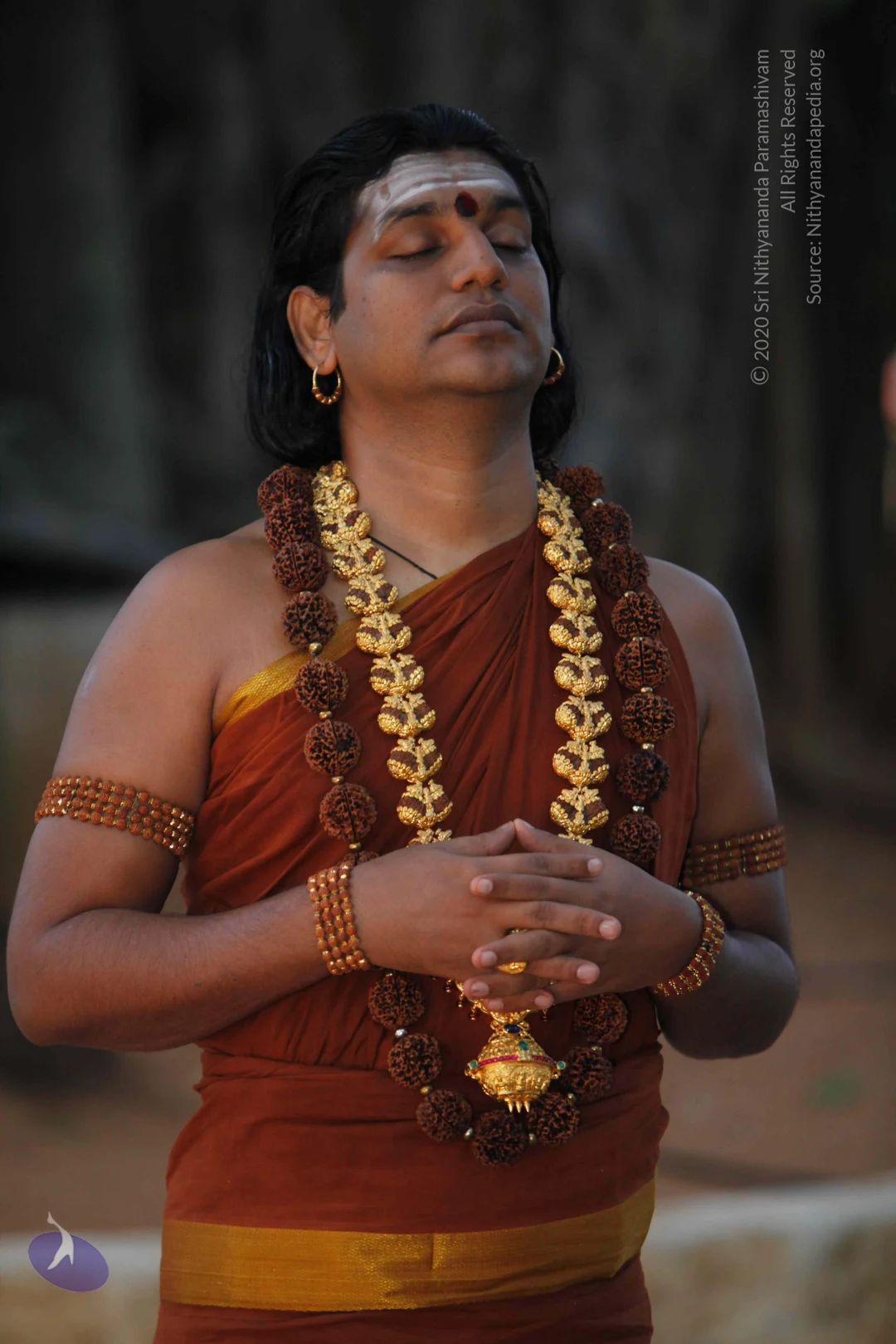
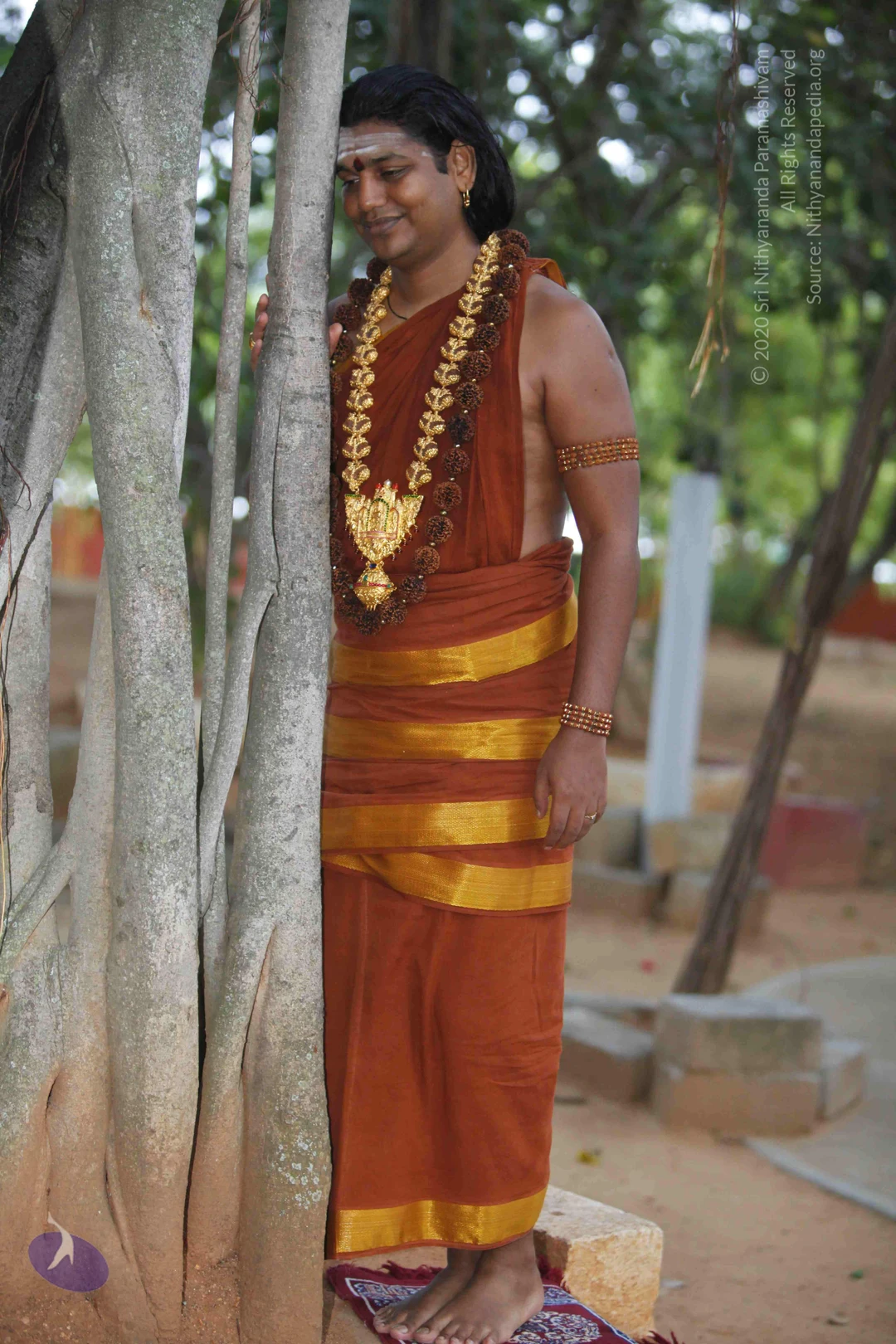
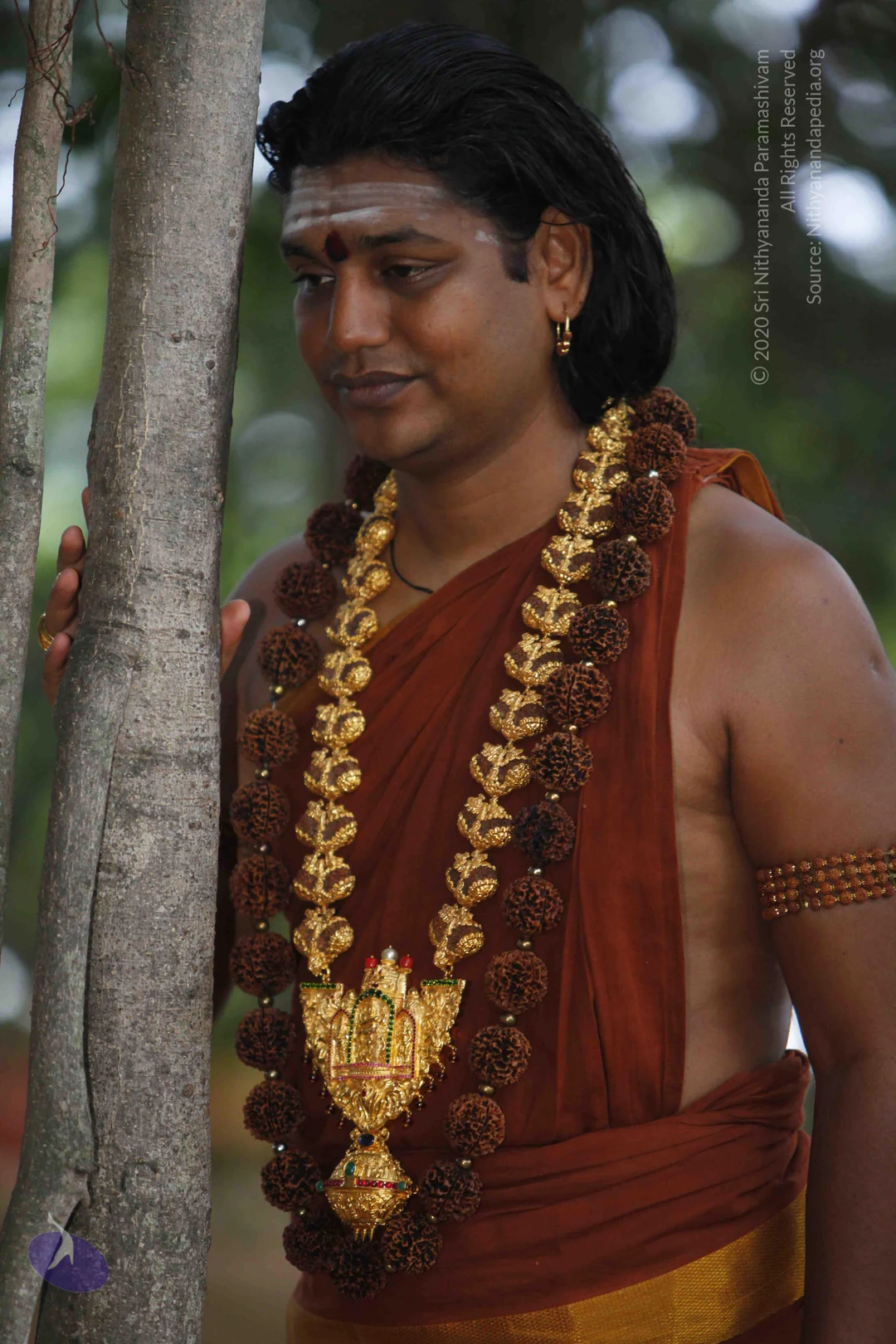
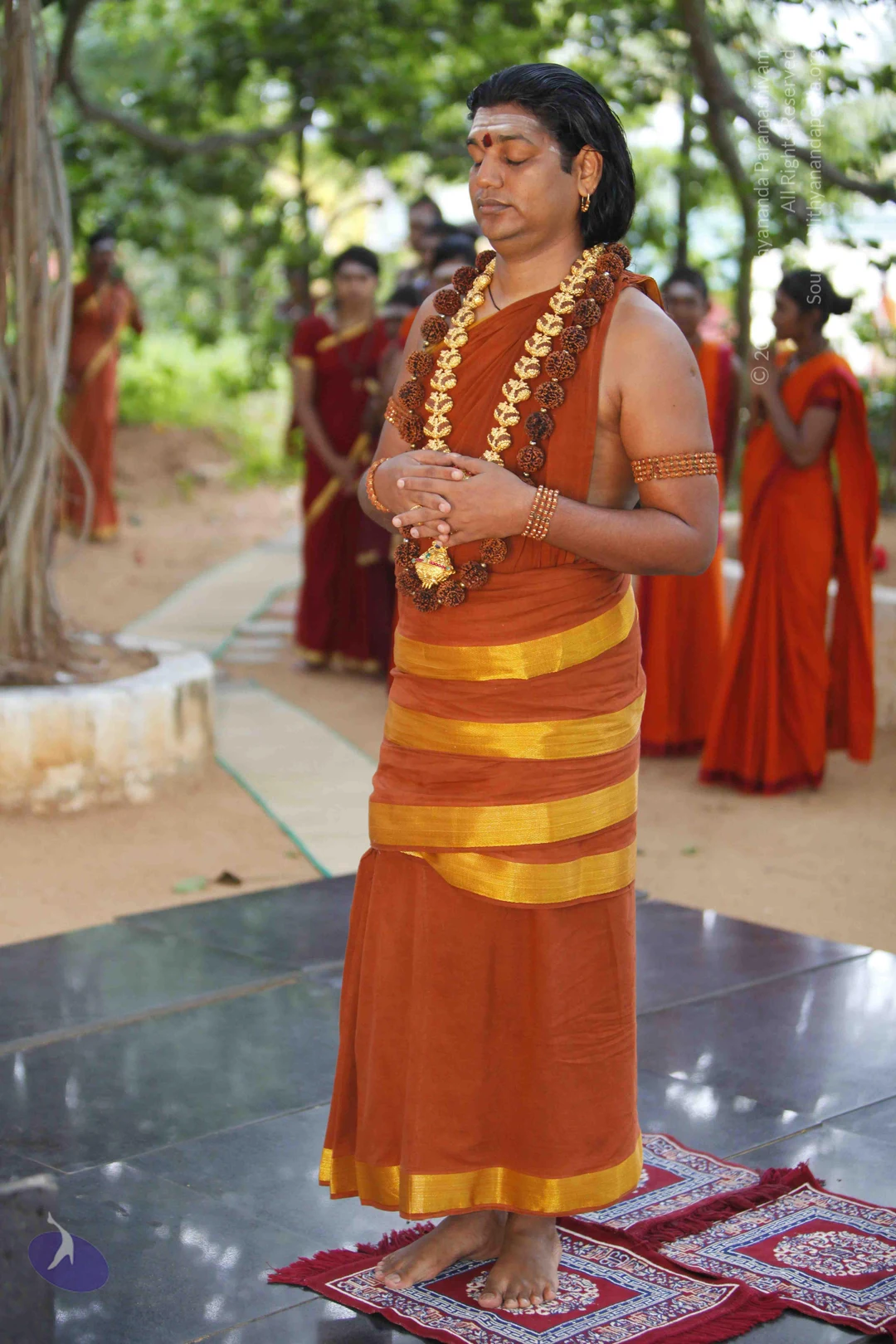
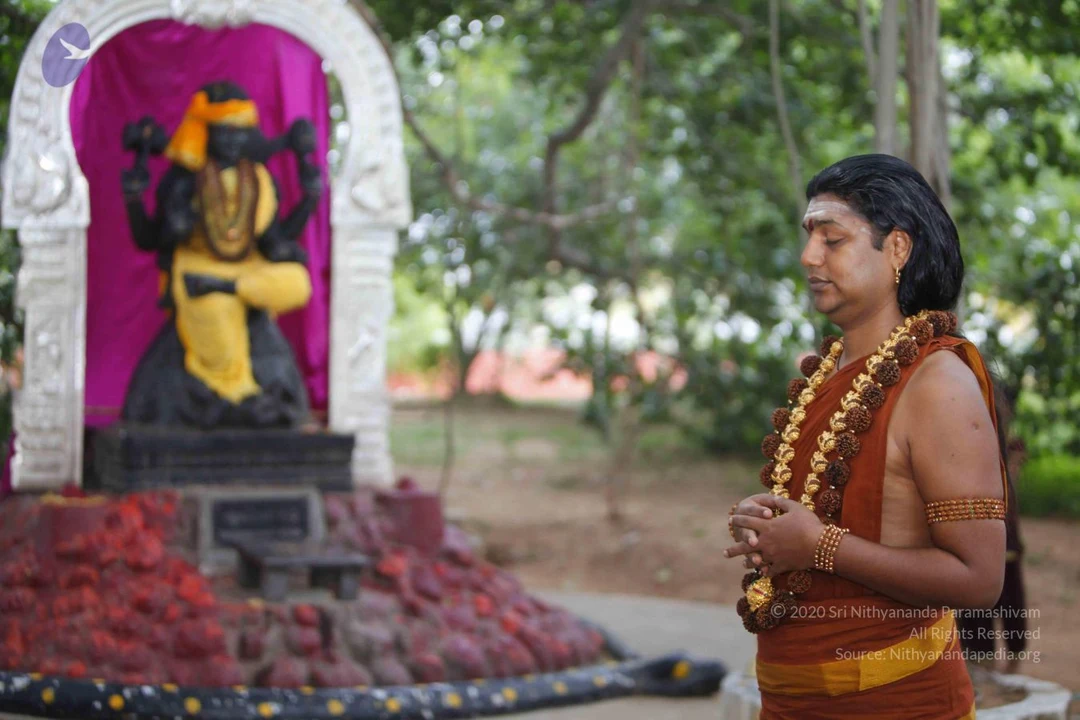
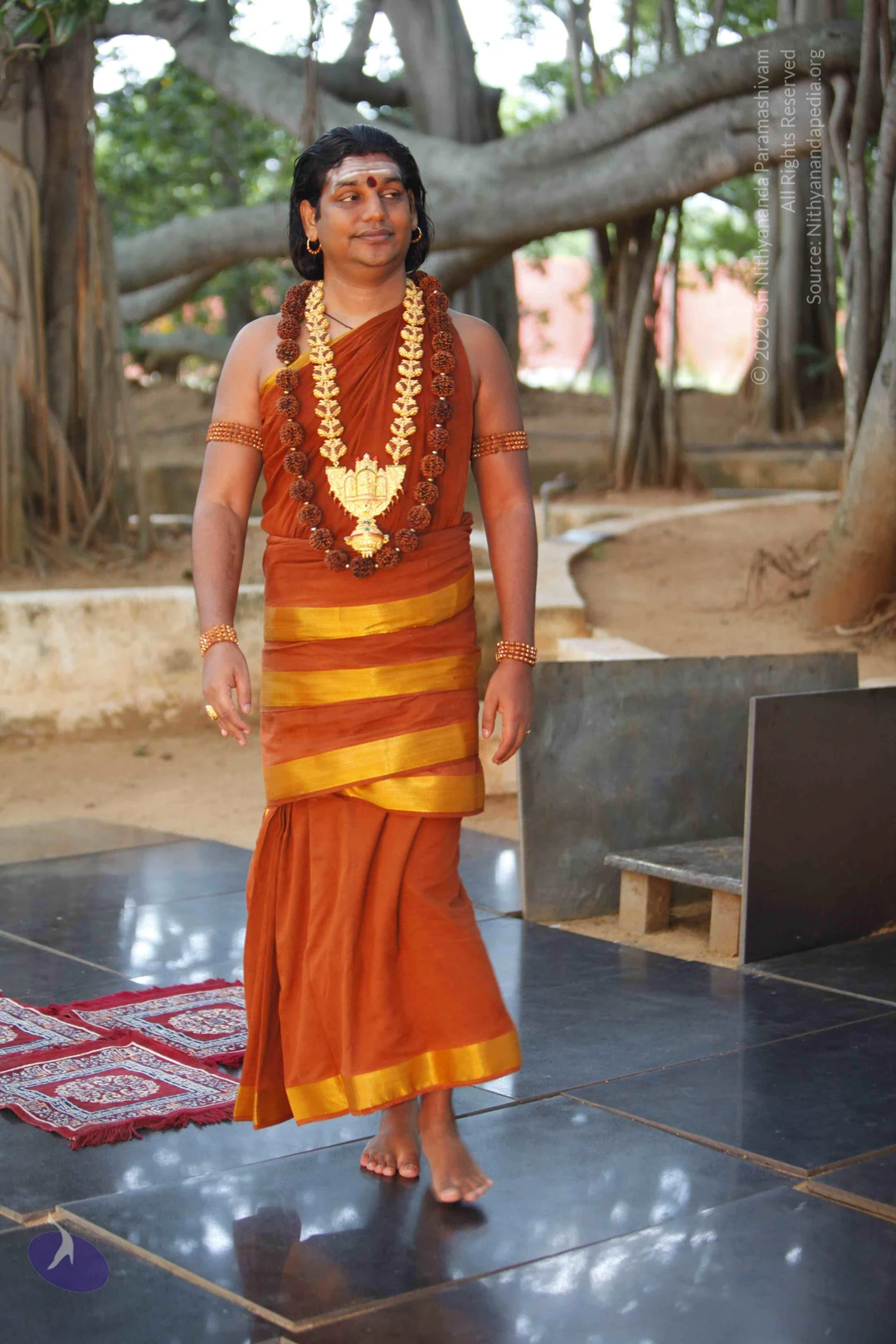
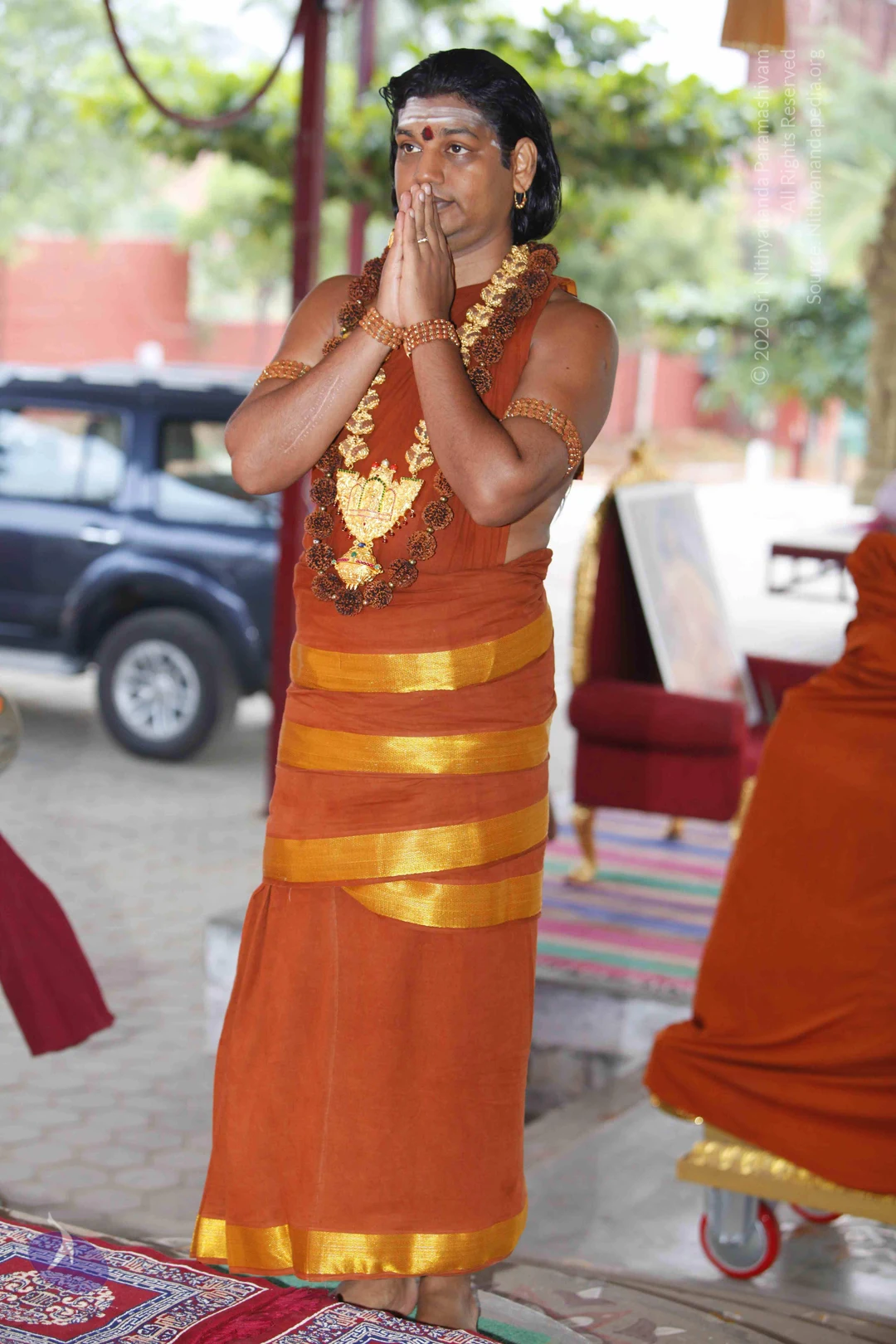
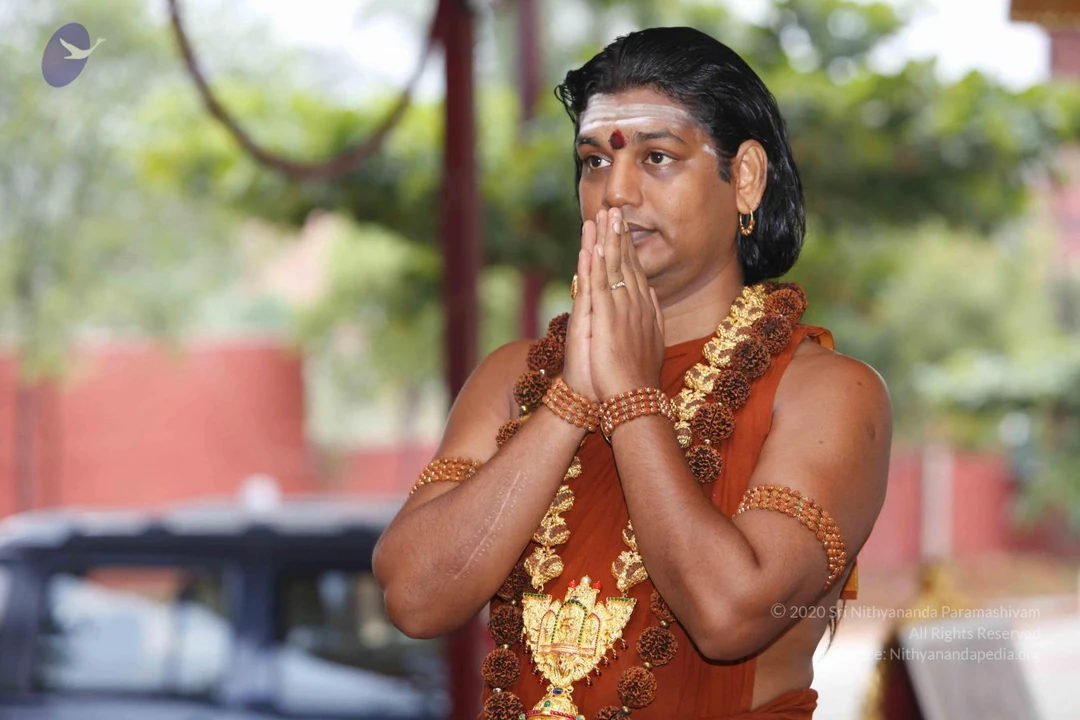
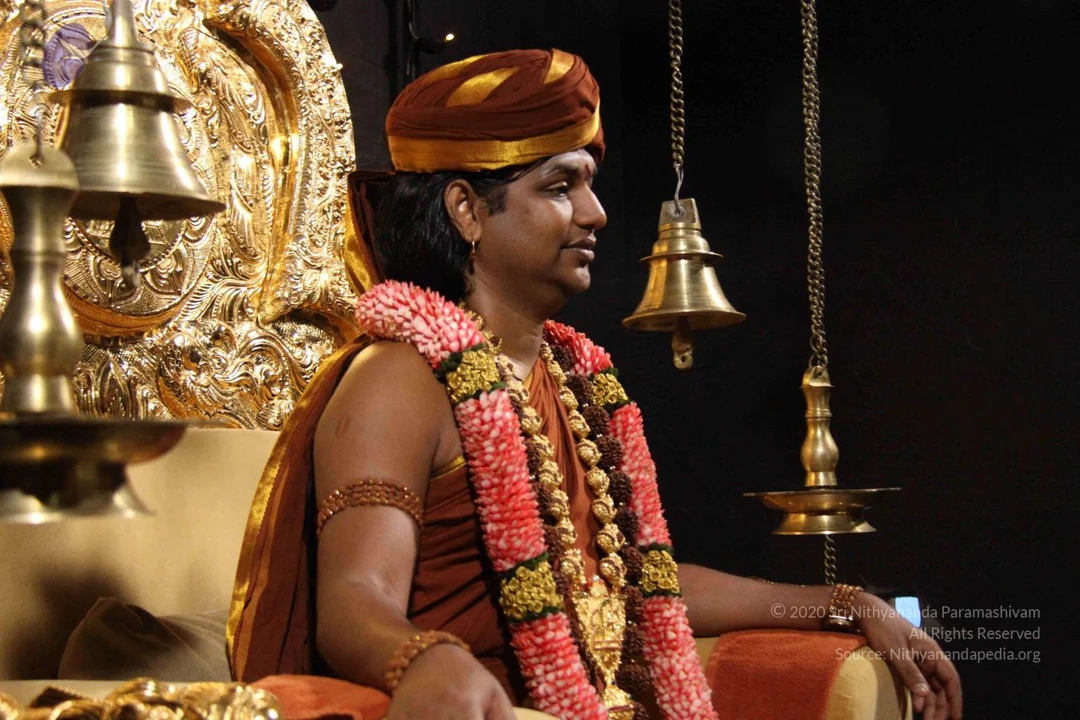
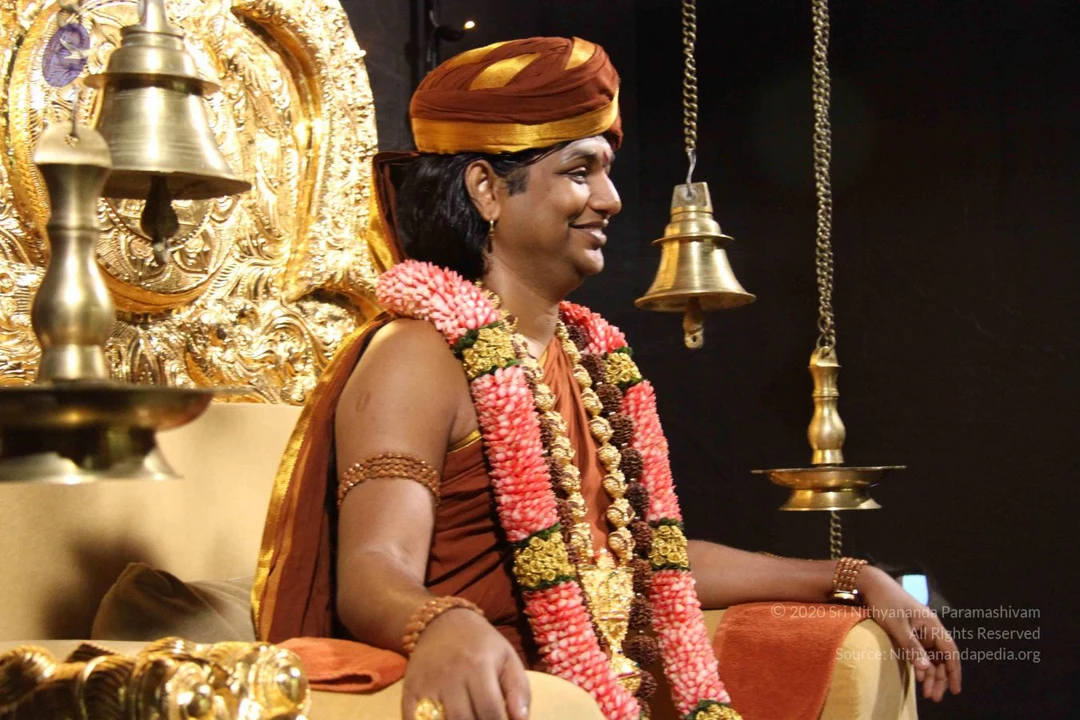
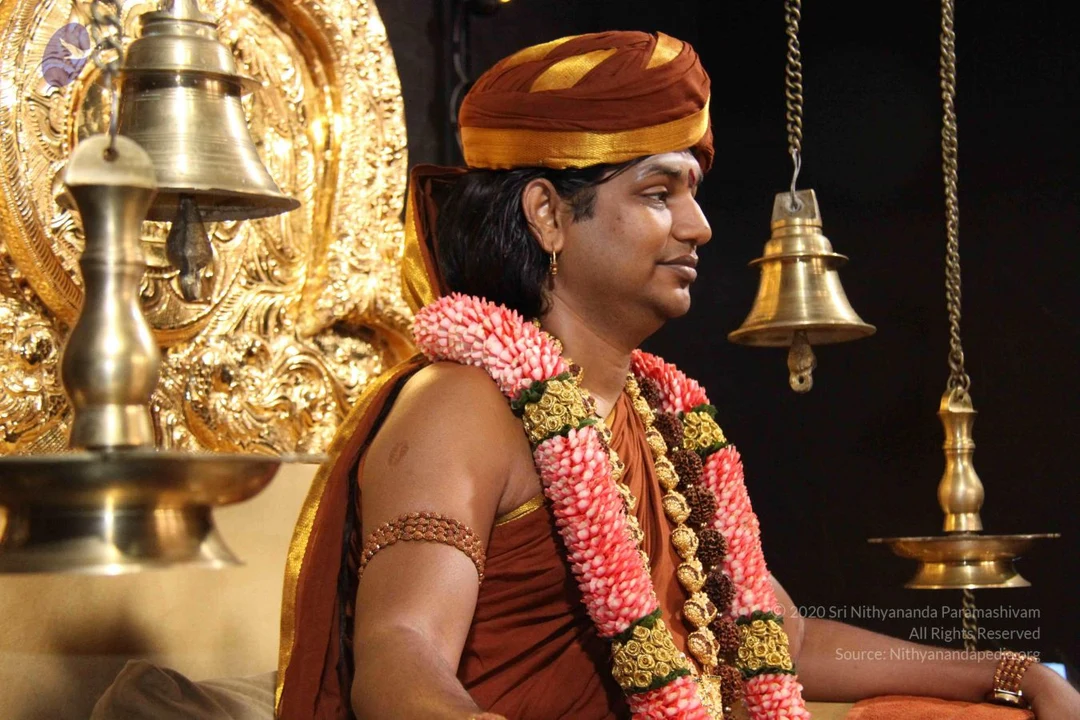
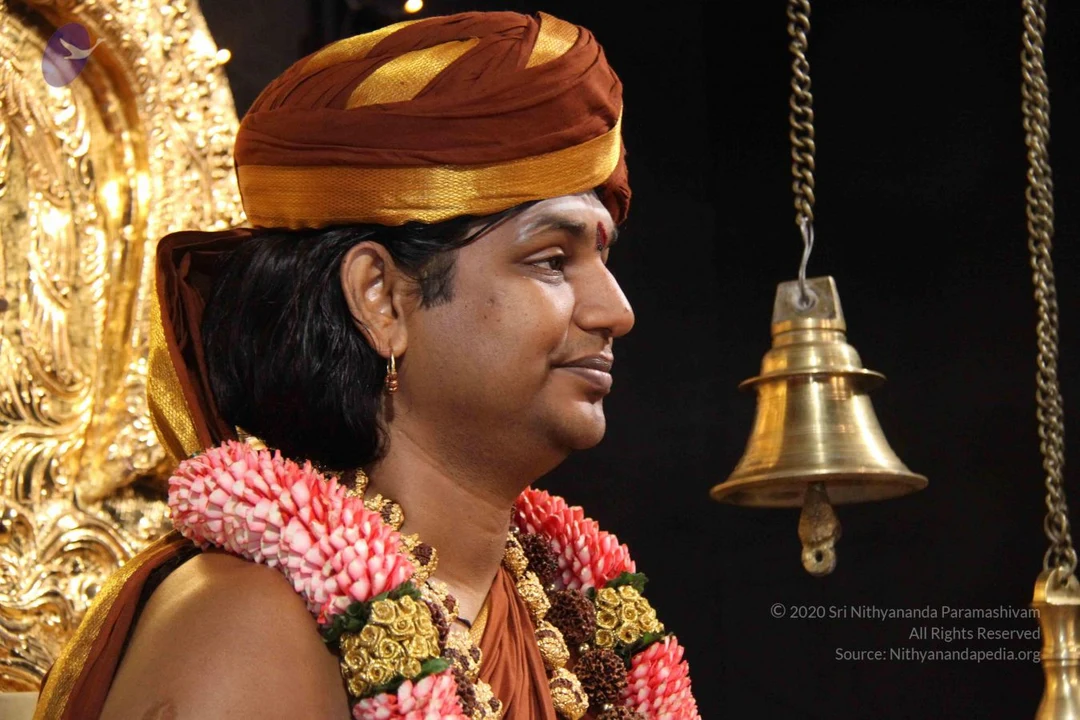
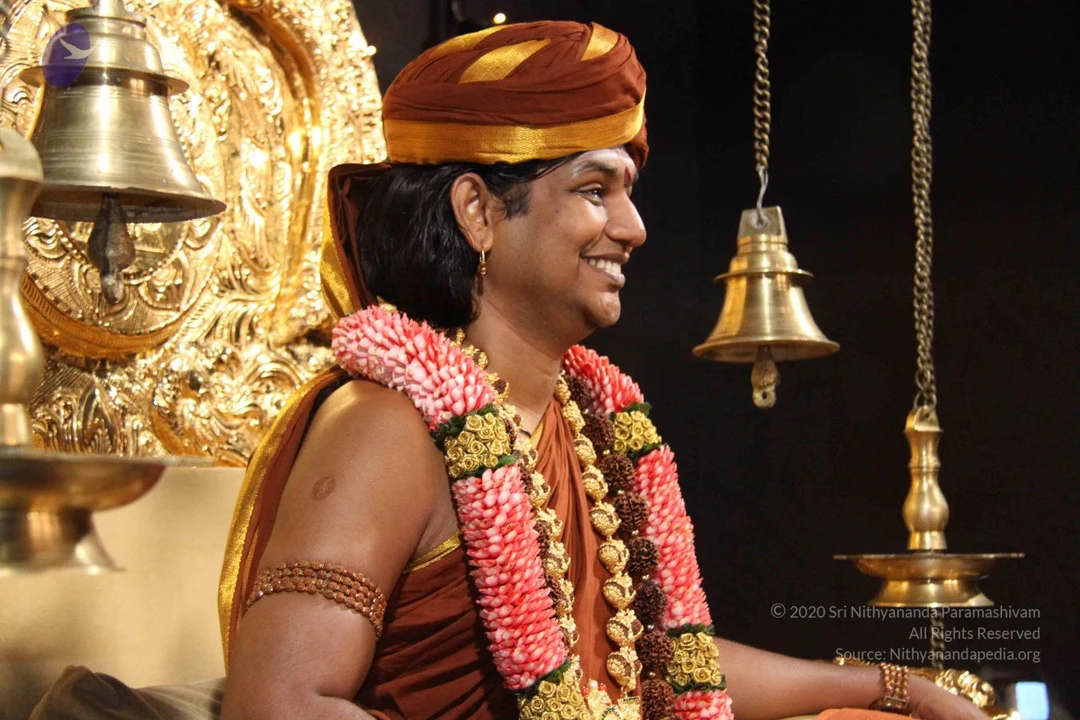
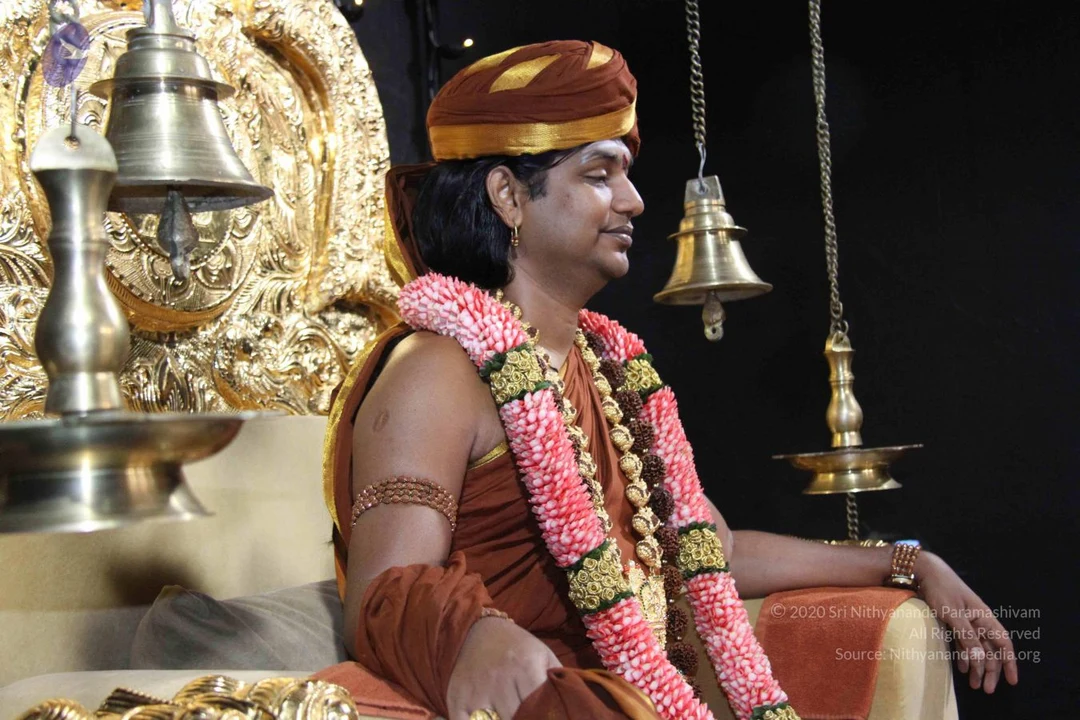
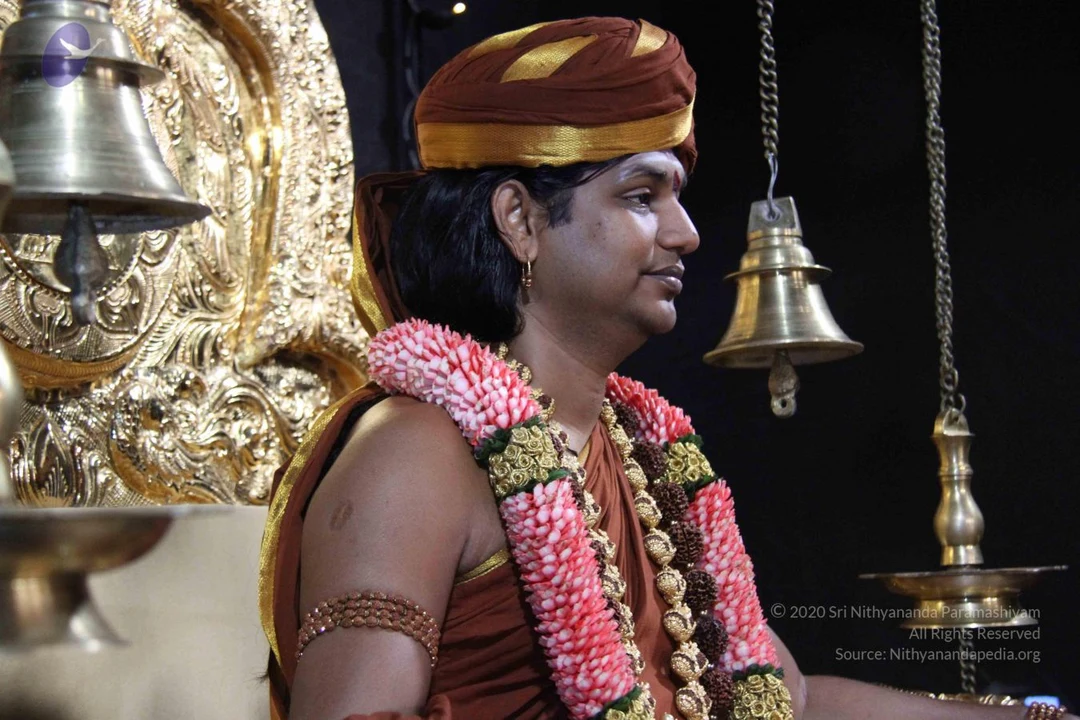
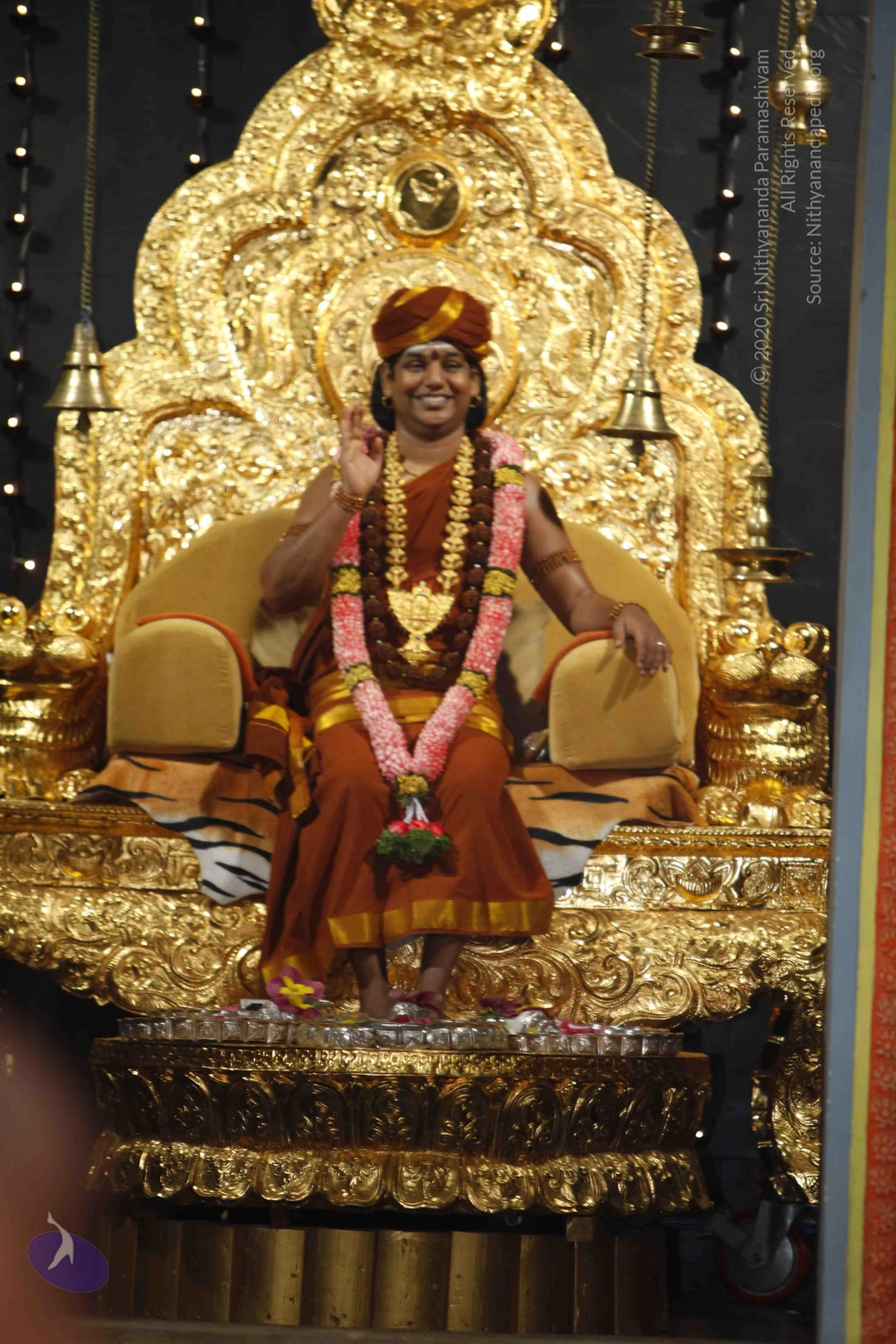
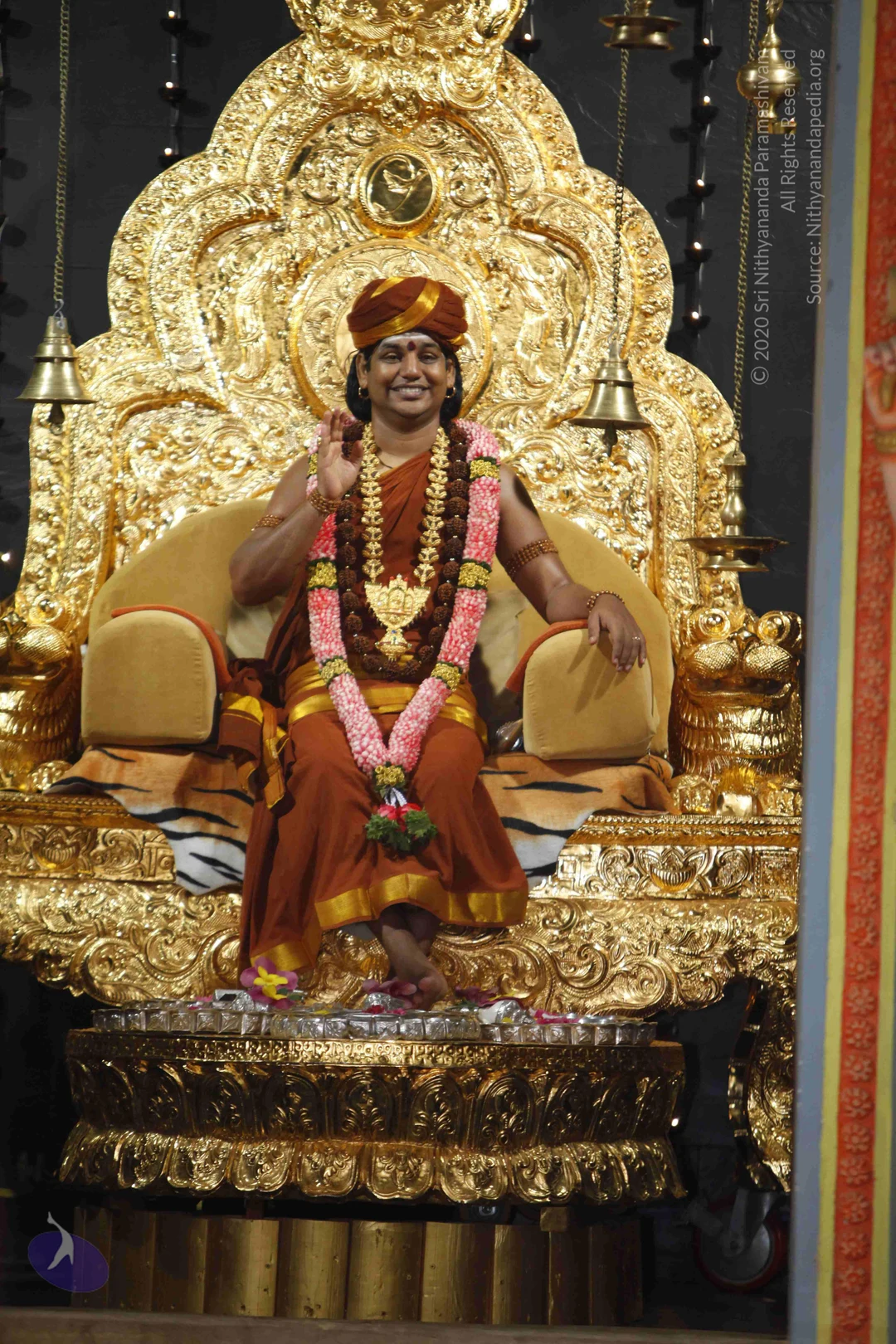
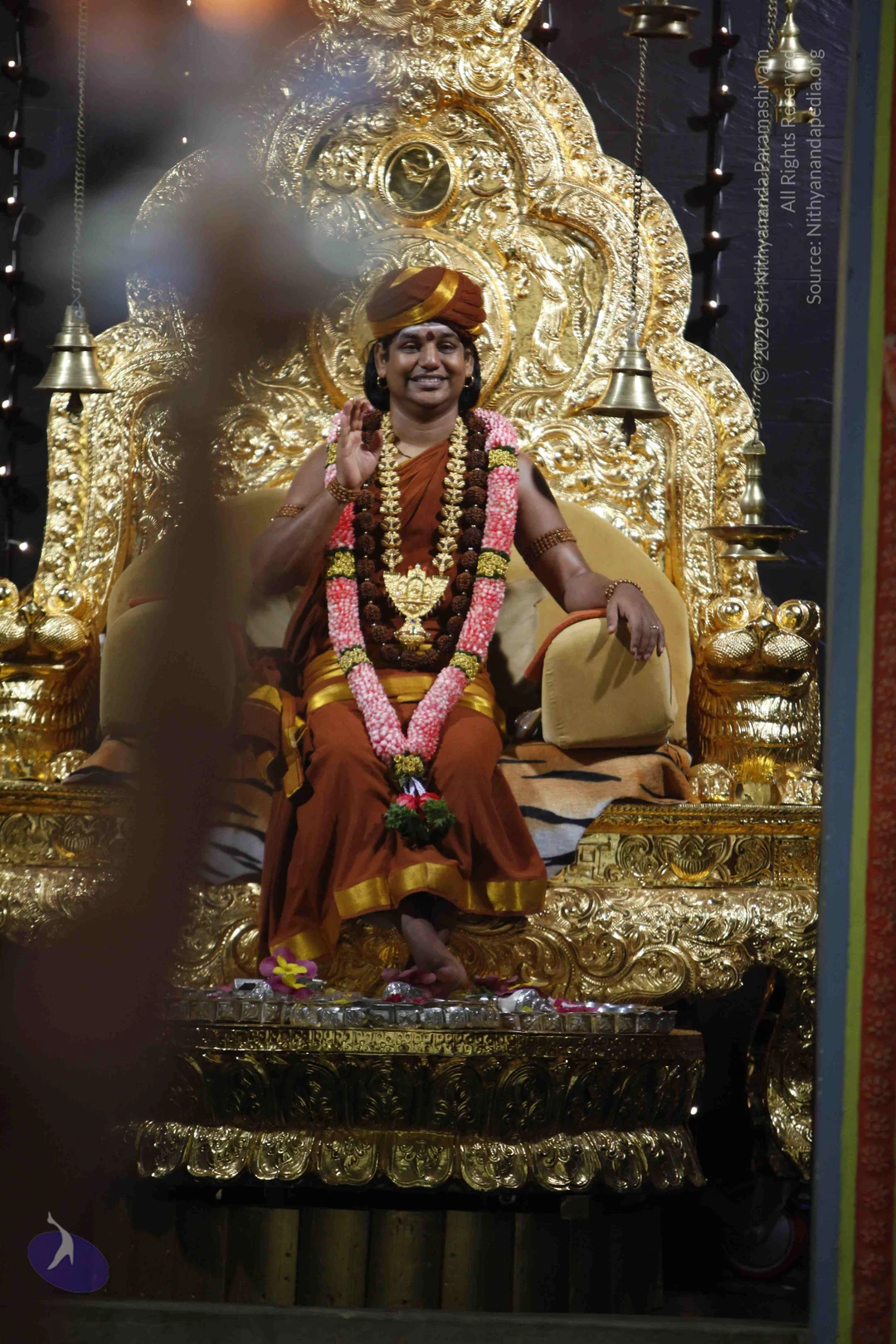
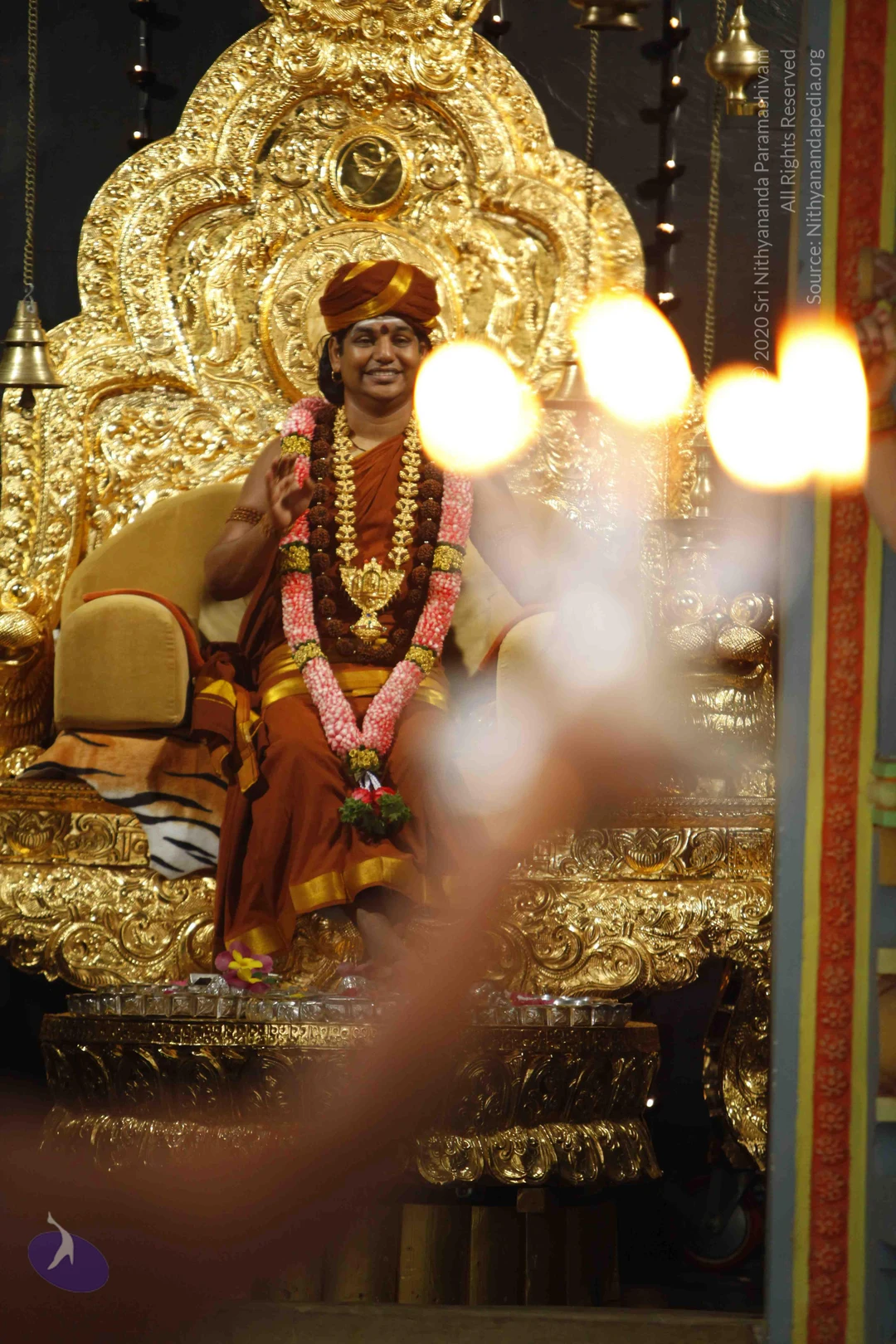
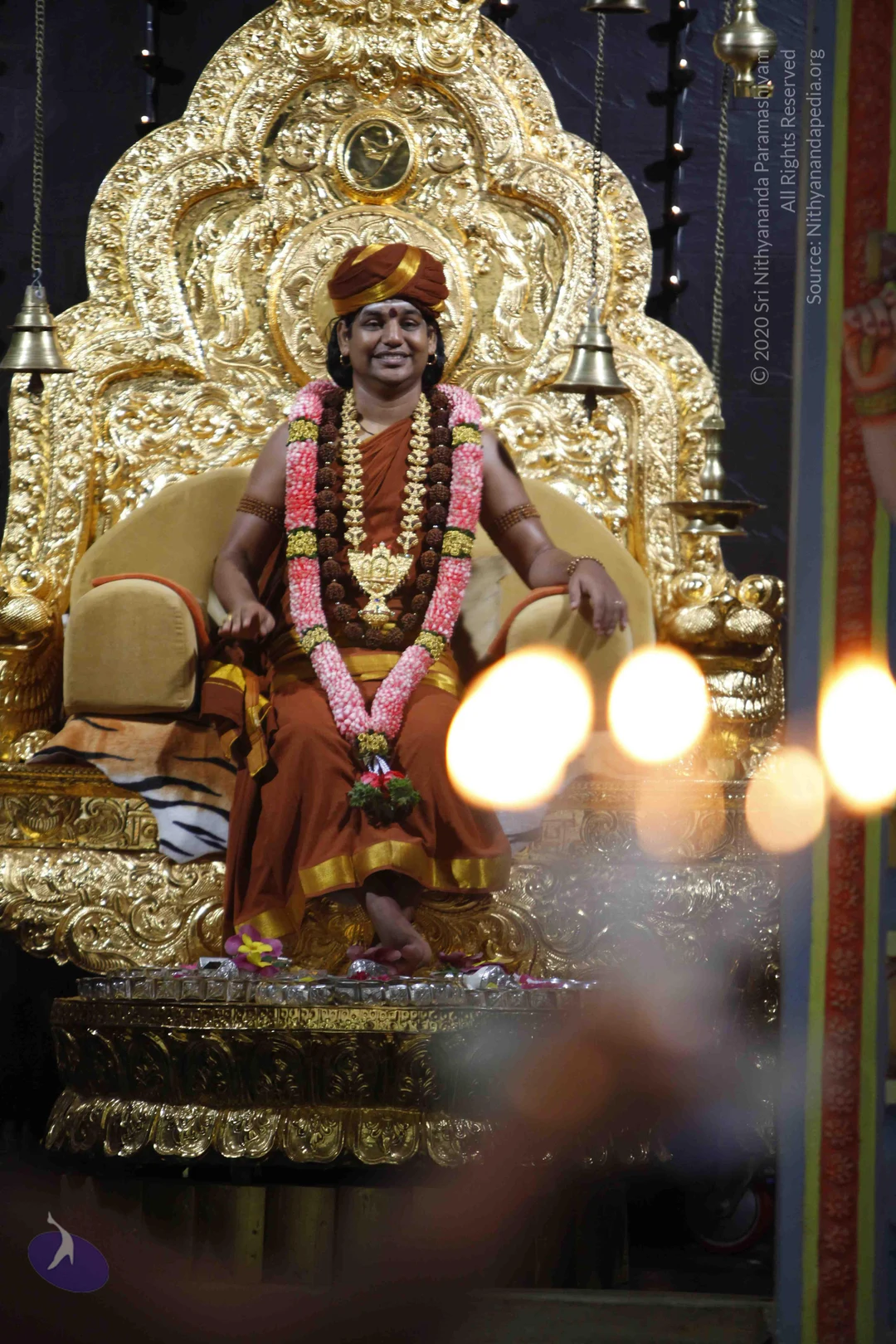
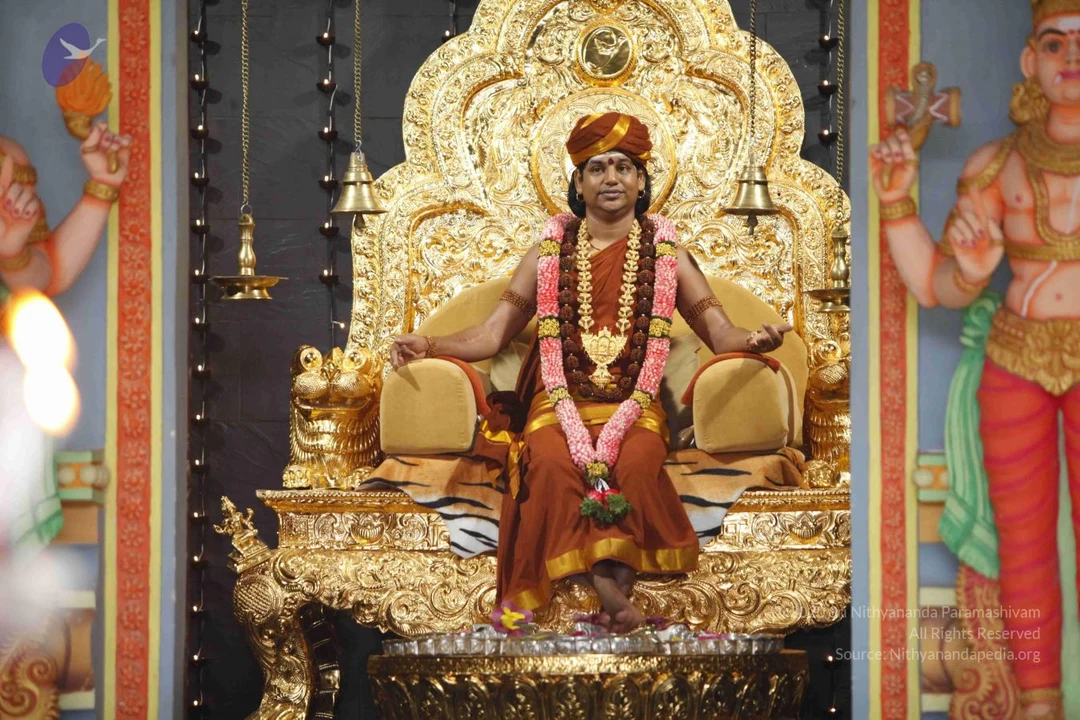
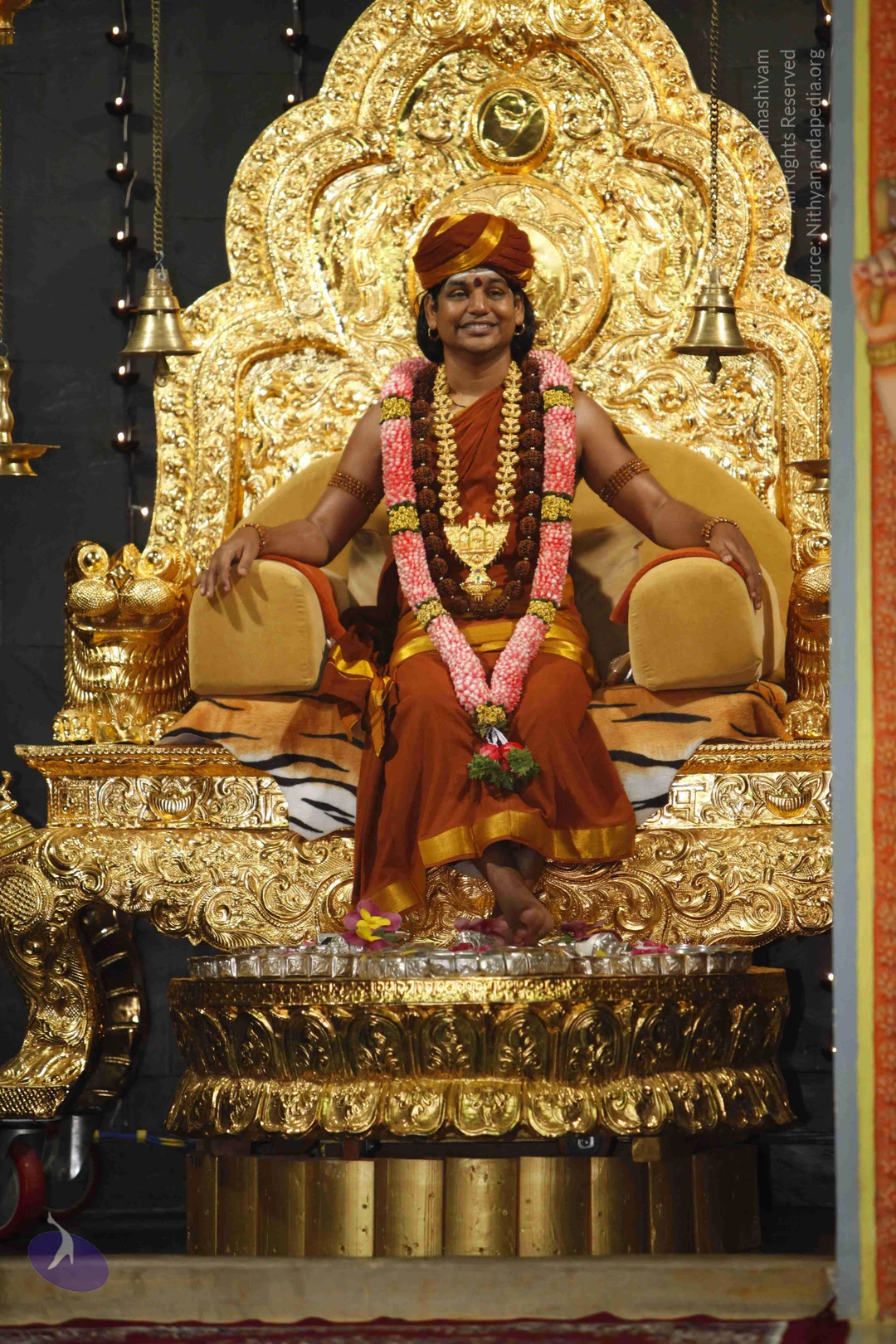
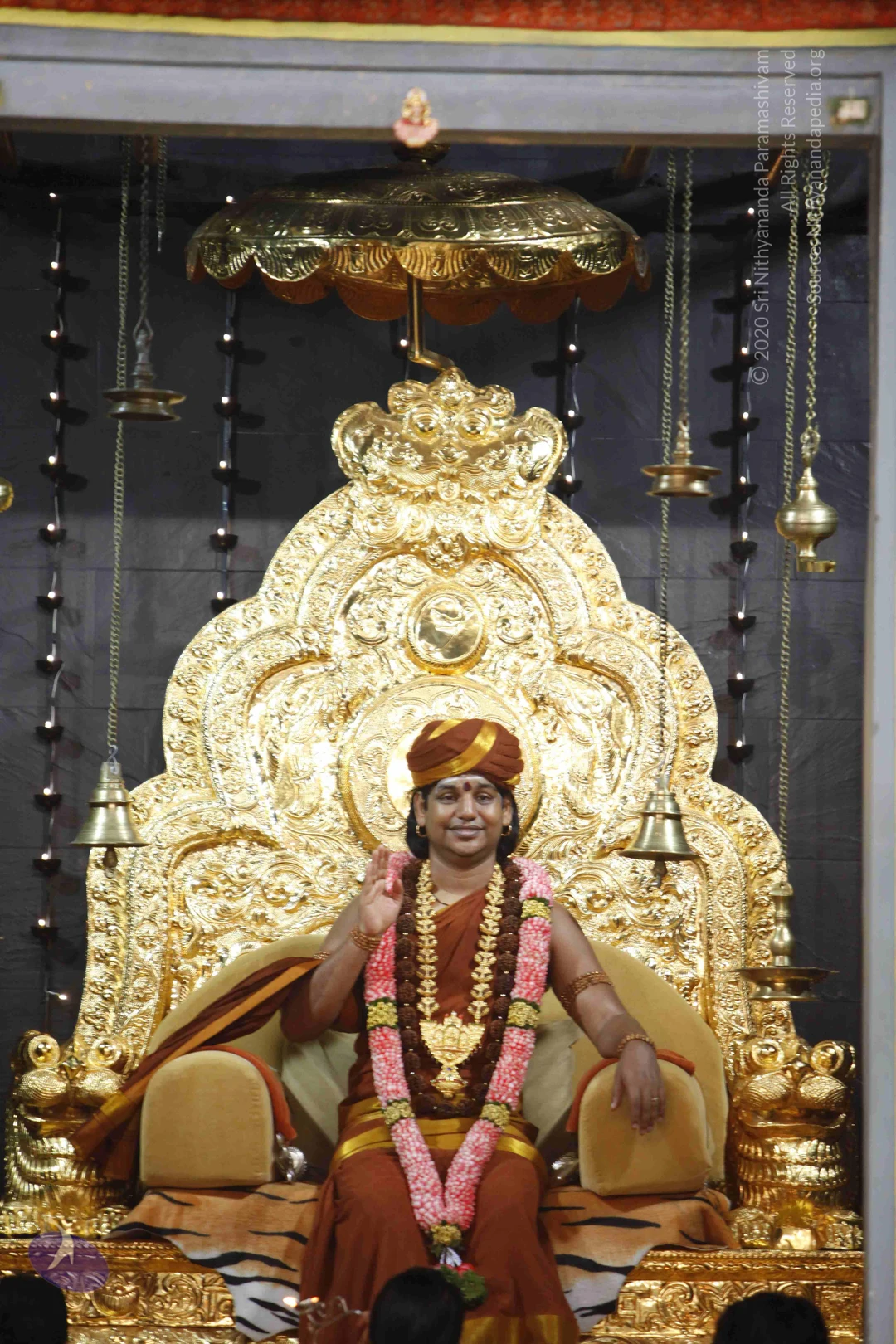
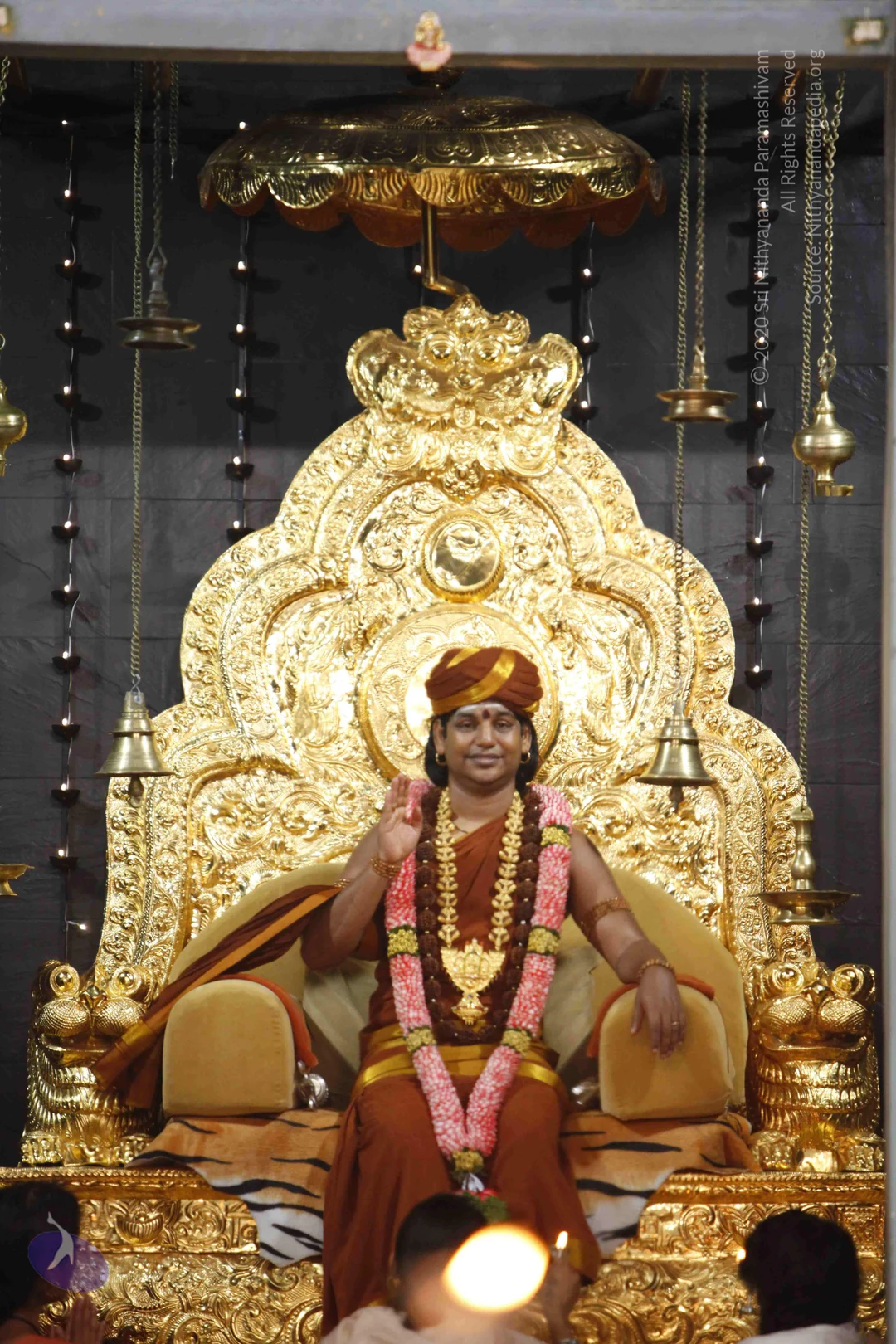
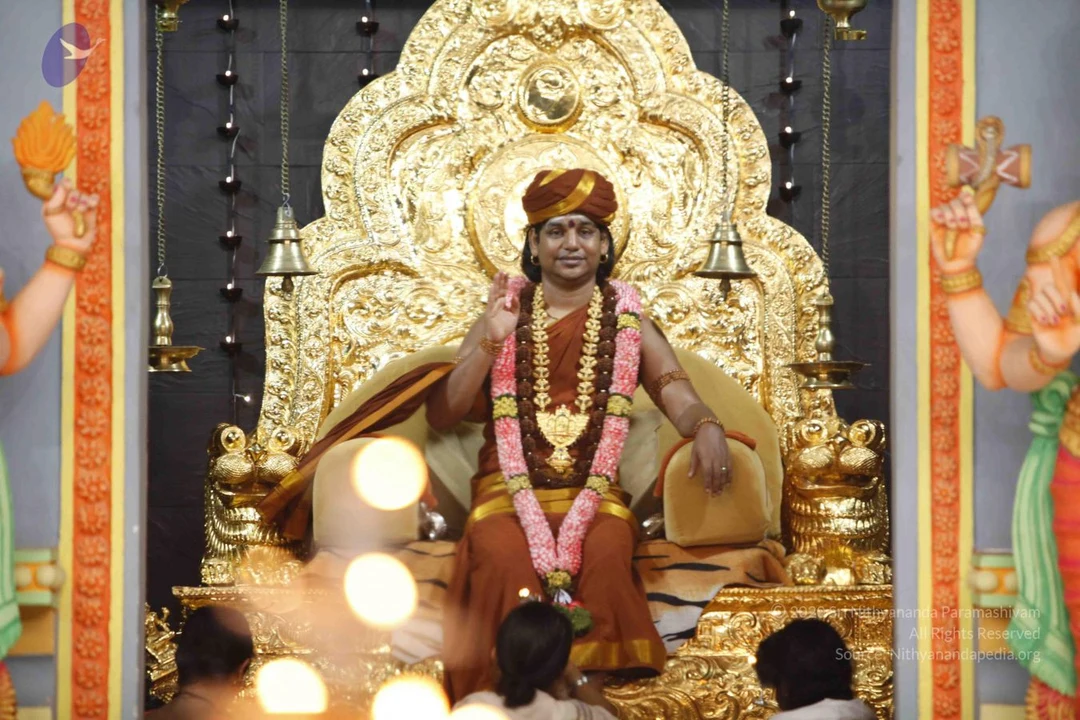
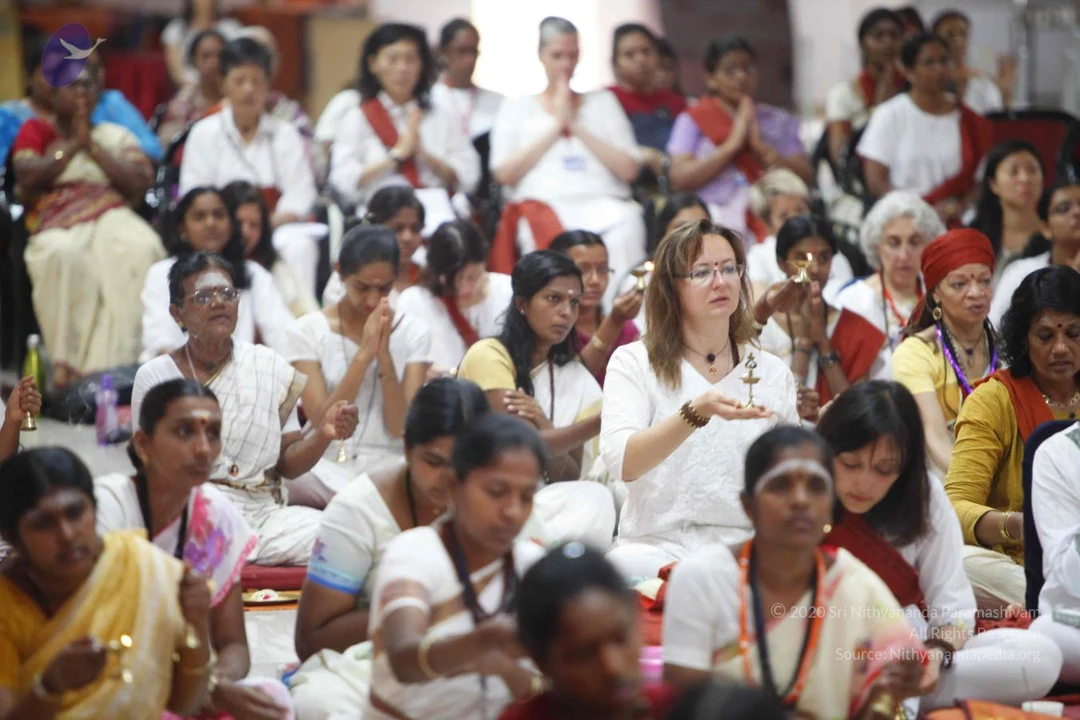
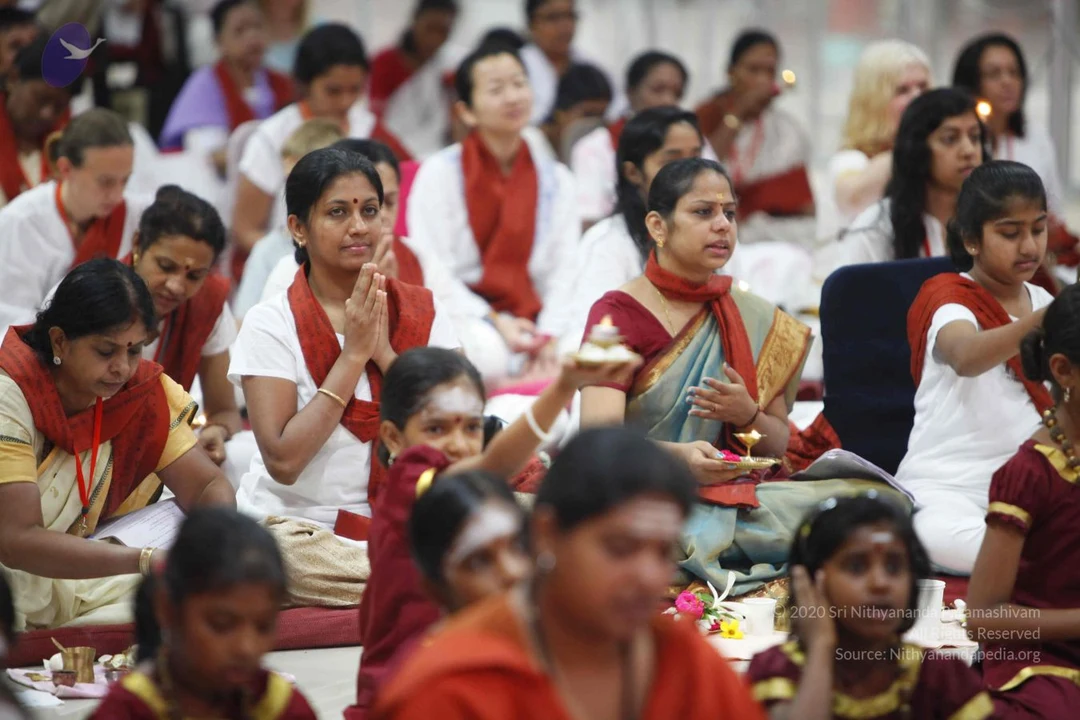
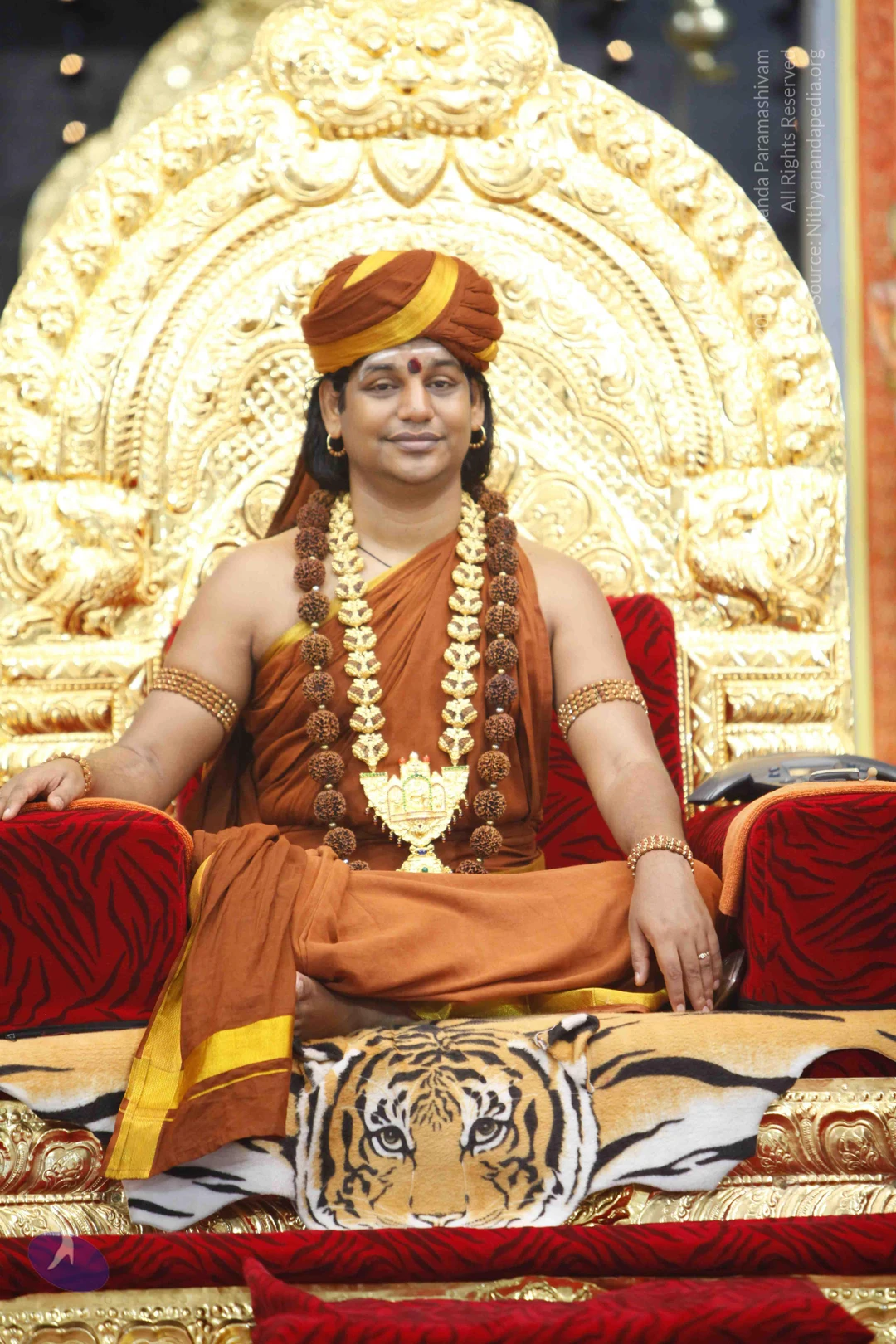
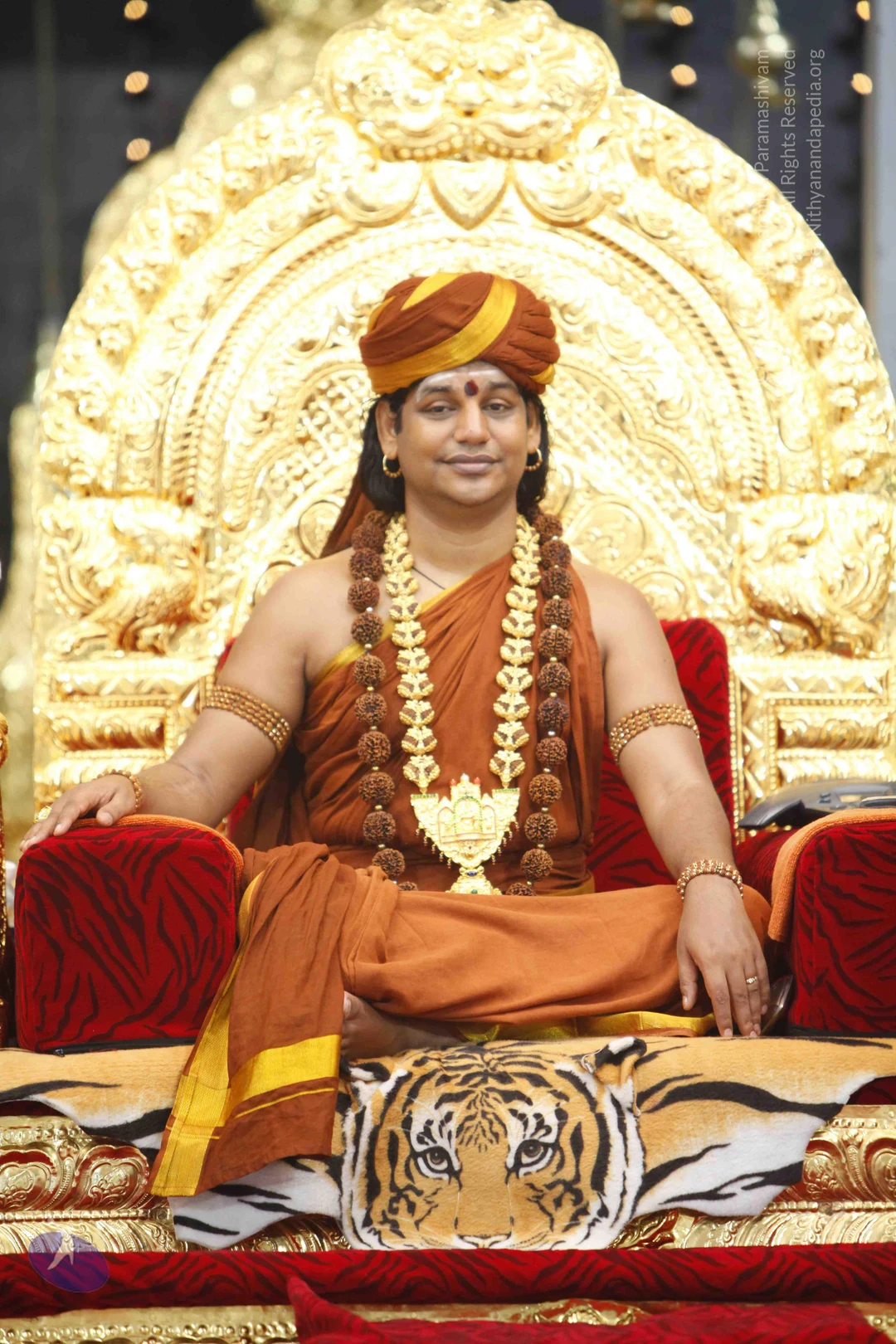
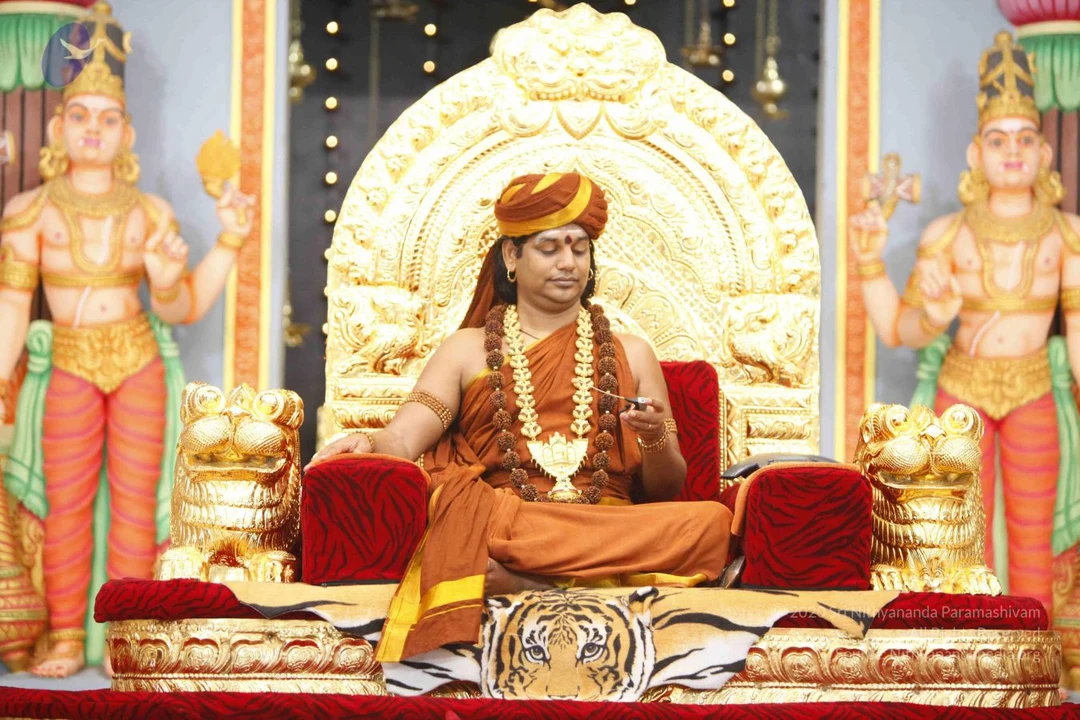
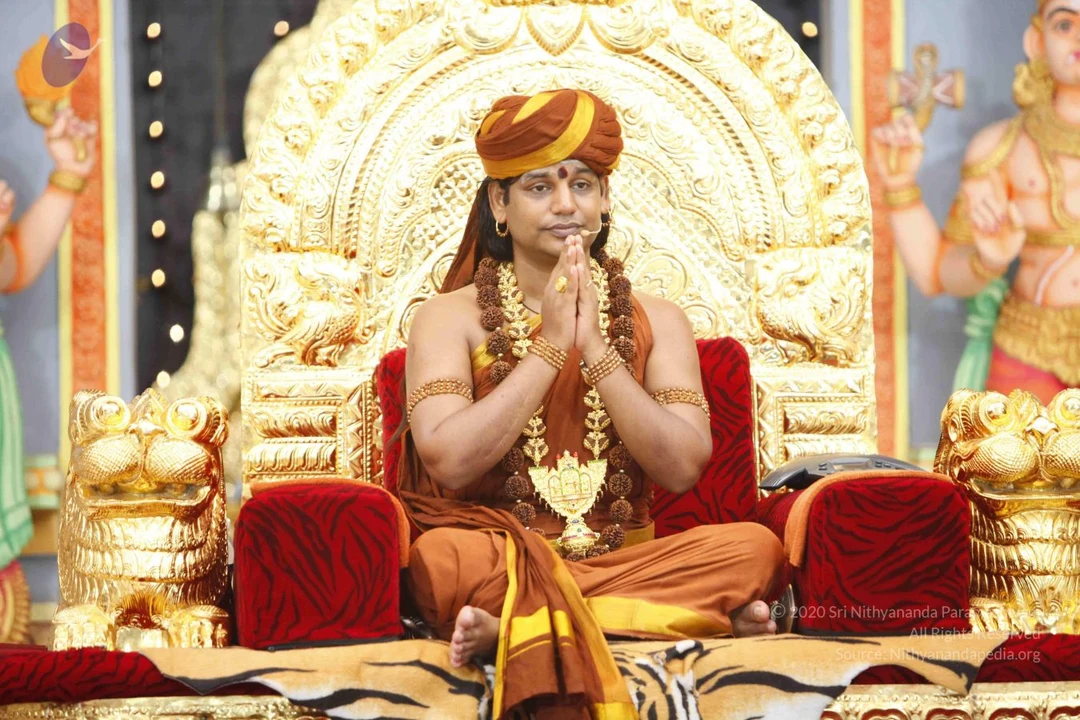
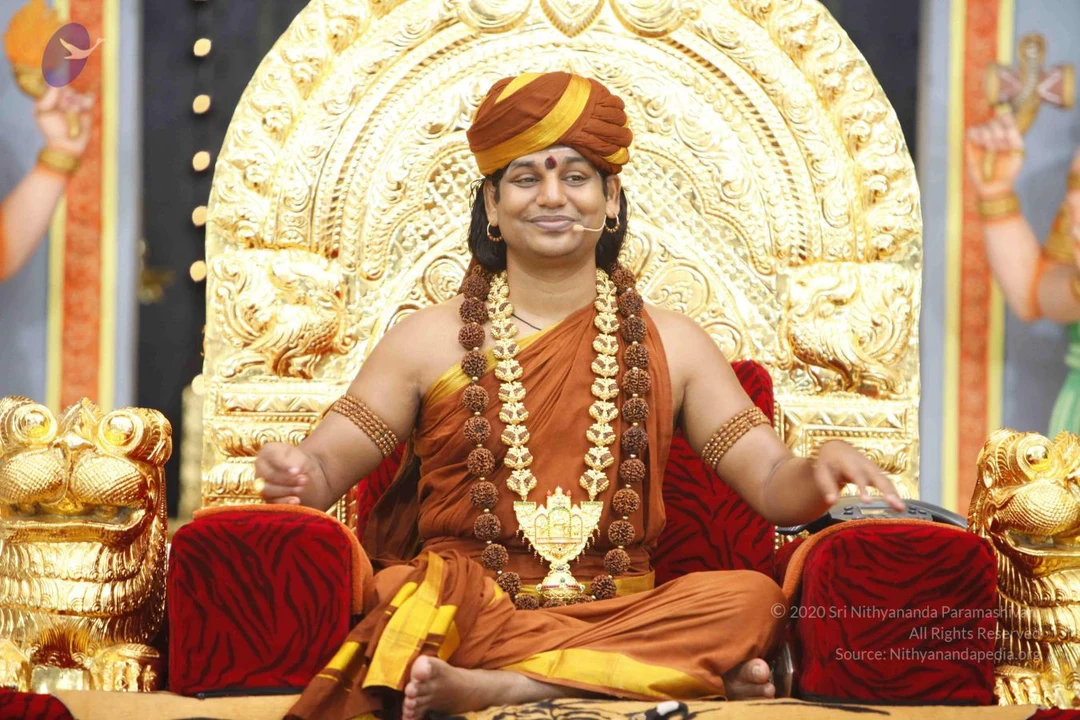
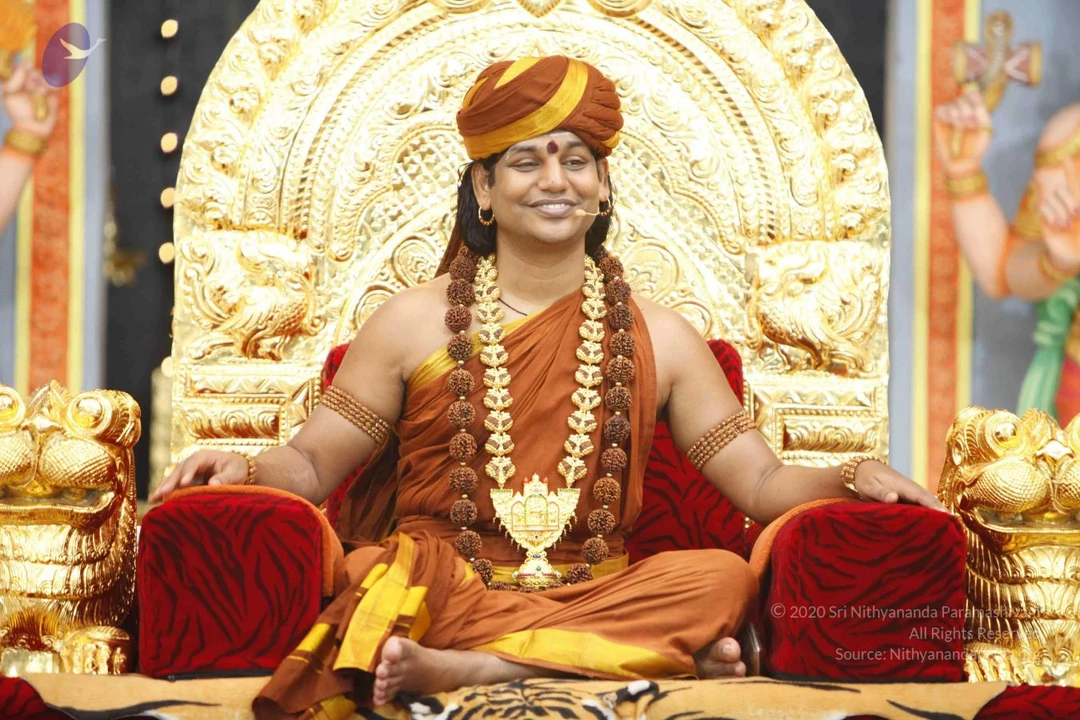
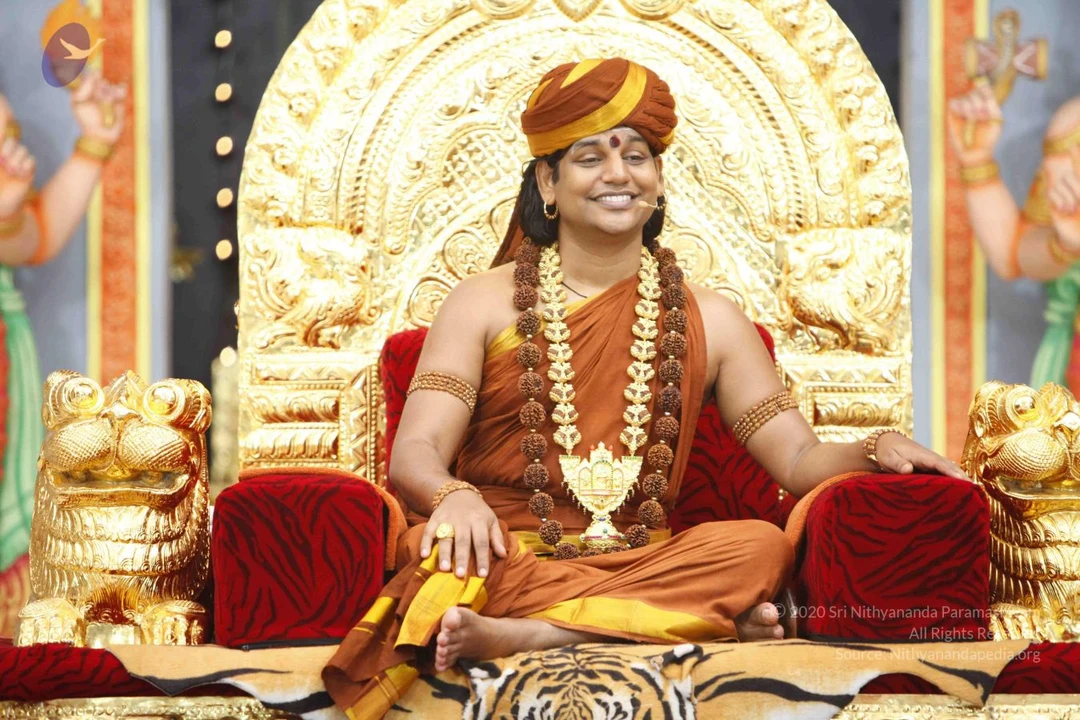
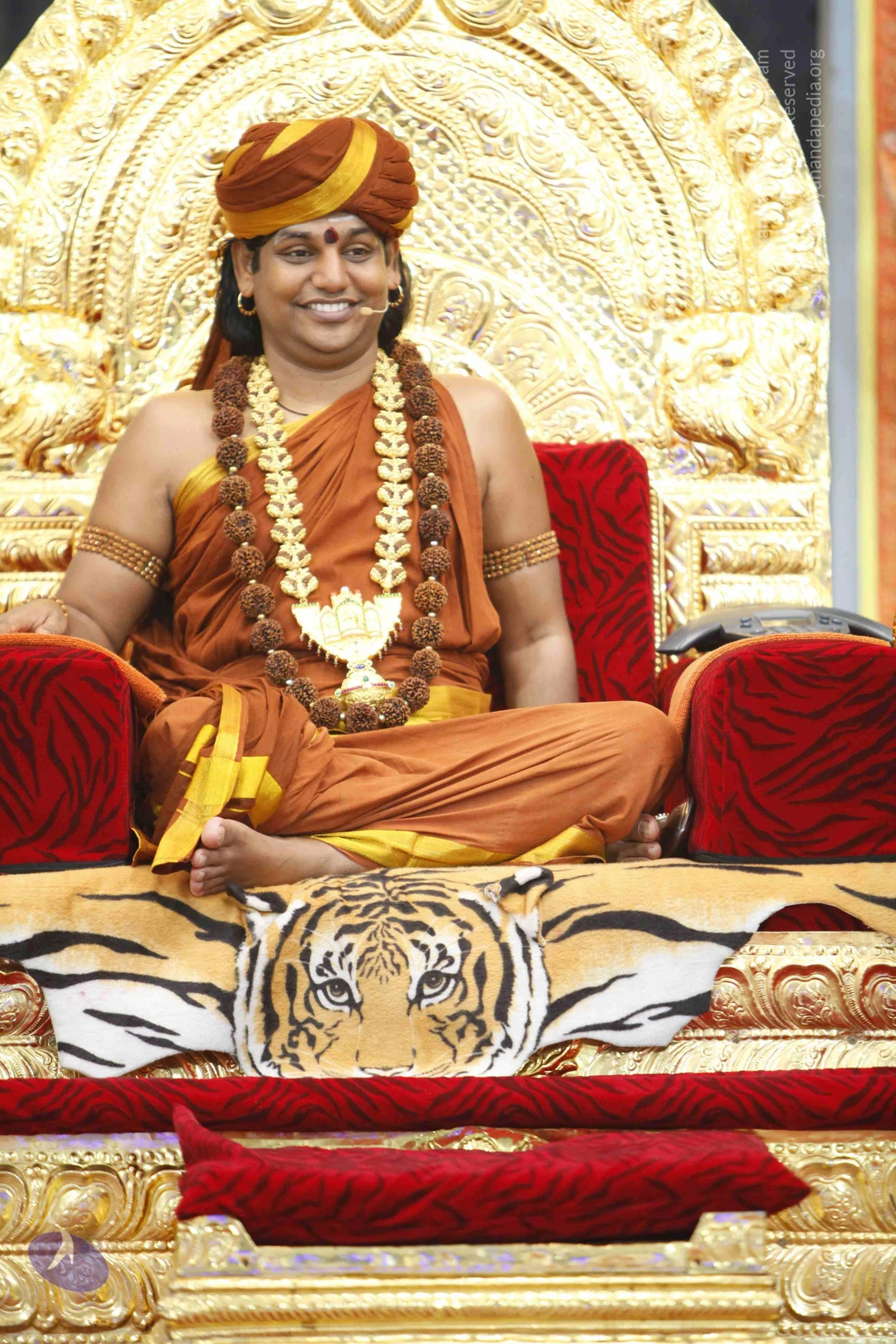
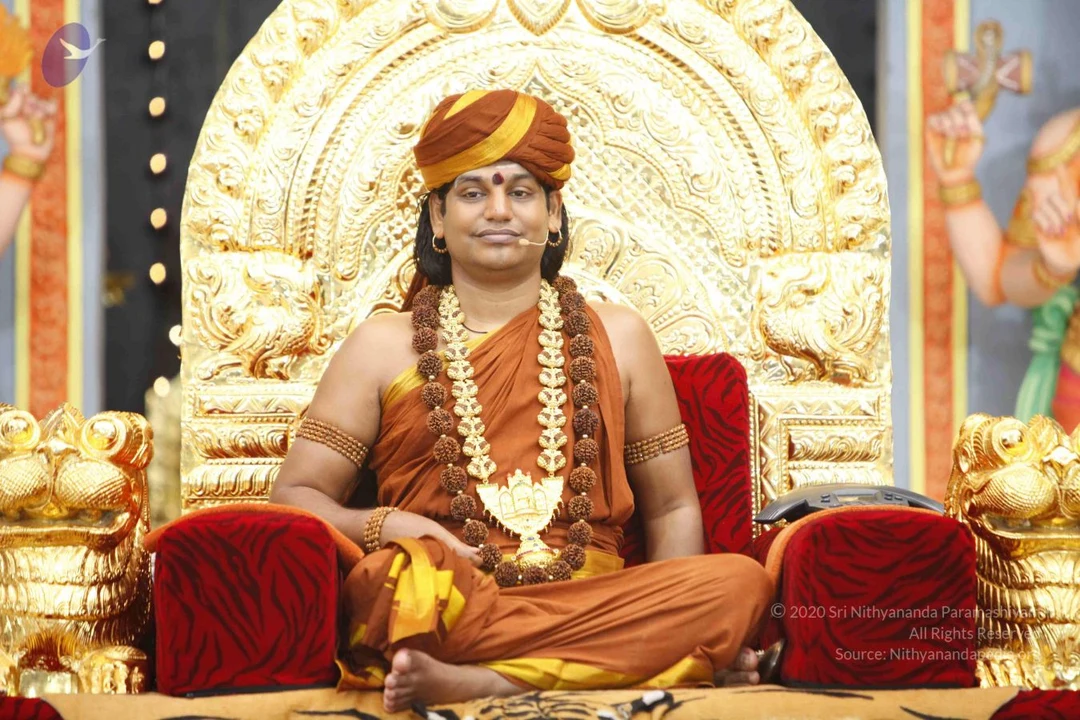
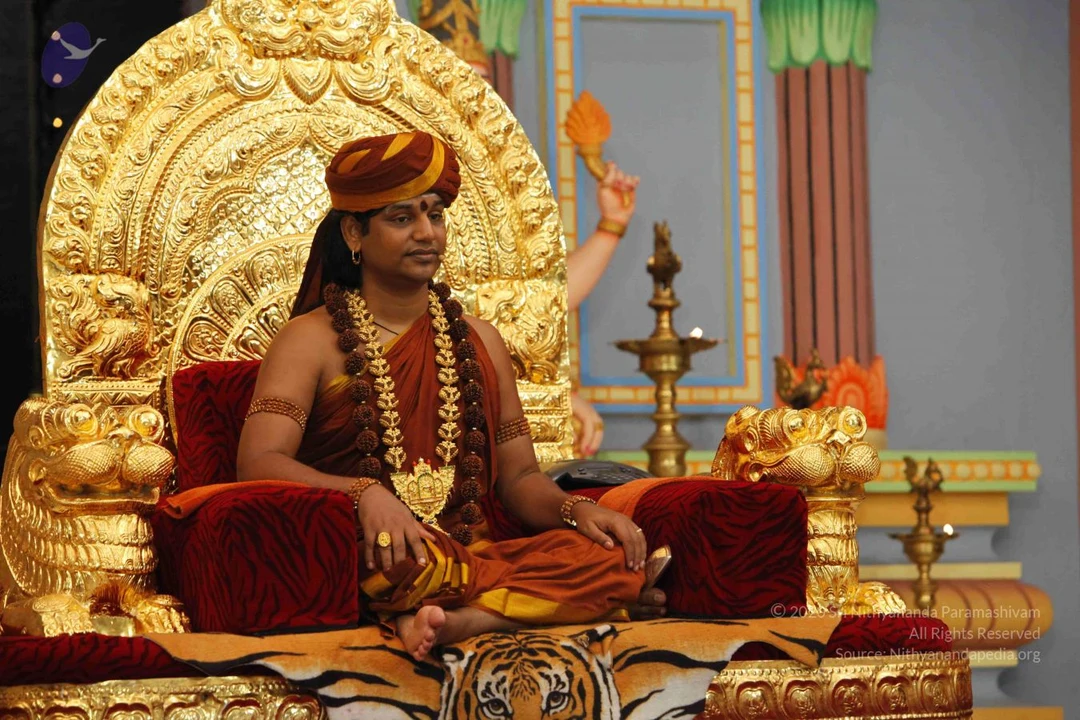
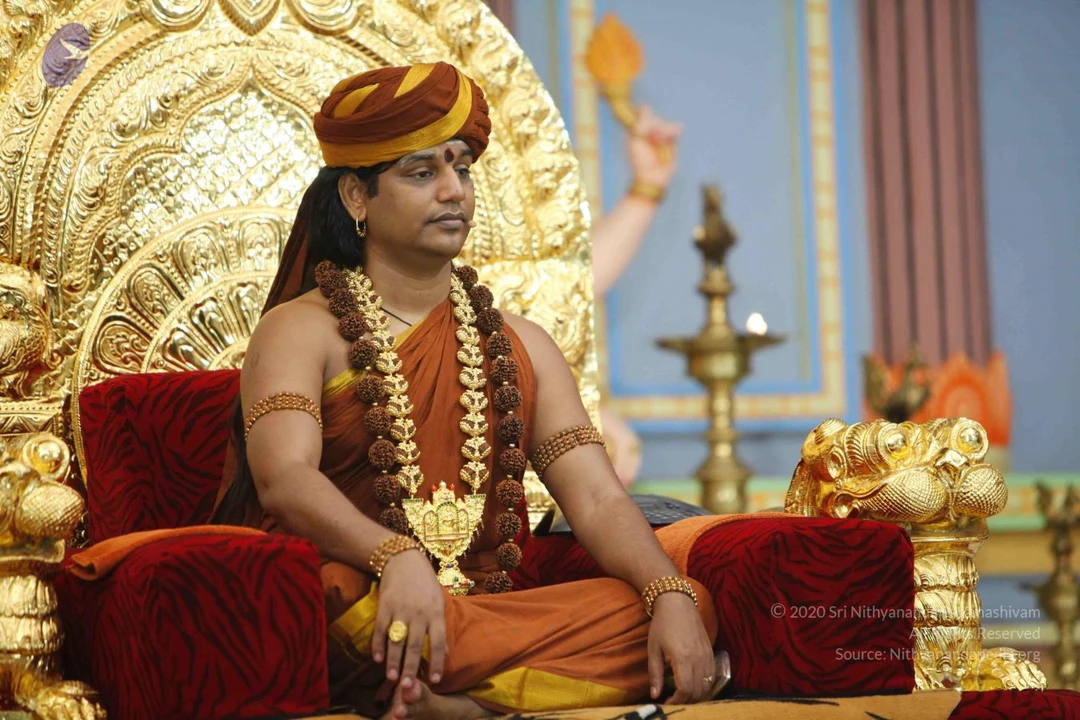
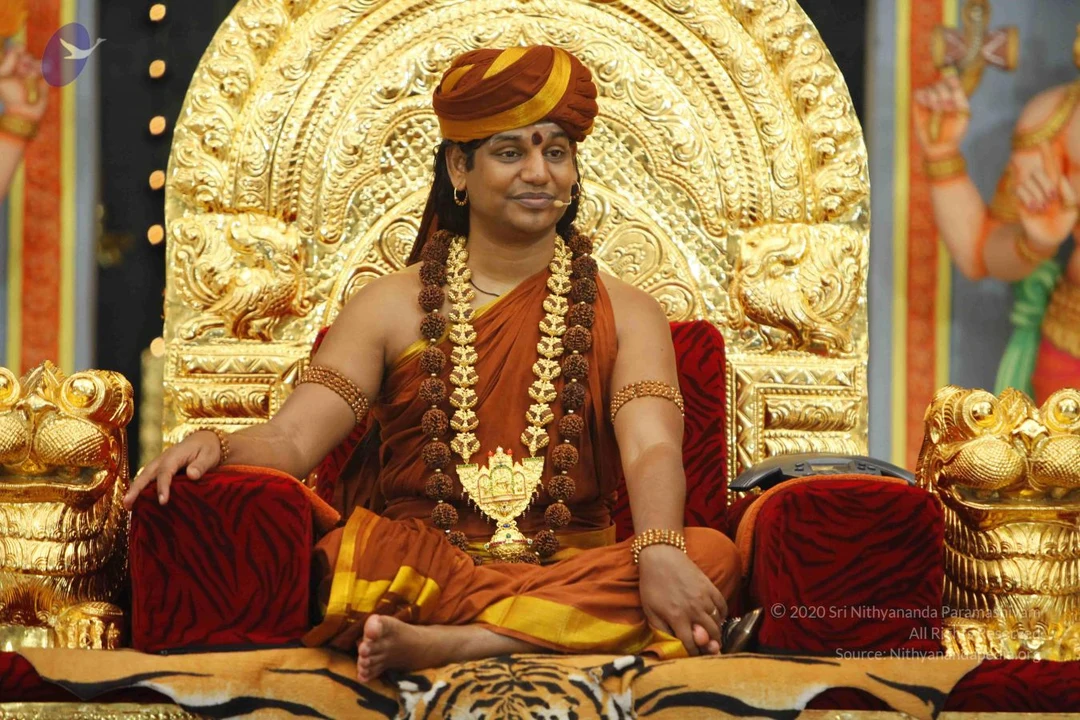
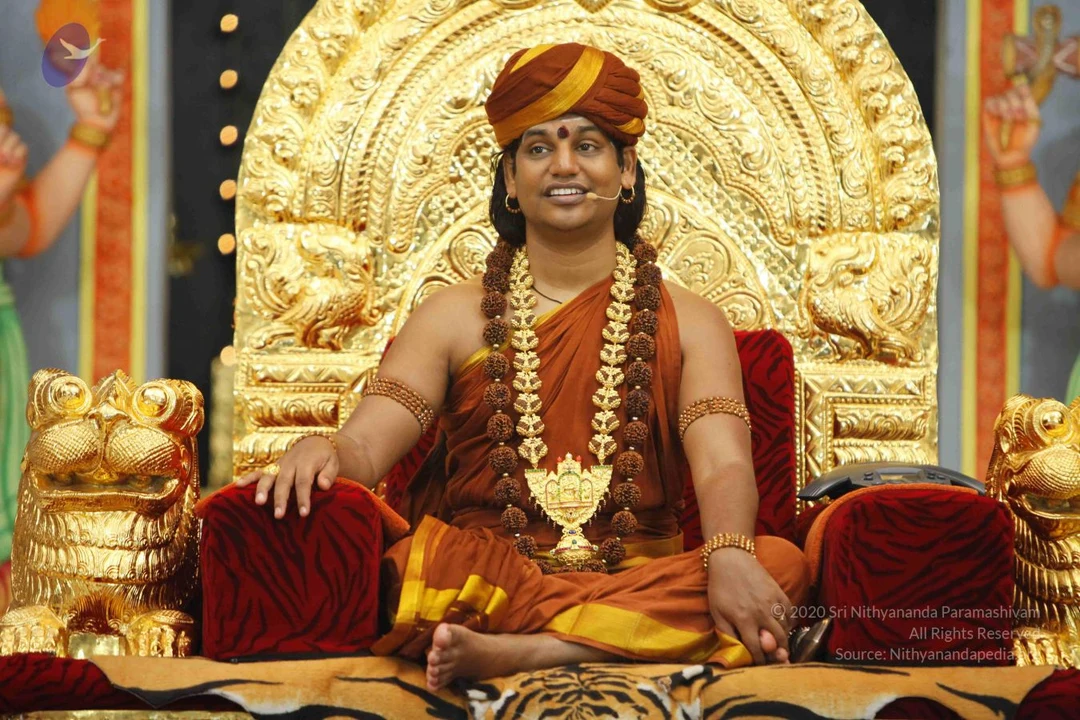
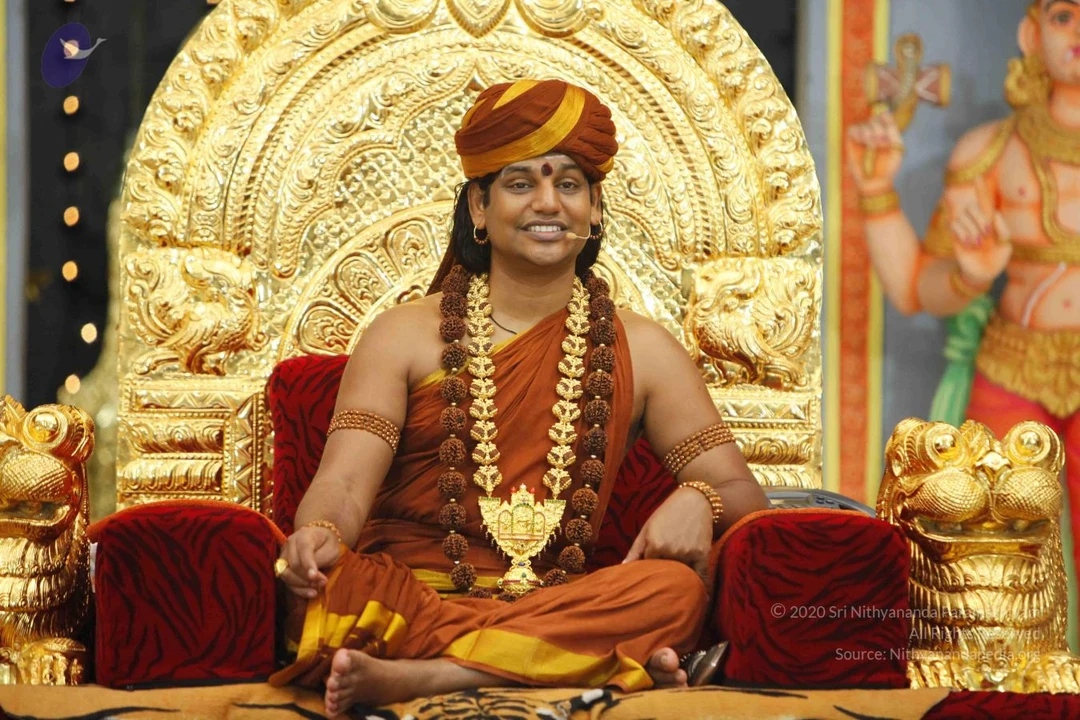
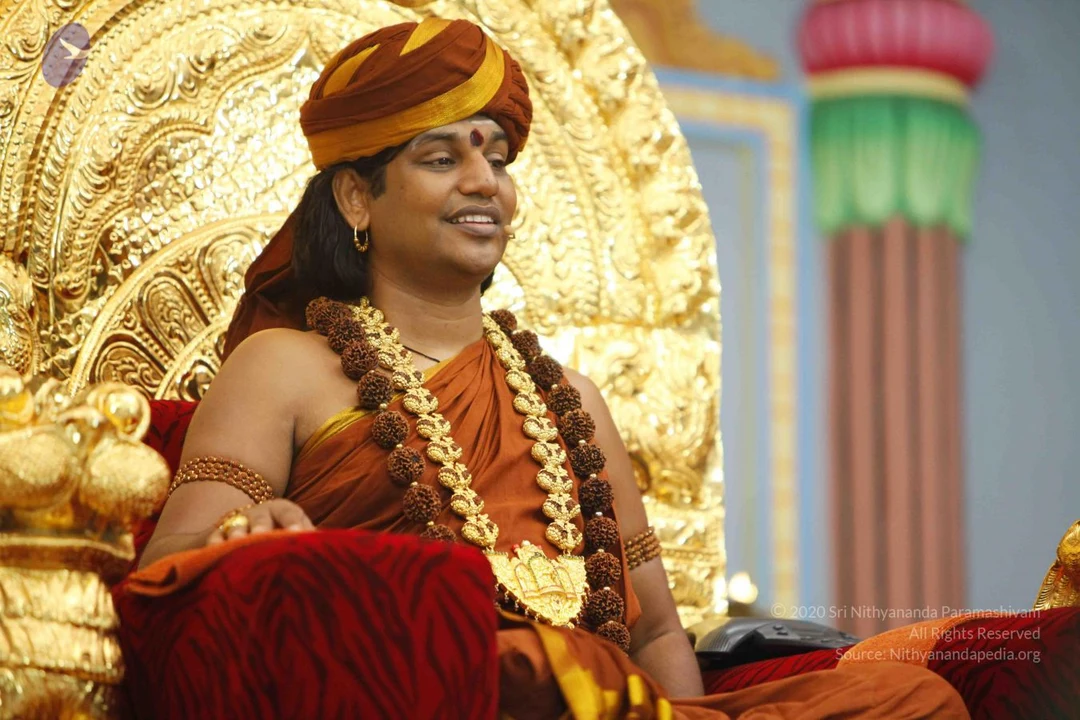
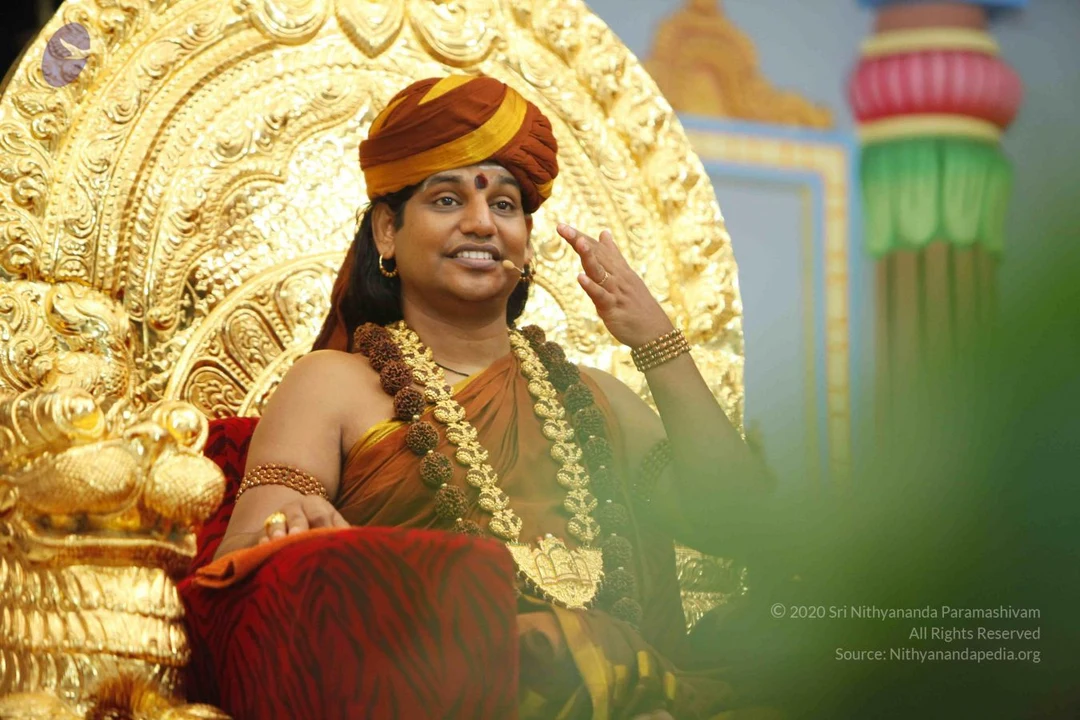
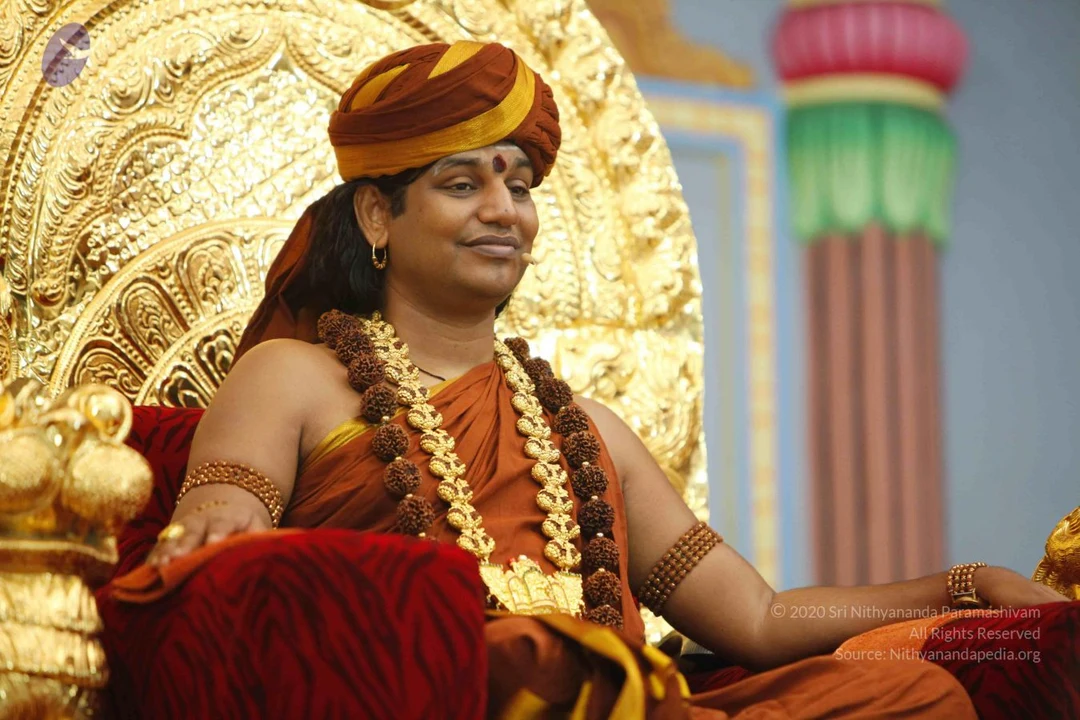
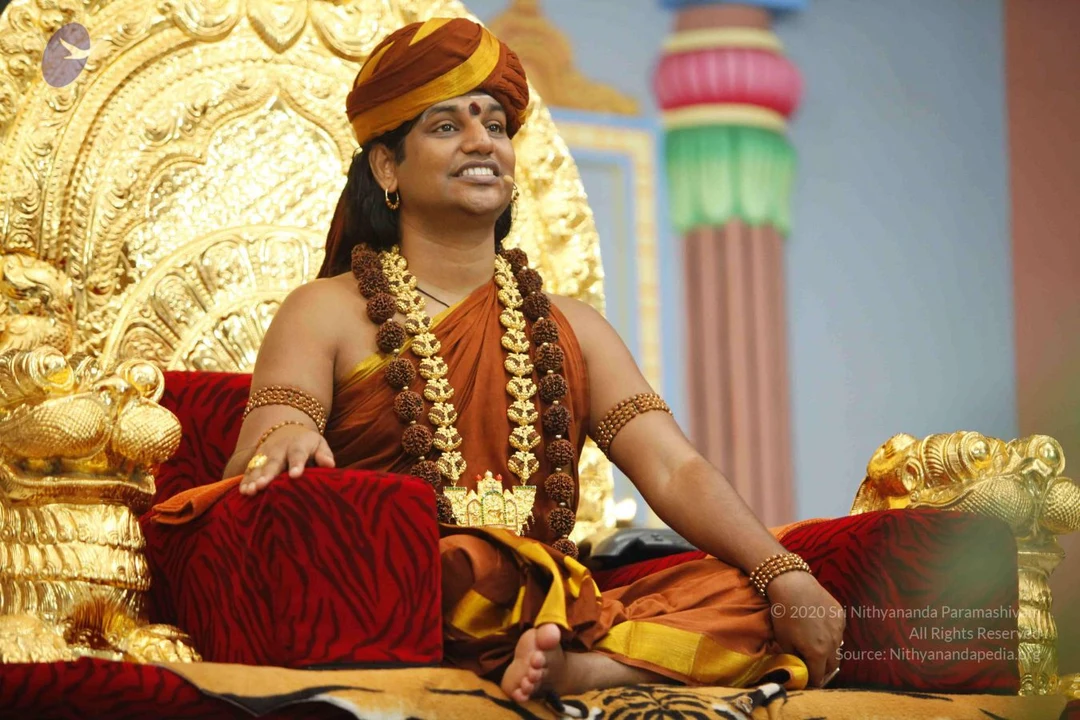
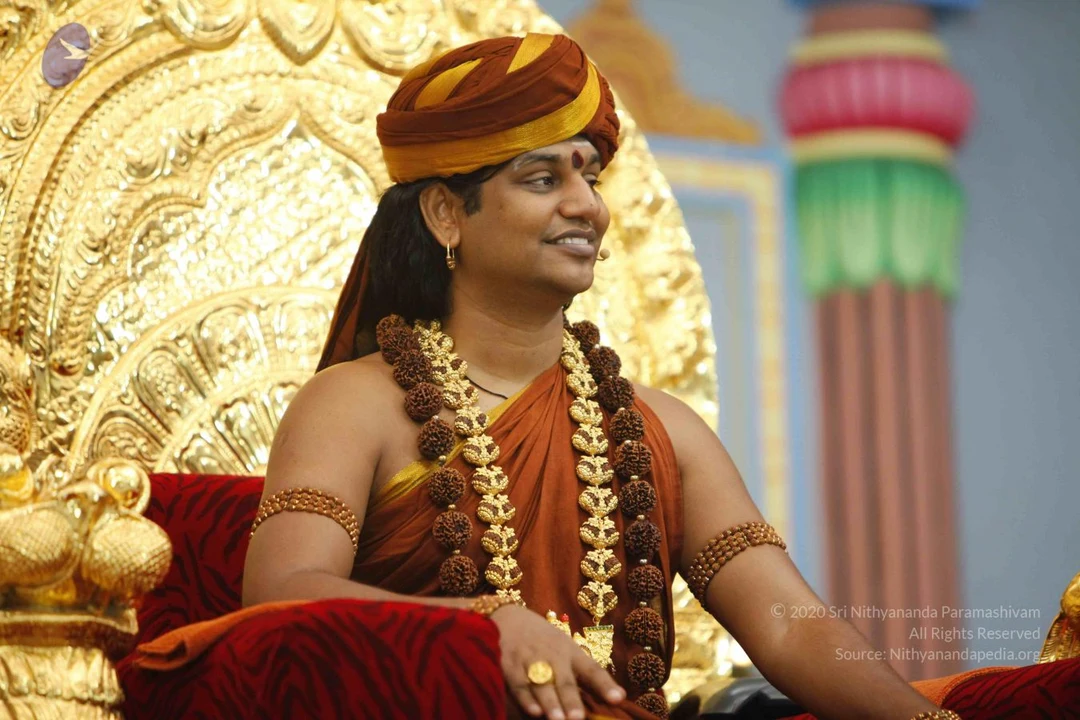
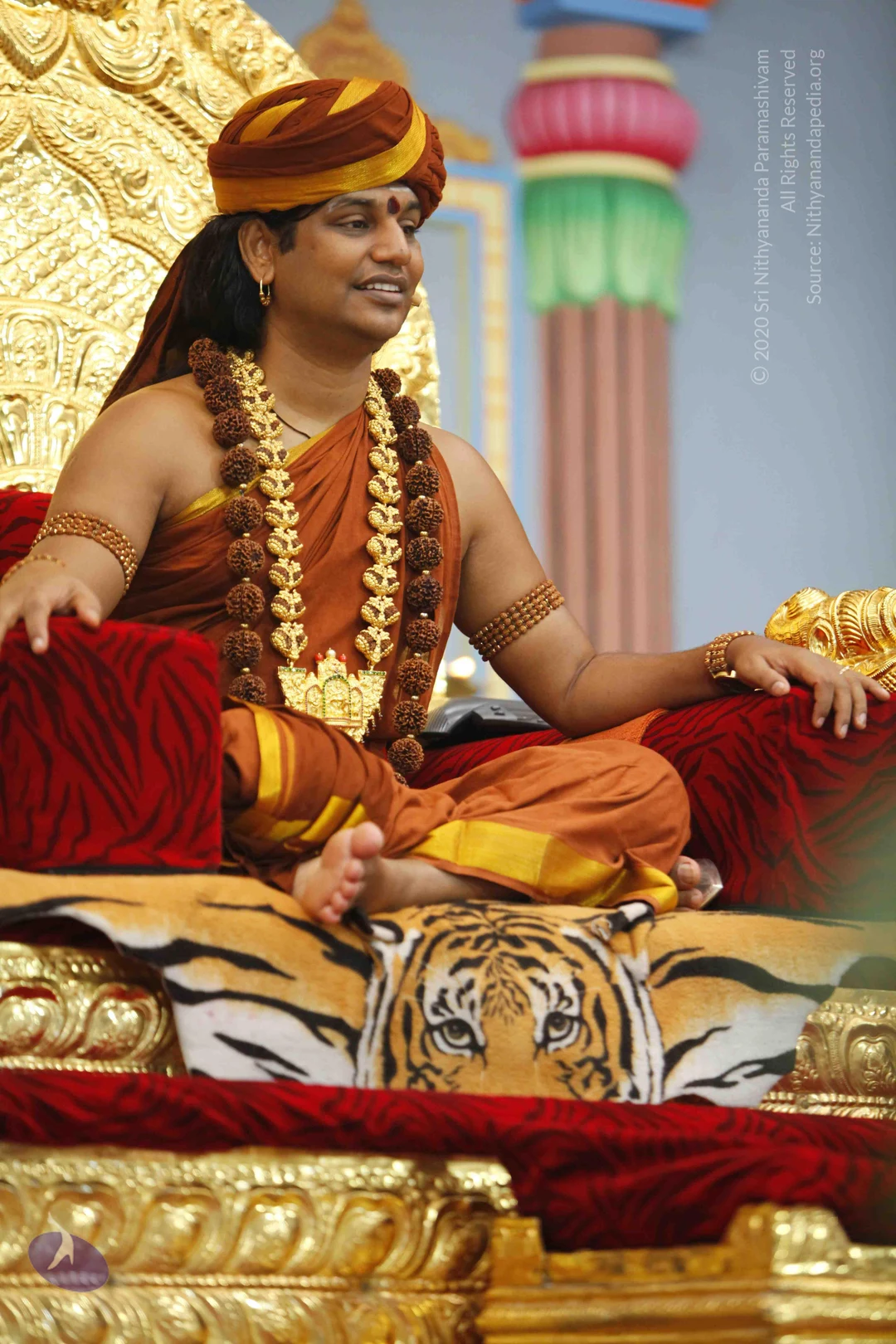
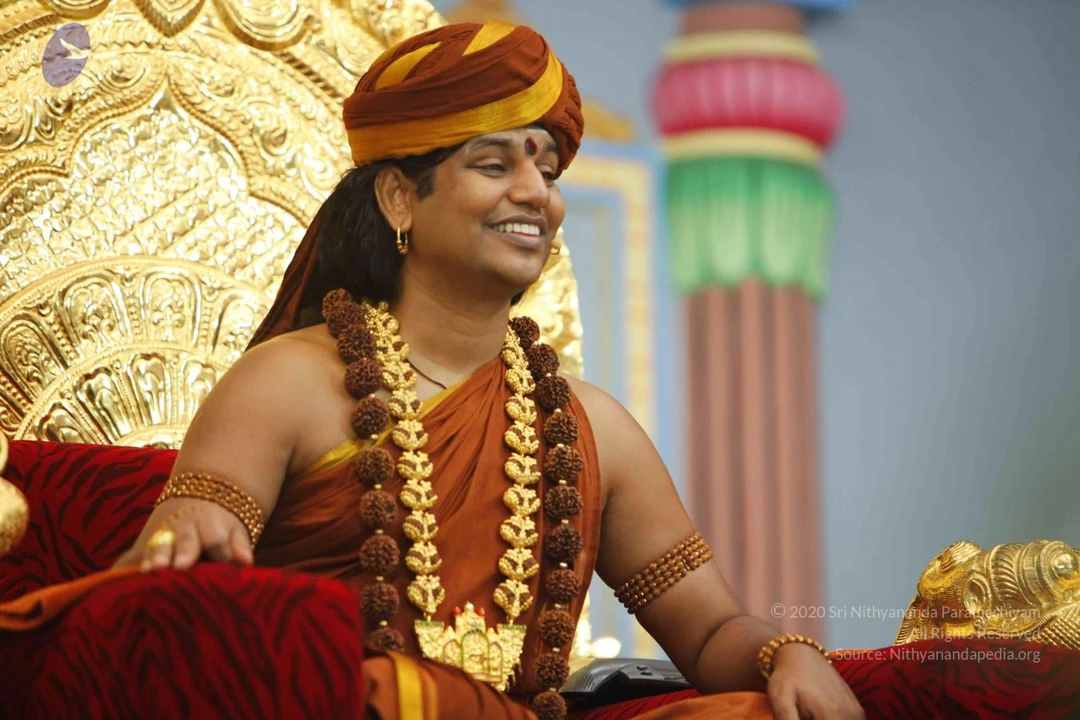
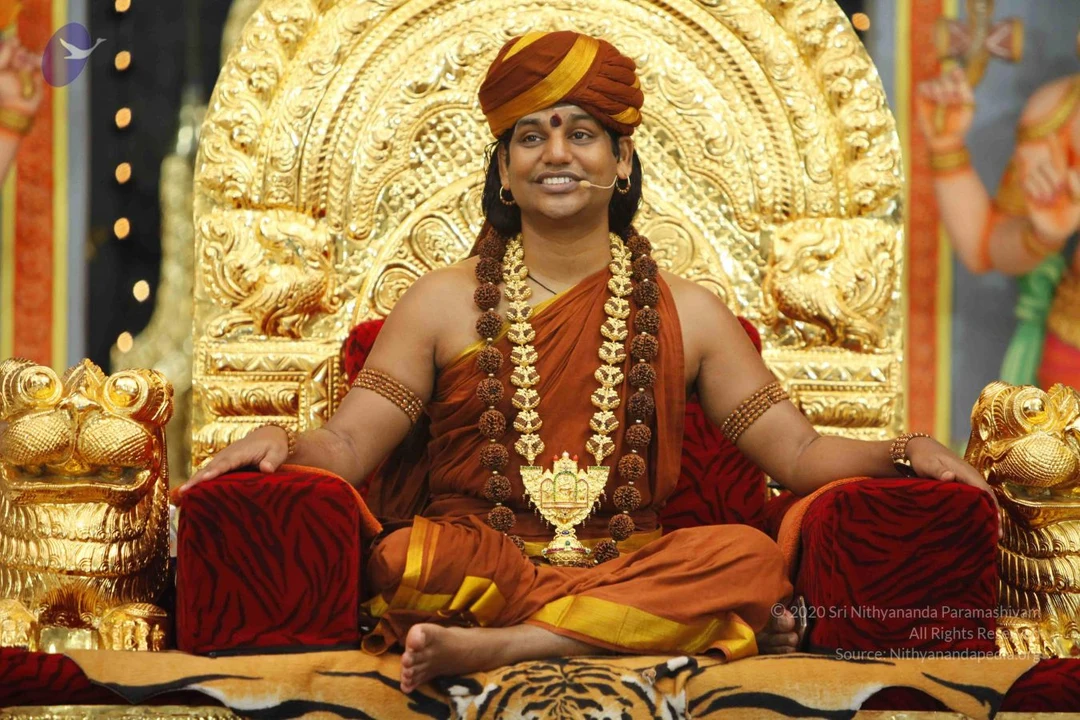
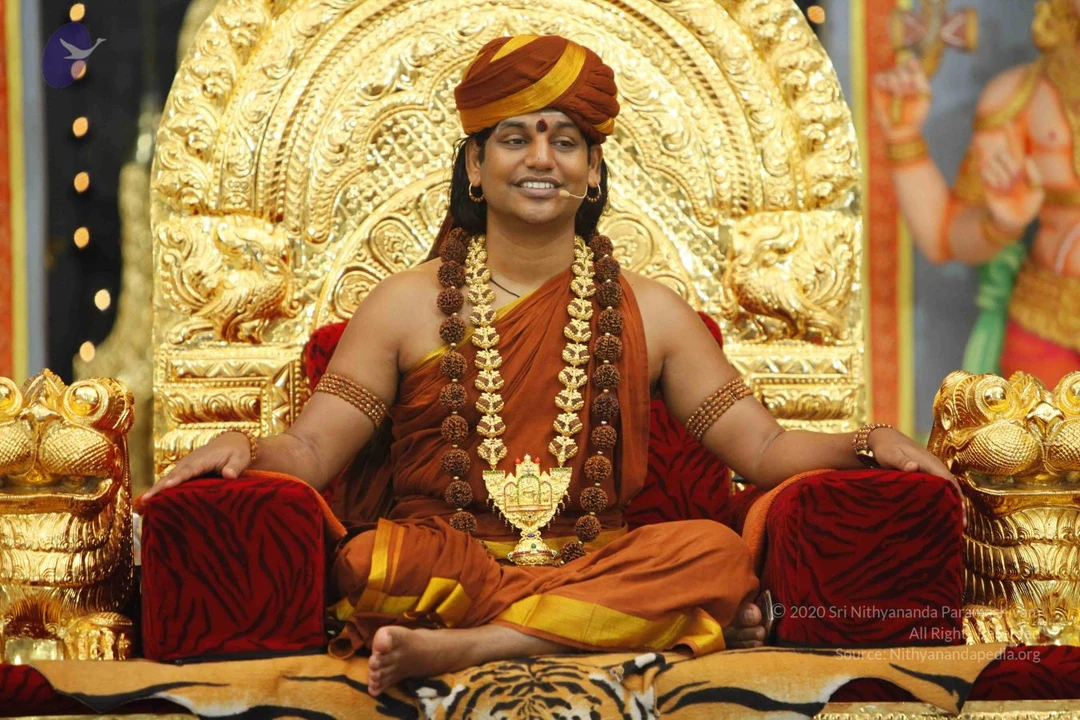
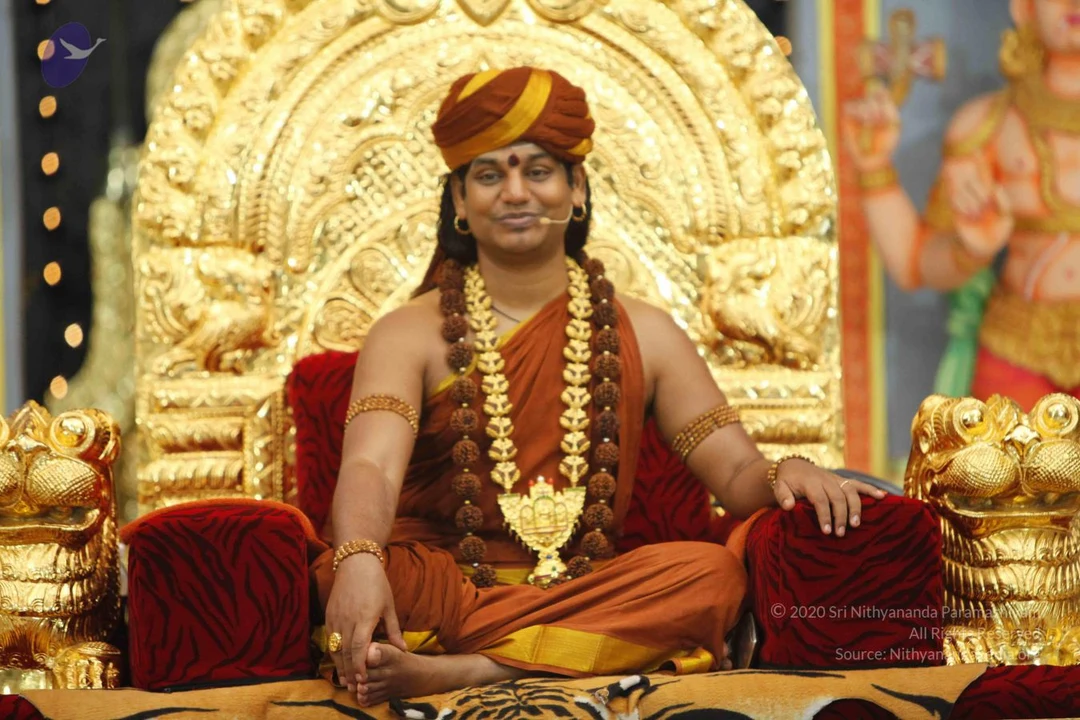
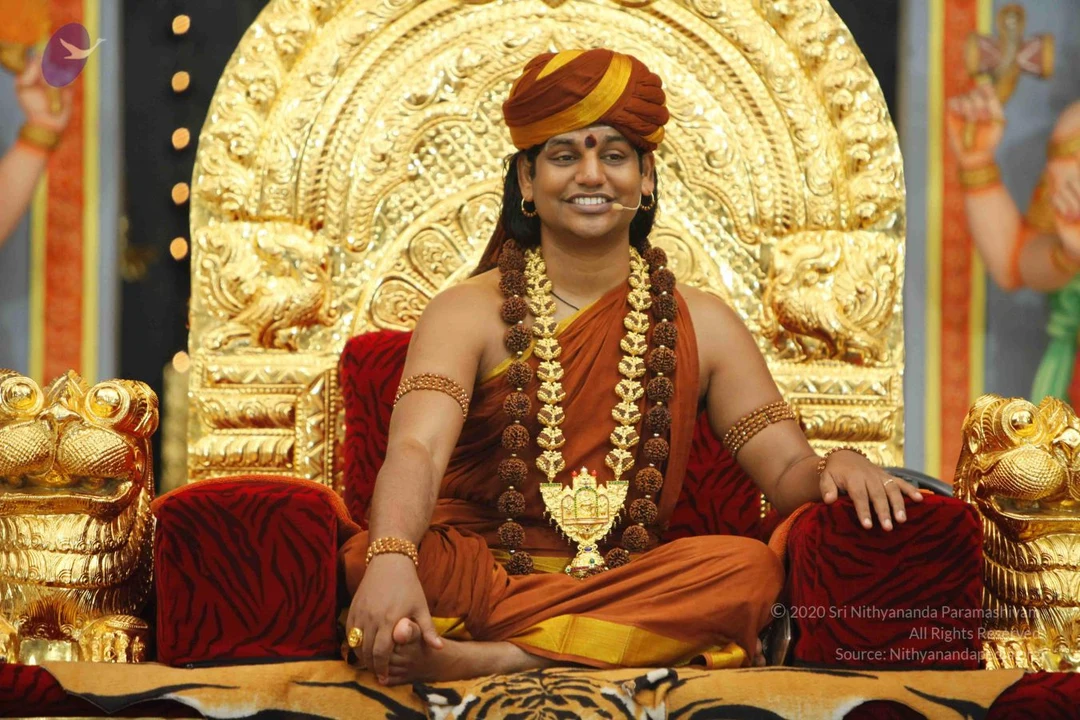
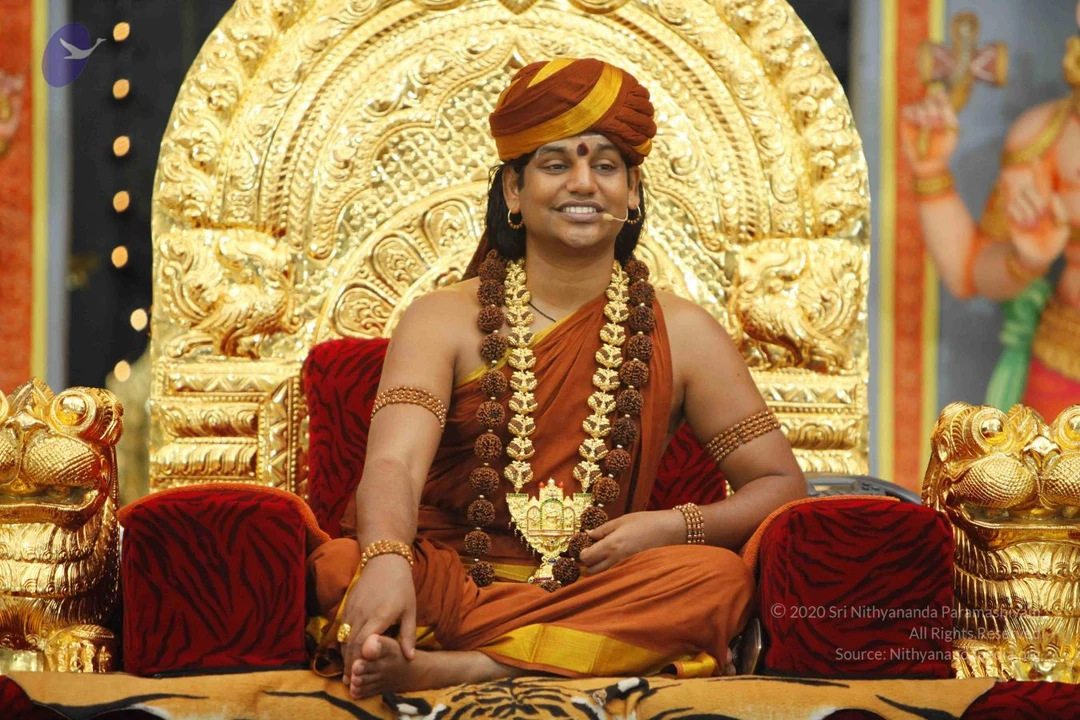
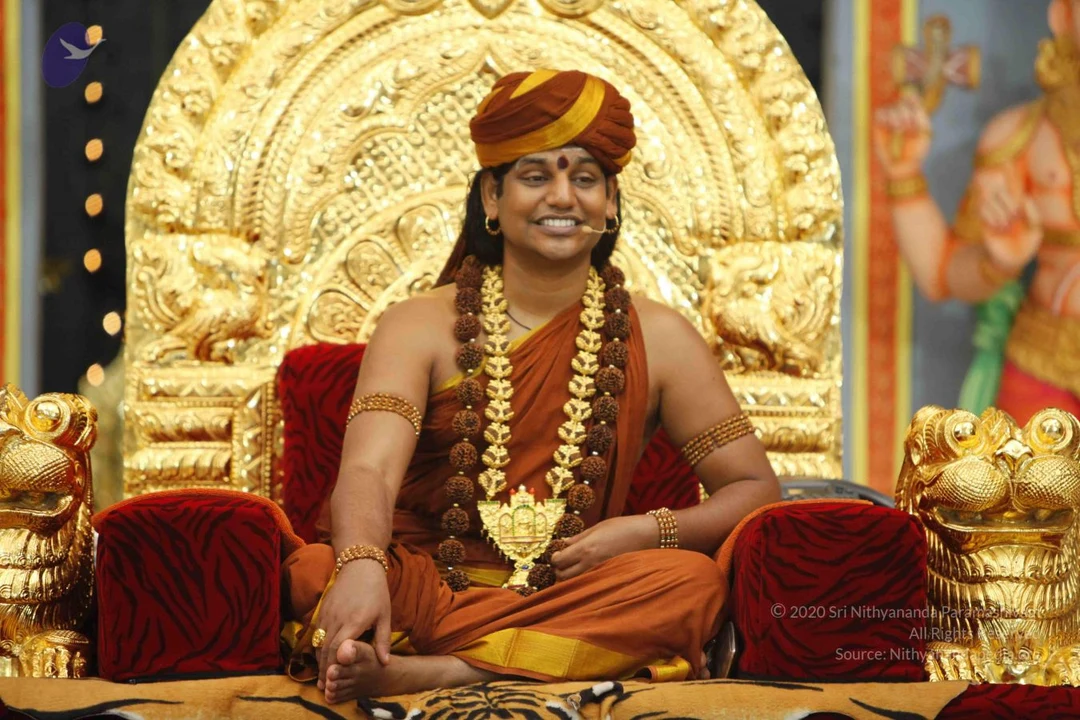
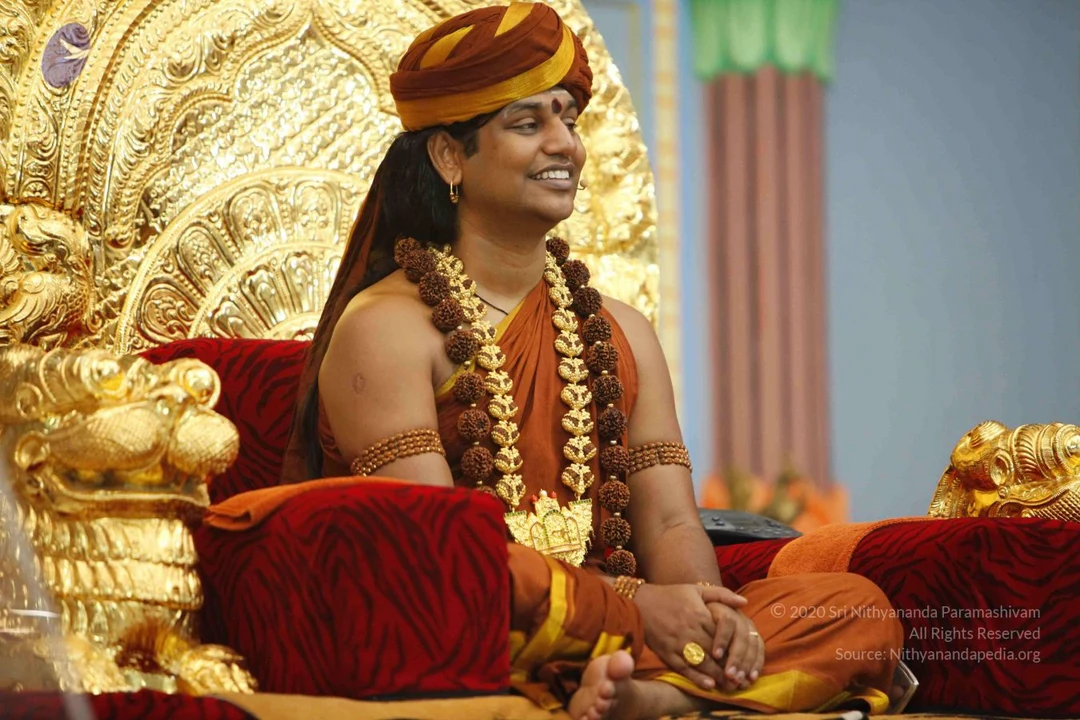
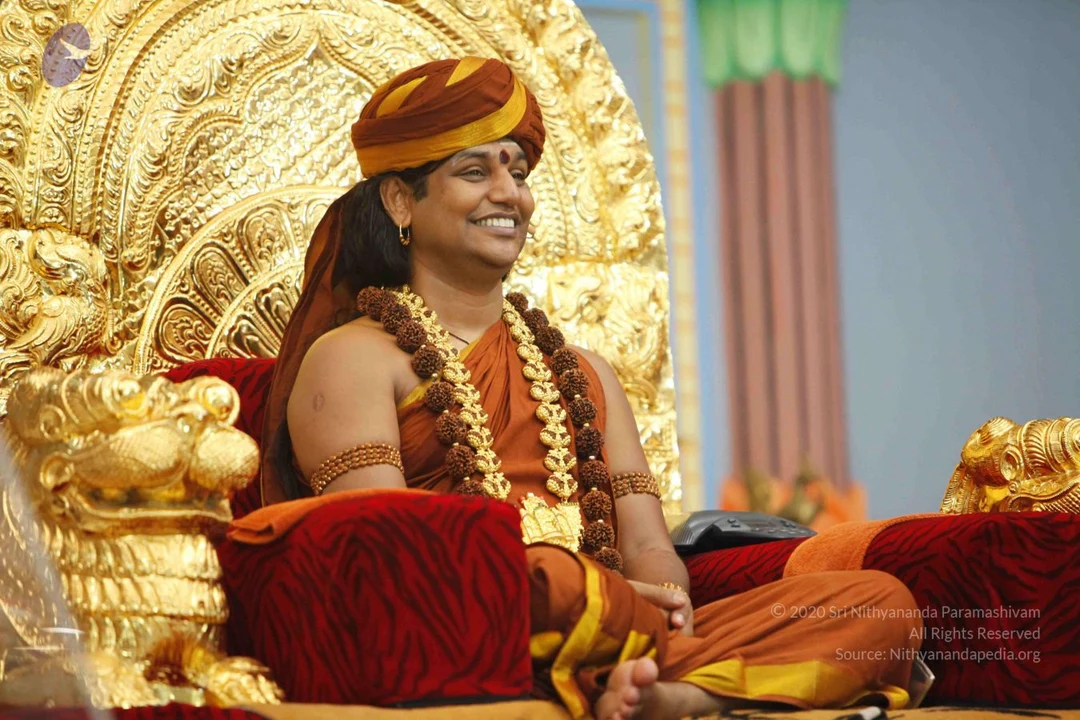
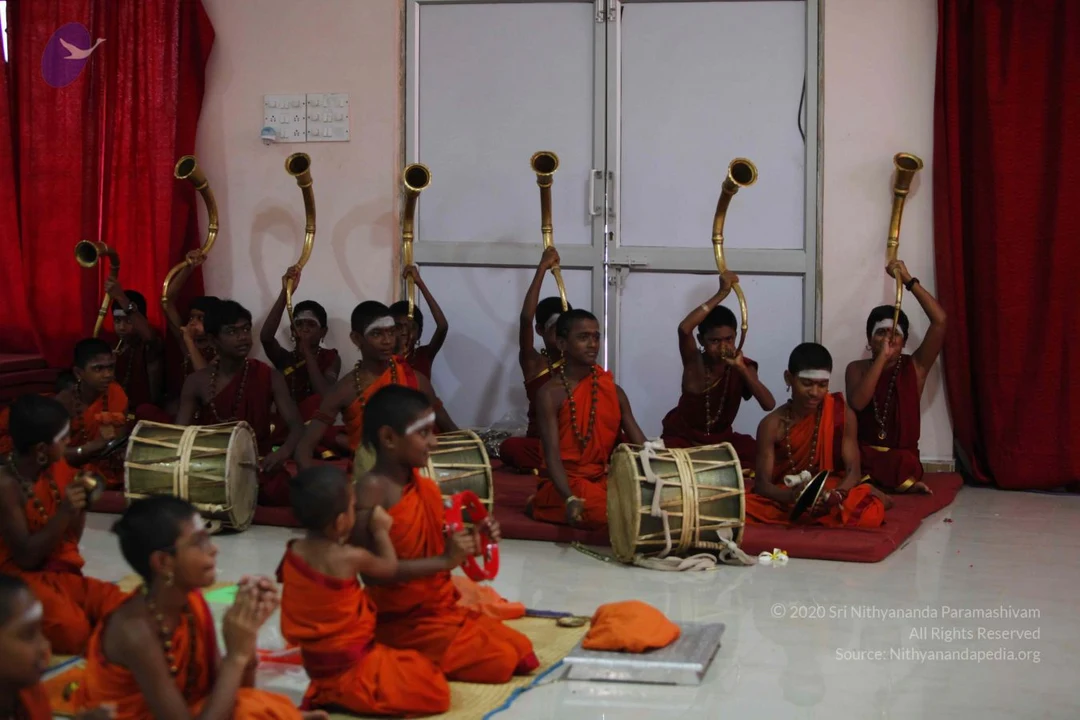
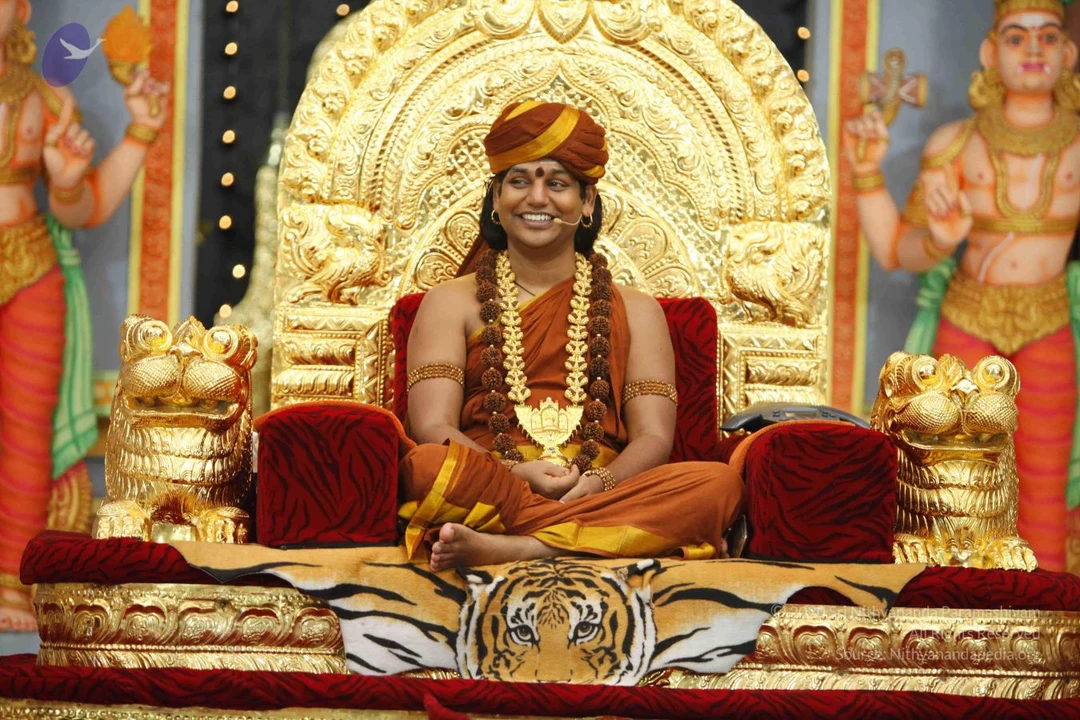
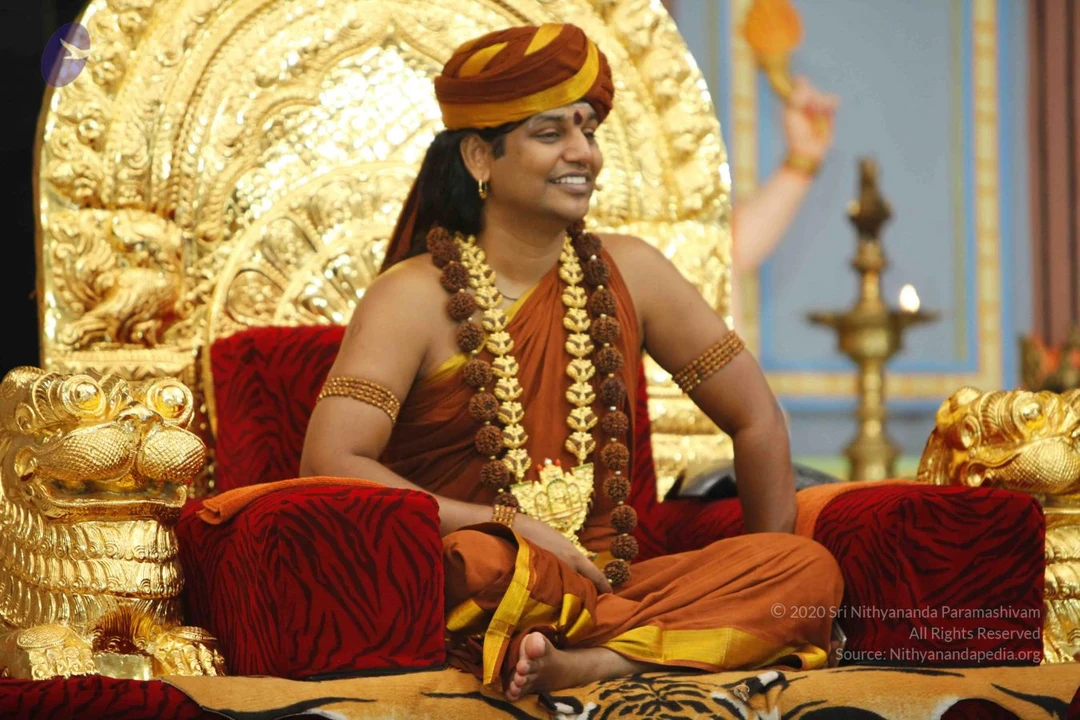
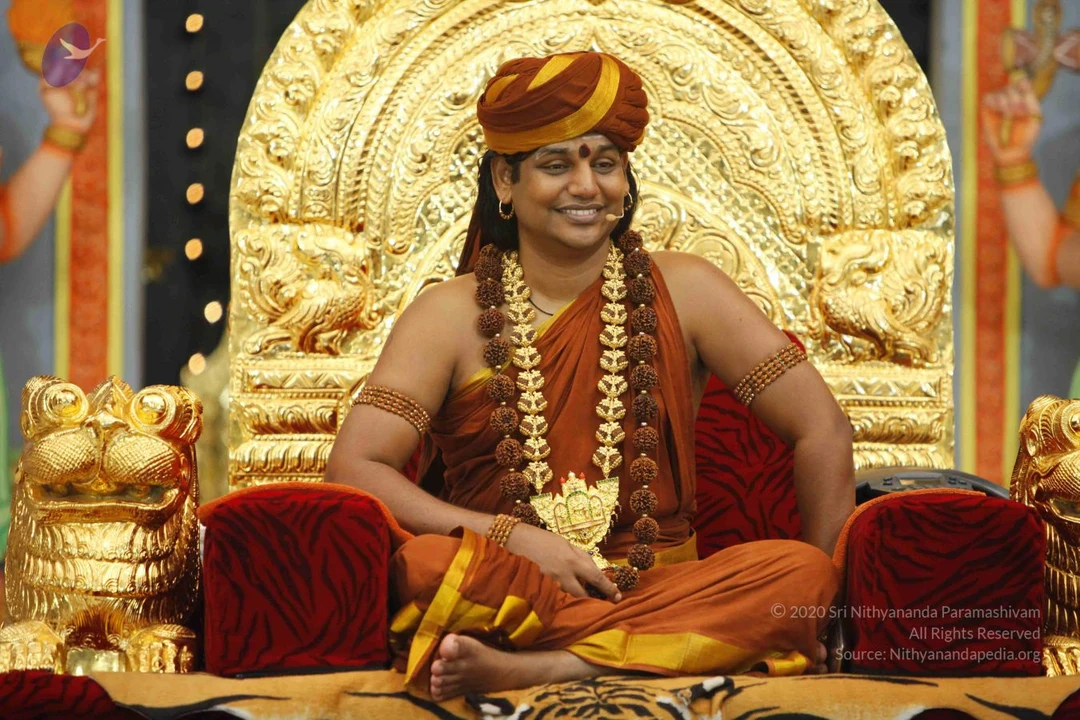
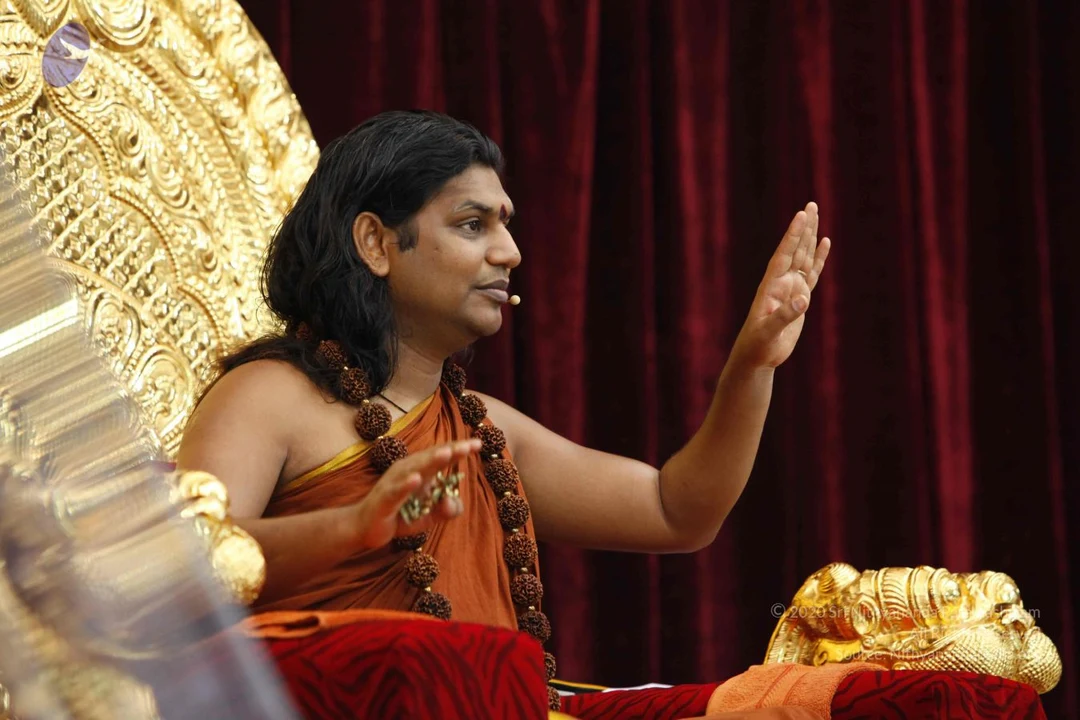
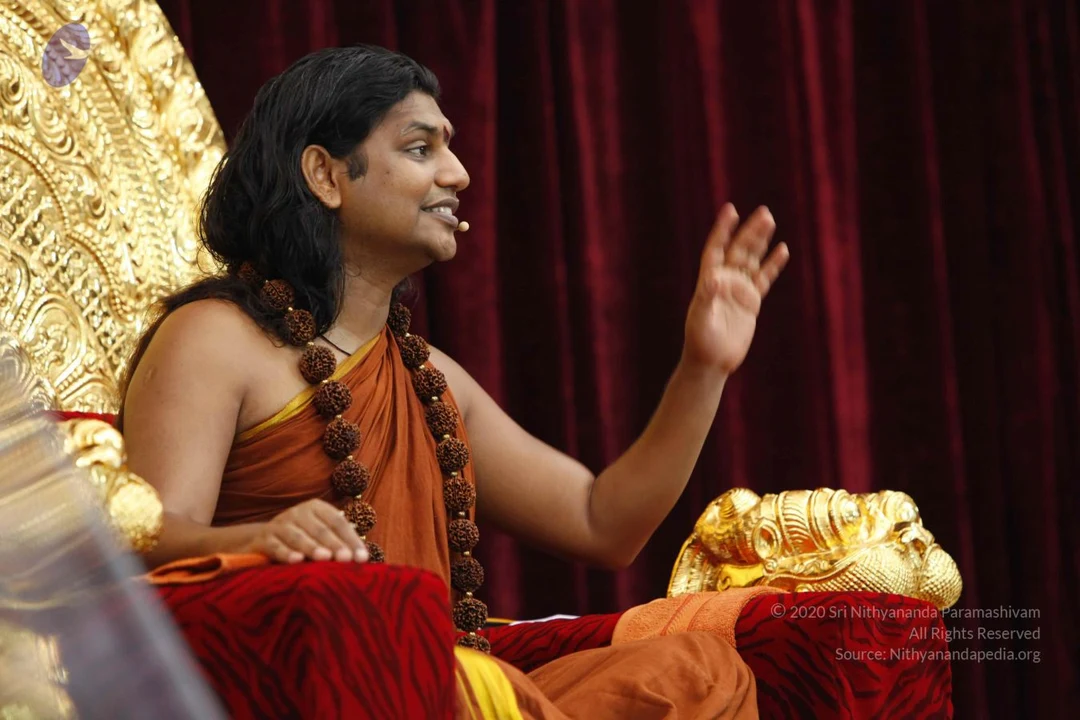
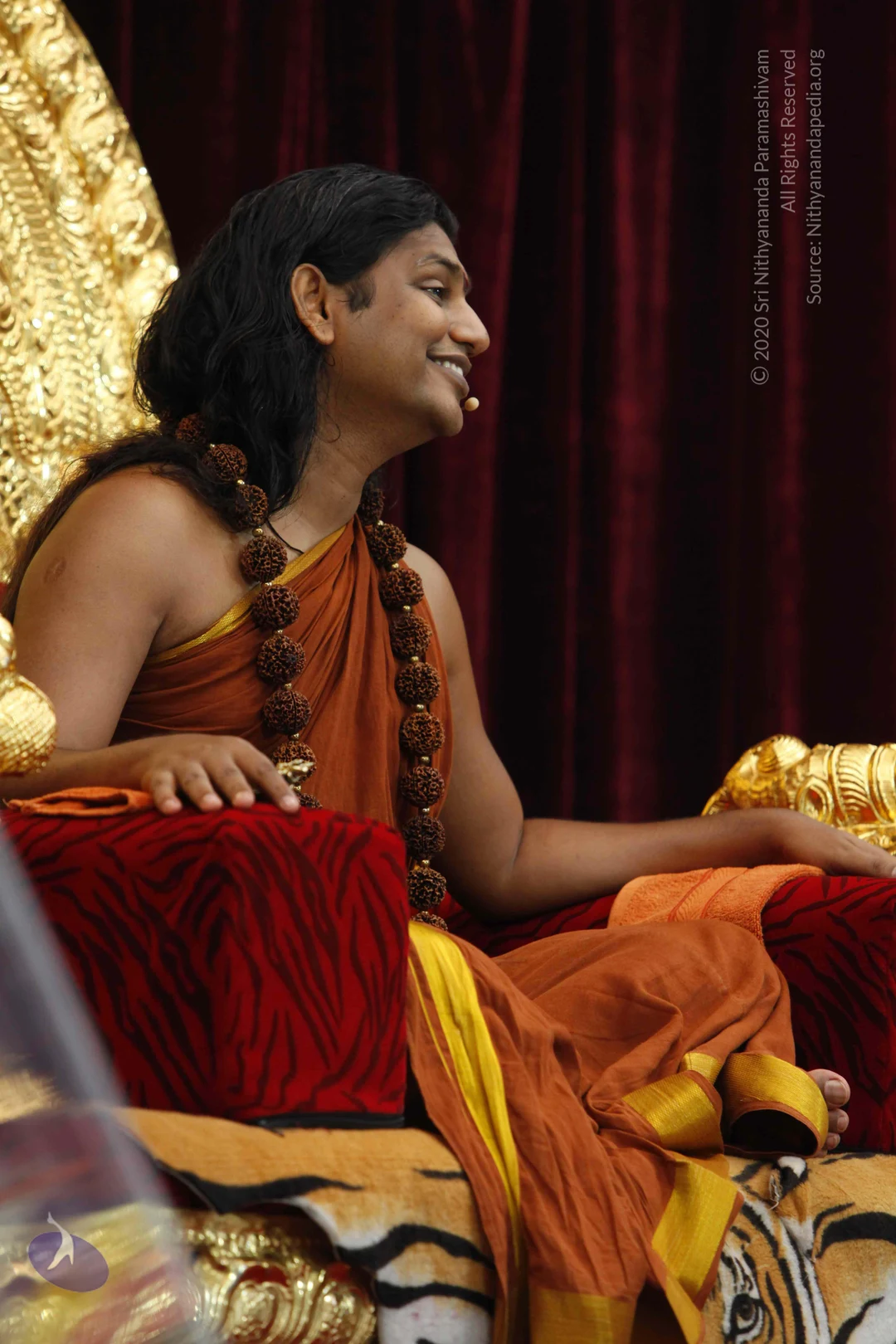
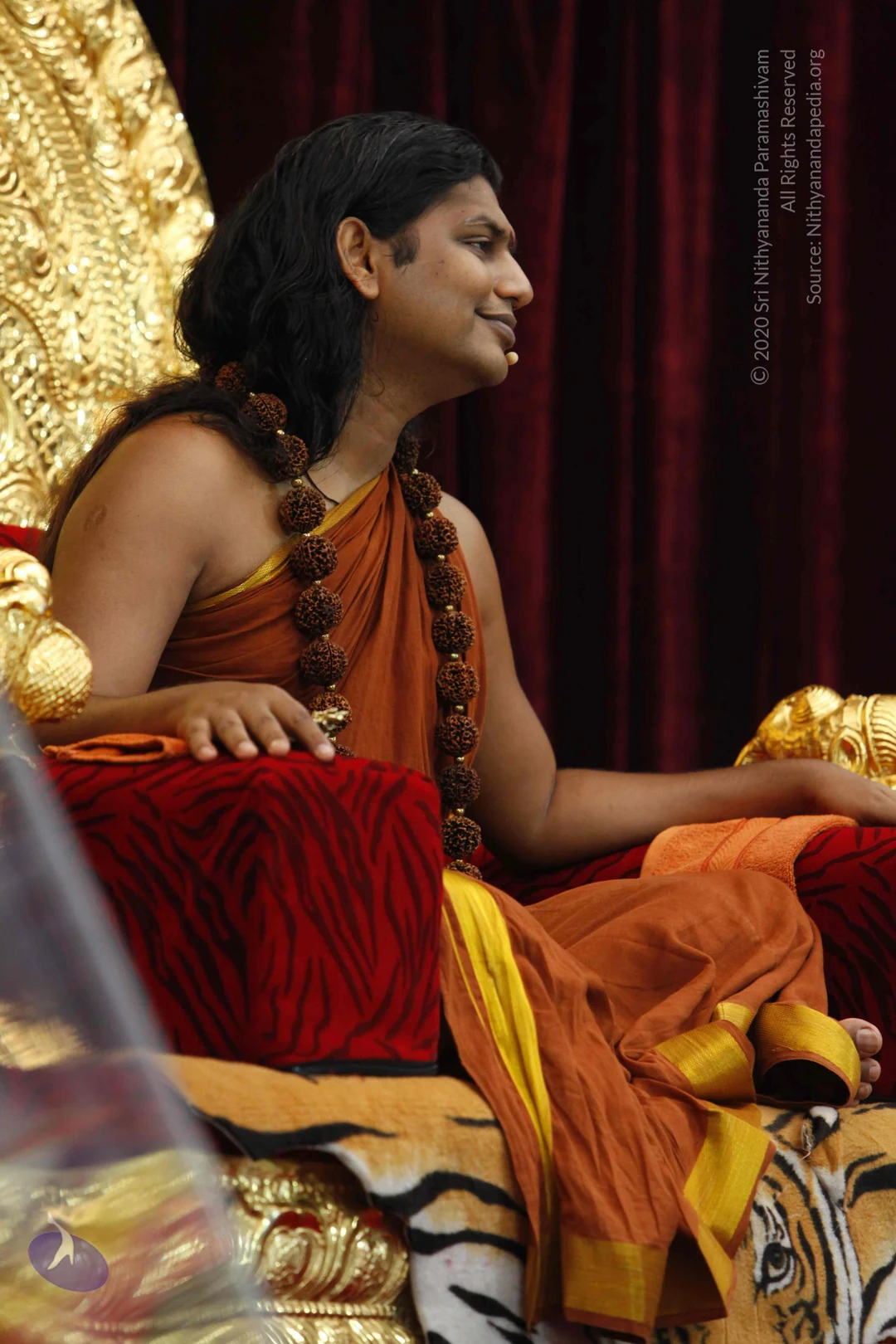
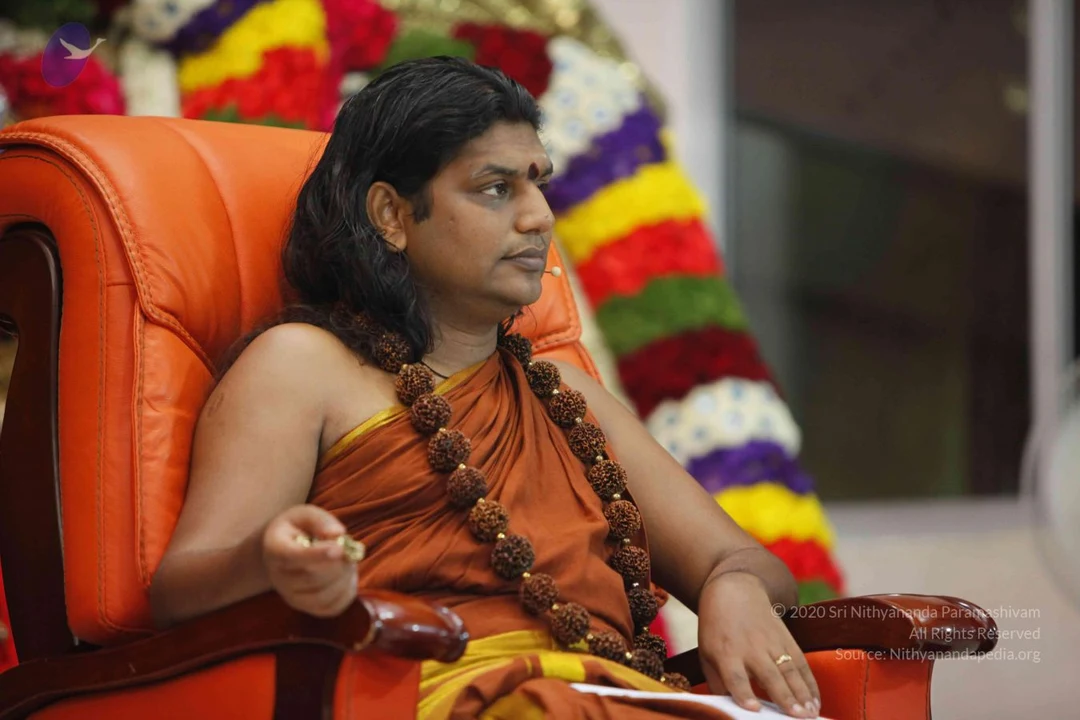
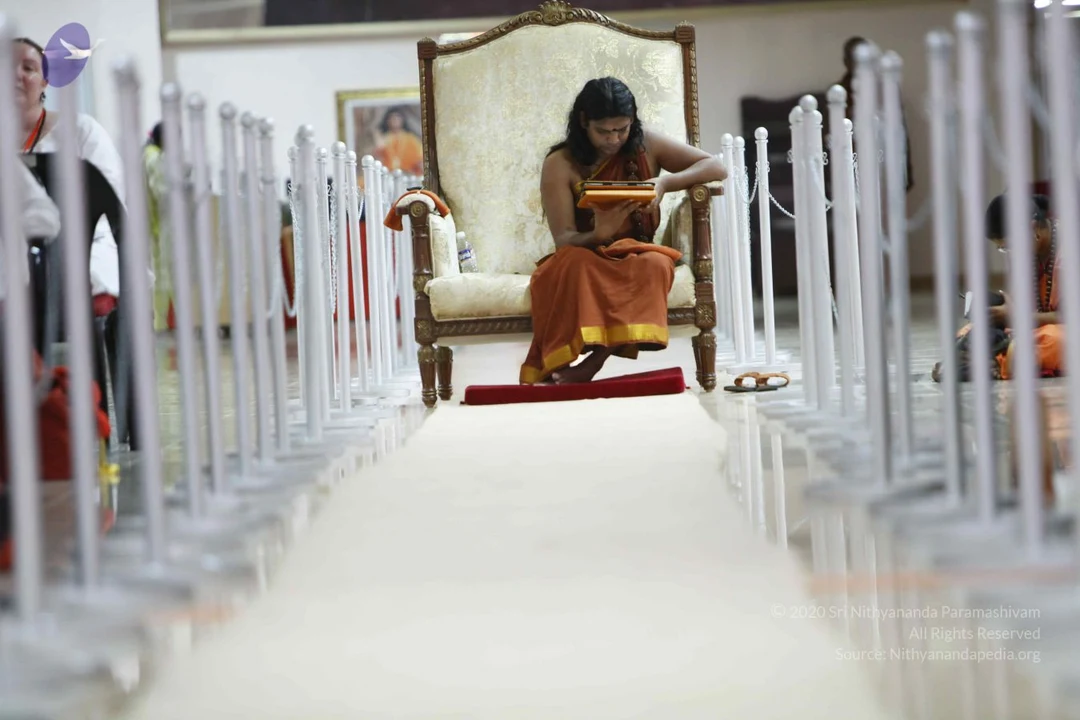
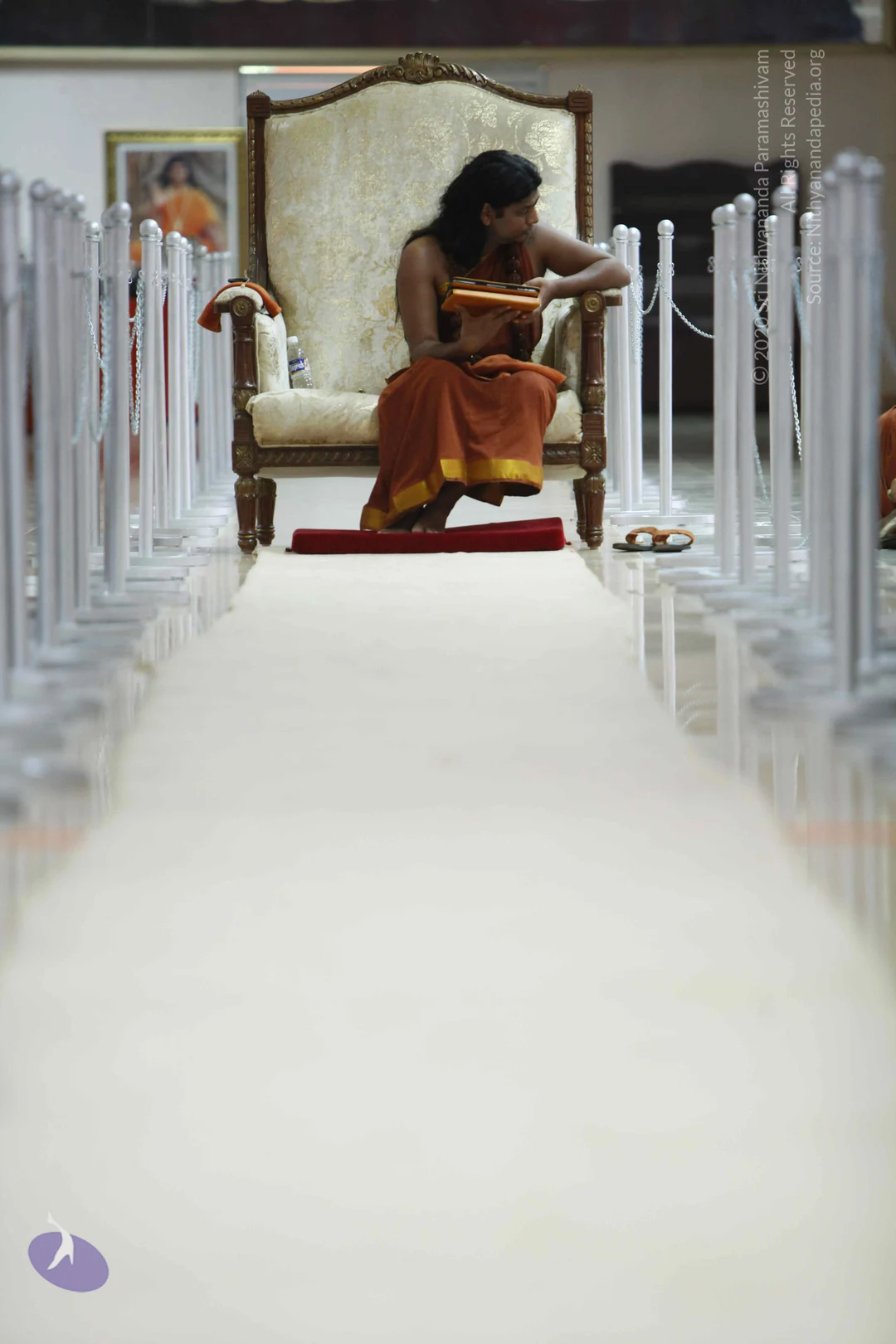
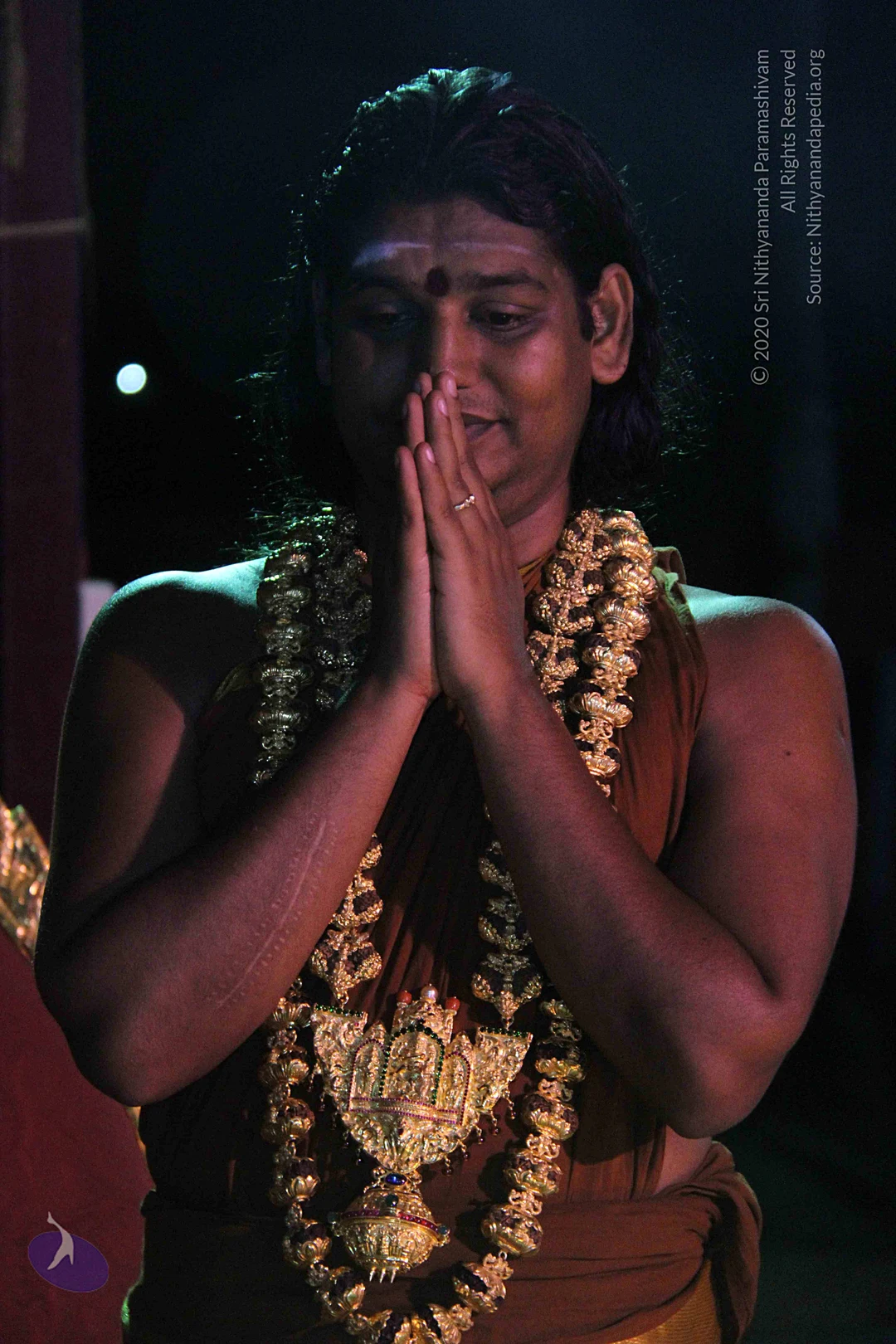
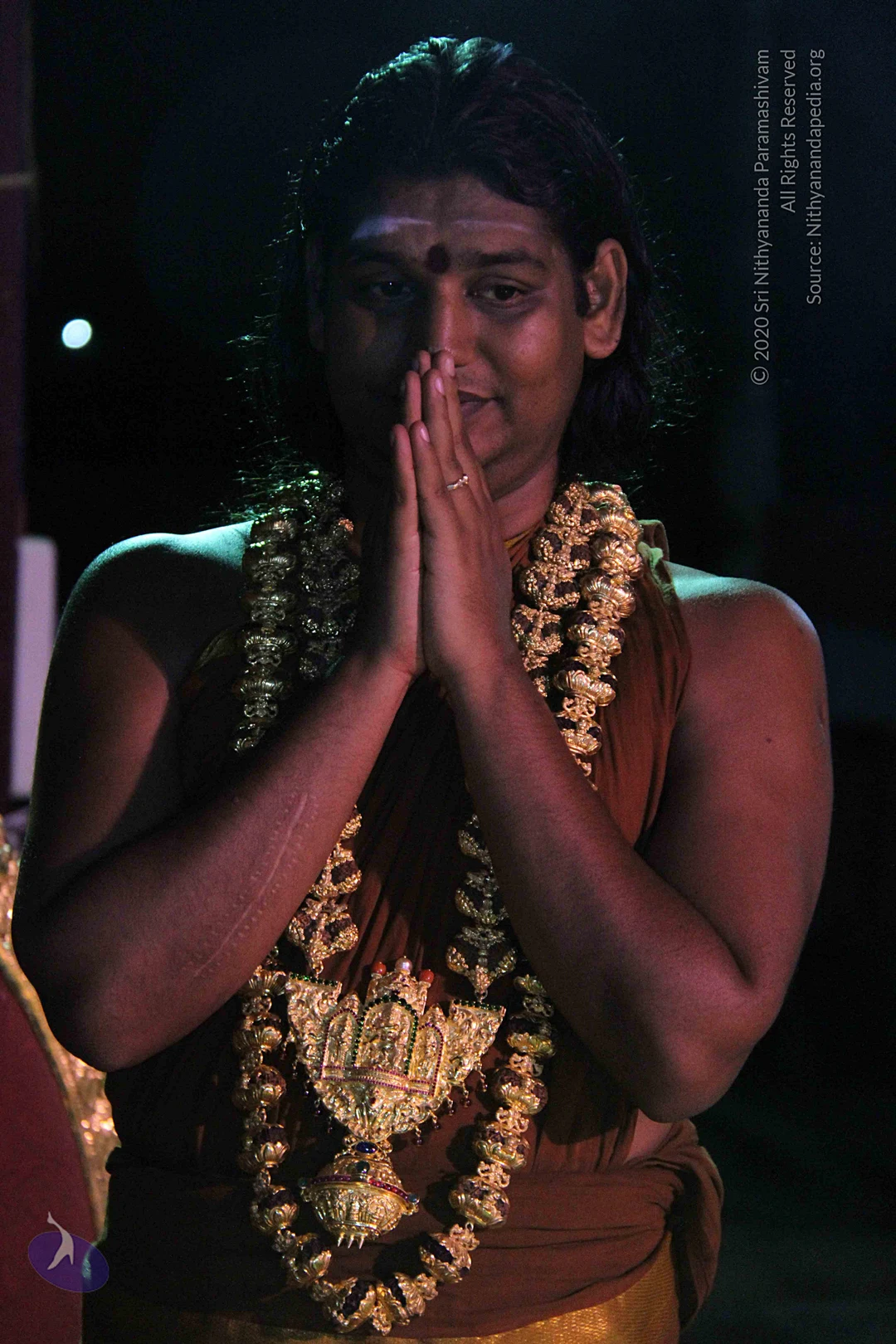
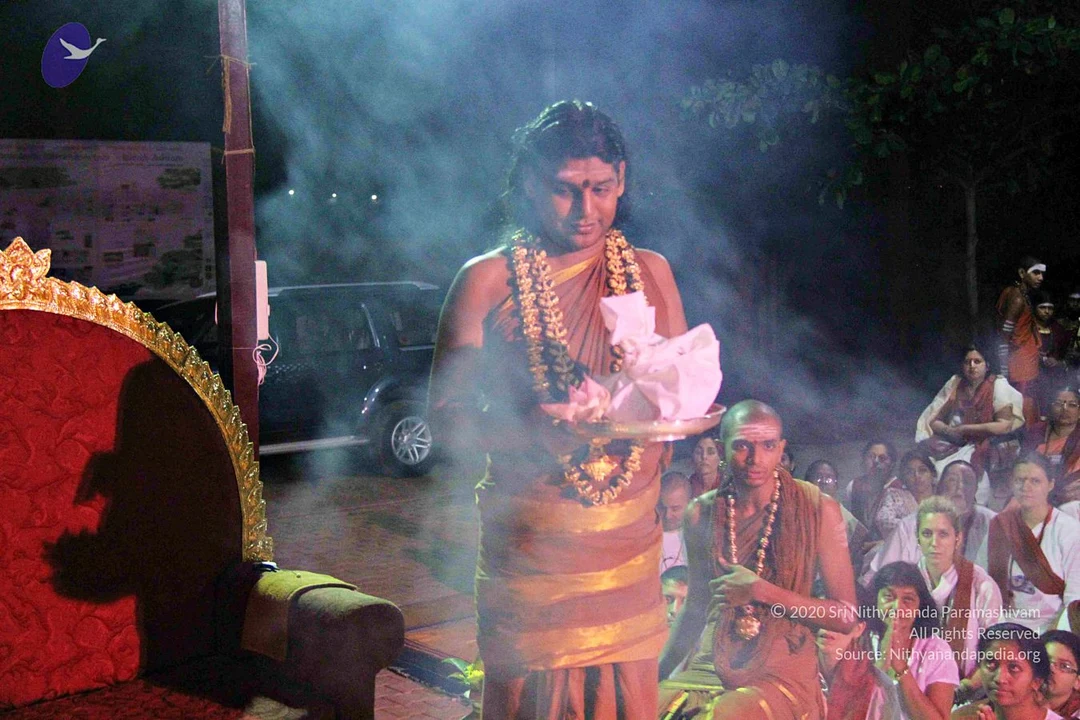
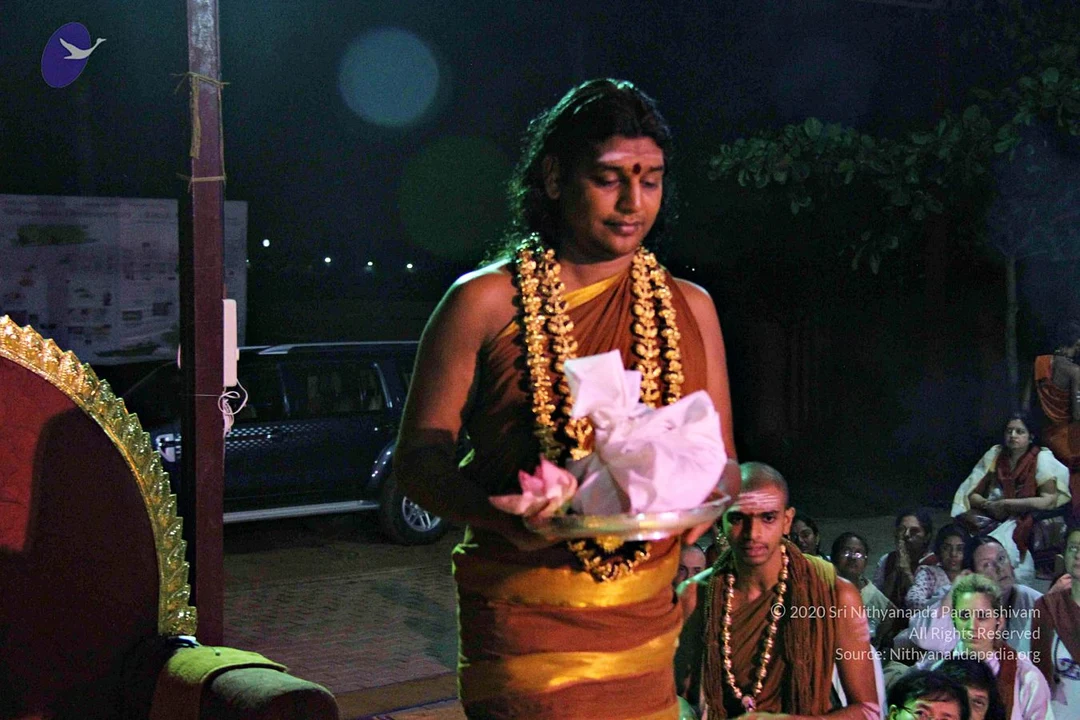
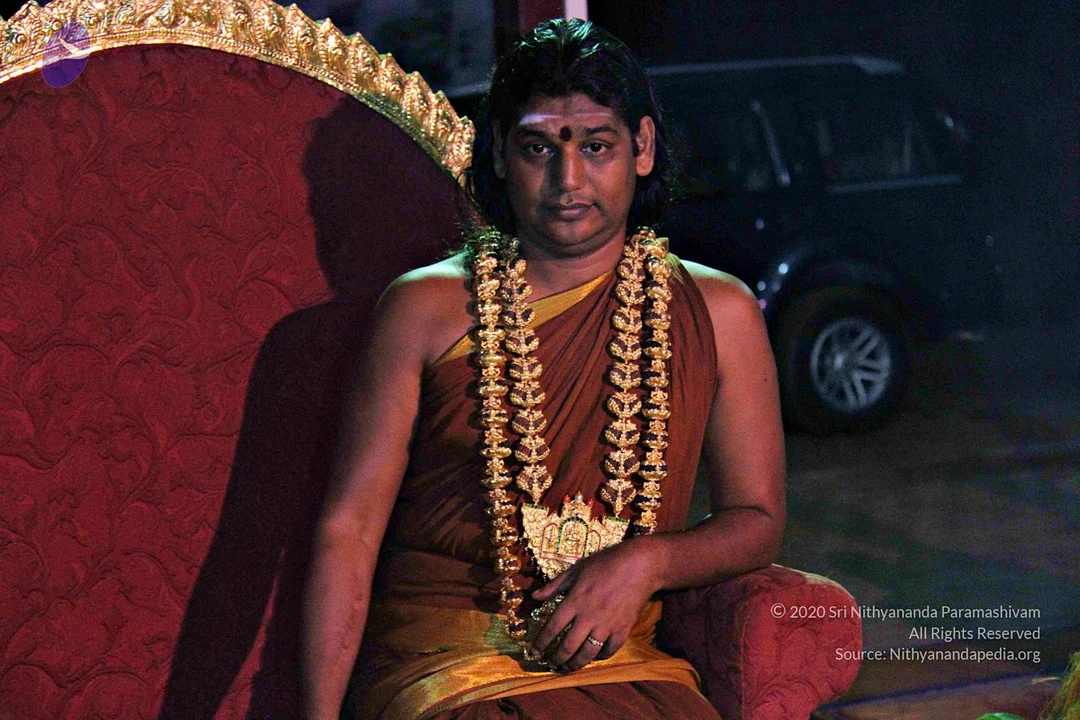
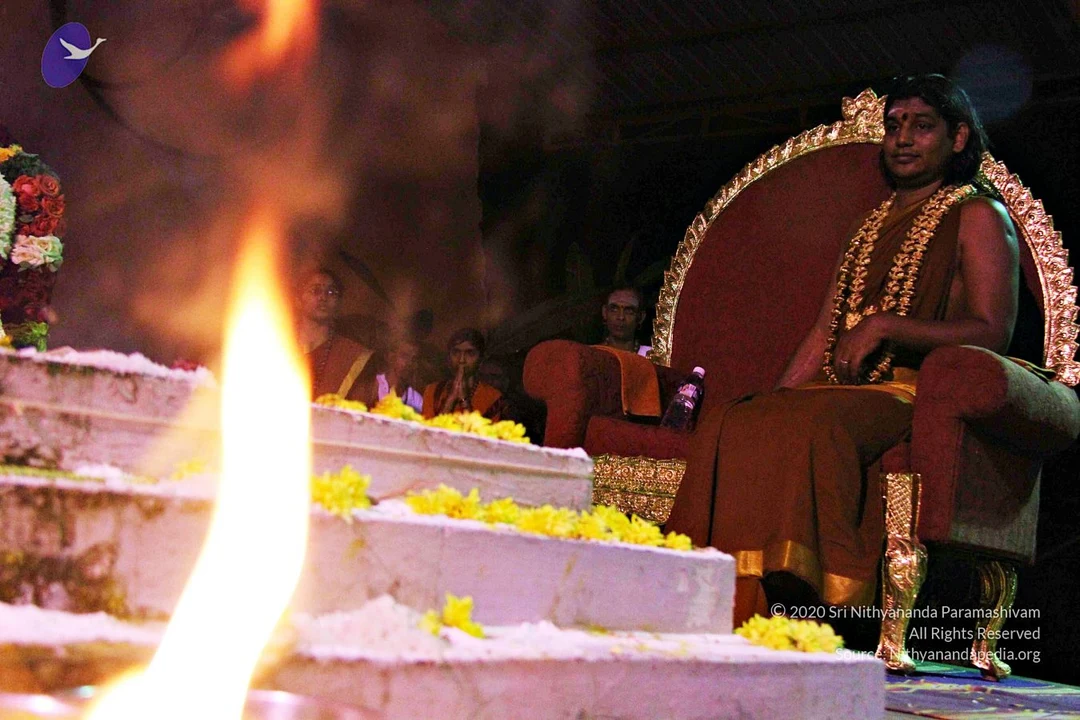
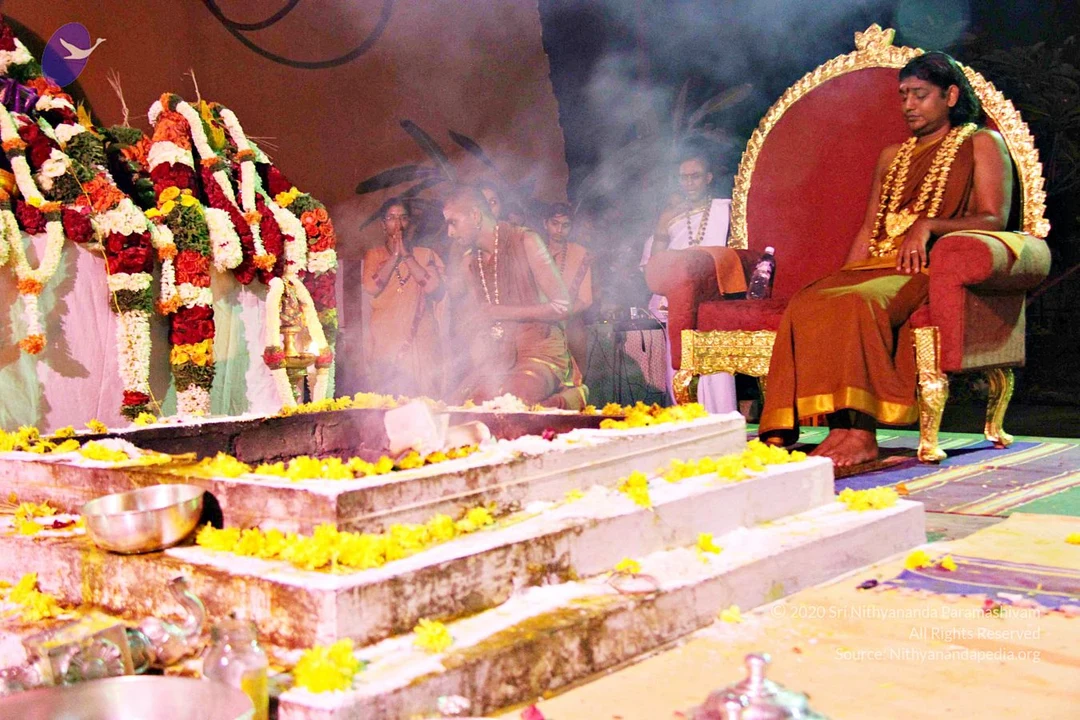
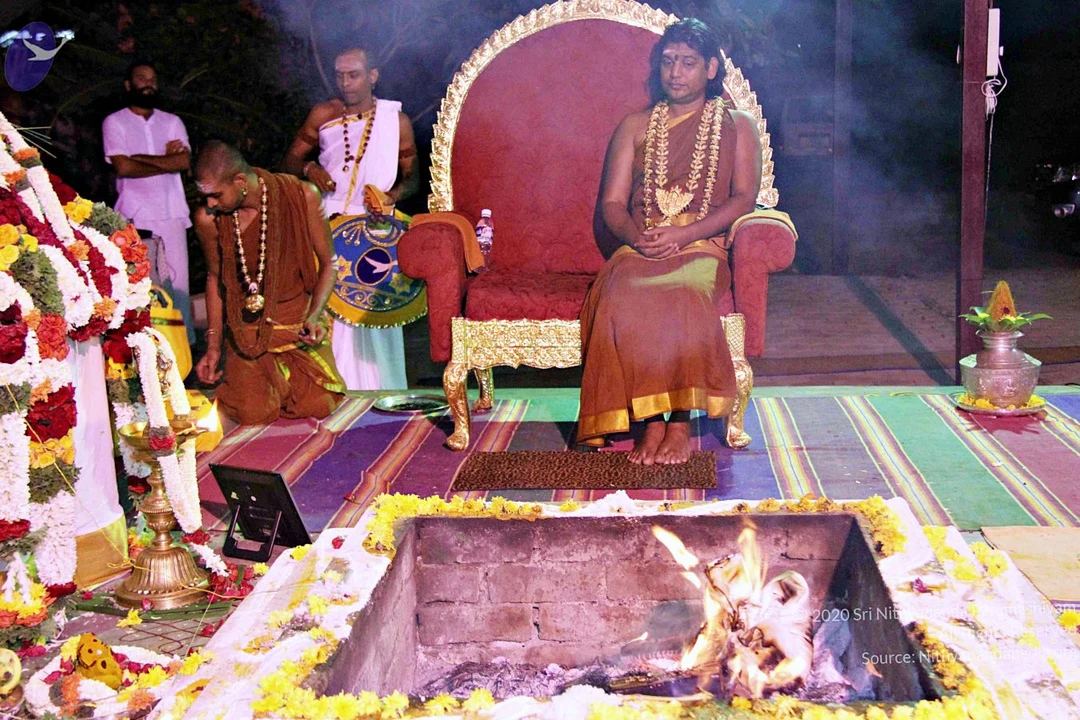
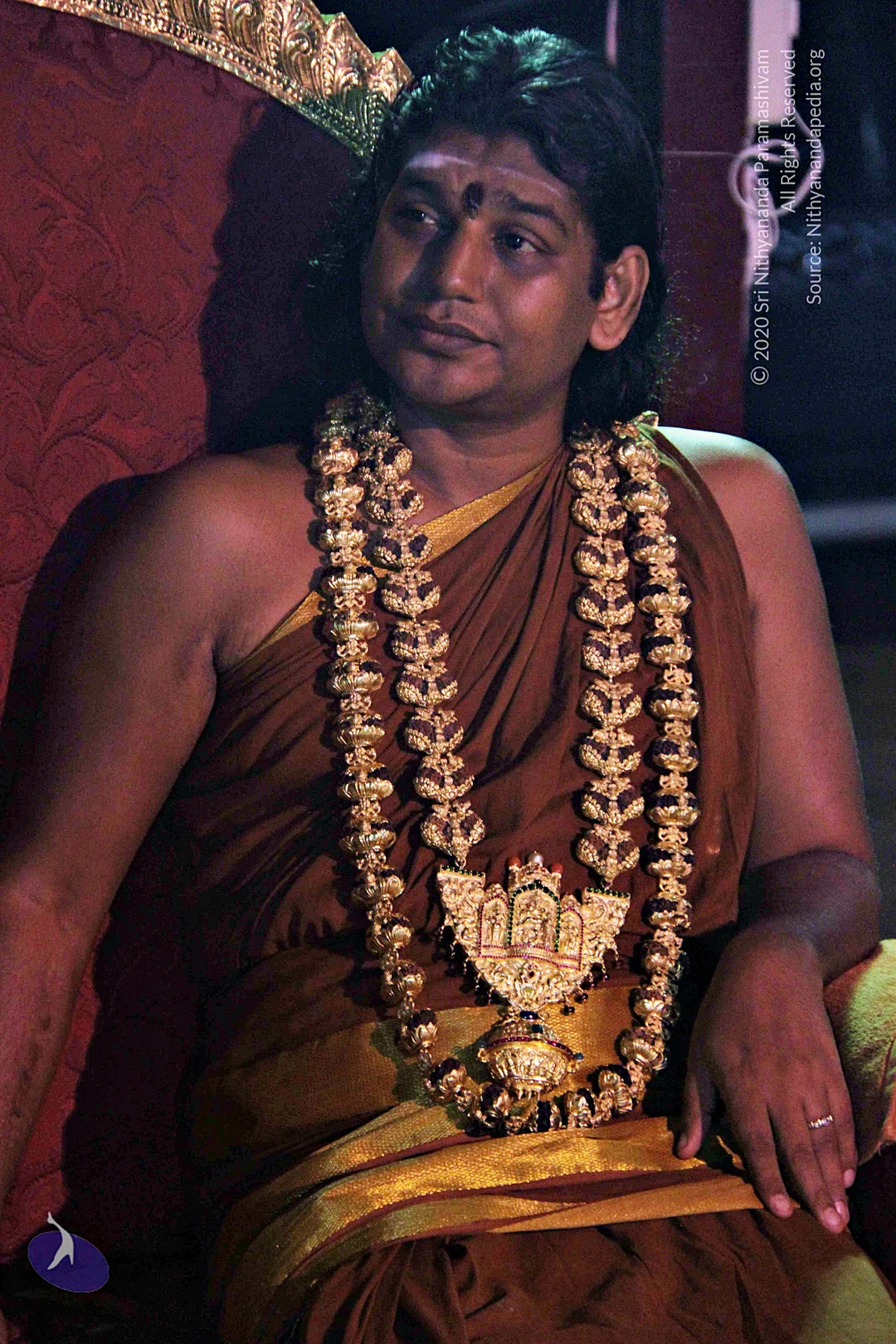
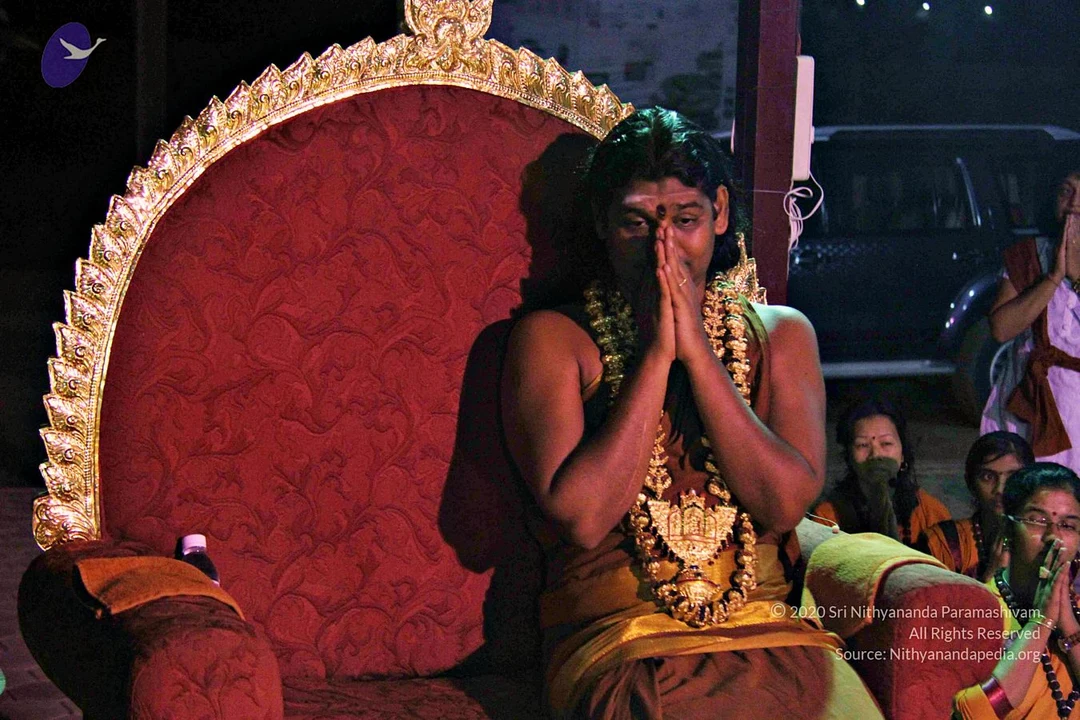
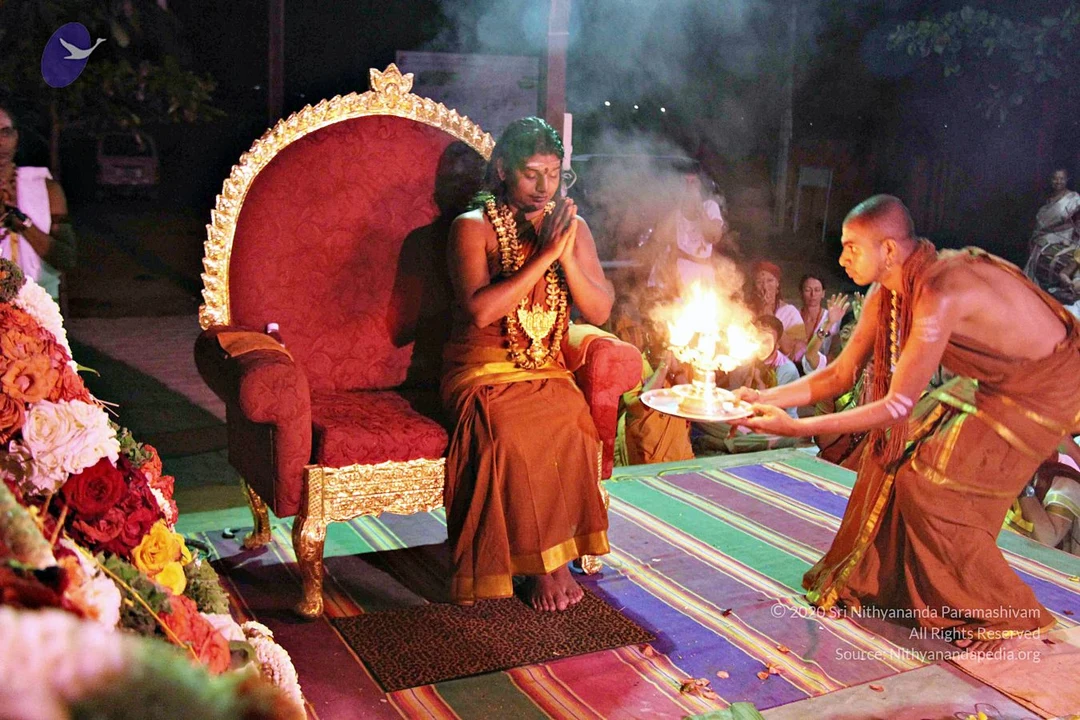
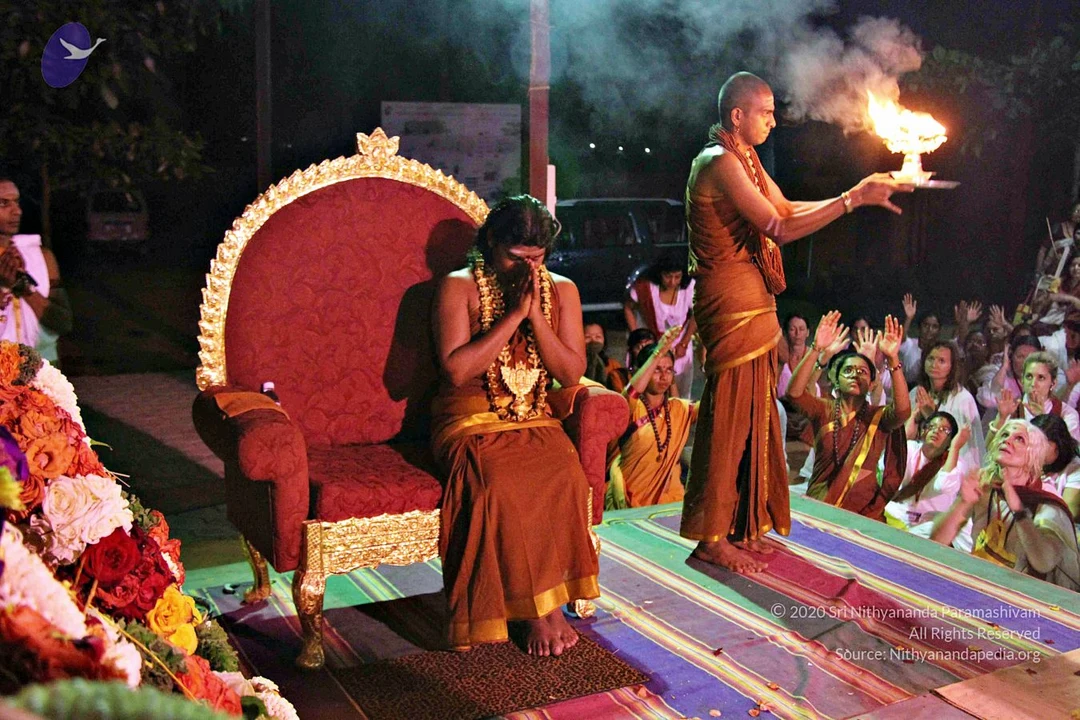
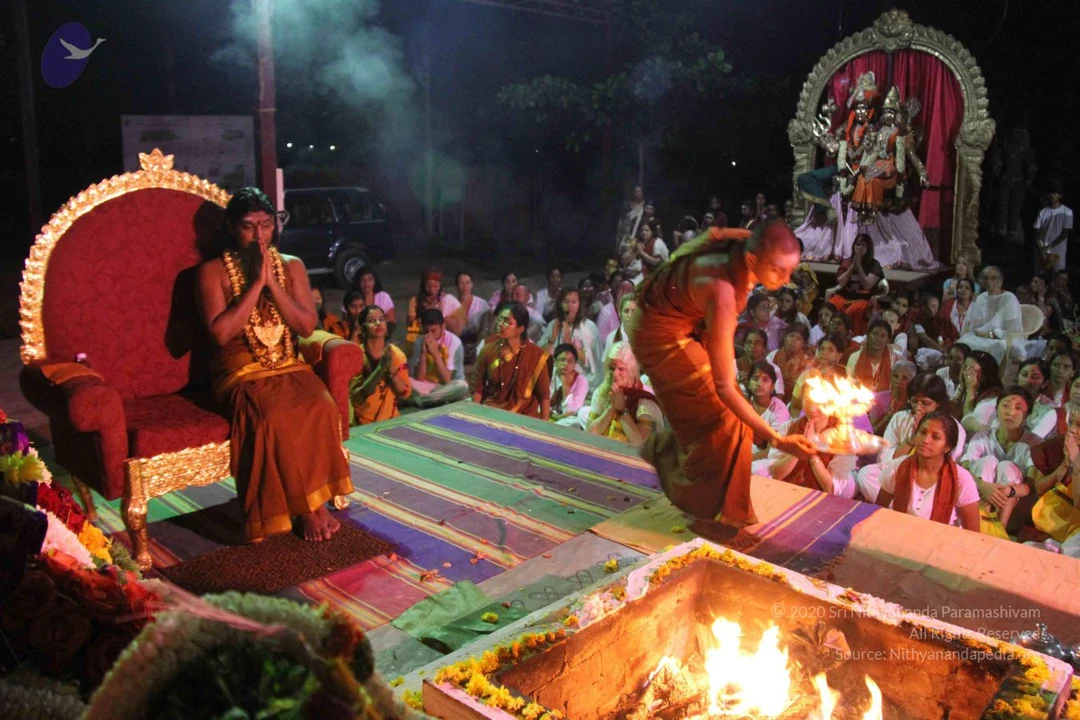
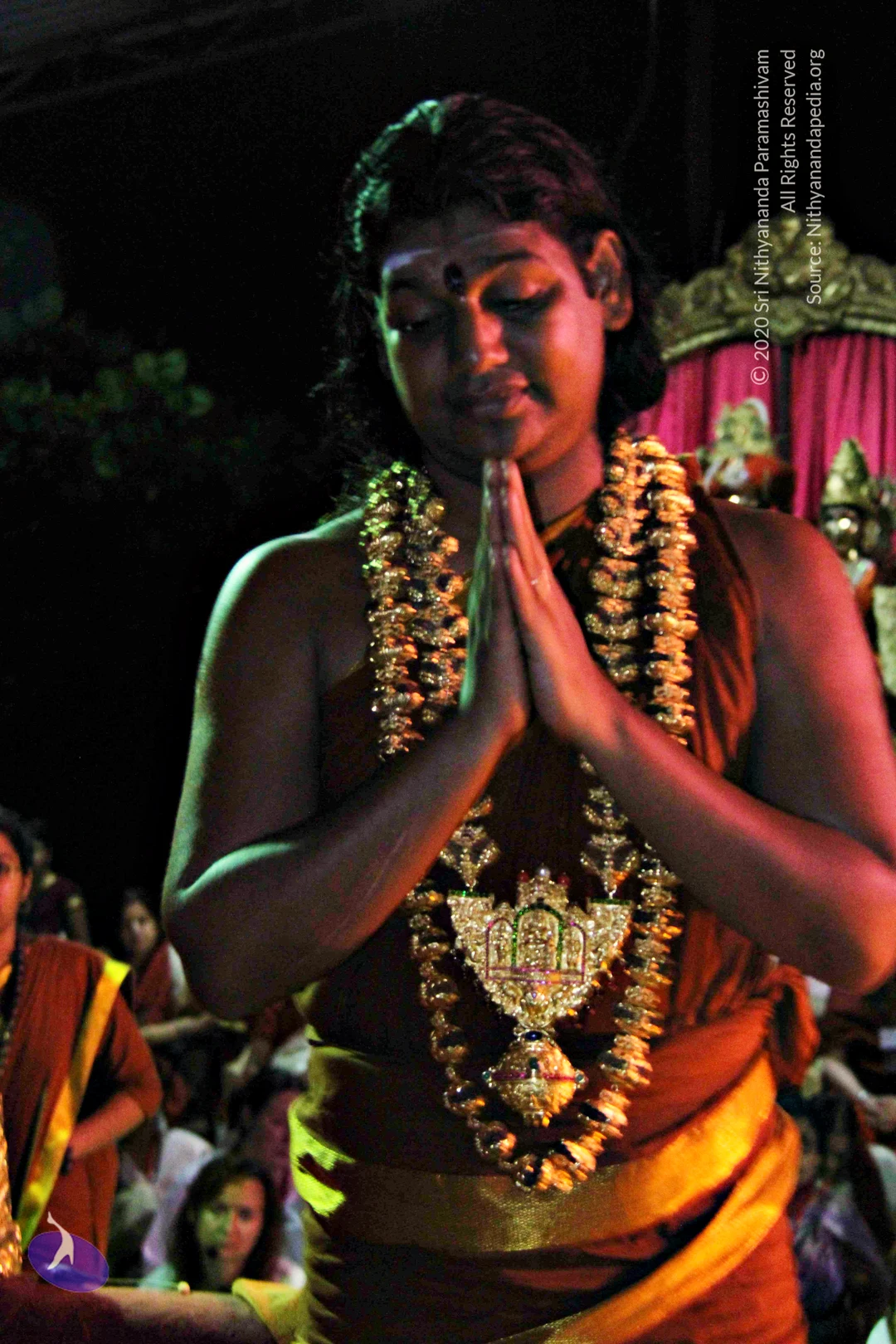
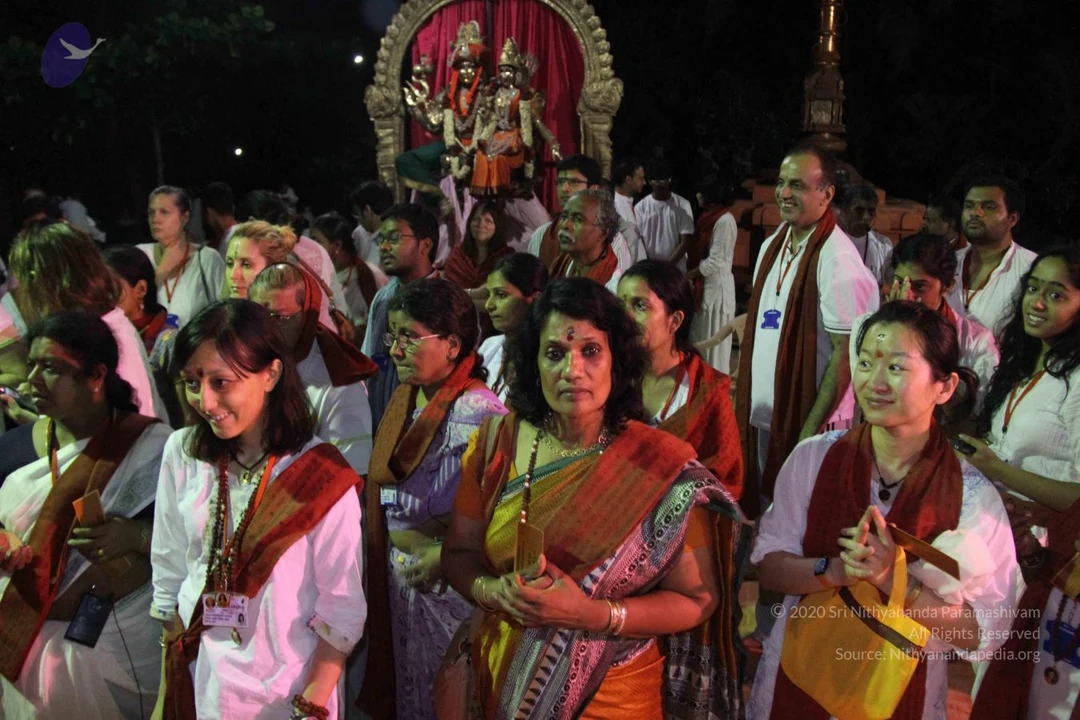
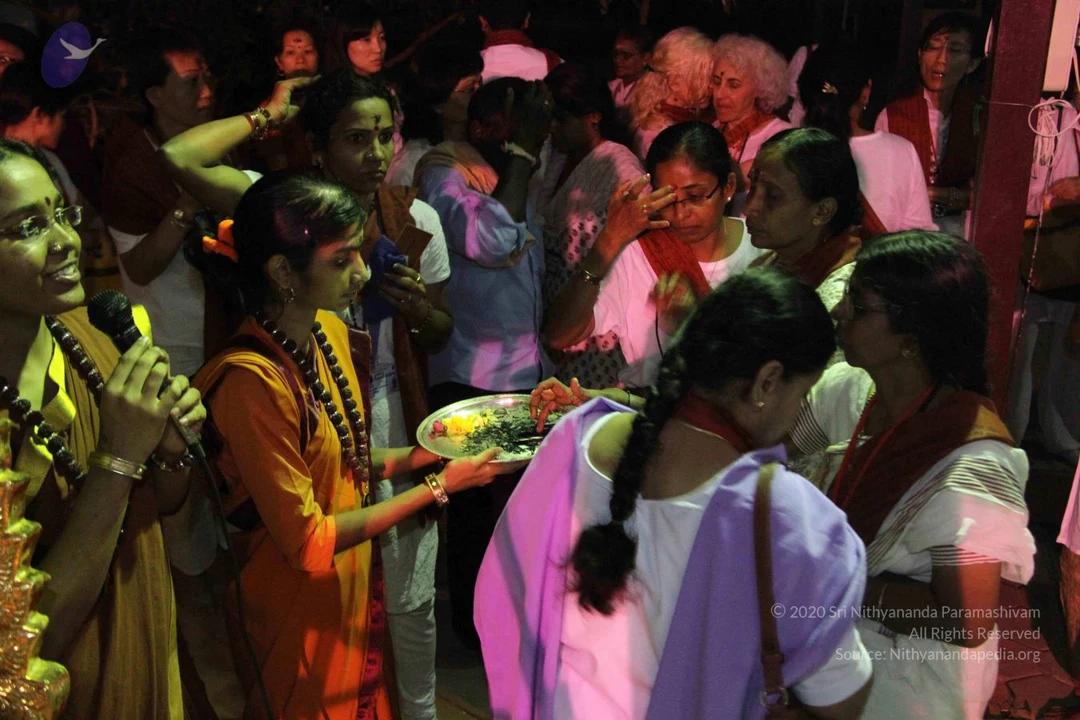
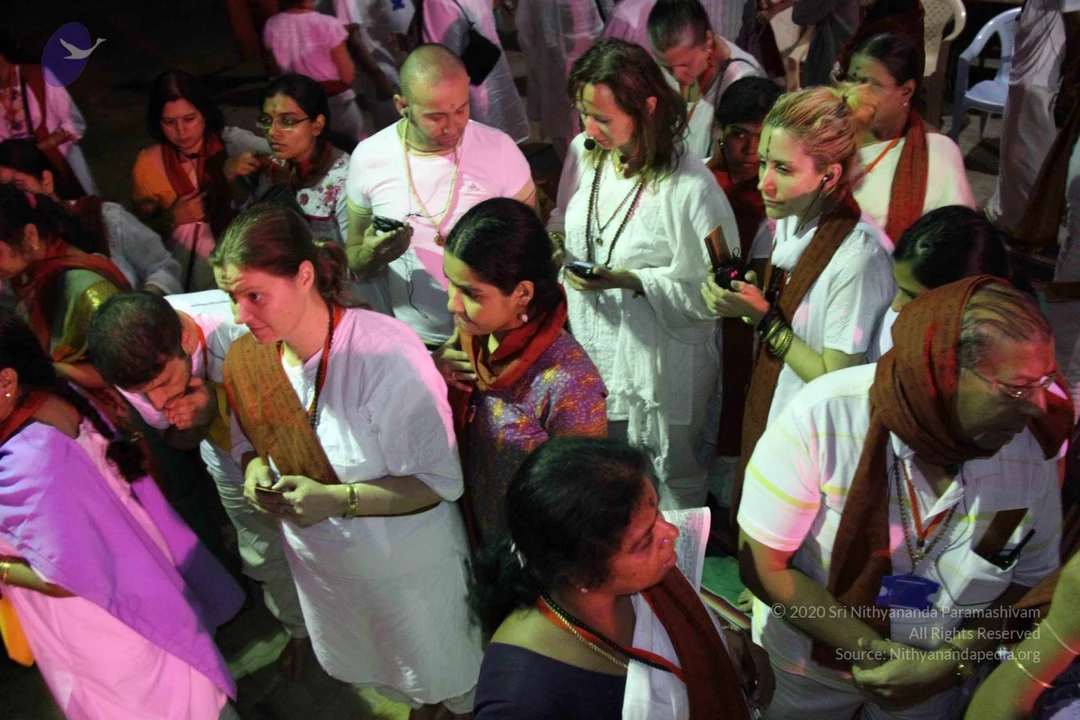
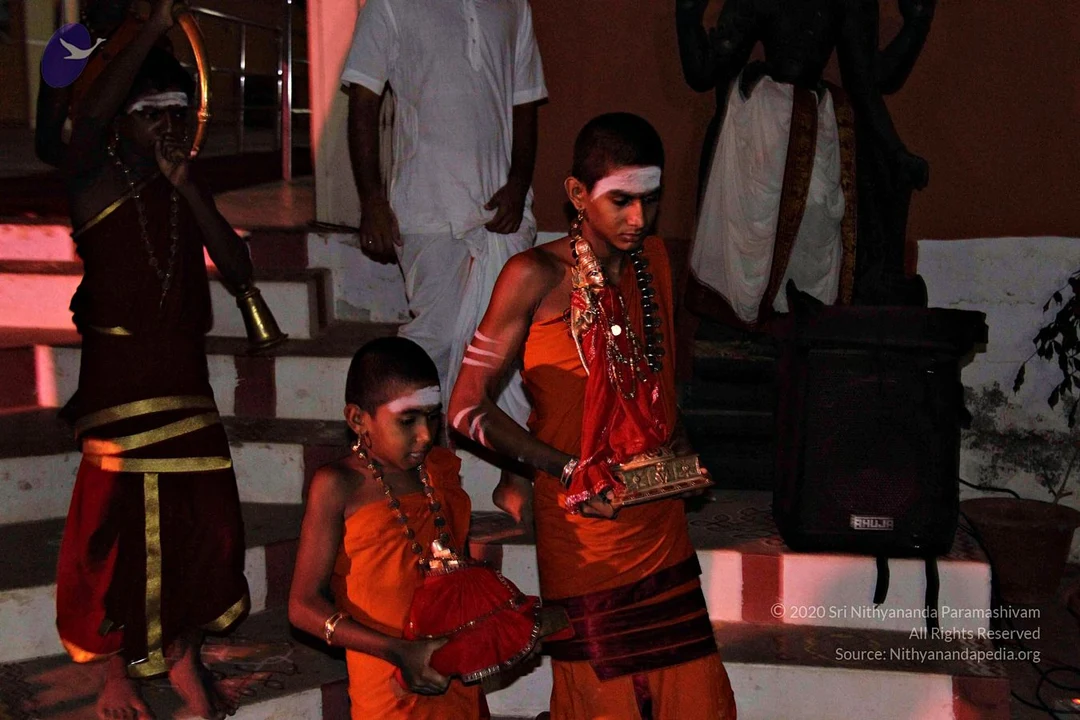
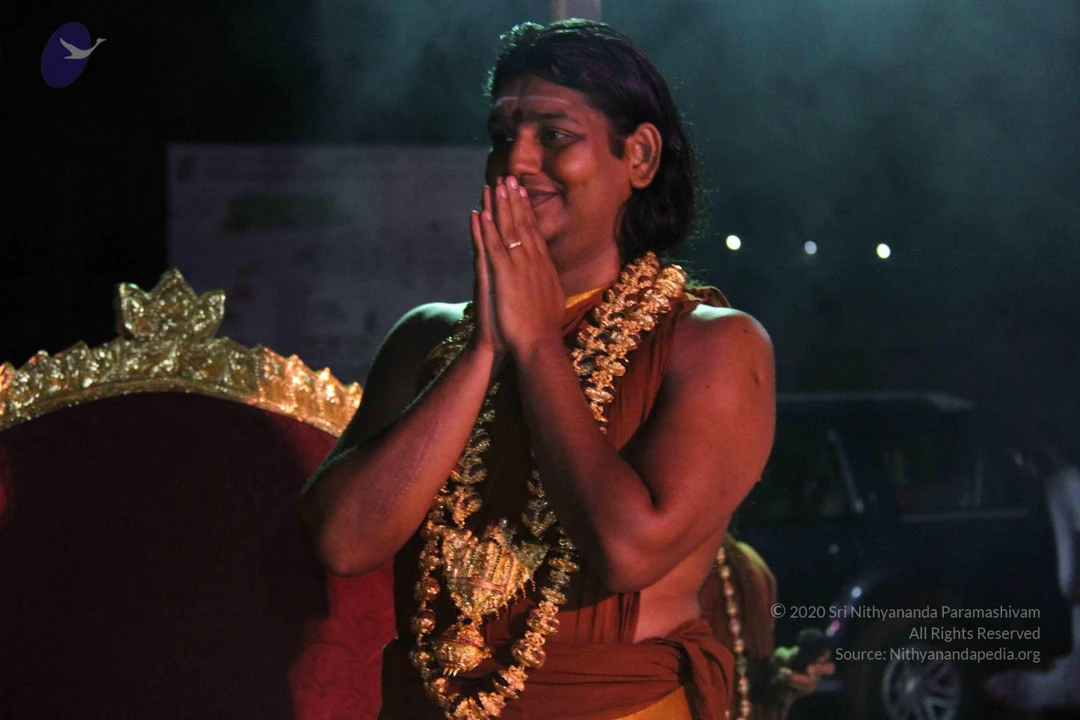
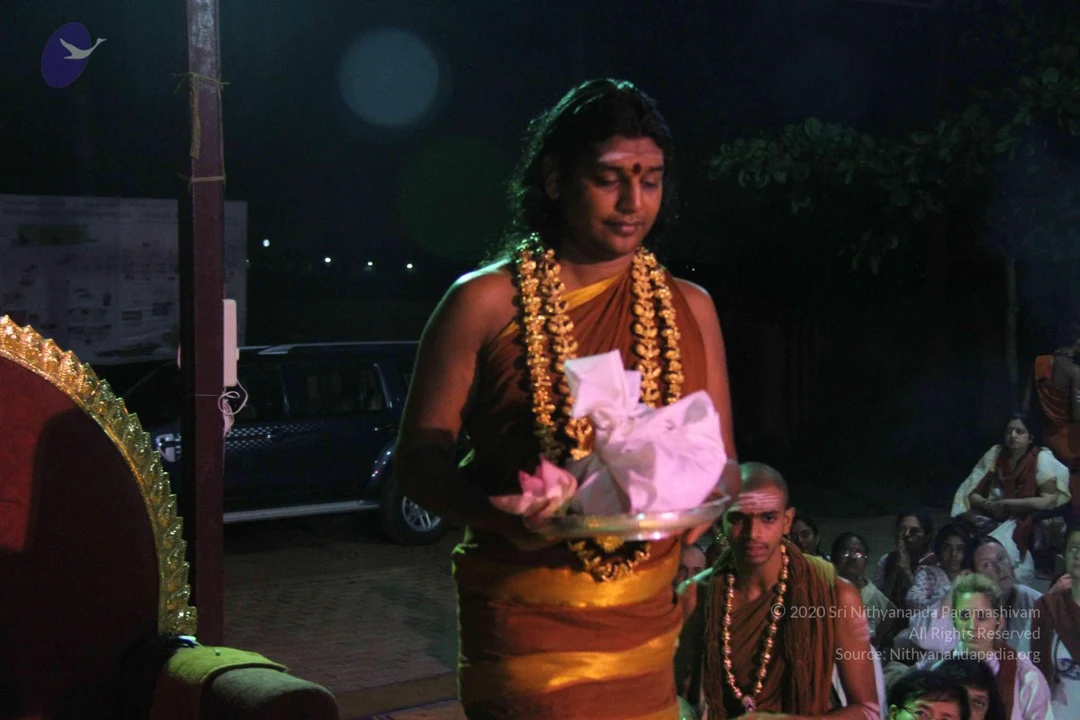
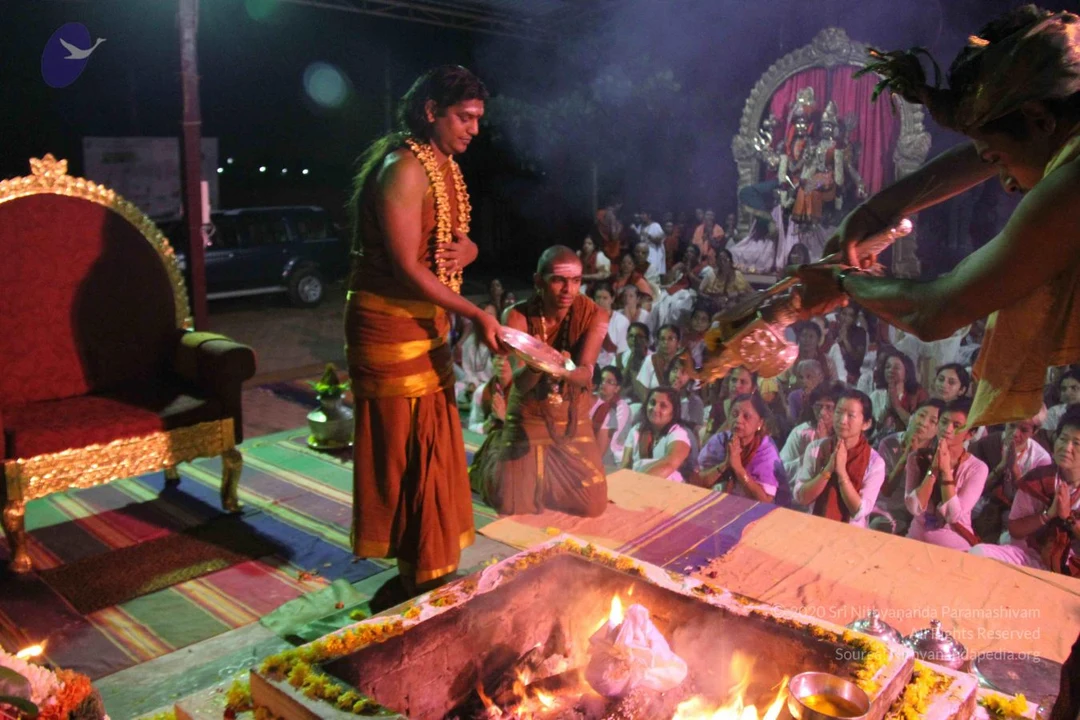
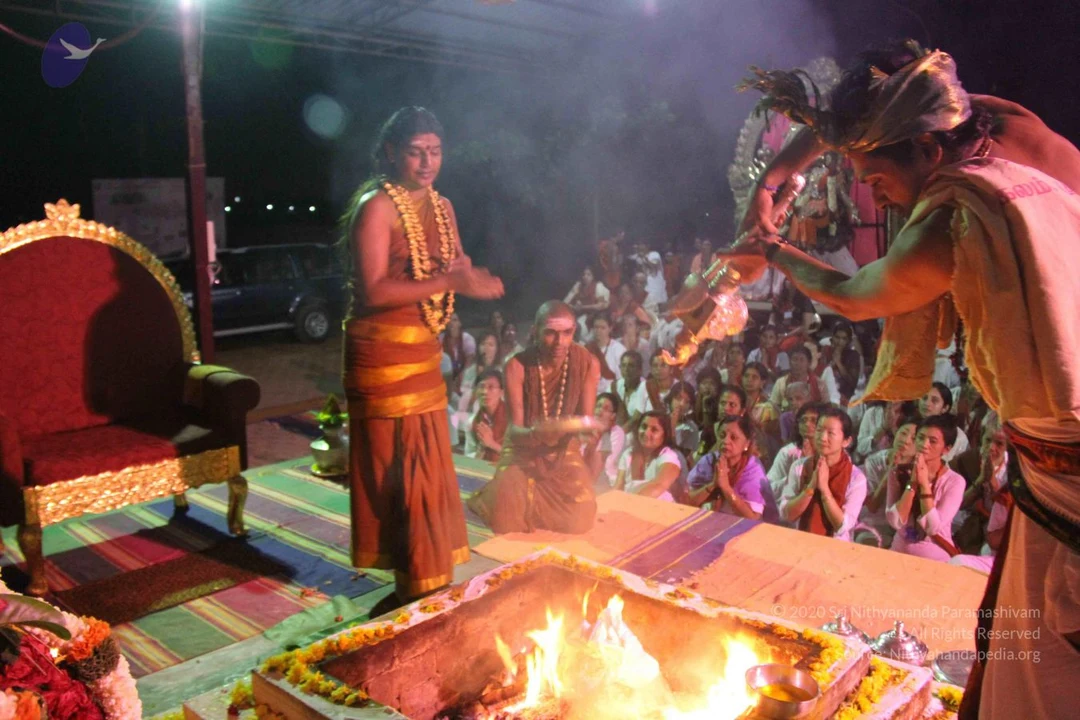
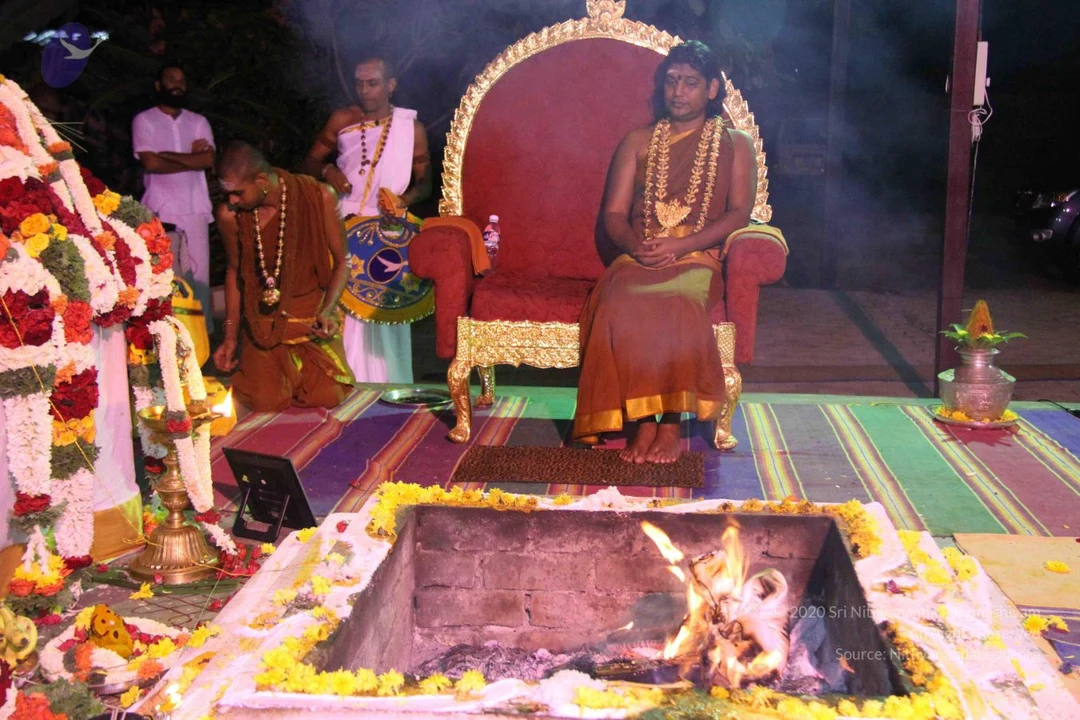
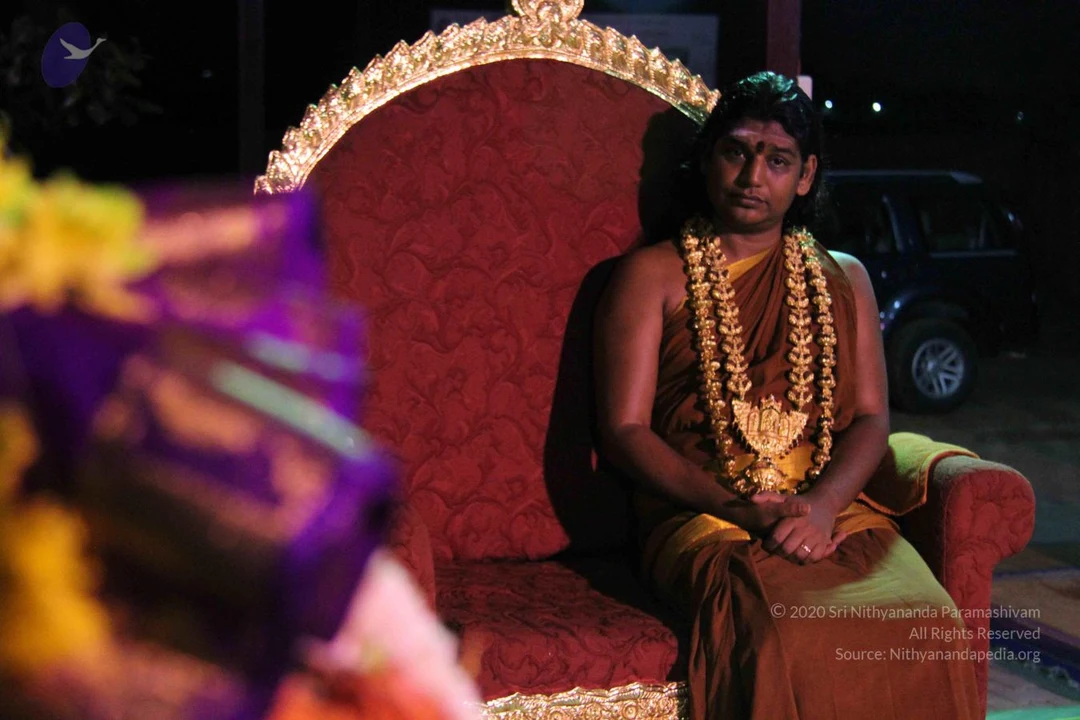
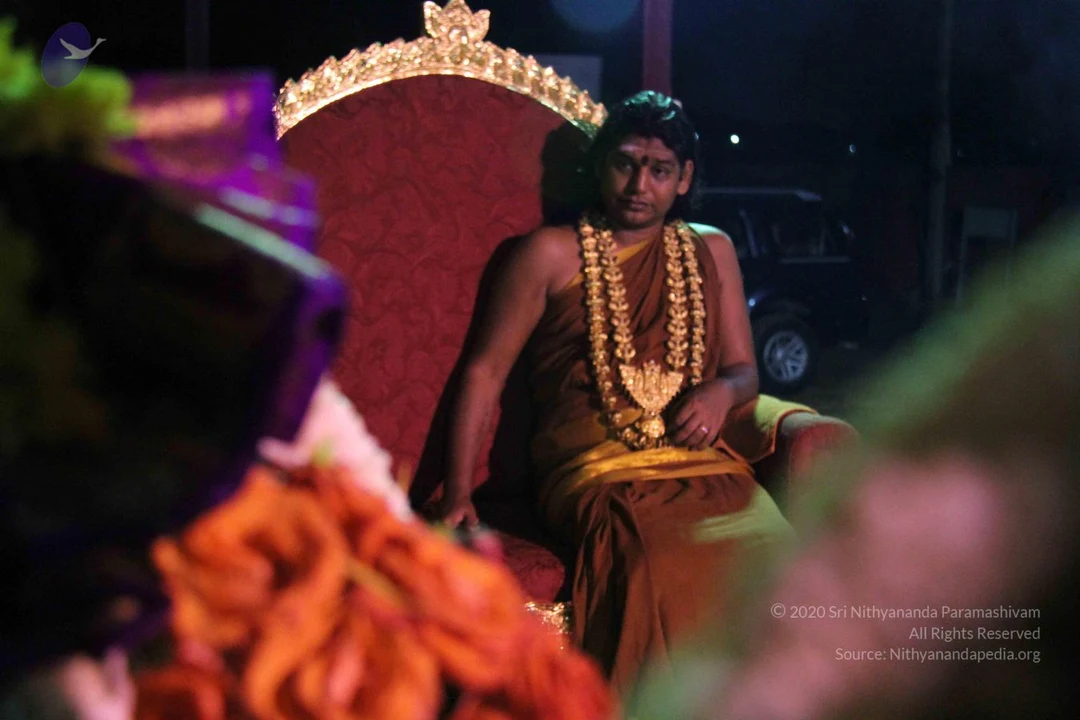
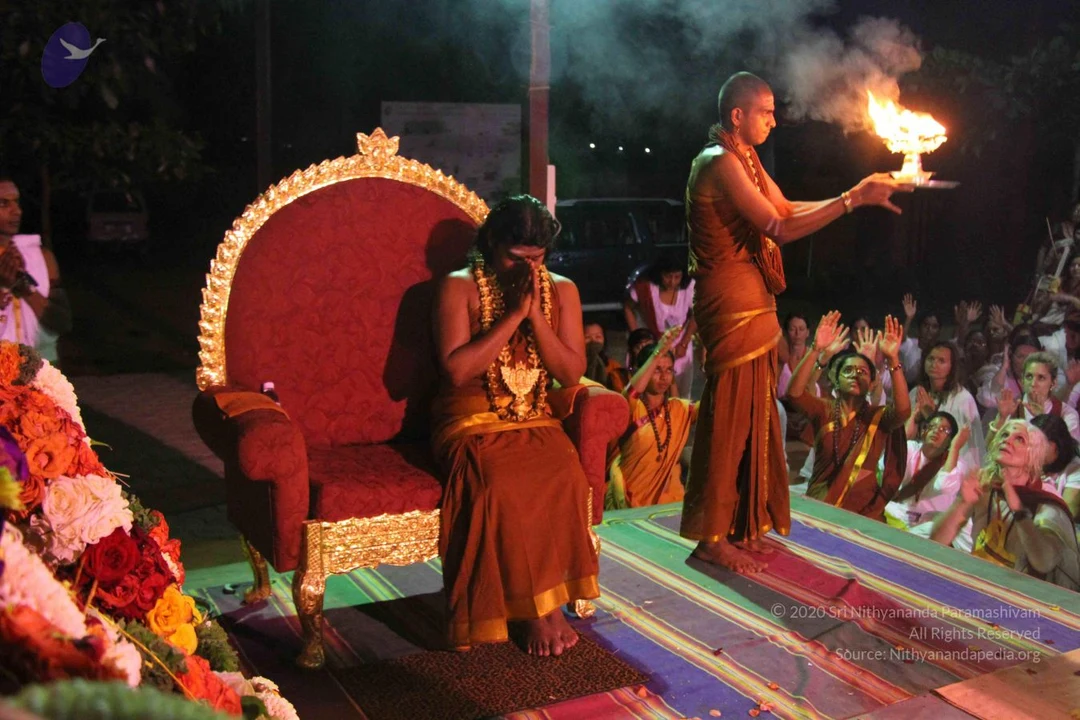
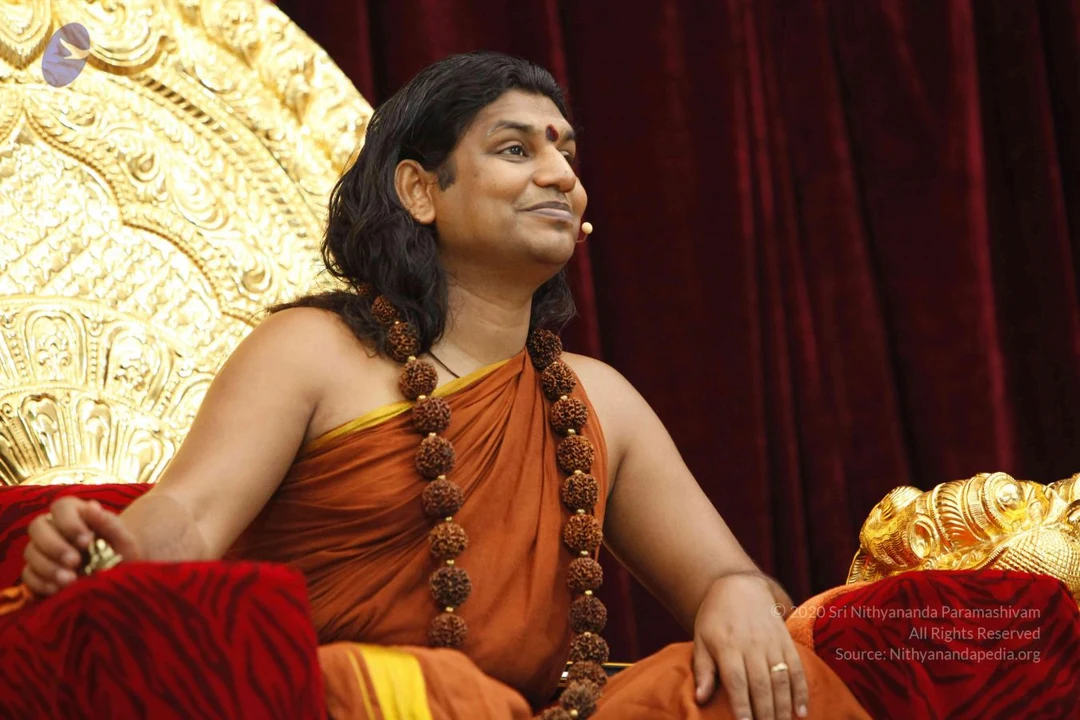
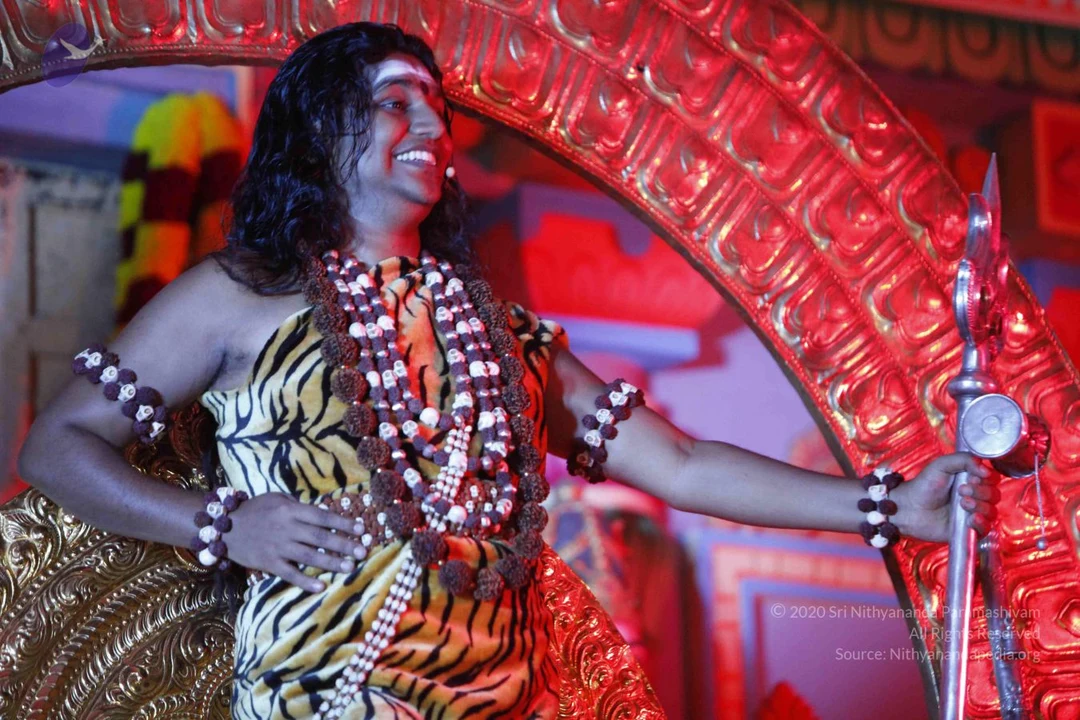
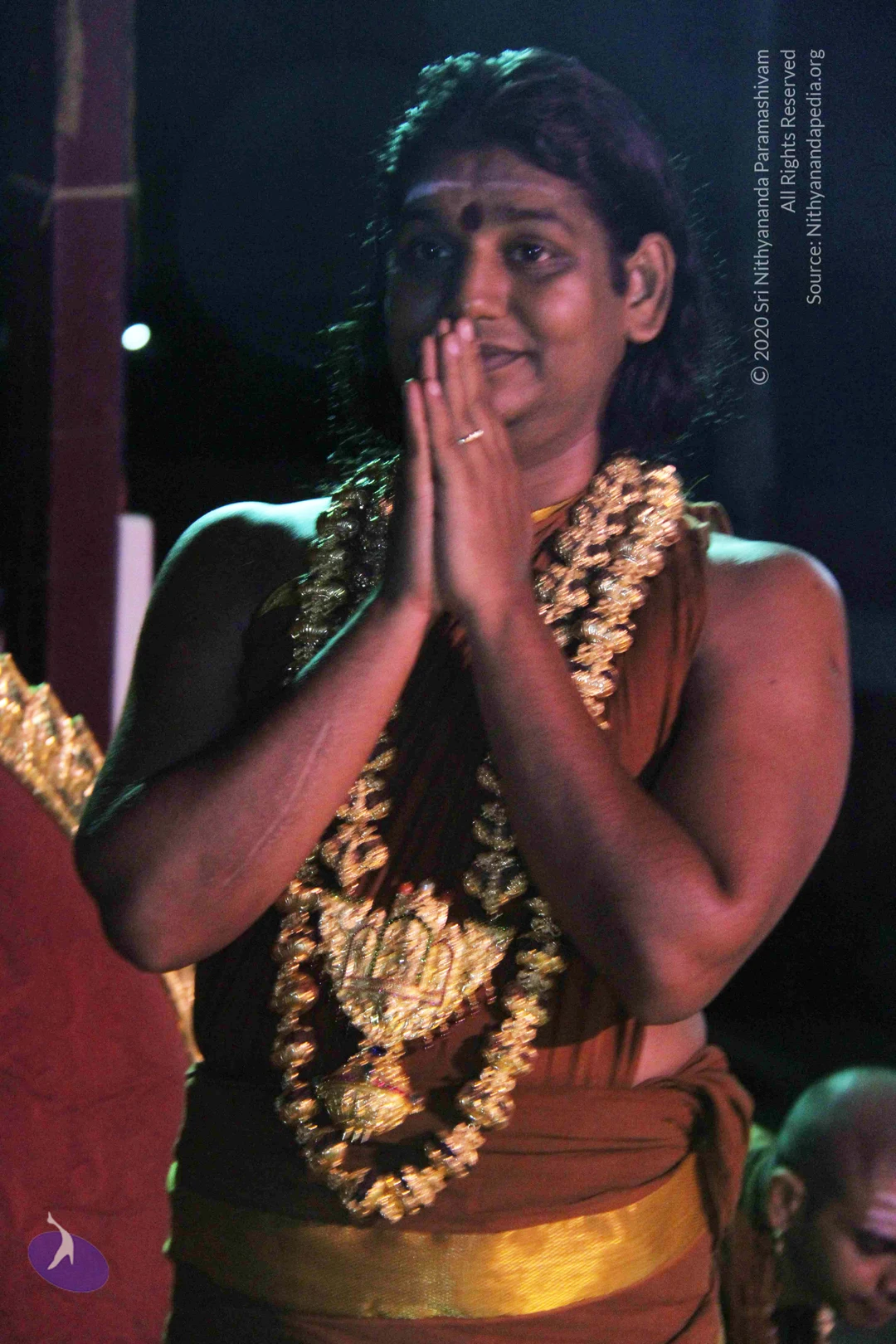
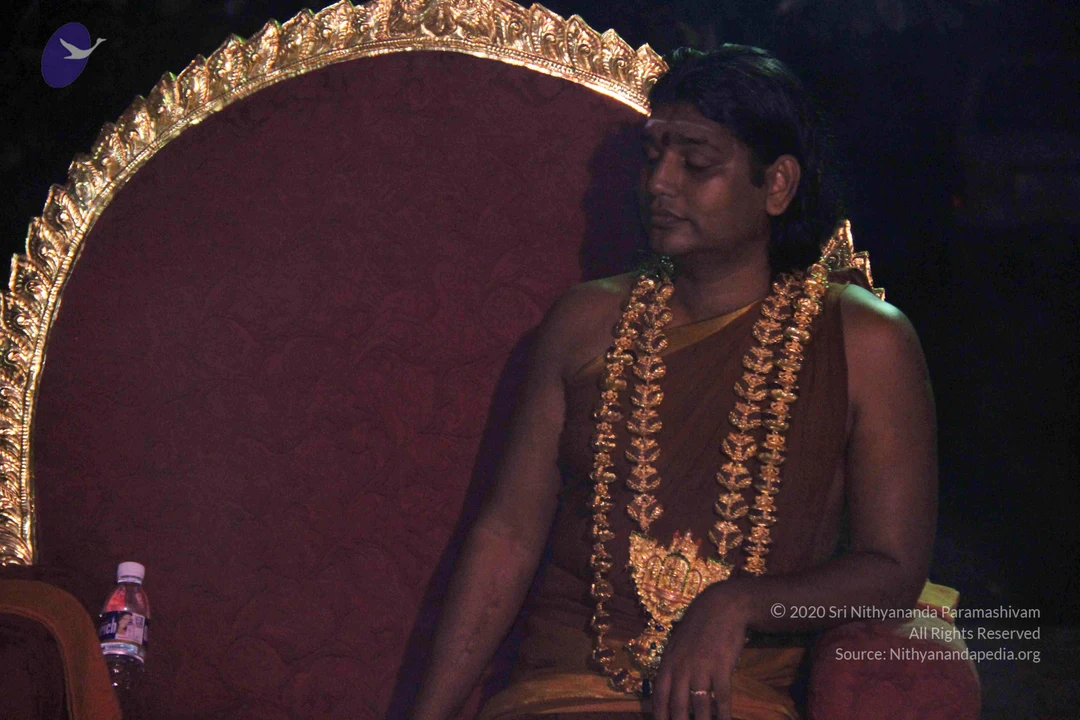
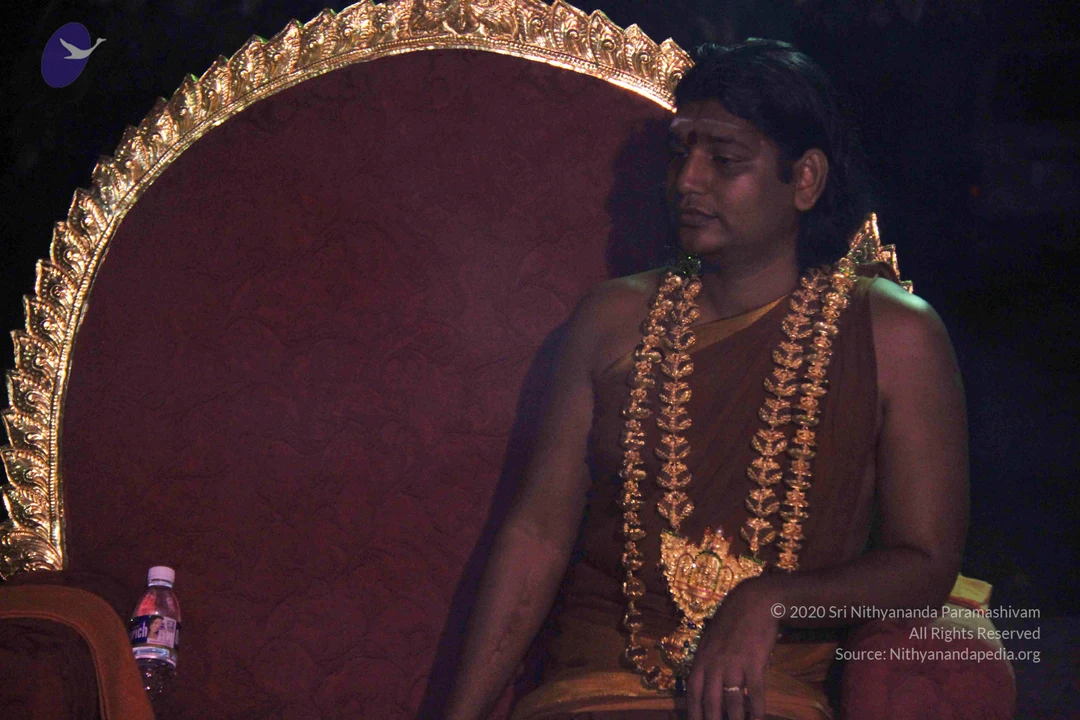
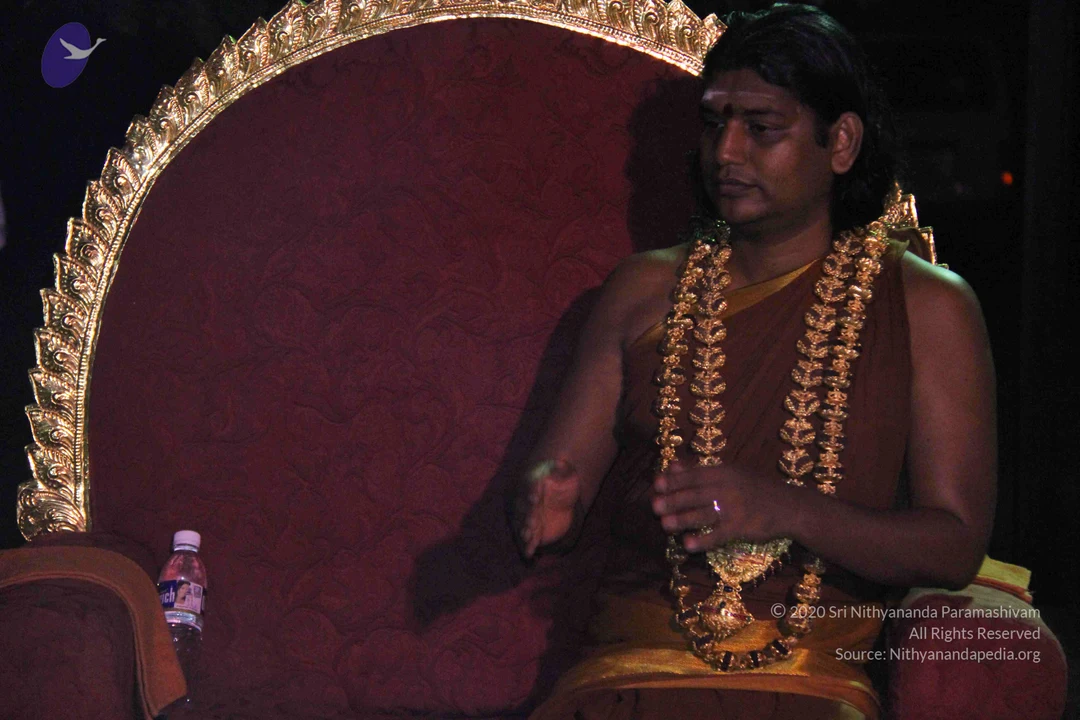
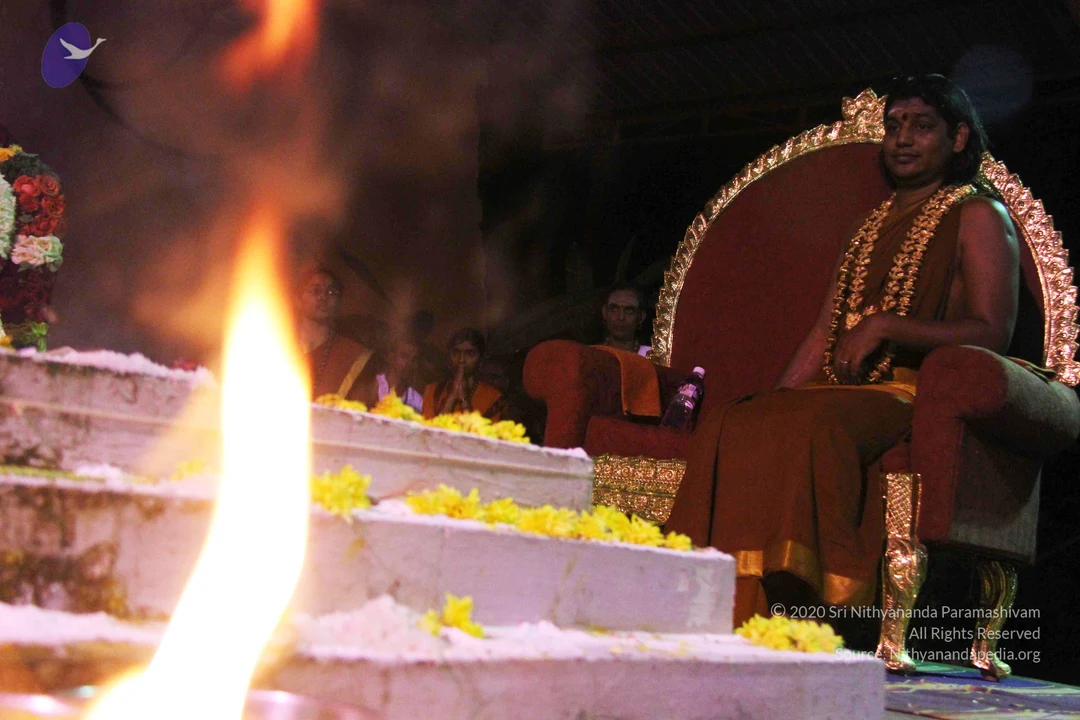
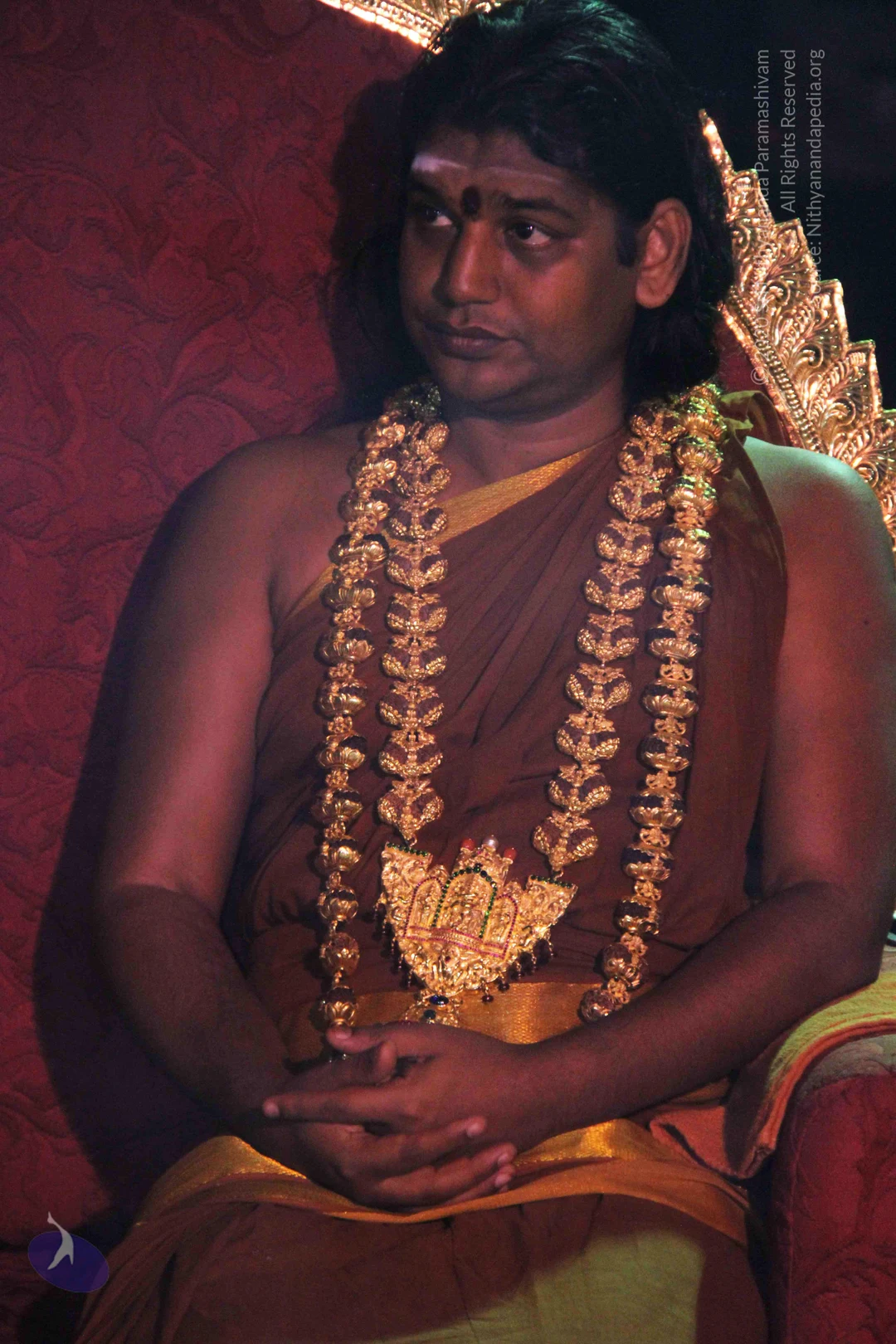
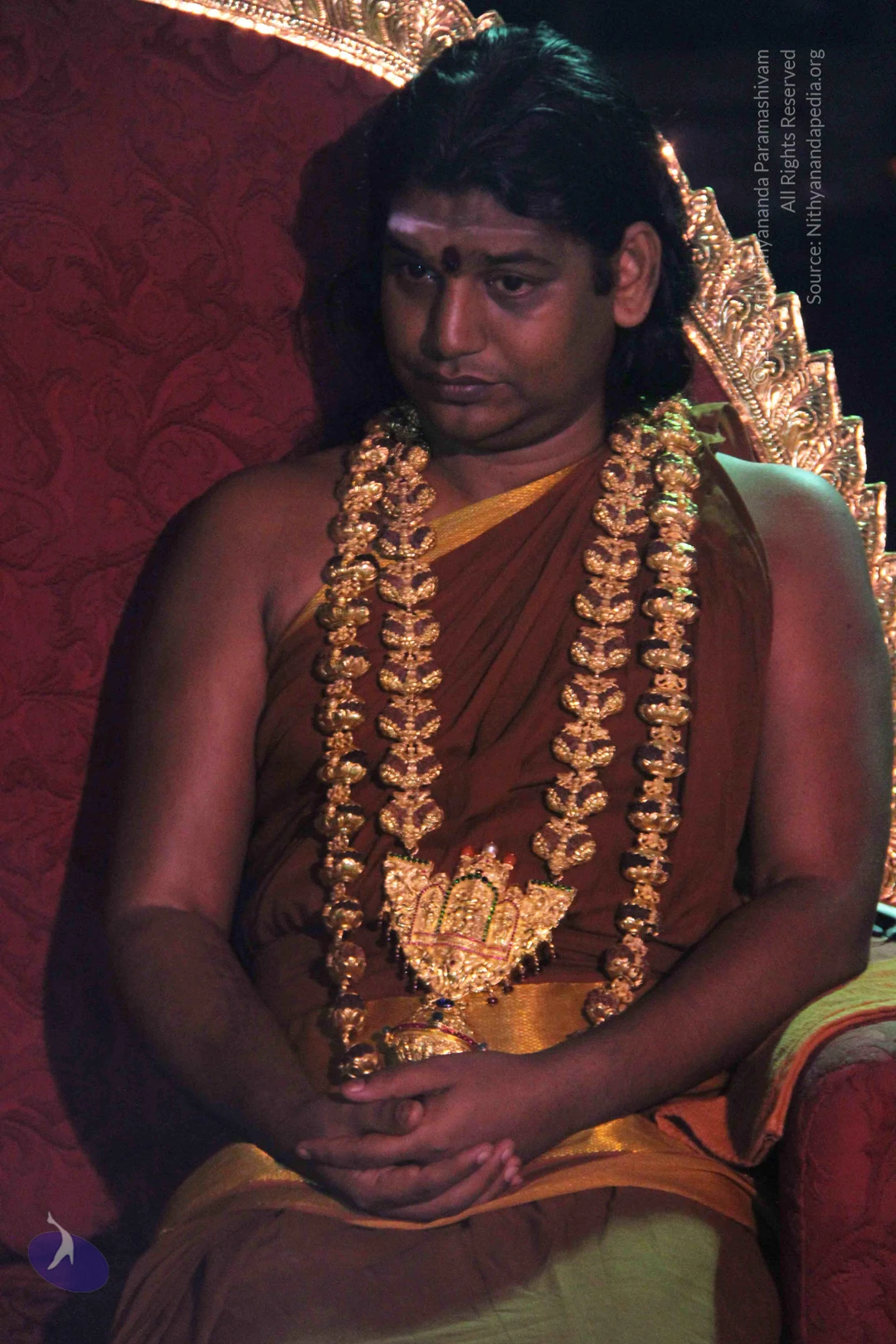
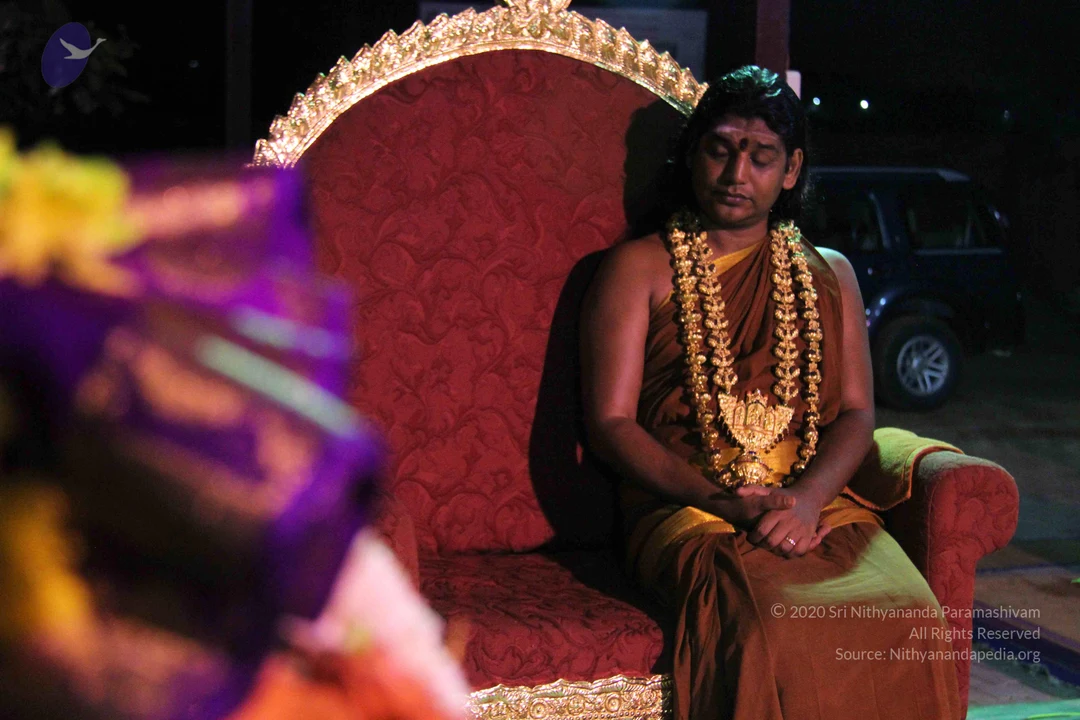
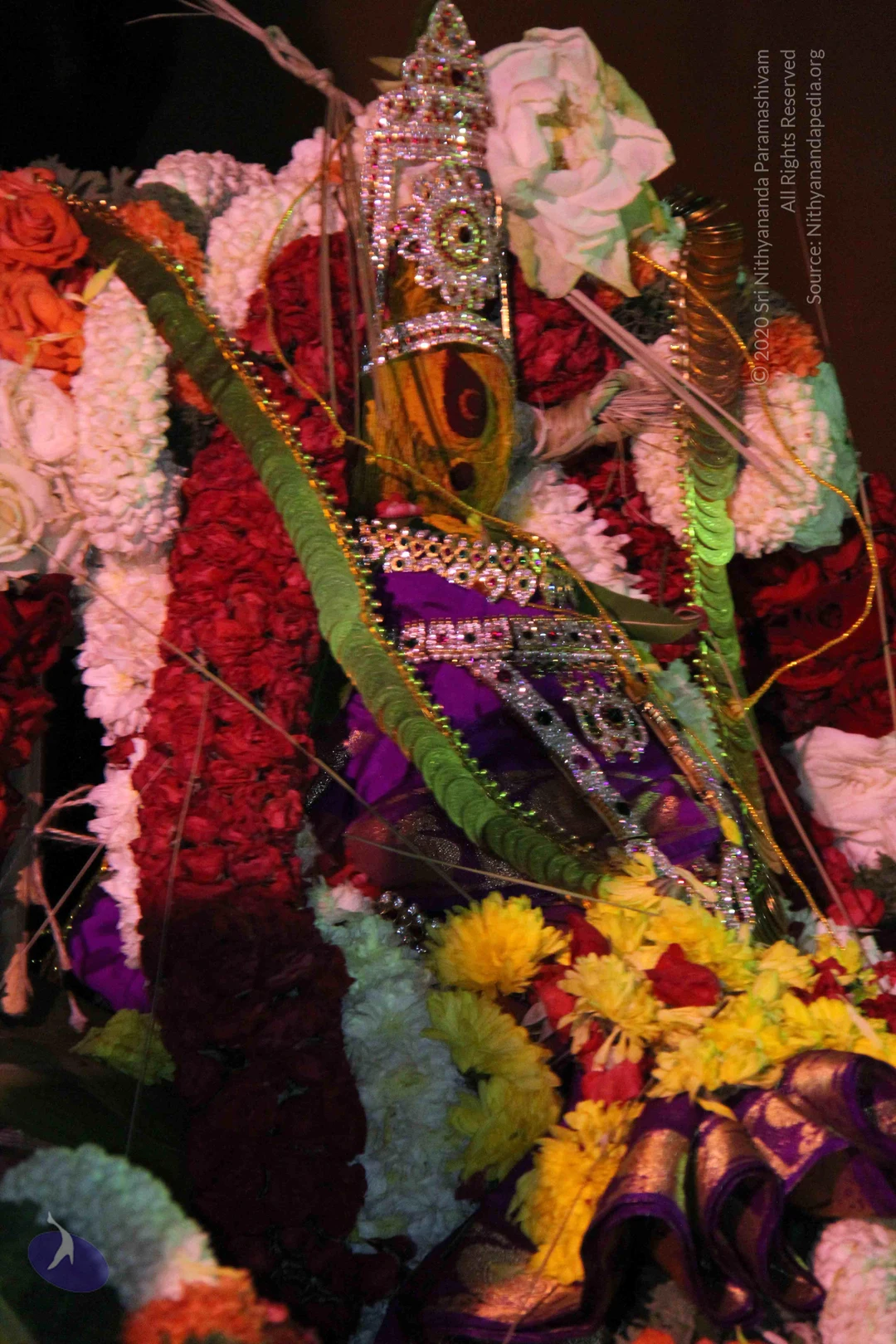
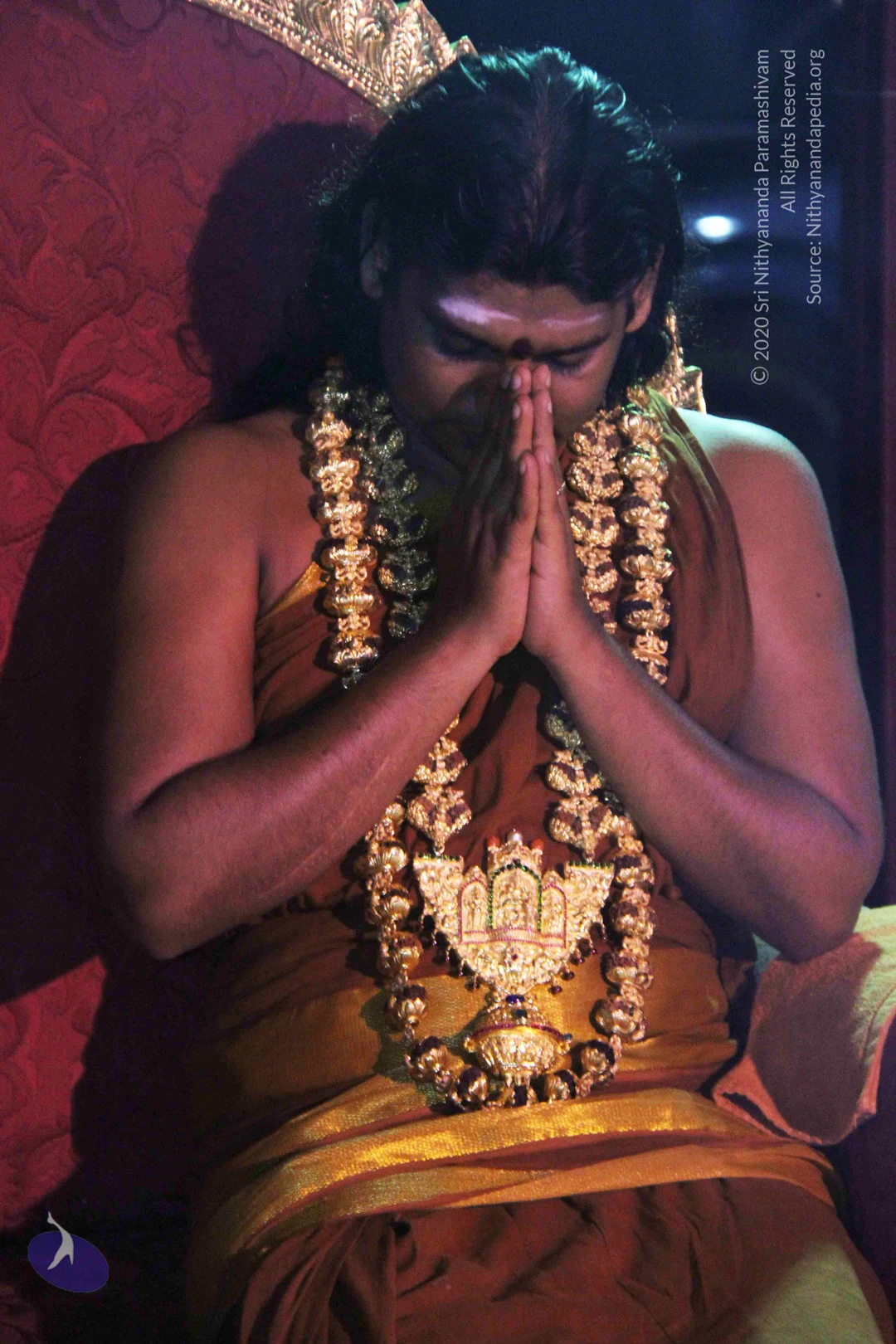
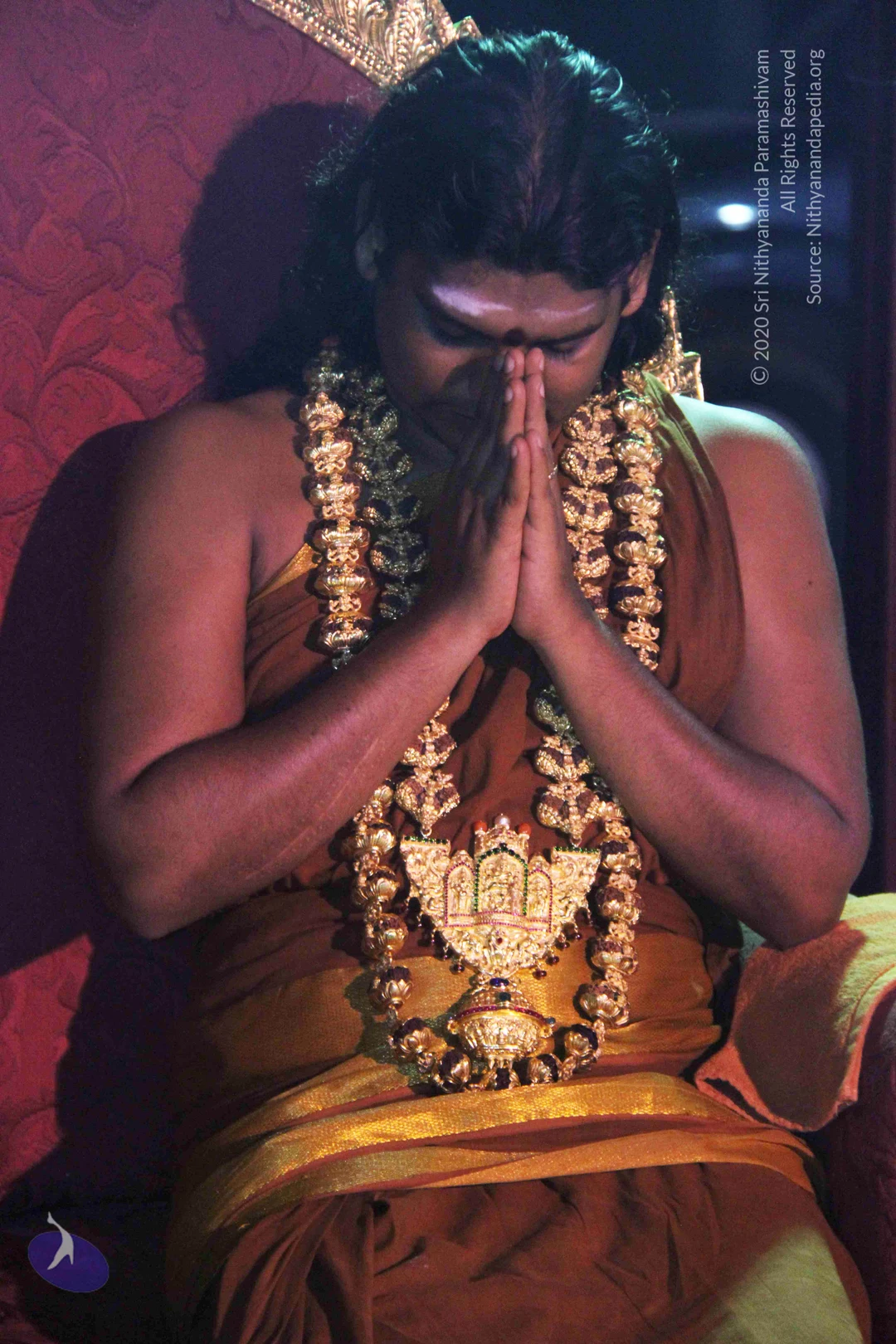
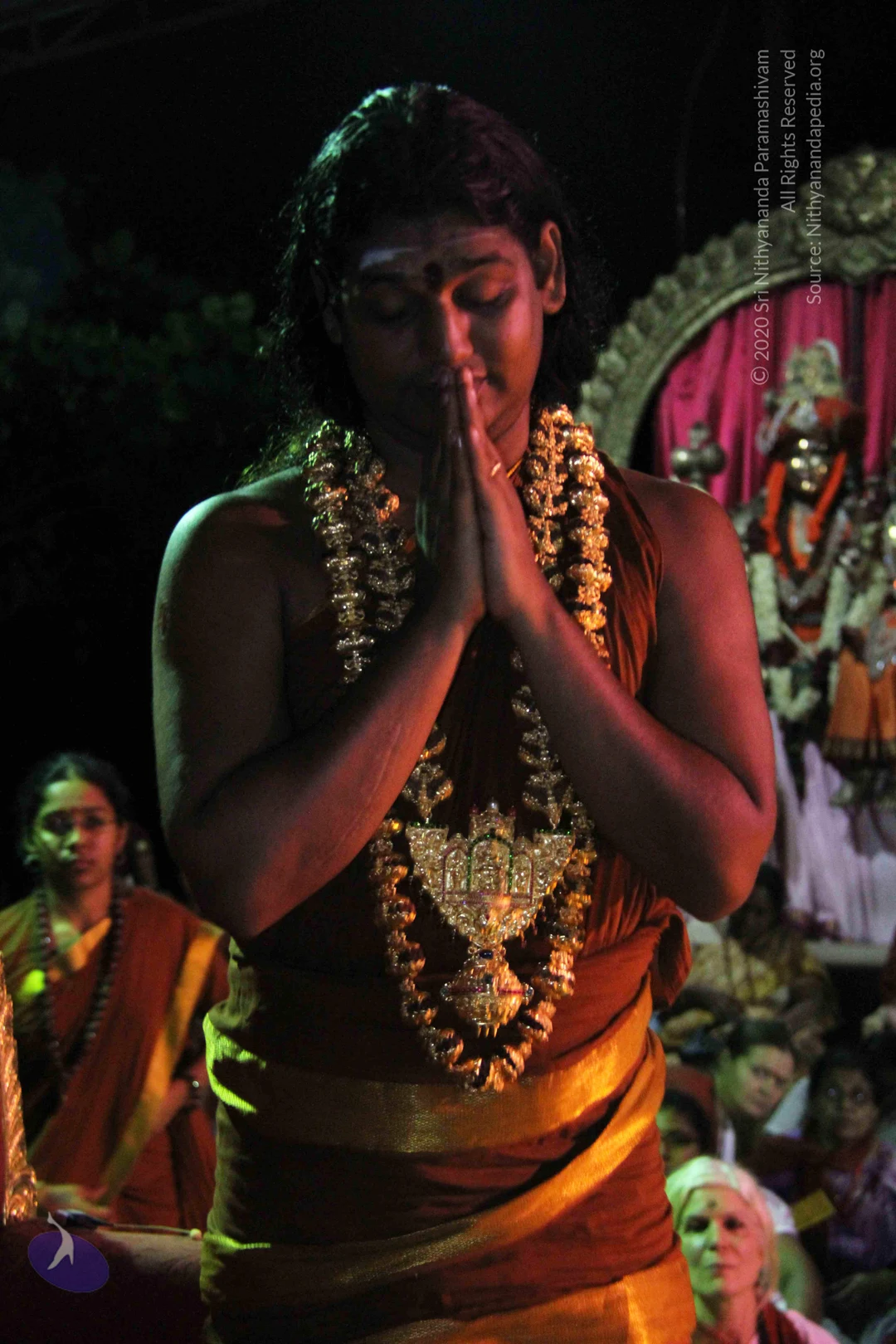
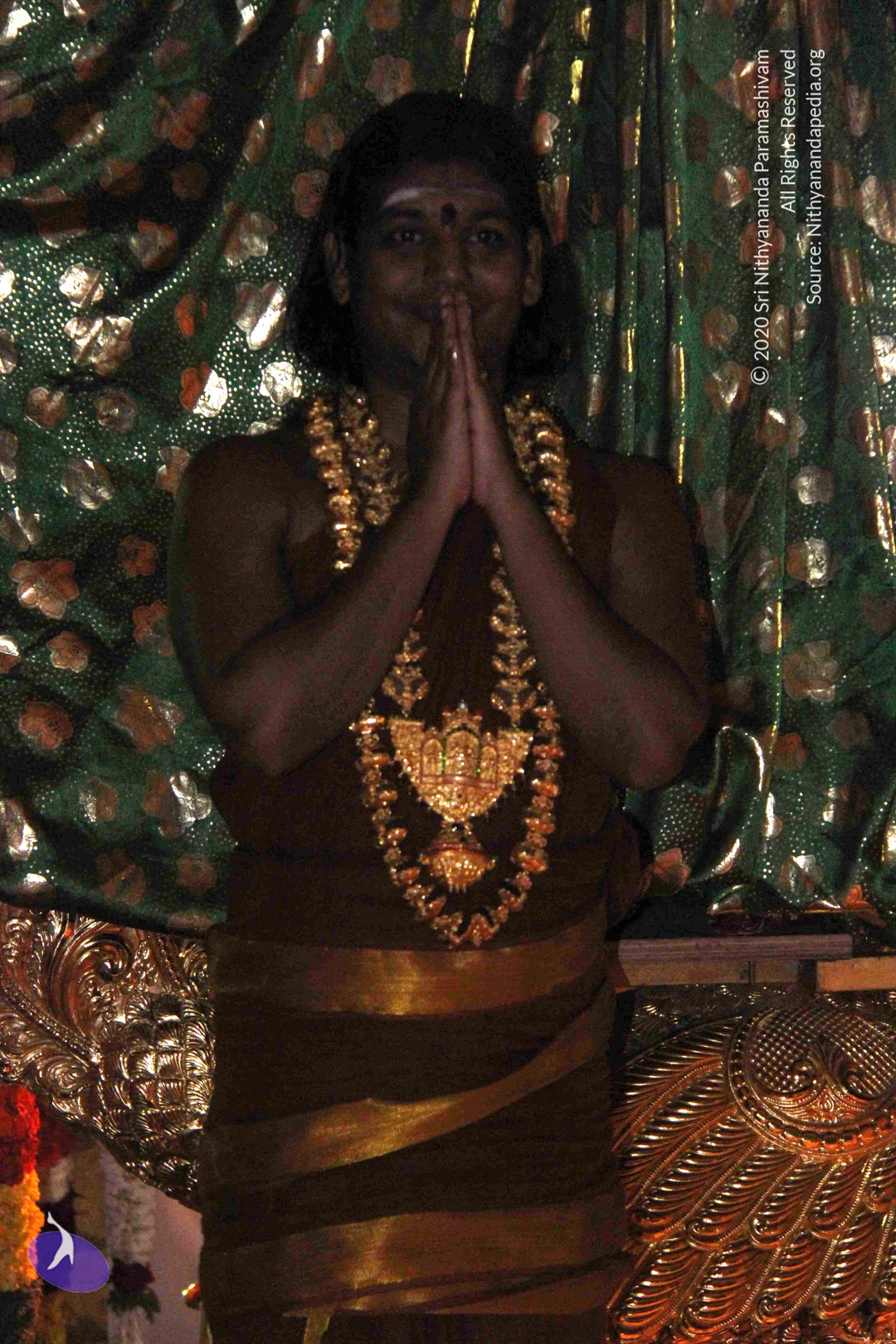
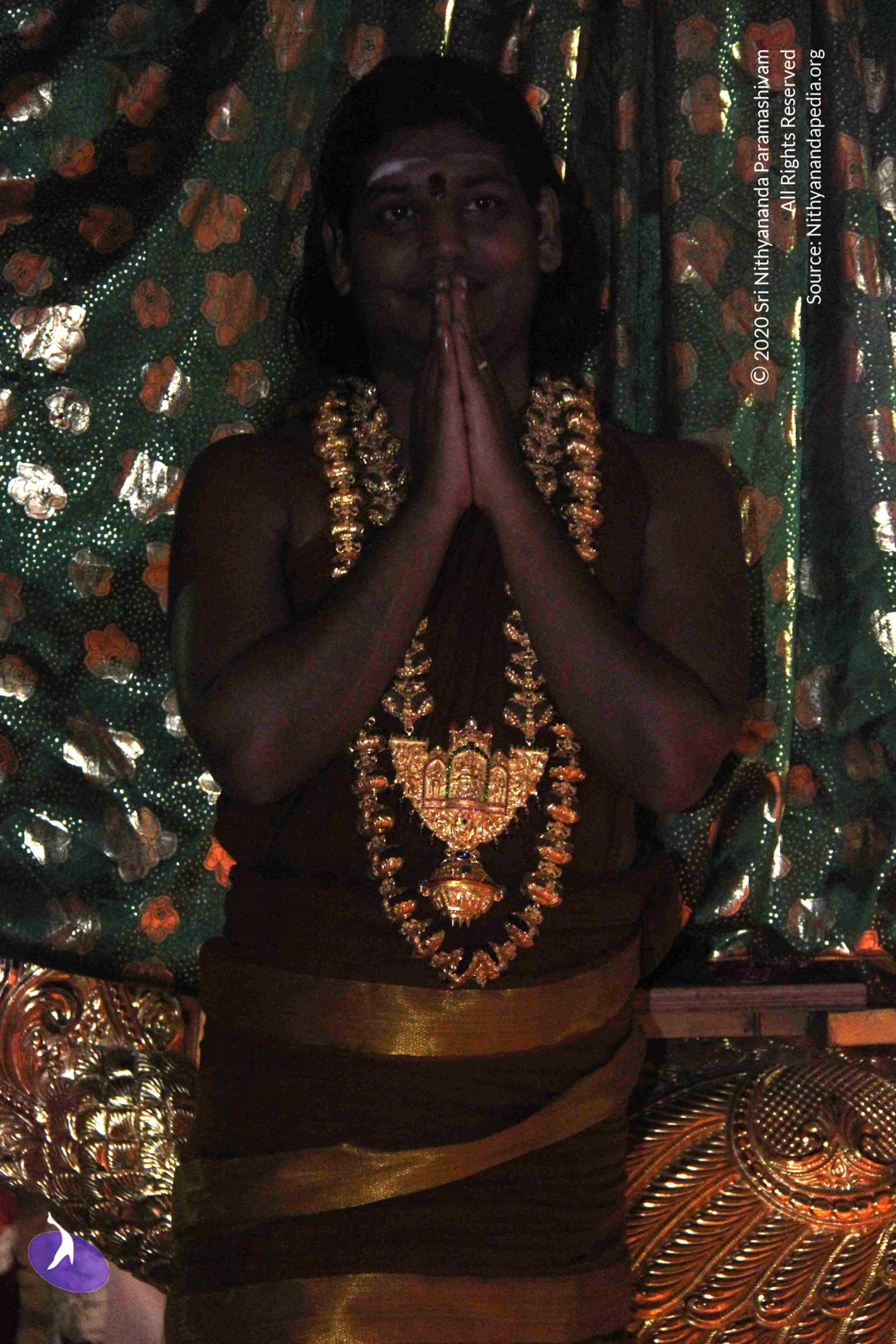
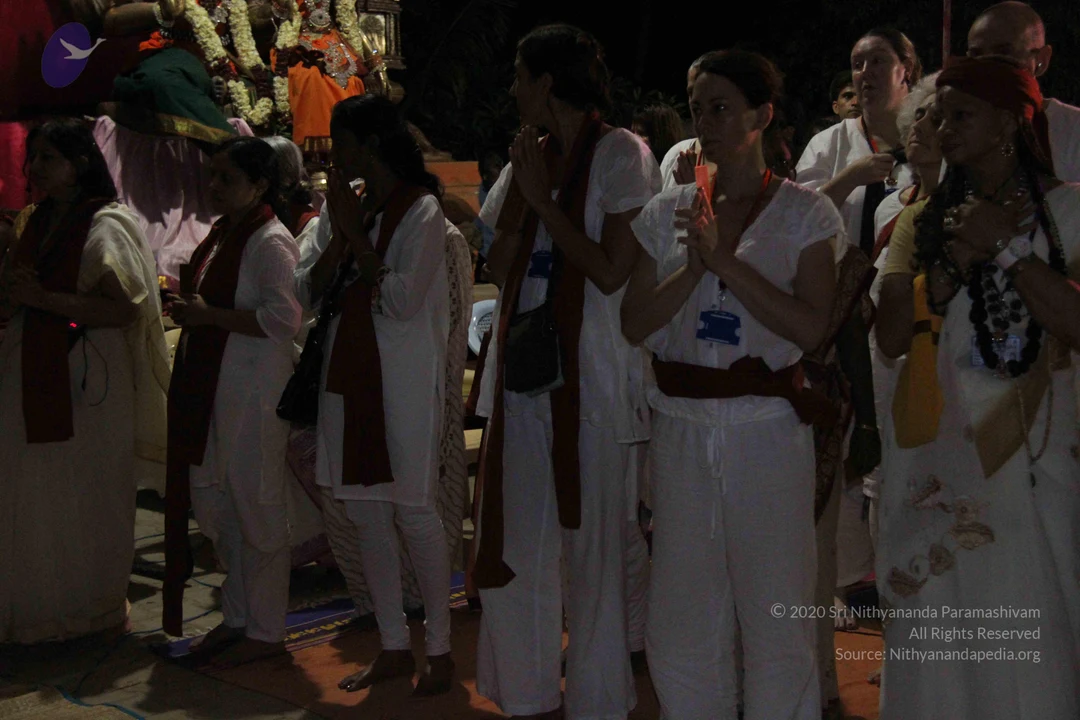
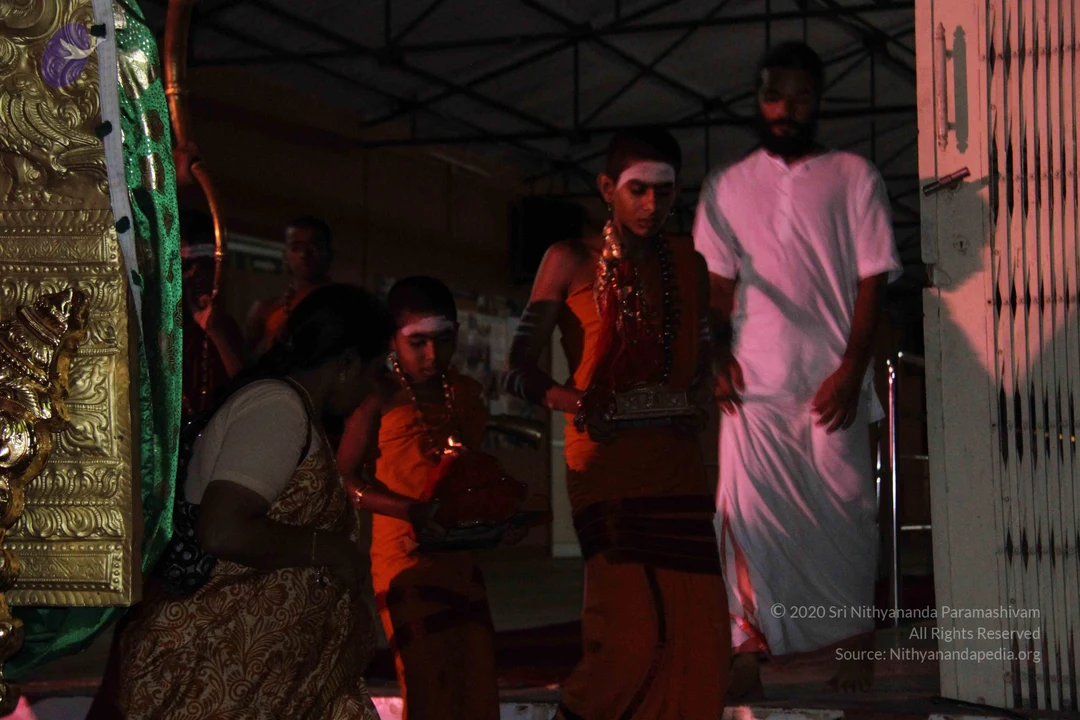
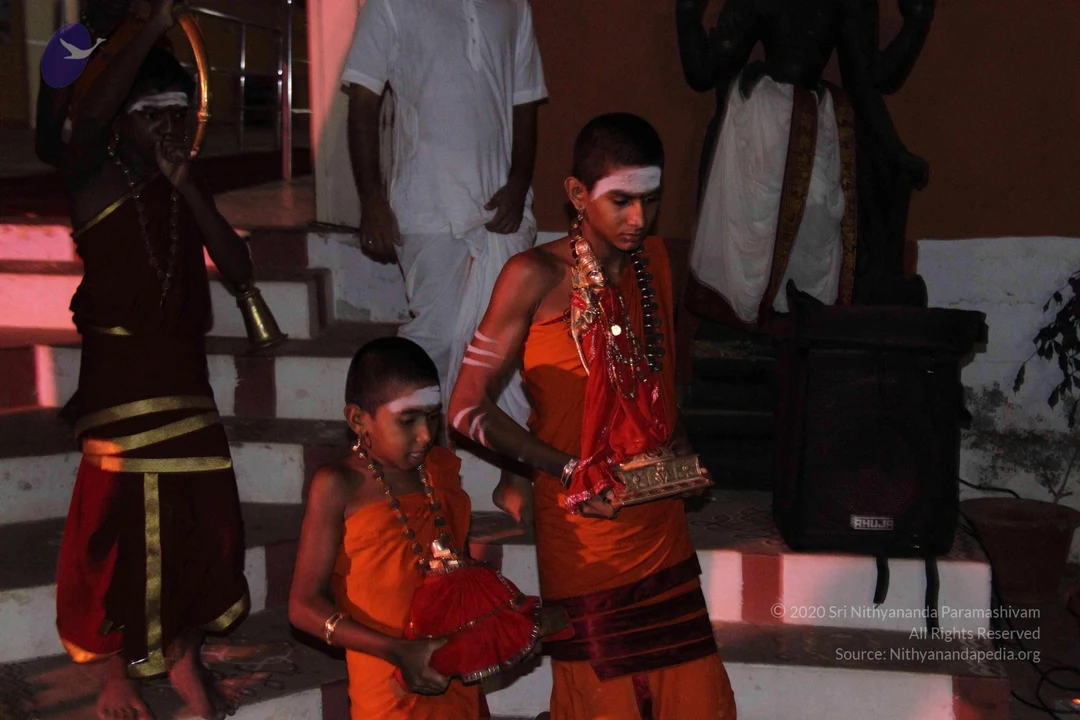
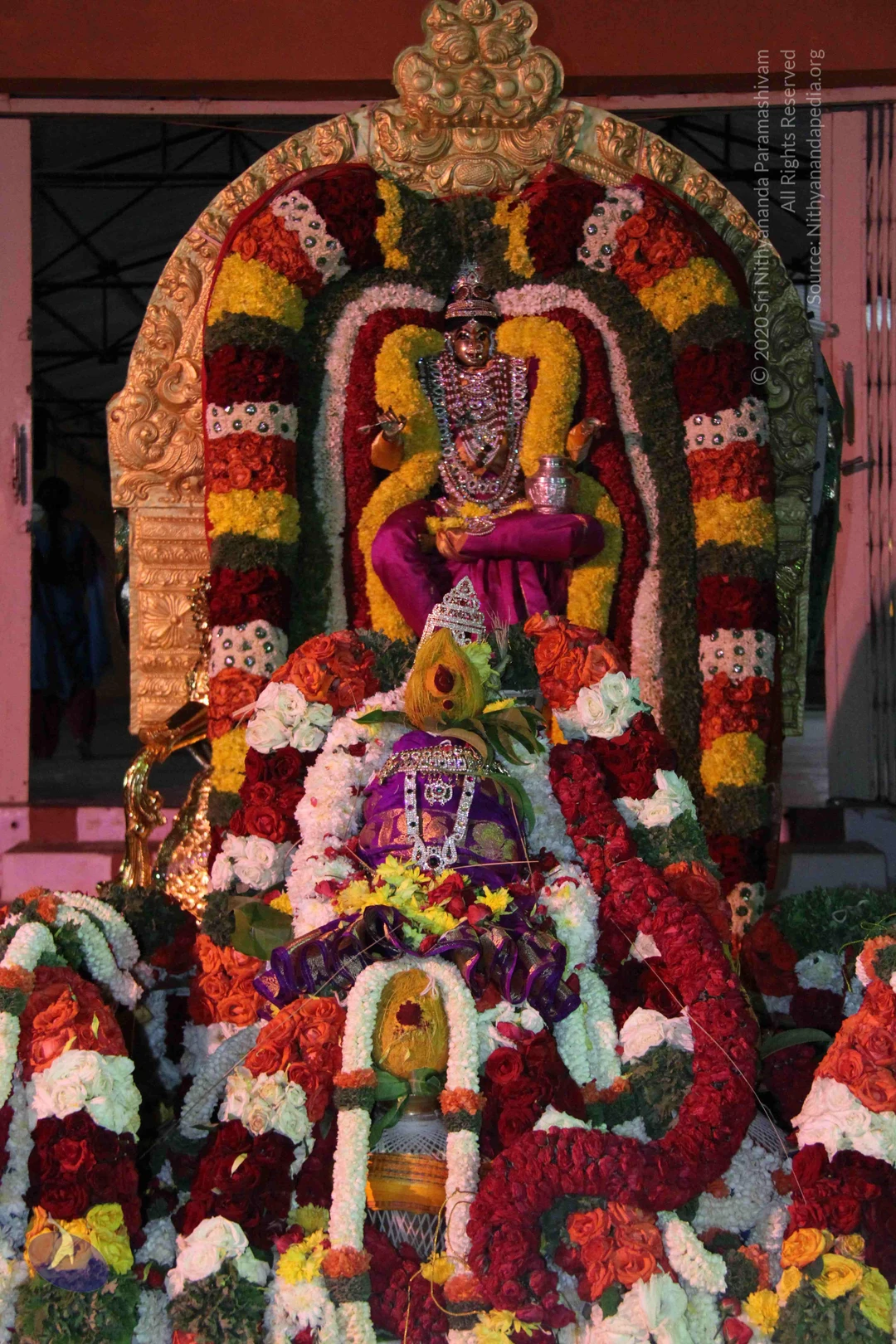
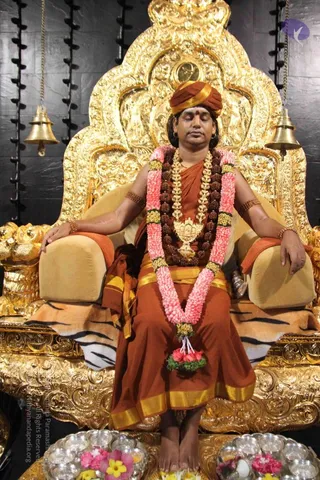
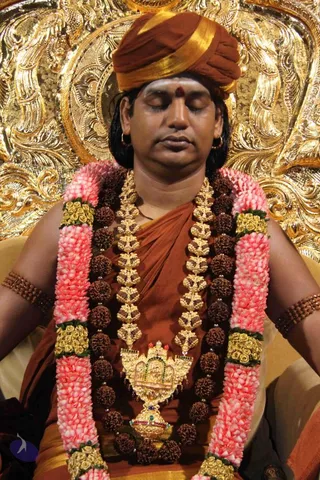
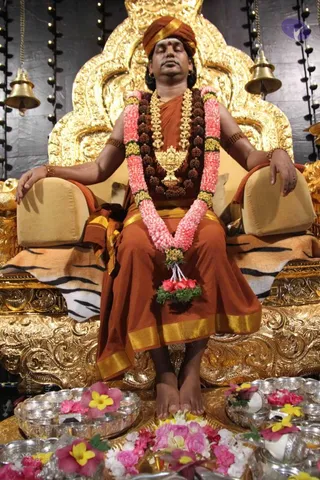
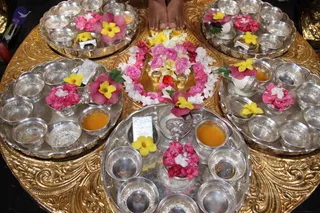
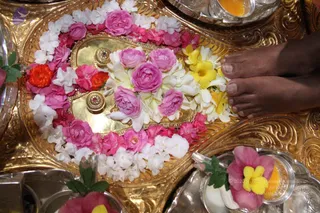
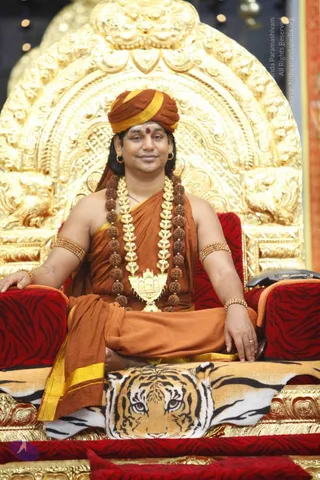
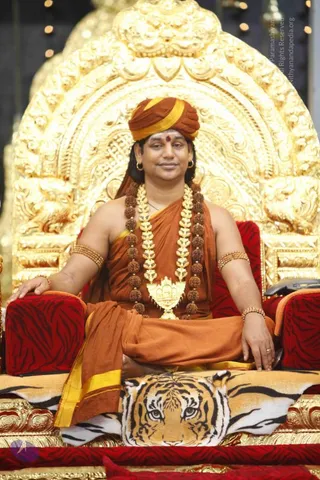
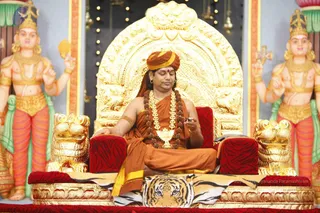
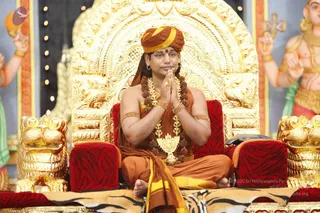
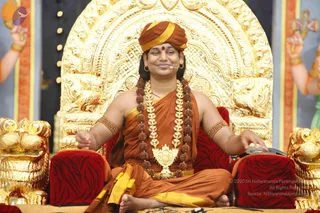
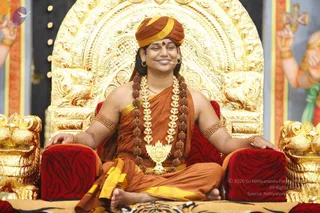
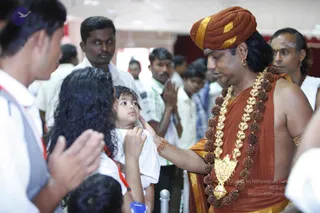
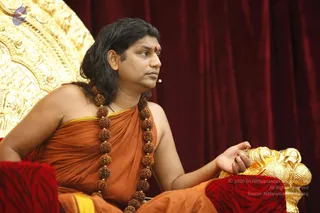
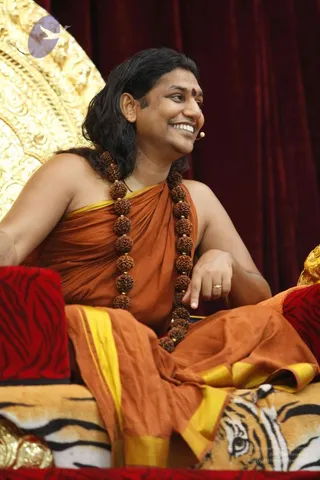
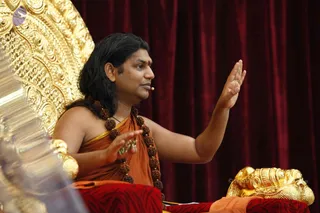
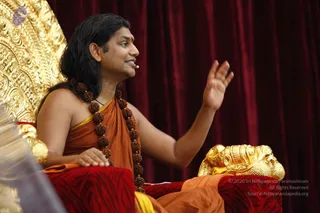
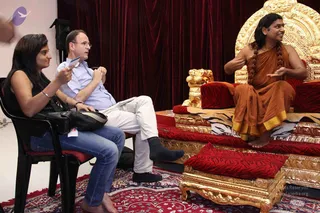
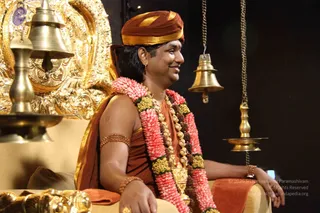
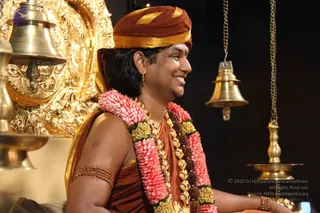
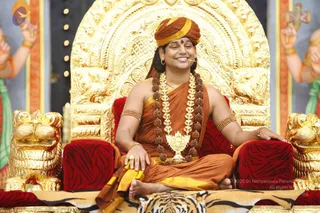
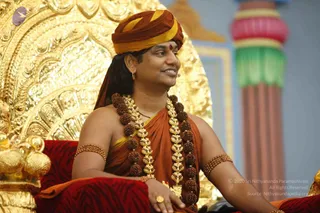
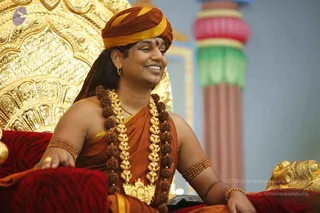
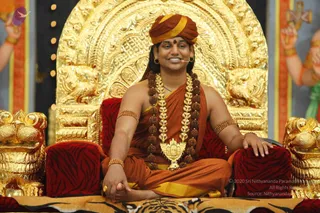
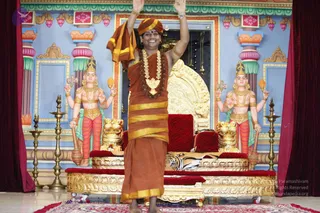
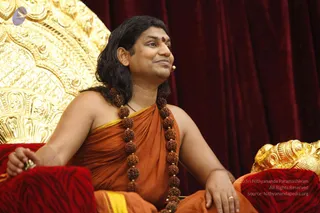
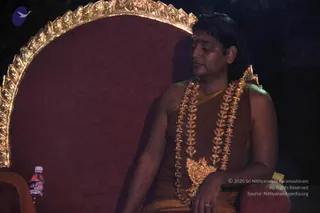
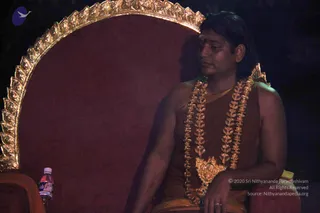
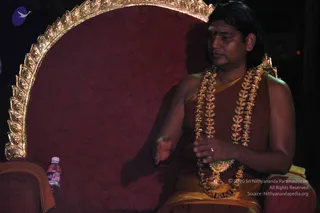
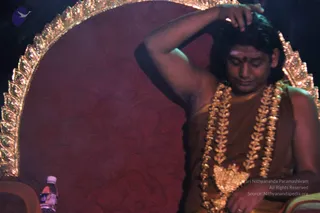
A seated man in saffron-orange robes and a matching orange-and-gold turban sits cross-legged on a gilded throne with carved lion-head armrests, smiling broadly. He wears a long rudraksha mala with gold ceremonial necklaces, gold armbands and a gold bracelet, and has a red tilak on his forehead. Behind him, a large ornate gold throne backrest and a red tiger-striped cushion frame the scene, with a golden lion statue at the left edge. A yellow and orange patterned mat lies beneath him. Colourful painted figures appear partly at the sides. The image is a photograph of a seated presenter during a satsang setting.A photograph of a man standing outdoors with eyes closed and palms pressed together at chest height in a namaste gesture. He wears a rust-orange upper wrap draped over bare shoulders with a yellow edge, multiple rudraksha mala strands and a gold ornamental necklace, rudraksha bangles on his upper arms and wrists, and small gold earrings. A white and red forehead marking is visible. Behind him are large banyan tree trunks and roots, with blurred warm lights on the right. a person appears to be this figure, shown in meditative prayer posture. One person is present.A seated man sits cross-legged on an ornate golden throne with lion-head armrests and a tiger-skin cover, smiling with a microphone headset. He wears a red-orange turban, orange-saffron robes with gold border, a long rudraksha mala and a gold ceremonial necklace, plus gold armbands. Two golden deity murti flank him on either side with raised hands and orange garments. The backdrop is a golden arch with lamps and a tiger cloth on the dais.

July 09 2013

Original wiki page
Contents

Title

Resolve your Conflicts through Completion Process

Description:

In today’s morning Satsang, Paramahamsa Nithyananda explains how only with deep completion can we become one being. Completion is the only all-purpose tool we need to carry: prepare for life and death, find relief from health issues, discover our own mystical powers, be one with all life forms both animate and inanimate, and experience oneness within us. We suffer so much with incompletions but they are only a delusive cognition that has no existence and stands between us and the Whole. Paramahamsa Nithyananda reminds us that completion is not a onetime process. We must continuously establish awareness with our thoughts and actions, making completion a lifestyle!

VideoAudio

Transcript:

Nithyanandeshwara Samaarambhaam Nithyanandeshwari Madhyamaam | Asmadaachaarya Paryanthaam Vande Guru Paramparaam ||

I welcome everyone with my love and respects. I welcome all the television viewers, devotees, disciples, Samajis, satsanghis sitting with us all over the world through Nithyananda TV, Sadhna TV and Lotus News Channel.

I welcome all of you with my love and blessings!

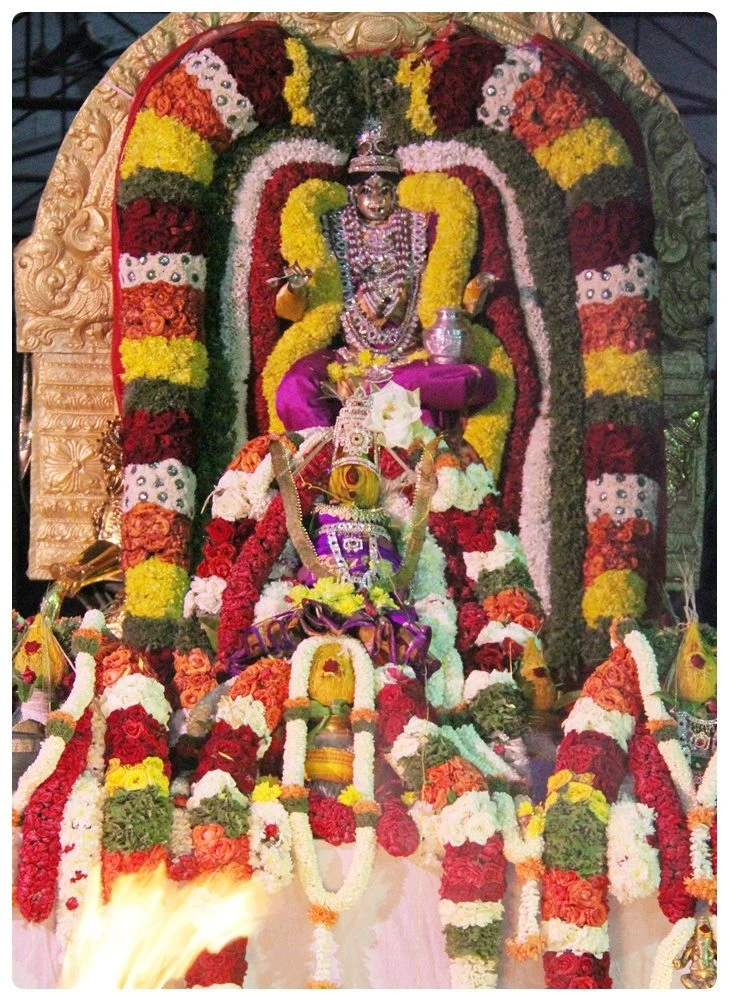
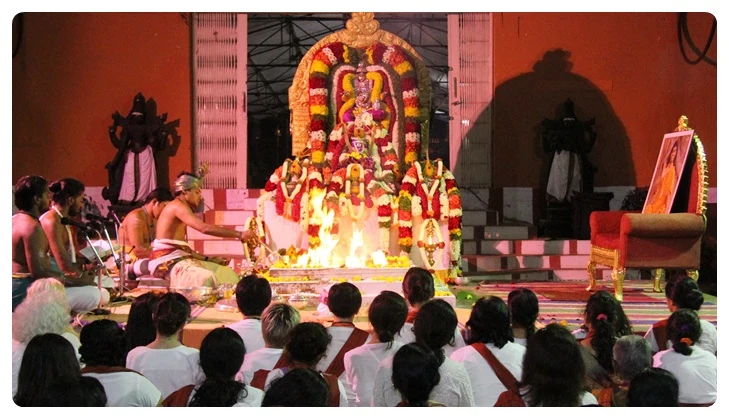
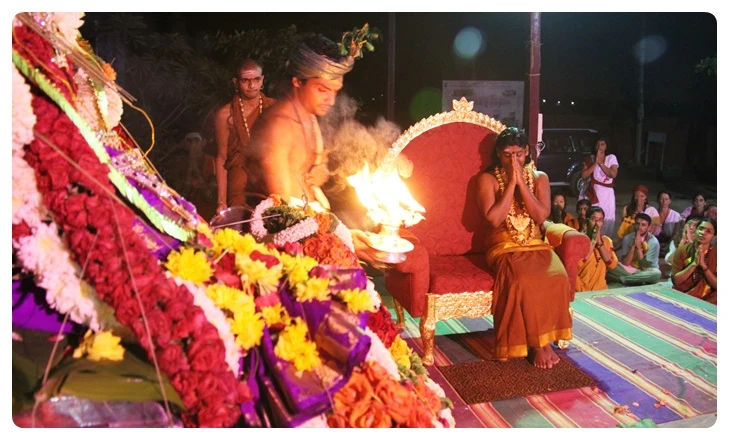
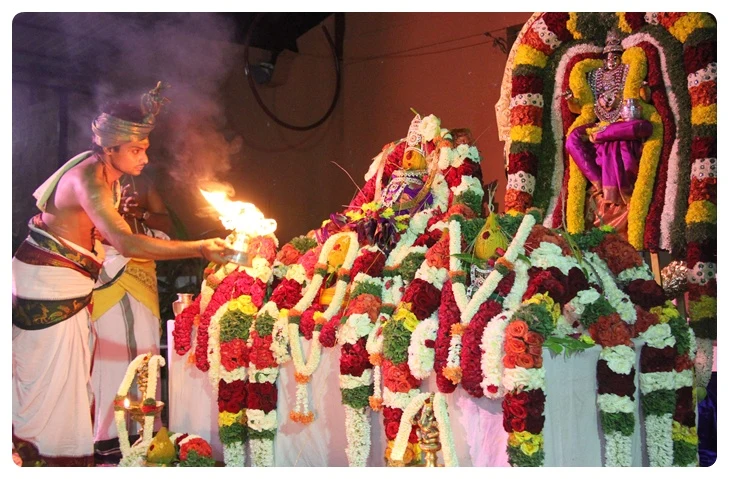
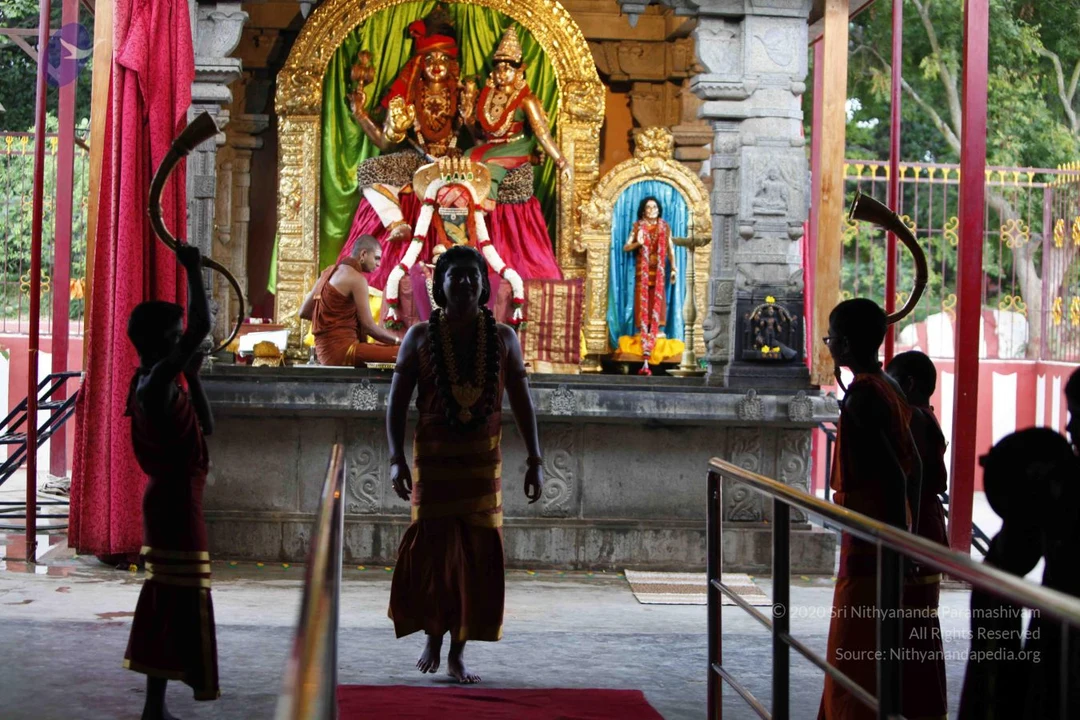
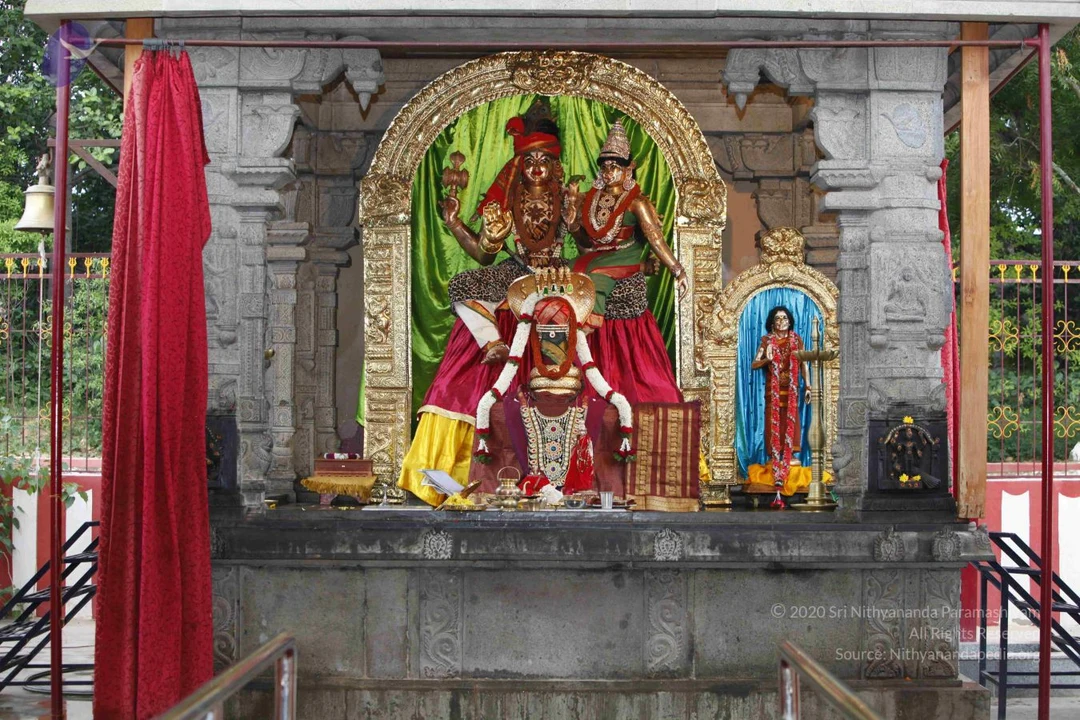
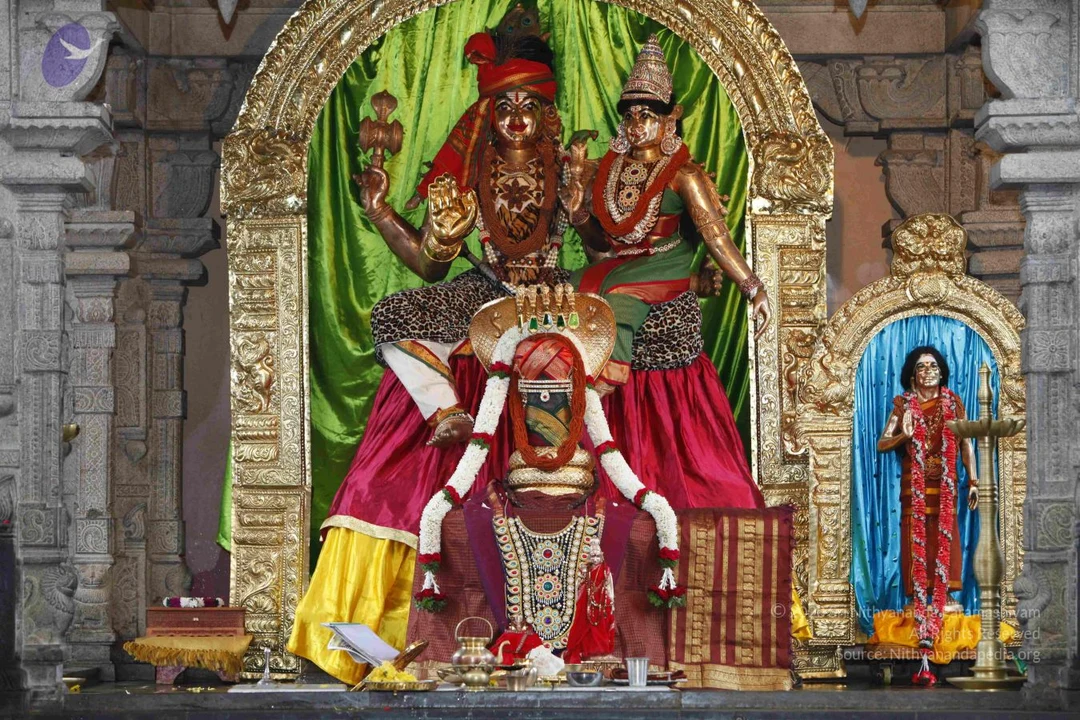
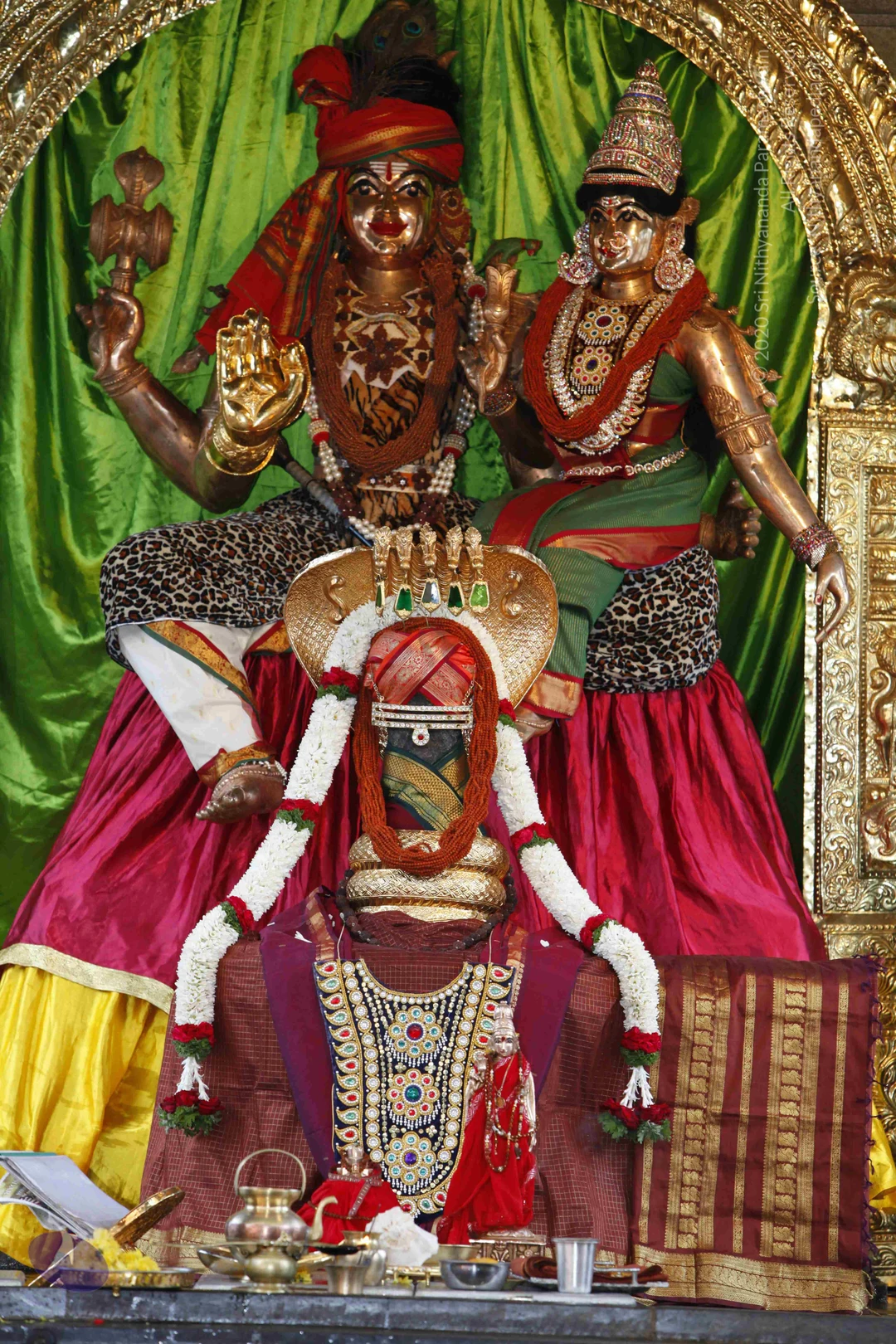
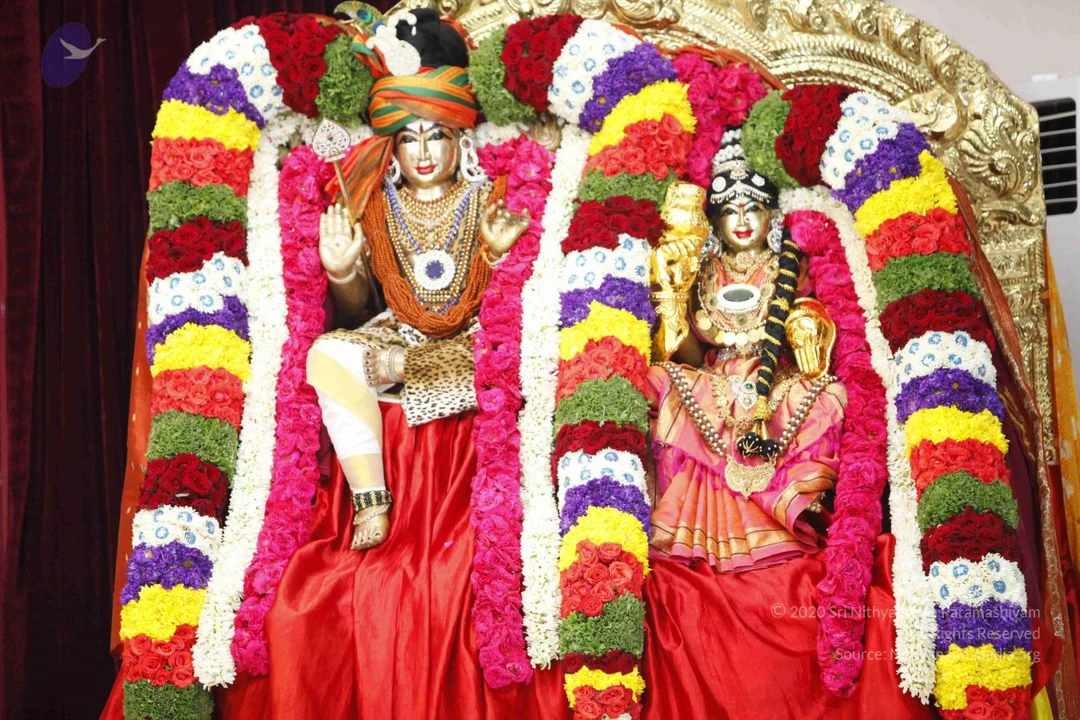
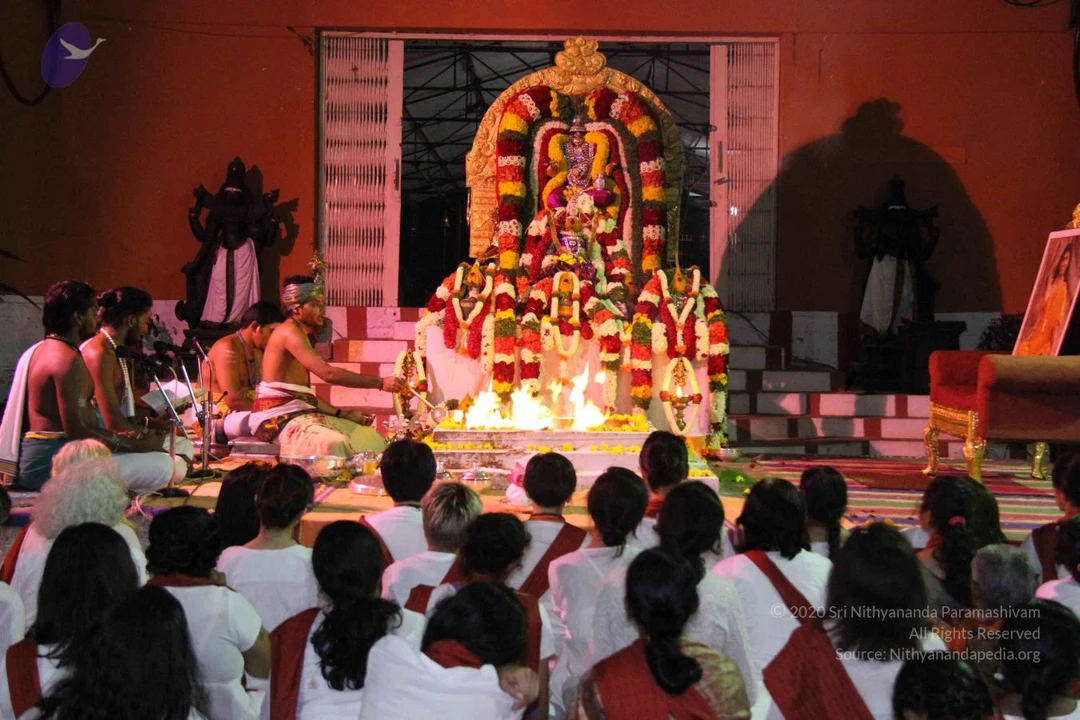
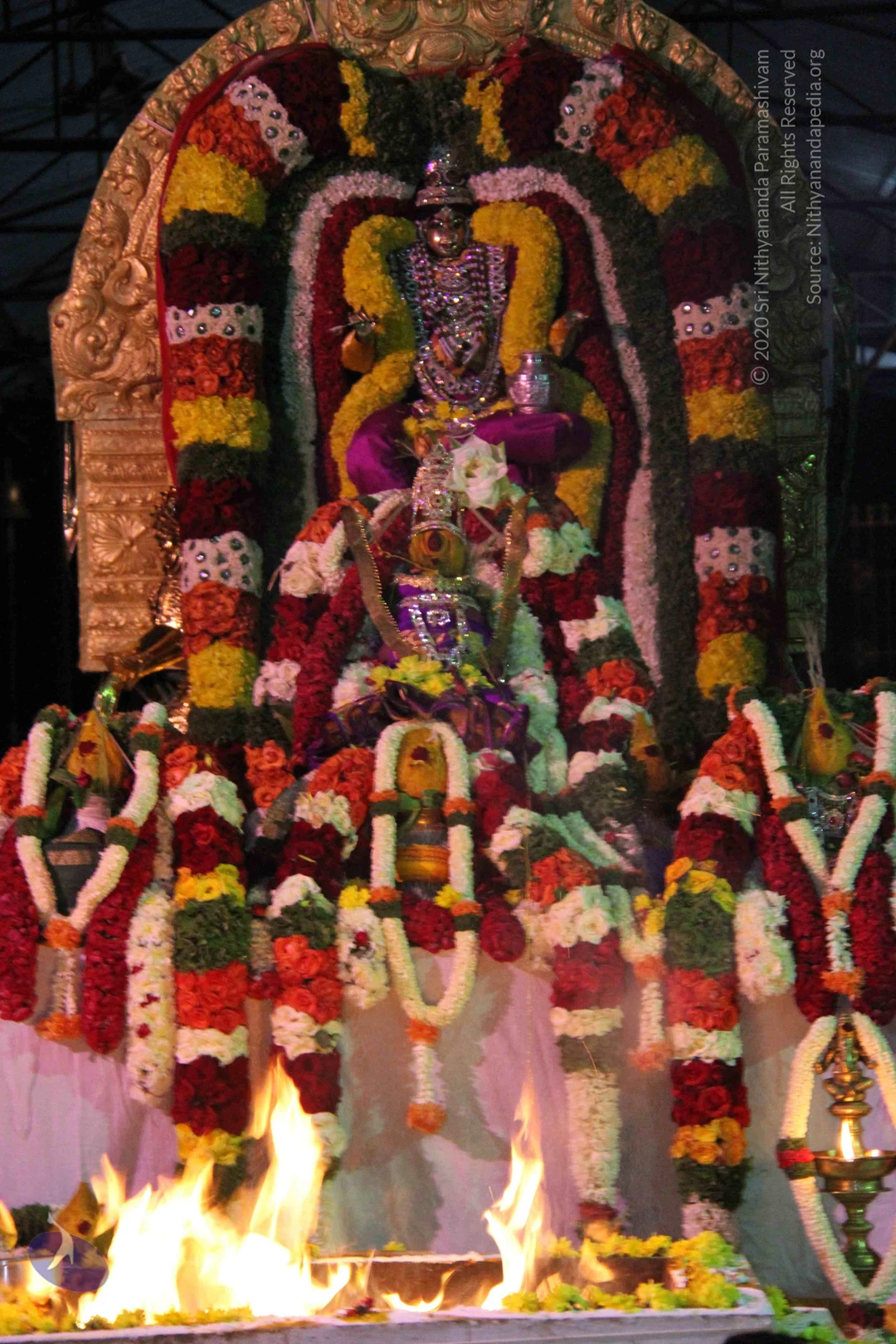
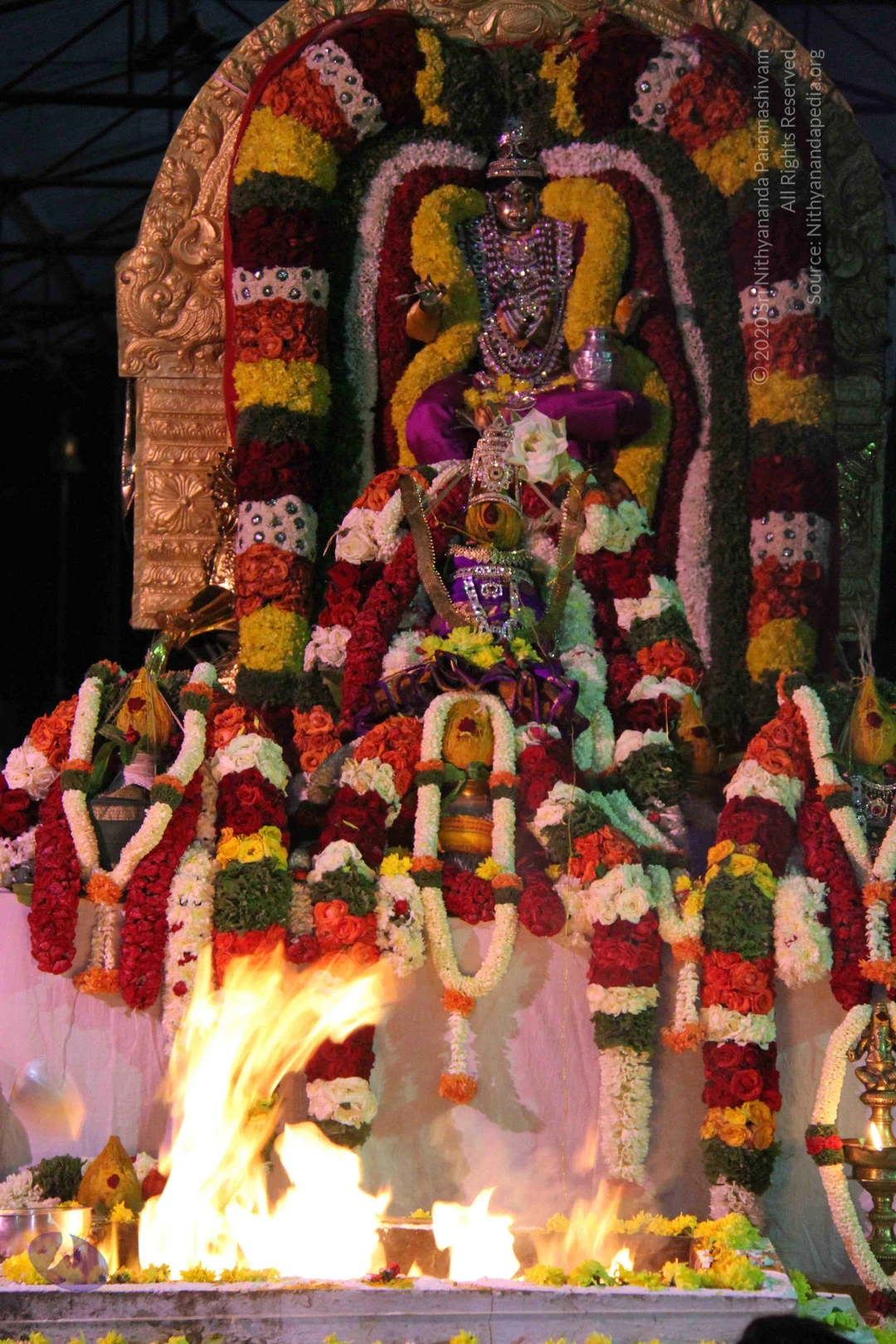
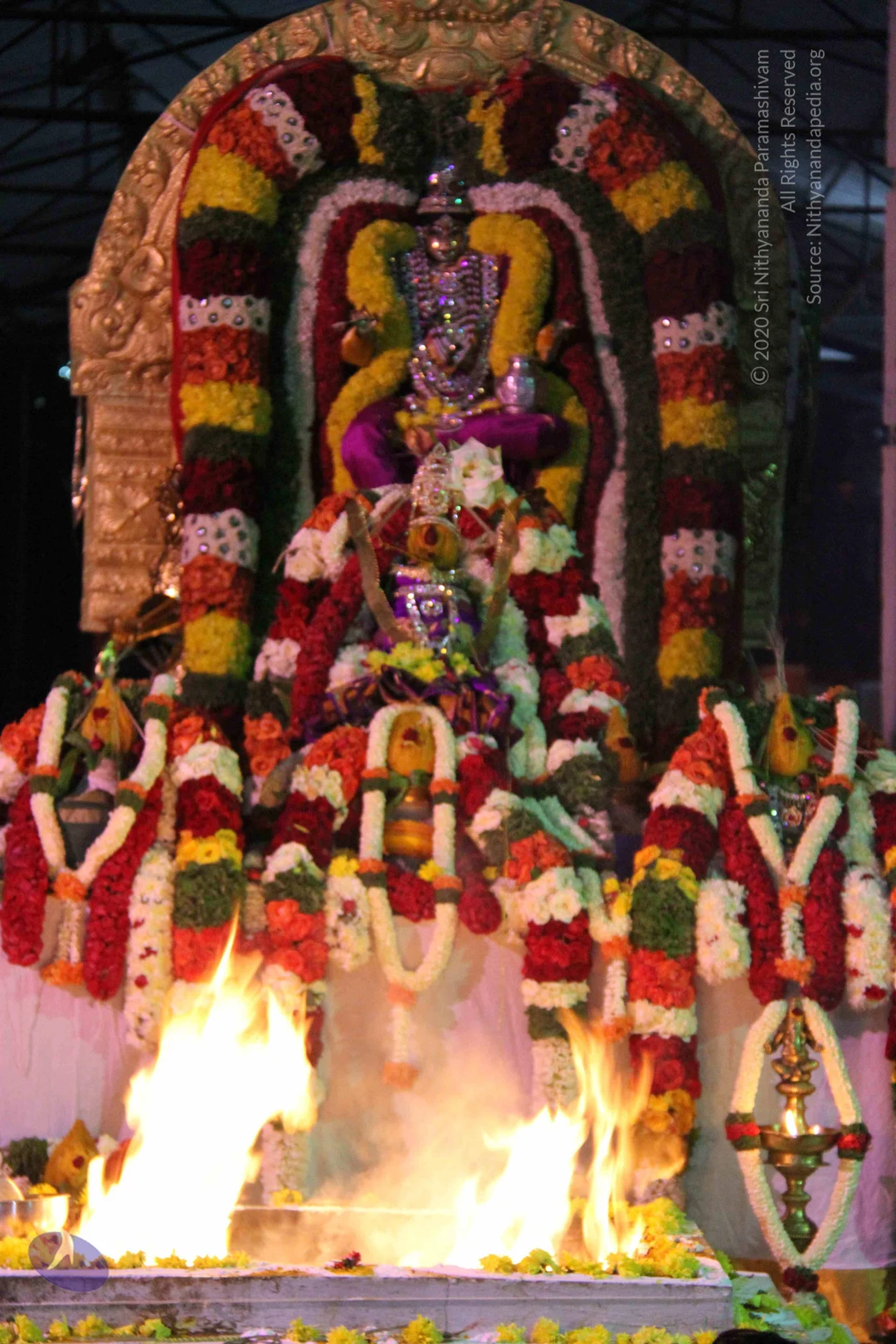
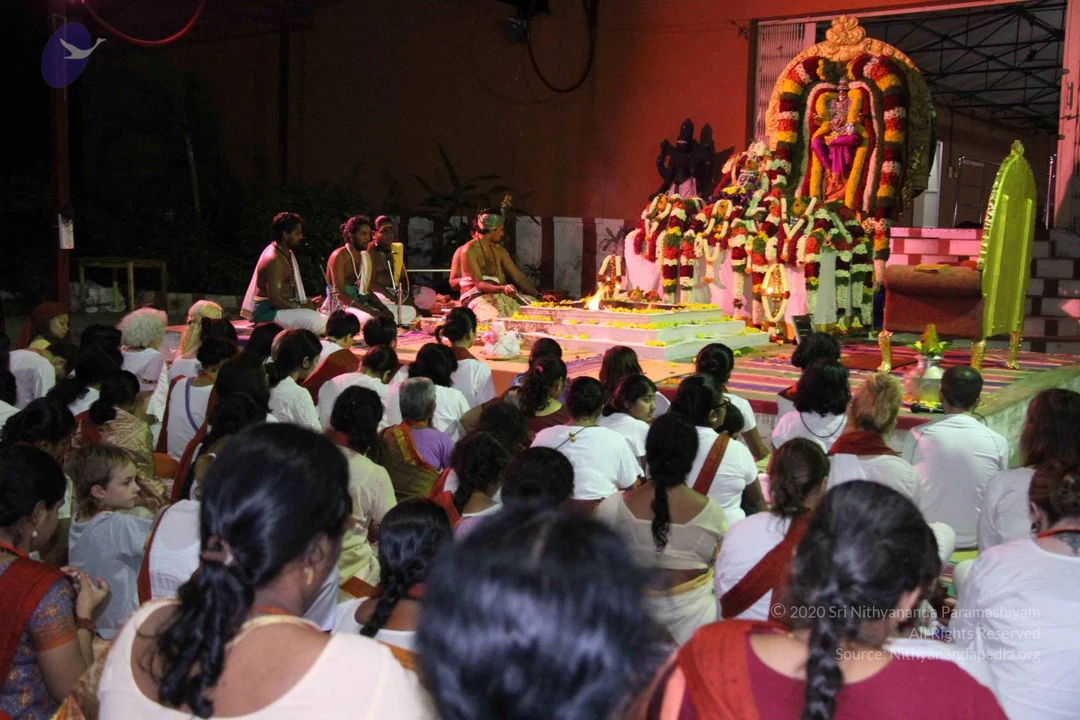
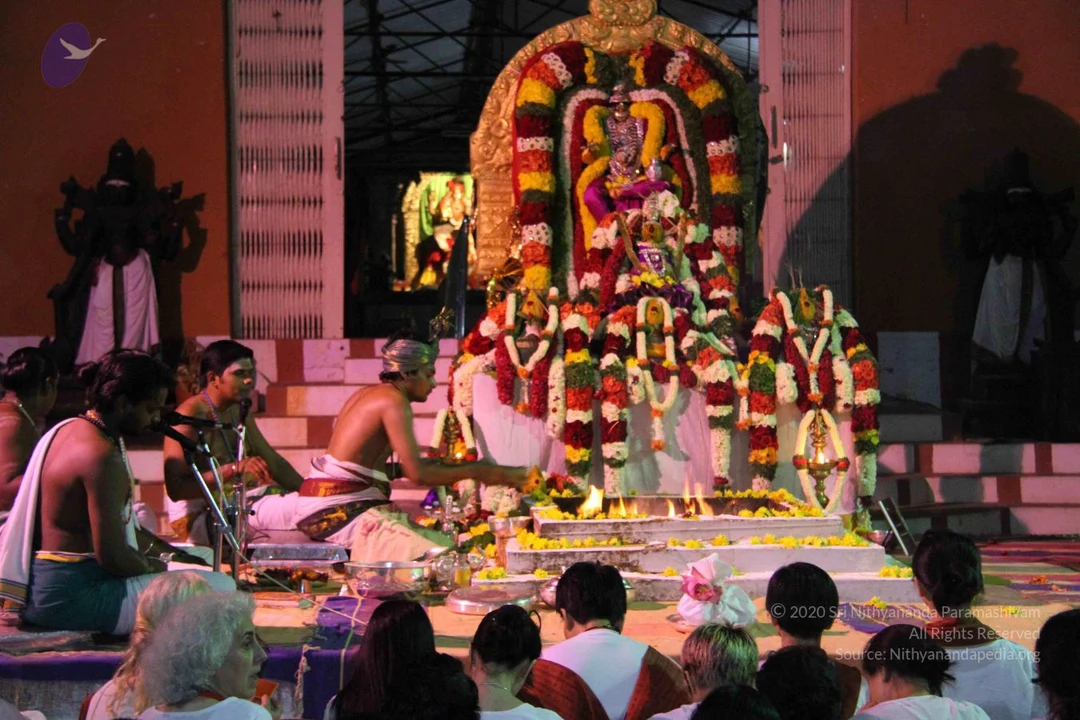
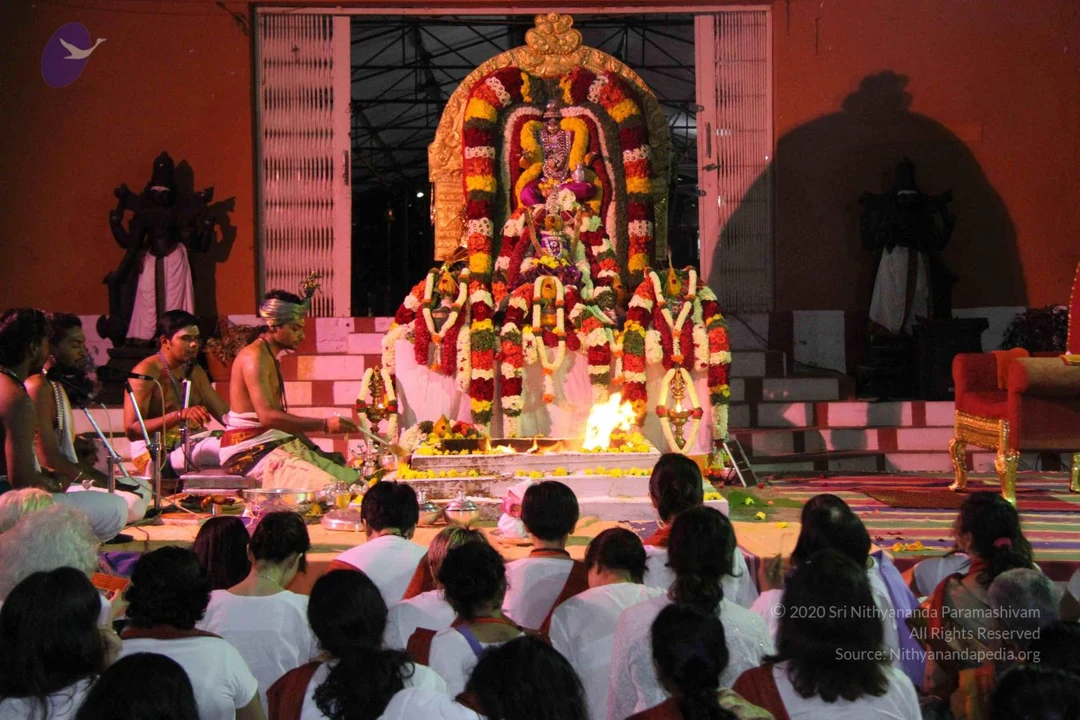
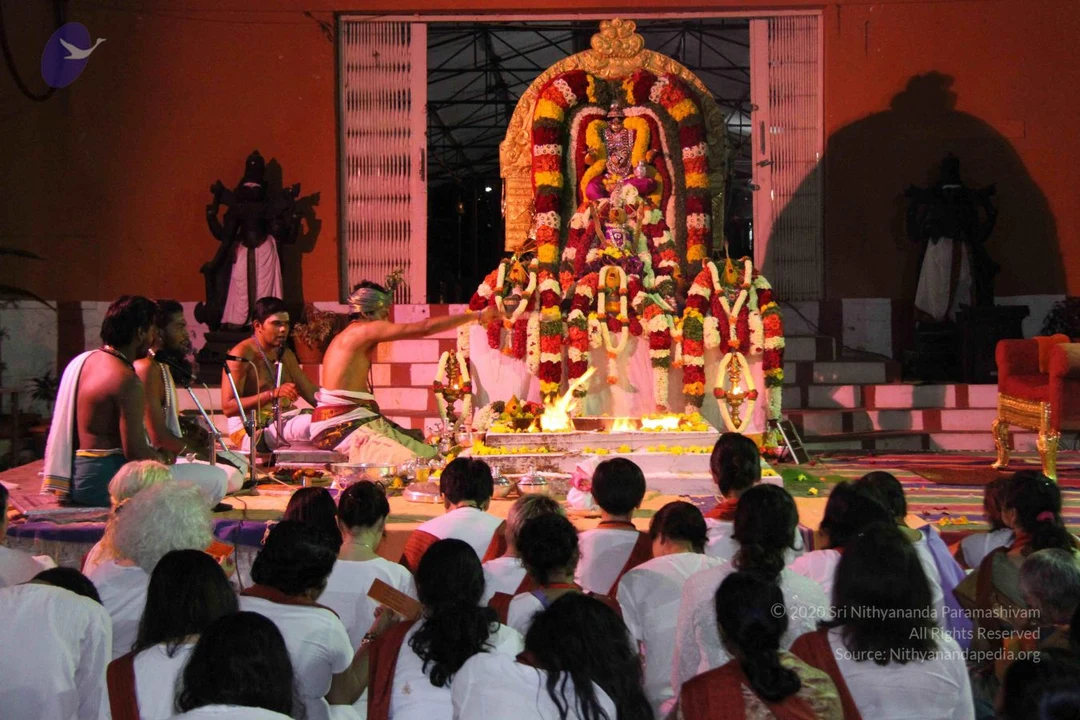
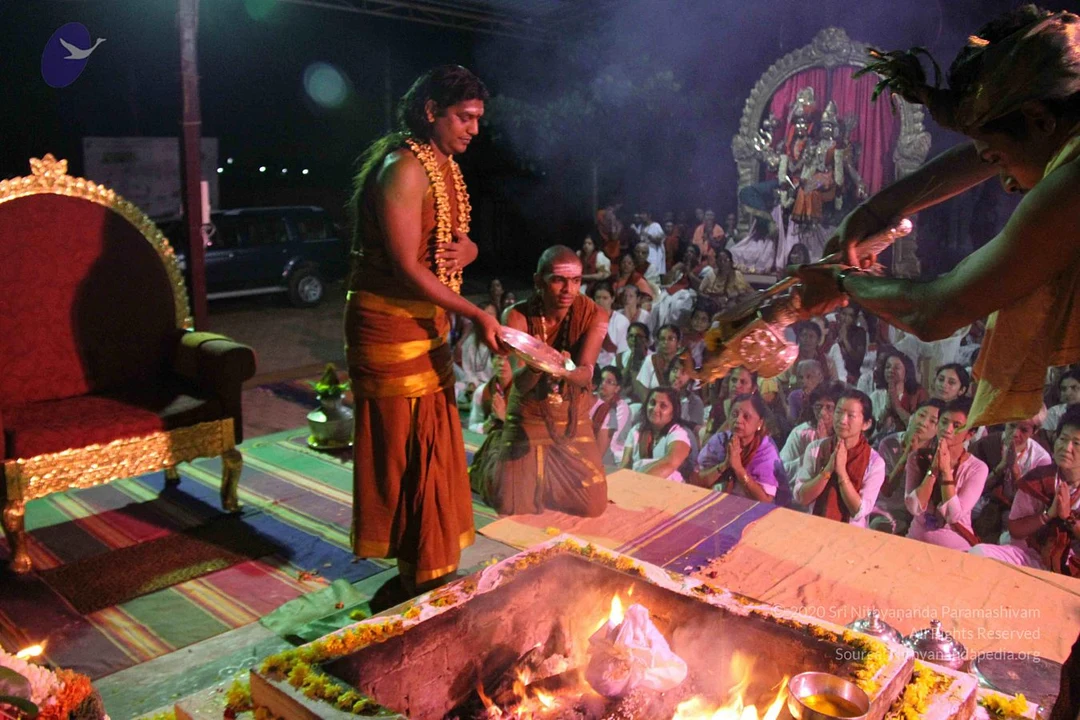
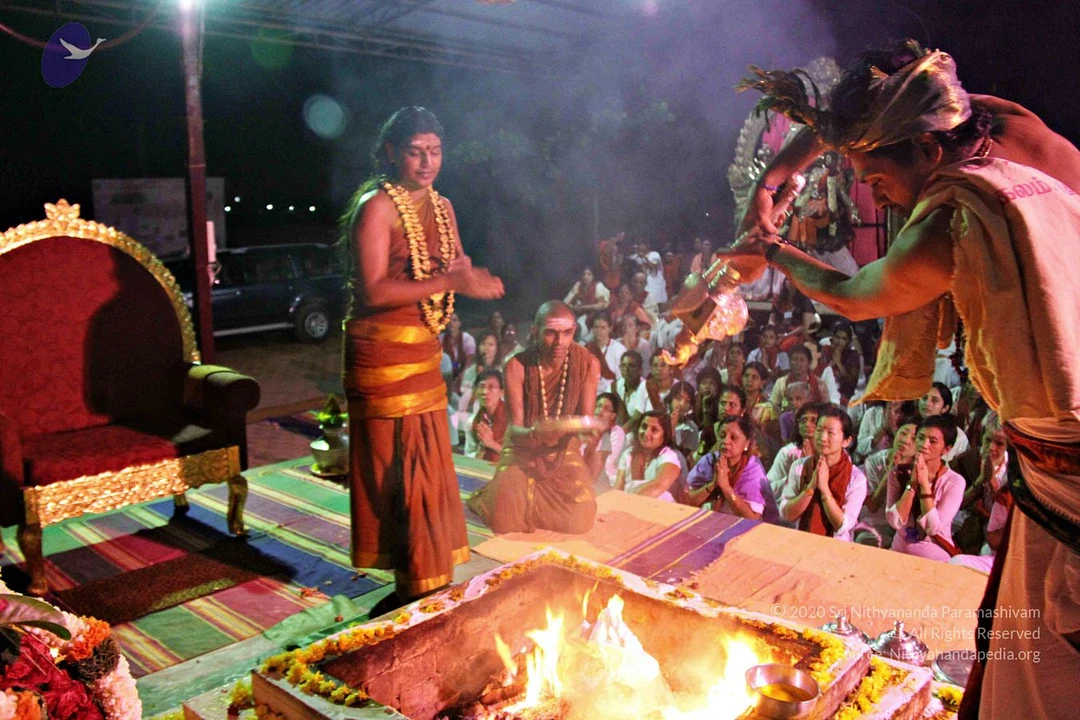
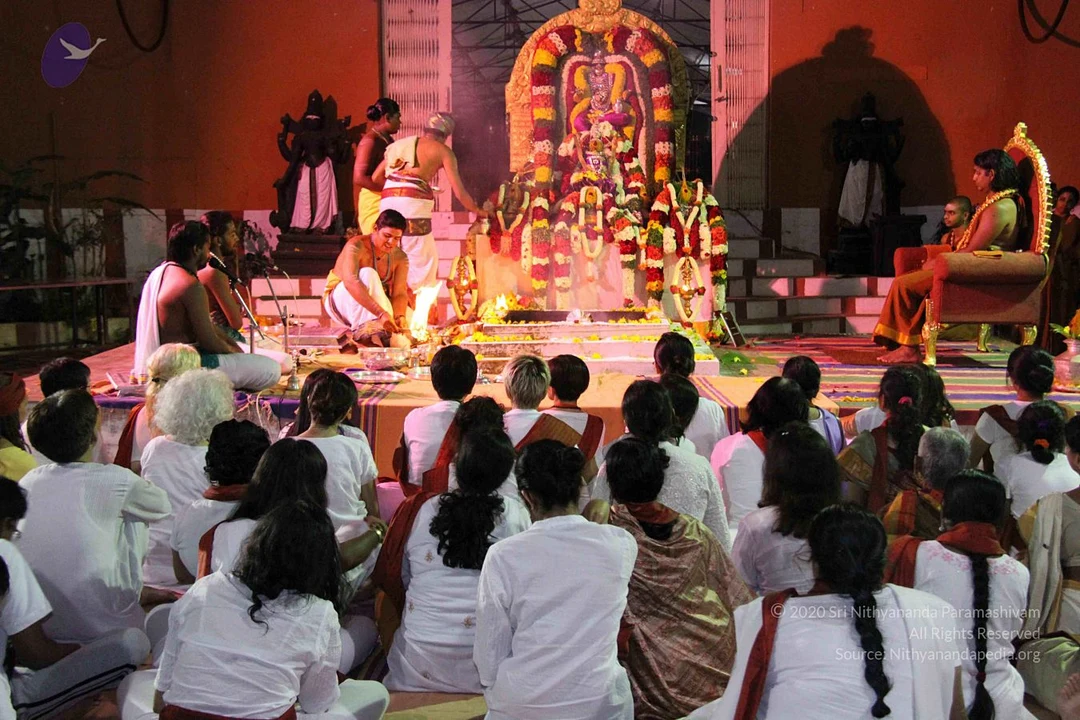
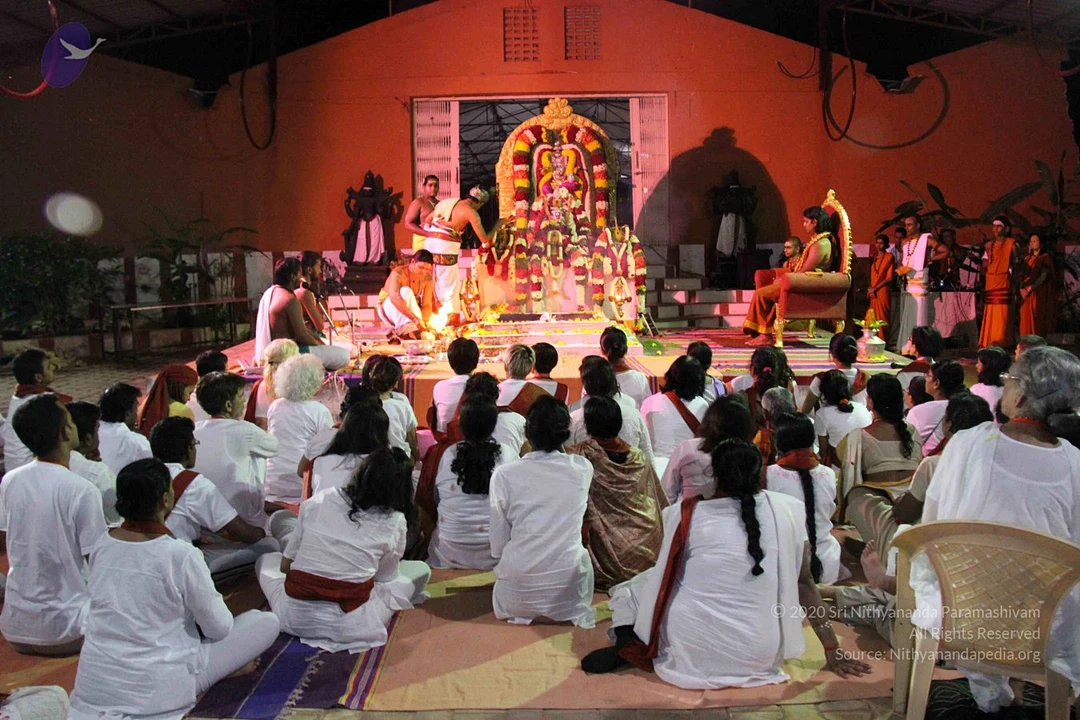
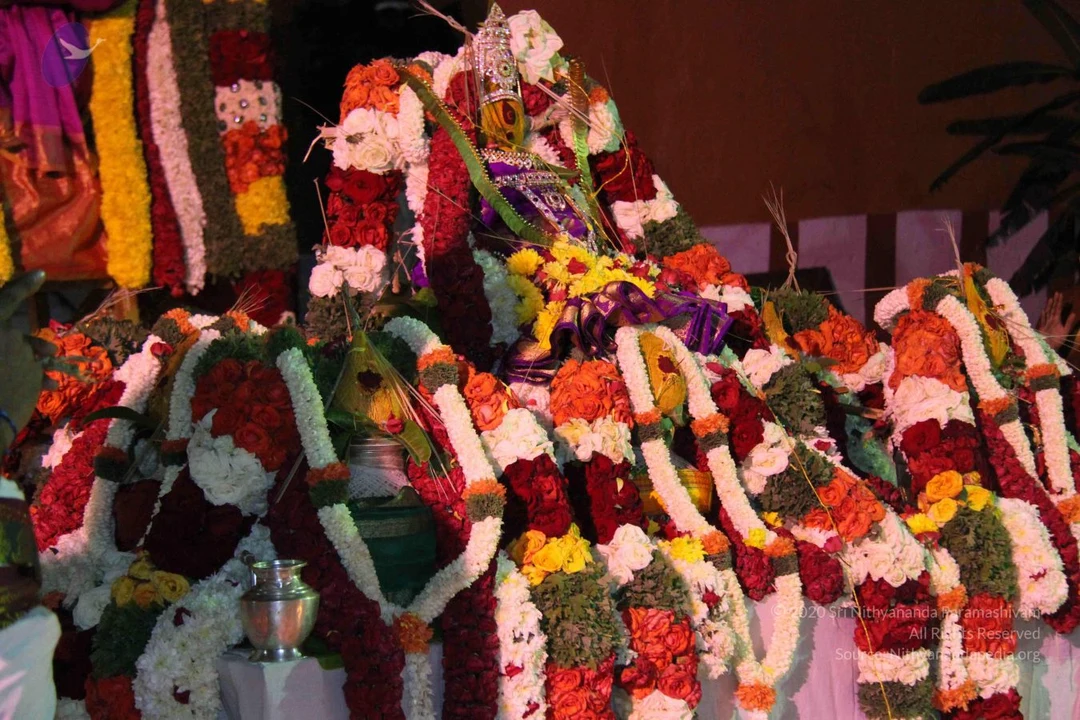
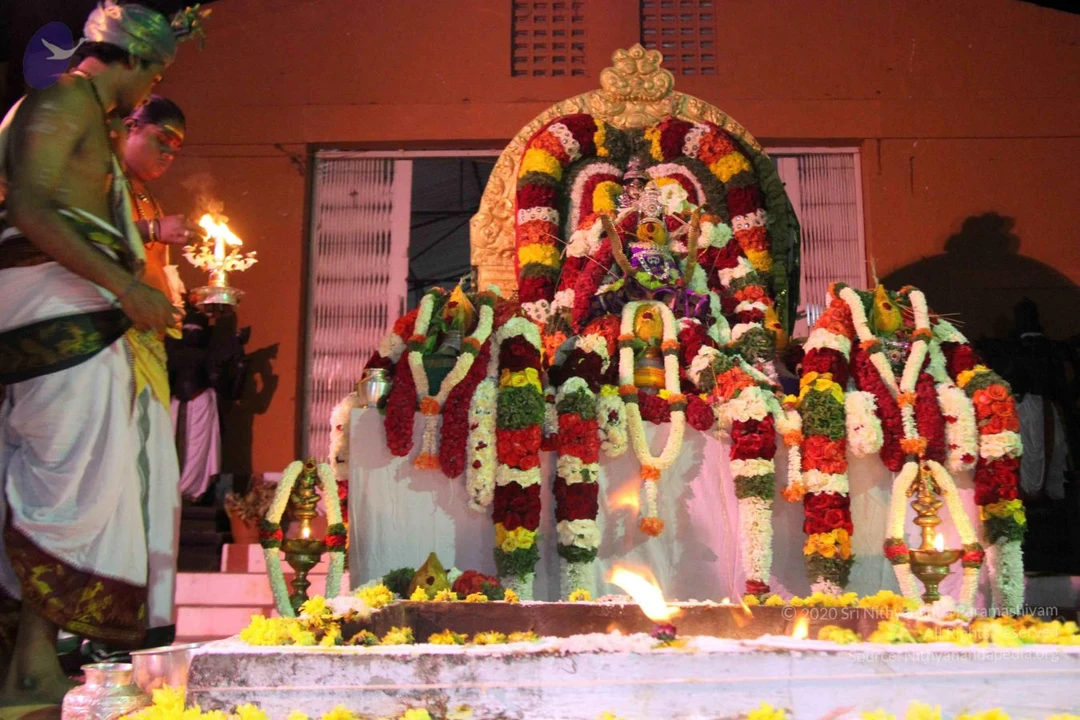
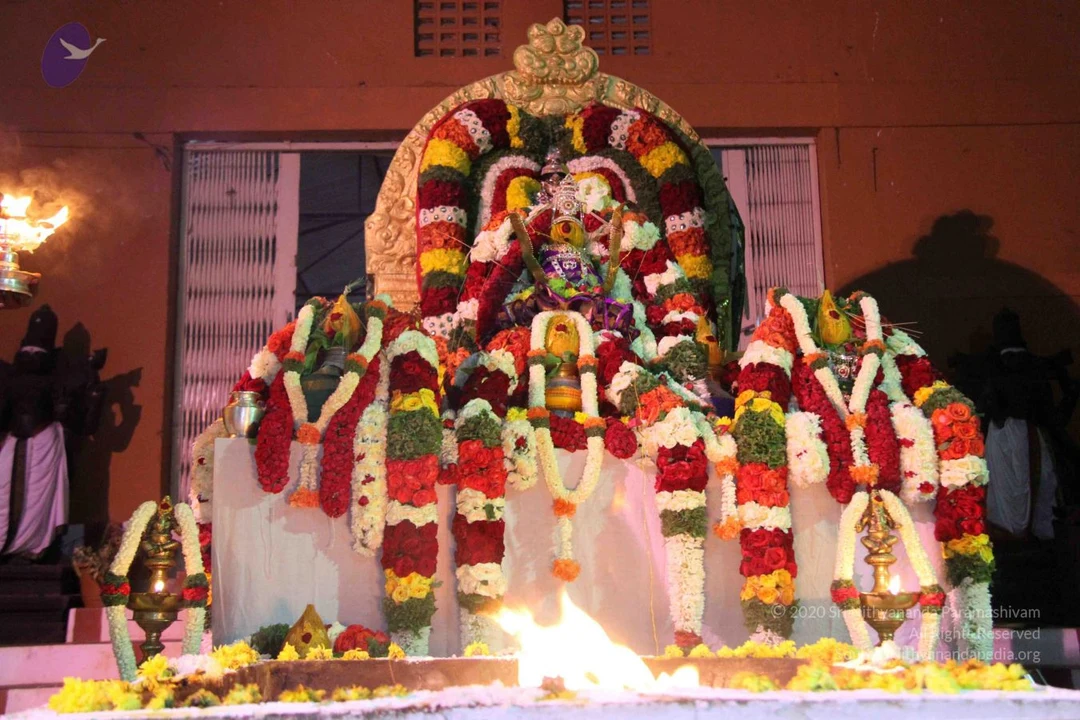
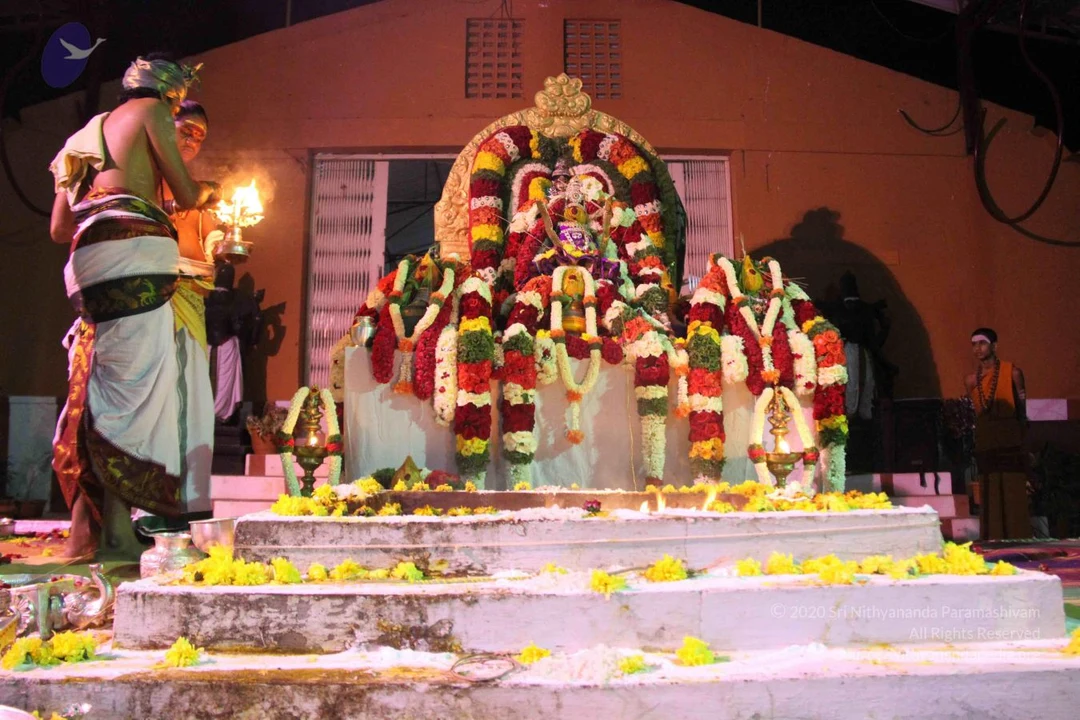
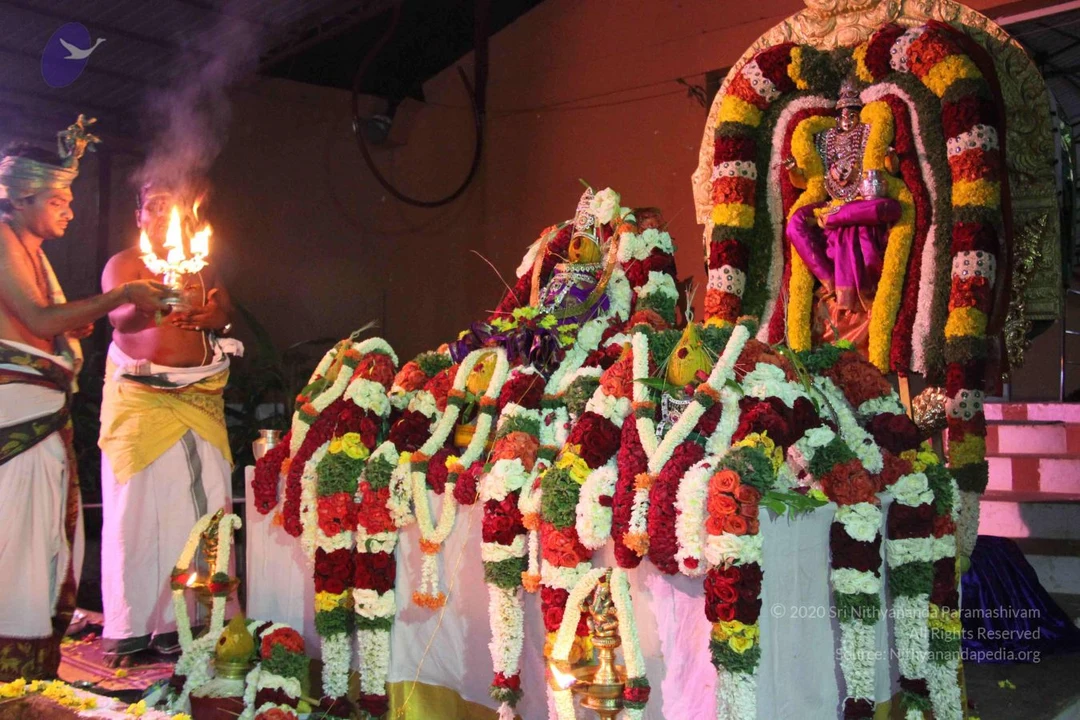
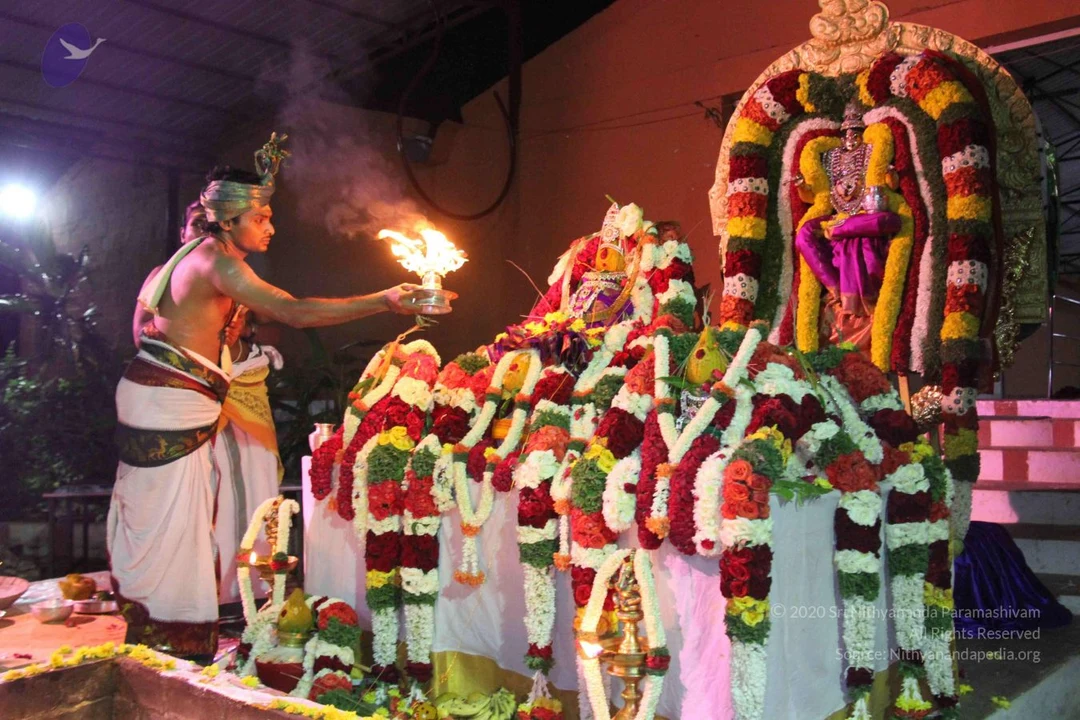
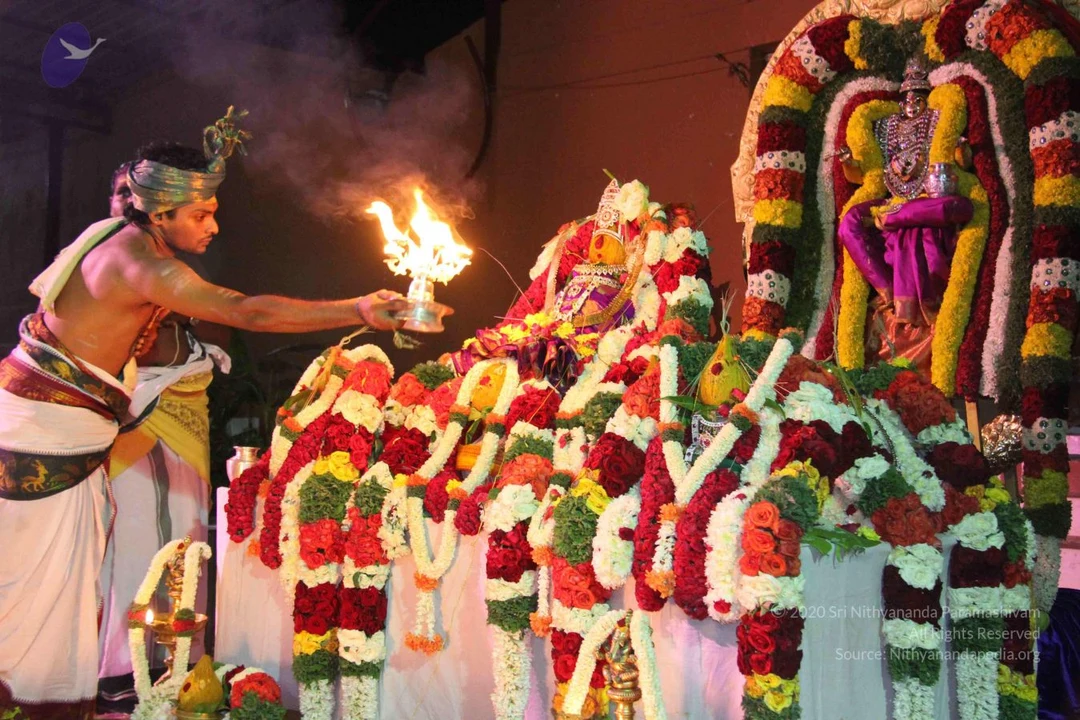
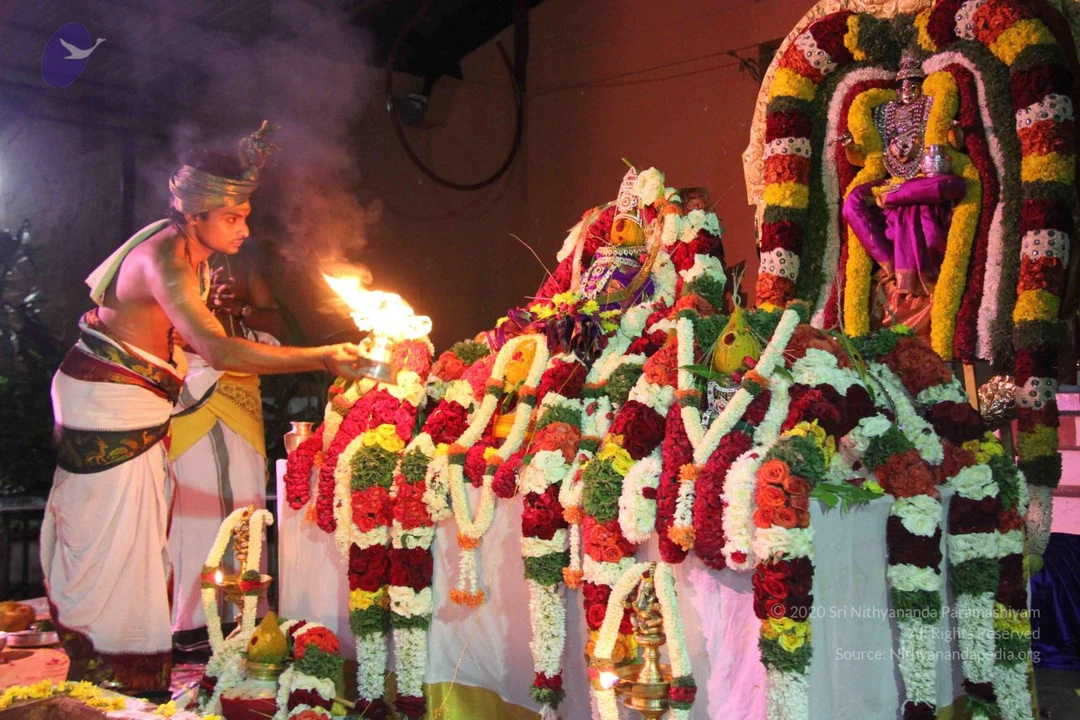
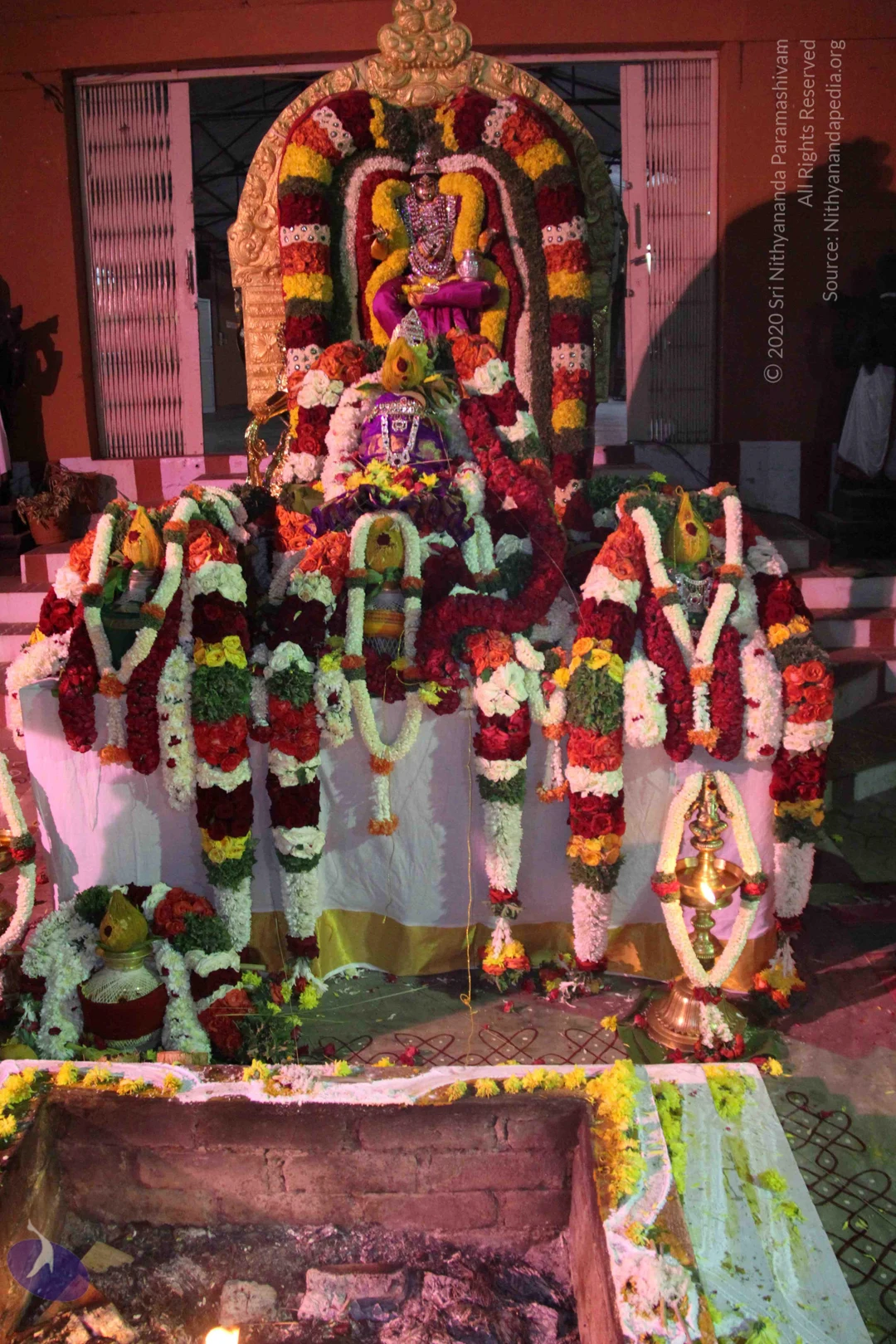
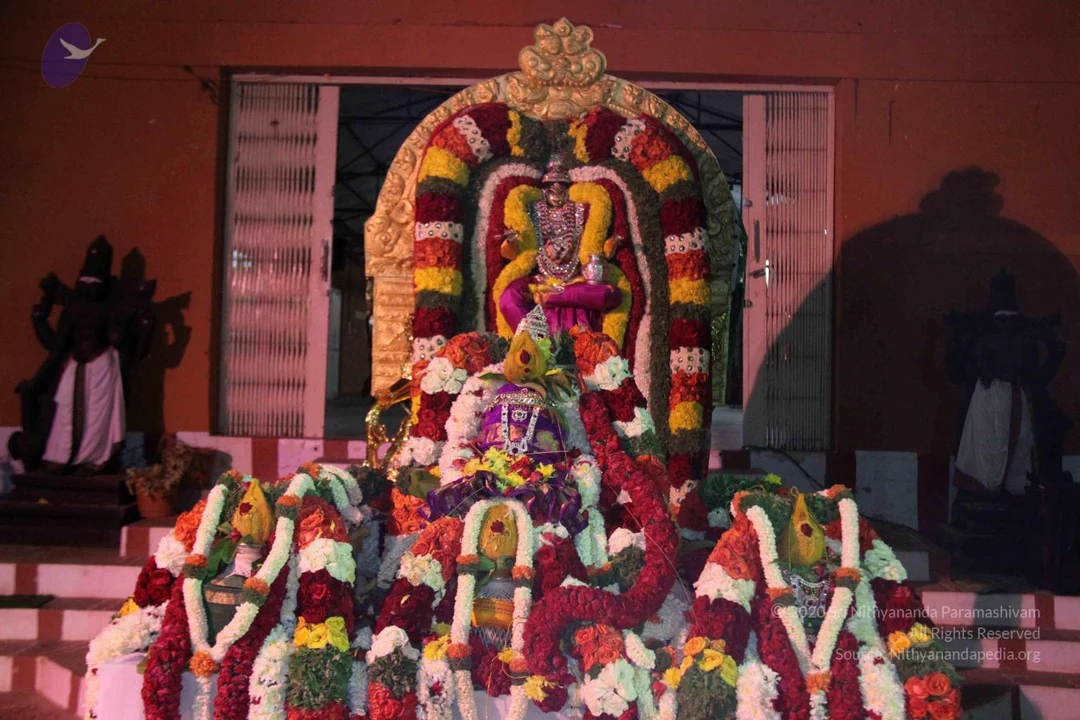
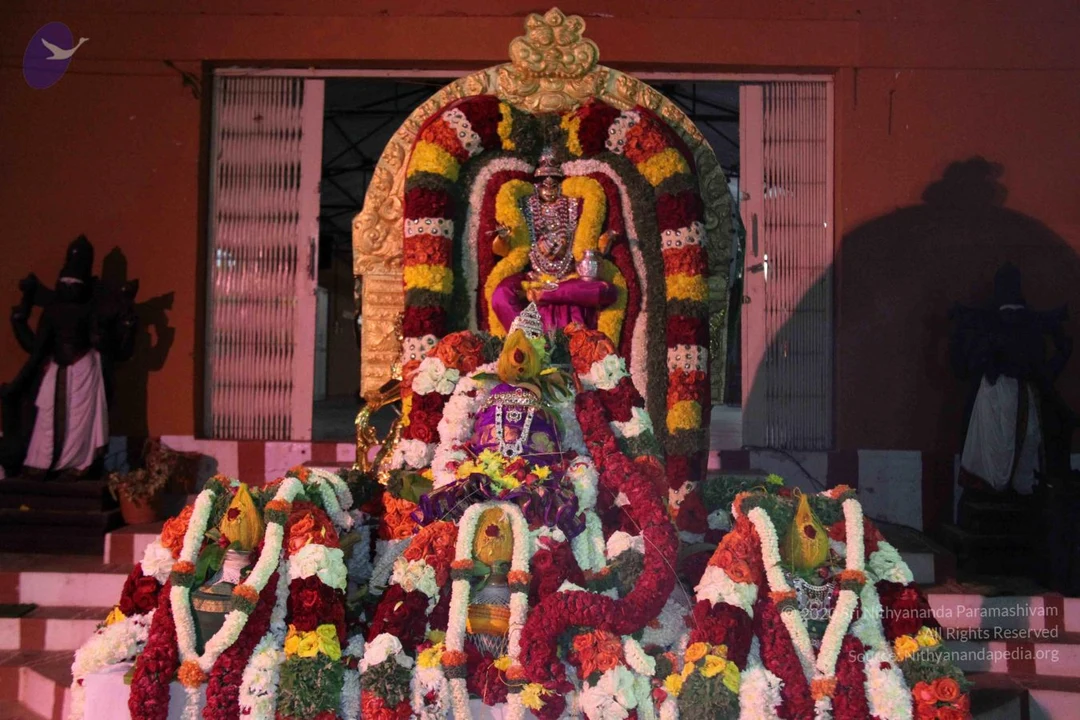
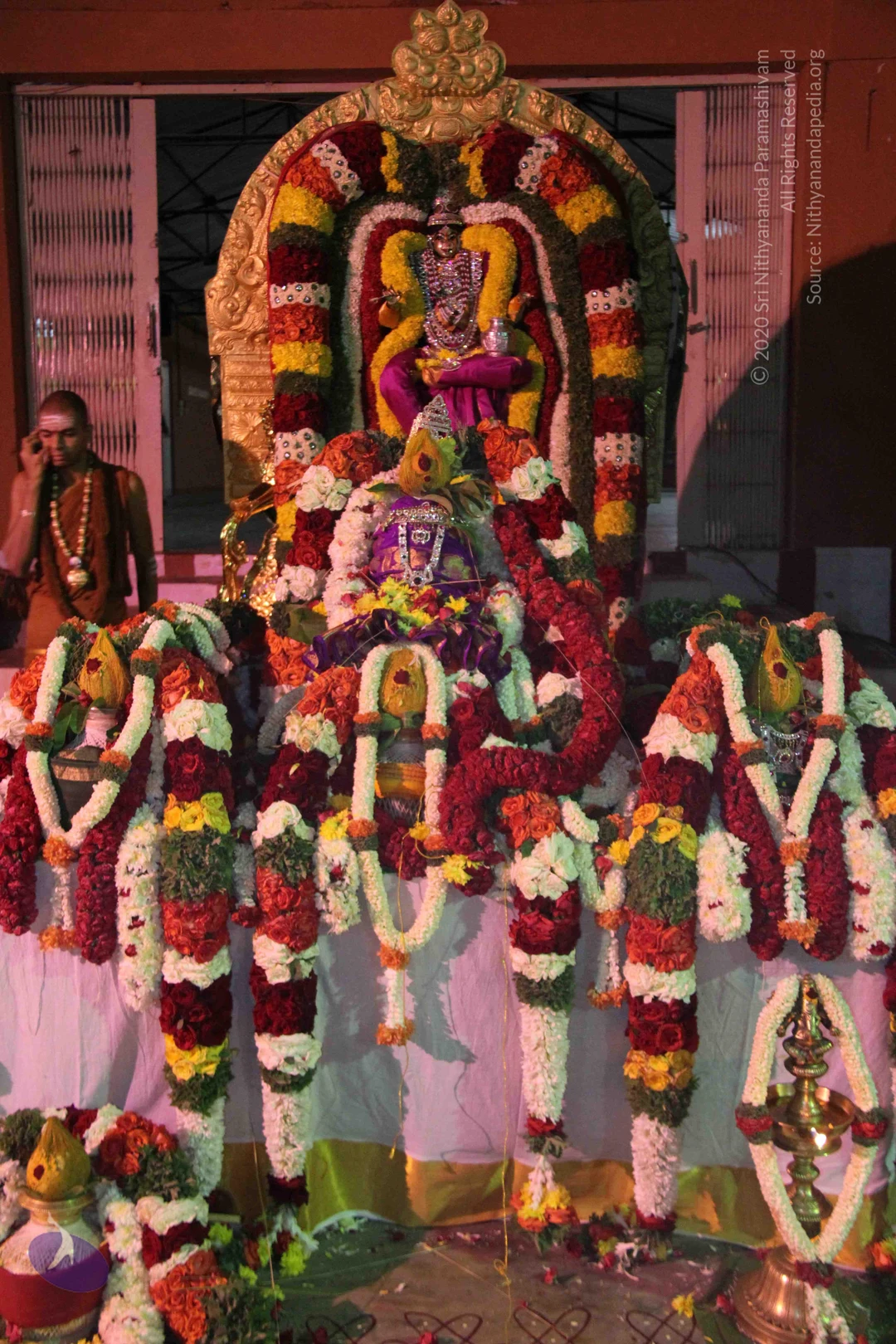
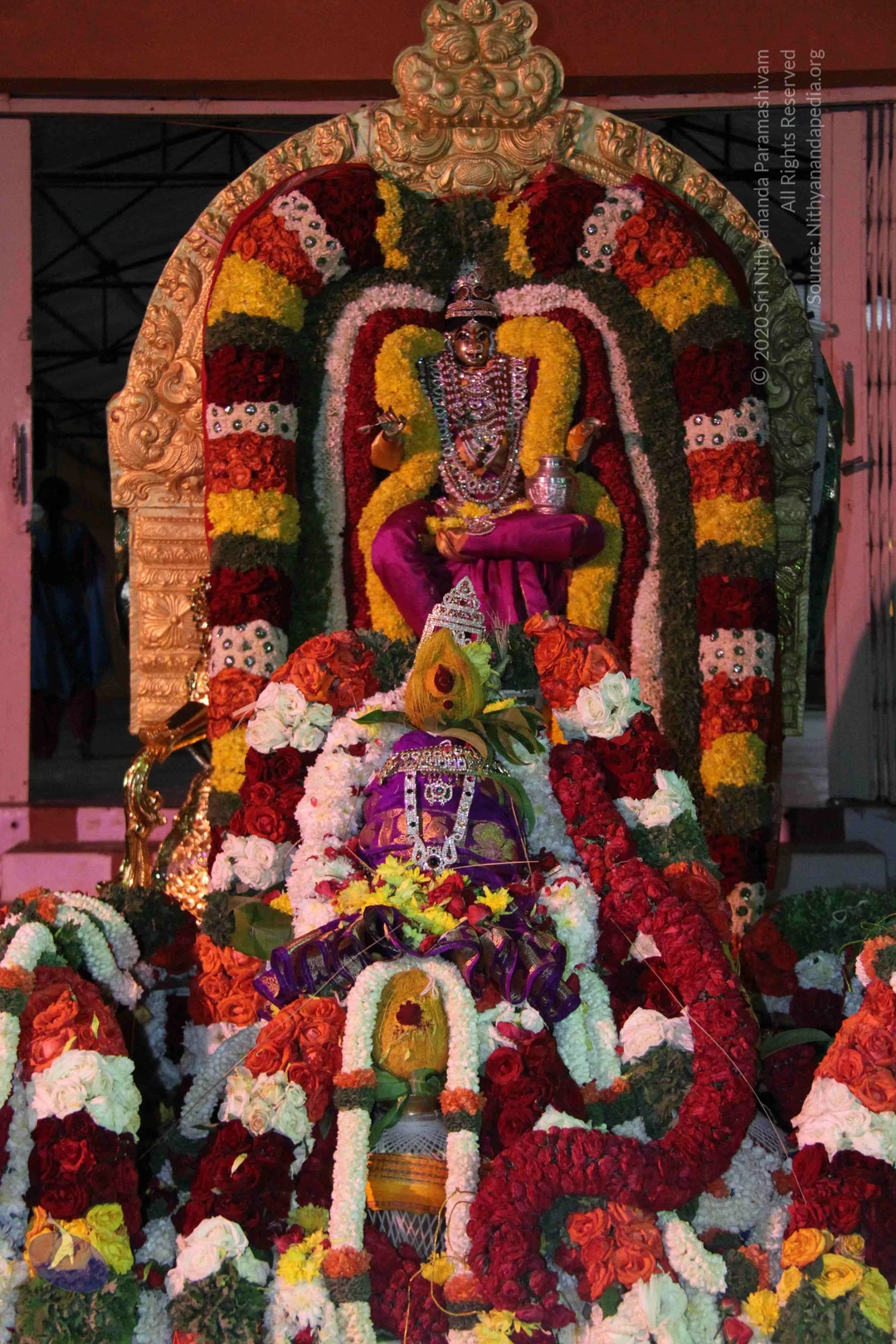
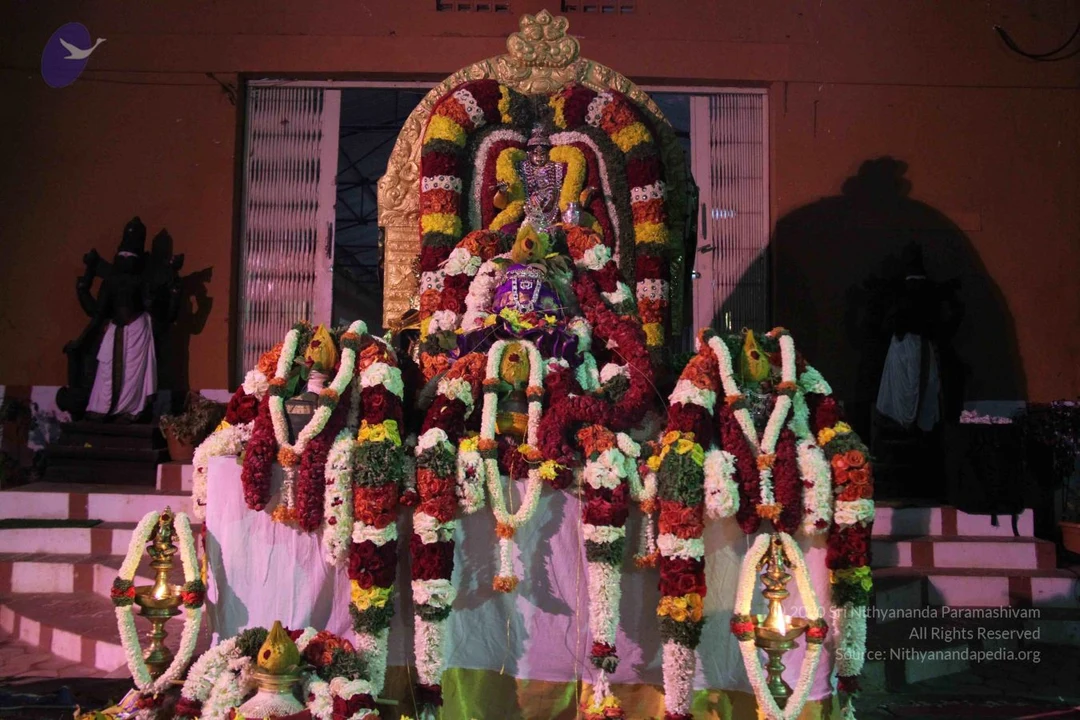
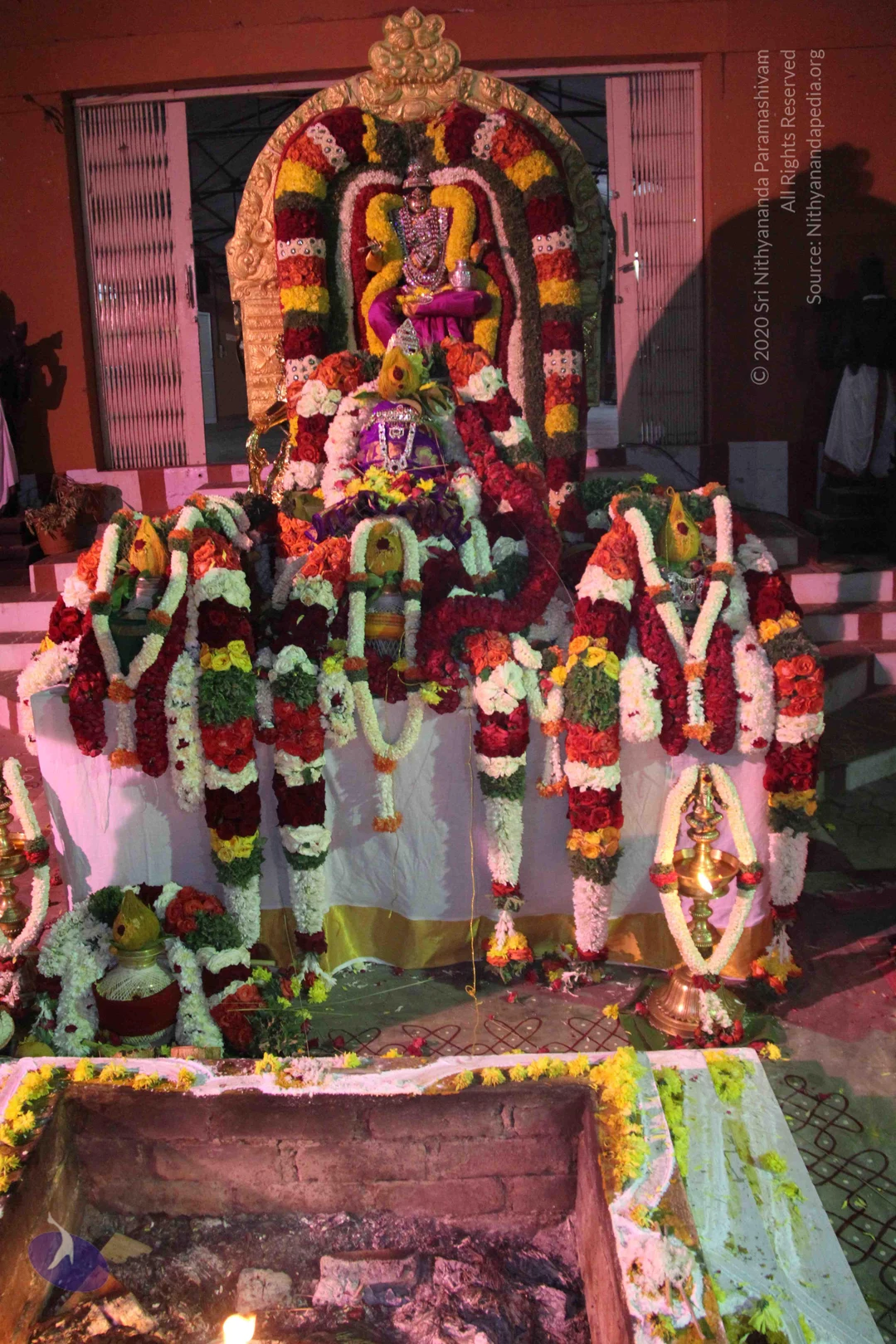
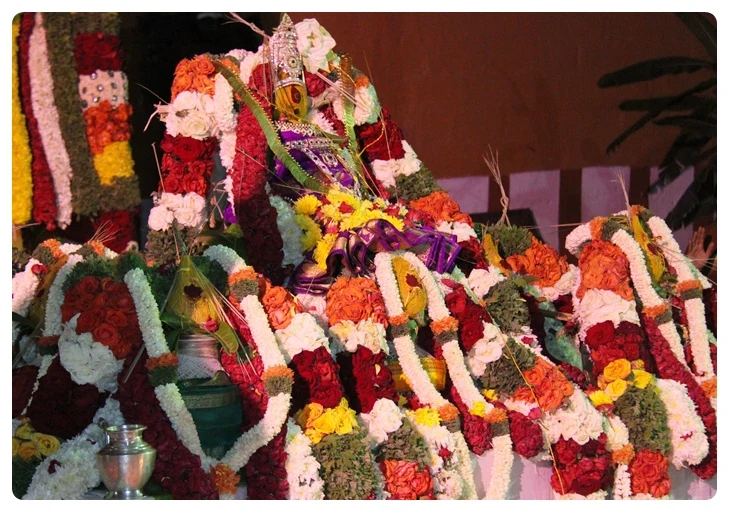
Today Mahadeva is gracing us with the “Chozhanai Maduvil Veetiya Leelai”.

There was a king in Madurai, Sundaresha Padasekhara Pandyan. From this king, the tradition of wearing Sundareshwara’s paduka itself as a crown started. Till the last Madurai king, they were wearing Sundareshwara’s padukas as a crown. And this Pandya did not have a huge military. His military was a little small. So the Chola invaded and tried to take over the Pandya Kingdom. So, this Pandya goes and falls at the feet of Sundareshwara (Shiva). So, you know for Madurai, He is like a Yellow Page: 911 and everything. So they rush to him and he immediately appears in the form of a hunter. And, when that Chola king was crossing a lake – see, outside Madurai there is a huge lake – and when that Chola king was crossing that lake, He (Shiva) appears as a hunter and pushes him into the lake, and the Chola king dies. The Chola king knows all the arts other than swimming. Somehow he did not learn swimming. But, it is a State secret. Nobody knows. King without knowing swimming is impossible. Nobody knows! Naturally, Mahadeva knows, He goes and attacks him in the right spot and the Chola king dies and the army surrenders to Pandya.

So, even for the war, He came down and helped! It means, he was continuously available to run the whole Pandya Kingdom, and he was continuously ruling the whole Pandya Kingdom. Today, Mahadeva is in the form of a hunter to attack the Chola King.

I will enter into today’s Nithya Satsang.

I will continue on “COMPLETION” and how the completion leads to stability.

Only with the deep completion, listen, only with the deep completion you even become one being. Without completion, you can’t even be one being. Please listen! Please come to the space of listening! Listen! Many times even you do not know what you want to achieve in the life. You do not know what is the purpose of life. How many of you cognize you are in that state raise your hands? (People raise their hands). It is just because of incompletions!

See, it’s like each part of your incompletion claims, ‘I am you!’ For example, if your name is Sundaram,

each part of the broken you claims, ‘I am Sundaram!’, ‘I am Sundaram!’, ‘I am Sundaram!’, and who screams loudly, he thinks he is Sundaram. Each broken part goes on claiming, ‘I am you!’, ‘I am you!’, ‘I am you!’ And one of the worst things is, one part of you spends so much of energy to disprove the other part is not you. So finally, whoever wins, whoever loses, who is the loser? You! One part of you winning is not you winning. Even if one part of you wins, you are the loser! Unless your whole wins, you are a loser!

Listen! Listen! Understand, each part of you screaming that, that part is you, finally lands you in such deep confusion, such deep confusion. Unless you heal yourself and bring yourself to completion; unless you bring yourself together; align you as one being, life doesn’t start for you!

Please listen! Nirahaara Samyama, all great spiritual practices, spiritual process, everything, everything; all great spiritual practices and all great spiritual processes, everything, the purpose is for you to become ONE; for you to become complete, integrated!

The whole country, the whole civilization, the whole spiritual tradition is suffering just because of not having completion with one another. We do not have completion with one another. That is the most unfortunate thing. Neither we have completion with ourselves, nor do we have completion with one another. The broken parts of us go on abusing one another. In those days, fortunately, in gurukul itself, the science of completion was taught, kids grew as complete beings. But there was one unfortunate thing: we put all the eggs in one basket. Means, all the best things we put in one thing that is Gurukul. So, when the enemies attacked the Gurukul, and, when the enemies destroyed the Gurukul system, the whole thing got destroyed, the whole thing disappeared. In a way, the good thing is, in the Gurukul system itself all the right lifestyle is given. One bad thing is, when that system got attacked and destroyed, the whole thing got destroyed. The one and only way we can revive, bring the science of completion to everyone, let the science of completion be brought to the mass!

Understand, whether he is a construction worker working for daily wages, or the IT engineer, or the lawyers, doctors, whatever may be, when you bring completion, so much happens to your system. To tell you honestly, I can’t even explain all the benefits completion can bring to you! When you complete continuously, one more thing, completion is not a one-time process. It should be taken as a continuous lifestyle. It should be taken as a continuous lifestyle.

Vedic civilization is established on completion. Understand, Vedic civilization is established on completion. Even with death, and people who are dead, we go on completing. Shraaddha is nothing but completing with people who are dead, deceased! Every step in our life, we go on complete, complete, complete! That is why we do Maheshwara Puja to complete with all the departed souls. Maheshwara Puja was done in the Vedic civilization where enlightened masters and incarnations complete with the departed souls. In Vedic tradition, everything is dependent on completion. Everything is based on completion.

Understand, only if you start living completion, you will understand the quality of life. I tell you, when there is incompletion, your life is stolen away from you! When the completion happens in you, you regain your life!

Let me define “Completion”:

“Completion” is removing the delusion of incompletion, which makes you cognize the other is separate from you. The delusive cognizance, the delusive cognition! Understand, incompletion has no existence; it is only a delusive cognition. Incompletion is the delusive cognition that stands between you and the Whole. Complete with everything!

I am spending a little more time on Astro Biology and studying. And, the more I study Astro Biology more I am convinced, life is not restricted to inanimate forms. Life is happening in everything! May be in a frequency where it is not realized, recognized by you. But, everything has life! Learn to complete, complete, complete. Complete with everything! I tell you, completion, state of completion is the best way to prepare yourself for life. And, completion is the best way to prepare for death! For anything, just the completion! I tell you, with the process of completion, you can cure as simple as your headache. You can achieve relief from the headache. Even this simple thing can be done through completion. Please understand, I am talking with the responsibility that I am on national channel now, and international channel.

Please listen! Come to the space of listening!

Completion can help you to achieve extraordinary mystical powers. I am not promoting any superstition. When you complete with everything, with animate, inanimate, with everything, you will experience the space of non-duality: Advaita - the space of Oneness. If you want to live, start with completion. If you want to celebrate, start with completion. See, relationships are nothing but your own extensions. Relationships are not outside, they are just your own extensions. The “you” extended outside you is your relationships. Completing with all your extensions, you will learn to complete the incomplete “you” if present in the other.

Completion! Completing with every relationship you have in life. Please understand, completion does not mean only completing with your wife, husband, friend, family; everything which is in your life – the trees, pets, furniture you use. You think, ‘eh, furniture I use, they are all dead, how can I complete with them?’

See! Complete and see, then you will understand how you feel about them and they feel about you! With the tree or plant, or an animal, with everything, you can complete. When you experience being one with that, completion with the tree, animal, plant, everything happens!

First of all, you need to complete with your own doubts about you. Because you have incompletion with you, you constantly doubt you. See, even when you declare, ‘Alright! I declare completion with you, I will not allow any more incompletions with you, you doubt you!’ ‘No, no, no! Tomorrow itself I will create incompletion with them!’ Even while you utter the word, already you are surrounded by doubts; you are attacked by doubts, you are hit by doubts! So, you have to sit with yourself and continuously complete, complete, complete. Your doubt is nothing but you taking revenge on you for not being in Integrity. When you again and again, break your integrity, you start doubting you. It is nothing but you attacking you with anger. You attacking you with anger is “self-doubt”! See, when you declare, ‘No, no! I will be in Integrity! I will be in completion! I’ll be in completion with my wife, with my son, with my daughter, with my family!’ immediately your being starts, ‘No, no, no! You are not going to be, today you’ll tell and tomorrow itself you are going to go shout, fight and create incompletions!’

So, first you need to again and again, declare completion with you. The earlier failures do not mean failure

is your pattern. Failure may be your action, not pattern. Fortunately, anything negative only stays as an

action in you, never becomes pattern in you! When you complete with you more and more, deeper and deeper, you will see, the things which you can never imagine becomes possible by you and by the people around you.

Go on completing! Go on completing! Take completion as your lifestyle, breathing. Every night spend at least half-an-hour to one hour for completion. Because, completion brings stability! Completion brings intelligence! Completion brings knowledge! Completion brings life! Completion brings so much of clear space in your brain, you can remember right things. Completion brings so much of completion in your brain, you will forget all the wrong things; all the negative things will not have power over you!! So, completion makes you forget the wrong things, remember the right things.

Completion is life! Life is completion! Completion is life and life is completion! Completion is basic need of life.

As I said, with anything you carry fear, complete with it.

Completion! Completion! Completion!

In the Inner Awakening, continuously the various understandings about the completions are given to you, and the space for completion is created, the possibility for completion is created. The group is listening for completion, and, above all, the Cosmos is listening to your completion. And, when the Cosmos listens to your completion, you are complete!

Yesterday was such a powerful initiation of unclutching. I can say, every time I feel this. Yesterday’s was one of the best initiations I have given! I know, I feel every time it is the best initiation, but every time when I complete the next initiation, it feels ‘oh, this is the best!’ This is THE Initiation! Yesterday, the whole day was more than initiation; it was initiation celebration!

When you are initiated; see, sometimes people ask me, ‘What is the difference between listening to you and initiation?’ While you listen, the Menu Card is given to you. While Initiation is given, the food is served to you! There is a big difference between your getting Menu Card to your table and food to your table. You can’t eat Menu Card if you are in the human body! In Initiation, food is served to you! I can say, in a way, it is put inside your mouth!

I bless you all! Let you all radiate with Integrity, Authenticity, Responsibility and Enriching with eternal

Bliss, Nithyananda! Thank you!

Photos
temple swamiji

leela alankar shivabharathi

prayashapada pictures

nithya satsang swamiji

2 way

final blessing

IA session Swamiji

kalabhairava reading darshan

AvanthiHoma_Pictures

GermanMagazinePicture

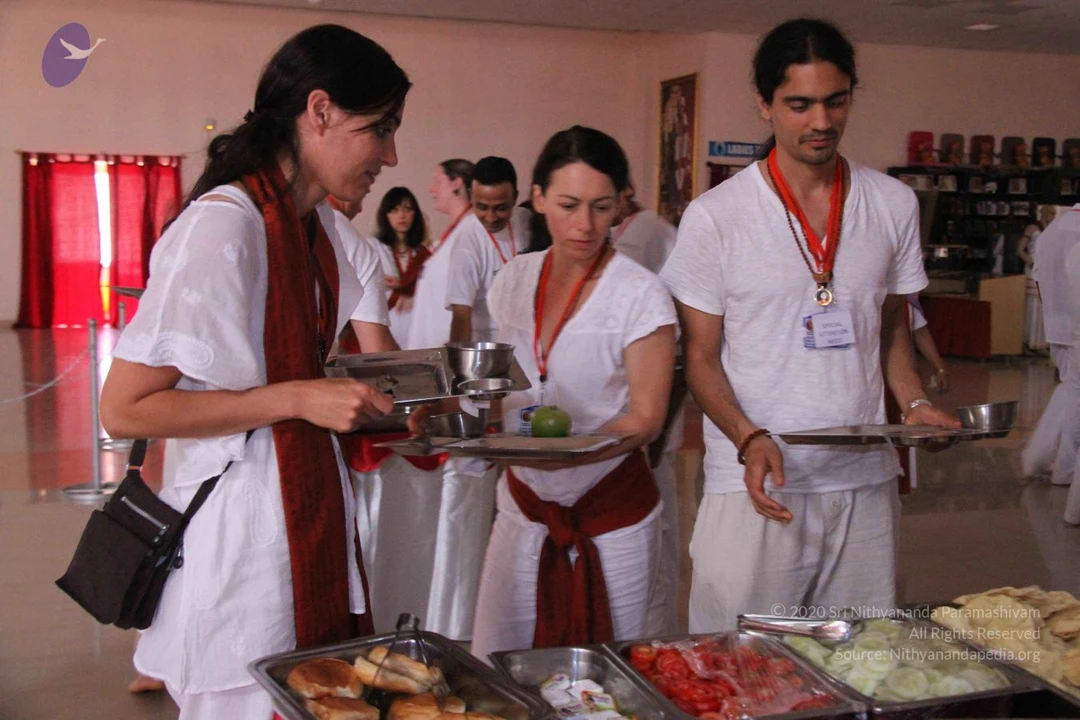
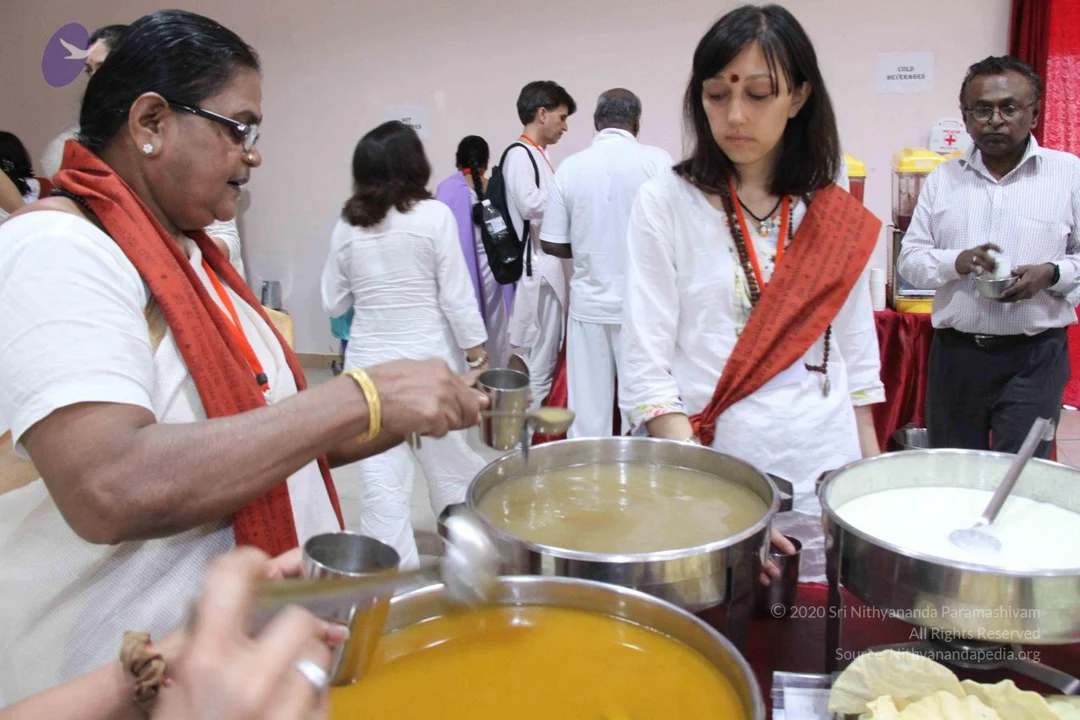
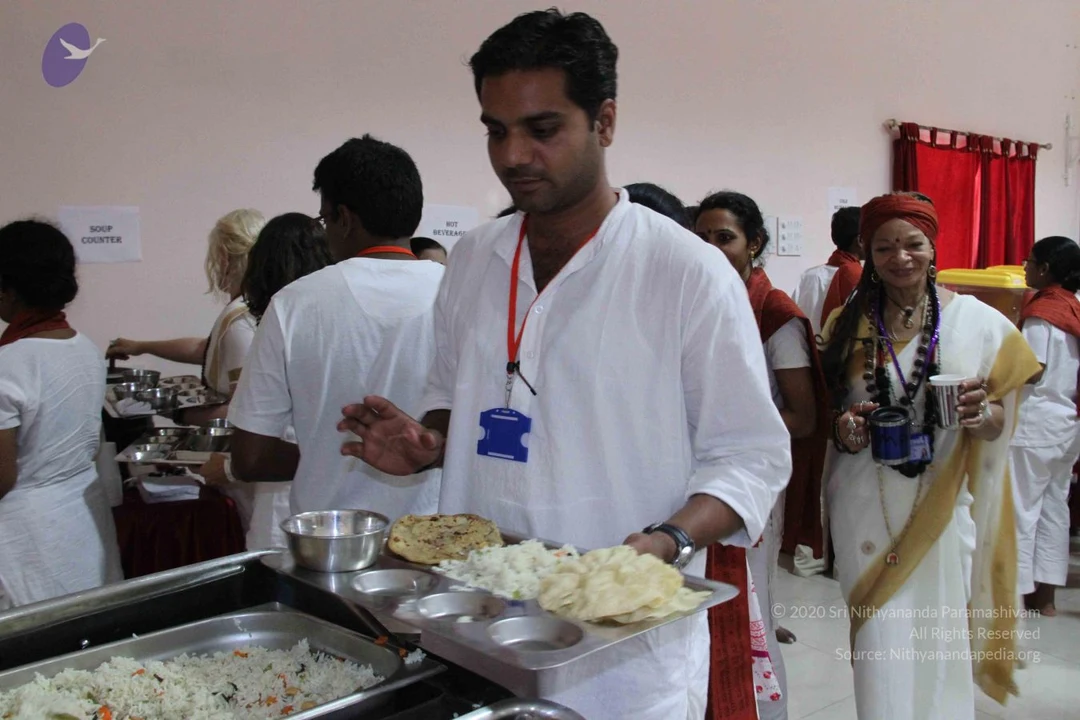
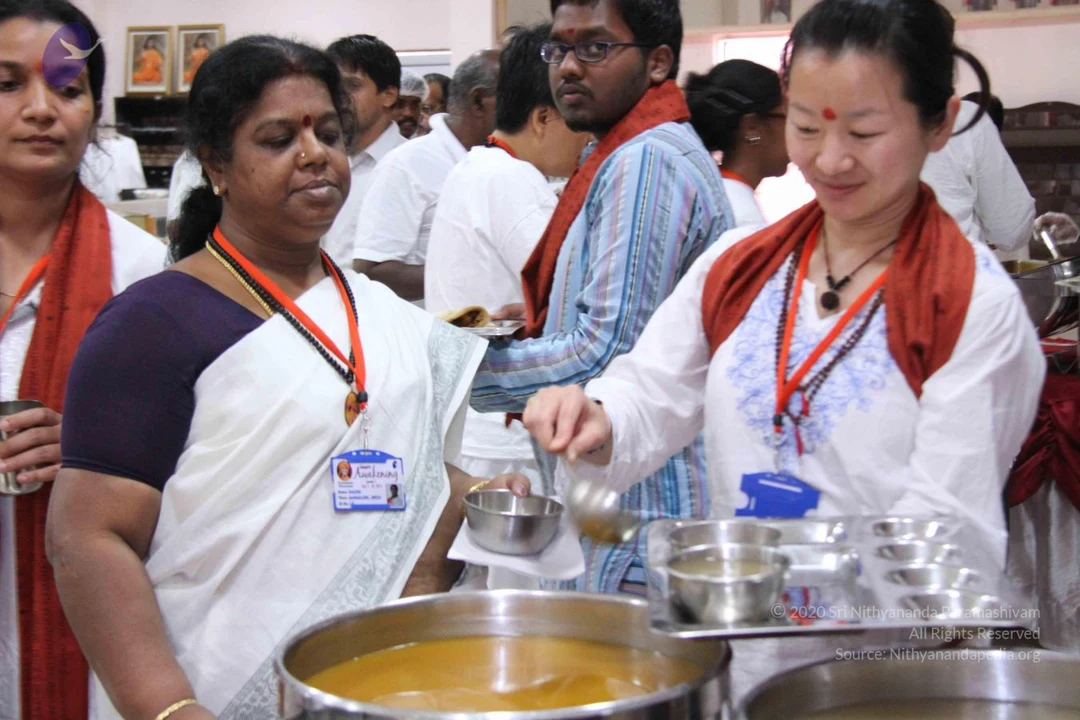
IA_food

Photos Of The Day:
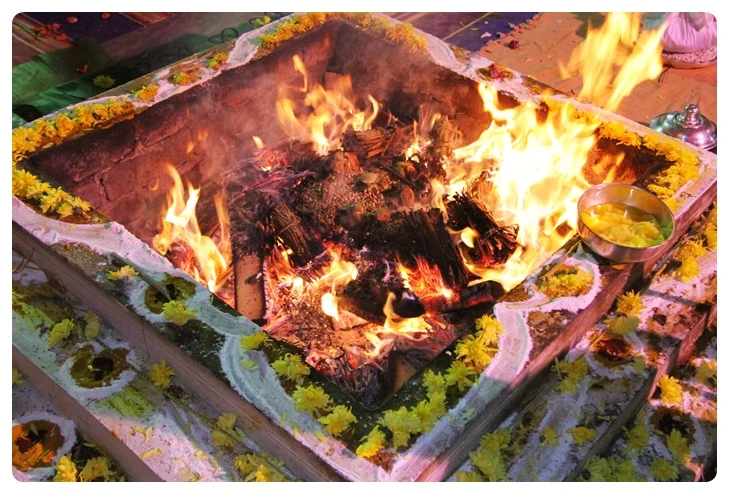
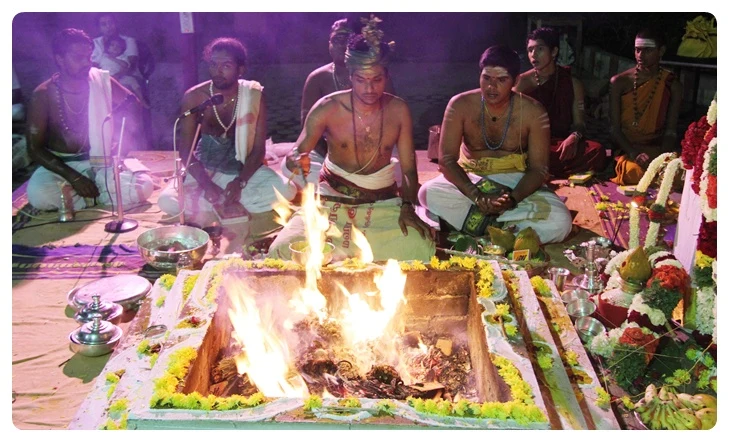
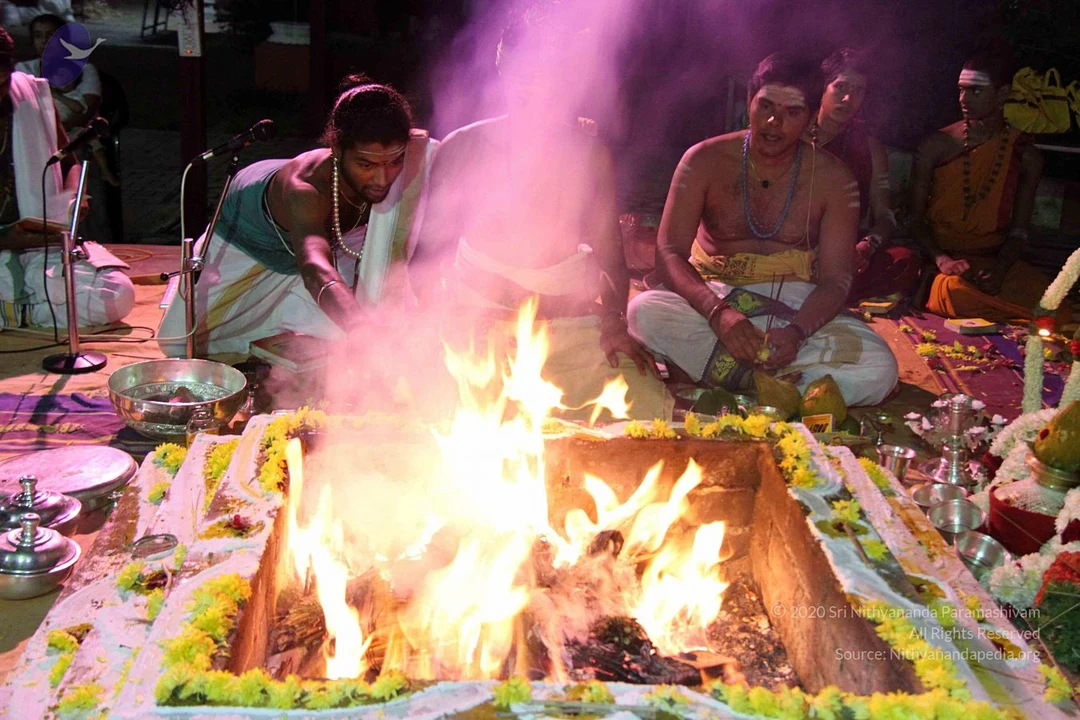
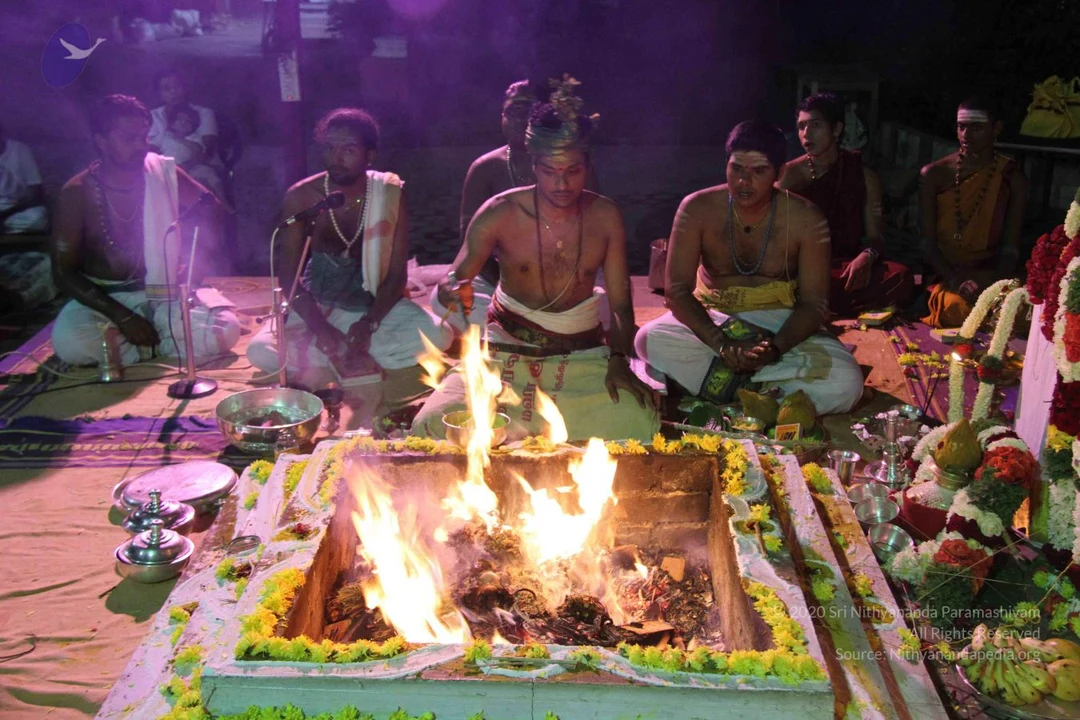
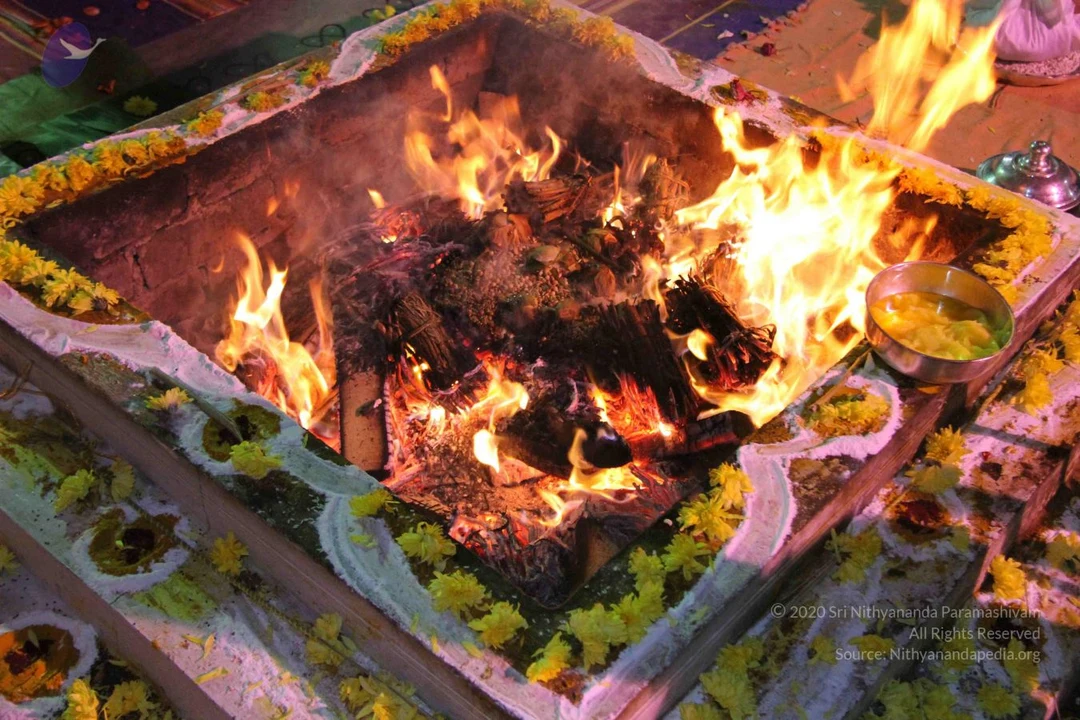
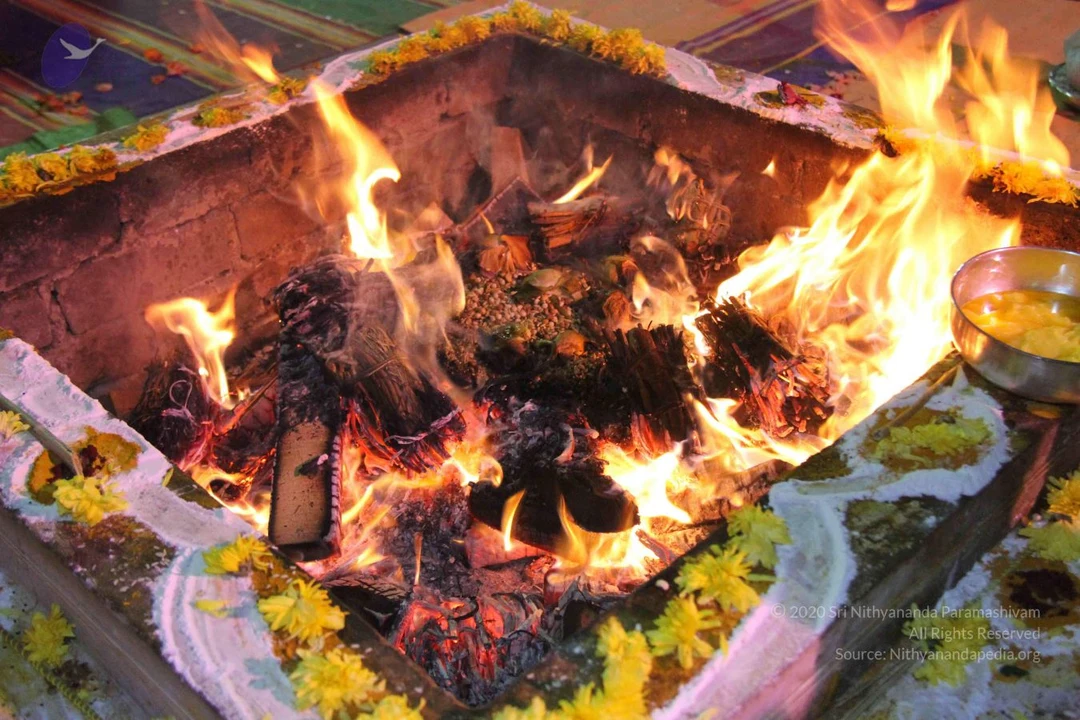
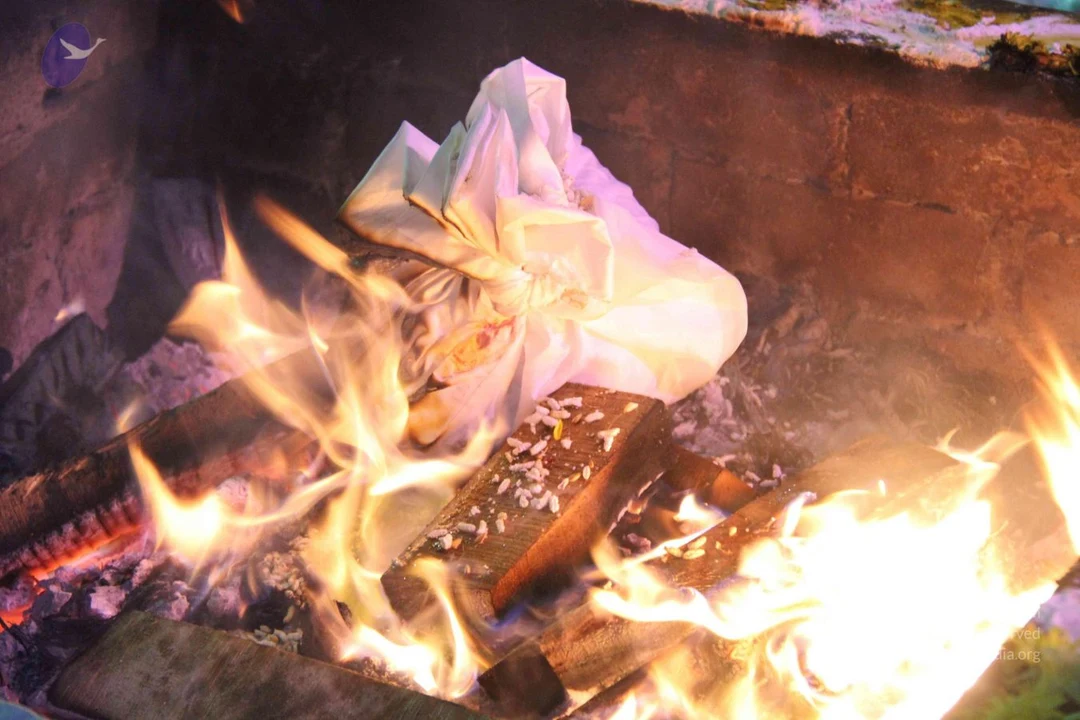
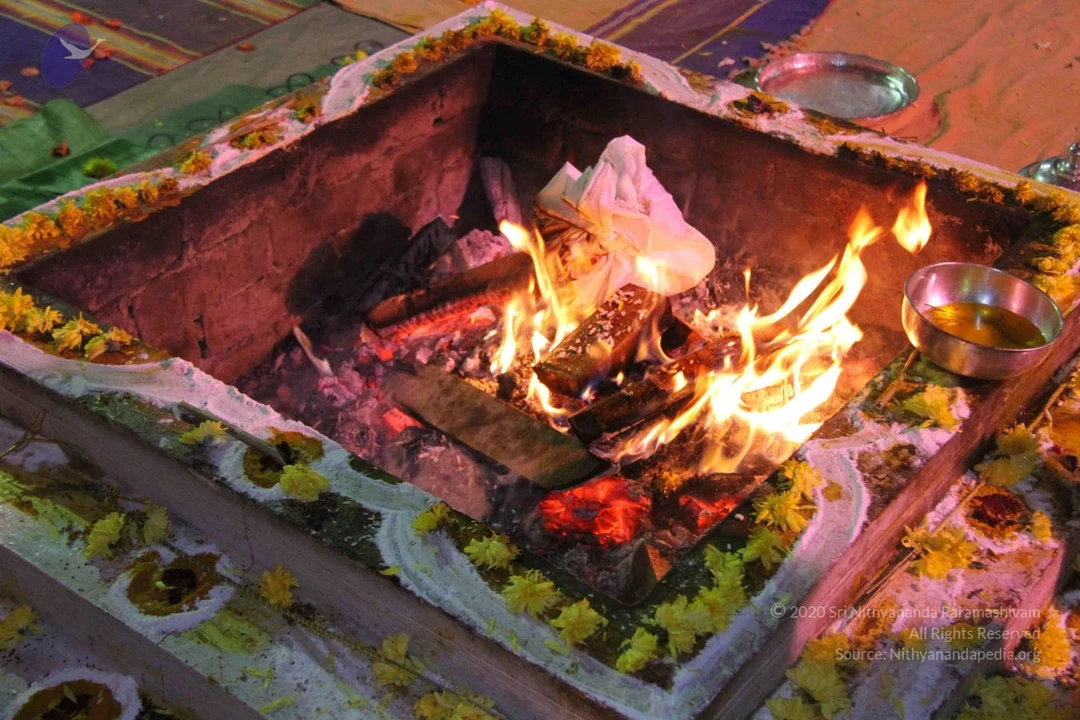
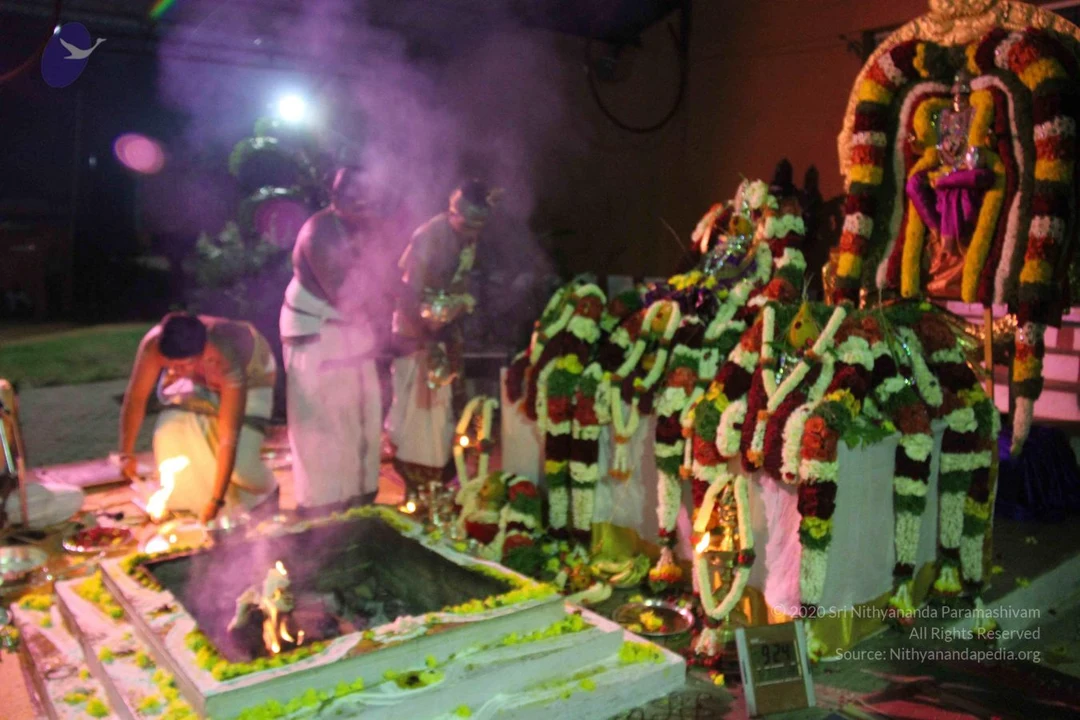
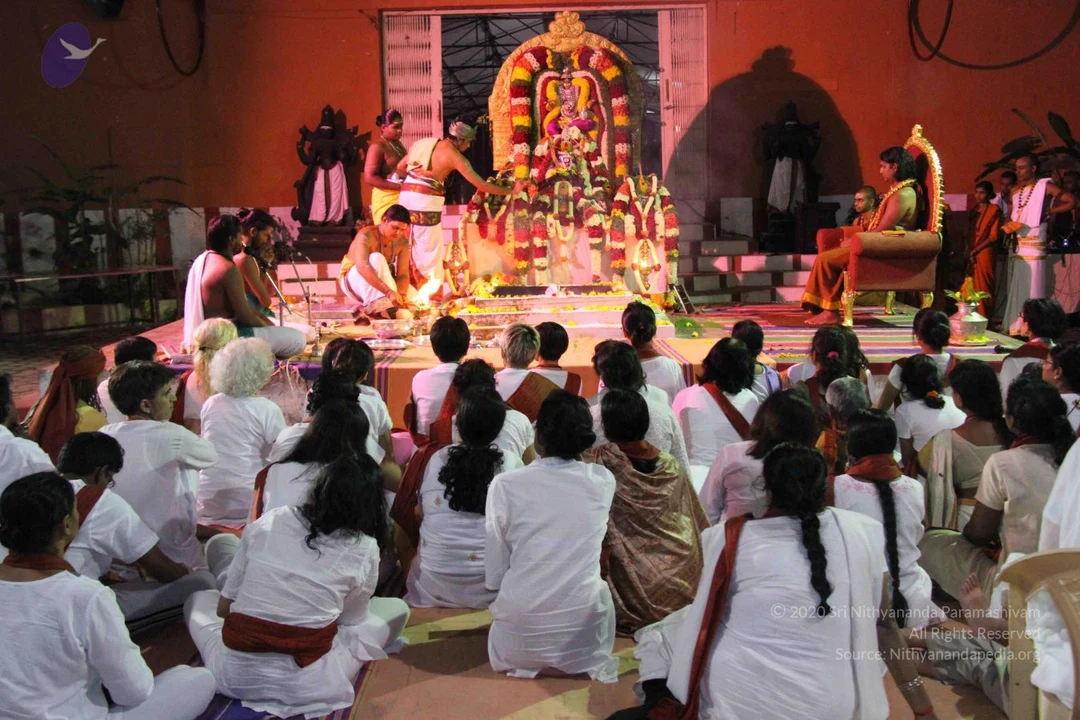
Avanthi-Homa

German-Magazine

IA-food

Photos Of The Day:
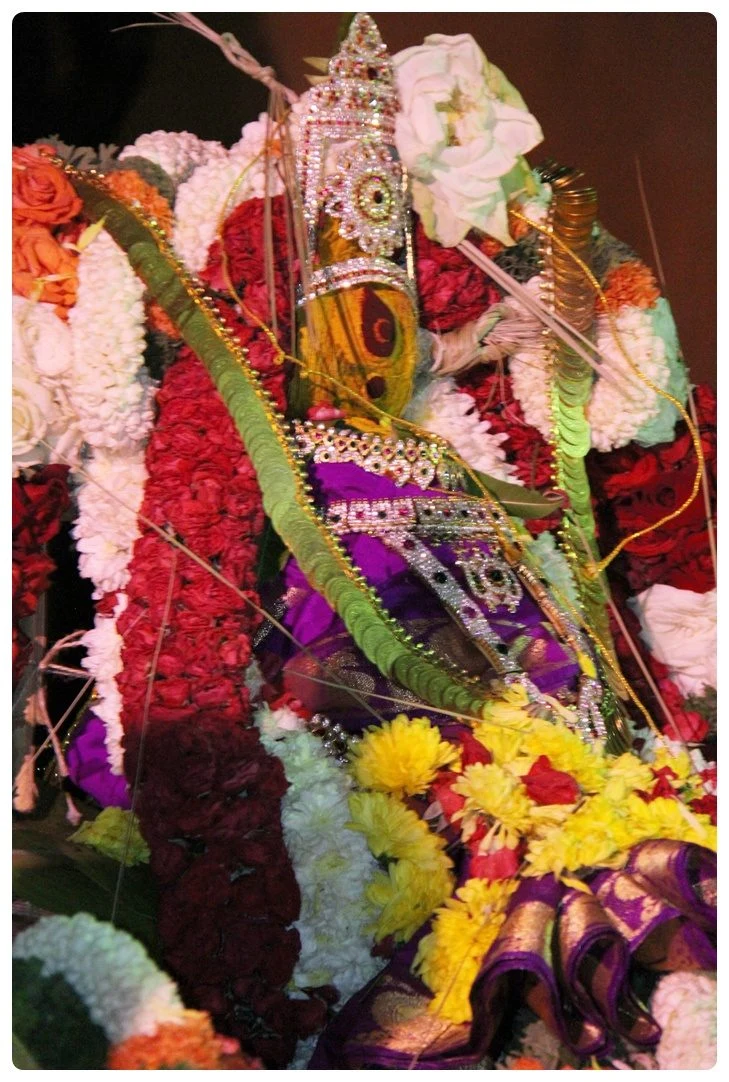
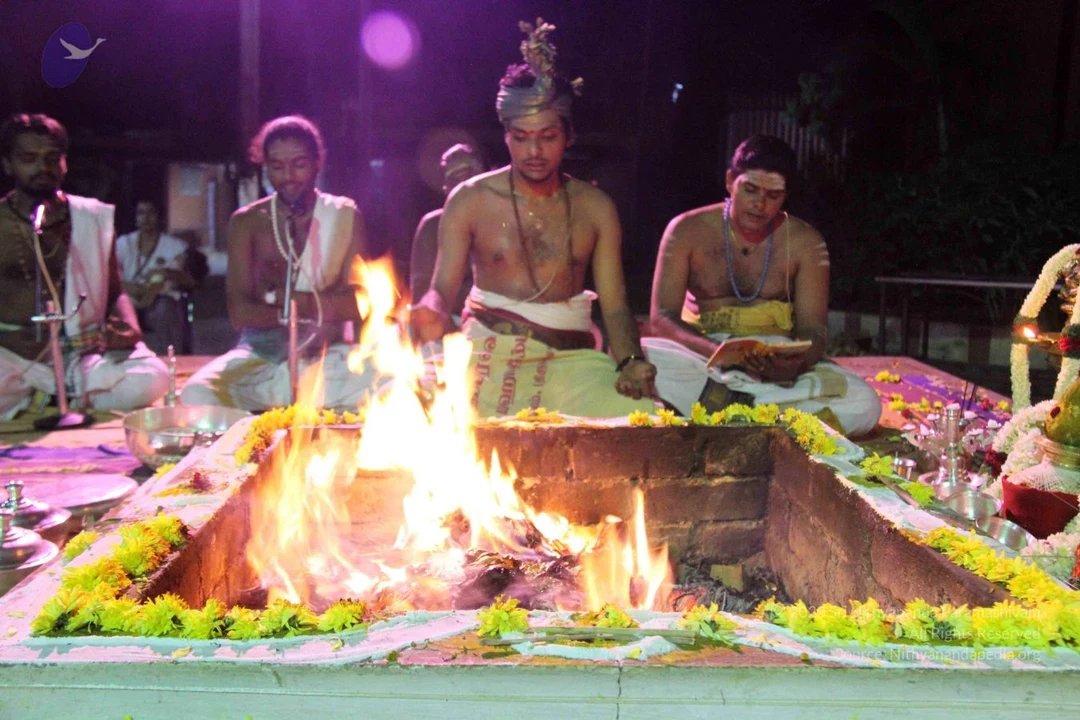
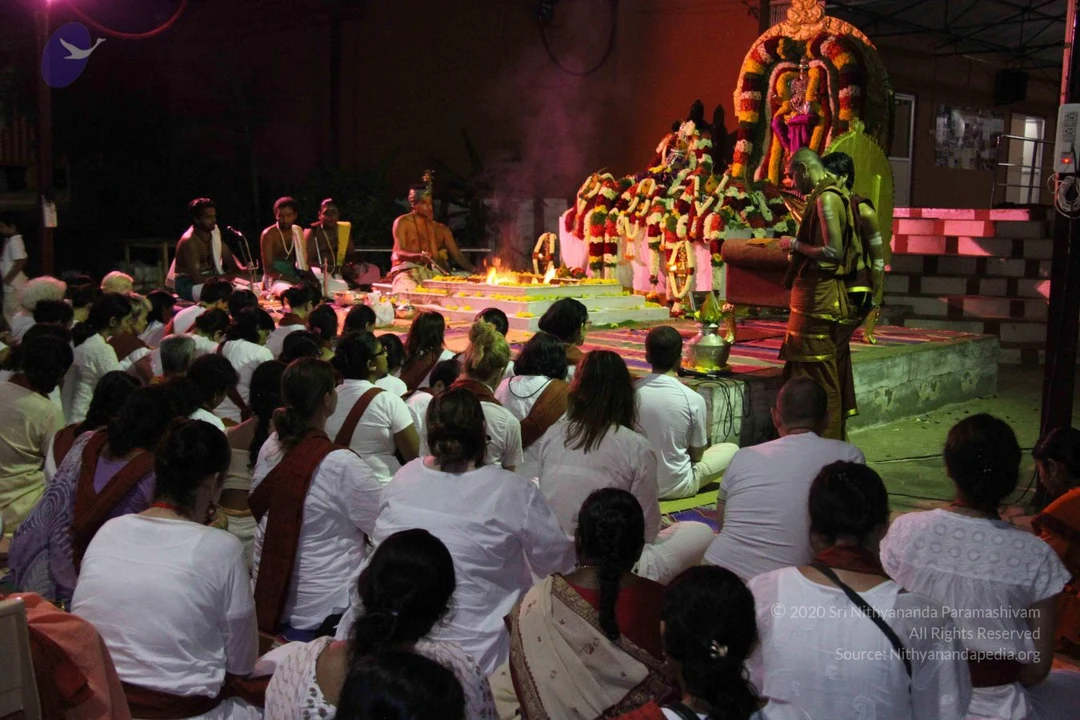
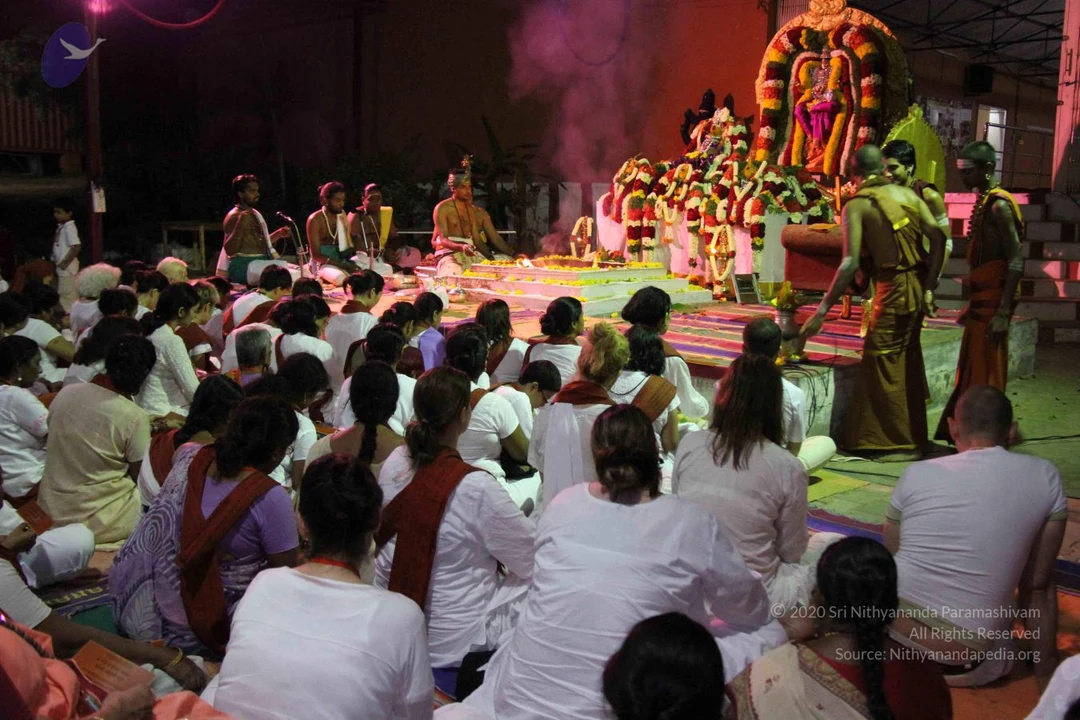
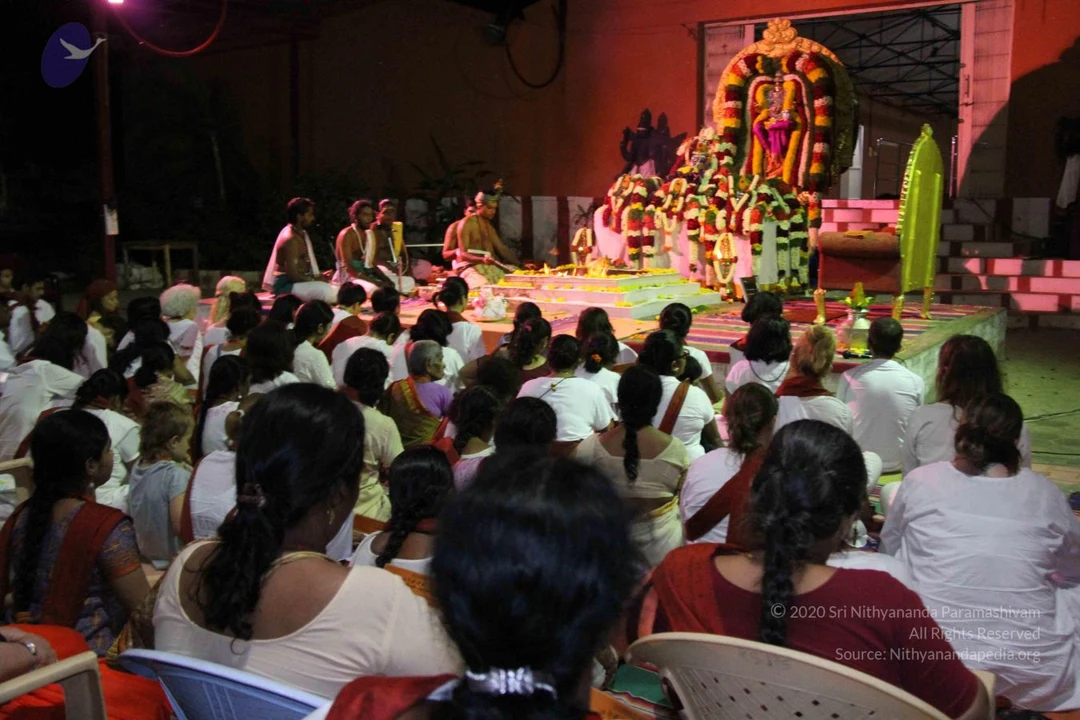
Temple-Procession

Leela-Alankar-Shivabharathi

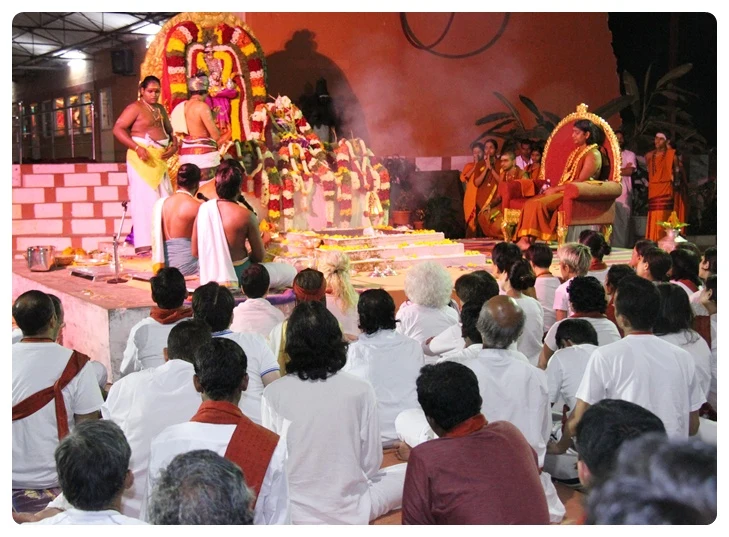
Pratyaksha-Pada-Puja

Nithya-Satsang

Two-Way

Sarva-Darshan

IA-Session

Kalabhairava-Darshan

Kalabhairava-Readings

01-AvanthiHoma-Pictures

Photos from this day
View all 415 photos
Photos
45 photosSource gallery
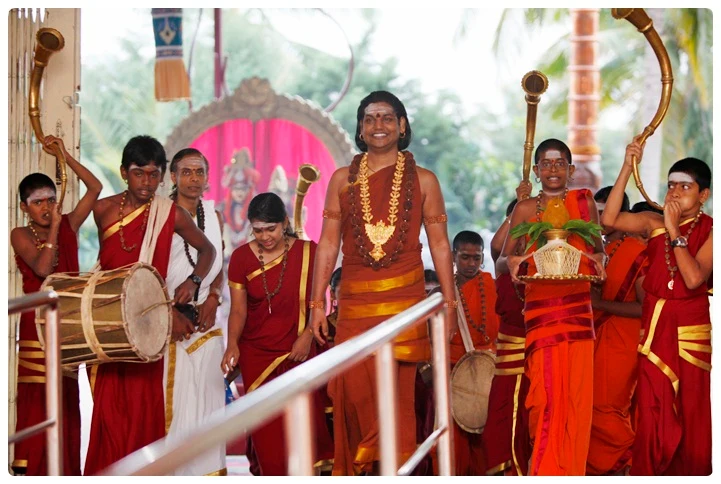
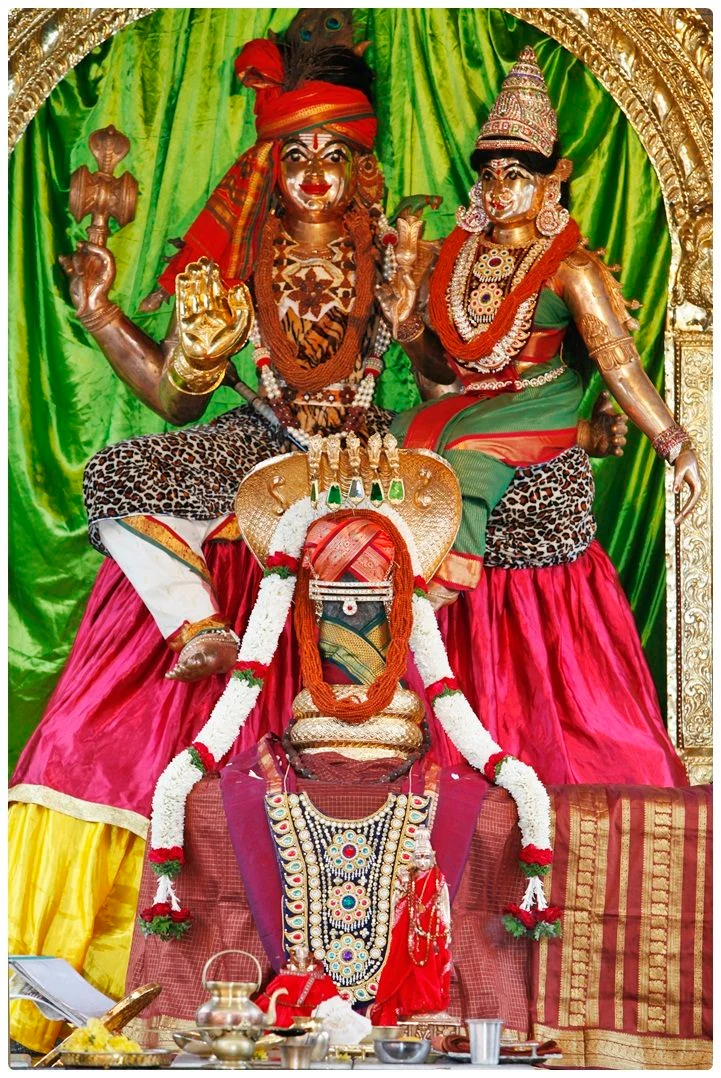
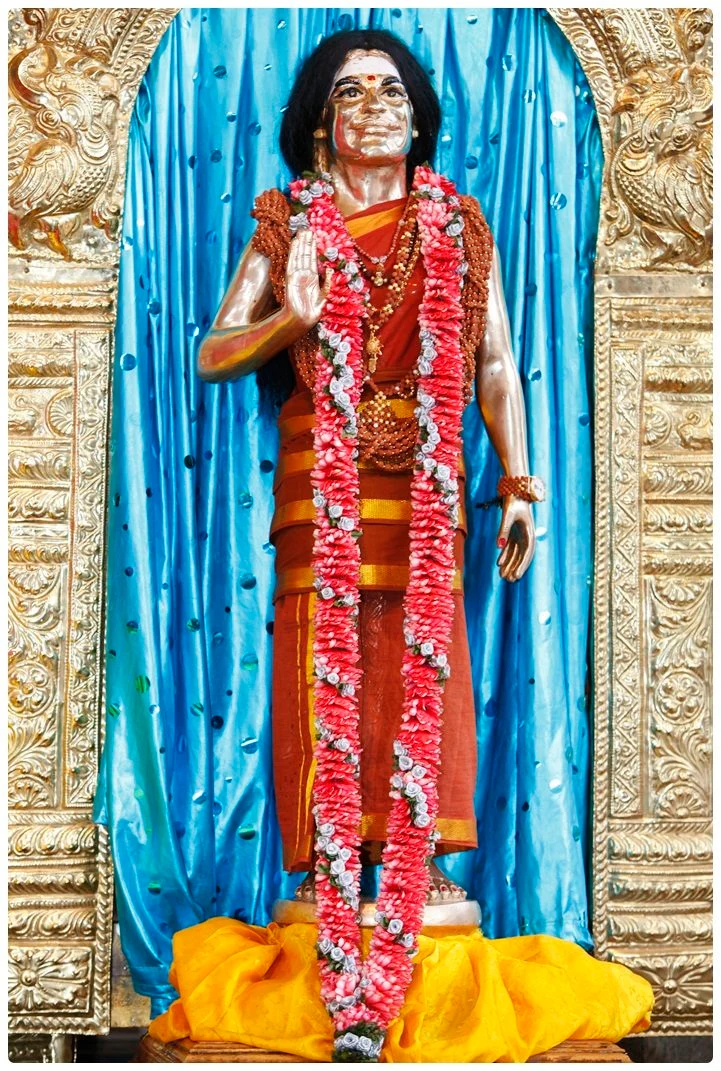
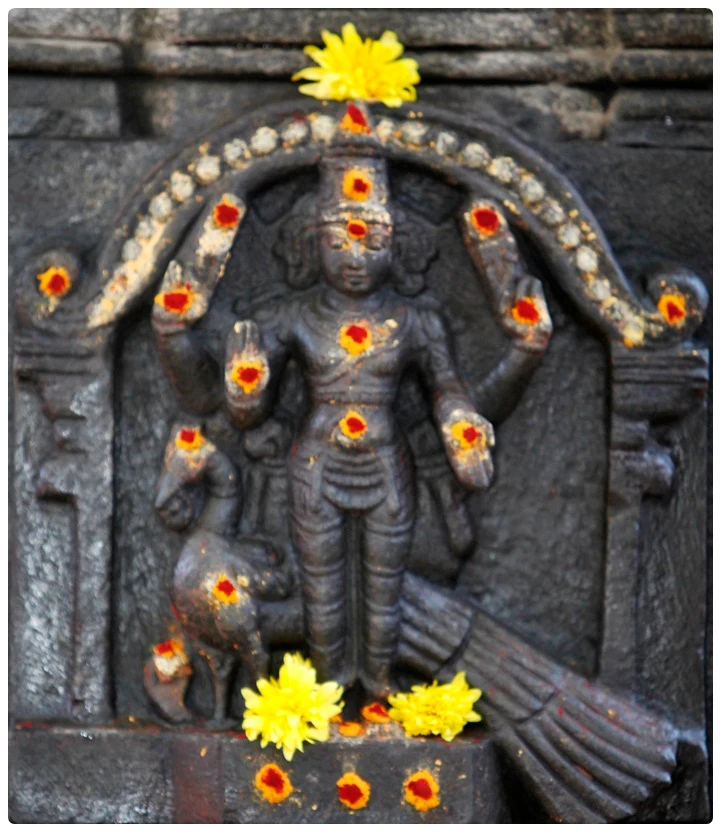
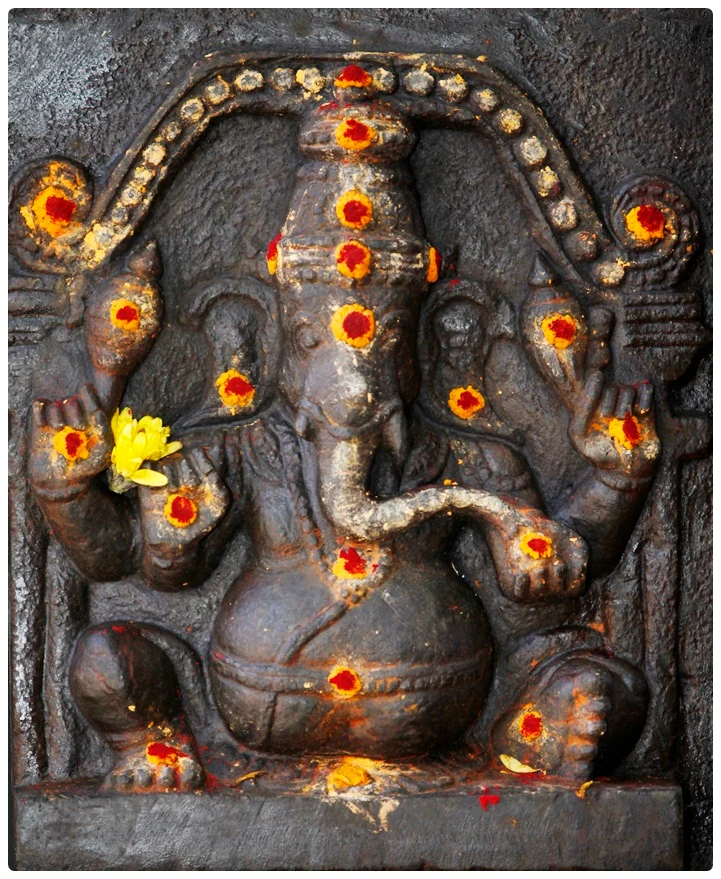
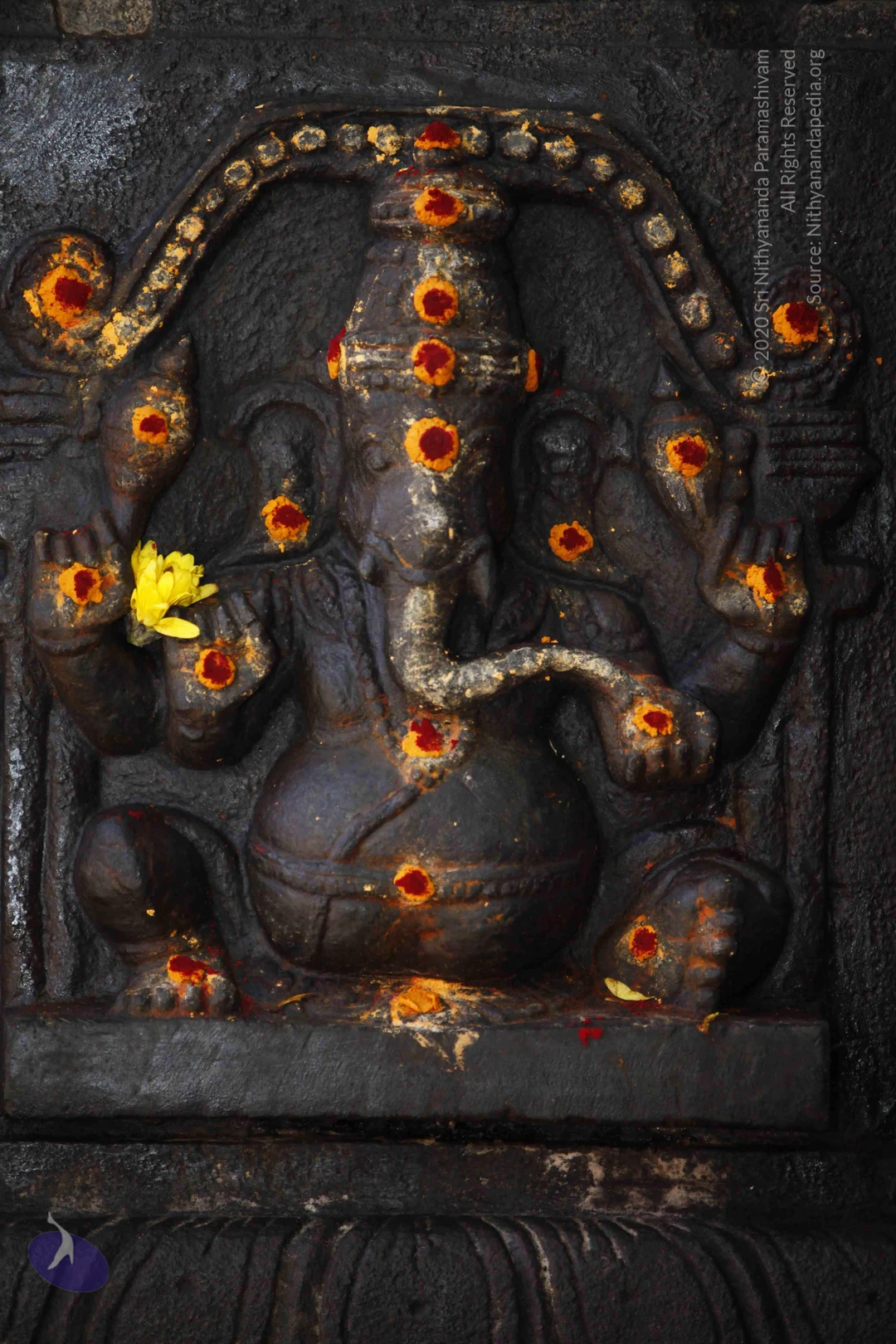
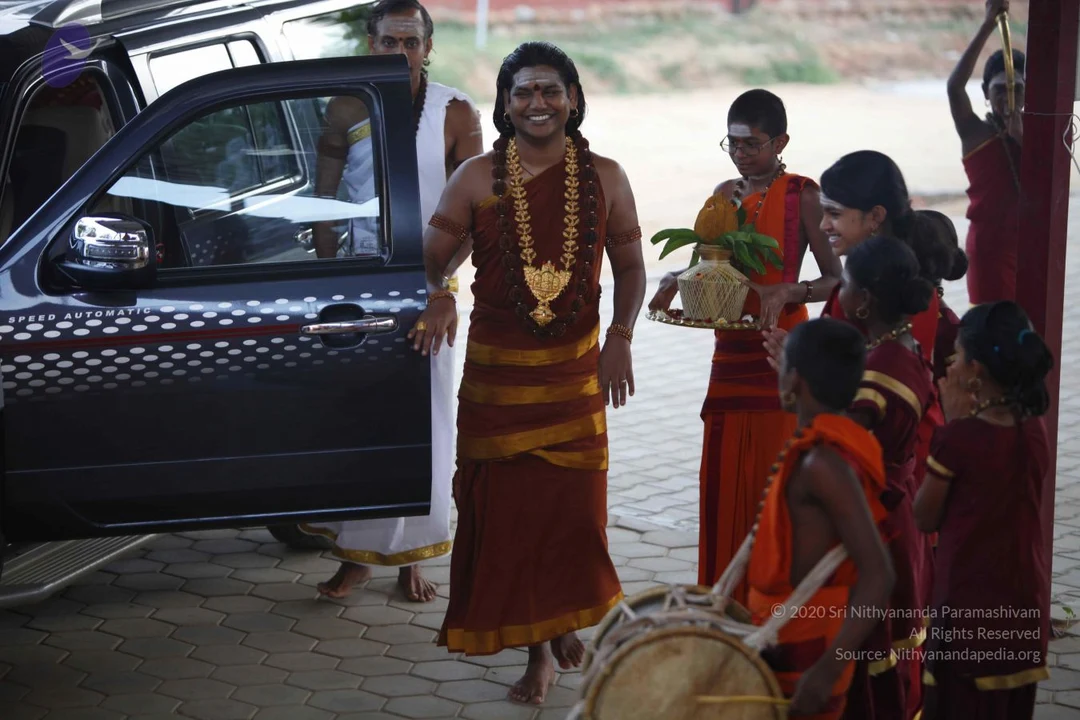
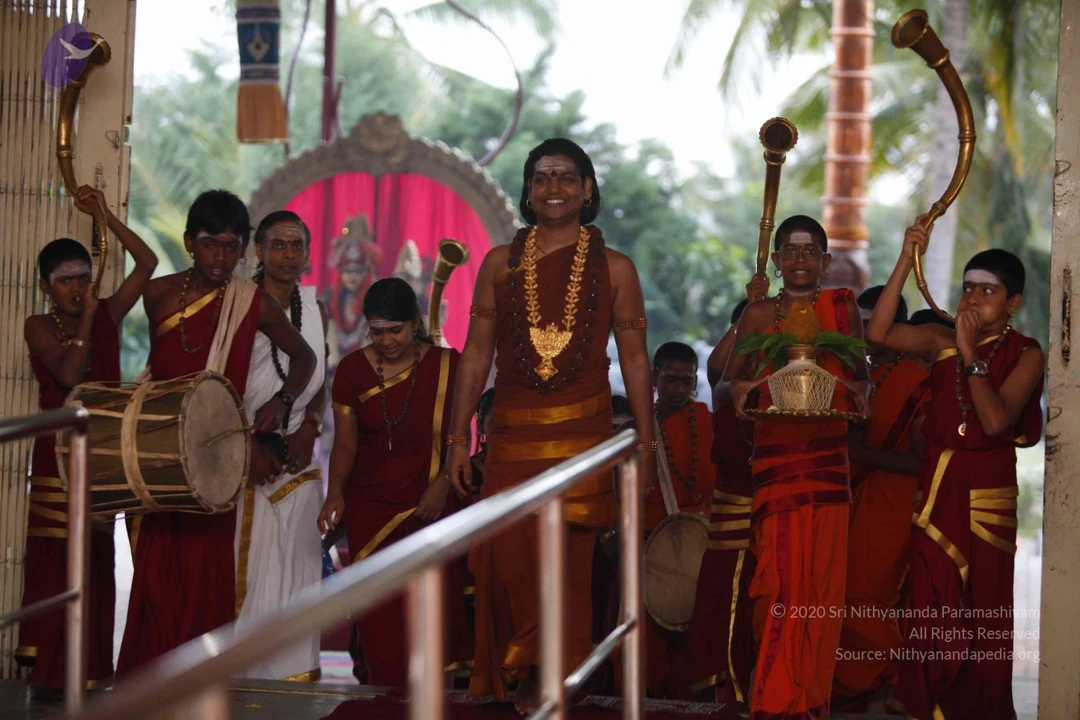
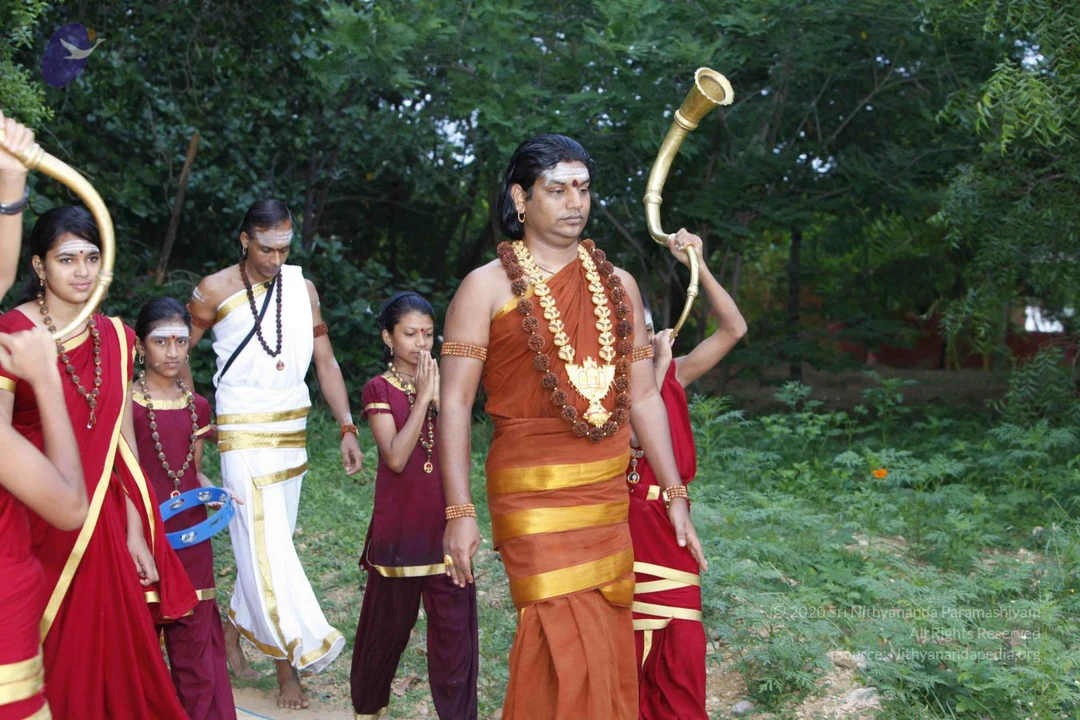
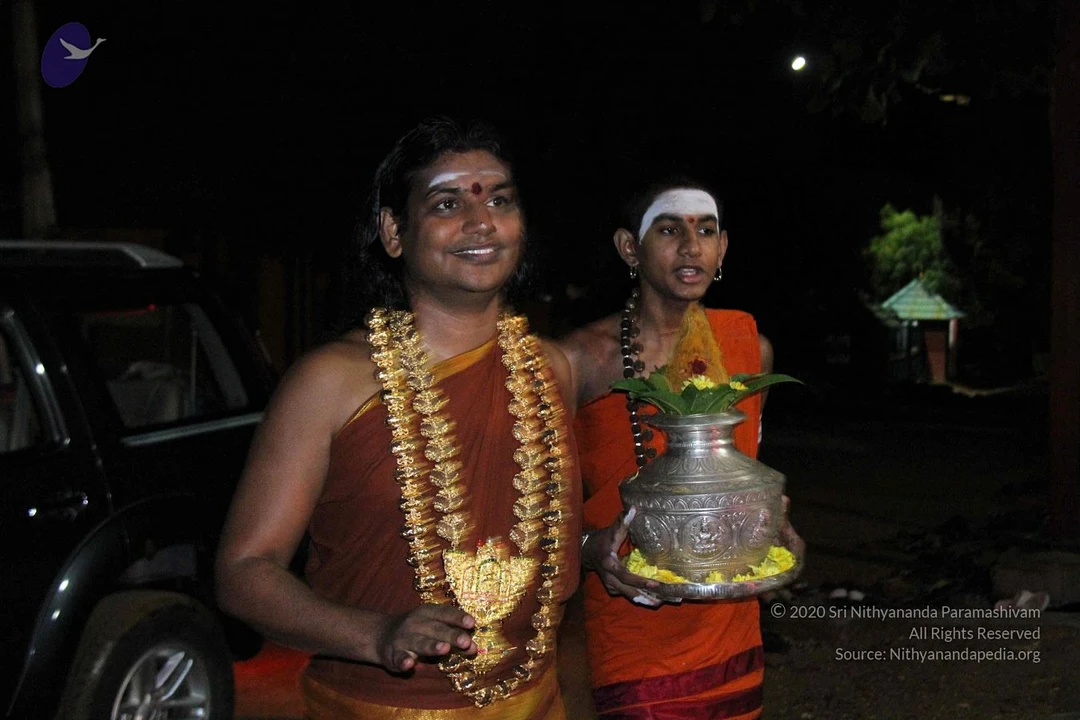
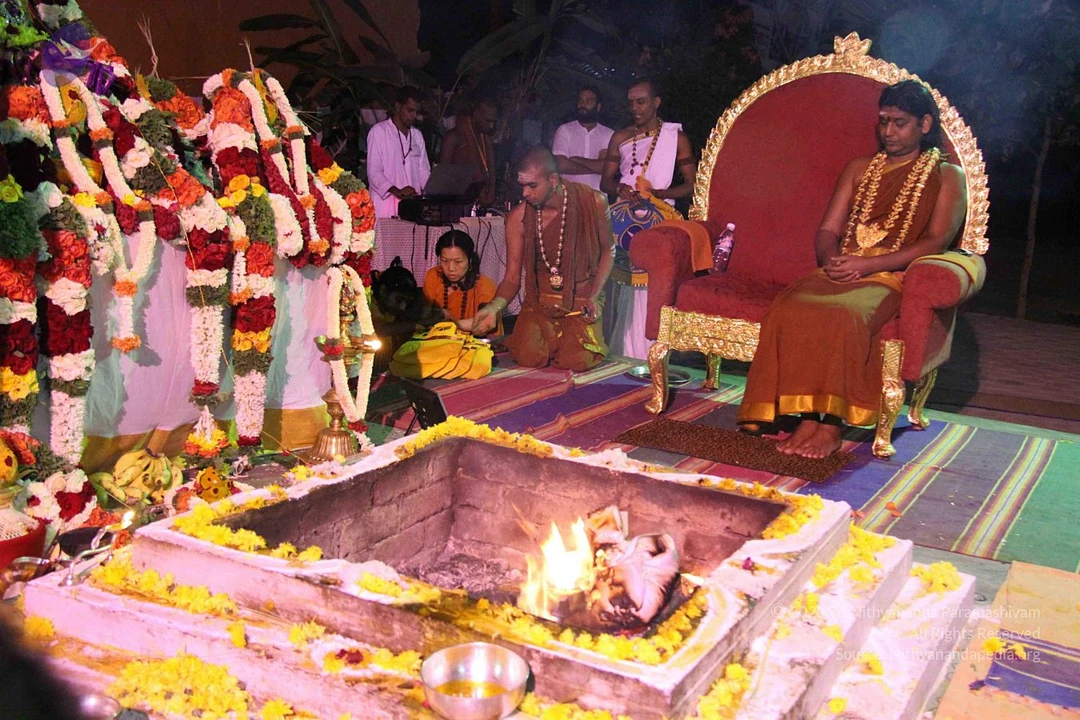
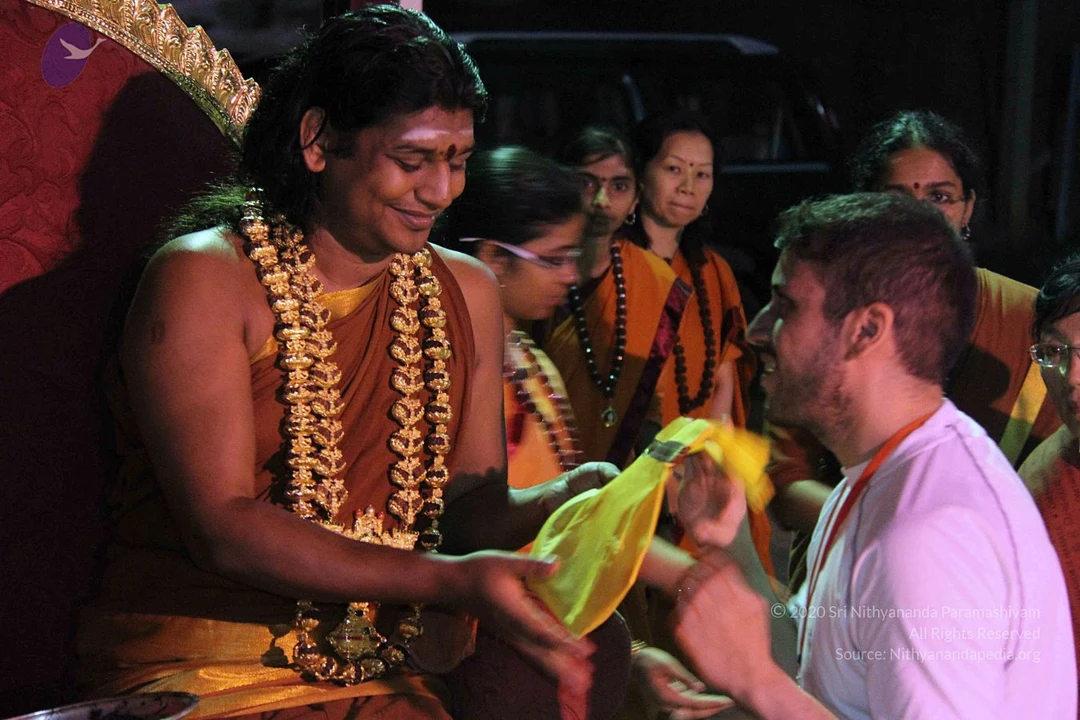
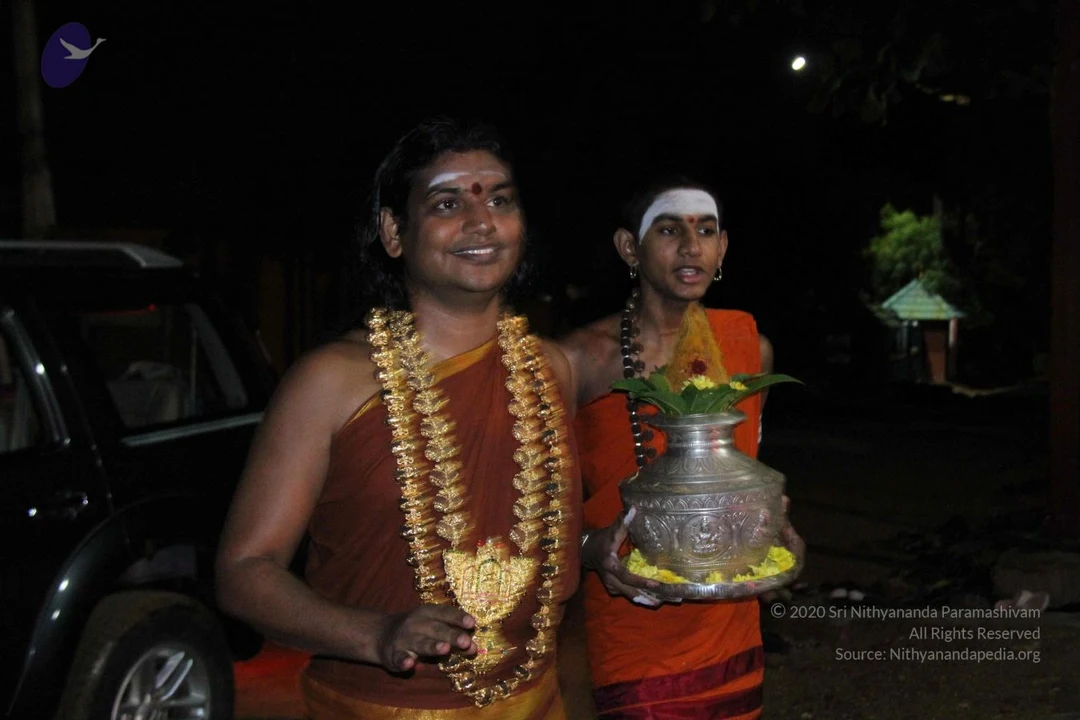
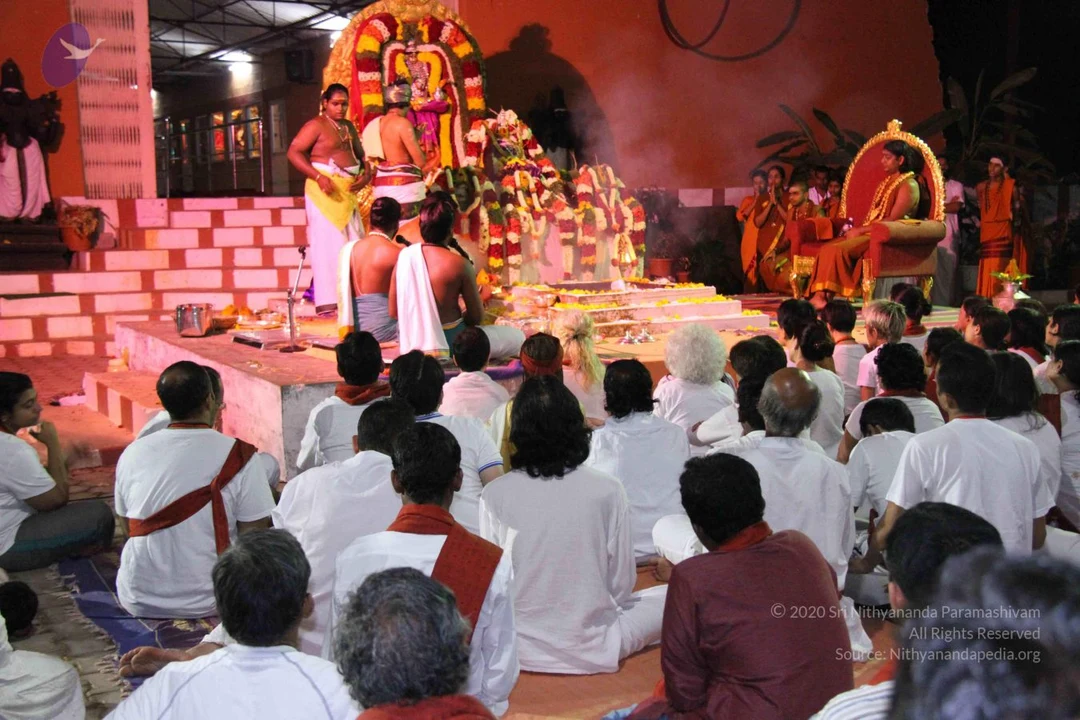
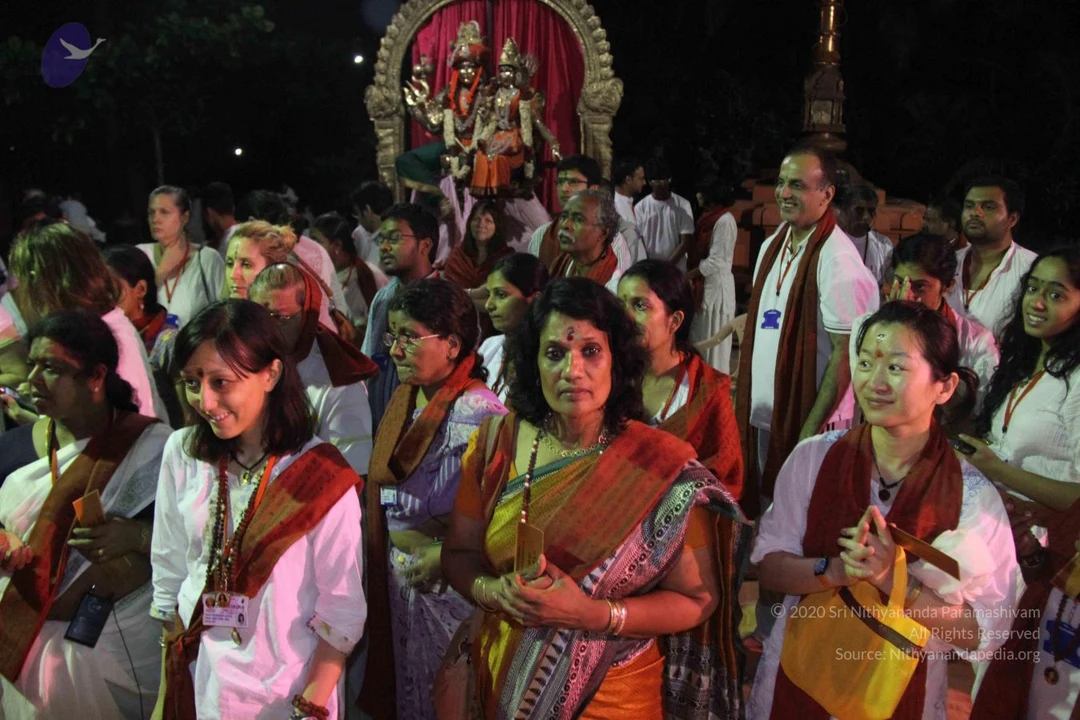
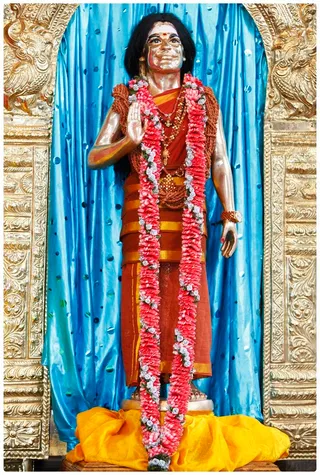
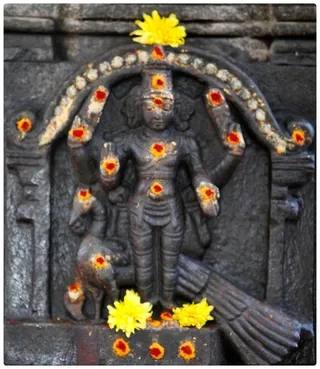
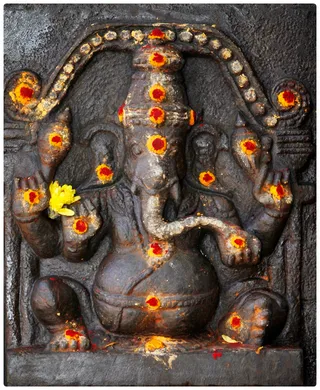
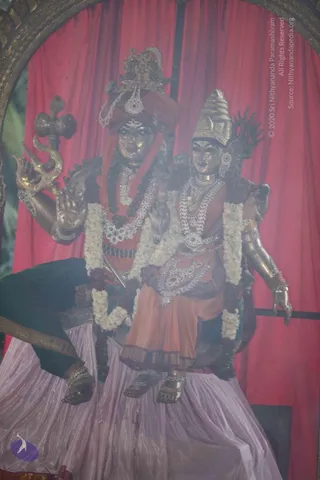
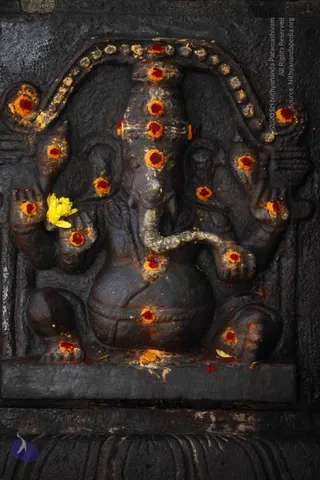
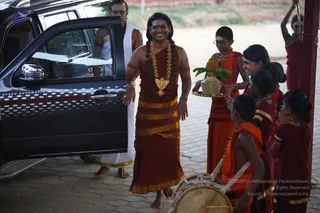
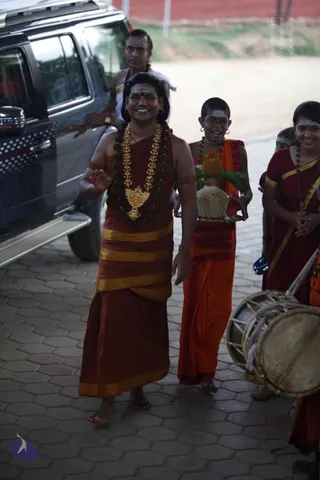
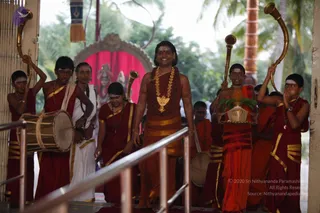
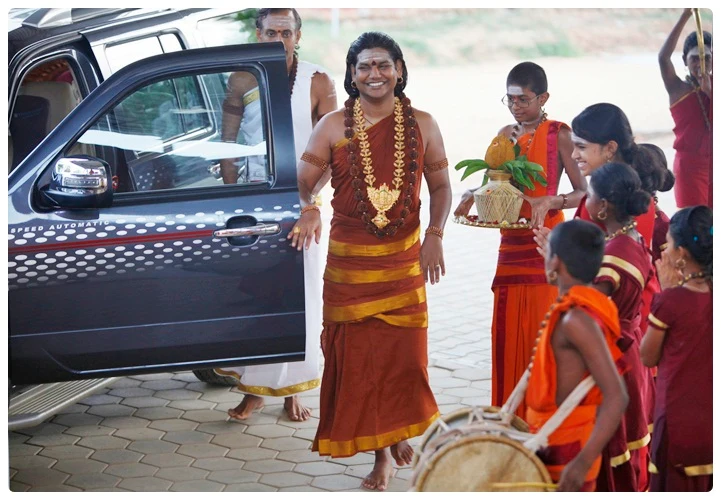
A photograph of a smiling man with long dark hair, wearing a rust-orange dhoti and shawl with gold borders, a large gold pendant and multiple rudraksha malas, stepping out of a dark grey SUV onto a paved courtyard. Behind him an older man in a white dhoti stands by the open car door. To the right, a line of young girls and boys in orange and maroon robes receive him; one girl holds a brass kalasha with a coconut and green leaves, and a boy in orange beats a drum at lower right. The setting appears to be a temple or ashram forecourt with trees behind.A procession at a temple entrance led by a man in saffron-orange robes with a gold ceremonial necklace and multiple rudraksha malas, smiling and walking forward. Around him are drummers and musicians in red and white dhotis with bare upper bodies and white forehead marks, playing a large drum and long golden horns (kompu). A young attendant on the right in red and gold holds a brass tray with a kalasha and green leaves. Behind them stands a pink-framed shrine with a deity murti under a bright red canopy, and palm trees line the open courtyard. a person is.A photograph of a decorated deity murti of Shiva and Parvati seated together on a throne-like platform against a bright green silk backdrop with an ornate gold arched frame. The Shiva figure has four arms, a red turban with a peacock feather, a leopard-print lower garment and a red-orange sash, holding a damaru and a trident-like staff. The Parvati figure wears a green and red sari, a jewelled crown and layered necklaces. In front, a tall Shiva lingam is draped with a red cloth, adorned with white flower garlands with red rosettes and a large jewelled necklace. Brass vessels, a cup and offerings sit at the base. No physical people are visible.A standing statue of a male figure with long dark hair, a red-and-gold tilak on the forehead, and a silver-toned finish against a bright blue draped curtain framed by ornate gold carved arch panels. The figure wears a red-orange dhoti and shawl, a brown rudraksha mala draped over the shoulders, a gold chain pendant and layered beaded necklaces. A long pink and white flower garland hangs from the neck to the feet, and the statue's right hand is raised in blessing while its left hangs at the side. A yellow cloth lies at the base. No living people are visible.A dark stone relief carving of a multi-armed deity standing within an arched niche, decorated with bright yellow marigold flowers at the top and base and red-and-yellow kumkum spots on the chest, arms and at the feet. A beaded garland arcs over the head. A small animal, possibly a mount, is carved at the lower left and a curved tail or ornament at the lower right. No physical people are visible; the subject is a stone deity murti with floral offerings.A dark stone relief carving of the elephant-headed deity Ganesha seated cross-legged in a niche. Four arms are visible: the upper hands hold objects, one lower hand holds a yellow flower, and the trunk curls toward a bowl or sweet at the front. The figure is dotted with red and orange kumkum on the forehead, trunk, belly and hands, and yellow marigold petals are scattered at its base. No physical people are visible; this is a deity murti carving.
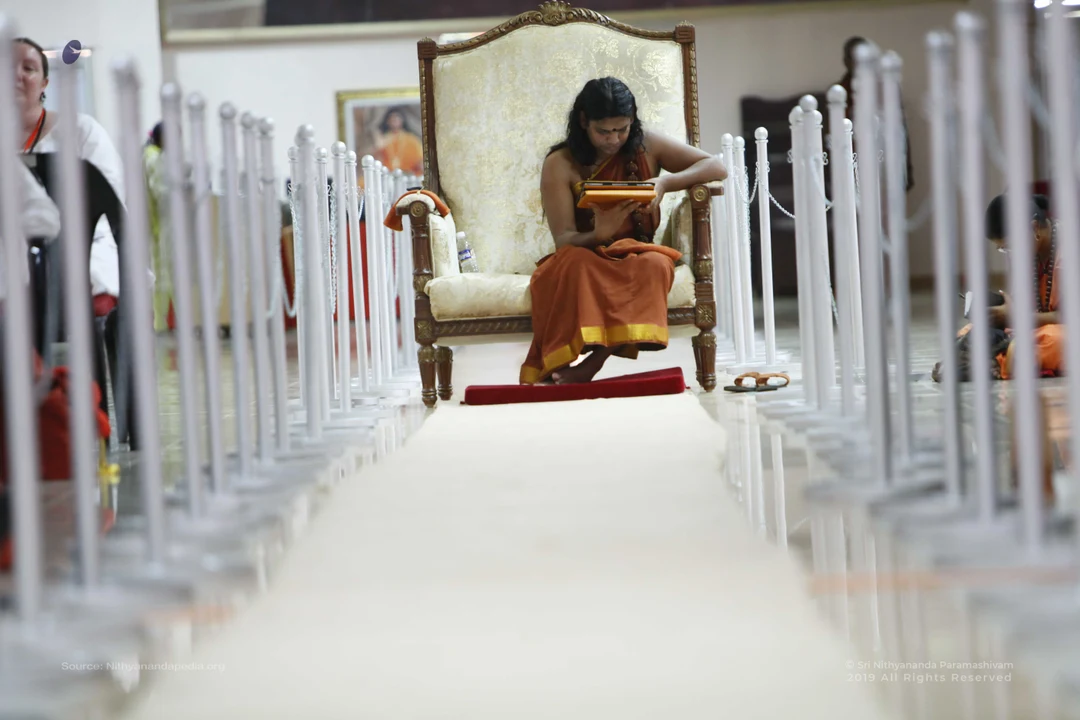
temple swamiji
37 photosSource gallery
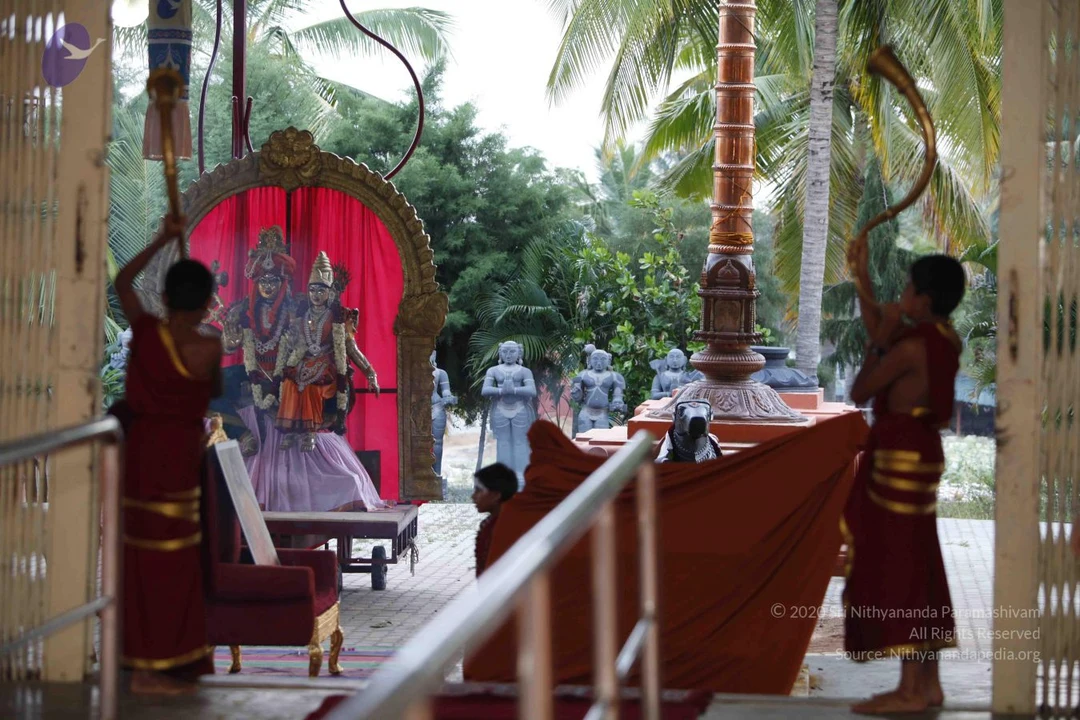
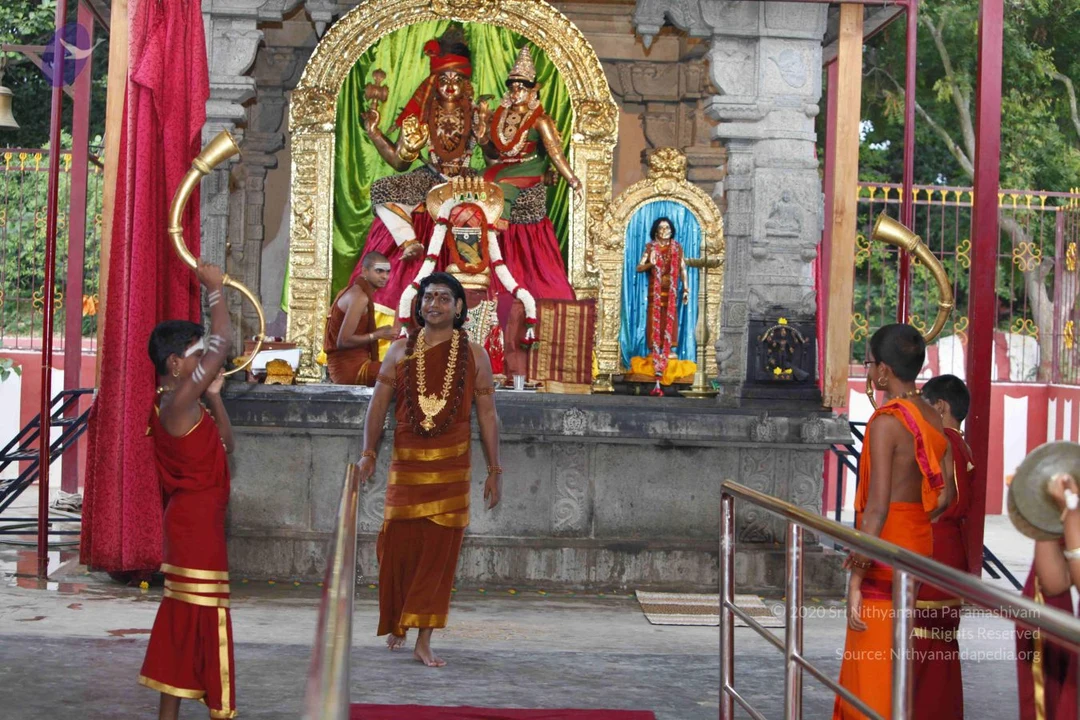
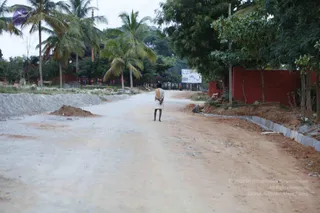
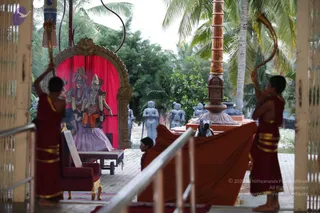
A photograph of an unpaved, dusty ashram road lined with palm and tall shade trees. A single person in a white dhoti with a yellow-orange cloth draped over the shoulder walks away from the camera down the center of the road. A red compound wall runs along the right side, and a white billboard with a blue and purple logo stands in the distance beside a purple circular emblem at top left. A low pile of grey gravel and a curb are visible at the edges of the road.A photograph of a silver-toned statue pair on a pink draped backdrop with a decorative arched frame. The left figure, a male deity murti with a trident, wears a crown, rudraksha beads and white jasmine garlands; the right figure wears a tall silver crown, layered pearl necklaces and a flowing orange-red garment. Both stand on a lilac silk cloth, and the scene is lit with a hazy glow. No physical people are visible.Close photograph of a dark carved stone relief of the elephant-headed deity Ganesha seated in a niche with four arms. Red and orange kumkum dots and turmeric-yellow marks cover the carving, and a yellow flower petal rests near one hand. Small offering petals lie on the base slab. No people are present; the image shows only the sculpted deity murti.A photograph of an outdoor temple courtyard framed by a doorway. Two young male attendants in maroon or red robes with gold bands stand on either side, the left one raising a long curved horn-like instrument and the right one blowing a long brass horn. Between them, a deity murti or image of a divine couple is displayed inside a golden arched frame with a red curtain, with a red-draped platform and a red armchair in front. To the right, a tall brass lamp stand and a seated figure draped in a red cloth sit near palm trees, and several grey stone statues stand in the background.A smiling man with long swept-back dark hair, rudraksha malas and a ceremonial gold pendant necklace, wearing a rust-red dhoti and shawl with gold borders and gold armbands, steps out beside a dark SUV's open door. Behind him a man in white dhoti with a yellow-bordered cloth stands near the car. To the right, girls in orange and red-gold dress hold a brass tray with a kalasha pot topped with mango leaves and a coconut, and a drummer in orange plays a drum. A red-clad attendant stands at the right edge, and the setting is a paved courtyard with a pillared porch. Probable Swamiji is the central figure in rust-red robes with the long hair, malas and gold pendant.A smiling man with long swept-back hair, a red bindi and a rudraksha mala with a large gold pendant walks along a paved courtyard beside a dark SUV. He wears a maroon-and-gold ceremonial wrap and a gold-bordered dhoti and bangles. Behind him a shaved-head assistant in orange and maroon robes carries a tray with a brass vessel, a green leaf and a coconut-like offering, while a bearded man in white stands near the car and a woman in maroon with gold border smiles at right. Two drums are visible at right. a person appearance: the central figure shows long swept-back hair, a gold pendant and rudraksha mala, and is walking at the head of the procession.

leela alankar shivabharathi

6 photosSource gallery
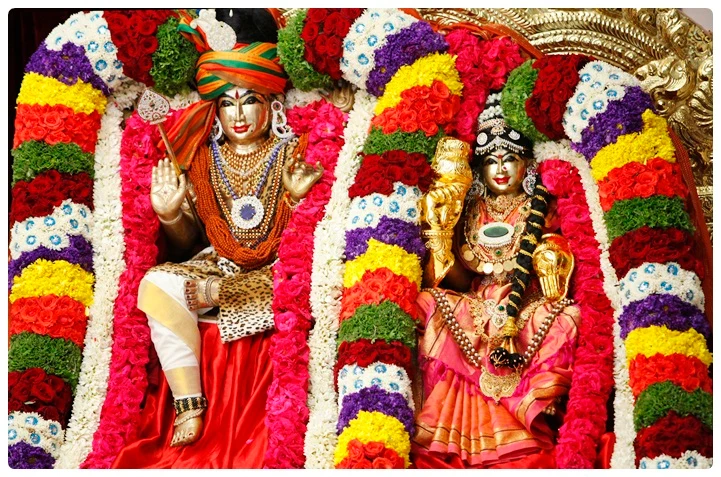
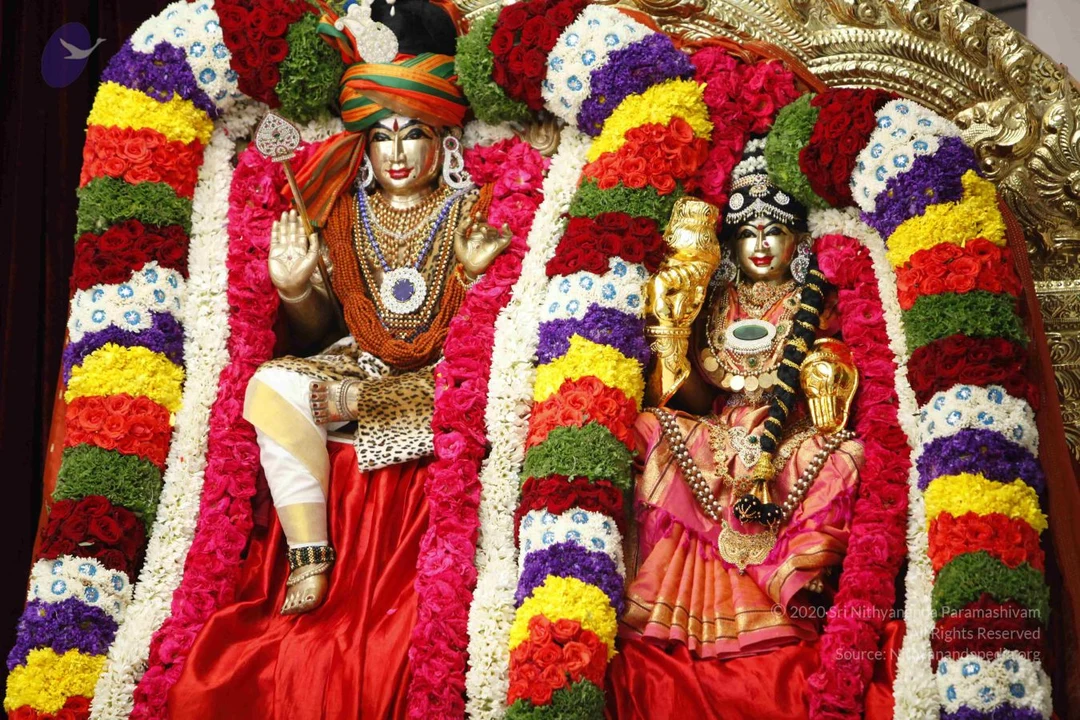
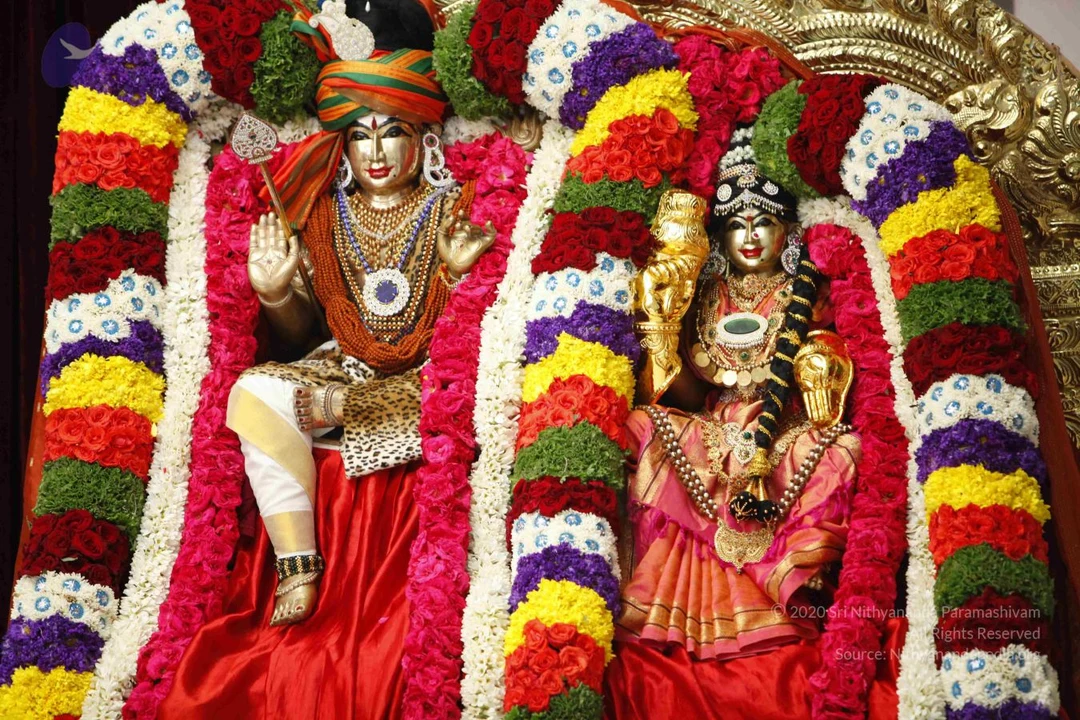
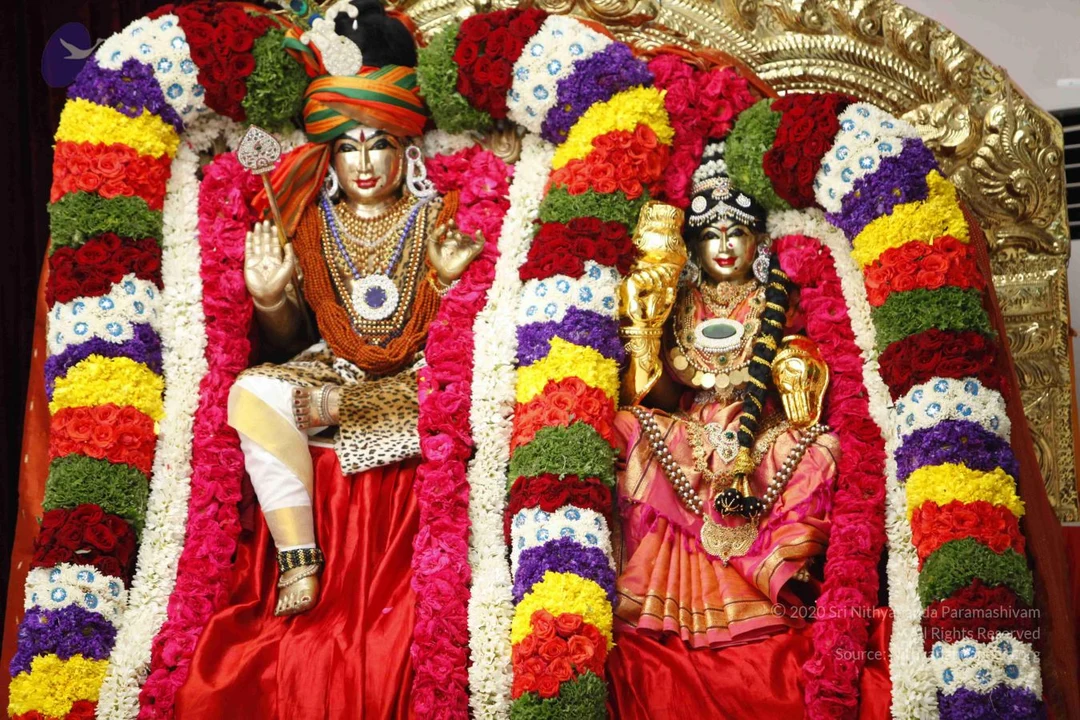
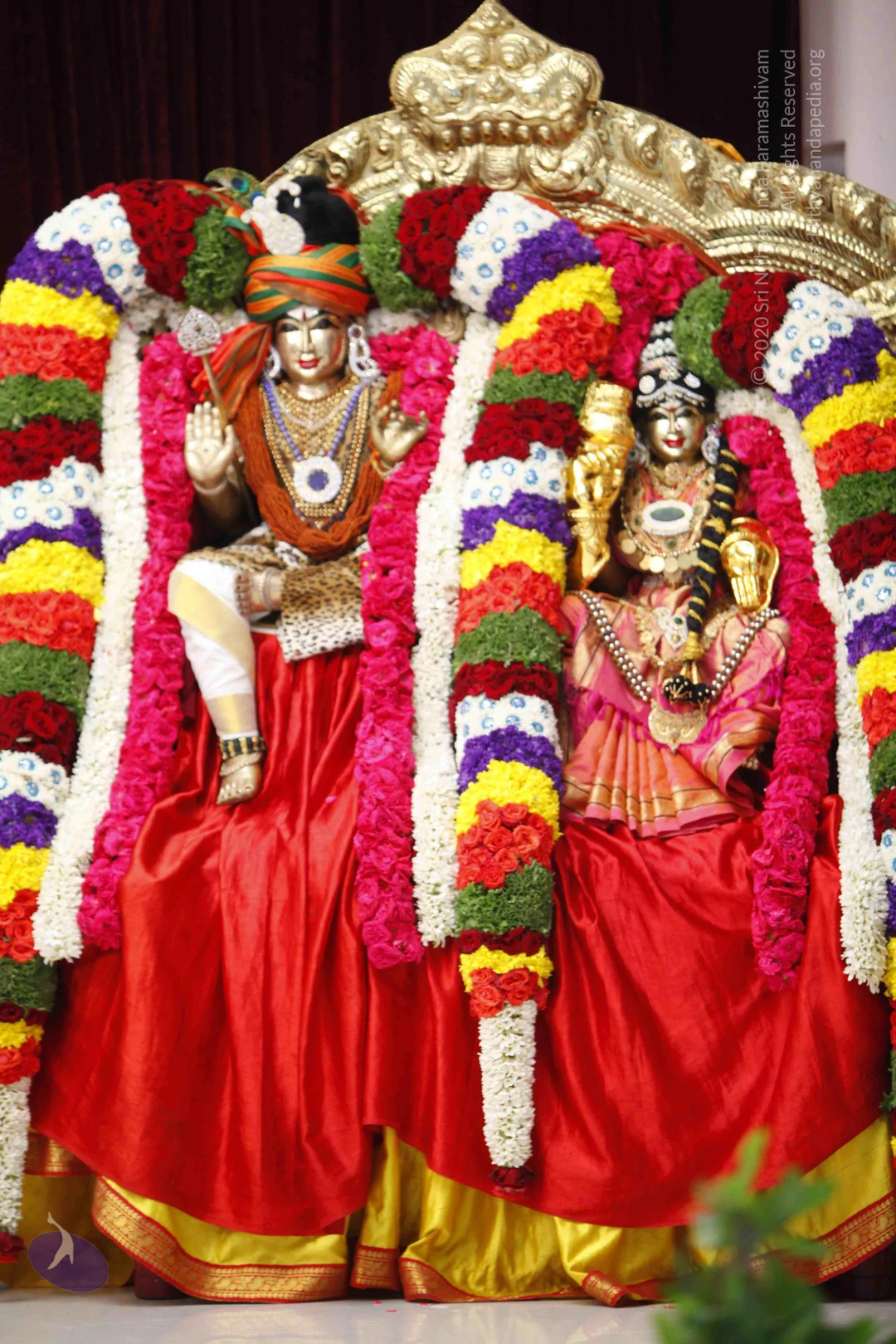
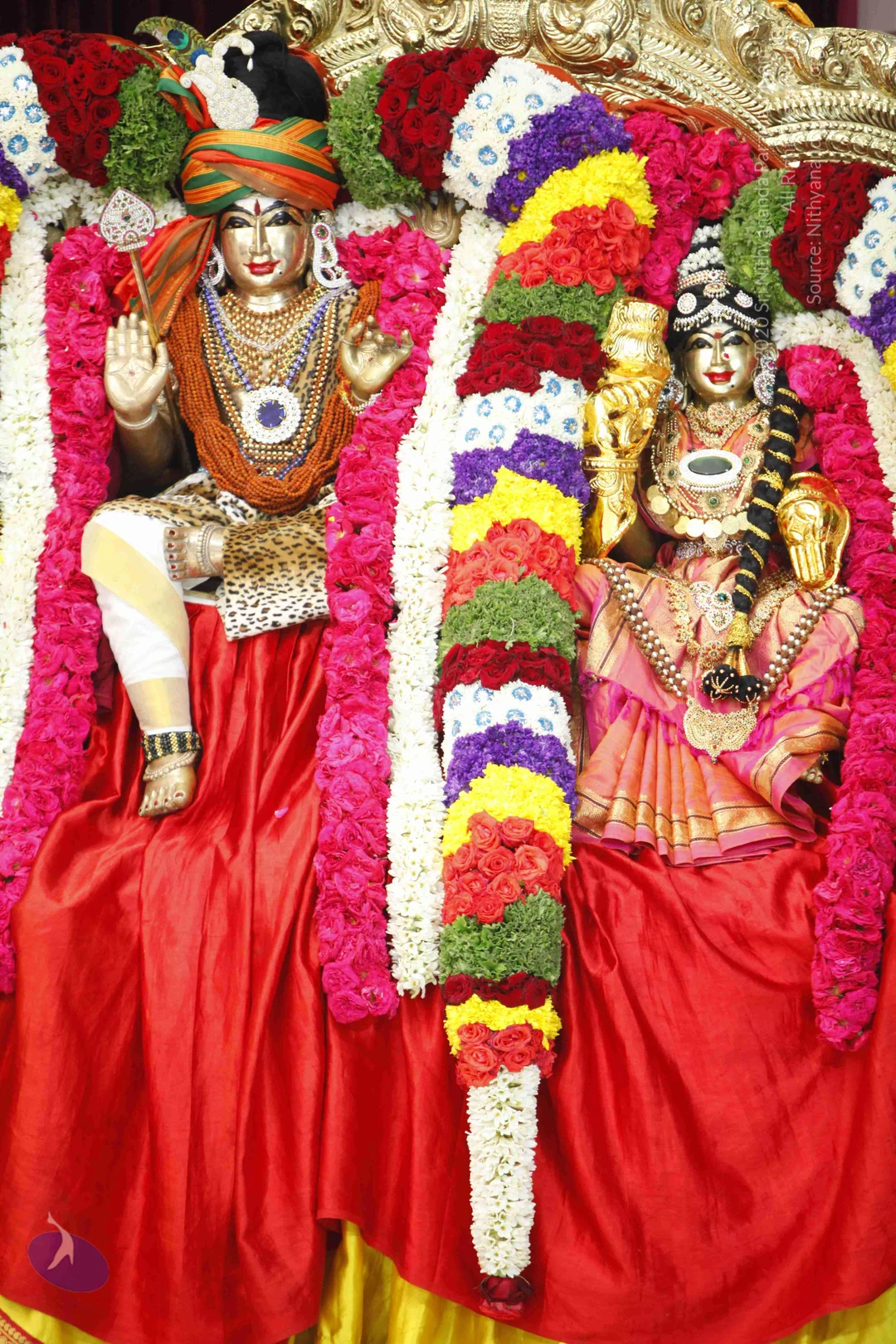
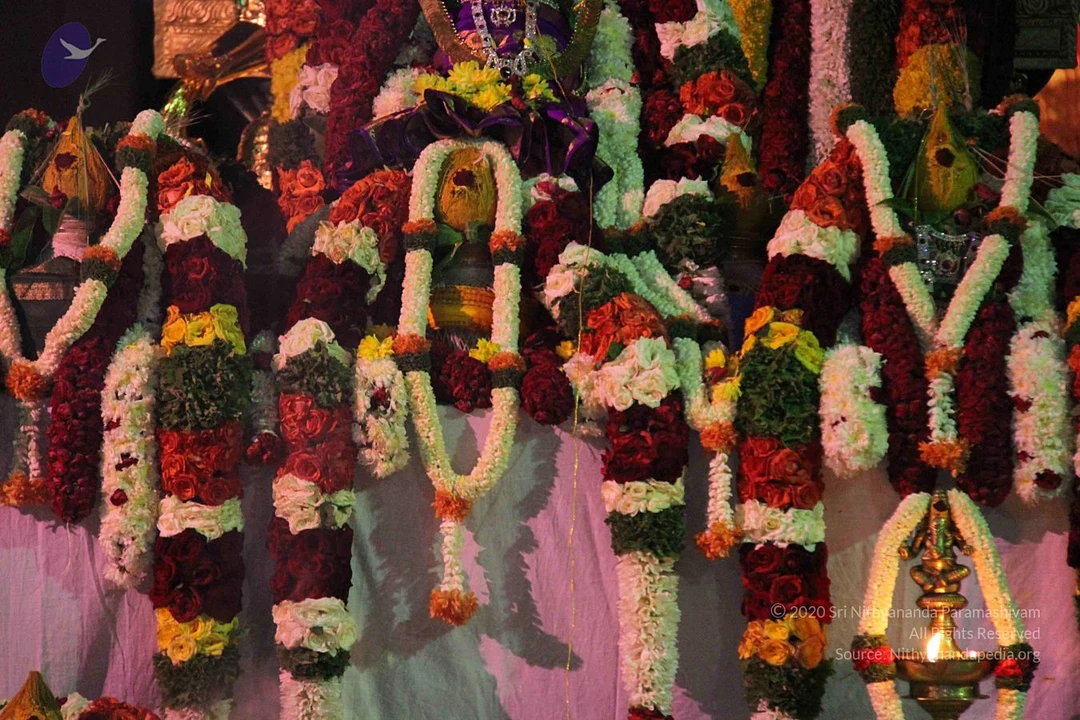
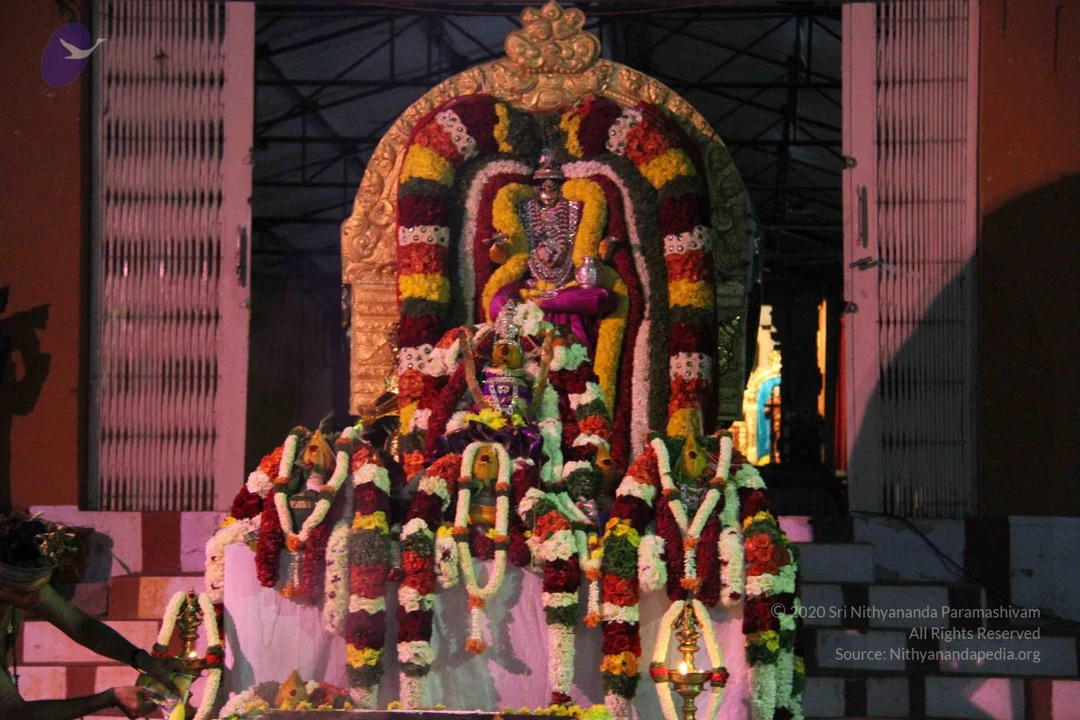
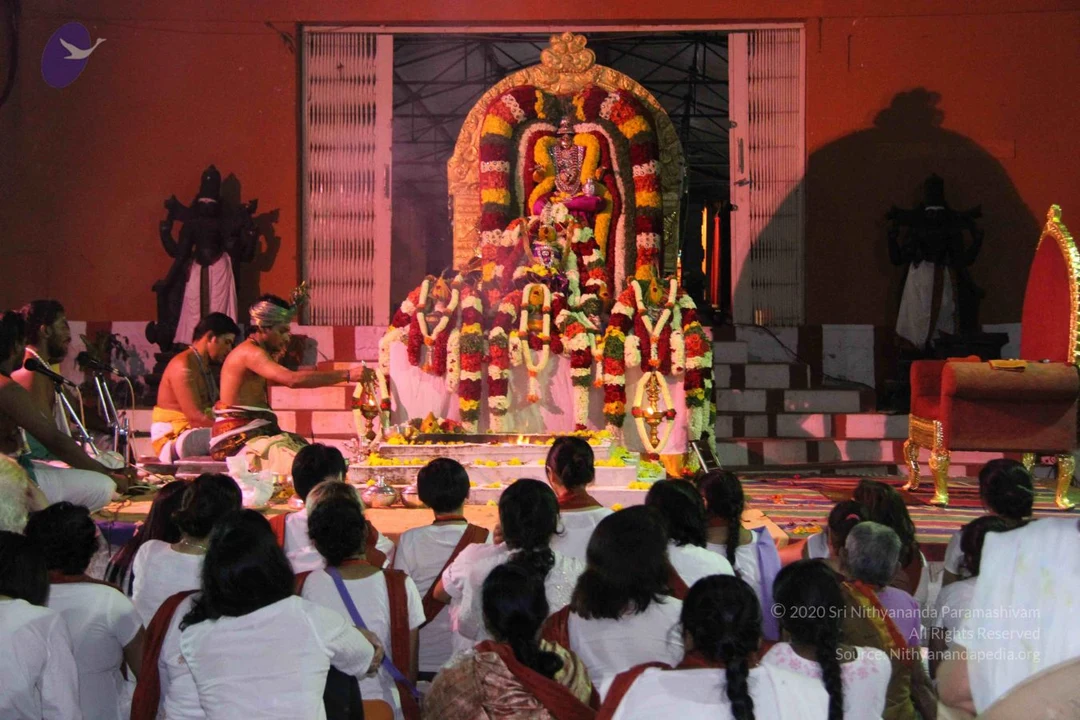
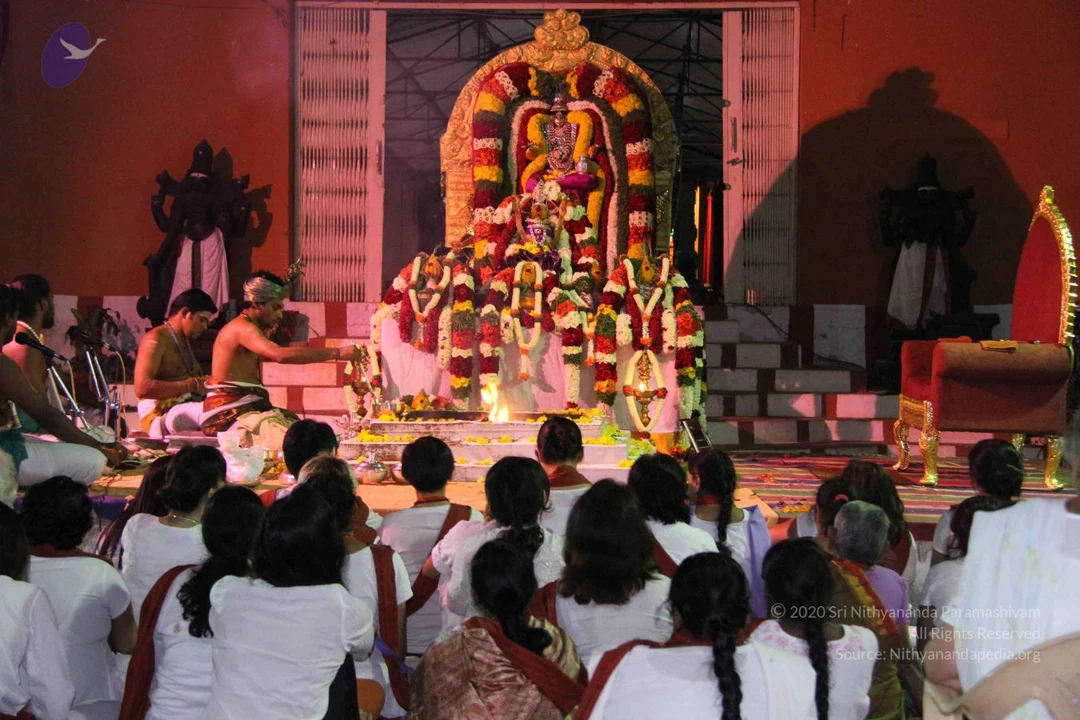
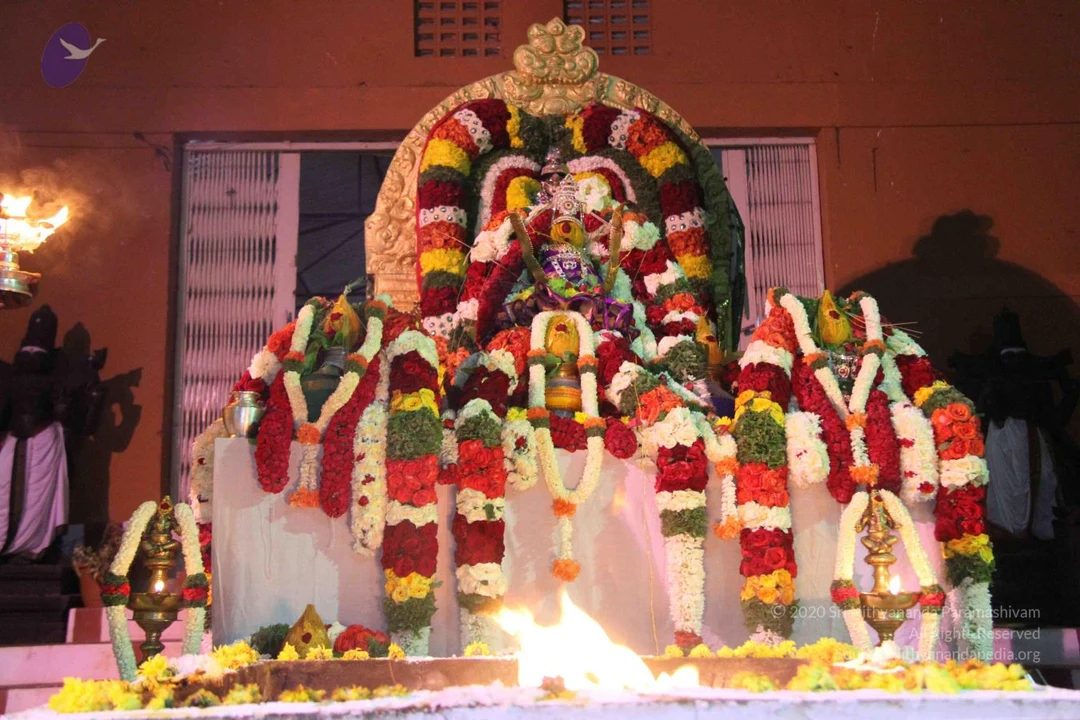
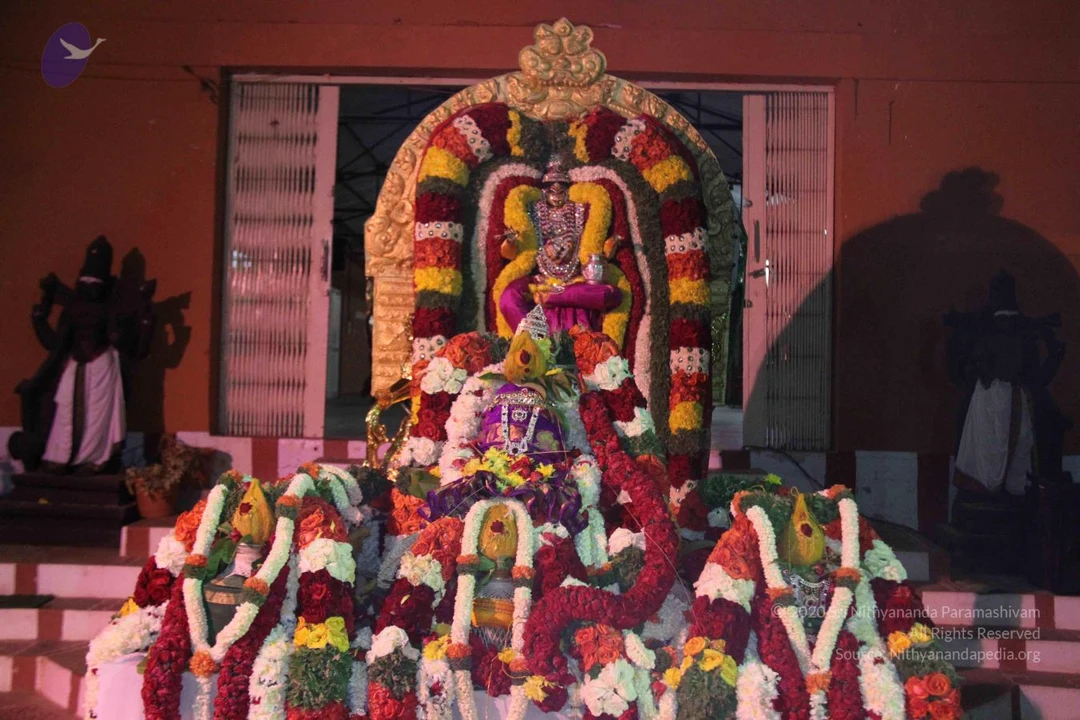
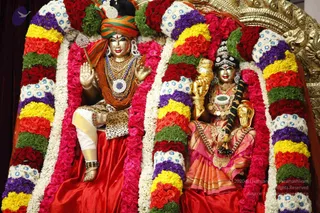
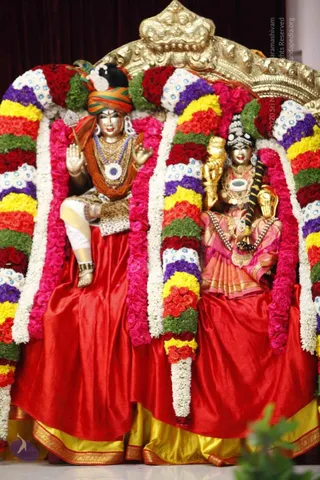
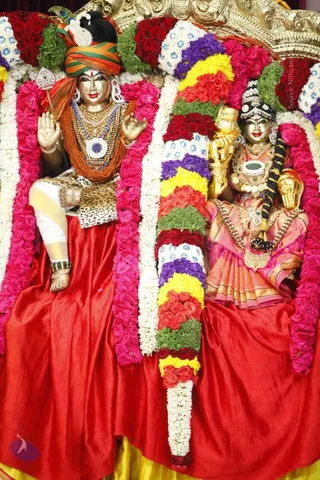
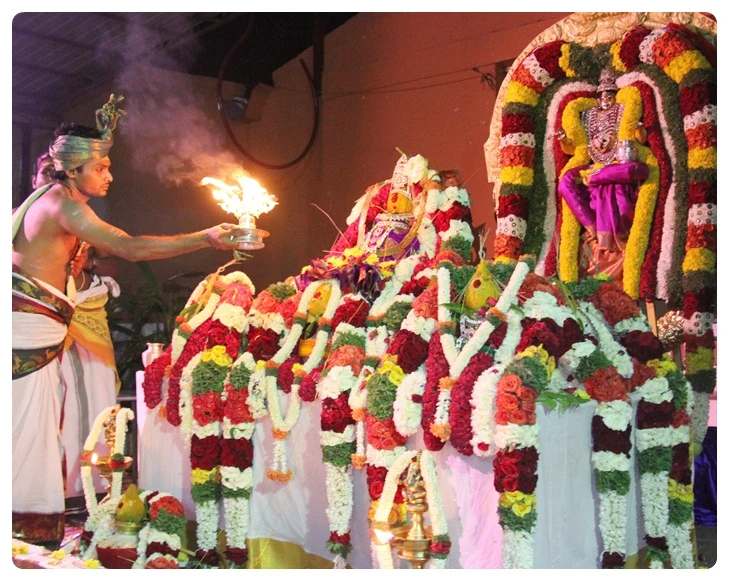
A golden murti pair of a seated deity and goddess, richly decorated with layered garlands of red, pink, purple, yellow and white flowers arranged in arched frames. The male deity wears an orange and green striped turban, a red dhoti-style lower garment with a leopard-print cloth, beaded and pendant necklaces, and holds a small ceremonial item. The goddess wears a pink and gold sari, layered gold necklaces, a crown and a green-rimmed item in one hand, seated on a red silk cloth. No physical people are visible; both figures are statues.A decorated deity murti pair seated on a red silk cloth beneath a dense arch of flower garlands in red, pink, yellow, purple and white. The male figure in gold-toned finish wears a striped orange-and-green turban, a rudraksha mala with a large blue-stone pendant, and holds a ceremonial staff. The female figure in gold finish wears a pink and orange sari with gold jewellery, a tall crown, and holds a golden ceremonial vessel with a small cup. These are statues, not living people, so no physical people are present.Two golden murti statues of a deity couple seated side by side on a red cloth throne, framed by a dense arch of garlands in red, pink, yellow, purple, green and white flowers. The male figure wears a striped orange, green and red turban, a crimson-and-gold shawl over a leopard-print garment, a multi-strand orange and bead mala, and holds a small trident-like staff. The female figure wears a pink and gold sari, layered gold necklaces, a jewelled headpiece with a long black braid, and holds a golden ritual vessel. Gold ornamental background and a red fabric base complete the scene.A photograph of a golden-toned pair of murti statues seated on a red silk-draped throne beneath a golden arch, both heavily garlanded with rows of red, yellow, purple and white flowers. The male figure wears an orange-and-green striped turban, a leopard-print and white dhoti-style garment, layered gold necklaces, and raises one hand in blessing while holding a small staff. The female figure wears a pink and gold sari, a jewelled headpiece, and holds a kalasha-like vessel. Ornate red drapery and a green plant appear in the foreground. No physical people are visible; the figures are statues.A decorated deity murti pair seated on a red cloth throne in front of a gold ornate arch. The male figure wears an orange and green striped turban, a long orange-beaded rudraksha-style mala, a large pendant and gold-trimmed white dhoti, and holds a trident-like staff in one raised hand. The female figure wears a pink and orange silk sari with gold jewellery, a crown and a black braid, and holds a bowl. Both are framed by arches of red, pink, yellow, purple and white flower garlands. These are statues, not living people.Photo of two golden murti statues seated side by side on a red silk-draped throne, heavily decorated with red roses, white jasmine, purple and yellow flower garlands. The male figure wears a multicolour green, orange and red turban with a peacock feather, layered gold and beaded necklaces, a leopard-print garment and a gold-bordered white dhoti, holding a jeweled staff in one hand and blessing with the other. The female figure wears a pink silk saree with gold border, gold jewellery, a jeweled crown and a long black braid, holding a lotus-like cup. No physical people are visible; these are statues on a throne.

prayashapada pictures

50 photosSource gallery
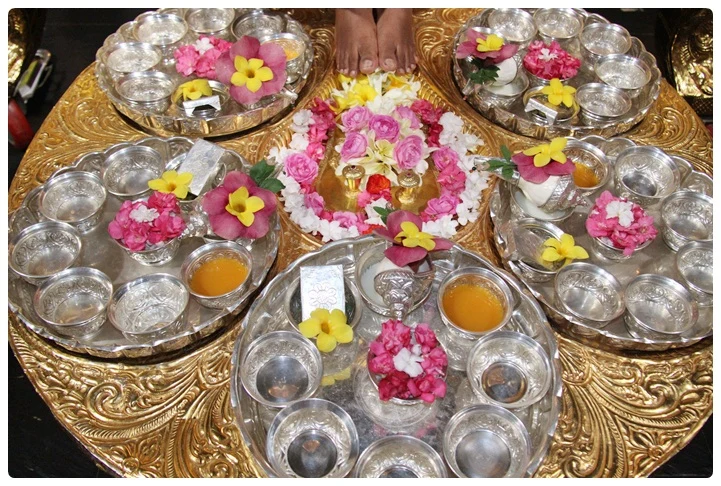
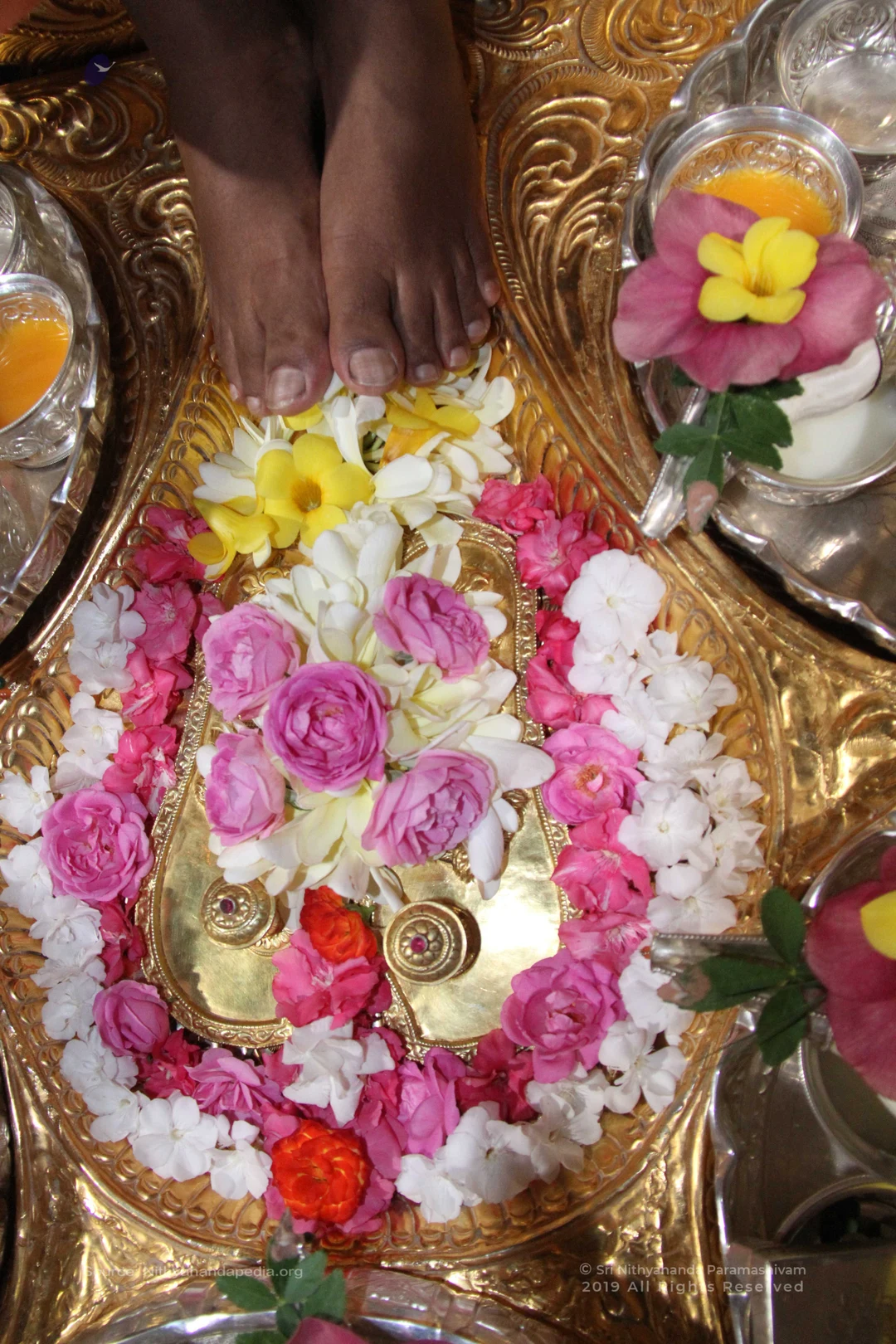
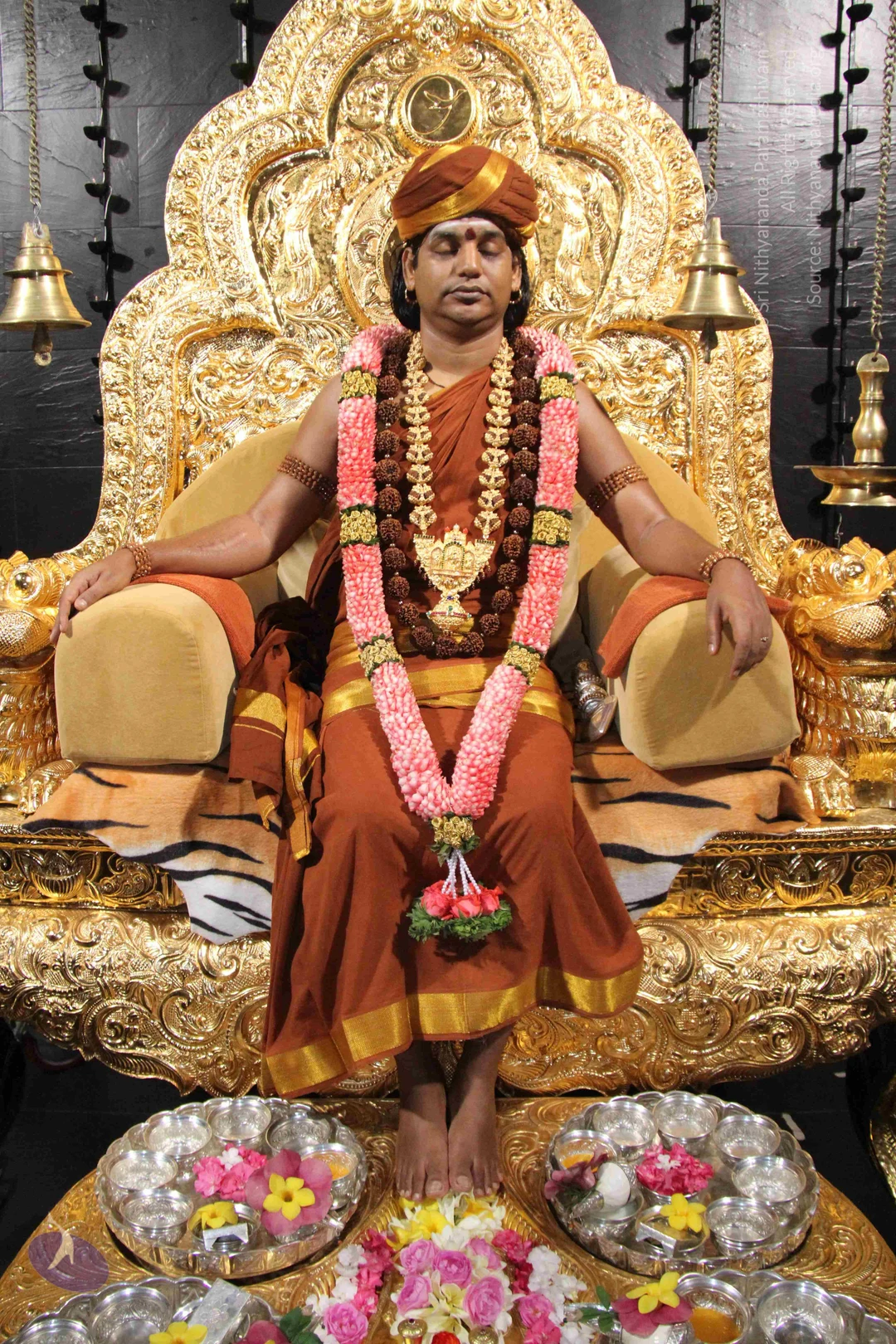
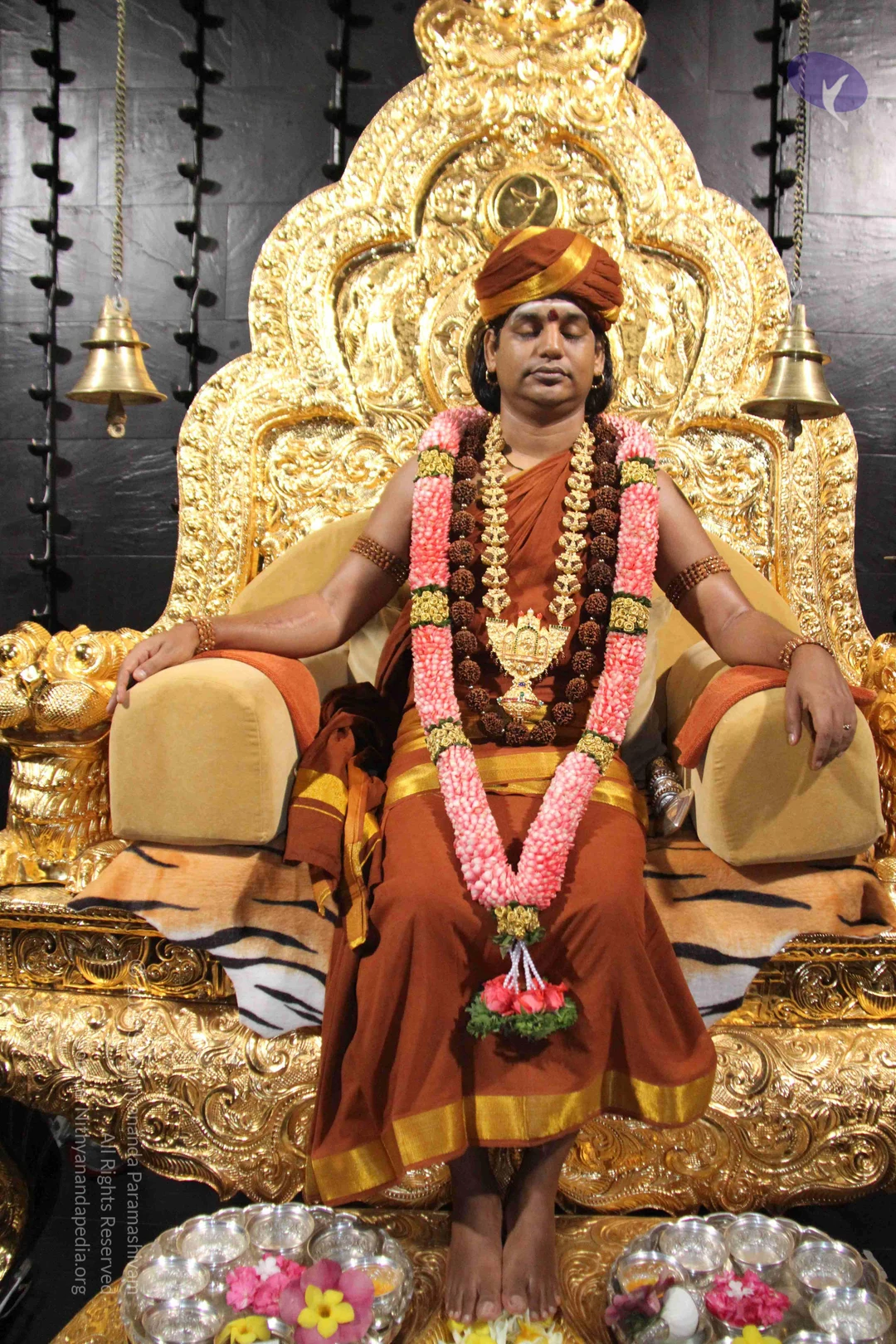
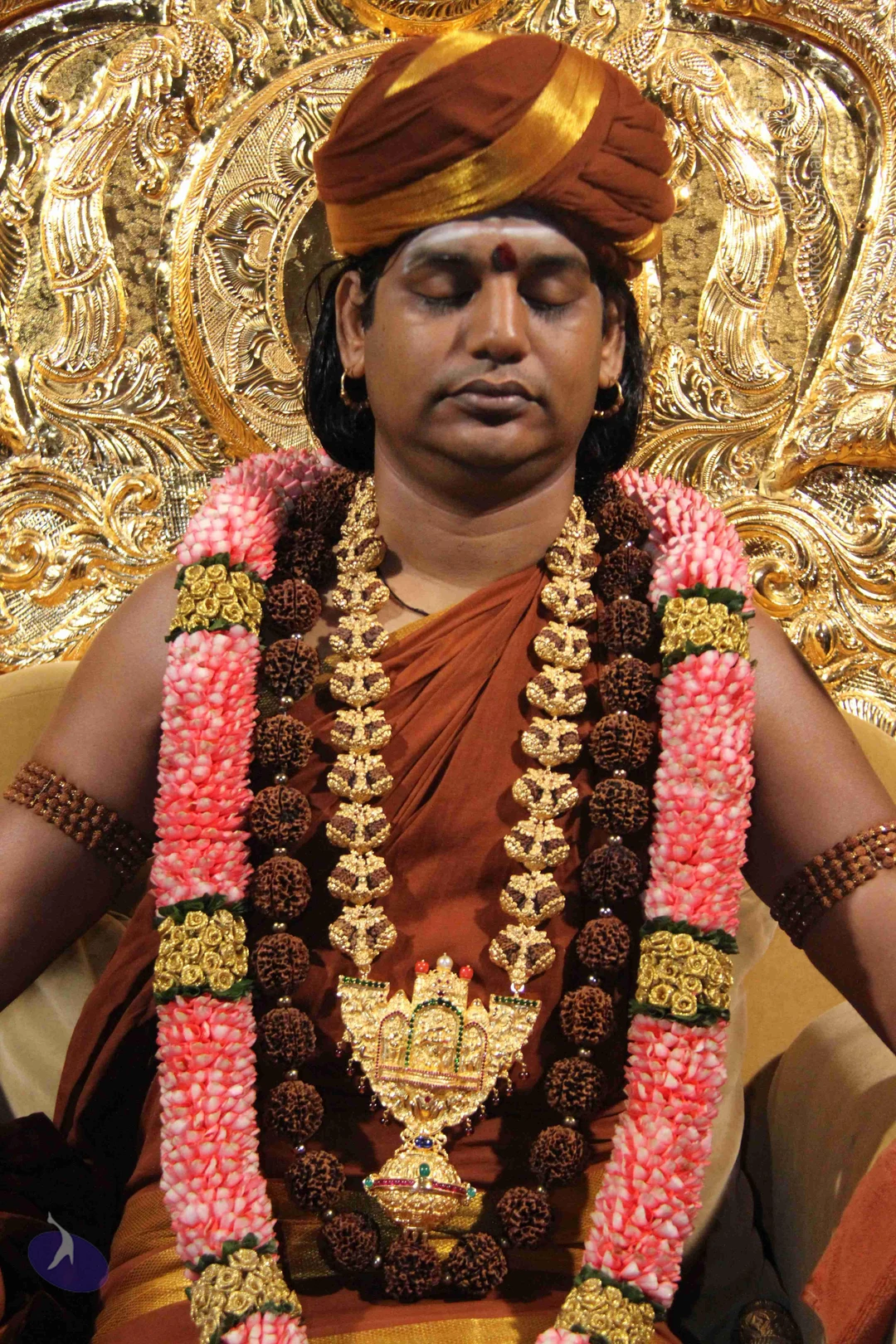
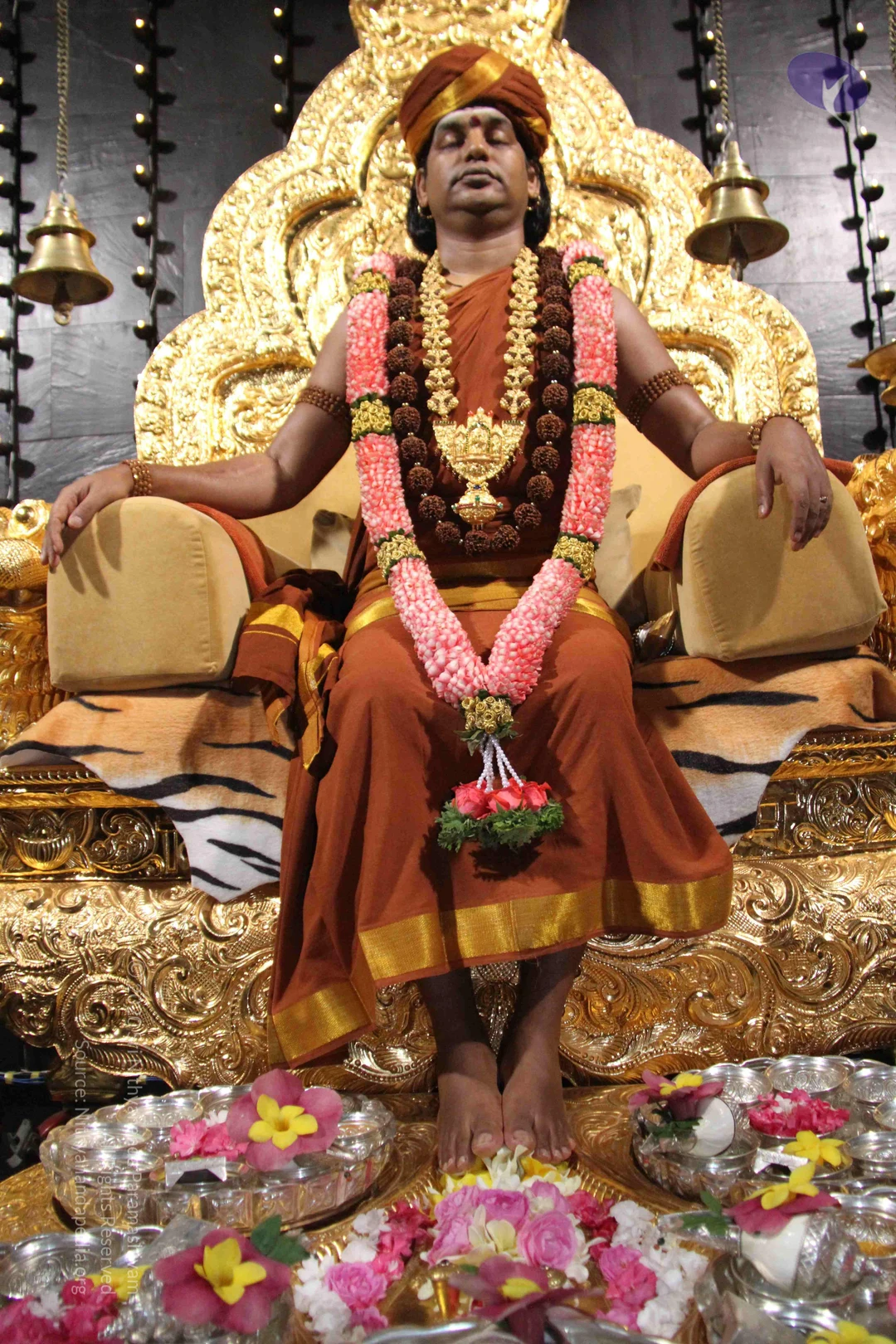
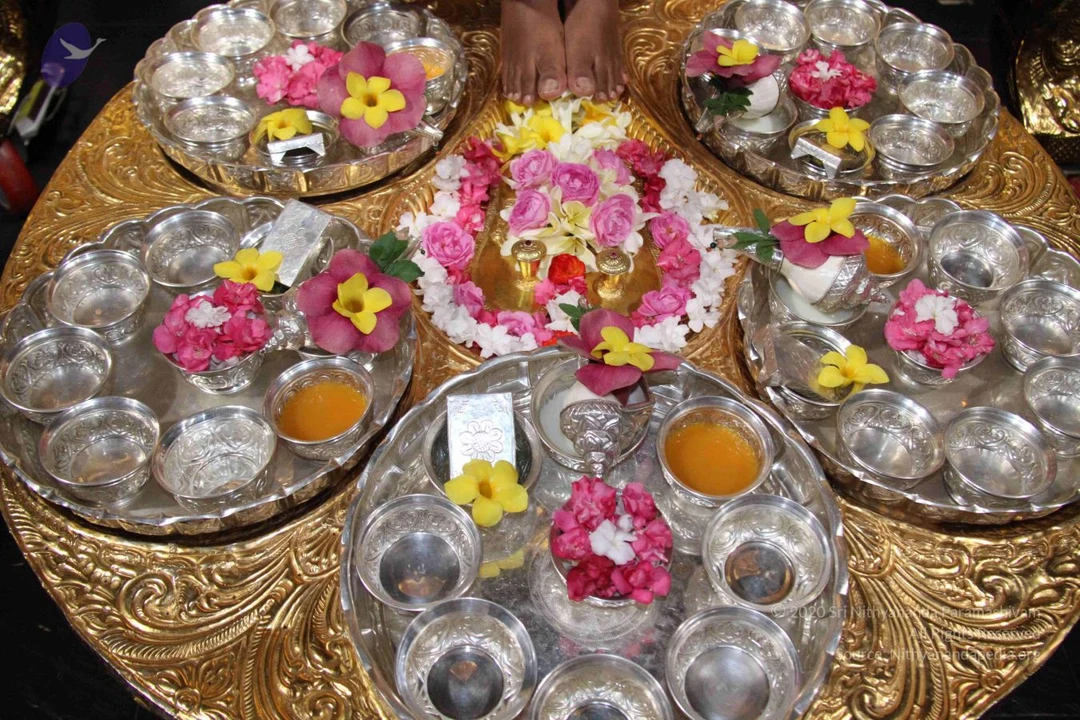
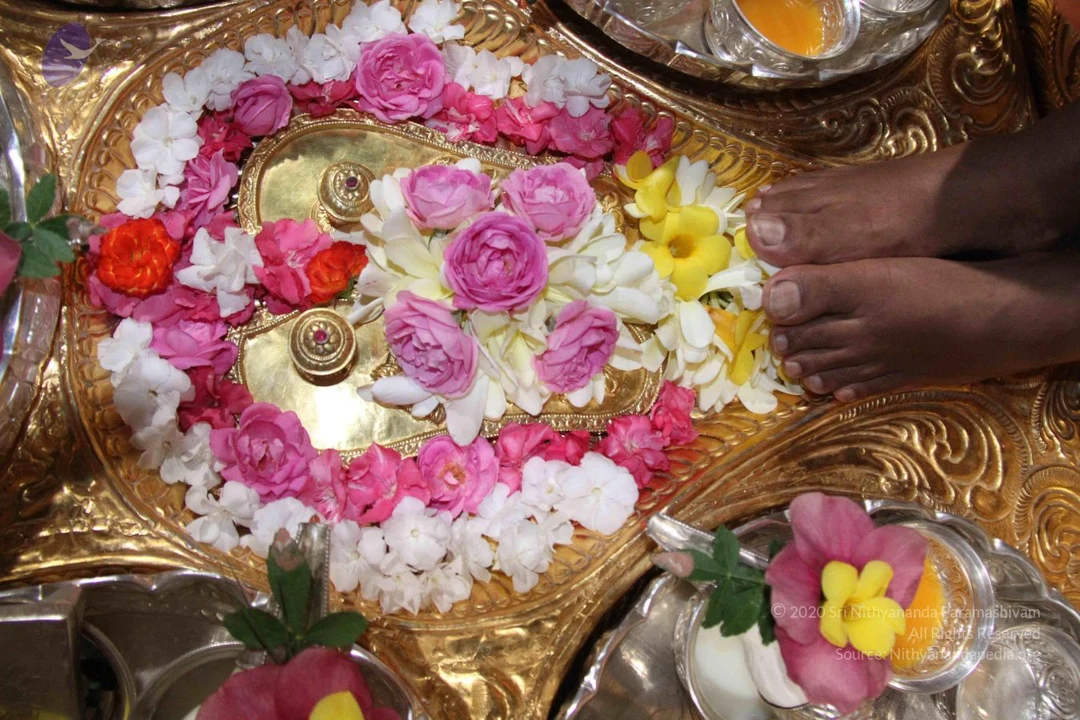
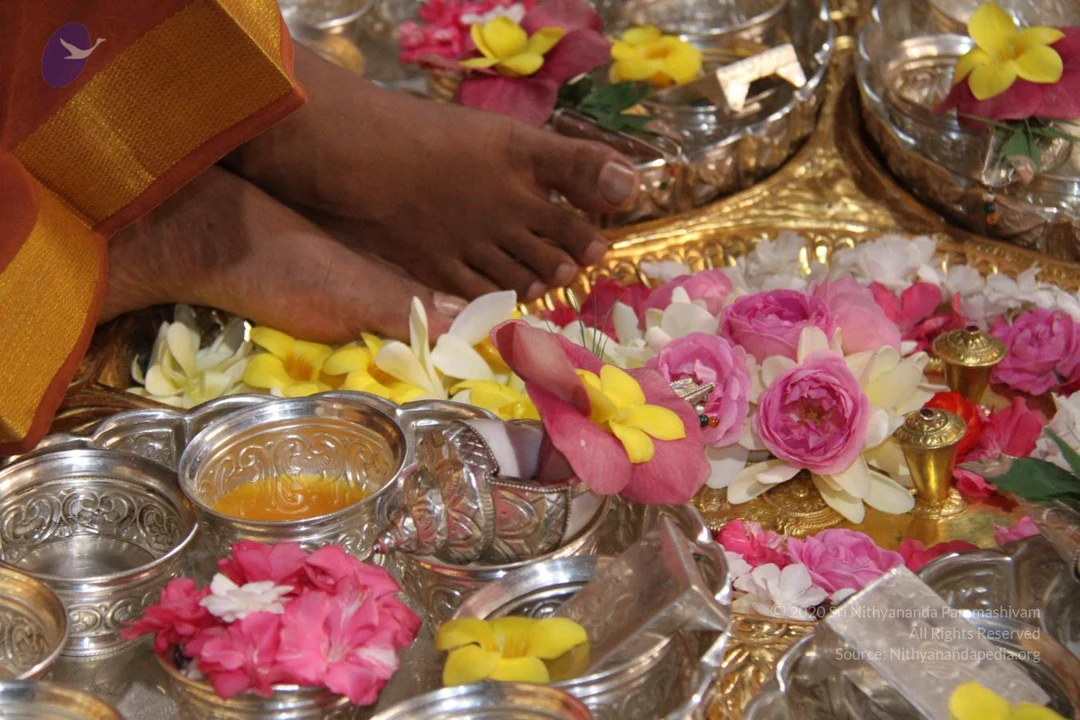
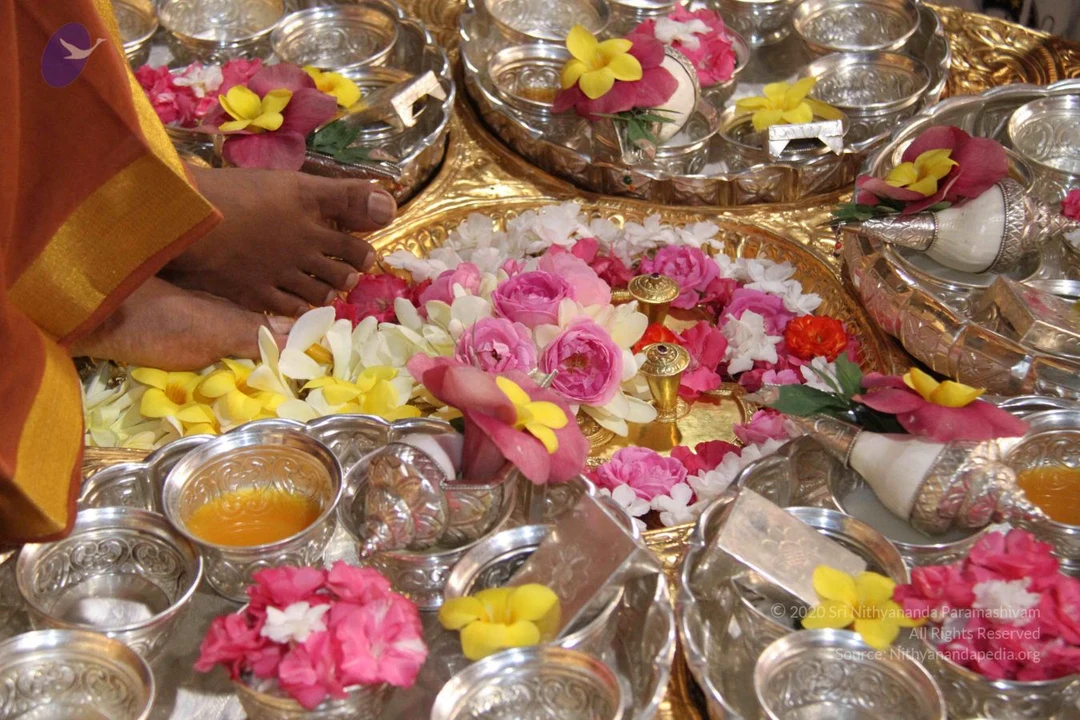
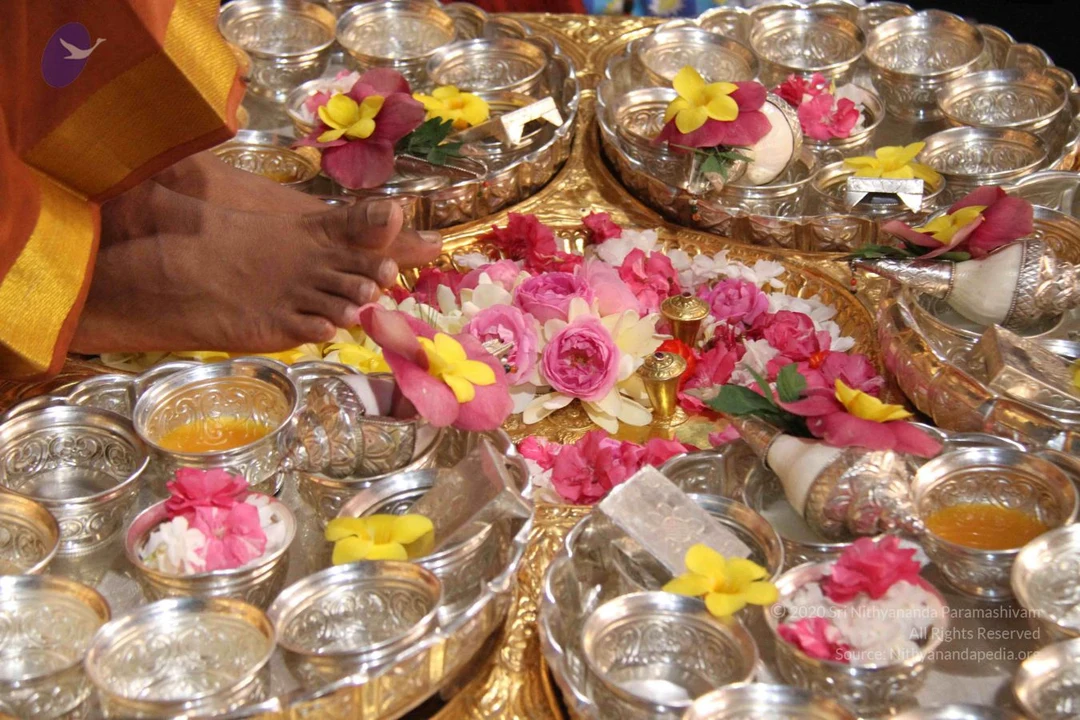
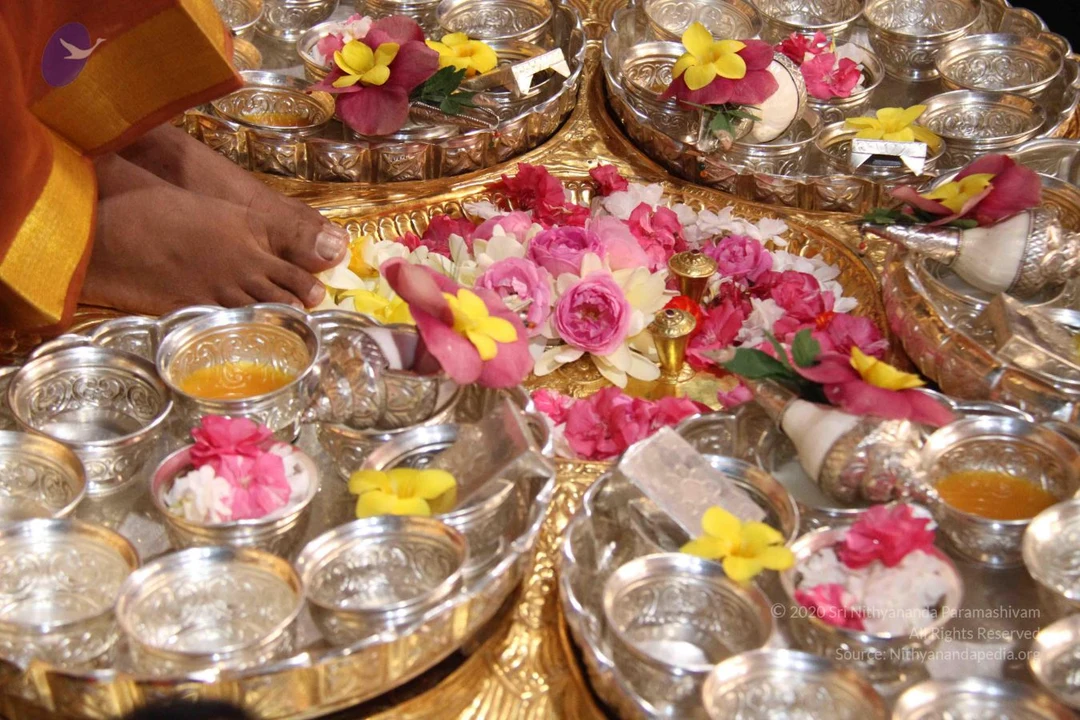
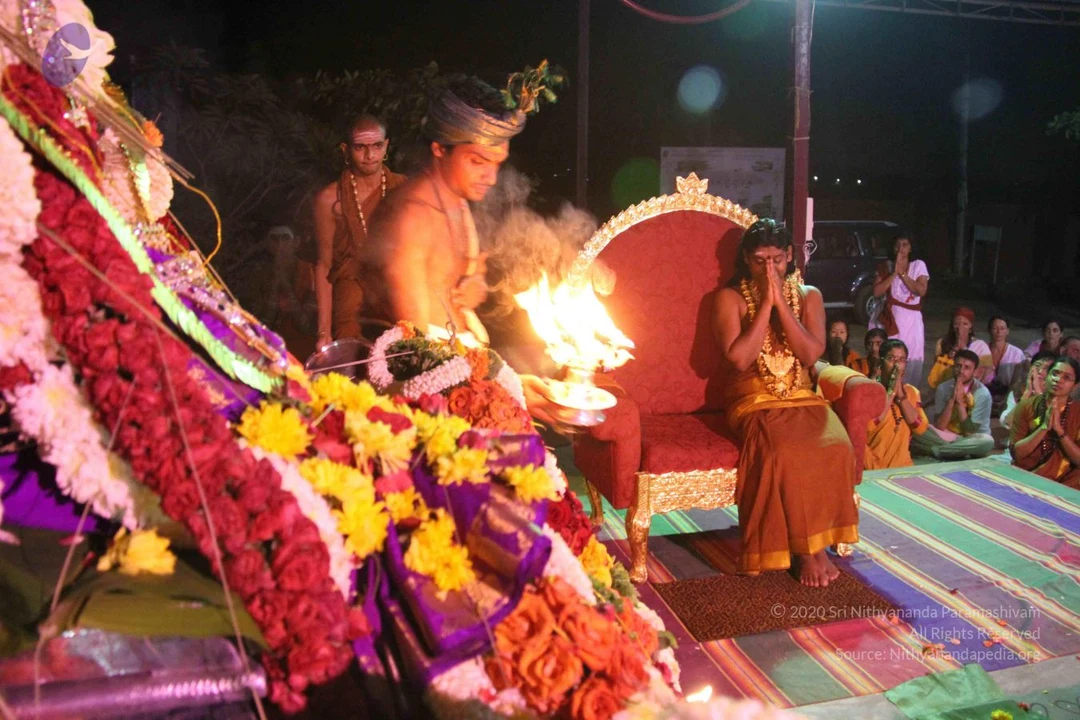
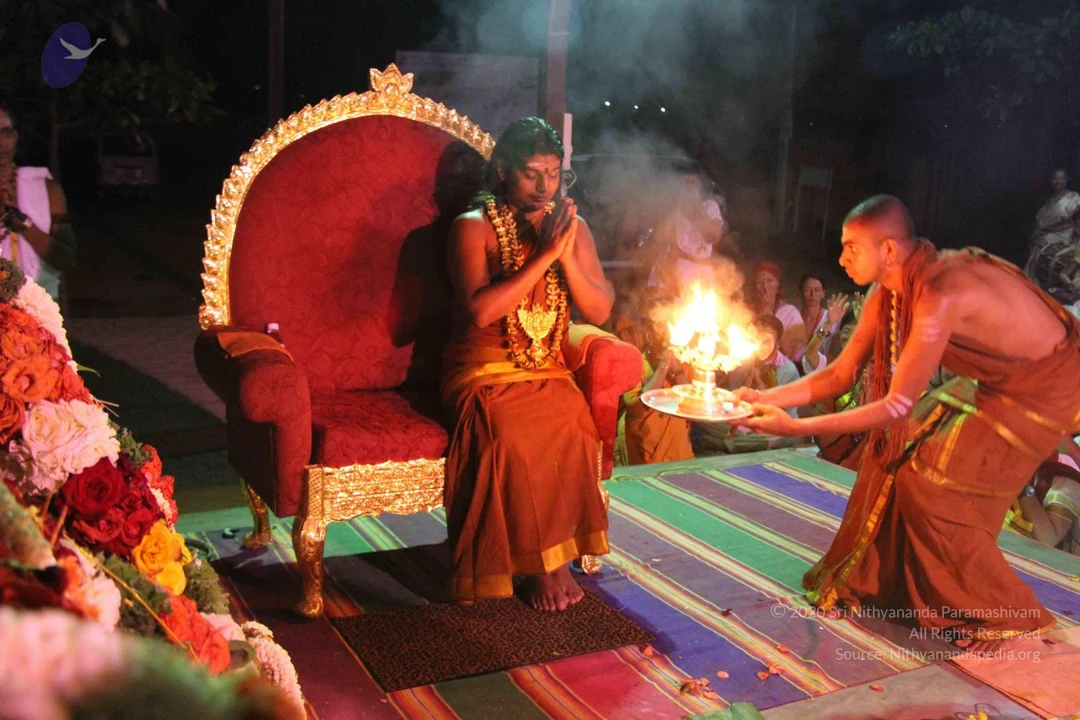
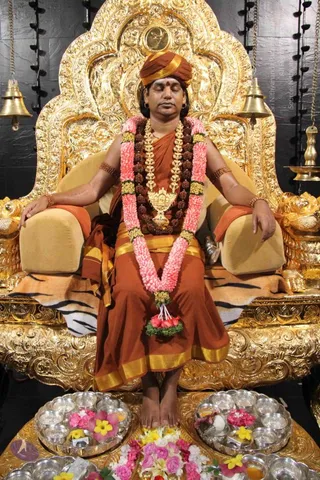
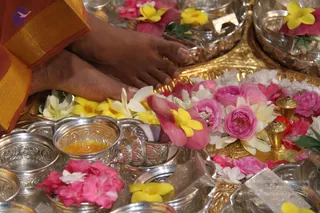
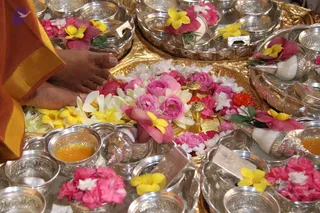
A seated man in rust-orange robes and a matching orange turban sits eyes closed on an ornate gilded throne with lion-head armrests and a tiger-skin cloth draped over the seat. He wears layered rudraksha malas, a gold ceremonial necklace with a central pendant, gold armbands and a pink and white jasmine garland that hangs to his lap, with a flower bundle at the end. Silver trays of flowers and small silver bowls sit at his feet, with pink and yellow blossoms scattered on the floor. Brass bells hang at the top corners of the throne frame.A photograph of a seated man in rust-orange robes and a matching orange turban, eyes closed, seated on an ornate gold throne with a tiger-striped cloth draped over the seat. He wears a pink and white flower garland, a gold necklace, and multiple rudraksha mala strands, with a red bindi on his forehead and bangles on his wrists. Silver bowls with flowers and a kalasha-like arrangement sit at his feet, and brass bells hang on either side of the throne. A light blue/white logo appears in the upper corner.Close-up photograph of a seated man with eyes closed in meditation, wearing a rust-orange turban with a gold stripe, a red bindi and white forehead markings. He wears a rust-orange shawl, multiple rows of rudraksha malas, a pink and white flower garland with gold accents, and a large gold ornamental pendant with a deity figure set with red and green stones. Gold ornate carved panels stand behind him. Swamiji (probable): long dark hair, rudraksha malas, orange turban and ornate gold pendant, presented as the central honoured figure in a satsang setting.A photograph of a seated figure on an ornate gold throne with a tiger-striped cushion, eyes closed in meditation. He wears a rust-orange turban and a rust-orange robe with a gold border, a gold ceremonial necklace and a long rudraksha mala with pink and white flower garlands. Brass bells hang on either side. Silver bowls with pink and yellow flowers and petals sit at his bare feet.Overhead photo of a ritual arrangement on a gold-embossed round tray. Bare feet of a person stand at the top edge above a central flower garland of pink, white and yellow blossoms around small brass vessels. Around it are silver plates and bowls holding pink flowers, yellow frangipani-like blooms, white petals, orange turmeric-coloured paste and small silver containers. No people are visible beyond the feet; the scene is a puja or abhishekam offering setup.Close-up photo of a padapuja ritual: a bare pair of feet rests on a gold tray ringed with pink roses, white jasmine-type blossoms and yellow and orange flowers. Small gold-toned kalasha-style vessels and silver bowls with offerings sit at the edges, with a pink and yellow flower in the lower corner. No face is visible and only feet appear, so no individual can be identified from the frame.

nithya satsang swamiji
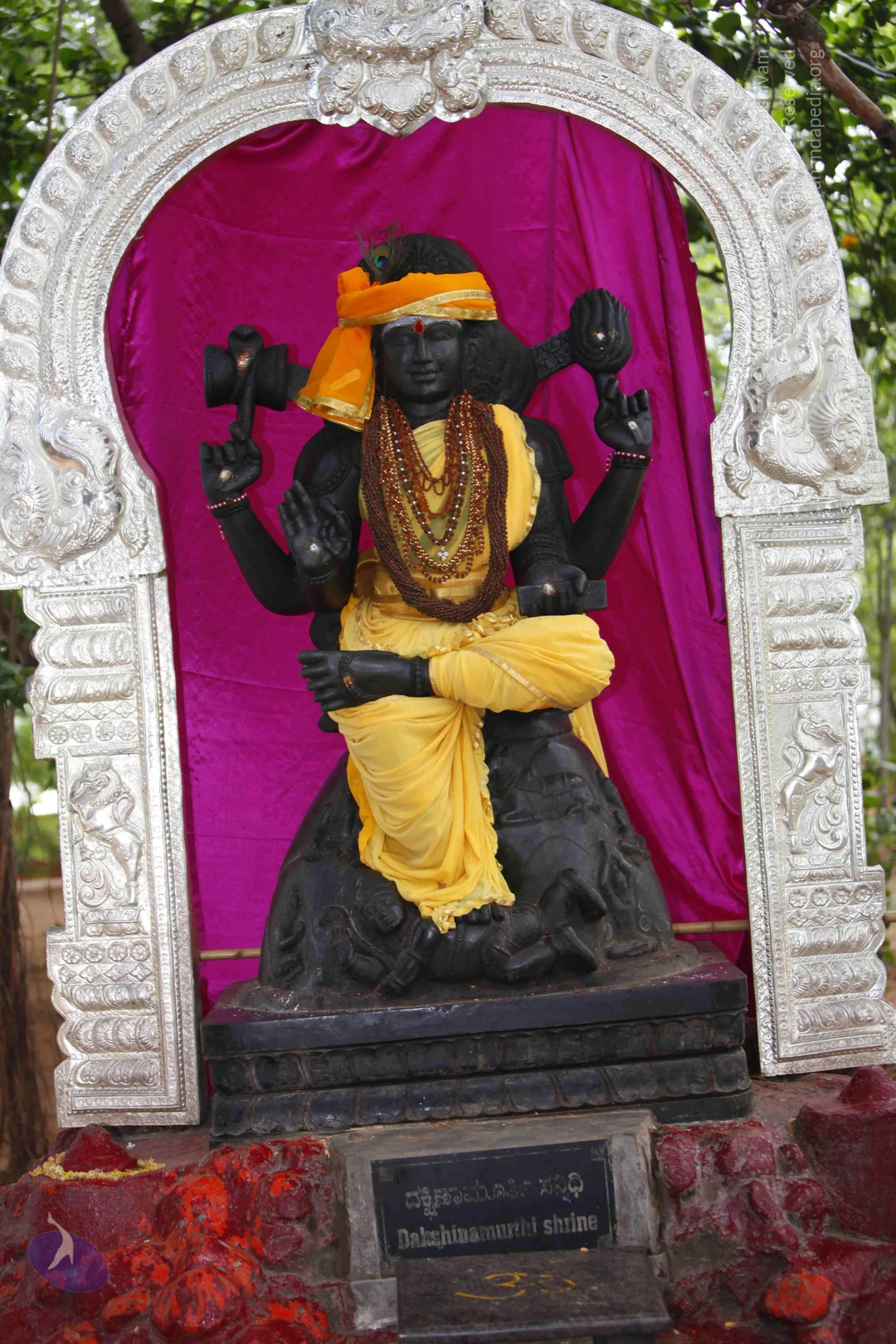
35 photosSource gallery
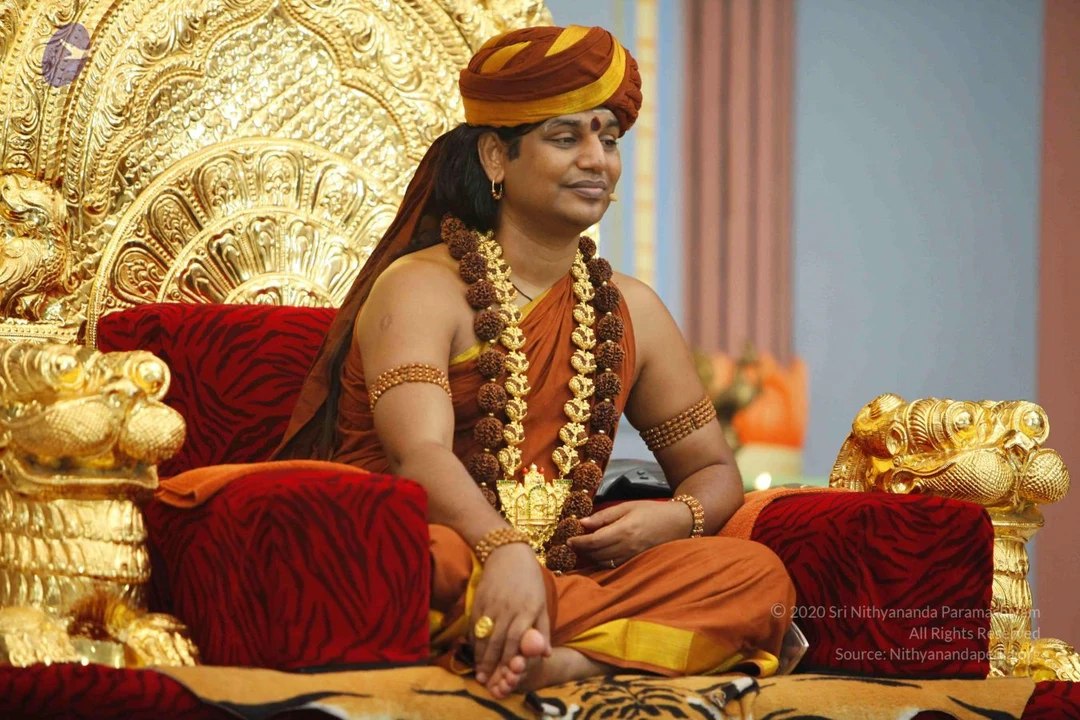
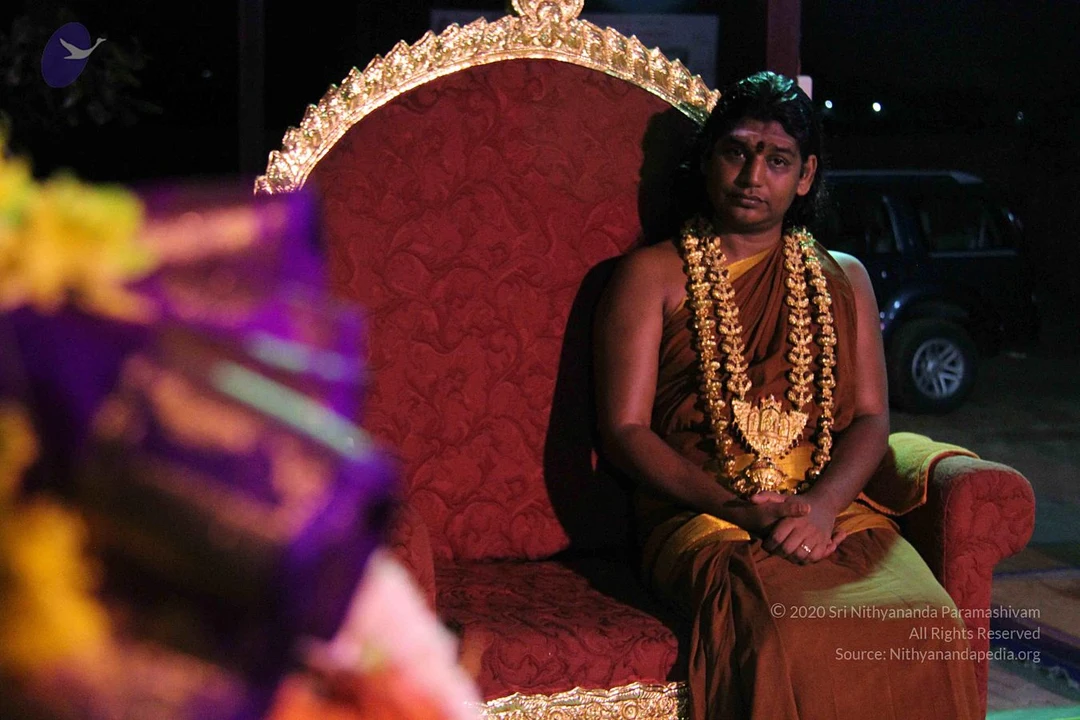
A seated man in rust-orange and gold-bordered robes sits cross-legged on a red tiger-striped cushioned seat in front of an ornate gold throne with carved relief. He wears an orange and gold turban with a red bindi, a gold ceremonial necklace with a central pendant, a rudraksha mala draped across his chest, rudraksha armbands and bracelets, and gold earrings. Long dark hair falls to his shoulders. A tiger-face rug lies beneath his feet. A black object sits to the right on the throne armrest.A seated man in a saffron-orange turban and orange draped garment sits cross-legged on a red and black tiger-striped cushioned throne in front of an ornate gold carved backrest. He wears layered rudraksha malas, a gold garland with a gold ornamental pendant at the chest, gold bangles on the upper arms and wrists, and a red bindi on his forehead. A tiger-face rug covers the seat. Appearance-based candidate for a person, seated in a ceremonial pose on the throne; no other people are visible.A seated man in orange-saffron robes sits on an ornate golden throne with red cushioned armrests, lion-head golden armrest finials and a striped tiger-skin cloth draped over the seat. He wears an orange-and-gold turban, a multi-strand rudraksha mala and a long gold necklace with a gold pendant, and holds a small object in his right hand. Flanking the throne are two large painted and gilded statues of standing deities wearing gold crowns, gold ornaments and orange-and-green lower garments, with gold bells hanging above. The area is decorated with gold and red fabric. Appearance-based cues match the Swamiji (probable) description: saffron robes, rudraksha mala, ceremonial gold necklace and turban, seated in a throne setting.A seated man in orange and saffron robes sits cross-legged on a red-cushioned golden throne with carved lion-head armrests, palms pressed together in namaste. He wears an orange turban, rudraksha malas and an ornate gold pendant necklace, with a small red bindi on his forehead. He is barefoot on a tiger-striped cloth. Gilded carvings frame the throne, and painted deity figures with gold armbands stand on either side. Swamiji (probable): the saffron turban, rudraksha malas and ornate gold necklace are visible cues on a figure seated on a throne.A seated man in an orange-red turban, rudraksha mala and ornate gold necklace with a gold pendant sits cross-legged on an ornate gold throne with carved lion-head armrests and red tiger-striped cushions. He wears an orange-red shawl with a yellow border, has a red bindi, and spreads his arms calmly while smiling. A small headset microphone is visible near his face. a person is seated in a satsang setting, with gold decorative panels and partial deity arms visible at the edges.A seated man in an ornate golden throne with lion-head armrests, wearing a saffron-orange turban with a yellow stripe, a red bindi, saffron-orange robe with yellow border, multiple rudraksha malas and a gold ceremonial necklace with a temple-shaped pendant, and gold armbands. He sits cross-legged on a red and gold cushion with bare feet, smiling with eyes closed, and has a small microphone clipped near his ear. Golden carved backdrop and painted figures with bangles frame the scene. Appearance-based label: a person, seated as a teacher giving satsang.
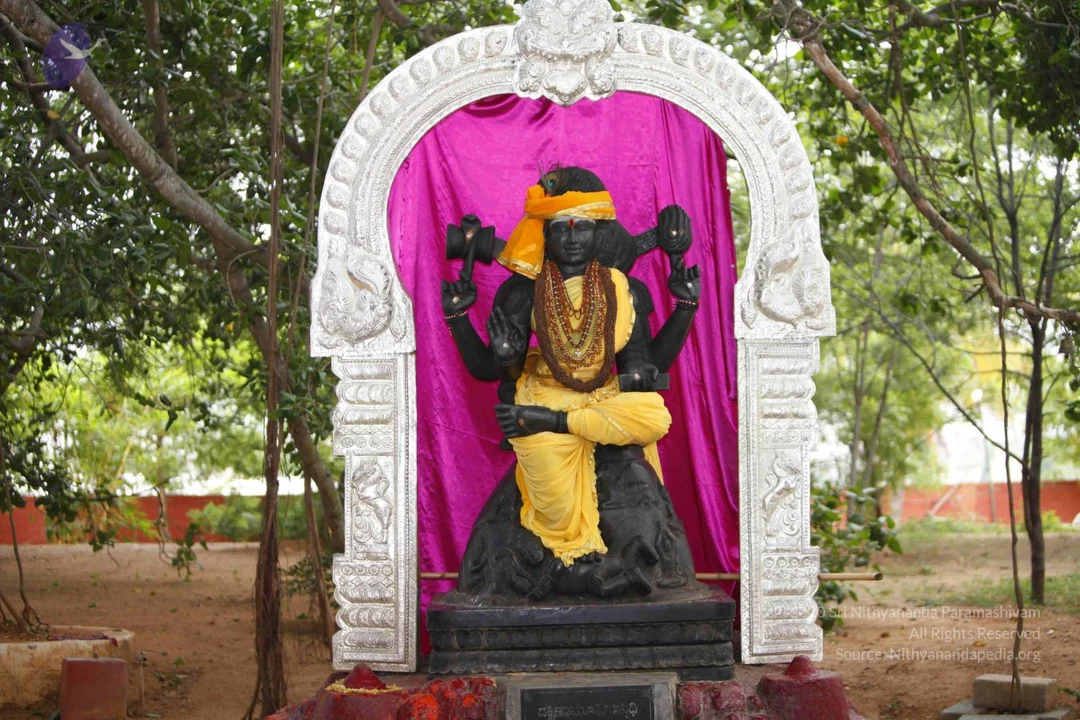
2 way

2 photosSource gallery
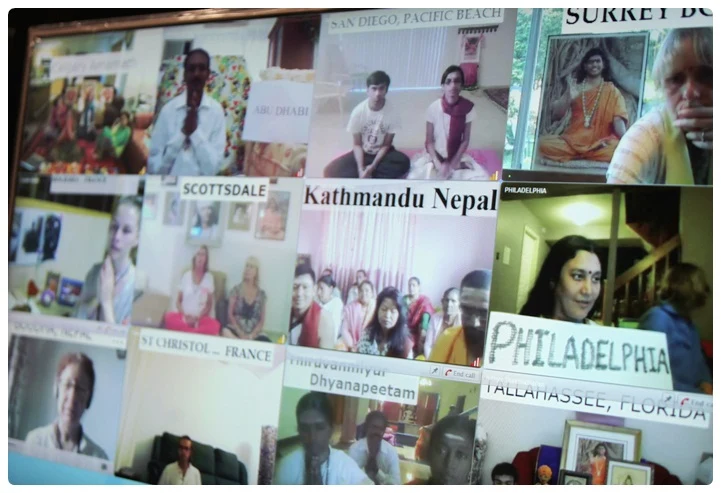
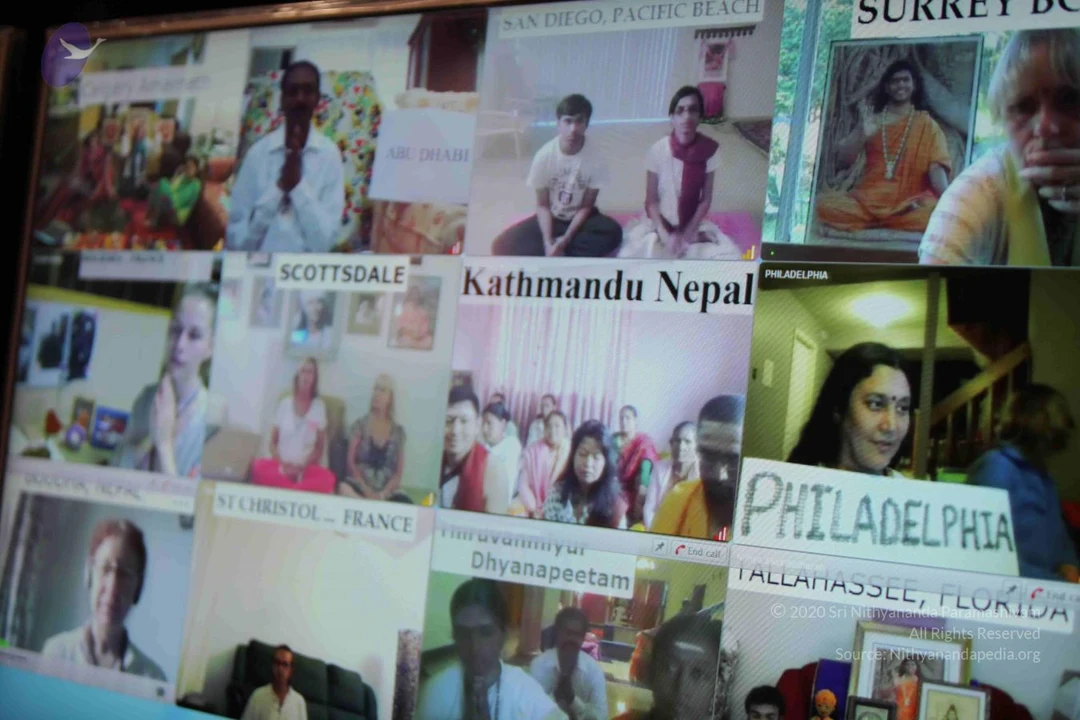
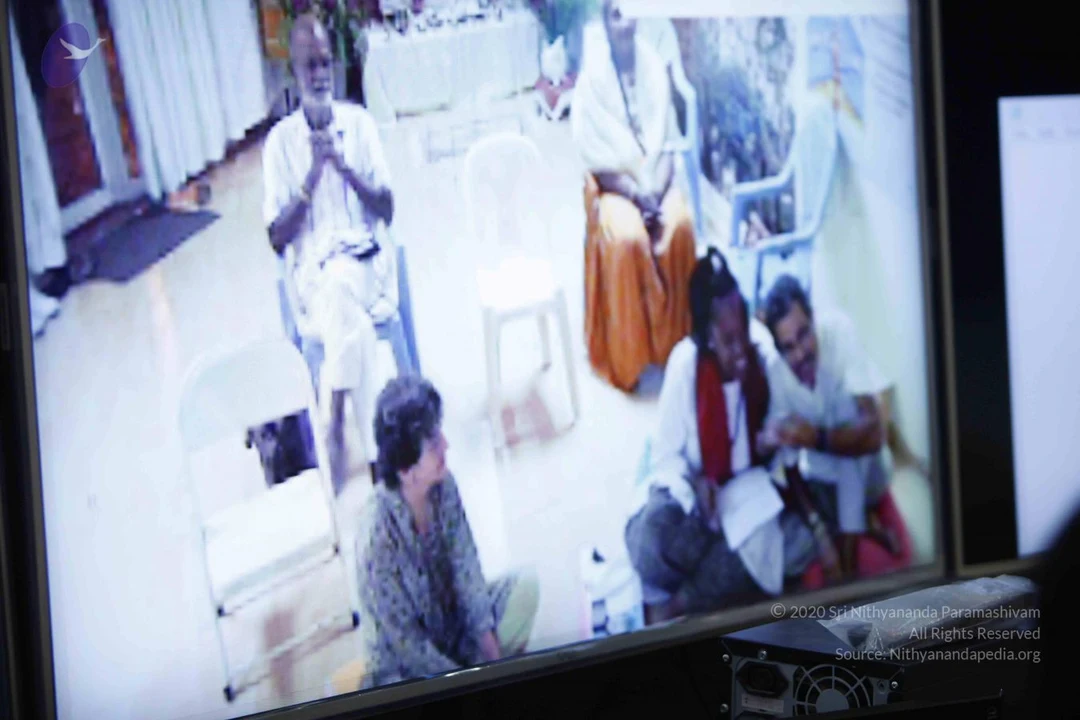
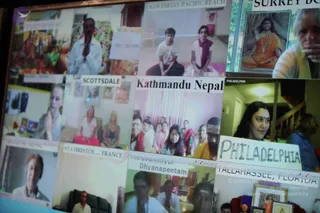
A photograph of a large screen showing a video-conference satsang grid of many small windows, each labelled with a location such as San Diego Pacific Beach, Surrey BC, Scottsdale, Kathmandu Nepal, Philadelphia, Tallahassee Florida, St Christol France, Dhyanapeetam and Abu Dhabi. Participants in the windows sit with hands in anjali or meditate, some in orange robes. One window shows a framed portrait of a bearded figure in orange robes with rudraksha mala and a chain, labelled Surrey BC, sitting beside a woman with grey hair. The physical room in front of the screen is not clearly visible.A photograph of a monitor showing a live video feed of an indoor ashram-style room with white tiled floor and white plastic chairs. On the screen, an elderly man in white clothes stands with hands pressed together in namaste. A seated figure in an orange robe sits near the top right, beside a person in a red shawl and white clothes and another man in white. A woman in a patterned top sits on the floor in the lower left. A small black electronic device sits on the desk in the foreground.

final blessing

6 photosSource gallery
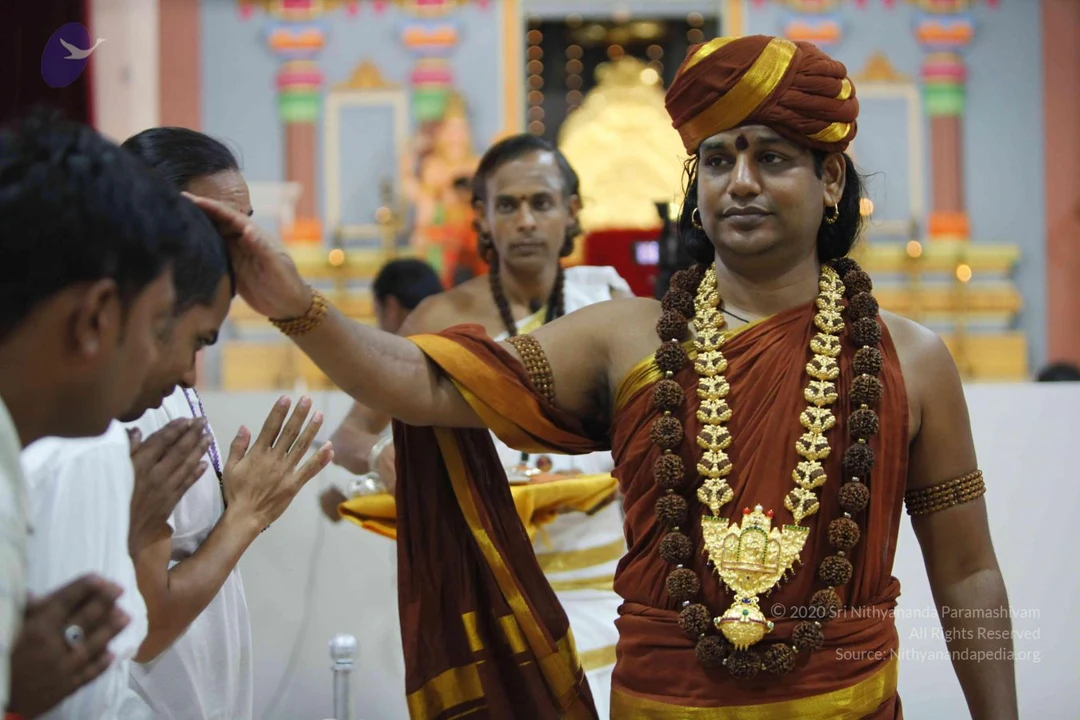
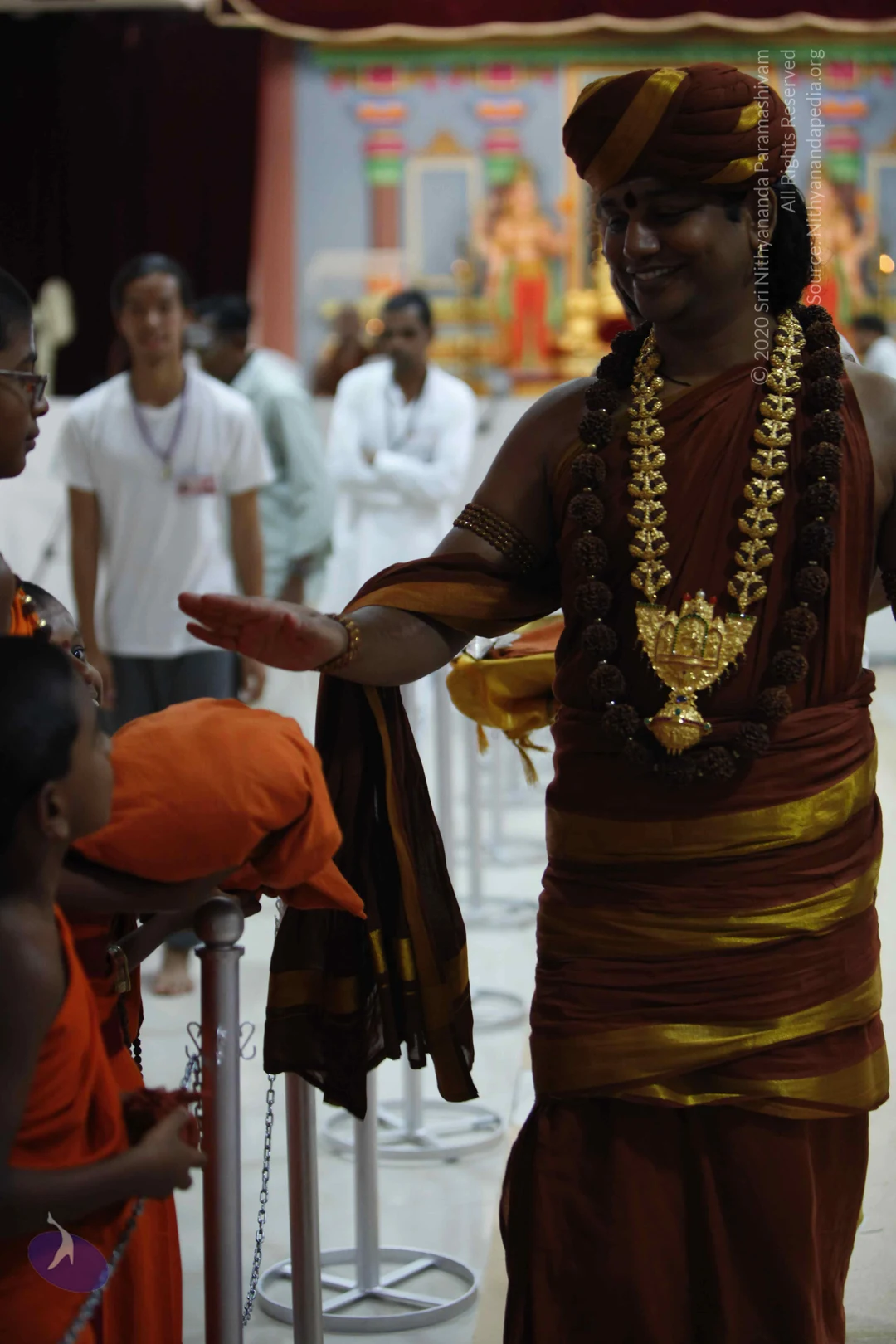
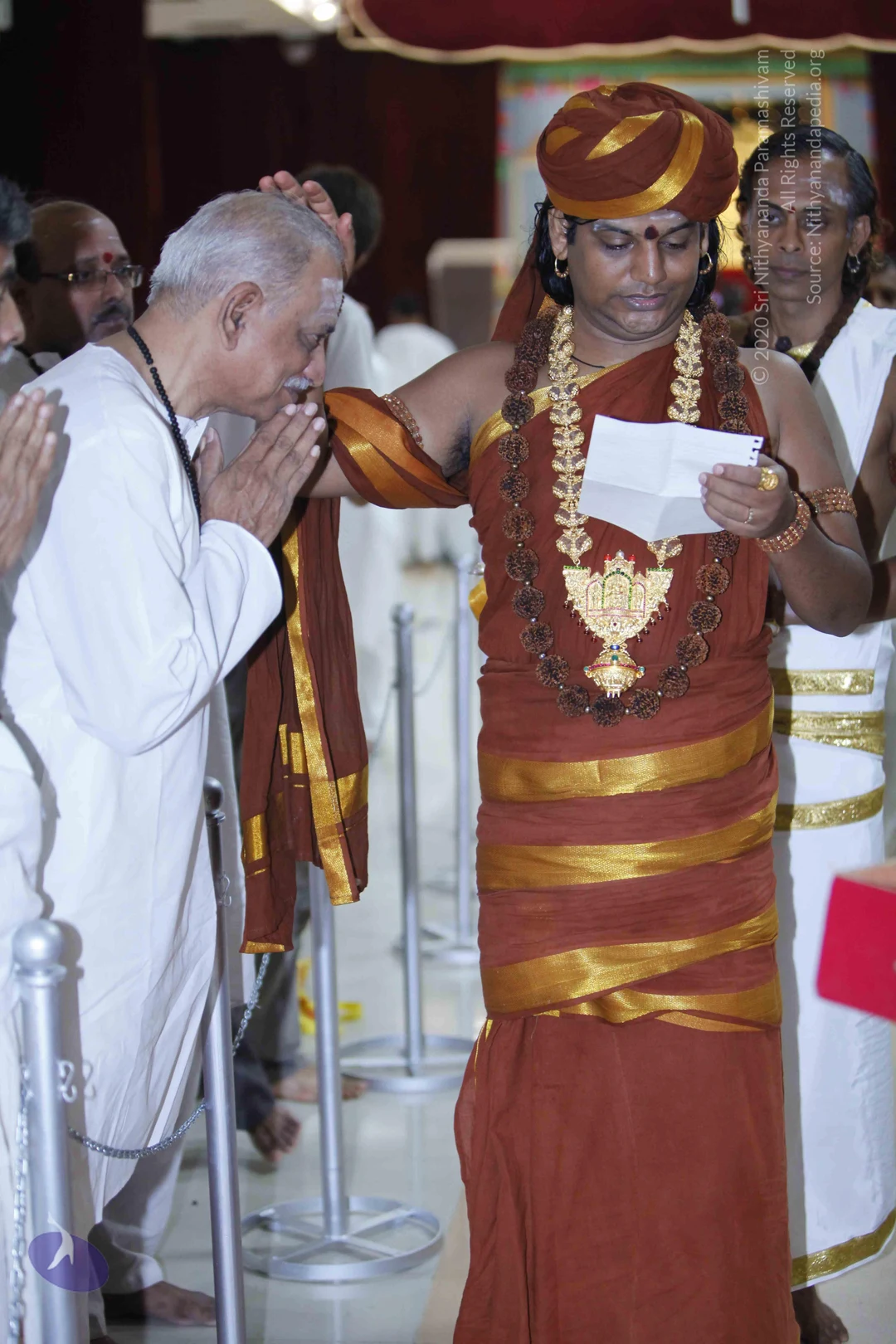
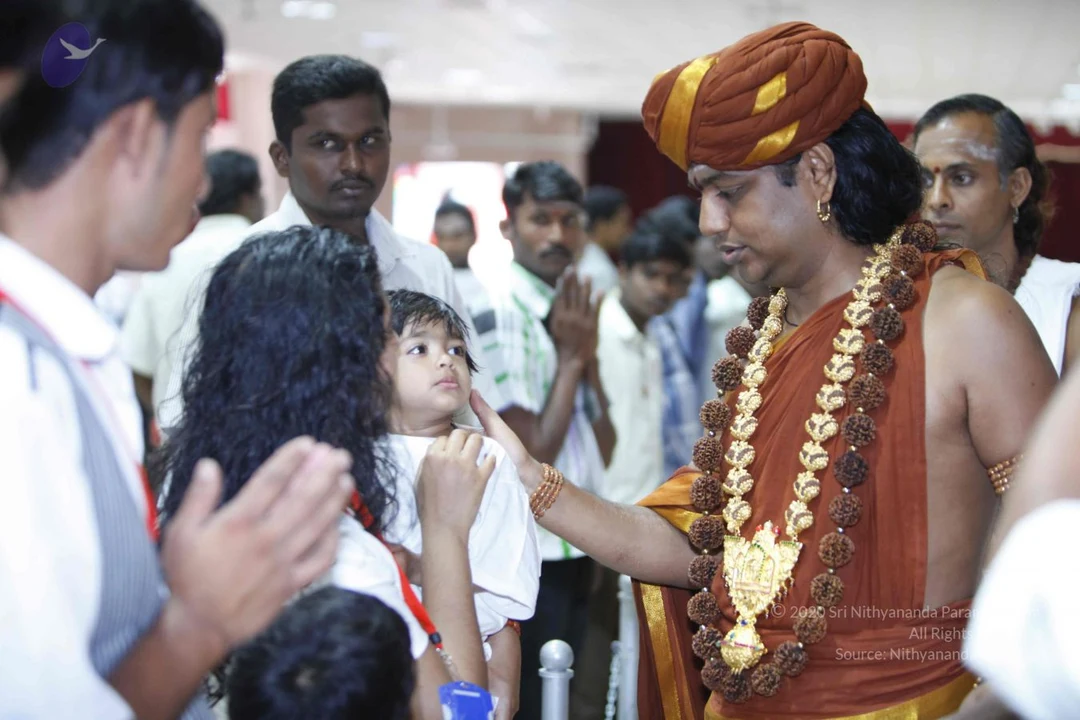
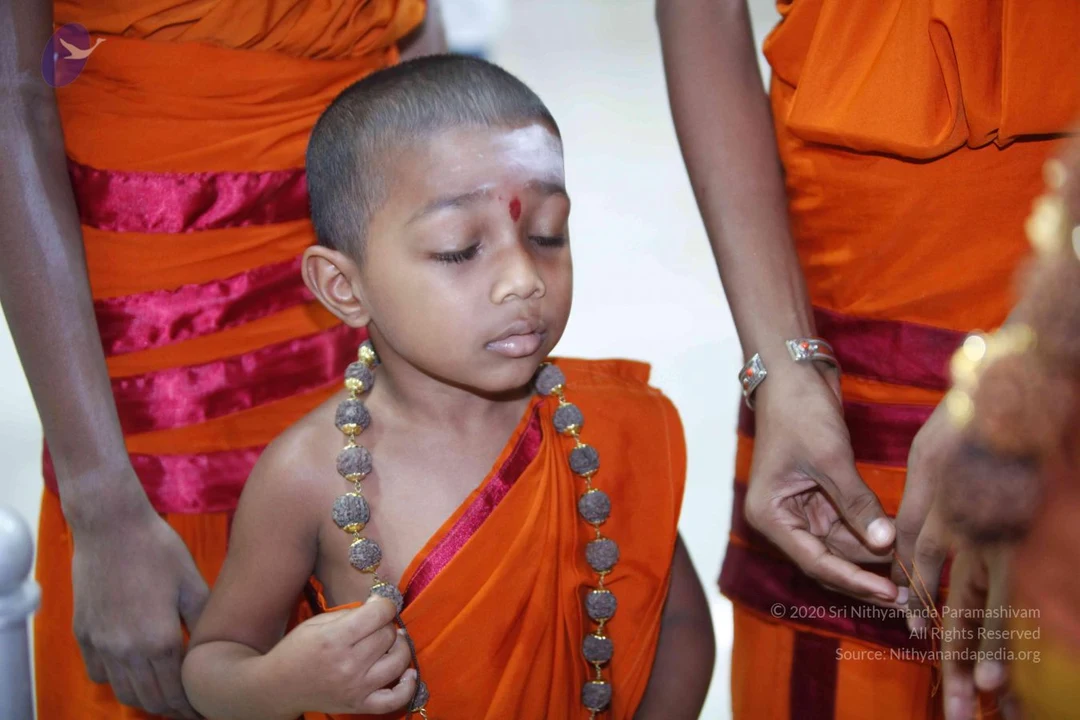
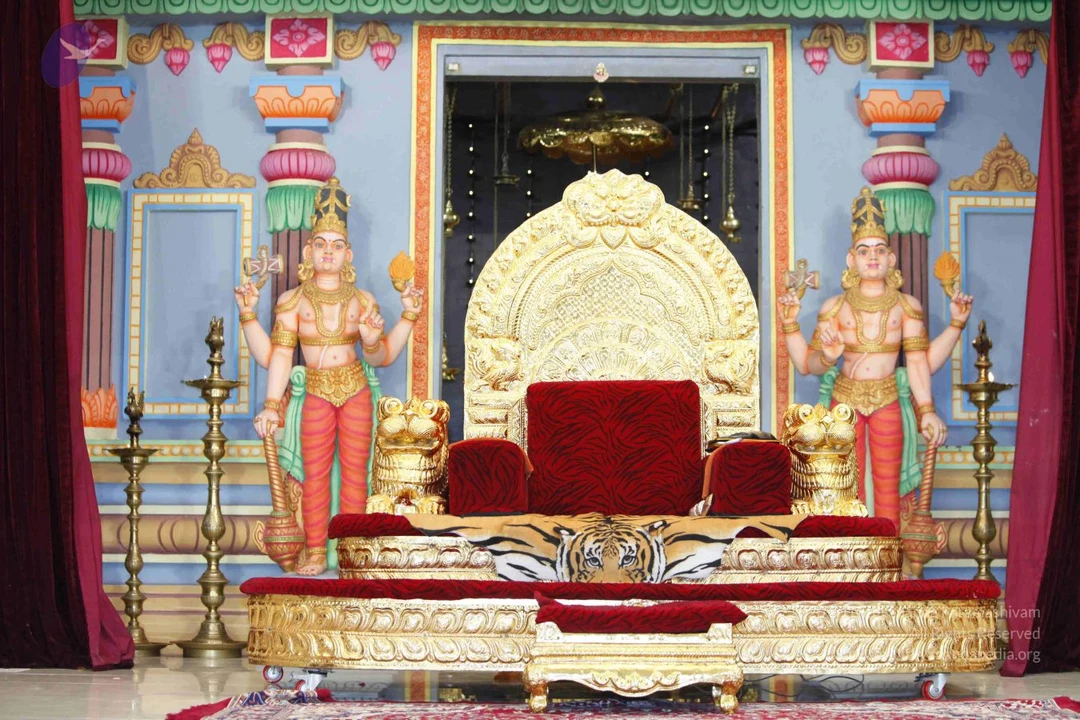
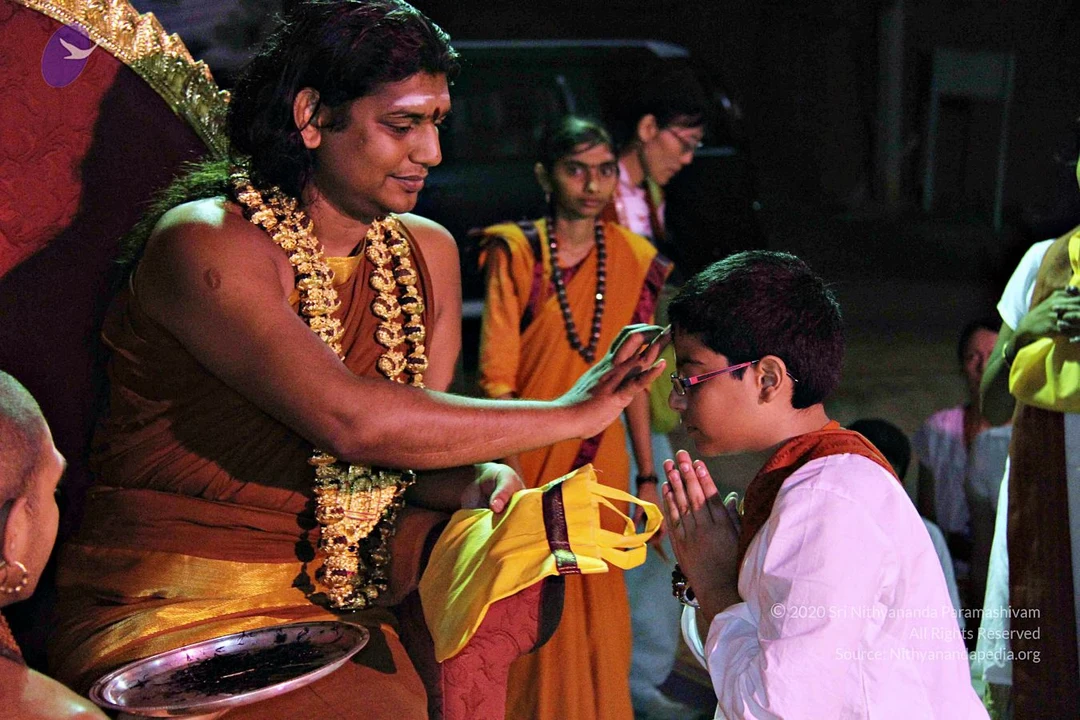
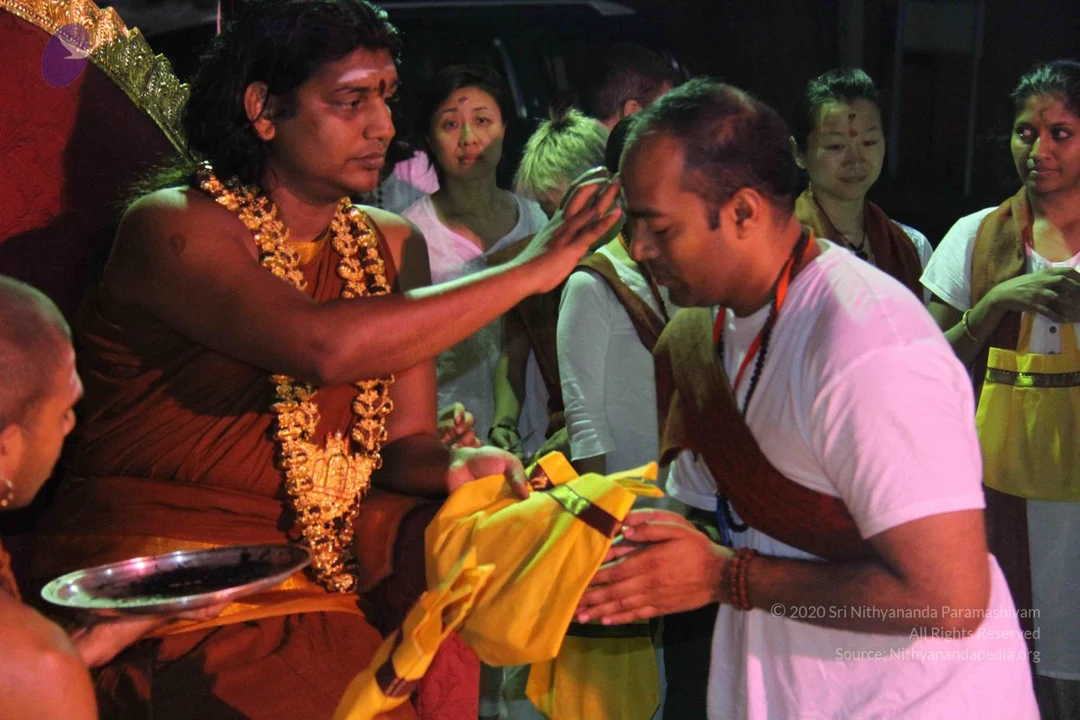
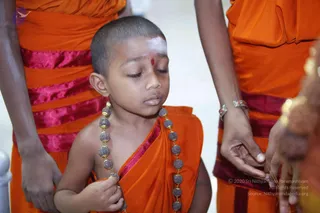
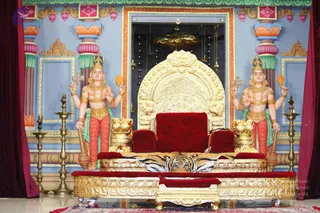
A man in a saffron-orange turban and orange-brown dhoti-style garment with a gold border stands at the centre, wearing a long gold necklace with a large gold pendant and multiple rudraksha malas across his chest, with rudraksha bracelets on his arms. He raises his right hand toward a devotee's head in a blessing gesture. Devotees in white clothes on the left have their palms pressed together in anjali. Behind him, a priest in white with a sacred thread holds a brass vessel, and a golden deity murti or throne stands in a decorated hall with pillars in pink, green and yellow. The man in the centre has distinctive adornments and attire consistent with the page's reference to a person, presented as a probable identification from appearance cues.A smiling man in a maroon-brown turban with gold trim and a maroon-brown dhoti-style garment with gold borders stands at a stanchion line, reaching out with his right hand toward a saffron-robed young monk. He wears a long rudraksha mala and an ornate gold necklace with a central gold pendant. Behind him is a temple hall with a painted backdrop and deity figures; a white-clad man and several other people stand in the background. Several saffron-robed boys lean toward him at the barrier, one holding a red item. A candidate matching Swamiji by appearance (turban, rudraksha mala, gold necklace, saffron-toned ceremonial clothing) is present, so this is identified as Swamiji (probable) in the scene.Photograph of a ceremonial moment in an indoor hall with polished floors and metal stanchions. A man in white dhoti and shirt with white vibhuti on his forehead and a rudraksha mala presses his palms together and bows his head, while a tall figure in a rust-red turban and draped rust-red robes with broad gold borders stands in front, holding a folded white paper and looking down. The standing figure wears a long rudraksha mala with a large gold ornamental pendant, gold earrings and a red bindi. Behind him a man in white with gold-bordered cloth and braided hair stands by. The bowing man appears to be receiving a blessing, with the robed figure's hand raised toward his head. a person appearance is present: long swept-back hair, a rust-red turban, ornate gold-and-rudraksha adornments and saffron-toned ceremonial dress, yet the presentation is uncertain.A photograph of a man in an orange-brown saffron wrap and matching orange turban with gold trim, wearing a long gold-and-rudraksha necklace with a gold pendant and rudraksha malas across his chest, and gold earrings. He stands among a crowd and reaches out to touch the head of a young child in white clothes held by a woman with long dark hair. Other men in white shirts and dhotis stand around, some with hands folded in namaskar, and a man with a tilak and bare shoulders stands behind at right. a person appears in the centre, given his orange turban, ornate rudraksha and gold mala, but the image gives no certain identification of the figure. The setting is an indoor hall with a red curtain and white ceiling.A young boy with a shaved head and a red-and-white forehead mark stands with eyes lowered, wearing an orange cloth wrap with maroon stripes and a long rudraksha mala with gold spacers hanging across his chest. Two adults in orange robes with maroon bands stand on either side, one hand resting on his shoulder and another gently guiding his arm. Another person's hand holding a garland or ornament is visible at the right edge. The setting is an indoor hall with a plain white background.An empty ornate gold throne stands centred on a raised red-and-gold platform draped with a tiger-skin cloth, flanked by two large painted statues of multi-armed deity figures with gold crowns, necklaces and armbands, and red dhoti-like lower garments with green sashes. Gold lamp stands and red velvet curtains frame the stage, with a red velvet cushion on the throne seat. No people are visible; the throne is an unoccupied peetha in a stage setting.
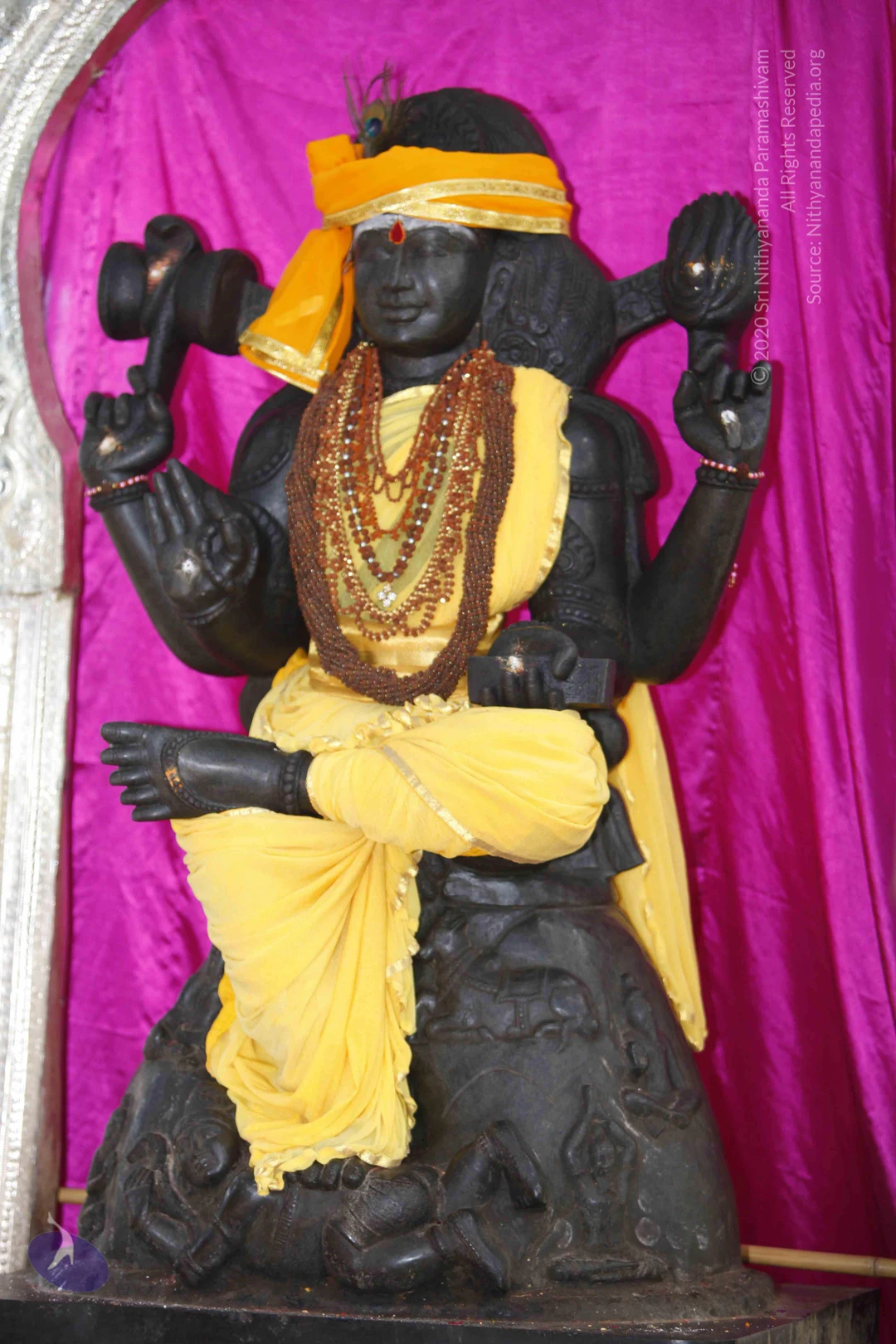
IA session Swamiji
26 photosSource gallery
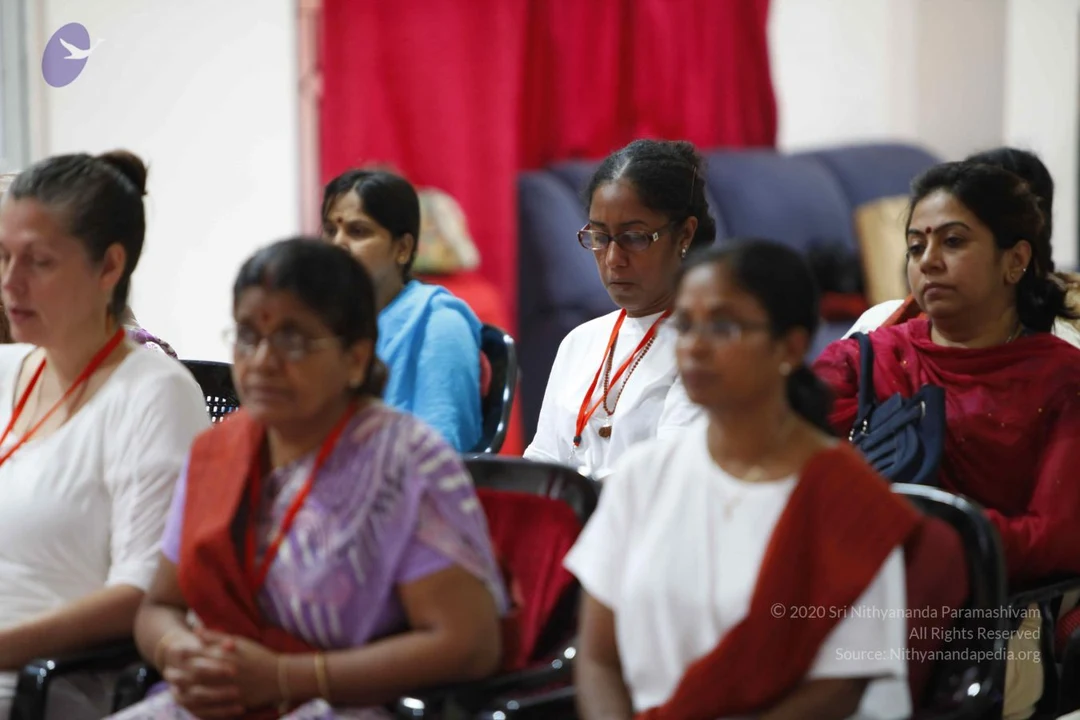
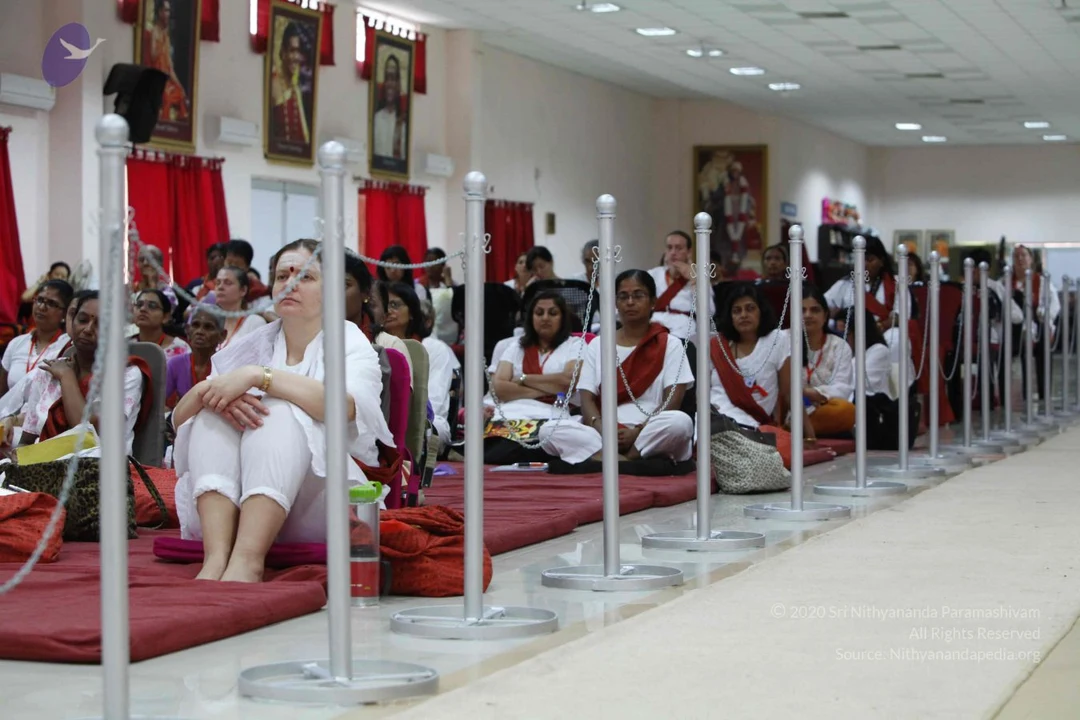
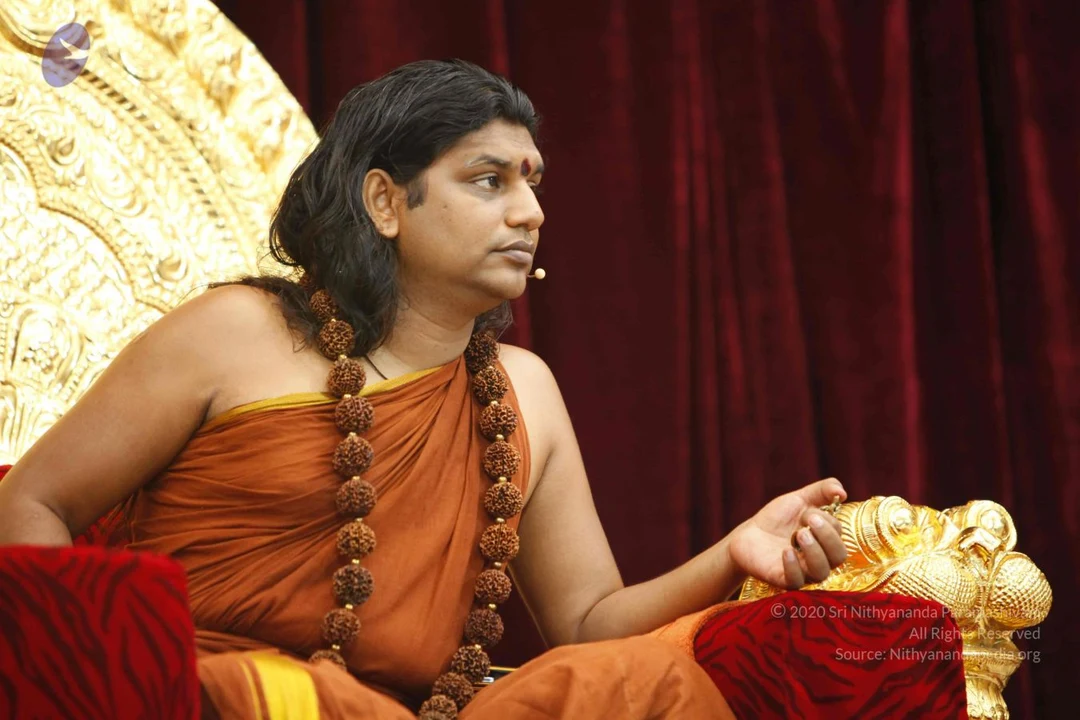
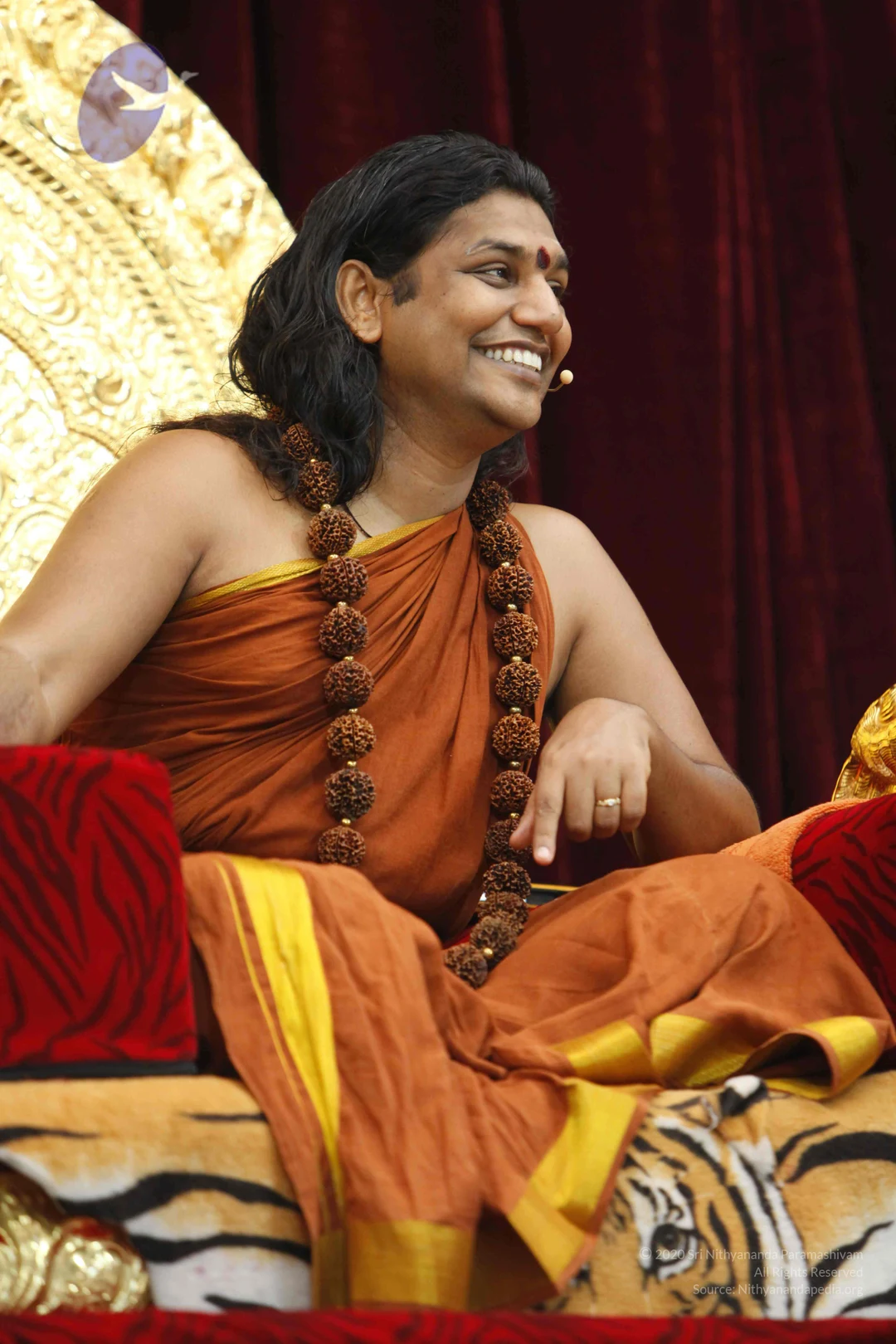
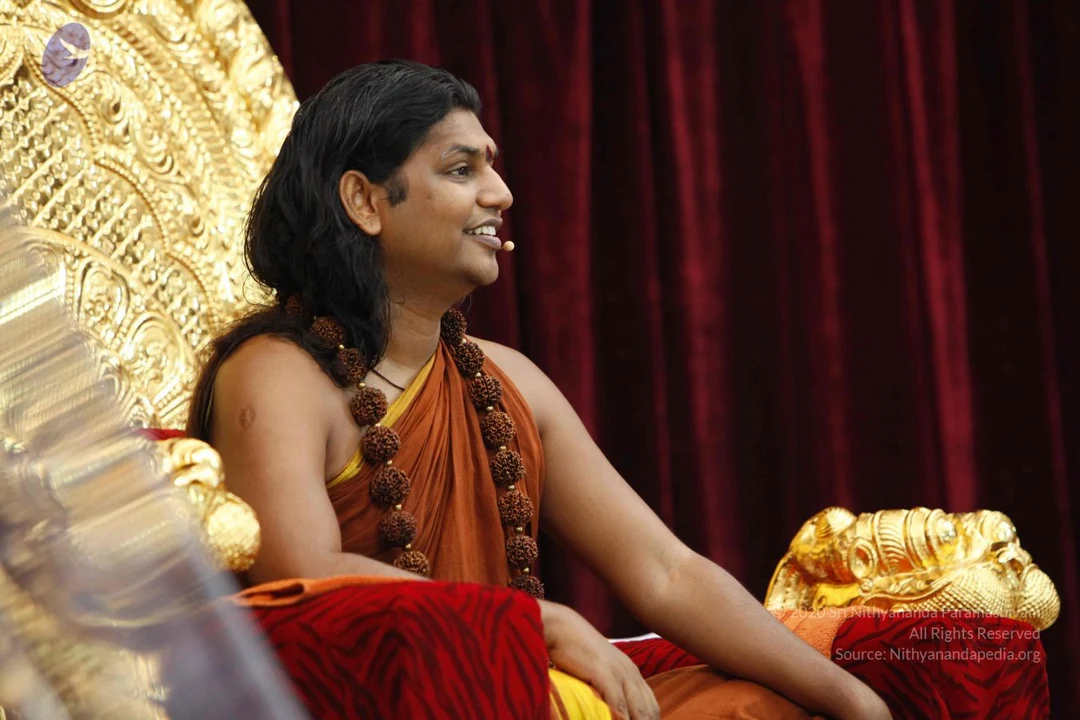
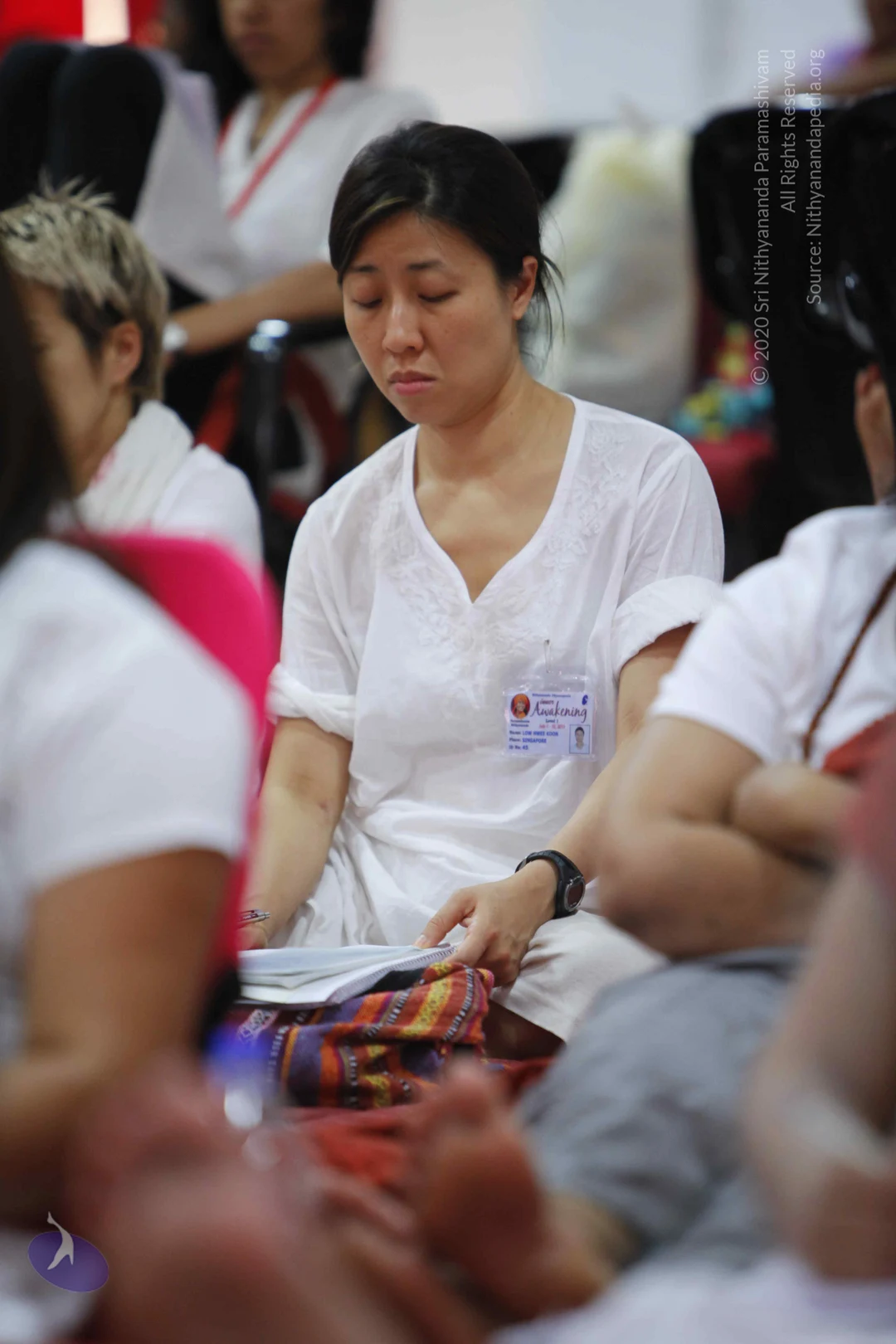
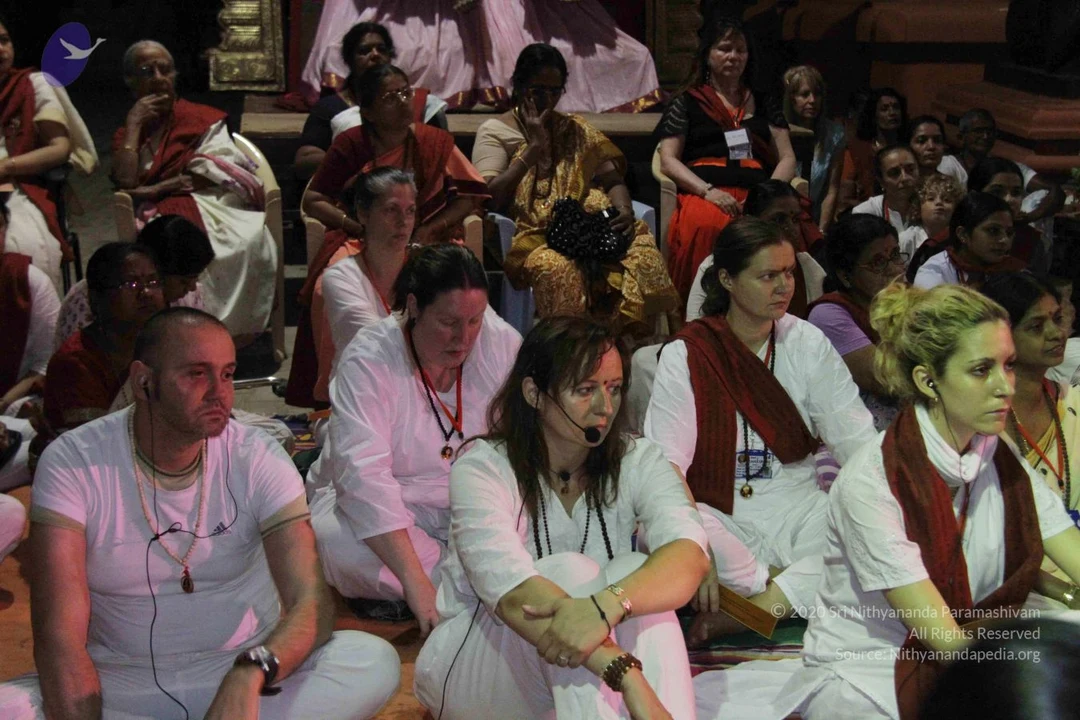
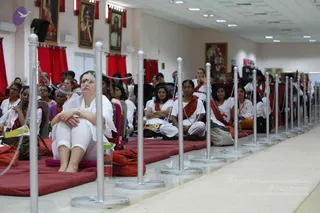
A photograph of seated devotees in a hall with red wall curtains and framed portraits on the walls. Rows of people sit on red mats behind silver stanchions linked by chains, forming a guided walkway. Most wear white kurtas or white tops with red shawls or red-trimmed sashes, and several have bindis or tilak marks. A woman in front wears white trousers and a white wrap, sitting with her hands clasped and gazing forward. Others sit with hands on laps or cross-legged, and a water bottle and bags lie on the mats.A man seated on a red and gold throne-style chair before a deep red velvet curtain and an ornate gold backrest. He wears an orange saffron wrap draped over one shoulder with a yellow border, and a long rudraksha mala with large beads crosses his chest. He has long dark hair, a red bindi, and a small headset microphone; his right hand rests on a gold-tipped armrest while he gazes to the side. Appearance-based candidate: a person, seated in the speaker's position during a satsang discourse.A photograph of a smiling man with long dark hair seated on a golden ornate throne draped with a tiger-striped cloth and red tiger-pattern cushions, against deep red velvet drapes. He wears a saffron-orange wrap with gold borders, a long rudraksha mala with gold beads, and a red bindi on his forehead, with a small headset microphone near his face.A man with long, swept-back dark hair sits on an ornate gold throne with carved lion-head armrests against deep red velvet drapes. He wears an orange-saffron shawl over his bare shoulders and a long rudraksha mala of brown beads draped across his chest, with a red and gold patterned cloth over the throne arm. A small red bindi marks his forehead and a headset microphone is visible near his face. The setting suggests a satsang seated discourse. Swamiji (probable) appears as the seated speaker, identifiable by the swept-back long hair, saffron shawl and rudraksha mala on the throne.A man with long, swept-back dark hair sits on an ornate gold throne with a carved golden backrest, in front of deep red velvet drapes. He wears an orange-saffron shawl over his bare shoulder, a long rudraksha mala necklace with brown beads, and a small red tilak on his forehead. His right hand is raised in an open gesture while he speaks into a small headset microphone, and his left hand rests near his lap. A gold ornamental figure rests on the red cushion beside him.A man with long swept-back dark hair sits on an ornate gold throne with a carved lion-head armrest and red tiger-striped cushions, in front of a deep red velvet curtain. He wears an orange-saffron wrap over his bare shoulder, a yellow edge on the cloth, and a long necklace of brown rudraksha beads. His right hand is raised mid-gesture as he speaks into a small headset microphone. A small purple logo appears in the upper left corner, and a , , with a source credit. Probable Swamiji is seated on the throne, shown in appearance as a satsang speaker with long hair, saffron wrap and rudraksha mala

AvanthiHoma_Pictures

86 photosSource gallery
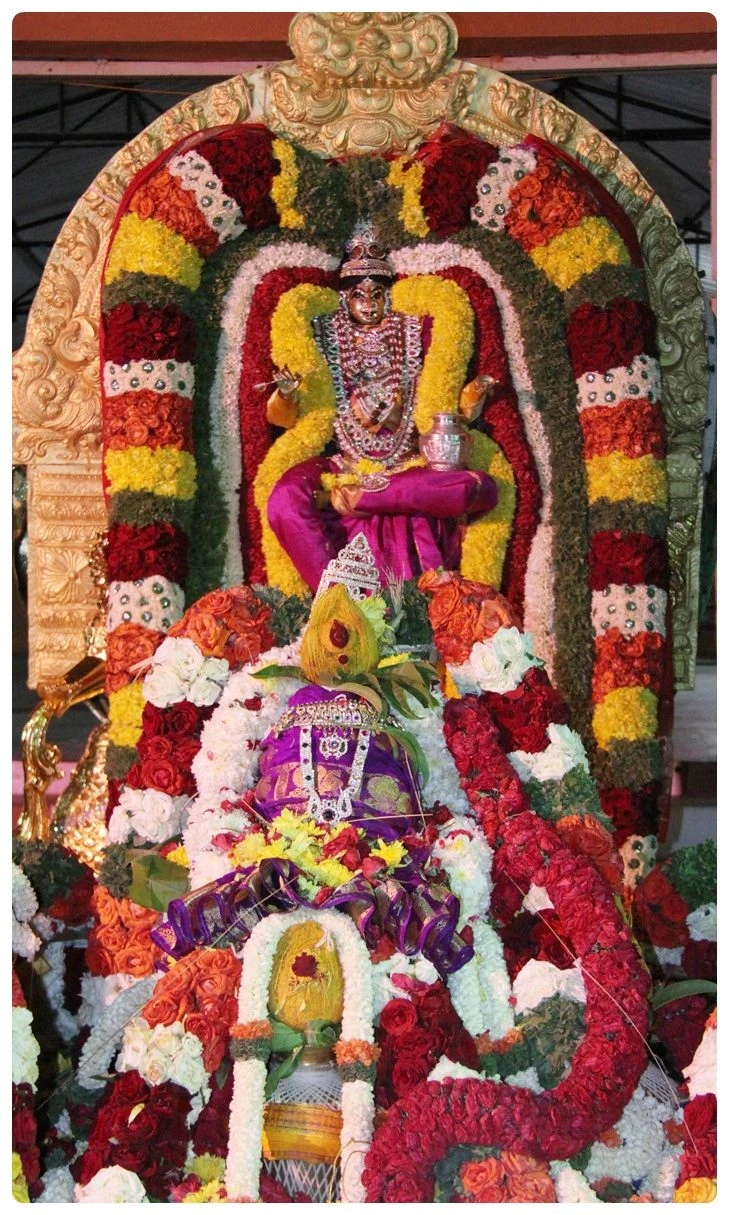
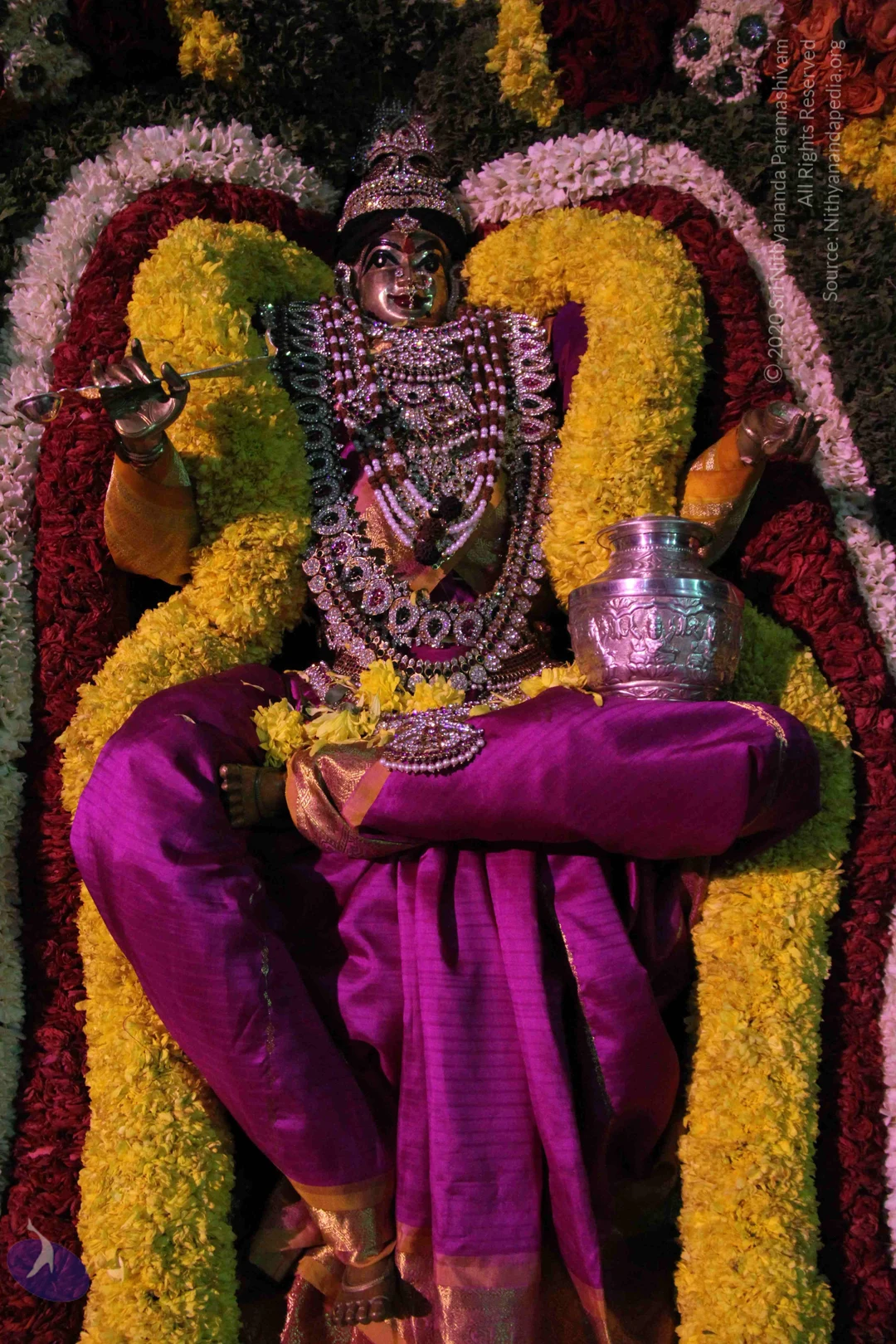
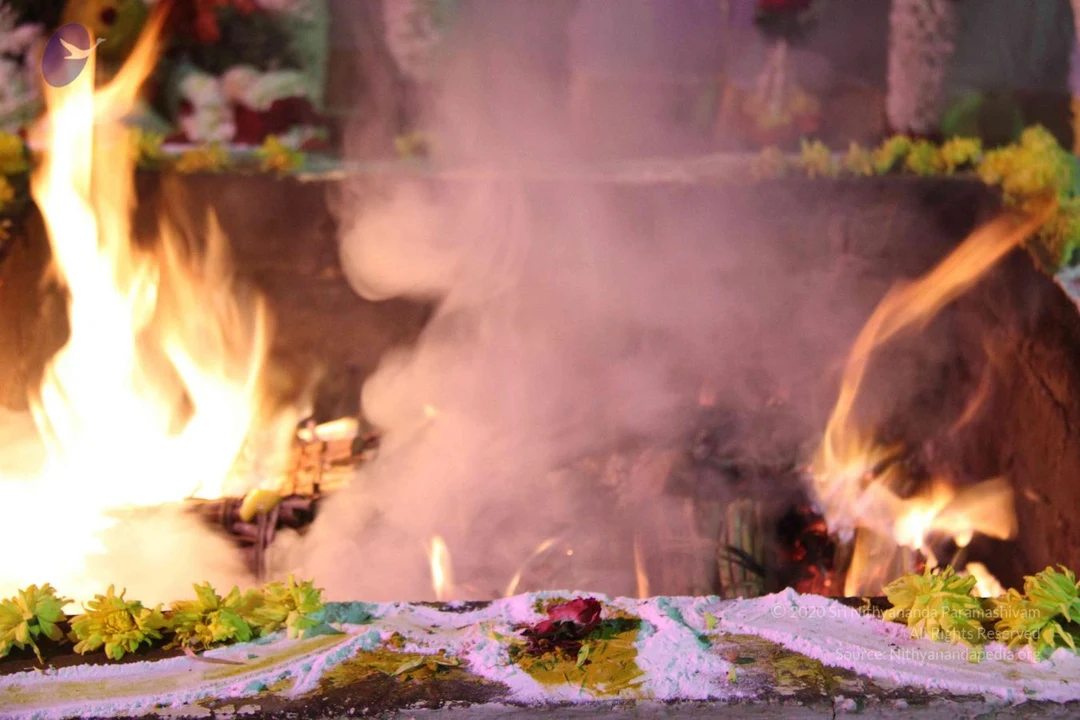
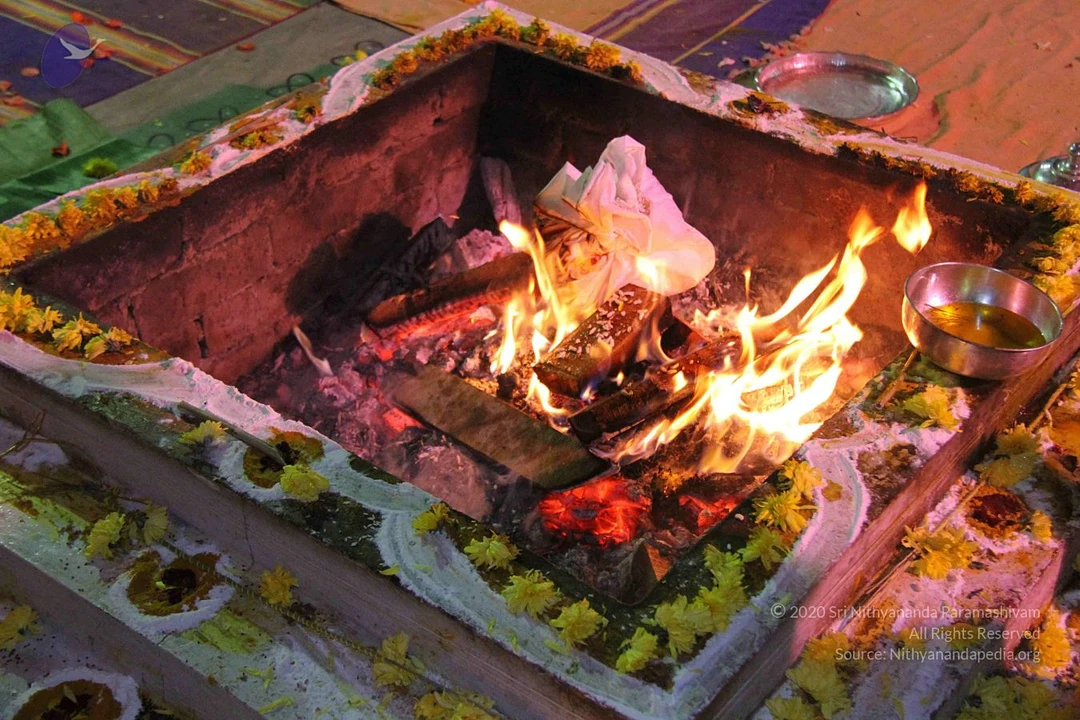
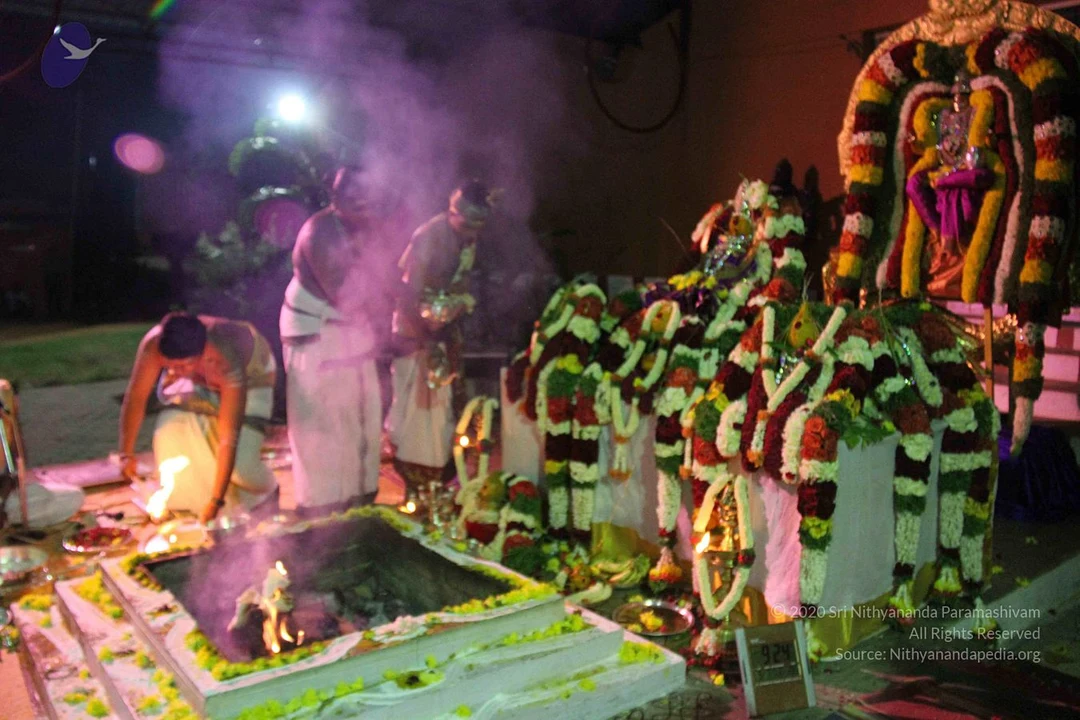
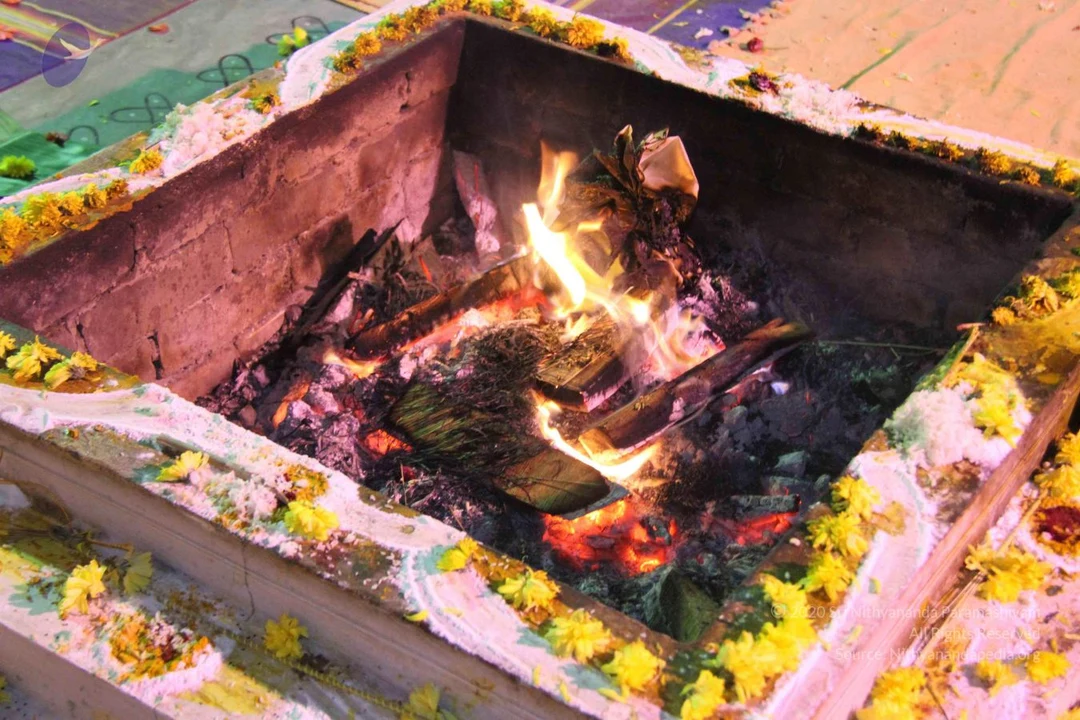
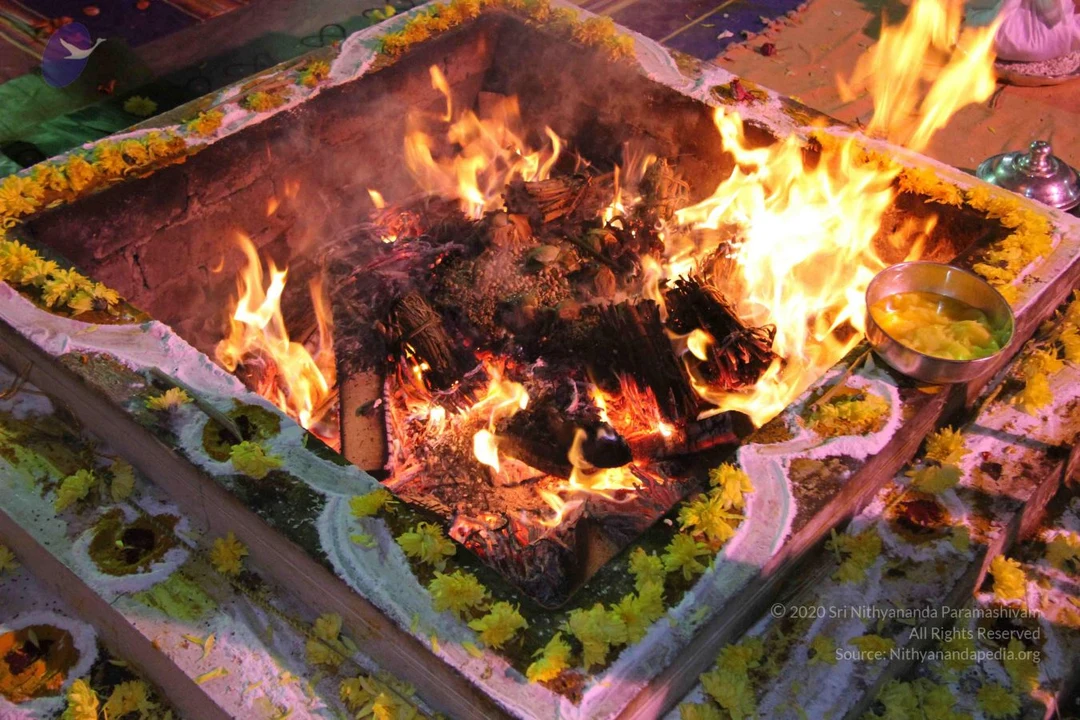
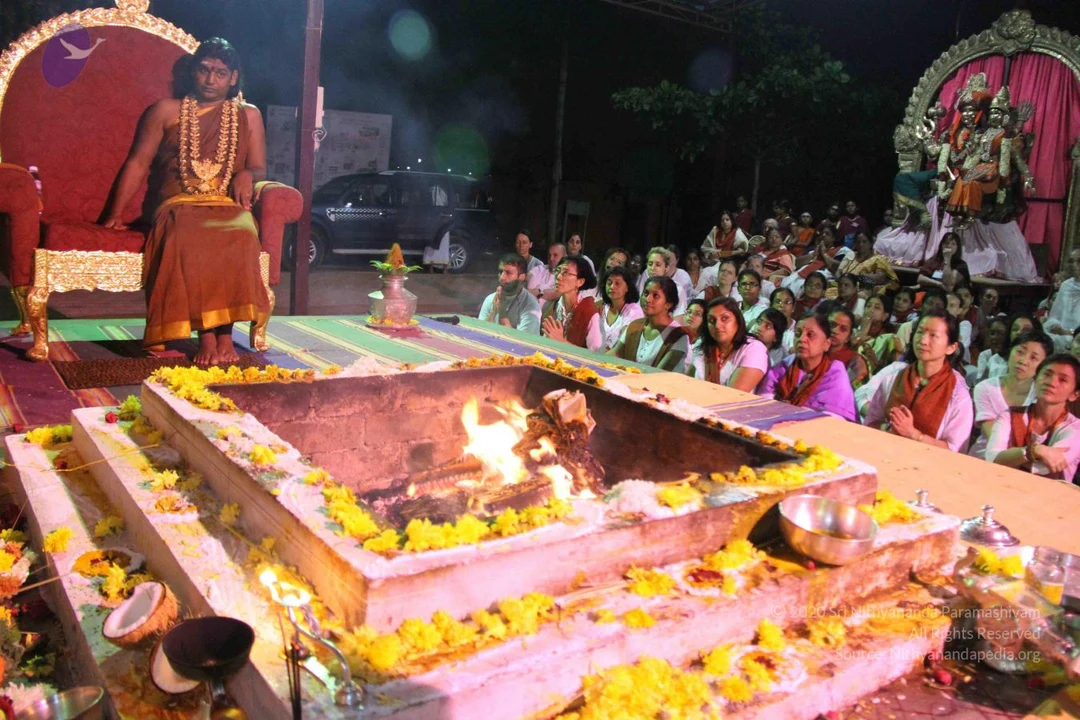
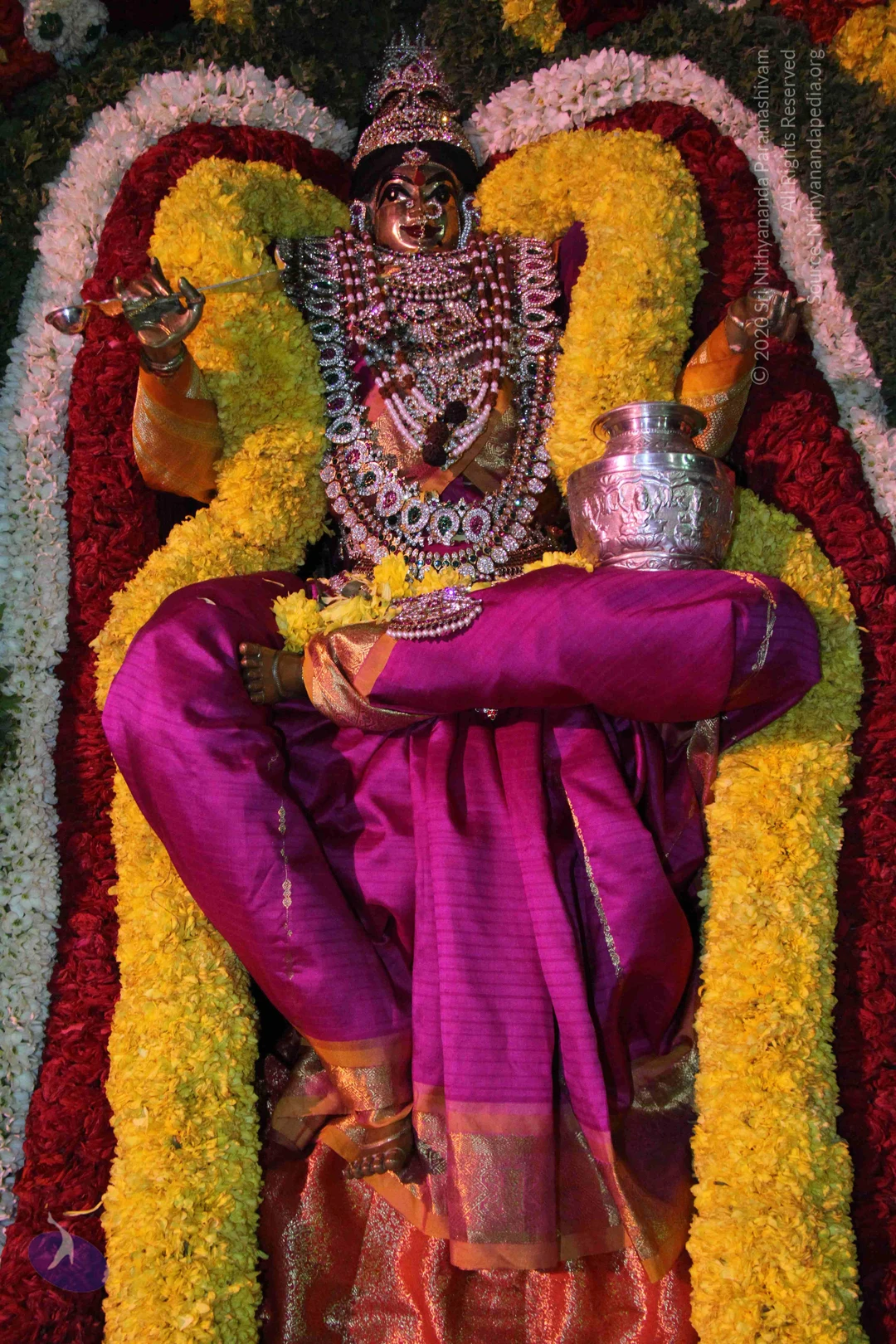
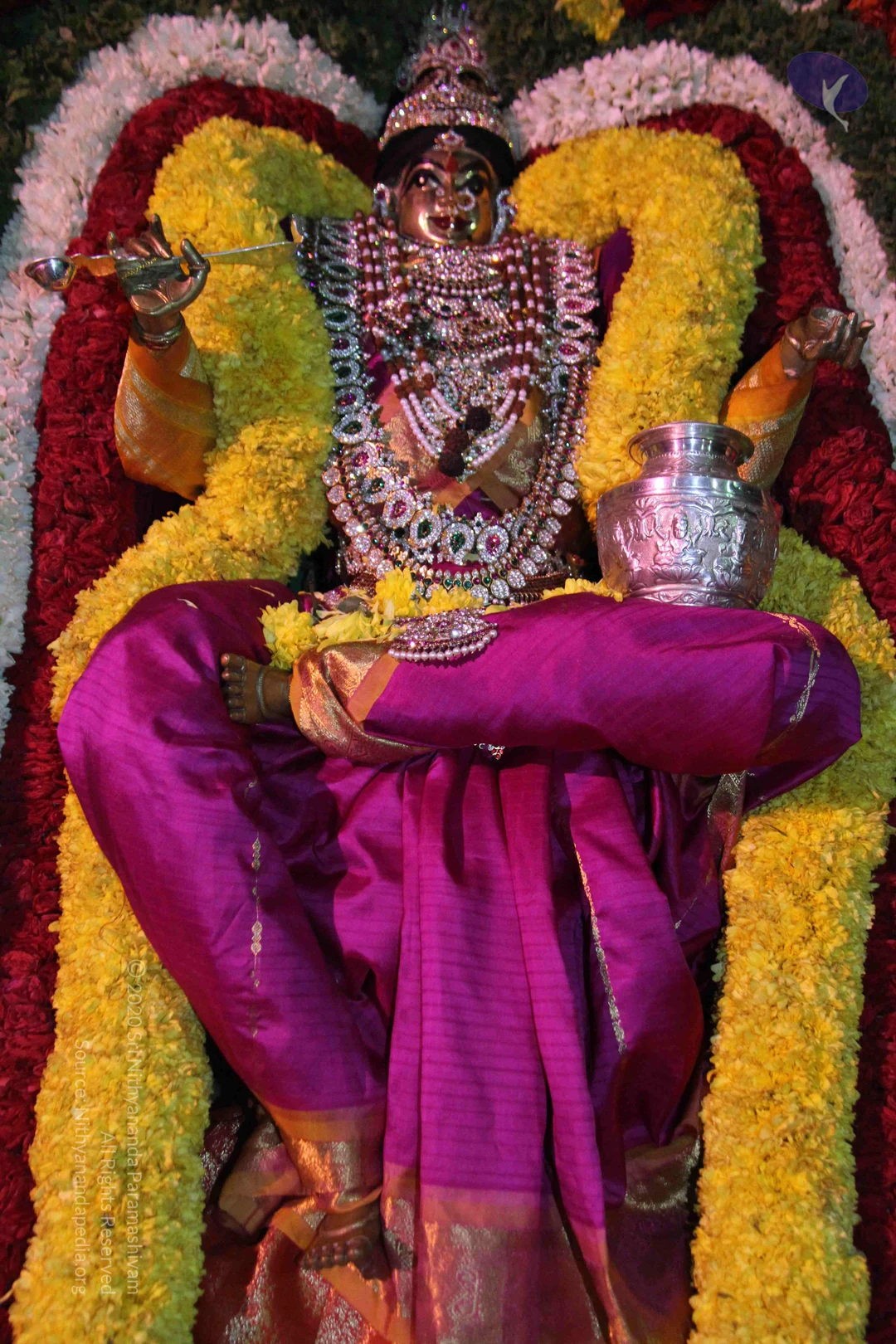
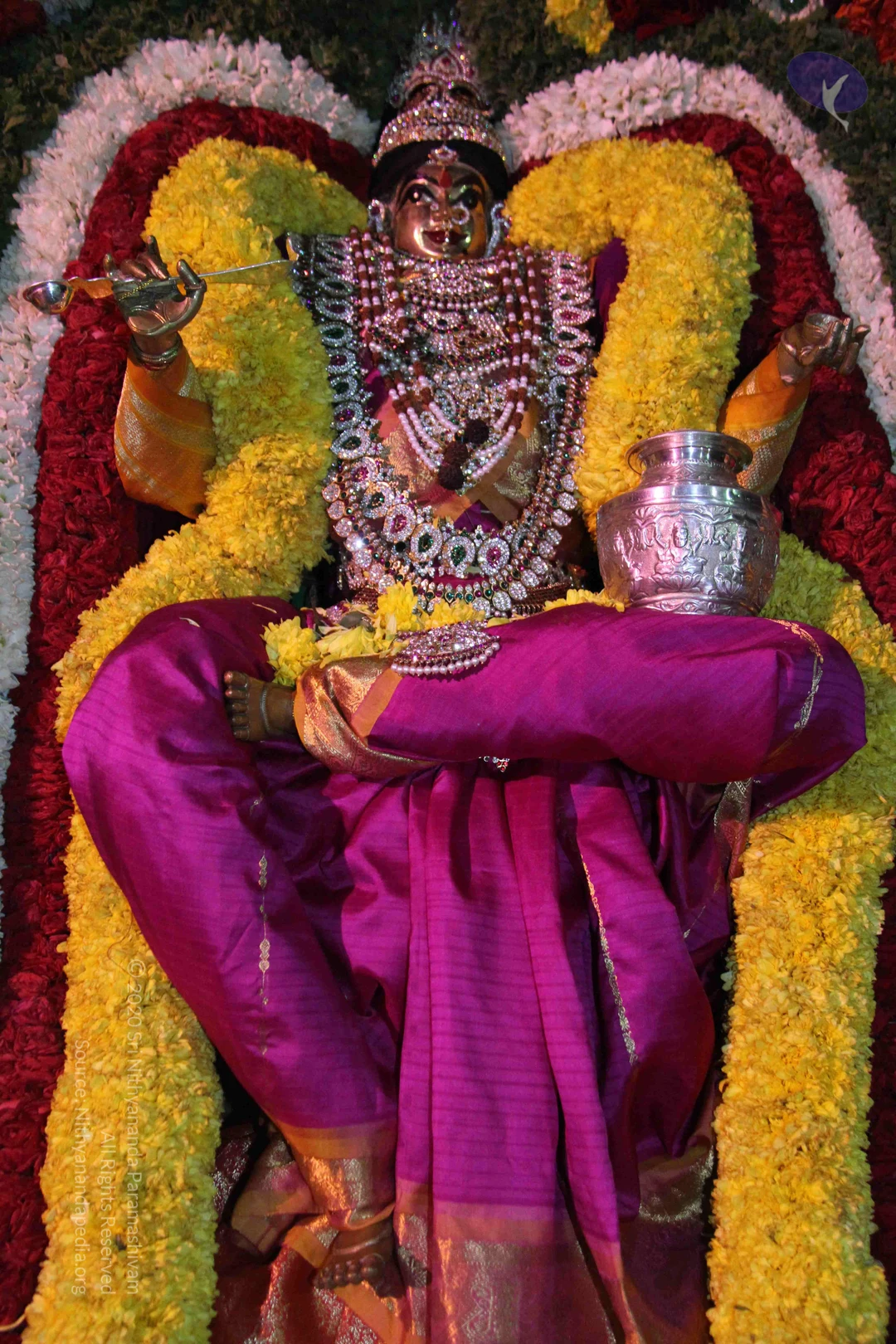
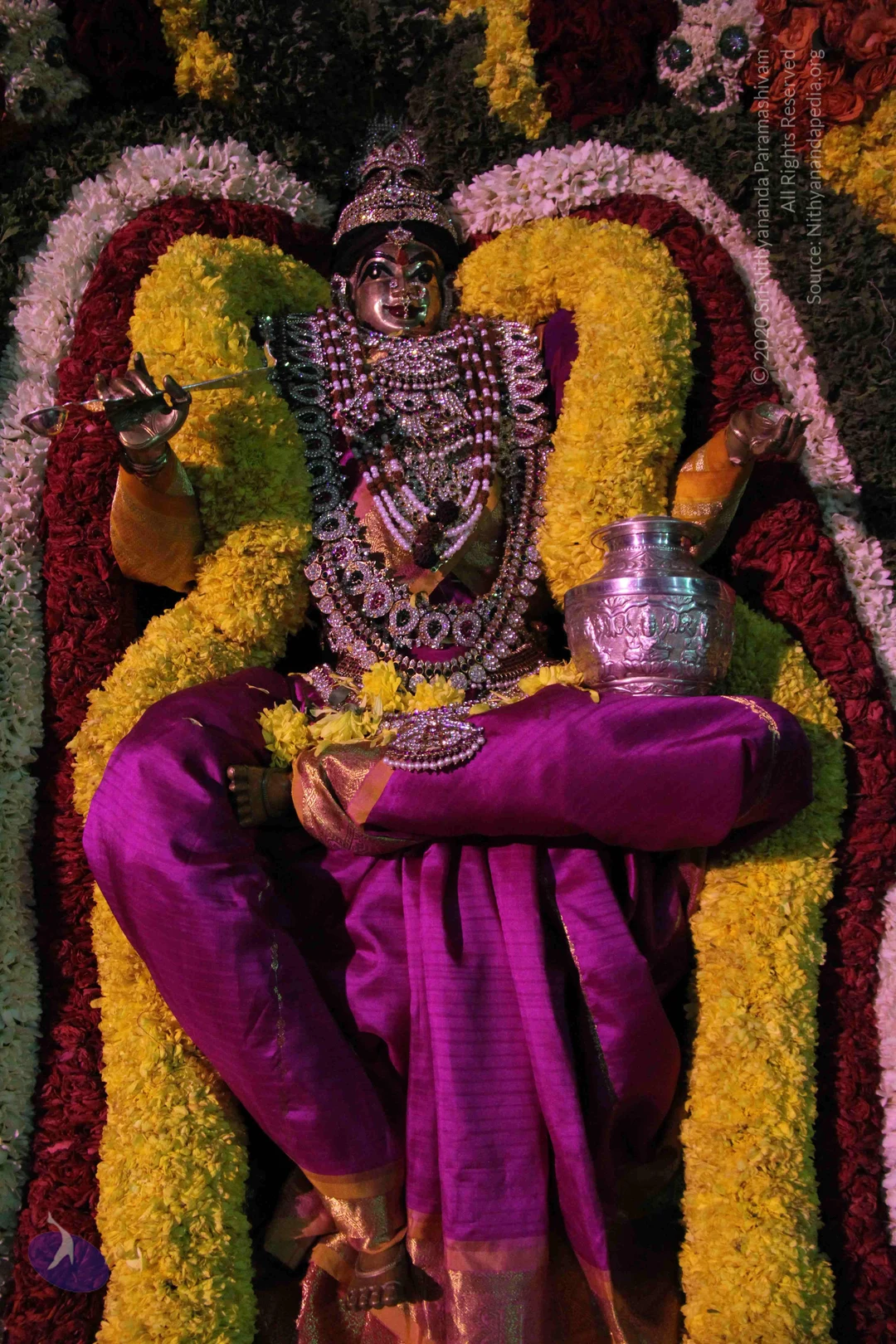
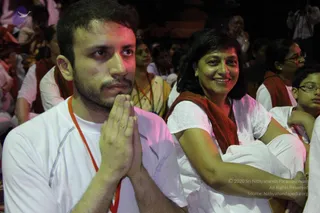
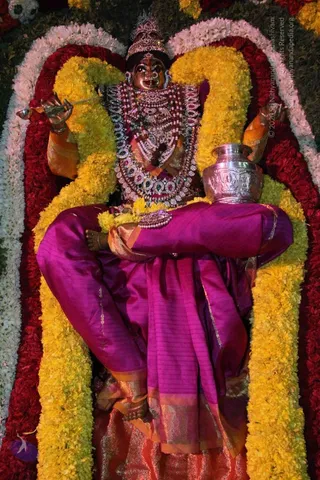
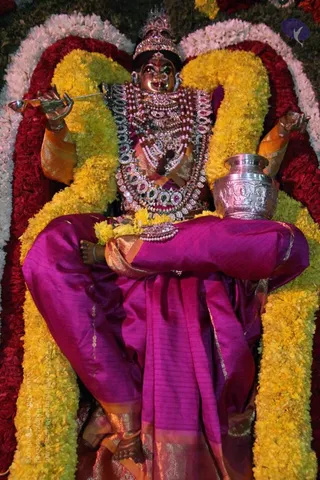
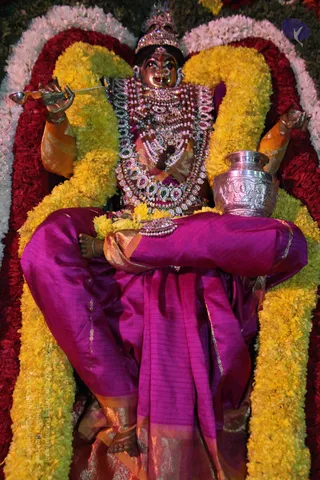
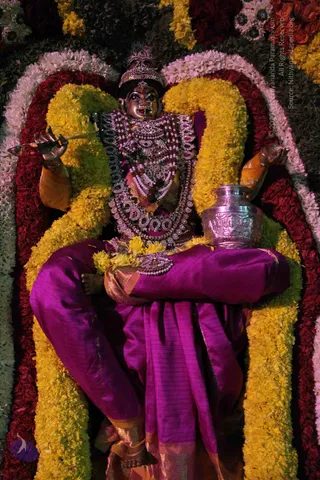
A seated audience at a satsang gathering, with a young man in a white t-shirt and orange lanyard pressing his palms together in namaste, and a smiling woman beside him in a white top with a red-orange shawl. Behind them more devotees in white and red-orange shawls sit in rows, and a man stands at the back near a camera tripod. Warm pinkish stage lighting falls across the scene.A photograph of a metal deity murti of a goddess seated on a bed of flowers, draped in a magenta silk sari with gold zari border and heavily adorned with layered jewelled necklaces, pearl strands, and a jewelled crown. She holds a small ladle or spoon in one hand and a silver pot rests on her lap. Yellow and white marigold garlands frame the figure, with red rose petals beneath. No physical people are visible; the murti is the sole subject.A deity murti is shown lying on its back, draped in a magenta silk sari with gold zari borders and bedecked with layered pink and green jewelled necklaces and a crown. Yellow and red flower garlands frame the figure, and a silver kalasha pot rests against its arm while the hand holds a lotus-like stem. Only the statue is present; no living people are visible.A deity murti of a goddess is decorated for worship, reclining or seated within an arch of yellow and red marigold and rose garlands. The figure wears a jeweled crown, layered pearl and gemstone necklaces, and a magenta silk sari with gold border. She holds a small oil lamp in one raised hand and a silver kalasha pot rests against her arm. No physical people are visible; the image shows only the decorated murti with flower garlands and a silver pot.A photograph of a decorated deity murti set within an arch of flower garlands. The murti wears a jewelled crown and heavy layered necklaces of gems and beads, and is draped in a magenta silk garment with gold border. It holds a small lamp in one raised hand and a silver pot in the other, while yellow and white flower garlands and red rose petals frame the figure. No physical people are visible.A close view of a fire ritual with flames rising from a fire pit at left and right, with thick white smoke rising in the centre. The ledge in front is decorated with green leaves, white powder, and a single red flower. Garlands of flowers and leaves hang along the upper edge. No people are visible, only the fire, smoke, and ritual offerings.

GermanMagazinePicture

2 photosSource gallery
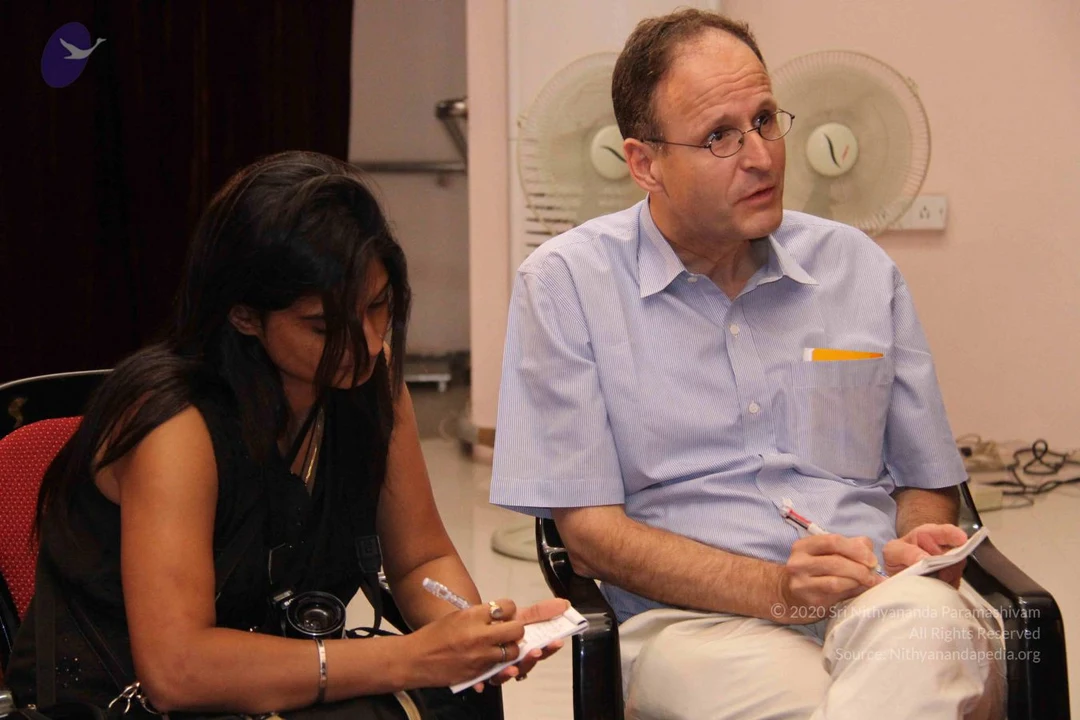
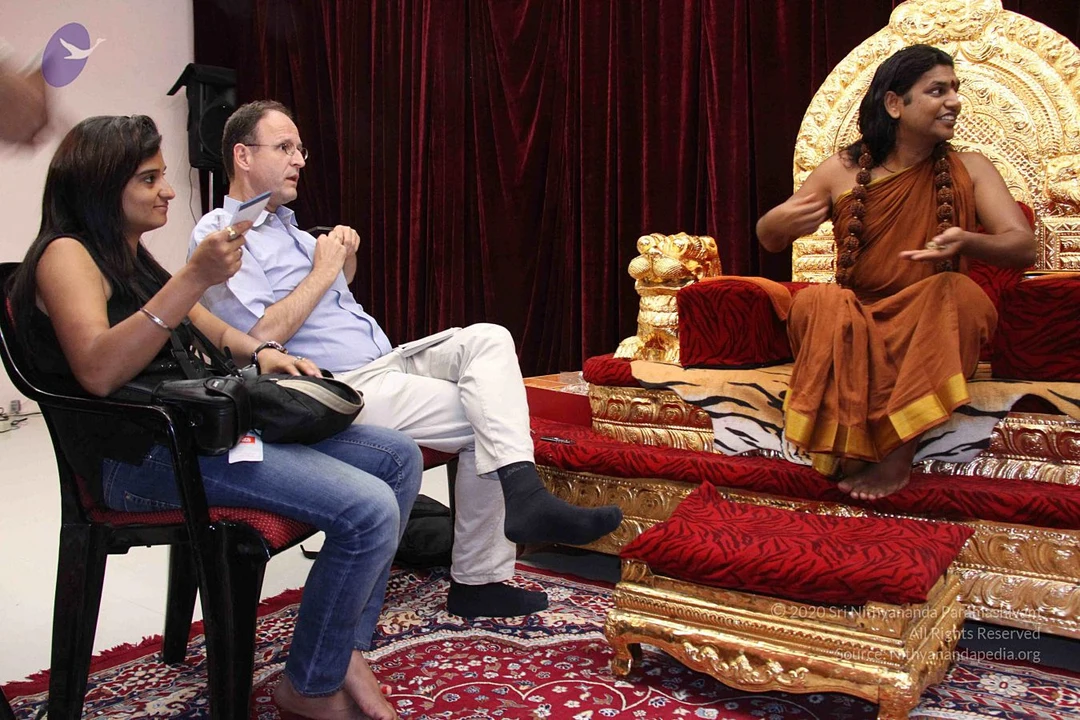
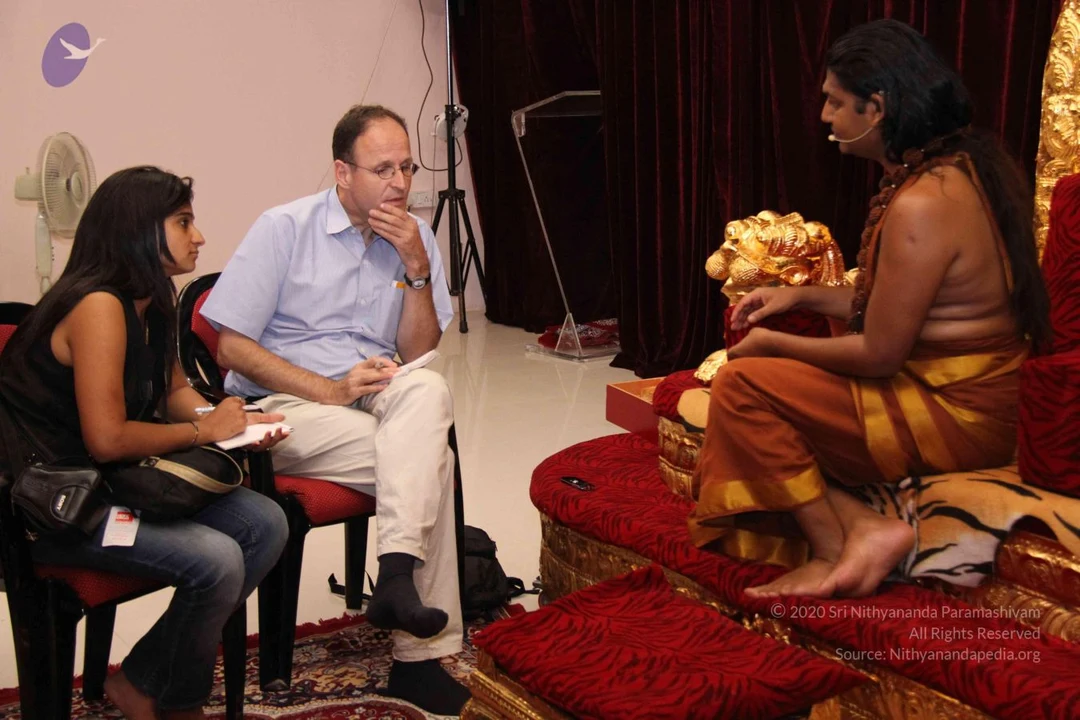
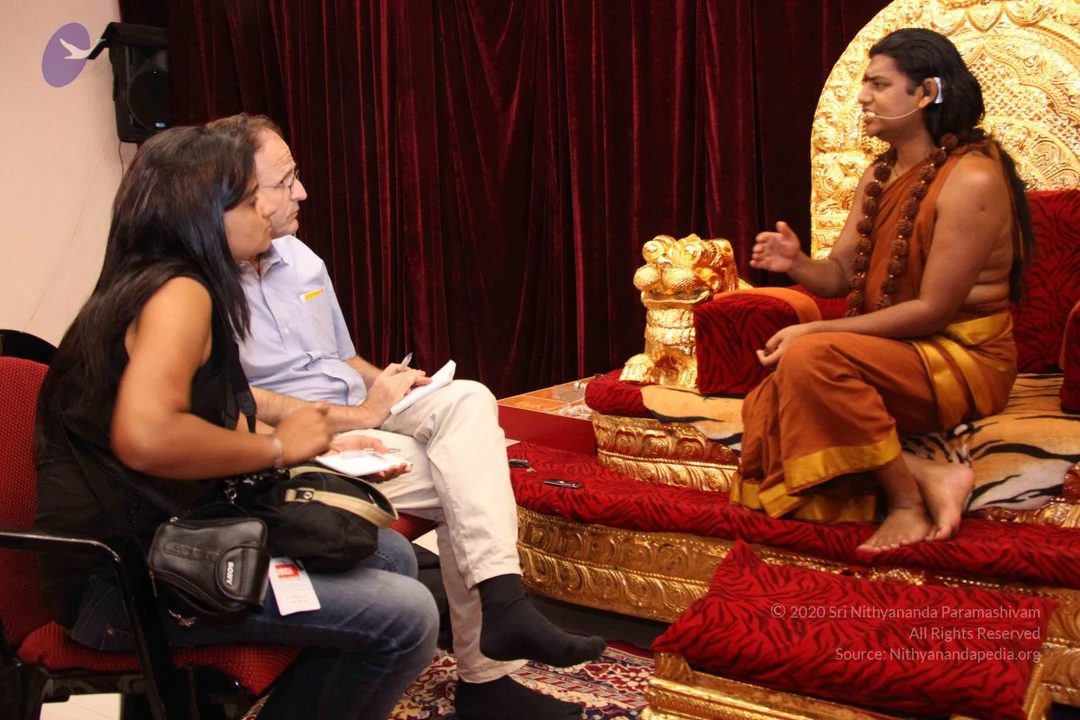
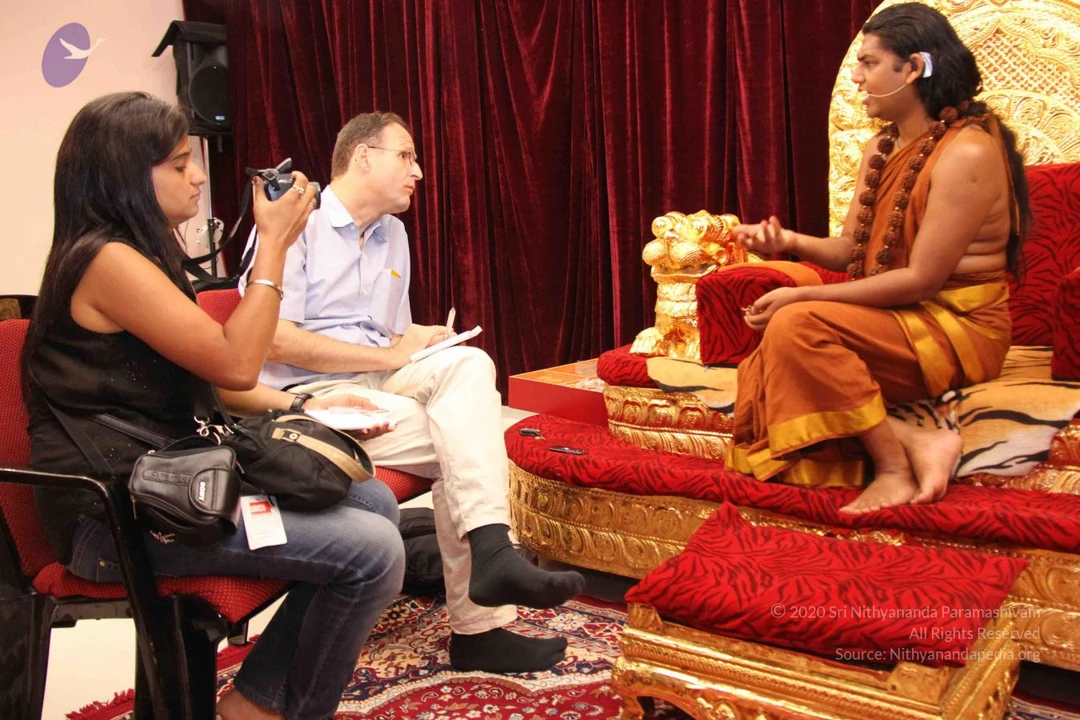
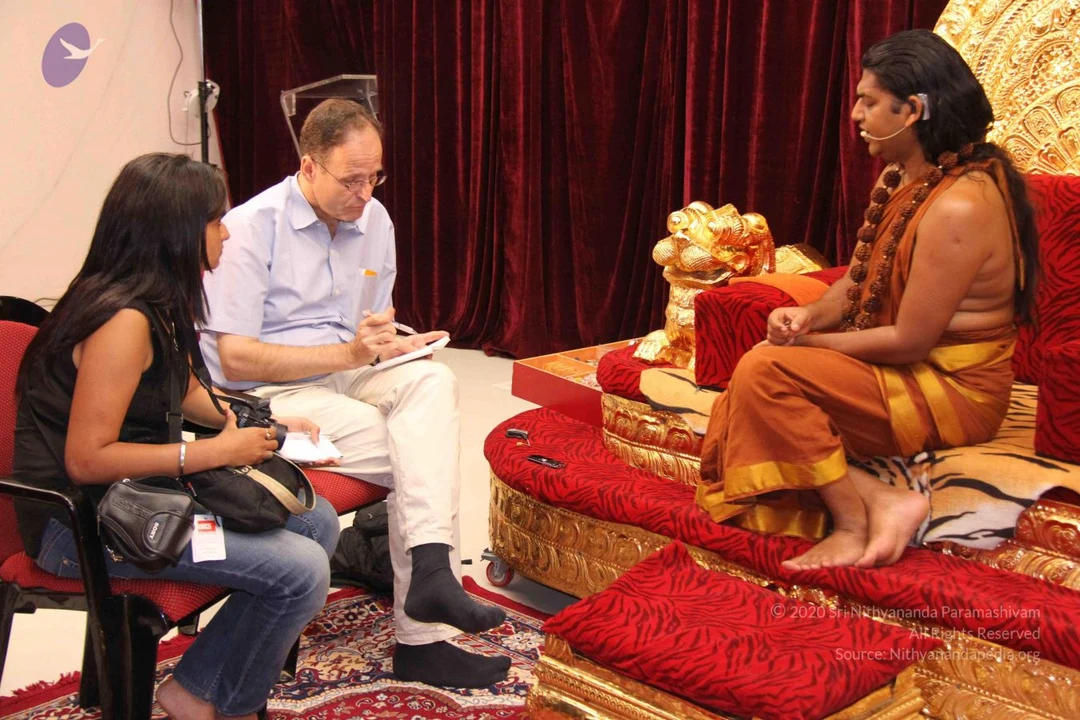
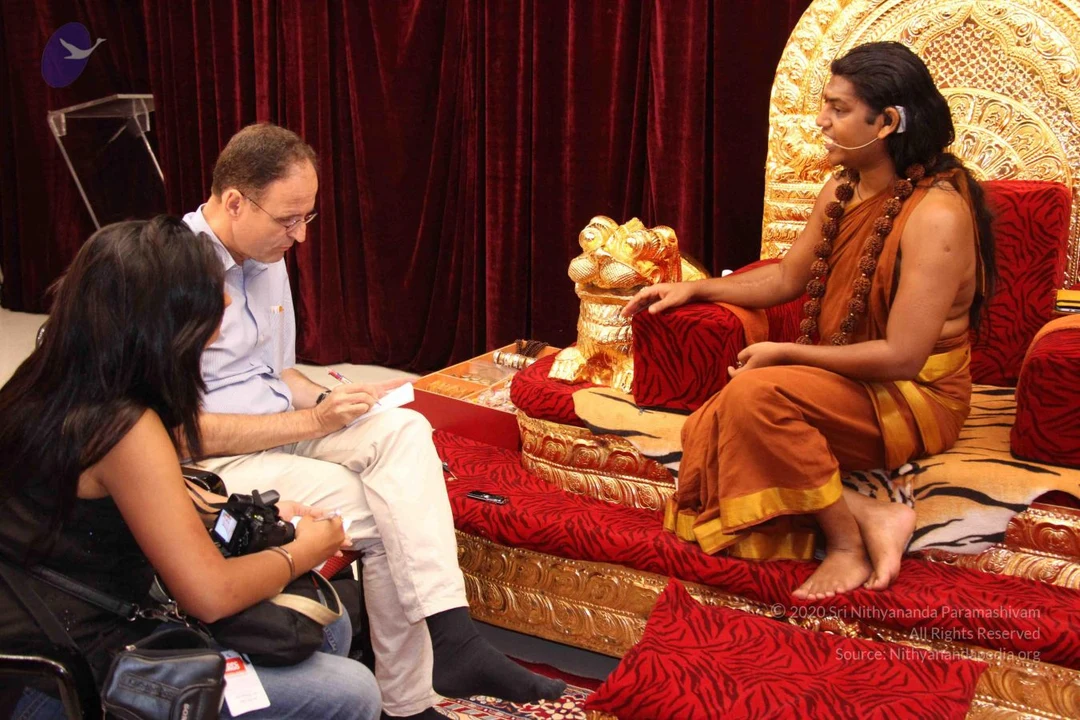
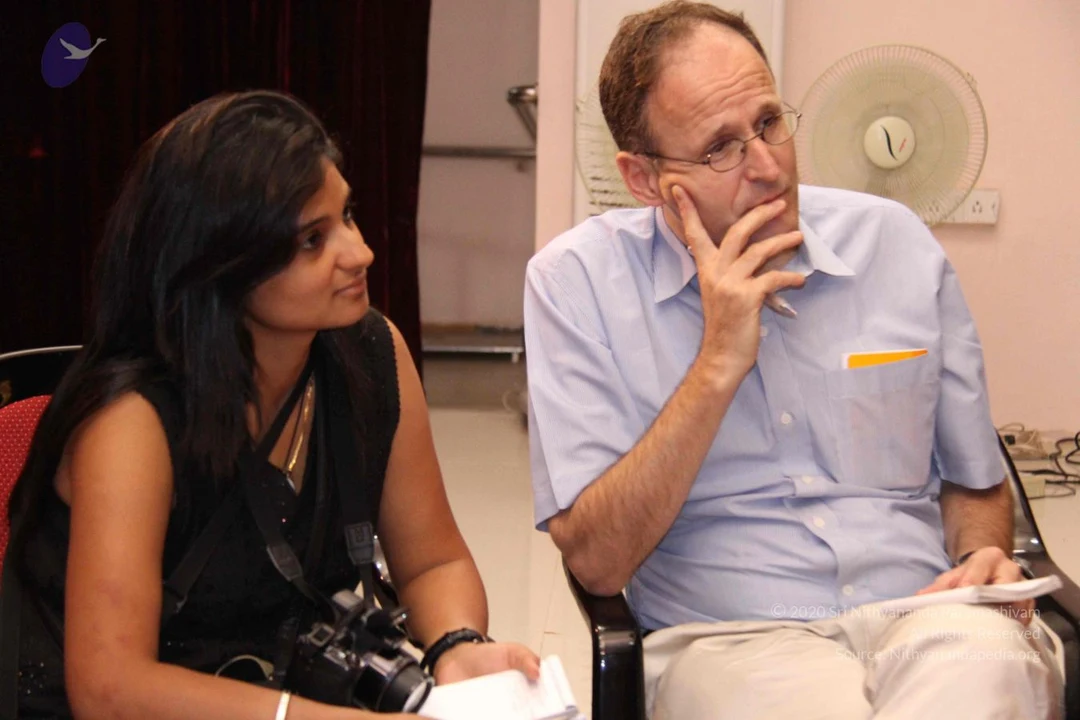
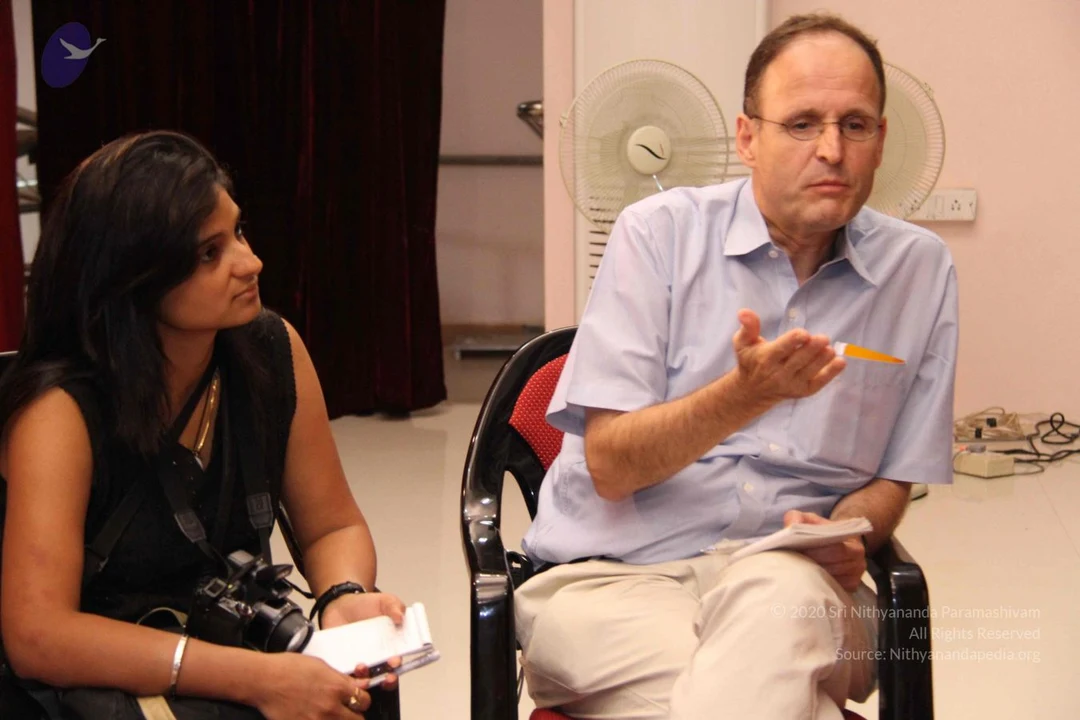
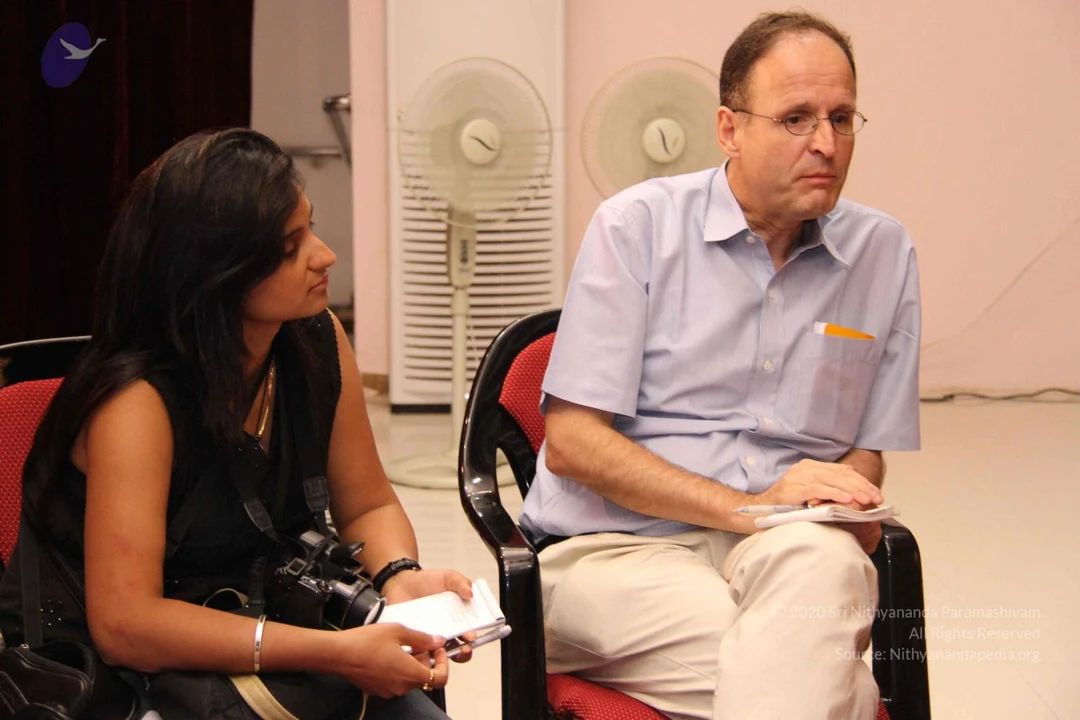
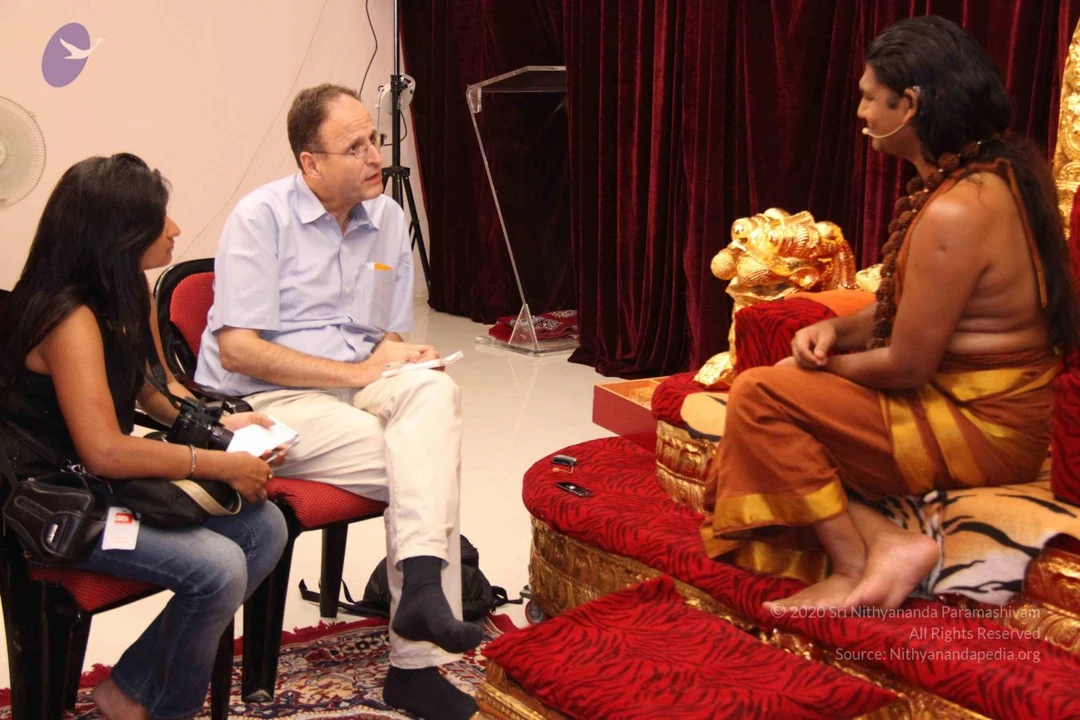
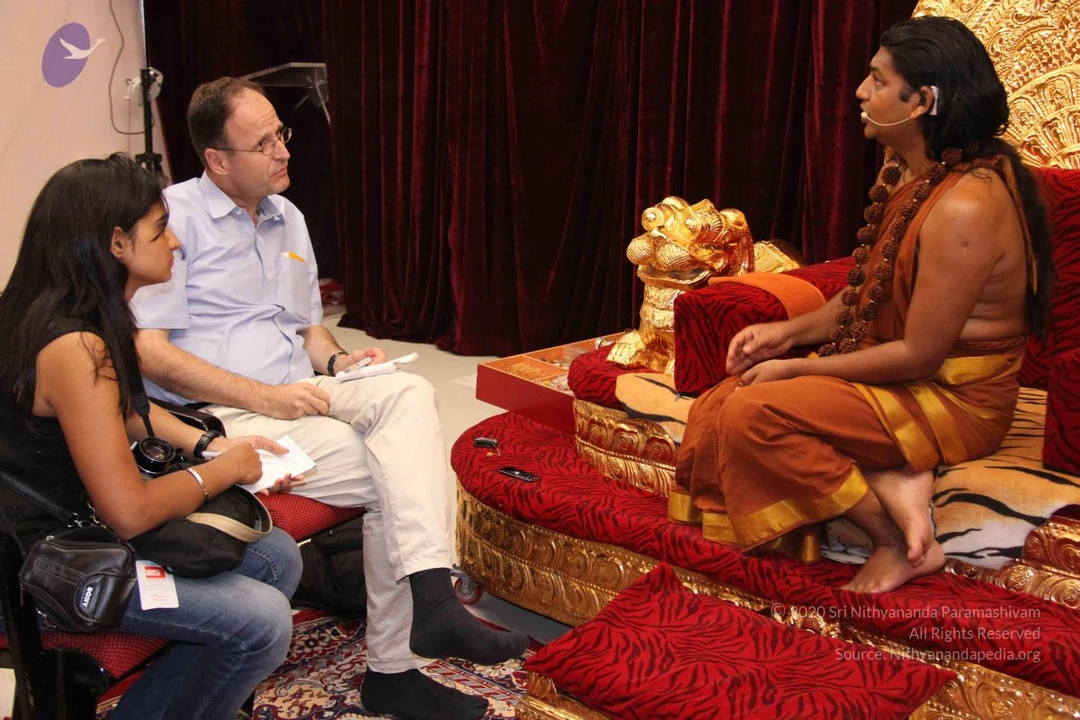
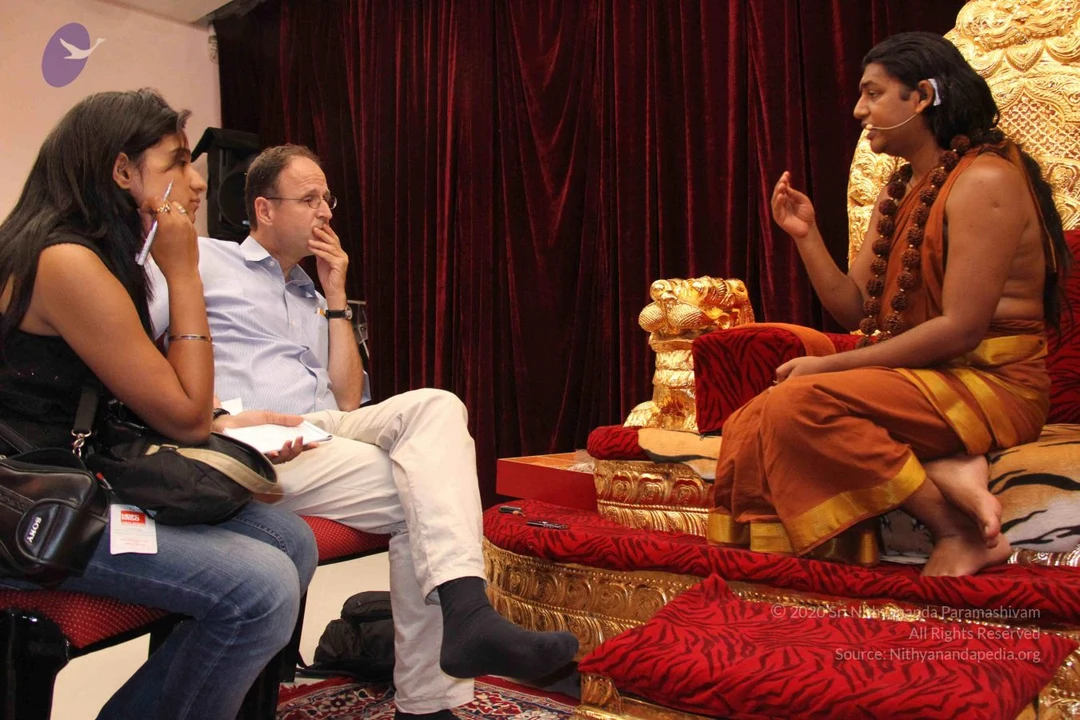
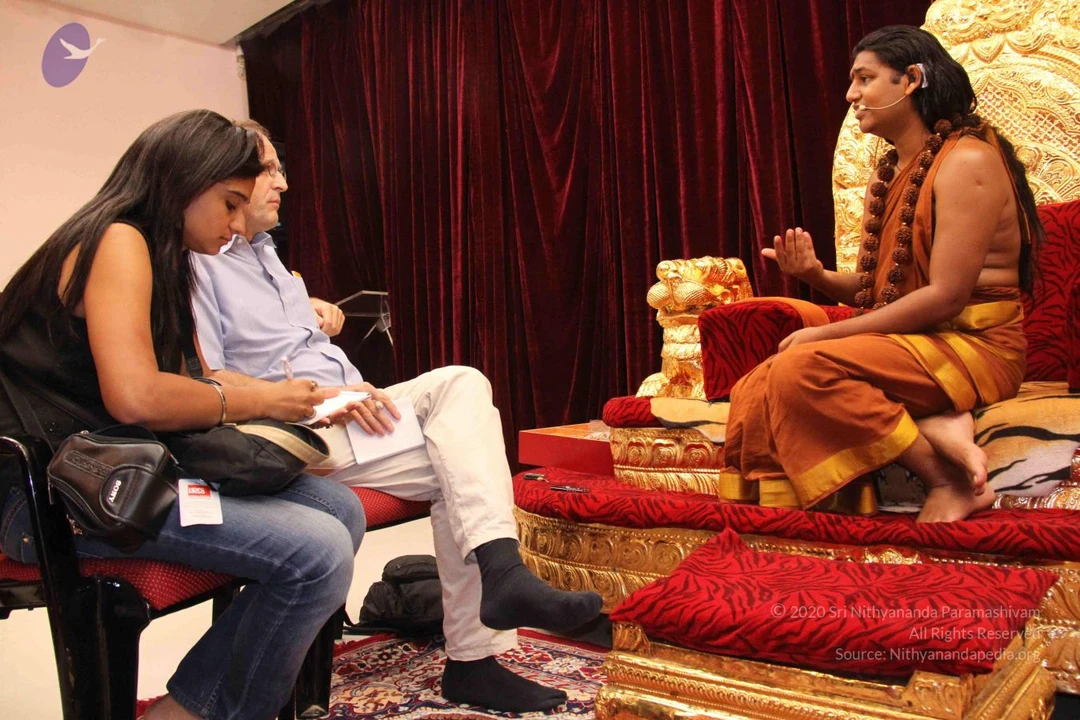
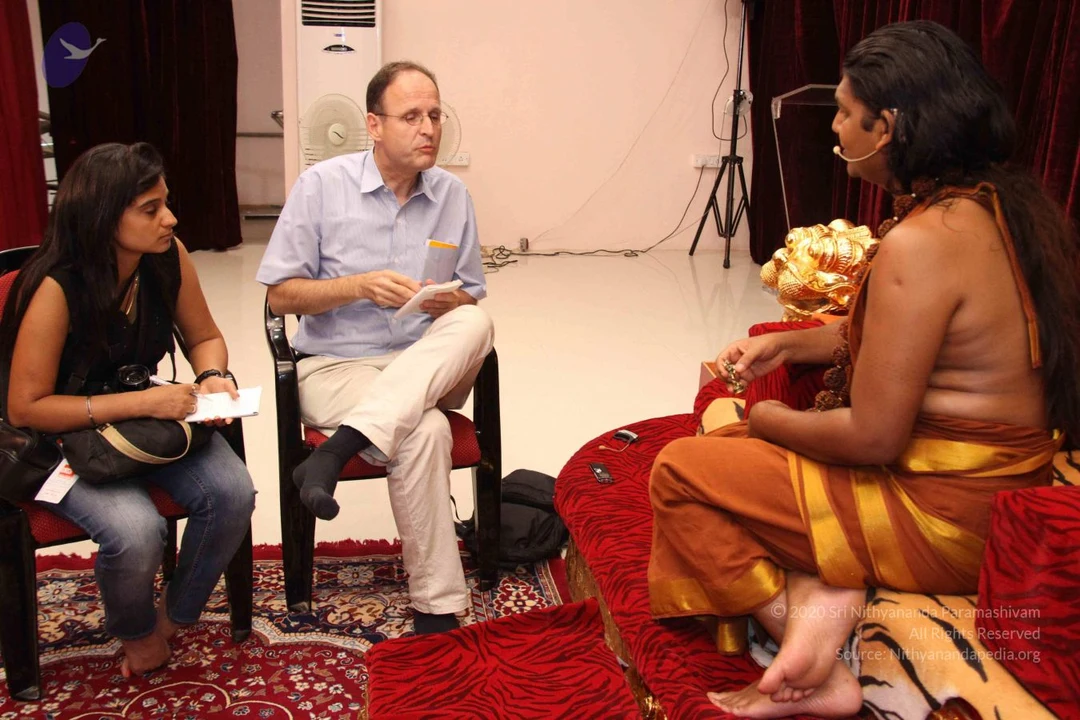
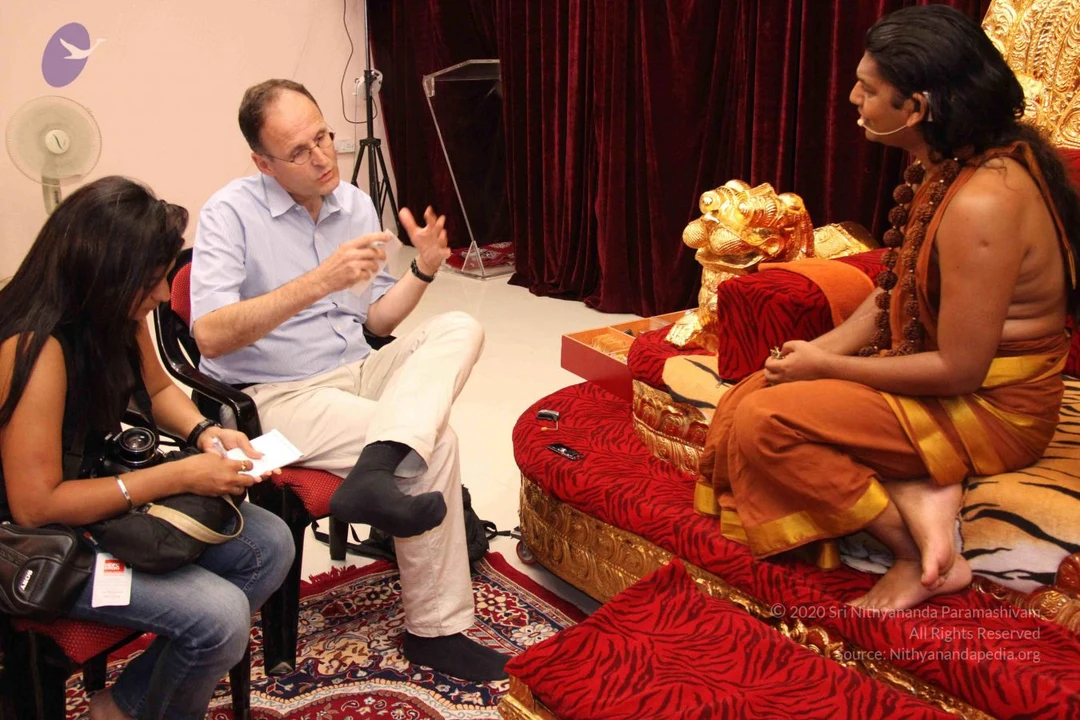
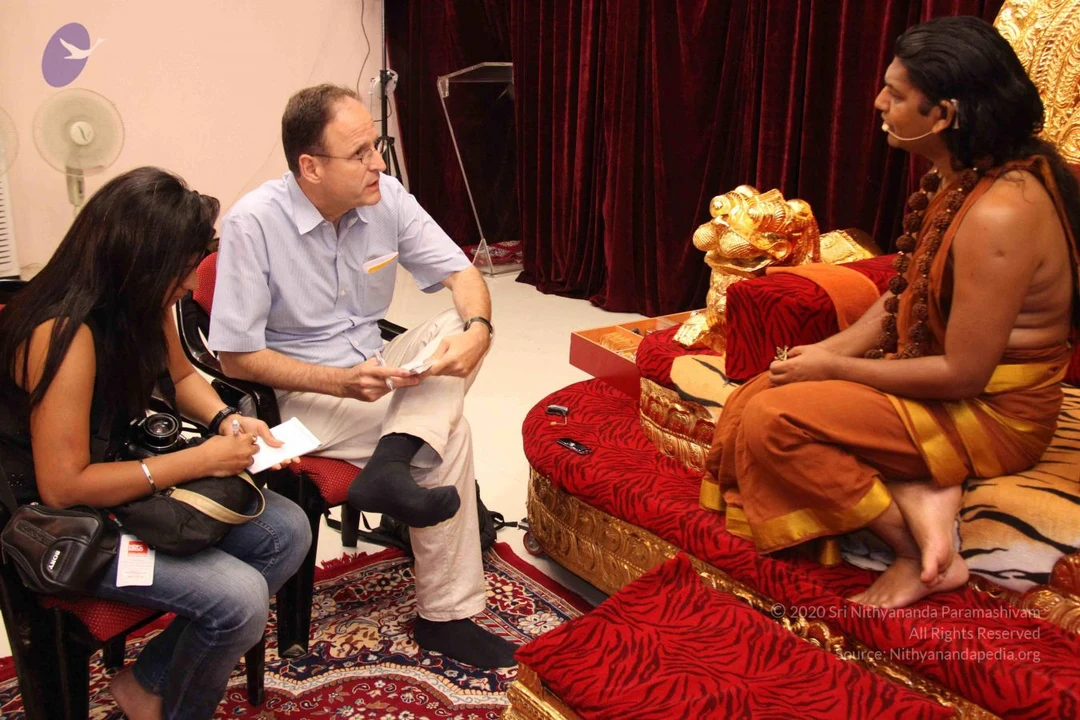
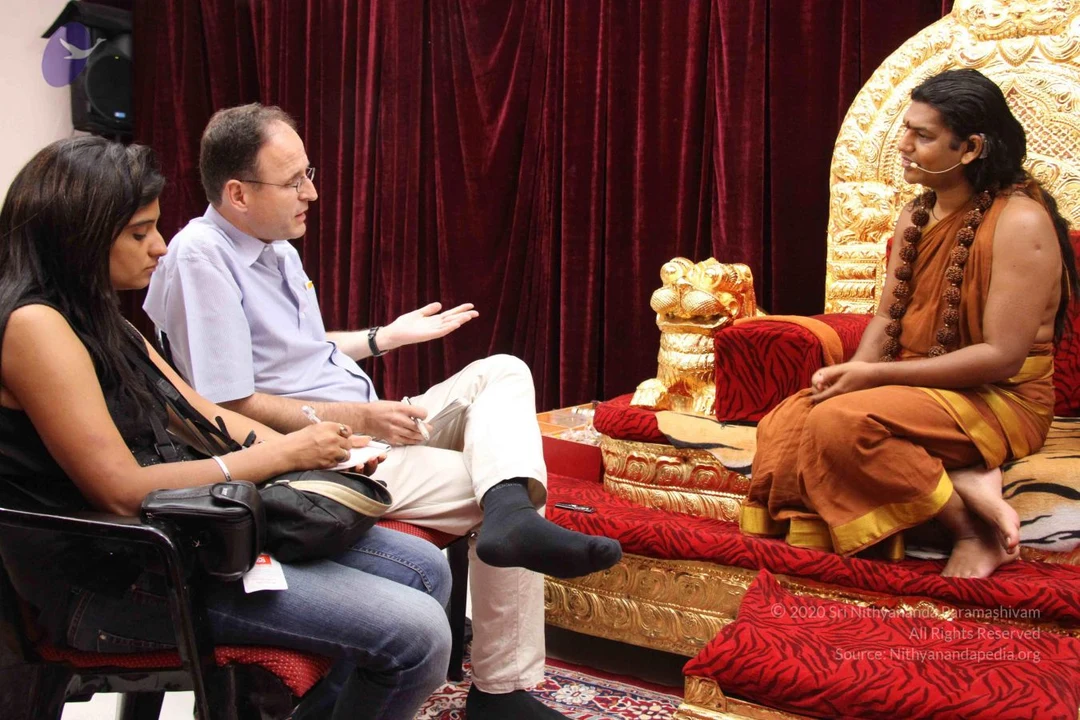
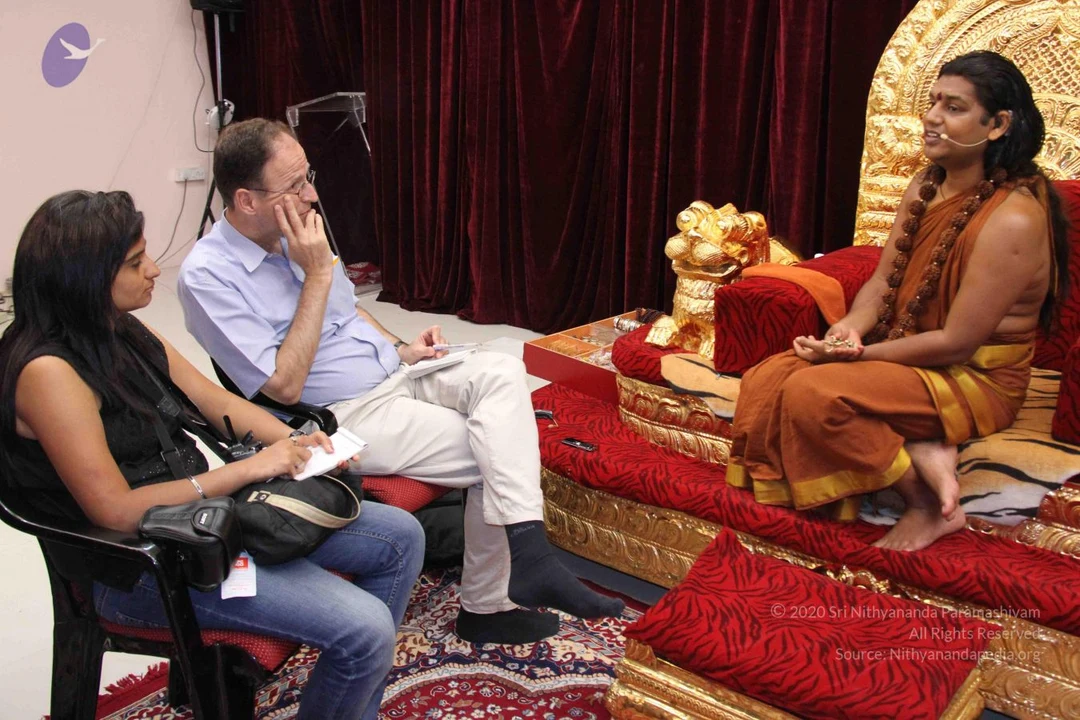
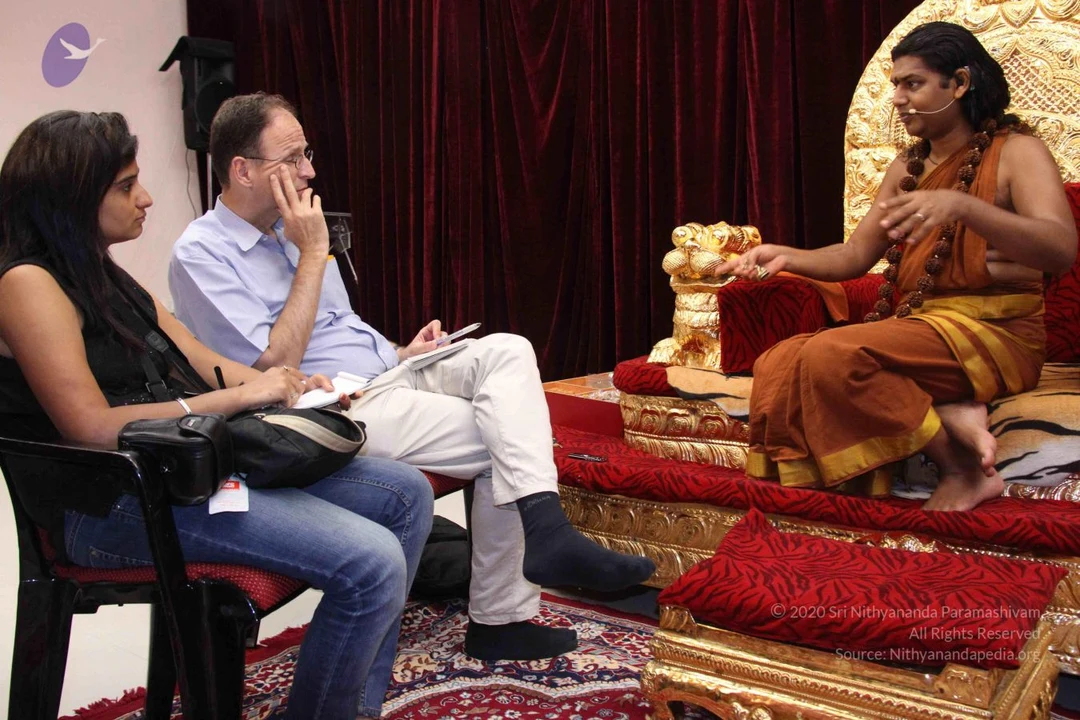
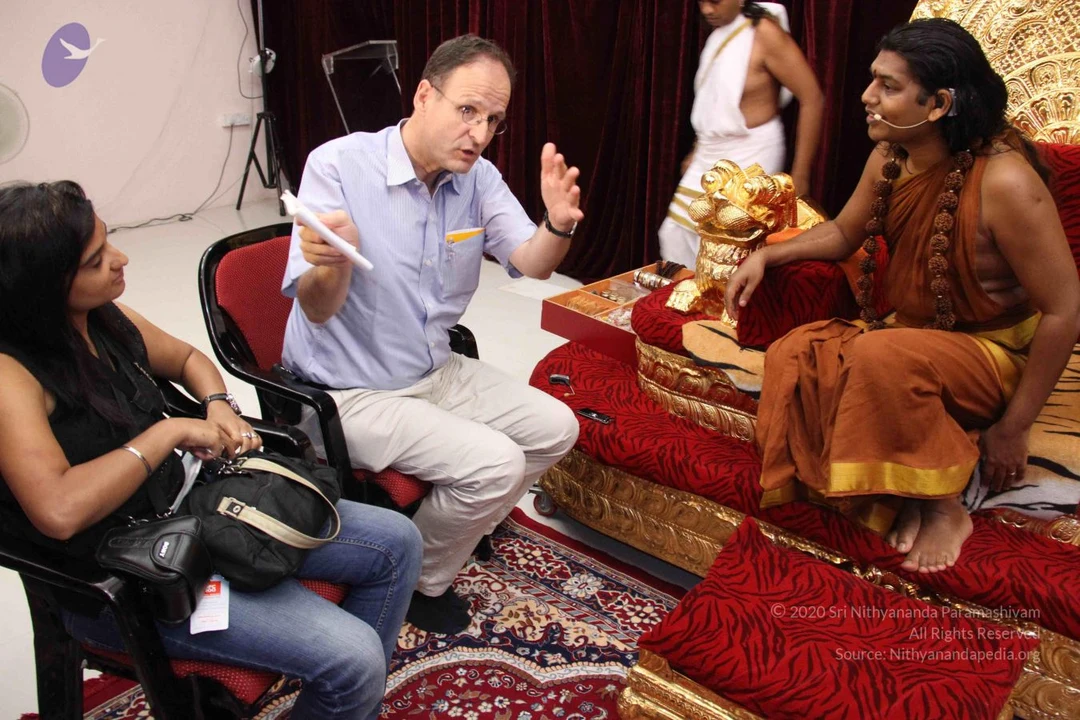
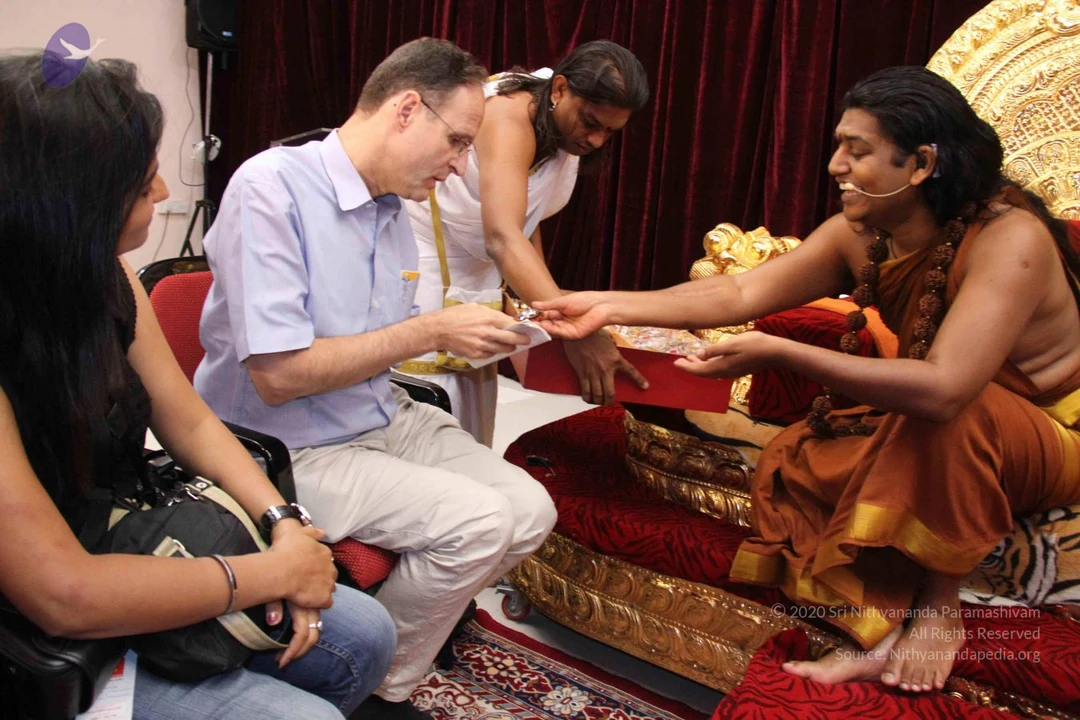
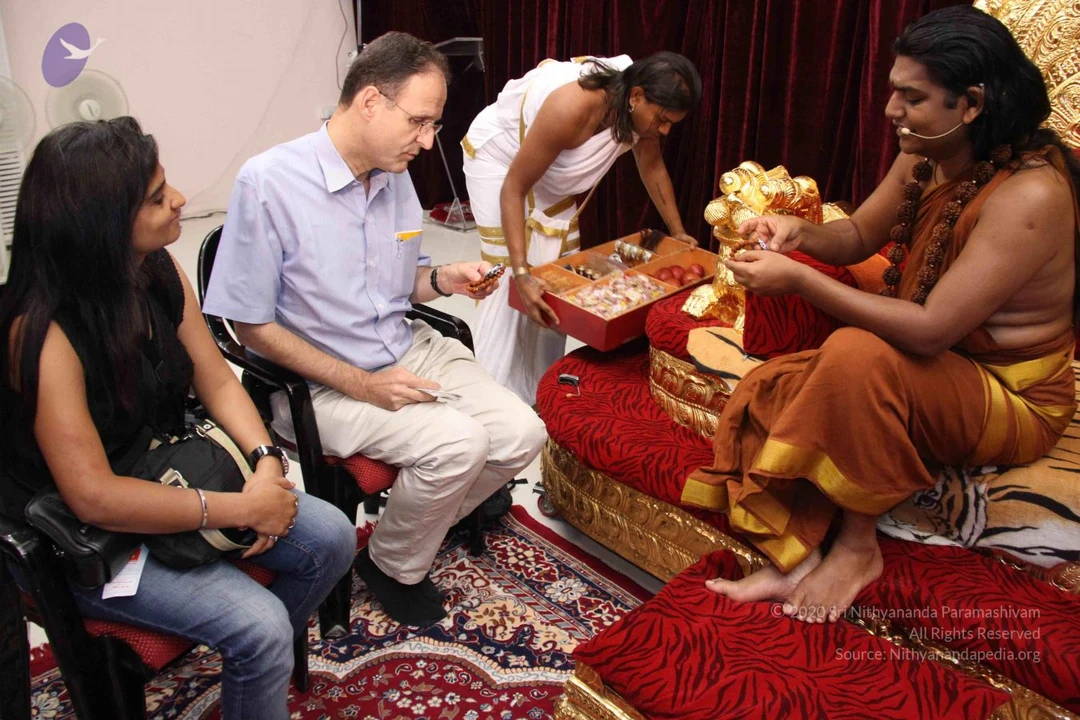
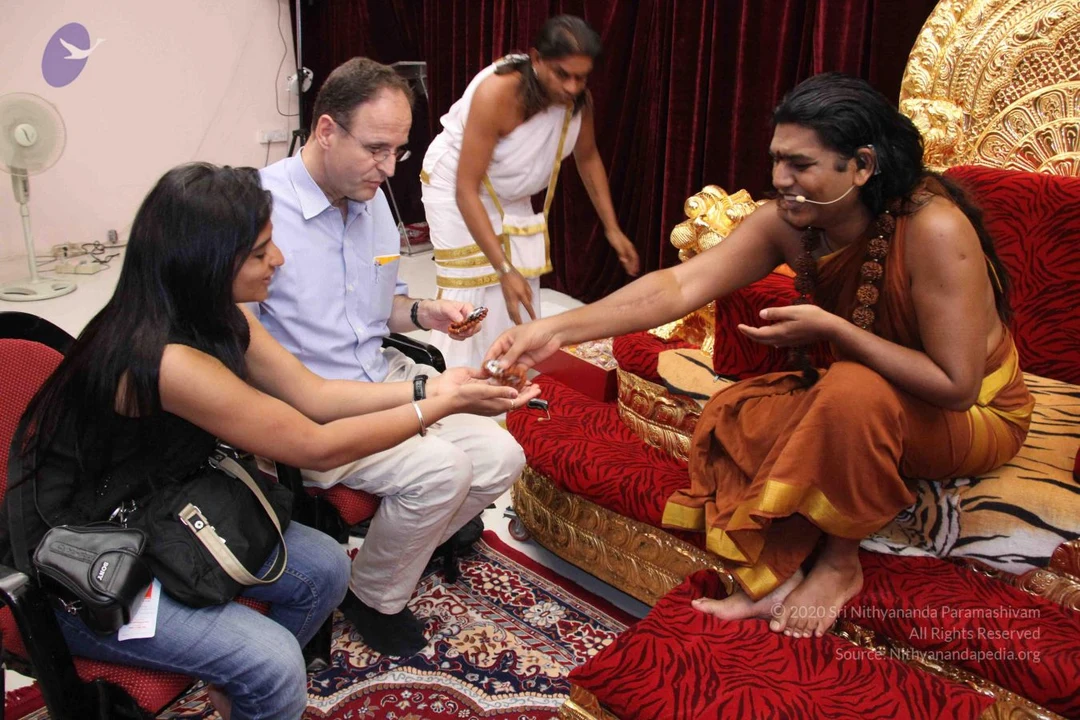
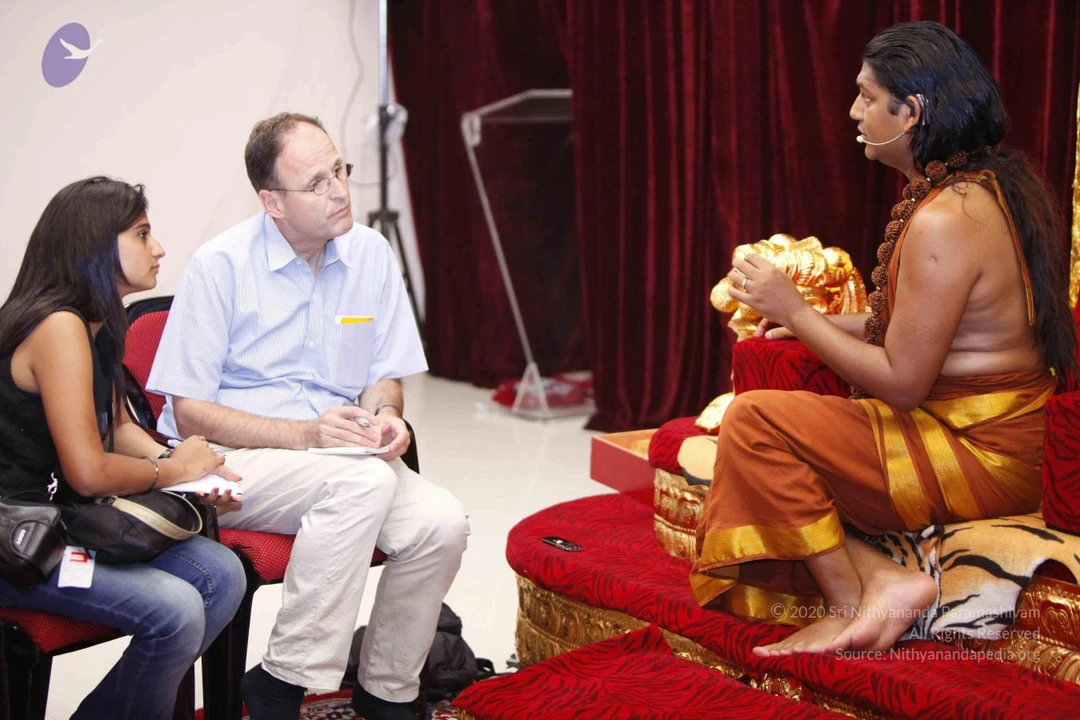
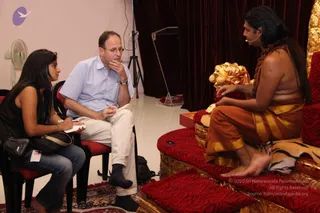
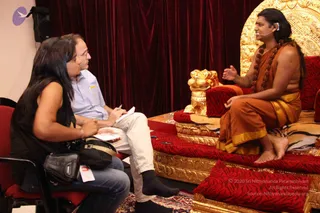
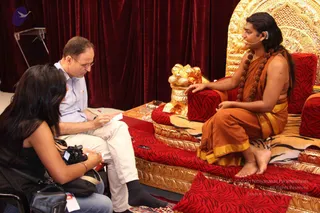
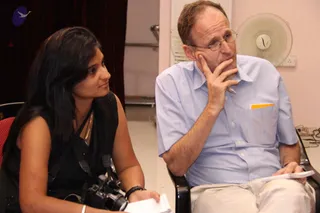
A photograph of two people seated in black chairs in an indoor room with a white wall, pale pink wall and two white electric fans behind them. On the left, a woman with long dark hair in a sleeveless black top writes on a small notepad with a pen and wears a camera strap across her chest. On the right, a man with short brown hair and wire-rimmed glasses wears a light blue striped short-sleeved shirt with an orange pen in his pocket and holds a pen and notepad while speaking. No a person candidate is visible; the scene shows attendees taking notes at a satsang-style gathering.A seated man in an orange-brown dhoti-style wrap with a gold border and a long rudraksha mala speaks animatedly with both hands from an ornate gold throne with carved lion arms and red and tiger-striped cushions. a person is the appearance-based label for this figure, who has long hair and ceremonial adornments. Two visitors sit in folding chairs at left: a woman in a black sleeveless top and jeans holding a card, and a man in a light blue shirt, white trousers and dark socks, also holding a card. A red and gold footstool and a patterned red carpet lie in front of the throne against a dark red velvet curtain.

IA_food

13 photosSource gallery
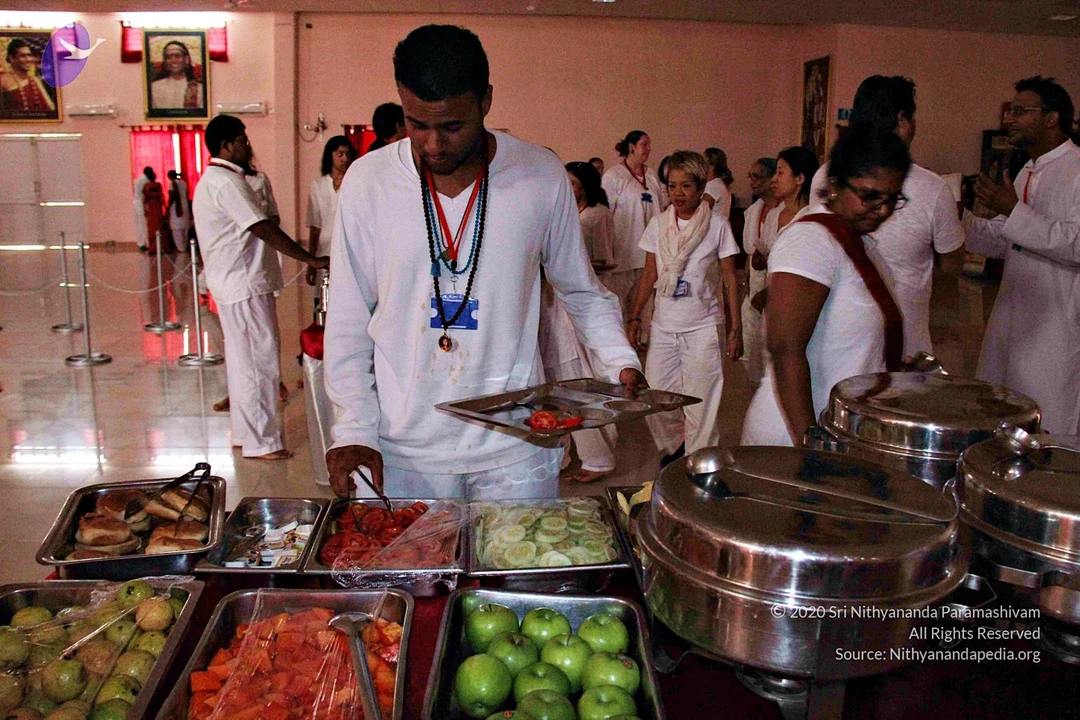
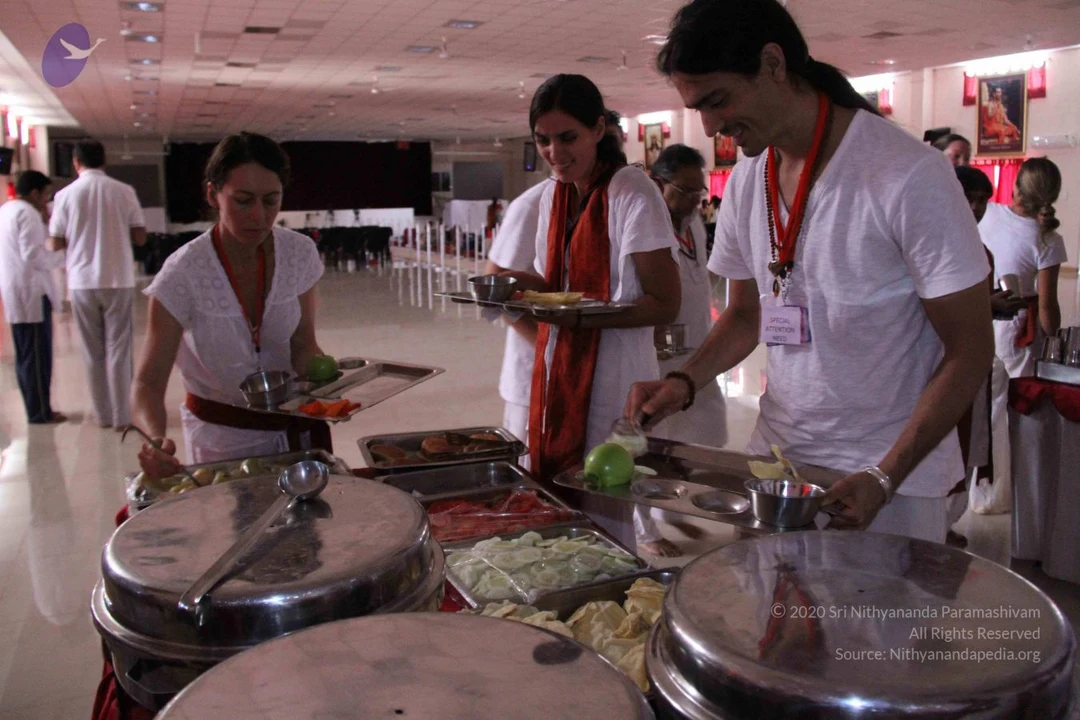
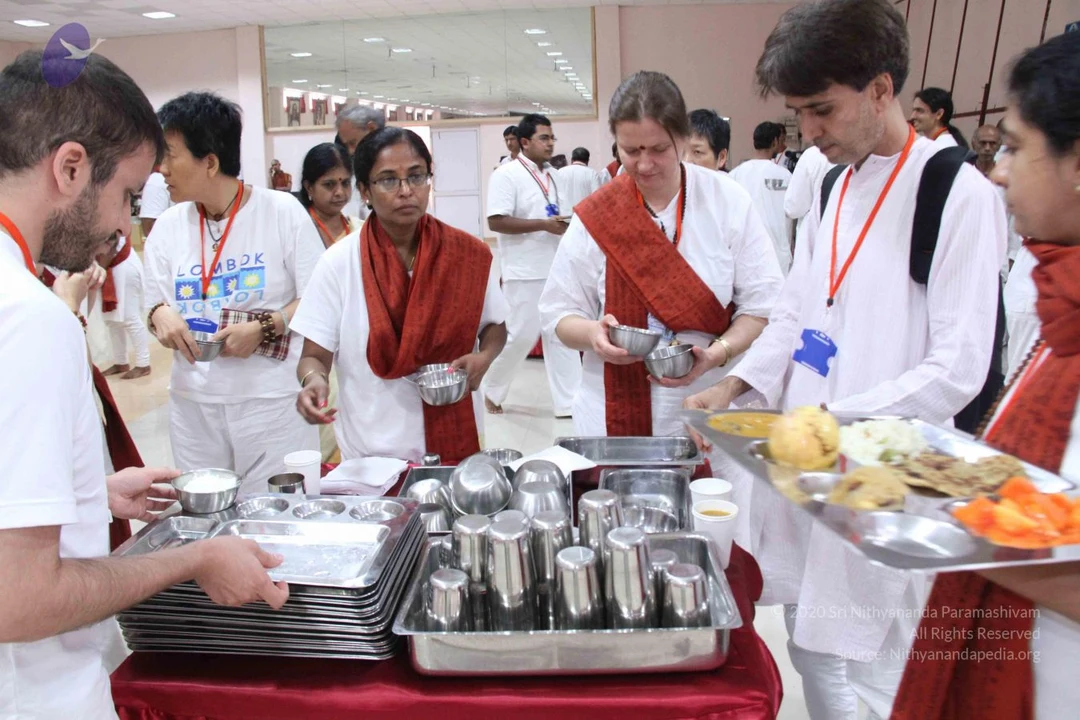
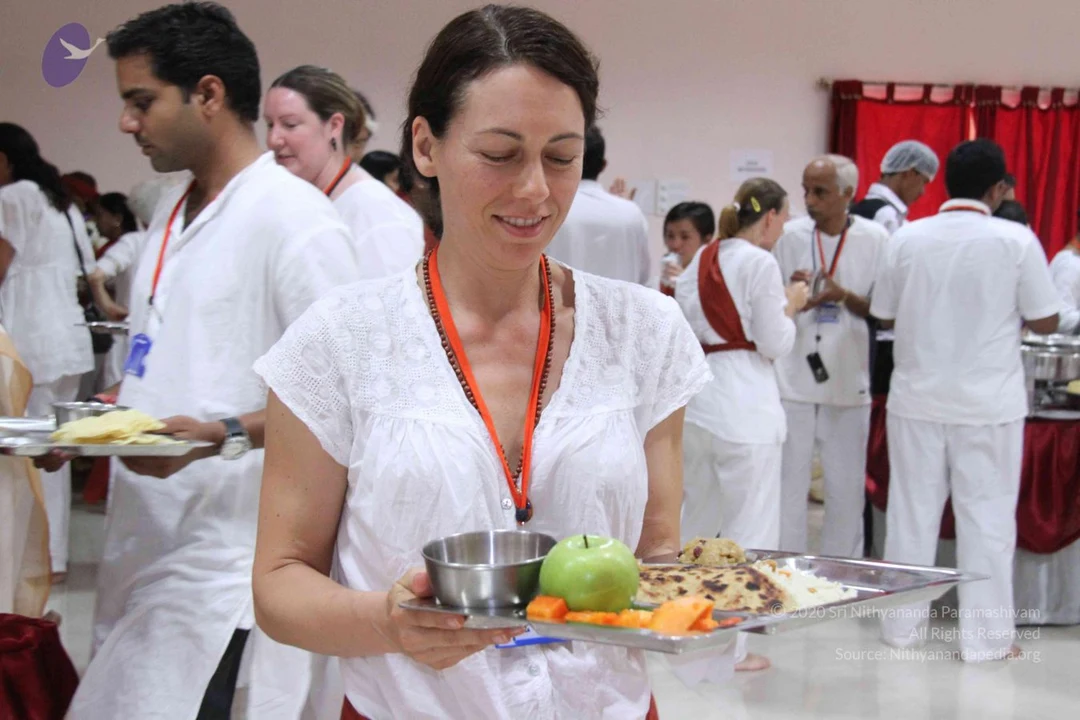
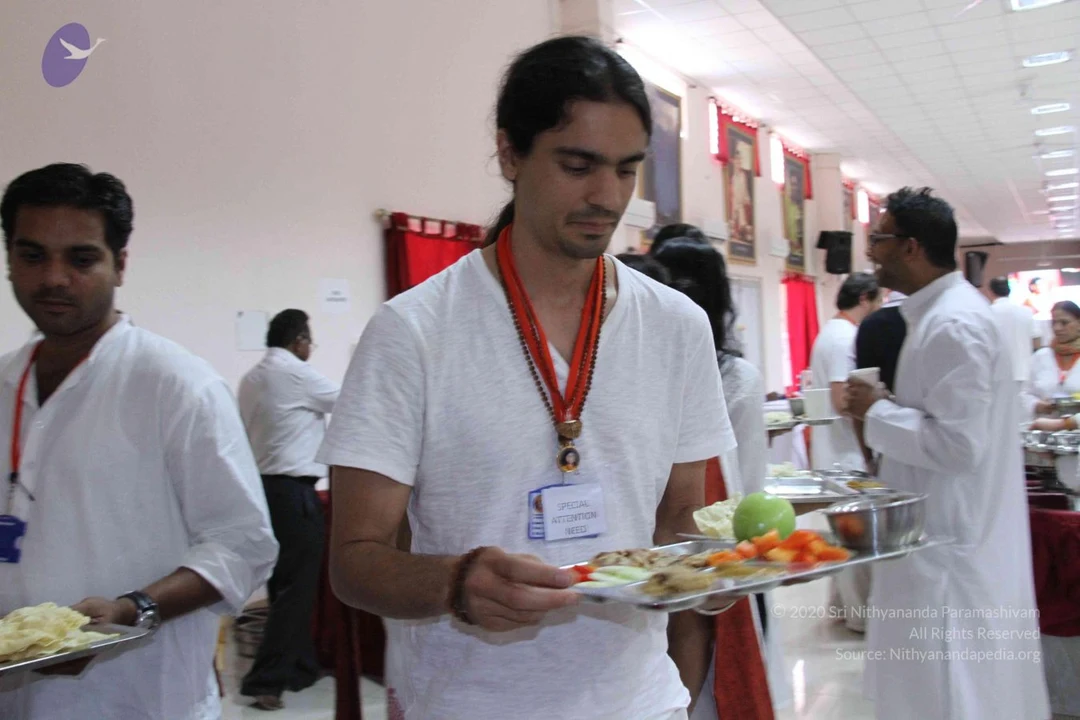
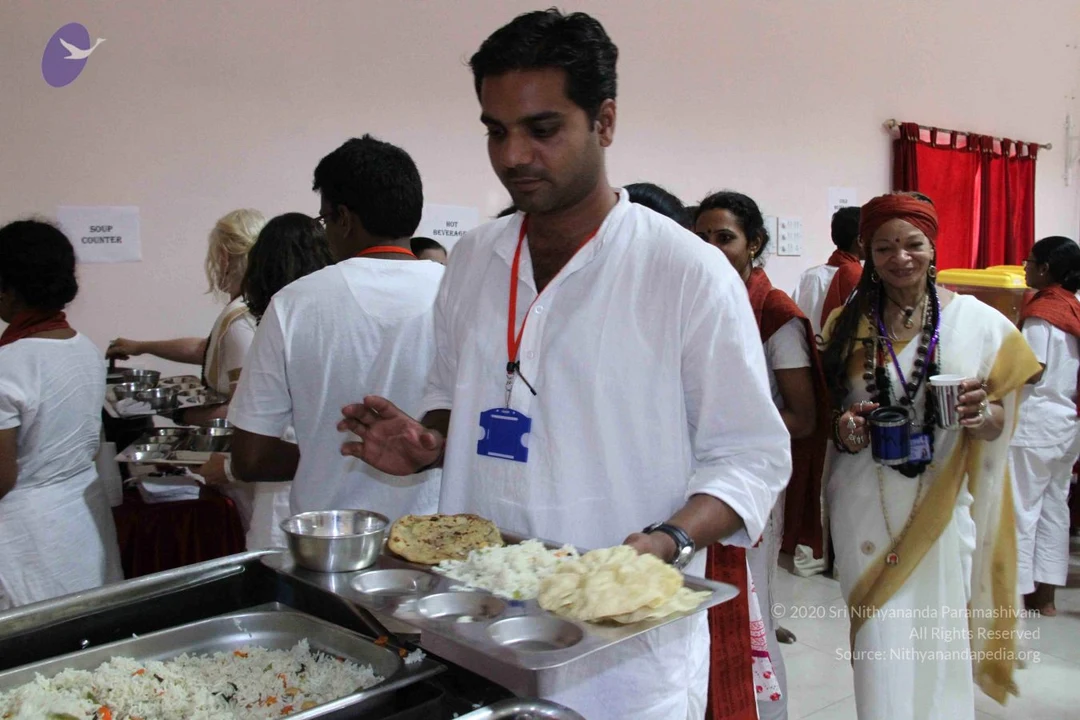
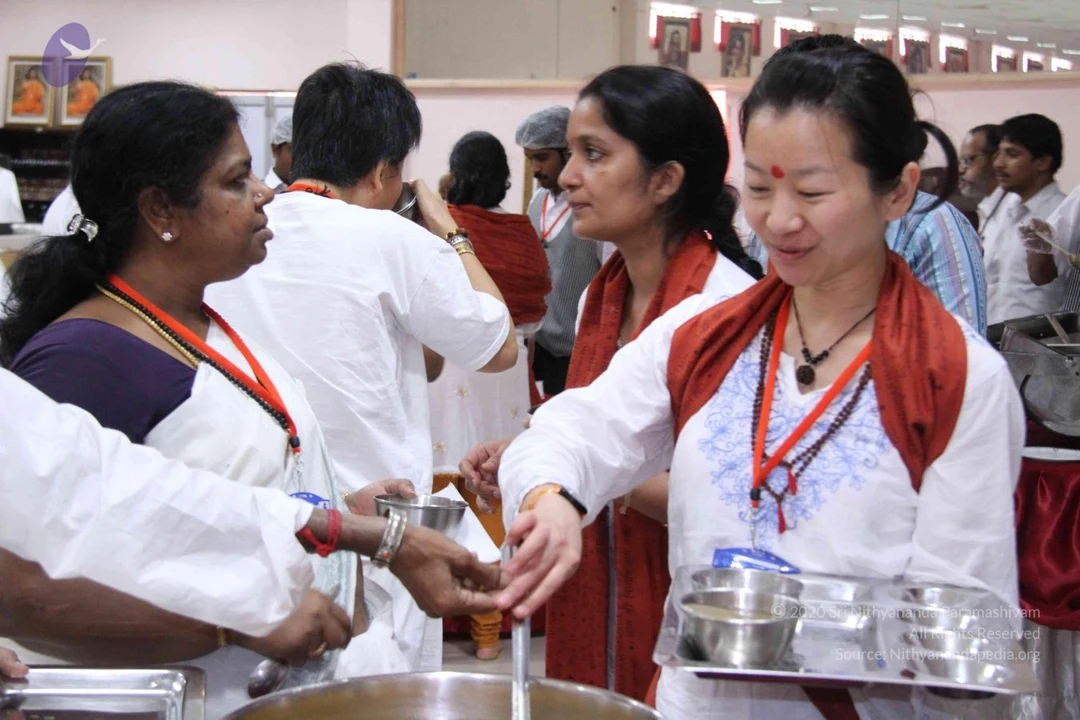
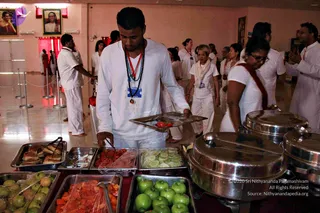
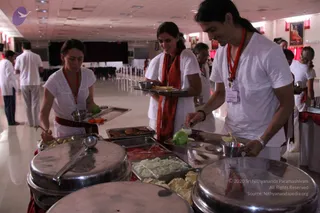
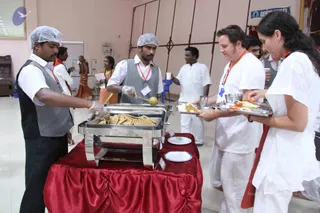
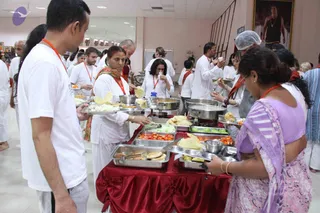
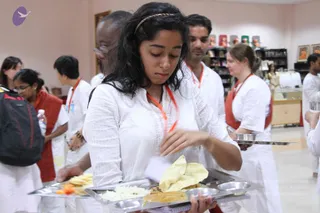
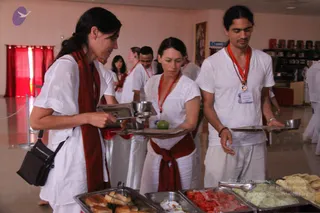
A buffet serving line in a bright hall with a pink wall and framed portraits in the upper left. A young man in white clothes and a white shirt wears a blue rudraksha mala and a red lanyard, carrying a steel tray with tomato slices while looking down at the food. Steel trays hold sliced apples, green apples, sliced papaya, bread and cucumber slices, with stainless steel chafing dishes on the right. Around them, several people in white clothes and a woman in a white shawl and red-brown dupatta stand near the table. A man in white at right gestures with his hands together.A photograph of a food service line in a large white hall. Three people in white clothing serve food from steel chafing dishes and trays of cut fruit, vegetables and sweets. The woman on the left wears a white top and a brown waist wrap and holds a green apple. The woman in the centre wears a white top and an orange-red shawl and holds a steel plate. The man on the right wears a white t-shirt, a red lanyard, a rudraksha mala and a 'Special Attention' badge, and is serving from a tray. Behind them, a portrait of a deity hangs on the wall and other people in white move around the hall.A woman with dark hair pulled back, wearing a white top, a rust-red shawl printed with script, and a wooden rudraksha-style mala, carries a steel tray holding a flatbread, a cup of rice, a small bowl of curry and vegetable dishes. Behind her, people in white clothes with orange lanyards move through a dining hall, one woman in white holding a tray. The scene looks like a communal meal serving line during an ashram event.A buffet service line in a bright hall with pink walls and a tiled floor. On the left a man in a white shirt and striped vest wearing a hairnet and disposable gloves serves flatbreads from a steel chafing dish draped with a red satin cloth. A second server in a striped vest and hairnet ladles food. Two guests in white clothes, one with a red lanyard, hold plates and stand in line. Further back, a woman in an orange sari and other people in white stand near a red-and-gold backdrop. No a person candidate is clearly visible.A buffet-style meal service in an indoor hall with pale walls and a framed portrait on the upper right labelled as a devotional image. A woman in white with a colourful green-and-orange shawl holds a steel plate of flatbreads and rice while serving from a red-draped table of steel trays holding chopped vegetables, papadums, rolls and flatbreads. Around her, devotees in white clothes and orange lanyards queue and eat; a man in a white shirt in the foreground holds a plate, and a woman in lavender sari stands at the right edge. Another server in a white cap and apron works behind the table. The scene suggests a communal annadan meal.A young woman with wavy dark hair and a thin headband, wearing a white kurta and an orange lanyard, carries a steel tray of food with rice, flatbreads and a small dish of vegetables. Behind her, other people in white clothes with orange lanyards move through a bright room; a man in white stands to the right and a woman in a red-orange shawl is at centre-right. Shelves of colourful items and framed pictures line the back wall. The scene looks like an ashram meal service.
Avanthi-Homa

50 photosSource gallery
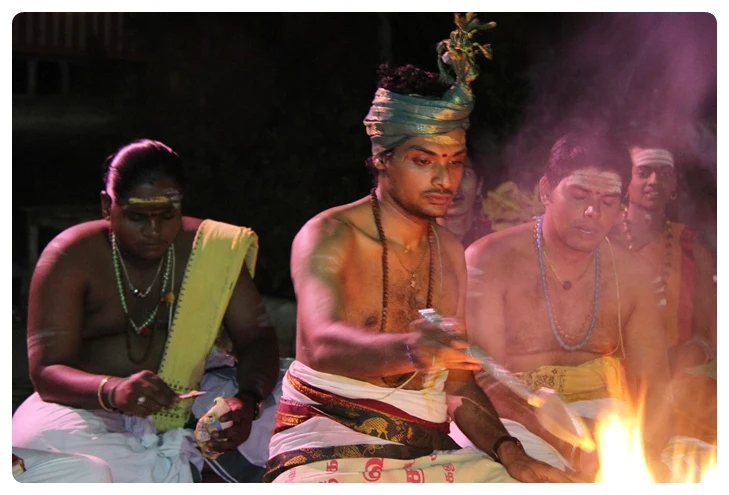
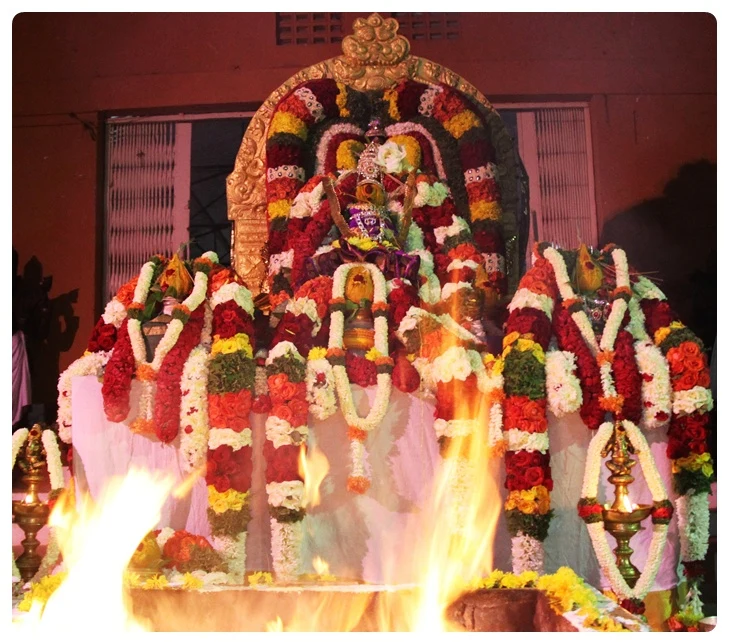
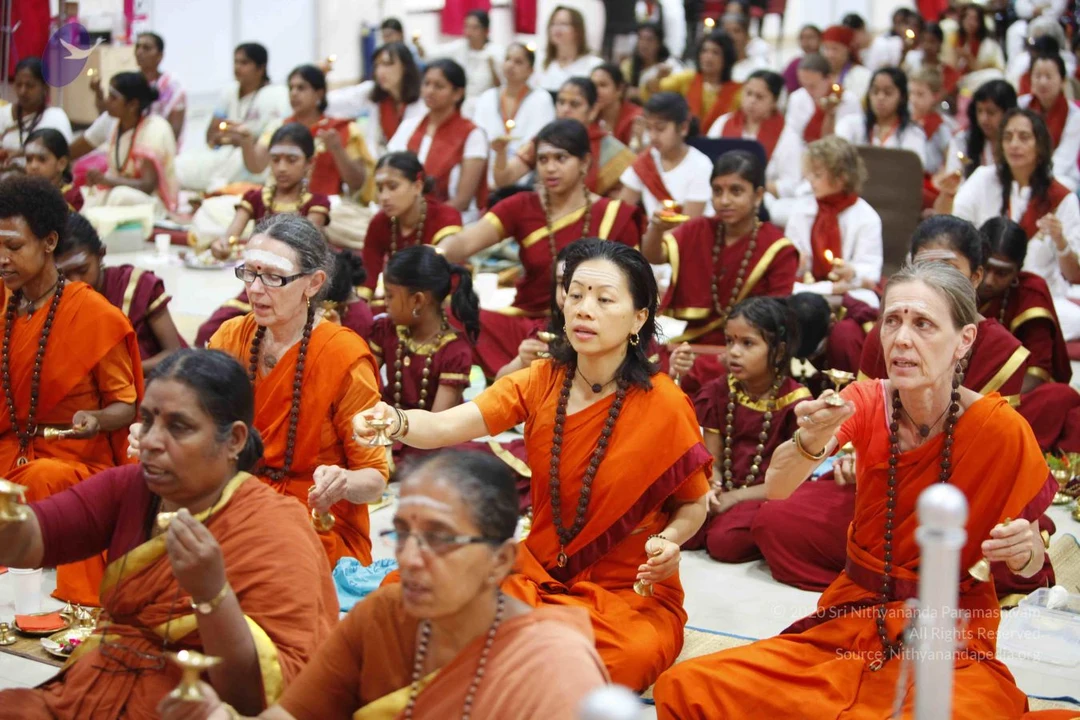
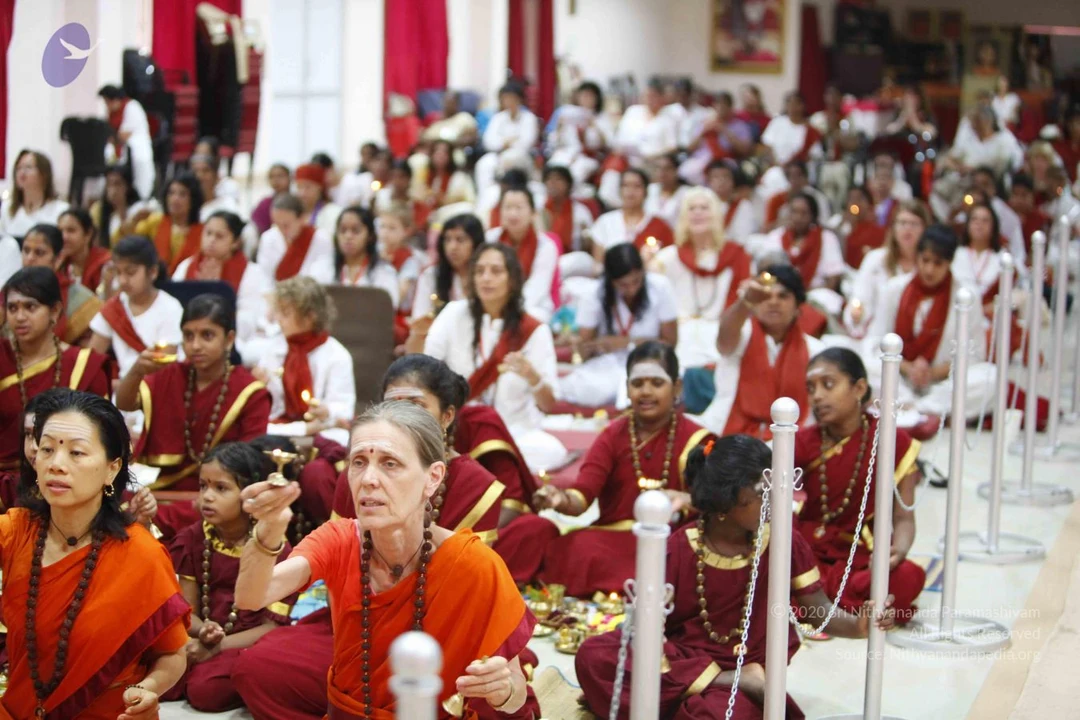
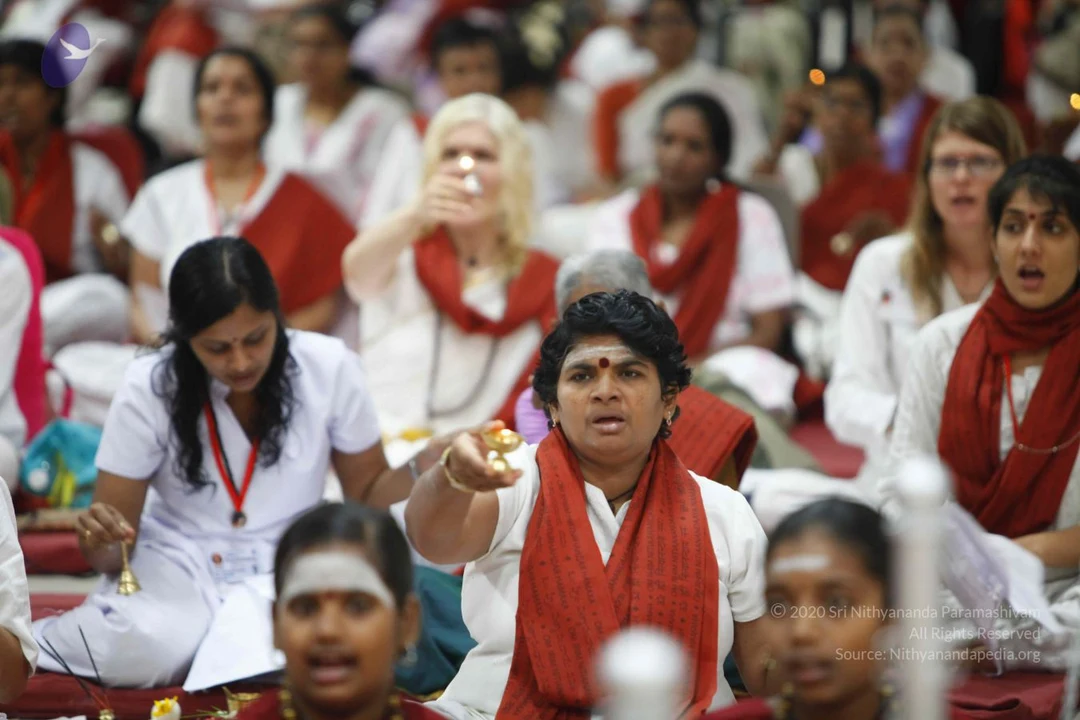
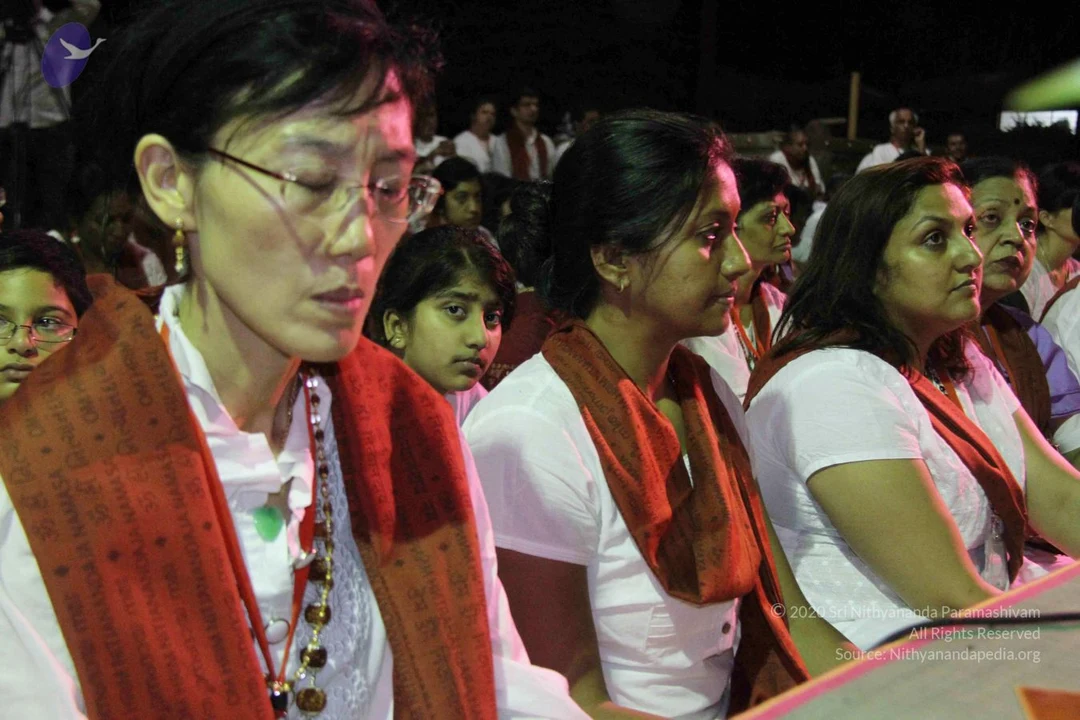
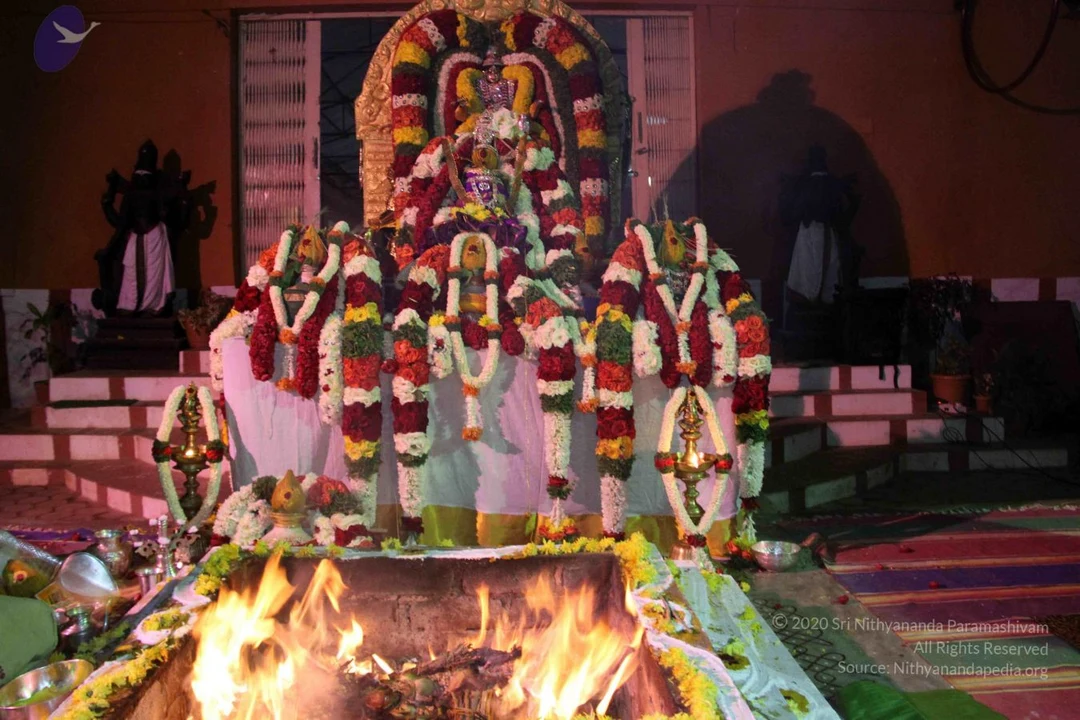
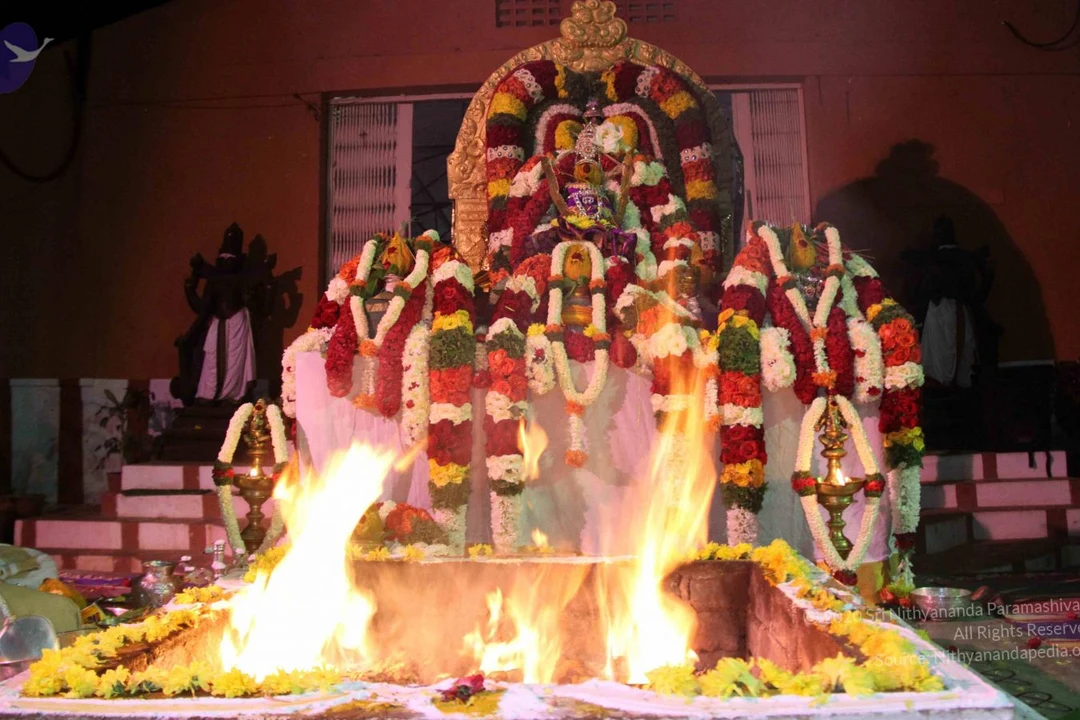
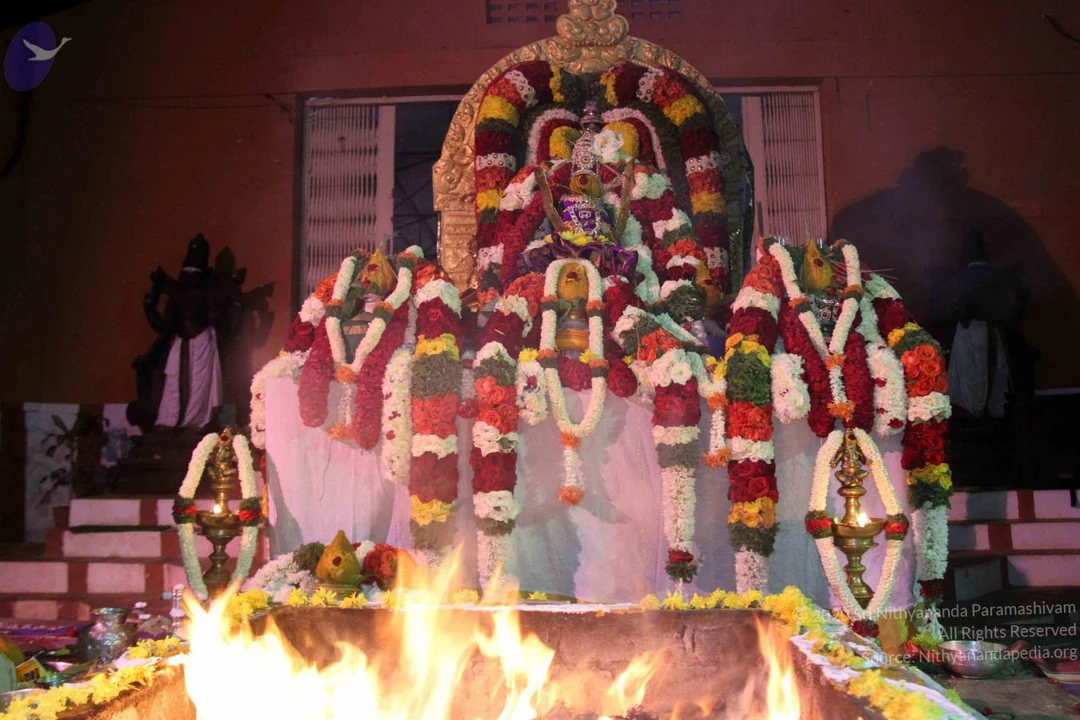
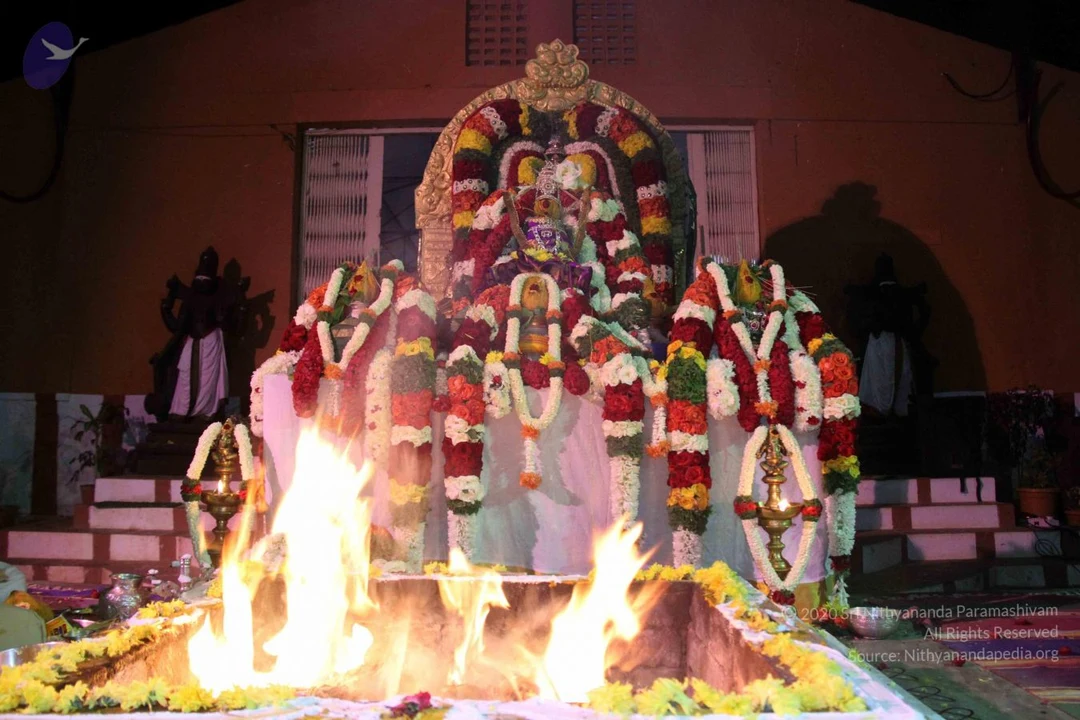
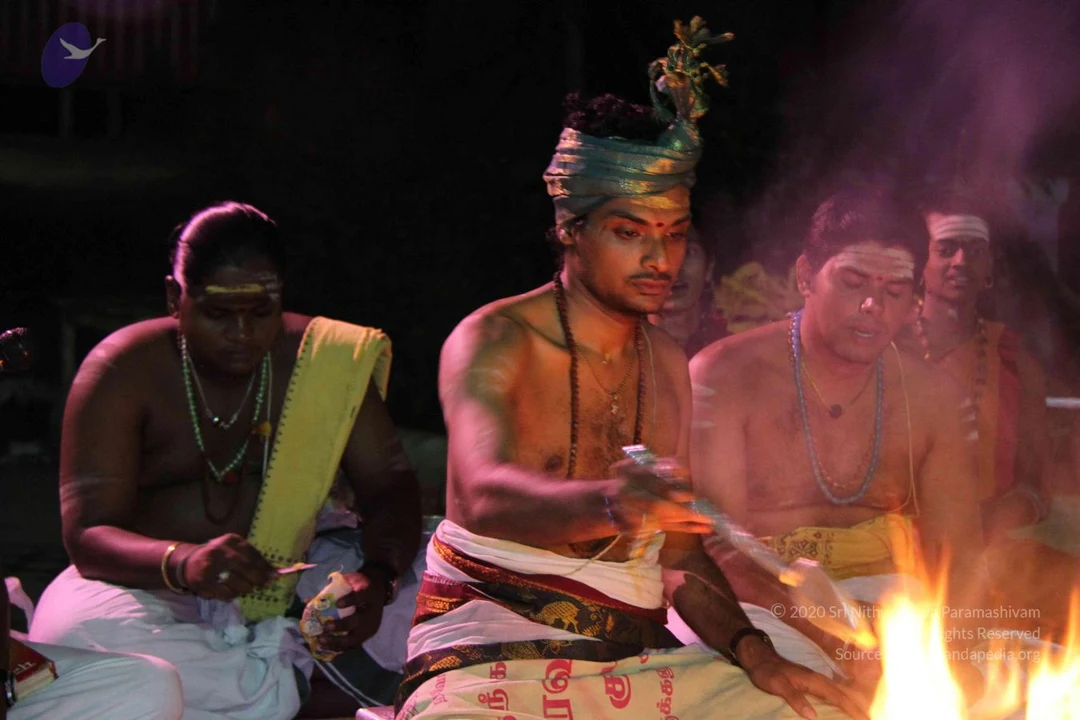
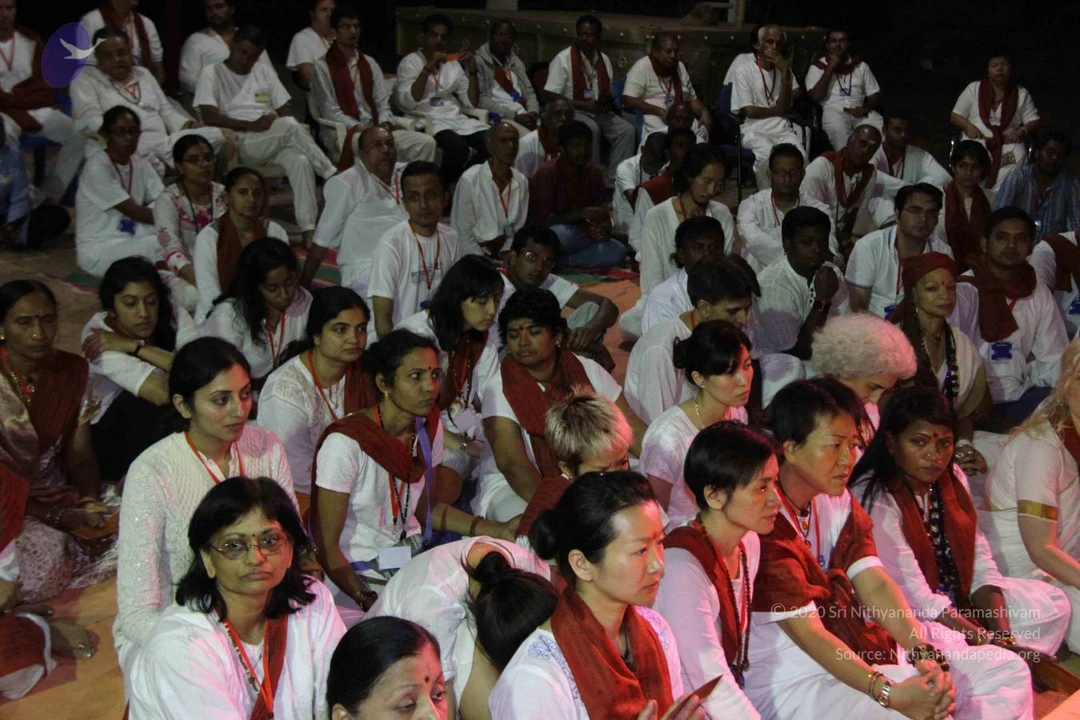
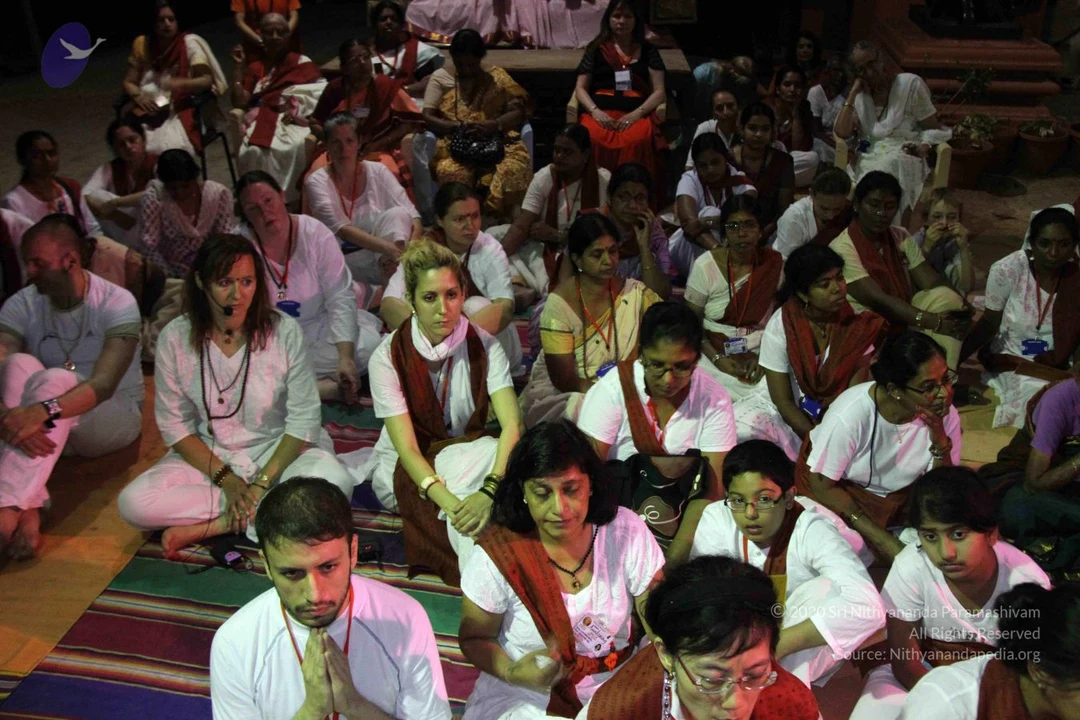
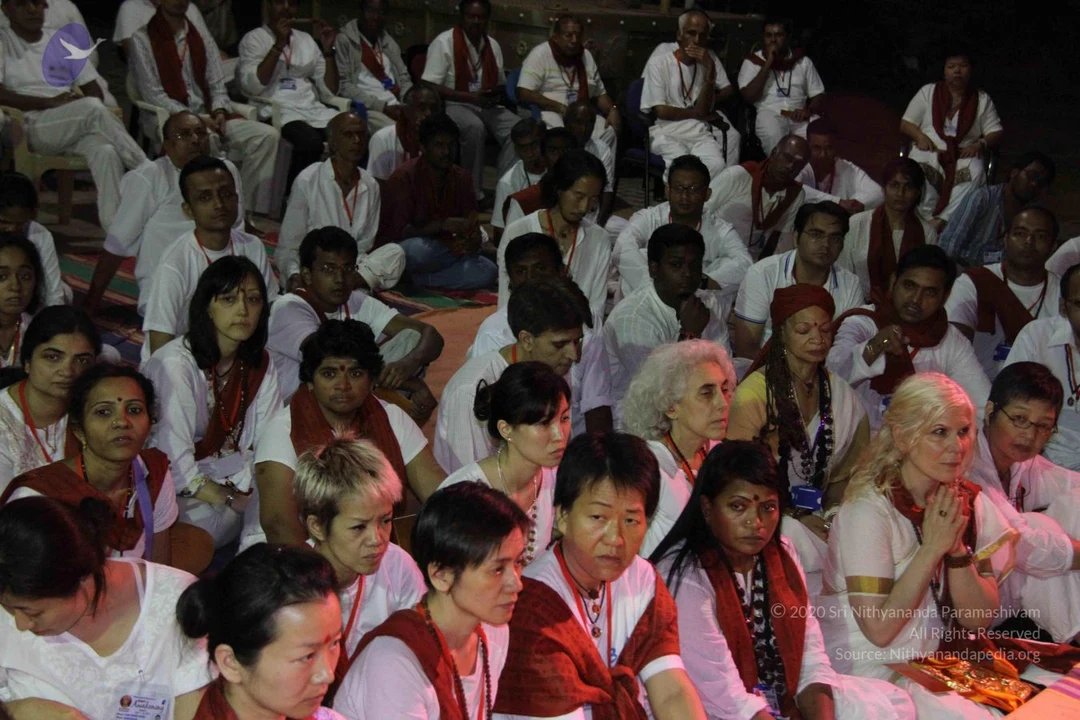
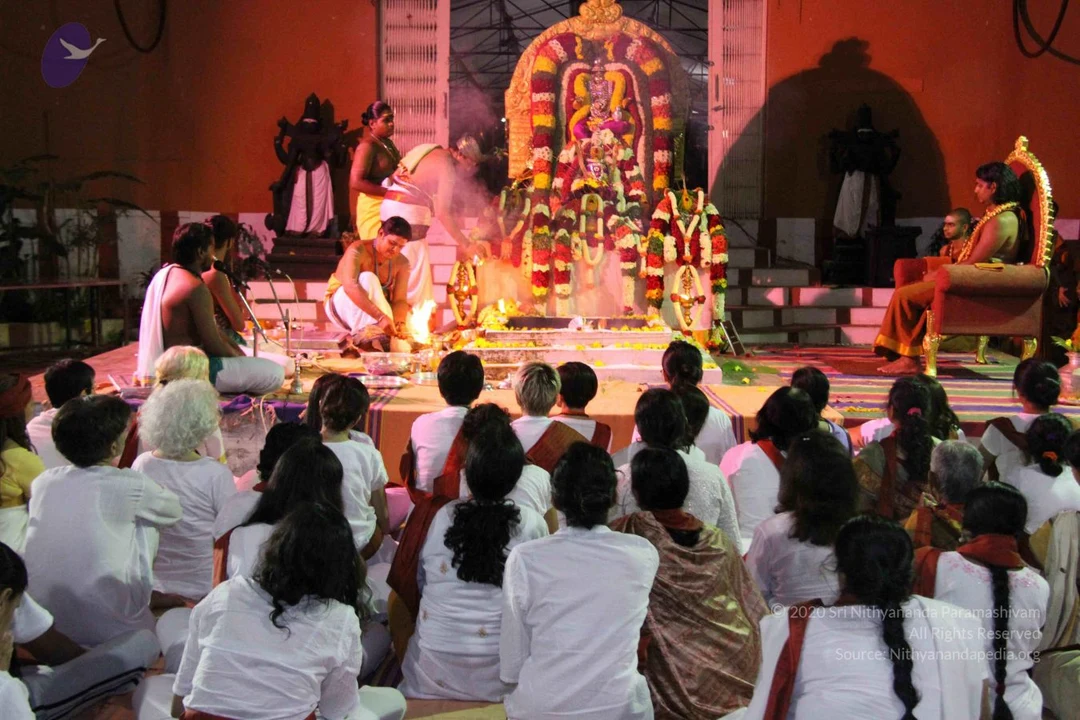
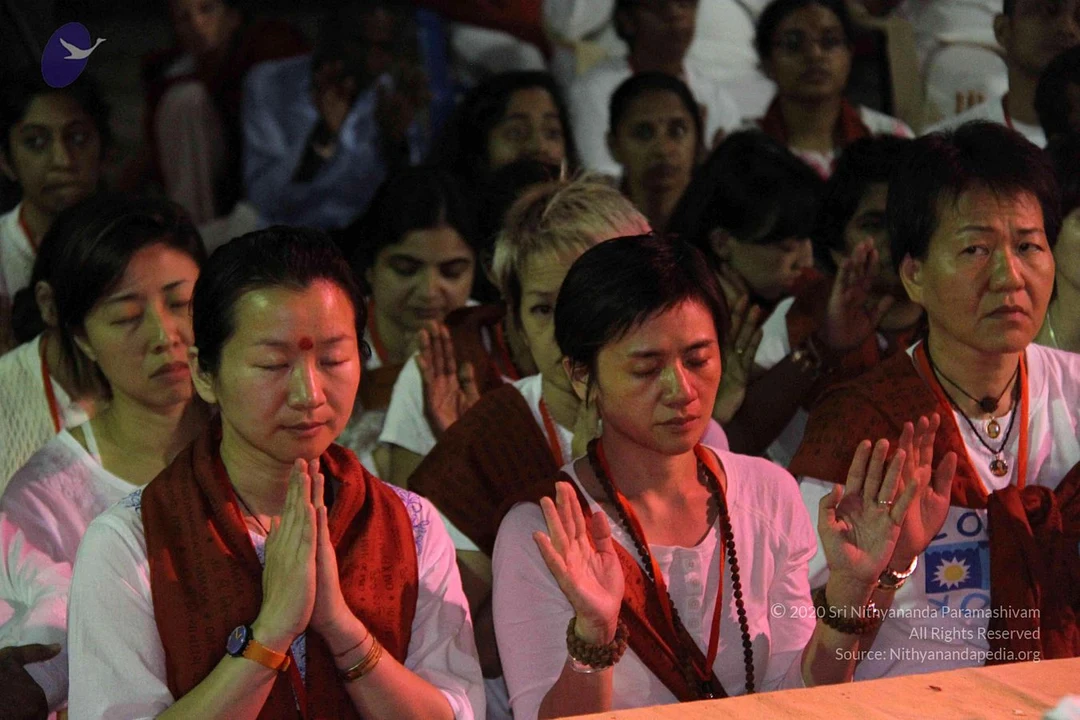
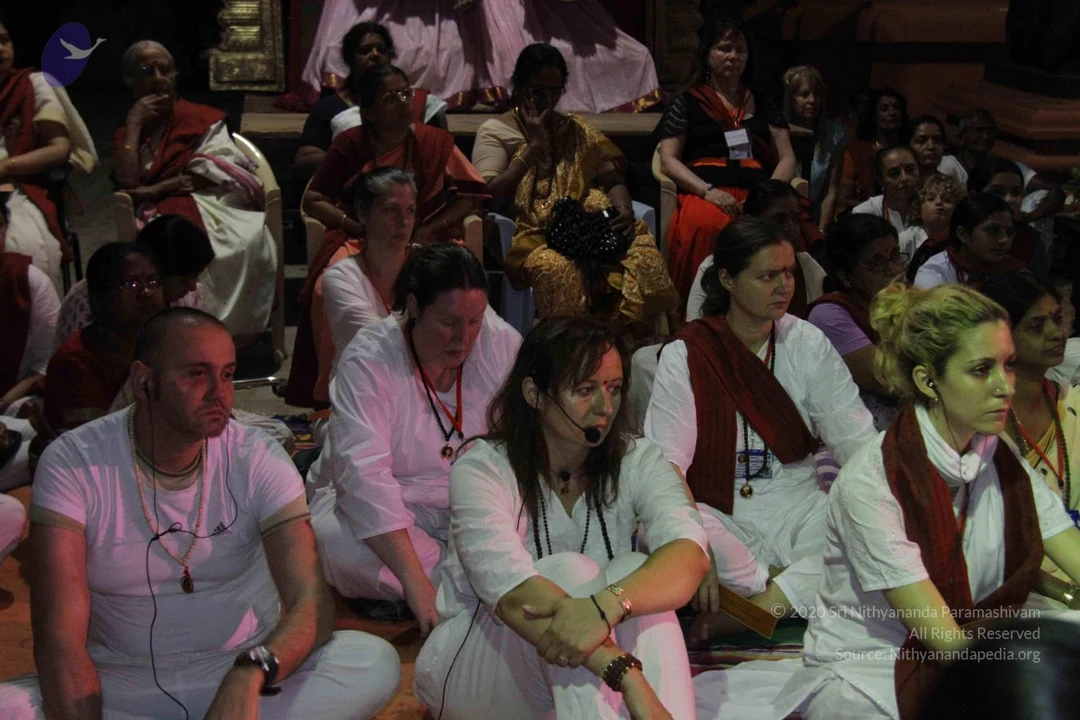
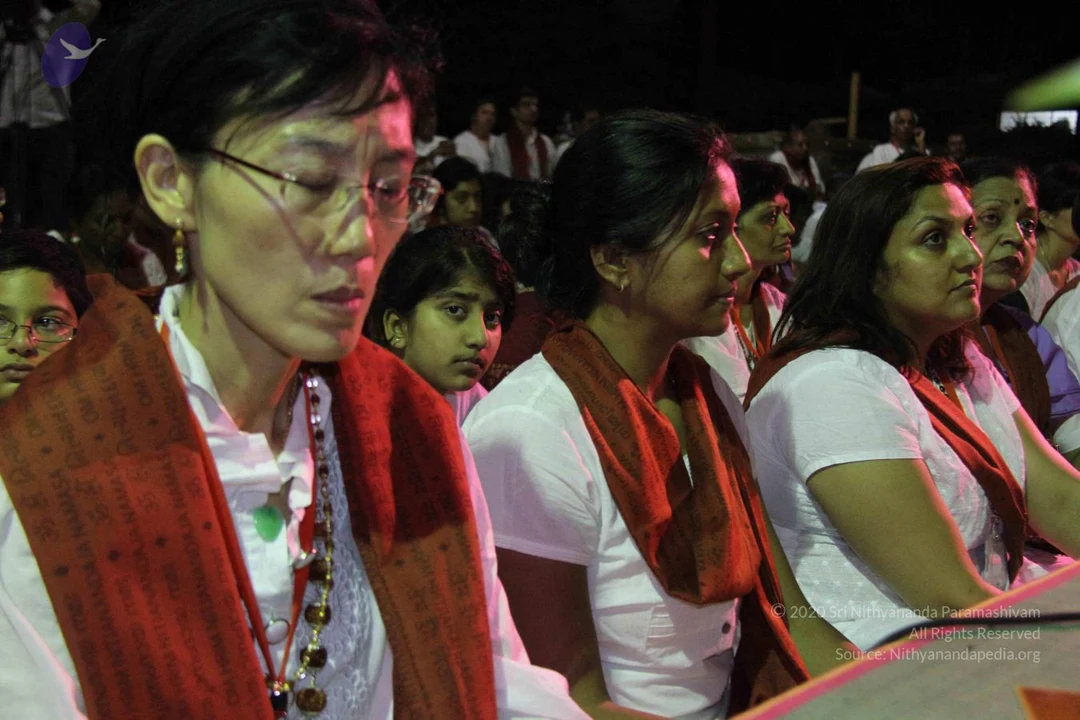
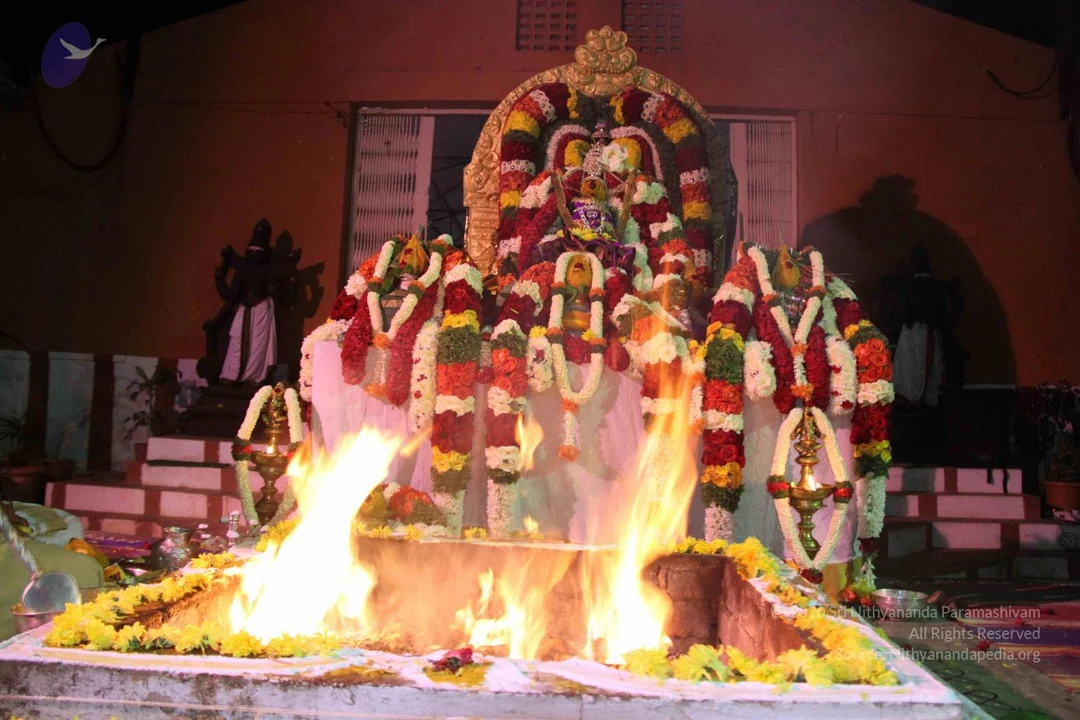
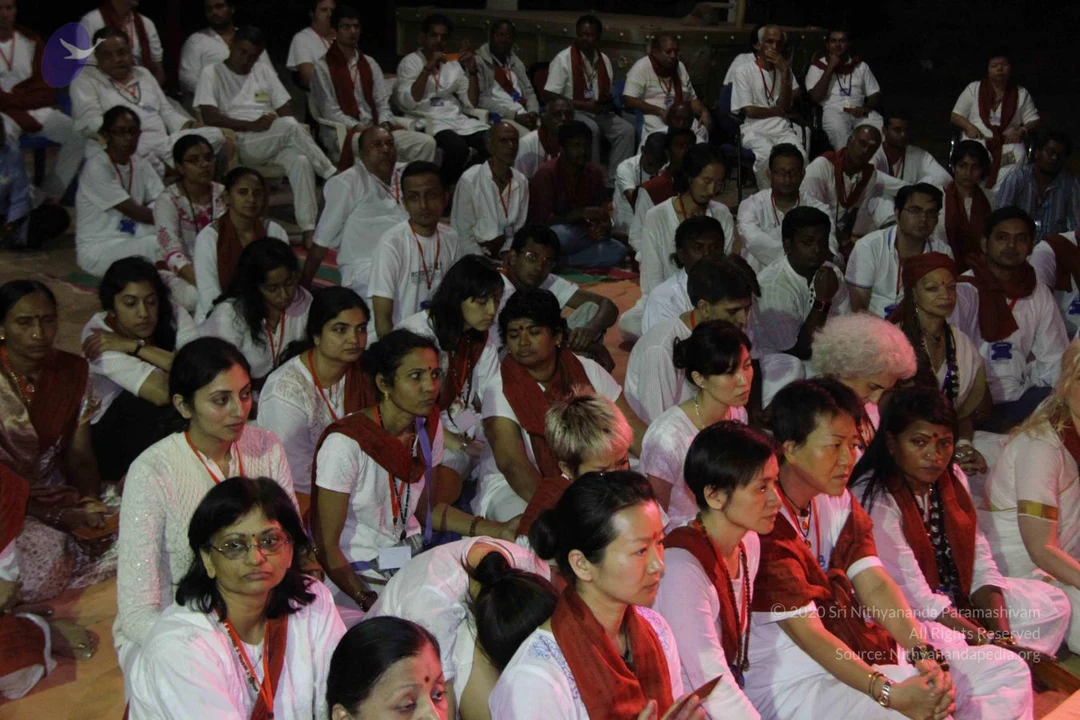
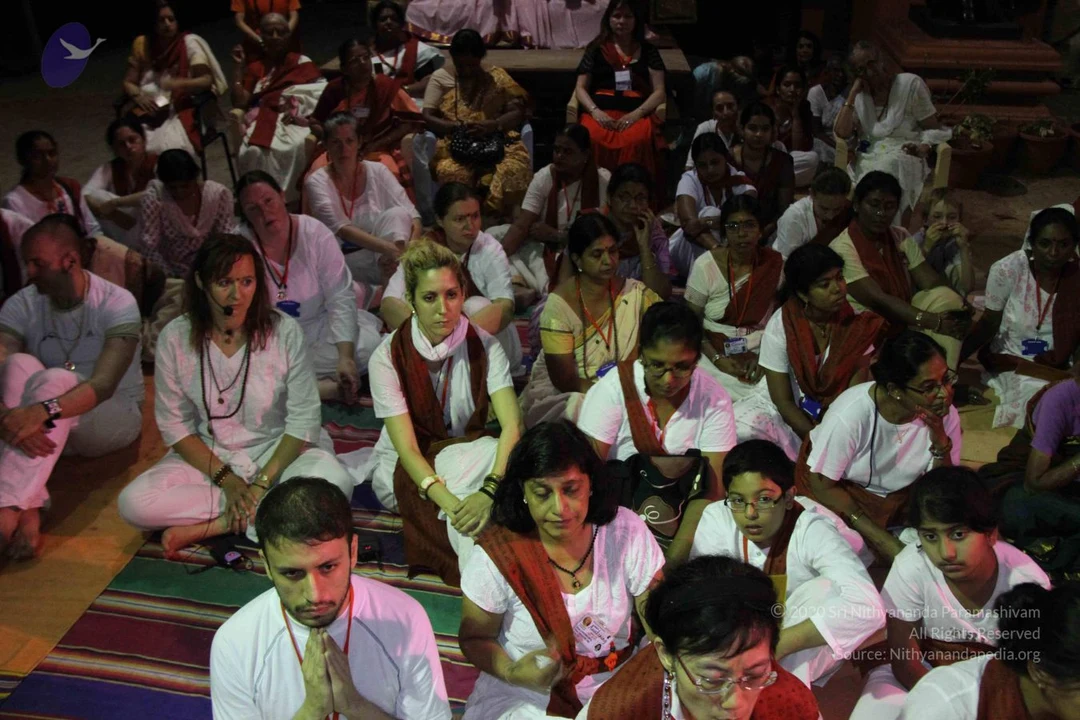
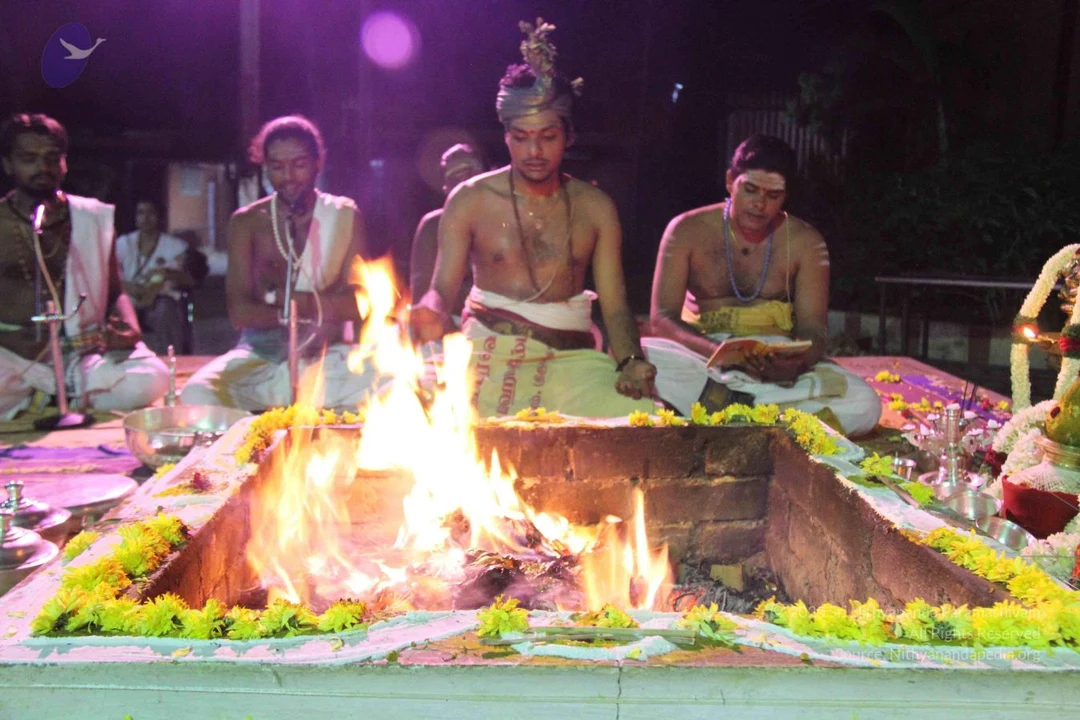
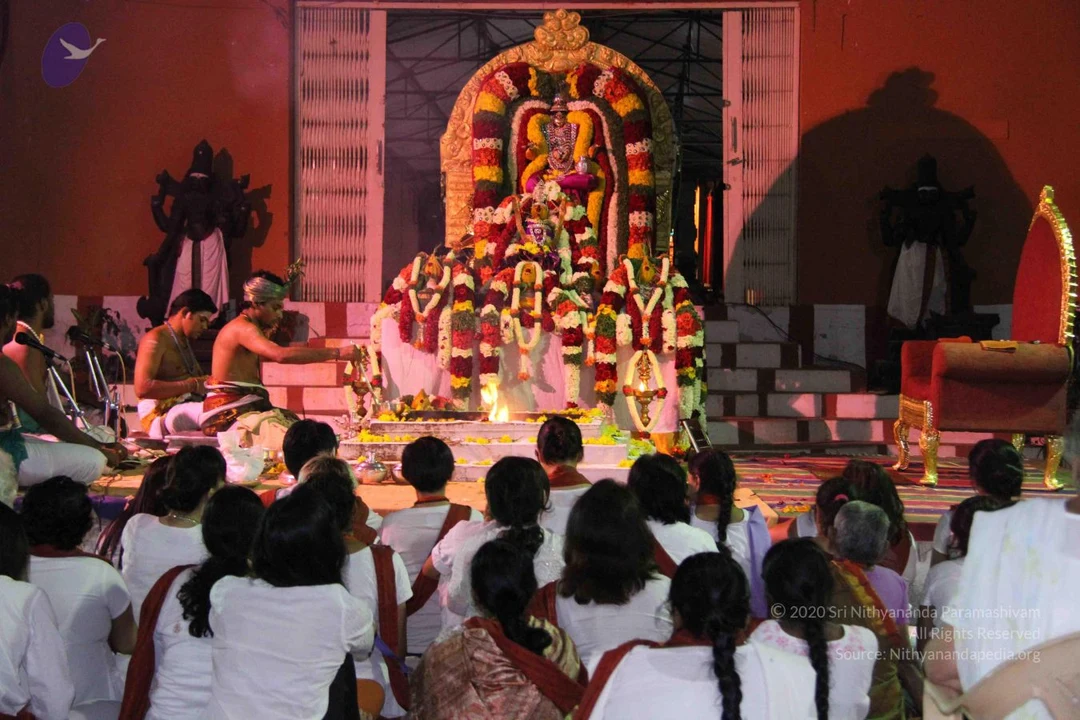
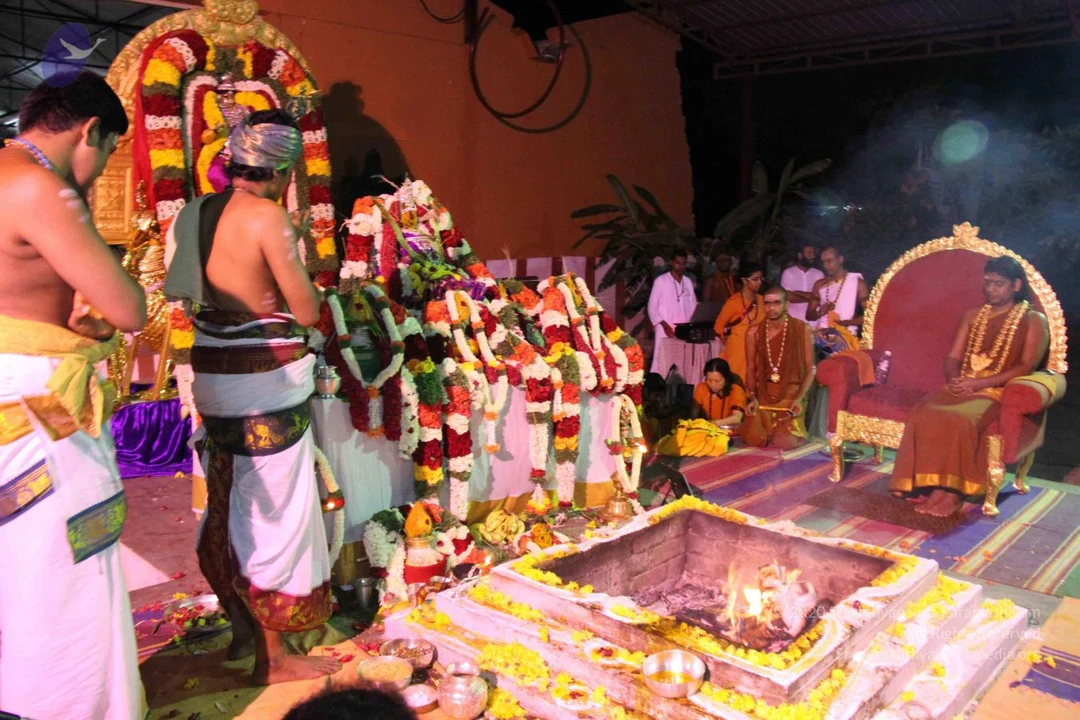
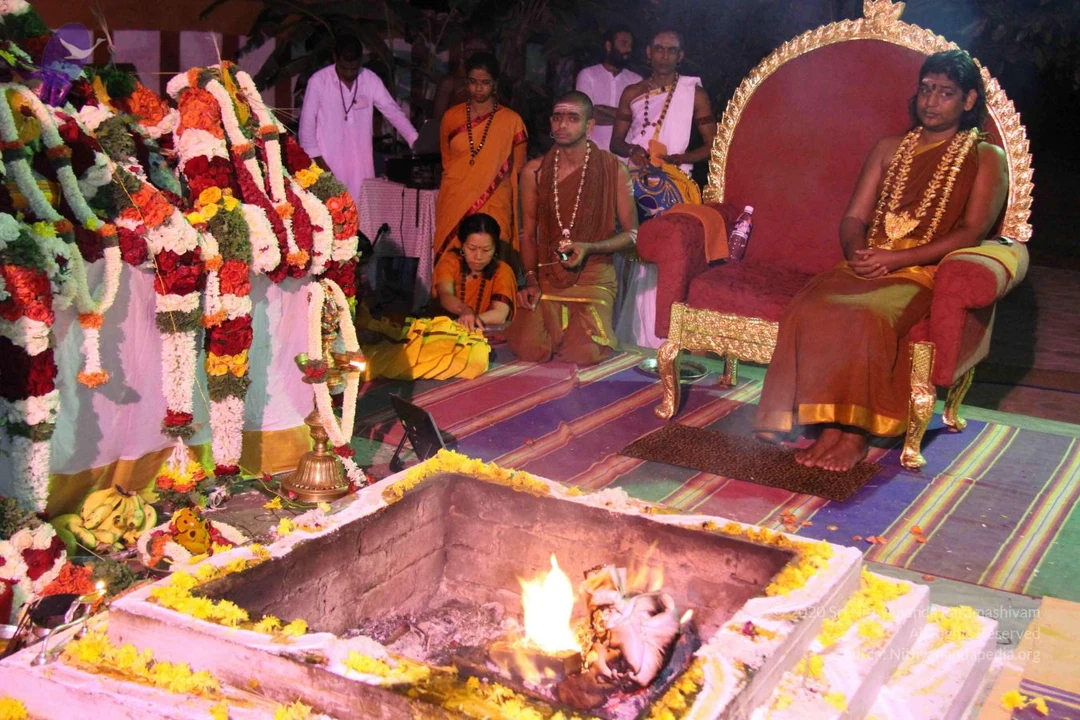
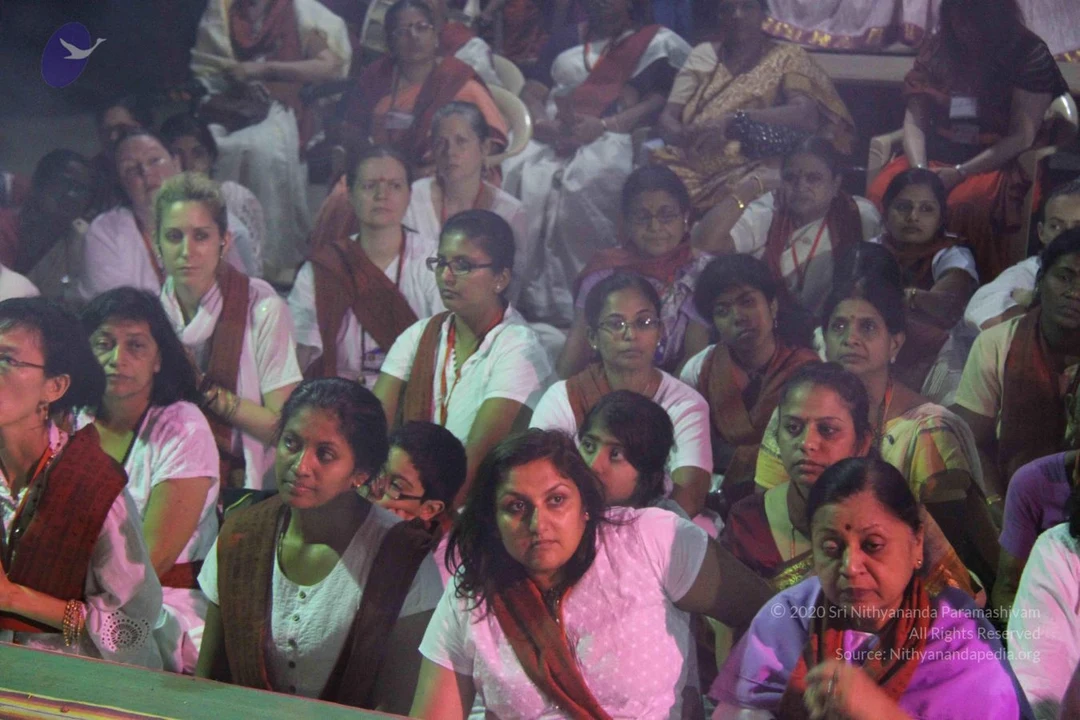
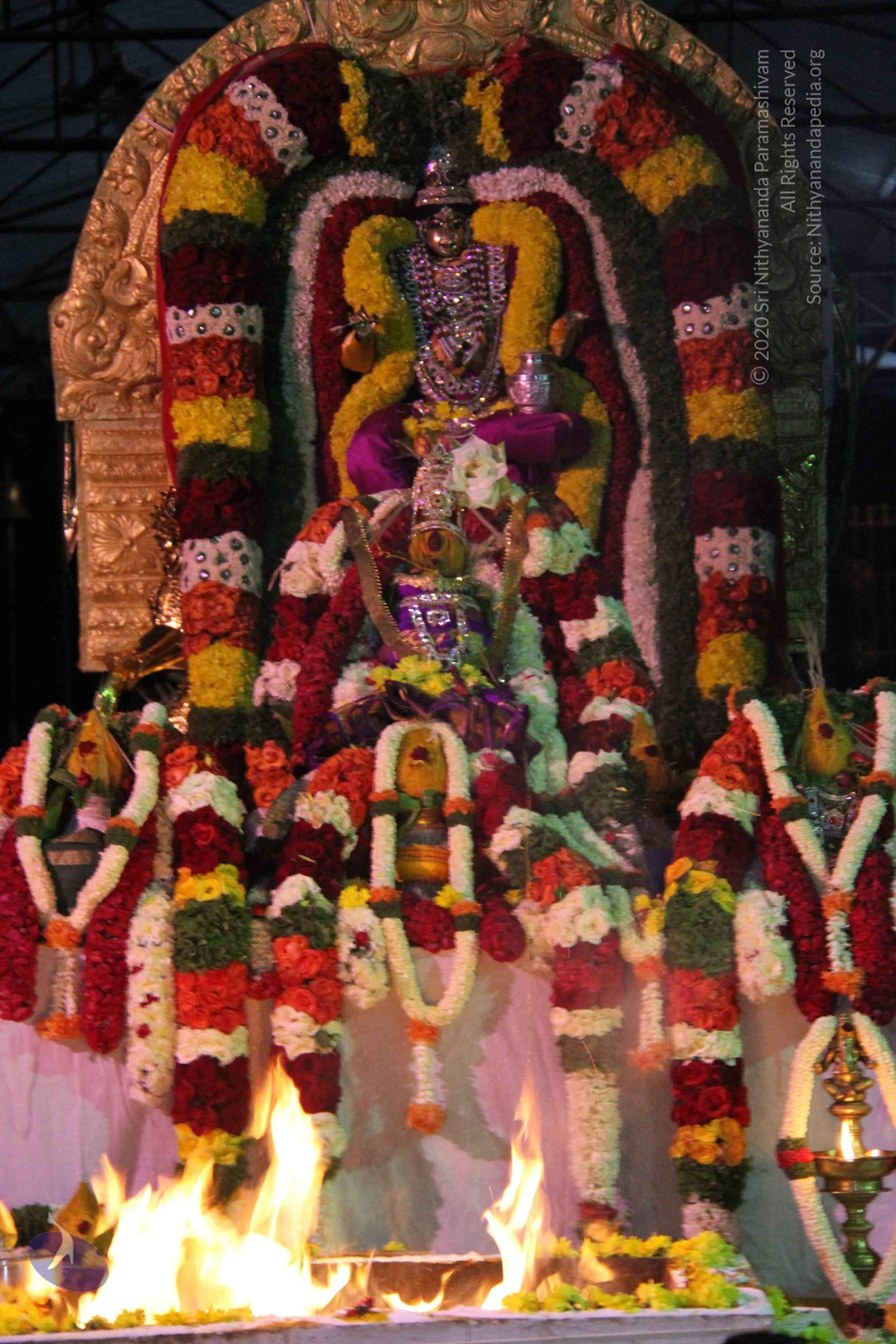
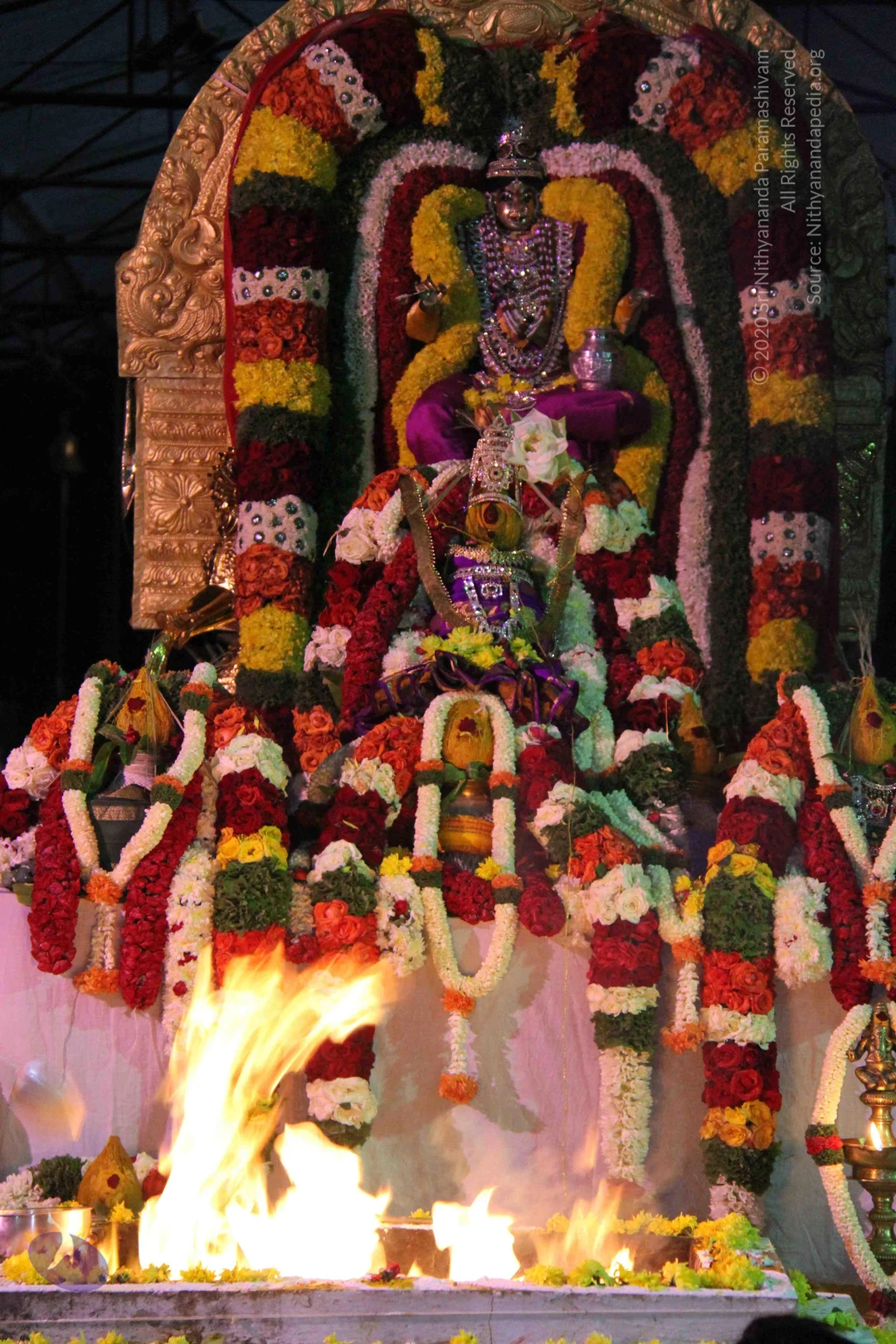
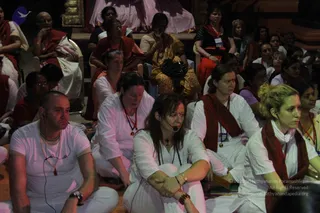
A seated satsang audience in a temple hall, mostly devotees in white kurtas or tops with red-orange shawls and rudraksha or orange malas. In the foreground a bald man in a white tee and white pants sits cross-legged beside a woman in white with long dark hair and a headset microphone. A woman on the right in a white top and red-brown shawl wears a headset and listens. Behind them rows of attendees, some in red shawls and saris, watch forward with serious expressions. A pink-lit altar with a seated figure in pink draping appears at the top edge. Attendees are visible but no clearly identifiable central speaker is in view.Night-time photograph of a seated audience at a satsang gathering, with a row of women in the foreground wearing white tops and red-orange shawls printed with dark script. The woman at left has glasses, earrings and a rudraksha-style bead necklace, eyes closed in meditation. Beside her are a young girl in glasses and another girl, then older women, all lit by warm stage light. Several standing people and a camera operator appear in the dim background.A seated audience at a satsang gathering, with a young man in a white t-shirt and orange lanyard pressing his palms together in namaste, and a smiling woman beside him in a white top with a red-orange shawl. Behind them more devotees in white and red-orange shawls sit in rows, and a man stands at the back near a camera tripod. Warm pinkish stage lighting falls across the scene.A night-time fire ritual before a shrine. A large fire burns in a raised stone fire pit in the foreground, surrounded by yellow marigold garlands. Behind it, a deity murti is dressed with thick garlands of red, yellow and white flowers, arranged into arches around the image, and a golden arched frame stands behind it. Two brass oil lamps flank the fire, and a side wall shows decorative lamps and a standing figure silhouette. No people are visible in the frame, consistent with a homa or yagna offering.Night outdoor fire ritual. Four shirtless men sit close together, mostly in white dhotis. The central man wears a teal and gold turban, rudraksha mala and a red tilak, and feeds offerings into the fire with both hands. To his left, an older man in a yellow-green shawl and green beaded necklace makes offerings. To his right, a man with a white forehead tilak and blue beaded necklace chants, and another man in a white headband and rudraksha beads sits behind. No a person candidate is identifiable from appearance, so these are priests and participants.A photograph of a large seated audience at an indoor satsang. Many people in white clothing wear red or maroon shawls and some wear beaded necklaces and lanyard name badges. Most sit cross-legged on mats facing forward, with a few women in front wearing glasses and others with hair pulled back. The camera is angled from behind the crowd, showing dense rows of attendees filling the hall.

German-Magazine

28 photosSource gallery
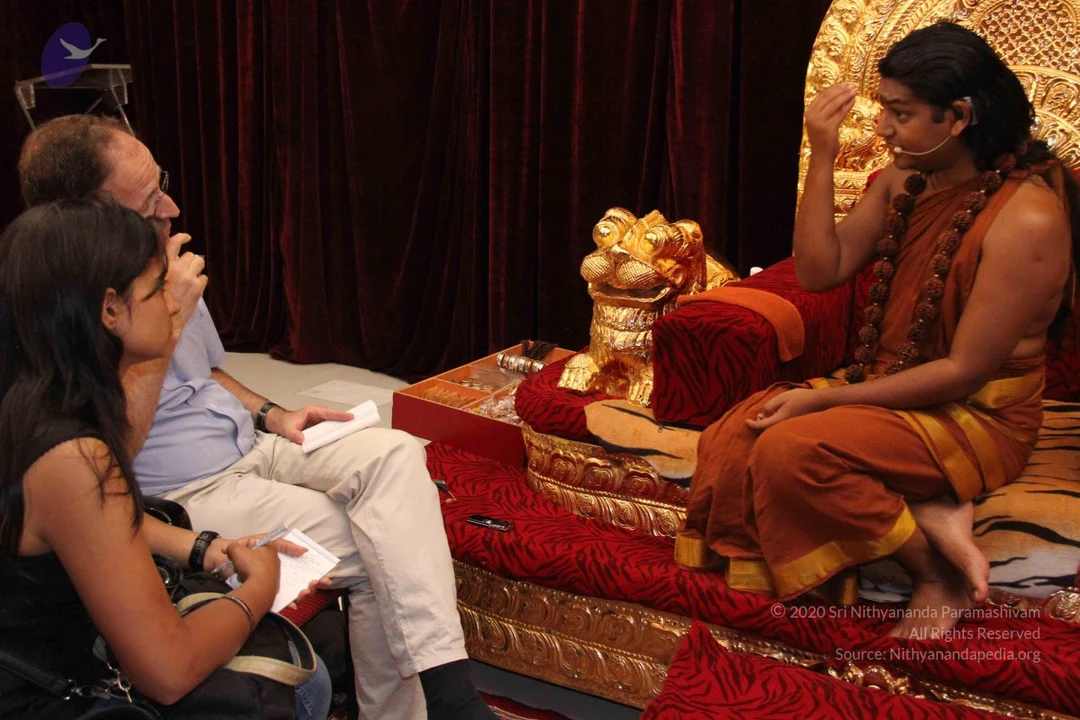
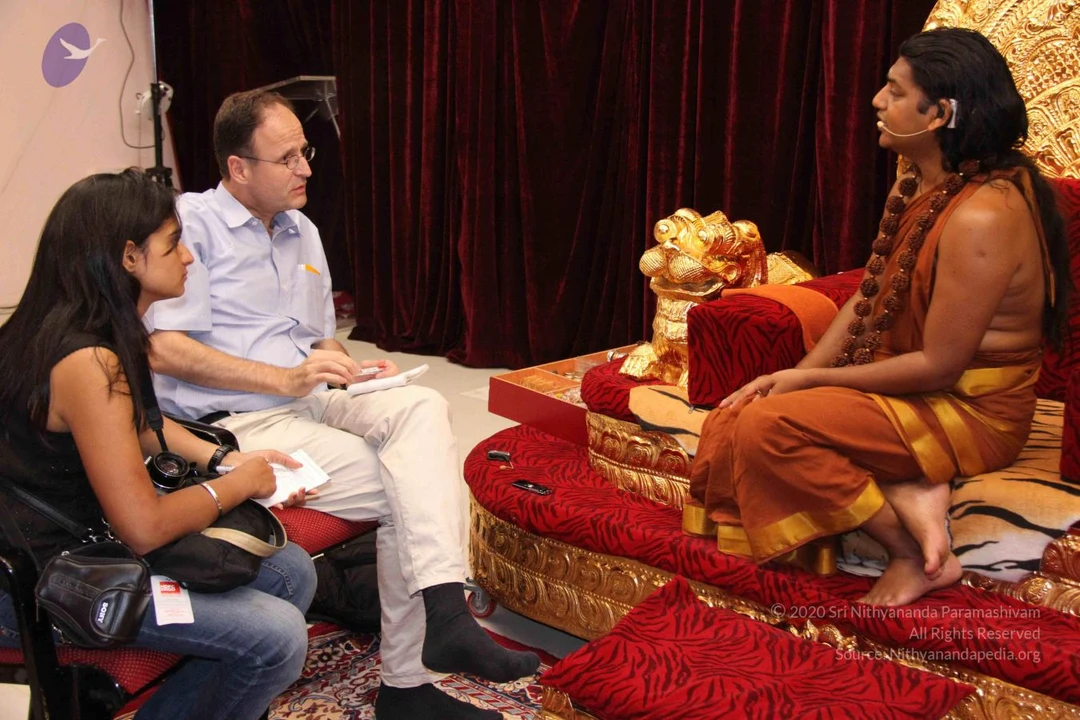
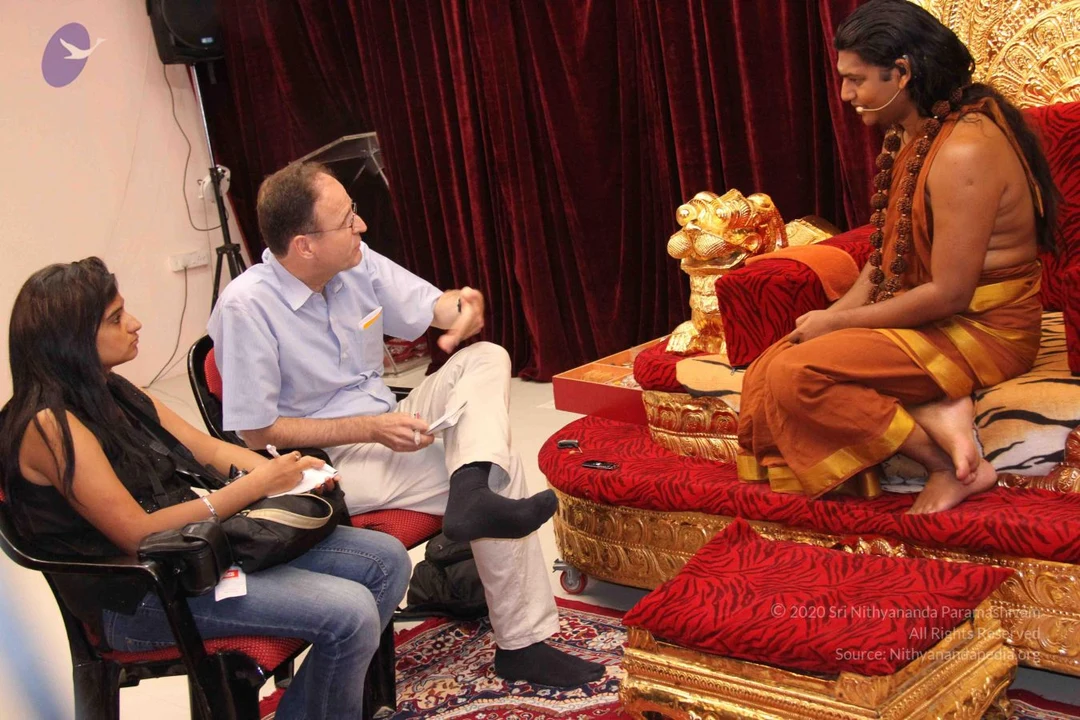
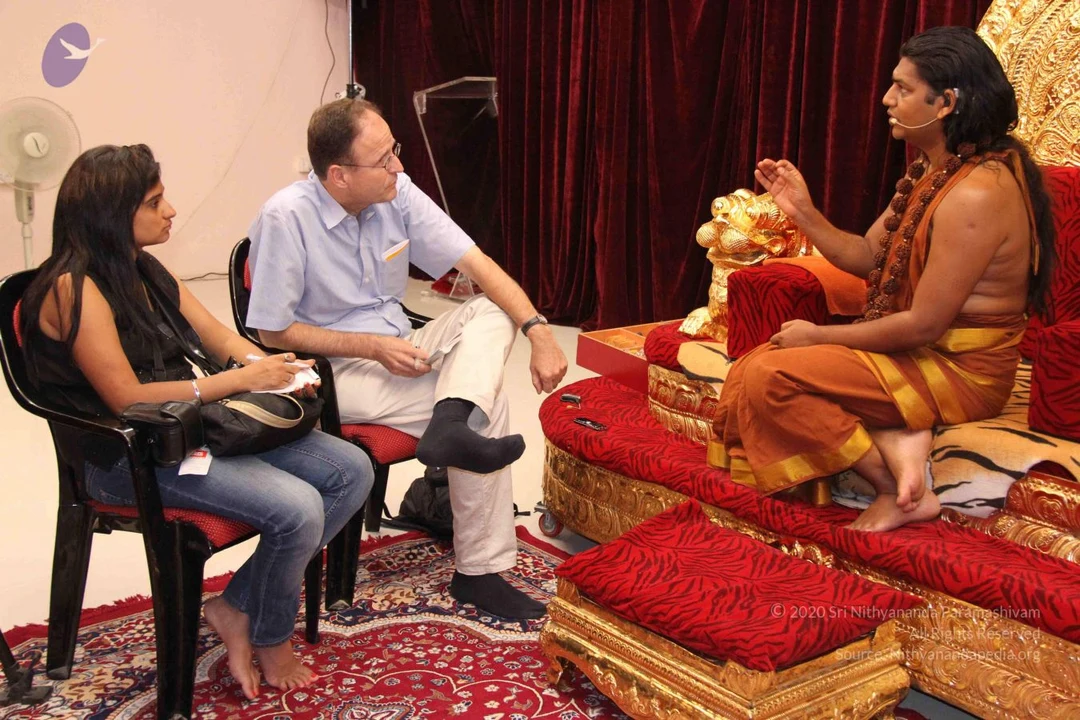
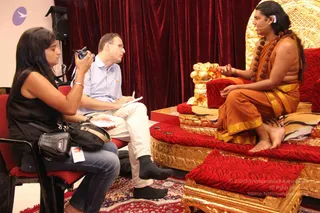
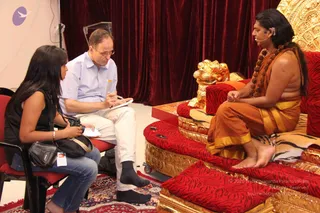
A photograph of an interview in a room with red velvet drapes and a tripod-mounted camera. On the right, a bare-chested figure with long swept-back dark hair, rudraksha malas and a small ear microphone sits on a red and gold throne-like seat with a golden lion-shaped armrest and tiger-striped cushions, wearing an orange-saffron dhoti with gold border. Facing him, a man in a light blue short-sleeved shirt and white trousers, wearing glasses and a wristwatch, rests his chin on his hand and holds a notepad, while a young woman with long dark hair in a black top and jeans sits beside him writing in a notebook. A white standing fan is at left. Appearance-based label: a person, seated on the throne as interviewee.A photograph of an interview in a room with dark red velvet drapes. A figure seated on an ornate gold throne with red tiger-striped cushions and a gold lion-head armrest wears saffron-orange robes with a gold-edged cloth, a long rudraksha mala around the neck, and a small headset microphone; he gestures with his hands while speaking. Two visitors sit on red chairs facing him: a woman with long dark hair in a black sleeveless top with a black bag, and a man in a light blue shirt and white trousers holding a notepad and pen. a person is the seated figure in saffron robes and rudraksha mala on the throne, based on those cues. The scene is a seated interview or satsang conversation.A photograph of an interview in a room with dark red velvet drapes. A bearded man in a light blue shirt and white trousers sits with a notepad, and a woman in a black sleeveless top holds a camera and sits to the left. On the right, a figure in an orange-saffron dhoti and shawl, with a rudraksha mala, sits on a gold-and-red cushioned throne with a golden lion-shaped armrest, speaking and gesturing with his hands; he wears a small lapel microphone. The appearance of the seated figure, with long swept-back hair, saffron clothing and rudraksha malas, is consistent with Swamiji (probable), though the seated figure is not otherwise certainly identifiable. Red patterned cushions and an ornate gold throne fill the frame.A photo taken in an interview setting. A man in a light blue short-sleeved shirt, white trousers and dark socks sits in a chair with a notepad and pen, writing. Beside him, a woman in a black top and jeans holds a small bag and a camera. On the right, a long-haired man in an orange-saffron dhoti-style garment with a gold border and a rudraksha mala sits cross-legged on an ornate golden-red throne covered in red tiger-striped cushions, wearing a small headset microphone. Behind him hang deep red velvet curtains and a gold carved backdrop. A gold lion-head ornament sits beside the throne, and a patterned red rug covers the floor. Swamiji (probable): long swept-back hair, saffron garment and rudraksha mala on the figure seated on the throne.A photograph of an interview on a red-and-gold set. A man in a pale blue collared shirt and white trousers sits on a red cushion, writing on a notepad with a pen, while a woman with long dark hair in a black top, holding a camera, sits beside him in the foreground. On the right, a man with long dark hair, a microphone at his ear, a rudraksha mala and an orange-saffron robe with gold border sits barefoot on a tiger-print cloth and red cushions, one hand resting on a cushion. Behind him is a large gold throne with ornate carving, a gold ornament on a low red table, and dark red velvet drapes.A candid indoor photograph of two seated people in a bright room with a white wall, a pink wall panel and a white ceiling fan. On the left, a woman with long dark hair wears a black sleeveless top, a camera hangs from her shoulder, and she looks sideways with a slight smile while holding papers. On the right, a man with short hair and glasses wears a light blue button-up shirt and beige trousers, resting his chin on his hand with a thoughtful expression and holding a notebook with a yellow pen.

IA-food

11 photosSource gallery
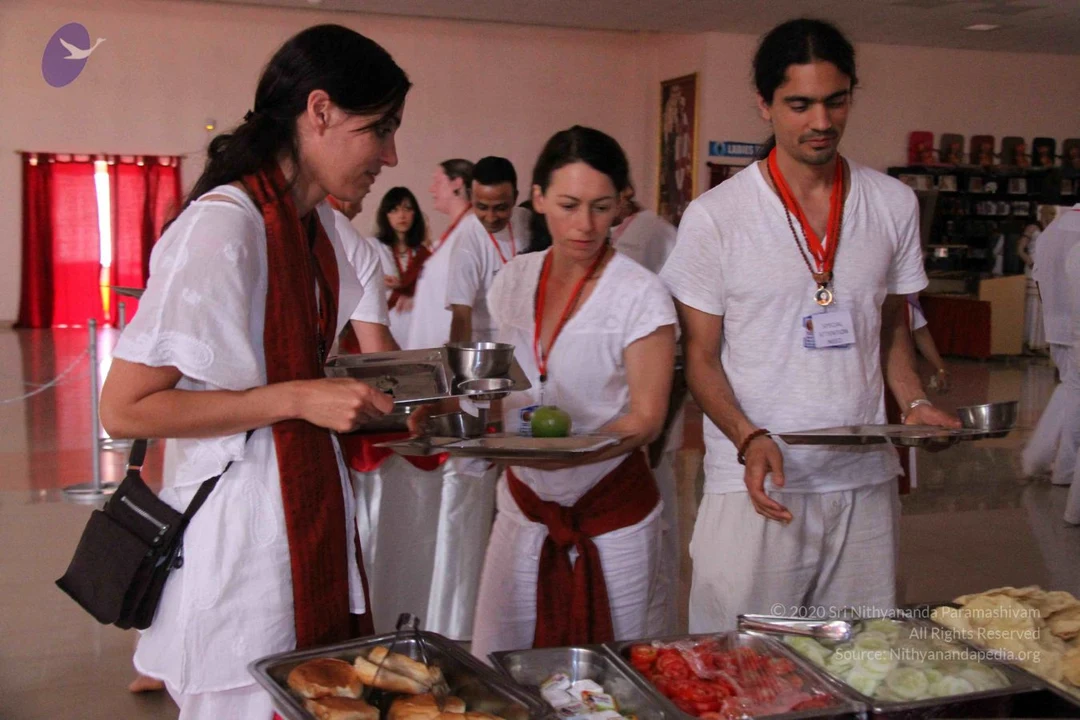
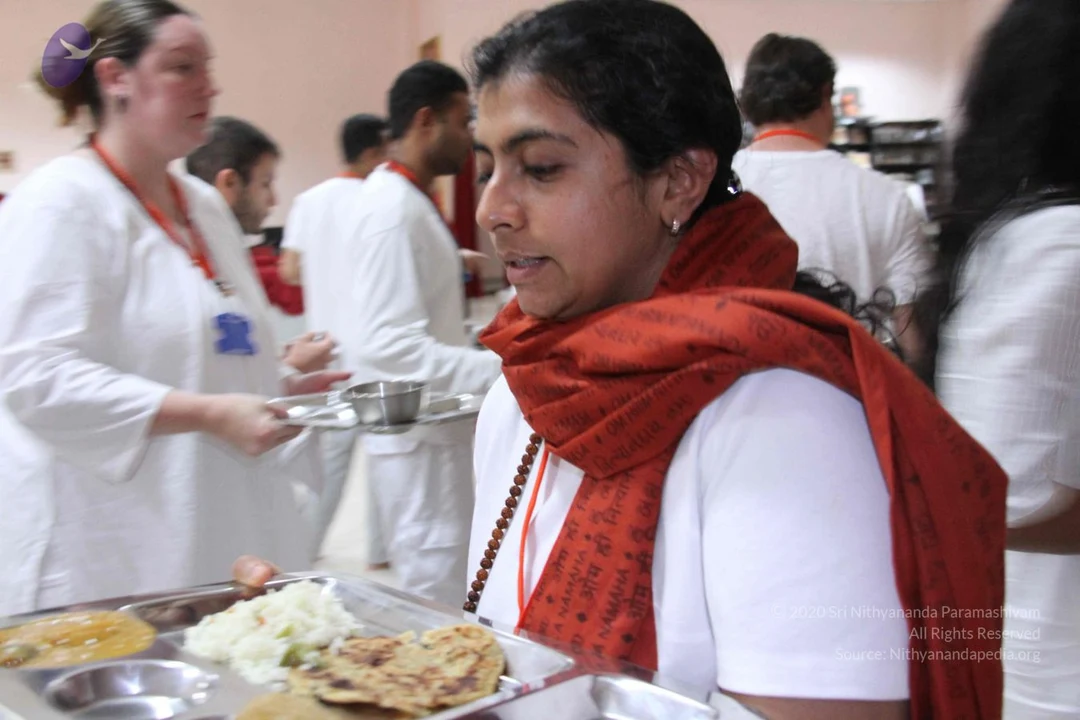
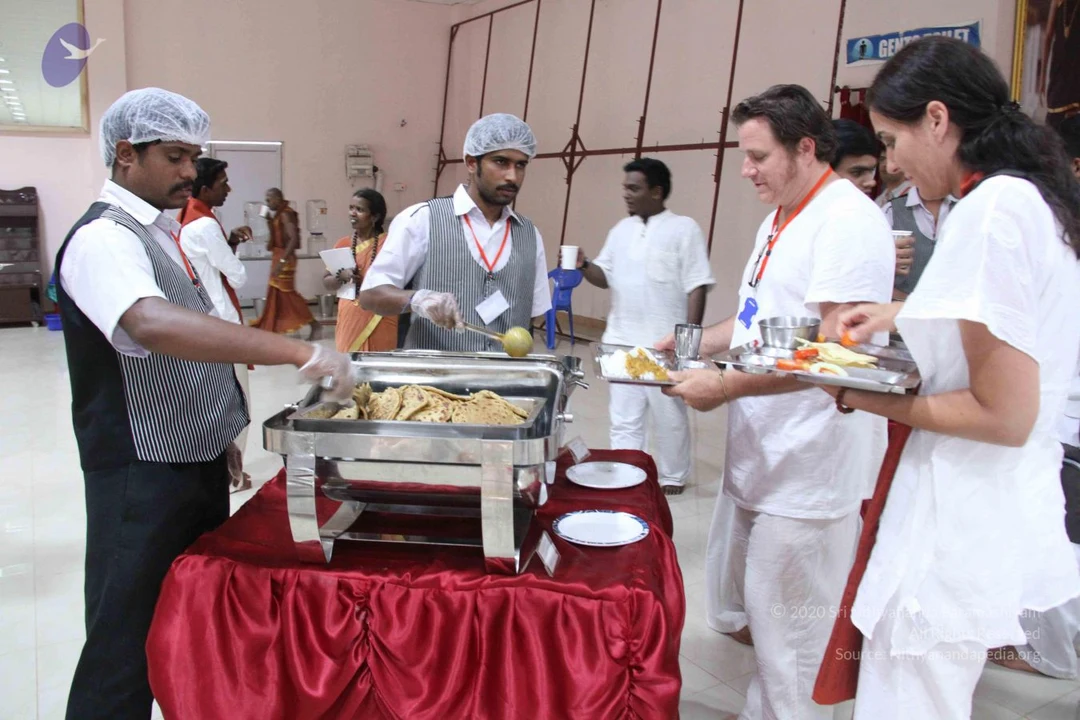
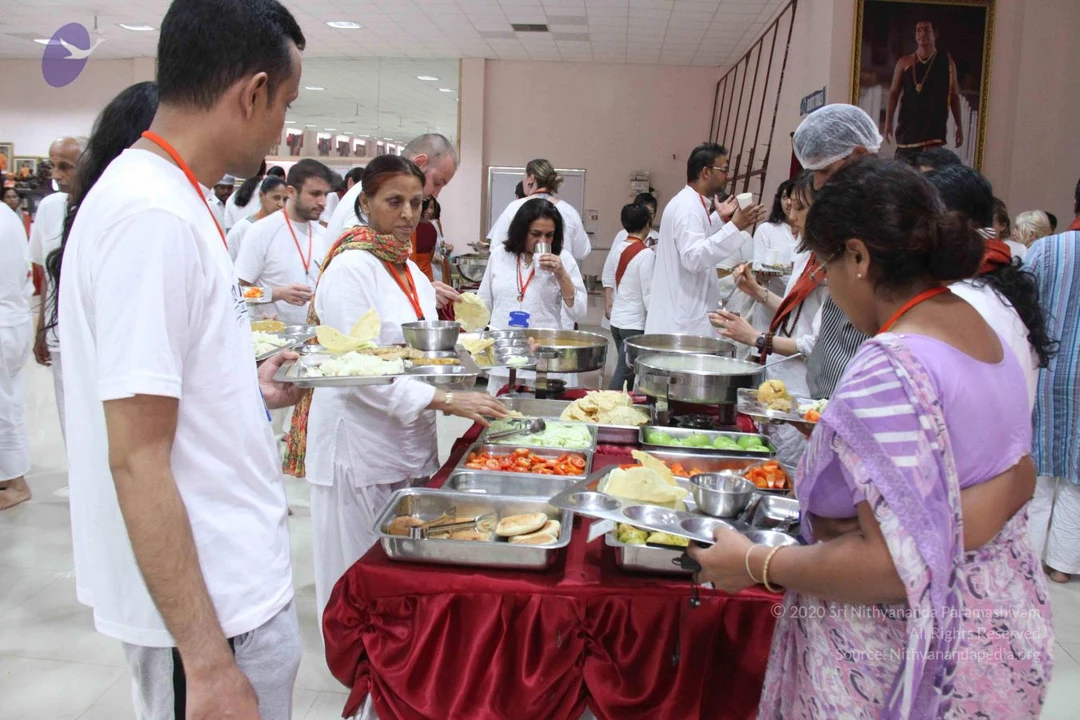
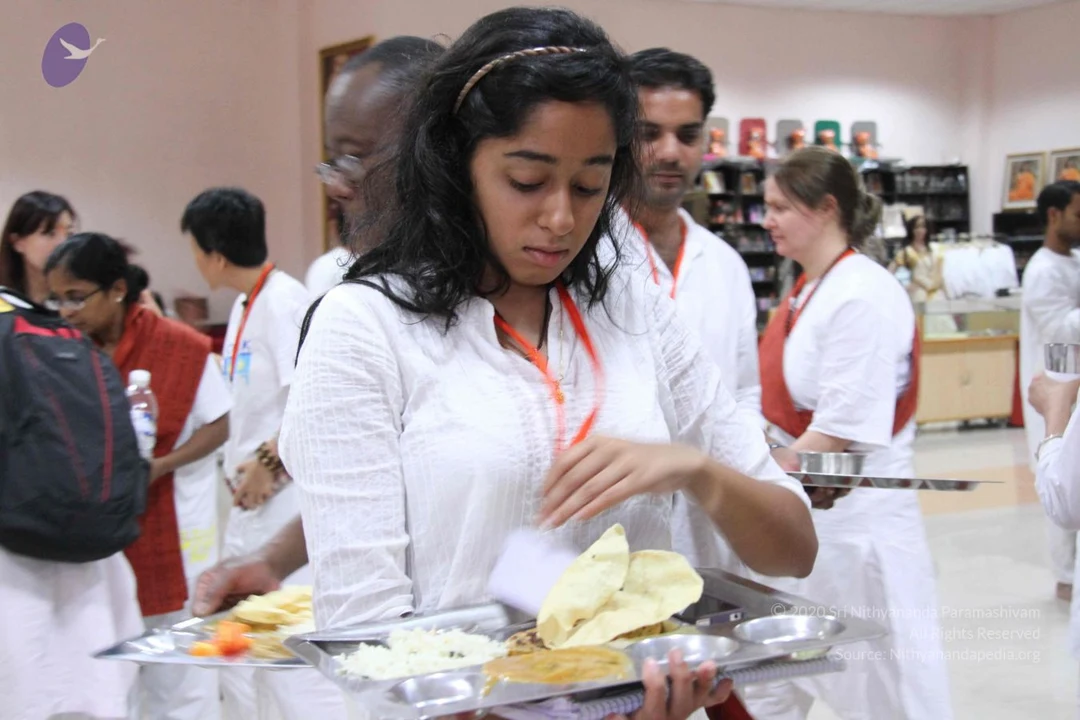
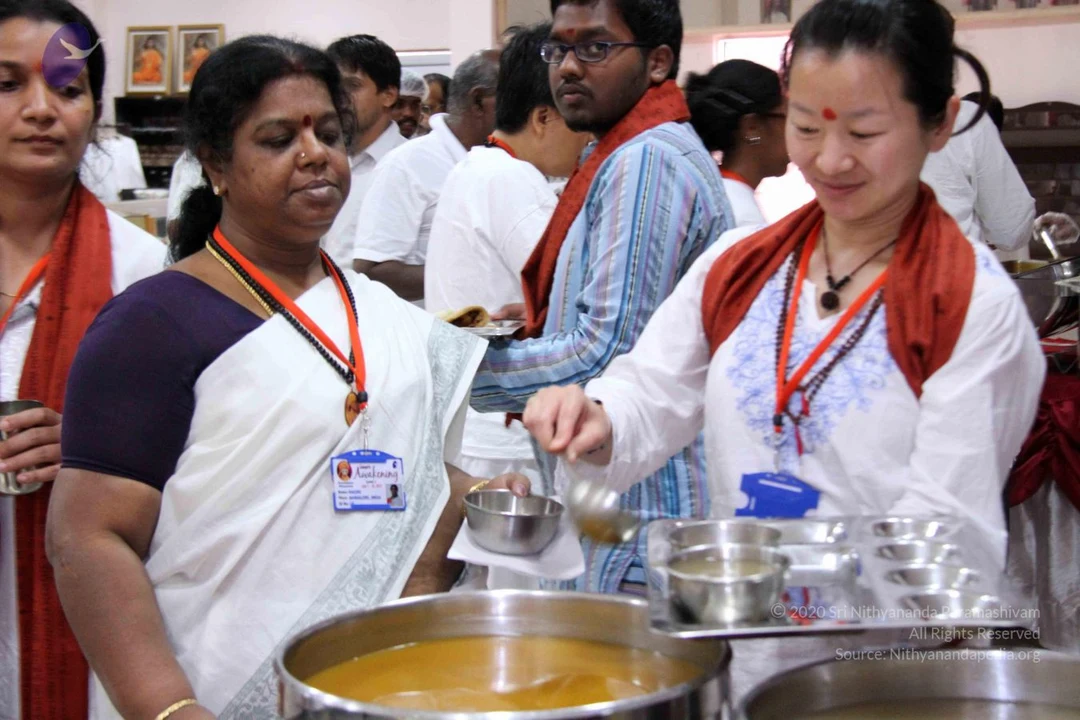
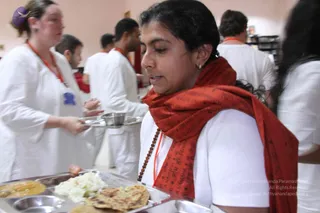
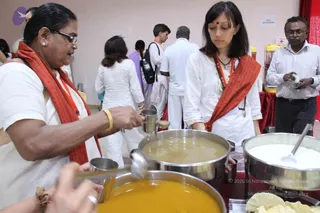
Photograph of a white-clad ashram dining area where devotees serve food. In the foreground, a woman in a white top with a red shawl draped over her shoulders holds a metal tray with bowls. Beside her, a woman in white with a red sash at her waist holds a plate with a green apple. At right, a man in a white t-shirt and white pants wears a red lanyard with a medal and a name badge, carrying a steel tray. Behind them, more people in white clothes and red scarves stand in line. A counter below holds bread buns, sliced tomatoes, sliced cucumbers, and papadums or chips. Framed pictures and a red curtain hang on the back wall.A woman with dark hair pulled back, wearing a white top, a rust-red shawl printed with script, and a wooden rudraksha-style mala, carries a steel tray holding a flatbread, a cup of rice, a small bowl of curry and vegetable dishes. Behind her, people in white clothes with orange lanyards move through a dining hall, one woman in white holding a tray. The scene looks like a communal meal serving line during an ashram event.A buffet service line in a bright hall with pink walls and a tiled floor. On the left a man in a white shirt and striped vest wearing a hairnet and disposable gloves serves flatbreads from a steel chafing dish draped with a red satin cloth. A second server in a striped vest and hairnet ladles food. Two guests in white clothes, one with a red lanyard, hold plates and stand in line. Further back, a woman in an orange sari and other people in white stand near a red-and-gold backdrop. No a person candidate is clearly visible.A photograph of a serving line at an ashram meal. In the foreground, an older woman with glasses and a red-orange shawl over a white top ladles yellow liquid from a large steel pot. Beside her, a younger woman with dark hair, a red bindi, a beaded necklace and a red-orange shawl over white clothes looks down at the pot. Another steel pot holds white liquid, with a ladle resting in it. Behind them, people in white and one in lavender move around, and a man in a striped shirt on the right holds a small bowl. Cold beverages are signposted on the back wall and a red curtain hangs at the right edge.A buffet-style meal service in an indoor hall with pale walls and a framed portrait on the upper right labelled as a devotional image. A woman in white with a colourful green-and-orange shawl holds a steel plate of flatbreads and rice while serving from a red-draped table of steel trays holding chopped vegetables, papadums, rolls and flatbreads. Around her, devotees in white clothes and orange lanyards queue and eat; a man in a white shirt in the foreground holds a plate, and a woman in lavender sari stands at the right edge. Another server in a white cap and apron works behind the table. The scene suggests a communal annadan meal.A young woman with wavy dark hair and a thin headband, wearing a white kurta and an orange lanyard, carries a steel tray of food with rice, flatbreads and a small dish of vegetables. Behind her, other people in white clothes with orange lanyards move through a bright room; a man in white stands to the right and a woman in a red-orange shawl is at centre-right. Shelves of colourful items and framed pictures line the back wall. The scene looks like an ashram meal service.
Temple-Procession

15 photosSource gallery
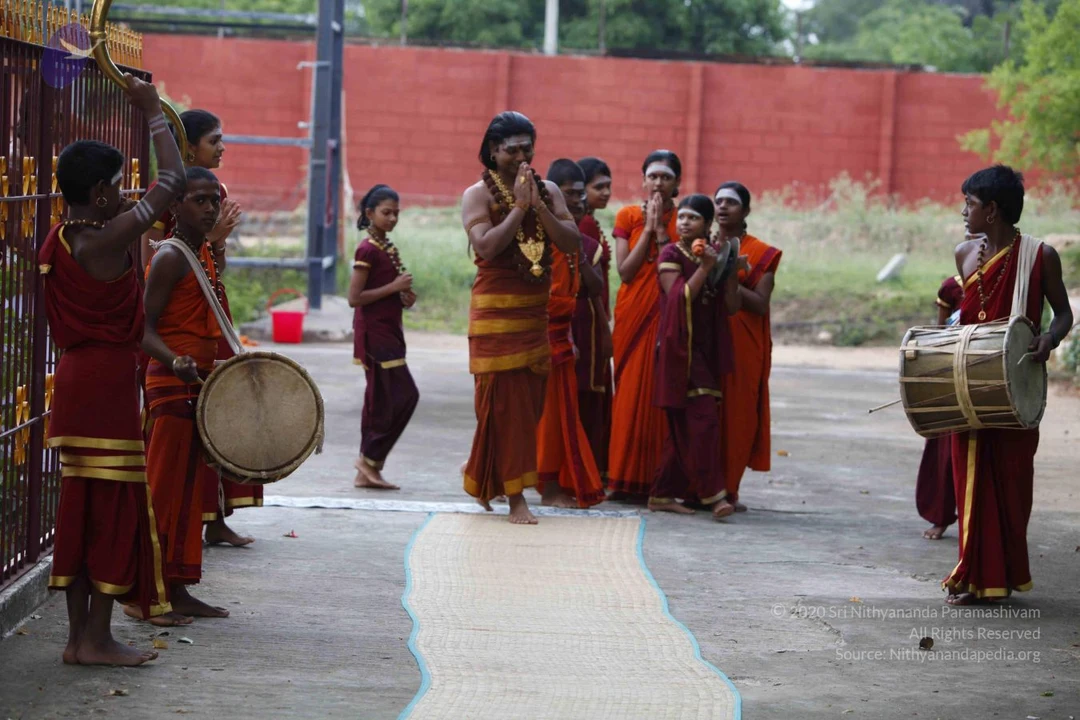
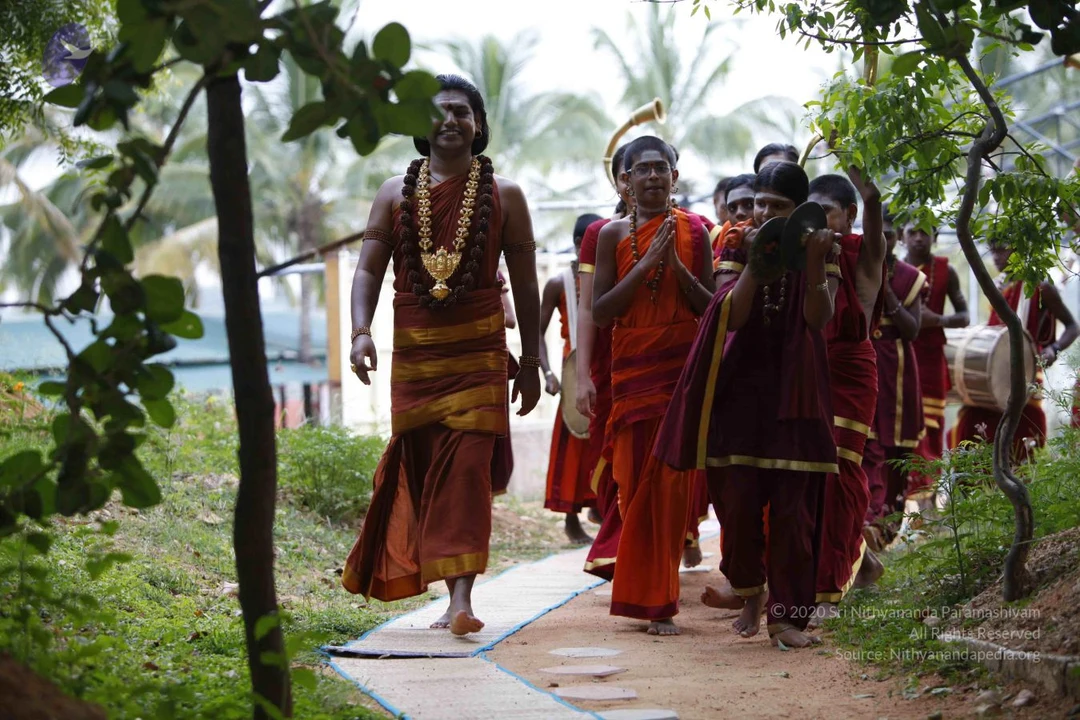
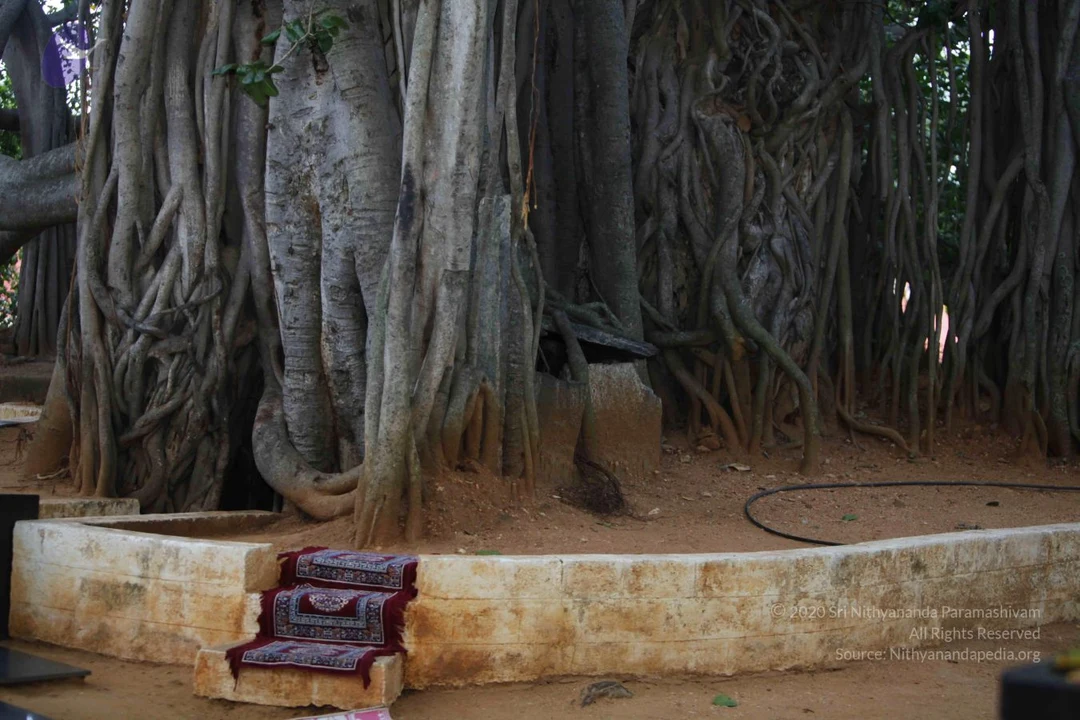
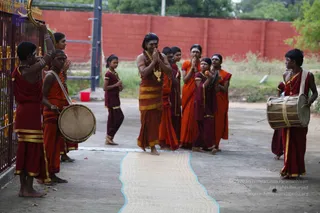
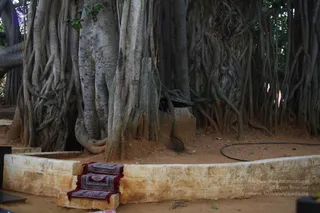
A photograph of an unpaved, dusty ashram road lined with palm and tall shade trees. A single person in a white dhoti with a yellow-orange cloth draped over the shoulder walks away from the camera down the center of the road. A red compound wall runs along the right side, and a white billboard with a blue and purple logo stands in the distance beside a purple circular emblem at top left. A low pile of grey gravel and a curb are visible at the edges of the road.A photograph of an outdoor temple courtyard framed by a doorway. Two young male attendants in maroon or red robes with gold bands stand on either side, the left one raising a long curved horn-like instrument and the right one blowing a long brass horn. Between them, a deity murti or image of a divine couple is displayed inside a golden arched frame with a red curtain, with a red-draped platform and a red armchair in front. To the right, a tall brass lamp stand and a seated figure draped in a red cloth sit near palm trees, and several grey stone statues stand in the background.A smiling man with long swept-back dark hair, rudraksha malas and a ceremonial gold pendant necklace, wearing a rust-red dhoti and shawl with gold borders and gold armbands, steps out beside a dark SUV's open door. Behind him a man in white dhoti with a yellow-bordered cloth stands near the car. To the right, girls in orange and red-gold dress hold a brass tray with a kalasha pot topped with mango leaves and a coconut, and a drummer in orange plays a drum. A red-clad attendant stands at the right edge, and the setting is a paved courtyard with a pillared porch. Probable Swamiji is the central figure in rust-red robes with the long hair, malas and gold pendant.A procession of temple musicians and attendants in deep red and saffron-orange clothing with gold borders moves through a covered entrance. Around him, boys with white tilaka and rudraksha malas blow long brass horns, a drummer beats a drum on the left, and a young attendant on the right carries a brass pot with green leaves on a tray. A pink and gold decorated backdrop, palm fronds and a hanging tassel are visible behind them.A procession on a concrete path beside a red brick wall and a metal gate with gold-tipped finials. At centre, a bare-chested man in an orange-gold dhoti with a gold necklace and rudraksha-style beads stands with palms pressed together in namaskar, flanked by people in orange and maroon garments. On the left a drummer in red with a gold-trimmed cloth beats a large drum while another person holds a long curved horn. On the right a drummer in red and gold plays a drum, and women in maroon and orange with garlands and bangles hold offerings. A cream mat with blue edging runs along the path ahead of the procession.A large, ancient banyan tree with many thick, hanging aerial roots and a grey-brown trunk fills the background. In the foreground, a low cream-coloured stone platform surrounds the tree base, with two folded red and patterned prayer rugs laid on its step. Bare reddish-brown earth lies beneath, a black hose coils on the ground at right, and a few dark objects sit at the edges. No people are visible.

Leela-Alankar-Shivabharathi

4 photosSource gallery
A golden murti pair of a seated deity and goddess, richly decorated with layered garlands of red, pink, purple, yellow and white flowers arranged in arched frames. The male deity wears an orange and green striped turban, a red dhoti-style lower garment with a leopard-print cloth, beaded and pendant necklaces, and holds a small ceremonial item. The goddess wears a pink and gold sari, layered gold necklaces, a crown and a green-rimmed item in one hand, seated on a red silk cloth. No physical people are visible; both figures are statues.A decorated deity murti pair seated on a red silk cloth beneath a dense arch of flower garlands in red, pink, yellow, purple and white. The male figure in gold-toned finish wears a striped orange-and-green turban, a rudraksha mala with a large blue-stone pendant, and holds a ceremonial staff. The female figure in gold finish wears a pink and orange sari with gold jewellery, a tall crown, and holds a golden ceremonial vessel with a small cup. These are statues, not living people, so no physical people are present.Two golden murti statues of a deity couple seated side by side on a red cloth throne, framed by a dense arch of garlands in red, pink, yellow, purple, green and white flowers. The male figure wears a striped orange, green and red turban, a crimson-and-gold shawl over a leopard-print garment, a multi-strand orange and bead mala, and holds a small trident-like staff. The female figure wears a pink and gold sari, layered gold necklaces, a jewelled headpiece with a long black braid, and holds a golden ritual vessel. Gold ornamental background and a red fabric base complete the scene.A decorated deity murti pair seated on a red cloth throne in front of a gold ornate arch. The male figure wears an orange and green striped turban, a long orange-beaded rudraksha-style mala, a large pendant and gold-trimmed white dhoti, and holds a trident-like staff in one raised hand. The female figure wears a pink and orange silk sari with gold jewellery, a crown and a black braid, and holds a bowl. Both are framed by arches of red, pink, yellow, purple and white flower garlands. These are statues, not living people.

Pratyaksha-Pada-Puja

28 photosSource gallery
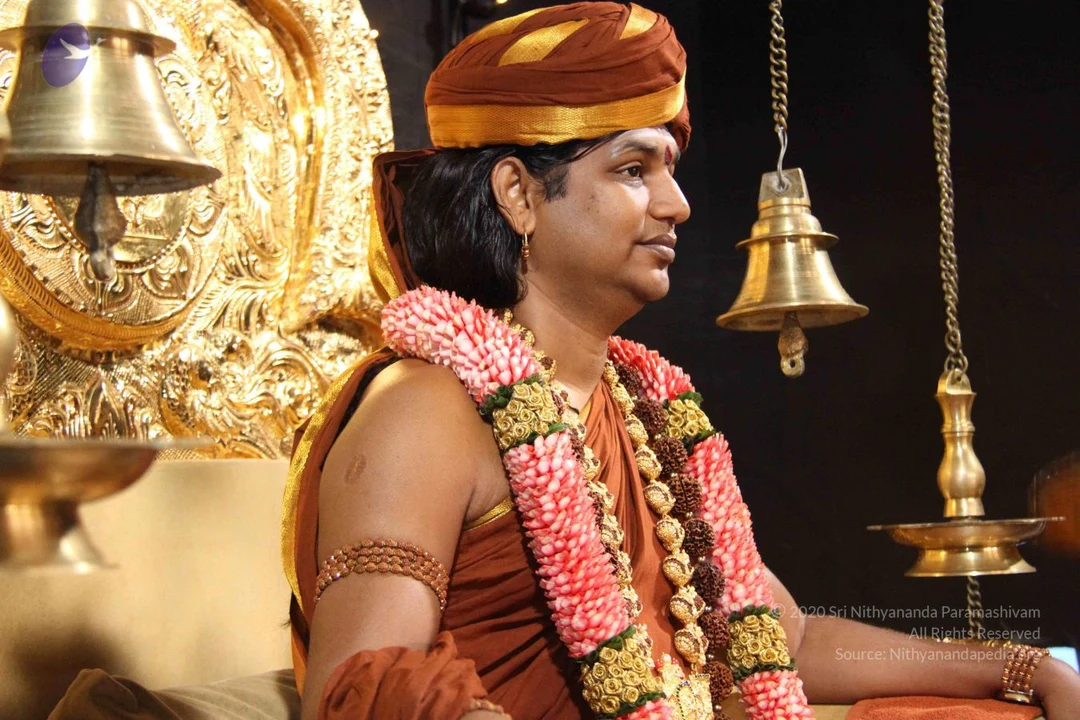
Overhead photo of a ritual arrangement on a gold-embossed round tray. Bare feet of a person stand at the top edge above a central flower garland of pink, white and yellow blossoms around small brass vessels. Around it are silver plates and bowls holding pink flowers, yellow frangipani-like blooms, white petals, orange turmeric-coloured paste and small silver containers. No people are visible beyond the feet; the scene is a puja or abhishekam offering setup.Close-up photo of a padapuja ritual: a bare pair of feet rests on a gold tray ringed with pink roses, white jasmine-type blossoms and yellow and orange flowers. Small gold-toned kalasha-style vessels and silver bowls with offerings sit at the edges, with a pink and yellow flower in the lower corner. No face is visible and only feet appear, so no individual can be identified from the frame.A seated man in saffron-orange robes and a rust-orange turban smiles to the right on an ornate gold throne carved with floral patterns. He wears a pink and white flower garland layered over brown rudraksha beads and a gold ceremonial necklace, plus a rudraksha band on his upper arm and bangles on his wrist. Brass oil lamps and hanging brass bells frame him against a dark background. Swamiji (probable): long swept-back hair, saffron robes, rudraksha malas and ornate gold necklace, seated on the throne as the satsang speaker.Close-up photograph of a pair of bare feet resting on a golden tray filled with flowers during a padapuja ritual. Pink roses, pink and yellow flowers, and white blossoms surround the feet. Silver bowls with ornate engraved rims hold a yellow liquid and more petals. The person's dress is a red-orange garment with a gold border visible at the upper left. No face is visible.Close-up photograph of a ritual puja arrangement on a gold tray. Bare feet in the upper left, wearing the orange-and-gold-bordered garment of the person kneeling, rest near a circle of pink roses, white jasmine-like blossoms, yellow plumeria and pink flowers. Silver bowls of yellow liquid, silver vessels and small brass lamps surround the central offering. Only the feet and lower garment are visible, so no physical face or full person is shown.A smiling man in rust-brown robes and a matching brown and gold turban sits in profile before a golden ornate throne-like backdrop. He wears a pink and white flower garland with gold and rudraksha beads, rudraksha bracelets on his upper arm, and a gold earring. Hanging brass bells and a brass oil lamp stand beside him against a dark background. Probable Swamiji: a man with long swept-back hair, a turban, ornate ceremonial garland and rudraksha adornments seated in a ceremonial setting, appearance-based only.

Nithya-Satsang

15 photosSource gallery
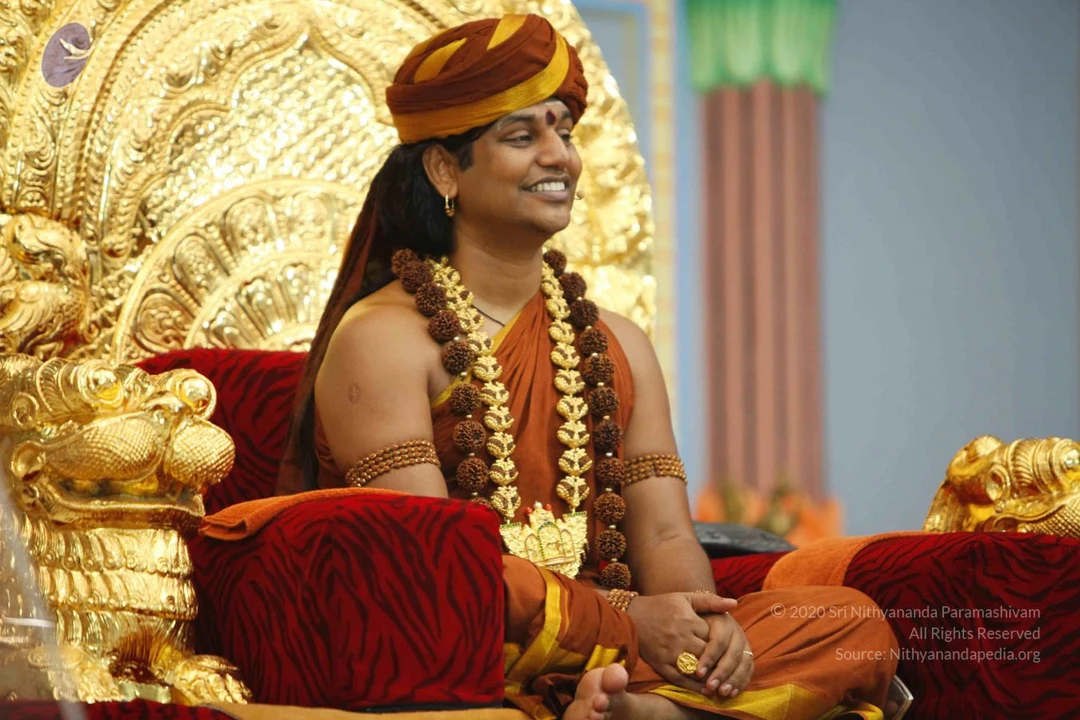
A seated man in orange and saffron robes sits cross-legged on a red-cushioned golden throne with carved lion-head armrests, palms pressed together in namaste. He wears an orange turban, rudraksha malas and an ornate gold pendant necklace, with a small red bindi on his forehead. He is barefoot on a tiger-striped cloth. Gilded carvings frame the throne, and painted deity figures with gold armbands stand on either side. Swamiji (probable): the saffron turban, rudraksha malas and ornate gold necklace are visible cues on a figure seated on a throne.A seated man in an ornate golden throne with lion-head armrests, wearing a saffron-orange turban with a yellow stripe, a red bindi, saffron-orange robe with yellow border, multiple rudraksha malas and a gold ceremonial necklace with a temple-shaped pendant, and gold armbands. He sits cross-legged on a red and gold cushion with bare feet, smiling with eyes closed, and has a small microphone clipped near his ear. Golden carved backdrop and painted figures with bangles frame the scene. Appearance-based label: a person, seated as a teacher giving satsang.A seated figure in an ornate golden throne with lion-shaped armrests and a tiger-striped cushion, wearing an orange-saffron turban with a red bindi, saffron robes with yellow trim, a long rudraksha mala and a heavy gold necklace with a gold pendant, gold bangles, and gold earrings, smiling with hands resting on the lion armrests. a person: long hair and a crown-like turban with saffron/orange and ornate gold adornments, seated as a teacher on a throne. Gold-carved decorations and painted deity figures with raised hands frame the stage.A seated man in an orange-red turban and orange-red shawl, bare-shouldered, sits on a richly gilded throne with a red tiger-striped cushion. He wears multiple rudraksha malas with gold ornamental beads, gold armlets, a gold ring, a small earring and a red bindi. He smiles and looks to the side, with a microphone at his cheek. Behind him, a pillar striped in red, green and gold is visible. a person: the orange-and-gold clothing, layered rudraksha malas and ceremonial gold necklace on a seated figure match the cues for a throne-seated sannyasi teacher, so this is an in_person candidate.Photograph of a smiling man seated on an ornate gold throne with red velvet cushions. He wears an orange-red turban with a yellow band, a red bindi, an orange-red shawl over bare shoulders, long rudraksha mala necklaces with gold ceremonial pendants, and gold bangles with rudraksha beads on his arms. Gold earrings are visible. A red-and-green pillar stands in the background. Swamiji (probable): the orange and saffron ceremonial clothing, rudraksha malas, gold pendants and swept-back hair are consistent with the page's reference to Swamiji, who is physically present in the scene.A seated man in orange and saffron robes sits cross-legged on an ornate gold throne with red tiger-striped cushions and gold lion-head armrests. He wears a saffron-orange turban with a yellow stripe, a red bindi, rudraksha mala and a long ceremonial gold necklace with a gold pendant, and gold armbands. He is smiling and has a small microphone clipped near his ear, with his right hand resting on the armrest and his left hand on his knee. Behind him is a large gold-leaf arched backdrop, and a tiger-skin rug lies on the platform. Swamiji (probable): the man is a seated speaker in saffron robes with a turban, rudraksha and gold adornments, presented on a throne during a satsang discourse.

Two-Way

3 photosSource gallery
A photograph of a large screen showing a video-conference satsang grid of many small windows, each labelled with a location such as San Diego Pacific Beach, Surrey BC, Scottsdale, Kathmandu Nepal, Philadelphia, Tallahassee Florida, St Christol France, Dhyanapeetam and Abu Dhabi. Participants in the windows sit with hands in anjali or meditate, some in orange robes. One window shows a framed portrait of a bearded figure in orange robes with rudraksha mala and a chain, labelled Surrey BC, sitting beside a woman with grey hair. The physical room in front of the screen is not clearly visible.A blurred photograph of a television screen showing a live feed of a Guadeloupe Rameshwaram centre. Several people in white clothing sit on white and blue chairs in a white-tiled hall; a seated man in white with clasped hands is at left, a man in a white shirt stands in the centre, and a woman in a red shawl sits in the lower right with a child in white beside her. Behind them a pink and red wall and a white curtain are visible, and a sign reads Guadeloupe Rameshwaram.A photograph of a monitor showing a live video feed of an indoor ashram-style room with white tiled floor and white plastic chairs. On the screen, an elderly man in white clothes stands with hands pressed together in namaste. A seated figure in an orange robe sits near the top right, beside a person in a red shawl and white clothes and another man in white. A woman in a patterned top sits on the floor in the lower left. A small black electronic device sits on the desk in the foreground.

Sarva-Darshan

3 photosSource gallery
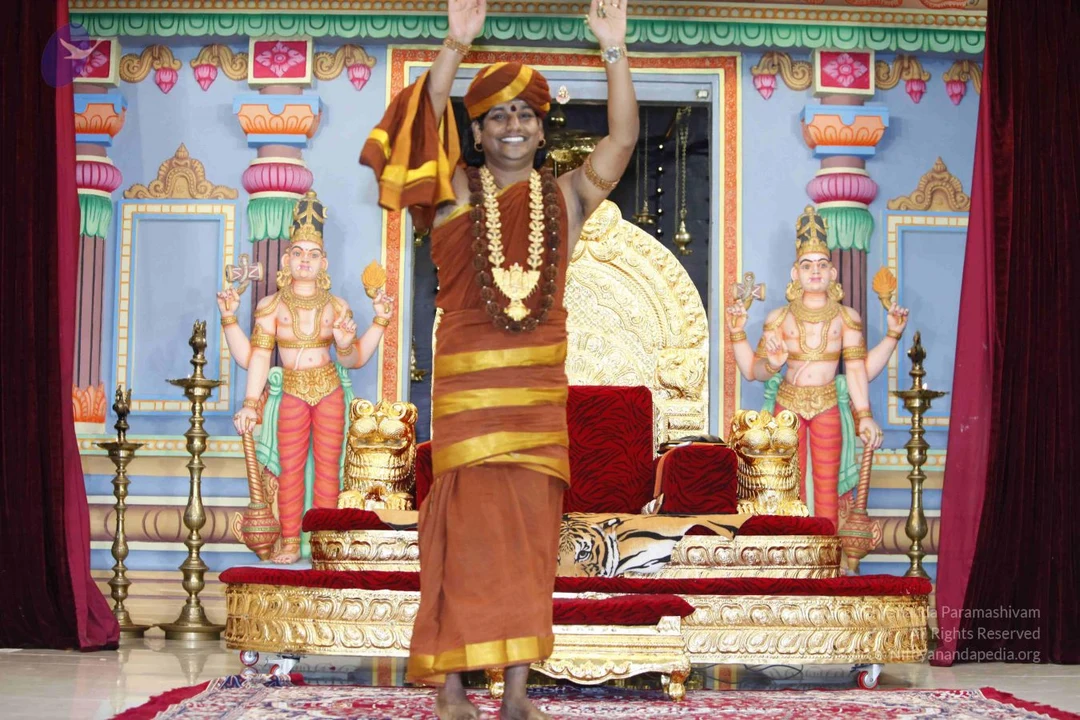
A man in a saffron-orange turban and orange-brown dhoti-style garment with a gold border stands at the centre, wearing a long gold necklace with a large gold pendant and multiple rudraksha malas across his chest, with rudraksha bracelets on his arms. He raises his right hand toward a devotee's head in a blessing gesture. Devotees in white clothes on the left have their palms pressed together in anjali. Behind him, a priest in white with a sacred thread holds a brass vessel, and a golden deity murti or throne stands in a decorated hall with pillars in pink, green and yellow. The man in the centre has distinctive adornments and attire consistent with the page's reference to a person, presented as a probable identification from appearance cues.An empty ornate gold throne stands centred on a raised red-and-gold platform draped with a tiger-skin cloth, flanked by two large painted statues of multi-armed deity figures with gold crowns, necklaces and armbands, and red dhoti-like lower garments with green sashes. Gold lamp stands and red velvet curtains frame the stage, with a red velvet cushion on the throne seat. No people are visible; the throne is an unoccupied peetha in a stage setting.A smiling man in saffron-orange robes and an orange head wrap stands on a red carpet in front of an ornate golden throne, arms raised high in a joyful gesture. He wears a long rudraksha mala and a large ceremonial gold pendant necklace, with gold bangles on his wrists. Behind him are two gold-painted standing deity murti figures with multiple arms and tall crowns, flanked by brass oil lamps. The throne has red velvet cushions and a tiger-skin cover, and the backdrop is blue and pink with gold decorative columns. The man has long, swept-back hair and matches the Swamiji (probable) appearance cues of saffron clothing, rudraksha, ceremonial gold necklace and a throne setting. Only one physical person is present.

IA-Session

9 photosSource gallery
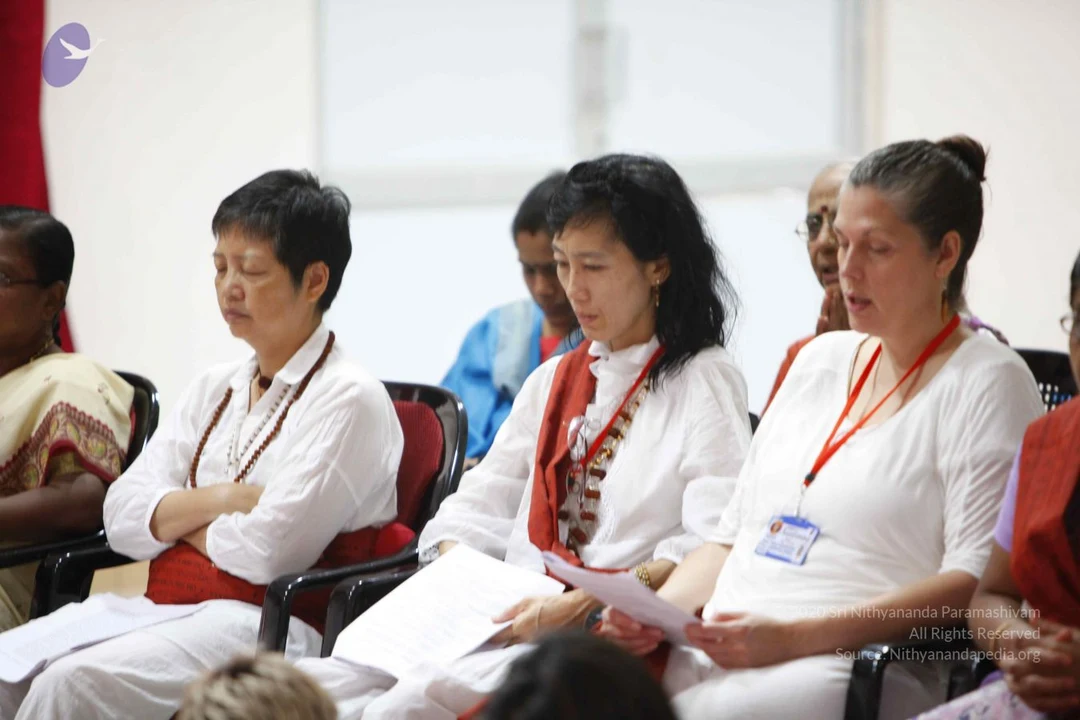
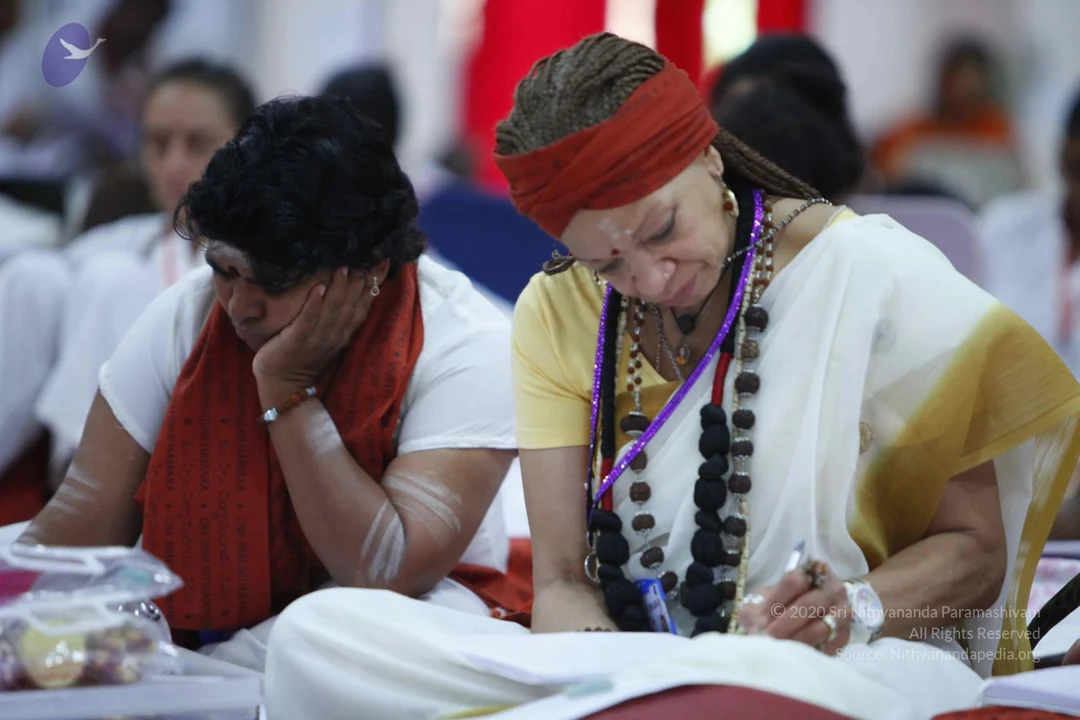
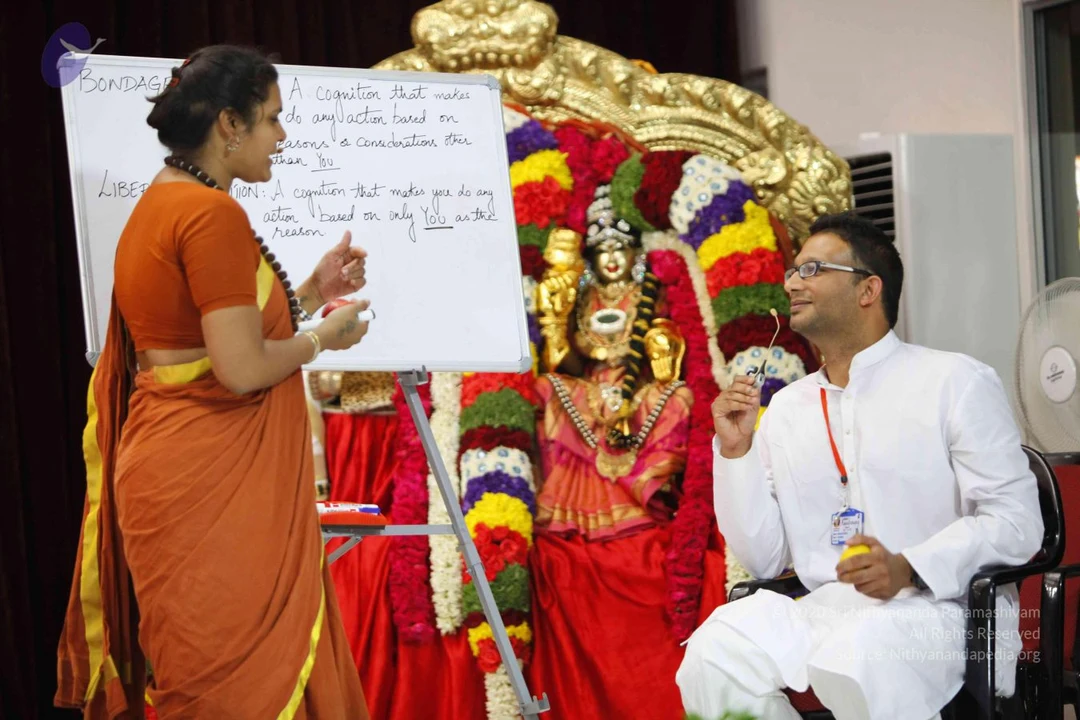
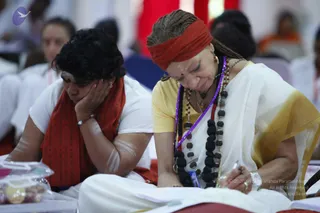
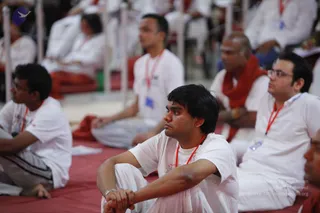
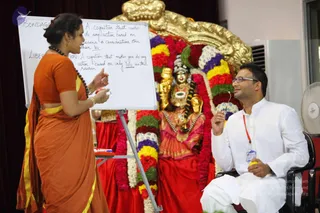
A photograph of seated devotees in a hall with red wall curtains and framed portraits on the walls. Rows of people sit on red mats behind silver stanchions linked by chains, forming a guided walkway. Most wear white kurtas or white tops with red shawls or red-trimmed sashes, and several have bindis or tilak marks. A woman in front wears white trousers and a white wrap, sitting with her hands clasped and gazing forward. Others sit with hands on laps or cross-legged, and a water bottle and bags lie on the mats.A man seated on a gold-carved throne with red velvet cushions and a deep red curtain behind him. He wears an orange-saffron cloth draped over his shoulder with a yellow border, and a long rudraksha mala hangs around his neck. He has long swept-back hair and a red bindi, and he gazes off to the side with a slight smile while a small lapel microphone is clipped near his face. This matches the Swamiji (probable) appearance cues of saffron clothing, long hair and a rudraksha mala, seated as a teacher on a ceremonial throne at a satsang.A photograph of a smiling man with long dark hair seated on a golden ornate throne draped with a tiger-striped cloth and red tiger-pattern cushions, against deep red velvet drapes. He wears a saffron-orange wrap with gold borders, a long rudraksha mala with gold beads, and a red bindi on his forehead, with a small headset microphone near his face.Two women sit close together at a seated satsang session, both looking down. The woman on the left has short dark hair, a white top, and a red-orange shawl with printed script; she rests her chin on her hand, and white ash marks are visible on her arms. The woman on the right wears a red-orange headband, a white sari with a yellow-gold border, and a long necklace of dark beads, rudraksha-style beads and a purple cord; she writes in an open notebook with a pen. Plastic-wrapped snacks sit at the lower left, and other seated attendees in white and orange appear softly blurred in the background. No a person candidate is visible in the frame.Seated devotees in white clothing with red-orange lanyards sit on red mats during a satsang hall gathering. In the foreground a young man with short dark hair, wearing a white t-shirt and white pants, sits with arms resting on his knees and gazes forward. Beside him a man in a white shirt wears a red-orange shawl draped over his shoulders, and another man in white with glasses sits attentively. Behind them more participants in white and red-orange are seated in rows, some with white pillars visible. No a person candidate is visible in the frame.A woman in an orange sari with a black beaded necklace stands at a whiteboard on an easel, pointing with a marker at handwritten notes that read BONDAGE and LIBERATION definitions. Beside her, a man in white kurta with glasses and an ID lanyard sits in a wheelchair, smiling and holding a small object. Behind them, a large decorated deity murti in gold and red sits on a throne draped with garlands of red, yellow, white and purple flowers. A white fan is visible at right. Setting appears to be a satsang hall.

Kalabhairava-Darshan

20 photosSource gallery
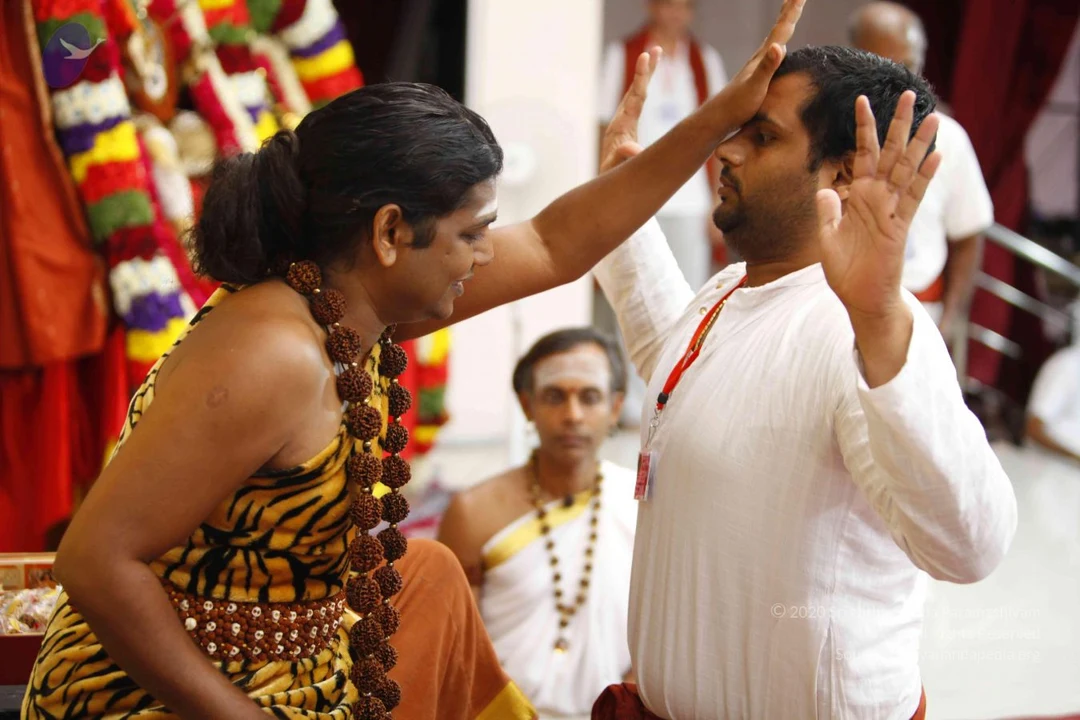
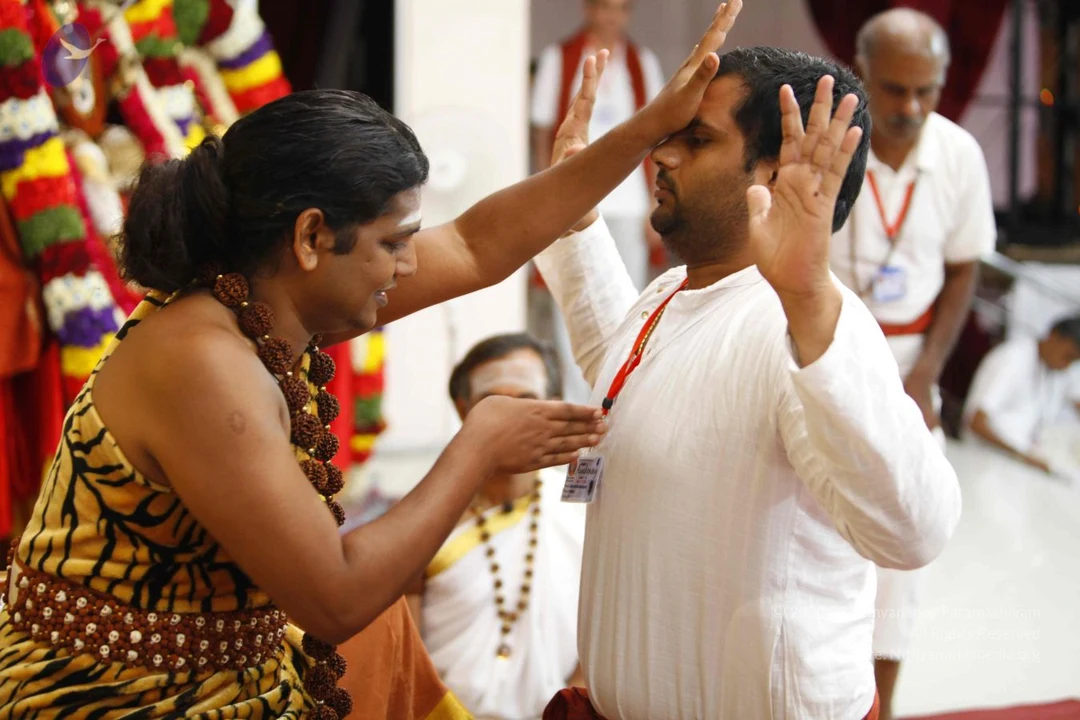
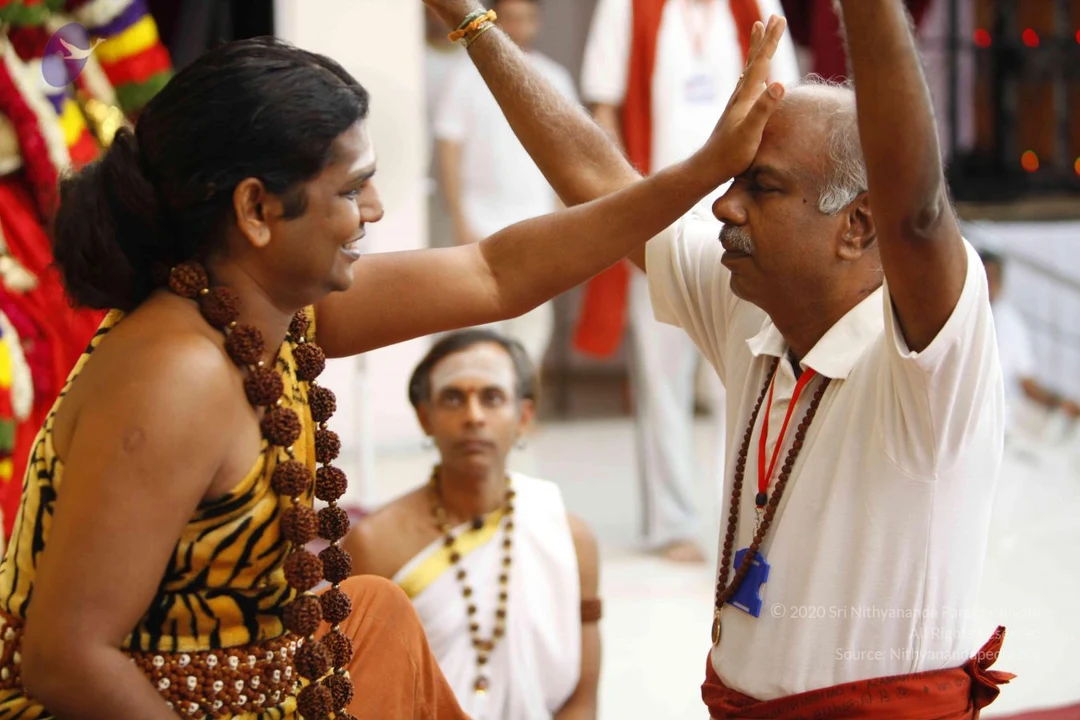
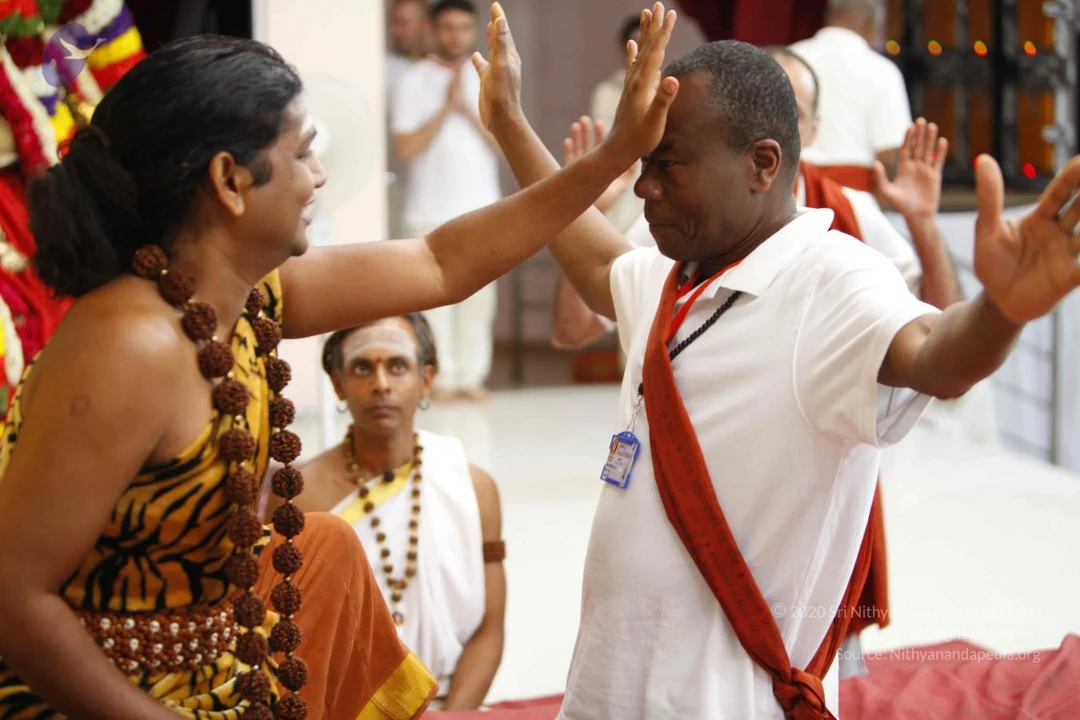
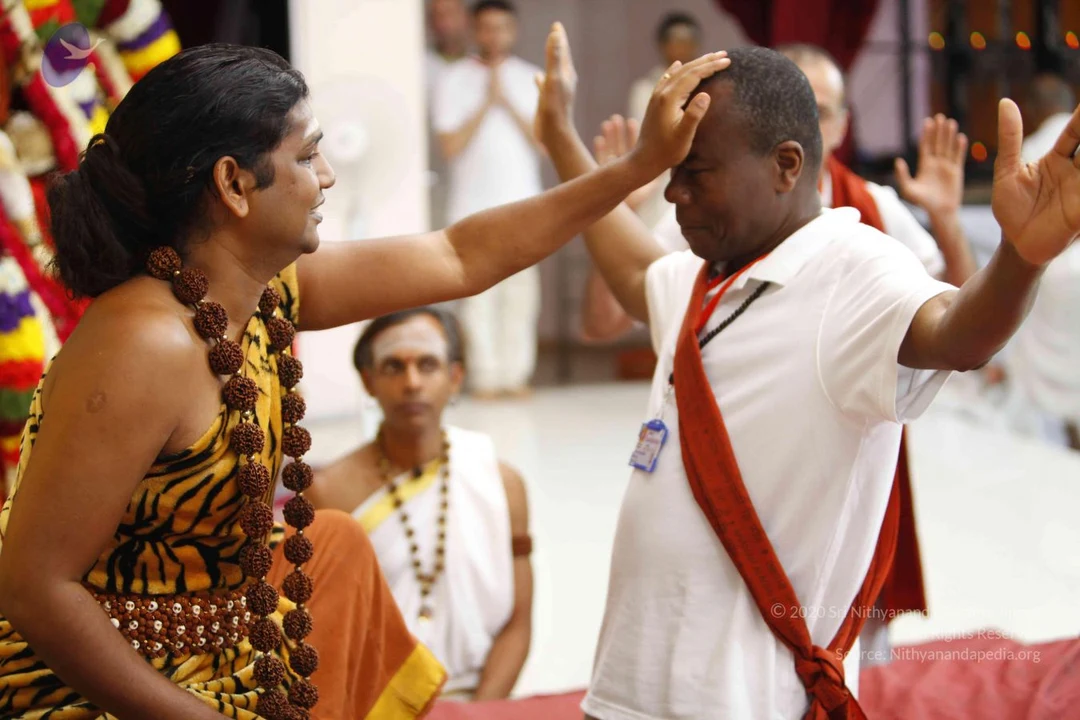
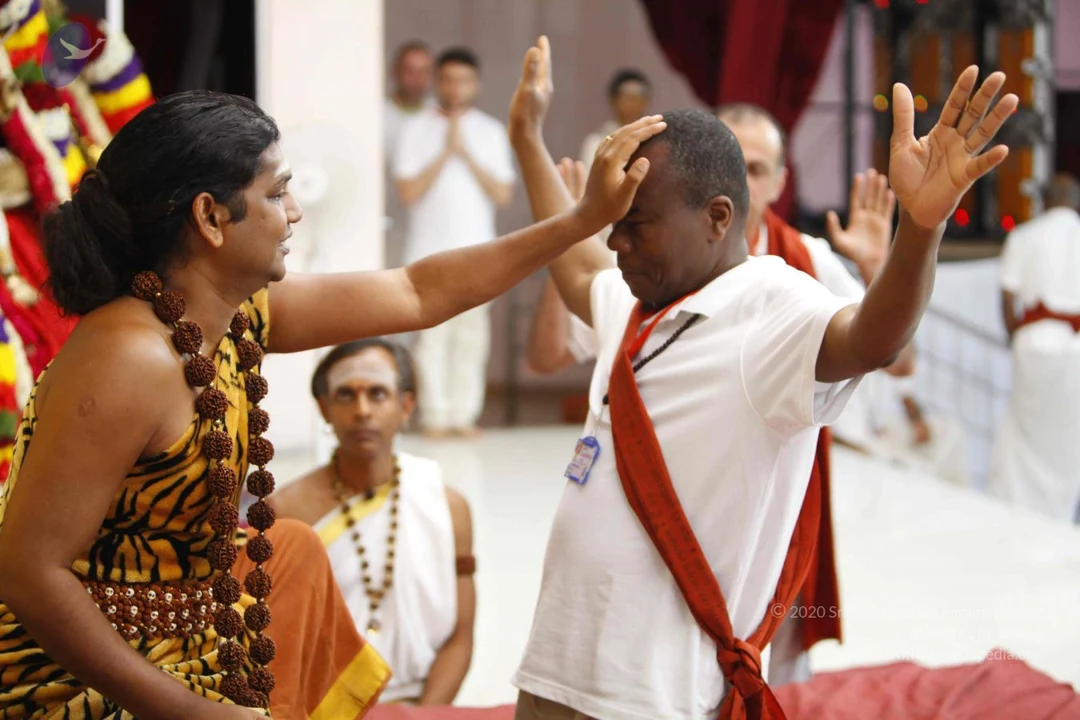
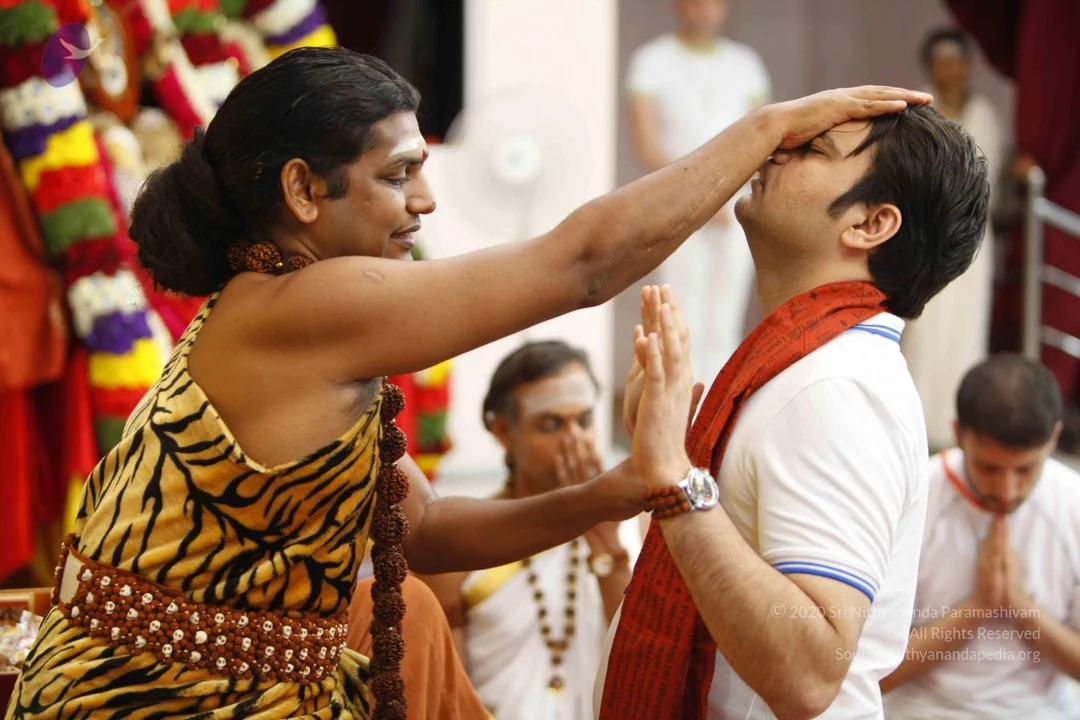
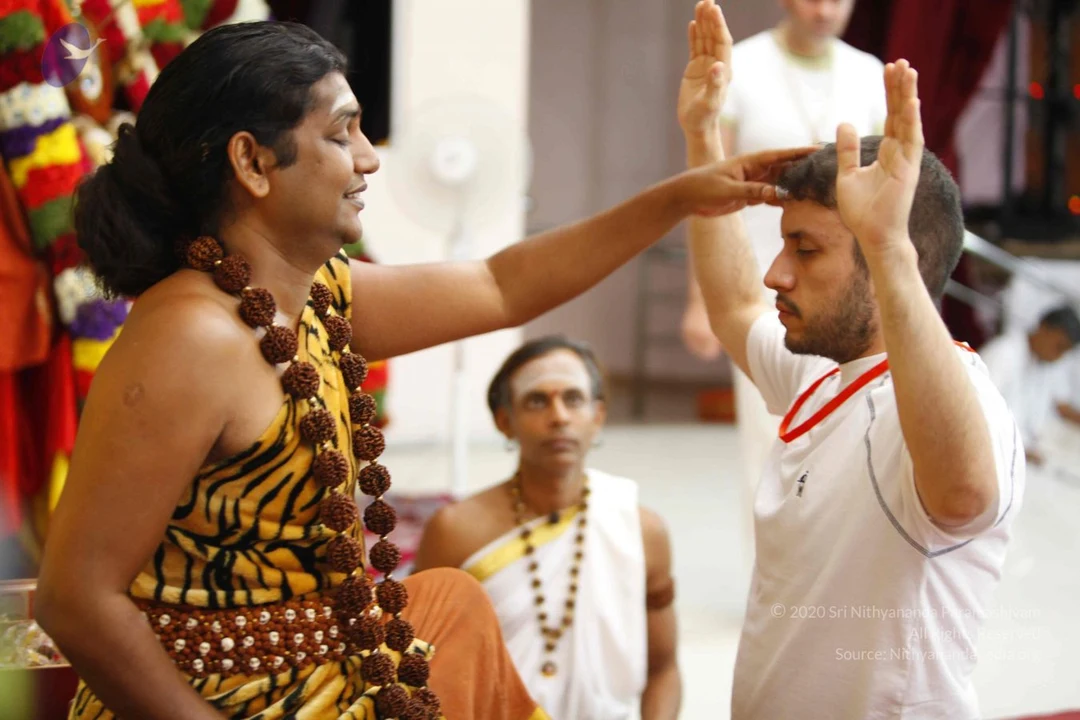
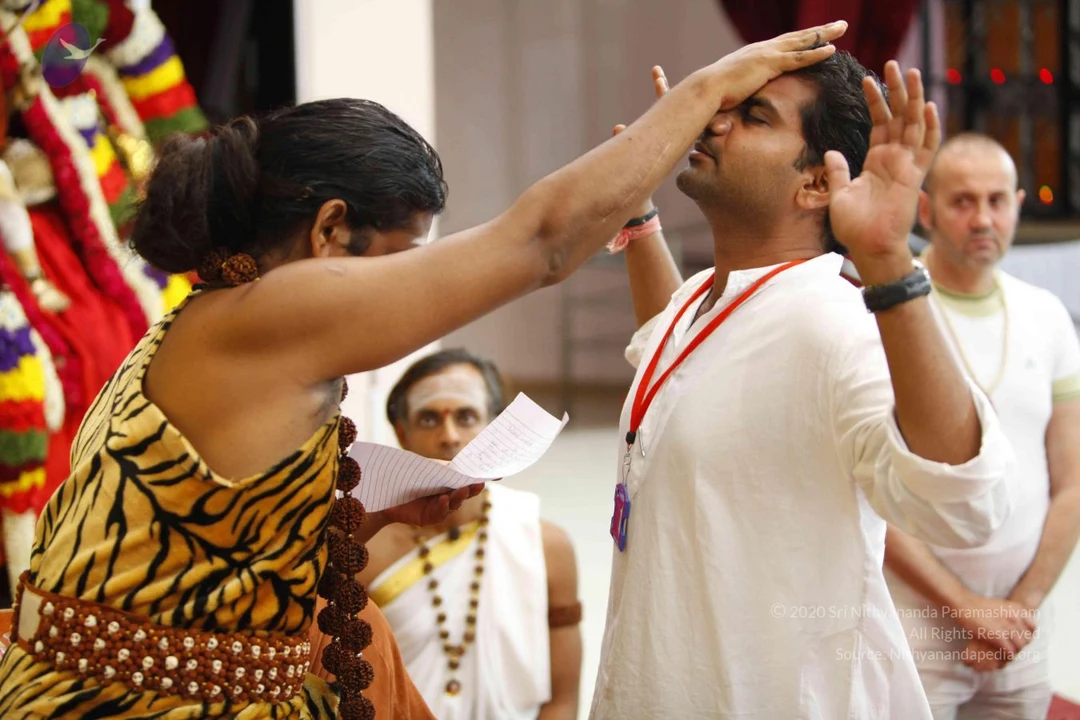
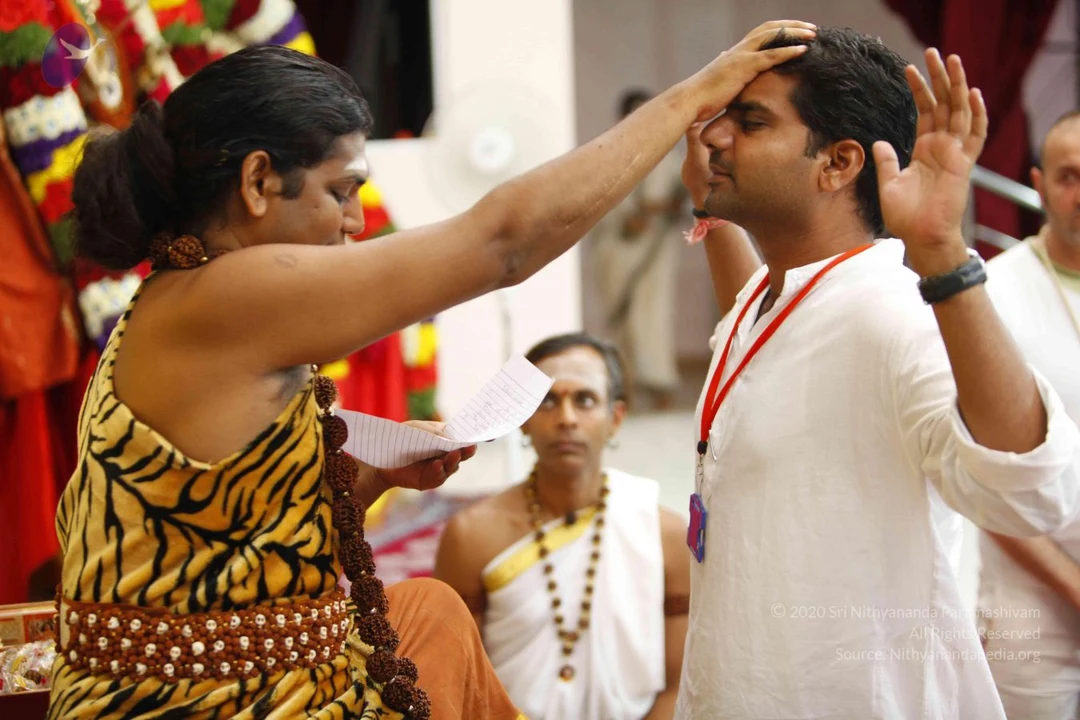
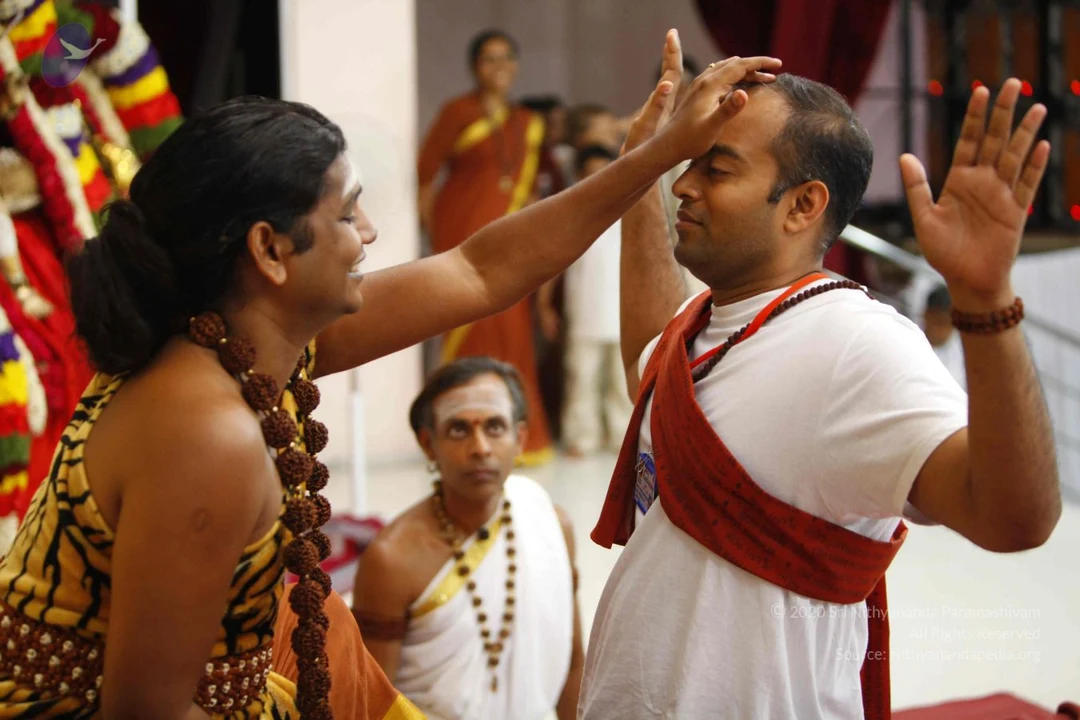
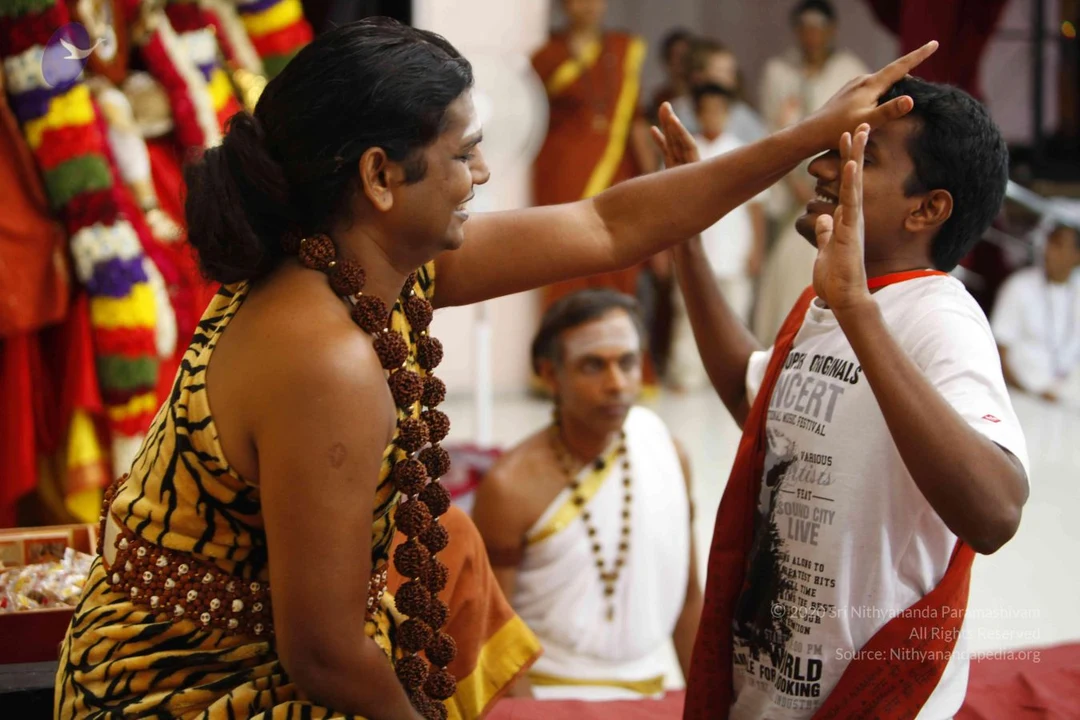
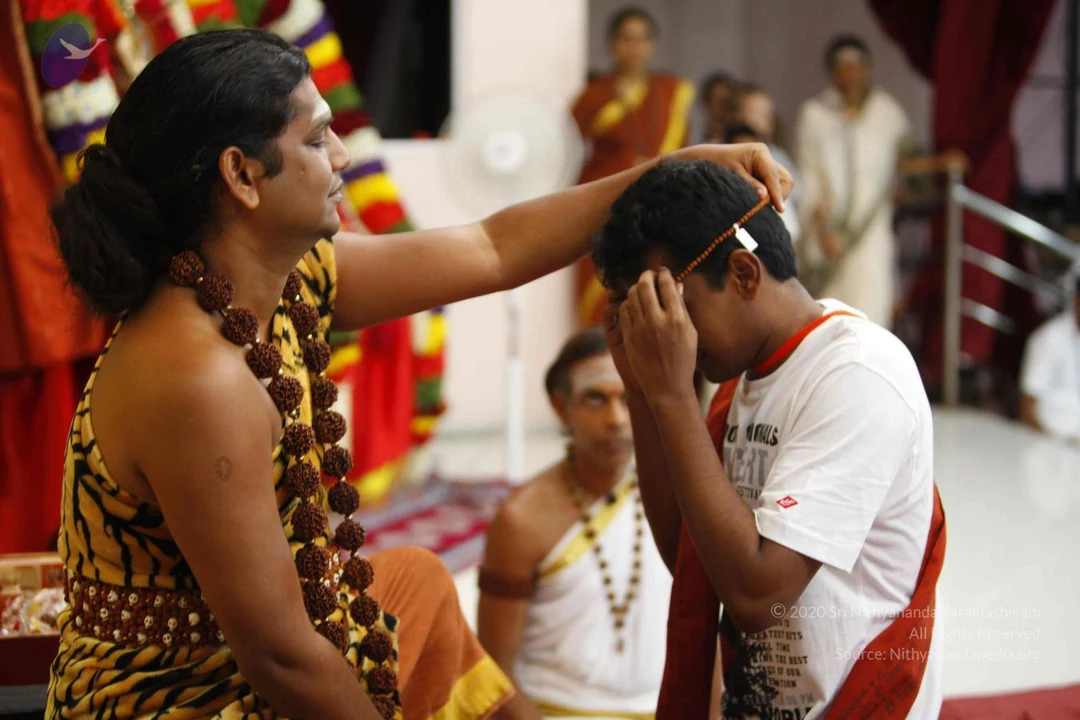
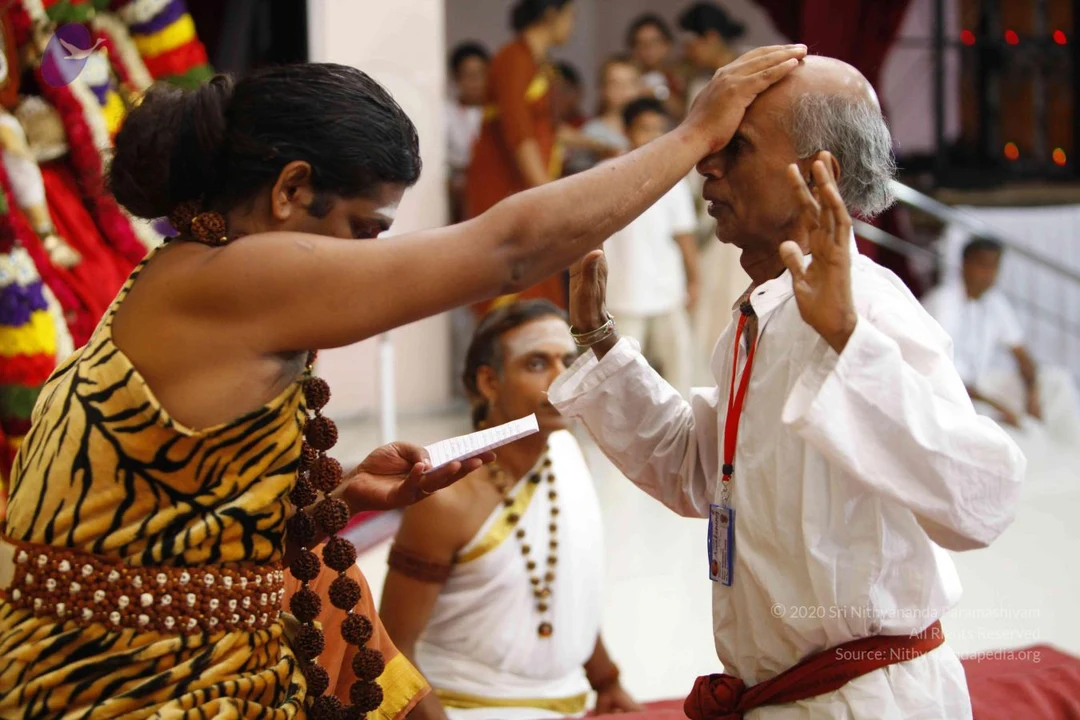
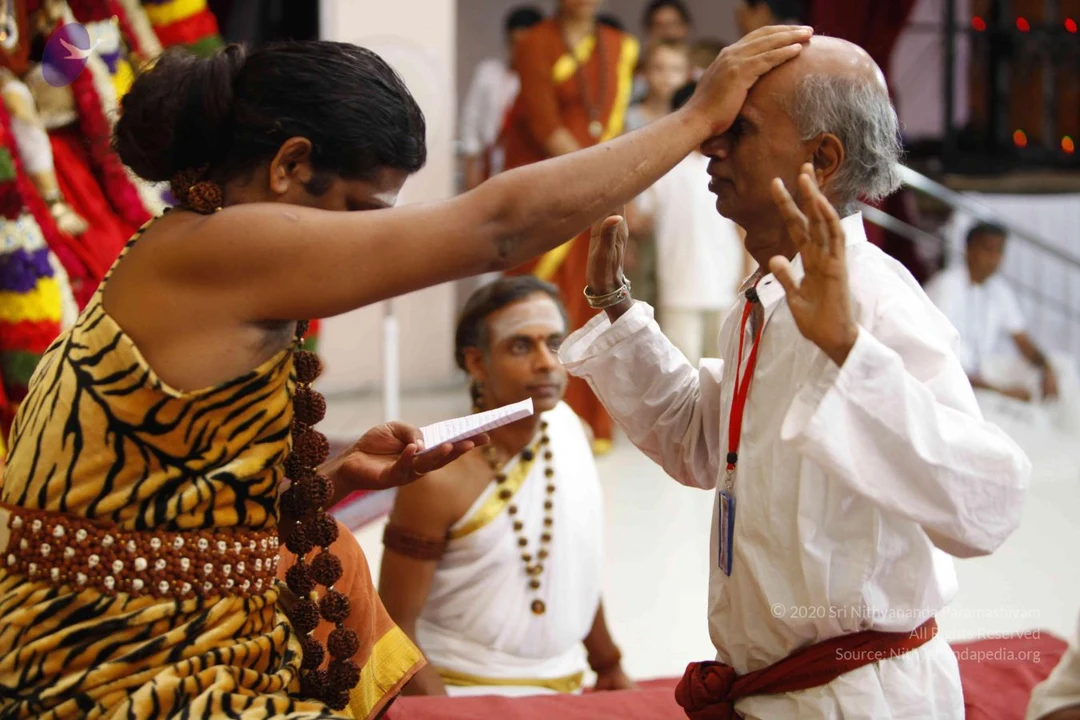
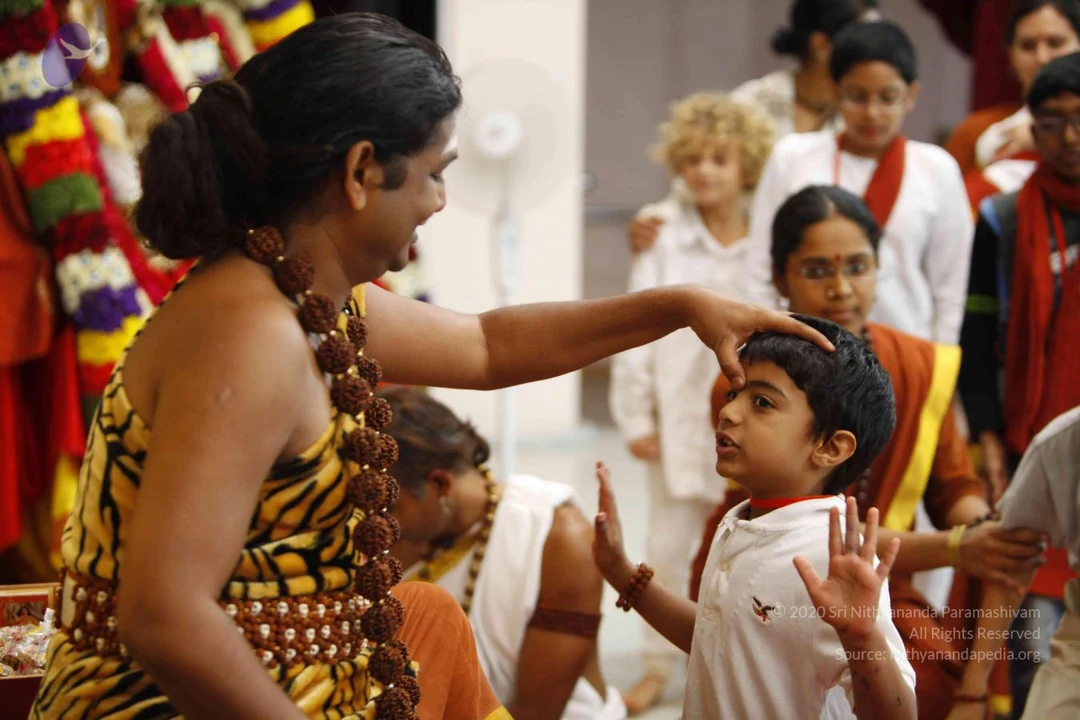
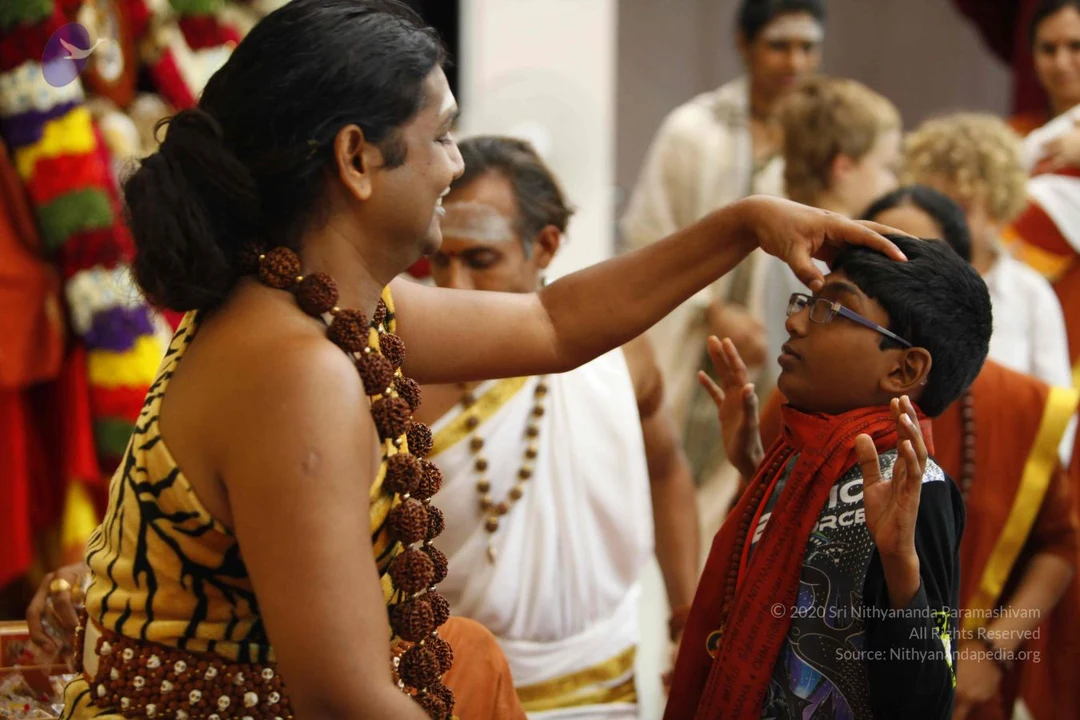
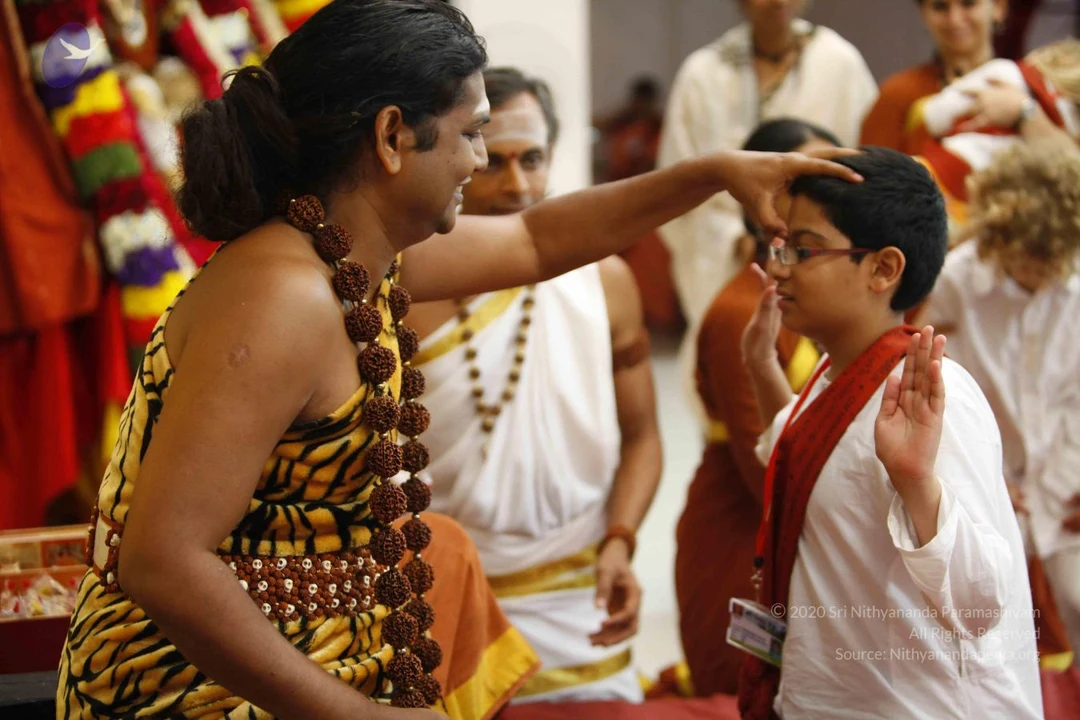
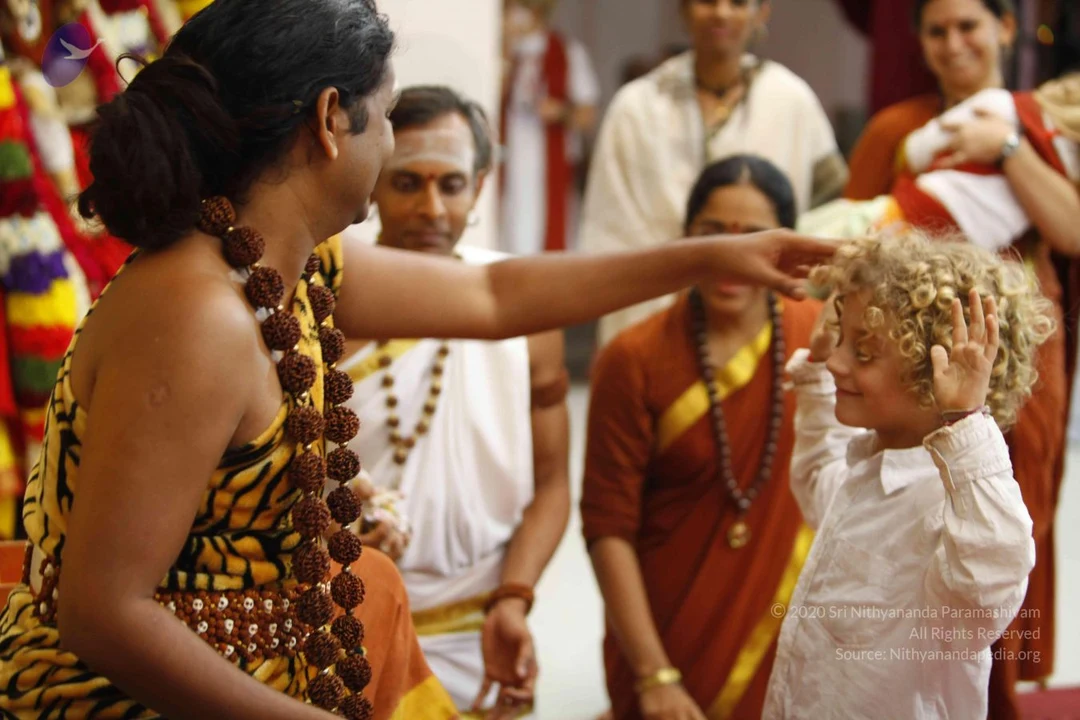
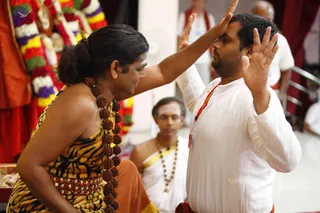
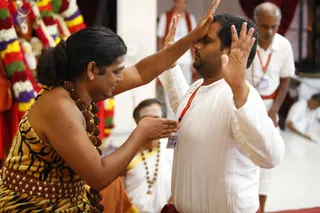
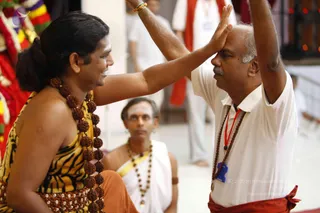
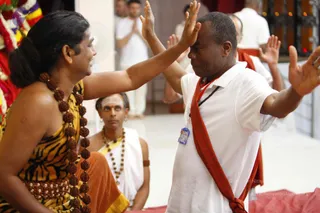
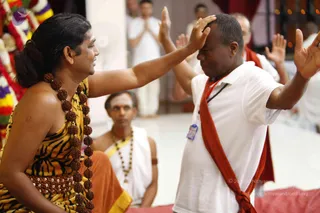
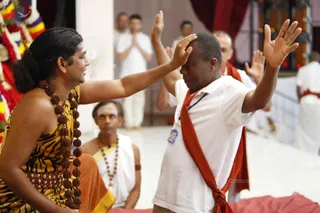
A woman in a yellow and black tiger-striped sari with a brown rudraksha mala draped over her shoulders and a rudraksha-beaded belt stands on the left, leaning forward and raising her right hand toward the forehead of a man in a white kurta with a red cord and a lanyard badge. The man raises both palms in a receiving gesture. Behind them a seated man in white dhoti and shawl with a rudraksha mala and a white forehead mark sits, with a red-and-white garland display and red drapery in the background. The scene resembles a blessing or healing gesture during a group gathering.A photograph of a ritual blessing in a temple hall. A person in a yellow and black tiger-striped garment with a dark rudraksha mala across the chest and waist stands at left, arms raised, palms pressed toward the forehead of a man in a white kurta with a red lanyard and an ID badge. Behind them, a man in white with an orange-red sash and garland-decorated backdrop of colourful flowers observes, and another man in white sits at right near the edge of the frame. Orange and red cloth hangs in the background.Two men share an intimate blessing moment outdoors near a colourful floral decoration. A younger man with long hair tied back, wearing a yellow tiger-striped garment, a long rudraksha mala and ceremonial beaded ornaments, sits and smiles while raising his hand to touch the forehead of an older bald-headed man in a white shirt with a red sash, a rudraksha mala and a blue pendant. The older man's arm is raised high. Behind them, another seated man in white with a yellow shawl and rudraksha beads watches, and a few people in white and orange stand in the background.A photograph of a satsang-style gathering. In the foreground, a woman in a yellow and black tiger-striped blouse and orange-and-gold skirt, wearing a long rudraksha mala, reaches out with her palm raised toward a man in a white short-sleeved shirt with an orange shoulder sash and a rudraksha mala, who stands with arms spread and palms open, facing her. Behind them, a seated man in white robes with yellow trim and gold beads wears a vibhuti mark on his forehead. Other devotees in white and orange stand in the background with hands raised, and red and yellow floral garlands and decorations frame the scene.A photograph of a satsang-style exchange. On the left, a woman in a yellow and black tiger-striped garment with a wide rudraksha mala necklace and a rudraksha-studded belt reaches out and presses her palm toward the forehead of a man in a white collared shirt, orange-red shawl and an ID lanyard, who holds his own hands raised in a blessing gesture. Behind them a seated man in white with rudraksha beads and a yellow sash watches, and figures in white stand in the background beside a wall of colourful garlands. The scene appears to be a devotional gathering with blessing-by-touch.A photograph of a satsang-style gathering in a hall. In the foreground a figure with long dark hair pulled back, wearing a tiger-striped orange and black garment and a thick necklace of rudraksha beads, extends a hand toward the forehead of a man in a white shirt with an orange-red shawl and a lanyard. The man raises his other hand in a gesture of reception. Behind them a seated man in white with a rudraksha mala and orange cloth sits, and standing people in white clothes with orange shawls watch and raise their palms. Red drapes and colourful floral garlands decorate the background.

Kalabhairava-Readings

2 photosSource gallery
A photograph of a television screen showing a figure with long dark hair, a red bindi and white forehead marks, wearing a red and orange patterned garment with a striped sleeve, and multiple layers of dark beaded rudraksha-style malas with white beads. The figure has bluish skin tones and holds one arm outstretched, with a bangle on the wrist. Behind the figure are bright pink and red decorative arches, marigold-style orange and yellow flower garlands, and a red floral backdrop. A single person appears on the screen; the image is a screen capture of a satsang broadcast.A man with long dark swept-back hair and a red-and-white tilak on his forehead smiles broadly while posing in a dramatised scene. He wears a tiger-striped orange and black cloth, multiple strands of rudraksha and white beads, and matching beaded armbands. He grips a silver trident with his right hand while leaning against an ornate red and gold arched backdrop with a golden pattern on the left. Garlands of marigolds and colourful decorations are visible in the background.

01-AvanthiHoma-Pictures
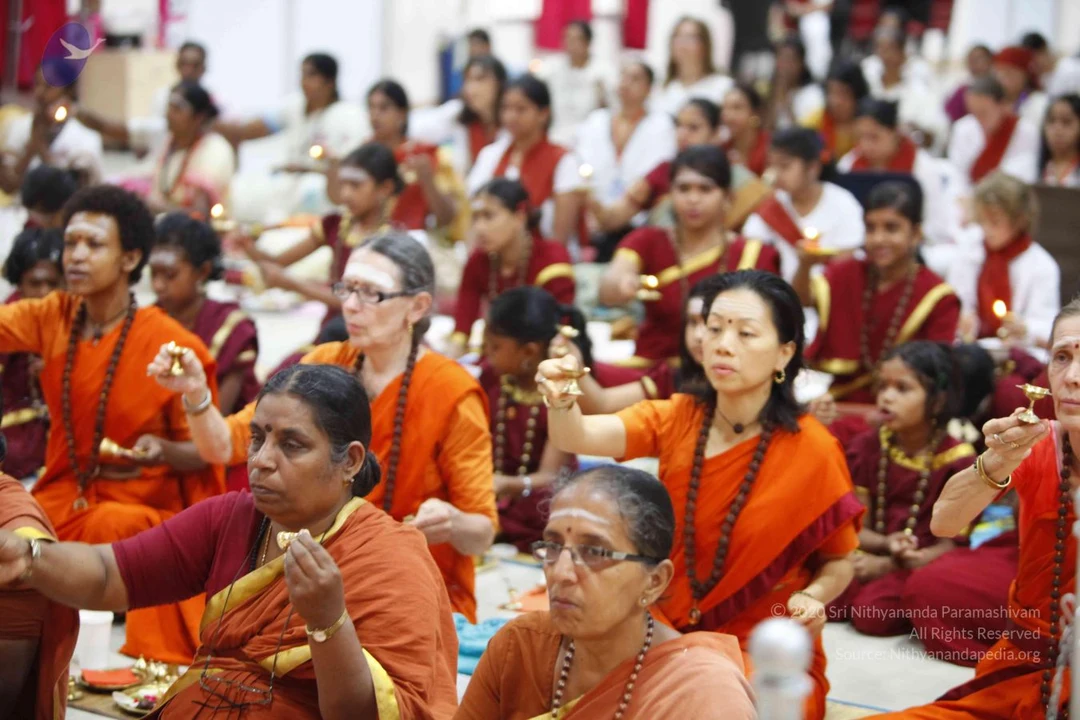
21 photosSource gallery
A gilded deity murti. The figure wears a magenta silk dhoti with gold zari borders, layered pink and green jewelled necklaces, and an ornate crown. In one raised hand it holds a small oil lamp, and a polished silver kalasha vessel with embossed figures rests near its side. The image is a photograph of a statue, with no living people visible.A decorated deity murti, a metal figure of a goddess, sits framed by arches of yellow and white jasmine garlands and red rose petals. It wears a jewelled crown, layered pink and silver necklaces and a purple silk saree with gold border. Its raised hands hold a silver pot and a small lamp, and its lower body is draped in purple silk. The scene is a temple alankaram display with no visible people.A seated man in a saffron-orange garment sits on a dark red upholstered throne with an ornate gold-leaf arched frame. He wears heavy gold ceremonial necklaces with pendants and a ring on one hand, and has a tilak mark on his forehead; his head is bowed and eyes lowered. A small plastic water bottle stands on a side table at the lower left. The background is dark. Appearance-based candidate: a person, identified by the saffron clothing, gold ornate necklaces and throne seating; the page indicates this is a satsang event.A seated man in a saffron-orange shawl wrapped over his bare upper body sits on an ornate red throne with a gilded, leaf-carved arched backrest. He wears long gold necklaces with ornamental pendants and a sacred mark on his forehead, with swept-back dark hair. A plastic water bottle sits on the armrest beside him, and the background is dark.A seated man in an ornate gold-trimmed red throne with a carved golden arch behind him. He wears saffron-orange robes draped over a bare upper body, a long ceremonial gold necklace with a large pendant, and a tilak mark on his forehead. His long dark hair is swept back, and his hands are gesturing mid-discourse. A water bottle rests on the armrest beside him against a dark background. Appearance cues are consistent with a person in a satsang setting, though identity is uncertain from appearance alone.A seated man in a saffron-orange robe, with a gold ceremonial necklace and multiple gold garlands, raises one arm to touch his head with his eyes lowered. He sits before a deep red upholstered backdrop framed by ornate gold carving, with a clear plastic water bottle at lower left. A faint red-and-white mark is visible on his forehead. The setting suggests a satsang seat, and the scene is lit dimly with warm tones.