Skip to content
Monday

8 July 2013

Dated photos
727
Source pages
1
Media
3
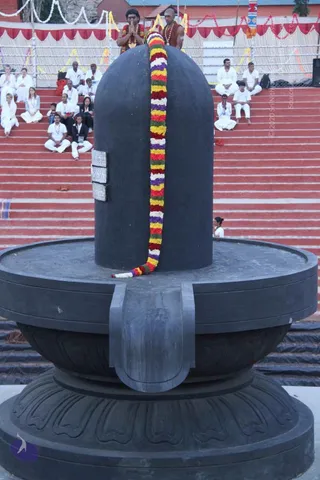
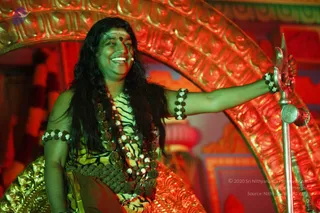
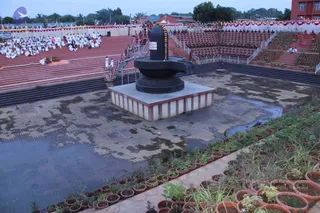
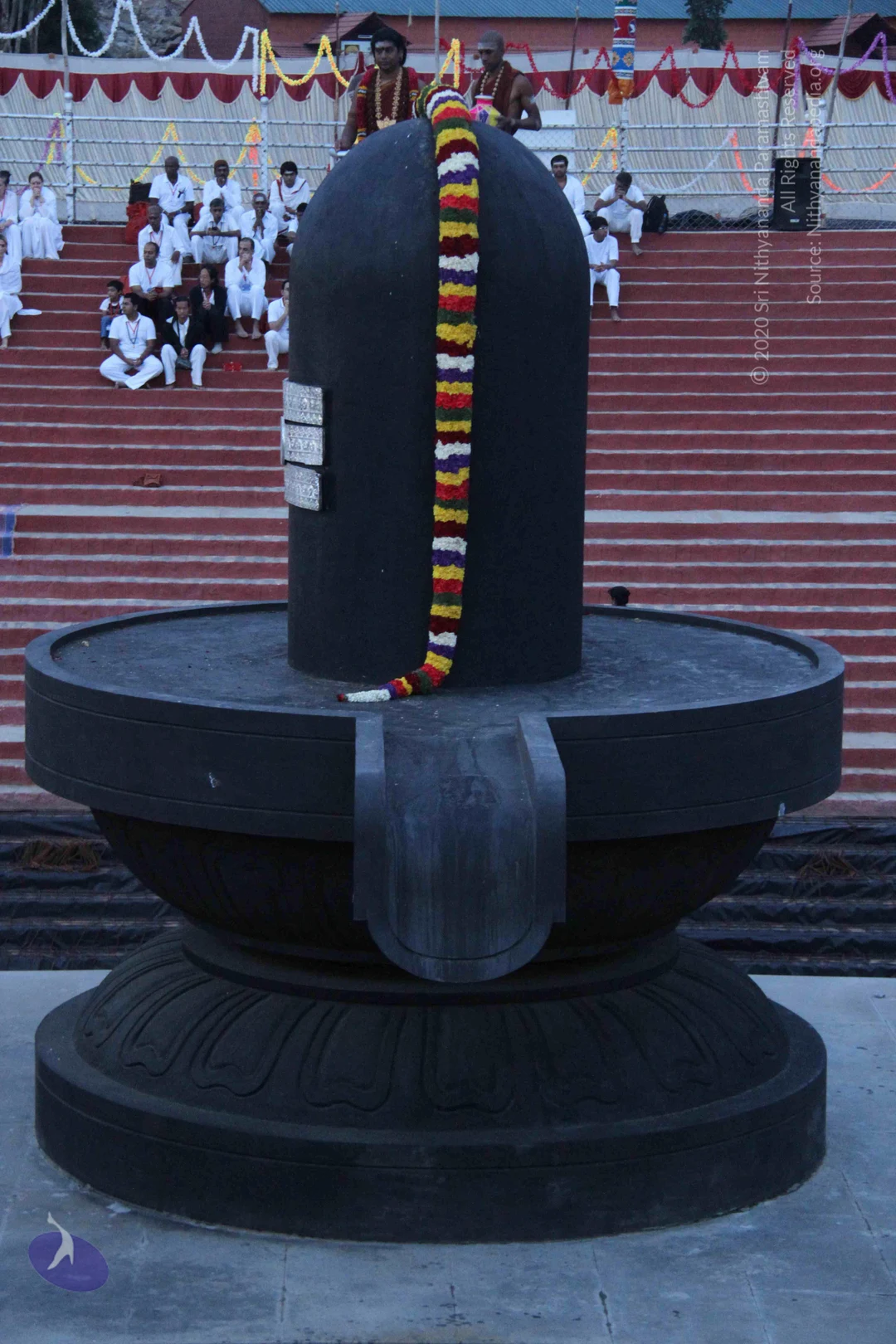
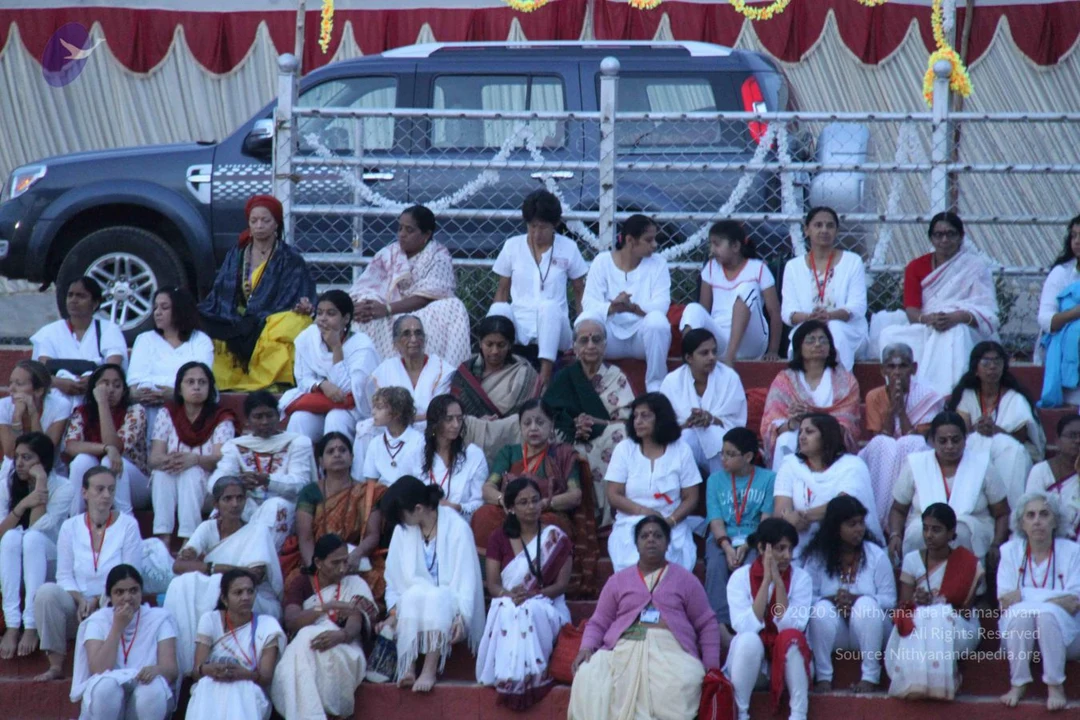
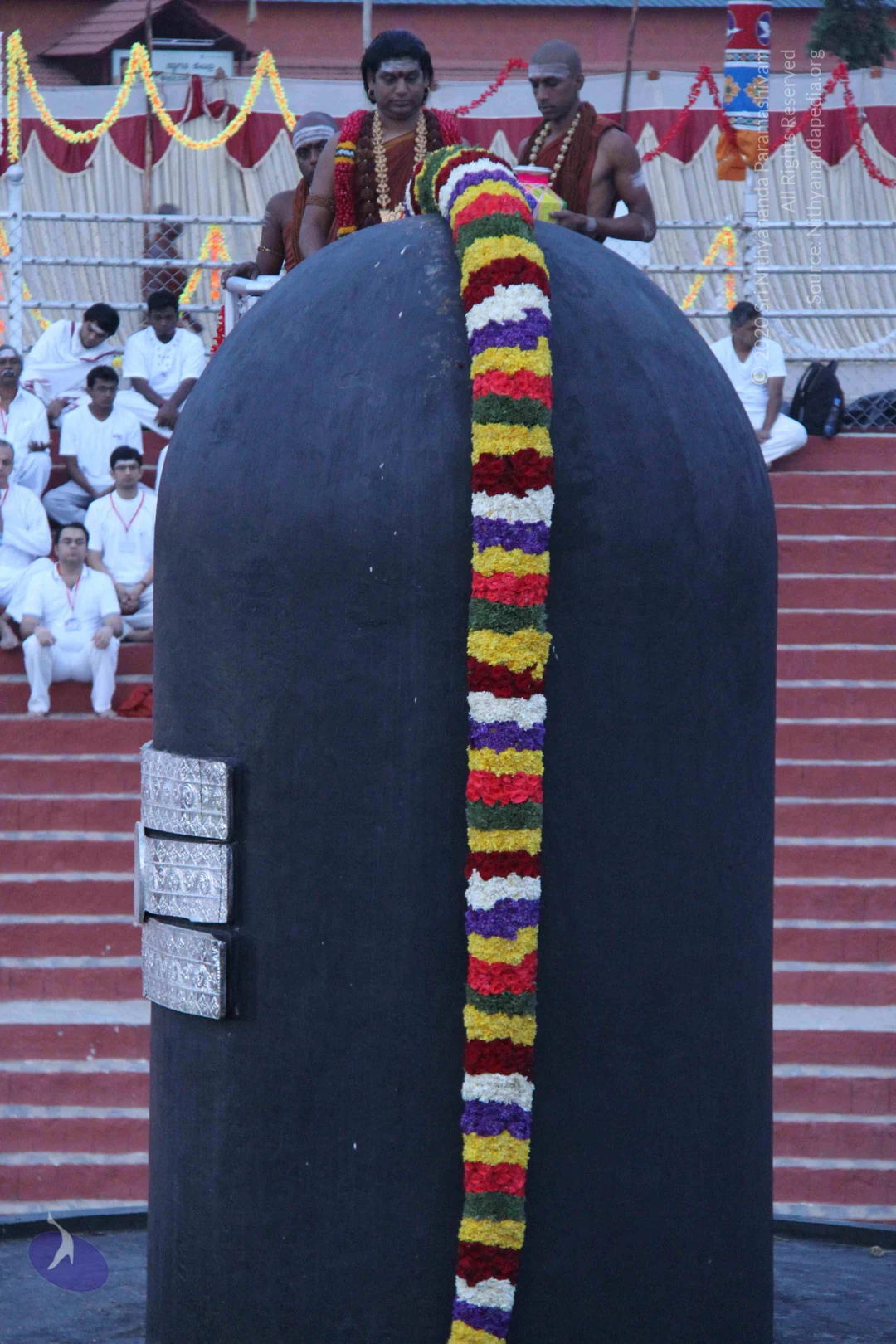
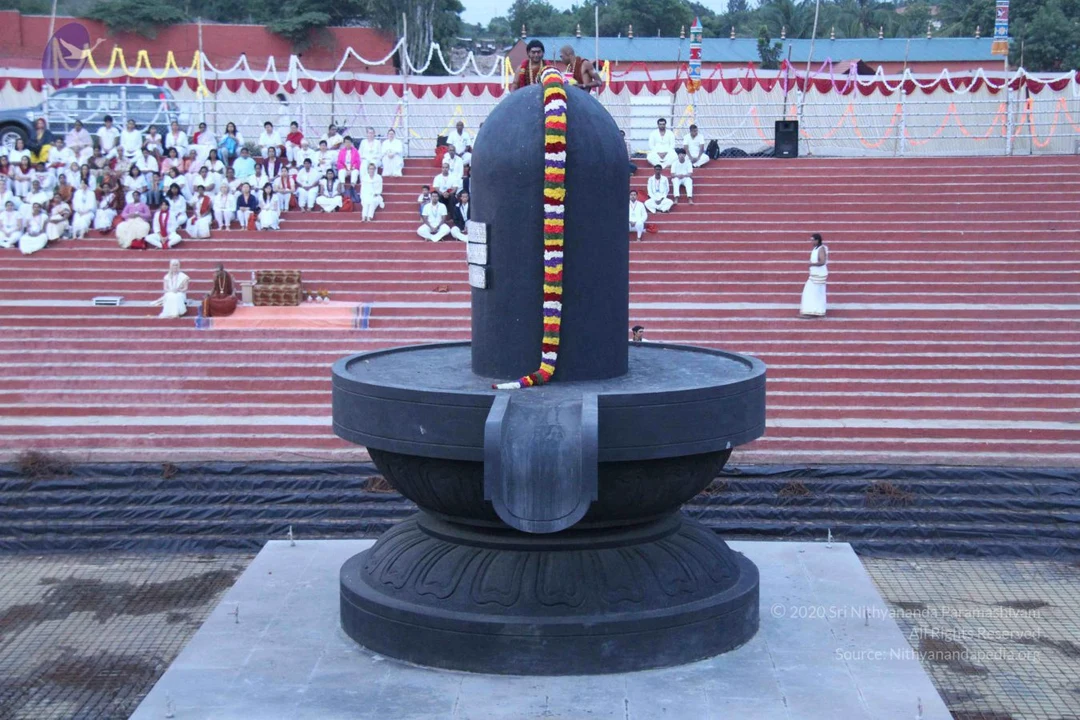
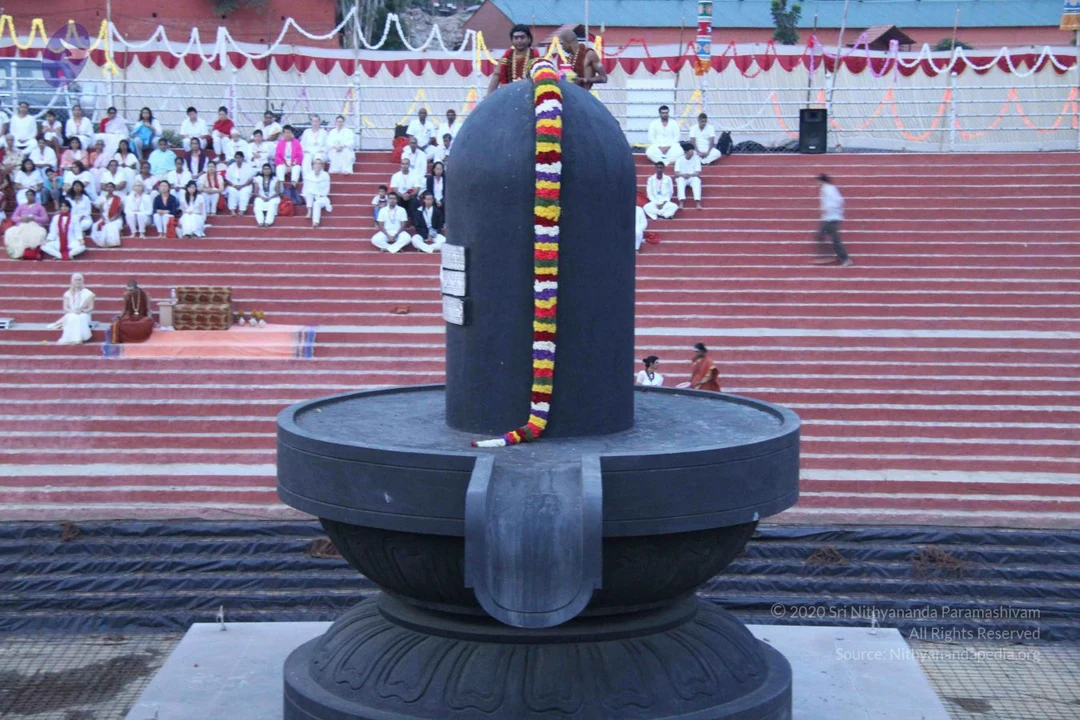
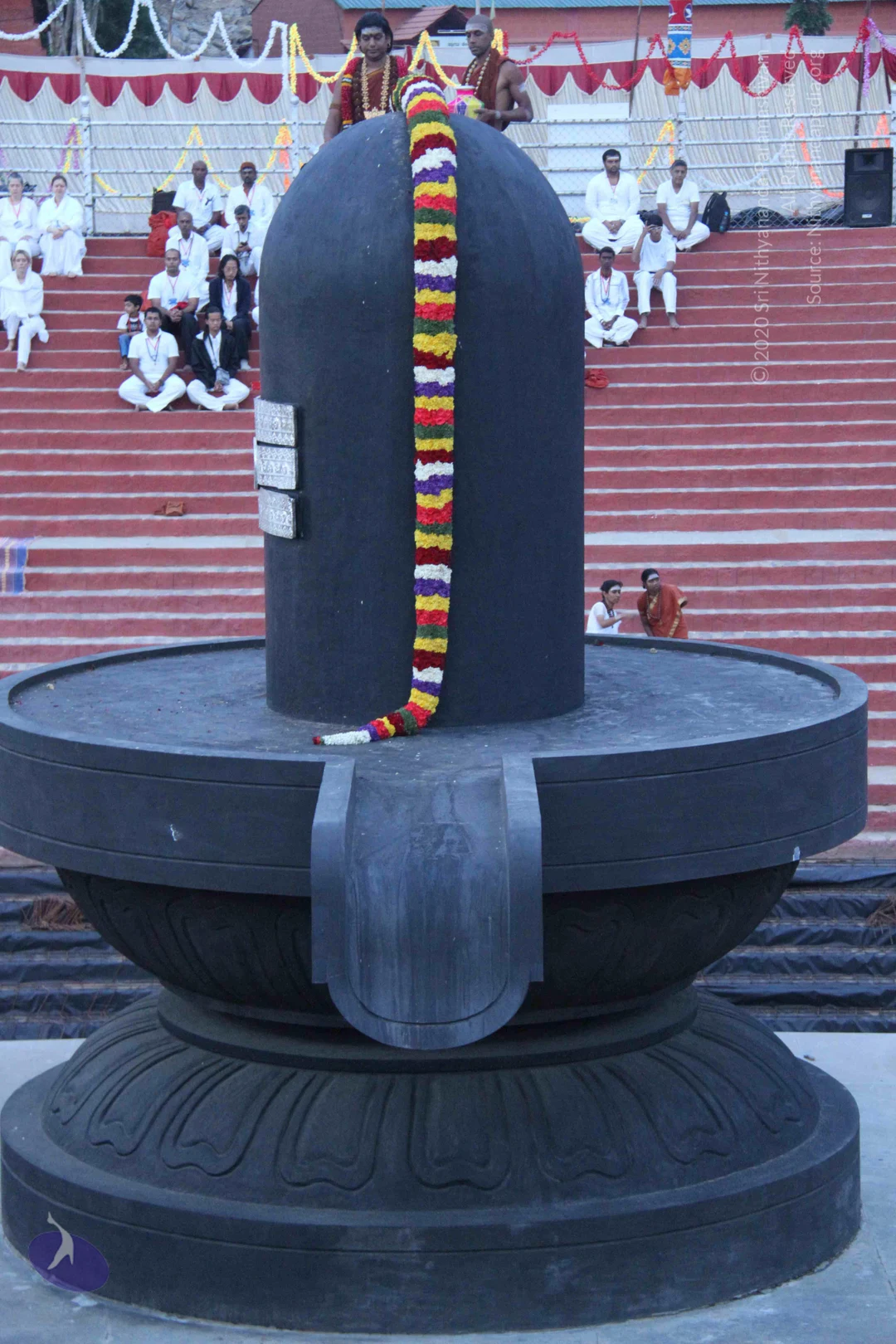
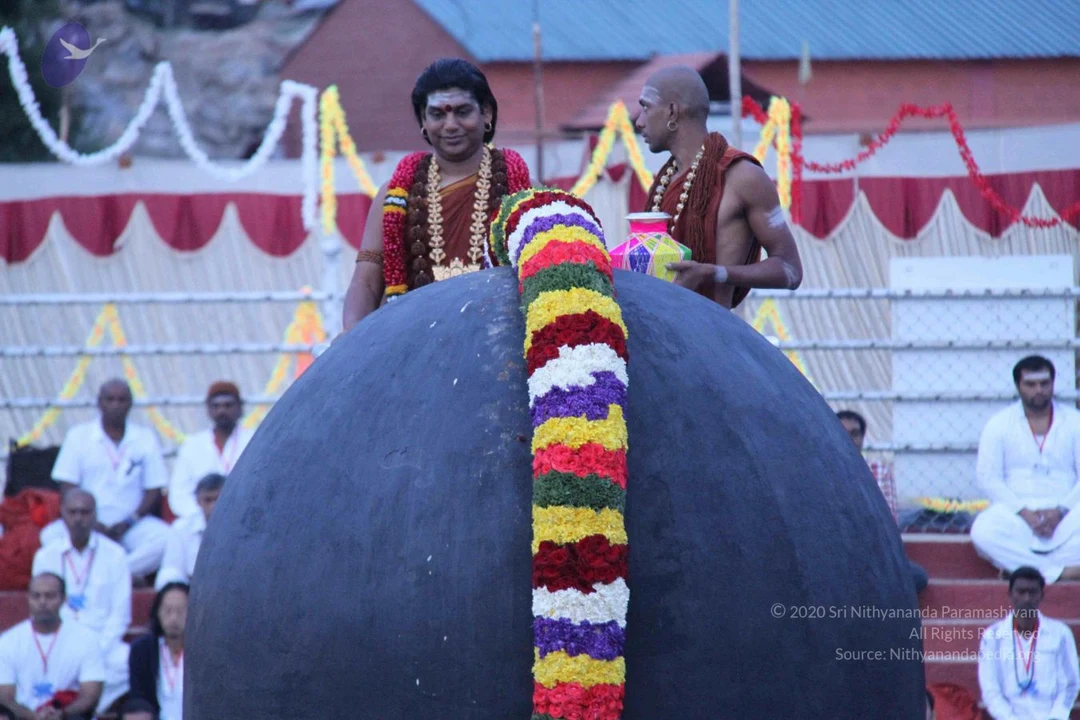
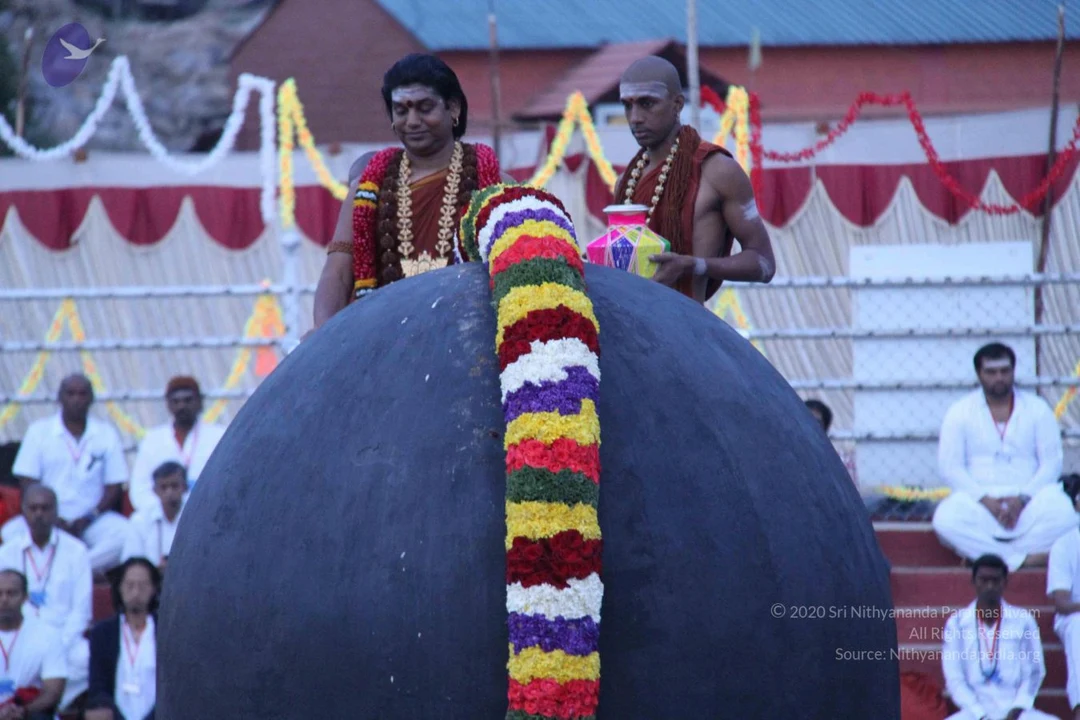
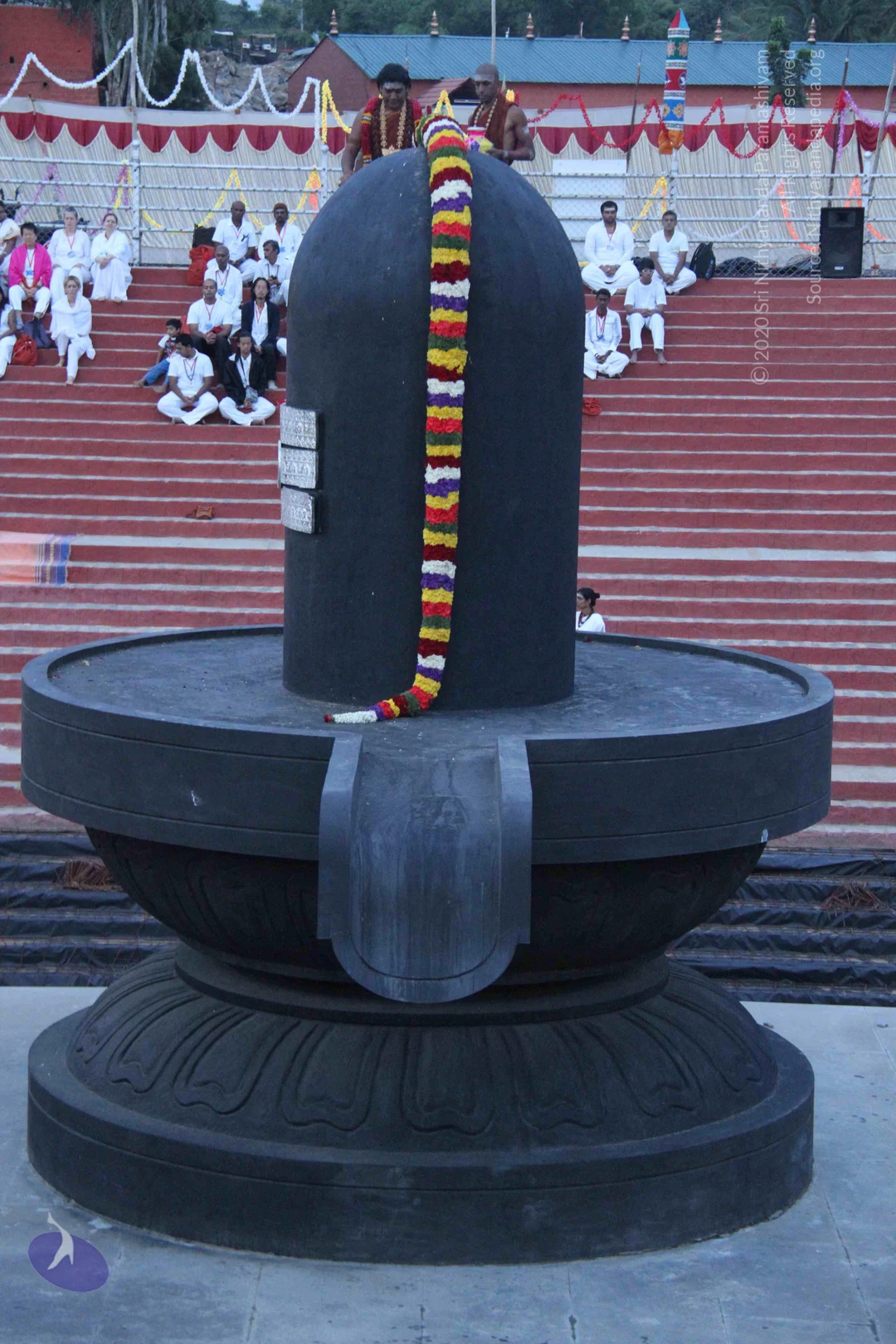
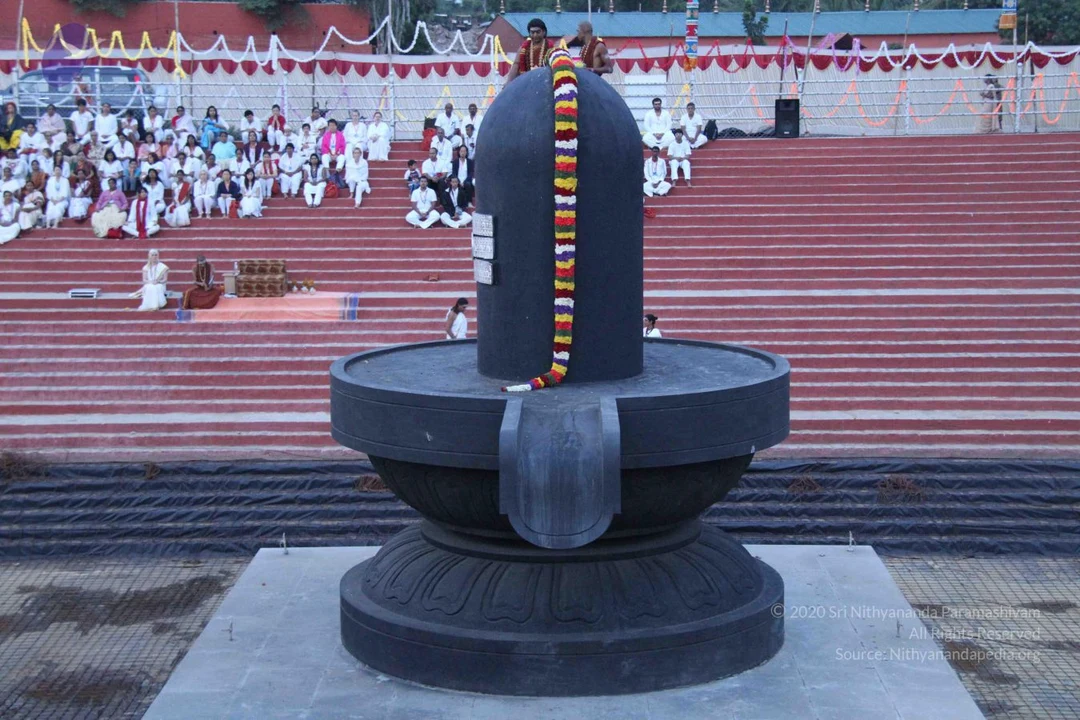
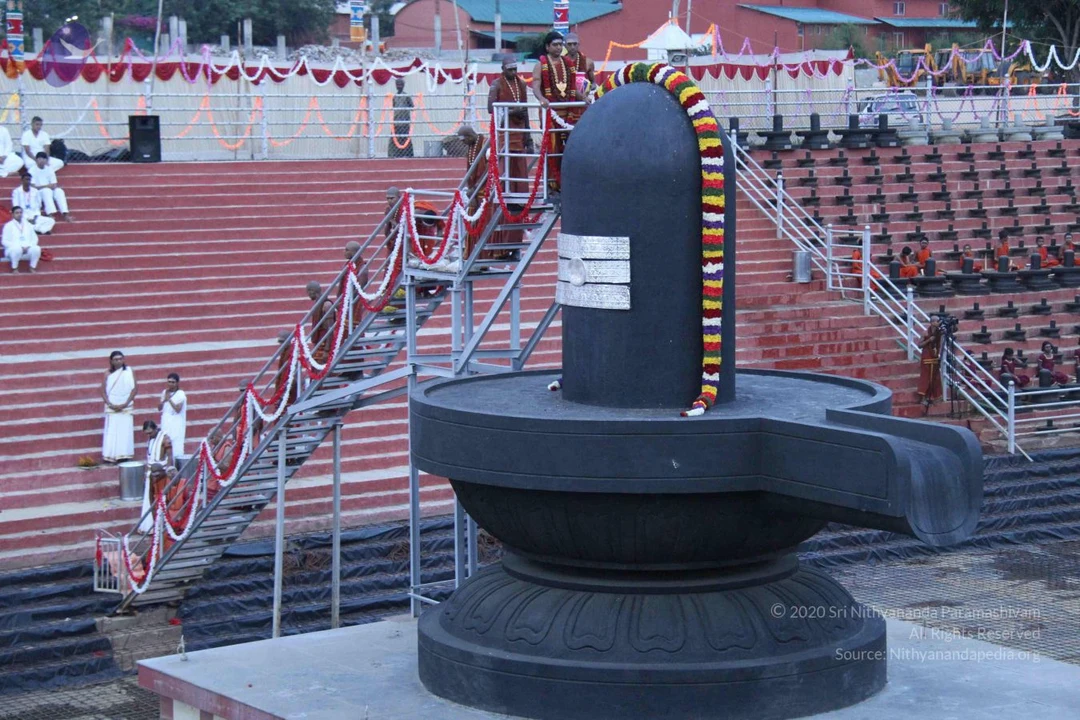
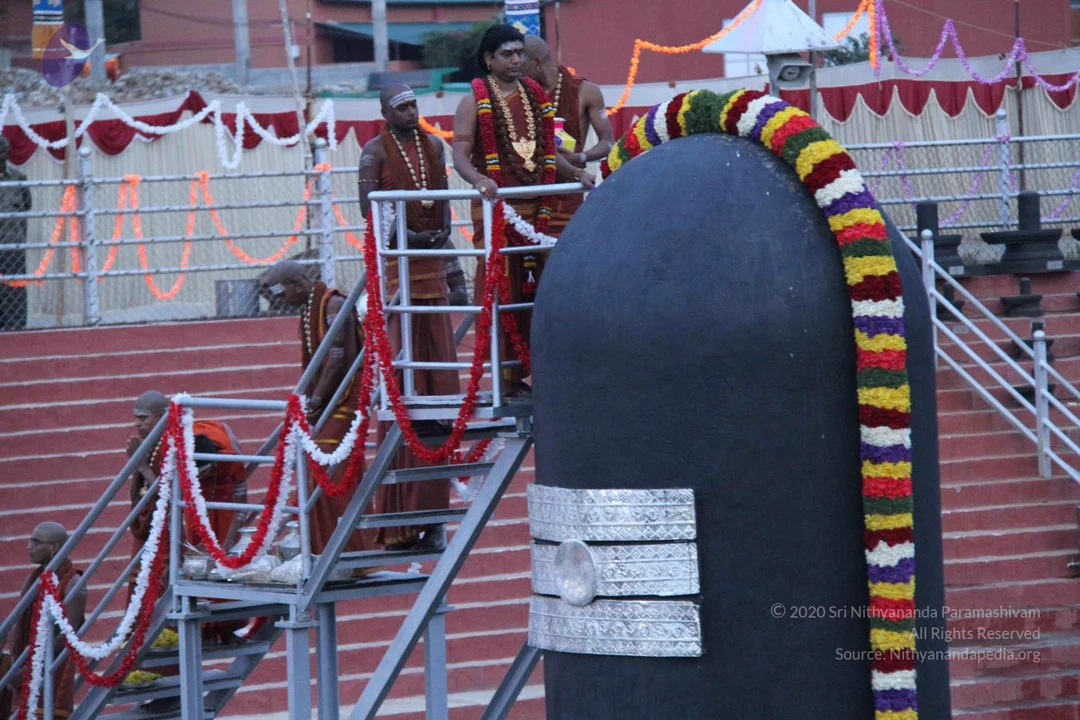
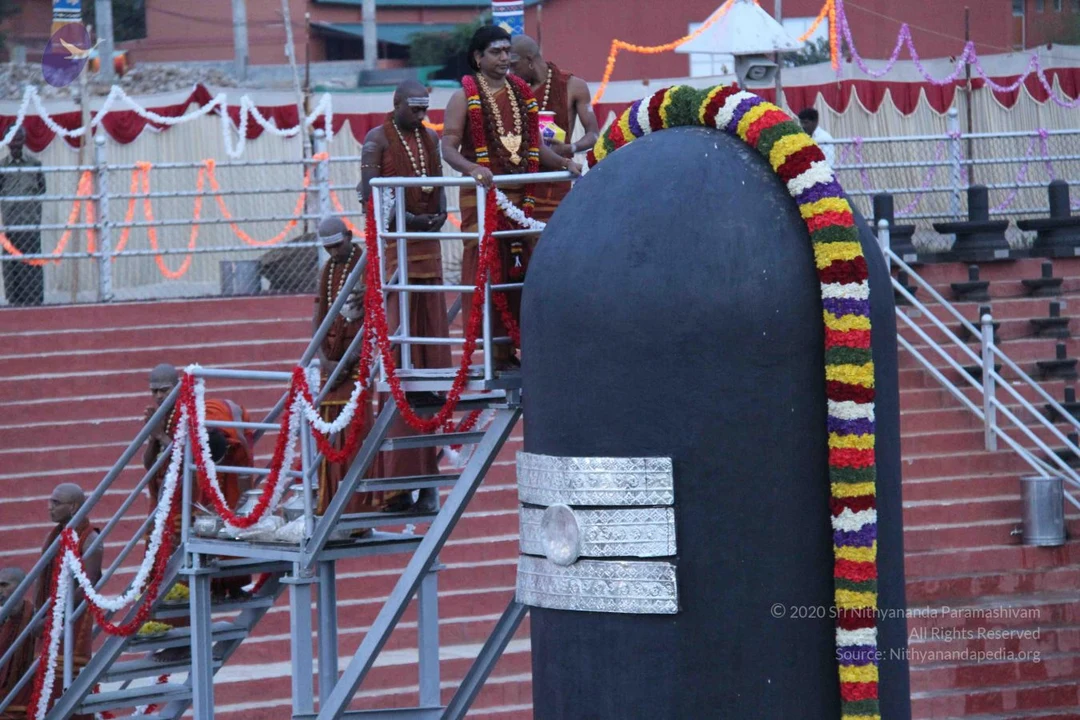
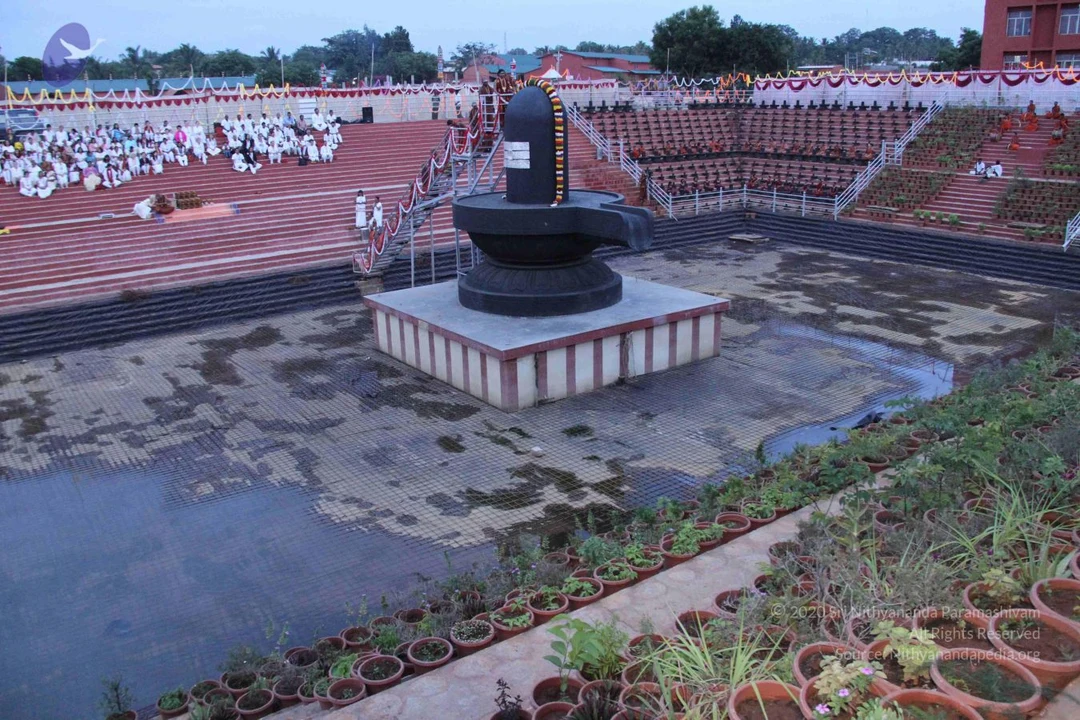
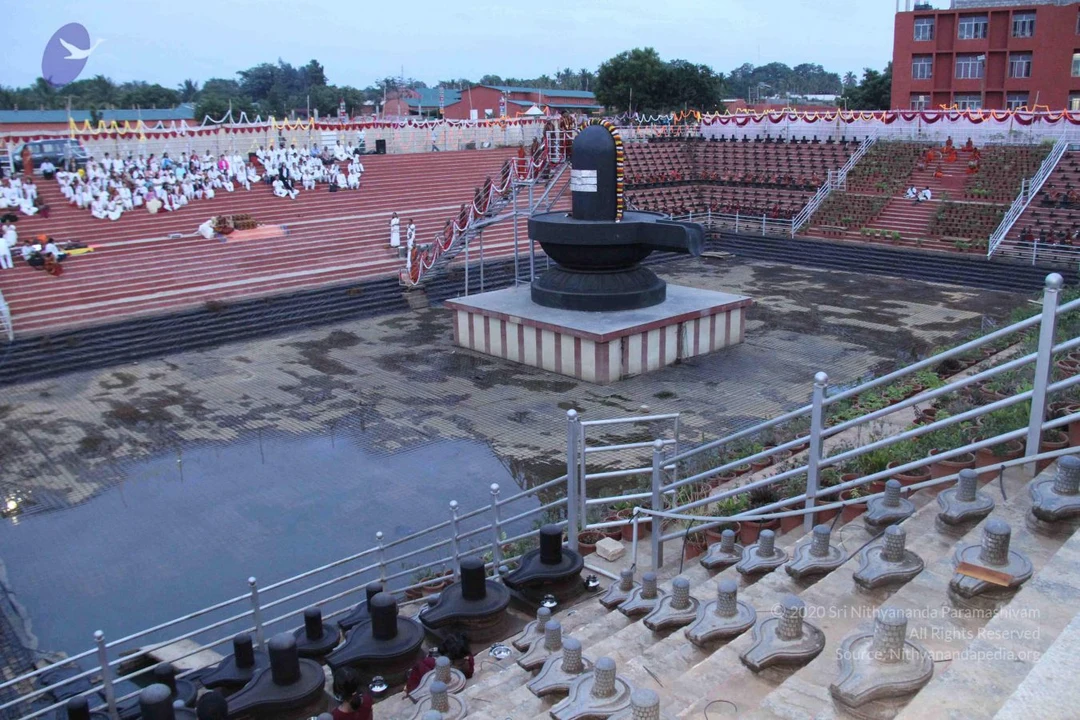
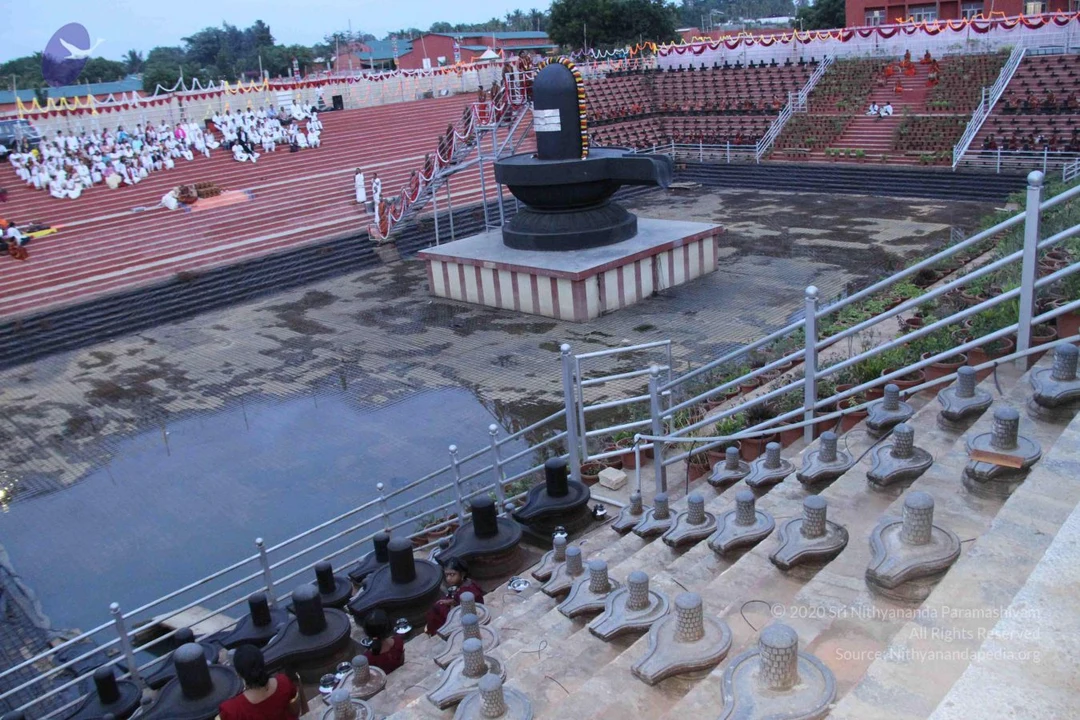
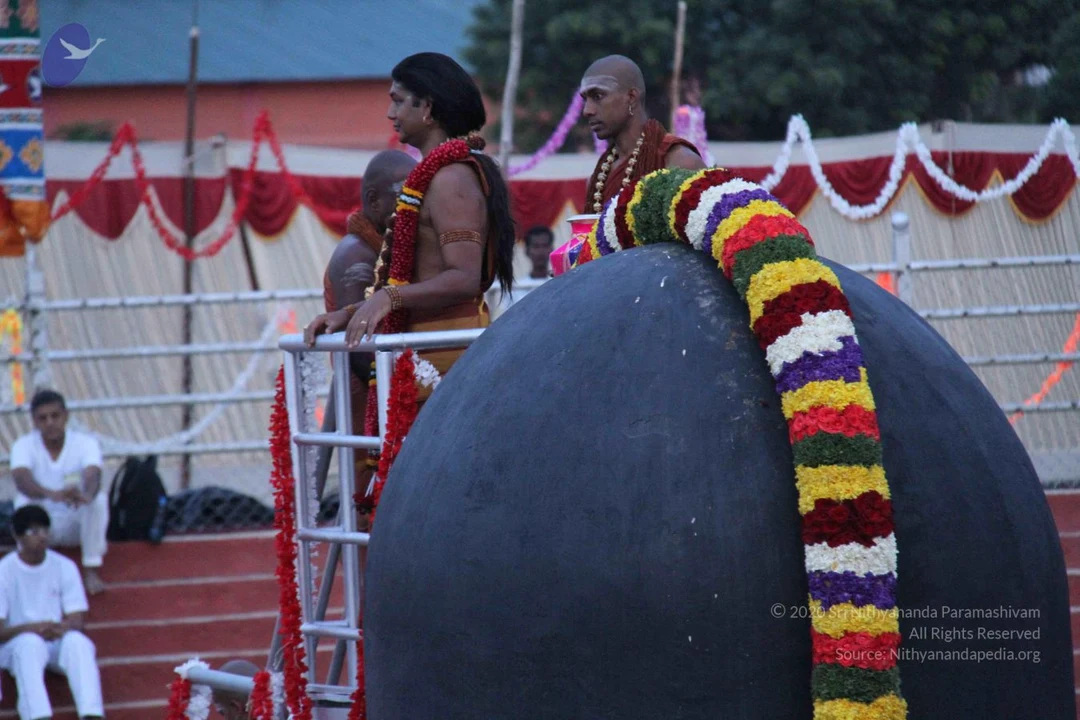
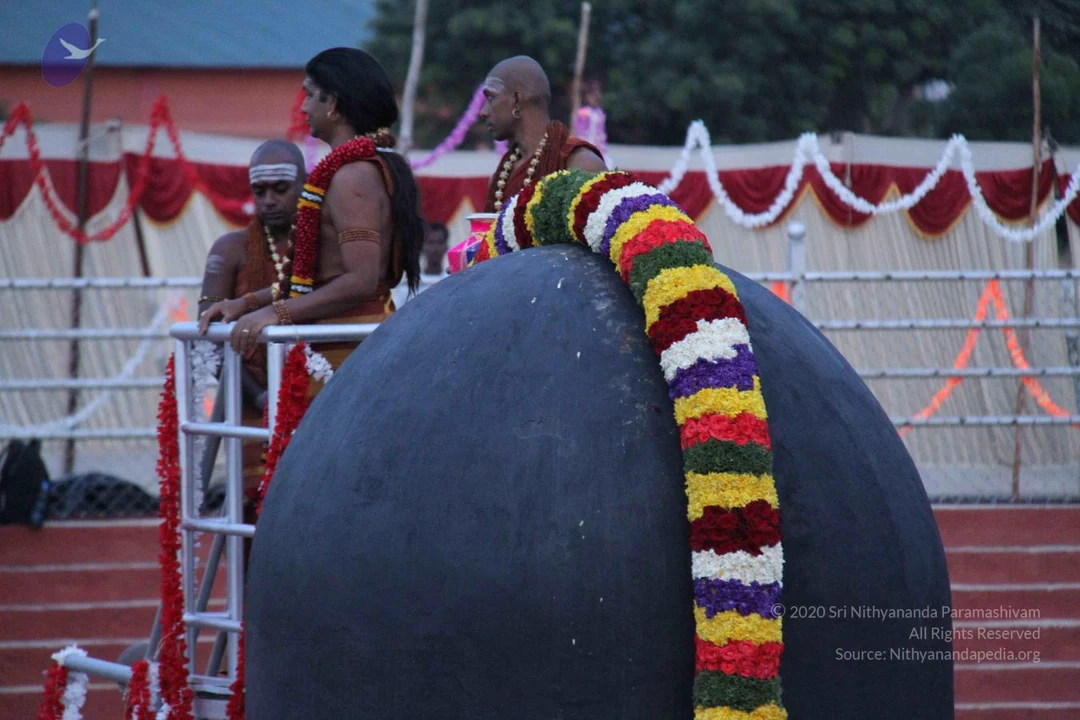
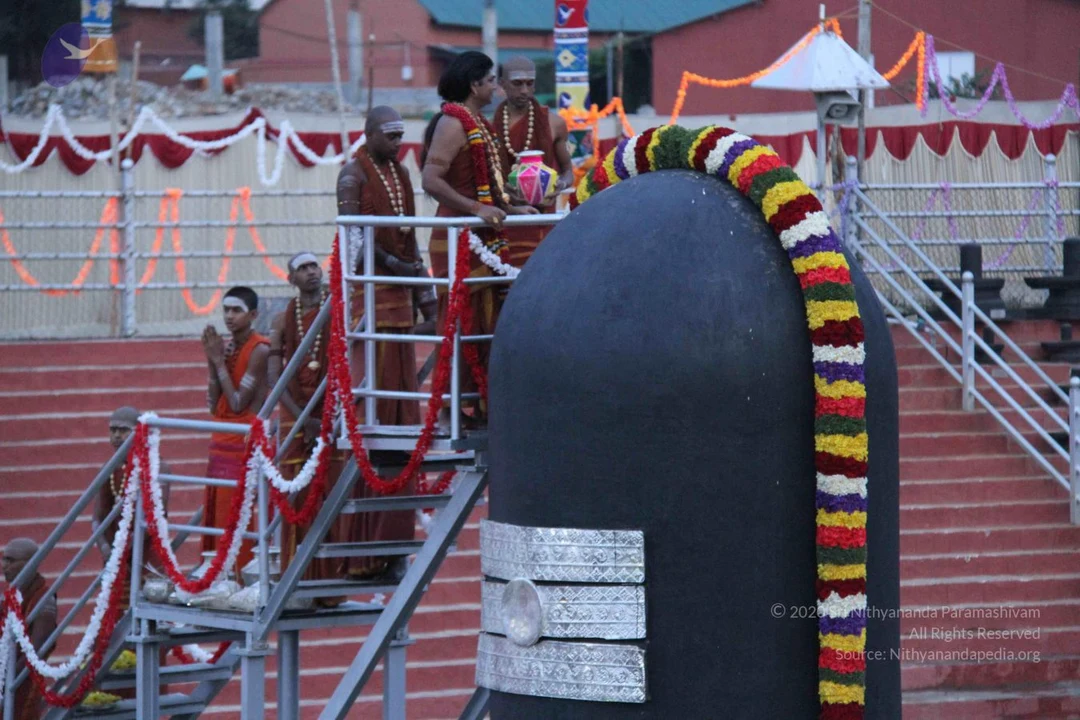
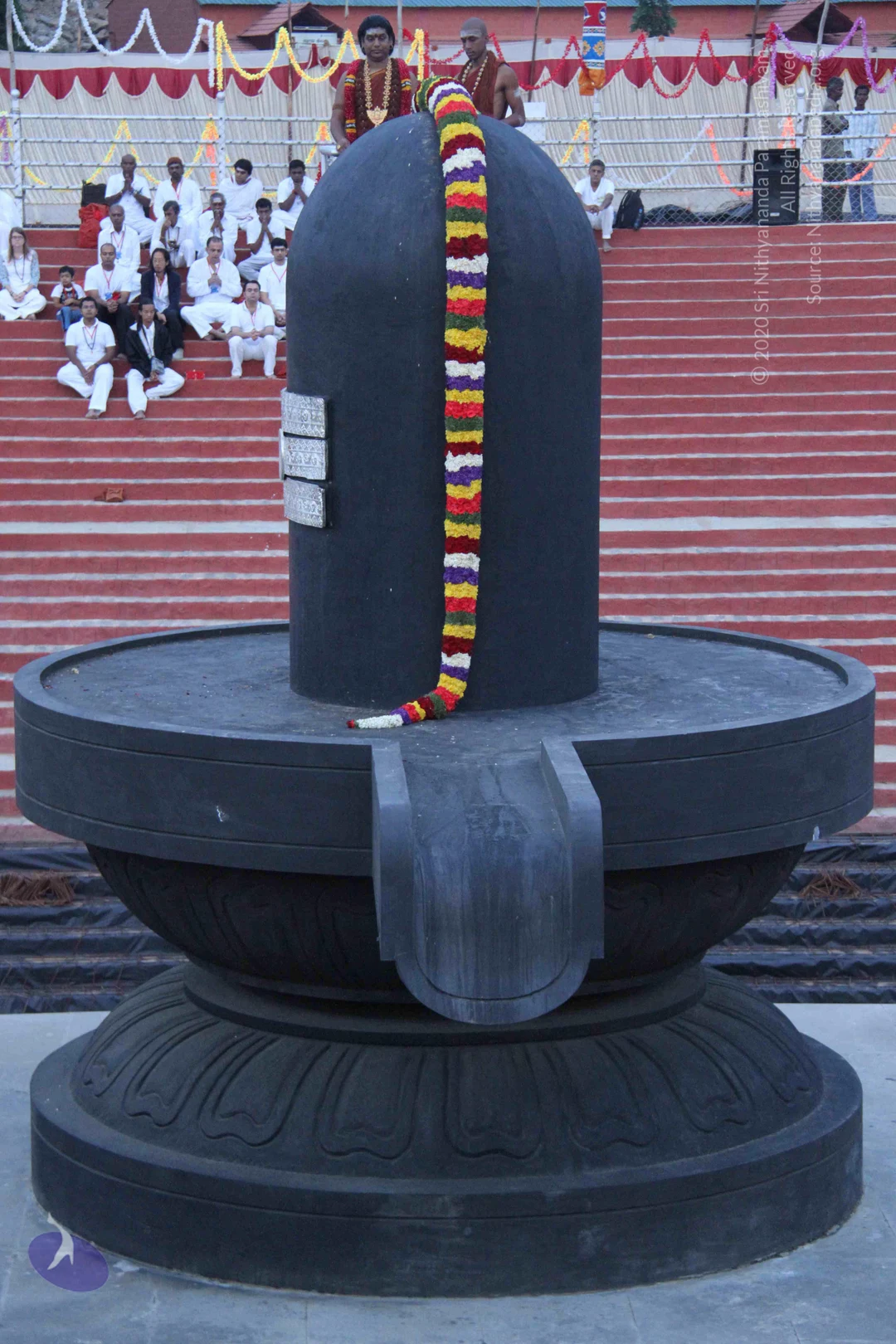
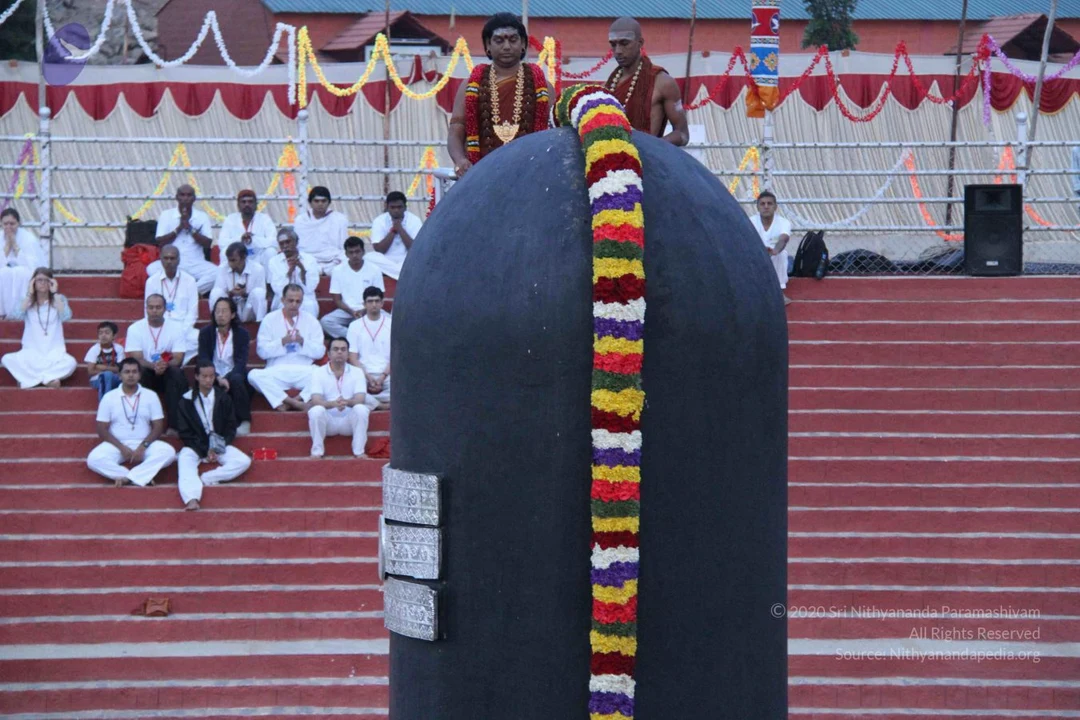
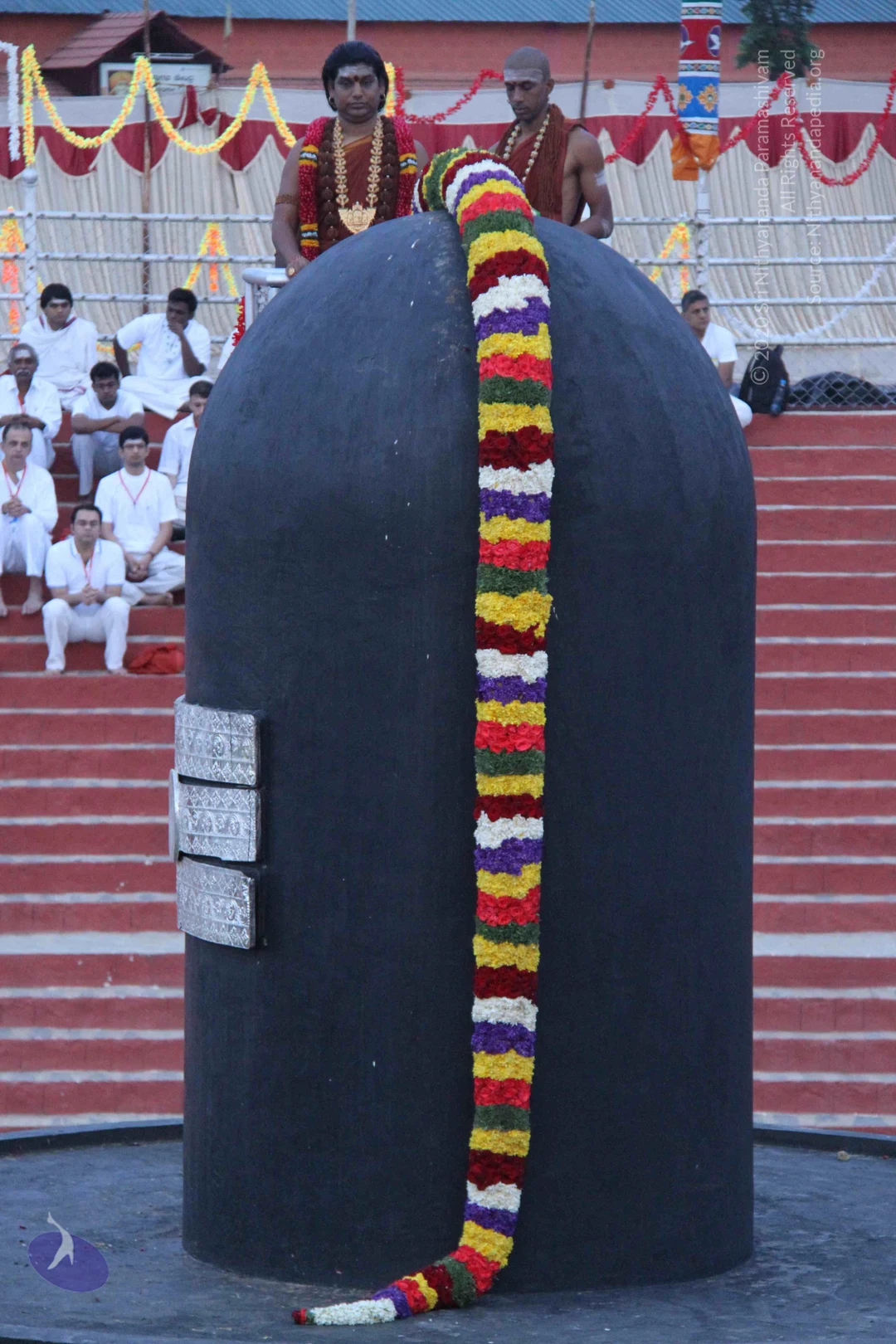
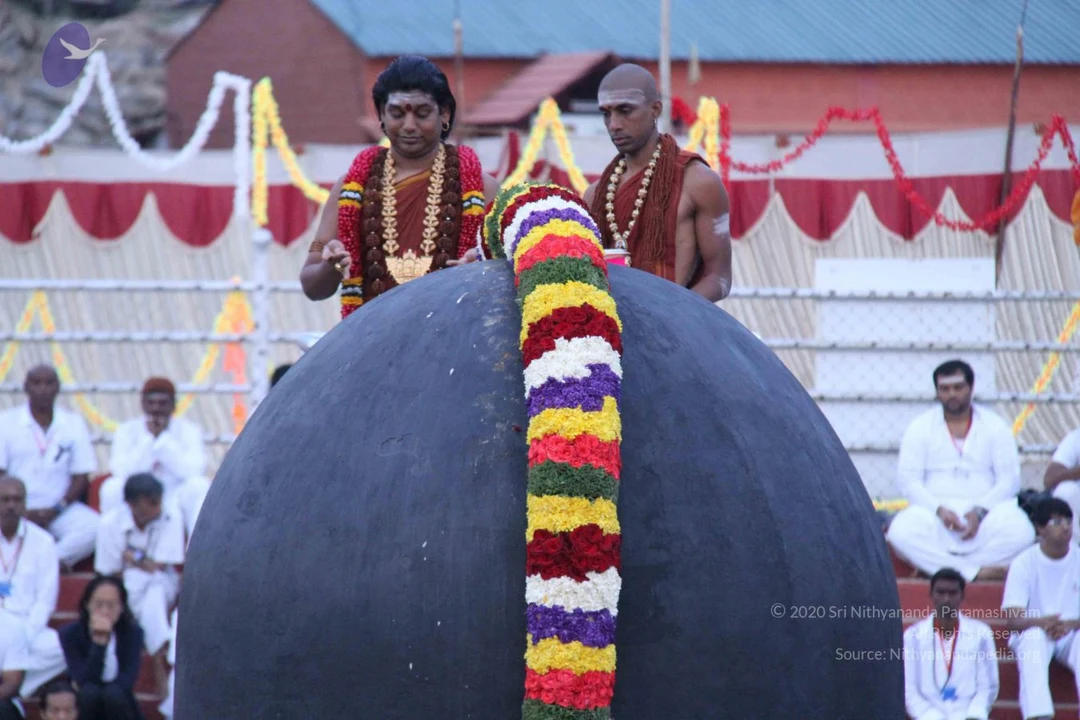
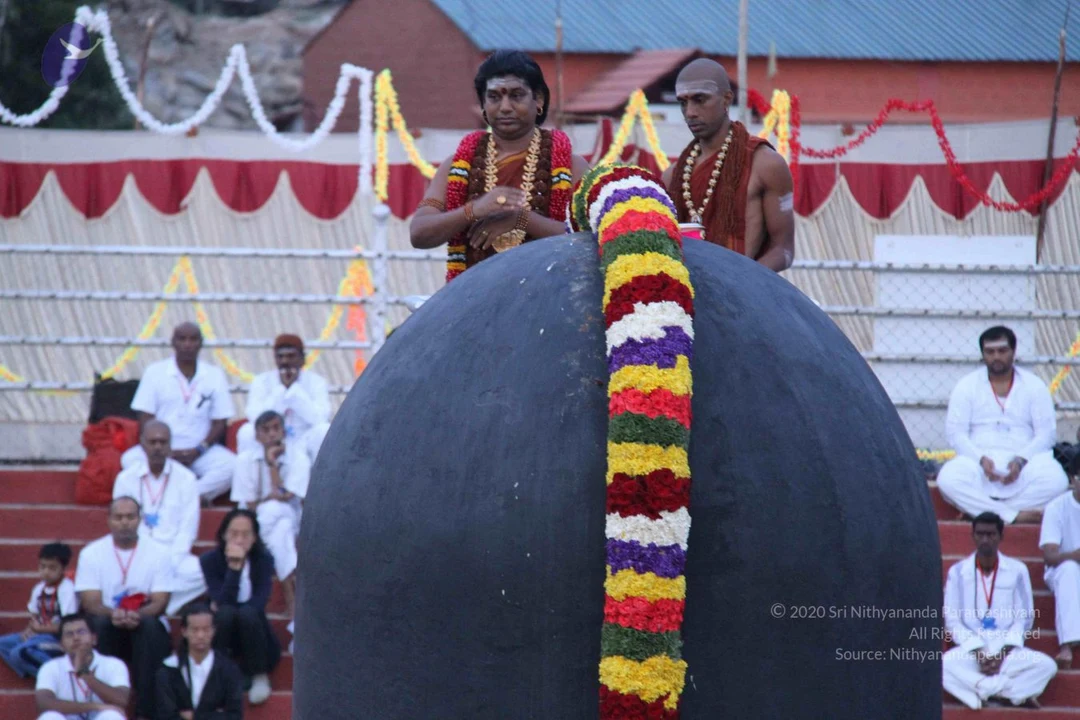
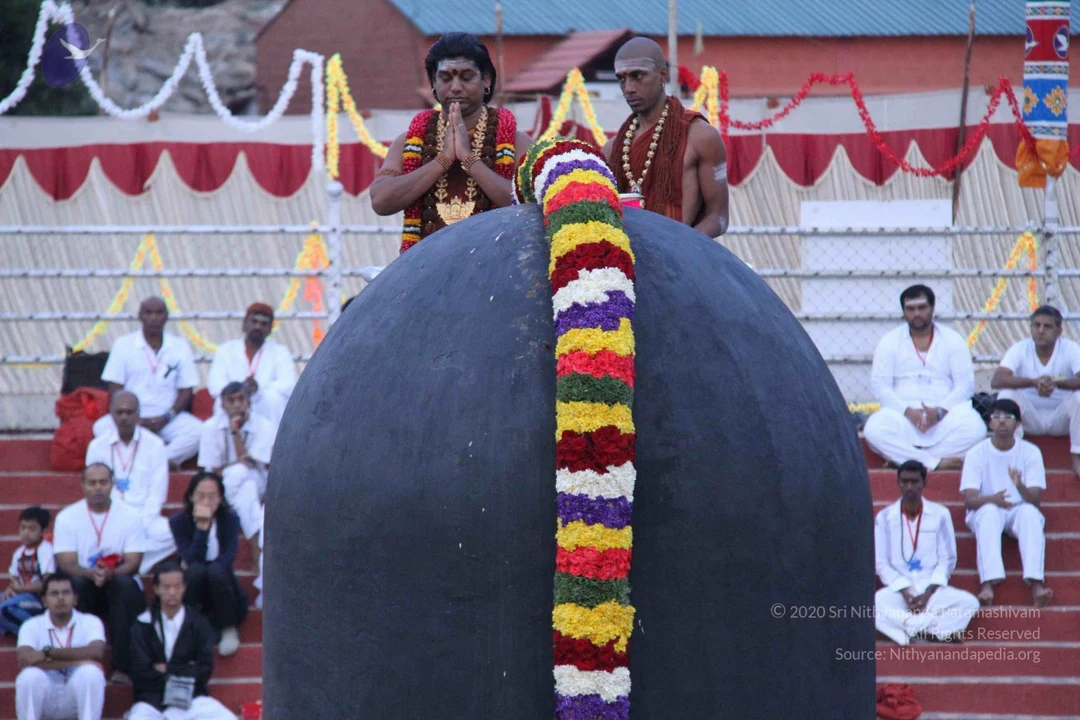
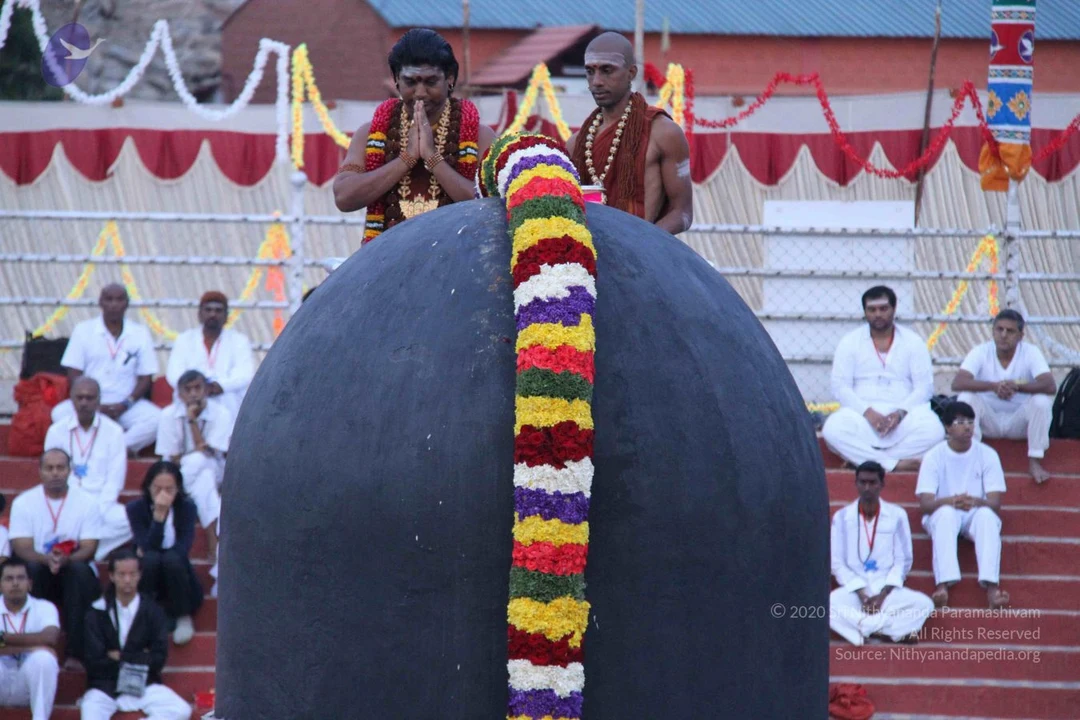
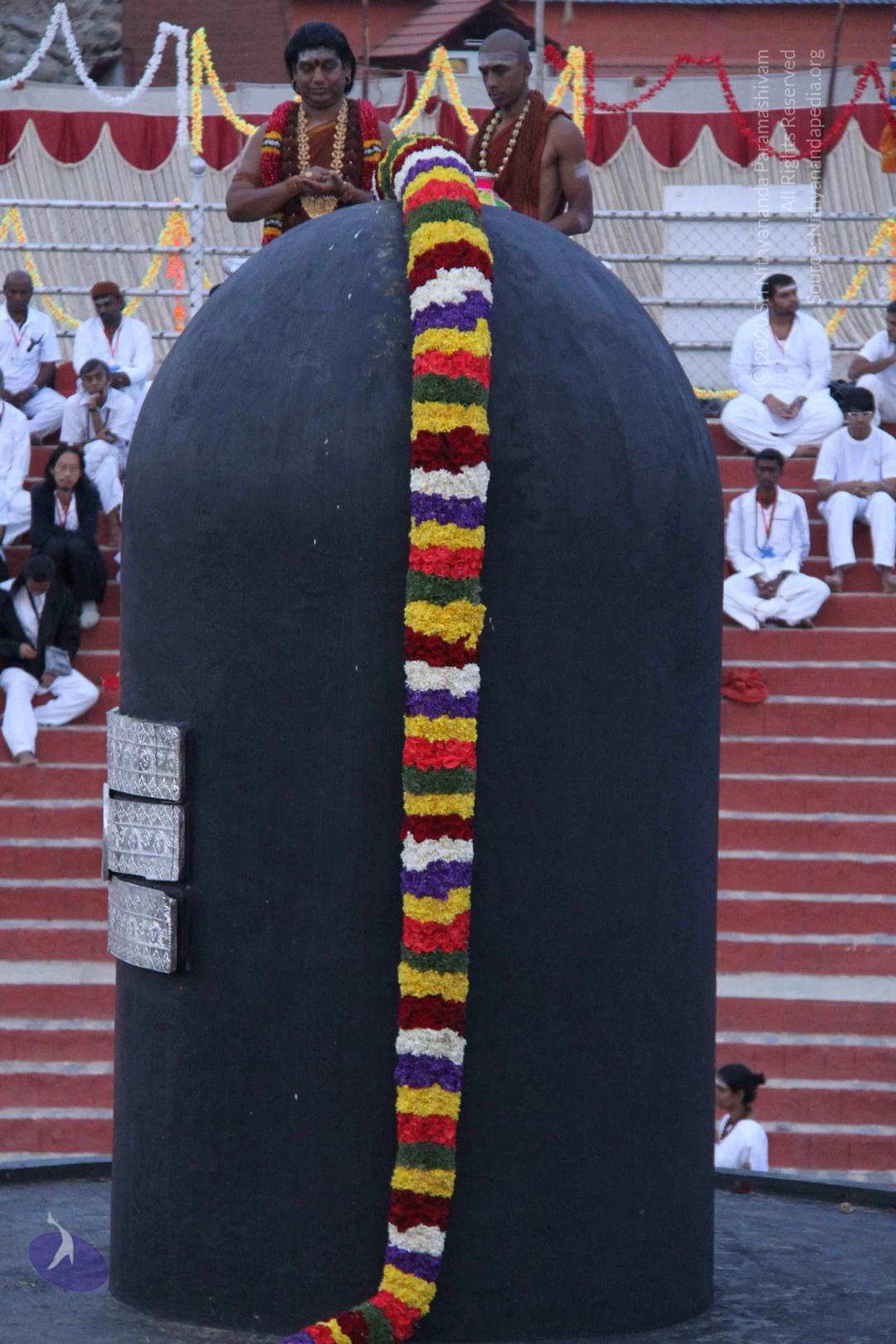
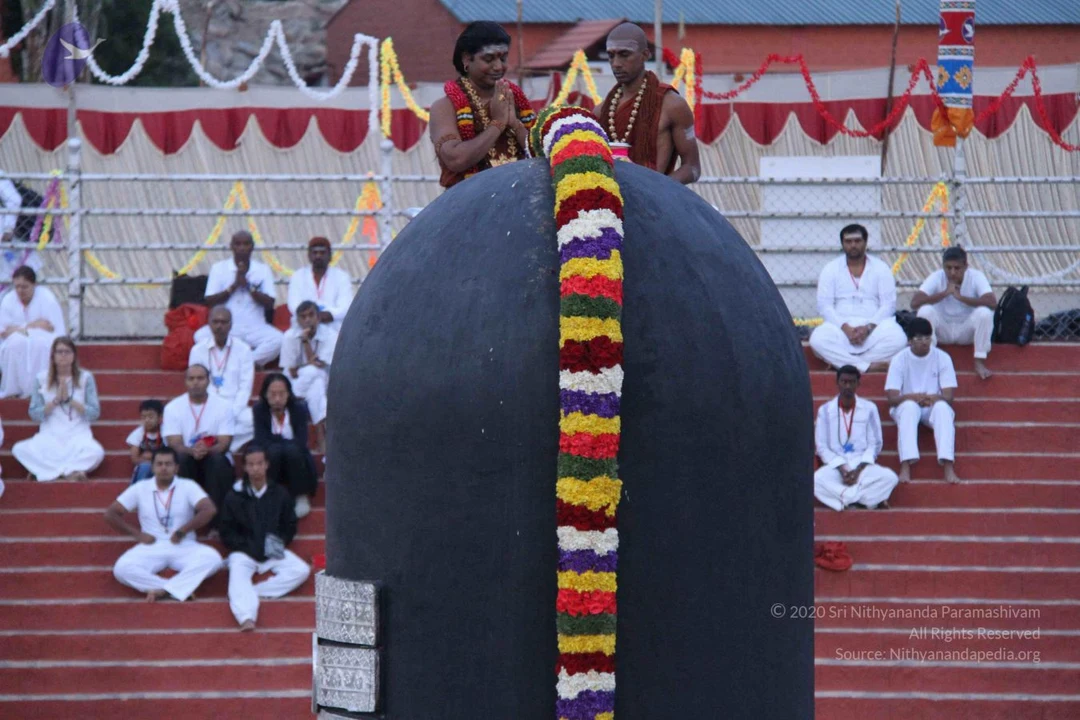
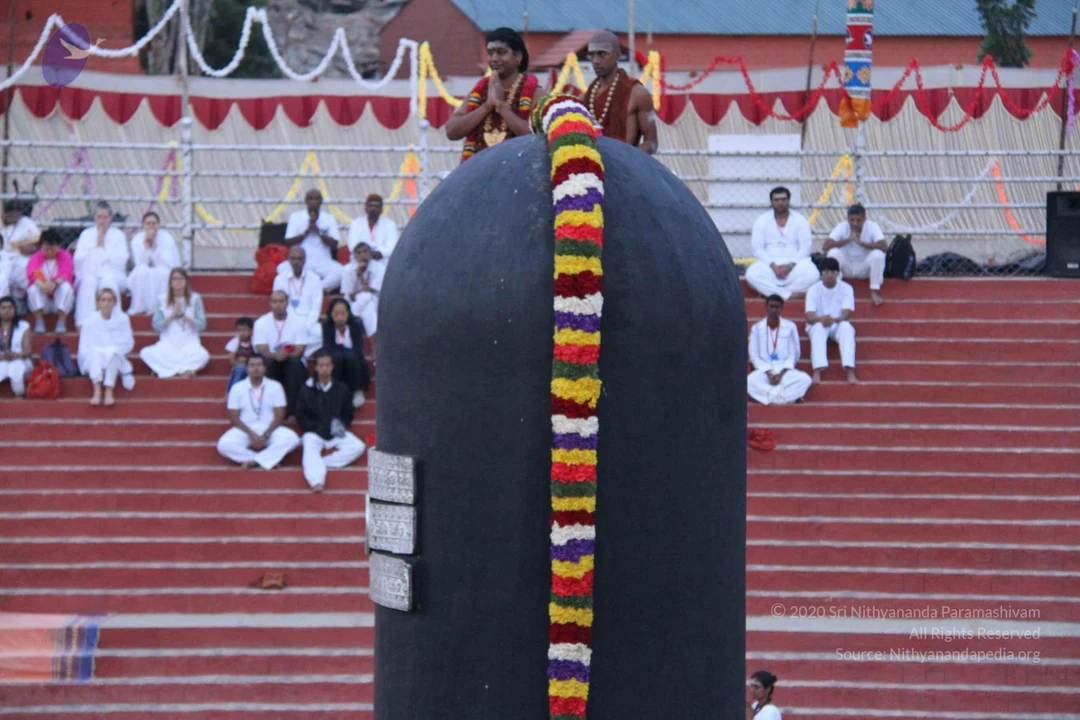
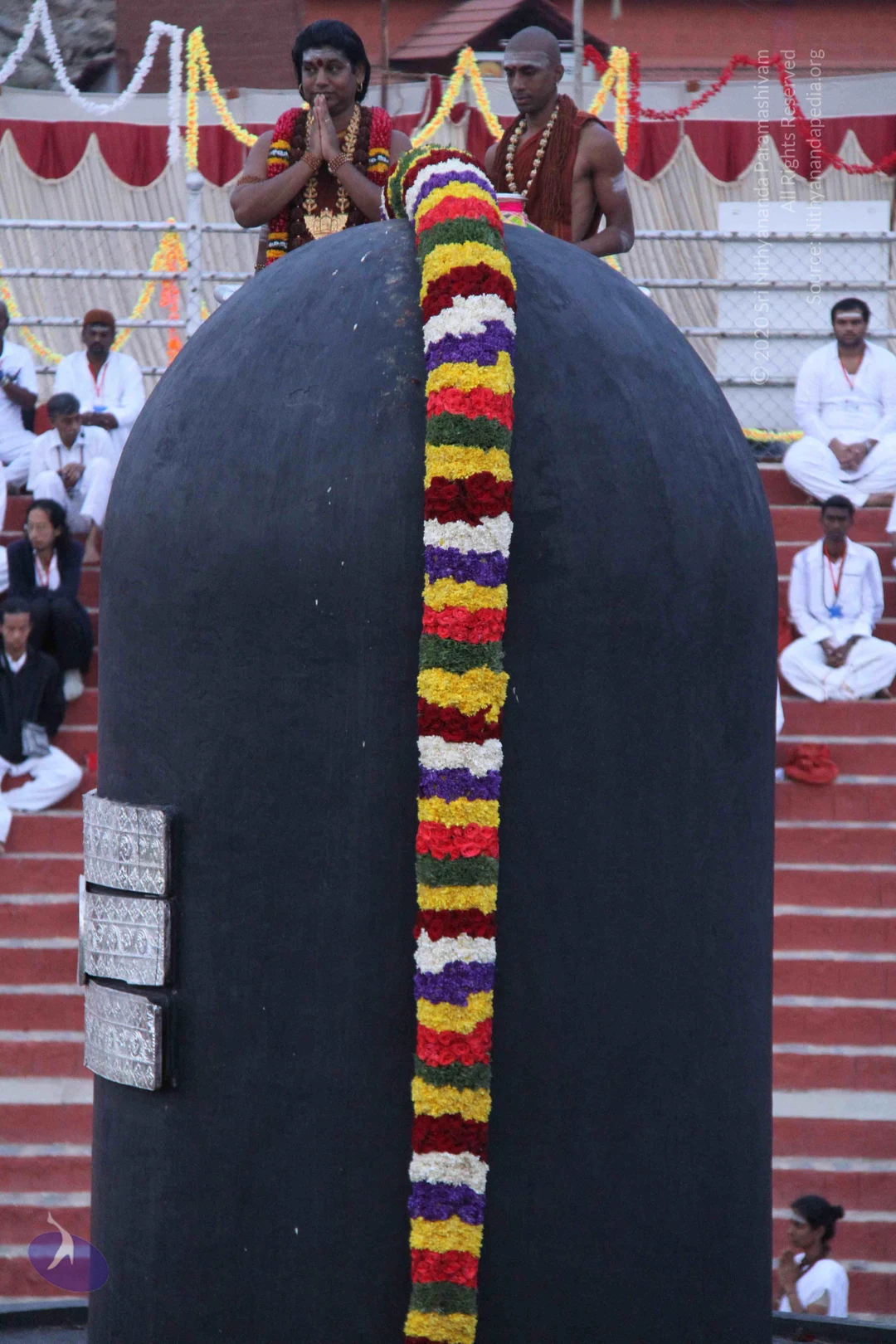
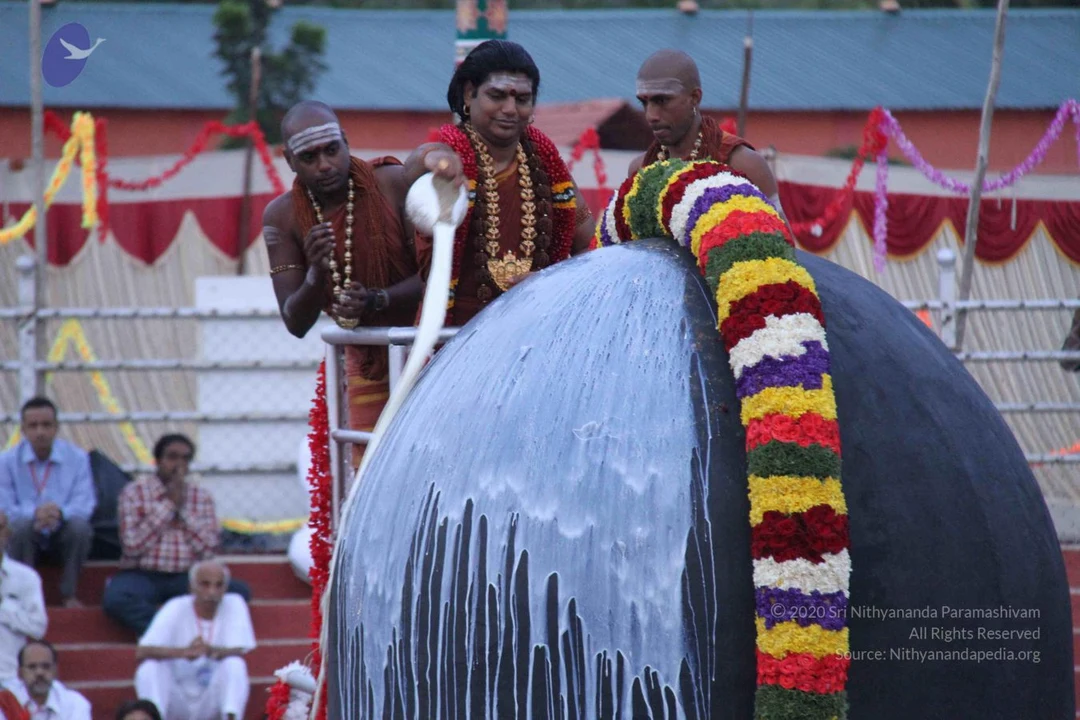
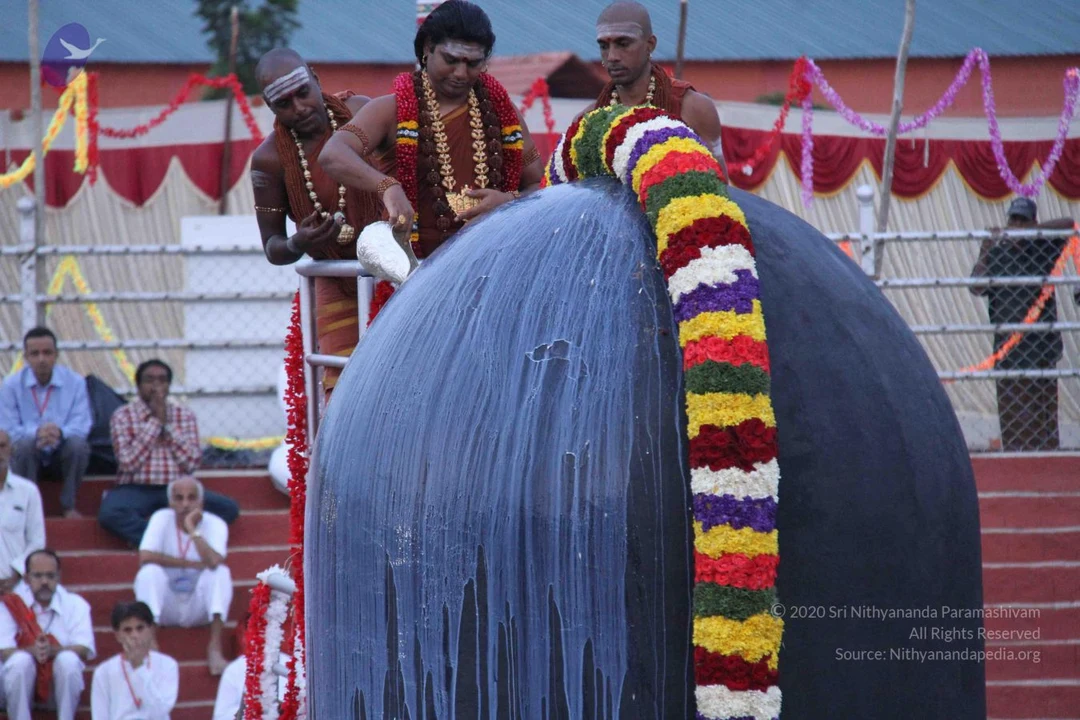
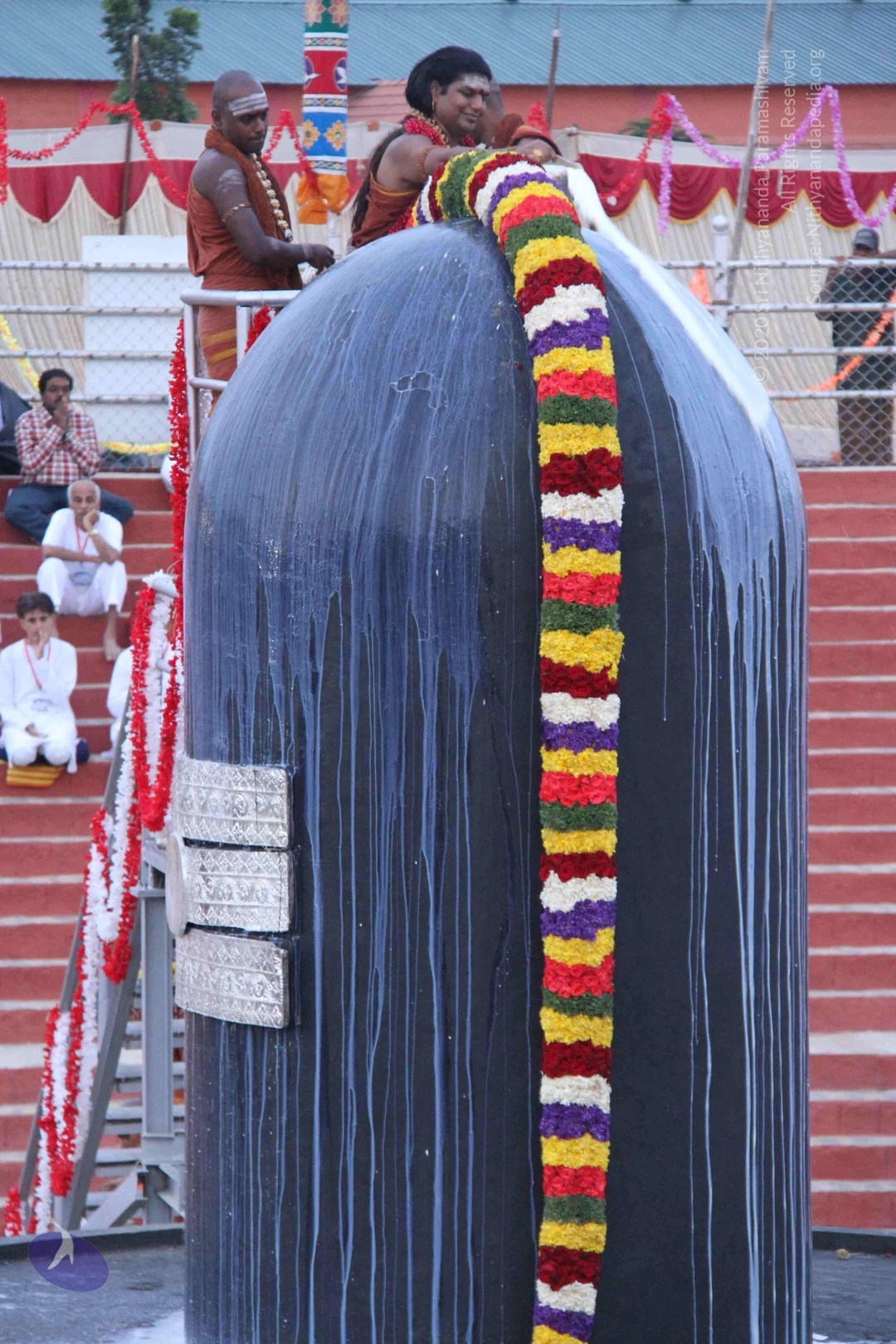
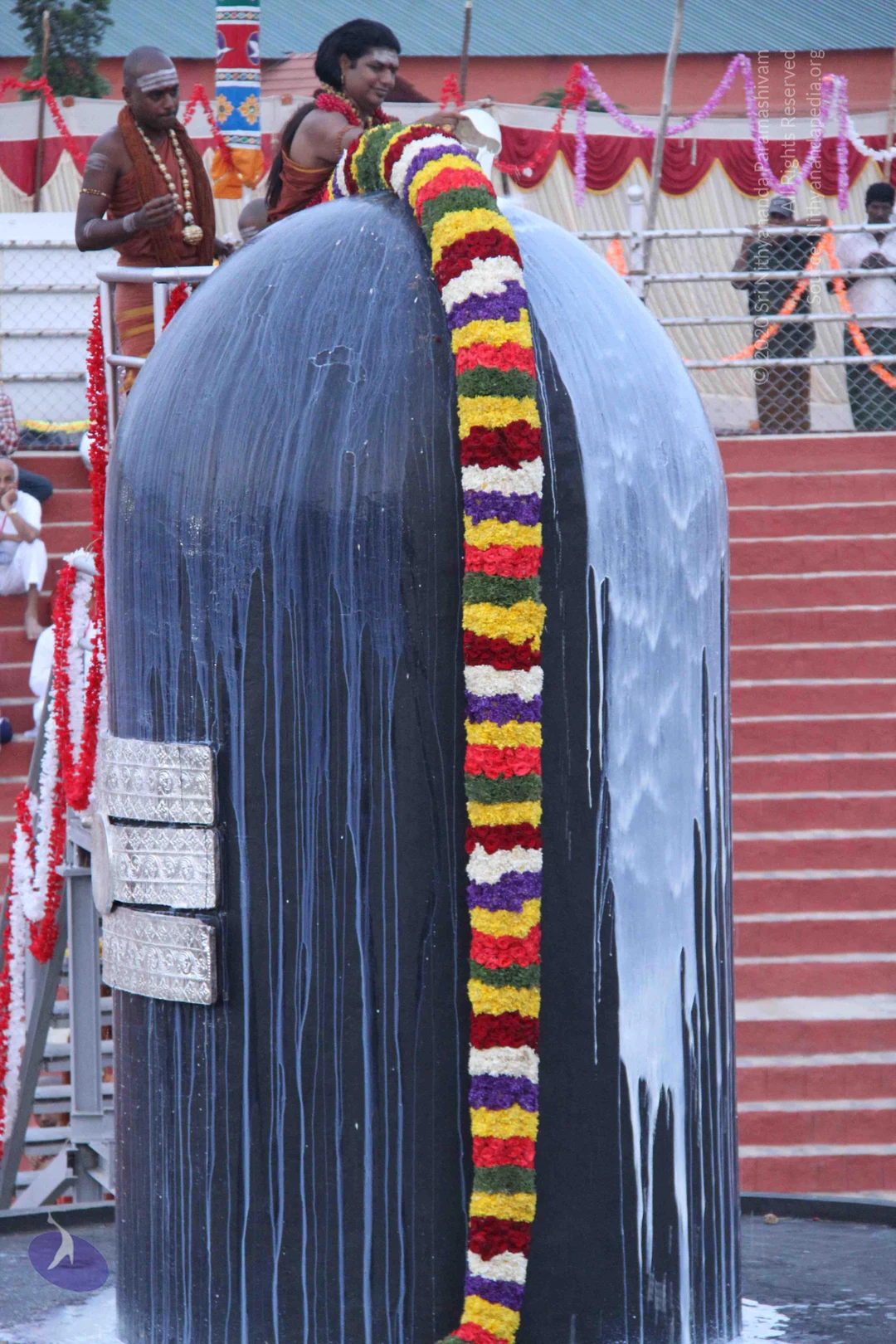
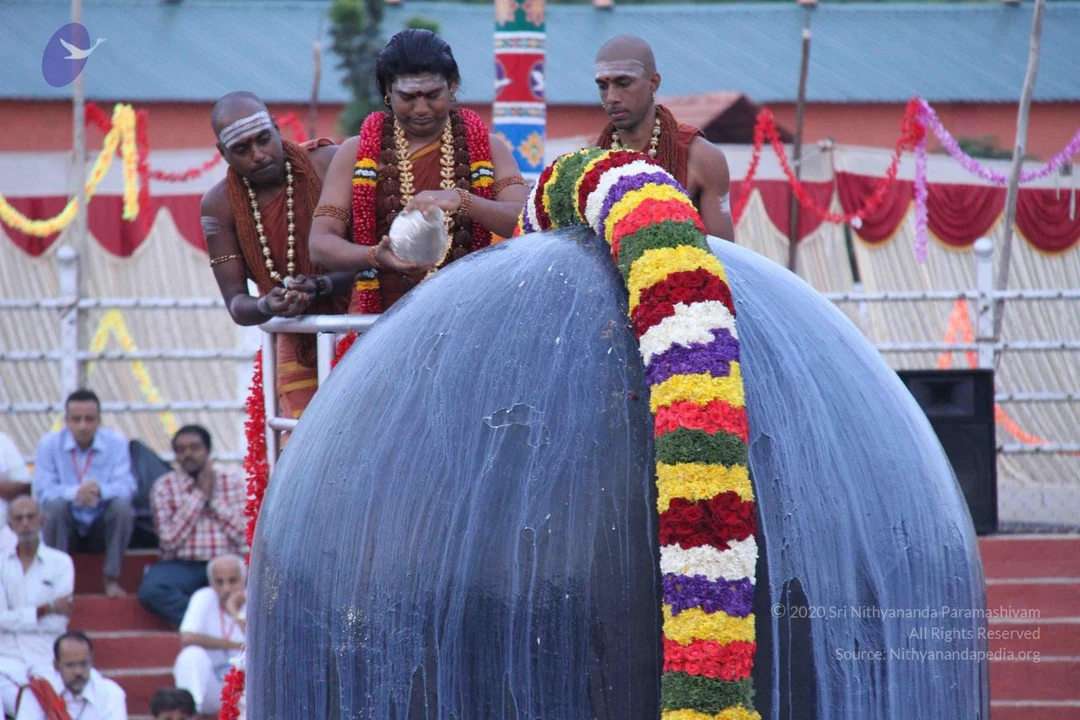
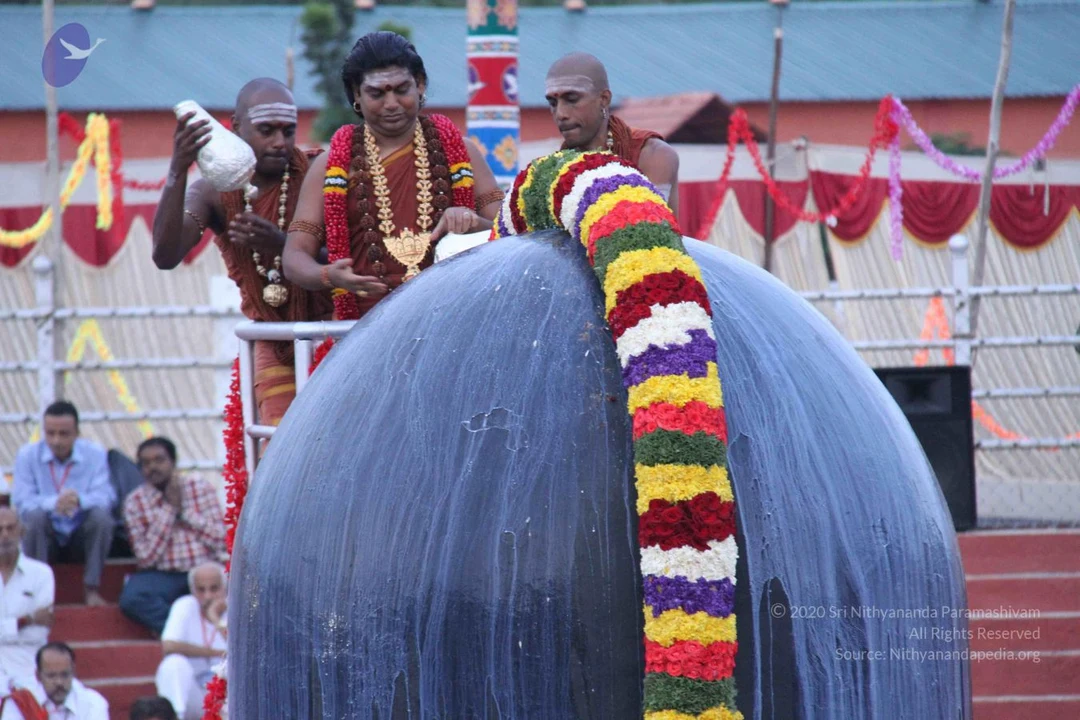
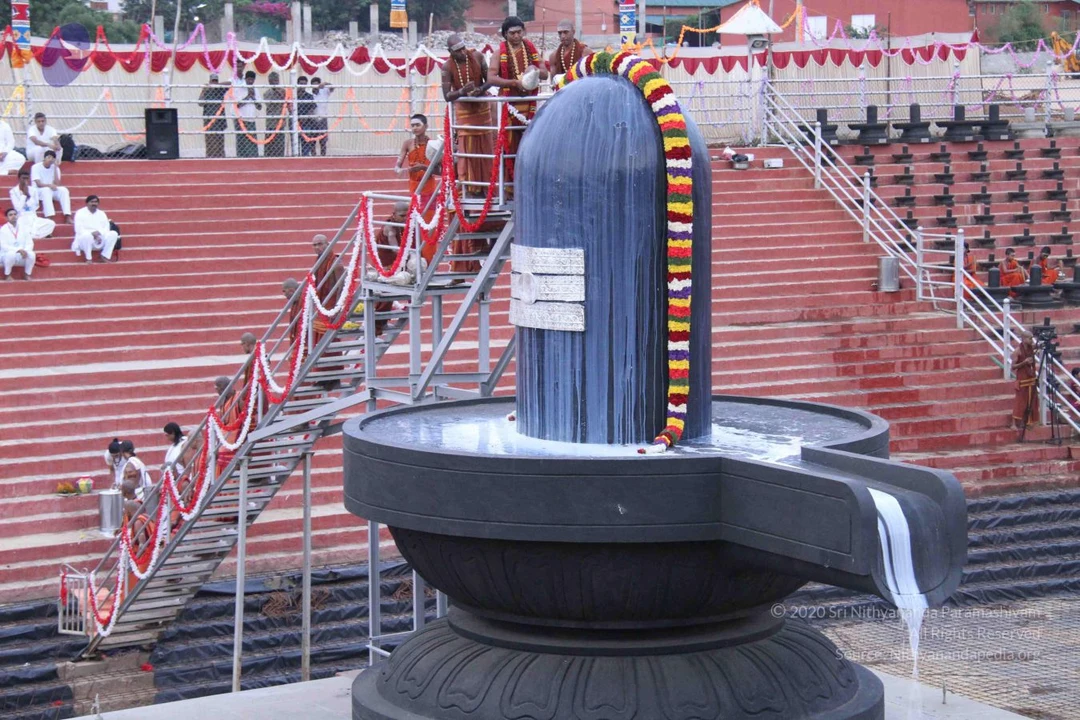
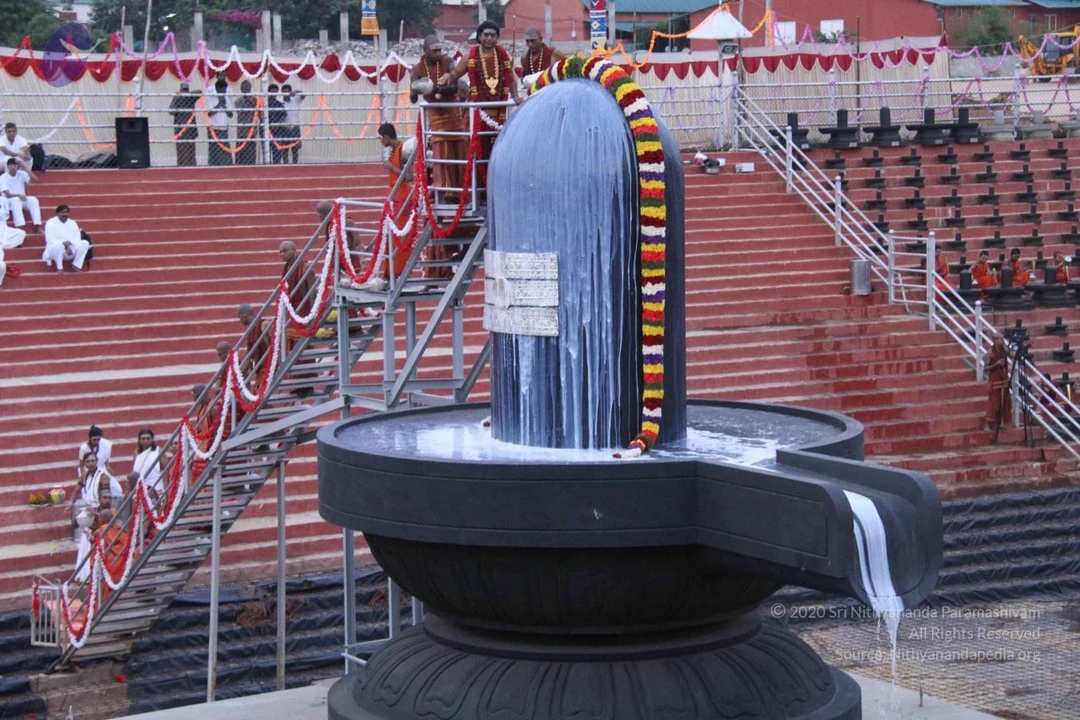
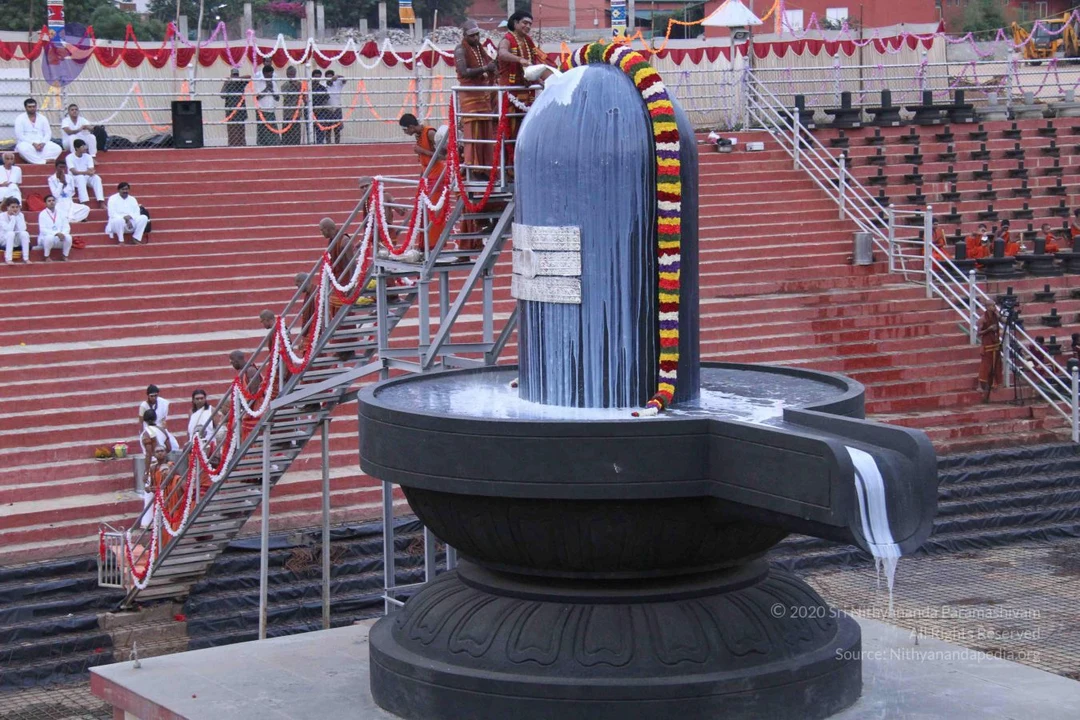
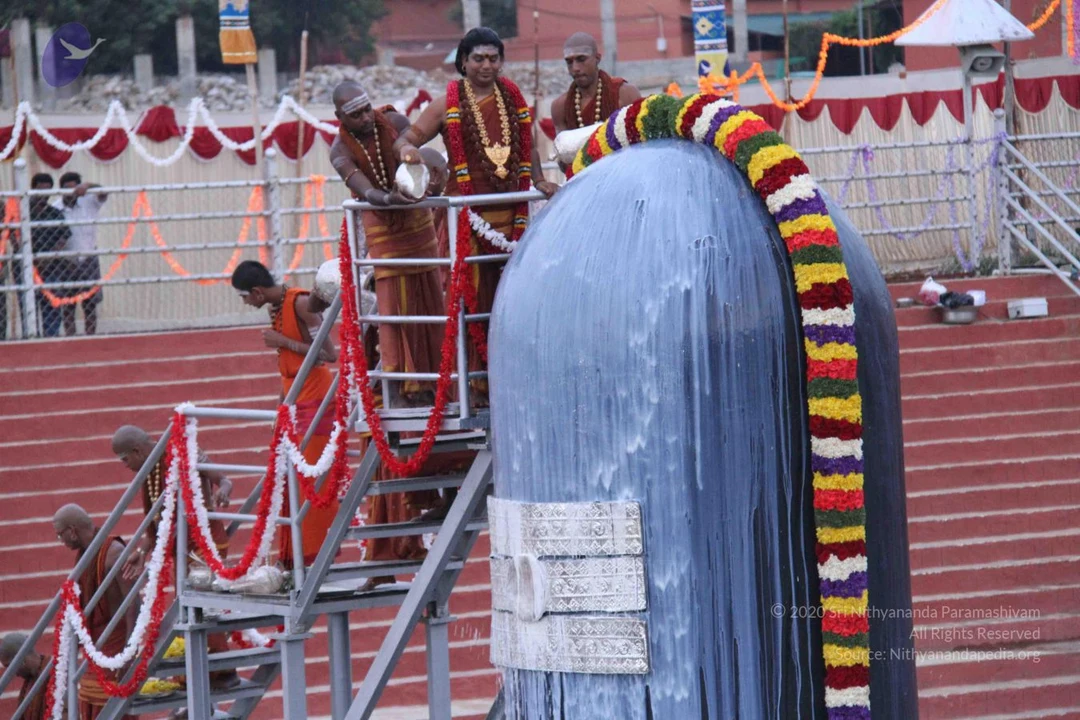
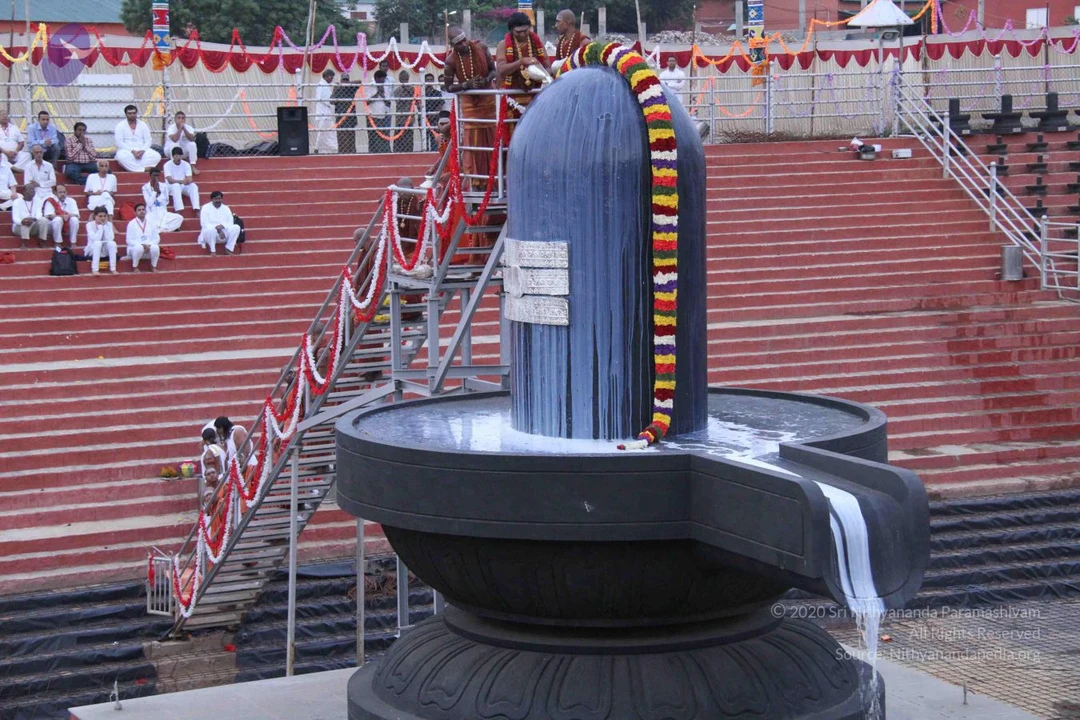
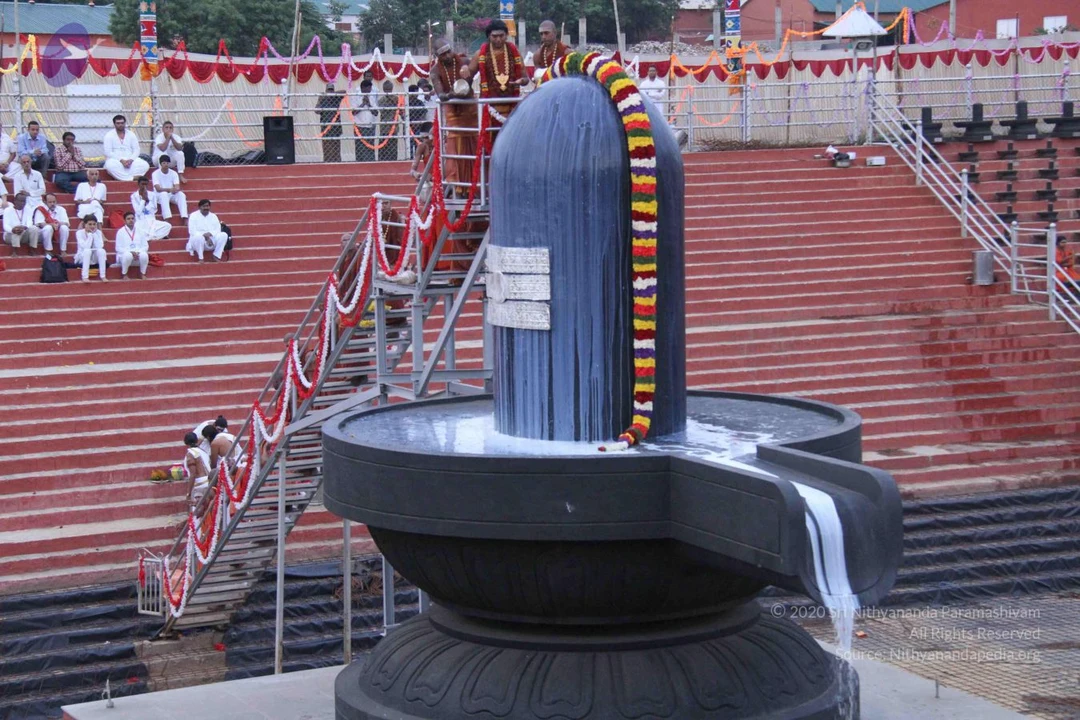
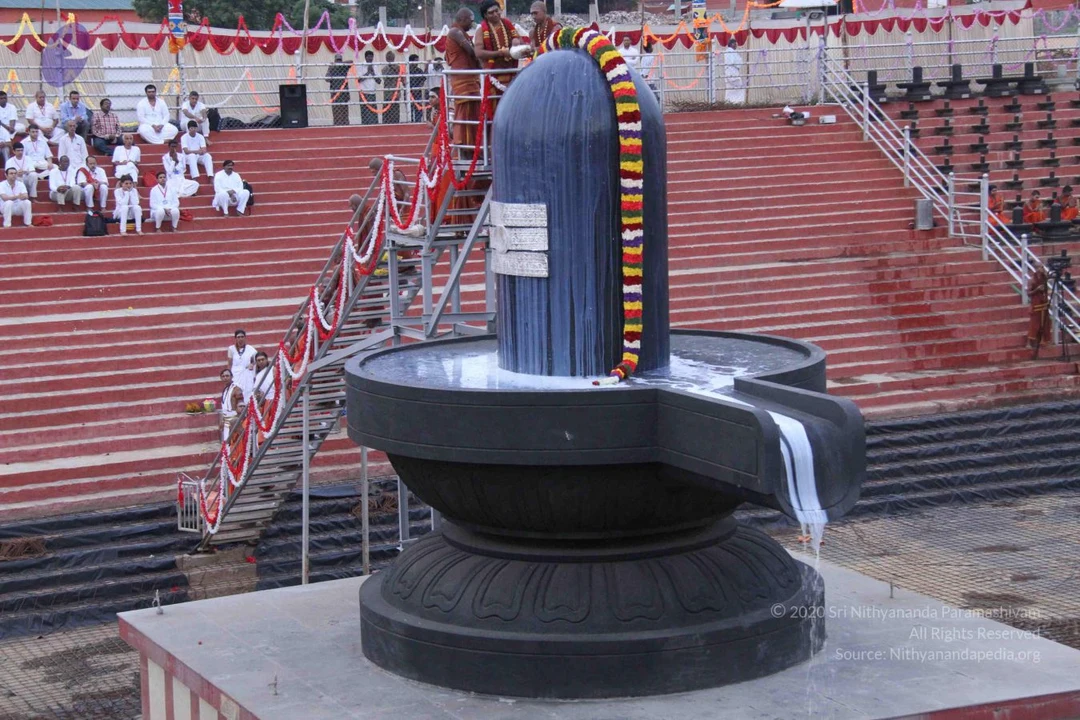
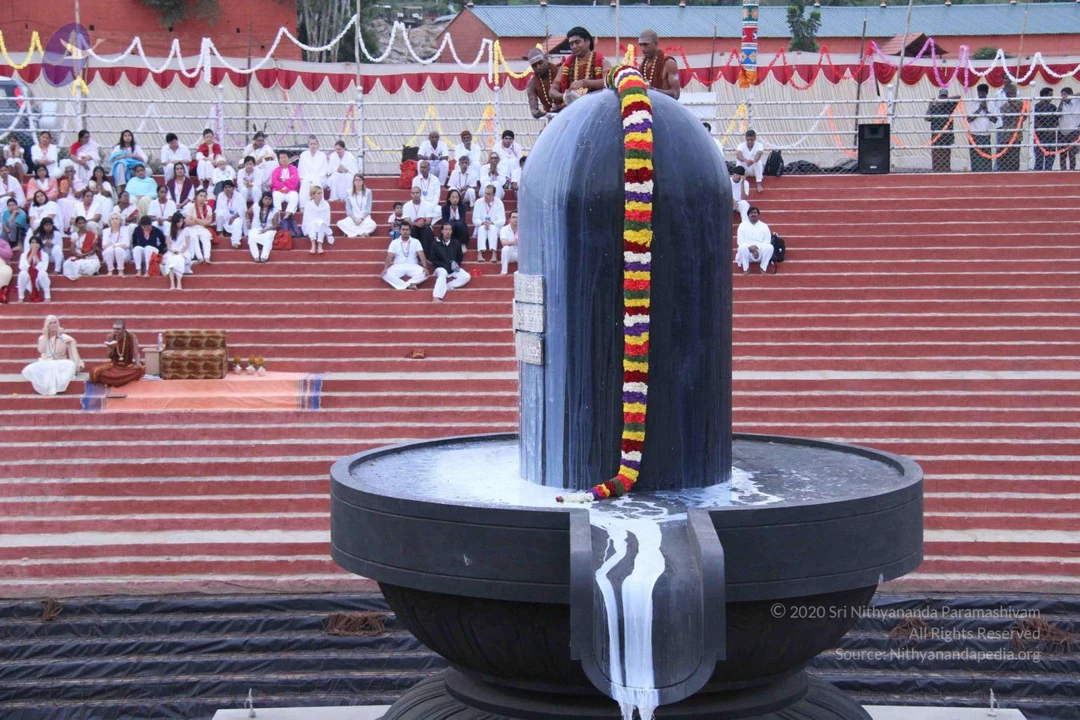
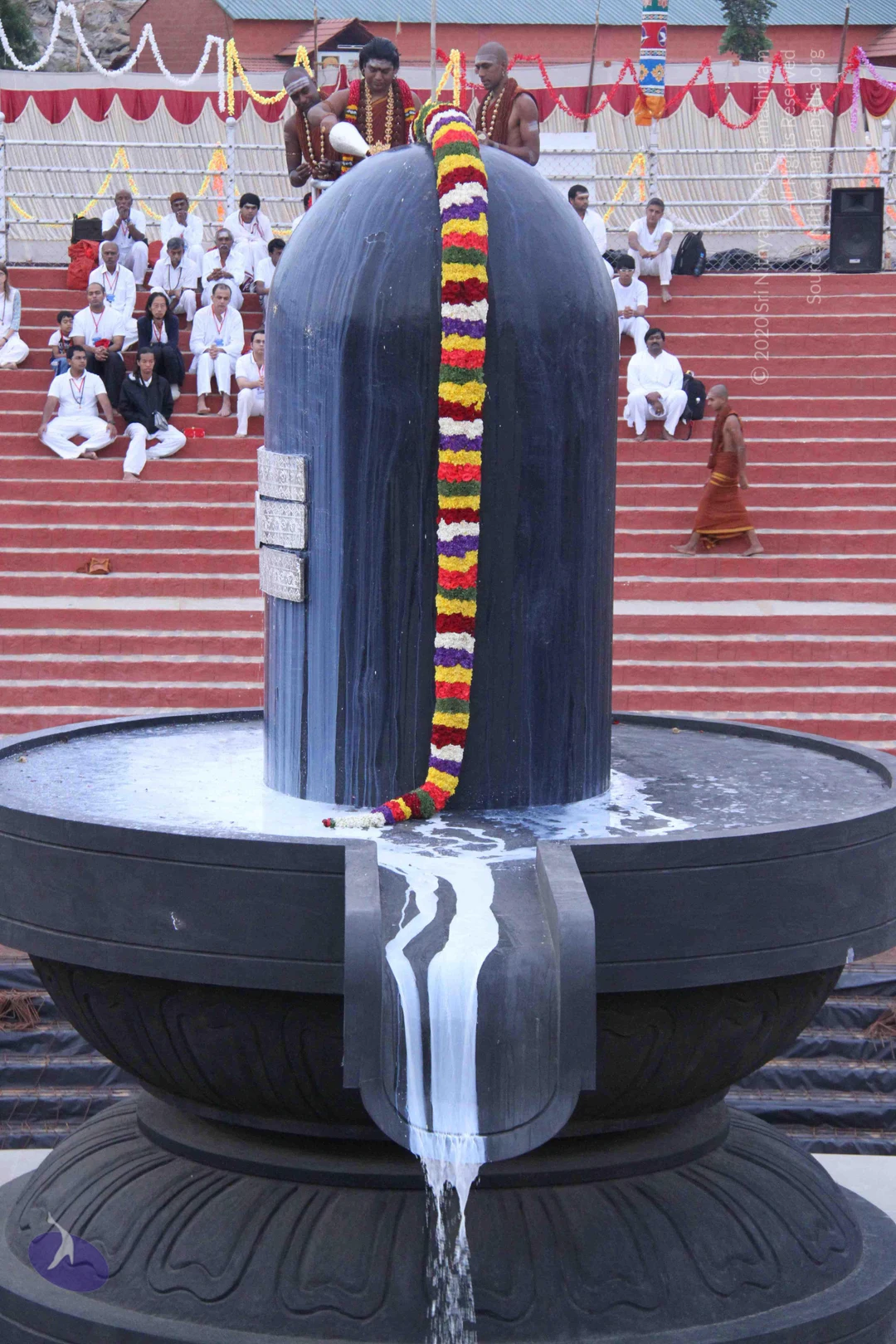
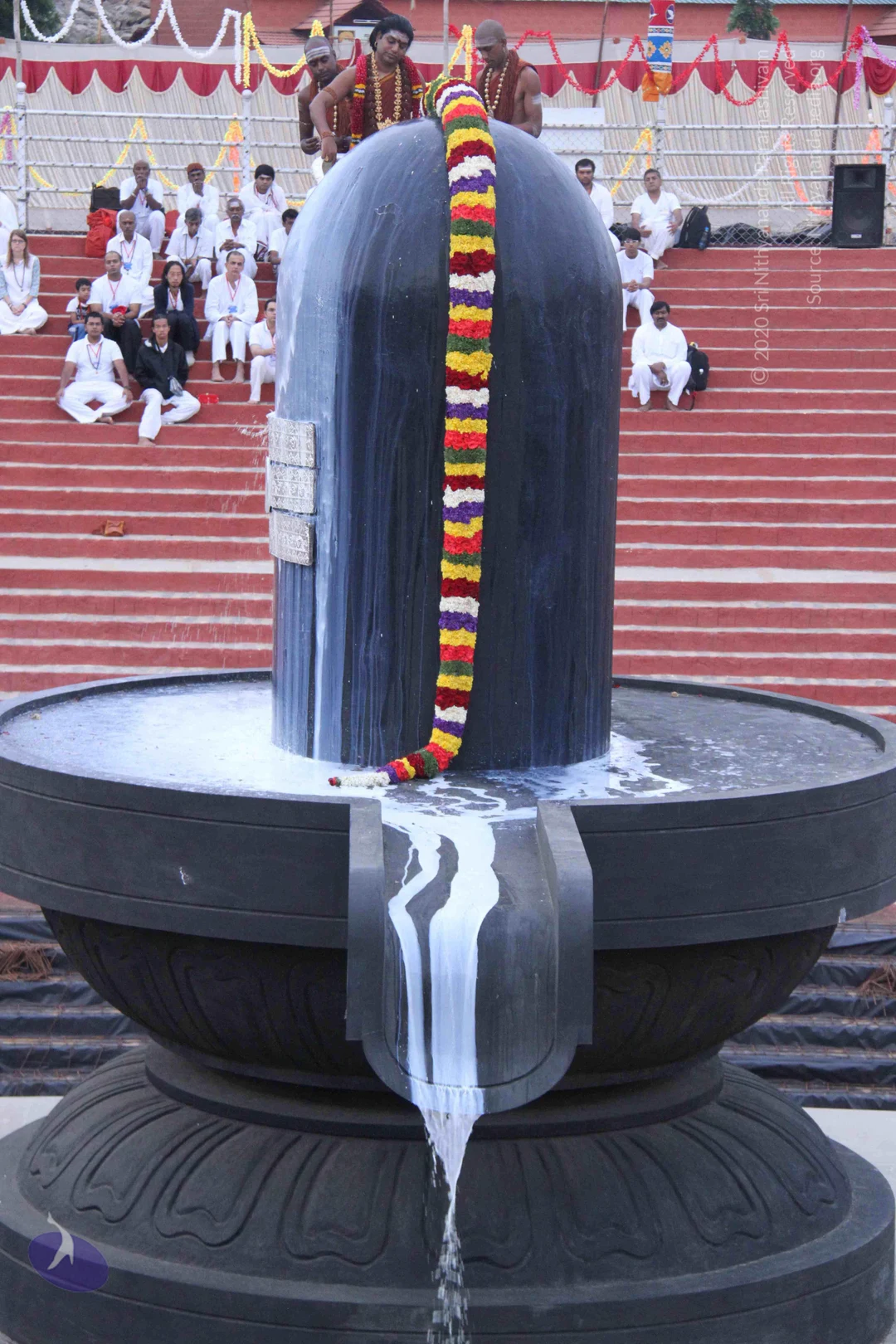
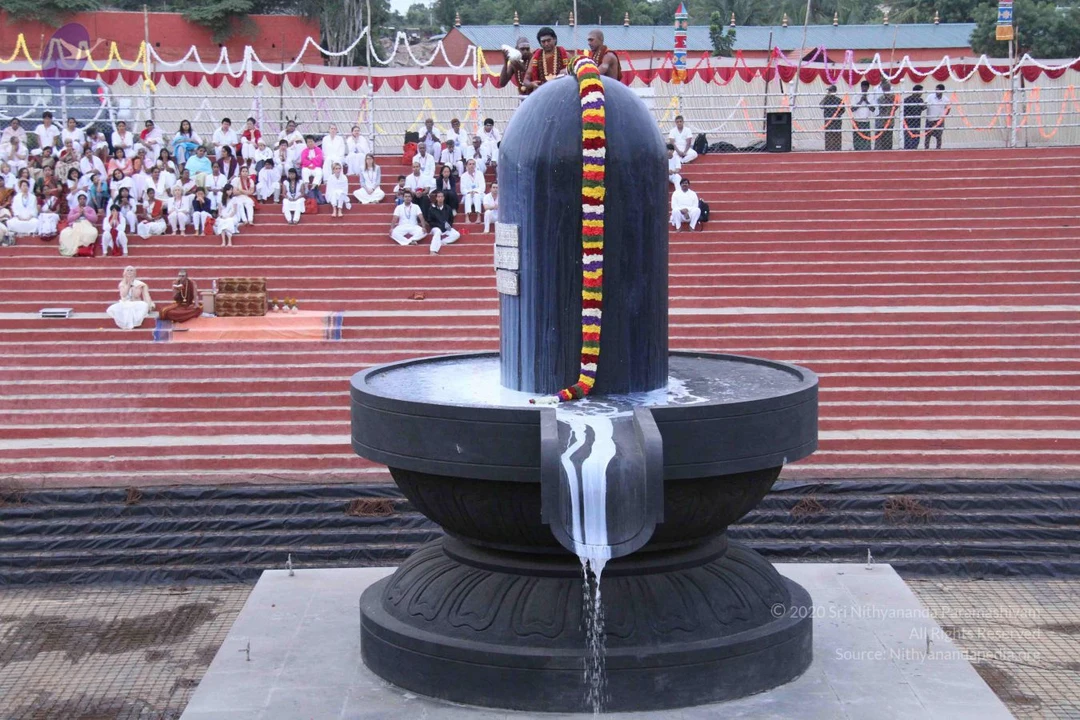
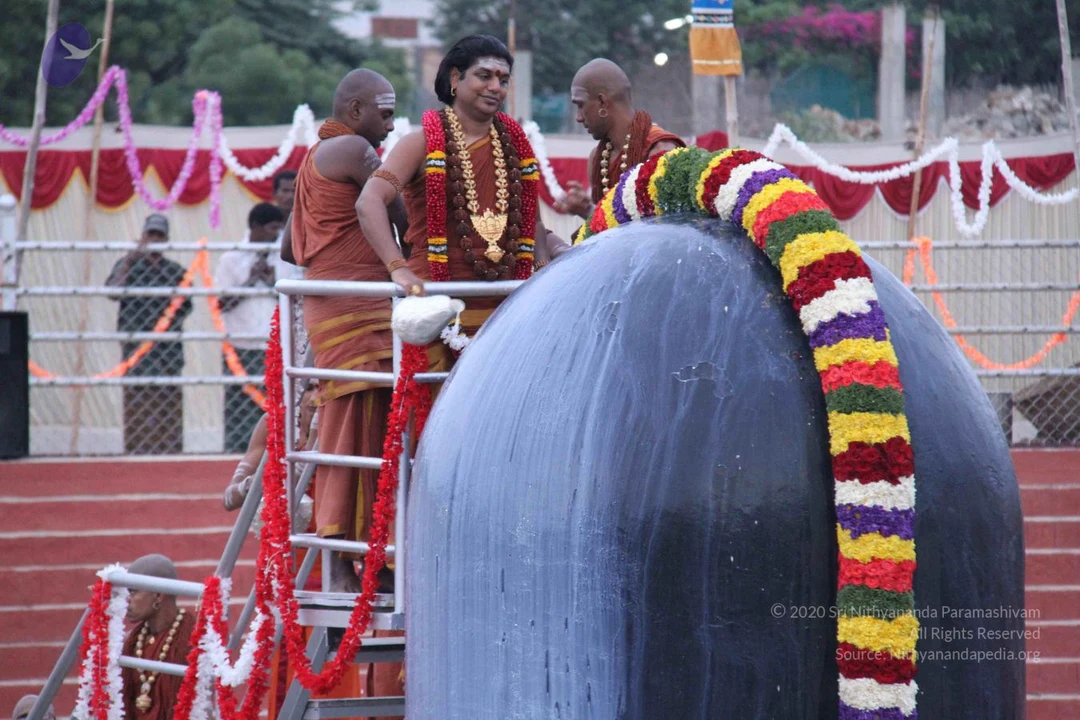
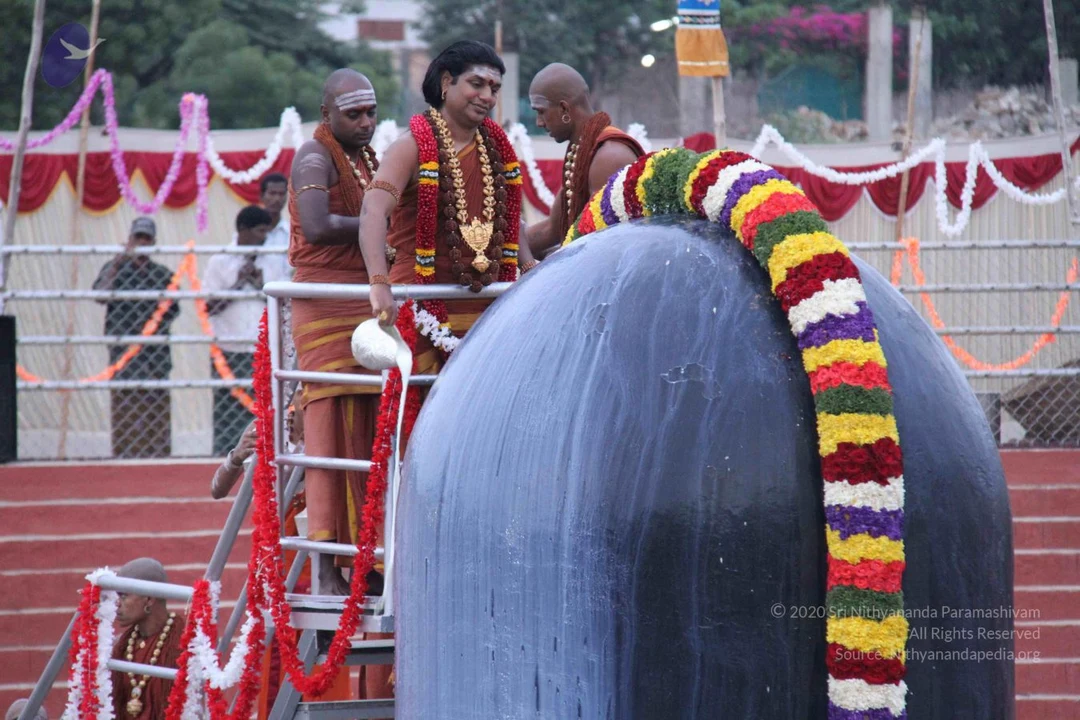
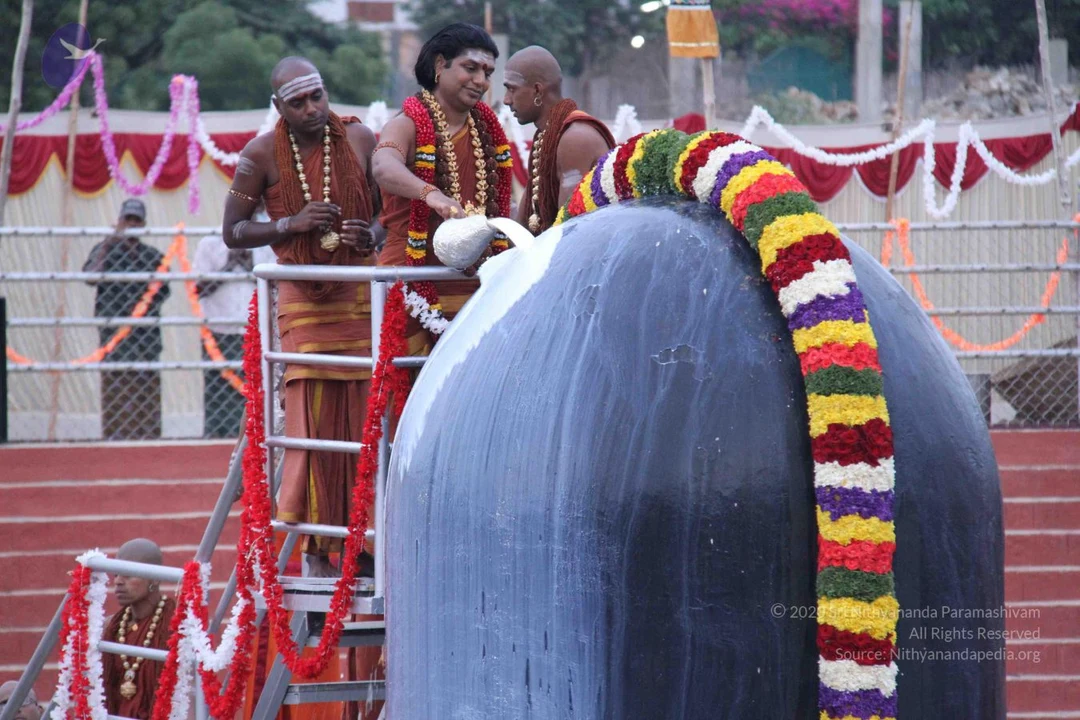
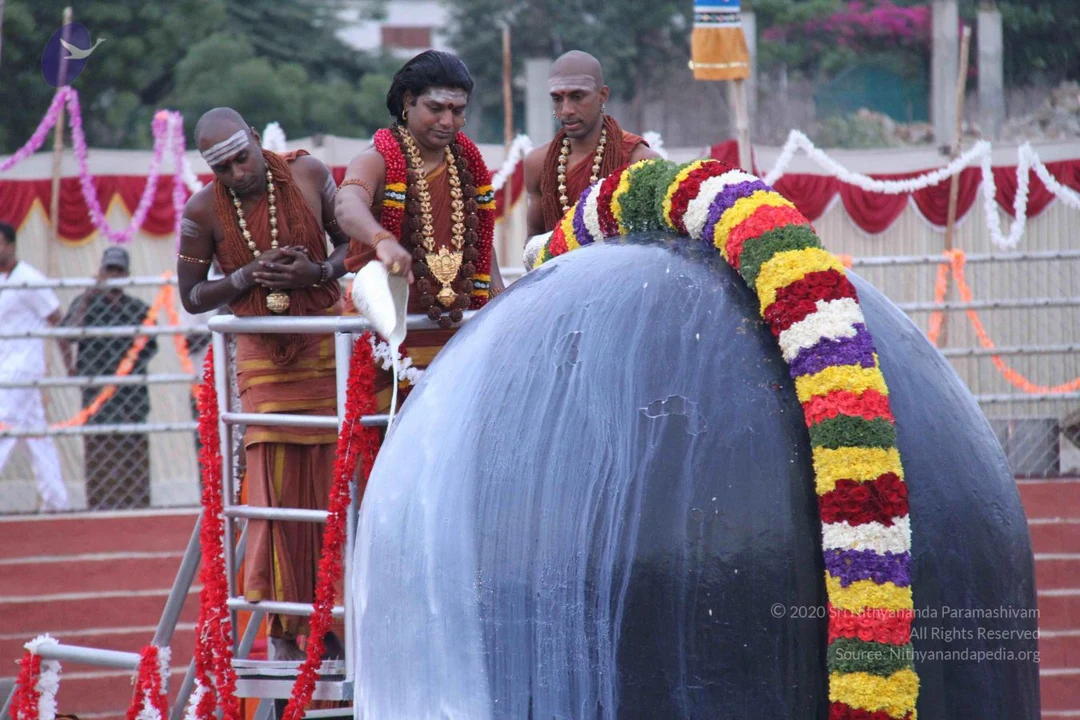
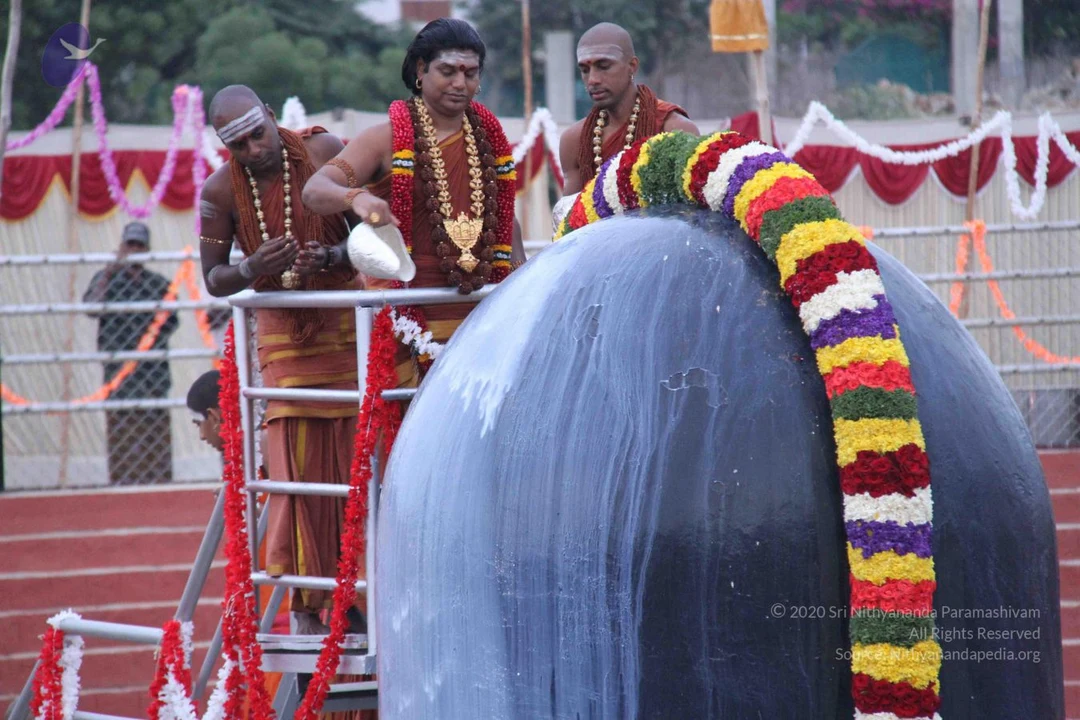
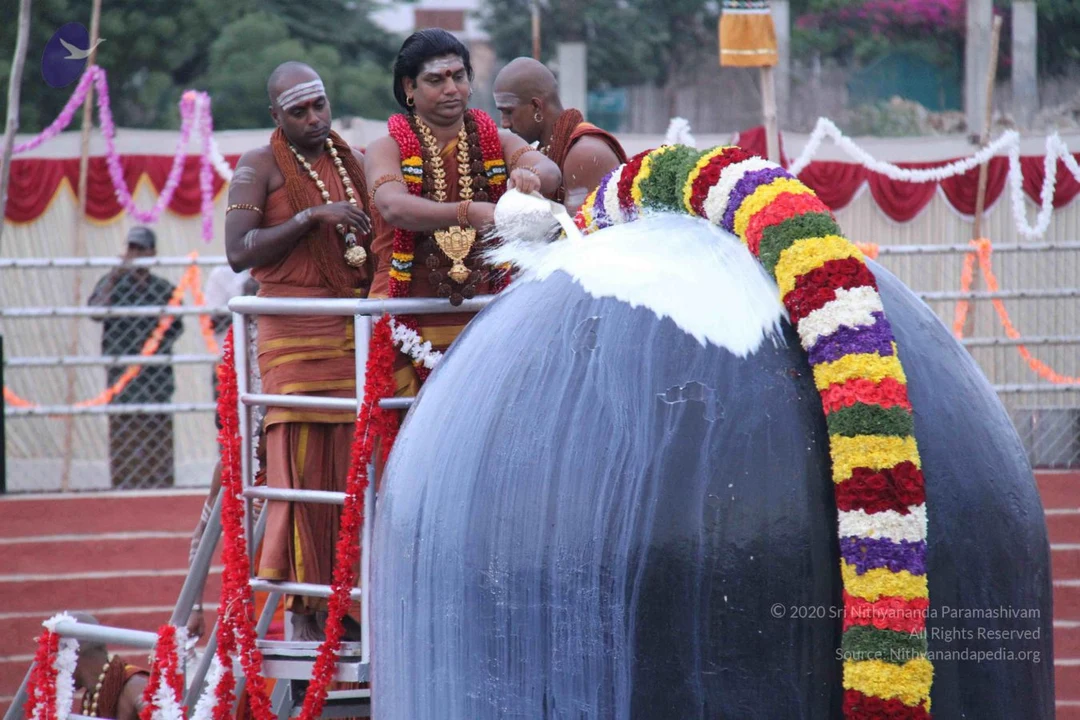
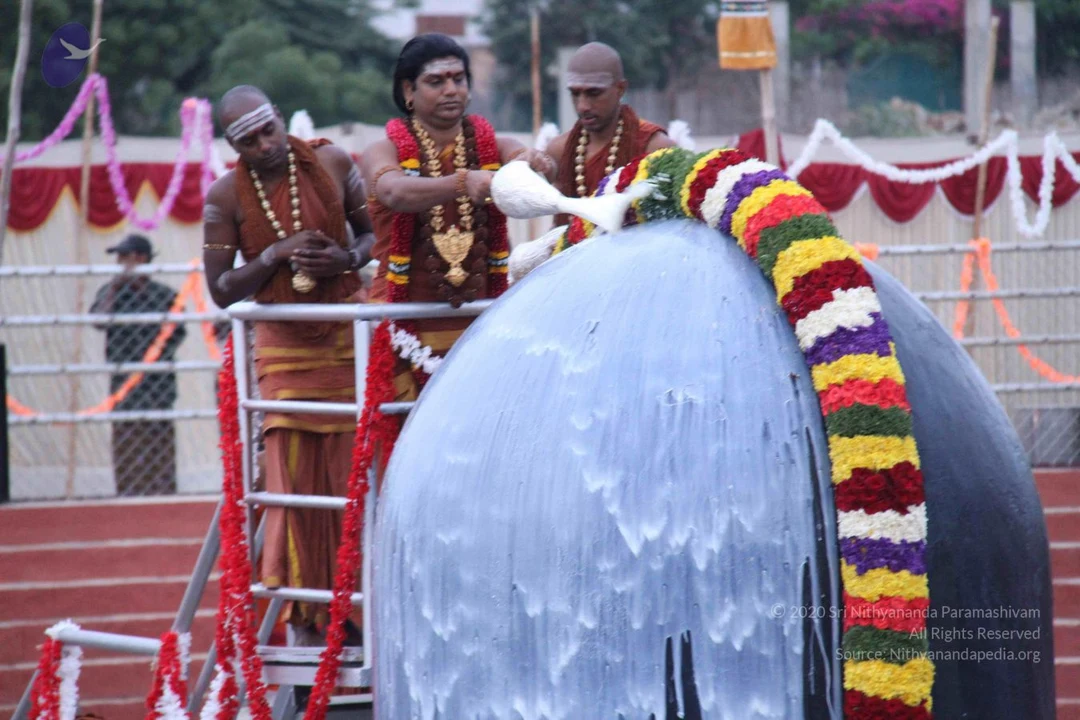
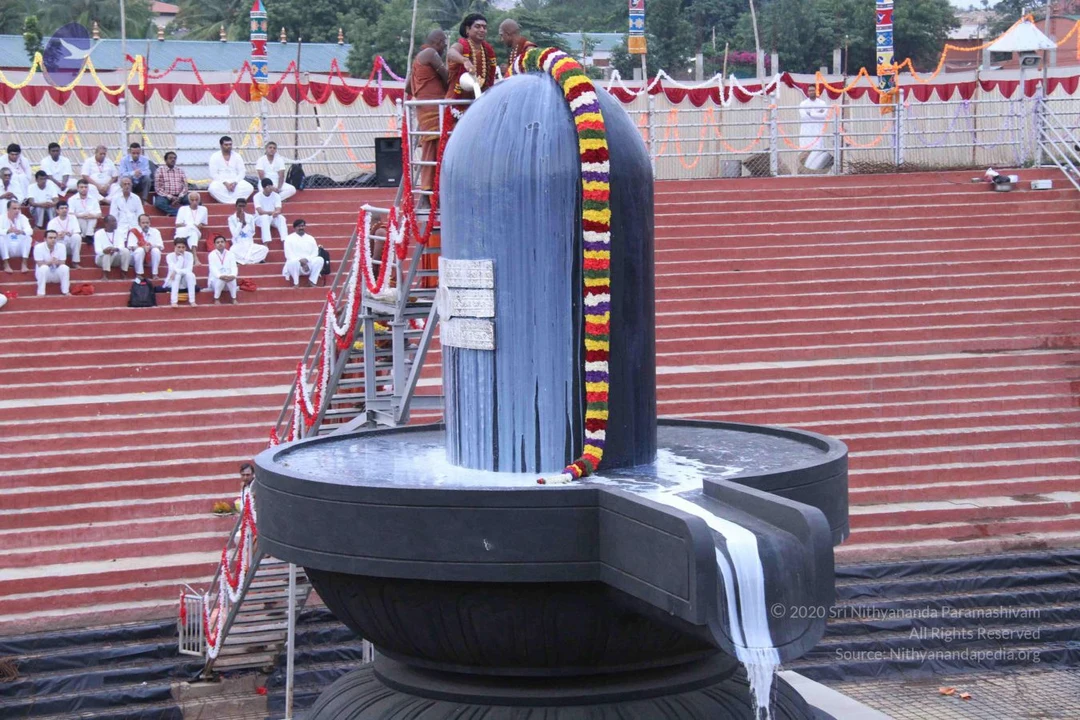
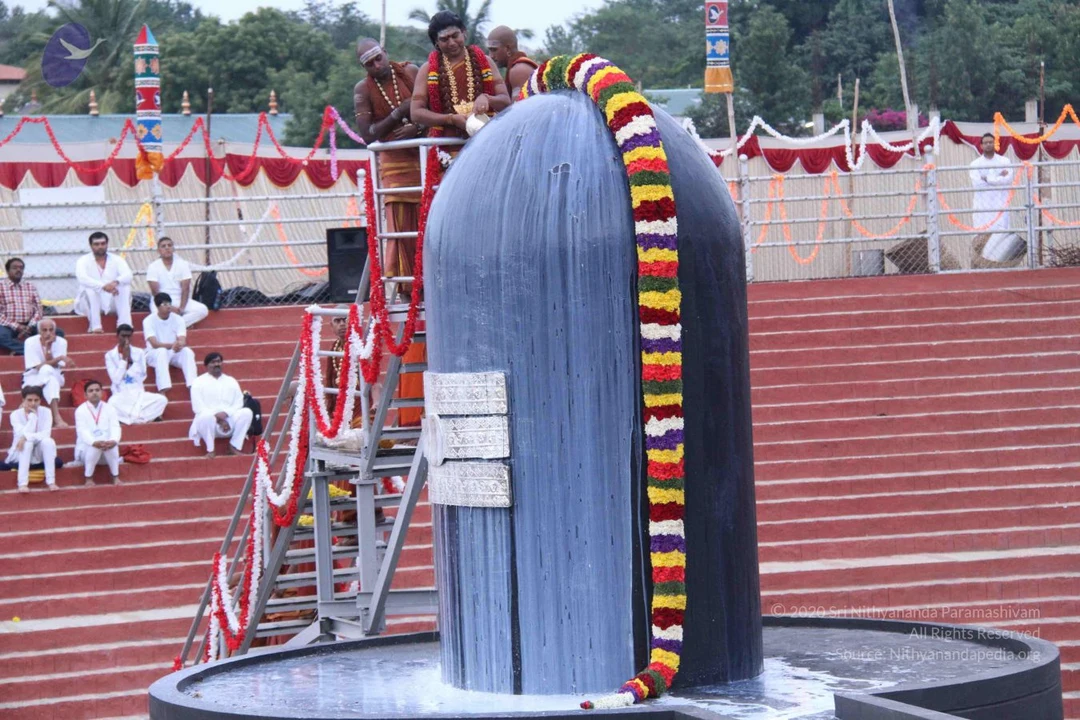
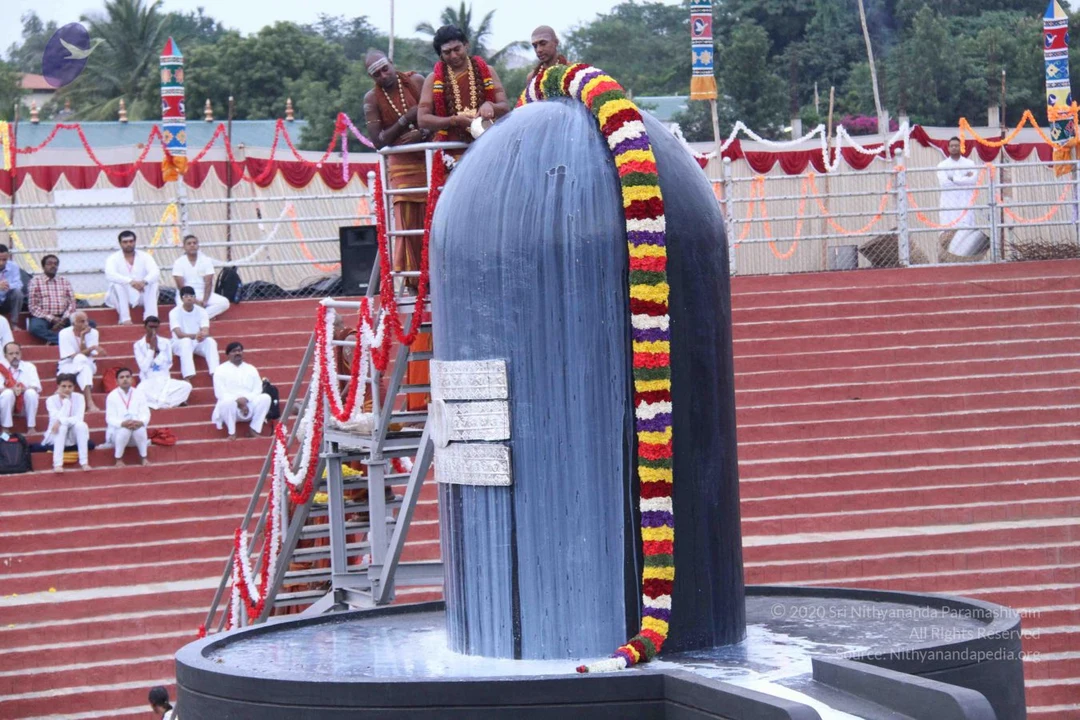
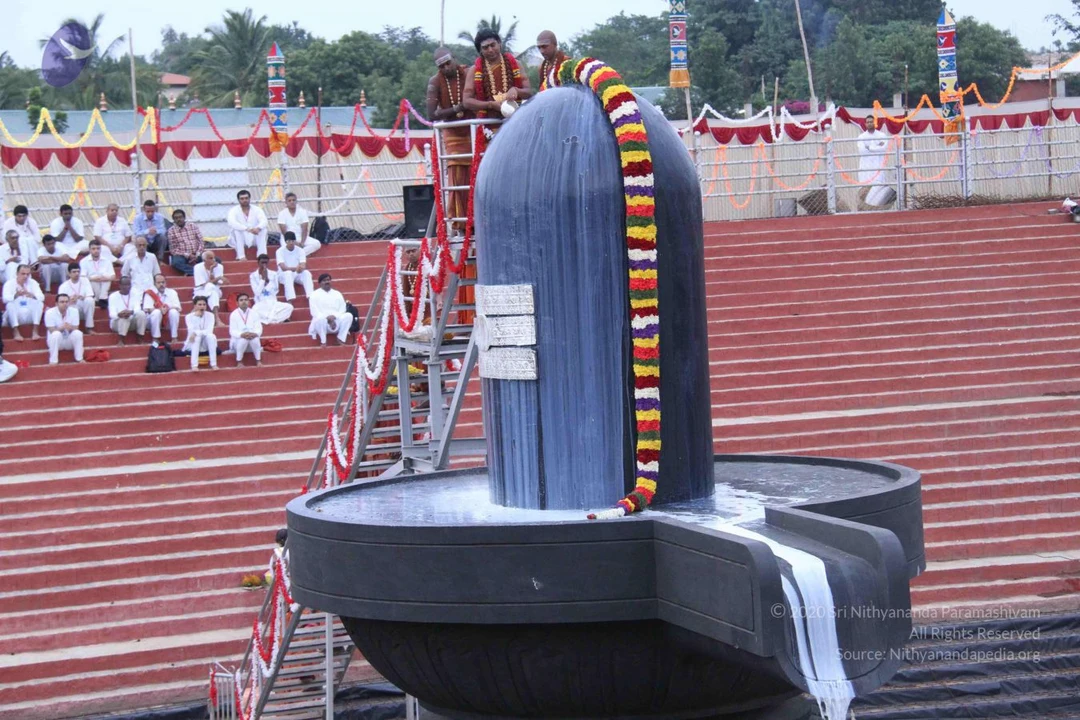
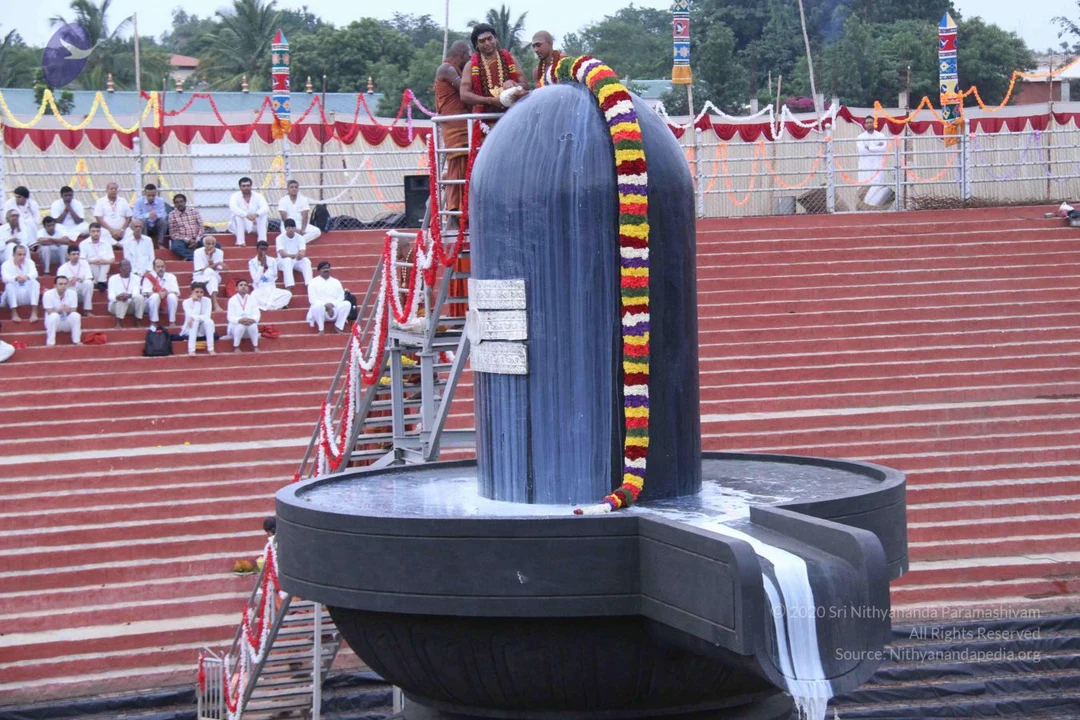
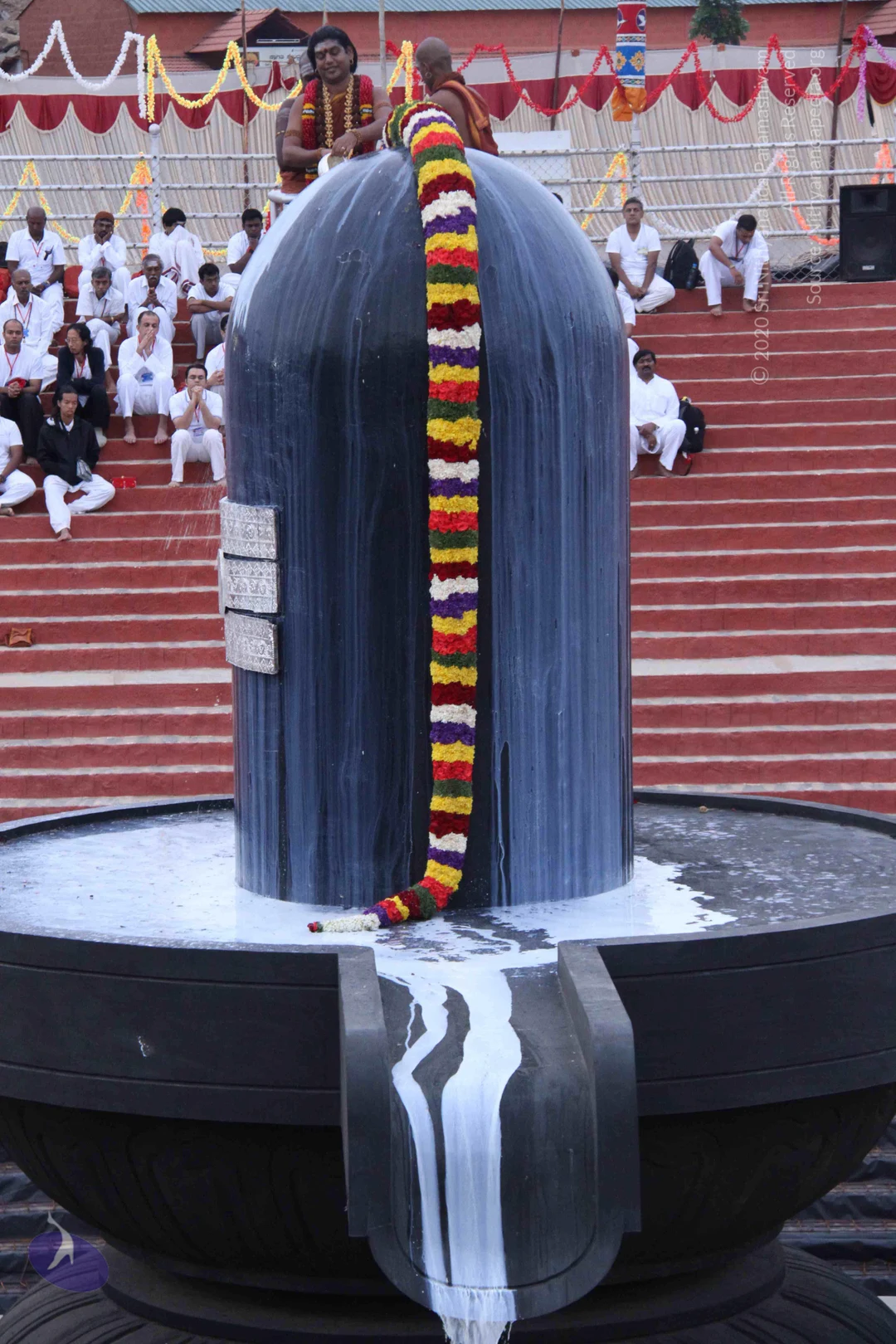
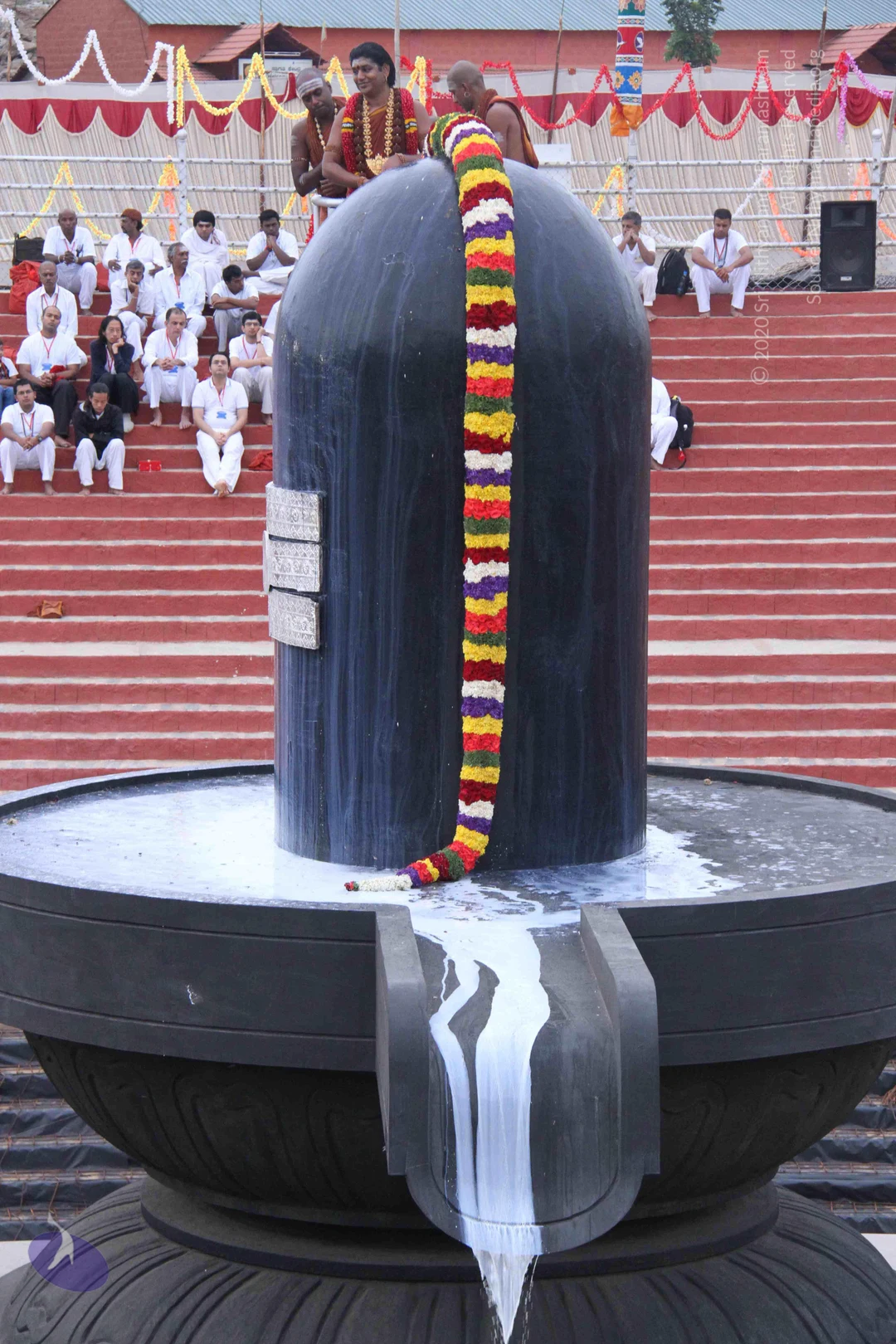
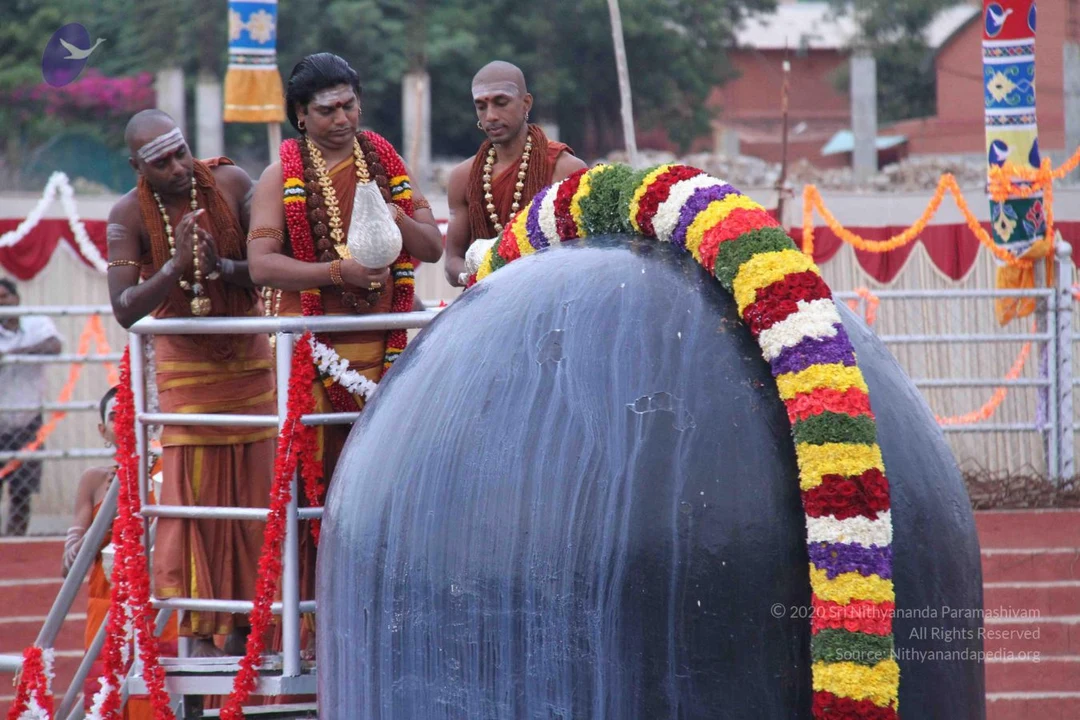
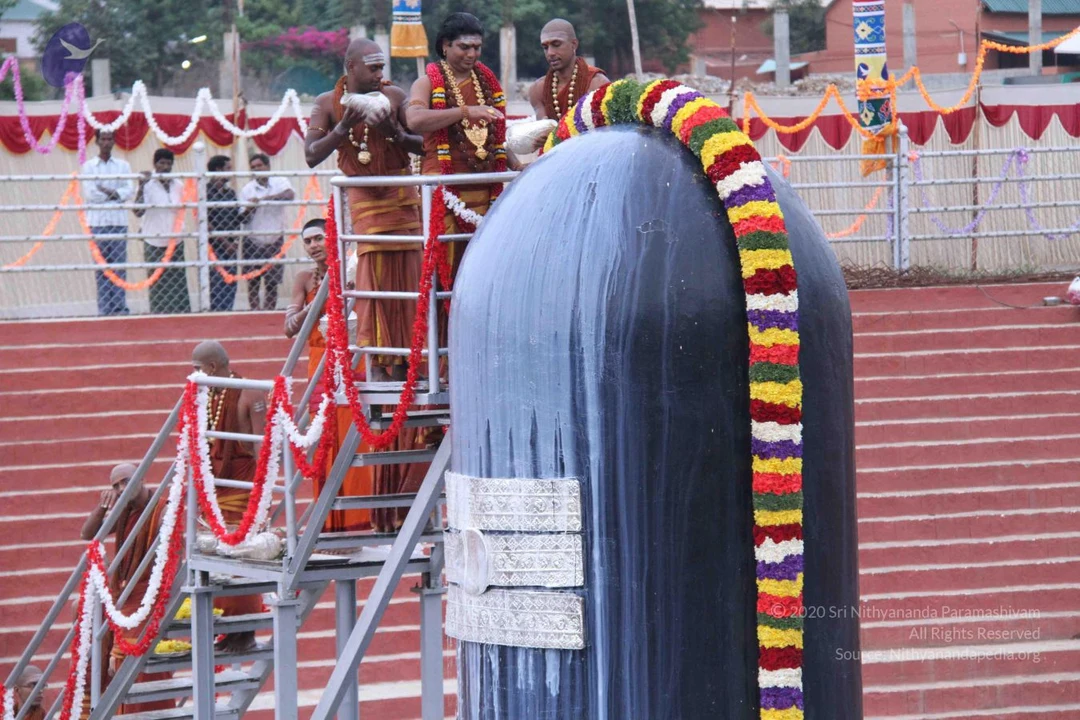
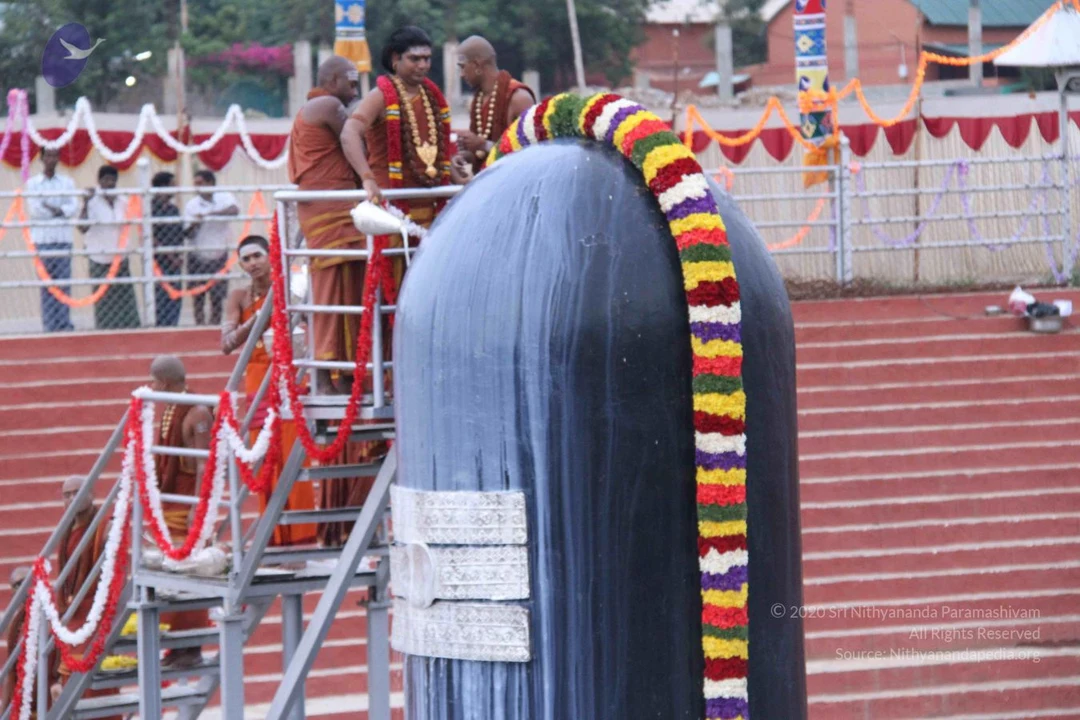
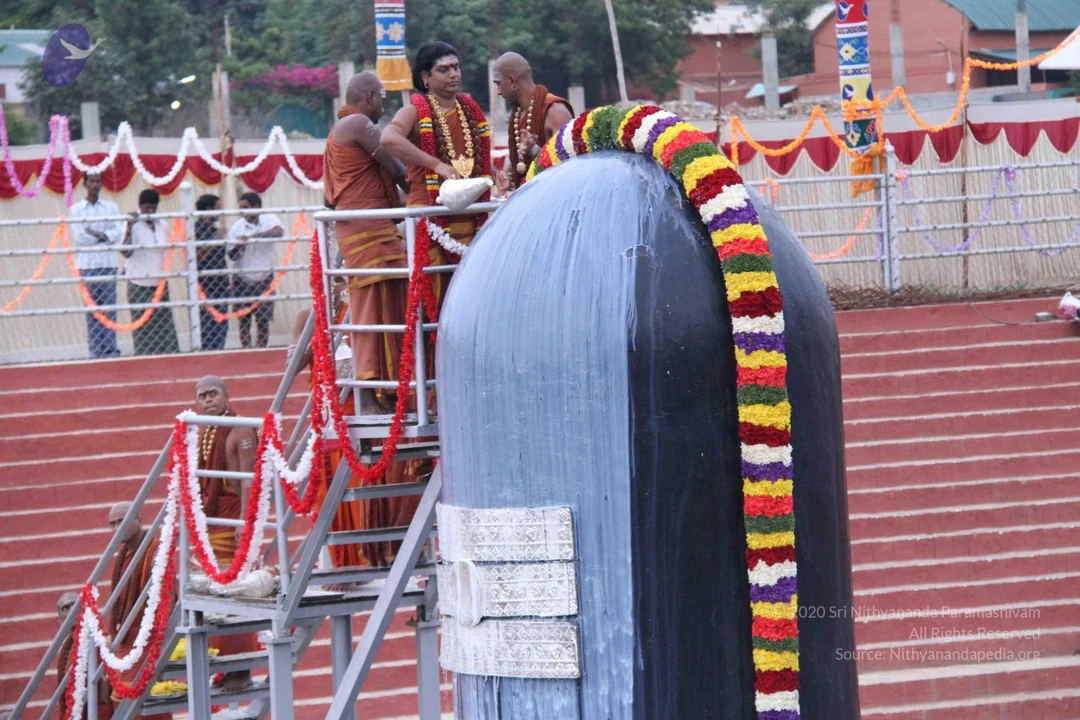
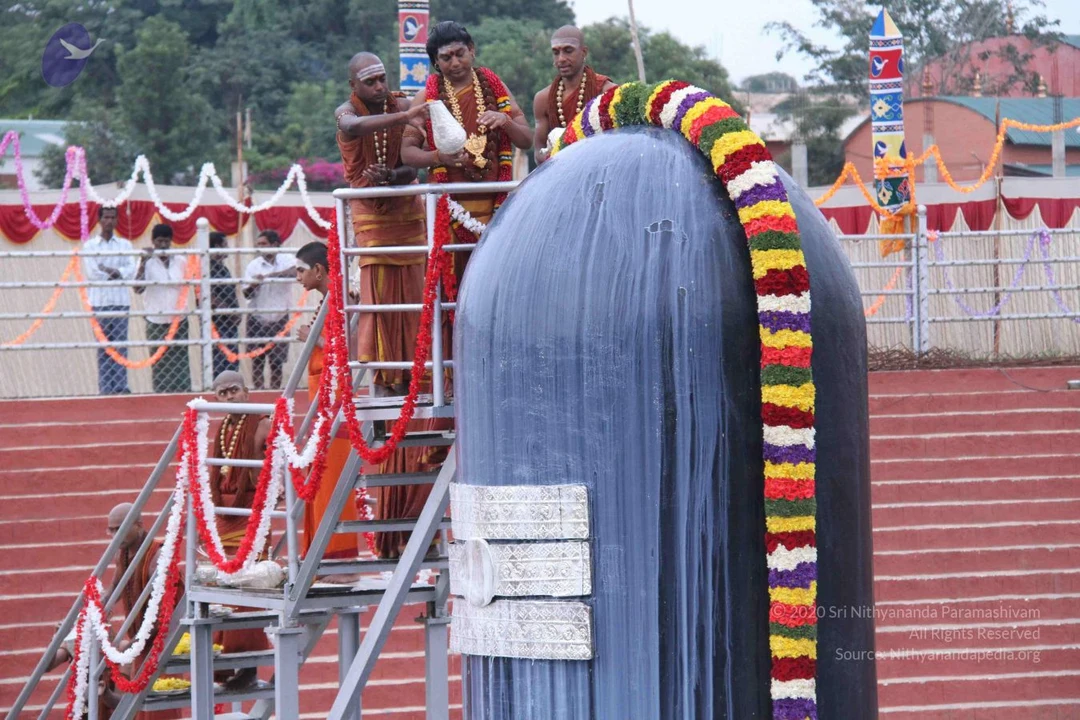
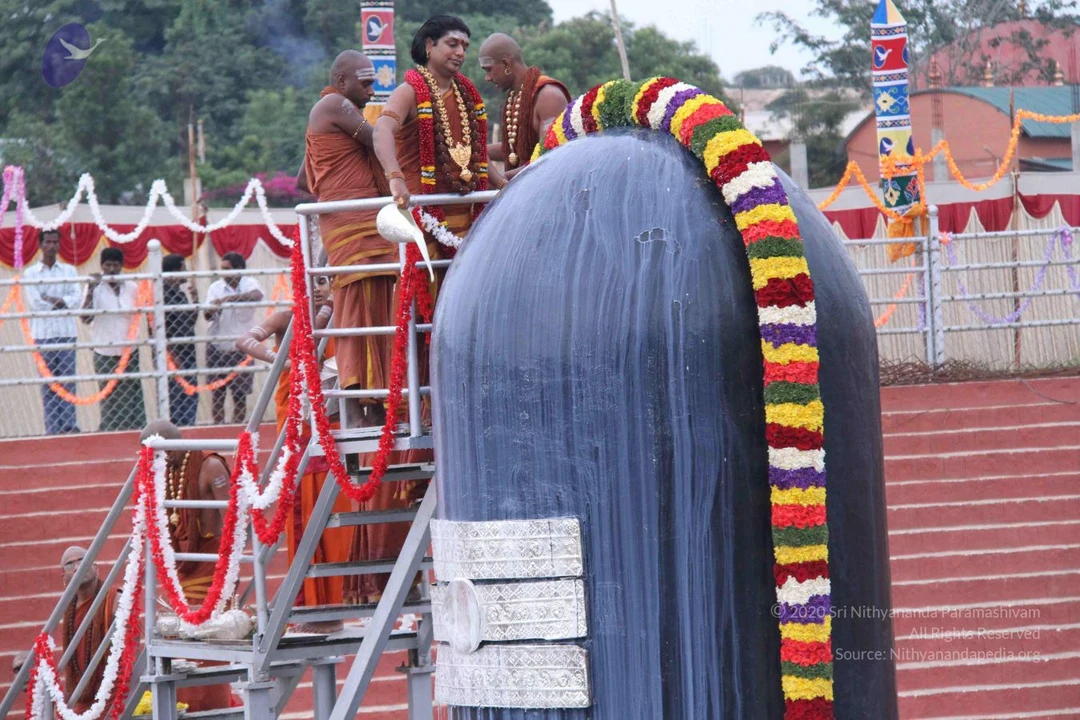
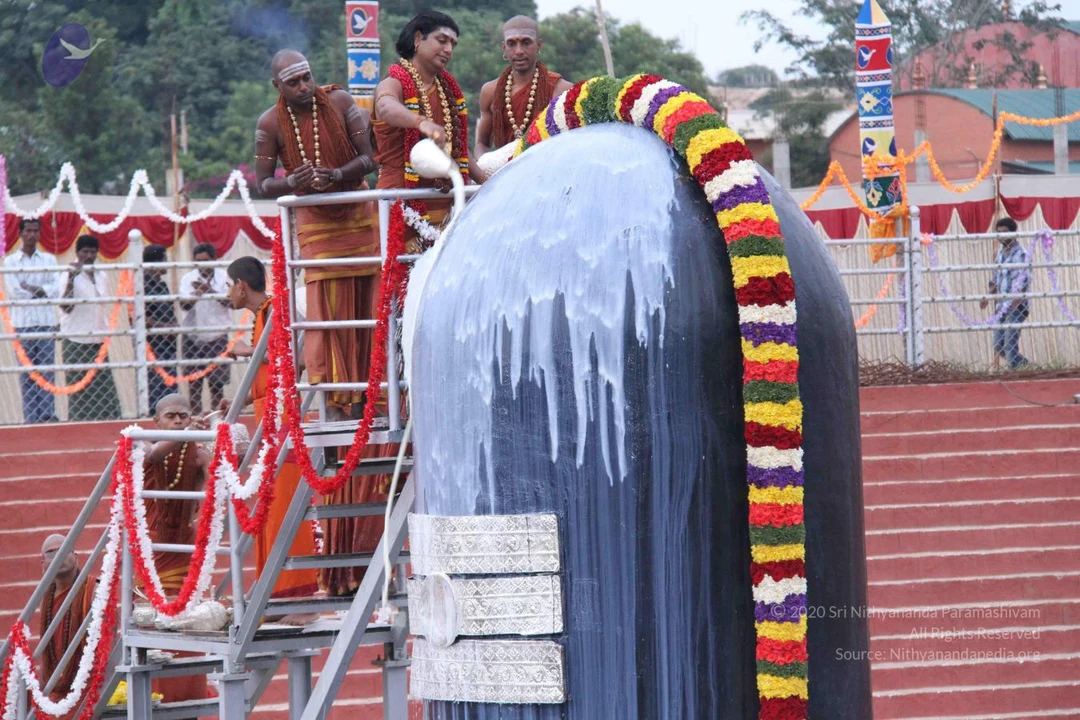
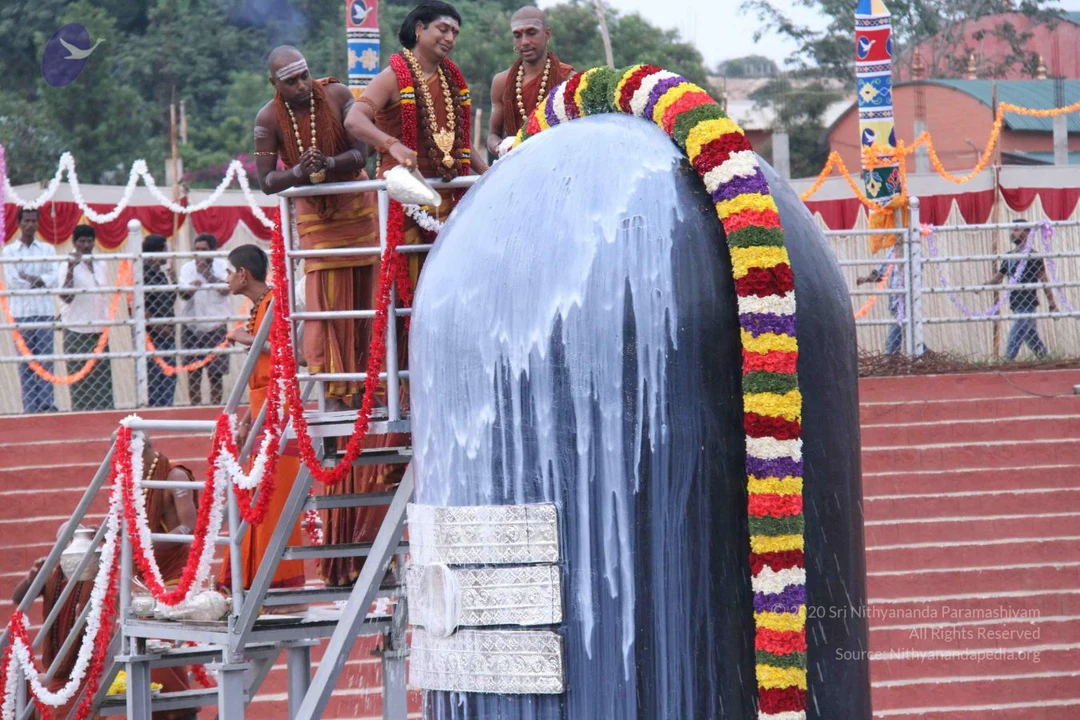
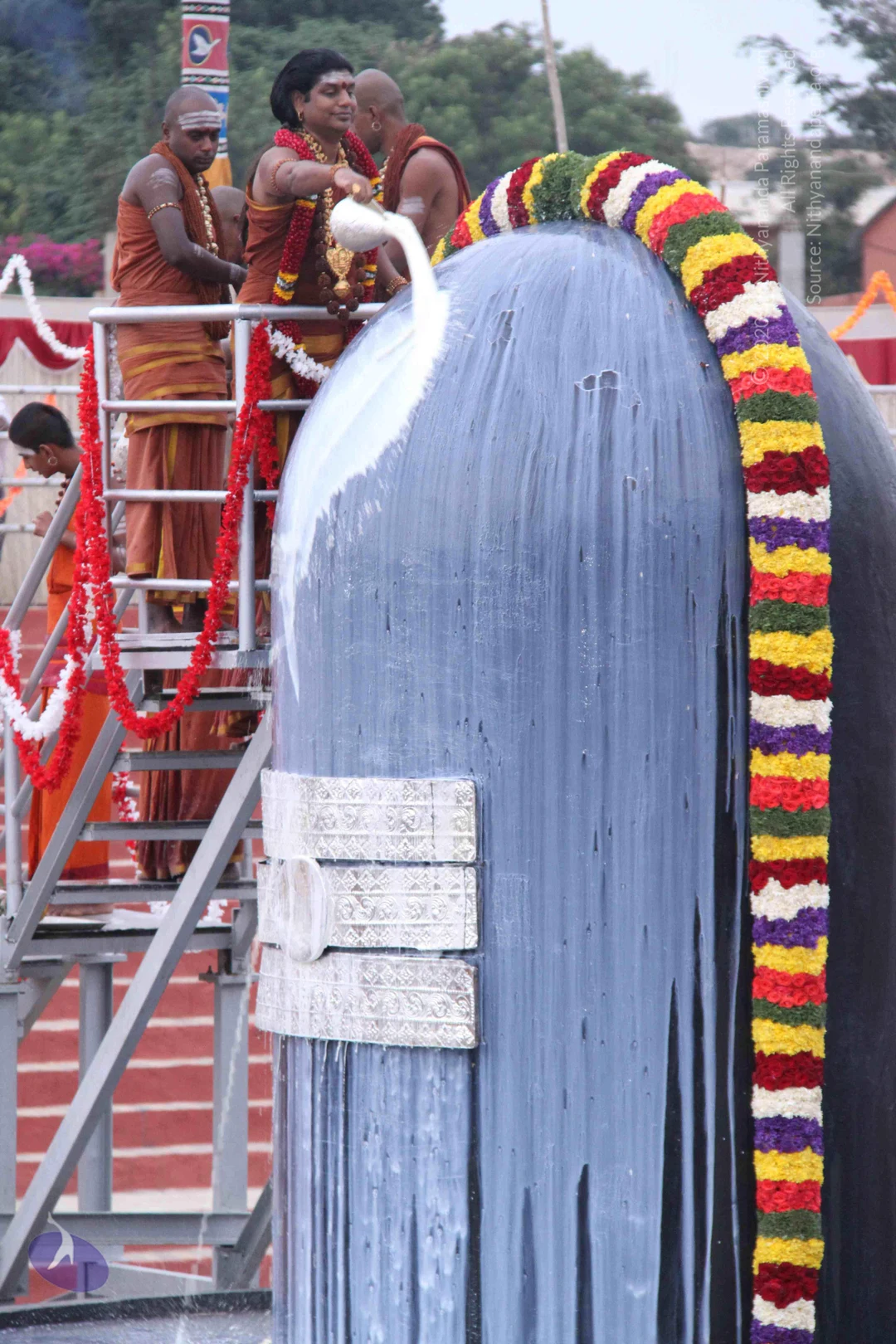
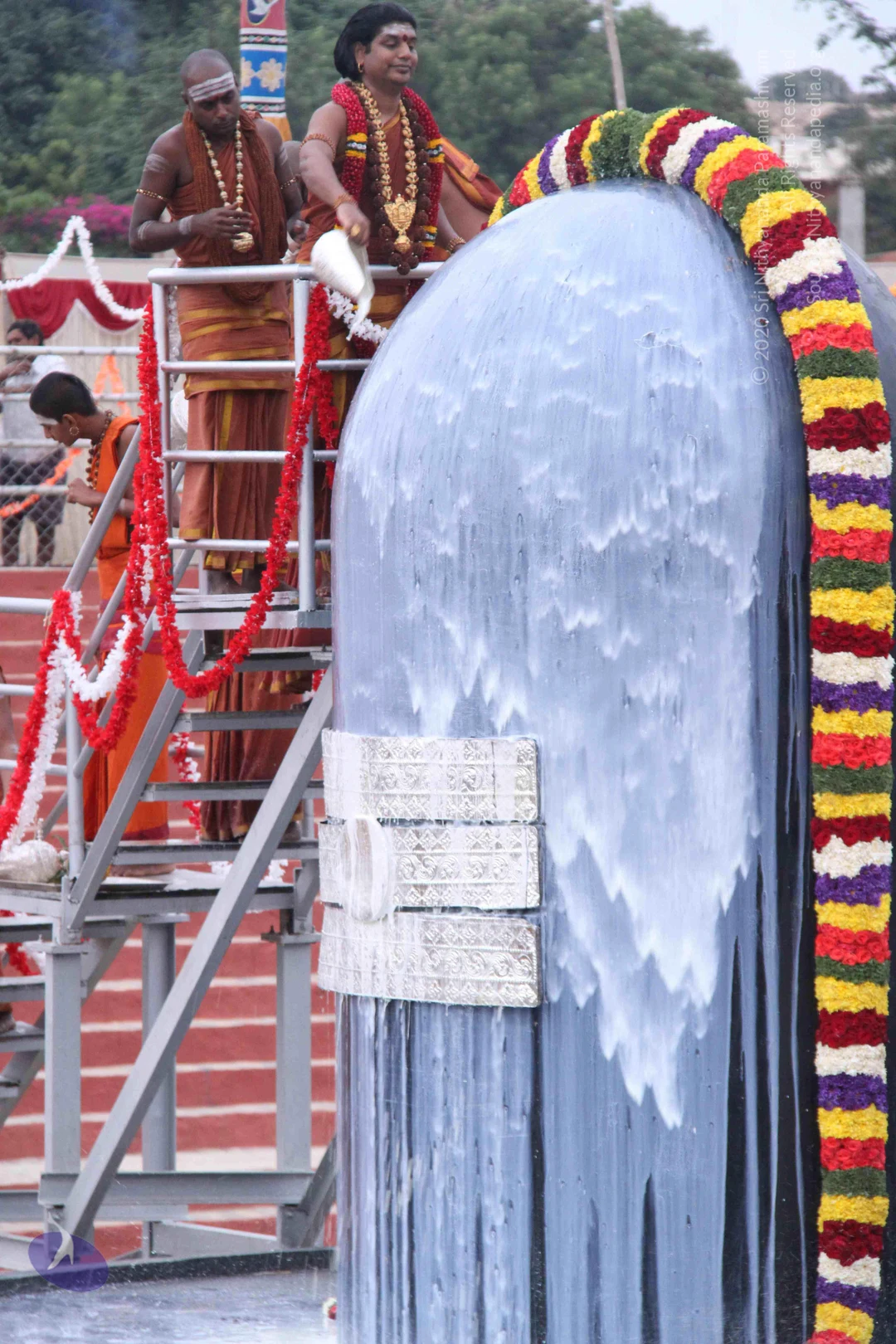
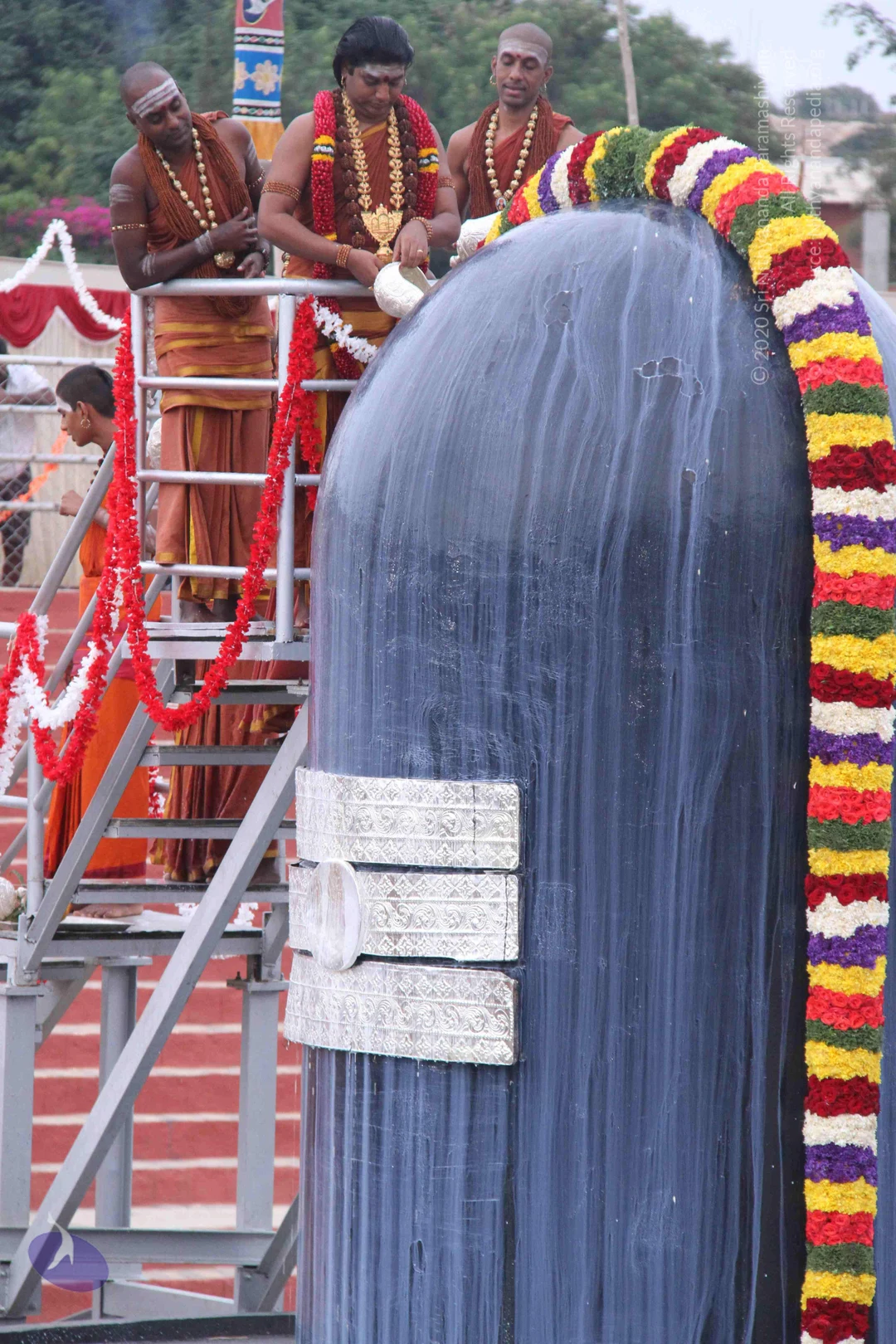
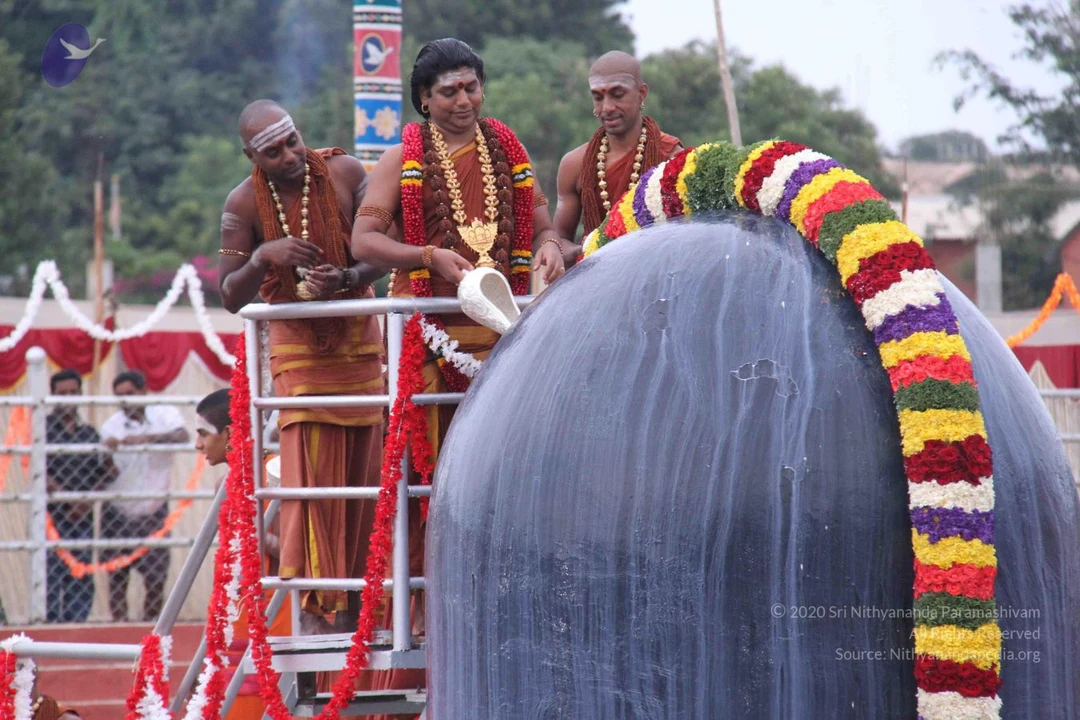
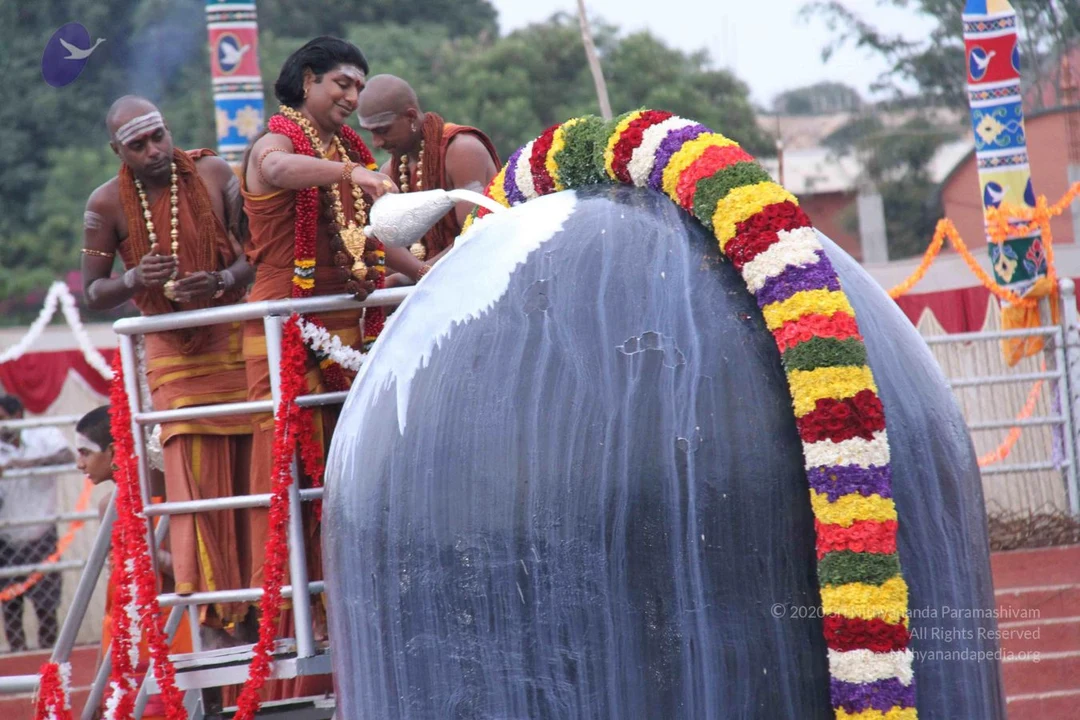
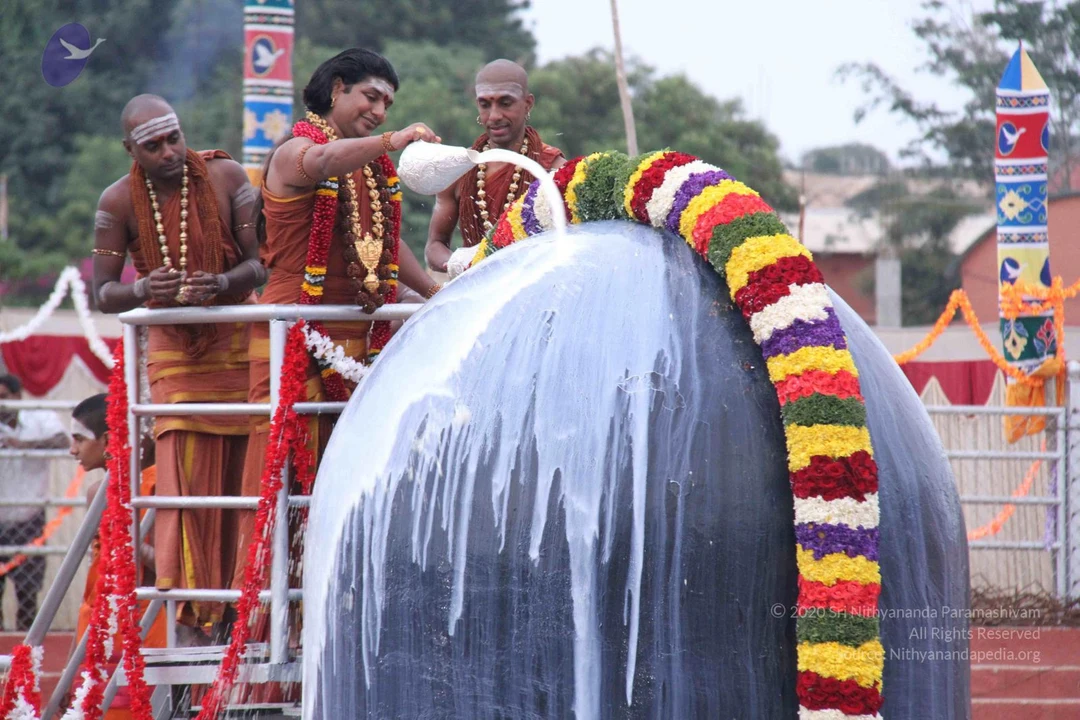
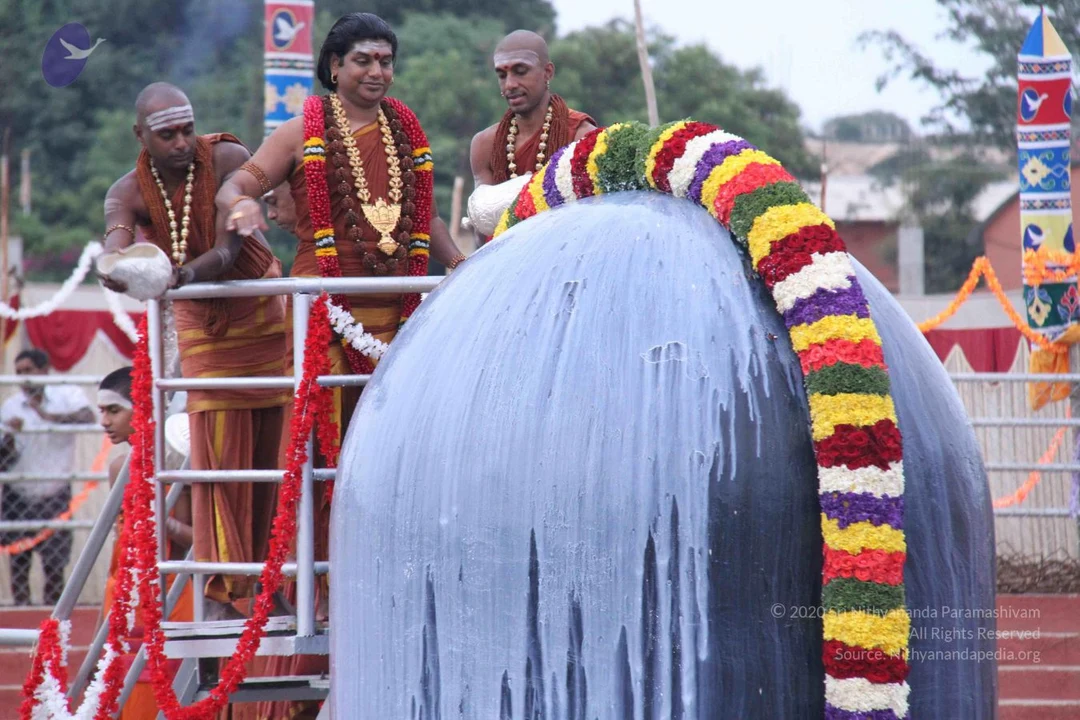
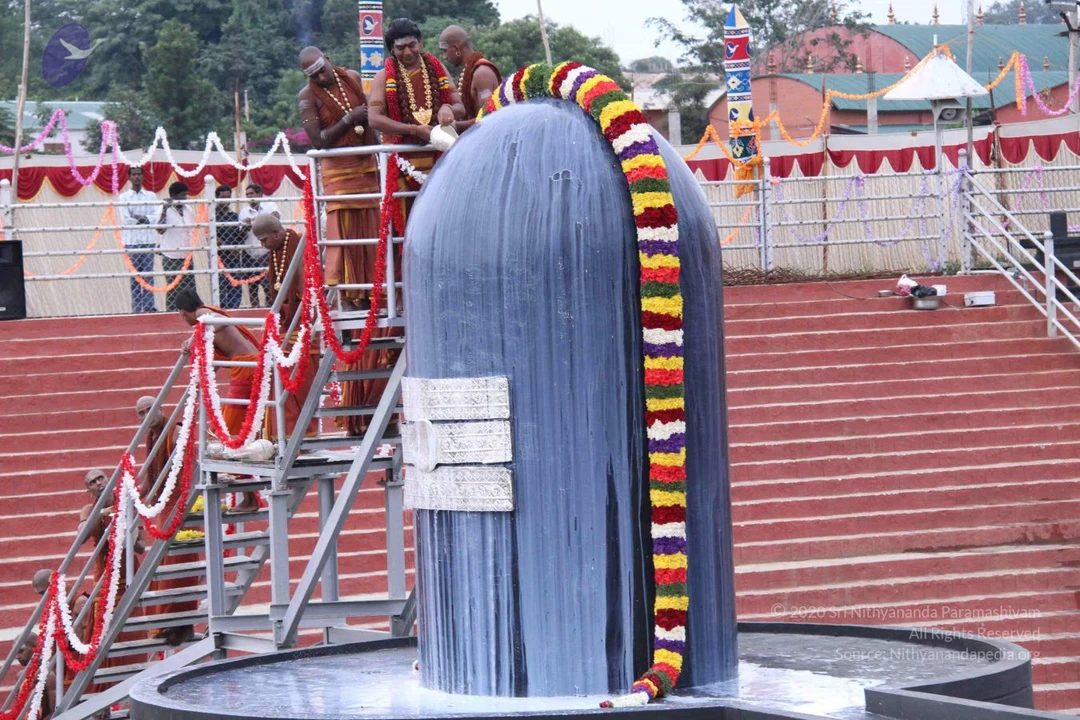
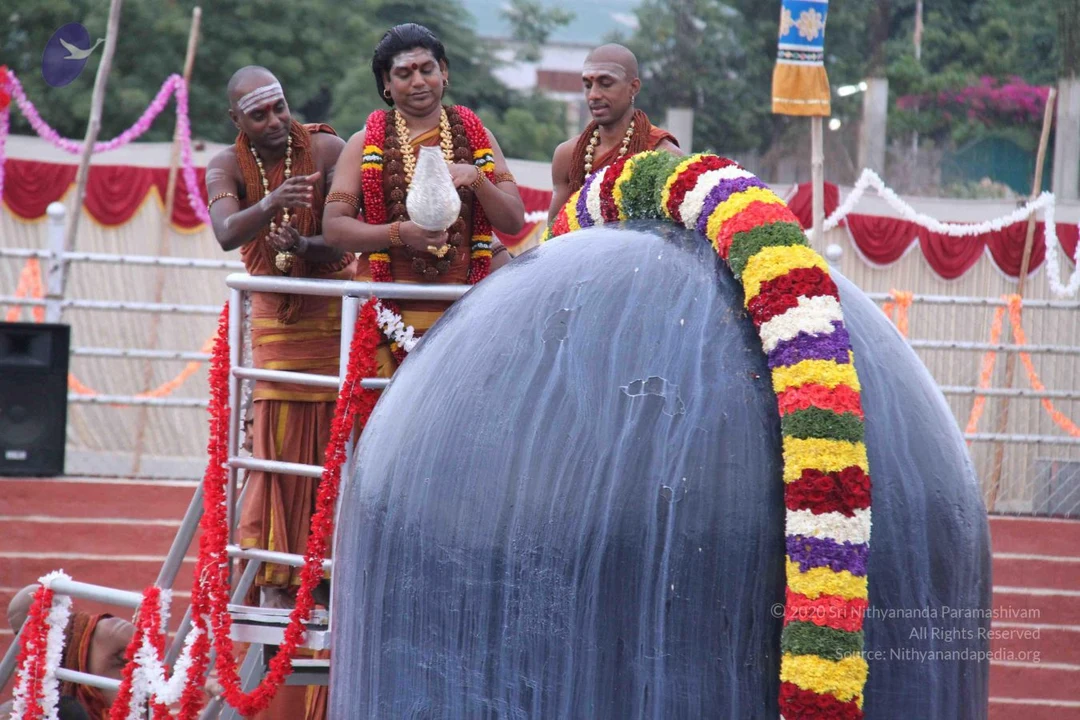
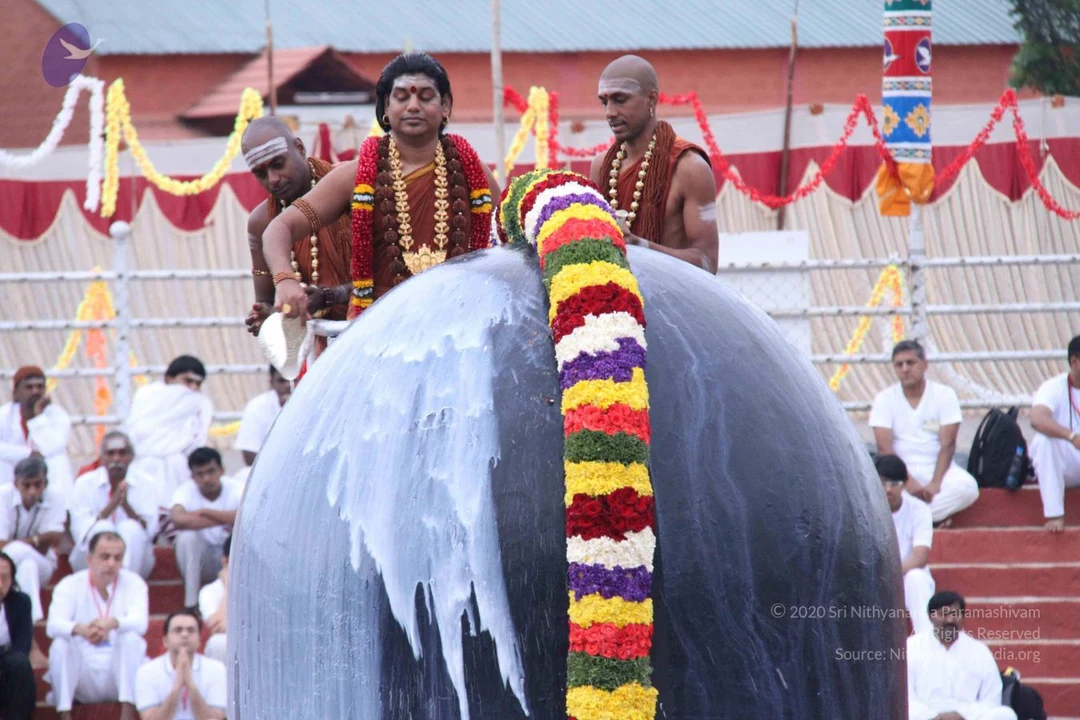
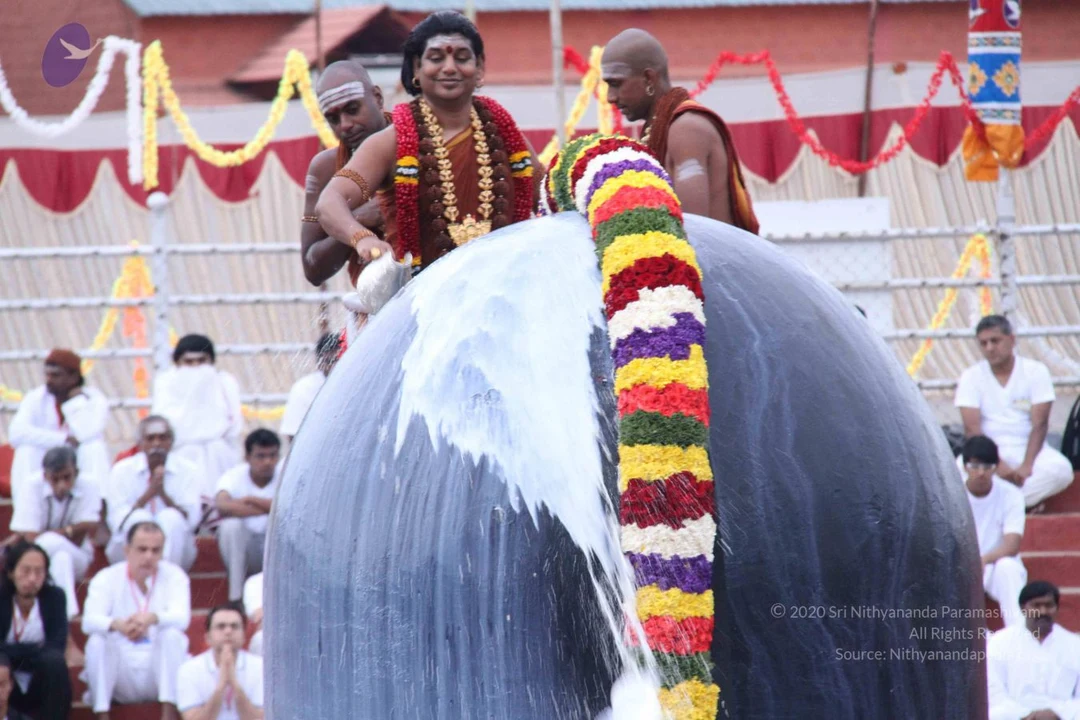
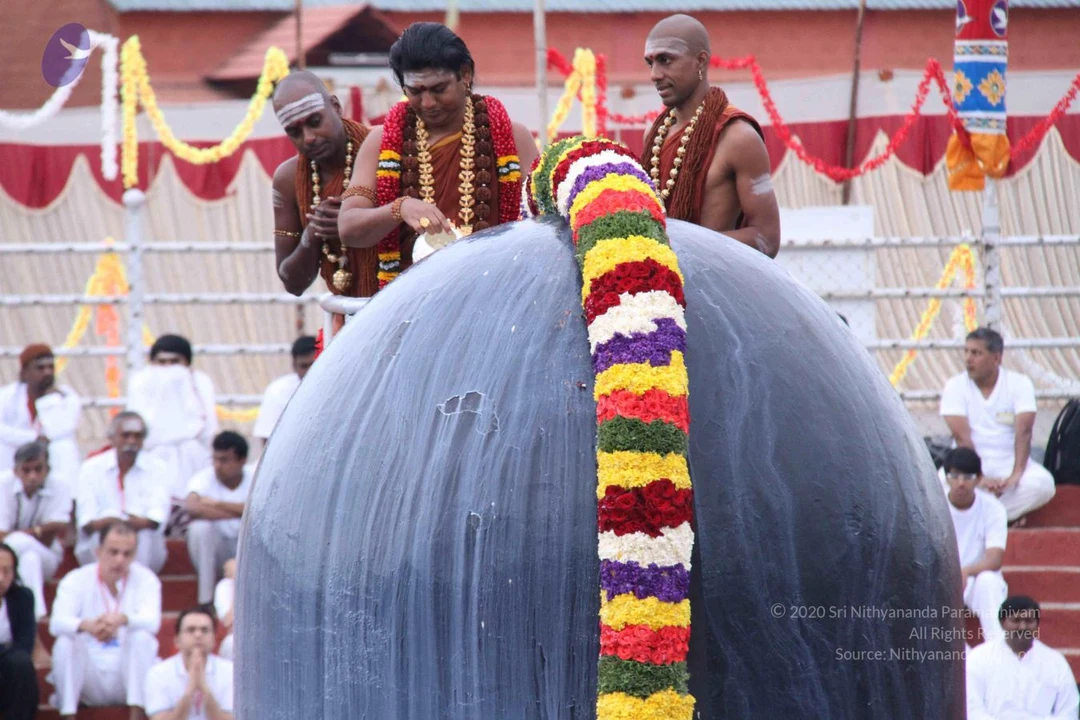
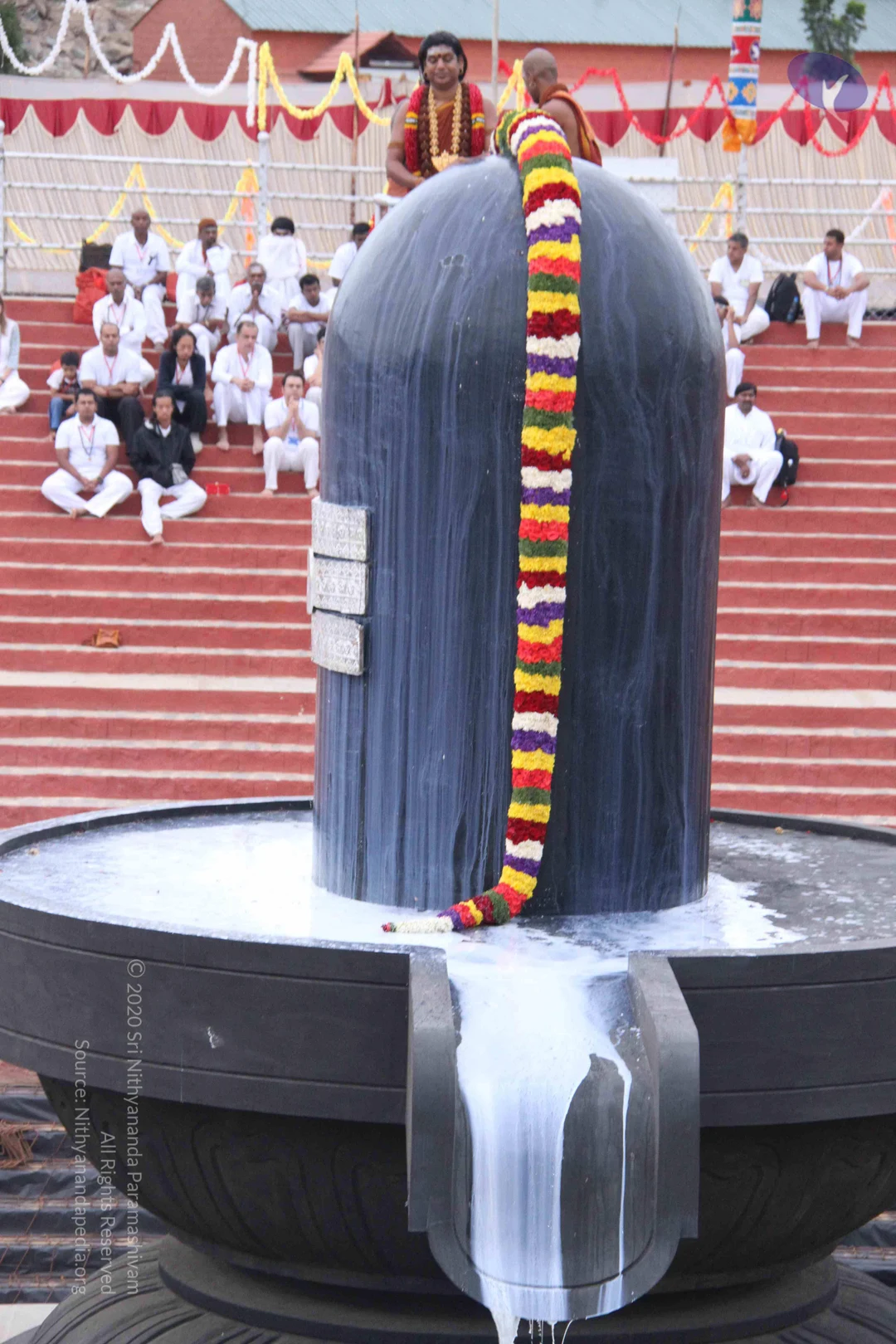
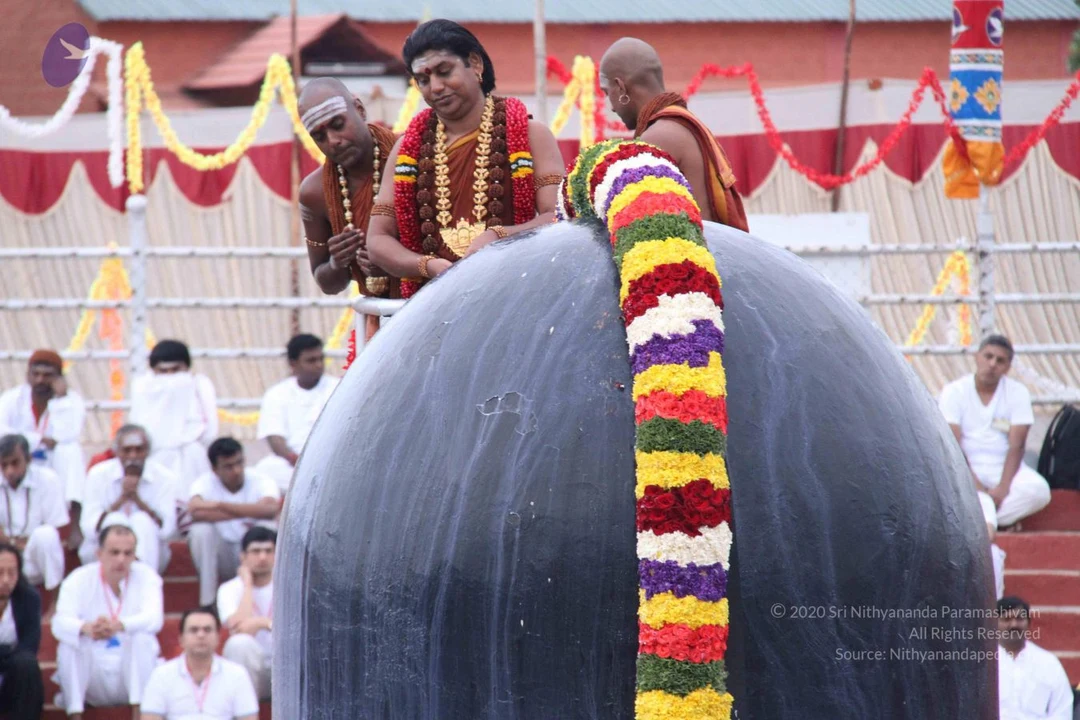
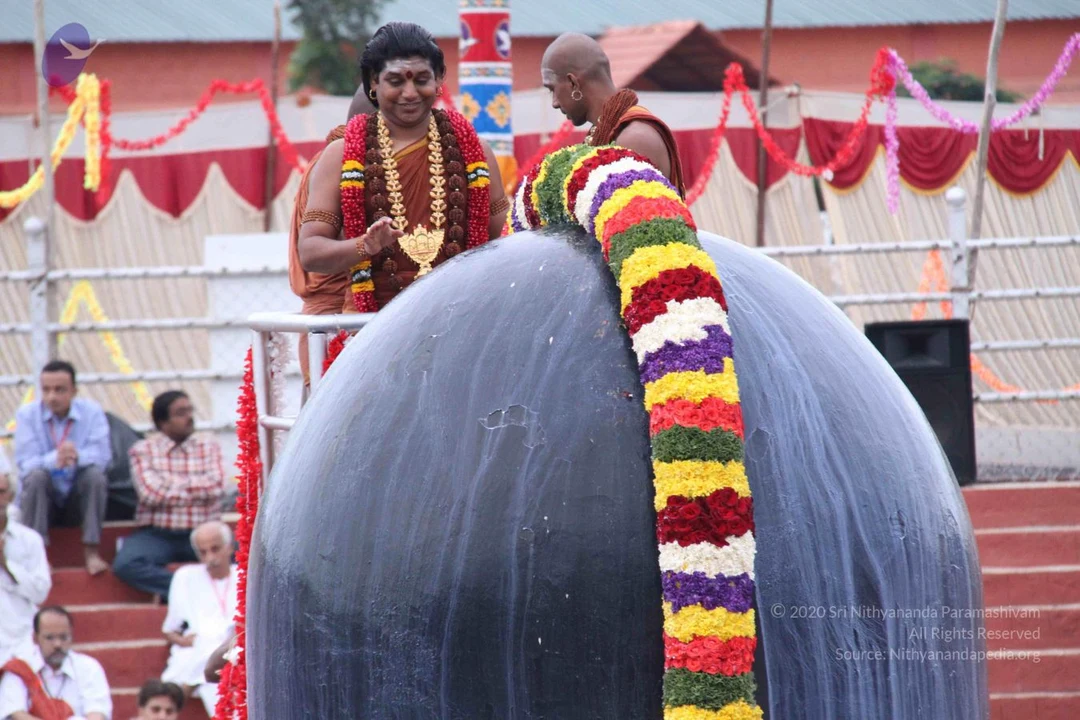
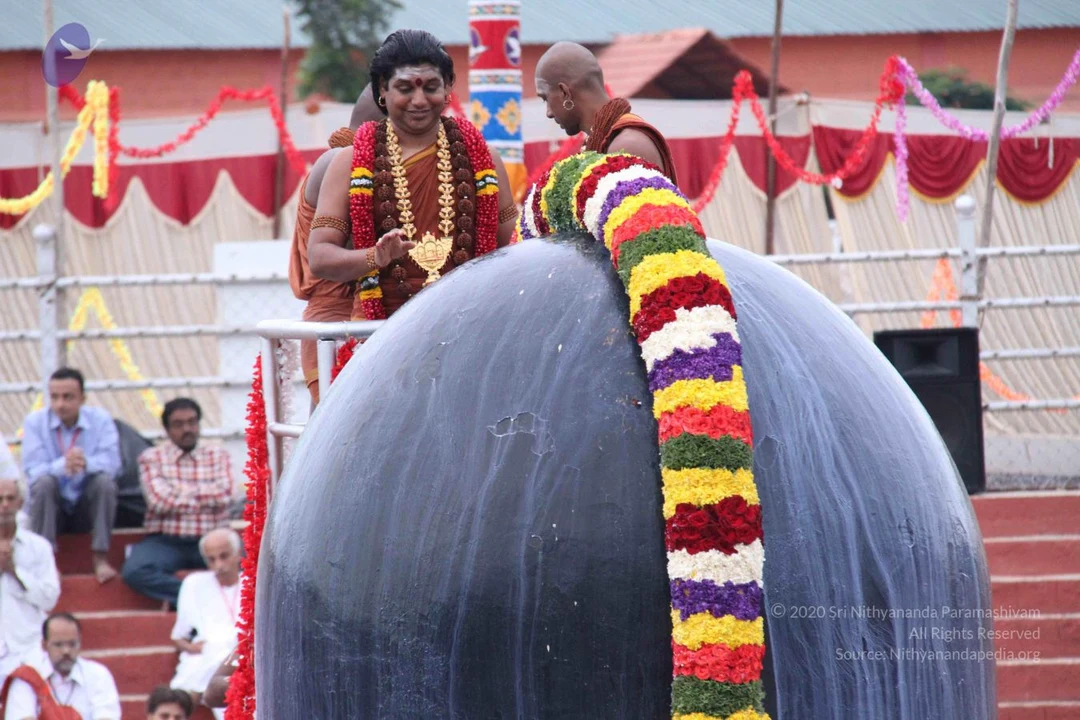
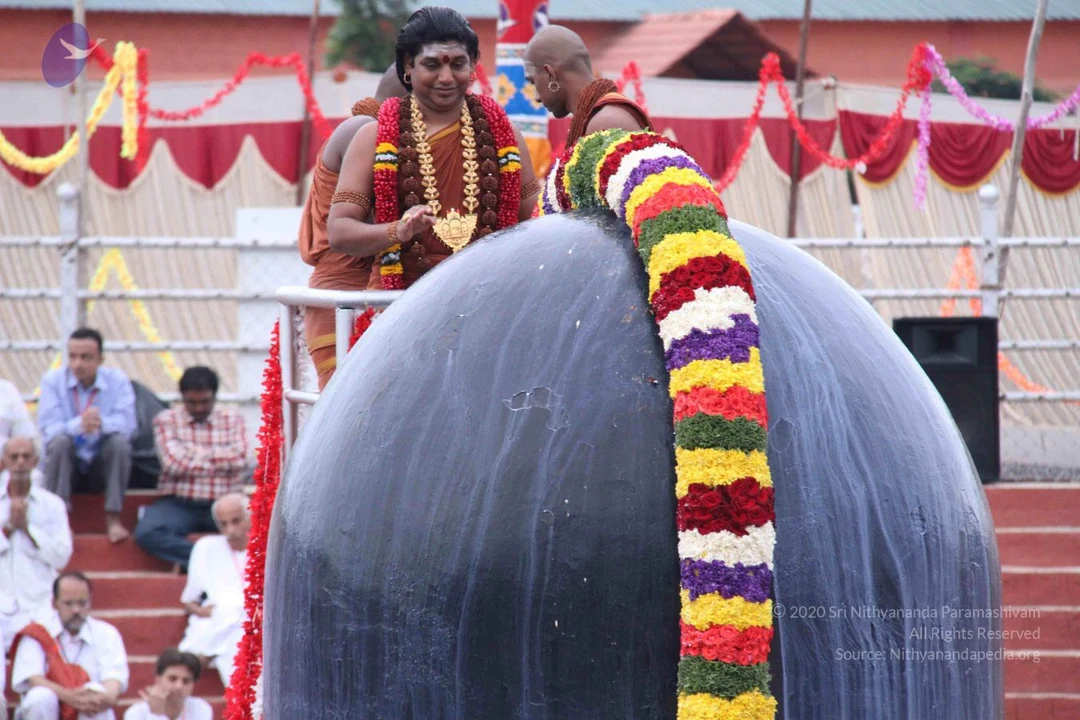
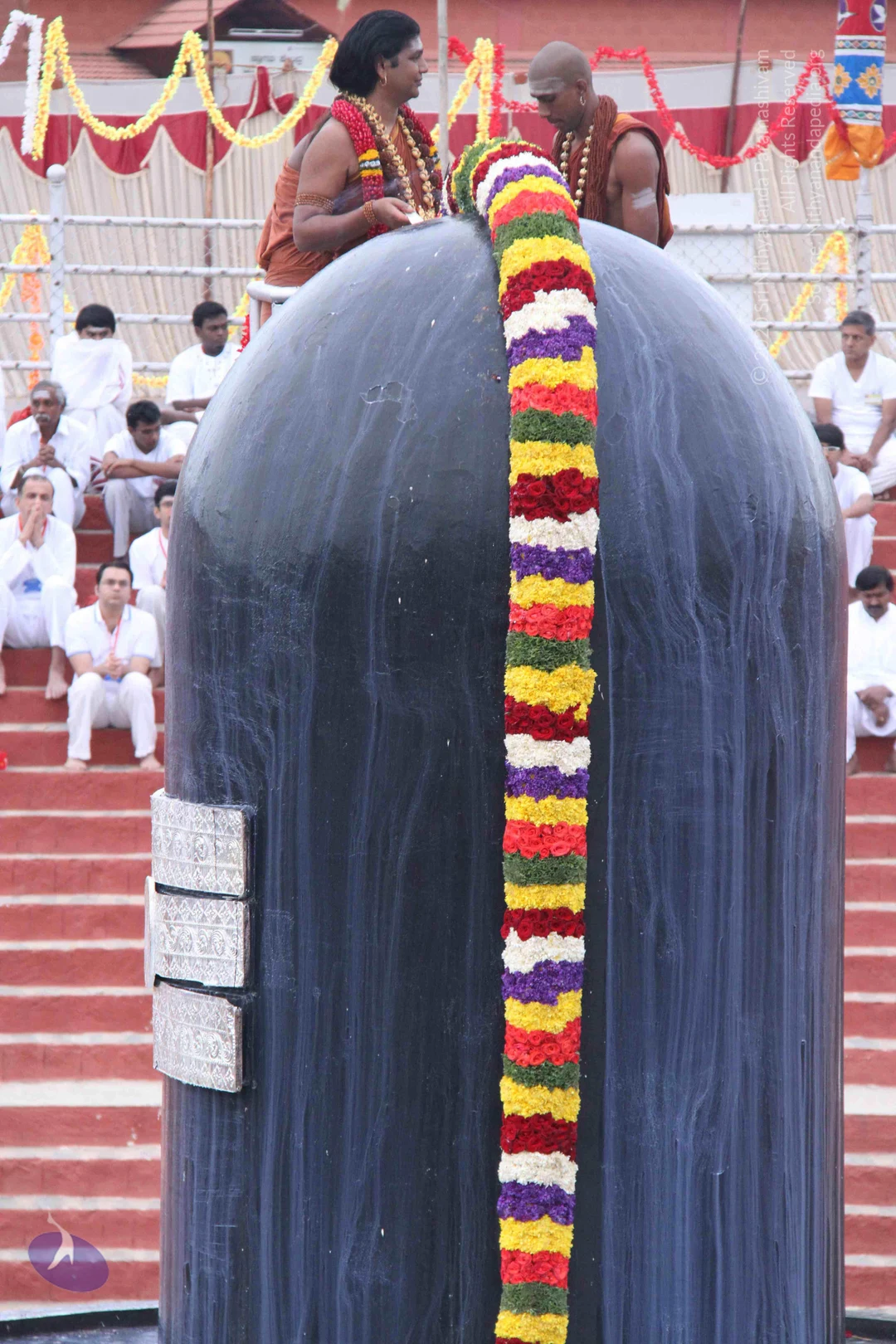
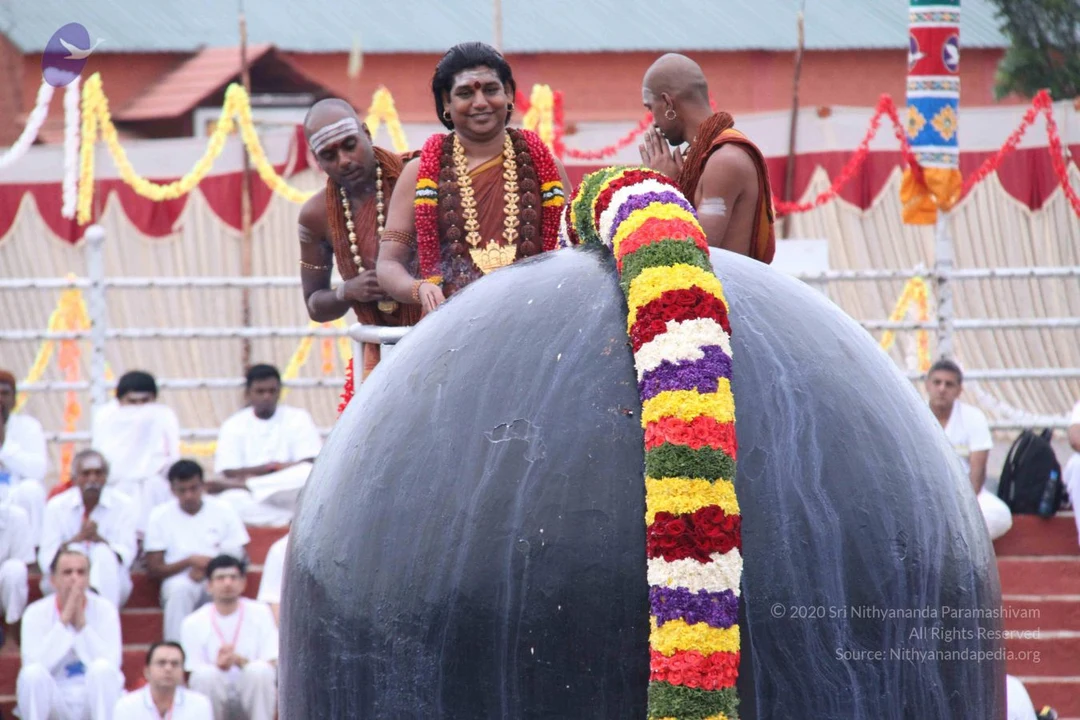
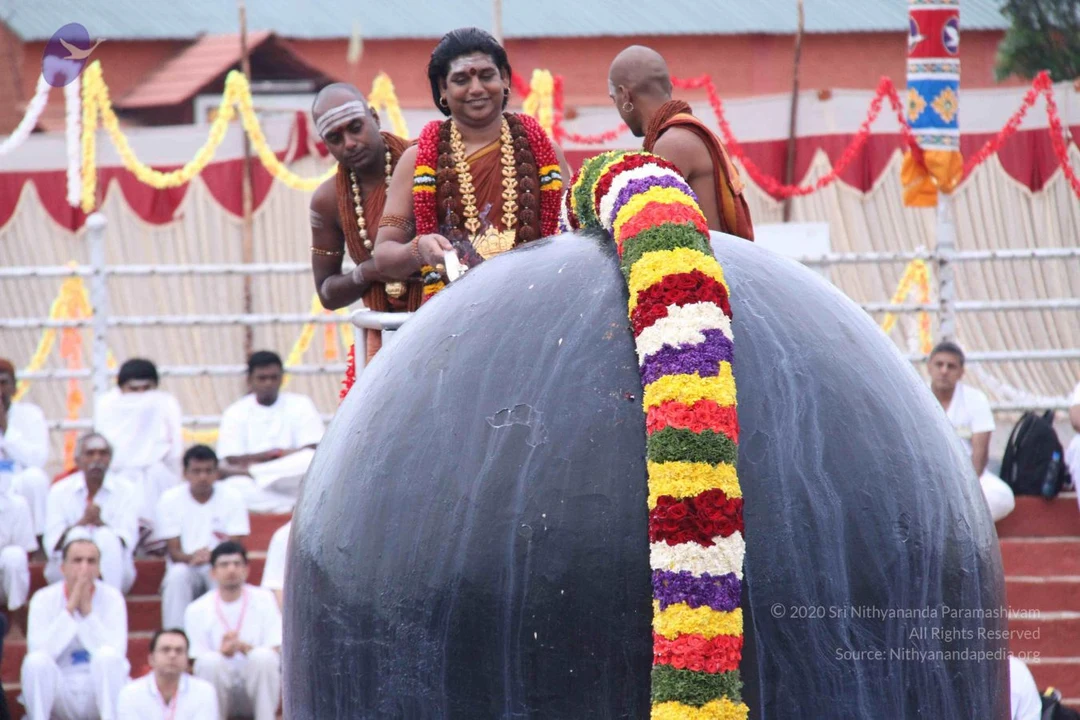
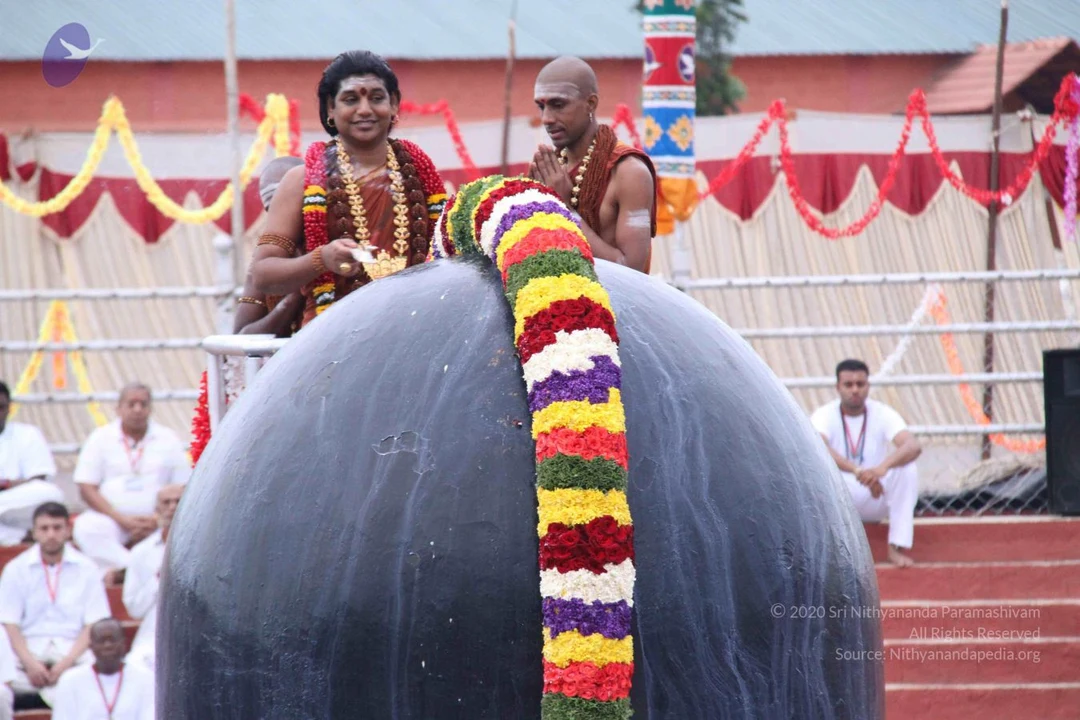
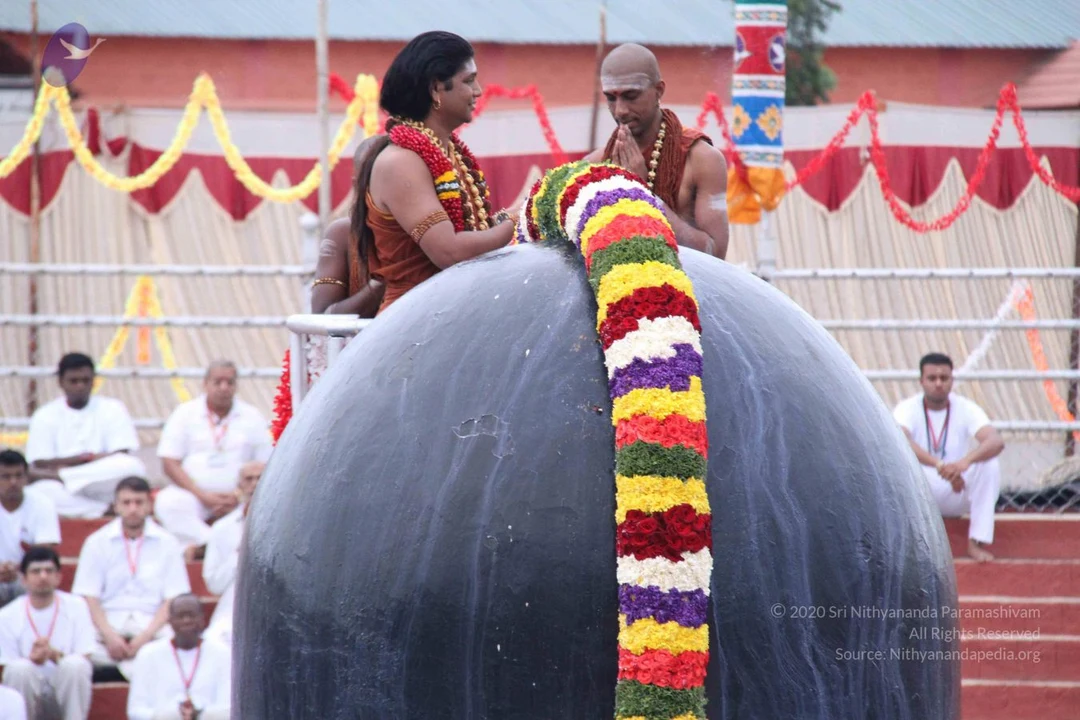
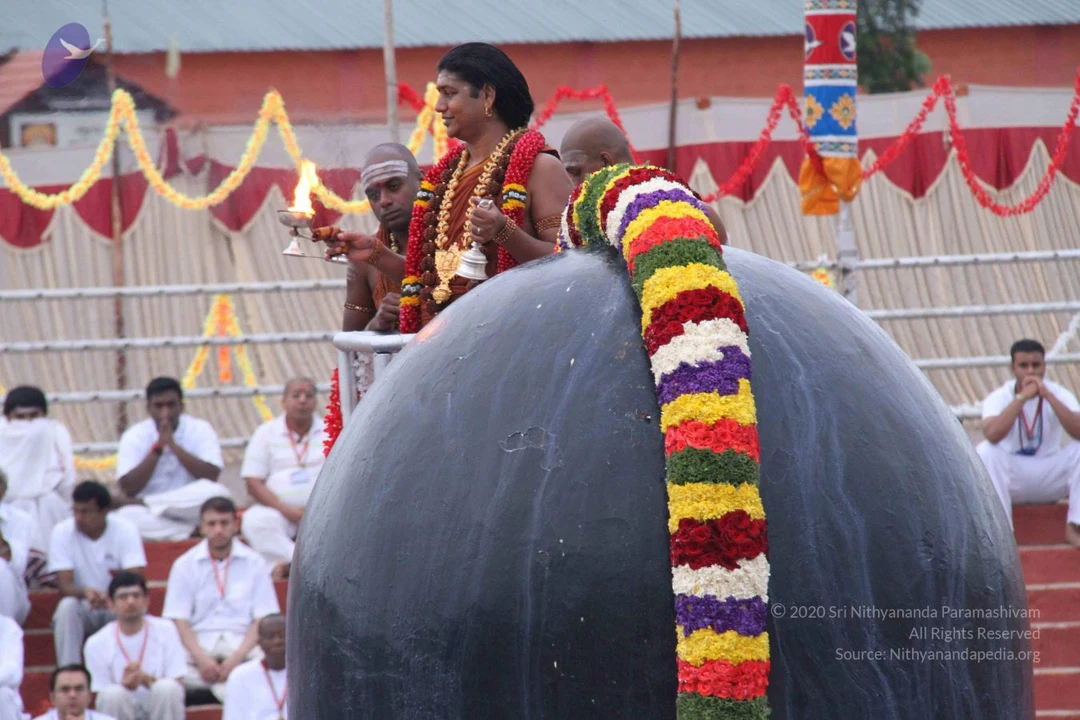
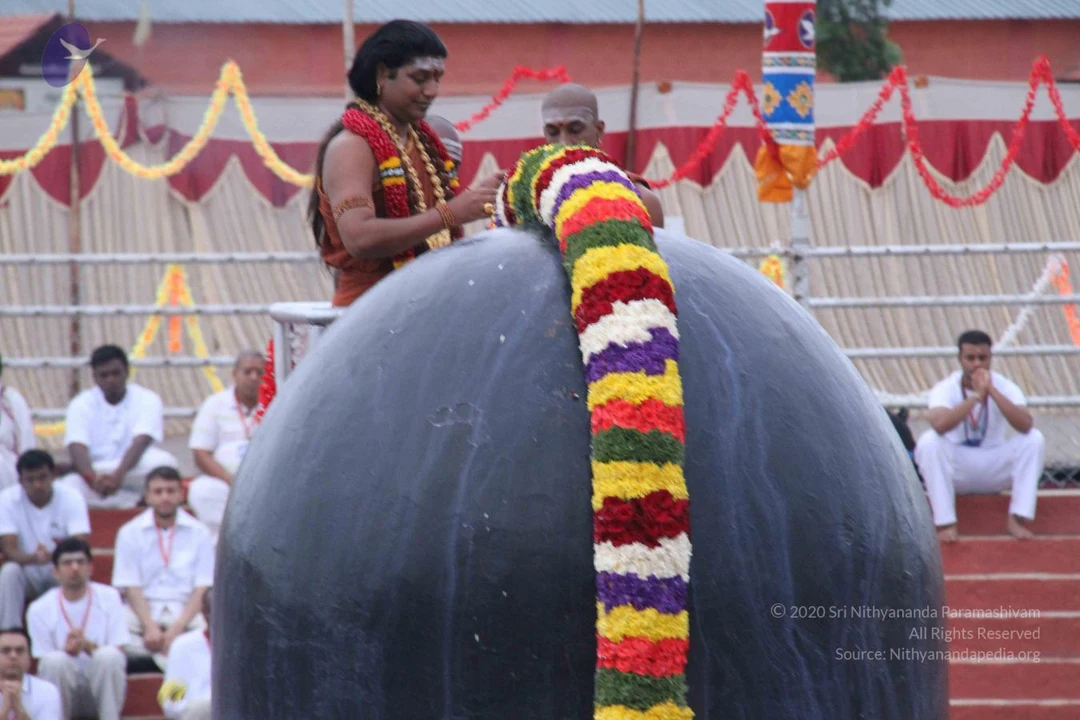
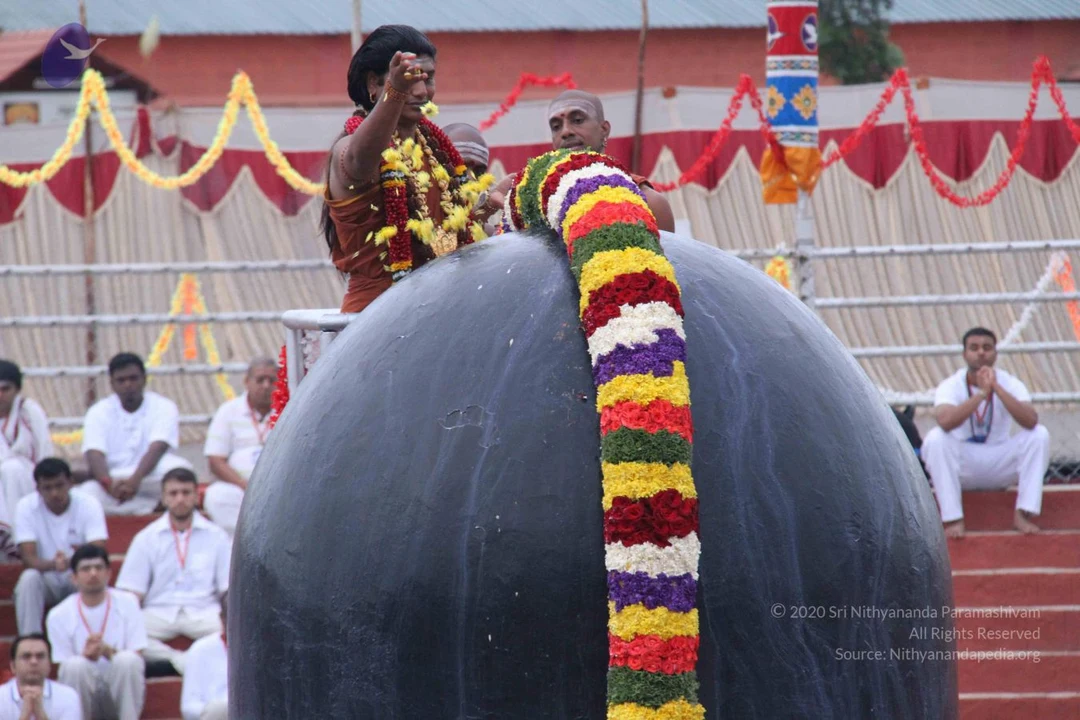
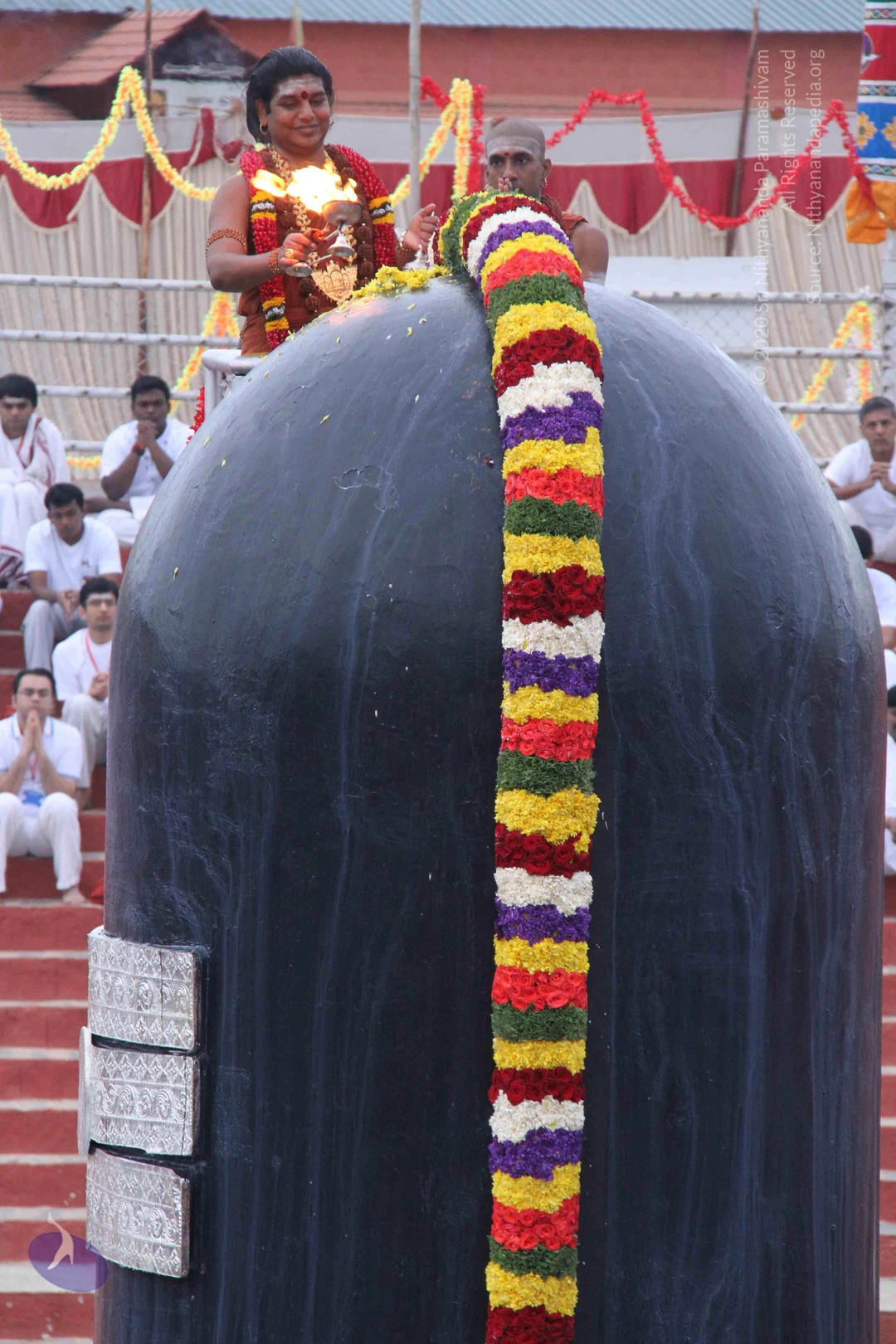
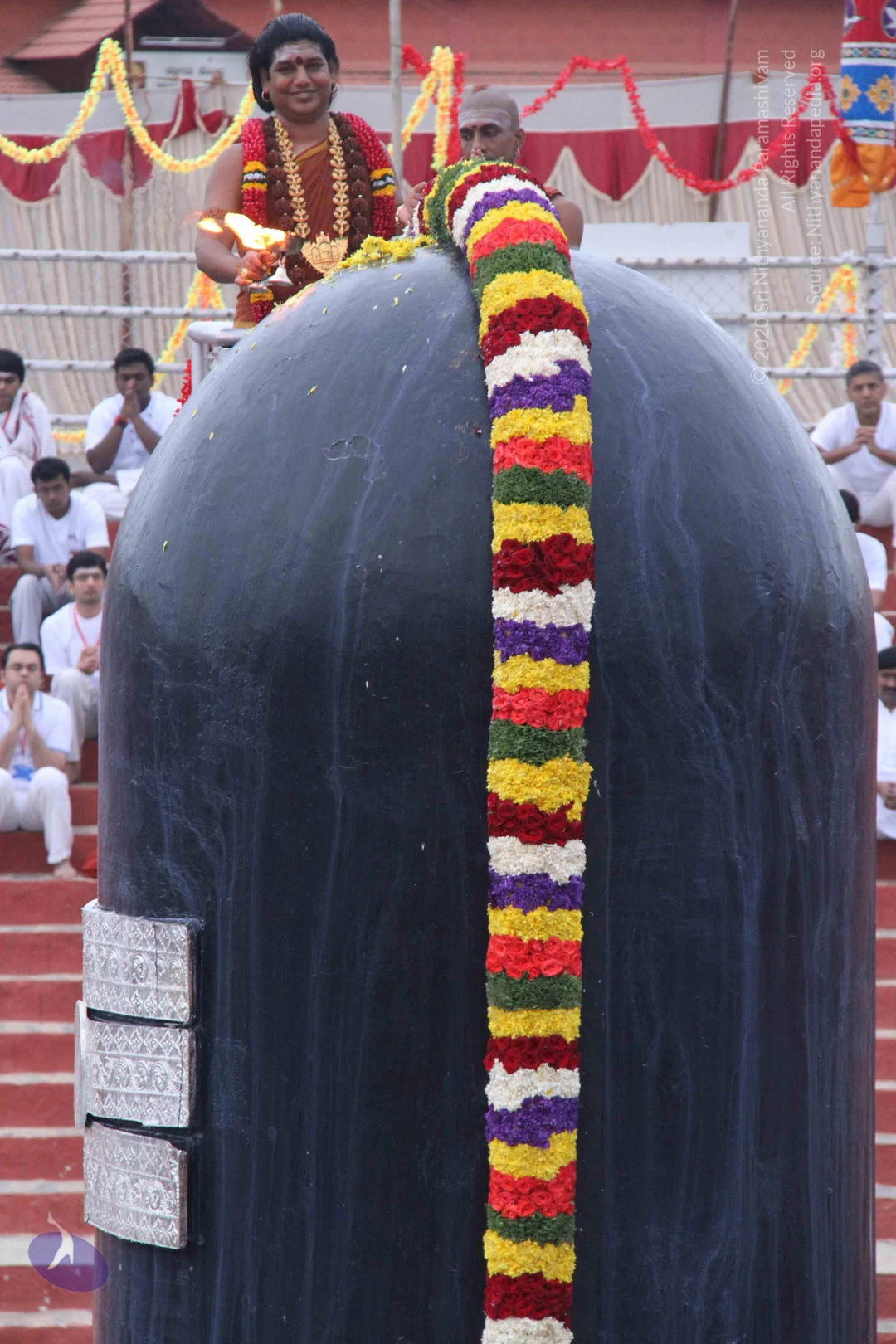
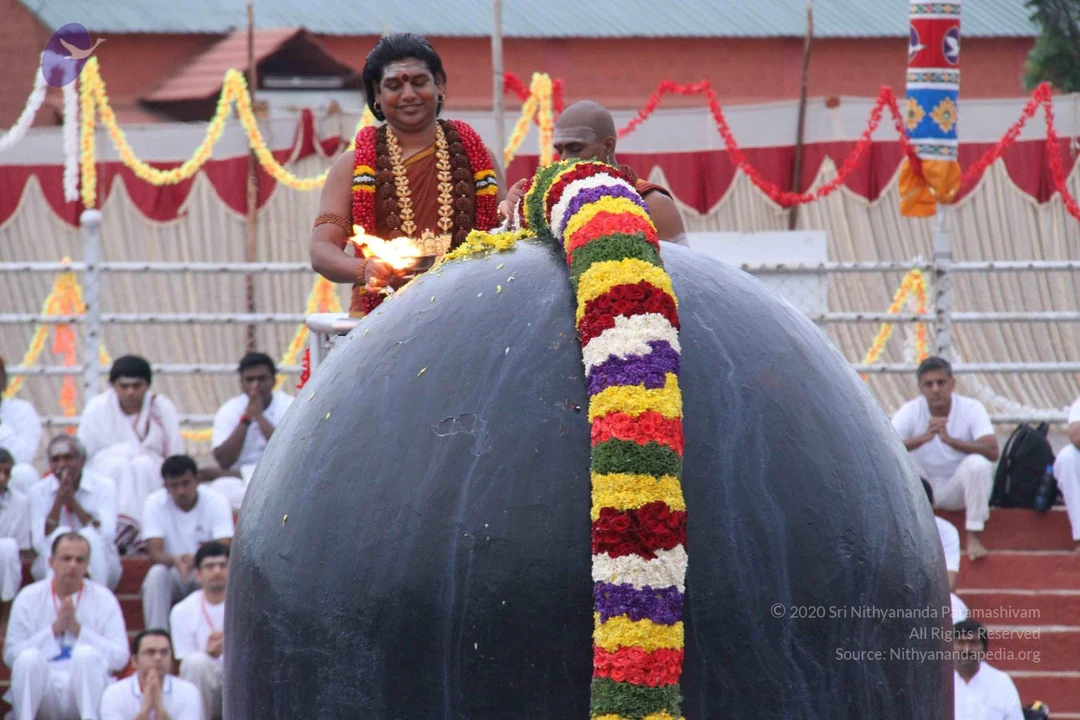
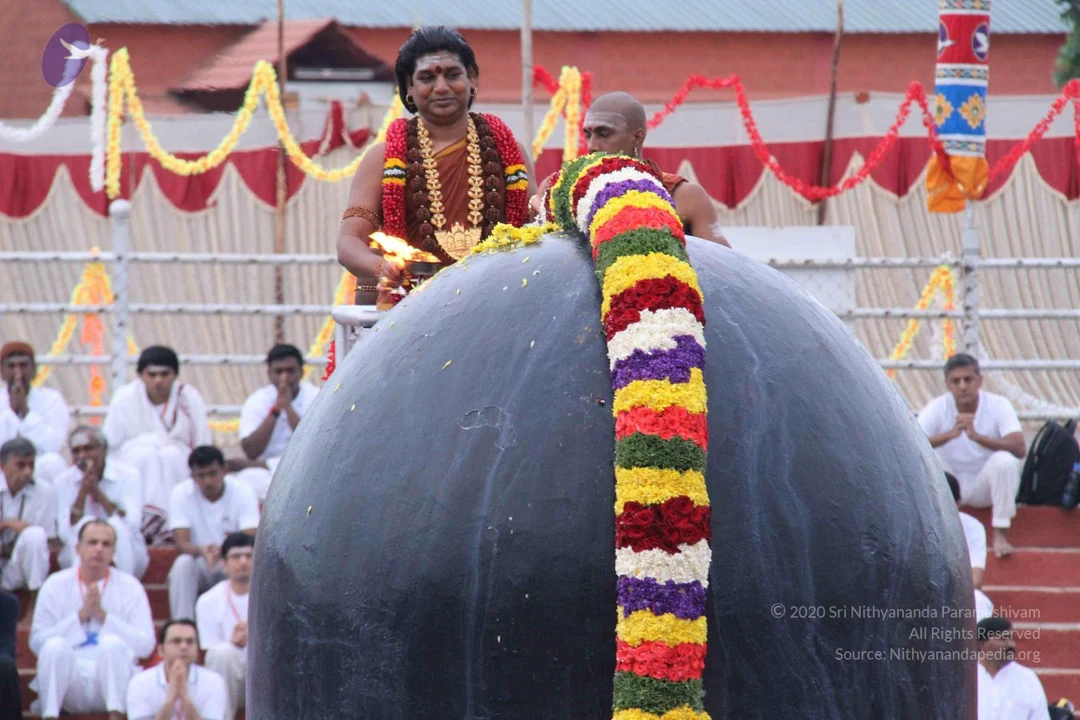
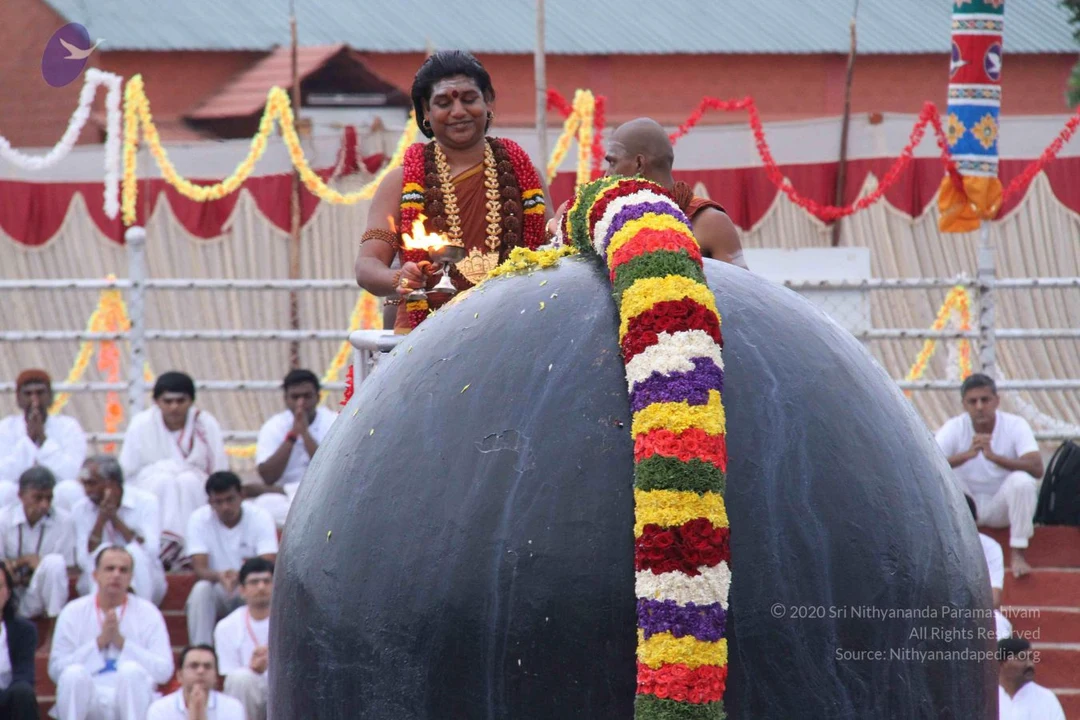
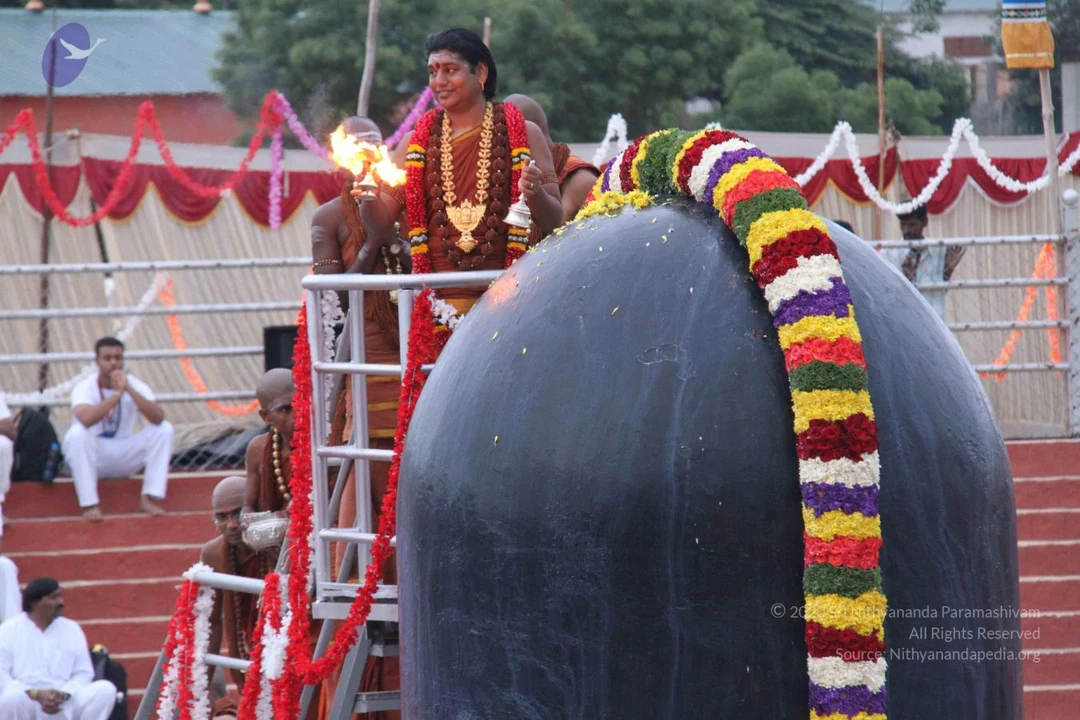
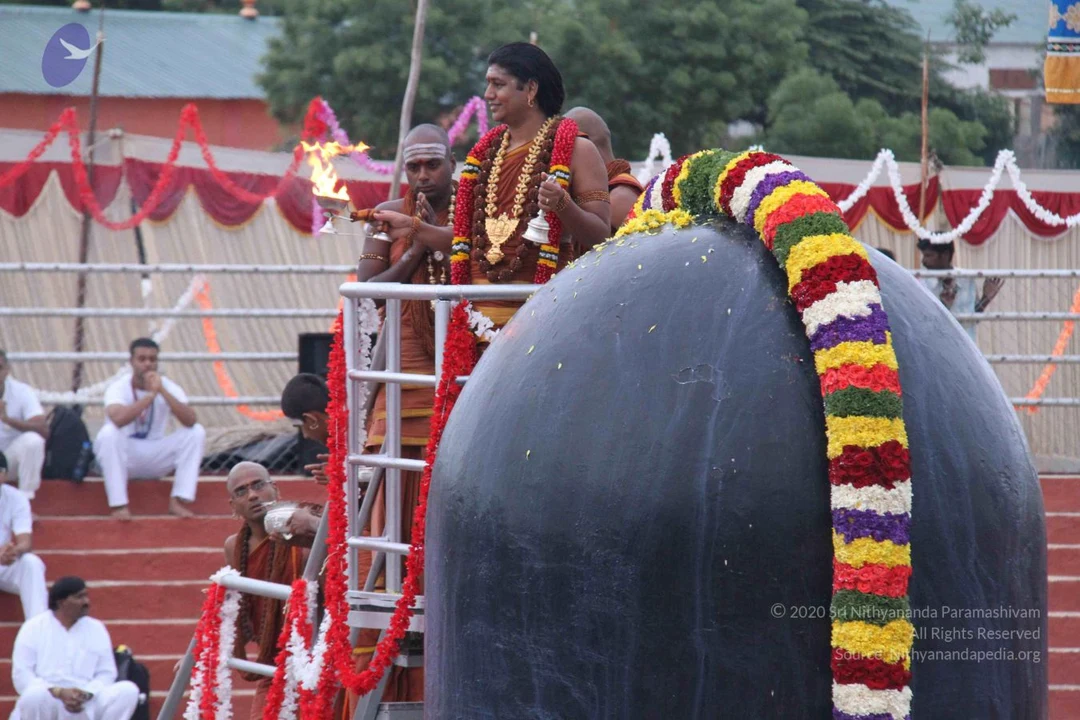
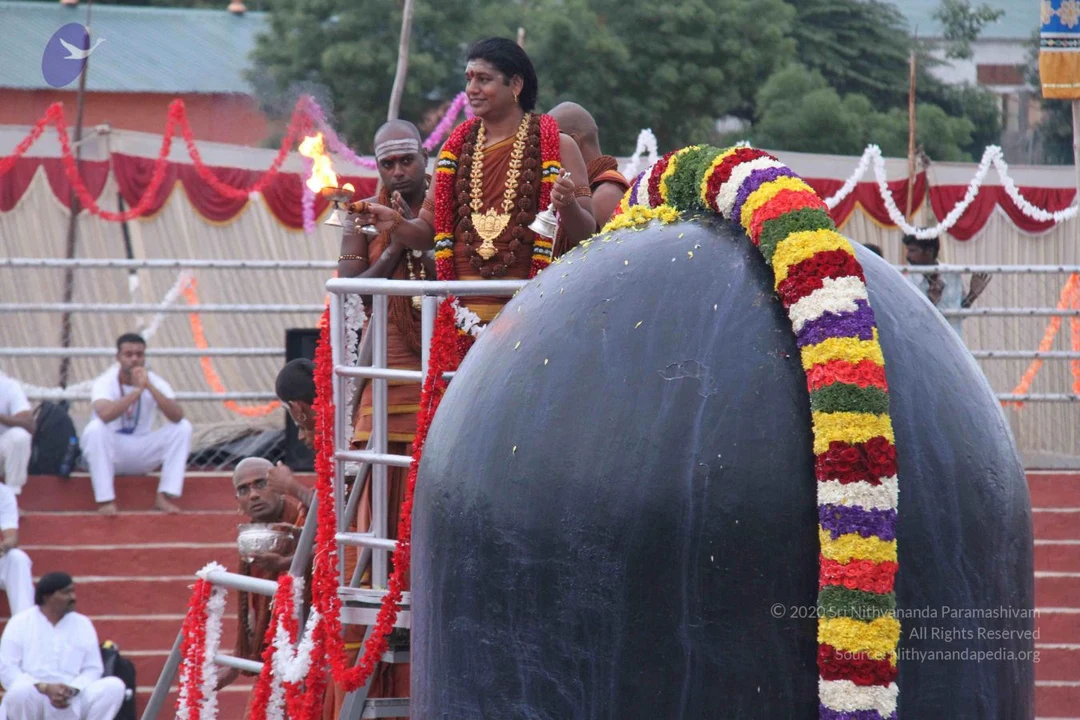
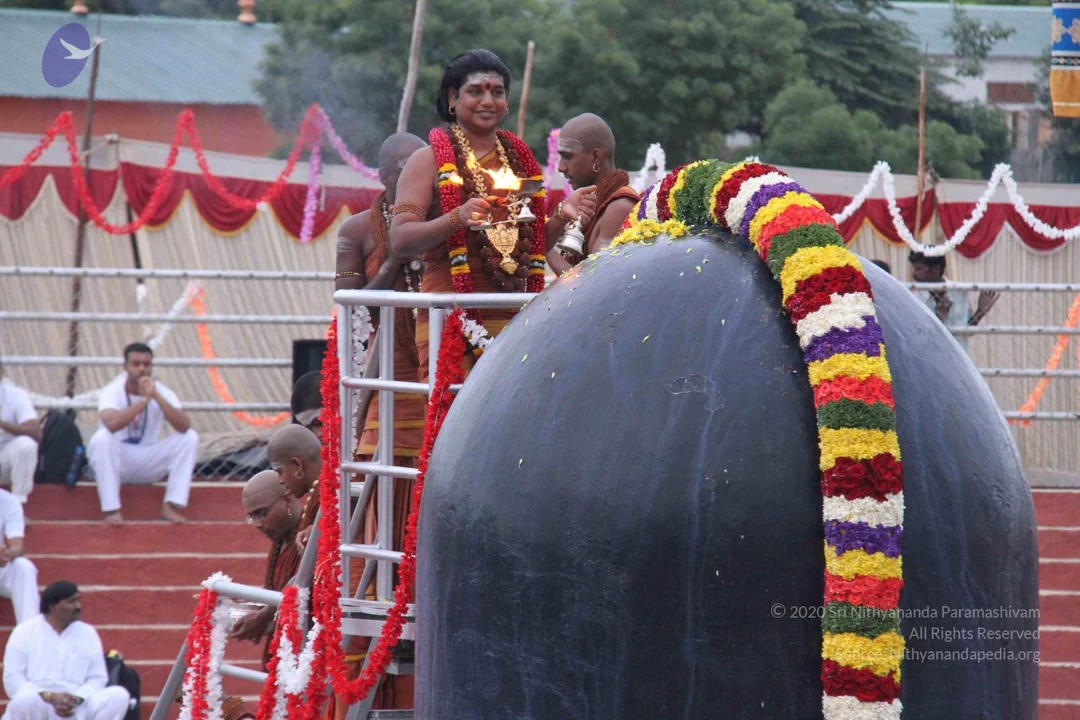
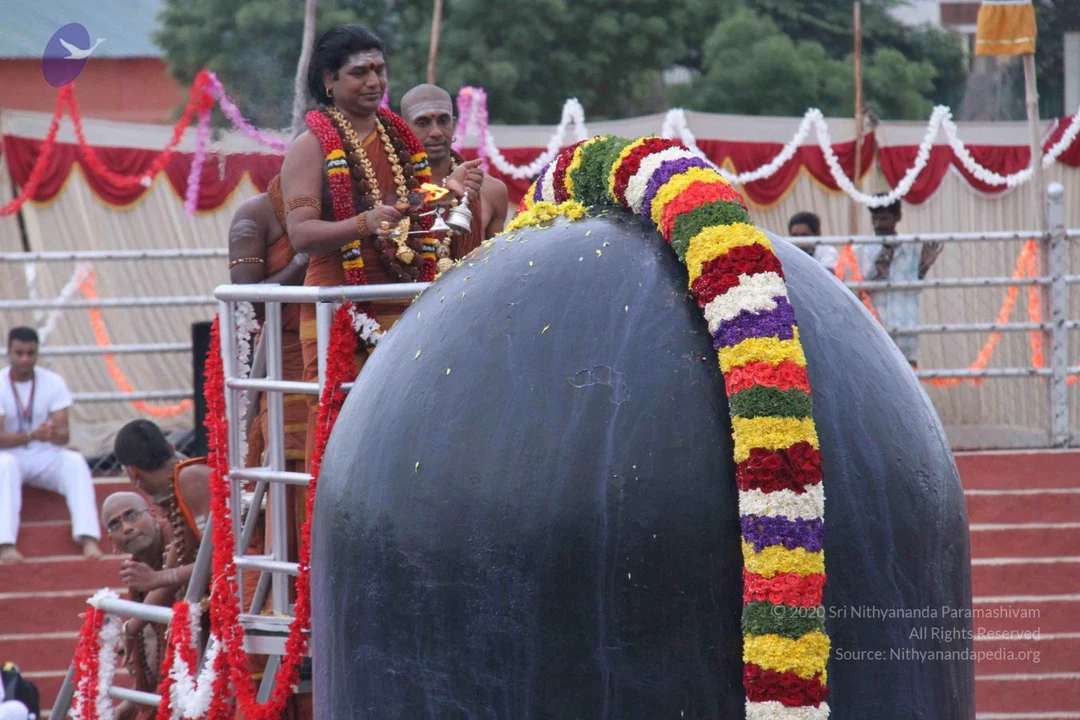
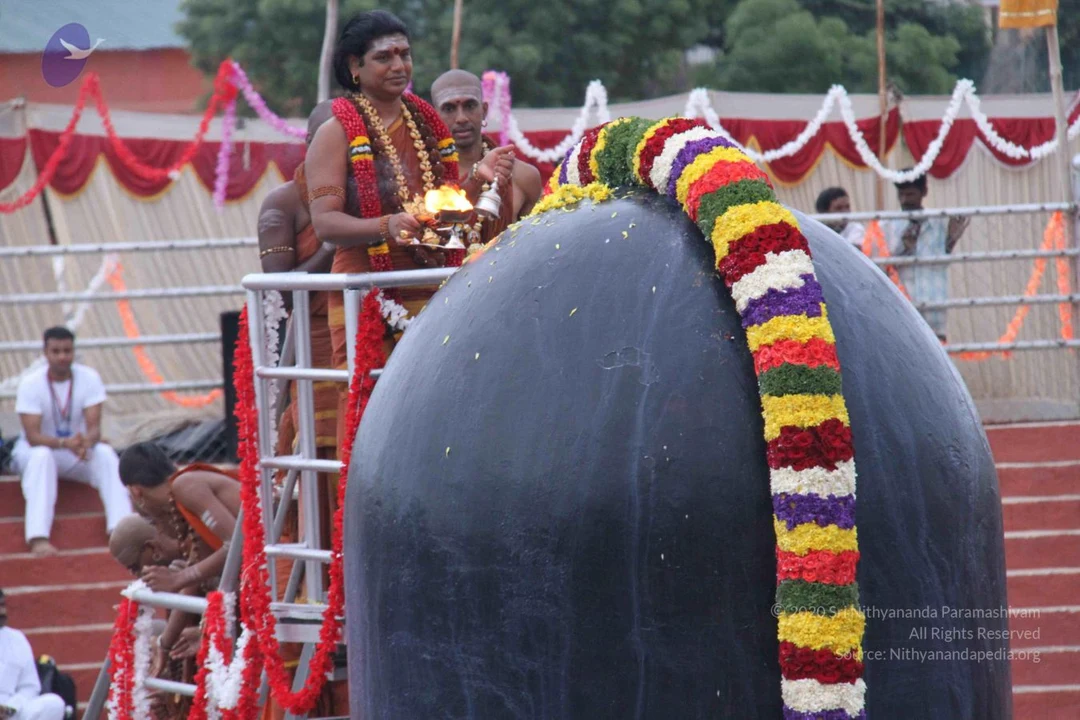
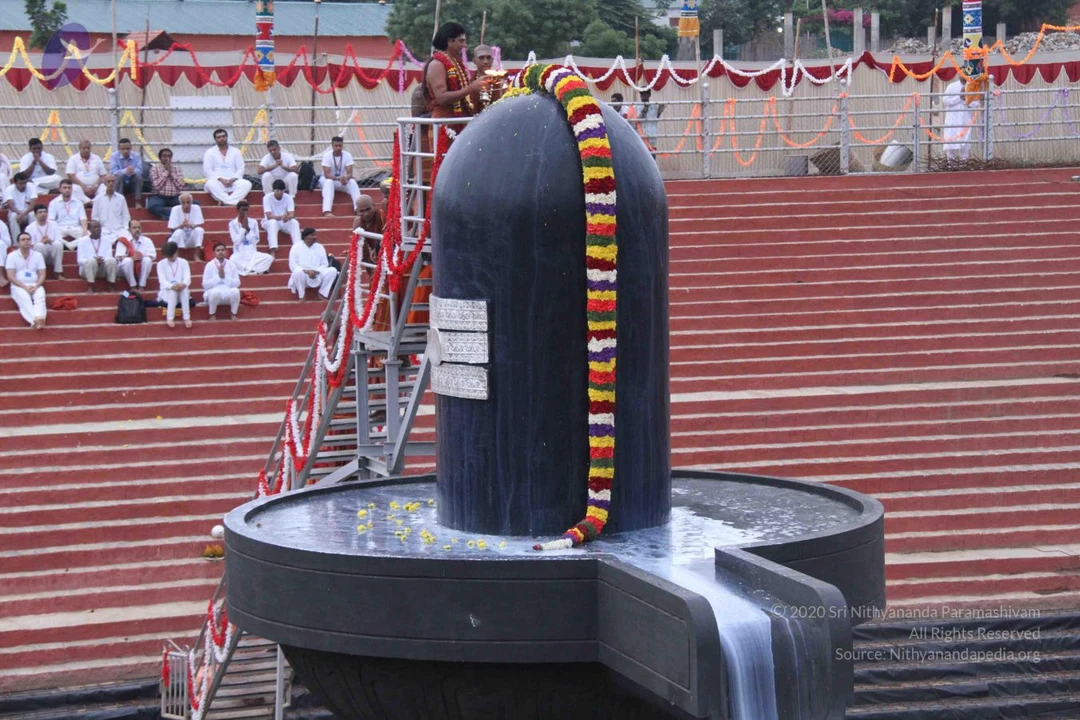
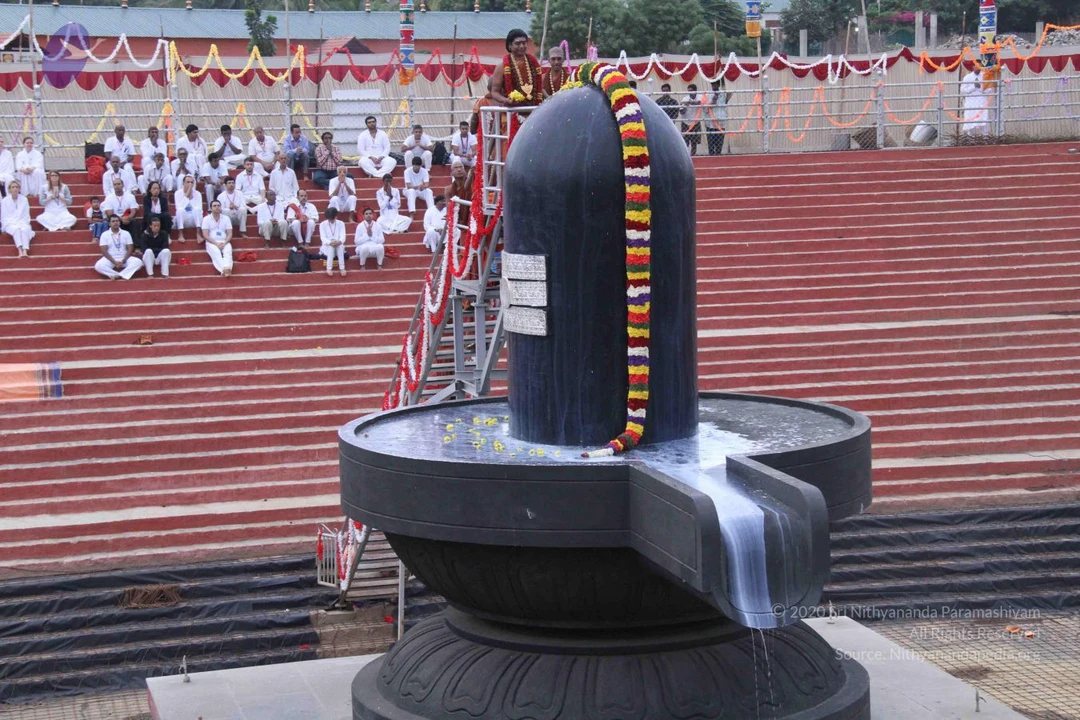
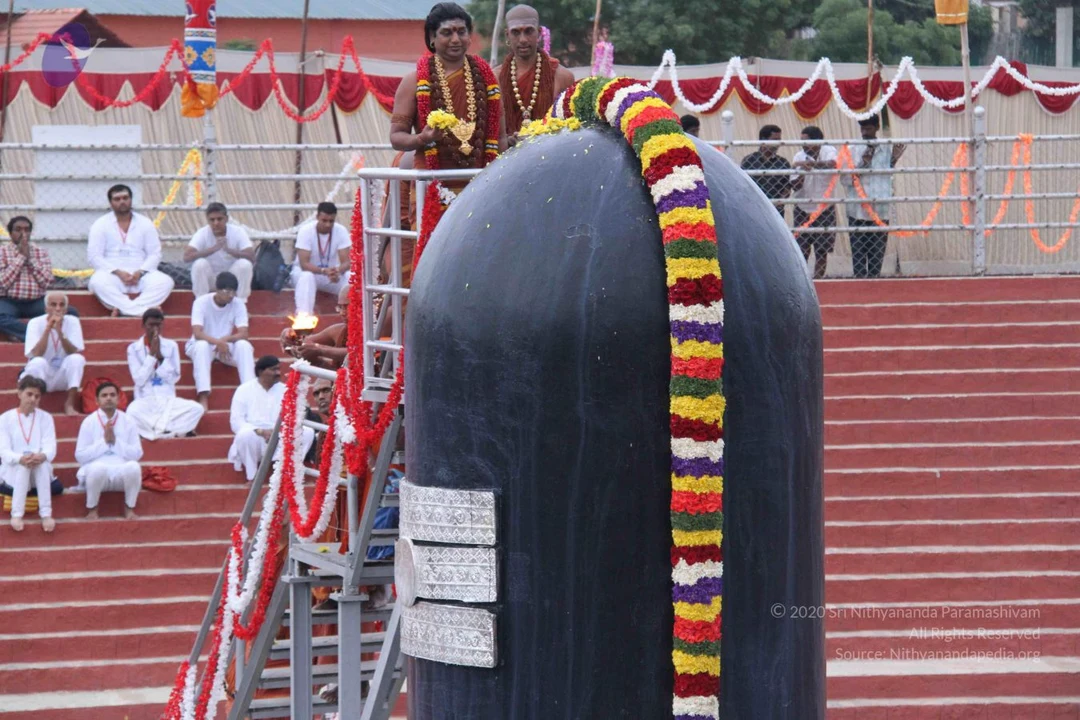
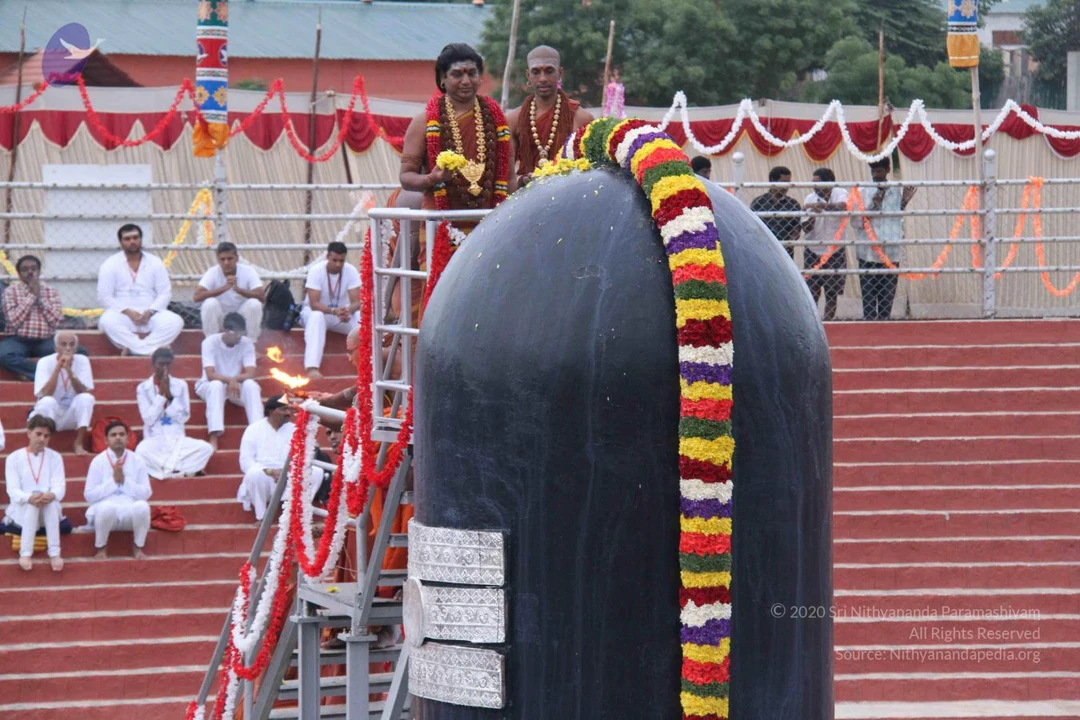
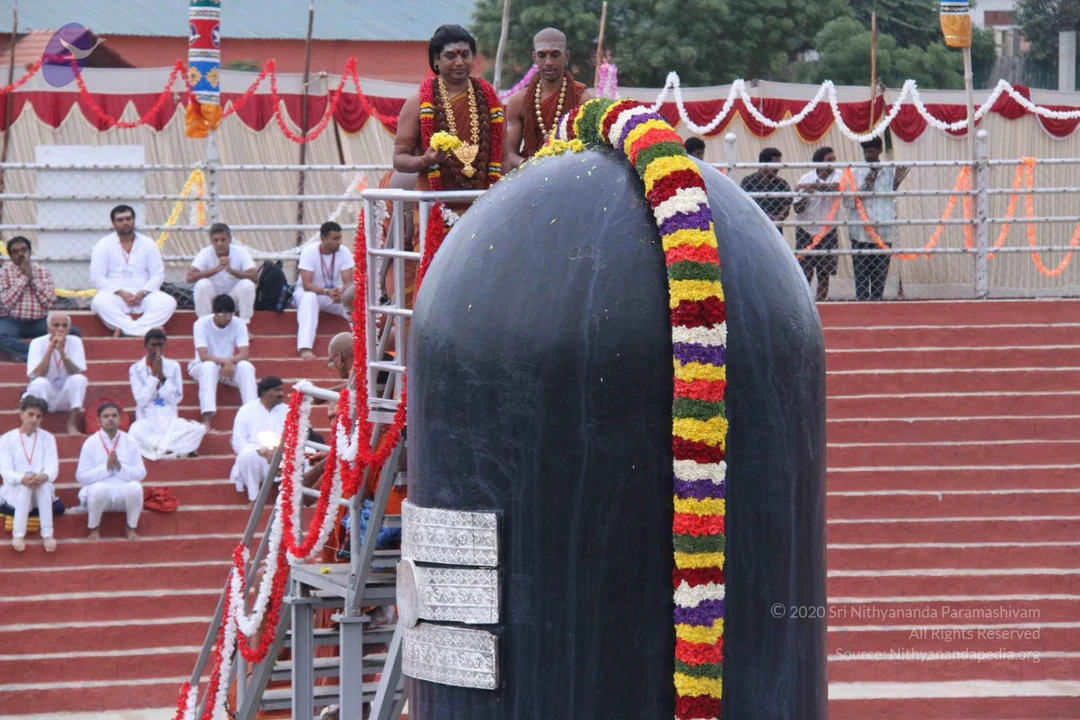
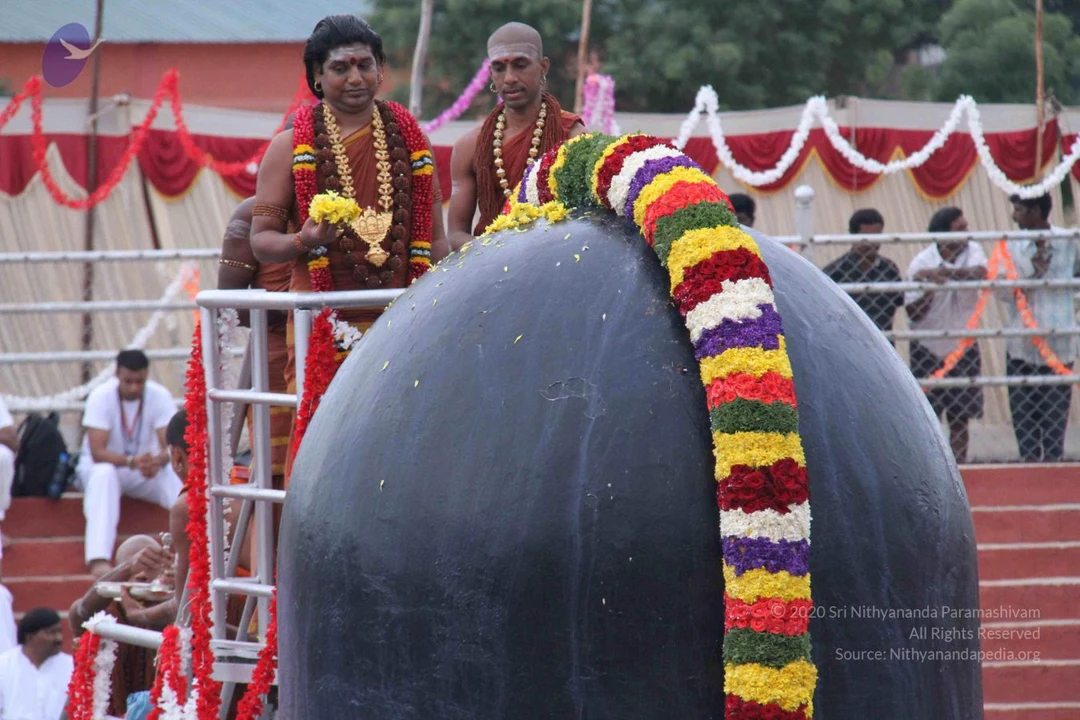
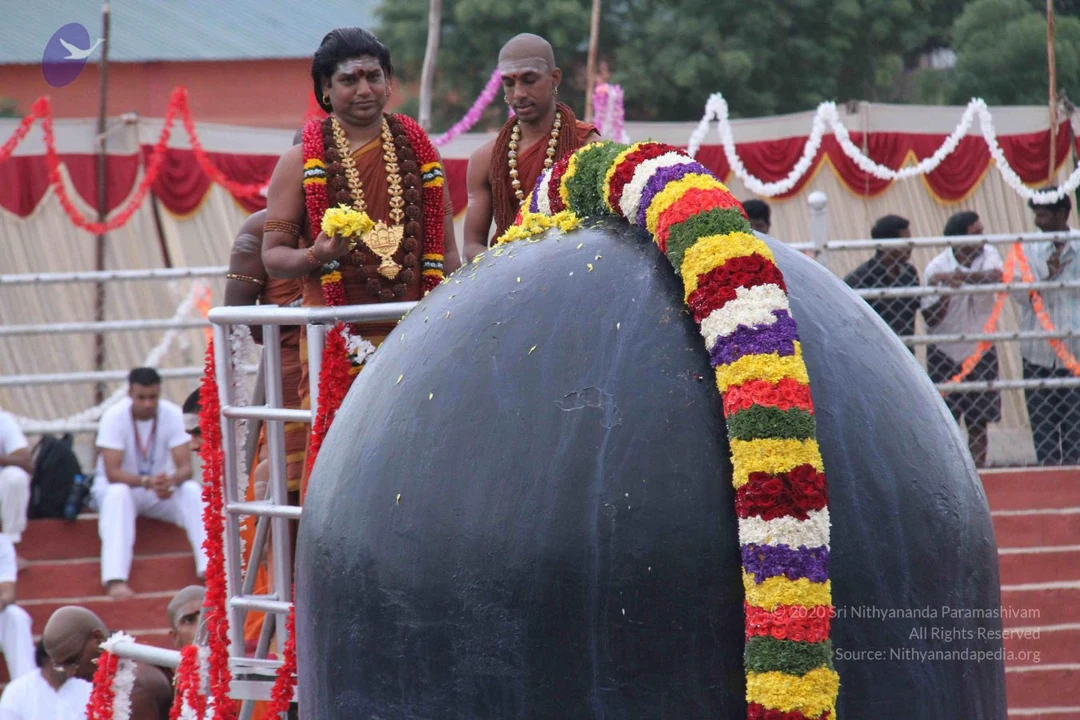
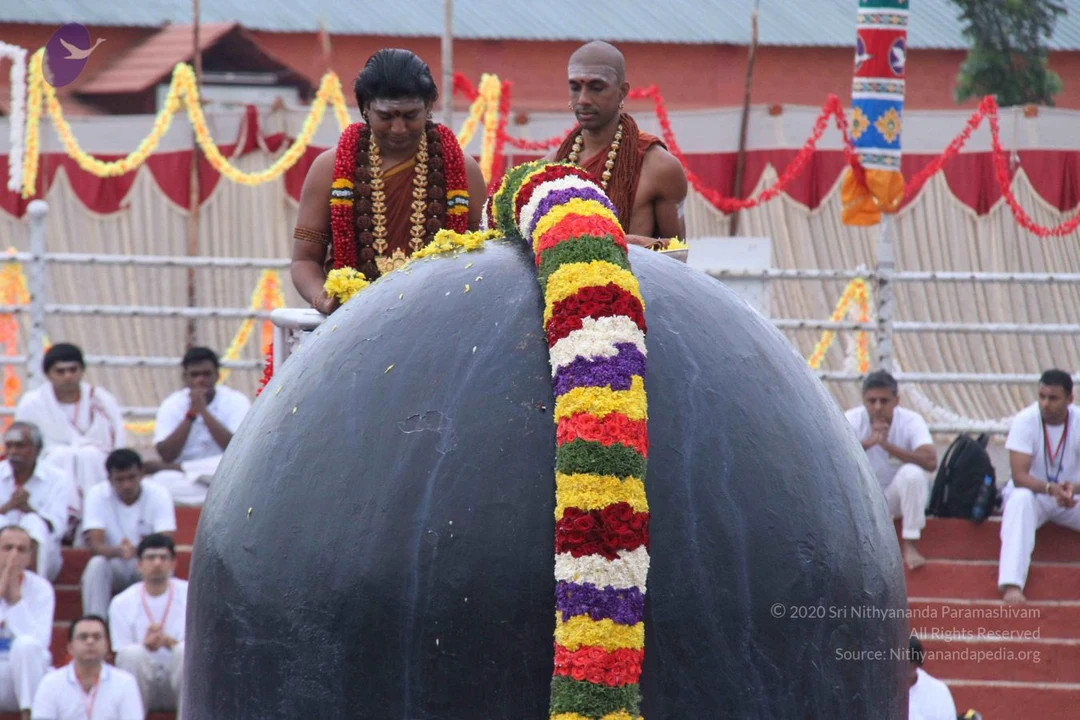
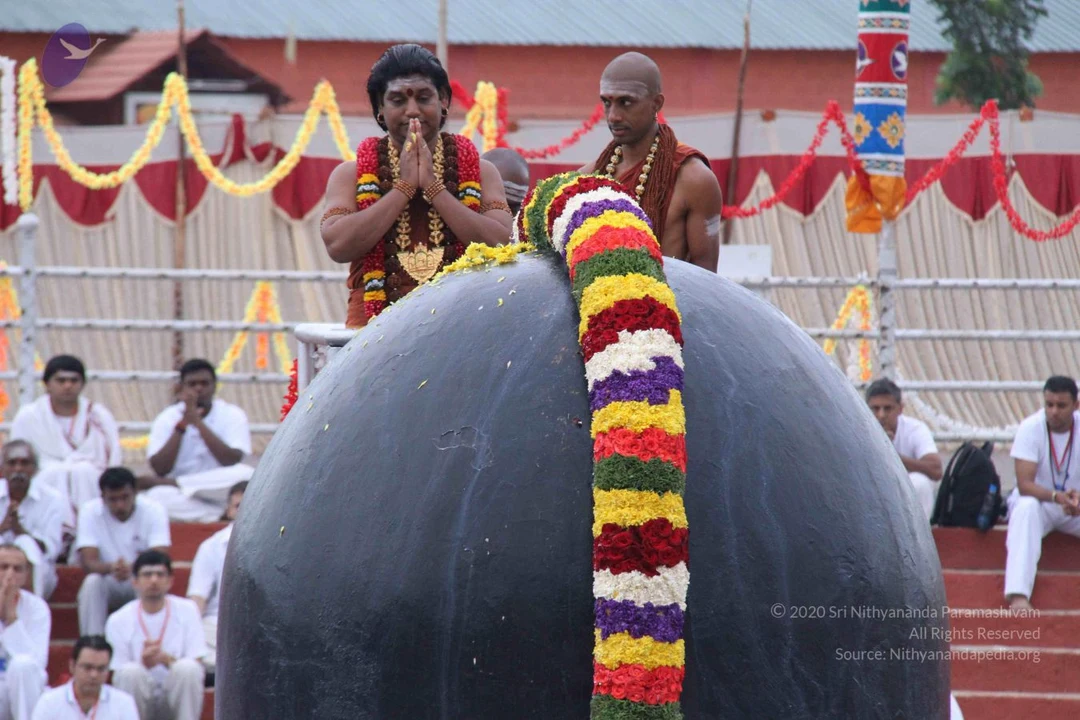
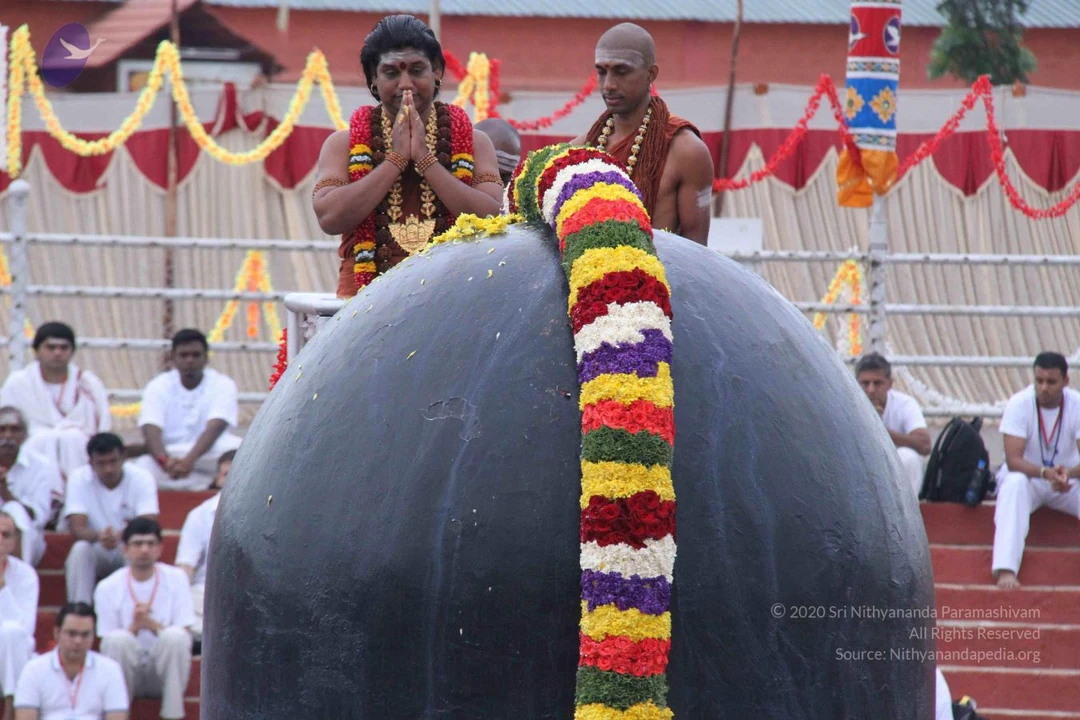
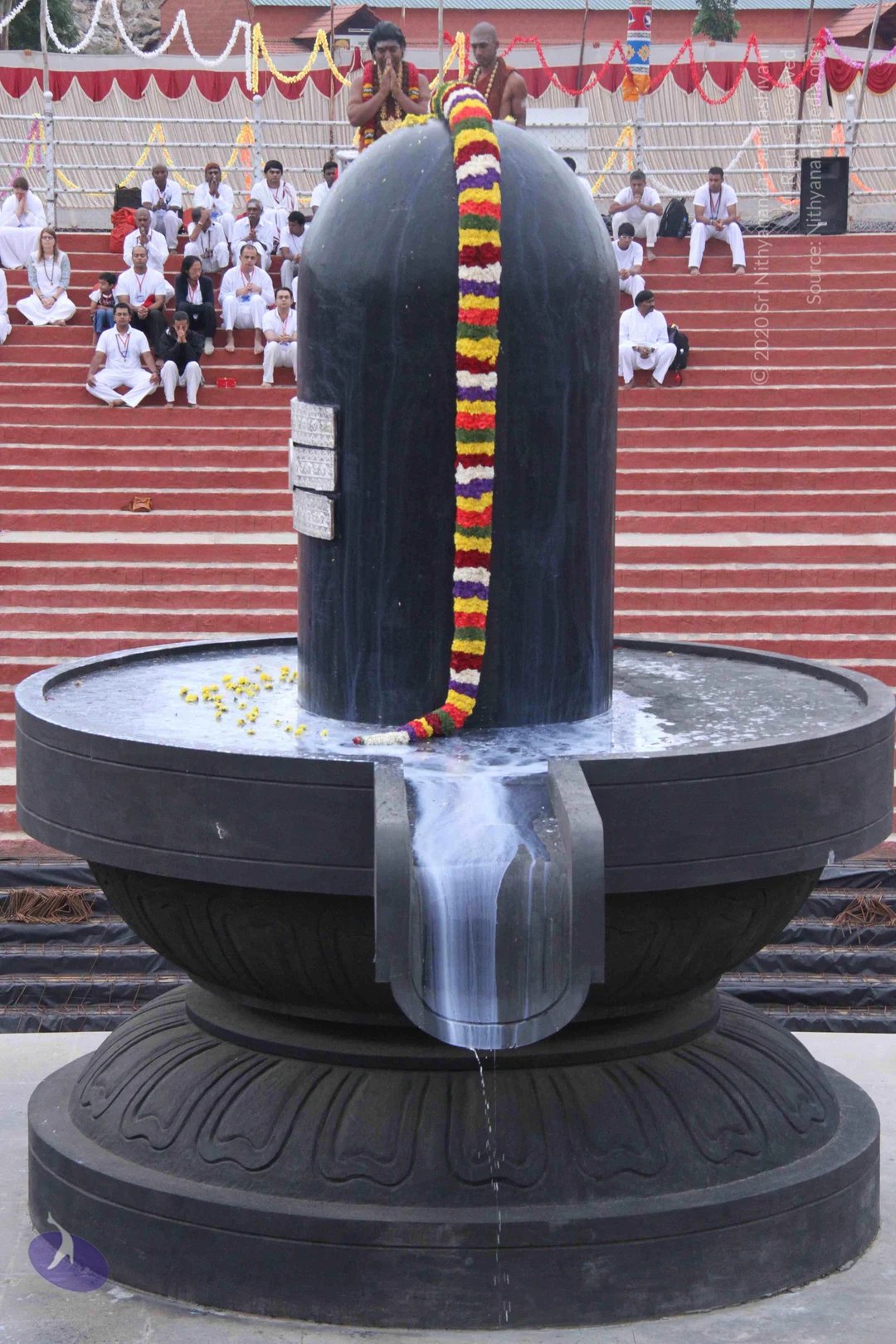
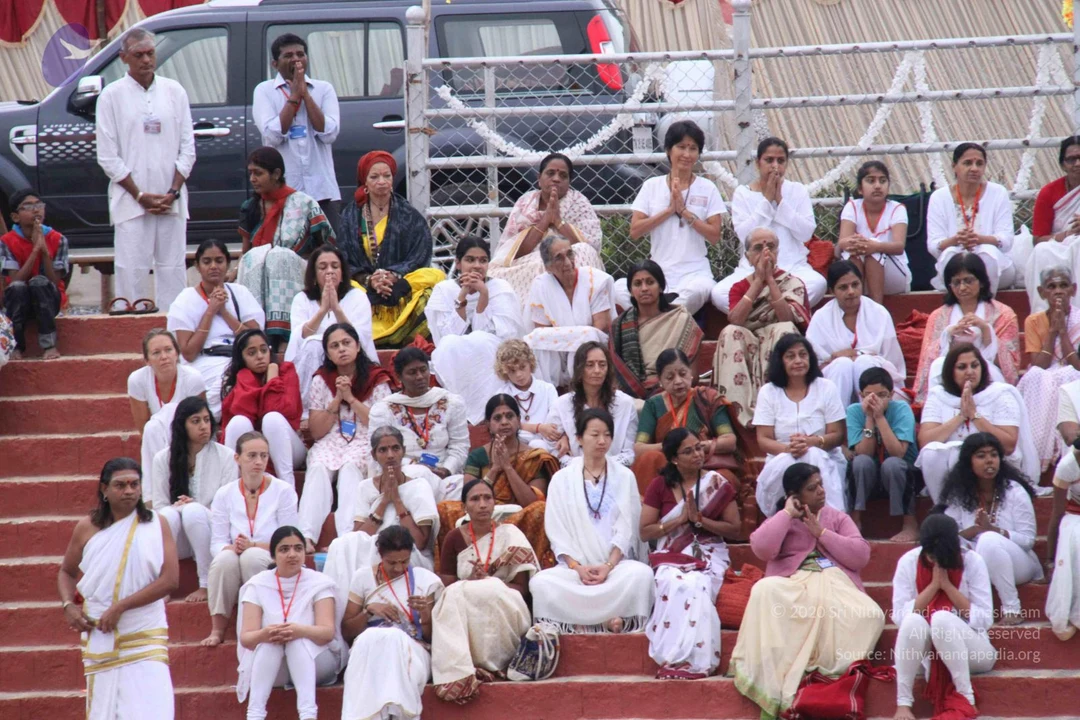
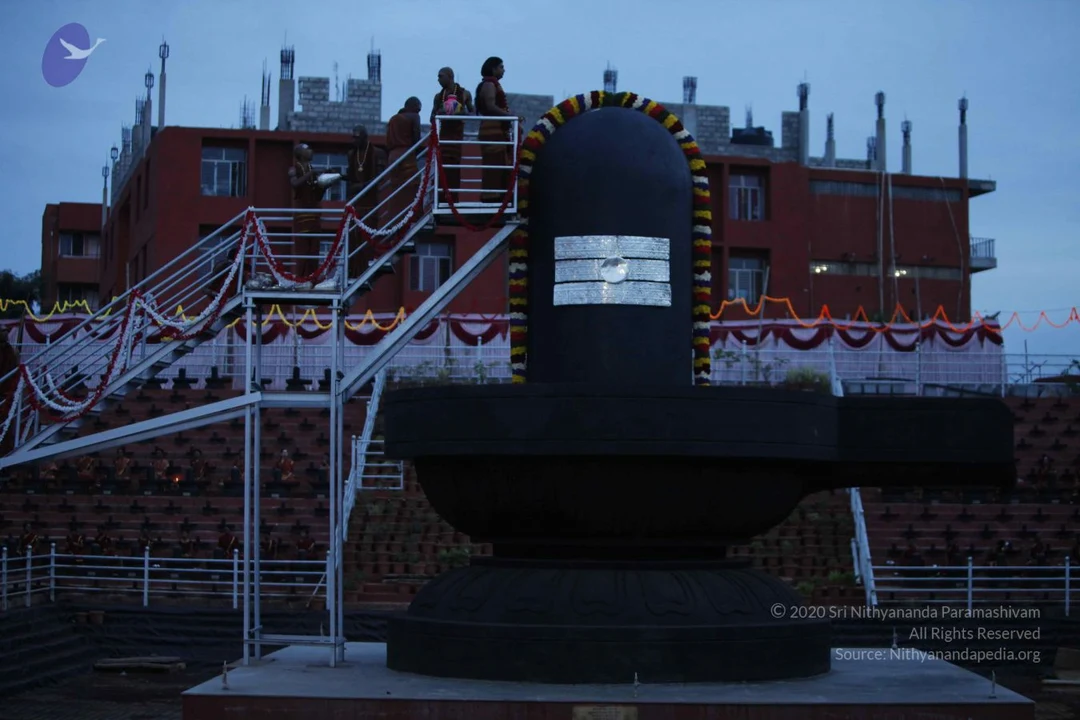
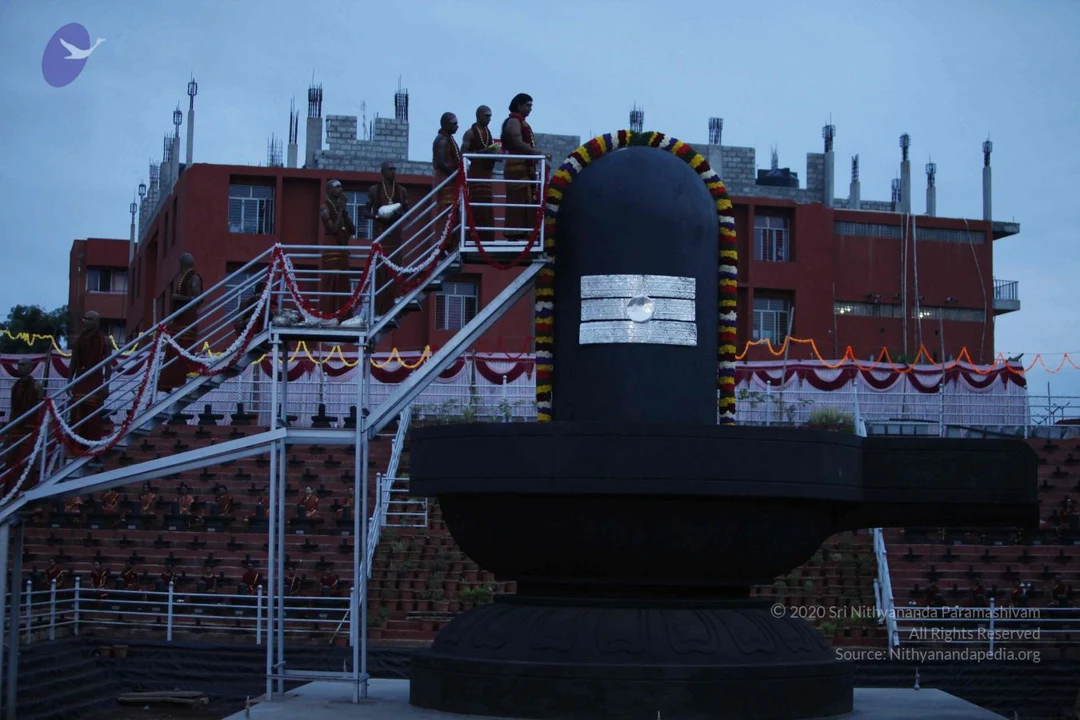
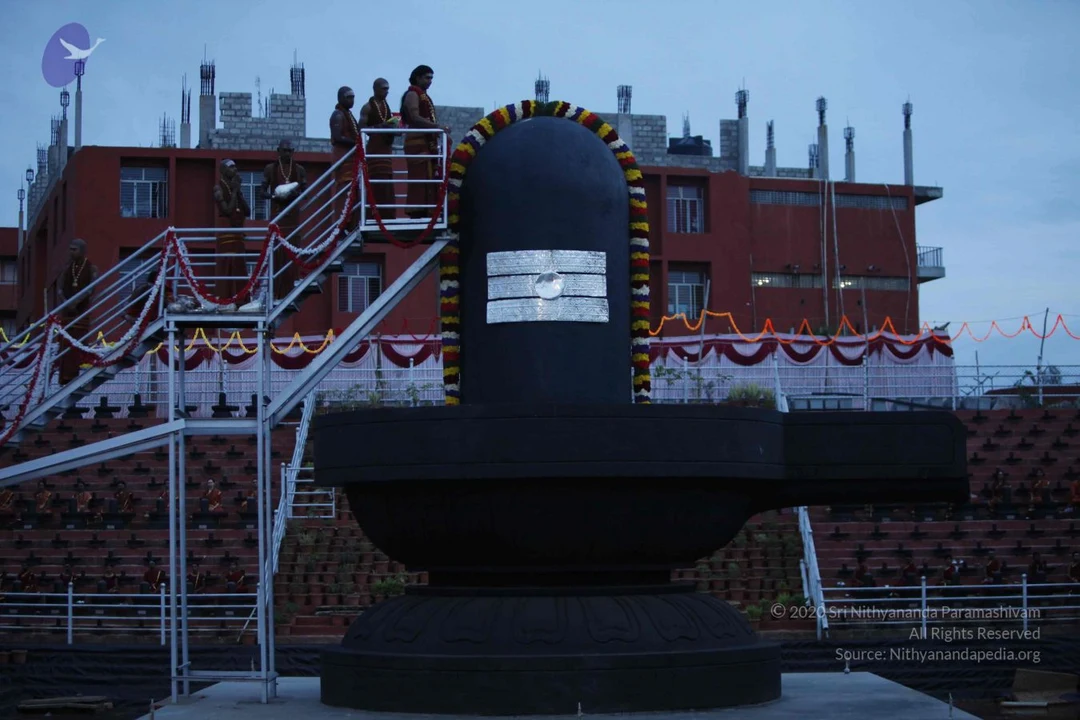
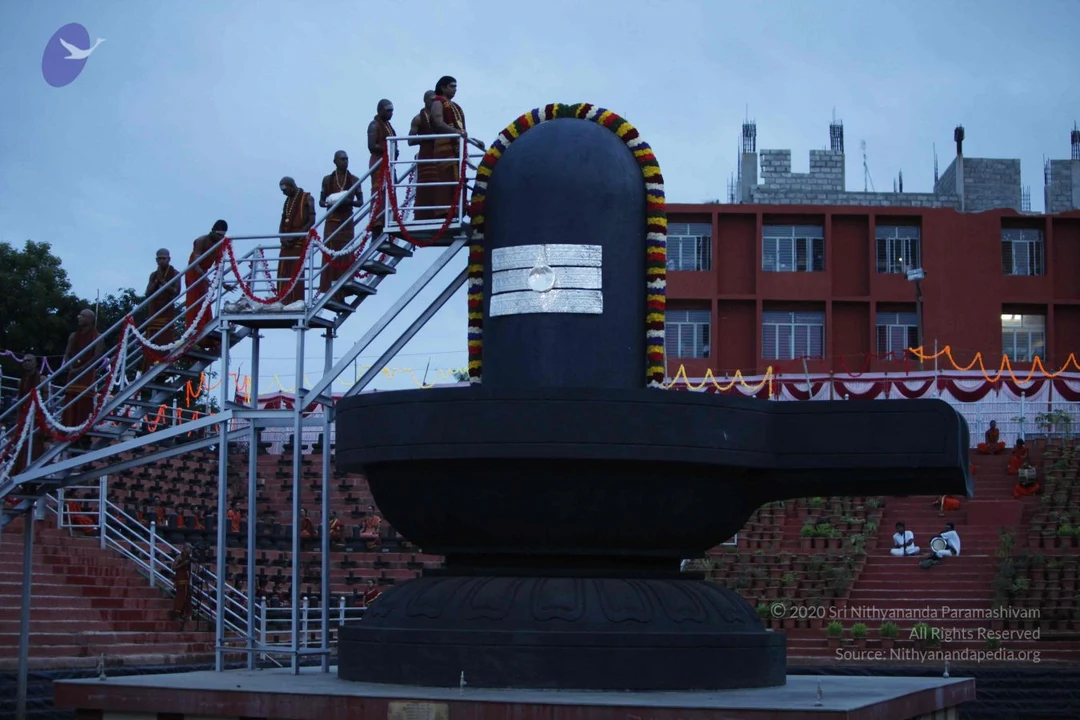
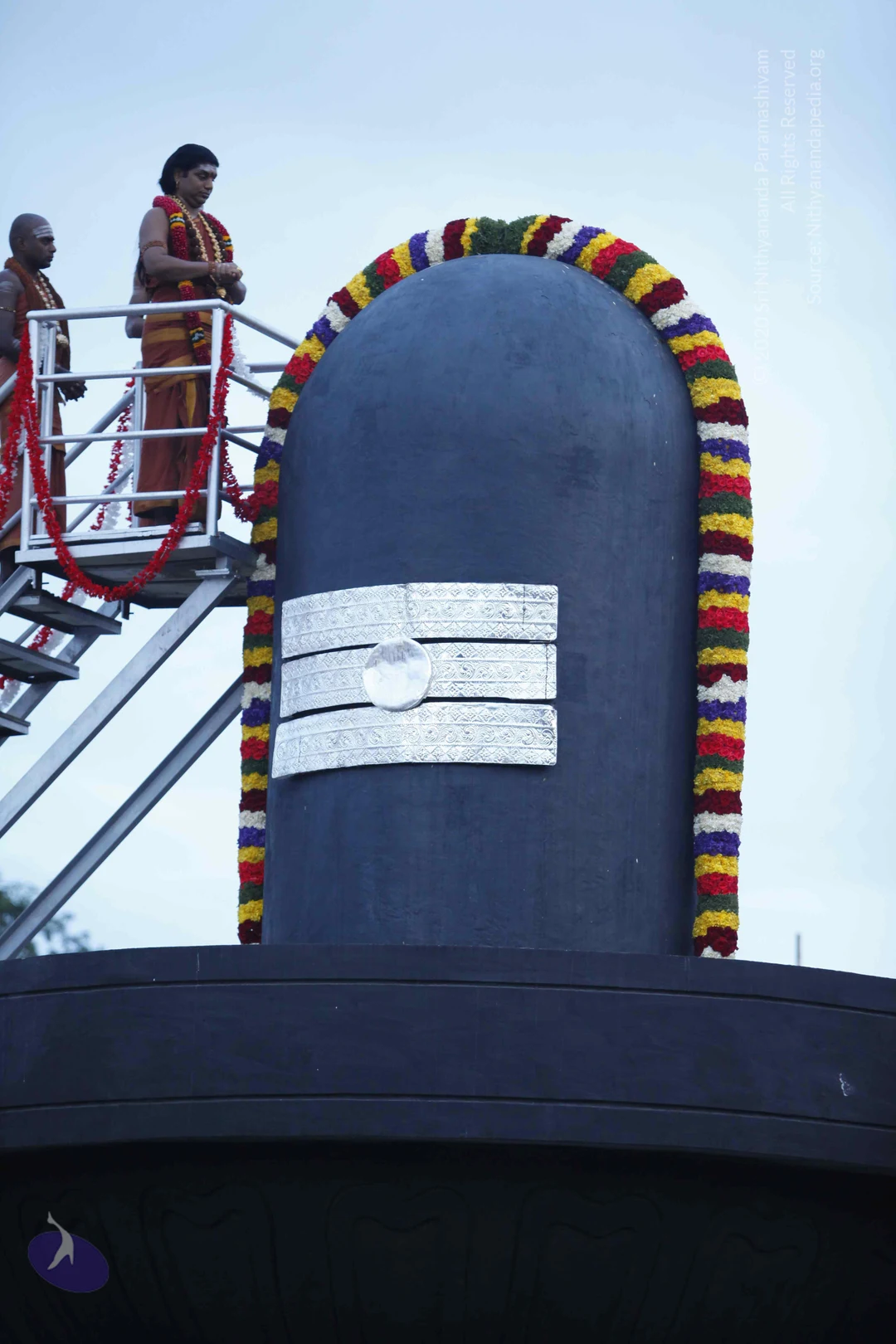
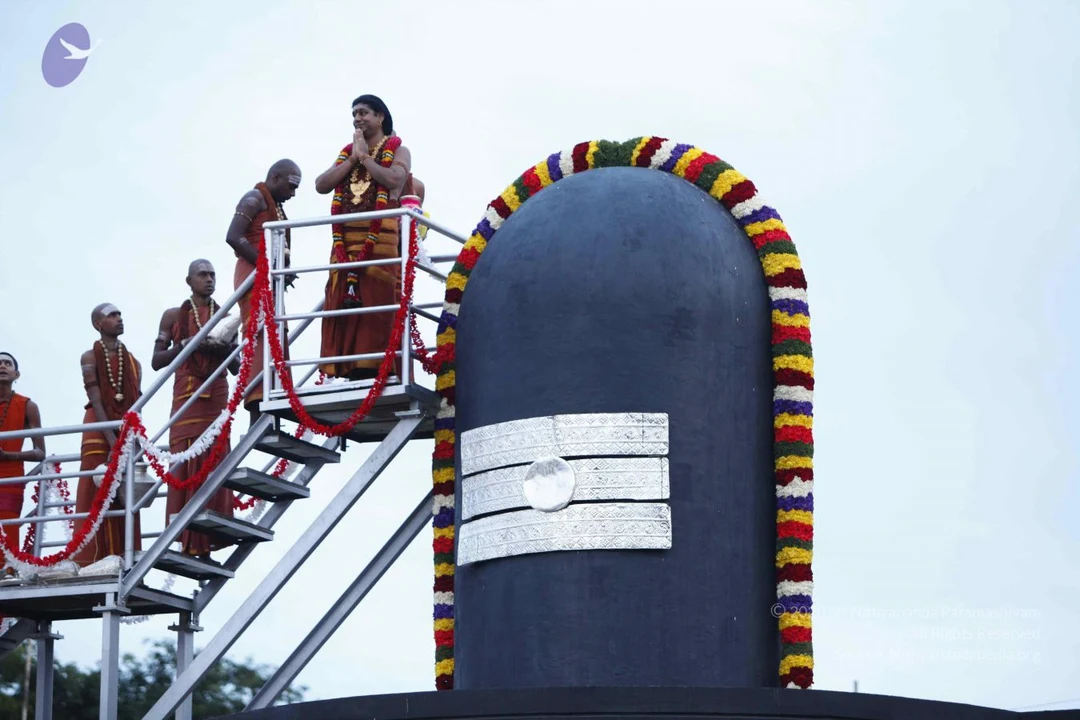
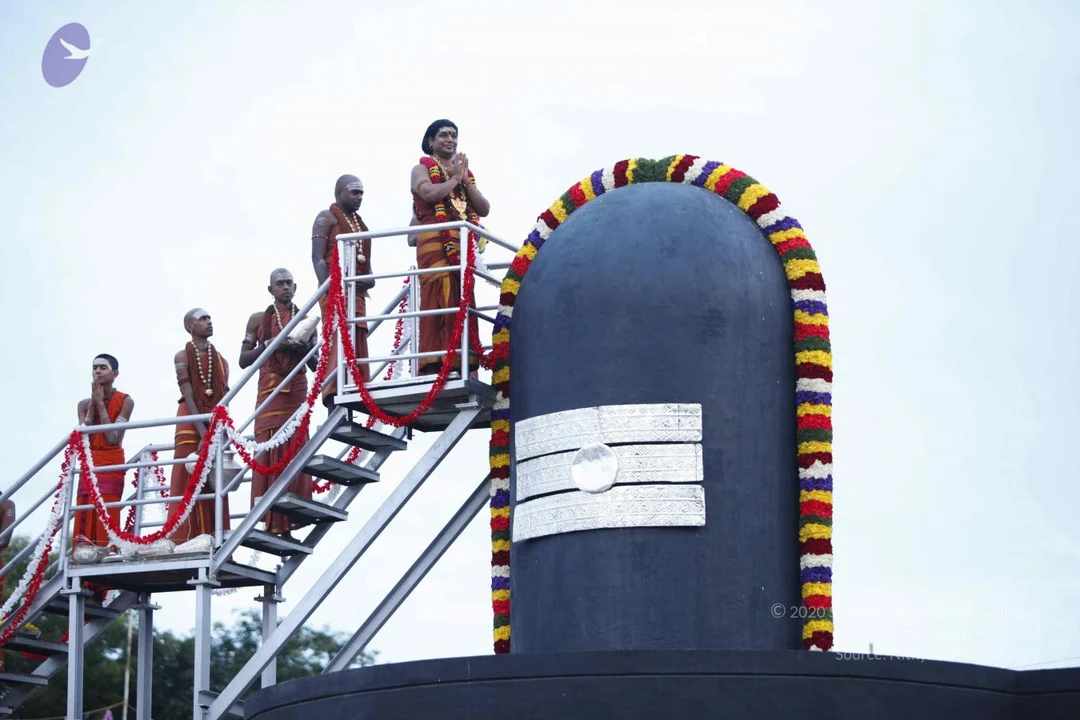
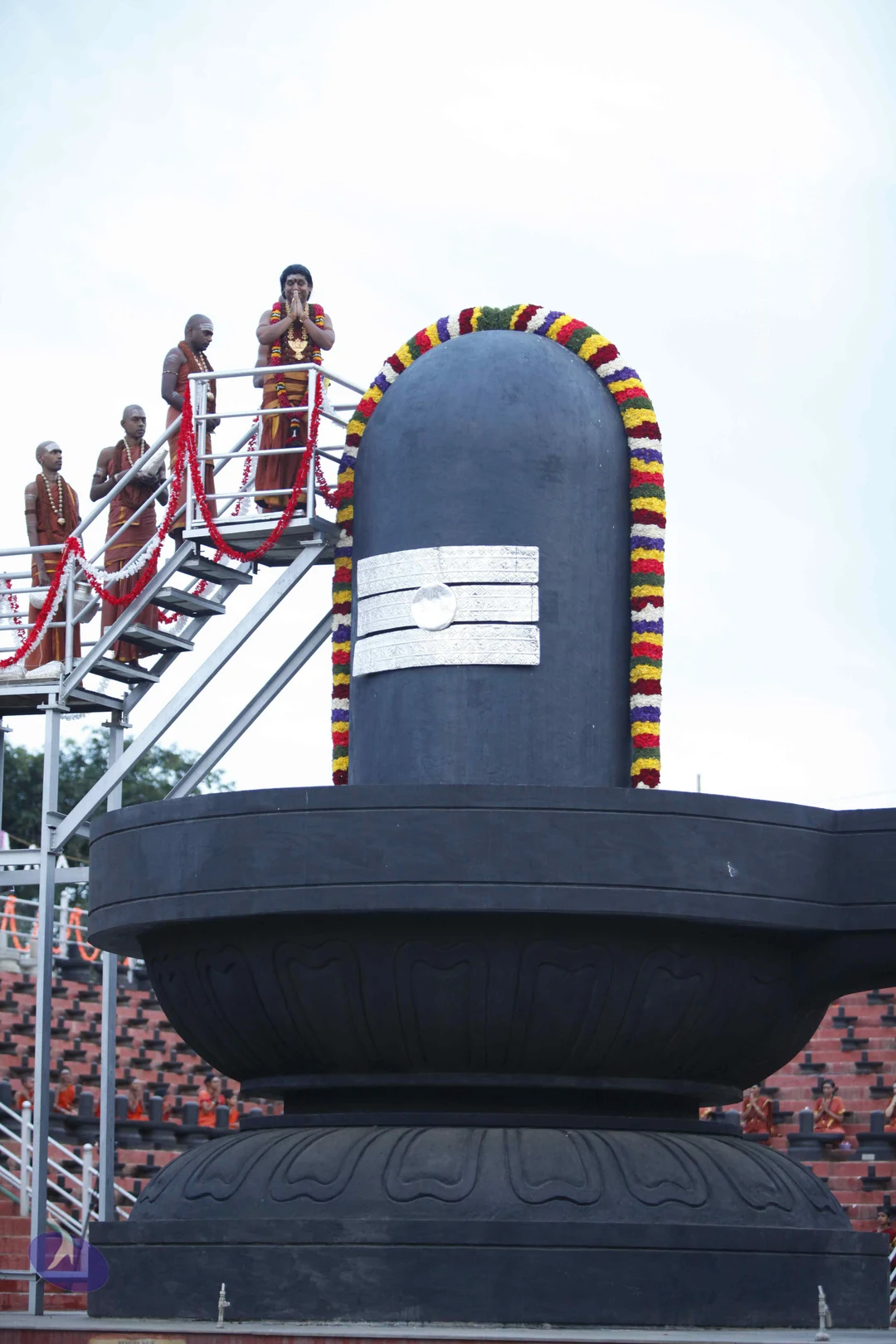
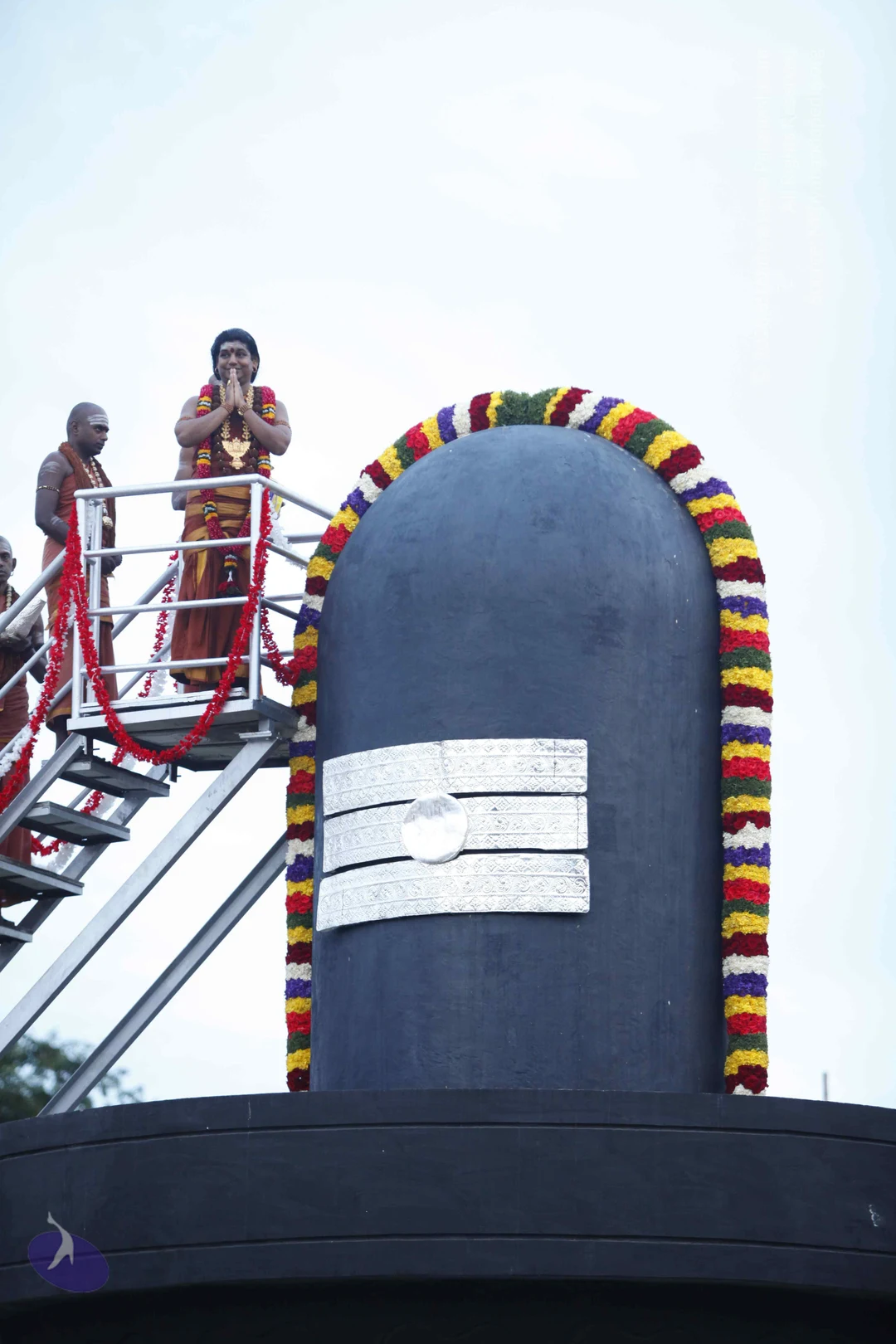
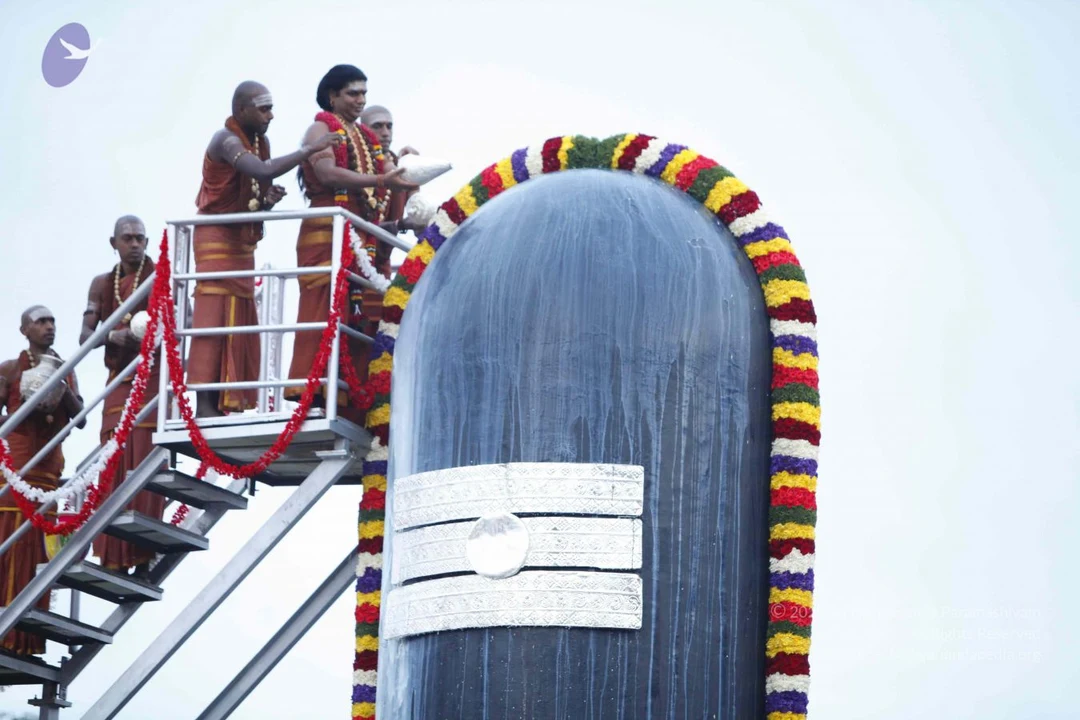
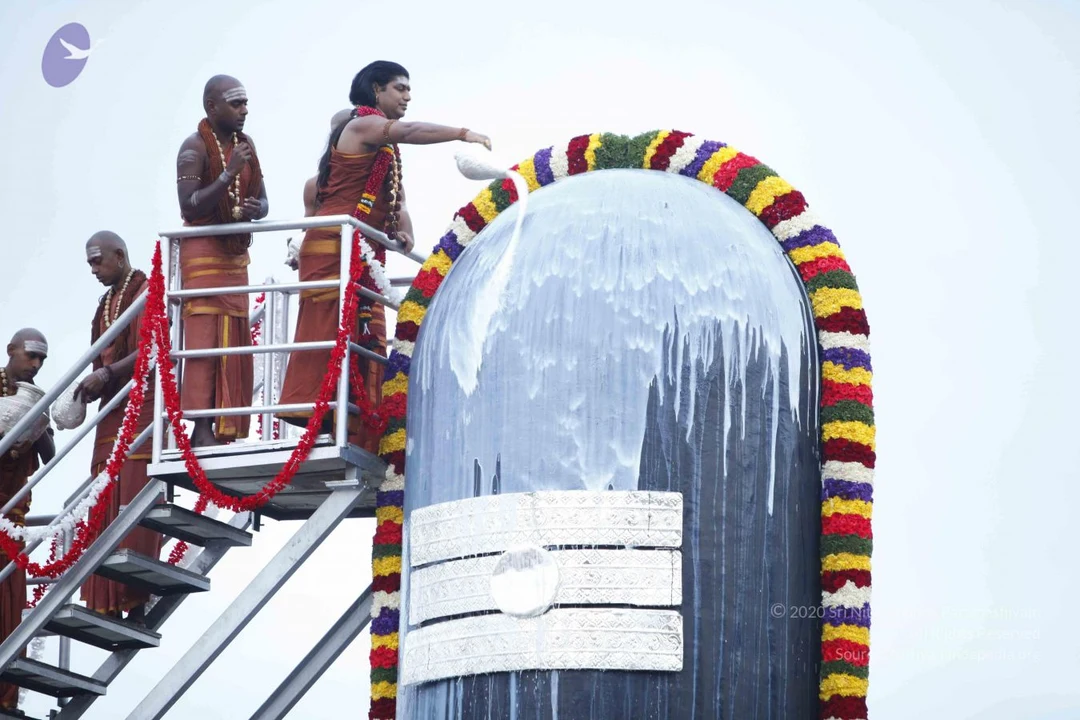
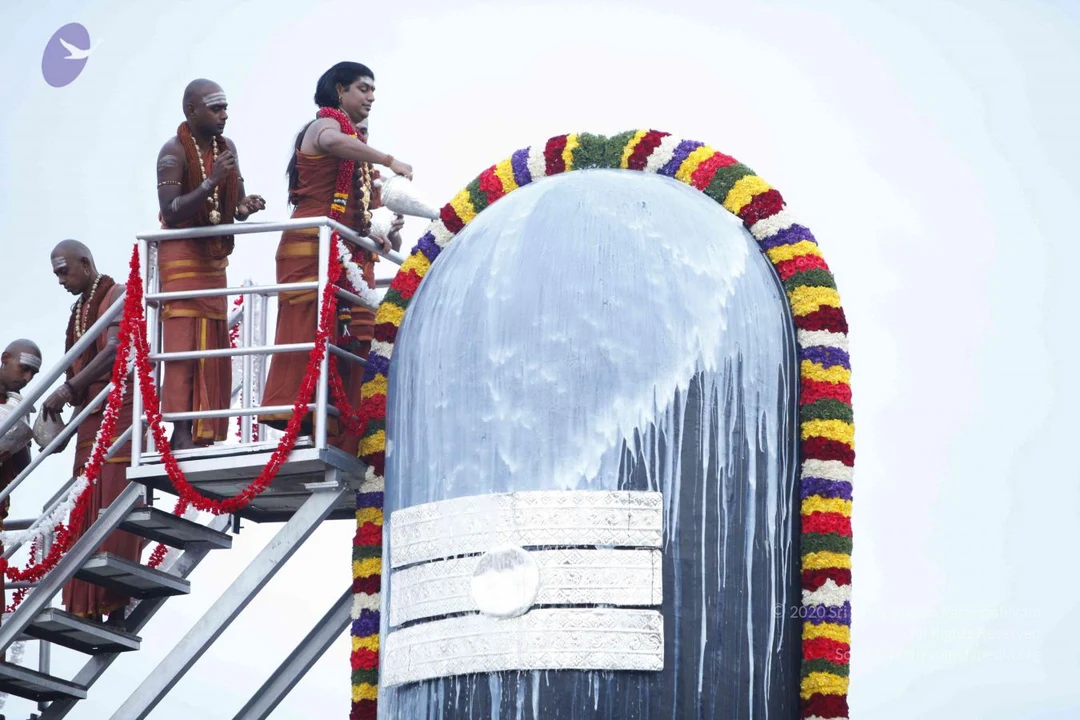
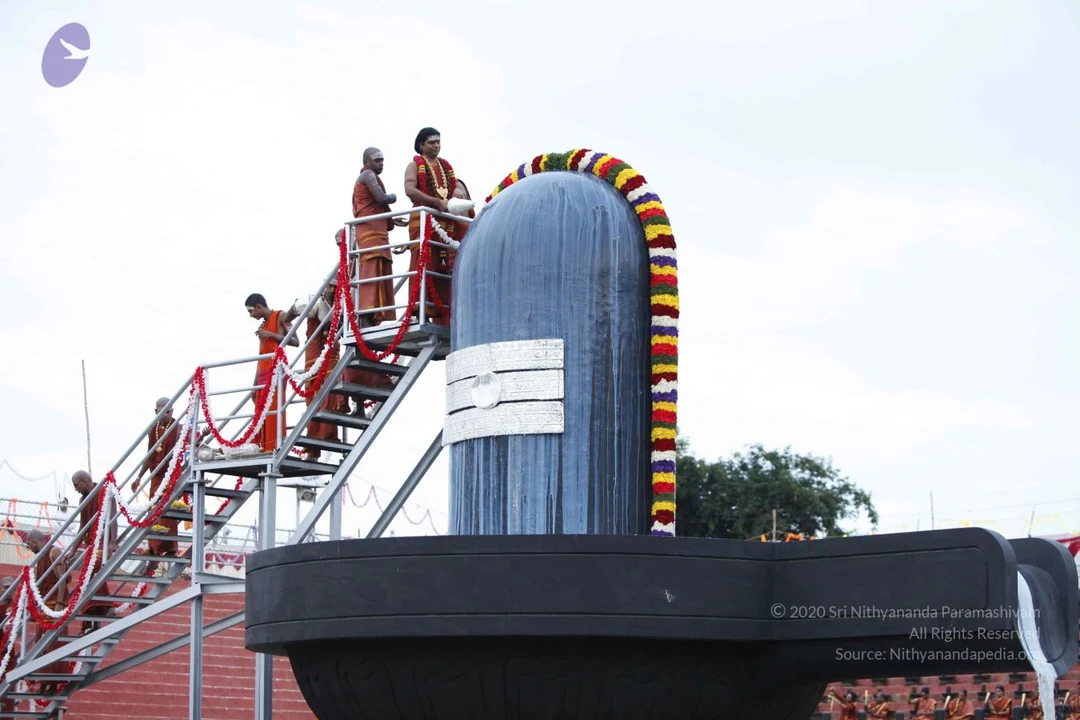
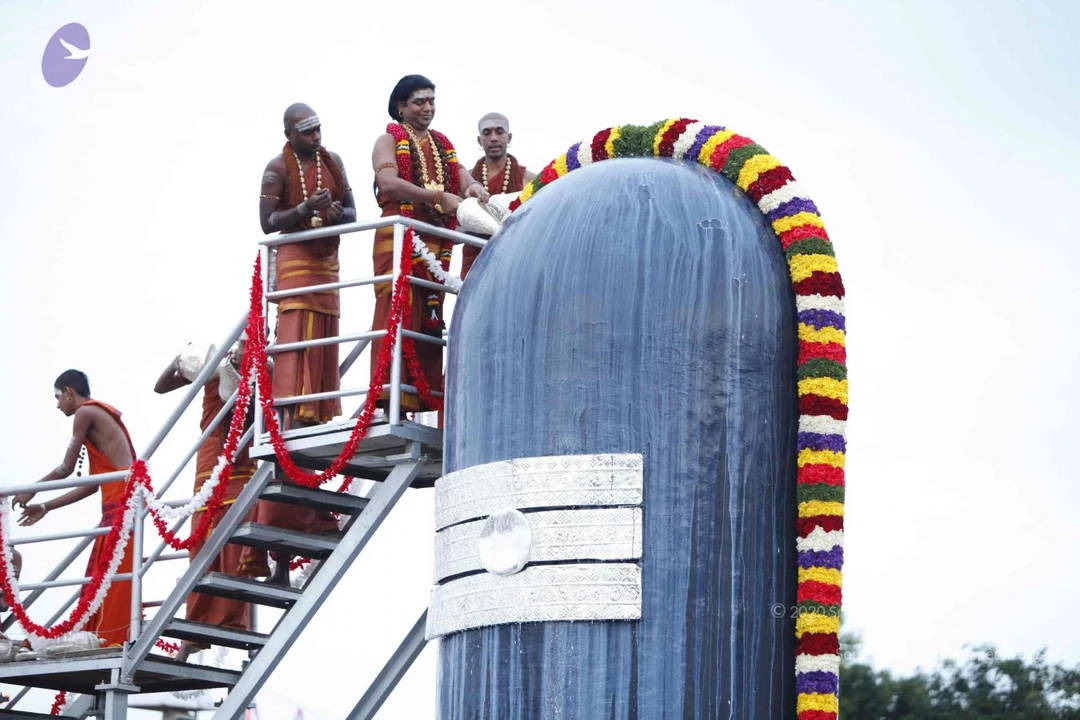
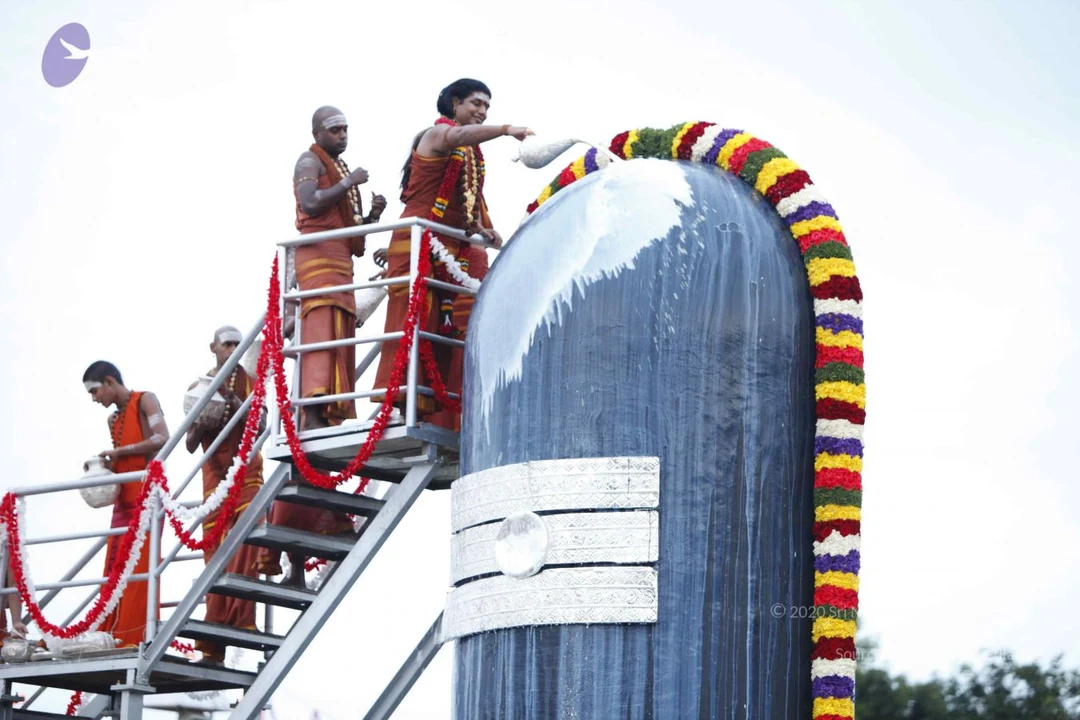
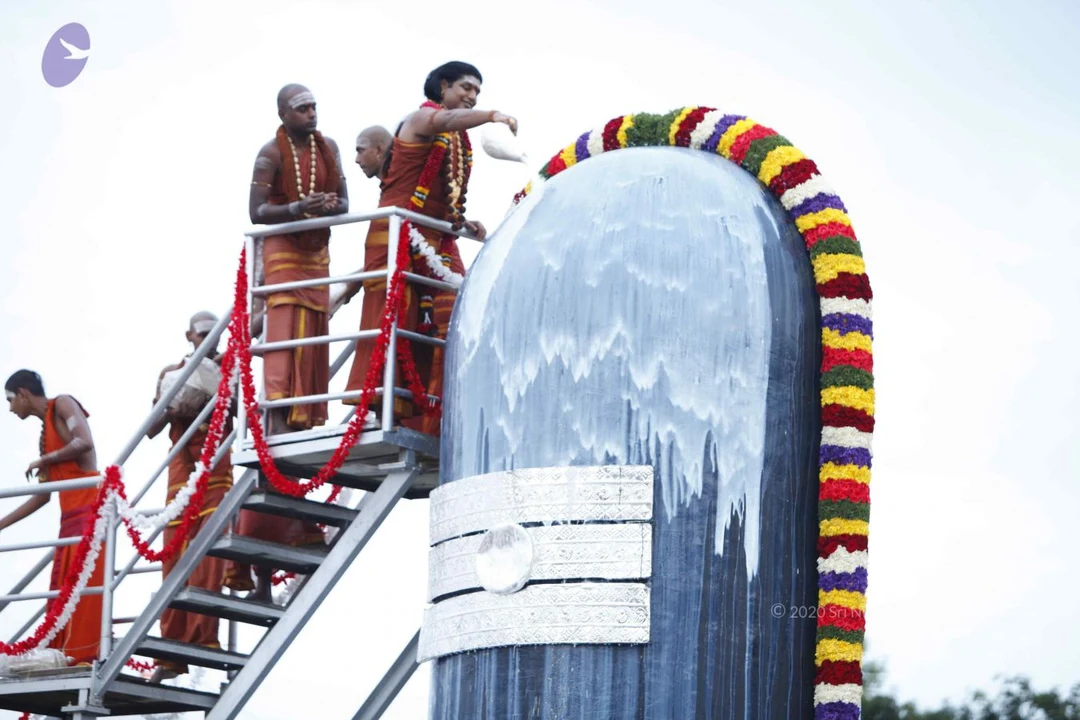
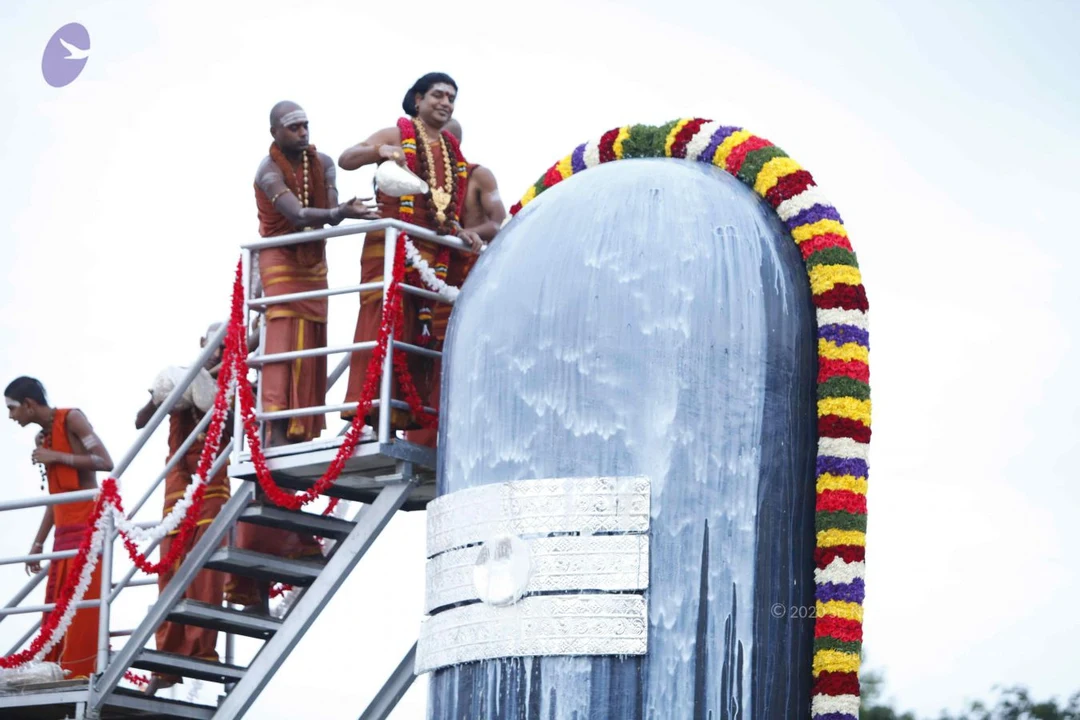
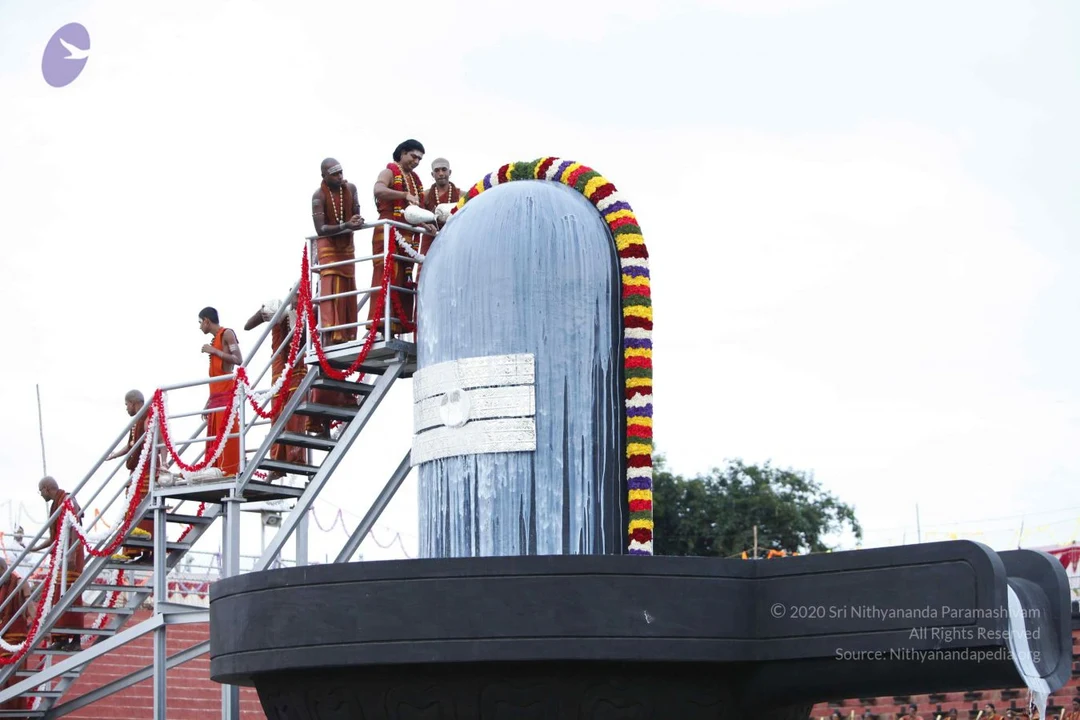
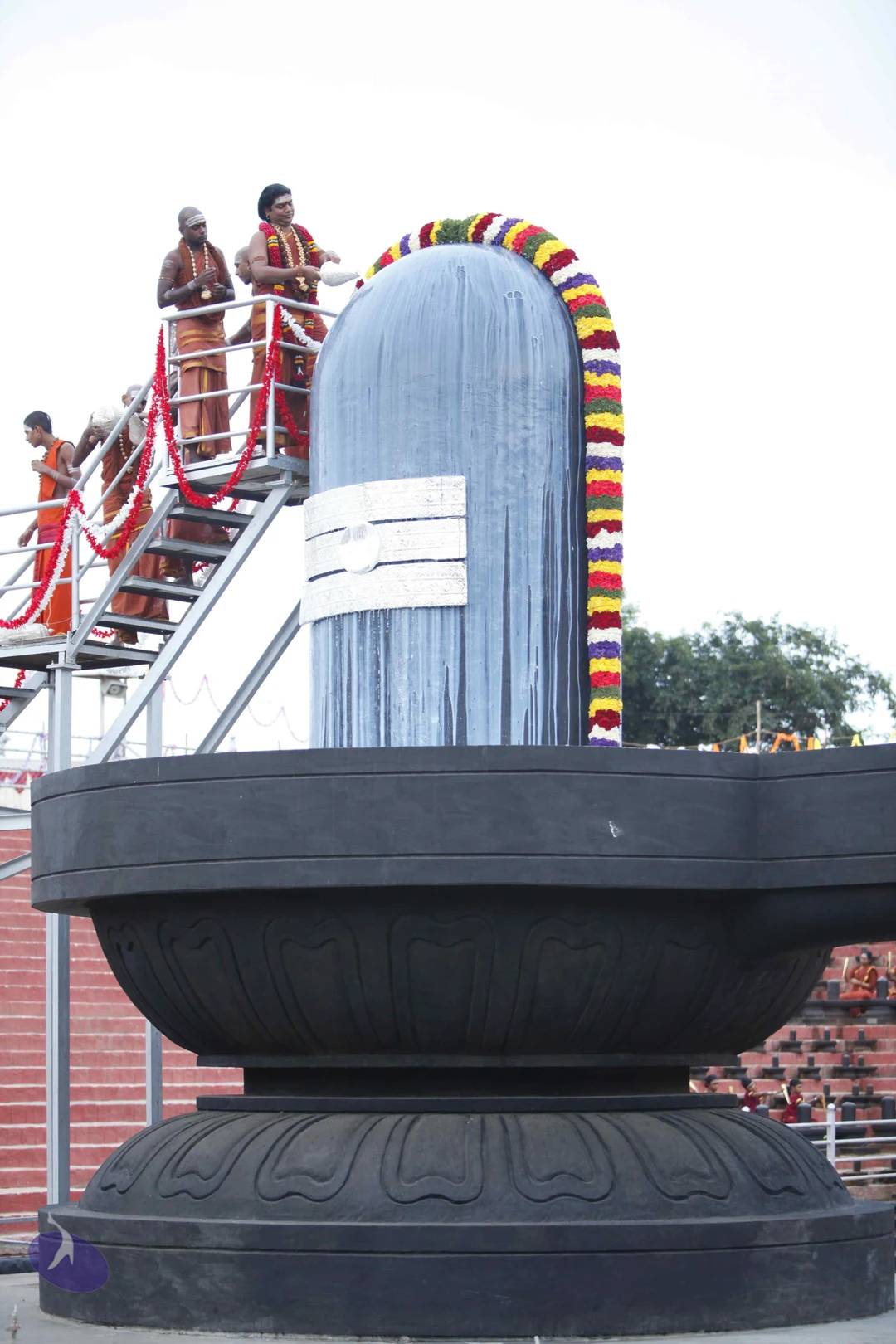
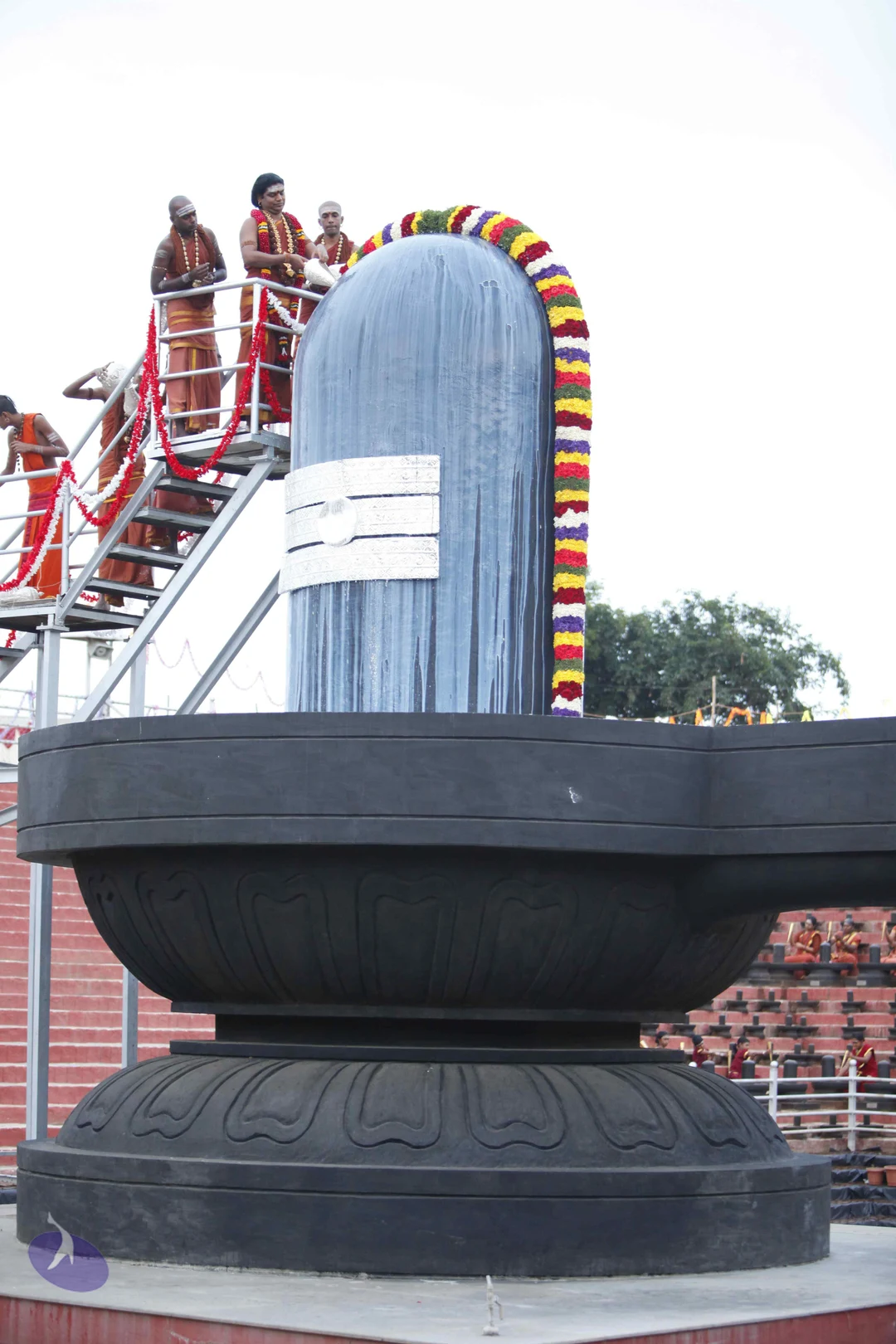
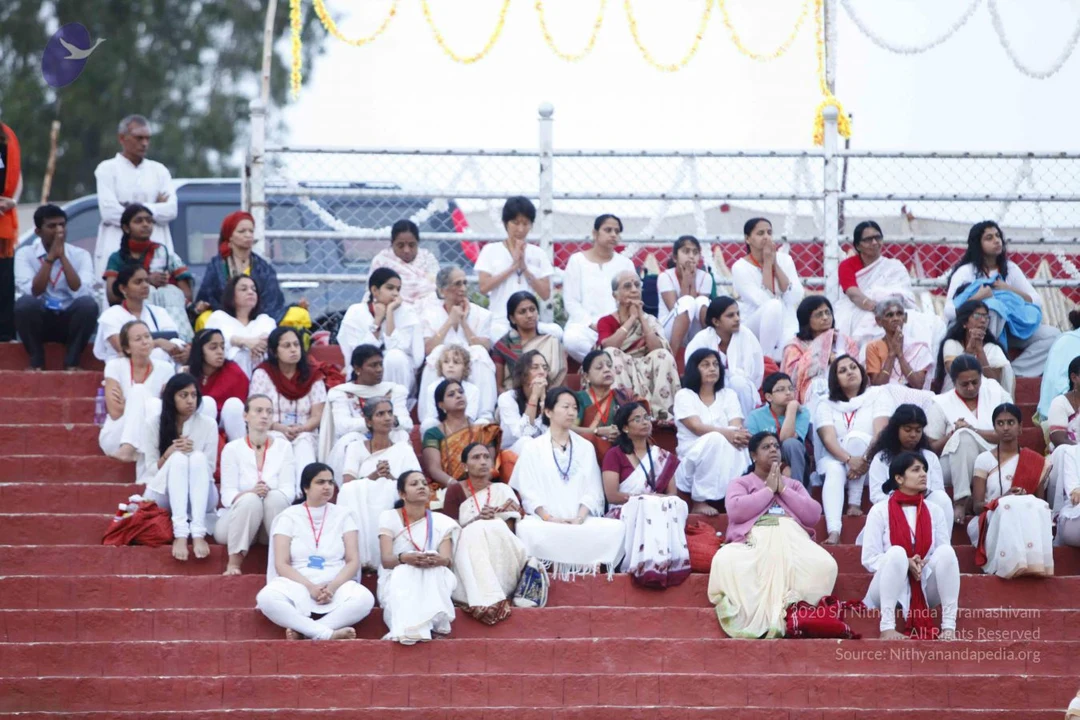
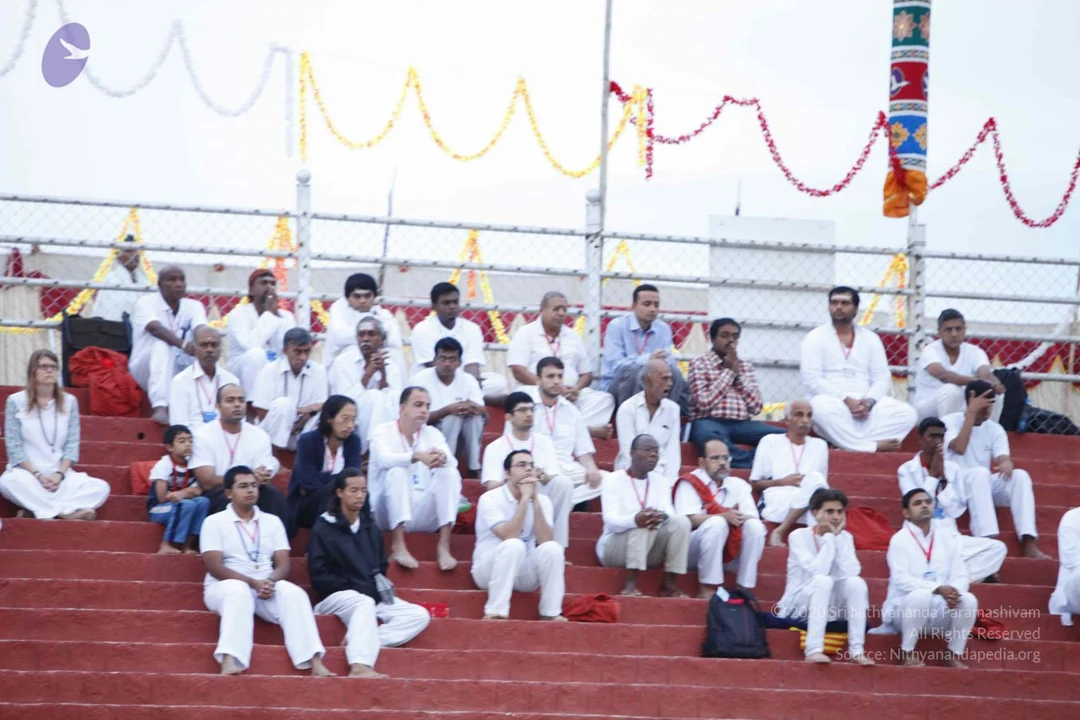
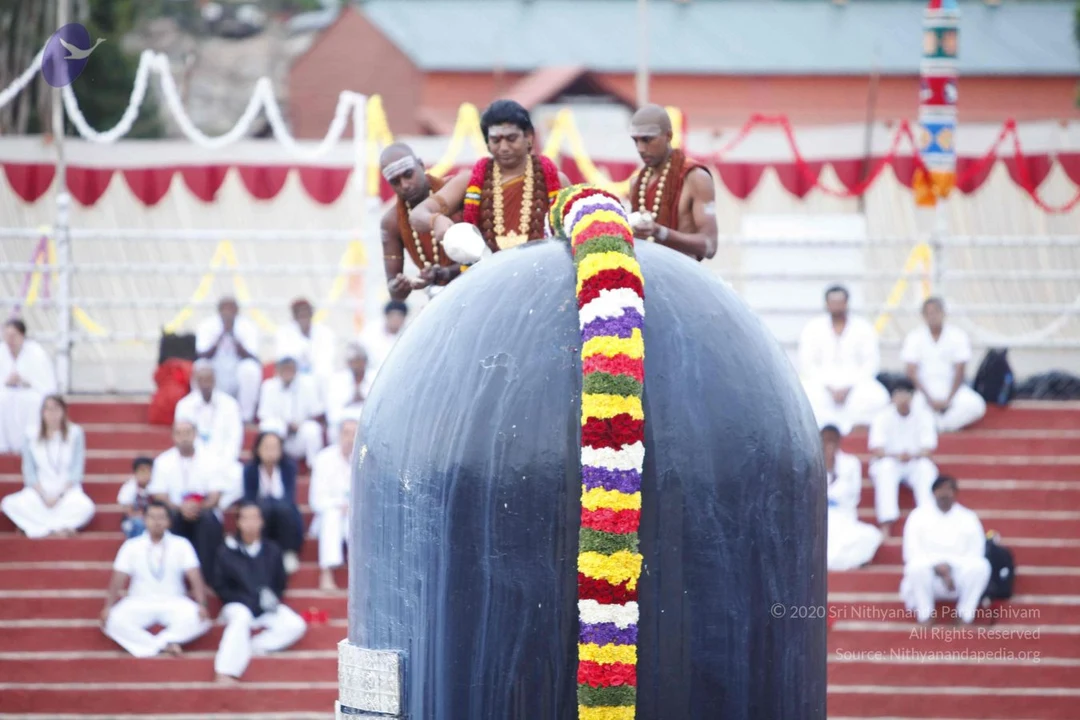
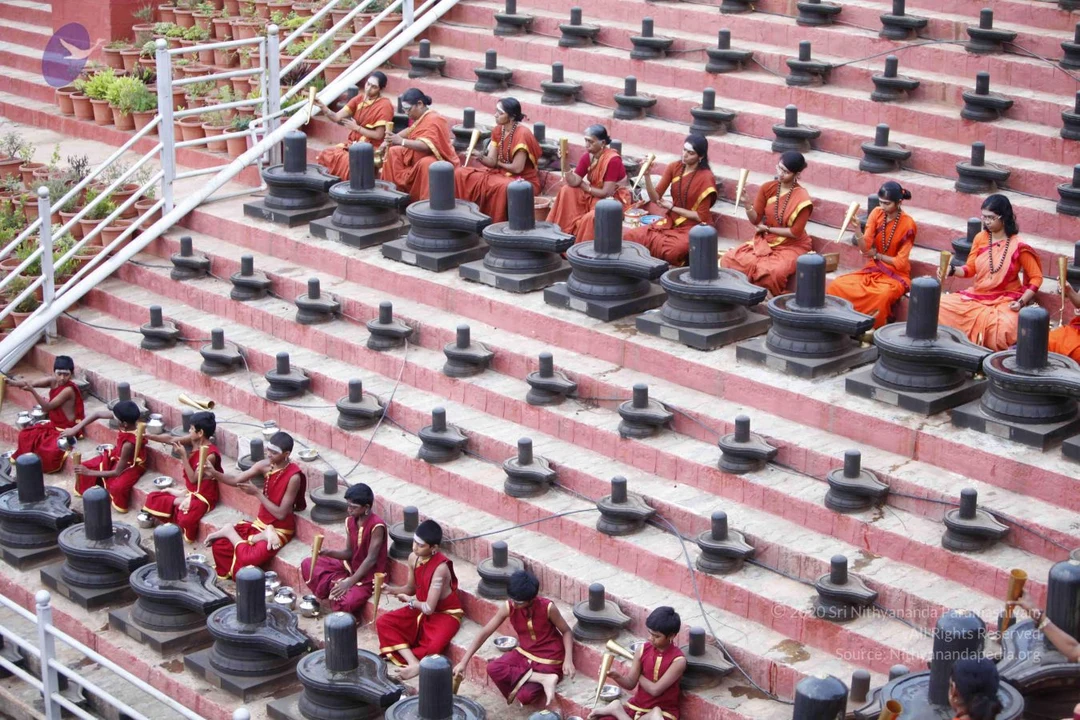
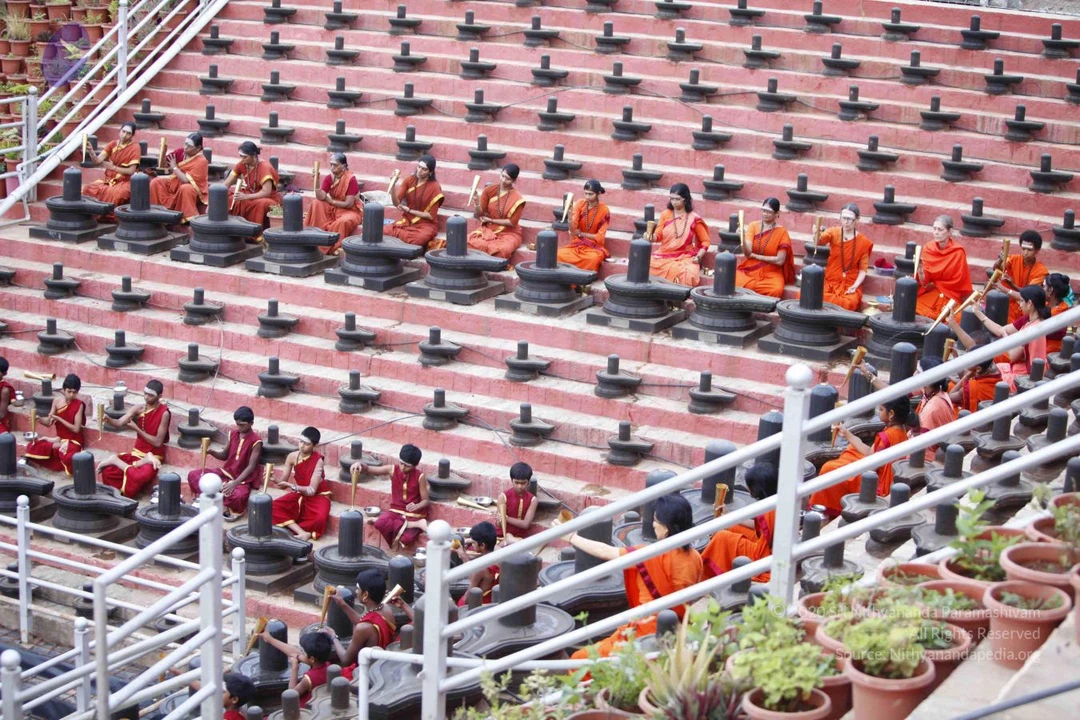
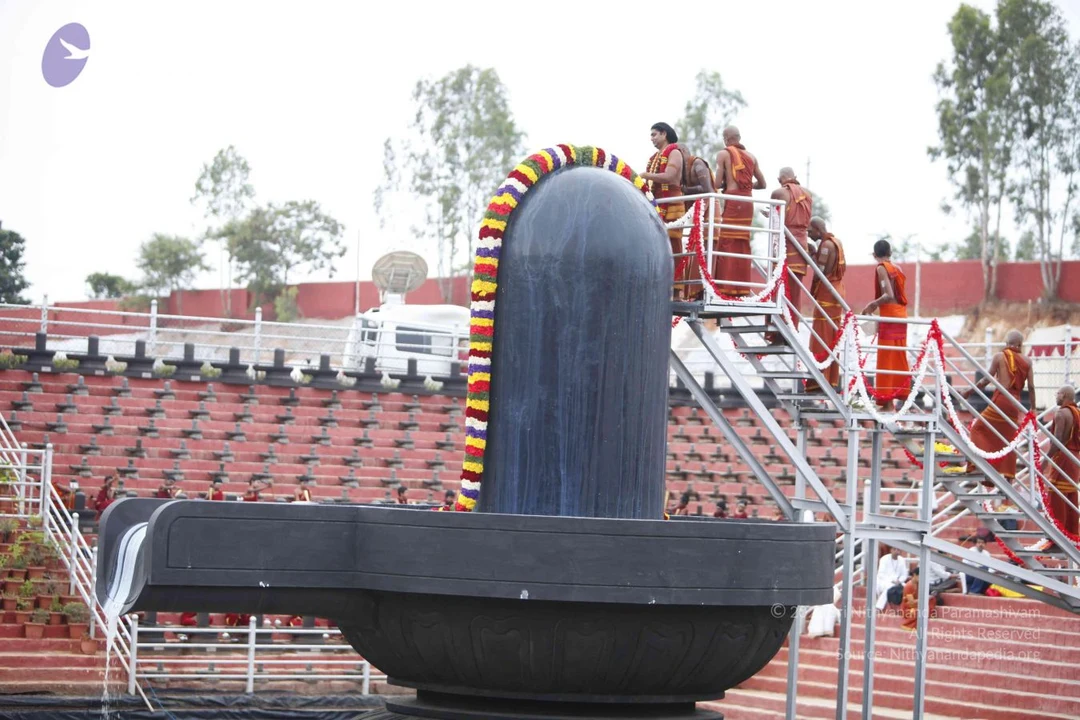
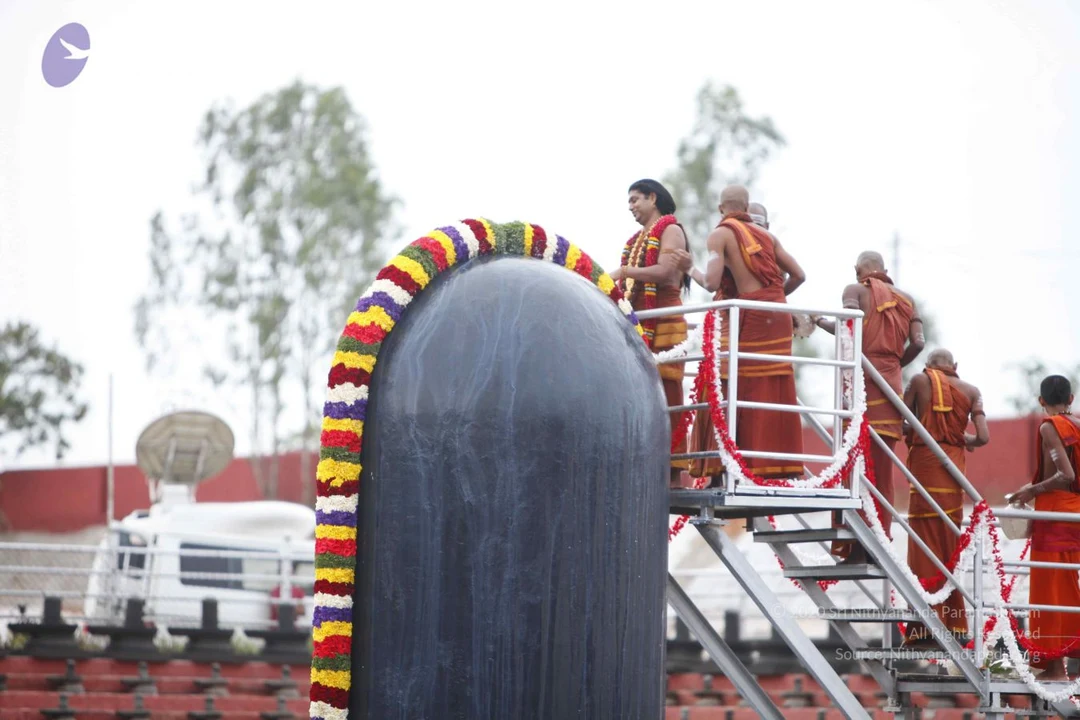
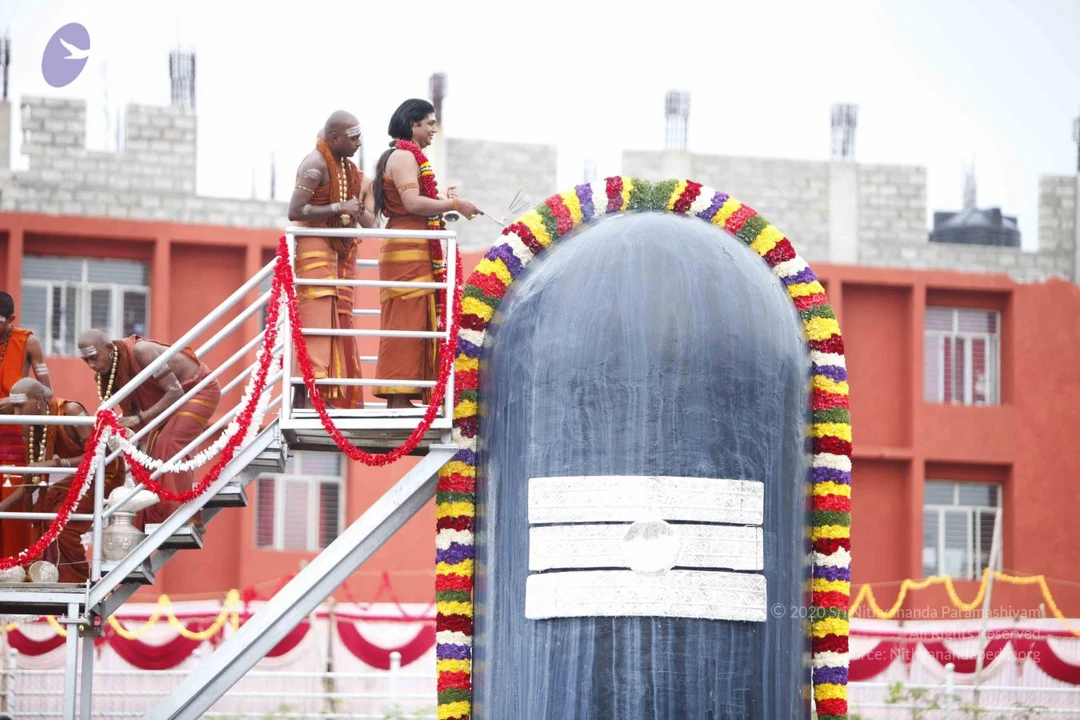
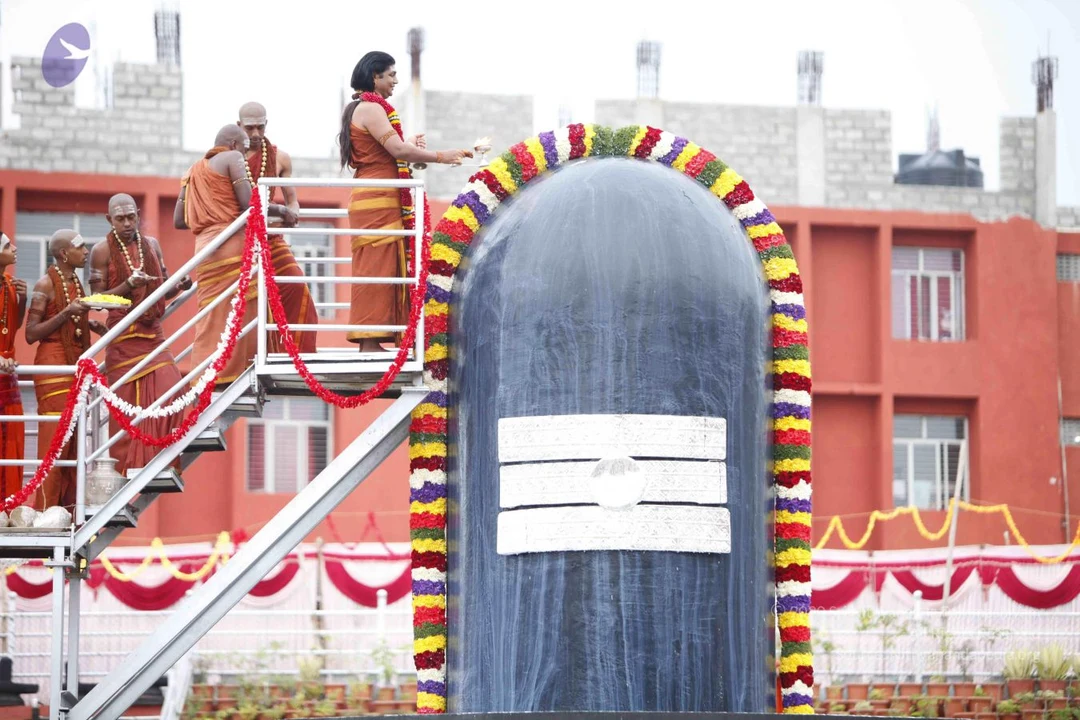
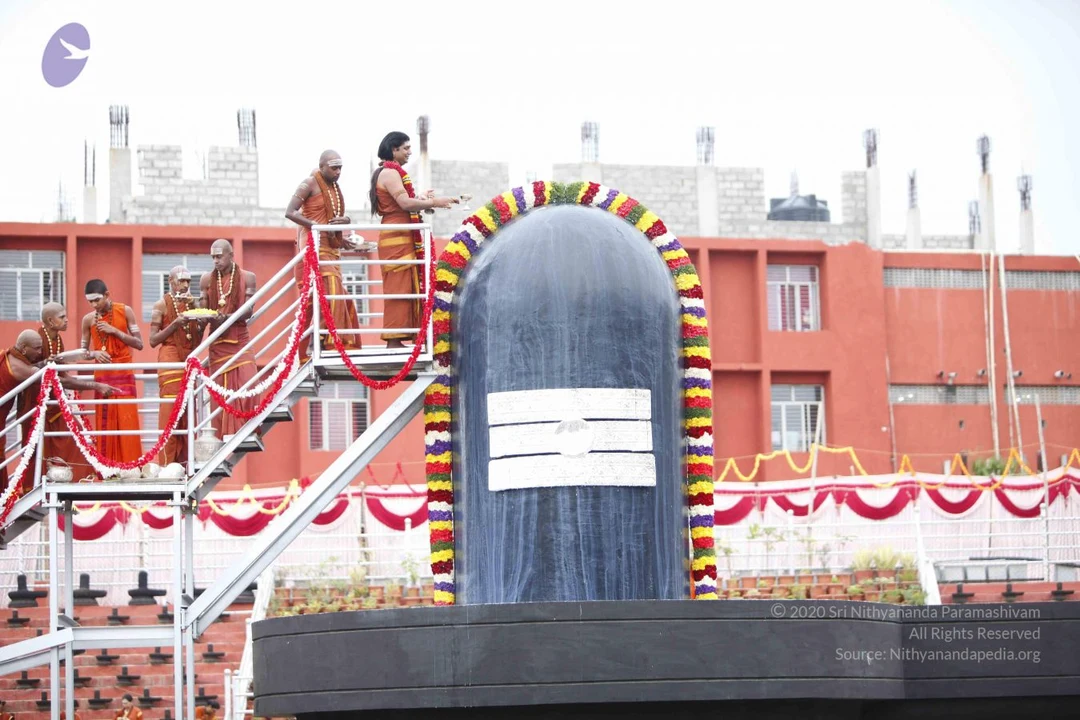
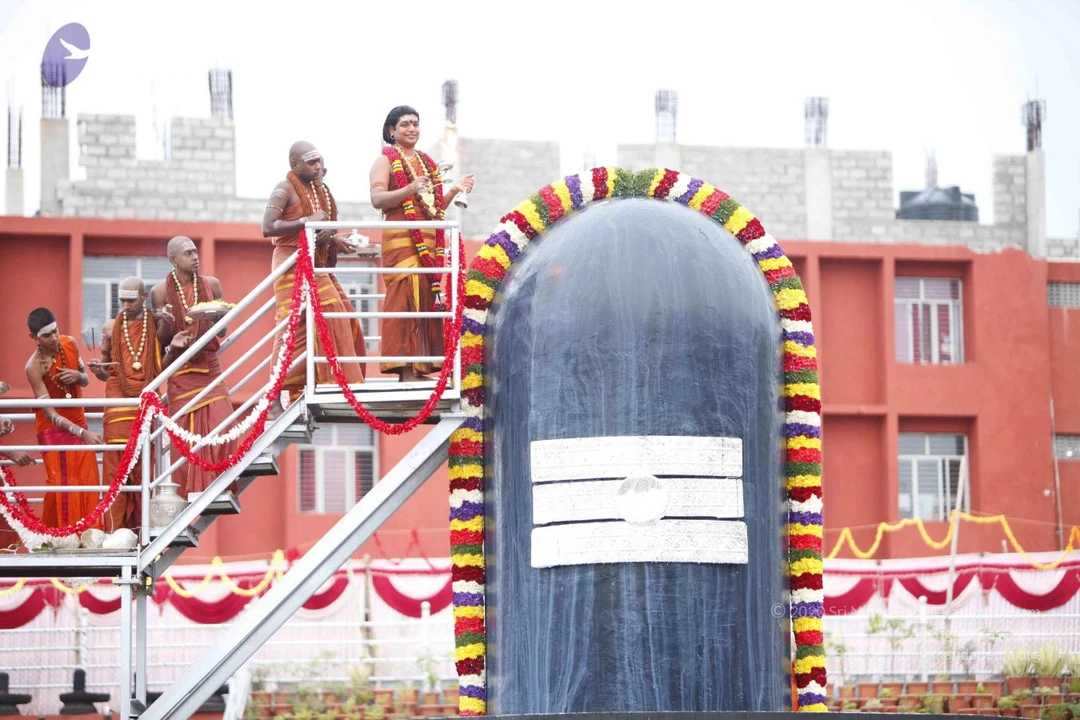
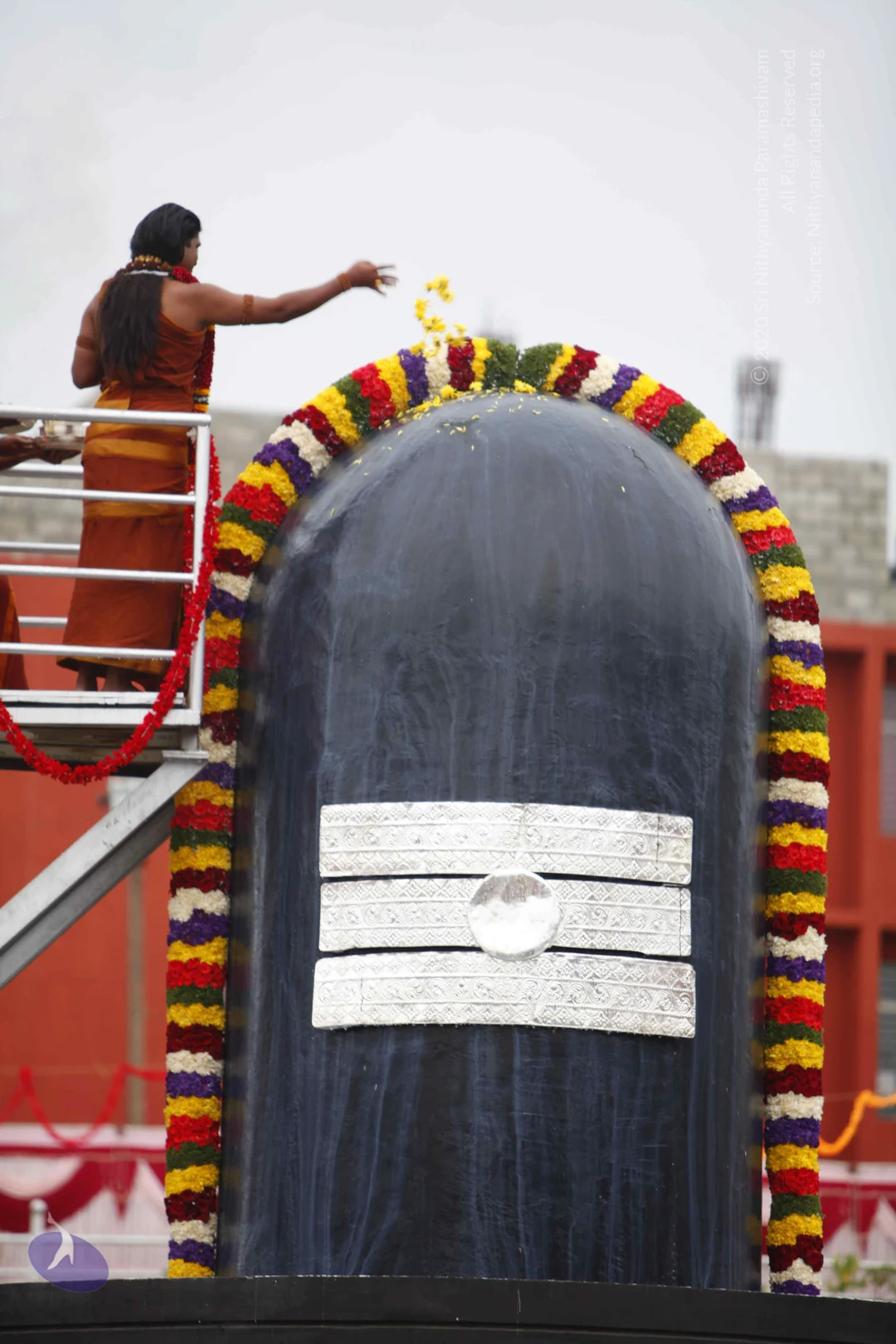
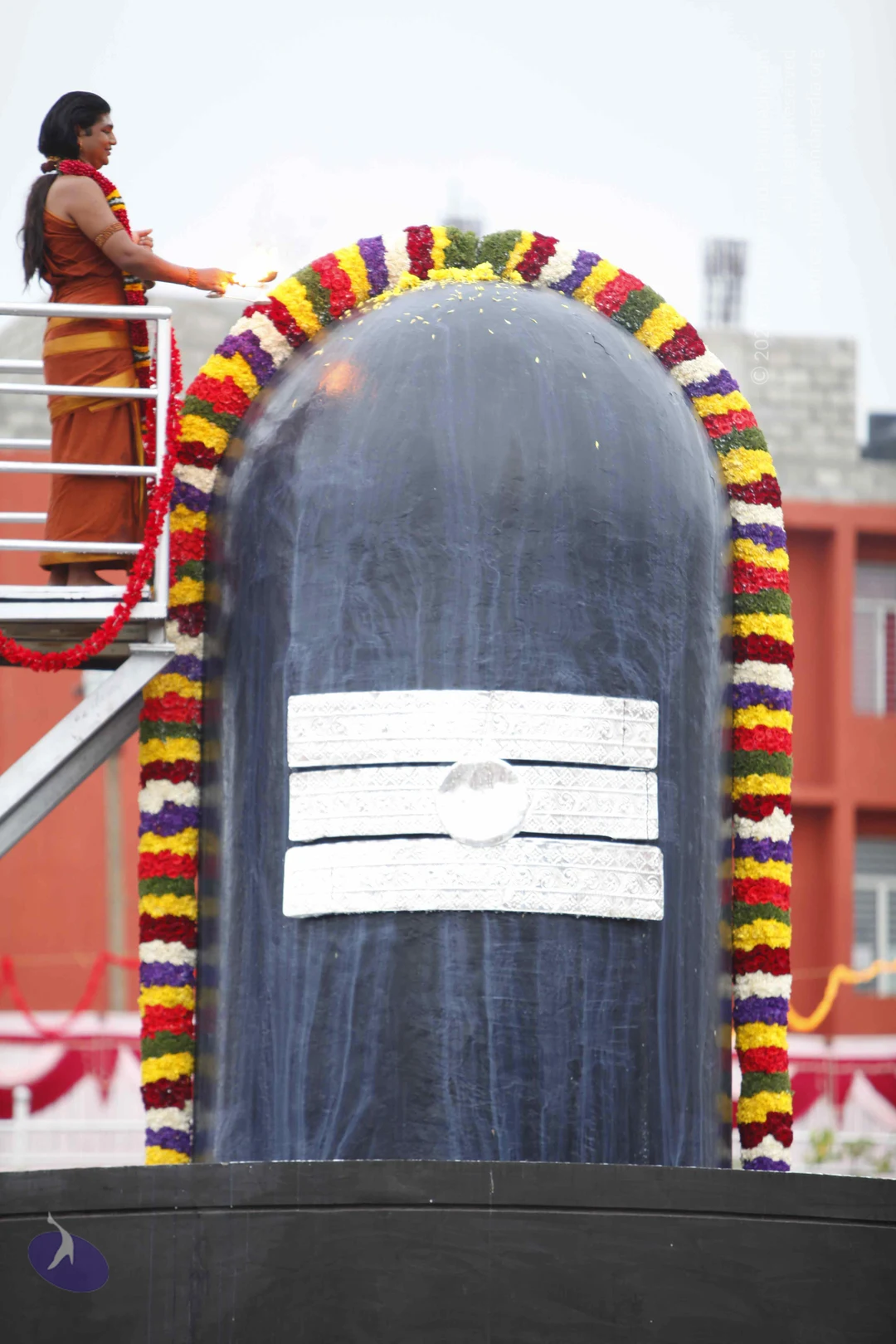
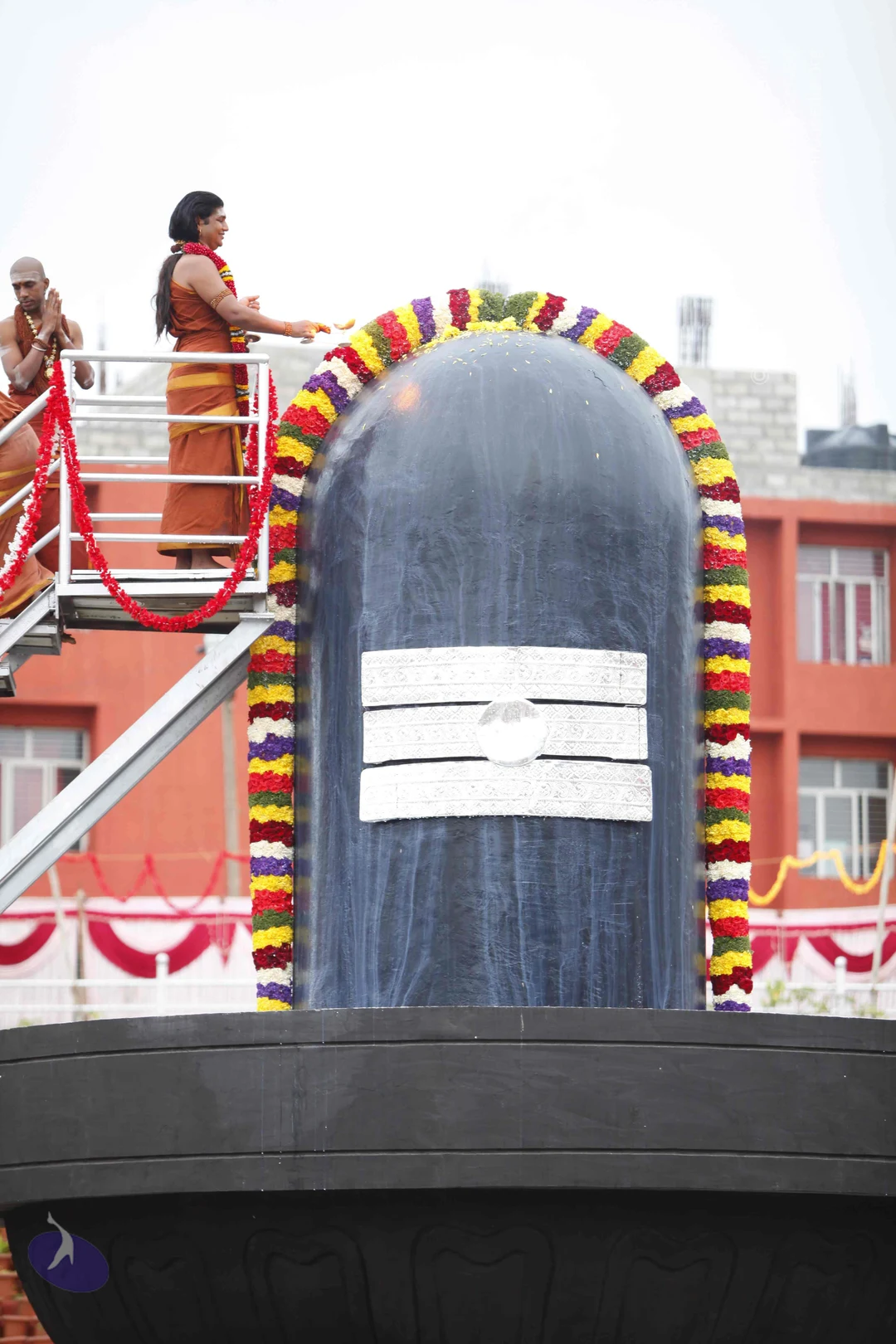
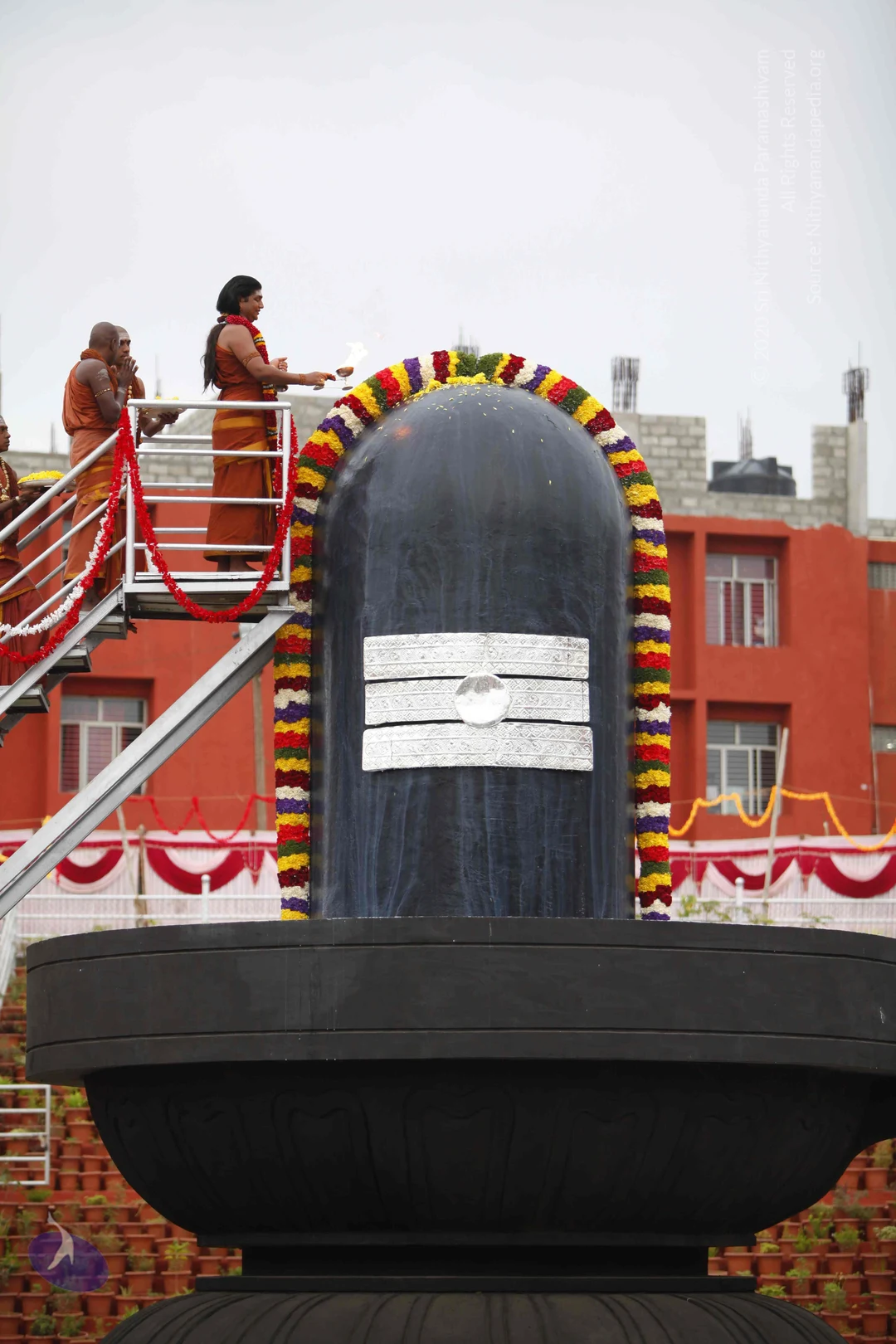
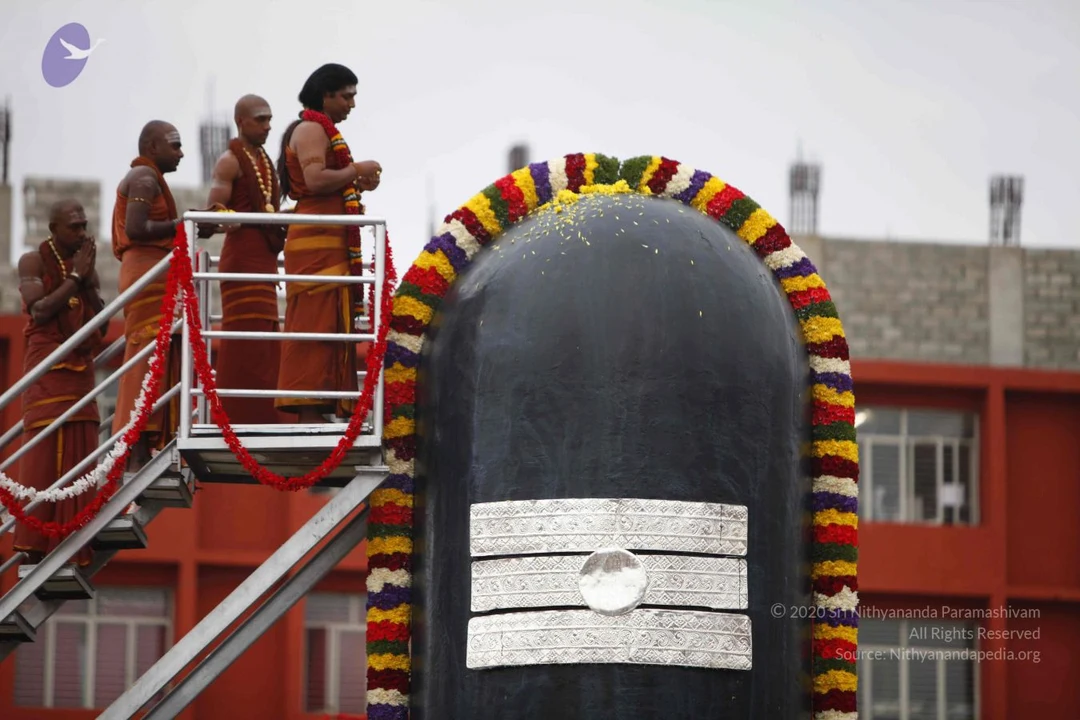
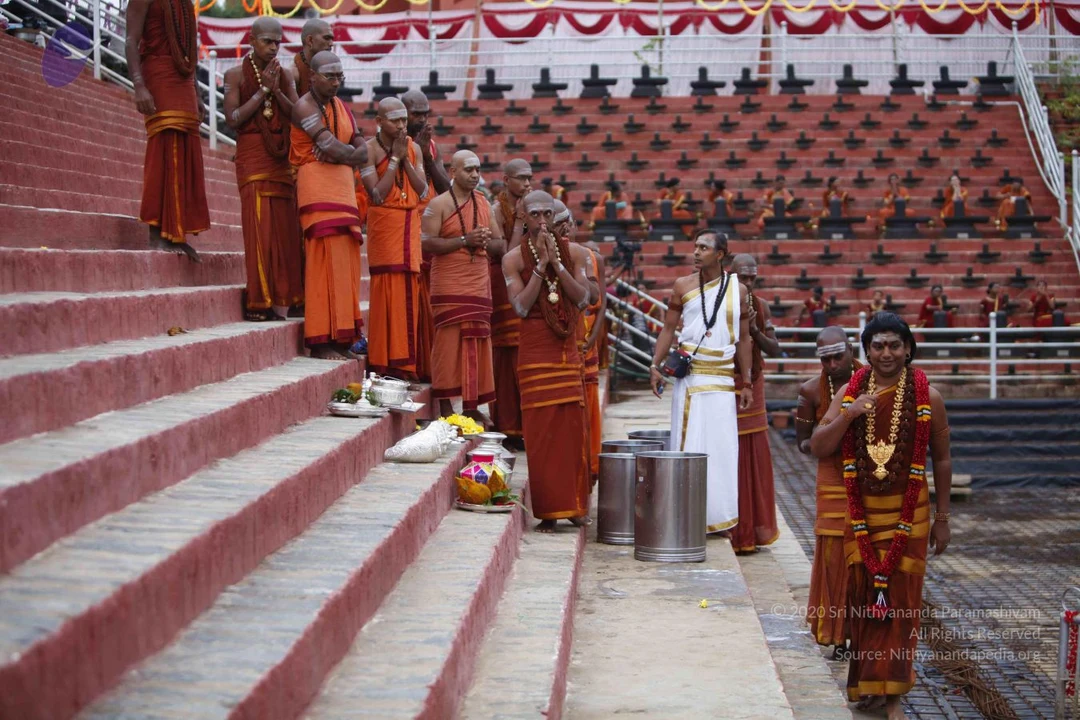
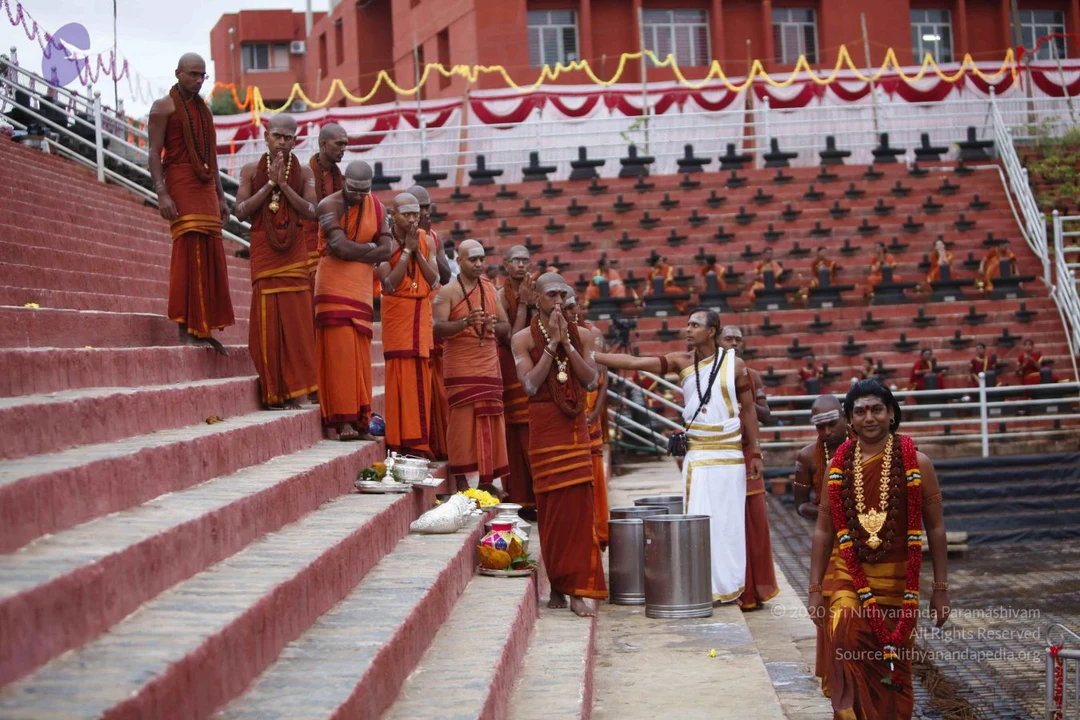
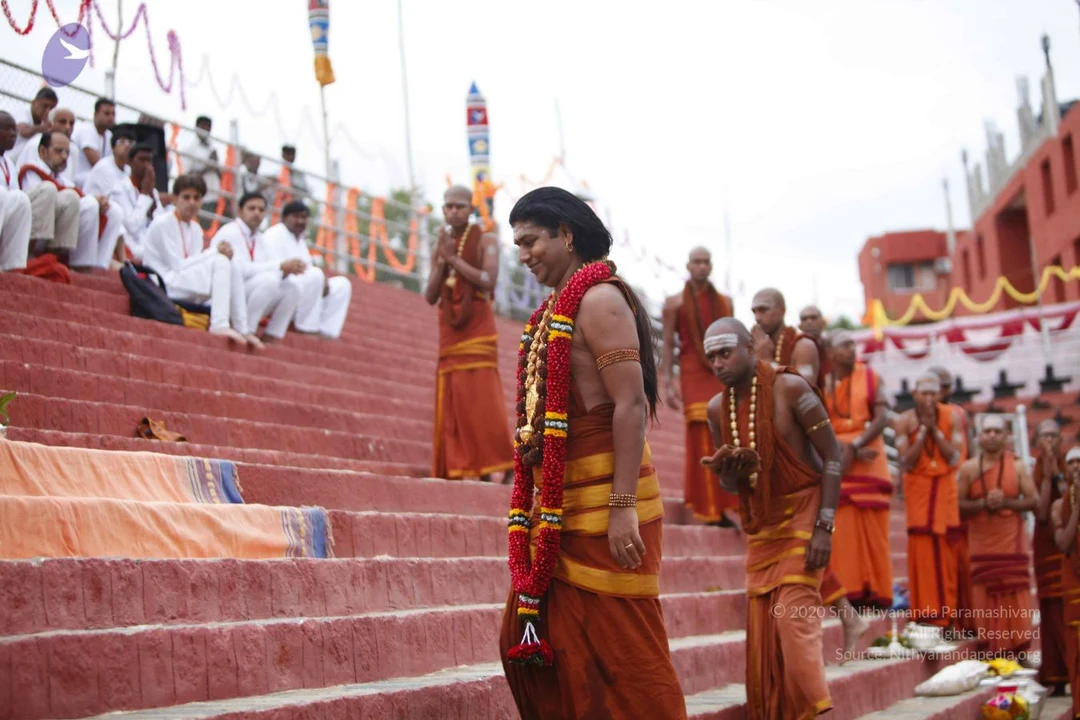
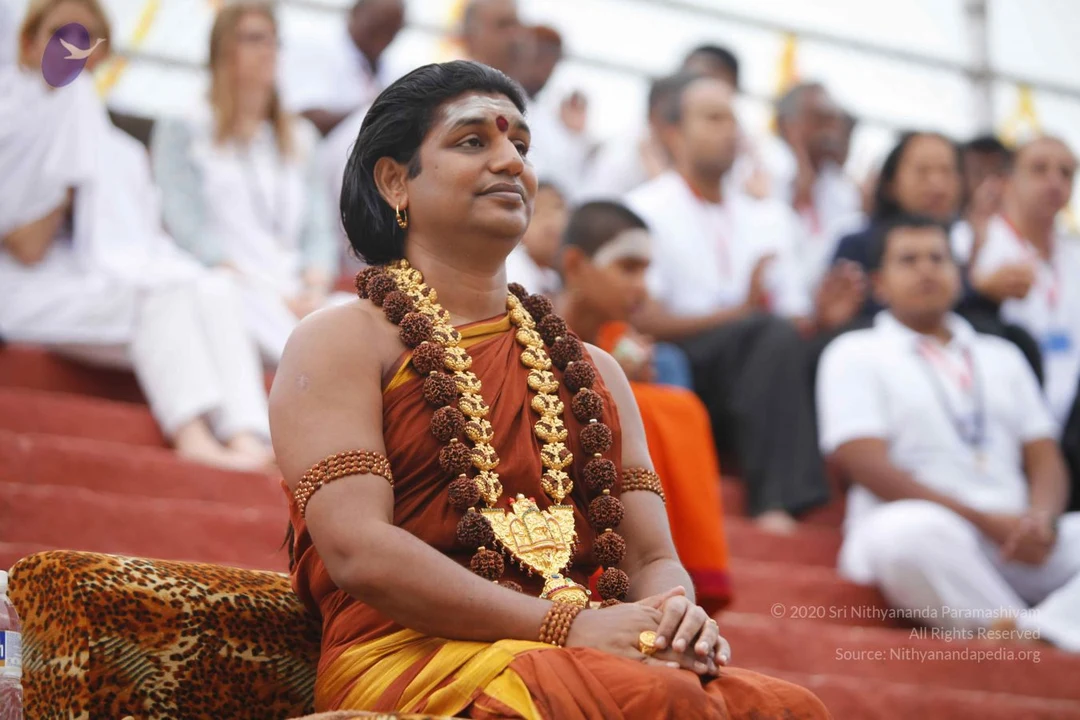
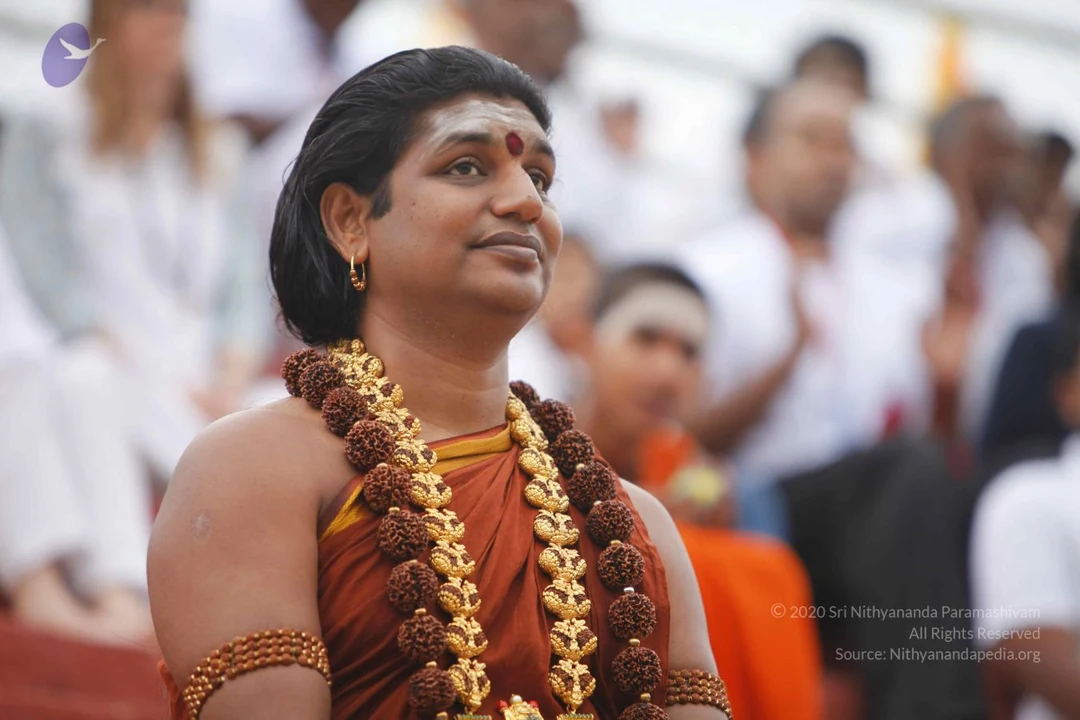
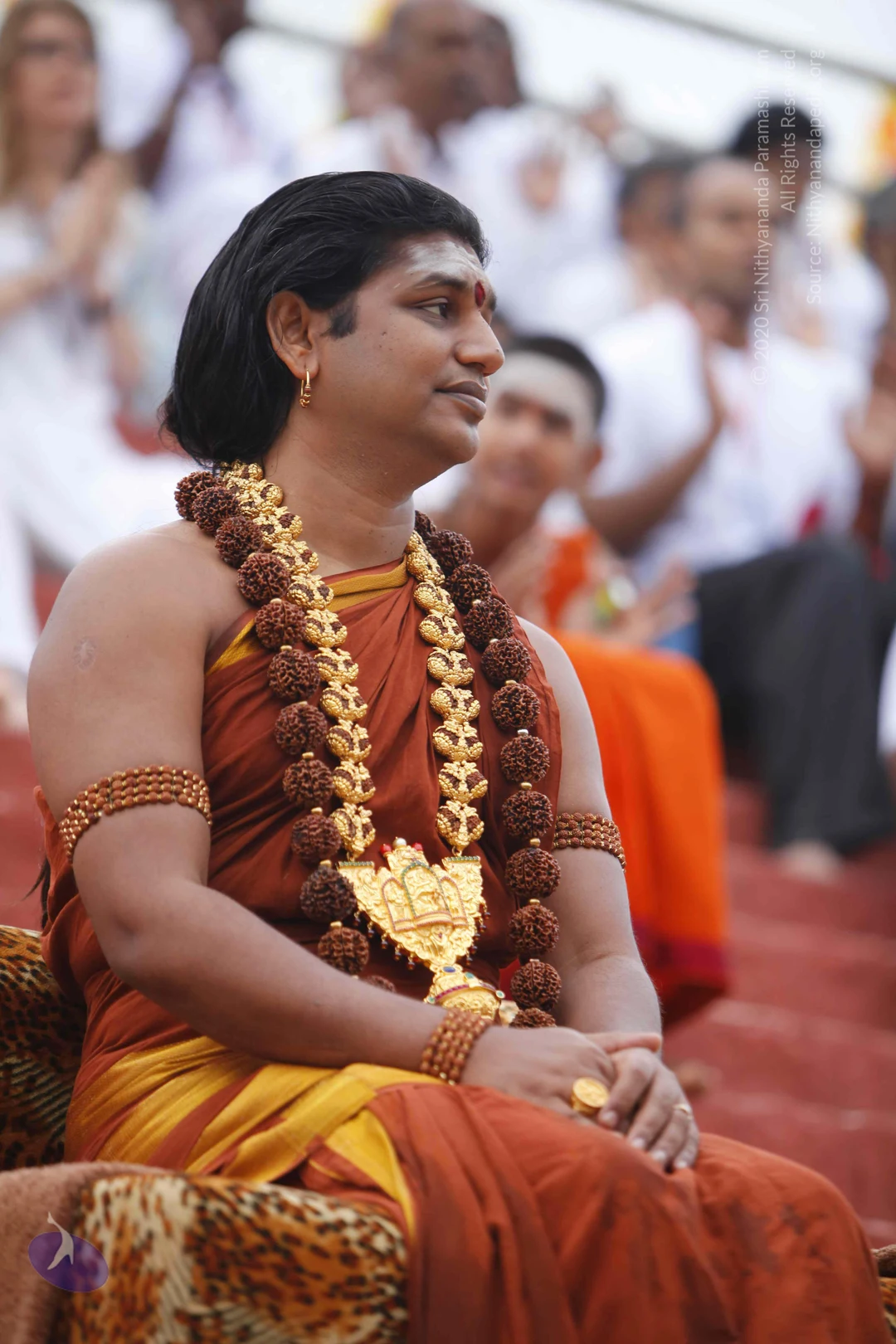
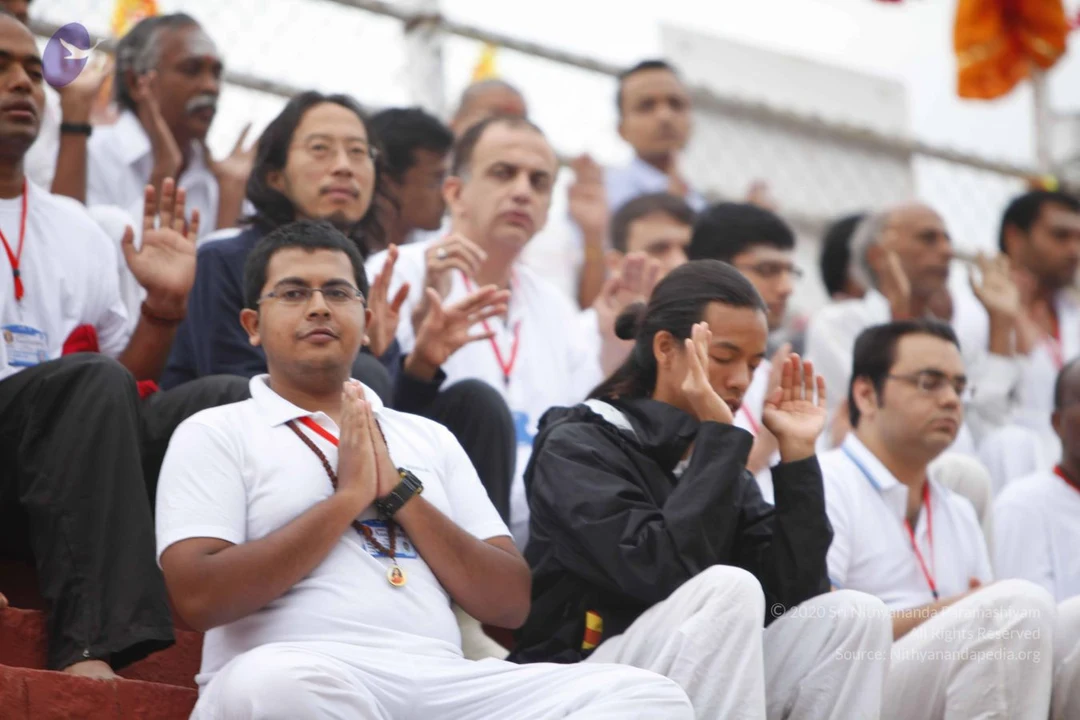
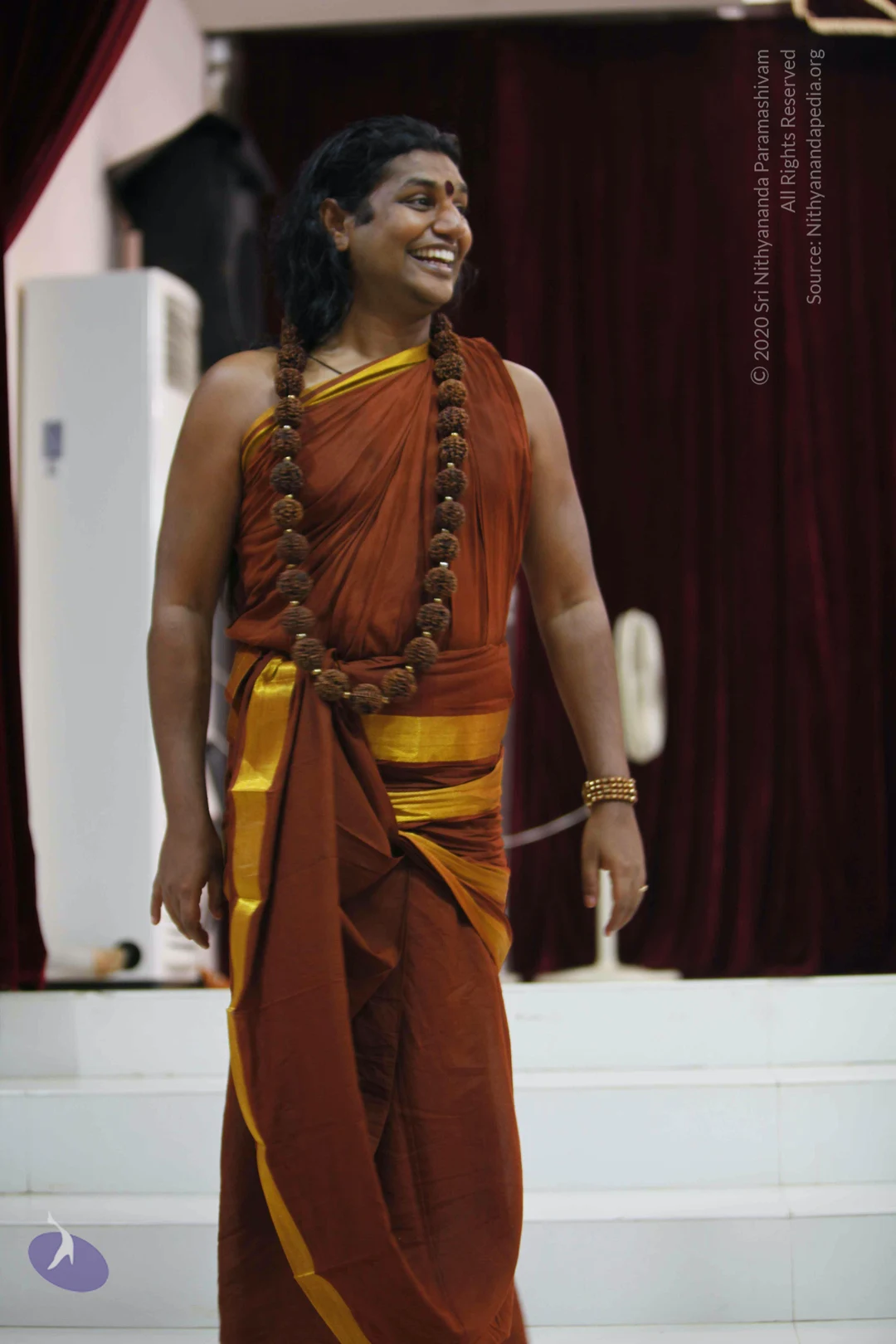
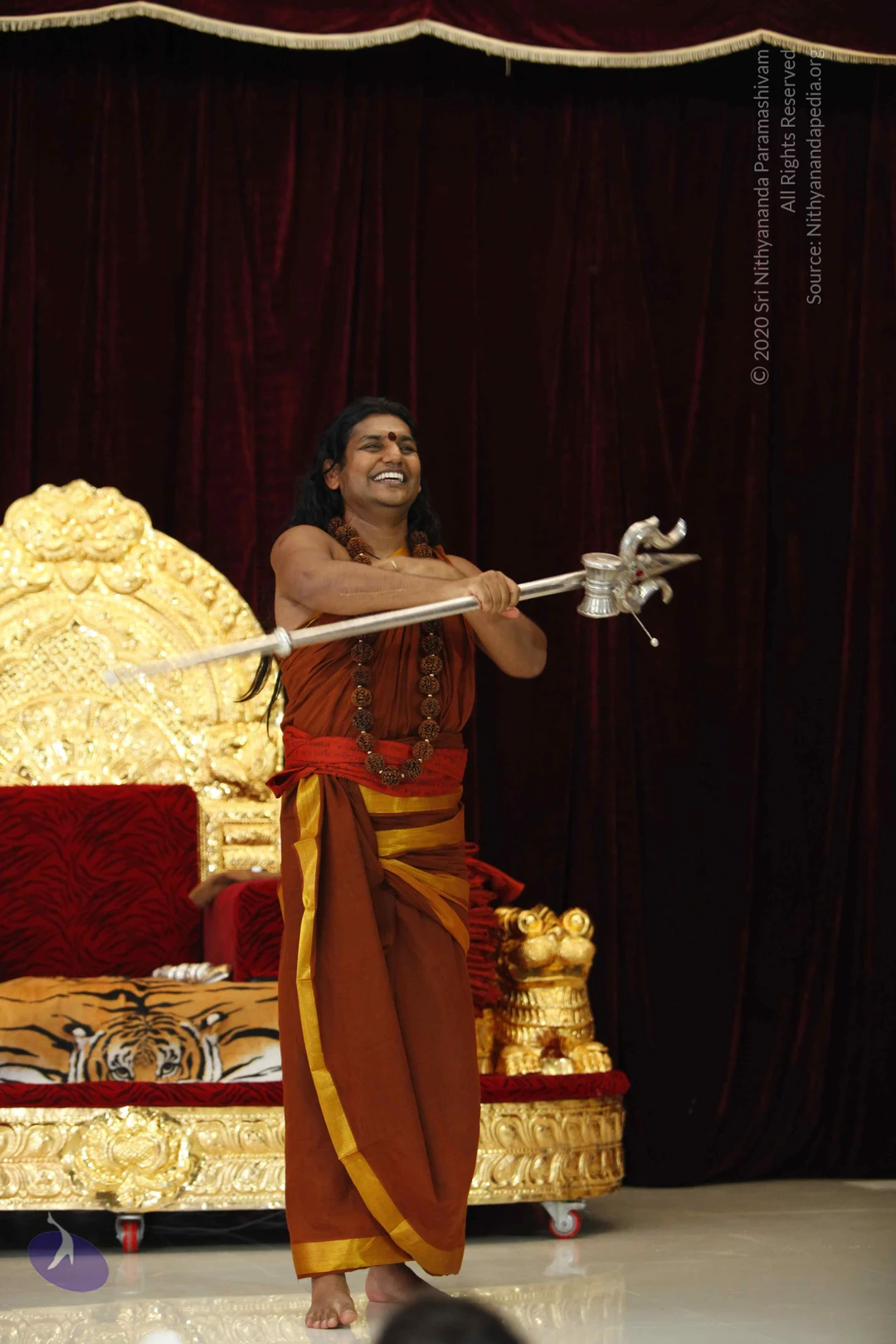
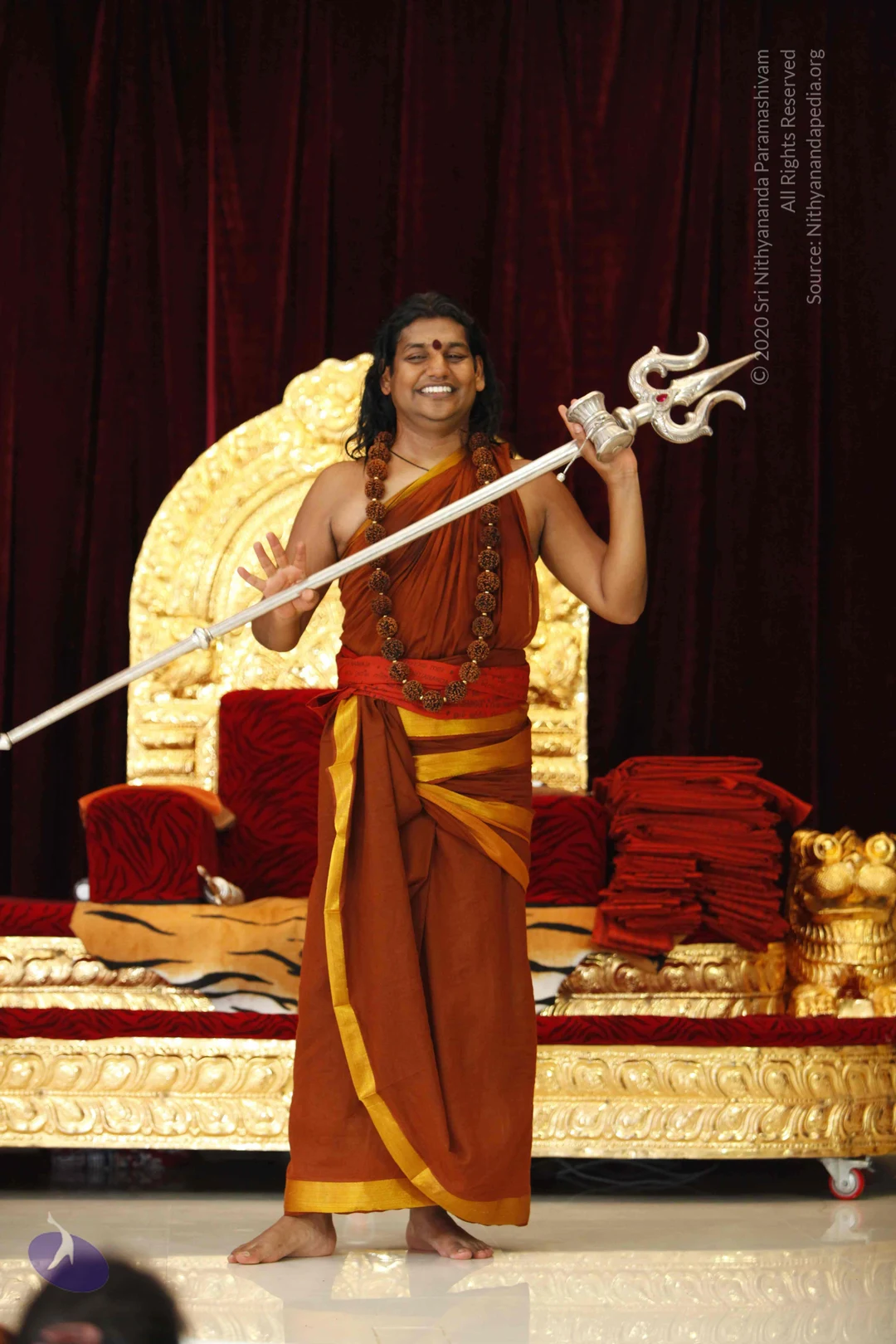
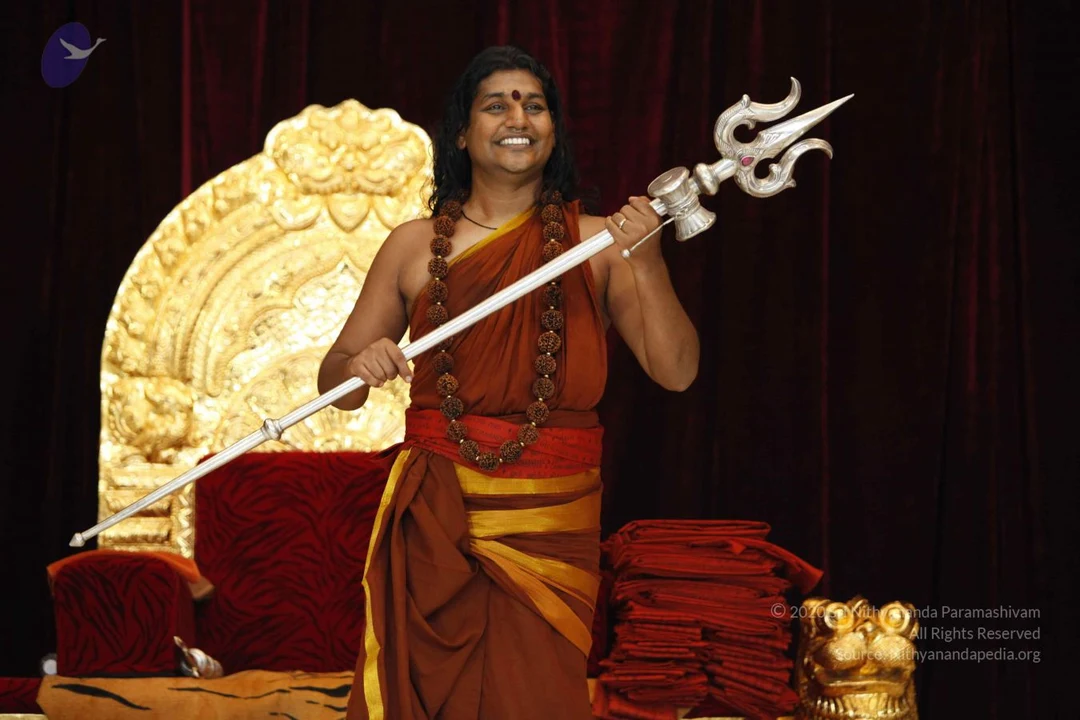
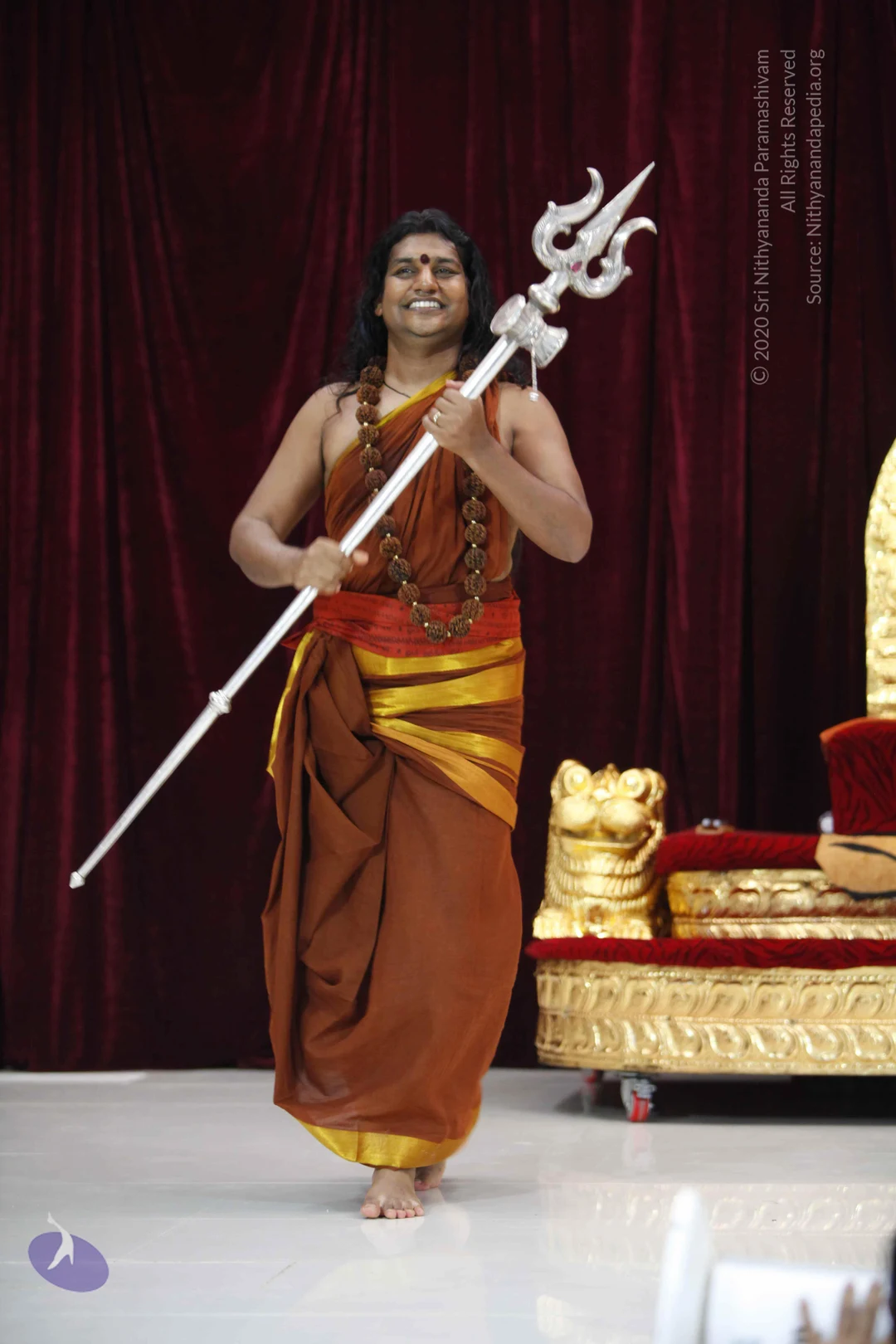
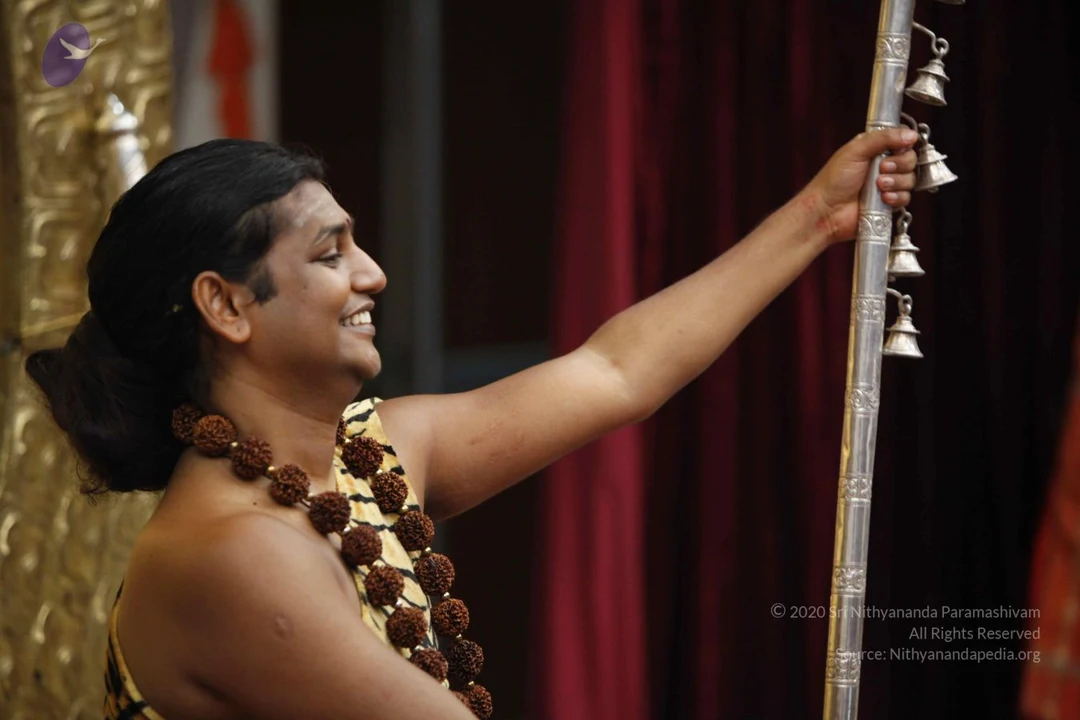
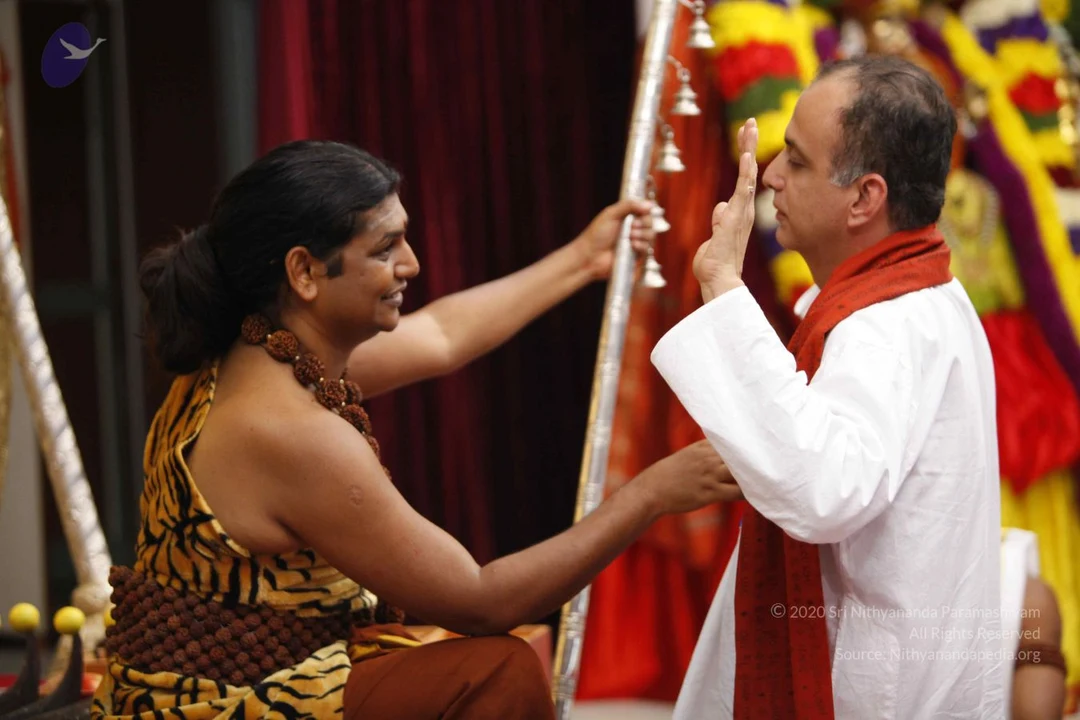
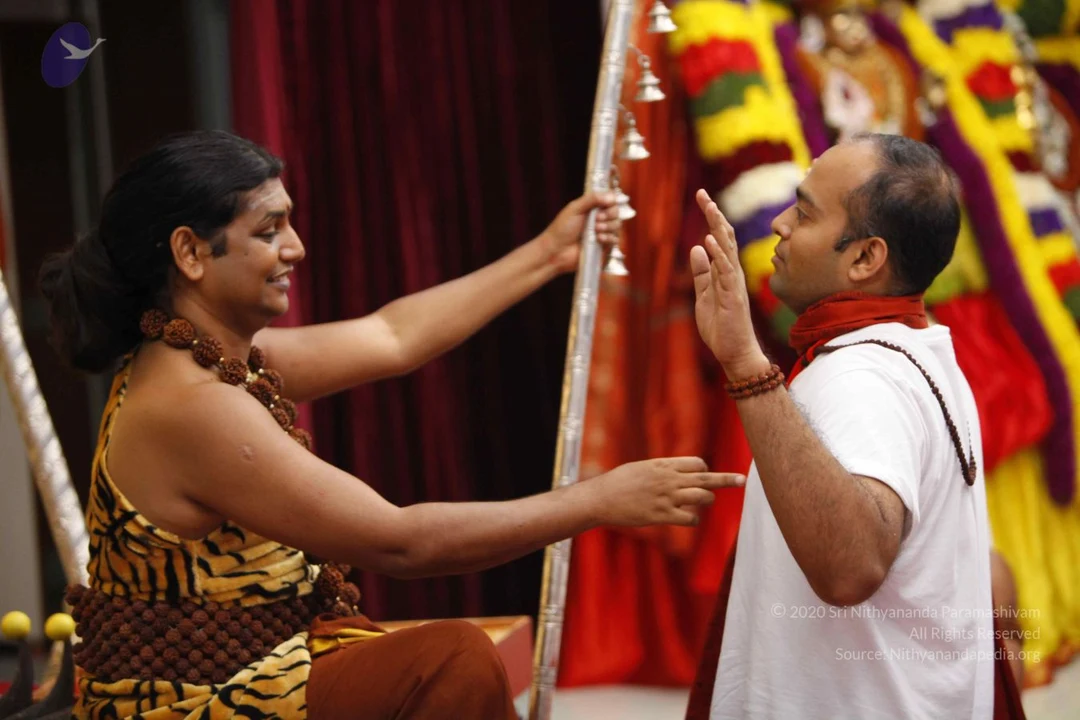
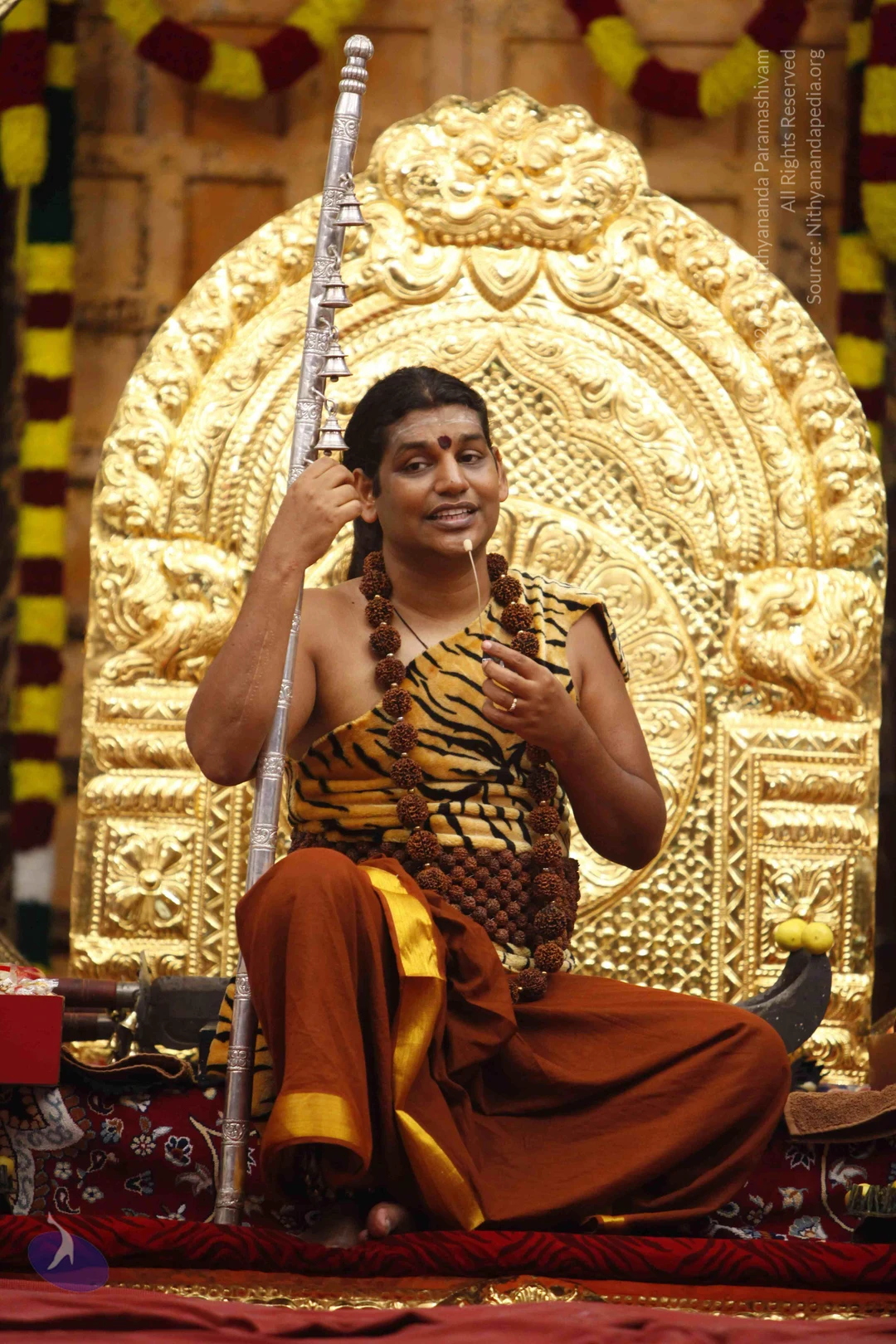
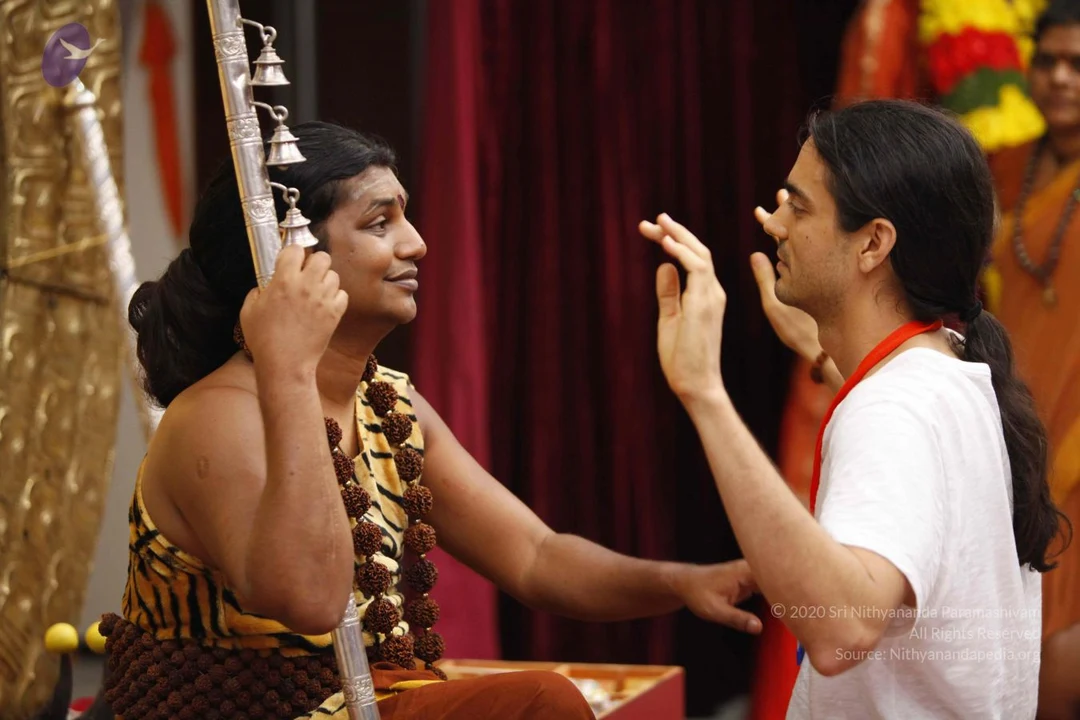
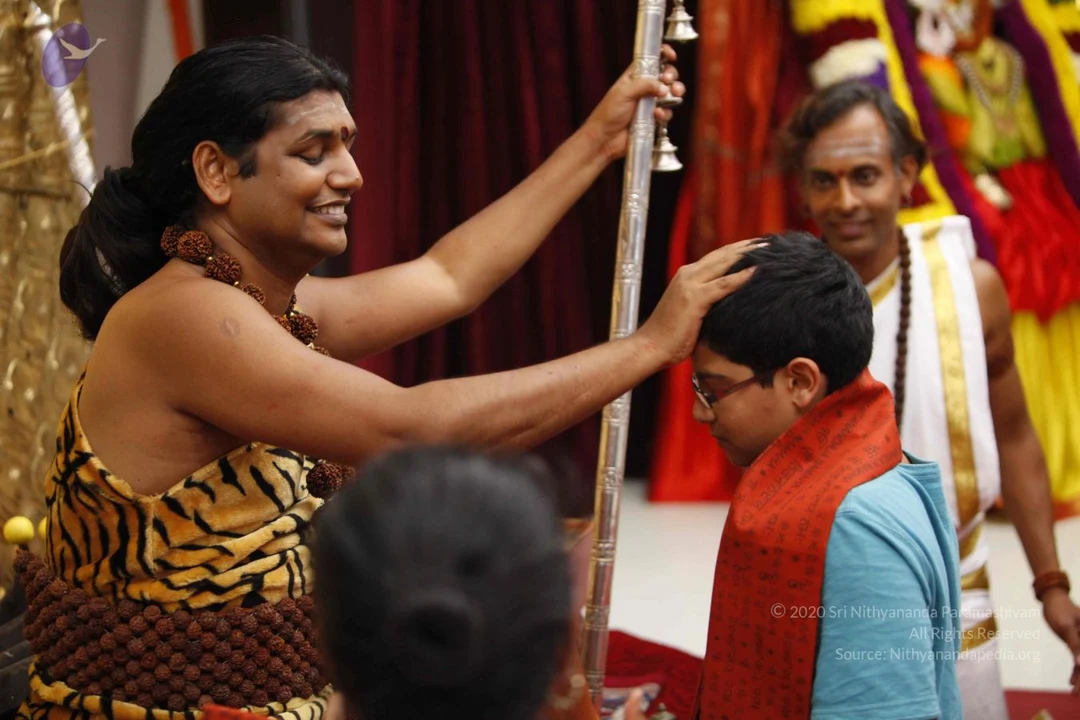
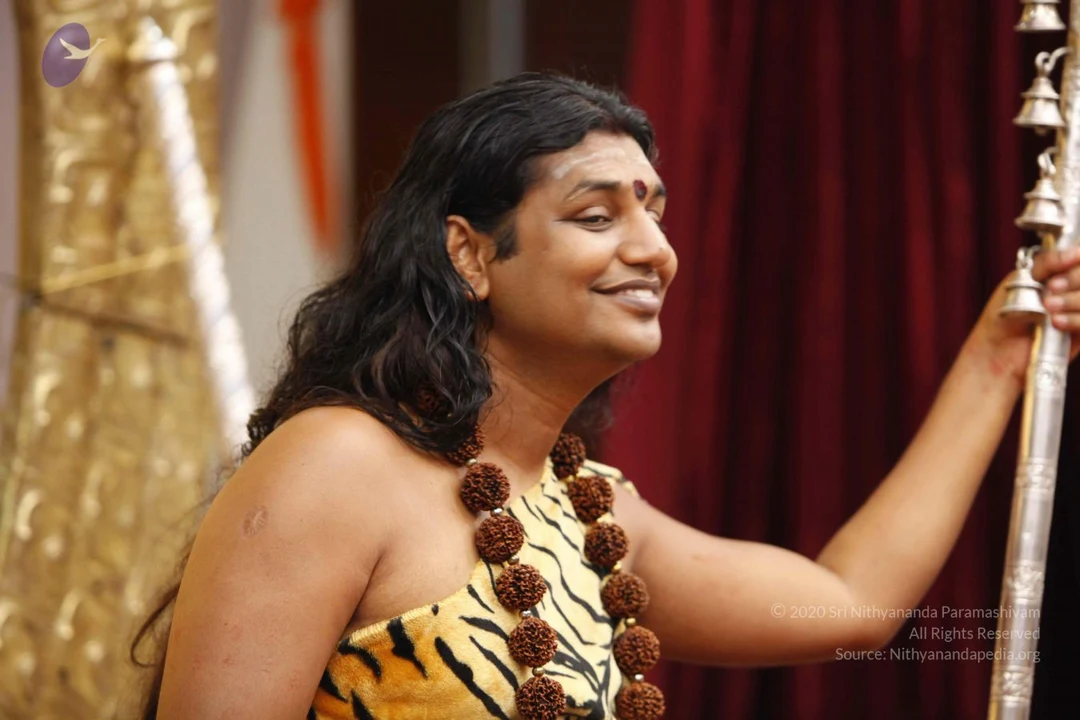
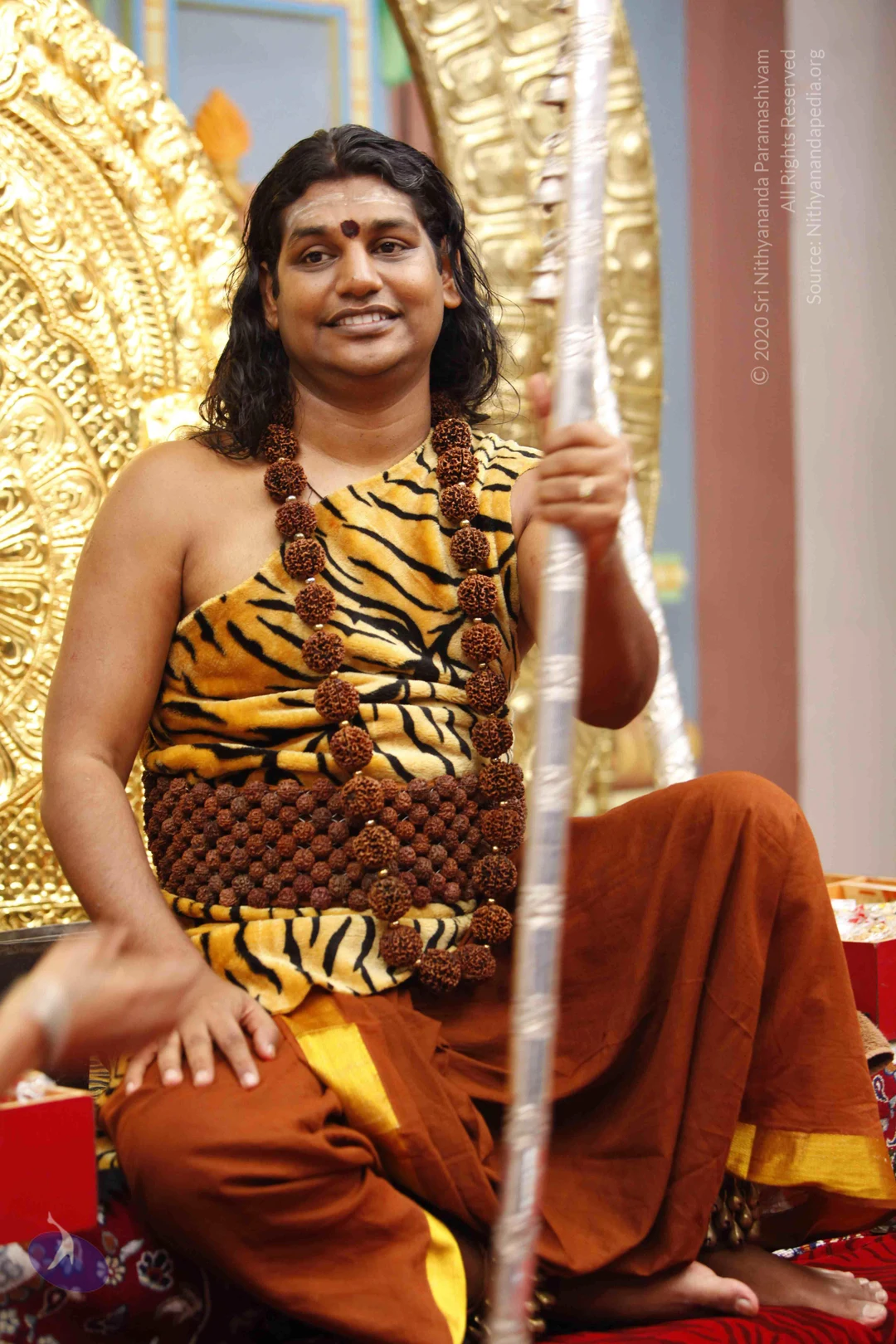
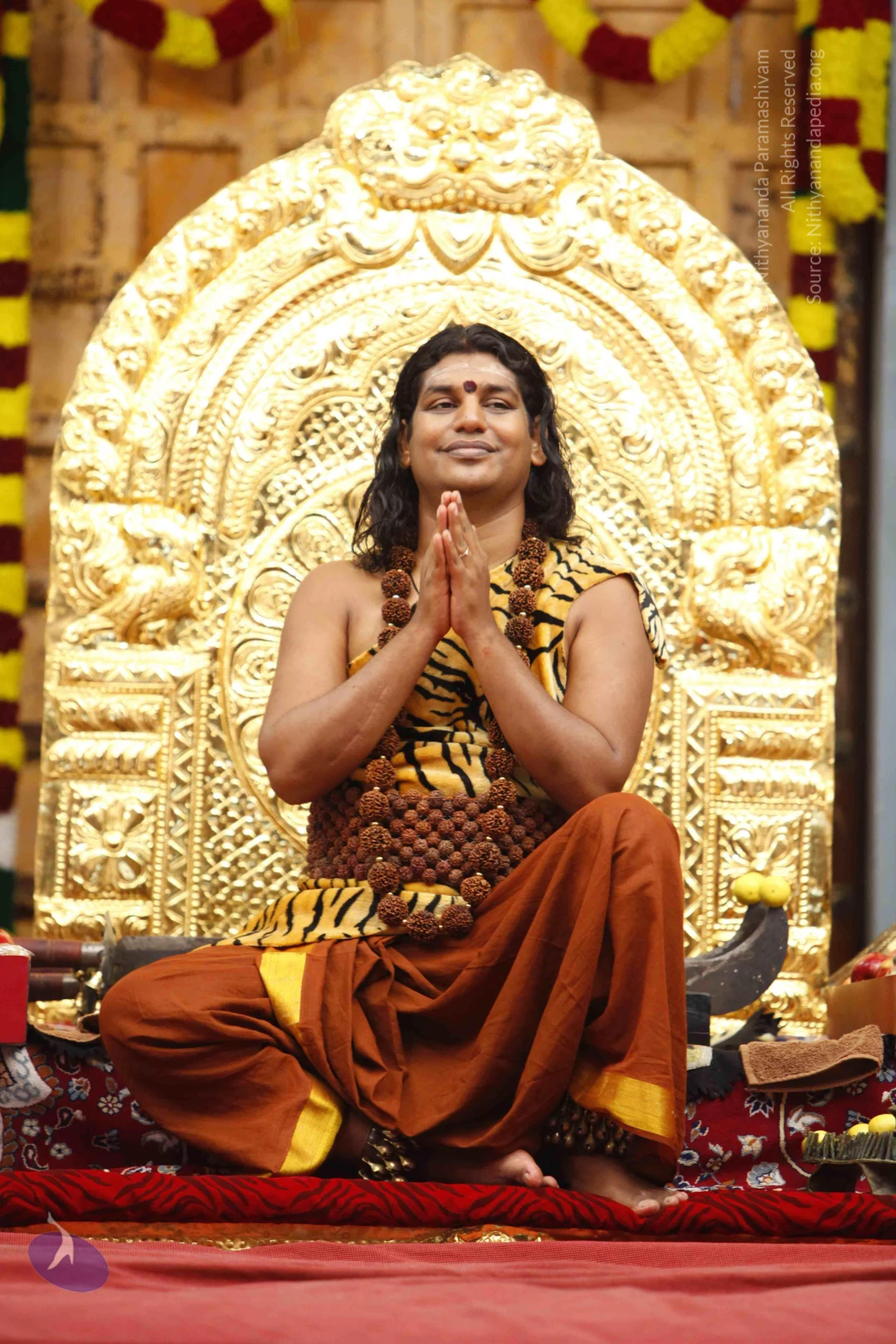
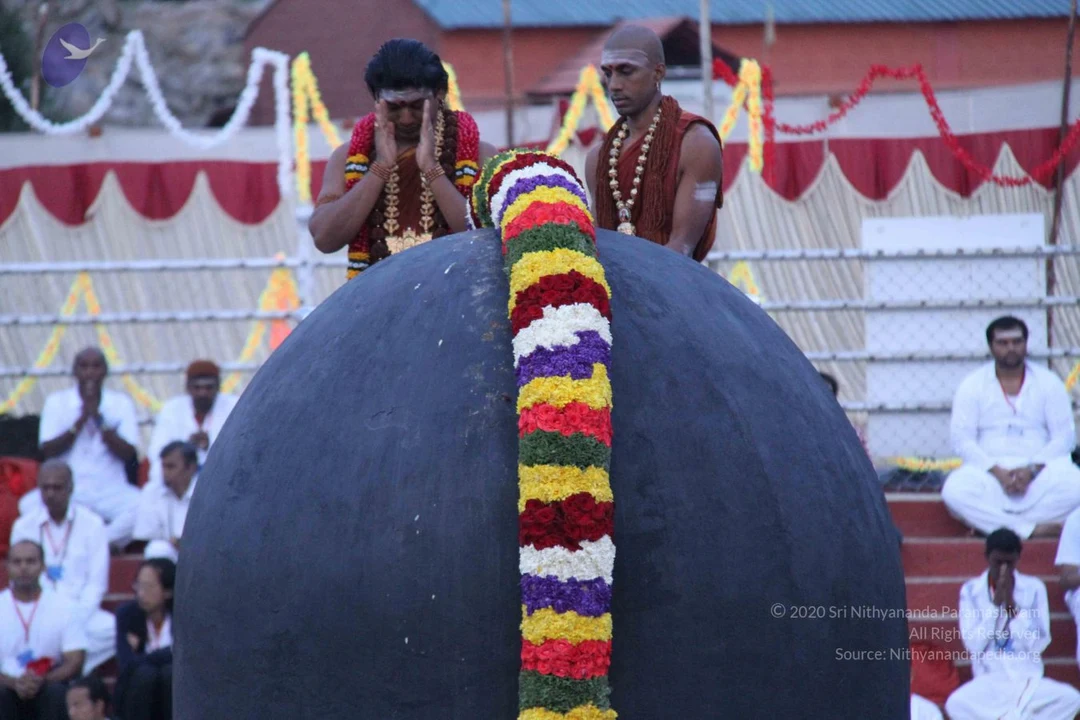
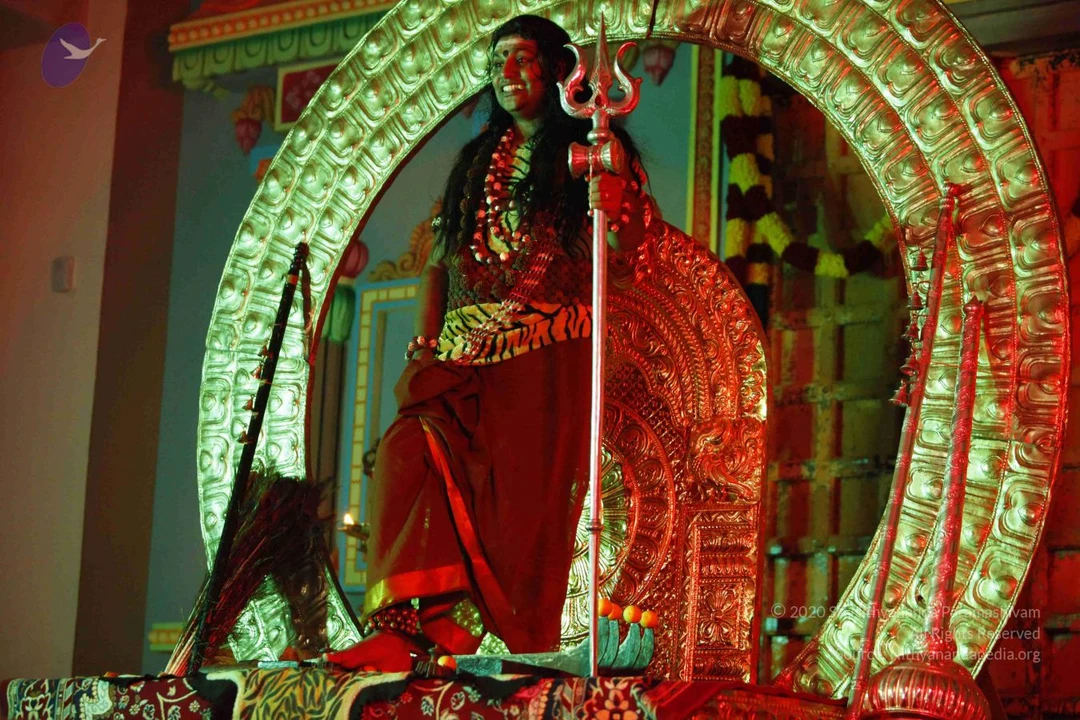
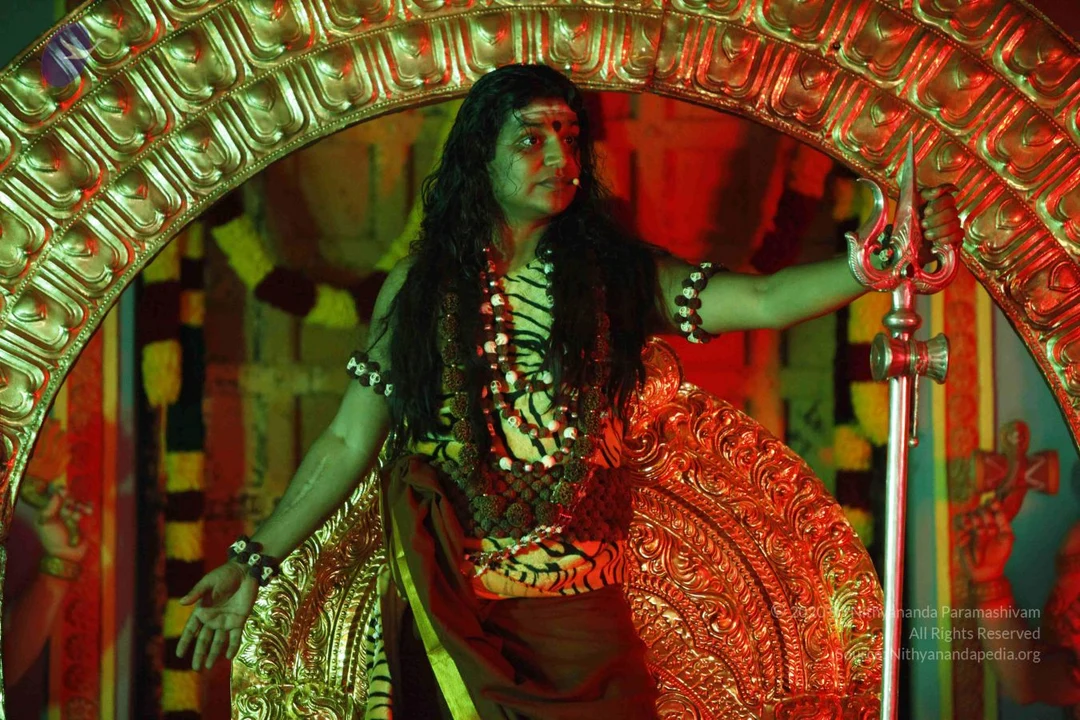
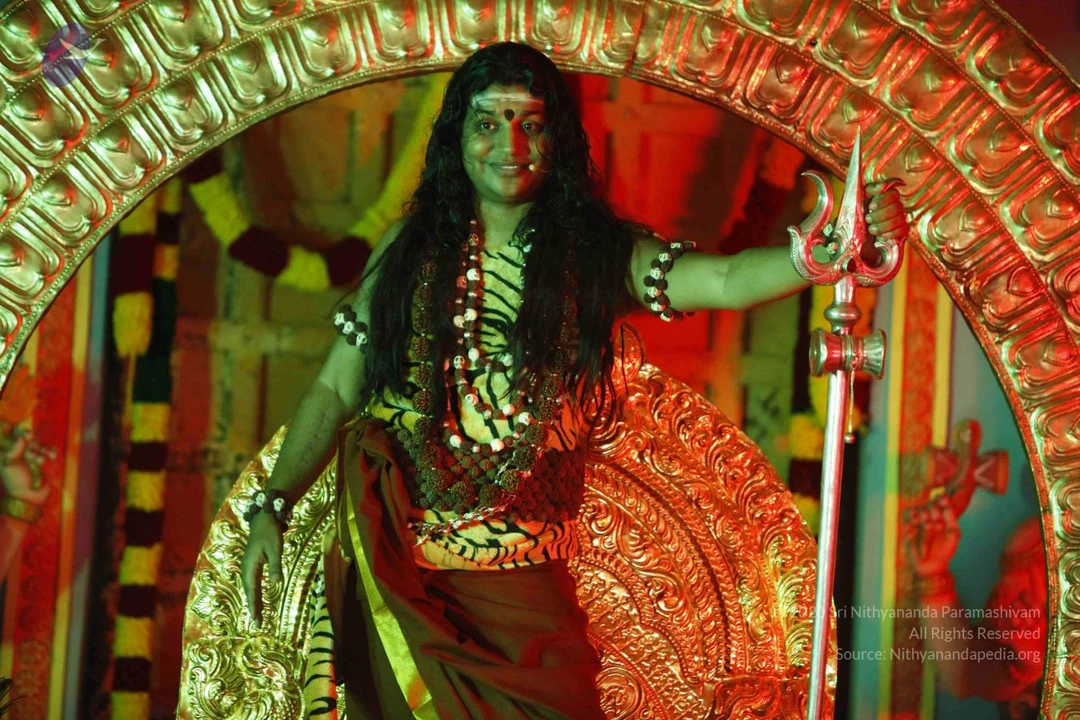
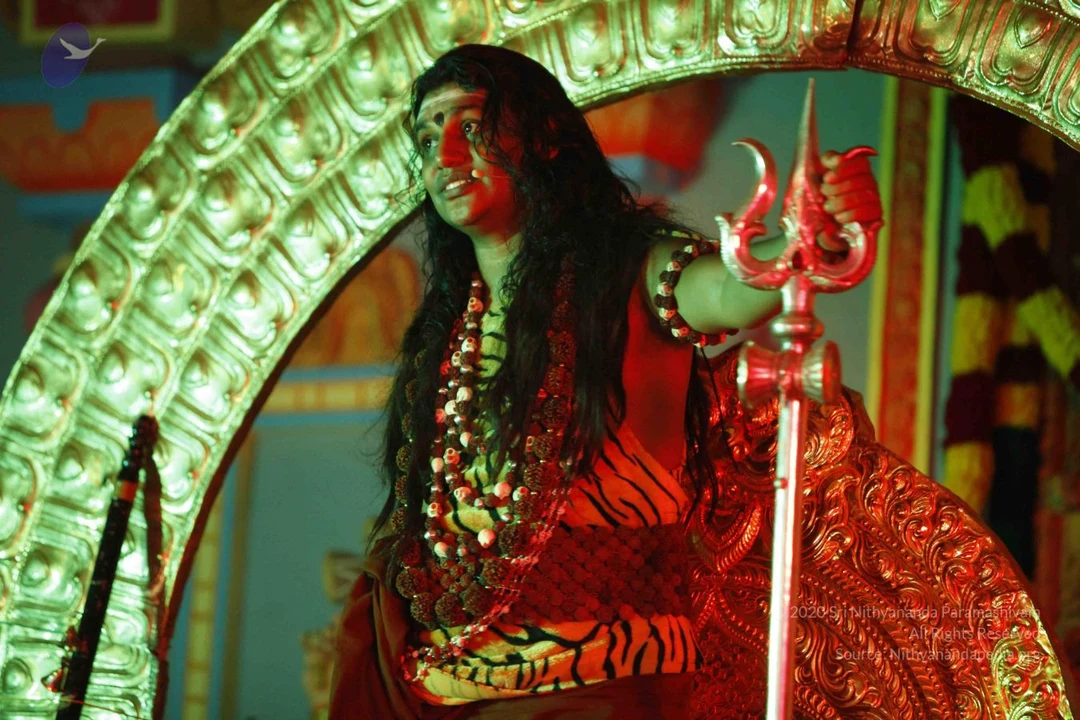
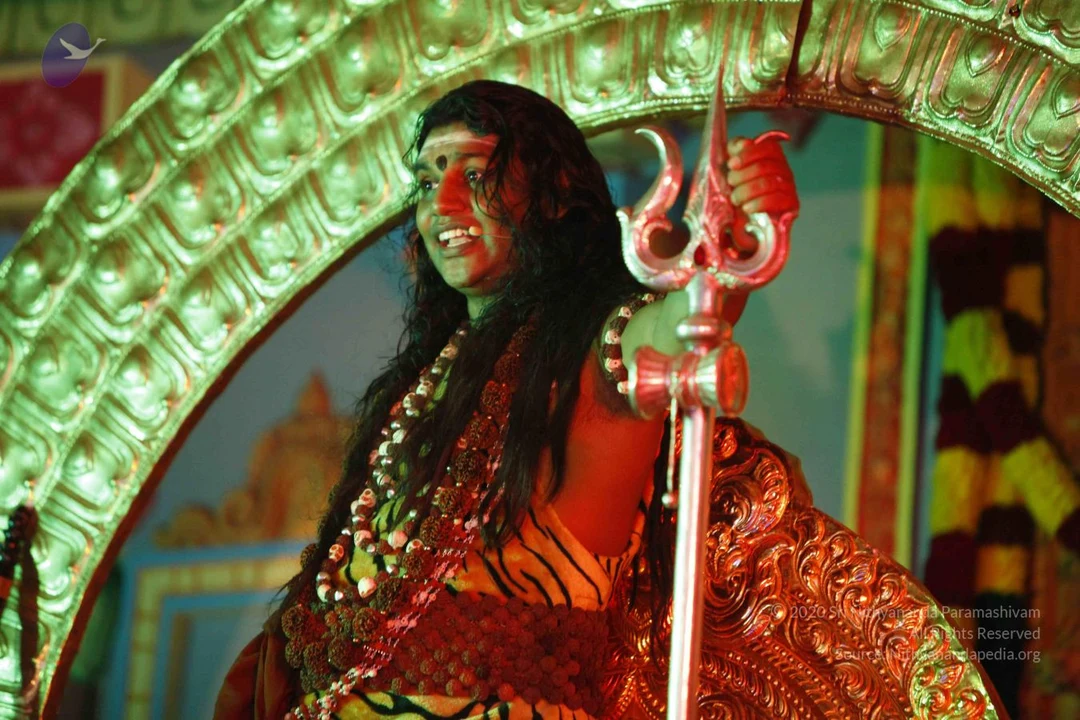
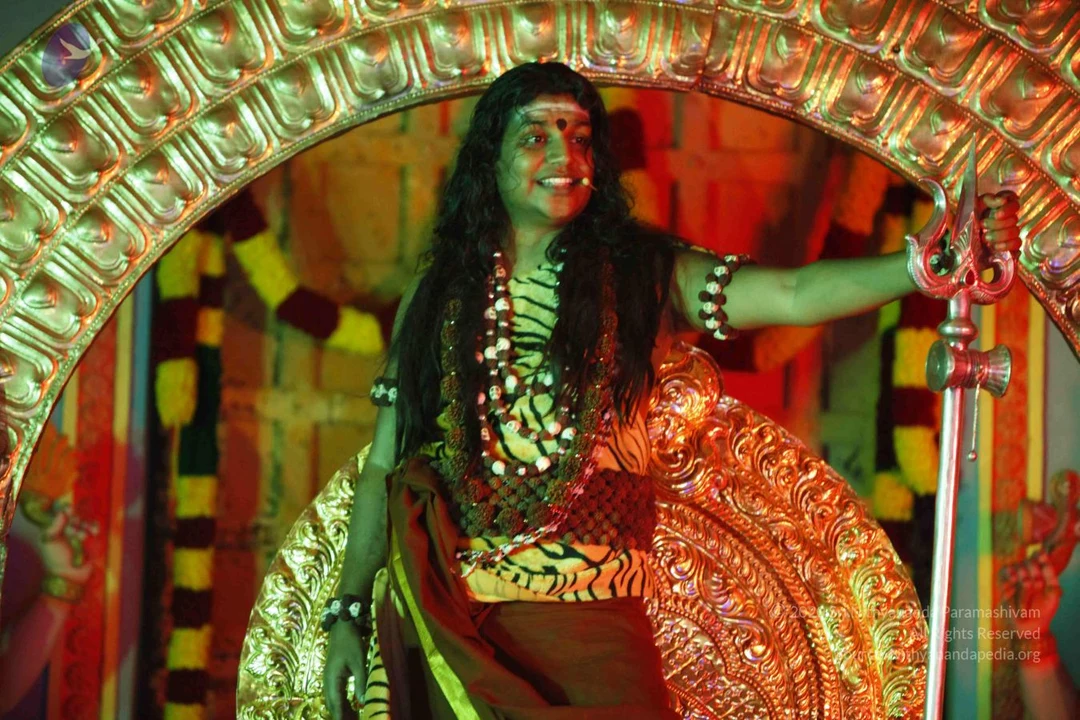
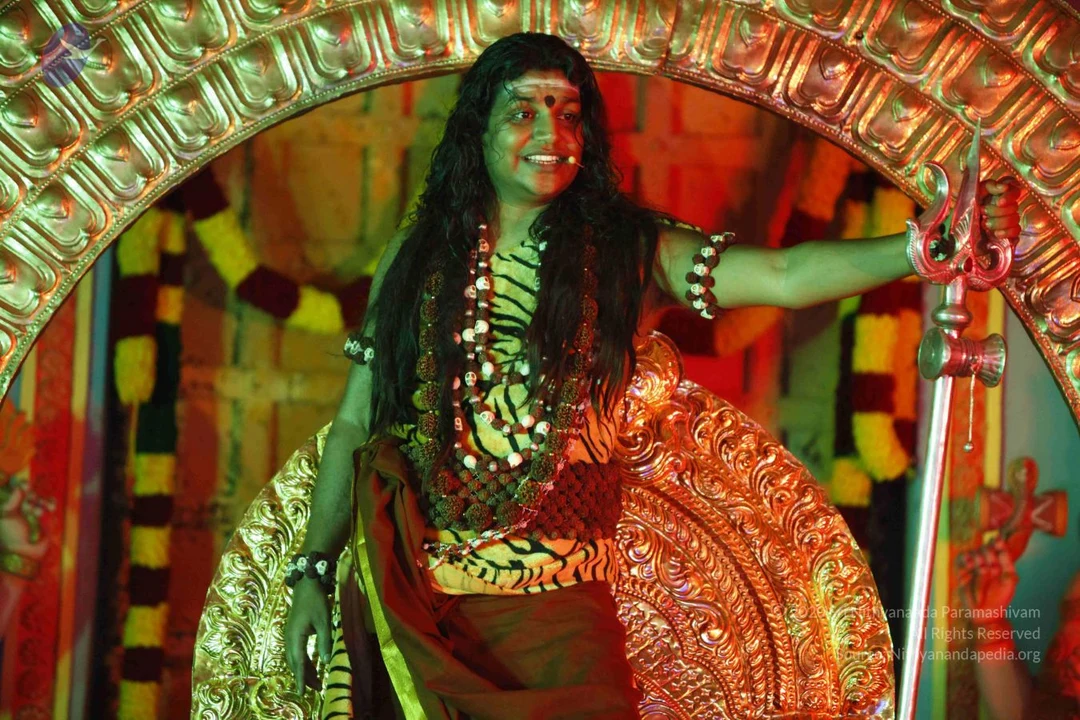
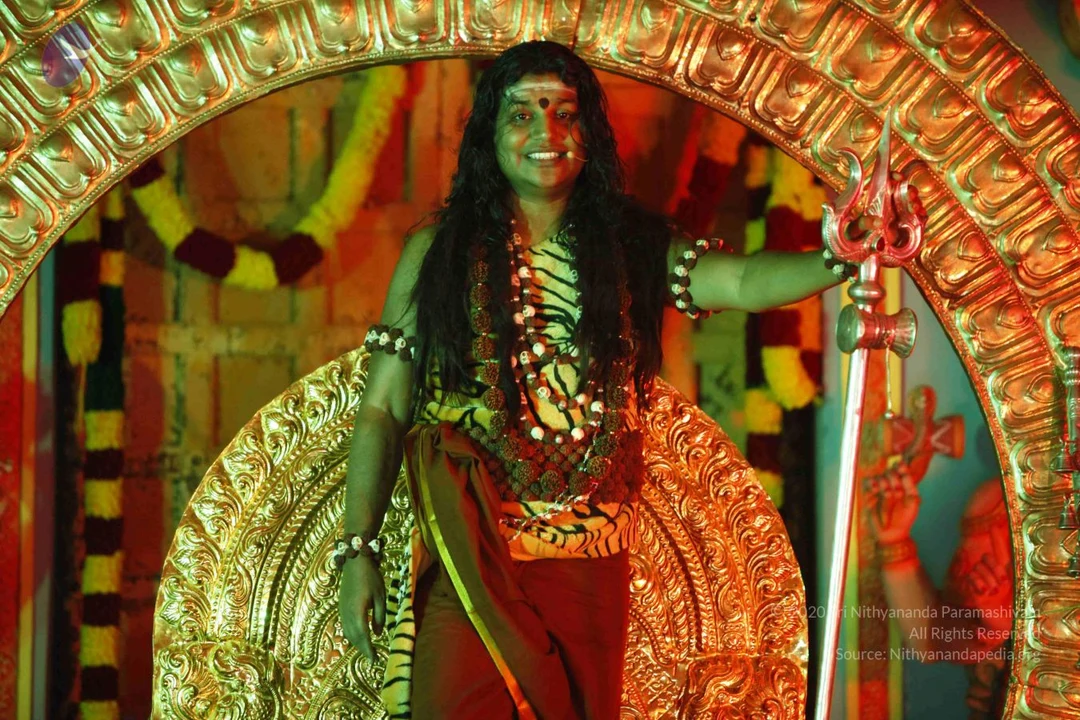
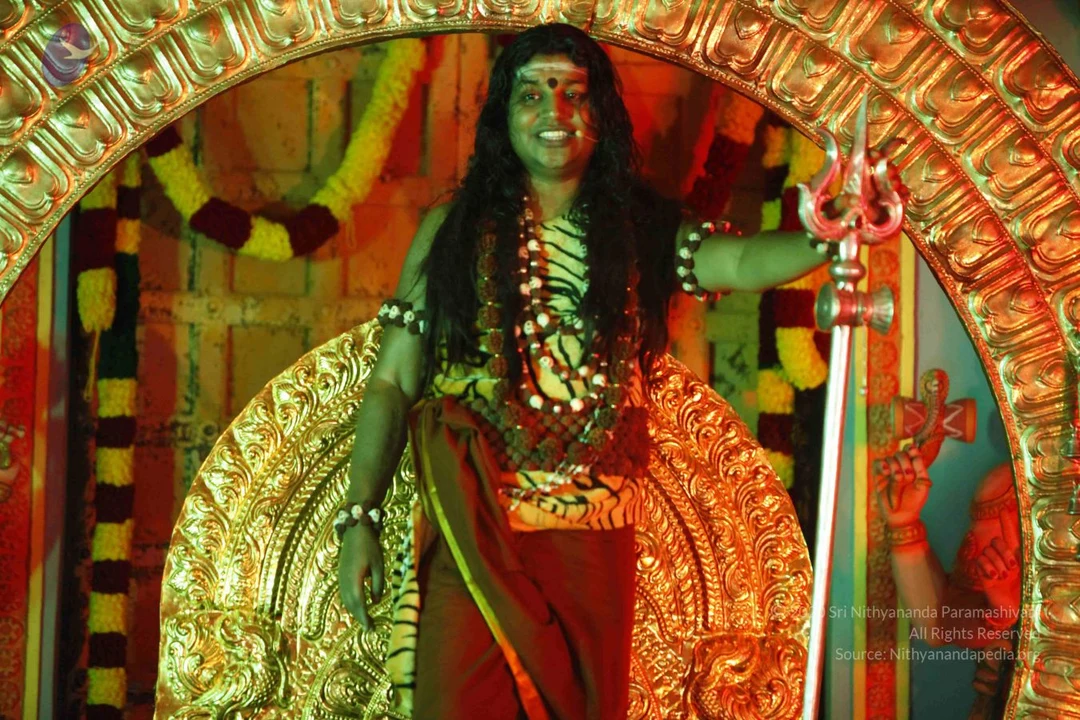
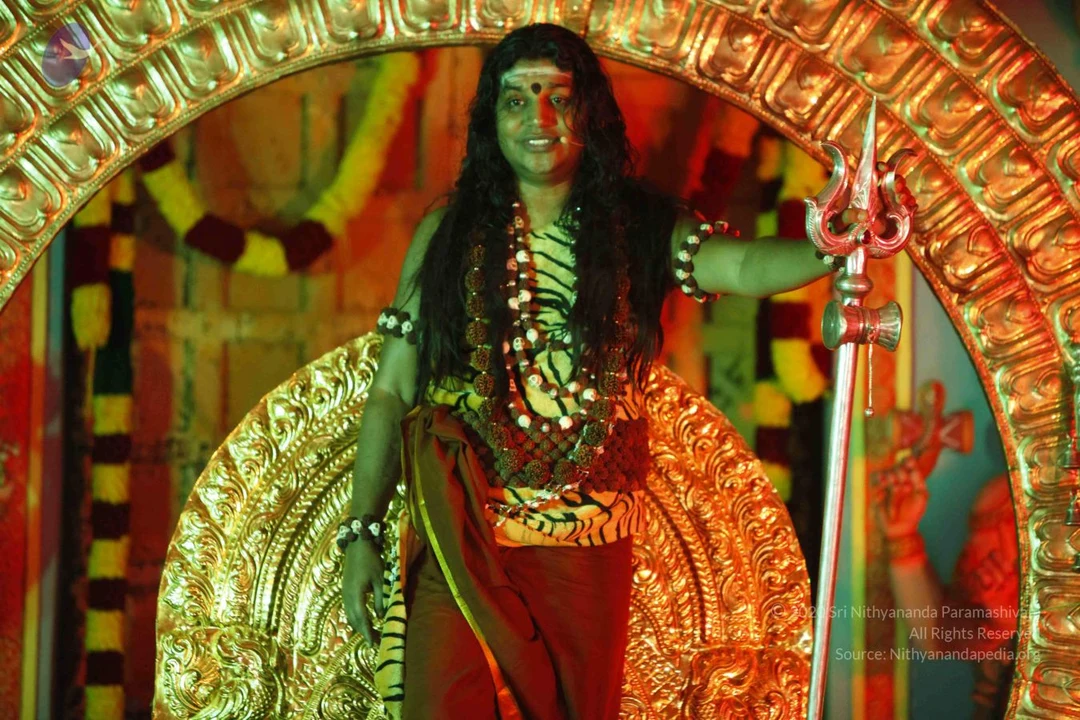
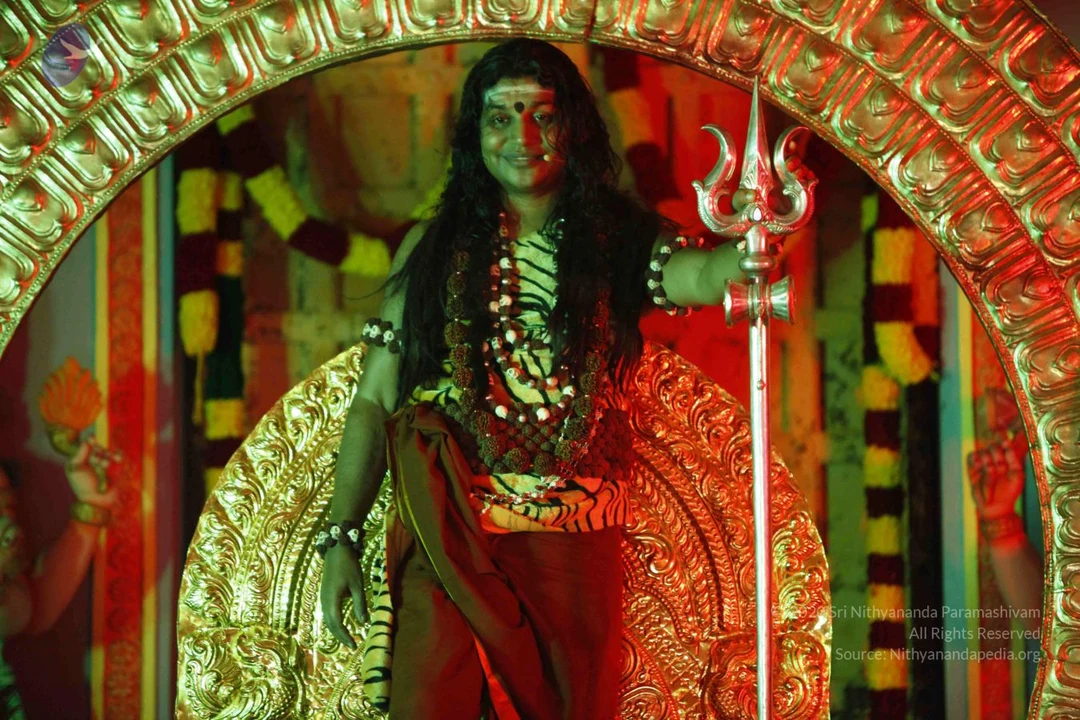
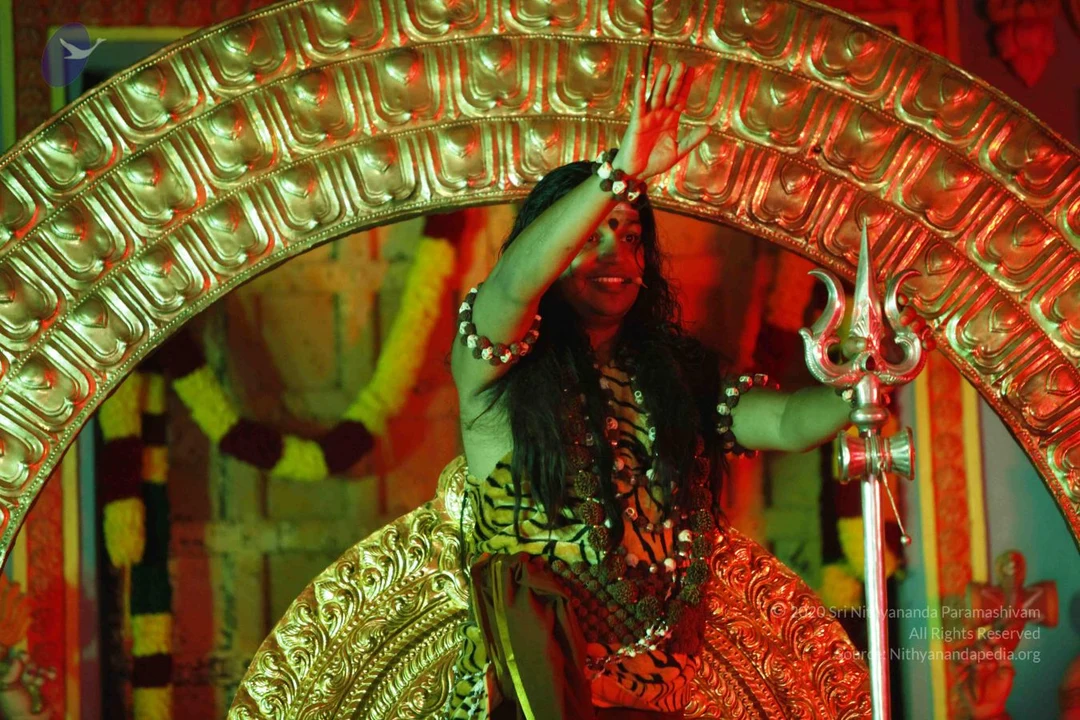
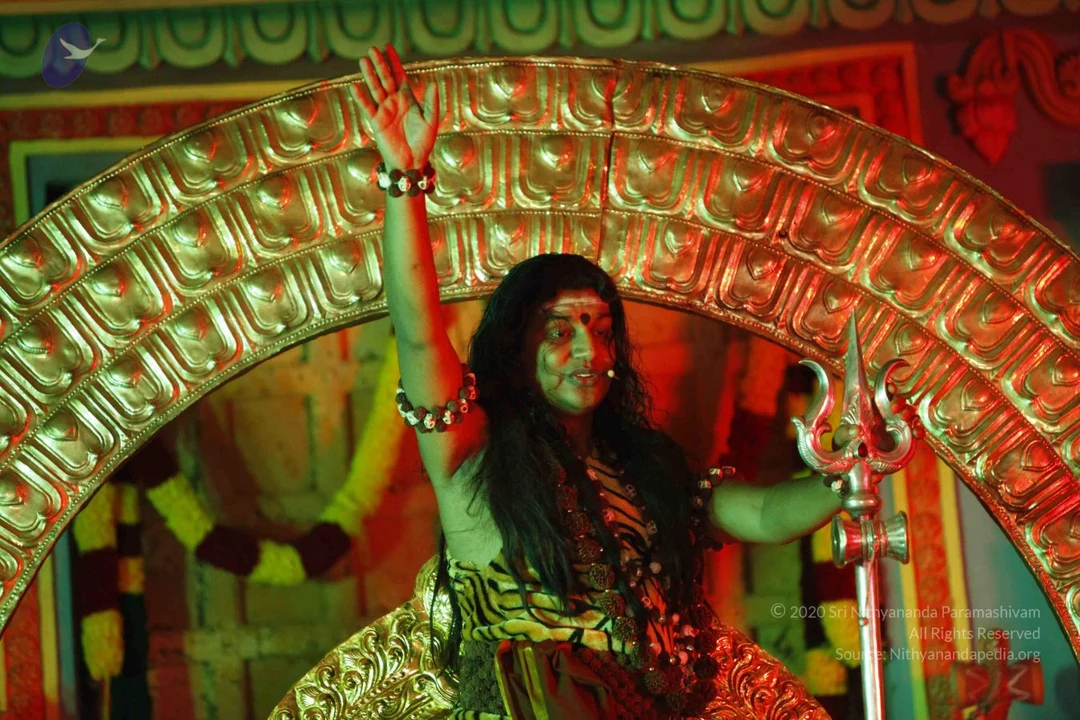
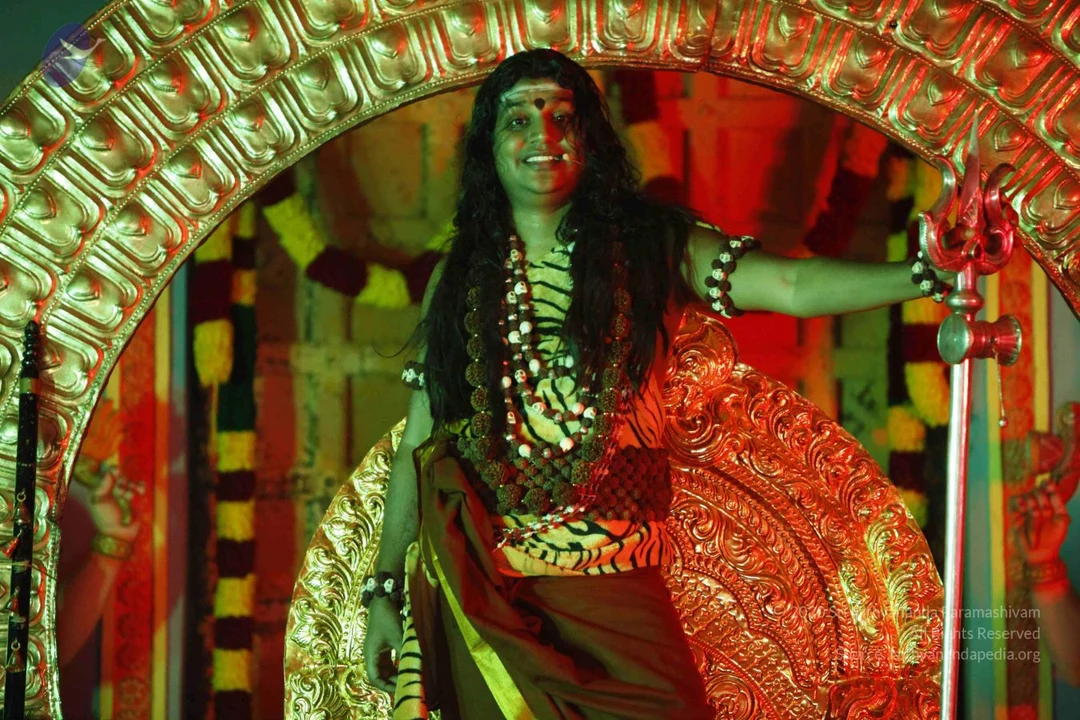
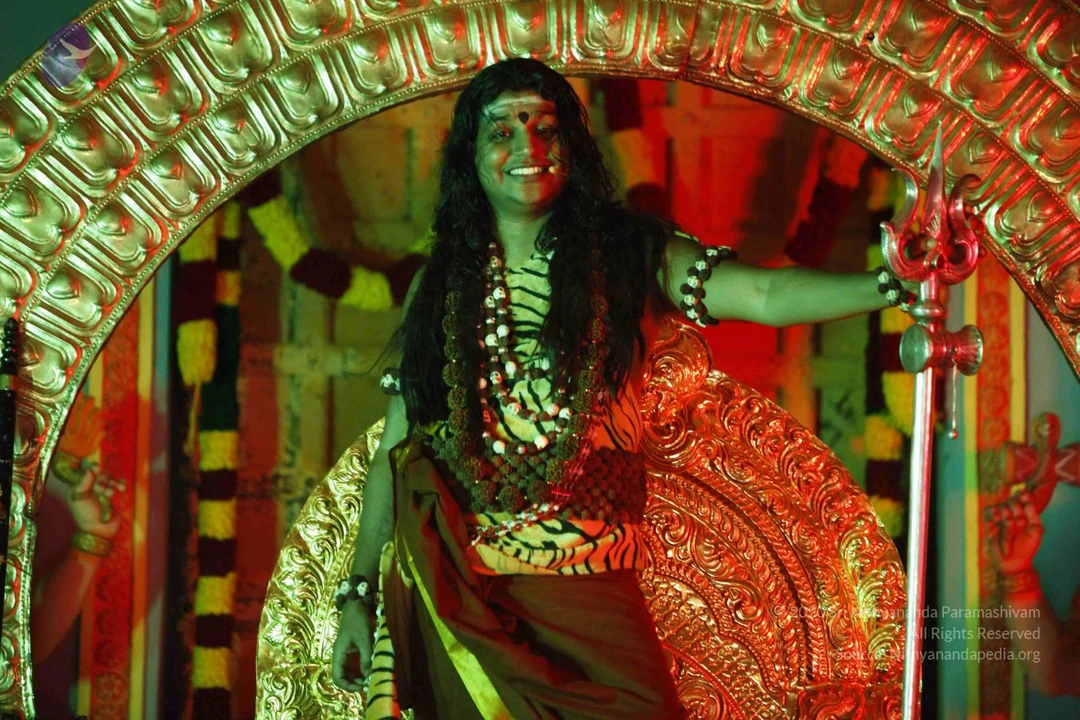
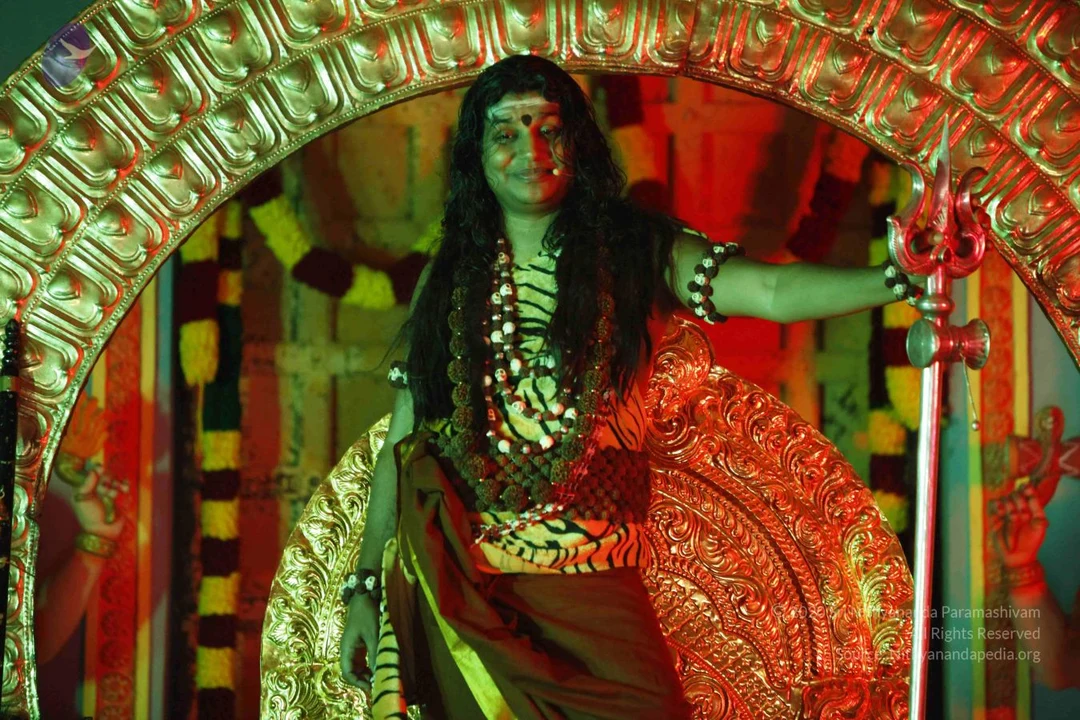
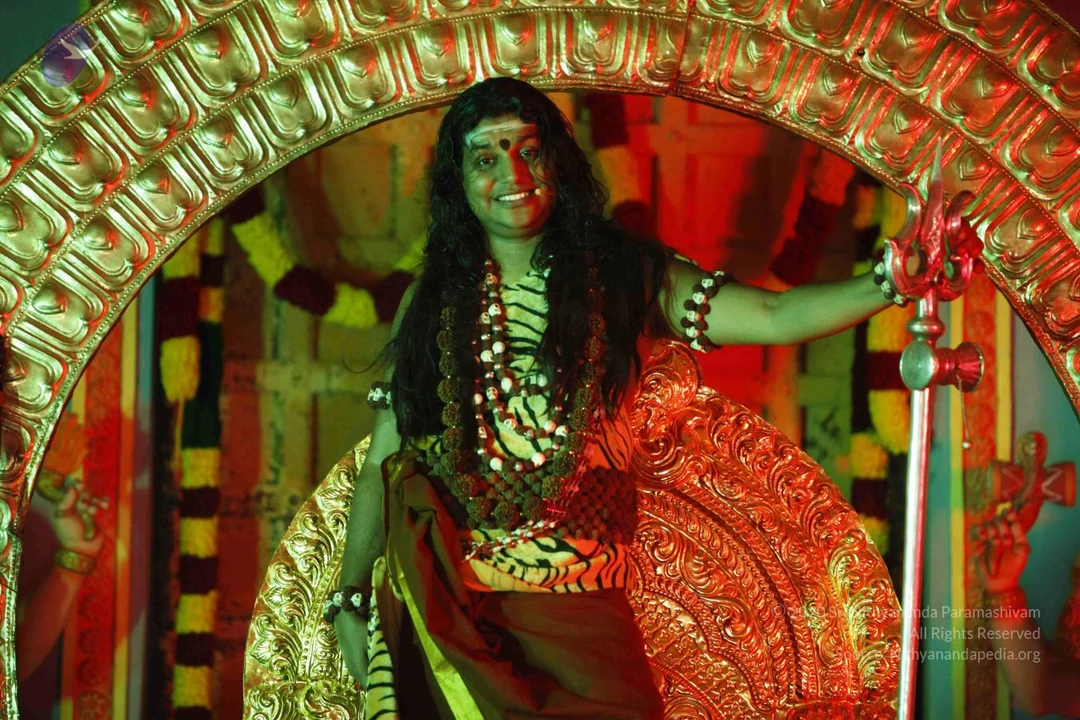
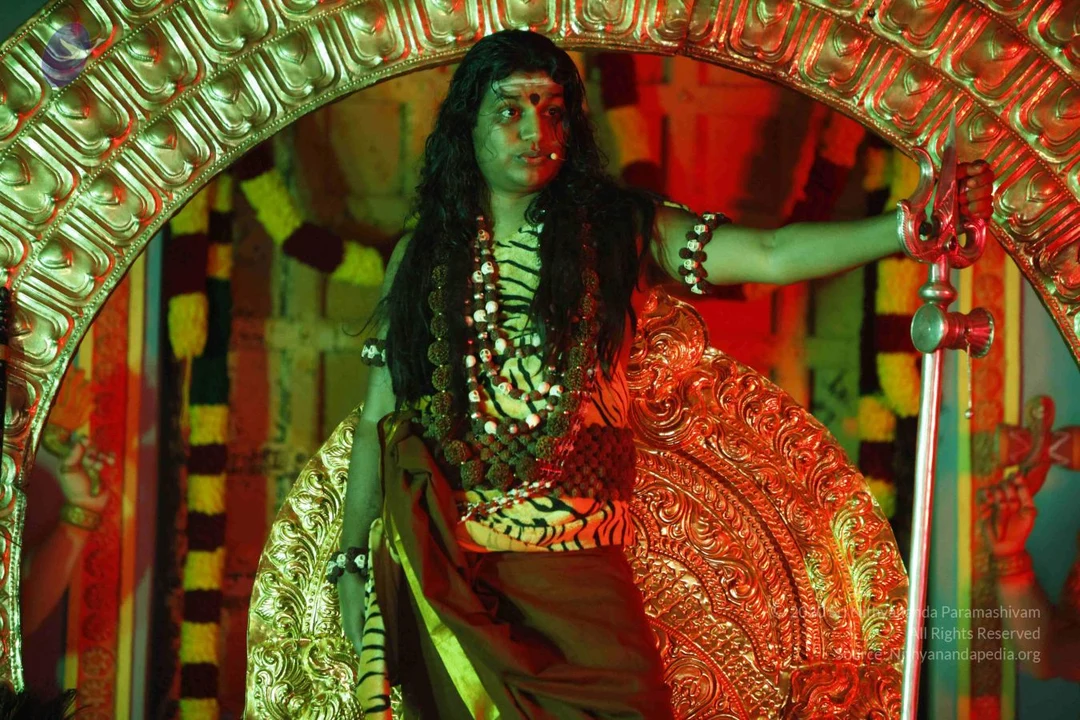
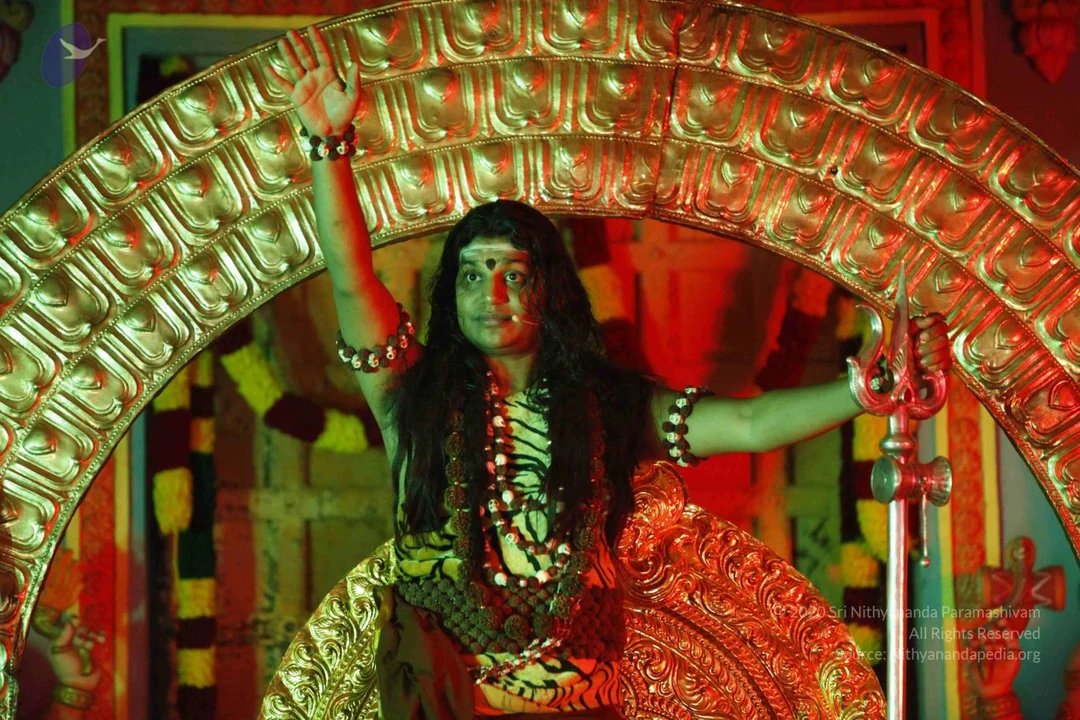
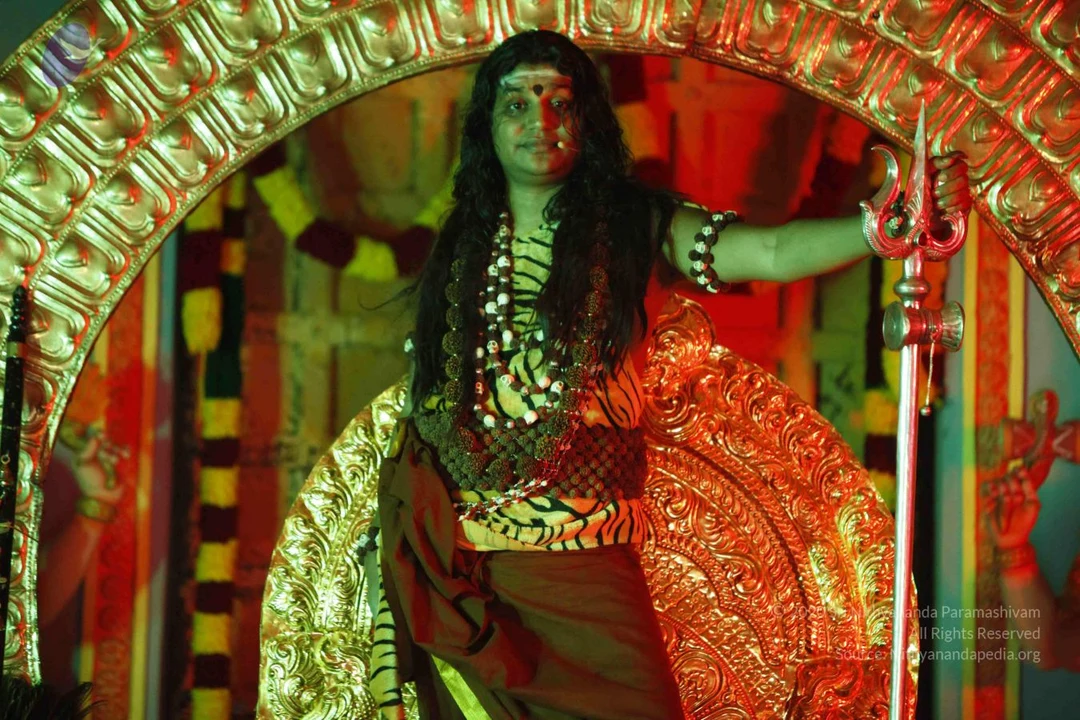
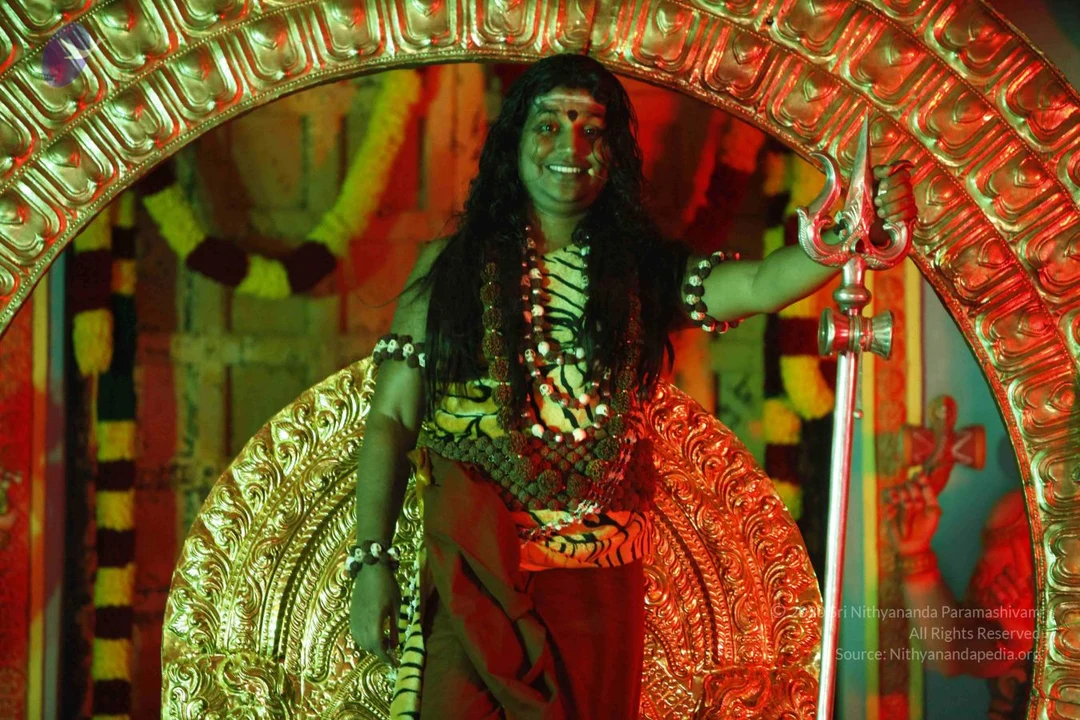
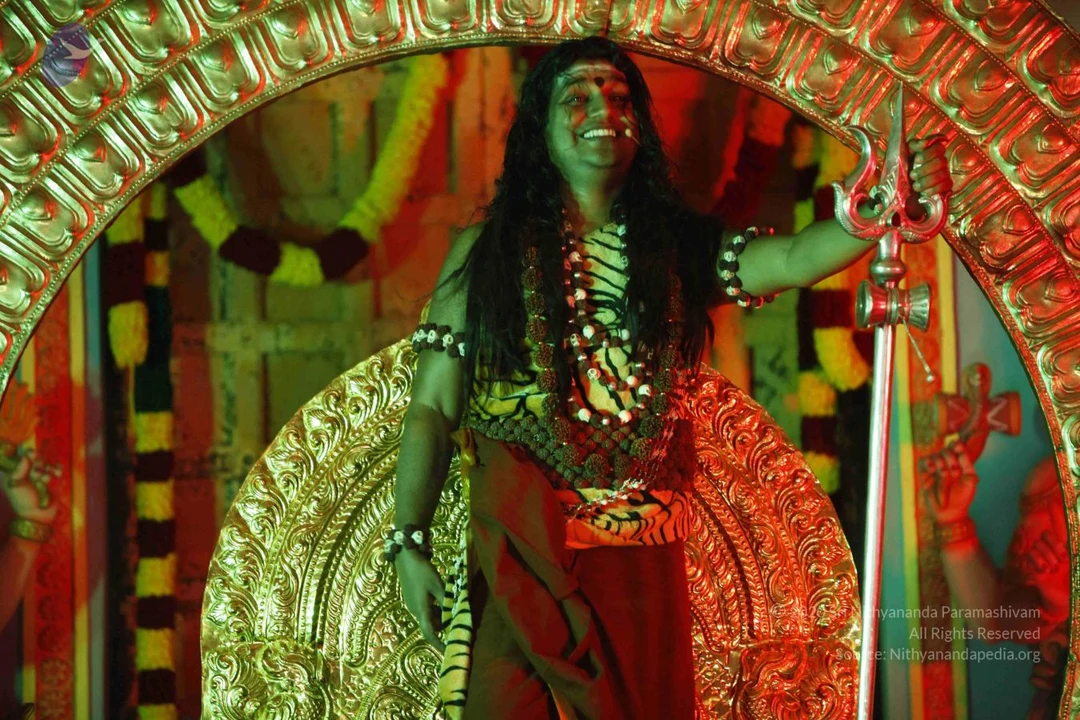
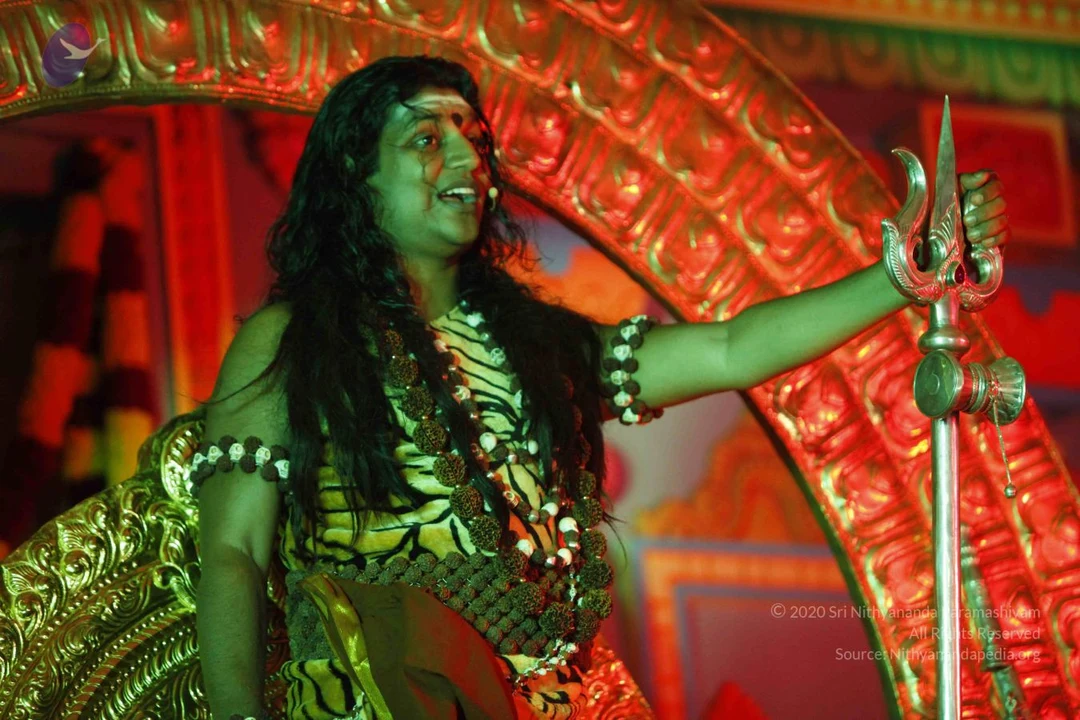
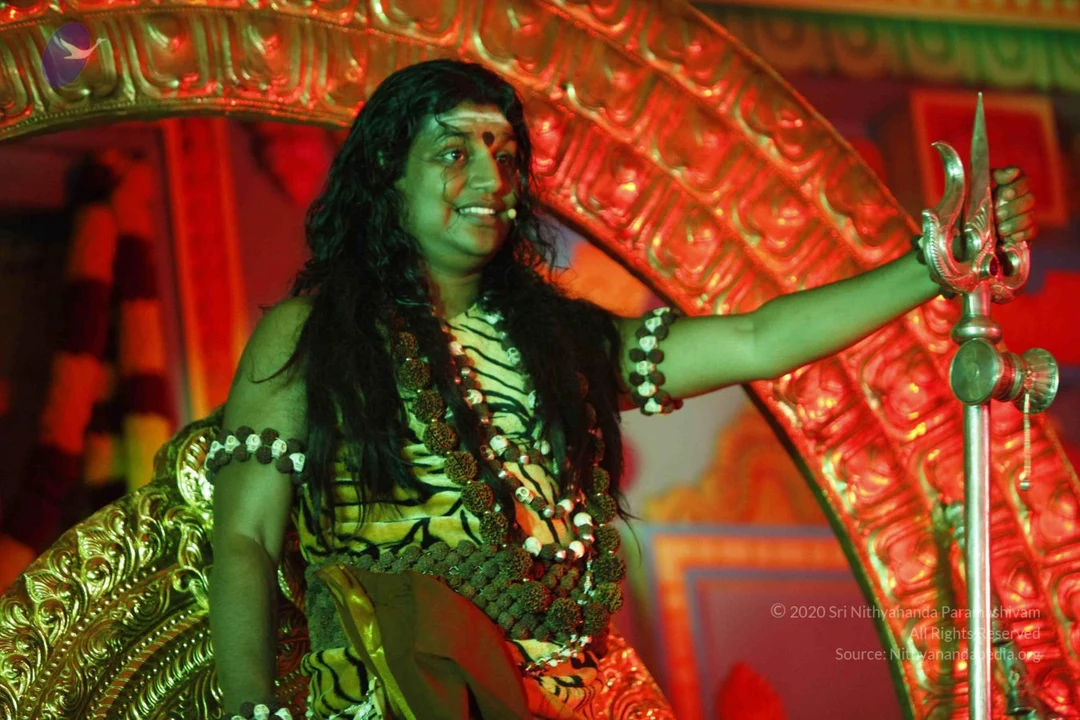
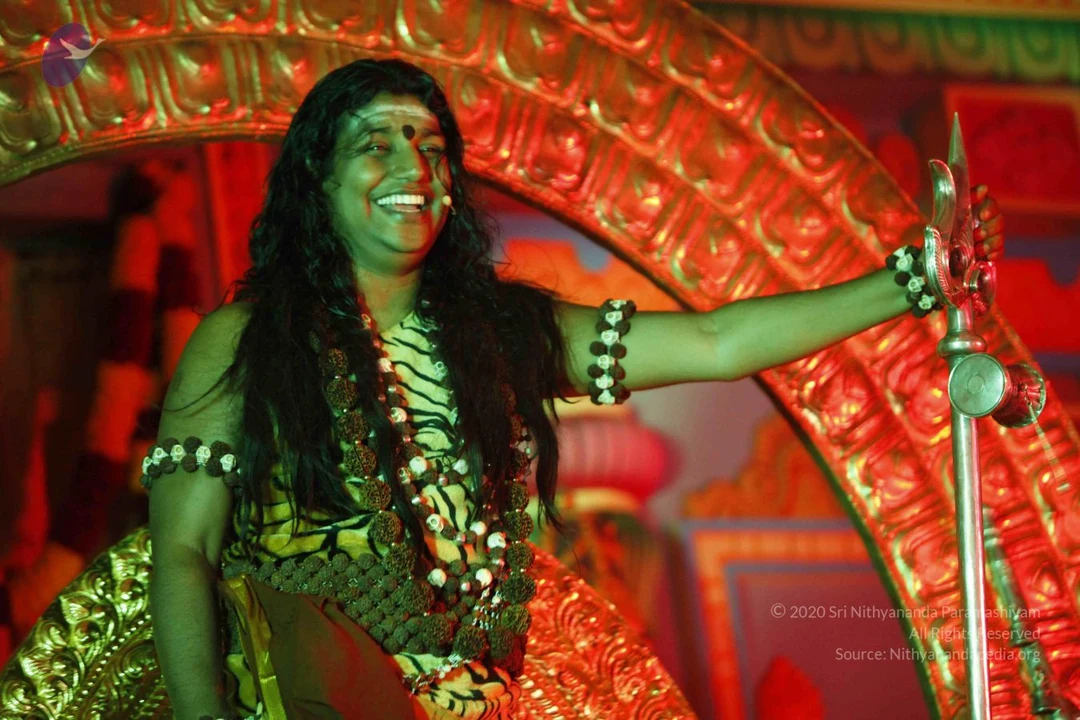
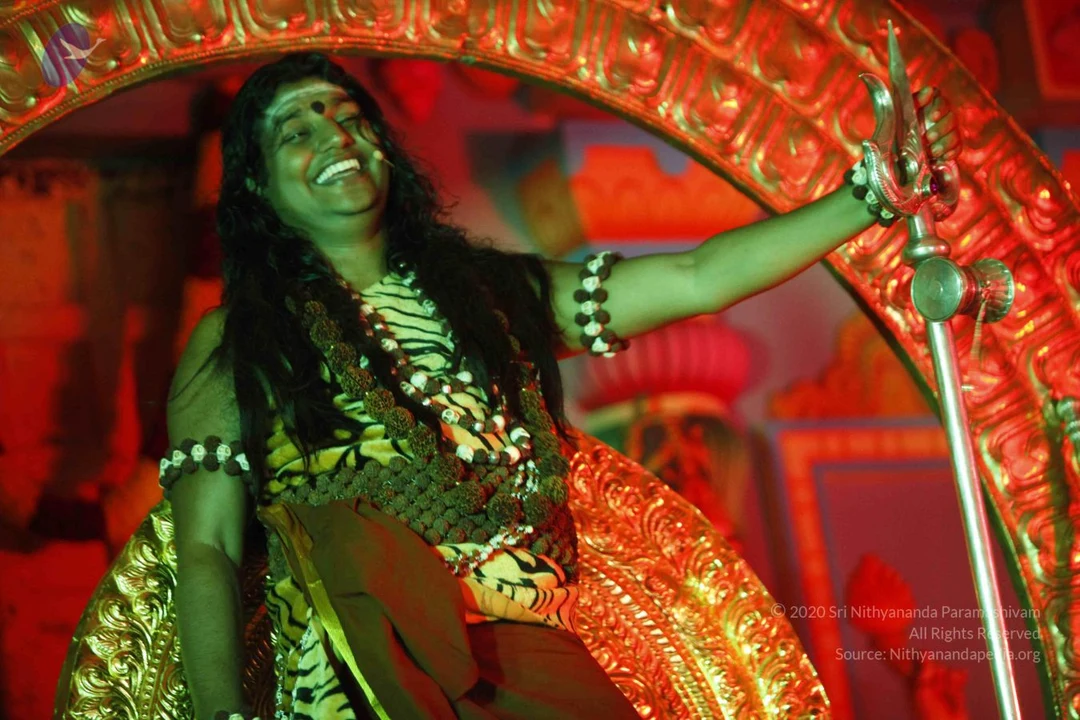
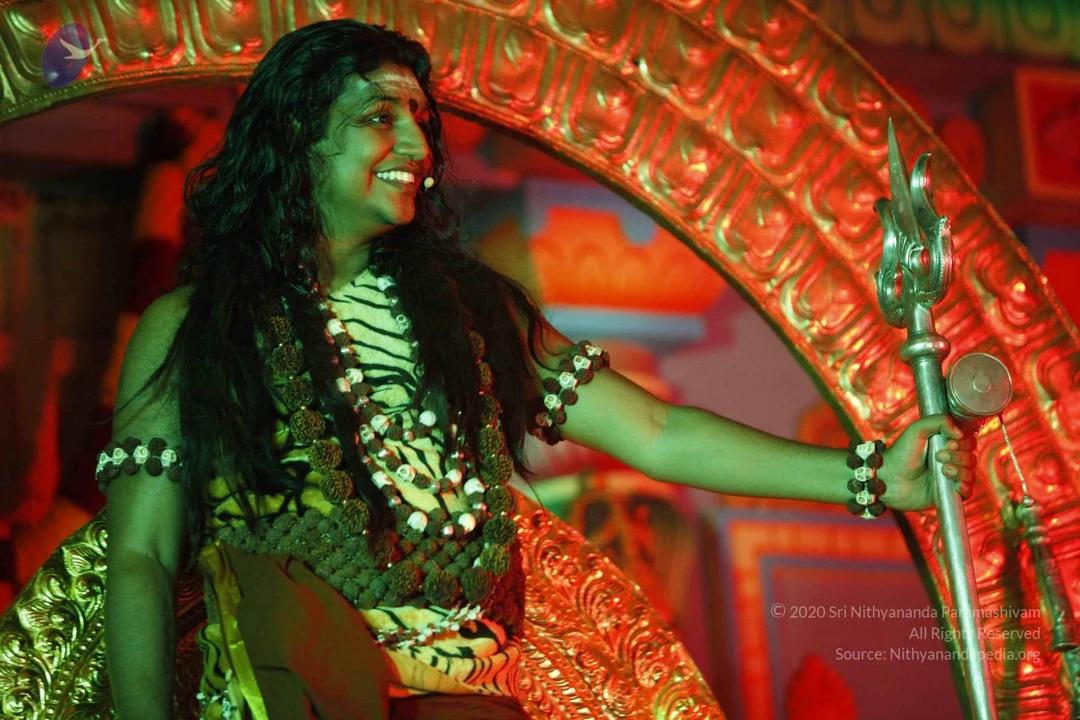
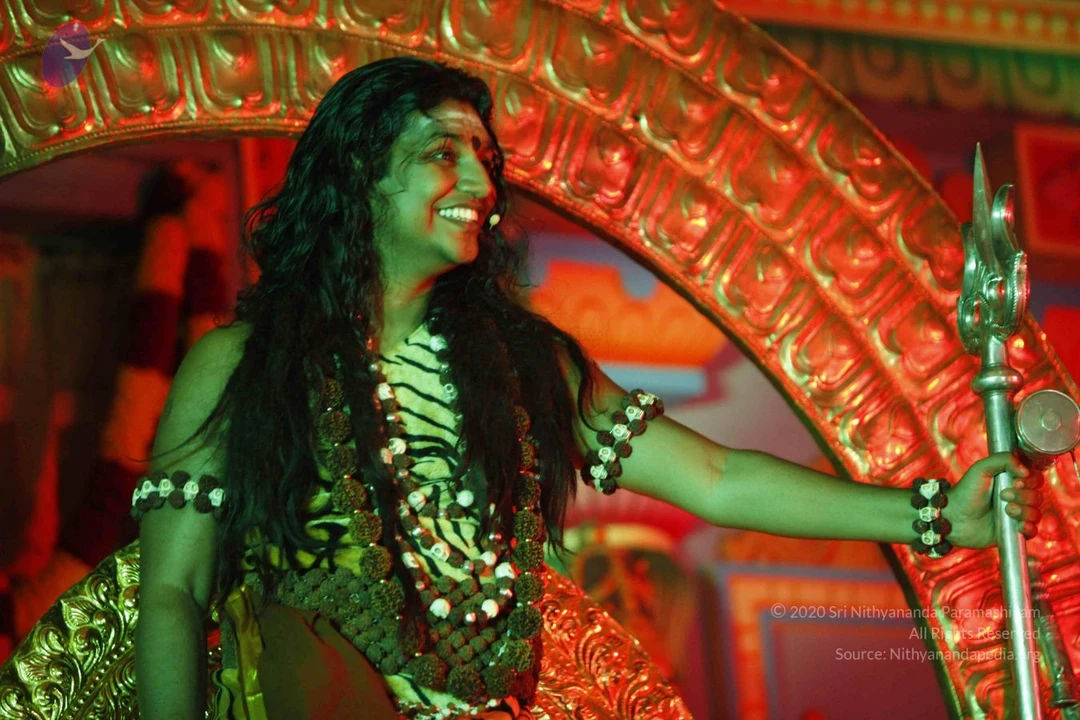
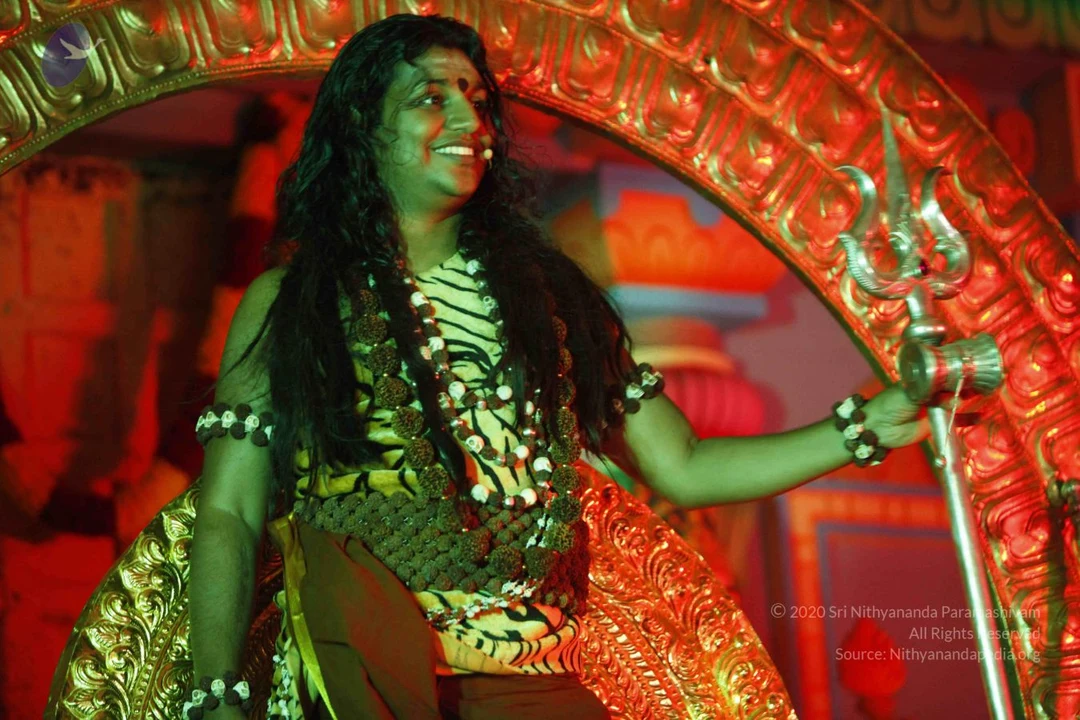
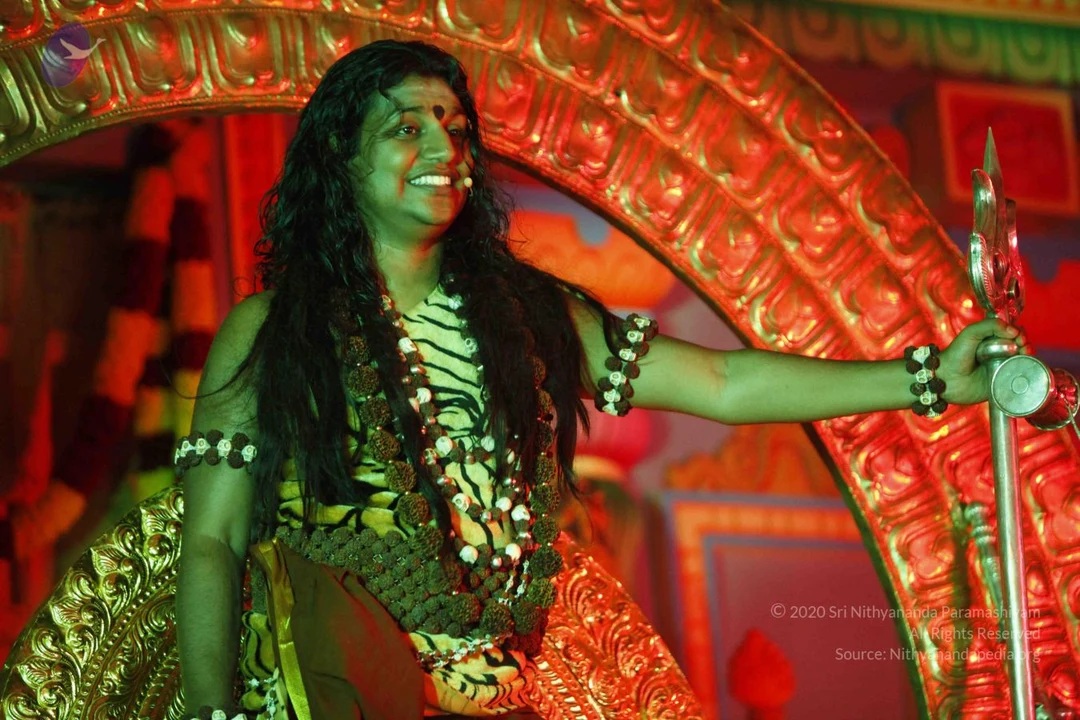
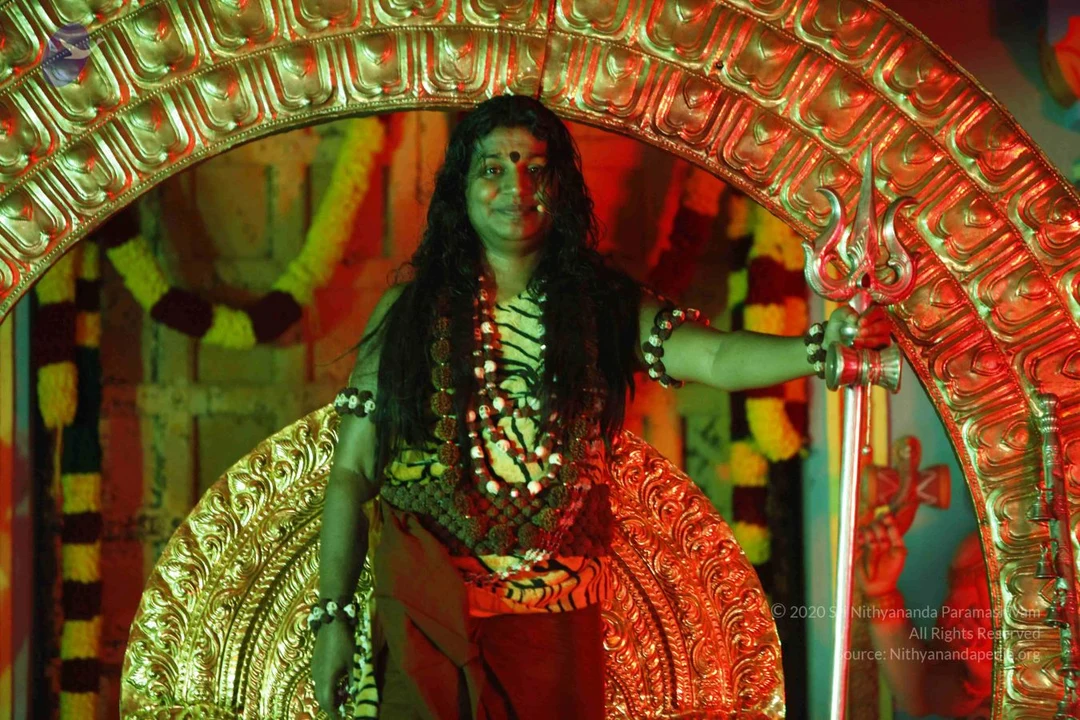
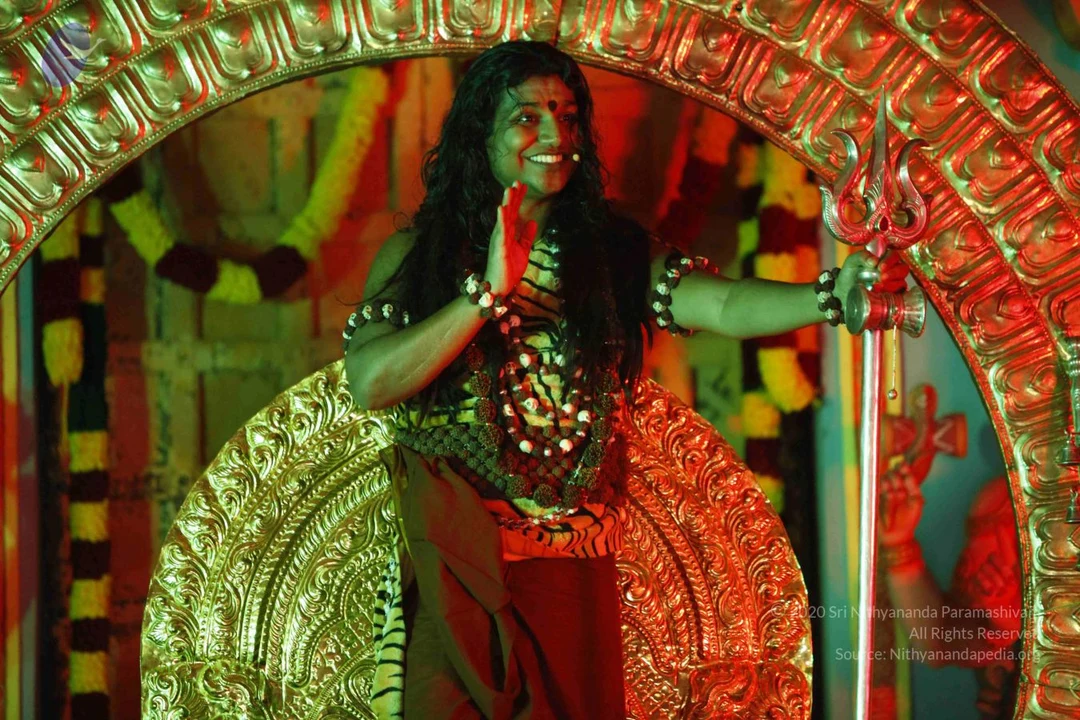
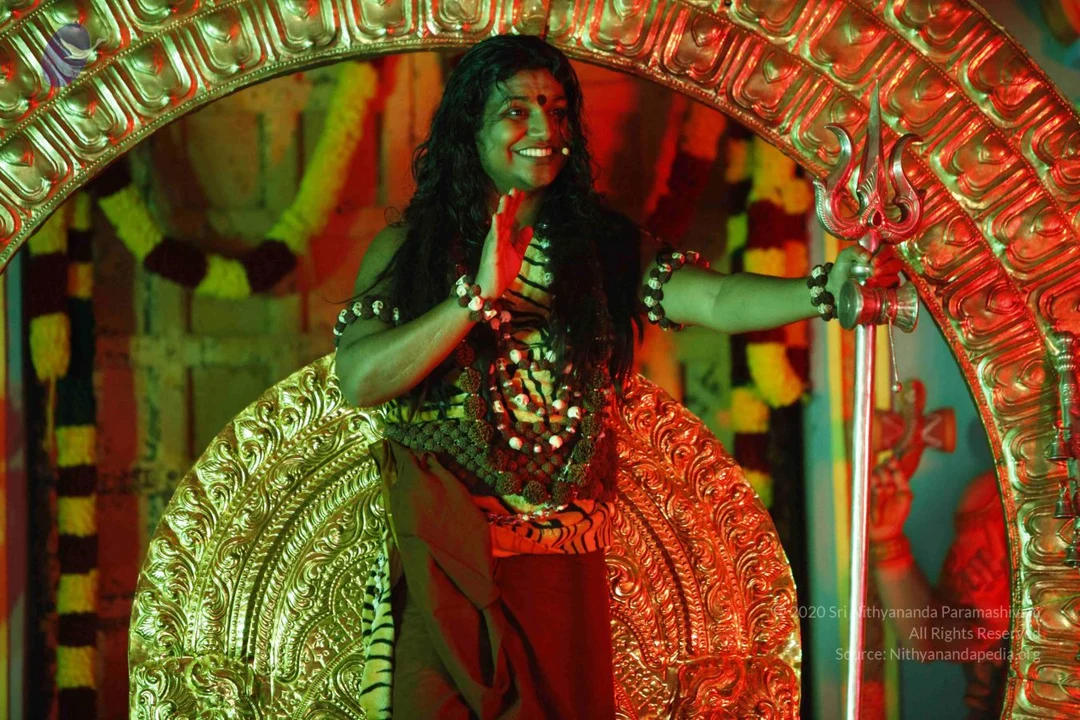
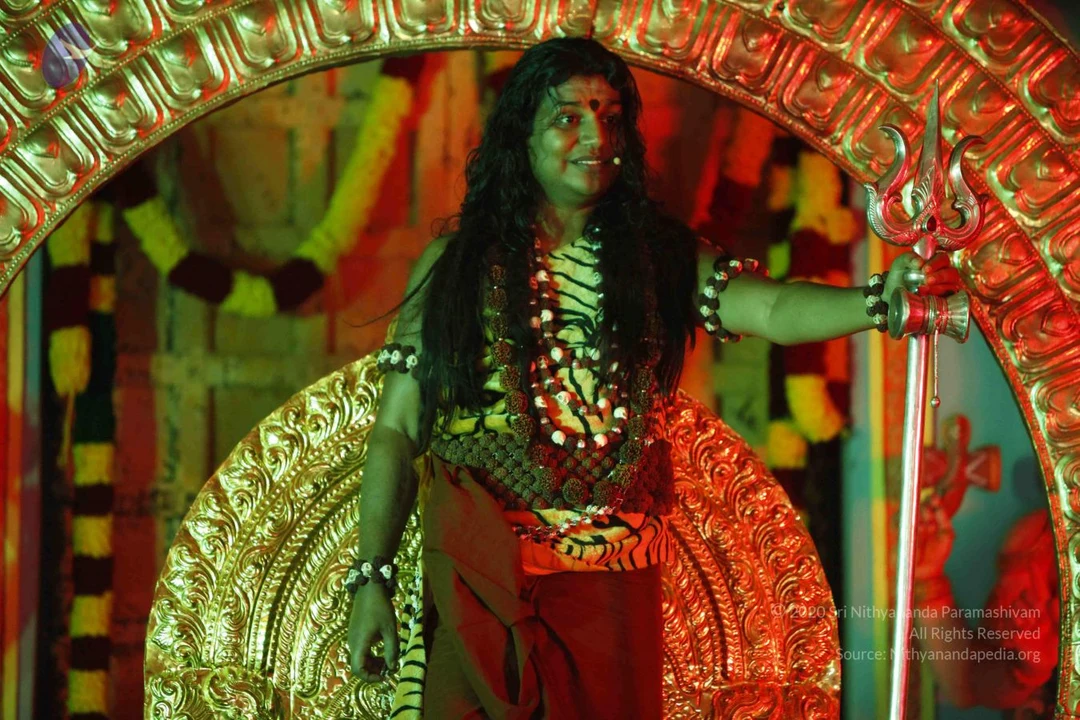
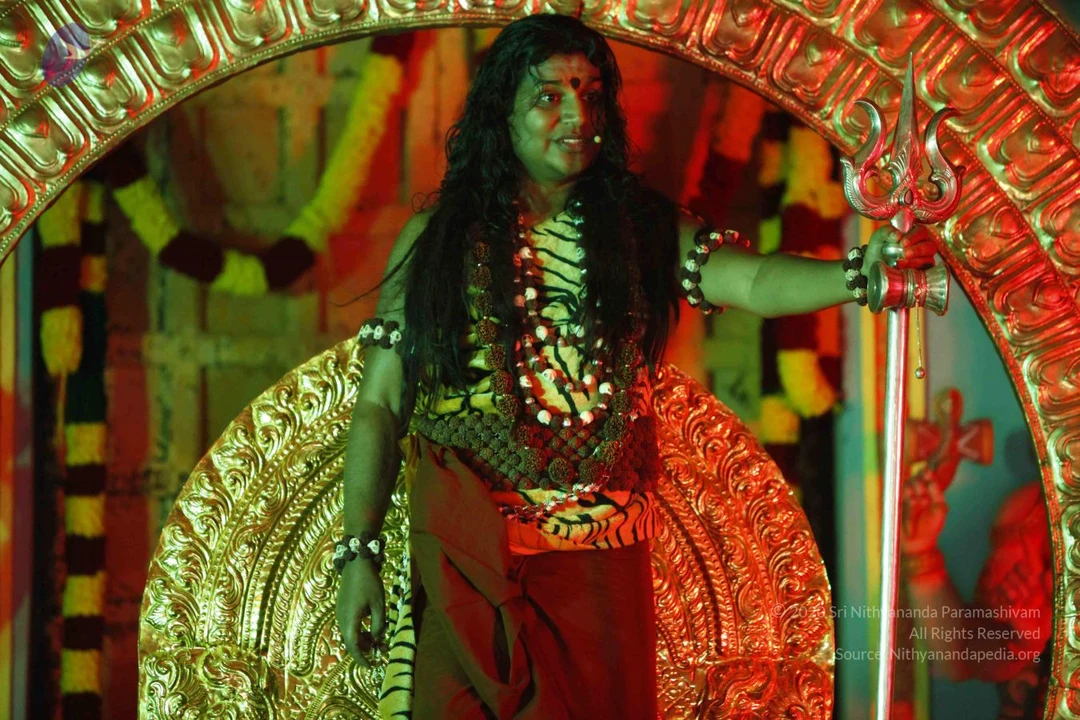
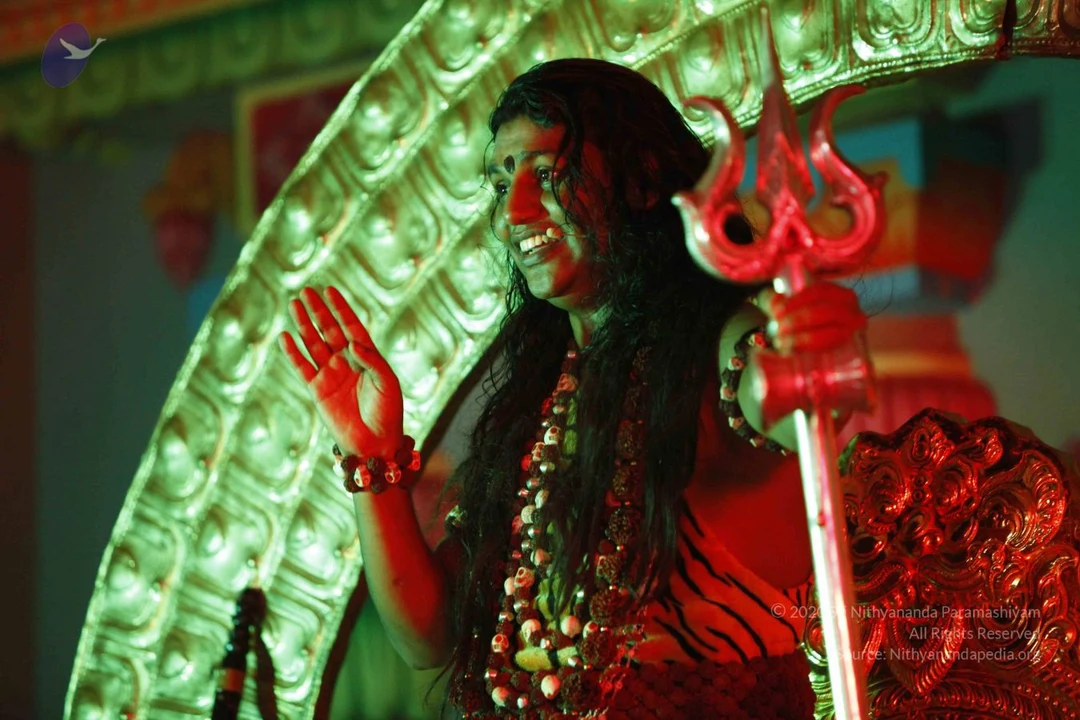
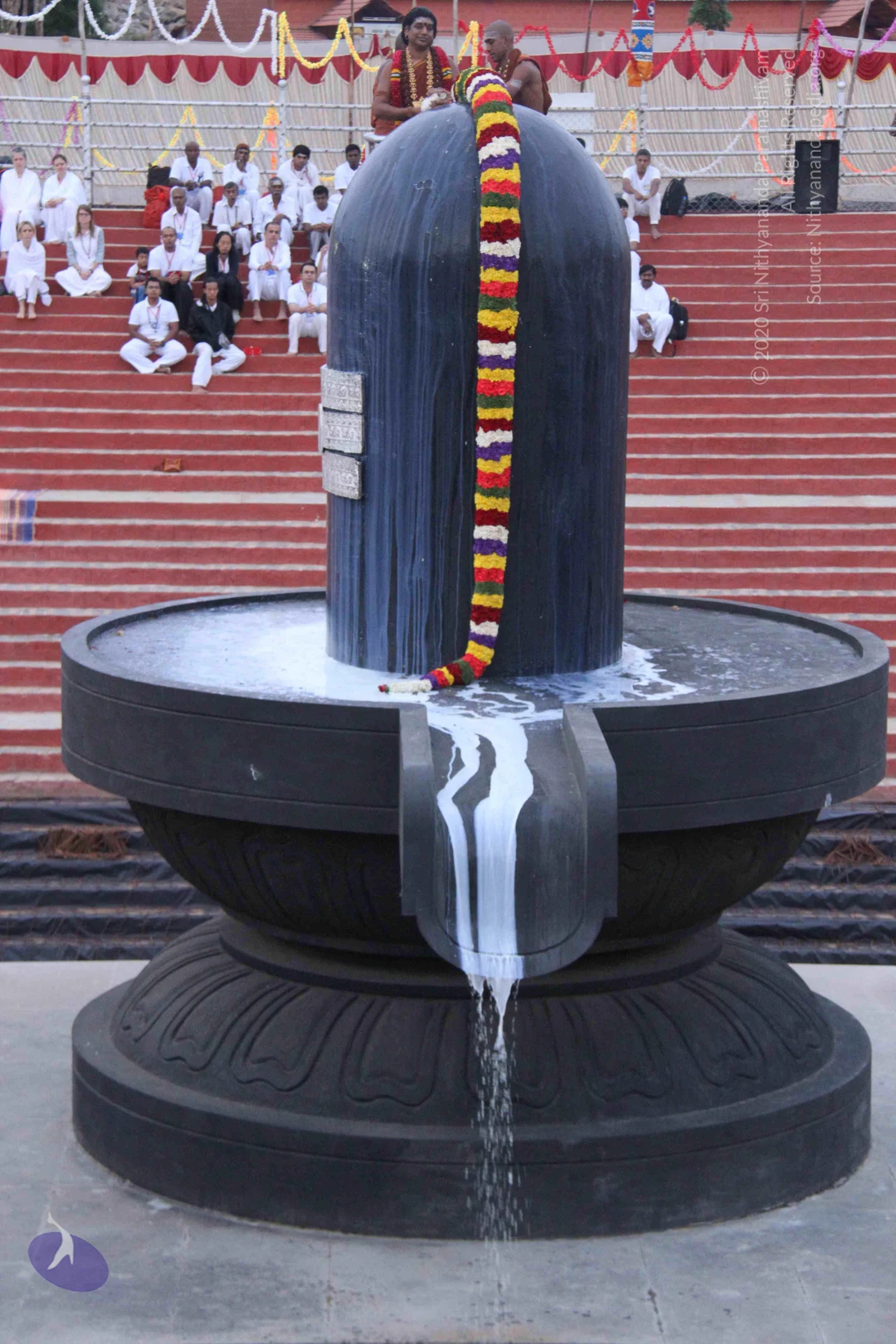
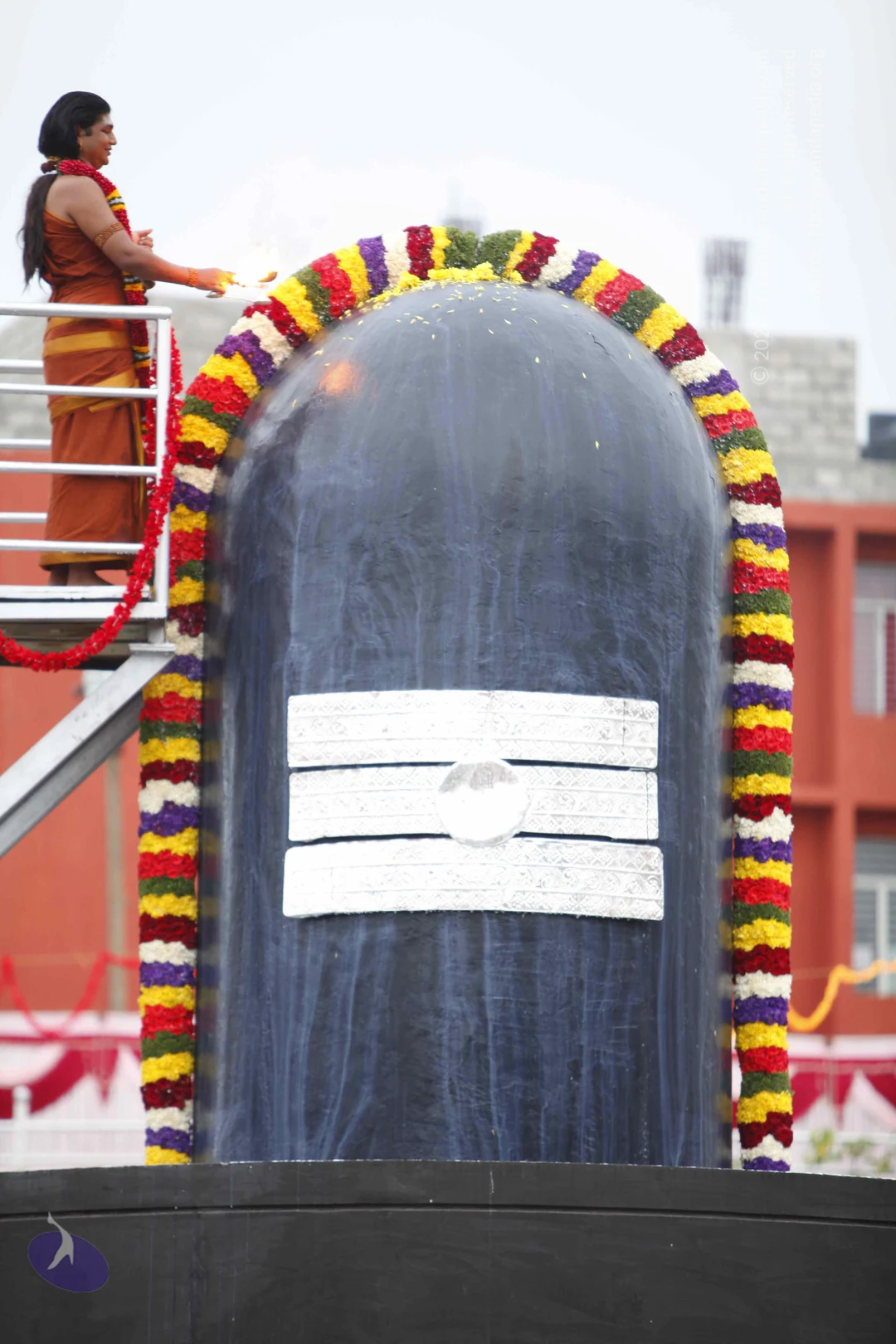
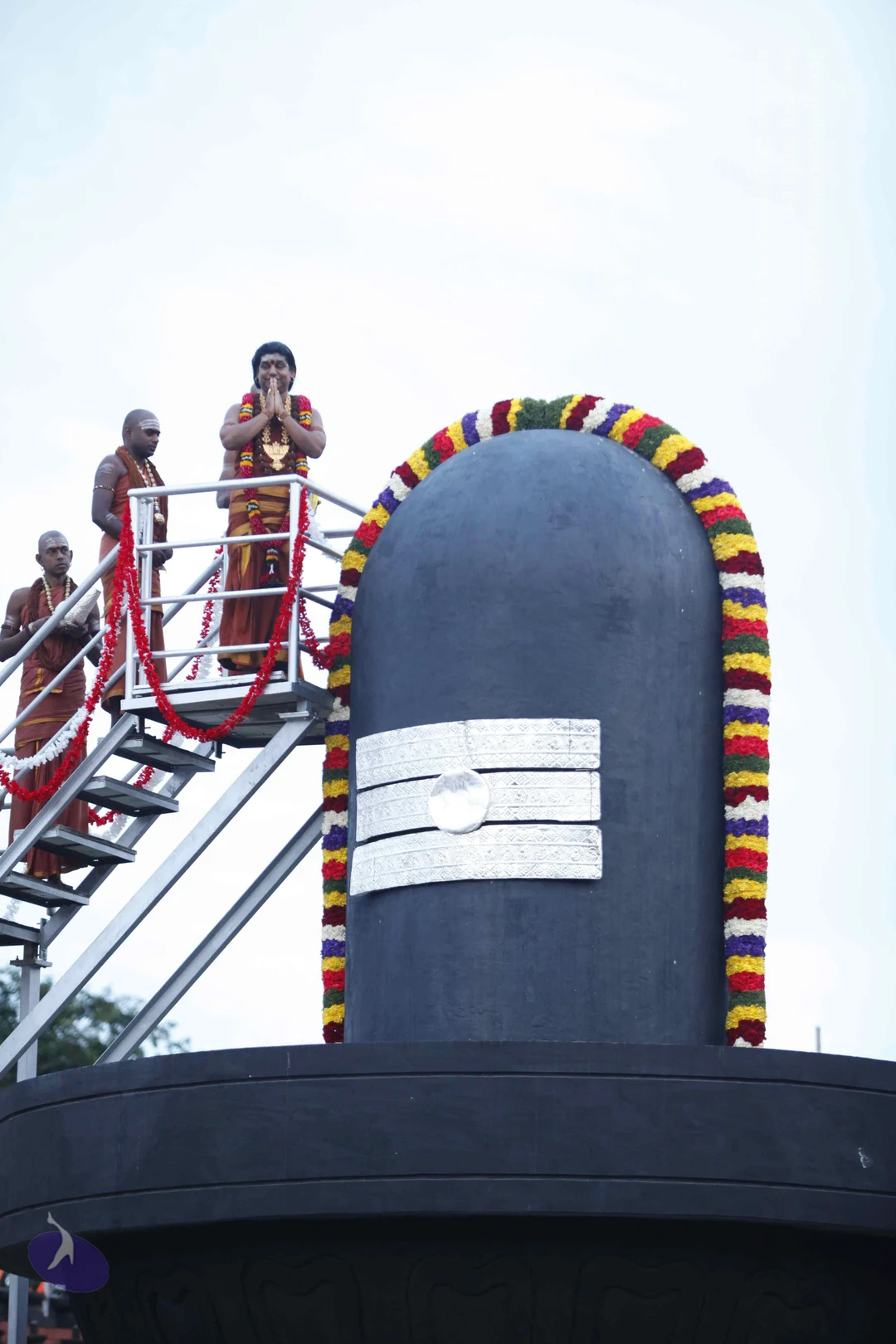
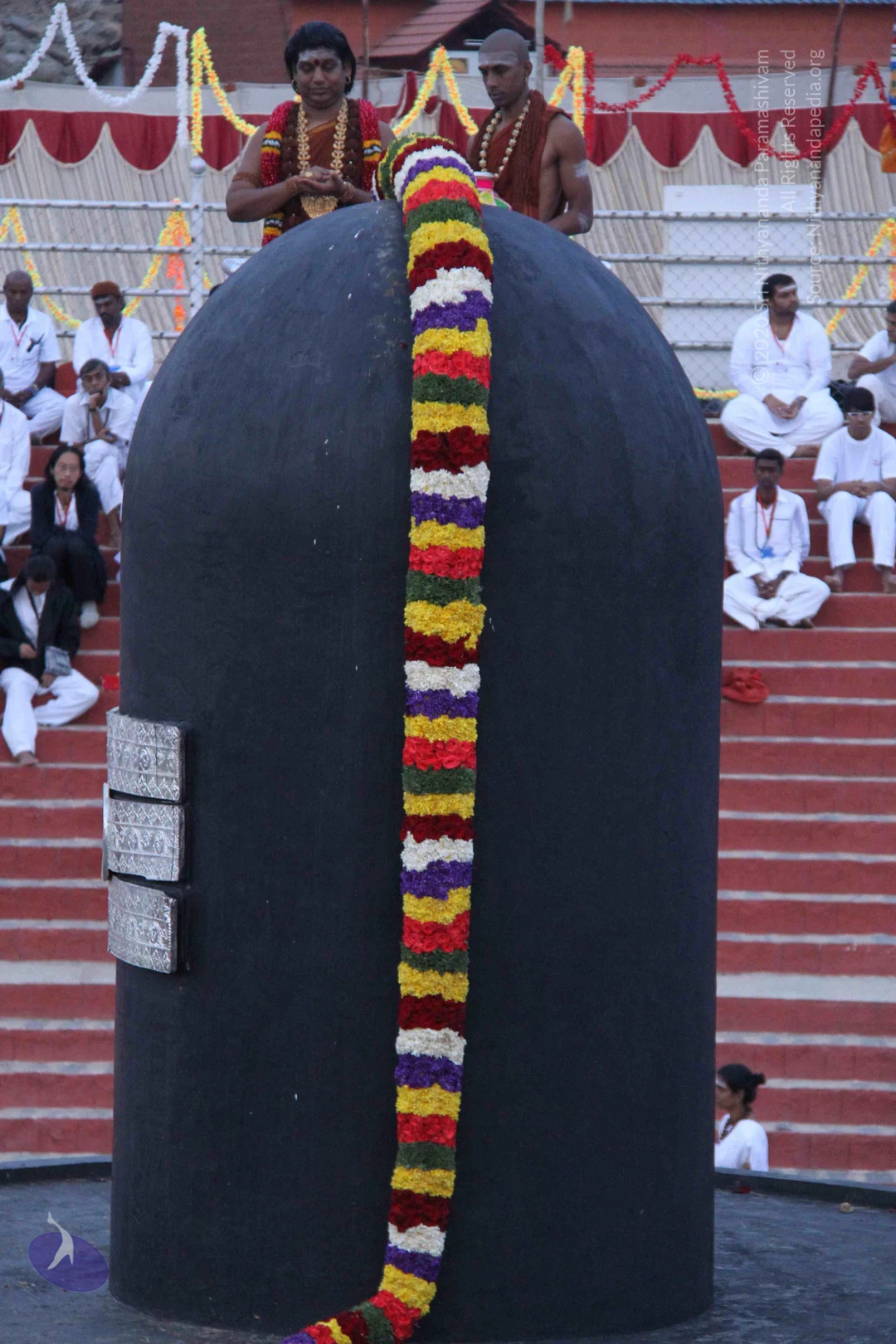
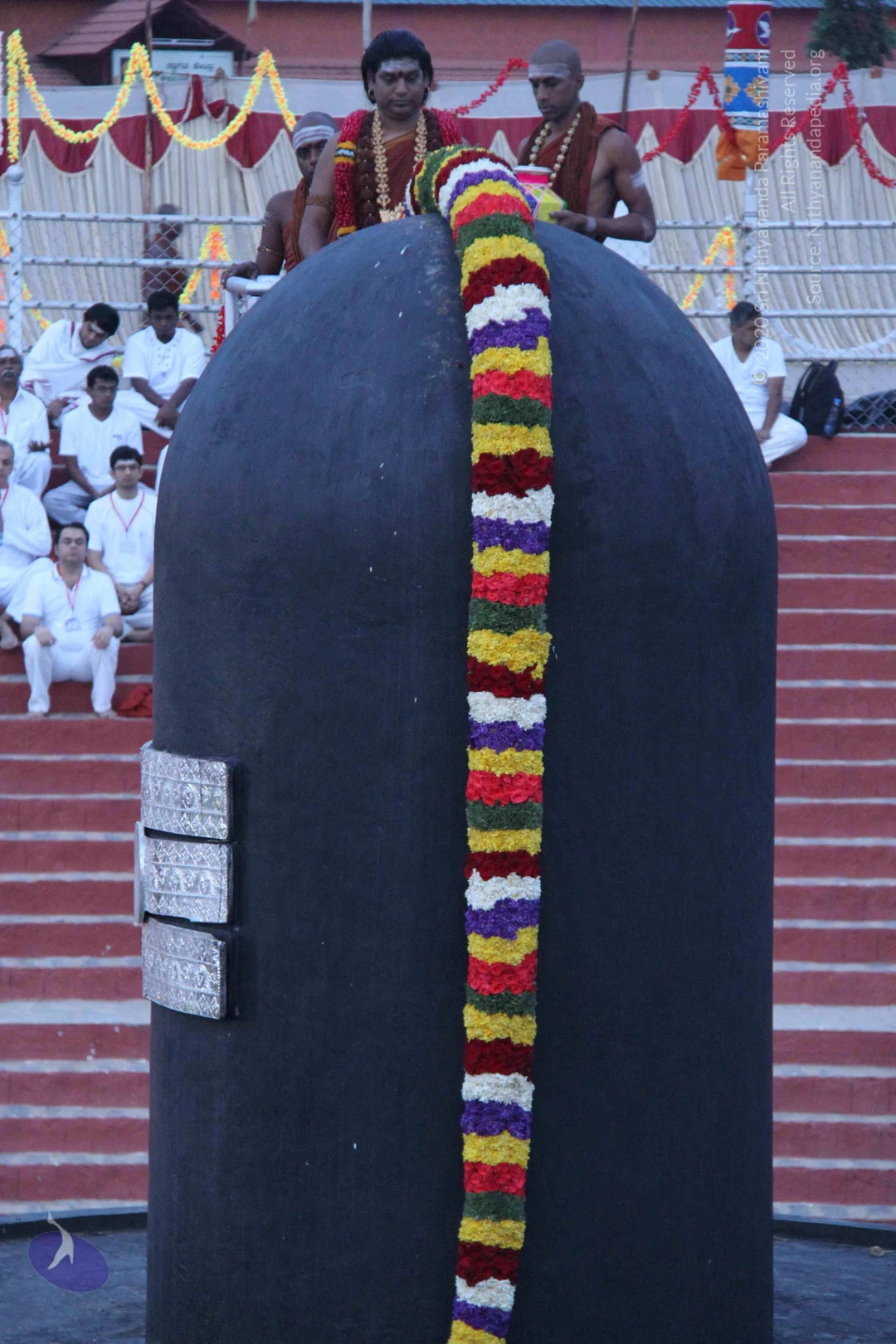
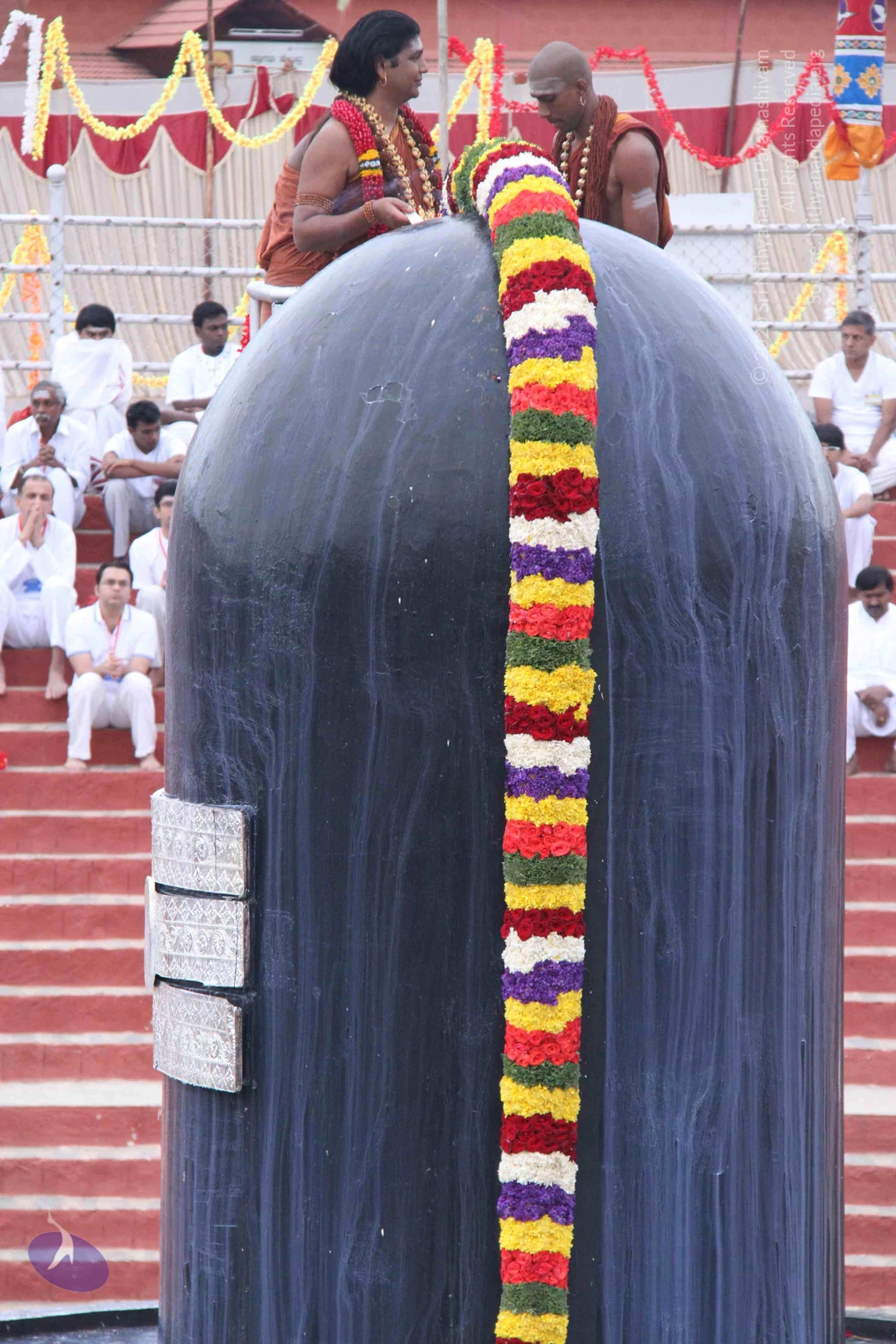
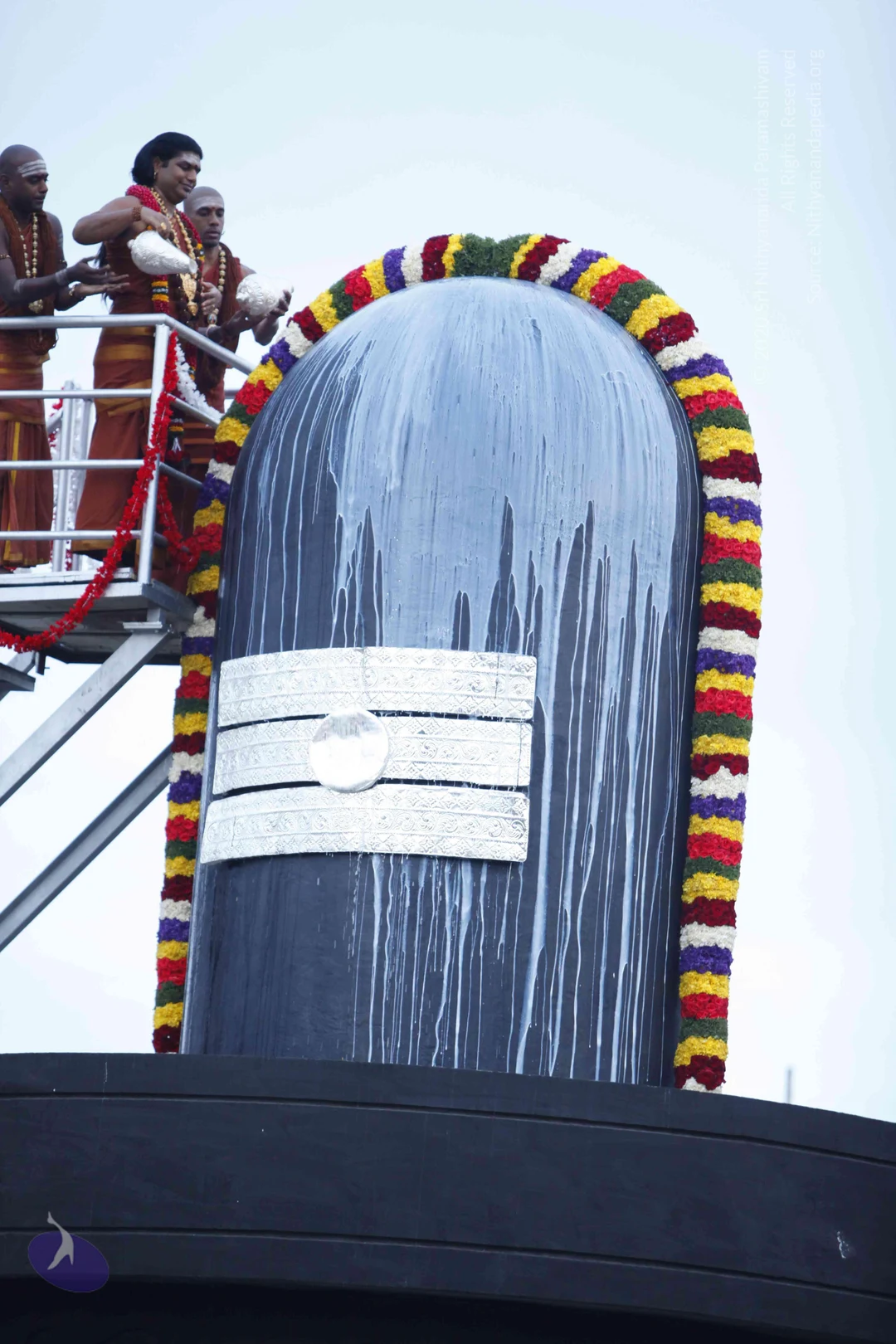
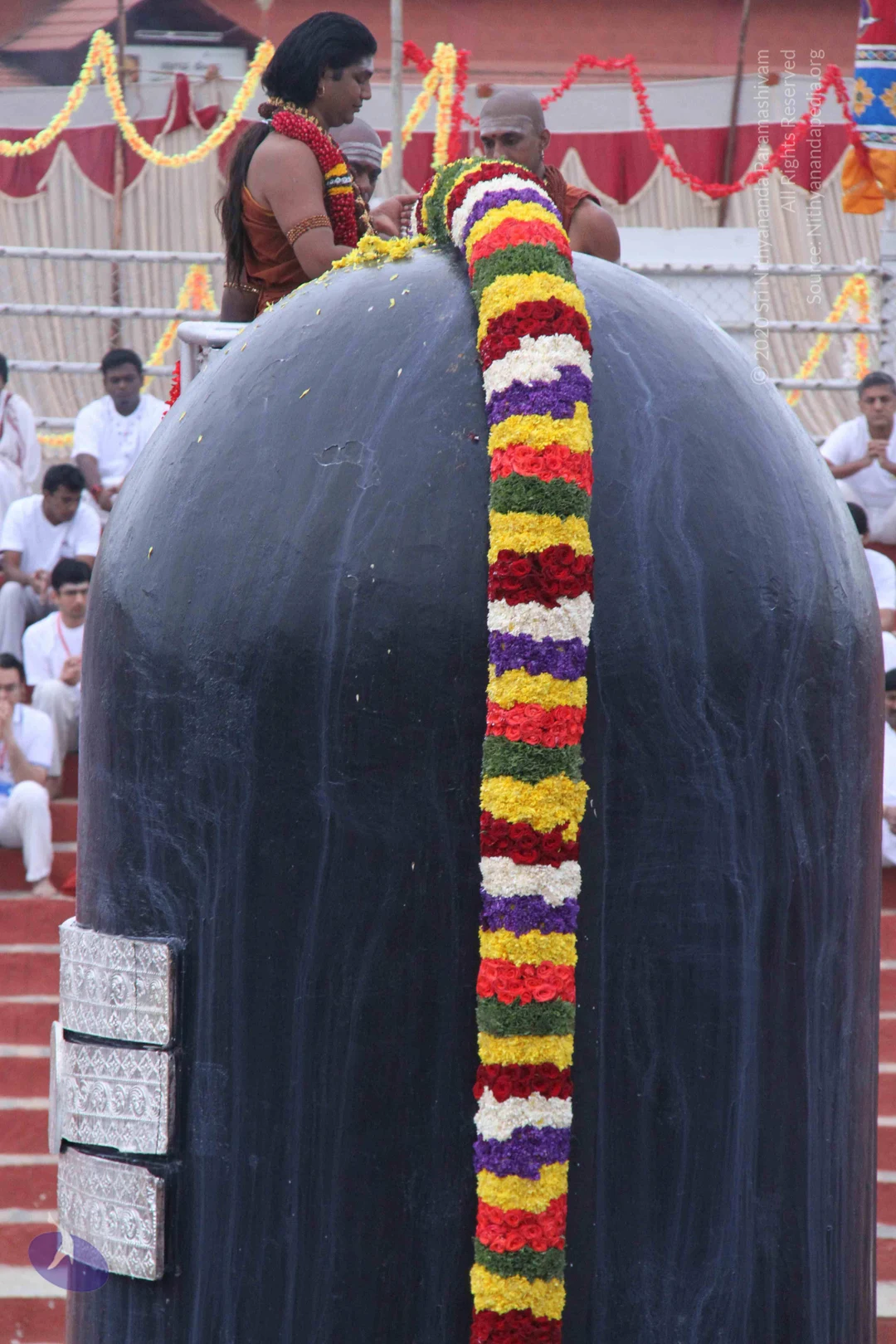
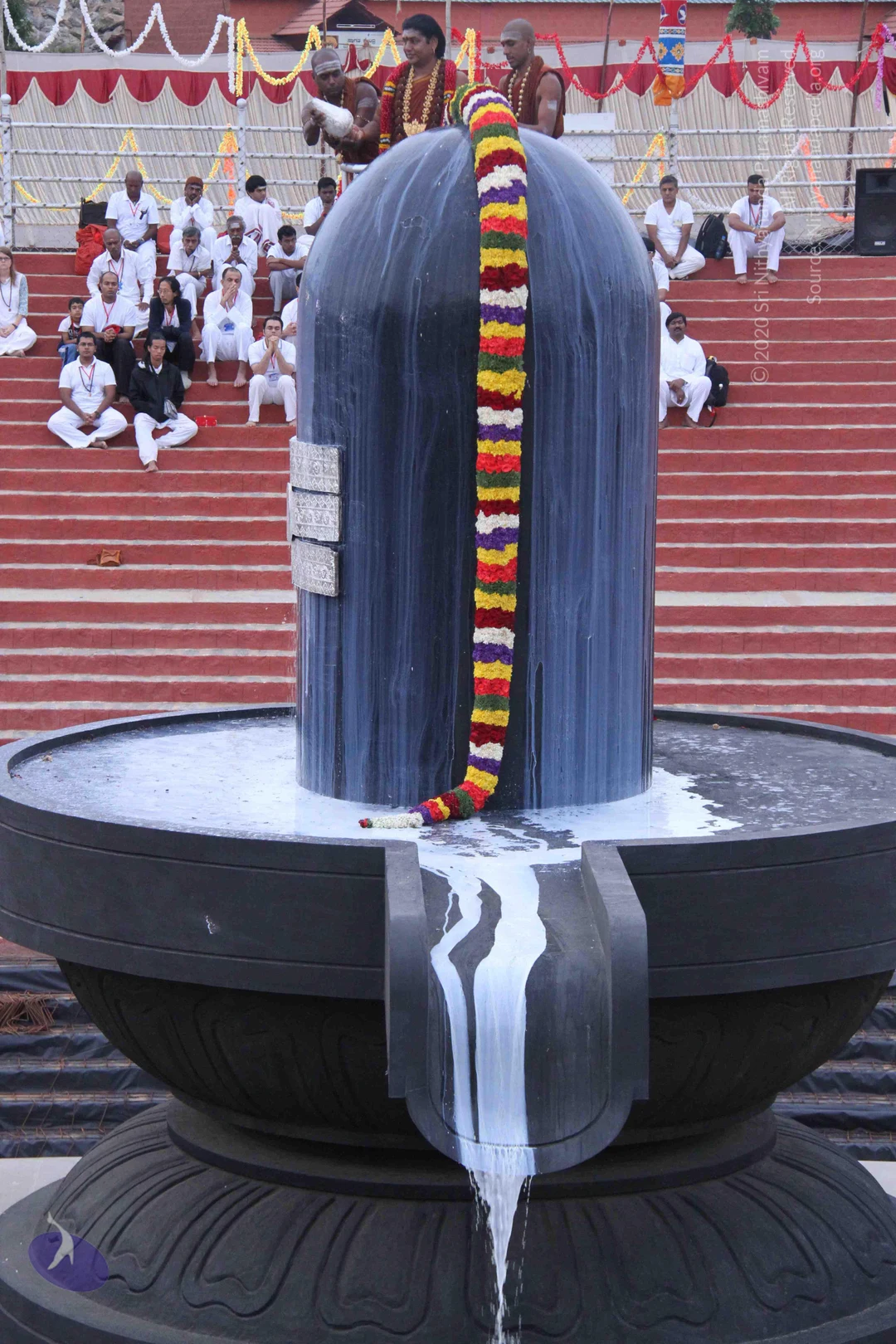
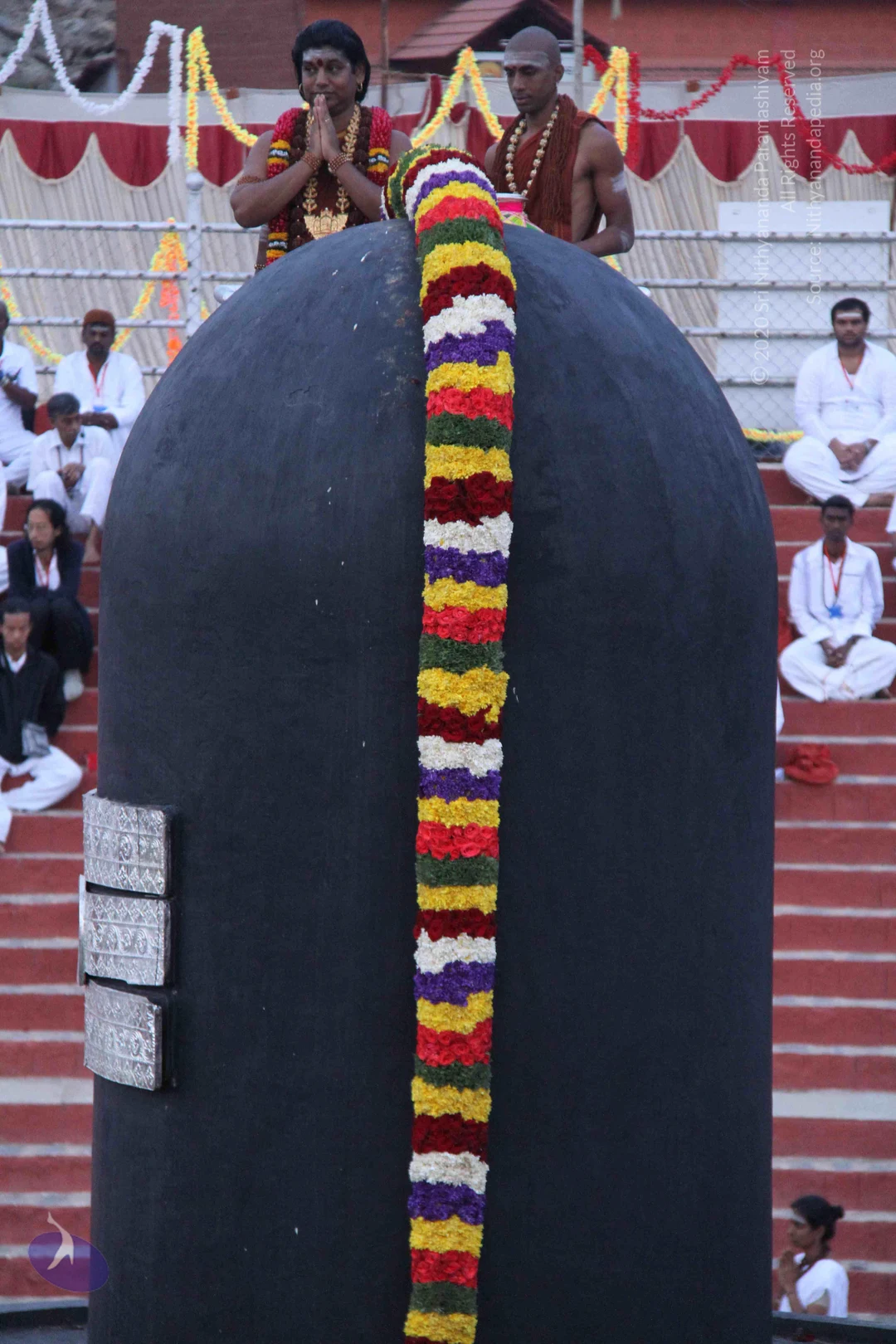
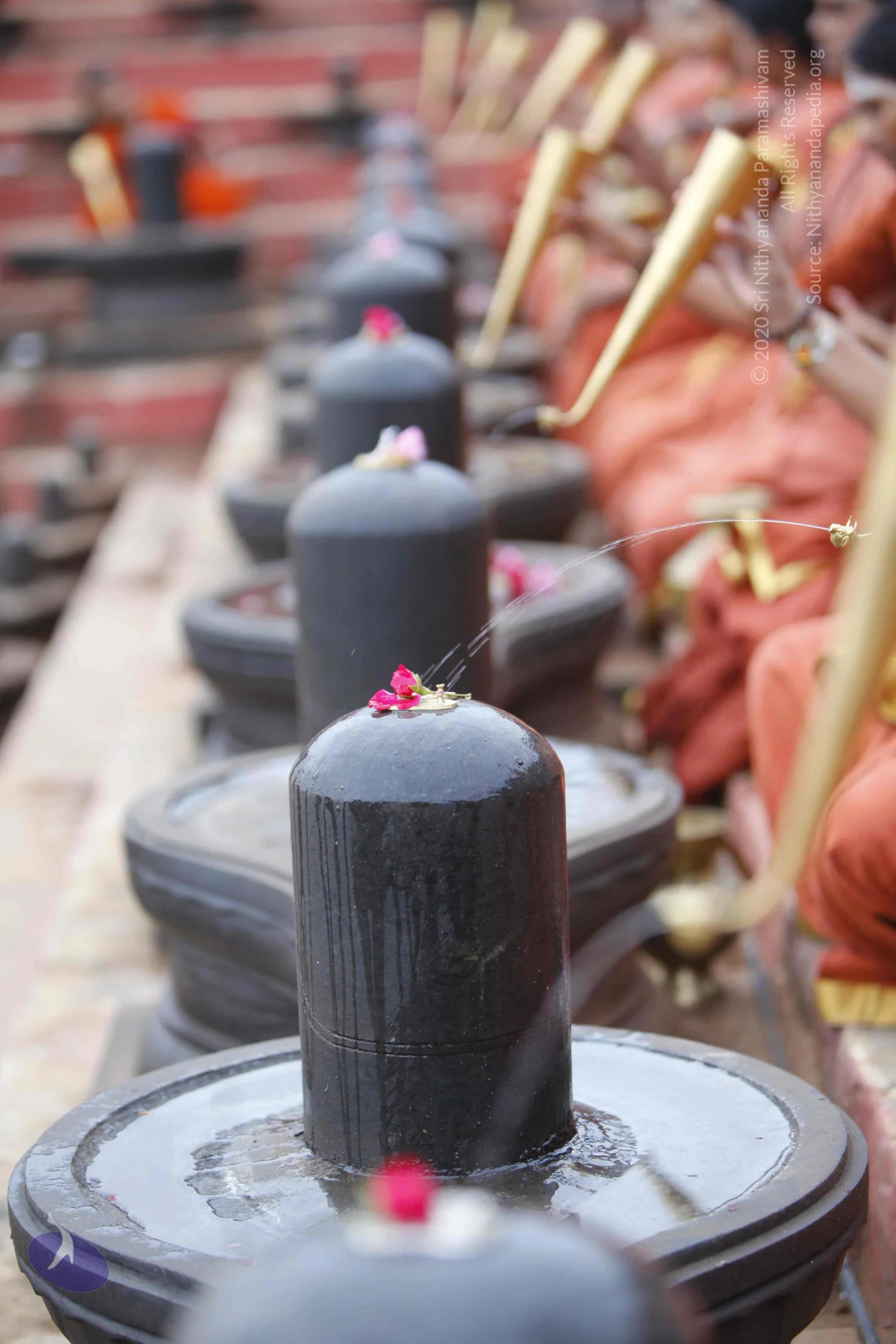
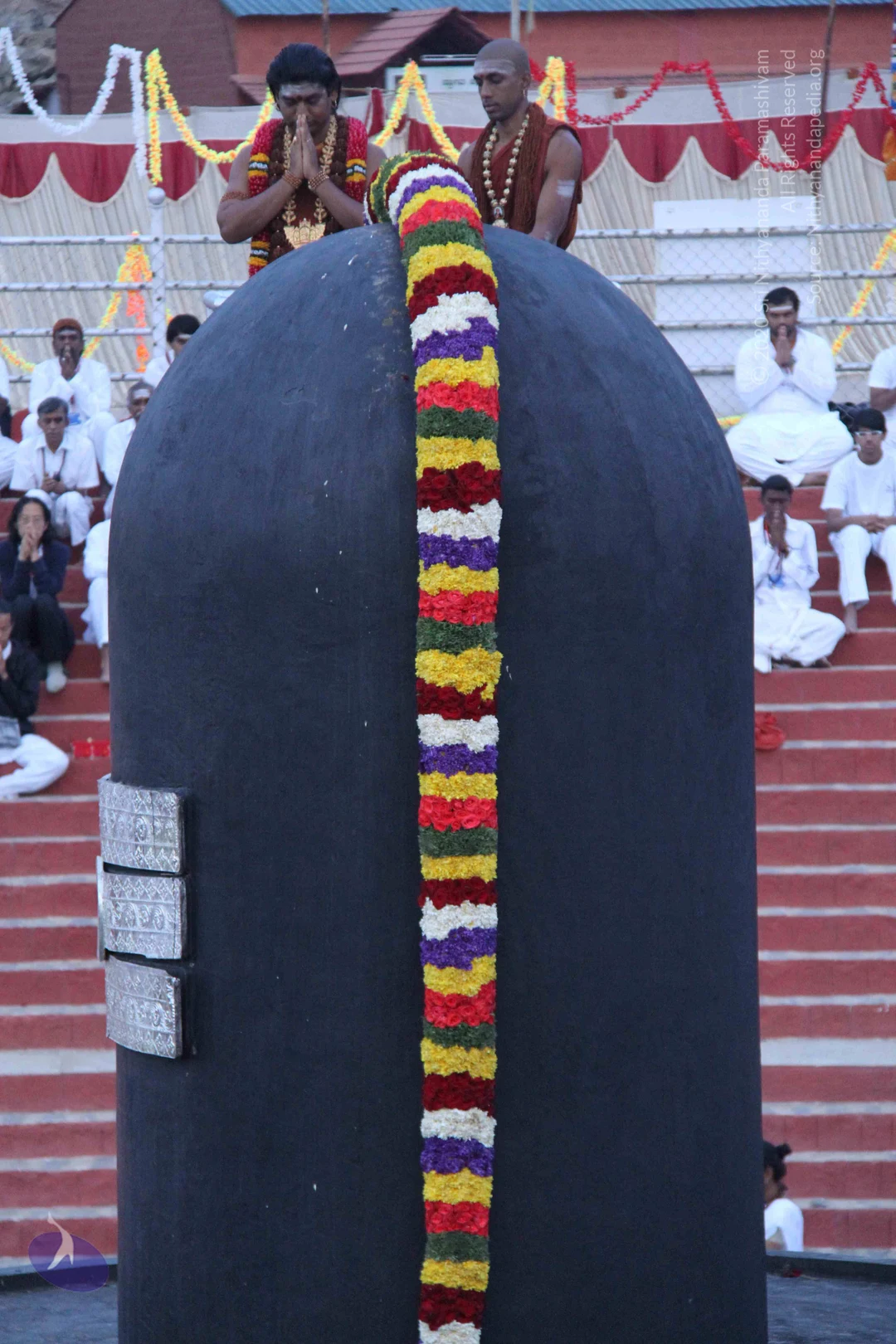
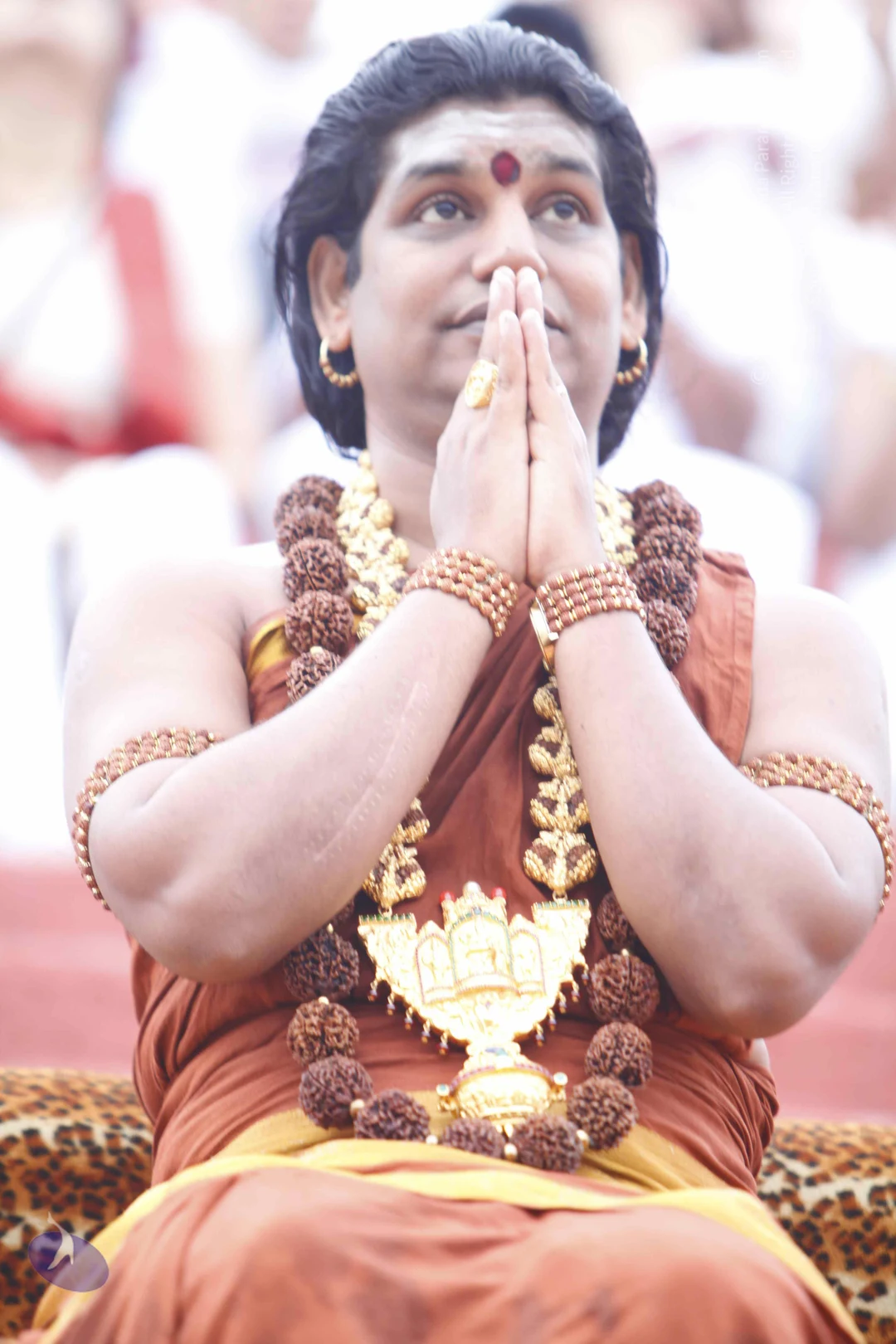
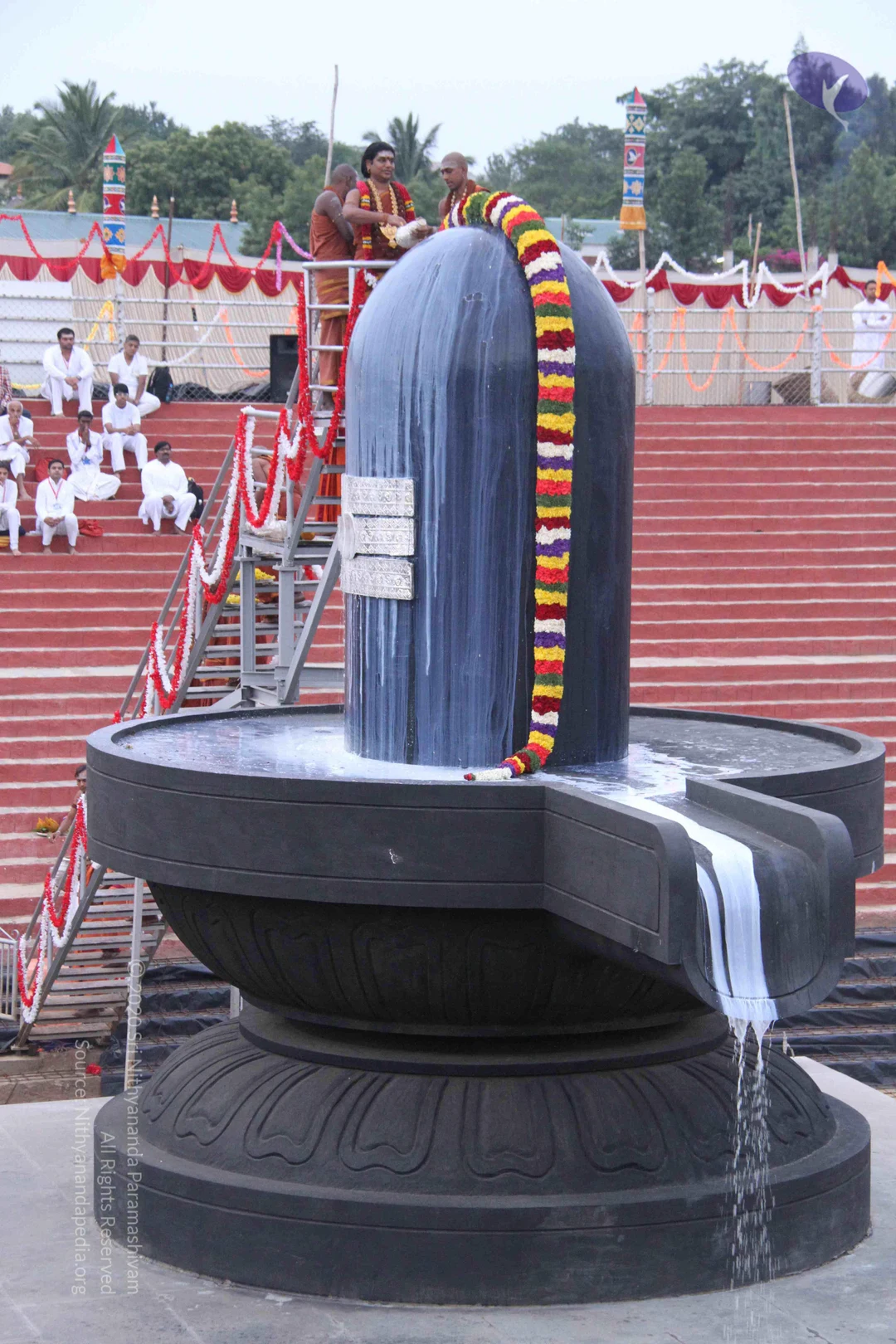
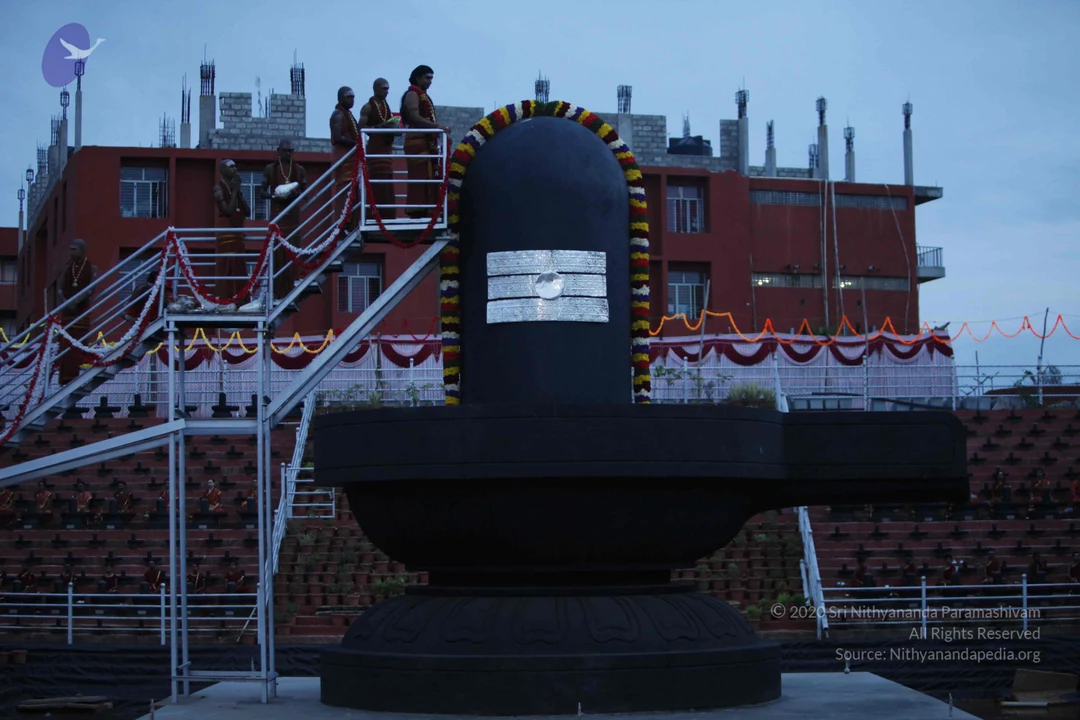
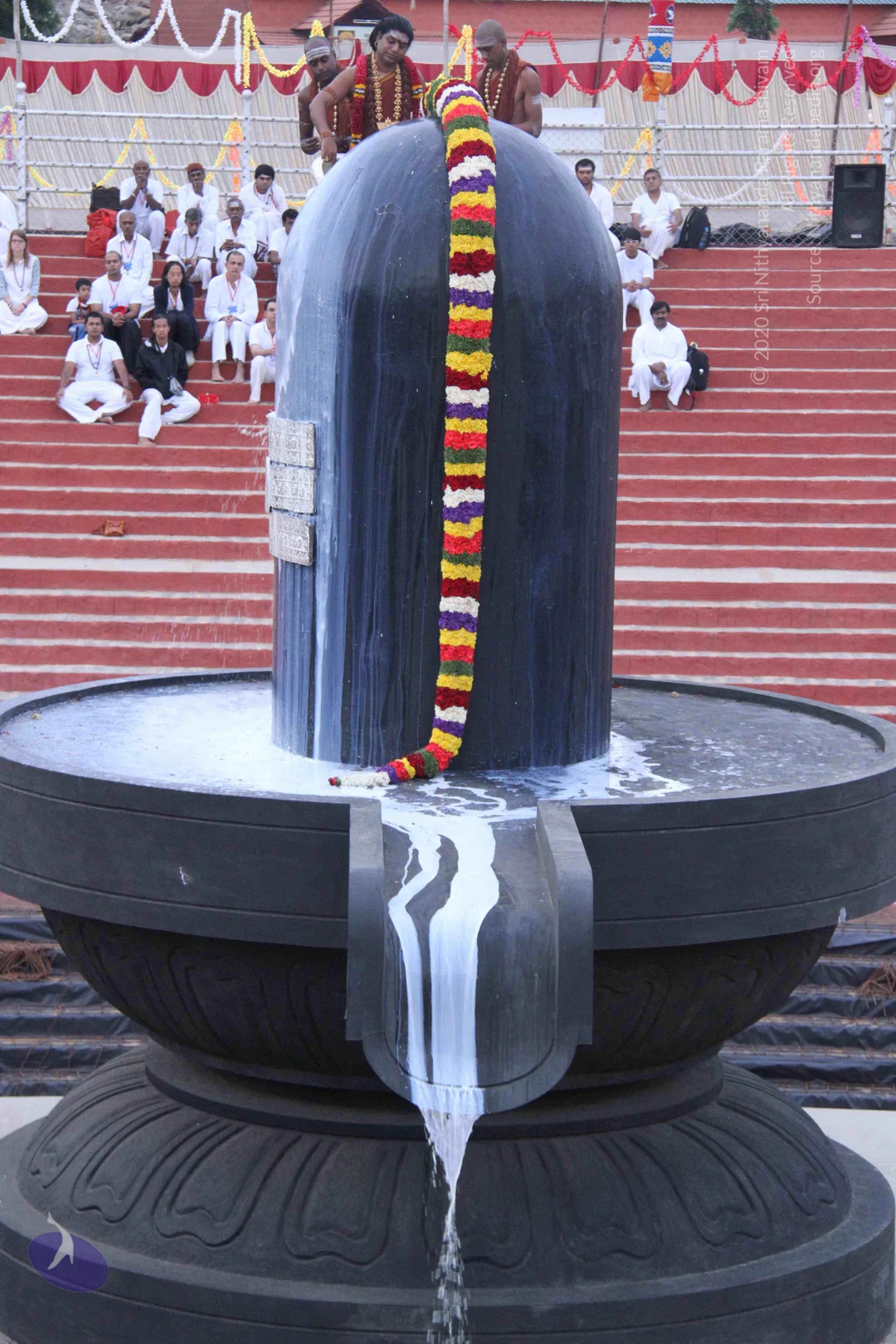
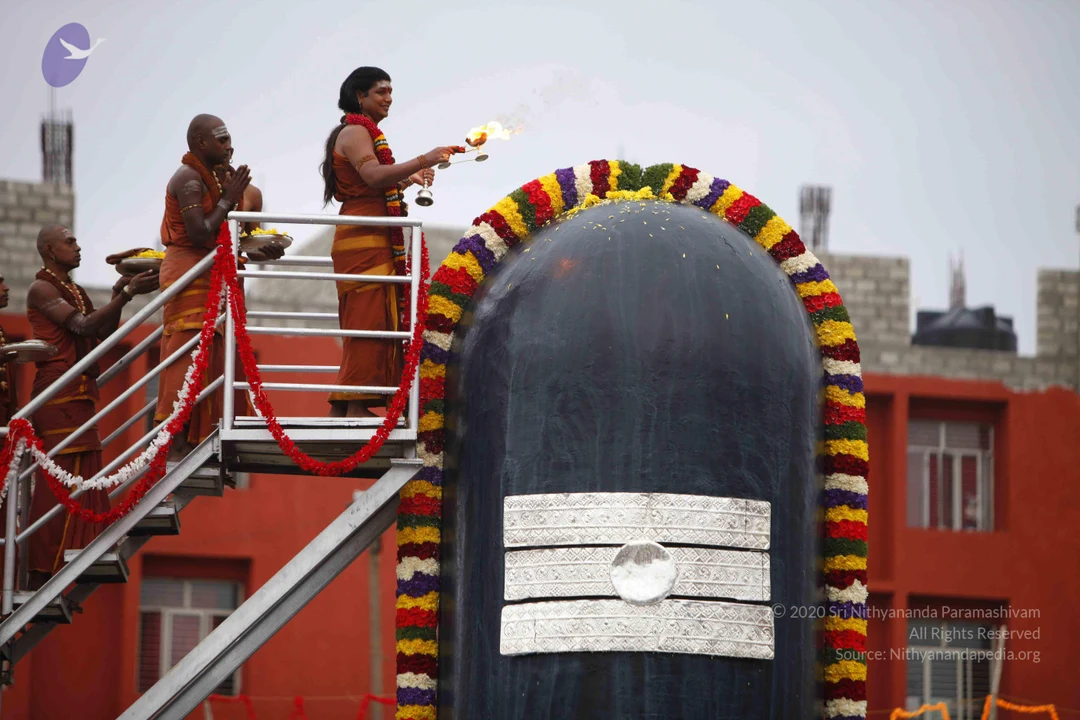
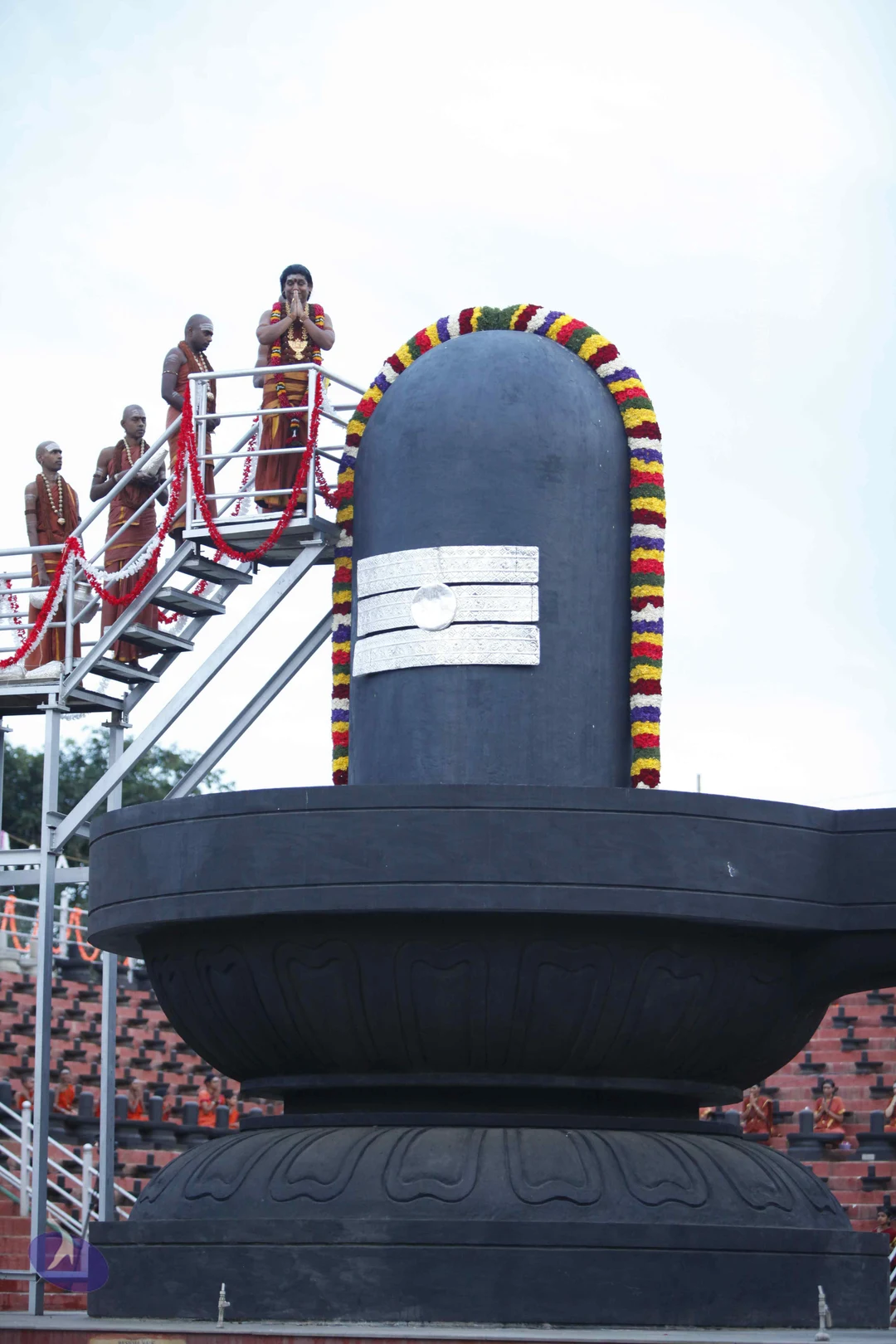
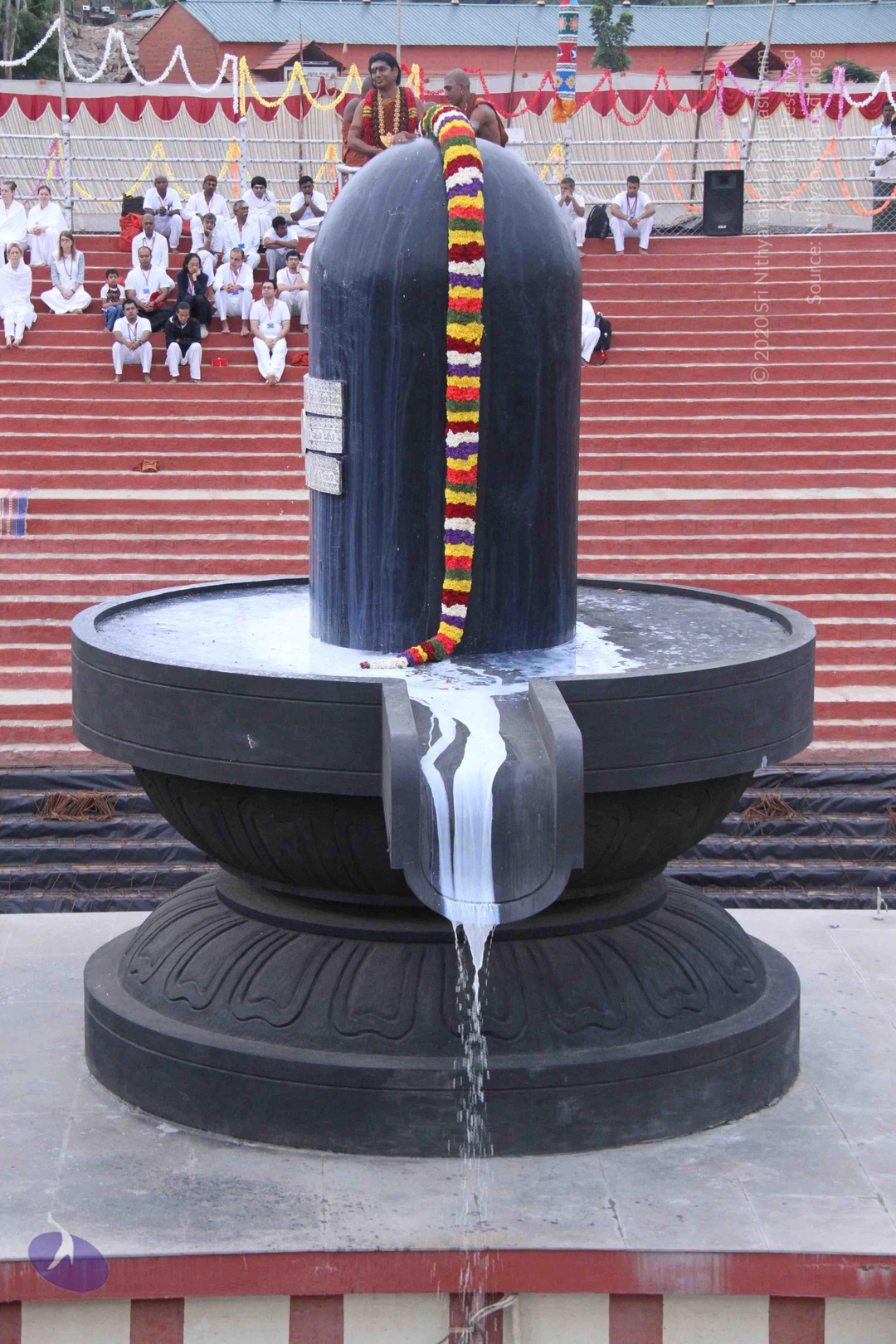
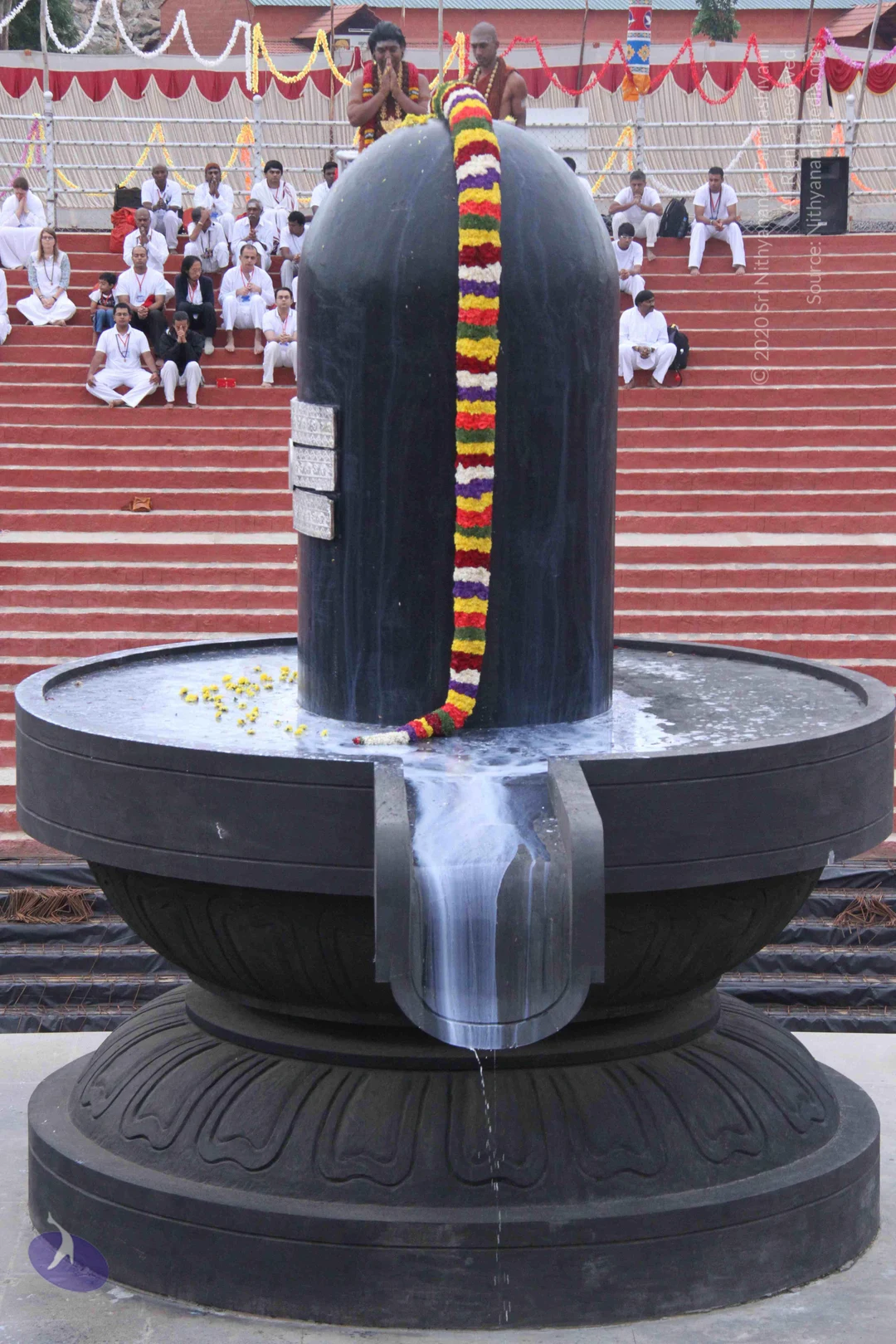
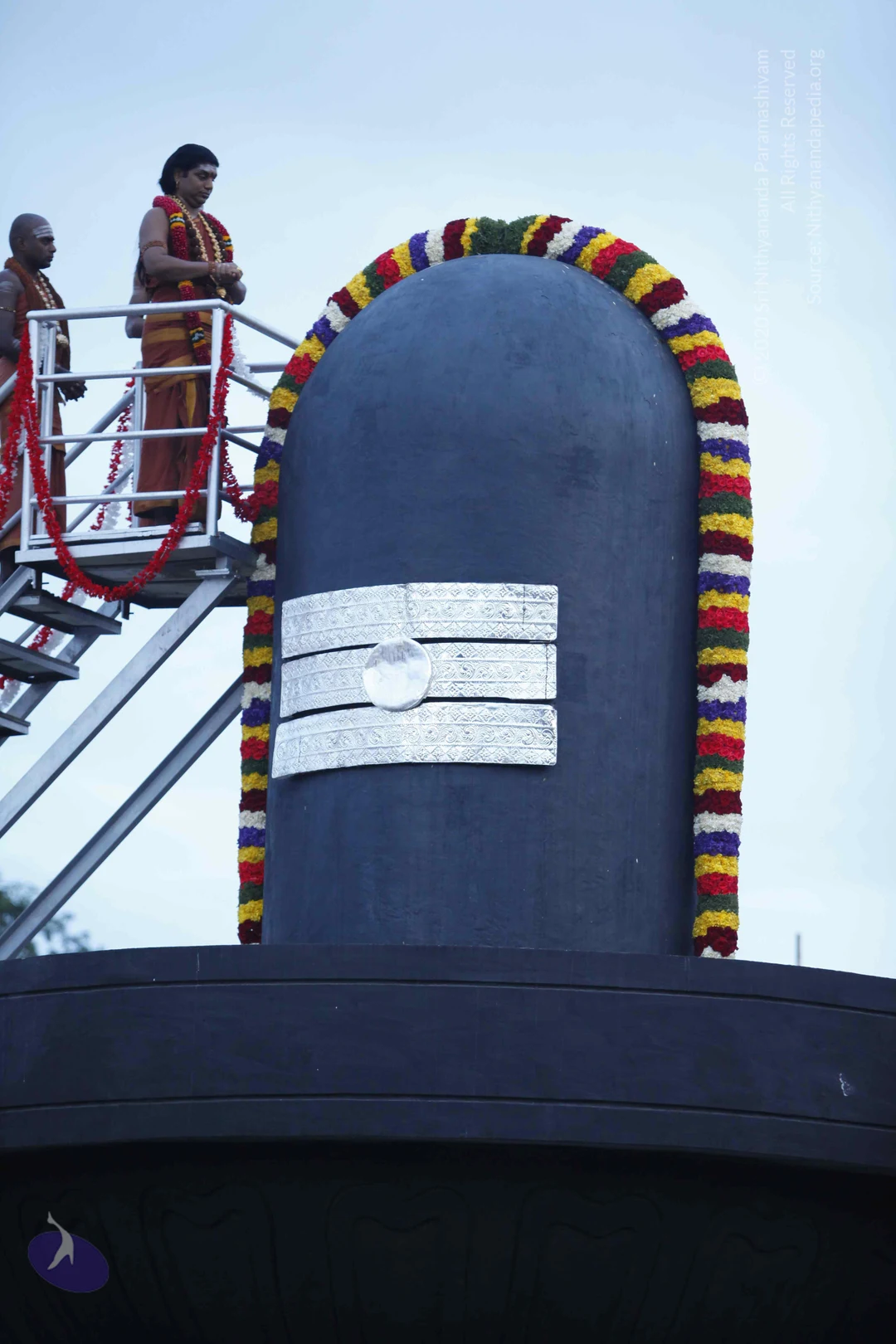
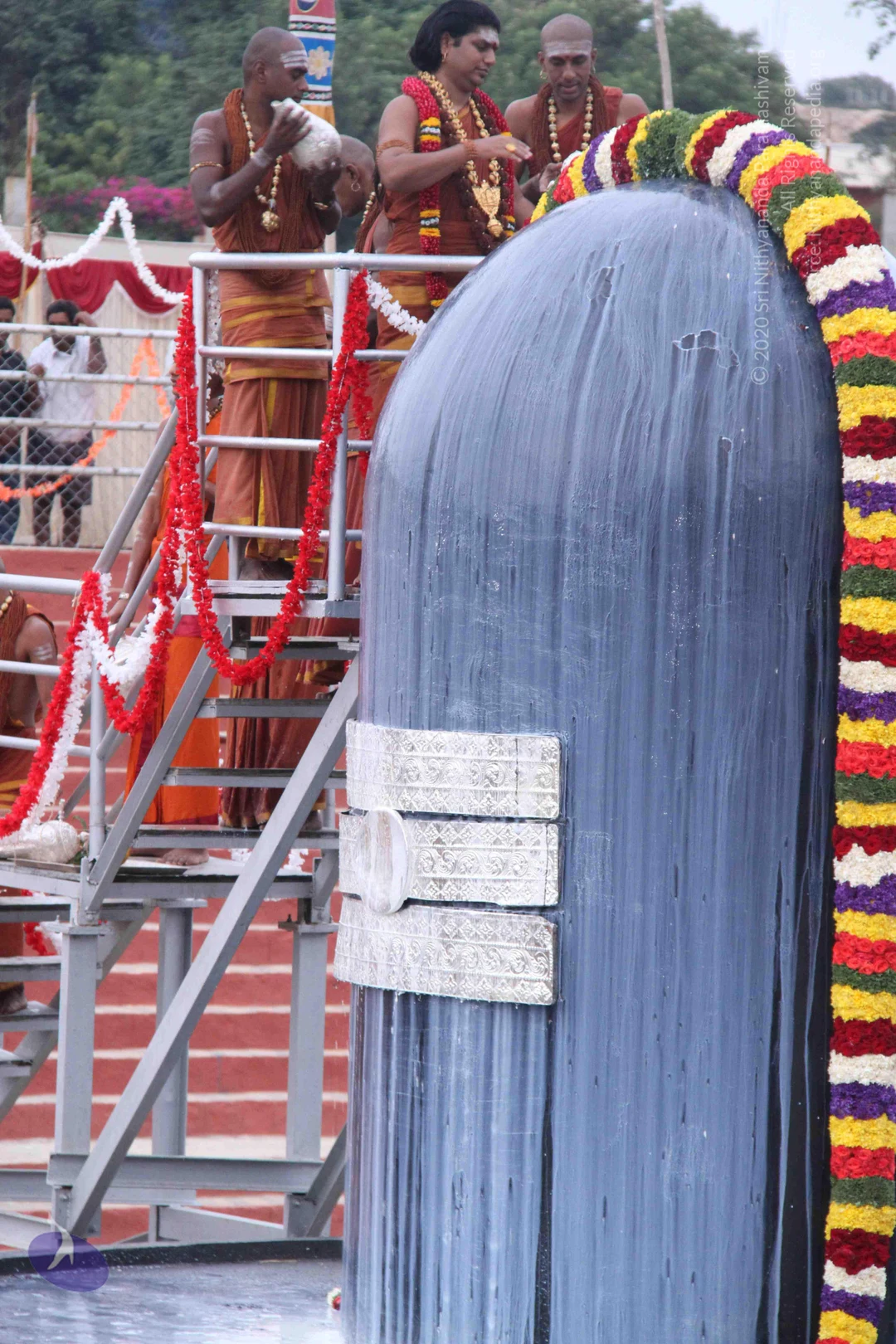
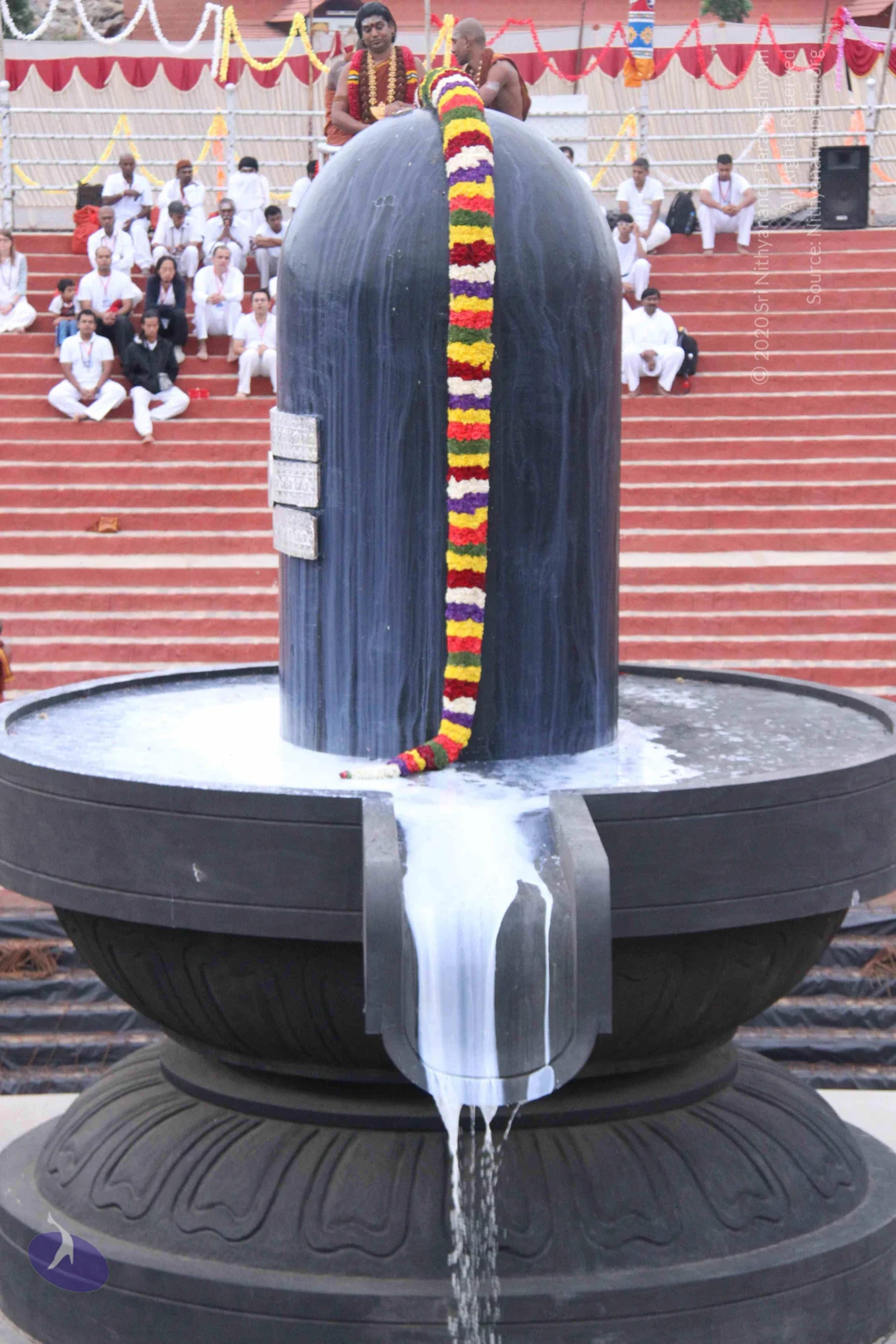
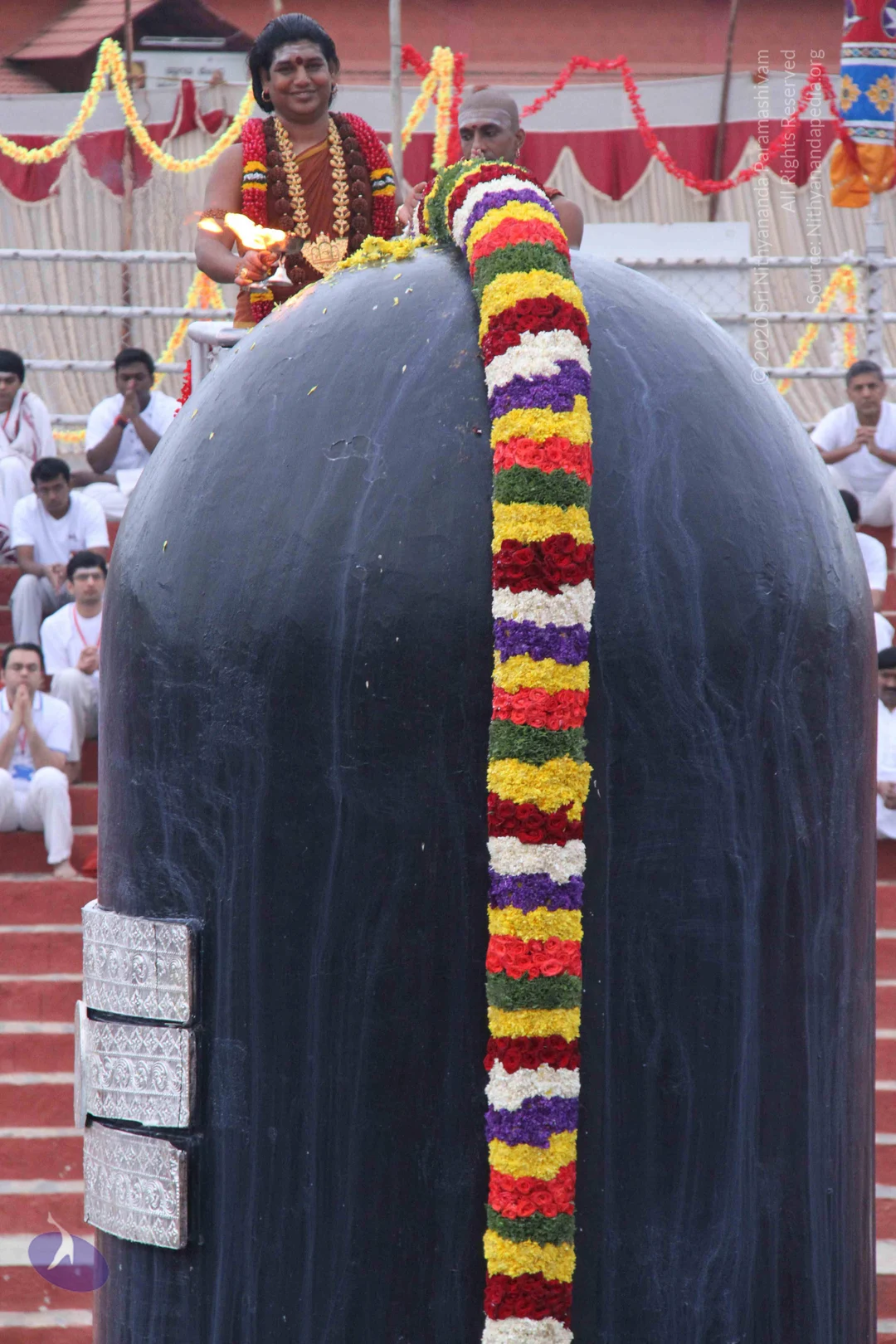
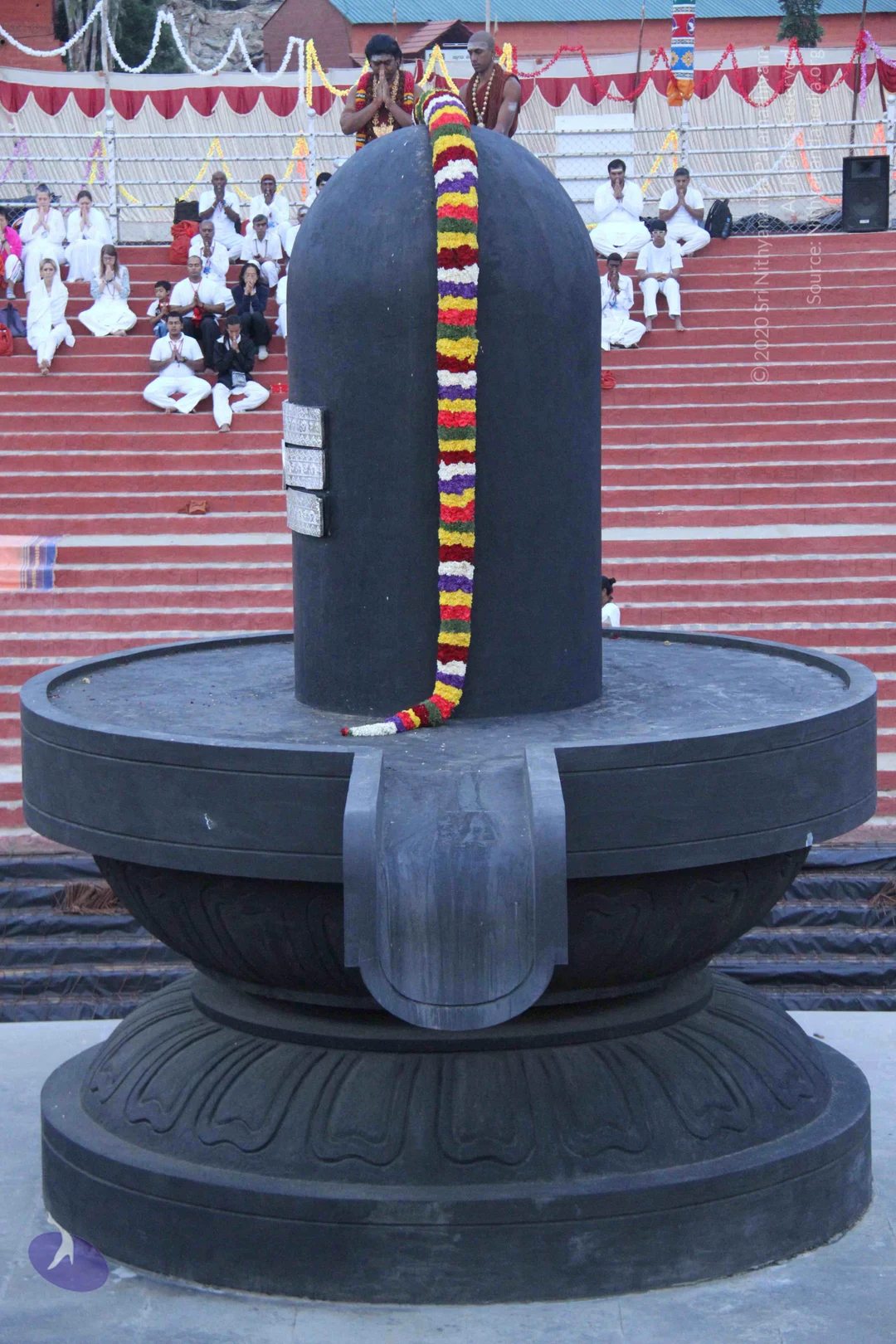
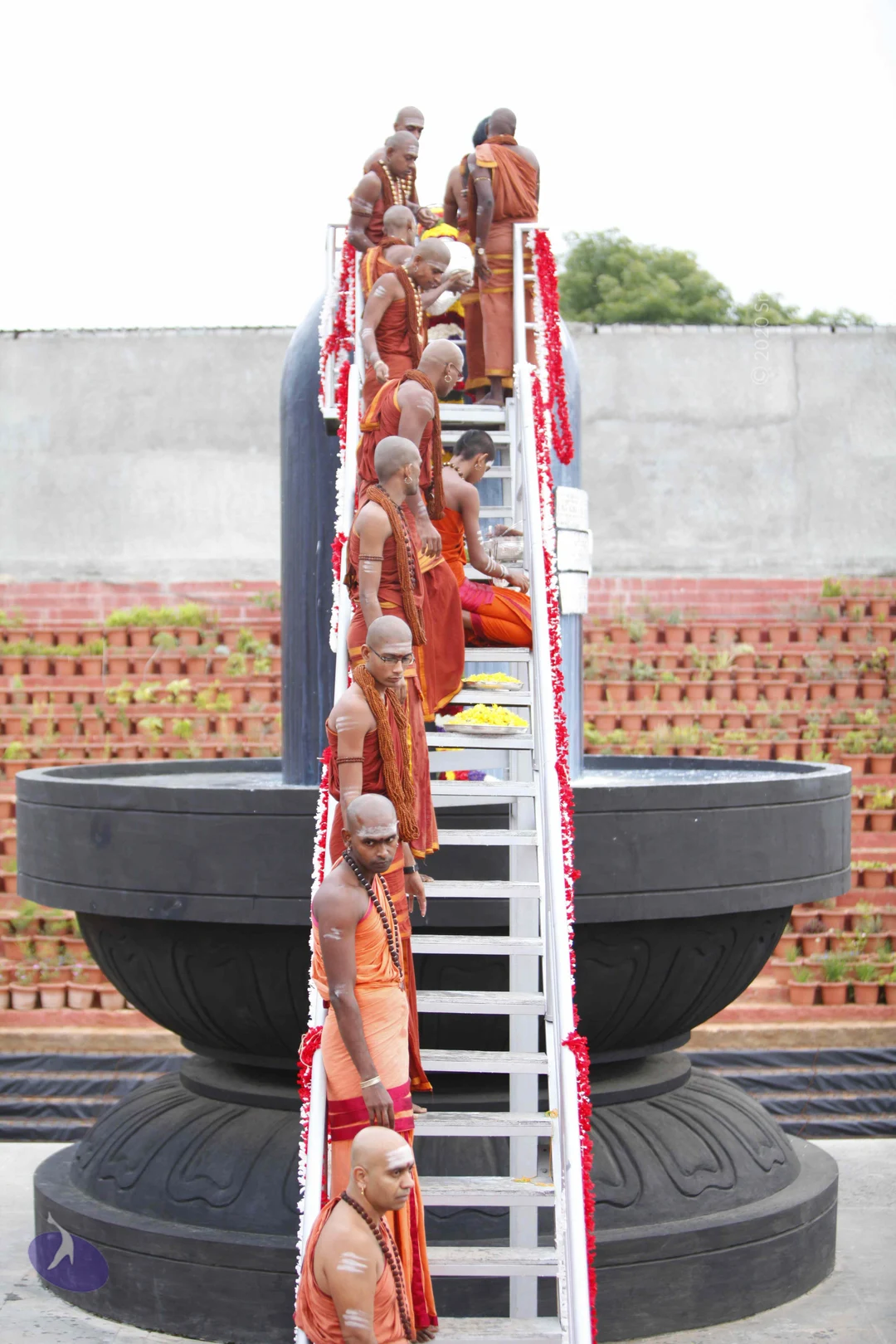
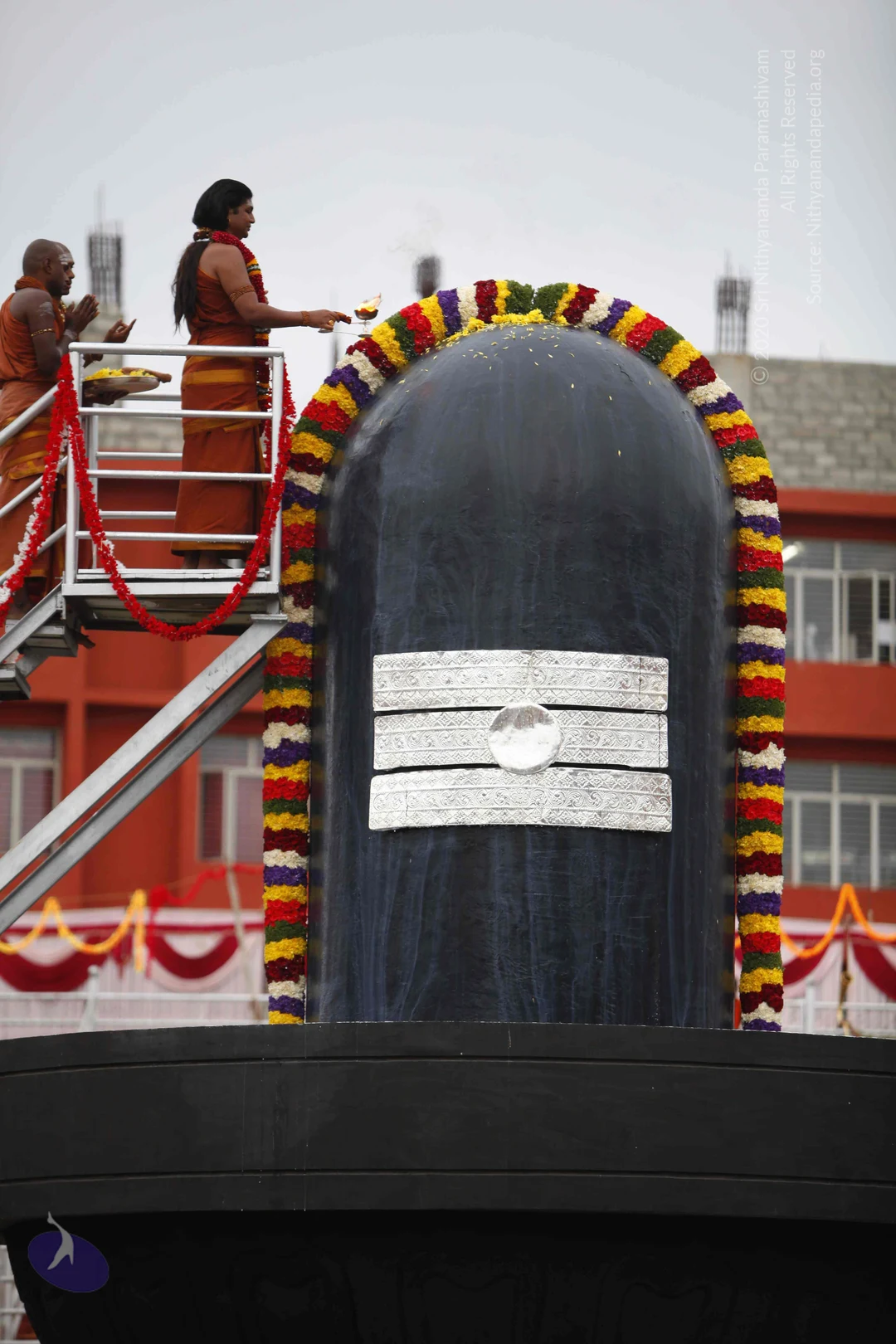
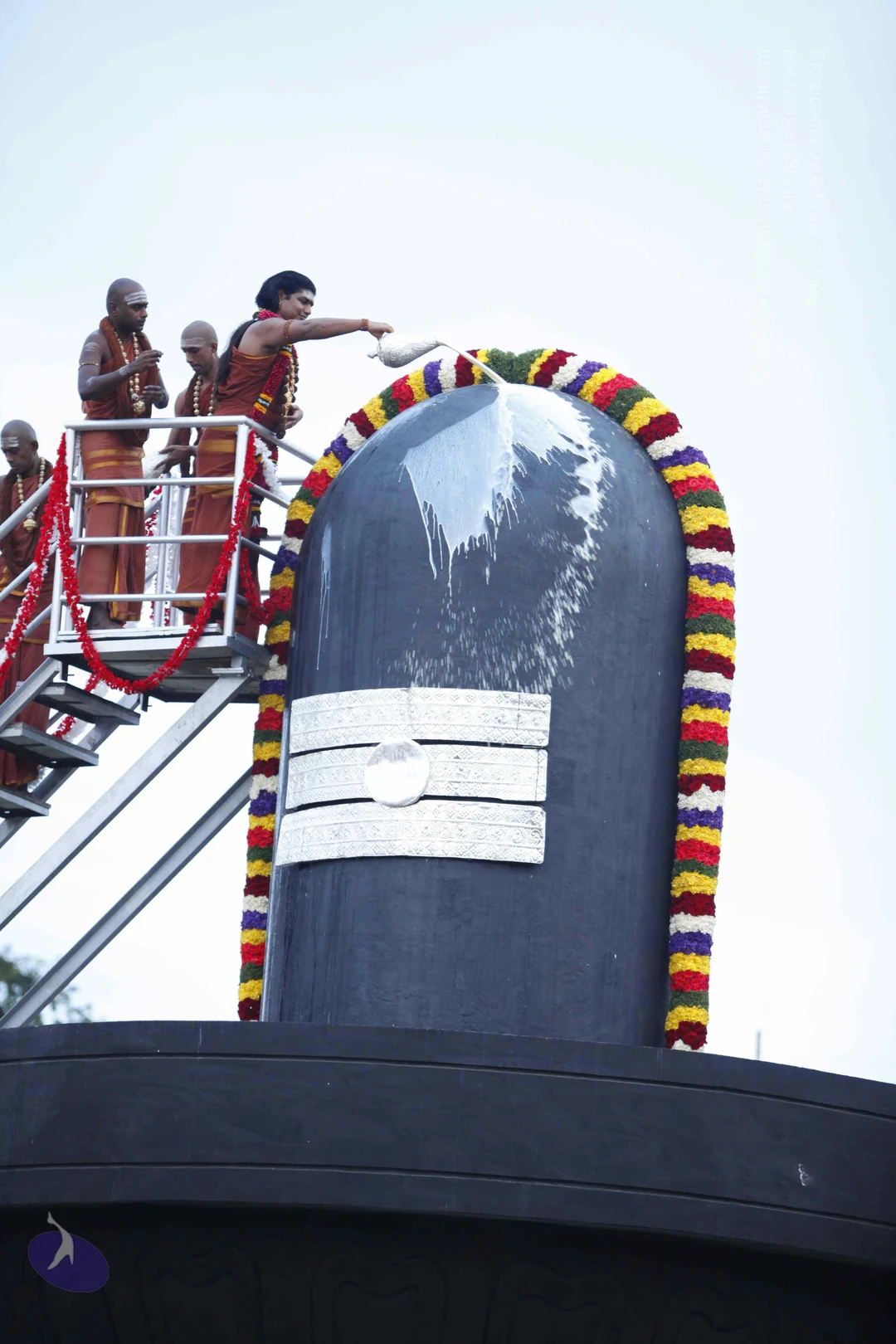
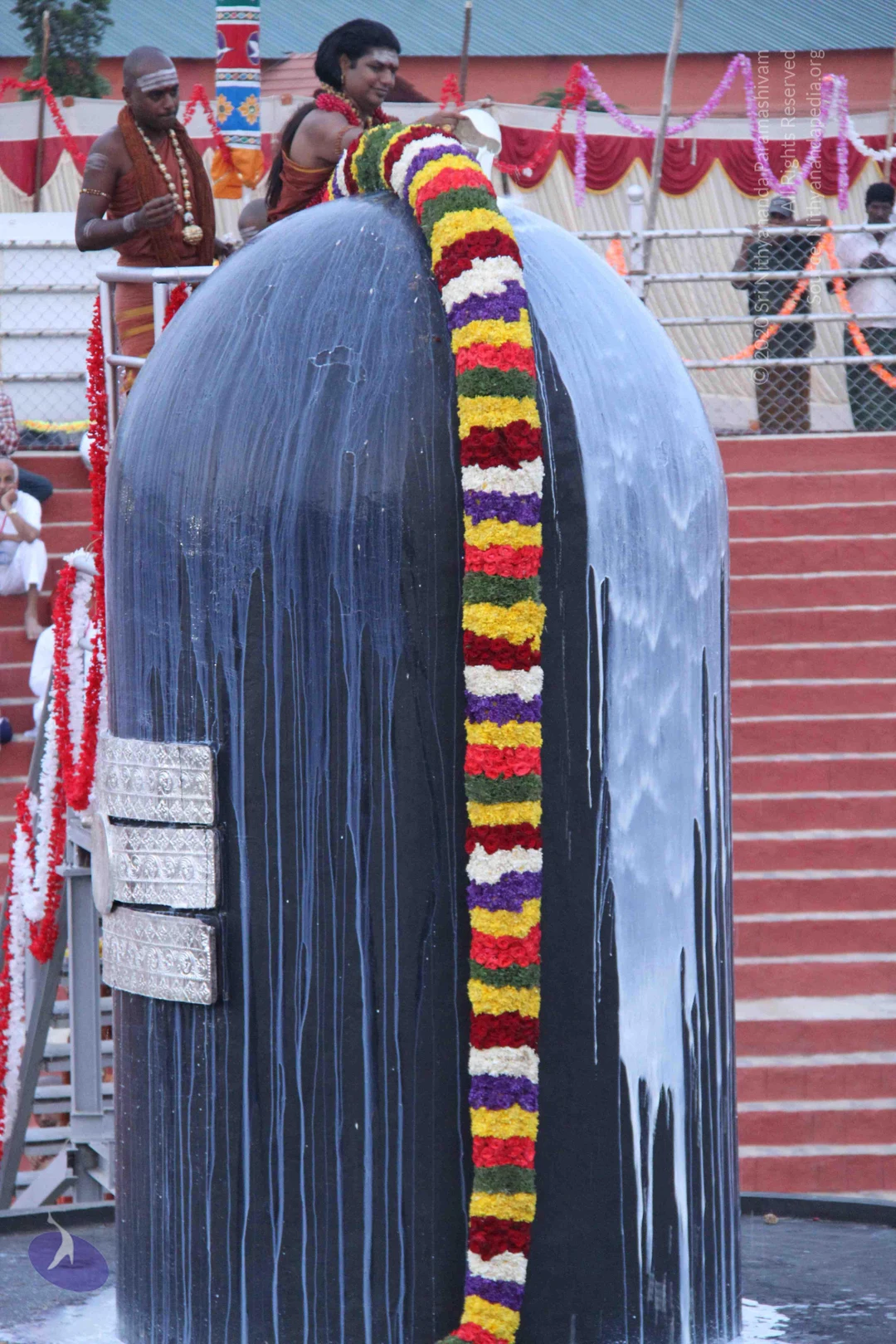
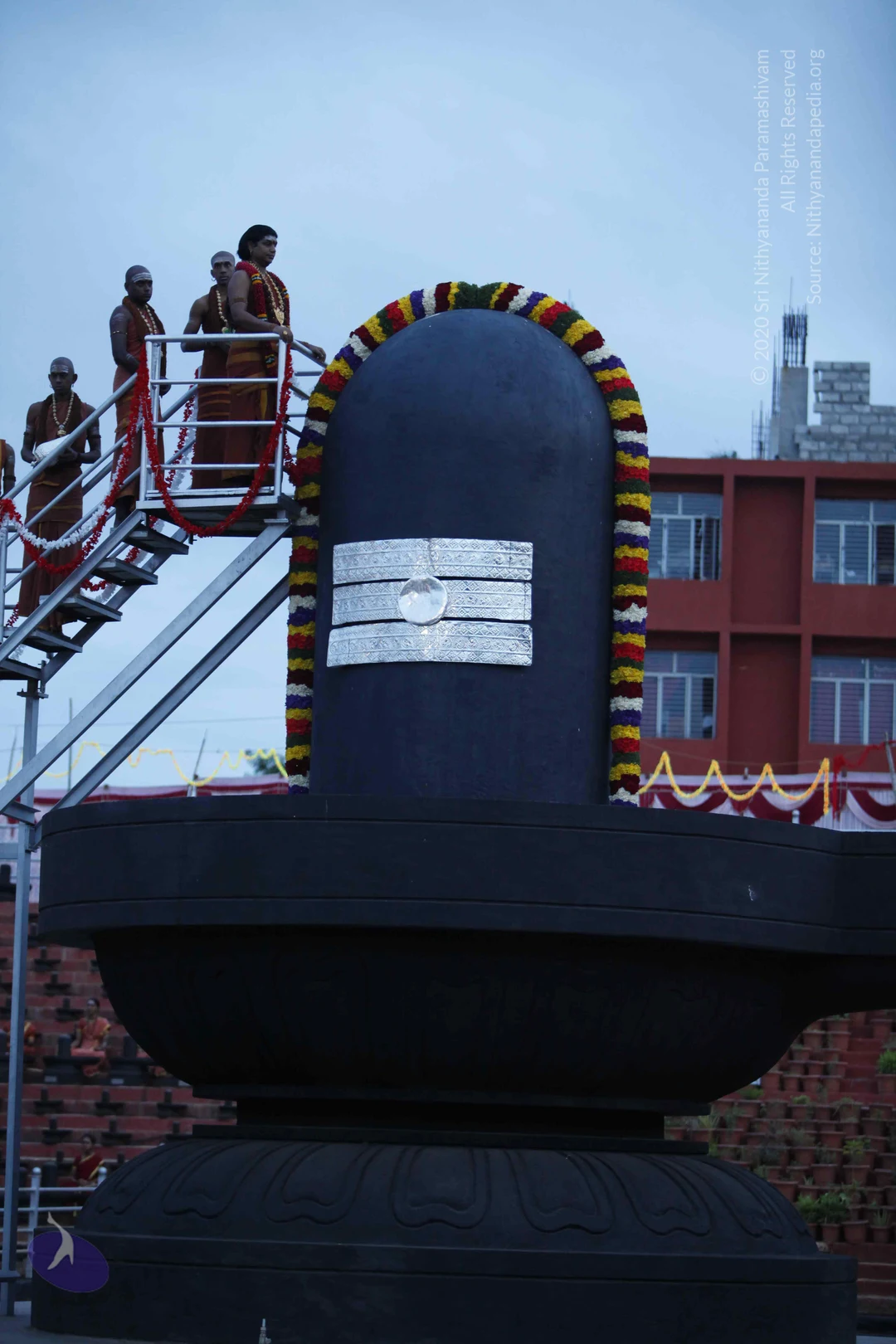
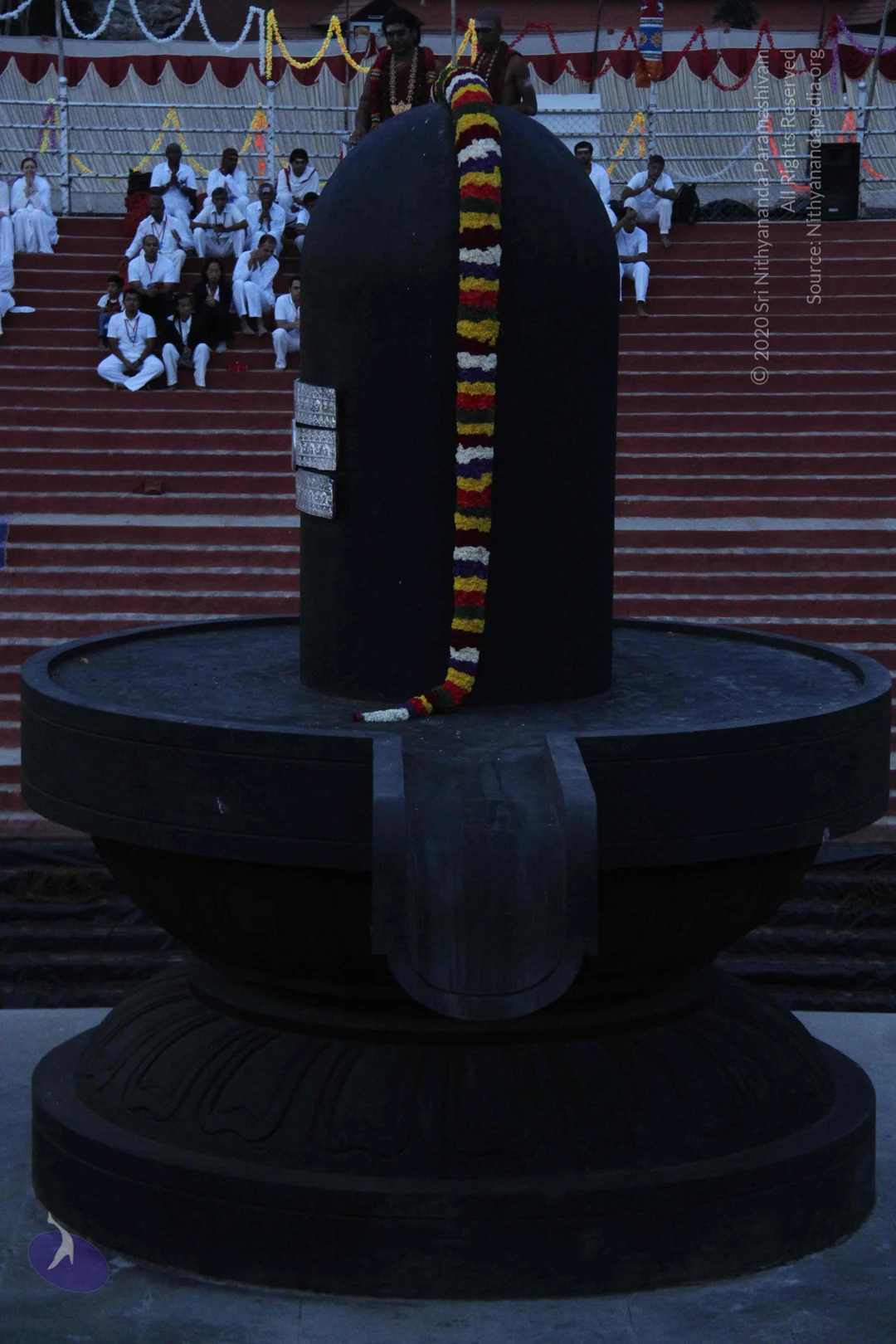
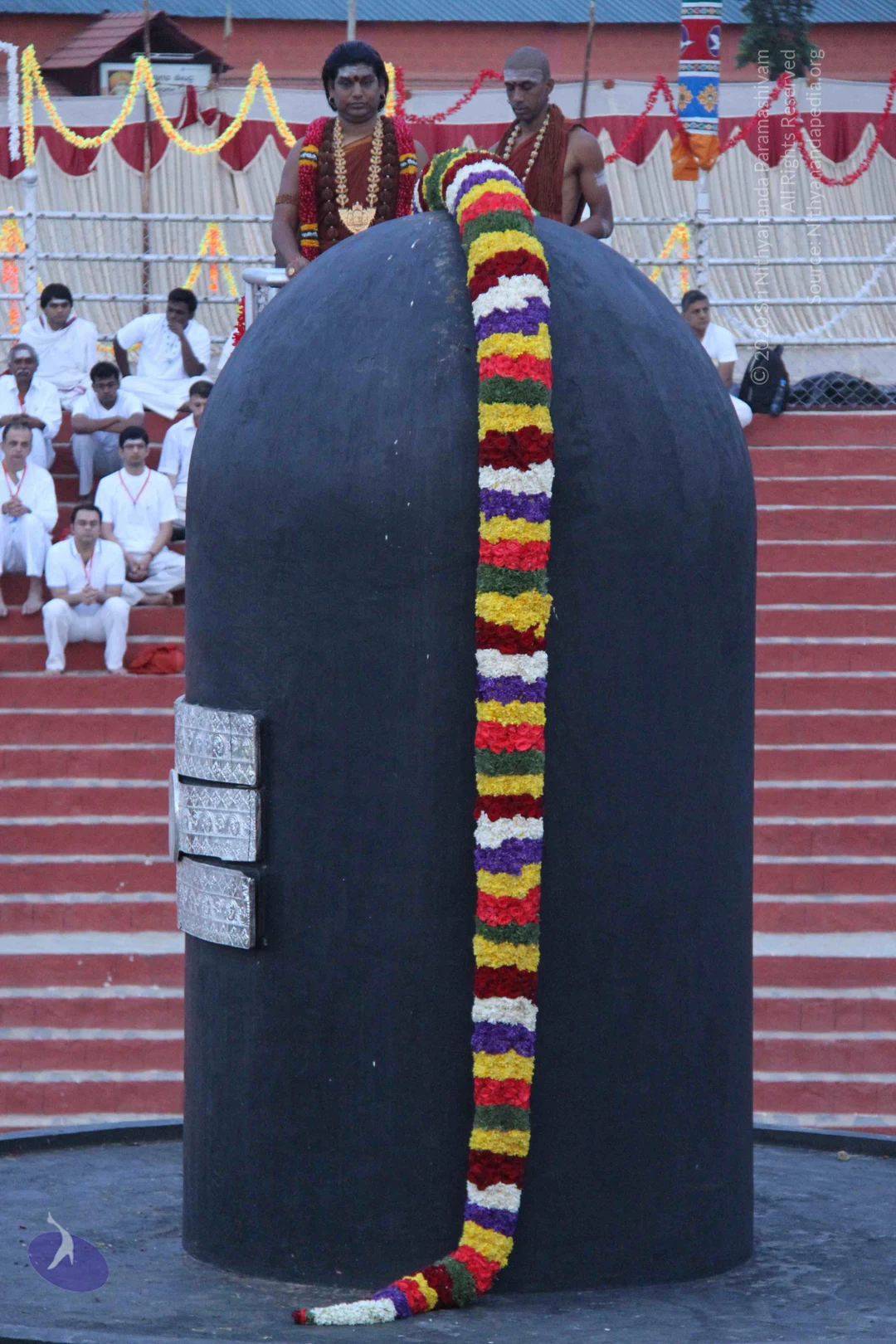
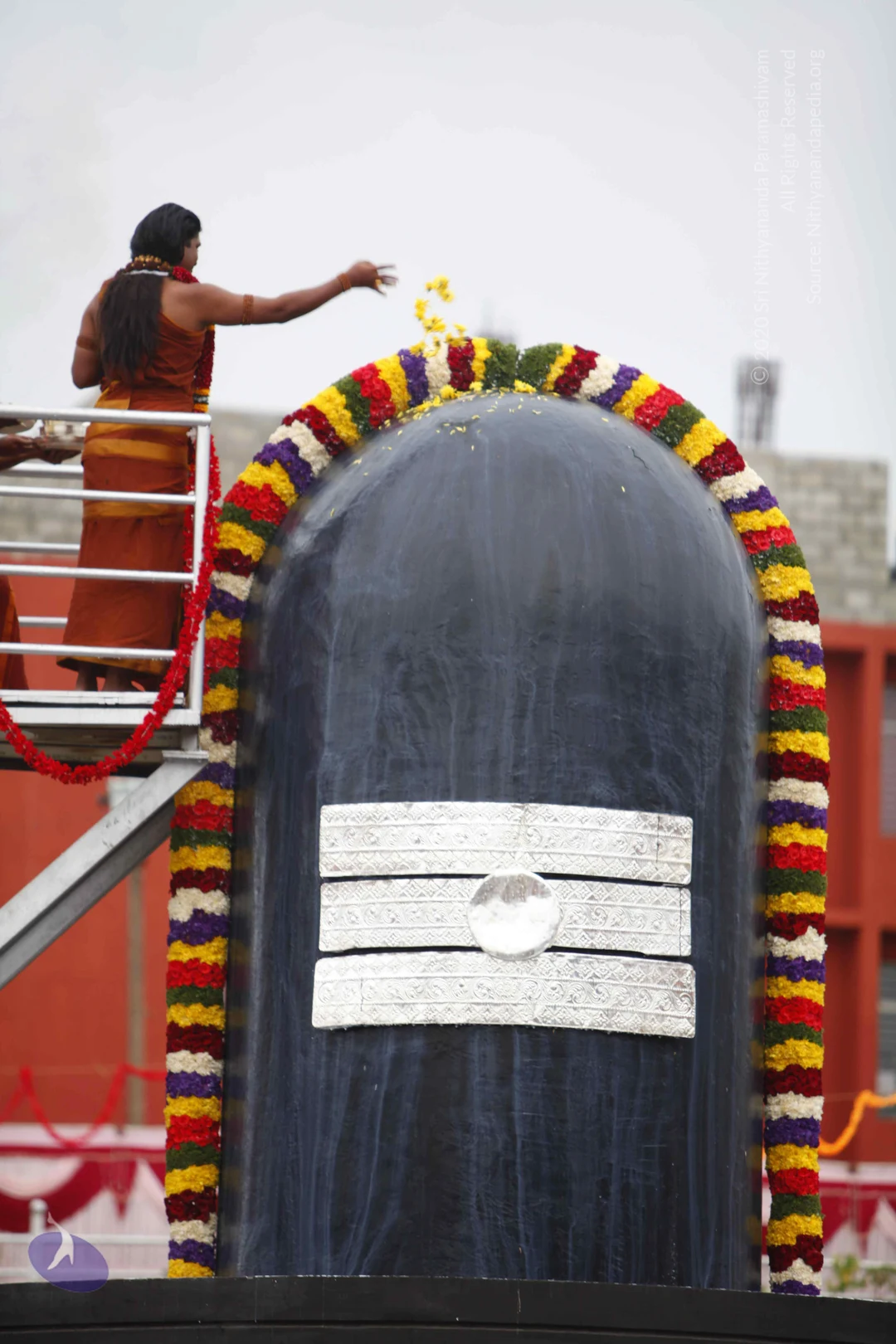
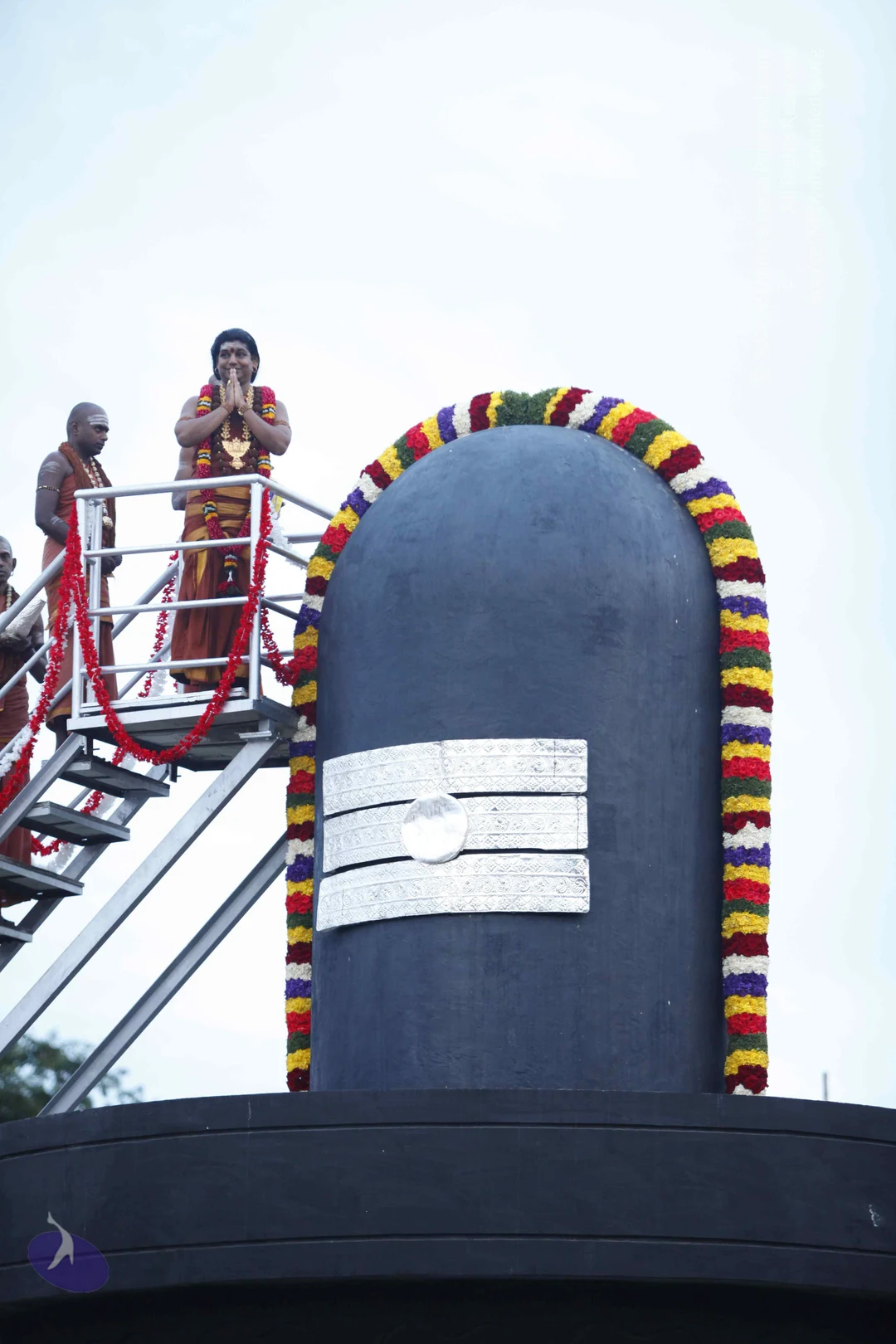
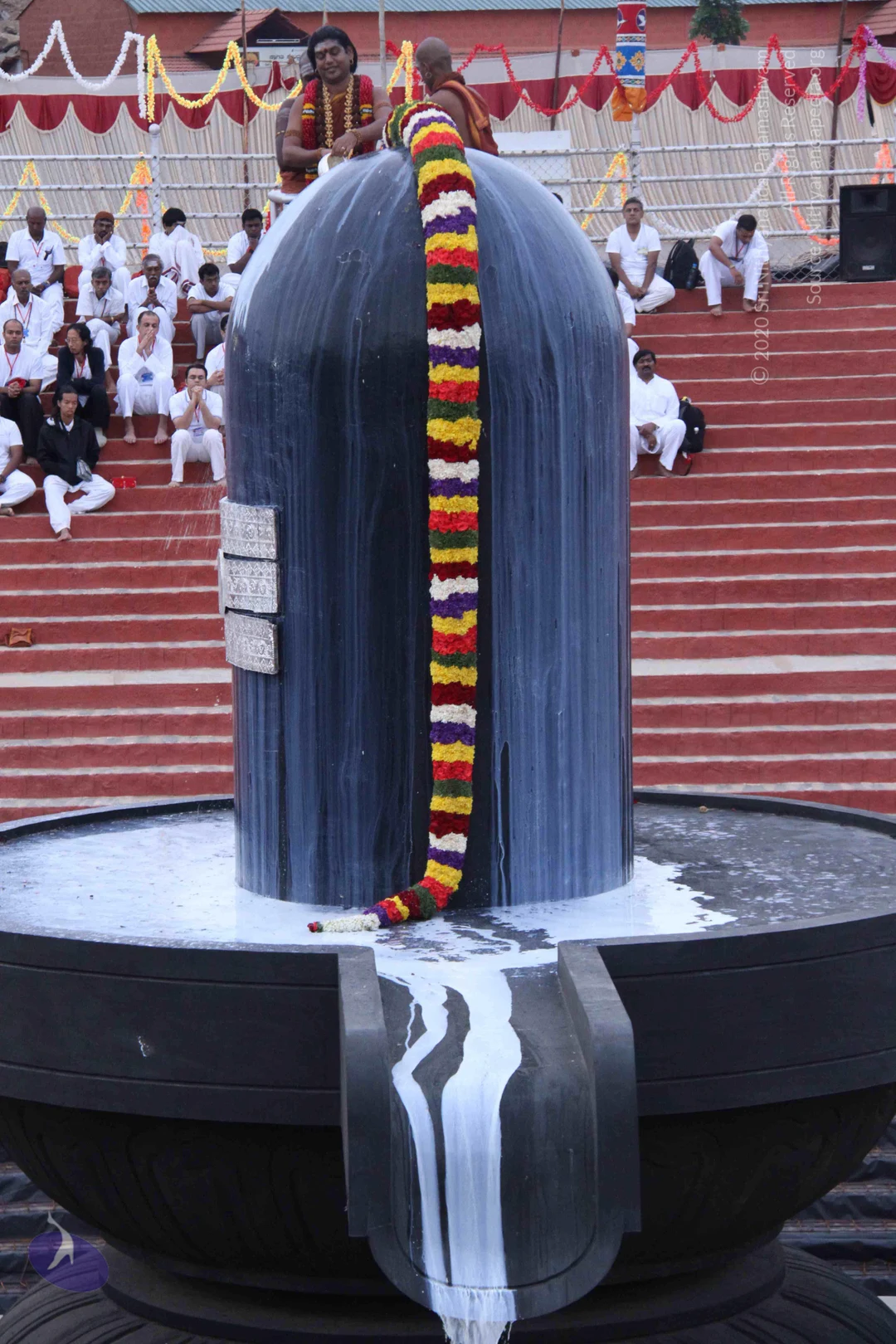
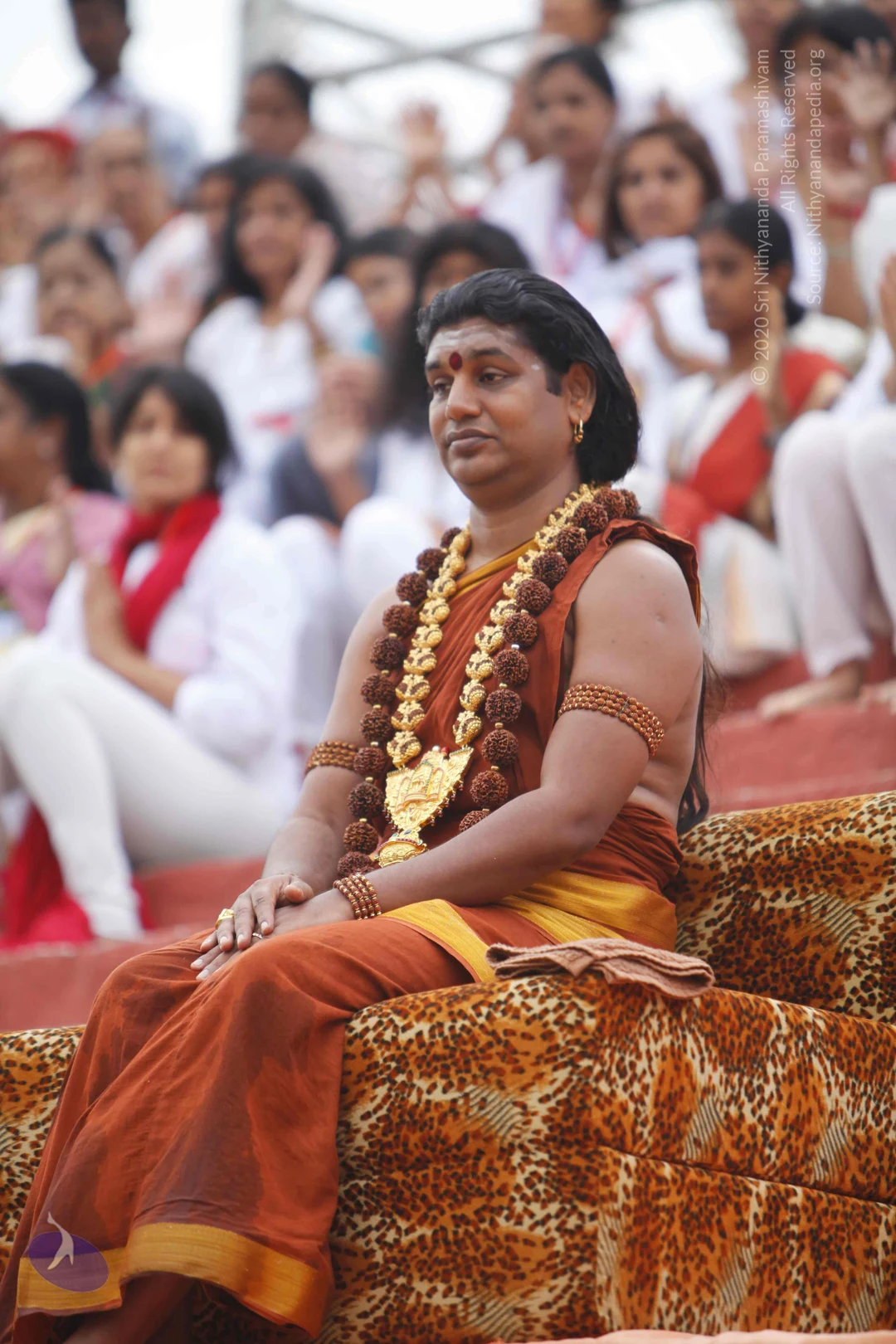
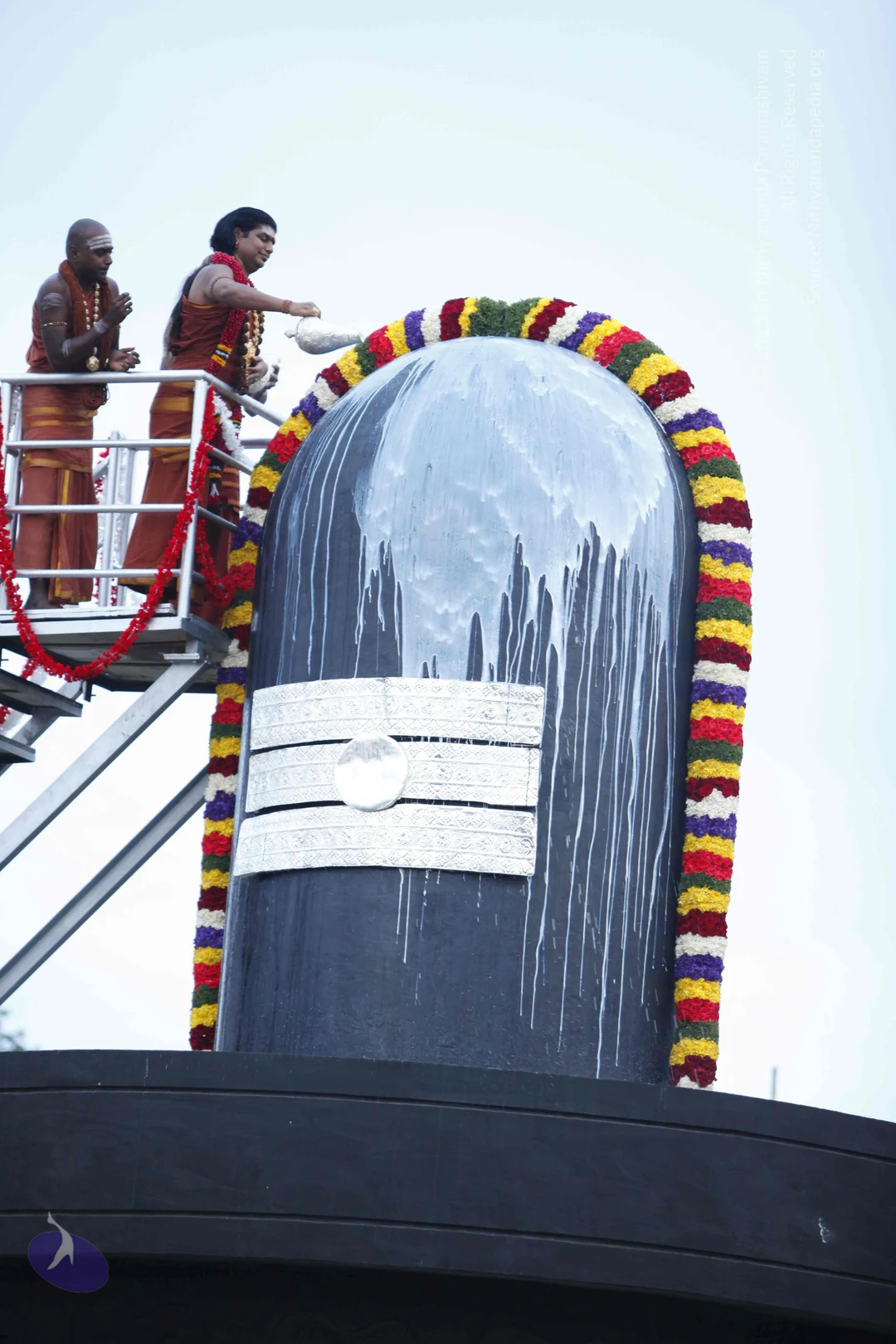
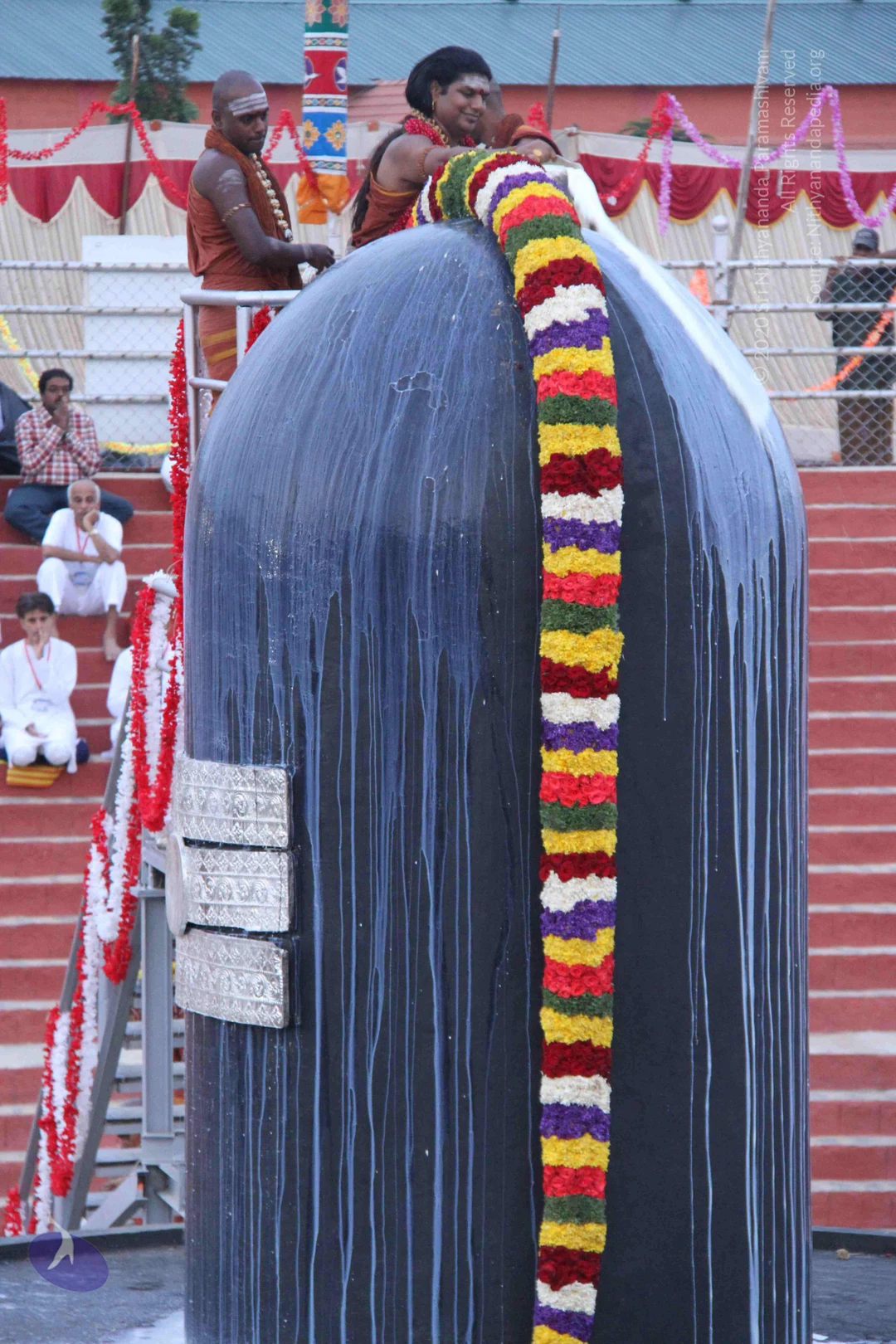
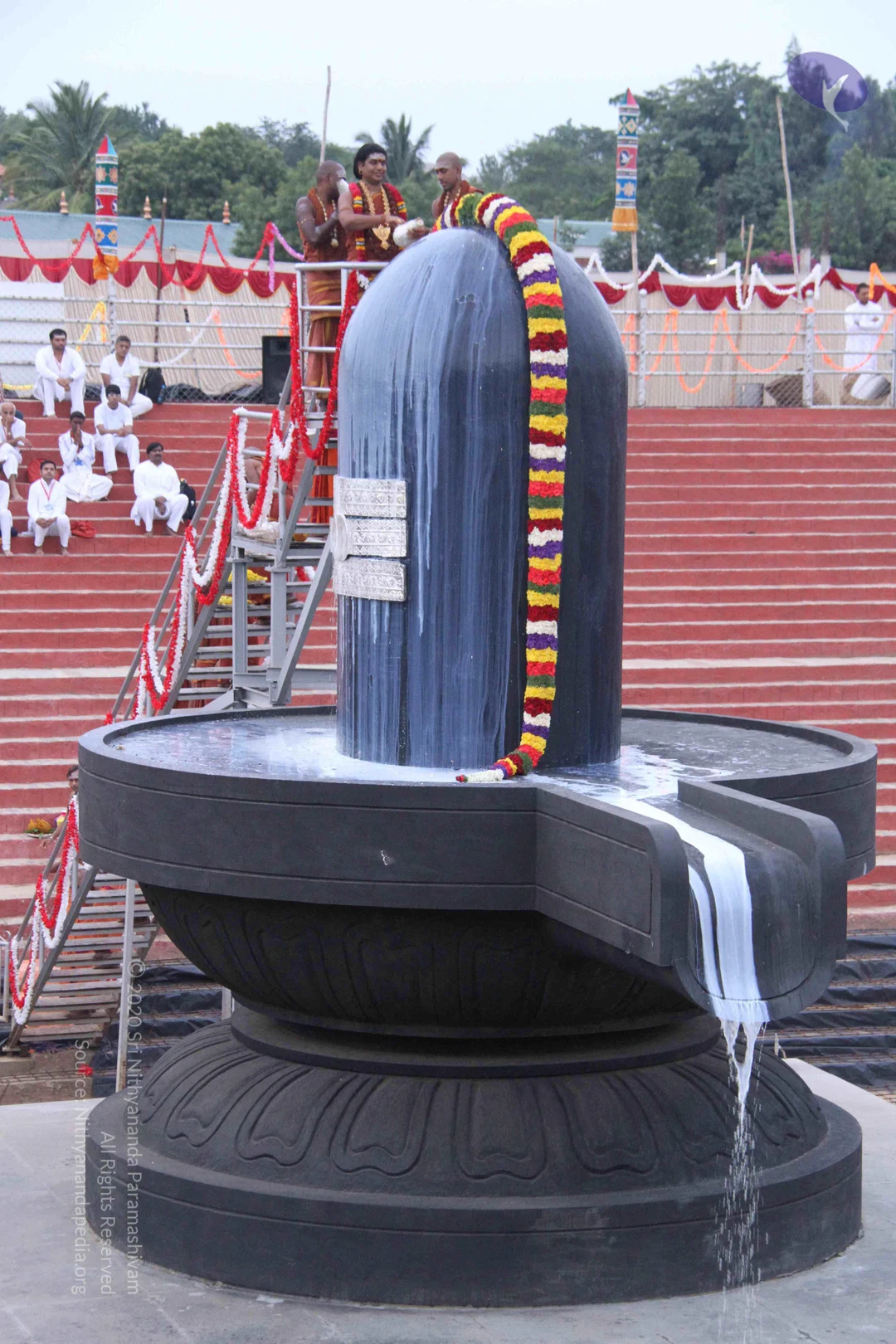
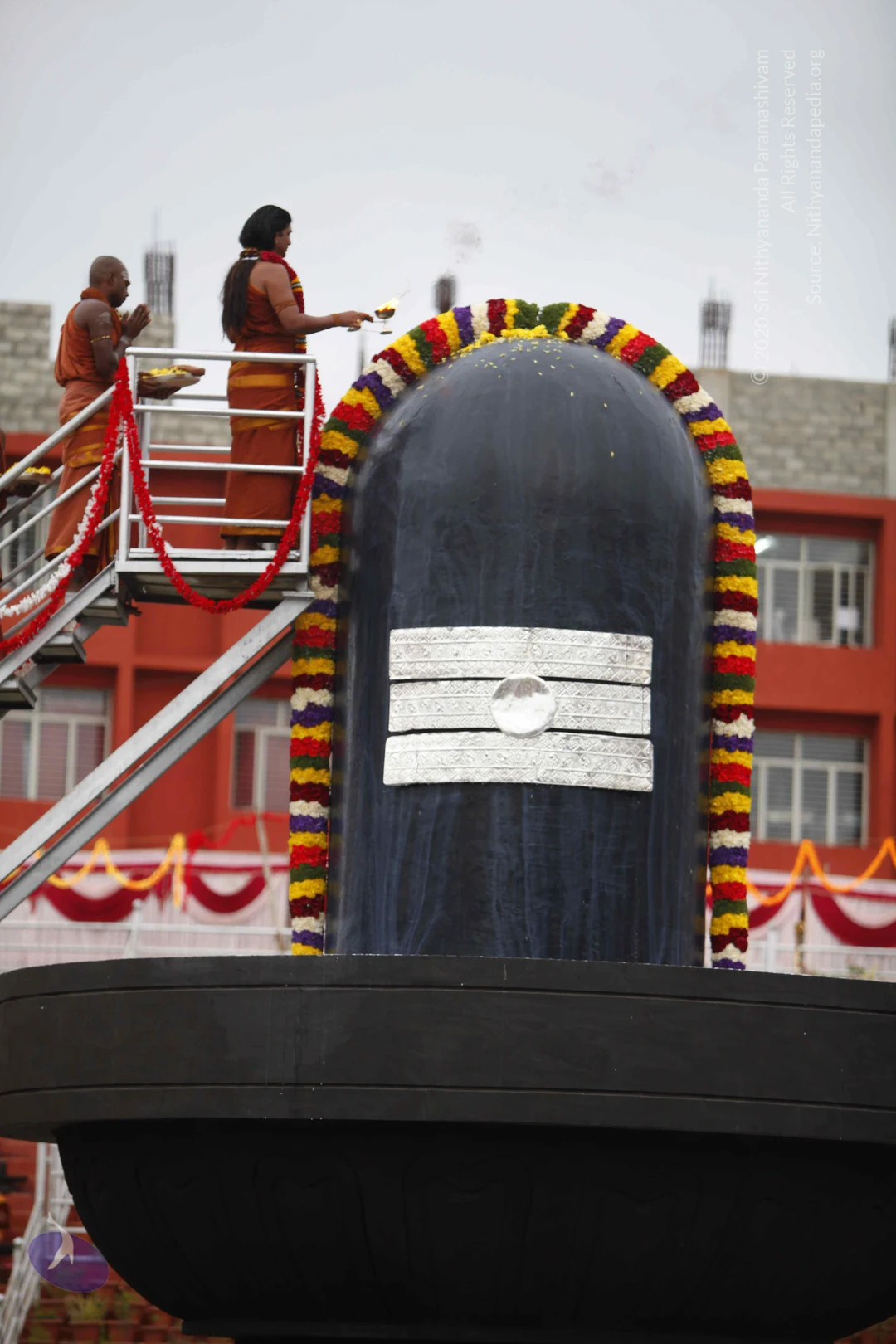
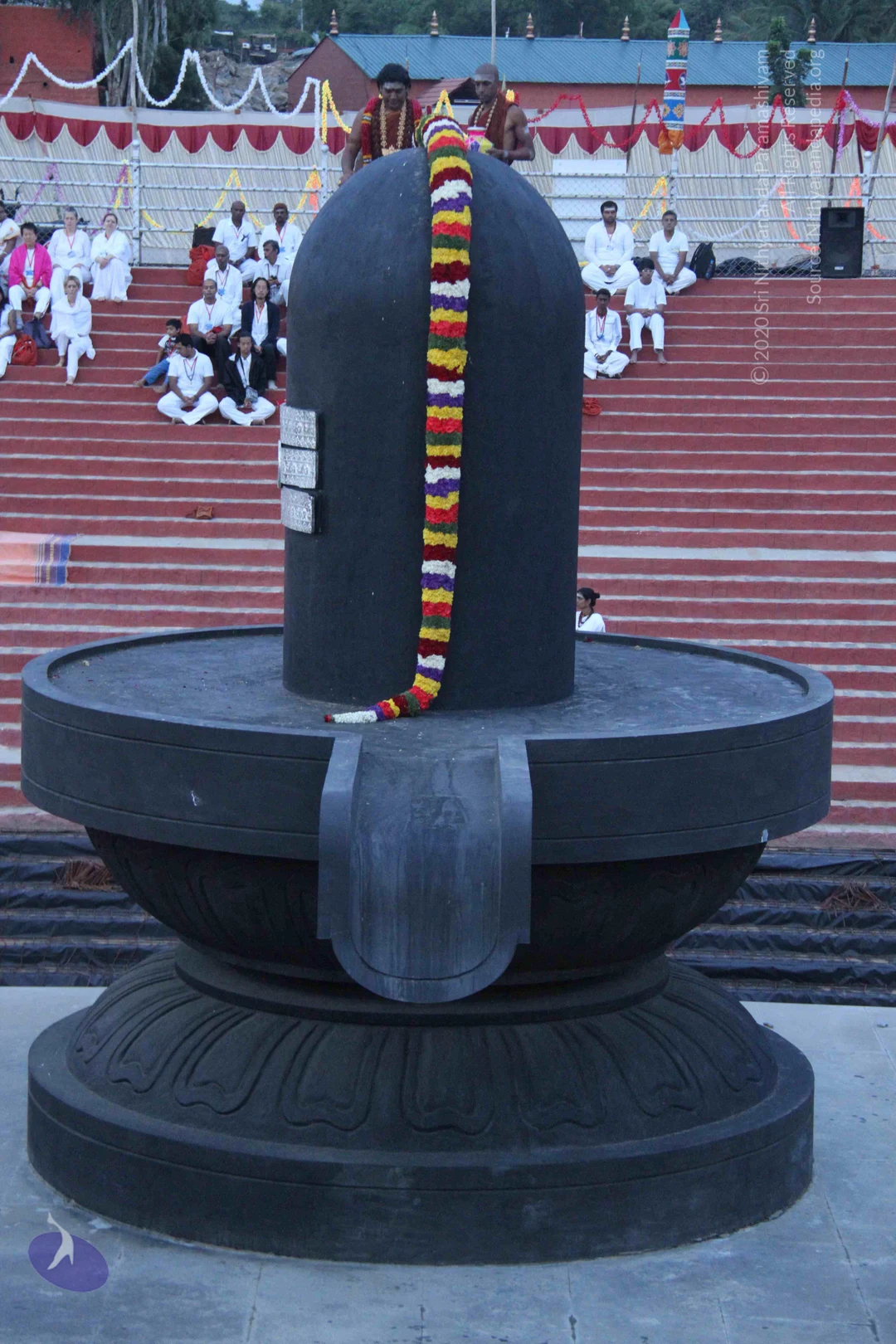
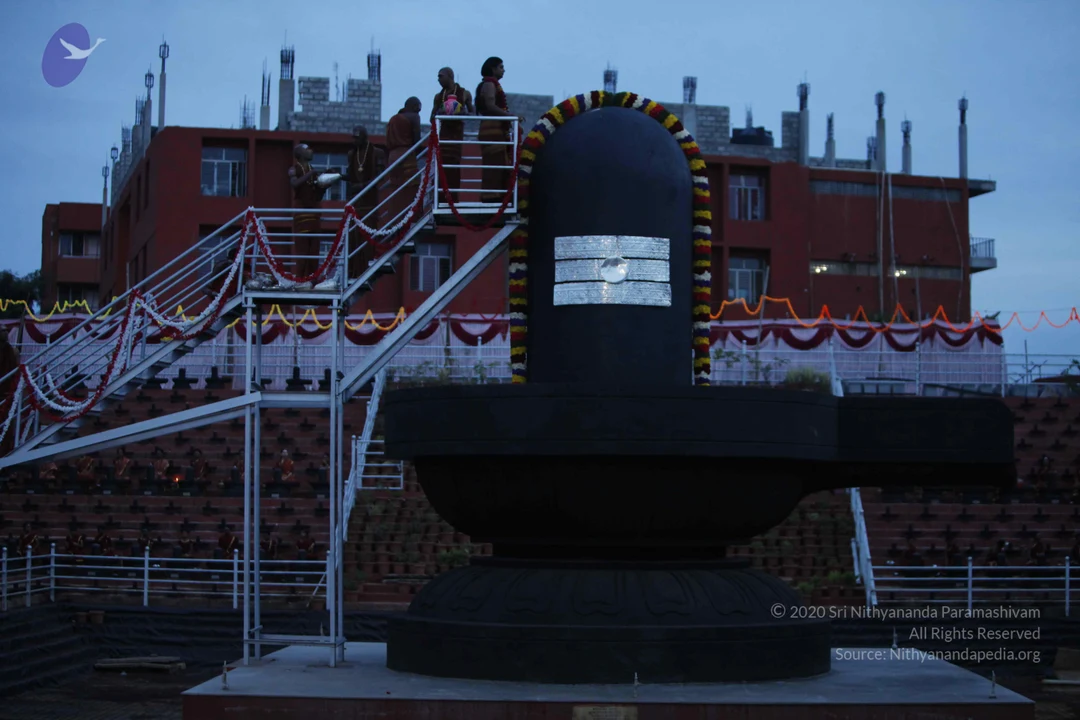
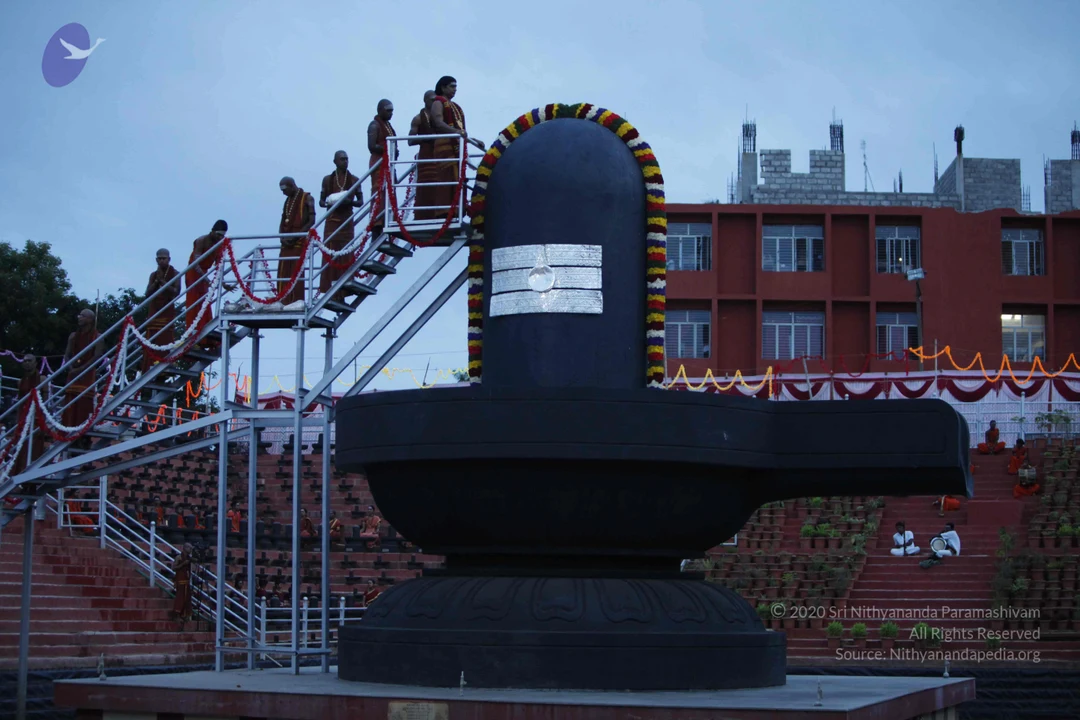
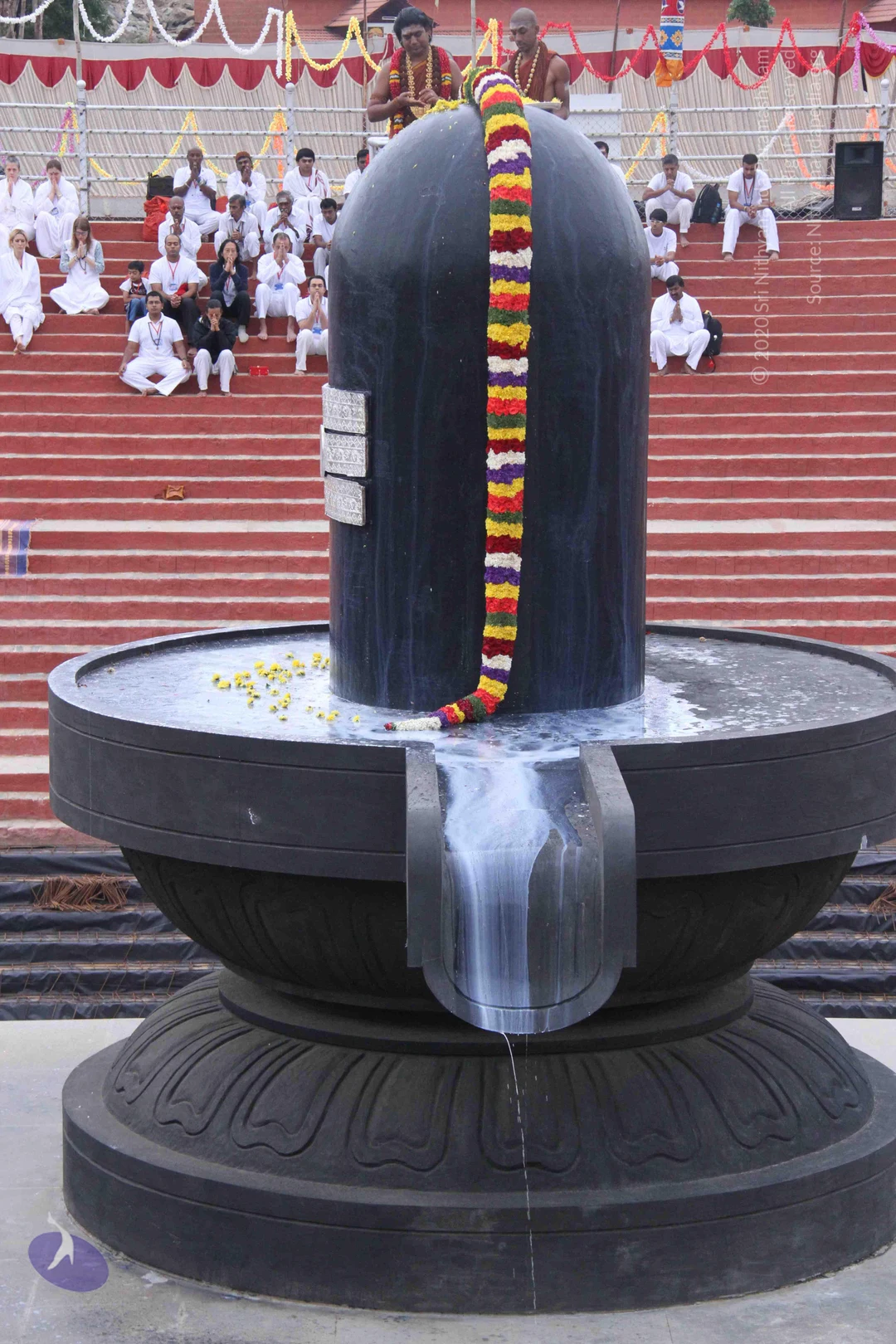
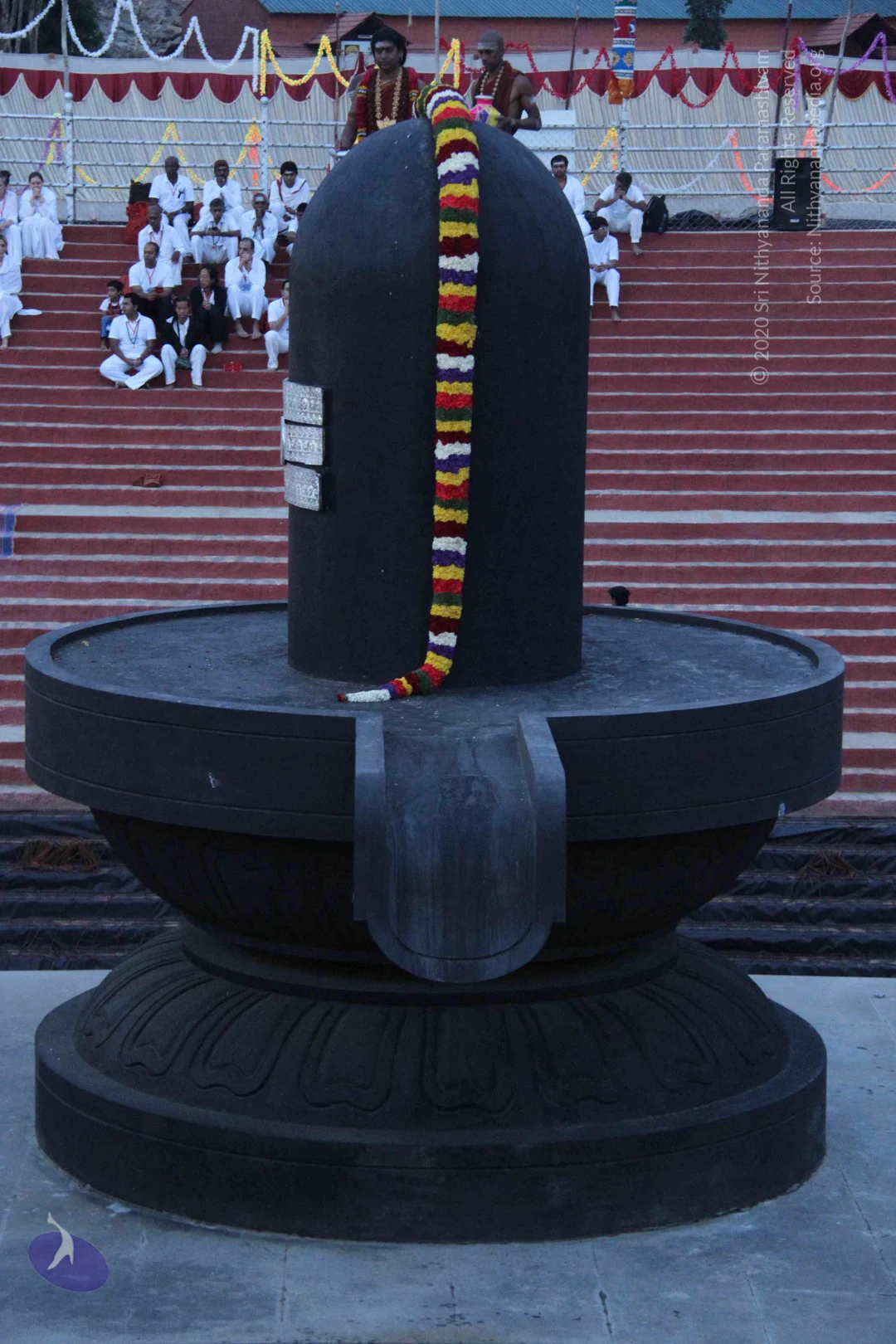
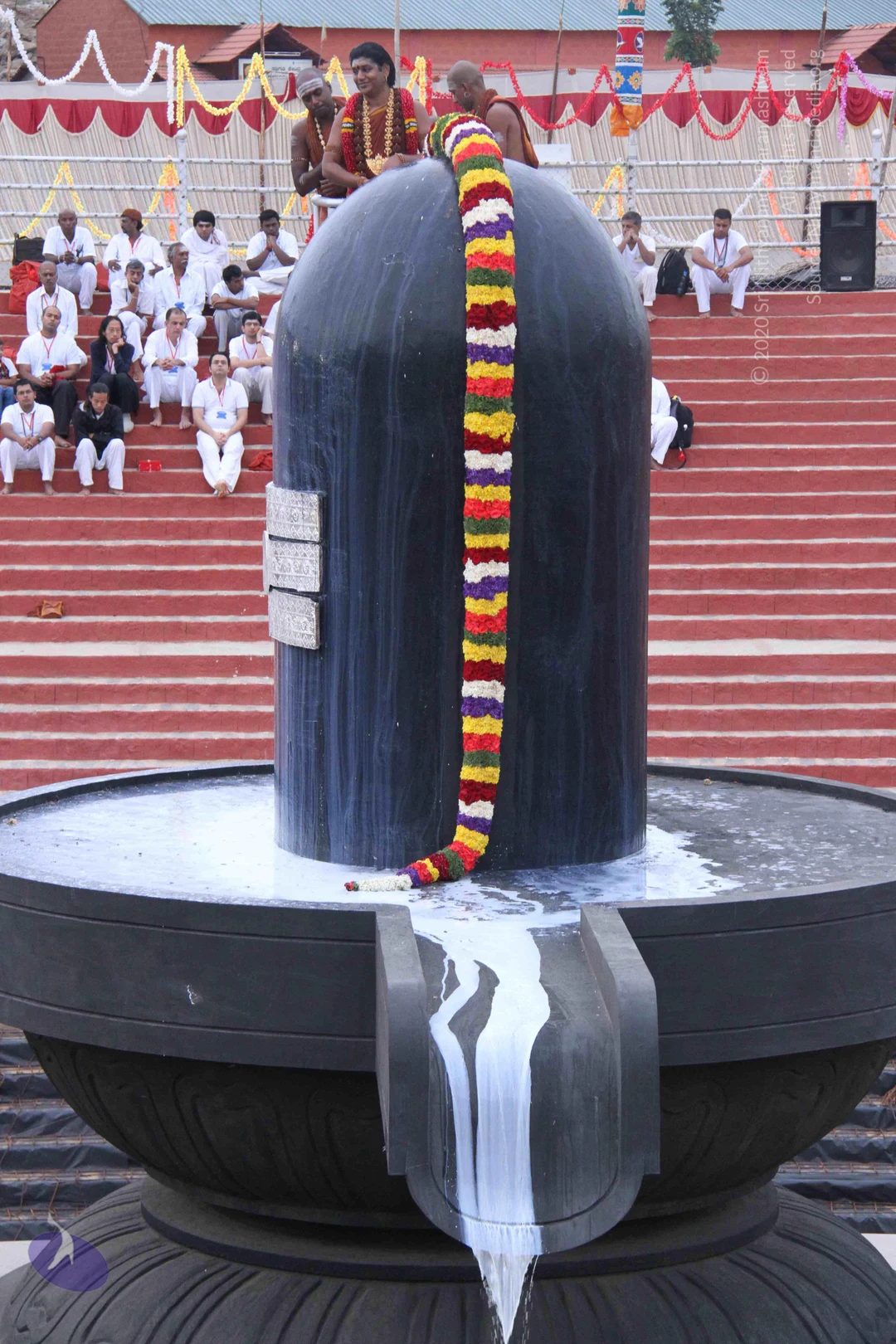
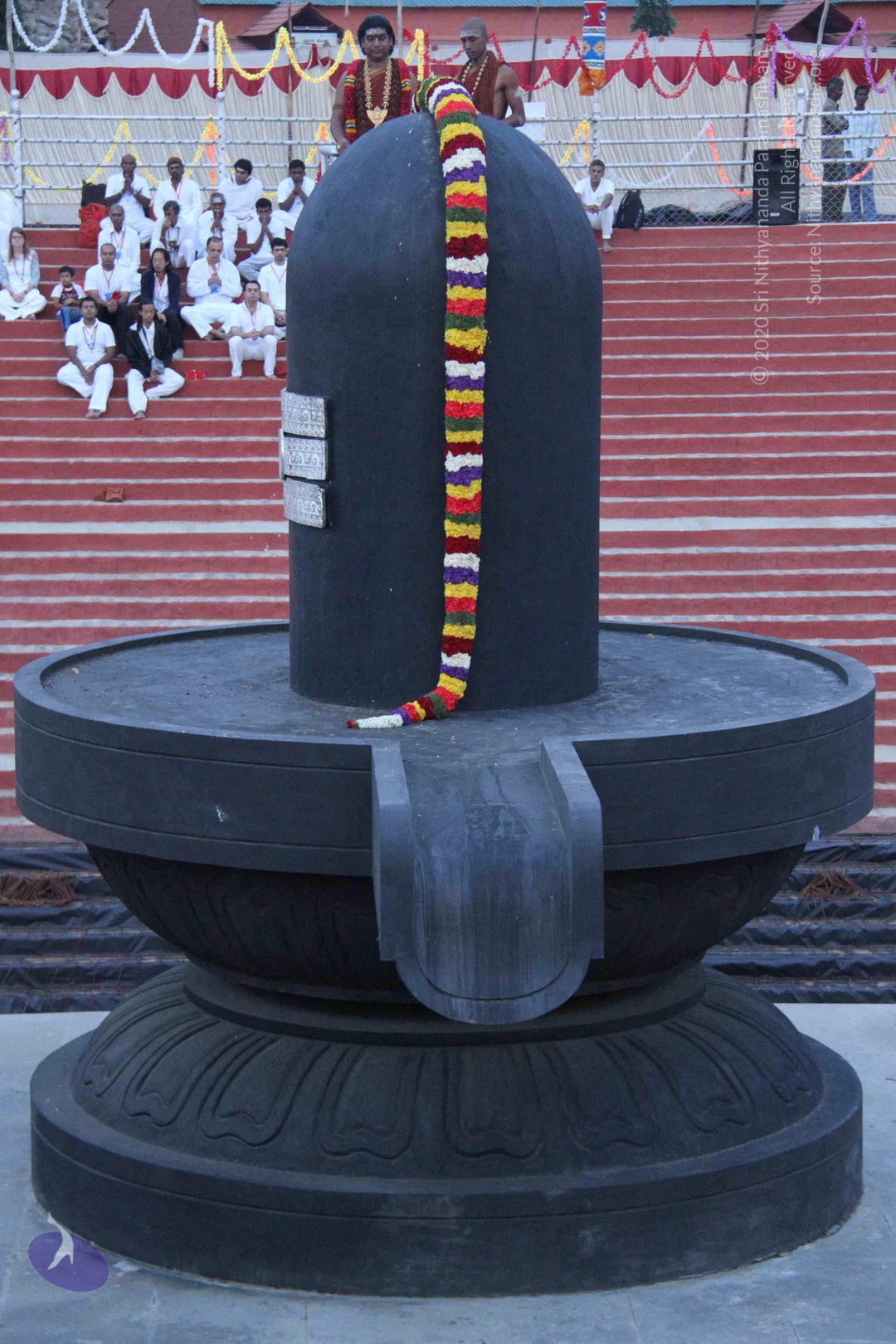
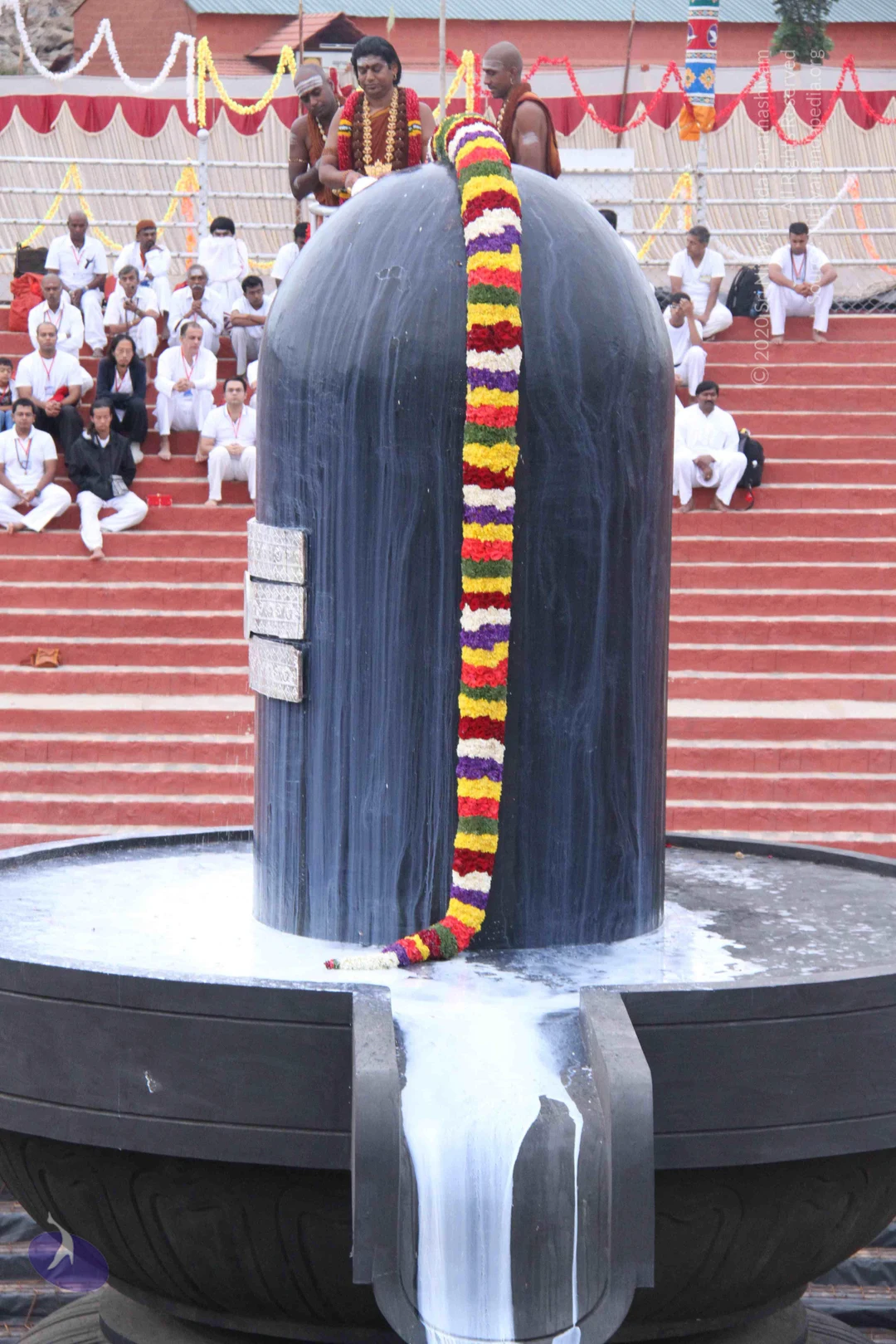
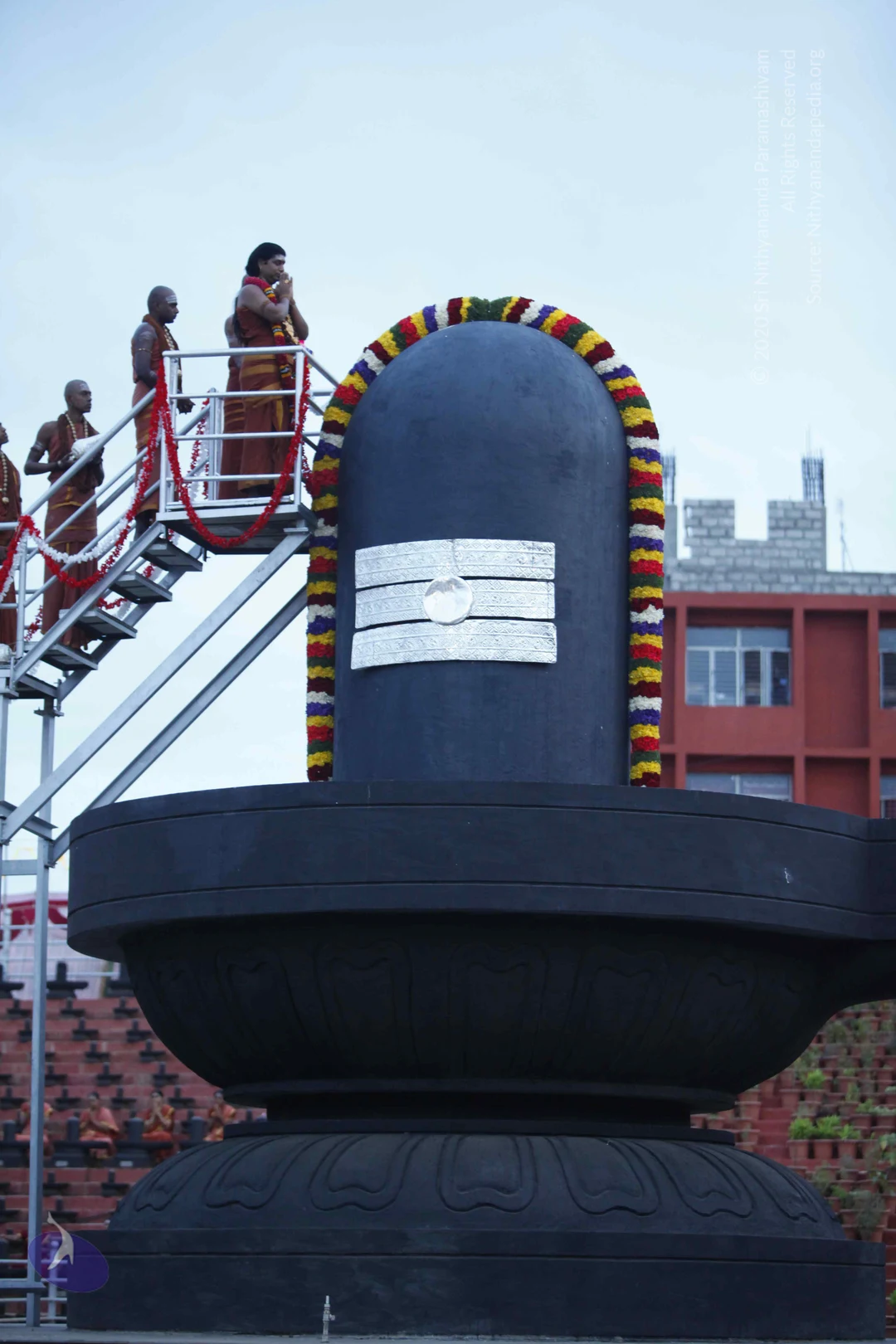
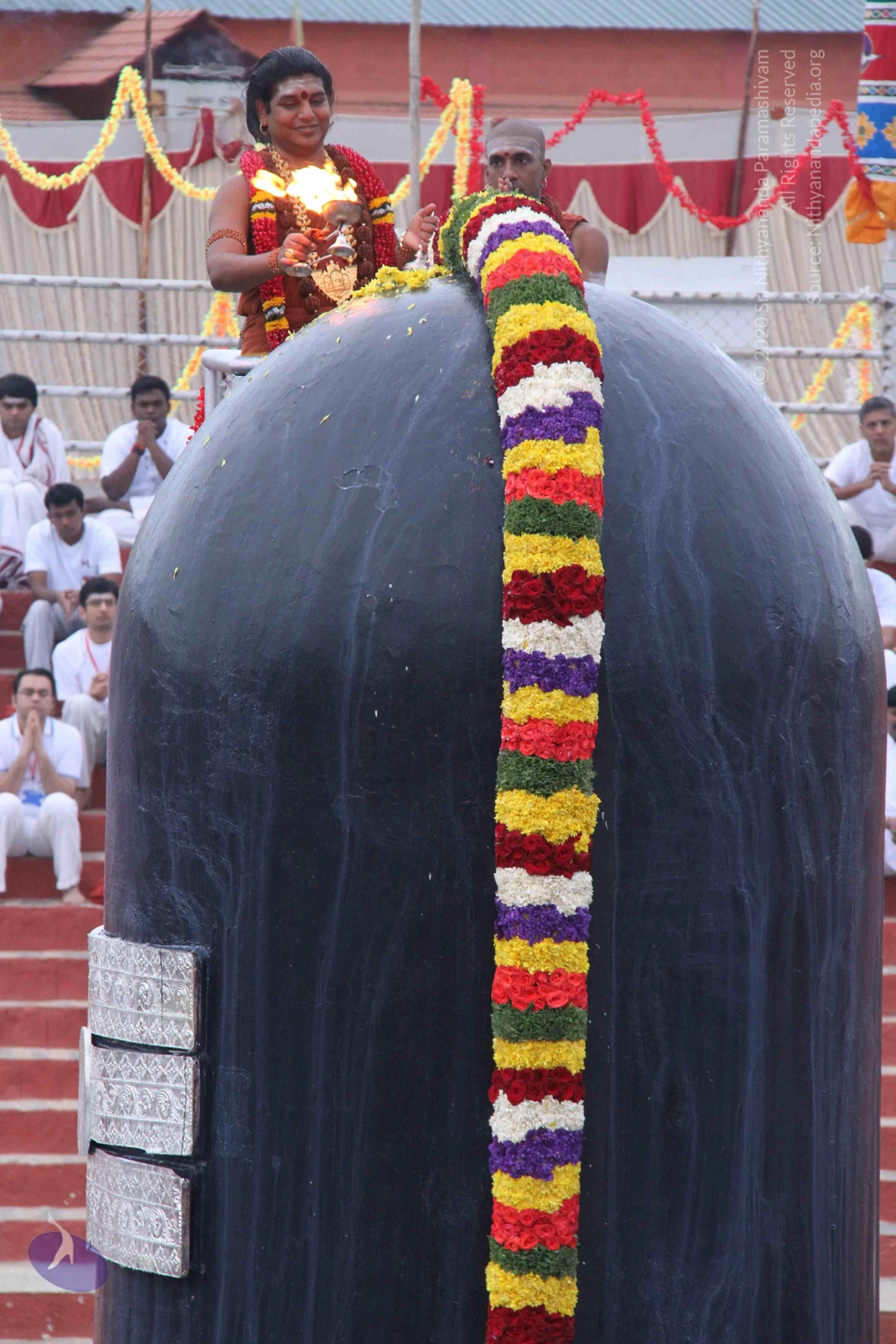
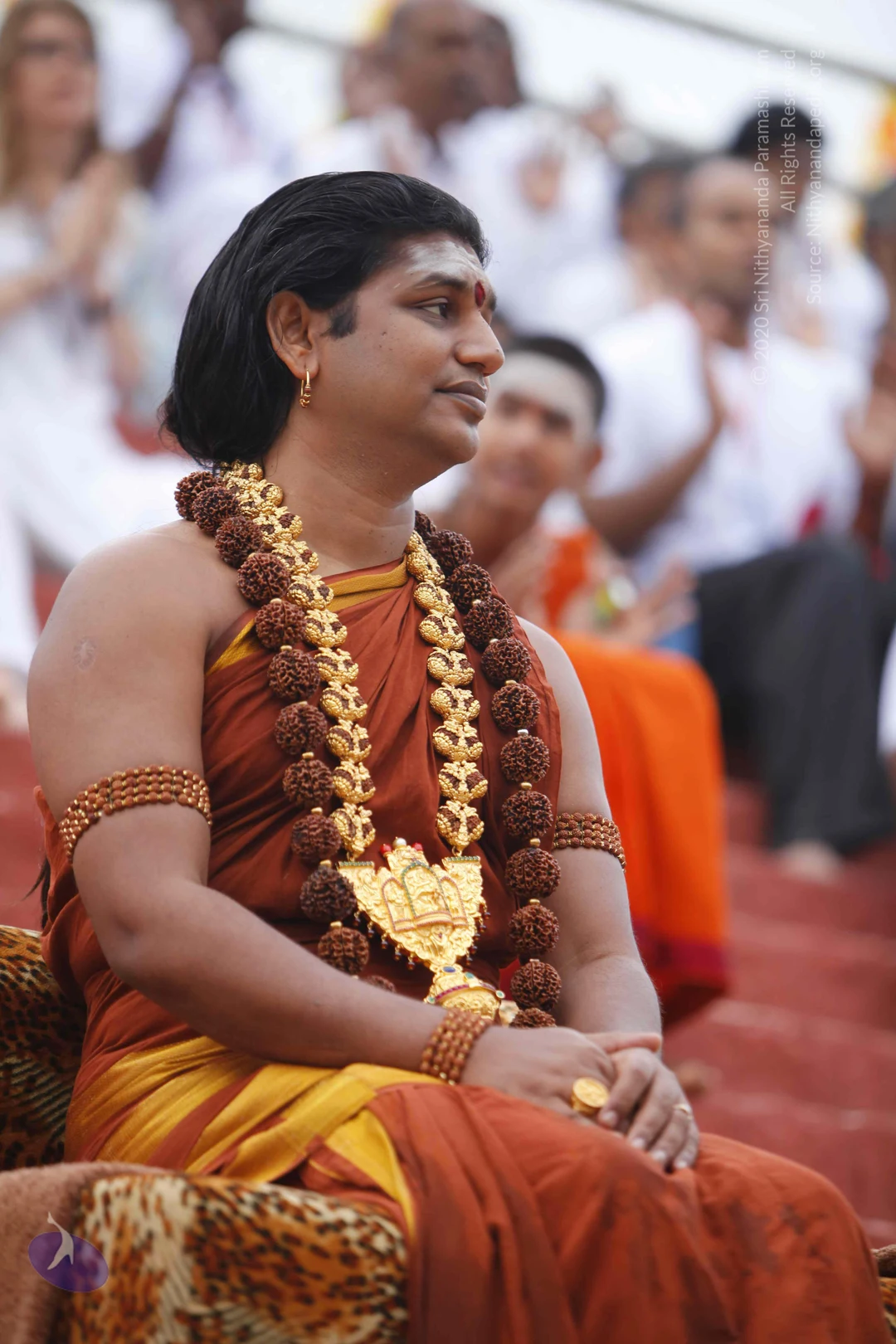
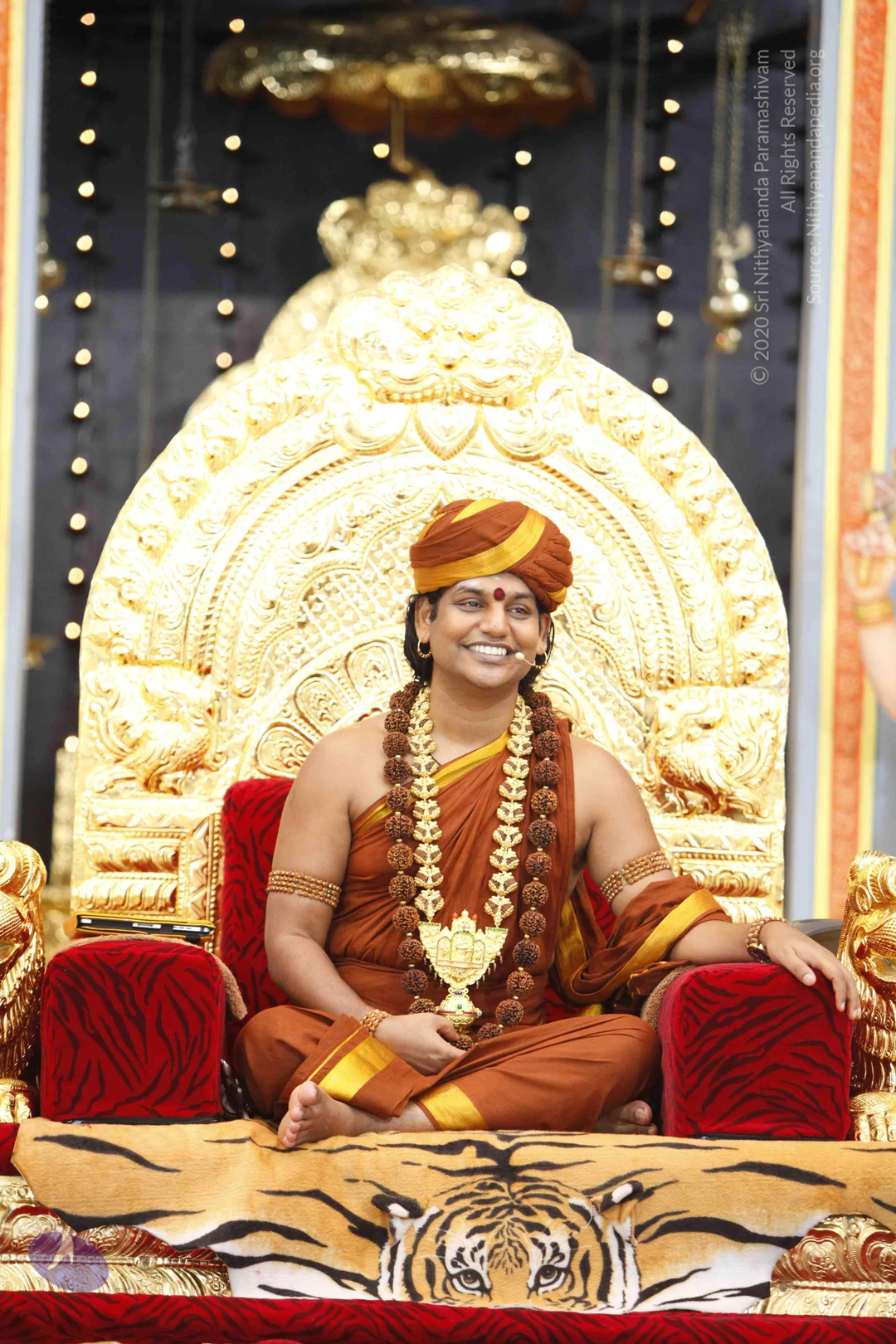
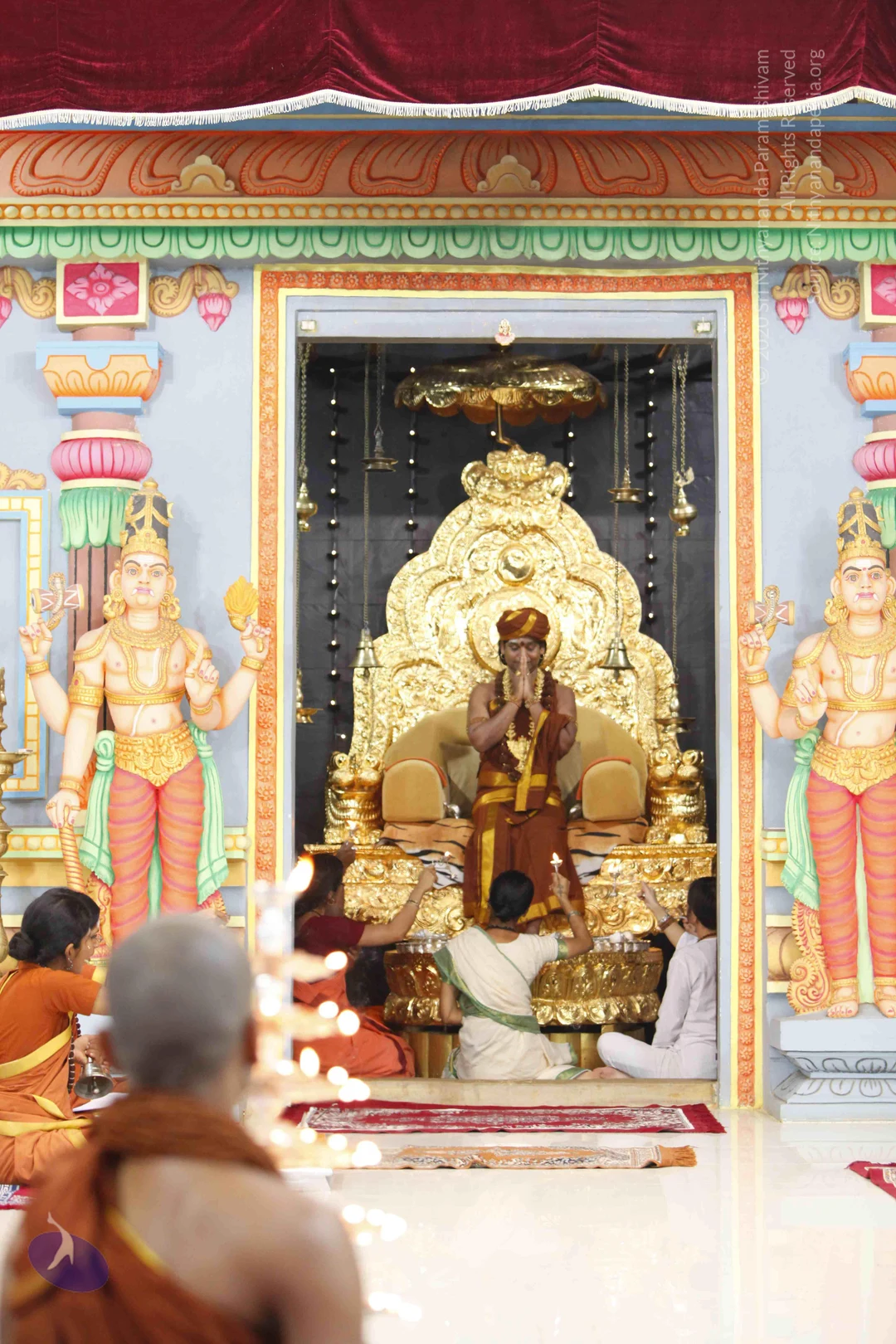
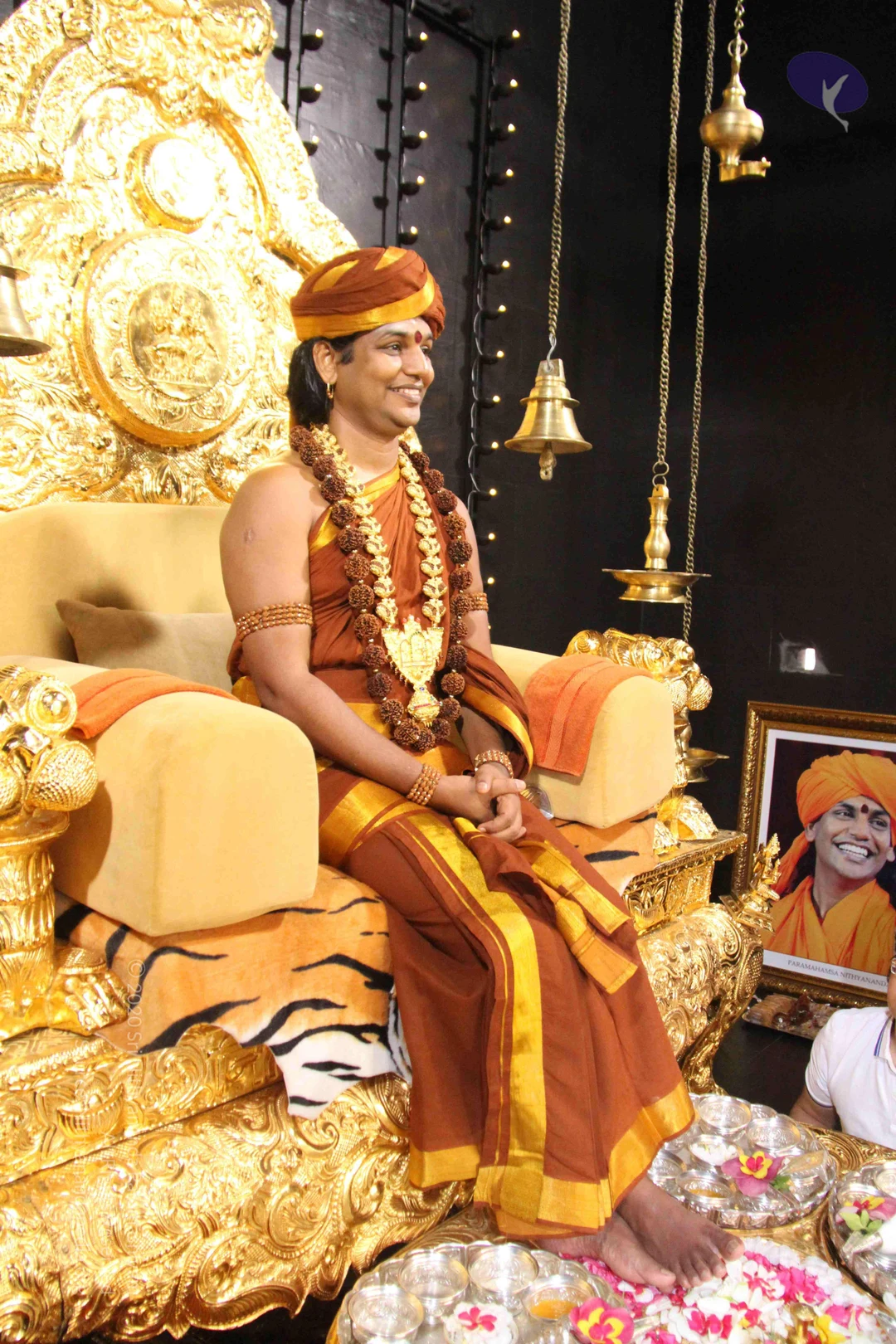
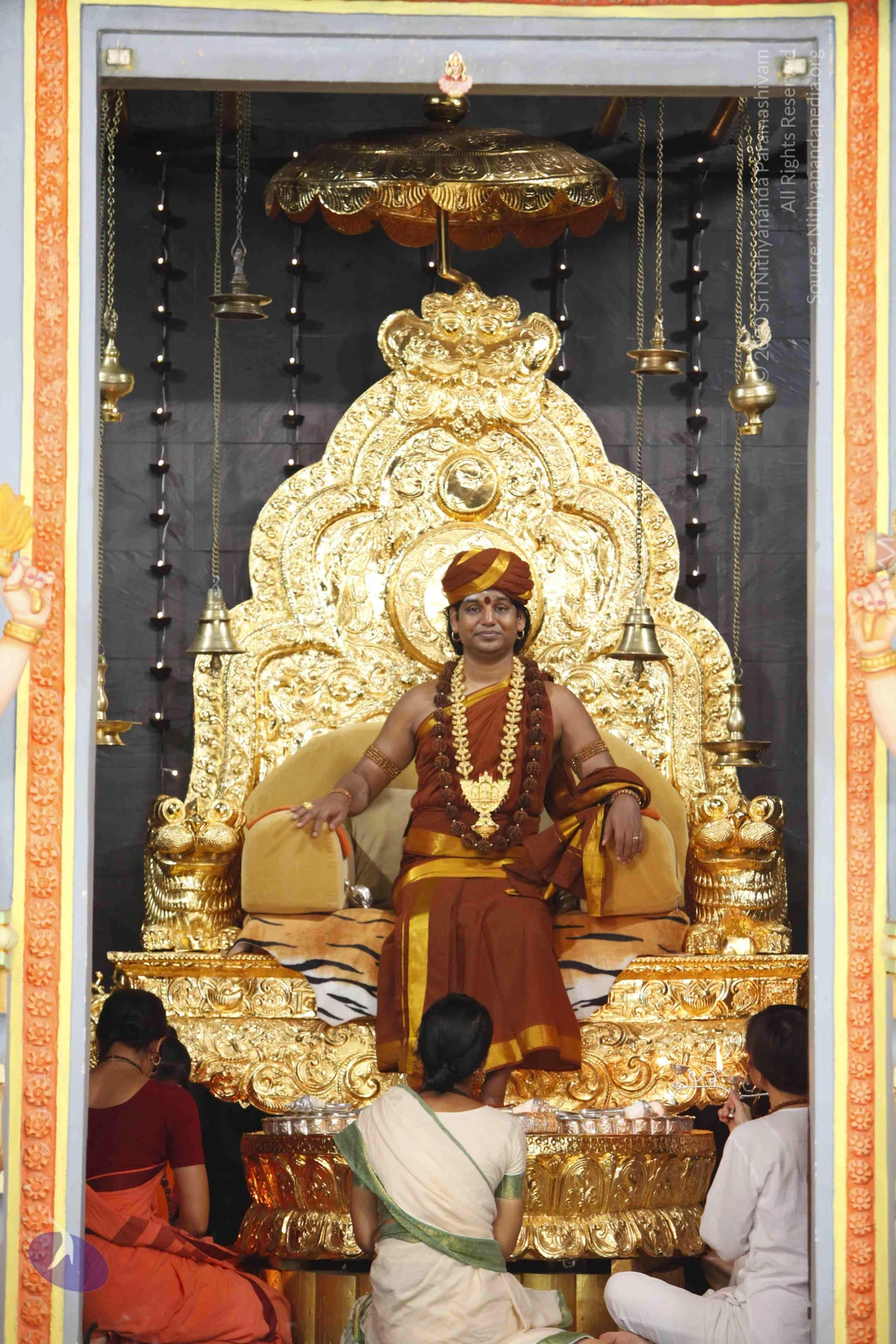
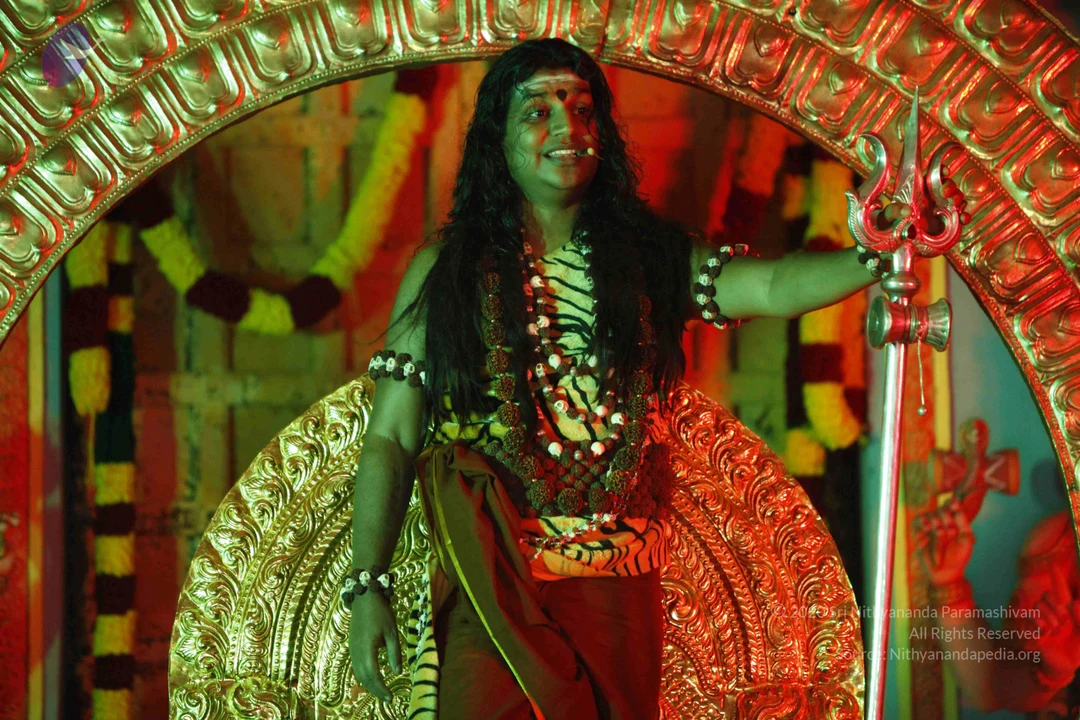
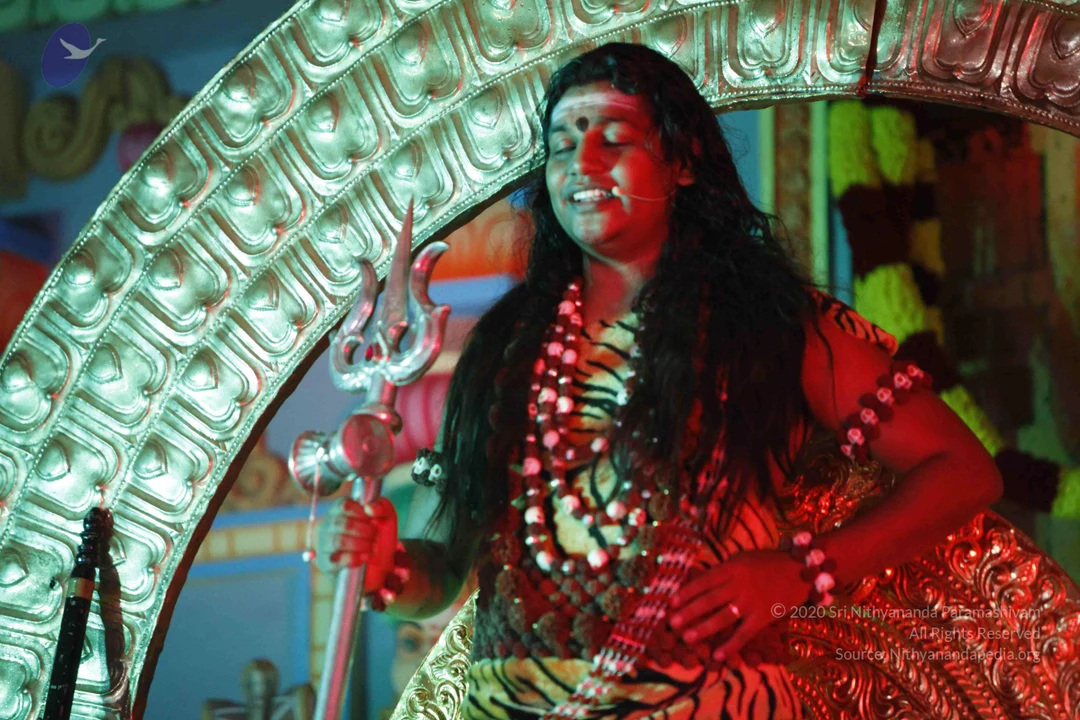
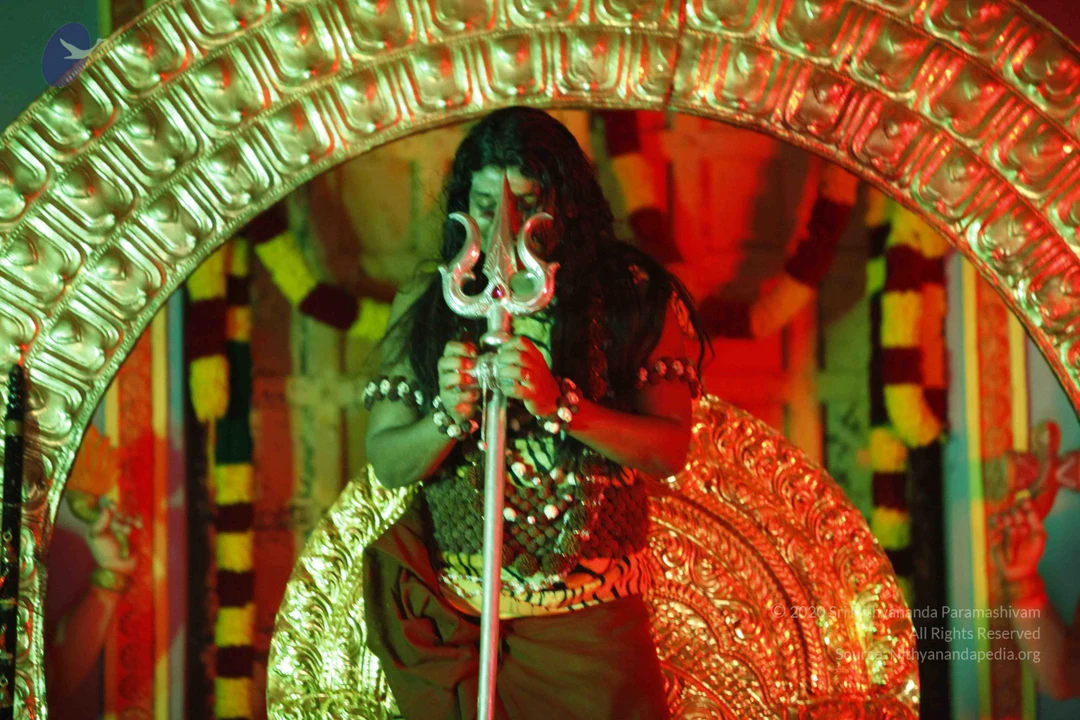
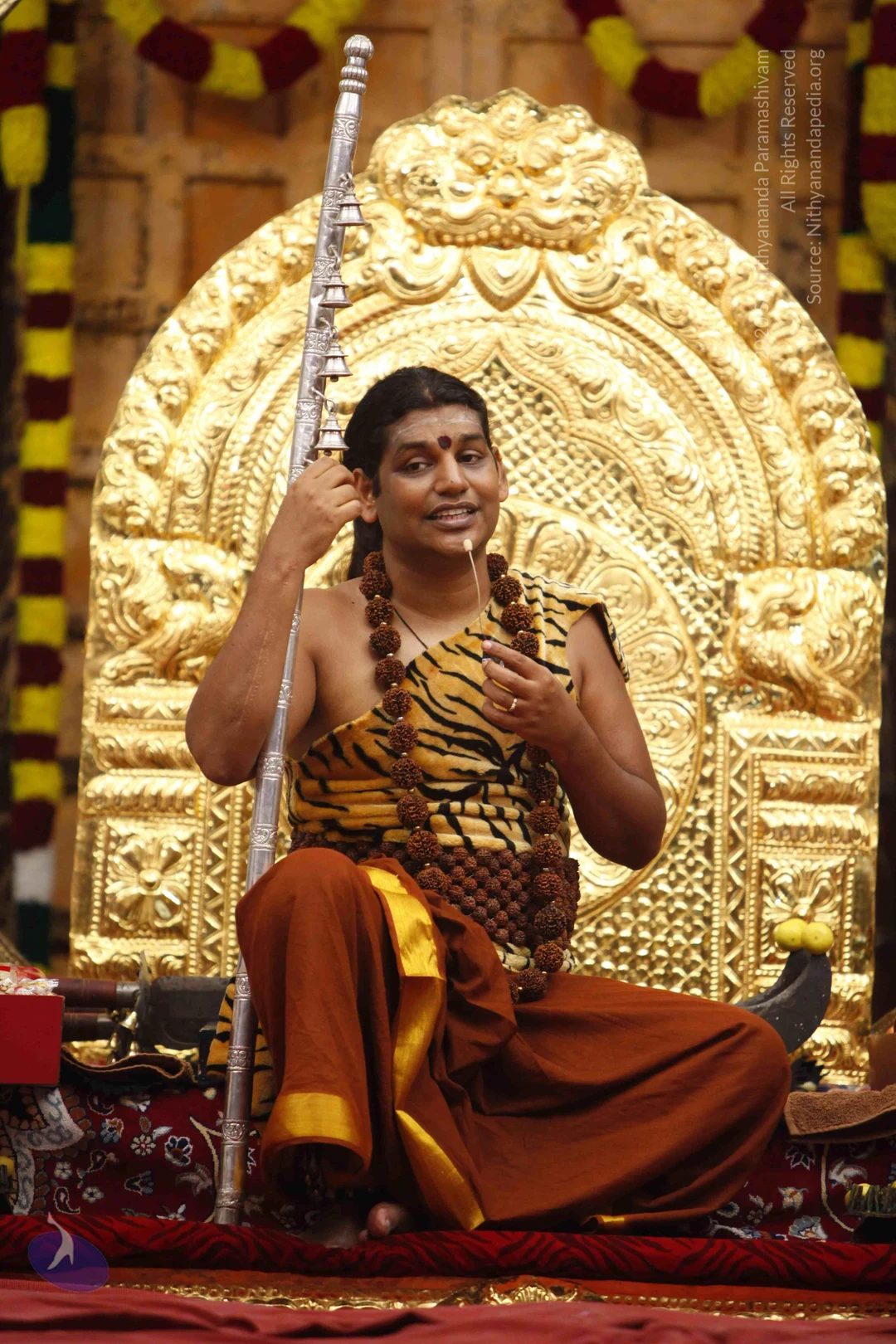
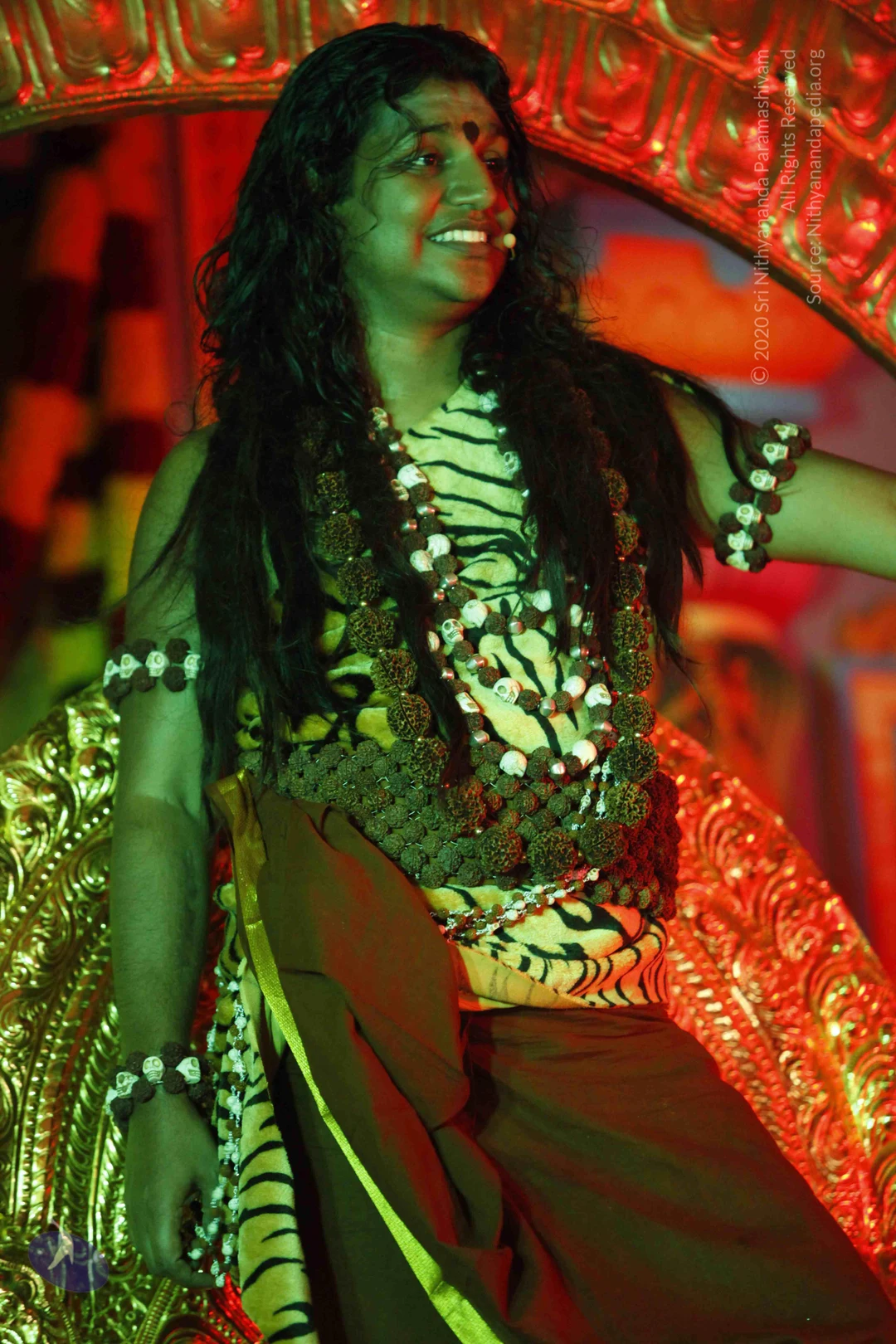
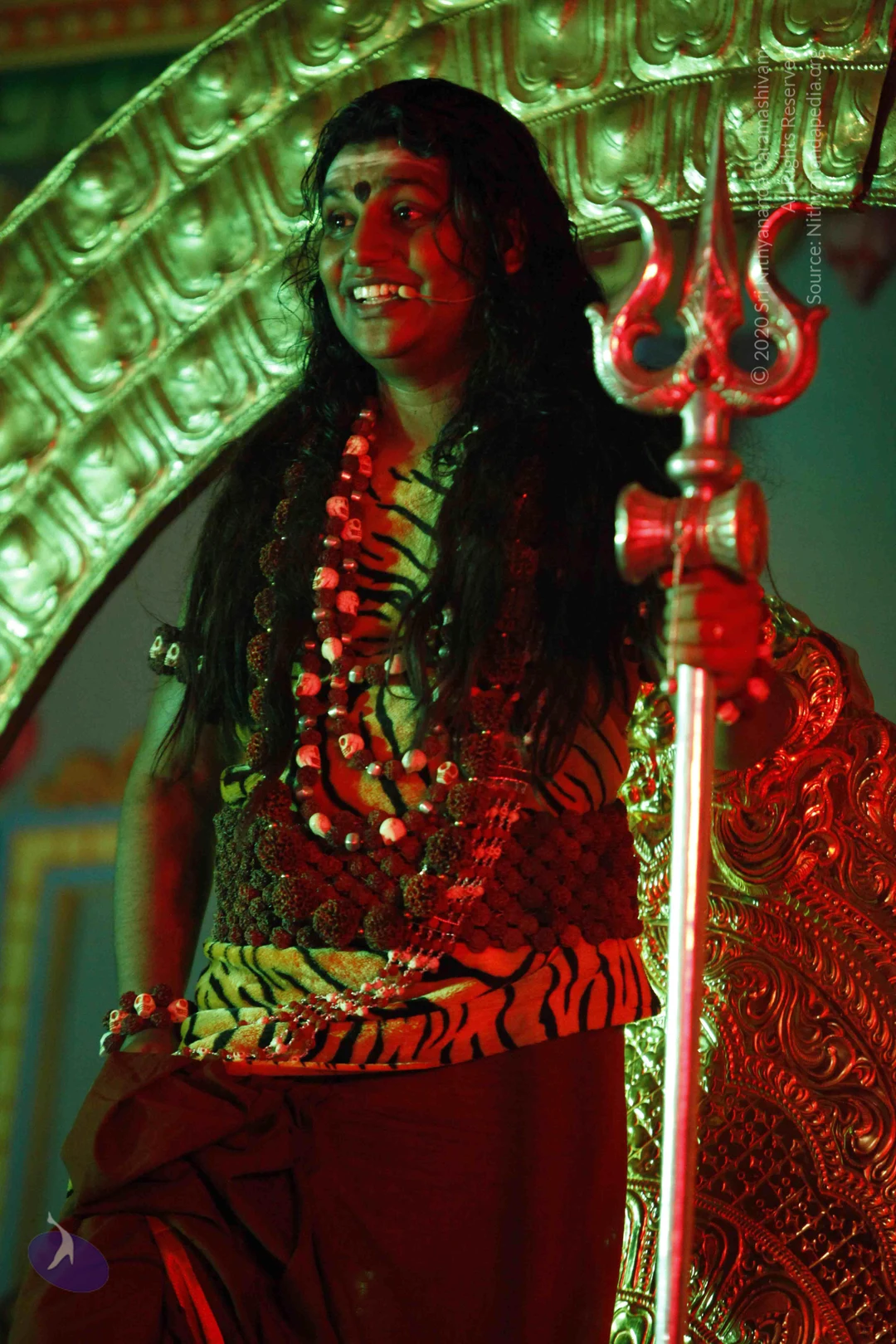
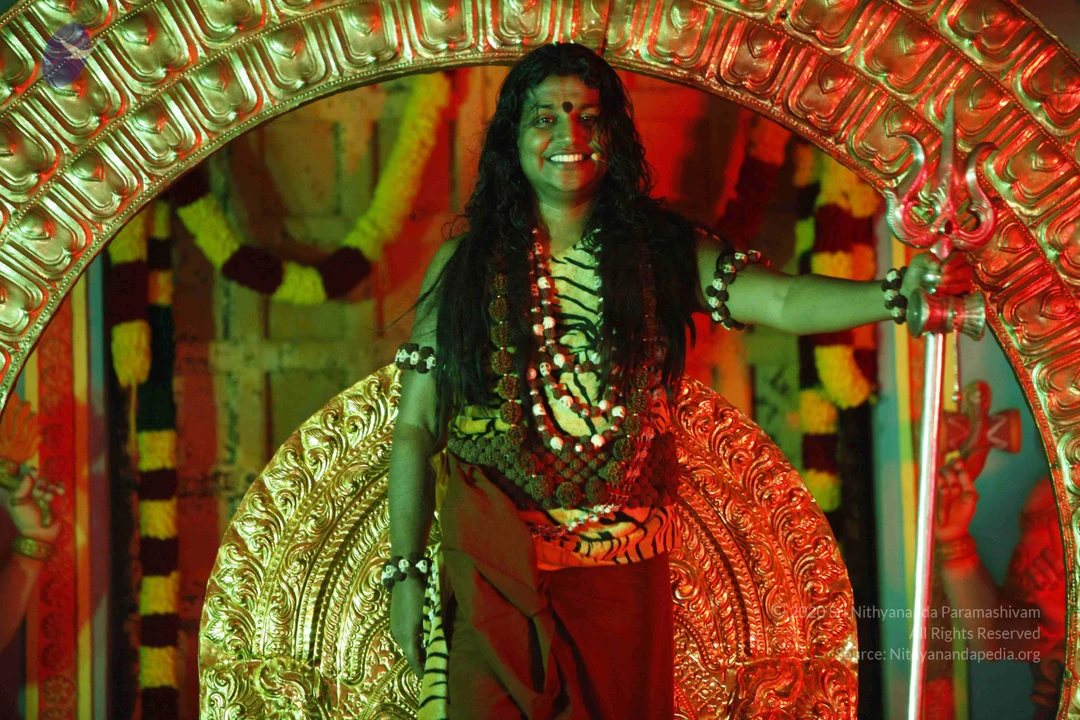
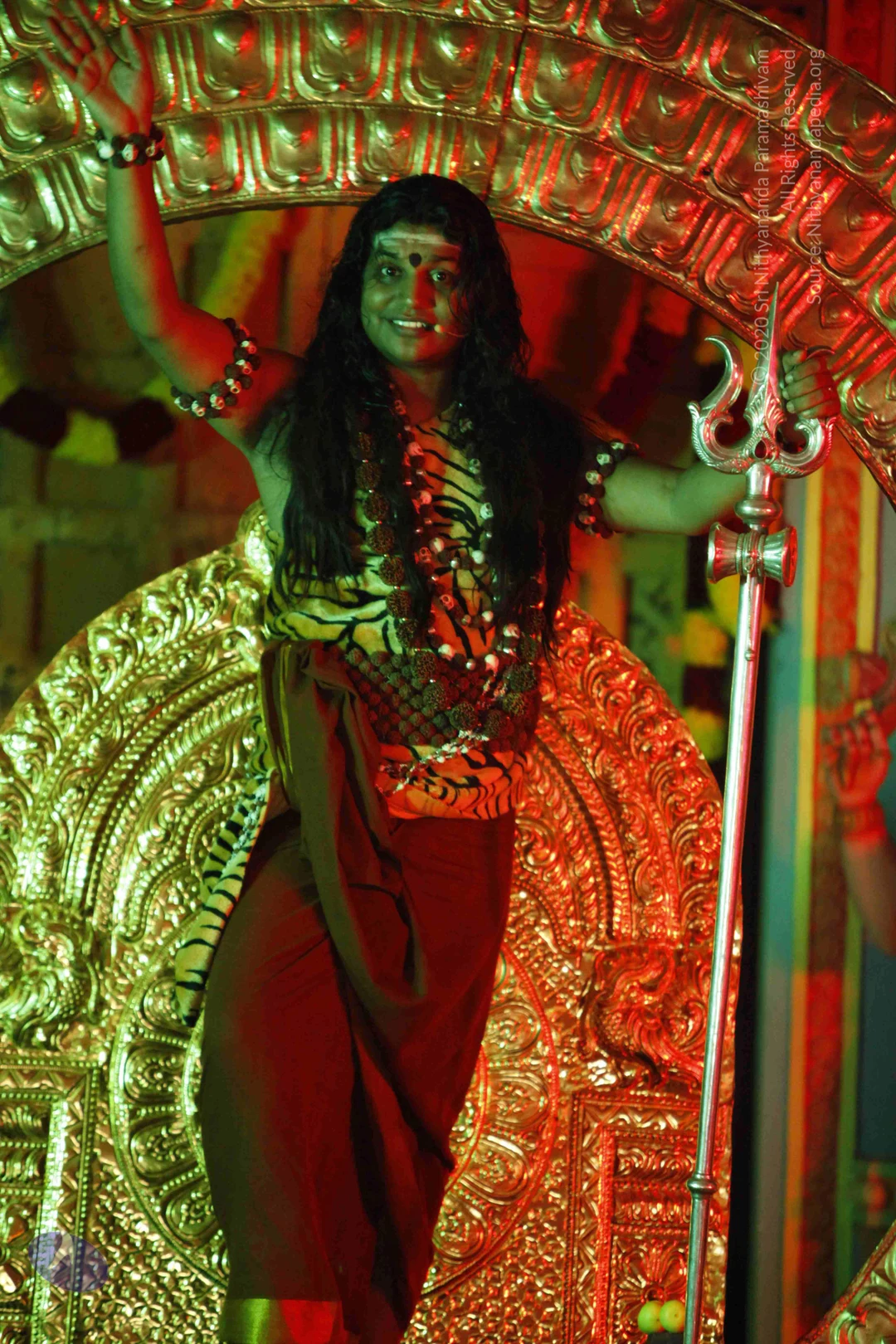
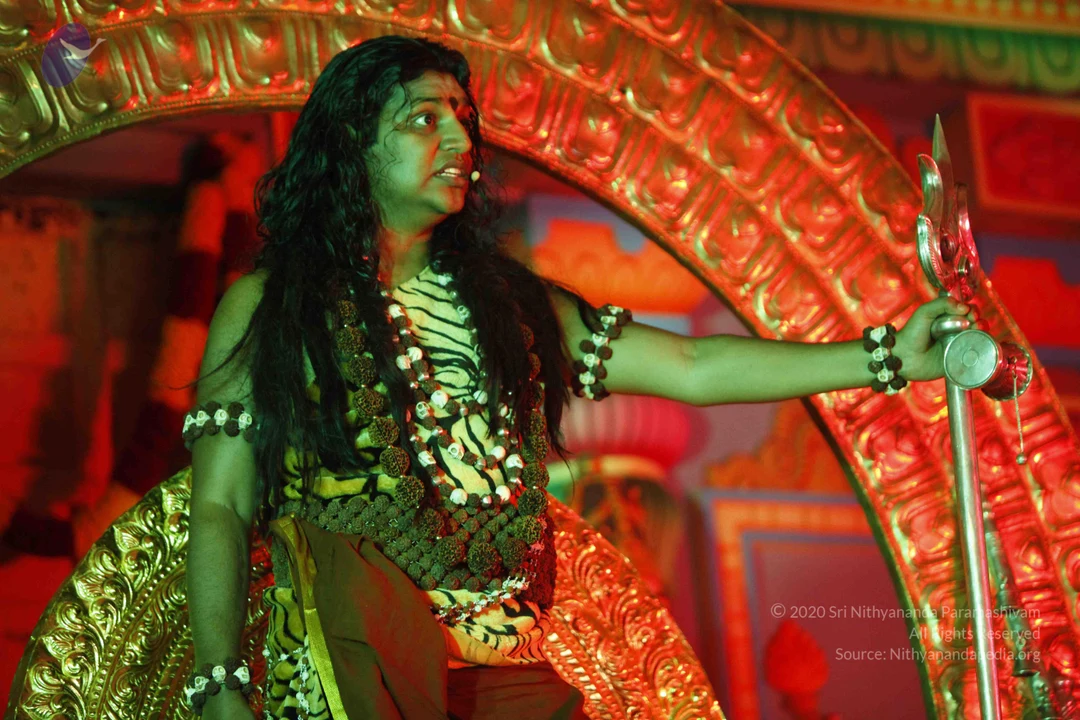
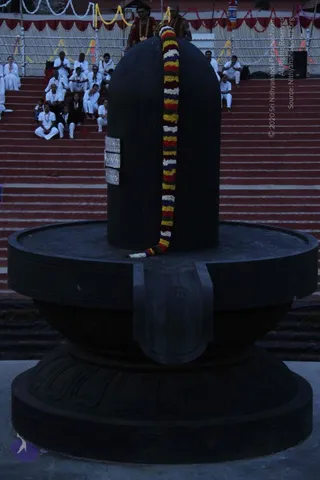
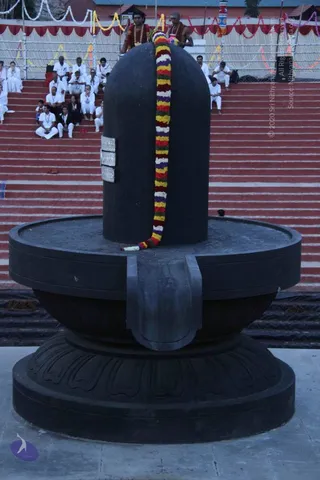
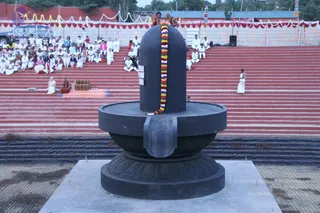
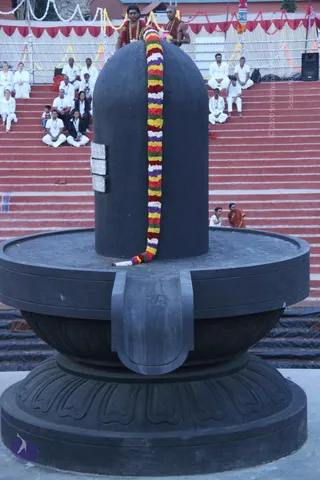
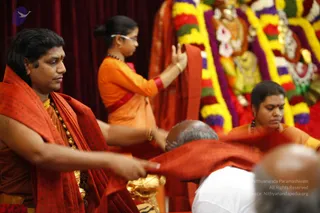
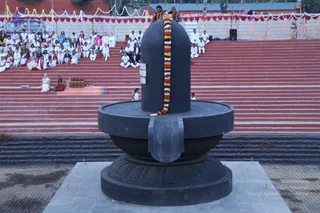
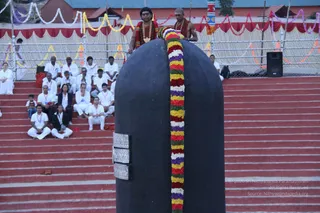
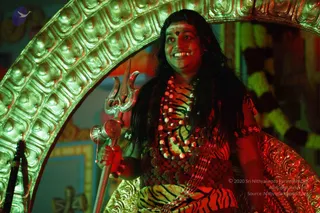
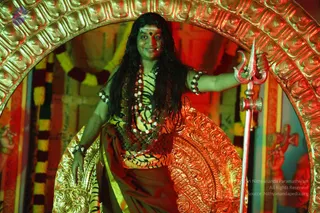
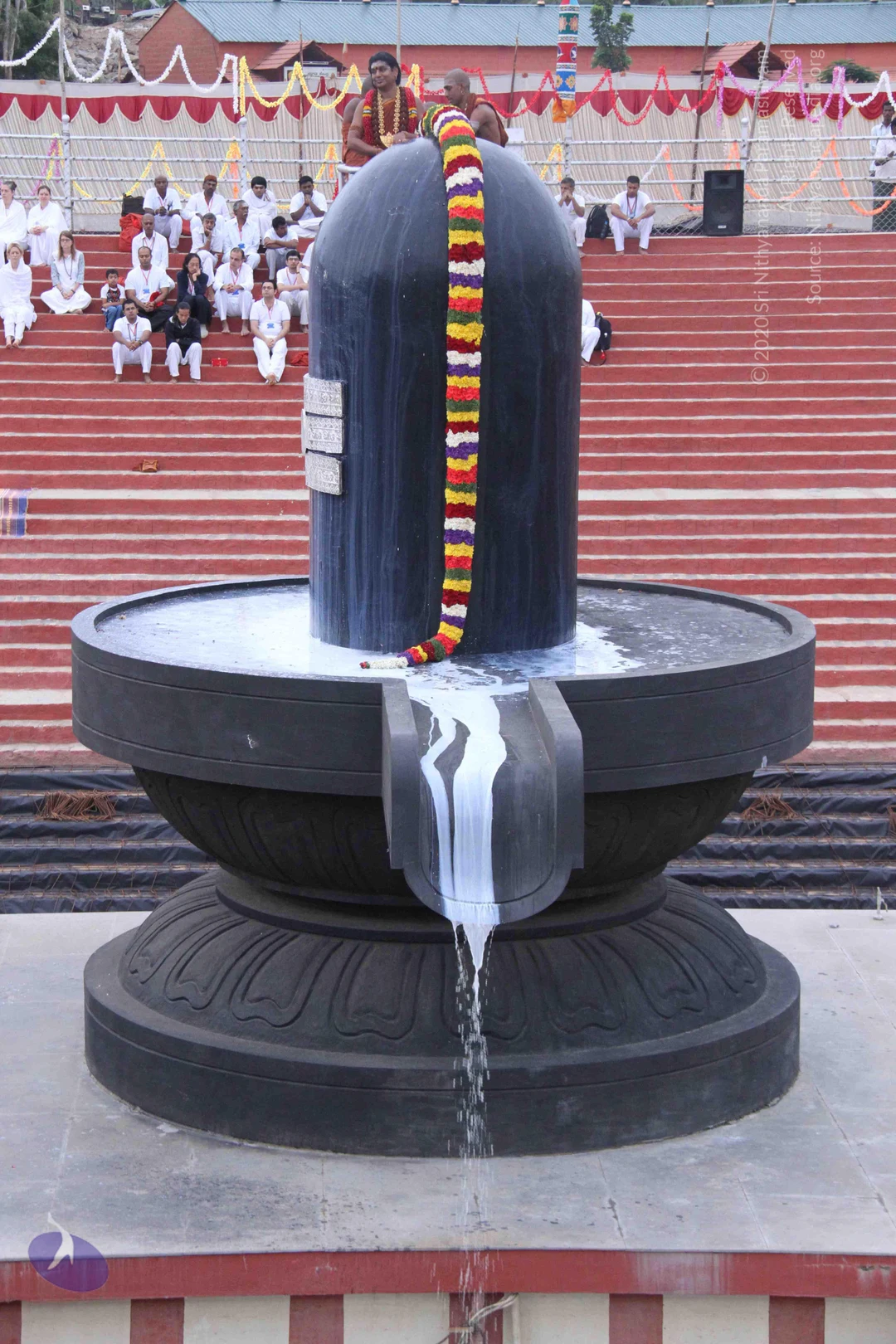
A large black stone Shiva lingam on a yoni-shaped base dominates the foreground, draped with a long multicoloured flower garland in red, yellow, green, purple and white. Two men stand behind the lingam at the top: the left man in an orange shawl with folded hands in namaste, the right man bare-chested with a rudraksha-style necklace and shaved head. Behind them, a tiered red-stepped seating area holds about two dozen people dressed in white, seated in meditation or satsang, with a few in dark clothing. Red and white draped canopy and garlands frame the scene.A smiling figure with long, loose black hair and a red bindi stands beside a tall silver trident, one arm extended to rest on its shaft. The figure wears a zebra-striped, black-and-yellow garment and layered necklaces of dark rudraksha beads with white and silver beads, plus matching beaded armlets. Behind, an ornate golden-red arch with embossed floral relief frames a warm red-lit stage set with decorative hangings. The scene is tinted with red and green stage light. Swamiji (probable) appears to be the figure, identified by the long hair, rudraksha malas, and ceremonial styling, shown in a theatrical stage setting.Elevated view of a large outdoor stadium-style courtyard centred on a massive black Shivalinga on a square striped plinth, with a garland of flowers around its base and a small white item placed on its side. Shallow water surrounds the platform on a dark mesh-covered floor. Along the right foreground, rows of potted plants with green leaves and flowers line the edge. In the background, tiers of red seating face the lingam, and red and white festoon bunting decorates the walls. On the left, a crowd of people dressed in white sits on the red track-like steps, with a few figures in white standing near the lingam area. Several orange-clad people sit on the far right seating. Dusk lighting, with a red-roofed building at upper right.

July 08 2013

Original wiki page
Contents

Title

Completion Shortcut to a joyful life

Description:

In today’s morning Satsang, Paramahamsa Nithyananda gives us new insights on completion. He defines completion as the removal of the illusionary gap we carry in which we think we are different from everything and experience the truth that we are actually one with everything. We can experience this oneness with all beings through reconciliation, relating, enriching, reaching out, and reliving. He urges us to complete with everything because there is no shortcut to enlightenment. The best option and shortest path for us is completion!

VideoAudio

Transcript:

Nithyanandeshwara Samaarambhaam Nithyanandeshwari Madhyamaam | Asmath Achaarya Paryanthaam Vandhey Guru Paramparaam ||

I welcome you all of you with my love and Blessings.

Today Mahadeva is gracing us with “Maanikam Vitra Leelai”, means, coming as a gems merchant. It is a beautiful leela.

There was a king Veera Pandya in Madurai. He had a few sons through the court girls, not through the queen, through the court girls. He was a womanizer. But all those sons they have become vagabonds with undesirable qualities. Finally, he had one son through the queen. He was bringing up that son as a future king. But, unfortunately, this guy (the king) got killed when he went for hunting. So, using the opportunity, all that sons through the court girls, the dancer girls, all those sons they looted the whole treasury and took away everything. But all the ministers wanted to coronate the future king, the boy who was born to the king and the queen. They found no gems were left and no royal jewelleries were left, the treasury was empty and looted.

Mahadeva was so alive and available to the people of Madurai. What a life, you see! Even if you don’t have simple things like, if you don’t have brinjal (aubergine) in the house, or don’t have knife to cut the brinjal, go to Sundareshwara, and he is there giving it! What a life! Blessed are those Madurai people lived with Sundareshwara. For every simple thing, every small thing, they turned only towards Sundareshwara.

The minister’s turned towards Sundareshwara, asking Mahadeva, ‘What to do now? We need to make a crown for the future king.’

Any small incompletions, they turned only to Mahadeva, because his presence was so palpable, available, so powerful. Neither they need to turn towards anybody else for solution, nor they tried.

And immediately, Sundareshwara comes down with Meenakshi and comes to the gathering of Ministers and says he is a gem merchant, and spreads all the gems required to make the royal crown.

The ministers were so happy, and they asked the gem merchant, ‘How can we pay you?’

He smiled, Sundareshwara smiled and said, ‘Just name this king as Abhisheka Pandyan.’

With that smile, he walked into the garbha mandir (sanctum sanctorium) and disappeared into the Mahadeva, into the Shiva Linga! The whole ministry, all the ministers, they know who came, and ask for the guidance of Mahadeva. A crown was made and the king was coronated with the name of Abhisheka Pandyan.

Today Mahadeva is gracing all of us in the leela of Gem Merchant. Even for small incompletions he comes down and sees to it that people are complete.

Today, in Nithya Satsang, I will expand on “COMPLETION”. The subject will be “COMPLETION”.

I tell you, anything you want in life – if you want health, do completion with your body. For example, if you have a problem in your stomach, sit with your stomach, navel, and talk to it. Declare completion. ‘Due to lack of Integrity, Irresponsibility, Inauthenticity and lack of Enriching, I had incompletions with you, and now I declare completion. From now I commit with you, O, my stomach, with Integrity, Authenticity, Responsibility and Enriching, I will not create any more incompletions with you, and I declare completion!’

Sit and complete. I really tell you, I am talking in a national channel and an international channel, so I am talking very responsibly, just simple sitting and talking you will see the whole intestine will not only be healed, it will be rejuvenated, newly created!

Please understand, see Buddha, before he became enlightened, saw all his previous births in a fast-forward record of flash. That record only is called Jataka Tales of Buddha. Means, all his previous births, the Jataka Tales of Buddha. And, I tell you, that is nothing but the different levels of completions Buddha went through and evolved to the next, next, next levels of completion, and completed. The final completion Buddha experienced. The whole Jataka Tales, I sincerely recommend all the viewers and devotees, try to get the Jataka Tales English translation or in your language and try to read. I think the original is written in Pali, may be Pali or Sanskrit. Must be Pali. But translations must be available. You should read. You will see very clearly the different levels of completions Buddha went through, and the ultimate completion which is his Enlightenment.

I am sitting and digging out my Jataka Tales. I am working on it. I don’t know how many things I am working on!

Jataka Tales of Buddha are originally written in Pali language. Please try to read.

I tell you, life is nothing but completion, completion, completion. If you want health, complete whatever possible incompletions would have been the reason for your disease; complete with all that. Complete with your food, complete with your eating style, complete with your body, complete with your liver, kidneys, different parts of your body. Please understand, I am talking with a lot of responsibility. I am not saying just because I have to say something. No! Complete with your body. You will experience tremendous health. Same way, complete with everything happened in your life. Complete with everything. And you need to know, everything is alive!

I am spending a little time in reading Astro Biology – a new subject. One writer in the internet, Ajit Vadakayil, he has done a beautiful research on this field, and I wanted to acknowledge and give my gratitude for his amazing researches. And I was contemplating to recommend his name to Nithyananda University and request Nithyananda University to give honorary doctorate to him for his contribution. Amazing work he has done!

And I am also studying some more literature on Astro Biology, with so many researches. And all the authentic researches are showing even the astro bodies are living intelligence. So, complete with the tree in your house. Complete with your house. If you are constantly feeling depressed in your house, if you feel the house energy is very bad, complete with the house.

And I very strongly believe going to these energy fields related to different planets. I have seen many people whose Rahu is very bad. How much ever you try, he will not allow you to meet the Guru. Almost you may be in the doorstep, but something he will create and distract. Rahu is so powerful, Rahu and Shani! Whenever I see, I have always seen. Sometimes the devotees will start and come all the way. Suddenly, in-between, they will see a snake, or they will have some health issue and will not be able to have the darshan. The powerful negative influence of Rahu! Actually, Rahu can be nullified only by going to the energy fields of Rahu. I think in India we have, may be five energy fields of Rahu. Please understand, if you go to those energy fields and complete with those grahas (planets), only then their negative influence reduces and gets nullified. Even Shani’s influence can be nullified by Guru. But Rahu’s influence only Rahu can nullify, because that fellow will stand between you and Guru. And he will twist and convolute the very logic.

Sometimes, I have seen, people will try to reach me and their Rahu will make sure that they don’t reach me. And he will also convolute saying, ‘See, see, see, this Swami will not work for you. It is inauspicious. Even when you went to see him, only you are having bad things.’ He will churn the brain.

I was studying Astro Biology. One of the good things you have is, after the 2012 December, last year December 21, 2012, Rahu’s influence on the Planet Earth has drastically reduced. So the majority of the world gets ready for enlightenment. Completion with Rahu is very important. In India, we have a few energy fields where you can complete with Rahu. A place called Thiru Nageshwaram, Kalahasthi, these are the places where you can complete with Rahu.

I tell you, complete with everything, because everything is life form. I request all the devotees, listeners and viewers, till Guru Purnima, I think we have next ten or fifteen days, fifteen days, these fifteen days go on completing with everything. If you pick up a pen to write, complete with that pen. If you pick up your laptop to work, complete with that laptop. If you pick up a jewelry to wear, complete with that jewelry. If you sit in front of your Guru, complete with the Master. Every relationship in your life, complete with it, complete with it, complete with it. And go on spending every night at least one hour complete with you.

I am just trying to download and pick out the layers and layers of my completion process so that I can help you all guys. Please understand, I went through everything you are going through now in various janmas (births). If I can dig them out, I will be able to give you a very practical tips, lot of practical tips on doing completion.

If you hate to do yoga, morning akhada, complete with the dumbbells, complete with your muscles, complete with the yoga mat. No, really! And complete with all the incompletions with you. See, completion with yourself is “Unclutching”. Completion with the universe is “Enlightenment”! I tell you, it is only completion. Everything boils down to completion. First when you declare completion, you will have a self doubt: ‘No, no, no! How do I know this declaration will leads to completion?’ Complete with that doubt also! That is one more pattern! Complete with that. Go on completing, completing, completing. Complete with your body, complete with your mind, complete with your family, complete with your enemies, complete with the people who attack you. Complete with Kaalabhairava; he will remove all the impacts of old age from you. With Integrity and Authenticity, I will commit with you guys, I will commit with you all, I will show you visibly that this body will never go through any of the old age symptoms or anything related to old age! Because, the completion rejuvenates! Completion rejuvenates by through this demonstration! I am not trying to prove any pride or egoistic things. Through this I will prove the power of the system, not the power of the personality. I am not a personality. I am a personification! So, when I declare, I only try to prove the system.

I tell you, complete, complete, complete! If you are afraid of learning swimming, complete with water; you will be easily be able to learn swimming. If you are afraid of learning driving, complete with a car; you will be easily able to learn driving. If you are afraid of climbing a tree, complete with a tree; you will easily pick up climbing the tree. Completion, completion, completion! Go on completing with everything related to your life, with everybody related to your life. Completion brings so much of healing and fulfillment! If you have knee pain, complete with your knees. If you have back pain, complete with your back. If you have headache, complete with your head. If you are a headache, complete with the person with whom you are a headache!

I tell you, after studying Astro Biology – of course, I have not completed studying. I only started a little bit – I strongly feel and I commit with all of you, I will create an energy field for navagrahas (the nine planets) in Bidadi, where you can complete with all the grahas, nakshatras, rashis. I will create a beautiful energy field for all of you to complete with them. Complete with them! Complete with them! Complete with each energies of life. Complete with Indra, Varuna, Vayu, Akasha, Agni, Yama, your own body. When I say completion, I mean connect with every force with the conscious decision of becoming one with it, making yourself part of it, making that as part of you.

Please understand, the definition of “completion”. I am giving you the definition of completion. Removing the illusory gap you are different from it and experiencing the truth you are one with it, is “completion”. The illusion creates incompletion in you and the other. Deciding to remove the illusion of incompletion and declaring to experience the oneness with the other is “completion”. It will happen in many ways. It may happen in the form of reliving. It may happen in the form of relieving. It may happen in the form of reconciliation. It may happen in the form of enriching. It may happen in the form of reaching out. It may happen in the form of relating. But once completion happens, one thing will be taken away from you that is “Reacting”! You will not react, you will only relate, relieve, reach out and rejoice.

Anything you have resistance, complete with it, because everything is life. Please understand, everything is life. Everything is life. One good news you have is, everything has their embassy in your DNA! Understand, the sun has an embassy in your DNA. The moon has an embassy in your DNA. You don’t need to go to moon to complete with moon. You don’t need to go to the sun to complete with the sun. They have embassy in your DNA. Complete with their embassy. If you send a message to their embassy that is enough. They will carry it to the sun and the moon. The whole macrocosm has its embassy in your microcosm. Complete! Today, the whole Inner Awakening is, today the program is going to be about completion with others and life. Go and complete with the tree standing outside. Go and complete with the chappal stand where you leave the chappal. Go and complete with the plate in which you eat. Go and complete with everything you come across in your life for the next fifteen days. I am not saying after fifteen days don’t complete. I wanted to make this completion as part of your cognition.

Somebody told me yesterday, ‘Because of this rudraksha ear-rings, I am having pain in the ears.’ Complete with the ears and the rudraksha ear-rings. Understand, again I am telling you, I am completely aware I am talking in a national and international television! Complete, you will understand, everything is life and alive! There is no shortcut for joy in the life. There is only one path which is the shortest cut; you can’t cut short anymore; that is completion!

If you are allergic to the rudraksha you are wearing, complete with it. Sometimes people come and tell me, ‘I am allergic to the bracelet I am wearing.’ If you are allergic to the bracelet you are wearing, complete with it. Sometimes people come and tell that, ‘The kumkum I am wearing, my skin is allergic to that.’ Complete with the kumkum and your skin both.

Completion, completion just enlightens you. Completion enlightens you and it liberates you. I tell you, whatever problem you may have, completion is the solution. Completion is the solution.

A few days before, somebody who is HIV positive applied for Sannyas. Immediately it clicked inside me. Why not start a place of Anthima Sannyas for all HIV patients? And so I have decided I will create a space and place where anybody who has incurable diseases – it may be HIV or anything, cancer or anything – can come and stay. We will provide medical care and the science of completion and Anthima Sannyas.

In Hindu tradition, there is a process called Anthima Sannyas. Means, teaching them to do completion with everything. Actually, that Anthima Sannyas only Adi Shankara took. When Adi Shankara’s mother was not allowing him to take Sannyas, Adi Shankara did a big drama. He is an incarnation.

One crocodile came and caught his leg while he was taking his bath in the river. And he screams, ‘Oh, Mother! Mother! Mother! You allow me to take Sannyas at least now so that I will die as a Sannyasi. Anyhow this crocodile is going to kill me! Let me die as a Sannyasi! I will be in peace! Allow me to take Anthima Sannyas!’

Then his mother also feels, ‘Alright this fellow was asking for Sannyas all the time. I never allowed him. But now he is going to die anyway. At least let him die with the satisfaction that he is a Sannyasi.’

And she allows him to have Anthima Sannyas.

In Hindu civilization, Sannyas is very easy. In some civilizations, marriage is very easy. In some civilizations, sex is very easy. In some civilizations, divorce is very easy. In Vedic civilization, Sannyas is very easy. If you just declare three times: “Abhayam Sarva Bhoothebhyo! Abhayam Sarva Bhoothebhyo! Abhayam Sarva Bhoothebhyo!” you are a Sannyasi.

Adi Shankara declares “Abhayam Sarva Bhoothebhyo! Abhayam Sarva Bhoothebhyo! Abhayam Sarva Bhoothebhyo!” and takes Anthima Sannyas, and the moment he took Anthima Sannyas, the crocodile disappeared! The crocodile disappeared! And it is a drama Adi Shankara did to complete with his mother. The mother was having a strong possessiveness on Shankara. See, the hysteric possessiveness and hysteric suicidal tendencies can be healed only by slapping! Please don’t mistake me. That is why Zen Masters use the method of stick. The hysterical delusions, if you slap or shake them up, they will come out of it. Nothing else can be done to get them out of it. After all Adi Shankara’s mother was a widow. She does not have anything else in life. Whether for her food or for psychological support, everything, she had only one hope, that is Shankara. Very poor family. Because she is a widow, the whole society boycotts her. That was a very bad thing in those days. In those days we believed we are responsible for everything in our lives. So even if you project widowhood in your life, you are considered as responsible. Anyhow! She was hysterically possessive of Shankara which was harming Shankara’s life mission, life’s purpose. So, this drama was a slap, psychological slap Shankara gave to his mother. She came out of it. And after she realized, she didn’t stop Shankara. She could have stopped when Shankara came out of the crocodile’s grip and the crocodile disappeared. She could have said, ‘No, no! Don’t go!’ But she said, ‘Now you are a Sannyasi. You can’t even come back to the house.’ She finally asked only one boon, ‘Give me one boon. When I leave the body, you come and complete with me, and see to it - I complete with the Cosmos and Universe and never return, get enlightened.’ That is the only support she asked Shankara, because she knows Shankara is an incarnation! She had a dream of Wadakkanatha (Lord Shiva). Wadakkanatha appeared in her dream and said, ‘I myself will be coming to as your son.’ Vadakkanatha is Mahadeva’s temple in Kerala near Kaladi. Like my mother was all the time listening to Abhirami Andhadi, and my grandmother was praying continuously, ‘I want Meenakshi”, and my grandfather was praying, ‘I want Mahadeva’! Vadakkanatha appeared to Shankara’s mother and committed that, ‘I myself will be born as son to you.’

I don’t know why, but all great incarnations I see, the father, I think the father feels complete that his life’s mission is over, and they leave in the middle age. I can give a huge list. Shankara, Ramakrishna, Vivekananda, all of them. Anyhow! The Anthima Sannyas which Shankara took is traditionally accepted. And then Shankara goes to Govindapada and receives Sannyas. Shankara’s Sannyas name is Bhagavadpada. Just to identify him we call him Shankara Bhagavadpada. Then, to have more definite identification, we call him Adi Shankara Bhagavadpada but his Sannyas name is actually Bhagavadpada. He does Viraja Homa, receives kaashaya from Govindapada.

And I have decided, we should create a space for completion. And I very strongly feel, through this process of completion, many people with cancer may walk out of cancer. And I feel, even the people with HIV positive may walk out of the disease! See, when Shankara decided his life is for completion, the crocodile which is supposed to kill him, disappears! He walked out of the crocodile’s mouth! Same way, many of these HIV patients may walk out of the disease. But now I declare and I commit with the world, I commit with the humanity, I will create a space and place for people with this kind of diseases where death is decided, the so-called incurable diseases as per the available medical system, and even if you cure it once, it will recur. Very soon I will create, and I will make this available to people as cheap as possible, means, naturally I will create a space to make it available completely free, or at least with a minimal cost. And I will provide them, I will provide the space for completion.

With this, I will move to the Nirahara Samyama. I request everyone, sit straight. Close your eyes. Cognize you have become Bidadi Kalpavruksha. Inhale through both the nostrils and the mouth. Hold as long as you can inside. Exhale as slowly as possible through both the nostrils. And, I bless you all. With my Integrity, Authenticity, Responsibility and Enriching, let everyone of us experience Kundalini awakening to produce the energy directly from the space and live health, bliss and enlightenment! Namah Shivaya!

NIRAHARA SAMYAMA IN PROGRESS…

Let you all achieve, experience, live, express, radiate, share and explode in eternal bliss, Nithyananda!

Photos Of The Day:

temple-early-morning
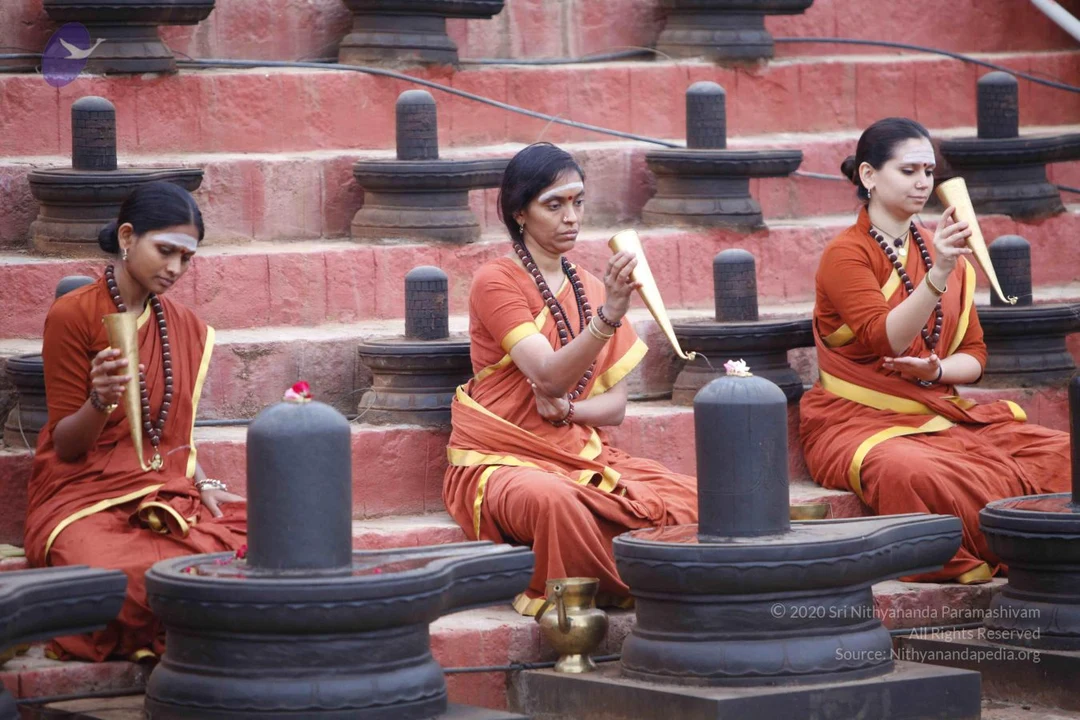
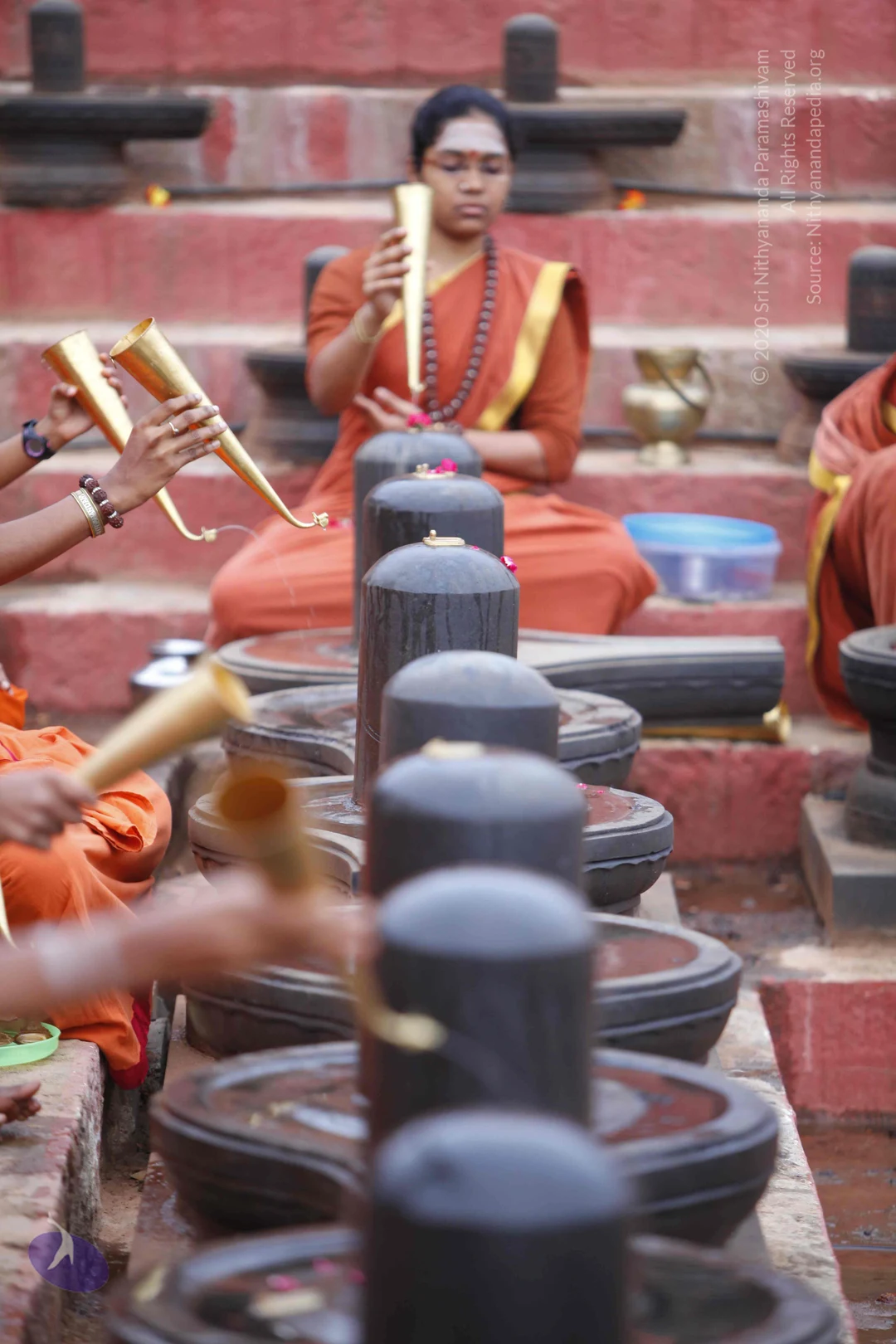
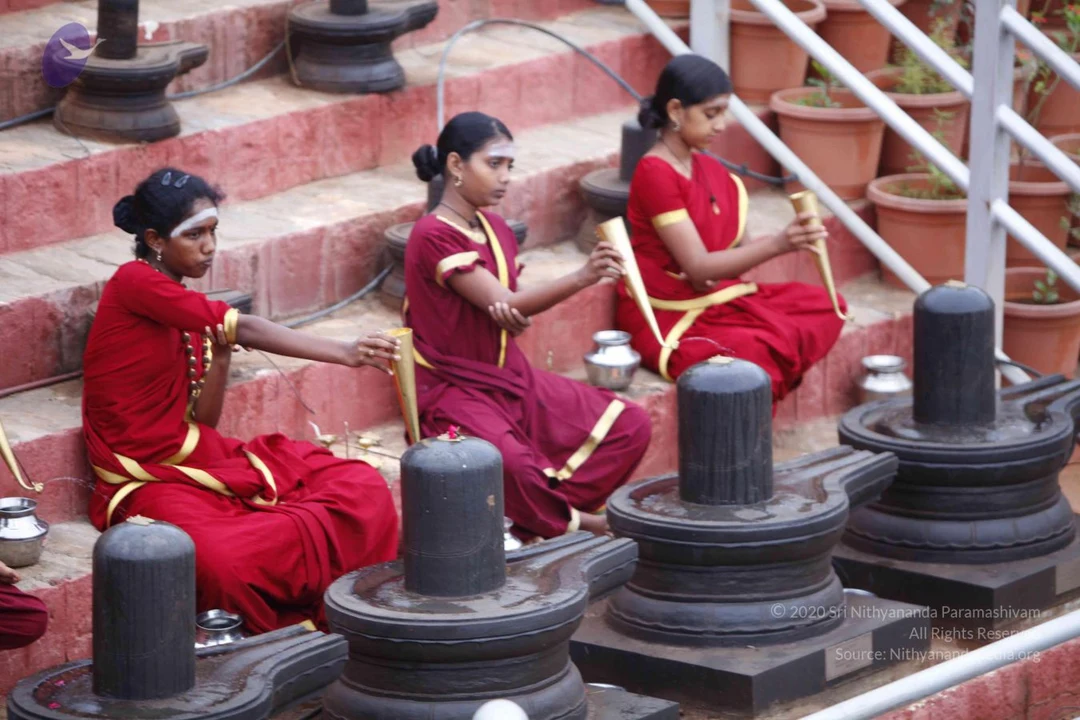
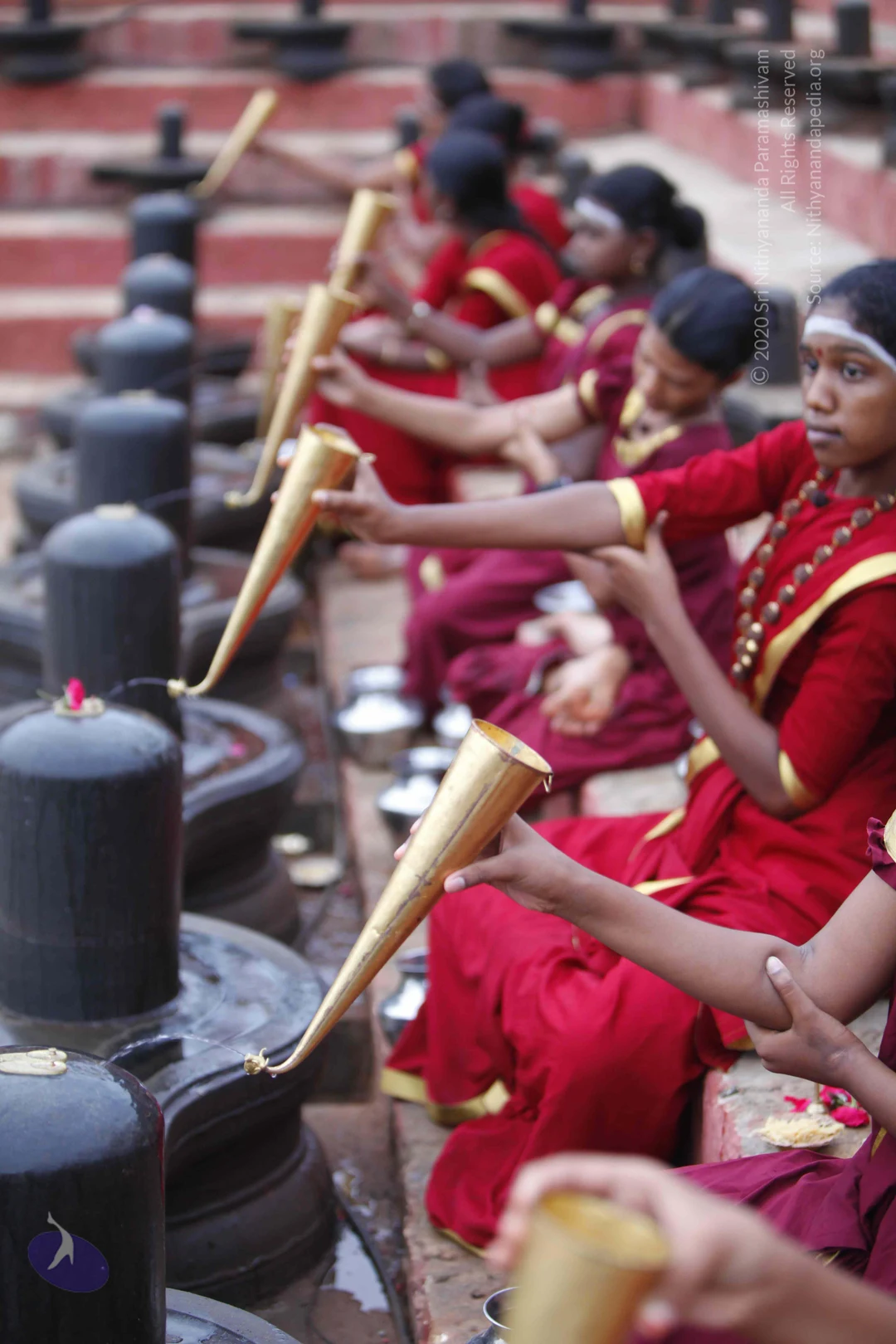
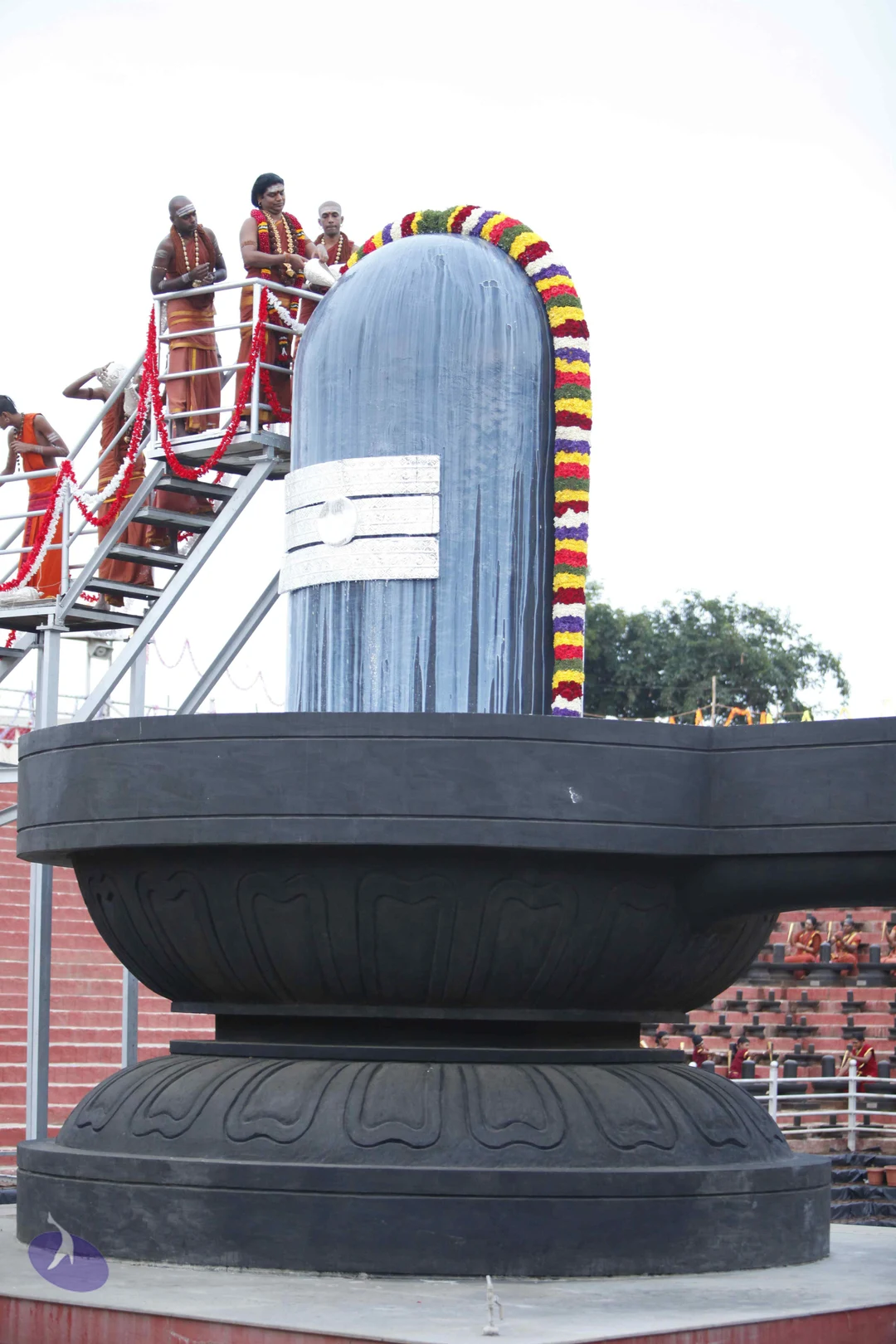
Rudrabhisekam
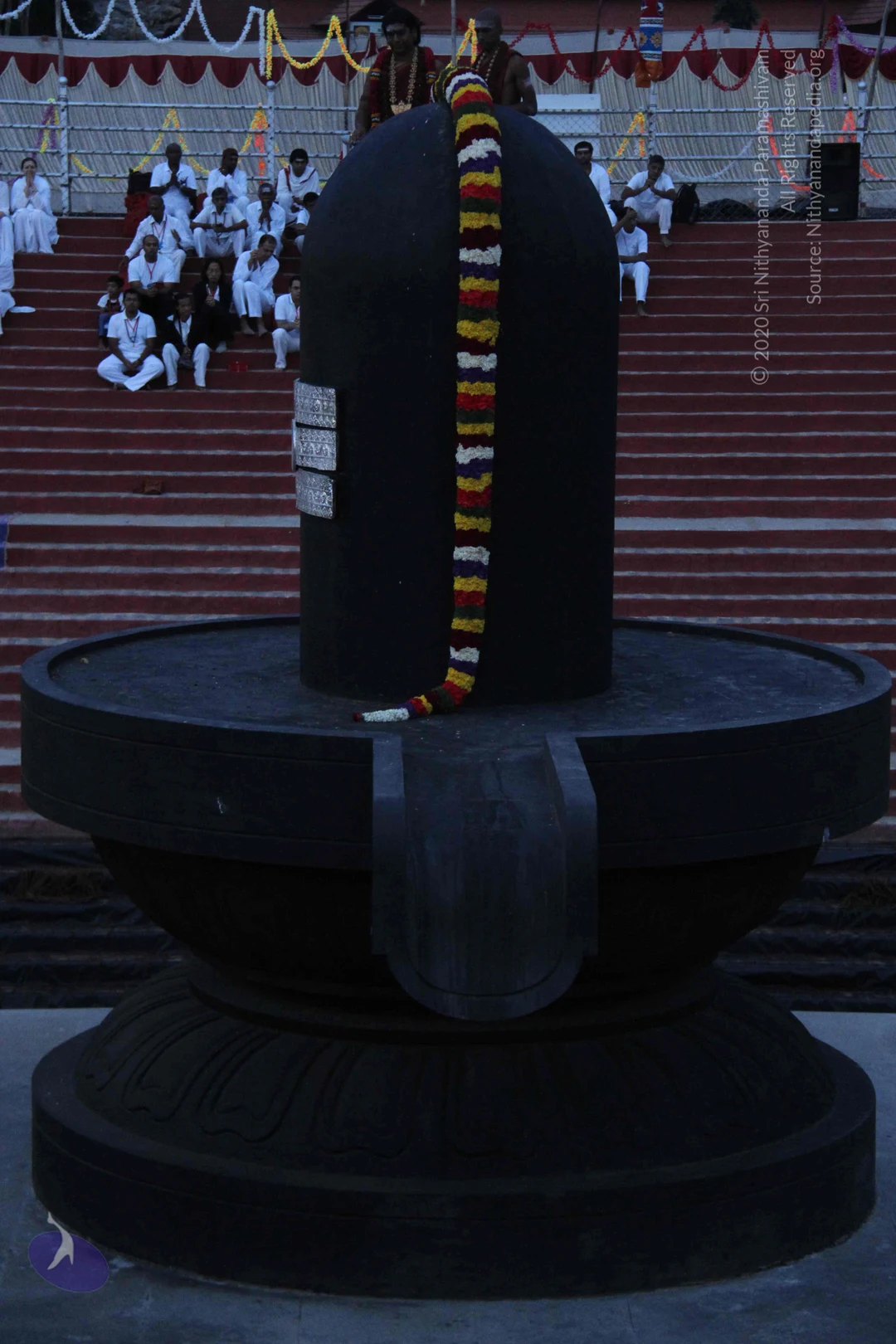
prakyaksha-pada-puja

nithya-satsang

sarva-darshan

final-blessing

Inner Awakening-banyan tree session

Inner Awakening-celebration session

Inner Awakening-darshan

Inner Awakening - food

Inner Awakeing-session

Inner Awakening-Kalabhairava blessings

Photos Of The Day:

Temple-Early-Morning-Sky

Rudrabhishekam

Pratyaksha-Pada-Puja-Garbha-Mandir

Satsang-Crowd-Listening

Sarva-Darshan

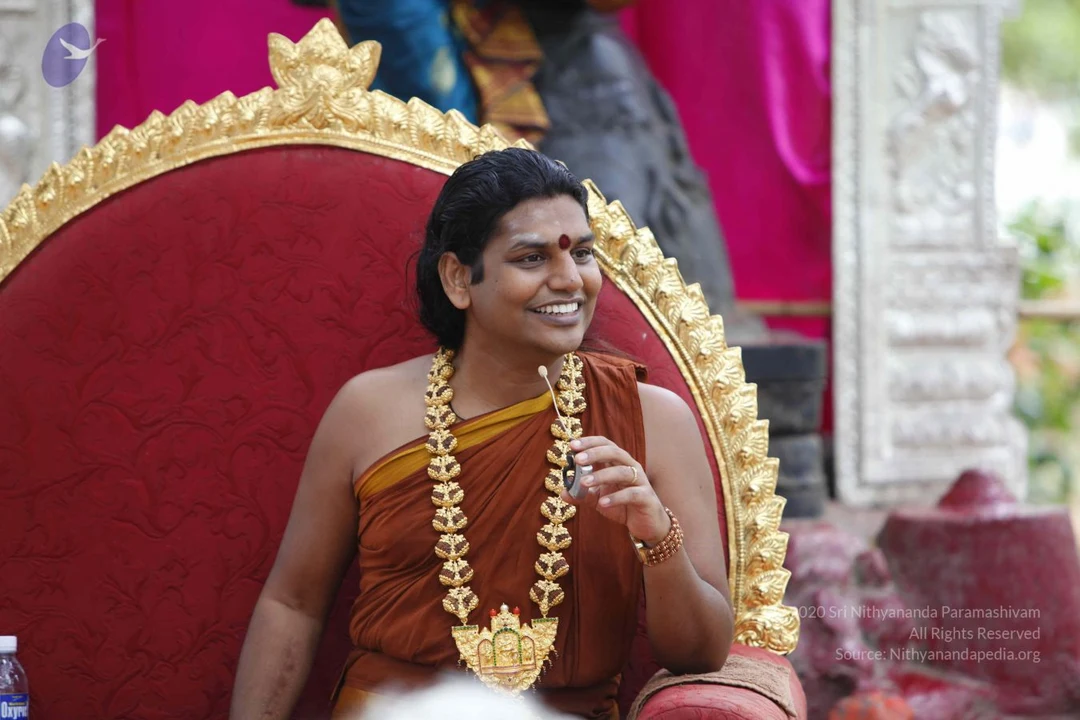
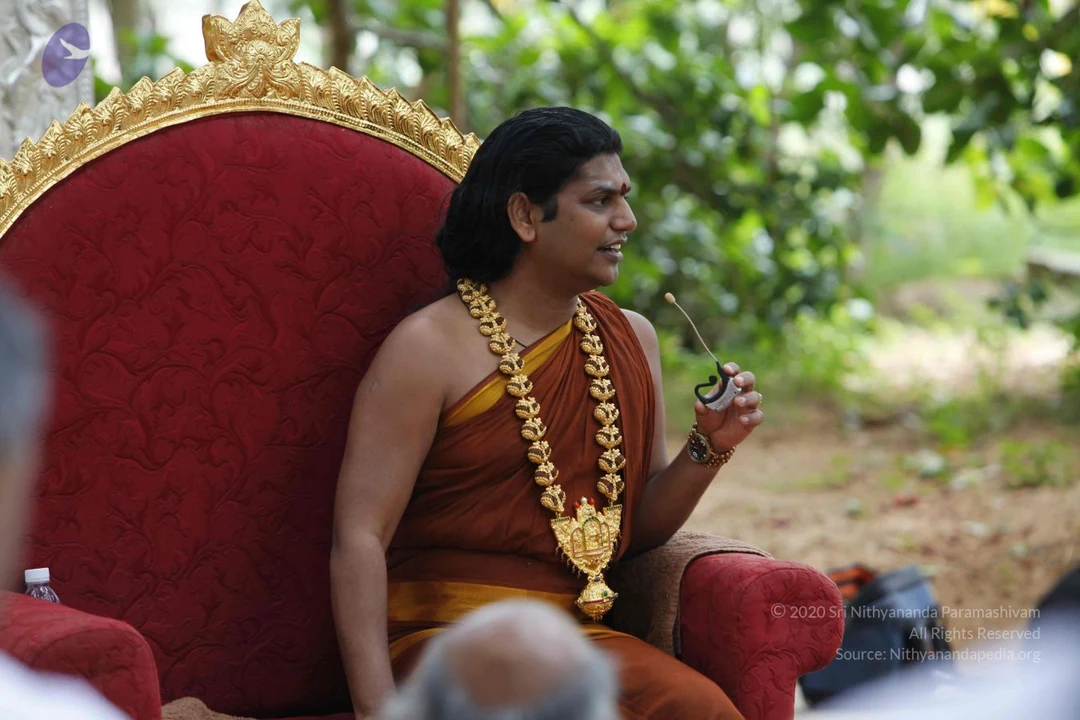
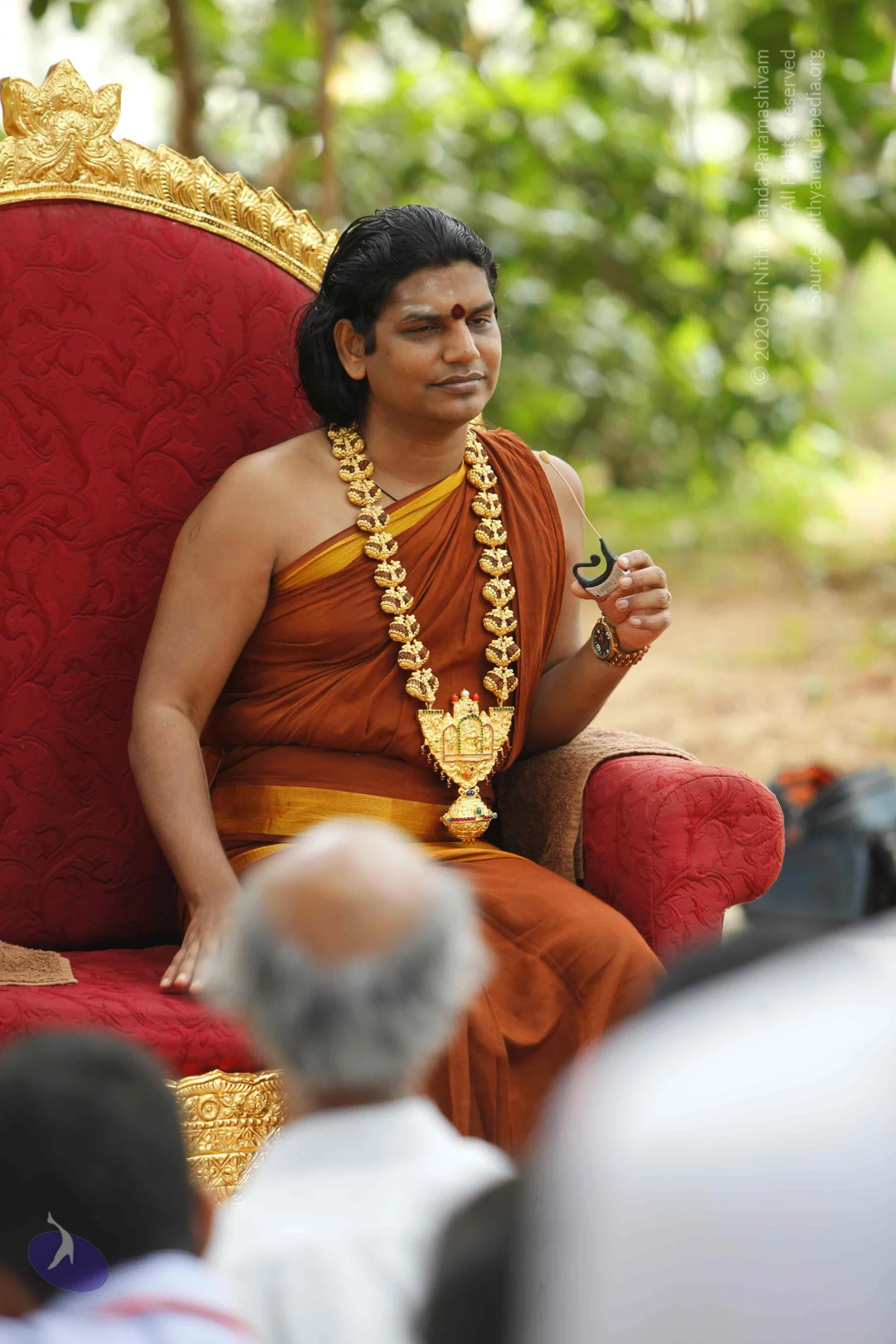
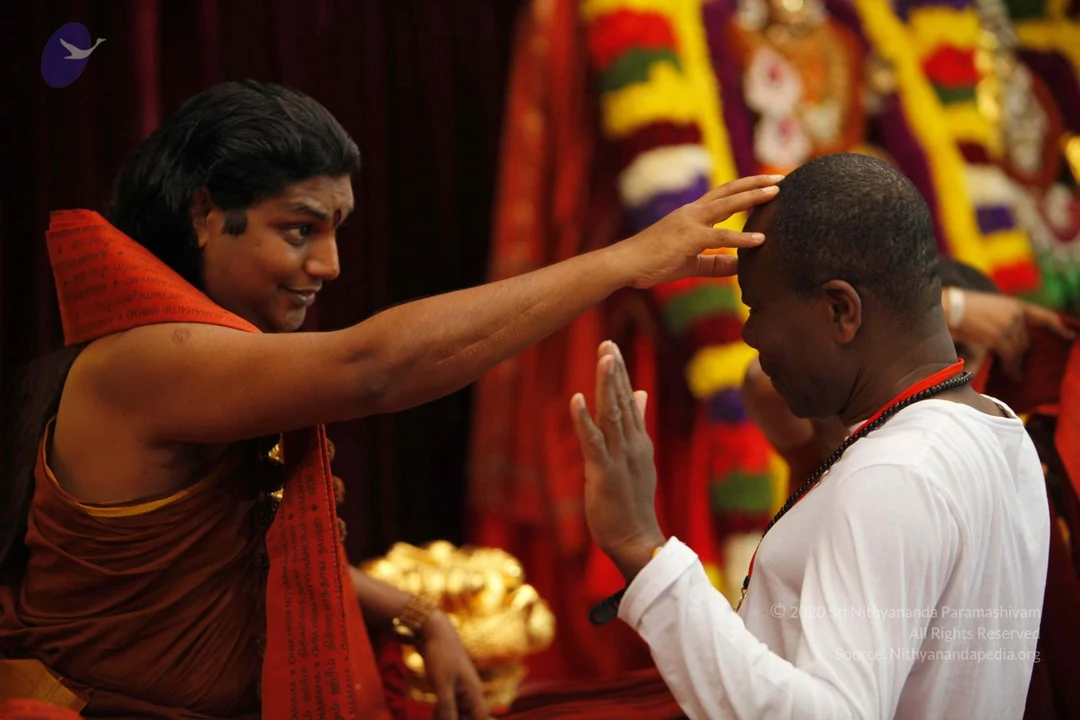
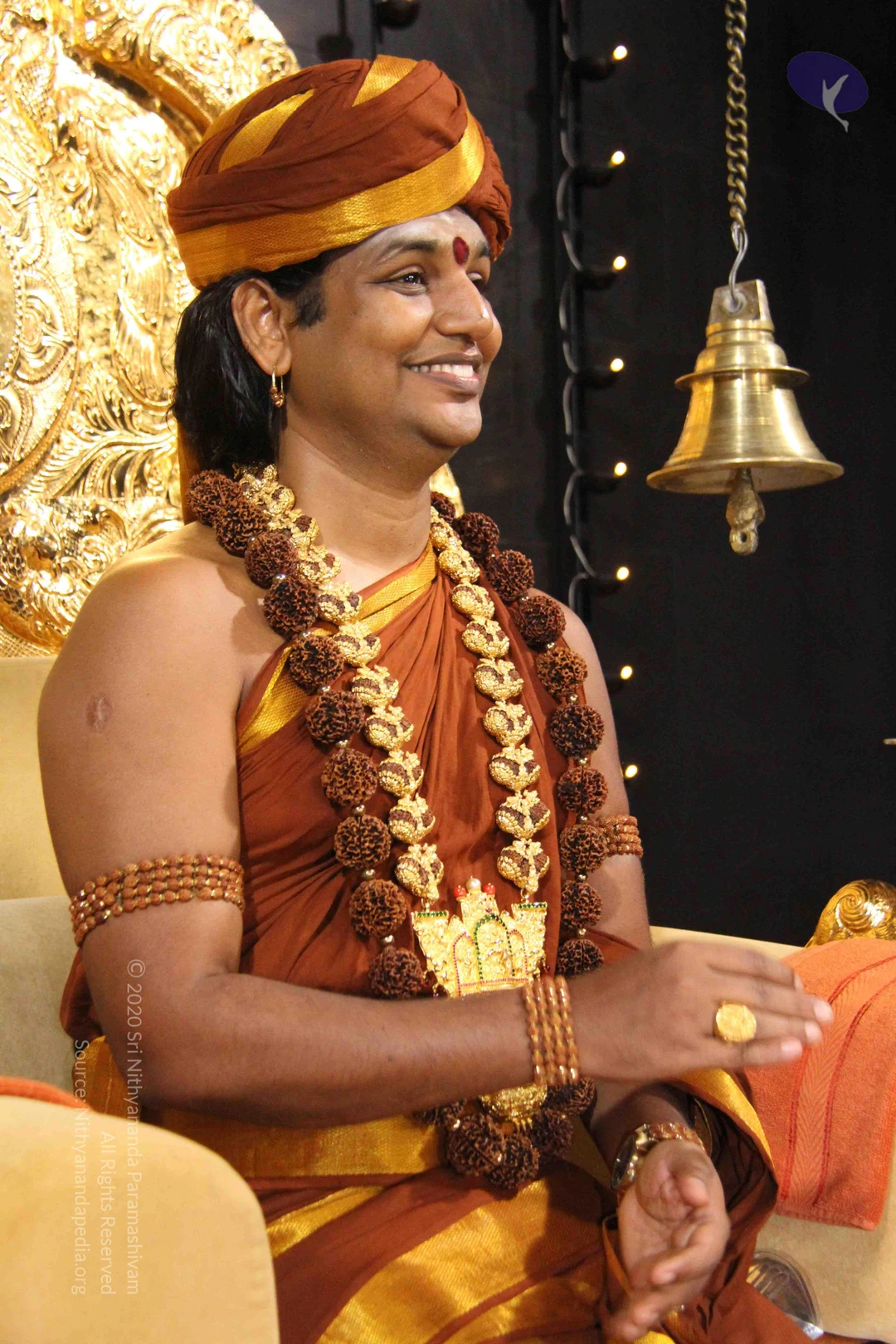
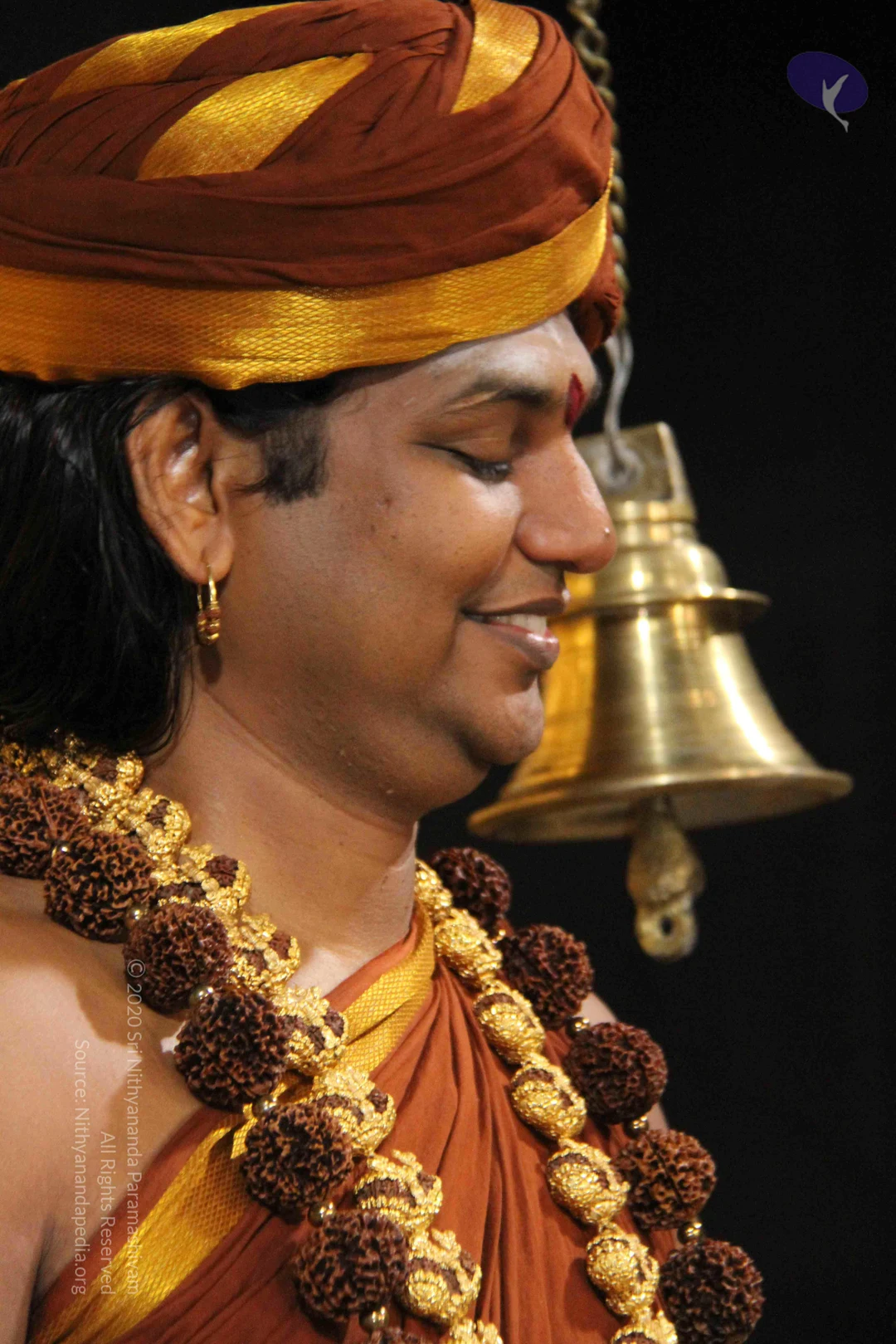
Swamiji

Banyan-Tree

Darshan

IA-Food

Kalabhairava-Blessings-Darshan

1-Temple

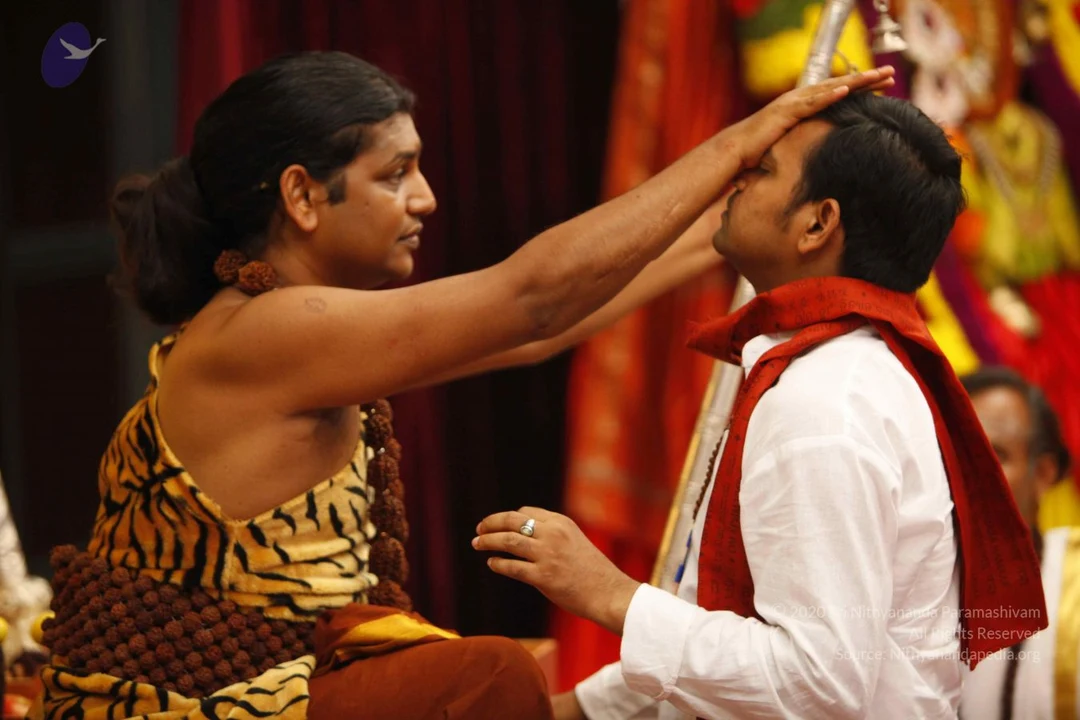
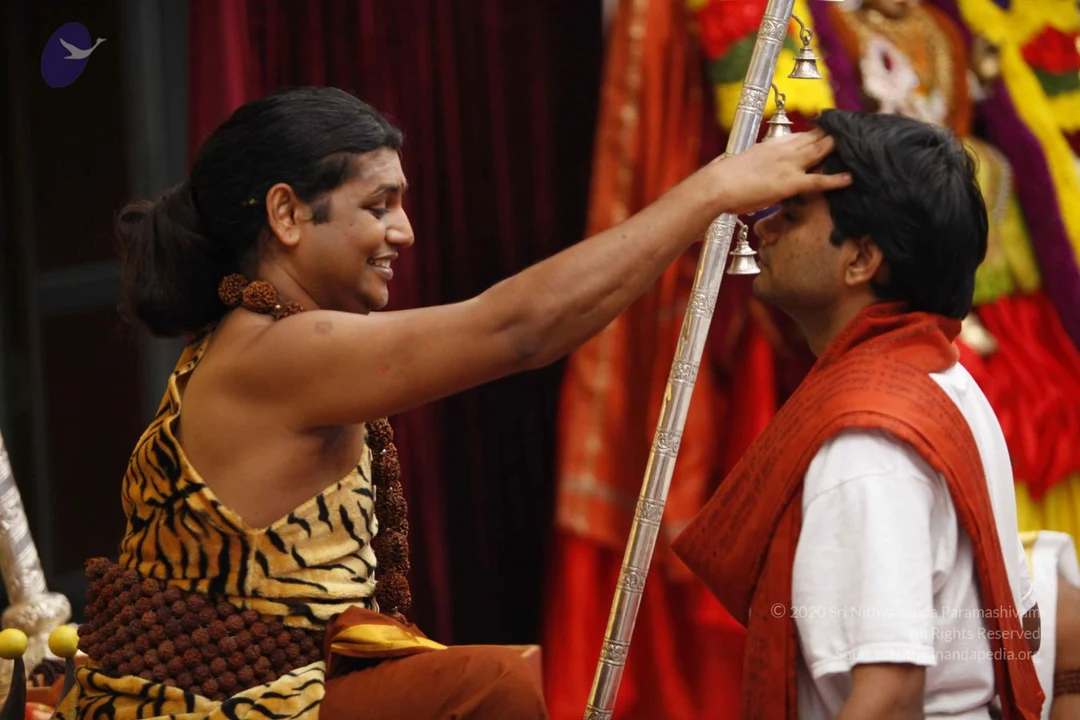
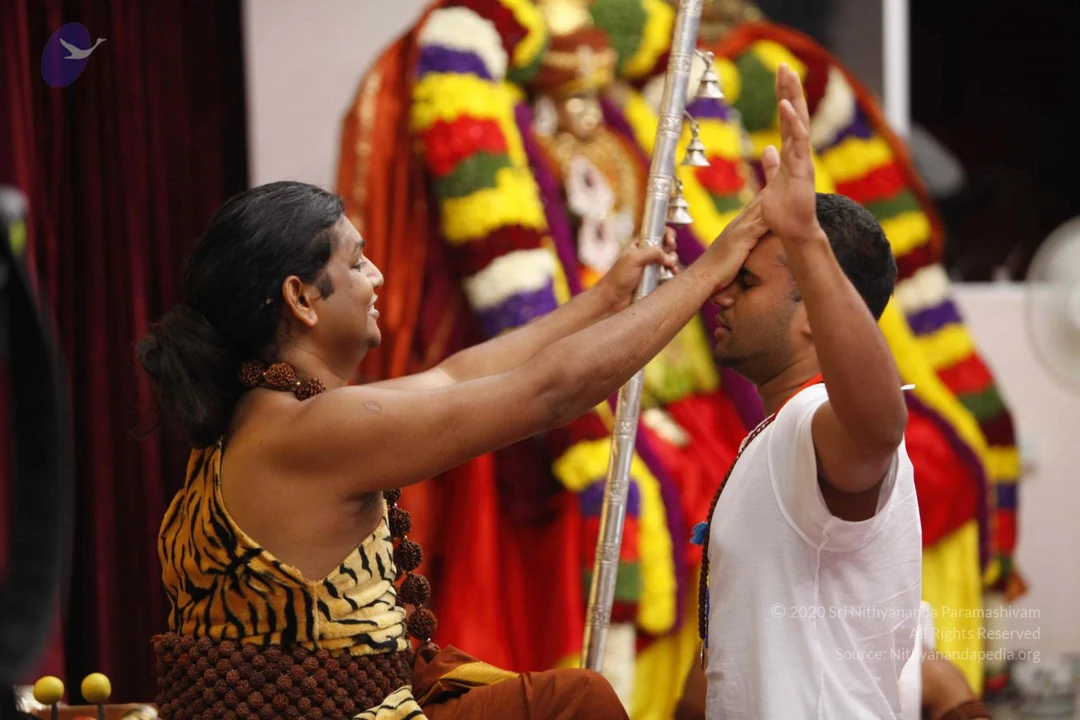
2-RudraAbhishekam-Swamiji

3-Pratyaksha-Padapuja

4-Satsang-crowd-listening

5-Sarva-Darshan

6-Final-Blessing

7-Kalabhairava-Blessing-and-Darshan

Rudra Abishekam

Photos from this day

View all 727 photos

temple-early-morning

12 photosSource gallery
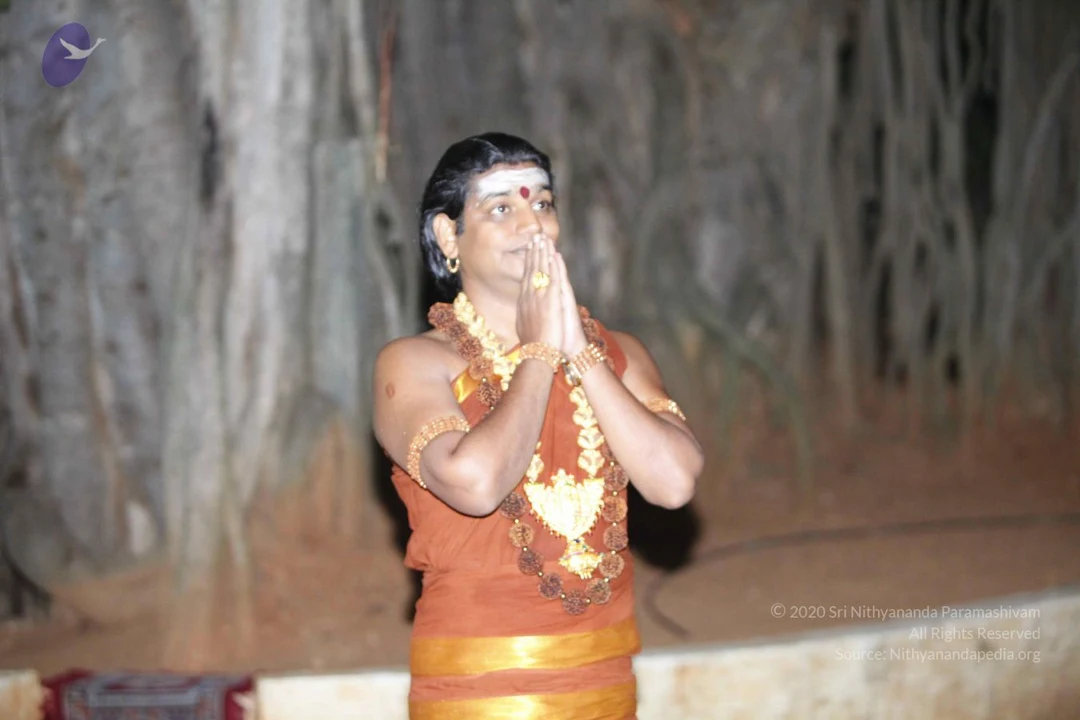
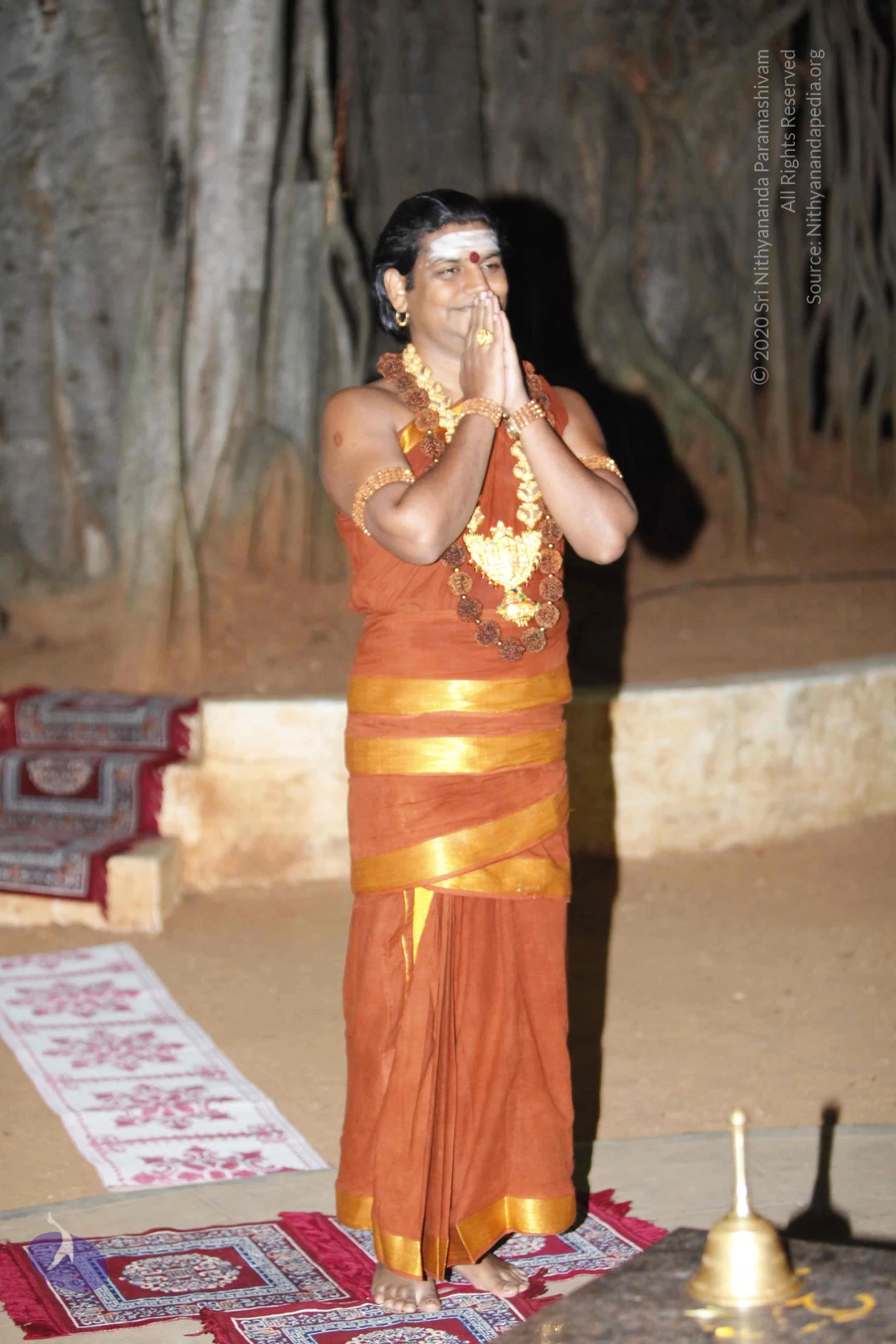
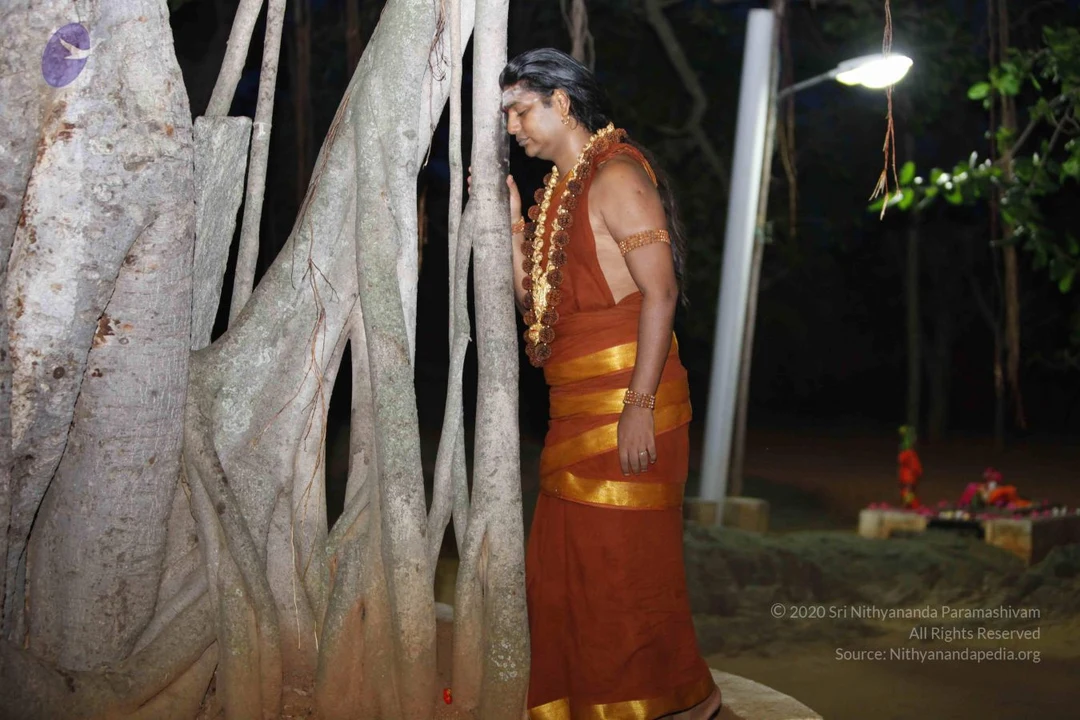
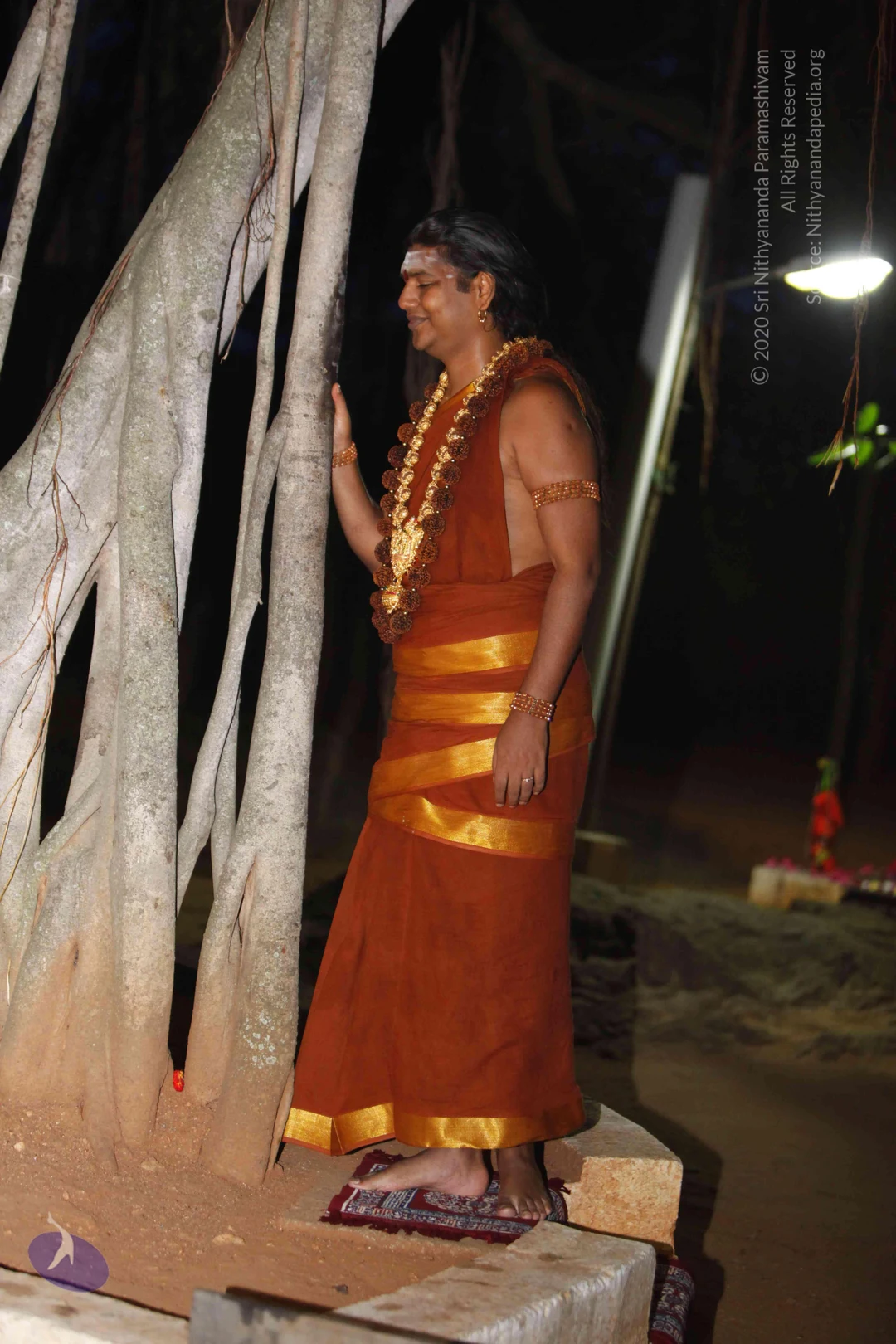
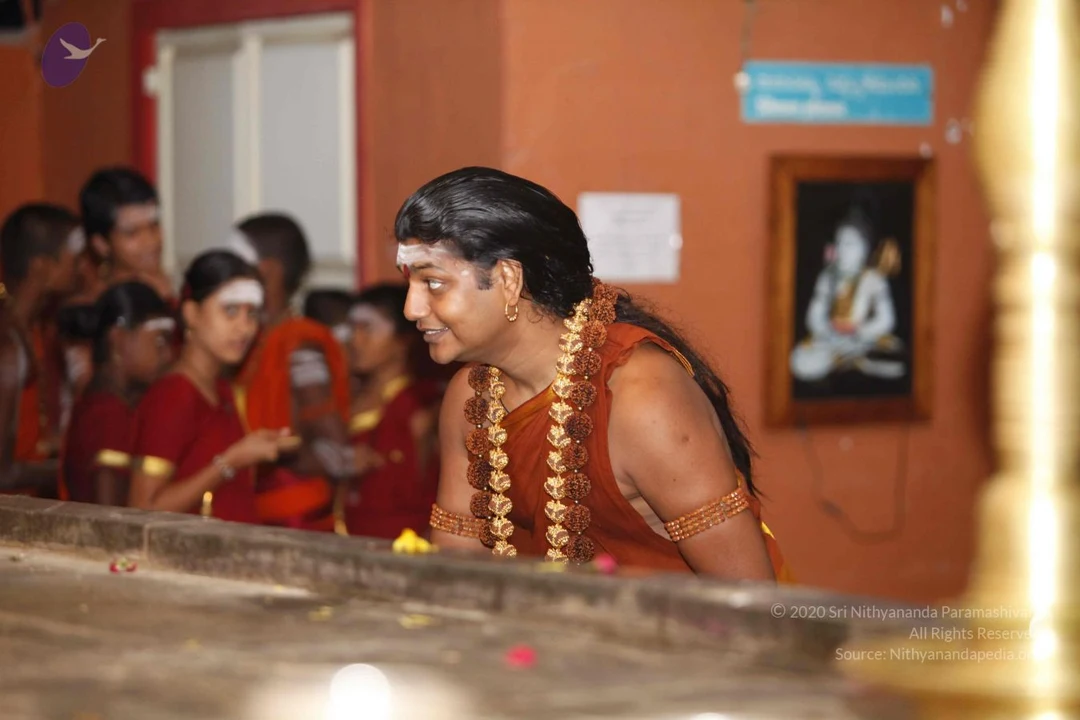
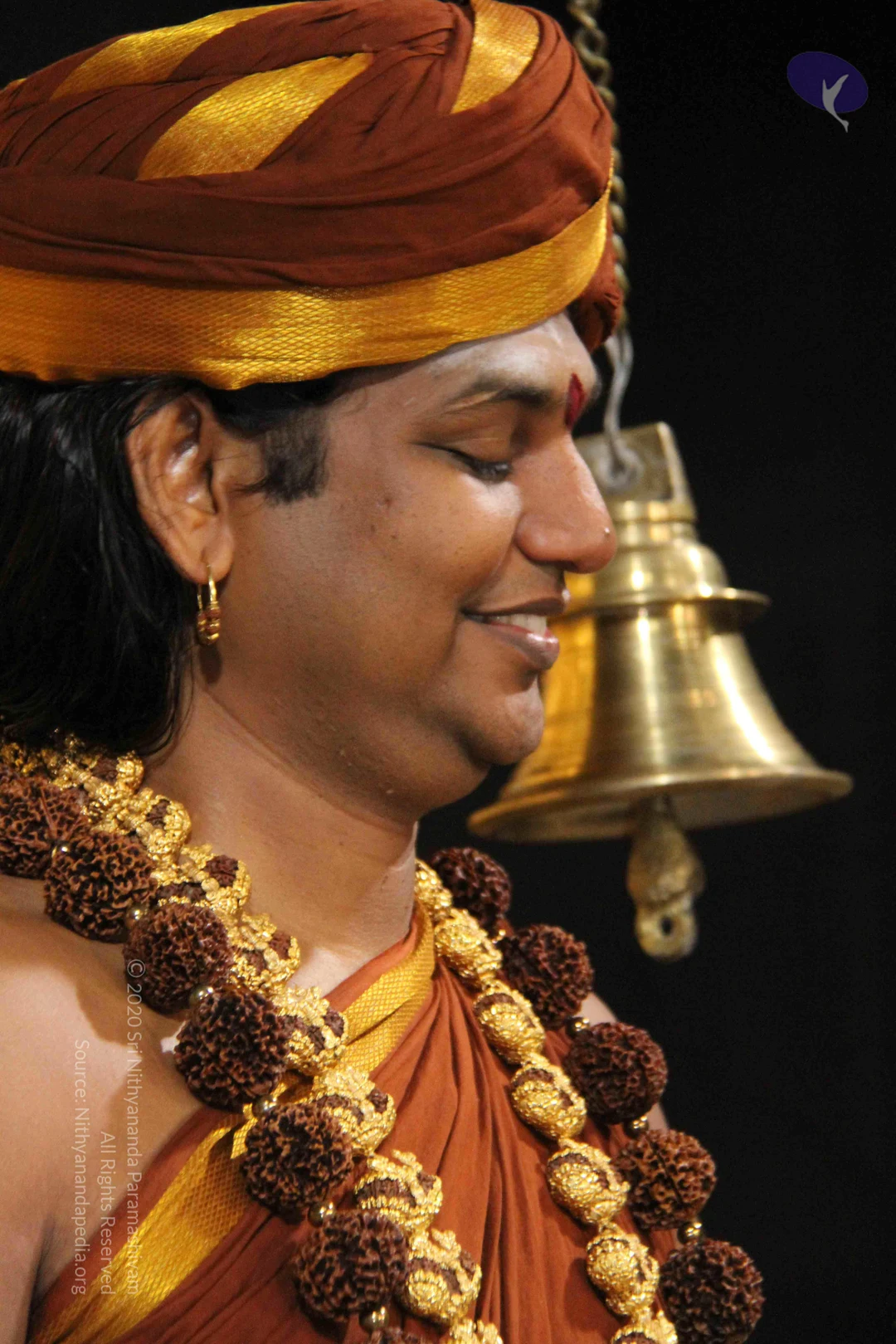
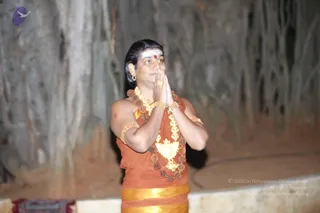
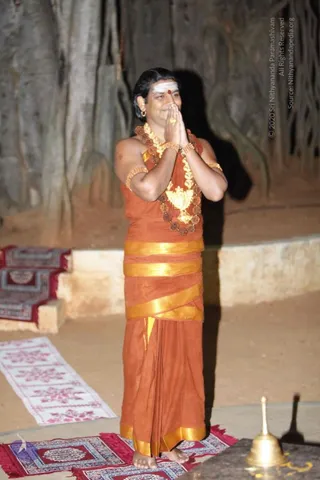
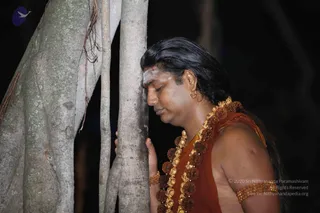
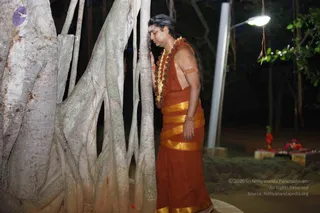
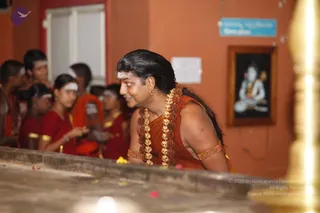
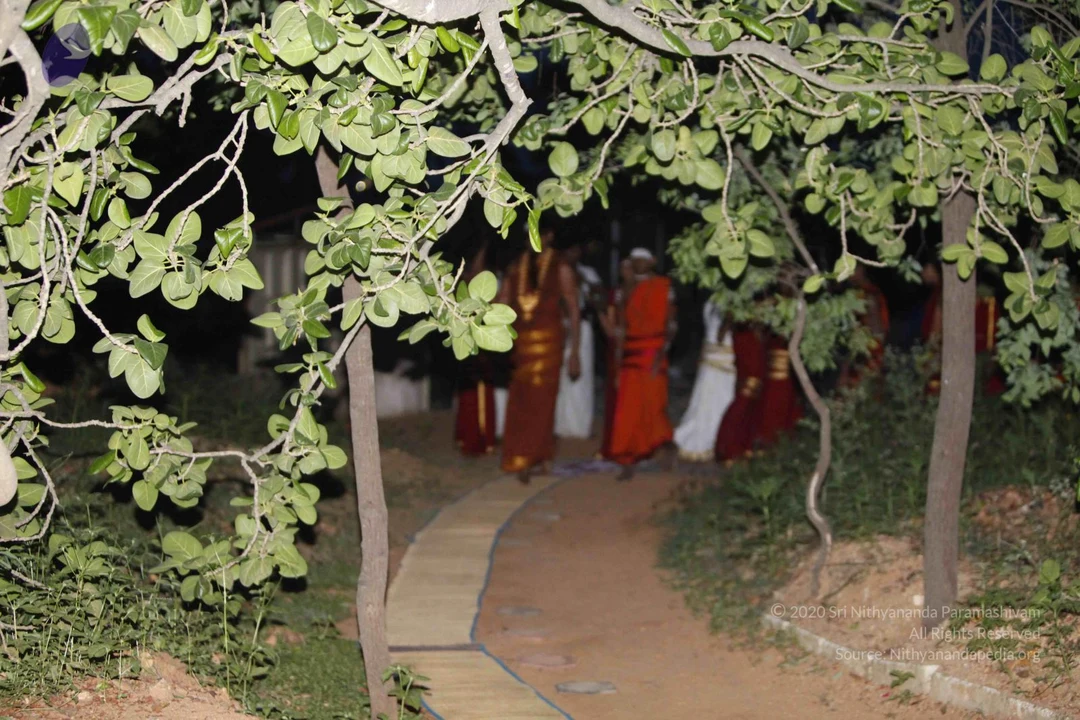
A night-time photograph of a leafy garden path curving through a green tunnel of branches. Several people in saffron and orange robes walk along the sandy path toward the centre, with a few figures in white clothing among them. One orange-robed figure in the middle wears a light head covering and a red sash, while another wears a long gold-toned necklace.A man stands outdoors before a large banyan tree with many hanging aerial roots, pressing his palms together in anjali namaskar and gazing upward. He wears a saffron-orange dhoti-style cloth with a gold-coloured border, a gold-and-rudraksha necklace with a large gold pendant, a gold armband and bangles, and a small red bindi with a white tilak on his forehead. A raised stone platform edges the lower frame.A man stands barefoot on a red and white patterned rug in front of a large banyan tree with aerial roots, pressing his palms together in namaskar. He wears an ochre-orange robe with broad gold borders, a heavy gold necklace with a large gold pendant and rudraksha beads, gold armlets and bangles, and a white vertical tilak with a red dot on his forehead. A brass handbell sits on a dark stone ledge at the lower right, and a low stone platform with a patterned runner is behind him.A photograph of a man with long, swept-back black hair standing at night with his eyes closed and forehead resting against a large grey tree trunk. He wears an orange-saffron cloth draped over his bare shoulder, a long necklace of brown rudraksha beads with gold accents, a gold bracelet on the upper arm, a small gold earring, and a white vibhuti mark with a red kumkum dot on his forehead. The dark background and aerial roots of the tree suggest a nighttime outdoor setting. Appearance-based label: Swamiji (probable), based on long hair, saffron cloth, rudraksha mala and gold ornaments, in a meditative devotional posture.A man in a saffron-orange dhoti and matching shawl with gold border stands at night beside a large banyan tree, his forehead pressed against the trunk and eyes closed in devotion. He wears a long gold-bead necklace, a gold armlet and bangles, and has long dark hair swept back. A street lamp and a few flower arrangements sit in the background. Swamiji (probable): the saffron clothing, long hair, ornate gold necklace and armlet are the qualifying cues for the figure, who is shown in prayerful pose at the banyan tree.A photograph of a man with long swept-back dark hair, a white tilak on his forehead, gold and rudraksha bead necklaces, gold earring and a rudraksha armlet, wearing an orange-saffron cloth draped over his bare shoulder. He leans forward over a stone ledge with scattered flower petals, smiling. Behind him, a group of young people in red and orange robes with white vibhuti marks stand in a temple-like hall. A framed black-and-white image of a seated deity is mounted on an orange wall beside a small blue sign. Swamiji (probable): the long swept-back hair, rudraksha and gold necklaces and saffron cloth match the cues for the page's Swamiji.

Rudrabhisekam
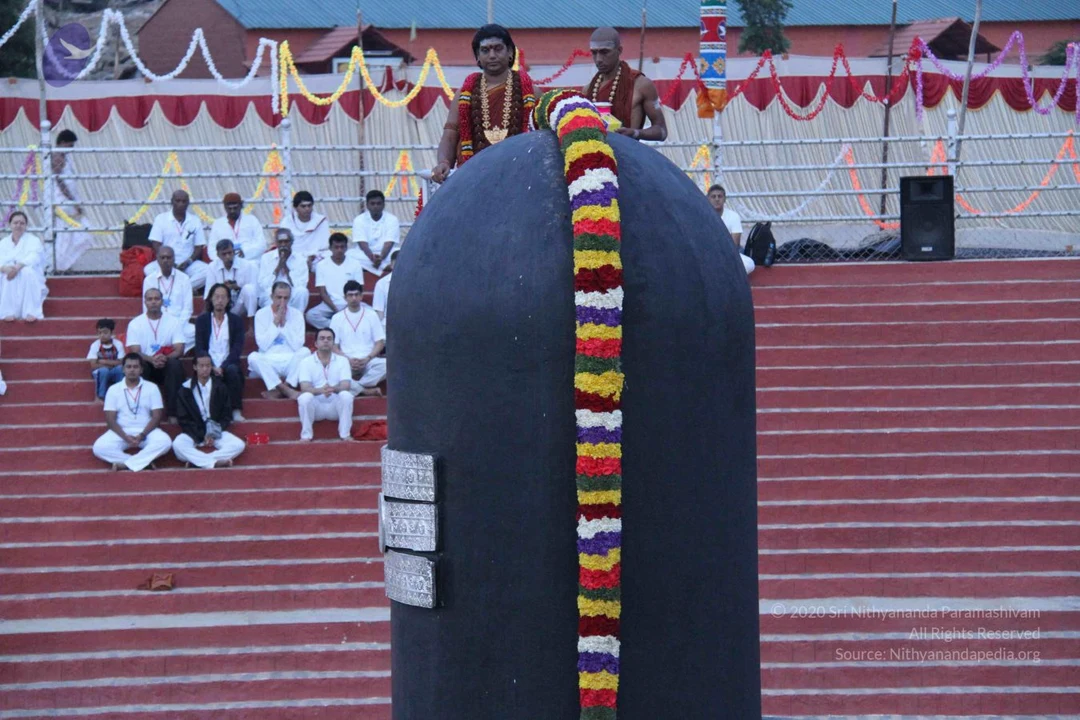
238 photosSource gallery
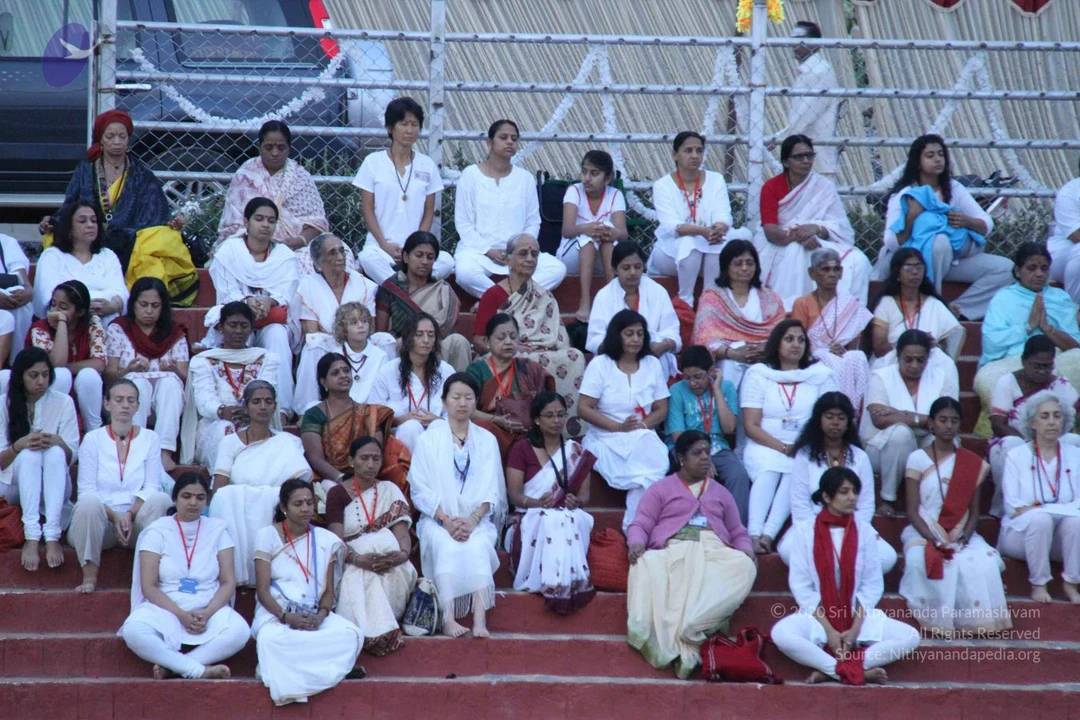
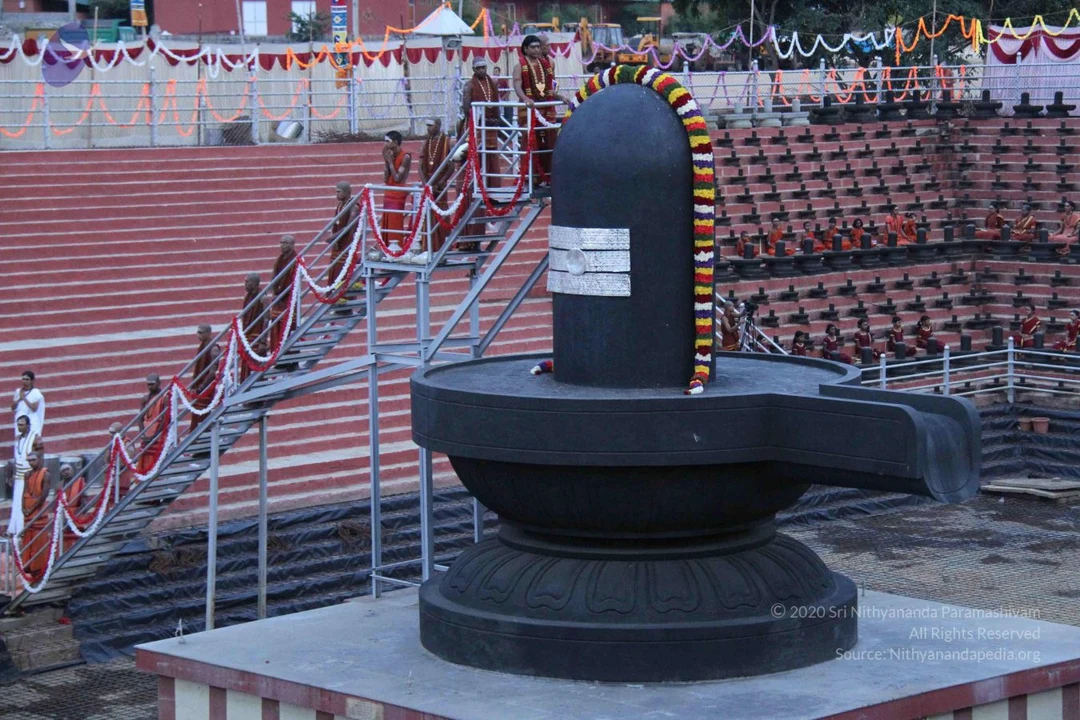
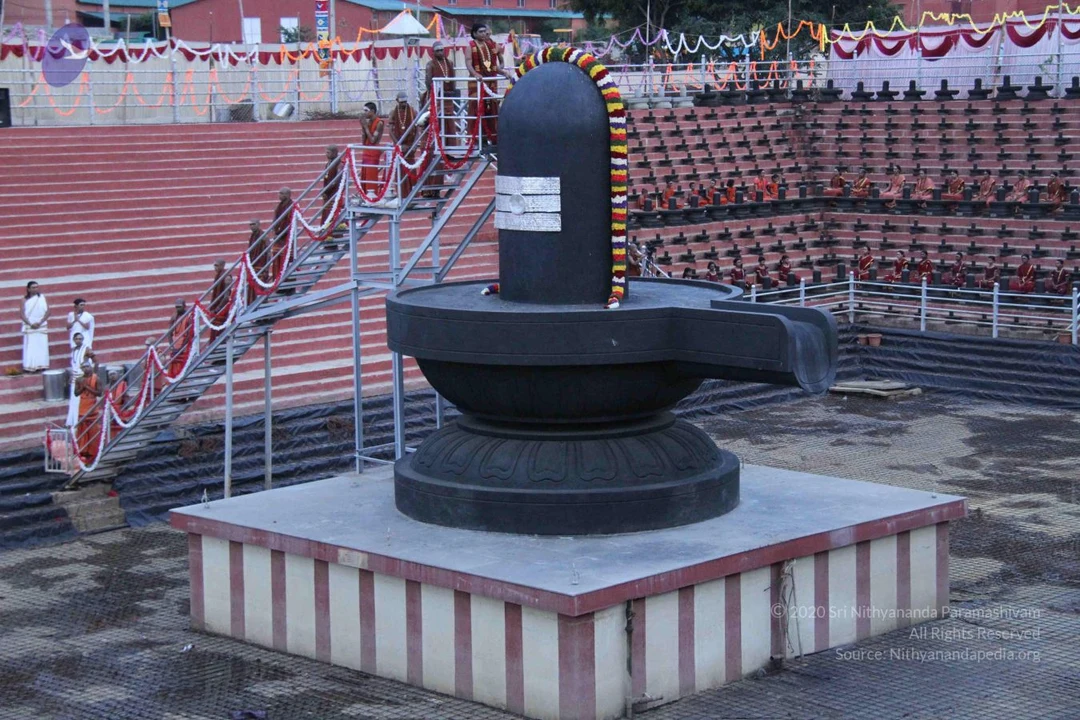
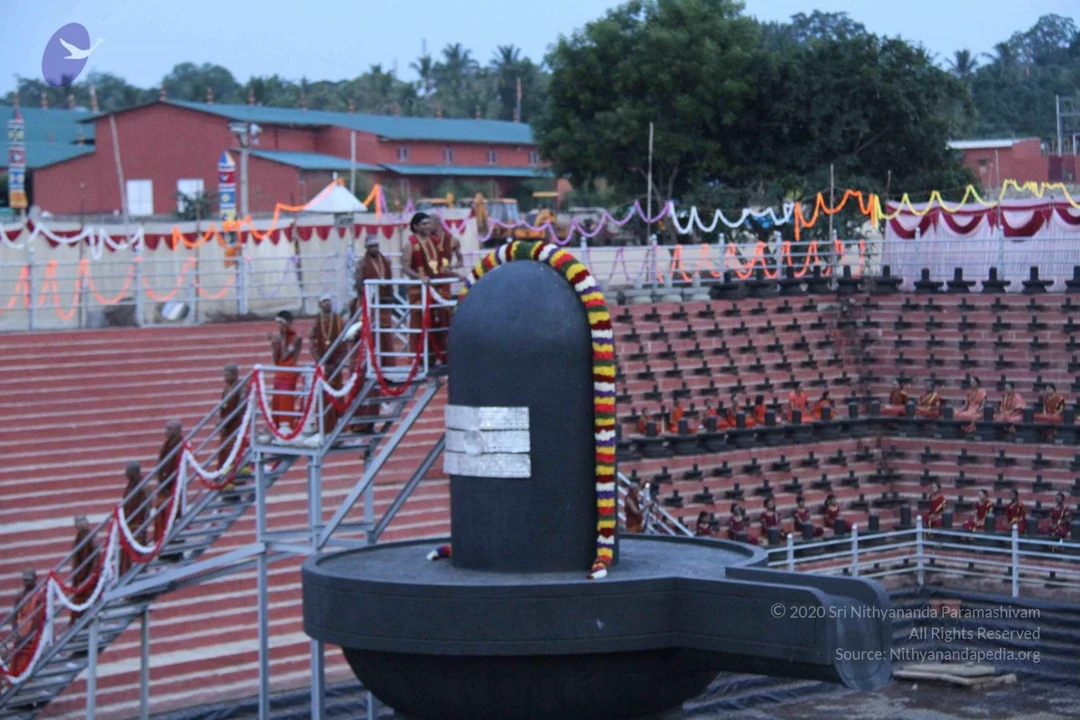
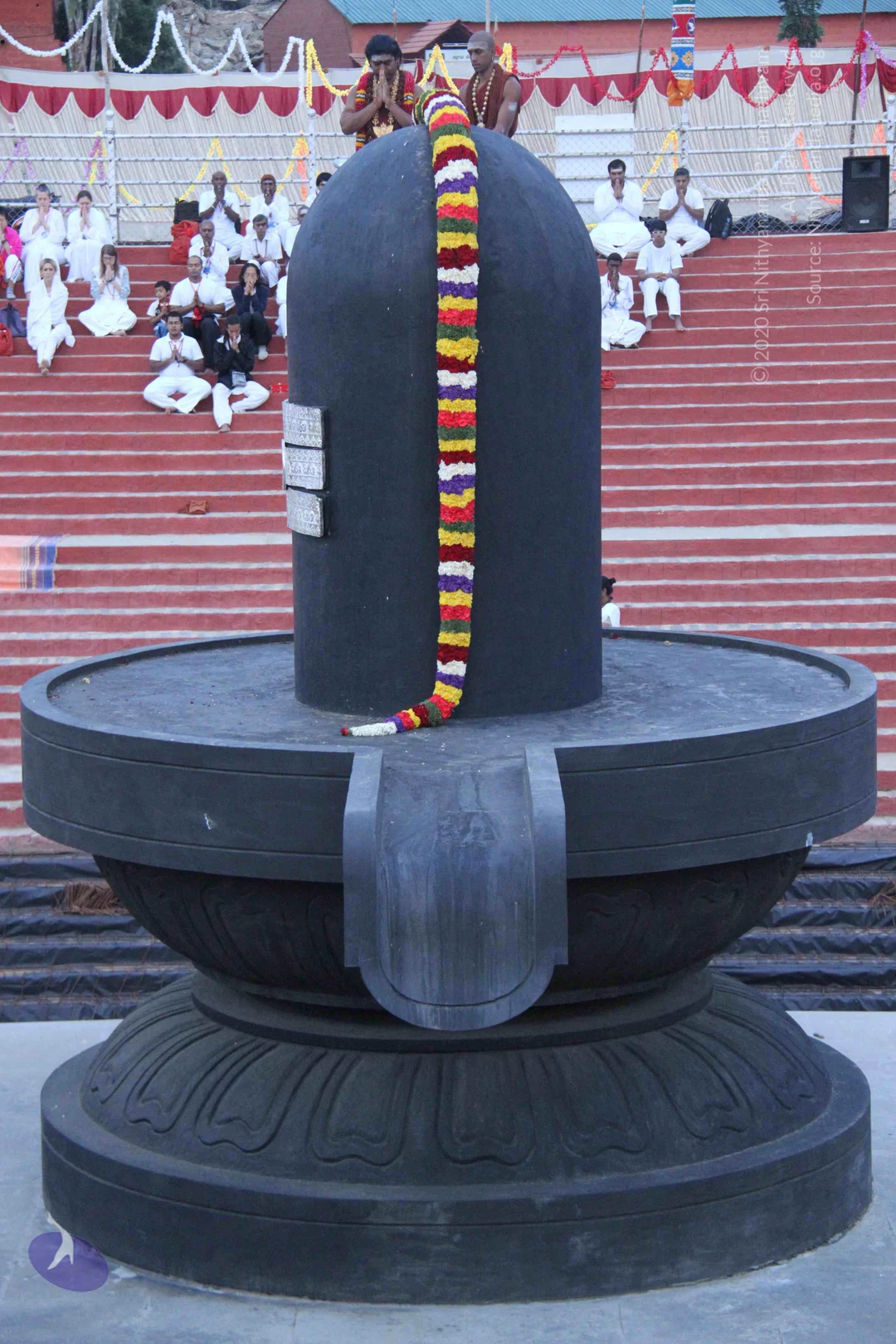
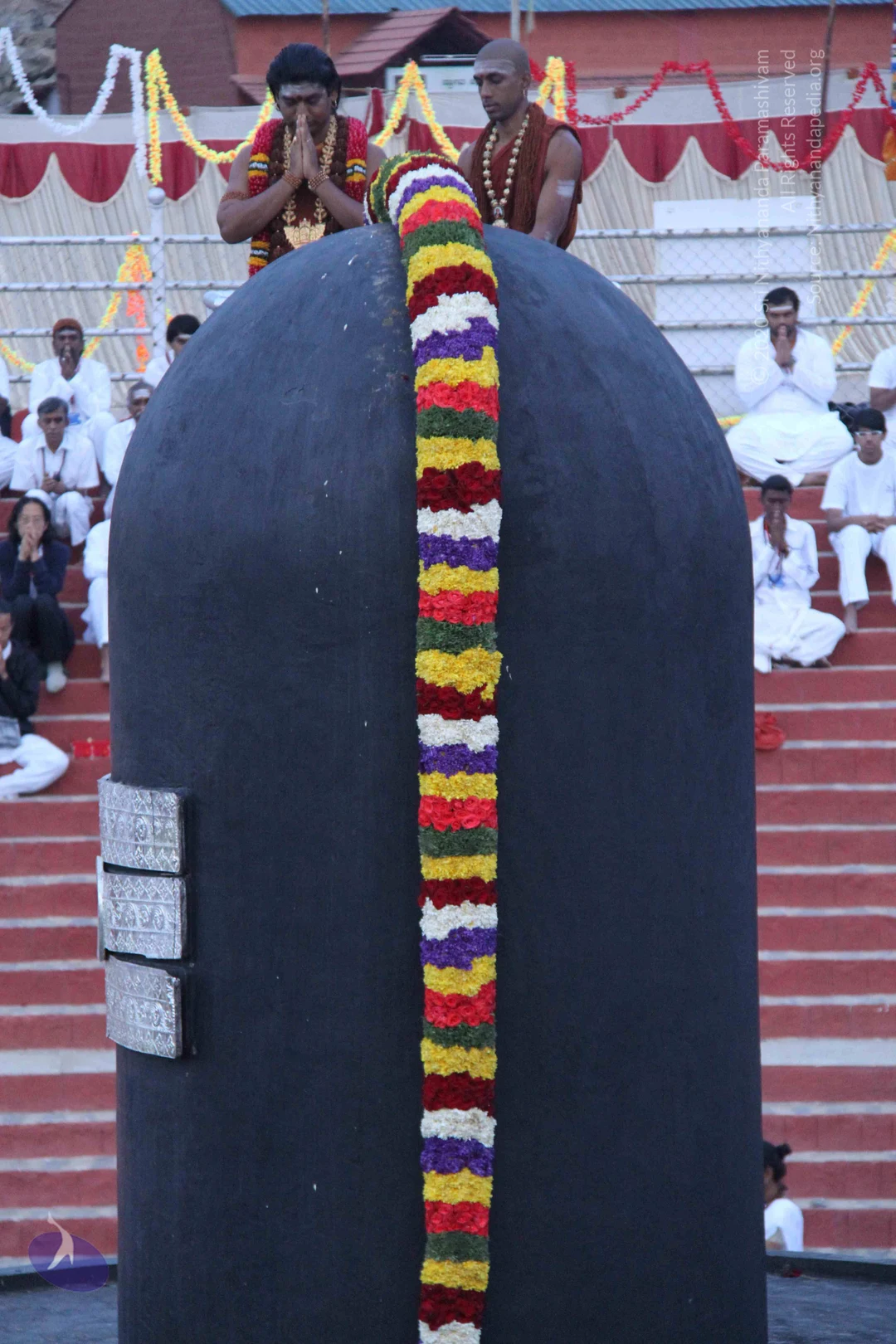
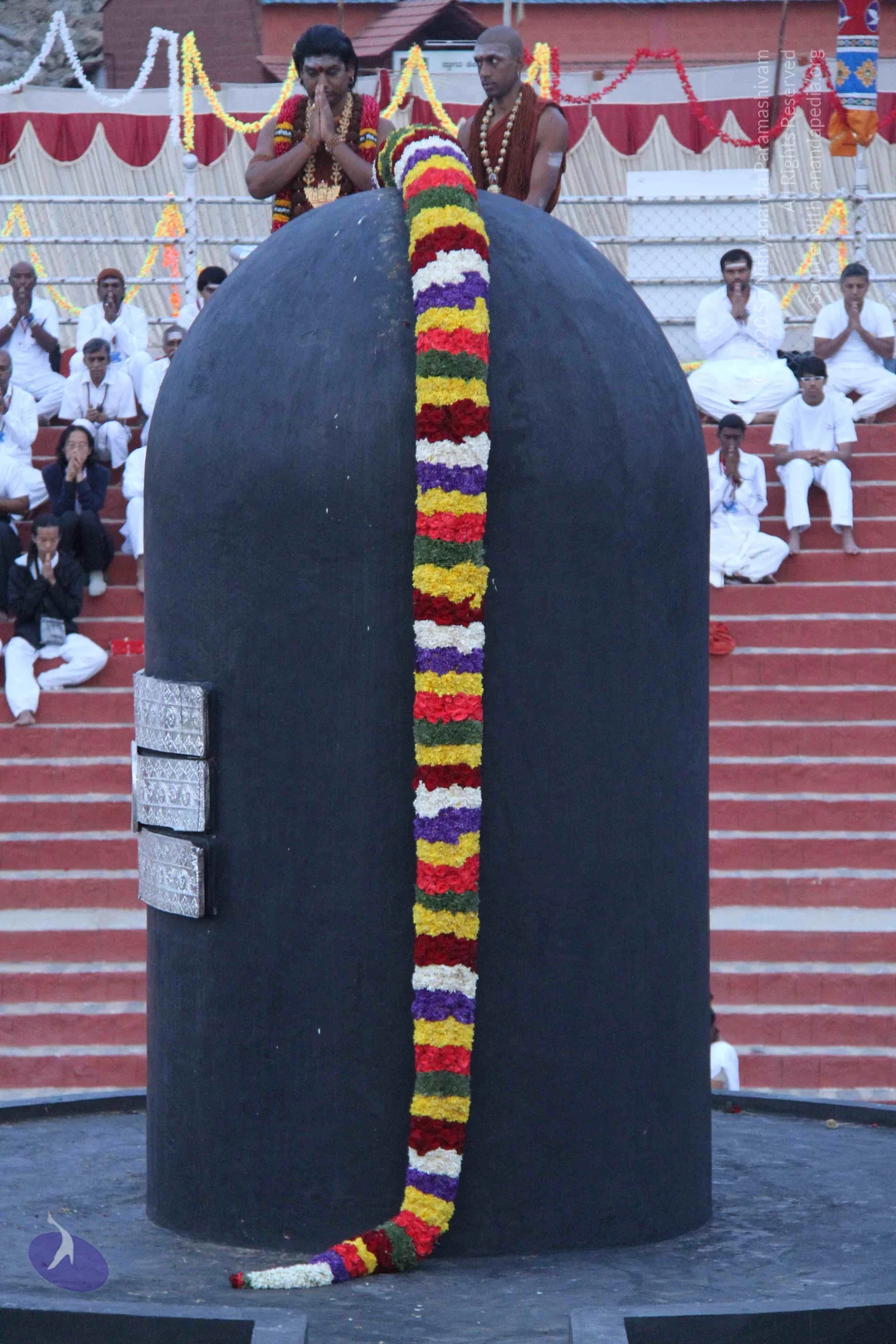
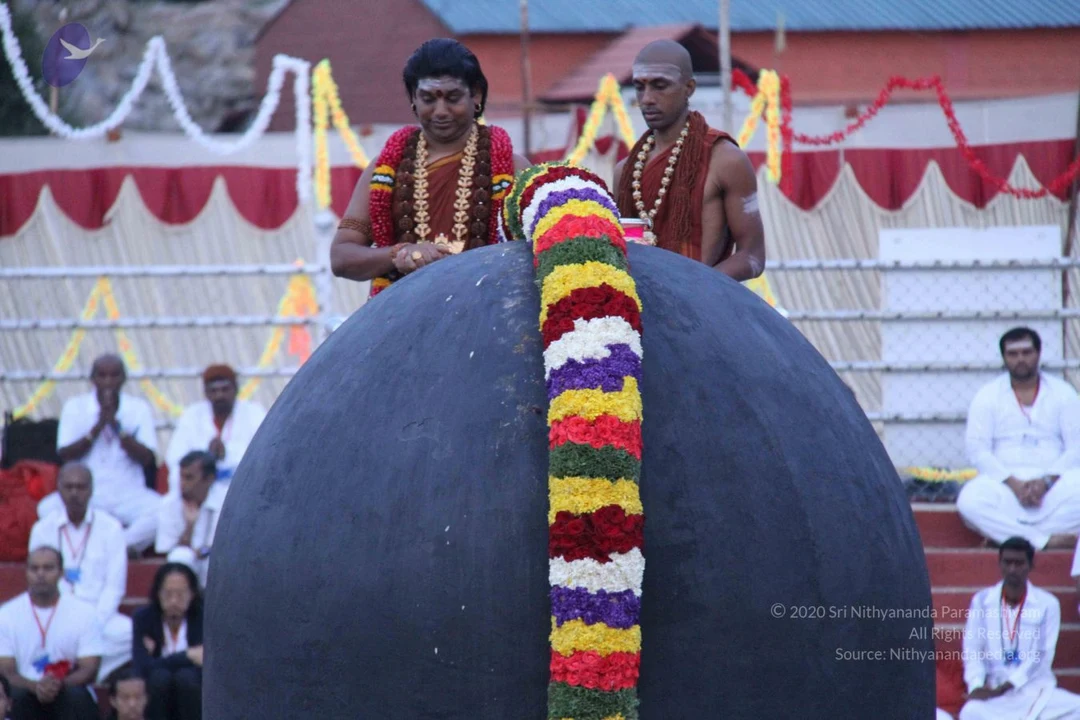
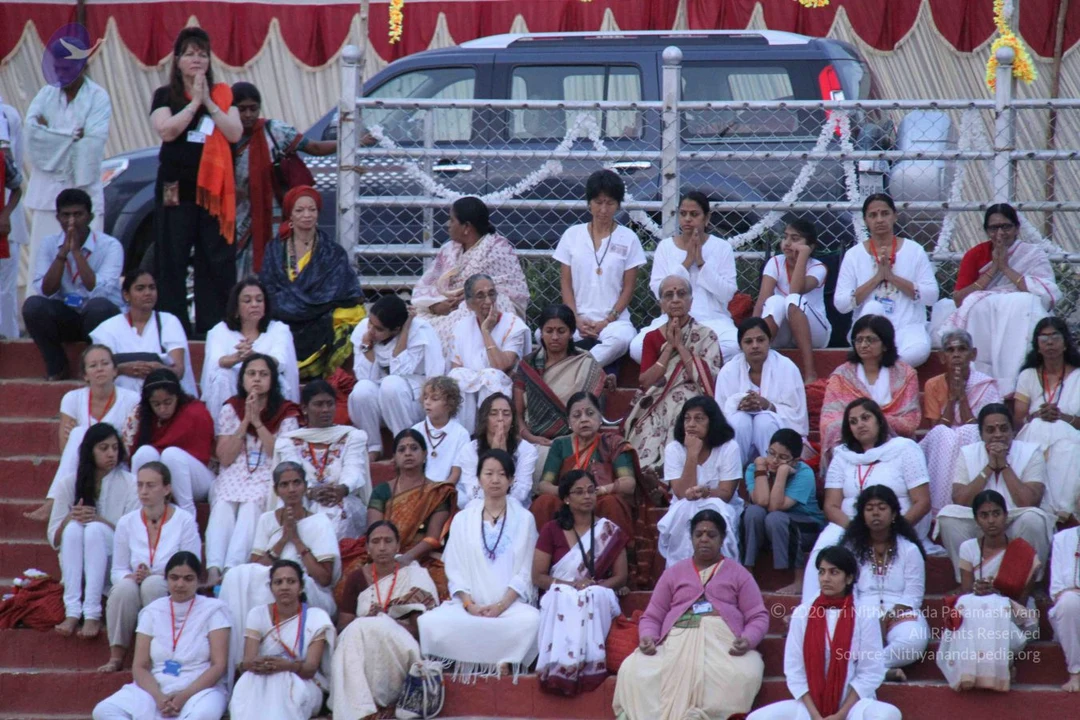
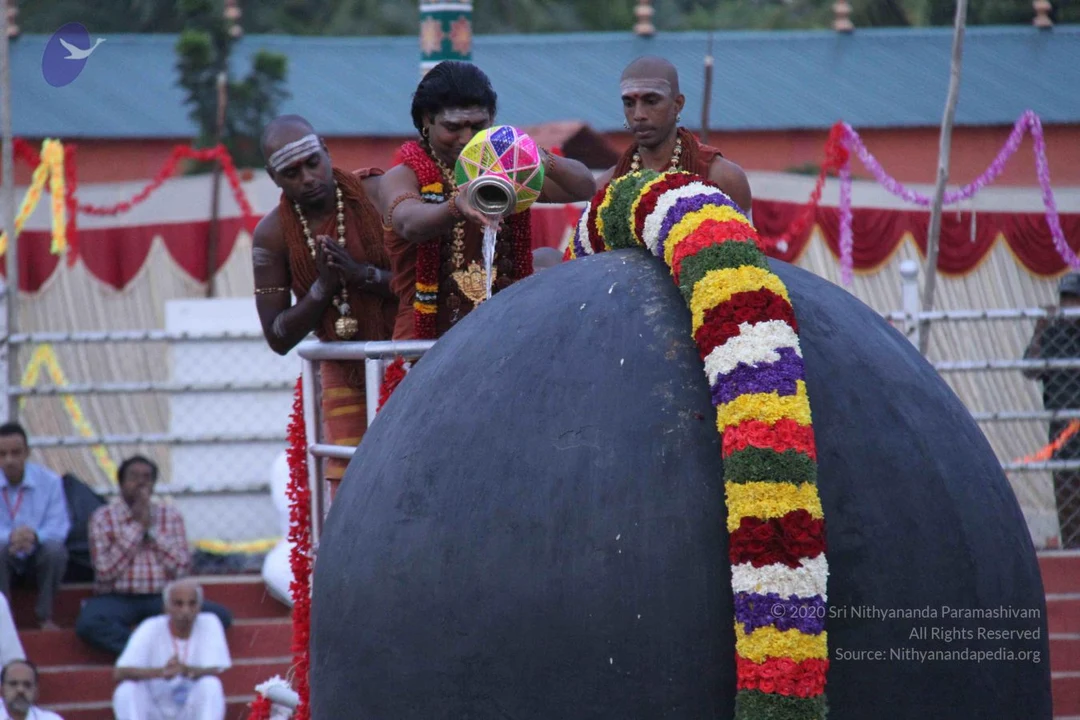
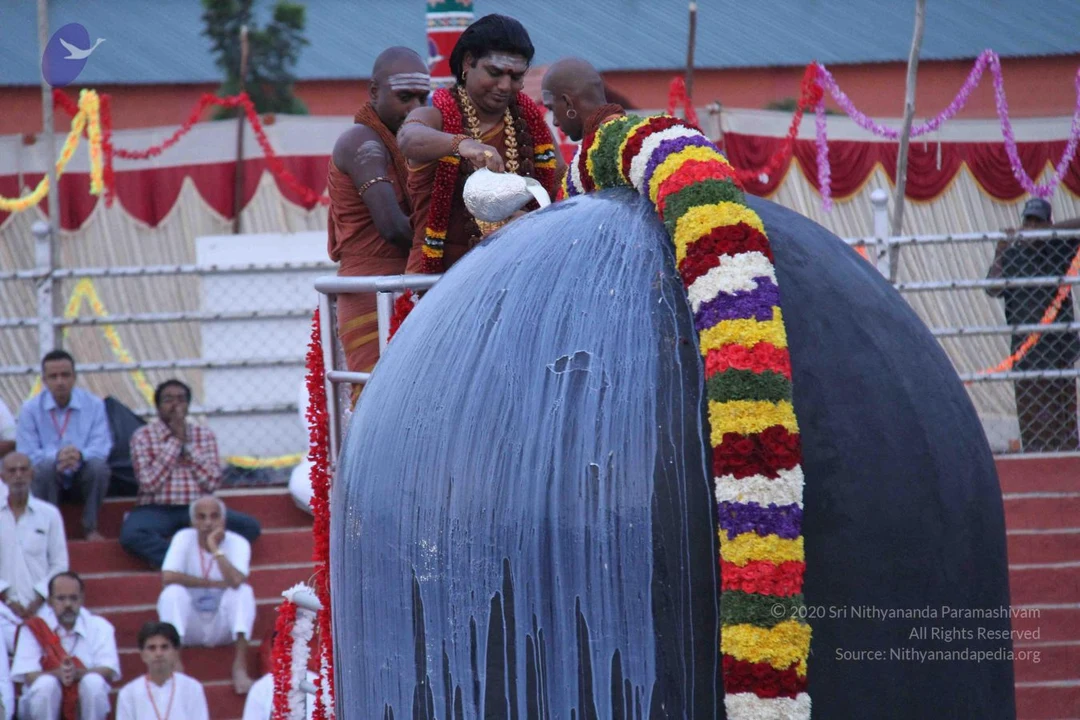
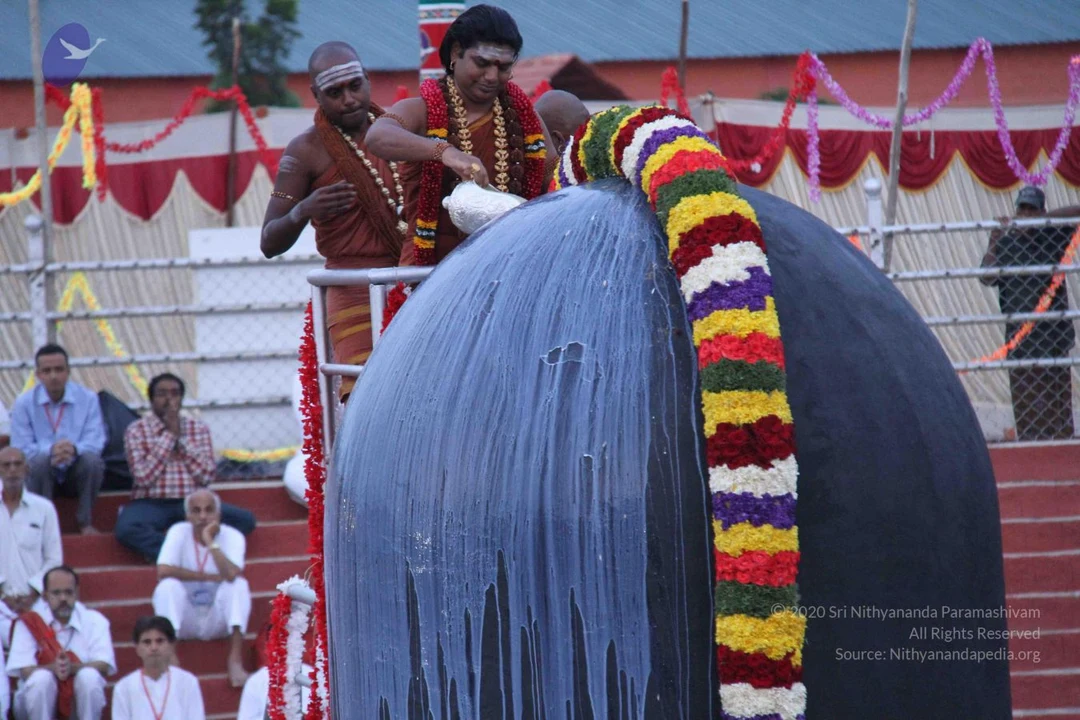
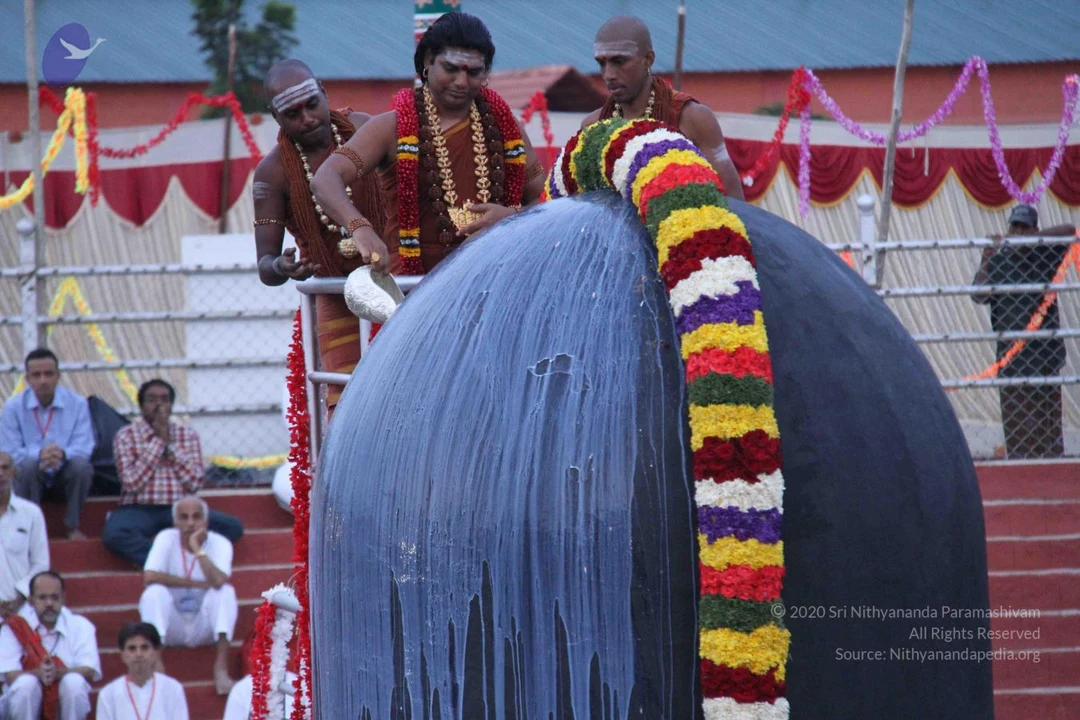
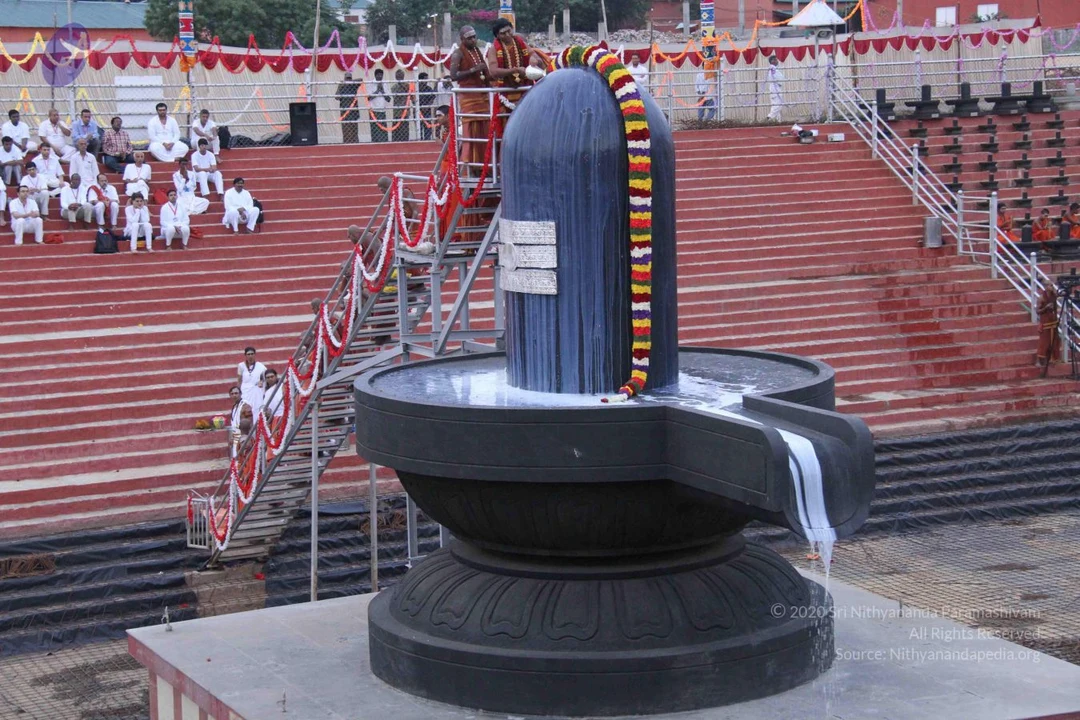
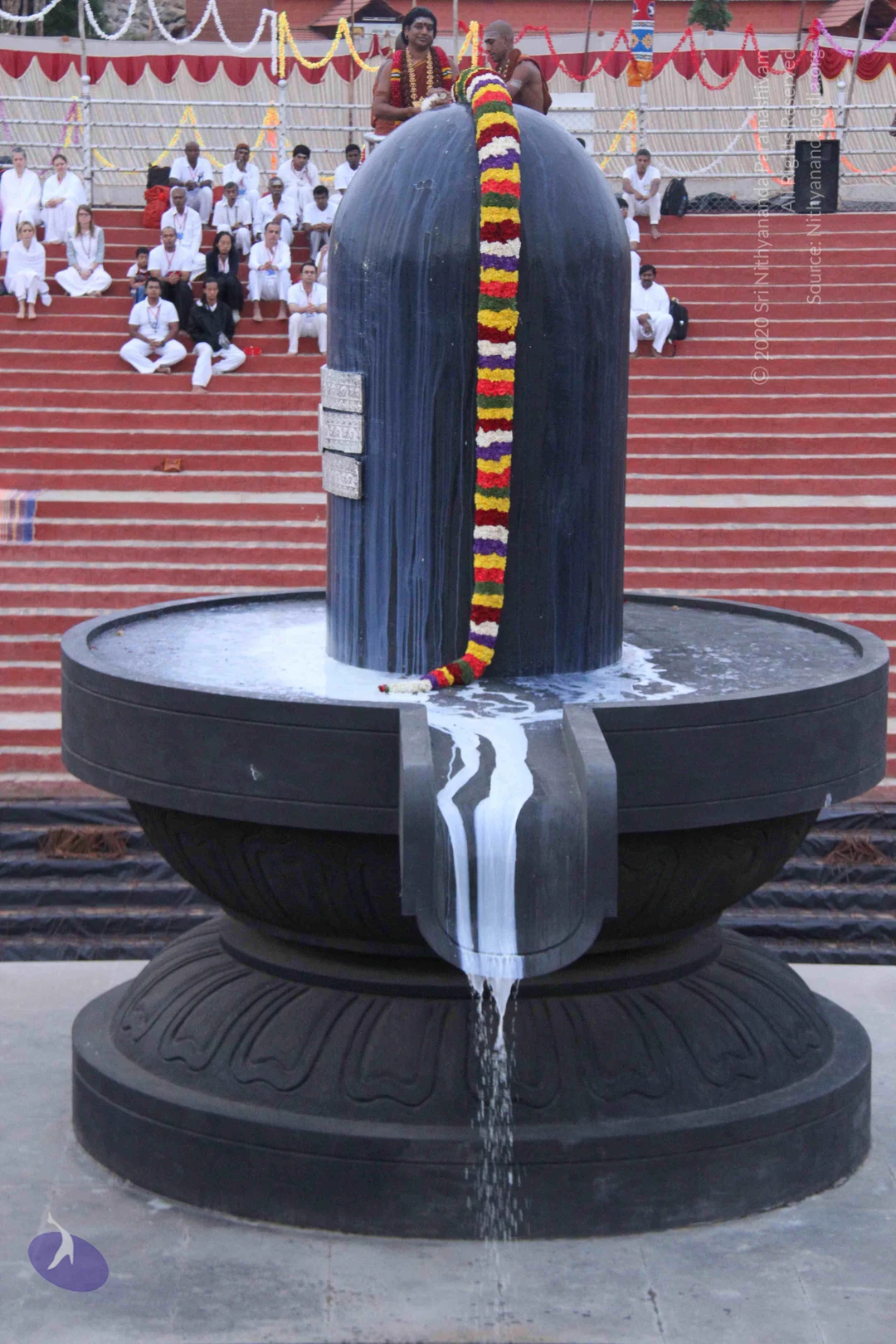
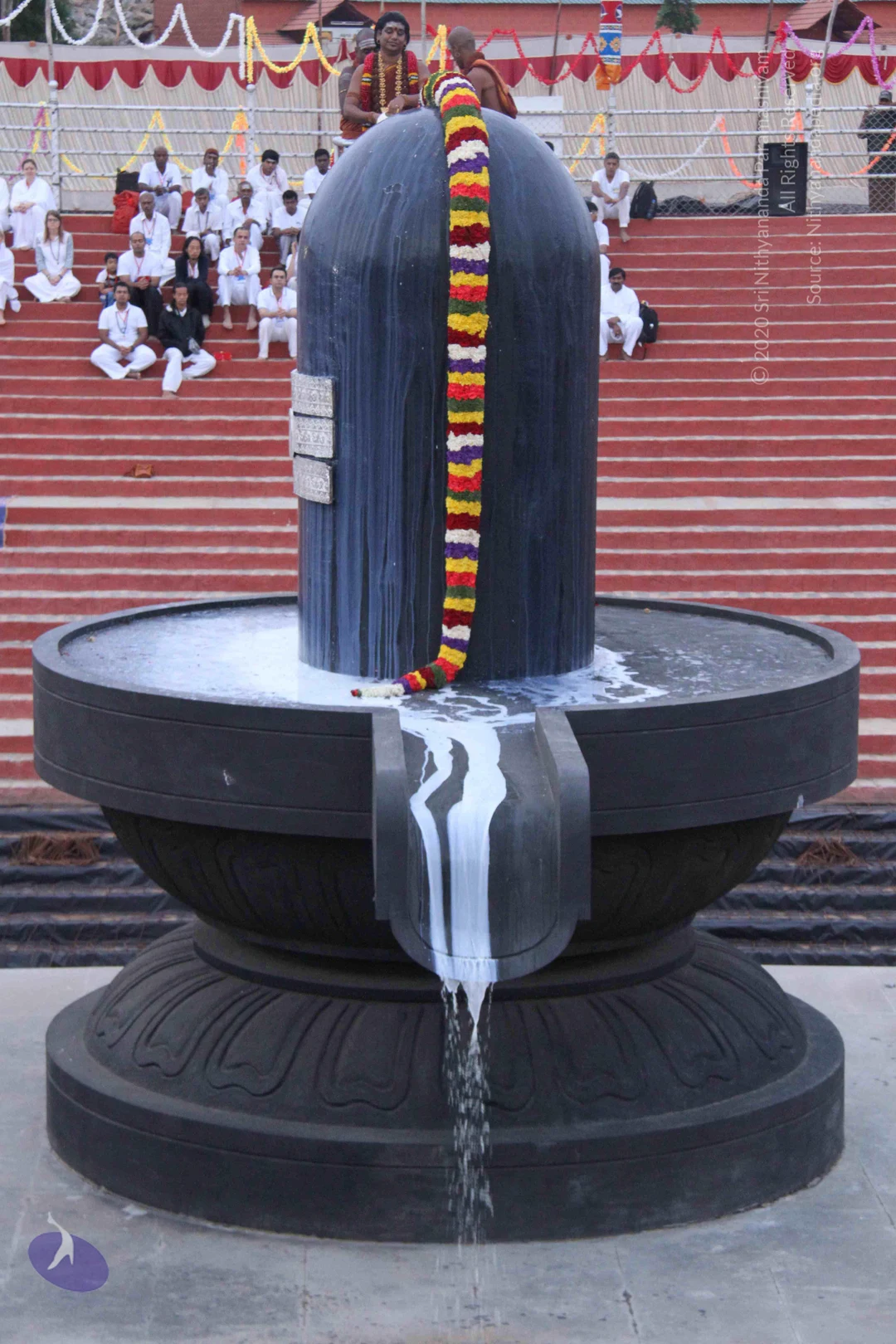
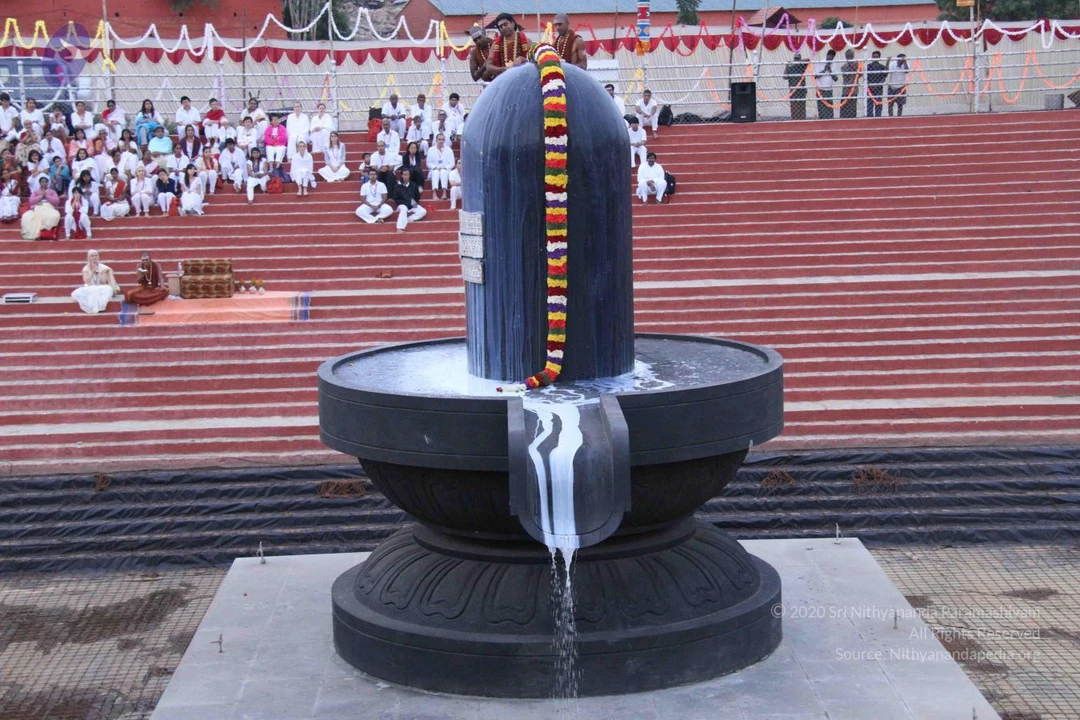
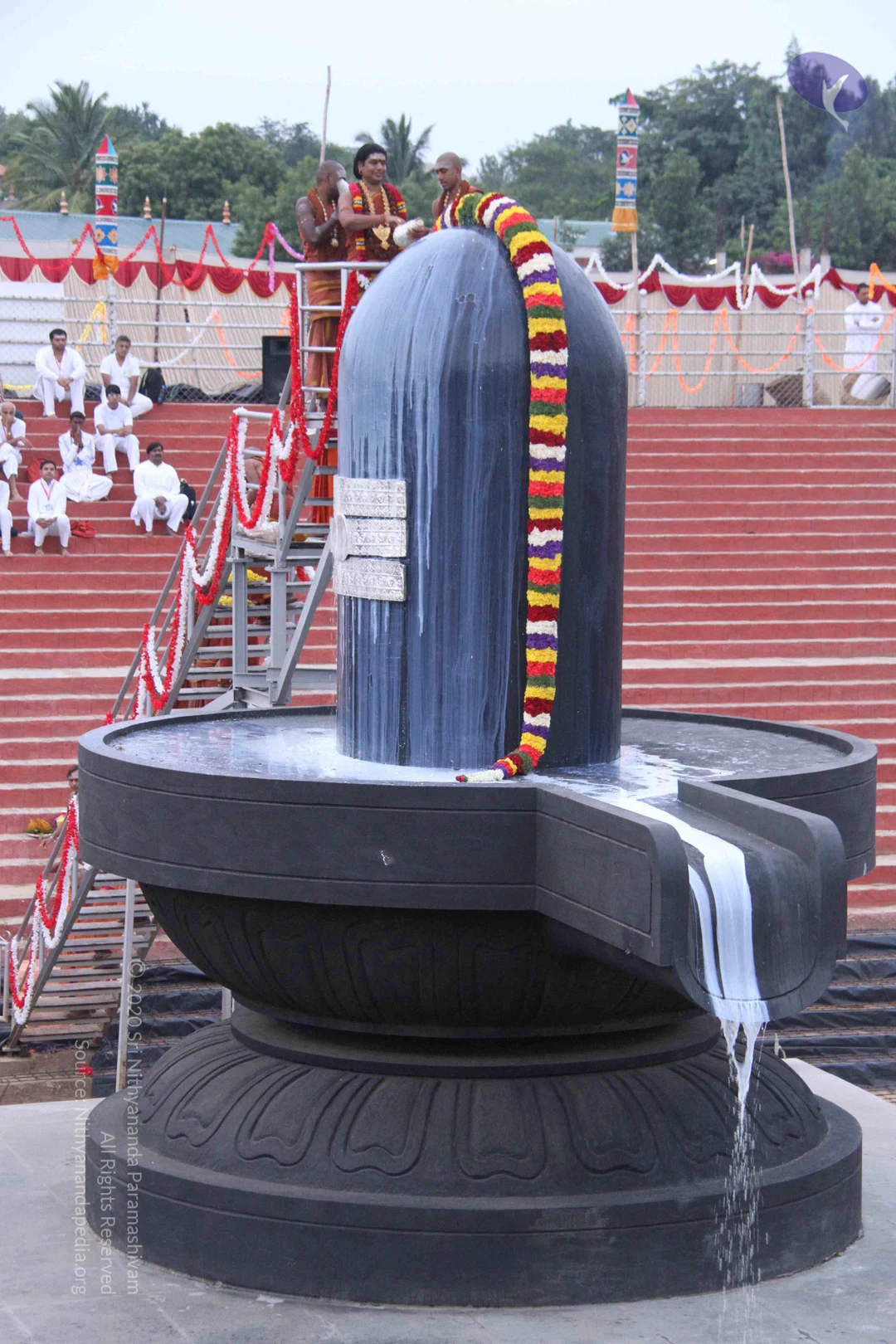
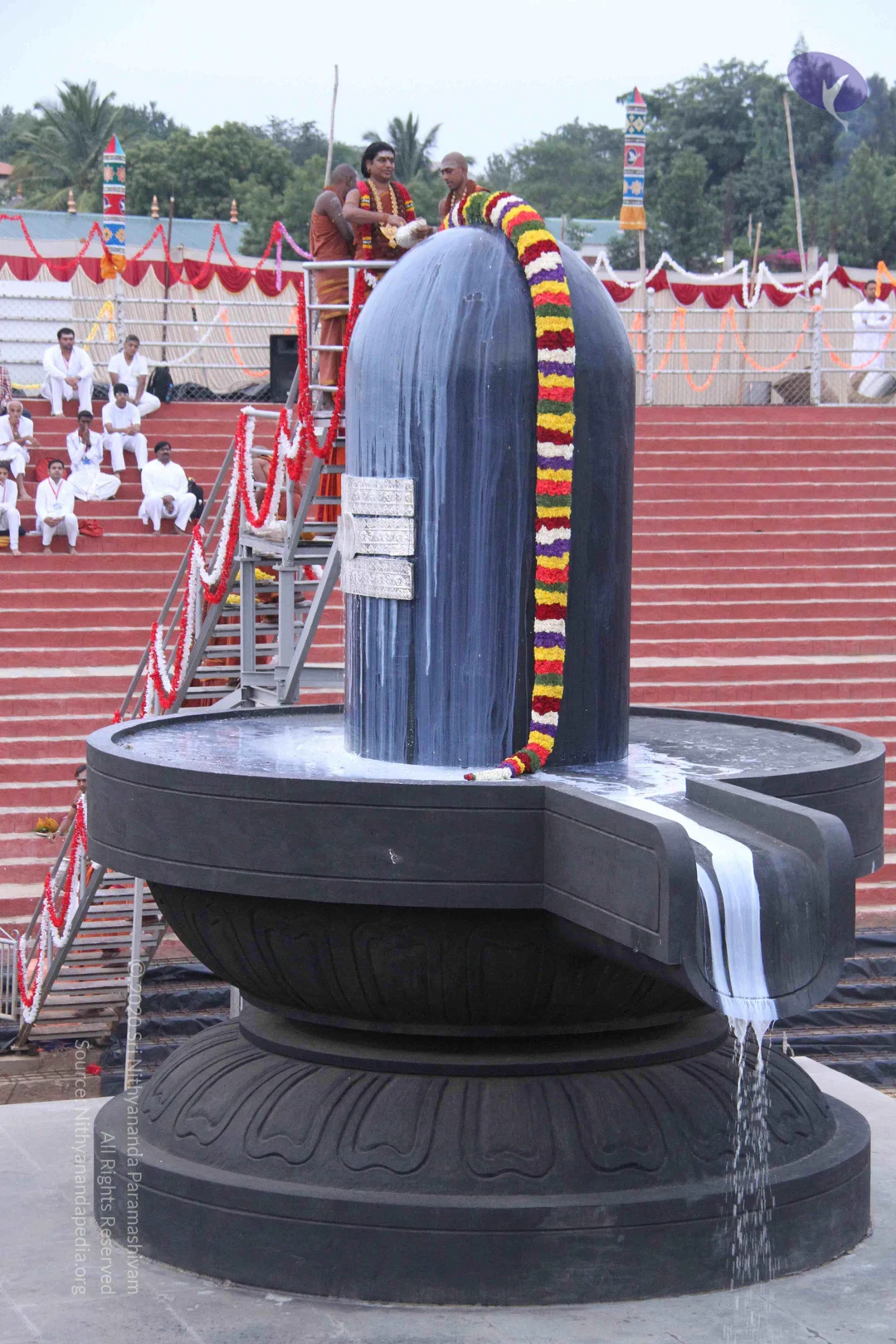
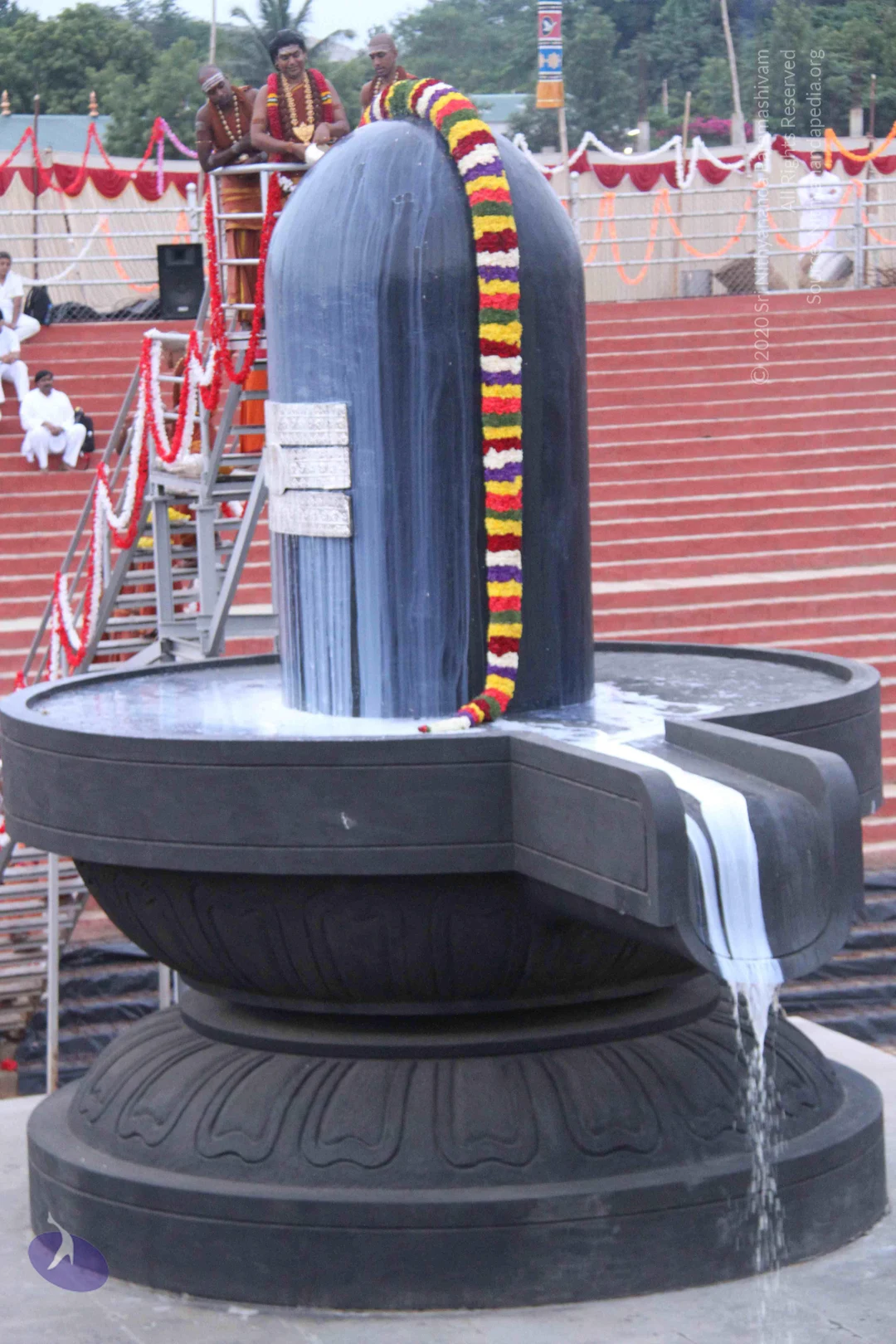
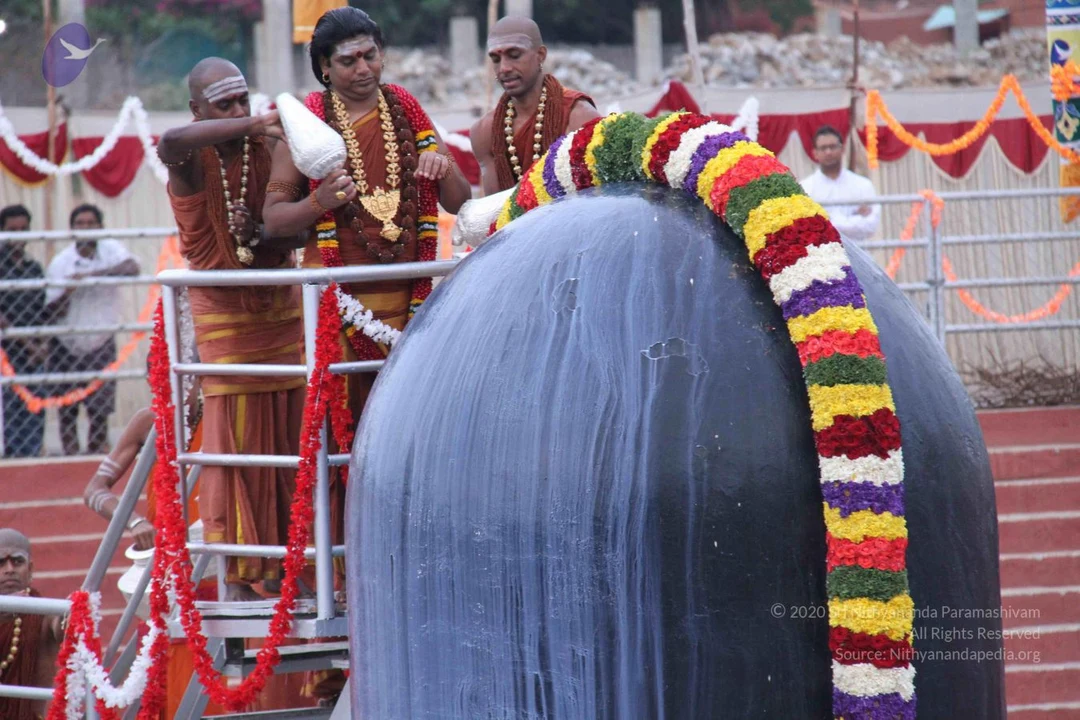
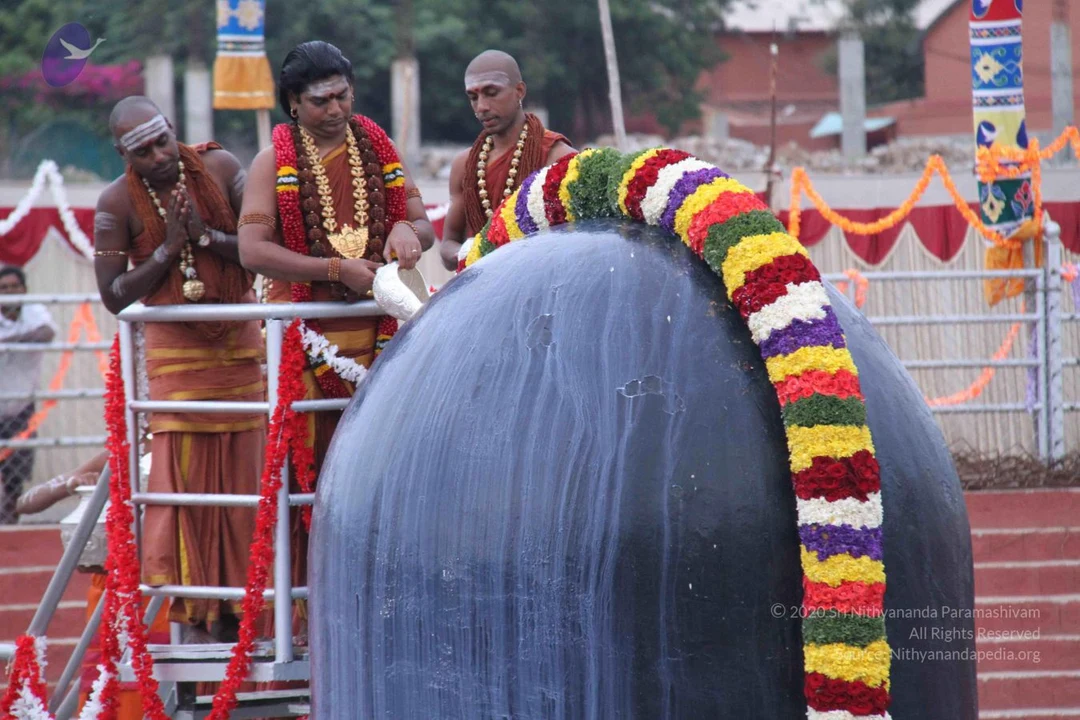
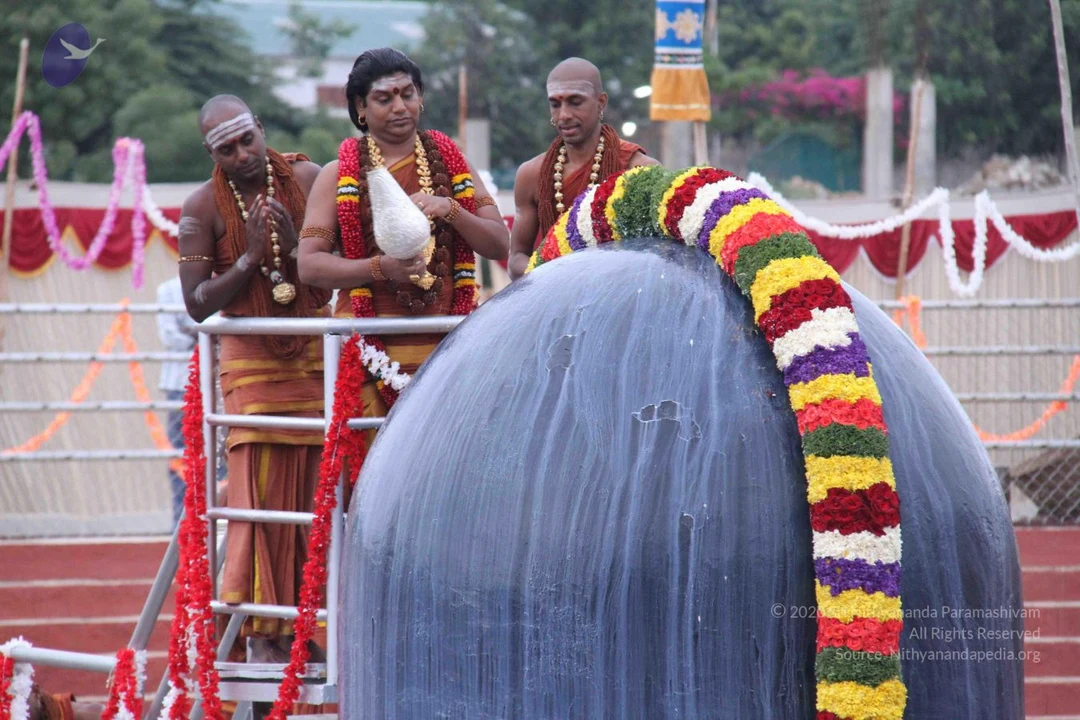
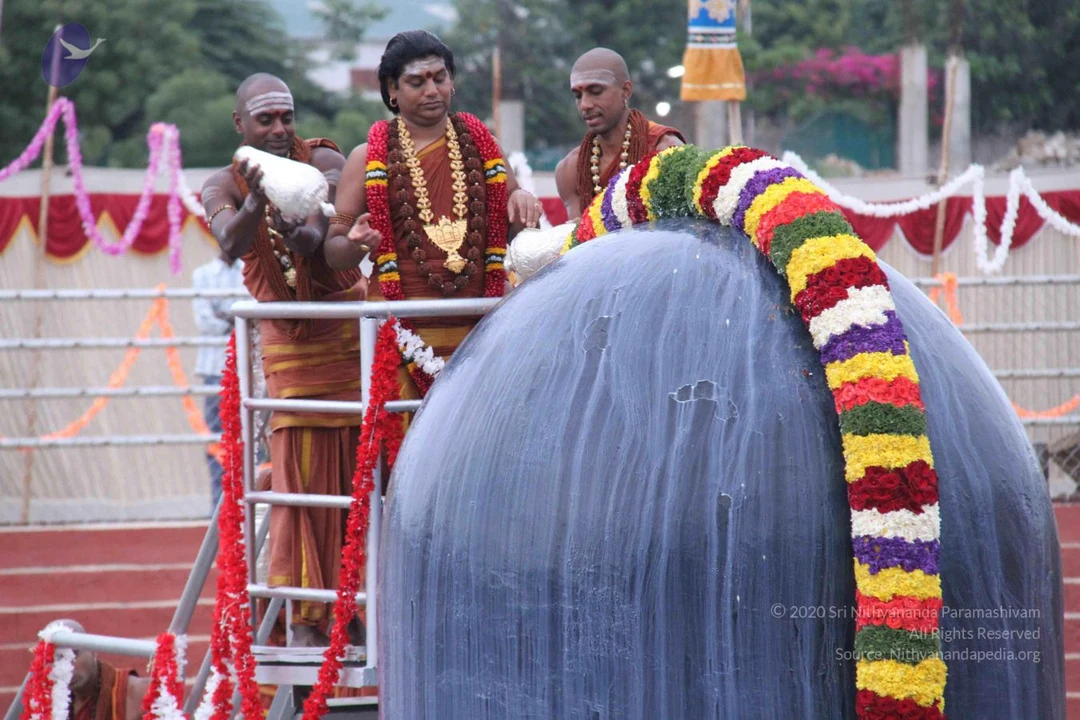
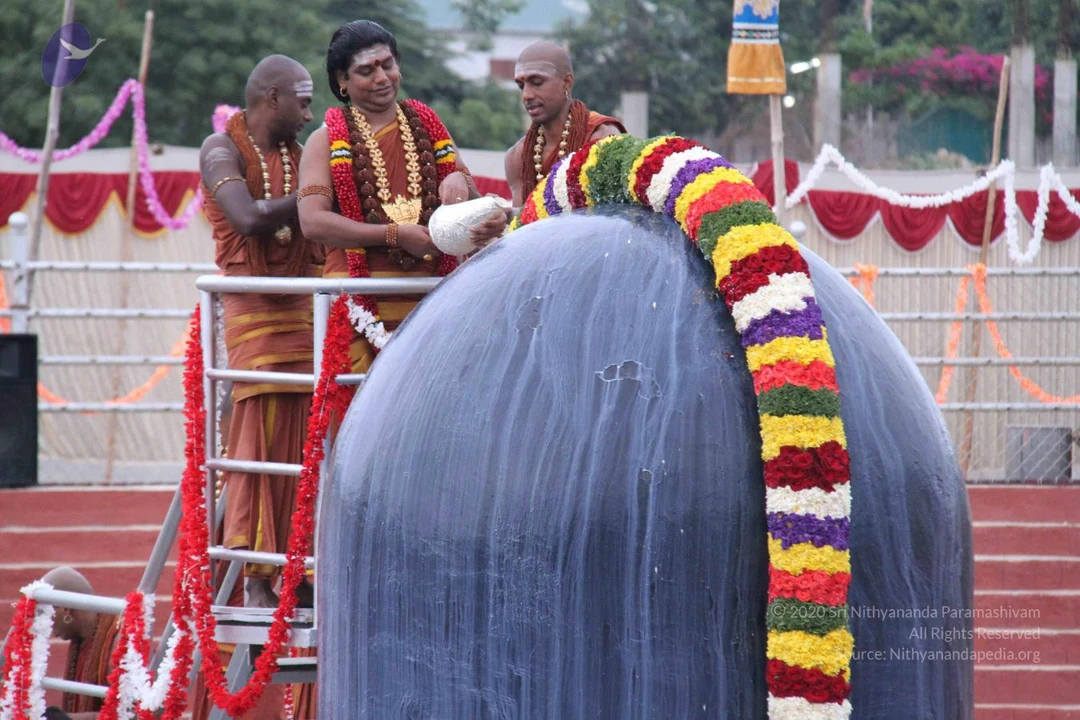
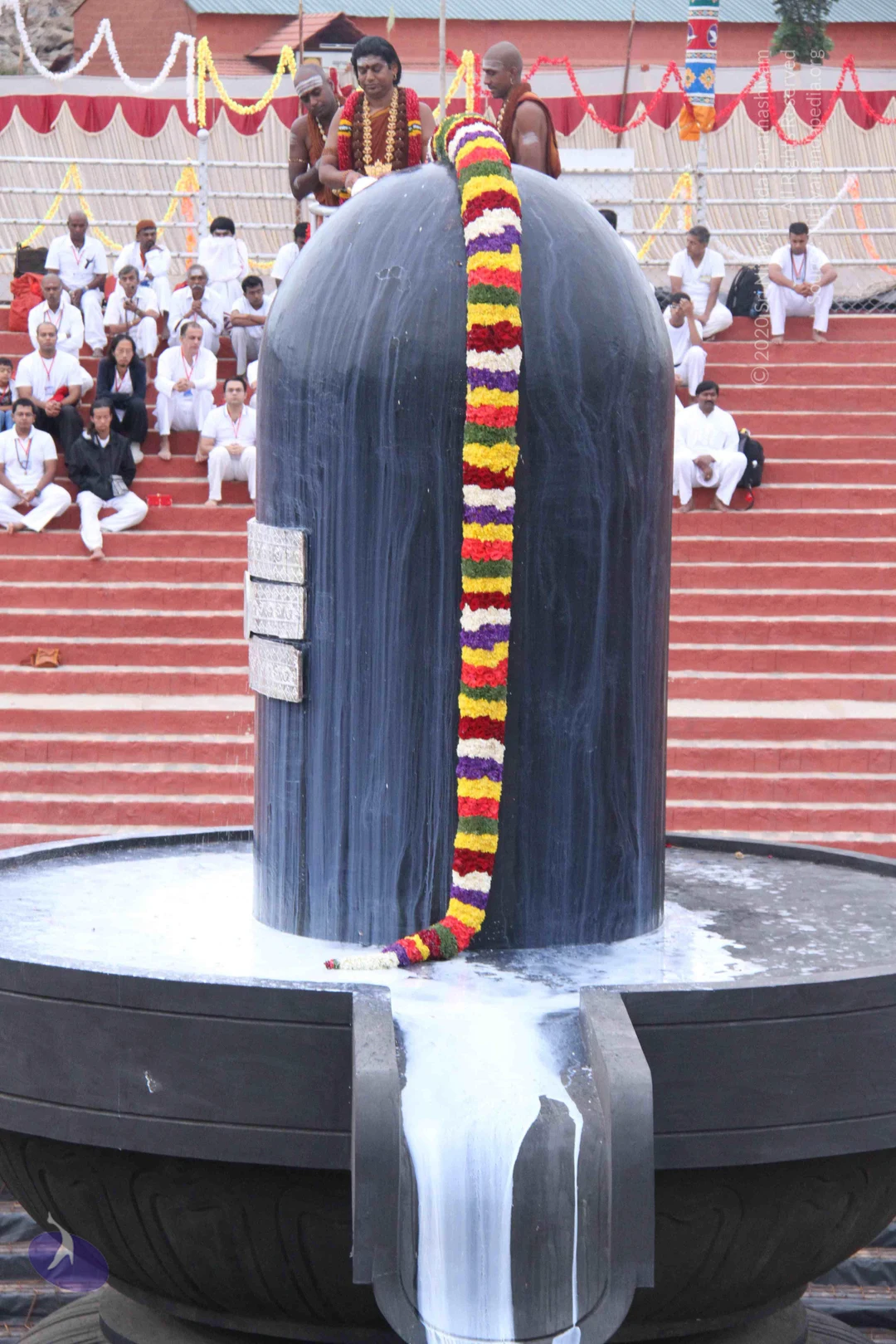
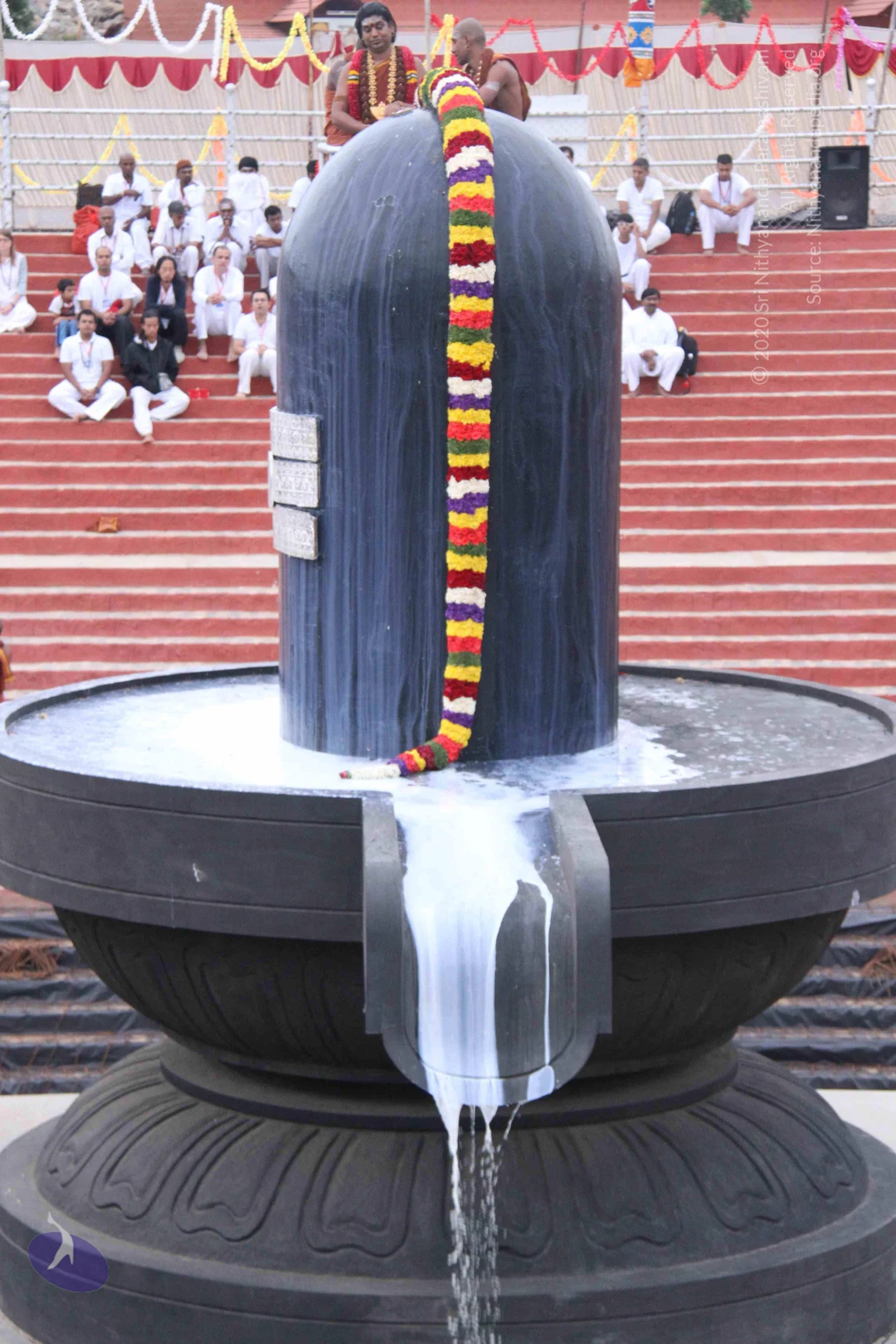
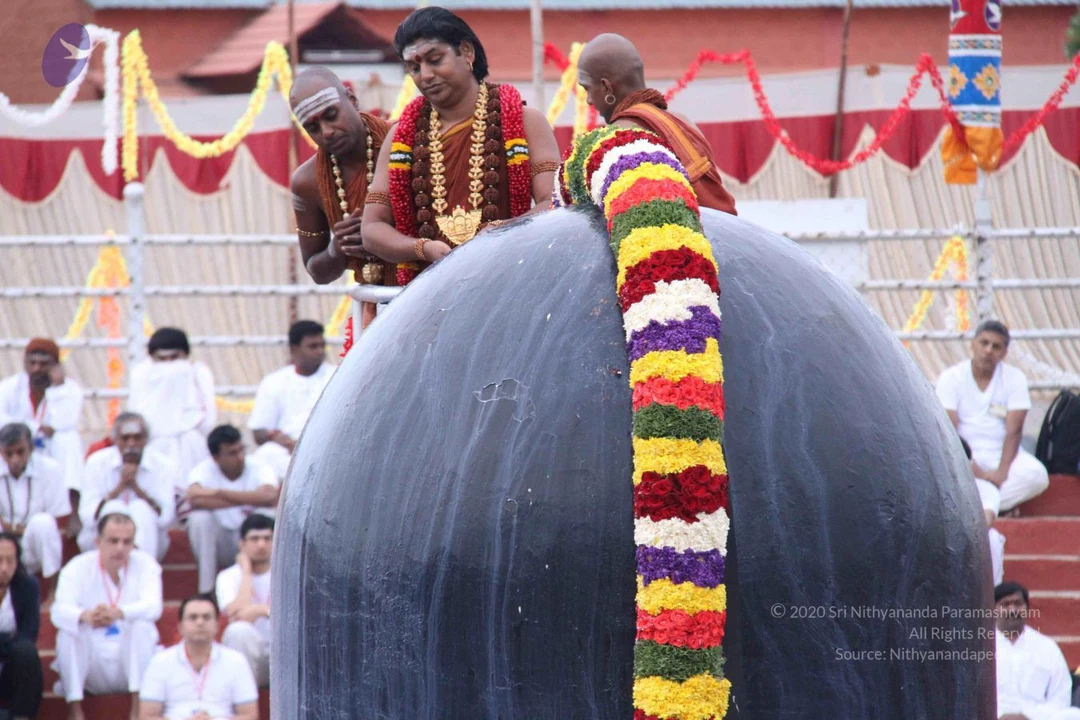
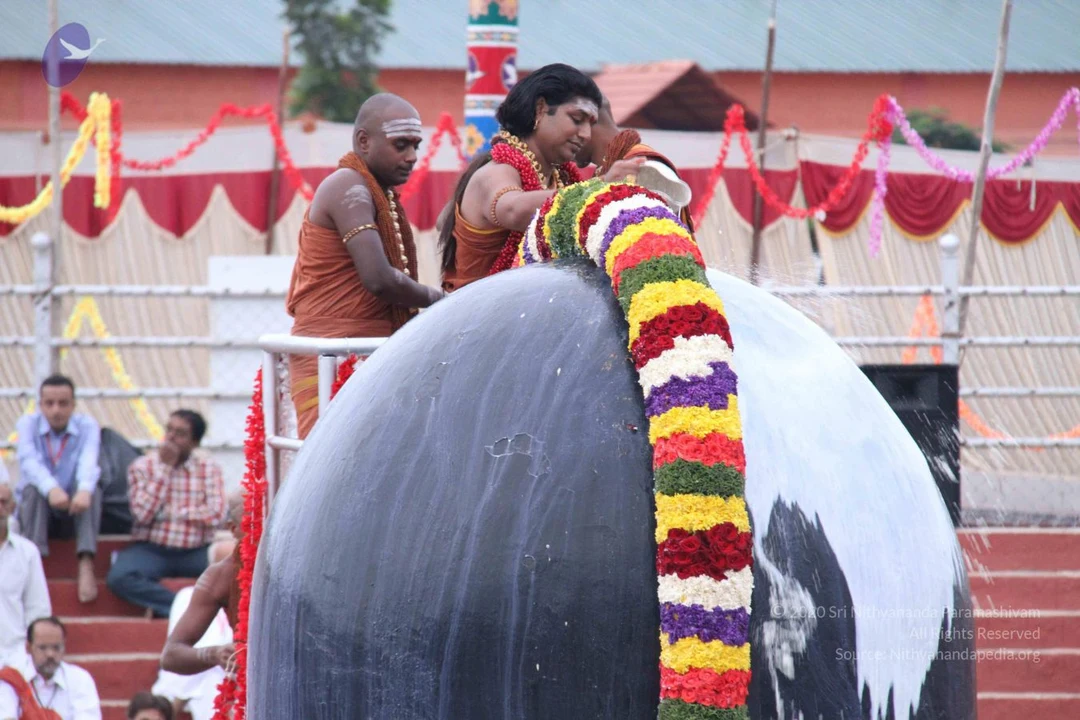
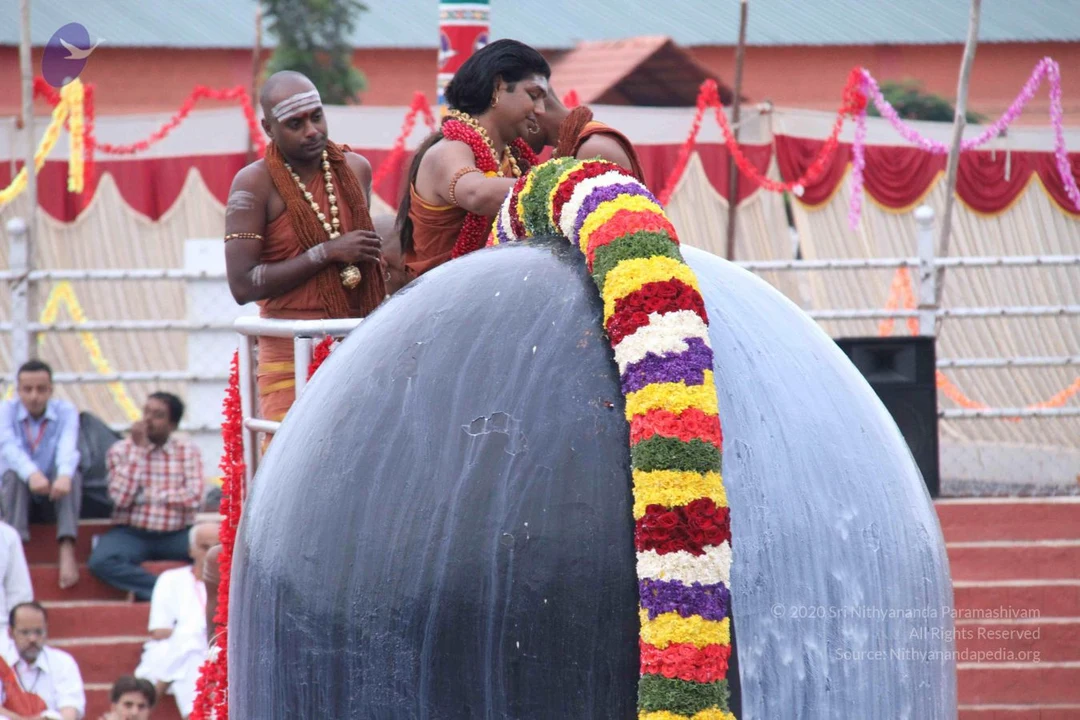
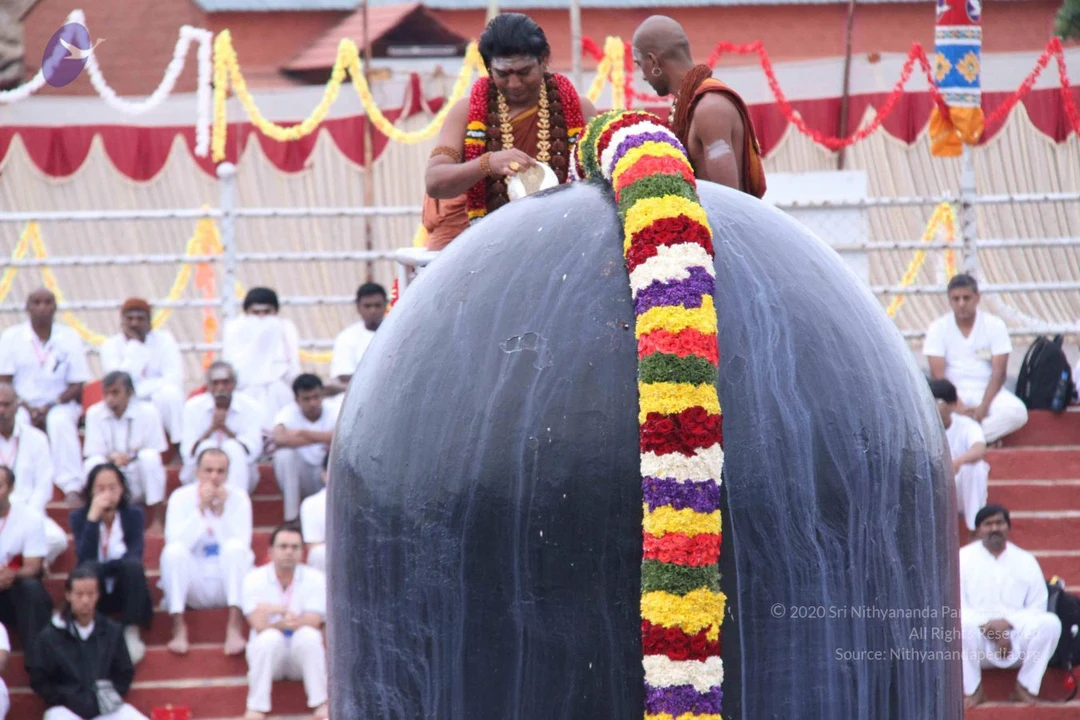
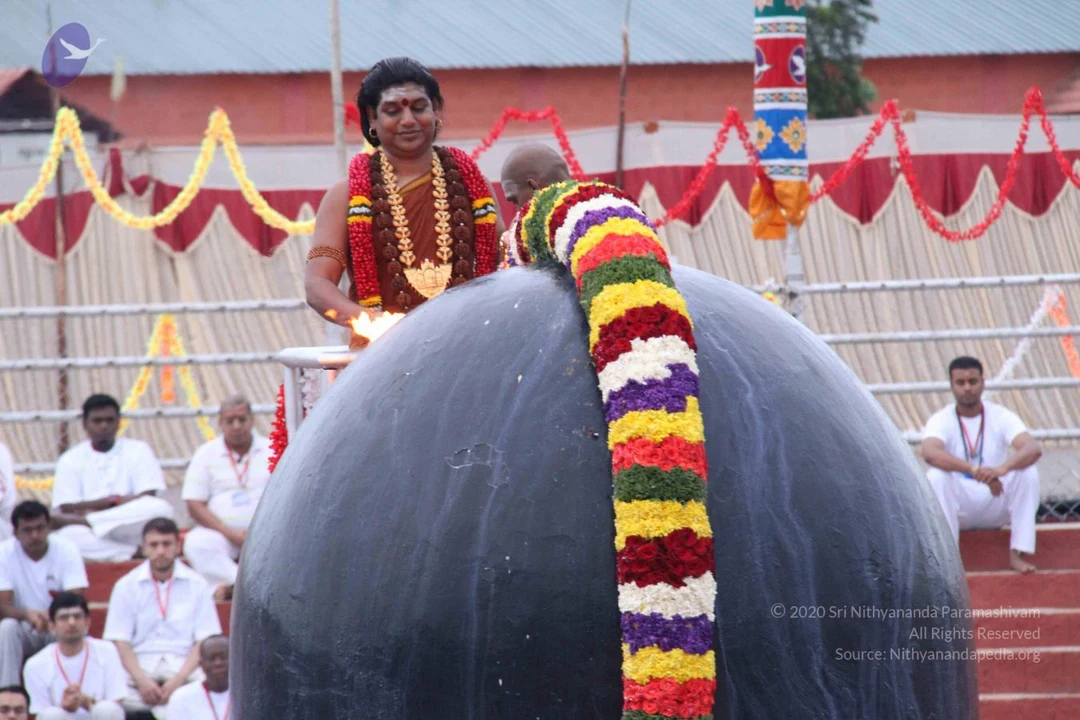
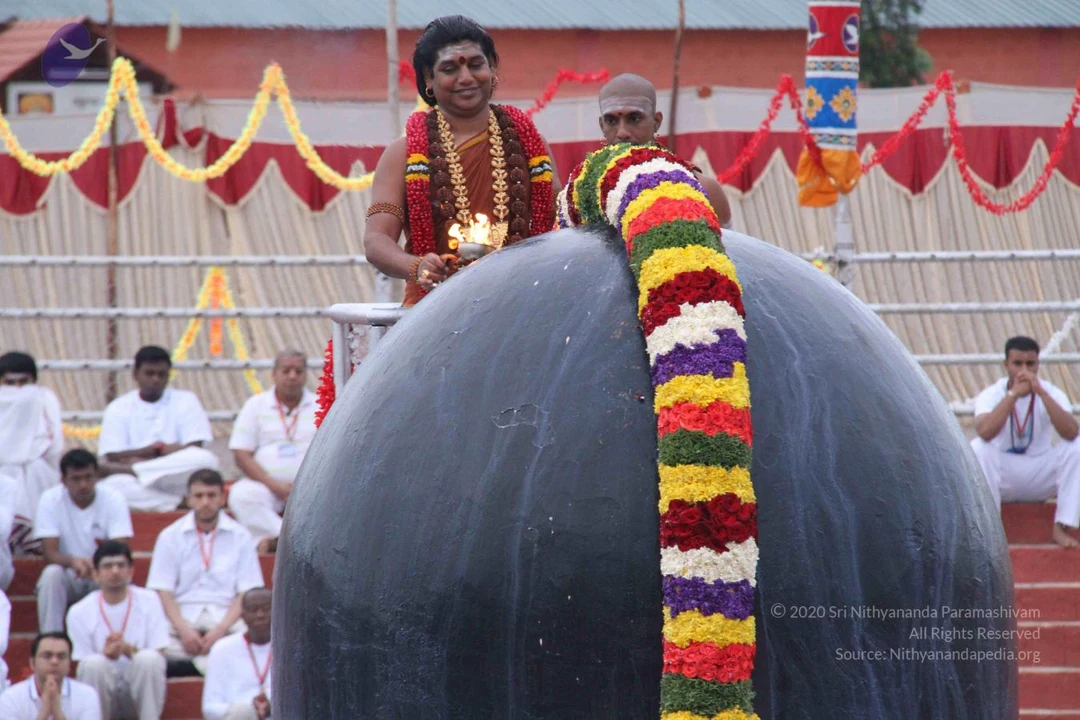
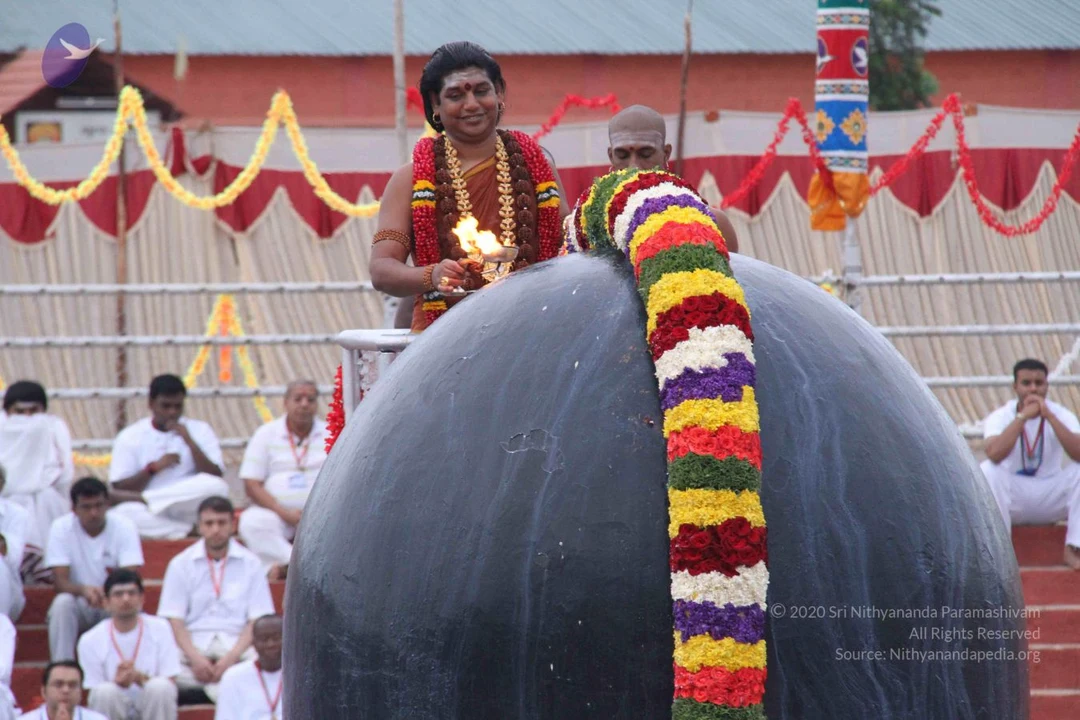
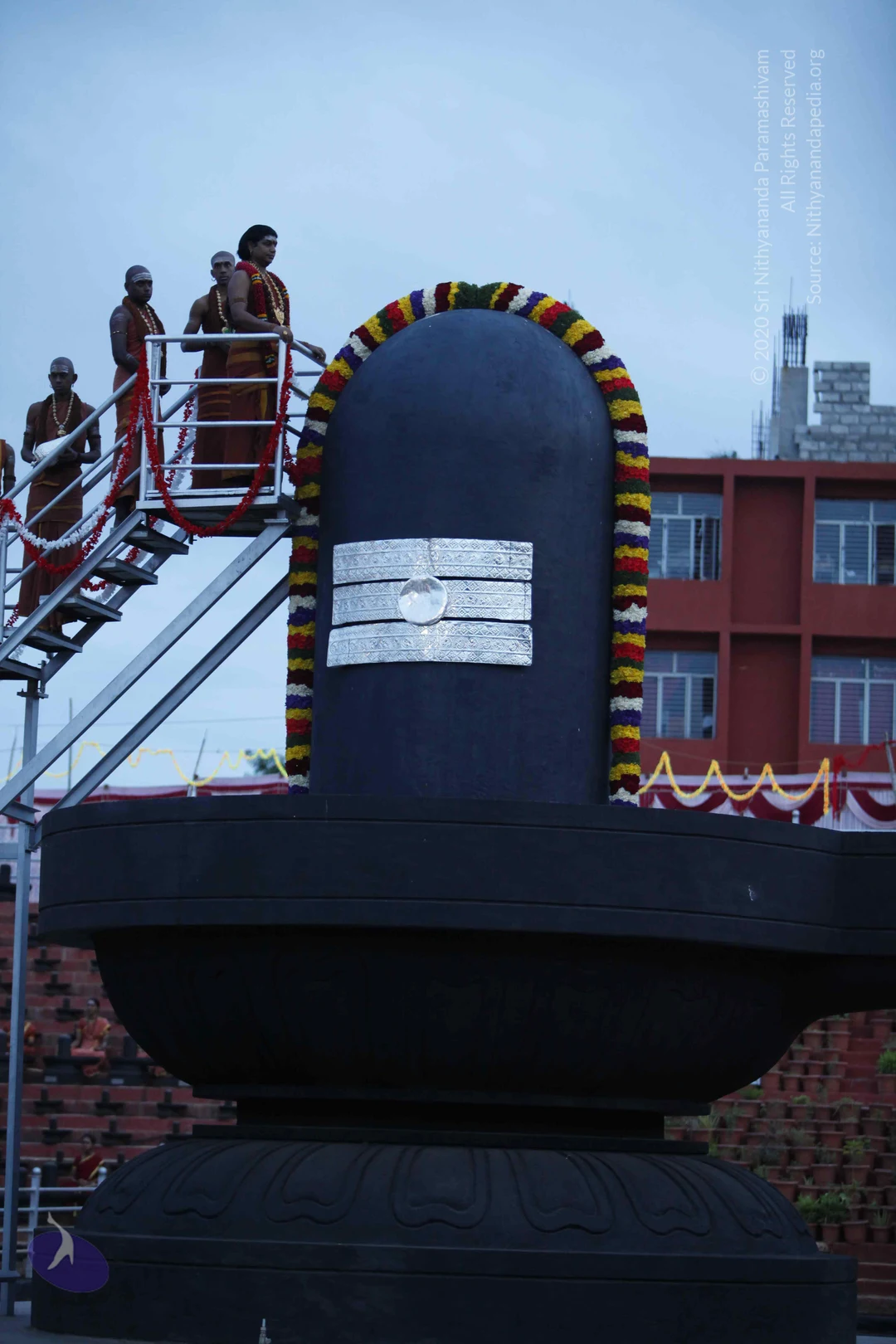
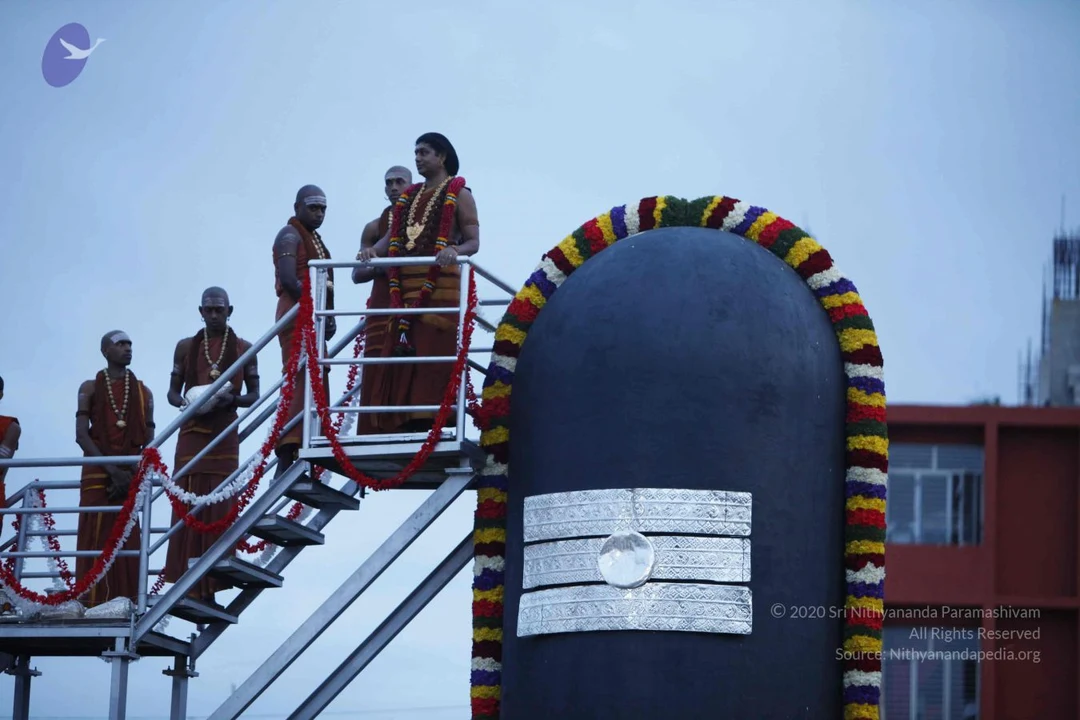
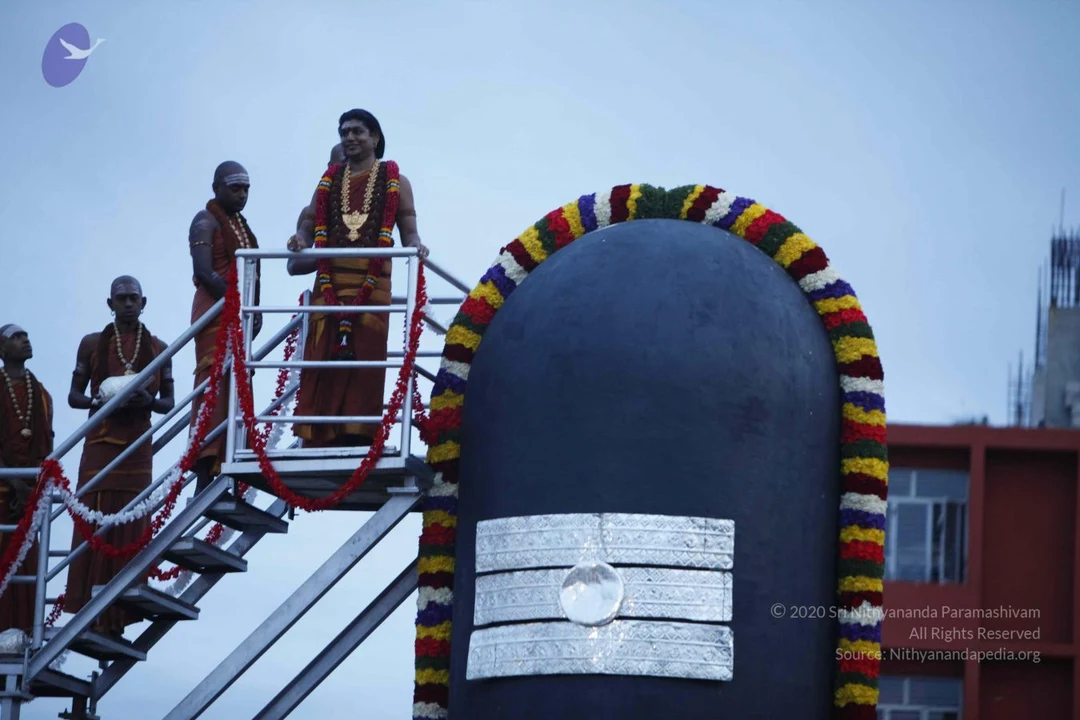
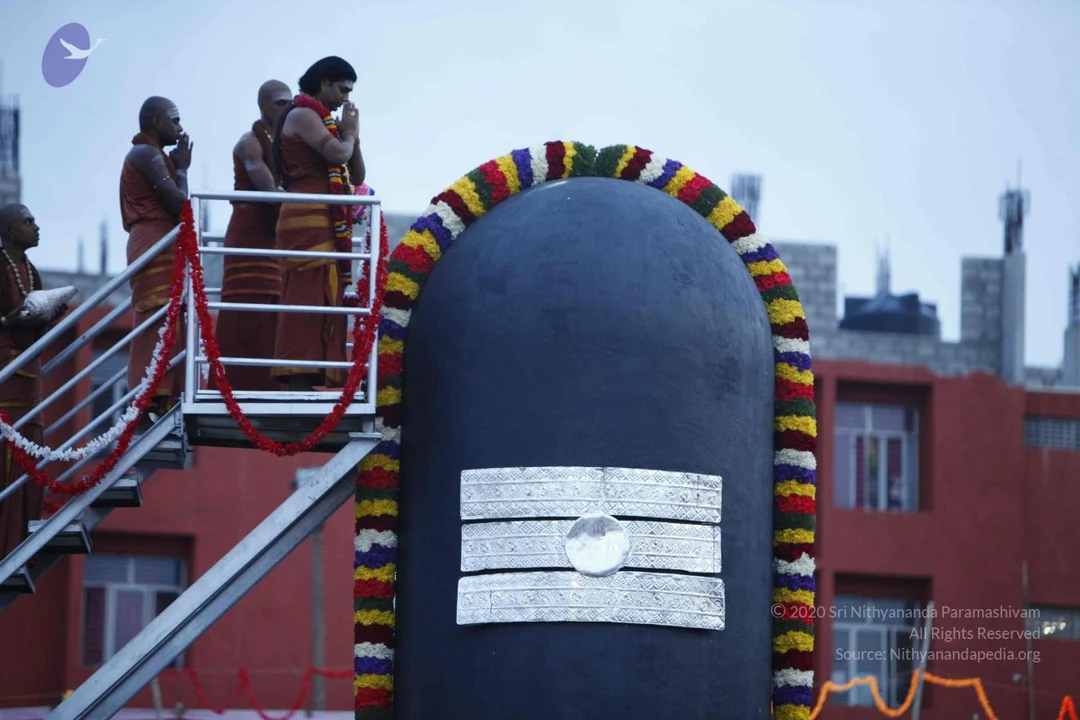
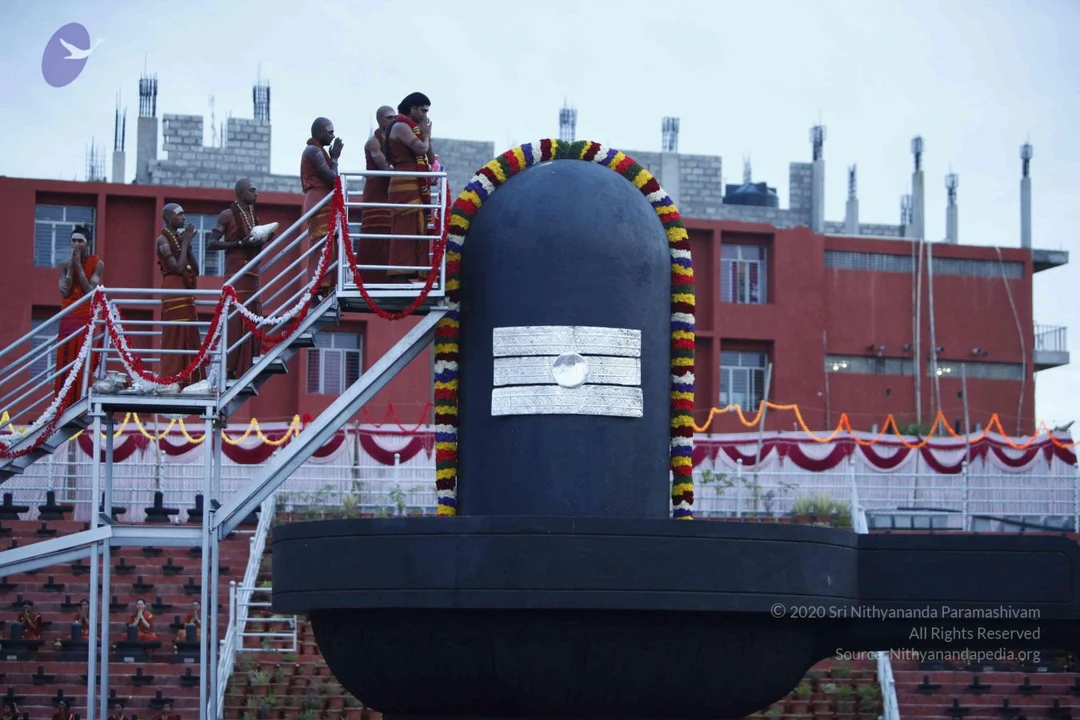
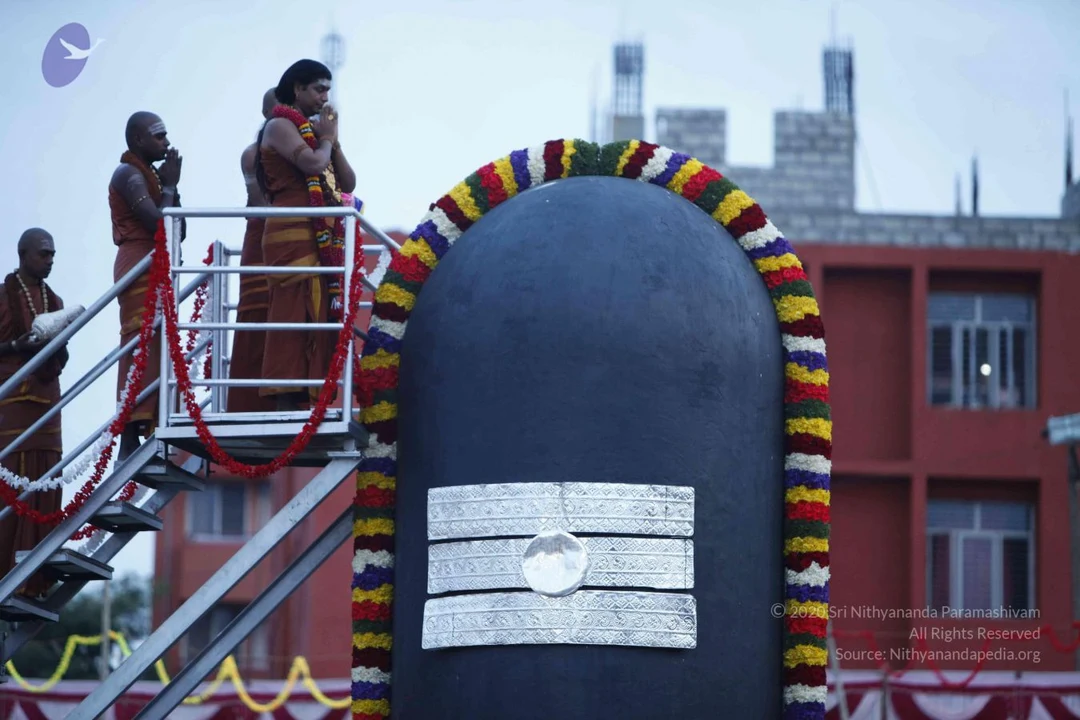
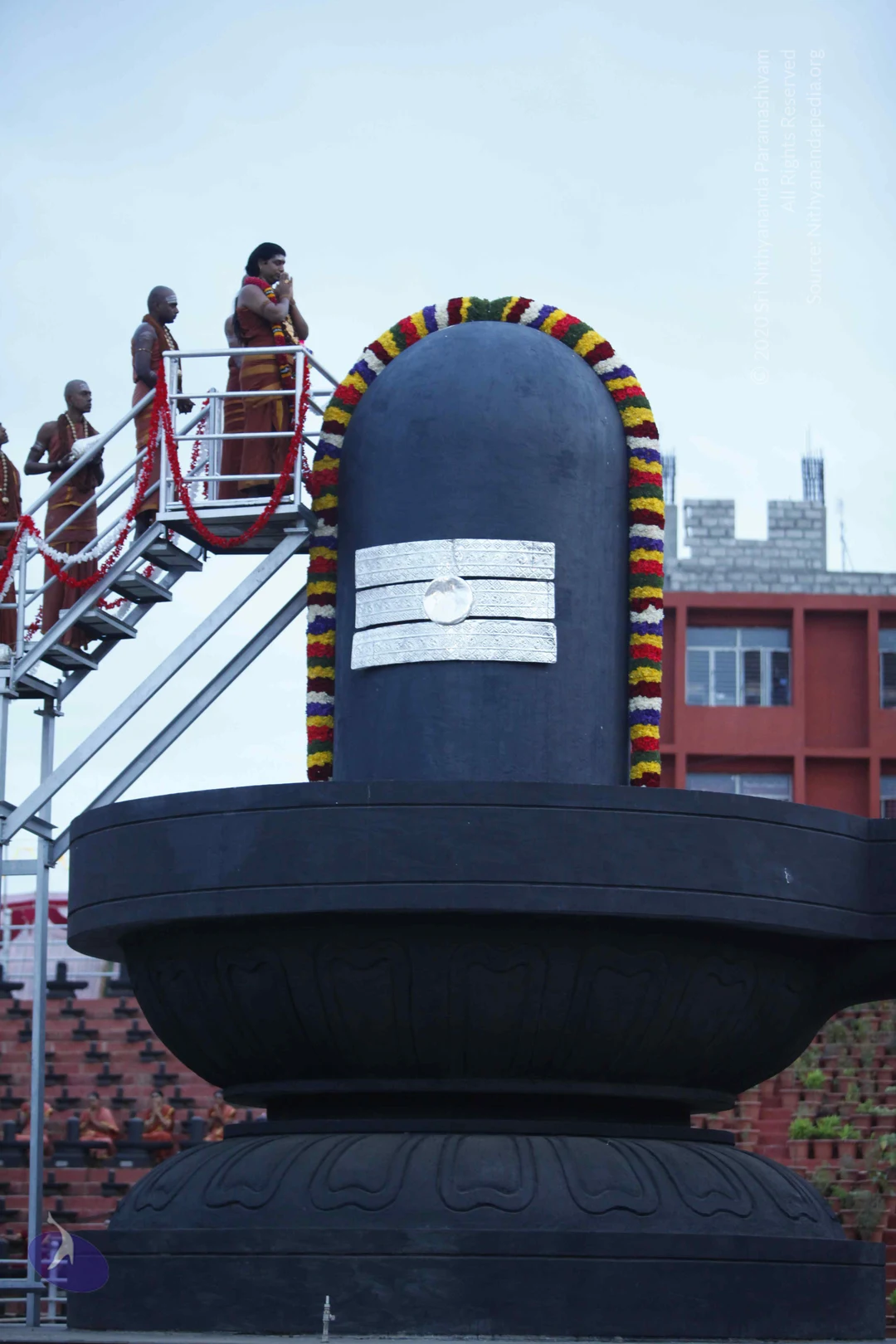
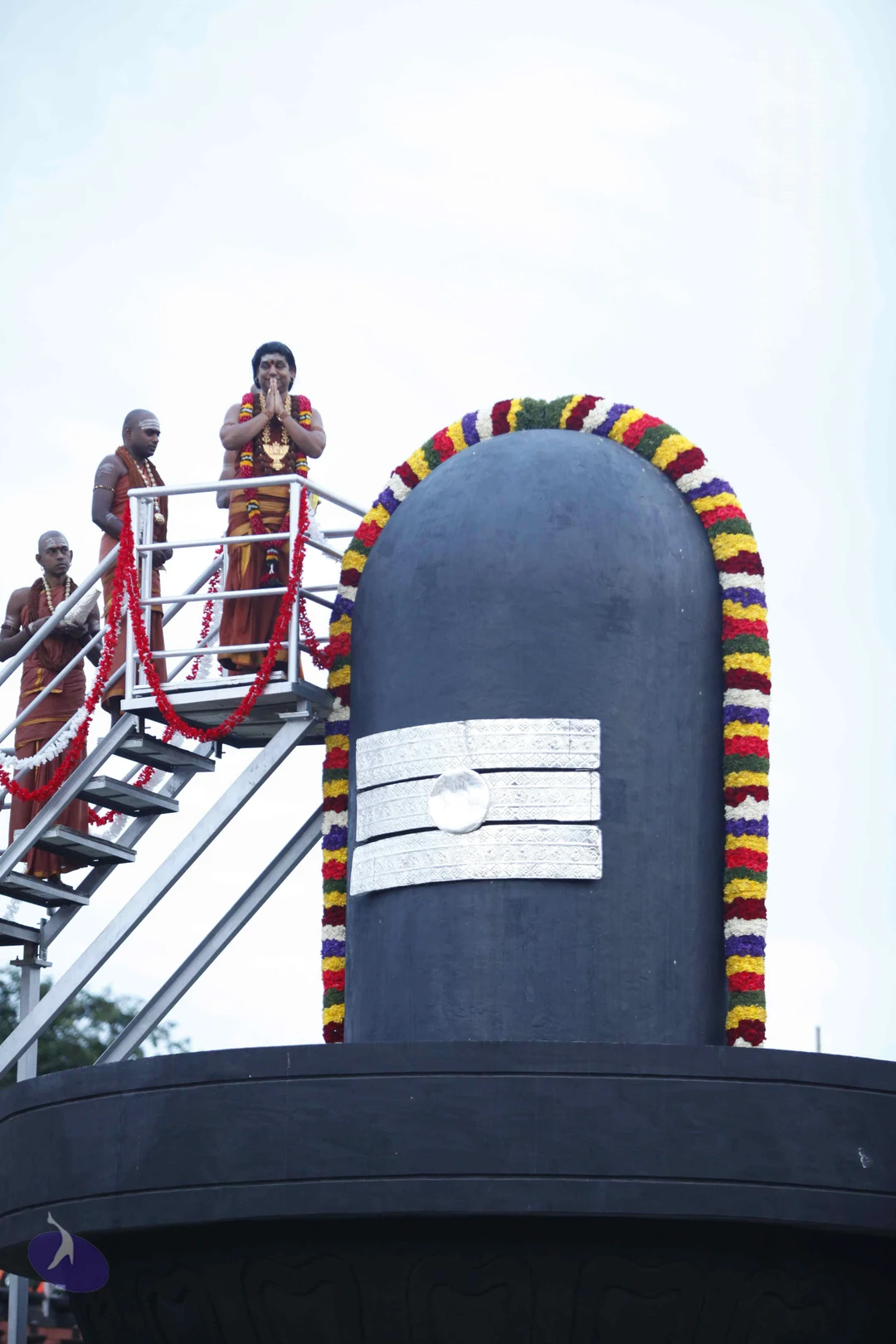
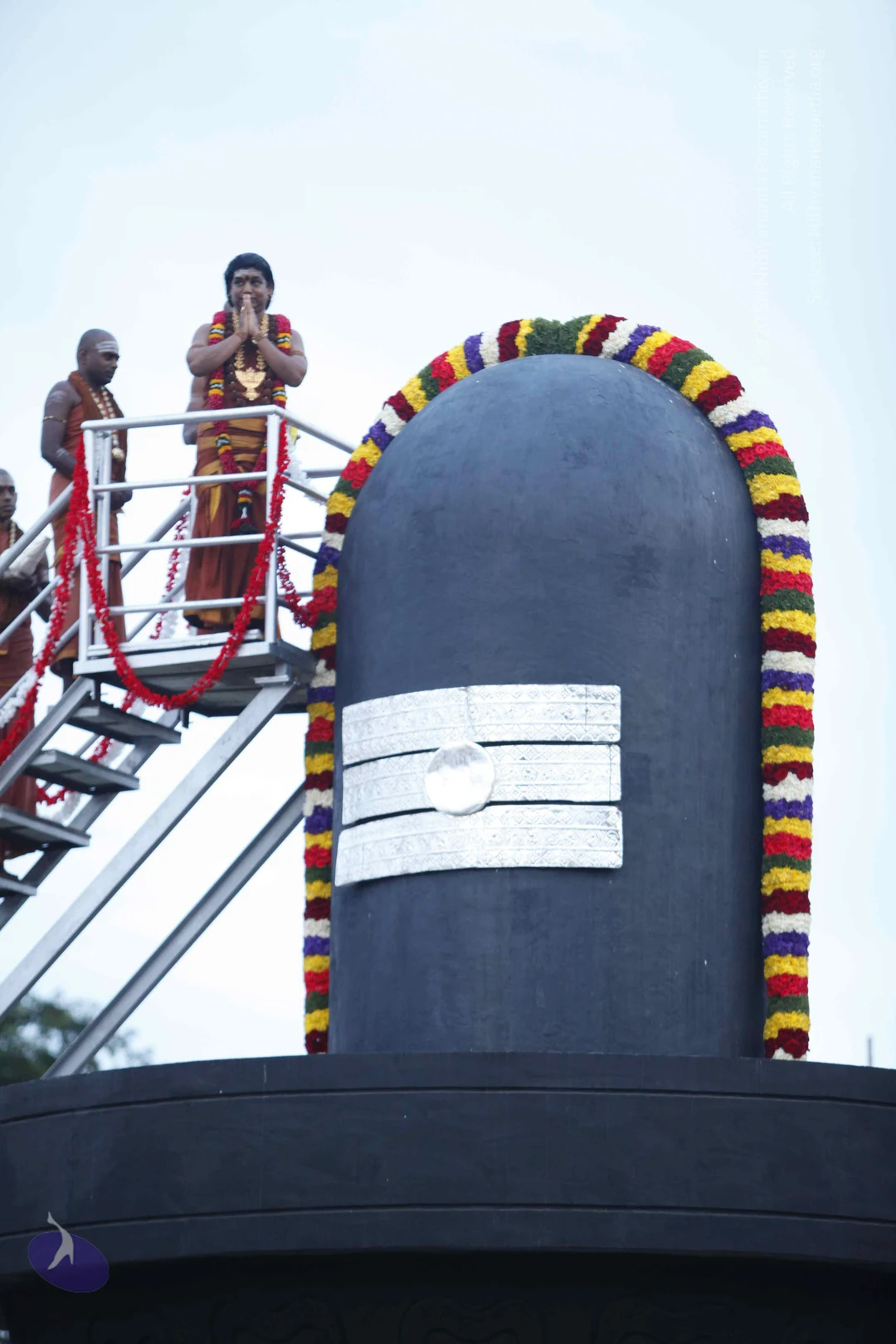
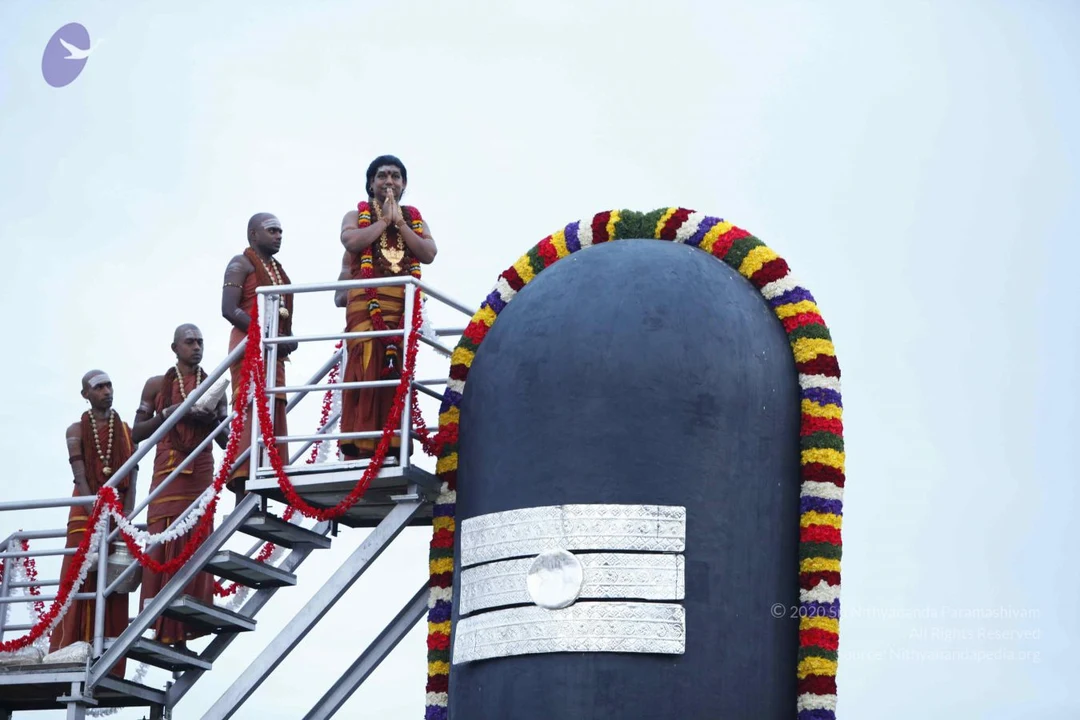
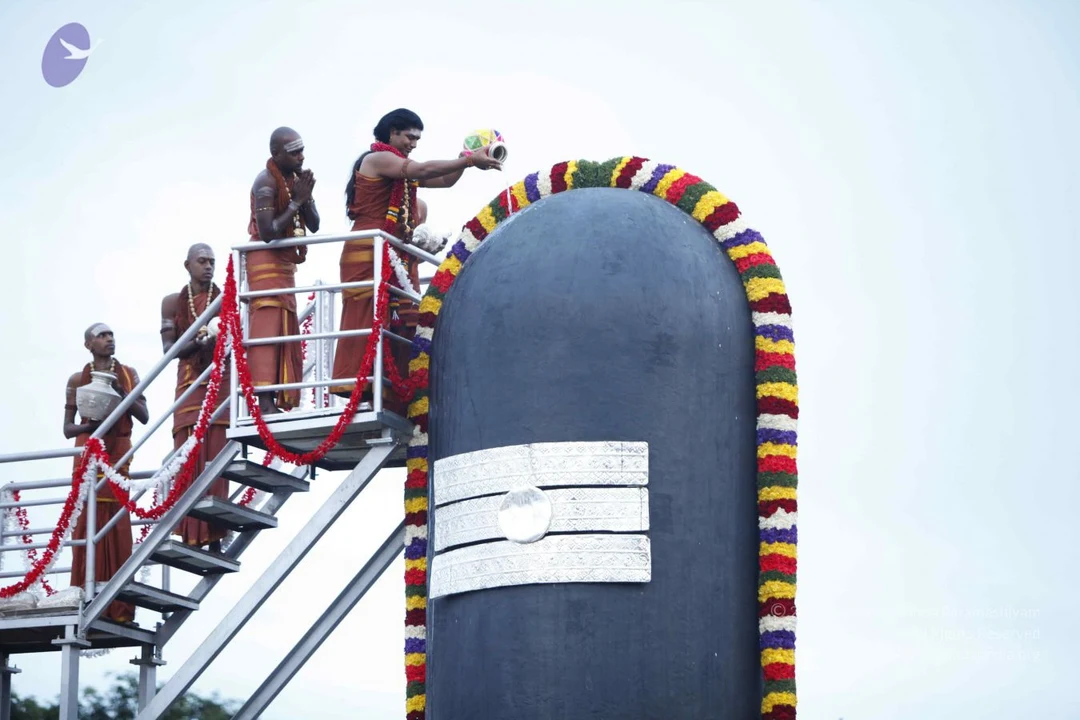
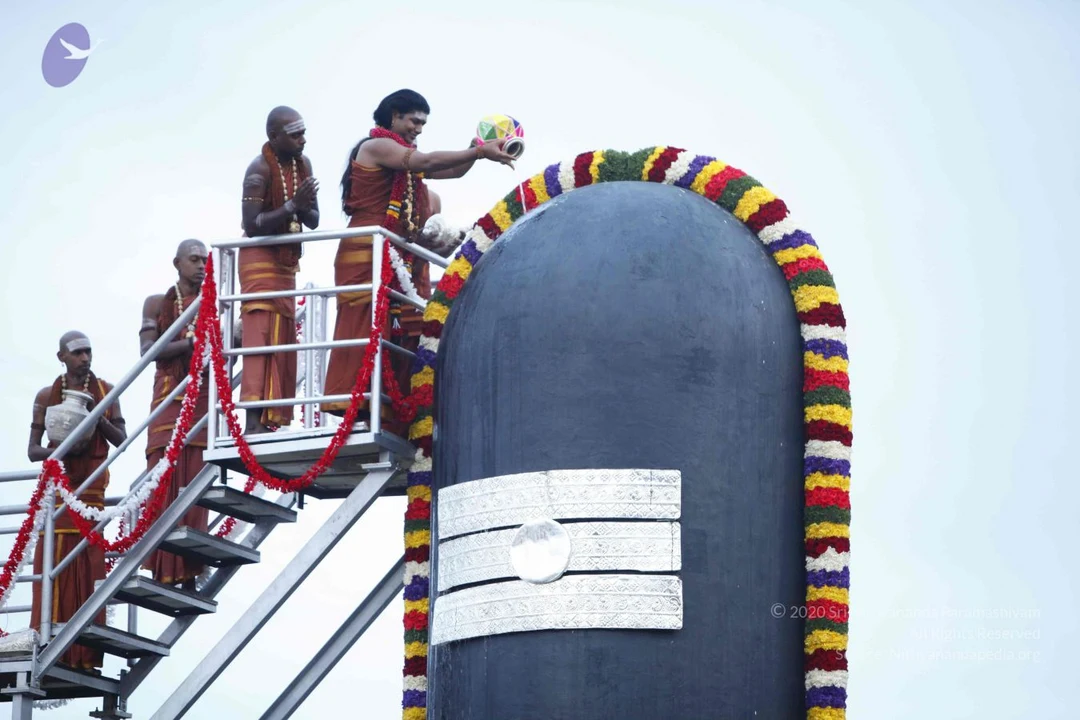
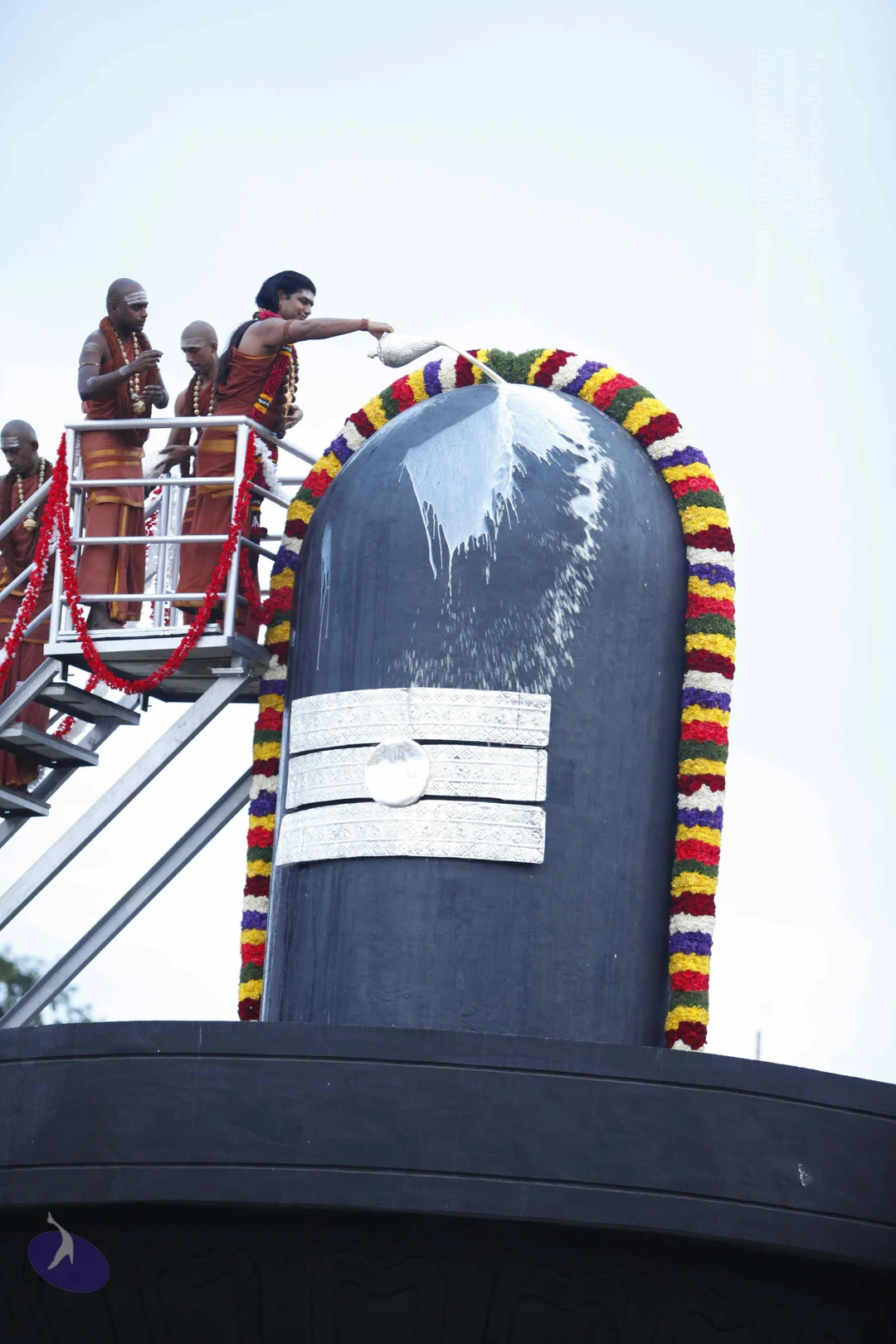
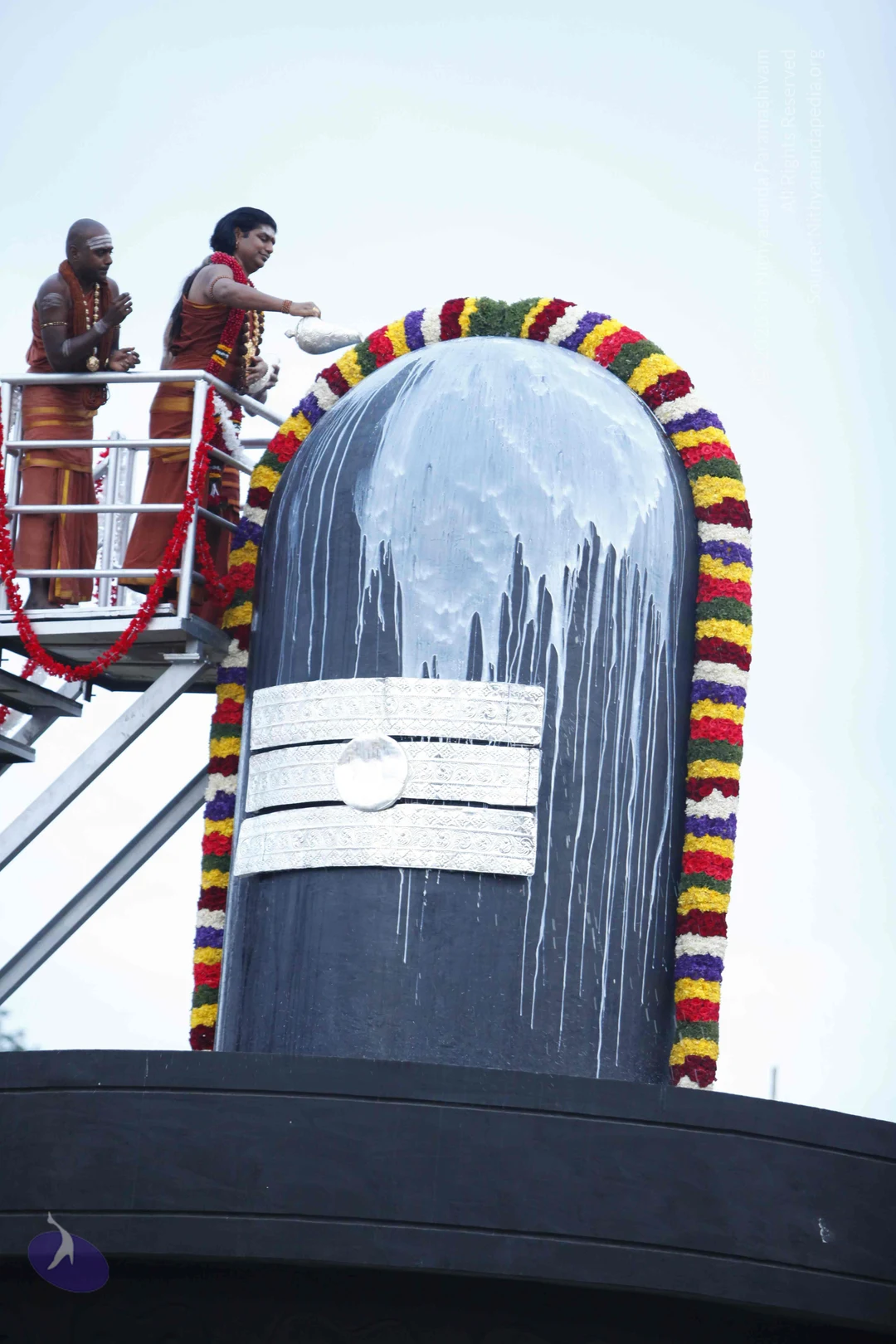
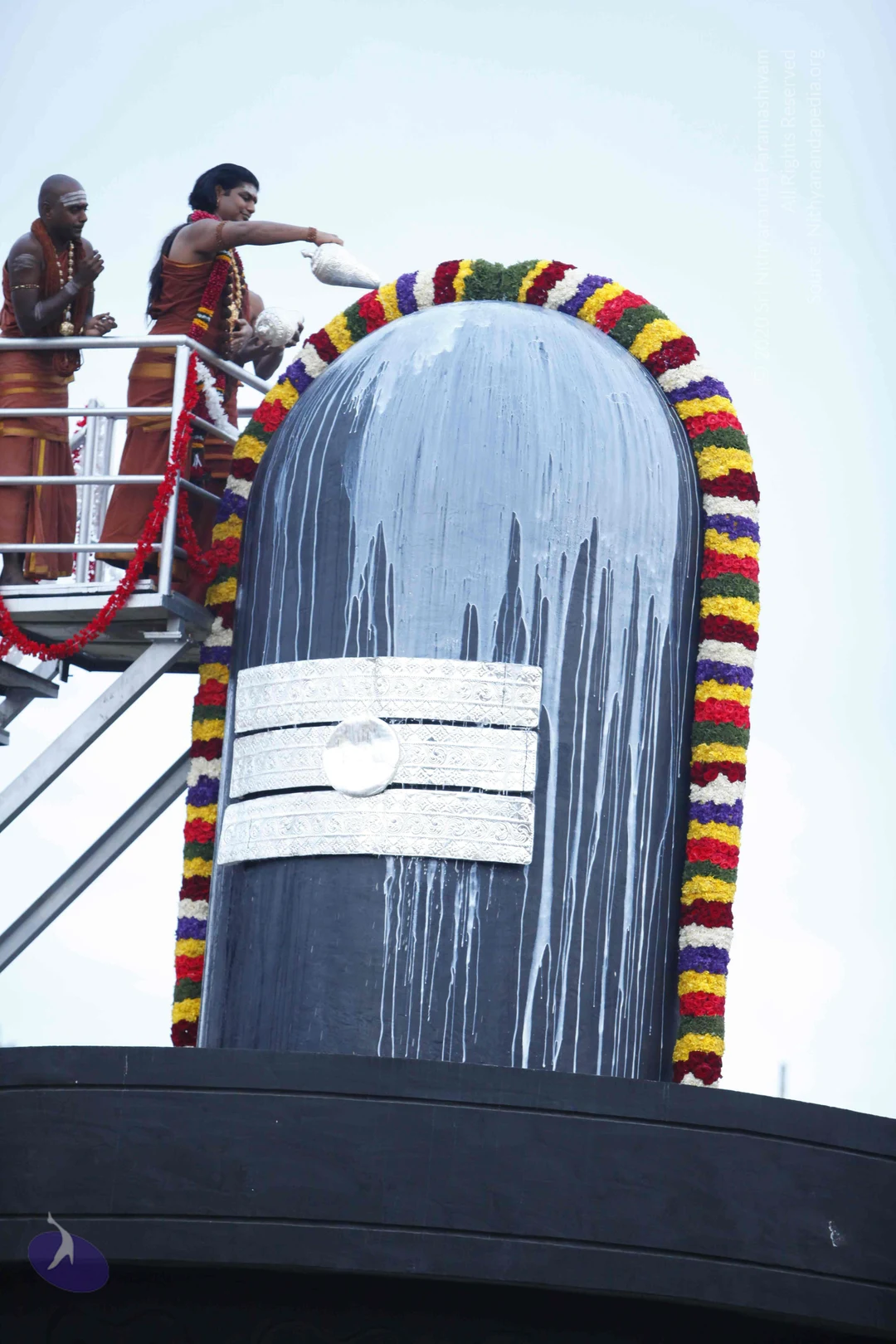
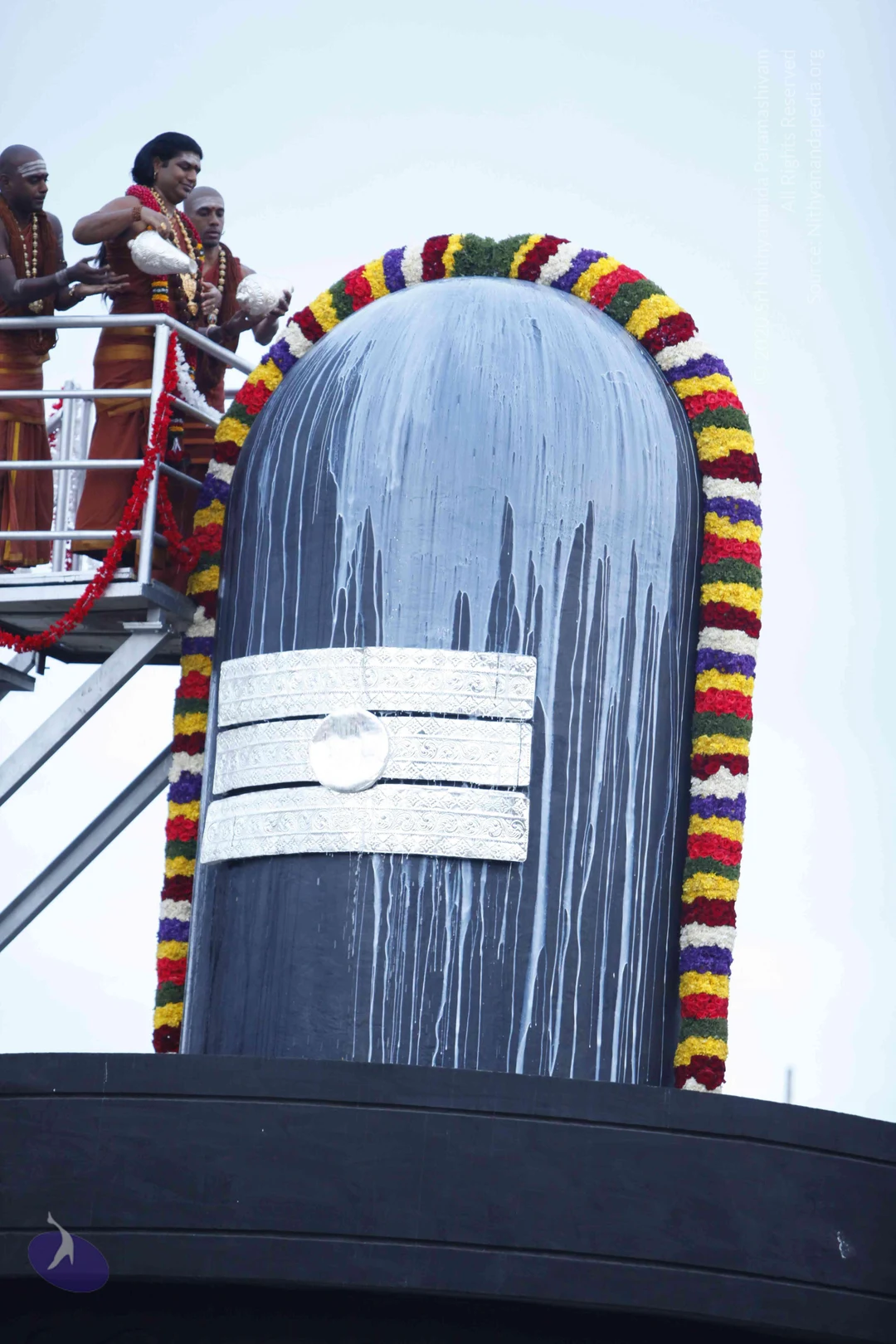
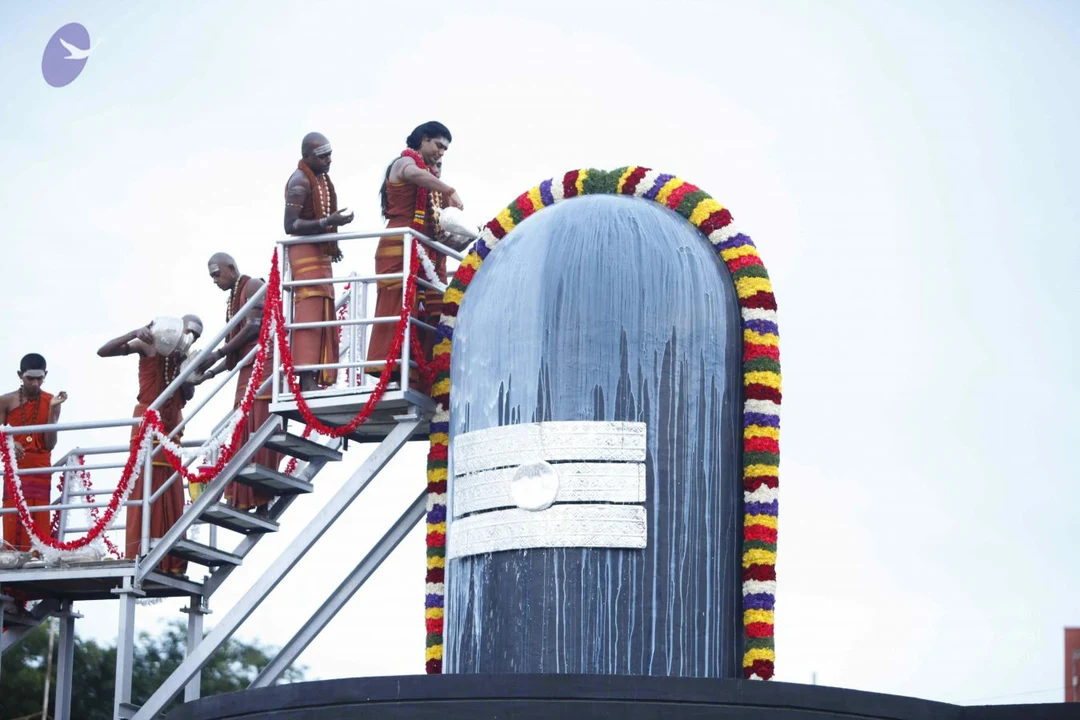
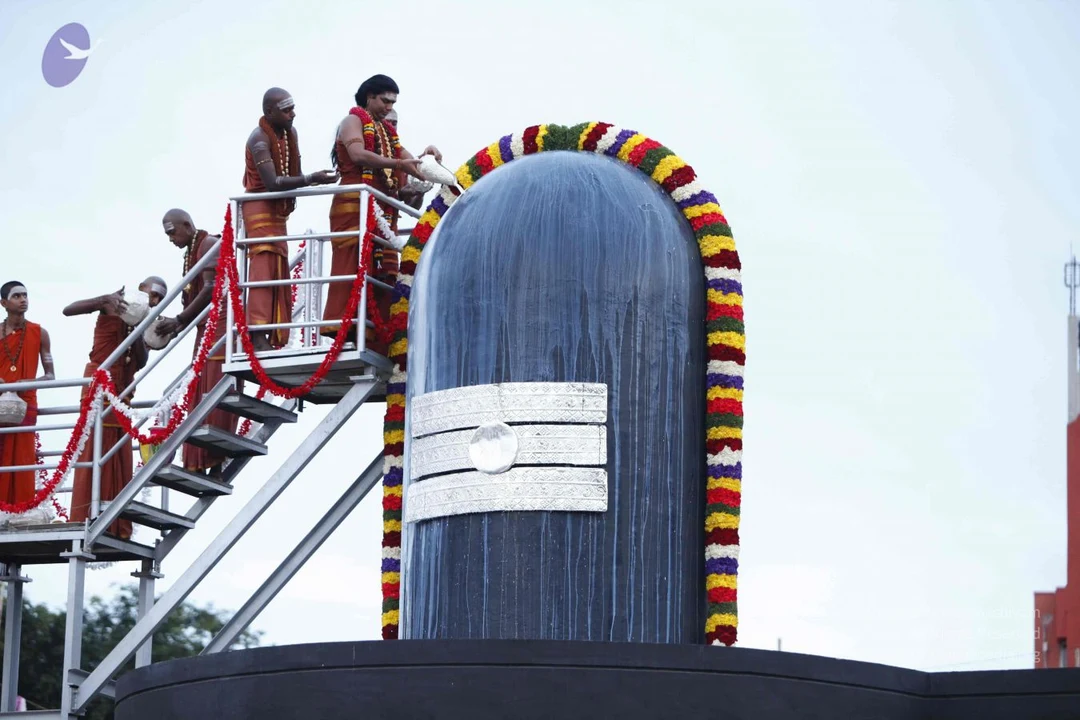
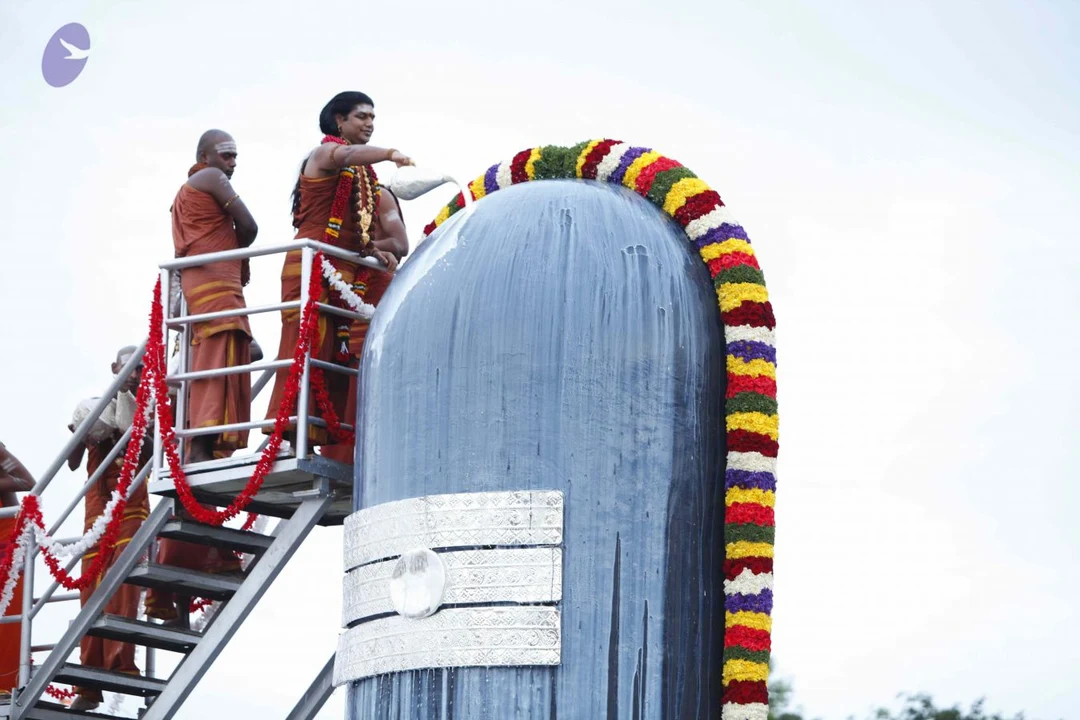
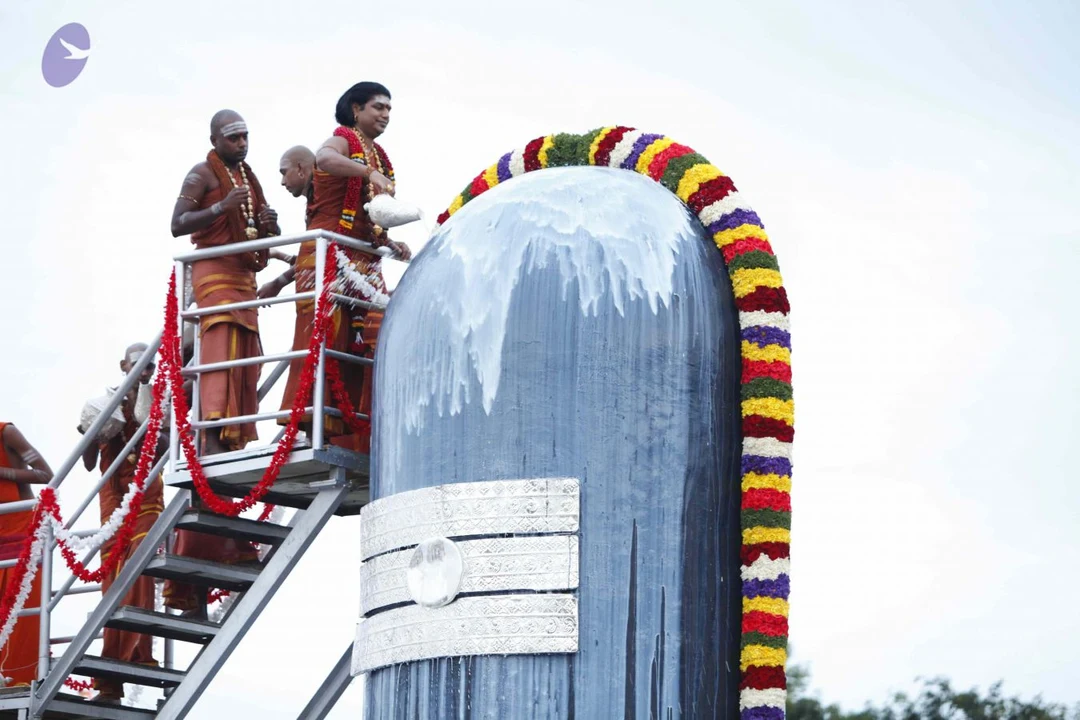
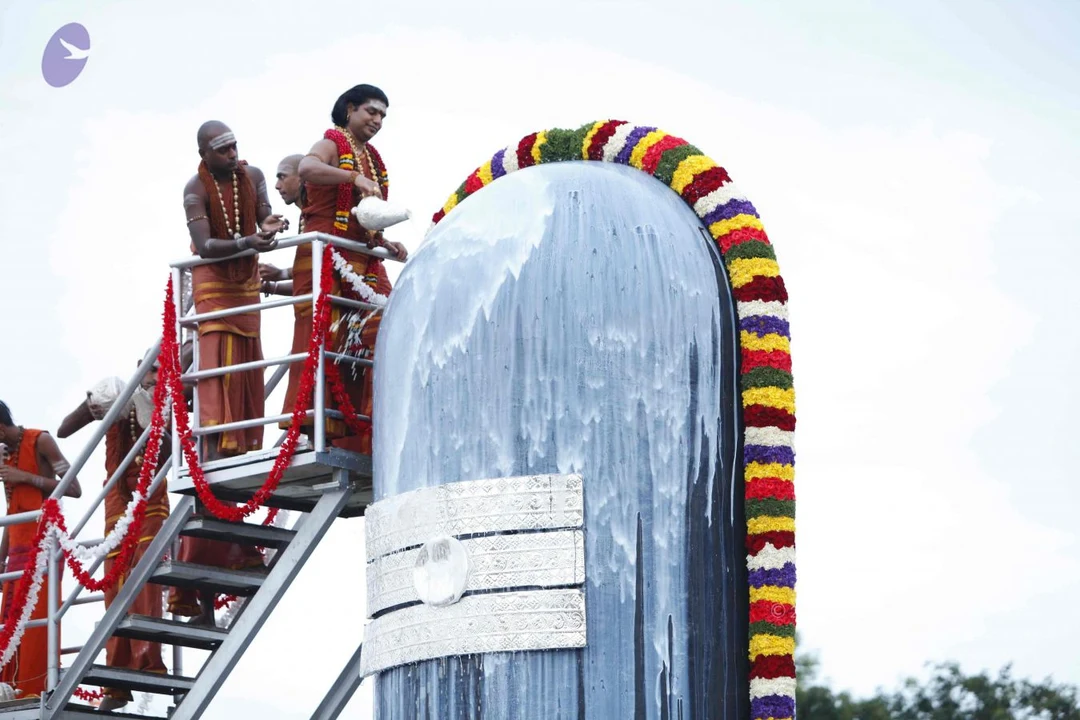
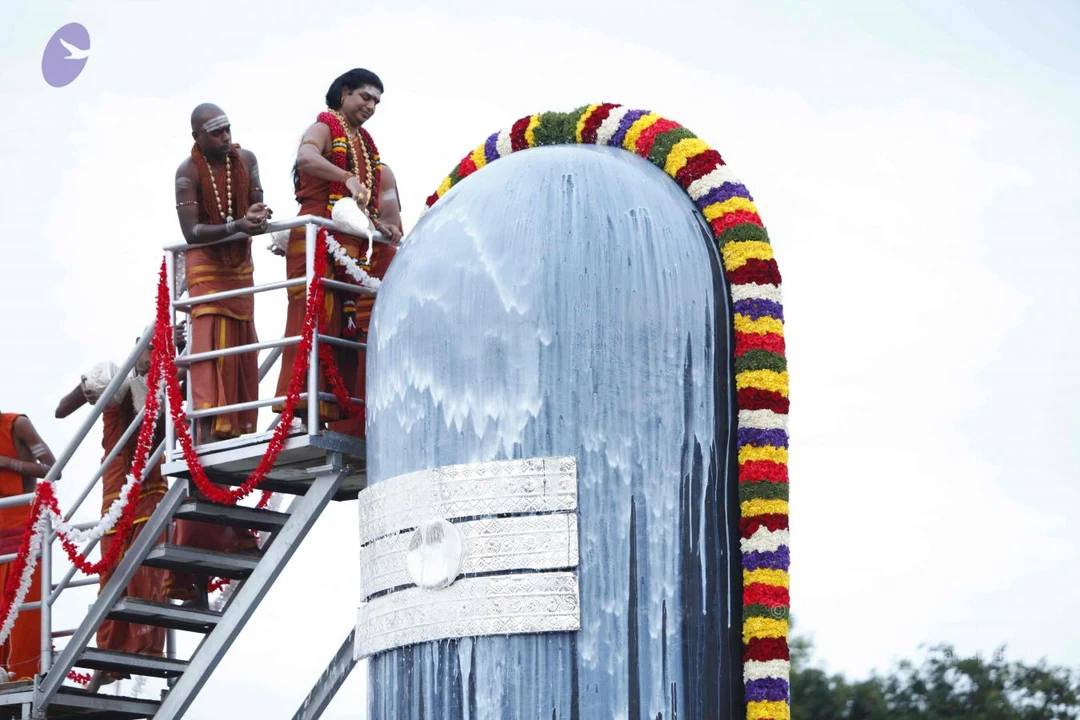
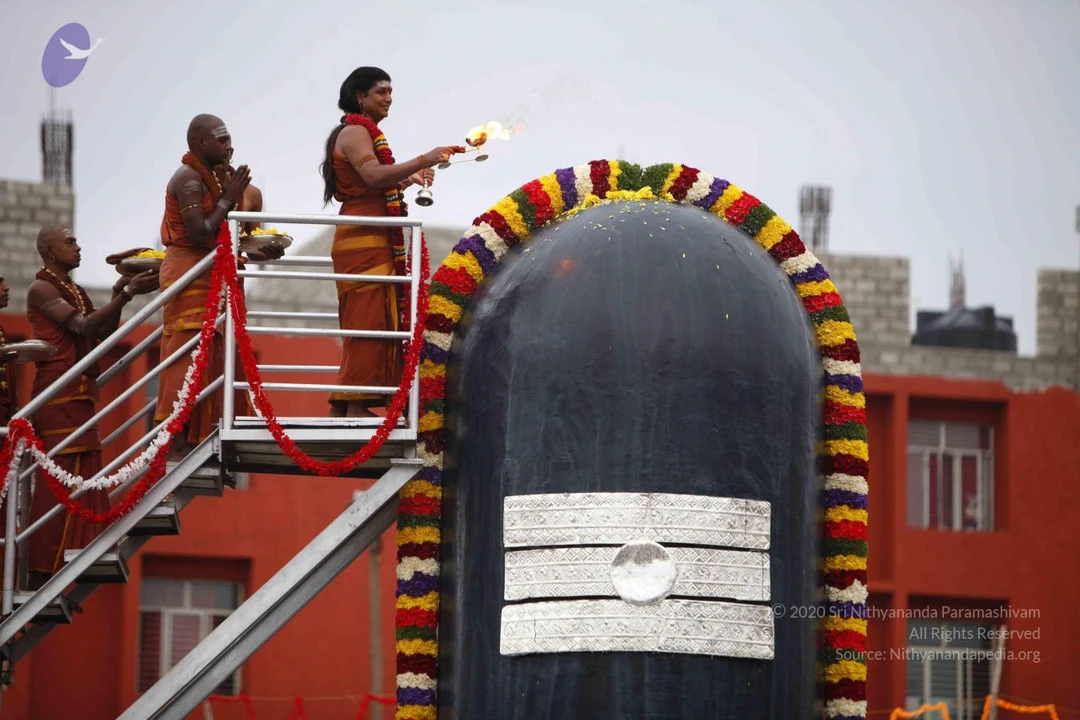
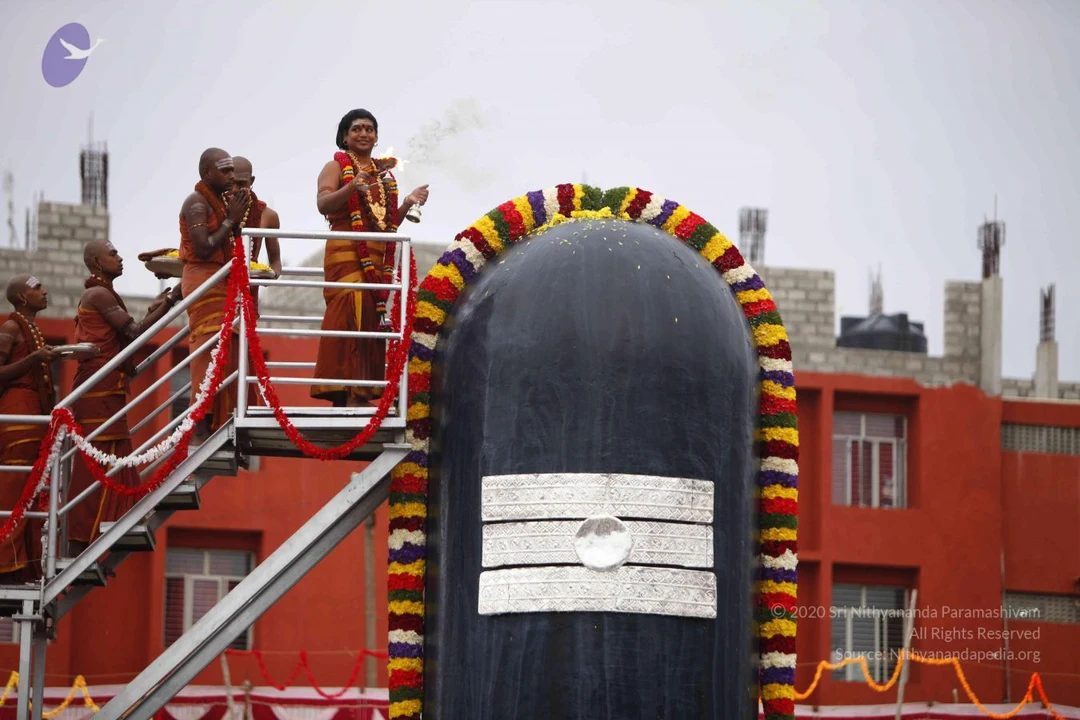
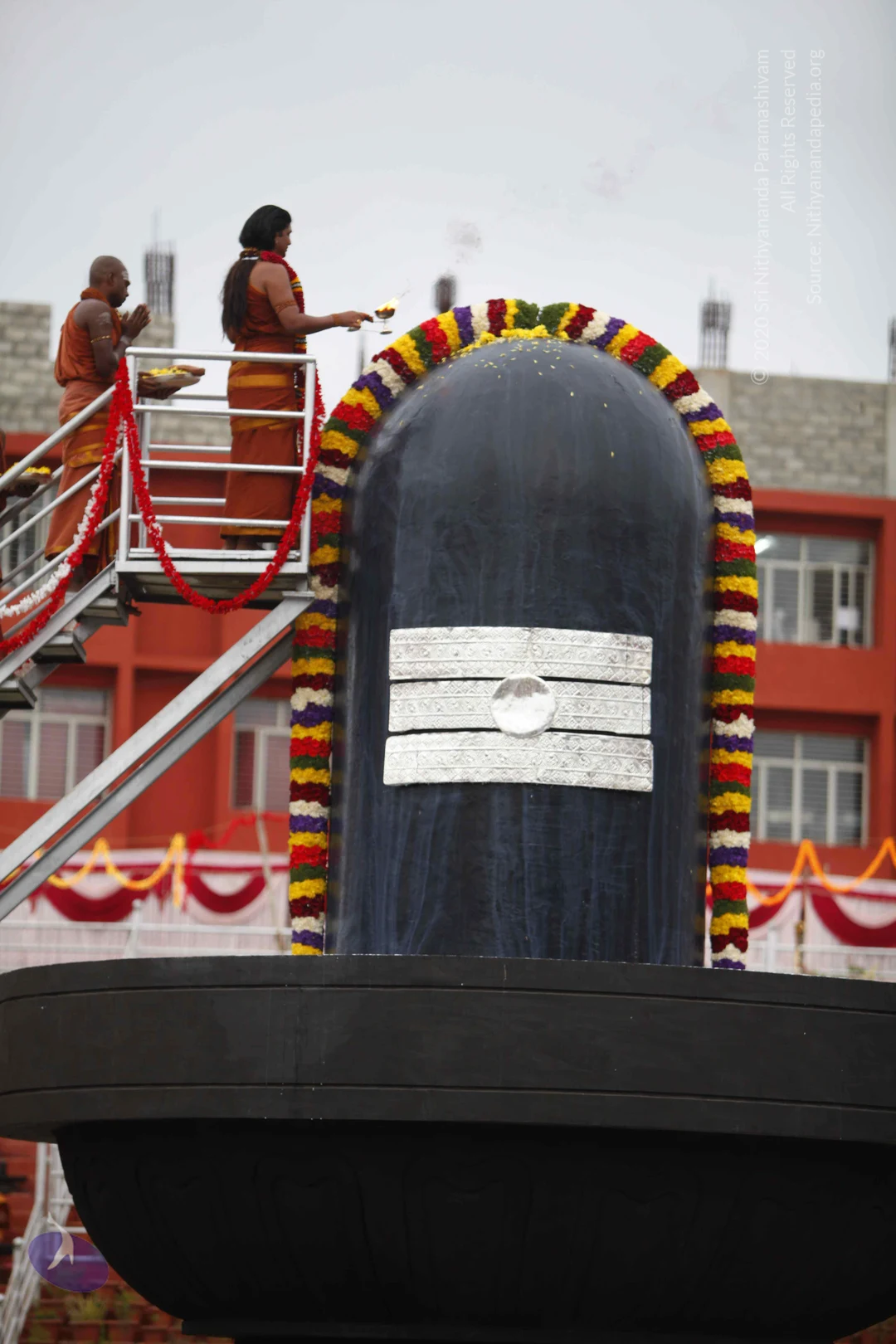
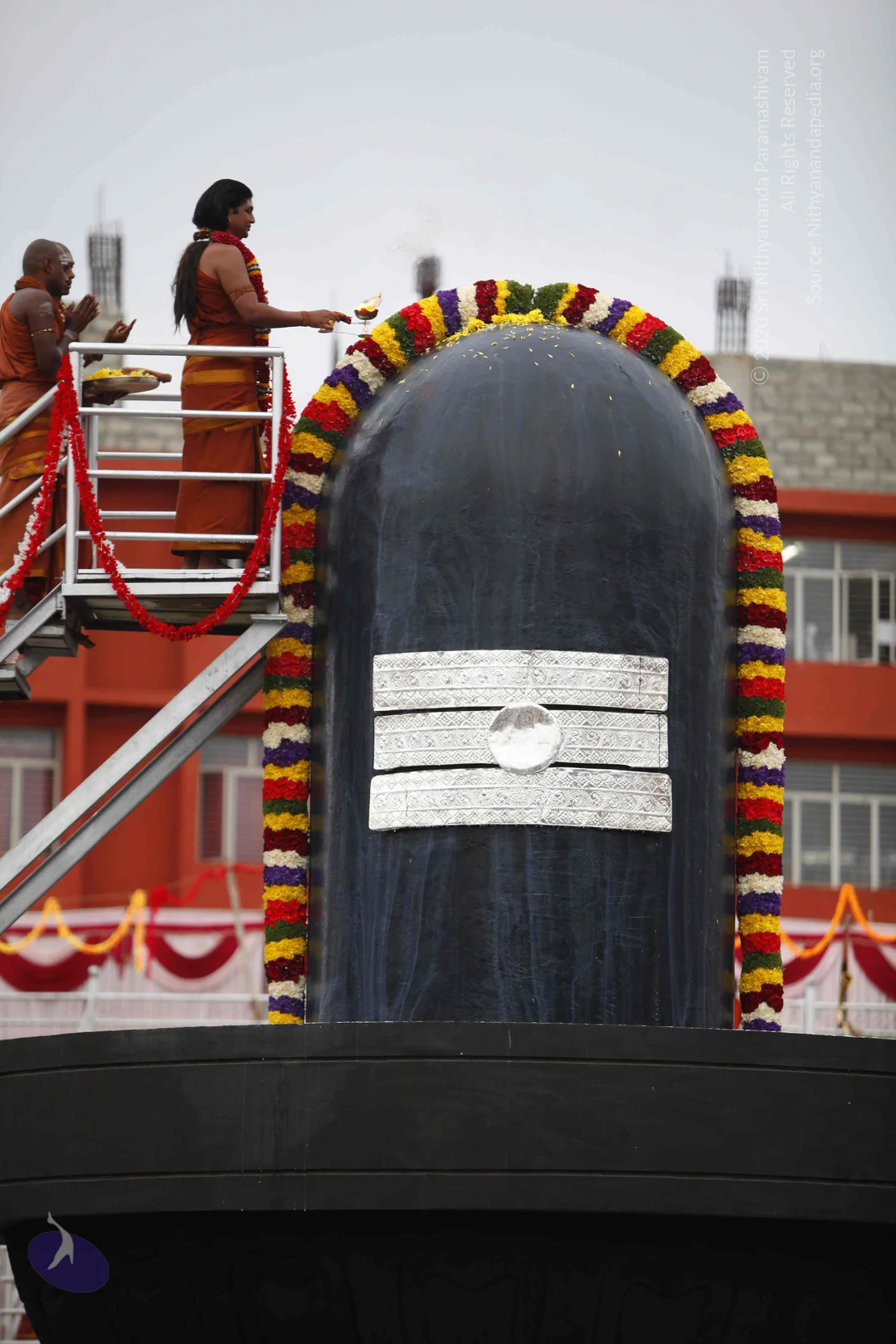
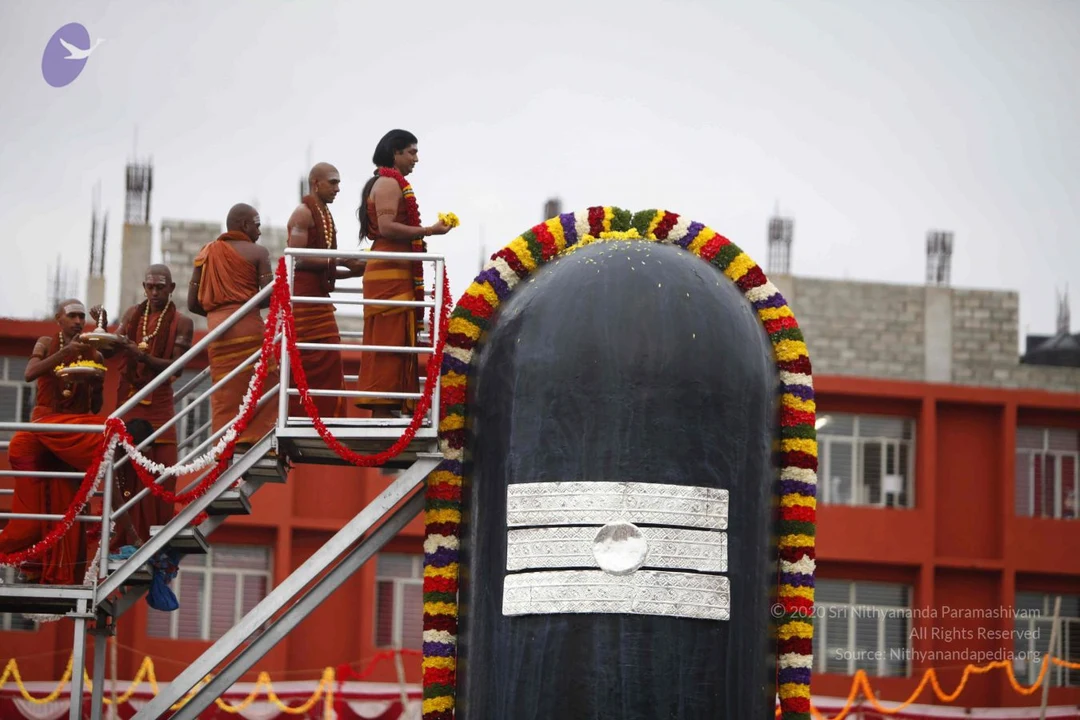
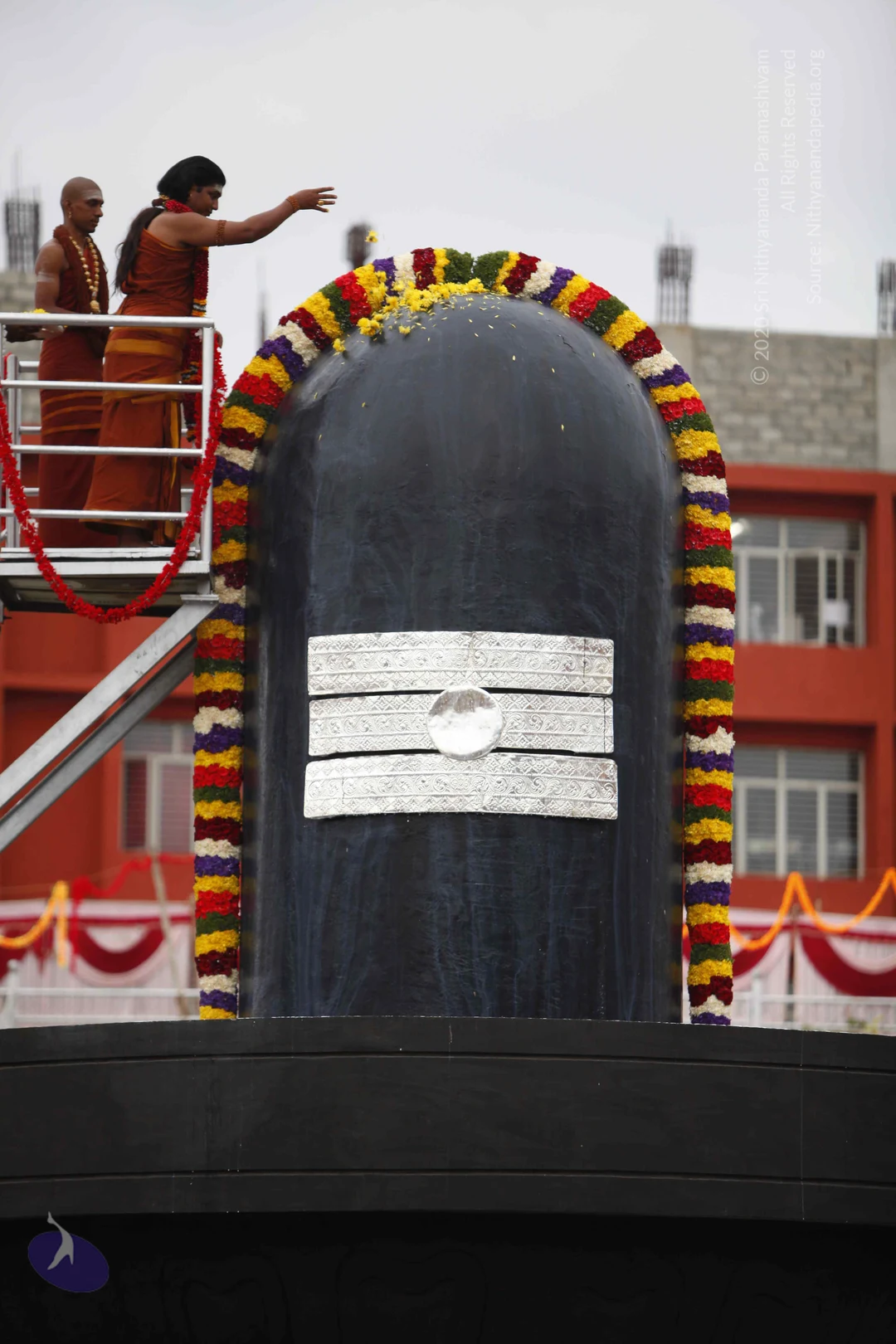
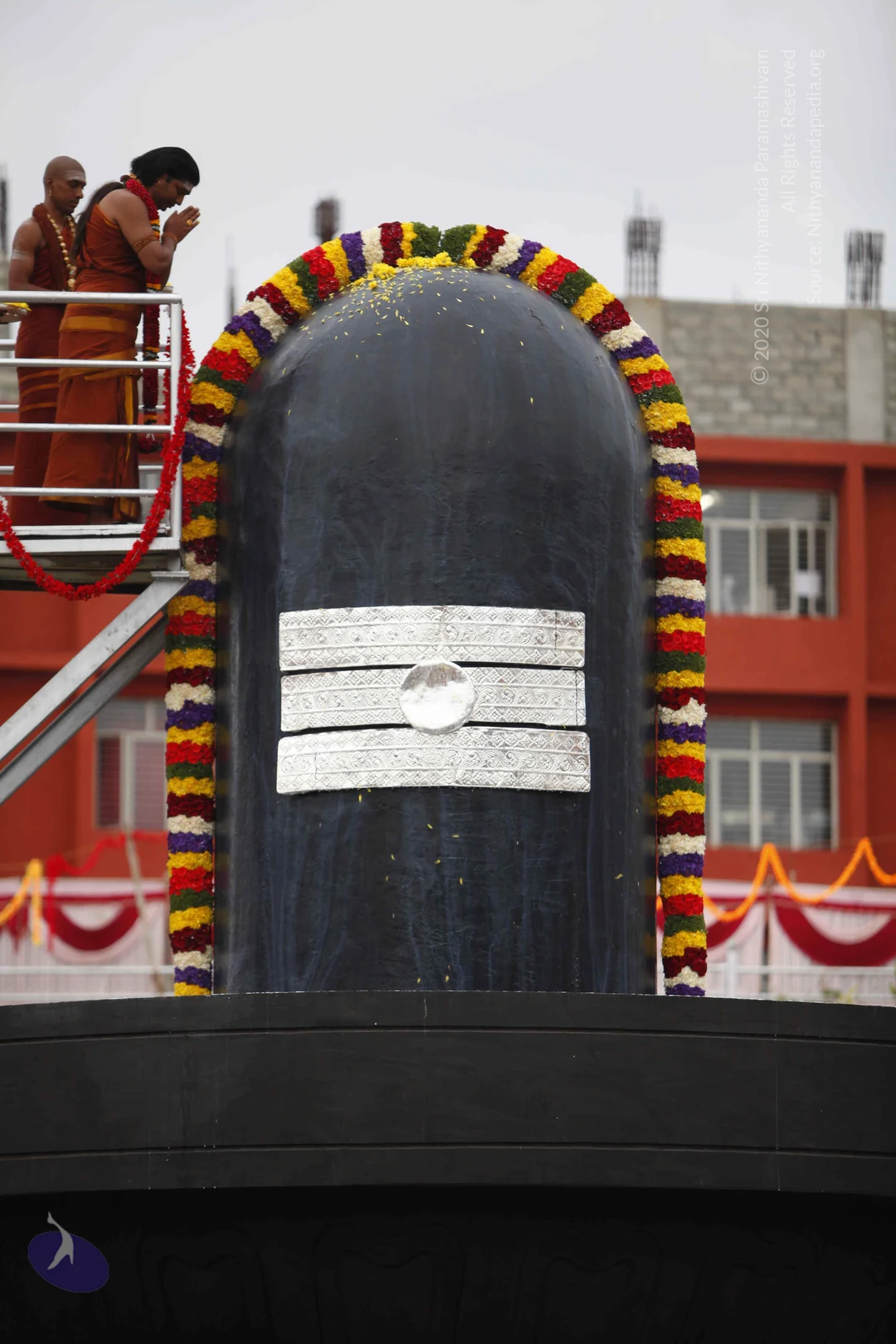
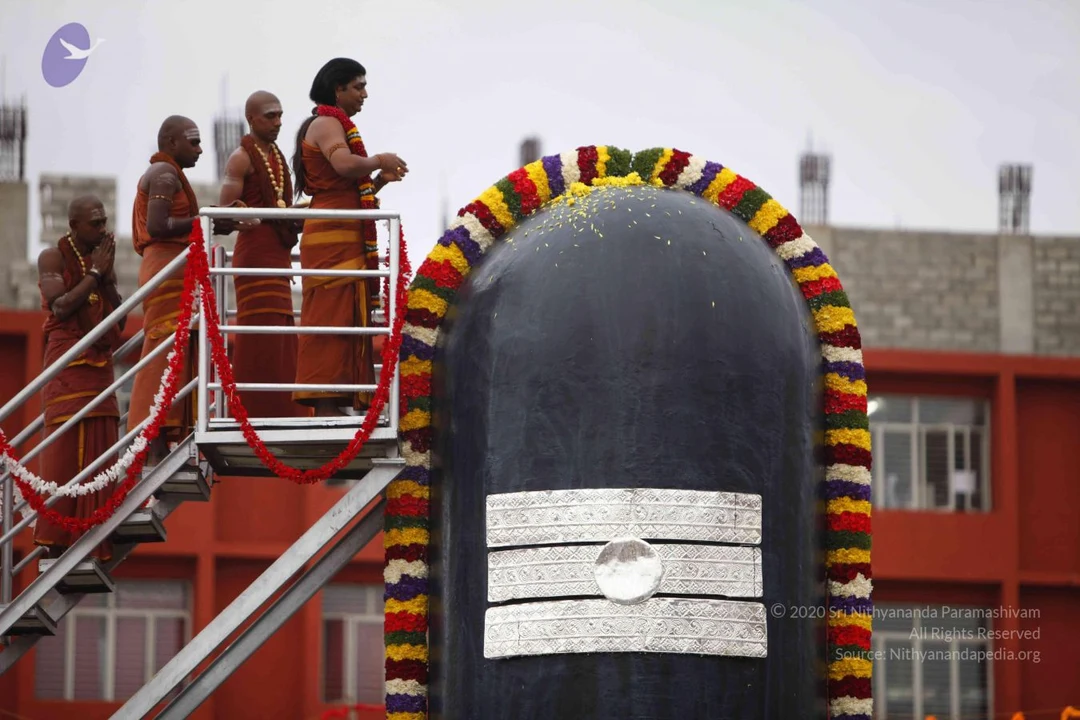
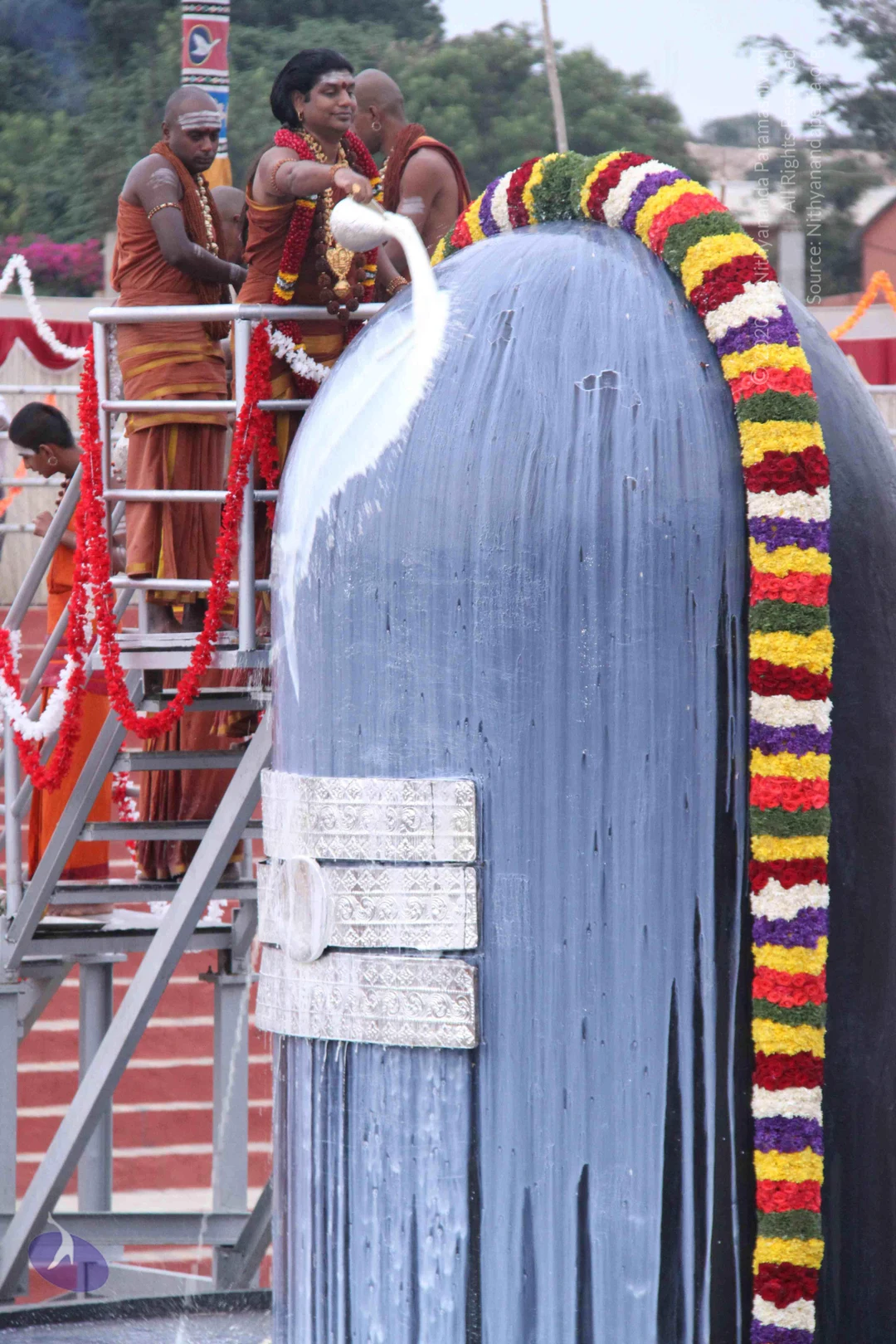
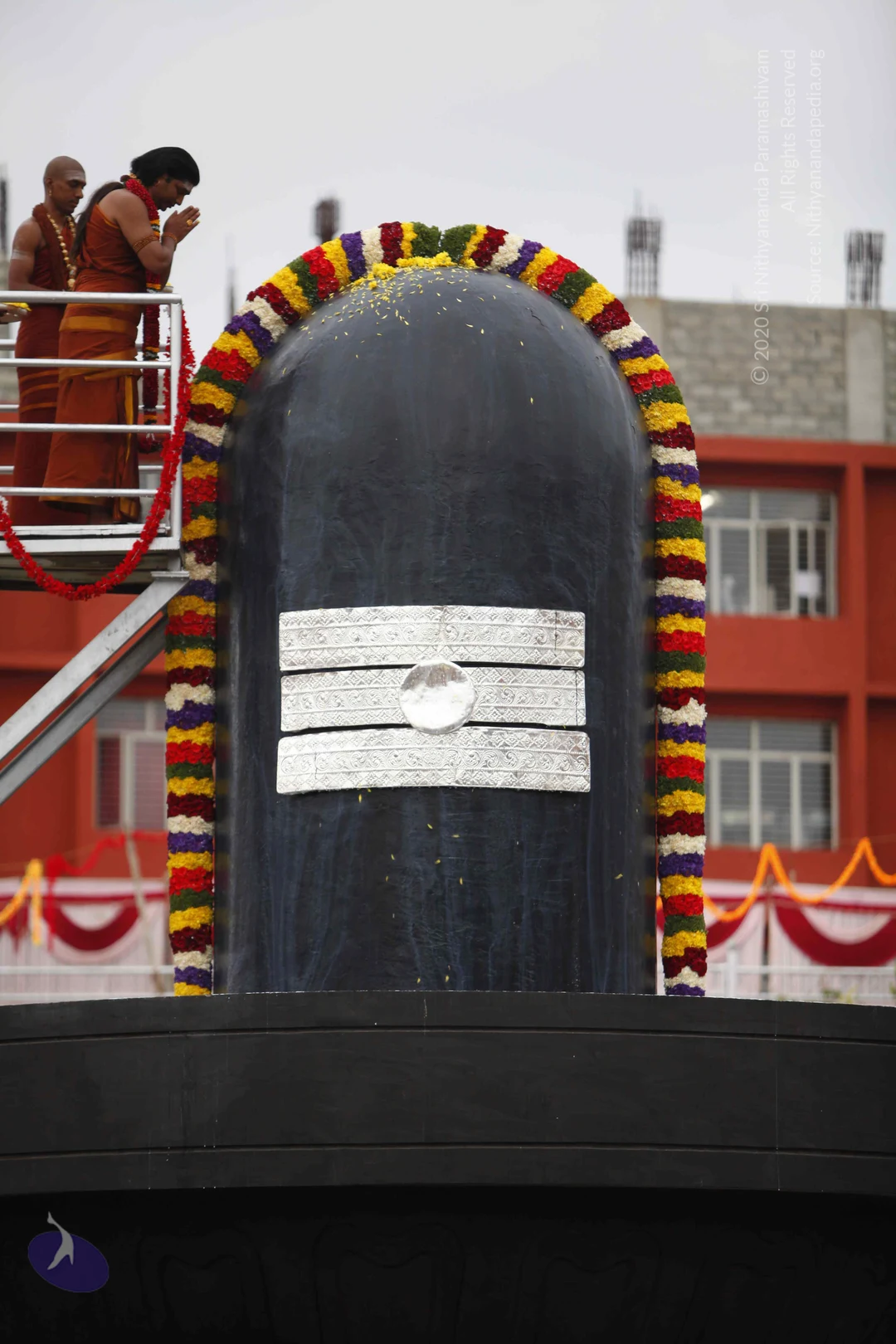
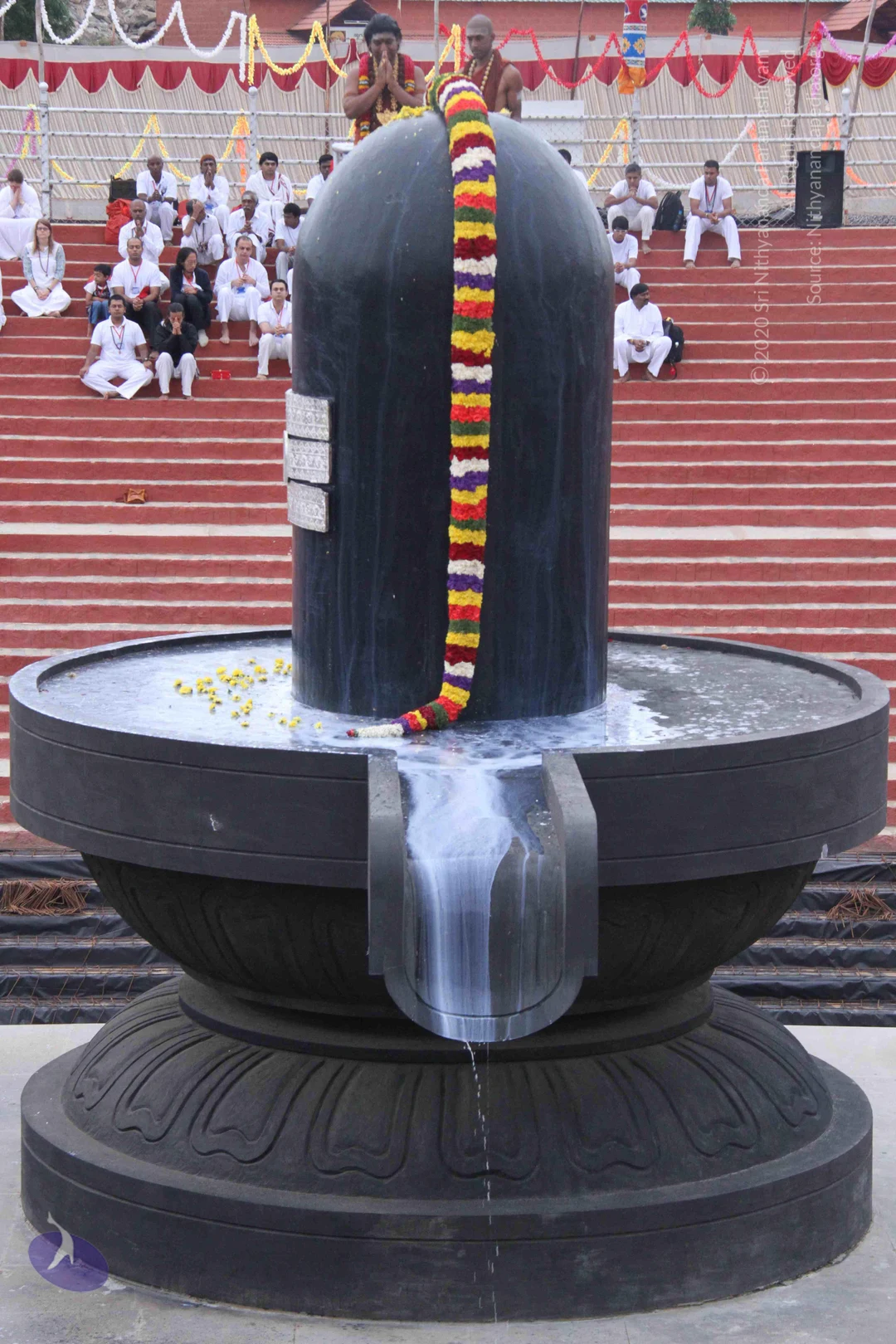
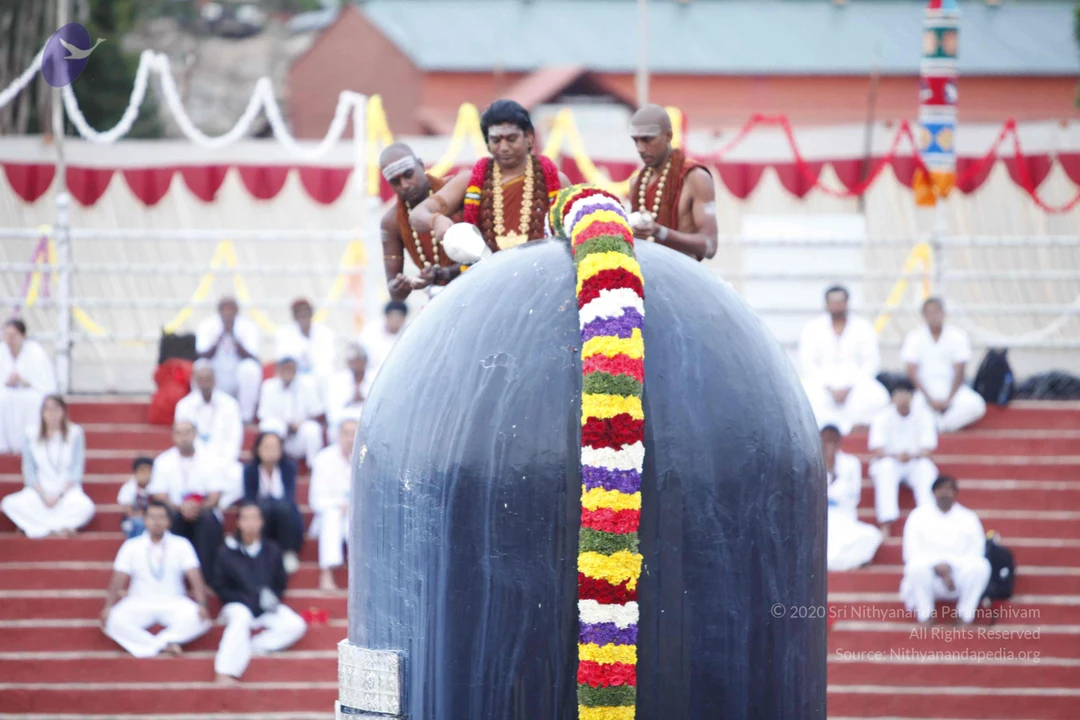
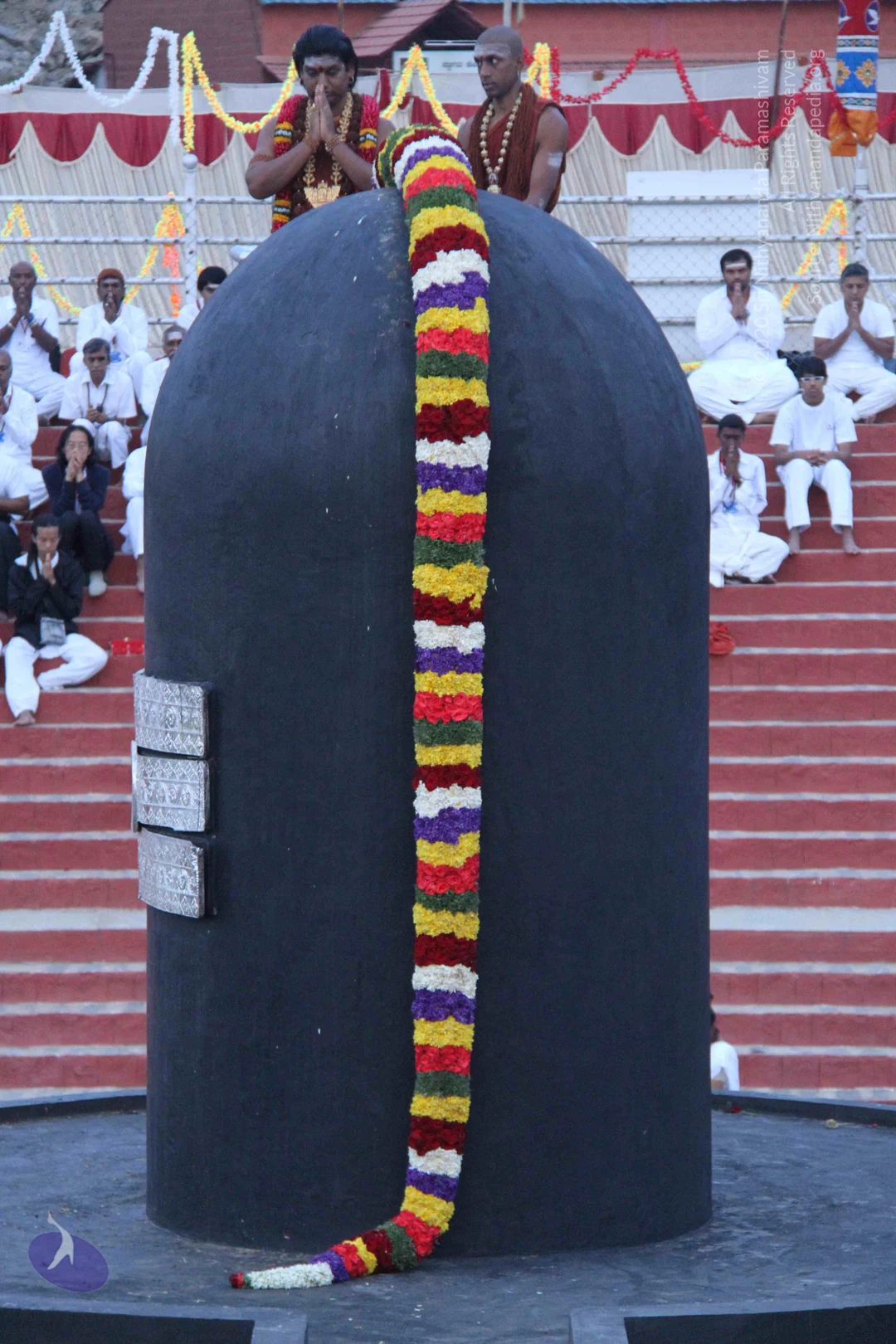
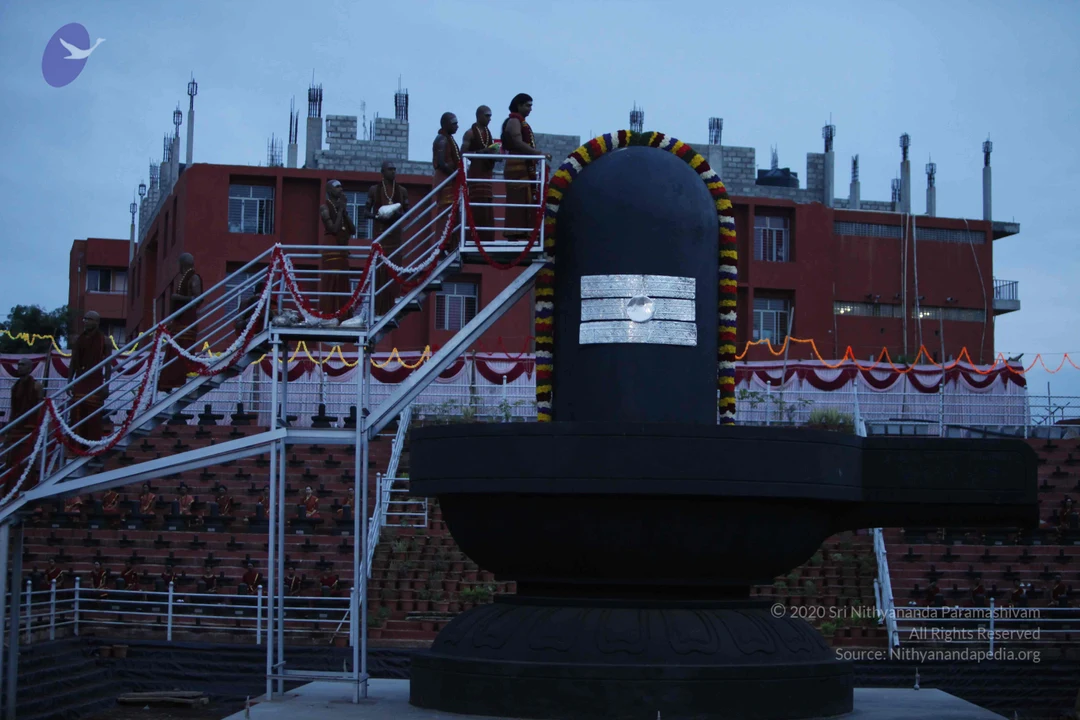
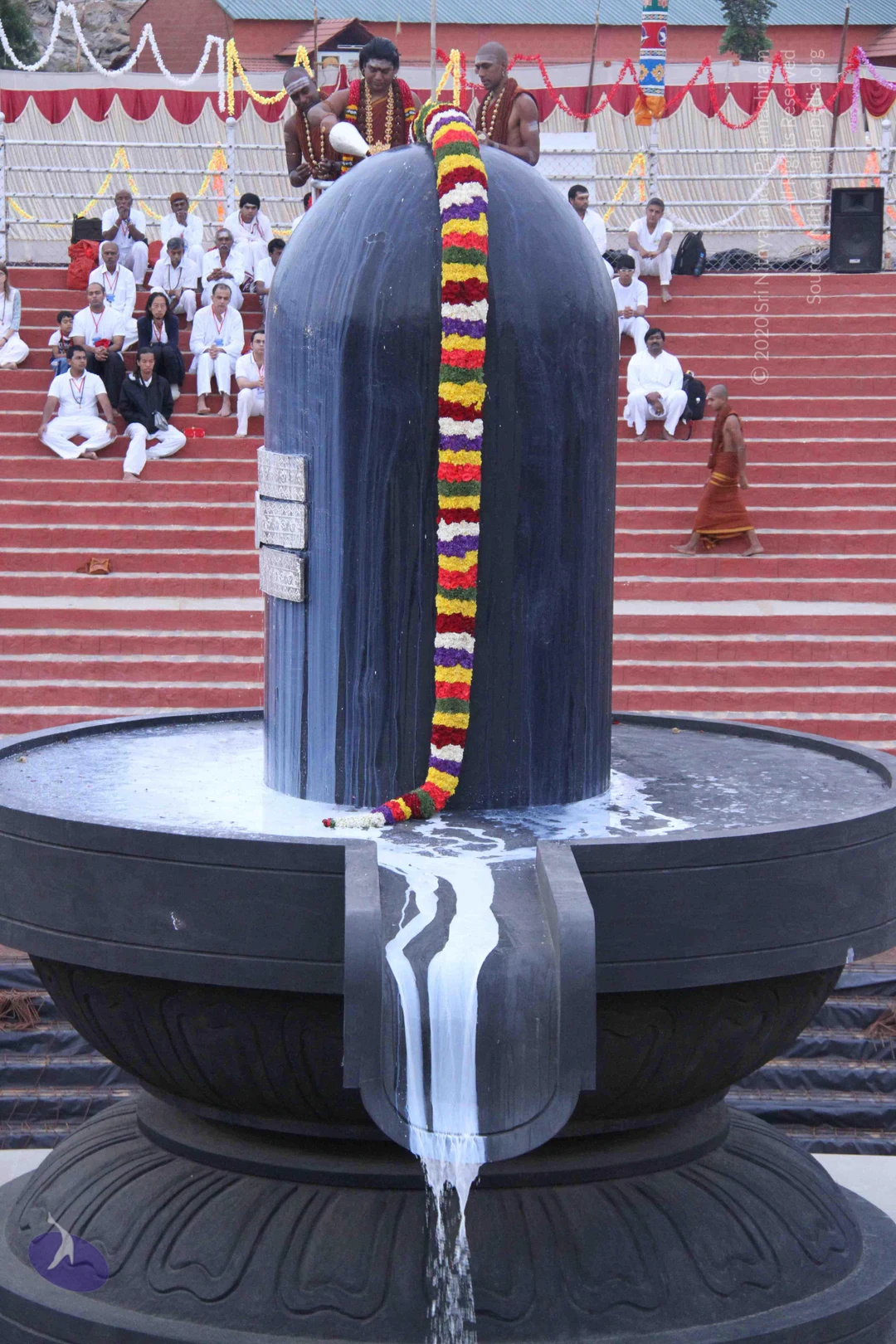
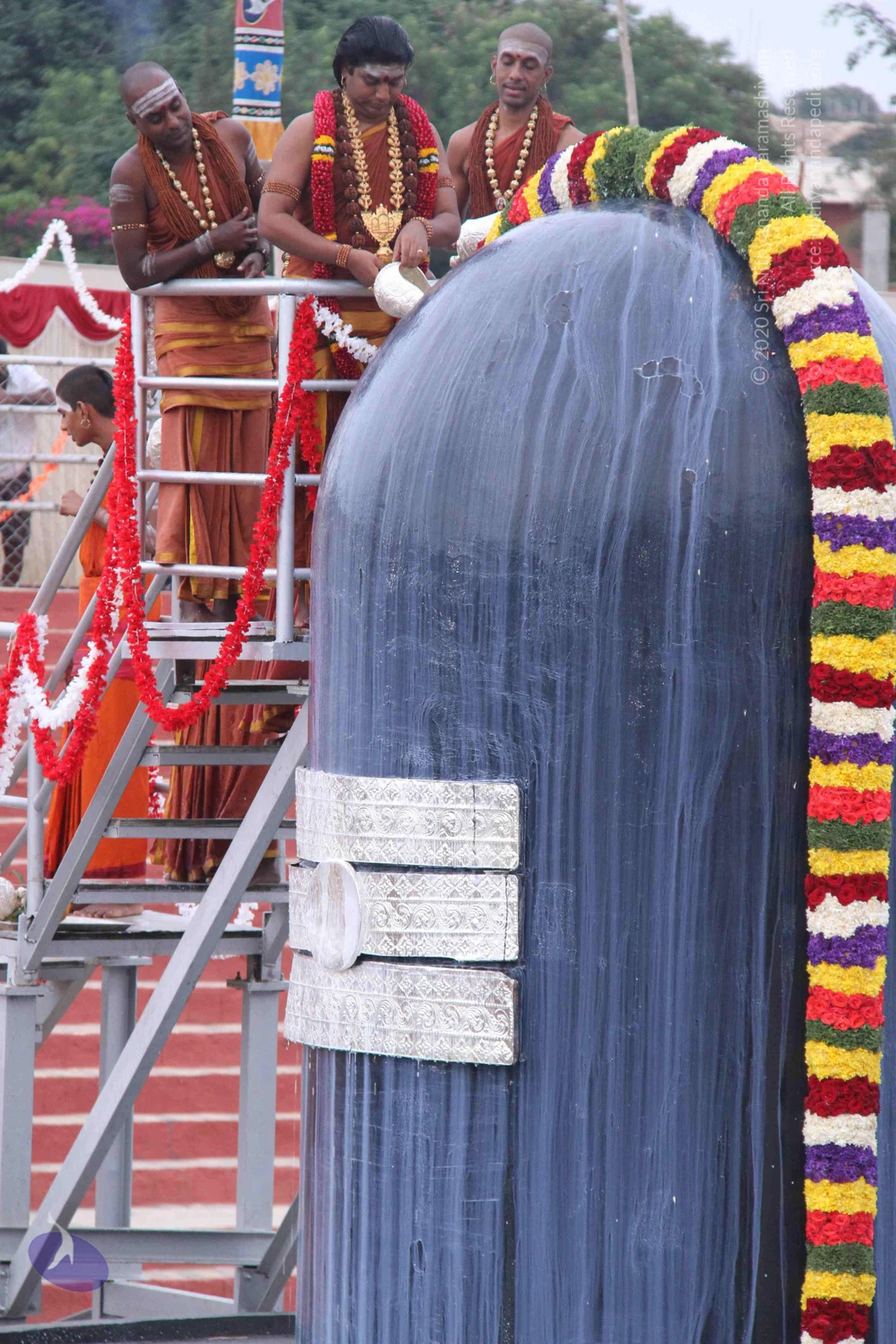
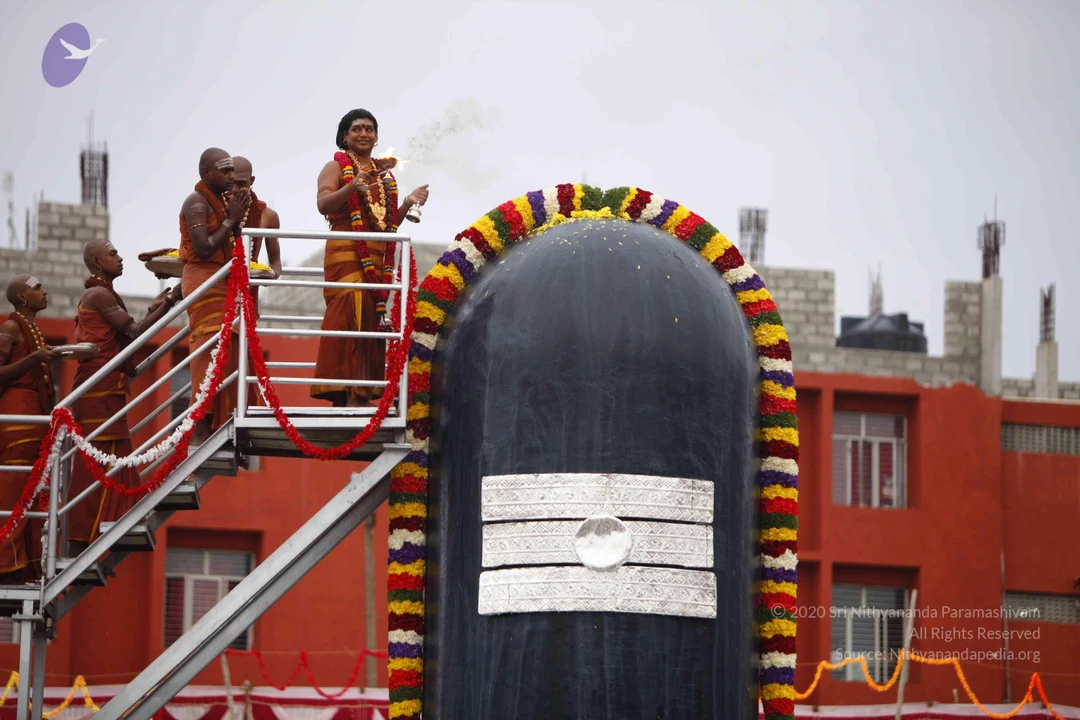
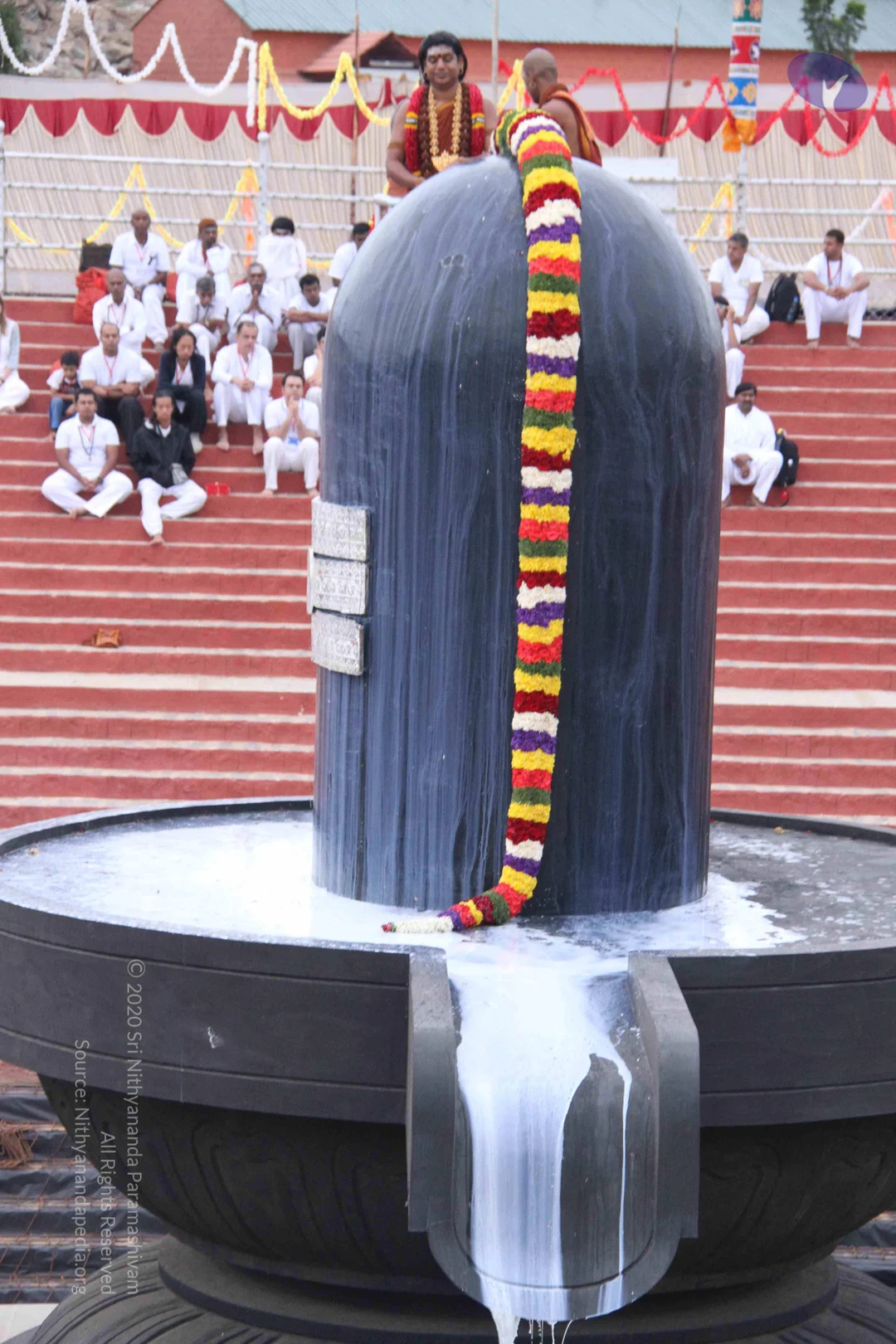
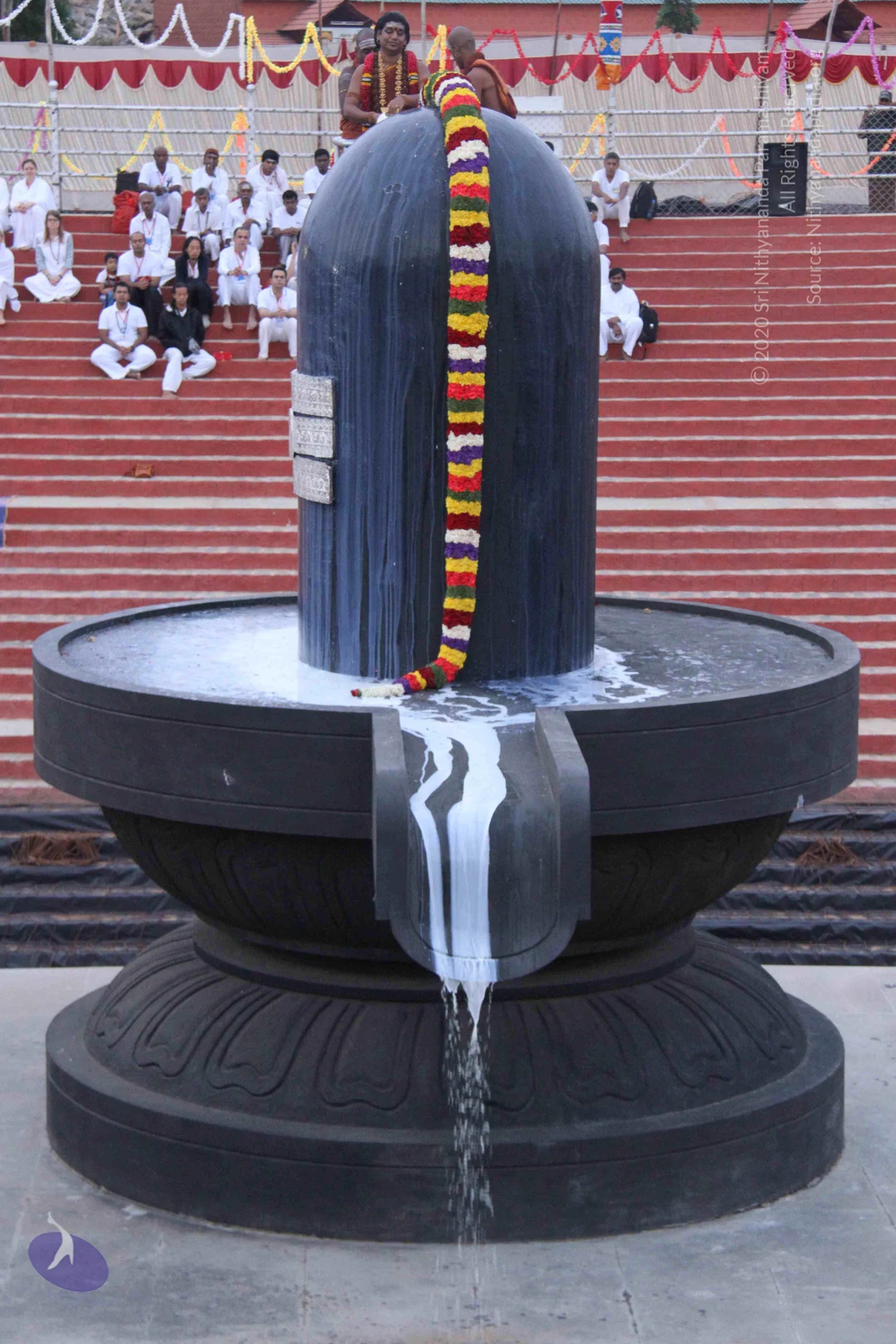
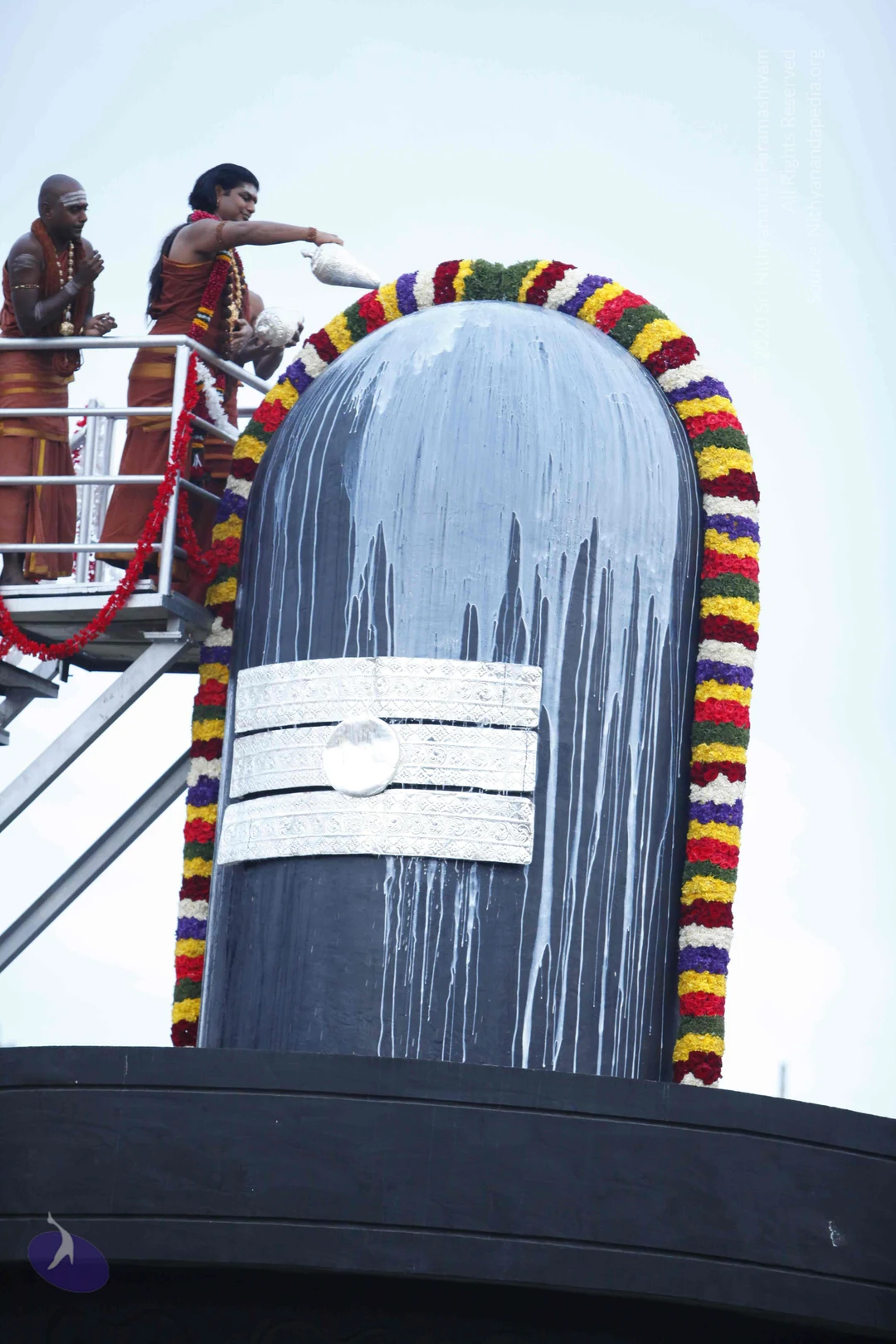
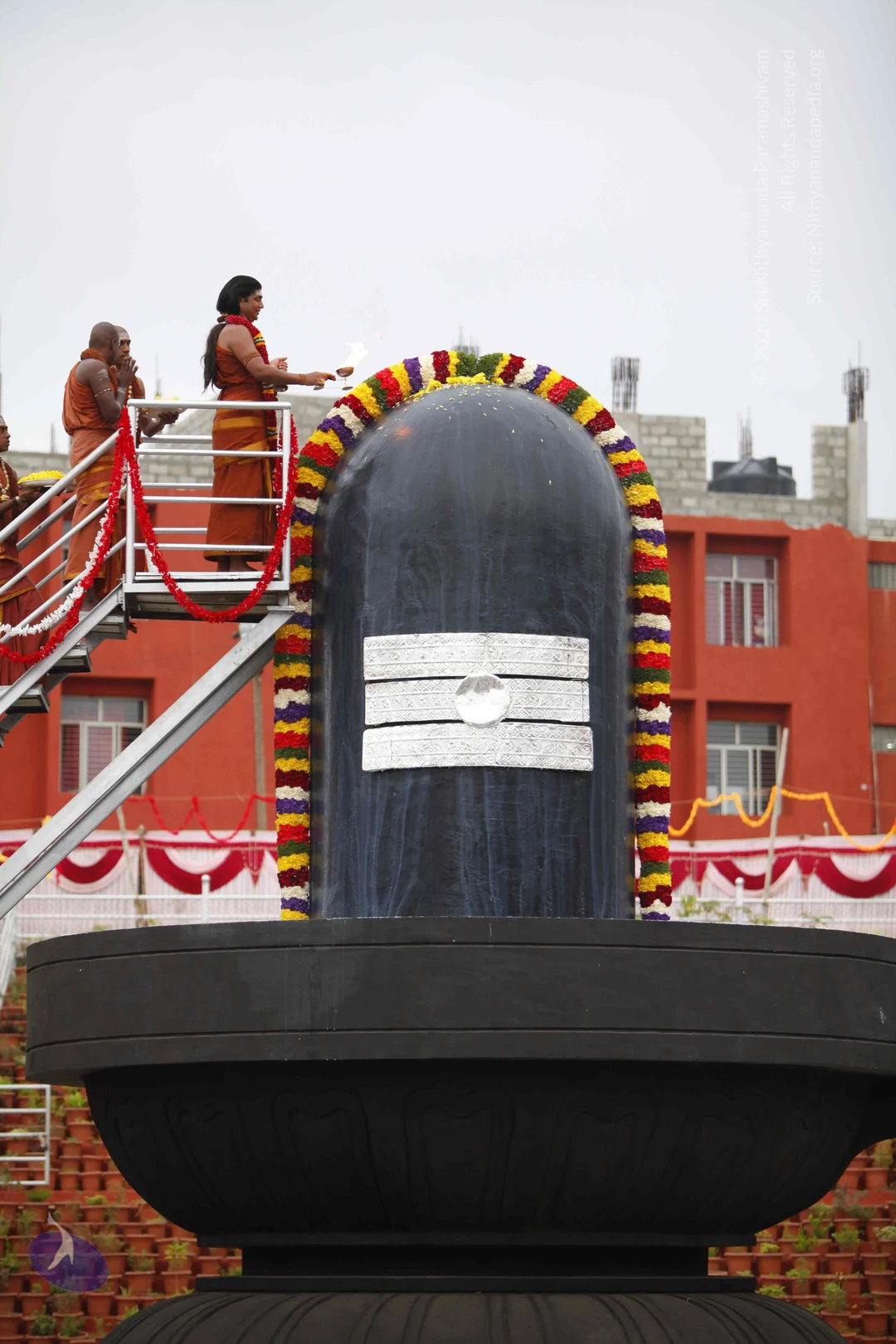
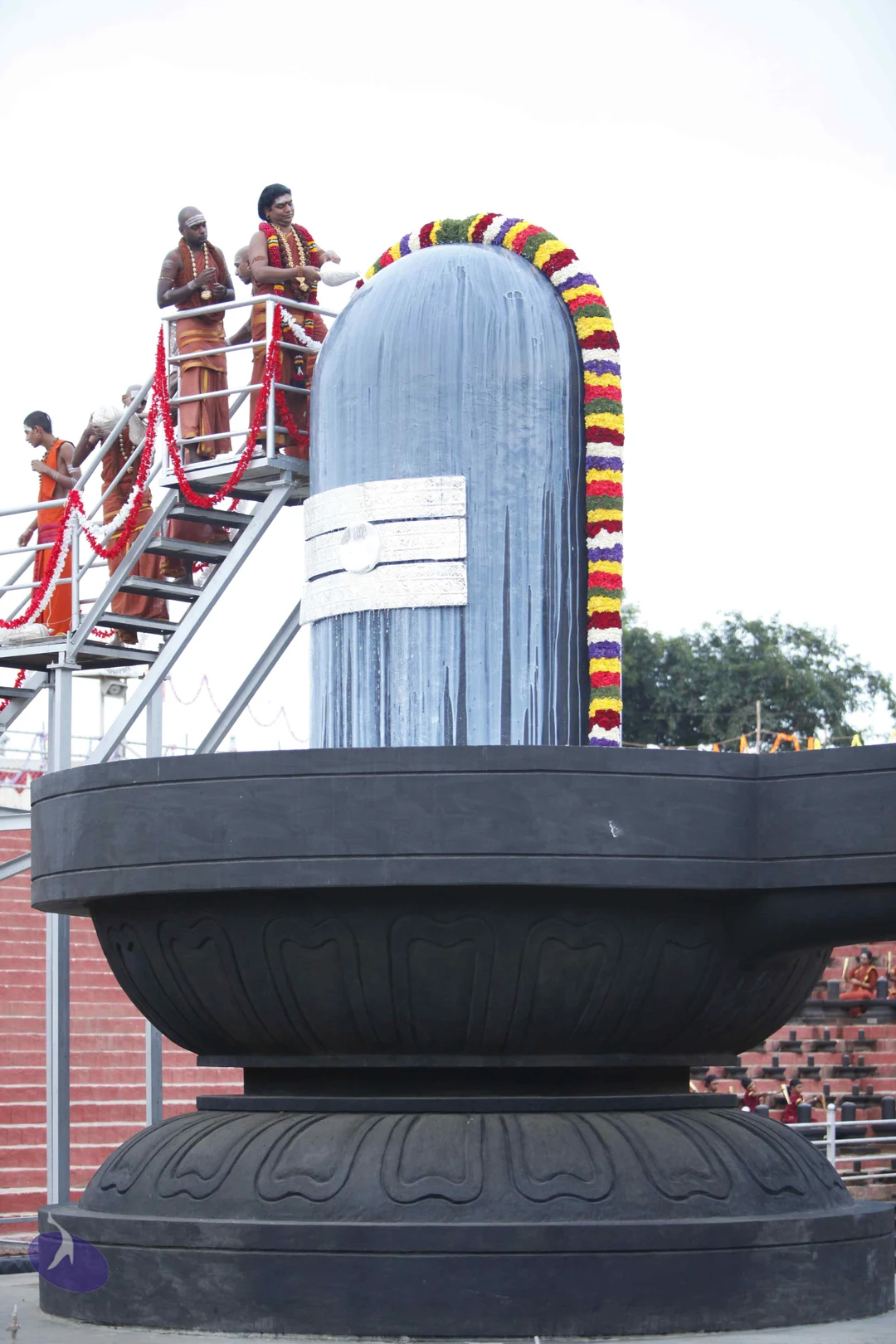
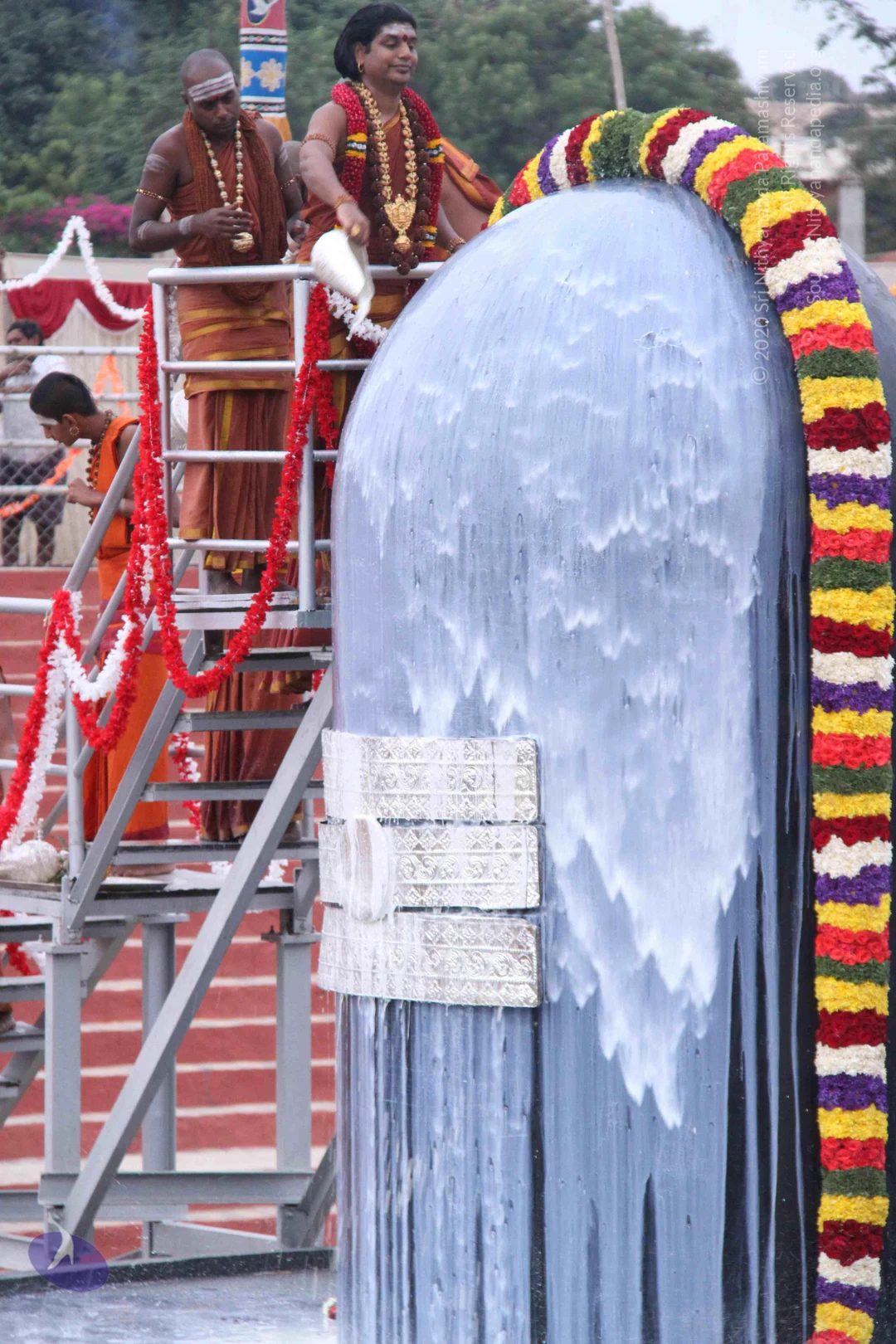
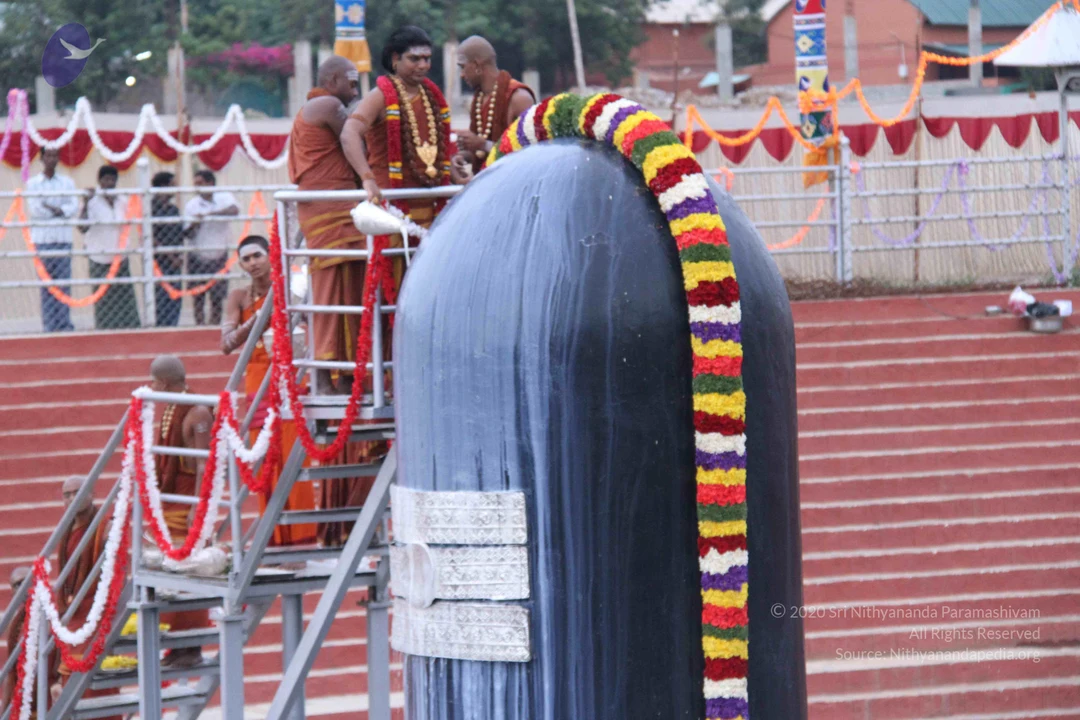
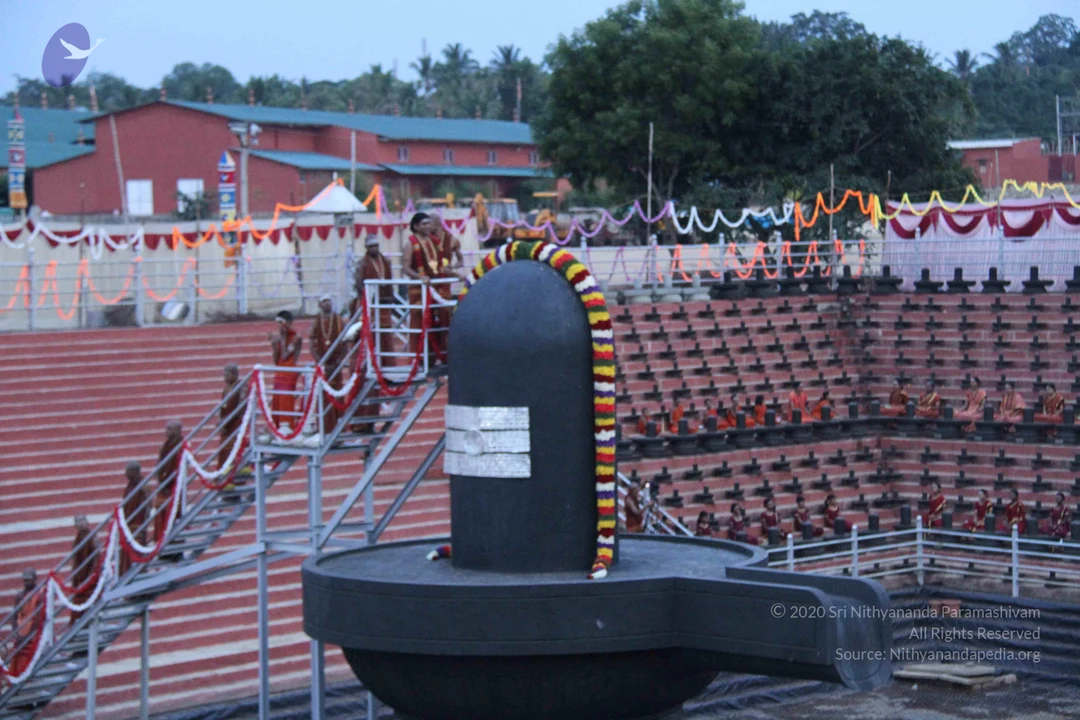
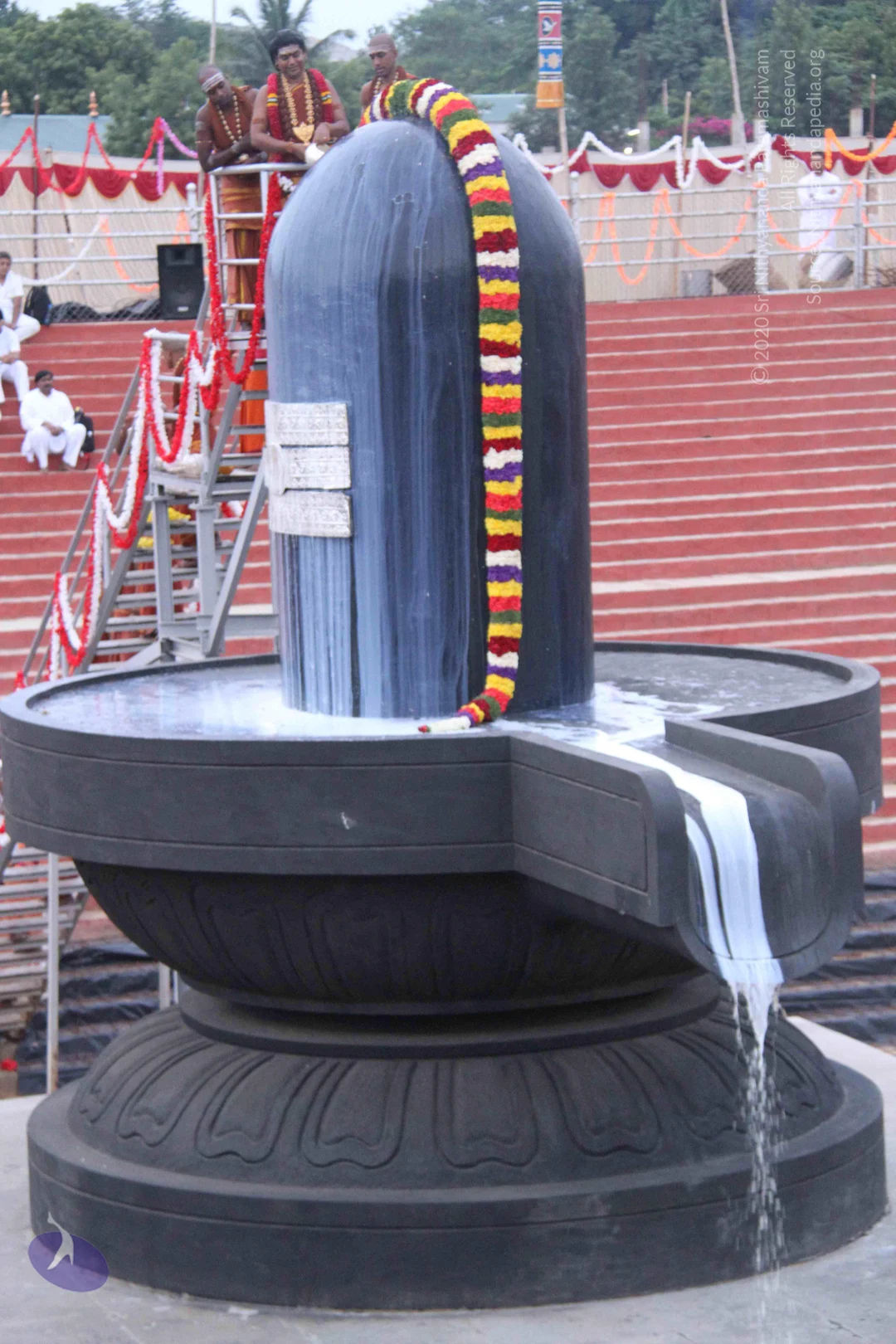
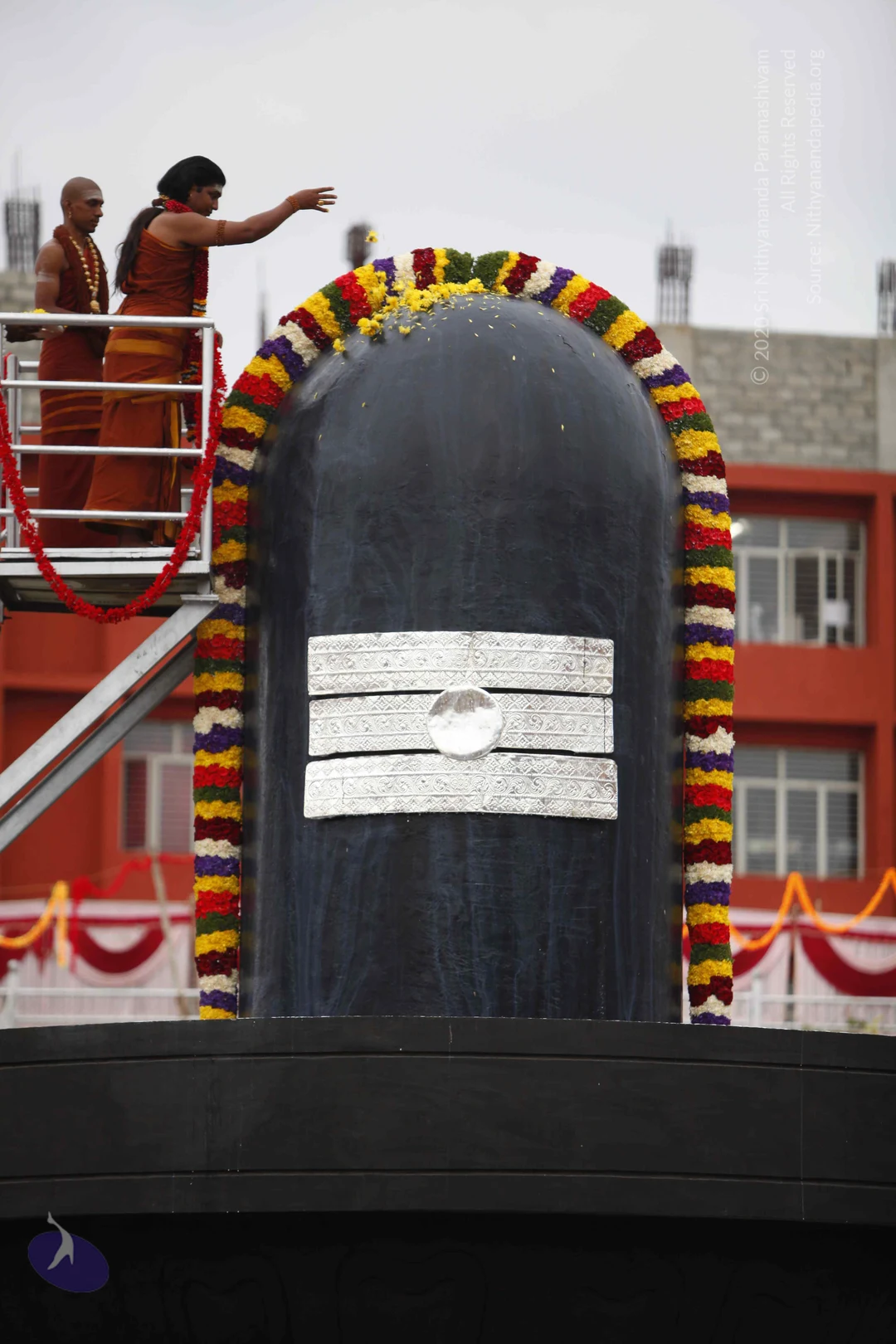
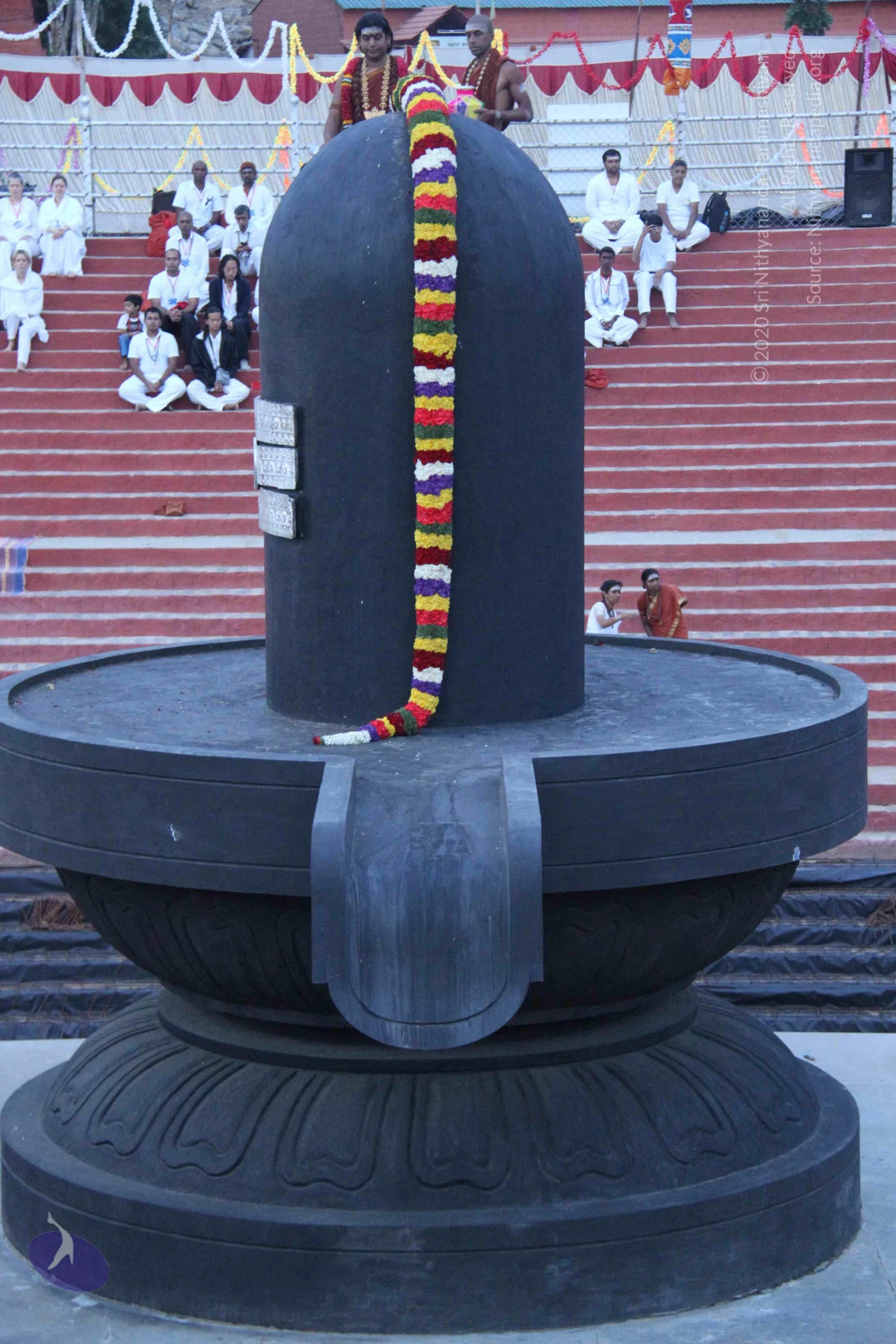
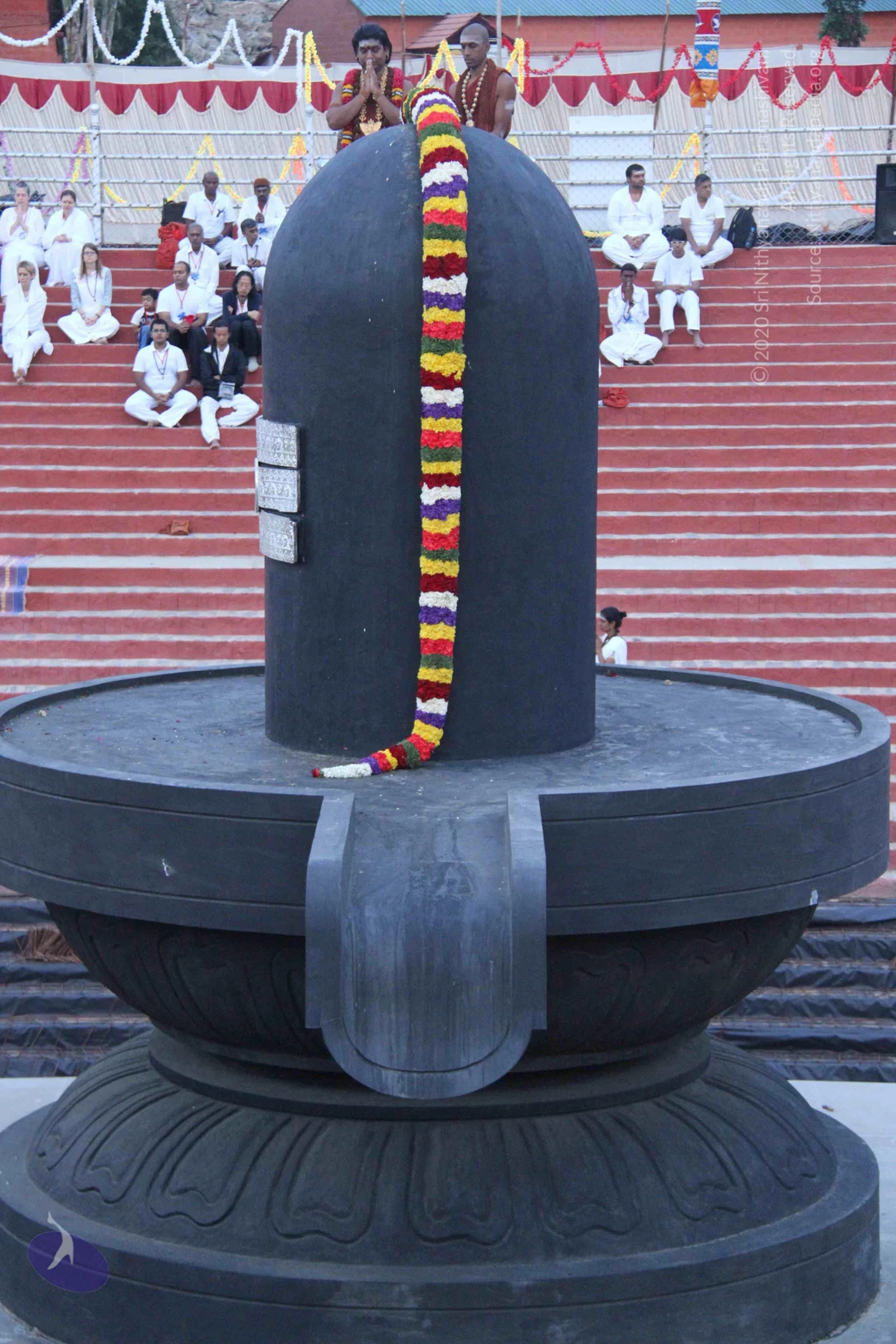
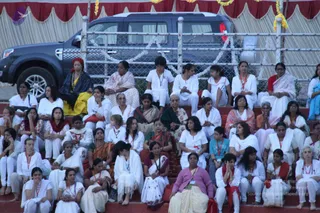
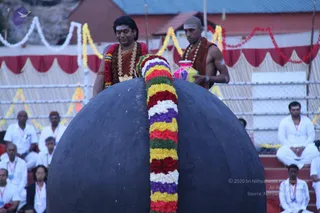
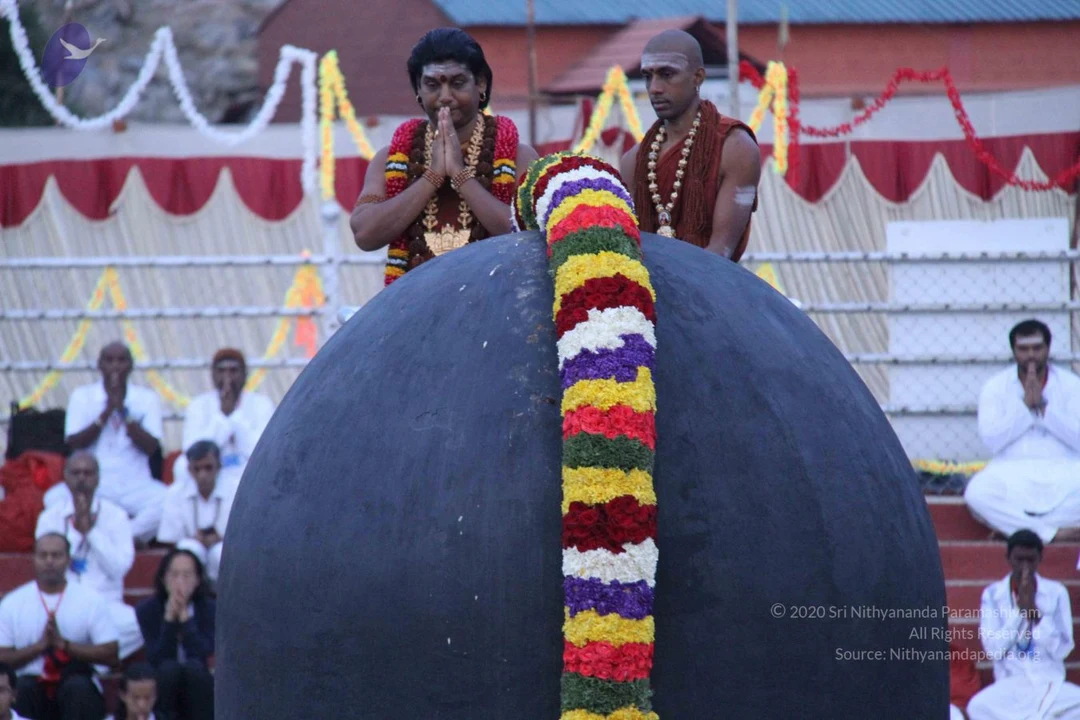
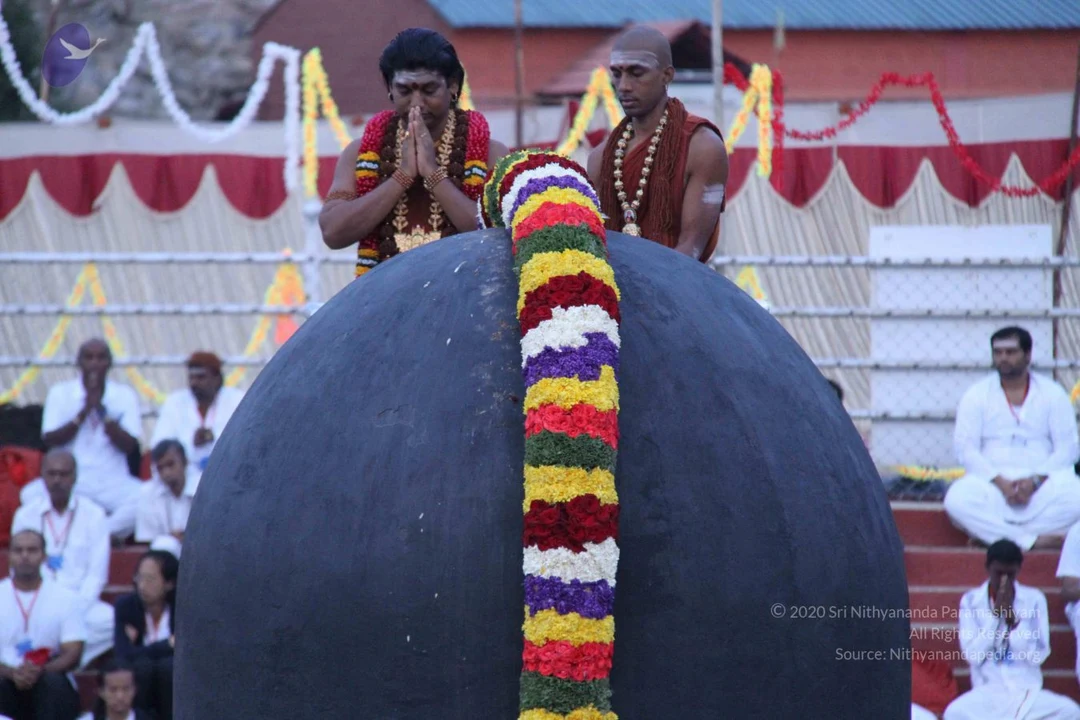
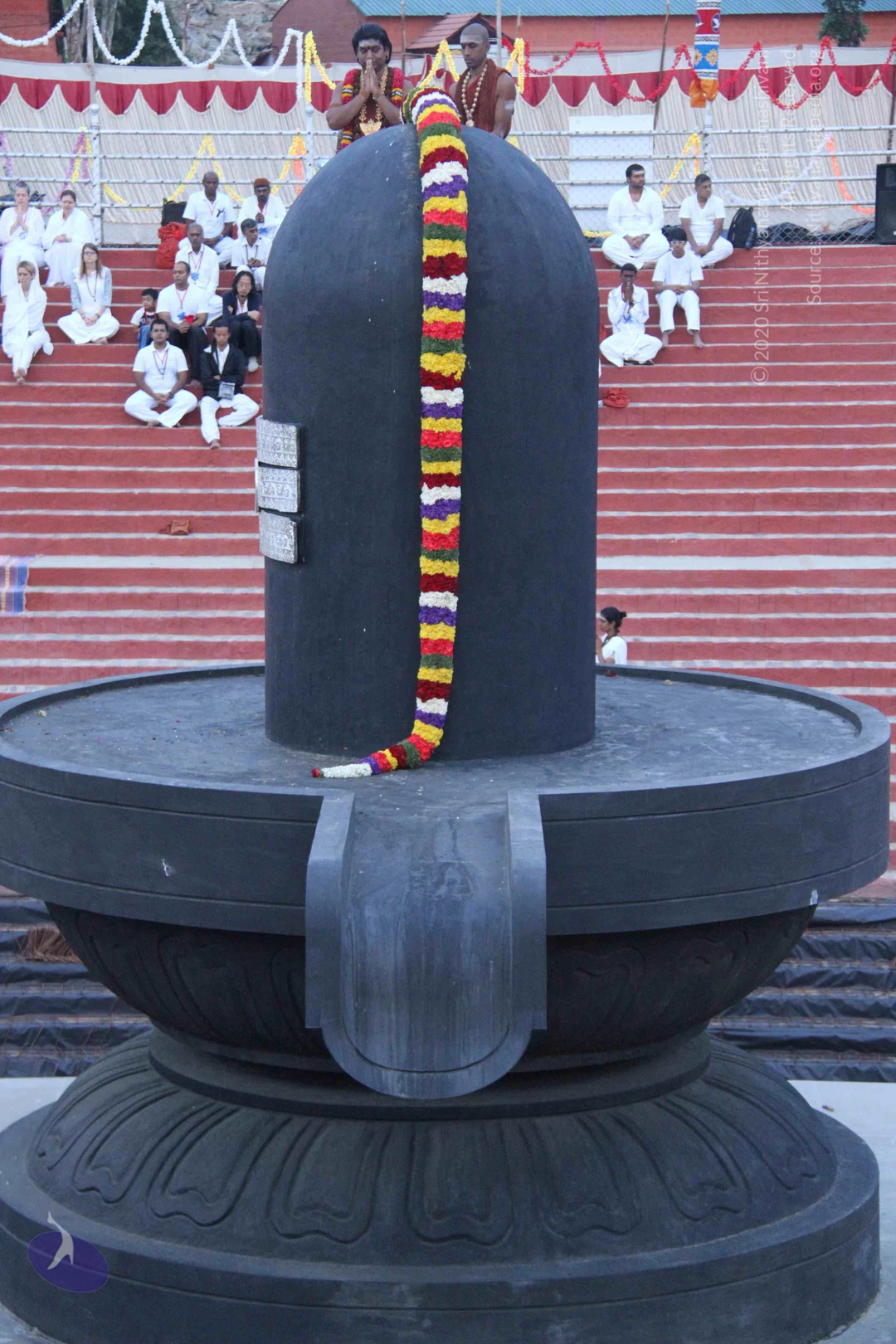
A large black stone Shivalingam on a black circular yoga-style base dominates the foreground, draped with a long multicolour flower garland of yellow, red, white and purple blossoms. Silver plaques are fixed to its left side. Behind it, a crowd of devotees dressed in white sits on red-carpeted steps beneath festive bunting and a red-and-white canopy. Two figures stand at the top of the platform behind the lingam, one in red and orange robes wearing a flower garland, the other in ochre clothing; their identity cannot be confirmed from appearance. Several people in the audience sit with hands pressed together in namaste. Evening light gives the scene a dim blue tone.A large black stone Shivalinga on a black circular yoni-peetha base stands in an outdoor courtyard, draped with a long multicolour garland of marigold-like flowers in yellow, red, white, purple and green. Behind it, rows of people in white clothing sit on red tiered steps beneath red and white bunting and yellow and purple garlands. Two standing figures on a raised platform at the top wear saffron-red garments and one wears a red-and-gold ceremonial garment with a garland. Several seated attendees wear white kurtas and some wear red lanyards. Scene suggests a festival or satsang gathering with a ritual Shivalinga display.Outdoor satsang seating with rows of women in predominantly white clothing sitting on red-tiled steps in front of a parked dark SUV behind a metal railing. Many wear white saris or white kurtas, some with red or pink shawls, orange or yellow sarees, and beaded necklaces; one woman at left wears a red head wrap and yellow-and-blue shawl. A stage backdrop of red and white draped fabric with marigold garlands sits behind the rail. Most attendees look forward, seated calmly, some with hands folded. Approximately forty women are visible.A large black stone Shiva lingam with a circular yoni-pitha base stands in the foreground of an outdoor open-air stepped amphitheatre, draped with a multicoloured flower garland in red, yellow, white and purple. Behind it, several people in white clothing sit on red-carpeted steps watching, and a standing figure in white stands to the right. In the background, two figures in orange or saffron robes stand at the top of the lingam area near a red-and-white decorated stage with orange and red bunting and a parked white car at left. A small seated figure in orange sits near a low wooden platform at left, and a few white-clad attendants sit nearby. The scene suggests a lingam abhishekam or puja ceremony during a satsang gathering.A large dark stone Shiva lingam on a matching yoni-shaped pedestal dominates the foreground, draped with a long multicoloured garland of red, yellow, white, purple and green flowers. Two men stand behind the top of the lingam: the one on the left wears a red garment with a flower garland, the one on the right is bare-chested with an orange shawl and a flower garland. Behind them, a row of people in white sits on red tiered steps under a red and white draped canopy with marigold garlands, while two women in saffron and red saris kneel near the steps. Three silver plaques are fixed to the lingam's side. The setting suggests an outdoor abhishekam-style ritual.Outdoor ceremony at a large black spherical stone or linga-like form draped with a multicoloured flower garland of marigolds, roses and white blooms. A figure with long dark hair, a red-and-gold shawl, rudraksha mala and gold necklace stands behind the sphere, holding a pink and blue lantern-style vessel, while a second man with a shaved head and orange shawl stands beside him, bare-chested and wearing beaded necklaces. Red and white draped cloth and yellow marigold strings decorate the stage. Seated devotees in white clothes with red lanyards fill the foreground and side seating. a person cues present: long hair, rudraksha mala, ceremonial gold necklace and shawl.
prakyaksha-pada-puja

28 photosSource gallery
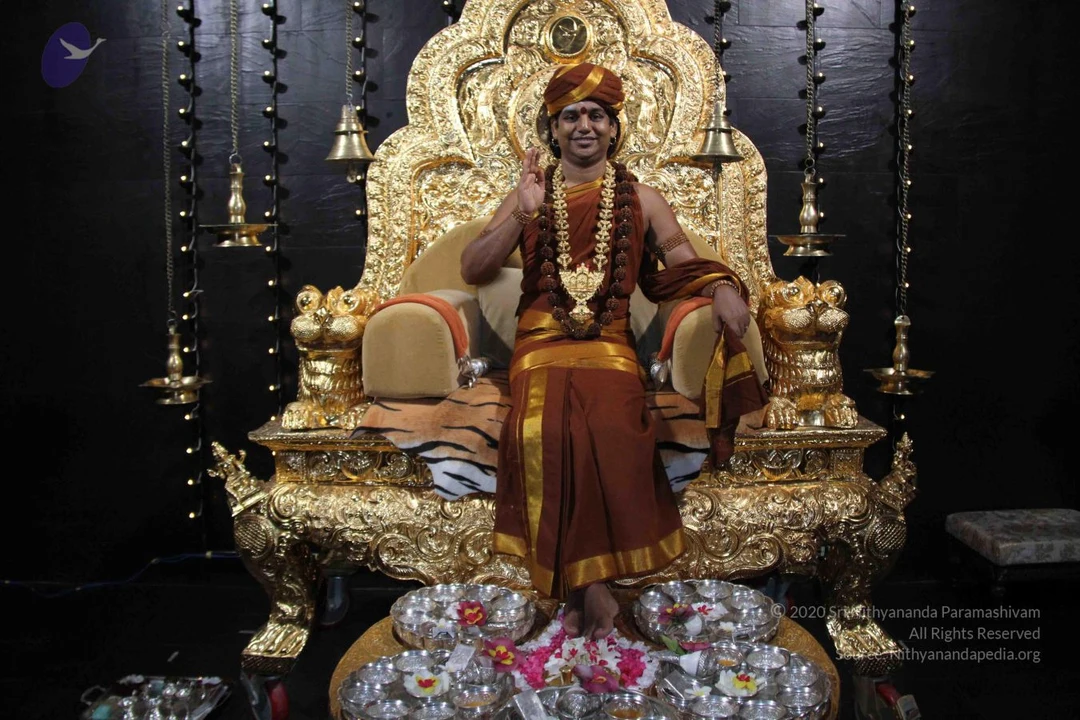
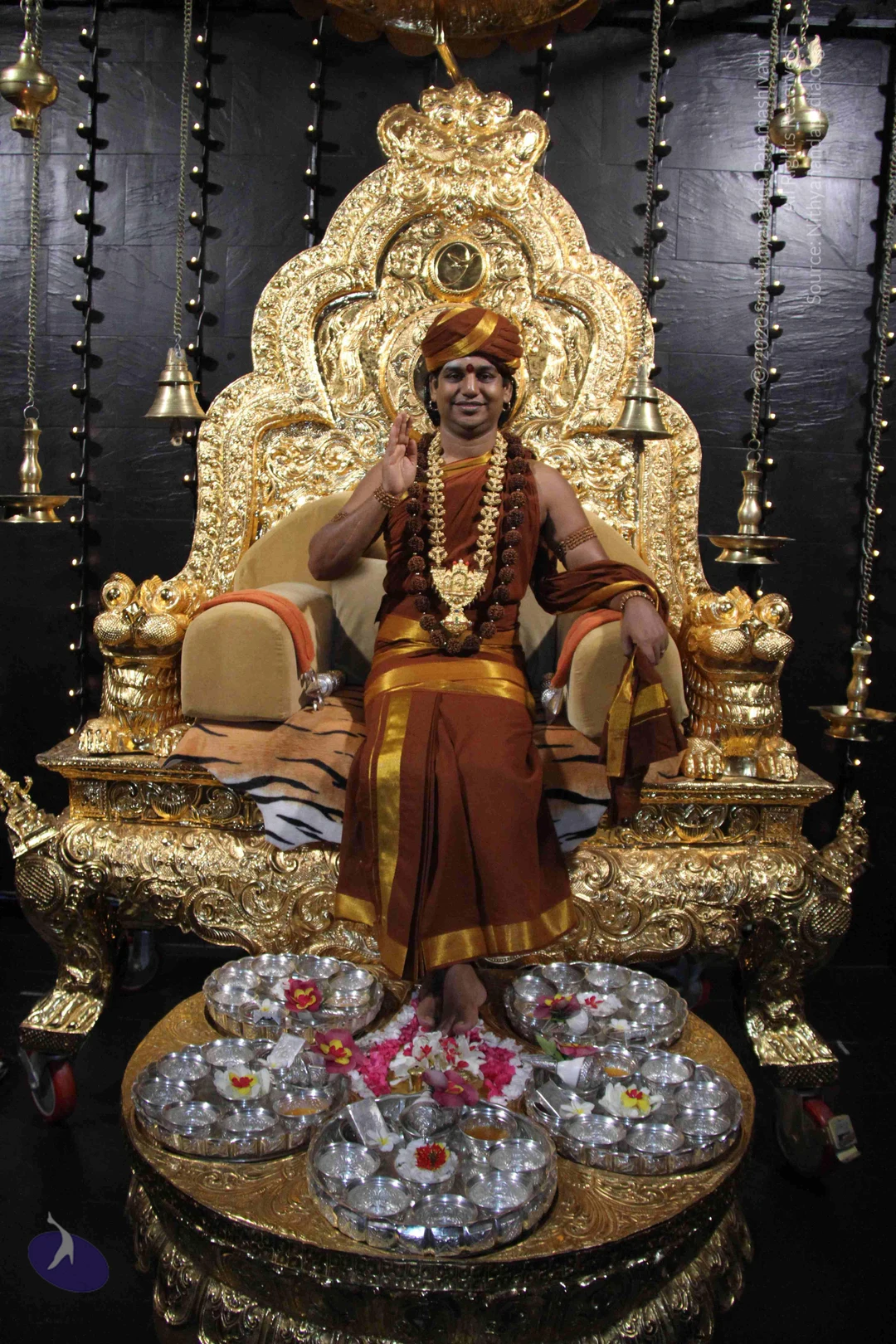
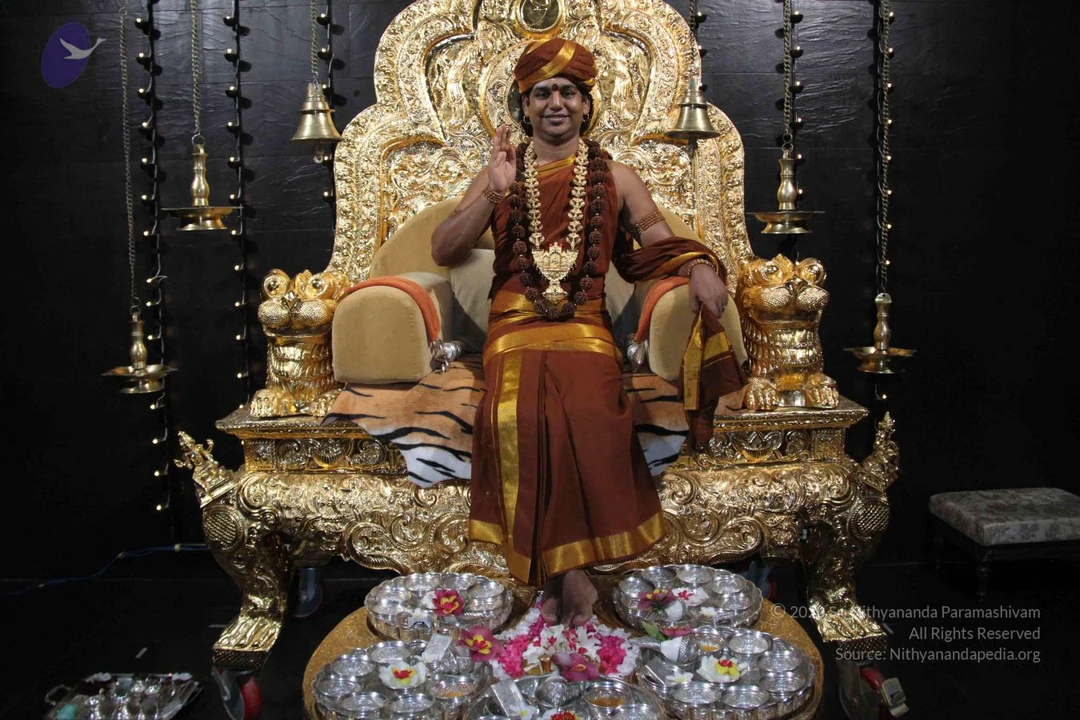
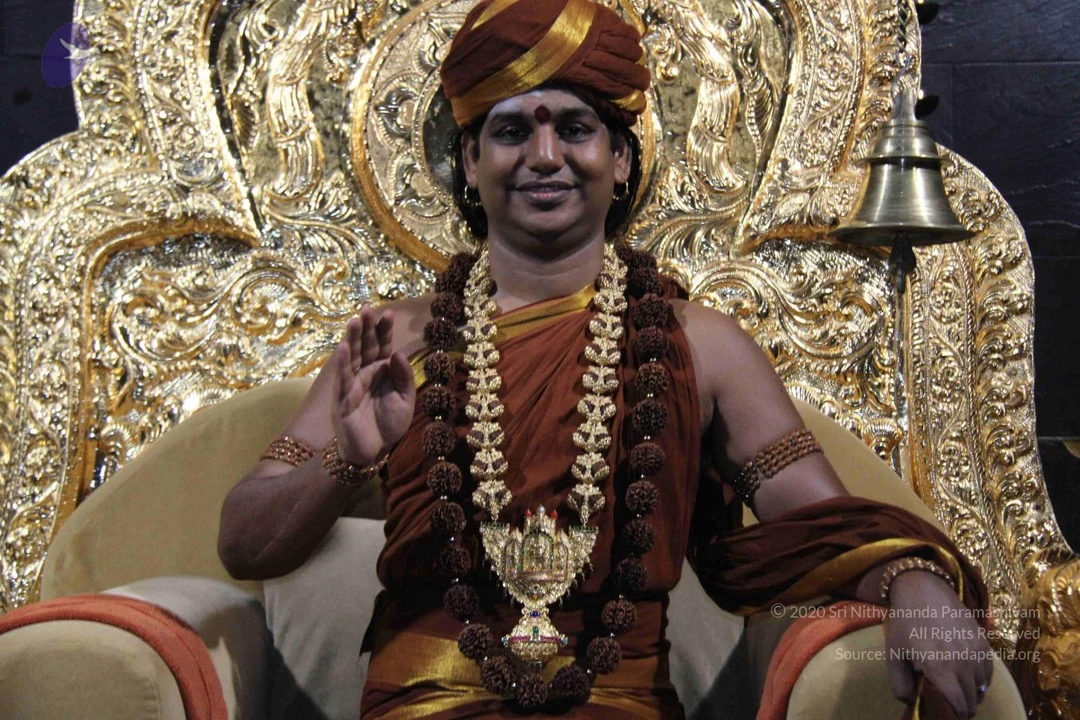
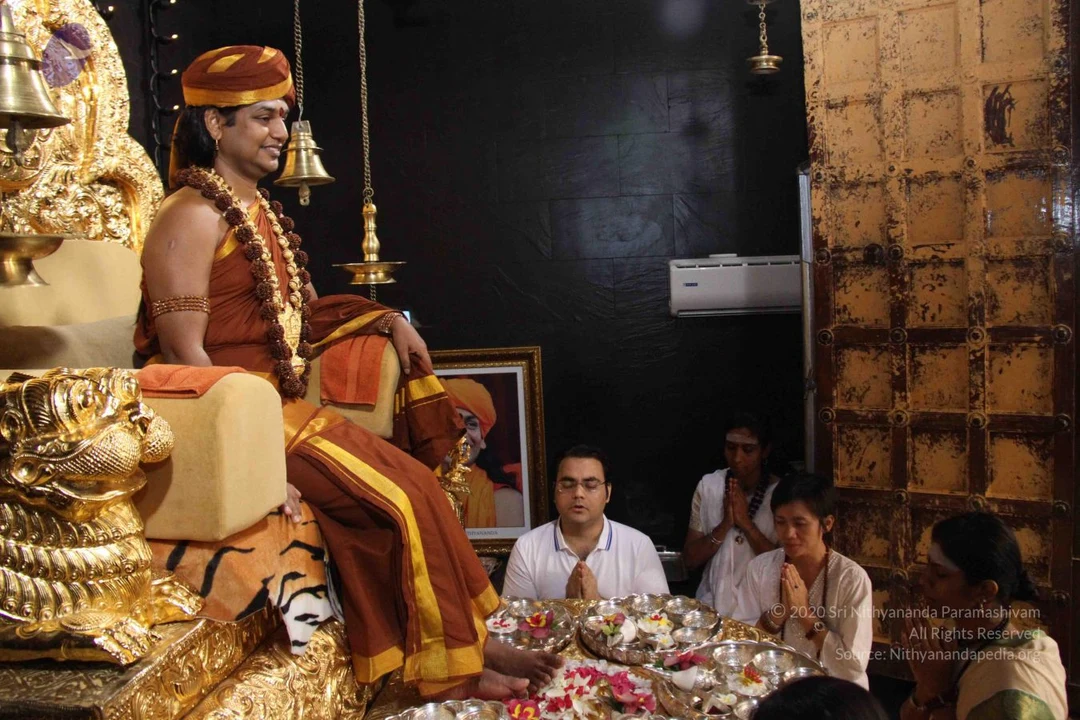
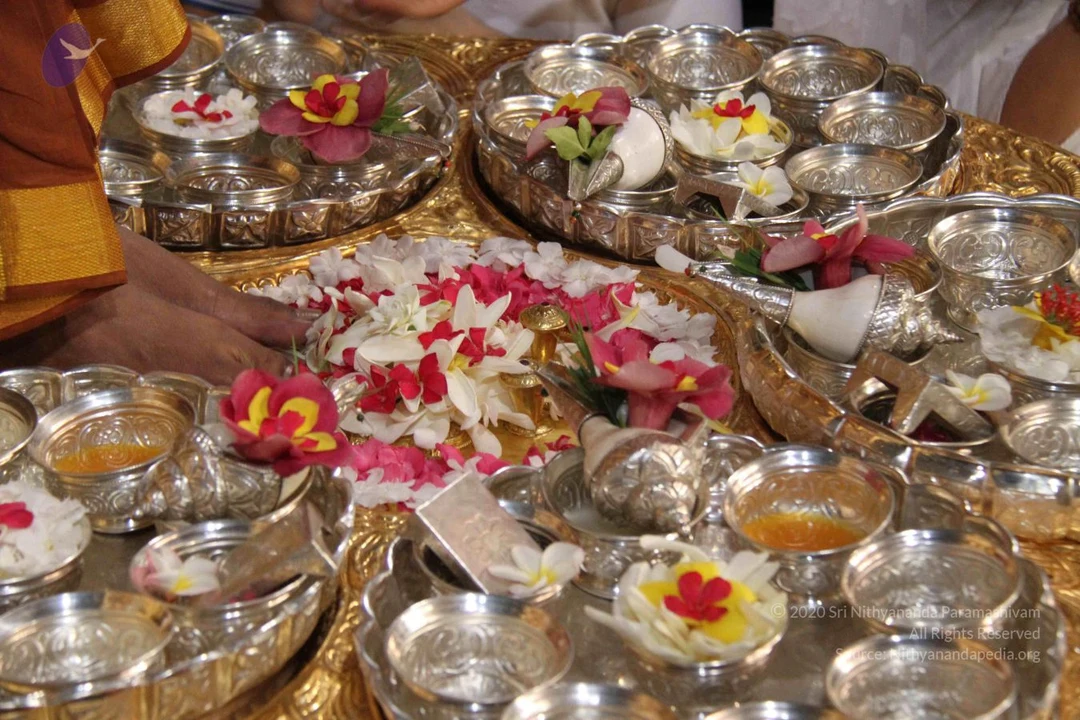
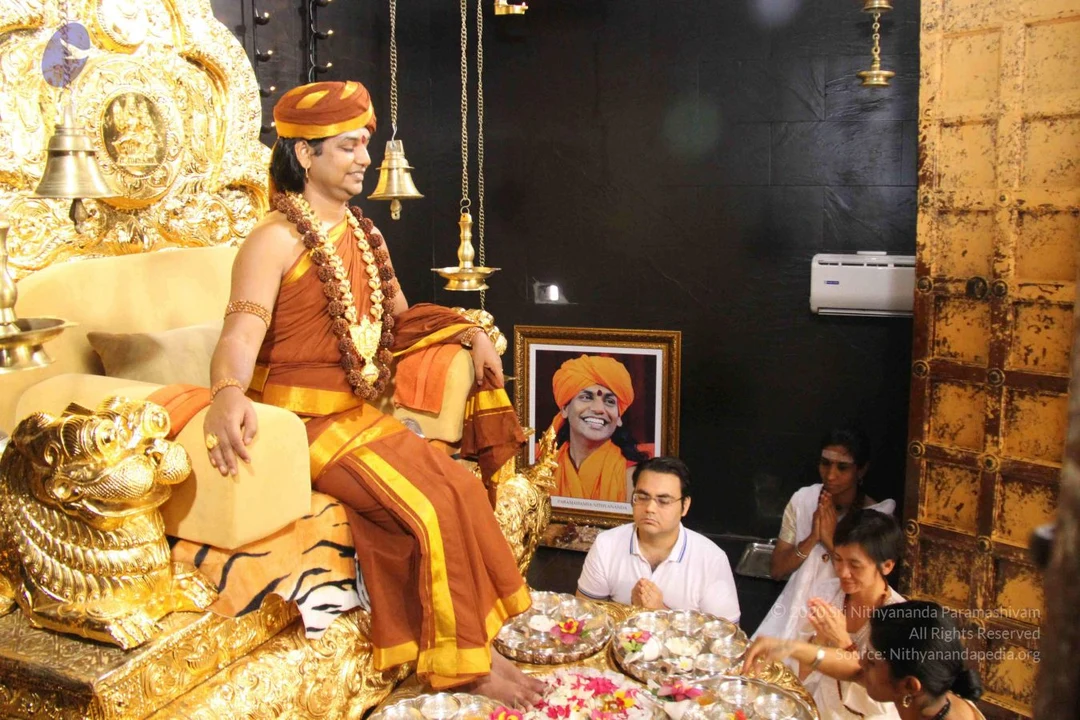
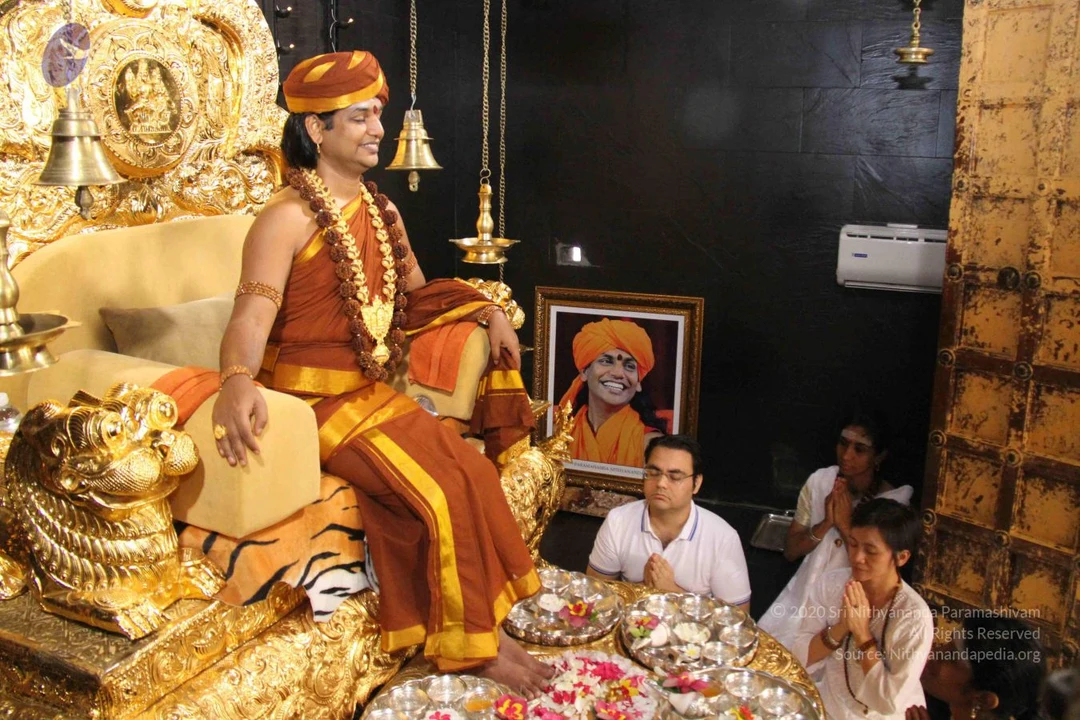
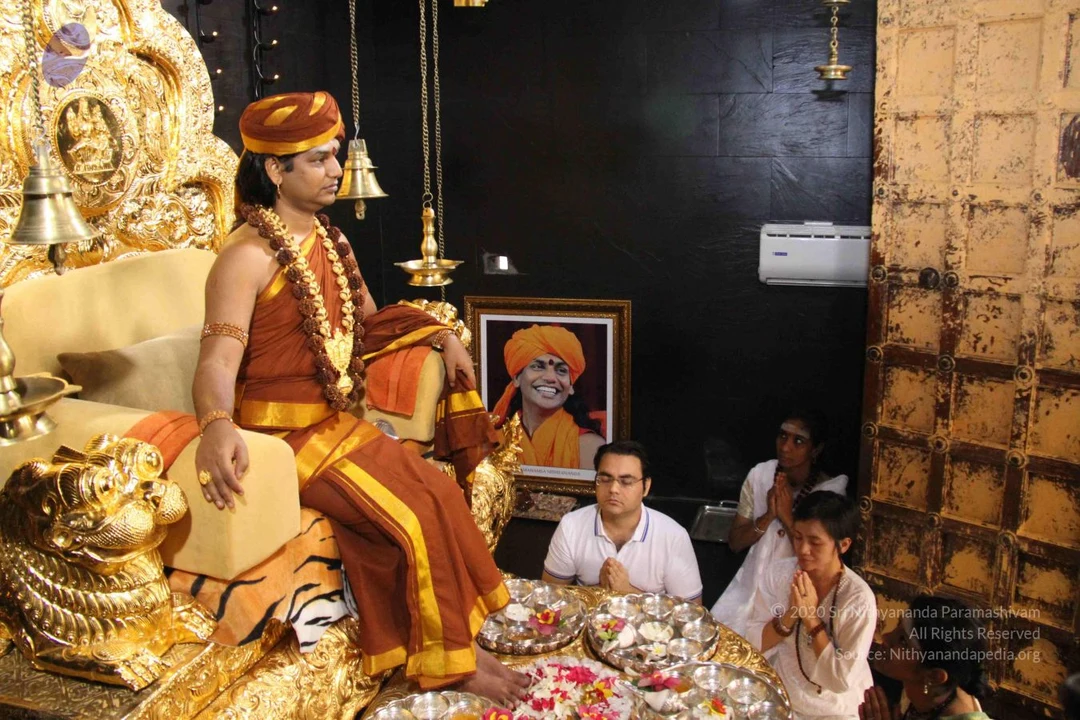
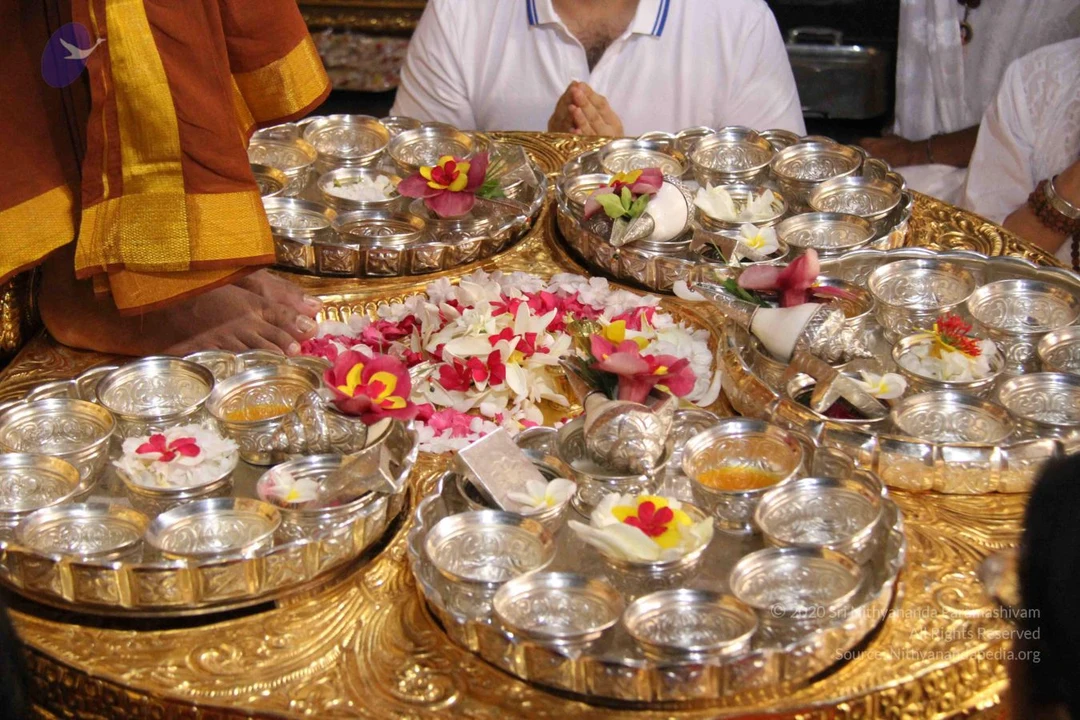
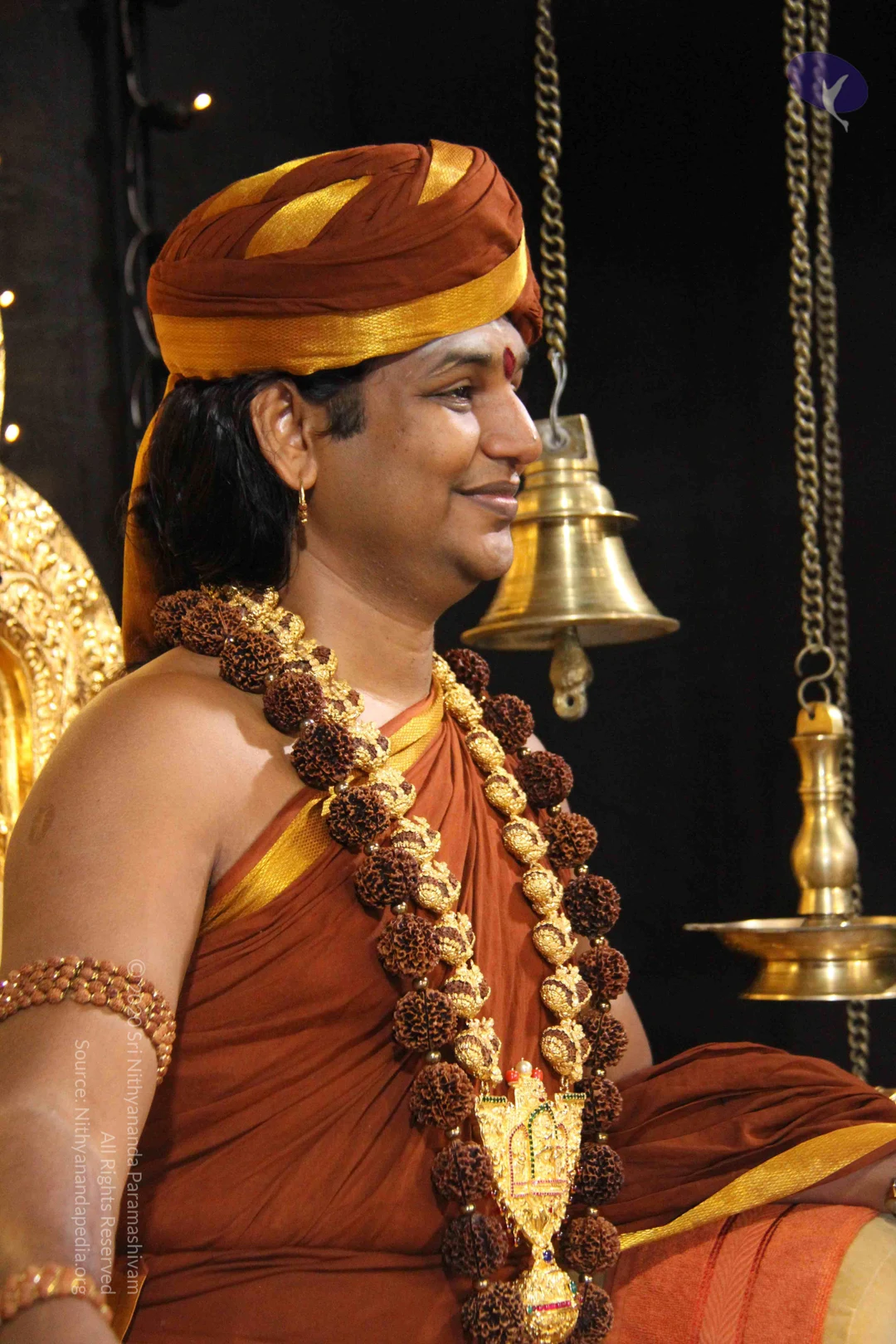
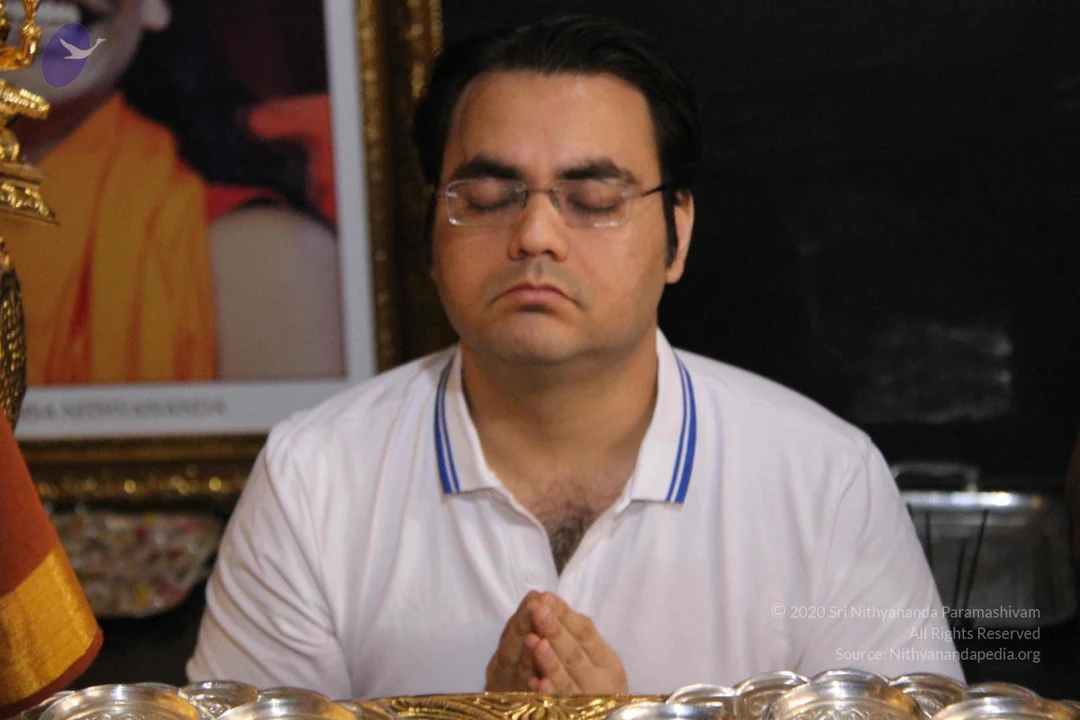
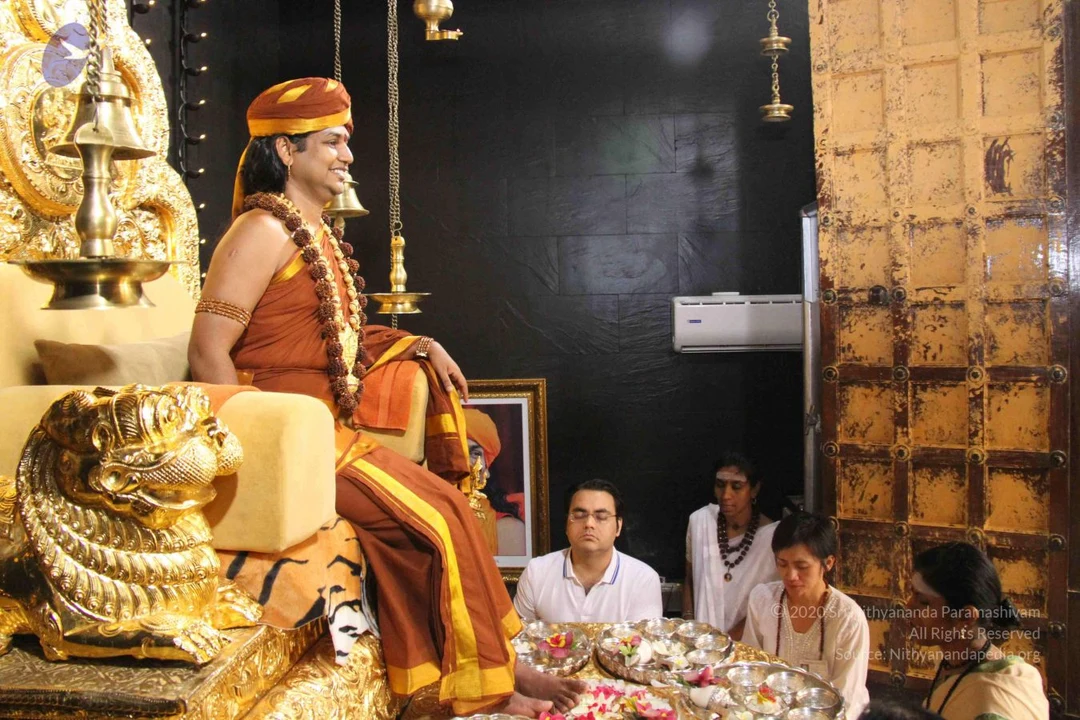
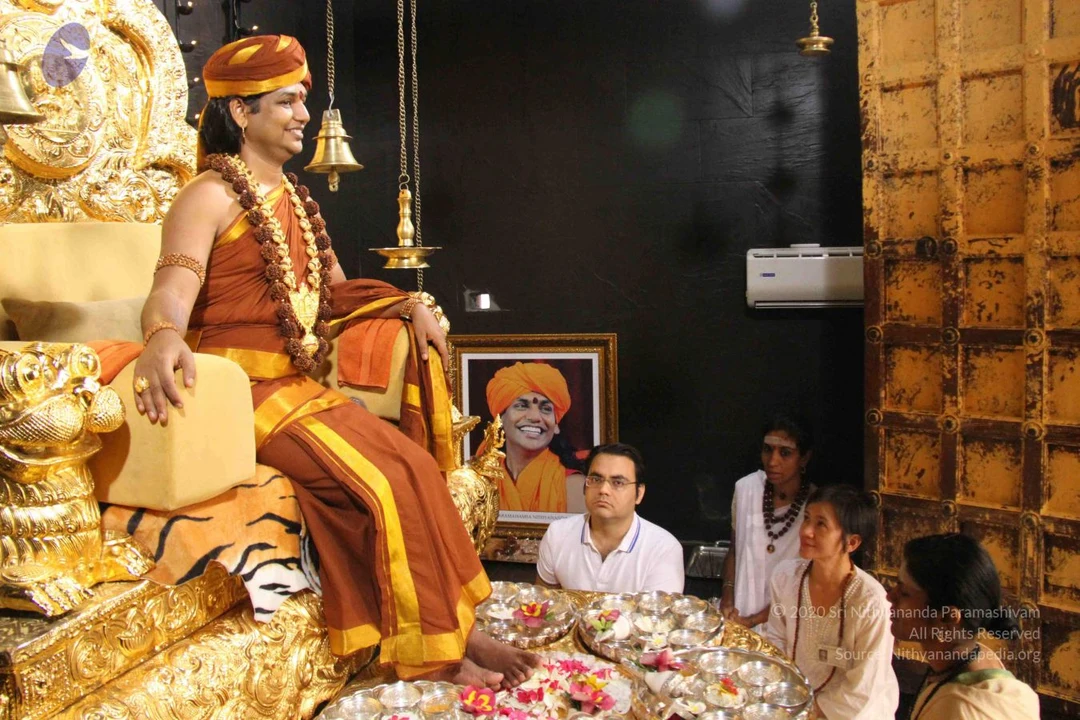
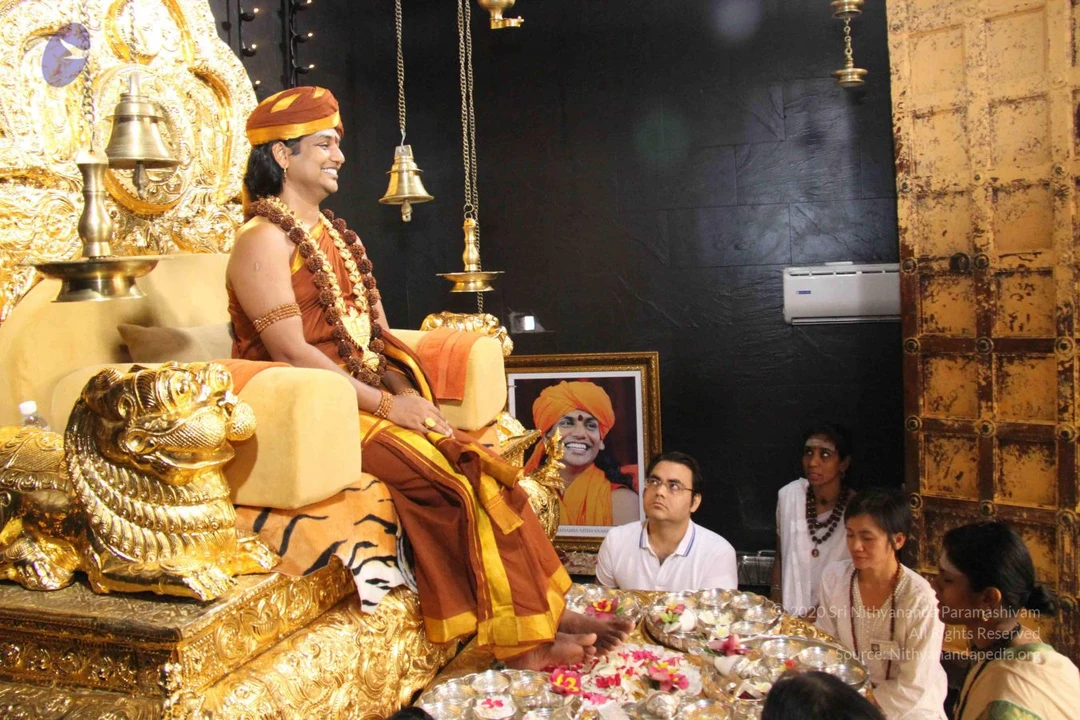
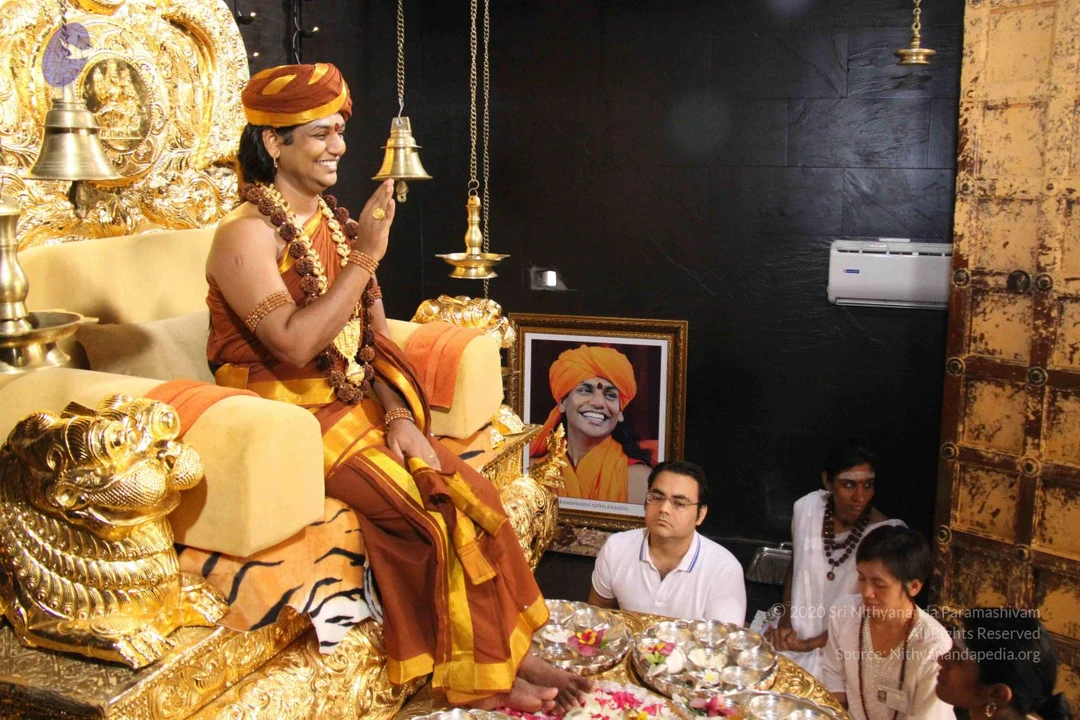
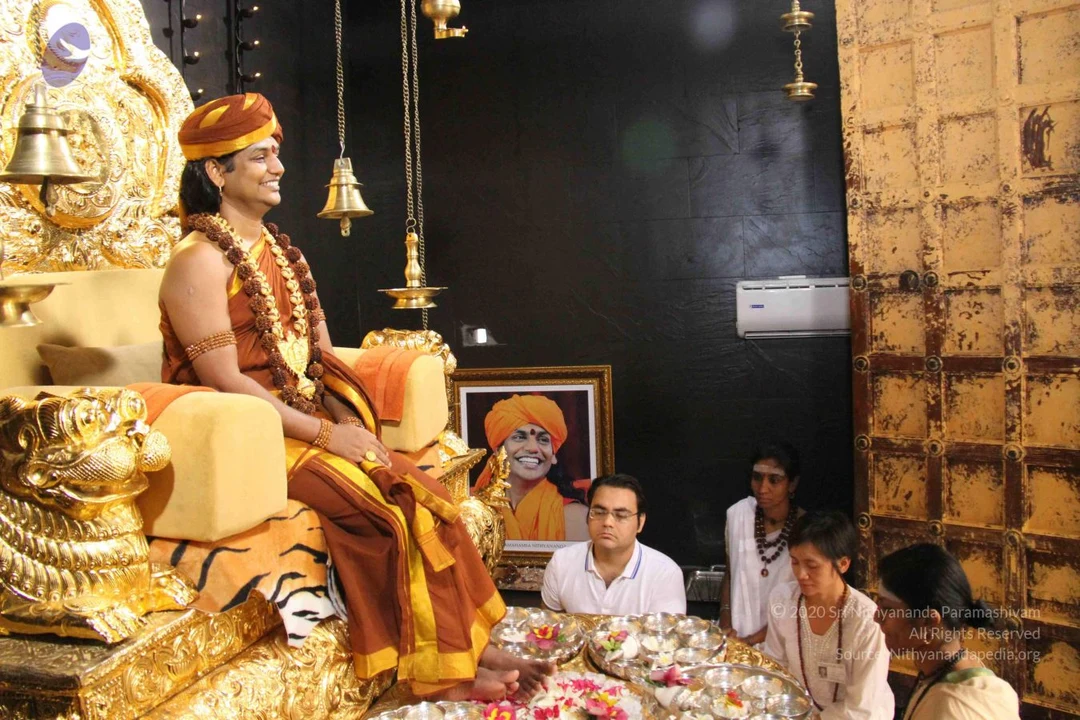
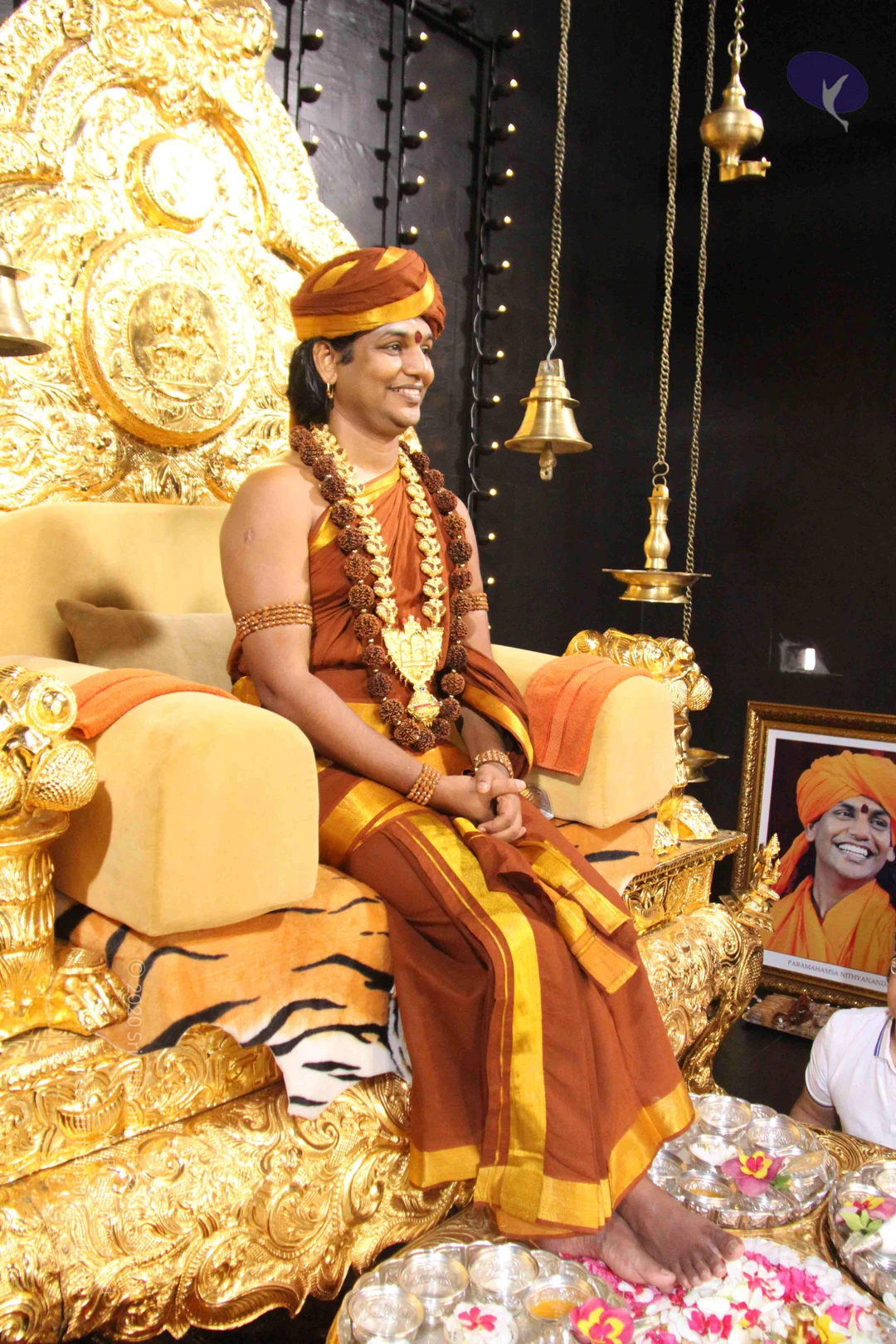
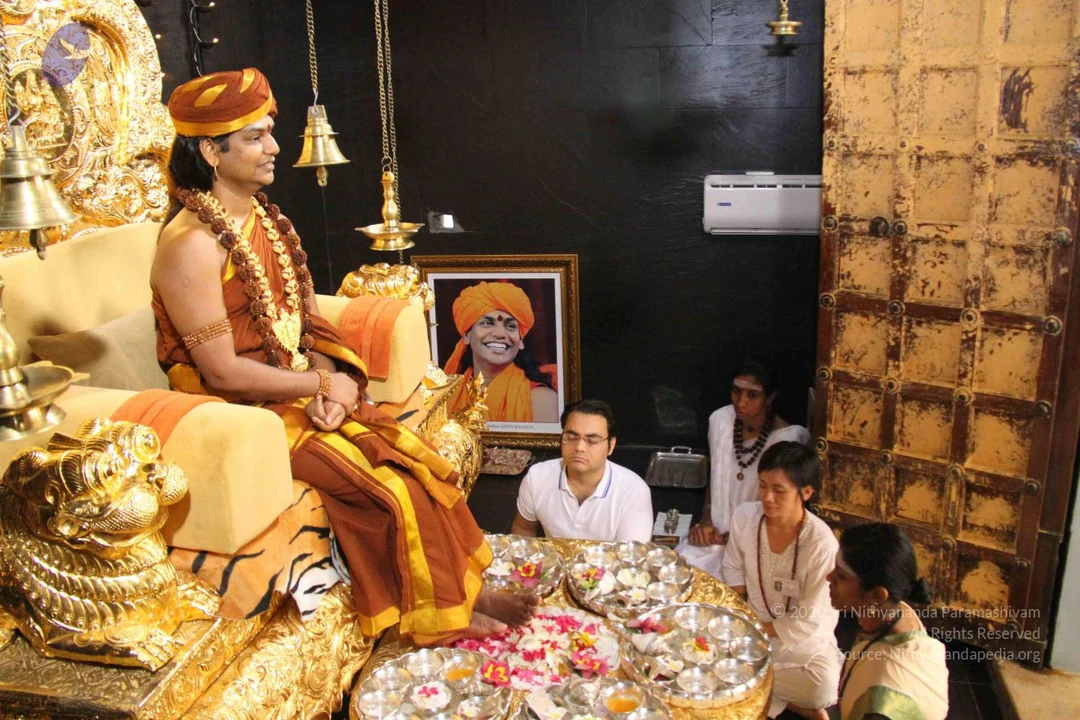
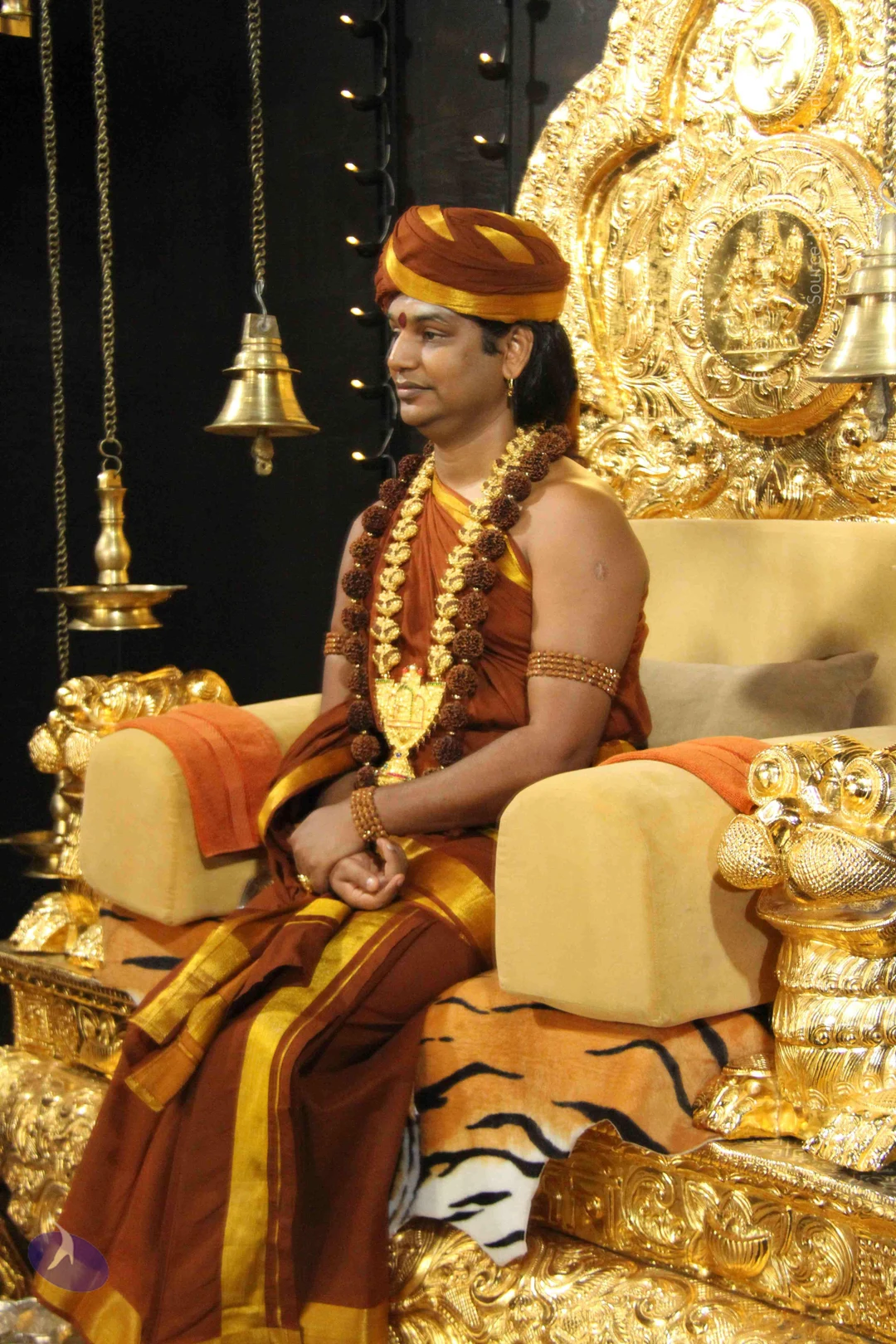
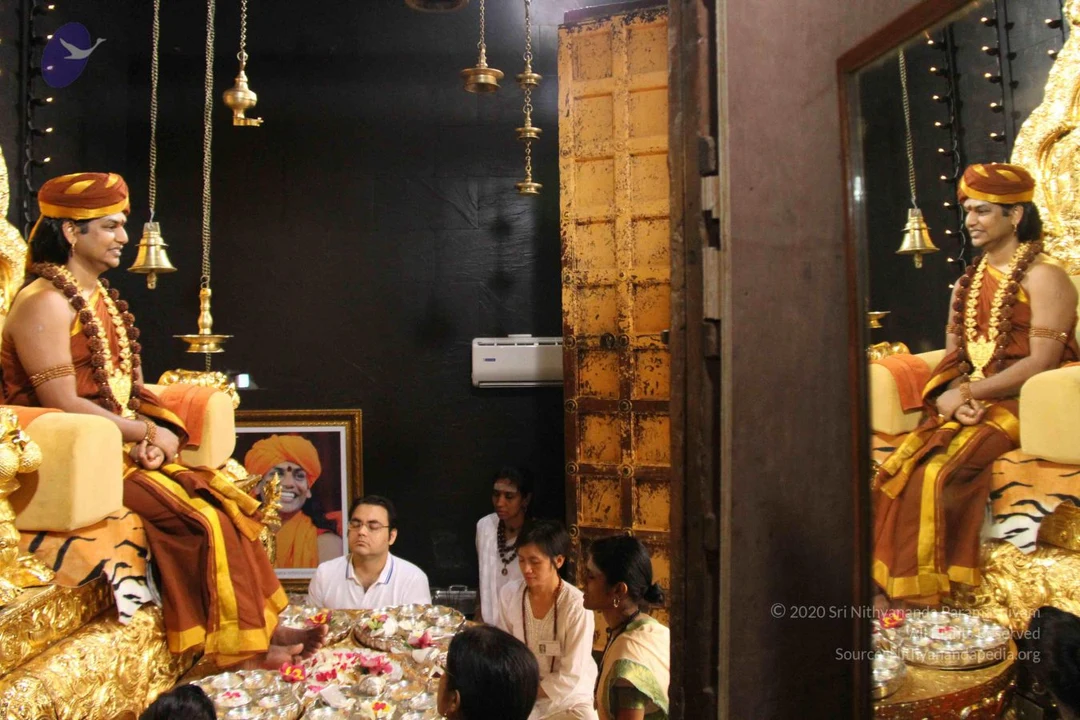
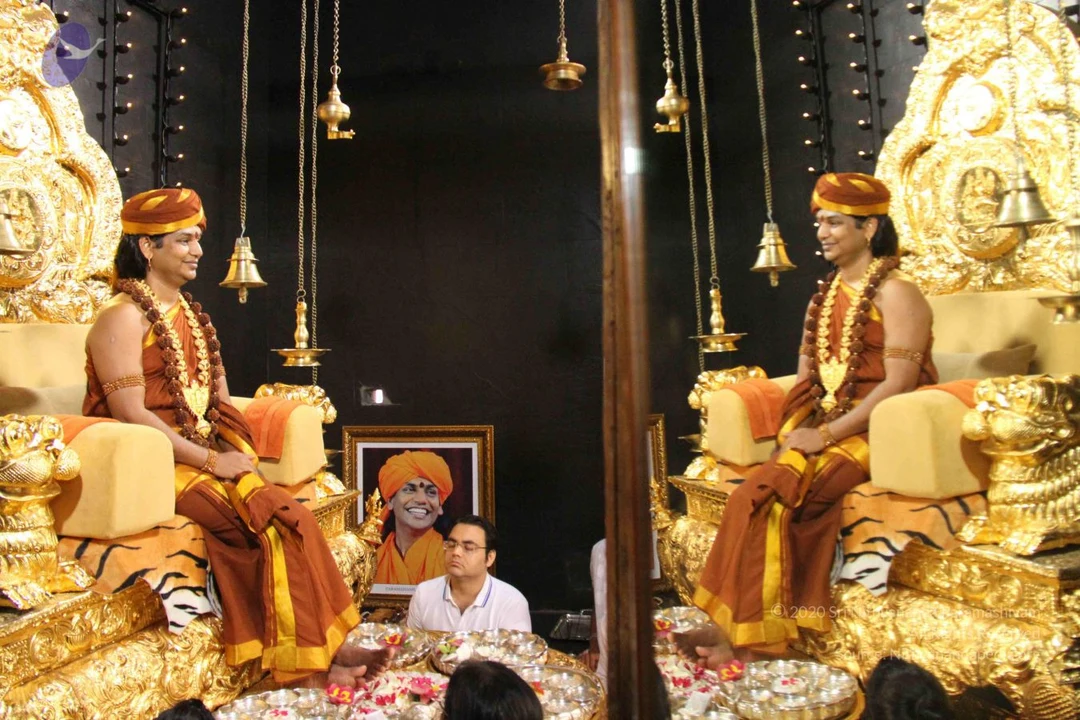
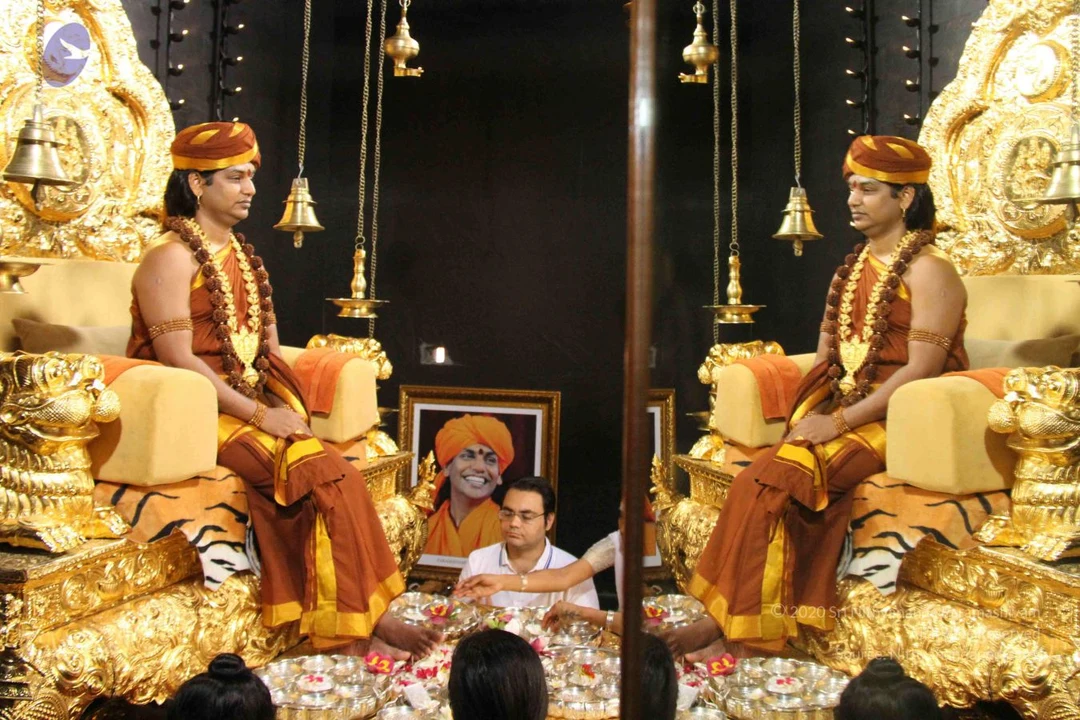
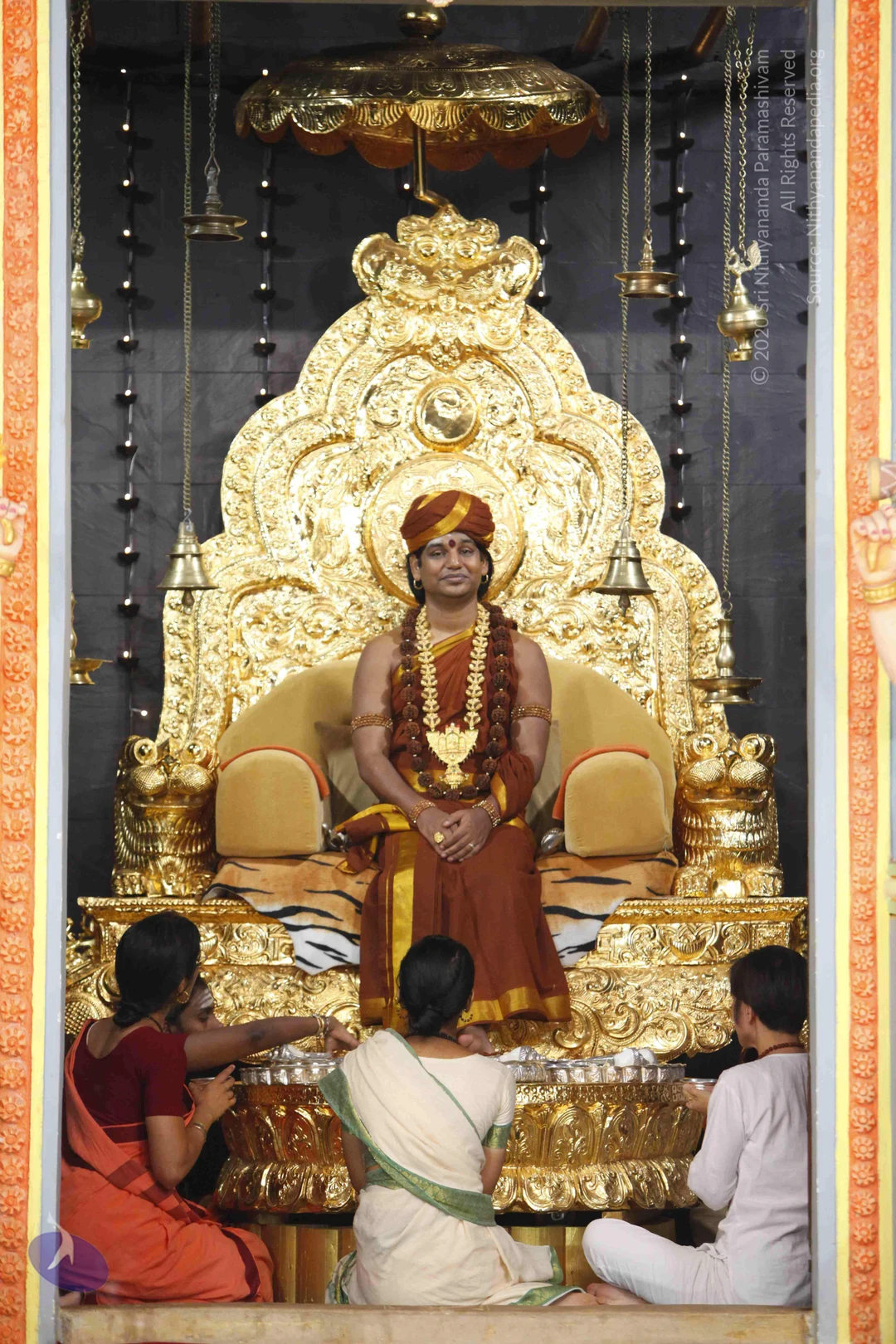
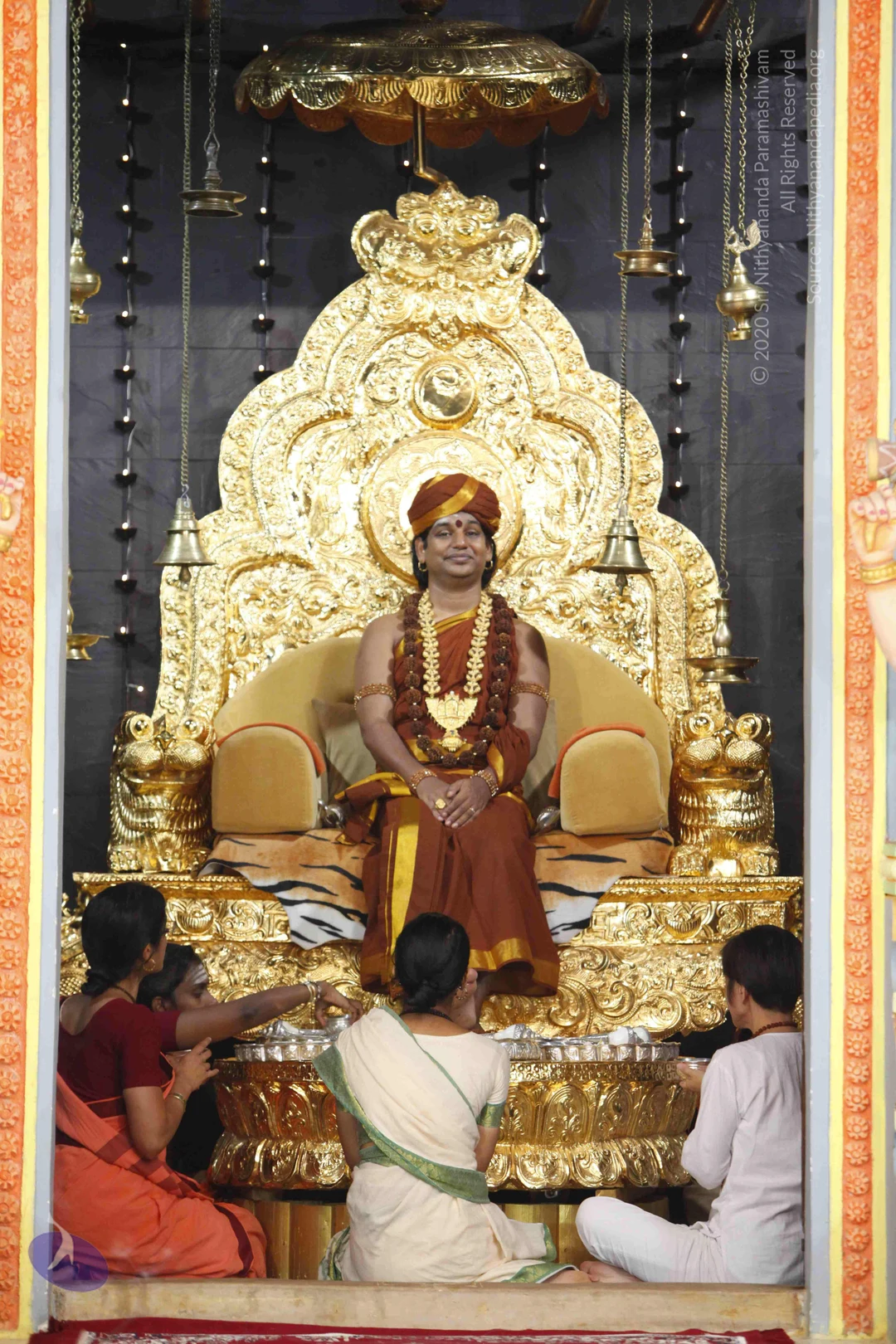
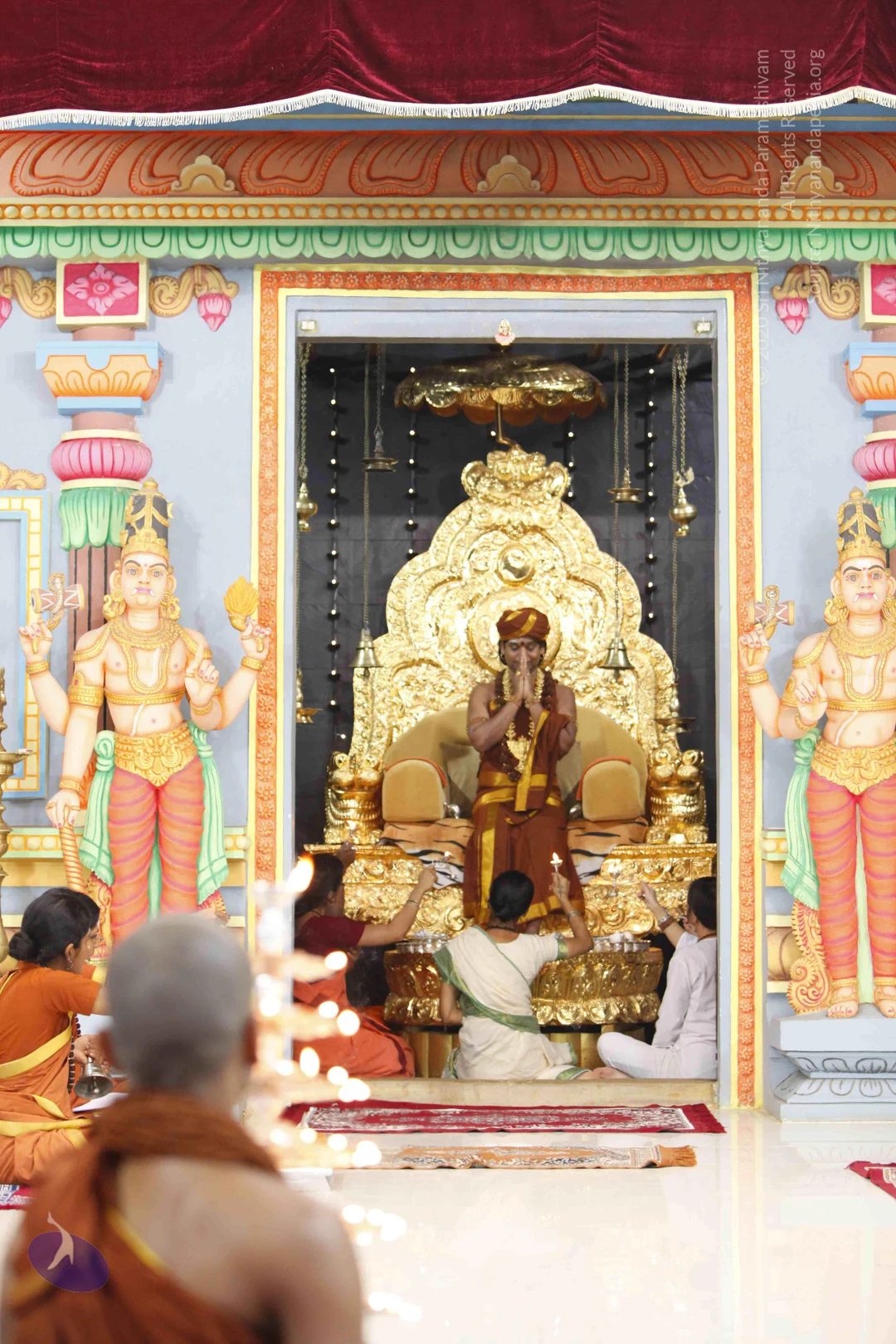
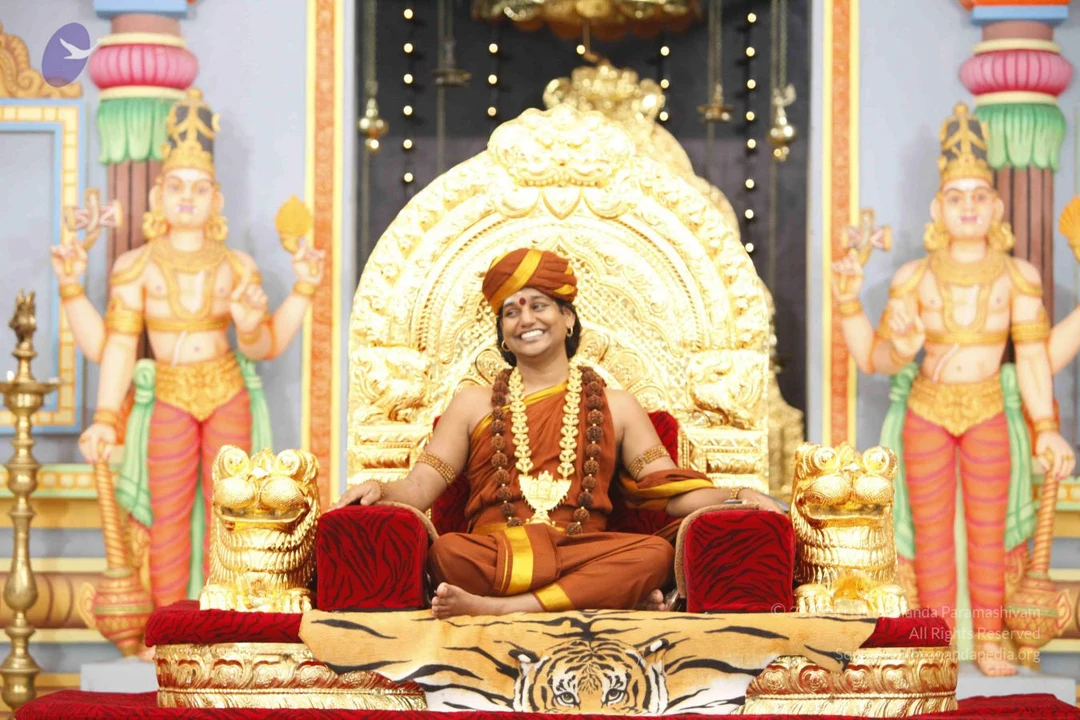
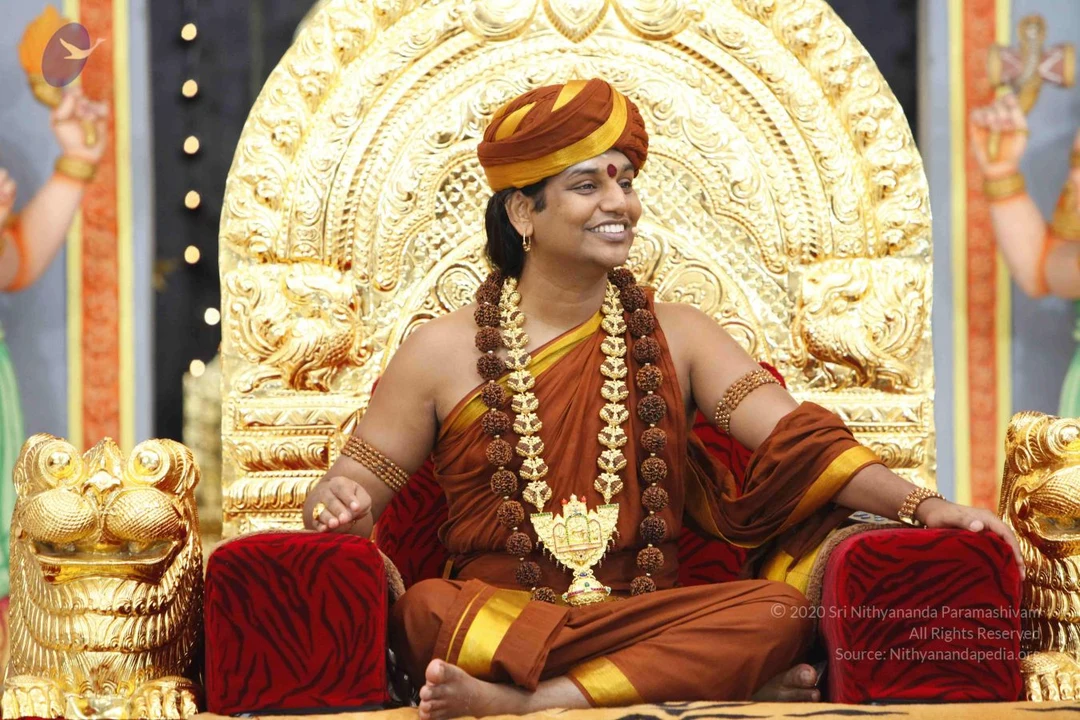
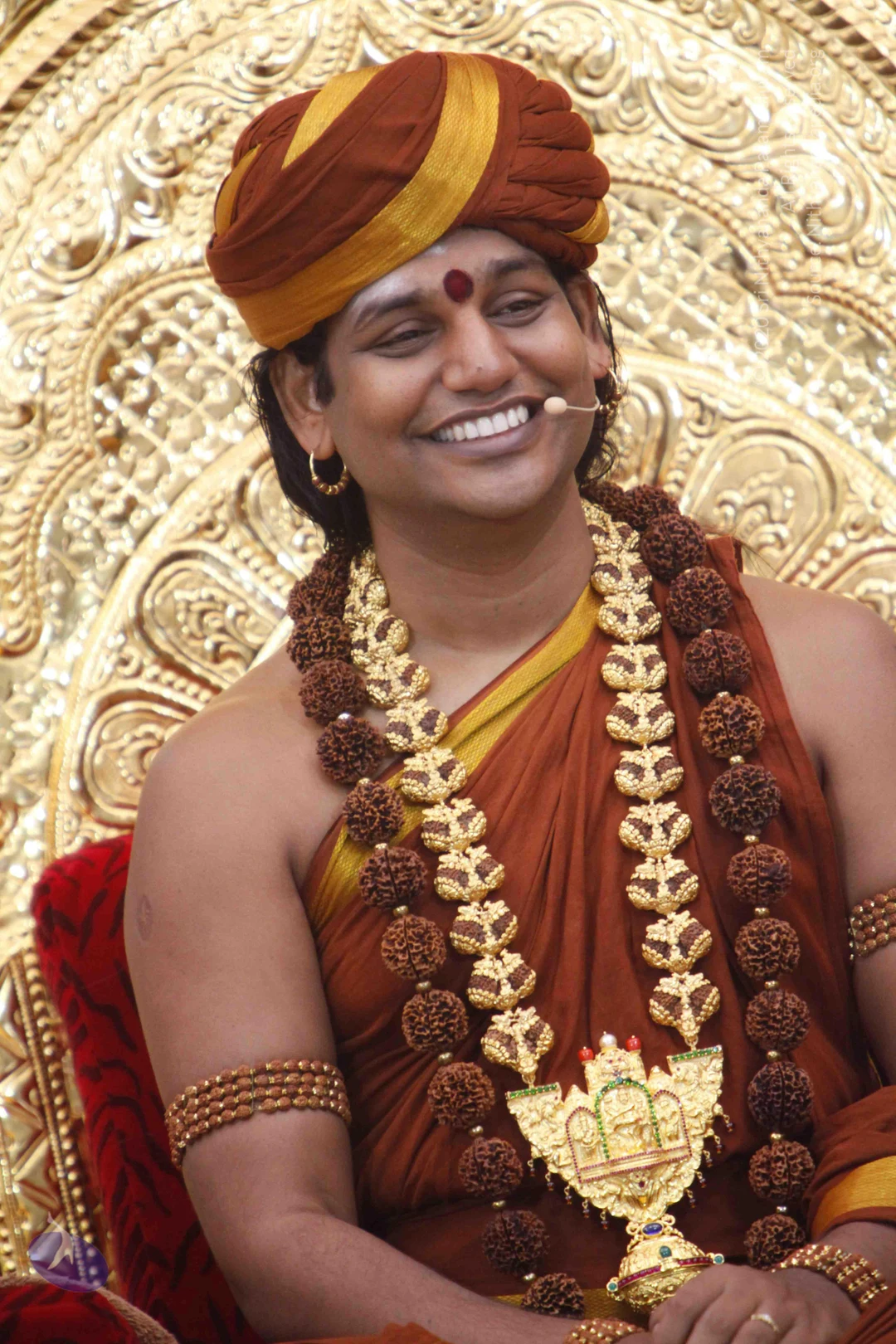
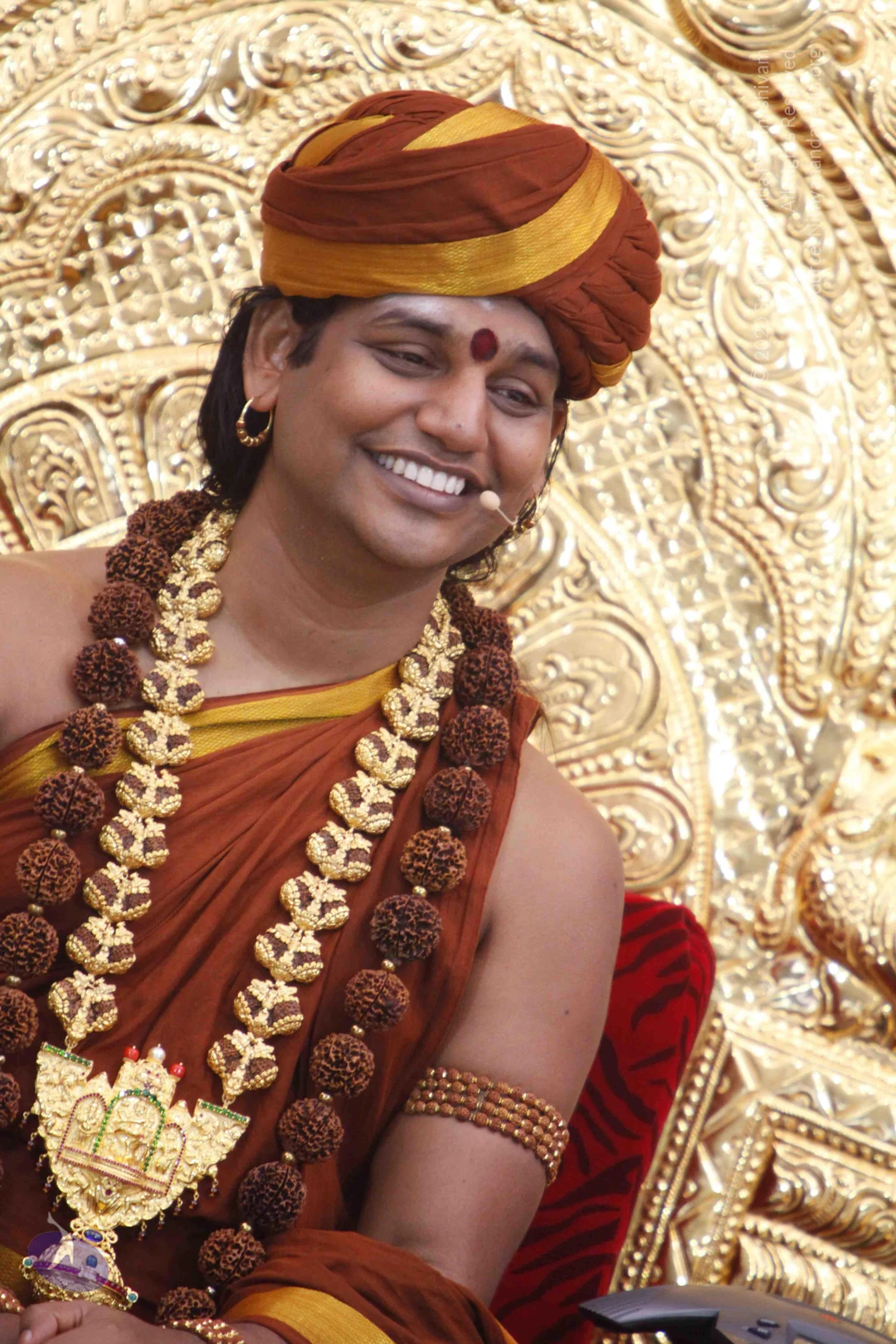
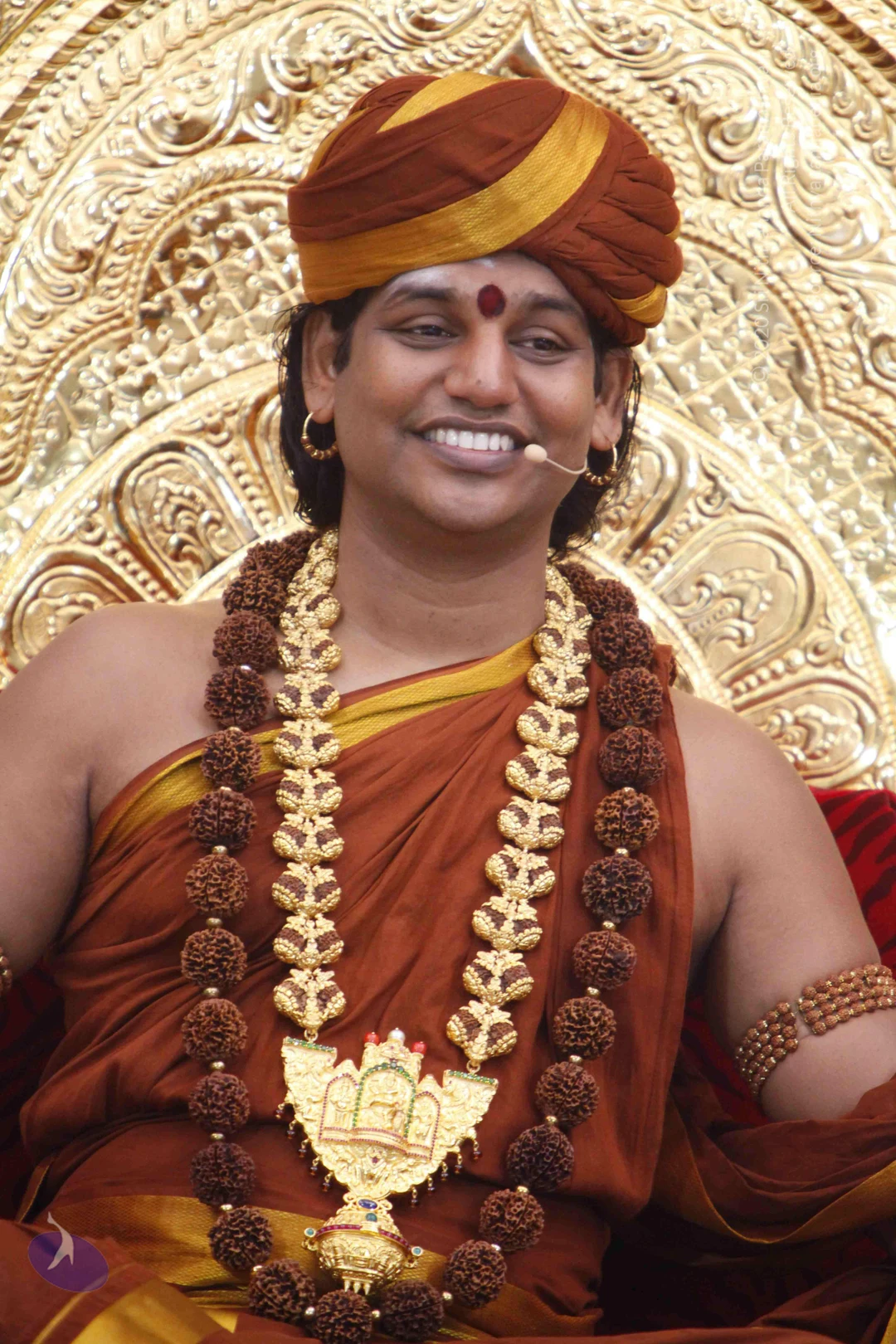
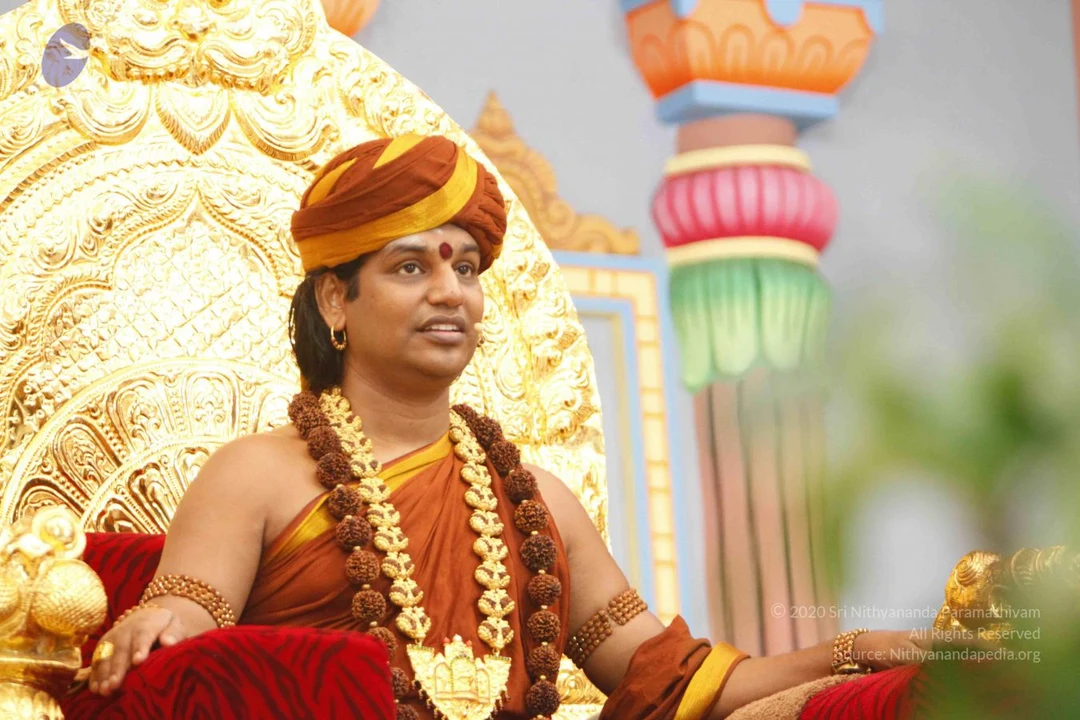
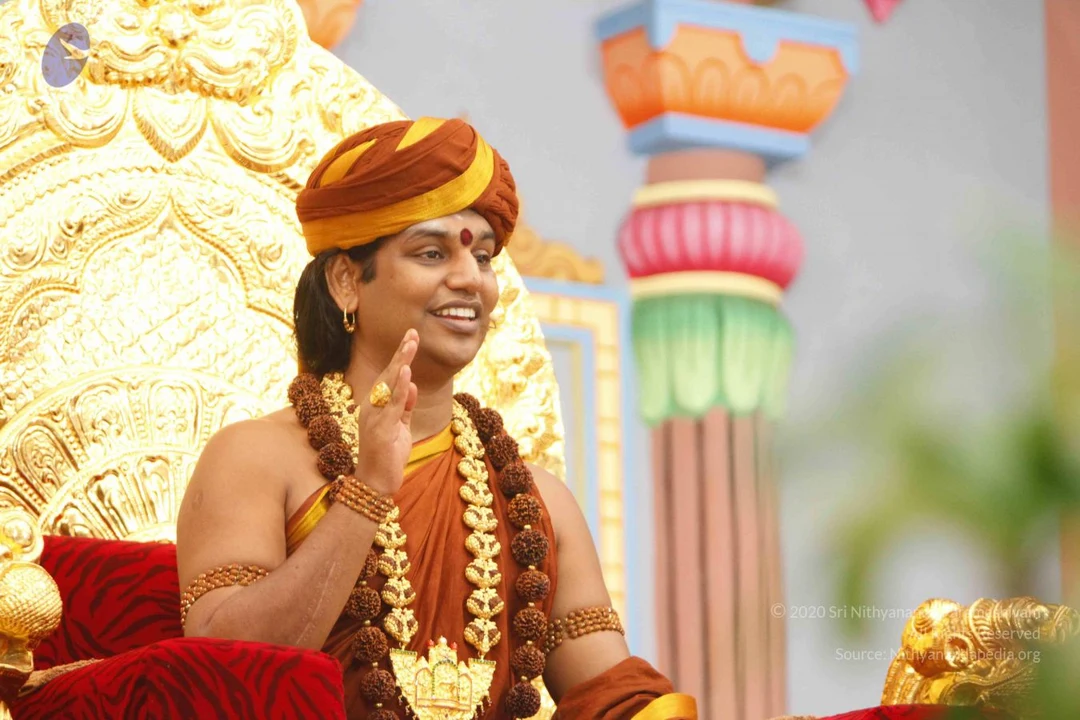
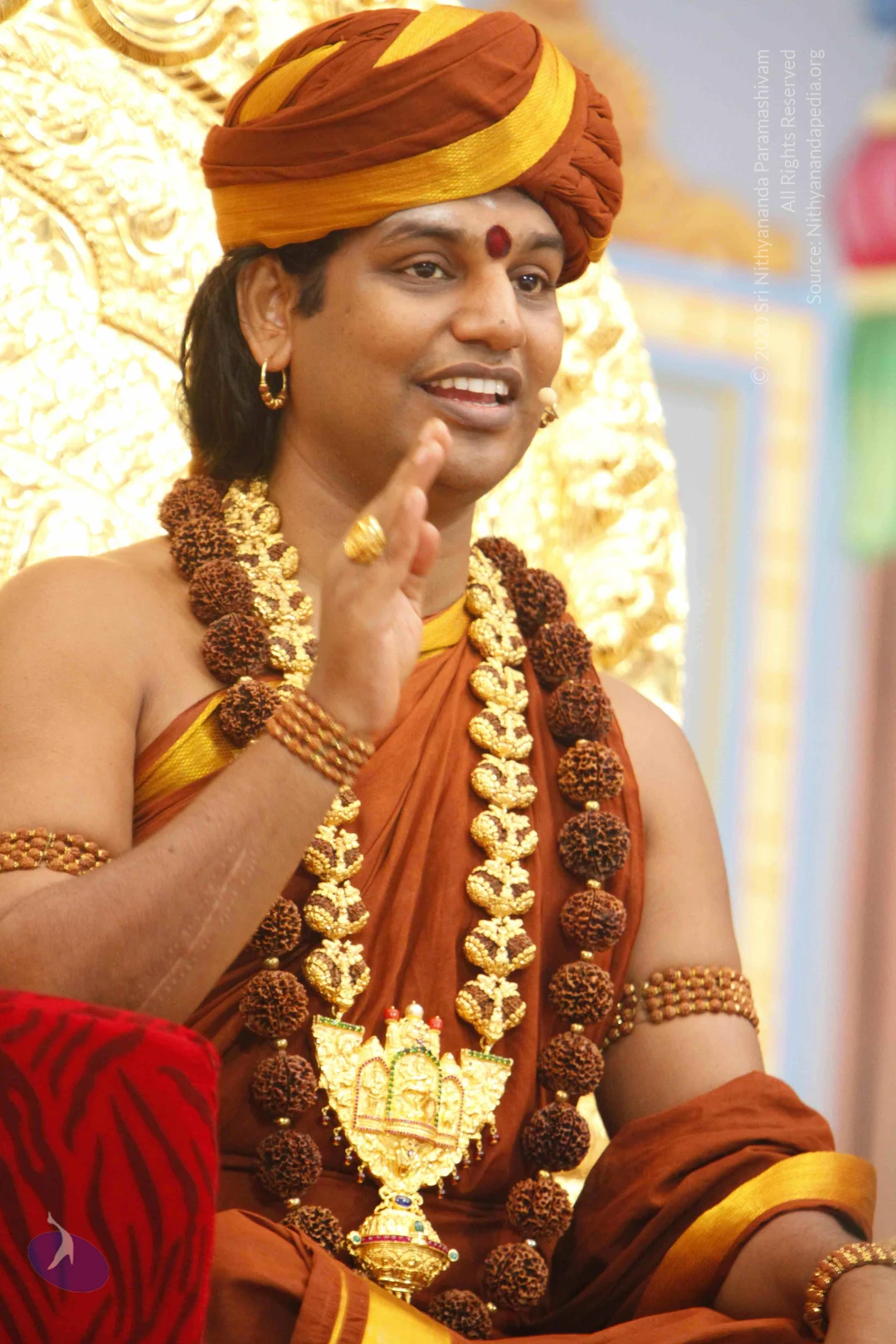
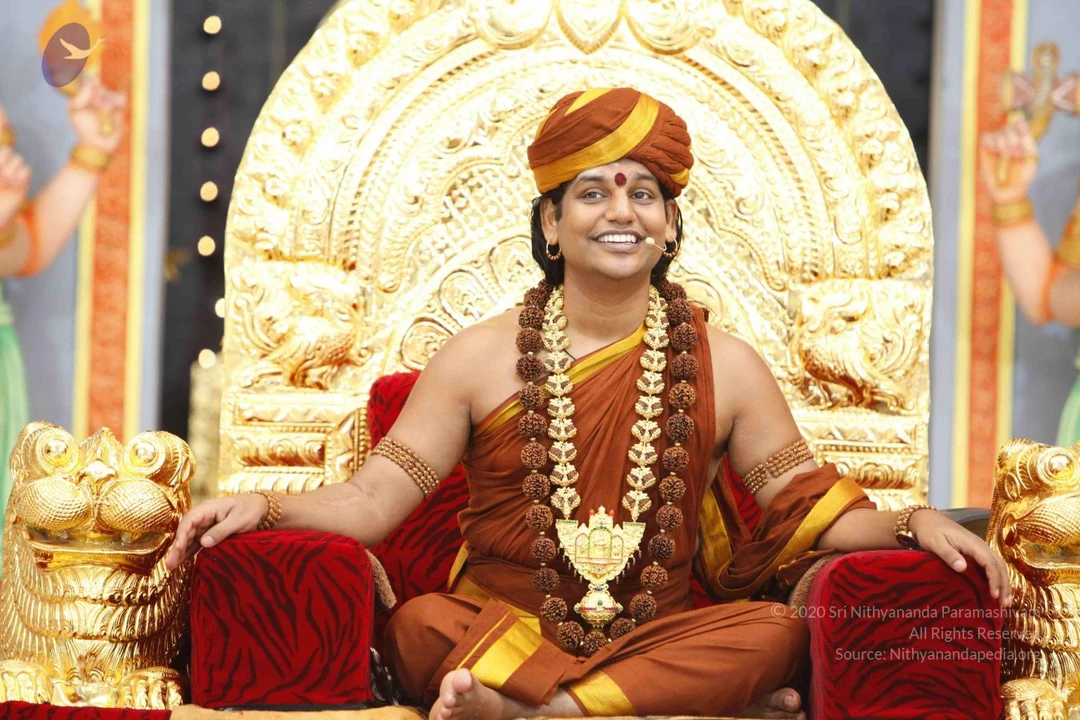
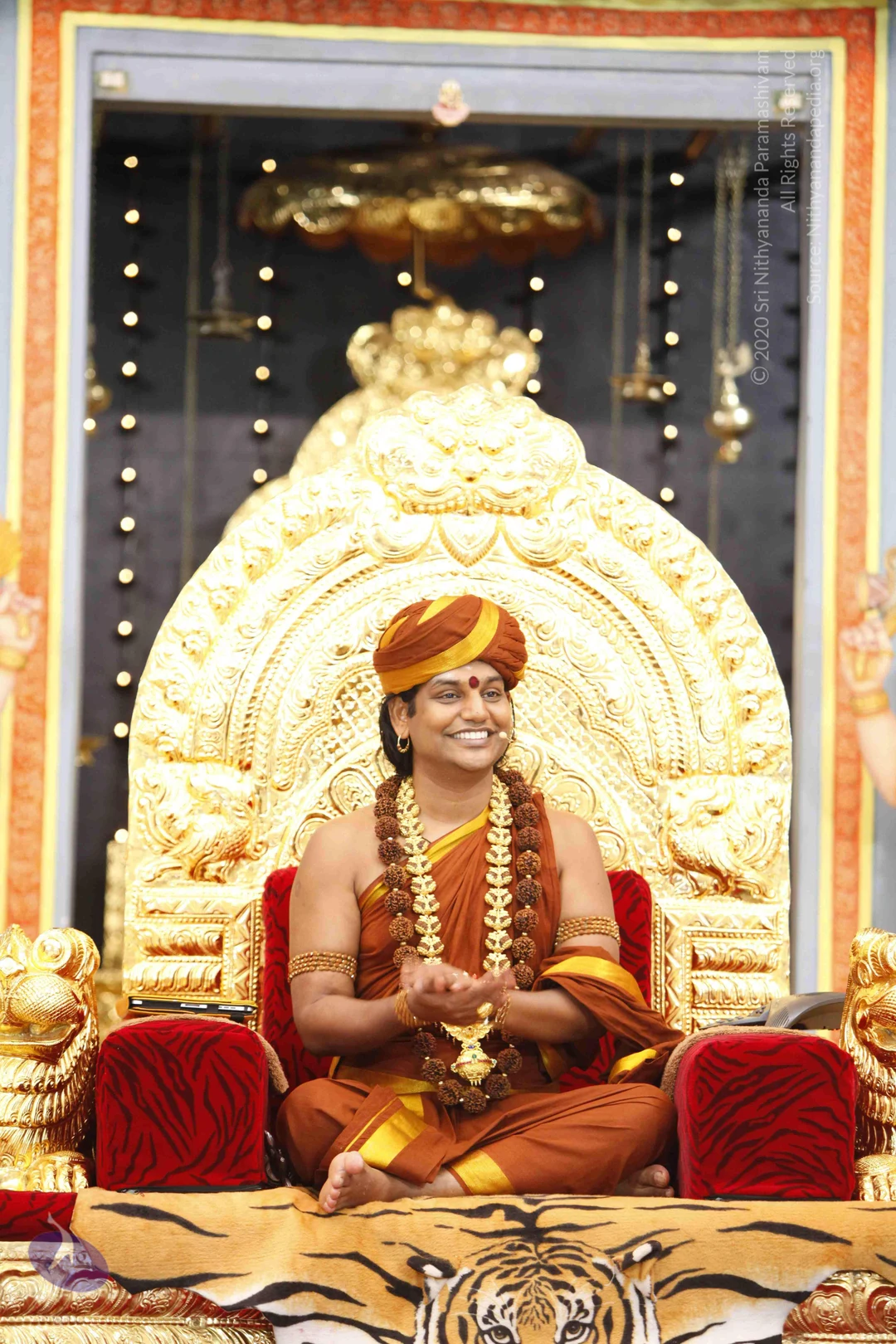
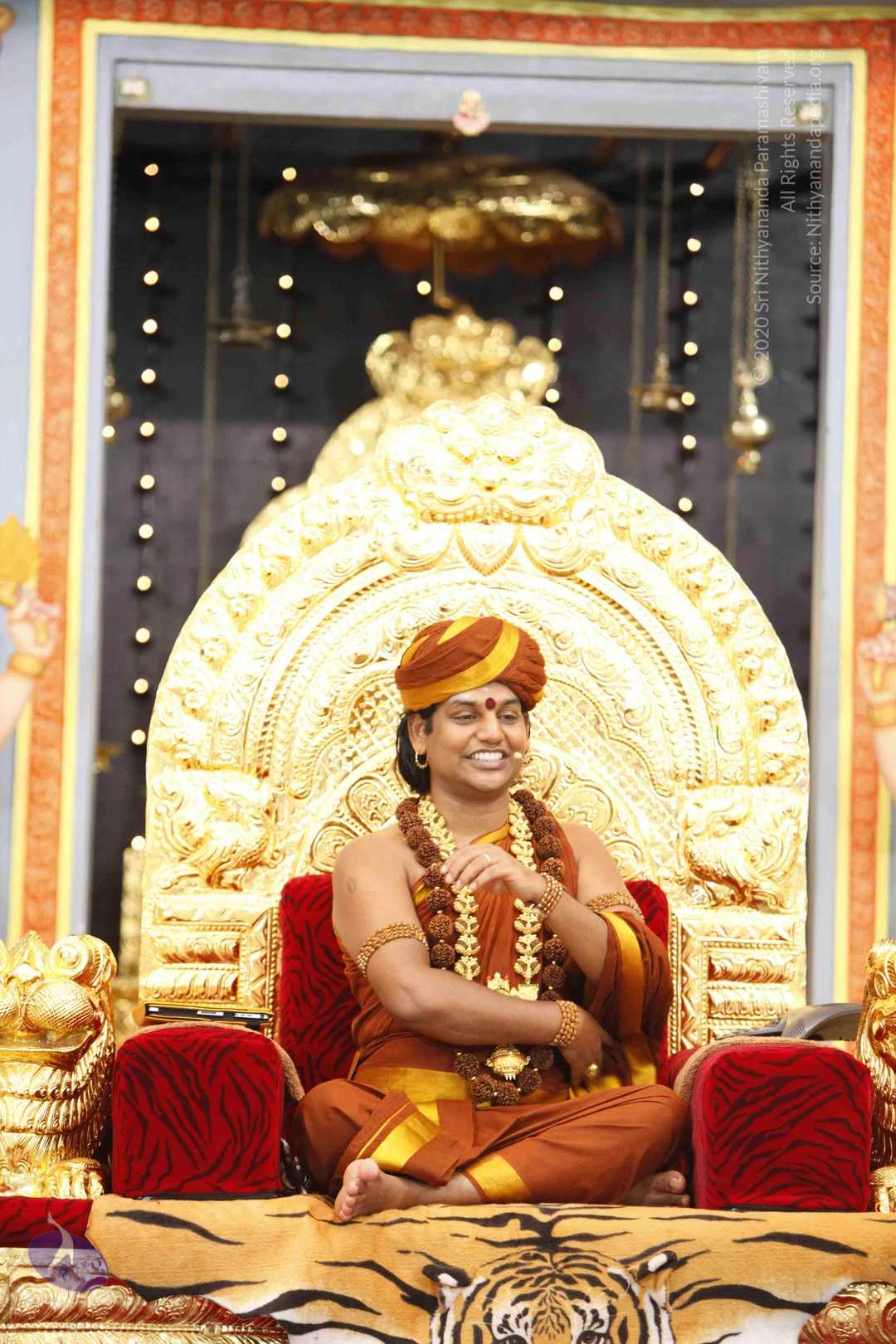
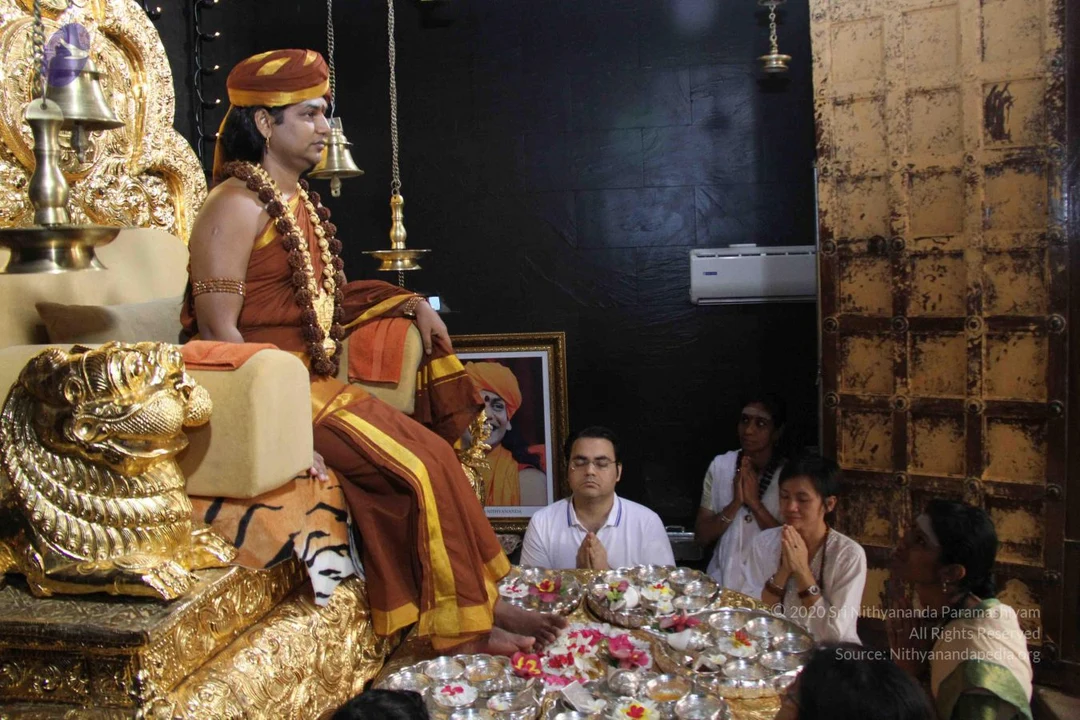
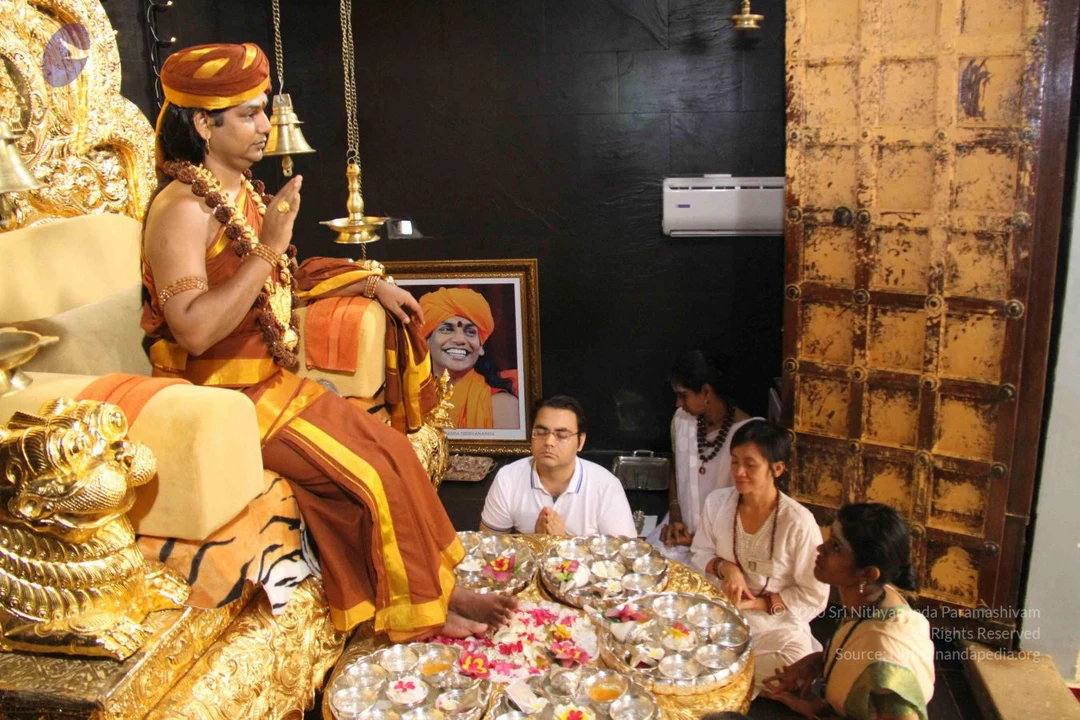
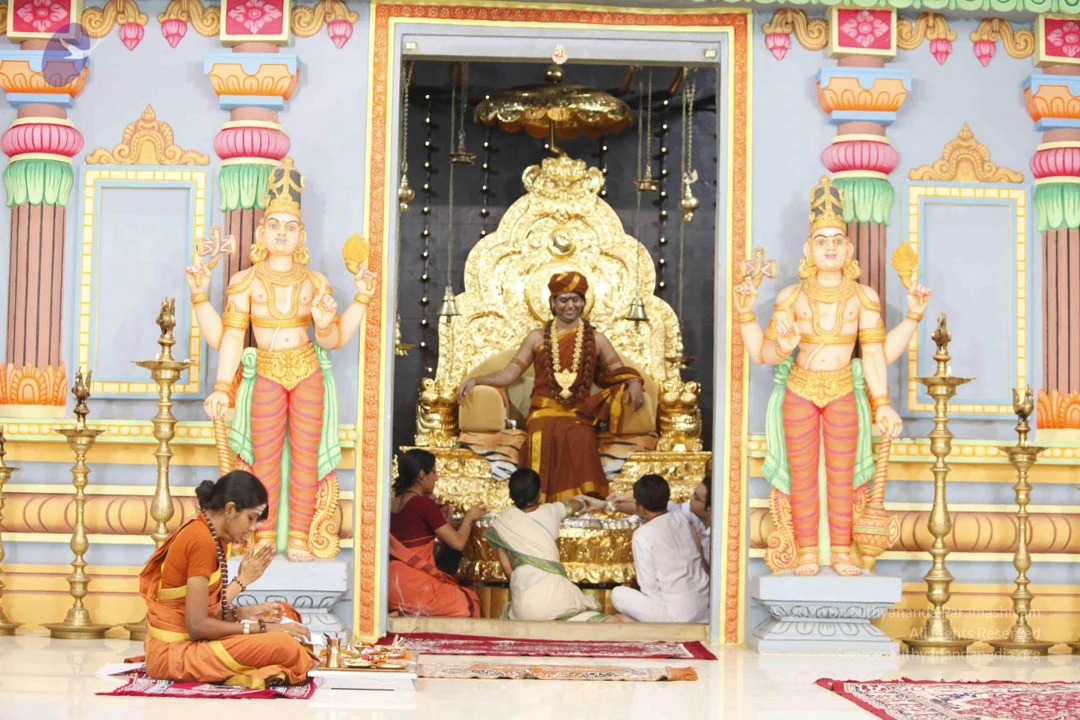
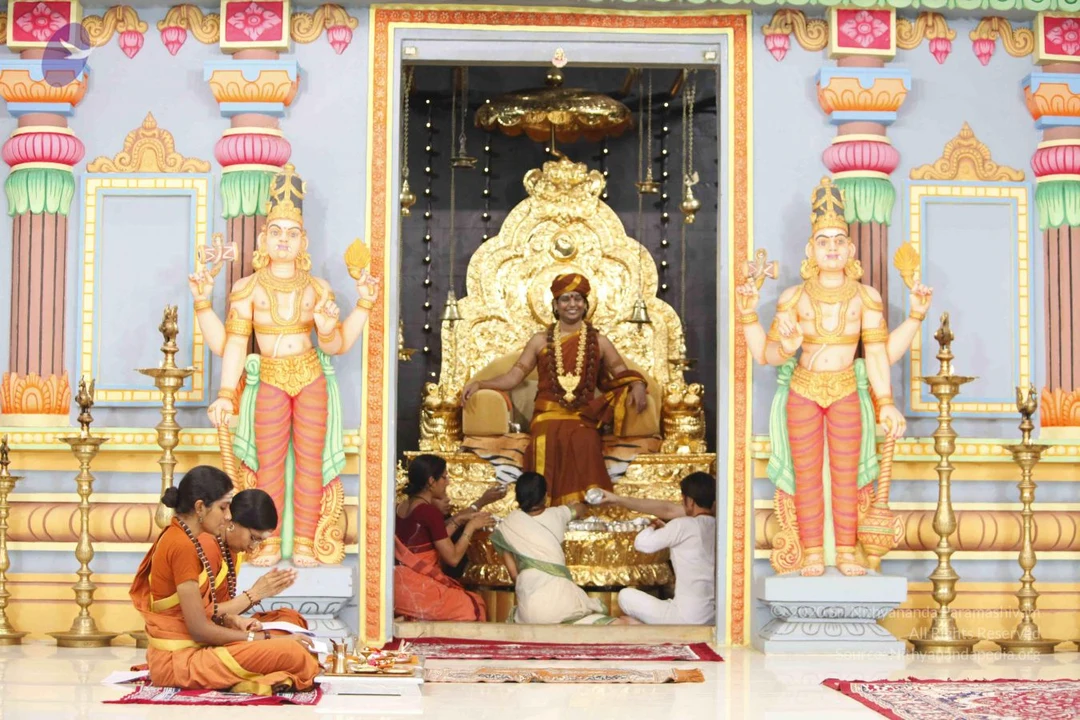
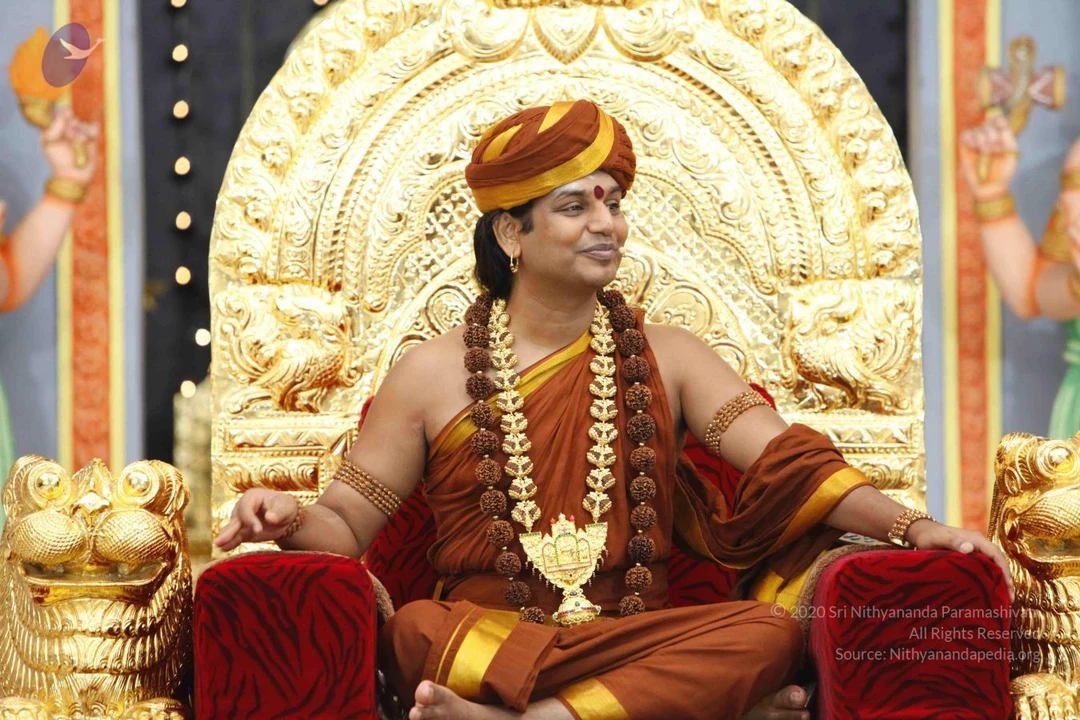
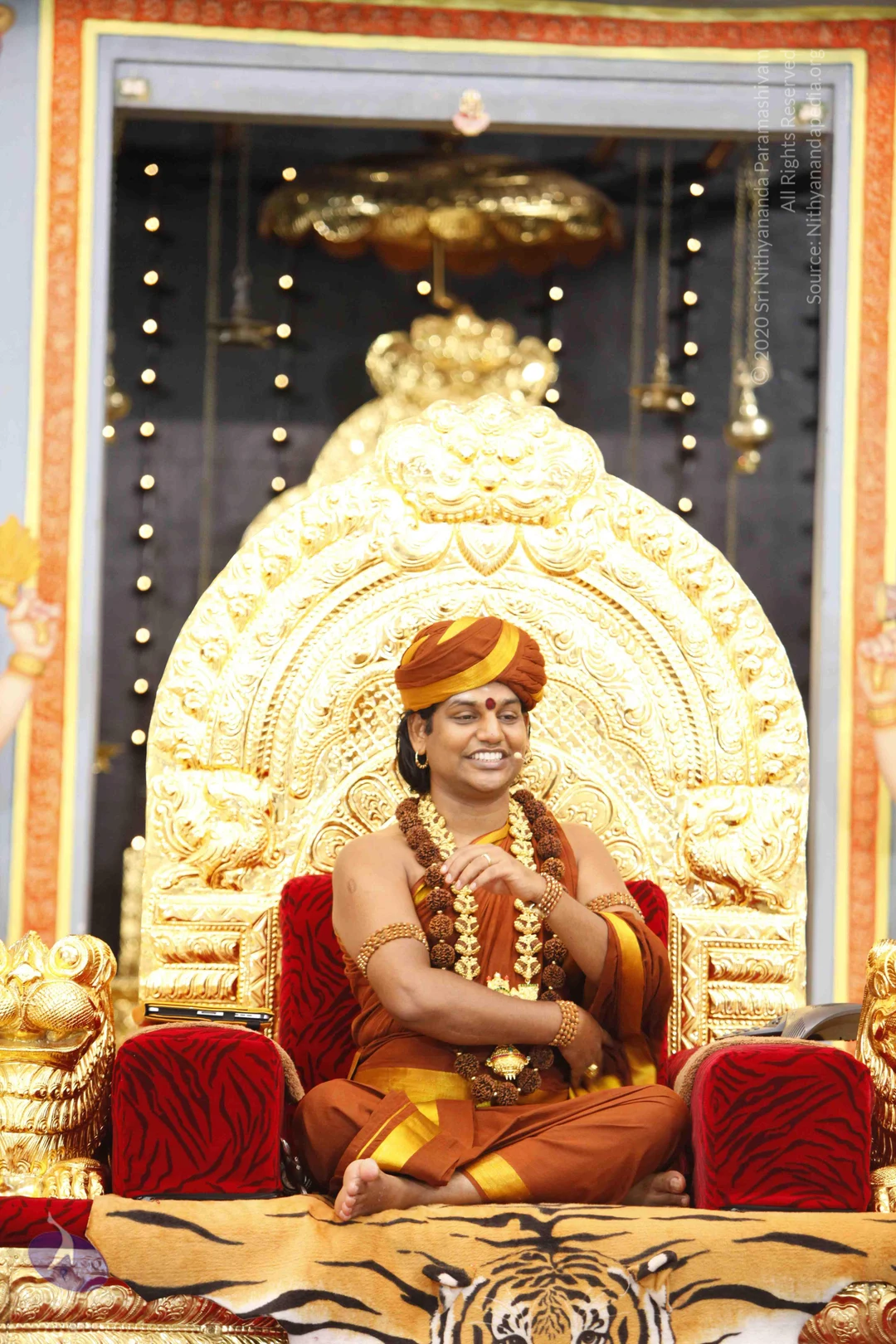
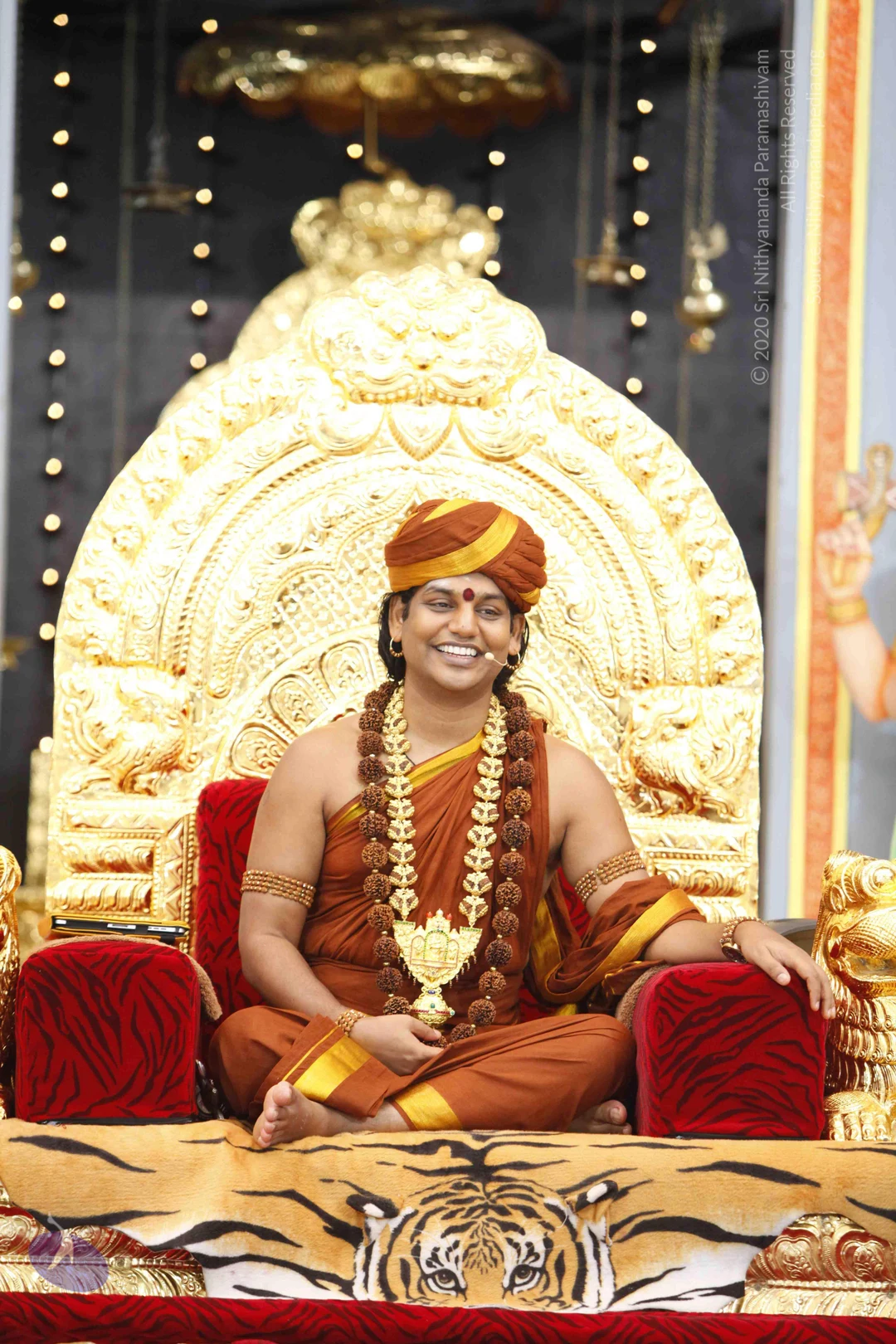
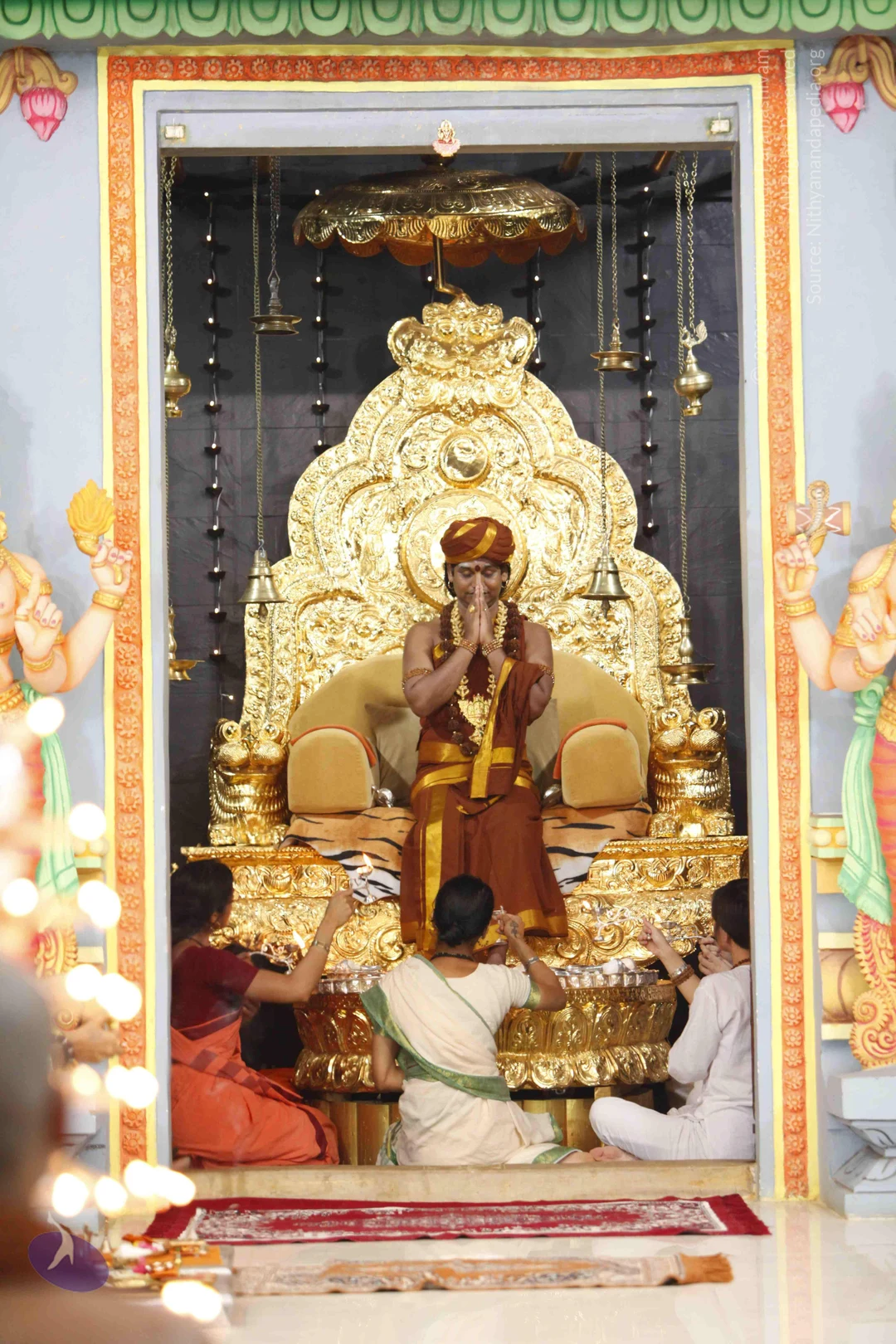
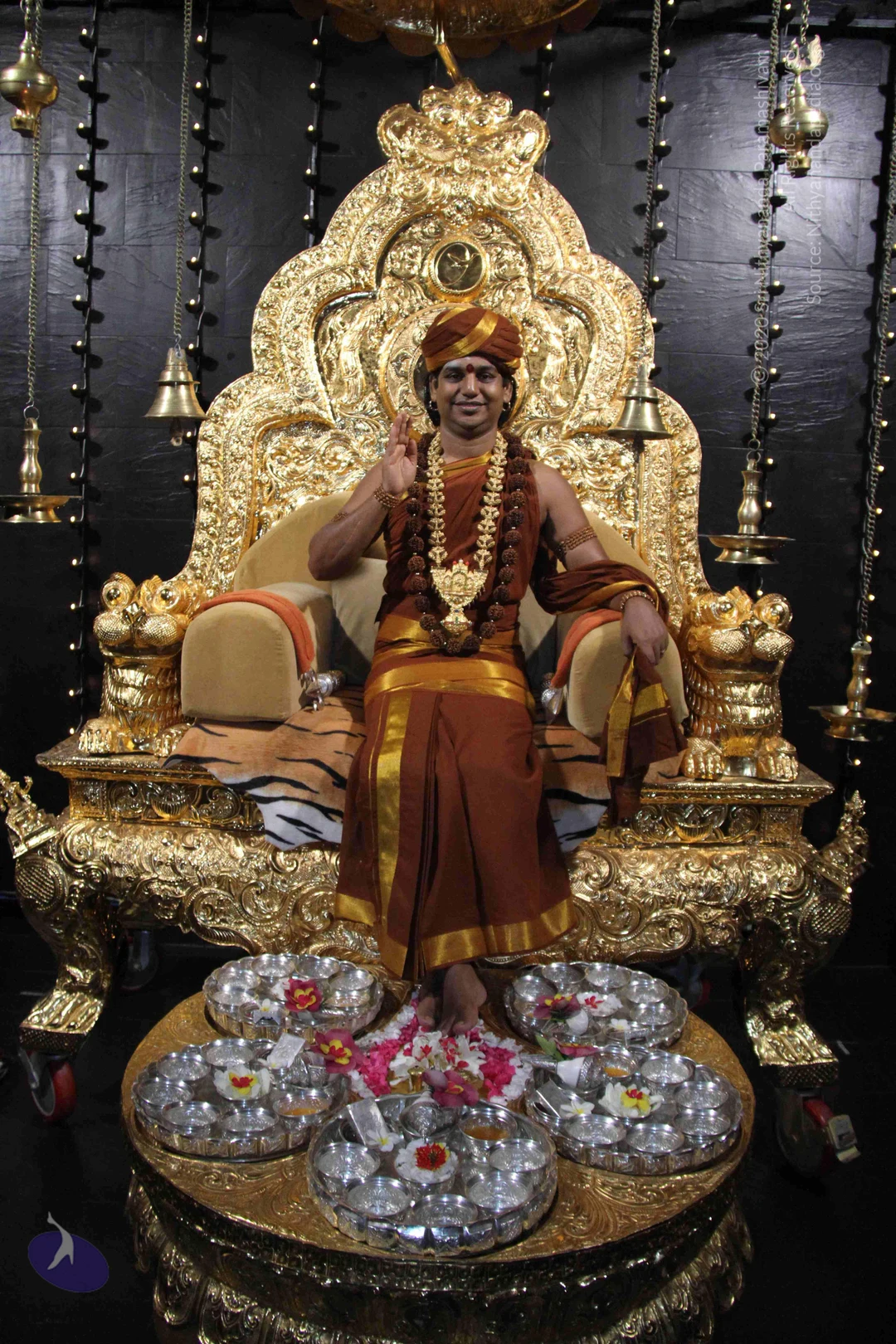
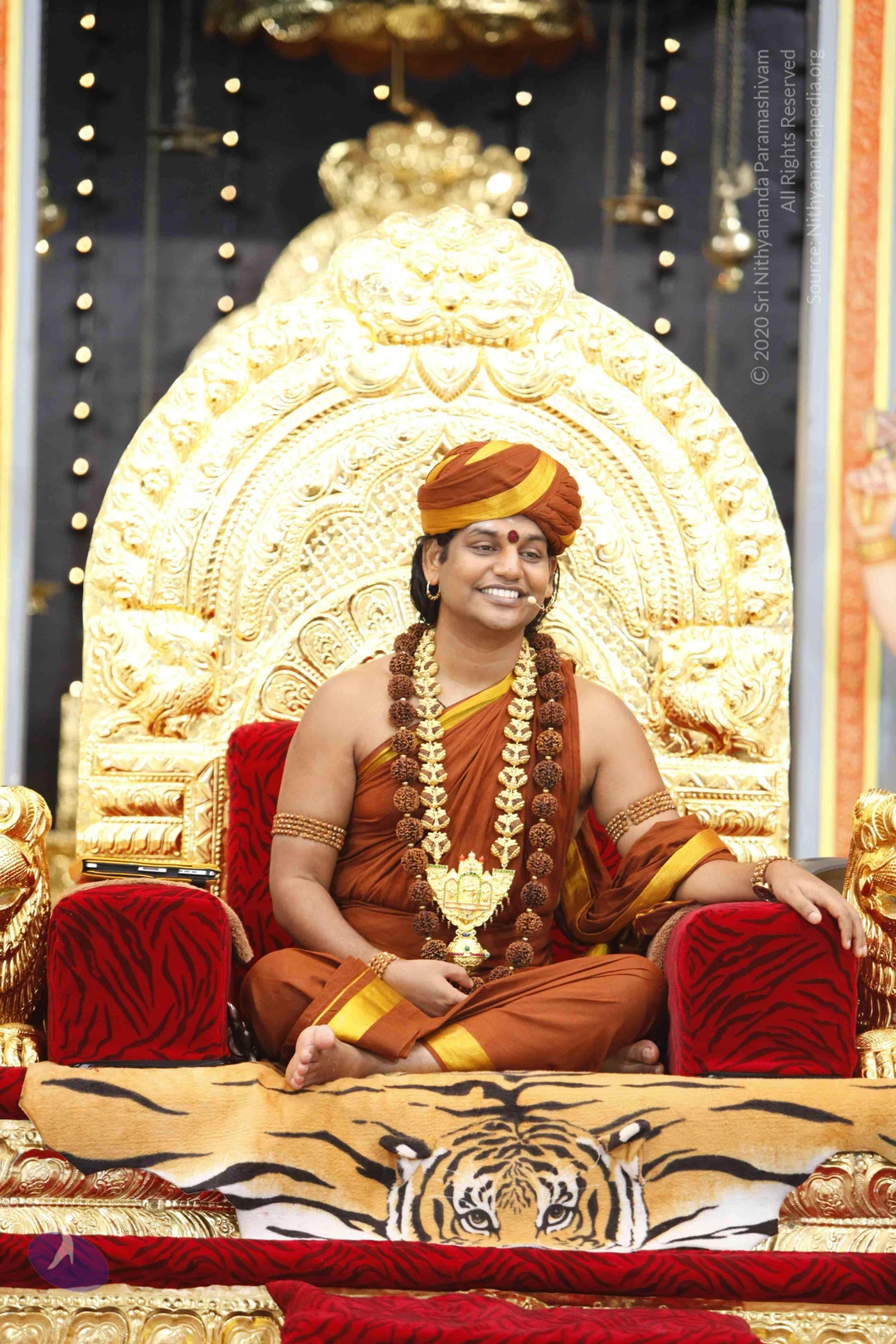
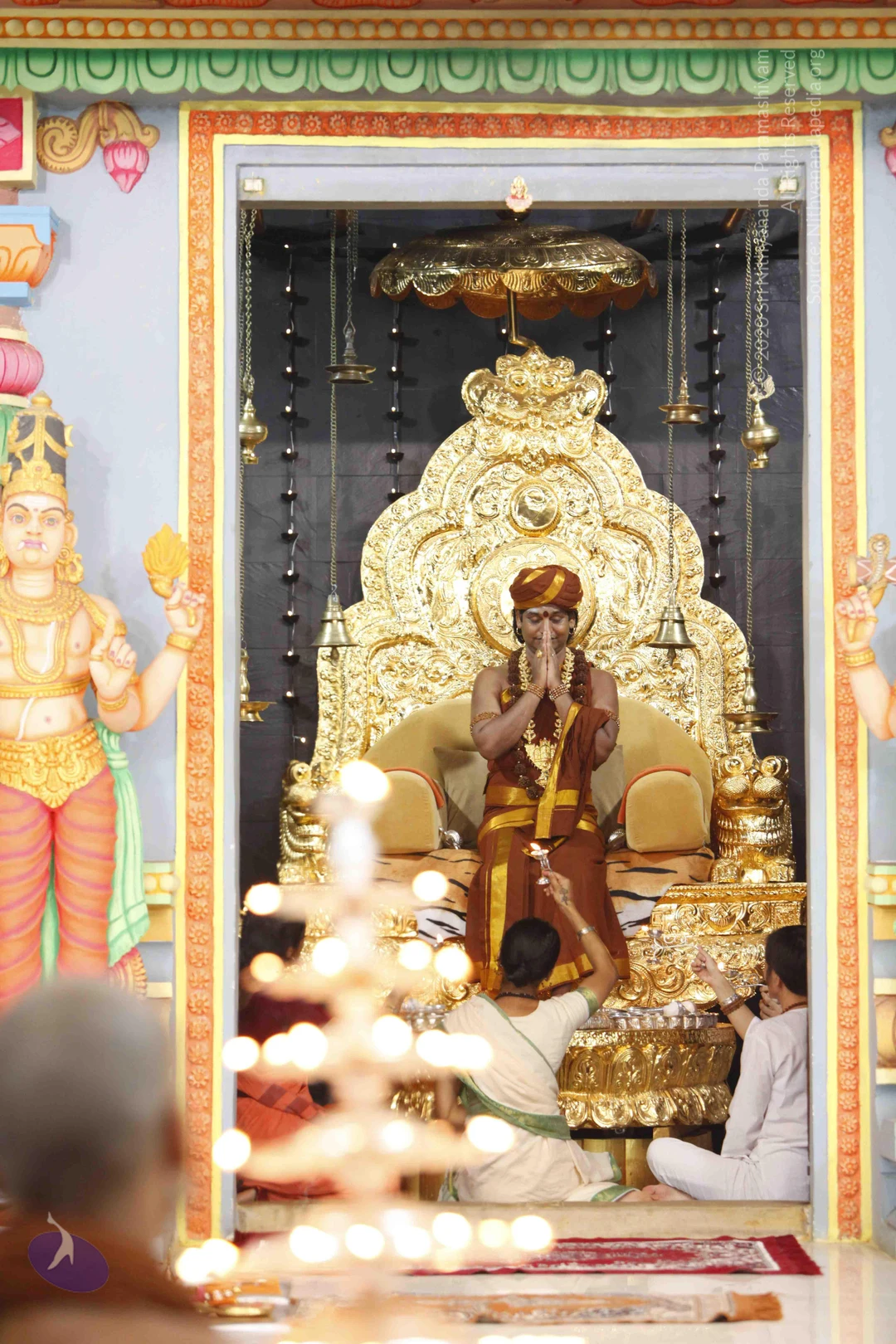
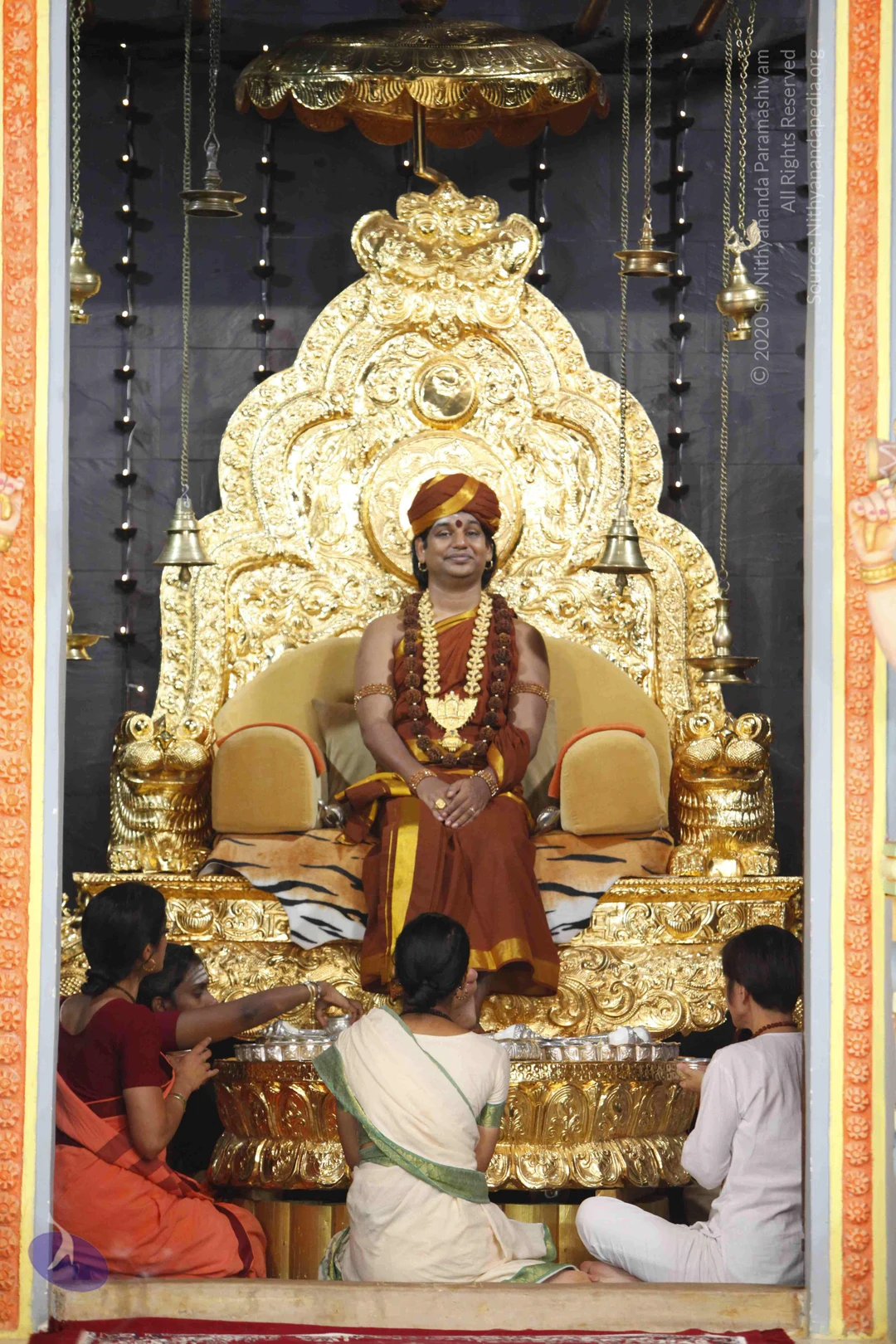
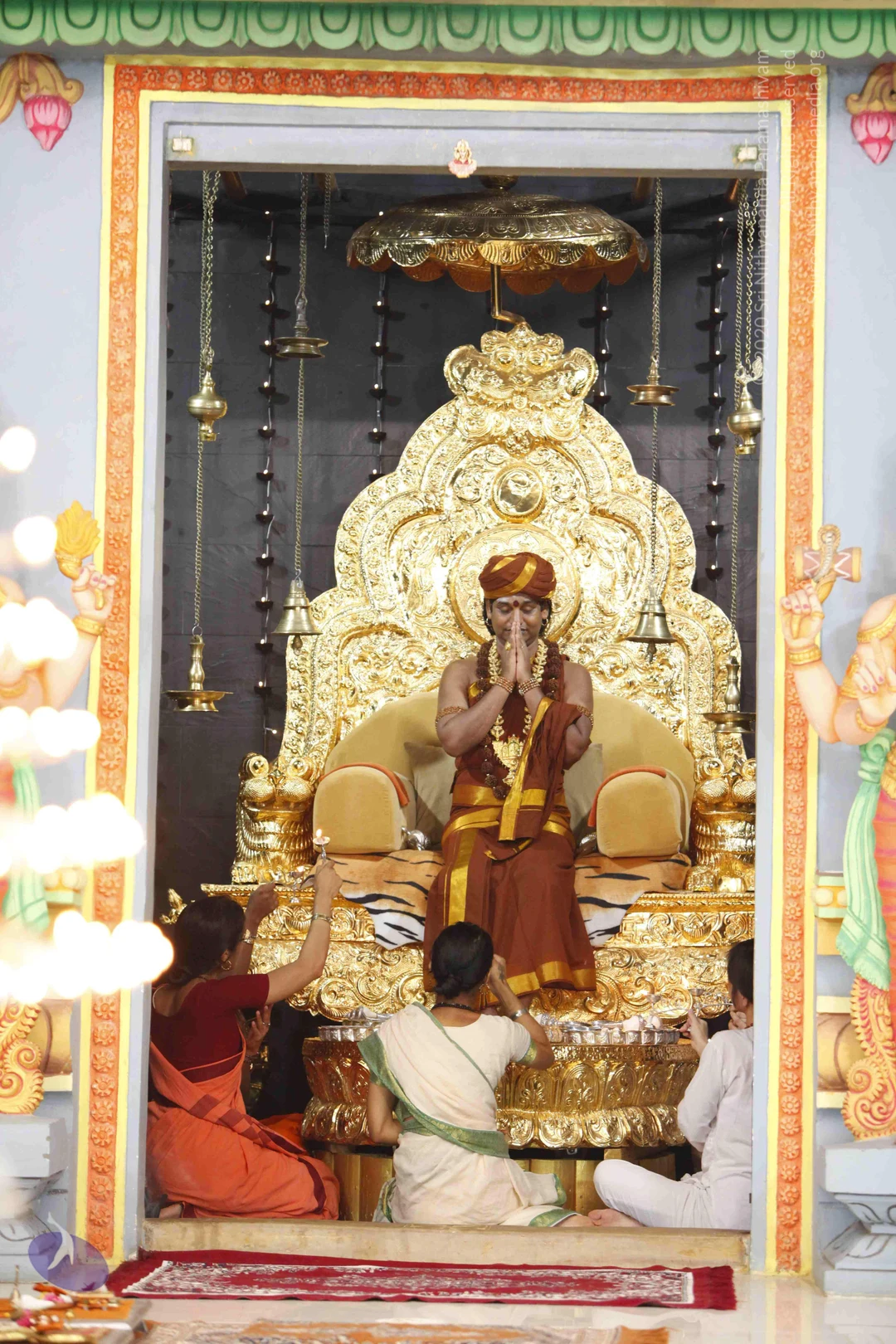
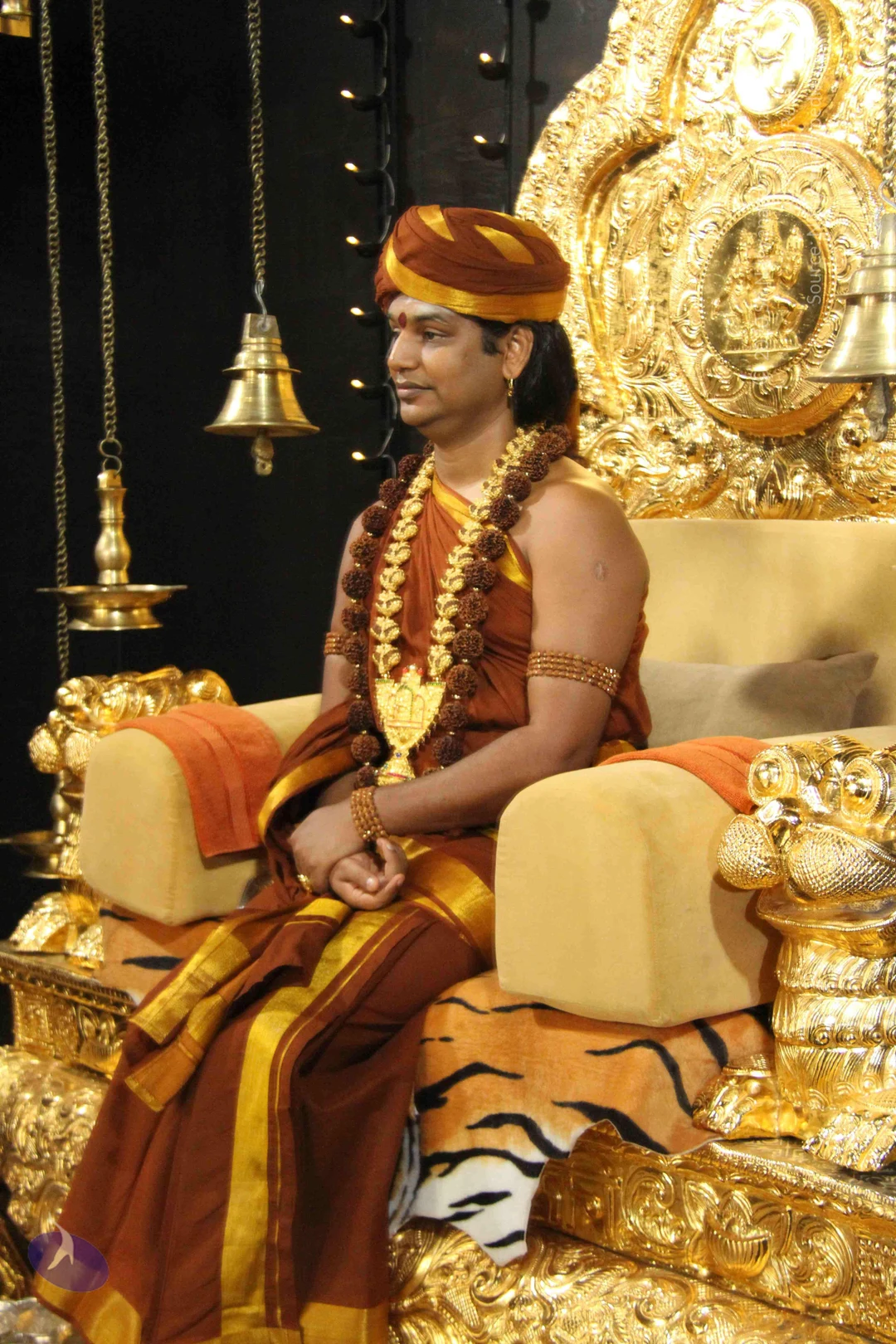
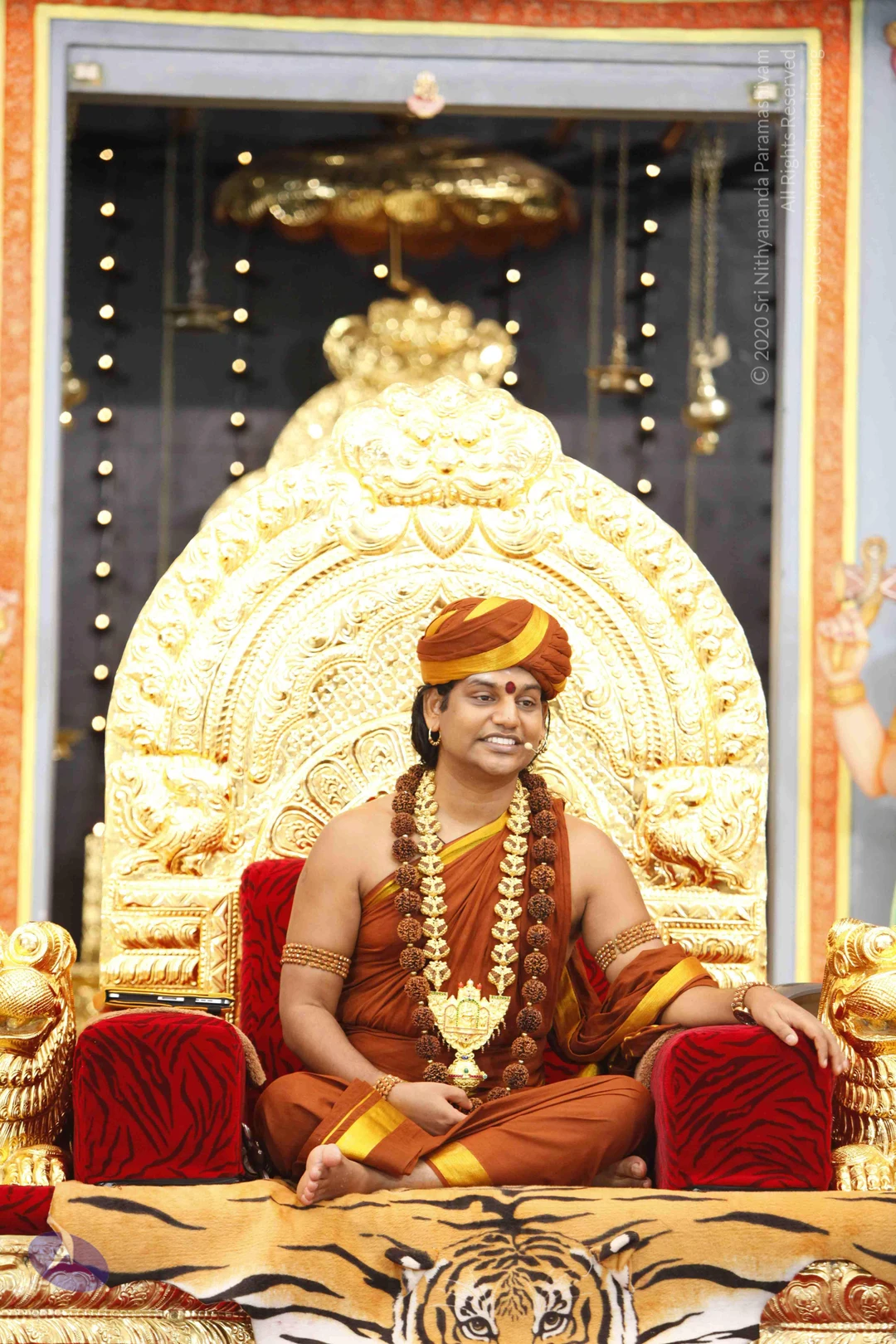
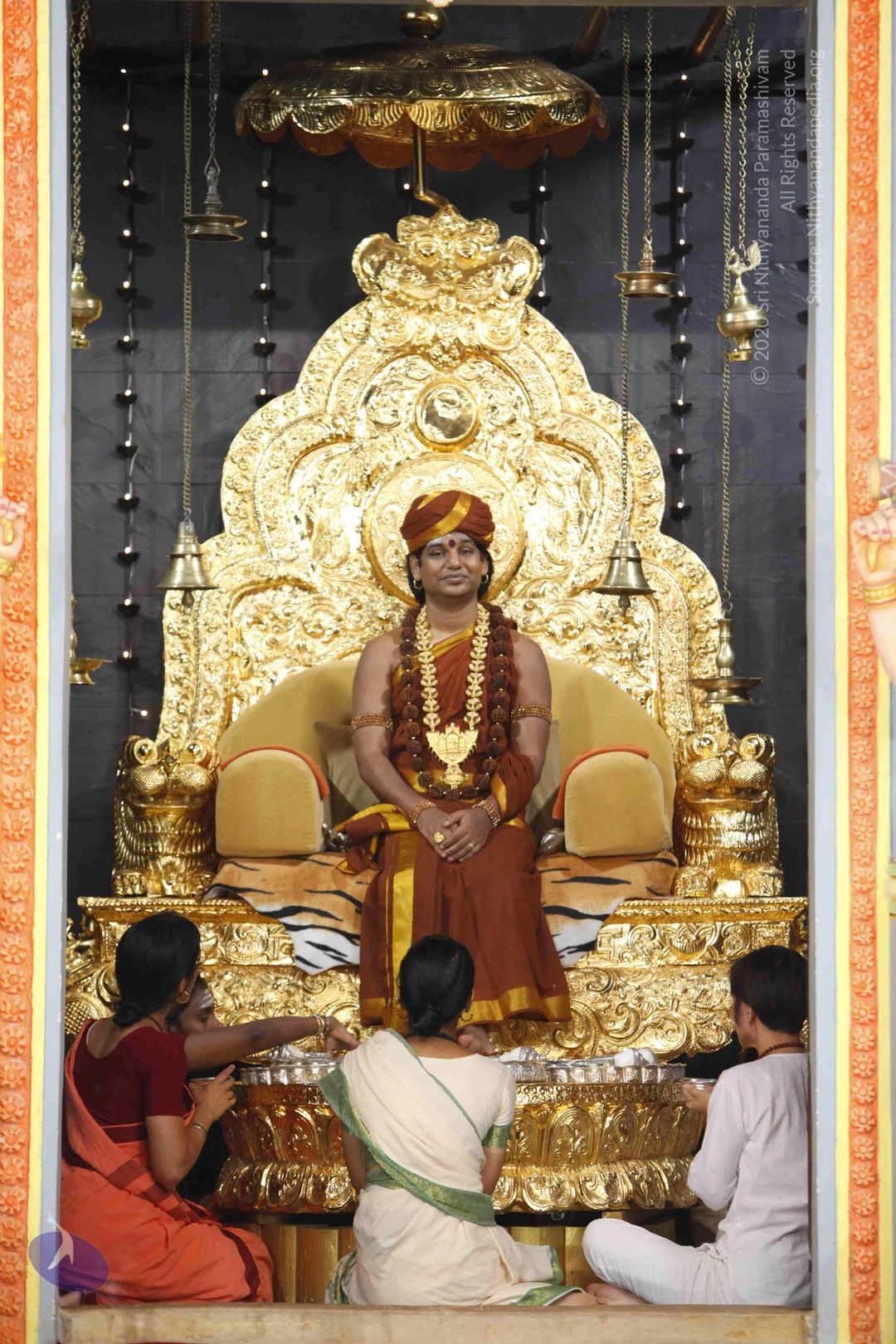
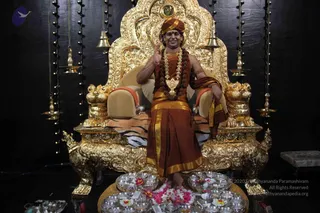
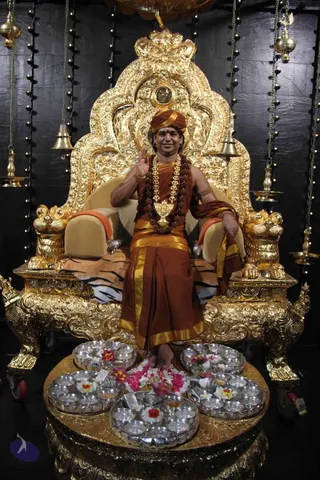
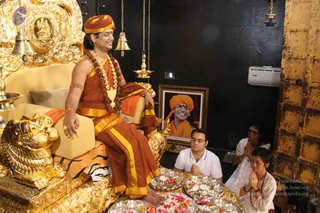
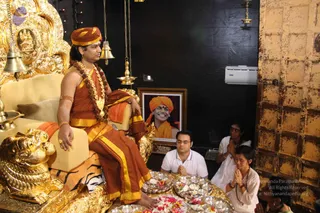
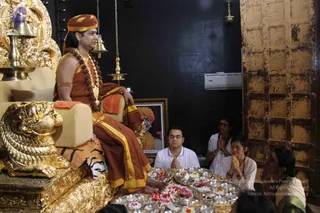
A man seated on an ornate gold throne with carved lion-head armrests and a tiger-striped cloth draped over the seat, raising one hand in a blessing gesture. He wears an orange-red turban, an orange-red shawl and dhoti with gold borders, a rudraksha mala and a large ceremonial gold necklace with white flower garlands. Before the throne, silver plates and bowls filled with flowers, offerings and fruit sit on a gold tray with pink and orange petals scattered near his bare feet. Hanging bells and small brass oil lamps decorate the dark backdrop on both sides. The man has a distinctive presentation with turban, rudraksha and ornate gold necklace, matching the page's Swamiji claim, so this is a probable Swamiji seated in person for a puja offering.A man seated on an ornate gold throne with carved lion-head armrests and a tiger-skin cushion, raising one hand in blessing. He wears a rust-orange turban, a rust-orange and gold-bordered dhoti and shawl, multiple rudraksha malas and a large gold ceremonial necklace with a central pendant. Silver plates heaped with petals and flowers sit around his bare feet on a gold pedestal, with a small pile of rose and marigold petals before him. Brass hanging lamps and bells dangle in the dark background. Swamiji (probable): the orange turban, rudraksha malas, ornate gold necklace and saffron-toned garments are the distinguishing cues for this seated figure, who is presented on a throne and surrounded by offerings.A man seated on an ornate gold throne carved with lions and draped with a tiger-striped cloth, raising his right hand in a blessing gesture. He wears an orange-brown turban, an orange-brown dhoti and wrap edged in gold, a long white flower garland, a dark rudraksha mala, a gold pendant, and gold bangles. Hanging brass bells and oil lamps frame the throne against a black background. In front of the throne on the floor are silver plates and bowls holding flowers, petals, and offerings, plus a pair of bare feet.A man in orange-red saffron robes and a matching turban with a gold border sits on a cream cushioned chair in front of an ornate gold-leaf throne with floral carvings. He wears a rudraksha mala with a gold ceremonial necklace and a gold pendant, plus gold bracelets and rudraksha armlets, and raises one hand in blessing while smiling. A brass bell stands at the right beside the throne. Swamiji (probable): long hair and a crown-like turban, saffron robes, rudraksha malas and gold ceremonial necklace fit the swami presentation cues on the page.A seated man in saffron-orange robes with a gold-trimmed yellow border sits on a gilded golden throne decorated with a lion head and a tiger-striped cushion. He wears an orange turban, a long rudraksha mala, and a heavy gold necklace, with gold bangles on his arms, and smiles while resting his hand on the armrest. Beside him hangs a framed portrait of a smiling man in an orange turban, and brass oil lamps hang from chains above. Two devotees kneel in prayer with palms joined: a man in a white polo shirt and a woman in white clothes. Swamiji (probable): the seated man in the saffron robes and turban, enthroned and receiving devotees, matches the candidate description.A photograph of a seated man on an ornate gold throne with a tiger-skin cushion and a golden lion-head armrest, dressed in saffron-orange robes with gold borders, an orange turban and a rudraksha mala with a gold pendant. Swamiji (probable): the seated man has long swept-back hair, an orange turban, rudraksha mala and gold ceremonial necklace. He holds one hand on the armrest while other devotees sit before him. Brass hanging bells and oil lamps surround the throne. Nearby, a framed portrait labelled "Paramahamsa Nithyananda" shows a smiling figure in orange turban. Before the throne sit a man in a white polo shirt and two women in white with folded hands in namaste, with plates of flowers, fruit and lamps arranged on a gold tray. A black wall and gold-studded door complete the setting.

nithya-satsang

41 photosSource gallery
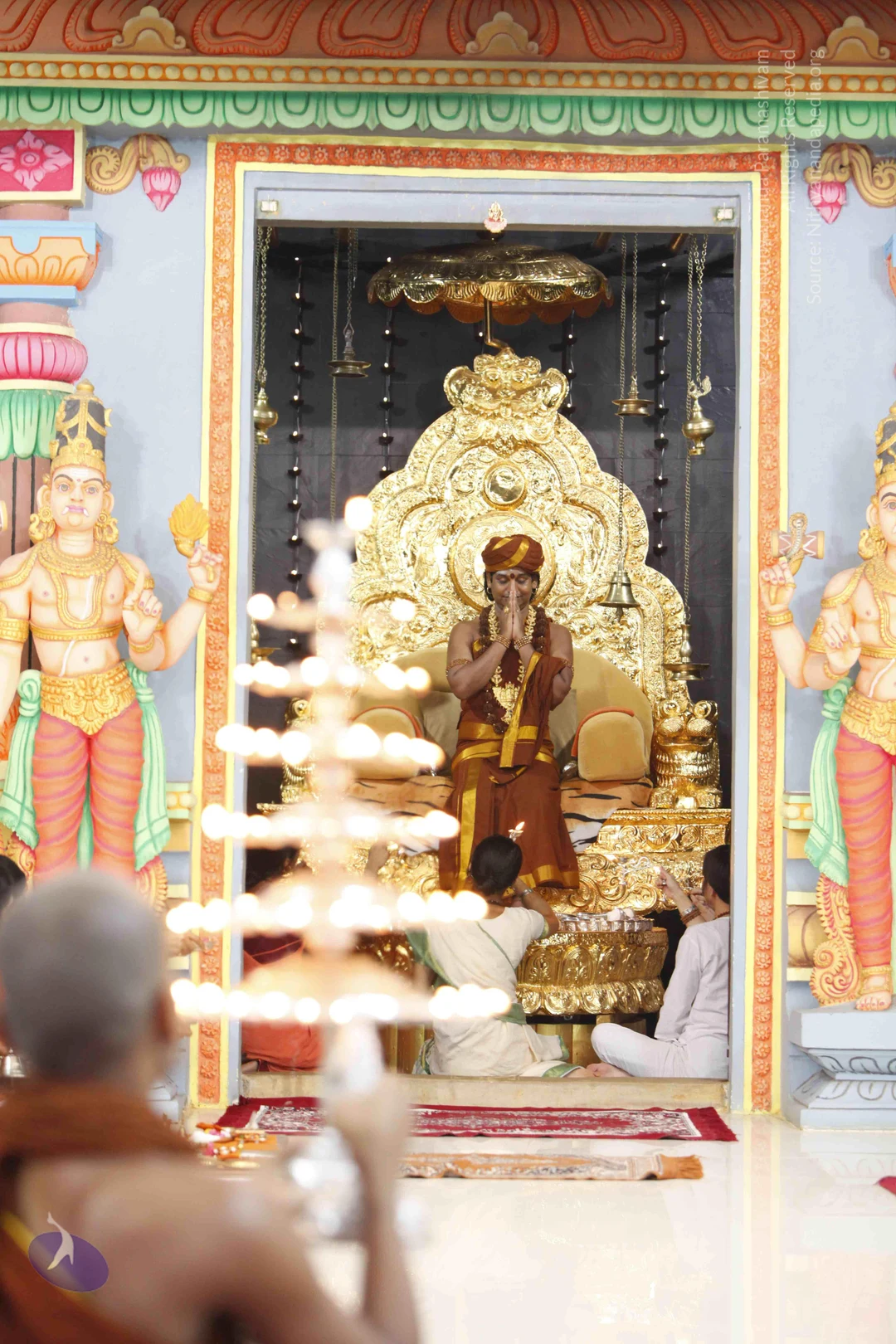
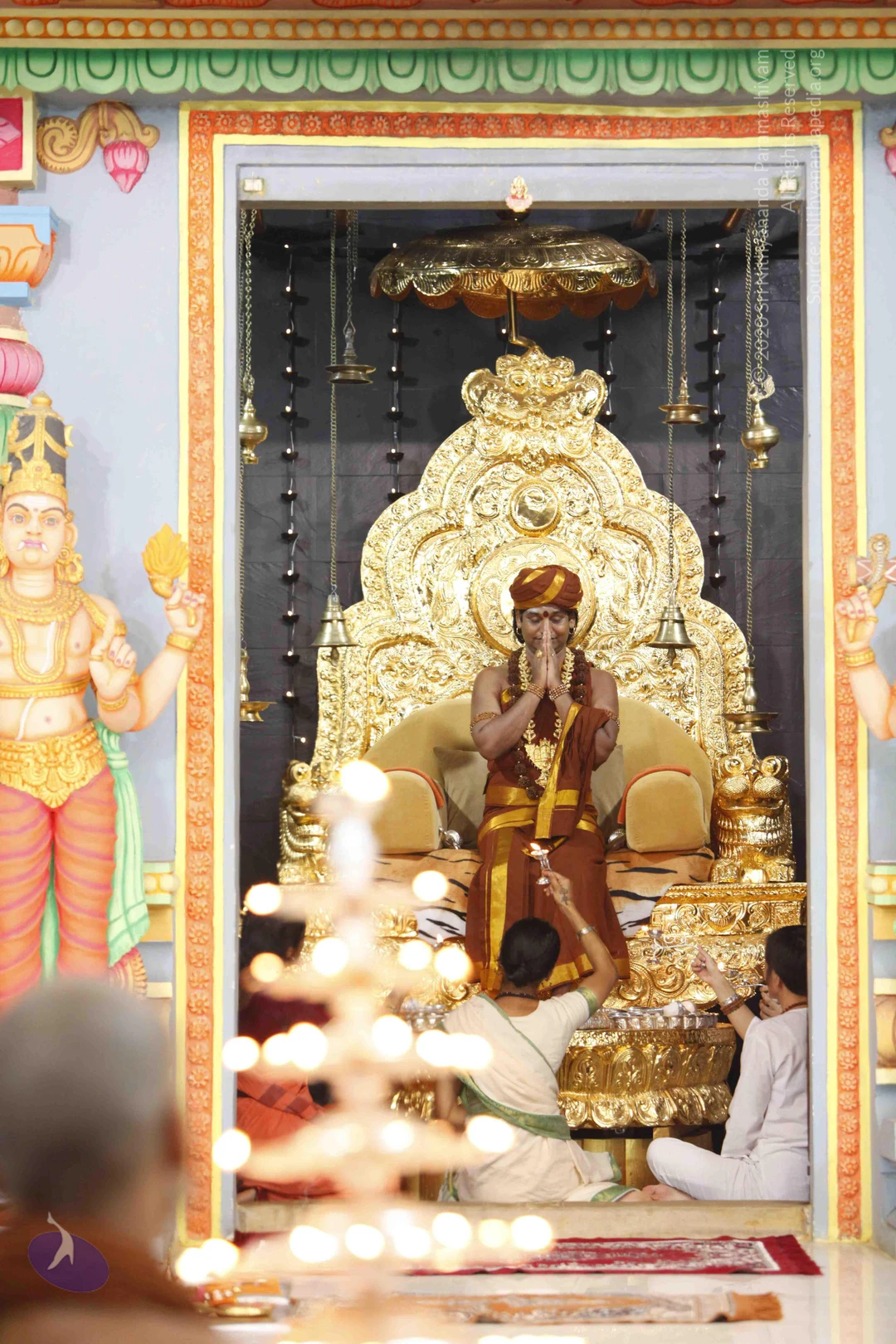
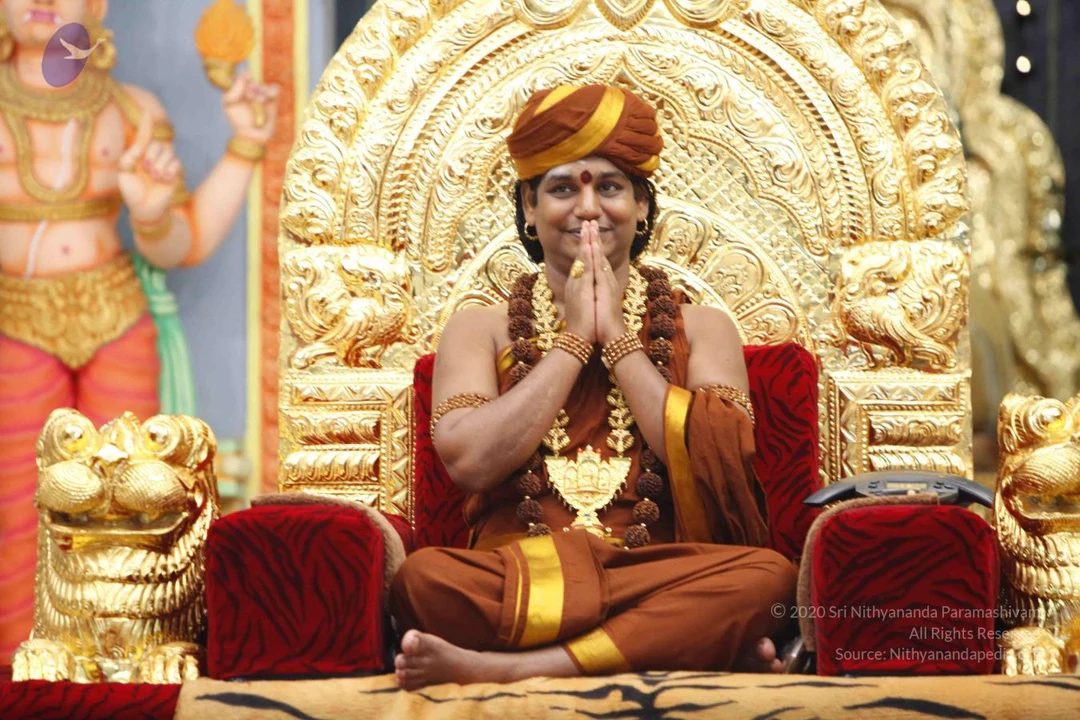
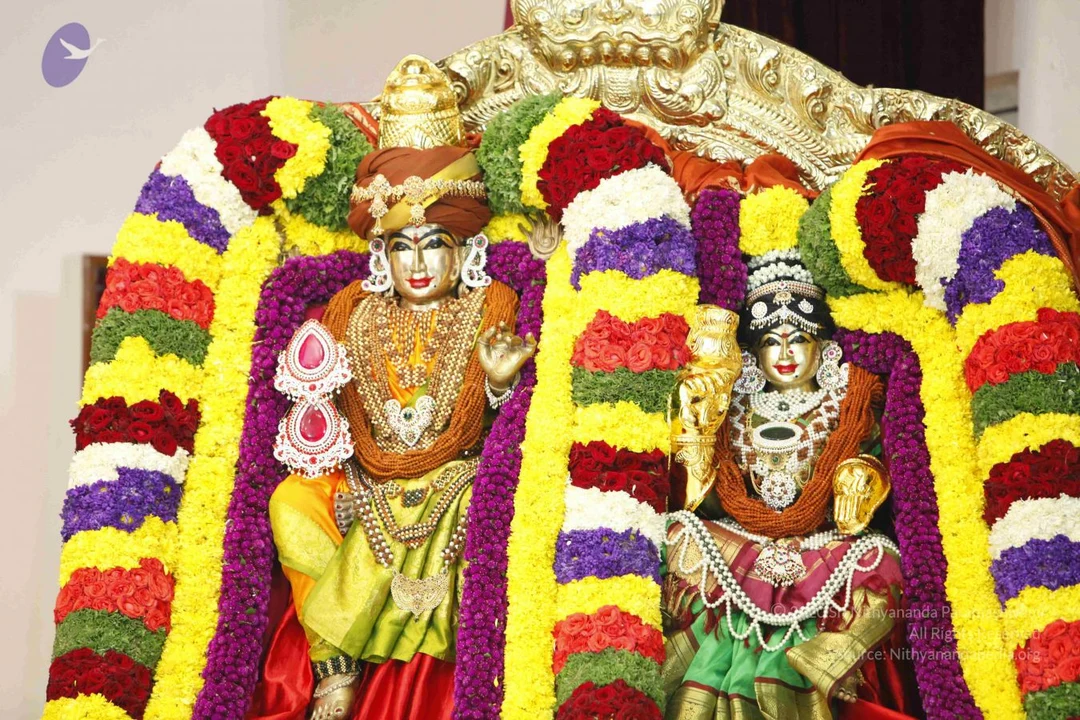
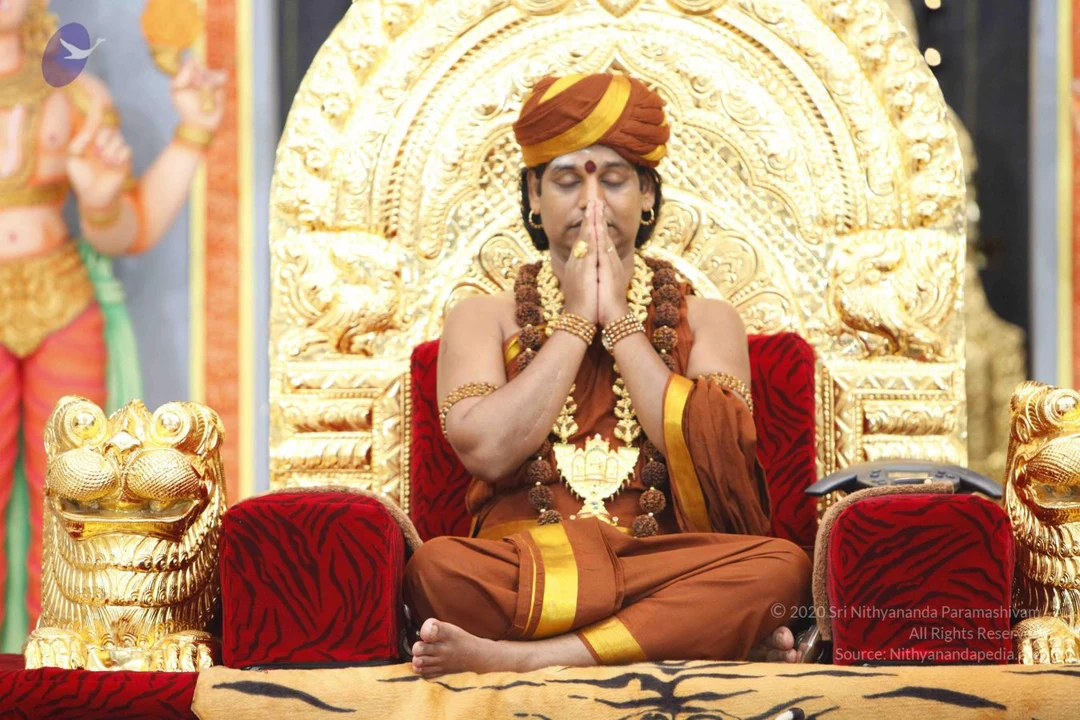
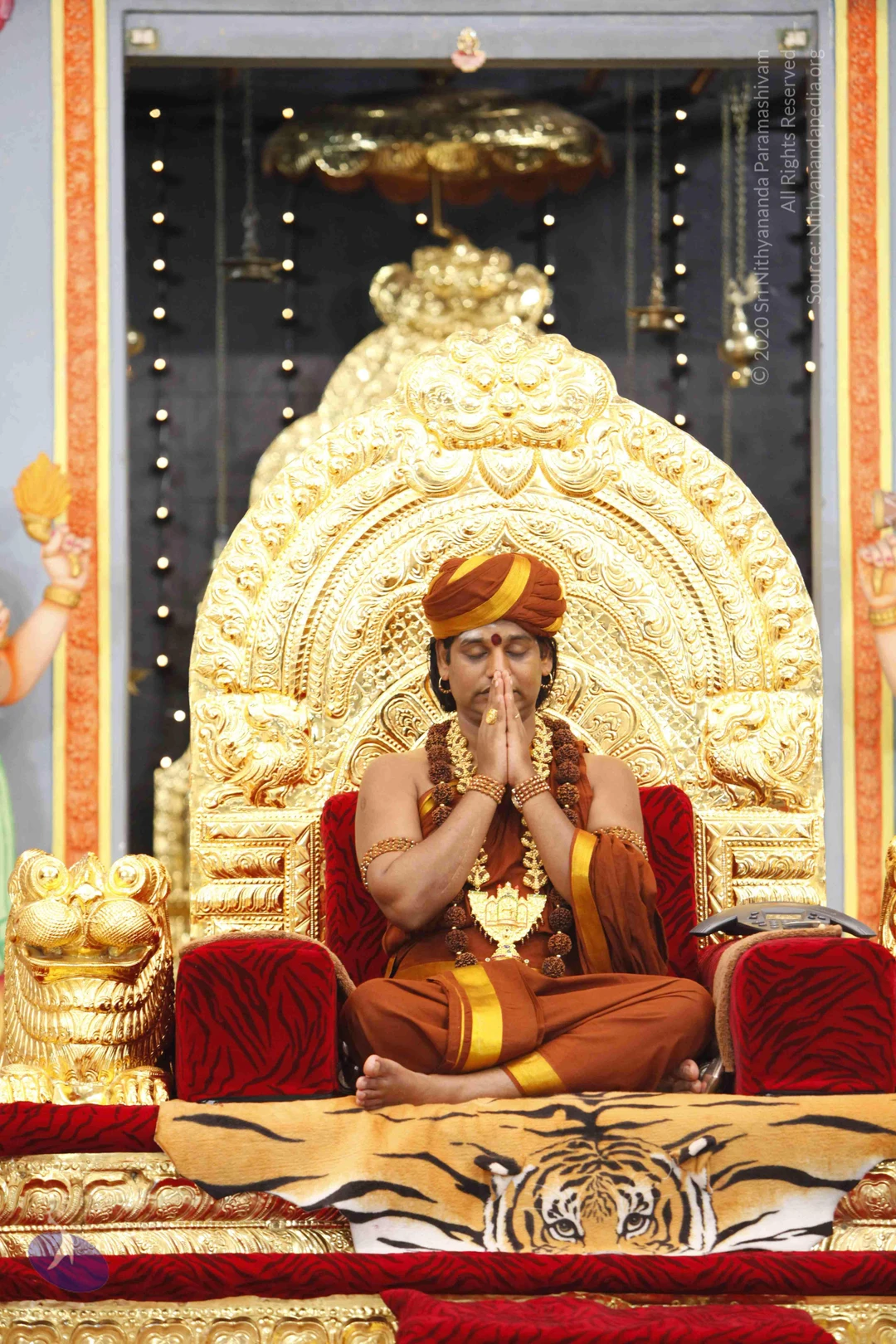
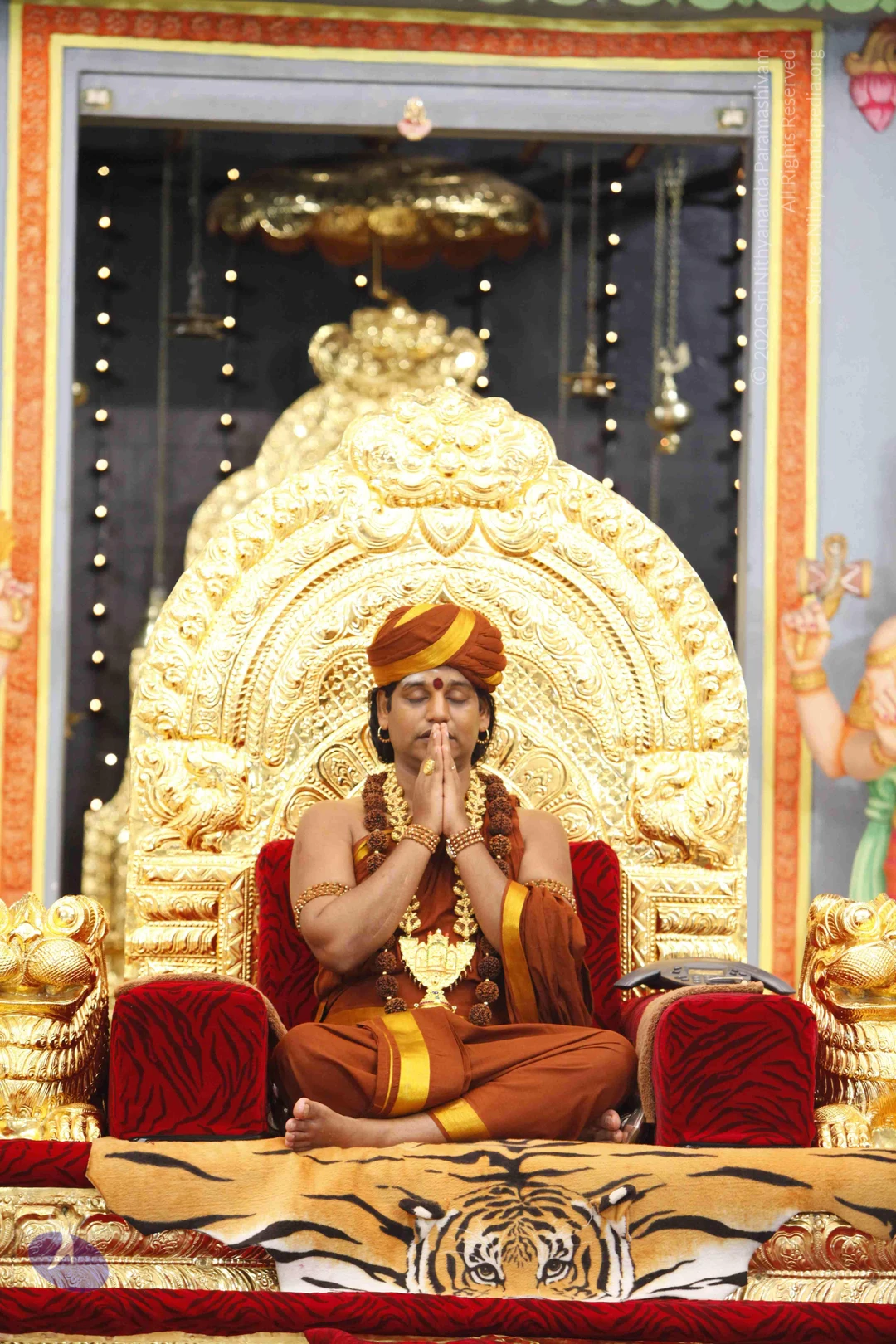
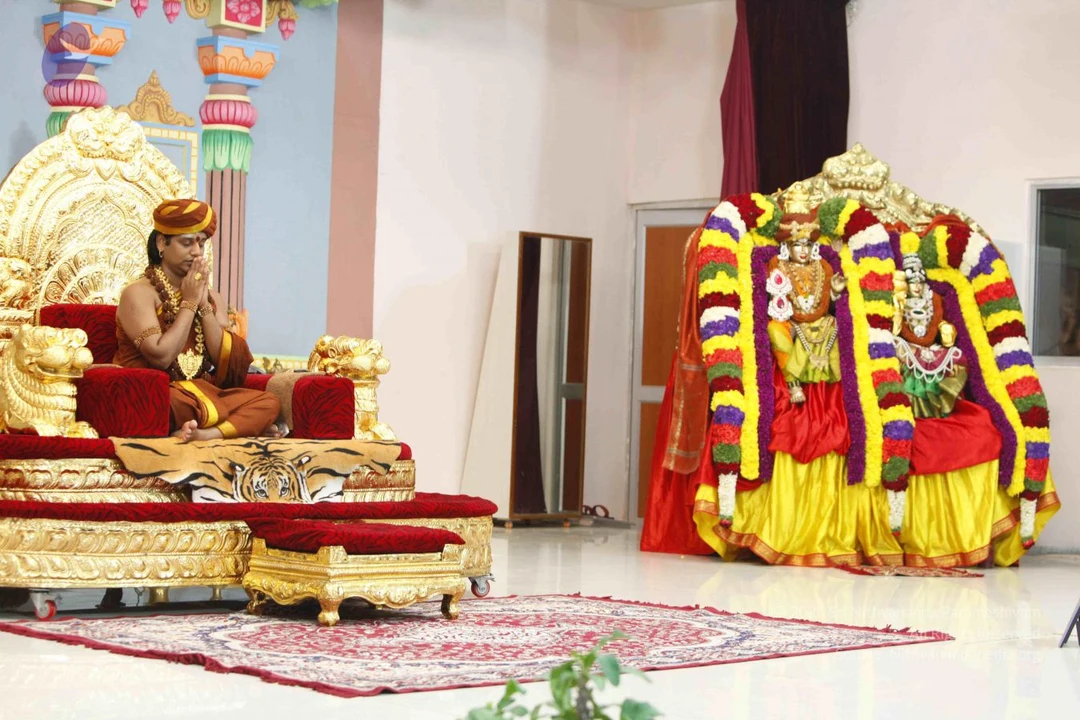
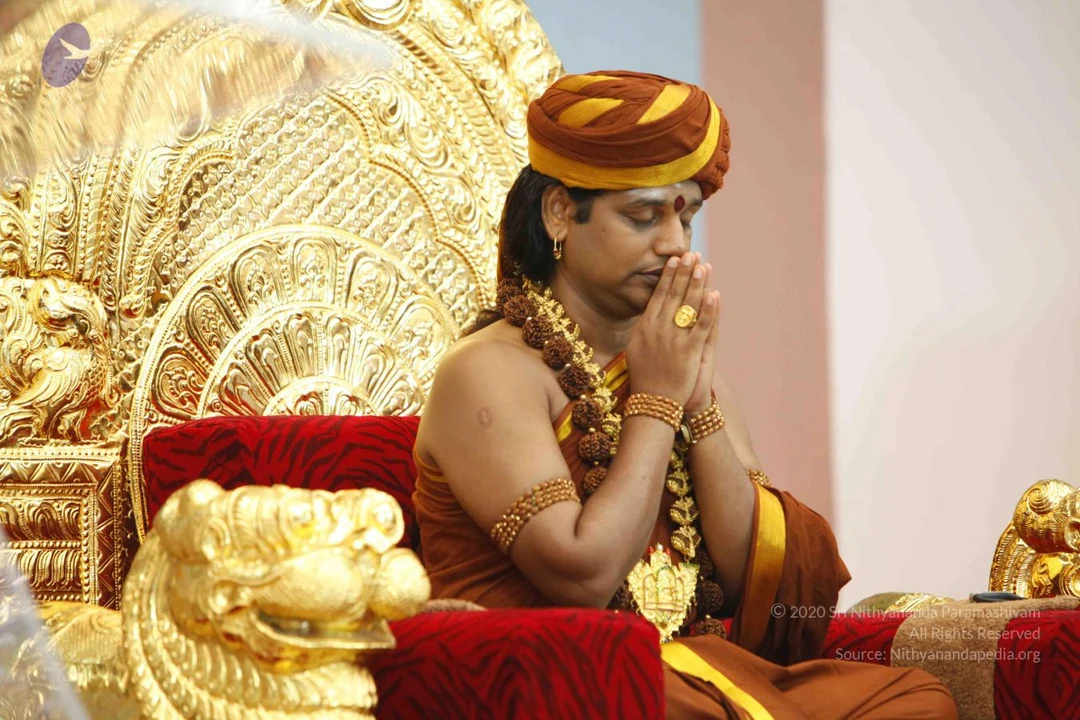
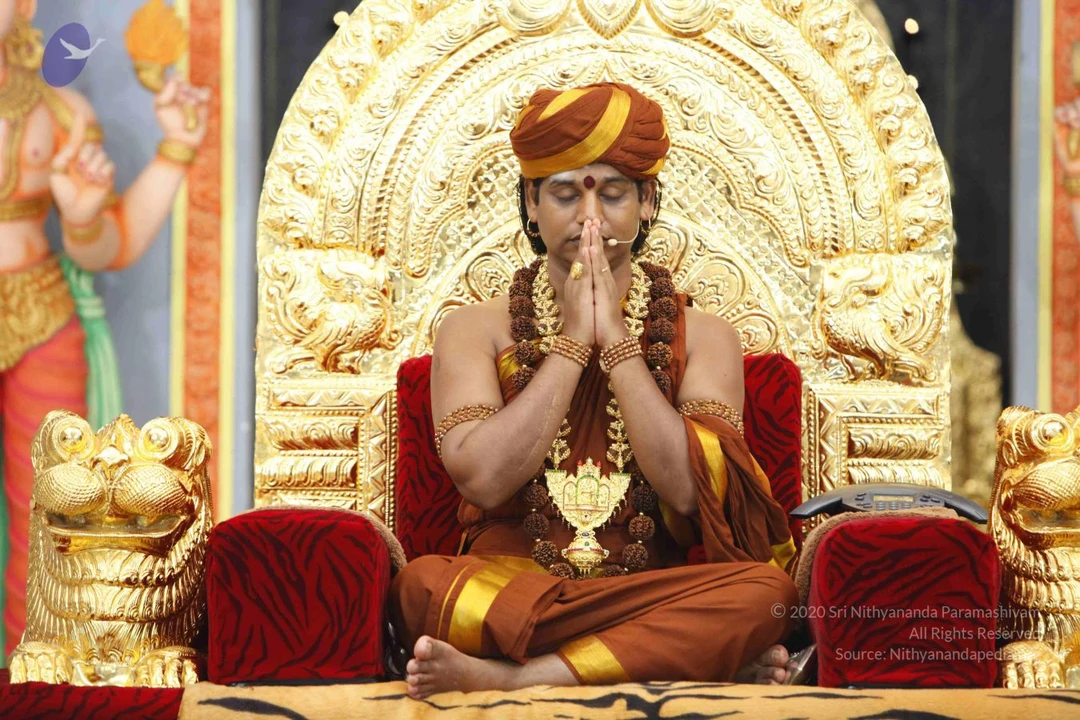
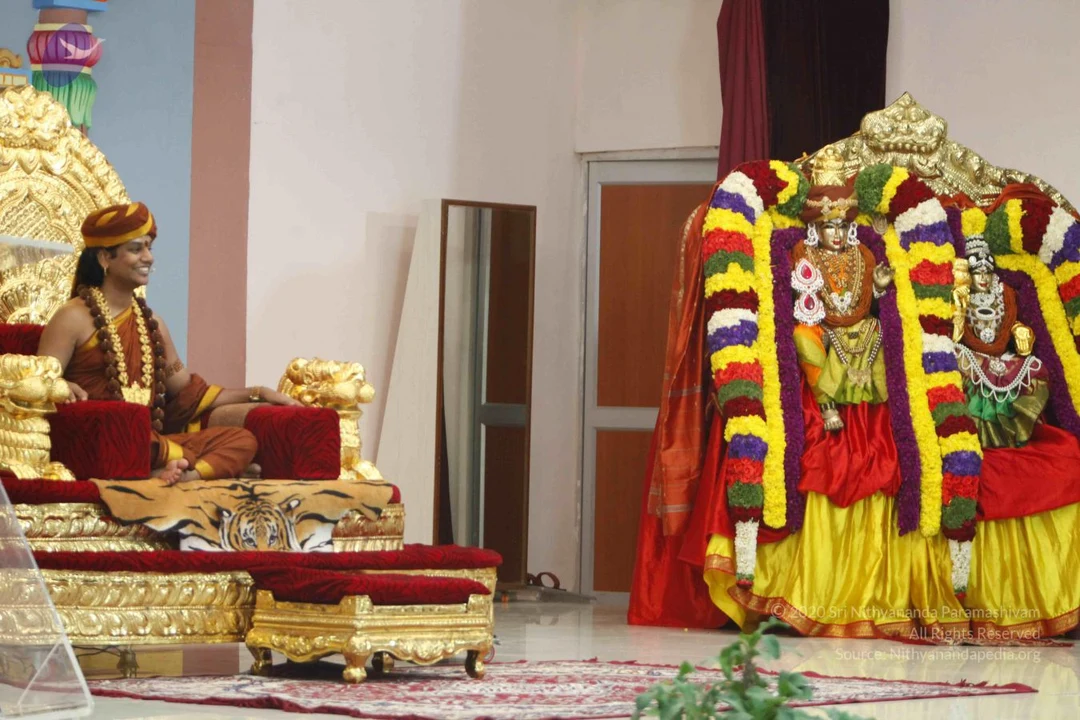
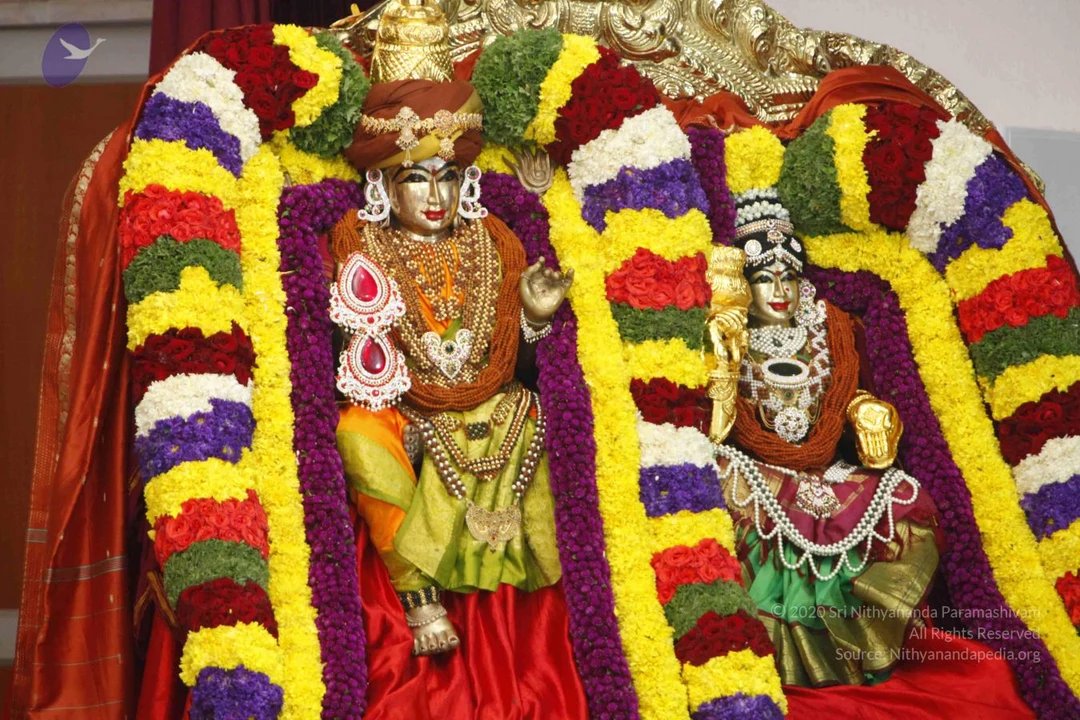
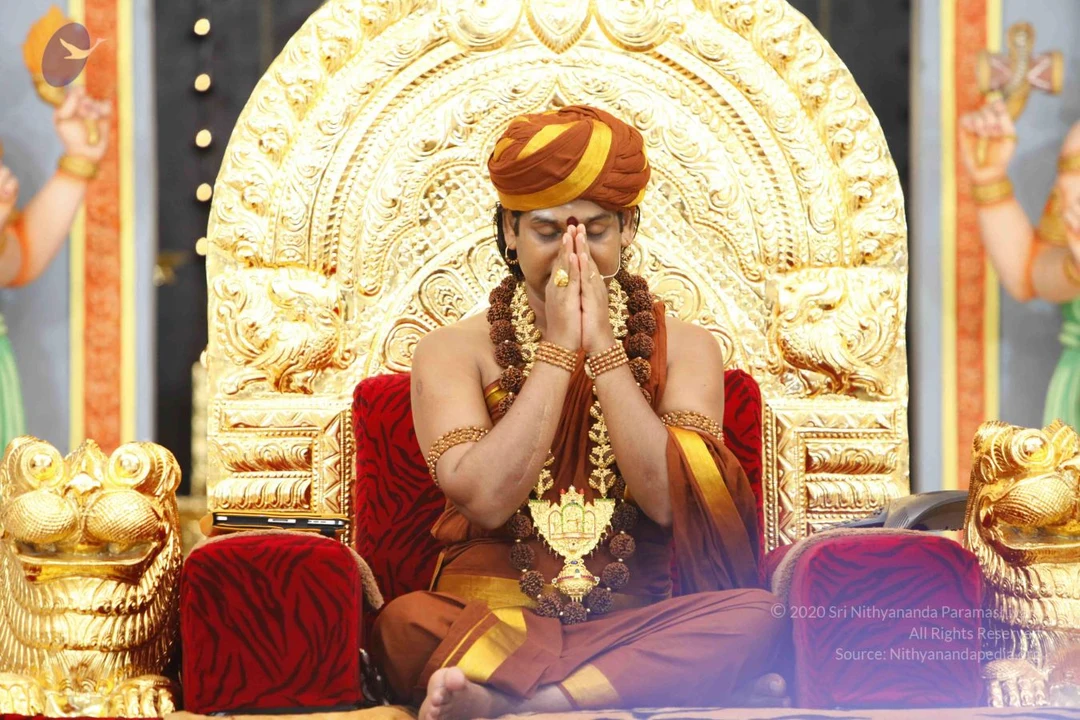
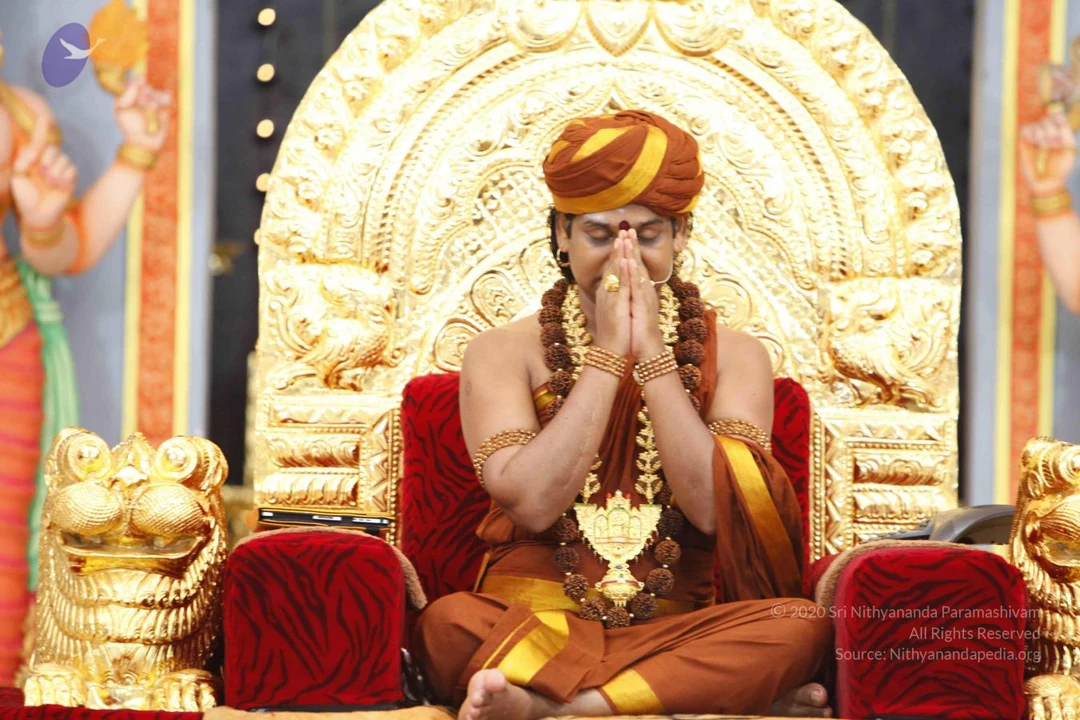
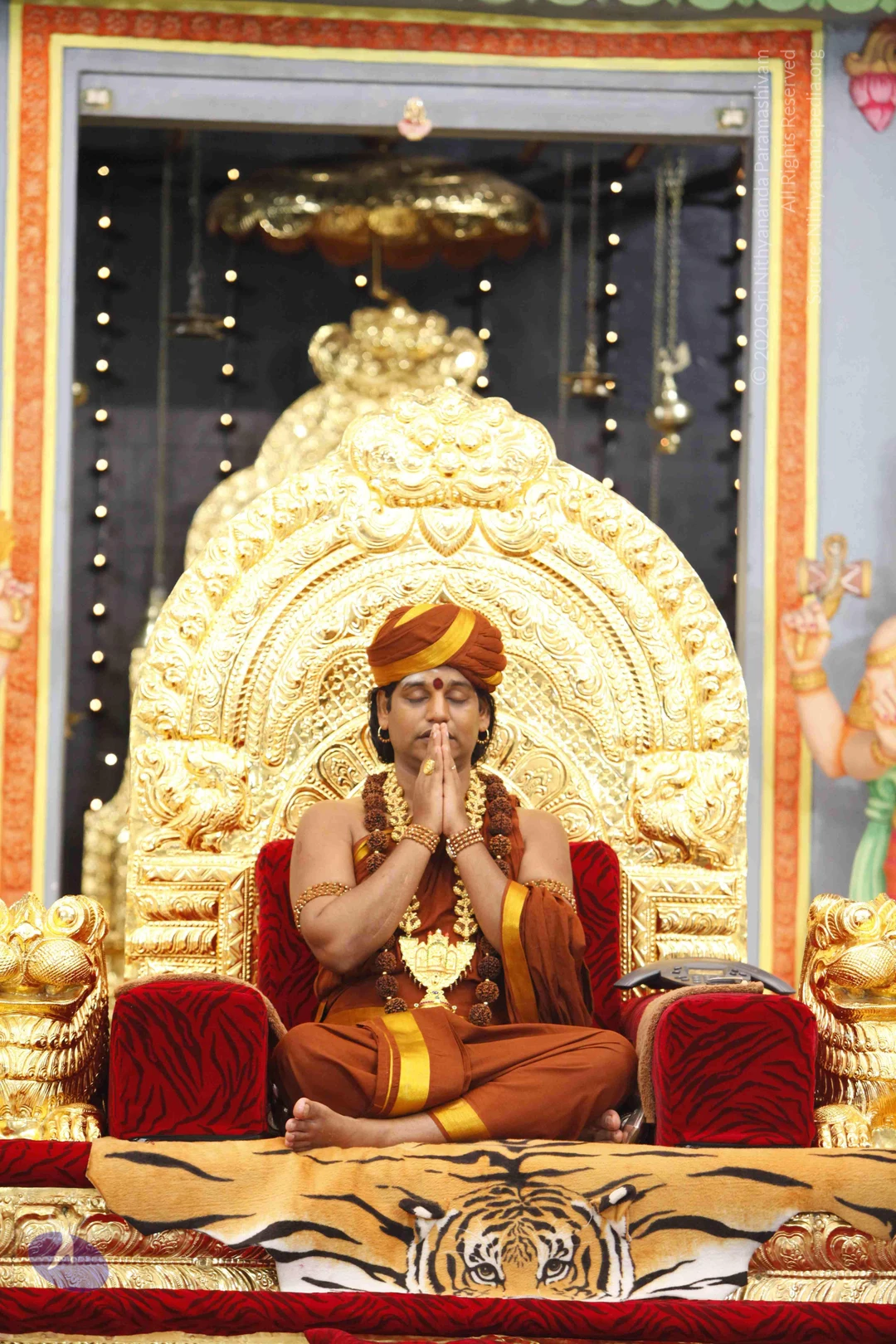
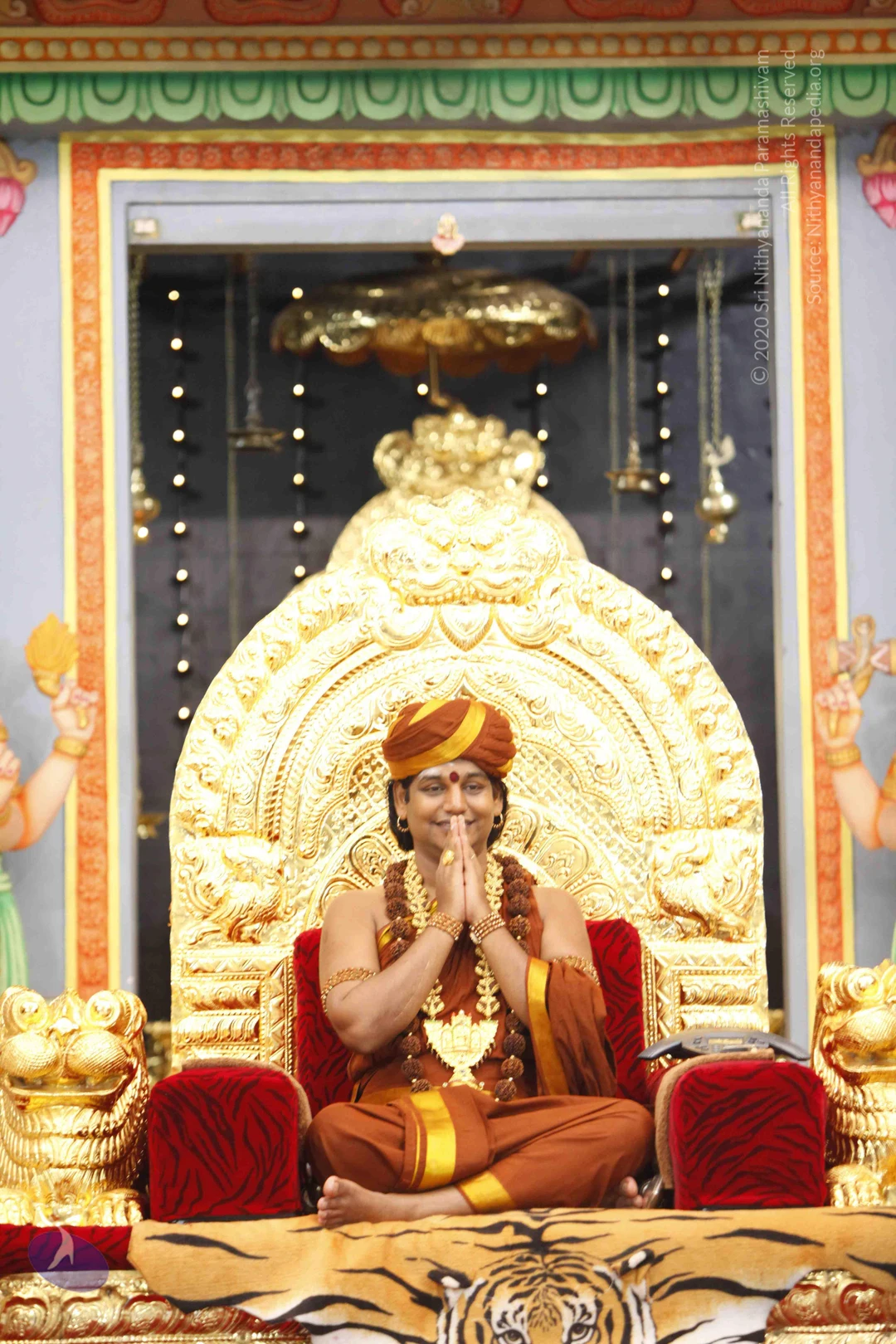
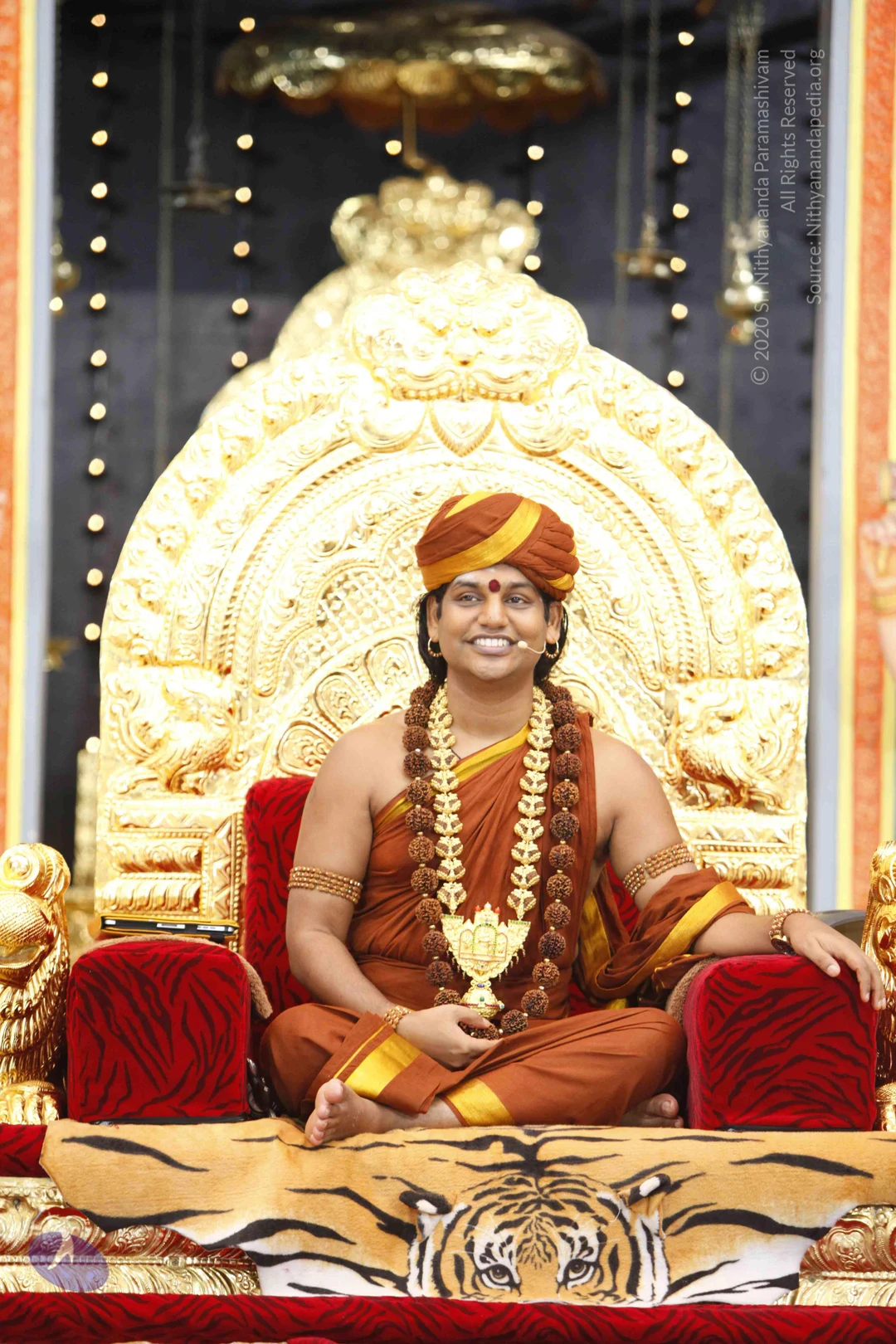
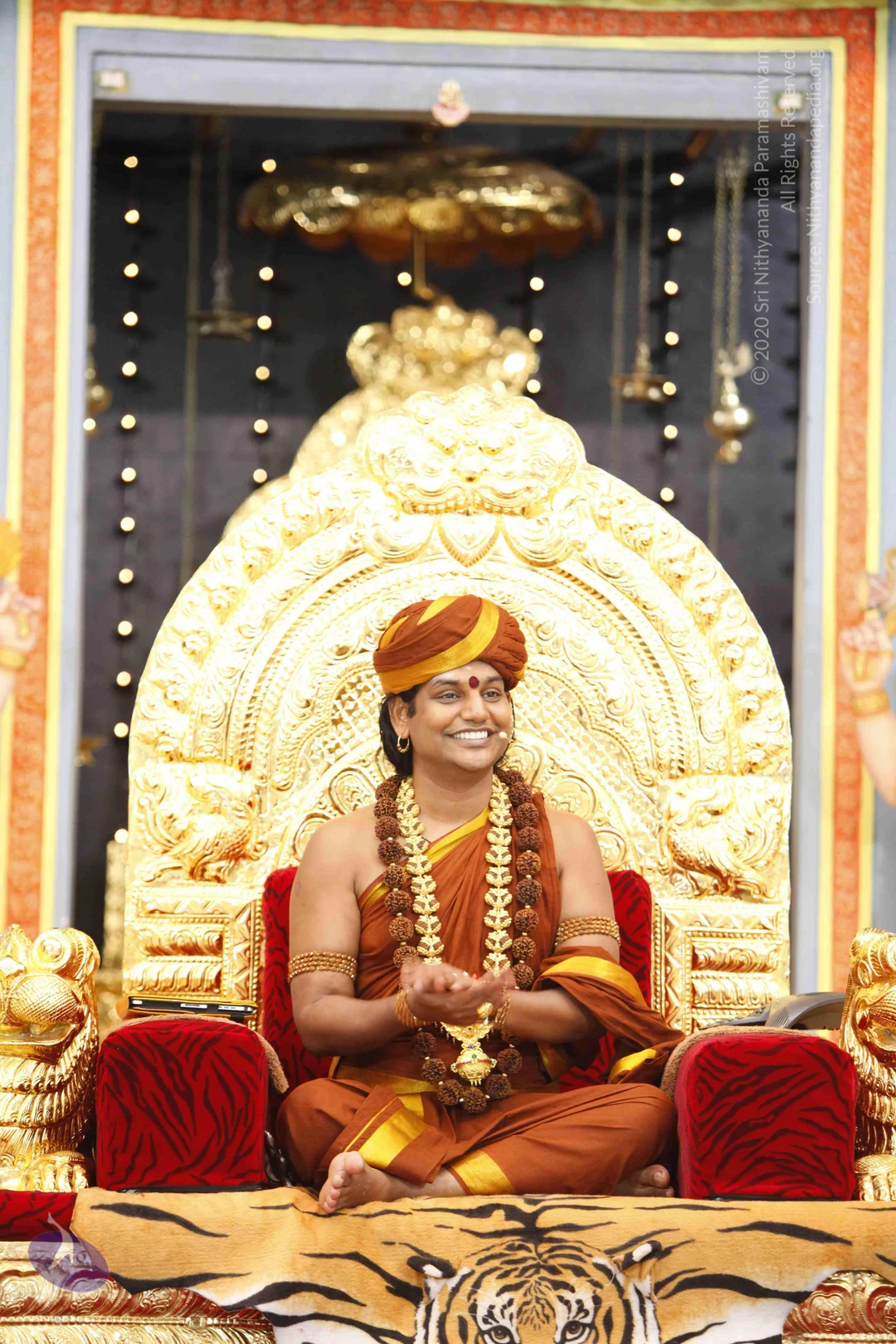
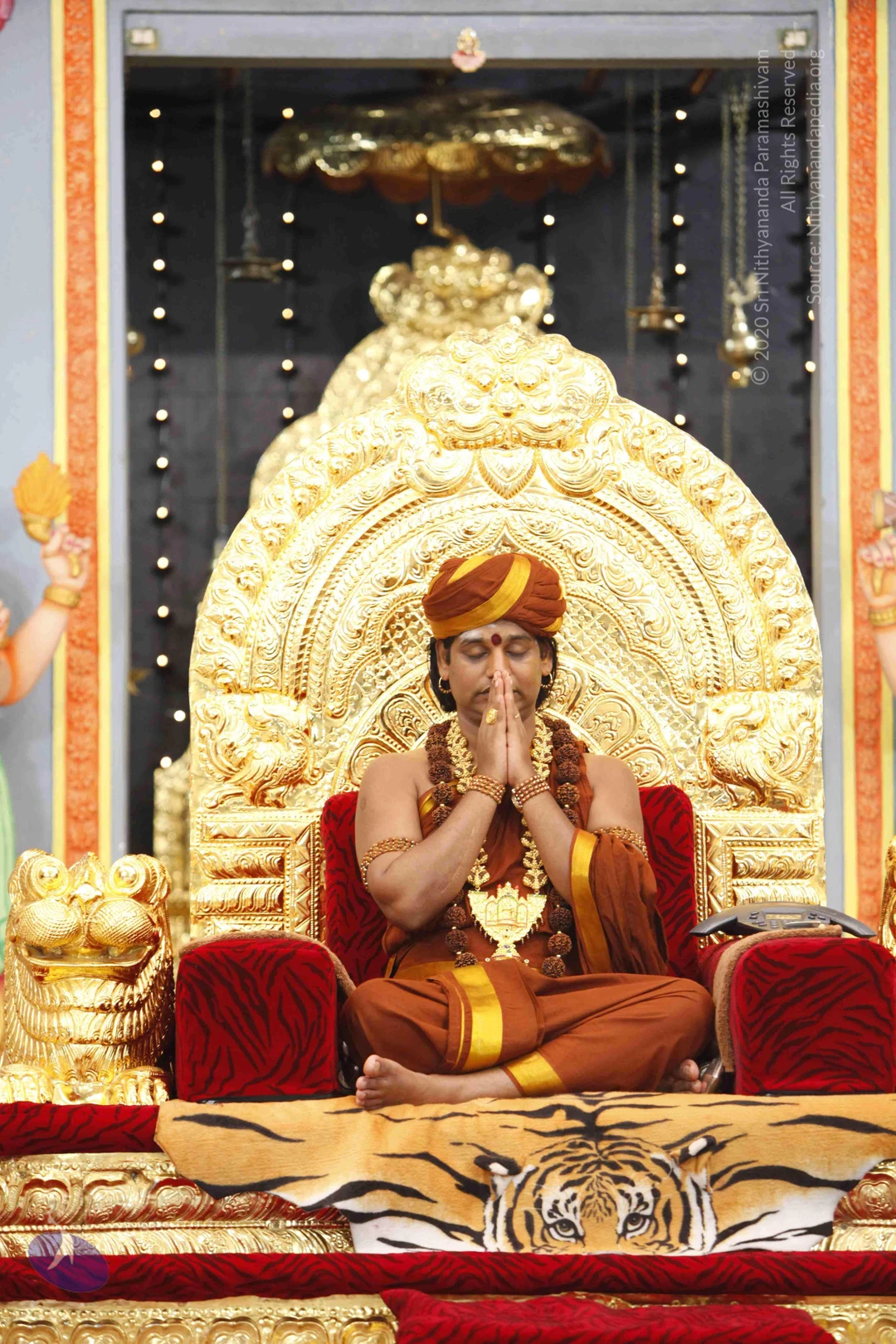
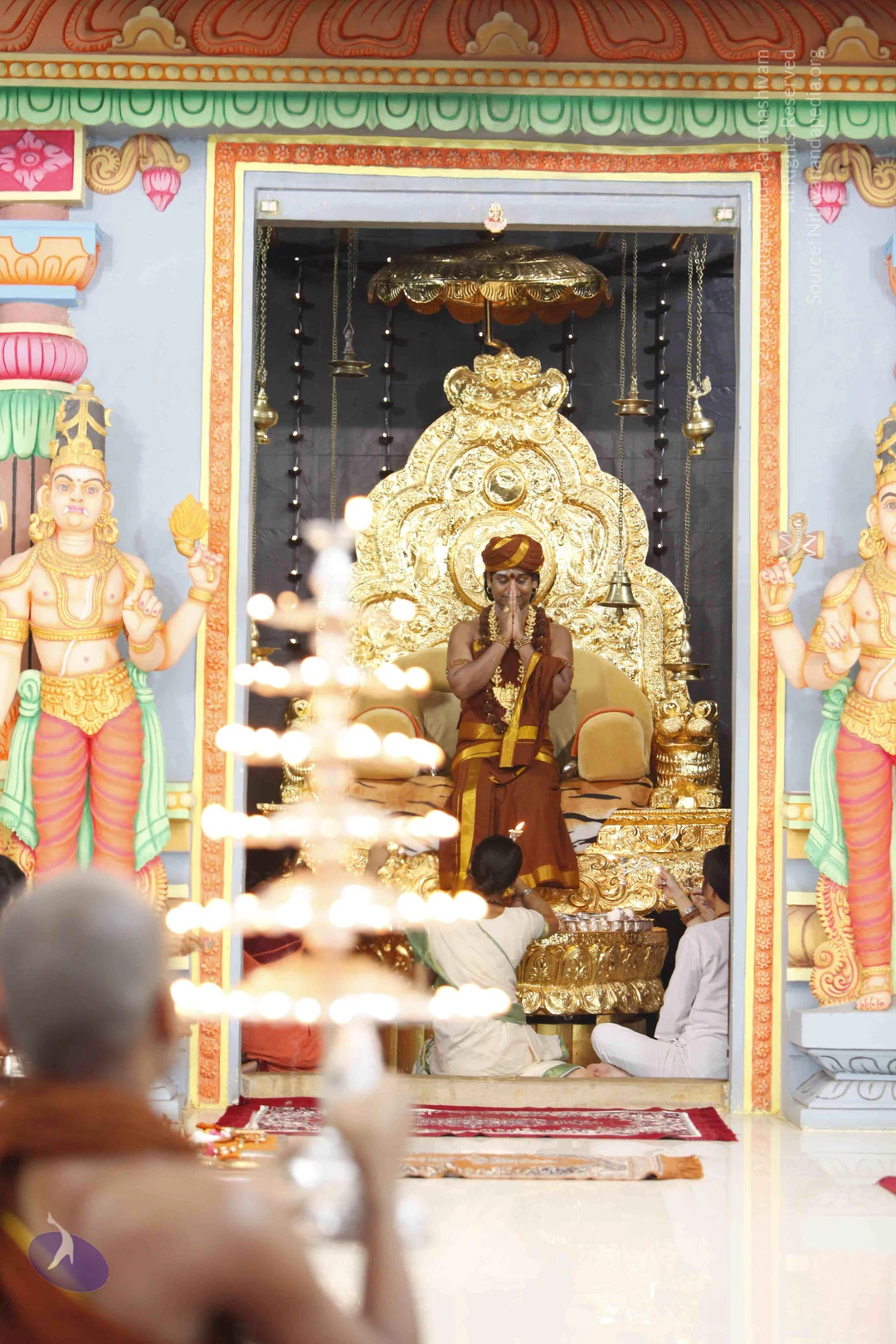
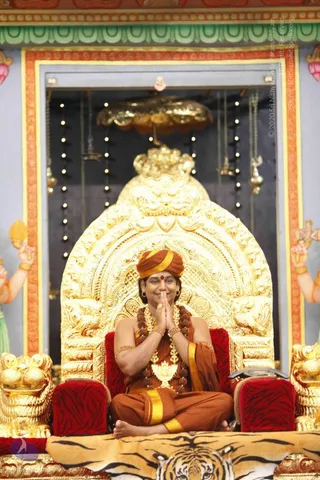
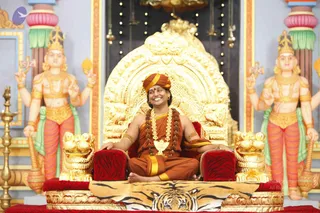
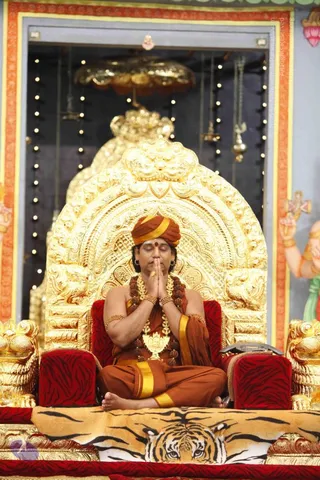
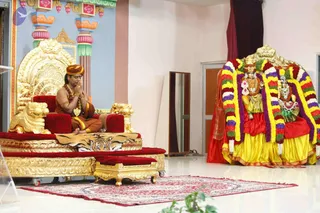
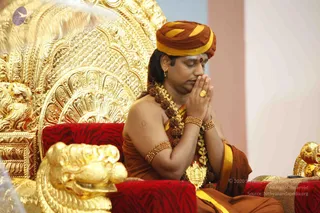
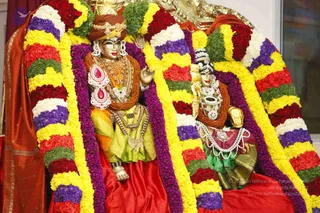
A seated figure in a saffron-orange turban with a red tilak and orange robes, wearing layered rudraksha malas, a large gold pendant necklace and gold bangles, sits cross-legged on a red tiger-striped cushioned seat in front of an ornate gilded arched throne. Both palms are pressed together in namaskar, and the figure smiles. Golden lion sculptures flank the seat, a tiger-skin cloth covers the dais, and gold lanterns hang in the background beside a painted deity figure on the left. a person seated on his peetha with a long-held namaskar; the figure is alone in the frame.A seated figure in orange-saffron robes, wearing a saffron turban with a red tilak mark on the forehead, a rudraksha mala and a gold ceremonial necklace, sits cross-legged on a red cushioned seat draped with a tiger-skin cloth in front of an ornate gold throne. Golden lion heads flank the seat. Two tall painted deity statues with multiple arms stand on either side, and a brass oil lamp is at the left edge.Photograph of two golden deity murtis seated side by side under an arch of flower garlands in red, white, yellow, purple and green. The male figure on the left wears a rust-orange turban, heavy gold necklaces and rudraksha-style beads, a gold crown-like headdress, and a green and yellow garment; he raises one hand in a blessing gesture. The female figure on the right wears a gold crown, pearl necklaces and a maroon and green silk sari, holding a golden kalasha-like object. A gold ornate peetha-style backdrop frames them. No physical people are visible.A seated man in an ornate golden throne with lion-carved armrests and a tiger-skin mat in front, pressing his palms together in anjali with eyes closed. He wears a saffron-orange turban with a gold stripe, a red bindi, a saffron-orange dhoti with gold border, a gold armlet and bangles, and layered rudraksha malas with a gold ceremonial necklace. Behind him hang lamps and bells from a gold-framed doorway. a person (long swept hair not visible; orange turban, ornate gold ceremonial dress and rudraksha malas match the page's claim), presented here as a seated satsang speaker.A photograph of a seated man in a golden ornate throne with red cushions and a tiger-skin cloth, hands joined in namaste. He wears an orange turban, orange and gold dhoti-style cloth, rudraksha mala and a gold necklace, with bangles on his arms. To the right stands a decorated deity murti, dressed in yellow and red silk with a crown and garlands of mixed multicolored flowers. The room has pink pillars with lotus motifs on the wall and a red-and-white carpet on the floor. a person appears in the throne, matching the page's a person attribution.A seated man in an orange-and-saffron turban, orange wrap and gold necklaces sits with palms pressed together in namaste on an ornate gold-and-red throne draped with a tiger-striped cloth. Beside him, a deity murti dressed in a yellow and red silk garment is decorated with long multicolour garlands of marigolds and flowers. The white hall has a patterned red carpet in front, a mirror on the wall and a plant at the bottom edge. The man's appearance with a turban, saffron clothing and gold necklaces is consistent with Swamiji (probable), seated in a satsang setting.

sarva-darshan

5 photosSource gallery
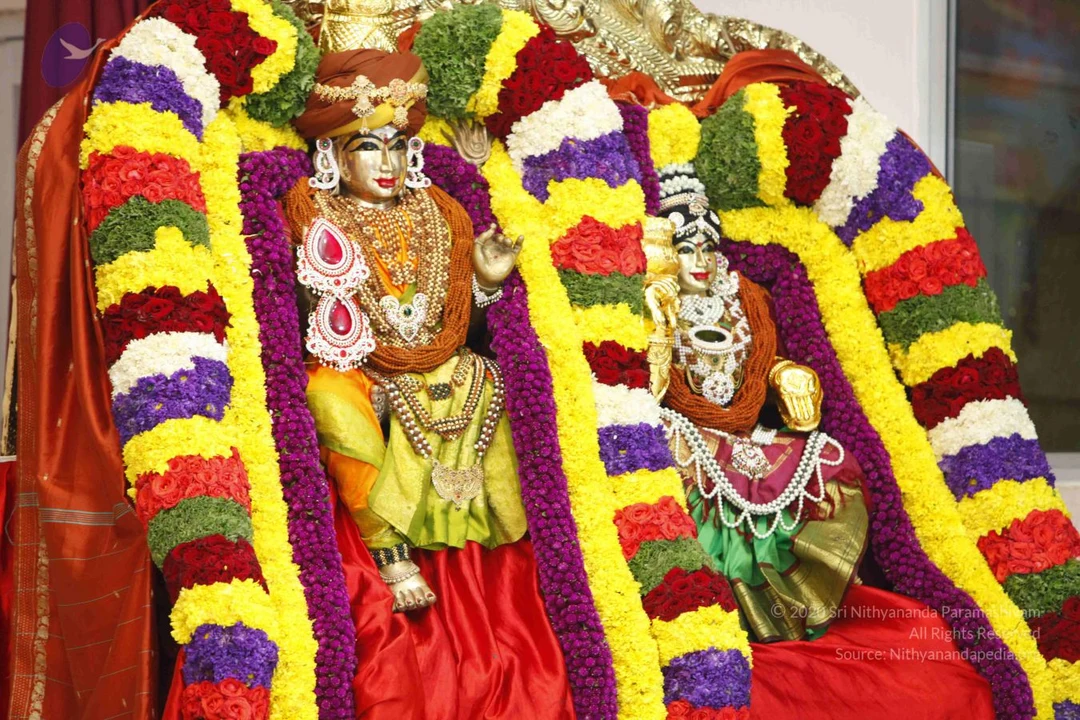
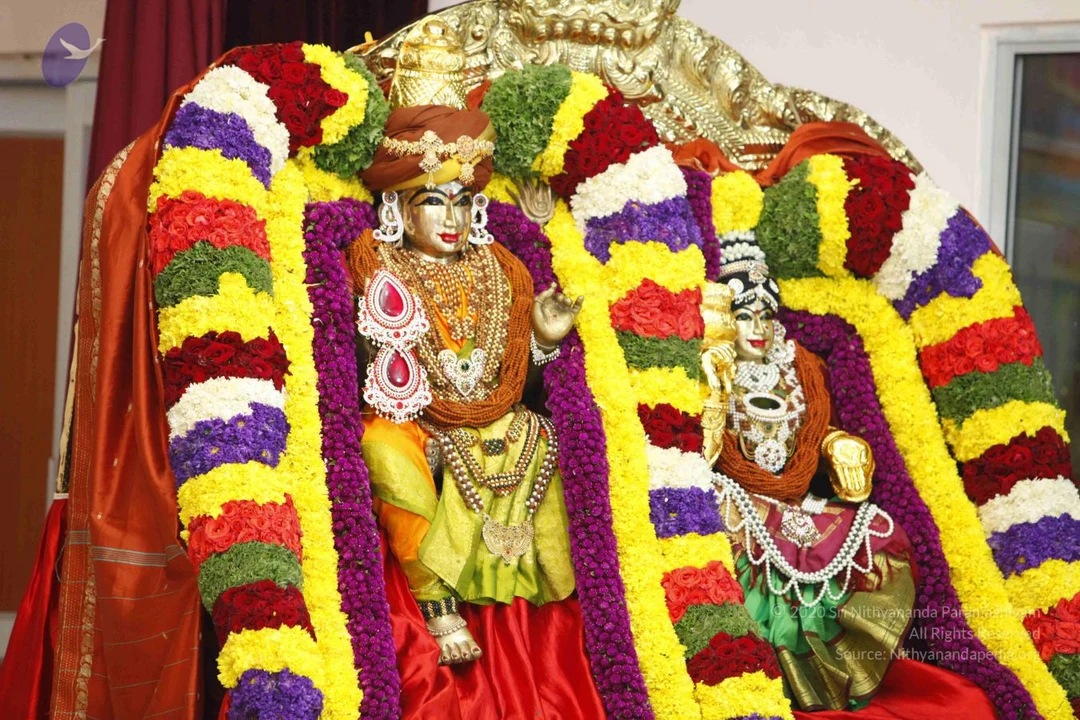
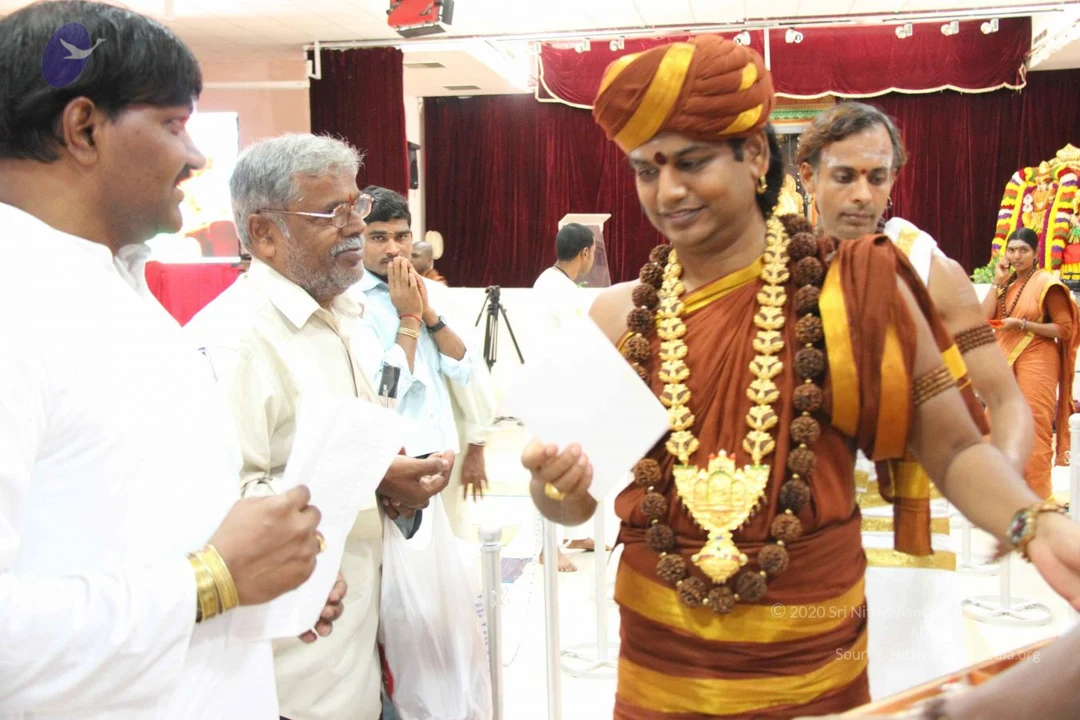
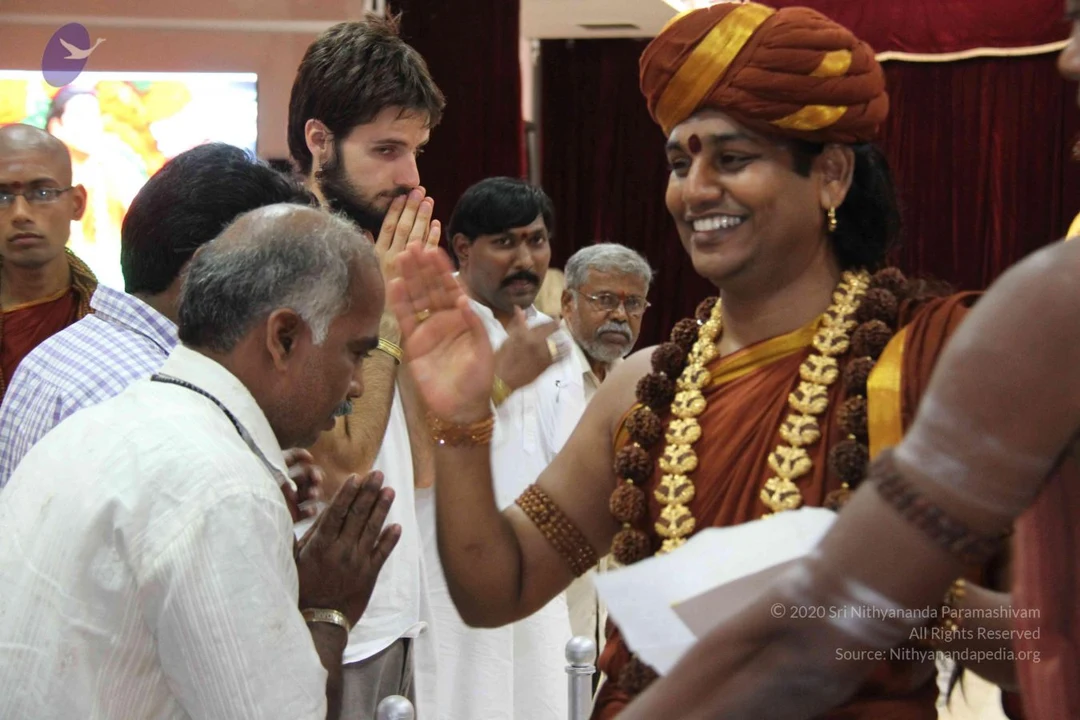
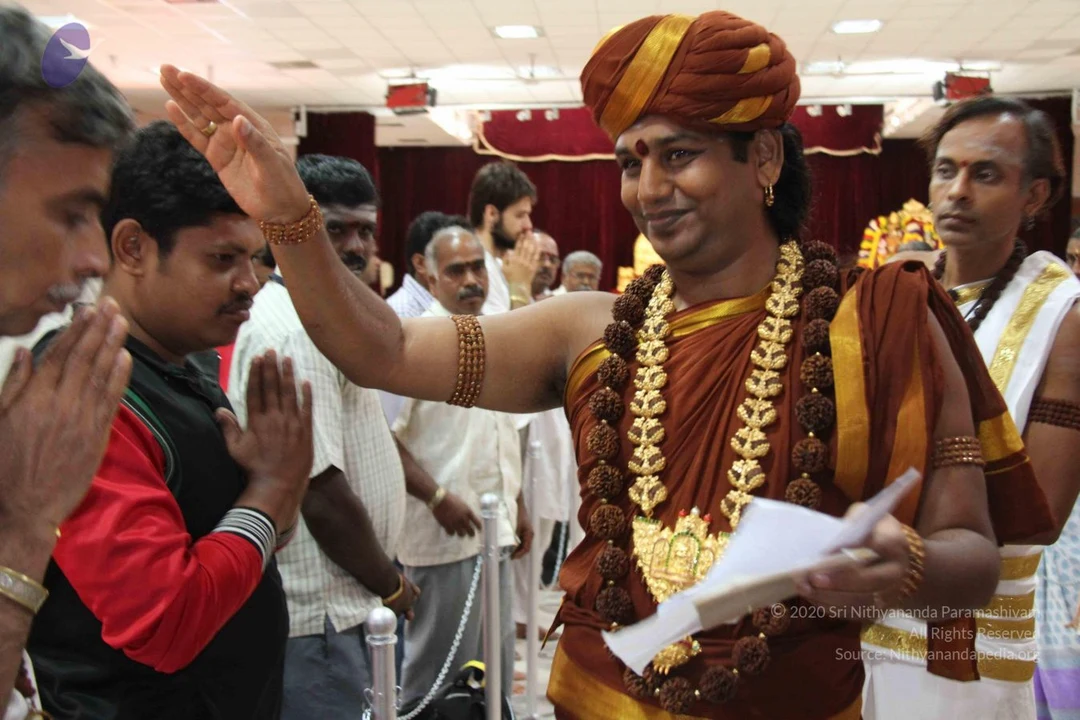
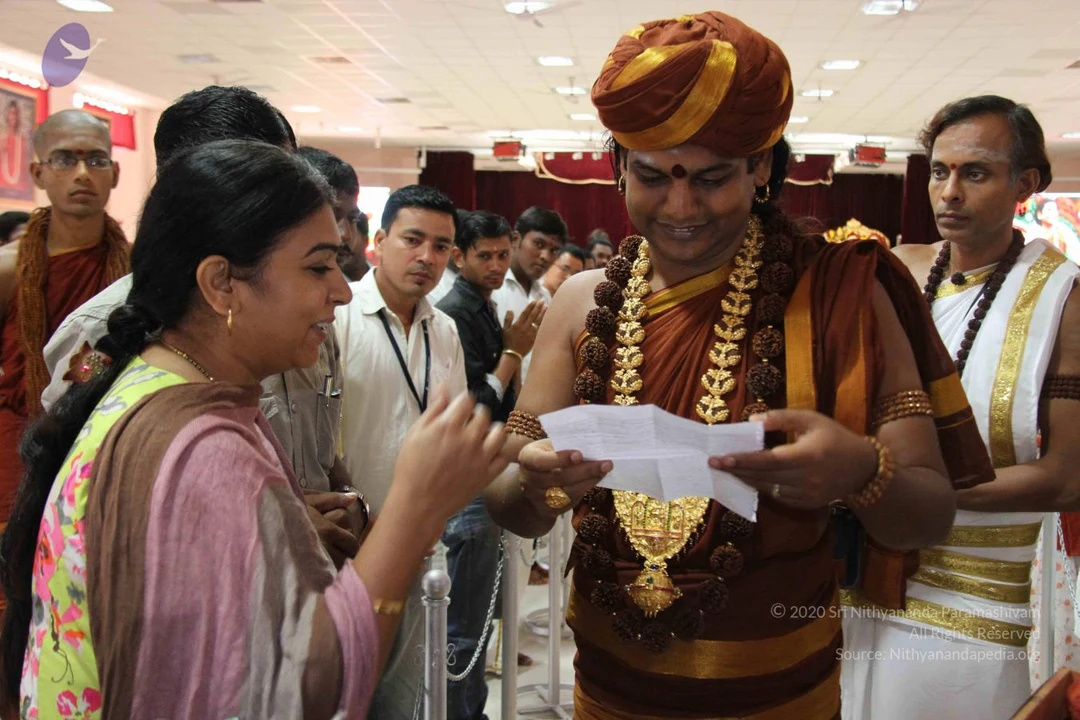
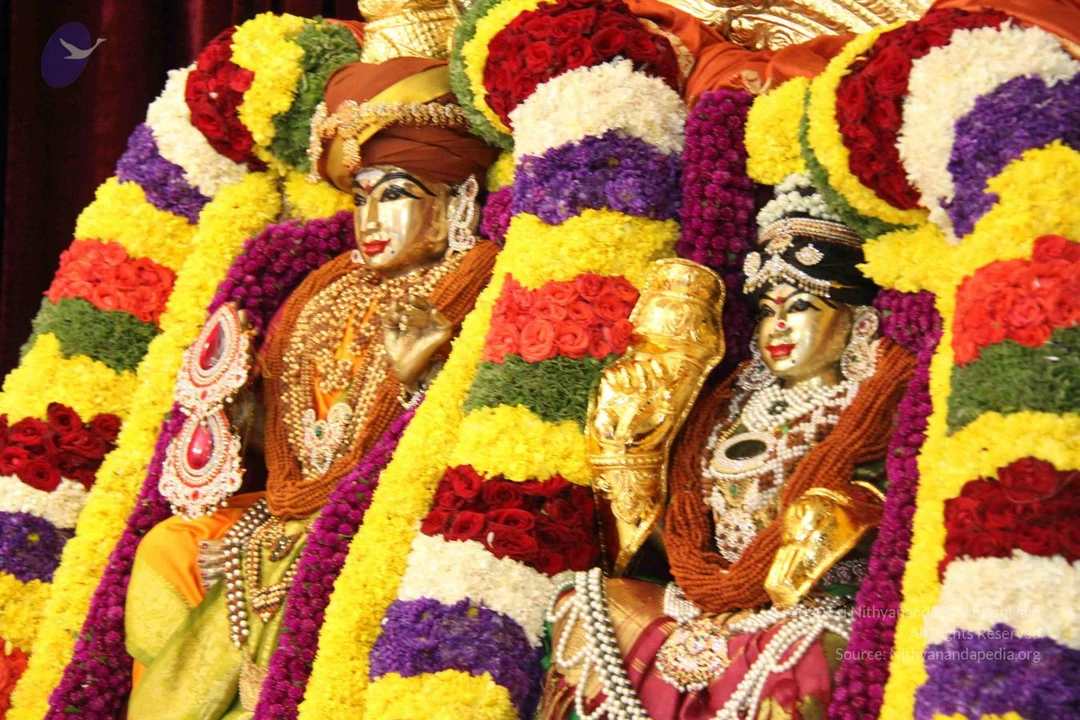
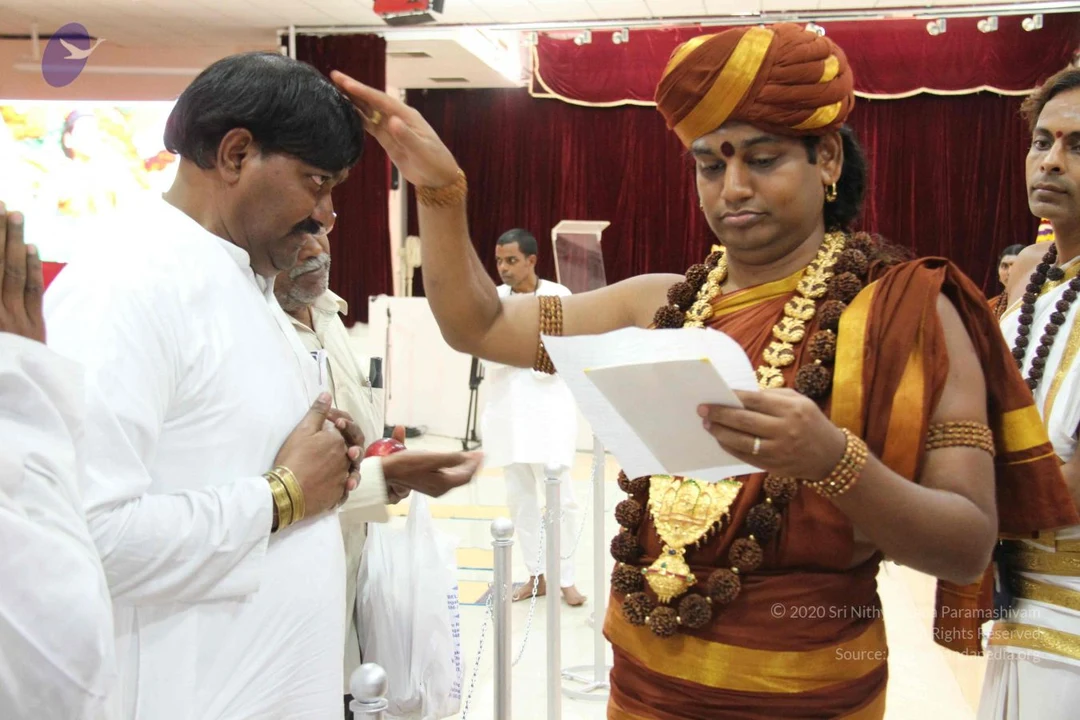
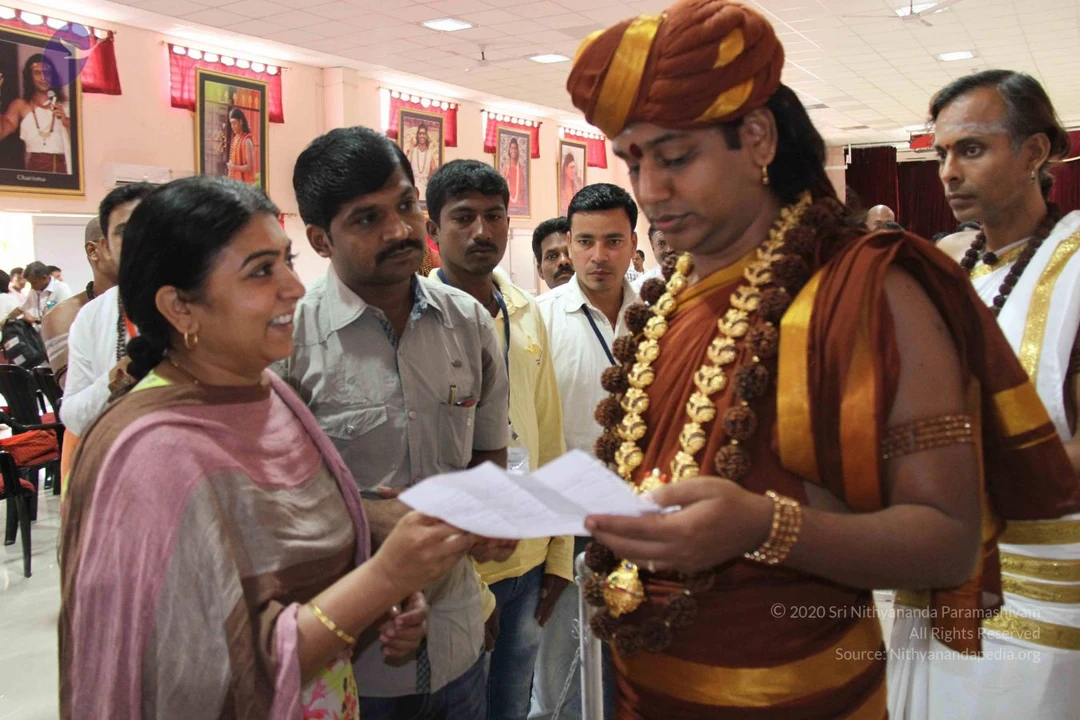
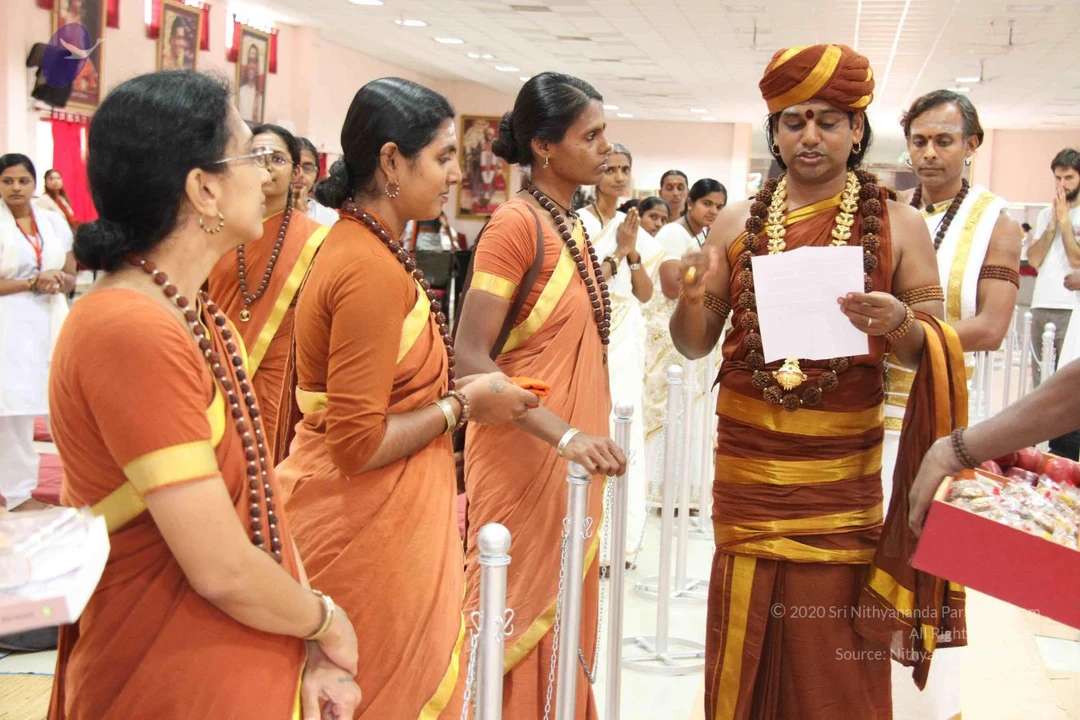
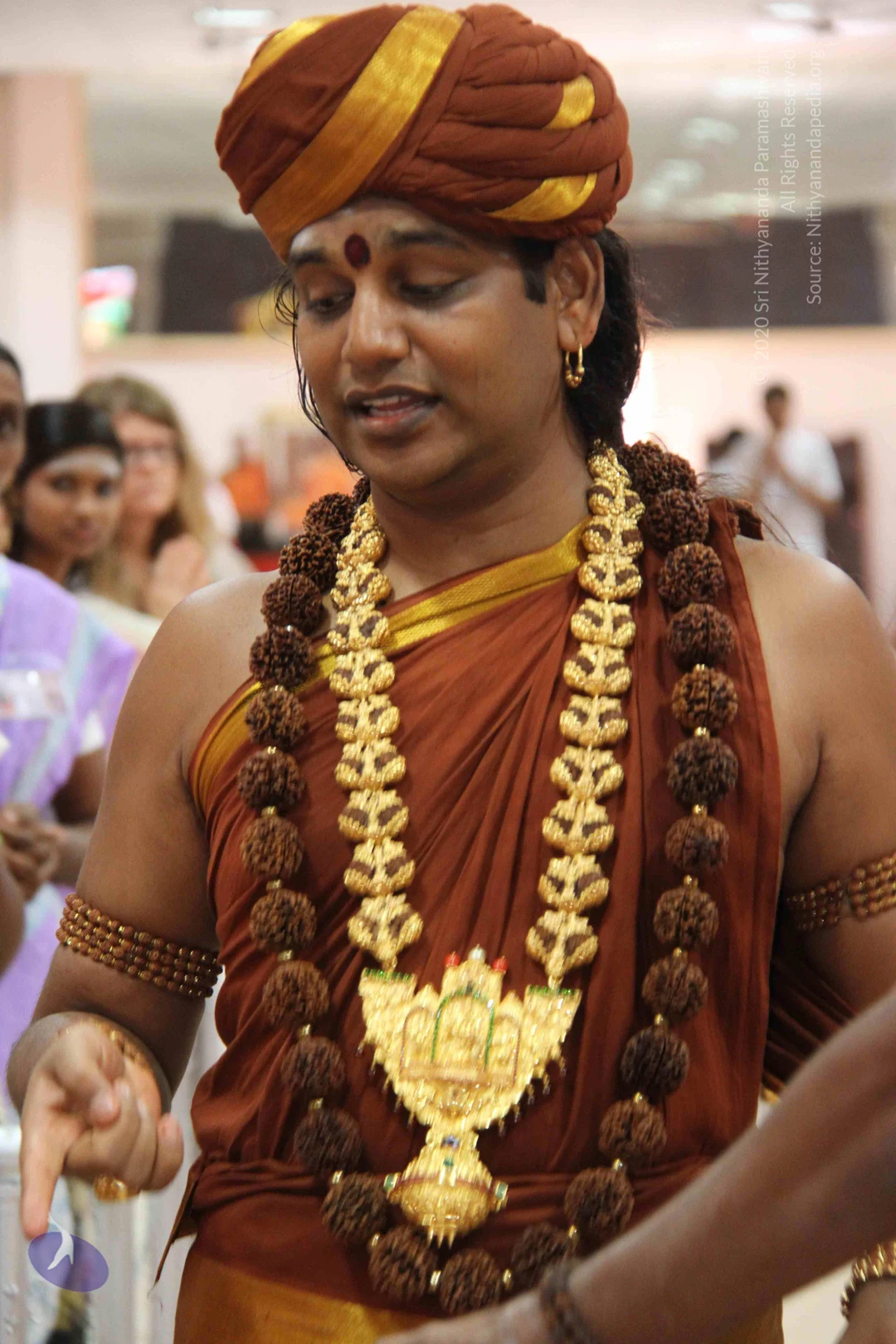
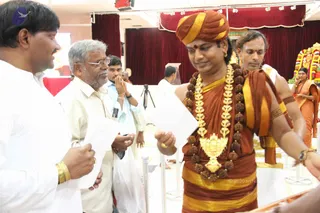
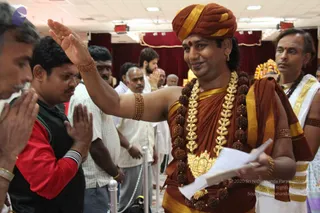
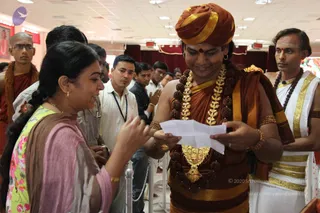
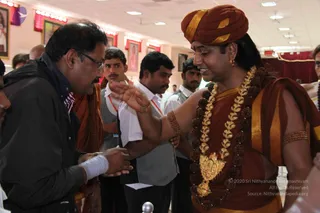
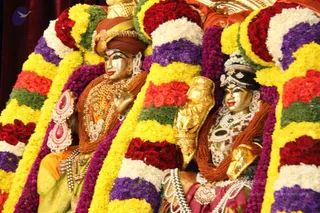
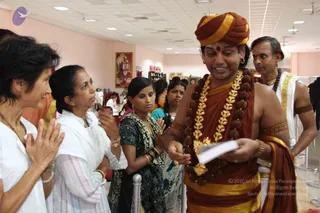
Photograph in a hall with red curtains and a floral-decorated altar at right. A man in a saffron-orange turban and orange robe, with a large gold ornamental necklace over a rudraksha mala and a red tilak, smiles while holding a sheet of paper. Beside him stands an older man with grey hair, glasses and a white shirt, and to the left a younger man in white. A man in a light blue shirt presses his palms together in greeting, and a woman in orange sari stands at right. The man in the turban shows distinctive saffron clothing, rudraksha and gold adornments, so he is a person candidate; the others are devotees.A photograph of a man in a brown-orange turban and matching saffron-brown robe with gold borders, wearing multiple rudraksha malas and a heavy gold necklace with a gold pendant. He stands with one arm raised in a blessing gesture and holds a sheaf of white papers, smiling. Around him, several devotees stand with palms pressed together in namaste, some in white and checked shirts. A man in a white dhoti with gold border and bare-armed rudraksha bracelets stands at right. Red velvet drapes and a bright ceiling form the hall background. Probable Swamiji by appearance: turban, saffron-toned robe, multiple rudraksha malas, gold necklace and gold bracelets, presiding in a blessing pose.A photograph of a satsang-style gathering in a bright hall with a red curtain and framed portrait at left. A central man wears a rust-orange and gold turban, a gold-trimmed saffron wrap, a long gold-and-bead necklace and rudraksha mala, and holds a folded white paper while smiling at a woman in a pink and green-yellow salwar with a brown shawl who gestures toward him. Behind them a crowd of men in white and dark shirts stands in a queue behind a silver barrier. At right a man in a white dhoti with gold border and rudraksha beads stands beside him, and at left a shaven-headed man in orange robes watches. The central man's appearance carries several candidate cues (ornate turban, saffron clothing, rudraksha mala, ceremonial gold necklace), so he is described as a person.A photograph of an indoor hall where a man in a dark jacket and glasses, with a bandaged left hand, reaches to clasp the outstretched hand of a figure in a rust-orange turban with gold border and a bare-shouldered rust-orange wrap. The turbaned figure wears a long gold necklace, layered rudraksha malas and gold arm bands, and smiles. Several men in striped waistcoats, white shirts and lanyards stand behind, and framed pictures hang on the wall. Swamiji (probable) appears as the turbaned figure, identified by the distinctive ornate turban, rudraksha malas and gold necklace; the other figures are devotees and attendants.A photograph of two gilded deity murti seated side by side, heavily decorated with multicolour garland bands of yellow, red, purple, white and green flowers. The figure on the left wears a rust-orange turban, a gold-and-pearl necklace, a red-and-white jewelled earring and a deep orange shawl, and holds one hand raised in a blessing gesture. The figure on the right wears a black-and-gold crown, pearl necklaces, a rust-red shawl and holds a golden staff-like object. Both have painted red lips and kohl-lined eyes. A red curtain forms the backdrop. The statues are not physical people.

final-blessing

2 photosSource gallery
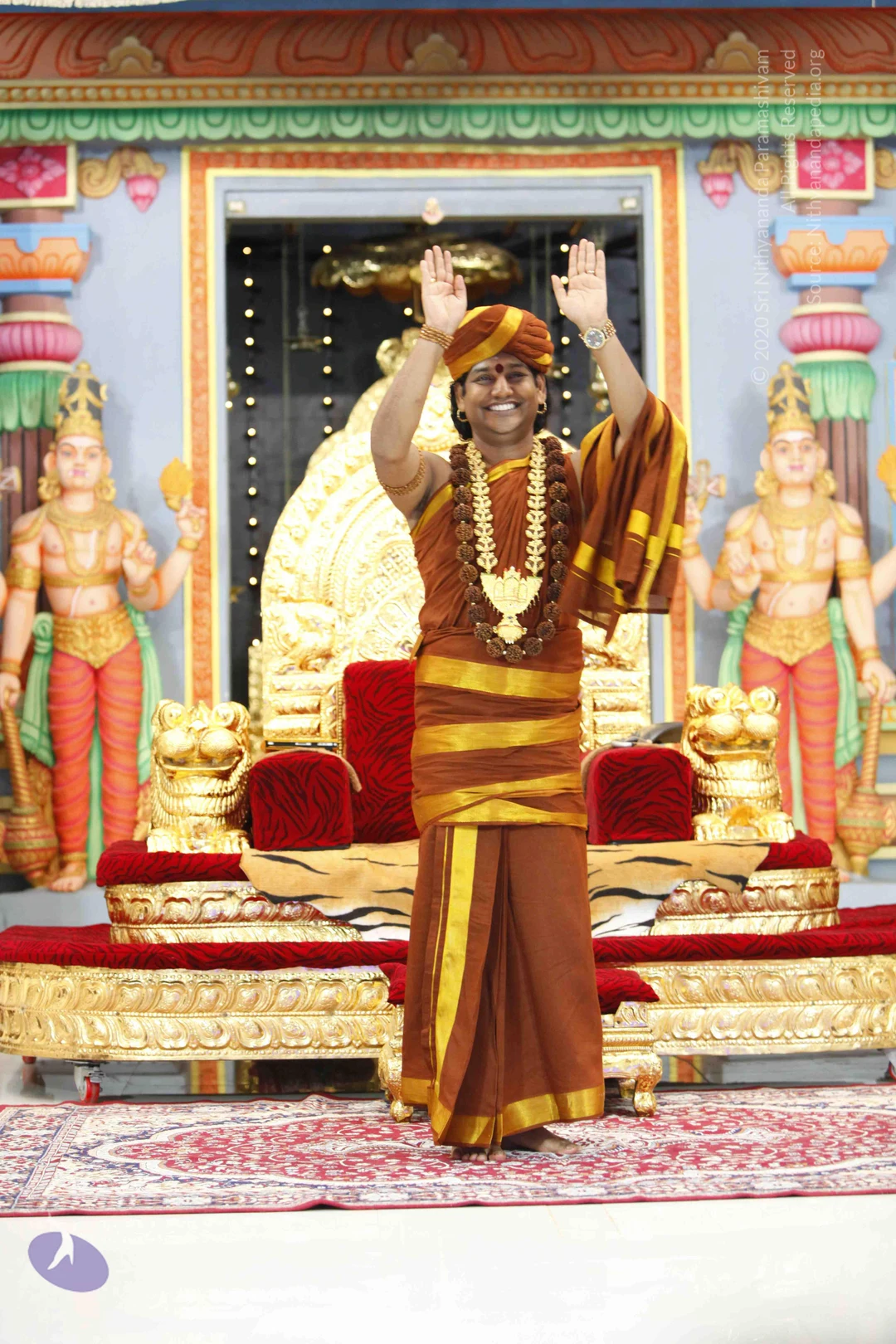
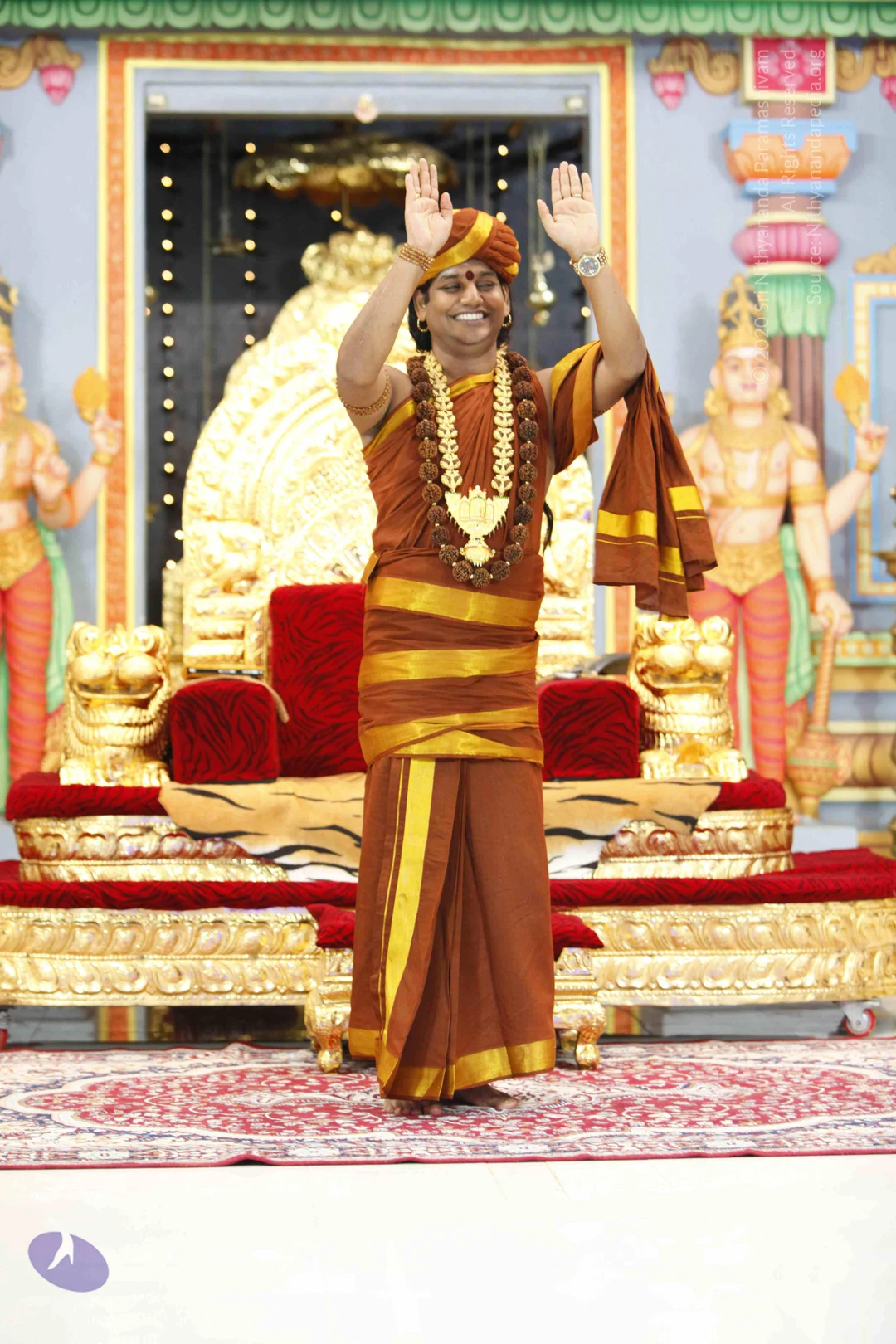
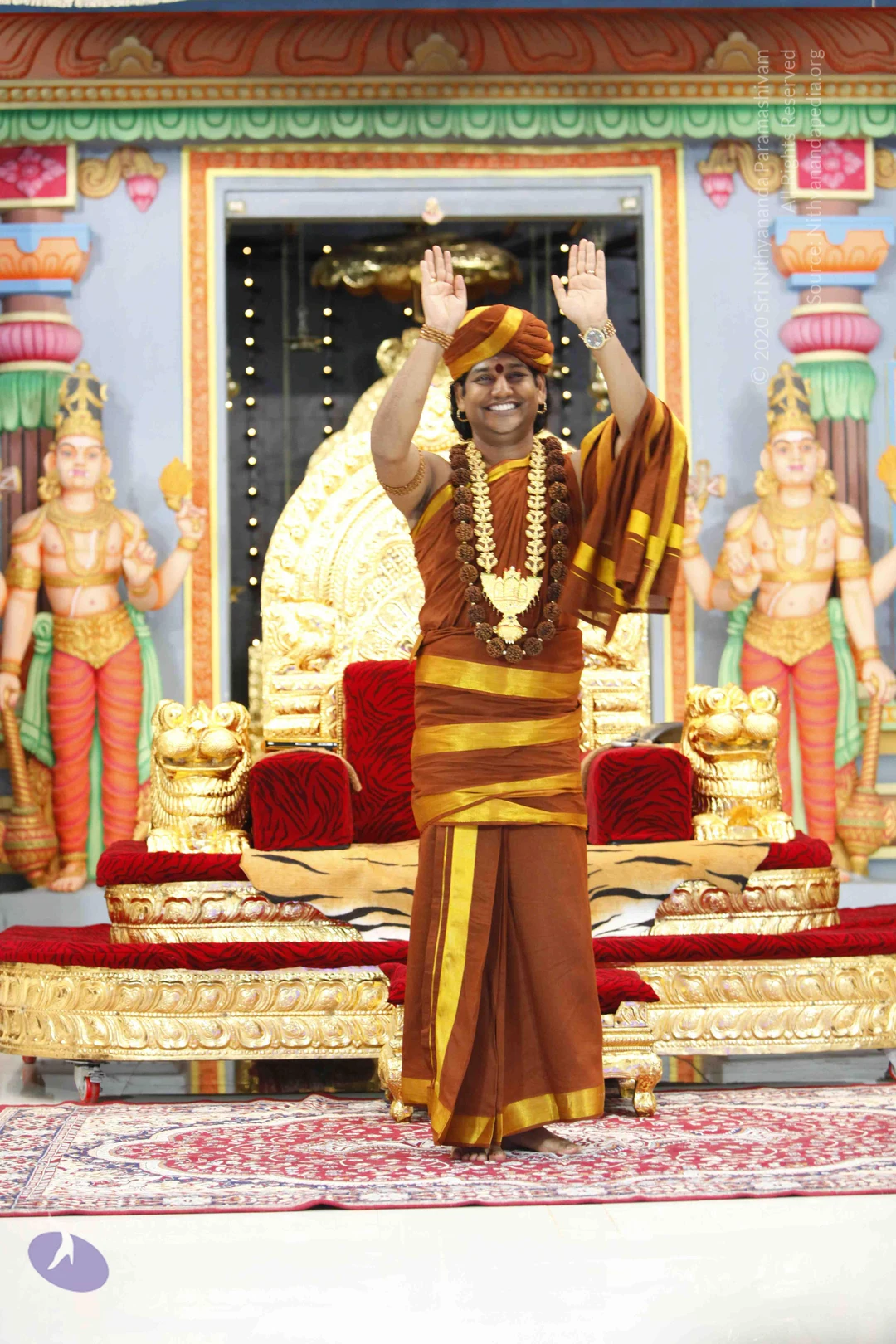
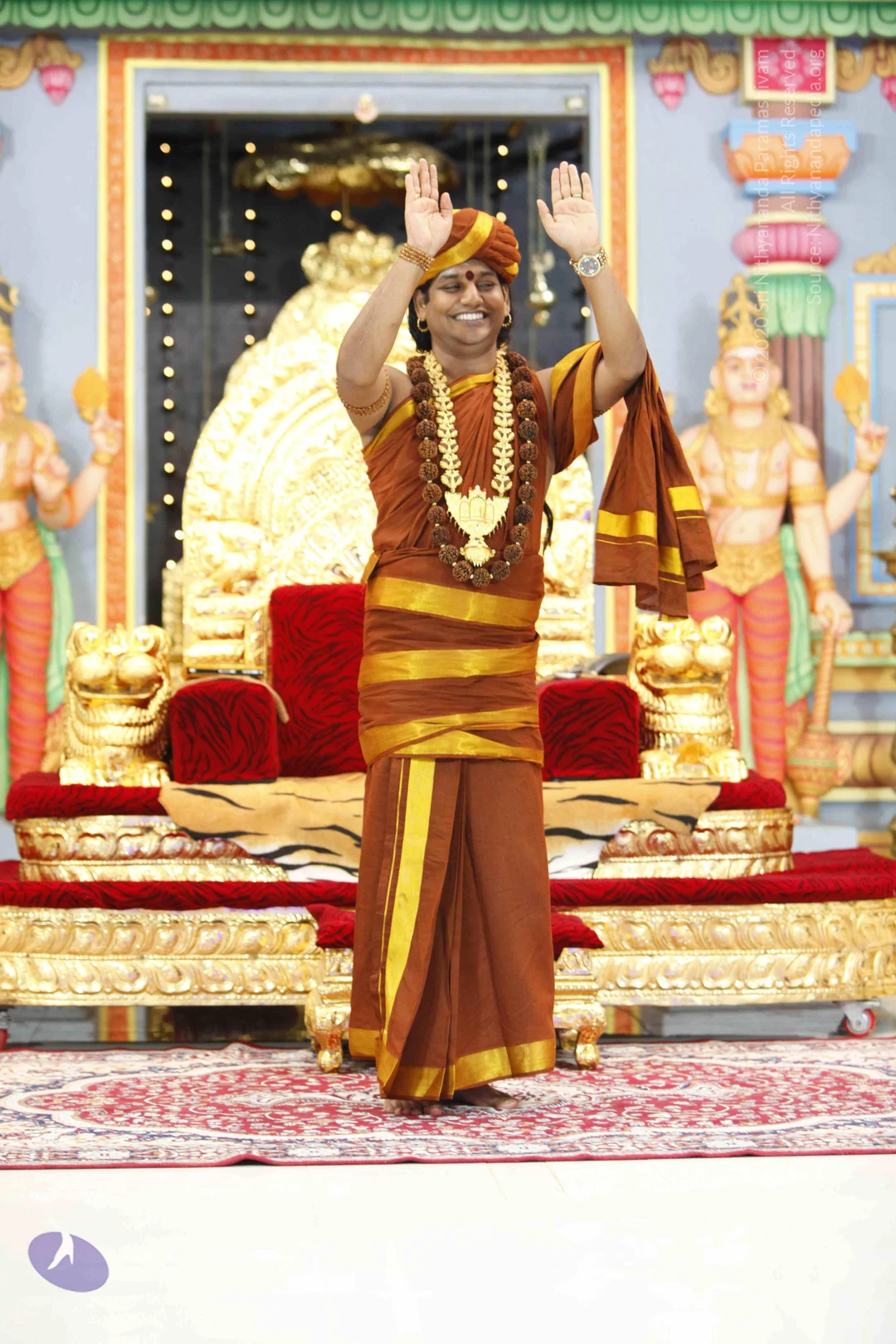
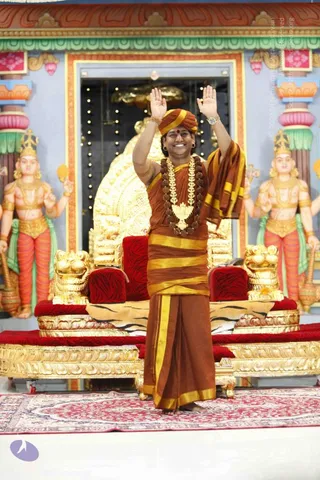
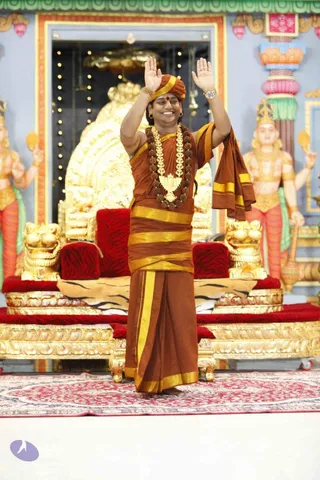
A smiling man stands barefoot on a patterned red carpet in front of a golden throne with lion-head armrests and red velvet cushions, flanked by painted dvarapala-style guardian figures with tall gold crowns. He wears a rust-brown turban with a red bindi, a rust-brown dhoti and shawl edged with gold borders, and a long garland of rudraksha beads with a gold pendant. Both hands are raised in greeting, and a gold bangle and wristwatch are visible. Swamiji (probable): long-haired presenter in rudraksha mala and ornate brown-and-gold clothing, standing in front of the throne as a speaker.A photograph of a smiling man standing barefoot on a red carpet in front of an ornate golden throne with red tiger-striped cushions and golden lion heads. He wears a rust-brown turban with gold border, a rust-brown robe with gold borders, a long gold-and-rudraksha necklace with a golden pendant, gold bangles and a wristwatch, and a red bindi. Both arms are raised with palms open in a welcoming gesture. Flanking him are painted multi-armed deity figures in pale blue and gold. The backdrop features a gilded arch and a large golden canopy.

Inner Awakening-banyan tree session

16 photosSource gallery
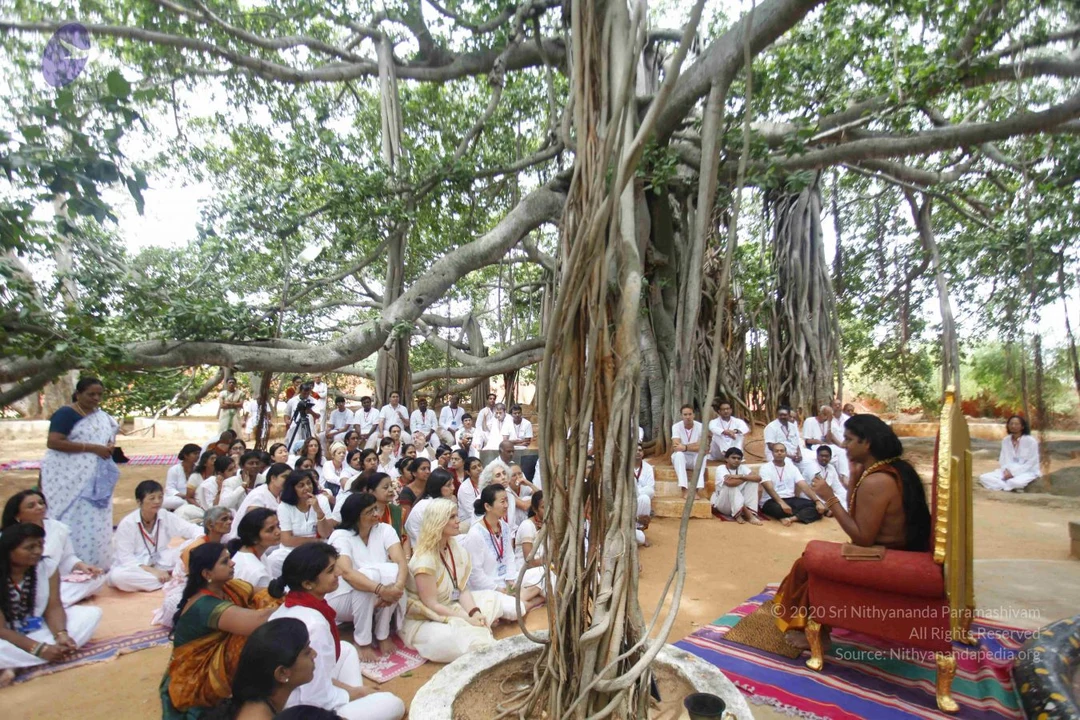
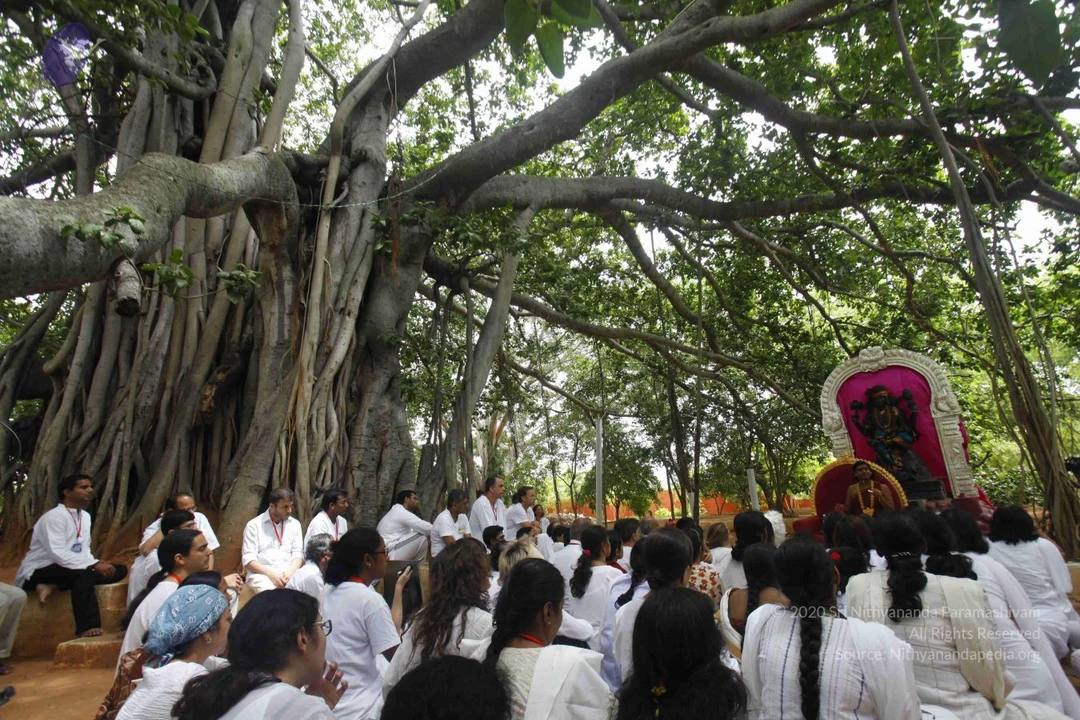
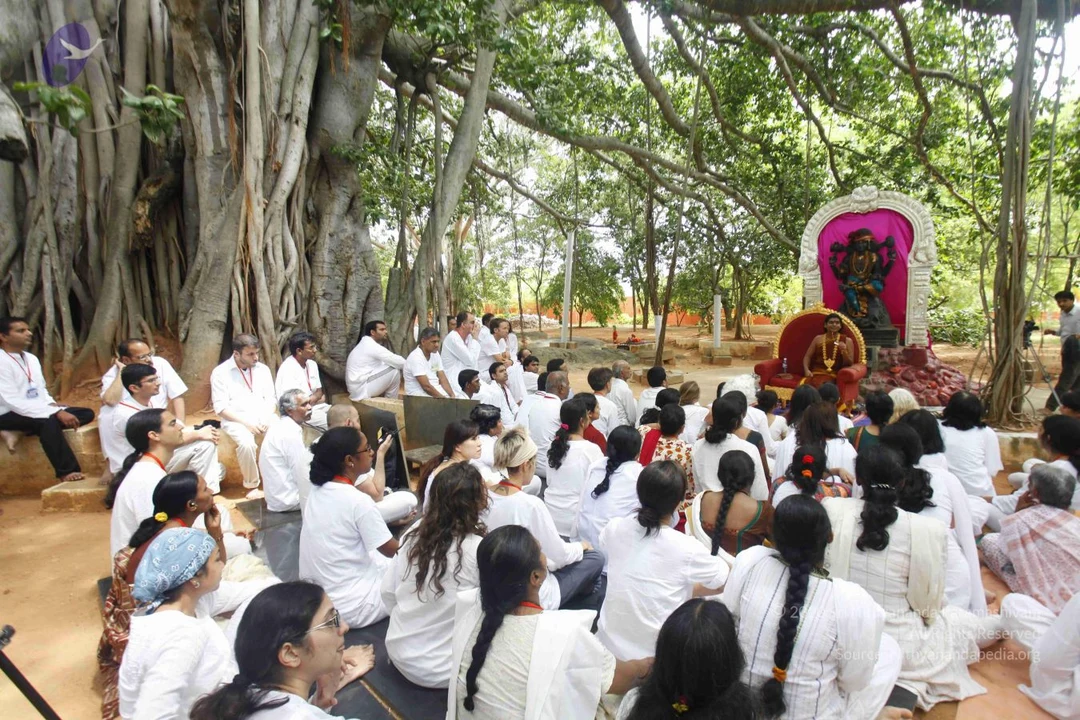
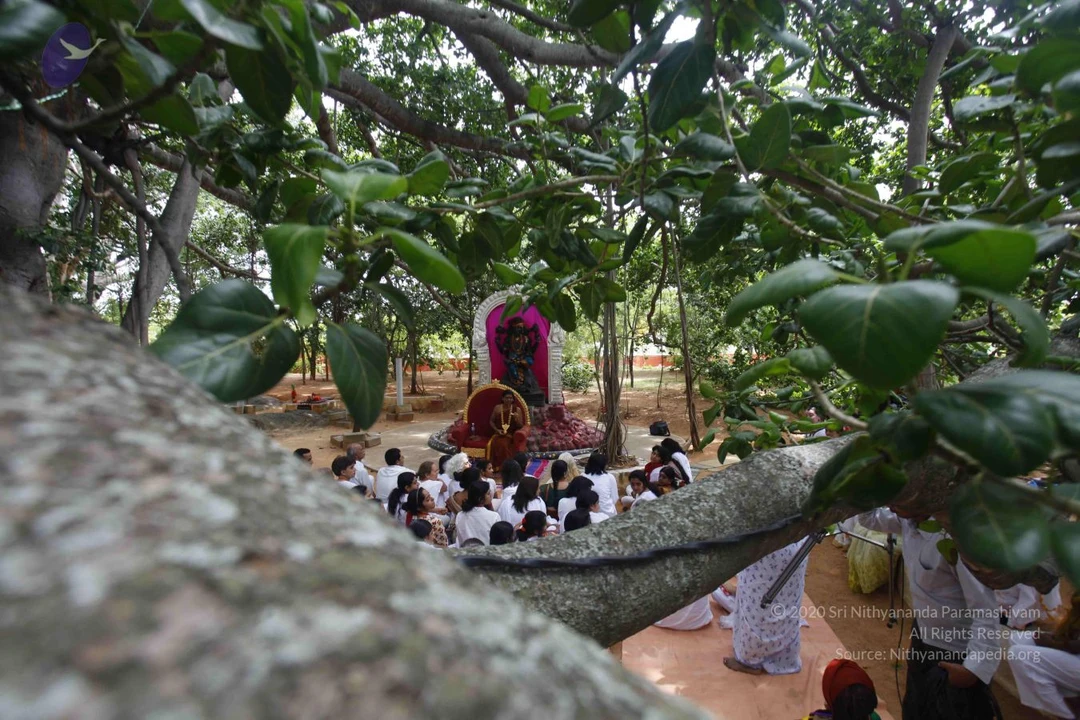
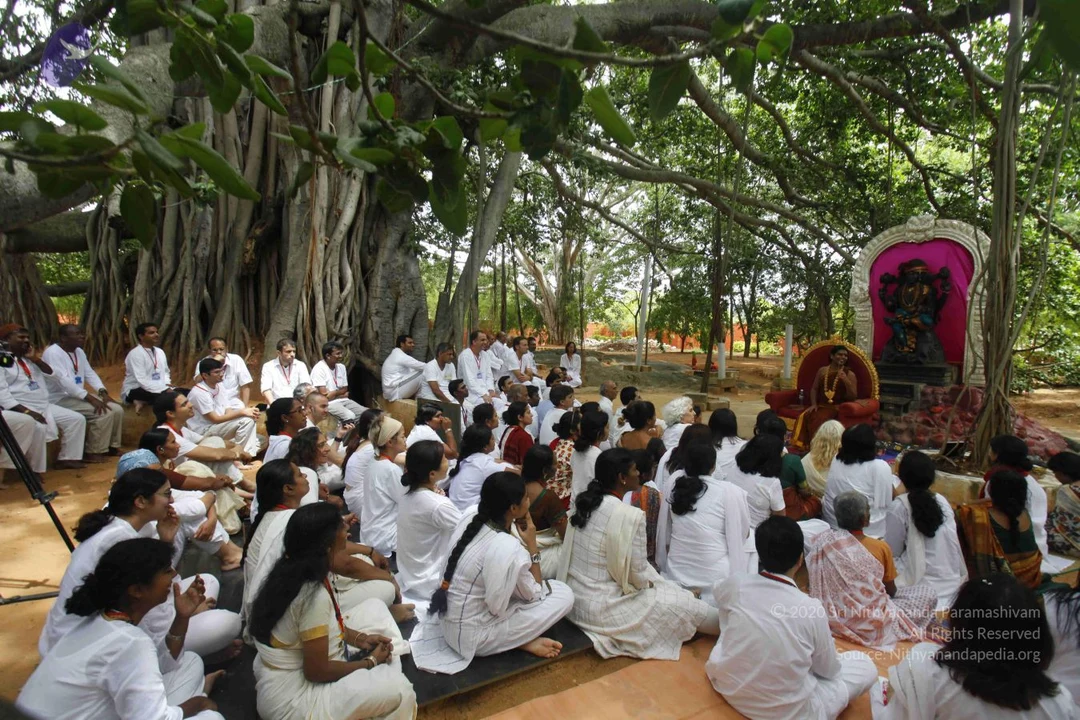
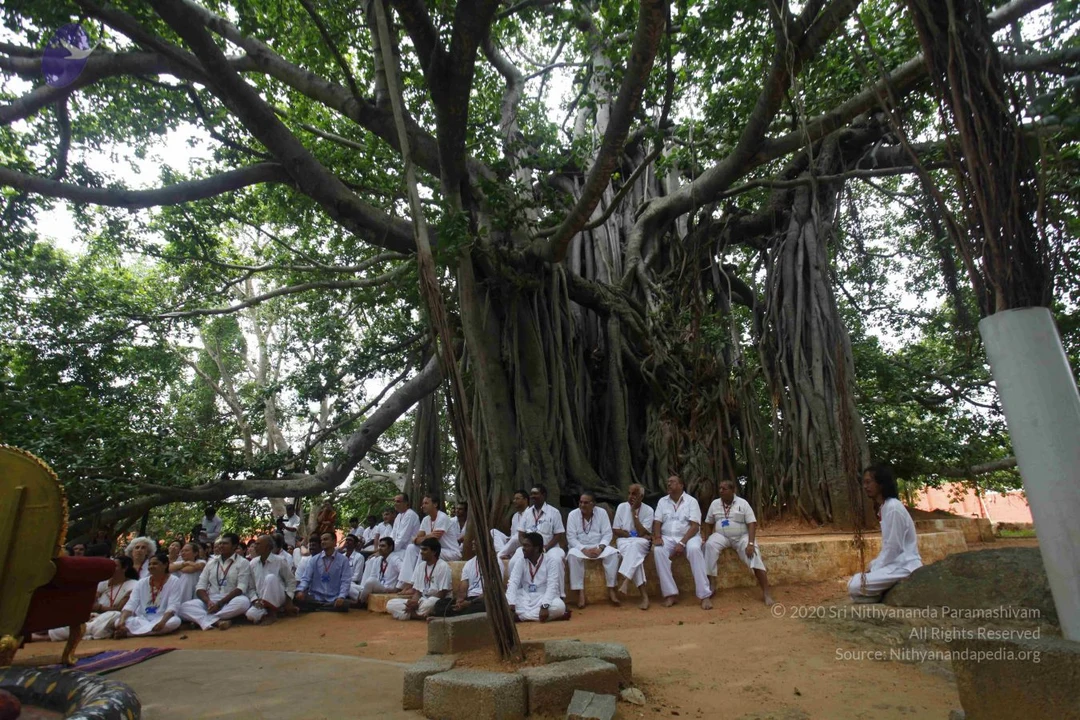
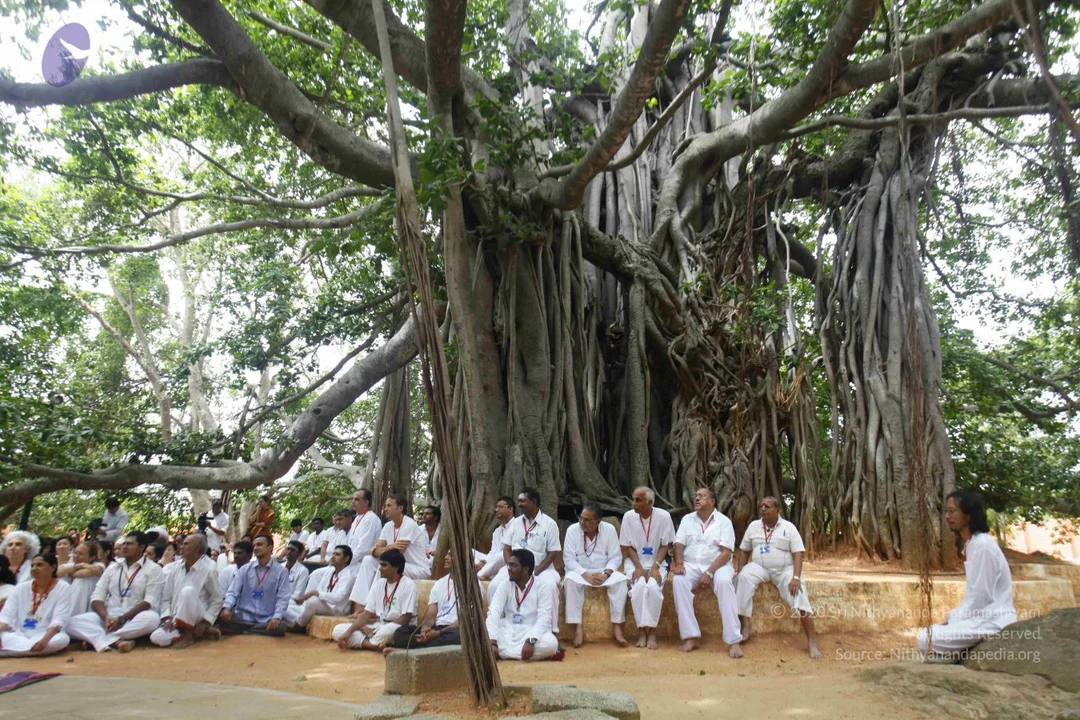
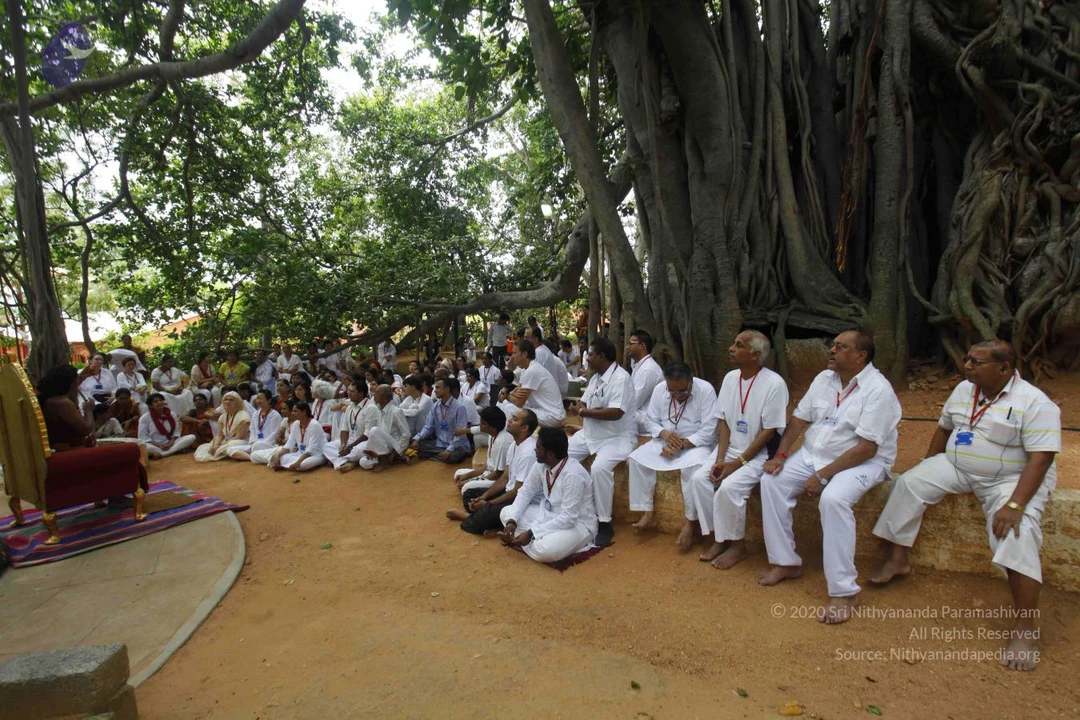
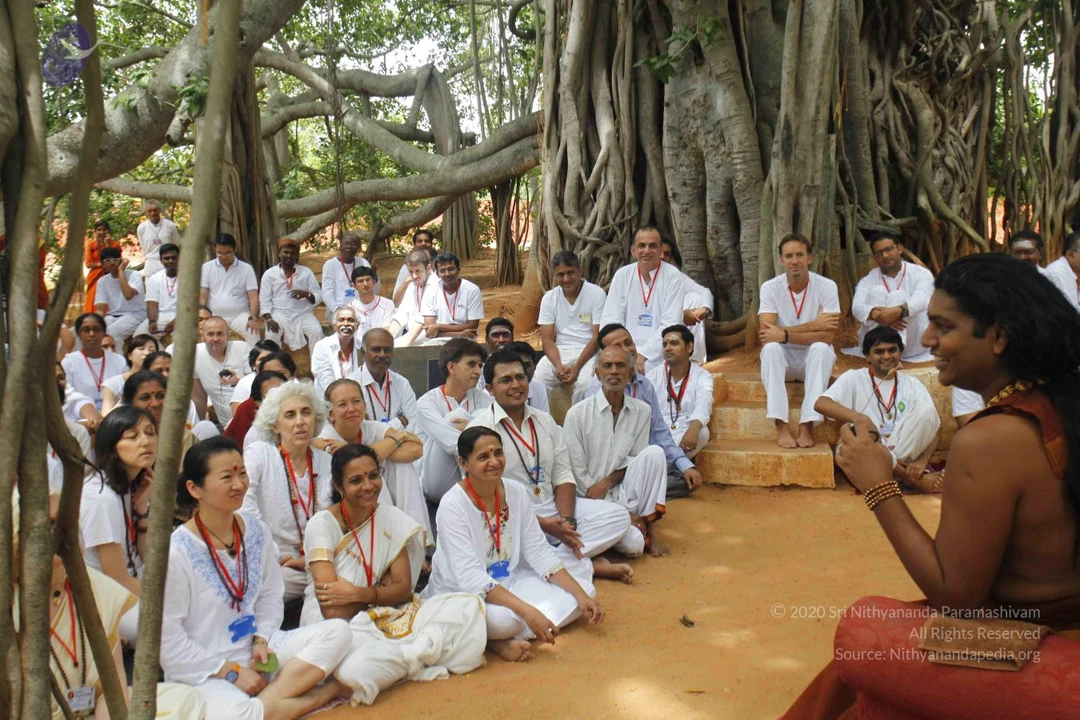
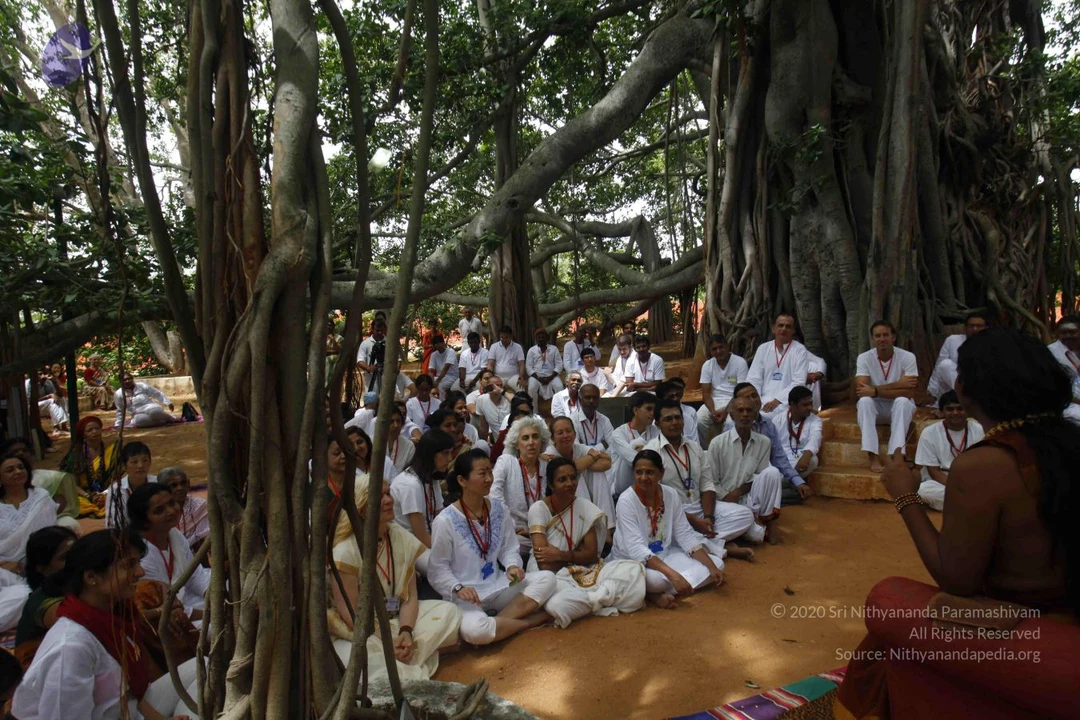
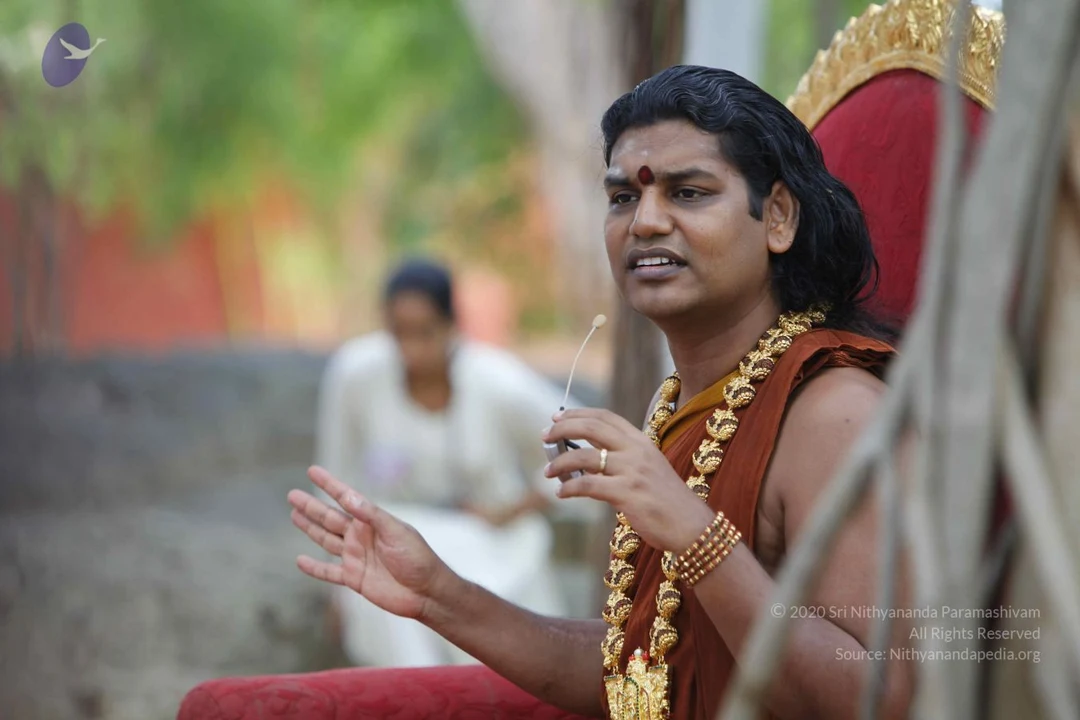
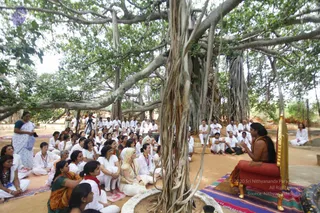
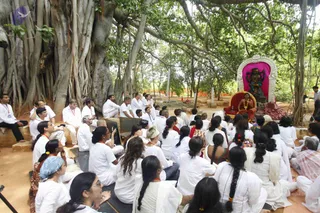
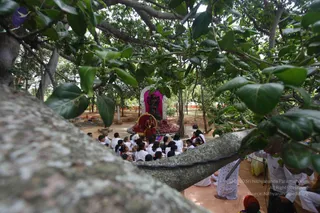
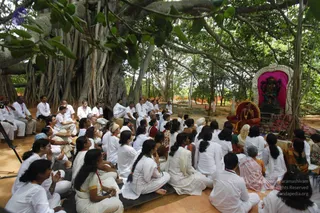
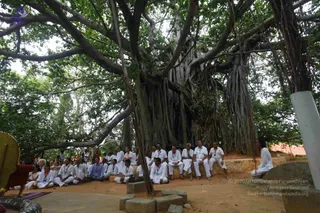
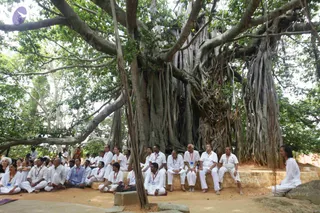
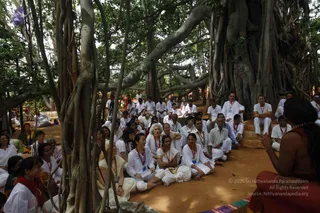
Outdoor satsang under a large banyan tree with many hanging aerial roots and a wide canopy. A seated teacher with long dark hair, bare-chested and wearing an orange-and-saffron dhoti with a rudraksha mala, sits on a red-cushioned throne with gold trim at the right edge, facing a crowd. The throne is a gilded seat with red upholstery, placed on a striped rug. Around 40 attendees sit on the sandy ground and on stone steps, mostly in white ritual clothing, some in saffron saris, and some with red and blue lanyards. A woman in a blue-and-white sari stands at the far left. Some participants sit with palms joined, others listen attentively. A video camera operator stands among the crowd. Several people sit near a stone basin in the foreground.Outdoor satsang beneath a huge banyan tree with many aerial roots. A seated teacher in orange clothing and beads sits on a red throne-like chair in front of a shrine with a pink backdrop and a dark deity murti with multiple arms. Dozens of devotees in white clothes sit on the ground in rows, some with red lanyards, several women with long braided hair, and a few men in white shirts. Some participants wear blue headwear, and staff in dark trousers and white shirts stand at the edges near a camera tripod.Outdoor photo beneath a large spreading tree with broad green leaves and thick grey branches framing the view. In a clearing, a seated figure in orange clothing sits on a red cushioned chair in front of a shrine with a pink backdrop and a deity murti, with red flower offerings at the base. A crowd of around twenty devotees in white clothes sits on the ground facing the chair. Two people in white stand at the right edge near a microphone stand.Outdoor satsang under a large banyan tree with aerial roots. Dozens of devotees in white clothing sit on the ground and mats in rows, many with white garments and some in saffron or patterned saris. On the right, a figure in an orange robe sits on a red throne before a pink-backed shrine holding a dark deity murti. Several cameras and a tripod appear at the left edge. The setting is a dirt-floored grove with lush green foliage.Outdoor satsang beneath a large banyan tree with dense aerial roots and spreading branches. A row of devotees in white clothes and white lanyard badges sits on a raised stone platform at the base of the trunk, some with hands folded. A seated figure in white stands out on the right near a white pillar. At left, a gold-edged red and yellow cushioned seat is visible in the foreground. Several other people sit on the ground in the background.A large banyan tree with hanging aerial roots dominates an outdoor setting. Beneath it, a group of about thirty people in plain white clothes sit on a low stone bench and the ground, many wearing blue or red lanyards with ID badges. On the far right, a woman in white sits apart at the end of the bench, and a few people in blue shirts and white dress sit or stand around the edges. Others in white and blue are scattered among the trees in the background. The scene resembles a seated satsang gathering under the tree.

Inner Awakening-celebration session

9 photosSource gallery
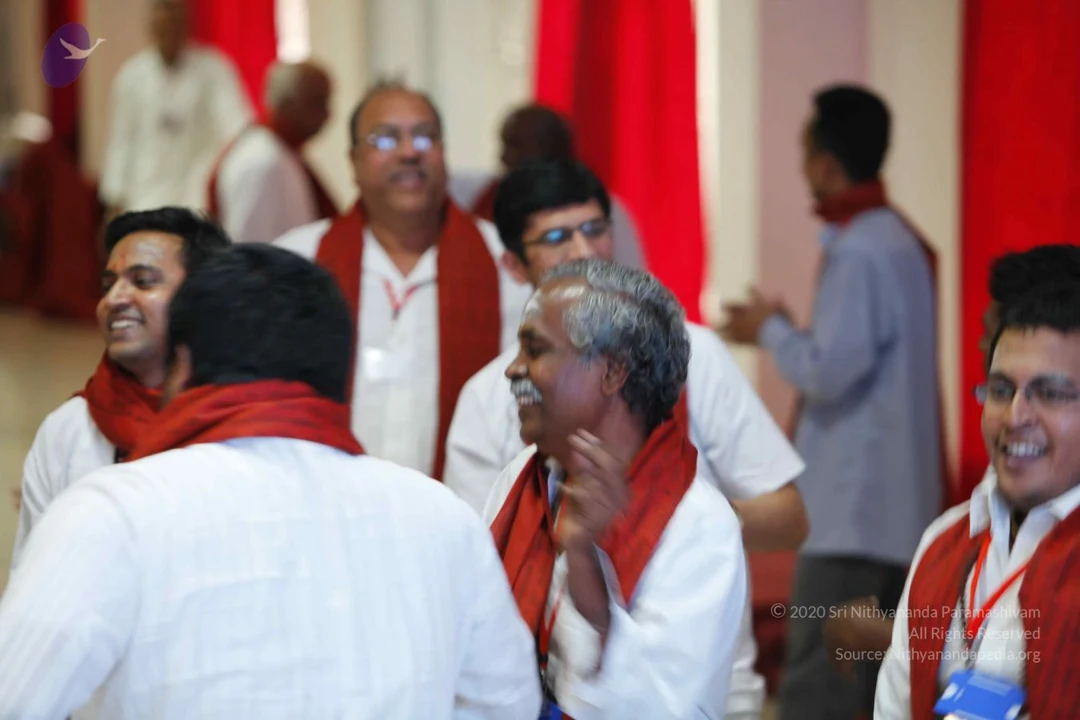
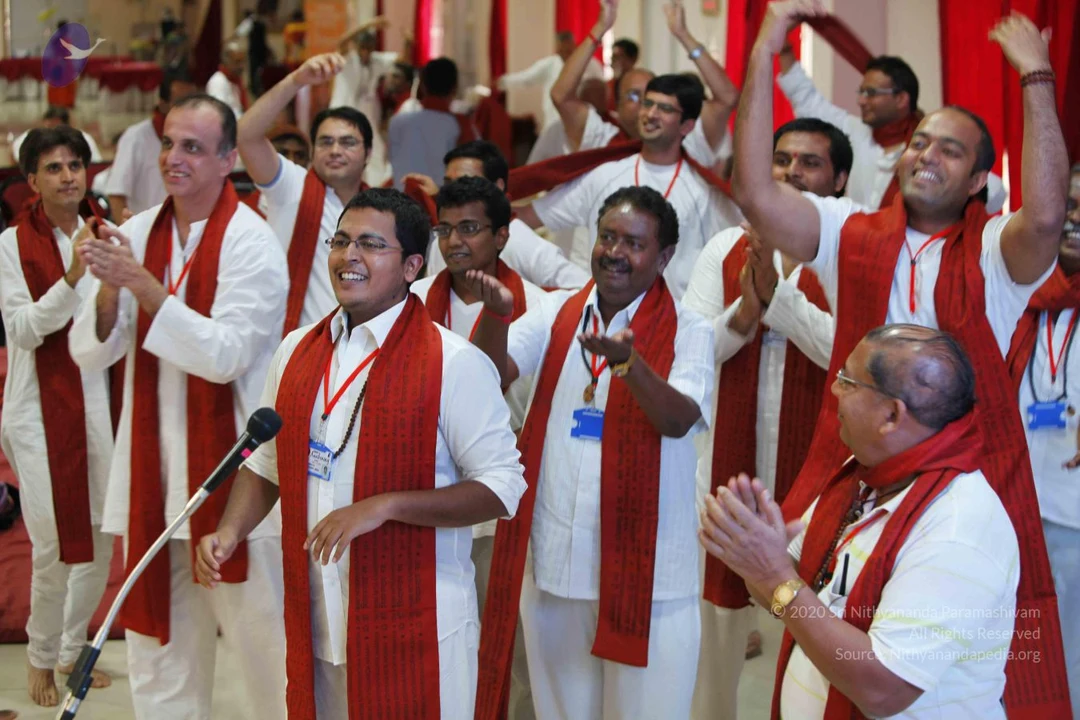
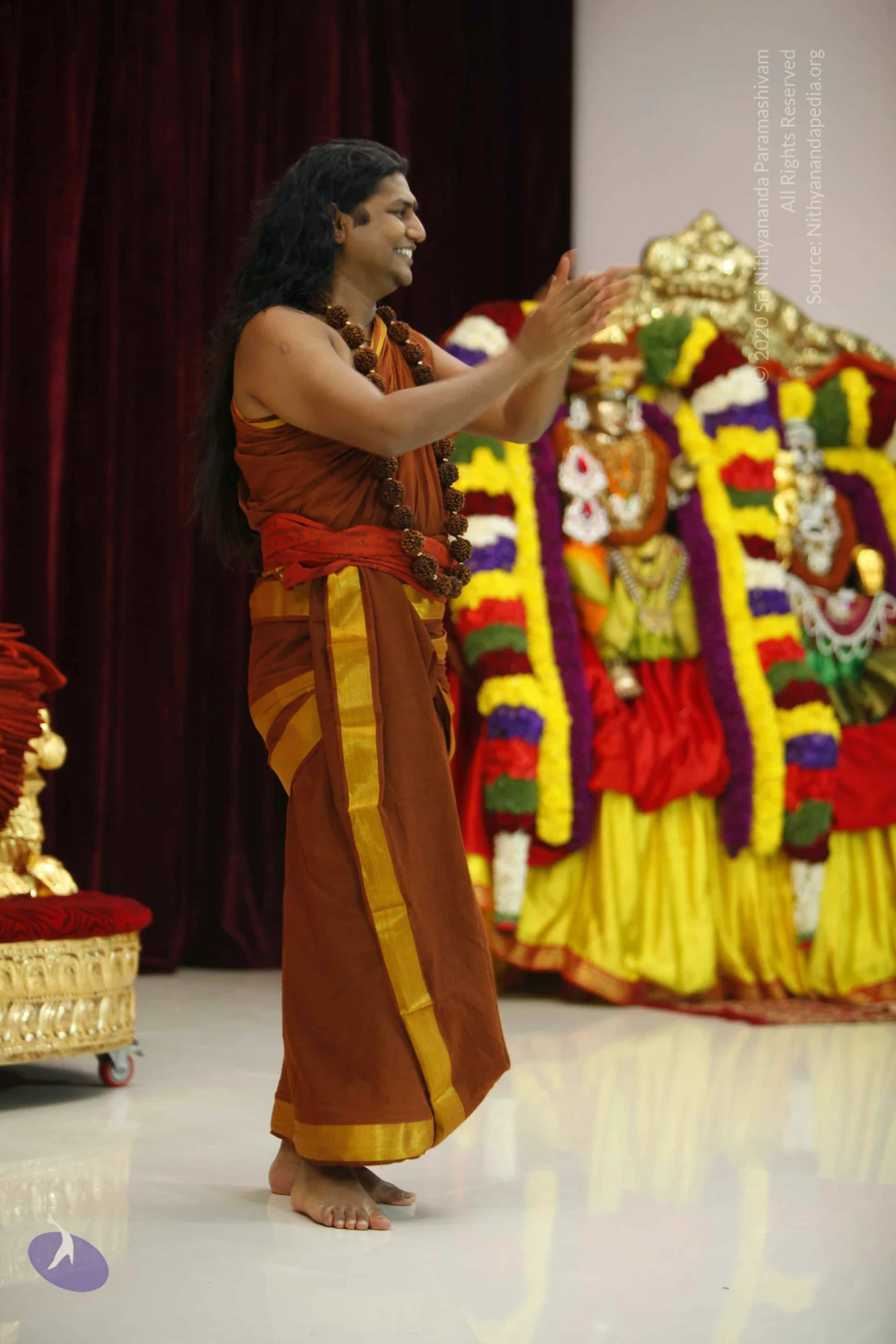
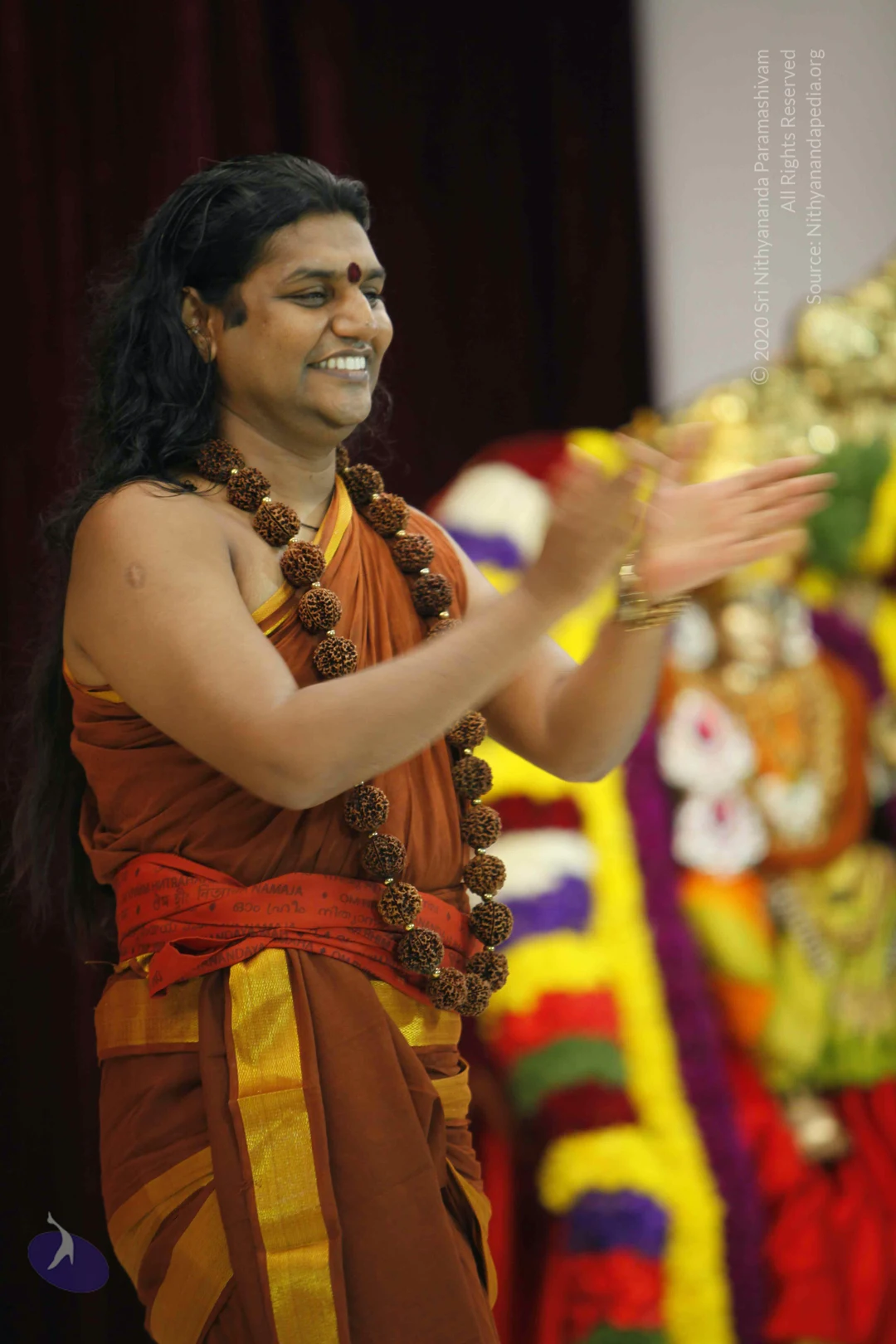
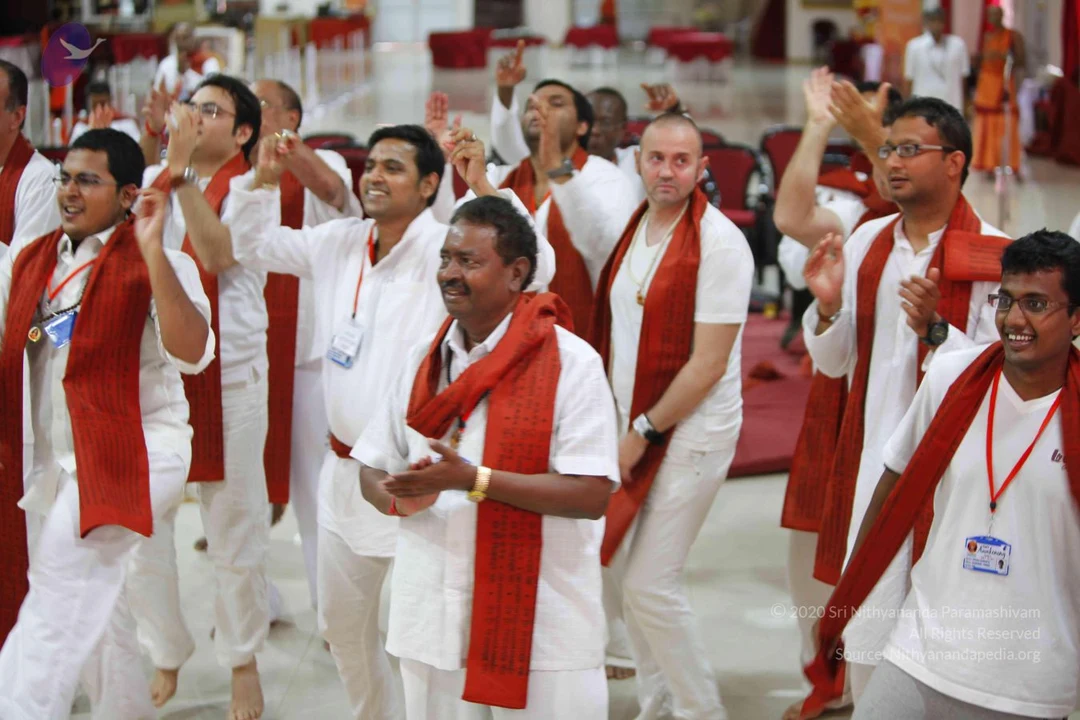
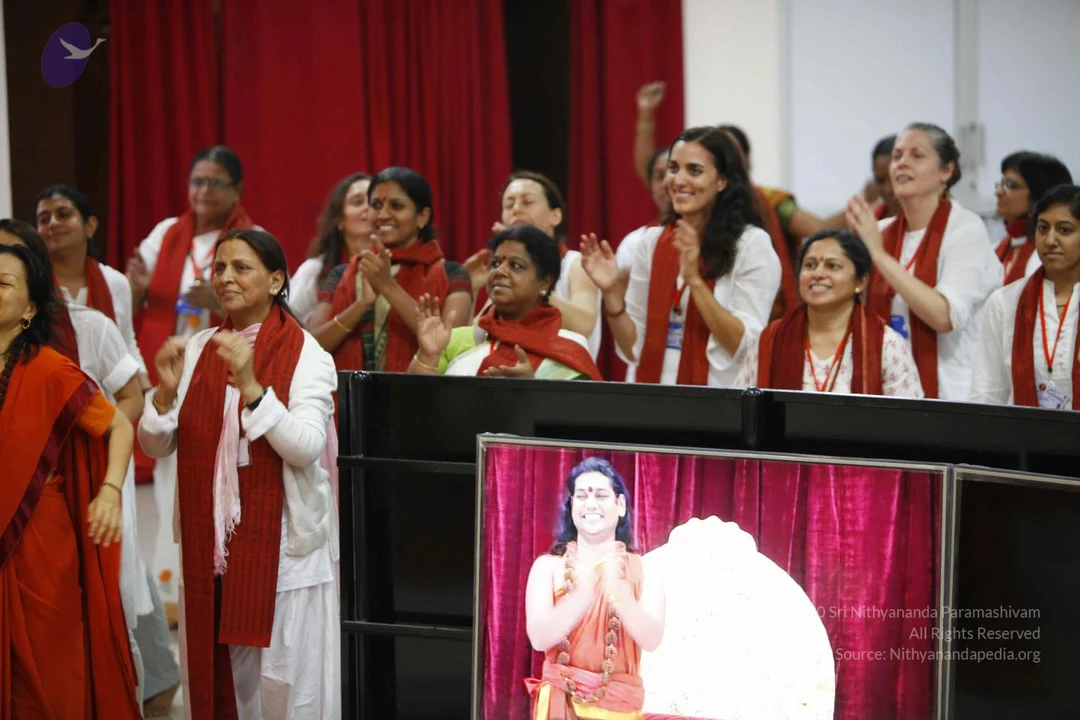
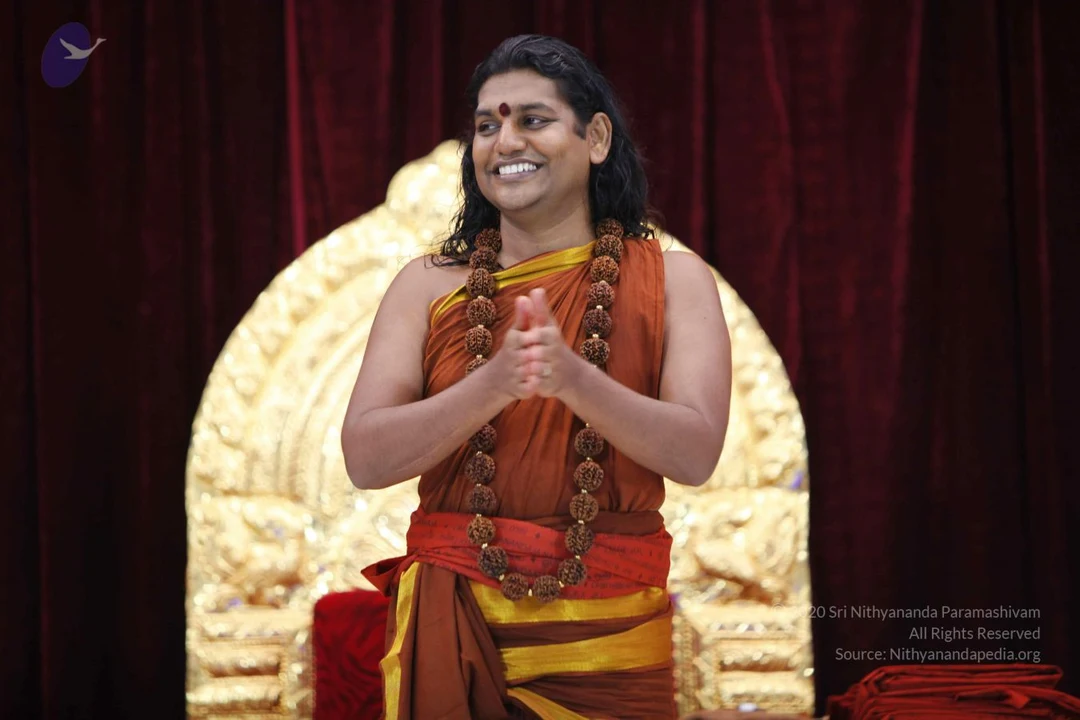
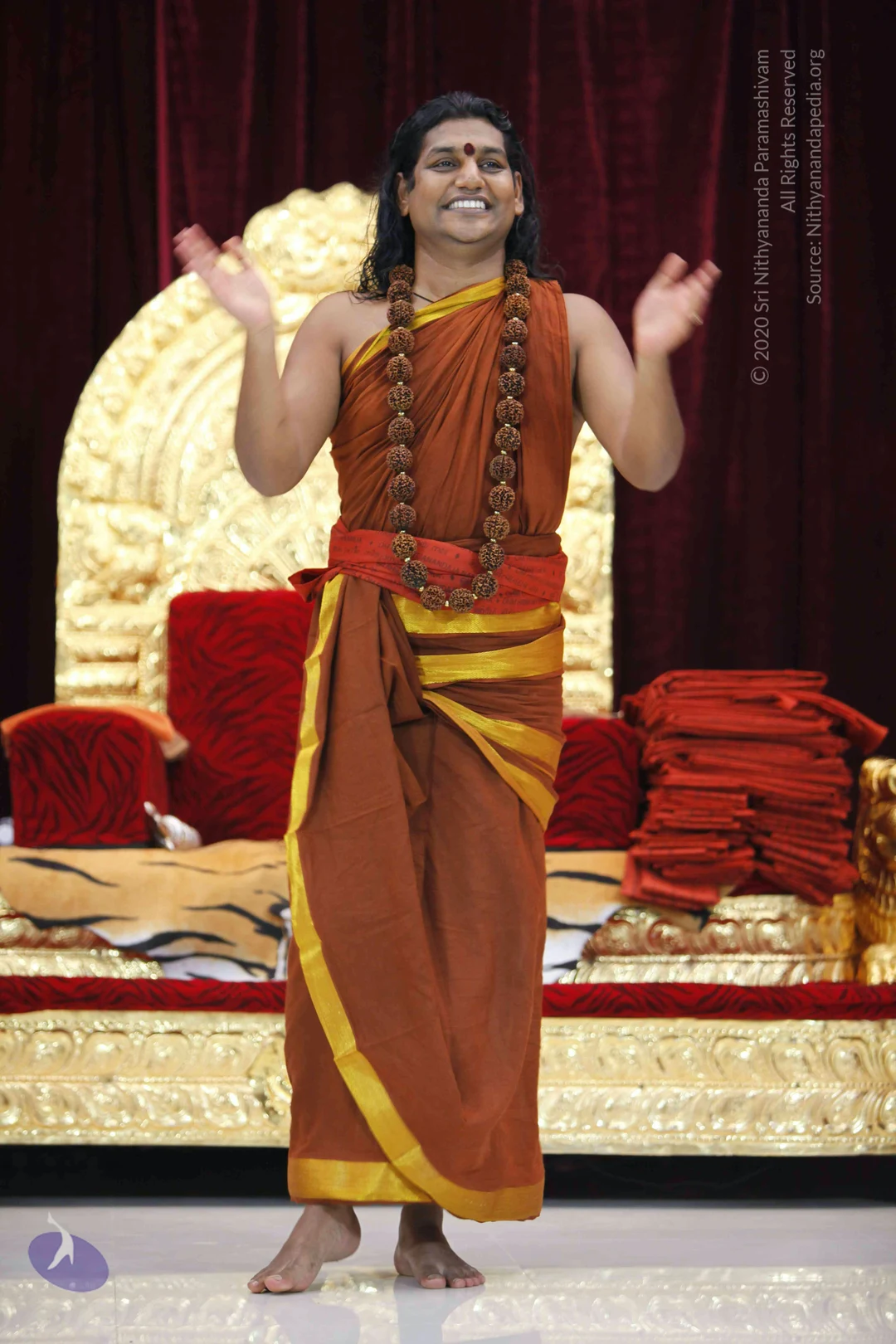
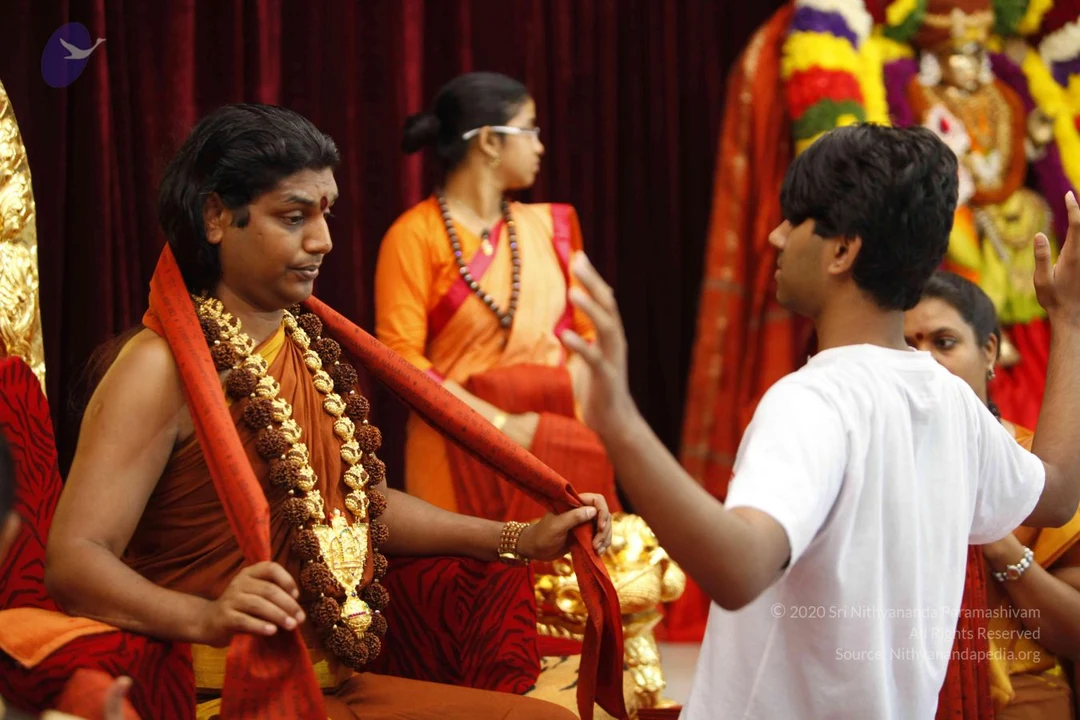
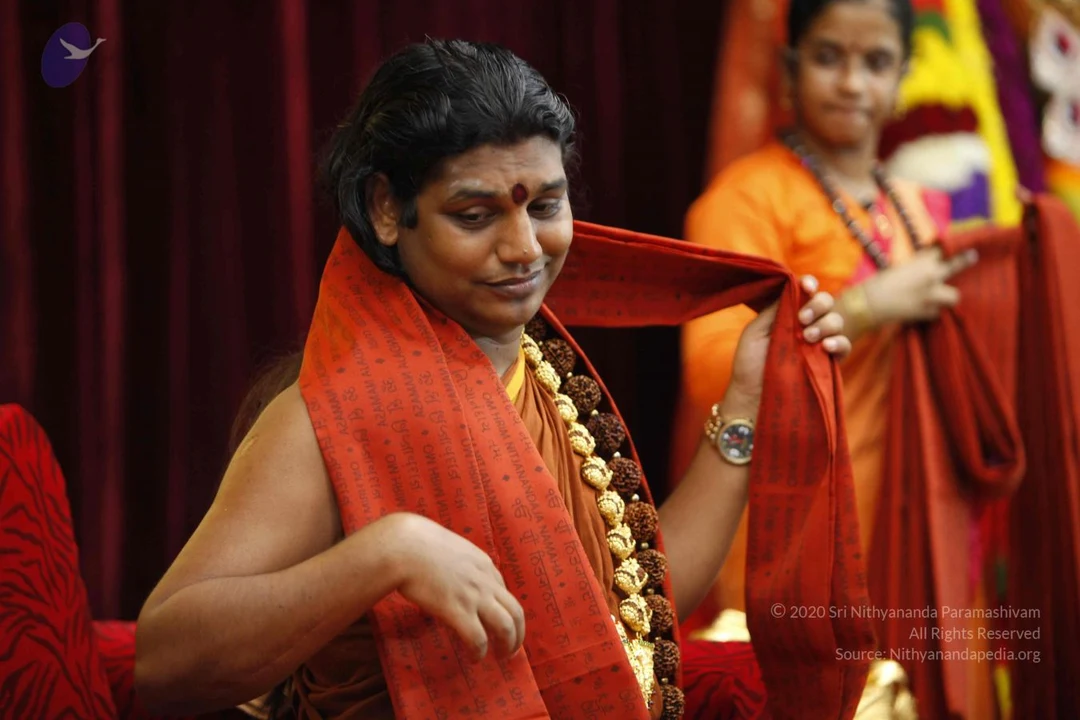
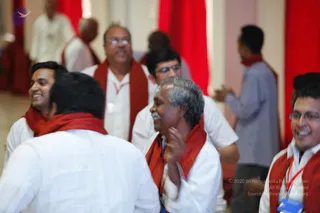
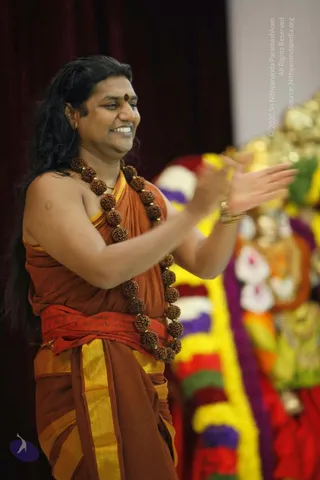
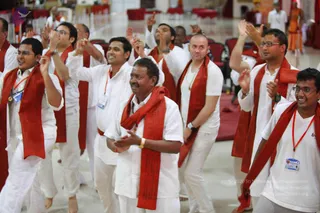
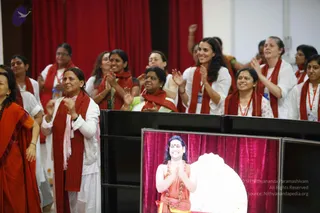
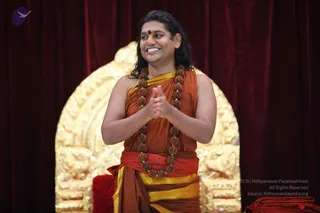
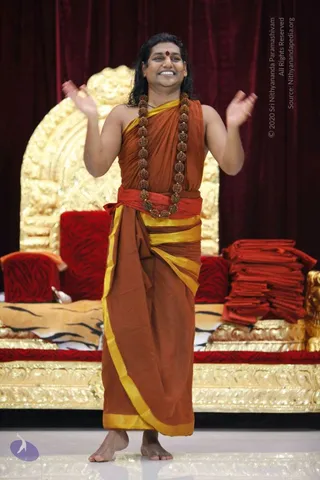
A candid, slightly blurred photo of smiling men in white kurtas with red shawls and lanyard badges in a bright hall with red drapes. In the foreground a man in a white shirt faces away, while a grey-haired man with a moustache in a red shawl claps and laughs. Others in red shawls and glasses smile around them, and a man in a grey shirt stands at right. No one is clearly identified as a person.A smiling man with long dark swept-back hair and a red bindi stands on a stage, clapping his hands. He wears a rust-orange shawl wrap over one shoulder, a red sash printed with script, a gold-bordered rust dhoti and a long multi-strand rudraksha mala. Behind him, a deity murti is decorated with colourful flower garlands in yellow, red, purple and white. Swamiji (probable): long swept-back hair, orange ornate clothing and rudraksha malas mark him as the satsang speaker.A group of men in white kurta-style clothing with red-orange shawls draped over their shoulders stands in a hall, many clapping and raising their hands in devotional celebration. Several wear lanyard ID badges. Some smile broadly, and one man in the foreground with a gold bracelet claps with a joyful expression. Red-draped chairs and a red carpet are visible in the background, along with a few other people. No figure is clearly identifiable as a person from appearance cues, so the central men are described only by their roles and clothing.A photograph of a satsang hall where a row of women in white tops and red shawls stand clapping and smiling, some with lanyards. A large screen in the foreground shows a projected image of a smiling figure in orange robes with rudraksha malas, hands pressed together in greeting, against a magenta curtain. The woman in the foreground at left wears an orange sari. Red curtains hang behind the audience.A smiling man with long dark hair and a red bindi stands before a gold-carved arched backdrop with deep red velvet curtains. He wears an orange-saffron sleeveless robe with a yellow-edged wrap, a red sash at the waist, and a long rudraksha mala of brown beads. His hands are pressed together in front of his chest in a gesture of greeting. A gold-toned throne-like niche stands behind him.A smiling man with long dark hair and a red bindi stands barefoot on a white stage, arms raised with palms open in an expressive gesture. He wears a rust-orange sleeveless garment with gold-bordered drapes and a red-and-gold sash, and a long necklace of rudraksha beads. Behind him a gilded throne with an ornate golden arch, red-and-black tiger-print cushions and a stack of red cloths stands before deep red velvet drapes.

Inner Awakening-darshan

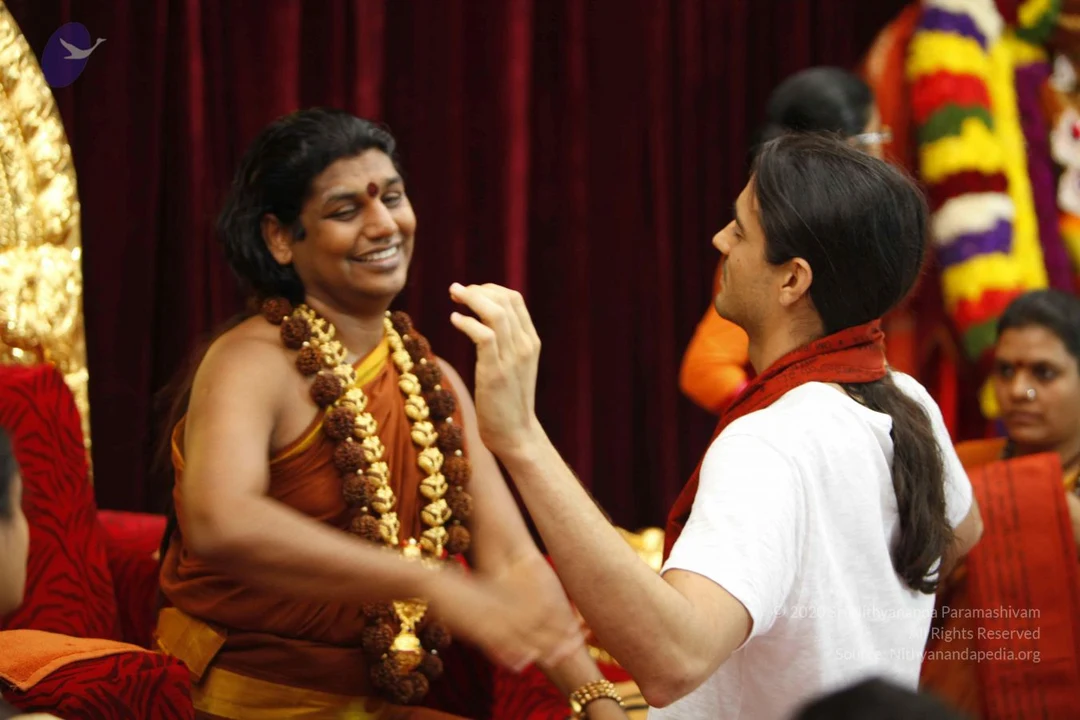
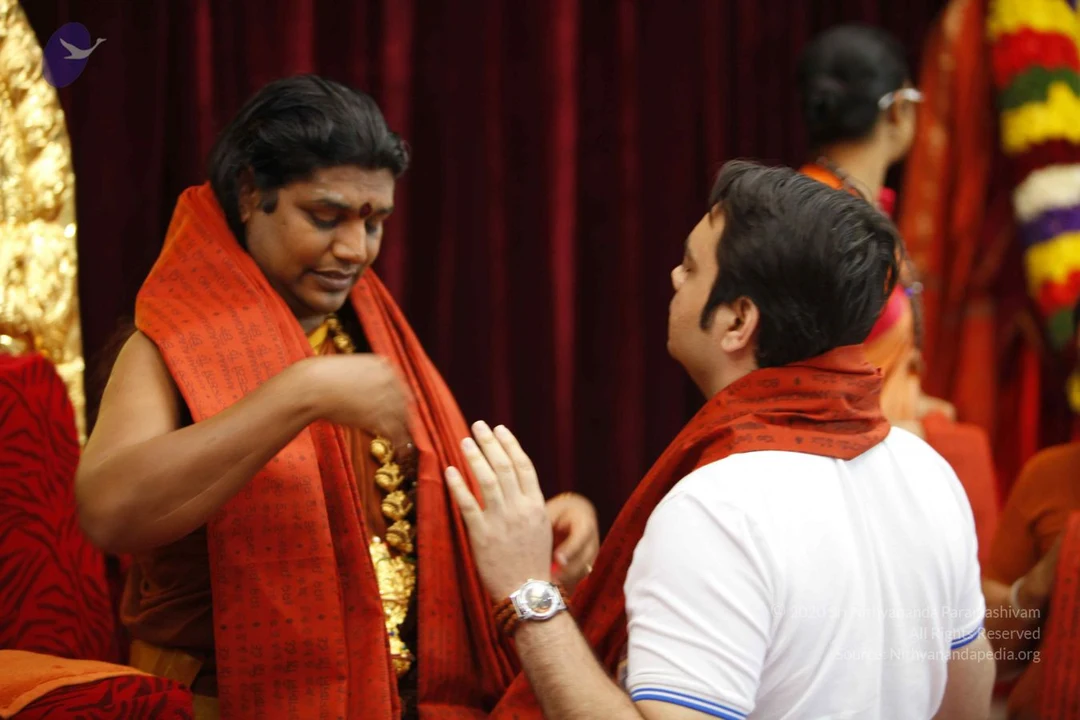
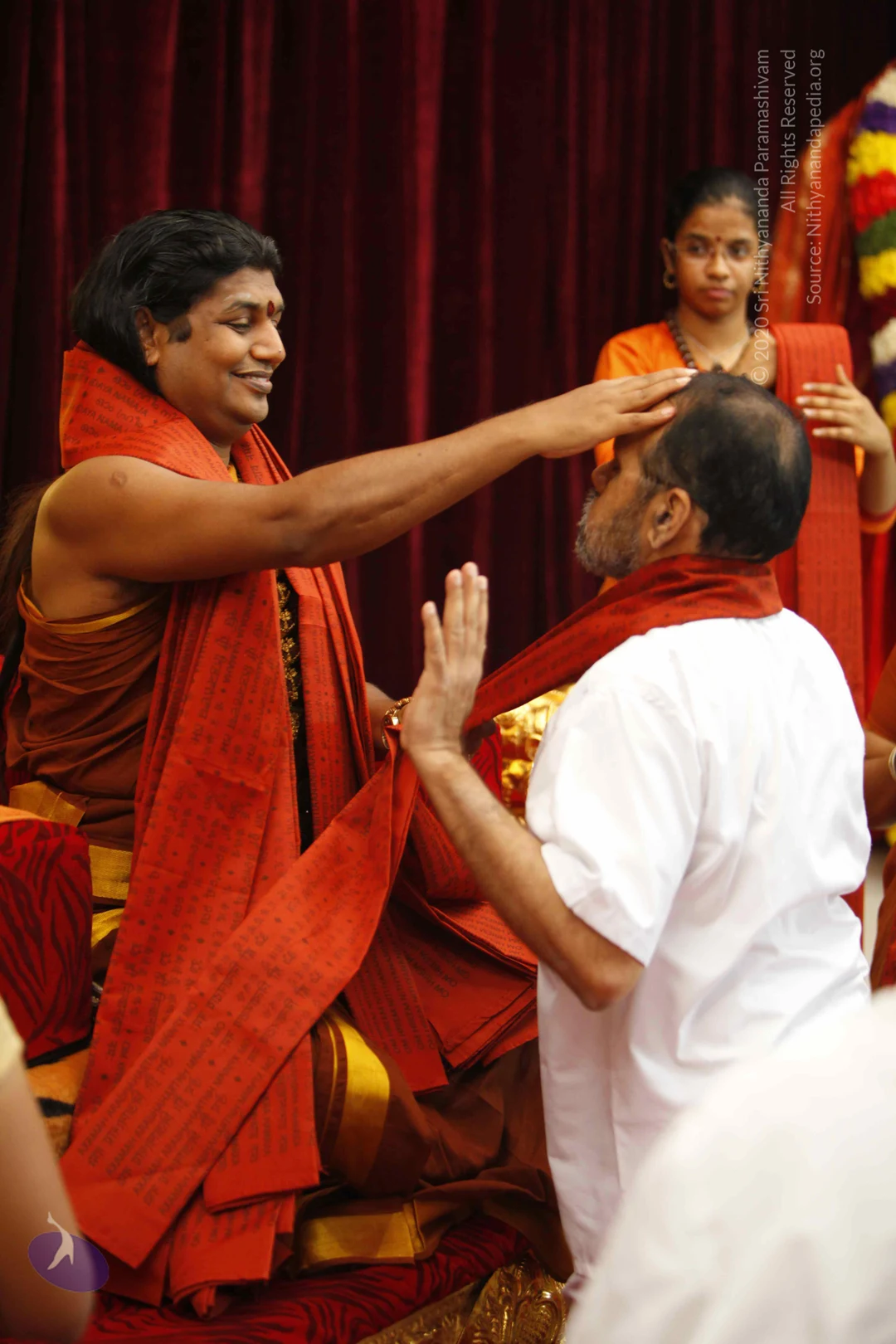
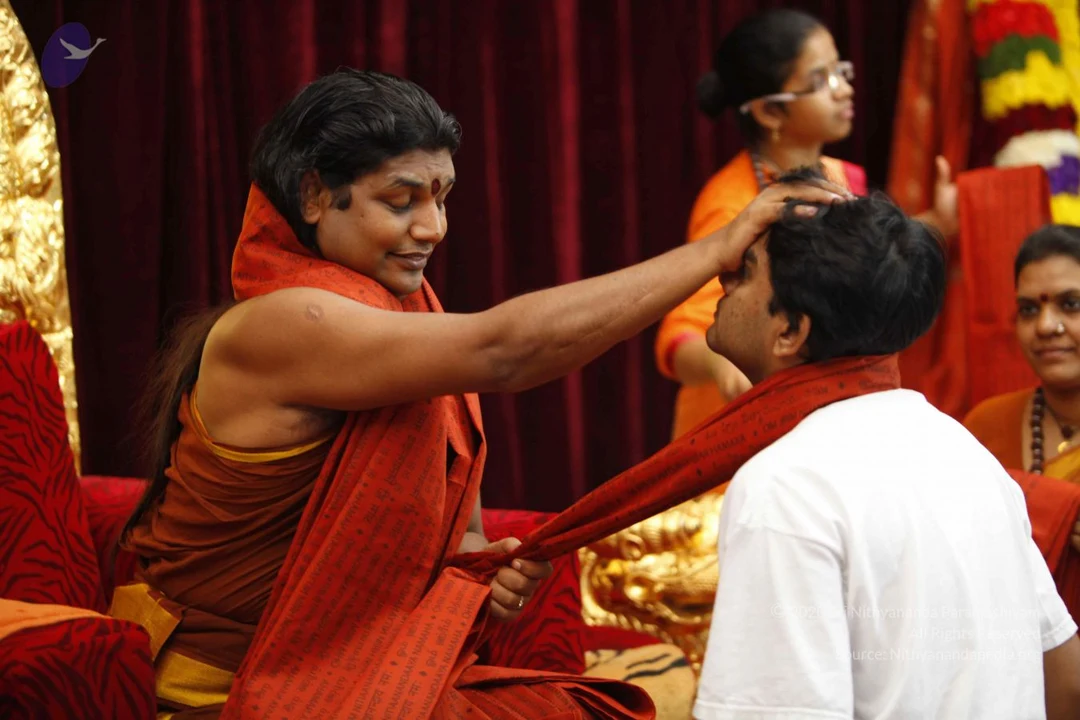
31 photosSource gallery
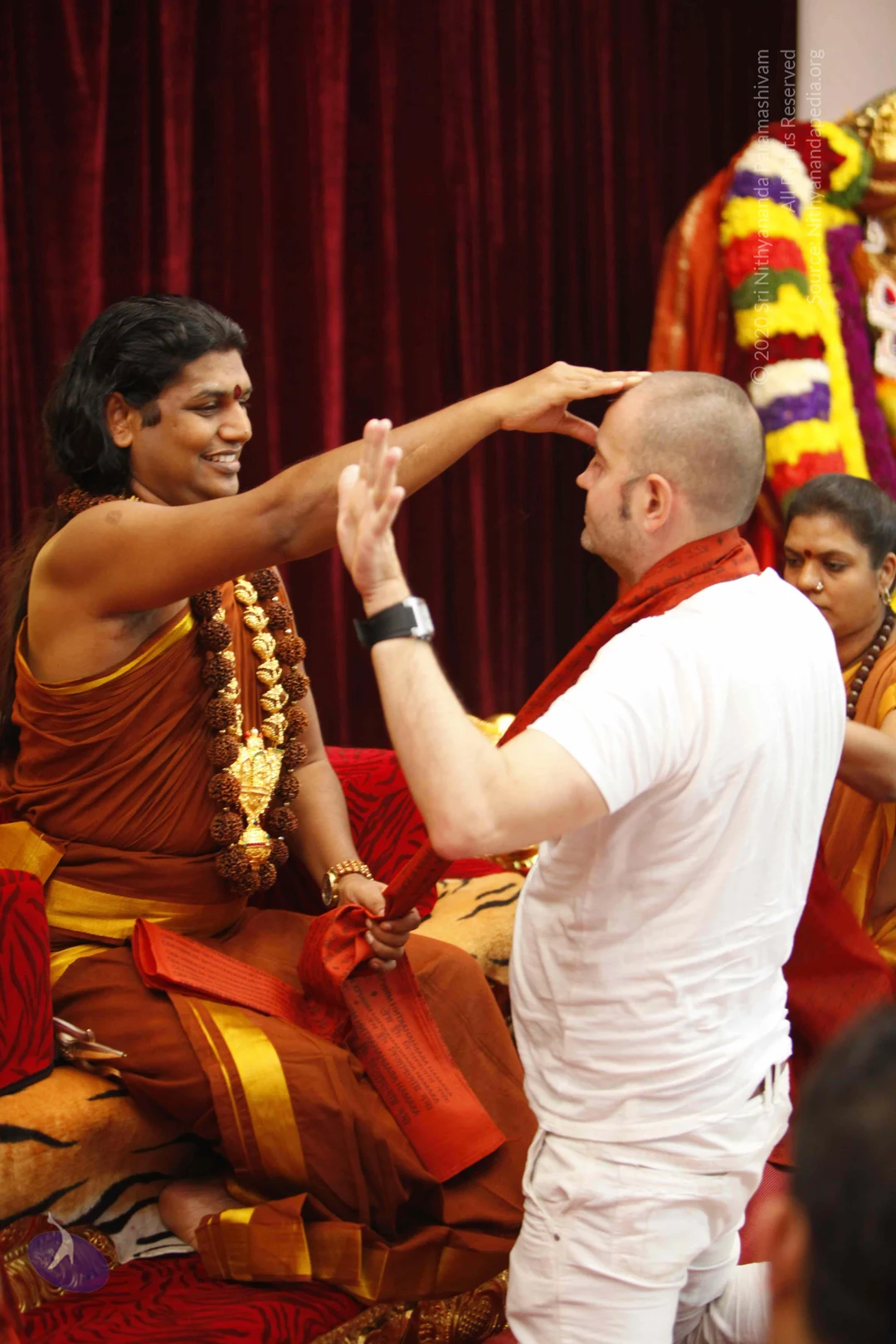
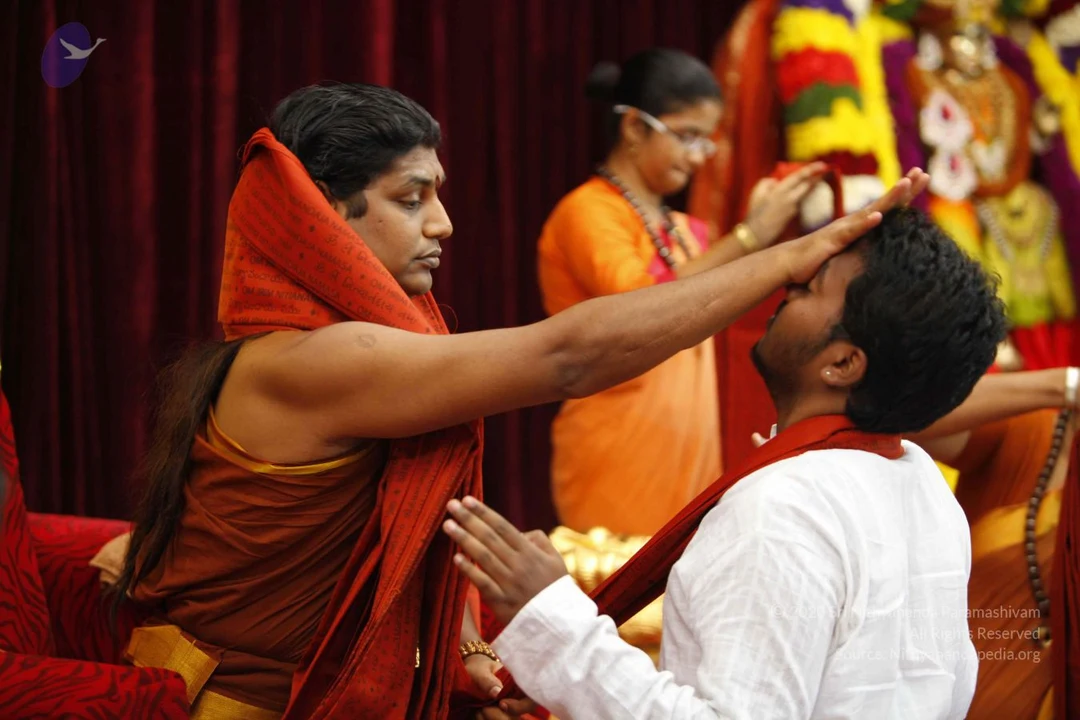
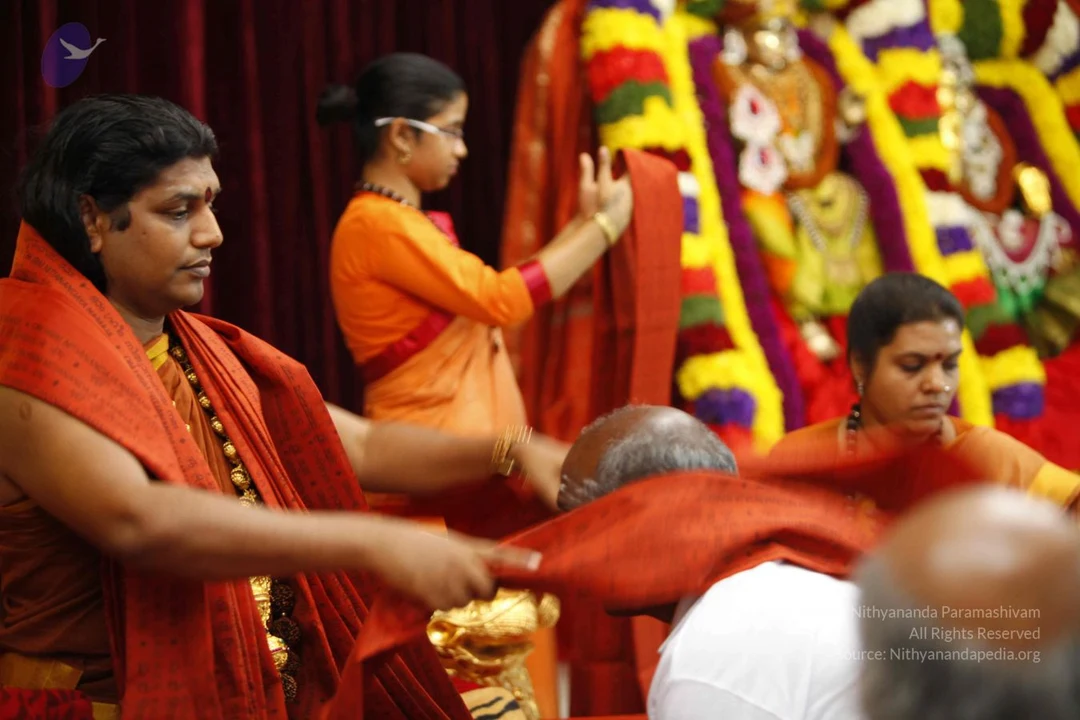
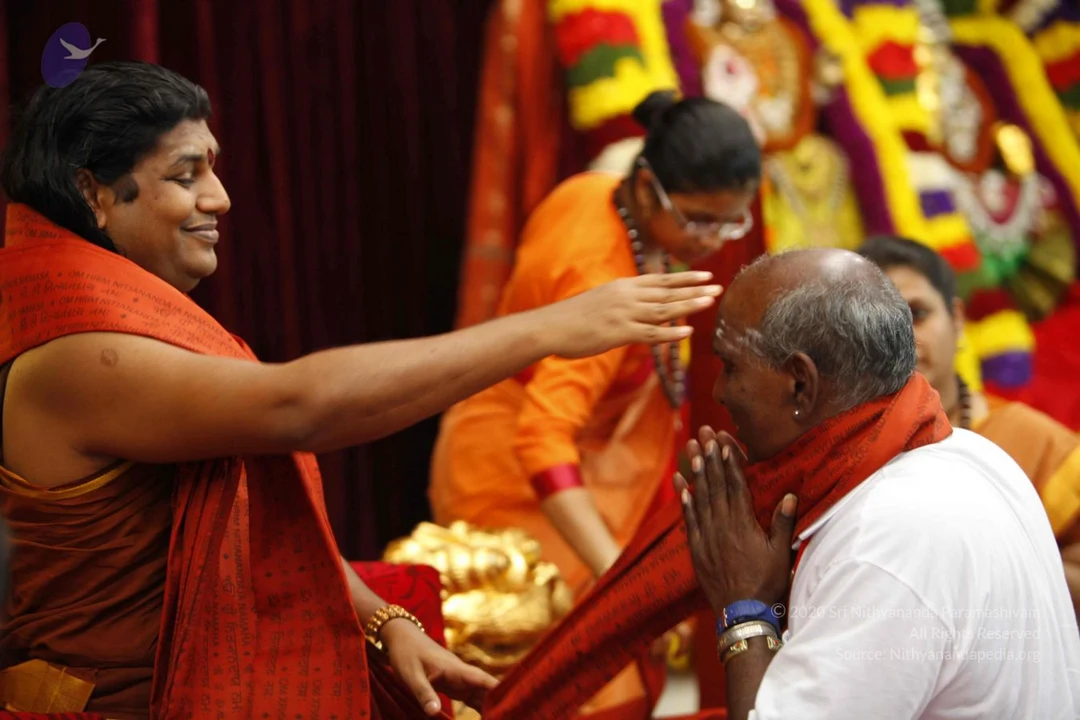
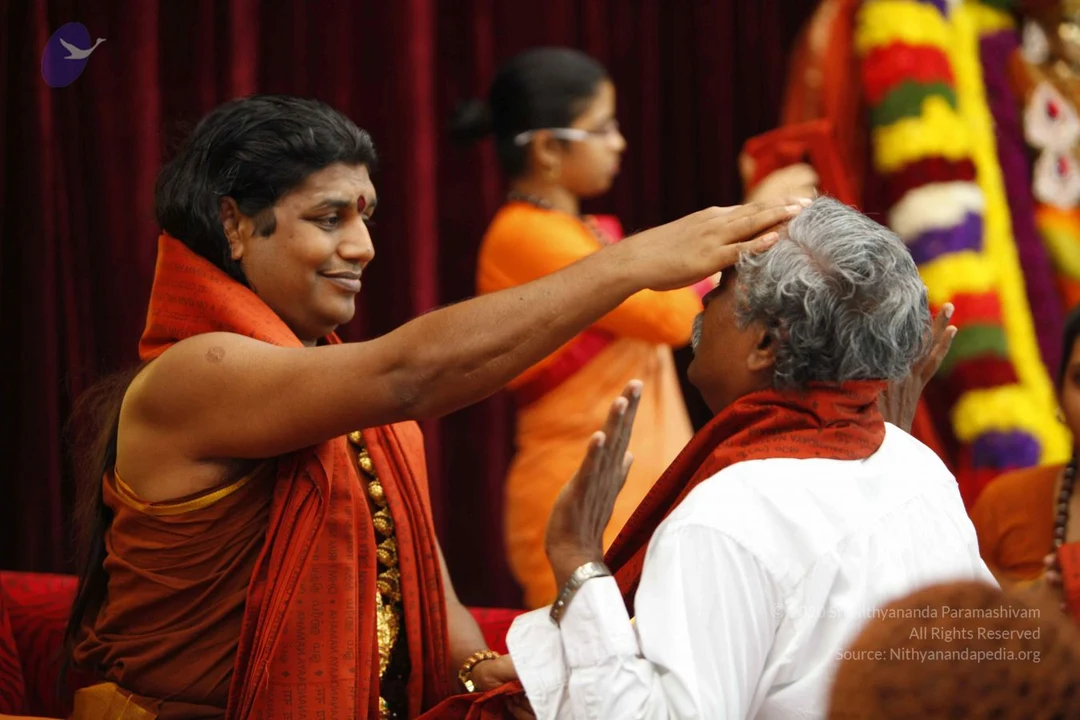
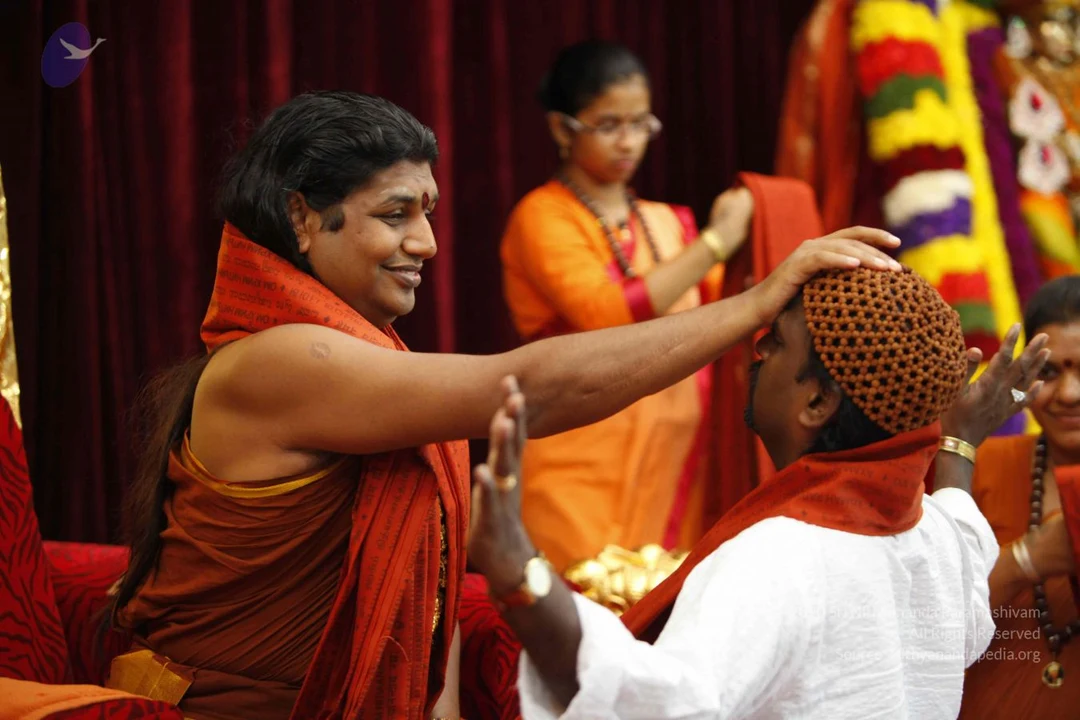
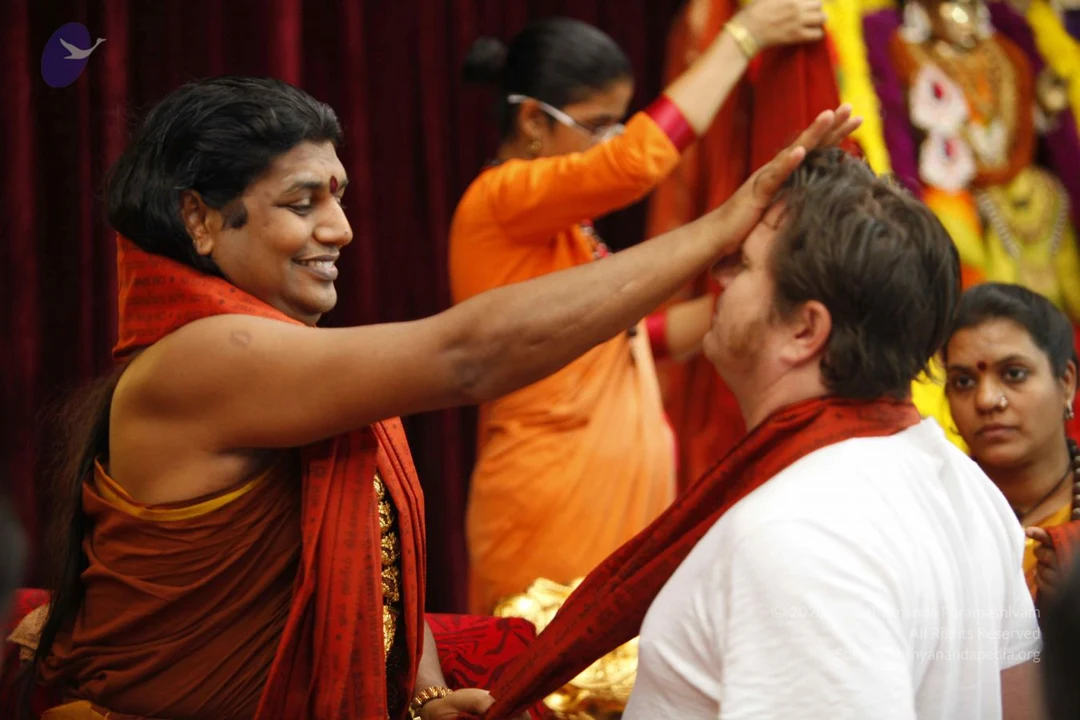
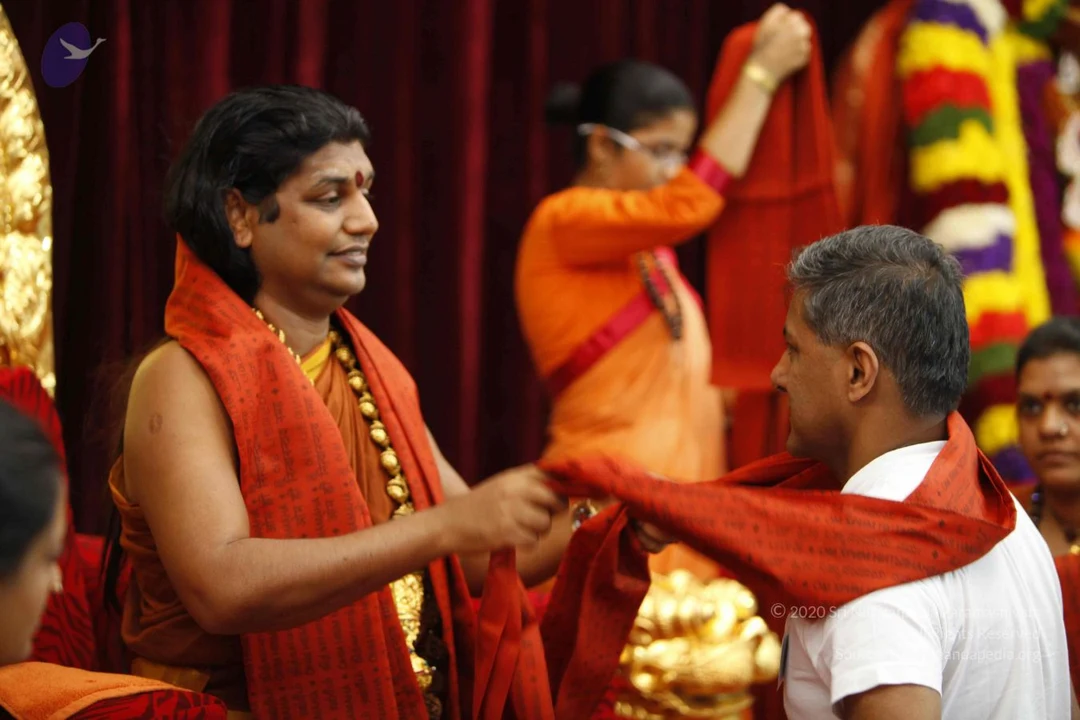
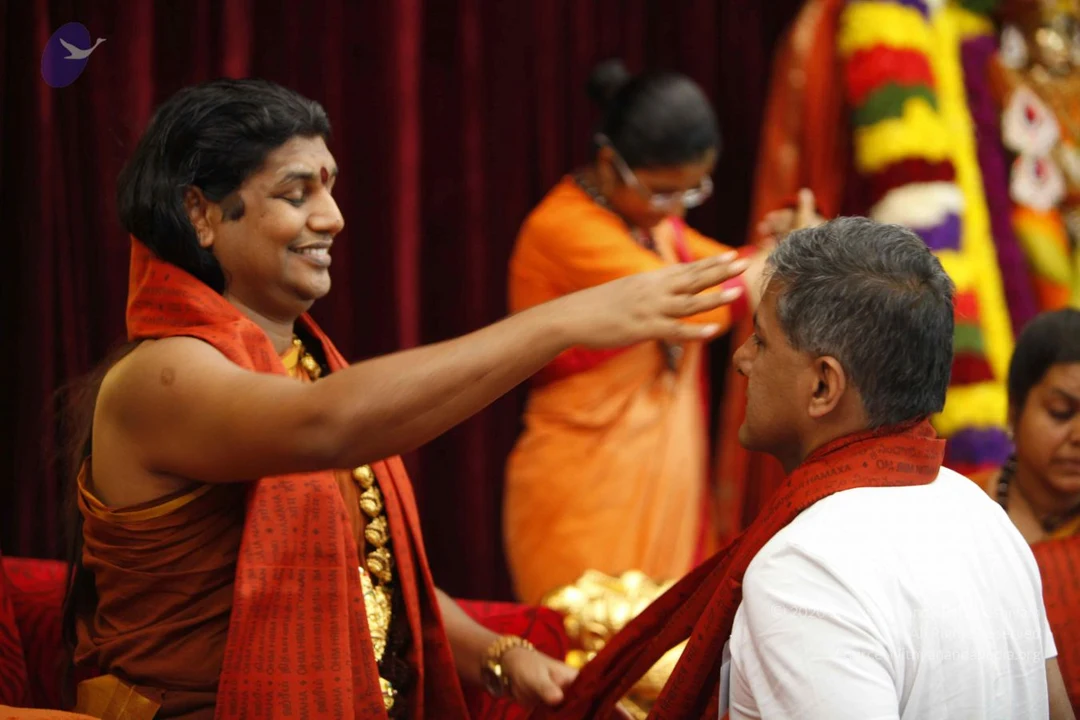
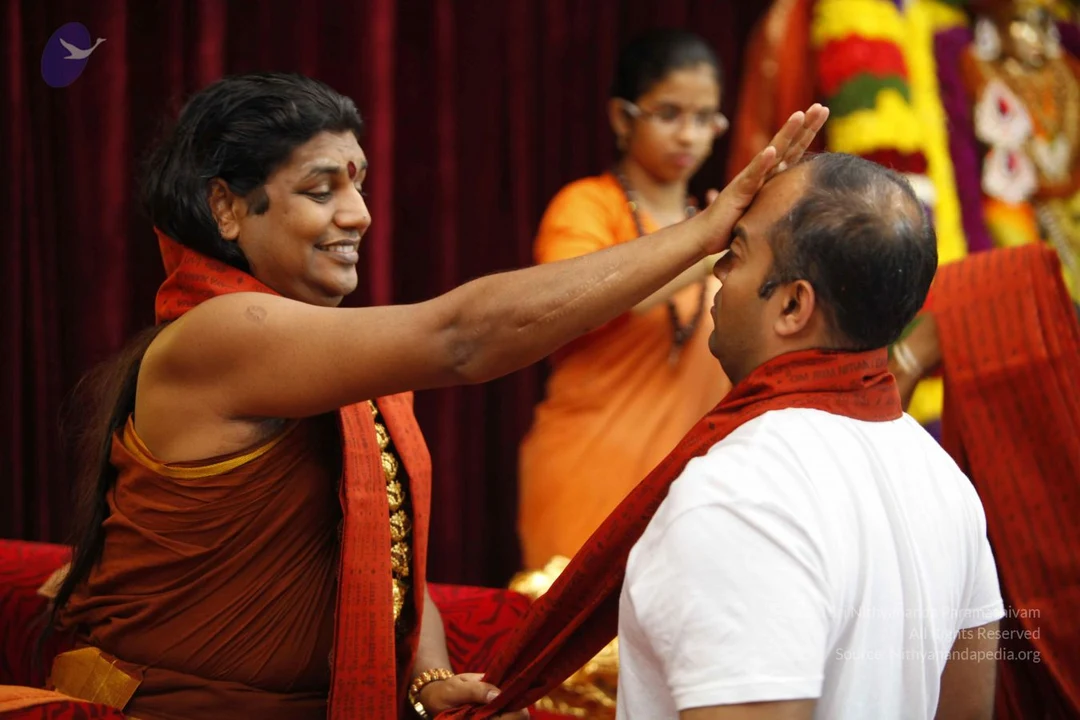
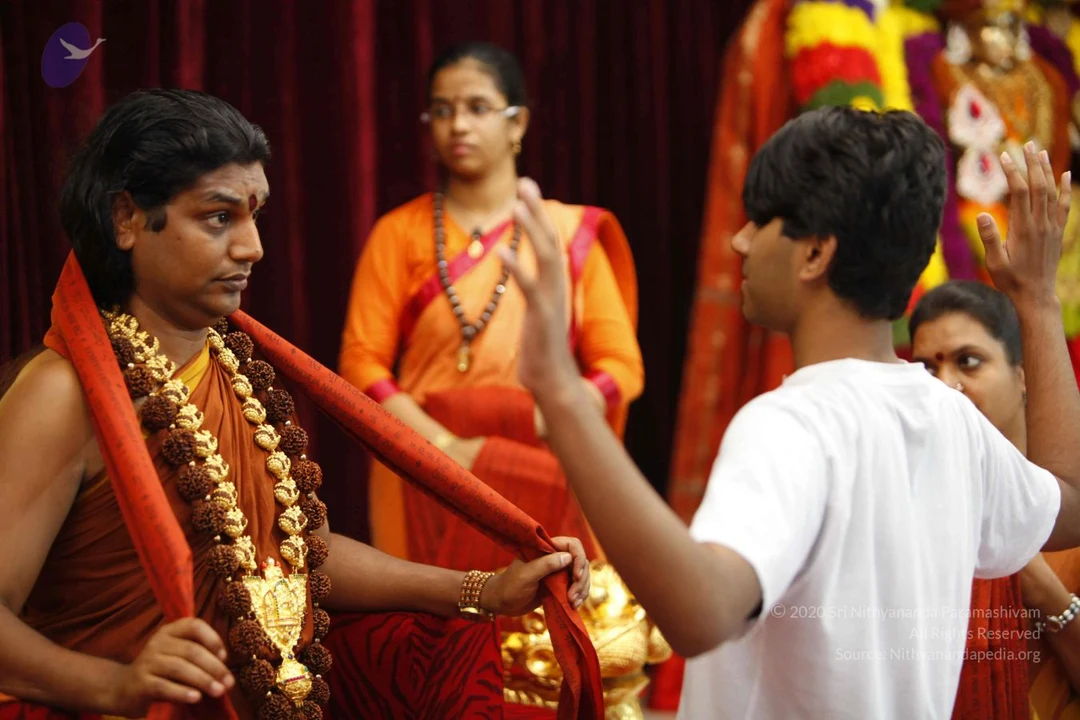
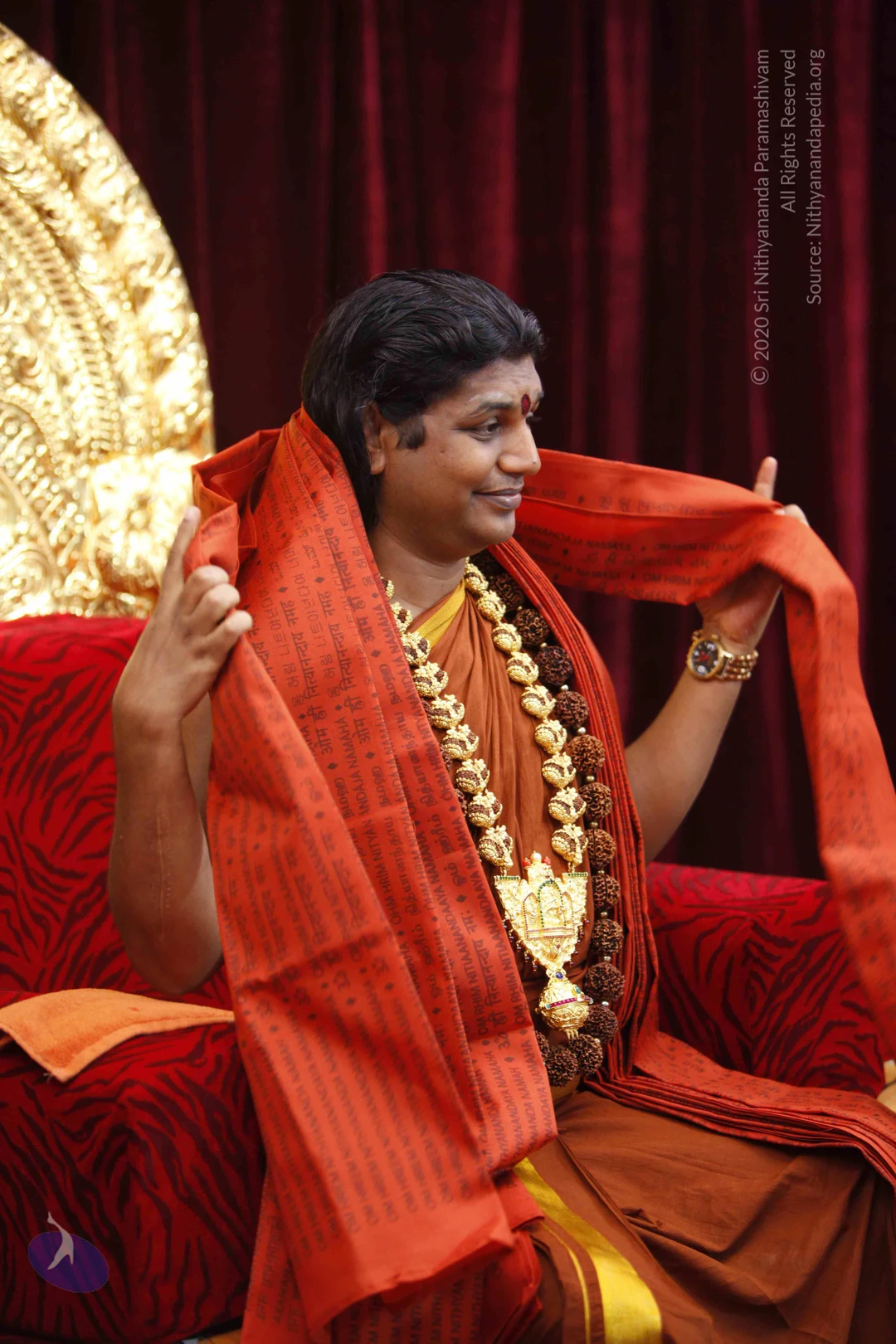
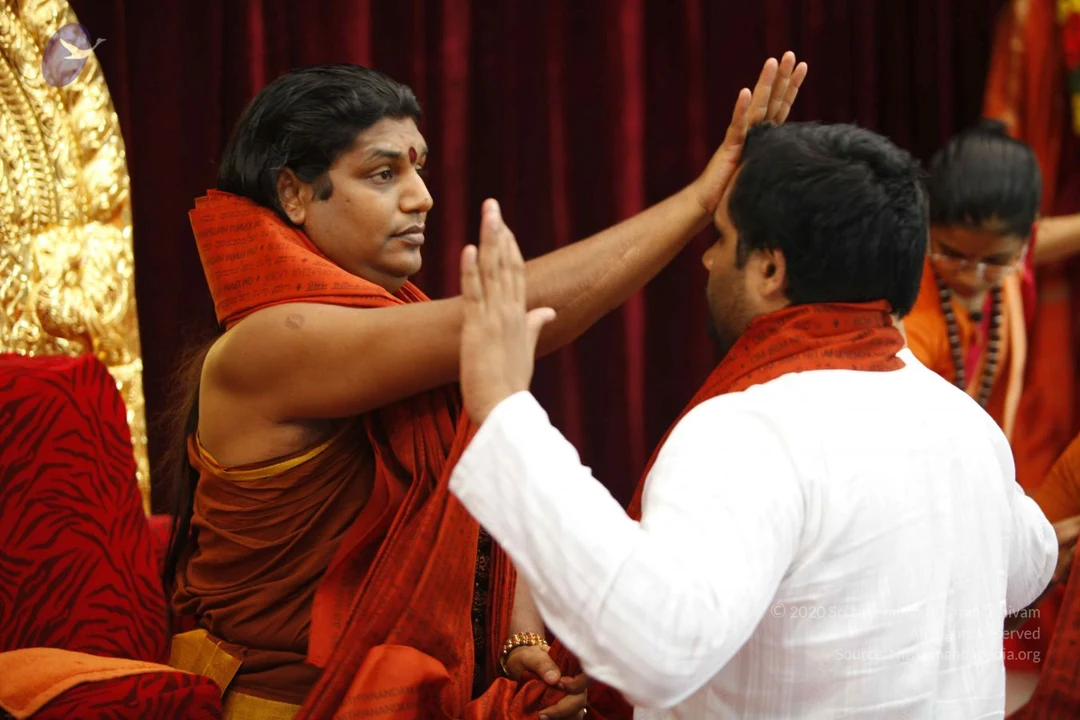
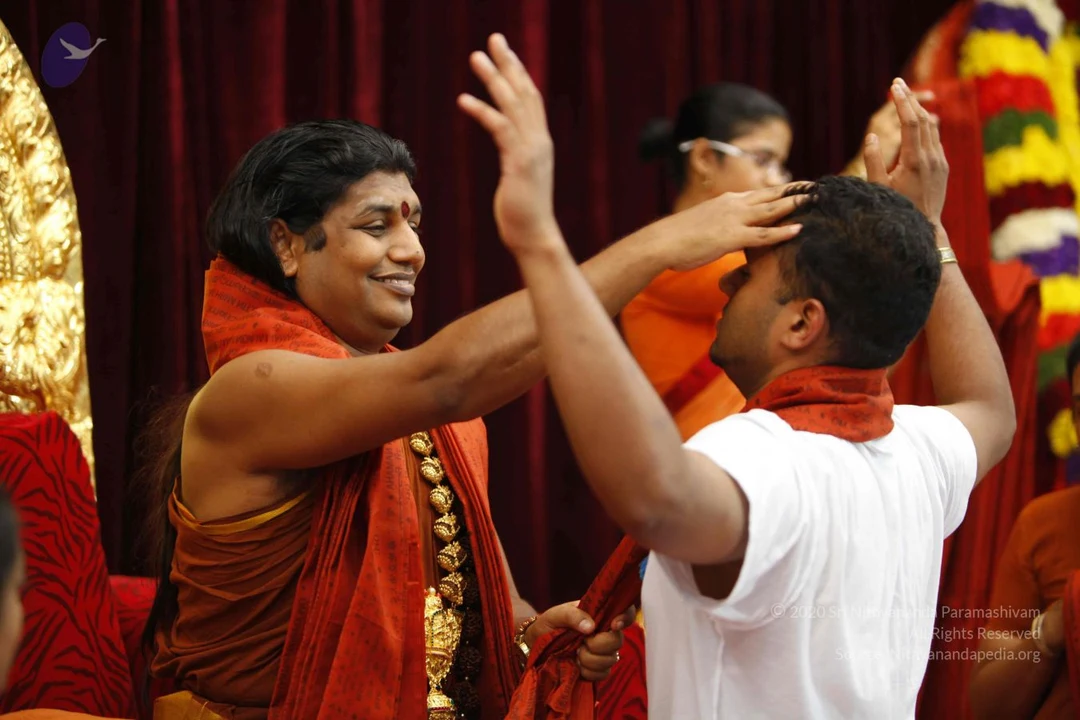
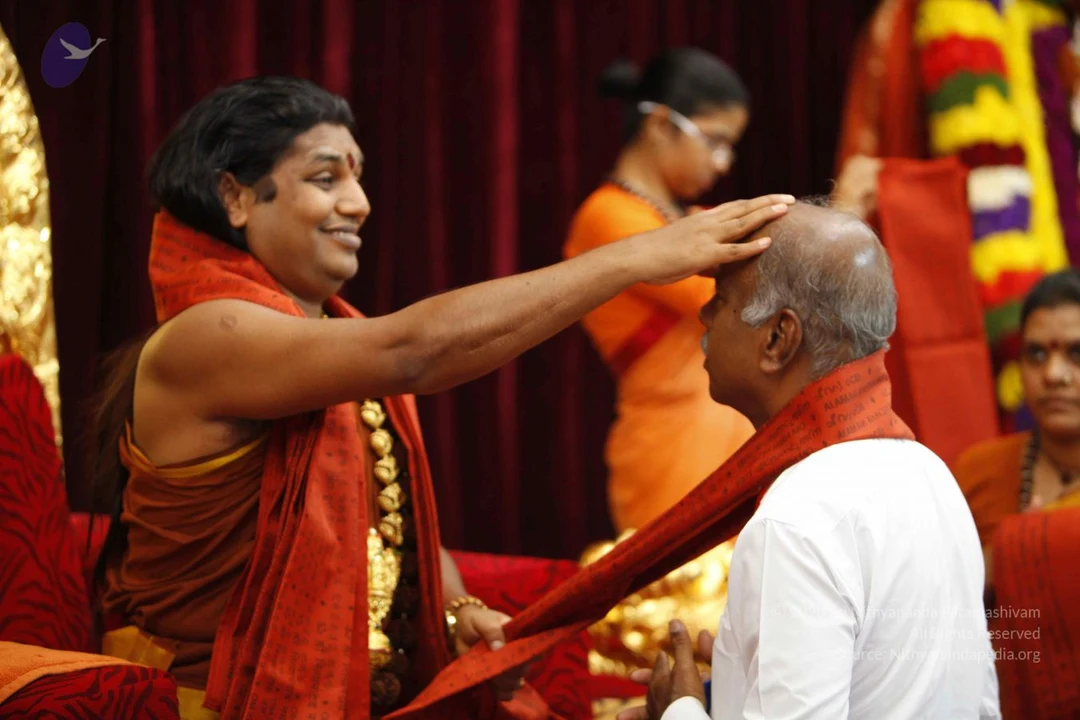
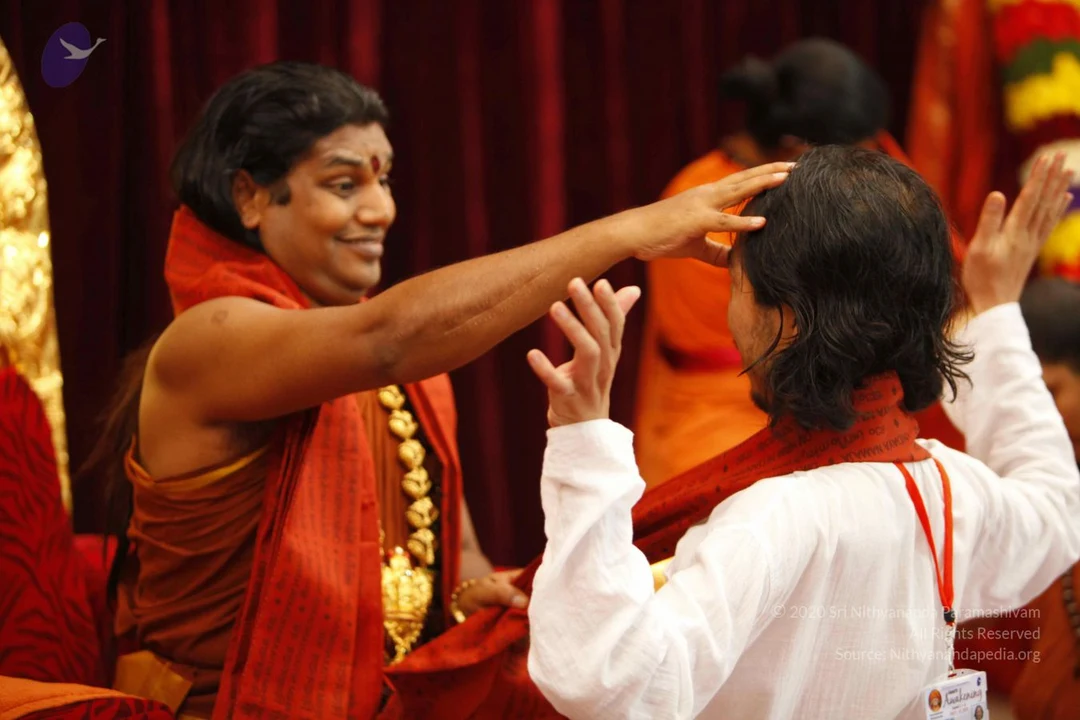
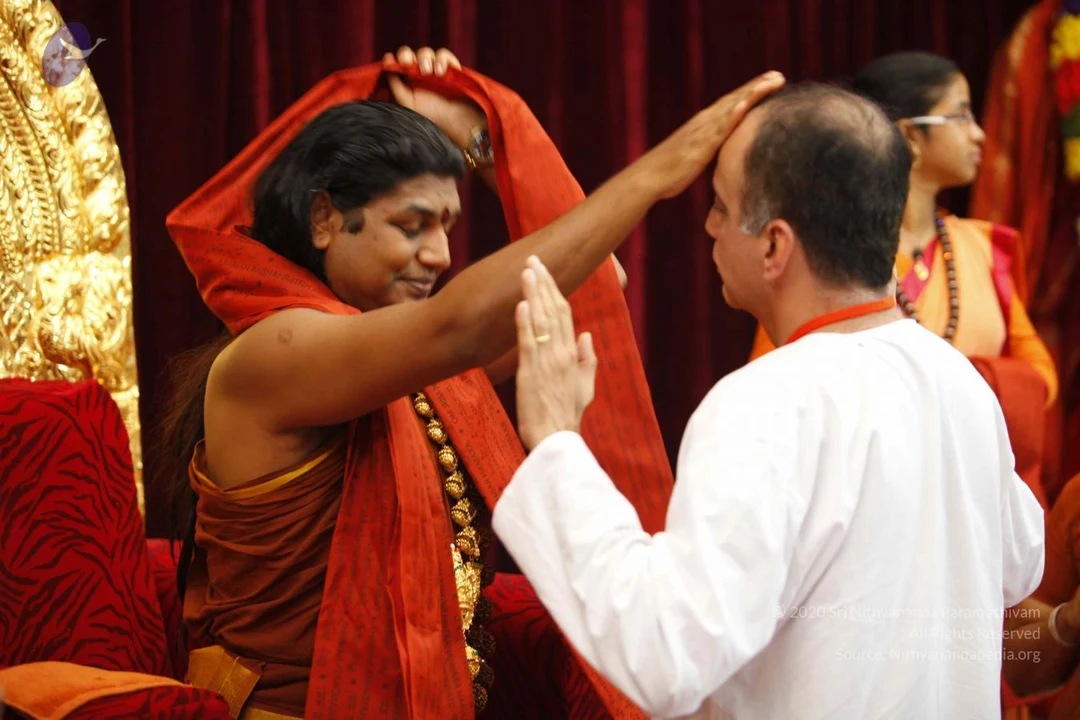
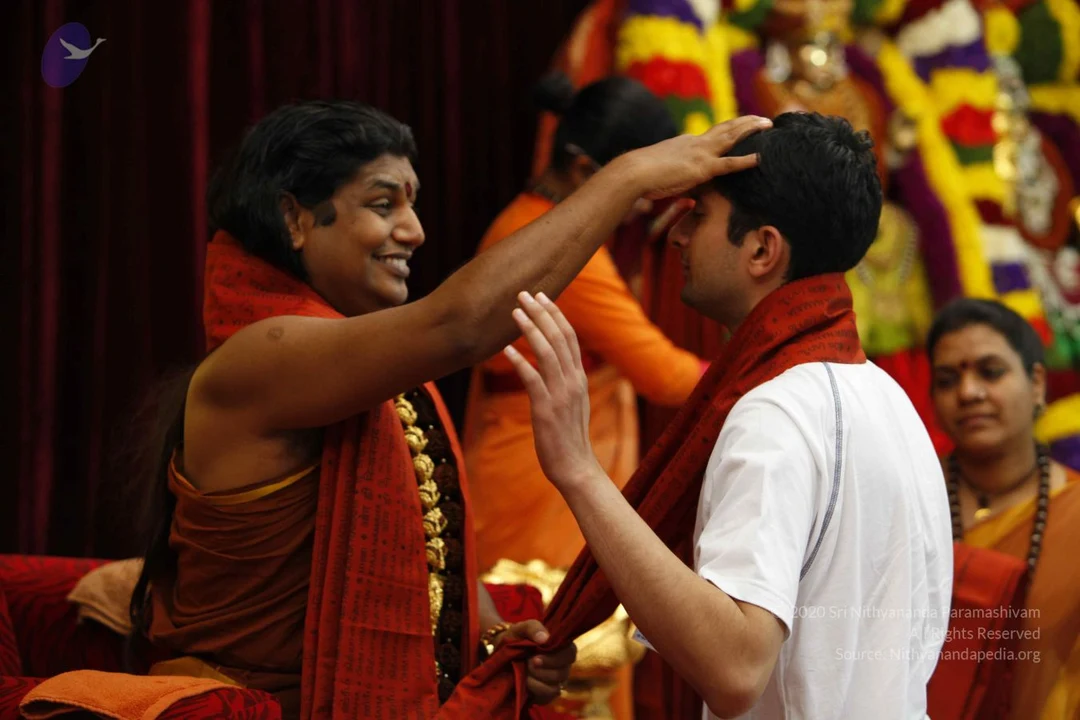
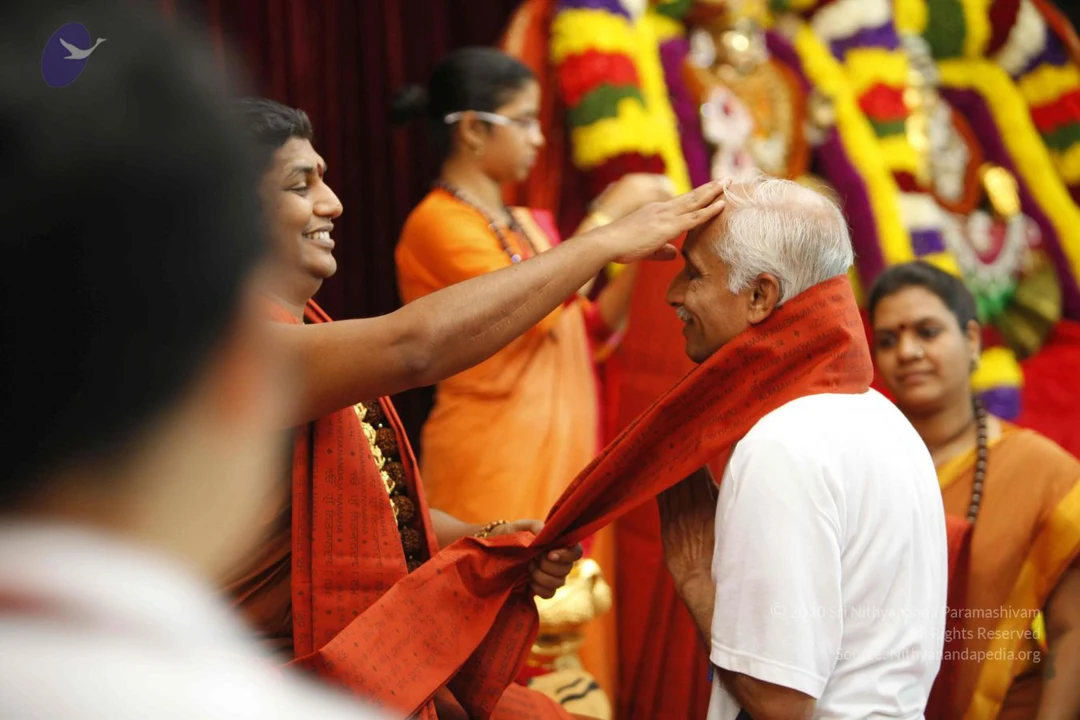
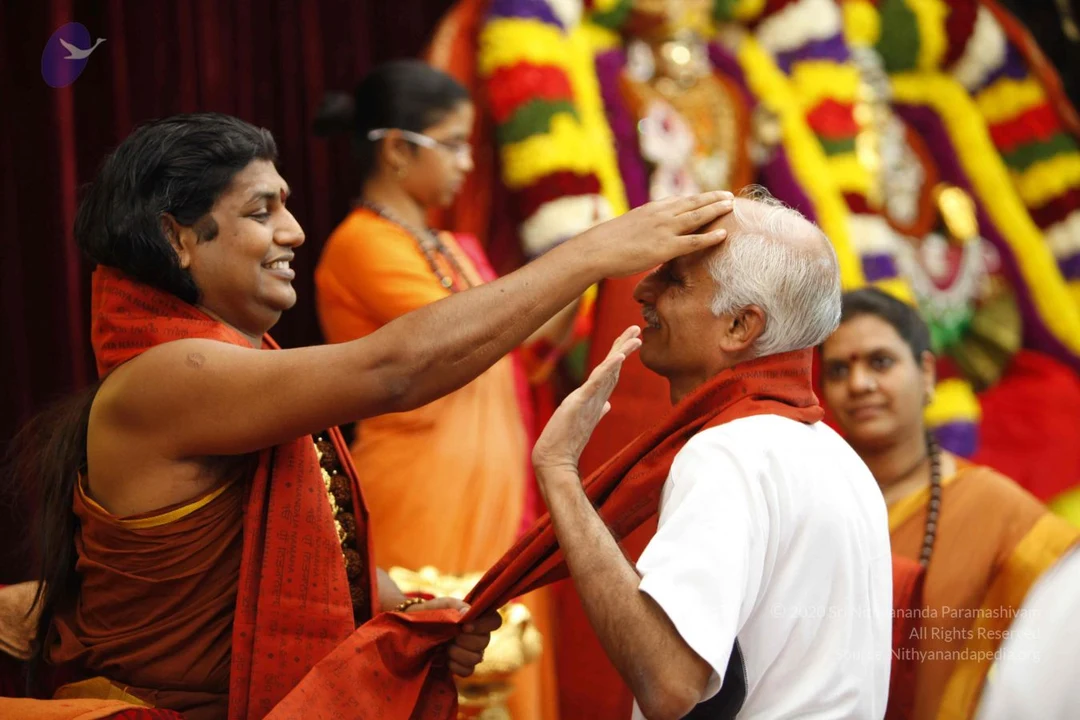
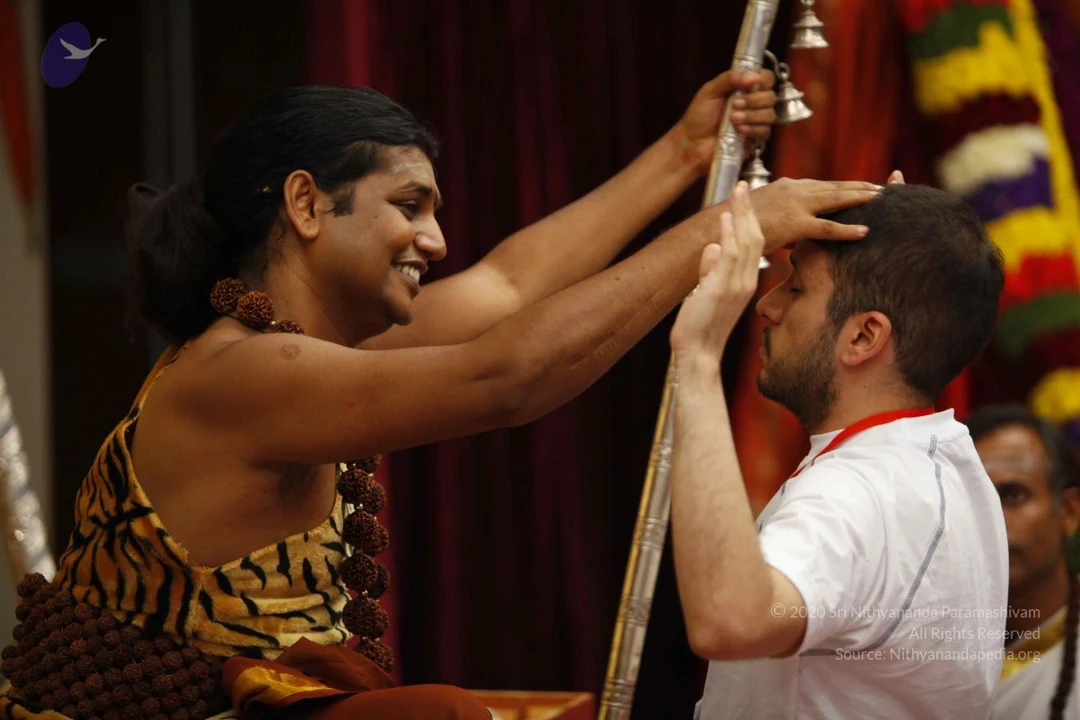
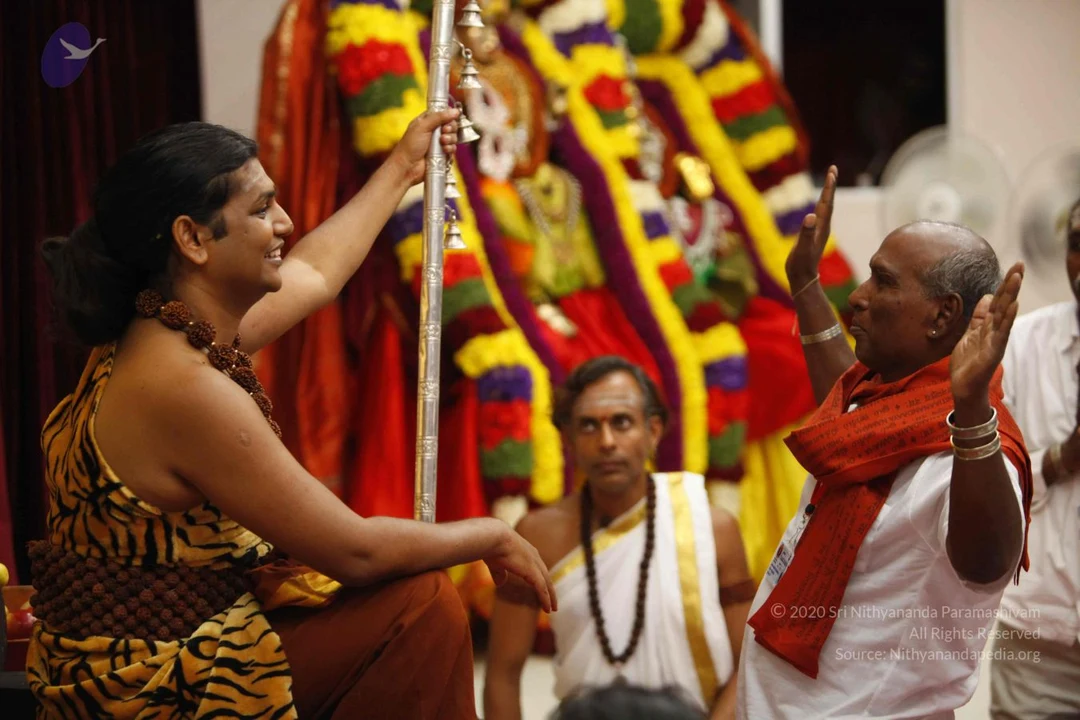
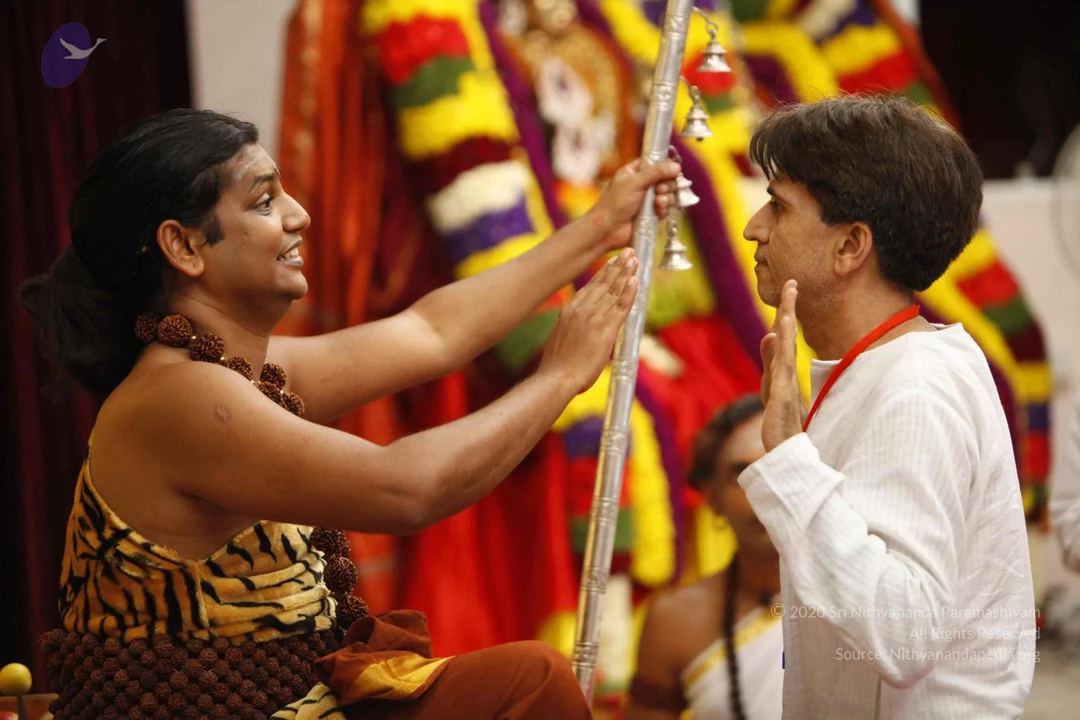
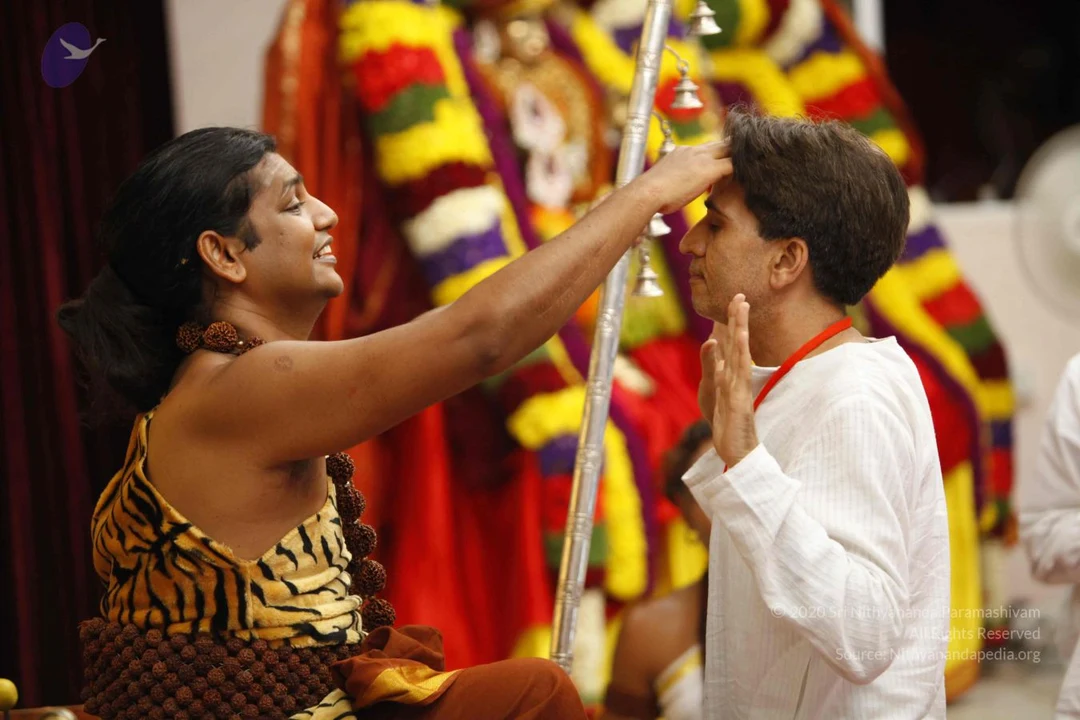
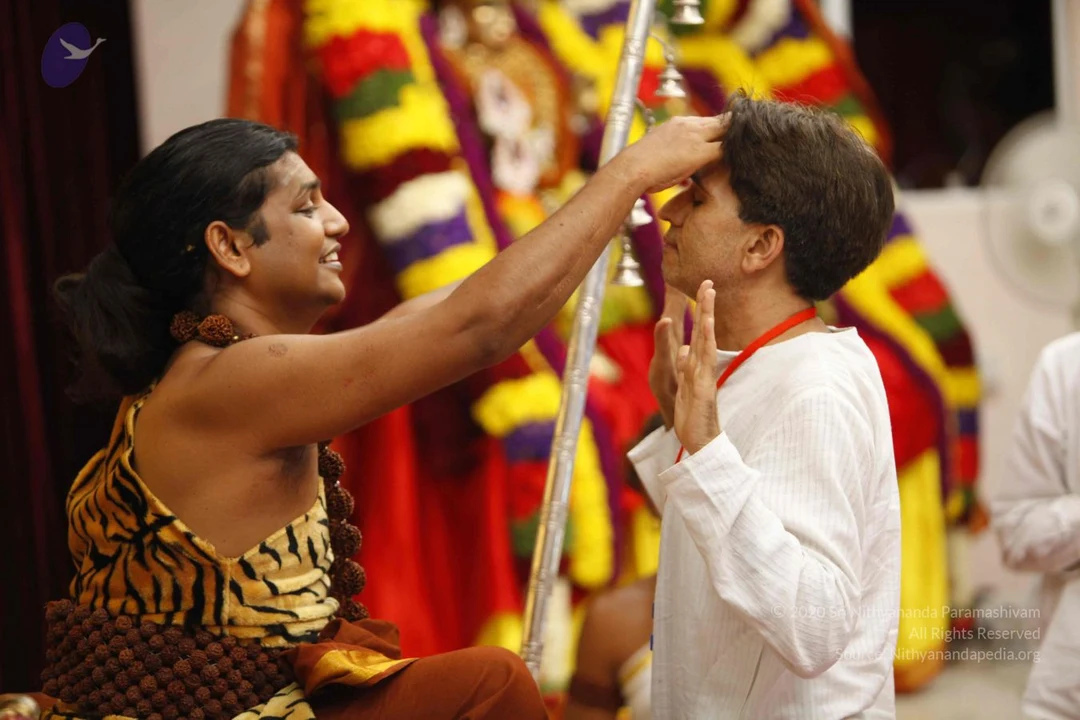
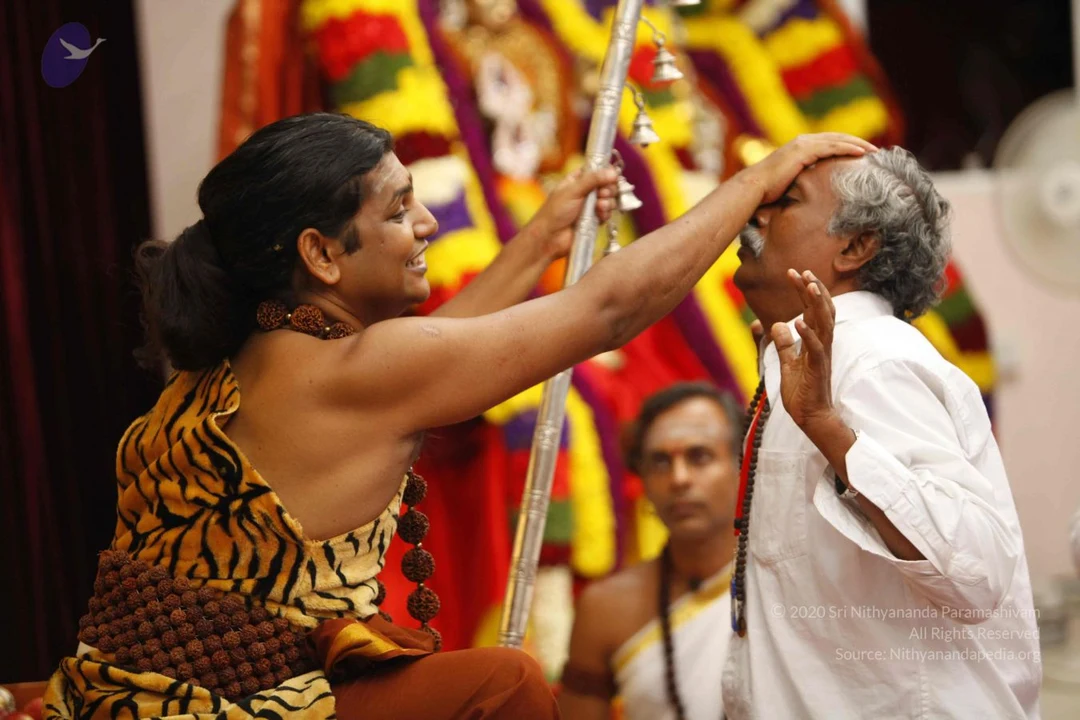
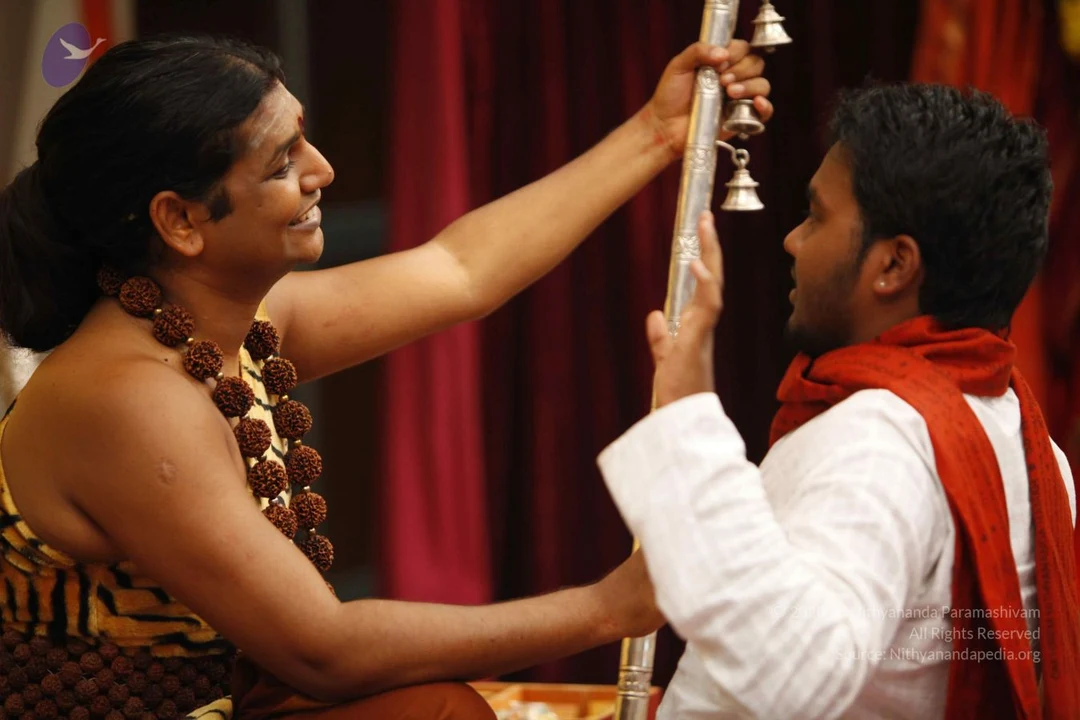
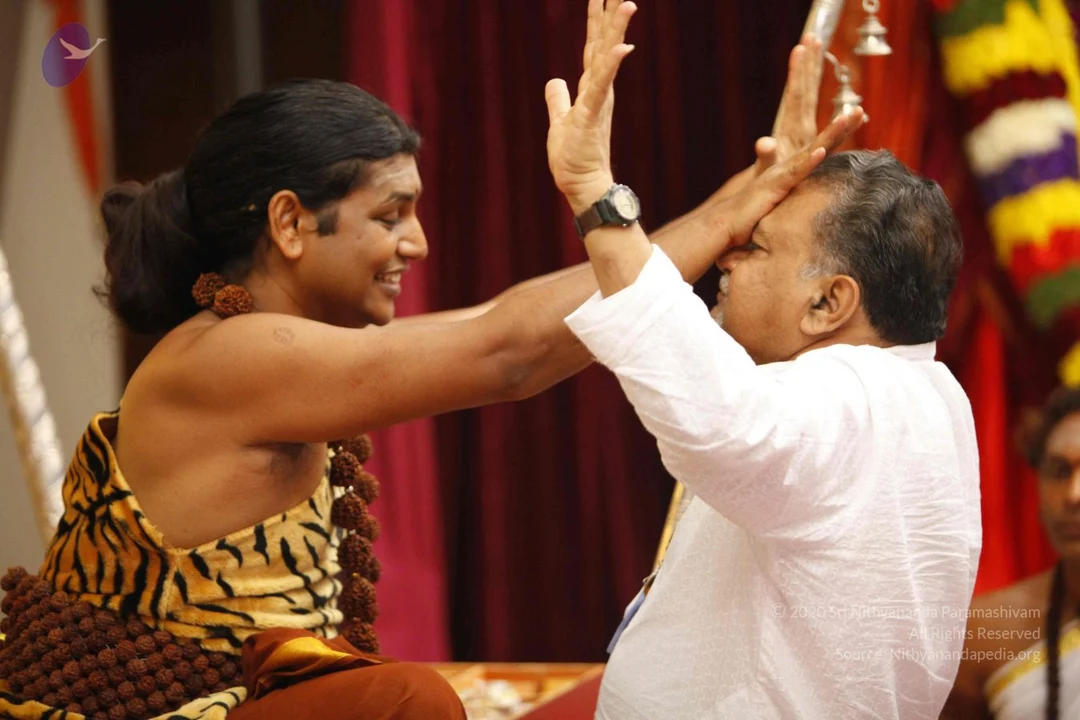
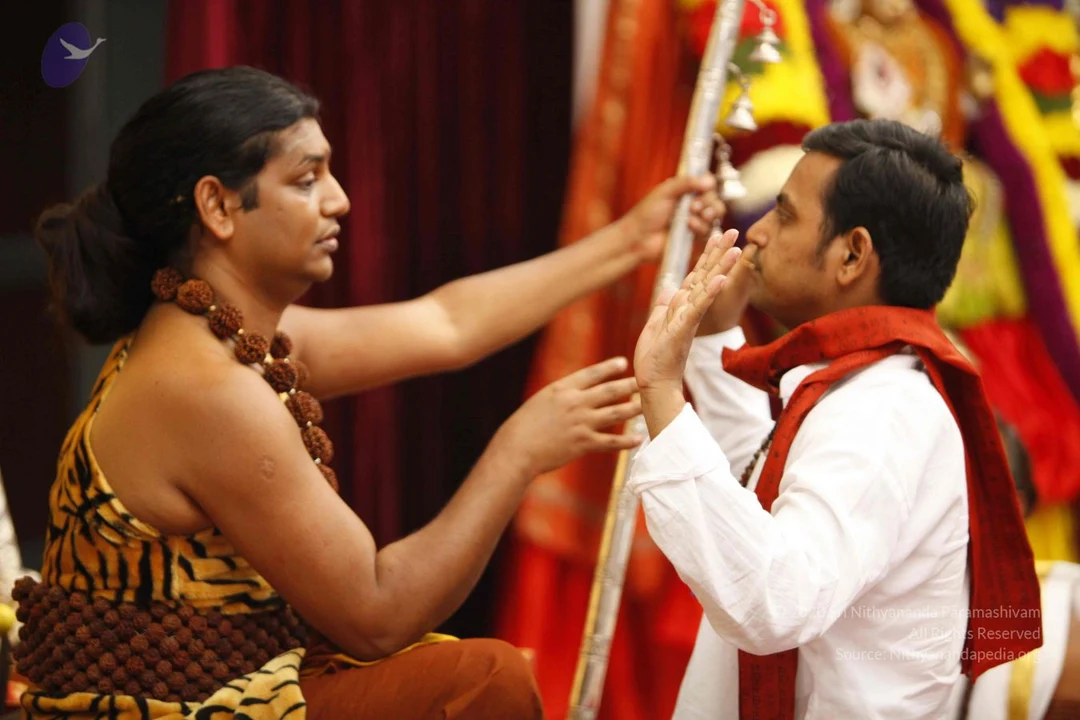
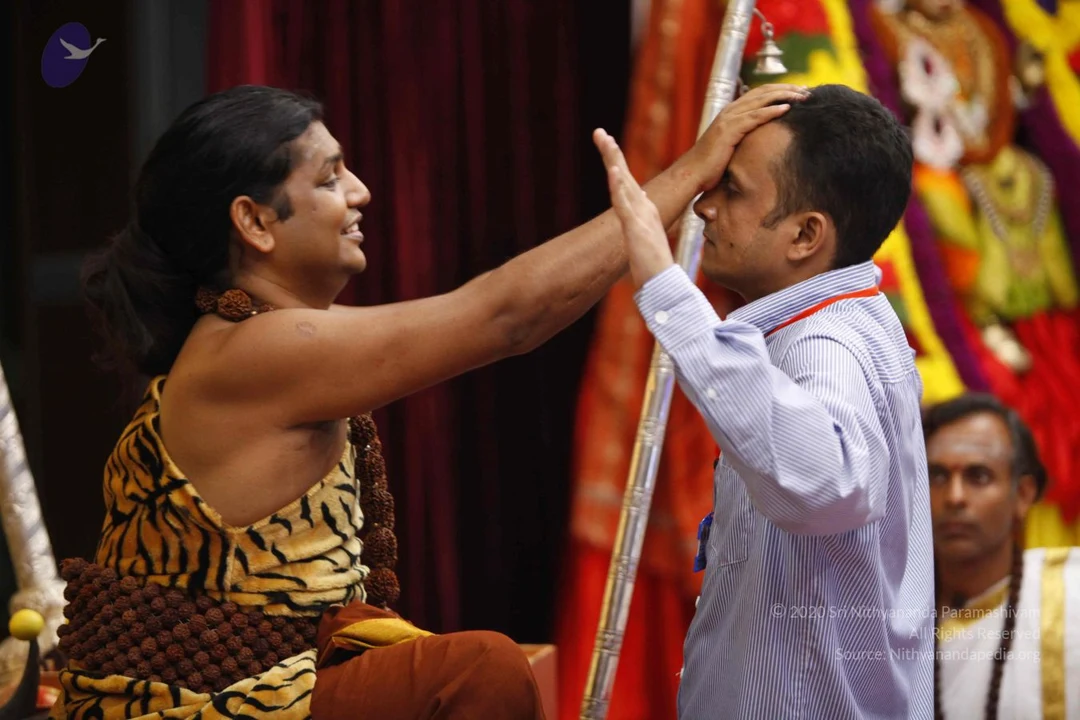
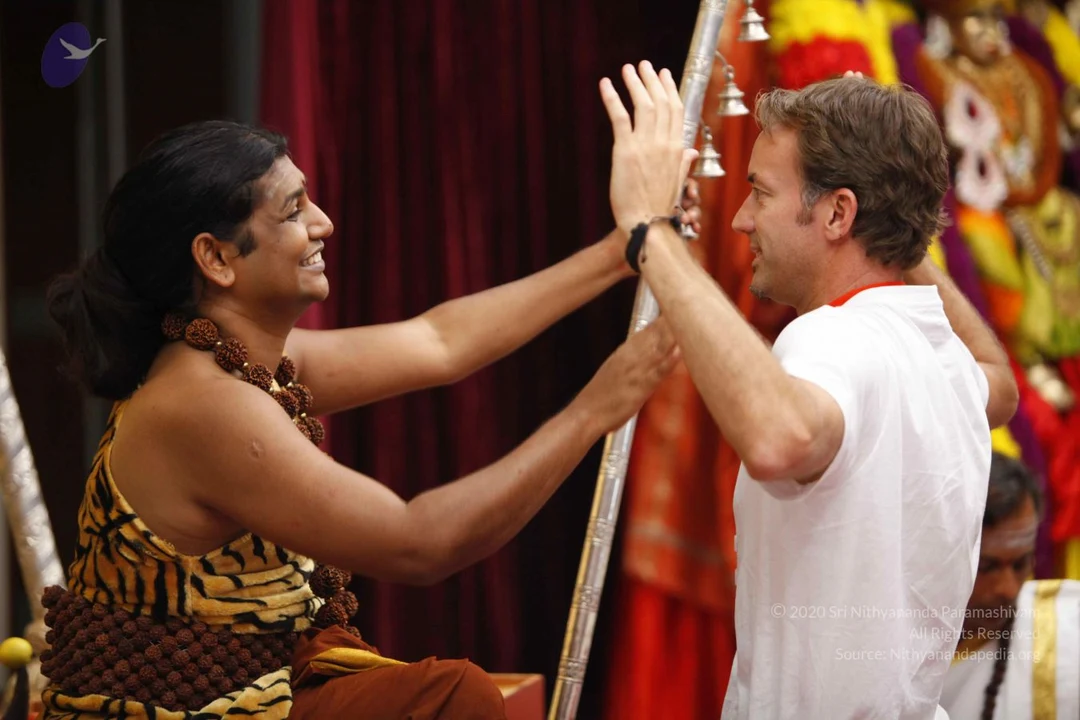
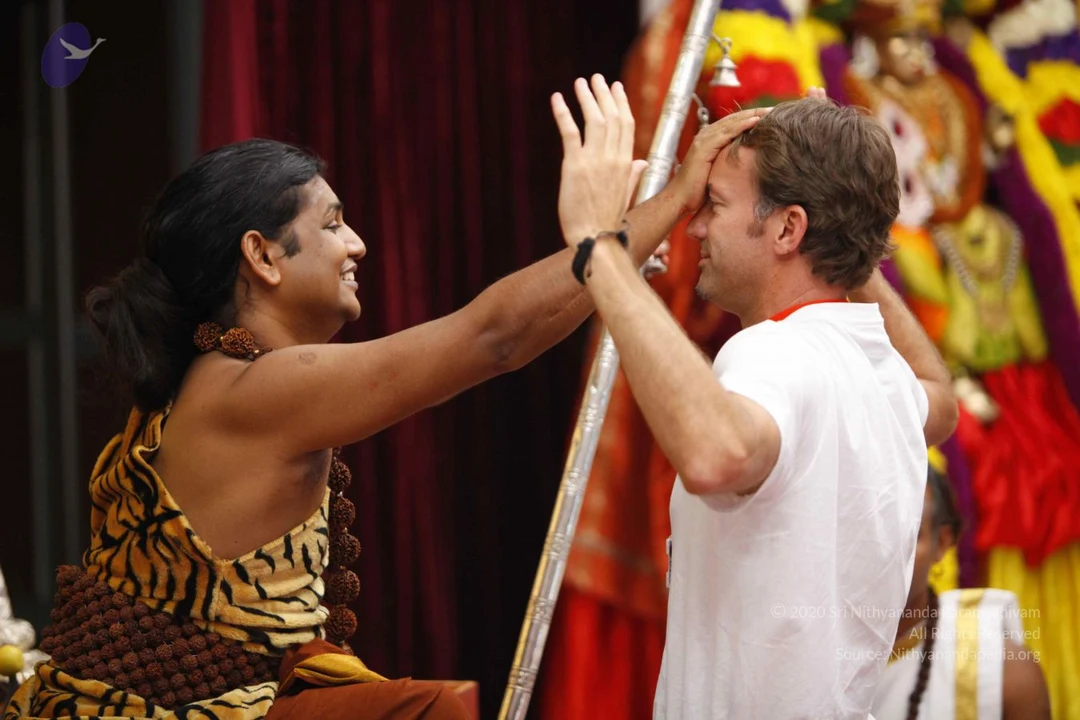
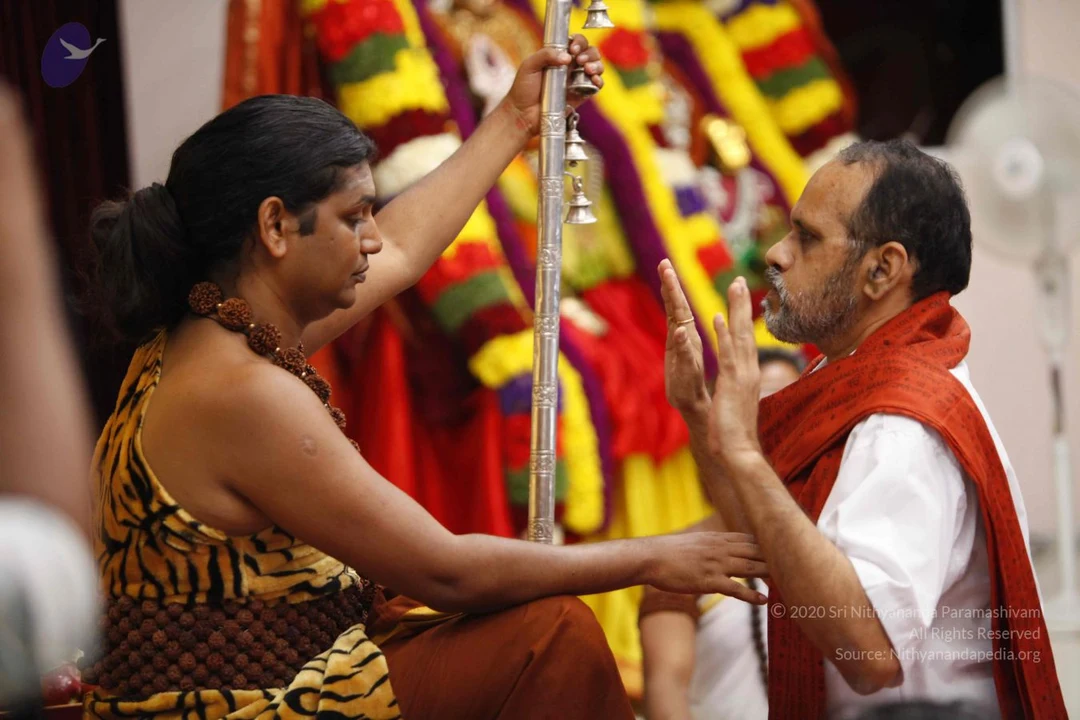
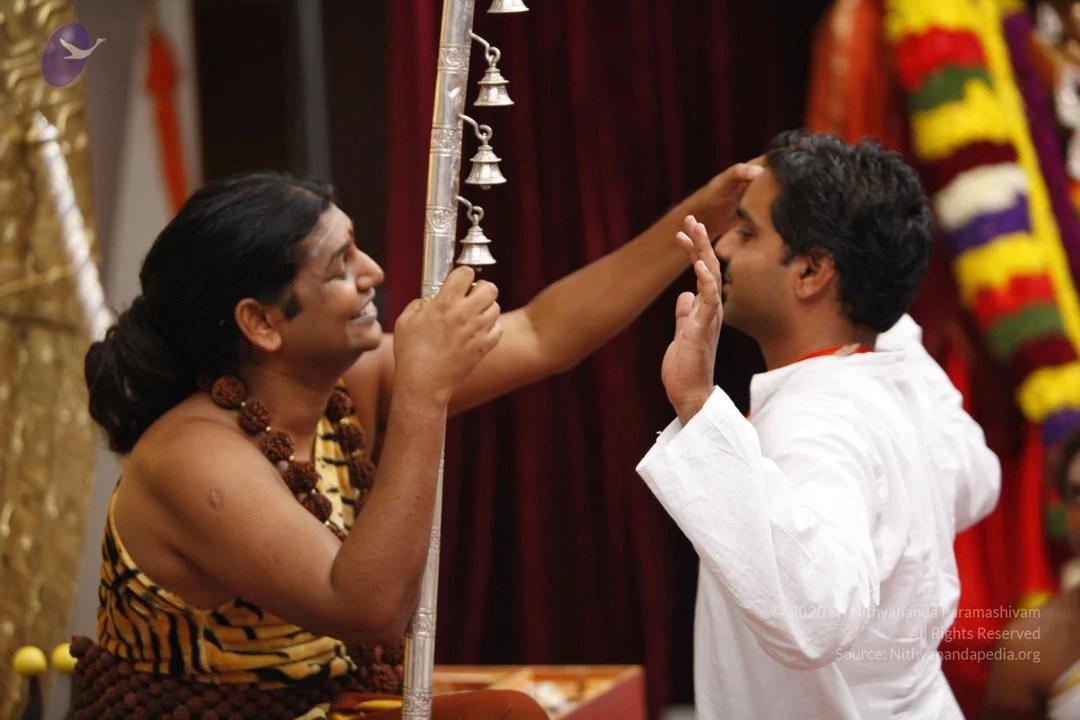
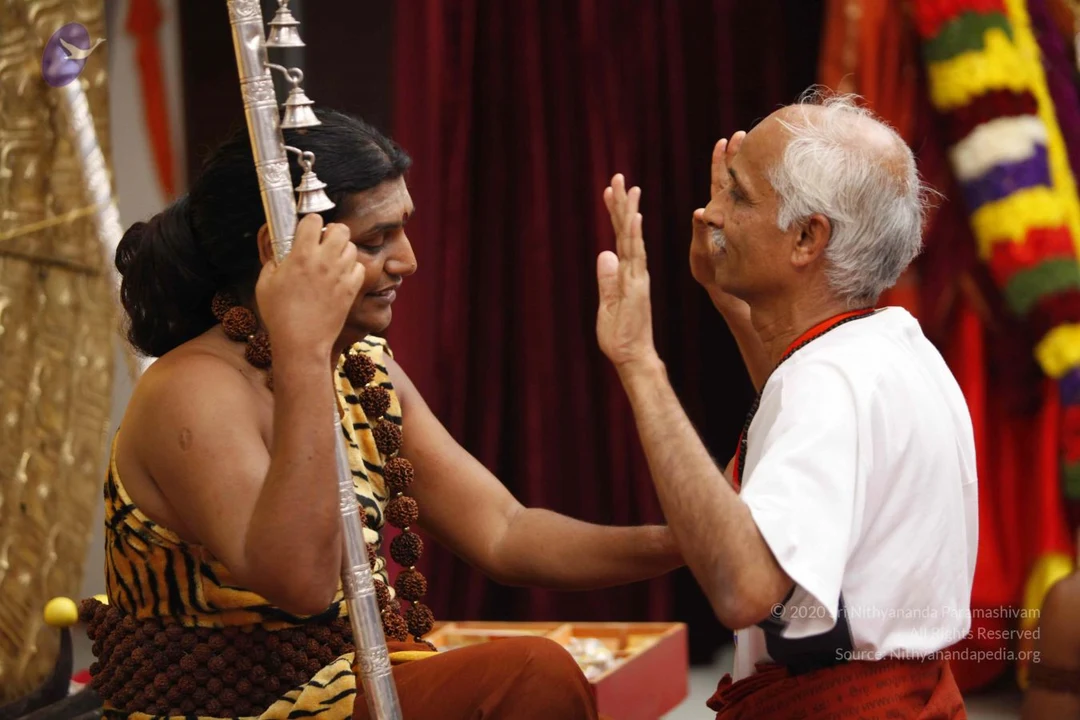
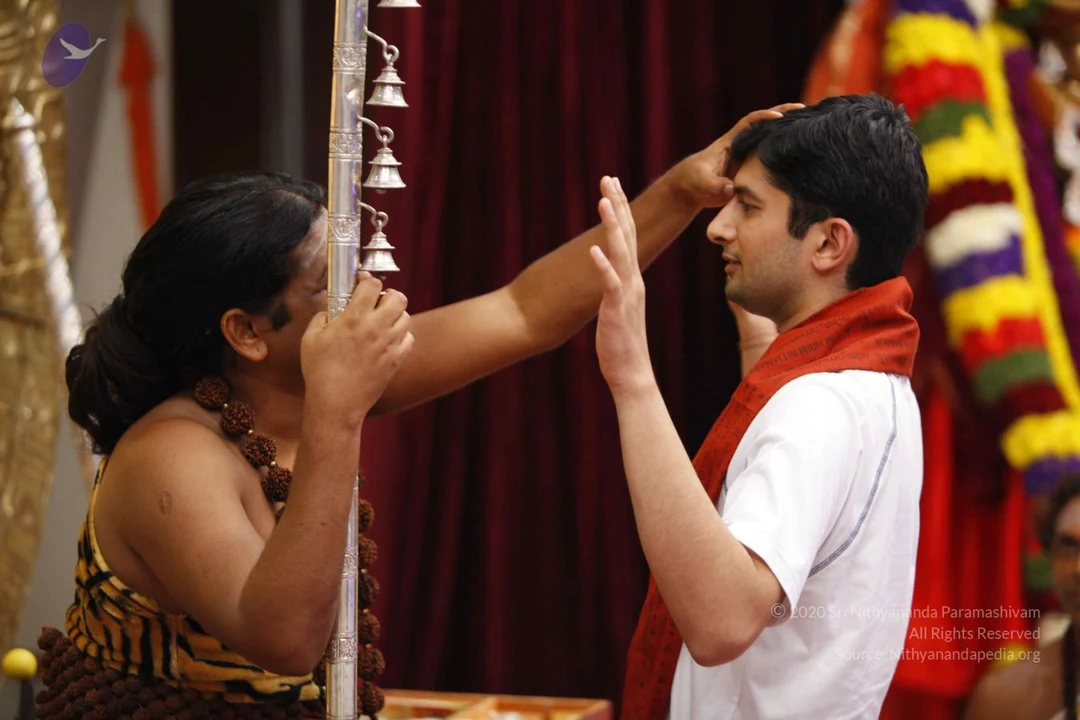
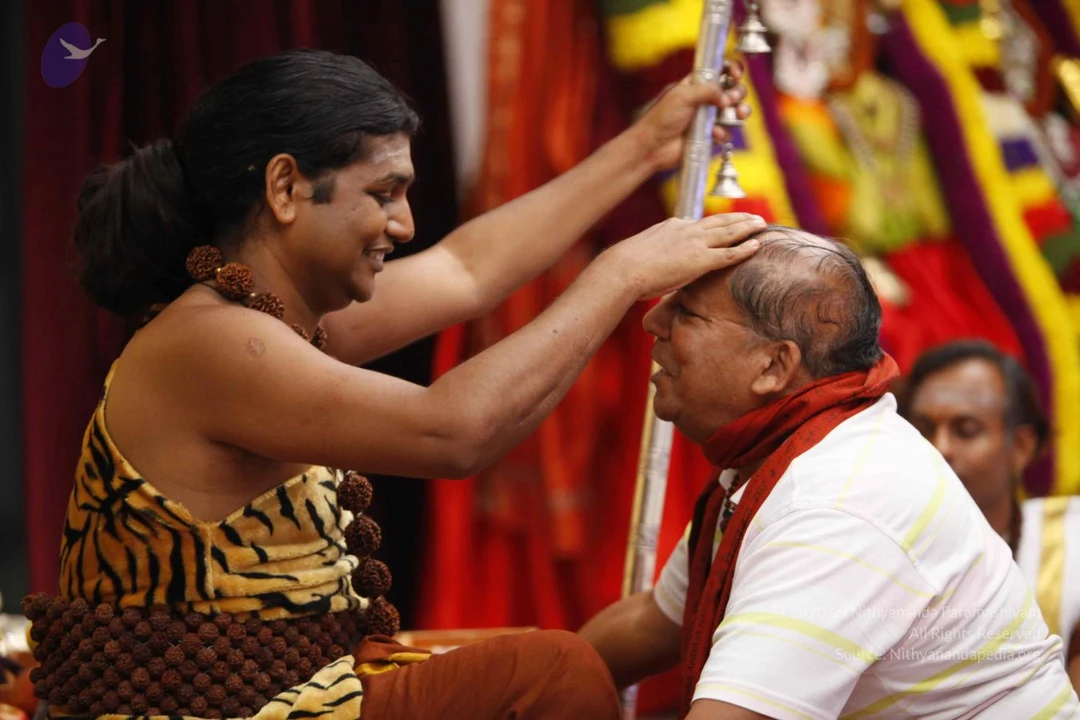
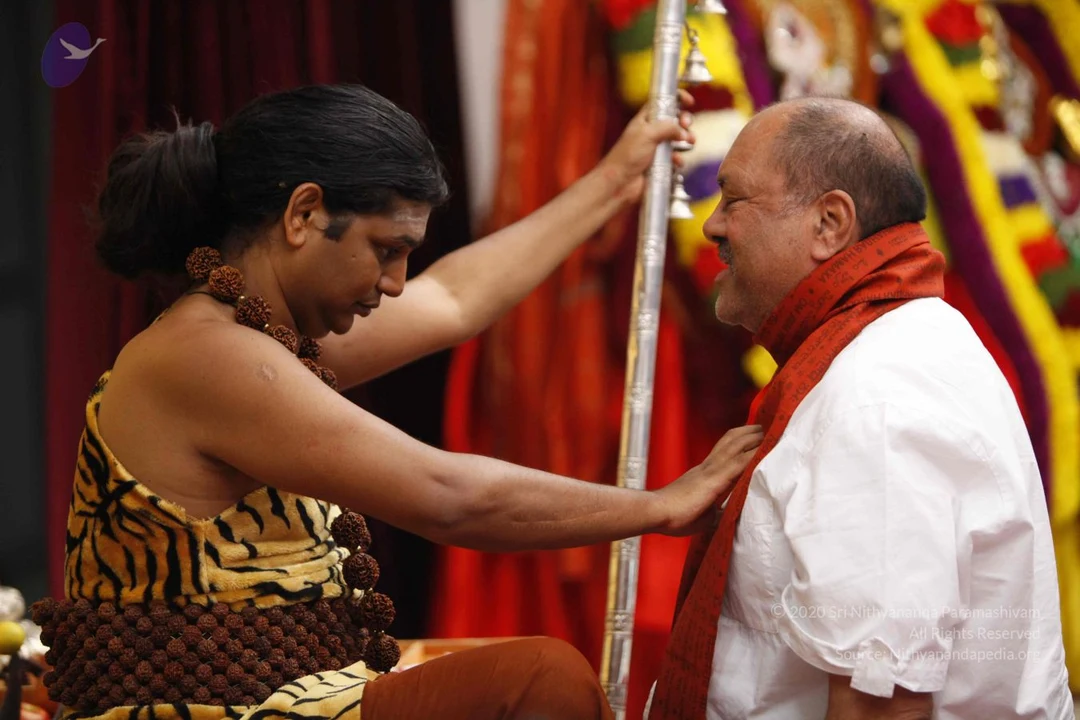
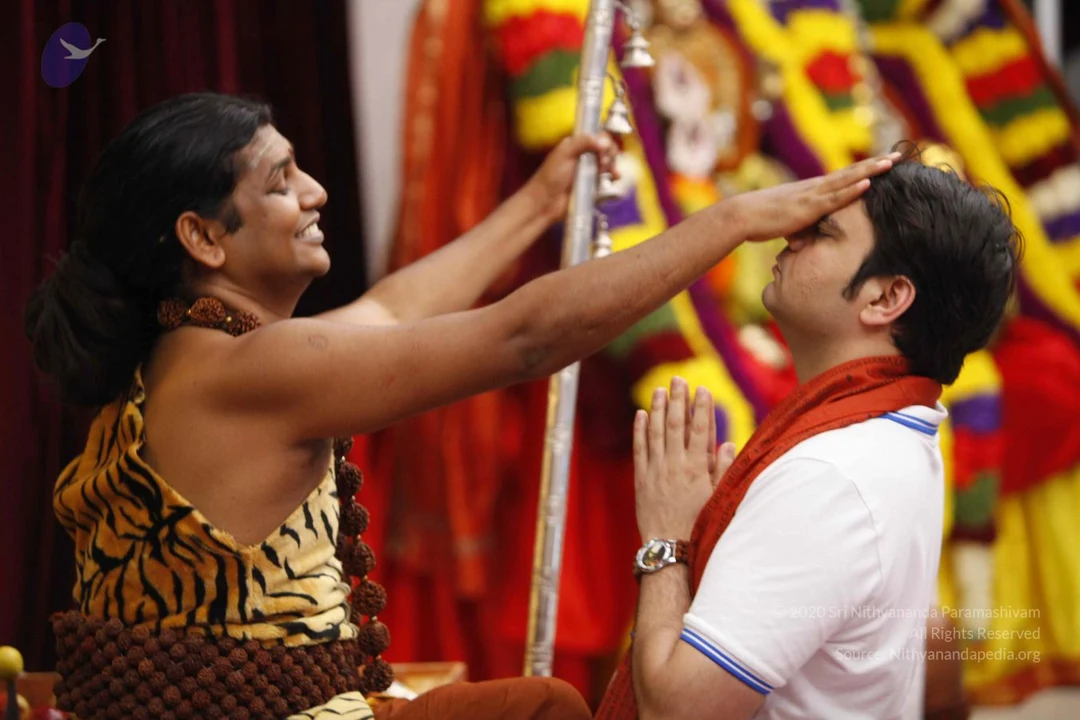
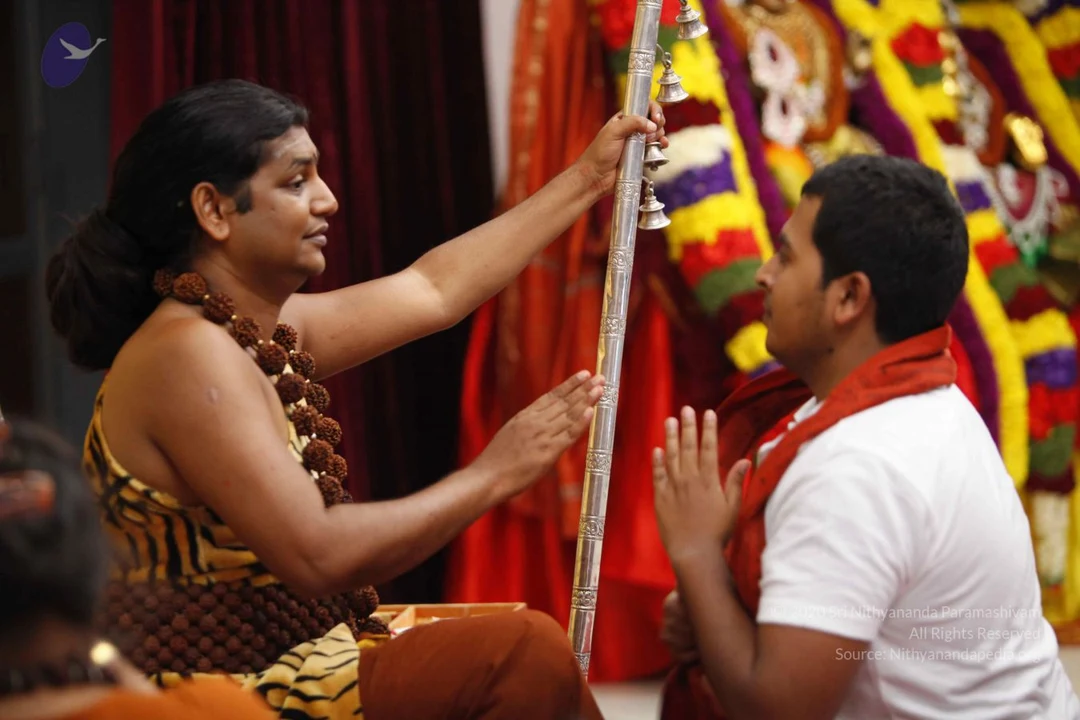
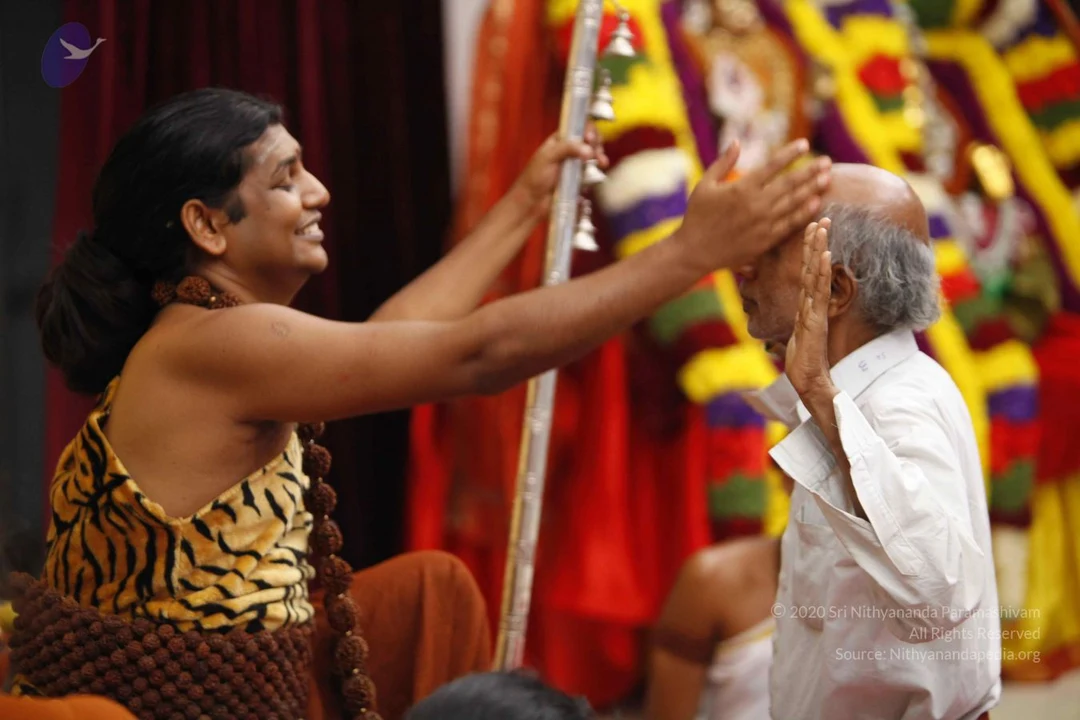
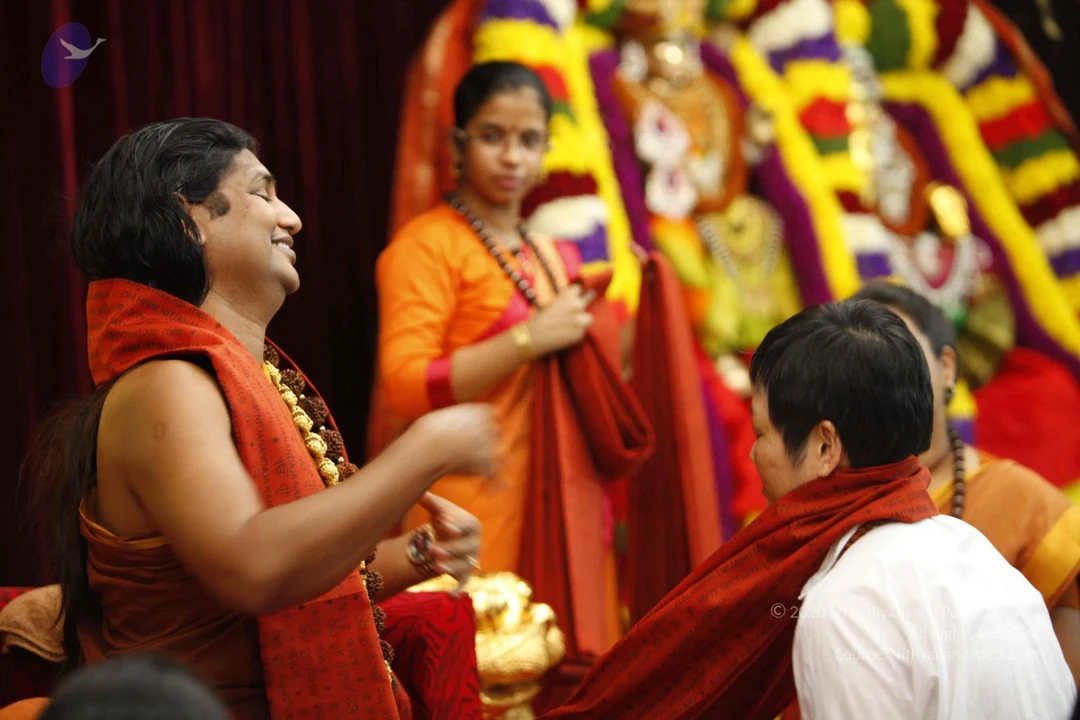
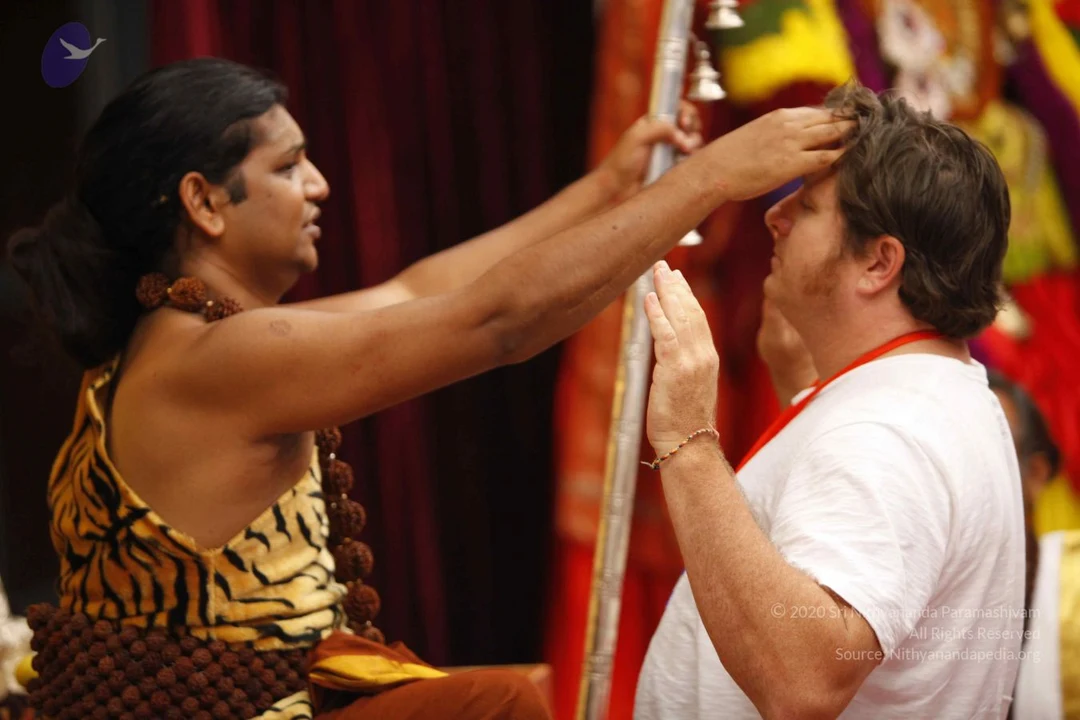
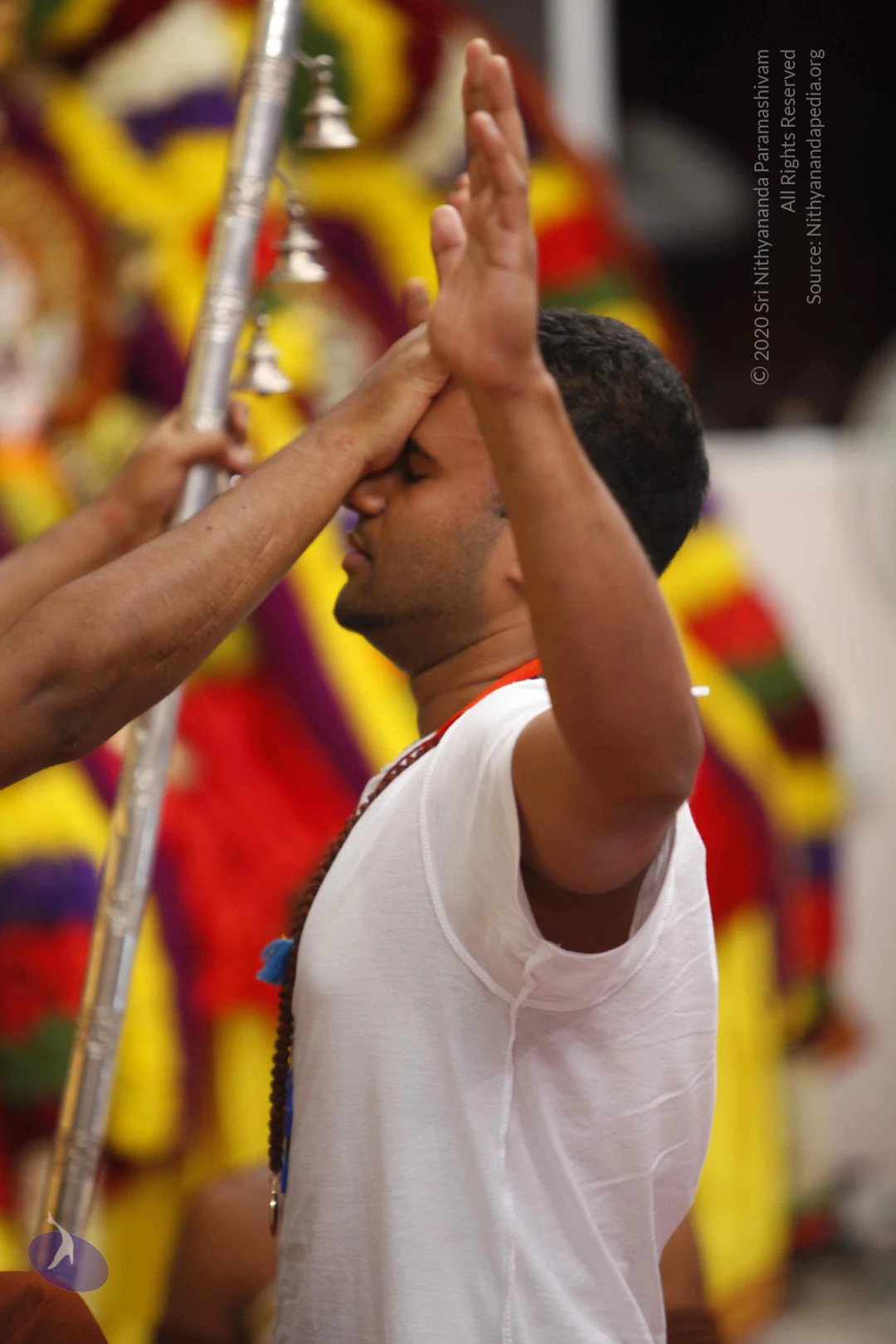
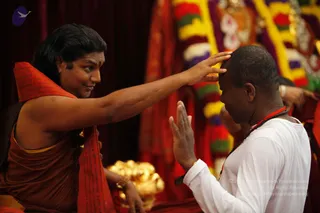
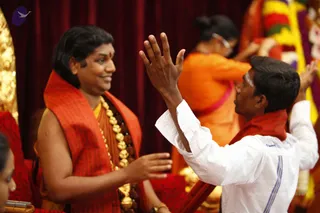
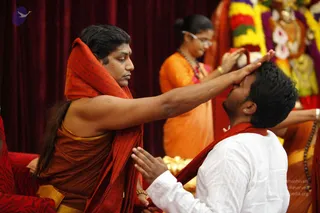
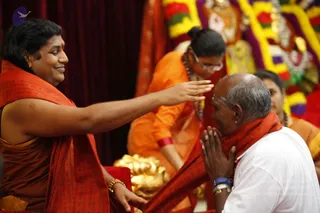
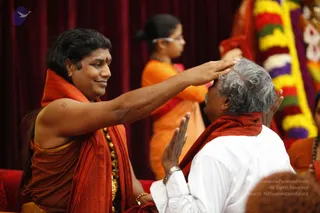
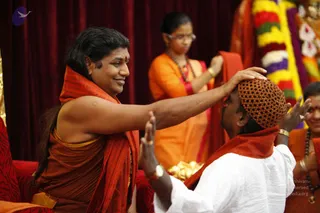
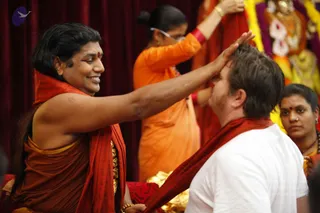
A seated man with long swept-back dark hair, an orange-red shawl printed with script over his shoulder, and a bare shoulder reaches out to place his right hand on the crown of a shaved-headed devotee in a white kurta with a red-and-black beaded mala. The devotee bows with palms pressed together. Behind them are garlands of yellow, red and purple flowers and a golden vessel. The seated figure shows distinctive long hair, a flowing orange-red shawl and ornate gold adornments, a probable Swamiji blessing a devotee, consistent with a blessing or darshan moment.A photograph of a seated man with long swept-back dark hair wearing a red shawl, a saffron-orange garment and a long necklace of large golden beads with rudraksha malas, smiling and extending his hand toward a man in a white kurta with a red shawl who raises his palm in greeting. Behind them a woman in an orange sari adjusts flowers near gold and red drapery. The seated man's appearance with long hair, saffron garments and ornate beads matches the Swamiji (probable) cues, while the other man has a white forehead mark. Two physical people are visible.A photograph of a ritual blessing in a hall with a deep red curtain. A figure with swept-back long dark hair, wearing a red-orange shawl draped over the head and a rust-orange robe with gold trim, places a palm on the forehead of a young man in a white kurta who kneels and bows his head, a red shawl draped over his shoulders. Behind them, a woman in an orange sari with glasses and a rudraksha mala stands with hands raised in reverence, and a deity murti is decorated with flower garlands in red, yellow and purple. The figure's appearance with long hair and saffron-toned clothing is a probable match for Swamiji, shown giving a blessing to a devotee.Photograph of a ritual scene before a decorated deity murti draped with yellow, purple and red flower garlands. A person in an orange-red shawl with a red-and-gold patterned border and a rudraksha-style necklace stands at left, arms extended to hold red cloth over a seated bald devotee in white clothes at lower centre. A woman in an orange sari with a red border stands behind, raising her hand toward the cloth, and another woman in an orange sari with a red border sits at right. A golden vessel rests in the foreground.A photograph of a man in red-orange robes with long swept-back hair and a small tilak, smiling as he extends his right hand in blessing toward an older bald man in a white shirt who kneels with palms joined in namaskar, his head bowed and draped in a red-orange shawl. Behind them a woman in orange saree and glasses stands near a golden object, and colourful marigold and yellow garlands and gold-framed deity decorations fill the background. Probable Swamiji (appearance cues: long swept-back hair, saffron-orange robes with printed mantra text, and a tilak) gives blessings to a devotee in a satsang-style setting.A photograph of a long-haired man in an orange-brown sleeveless garment with a saffron-red shawl and gold ornaments, with a red bindi, placing his right hand on the head of an older man with grey curly hair, who wears a white shirt, a red shawl and a wristwatch and bows with palms raised. A woman in an orange sari stands in the background before a red curtain and a multicoloured flower garland. Appearance-based cues on the man with the outstretched hand (long swept-back hair, saffron shawl, gold necklace) suggest Swamiji (probable) giving a blessing to a devotee, though the identification is uncertain.

Inner Awakening - food

5 photosSource gallery
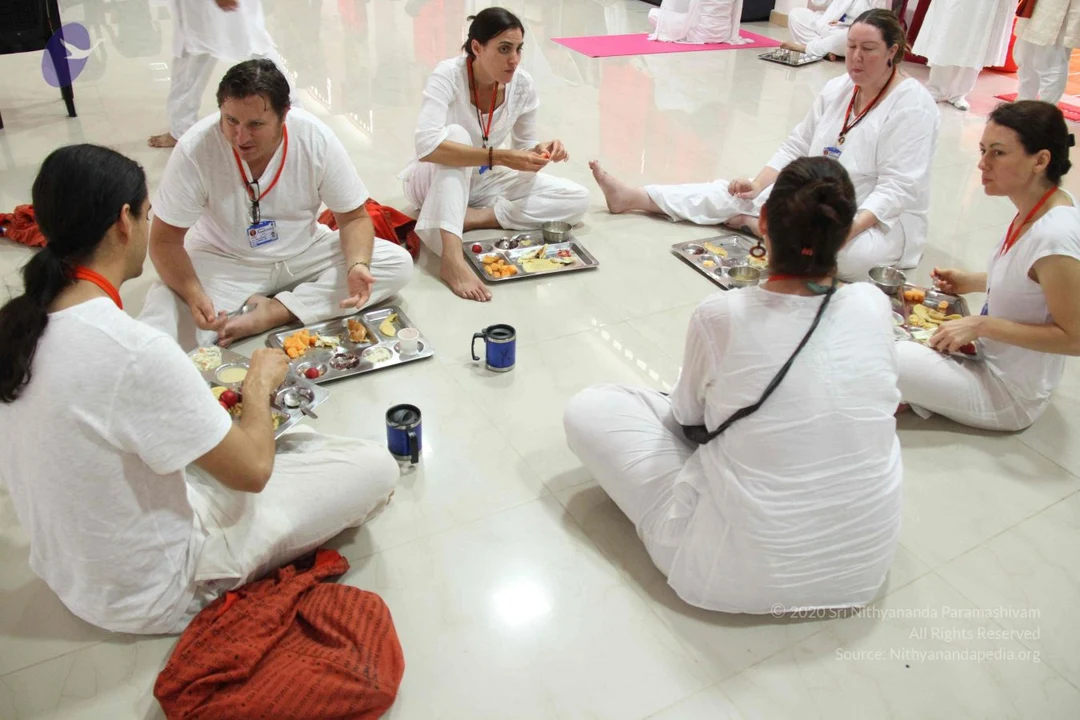
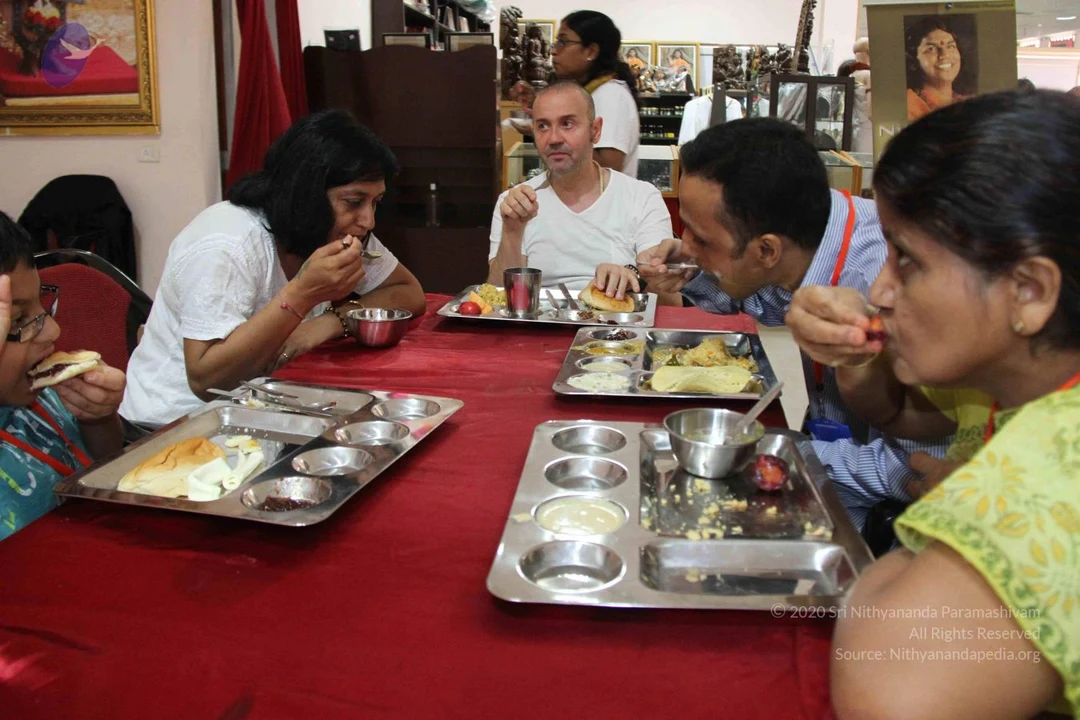
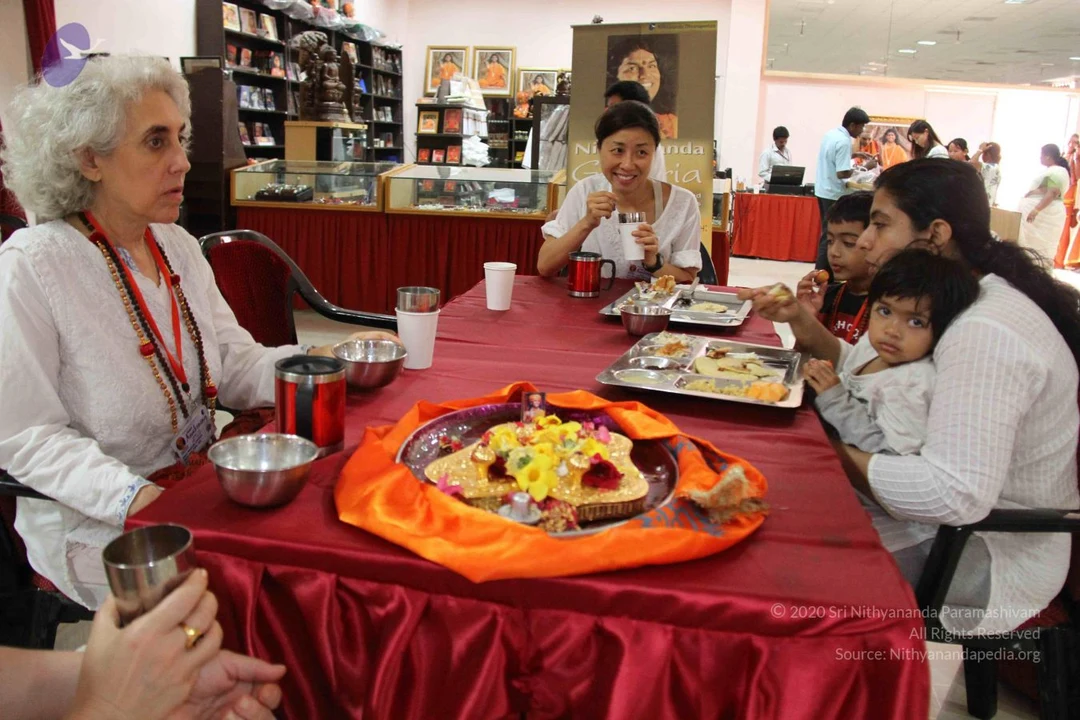
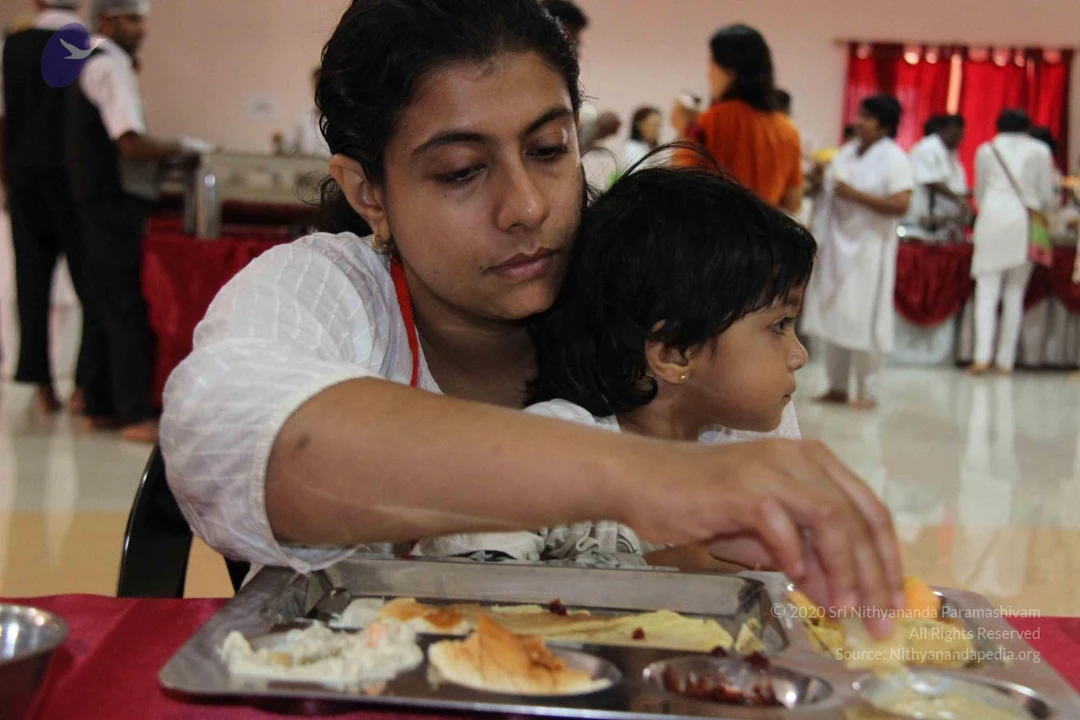
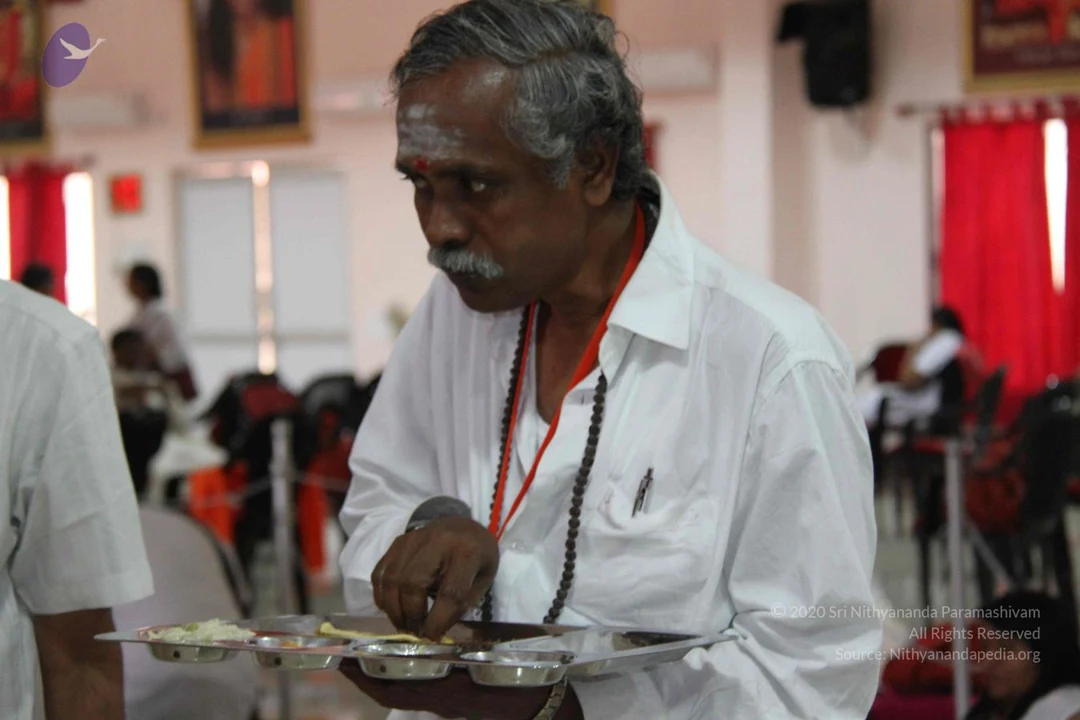
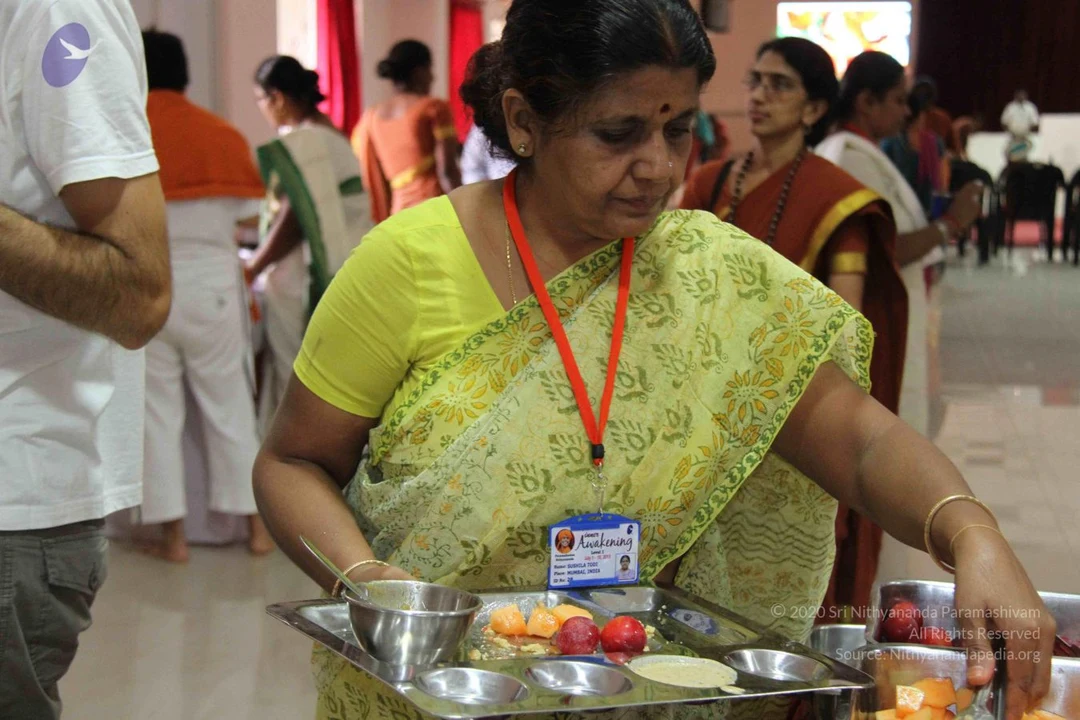
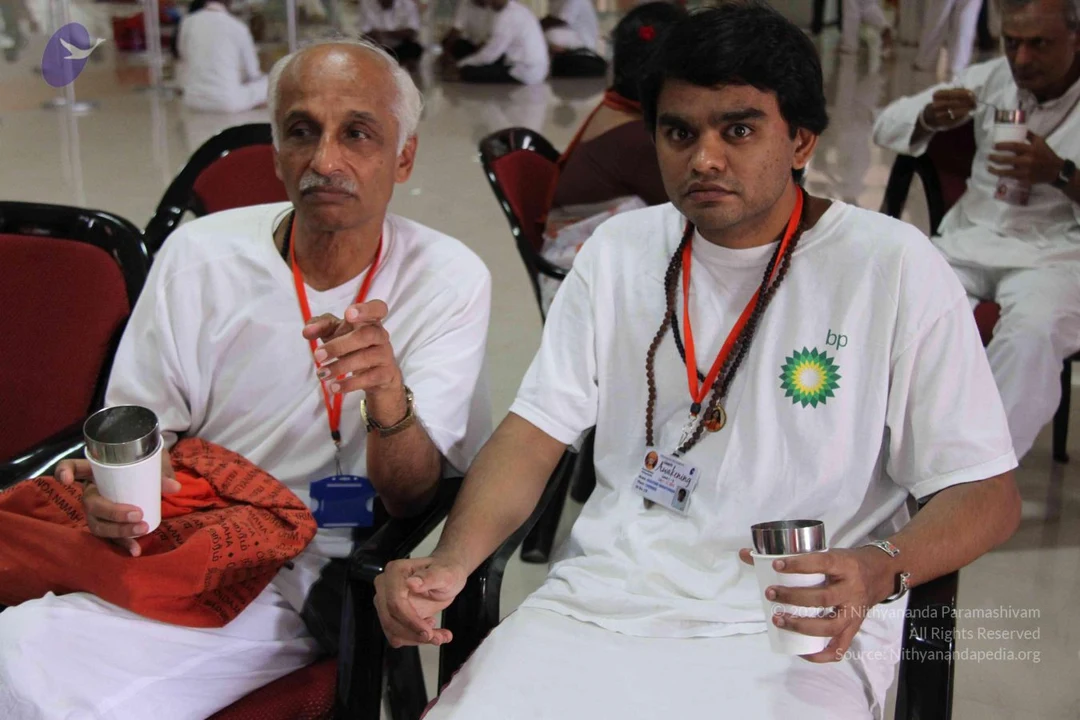
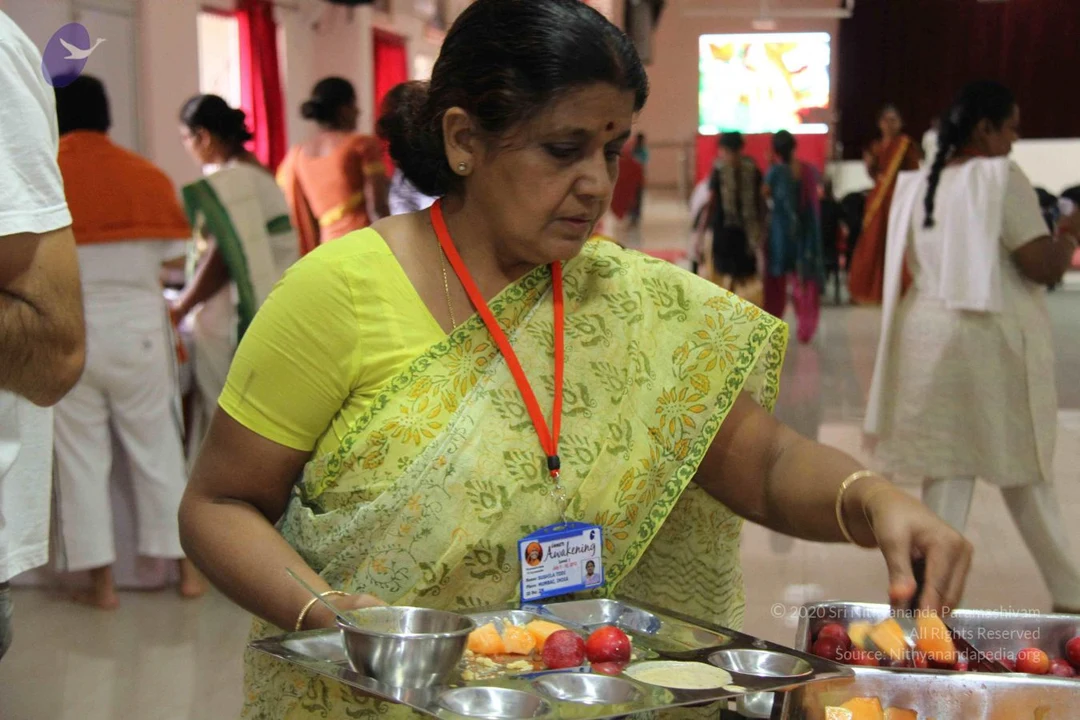
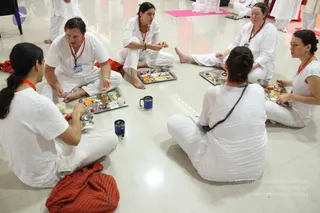
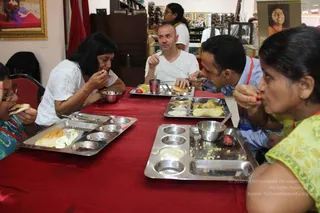
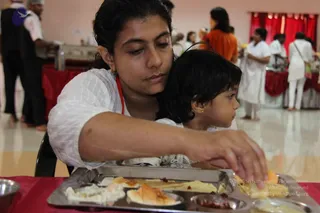
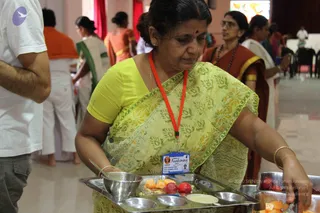
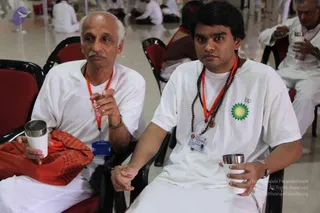
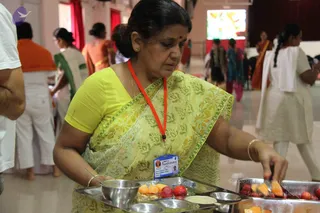
Several people sit cross-legged on a polished white marble floor in a circle, eating a meal from stainless steel thali trays holding fruit, sweets and small bowls. Most wear white clothes and orange-red lanyards; one woman in the foreground wears a white top with a dark strap across her shoulder. A man in a white t-shirt with an ID badge gestures with his hands while a woman in white speaks. Steel cups stand on the floor, and a bright red-orange cloth bag sits at the lower left, with other seated people in white visible in the background.A group of people sit around a red tablecloth eating a meal from stainless steel thali trays in a shop or hall with framed pictures and carved wooden figures on shelves behind them. A woman in a white top at left eats from a bowl, a bald man in a white t-shirt at centre holds food and looks to the side, a man in a blue striped shirt with an orange lanyard eats at right, and a woman in a yellow top in the foreground eats a sweet. Trays hold bread buns, bowls of chutney and sauce, and a folded dosa-like item. A child in a teal top eats a burger-like bun at far left. A framed portrait of a smiling woman appears on the wall at upper right.A woman in a white salwar kameez with a thin red cord around her neck sits at a table, holding a small child on her lap while she serves food onto a stainless steel thali. The thali holds dosa, a round bread, chutney, a small bowl of white curry and a red chutney. Behind them, people in white clothes stand near a buffet counter draped with red cloths, with a red curtain and a man in a dark vest in the background. The scene reads as a communal meal being served.A woman in a yellow-green floral saree with a green border and a red lanyard badge reading "Sanyasi Awakening" carries a steel tray of food. The tray holds steel bowls with fruit pieces, a folded flatbread and a small steel bowl with a ladle. Around her, people in white and orange-red clothing move through a hall with red curtains. A man in a white shirt stands at the left edge. The setting looks like a serving area at a gathering.Two men sit side by side on red-cushioned chairs at a seated gathering, holding steel tumblers with white cups. The older man on the left has white hair and a grey moustache, wears a white shirt and white trousers, a red lanyard with a blue badge, and a wristwatch, and rests an orange-red shawl on his lap. The younger man on the right wears a white t-shirt with a green BP logo, a red lanyard with an ID badge, and a rudraksha mala with a pendant. Behind them, other attendees in white clothes sit and drink from steel tumblers, and seated people are visible in the background.

Inner Awakeing-session

1 photoSource gallery
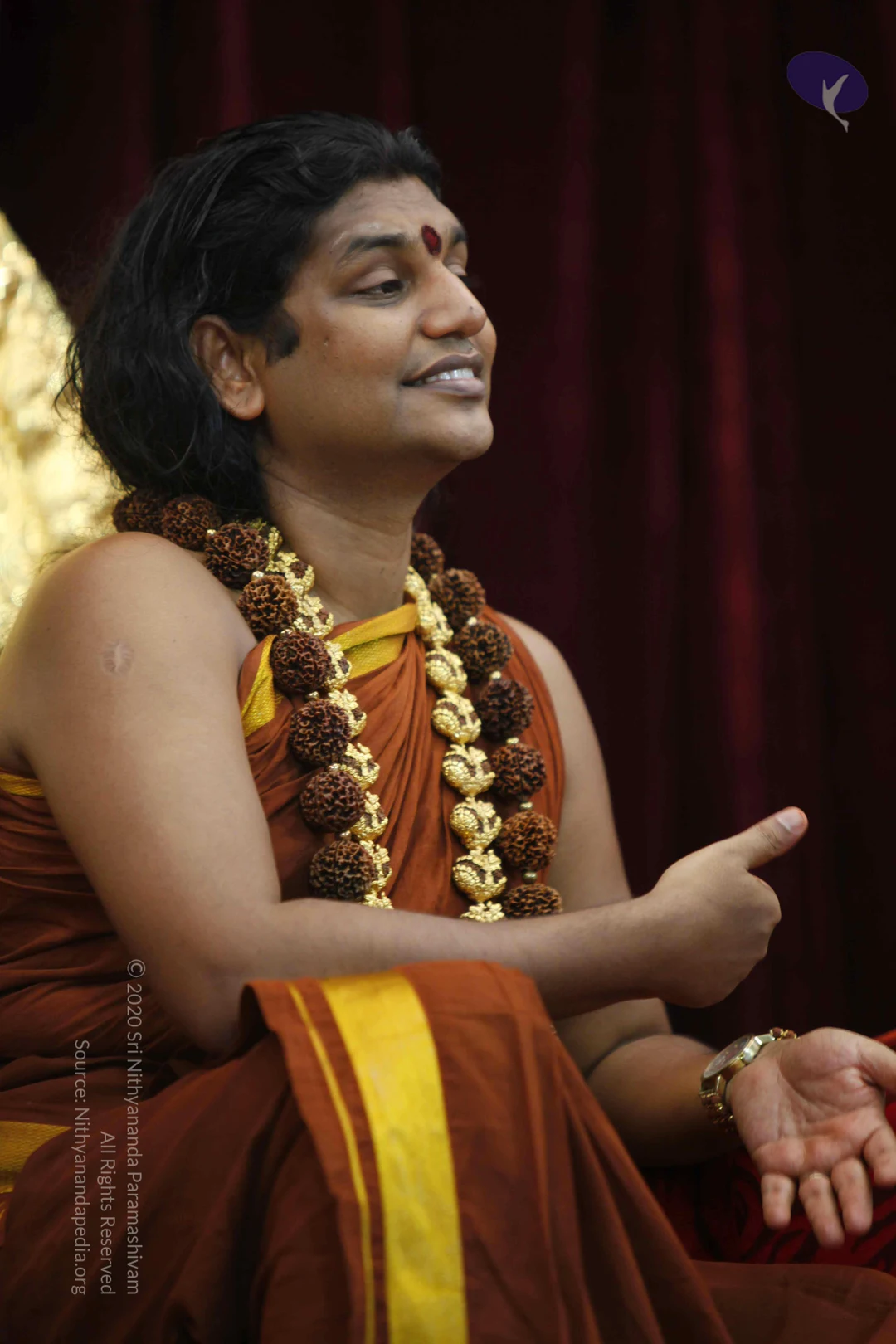
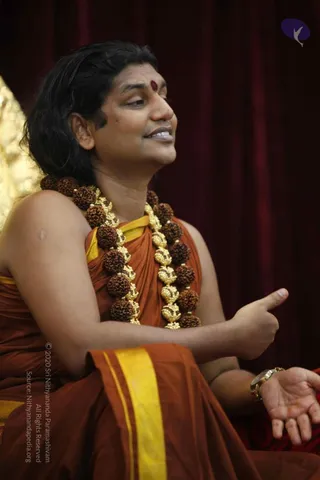
A seated man in a saffron-orange robe with a yellow border speaks while gesturing with his right index finger. He has long swept-back dark hair, a red bindi on his forehead, and wears a thick necklace of rudraksha beads alternating with gold ornaments. A gold bracelet and wristwatch are visible on his left wrist. The background is a deep red velvet curtain with a gold-coloured panel at the left edge. The photo is a single seated speaker with no other people visible.

Inner Awakening-Kalabhairava blessings

61 photosSource gallery
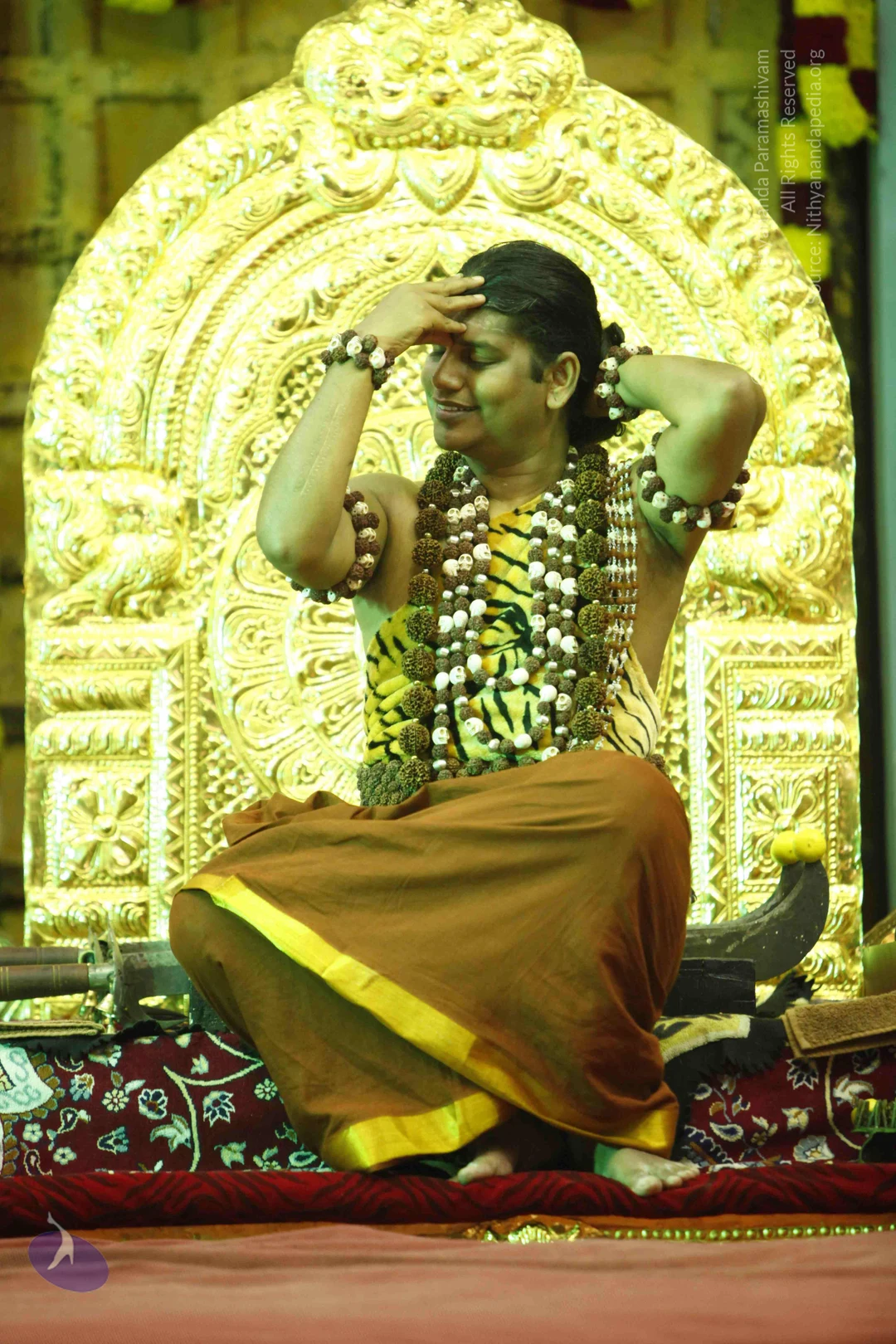
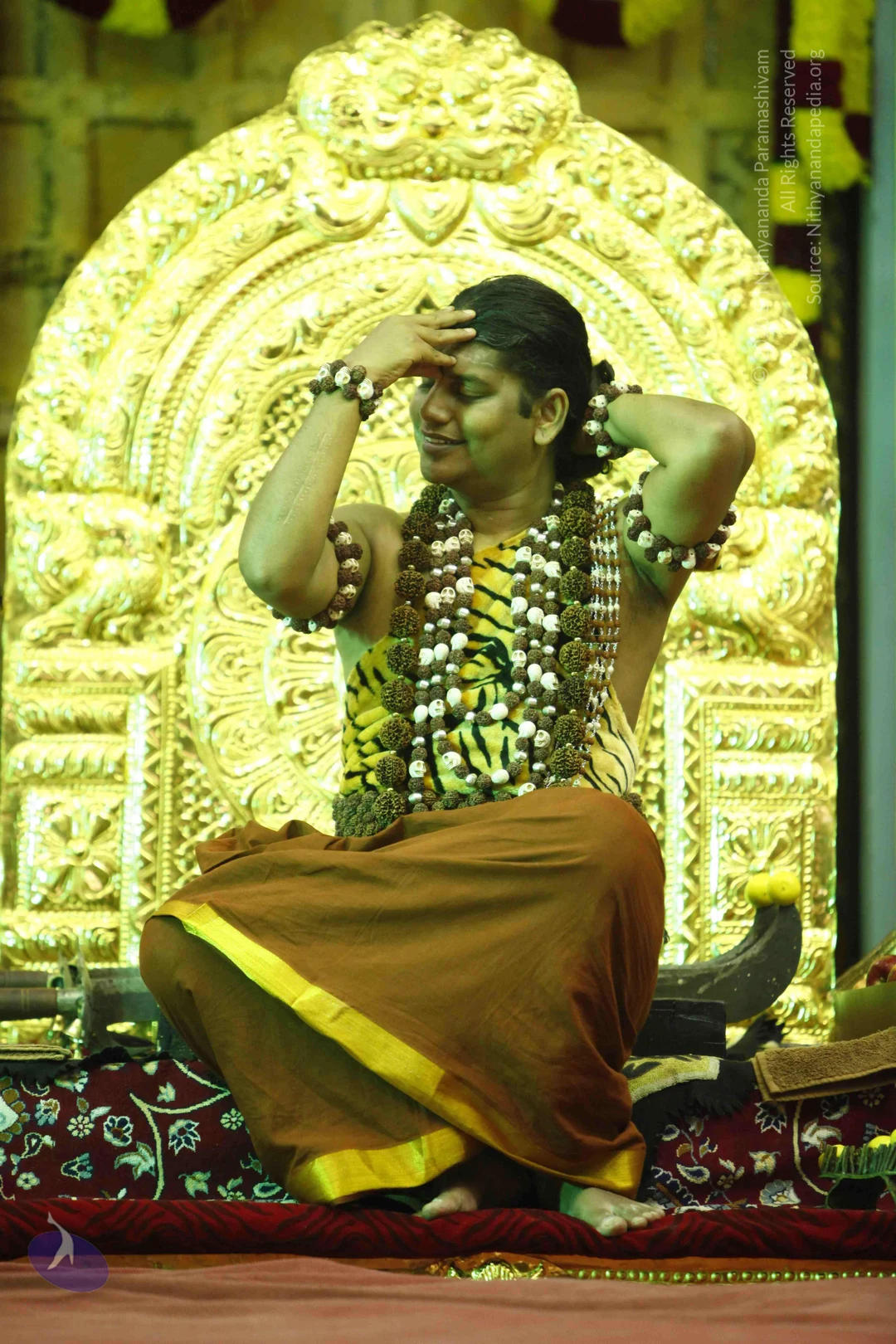
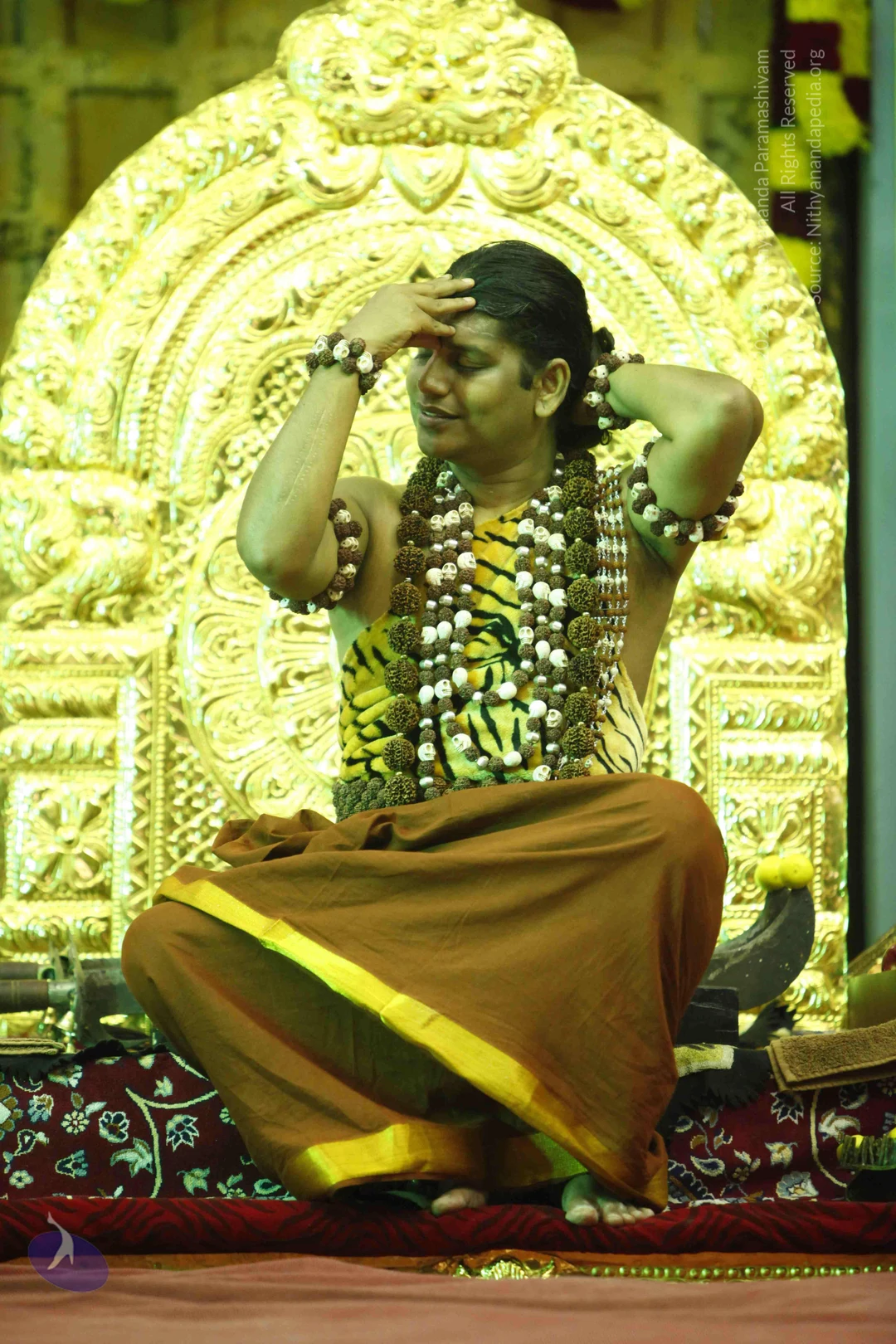
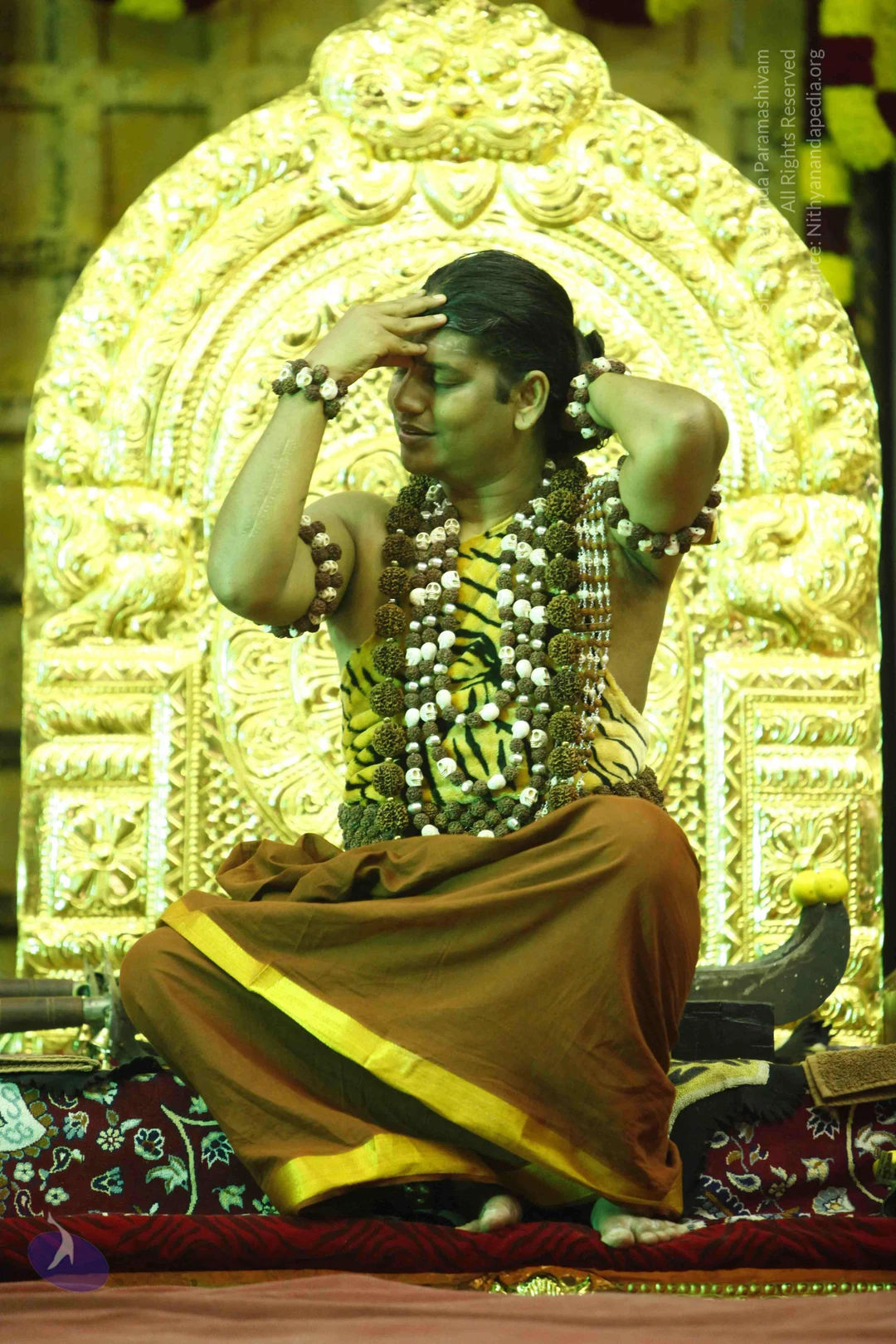
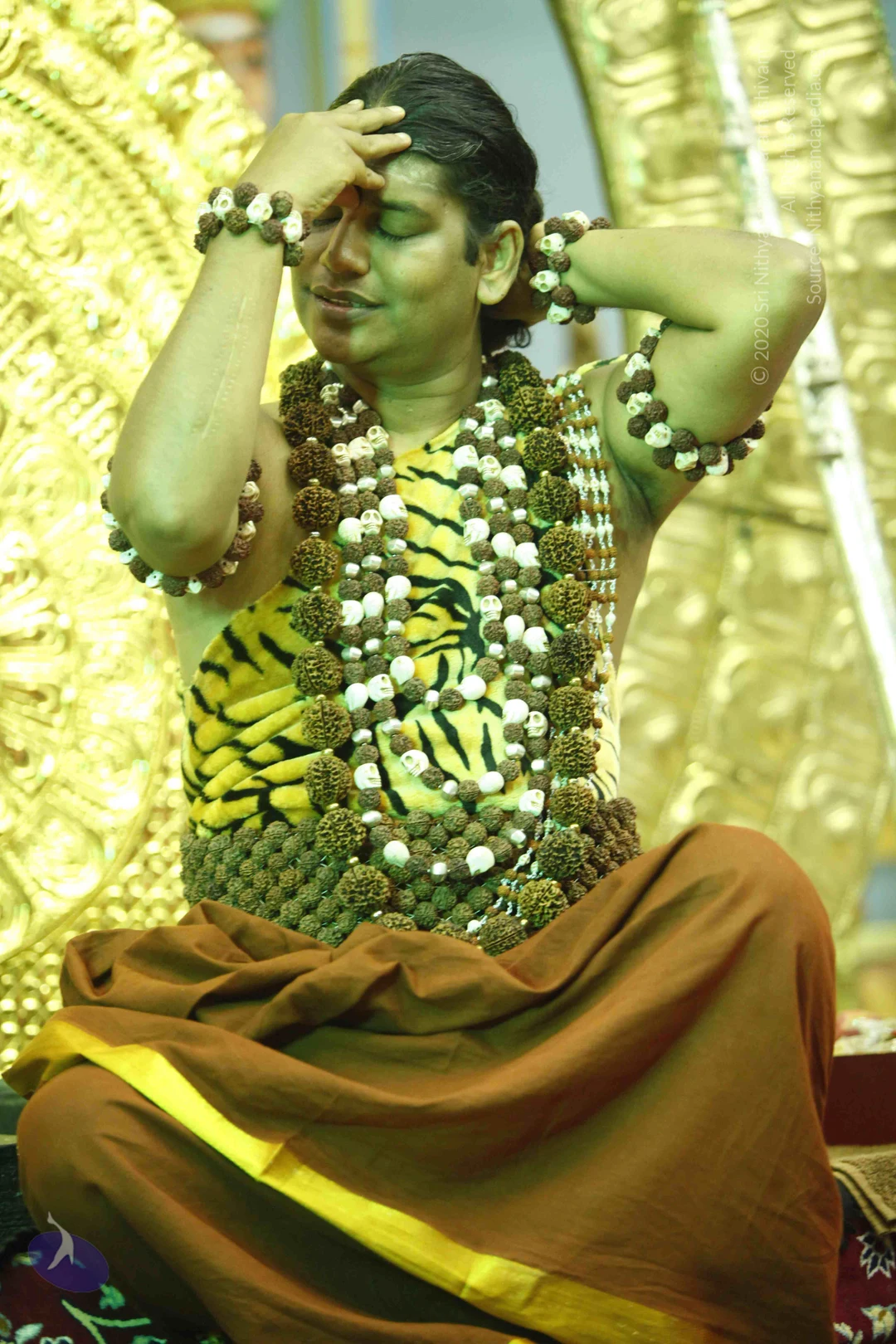
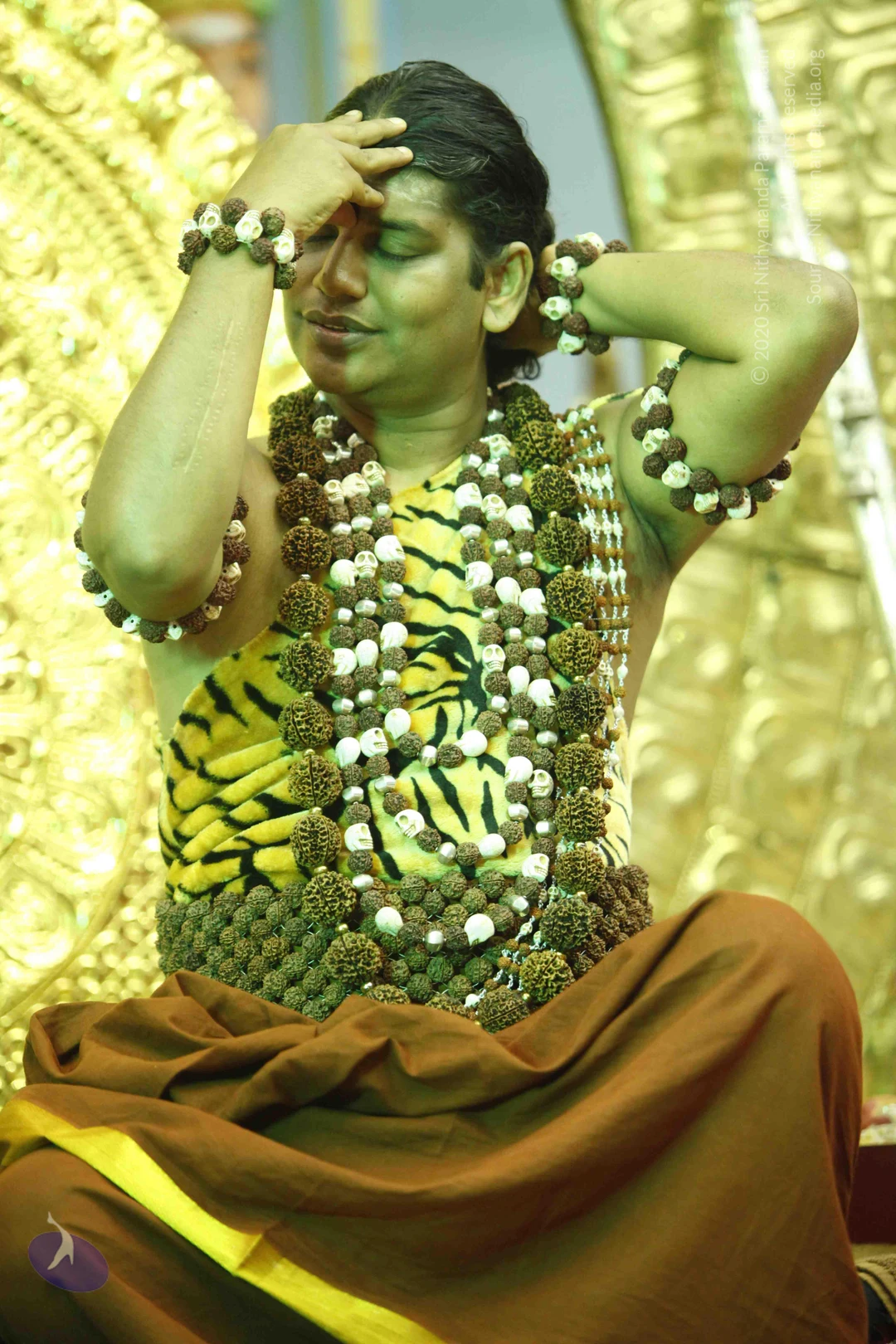
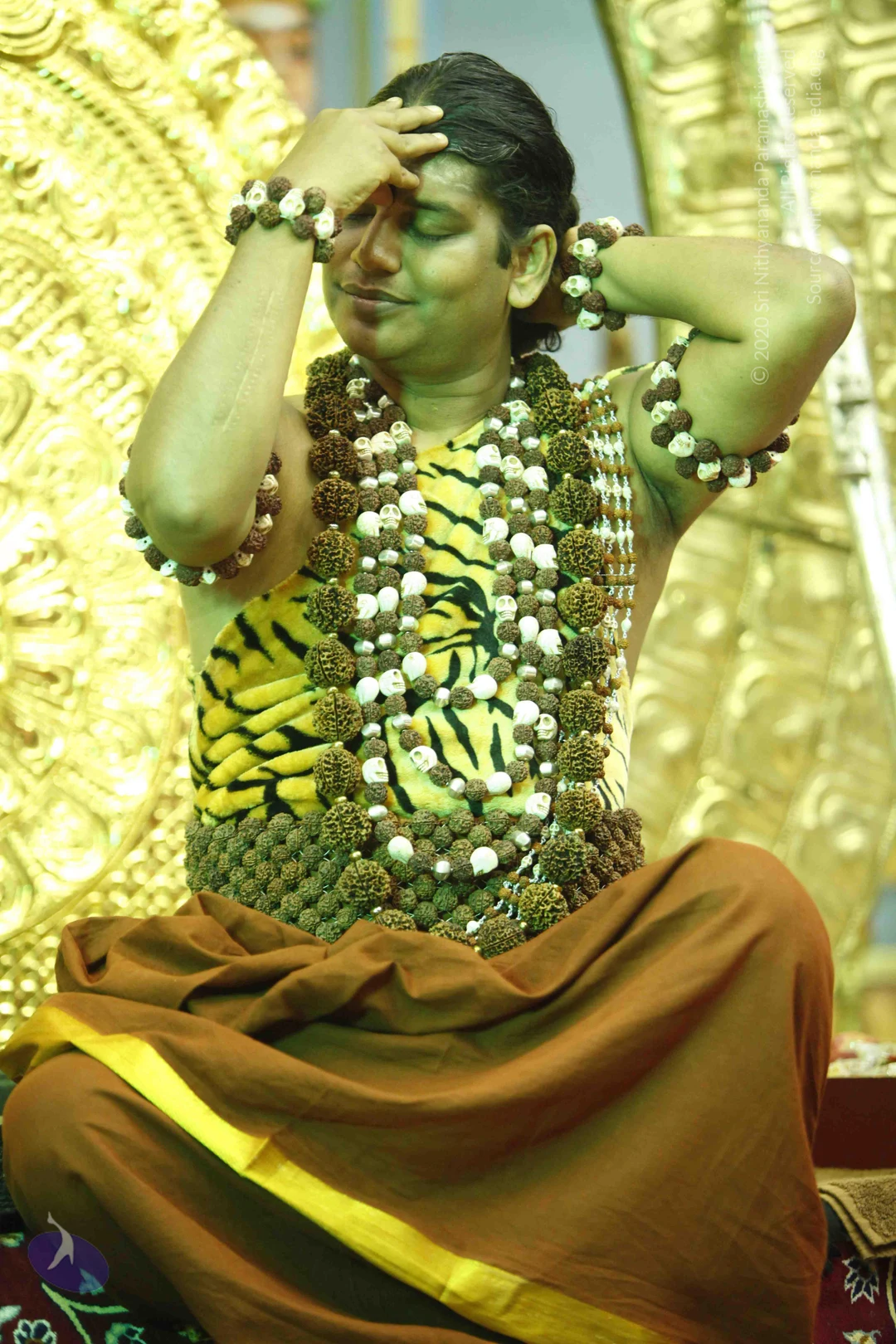
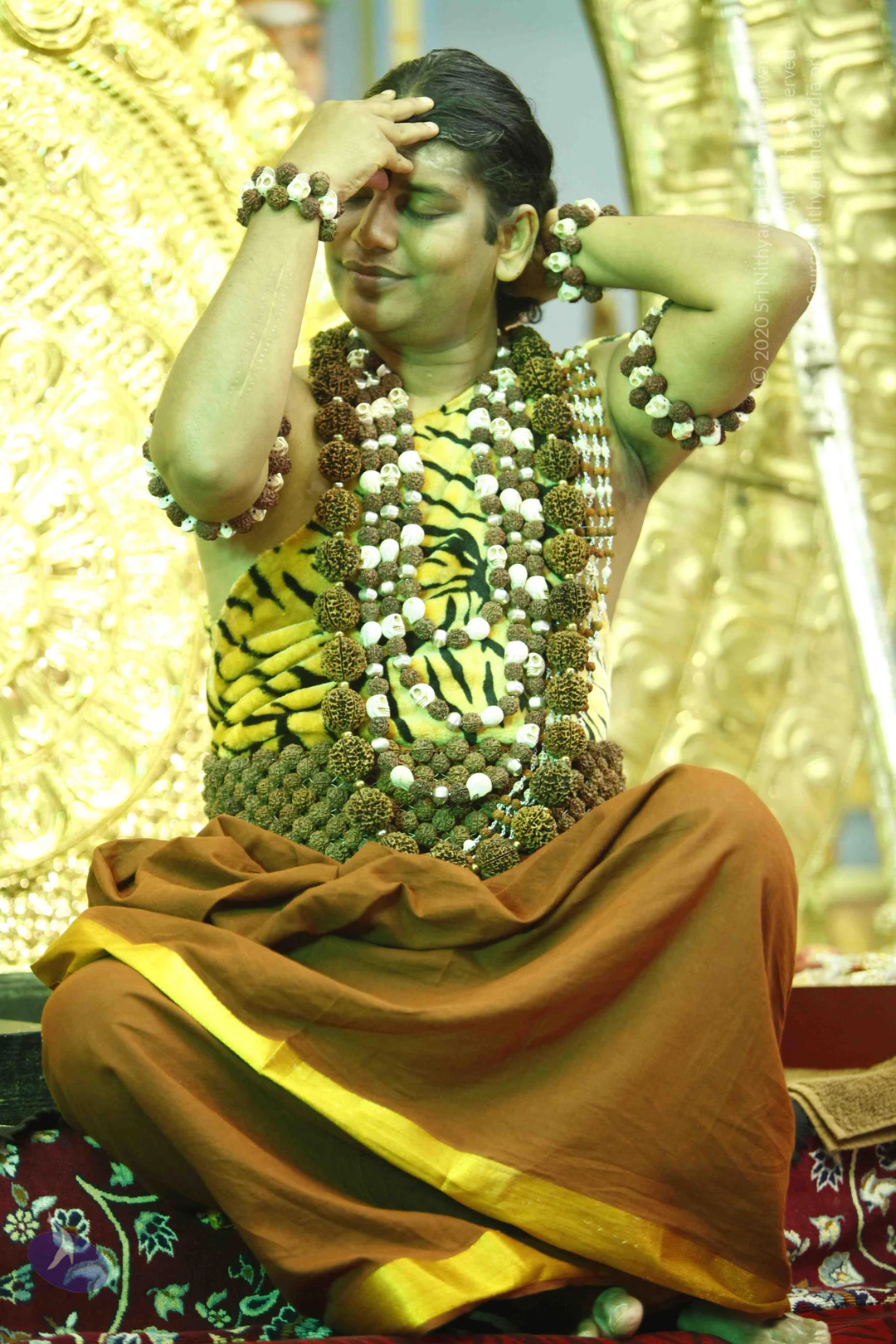
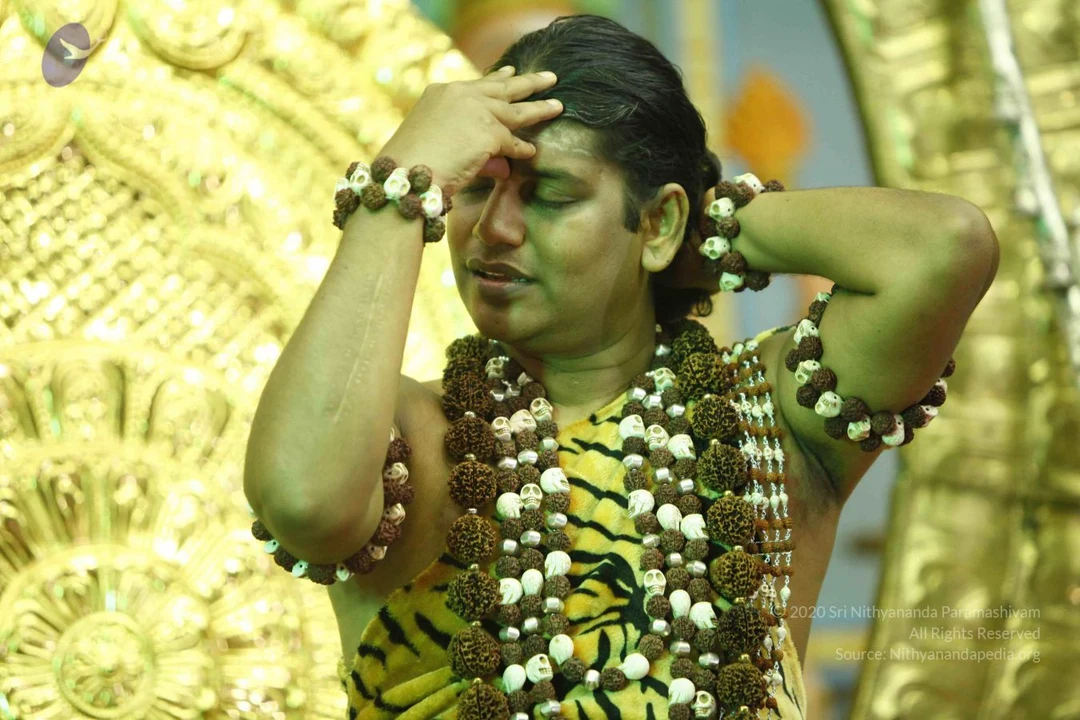
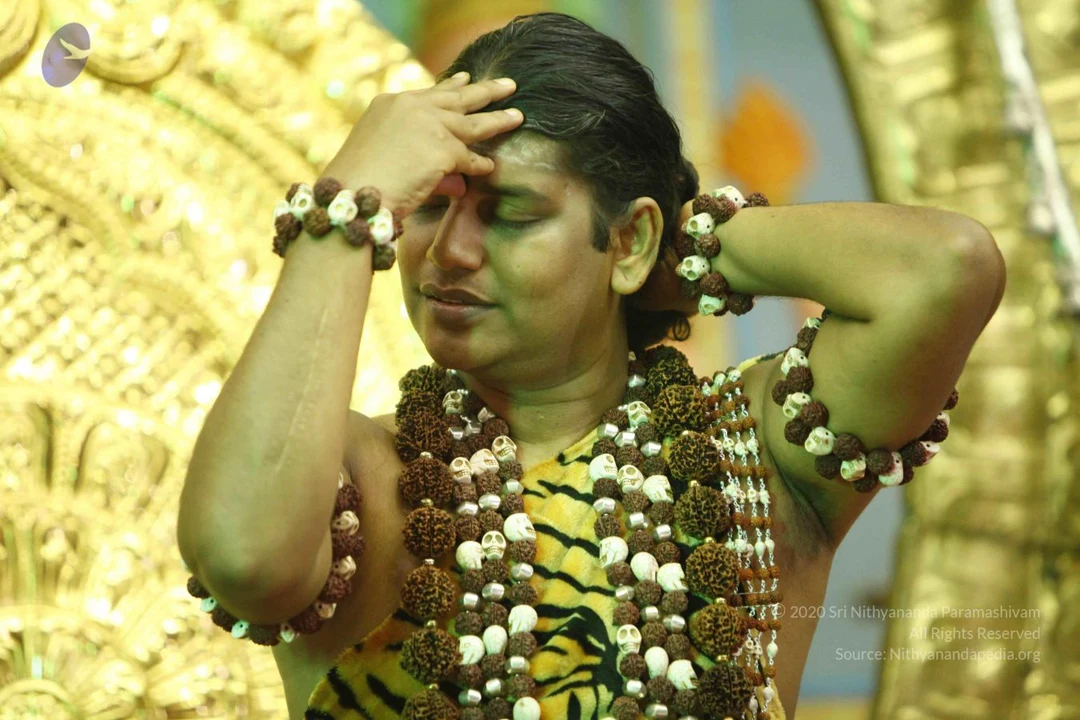
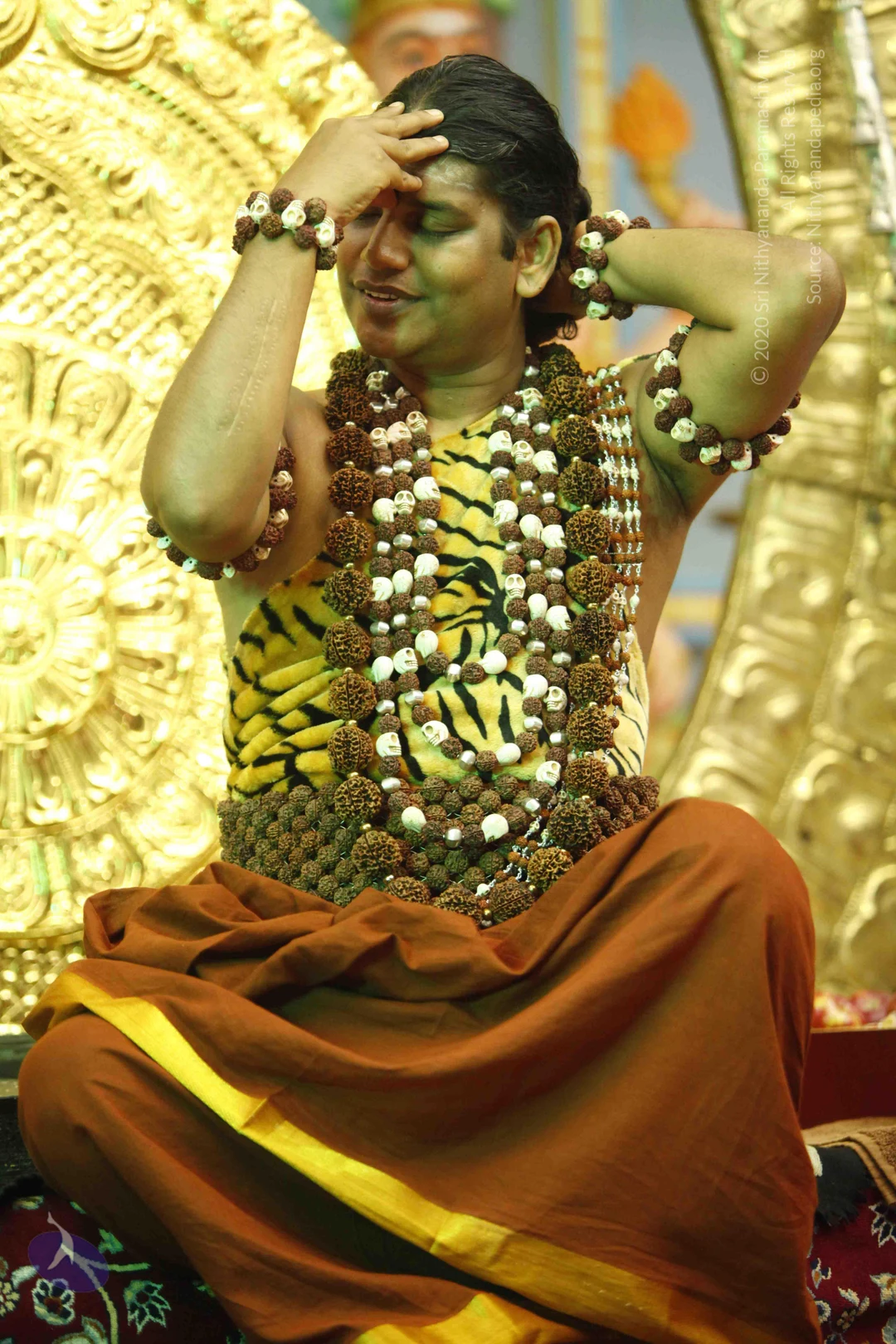
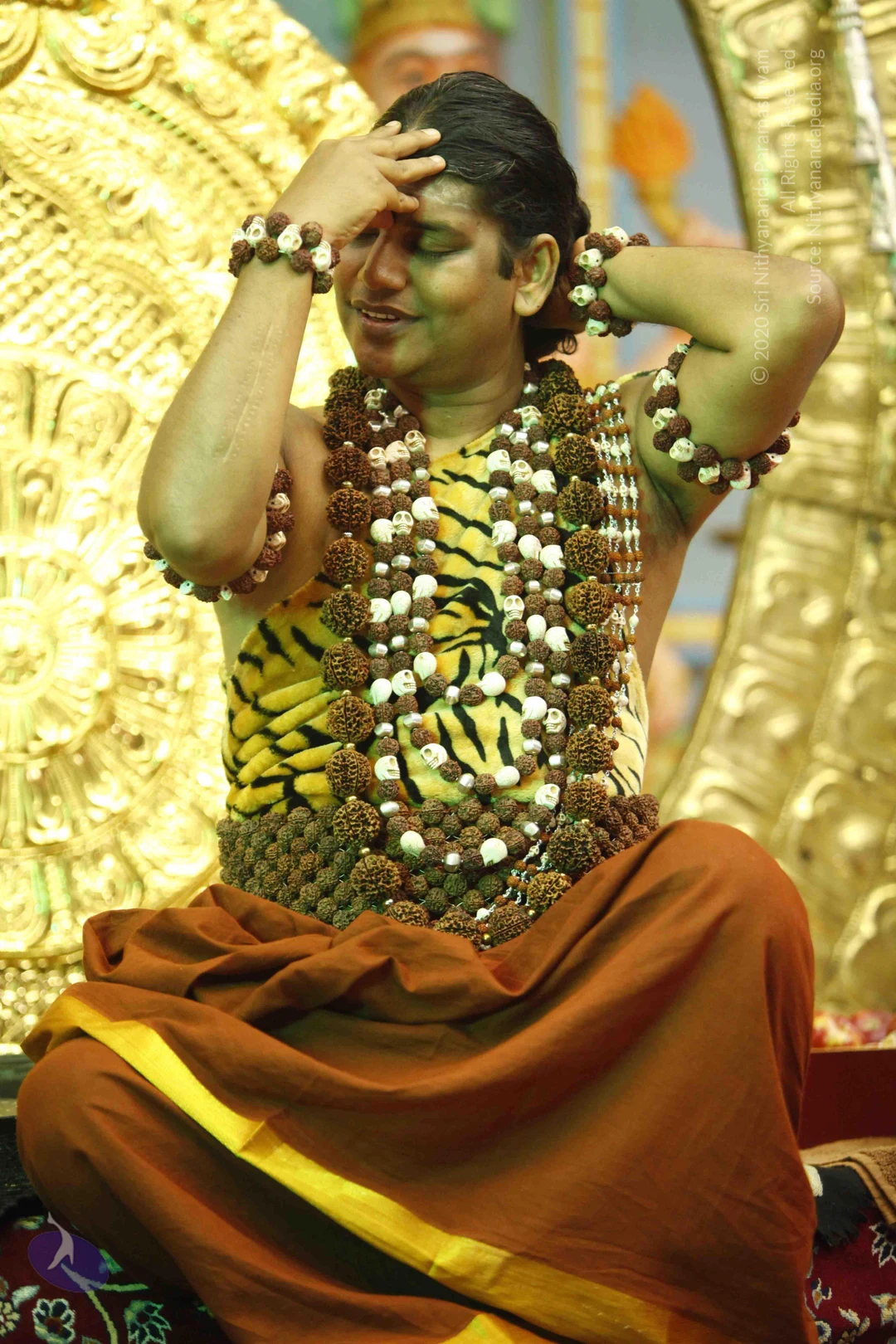
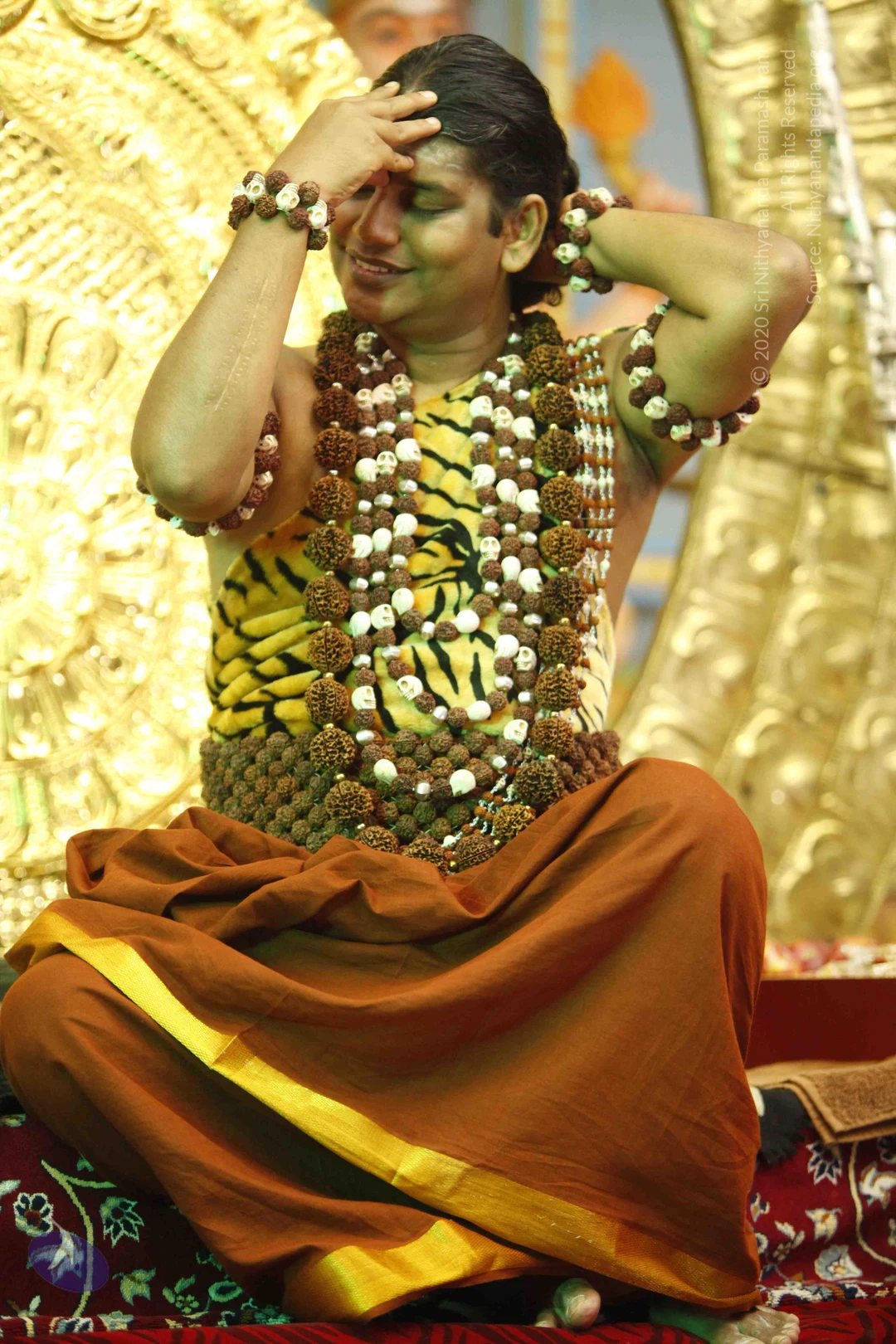
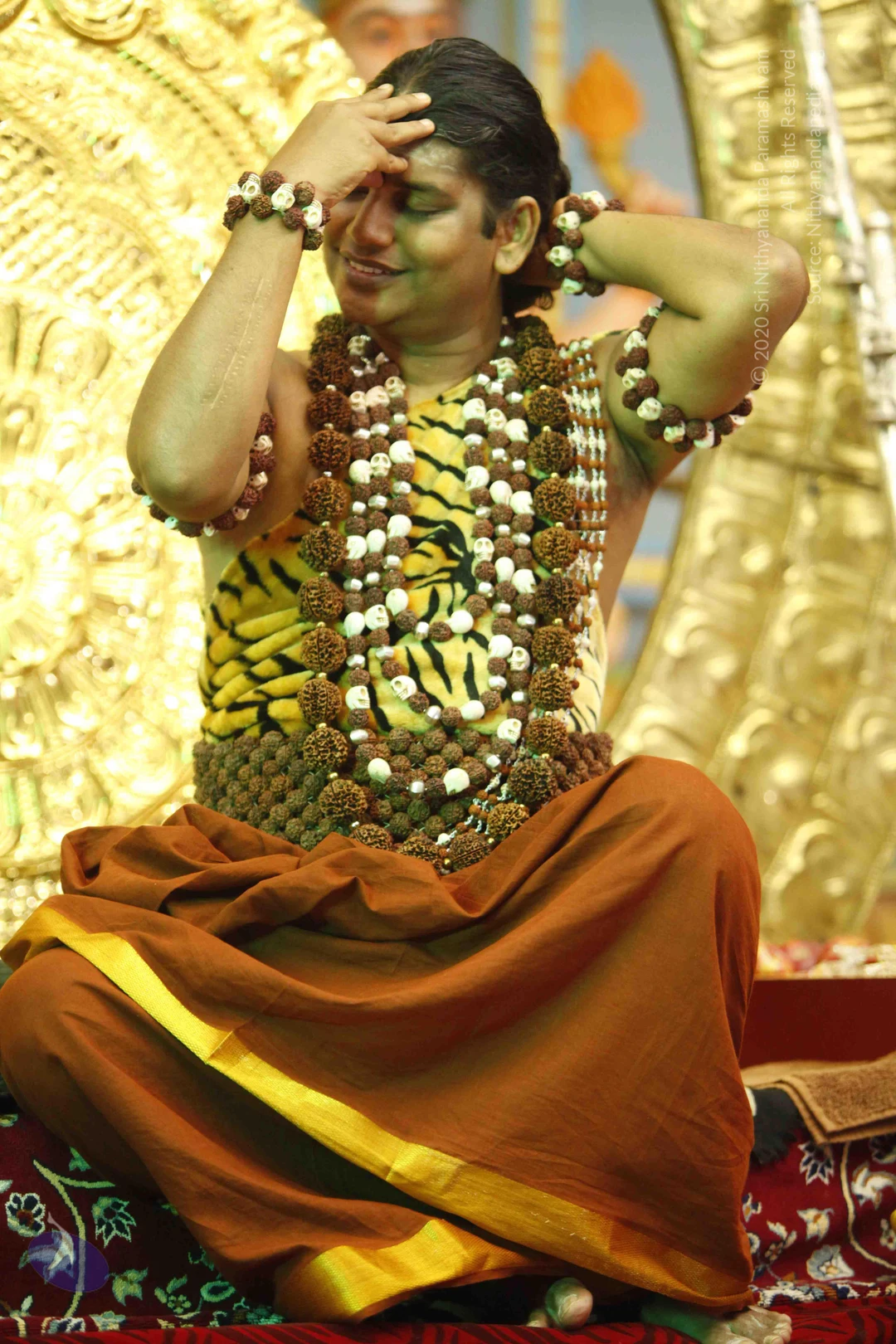
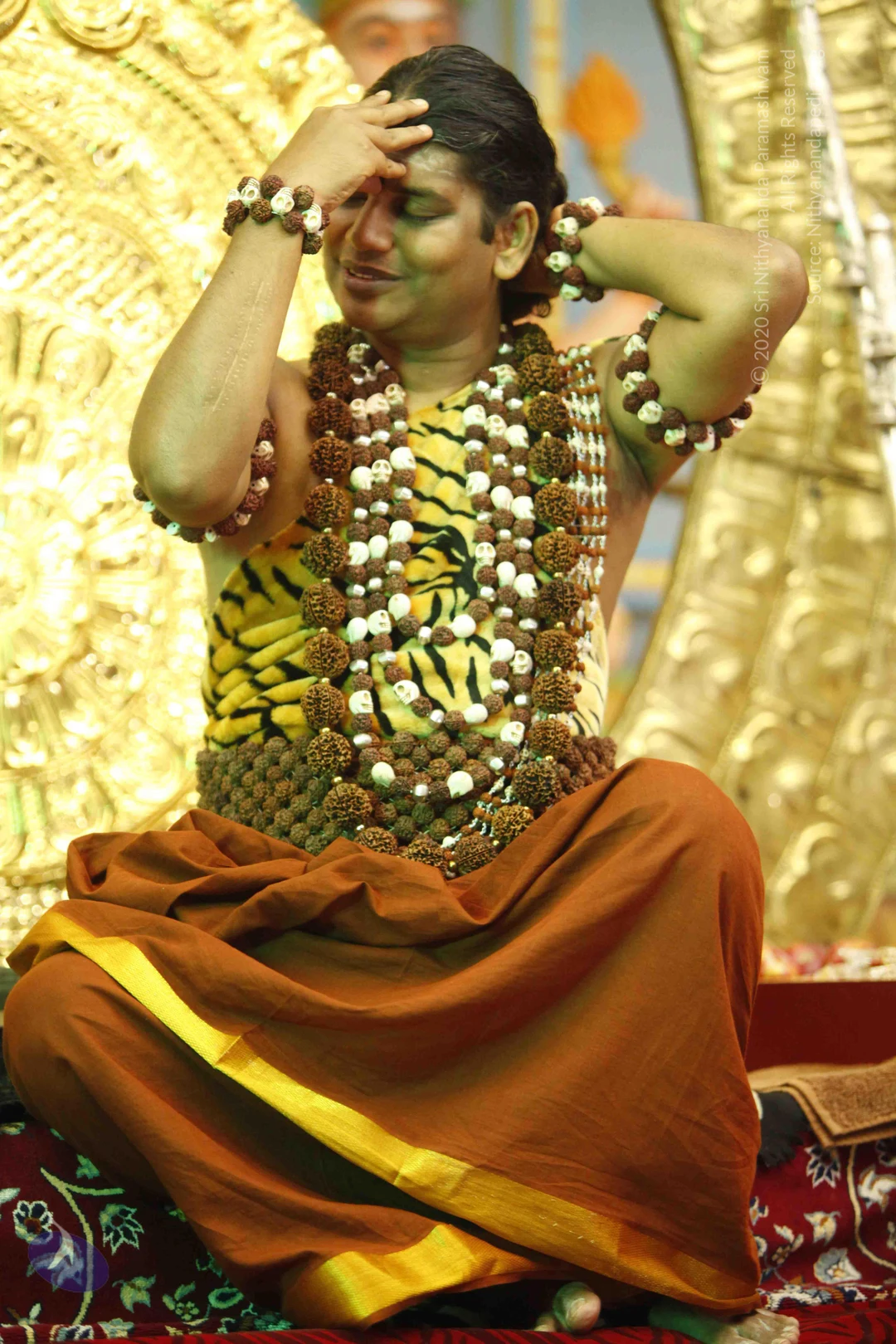
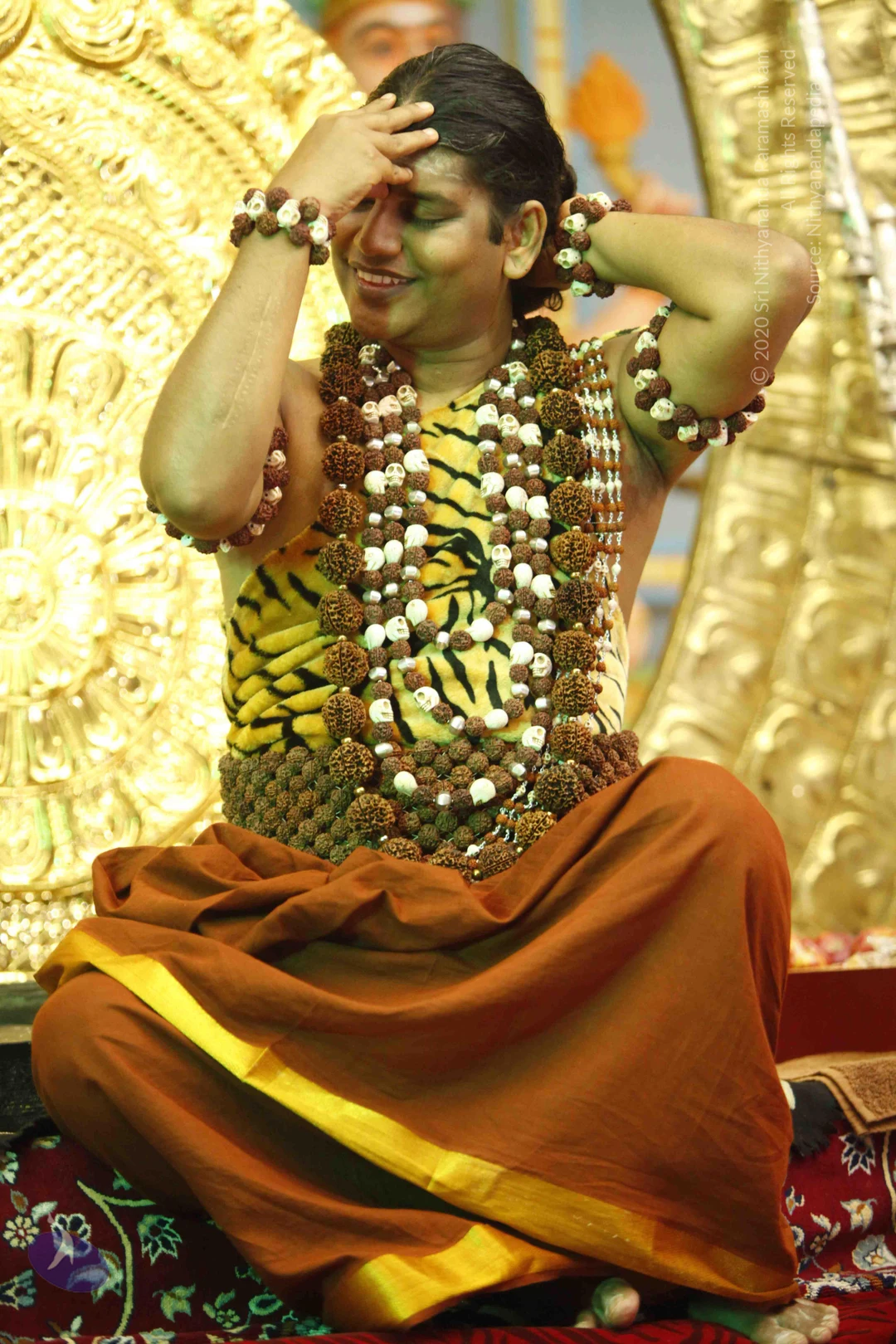
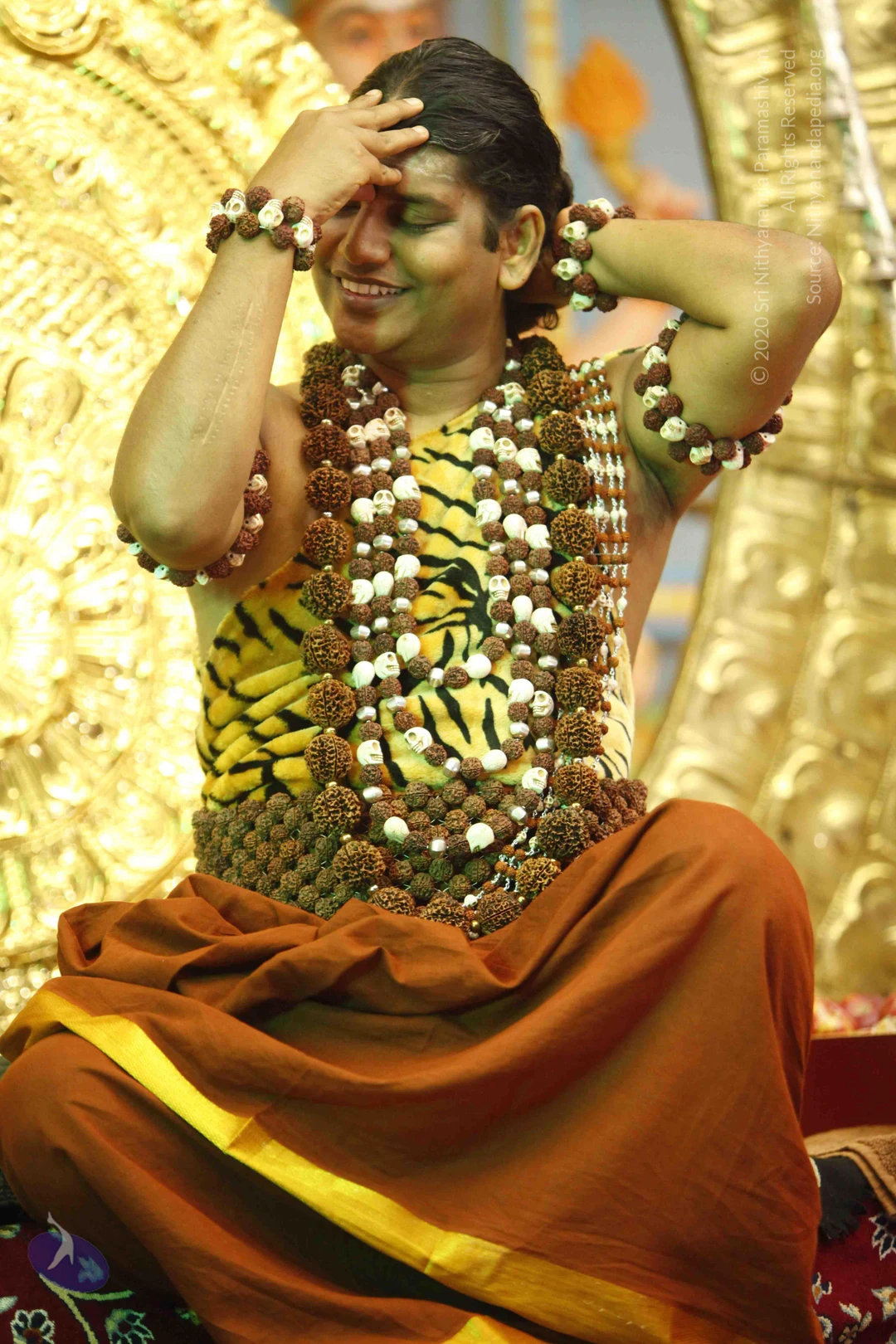
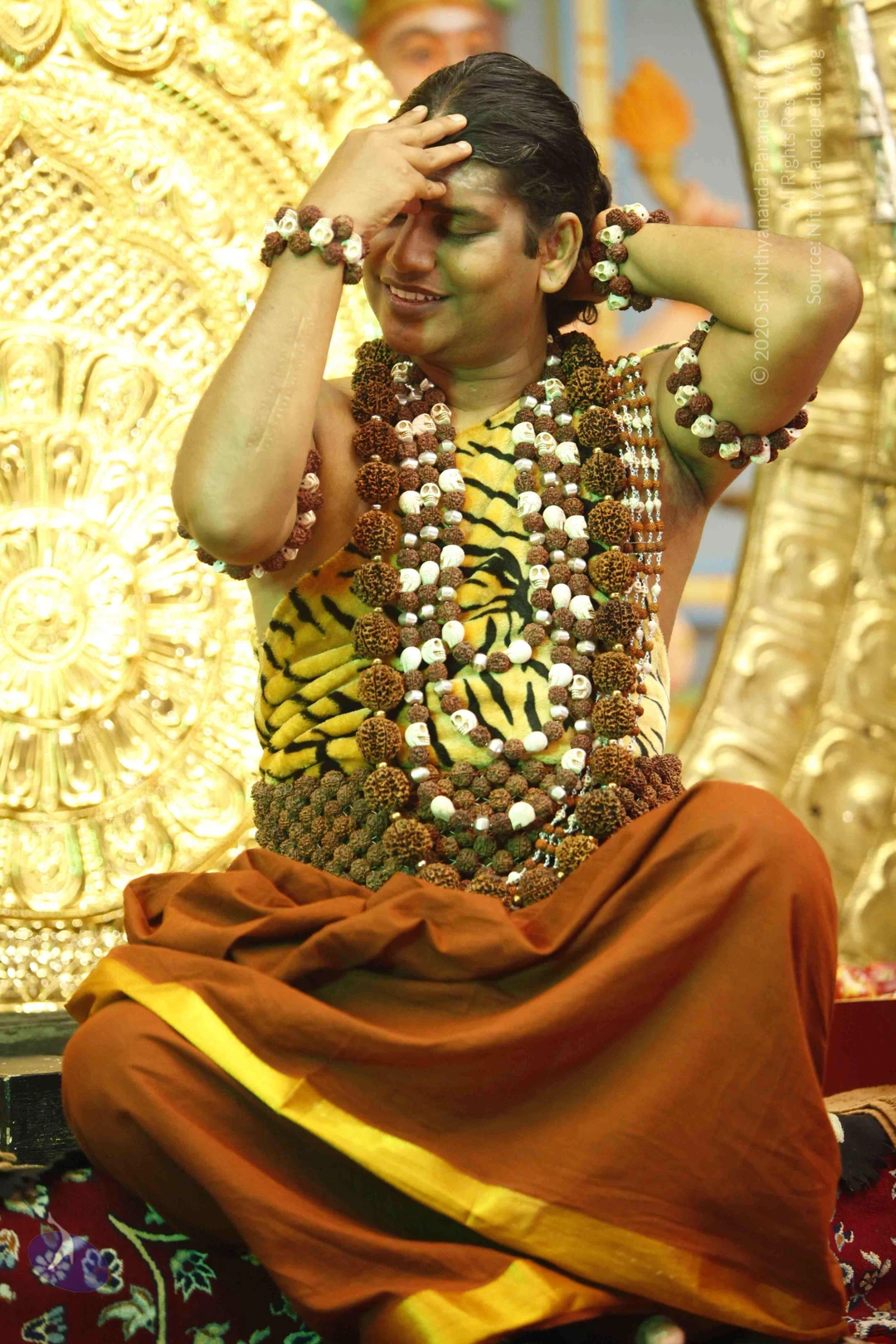
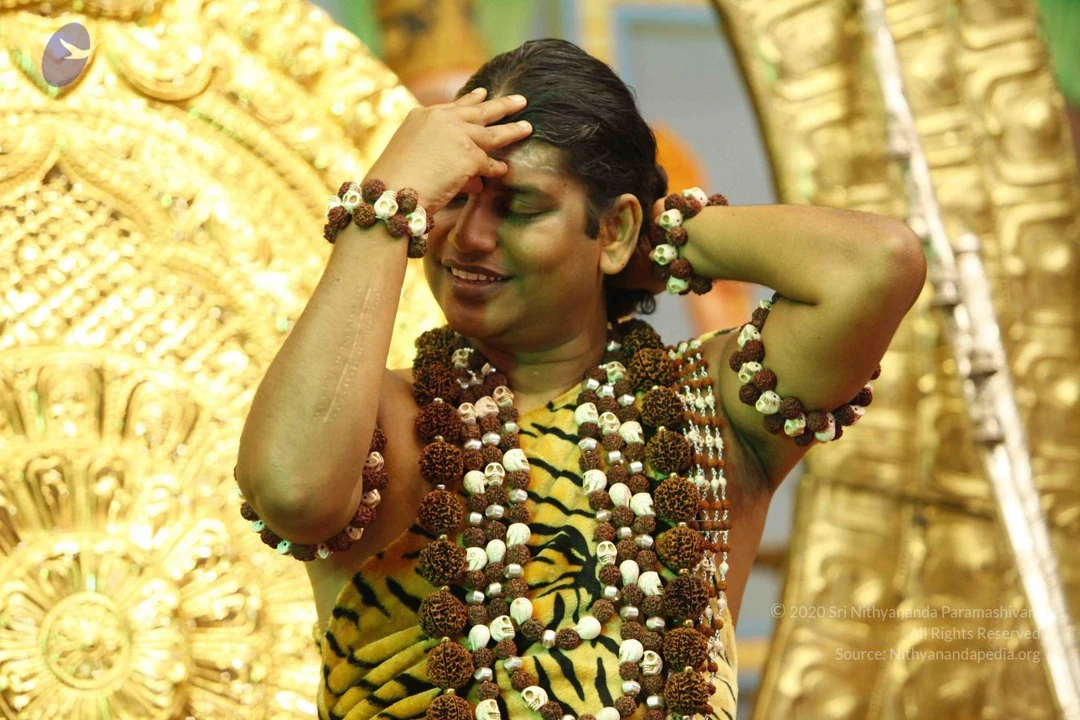
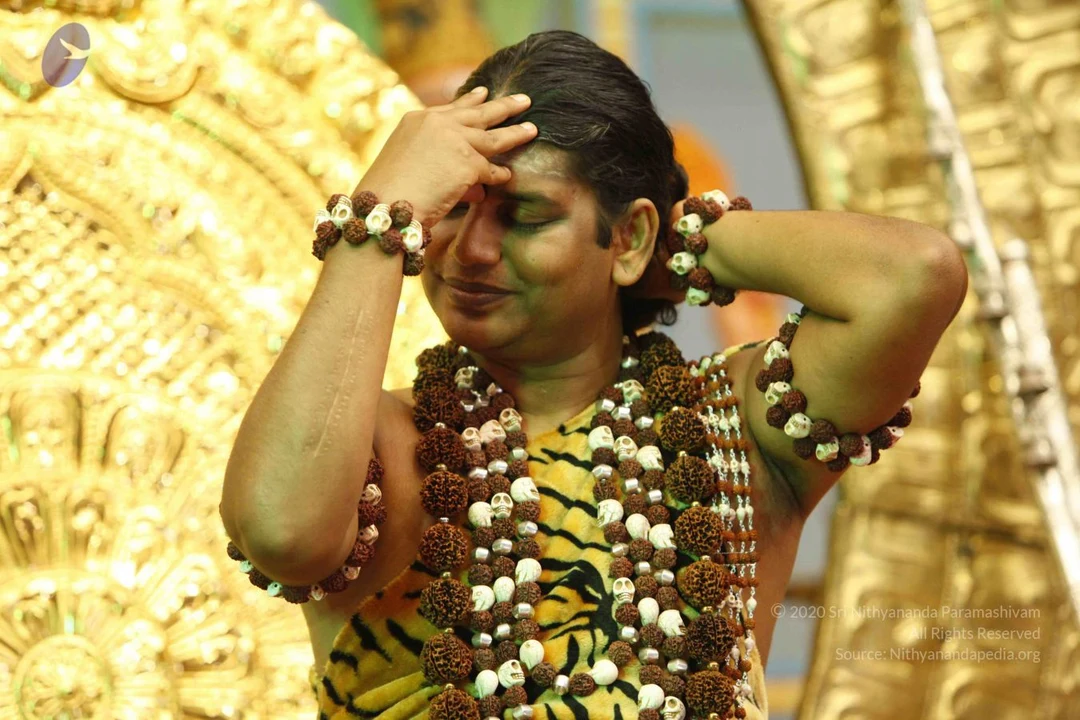
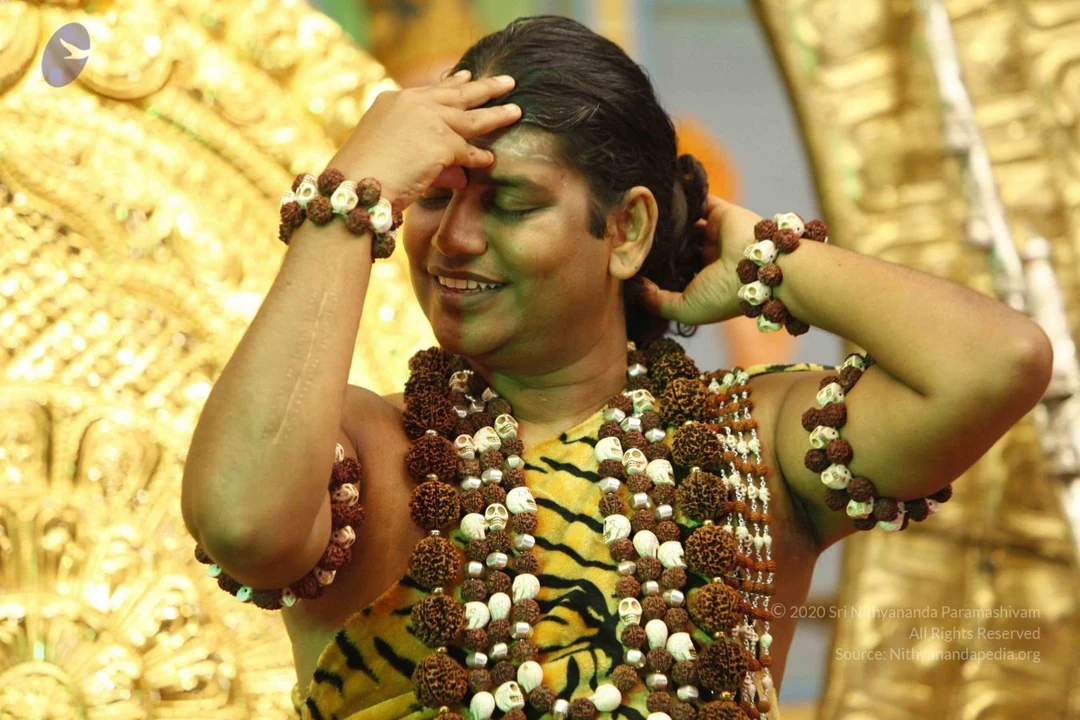
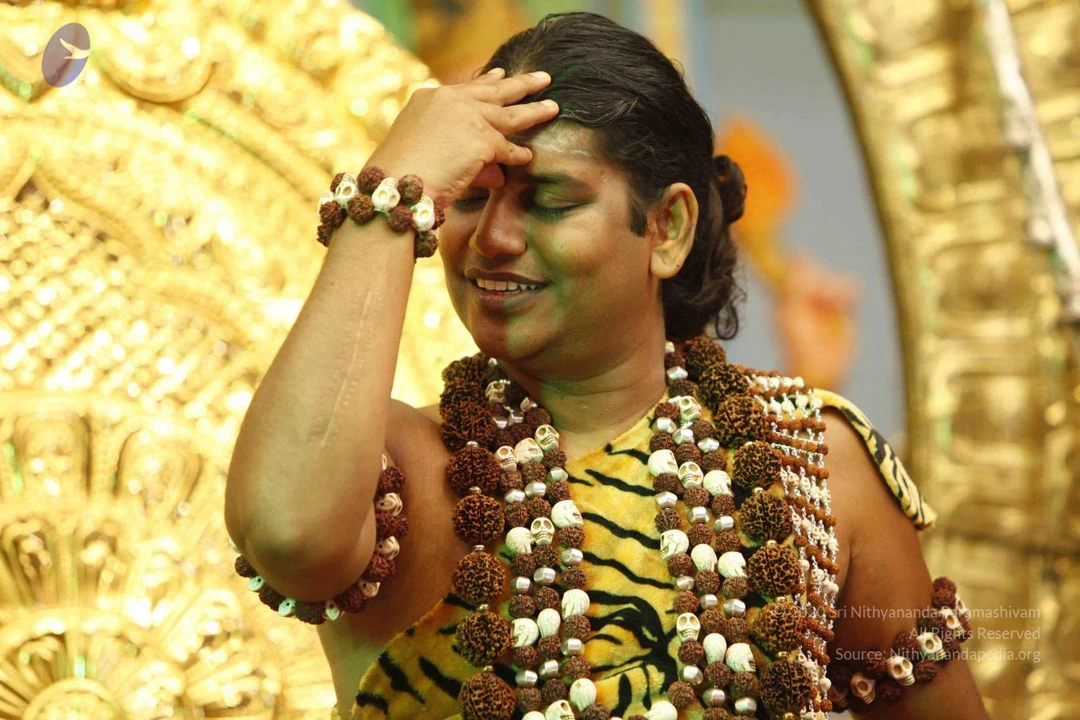
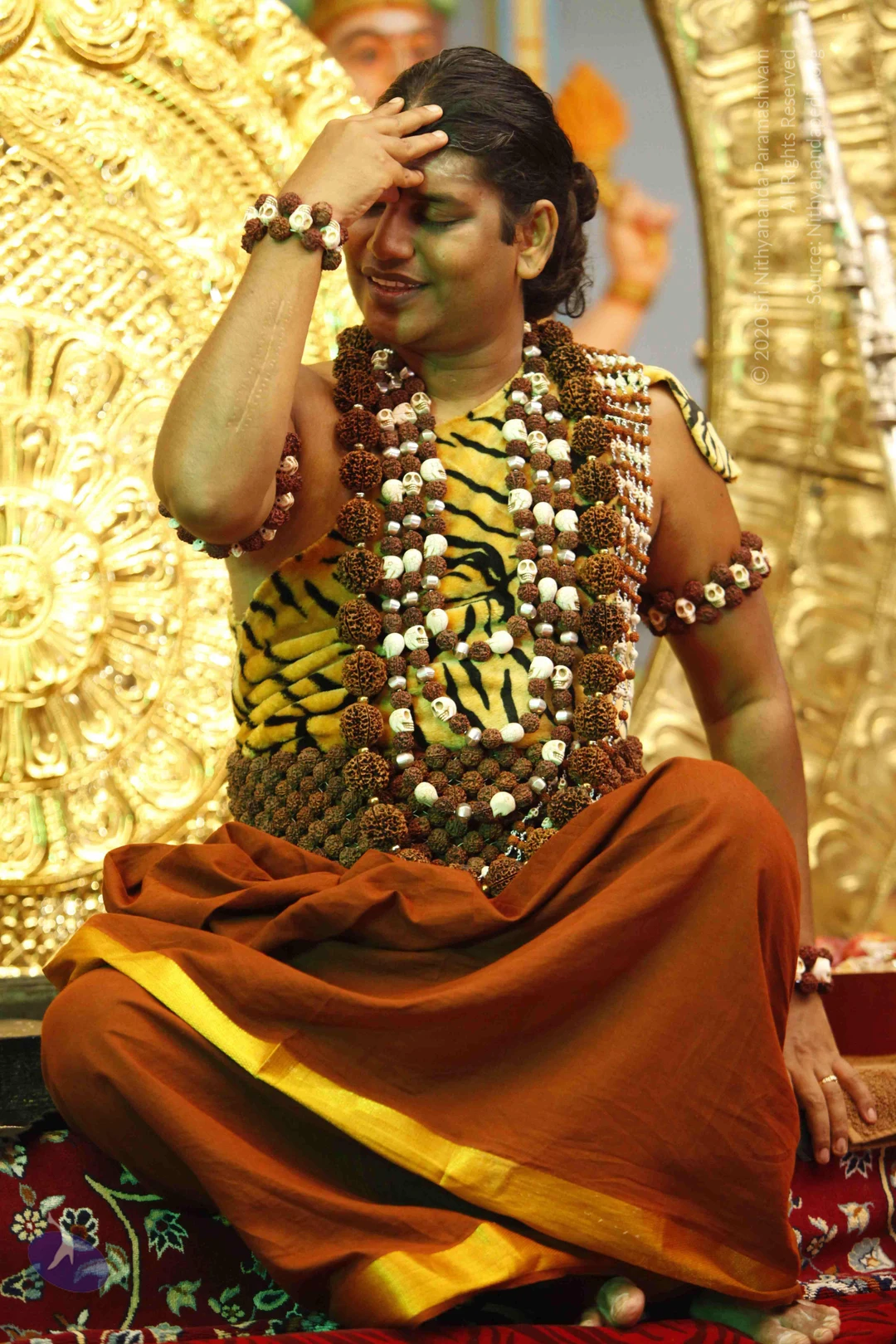
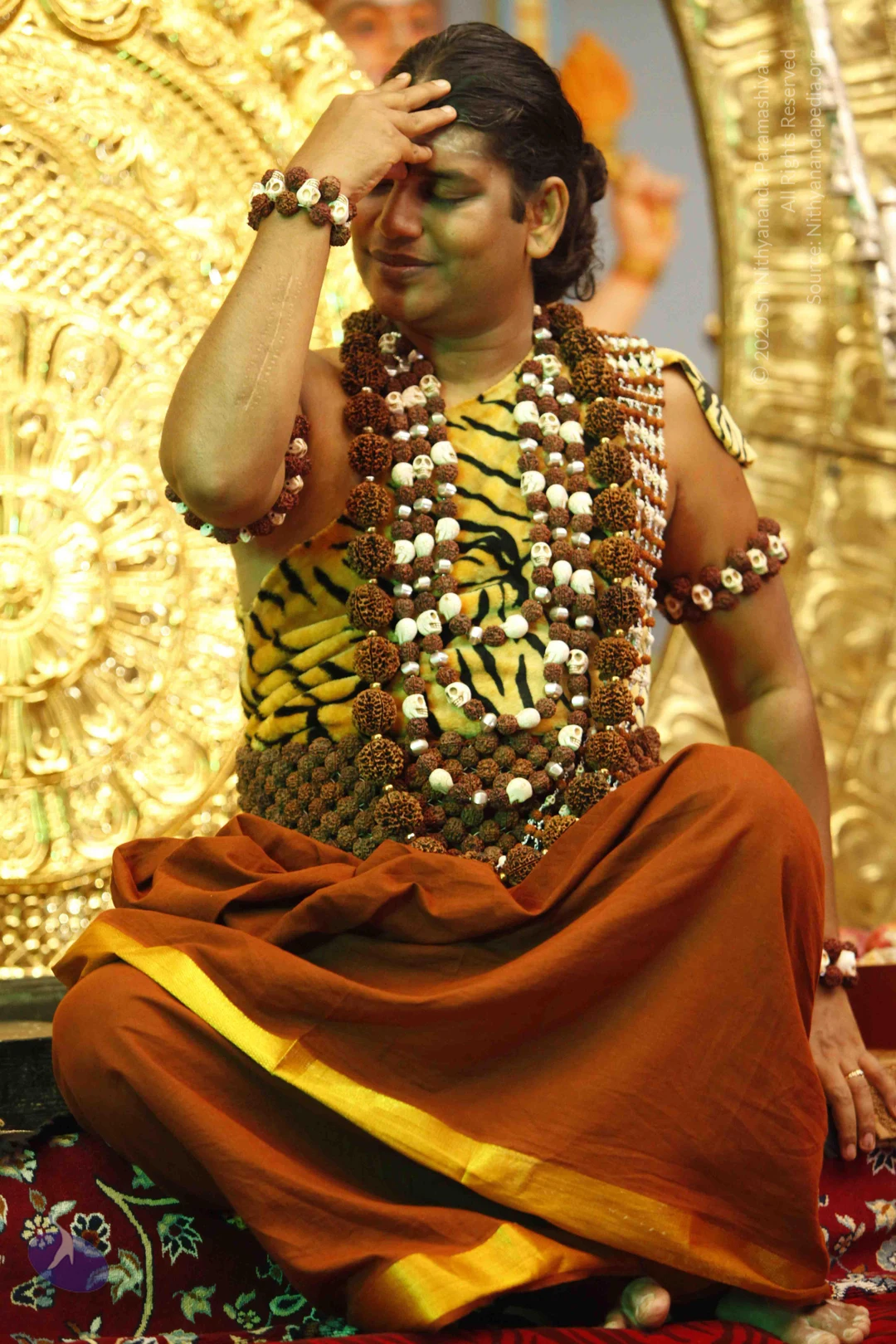
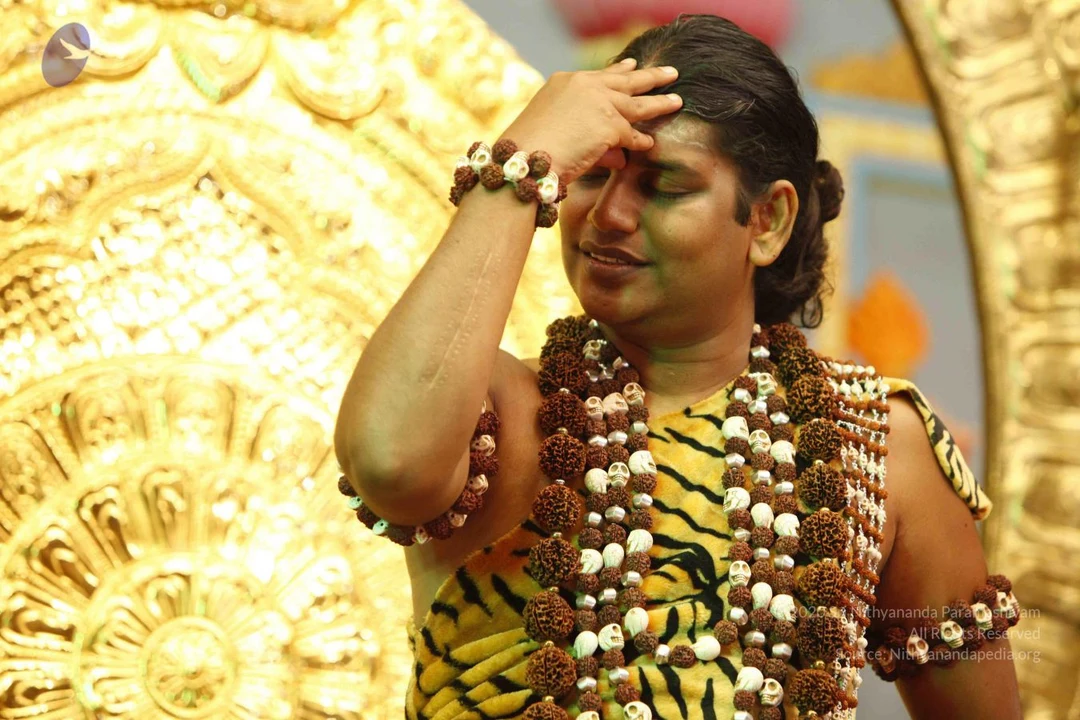
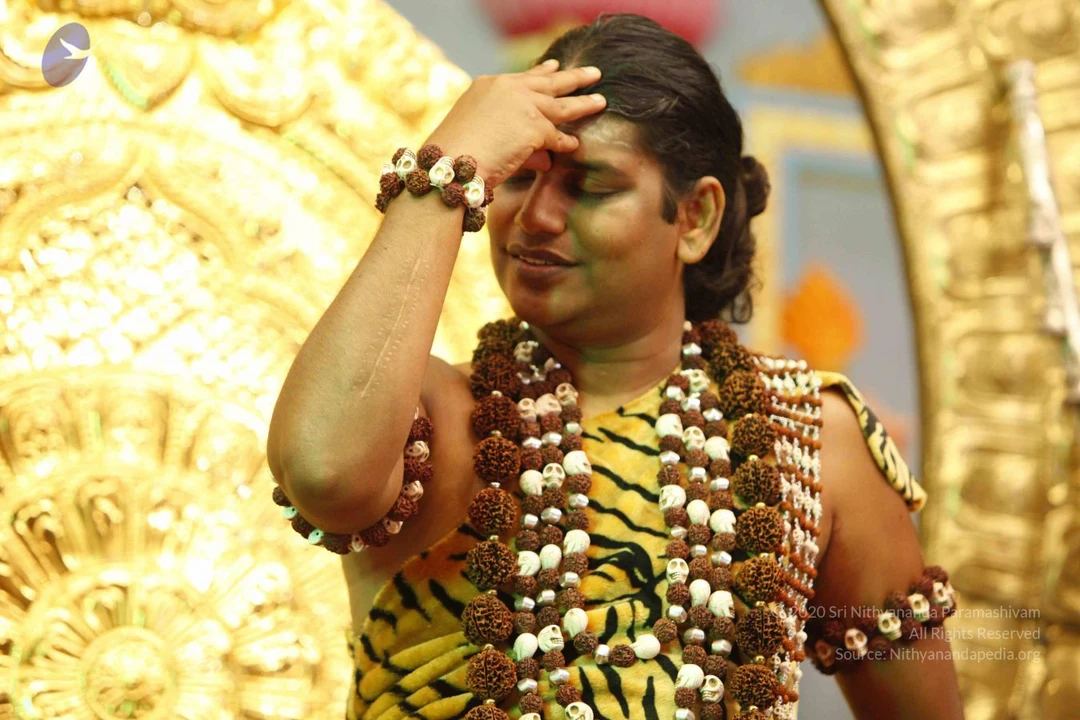
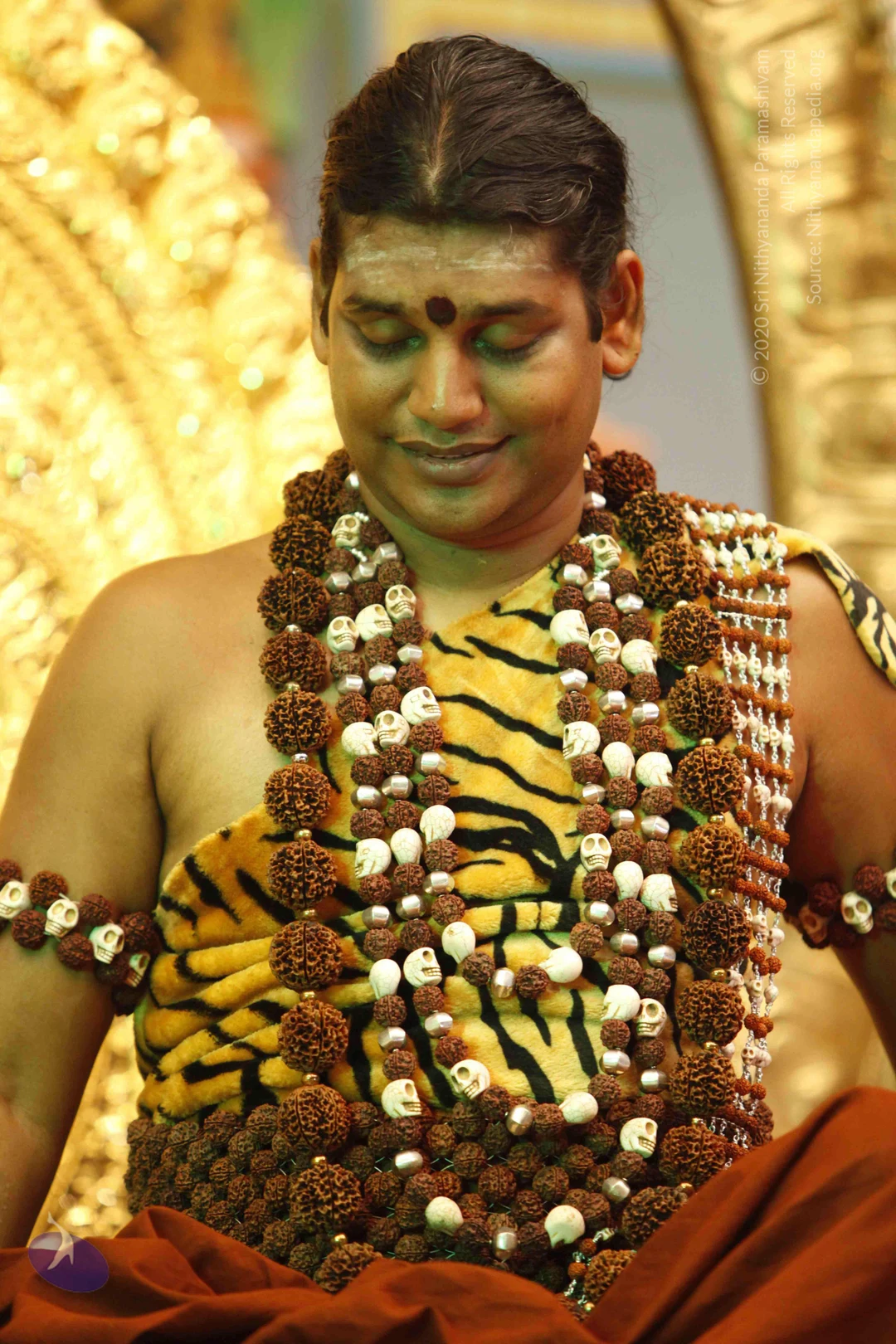
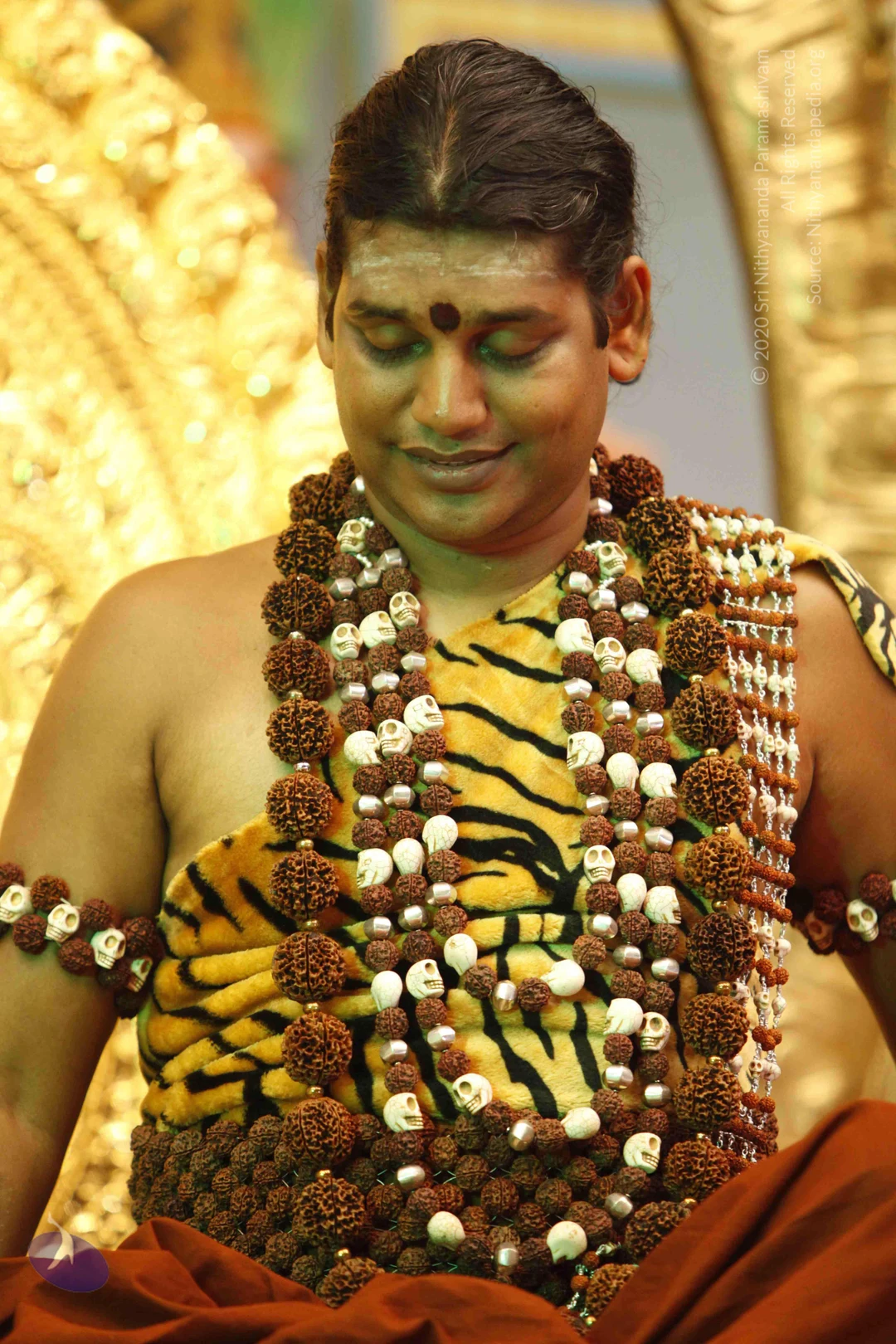
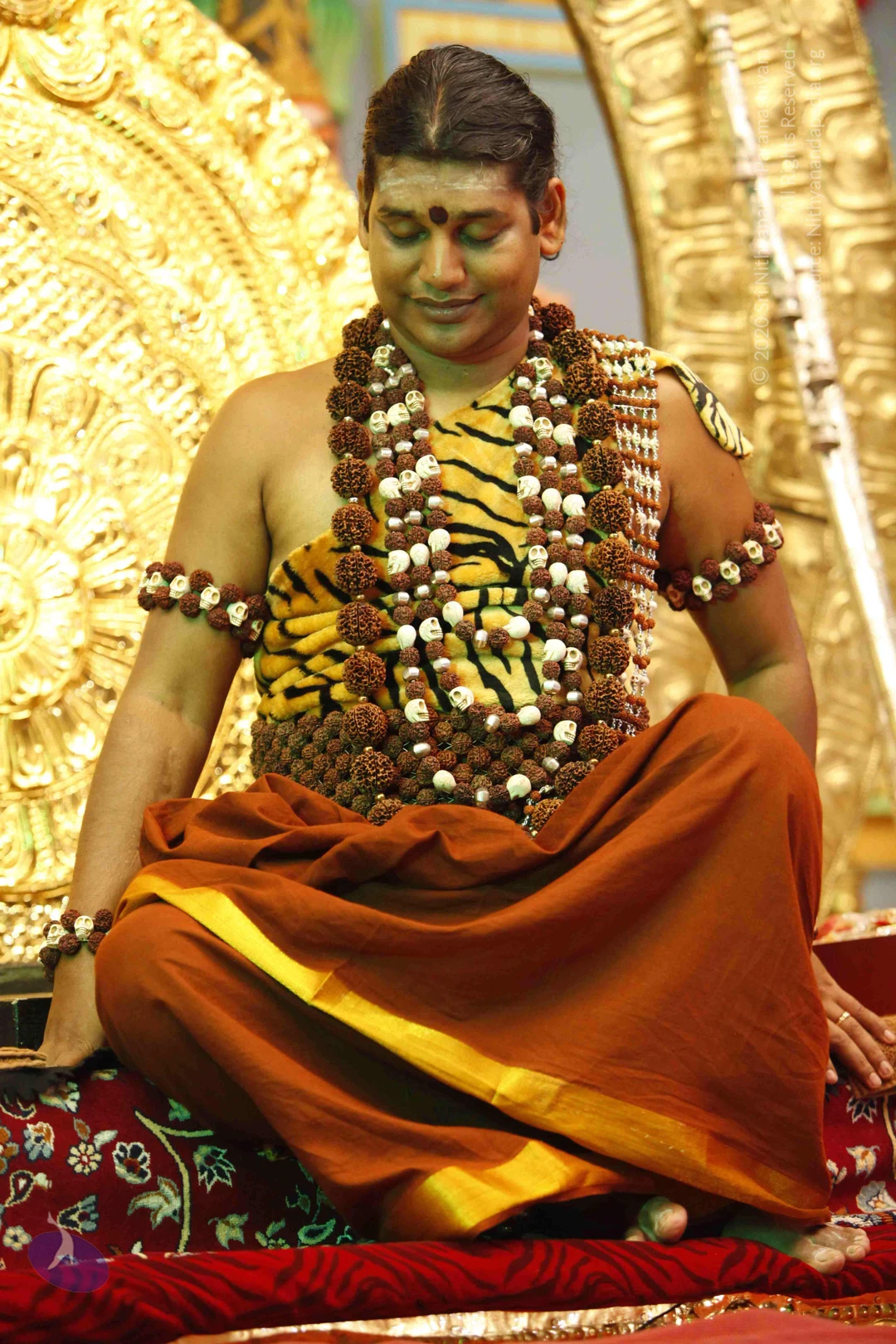
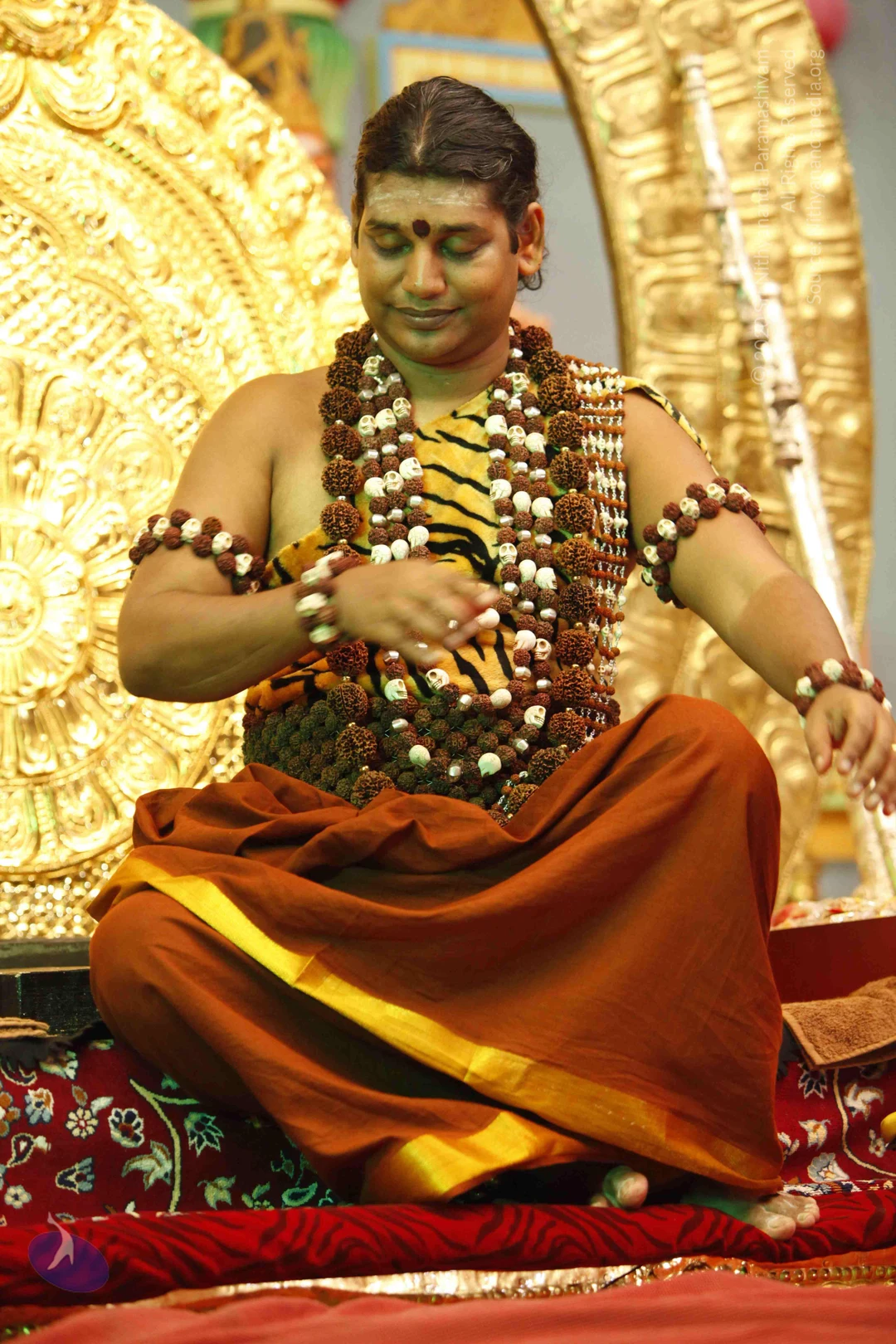
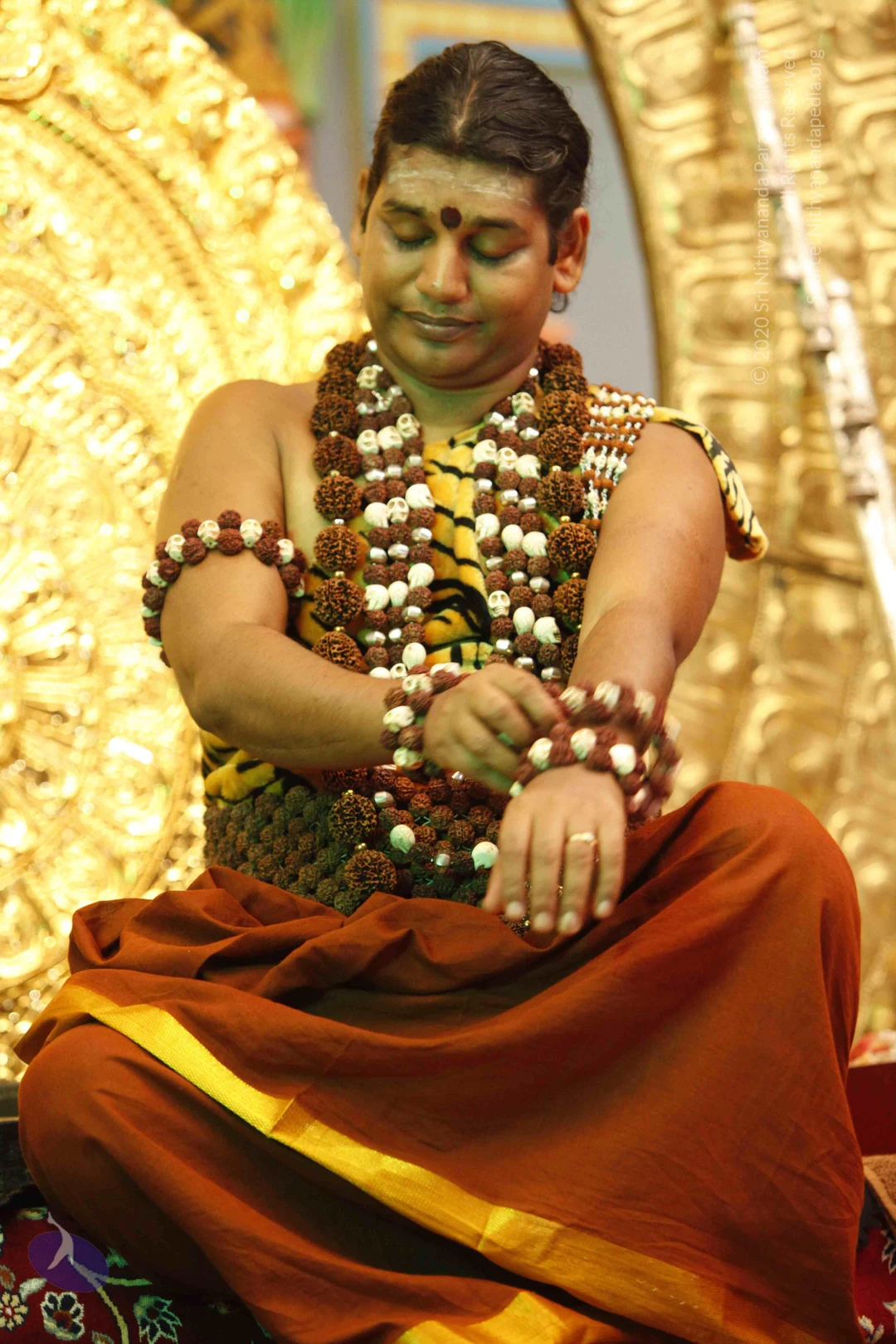
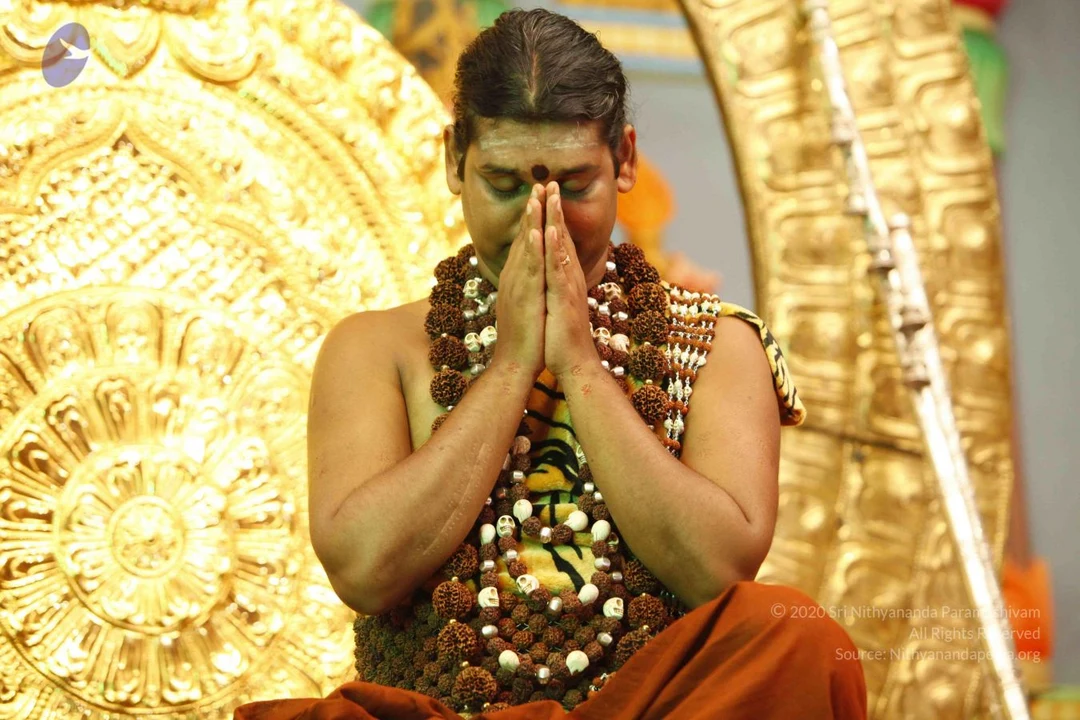
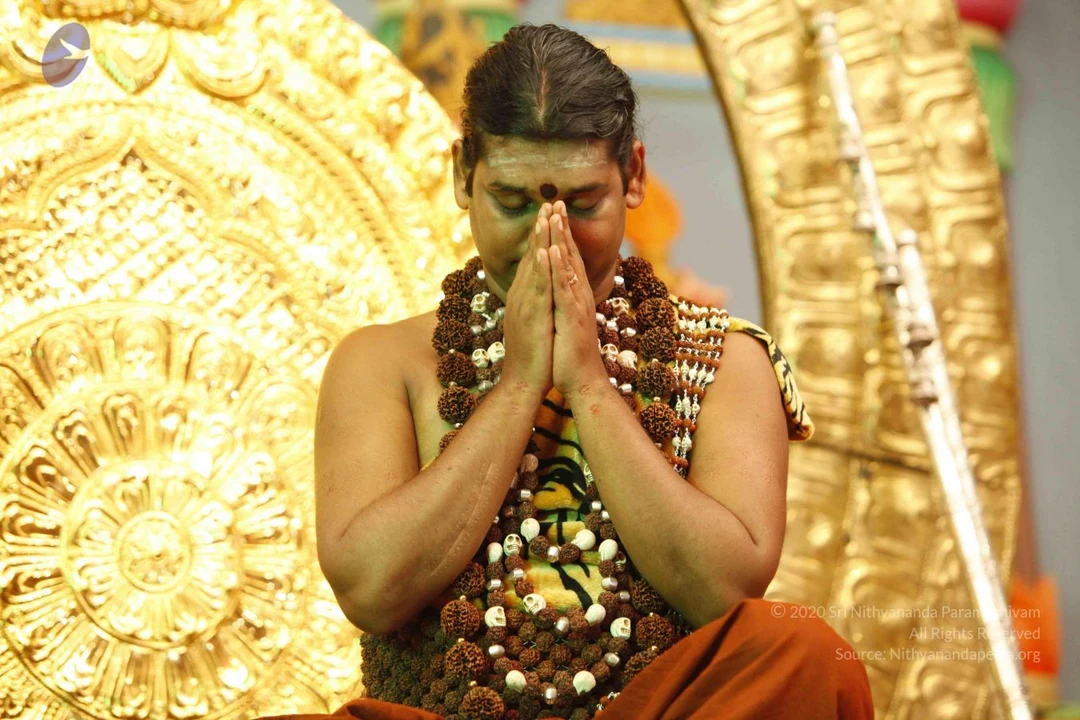
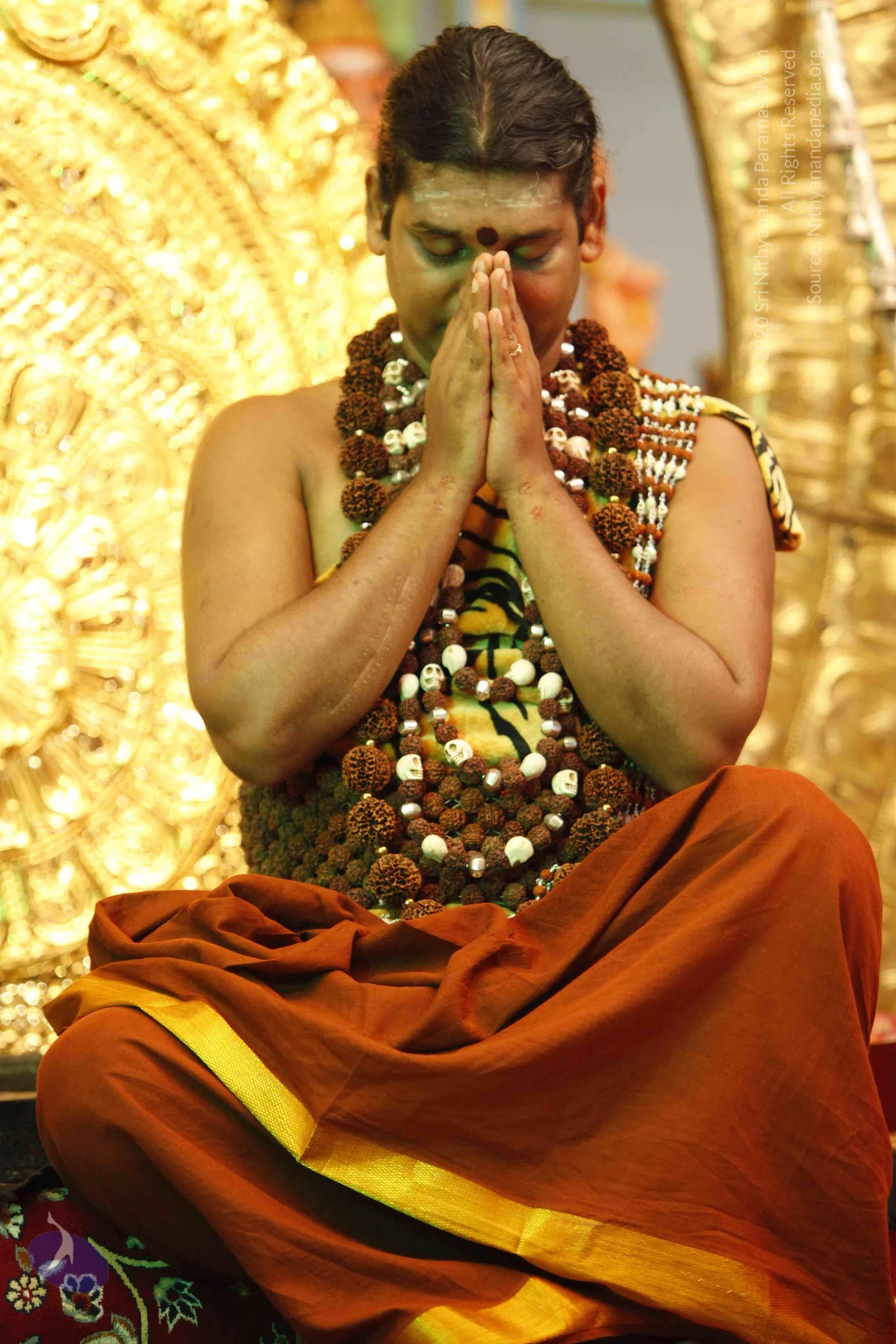
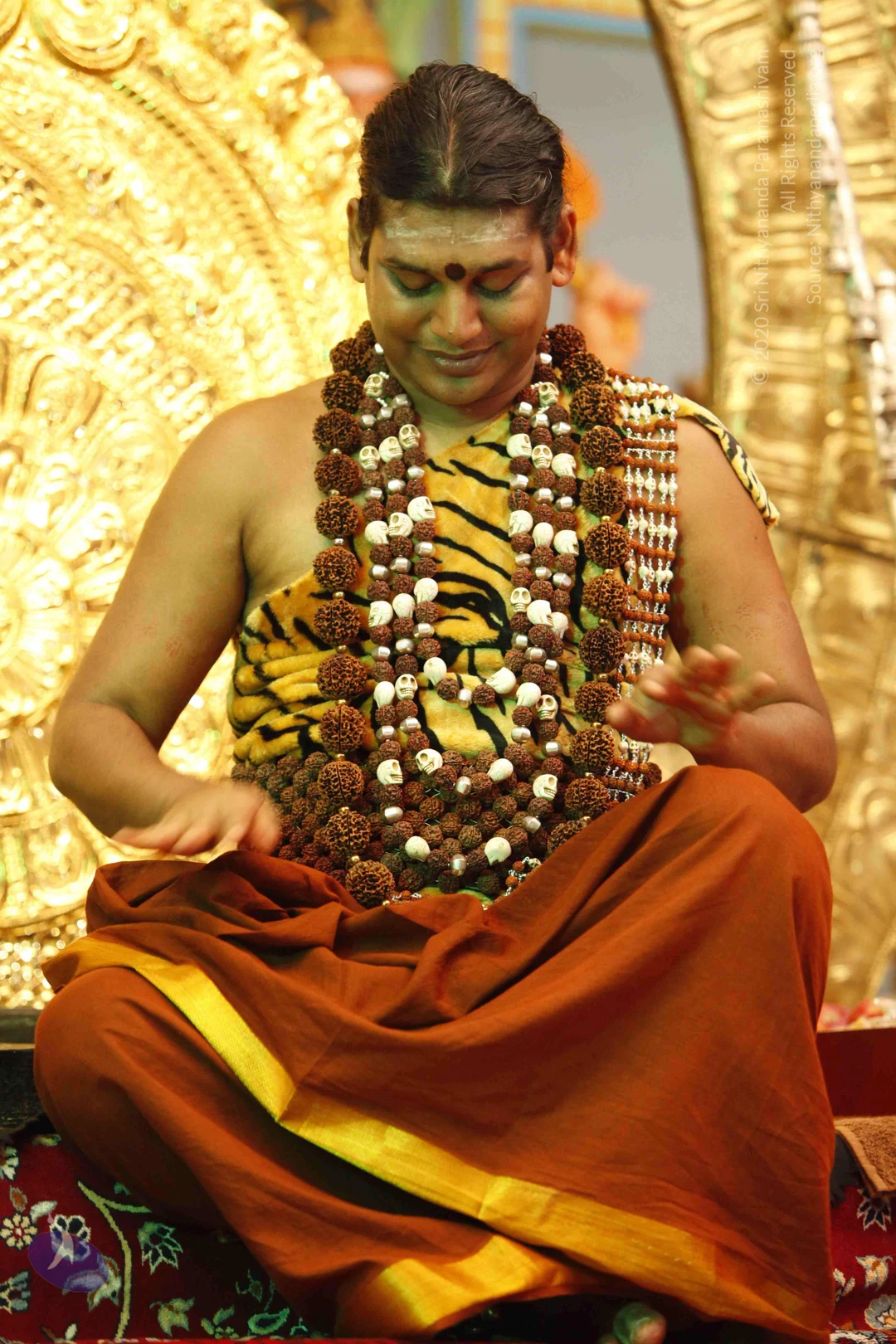
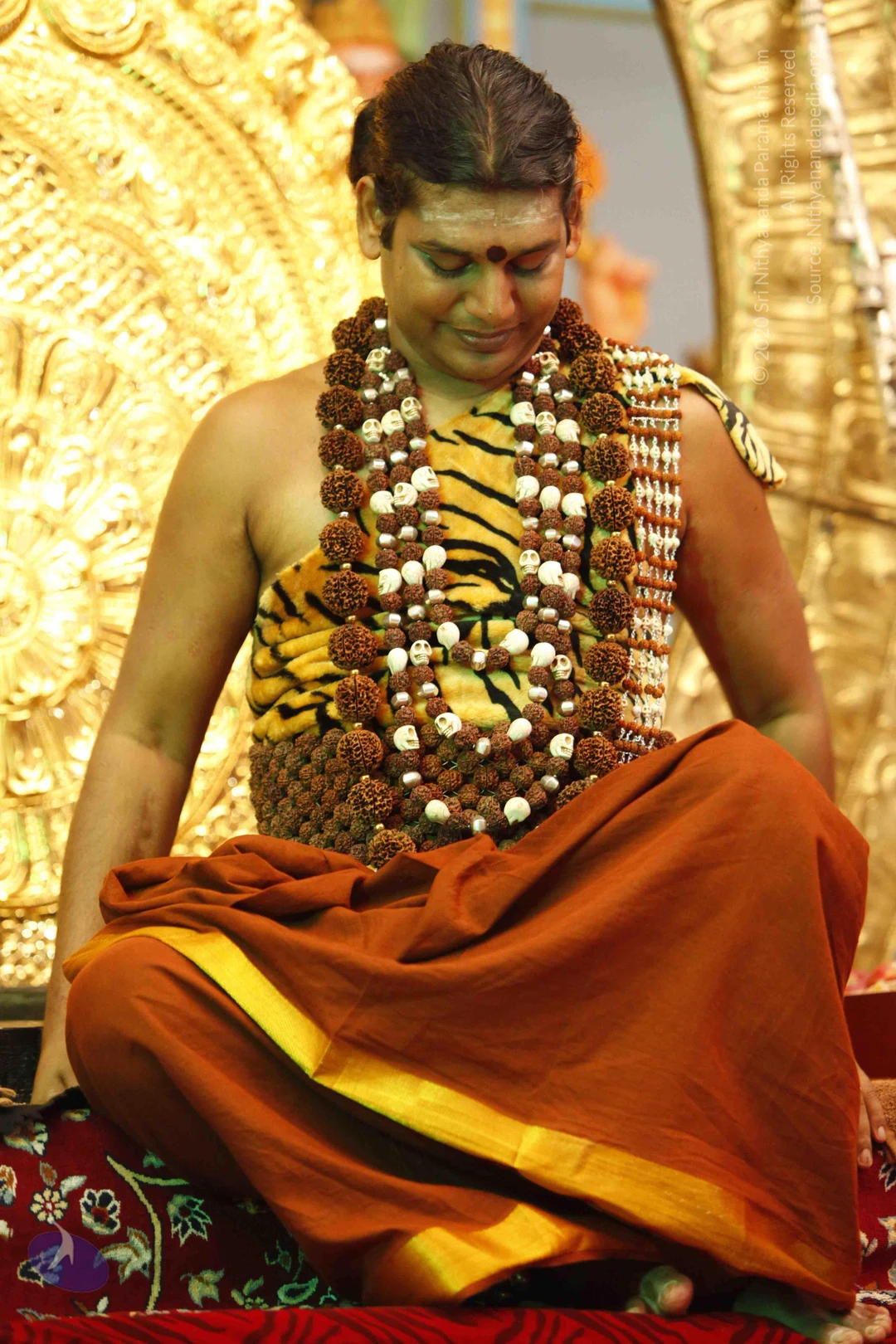
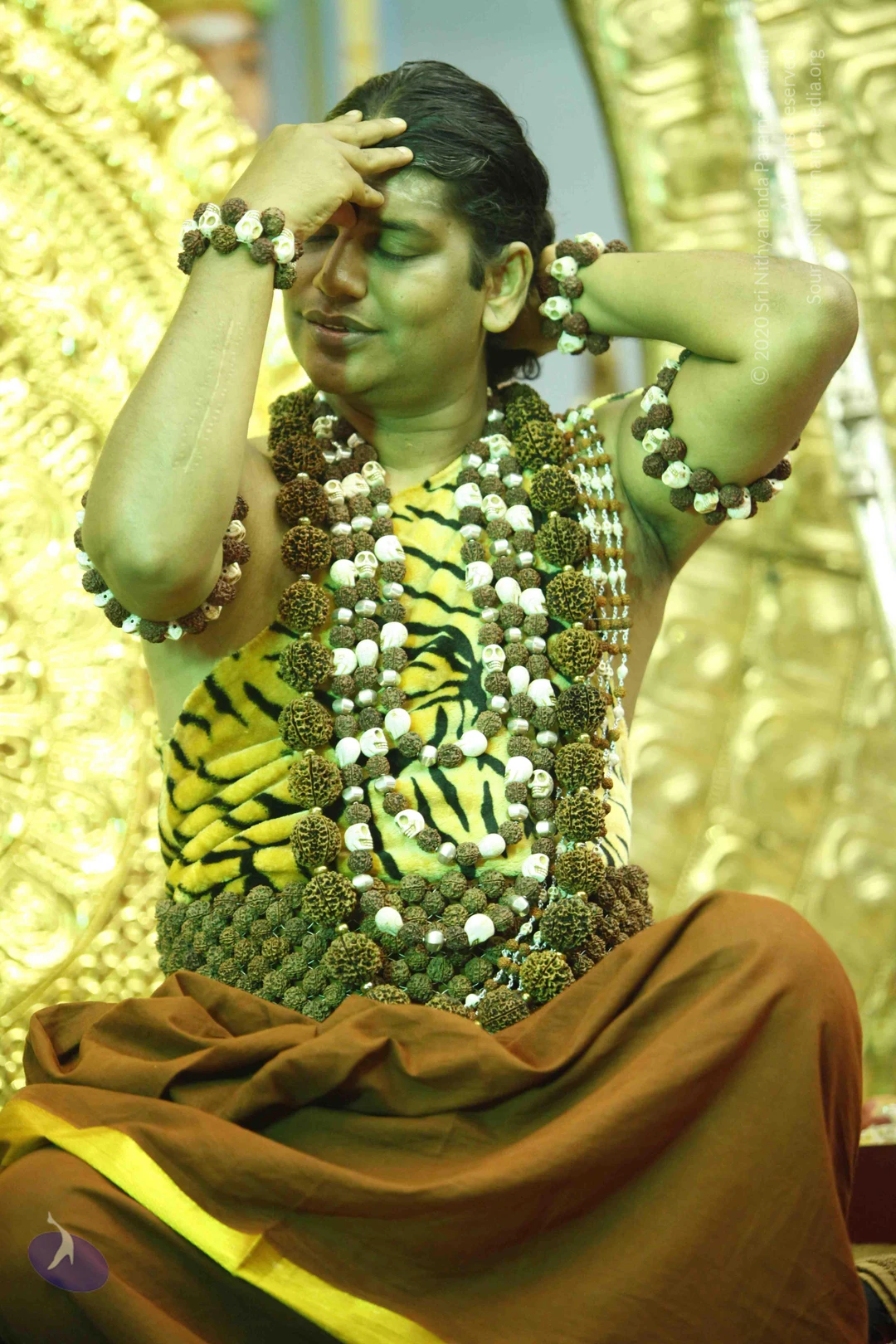
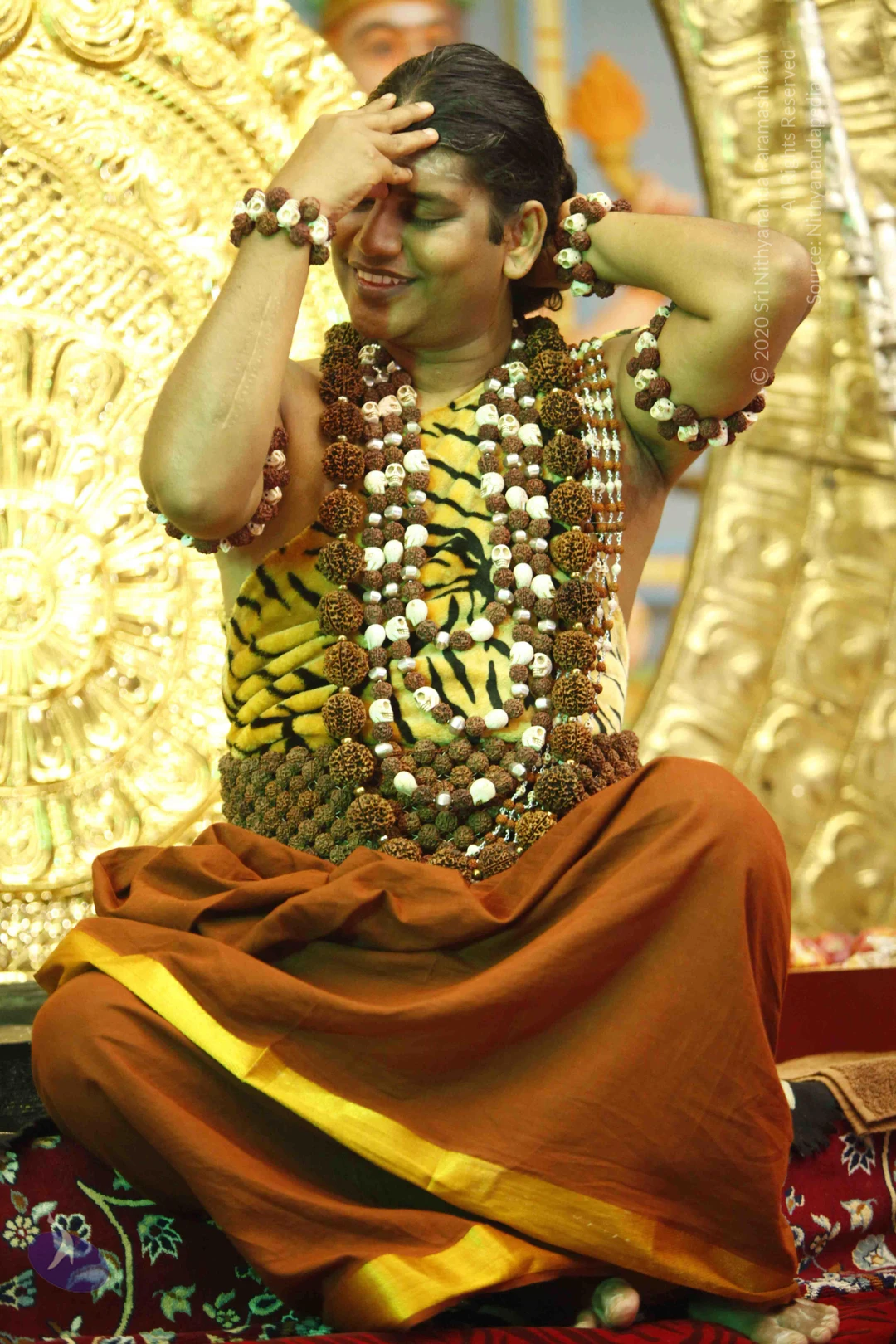
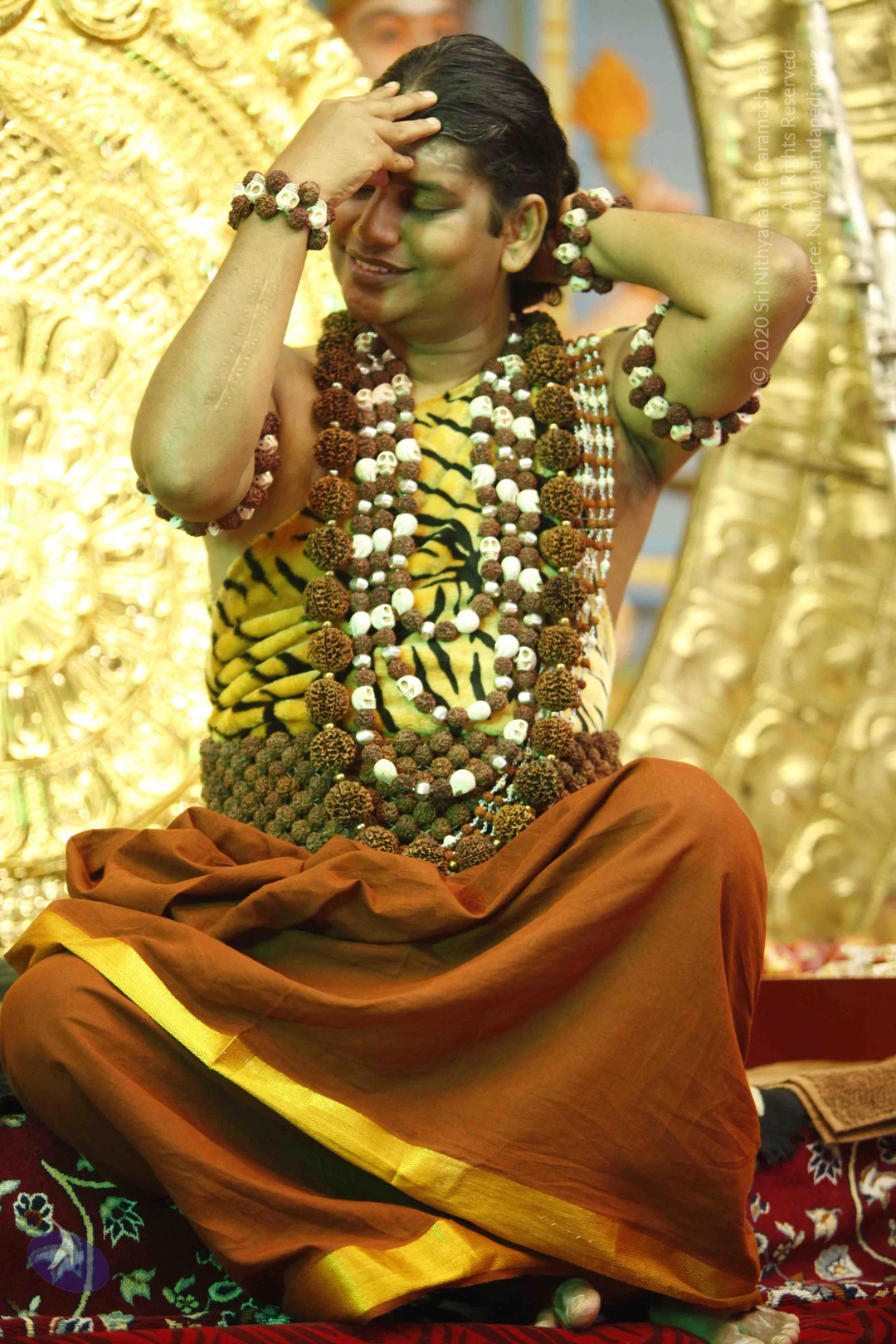
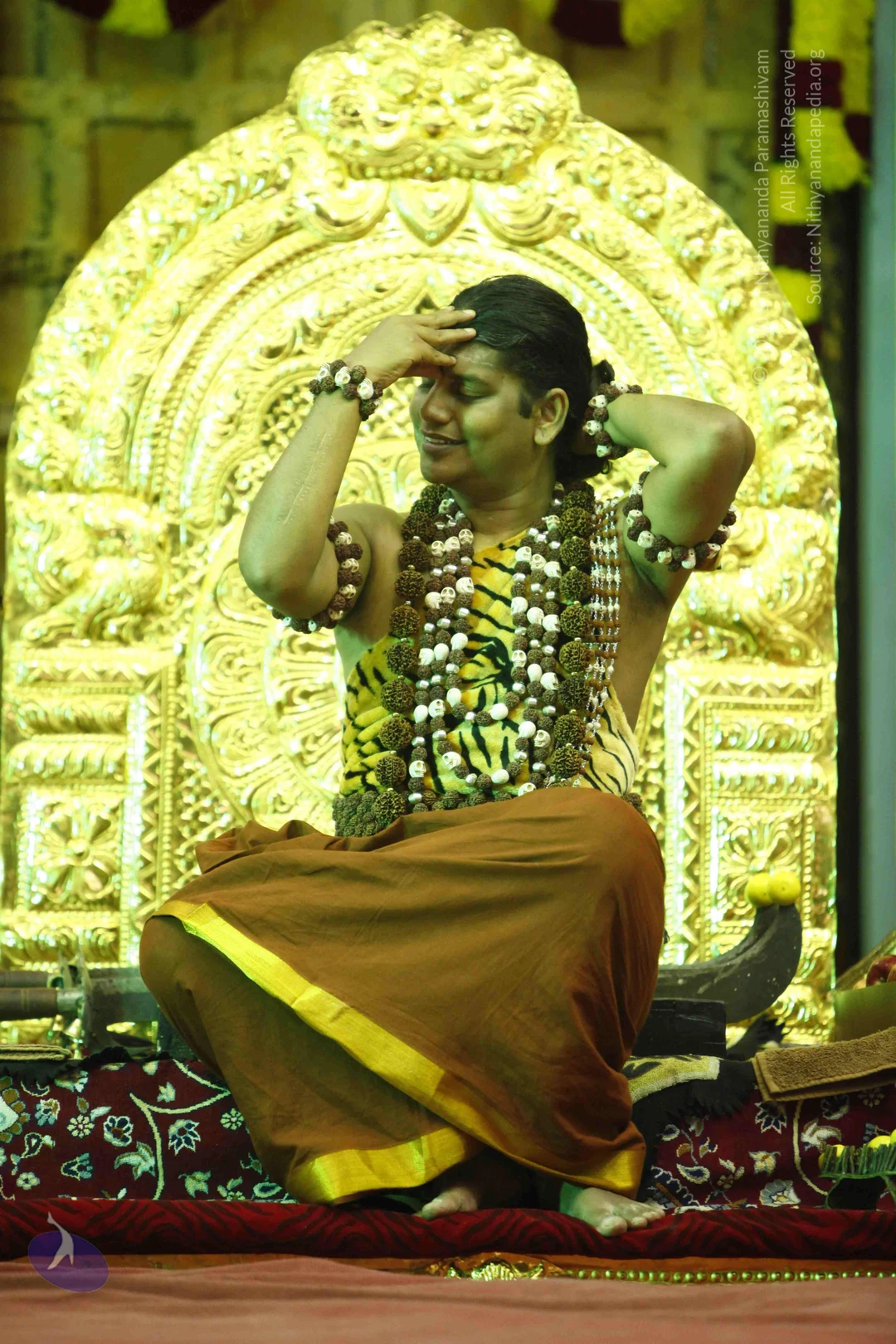
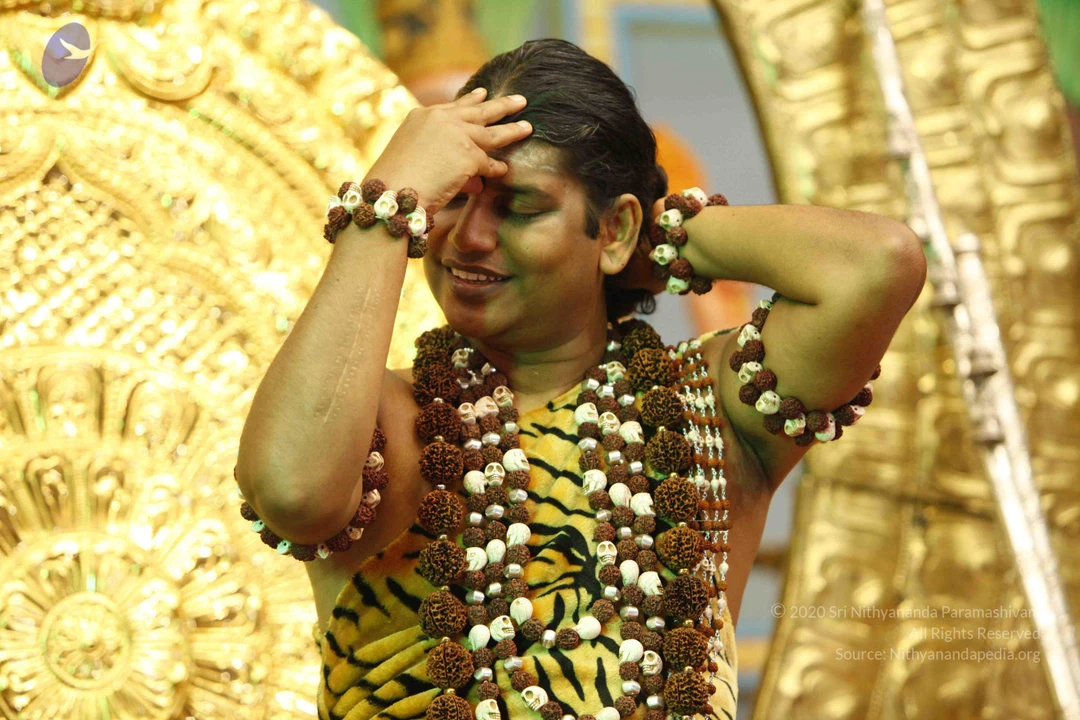
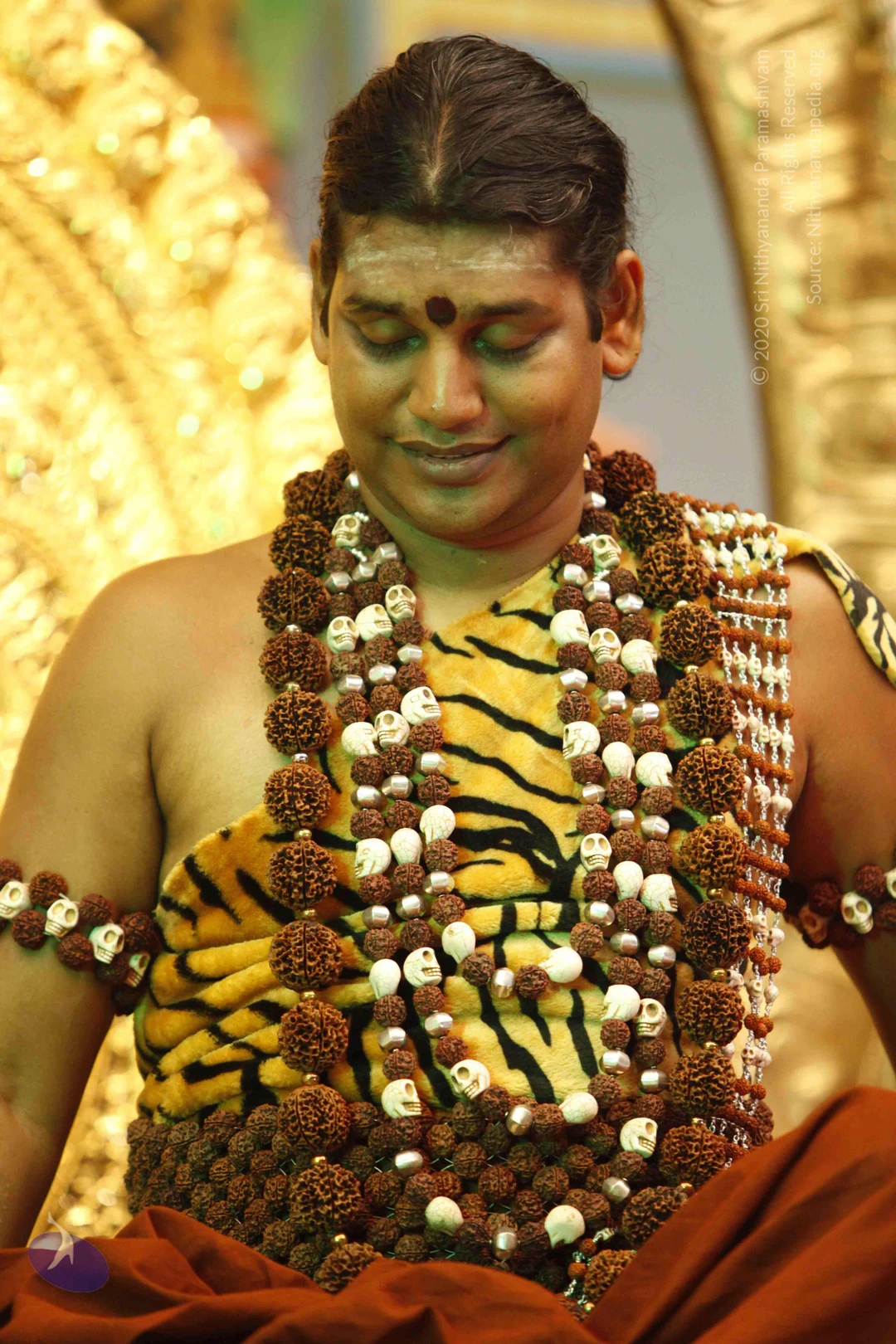
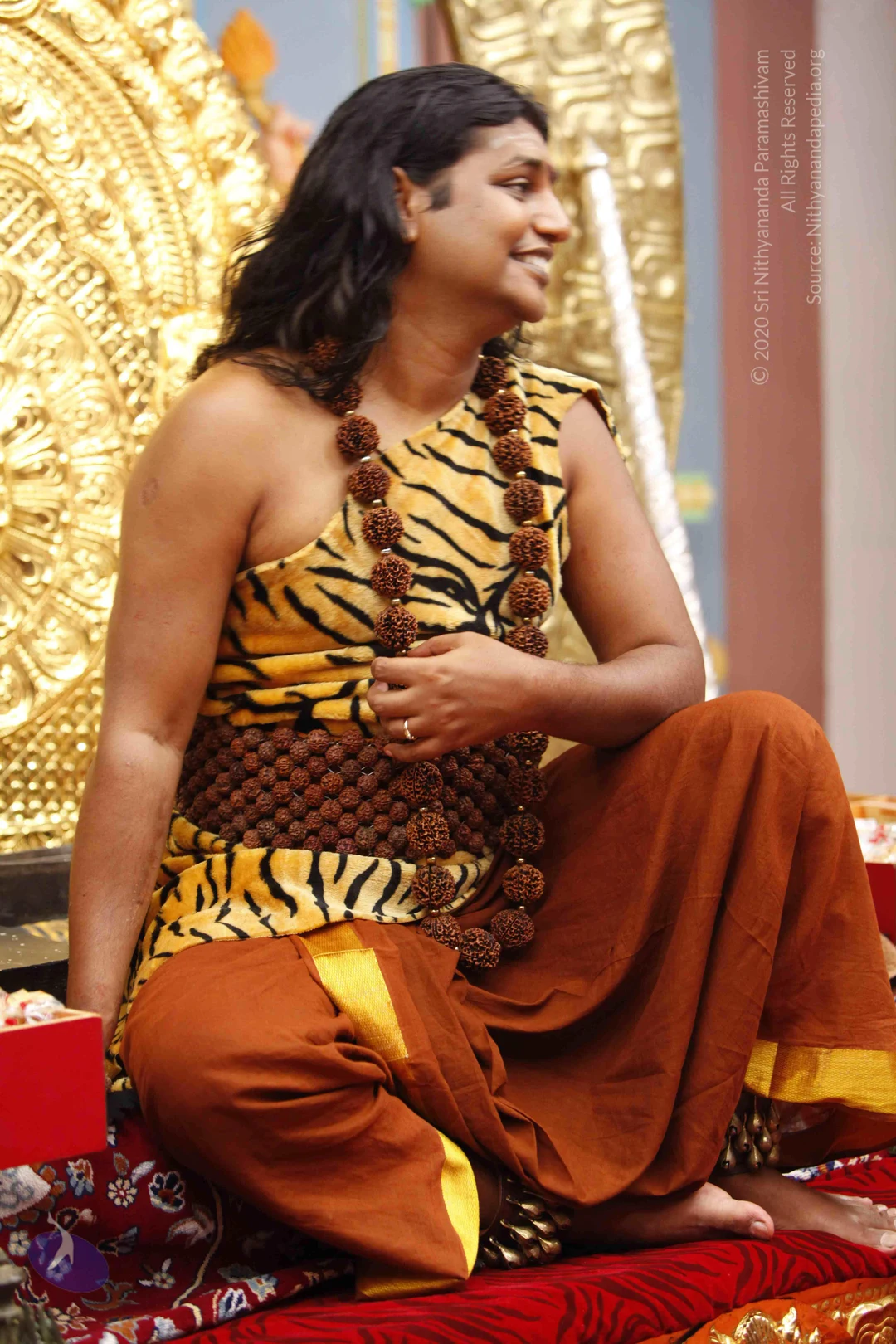
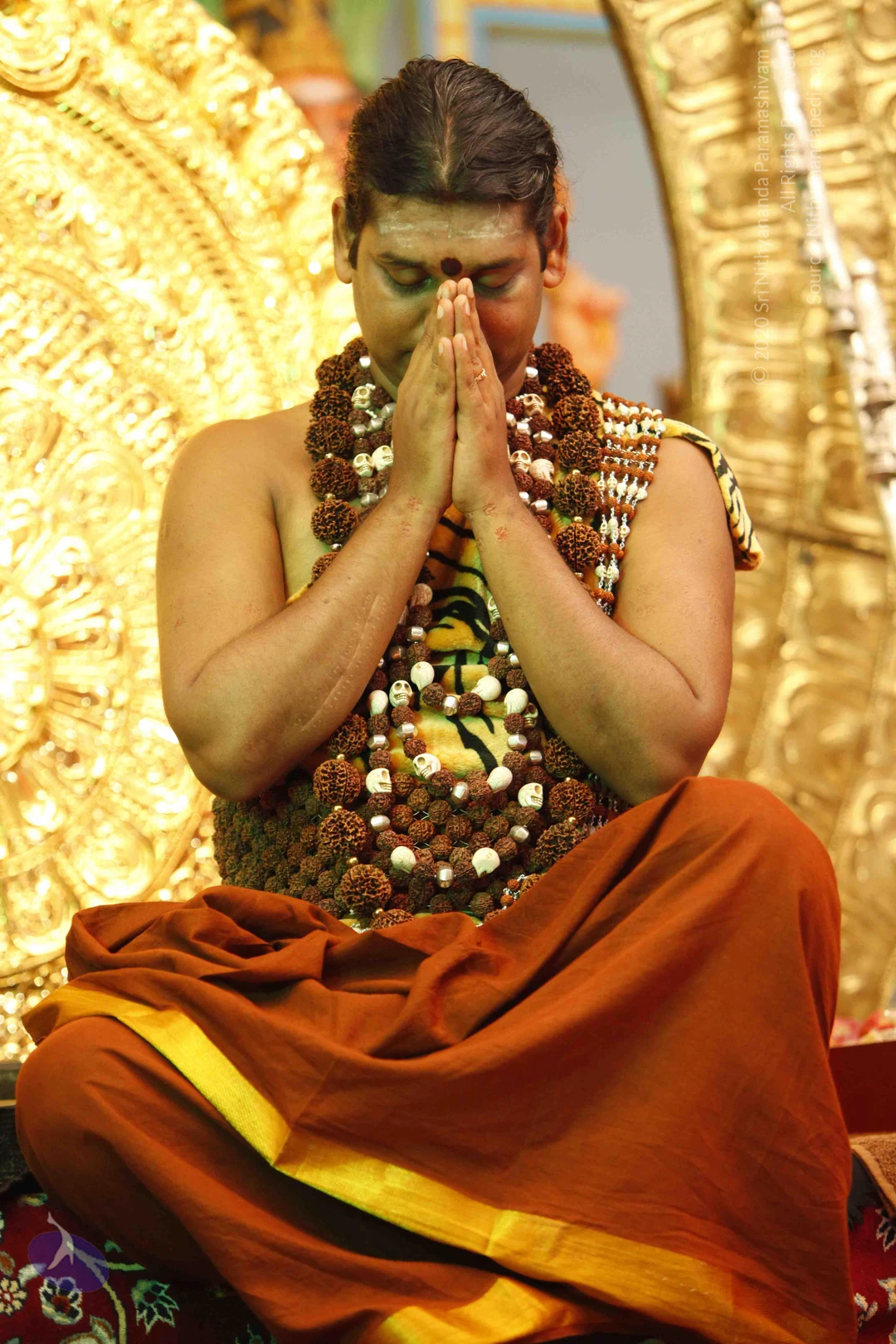
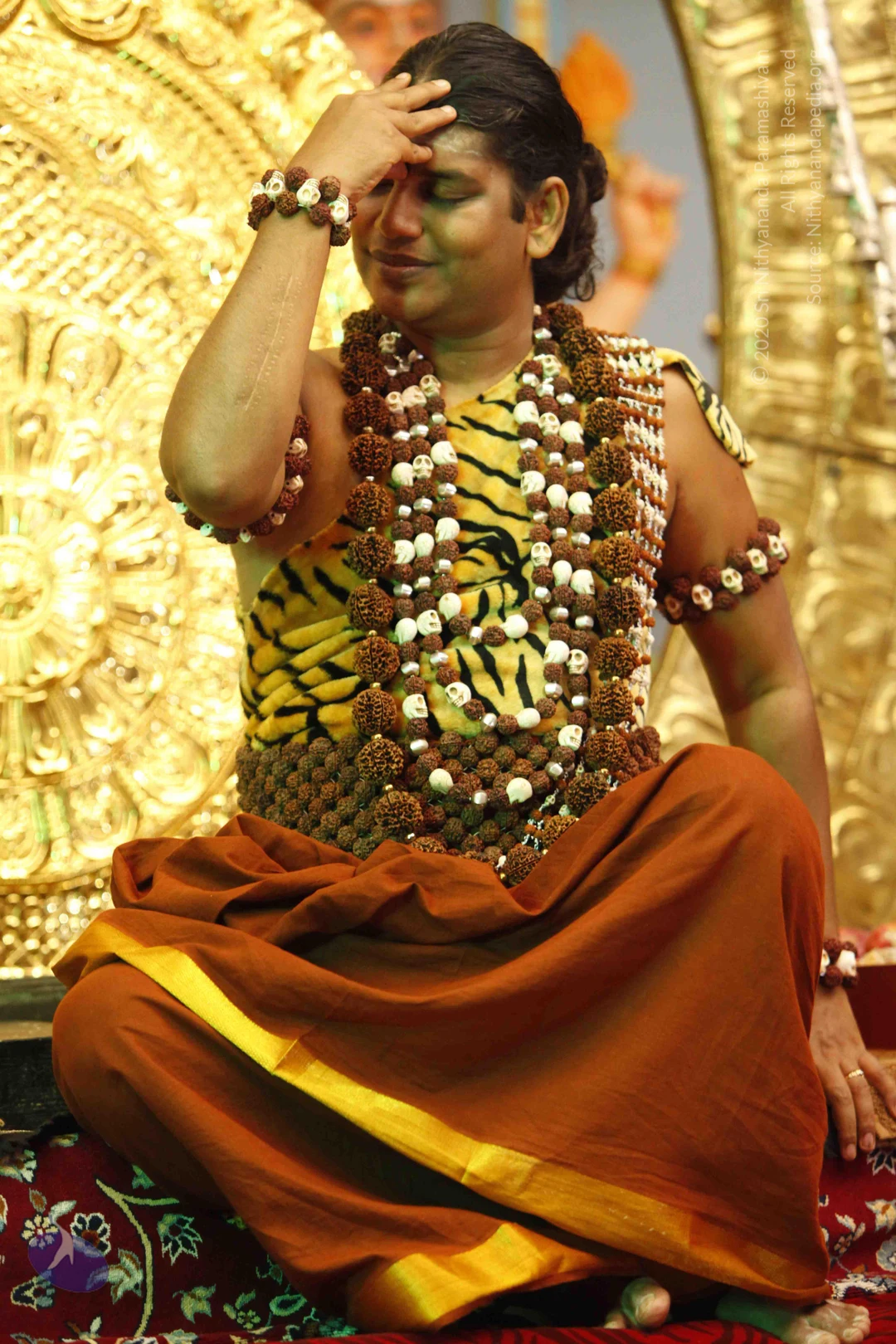
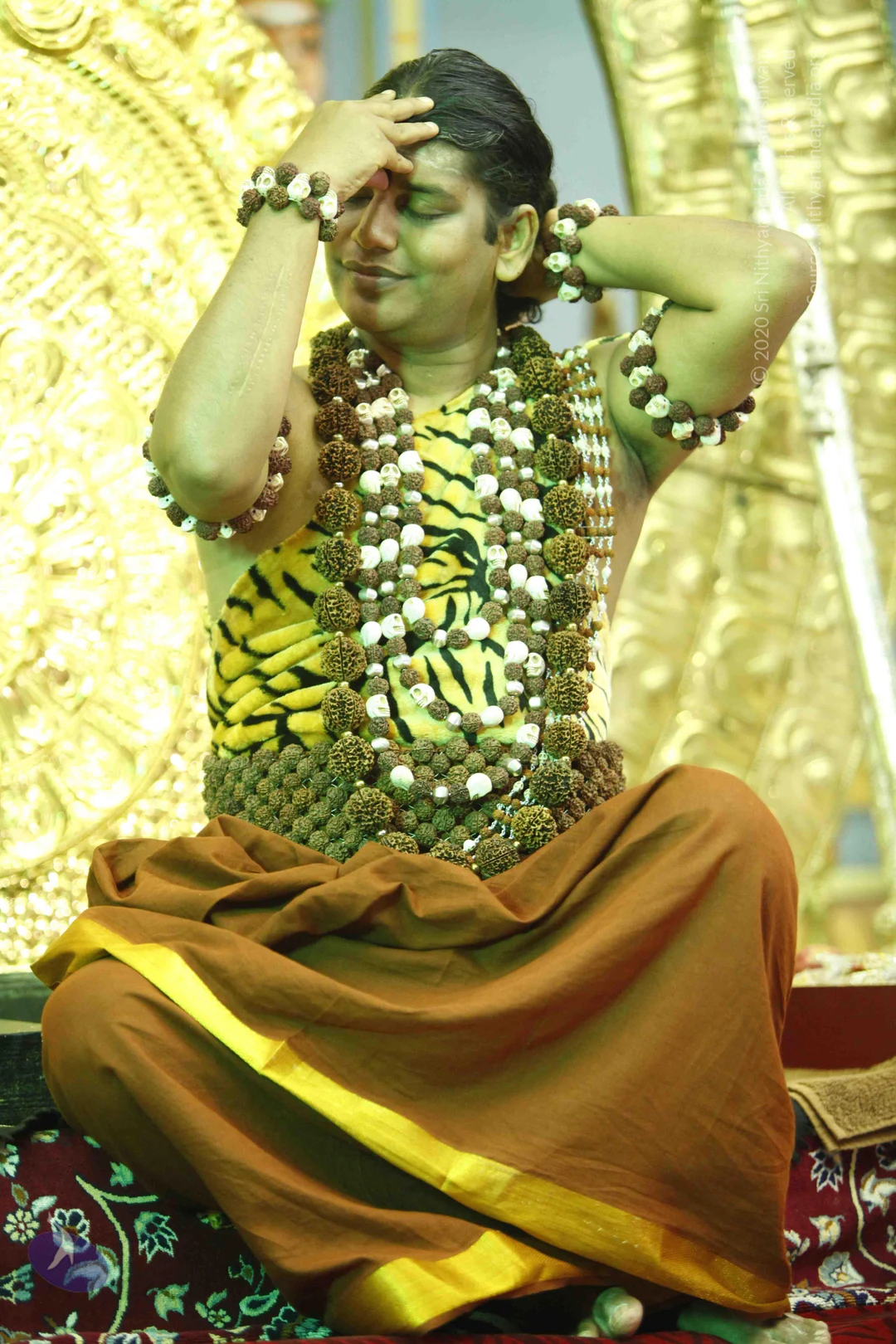
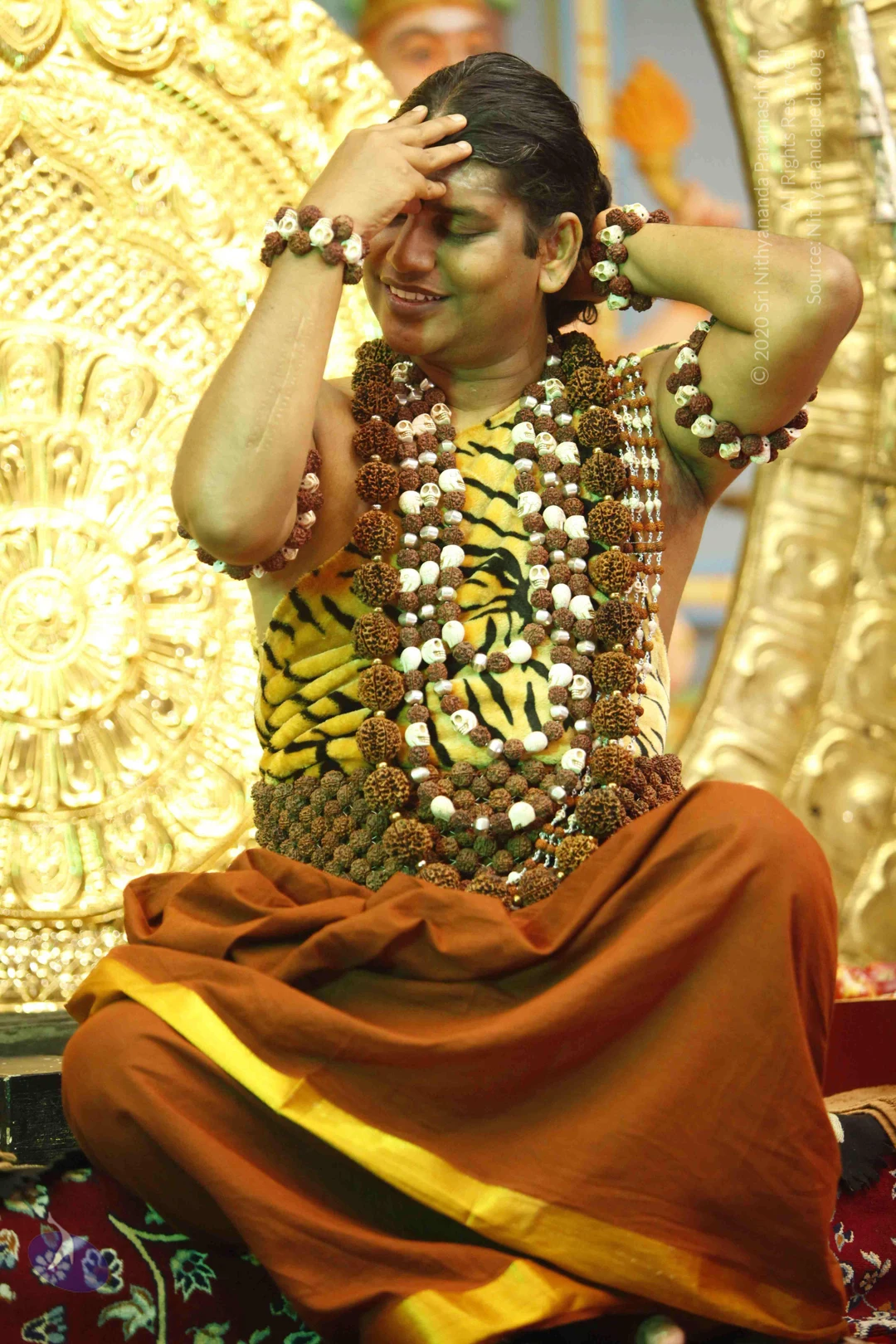
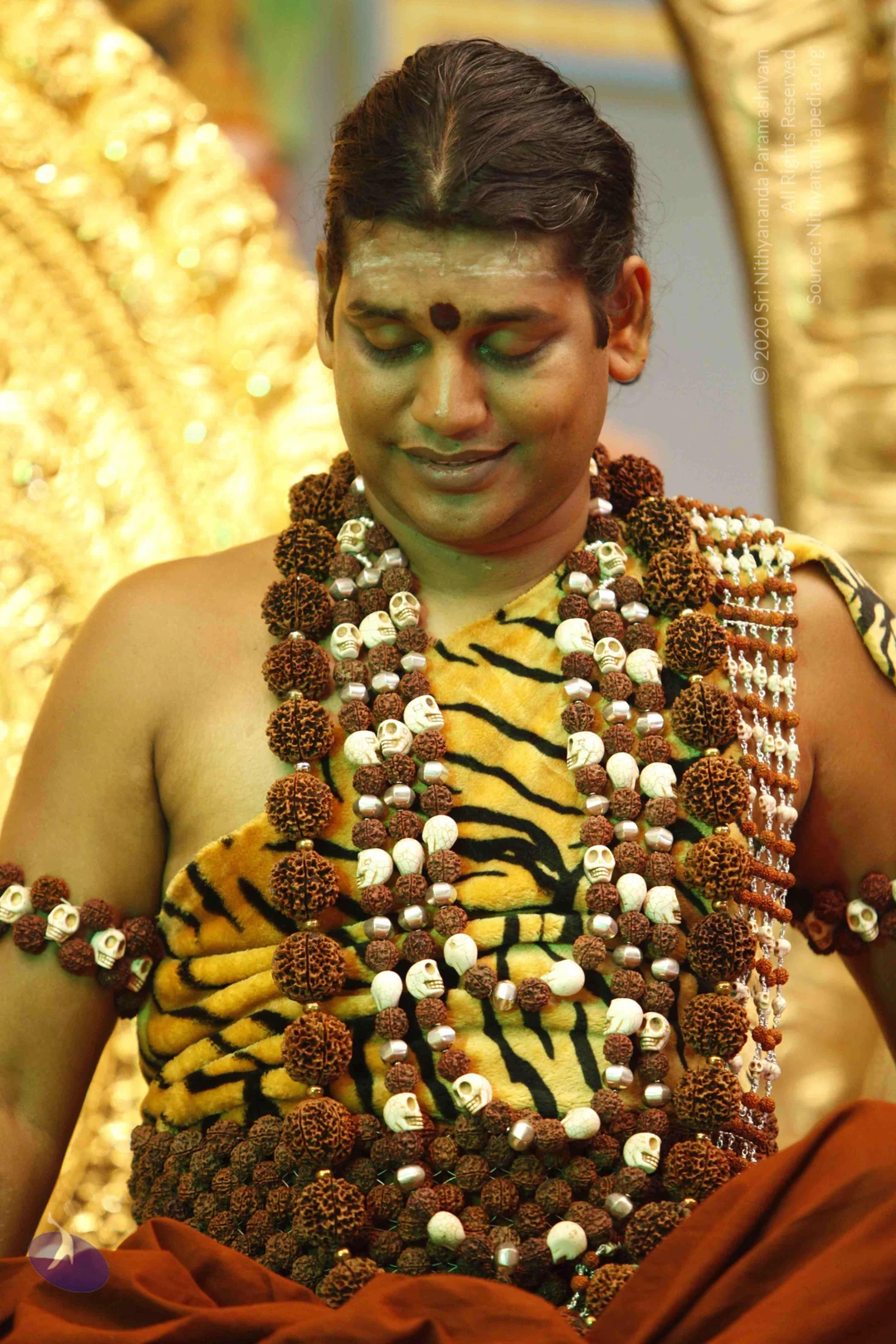
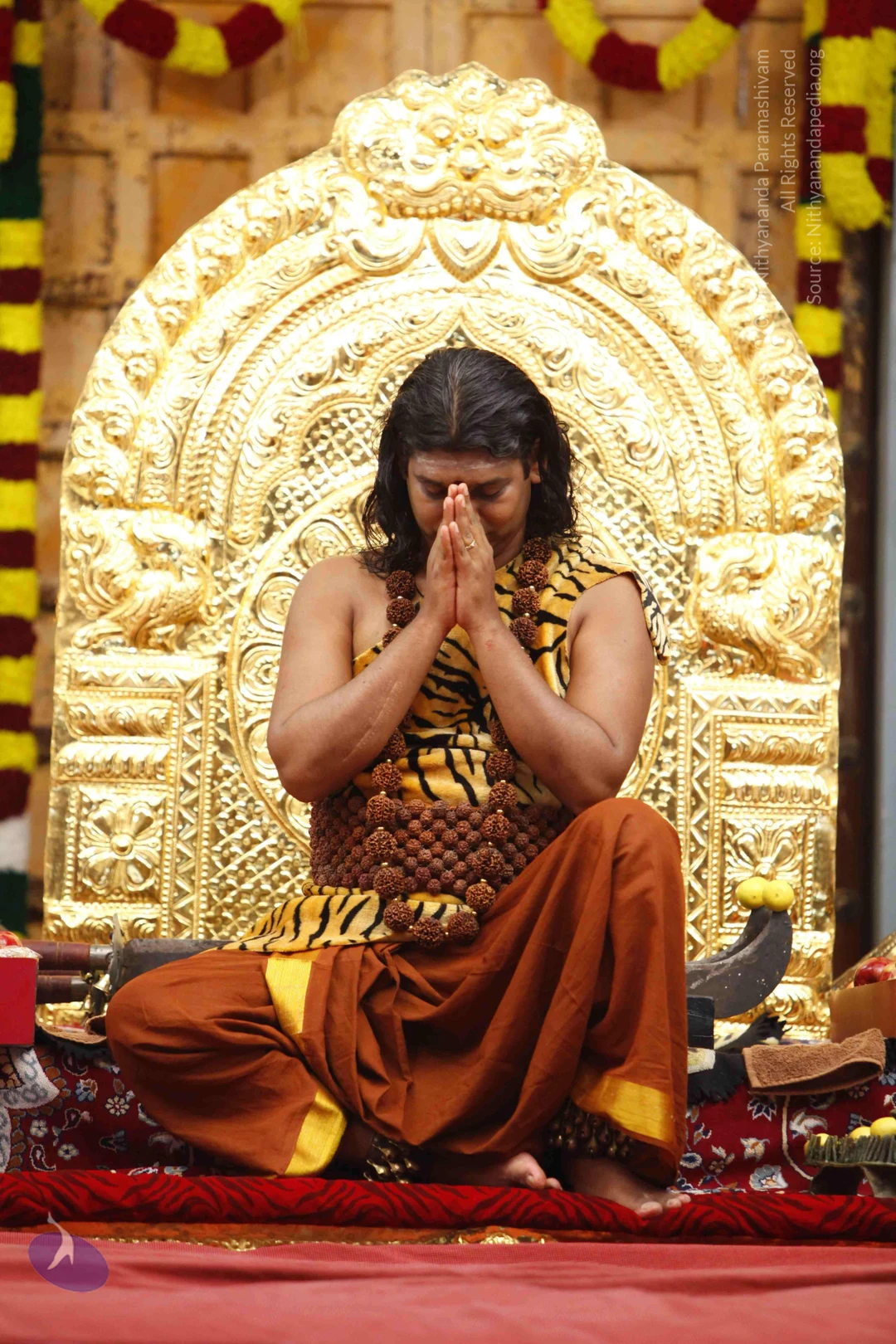
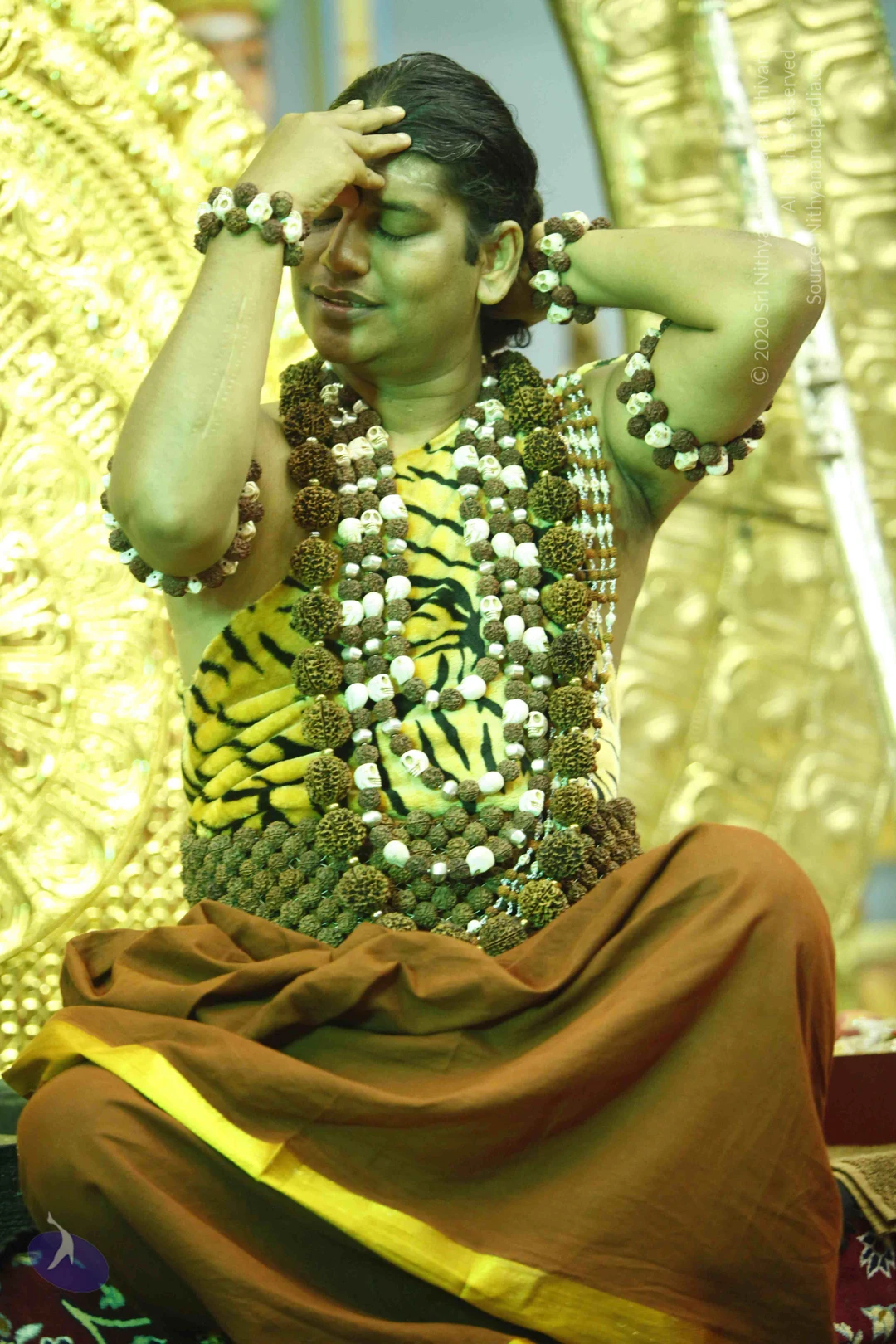
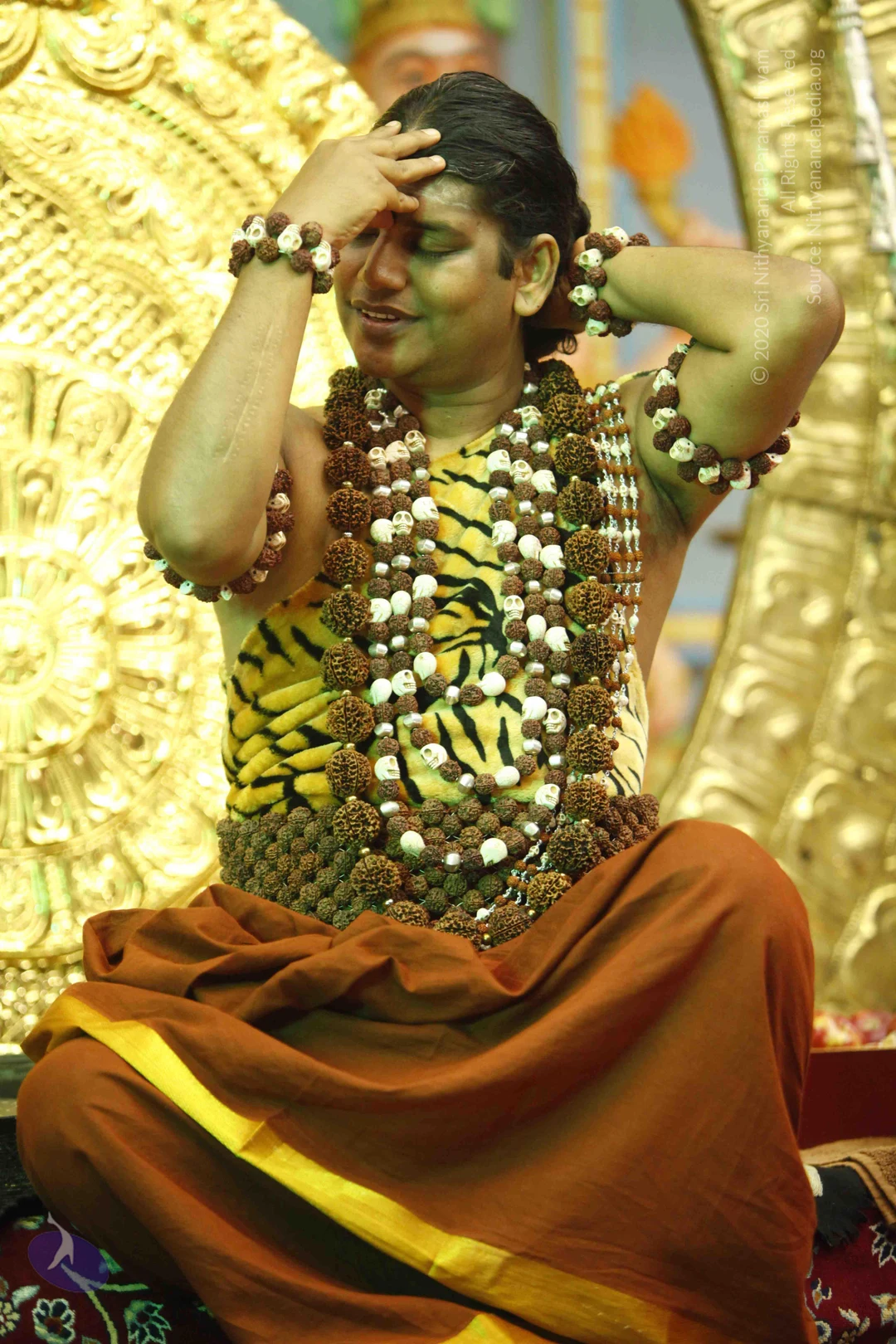
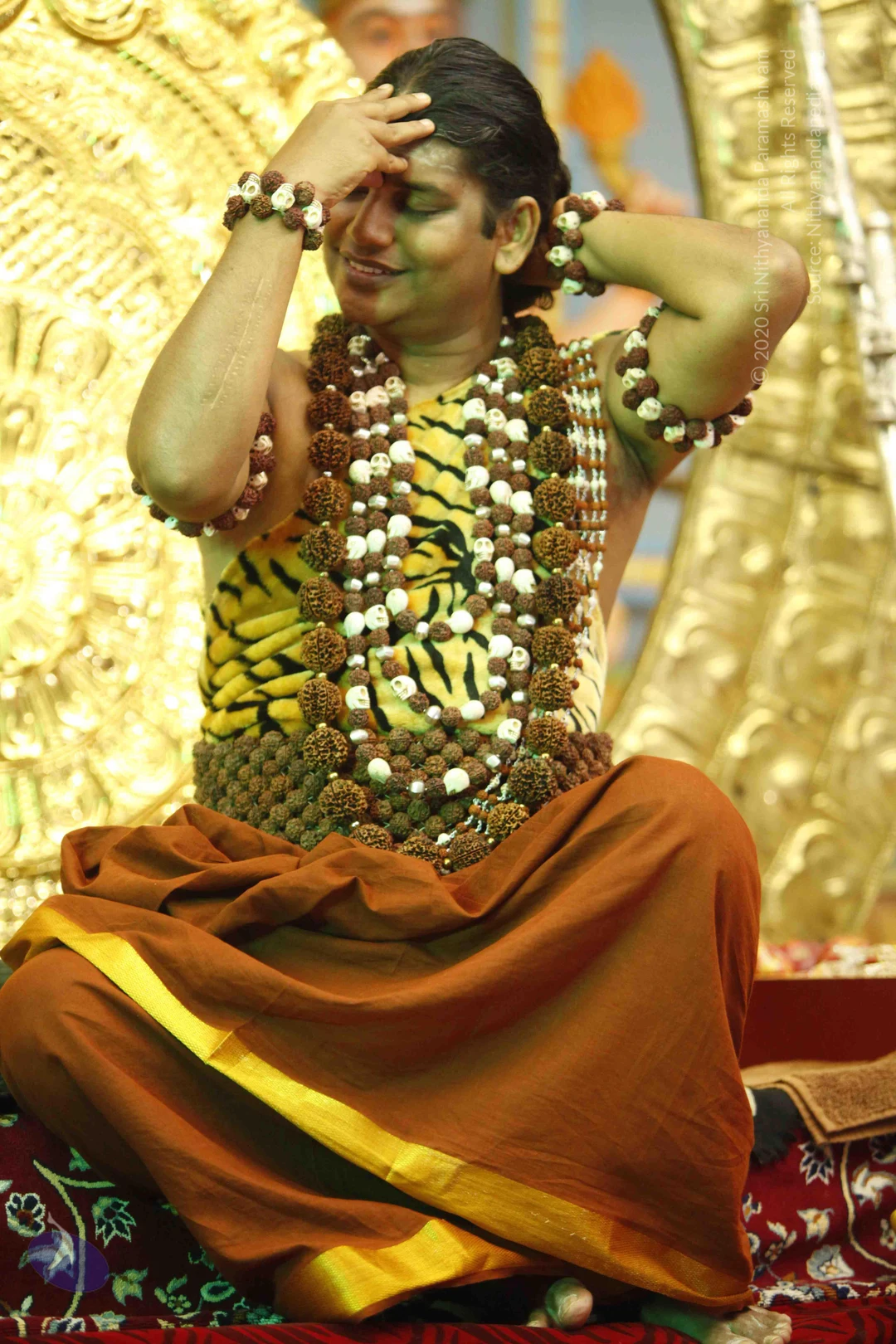
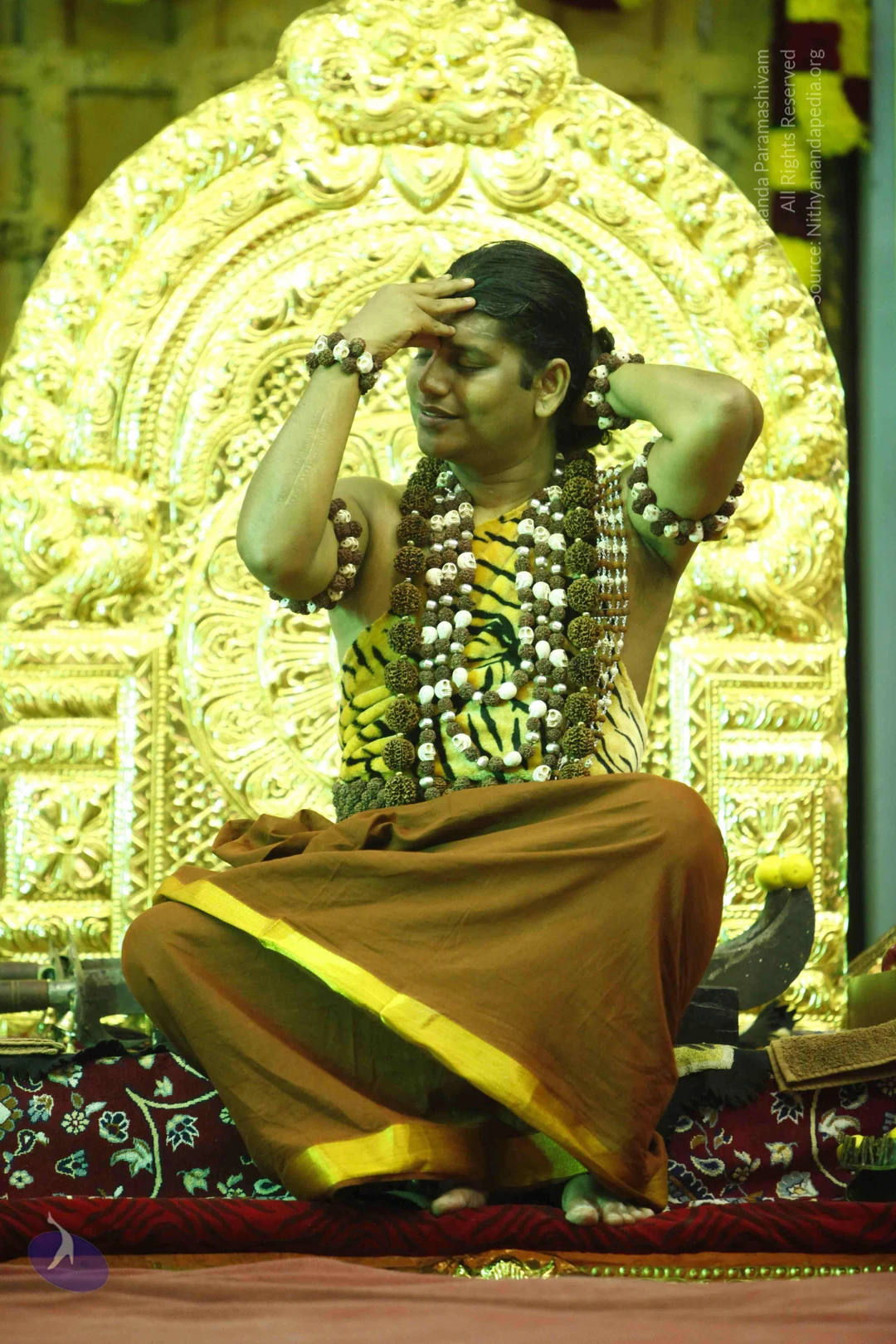
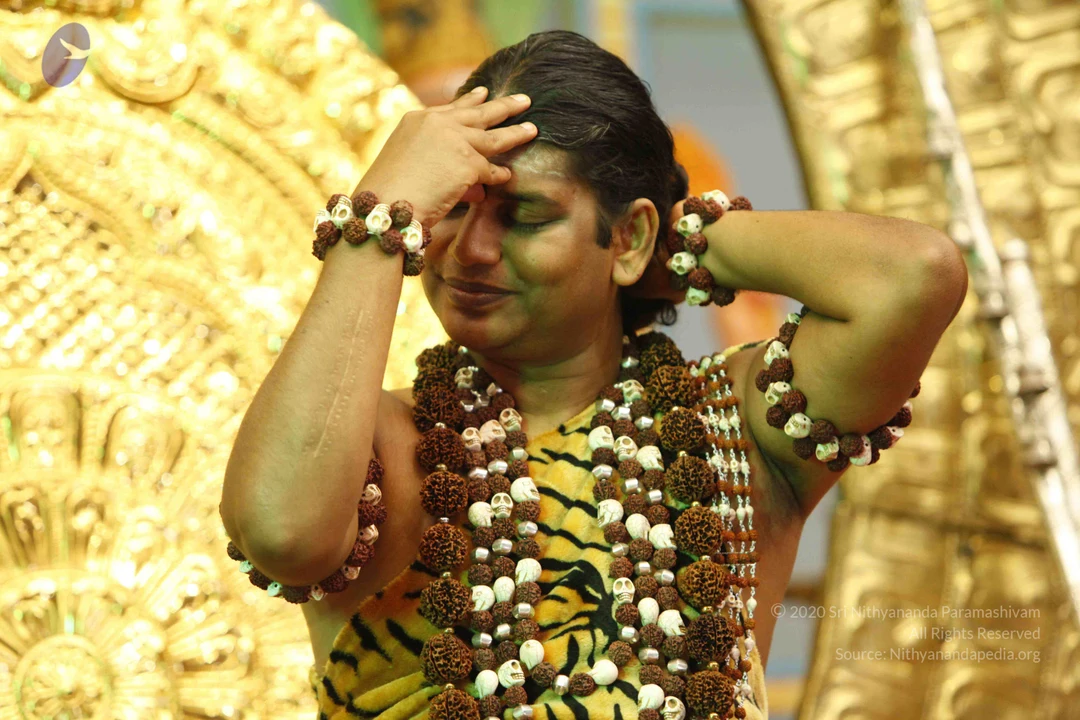
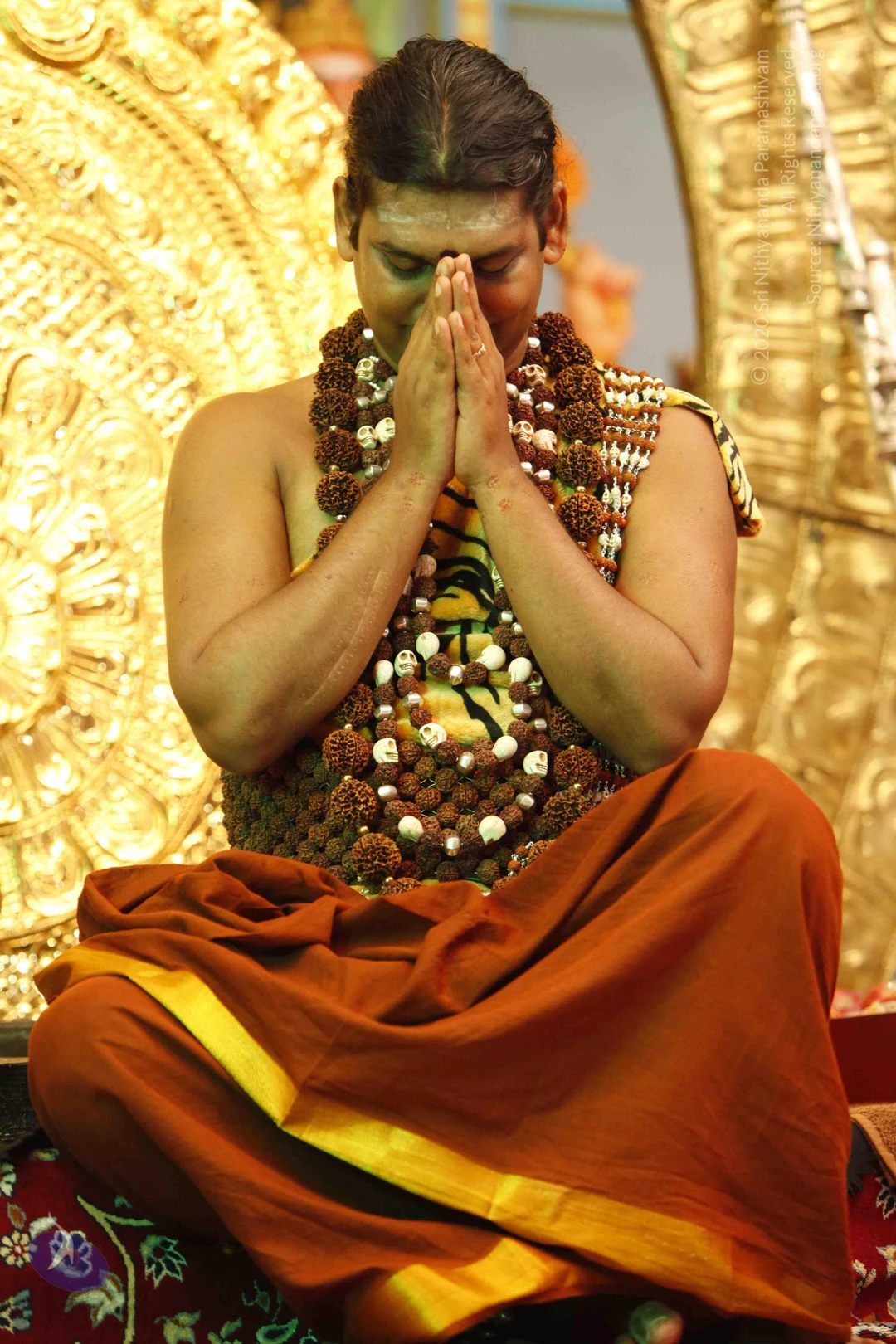
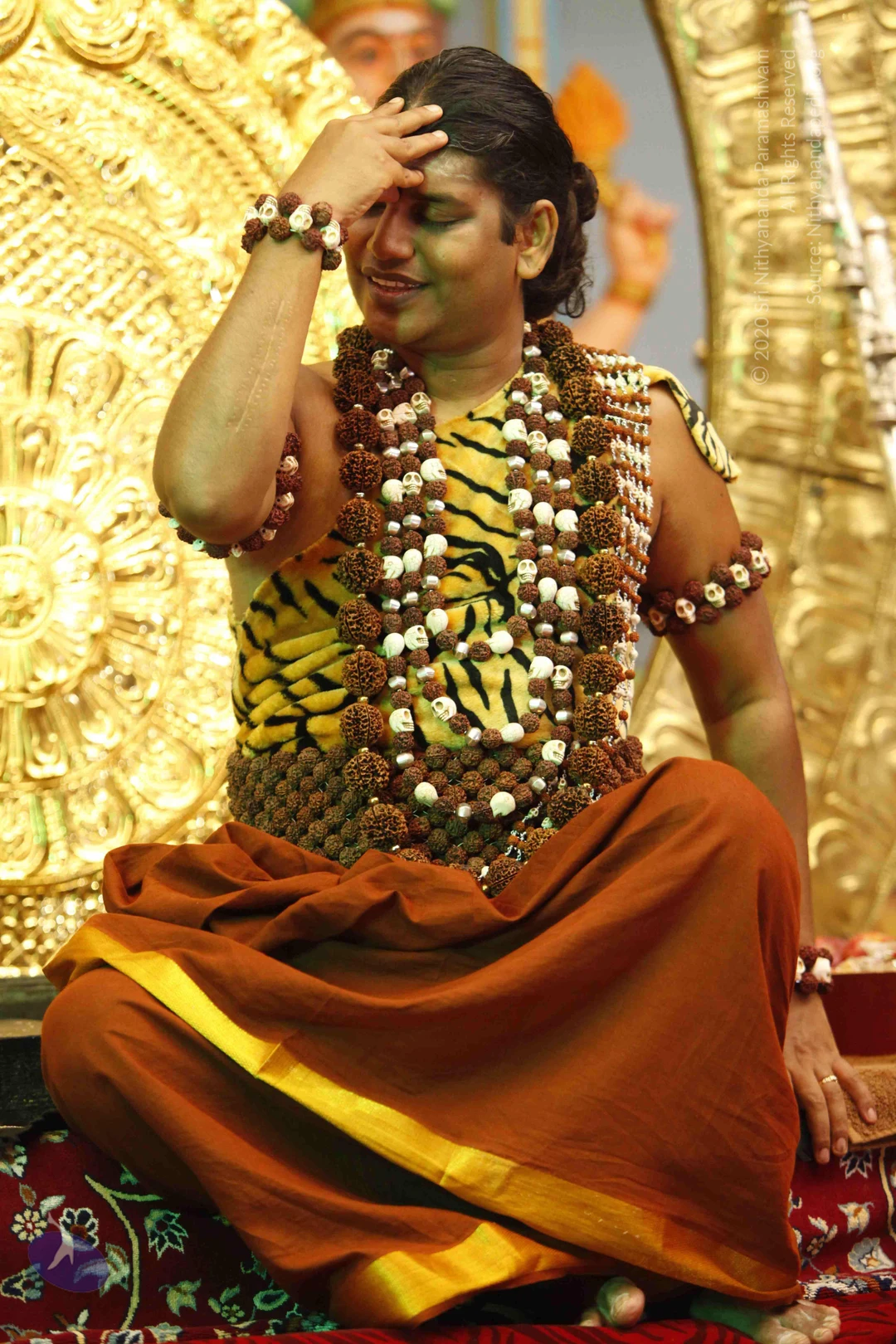
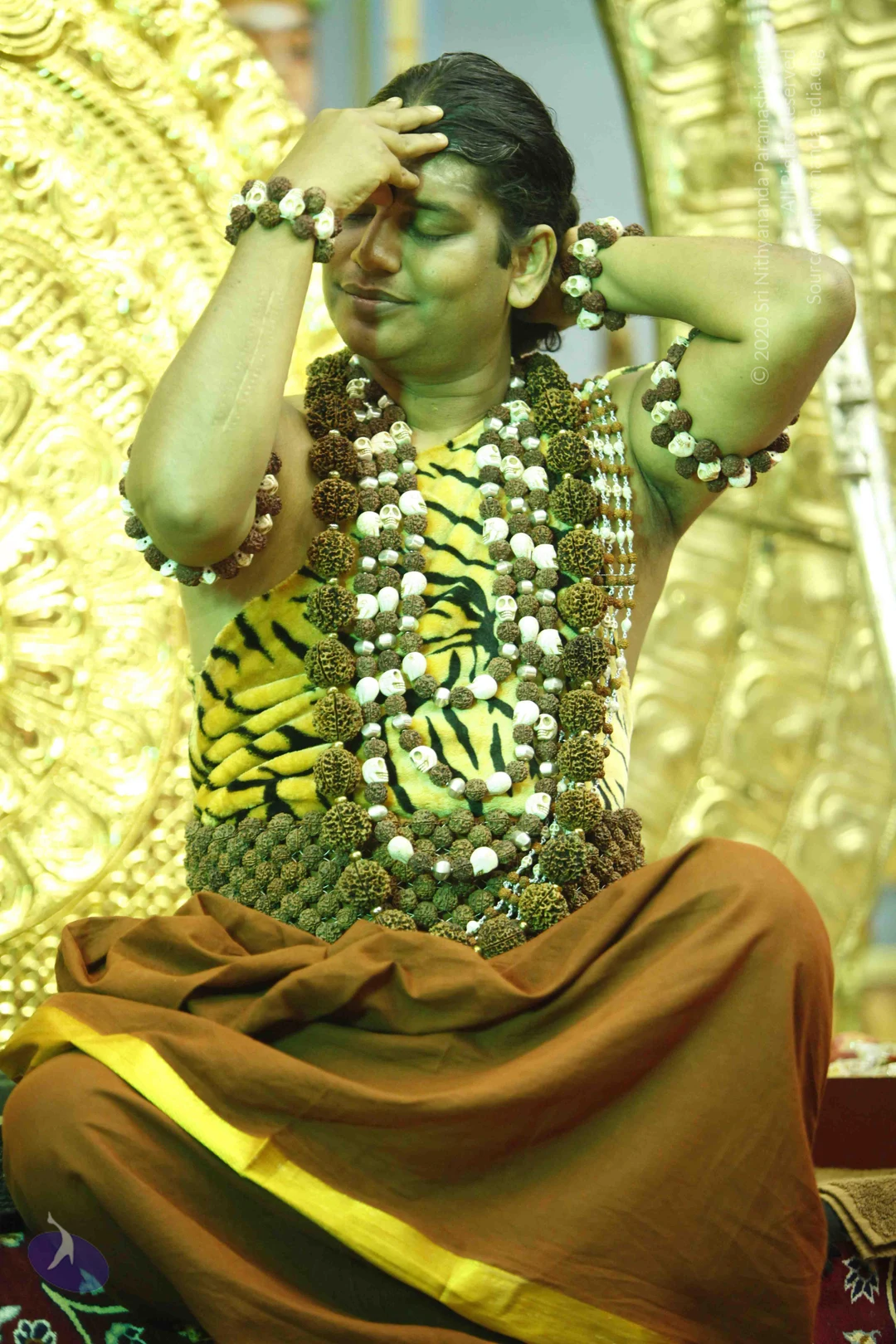
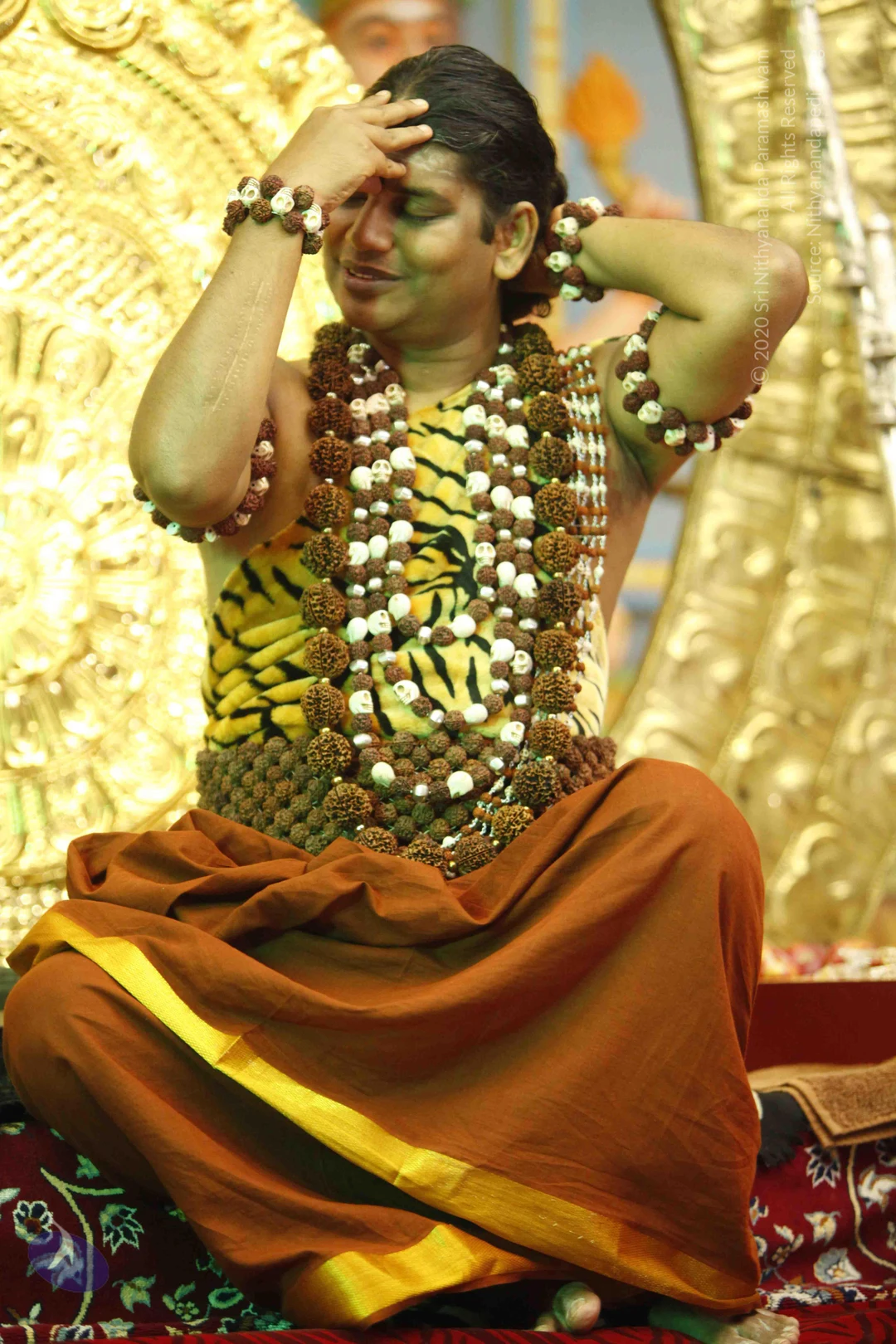
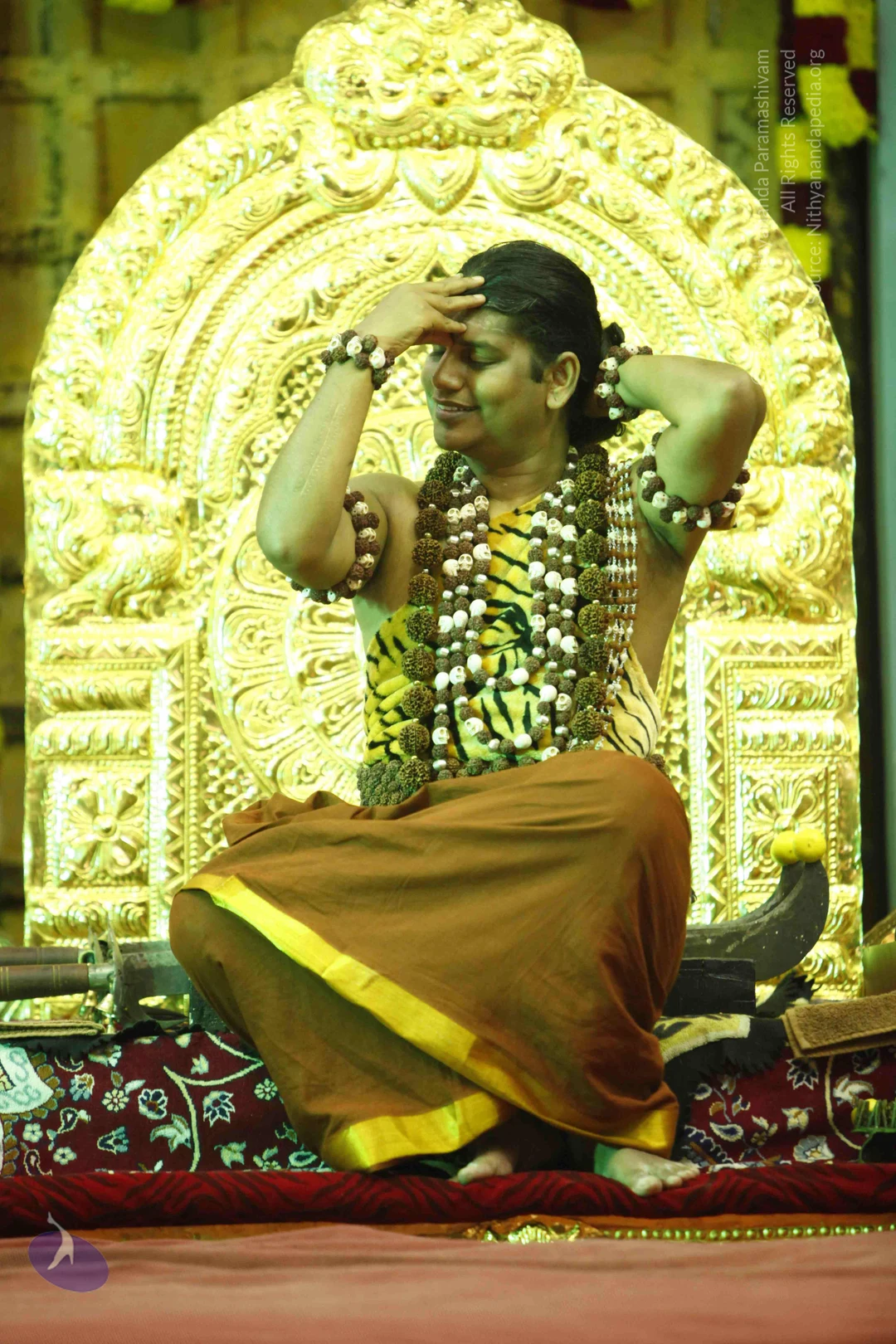
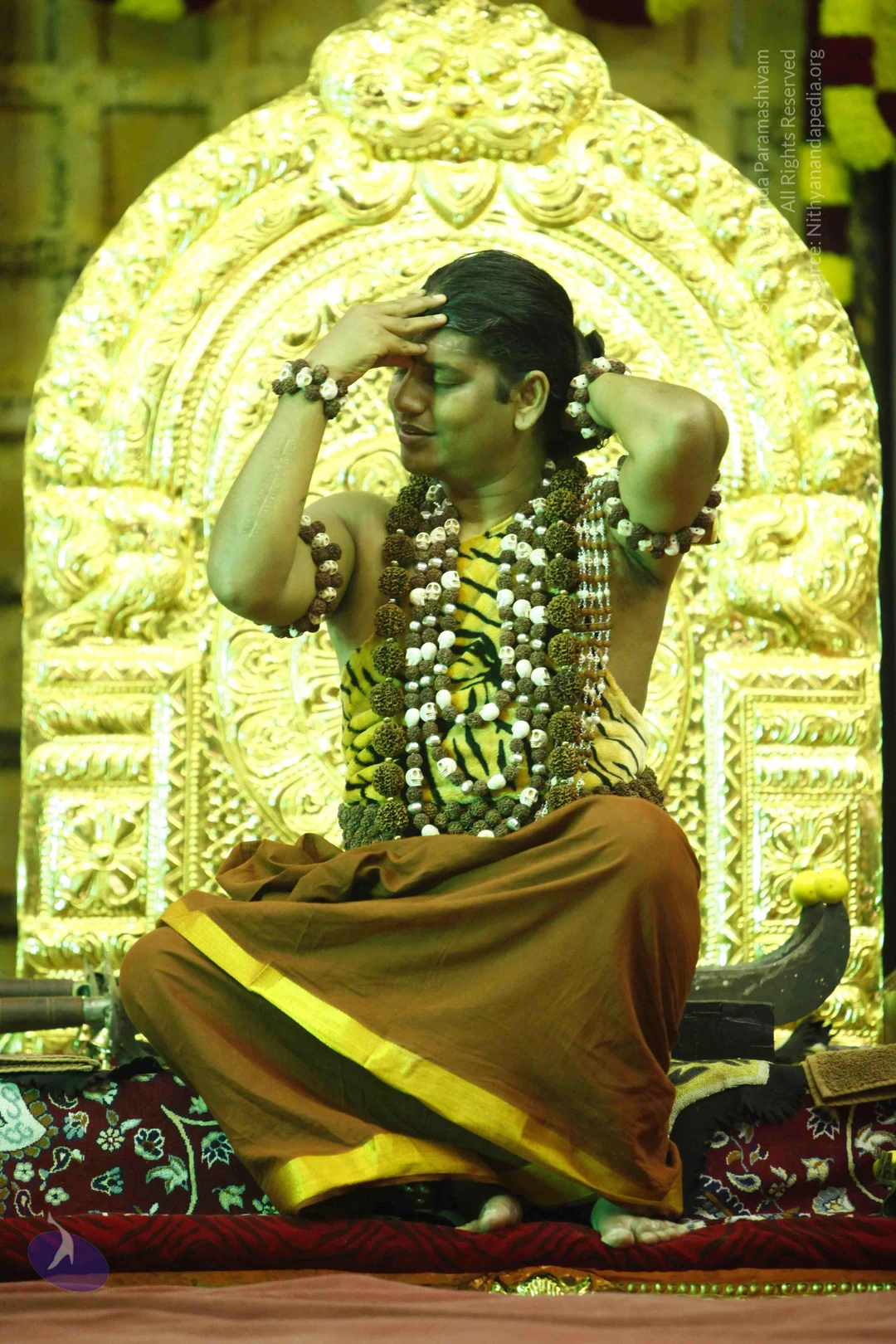
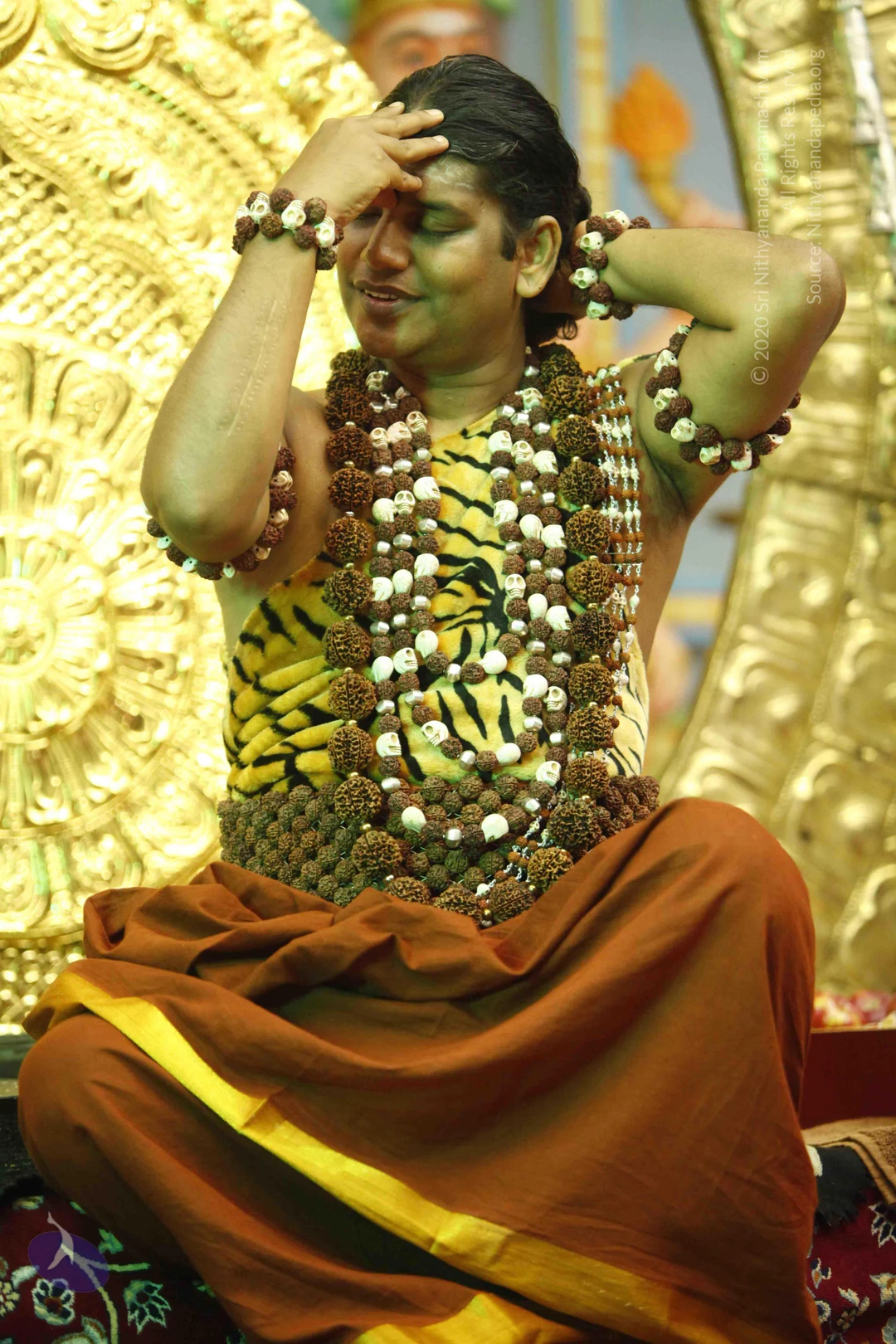
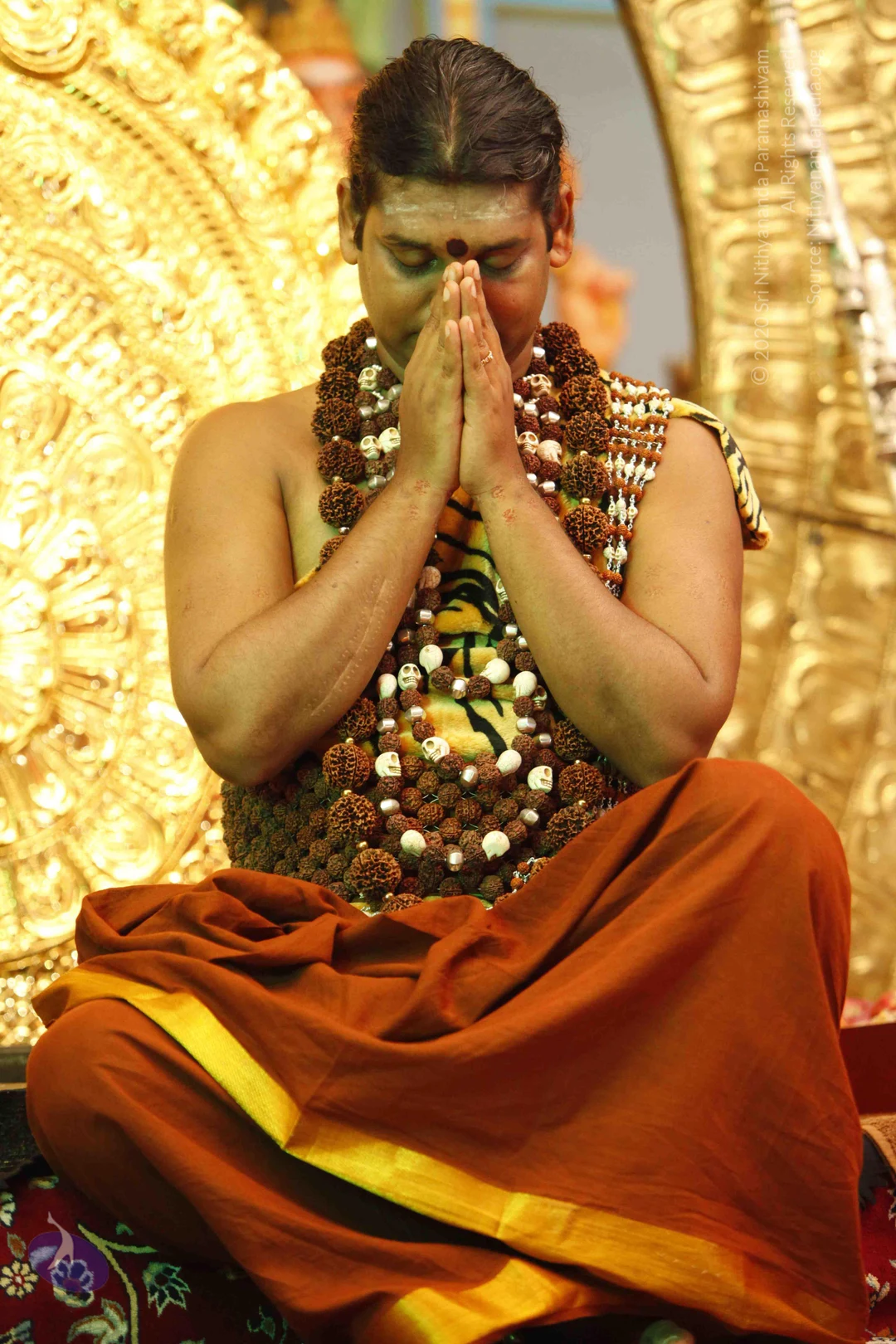
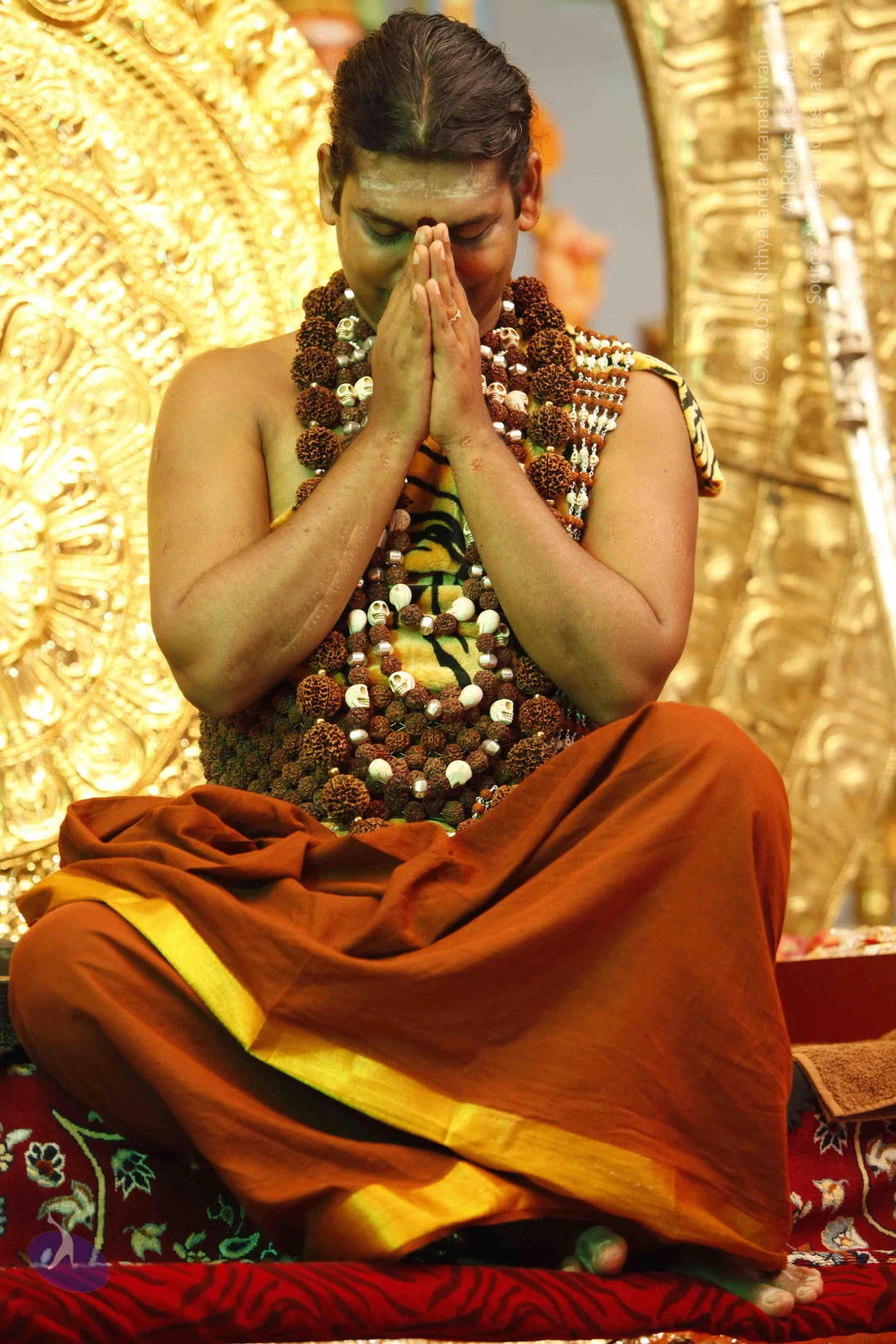
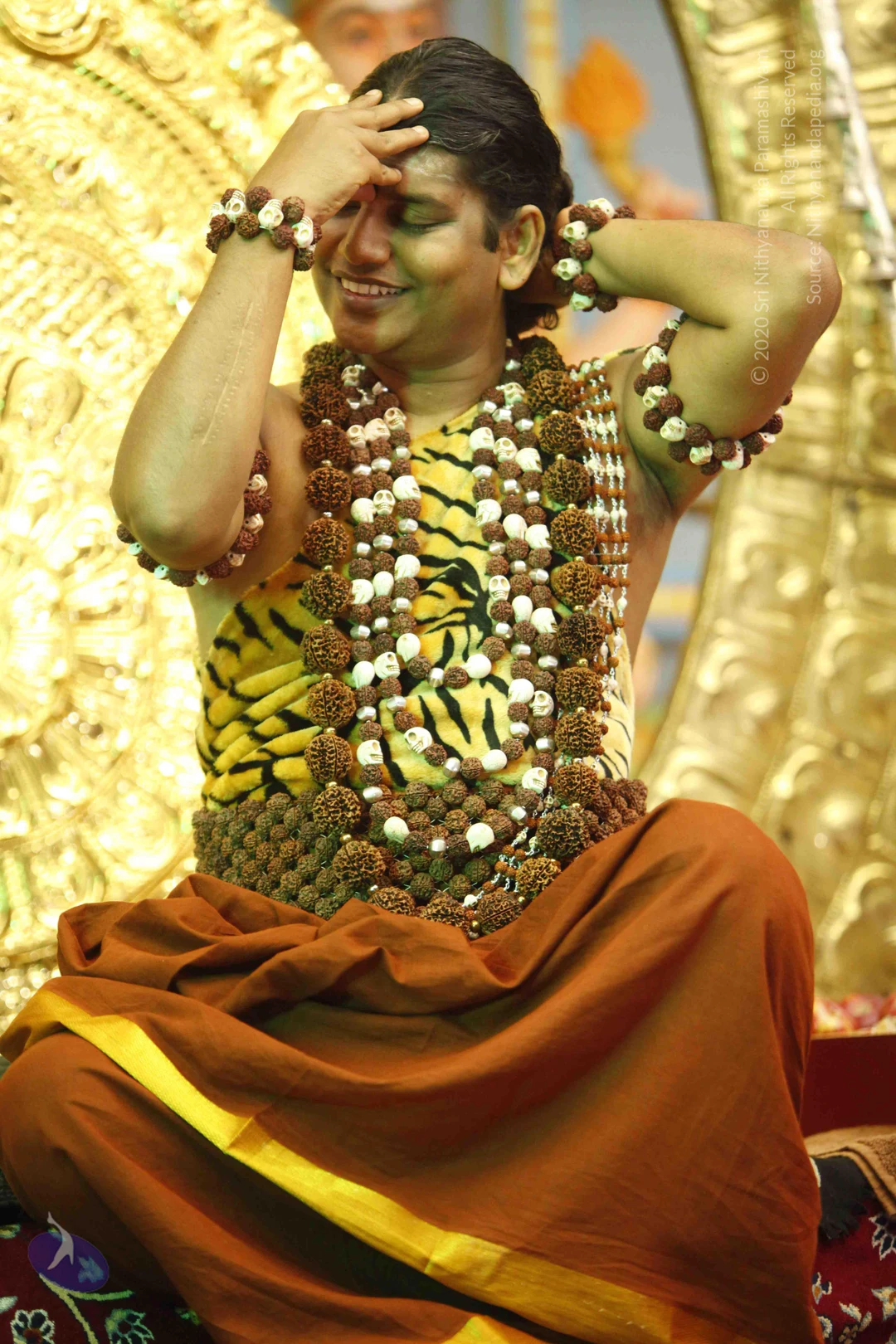
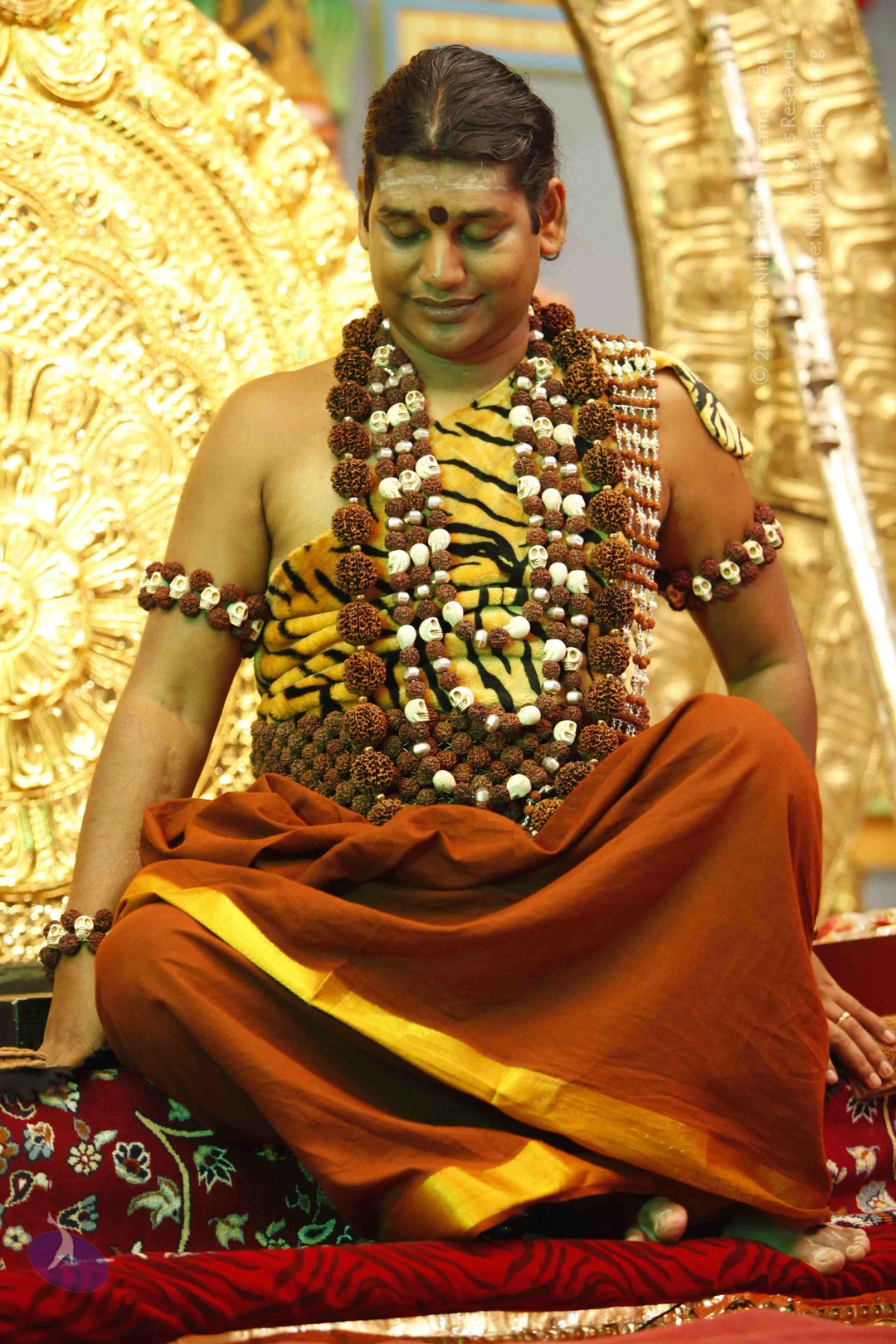
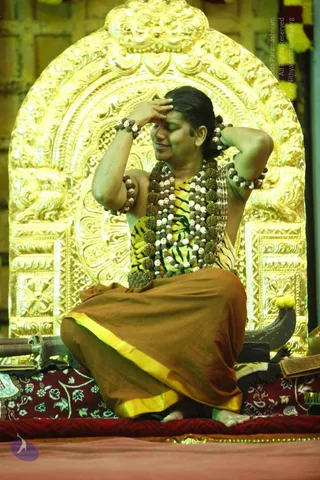
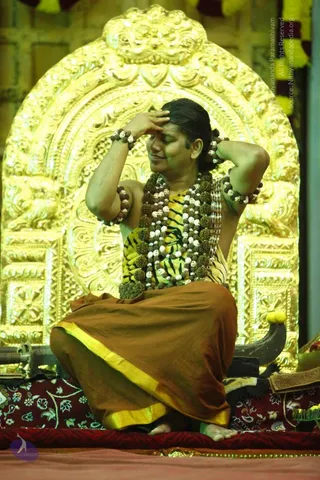
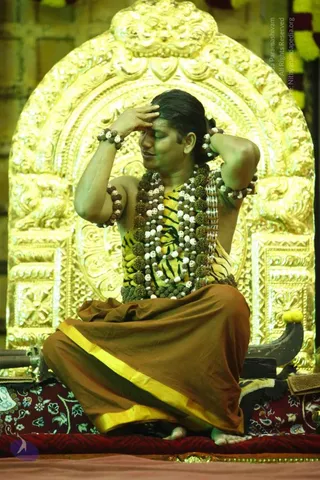
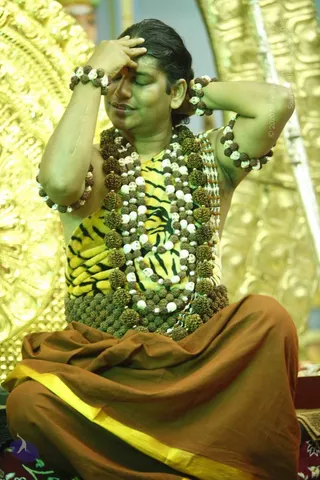
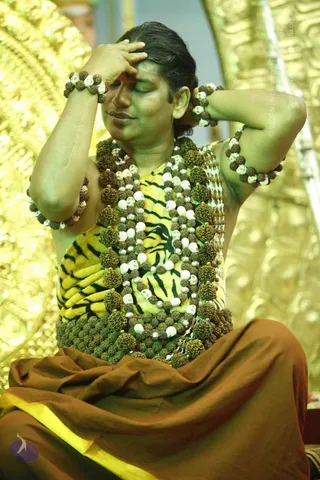
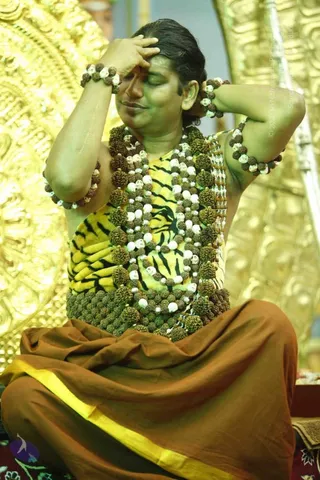
A seated man in a tiger-striped yellow and black top and brown dhoti with a gold border sits cross-legged before an ornate gold repoussé arch on a red and floral cushioned dais. He wears multiple strands of rudraksha and white bead malas, rudraksha bracelets on both arms, and holds one hand to his forehead with a slight smile. A cushioned seat and ceremonial objects are visible at the lower edge.A seated man in a yellow and black striped sleeveless top, a brown dhoti with a gold border, and layered rudraksha and white bead malas sits on a red and floral cushioned dais before an ornate gold arched backdrop. He lifts one hand to his forehead and the other to the back of his head, smiling with eyes half-closed. Bare feet rest on the platform. Wrist bands of rudraksha beads complete his ornaments. A candidate with long swept-back hair and rudraksha malas is present; the appearance cues are partial and the page indicates the event involved him, so identity remains uncertain.A seated man in a yellow and black tiger-striped sleeveless top and a brown dhoti with a gold border sits cross-legged on a red and floral patterned cushion in front of an ornate gold-leaf arched backdrop. He wears heavy necklaces of rudraksha beads and white beads, rudraksha bracelets on both arms, and holds one hand to his forehead.A seated man in a tiger-striped yellow and black wrap, with heavy layered rudraksha and white bead necklaces and matching bead bracelets, raises both hands to his head with eyes closed in a meditative gesture. He wears a brown dhoti with a gold border. Behind him are ornate gold-toned carved panels. A Swamiji (probable) candidate: long swept-back hair and ceremonial rudraksha malas, shown in an appearance-based label only.A photograph of a seated man with closed eyes and one hand raised to his forehead, his other hand touching the back of his head. He wears a yellow and black tiger-striped garment across his chest, layered with dark rudraksha beads, white skull-shaped beads and pearl strands, plus matching beaded bracelets on both arms. A brown cloth with a yellow border drapes his lap. Behind him is an ornate gold-toned backdrop with embossed patterns.A seated man in a tiger-striped yellow and black garment draped over the torso, layered with dense rudraksha and white bead malas across the chest and waist, and matching bead bracelets on both arms. He wears a brown dhoti with a gold border, and his eyes are closed as one hand rests on his forehead while the other is raised behind his head. Behind him stands an ornate gold-toned carved backdrop with floral and scrollwork patterns. The scene suggests meditative or devotional posture; the man's identity is not established from appearance.

Temple-Early-Morning-Sky

8 photosSource gallery
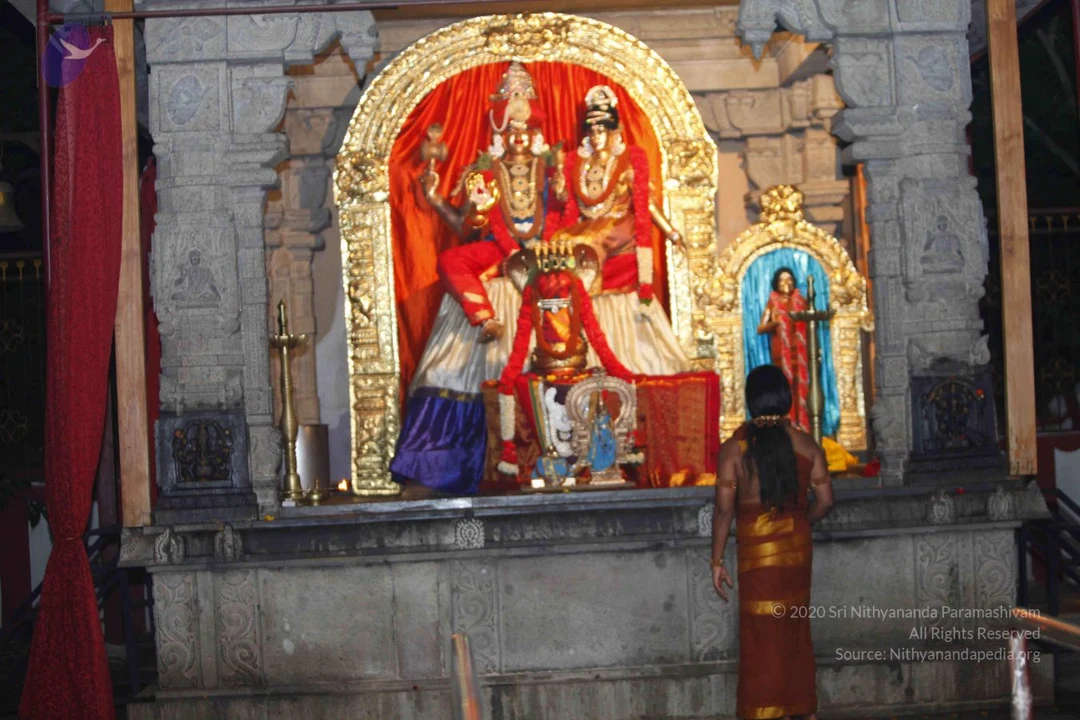
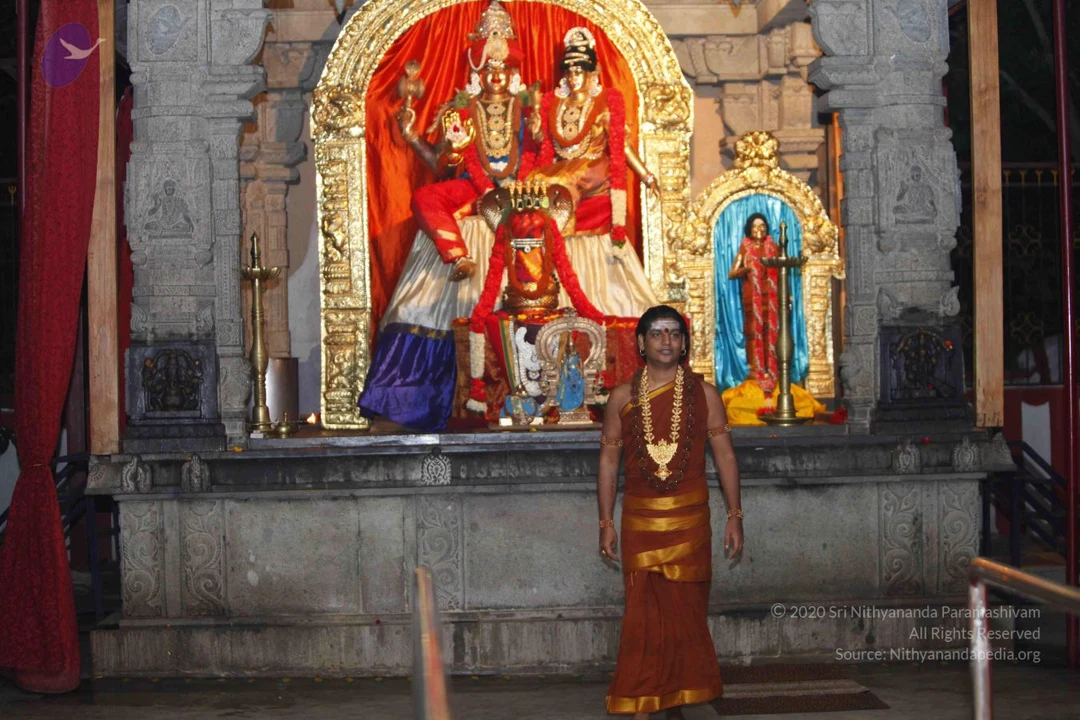
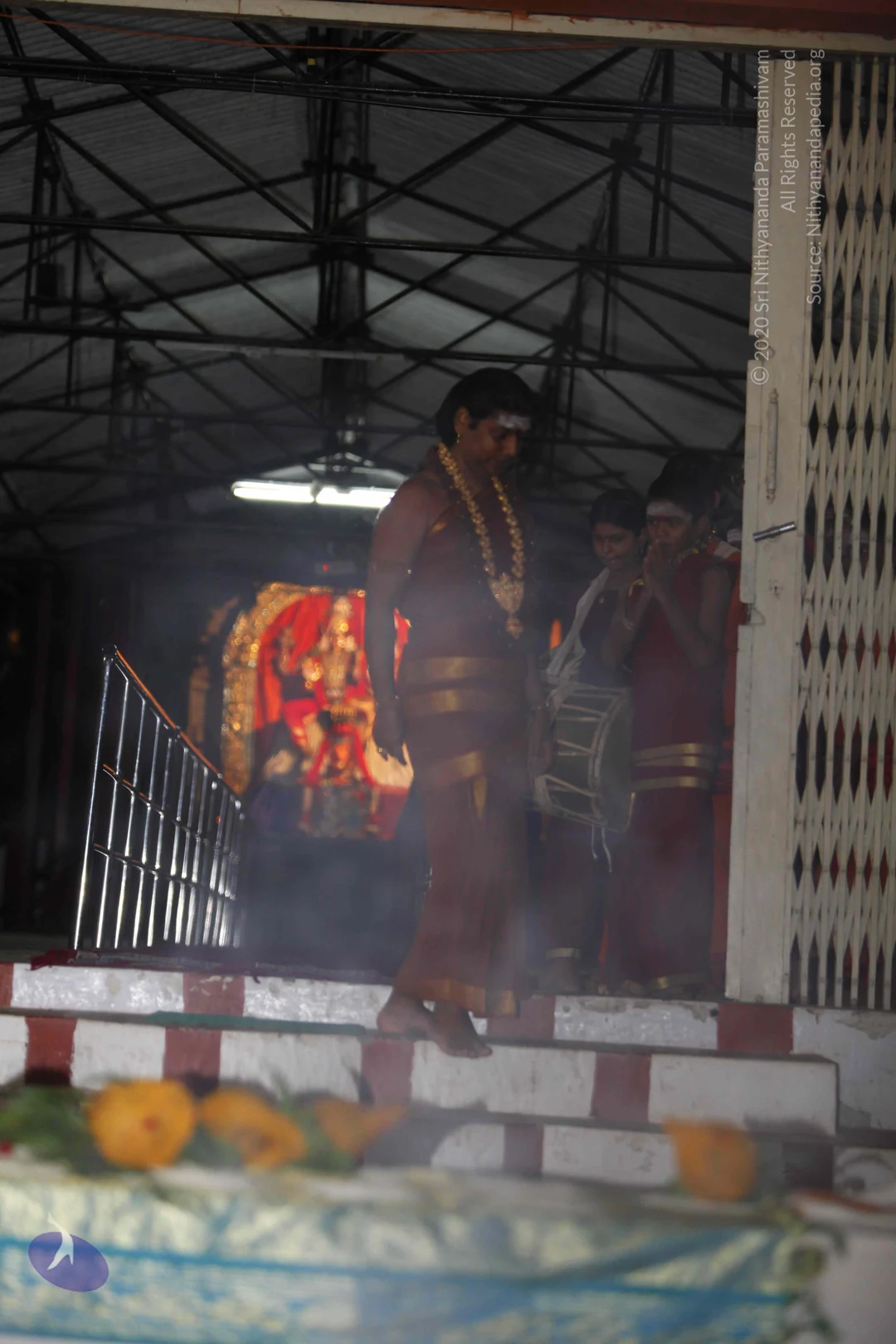
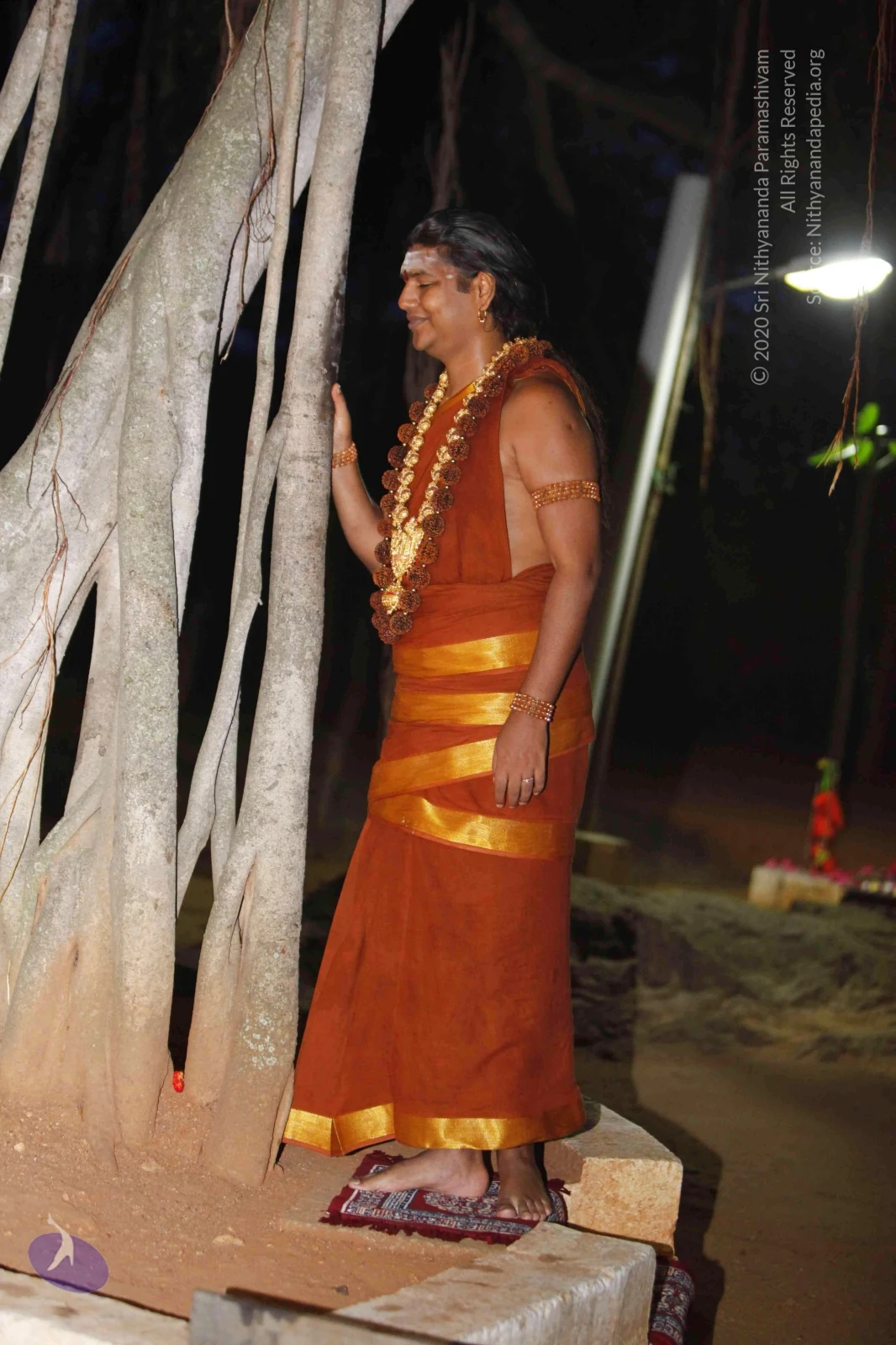
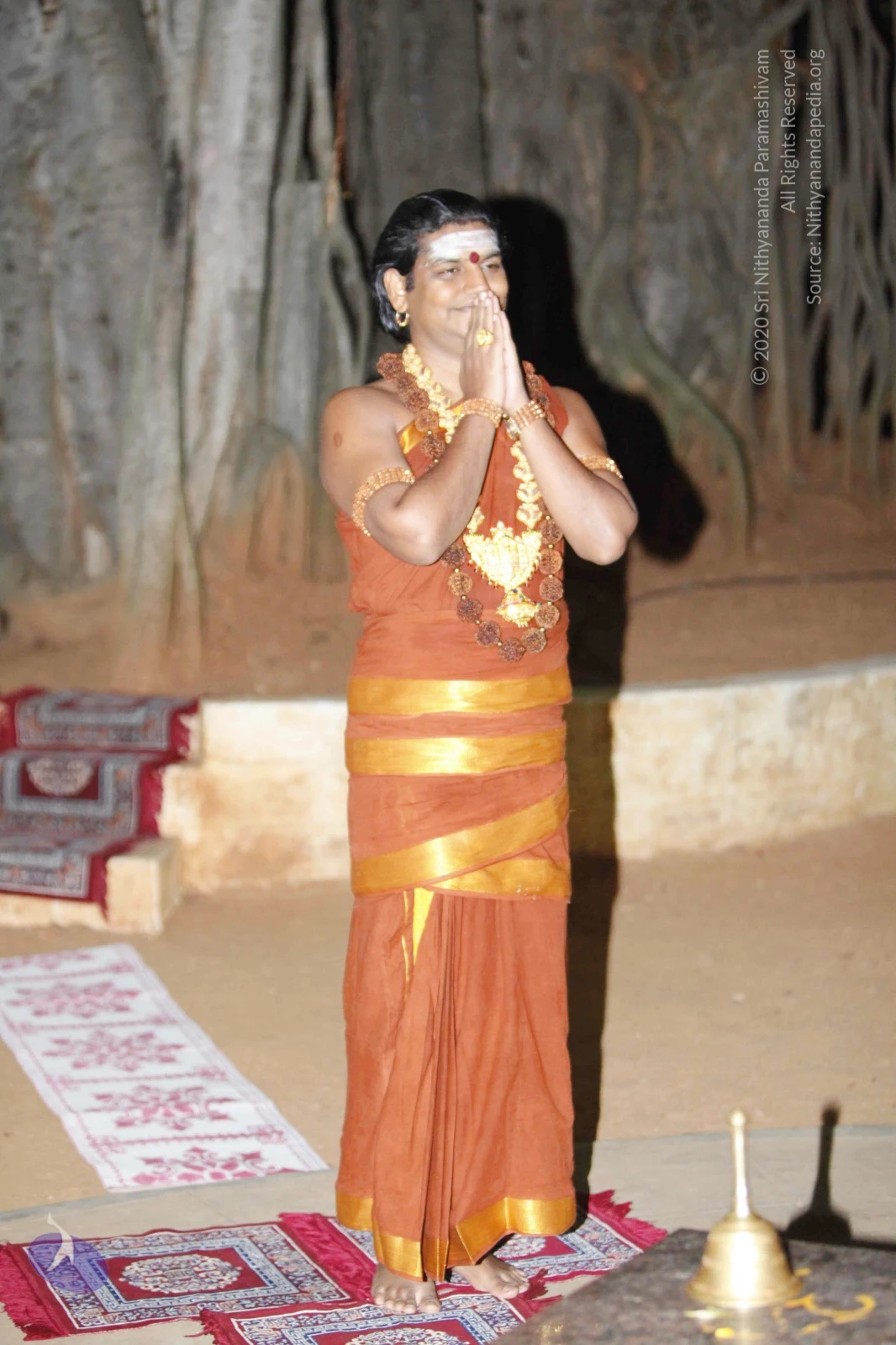
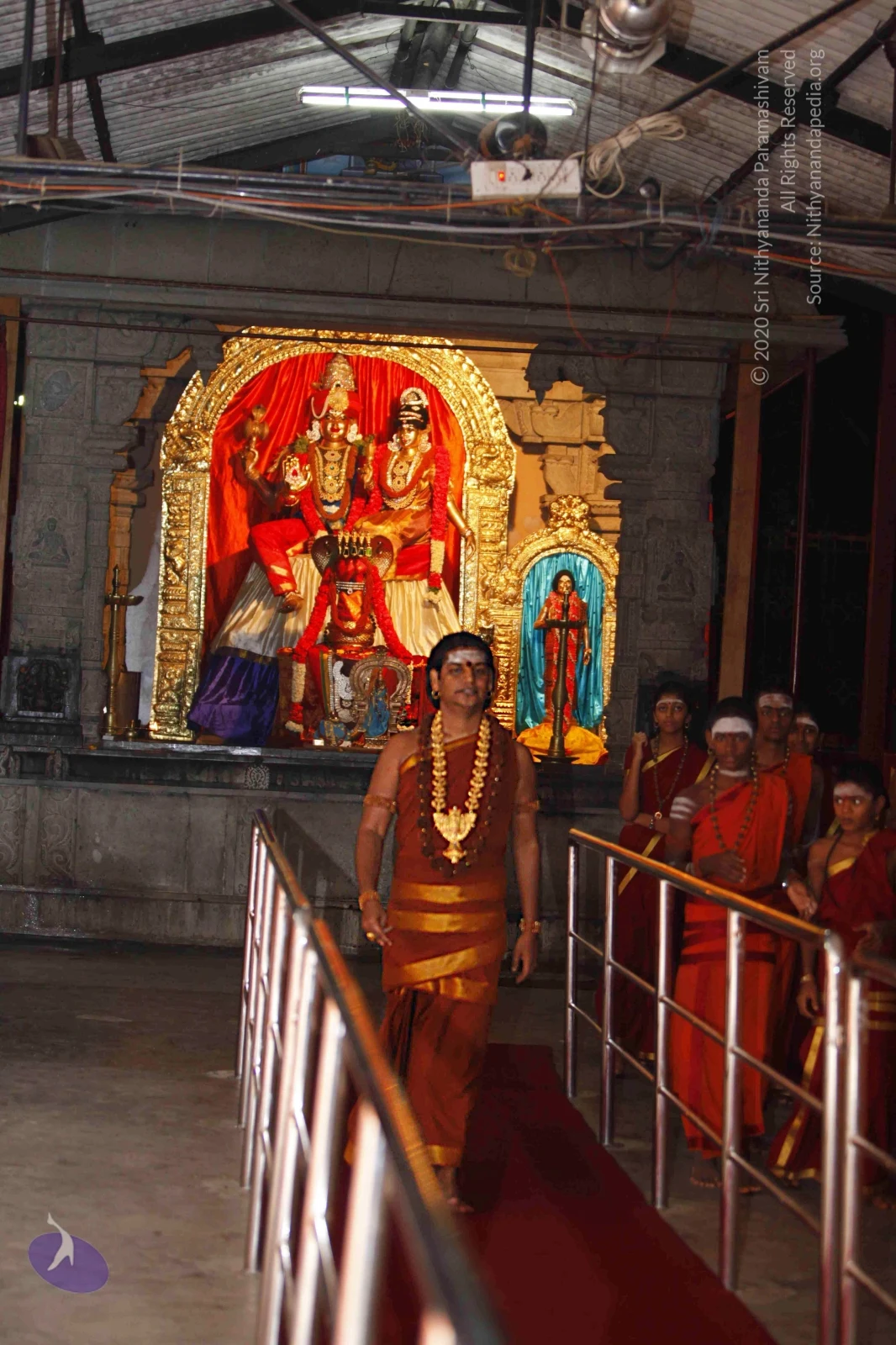
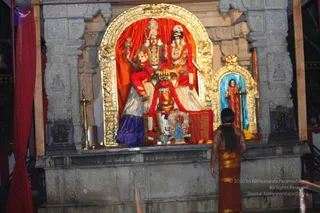
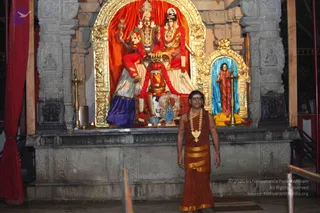
A man stands outdoors before a large banyan tree with many hanging aerial roots, pressing his palms together in anjali namaskar and gazing upward. He wears a saffron-orange dhoti-style cloth with a gold-coloured border, a gold-and-rudraksha necklace with a large gold pendant, a gold armband and bangles, and a small red bindi with a white tilak on his forehead. A raised stone platform edges the lower frame.A photograph of a man with long, swept-back black hair standing at night with his eyes closed and forehead resting against a large grey tree trunk. He wears an orange-saffron cloth draped over his bare shoulder, a long necklace of brown rudraksha beads with gold accents, a gold bracelet on the upper arm, a small gold earring, and a white vibhuti mark with a red kumkum dot on his forehead. The dark background and aerial roots of the tree suggest a nighttime outdoor setting. Appearance-based label: Swamiji (probable), based on long hair, saffron cloth, rudraksha mala and gold ornaments, in a meditative devotional posture.A man in a saffron-orange dhoti and matching shawl with gold border stands at night beside a large banyan tree, his forehead pressed against the trunk and eyes closed in devotion. He wears a long gold-bead necklace, a gold armlet and bangles, and has long dark hair swept back. A street lamp and a few flower arrangements sit in the background. Swamiji (probable): the saffron clothing, long hair, ornate gold necklace and armlet are the qualifying cues for the figure, who is shown in prayerful pose at the banyan tree.A photograph of a man with long swept-back dark hair, a white tilak on his forehead, gold and rudraksha bead necklaces, gold earring and a rudraksha armlet, wearing an orange-saffron cloth draped over his bare shoulder. He leans forward over a stone ledge with scattered flower petals, smiling. Behind him, a group of young people in red and orange robes with white vibhuti marks stand in a temple-like hall. A framed black-and-white image of a seated deity is mounted on an orange wall beside a small blue sign. Swamiji (probable): the long swept-back hair, rudraksha and gold necklaces and saffron cloth match the cues for the page's Swamiji.A photograph inside a temple shrine showing a golden-framed niche with a deity murti of Shiva and Parvati seated together on a throne, draped in red garlands and a red cloth backdrop. A linga-like form and small offerings sit at the base, with oil lamps on stands flanking the shrine. A devotee with long dark hair, wearing a rust-orange garment, stands with folded hands facing the shrine from the foreground. A smaller painted figure in red appears in a blue-lit niche to the right. Stone pillars with carved reliefs frame the scene.A man in saffron-orange dhoti and shawl stands barefoot on a mat in front of a shrine with a golden arch framing a deity murti of Shiva and Parvati seated together, decorated with red garlands and gold ornaments. A Shivalinga sits on a pedestal in front with garlands. Brass oil lamps stand at the sides, a red curtain hangs on the left, and a smaller shrine on the right shows a figure in red against blue.

Rudrabhishekam
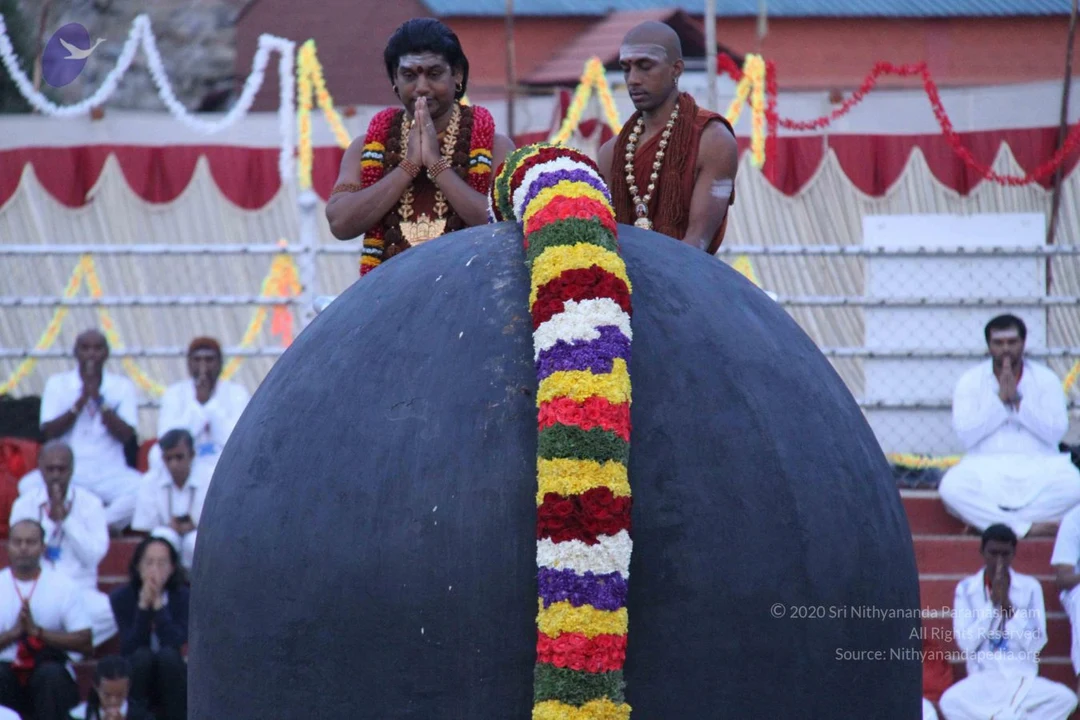
184 photosSource gallery
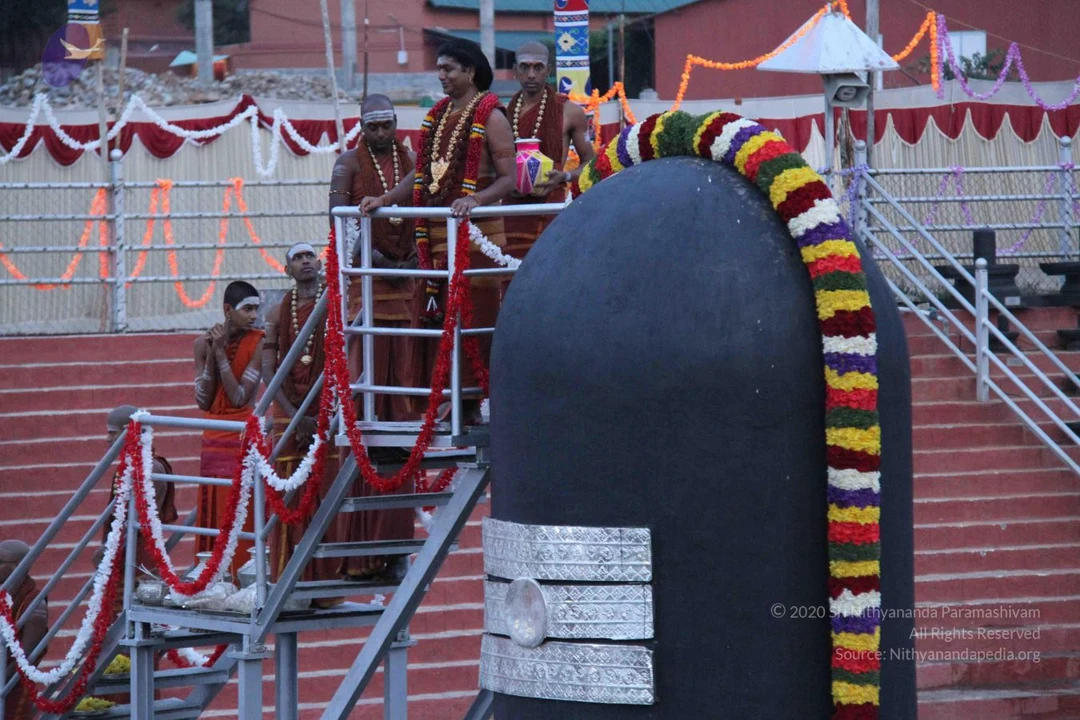
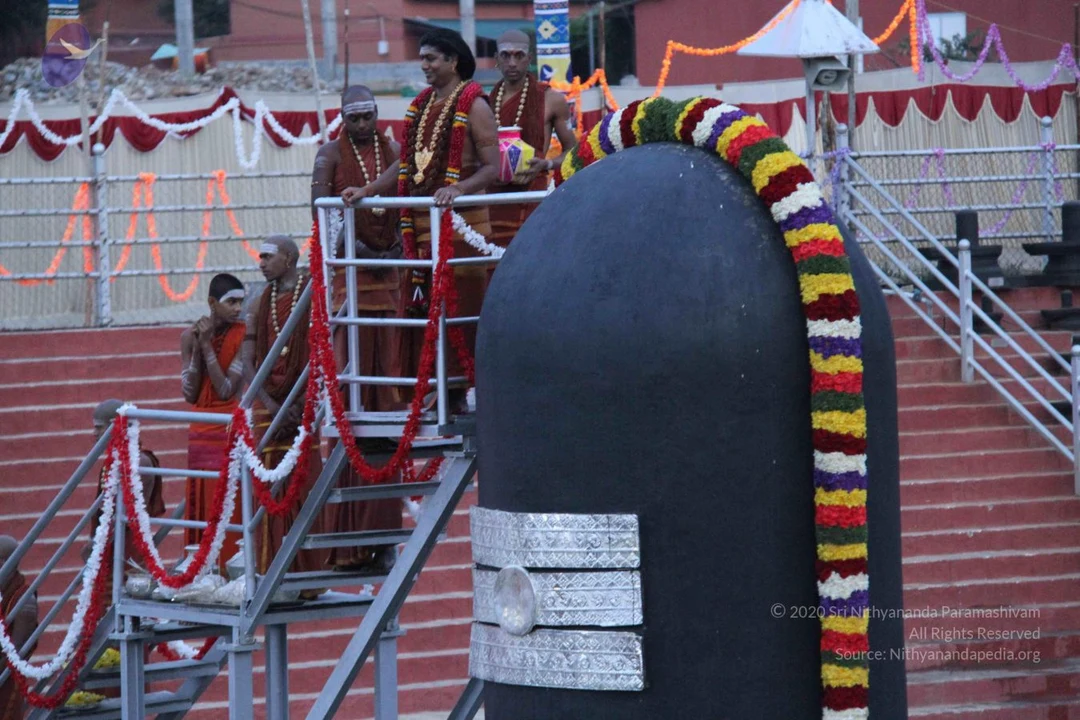
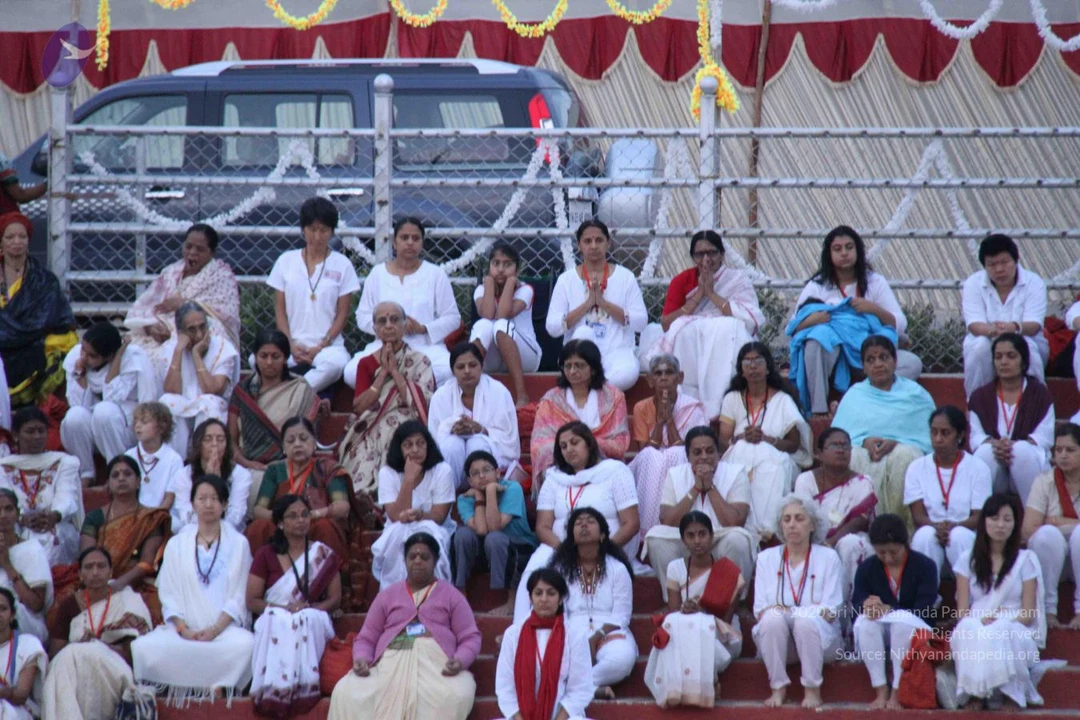
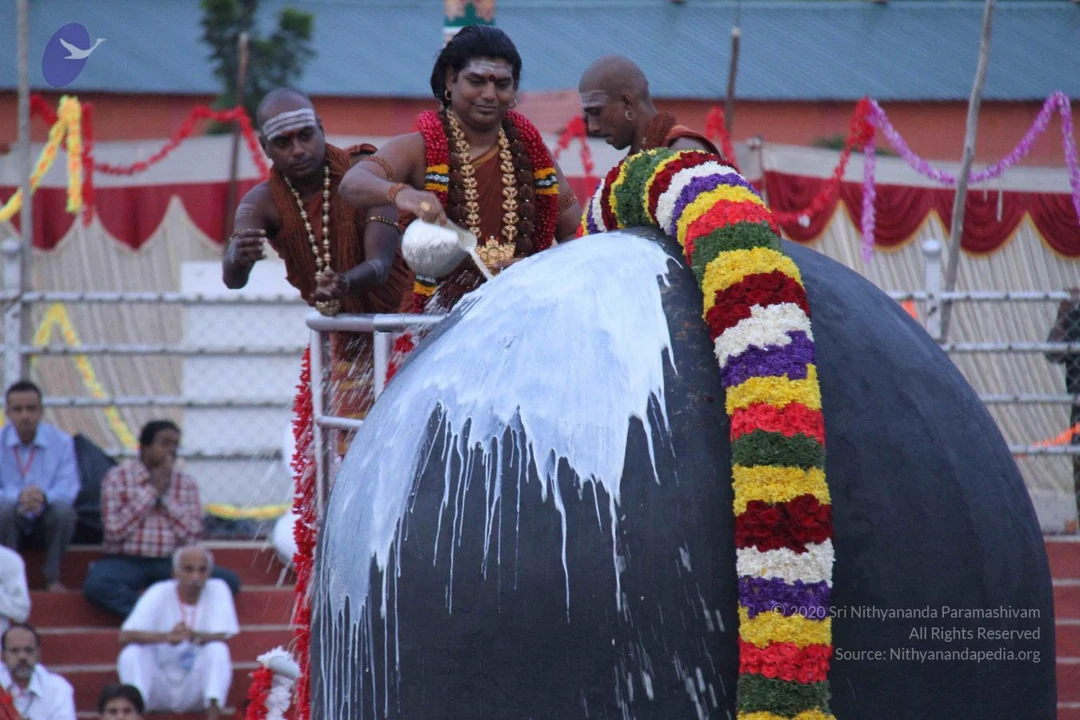
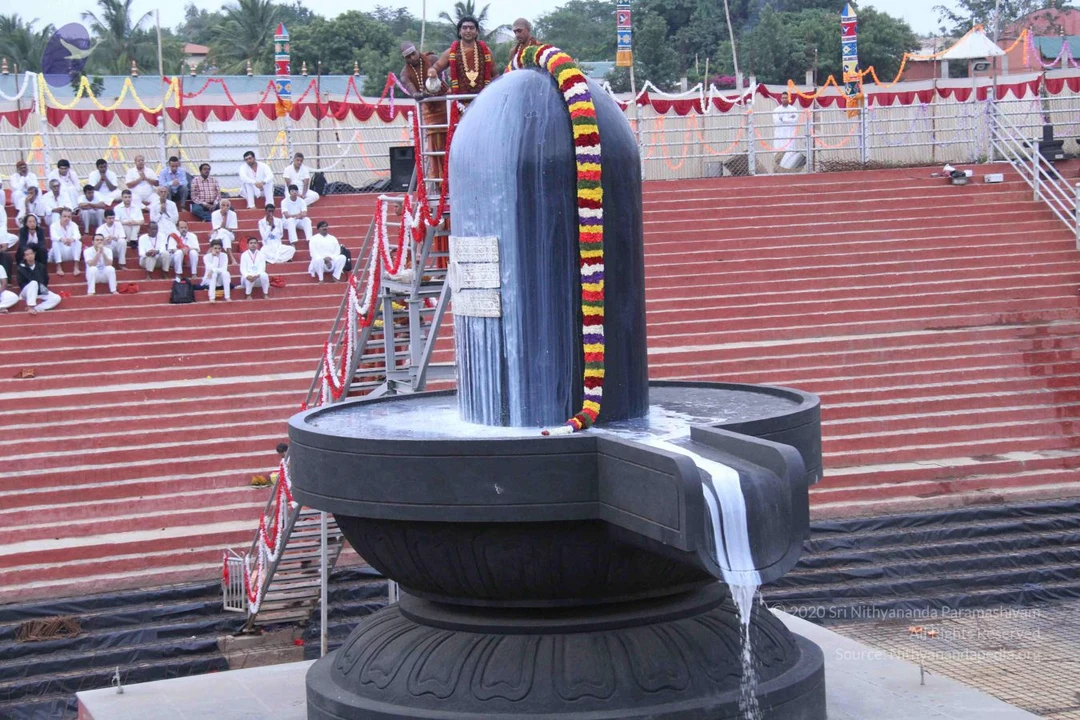
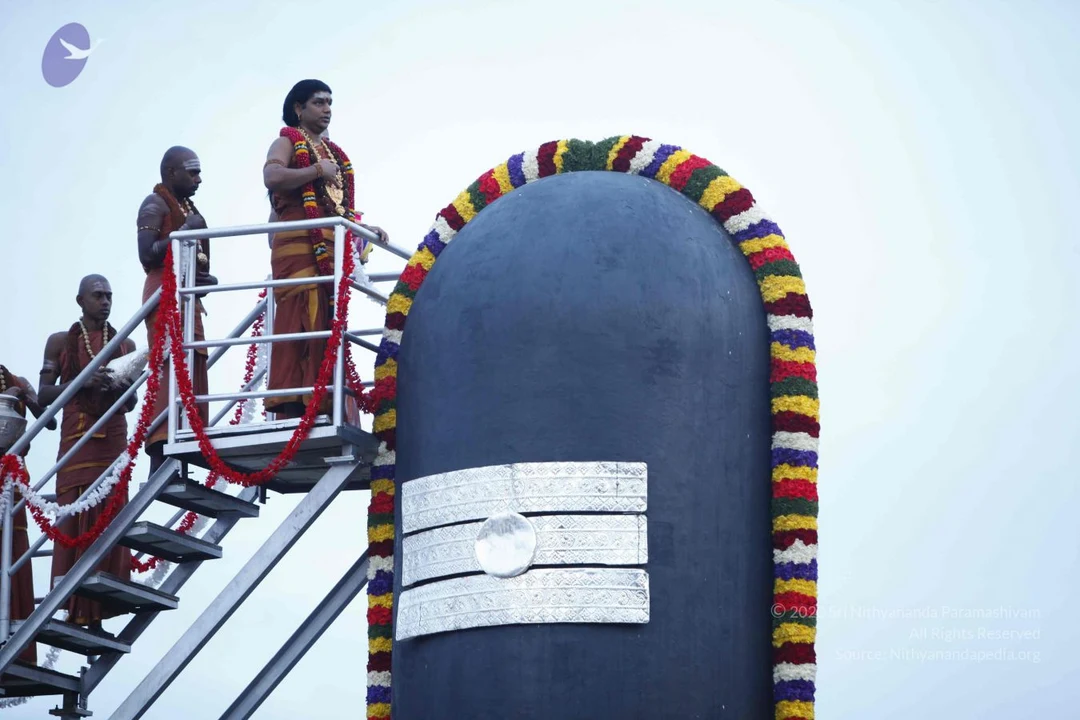
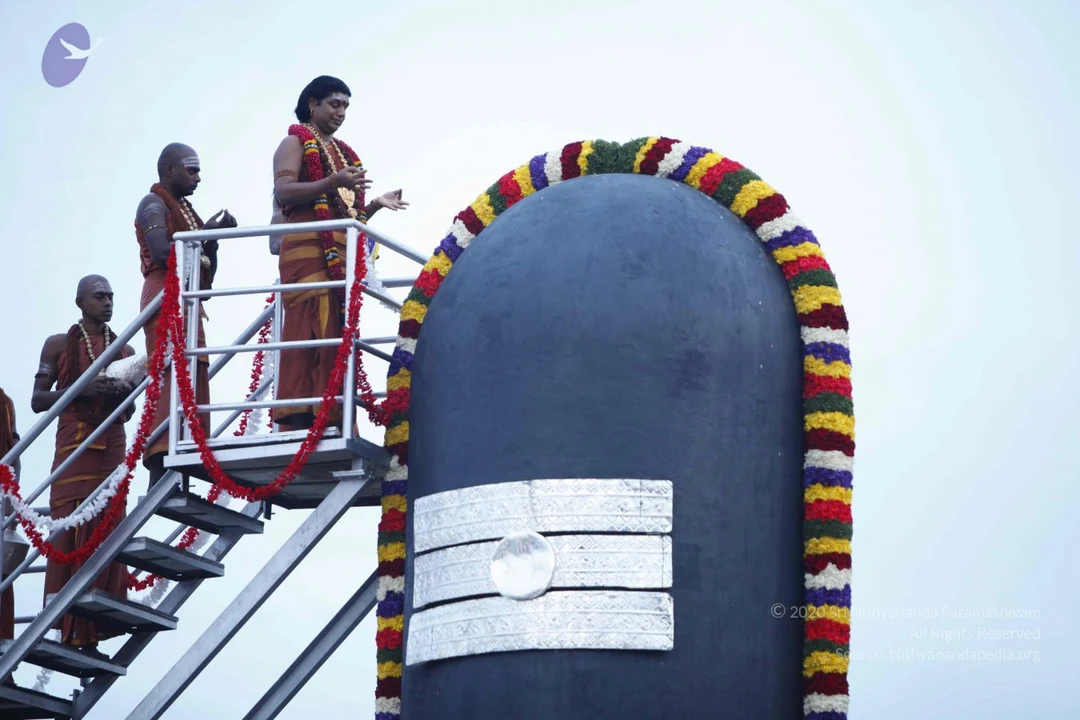
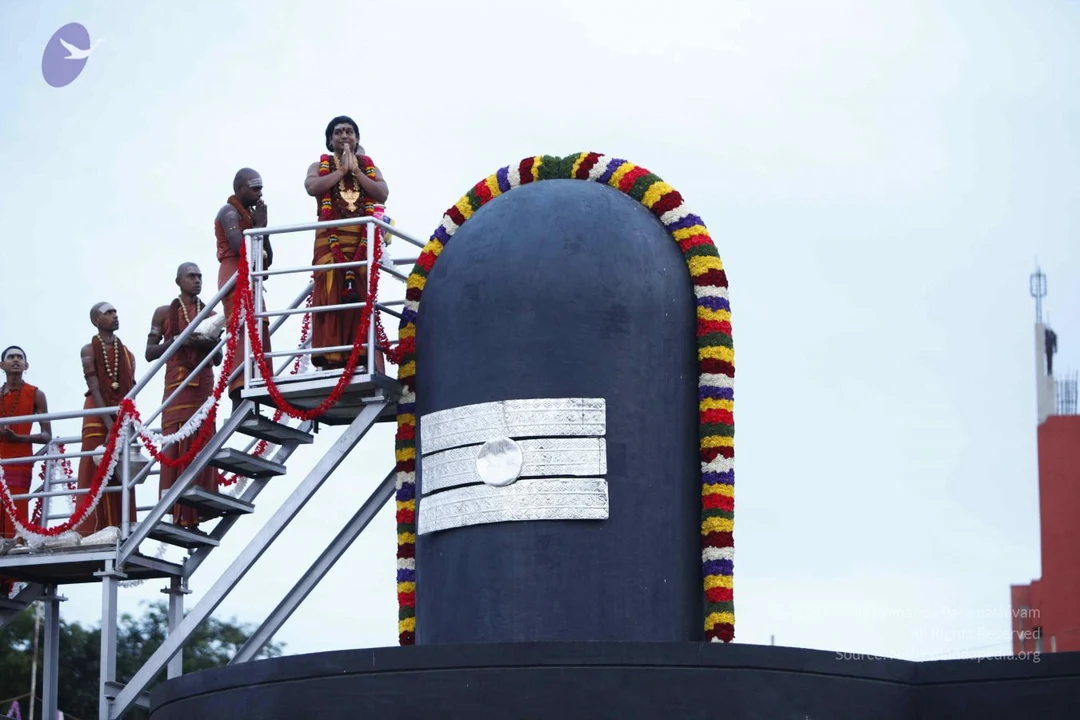
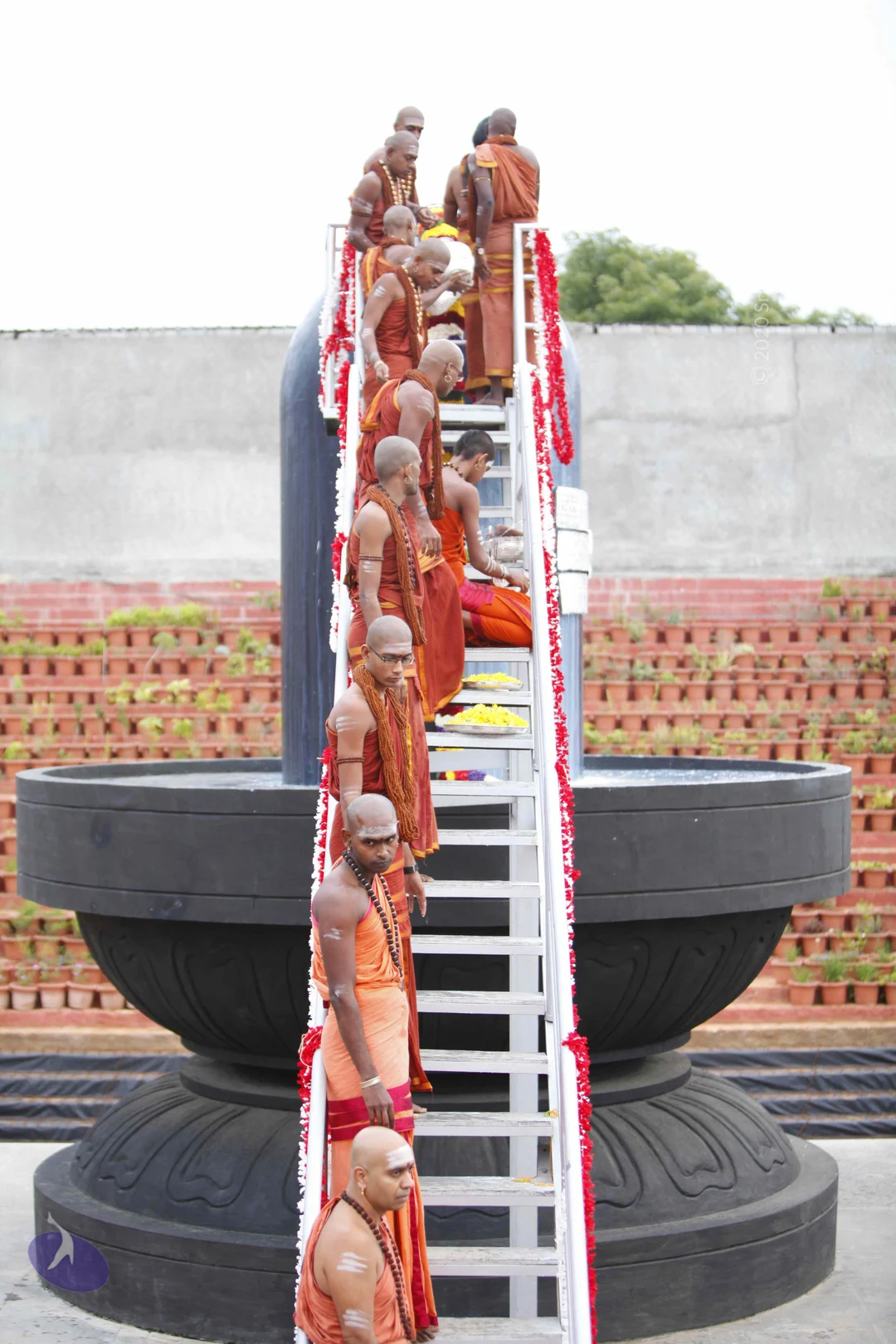
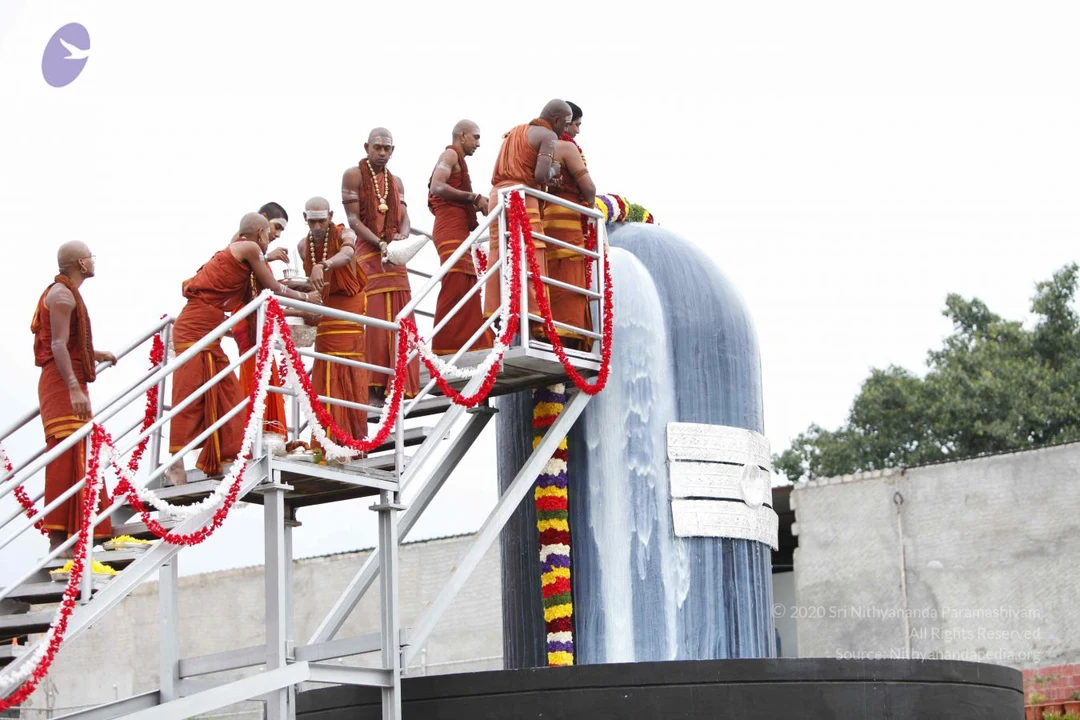
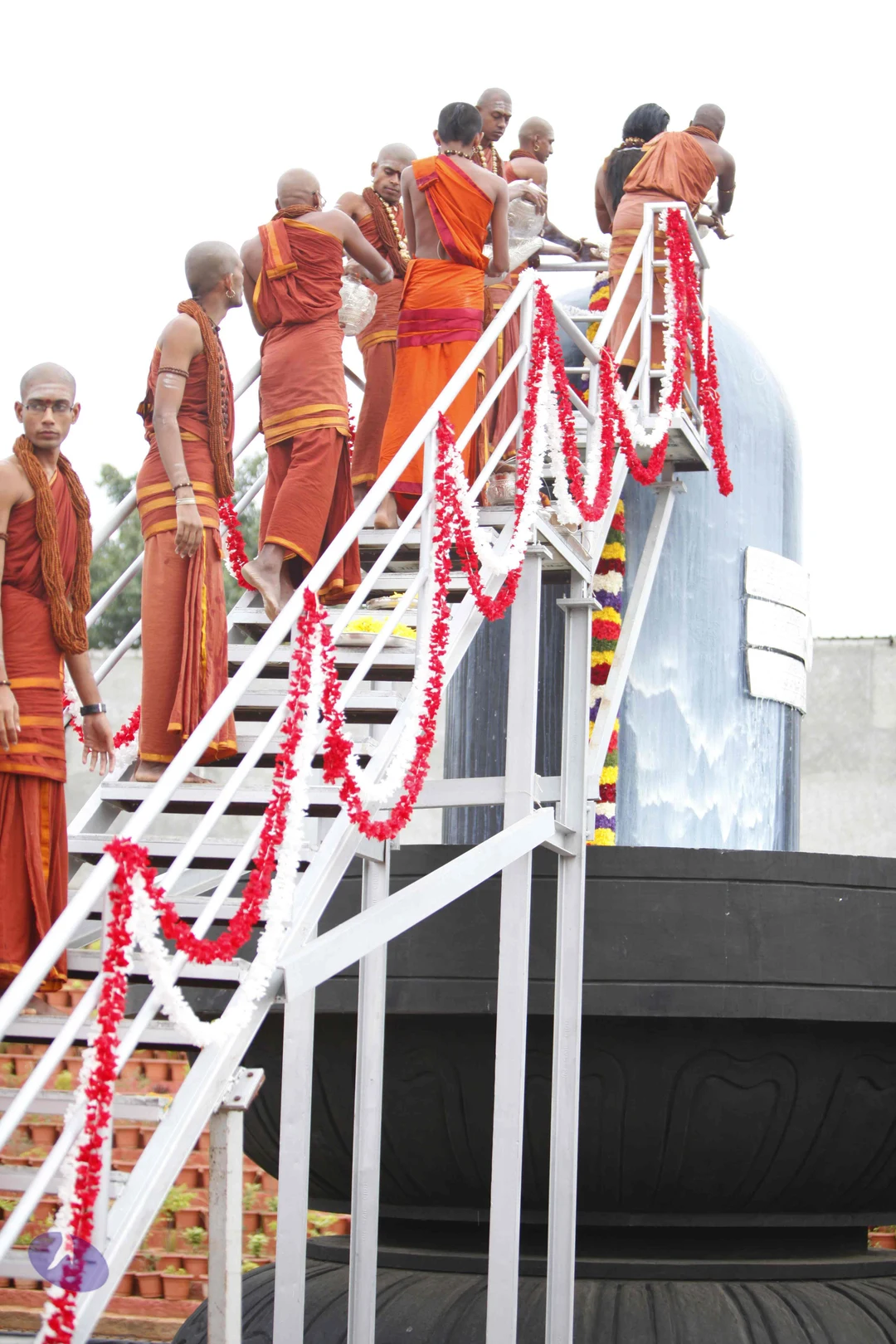
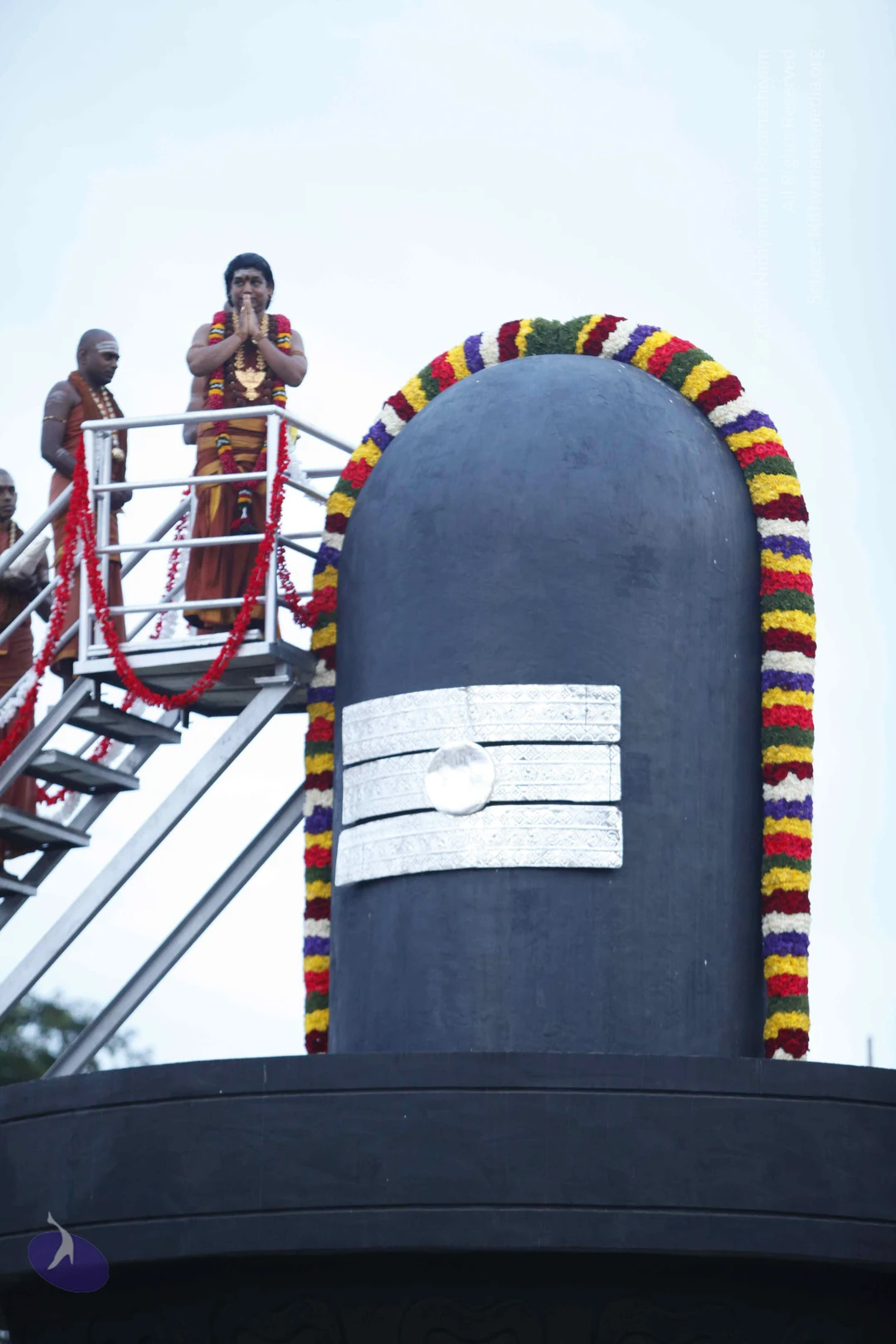
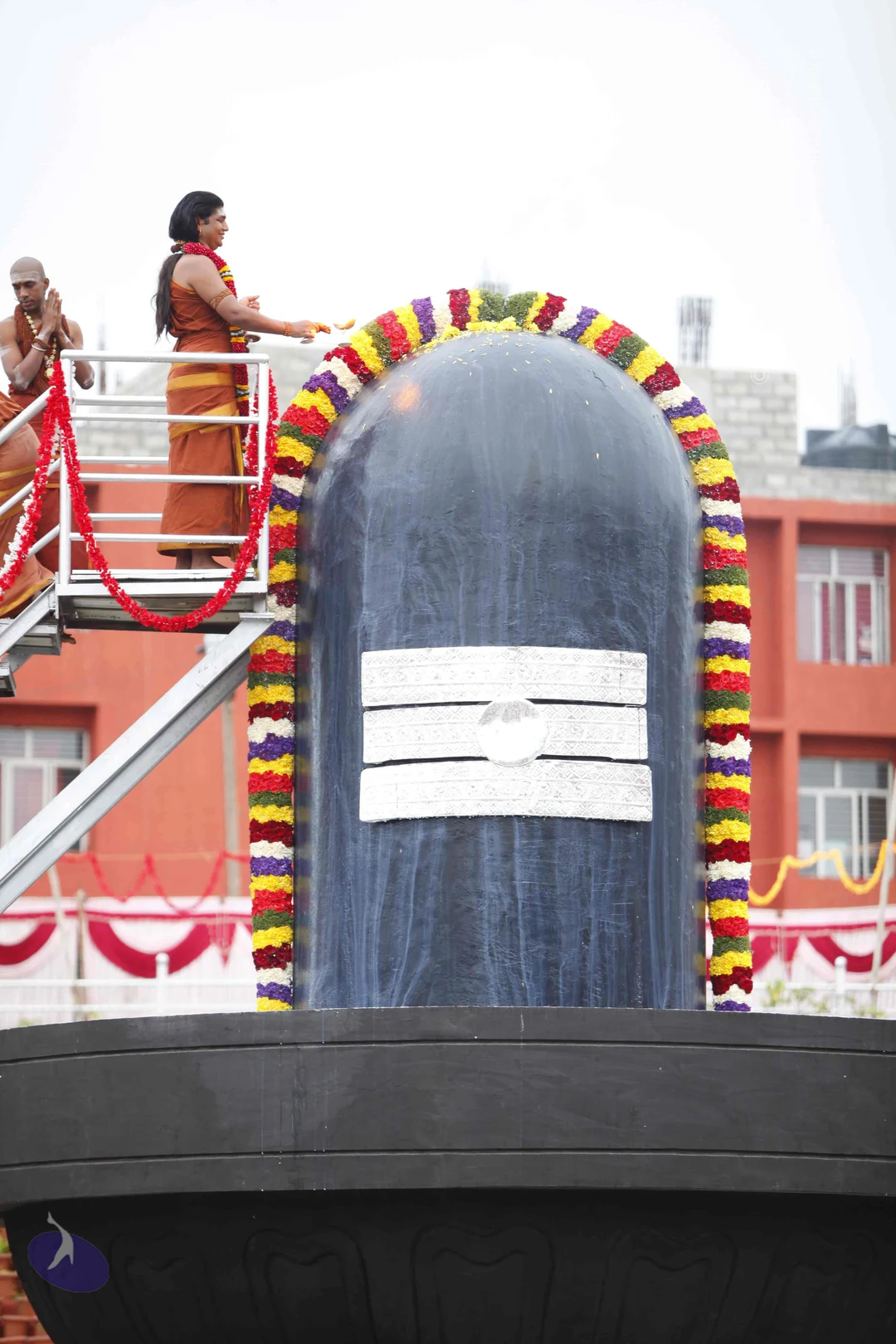
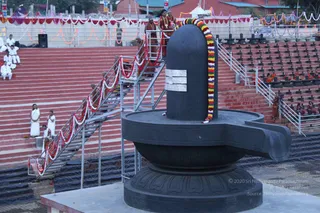
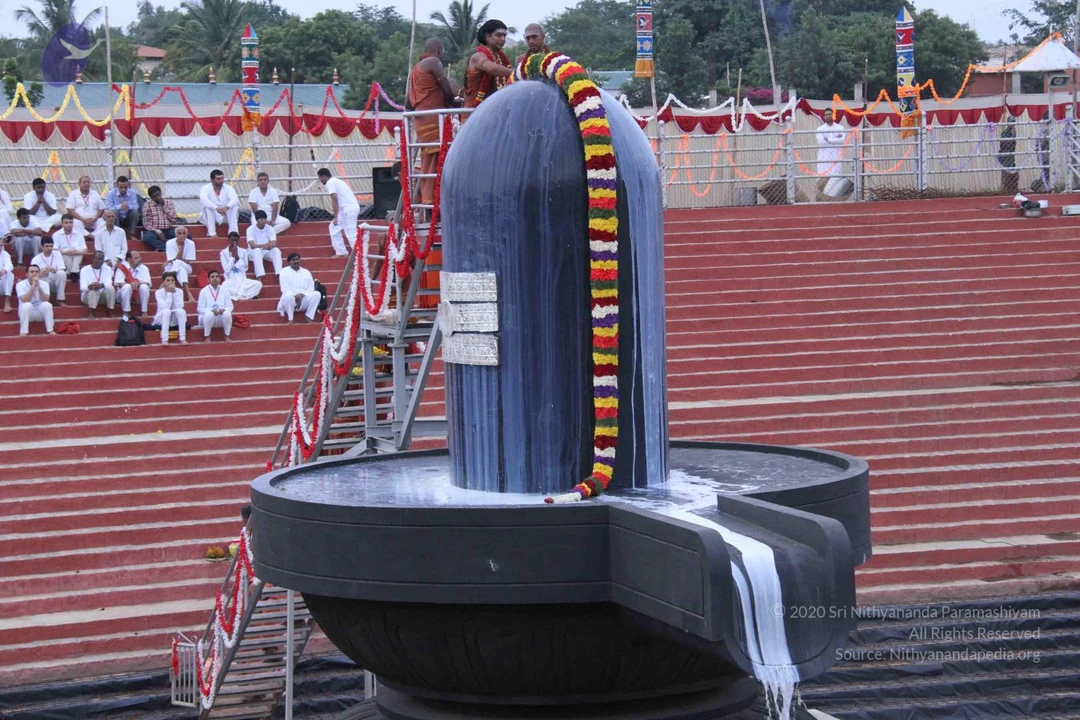
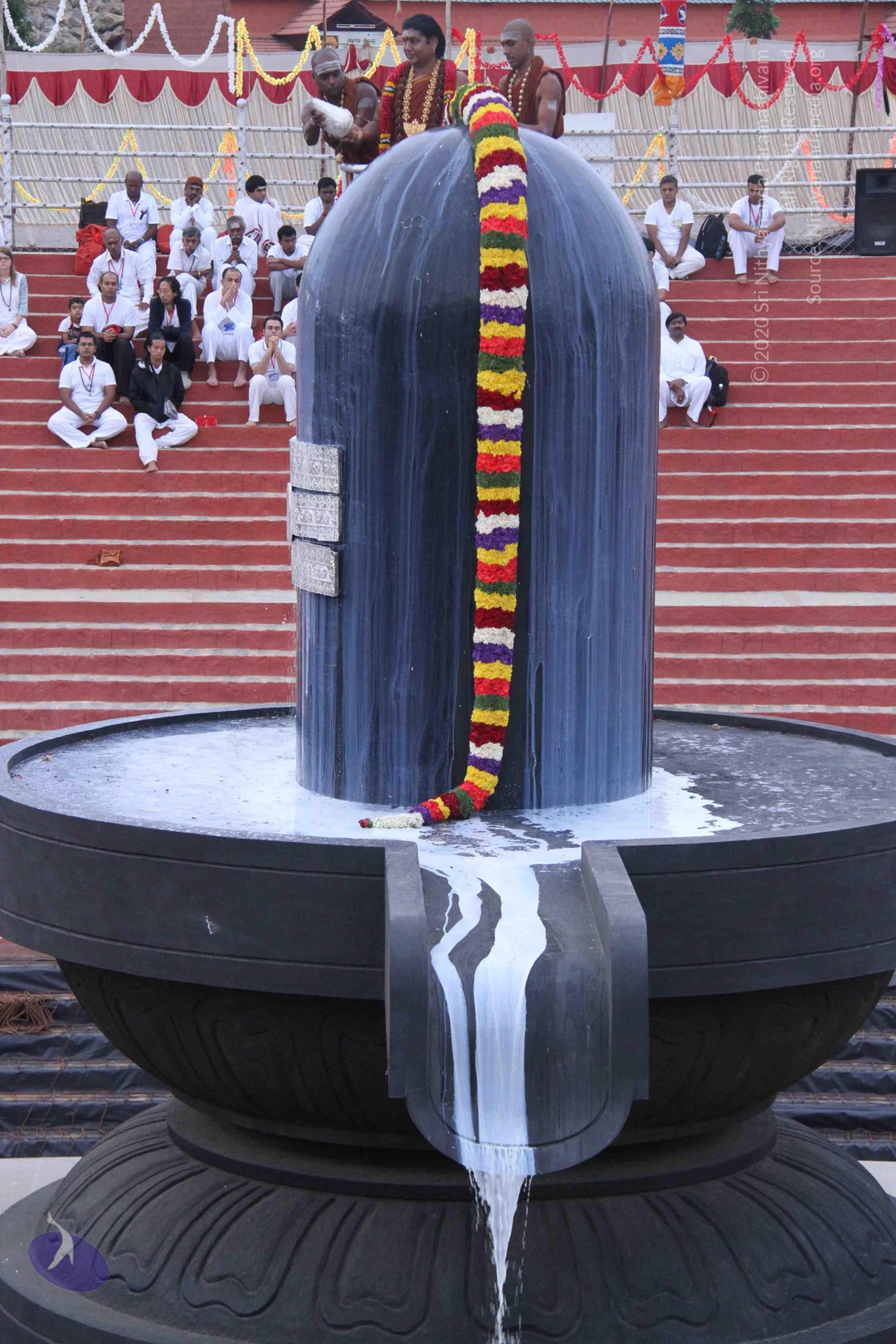
Outdoor satsang seating with rows of women in predominantly white clothing sitting on red-tiled steps in front of a parked dark SUV behind a metal railing. Many wear white saris or white kurtas, some with red or pink shawls, orange or yellow sarees, and beaded necklaces; one woman at left wears a red head wrap and yellow-and-blue shawl. A stage backdrop of red and white draped fabric with marigold garlands sits behind the rail. Most attendees look forward, seated calmly, some with hands folded. Approximately forty women are visible.A large black stone Shiva lingam with a circular yoni-pitha base stands in the foreground of an outdoor open-air stepped amphitheatre, draped with a multicoloured flower garland in red, yellow, white and purple. Behind it, several people in white clothing sit on red-carpeted steps watching, and a standing figure in white stands to the right. In the background, two figures in orange or saffron robes stand at the top of the lingam area near a red-and-white decorated stage with orange and red bunting and a parked white car at left. A small seated figure in orange sits near a low wooden platform at left, and a few white-clad attendants sit nearby. The scene suggests a lingam abhishekam or puja ceremony during a satsang gathering.Outdoor ceremony at a large black spherical stone or linga-like form draped with a multicoloured flower garland of marigolds, roses and white blooms. A figure with long dark hair, a red-and-gold shawl, rudraksha mala and gold necklace stands behind the sphere, holding a pink and blue lantern-style vessel, while a second man with a shaved head and orange shawl stands beside him, bare-chested and wearing beaded necklaces. Red and white draped cloth and yellow marigold strings decorate the stage. Seated devotees in white clothes with red lanyards fill the foreground and side seating. a person cues present: long hair, rudraksha mala, ceremonial gold necklace and shawl.A large black stone Shivalinga stands on a tiered black pedestal in an open outdoor courtyard, draped with a long garland of orange, yellow, red and purple flowers. Two men in orange-red clothing stand on top of the lingam, one leaning over it, presumably performing abhishekam. Behind, a crowd of devotees dressed in white sits on red tiered steps beneath bunting, with two people in white seated on a low dais at left and a seated figure in orange near a small wooden table. Several people in white and pink sit along the steps.A large black lingam stands in the foreground on a red-tiered stage, draped with a long garland of red, yellow, white and purple flowers. Two standing men are behind it: one in a red and gold-trimmed garment with a gold necklace and long dark hair, and a bald man beside him with a dark shawl and beaded necklace. Behind them a red and white draped backdrop and bunting hang along a metal railing. Seated on the steps are about two dozen people in white clothes with red lanyards, plus a few in dark jackets, watching the lingam. A speaker sits at the right edge.Outdoor photo of a large black stone Shivalinga on a circular yoni-pitha base, decorated with a multicoloured flower garland draped down its side. A metal staircase with red and white floral garlands leads up to a platform beside the linga, where several figures in red and white ritual clothing stand. Red tiered seating with rows of people in white clothes and orange-clad devotees fills the background, with a red and purple decorated fence behind. The setting appears to be a ritual site for a Shiva worship ceremony.
Pratyaksha-Pada-Puja-Garbha-Mandir

16 photosSource gallery
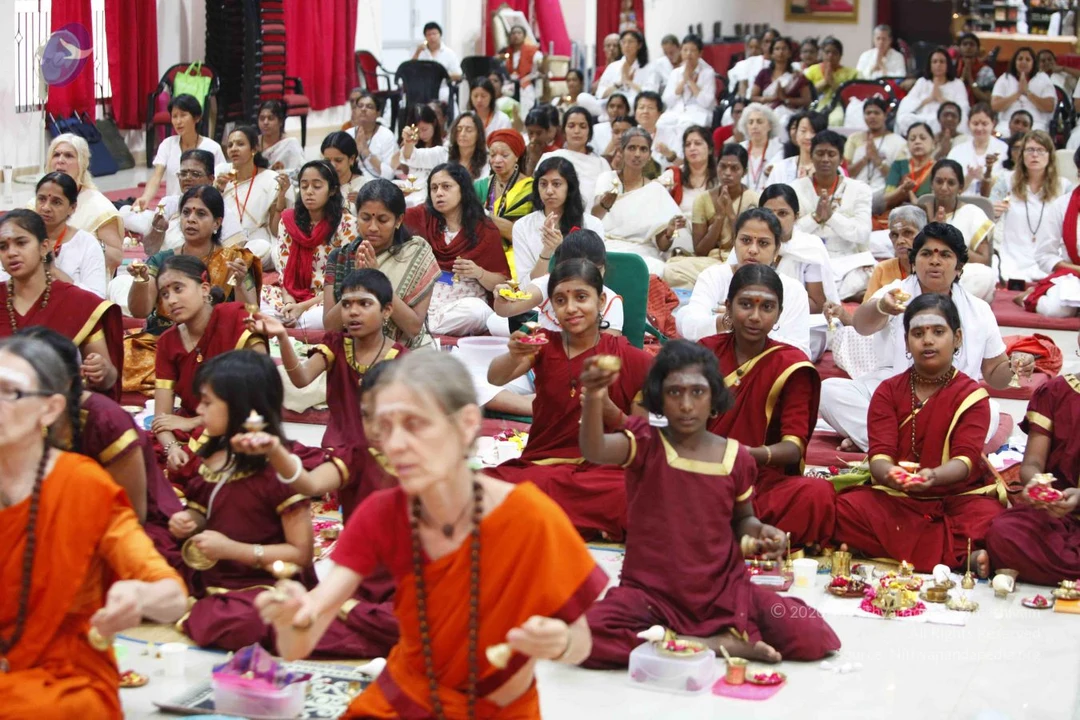
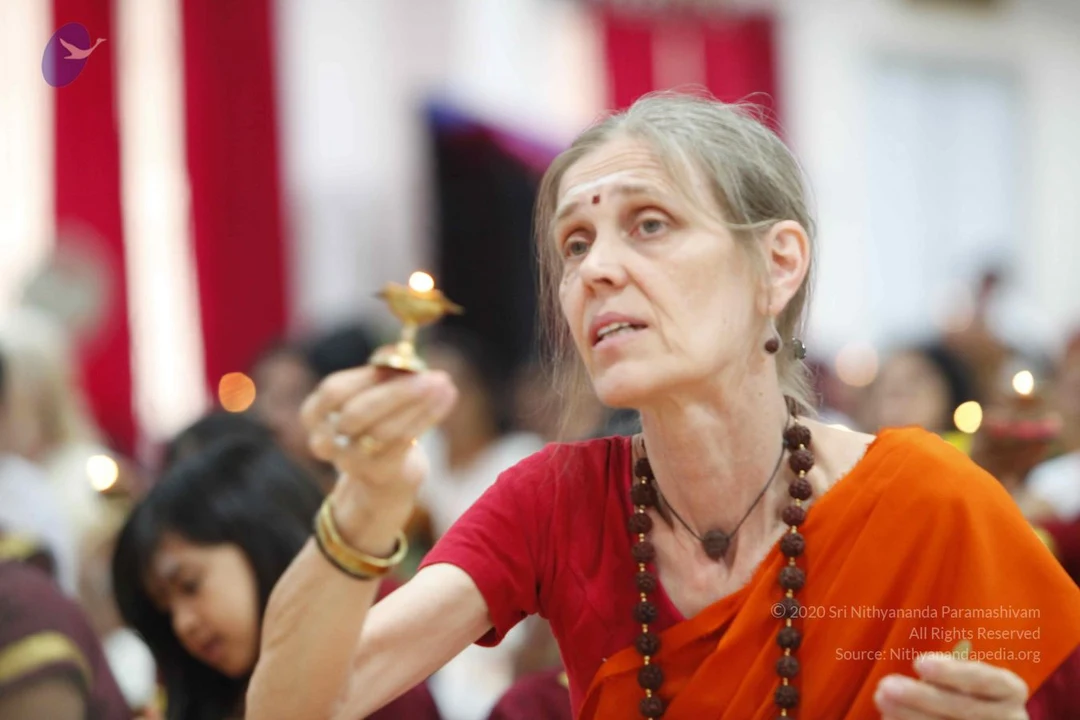
A man seated on an ornate gold throne with carved lion-head armrests and a tiger-striped cloth draped over the seat, raising one hand in a blessing gesture. He wears an orange-red turban, an orange-red shawl and dhoti with gold borders, a rudraksha mala and a large ceremonial gold necklace with white flower garlands. Before the throne, silver plates and bowls filled with flowers, offerings and fruit sit on a gold tray with pink and orange petals scattered near his bare feet. Hanging bells and small brass oil lamps decorate the dark backdrop on both sides. The man has a distinctive presentation with turban, rudraksha and ornate gold necklace, matching the page's Swamiji claim, so this is a probable Swamiji seated in person for a puja offering.A man seated on an ornate gold throne carved with lions and draped with a tiger-striped cloth, raising his right hand in a blessing gesture. He wears an orange-brown turban, an orange-brown dhoti and wrap edged in gold, a long white flower garland, a dark rudraksha mala, a gold pendant, and gold bangles. Hanging brass bells and oil lamps frame the throne against a black background. In front of the throne on the floor are silver plates and bowls holding flowers, petals, and offerings, plus a pair of bare feet.A man in orange-red saffron robes and a matching turban with a gold border sits on a cream cushioned chair in front of an ornate gold-leaf throne with floral carvings. He wears a rudraksha mala with a gold ceremonial necklace and a gold pendant, plus gold bracelets and rudraksha armlets, and raises one hand in blessing while smiling. A brass bell stands at the right beside the throne. Swamiji (probable): long hair and a crown-like turban, saffron robes, rudraksha malas and gold ceremonial necklace fit the swami presentation cues on the page.A photo of a seated figure on a gold-ornate throne with a golden lion-head armrest, wearing an orange-saffron cloth with yellow border, an orange turban, a rudraksha mala and gold necklace, and a bangle on the upper arm. Beside him a framed portrait of a turbaned figure stands on a black wall near a gold-studded door. Three devotees sit before a brass tray of flowers and small silver bowls: a man in white with hands folded in prayer, a woman in white with hands joined, and a woman in a green sari seated at the right edge. Oil lamps and brass bells hang nearby. a person (orange turban, rudraksha mala and gold necklace, seated on throne) receiving devotees in a satsang-style gathering.A seated man in saffron-orange robes with a gold-trimmed yellow border sits on a gilded golden throne decorated with a lion head and a tiger-striped cushion. He wears an orange turban, a long rudraksha mala, and a heavy gold necklace, with gold bangles on his arms, and smiles while resting his hand on the armrest. Beside him hangs a framed portrait of a smiling man in an orange turban, and brass oil lamps hang from chains above. Two devotees kneel in prayer with palms joined: a man in a white polo shirt and a woman in white clothes. Swamiji (probable): the seated man in the saffron robes and turban, enthroned and receiving devotees, matches the candidate description.A photograph of a seated man on an ornate gold throne with a tiger-skin cushion and a golden lion-head armrest, dressed in saffron-orange robes with gold borders, an orange turban and a rudraksha mala with a gold pendant. Swamiji (probable): the seated man has long swept-back hair, an orange turban, rudraksha mala and gold ceremonial necklace. He holds one hand on the armrest while other devotees sit before him. Brass hanging bells and oil lamps surround the throne. Nearby, a framed portrait labelled "Paramahamsa Nithyananda" shows a smiling figure in orange turban. Before the throne sit a man in a white polo shirt and two women in white with folded hands in namaste, with plates of flowers, fruit and lamps arranged on a gold tray. A black wall and gold-studded door complete the setting.
Satsang-Crowd-Listening

25 photosSource gallery
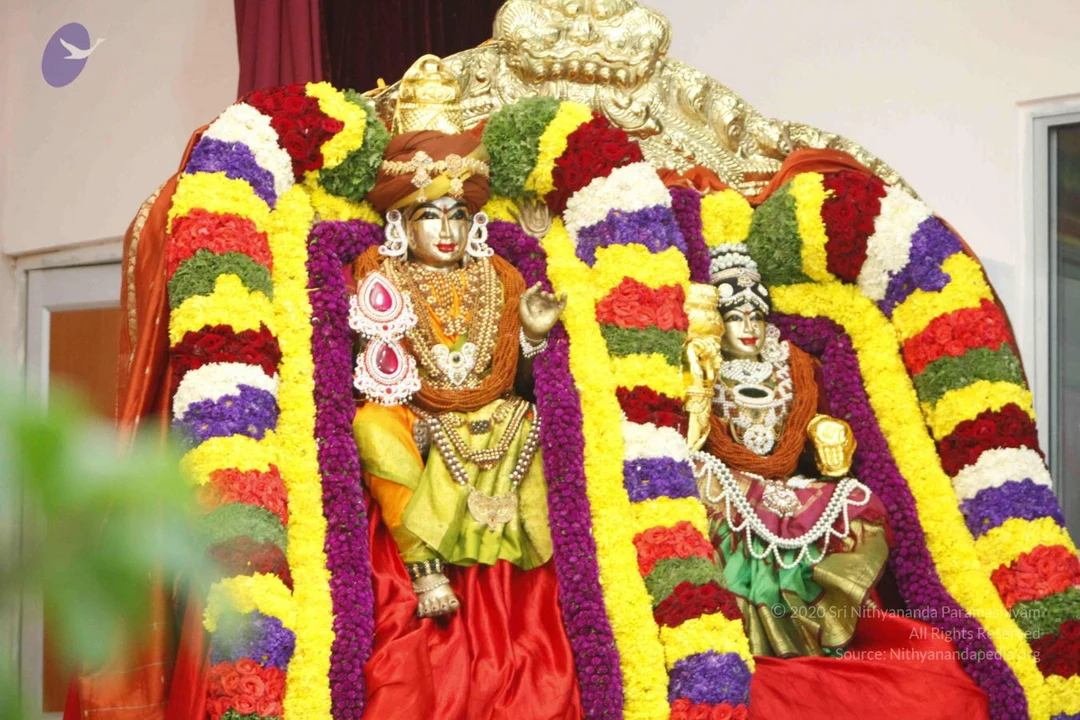
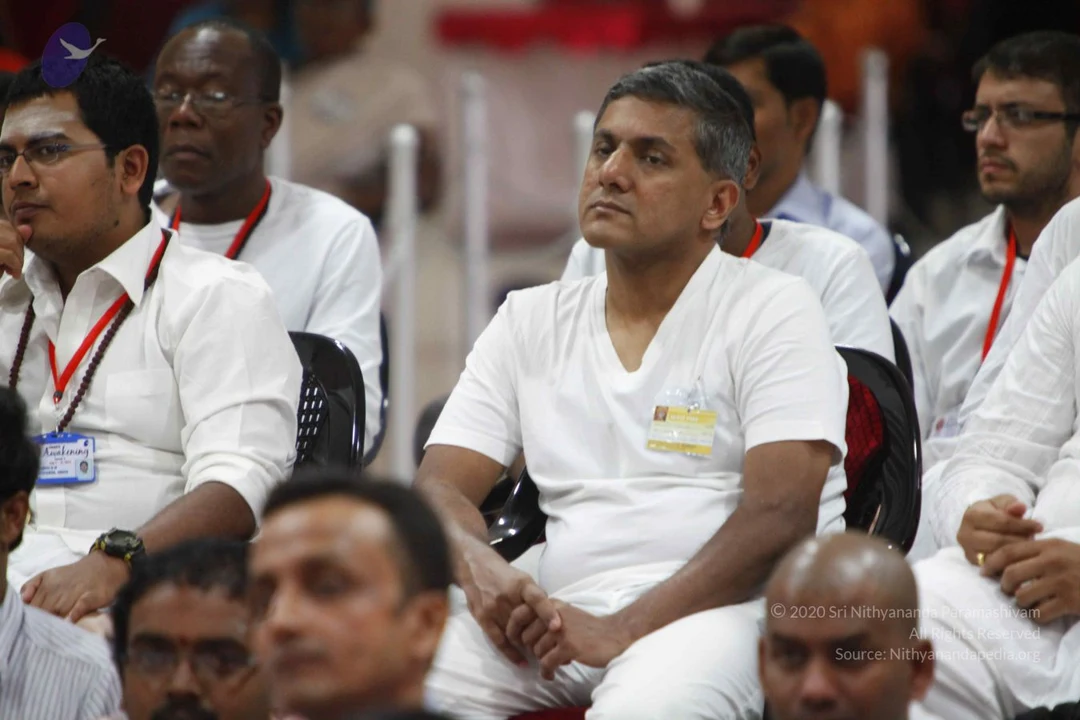
A seated figure in orange-saffron robes, wearing a saffron turban with a red tilak mark on the forehead, a rudraksha mala and a gold ceremonial necklace, sits cross-legged on a red cushioned seat draped with a tiger-skin cloth in front of an ornate gold throne. Golden lion heads flank the seat. Two tall painted deity statues with multiple arms stand on either side, and a brass oil lamp is at the left edge.Photograph of two golden deity murtis seated side by side under an arch of flower garlands in red, white, yellow, purple and green. The male figure on the left wears a rust-orange turban, heavy gold necklaces and rudraksha-style beads, a gold crown-like headdress, and a green and yellow garment; he raises one hand in a blessing gesture. The female figure on the right wears a gold crown, pearl necklaces and a maroon and green silk sari, holding a golden kalasha-like object. A gold ornate peetha-style backdrop frames them. No physical people are visible.A photograph of a seated man in a golden ornate throne with red cushions and a tiger-skin cloth, hands joined in namaste. He wears an orange turban, orange and gold dhoti-style cloth, rudraksha mala and a gold necklace, with bangles on his arms. To the right stands a decorated deity murti, dressed in yellow and red silk with a crown and garlands of mixed multicolored flowers. The room has pink pillars with lotus motifs on the wall and a red-and-white carpet on the floor. a person appears in the throne, matching the page's a person attribution.A seated man in an orange-and-saffron turban, orange wrap and gold necklaces sits with palms pressed together in namaste on an ornate gold-and-red throne draped with a tiger-striped cloth. Beside him, a deity murti dressed in a yellow and red silk garment is decorated with long multicolour garlands of marigolds and flowers. The white hall has a patterned red carpet in front, a mirror on the wall and a plant at the bottom edge. The man's appearance with a turban, saffron clothing and gold necklaces is consistent with Swamiji (probable), seated in a satsang setting.A man seated on an ornate gold throne with red velvet cushions, hands pressed together in namaste at chest level, eyes closed. He wears a rust-orange and yellow striped turban, a rudraksha mala with gold ceremonial necklace, bangles, a gold ring, and a saffron-orange wrap with yellow borders. A red bindi marks his forehead. The gilded throne has carved floral and lion-head details. Probable Swamiji (appearance cues: turban, rudraksha mala, ceremonial gold necklace and saffron-orange clothing, seated in a position of honour). One person is visible.Two golden deity murtis seated side by side on a red silk-draped seat, framed by a dense arch of flower garlands in yellow, red, purple, white and green. The left murti wears an orange turban, large red-stoned earrings, layered gold necklaces and a rudraksha-like beaded mala, and holds one hand raised in blessing. The right murti wears a gold crown, pearl strands and a green and gold sari, and holds a small lamp-like object. No physical people are visible; the figures are statues.
Sarva-Darshan

10 photosSource gallery
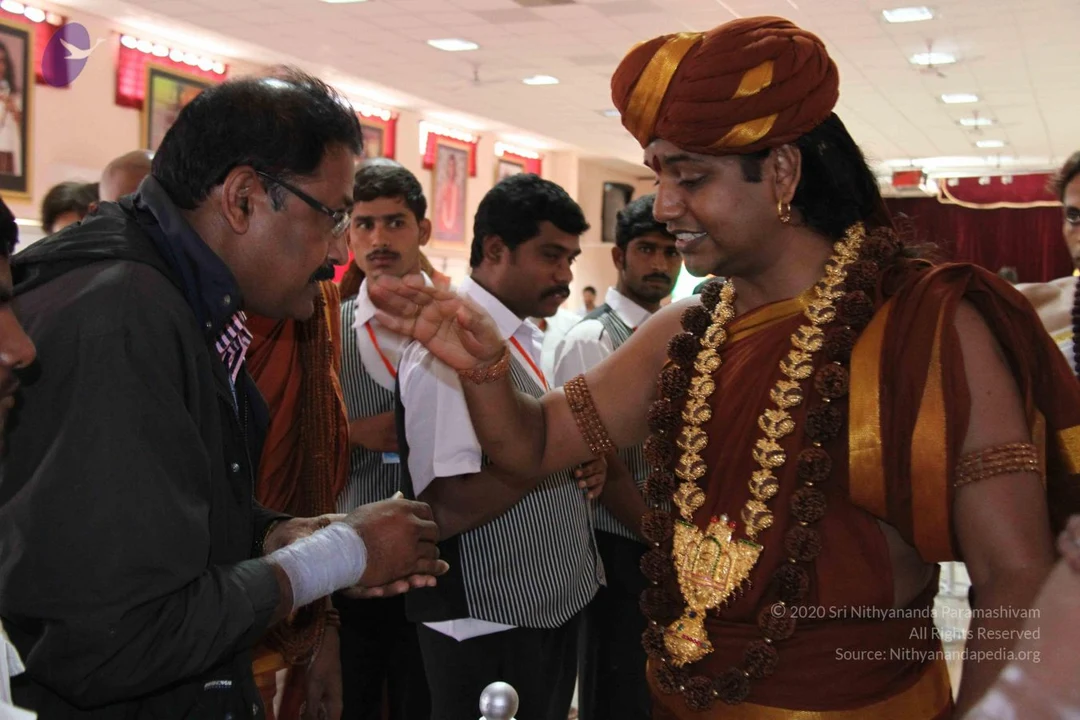
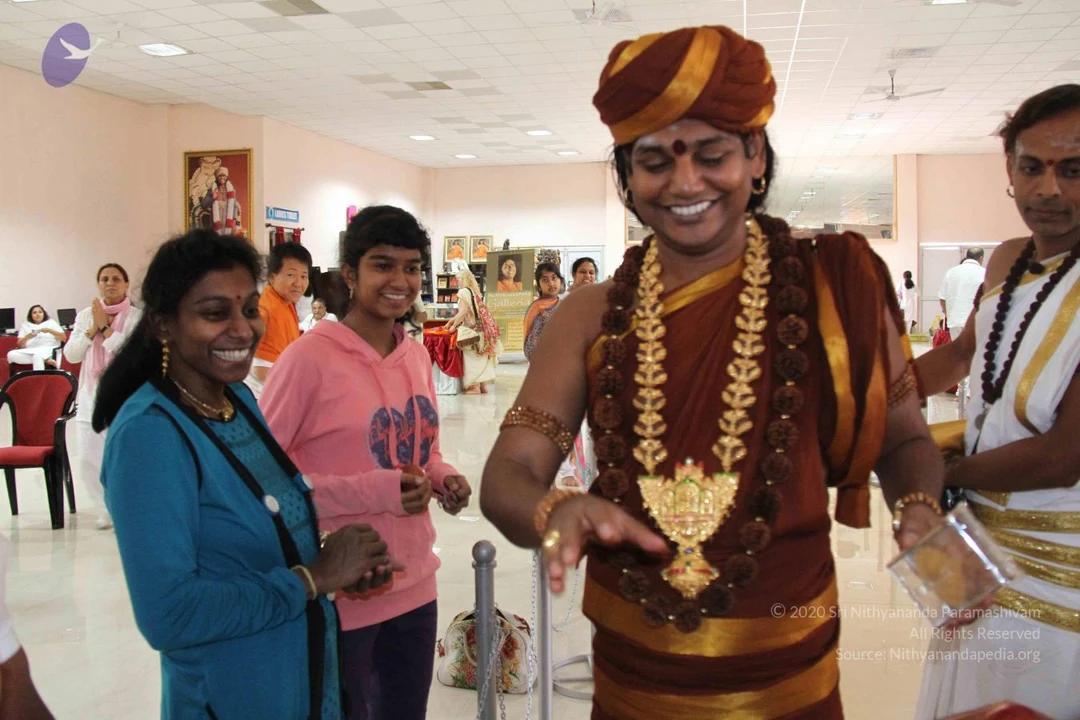
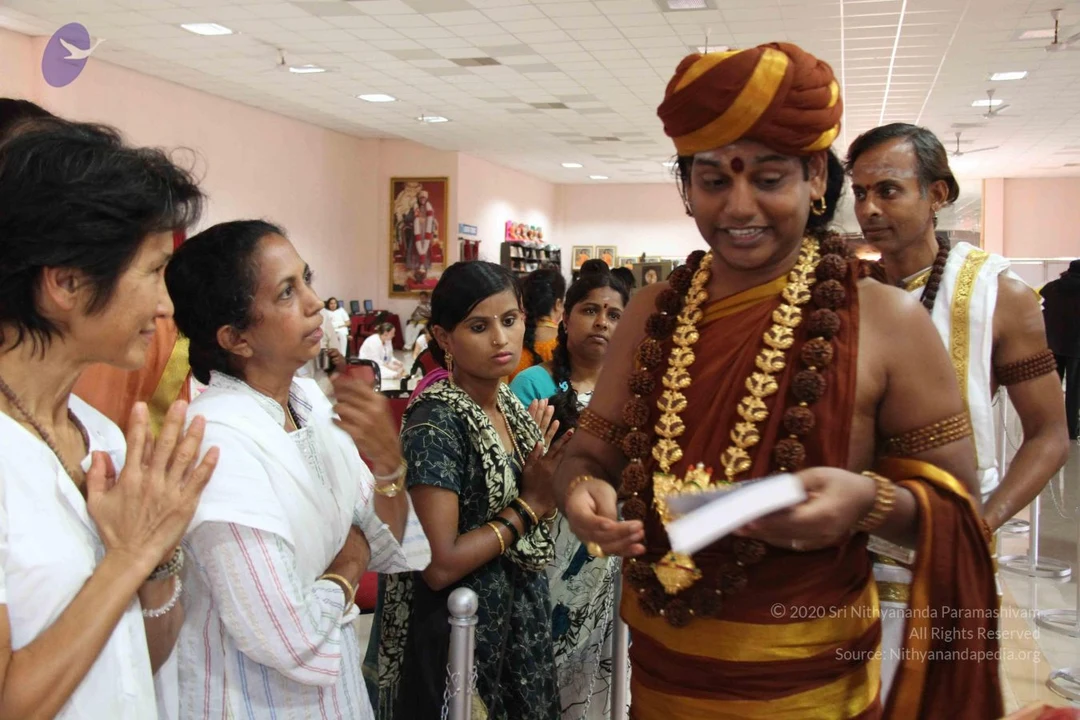
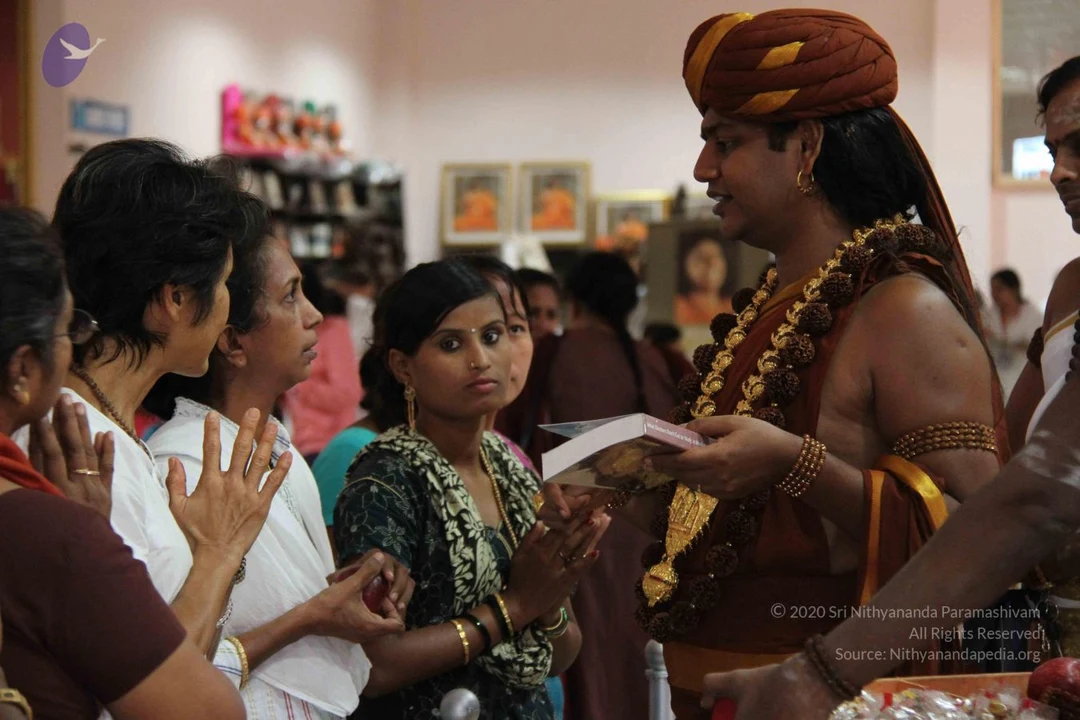
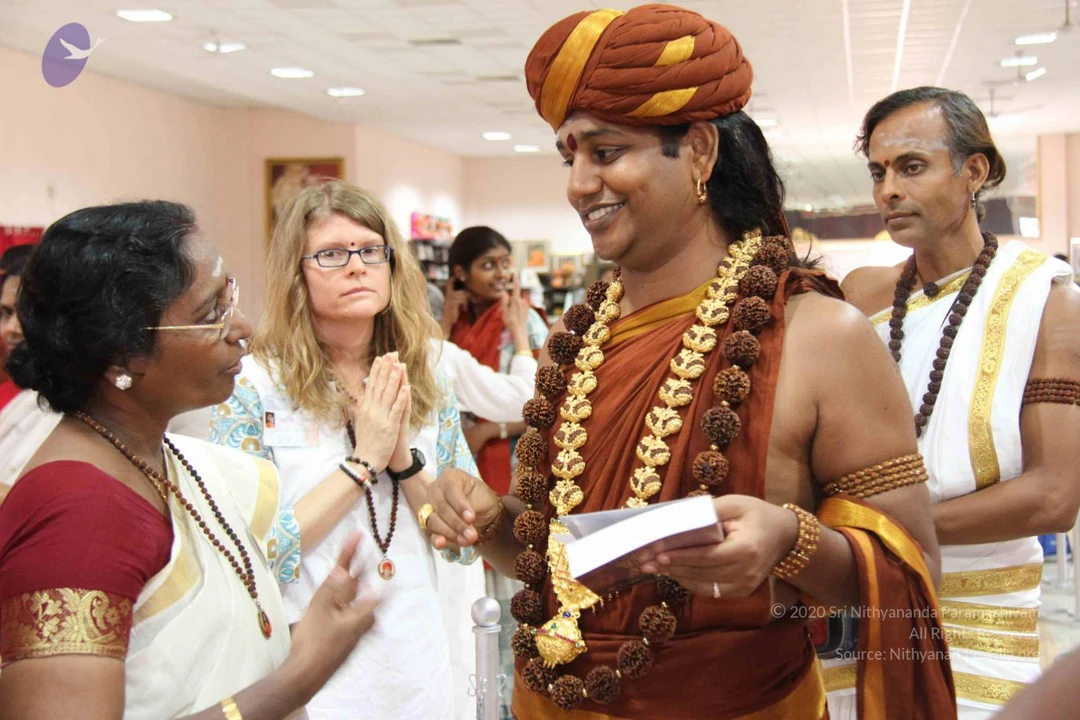
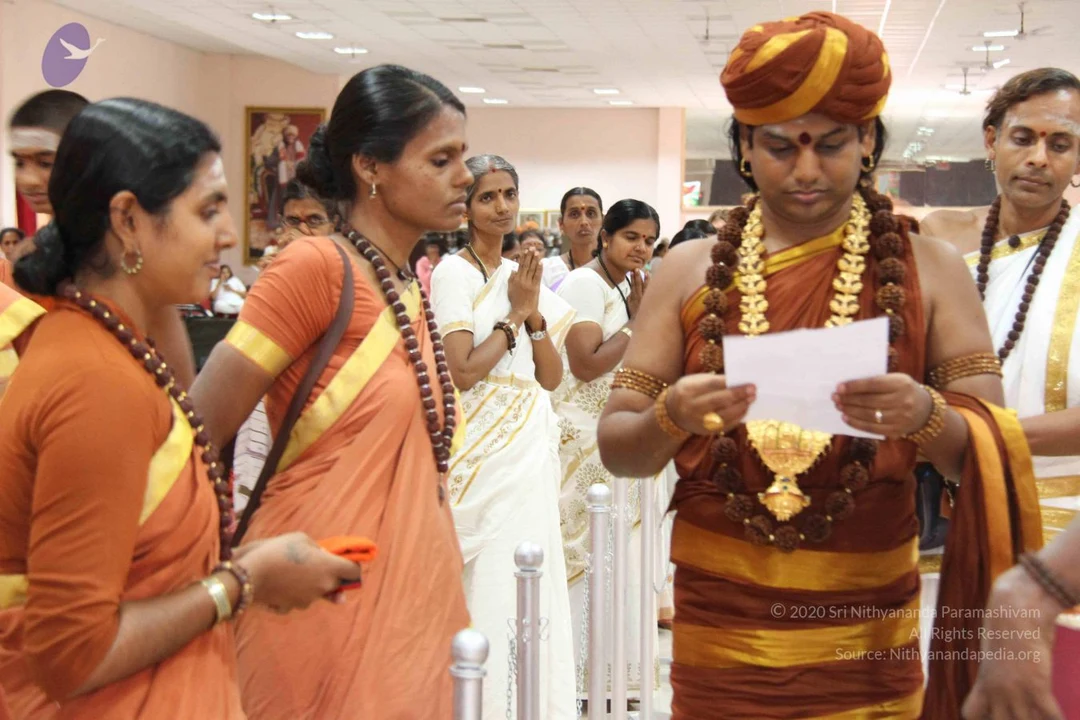
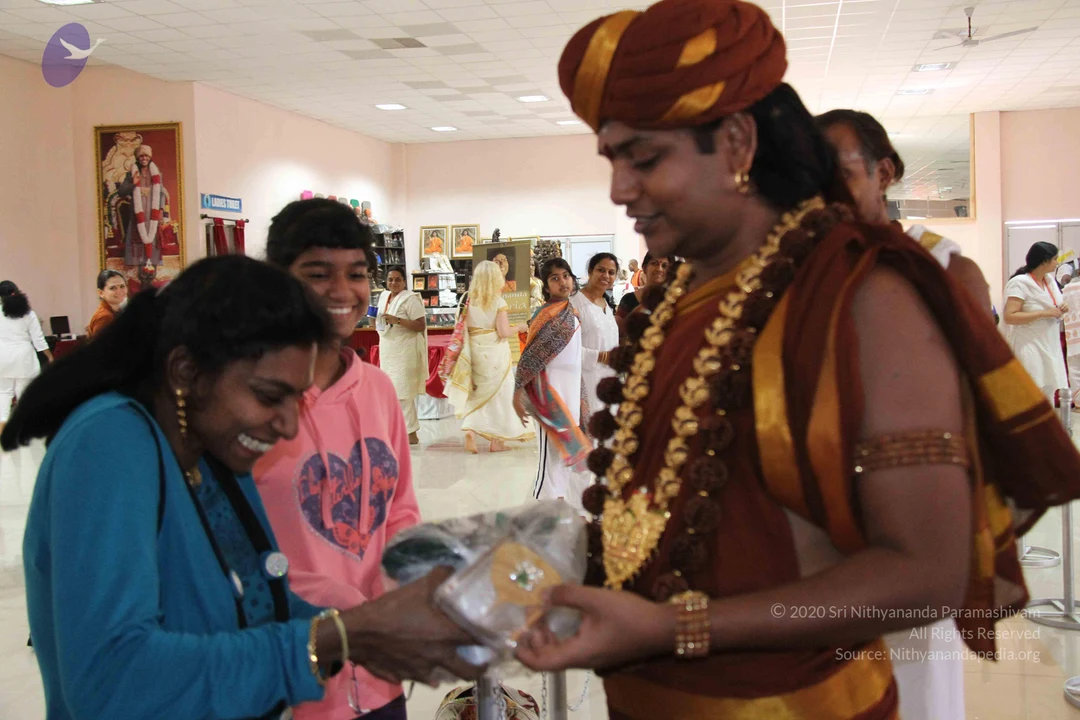
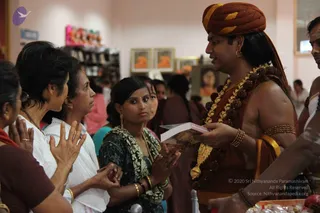
Photograph in a hall with red curtains and a floral-decorated altar at right. A man in a saffron-orange turban and orange robe, with a large gold ornamental necklace over a rudraksha mala and a red tilak, smiles while holding a sheet of paper. Beside him stands an older man with grey hair, glasses and a white shirt, and to the left a younger man in white. A man in a light blue shirt presses his palms together in greeting, and a woman in orange sari stands at right. The man in the turban shows distinctive saffron clothing, rudraksha and gold adornments, so he is a person candidate; the others are devotees.A photograph of a man in a brown-orange turban and matching saffron-brown robe with gold borders, wearing multiple rudraksha malas and a heavy gold necklace with a gold pendant. He stands with one arm raised in a blessing gesture and holds a sheaf of white papers, smiling. Around him, several devotees stand with palms pressed together in namaste, some in white and checked shirts. A man in a white dhoti with gold border and bare-armed rudraksha bracelets stands at right. Red velvet drapes and a bright ceiling form the hall background. Probable Swamiji by appearance: turban, saffron-toned robe, multiple rudraksha malas, gold necklace and gold bracelets, presiding in a blessing pose.A photograph of a satsang-style gathering in a bright hall with a red curtain and framed portrait at left. A central man wears a rust-orange and gold turban, a gold-trimmed saffron wrap, a long gold-and-bead necklace and rudraksha mala, and holds a folded white paper while smiling at a woman in a pink and green-yellow salwar with a brown shawl who gestures toward him. Behind them a crowd of men in white and dark shirts stands in a queue behind a silver barrier. At right a man in a white dhoti with gold border and rudraksha beads stands beside him, and at left a shaven-headed man in orange robes watches. The central man's appearance carries several candidate cues (ornate turban, saffron clothing, rudraksha mala, ceremonial gold necklace), so he is described as a person.A photograph of an indoor hall where a man in a dark jacket and glasses, with a bandaged left hand, reaches to clasp the outstretched hand of a figure in a rust-orange turban with gold border and a bare-shouldered rust-orange wrap. The turbaned figure wears a long gold necklace, layered rudraksha malas and gold arm bands, and smiles. Several men in striped waistcoats, white shirts and lanyards stand behind, and framed pictures hang on the wall. Swamiji (probable) appears as the turbaned figure, identified by the distinctive ornate turban, rudraksha malas and gold necklace; the other figures are devotees and attendants.A photograph of a hall with pink walls and ceiling lights. A man in an orange-and-gold turban and an orange-red robe with a gold border, wearing a gold-and-rudraksha necklace and rudraksha malas, stands in the centre holding a folded white paper, smiling. Several women in saris and salwar kameez stand in a queue with hands folded in namaste, one holding a phone. A man in white dhoti with an orange sash stands at right. A framed portrait of a deity pair hangs on the wall behind, with bookshelves and a counter beyond.A man in saffron-orange turban and ornate saffron robes stands at right, wearing a heavy gold necklace with rudraksha beads and gold armbands, holding a white book and speaking to a group of women. Several women with folded hands and pressed palms surround him in a bright pink-walled hall; the woman in the centre wears a green patterned sari with gold earrings and a nose stud. Behind them shelves hold figurines and framed portraits in saffron tones. A fully visible man in saffron robes and a rudraksha mala is a probable match for a person, going by these cues, though identity is uncertain.

Banyan-Tree

14 photosSource gallery
Outdoor satsang under a large banyan tree with many hanging aerial roots and a wide canopy. A seated teacher with long dark hair, bare-chested and wearing an orange-and-saffron dhoti with a rudraksha mala, sits on a red-cushioned throne with gold trim at the right edge, facing a crowd. The throne is a gilded seat with red upholstery, placed on a striped rug. Around 40 attendees sit on the sandy ground and on stone steps, mostly in white ritual clothing, some in saffron saris, and some with red and blue lanyards. A woman in a blue-and-white sari stands at the far left. Some participants sit with palms joined, others listen attentively. A video camera operator stands among the crowd. Several people sit near a stone basin in the foreground.Outdoor satsang beneath a huge banyan tree with many aerial roots. A seated teacher in orange clothing and beads sits on a red throne-like chair in front of a shrine with a pink backdrop and a dark deity murti with multiple arms. Dozens of devotees in white clothes sit on the ground in rows, some with red lanyards, several women with long braided hair, and a few men in white shirts. Some participants wear blue headwear, and staff in dark trousers and white shirts stand at the edges near a camera tripod.Outdoor photo beneath a large spreading tree with broad green leaves and thick grey branches framing the view. In a clearing, a seated figure in orange clothing sits on a red cushioned chair in front of a shrine with a pink backdrop and a deity murti, with red flower offerings at the base. A crowd of around twenty devotees in white clothes sits on the ground facing the chair. Two people in white stand at the right edge near a microphone stand.Outdoor satsang under a large banyan tree with aerial roots. Dozens of devotees in white clothing sit on the ground and mats in rows, many with white garments and some in saffron or patterned saris. On the right, a figure in an orange robe sits on a red throne before a pink-backed shrine holding a dark deity murti. Several cameras and a tripod appear at the left edge. The setting is a dirt-floored grove with lush green foliage.A large outdoor satsang under a massive banyan tree with many thick aerial roots and hanging branches. A crowd of mostly white-clad devotees sits cross-legged on bare earth, many wearing red lanyards. In the right foreground, a bare-chested figure with long dark hair and an orange-red shawl sits facing the group, speaking to them. Several seated men in white kurtas and dhotis, and women in white and cream saris, listen attentively.Outdoor satsang beneath a large banyan tree with dense aerial roots and spreading branches. A row of devotees in white clothes and white lanyard badges sits on a raised stone platform at the base of the trunk, some with hands folded. A seated figure in white stands out on the right near a white pillar. At left, a gold-edged red and yellow cushioned seat is visible in the foreground. Several other people sit on the ground in the background.
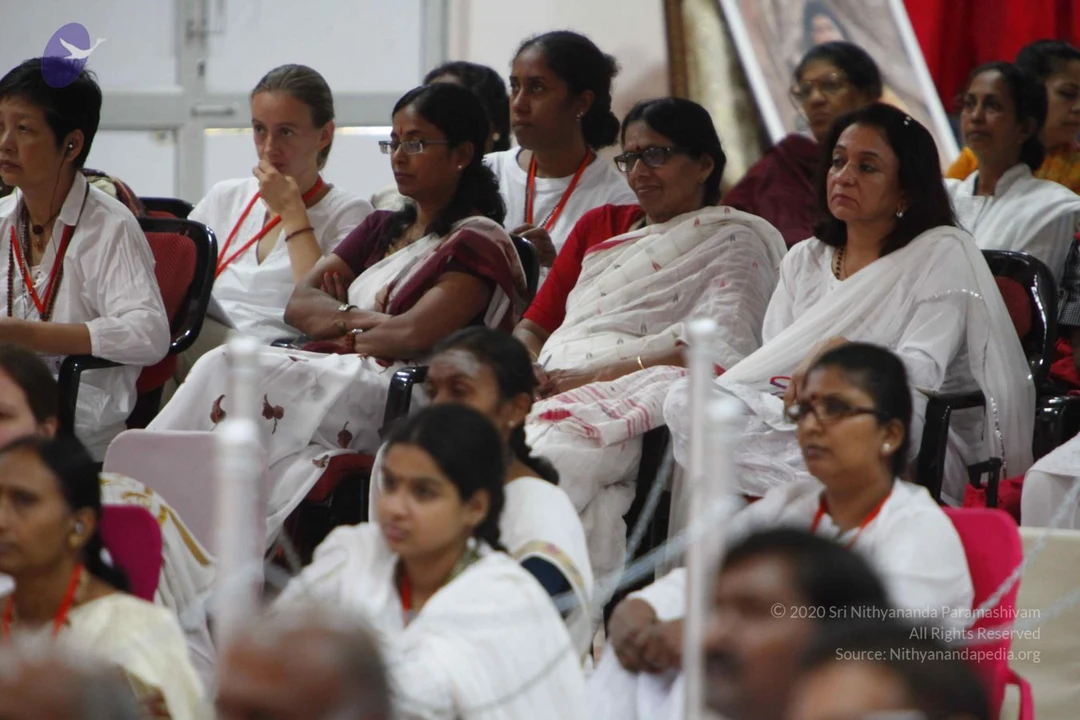
Darshan

18 photosSource gallery
A seated man with long swept-back dark hair, an orange-red shawl printed with script over his shoulder, and a bare shoulder reaches out to place his right hand on the crown of a shaved-headed devotee in a white kurta with a red-and-black beaded mala. The devotee bows with palms pressed together. Behind them are garlands of yellow, red and purple flowers and a golden vessel. The seated figure shows distinctive long hair, a flowing orange-red shawl and ornate gold adornments, a probable Swamiji blessing a devotee, consistent with a blessing or darshan moment.A photograph of a ritual blessing in a hall with a deep red curtain. A figure with swept-back long dark hair, wearing a red-orange shawl draped over the head and a rust-orange robe with gold trim, places a palm on the forehead of a young man in a white kurta who kneels and bows his head, a red shawl draped over his shoulders. Behind them, a woman in an orange sari with glasses and a rudraksha mala stands with hands raised in reverence, and a deity murti is decorated with flower garlands in red, yellow and purple. The figure's appearance with long hair and saffron-toned clothing is a probable match for Swamiji, shown giving a blessing to a devotee.A photograph of a man in red-orange robes with long swept-back hair and a small tilak, smiling as he extends his right hand in blessing toward an older bald man in a white shirt who kneels with palms joined in namaskar, his head bowed and draped in a red-orange shawl. Behind them a woman in orange saree and glasses stands near a golden object, and colourful marigold and yellow garlands and gold-framed deity decorations fill the background. Probable Swamiji (appearance cues: long swept-back hair, saffron-orange robes with printed mantra text, and a tilak) gives blessings to a devotee in a satsang-style setting.A photograph of a long-haired man in an orange-brown sleeveless garment with a saffron-red shawl and gold ornaments, with a red bindi, placing his right hand on the head of an older man with grey curly hair, who wears a white shirt, a red shawl and a wristwatch and bows with palms raised. A woman in an orange sari stands in the background before a red curtain and a multicoloured flower garland. Appearance-based cues on the man with the outstretched hand (long swept-back hair, saffron shawl, gold necklace) suggest Swamiji (probable) giving a blessing to a devotee, though the identification is uncertain.A photograph of a satsang setting where a man with long swept-back dark hair, a small red tilak on his forehead, and a saffron-orange shawl with printed script over bare shoulders is smiling while placing his right hand on the head of a seated devotee wearing a woven rudraksha-style cap and a white kurta with an orange scarf. Behind them a woman in orange sari with rudraksha mala and glasses stands near a bright orange and red garlanded deity murti and marigold-yellow flowers, and a red patterned throne is visible at left. Count is three visible people in front plus additional partial figures; the man is a probable Swamiji candidate with long hair, saffron shawl and rudraksha-style cues, giving his blessing.A seated figure in long dark hair and an orange-red shawl with a red bindi places his right hand on the crown of a man's head, smiling warmly. The recipient wears a white t-shirt and a red shawl draped over his shoulders. Behind them, a woman in an orange sari adjusts red fabric, and a woman in an orange top and red bangles watches. Gold ornaments and a garlanded deity murti with yellow and white flowers stand in the background against red drapes. The scene resembles a blessing or darshan moment. Swamiji (probable): the seated figure has long swept-back hair, an orange-red shawl and a rudraksha-style gold adornment at the chest, consistent with the page's reference to Swamiji.
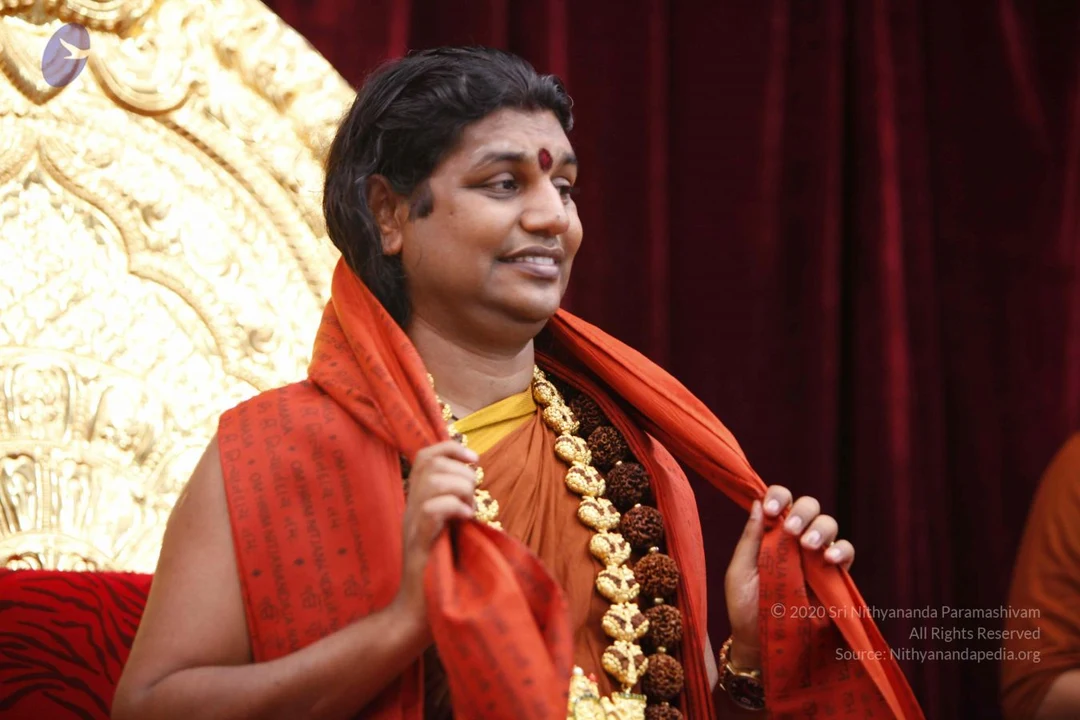
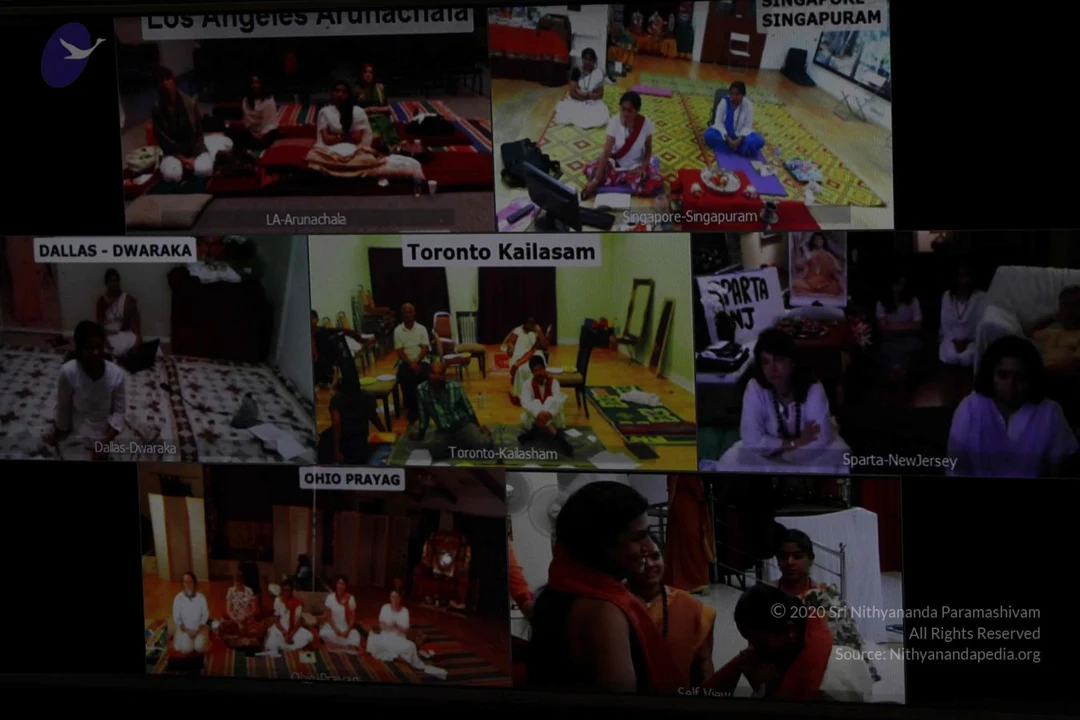
IA-Food

6 photosSource gallery
Several people sit cross-legged on a polished white marble floor in a circle, eating a meal from stainless steel thali trays holding fruit, sweets and small bowls. Most wear white clothes and orange-red lanyards; one woman in the foreground wears a white top with a dark strap across her shoulder. A man in a white t-shirt with an ID badge gestures with his hands while a woman in white speaks. Steel cups stand on the floor, and a bright red-orange cloth bag sits at the lower left, with other seated people in white visible in the background.A group of people sit around a red tablecloth eating a meal from stainless steel thali trays in a shop or hall with framed pictures and carved wooden figures on shelves behind them. A woman in a white top at left eats from a bowl, a bald man in a white t-shirt at centre holds food and looks to the side, a man in a blue striped shirt with an orange lanyard eats at right, and a woman in a yellow top in the foreground eats a sweet. Trays hold bread buns, bowls of chutney and sauce, and a folded dosa-like item. A child in a teal top eats a burger-like bun at far left. A framed portrait of a smiling woman appears on the wall at upper right.A woman in a white salwar kameez with a thin red cord around her neck sits at a table, holding a small child on her lap while she serves food onto a stainless steel thali. The thali holds dosa, a round bread, chutney, a small bowl of white curry and a red chutney. Behind them, people in white clothes stand near a buffet counter draped with red cloths, with a red curtain and a man in a dark vest in the background. The scene reads as a communal meal being served.A woman in a yellow-green floral saree with a green border and a red lanyard badge reading "Sanyasi Awakening" carries a steel tray of food. The tray holds steel bowls with fruit pieces, a folded flatbread and a small steel bowl with a ladle. Around her, people in white and orange-red clothing move through a hall with red curtains. A man in a white shirt stands at the left edge. The setting looks like a serving area at a gathering.A woman in a yellow-green floral sari with a green border serves food on a steel tray at an indoor hall. She wears a red lanyard with an ID badge reading Nithyananda Awakening, and gold bangles on her wrist. The tray holds small steel bowls with a pale flatbread, sliced orange fruit and red apples. Behind her, other people in white and orange attire move through the hall, with a colourful banner on the wall. Several people stand in the background.Two men sit side by side on red-cushioned chairs at a seated gathering, holding steel tumblers with white cups. The older man on the left has white hair and a grey moustache, wears a white shirt and white trousers, a red lanyard with a blue badge, and a wristwatch, and rests an orange-red shawl on his lap. The younger man on the right wears a white t-shirt with a green BP logo, a red lanyard with an ID badge, and a rudraksha mala with a pendant. Behind them, other attendees in white clothes sit and drink from steel tumblers, and seated people are visible in the background.

Kalabhairava-Blessings-Darshan
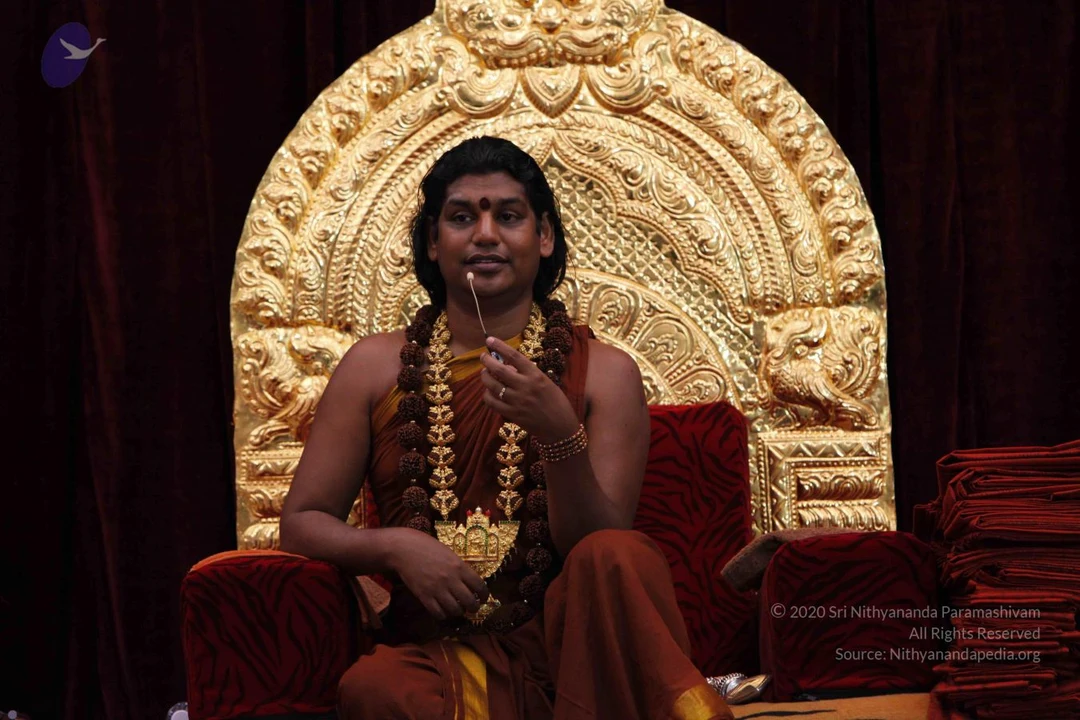
60 photosSource gallery
A screen photo of a video feed showing a temple-like room with a red-and-gold canopied seat holding a deity murti decorated with flowers and garlands. A young man in white dhoti-style clothing with an orange shawl and white tilak stands with palms pressed together in namaskar. Behind him, several people in white and orange sit on striped mats, including a woman in white kneeling with hands folded and a woman in orange shawl with palms joined. A white banner labelled OHIO PRAYAG hangs above. Brass lamps and offerings sit on a low table in front of the shrine.A photograph of a video-conference screen showing two side-by-side live feeds. On the left, a woman with shoulder-length dark hair wears a white high-necked top and a dark beaded mala, raising both palms toward the camera in a blessing gesture; behind her are a framed picture, a small table with offerings and a blue cushion, and a sign reading Sparta NJ. On the right, a figure with long dark hair and a red-and-gold ornate outfit, with beaded garlands and a trident beside them, stands before a gilded arch labelled Self View, lit in green and orange tones.A photograph of a large display screen showing two side-by-side video feeds from a remote satsang link. Each feed has a white label reading "DALLAS - DWARAKA". On the left, a young woman in a white top raises both open palms toward the camera; behind her, a second woman in a red top sits with hands joined on a bed covered with a red and white patterned sheet beside a red cloth-covered table. The right feed shows the same scene with the young woman again raising both palms. Lower-left caption on the screen reads "Dallas-Dwaraka". The screen bezel and dark room surround the display.A smiling figure with long dark hair and a red bindi stands within an ornate gold-toned arch, holding a silver trident with both hands. The figure wears a multicolored tiger-striped garment in orange, yellow and black, layered with dark rudraksha beads and red and white bead malas. Red and green stage lighting falls across the scene, with a patterned gold drape and colourful backdrop behind. a person: the long swept hair, ornate attire, rudraksha malas and trident are consistent with the a person appearance, and the figure is physically present as a performer in a staged setting. No other people are visible.A photograph of a large display screen in a dark room showing a split video call. On the left, the feed labelled OHIO PRAYAG shows a bright room with striped floor mats and cushions, a red-and-gold ornate seat or throne at the back, and draped partitions. A woman in a patterned top raises both arms, while two people in white sit with hands pressed in prayer. Another person in white sits at the far left. On the right, a self-view panel shows a smiling woman with long dark hair wearing a red garment and beaded necklaces against a green-gold ornate frame. The screen feed is tinted green and red.A figure stands within an ornate gilded arch decorated with embossed floral patterns, holding a silver trident in the right hand and resting the left hand on a golden ornamental seat. The figure has long, dark, wavy hair, a red bindi on the forehead, and a tiger-striped garment in orange and black tones over a red and gold cloth, with multiple rudraksha malas and beaded bracelets. Behind are red and yellow floral garlands and a red-lit temple backdrop. The figure appears to be a costumed tableau representing a deity form, with the trident and attire.