Skip to content
Friday

8 July 2016

Shanti Mantra - Peace Declaration

Dated photos
155
Source pages
1
Media
2
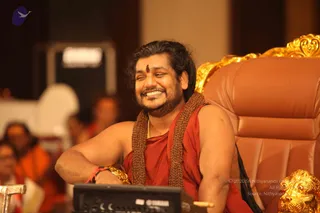
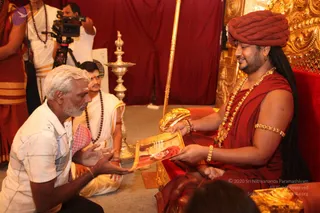
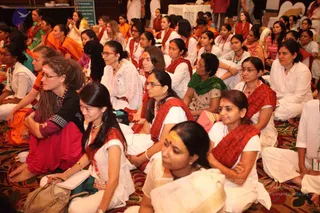
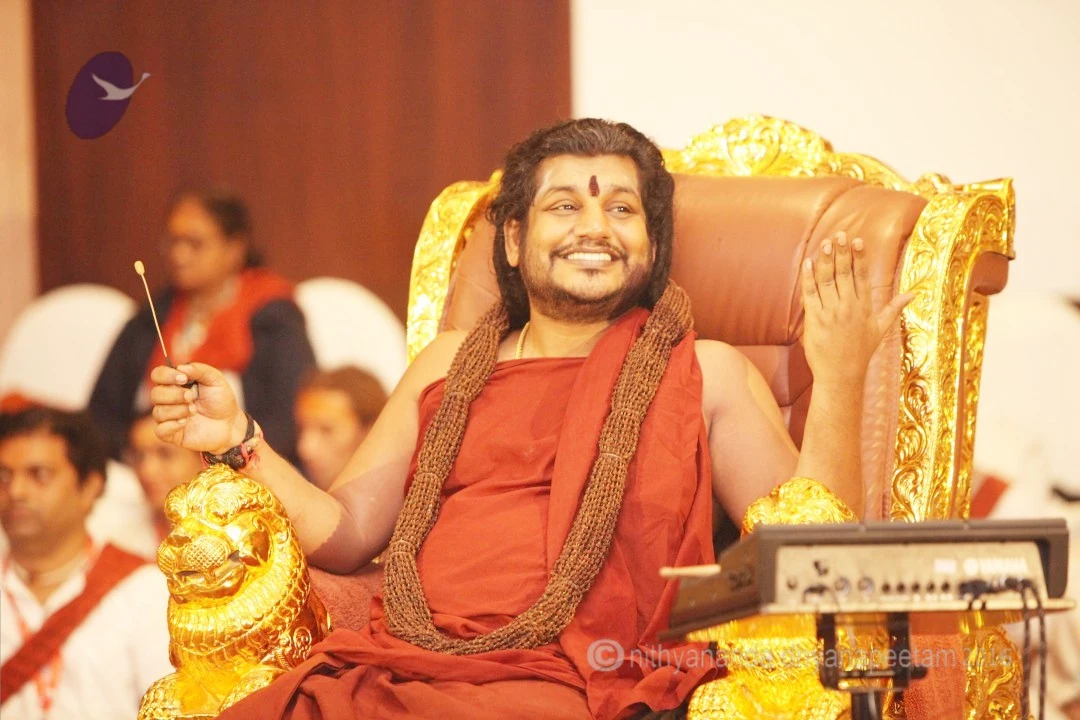
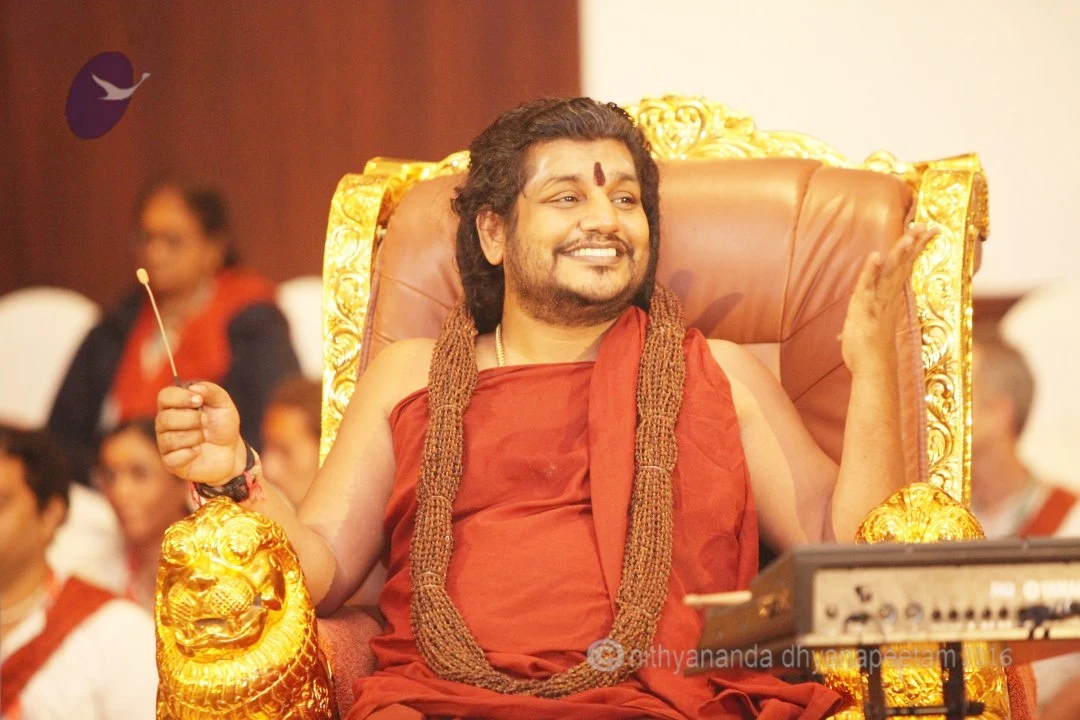
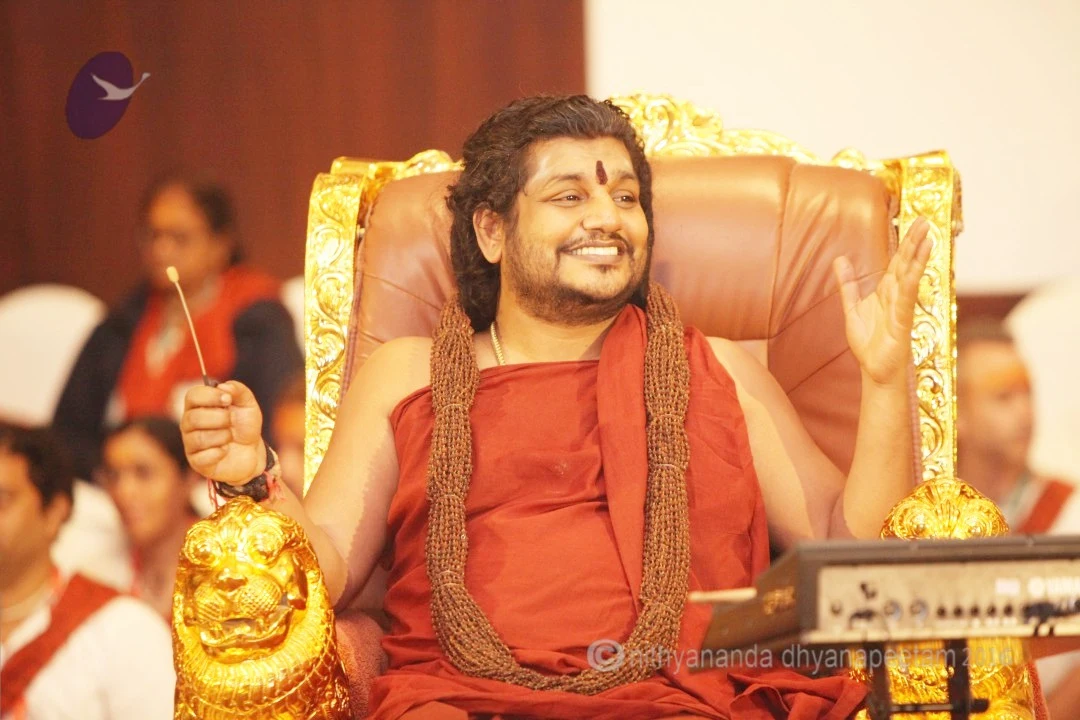
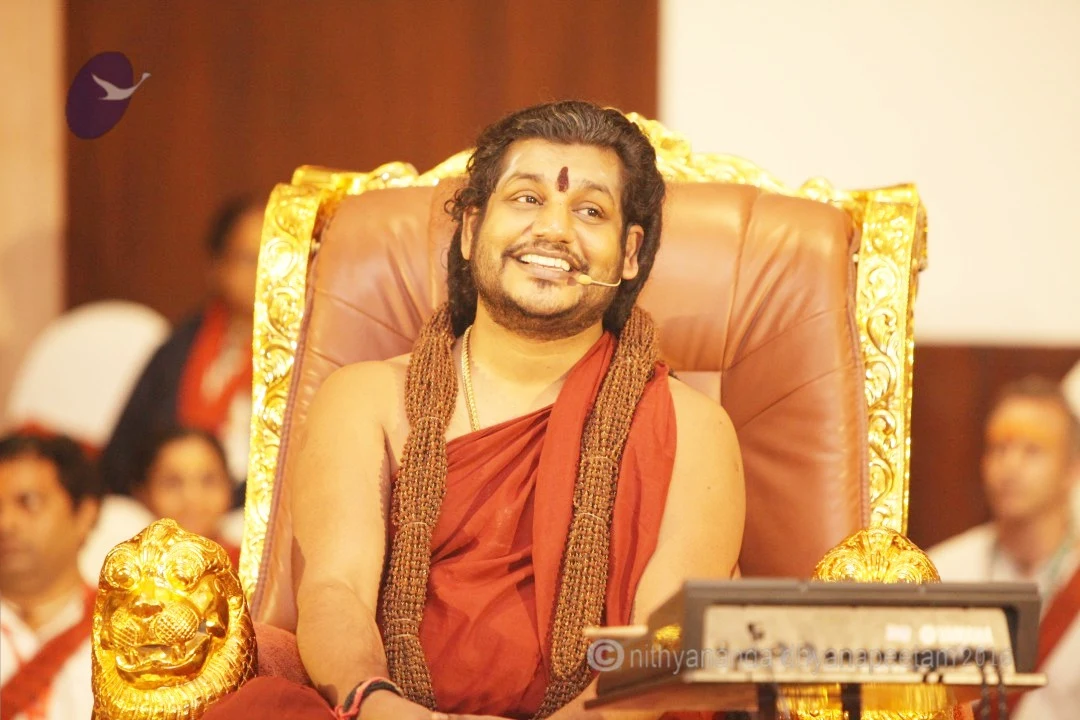
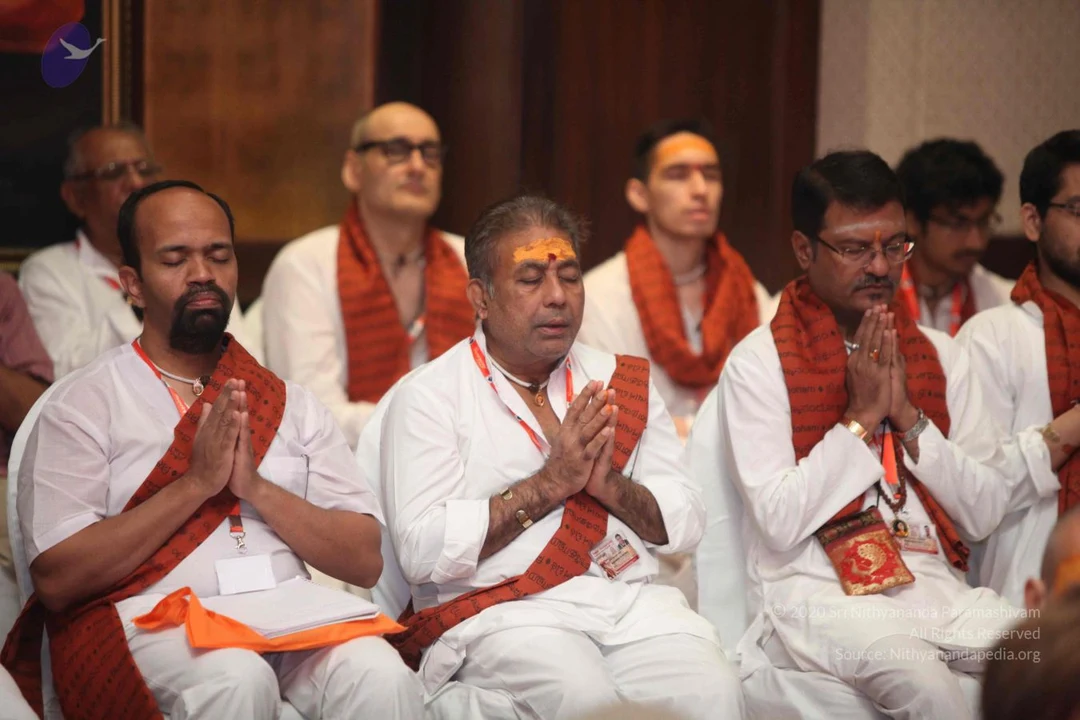
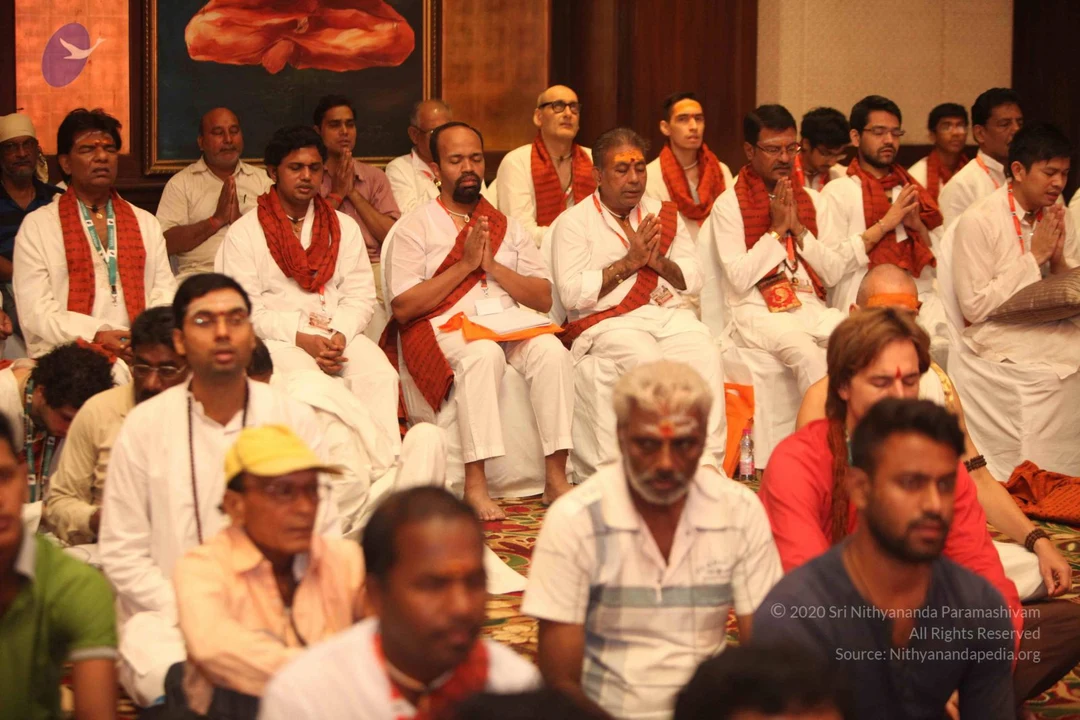
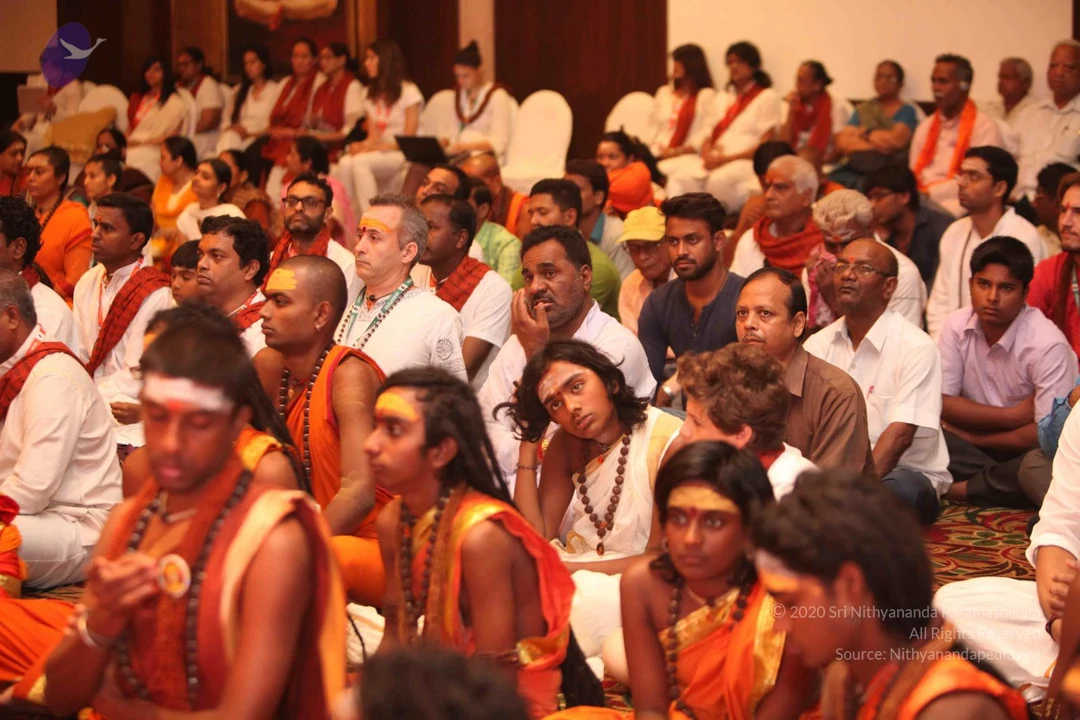
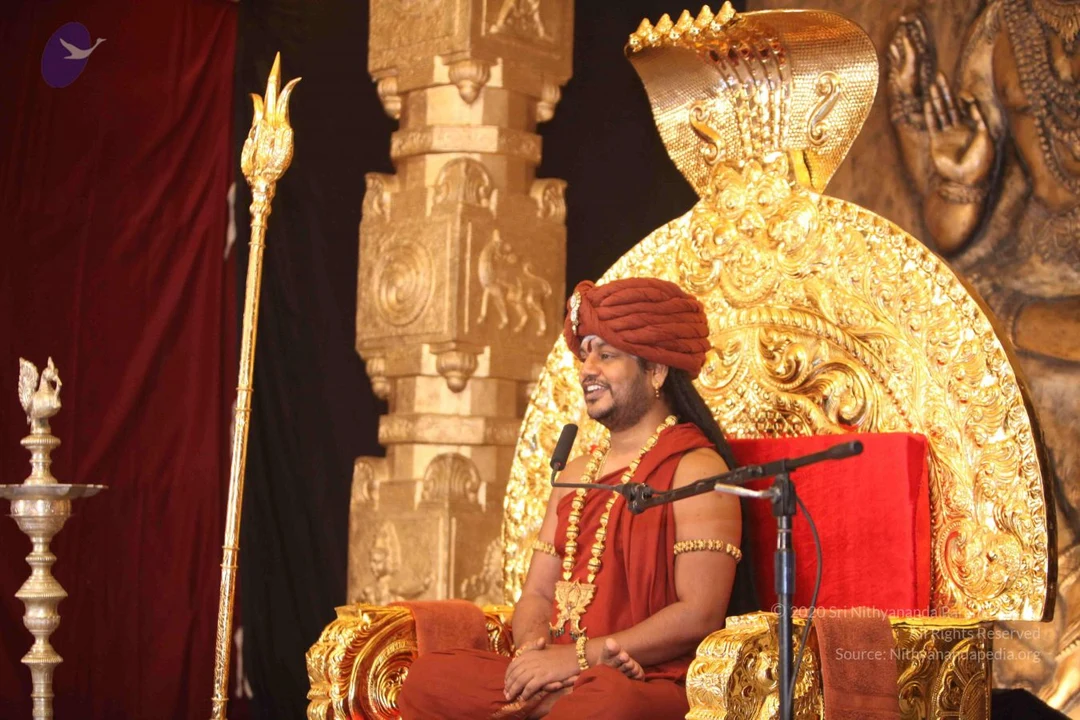
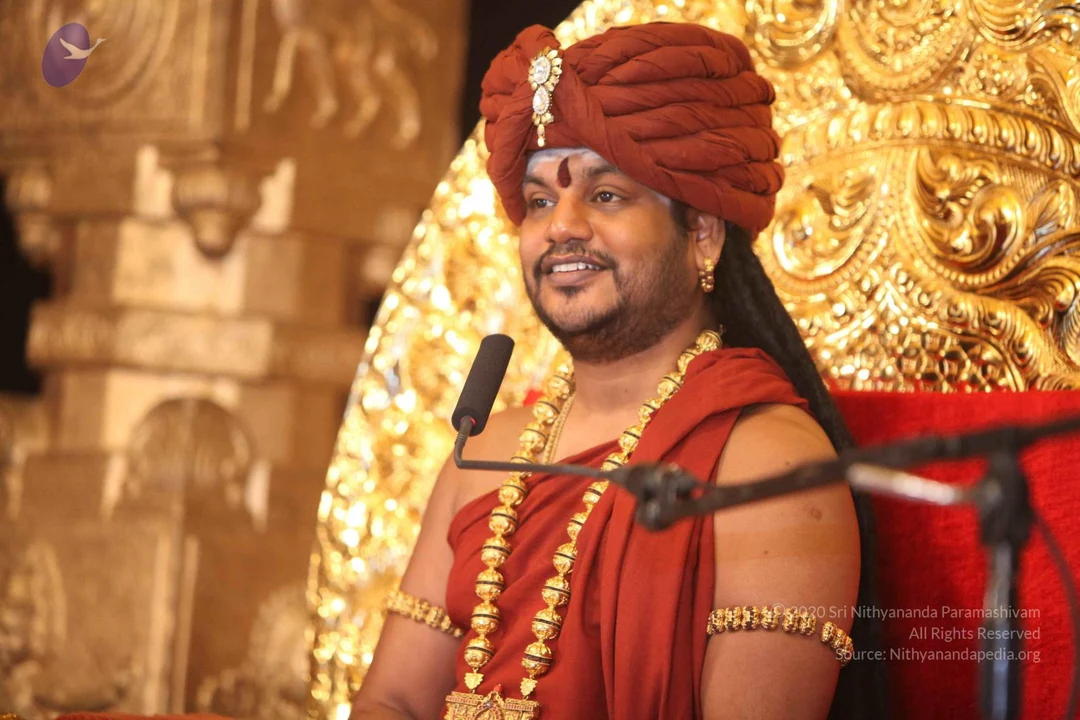
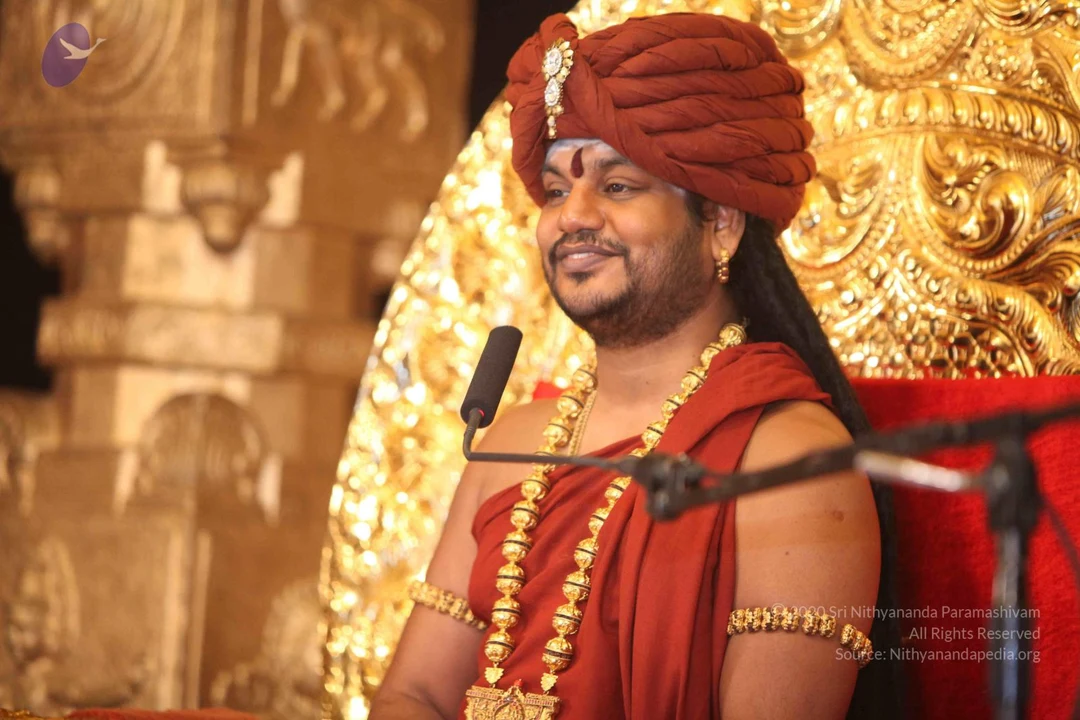
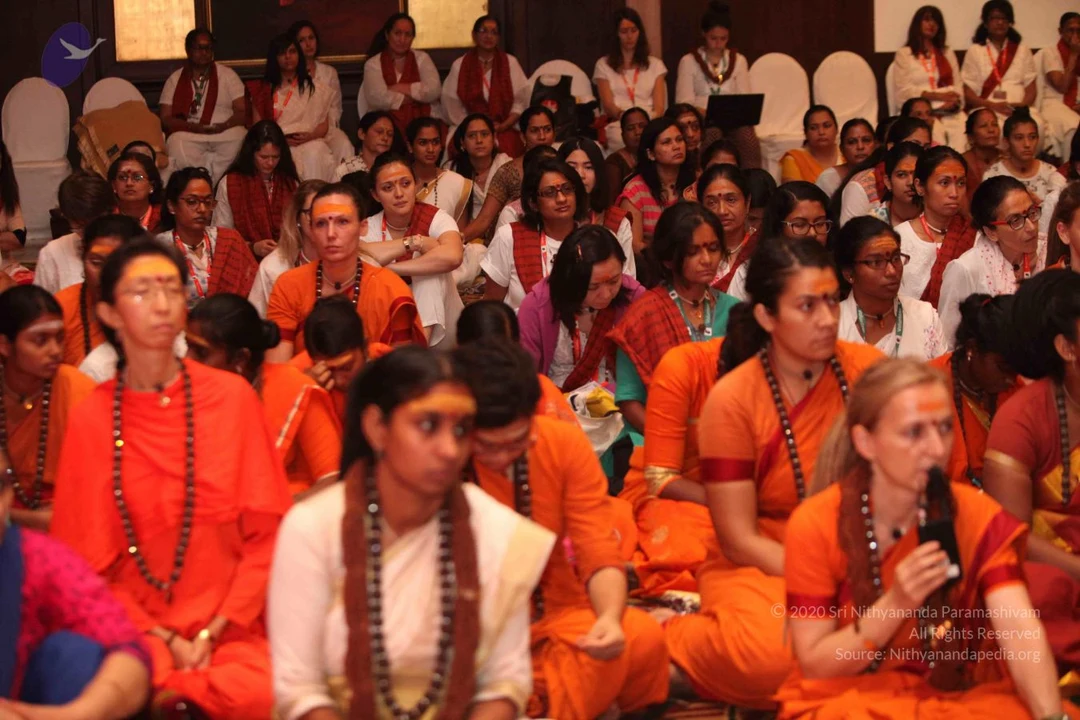
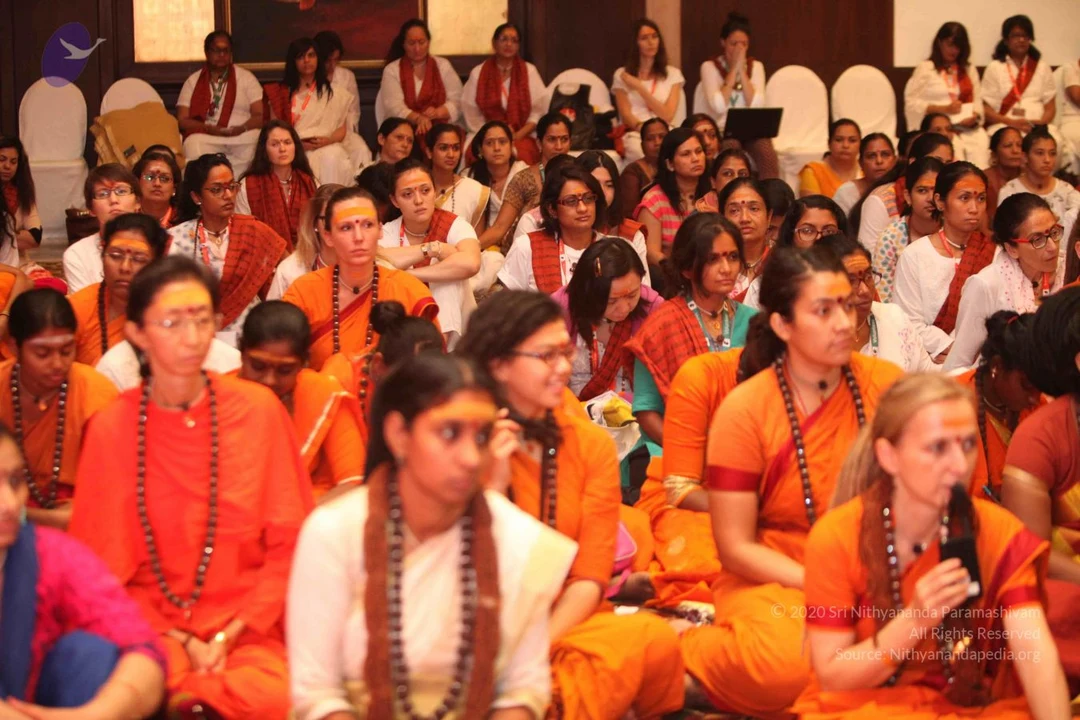
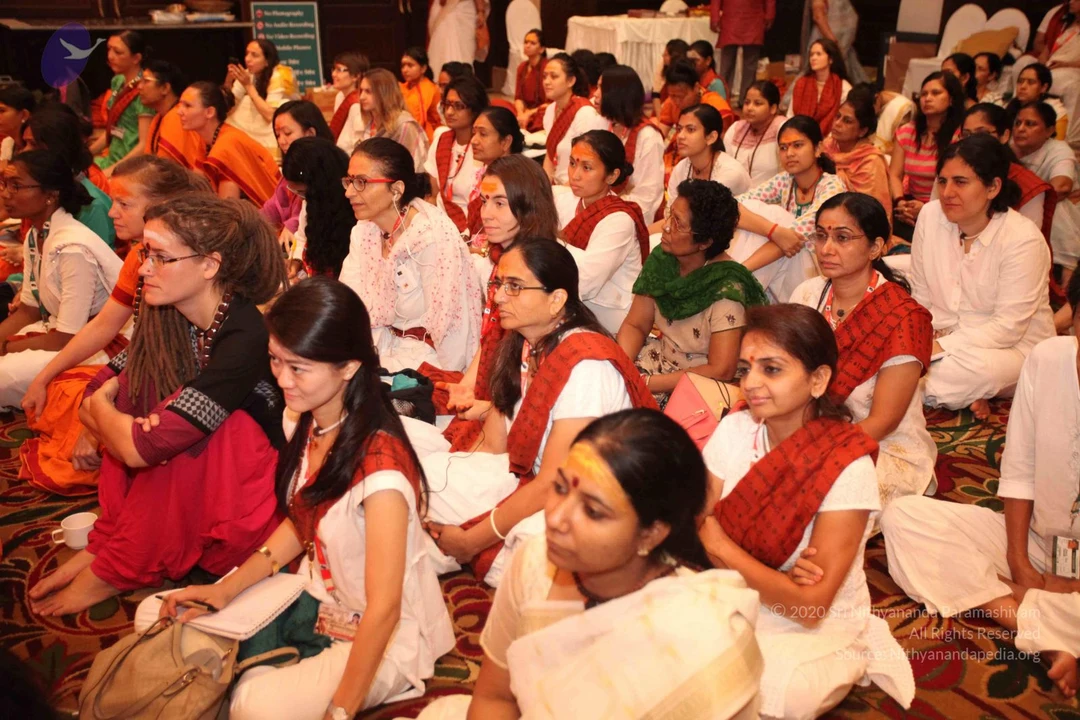
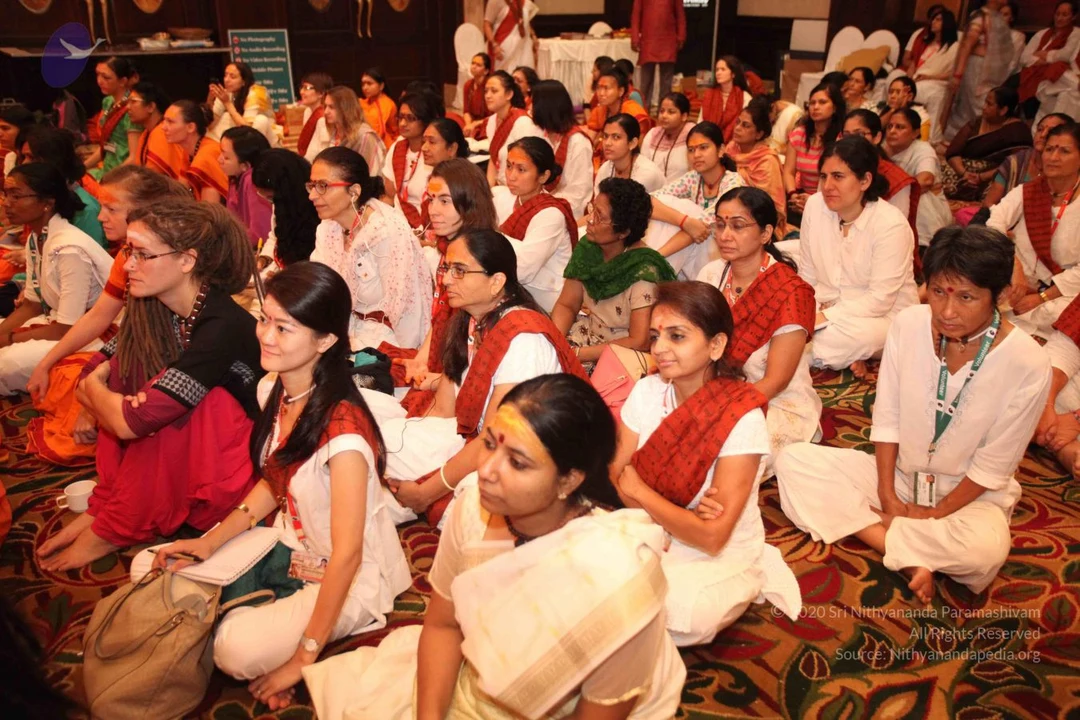
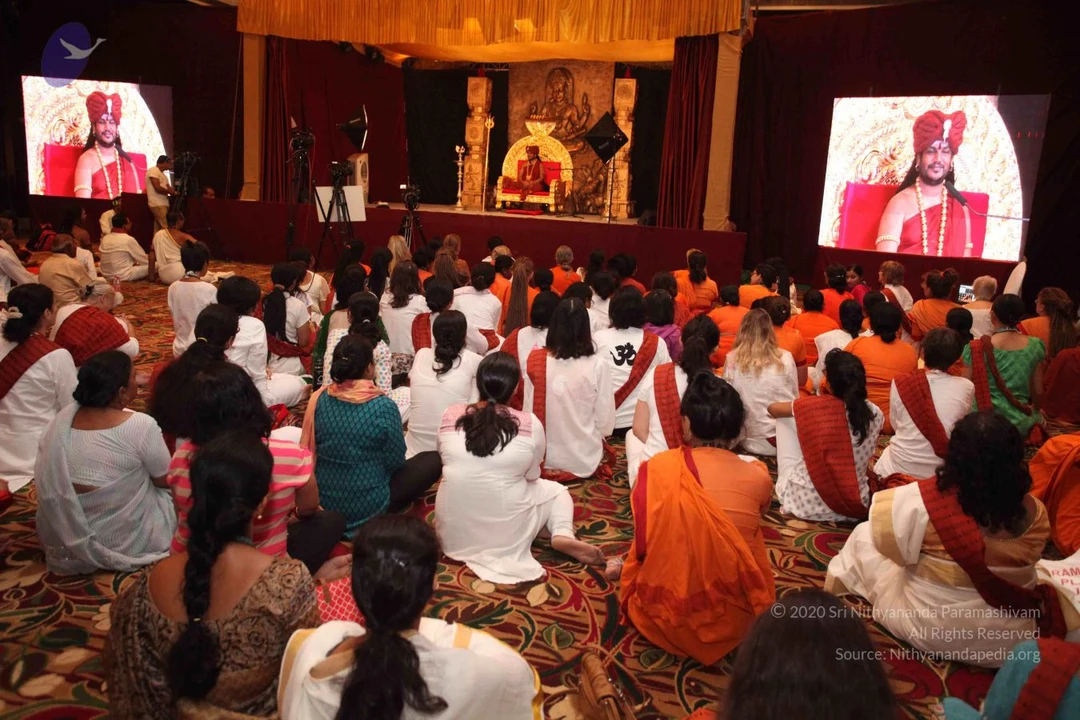
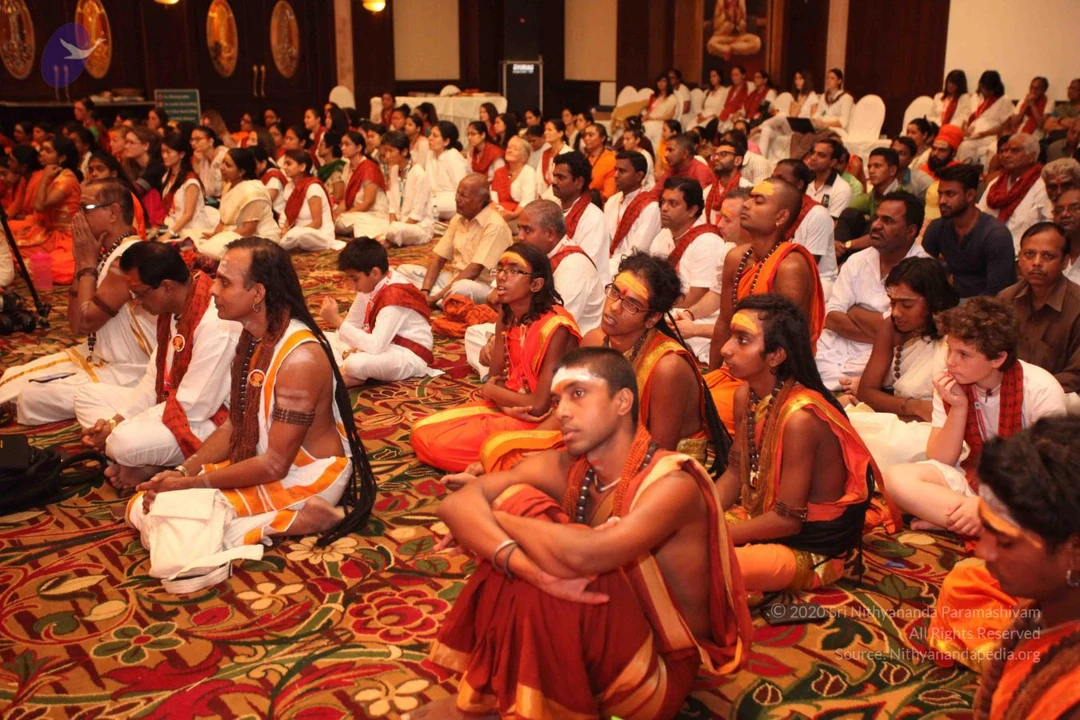
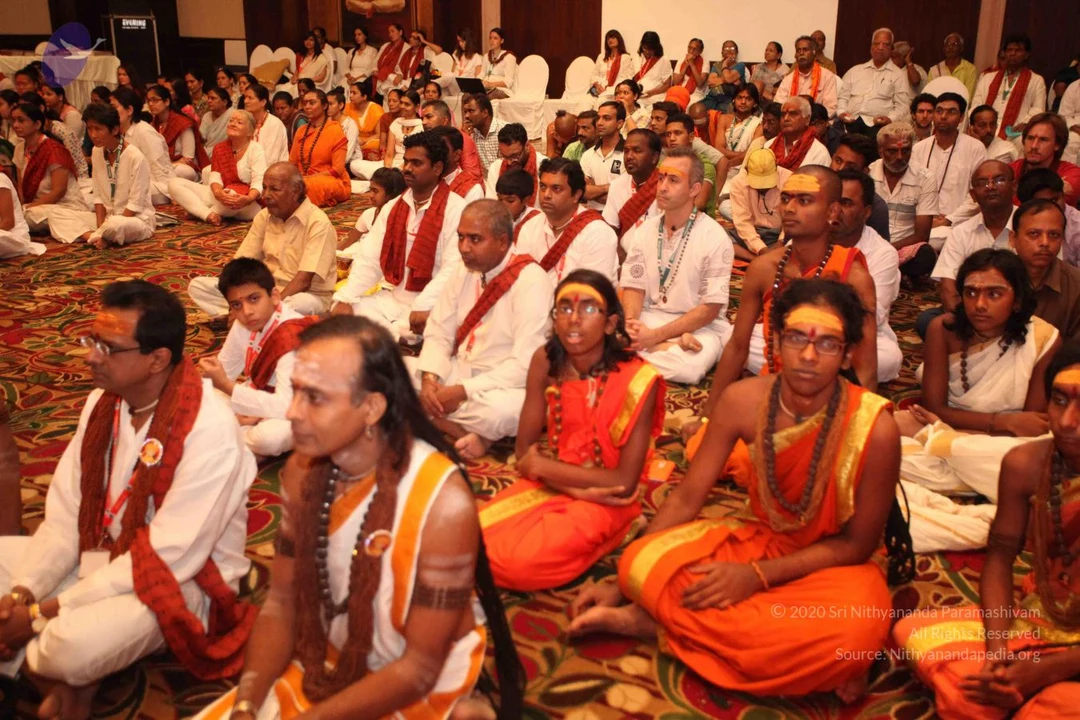
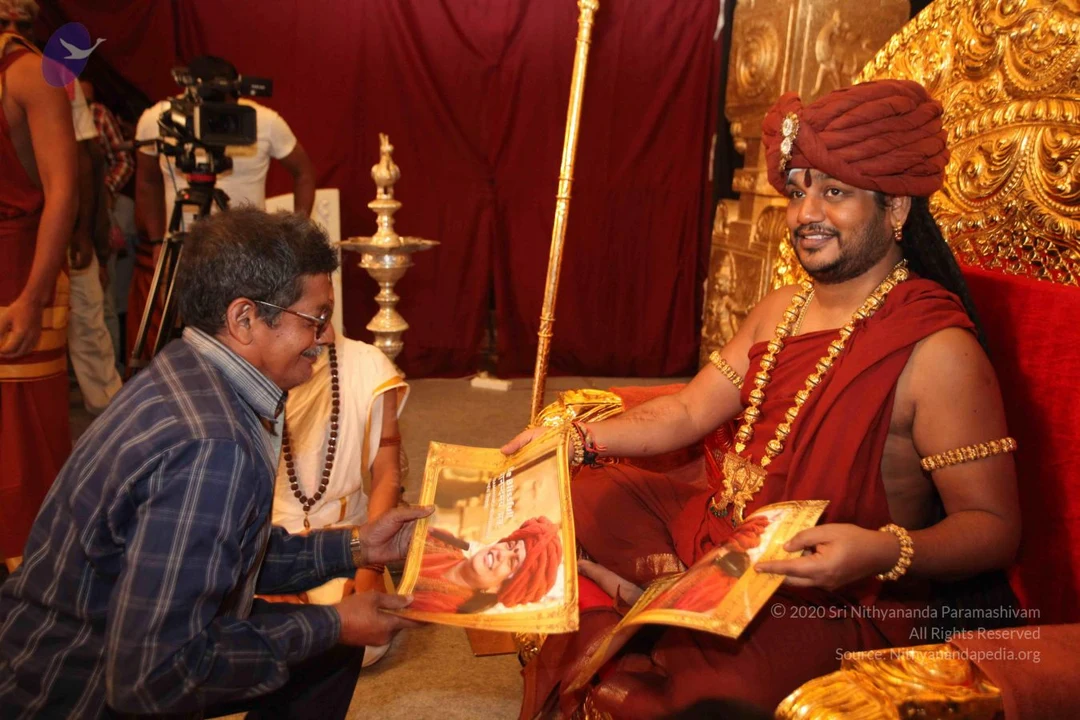
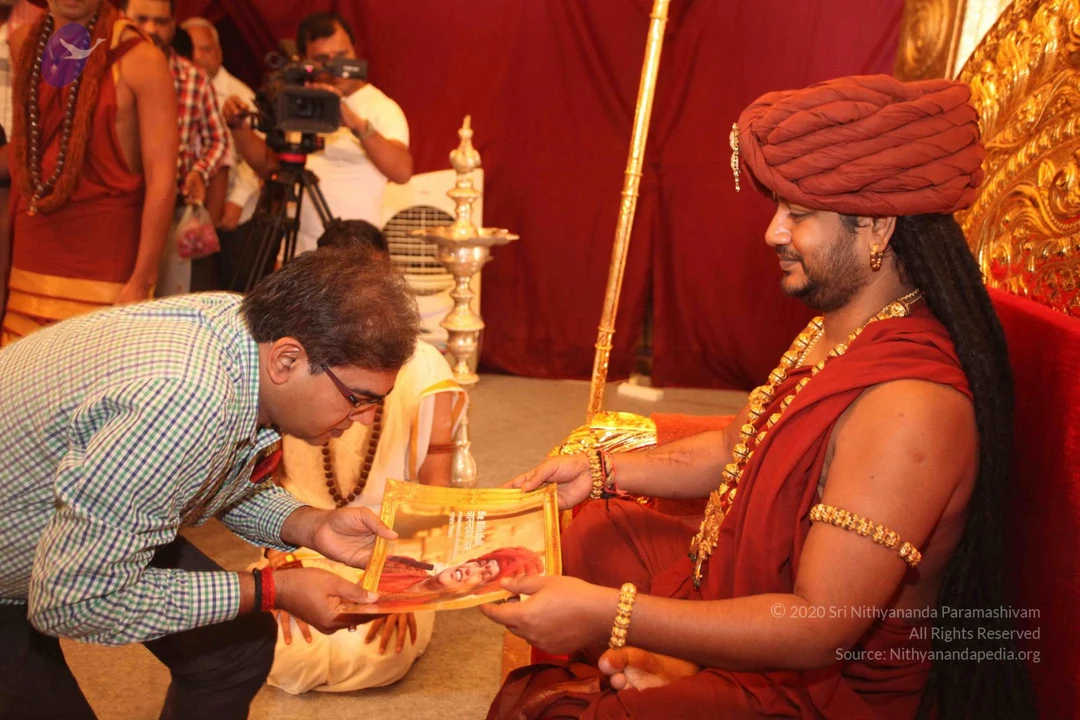
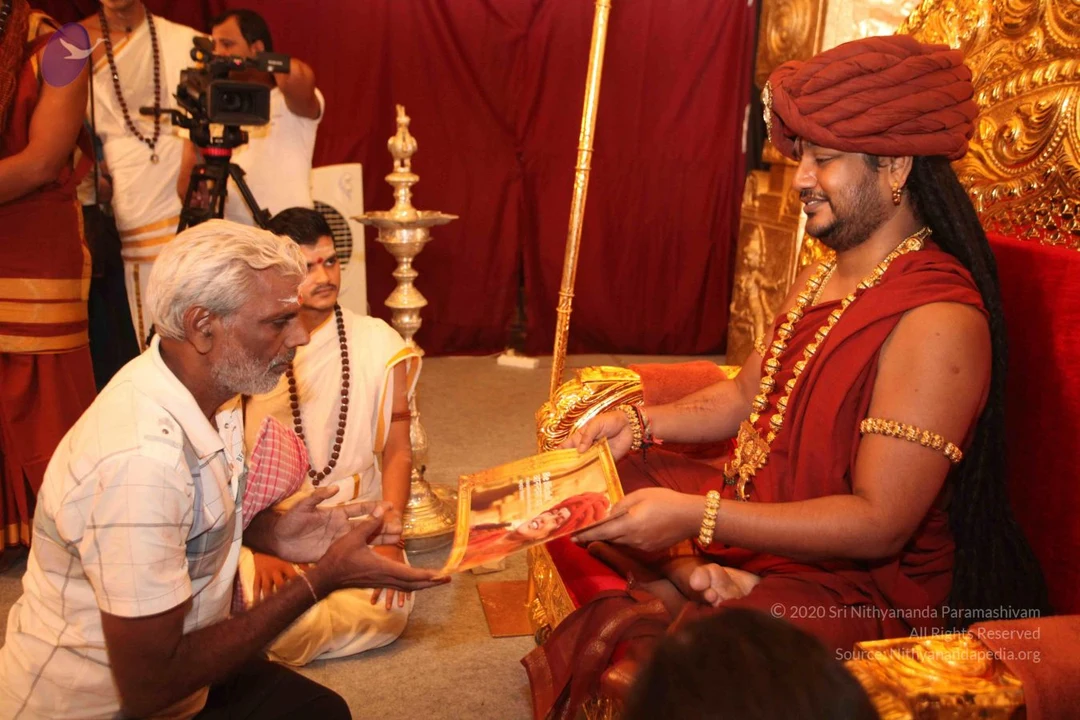
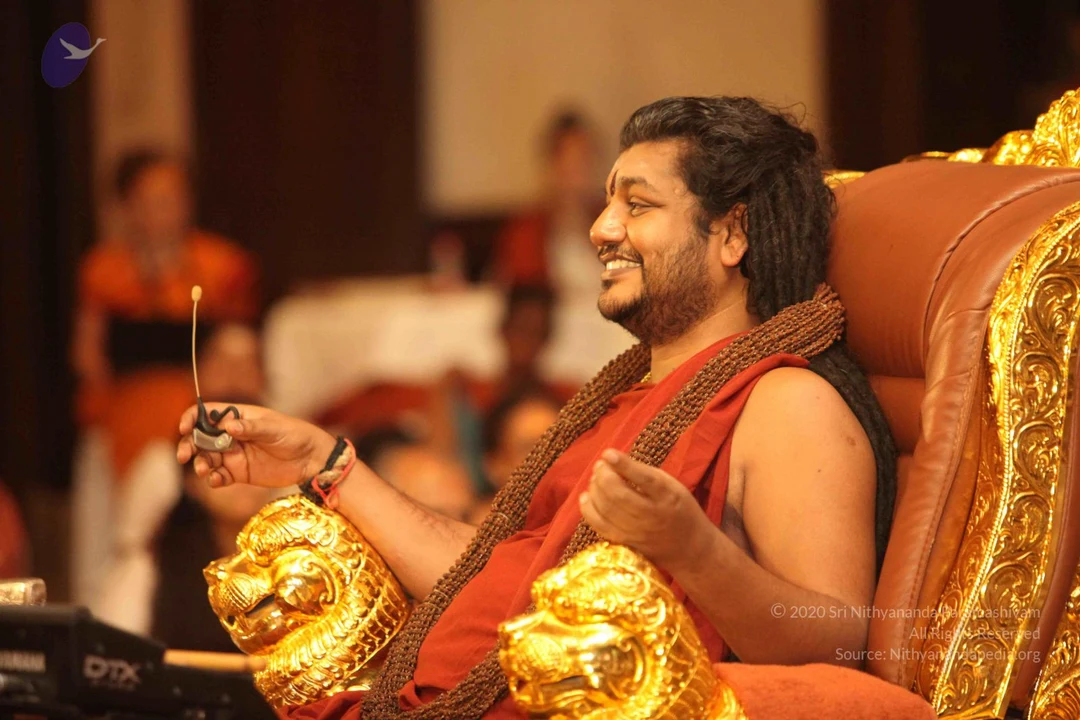
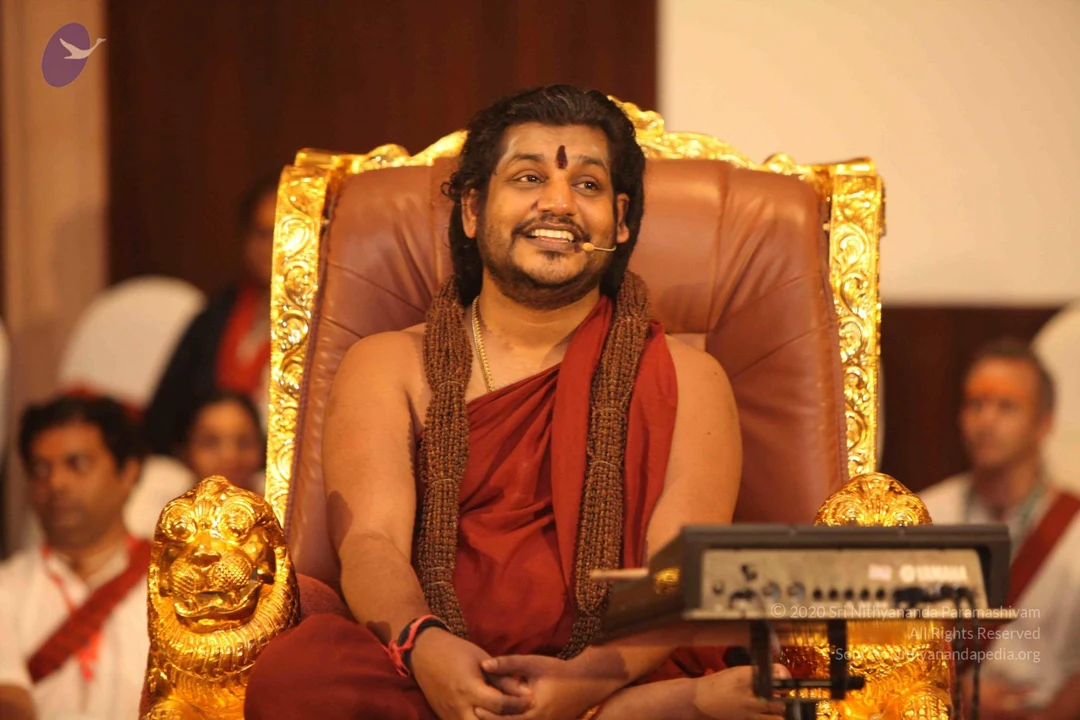
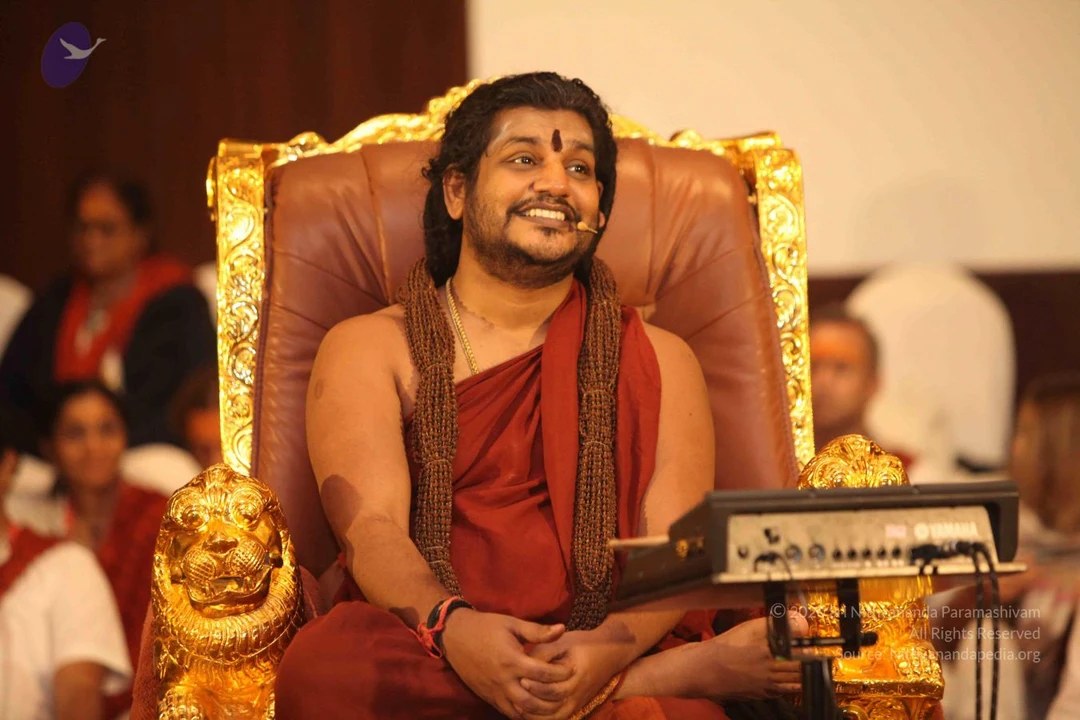
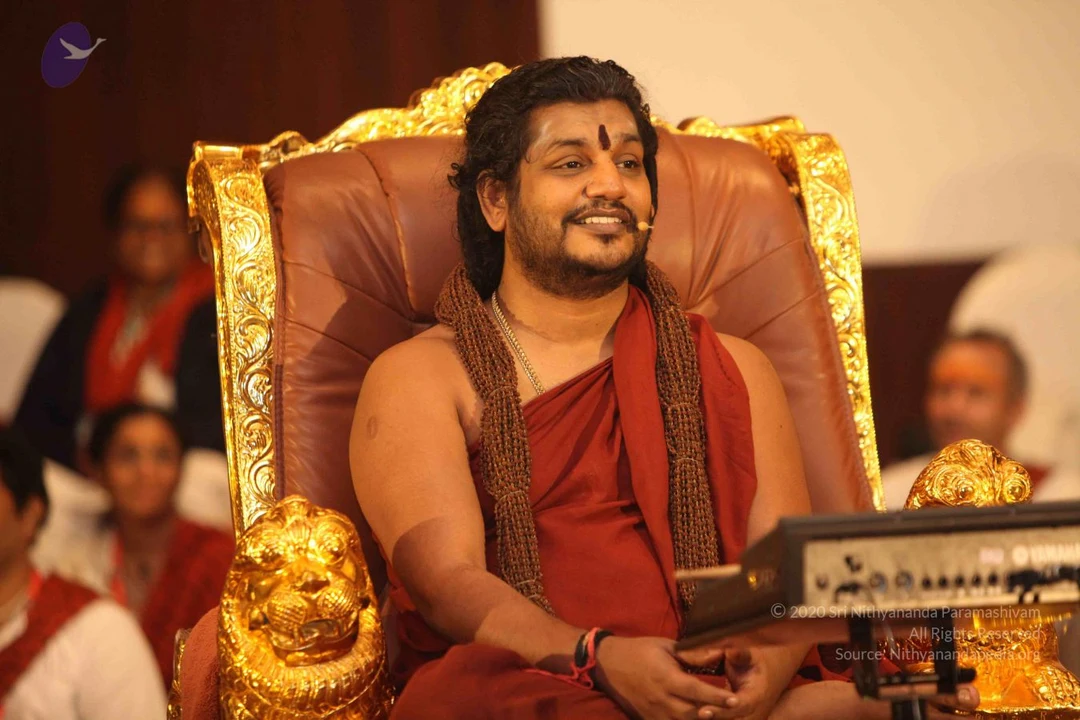
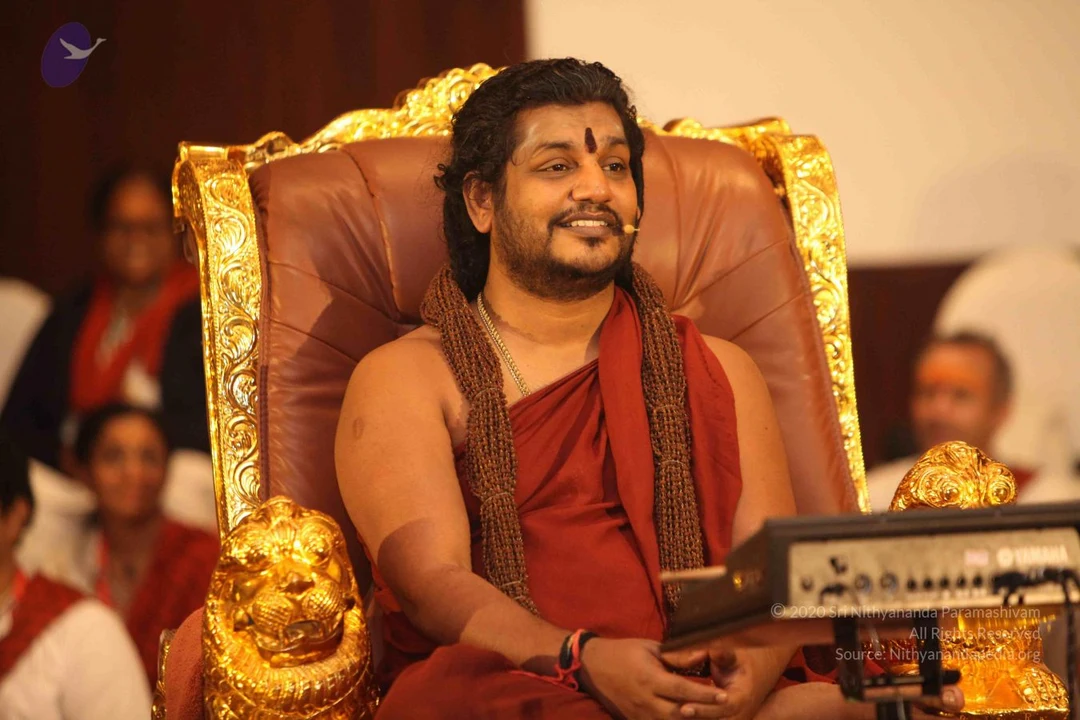
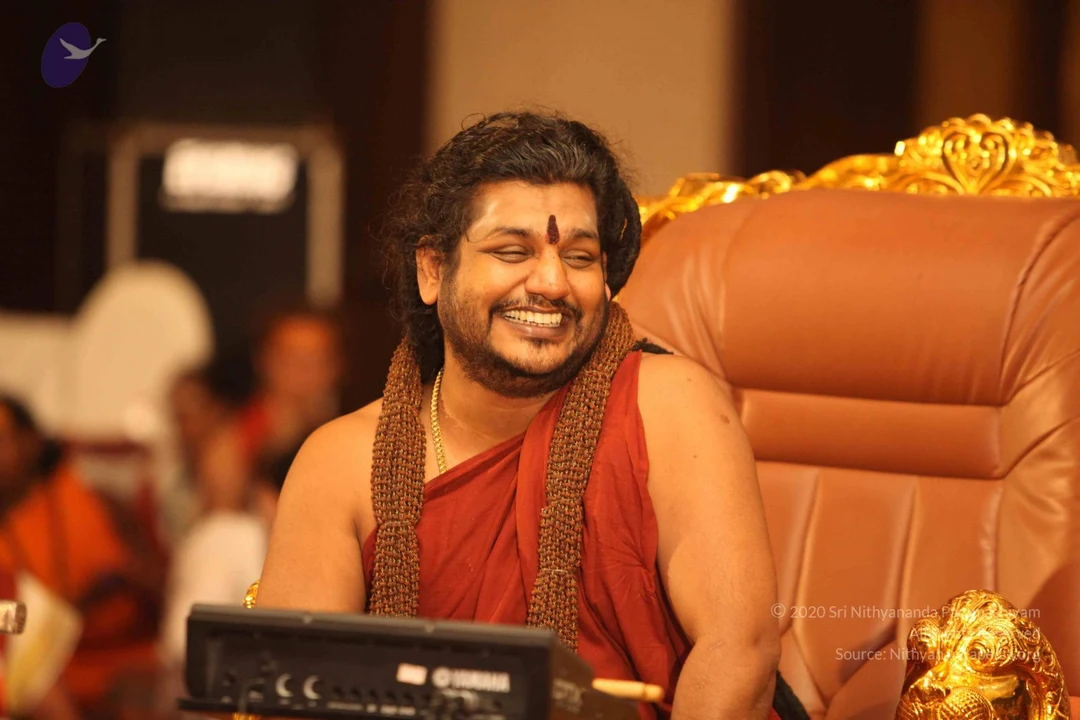
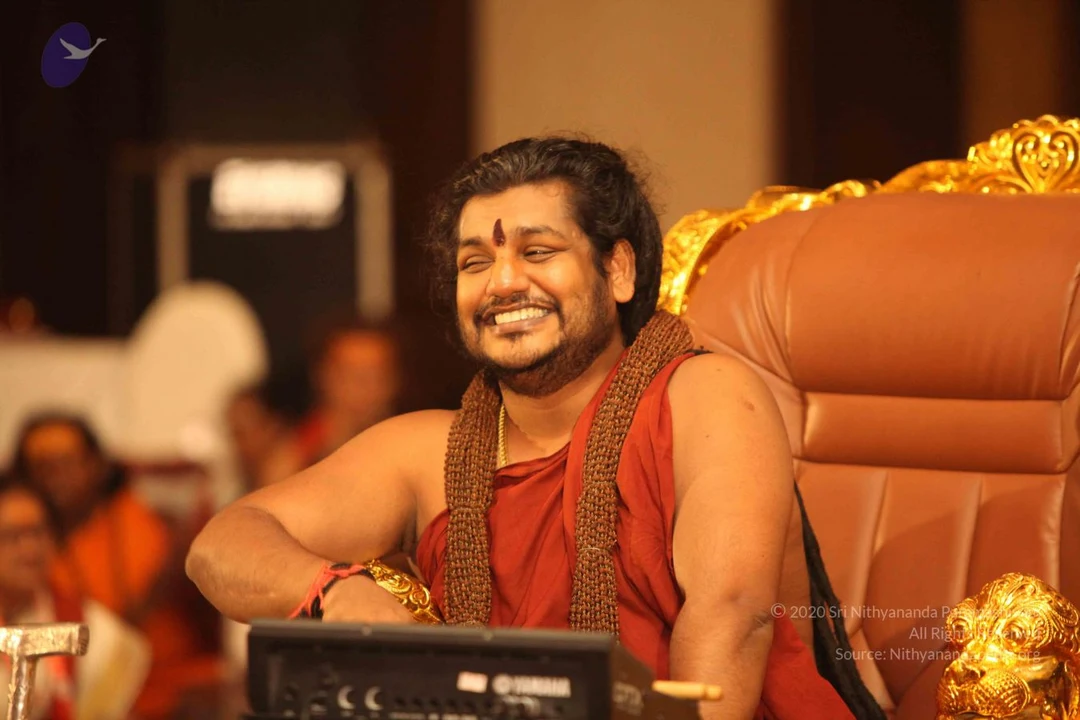
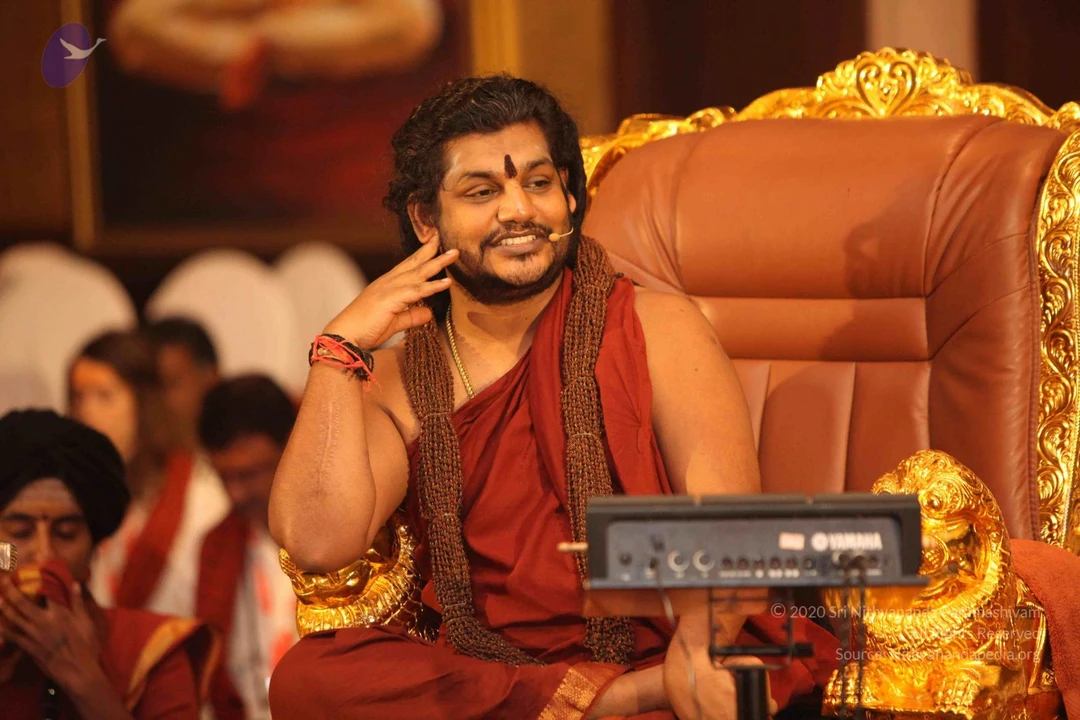
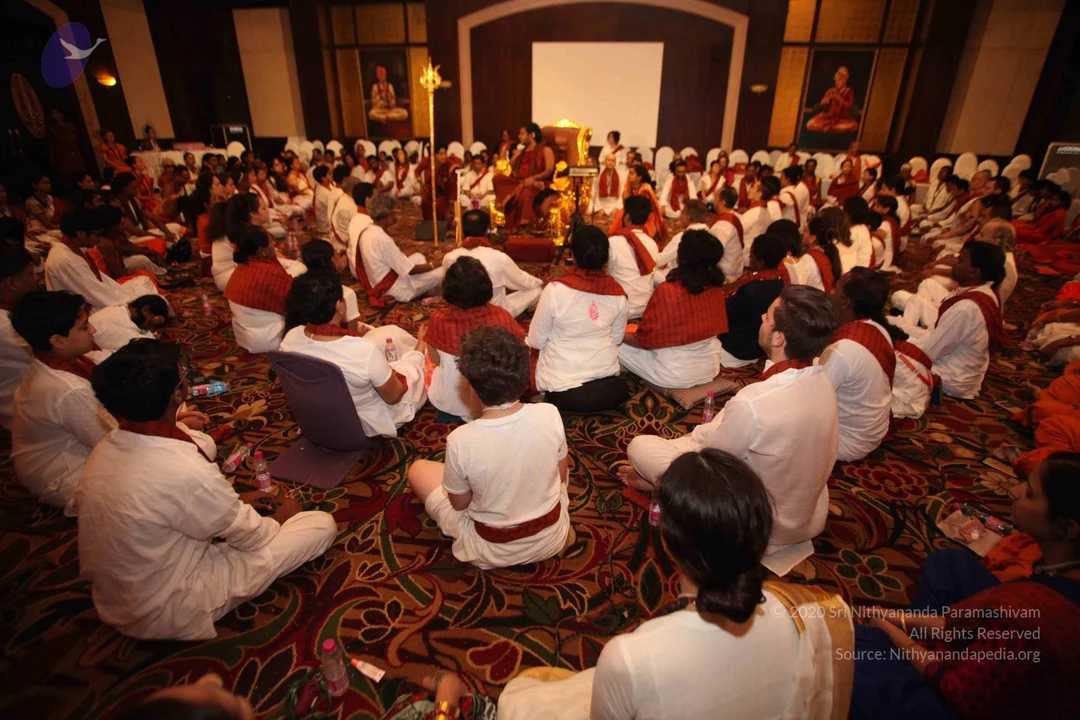
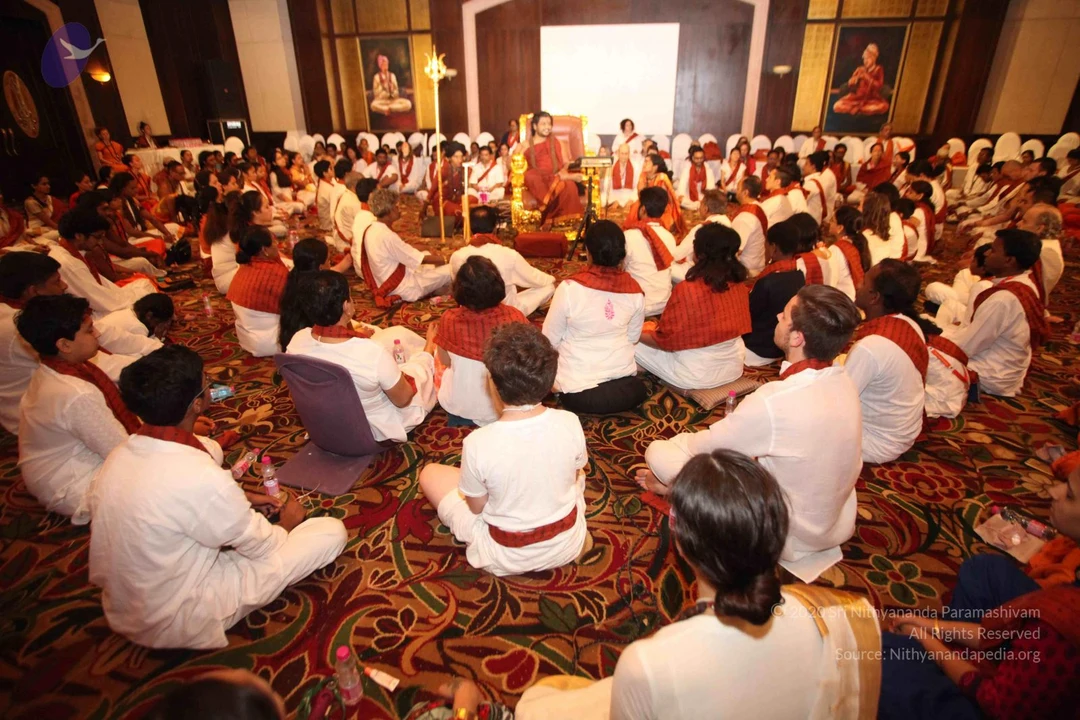
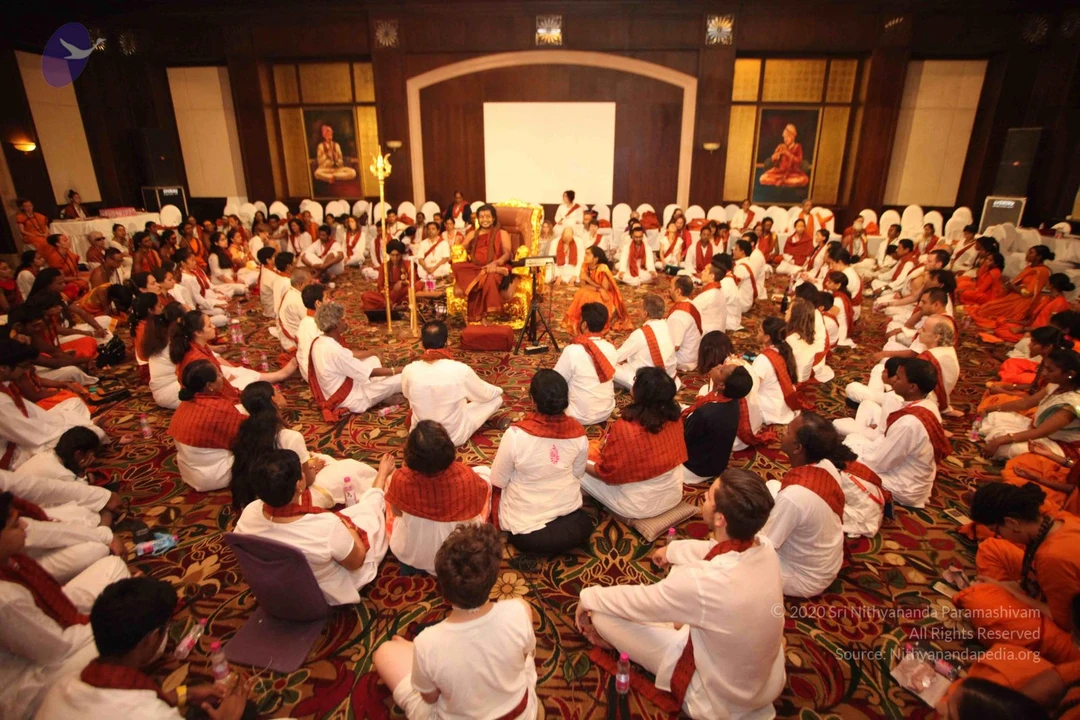
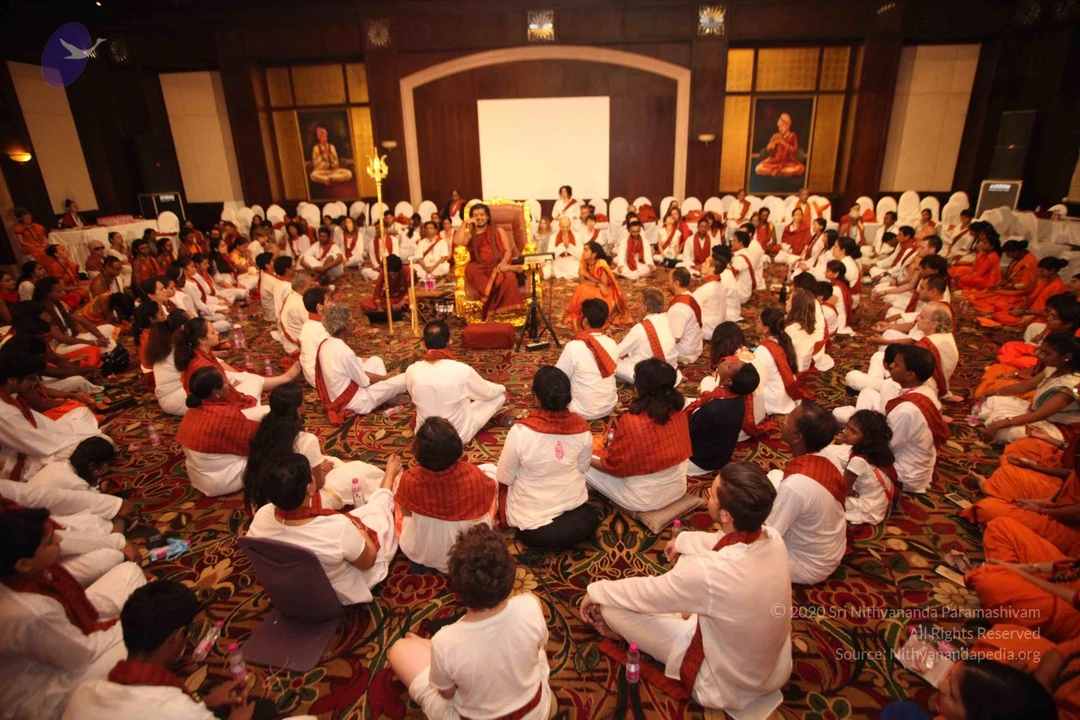
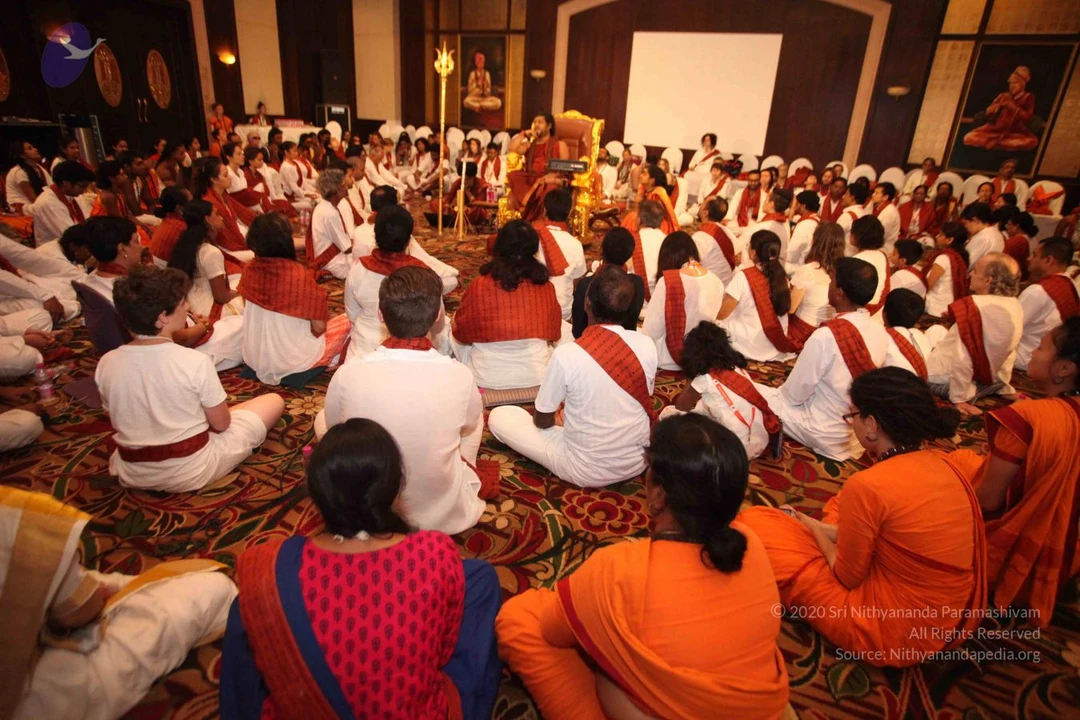
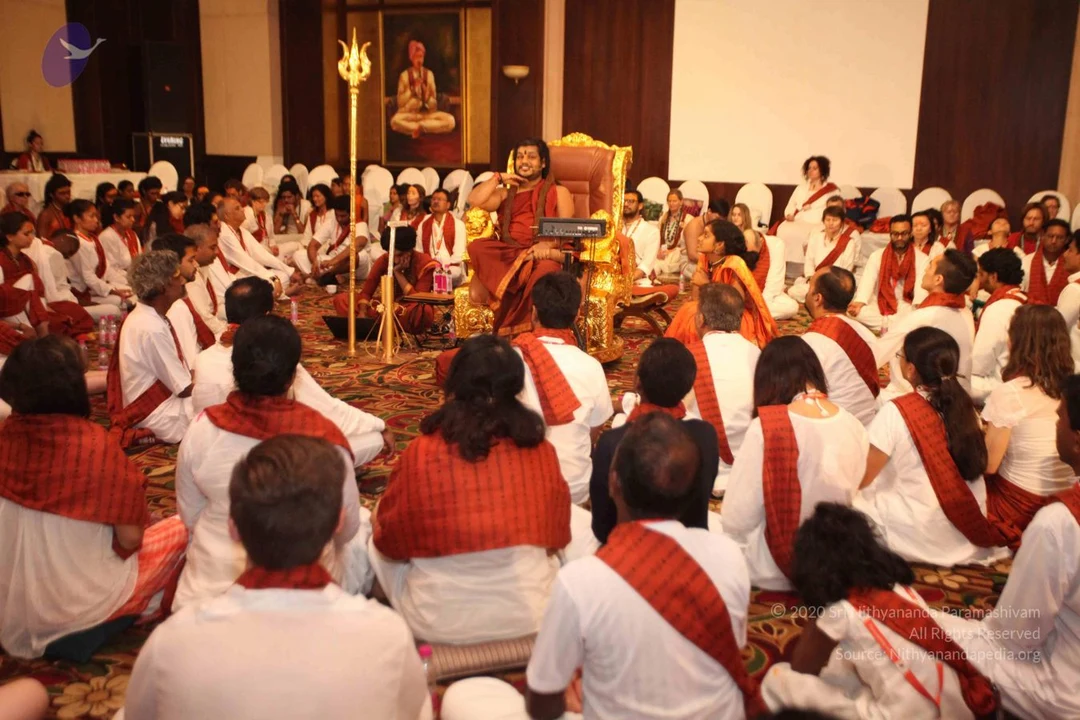
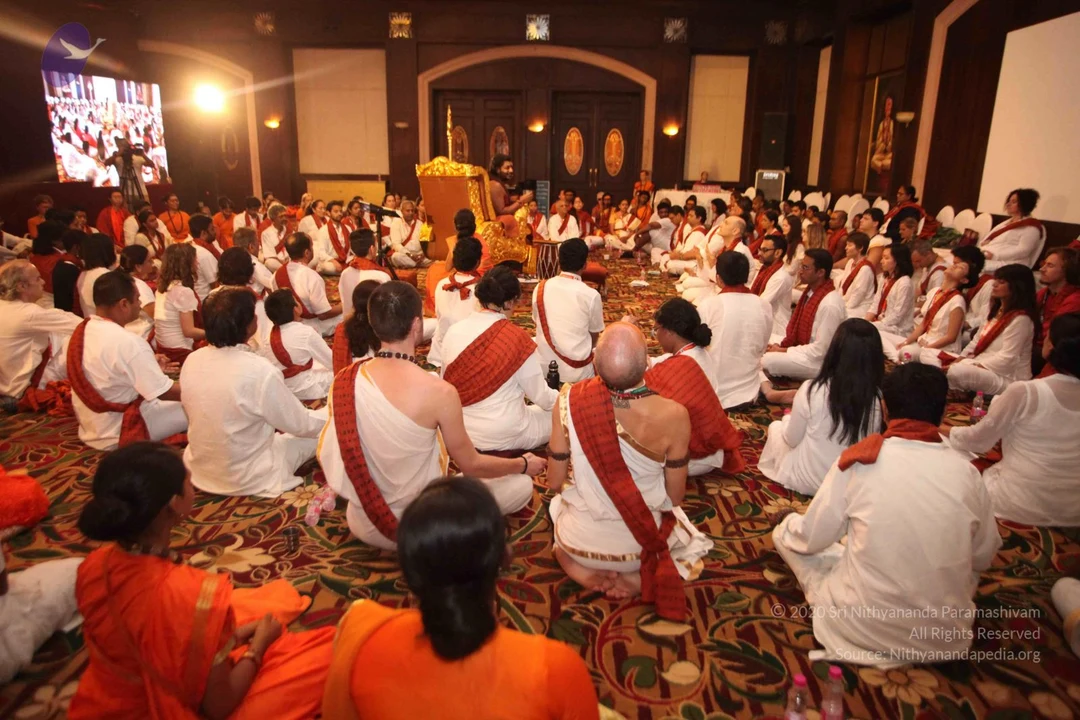
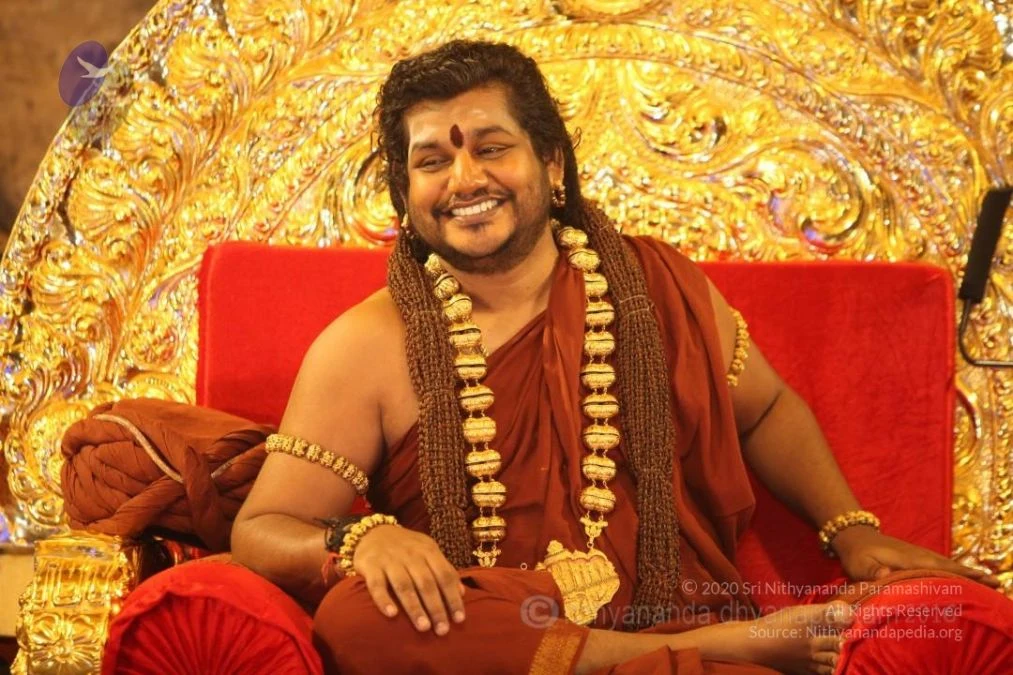
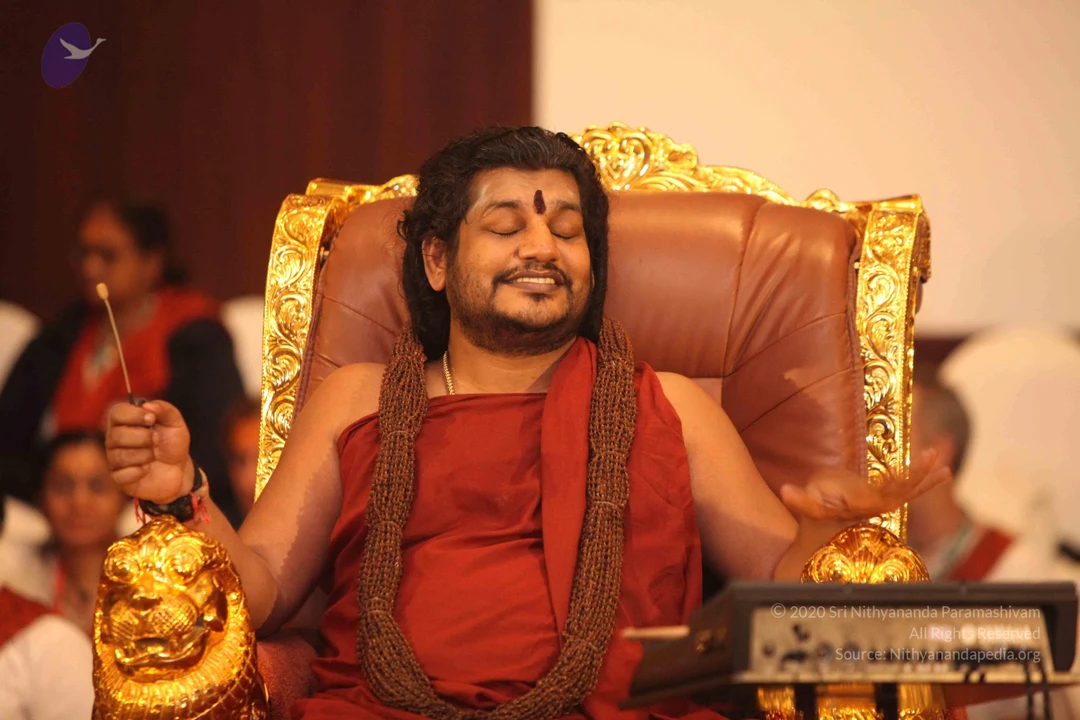
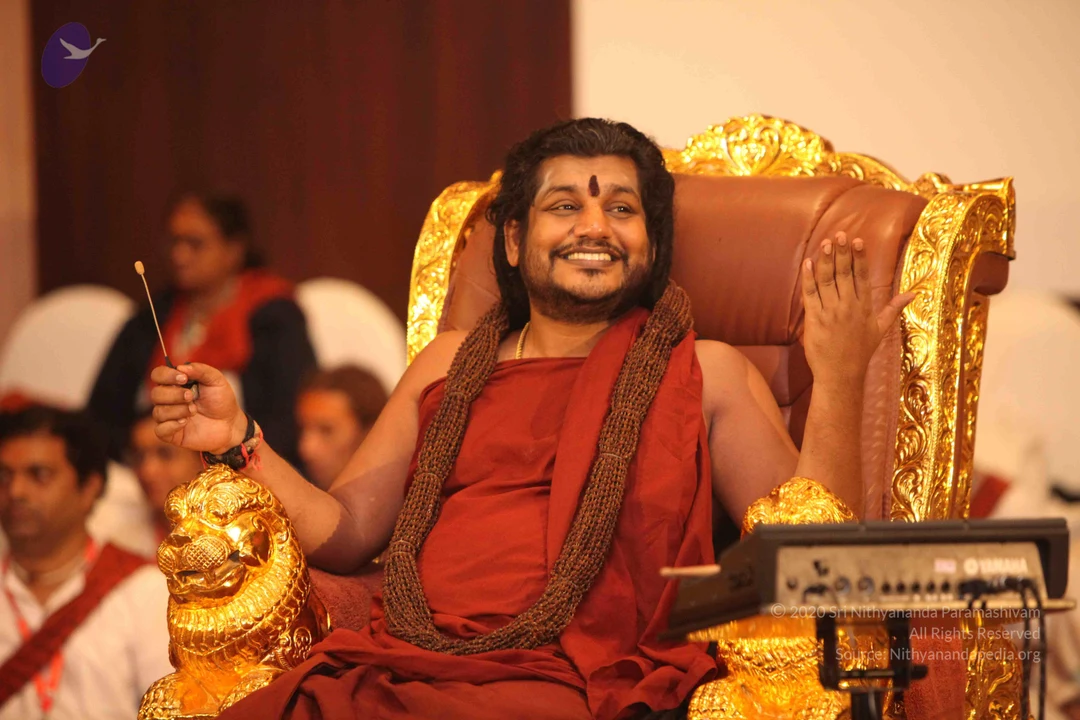
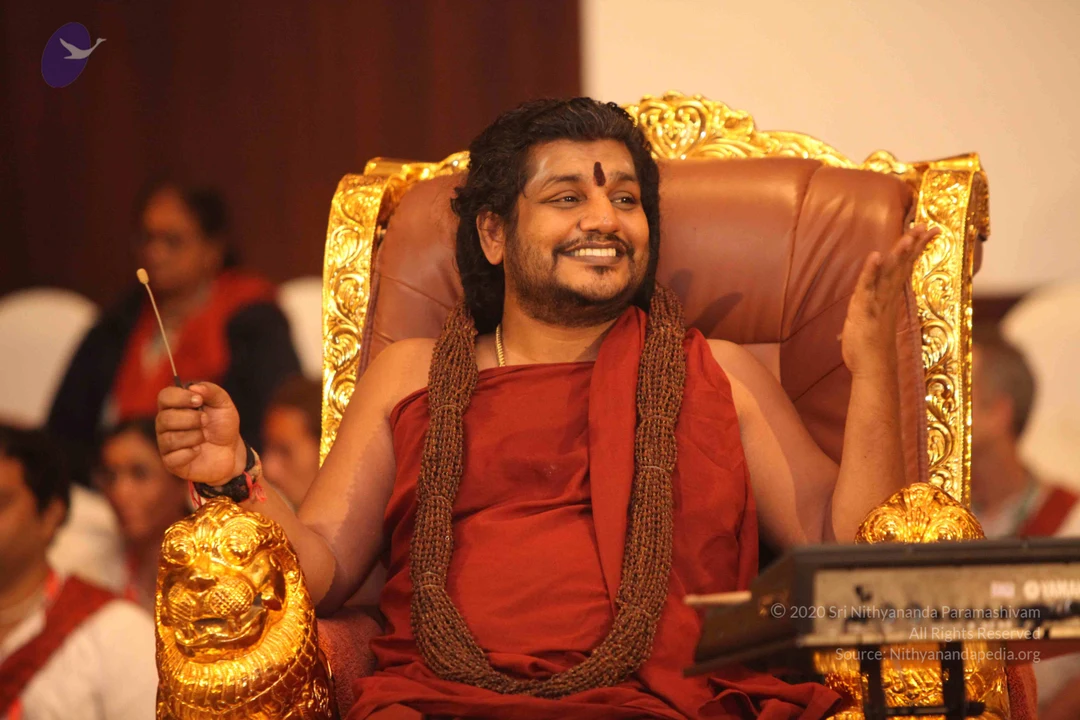
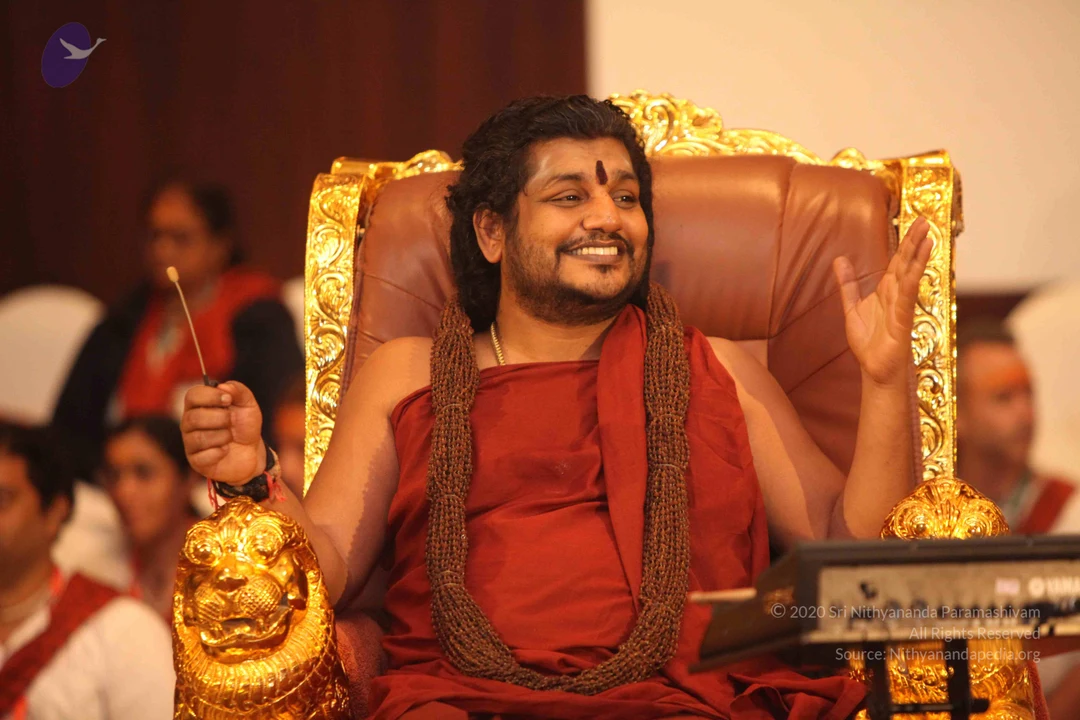
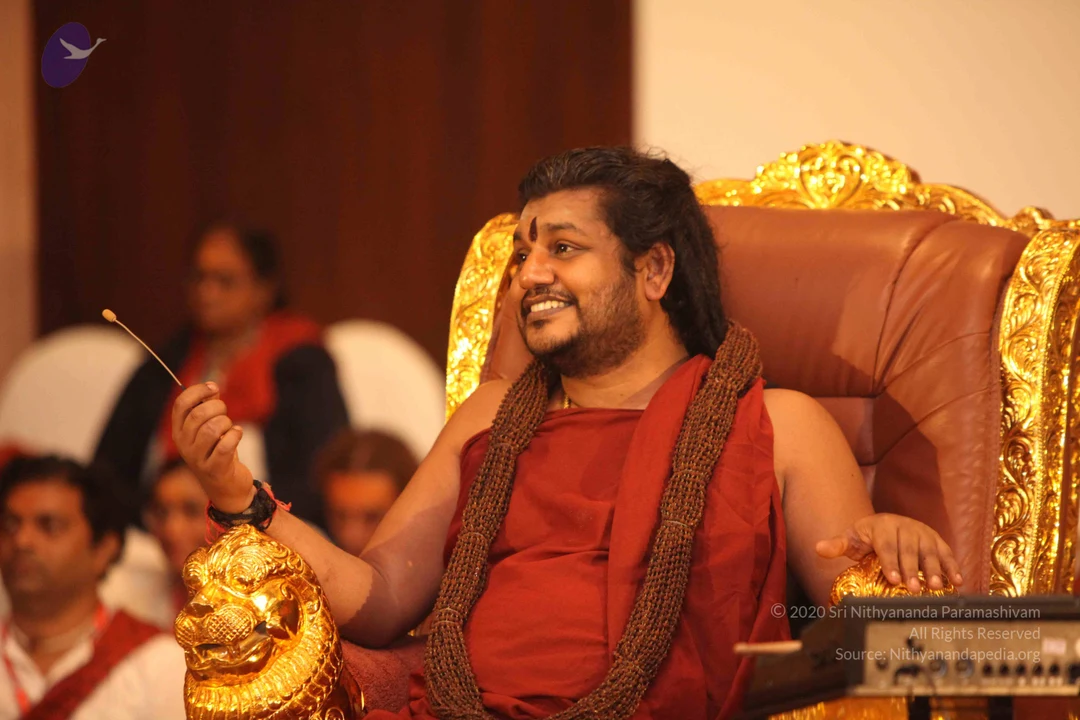
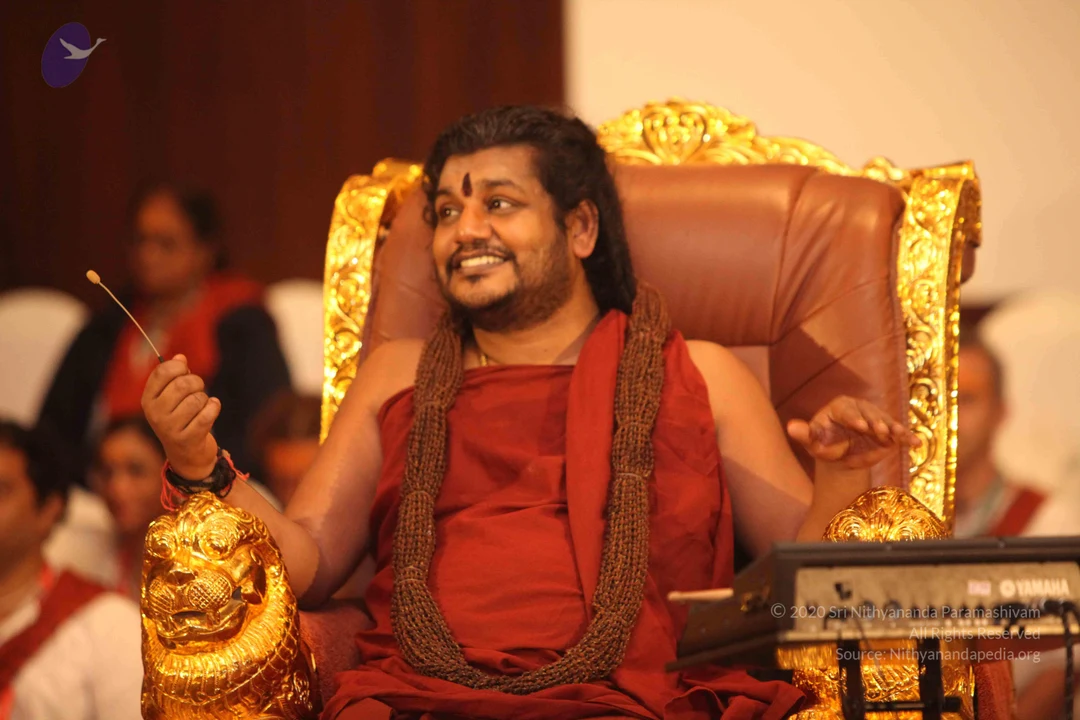
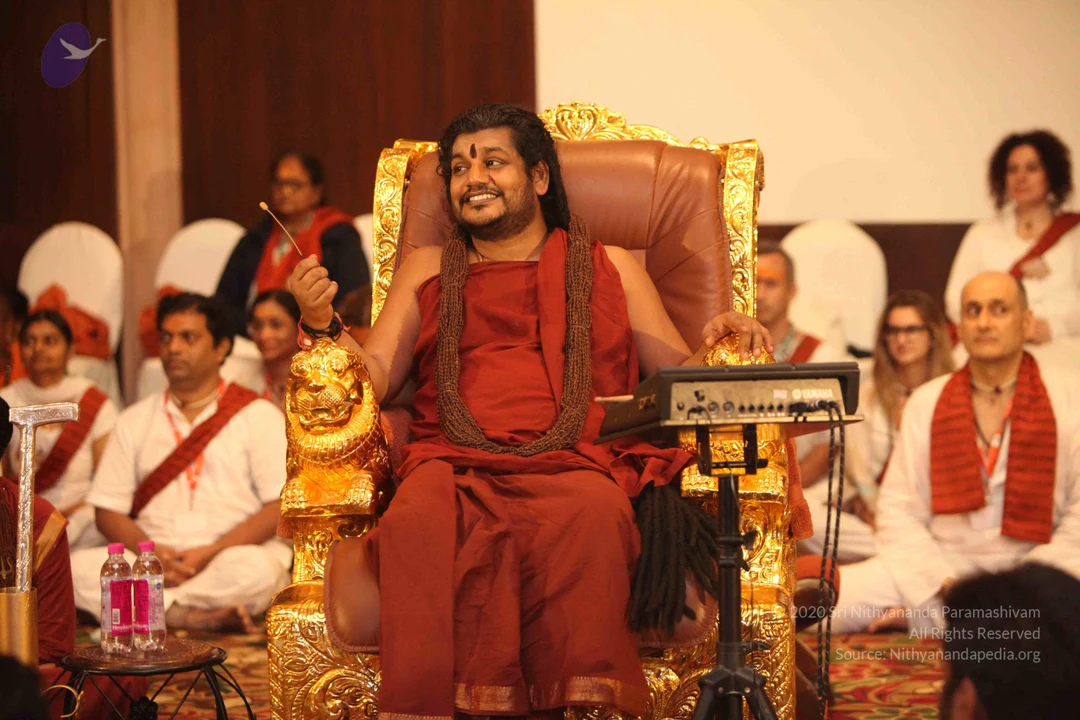
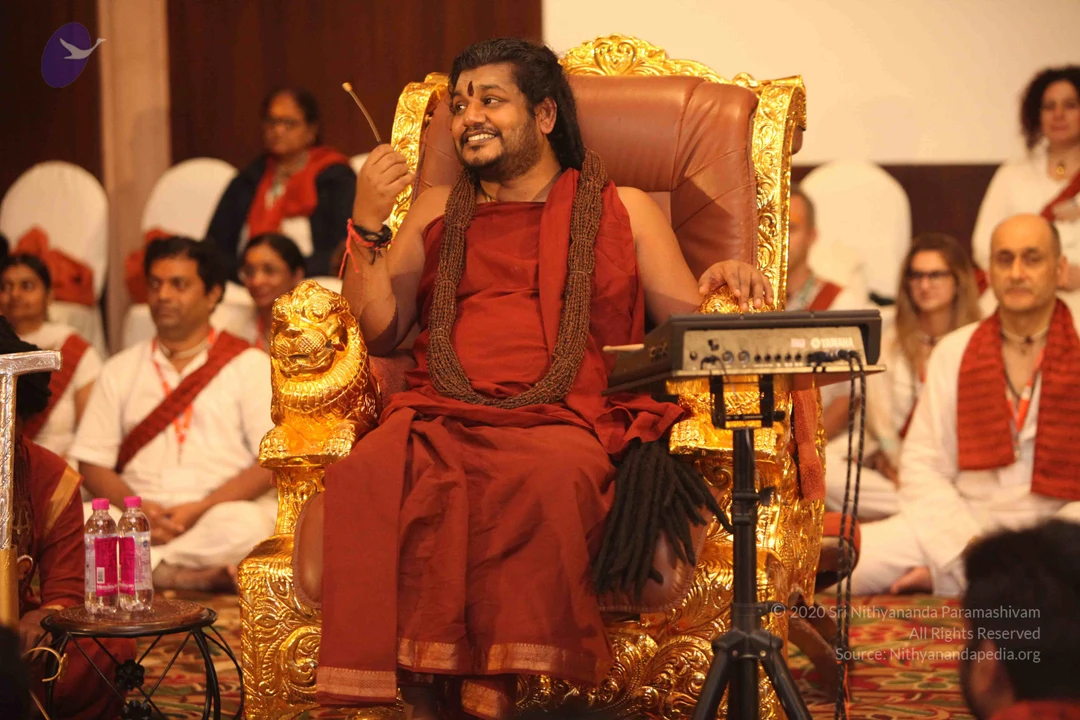
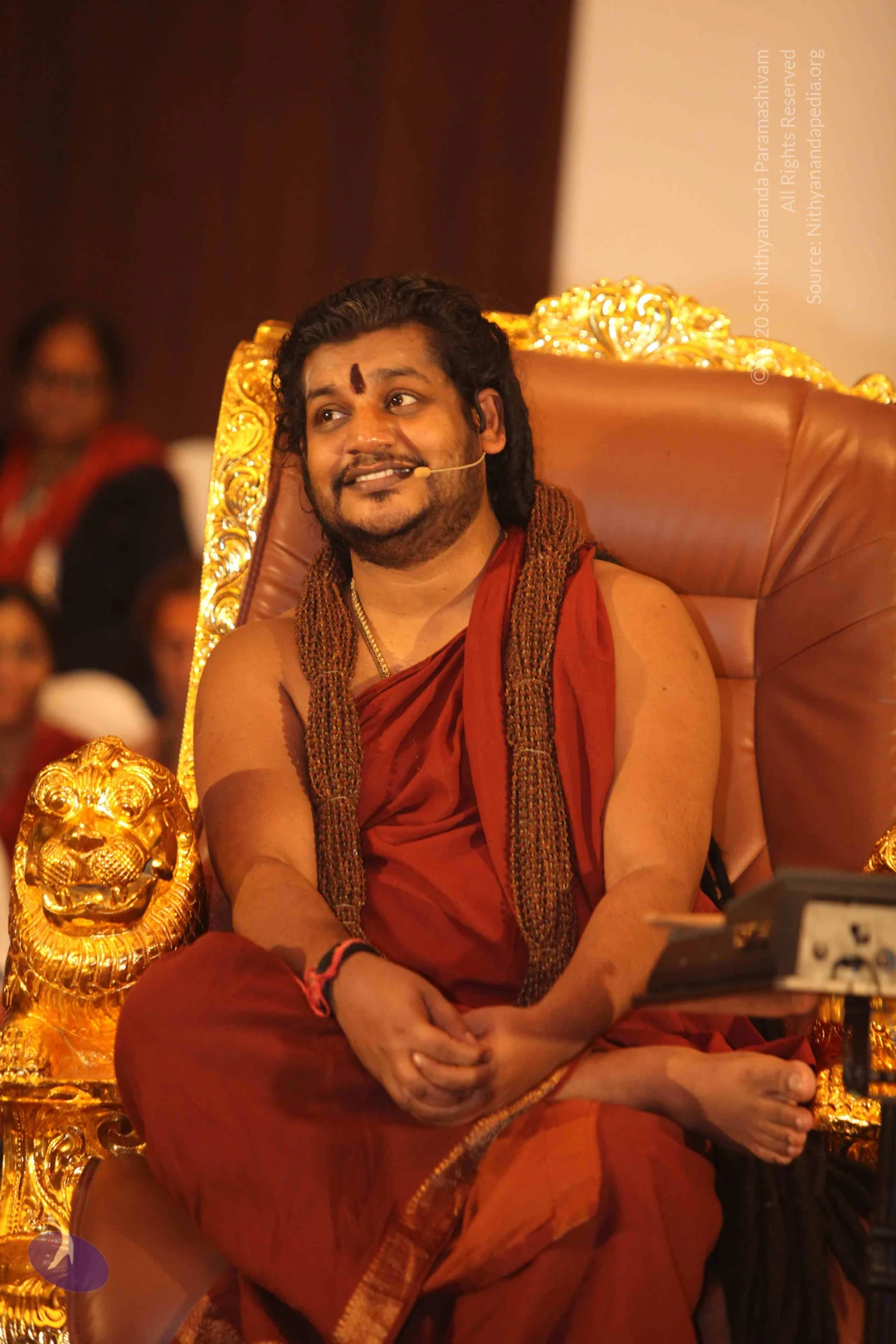
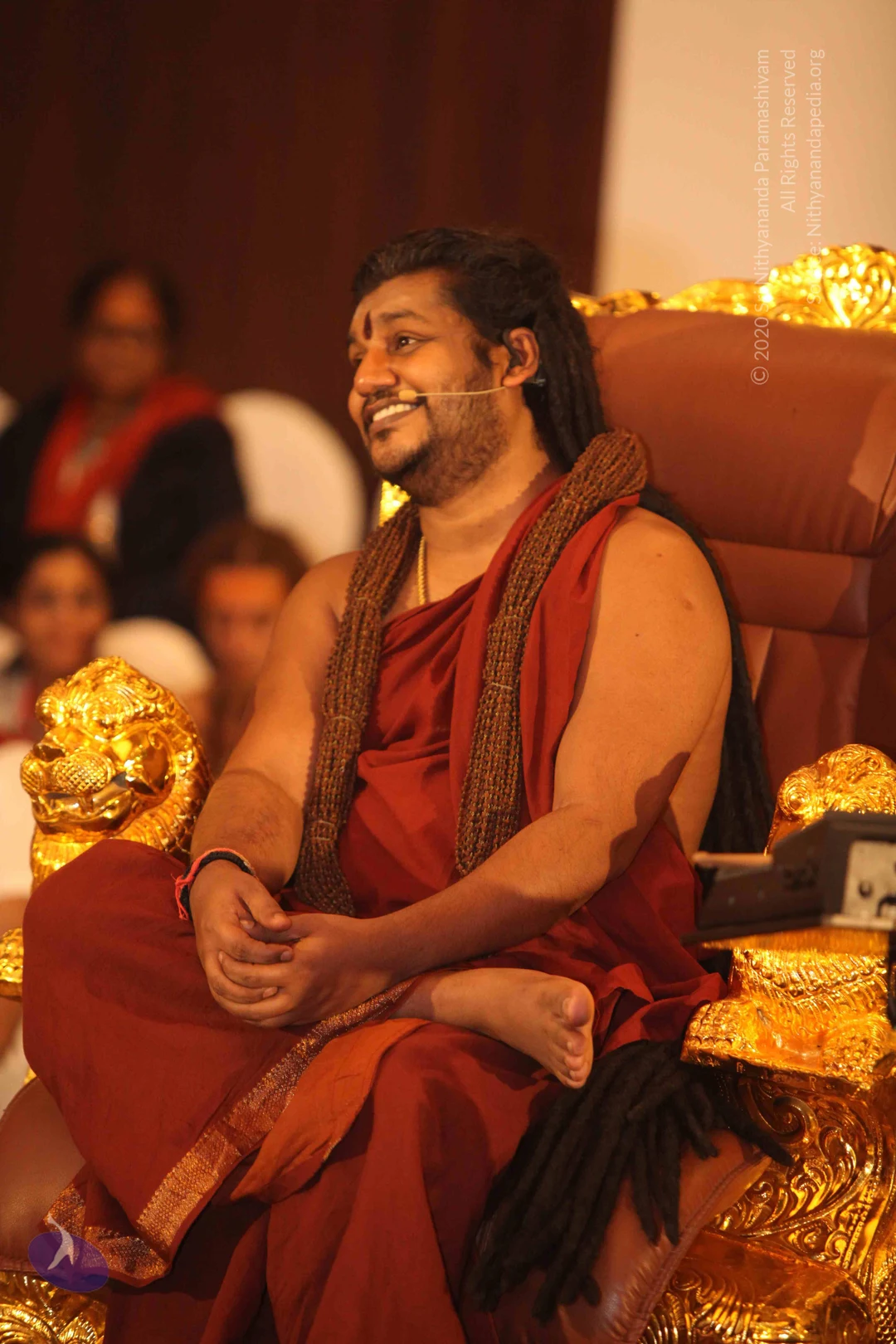
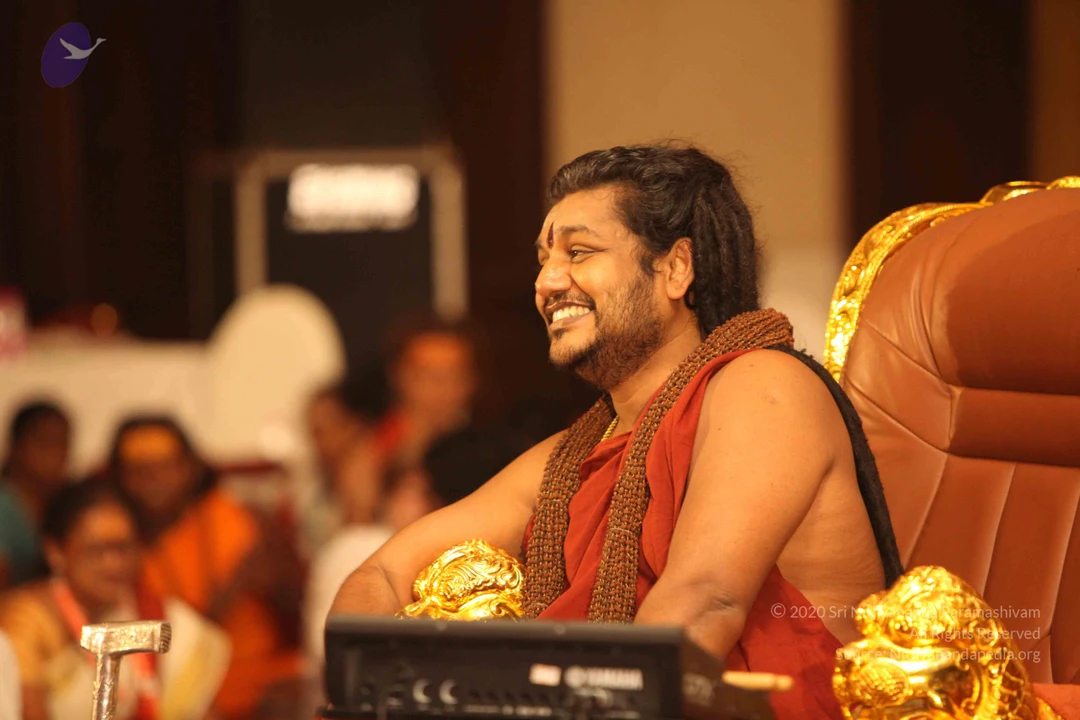
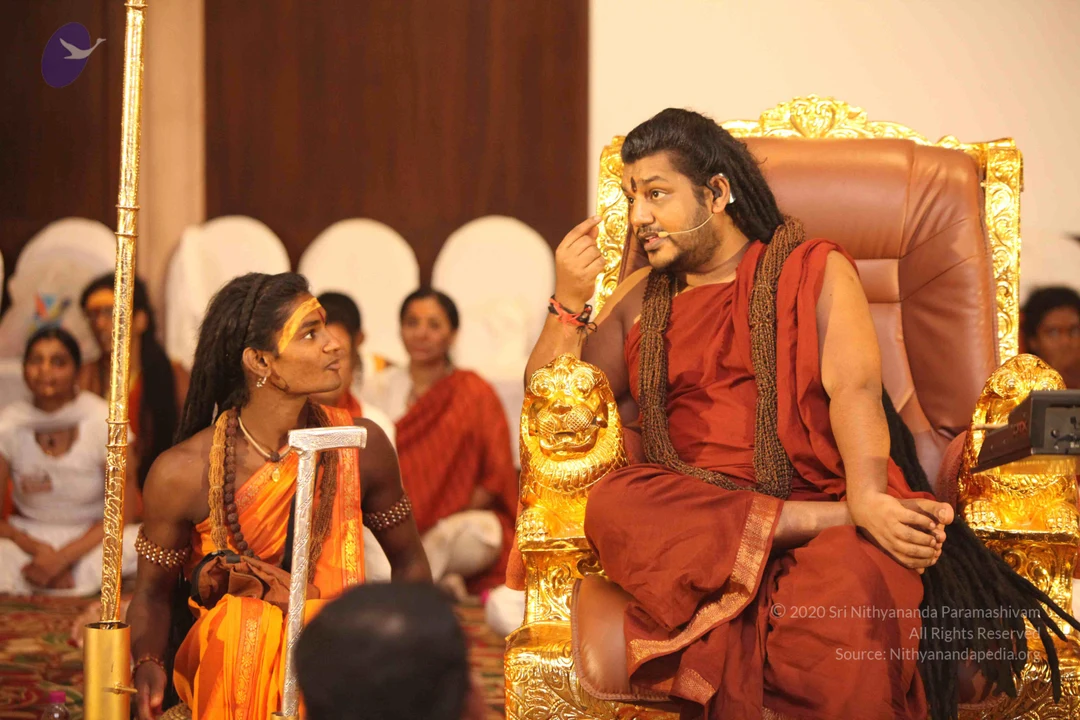
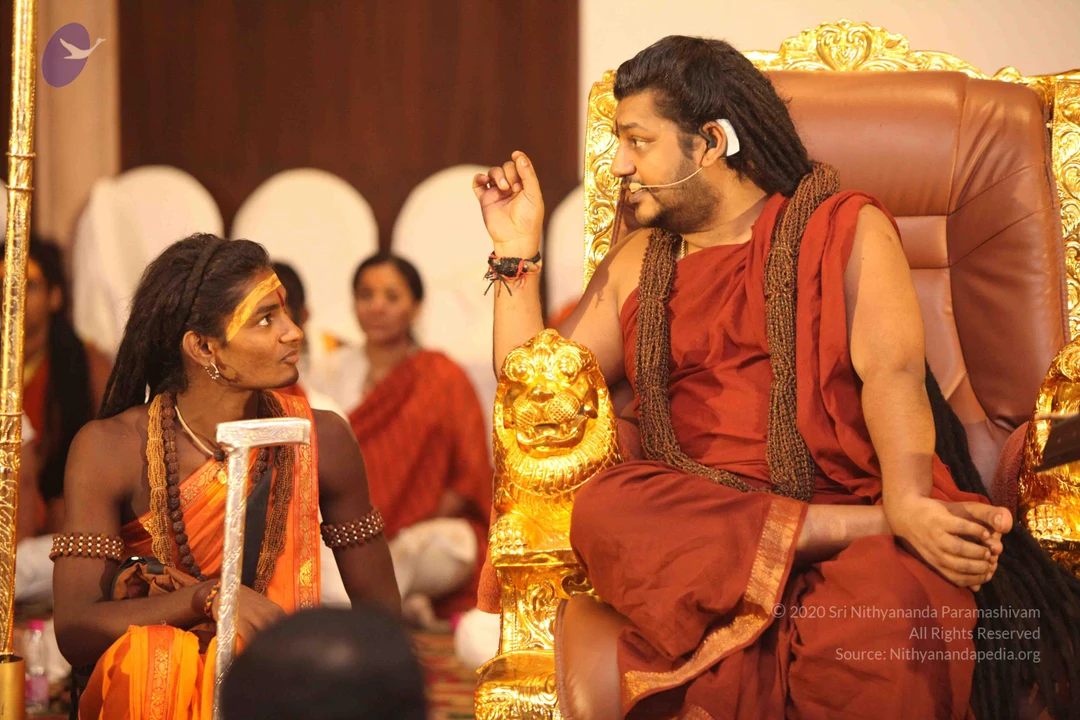
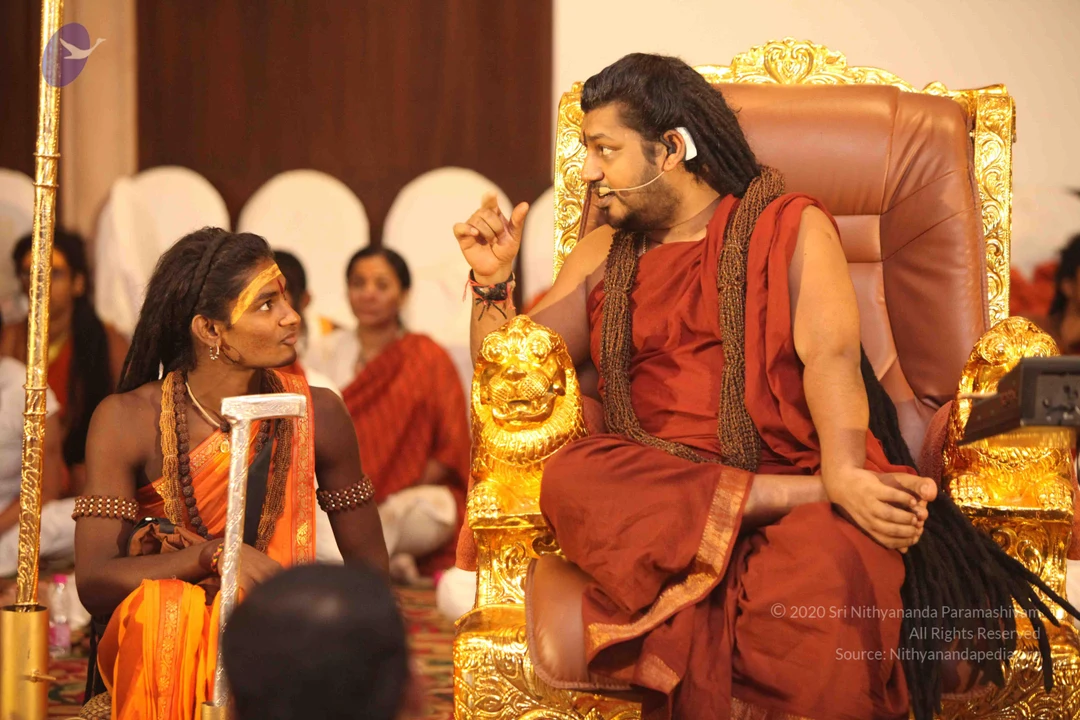
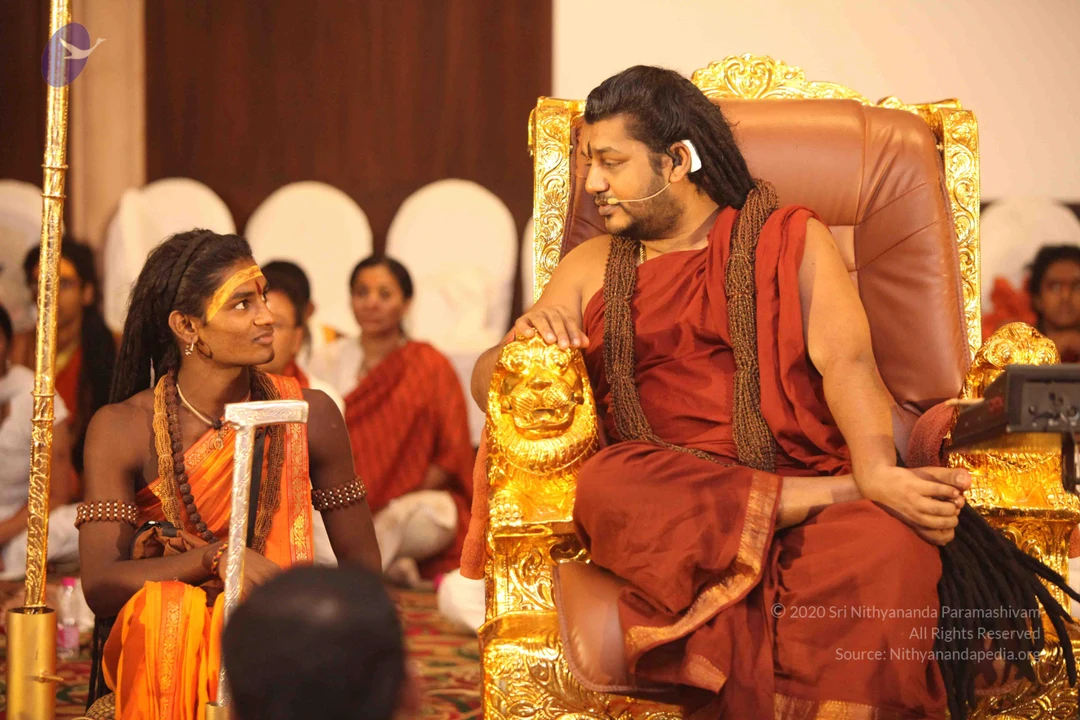
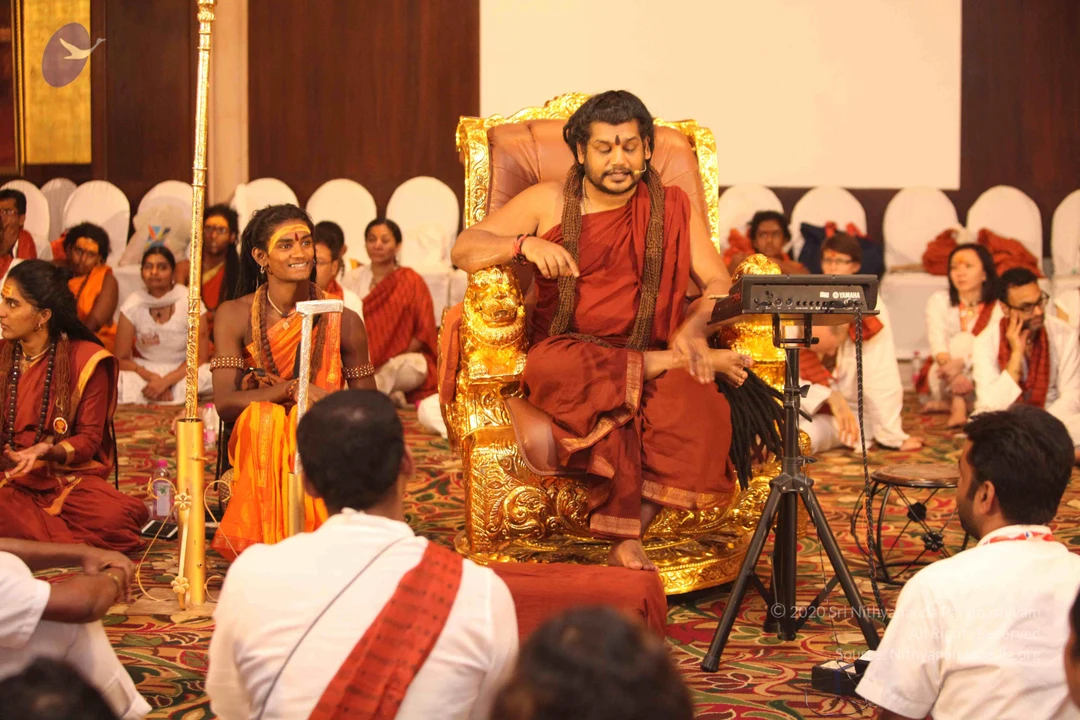
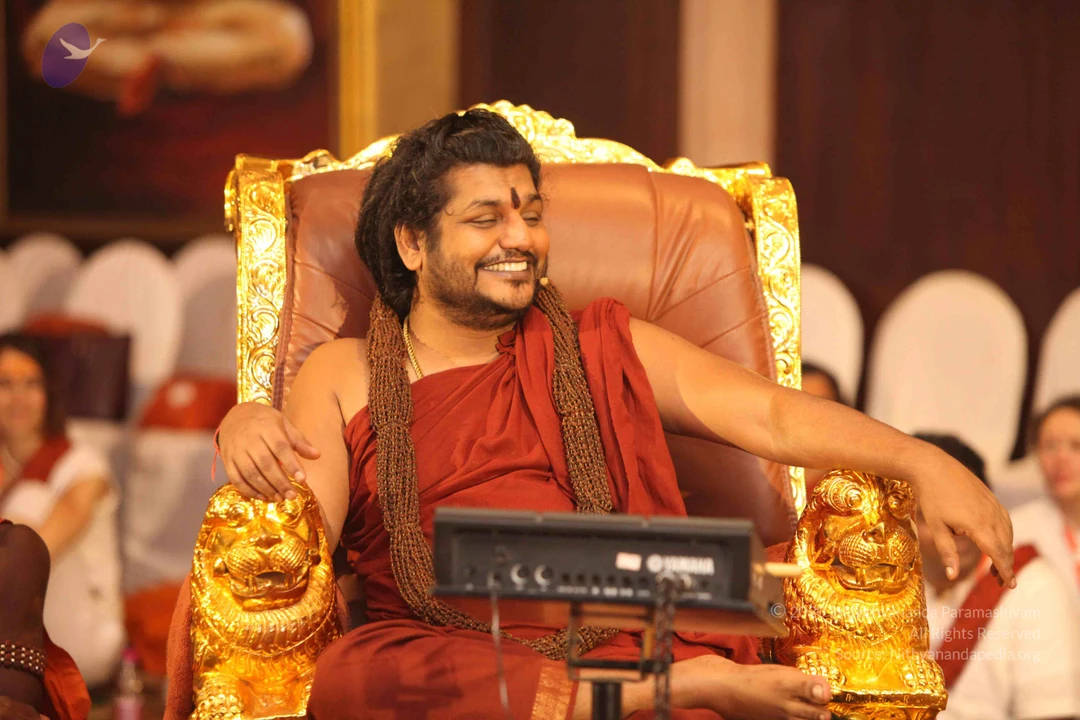
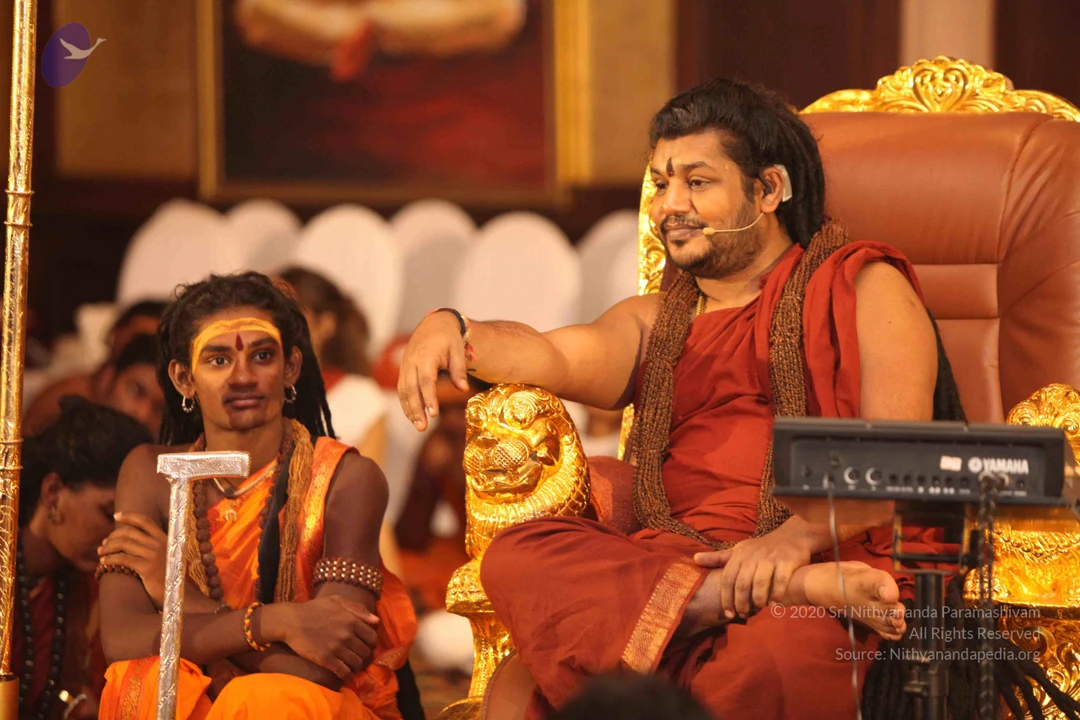
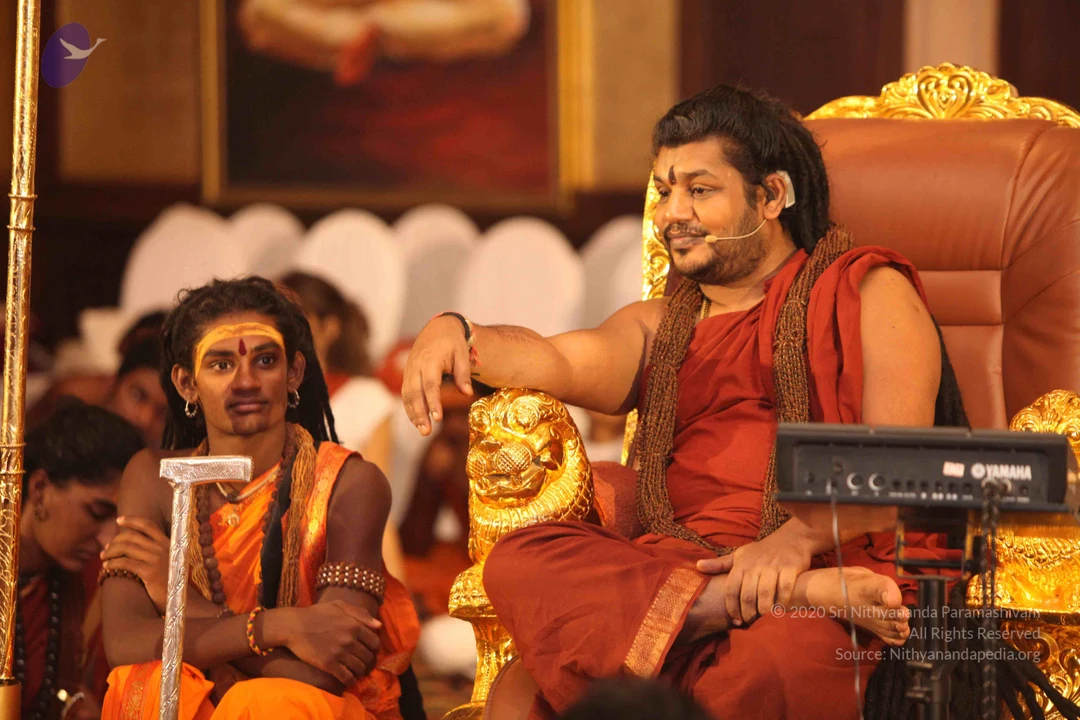
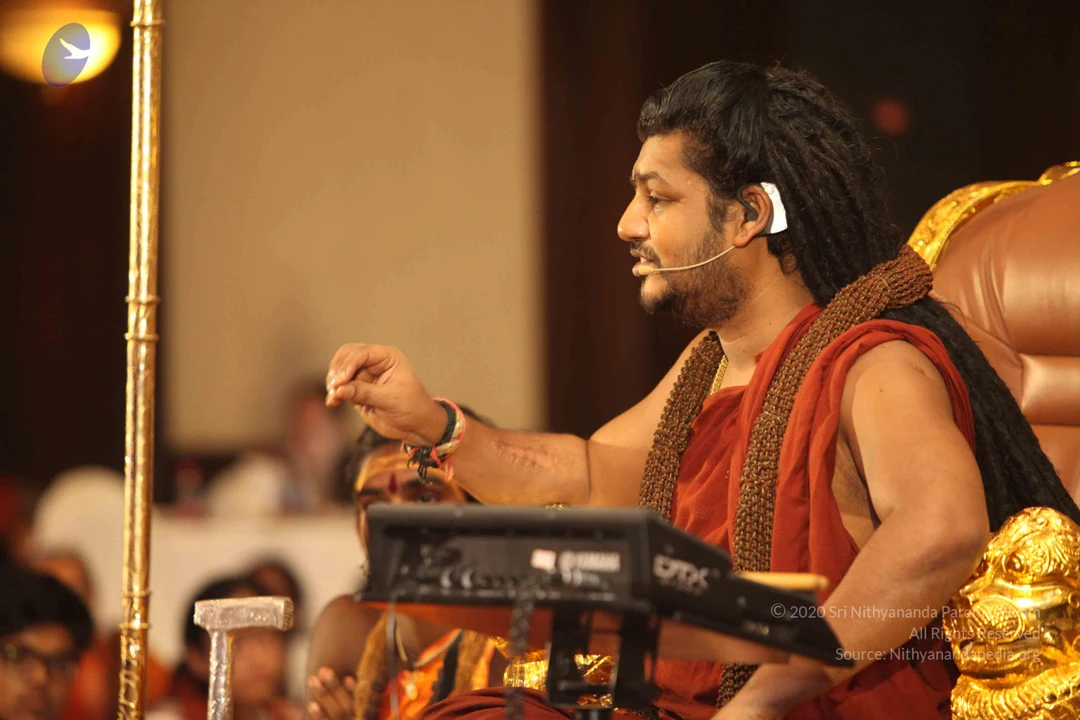
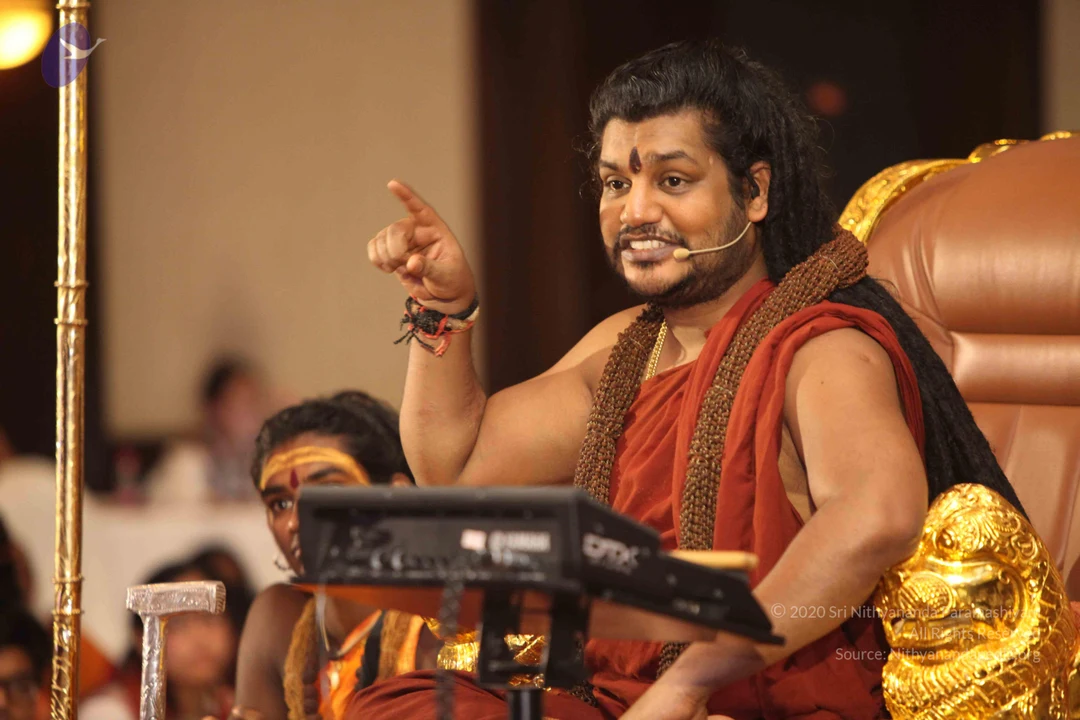
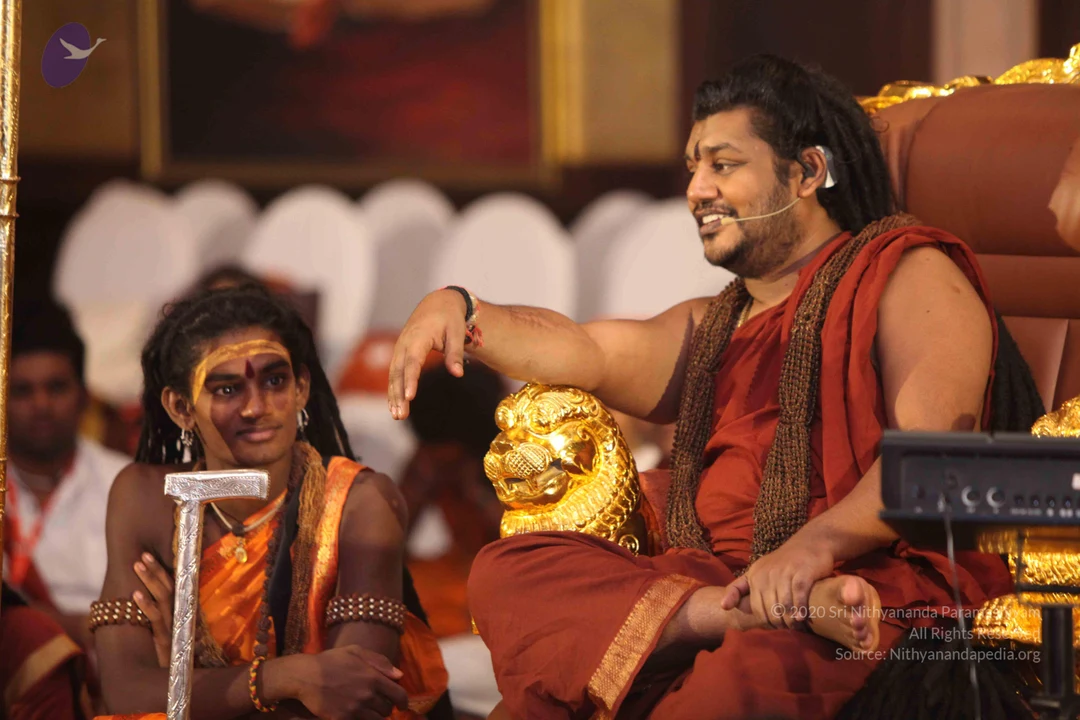
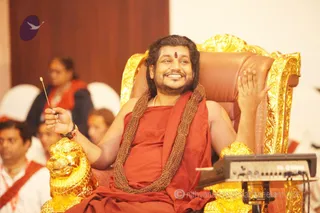
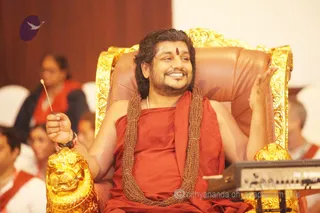
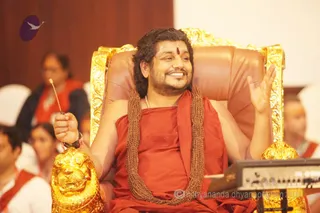
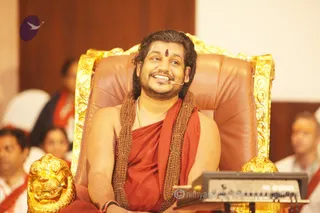
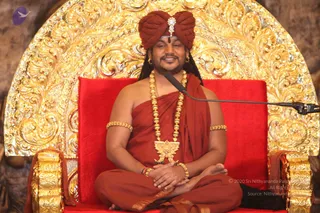
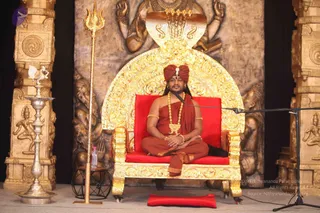
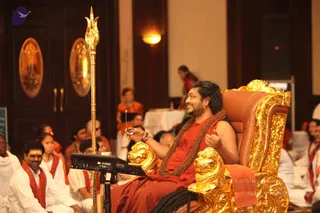
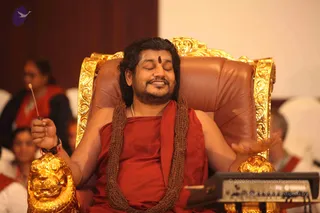
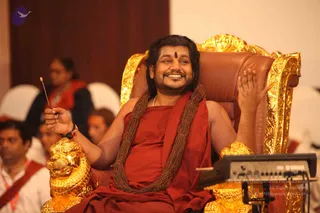
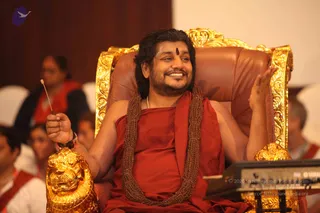
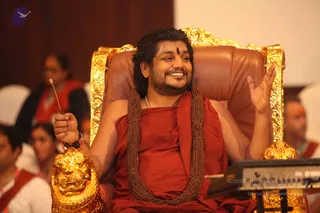
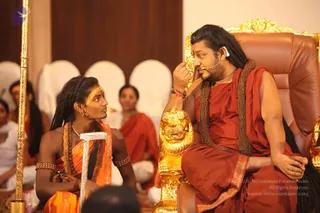
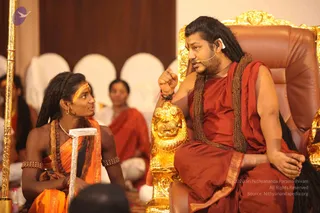
A smiling bearded man with long dark hair sits in an ornate brown leather chair with gold-carved arms, leaning his bare right arm on the armrest. He wears an orange-red shawl draped over bare shoulders, a brown rudraksha mala across his chest, a gold necklace and a red wrist thread, with a red tilak on his forehead. A Yamaha mixing console sits in front of him, and out of focus a few people in orange and saffron clothing are seated in the background. The man appears to be a person, identified by the long swept-back hair, saffron shawl, rudraksha mala and ceremonial gold ornaments, seated on a throne-like chair at a satsang setting.A seated man in a red-maroon turban, long dark hair, gold necklaces and beaded malas, and gold armbands sits on a golden throne with red cushions, holding out a small framed photograph with both hands to a kneeling older man in a white collared shirt with grey hair and beard. The older man kneels with palms open, receiving the picture. Behind them a standing attendant in white dhoti with a rudraksha mala and a cameraman with a video camera stand against red drapes, beside a tall silver oil lamp and a gold staff. Gold ornate carvings decorate the throne backdrop. a person: the seated figure wears a red turban, long hair, gold necklaces and rudraksha malas, and sits on the ornate throne.A photograph of a large seated audience on a patterned carpet at an indoor event, mostly women. Many wear white or cream outfits with red or maroon shawls and sashes, and several have orange or yellow forehead marks. Some wear glasses, and a woman in the foreground left has long dreadlocked hair with a black top and red skirt. A woman in the lower centre wears a red-and-white outfit and a red bindi. Behind the rows, people stand near a white-draped table, and a small white cup sits on the floor at the left. Some attendees appear to be taking notes or clapping, and the scene suggests a seated satsang-style gathering.

July 08 2016

Original wiki page
Contents

Title

Shanti Mantra - Peace Declaration

Description

The feeling connection you cherish has tremendous impact over you. If you feel connected to your yoga teacher, he will somehow make you do yoga and you will have health. With whom you entertain feeling connection matters. Be careful about whom you are opening your heart. And when you find the right person, don't hesitate to open up your being. Don't just grasp, grab. Otherwise you will be wasting your life in the name of decency. Understand. To whom your open your being and feel connected is very important.

The moment you decide to be my disciple, understand, I have put the whole science of oneness in the complete seed form inside you. You do not need any spiritual practice to achieve them. You just have to declare to allow them to manifest in your life. Even the intelligence you need for further manifesting, I will send it along. Start declaring "Sadashivoham" and manifesting - whichever stage you are in. When you start manifesting, when that becomes reality, you will have the strength and knowledge and more and more secrets will be revealed and then you can move to the next. This is my commandment to my followers: "Thou shall not do any spiritual practice". It is a disrespect to me. Declare and manifest. This is not just a royal secret or divine secret - this is "Mahadeva Rahasya" - Mahadeva's secret. There is nothing, nothing, between you and Sadashiva other than your stupid self doubt. Declaration is the most powerful way to burn the self doubt. Anything else will be strengthening your Self Doubt-Self Hatred-Self Denial. Just tell yourself and the universe - which is you, your extension - that "this is the way I want my life to be".

One part of you wants to be hero, but the other part of you mocks at you. And you are happy with that tug of war. Because you feel you exist, your identity is alive, only in this war. Any education that strengthens your self doubt, burn it as early as possible. There is nothing between you and Sadashiva other than your self doubt. Declaration. Declare to yourself again and again. I am Sadashiva. And this is the way I want my life to be. Declare again and again and again. Stand with it. Other than your intention to be, nothing else is reality. Any other physiological psychological neurological ups and downs are not you. They are not reality. Anything else other than your declaration, your physiological psychological neurological ups and downs, will just disappear from existence itself. Not just your existence. They will disappear from the very existence itself.

First and foremost truth you need to know. The declaration of your will is the straight method to manifest powers. Today, start with this declaration. This whole Shanti Pata is the declaration of Sadashiva manifesting through you. Make this declaration. Start manifesting. This is the one and only way you will manifest all the powers Sadashiva has initiated into you in Shuddatvaitam. In the original Shaiva tradition, no spiritual practice is given the importance of declaration. Initiation by a Guru and then straight manifestation. Start declaration and then manifestation.

In the further satasangs I will share more and more Mahadevarahasya - the secrets of the secrets of the secrets.

Varanasi, 08 Jul 2016

VideoAudio

Transcript

nithyānandeśvara samārambhām nithyānandeśvari madhyamām | asmat āchārya paryantām vande guru paramparām ||

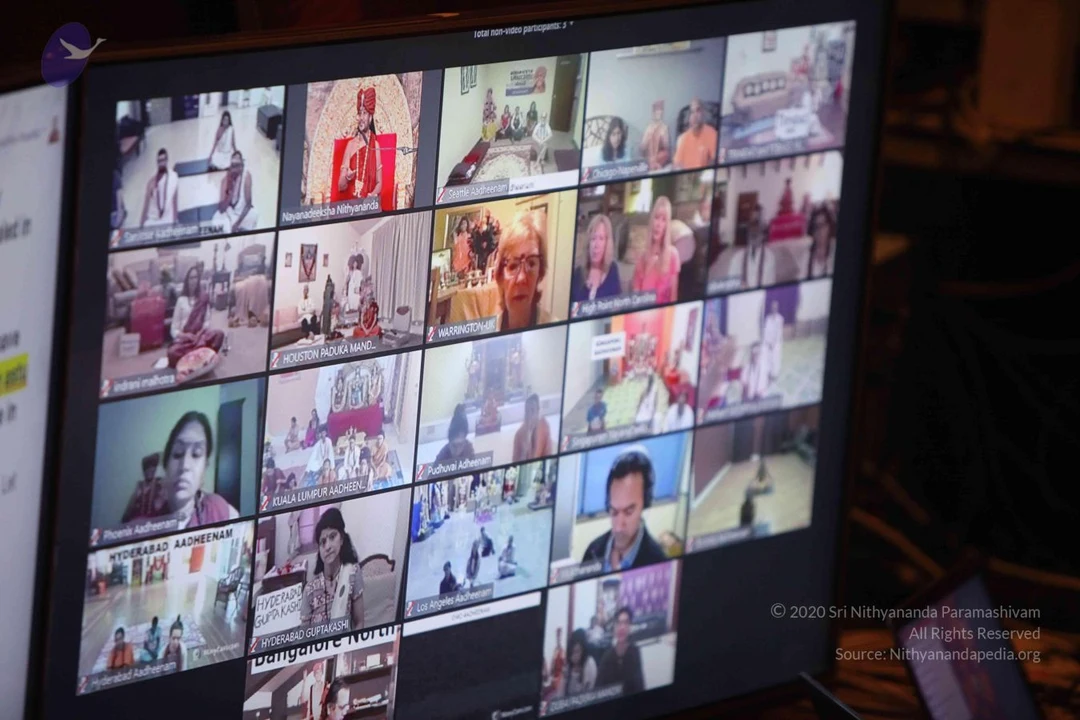
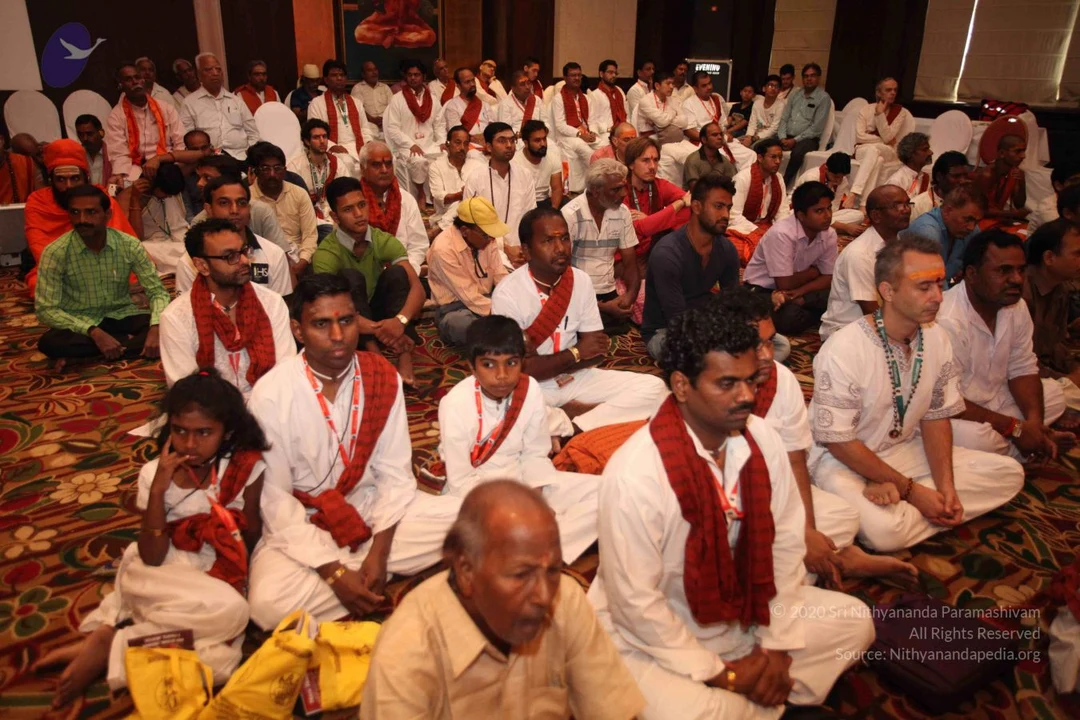
I welcome you all with my love and respects. I welcome all the devotees, disciples, samajis, satsangis, Sri Mahants, Mahants, Thanedar, Kothari, Sarvajnapeetha Yajamans, everyone sitting with us all over the world through Nithyananda TV and two-way video conferencing having Nayana Deeksha. I welcome all of you with my love and respects.

I’ll continue with the Upanishad - Kenopanishad’s (केनोपनिषत्, Kenopaniṣat) Shanti Mantra. Listen. Recite the mantra along with me.

02:01

औं आप्यायन्तु ममाङ्गानि वाक्प्राणश्चक्षुः श्रोत्रमथो बलमिन्द्रियाणि च सर्वाणि। सर्वम् ब्रह्मोपनिषदम् माऽहं ब्रह्म निराकुर्यां मा मा ब्रह्म निराकरोदनिराकरणमस्त्वनिराकरणम् मेऽस्तु। तदात्मनि निरते य उपनिषत्सु धर्मास्ते मयि सन्तु ते मयि सन्तु। औं शान्तिः शान्तिः शान्तिः॥

auṃ āpyāyantu mamāṅgāni vākprāṇaścakṣuḥ śrotramatho balamindriyāṇi ca sarvāṇi | sarvam brahmaupaniṣadam mā'haṃ brahma nirākuryāṃ mā mā brahma nirākarodanirākaraṇamastvanirākaraṇam me'stu | tadātmani nirate ya upaniṣatsu dharmāste mayi santu te mayi santu | auṃ śāntiḥ śāntiḥ śāntiḥ ||

04:00 “anirākaraṇamastvanirākaraṇam me'stu | tadātmani nirate ya upaniṣatsu dharmāste mayi santu |

May all the sacred truths declared by Upanishads be fully manifest and radiate in me, who am integrated, and authentically devoted to knowing and experiencing that truth - Atma the Self. May they manifest and radiate in me - “mayi santu te mayi santu.”

The declaration, Shanti Mantra. Actually this verse should be not be translated as “peace prayer.” It should be translated as “peace declaration.” Understand. Here nobody is praying to anybody. No God is presupposed. No bargain is in the existence. No business deal is in existence. There will always be some said, unsaid understandings.

06:15 If you believe in certain things, certain actions will manifest from you - it’s hundred percent sure. I have always seen, people who do not commit and take responsibility, I can see very clearly they make fun of our whole lifestyle. Anybody who believes the lifestyle we live in our sangha, who loves the lifestyle, who believes the lifestyle, I have always seen, they take the responsibility, they fall in love with the responsibility and active lifestyle. And I have also seen people cooking up their own reasons not to get involved and not to take responsibility. Starts from varied reasons - what they need to, they are masters in finding reasons. Starts from headache to my kid is too small. But I have always seen, people who do not take the responsibility, do not get involved, do not love me or the lifestyle I am teaching. When you love, you can’t keep quiet. When you fall in love with somebody, you will just radiate their lifestyle, their thought current. You will just manifest them.

07:53 Some of the basic understandings - said, unsaid, have their own impact in your actions and inactions. Understand, some of them are said, some of them are unsaid, but they decide the way you act or don’t act. The way you act or don’t act. Here, in this whole declaration, in this whole Shanti Mantra, nowhere said or unsaid way, even has the inference - nowhere anybody is praying to anybody. Nobody is praying here, so we should not call, translate this as peace prayer. One of the worst crimes committed against the whole humanity is translating the Hindu scriptures without the context, purposefully, willfully to misrepresent and manipulate, and... using it to attack us, abuse us and building a wrong inner image about us. This is not peace prayer, this is peace declaration.

10:39 Hinduism is authentically tradition of peace. Our concept of generating wealth is peace based. Even our concepts of conflict resolutions are based on peace. Even our wars are so many rules and regulations, where only the valor is tested and established. Wasting human life or brutal massacre was never allowed. Understand, there is so much, so much peace centered tradition - authentically, not just verbally. Because Hindu tradition is authentically peace centered, they know the secret. Peace starts from putting all your pieces together - integrity. Putting all your pieces together is the first step of peace.

13:02 So it starts with

आप्यायन्तु ममाङ्गानि वाक्प्राणश्चक्षुः श्रोत्रमथो बलमिन्द्रियाणि च सर्वाणि। सर्वम् ब्रह्मोपनिषदम् माऽहं ब्रह्म निराकुर्यां मा मा ब्रह्म निराकरोदनिराकरणमस्त्वनिराकरणम् मेऽस्तु। तदात्मनि निरते य उपनिषत्सु धर्मास्ते मयि सन्तु ते मयि सन्तु। औं शान्तिः शान्तिः शान्तिः॥

āpyāyantu mamāṅgāni vākprāṇaścakṣuḥ śrotramatho balamindriyāṇi ca sarvāṇi | sarvam brahmaupaniṣadam mā'haṃ brahma nirākuryāṃ mā mā brahma nirākarodanirākaraṇamastvanirākaraṇam me'stu | tadātmani nirate ya upaniṣatsu dharmāste mayi santu te mayi santu | auṃ śāntiḥ śāntiḥ śāntiḥ ||

If you see the whole declaration together, you can see first integrating yourself.

āpyāyantu mamāṇgāni vākprāṇaścakṣuḥ śrotram-athobalam-indriyāṇi ca sarvāṇi |

13:56 I am Sadashiva. Let my limbs, speech, prana, eyes, hearing, everything be fully matured and enriched. All is Brahman, Consciousness that is revealed in the Upanishads – “sarvaṁ brahmopniṣadam.”

May I never deny the existence of Brahman, Sadashiva. May I never have incompletion with Brahman, Sadashiva, Consciousness which is Sadashiva. May Brahman never deny me or withdraw Its grace from me. Let there be no separation. Let me have completion with the ultimate Consciousness, Sadashiva. Let the Brahman be complete with me. So be it.

May all the dharma, the sacred truths declared by Upanishads… It is not just truths, powers also. Sacred truths, sacred experiences, sacred sentiments, sacred powers: when the sacred truths manifest through the intellect - head, they are called sacred experiences. When that sacred truths manifest through the heart, emotion, emotional current, it’s called sacred sentiments. When the sacred truths manifest through your being, it is called sacred powers.

16:44 Let the sacred truths manifest as sacred experiences, sacred sentiments and sacred powers, fully manifest and radiate in me; who am integrated and authentically devoted to knowing and experiencing that truth, Atma, the self - “tadātmani nirate ya upaniṣatsu dharmāste.” May they manifest and radiate in me - “mayi santu te mayi santu.”

Keep this as your declaration today. This is one of the most powerful declarations to manifest all the experiences, sentiments, powers of Oneness.

18:08 Experience of Oneness is shastra. Sentiments from the Oneness is stotra. Power from the Oneness is described as sutras in Hindu tradition. Experiences of Oneness is expressed as stotra, sorry, shastra. Experiences of Oneness is expressed as shastra. Sentiments of Oneness is expressed as stotras. Powers of the Oneness is described as sutras. This is one of the most powerful declaration. Make this as your practice to manifest powers. Please understand, if you are my disciple, you don’t need any spiritual practice, you only need to manifest all the seeds I have put inside you. The feeling connection you cherish has tremendous impact over you, please understand. If you feel connected to a yoga teacher, naturally he will have so much of impact over you, you will have health. He will somehow make you do yoga. He will somehow make you bend again and again, by talking or whatever. He will make make you do yoga and you will have health.

20:17 If you have feeling connection with a teacher who teaches you stotras and bhajans, kirtans, somehow he will make you feel the devotion, because constantly he will be sharing his thought current and he will do it. So with whom you entertain feeling connection matters. Be careful about to whom you are opening your heart. And when you find the right person, don’t wait to open your being. The moment you know the right person is in front - don’t just grasp, just grab. Grasping, grasping is too decent word. When you know the right person is in front, don’t be too decent - be raw, just grab. Otherwise you may be wasting your life in the name of decency. Understand, to whom you open your being and feel connected is very important.

22:19 The moment you decide to be my disciple, decide to entertain feeling connection with me, cherish your bhakti towards me - understand, I have put the whole Science of Oneness in the complete seed form inside you. You do not need any spiritual practice to achieve them. You just have to declare to start manifesting them. You just need to declare and allow them to manifest in your life, in your situations, everyday again and again. I tell you, when you declare and start manifesting, even the intelligence you require for further manifestations, I’ll send it along with you, along with it. You don’t have to think, “to build twenty inch biceps, I have to lift twenty kg. In each hand, I can only lift only two kg. How will I lift twenty kg and build the biceps?” No. Start with two kg. That strength which you will develop with two will take care of you lifting five. The strength you develop further will take care of you lifting ten.

23:55 Start declaring “Sadashivoham” and manifesting. Whichever state, stage you are in, when you start declaring, manifesting - you will have intelligence to manifest higher and higher things. We always have a problem, “Ooh, tsk! Swamiji just declares and stops even nature, plays with the nature. I am not even able to stop my tears, how will I stop the rain?” That is the way, people start developing the idea. No. Start with your tears, start the declaration to stop your tears. When that starts happening, becoming reality, you will have the strength and knowledge - more and more secrets getting revealed, then you will be able to move to the next, next.

25:09 I tell you, this is my commandment to my disciples and followers: thou shall not do any spiritual practice. If you are my disciple and you doing some spiritual practice, it is disrespect to me. Let the spiritual practices be done by the disciples of Gurus, not mine. Manifest. Declare and manifest. This is not just royal secret or divine secret. This is not just Raja Guhya or Deva Rahasya - it is Mahadeva Rahasya. I tell you, I tell you, there is nothing, nothing between you and Sadashiva other than your stupid self-doubt. Declaration is the most powerful way to burn the self-doubt, and anything else will be strengthening your self-doubt, self-hatred, self-denial. Declaration and manifesting: just tell yourself and the Universe which is you, which is your extension, “I am Sadashiva. This is the way I want my life to be. Manifest.”

27:08 I tell you, when you declare this, Universe responds with tremendous sincerity. Don’t think, when you declare this, Universe is out there laughing at you, making fun of you, which you always do it towards you. You always do it towards you! One part of you wants to be hero. The other part of you already laughs at you, “Ah, for your face hero?! Not only you will not be villain, you will not even be a comedian.” No, one part of you goes on mocks at you, and you are very happy with that tug of war. Because, you feel you exist, your identity is alive only in this war. And you find some stupid fellow who resonates with your own self-doubt, and call that person as your great teacher, educator. Any education strengthens your self-doubt - burn it. Burn as early as possible.

28:41 There is nothing, nothing between you and Sadashiva other than your self-doubt. Declaration: declare to yourself again and again. Decide to manifest. “I am Sadashiva, and this is the way I want my life to be.” Declare again and again and again. Stand with it. Other than your intention to be, nothing else is a reality. You are just your intention to be. Any other physiological, psychological, neurological ups and downs are not you, they are not reality. Declare powerfully. Anything else other than your declaration - physiological, psychological, neurological ups and downs will just disappear from existence itself, not just from your existence, they will disappear from the very existence itself. First and foremost lesson, first and foremost truth, you need to know is declaration of your will, the straight method to manifest powers.

31:05 Today start with this declaration. This whole Shanti Patha is the declaration of Sadashiva manifesting through you. Make this declaration, start manifesting. This is the one and only way, you will manifest all the powers Sadashiva has initiated you in Shuddhadvaitam. The Adi Shaiva tradition, the original Shaivite tradition, the source Shaivite tradition - no spiritual practice is given the importance of declaration. Declaring and manifesting: initiation by a an enlightened Guru and then straight manifesting it. Straight manifesting it. Start the declaration and manifestation. In further satsangs, I will share more and more of Mahadeva Rahasya, secret of the secret of the secret - secrets of Sadashiva himself which makes you His secret life partner.

I bless you all. Let you all radiate, with Integrity, Authenticity, Responsibility, Enriching, Causing, Living Shuddhadvaita Saivam, The Eternal Bliss, Nithyananda. Thank you. Be blissful.

Photos From The Day:

Nithya Satsang
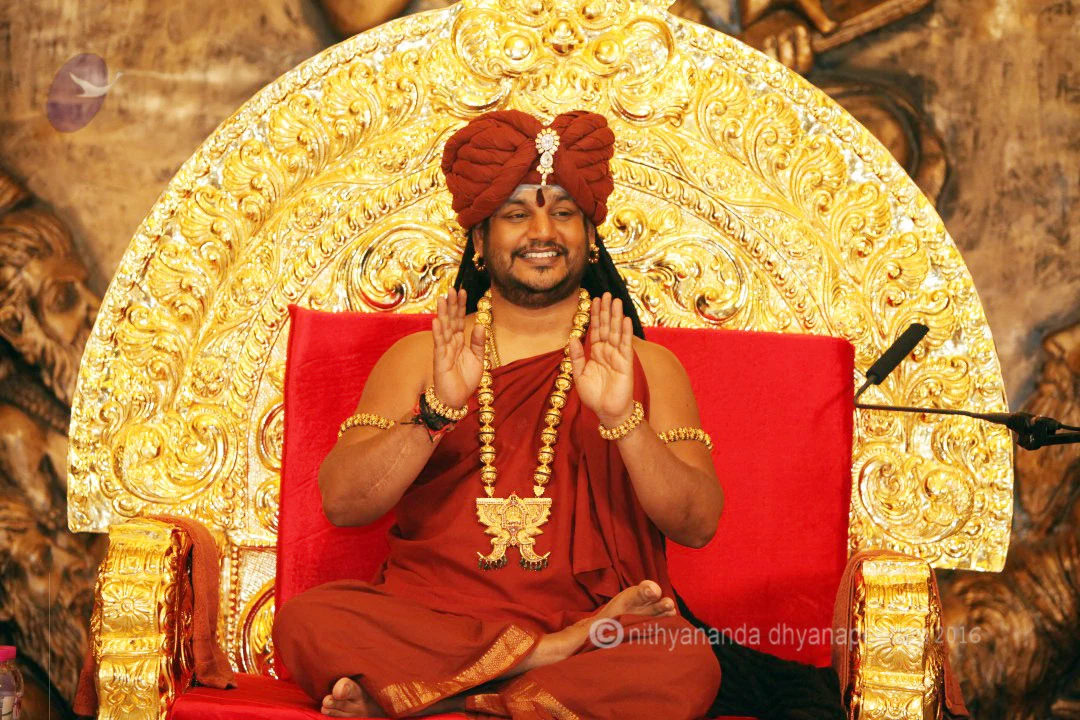
Kalpataru Darshan
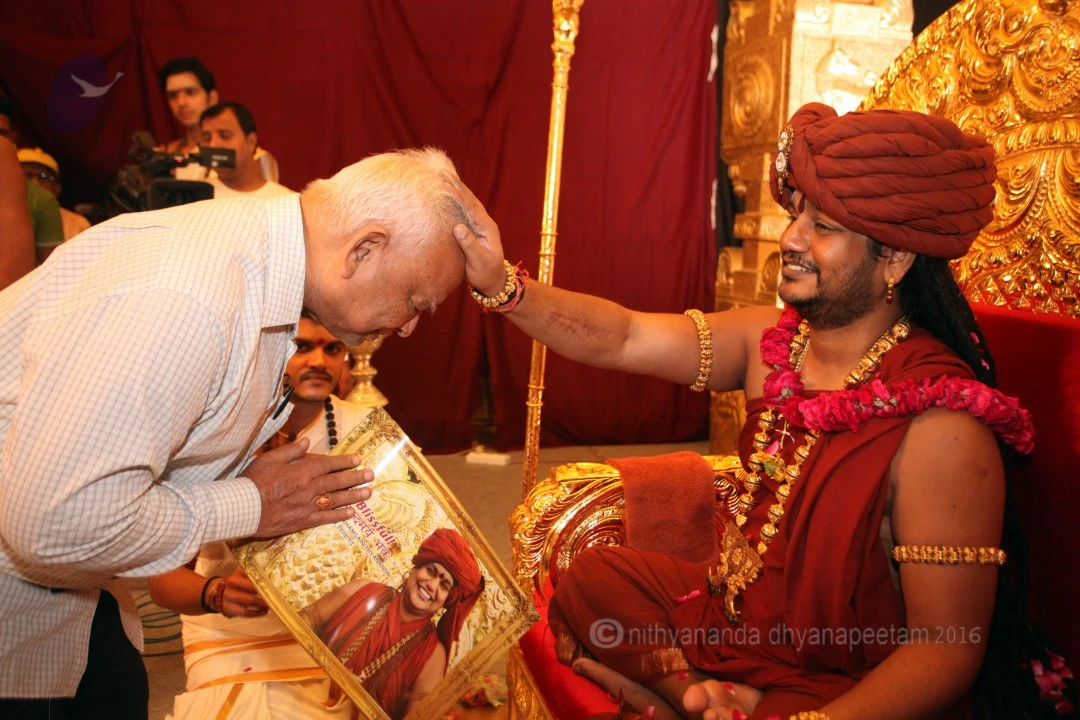
Kalpataru Darshan

Guru Mantra Deeksha
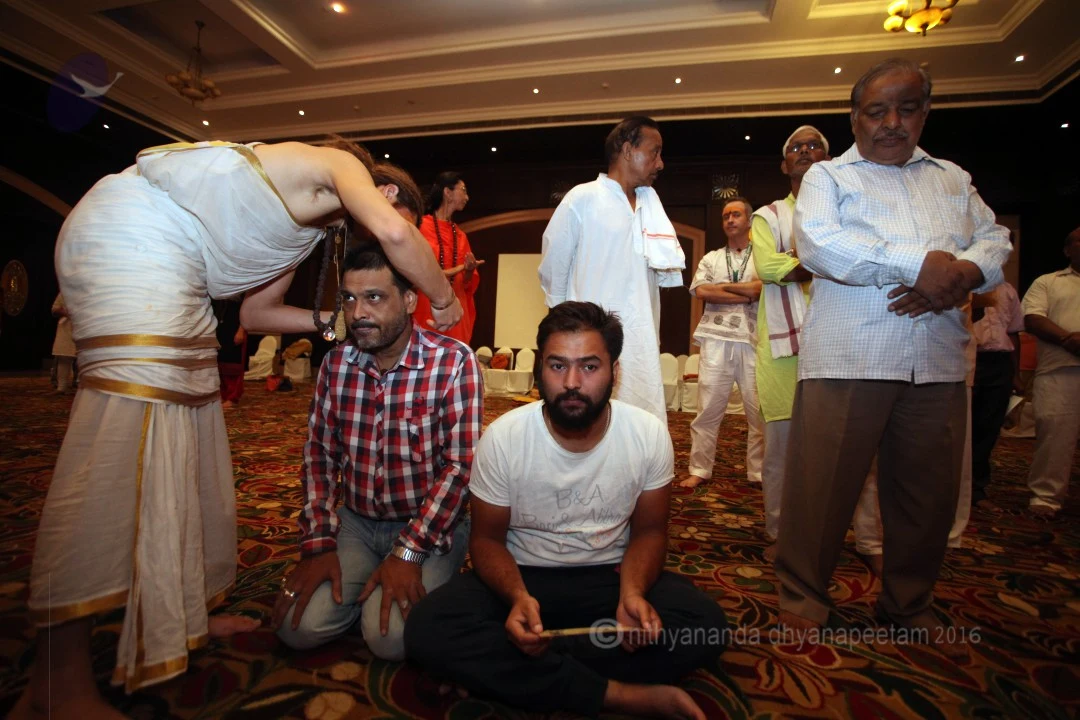
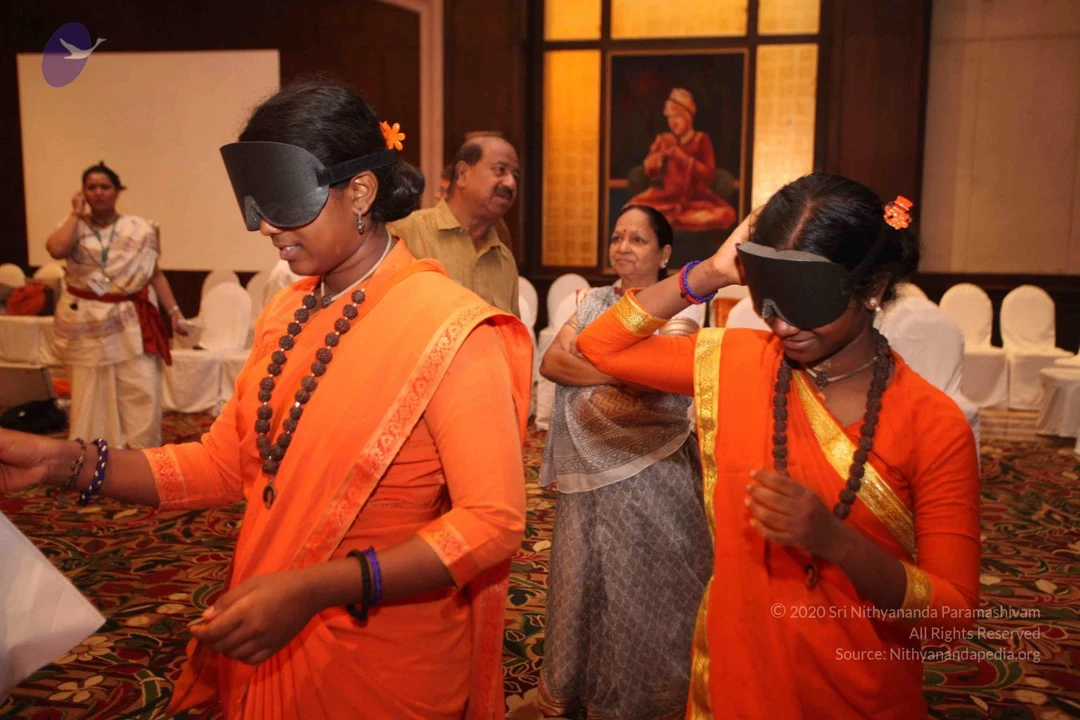
Third Eye Demo by Gurukul Balasanths
Shivoham Process - Initiation into Unclutching

Link to Facebook Post:

https://www.facebook.com/ParamahamsaNithyananda/photos/a.321615927926264/1073384506082732

Photos Of The Day:

IA-Varanasi-Morning-Satsangh

IA-Varanasi-Shivoham

Photos Of The Day:

FB-Photos-of-the-Day

01-MORNING-SATSANG

02-SHIVOHAM-PROCESS

03-SHIVOHAM-MANIFESTATION-INITIATION

Photos from this day

View all 155 photos

Nithya Satsang

1 photoSource gallery

Guru Mantra Deeksha

3 photosSource gallery
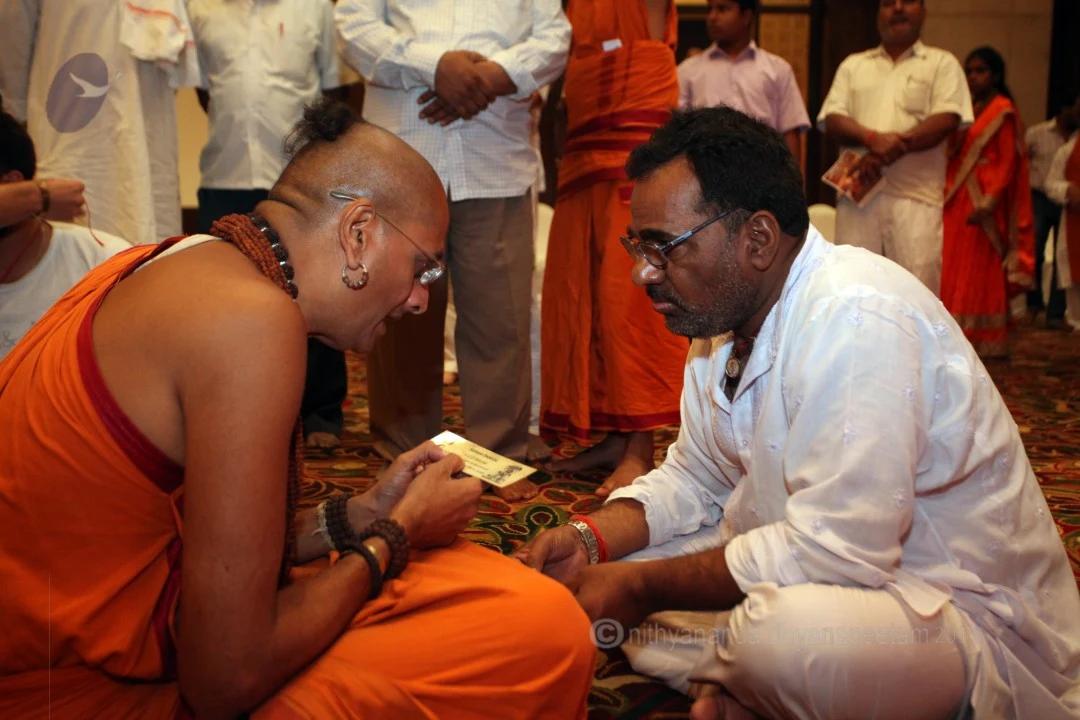
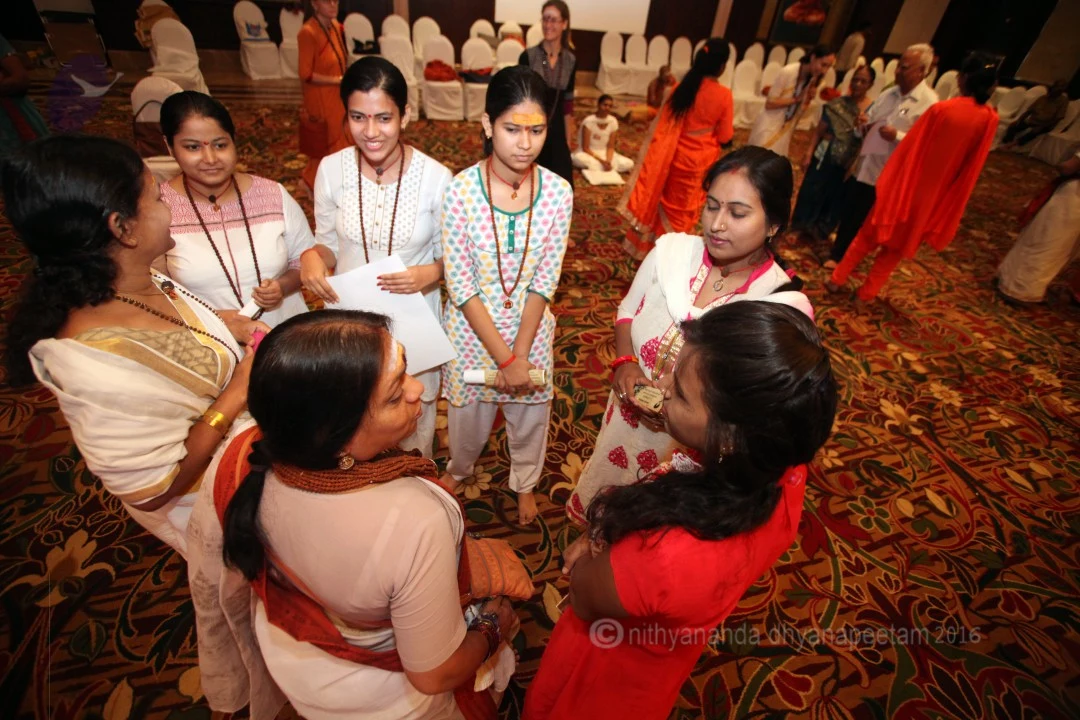
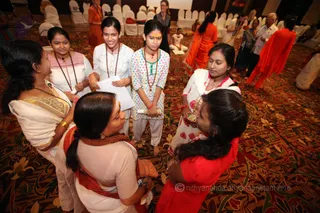
Indoor photograph in a large hotel ballroom with patterned carpet, recessed ceiling lights and a chandelier. A man in white dhoti with gold borders and a bare upper body bends forward, hands raised over the head of a seated man in a red-and-white checked shirt, appearing to perform a blessing or initiation gesture. Beside them a seated bearded man in a white t-shirt and dark trousers sits cross-legged holding a small stick. Several onlookers stand around: a man in white kurta with a towel over his shoulder, an older man in a light blue checked shirt and grey trousers with arms folded, a man in a yellow kurta with white dhoti, and a woman in an orange top. The room has white chairs and a small stage area in the background.Photo of two men seated face to face on a patterned carpet at an indoor event. A shaved-headed man on the left wears an orange robe, a red-brown rudraksha mala around his neck, beaded bracelets, earrings and glasses, and holds a small white card while leaning forward. The man on the right, in white kurta and white trousers with glasses and a red thread on his wrist, sits with hands extended toward the card. Standing behind them are people in orange and white clothing, and a woman in an orange sari stands at the right edge. The left figure has long-hair-free shaved head and appearance that does not clearly match the a person cues, so identity remains uncertain.A photograph of a group of women standing close together in a circle on a patterned carpet in a hall with white chairs, apparently in conversation. In the foreground, a woman in a cream sari with gold bangles faces a woman in a maroon and beige shawl. A young woman in a white kurta with a red and black beaded mala holds a white paper, next to a younger woman in a pastel patterned kurta with a red and green beaded mala and a red thread on her wrist. On the right, a woman in a white sari with red blouse trim holds a small object, and a woman in a red salwar kameez stands beside her. Several other people in orange and white clothing are visible in the background, and one person sits cross-legged on the floor. No identifiable a person figure is visible. The cream-clad figures wear rudraksha malas and red bindis or tilaka marks.

Third Eye Demo by Gurukul Balasanths
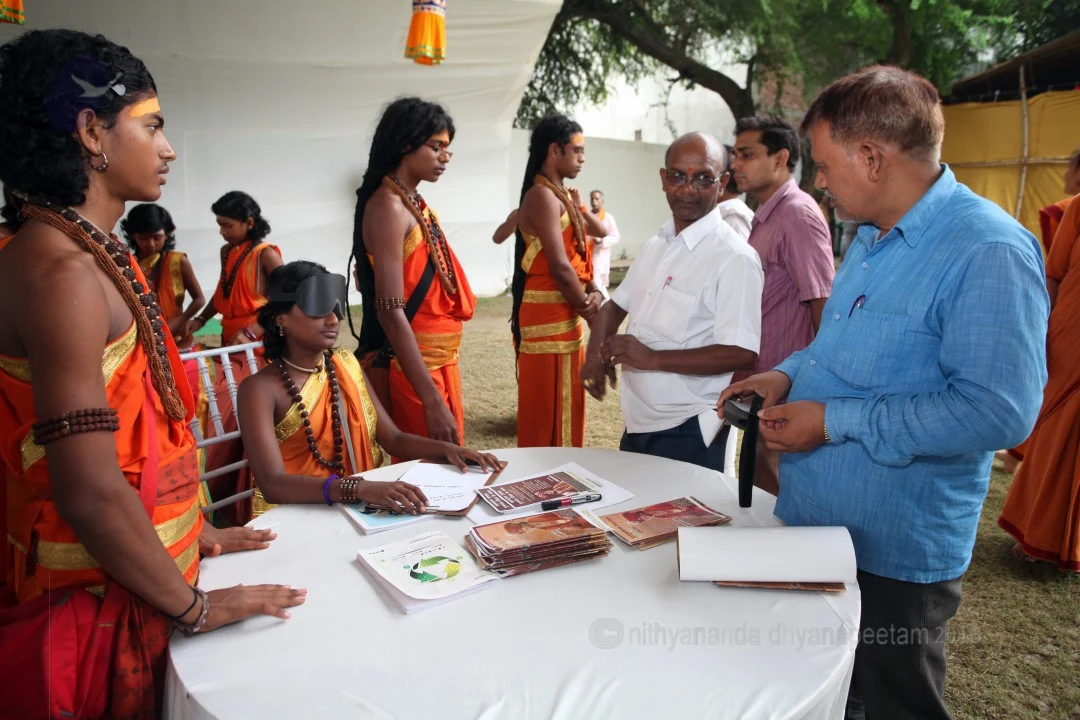
2 photosSource gallery
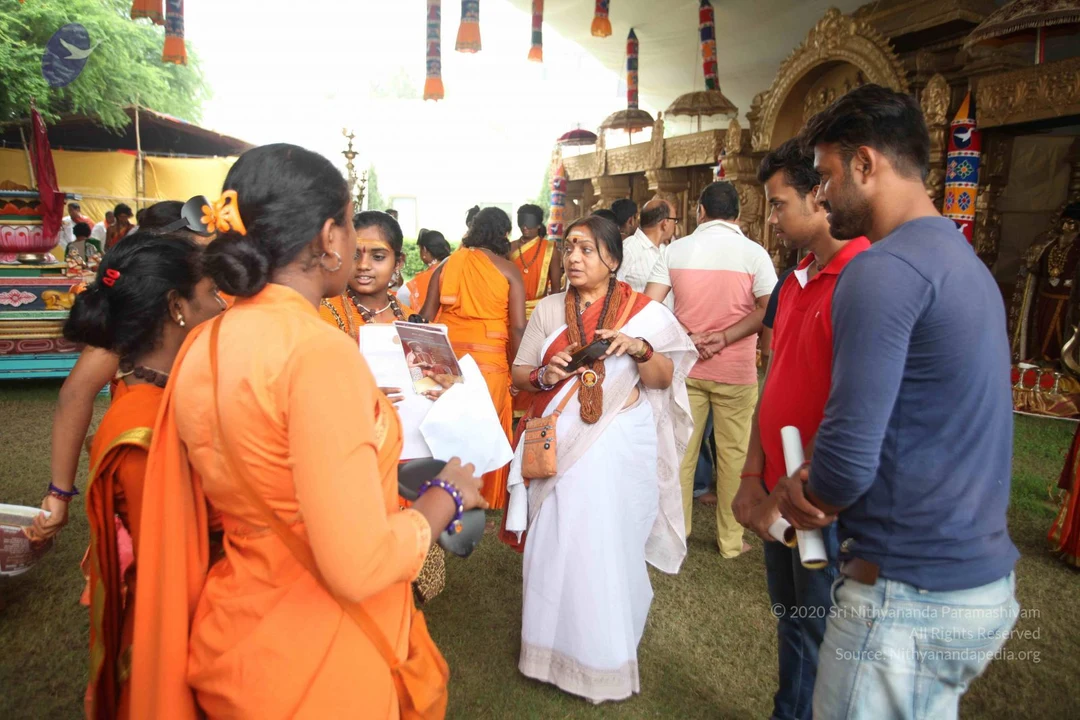
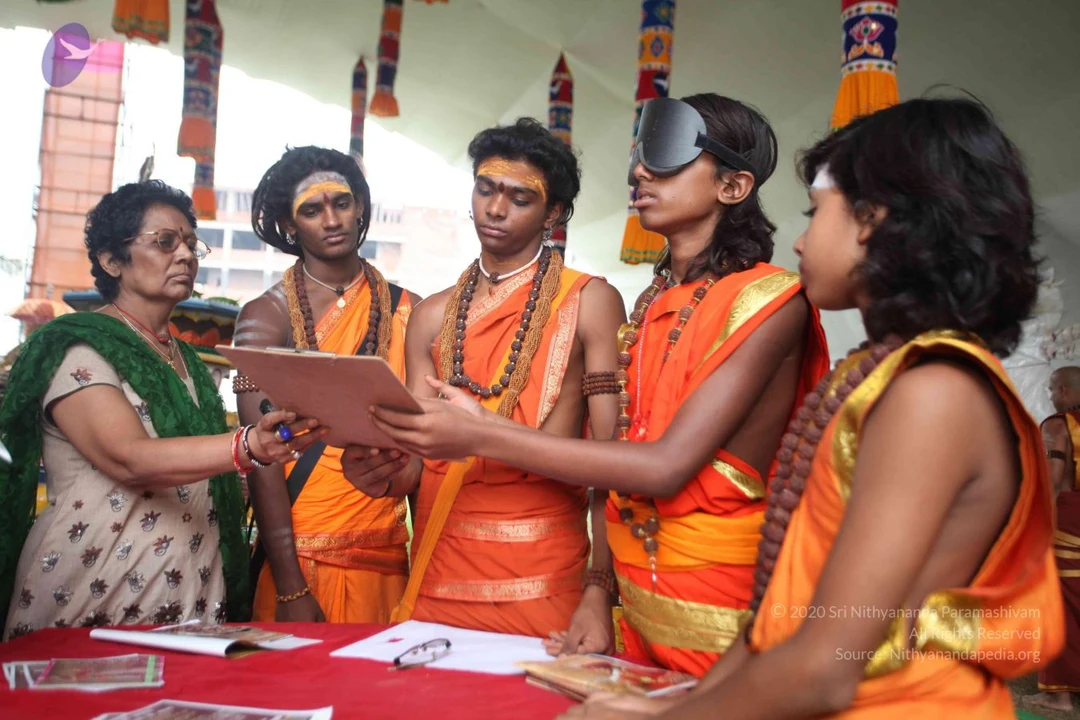
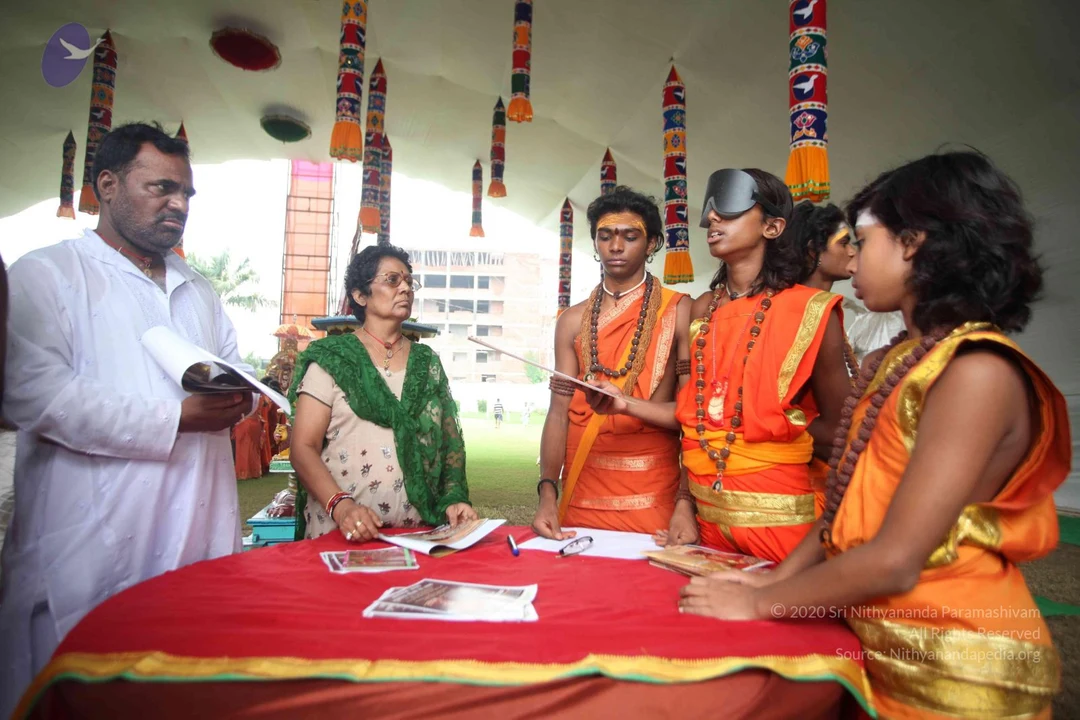
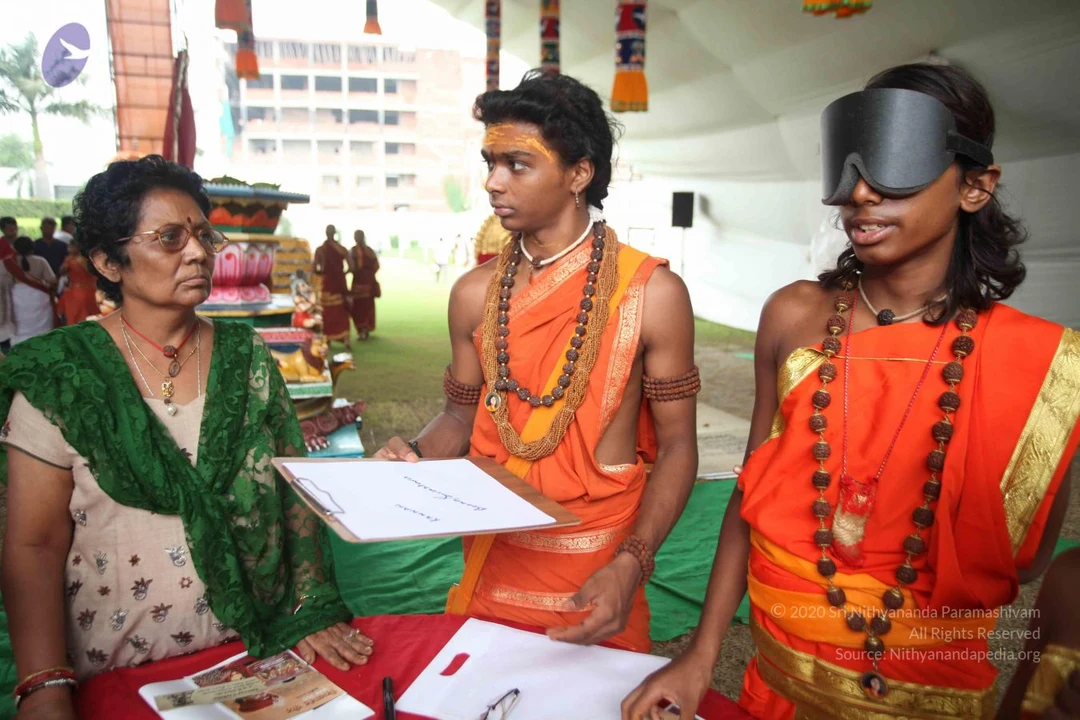
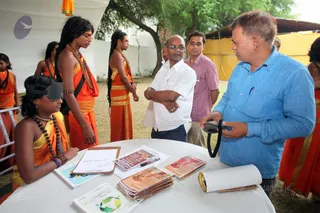
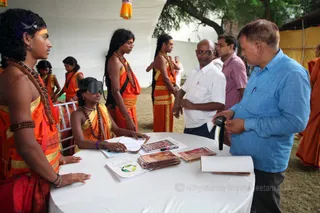
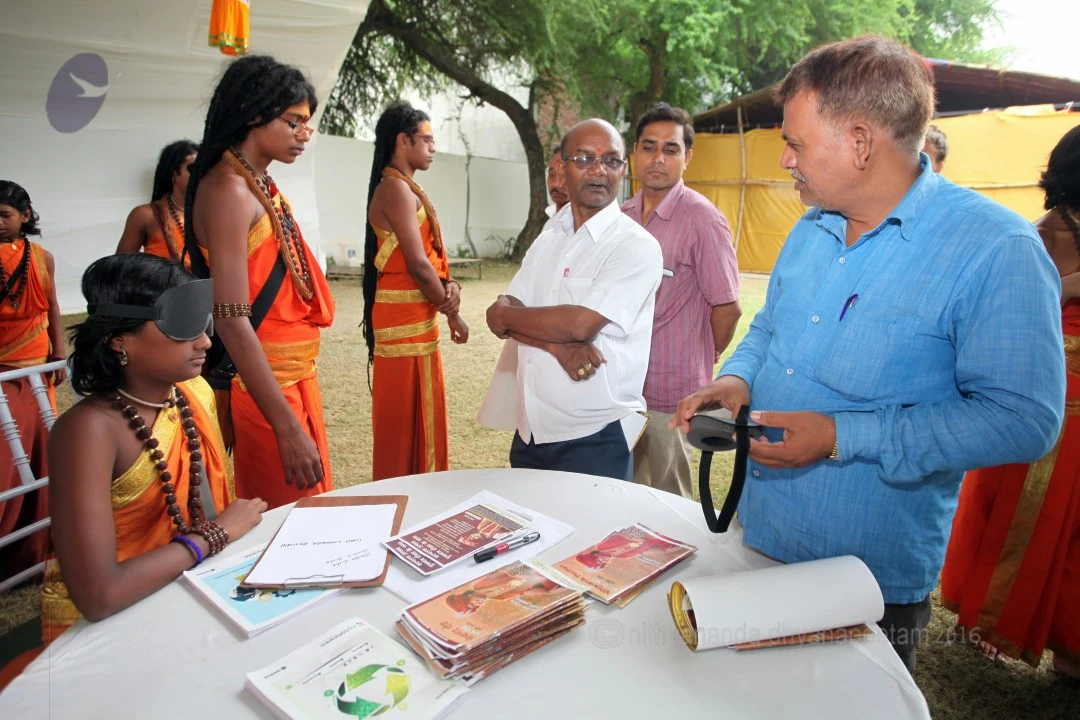
Outdoor photo at a registration table under a white tent with a tree behind. A young woman in orange garments and a grey blindfold sits at the left, wearing rudraksha beads and bangles. Standing behind her, several young people in orange saffron-coloured robes with gold borders wear long matted hair and rudraksha malas. A man in a white shirt with arms folded and a red forehead mark watches, next to a man in a pink striped shirt. On the right, a man in a blue linen shirt holds a black device and speaks at the table. The table holds printed brochures, a clipboard, a pen and a rolled paper scroll, with green recycling-logo sheets nearby.A photograph at an outdoor event under a white tent. Several young people in saffron-orange dhoti-style wraps with gold borders and layered rudraksha malas stand near a white-covered round table. A seated young woman in an orange garment and beaded necklace wears a black blindfold and rests her hands on the table beside printed booklets and a stack of brochures. Two men in white and blue shirts stand at the table, one holding a pen and a small black device, and another man in a pink shirt stands behind them. A green-and-white printed sheet and a notebook lie on the table. Trees and yellow canvas are visible in the background.

Shivoham Process - Initiation into Unclutching
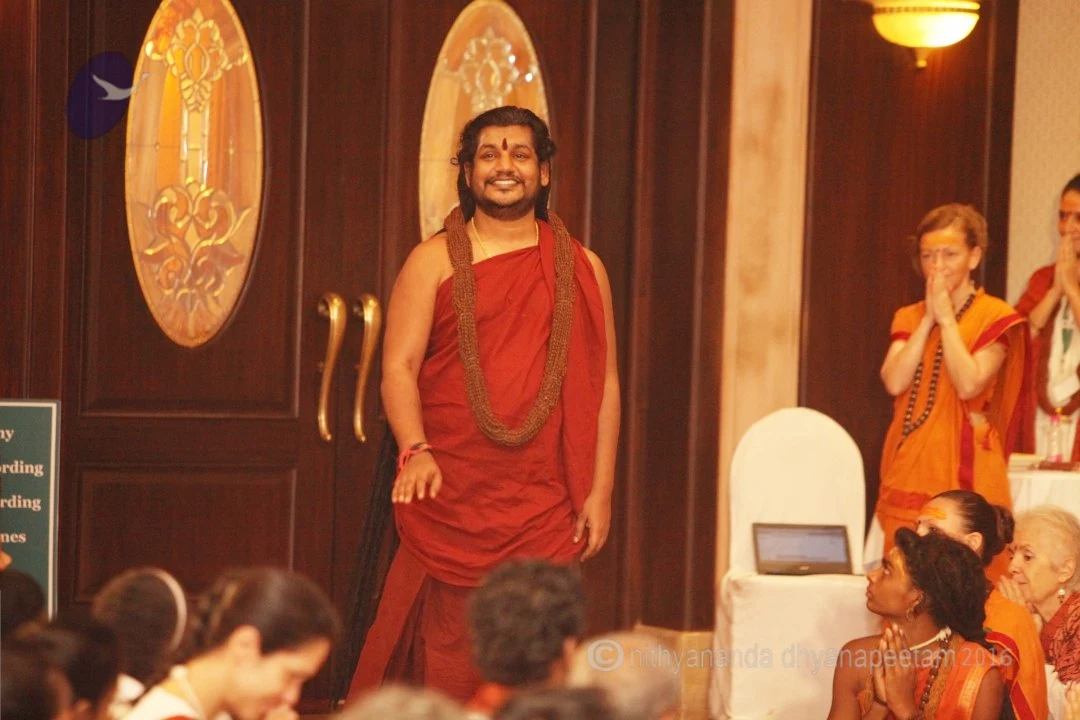
5 photosSource gallery
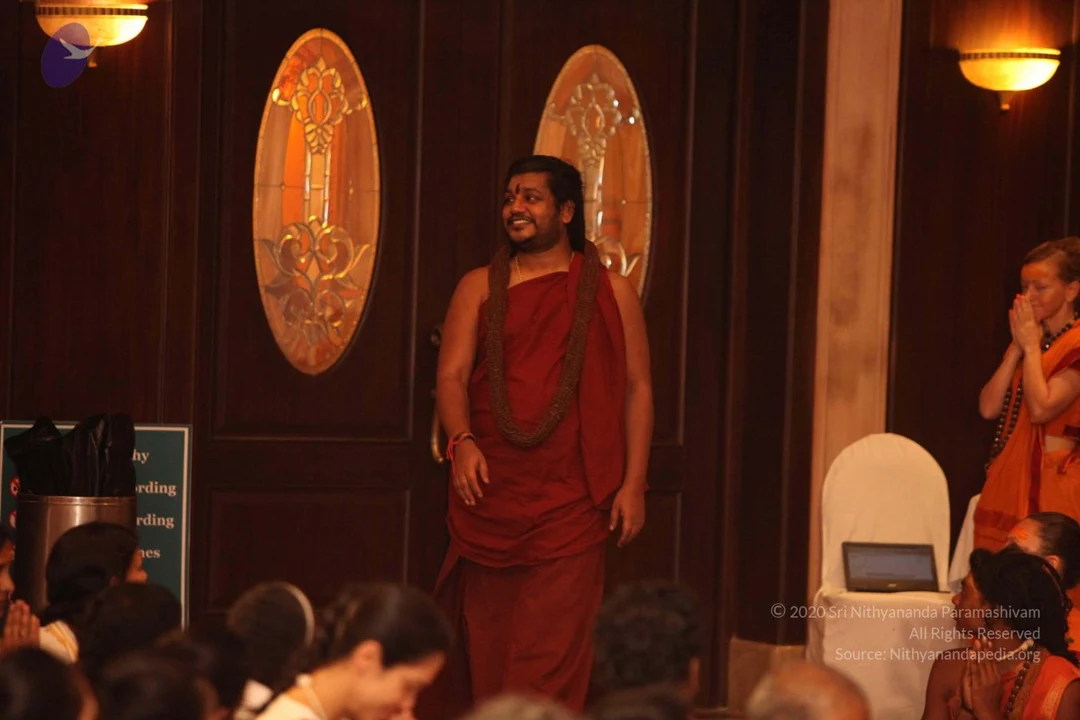
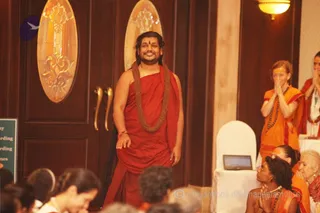
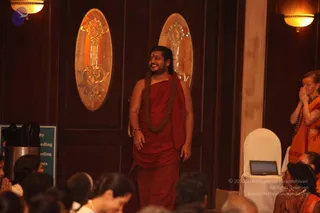
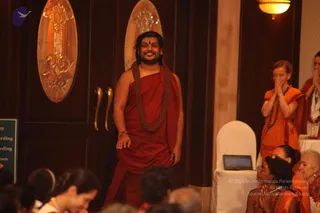
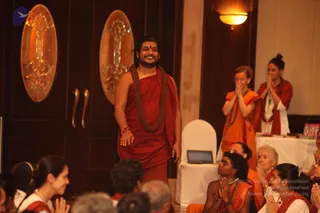
Photograph of a smiling man with long dark hair and a red bindi, wearing a red sannyasi-style wrap and a thick brown rudraksha mala, standing near tall wooden doors with amber stained-glass panels. He raises one hand in greeting. To the right, a woman in orange robes and a rudraksha mala stands with palms pressed together in anjali, and another woman in a white top also holds her hands together. A white chair with a laptop sits at the right. Seated audience members in the foreground, several with hands joined, face the stage in a hall. Appearance-based label: Swamiji (probable), in person, wearing red robes, rudraksha mala and long hair.

IA-Varanasi-Morning-Satsangh
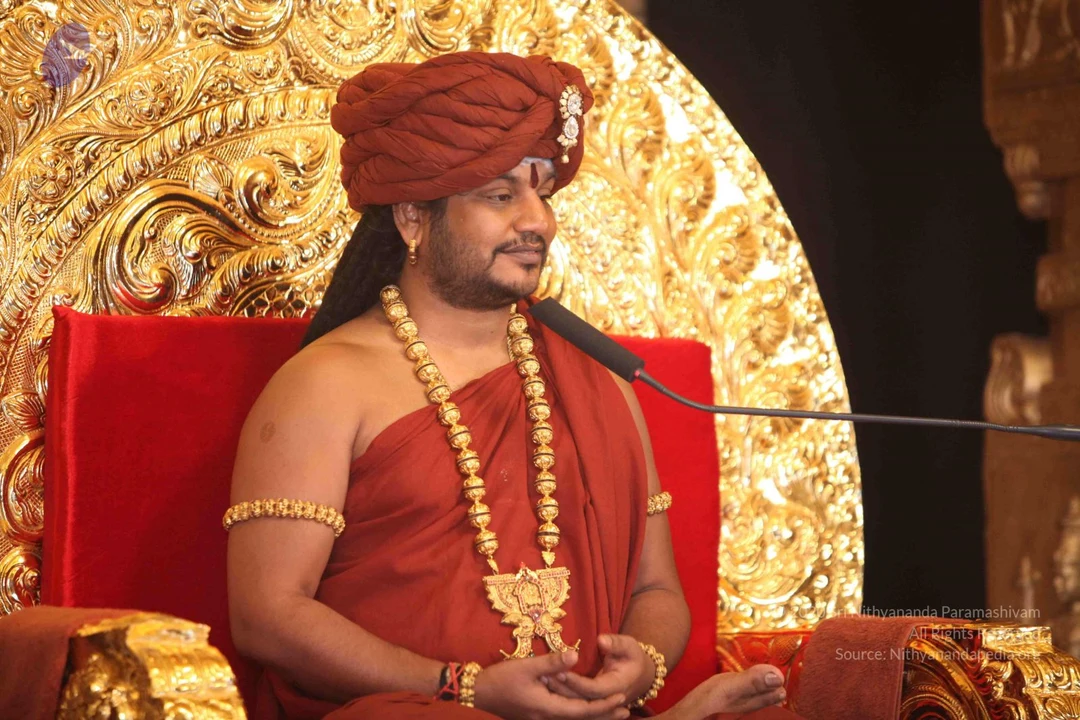
81 photosSource gallery
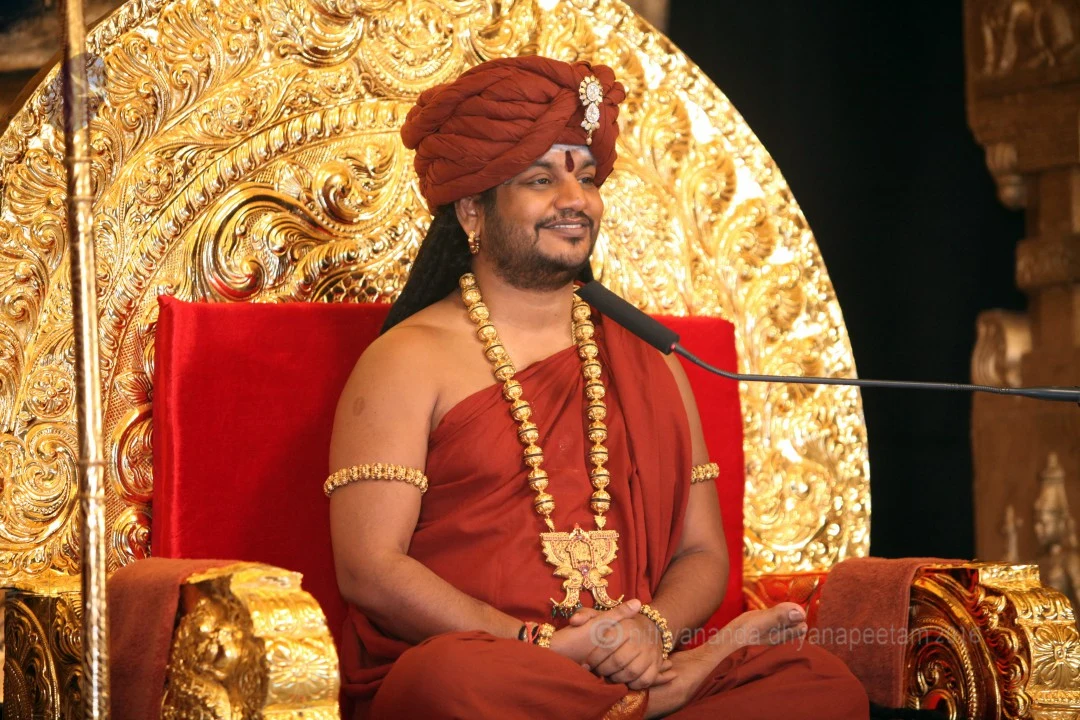
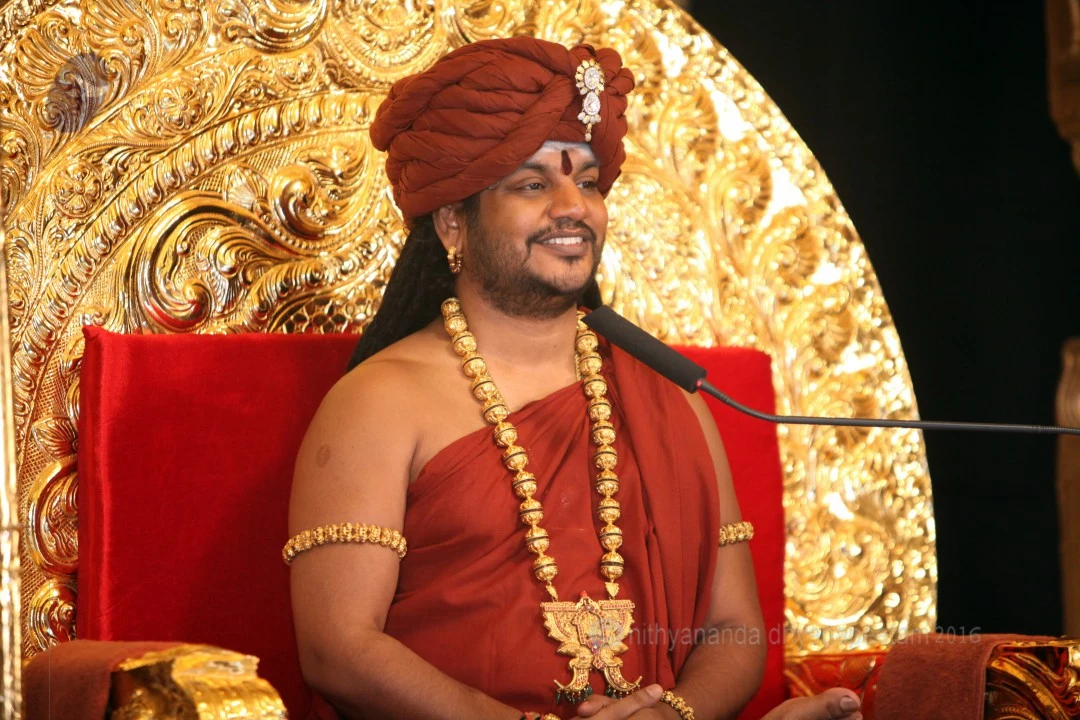
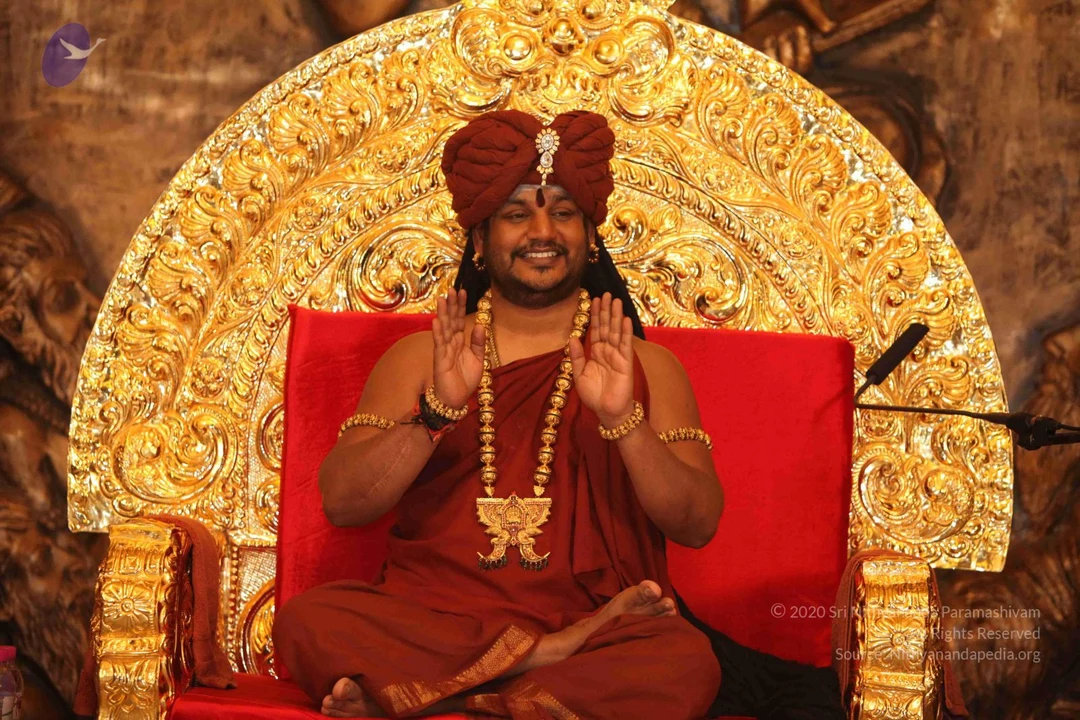
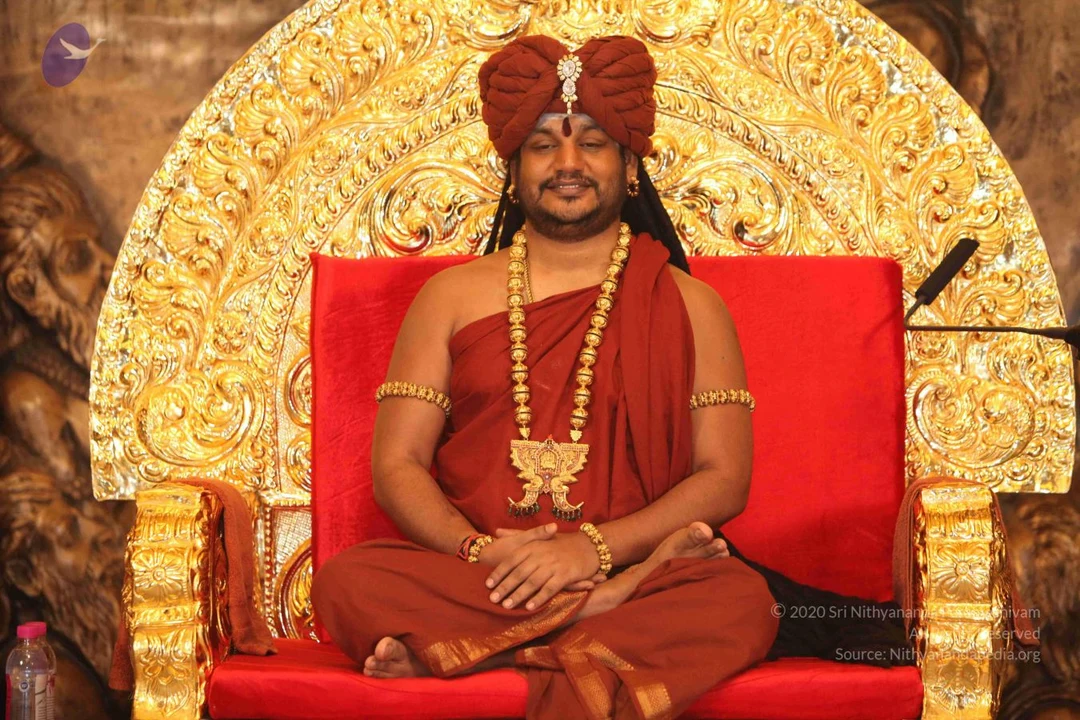
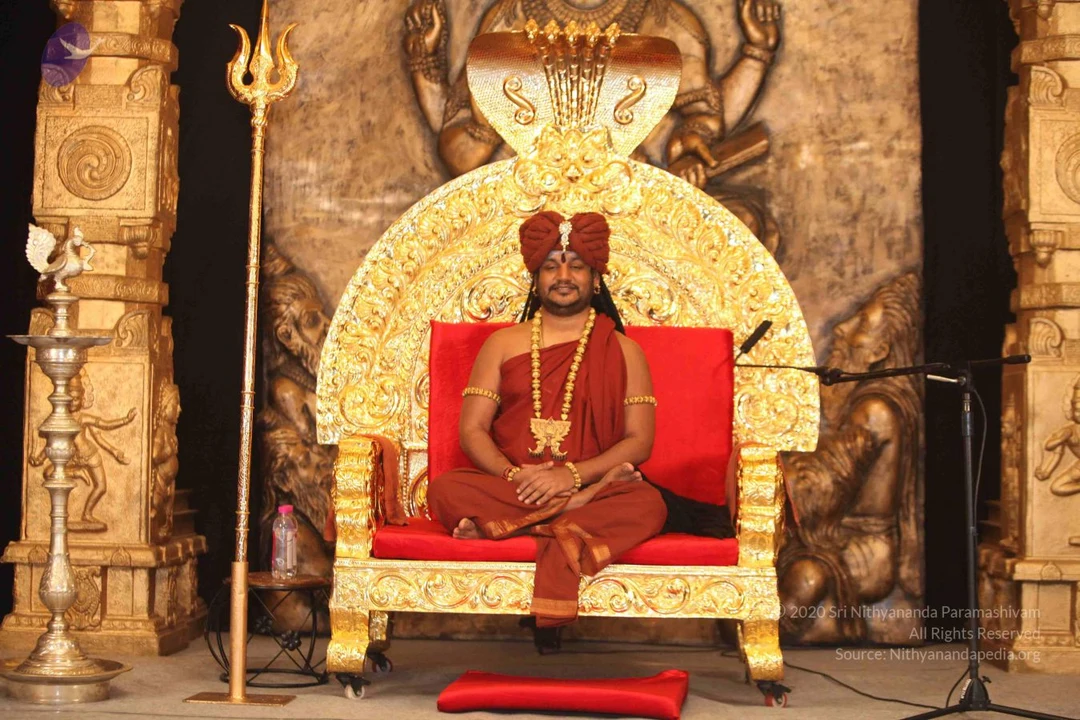
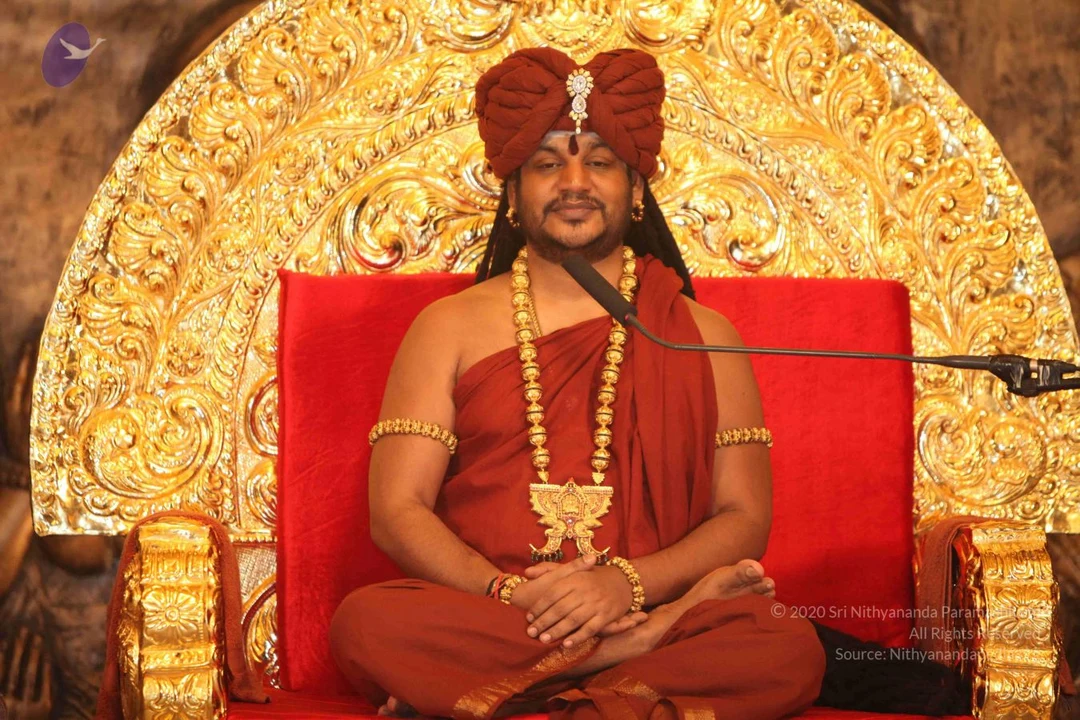
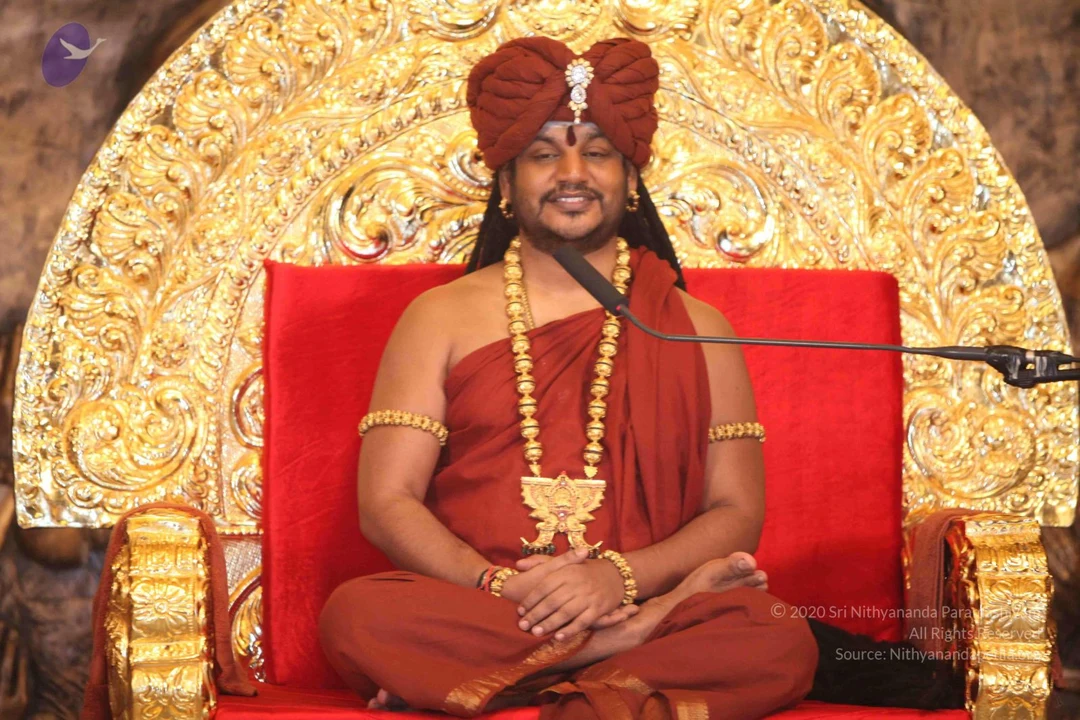
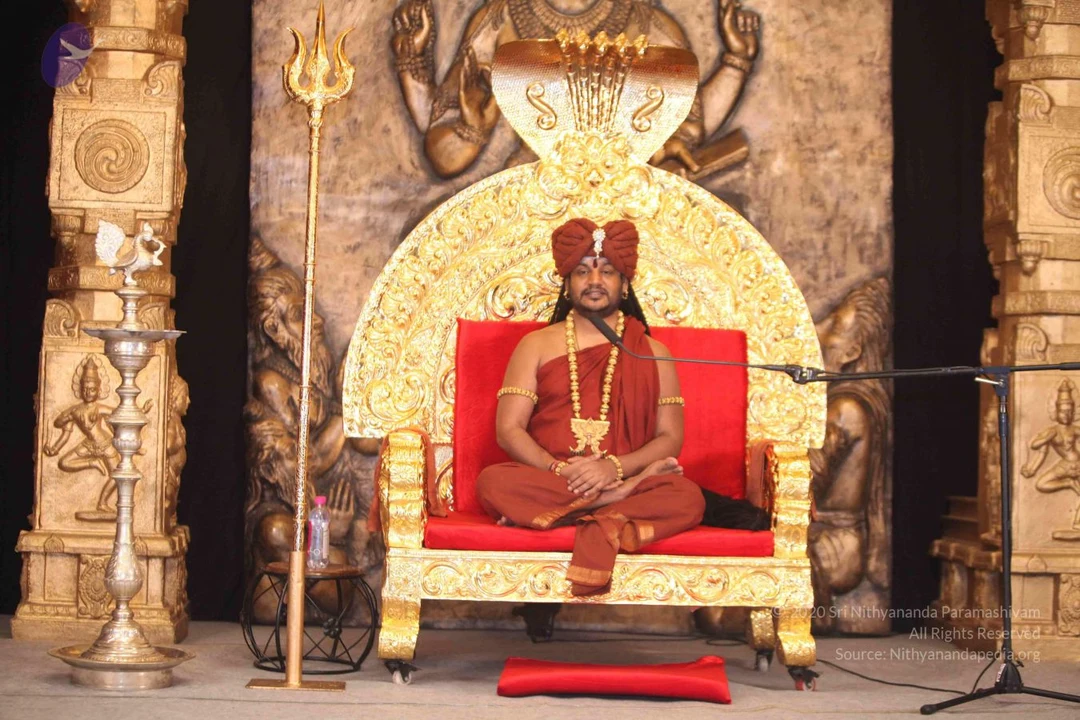
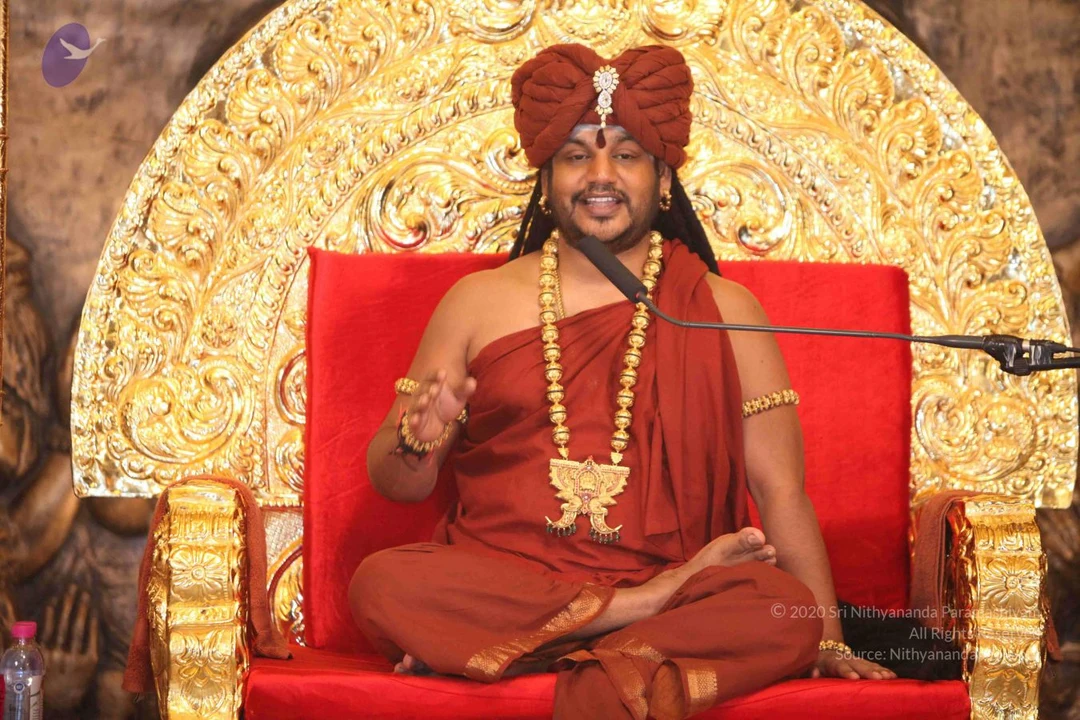
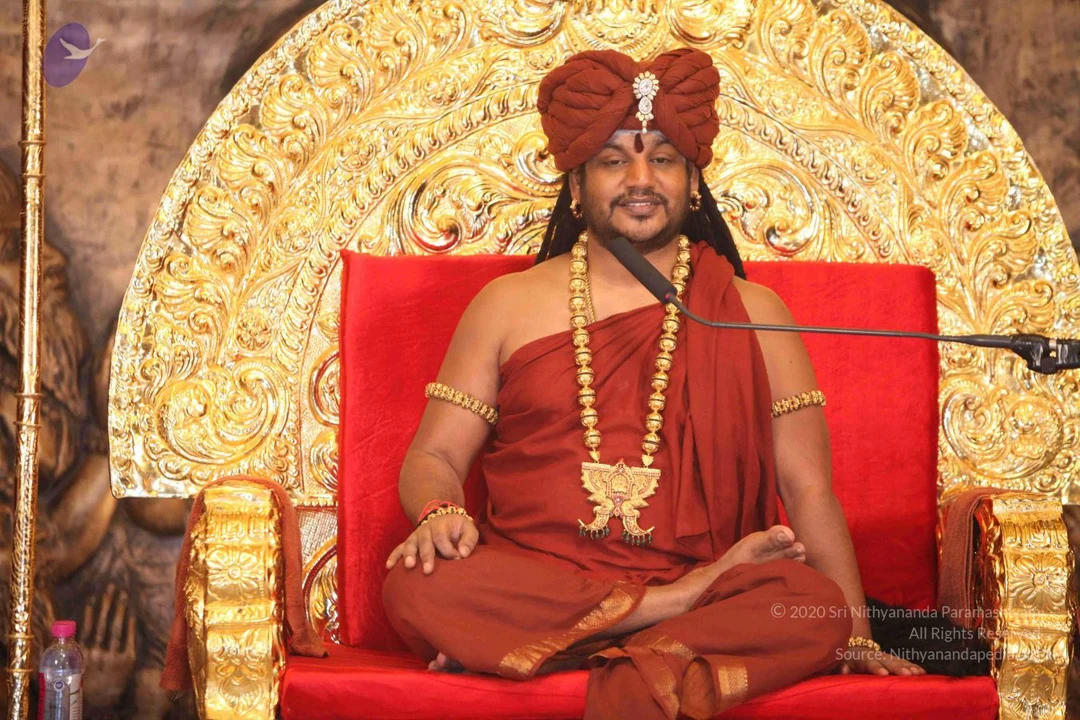
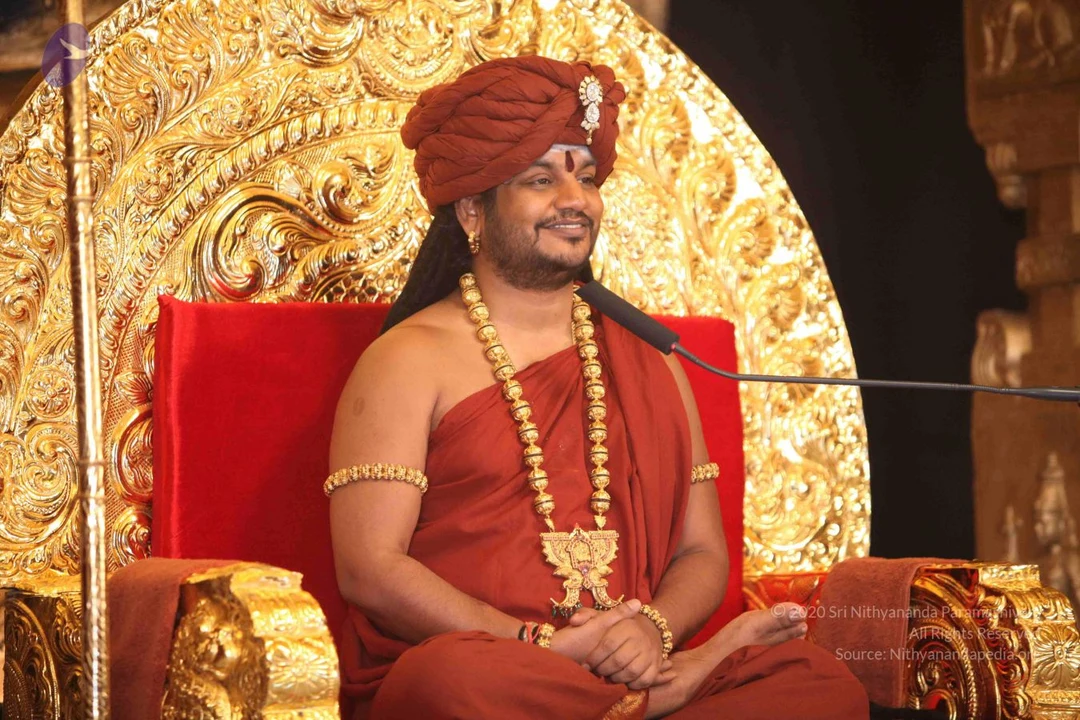
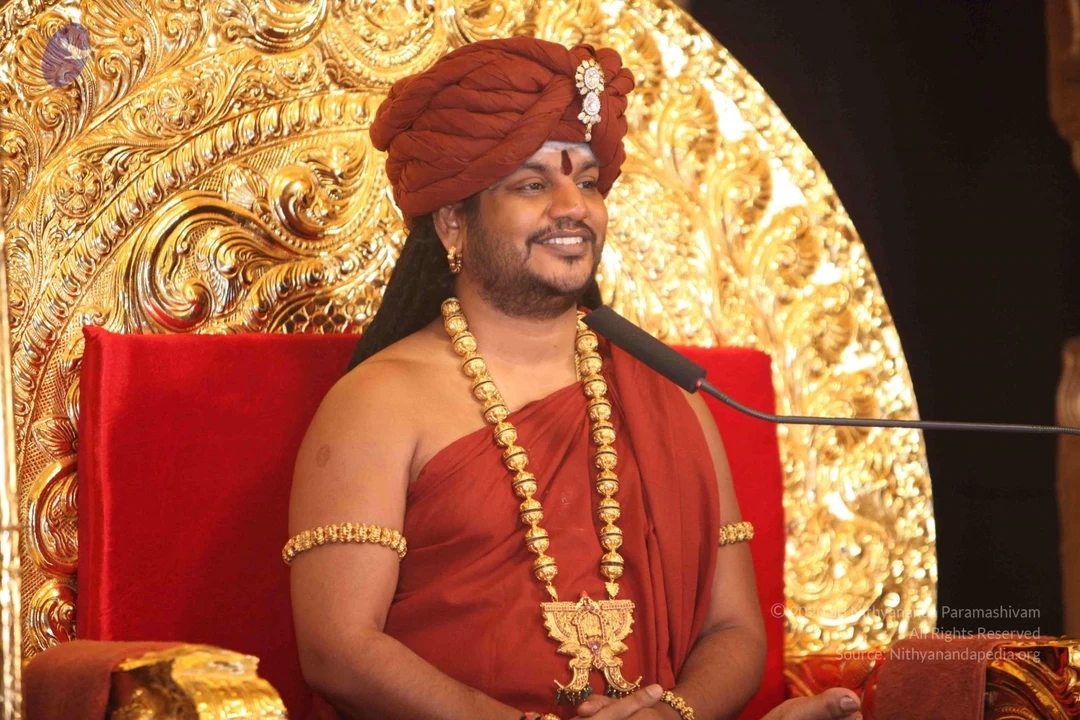
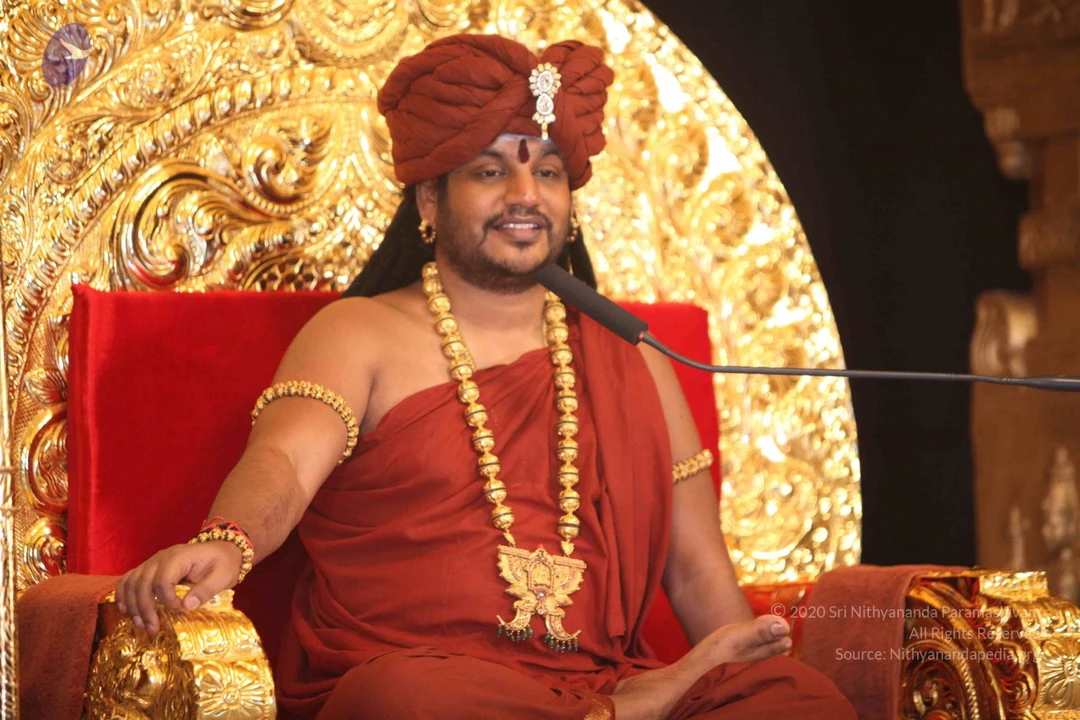
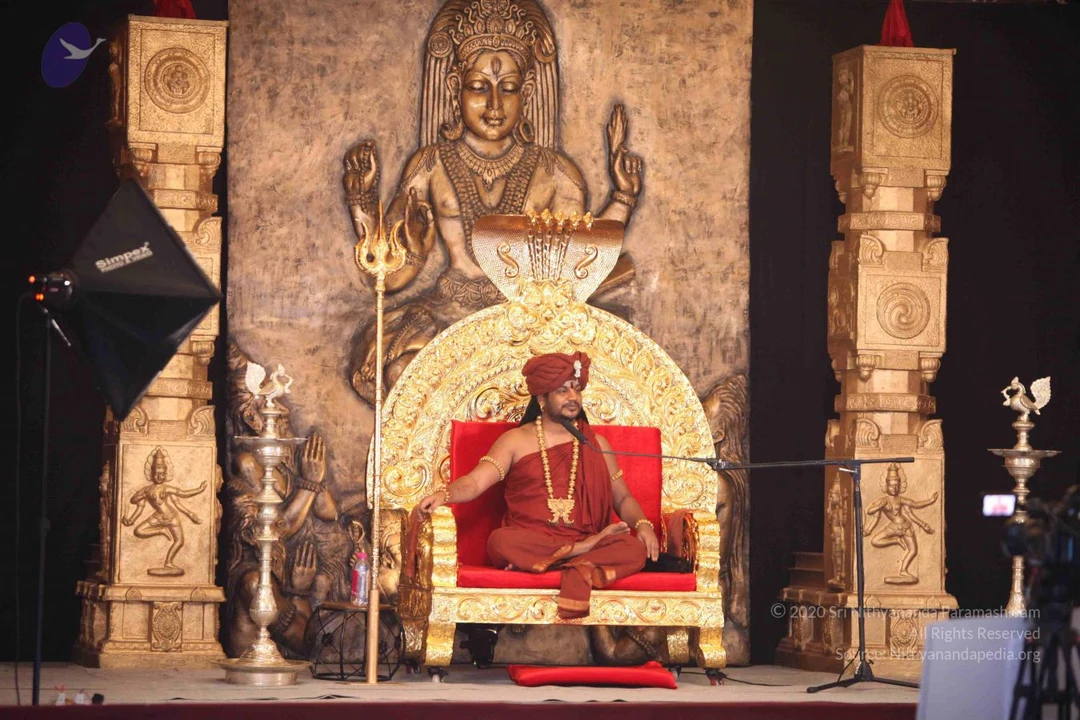
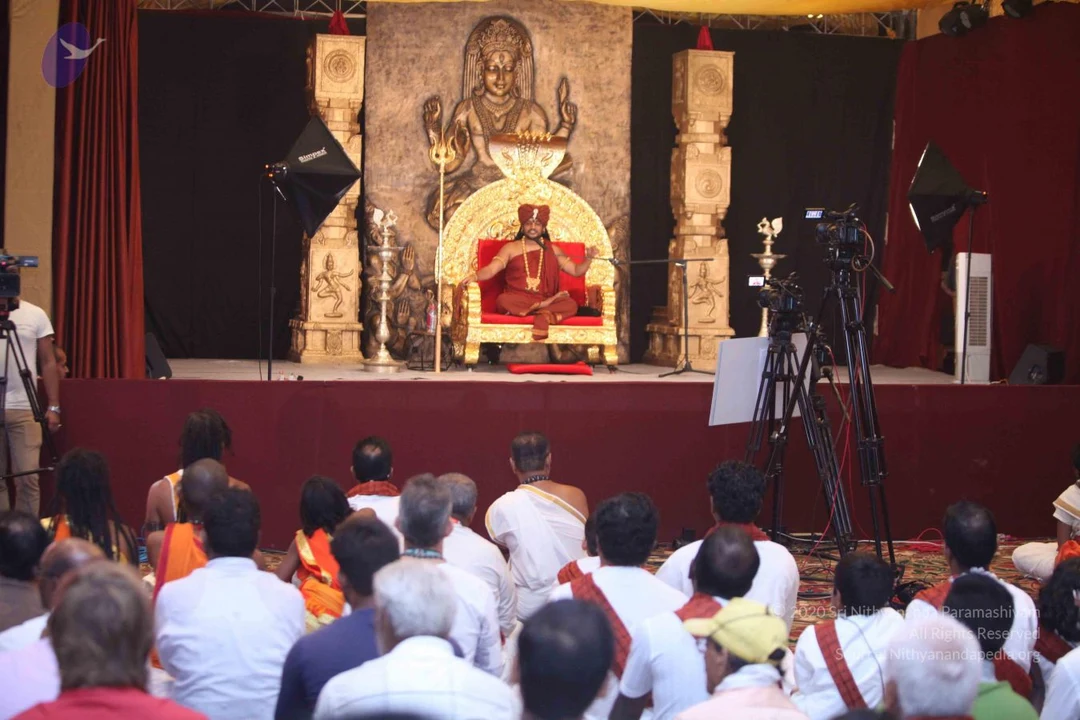
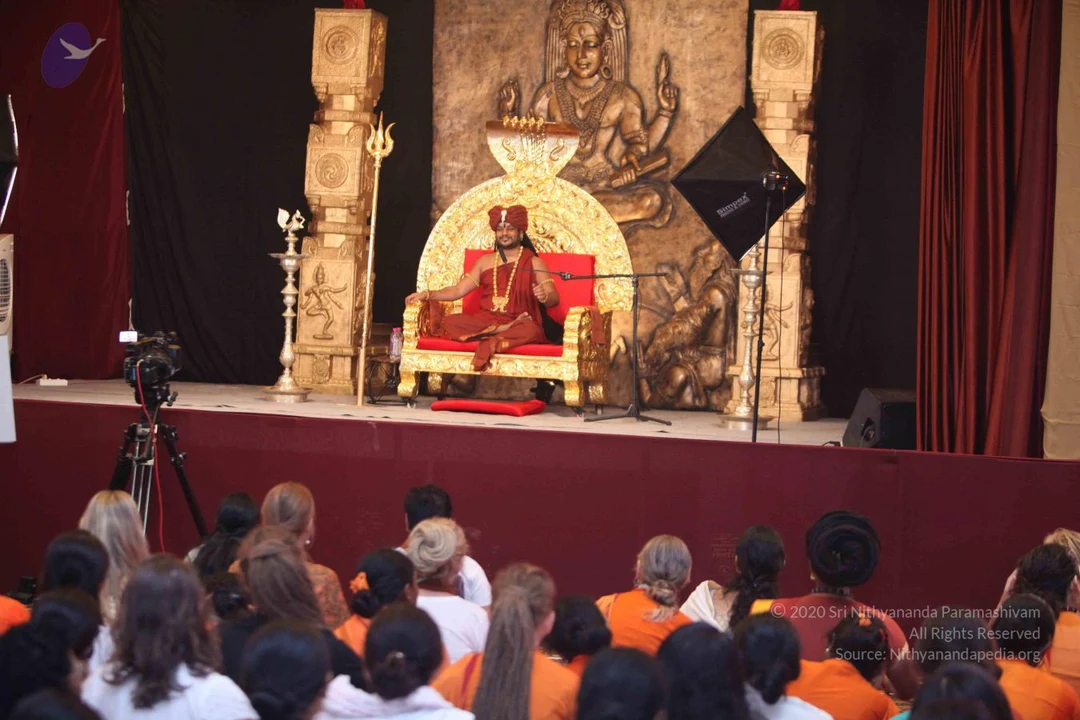
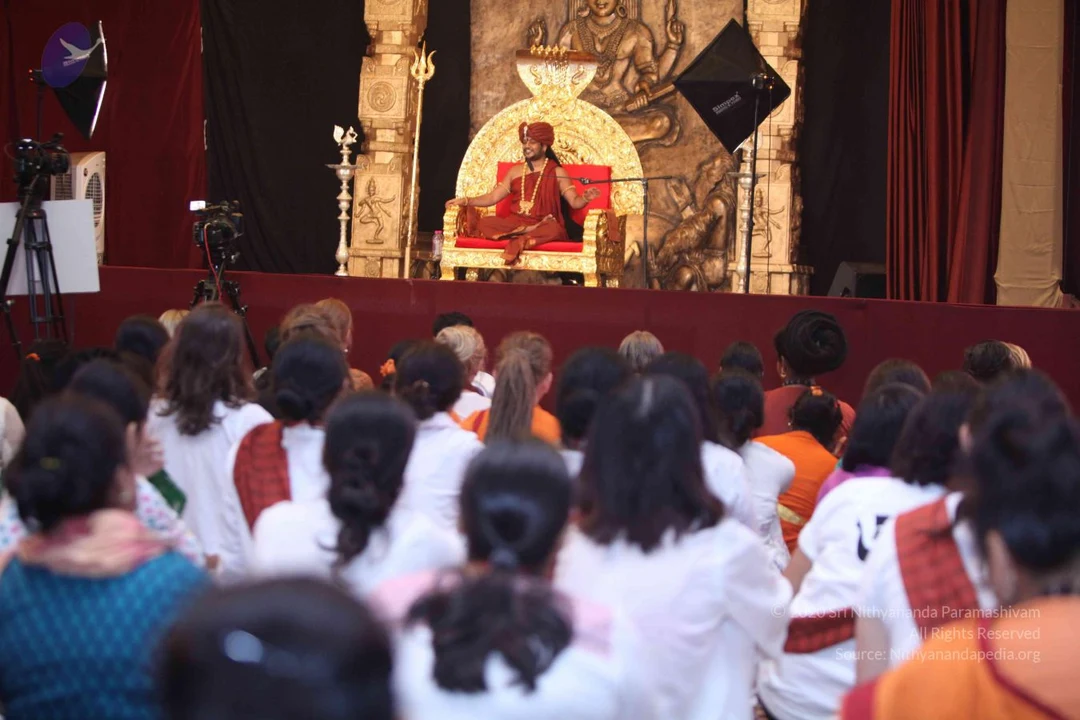
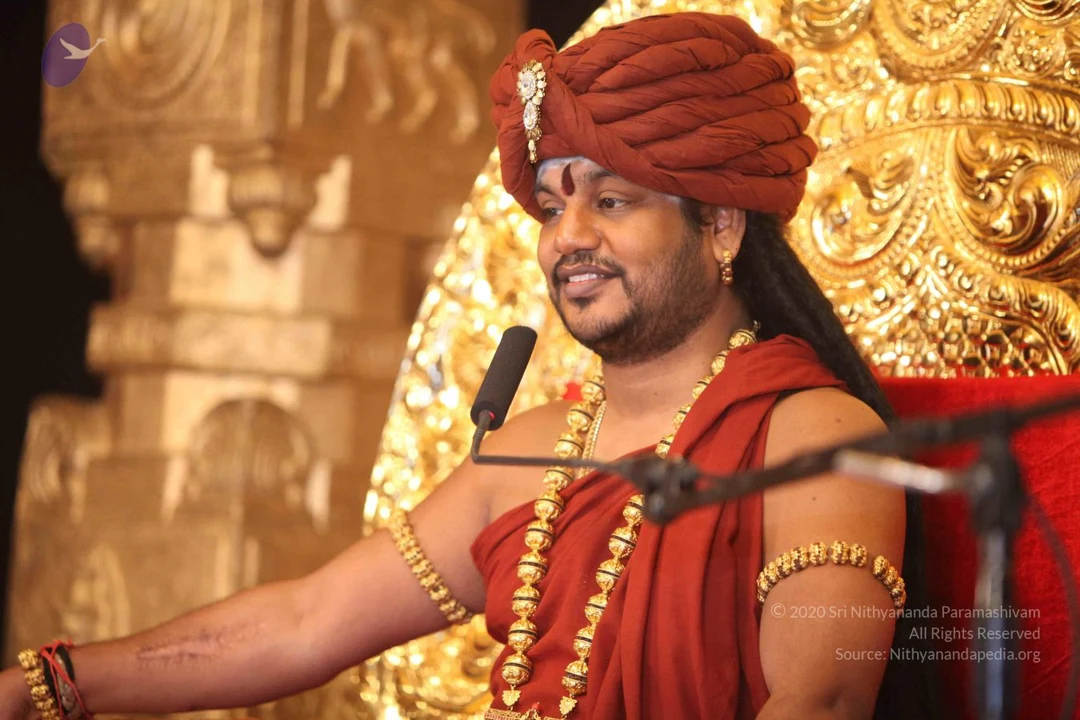
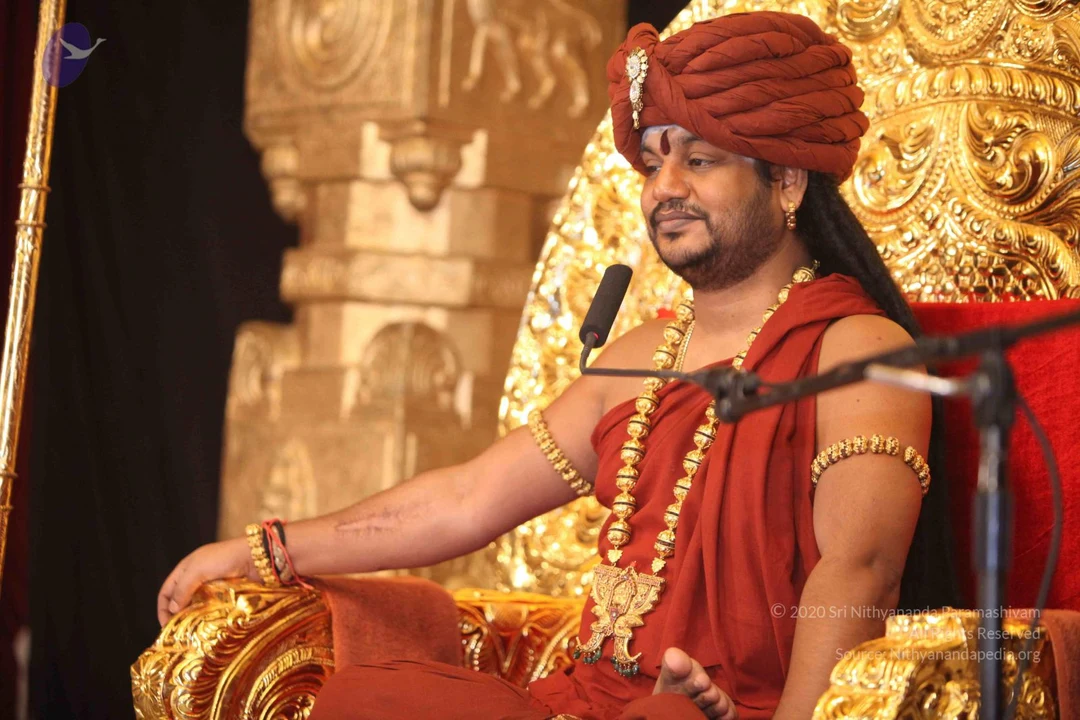
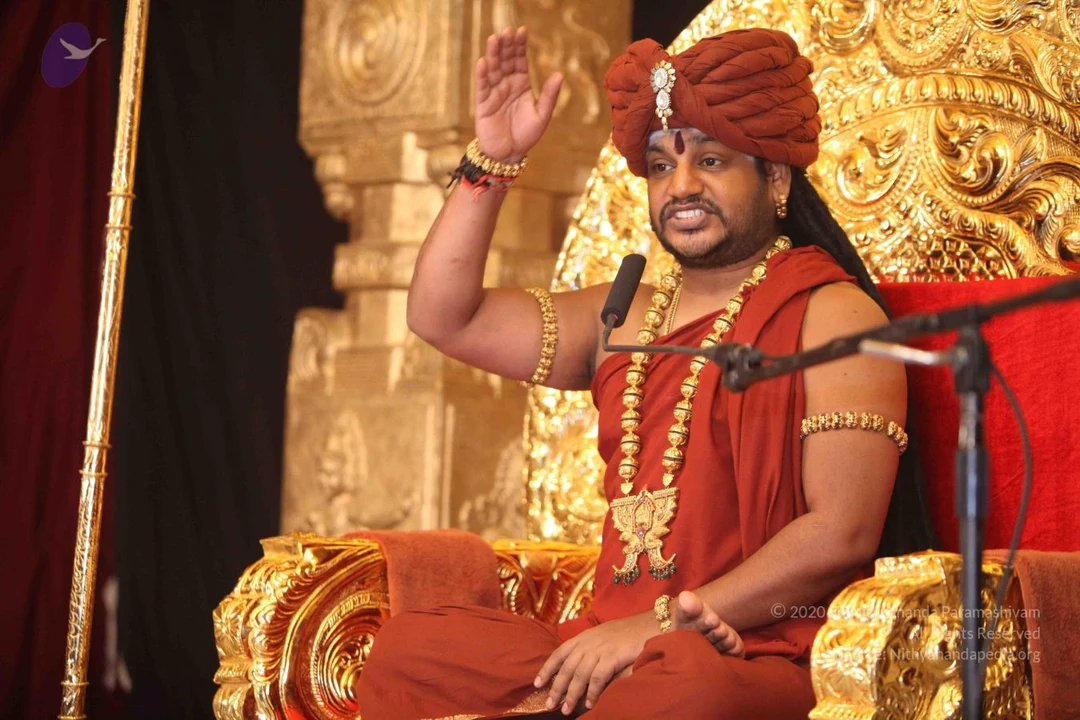
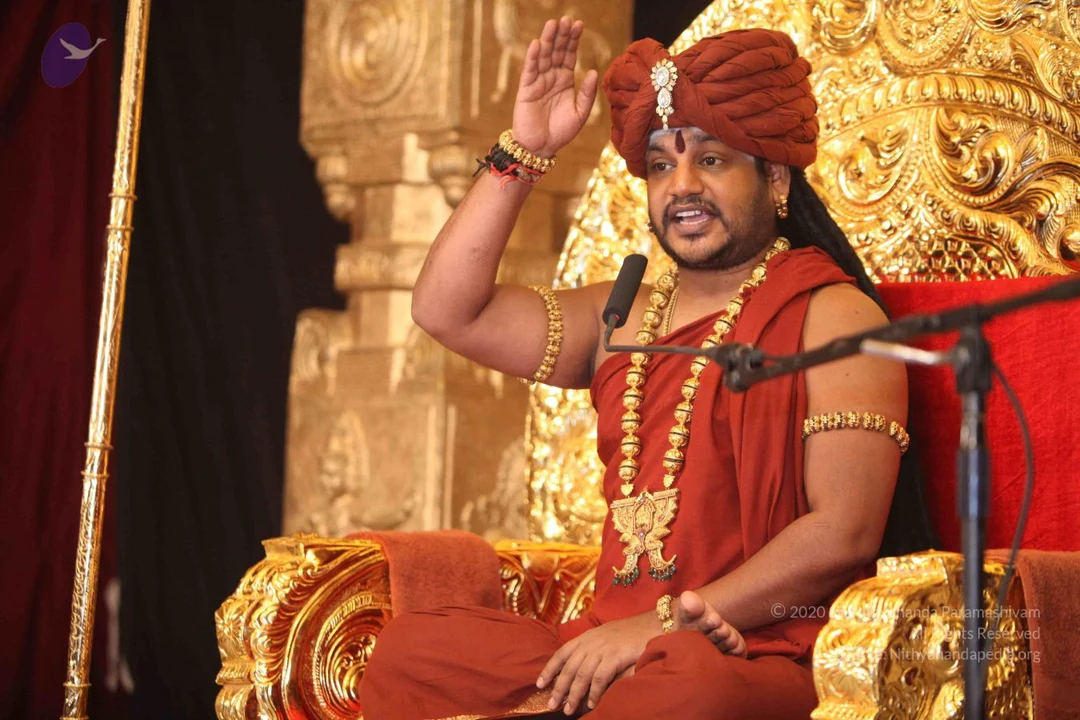
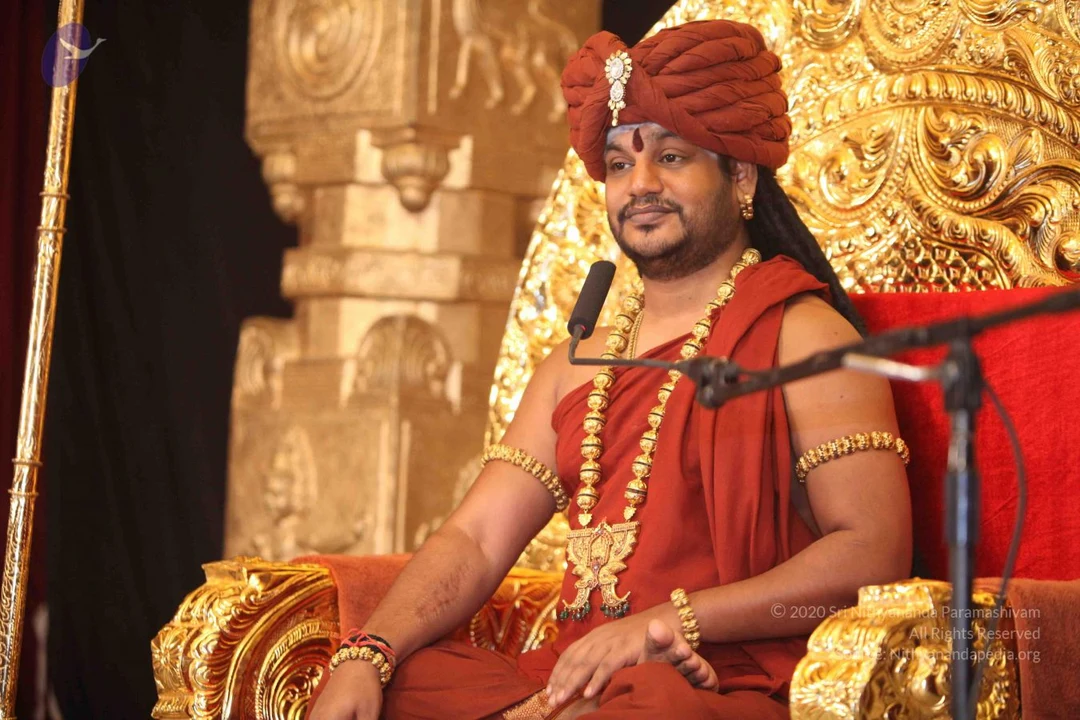
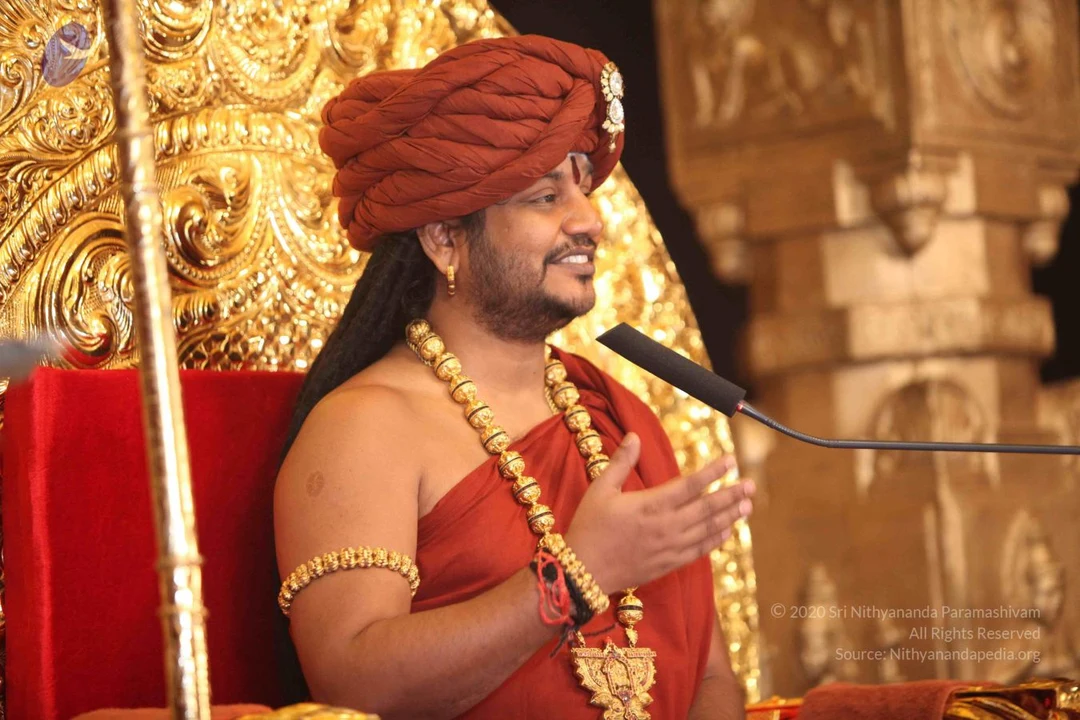
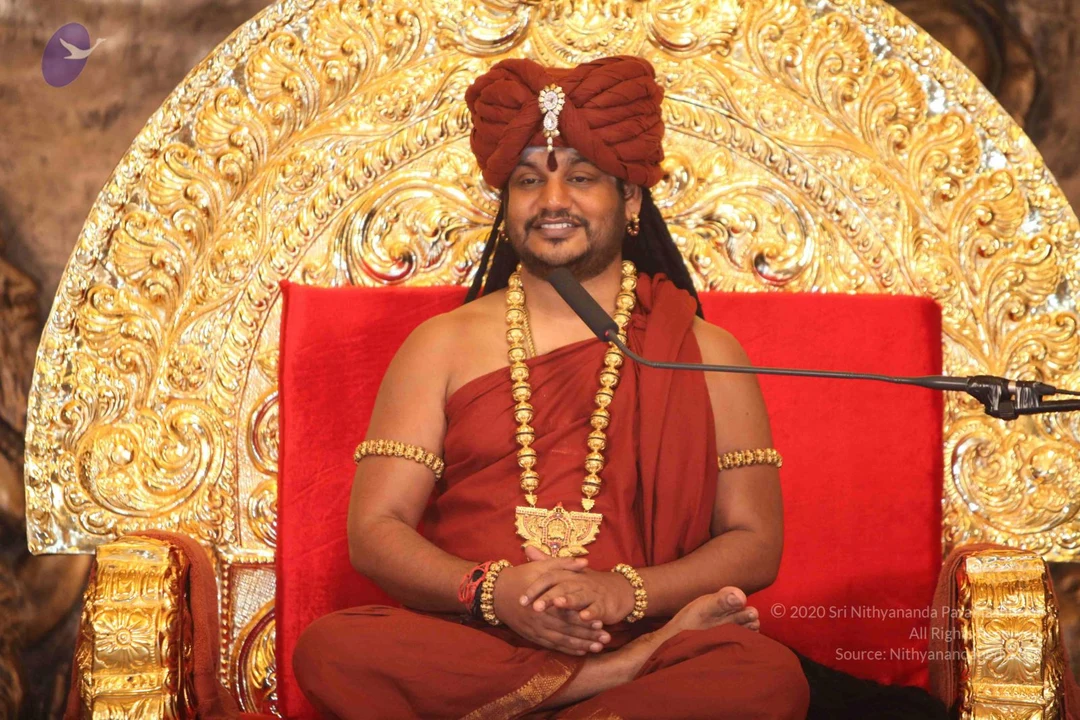
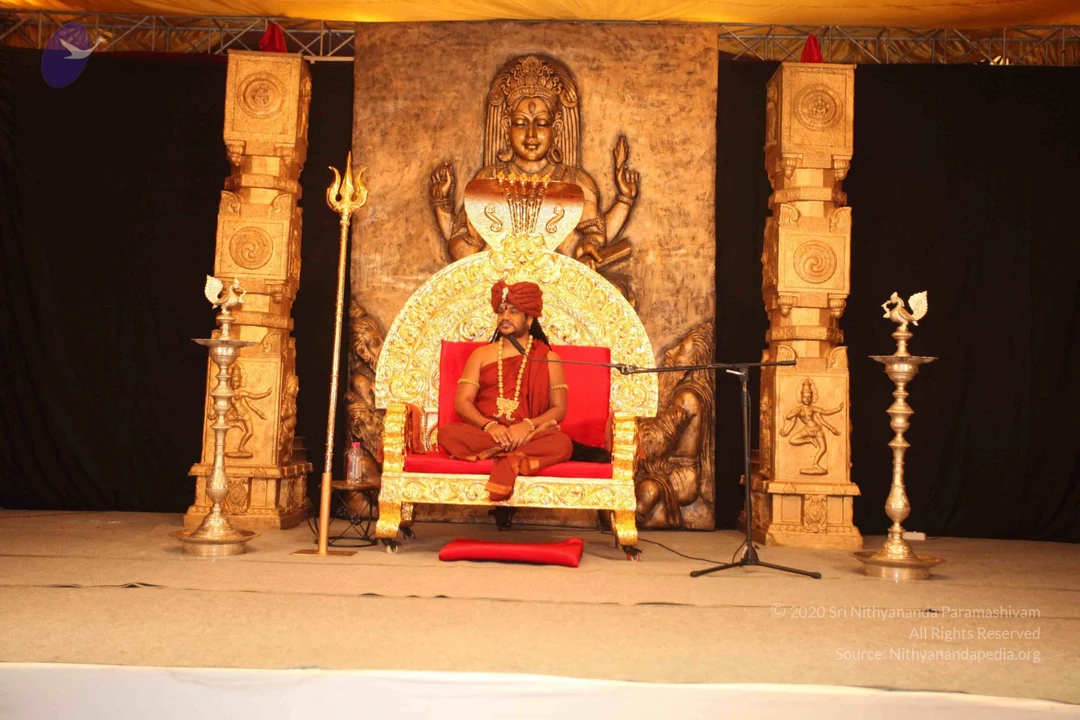
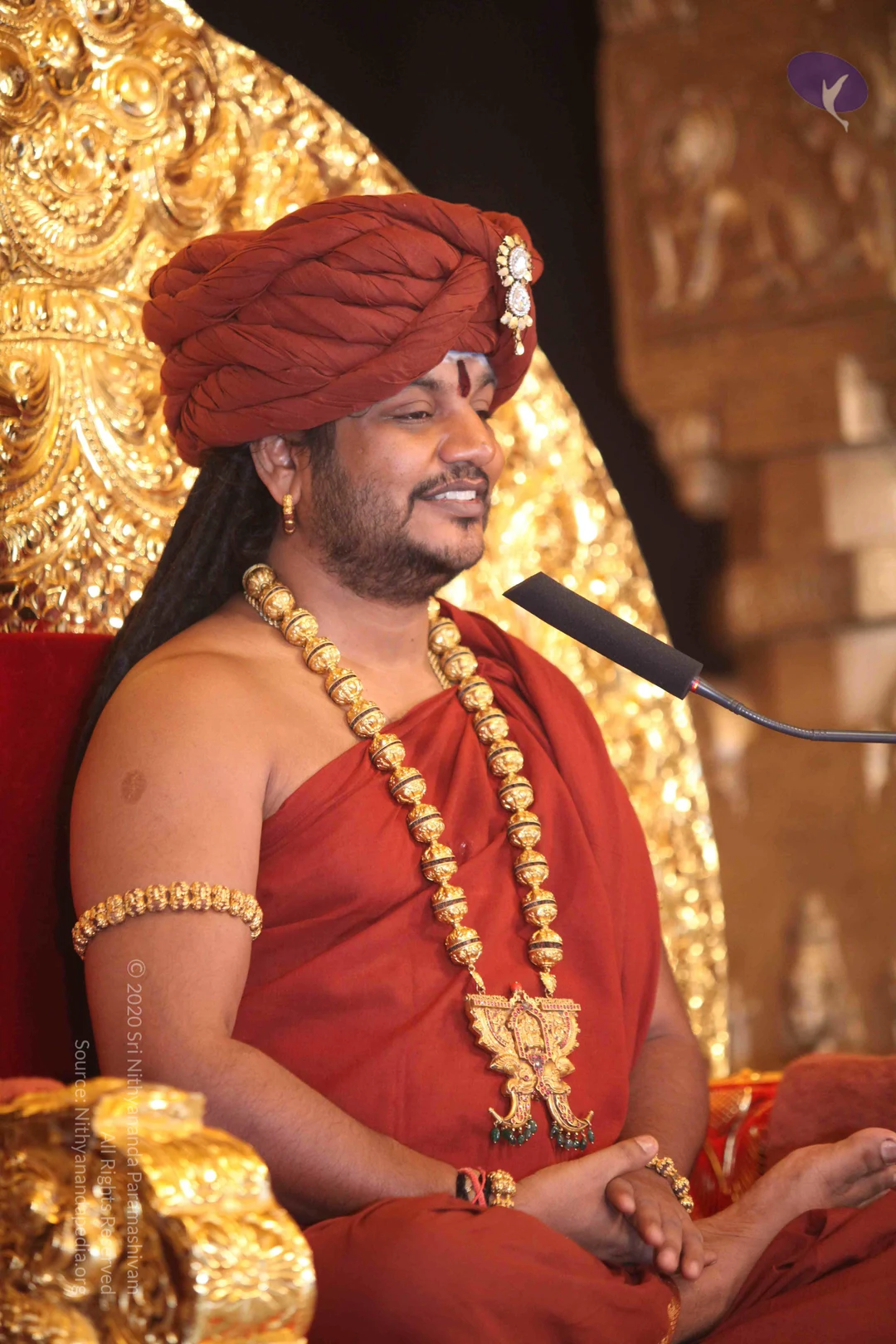
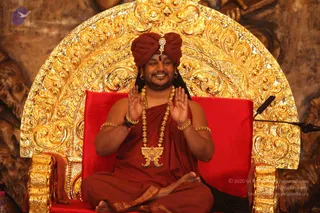
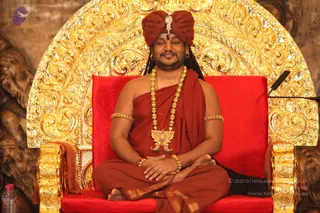
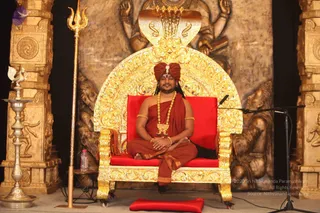
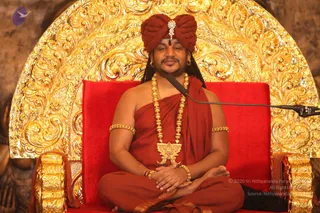
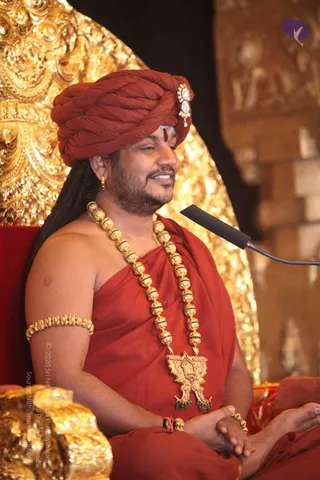
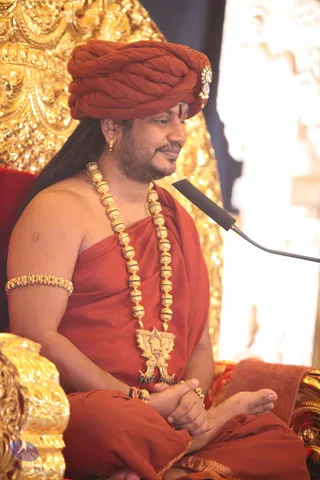
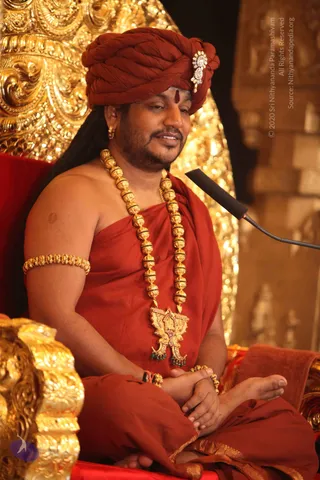
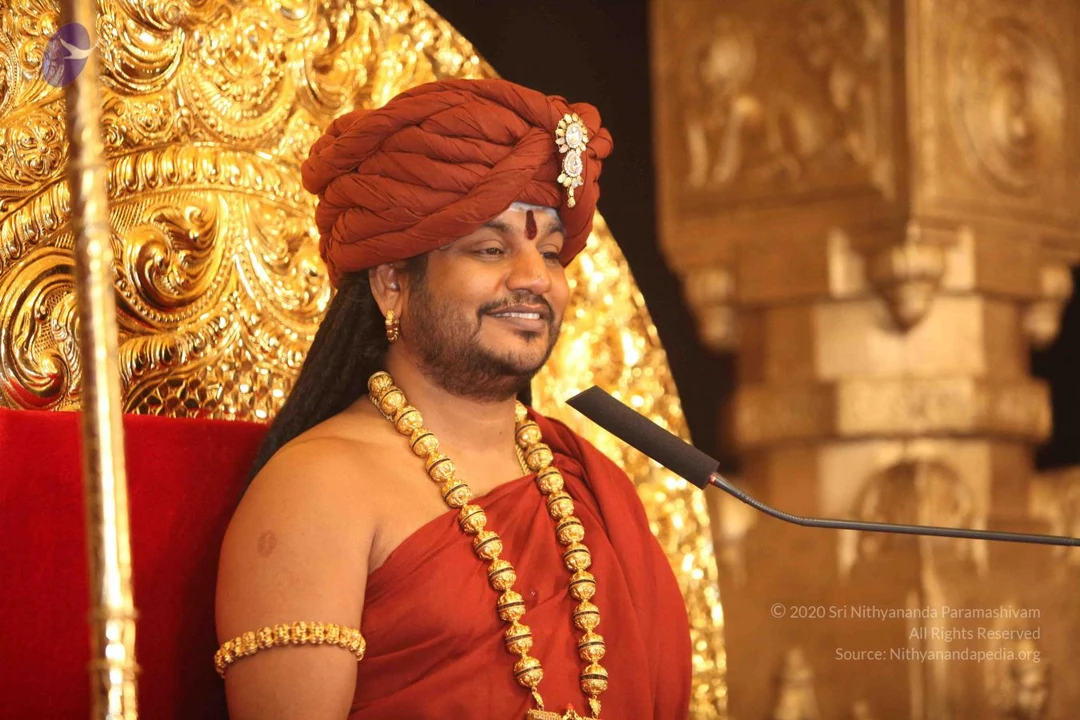
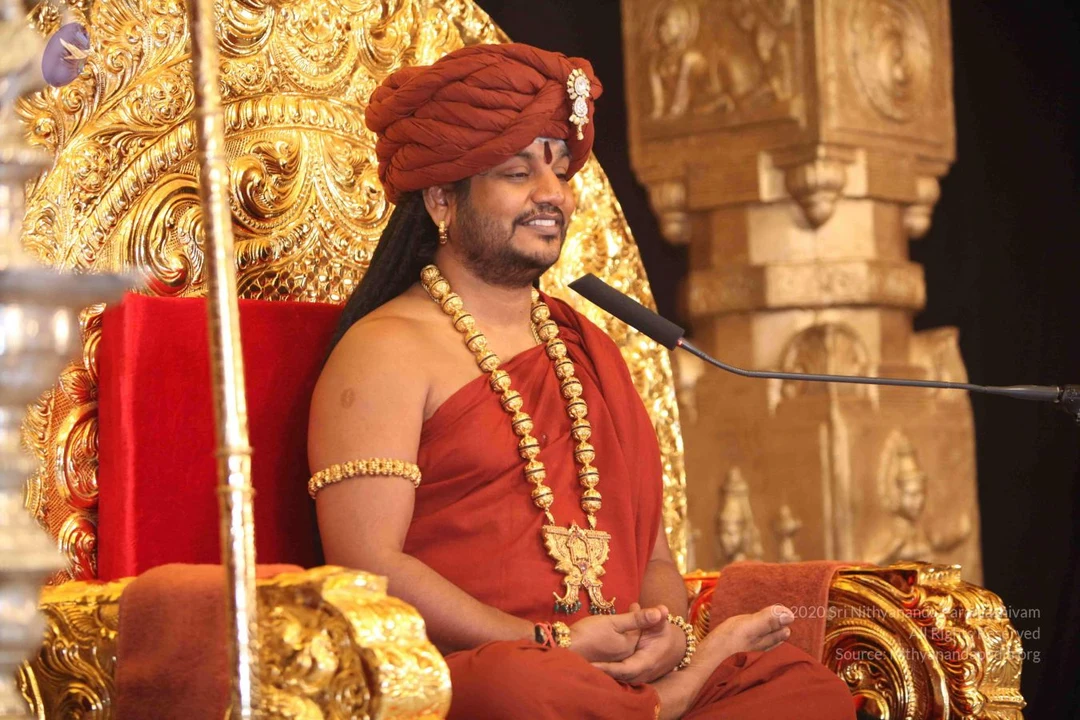
A man seated cross-legged on a red cushioned throne with an ornate gold carved back, bare feet visible, raising both palms in a blessing gesture while smiling. He wears a dark red turban with a jewelled ornament, a dark red saffron-toned robe with gold border, a large gold pendant necklace, multiple gold bangles, and a rudraksha-style mala with dark beads. A microphone stands at his right on the stage. The background shows carved golden and brown relief panels.A photograph of a seated man on an ornate gold-and-silver throne with a bright red cushioned seat and armrests. He wears a deep maroon-red turban with a white jewel ornament at the front, a red-orange saffron-toned cloth draped over his shoulder and body, layered gold beaded necklaces with a gold pendant, gold armbands and bangles, and red bracelets. He sits cross-legged with hands resting in his lap and eyes softly closed in a meditative expression. A microphone stand is at the right edge and a plastic water bottle sits at the bottom left. A forehead marking and a purple logo appear at the top left. a person, seated on the throne with distinctive turban, ornate gold necklaces and saffron-orange garments. Setting is a stage-like hall with carved wooden panels behind.A man in saffron-red robes sits cross-legged on an ornate gold throne with a red velvet seat and a gold cobra-hood backrest. He wears a maroon turban, a long beaded gold necklace, gold armbands and bangles, and his hands rest in his lap. A golden trident stands to his left beside a silver oil lamp, a water bottle sits on a small table, and a microphone stand is at right. Behind him is a carved golden temple wall with deity figures and lion reliefs, and a red cushion lies on the floor.A man seated cross-legged on a red velvet cushioned throne in front of an ornate gold repoussé backdrop. He wears a red-orange turban with a jeweled brooch at the front, a red-orange shawl draped over one shoulder, and a long gold bead necklace with a large gold pendant. Gold armlets are on both upper arms, and he has long dark hair falling behind his shoulders and a red mark on his forehead. His hands rest together in his lap and a microphone stand is positioned beside him.A seated man in an ornate gold throne with a red velvet cushion sits cross-legged, hands folded in his lap. He wears a rust-red turban with a jeweled brooch, rust-red dhoti and shawl, a long gold beaded necklace with a large gold pendant, gold armlets, and a red tilak on his forehead. A microphone stand is at his right. Long dark hair hangs behind him and he smiles softly. The golden carved backdrop and red cushion dominate the frame. a person: appearance cues of long hair, crown-like turban, saffron-red ornate clothing and ceremonial gold necklace, seated on a throne during a discourse.A seated man in saffron-orange robes sits cross-legged on an ornate gold throne with a bright red cushion and red backrest. He wears a deep red turban, a rudraksha-style beaded mala with a gold pendant, gold armbands and bangles, and holds his hands together in his lap. A microphone stand is positioned beside him. A gold trident stands to the left, next to a silver oil lamp on a small stand and a water bottle. Behind the throne, a large gilded relief shows a multi-armed deity form and carved figures, flanked by carved stone pillars. A red floor cushion lies in front of the throne. Appearance-based cues of a long-haired figure in saffron robes with a turban and ornate adornments on a throne, matching the presentation of a person, with identity uncertain given the page indicates no a person at this event.

IA-Varanasi-Shivoham

26 photosSource gallery
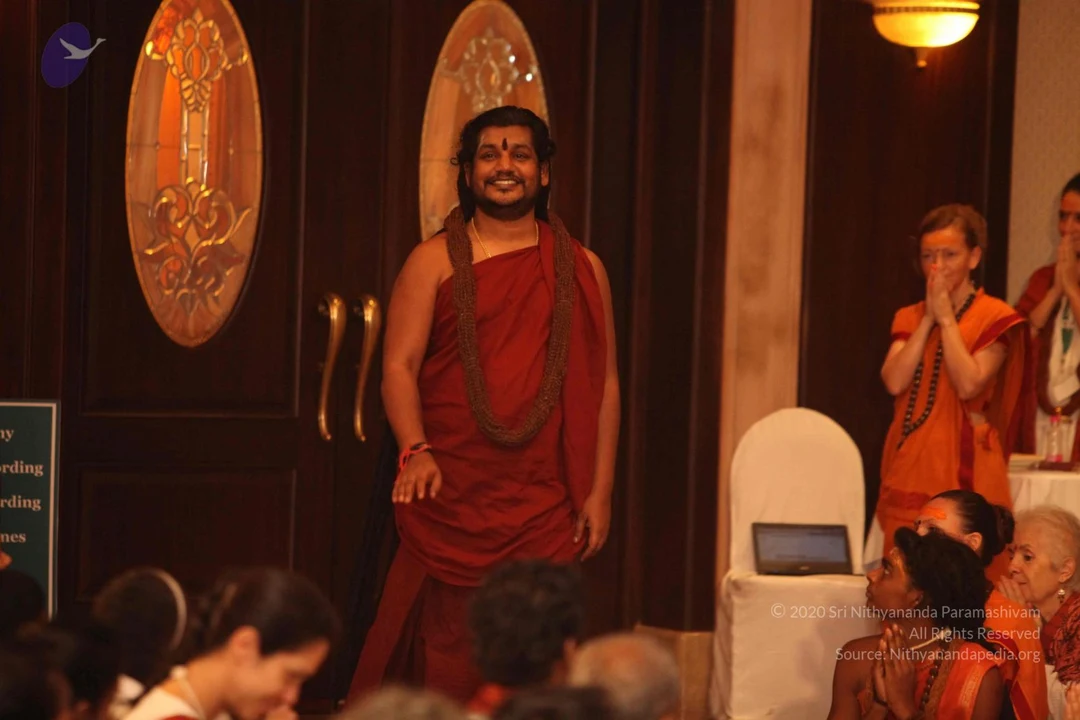
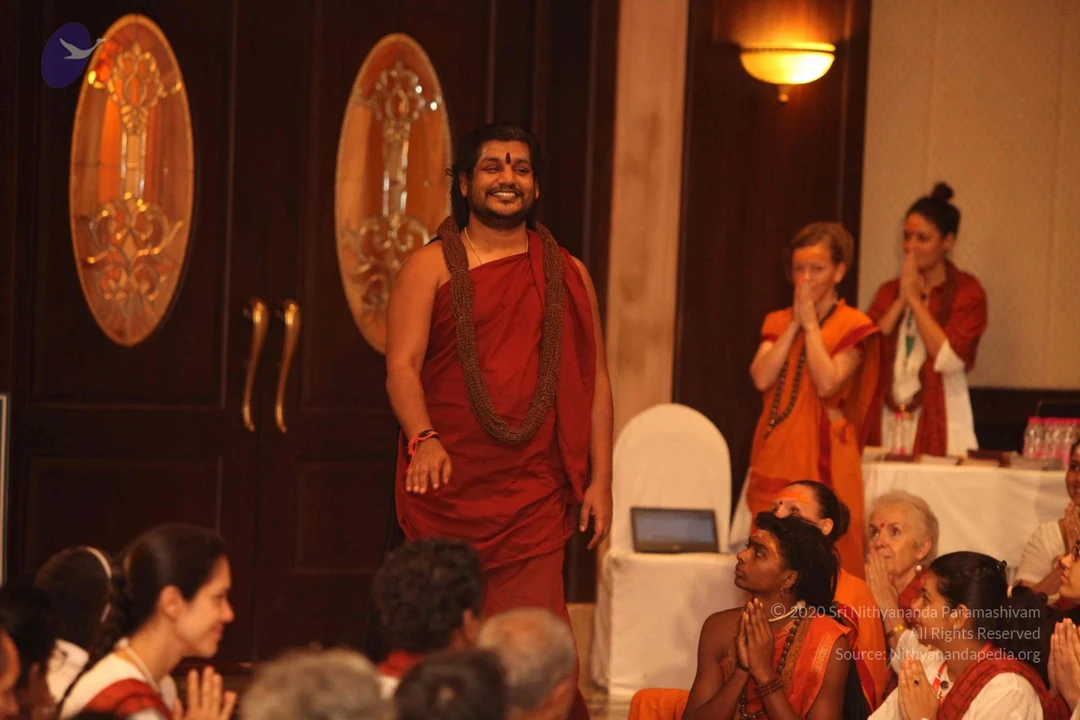
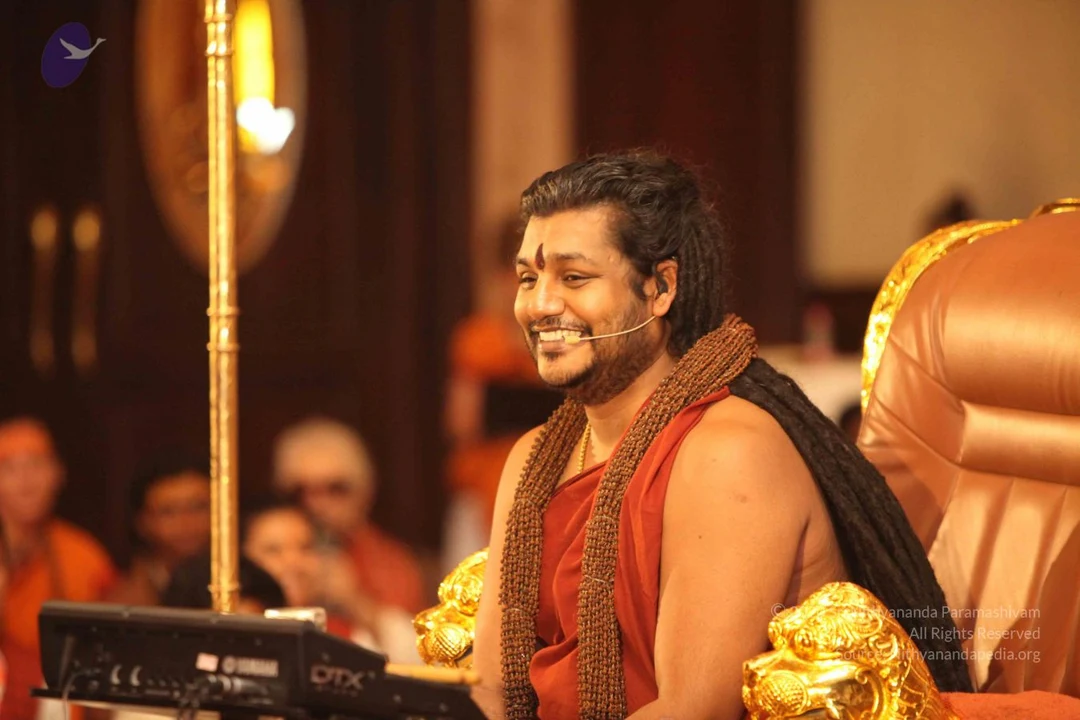
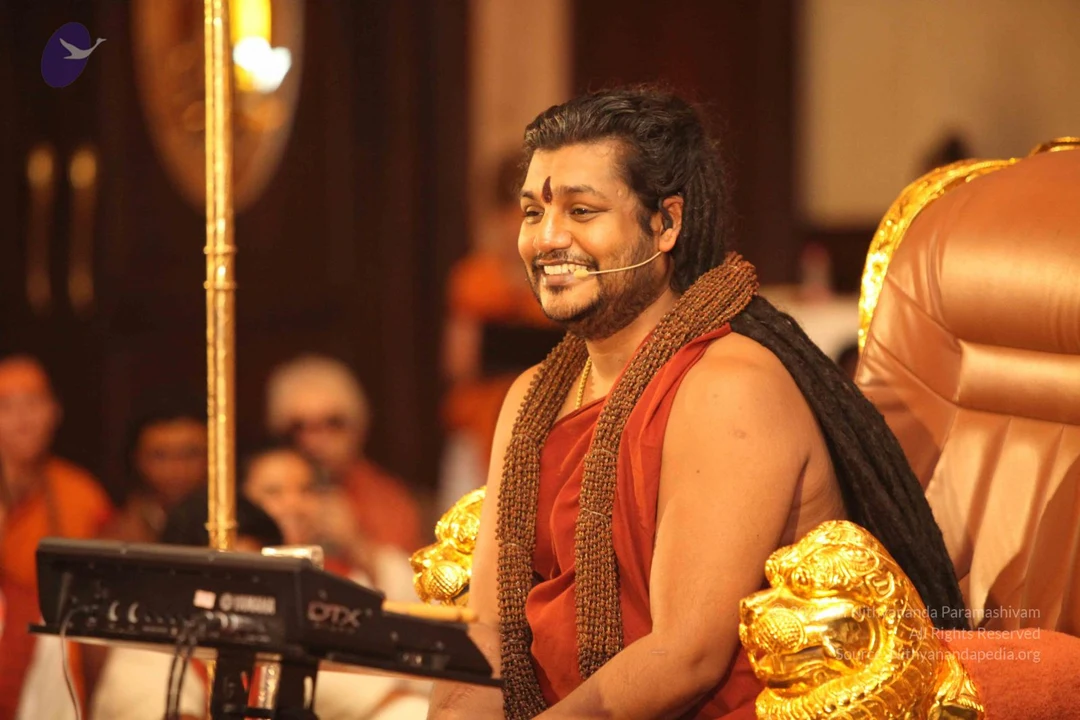
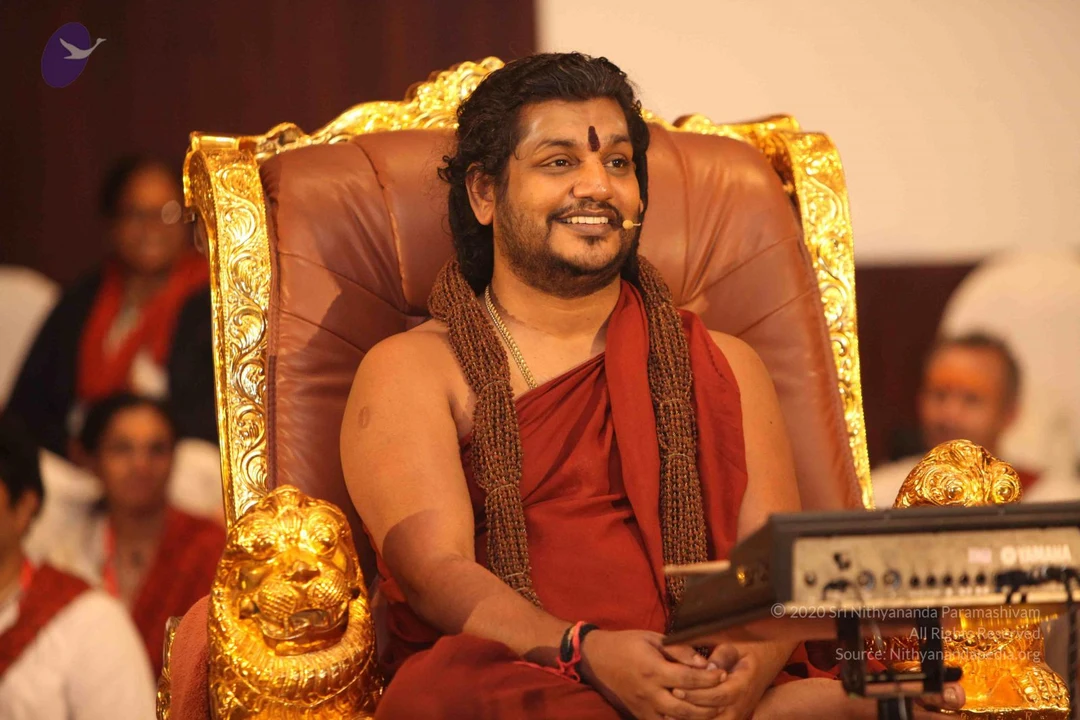
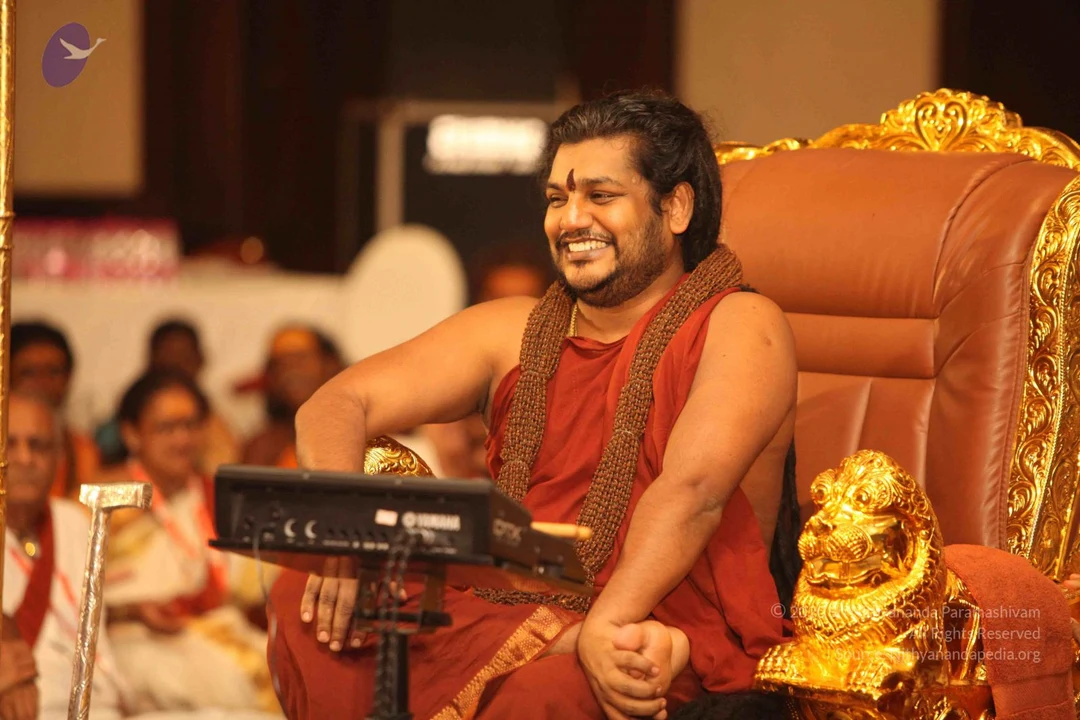
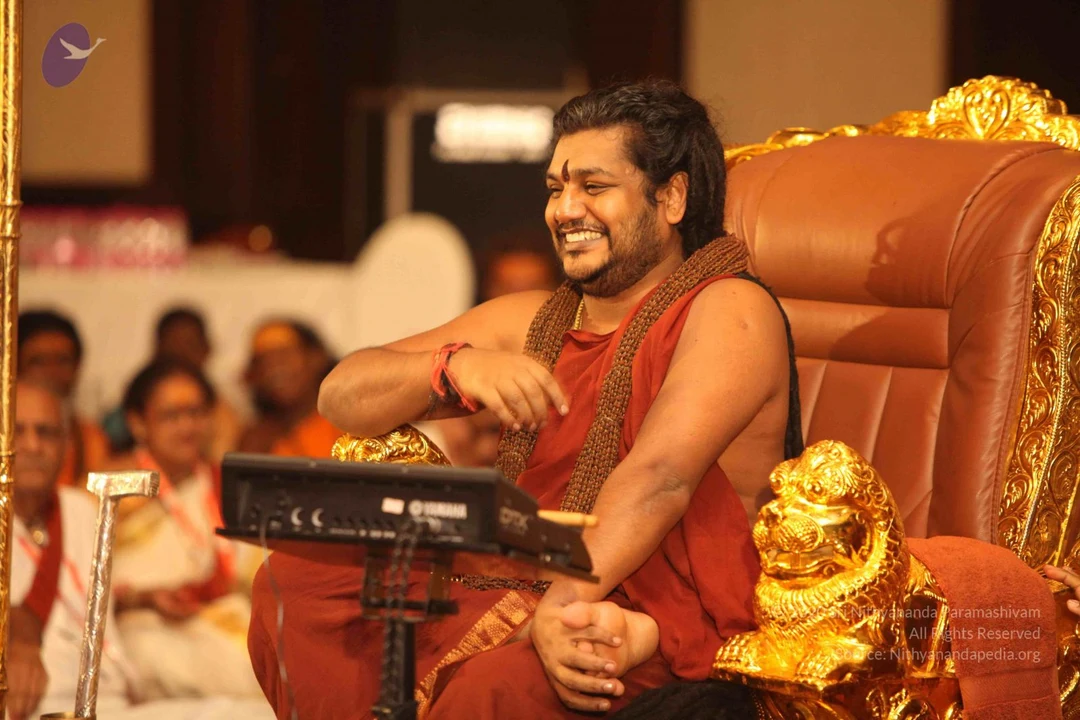
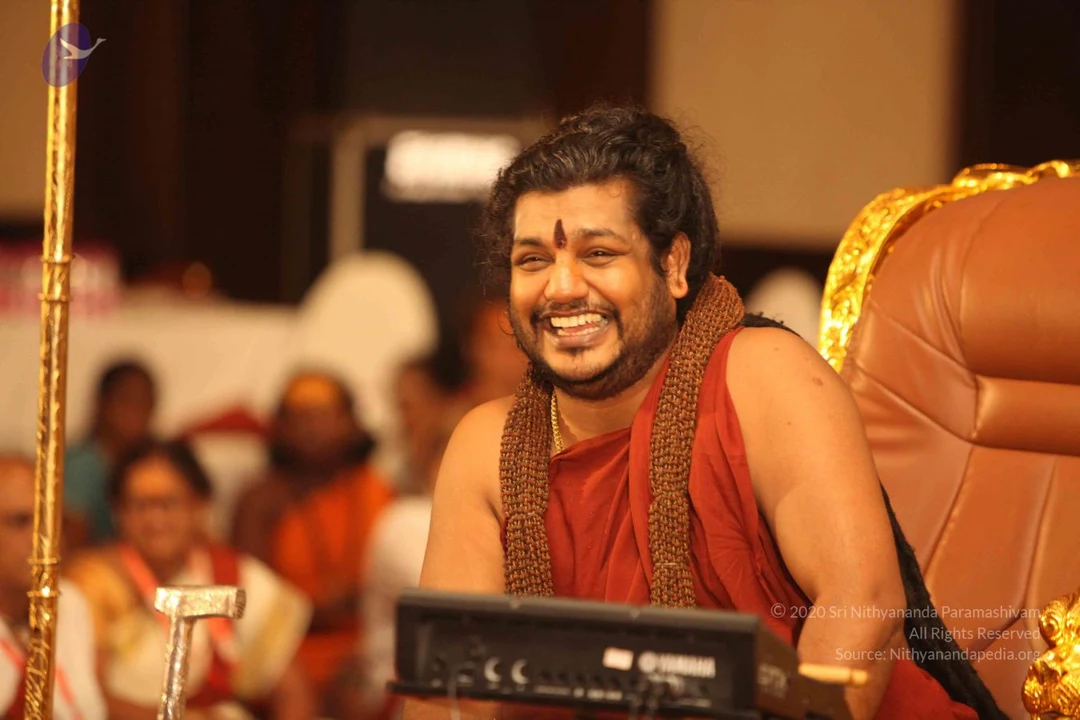
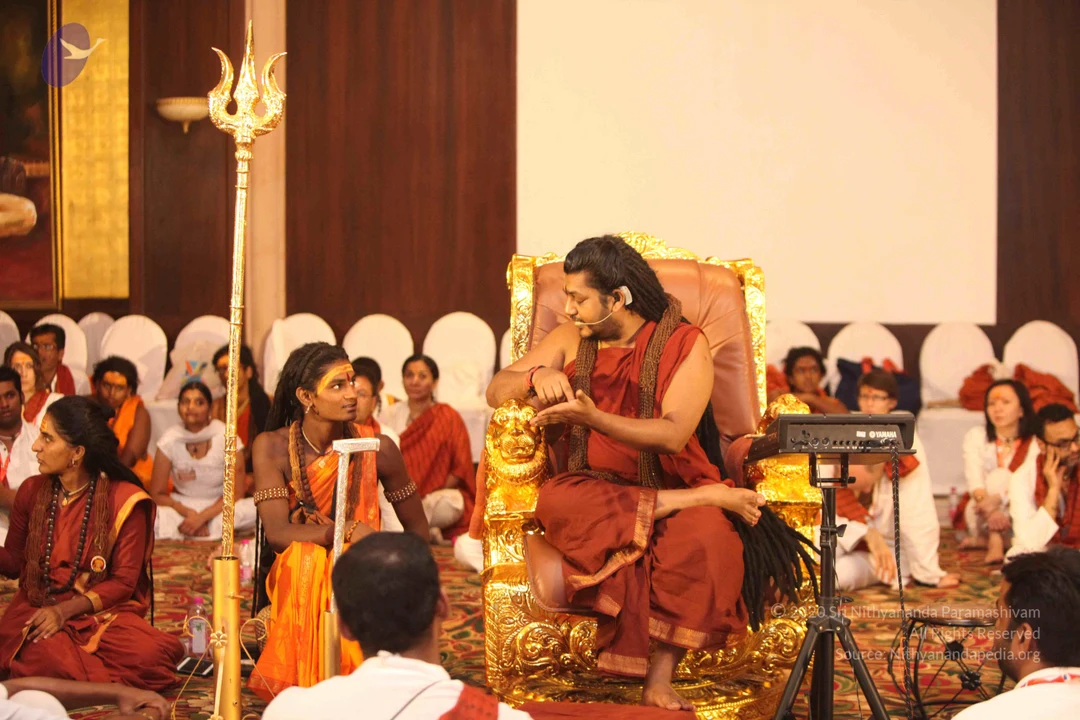
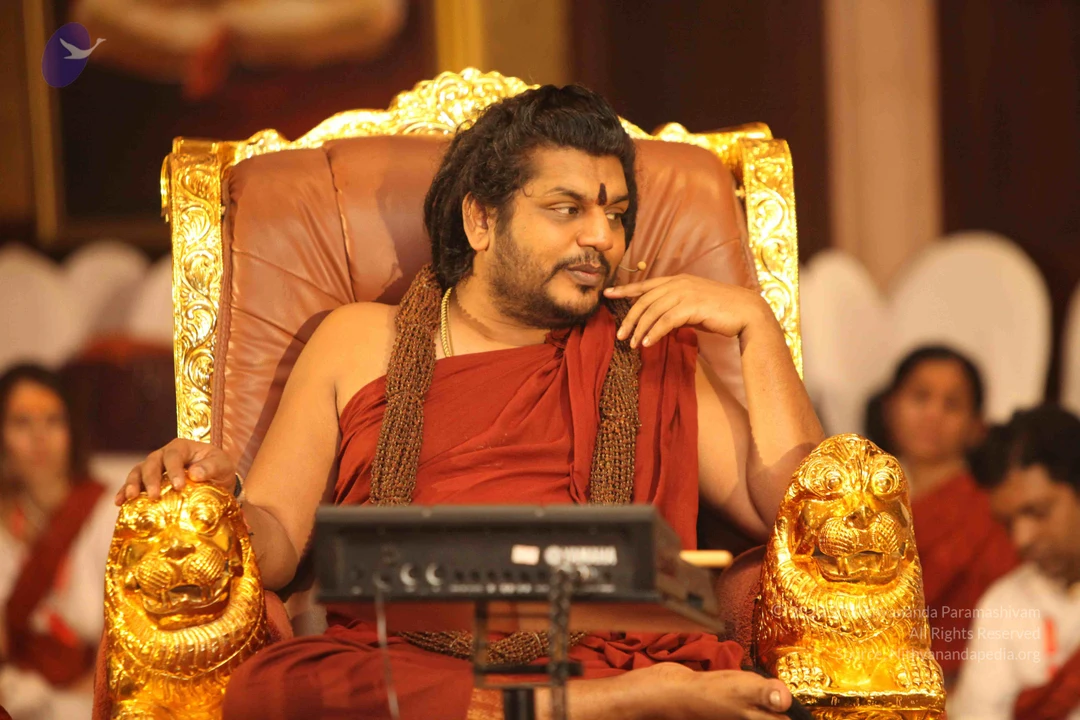
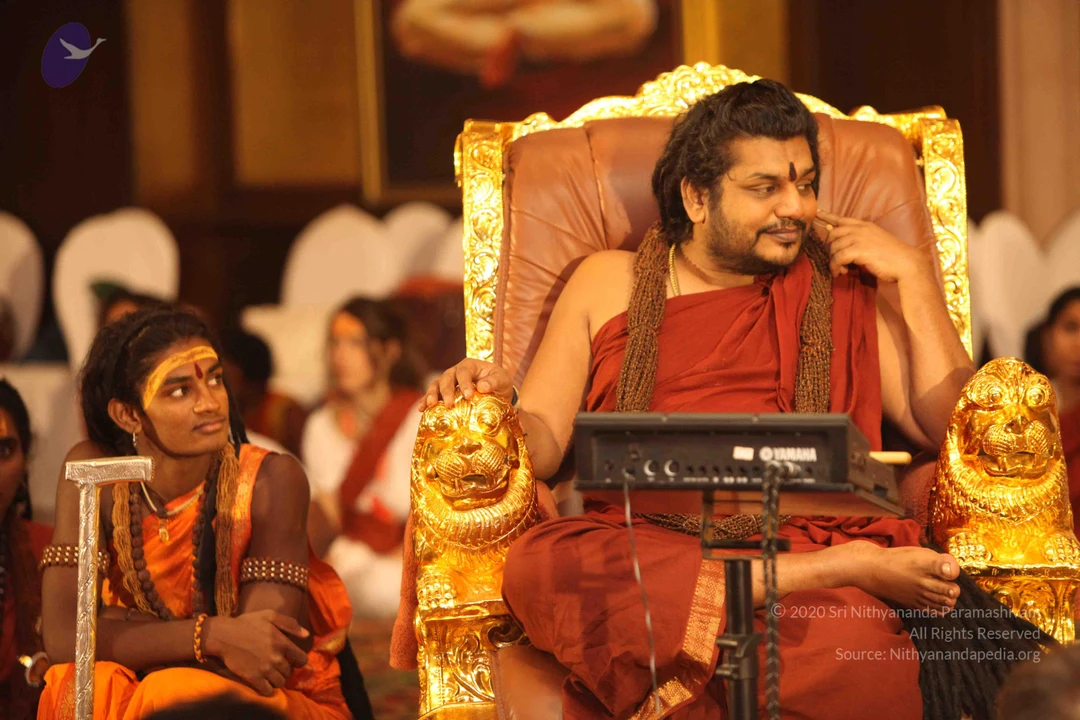
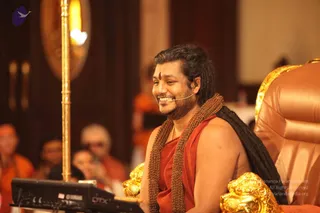
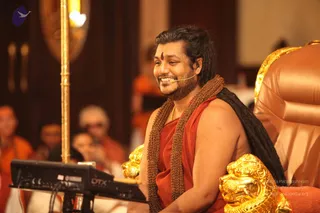
A man in a maroon sannyasi-style robe walks toward the front of a hall with dark wood paneling and two arched stained-glass windows. He wears a long brown-beaded rudraksha mala around his neck and a red bracelet on his wrist, and he smiles while looking to the side. In the foreground, seated devotees with their hands pressed in anjali face him. On the right, a woman in orange robes and beaded necklace stands with palms joined. A laptop sits on a white-covered table, and a wall sign partially reads 'ording'.A man in a red-maroon sannyasi-style robe with a long brown rudraksha mala draped around his neck walks forward smiling in a hotel-style ballroom with dark wood doors and stained-glass oval panels. Several people in orange and saffron clothing sit or stand in the background, one woman in orange with palms pressed together in namaste, and audience members in the foreground are partly visible. A white-covered chair with a laptop sits on the right. A small red tilak is on his forehead and a red wrist thread is tied on his wrist. a person is present; he has long swept-back hair, a rudraksha mala and a maroon-red robe, as in the page's event.A photograph inside an ornate hall with wooden doors and oval gold-framed panels. A man in a red-maroon dhoti-style robe with a bare shoulder, a long wooden-bead mala around his neck, and a red bindi smiles while walking forward. Standing behind him to the right, a woman in an orange top and red shawl presses her palms together in anjali, and another woman in a red shawl and white top also holds her hands in namaste near a white-draped table. Seated devotees in the foreground, several in orange and red garments and some with white or grey hair, fold their hands in greeting. A lamp is mounted on the wall at upper right.A smiling man with long dark swept-back hair and a trimmed beard sits on an ornate golden throne upholstered in brown leather, with gilded lion-head armrests. He wears an orange-red shawl over a bare shoulder and a thick brown rudraksha mala draped across his chest, and holds a small wireless microphone in one hand. Blurred figures in orange and white stand in the background of a large hall with a dark drape, and a keyboard is visible at lower left. a person seated in a throne, with long hair, a rudraksha mala and saffron-orange clothing, giving a discourse.A smiling man with long dark hair worn loose and swept back sits on an ornate golden-and-brown throne-style chair, wearing a headset microphone. He is dressed in a rust-orange wrap over bare shoulders, with long rudraksha-style mala beads draped across his chest and a red tilak on his forehead, and a gold chain at his neck. Beside him is a black Yamaha DTX electronic drum pad unit, and a tall gold pole stands in the foreground. Blurred figures in orange and saffron clothing sit in the background of a warmly lit hall.A photograph of a smiling man with long dark dreadlocked hair and a short beard, wearing a red-orange shawl over bare shoulders and a long double rudraksha mala. A small red tilak marks his forehead and a headset microphone is at his mouth. He sits on an ornate brown leather throne with gold lion-head armrests, beside a black Yamaha keyboard on a stand and a gold pillar. Blurred figures in orange and white clothing sit behind him in a warmly lit hall. a person: long dreadlocked hair, rudraksha mala and orange-red shawl, seated on a throne in a discourse setting.

FB-Photos-of-the-Day

1 photoSource gallery
A smiling man with long dark hair and a red-brown vibhuti-style mark on his forehead sits on a red cushioned throne in front of an ornate gold-embossed backdrop. He wears a rust-orange saffron wrap over his shoulders and a long rudraksha mala with large gold bead ornaments, plus gold bangles on his arms and wrists. A microphone stand is visible at the right edge.

01-MORNING-SATSANG

3 photosSource gallery
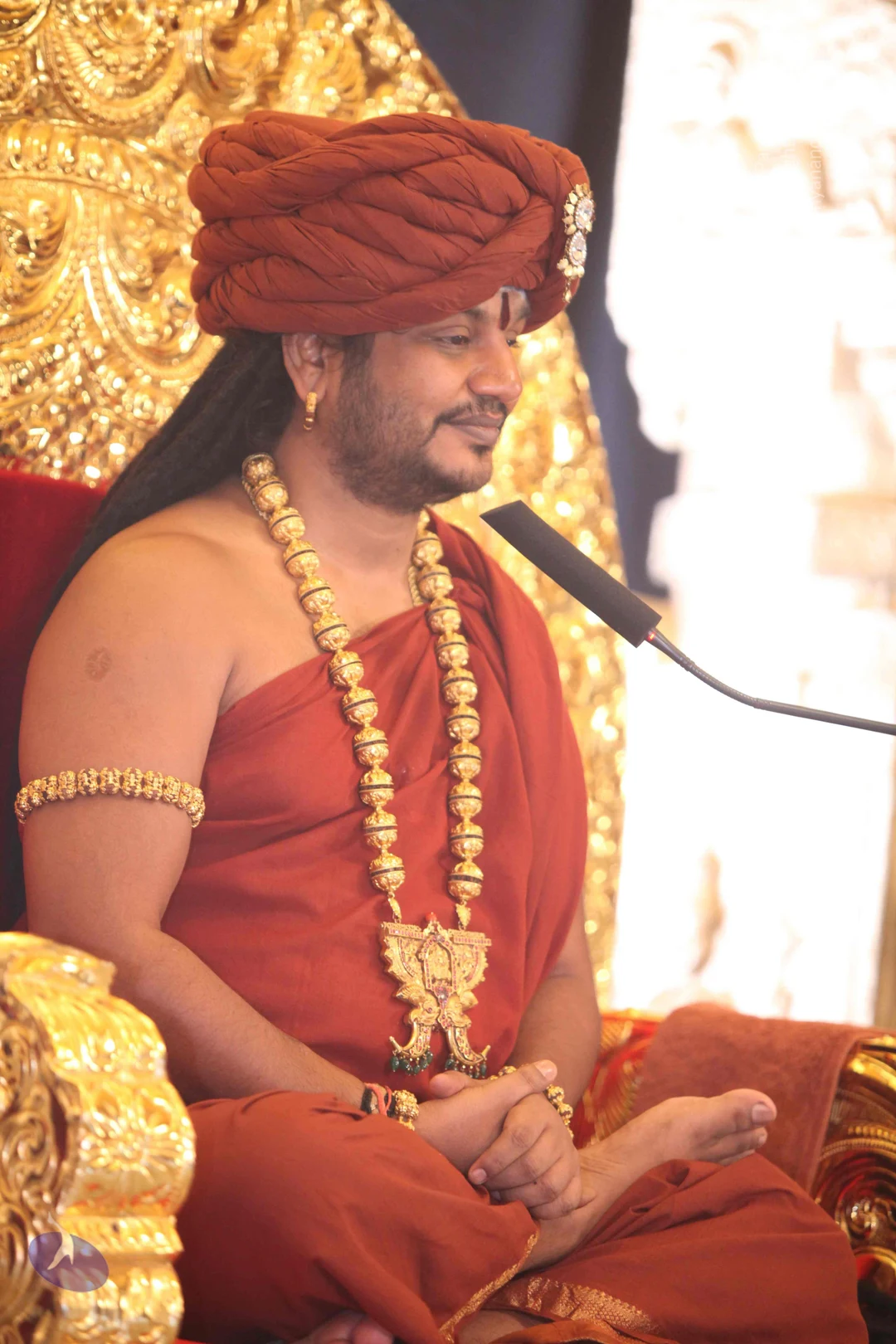
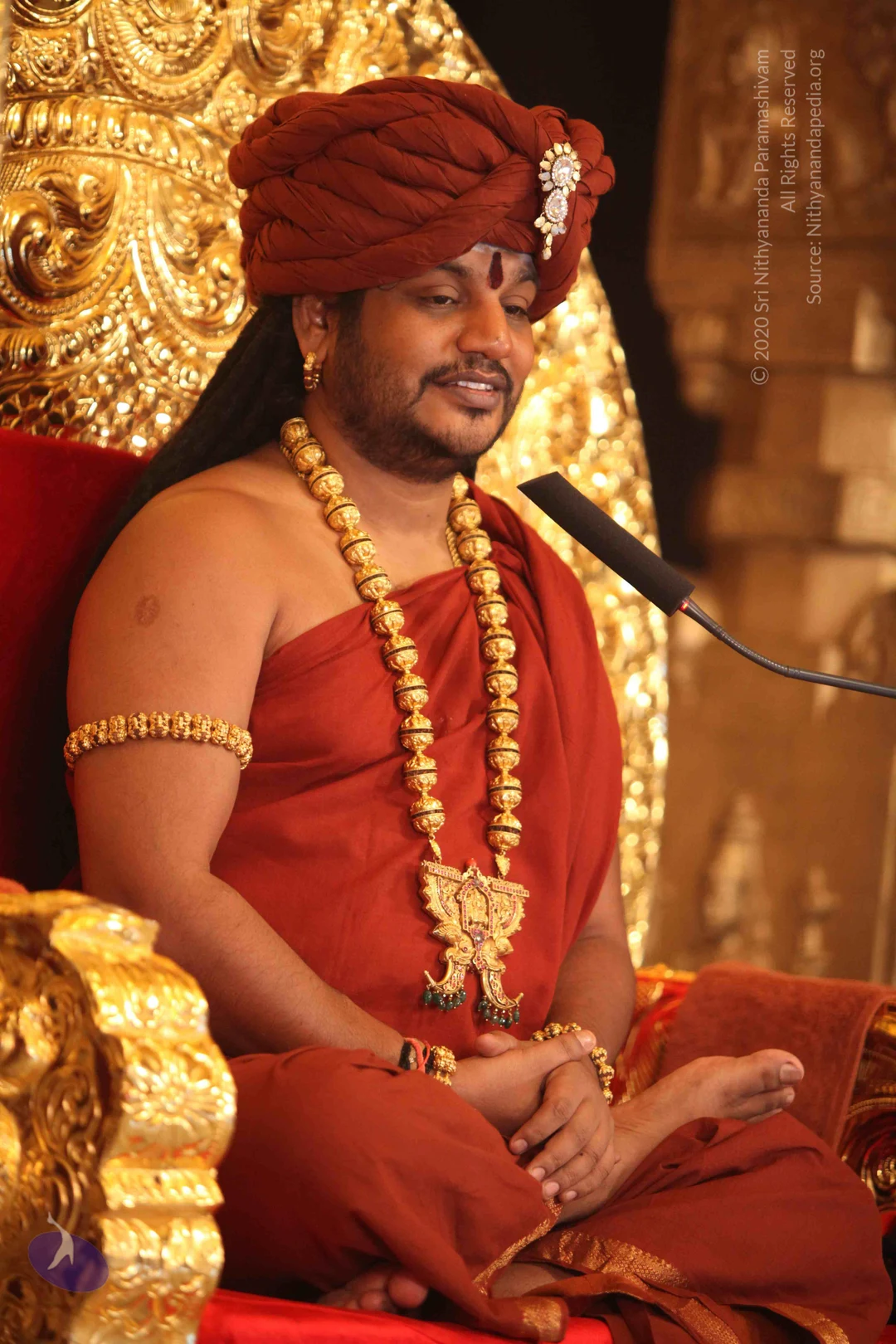
A seated man in a deep red turban with a jewelled brooch and a red vibhuti line on his forehead sits on an ornate gold-embossed throne, hands folded in his lap. He wears a red-orange shawl draped over bare shoulders, a long gold bead necklace with a gold elephant-head pendant set with green stones, a gold armlet, and a long-haired braid falling at his back. A black microphone stand is in front of him, and a carved stone wall stands behind. Appearance-based identification is uncertain; no printed name is visible in the scene.A seated man in a red-orange turban with a jewelled brooch and a red-orange shawl draped over his shoulder, wearing a heavy gold necklace with dark beads and a pendant, a gold armlet and gold bangles. He sits cross-legged on an ornate gold throne in front of a black microphone, eyes lowered in a calm expression with a vertical tilak on his forehead. a person: long hair and a crown-like turban, saffron clothing and ornate gold adornments, seated in a discourse setting.A seated man in a rust-red turban with a jewelled brooch and a red tilak on his forehead sits on a red cushioned seat before an ornate gold-embossed backdrop. He wears a red shawl draped over one shoulder, a long double strand of gold beaded mala with a gold pendant, a gold armlet and gold bangles, and holds his hands clasped in his lap while speaking into a microphone on a stand. Carved stone panels appear at the right edge. Appearance-based cues are a turban, red robes and gold adornments, consistent with a person in a discourse setting, though the page does not state he was present at this event.
02-SHIVOHAM-PROCESS

13 photosSource gallery
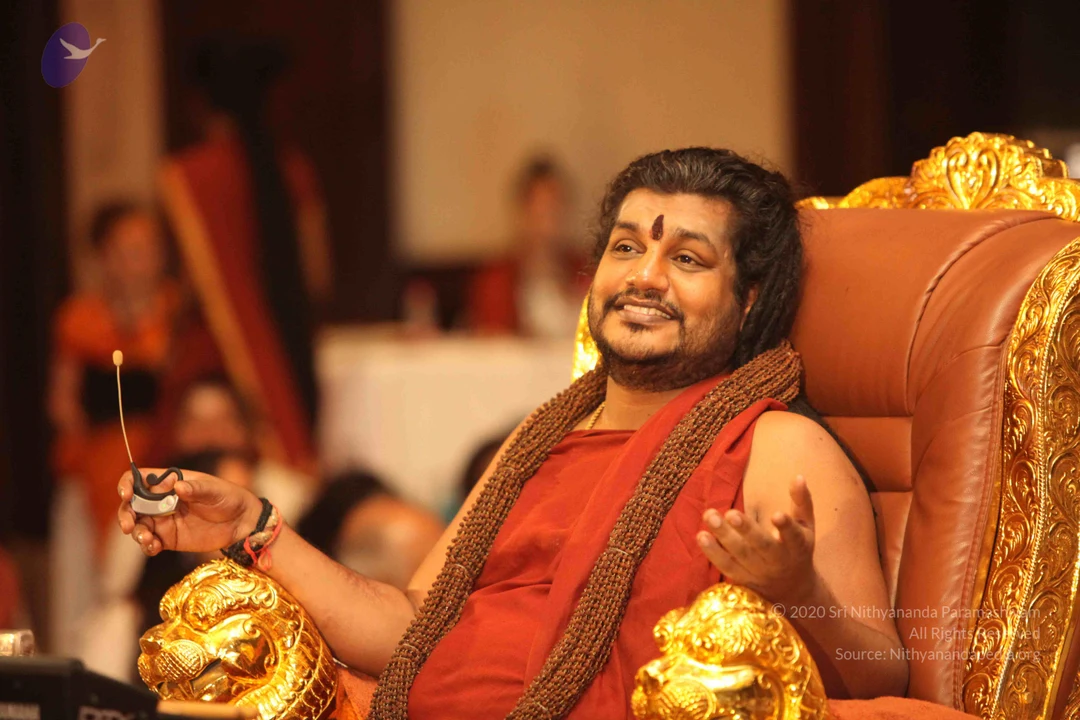
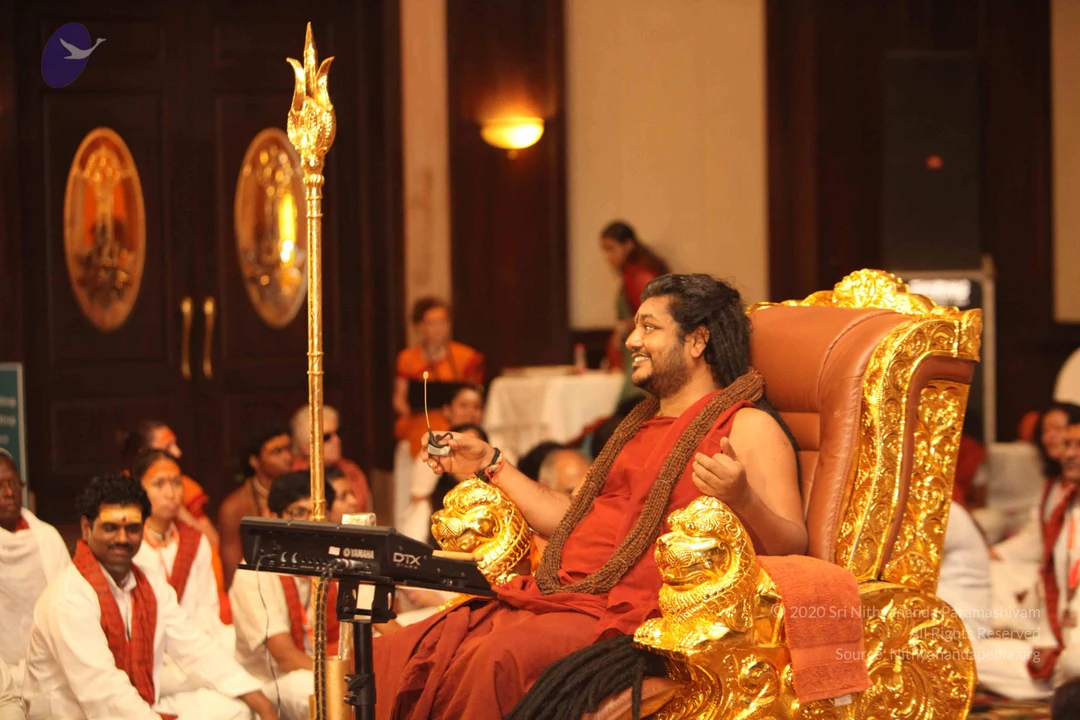
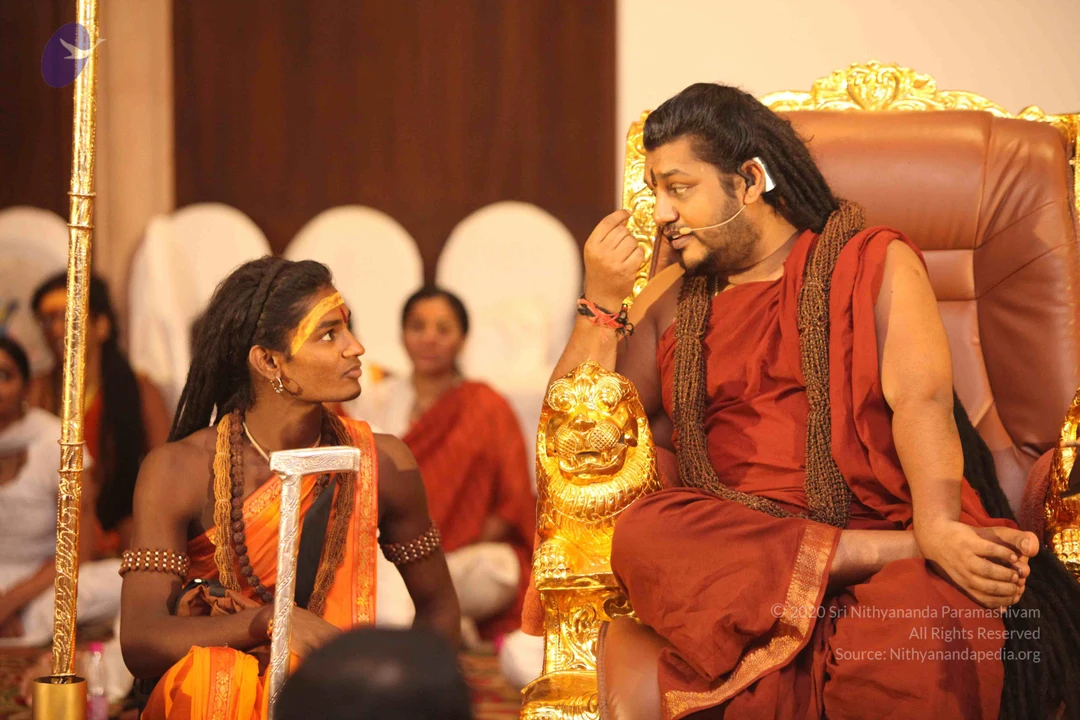
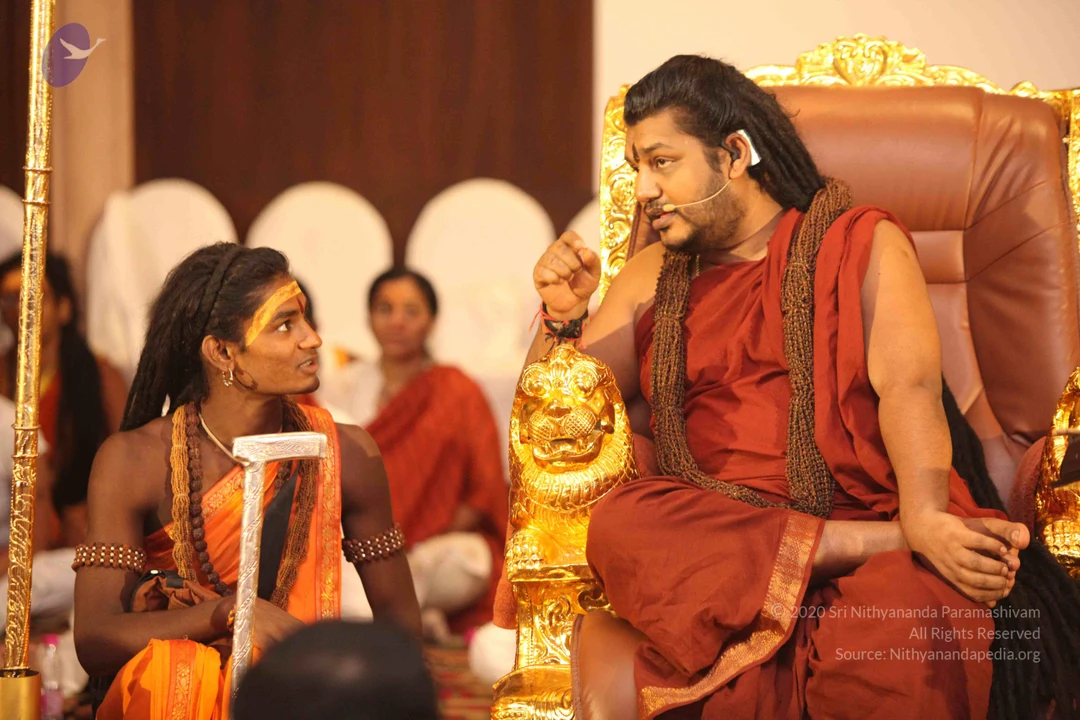
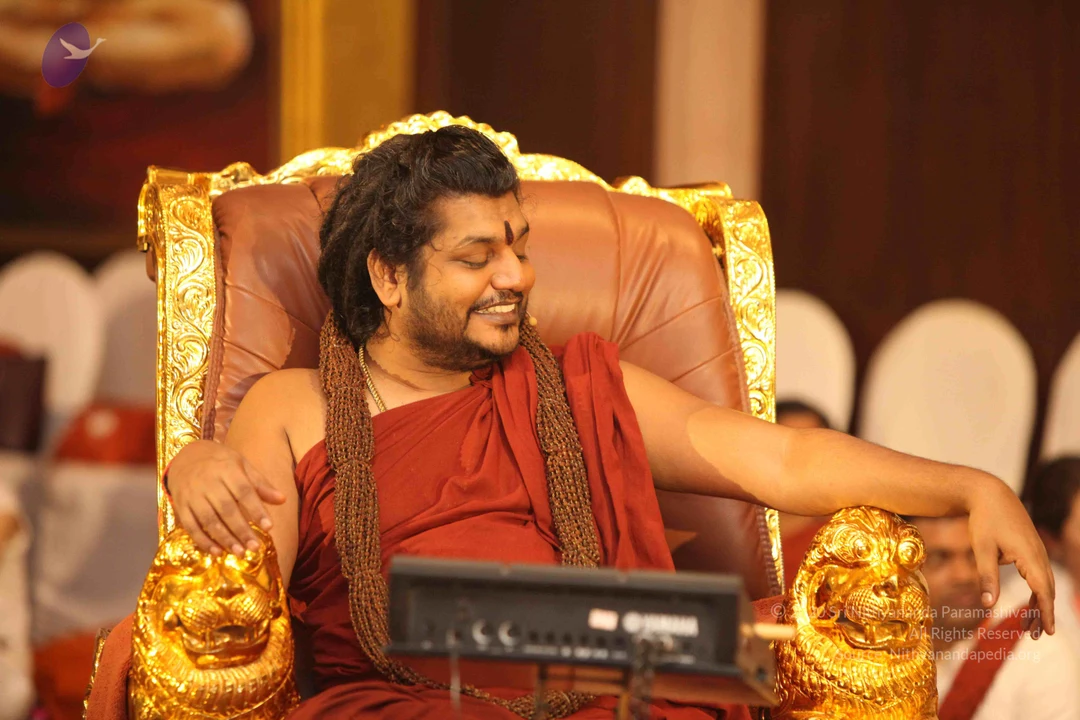
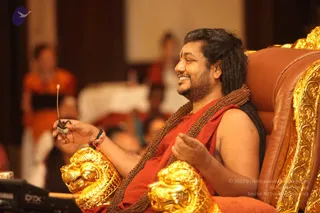
A man seated on an ornate brown leather throne with gold-carved lion armrests, smiling and gesturing with his open right hand while holding a small wireless microphone in his left hand. He wears a red-orange garment, a thick rudraksha mala draped across his shoulders, and a red tilak on his forehead; his dark hair falls past his shoulders. Behind him, blurred figures in orange and white stand near a white-draped table. a person: the appearance cues of long swept-back hair, rudraksha mala, saffron-red clothing and a throne are present, though the image is not conclusive.A man with long swept-back hair and a full beard sits on an ornate gold-and-brown leather throne with carved lion arms, smiling while holding a small object between his fingers. He wears a red-orange robe, a thick rudraksha mala around his neck and a red towel draped over the chair. Beside him stands a tall golden trident-topped staff, and a Yamaha DTX electronic drum pad sits on a stand at his left. Behind him, people in white and orange-red clothes, some wearing red shawls, sit in a hall with gold-framed oval panels and wall sconces. a person: the seated figure shows long swept-back hair, a rudraksha mala and saffron-red clothing, while the throne suggests an honoured position; the cues are sufficient for an in-person candidate. The image carries aA man with shoulder-length dark hair, eyes closed and smiling, sits on an ornate golden-armed brown leather throne. He wears a saffron-red robe with a long brown rudraksha mala draped around his neck and a thin gold chain, a red-and-gold tilak on his forehead, and holds a small incense stick in his raised right hand while his left hand rests open on the armrest. A golden lion-head armrest carving is in the foreground. Behind him, blurred devotees in red and white clothing sit on the stage, and a black microphone stand is visible at lower right. The man appears to be a person, based on the long swept hair, saffron robe, rudraksha mala and ceremonial gold necklace, and is seated in a satsang setting.A smiling man with long dark hair and a beard sits on an ornate gold-and-brown throne with carved lion-head arms. He wears a red-orange unstitched robe draped over bare shoulders, a long rudraksha mala around his neck, and a red bindi on his forehead. He holds a thin wooden stick in one raised hand and gestures with the other. A Yamaha audio mixing console sits at the right edge, and seated attendees in white and red clothing are blurred in the background at a satsang-style gathering.A smiling man with shoulder-length dark hair and a short beard sits on an ornate golden throne with brown leather upholstery and carved lion-head armrests. He wears a red-orange unstitched cloth, a long dark rudraksha mala draped over his shoulders, a thin gold chain, and a dark tilak on his forehead. He holds a thin incense stick in his left hand and raises his right hand while looking to the side. Behind him, a woman in a dark top with a red shawl sits among seated attendees, and a microphone stand is visible at the lower right. The scene appears to be an indoor satsang or discourse. Appearance-based a person seated on the throne, with the qualifying cues of rudraksha mala, saffron-red clothing and gold chain.A smiling man with shoulder-length dark hair, a beard and a red vermilion dot on his forehead sits on an ornate golden throne with a brown leather seat and carved golden lion-head armrests. He wears a red-orange robe draped over his shoulders and a long brown rudraksha mala, with a thin gold chain at his neck. He raises one hand in an open gesture while holding a slender white stick in the other. Behind him, seated devotees in red and white clothing sit in the audience, and a black electronic device is visible at the lower right. The setting appears to be a discourse hall with warm lighting.
03-SHIVOHAM-MANIFESTATION-INITIATION
20 photosSource gallery
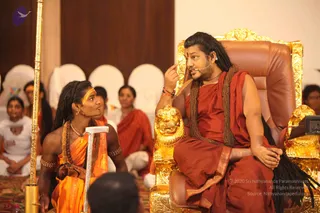
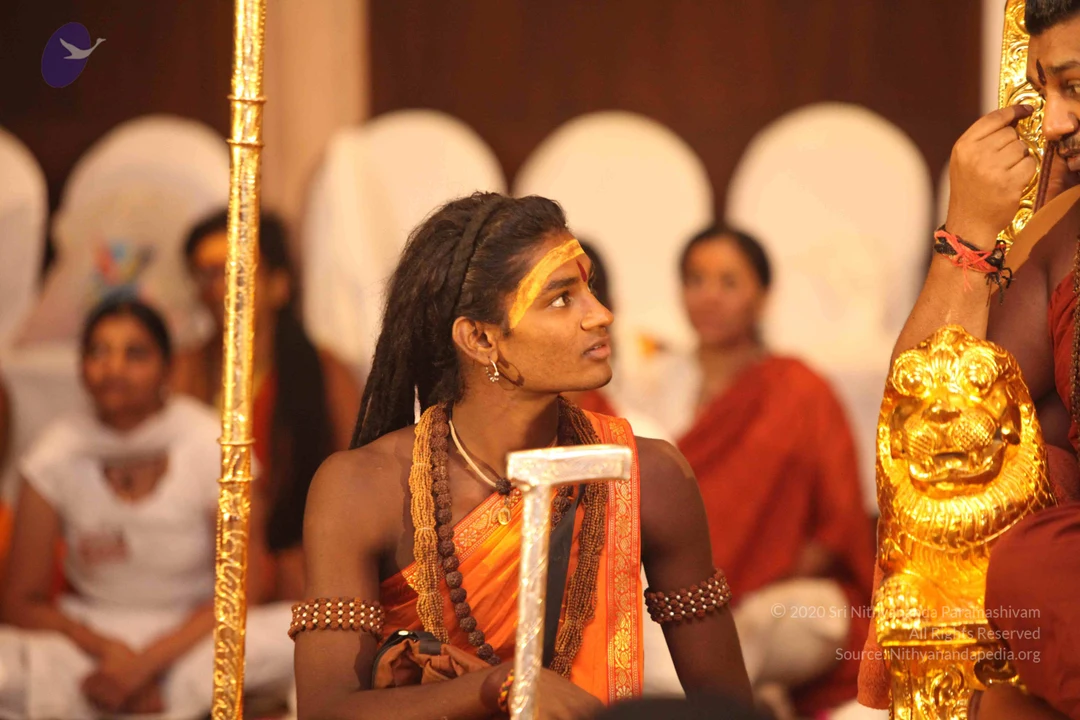
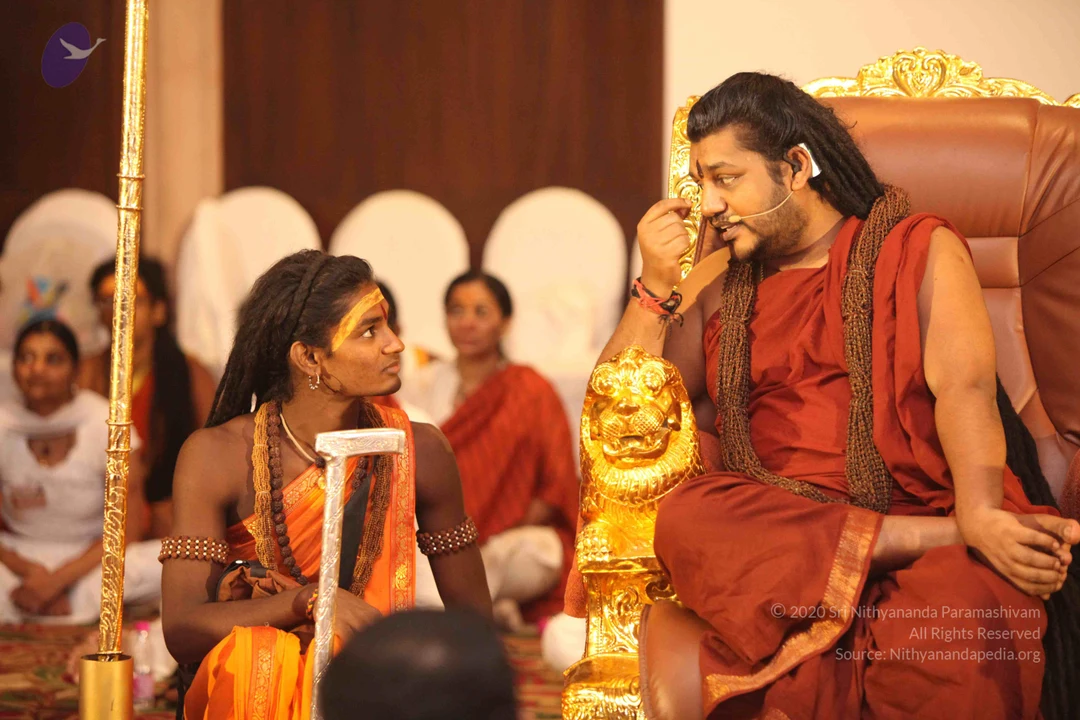
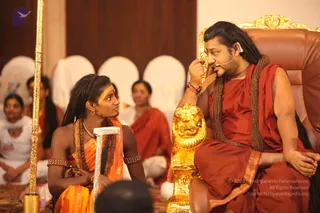
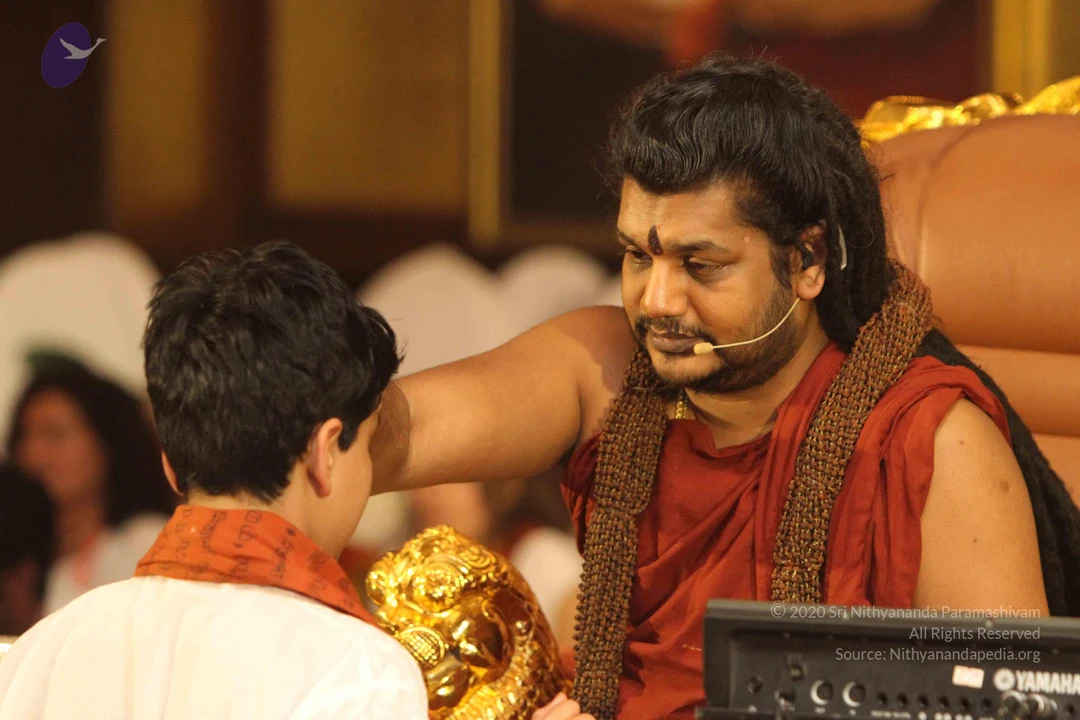
A photograph of a seated man in a brown leather chair wearing a red-orange sleeveless garment, a long dark rudraksha-style bead necklace across his chest, a red tilak on his forehead, a headset microphone and long dark hair swept back. He reaches toward a young boy in white clothes with an orange-red scarf printed with text, who holds a golden ornate object. A Yamaha mixing console is in the foreground, with blurred audience members behind. Appearance-based candidate: a person, in person, given the seated central role and rudraksha malas with red garment cues.A photograph of a seated man in a red-maroon robe on a gold-and-brown throne with a carved gold lion armrest, with a small headset microphone and long dark hair, raising one hand to his ear as he looks toward a kneeling attendant. The attendant wears an orange-saffron garment, rudraksha malas, bangles and orange tilak, and kneels beside a tall gold staff and a silver-topped rod. Seated devotees in white and red-orange clothes sit in the background before white chairs. a person: the seated man has long swept-back hair, a rudraksha mala and a distinctive ceremonial throne setting, and is presented as the central figure of a discourse.