Skip to content
Saturday

9 July 2016

Natural Principles of Masculine & Feminine Physiology

Dated photos
224
Source pages
1
Media
7
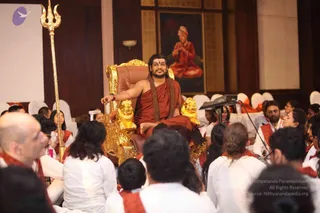
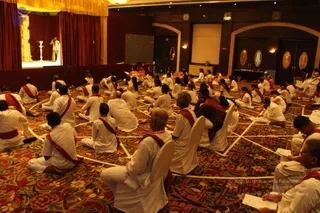
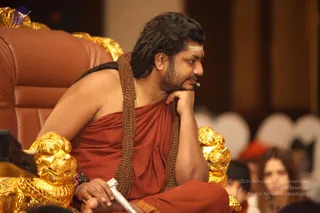
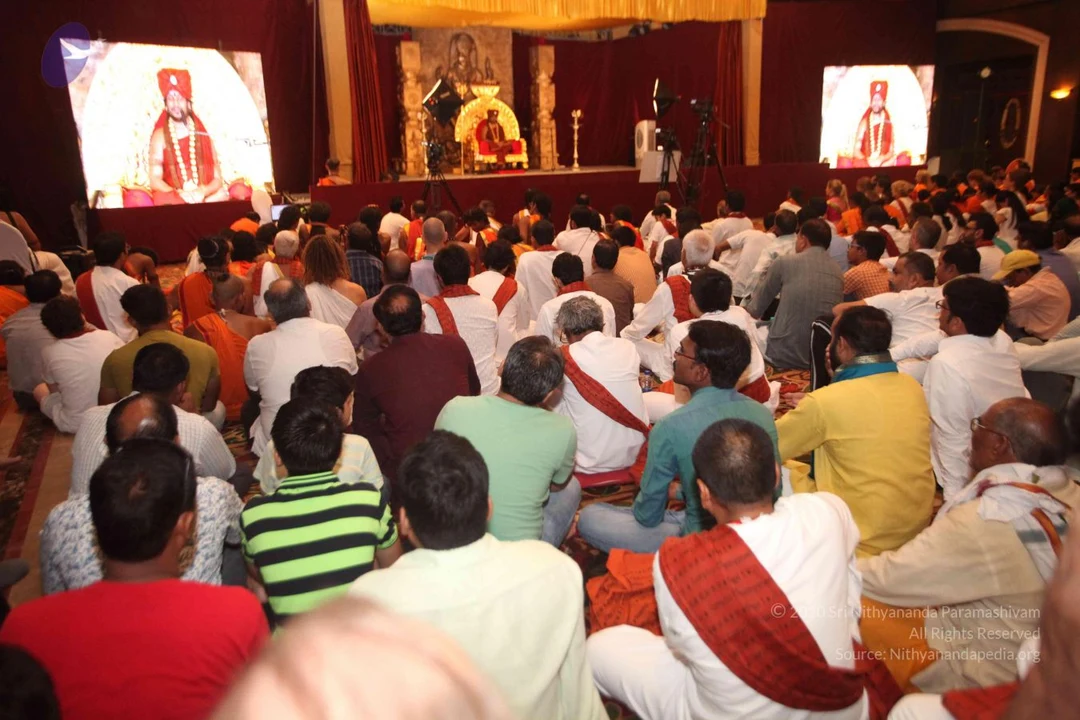
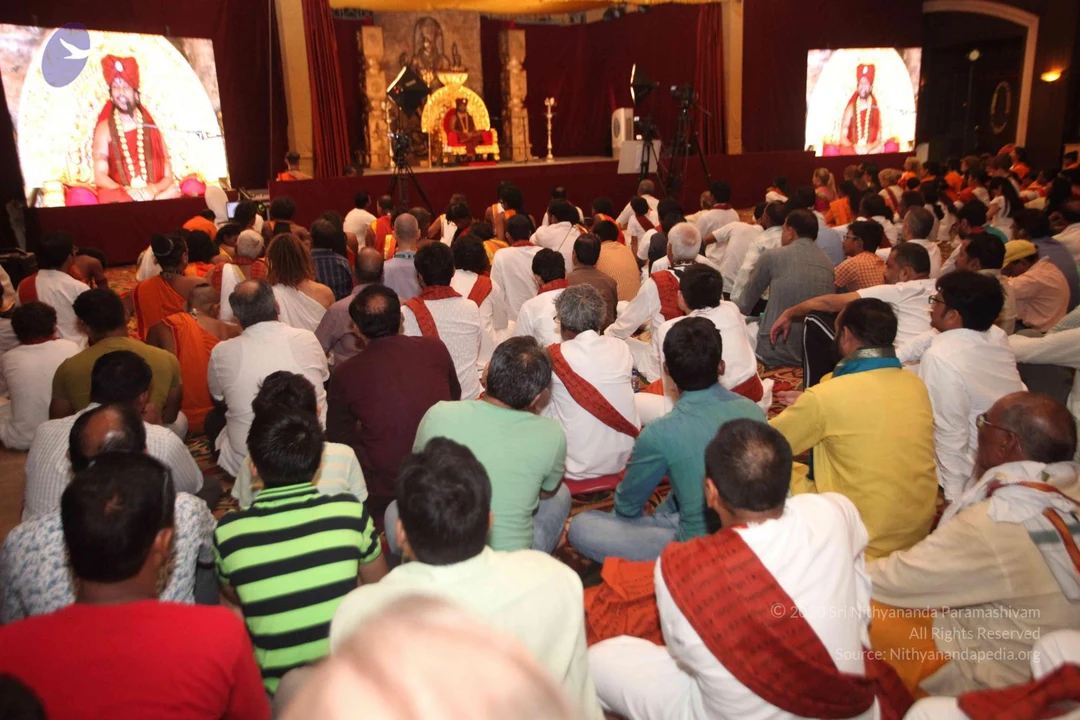
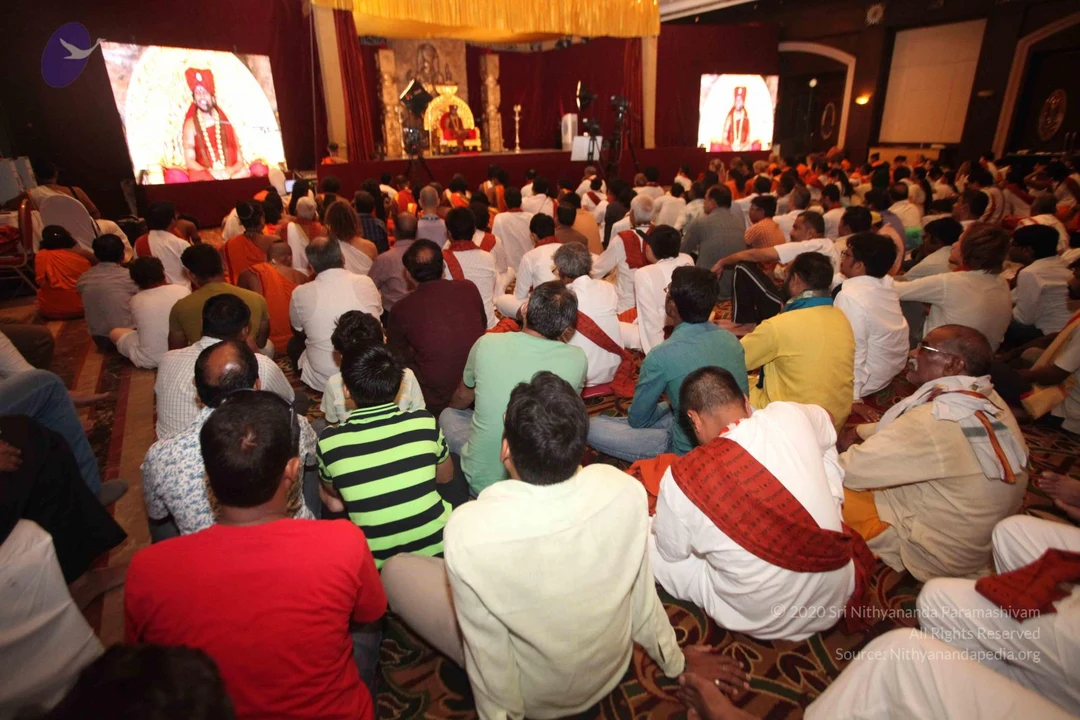
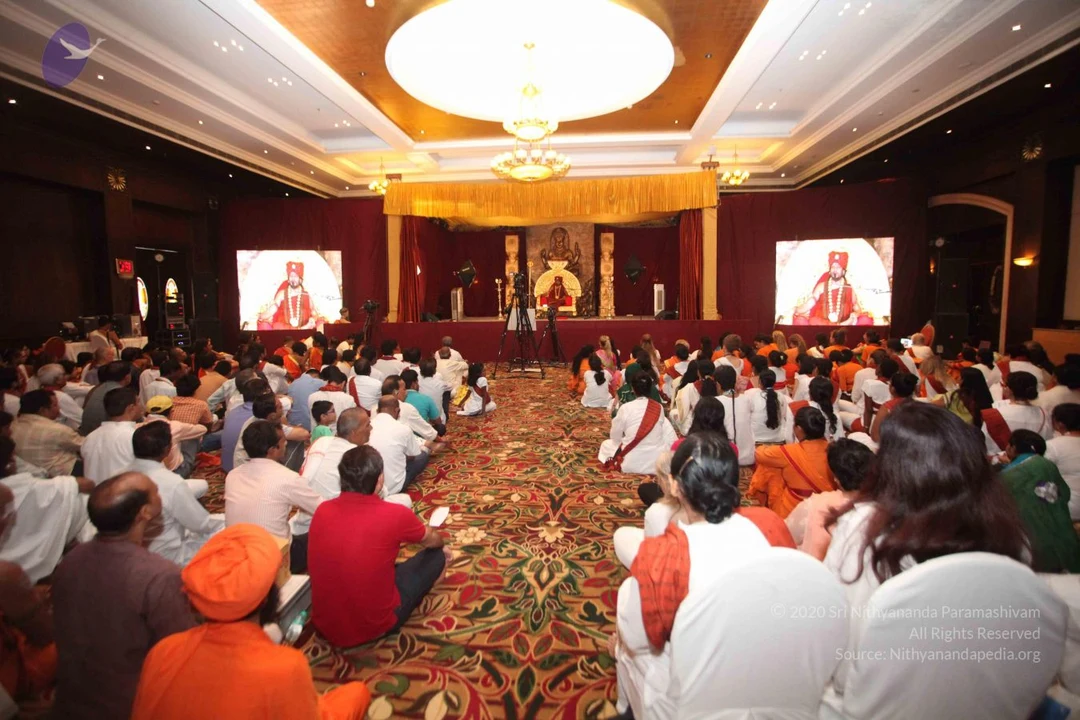
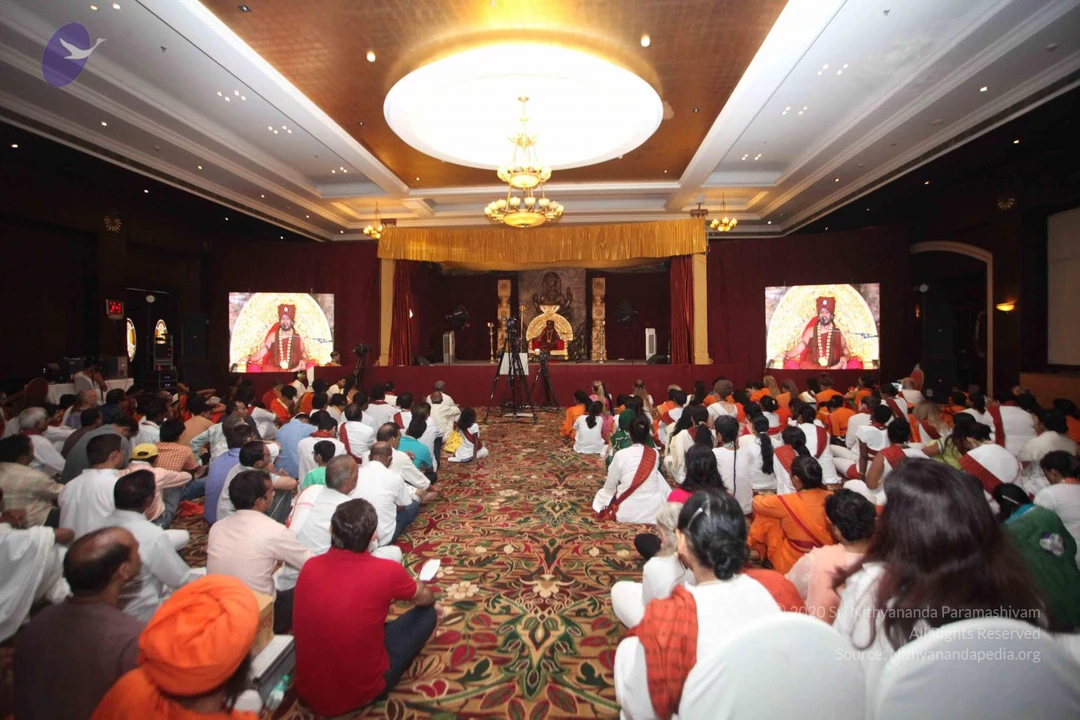
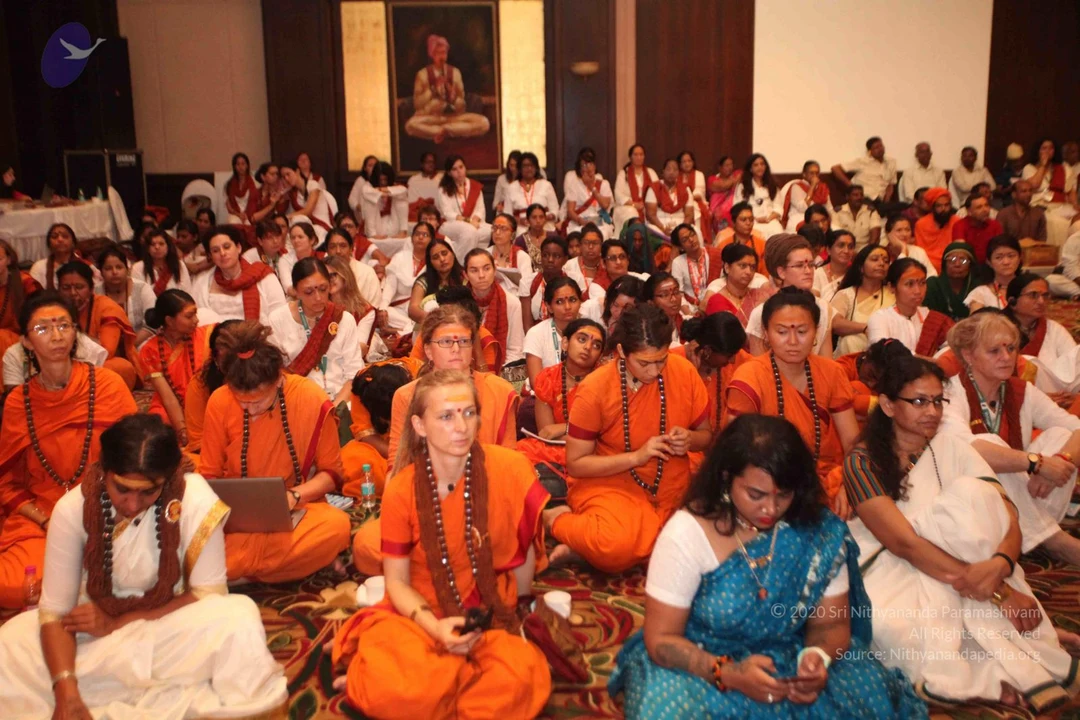
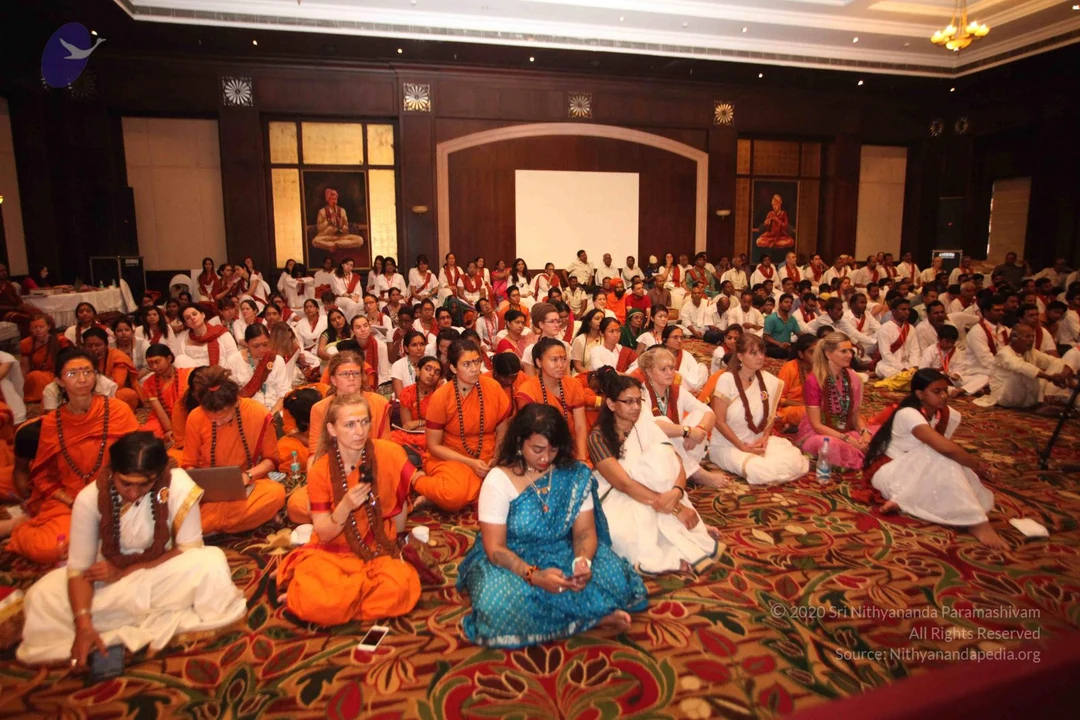
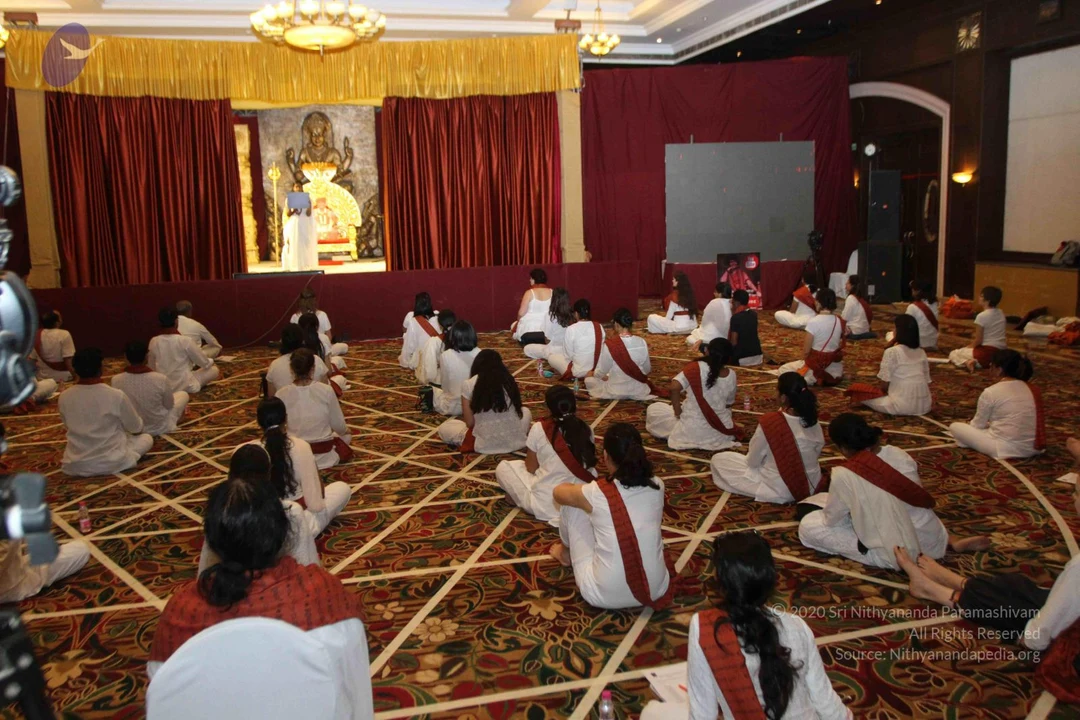
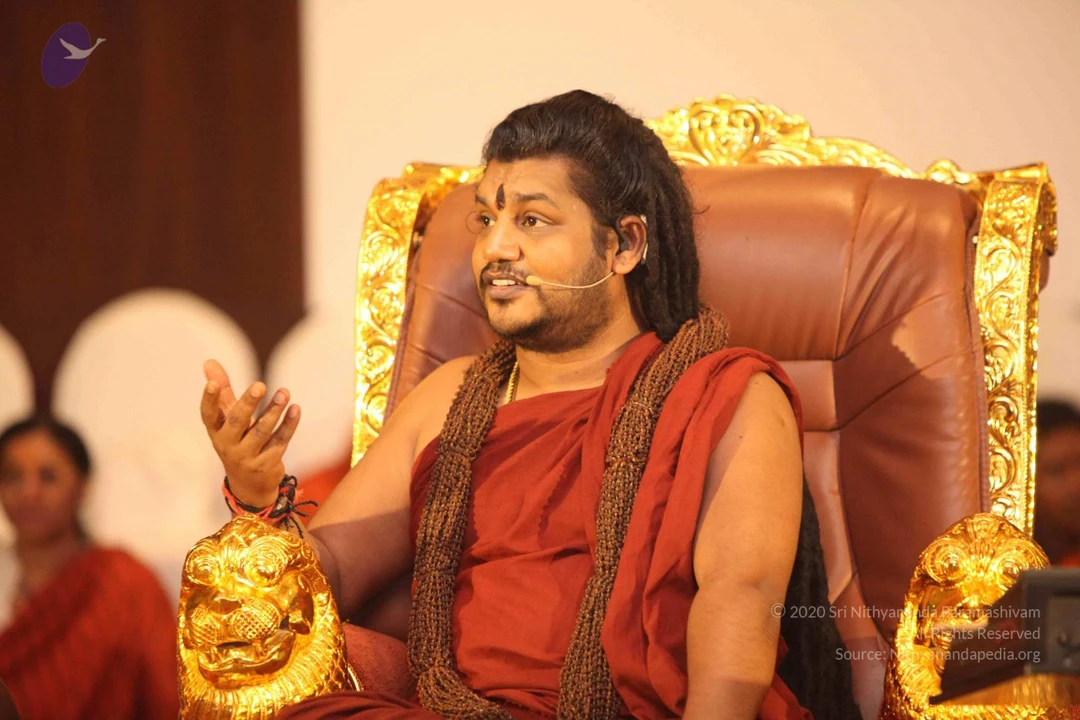
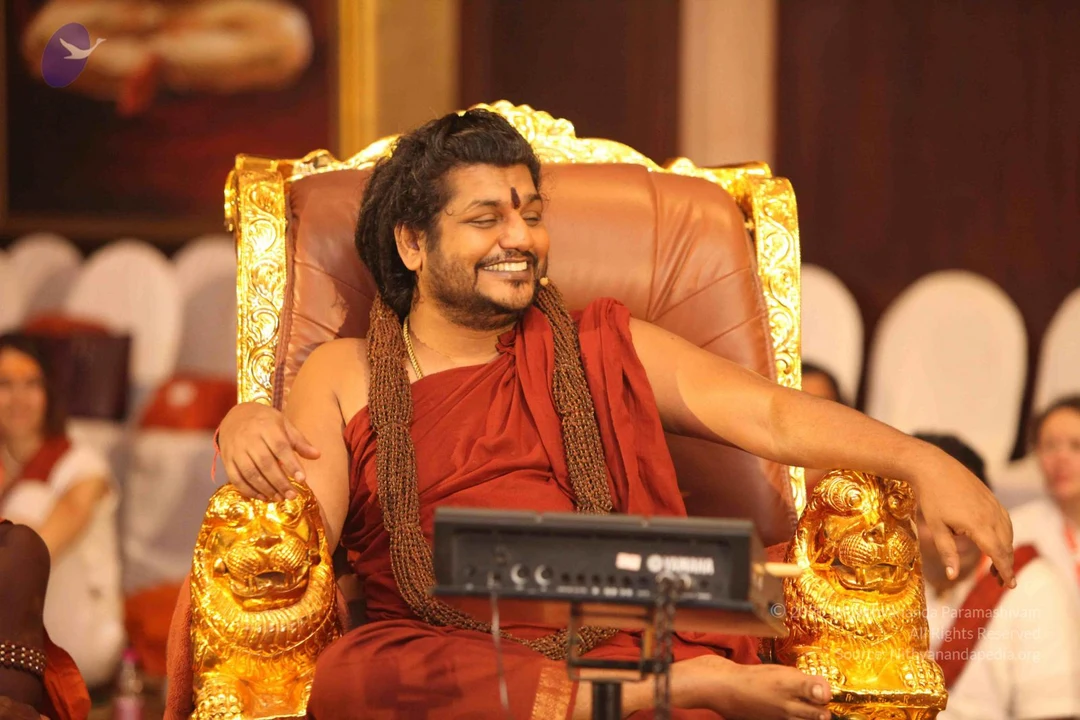
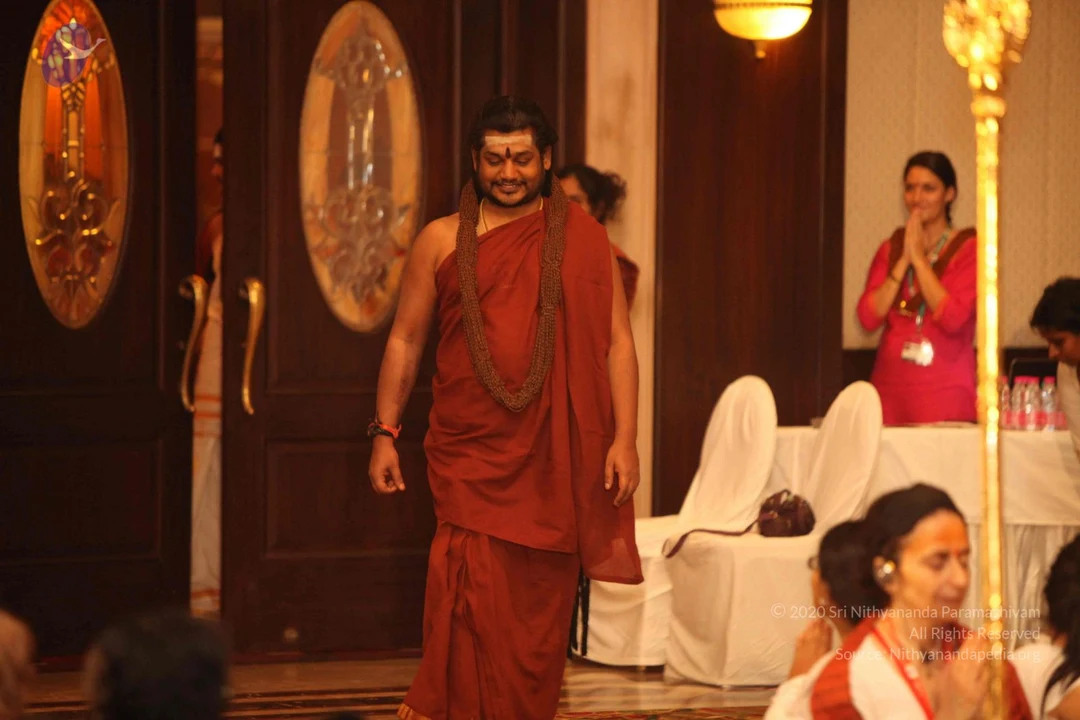
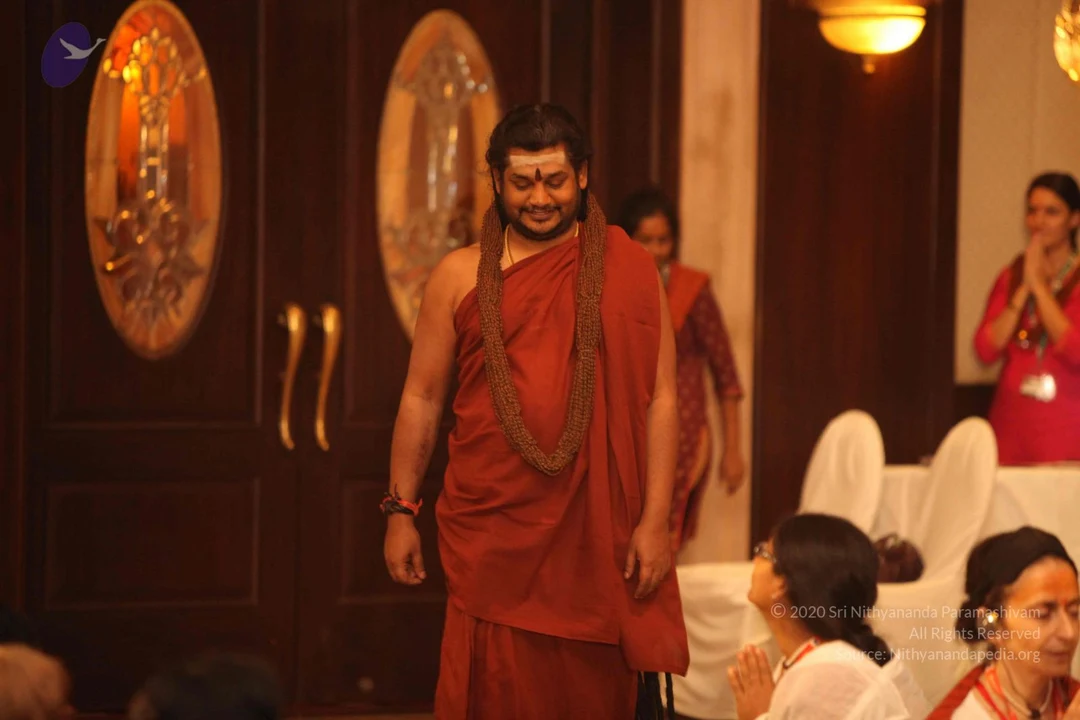
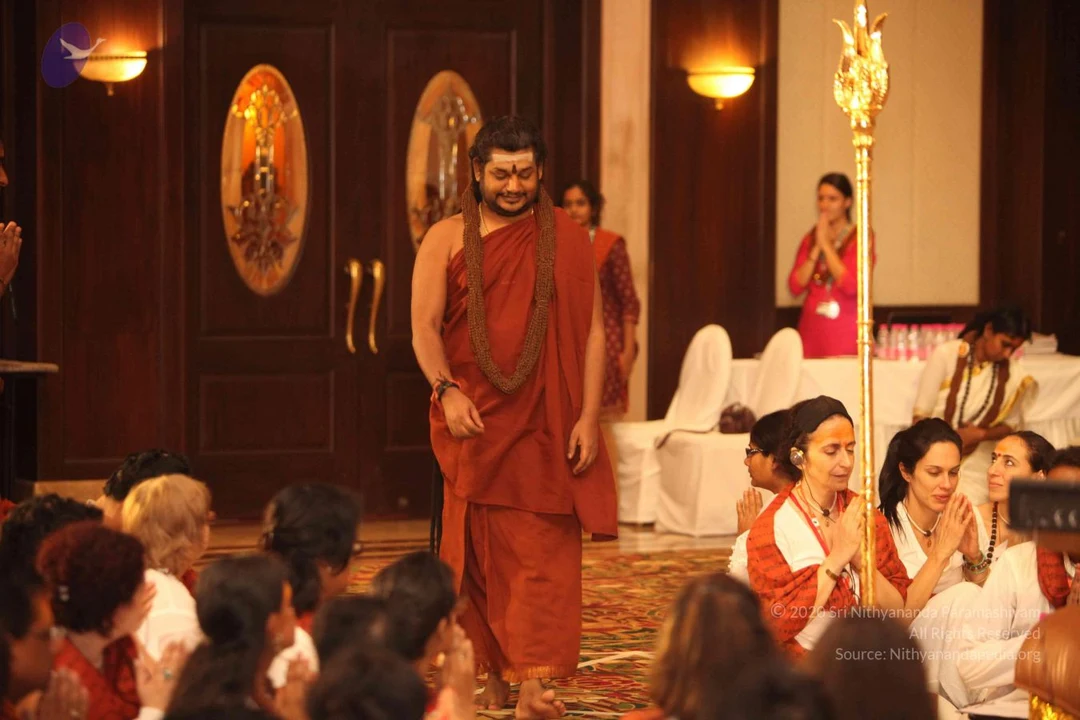
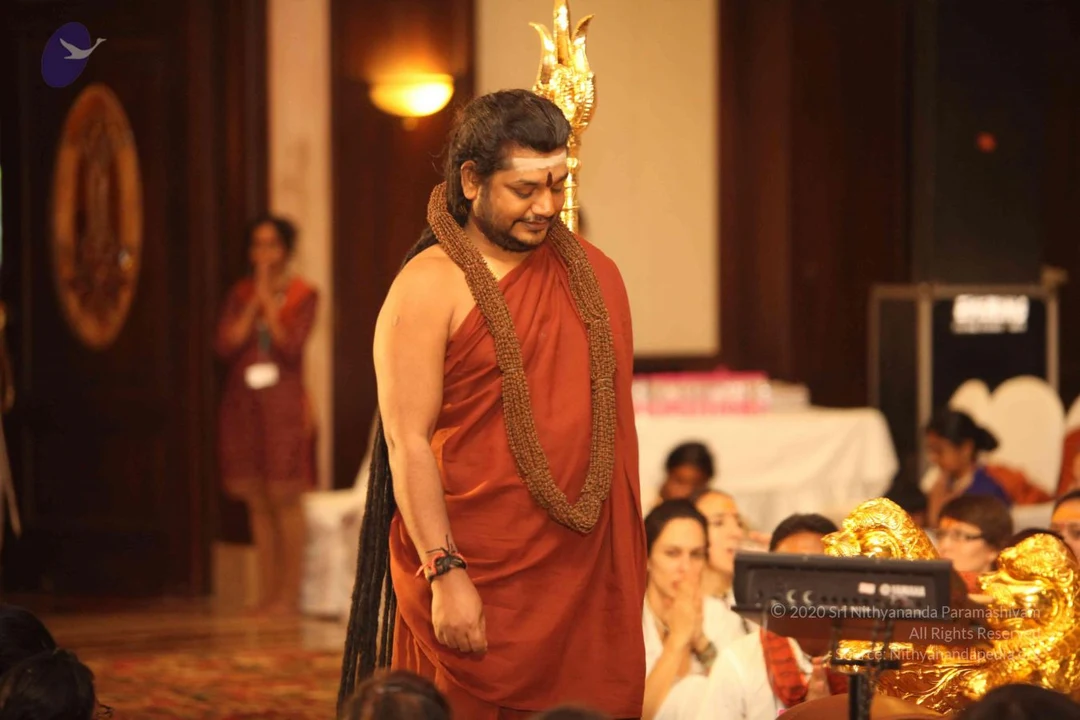
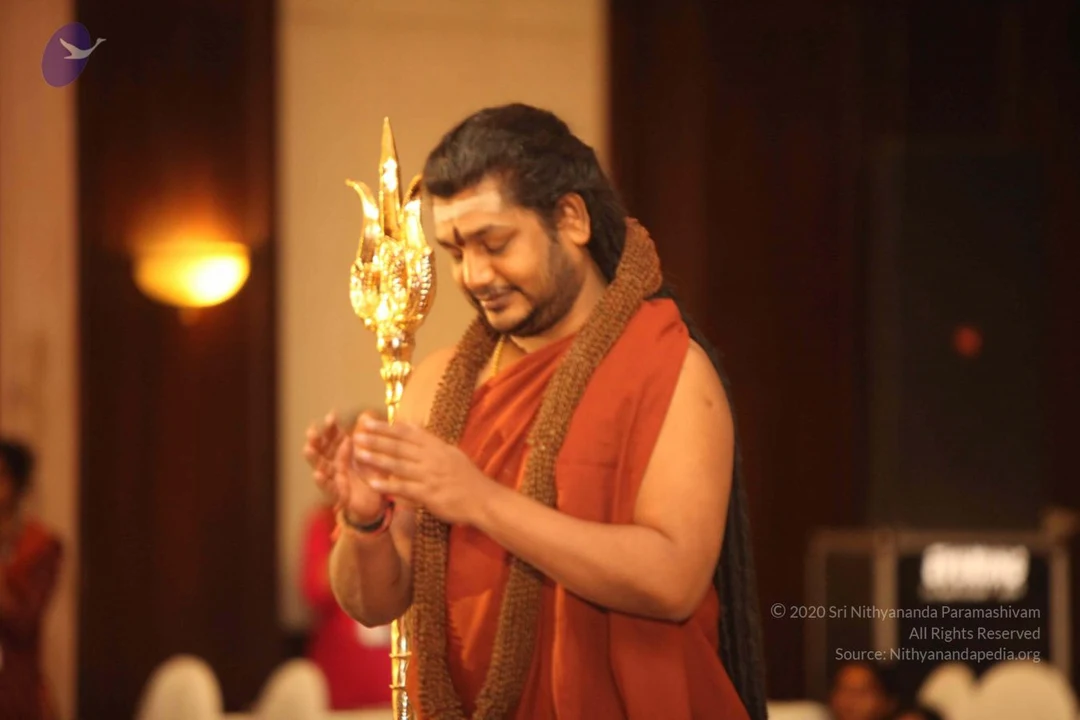
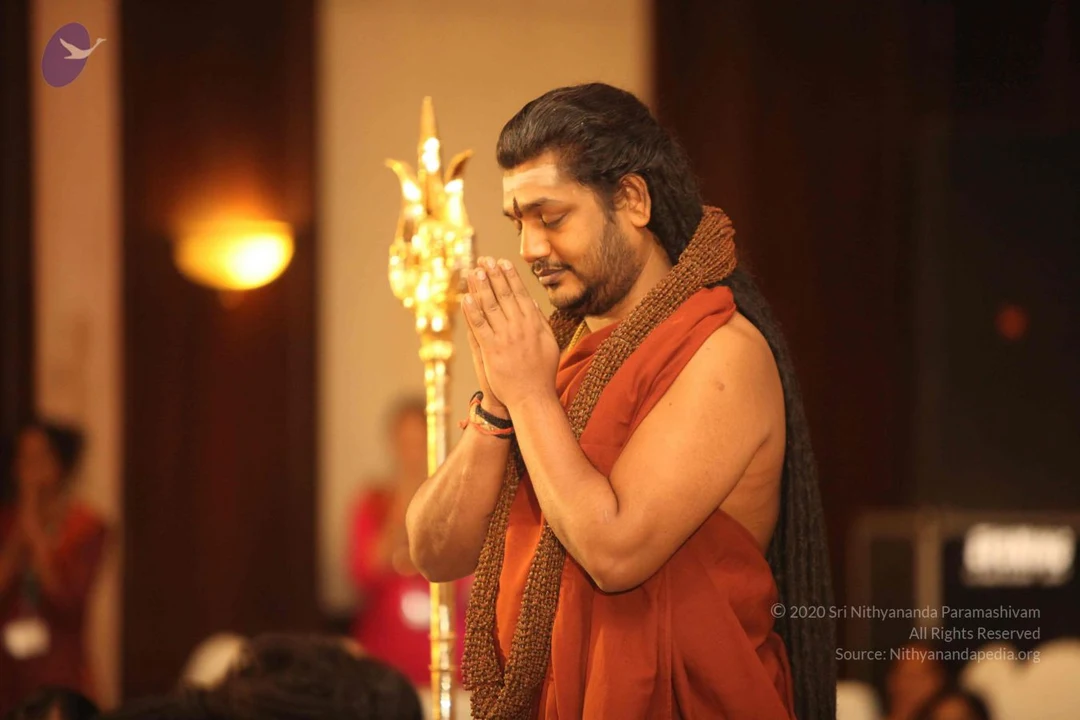
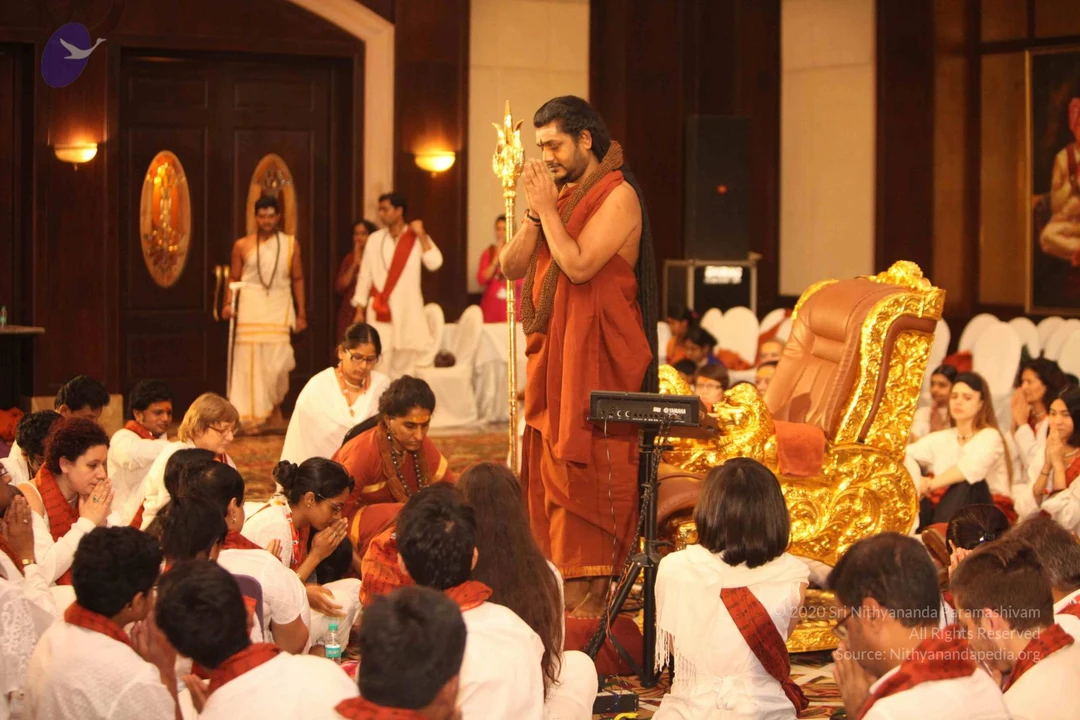
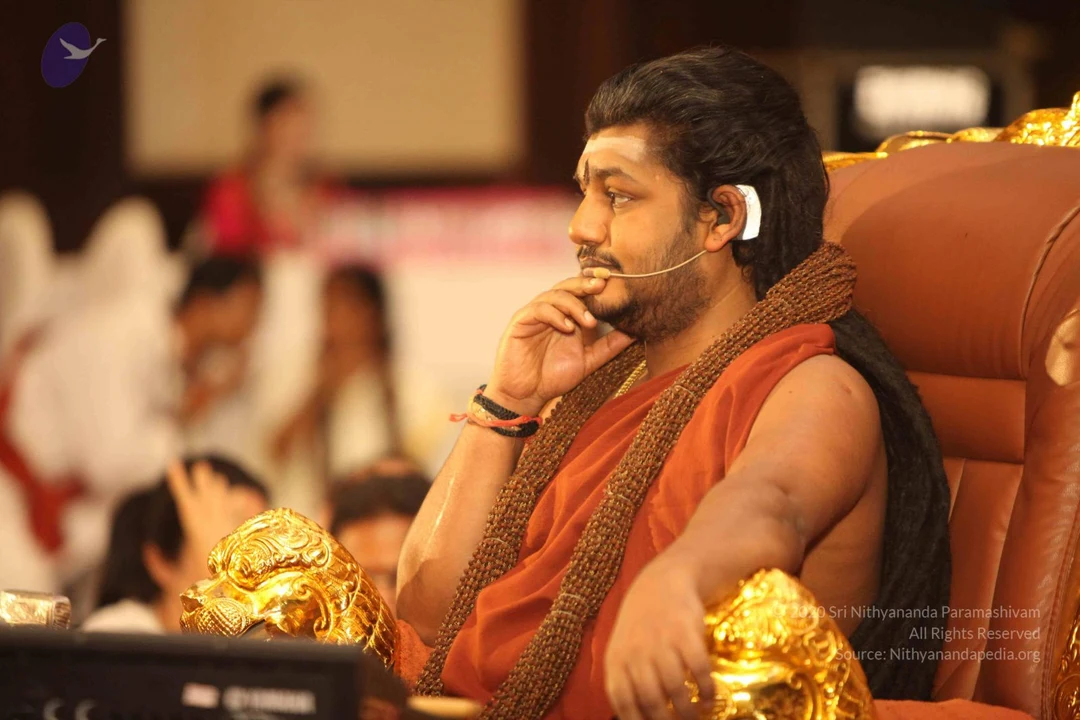
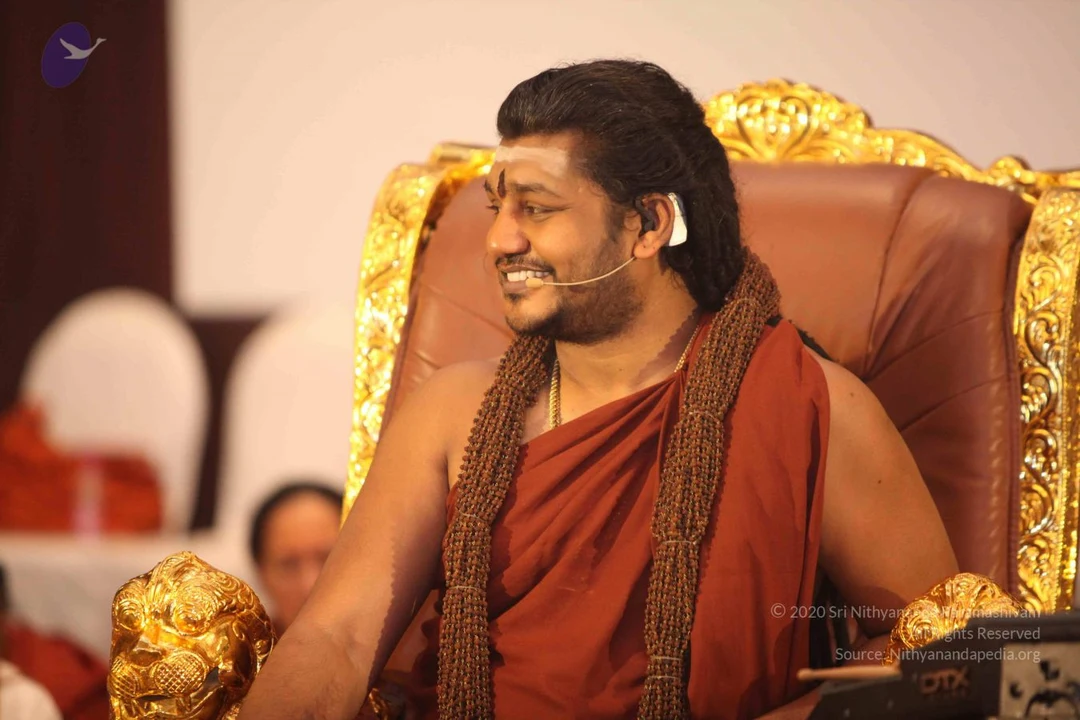
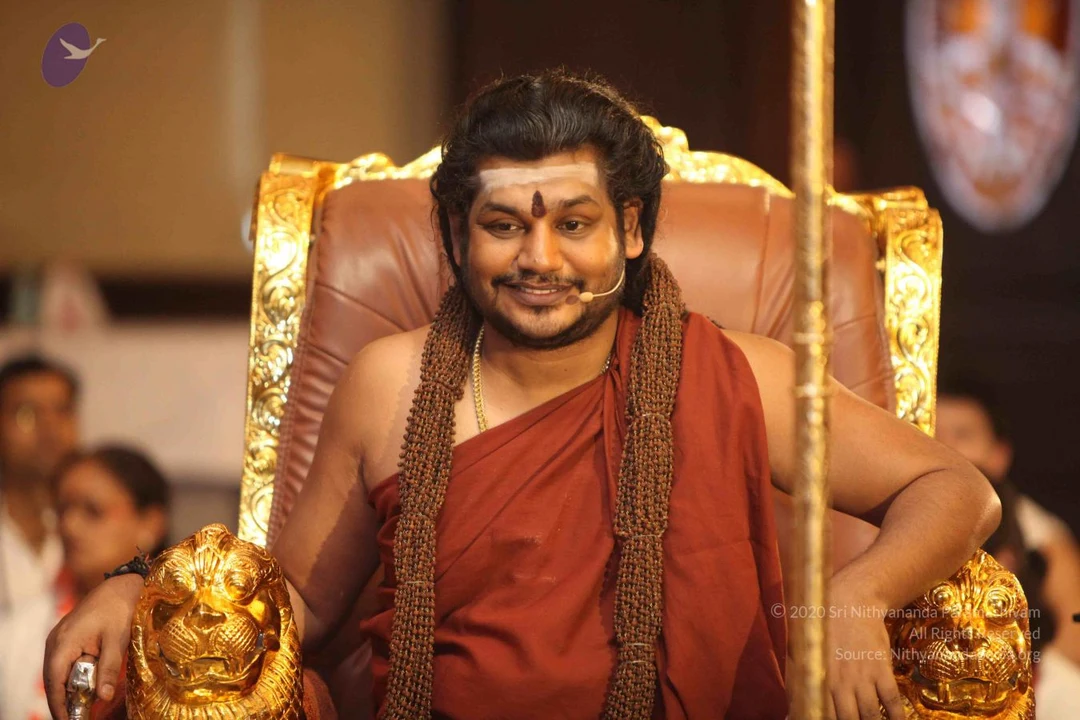
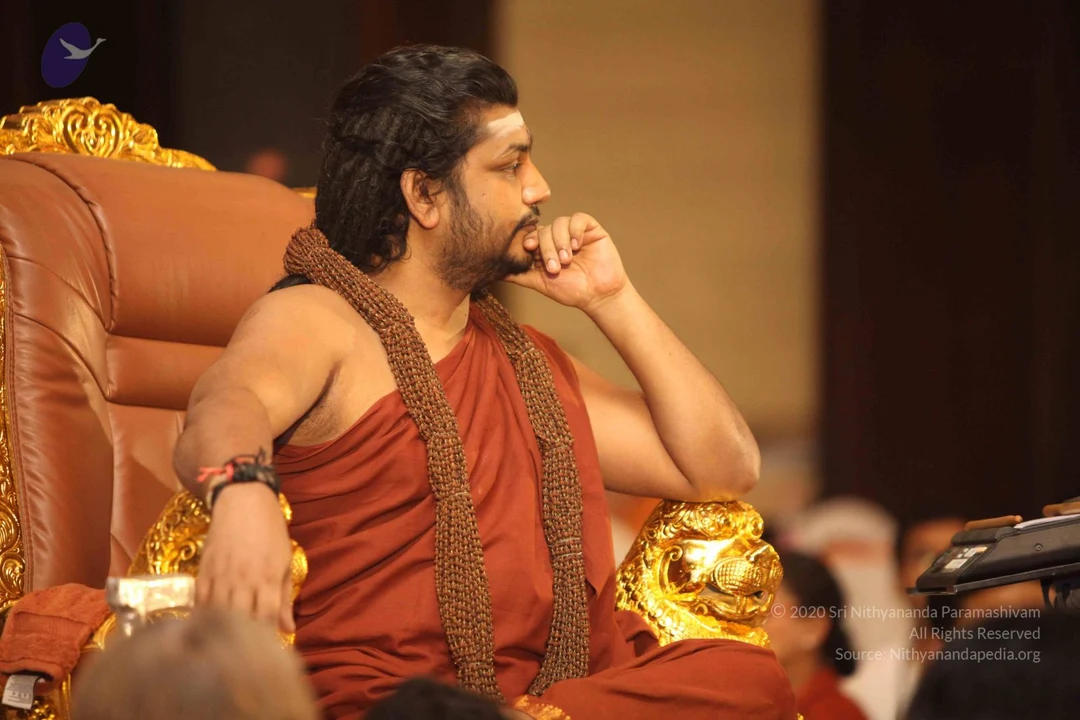
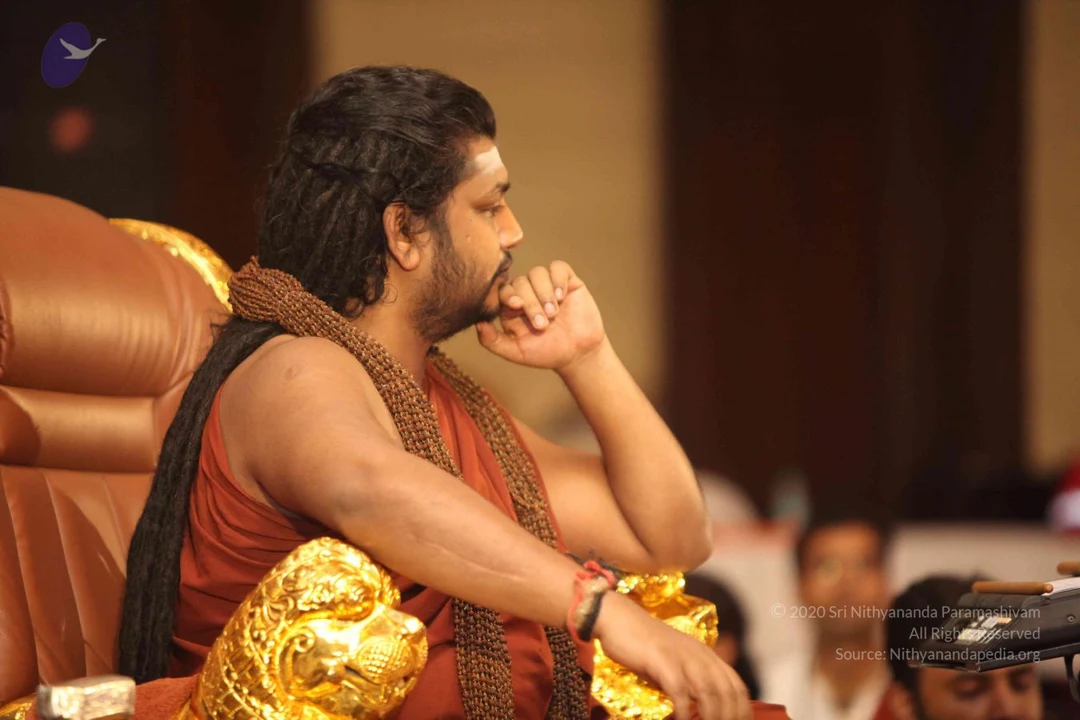
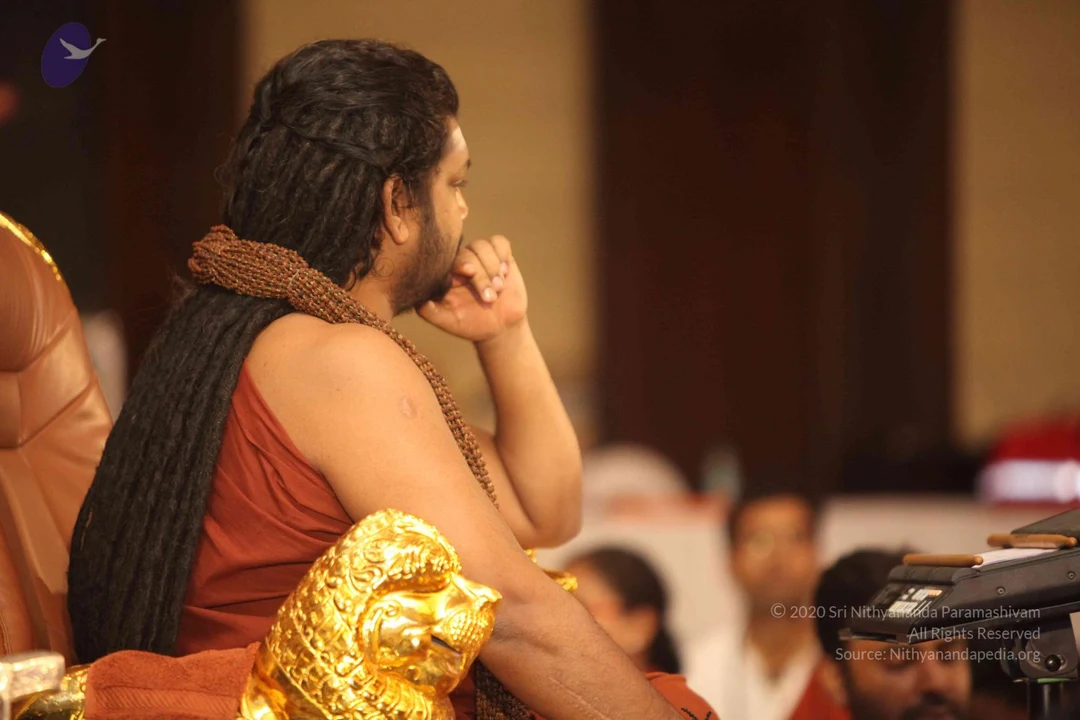
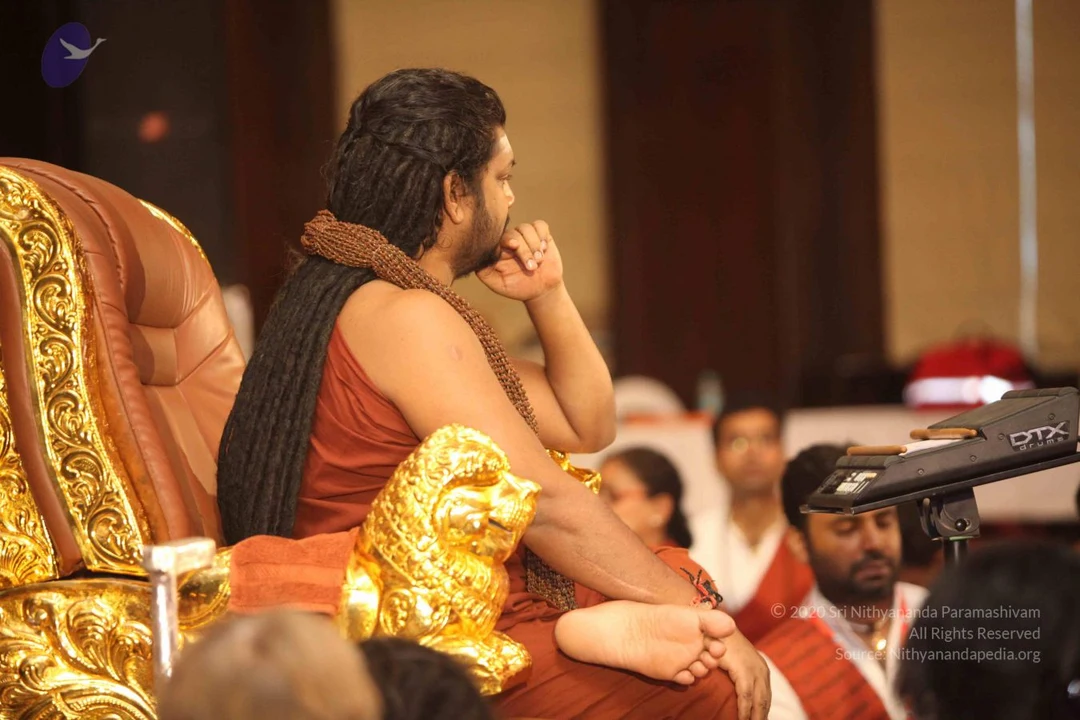
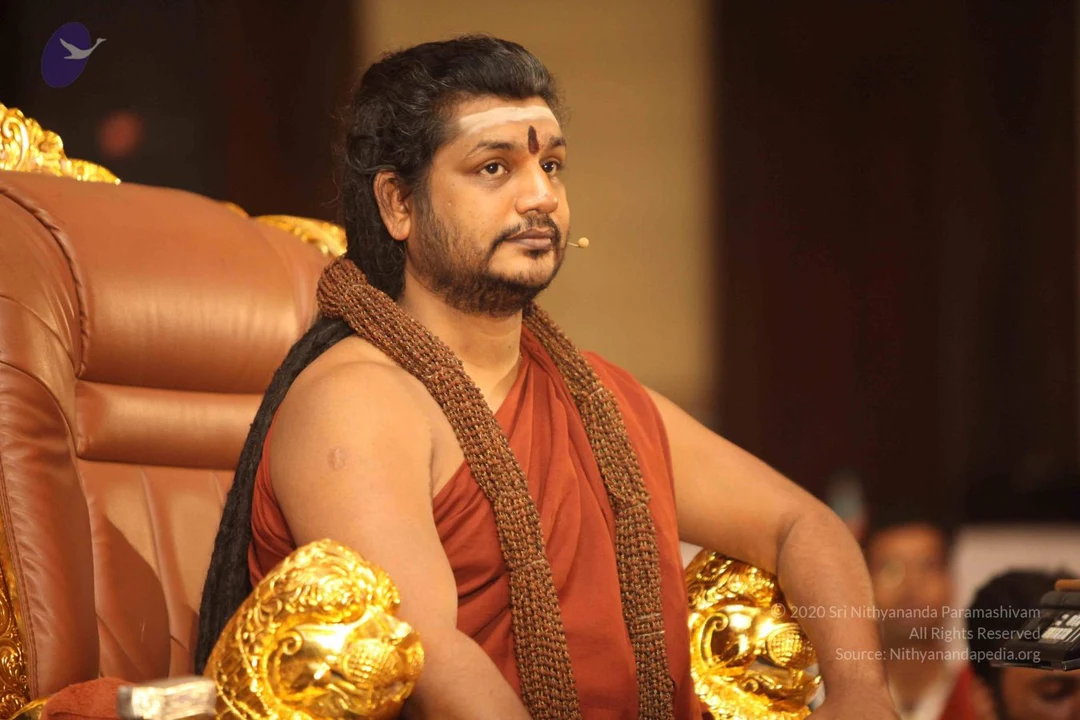
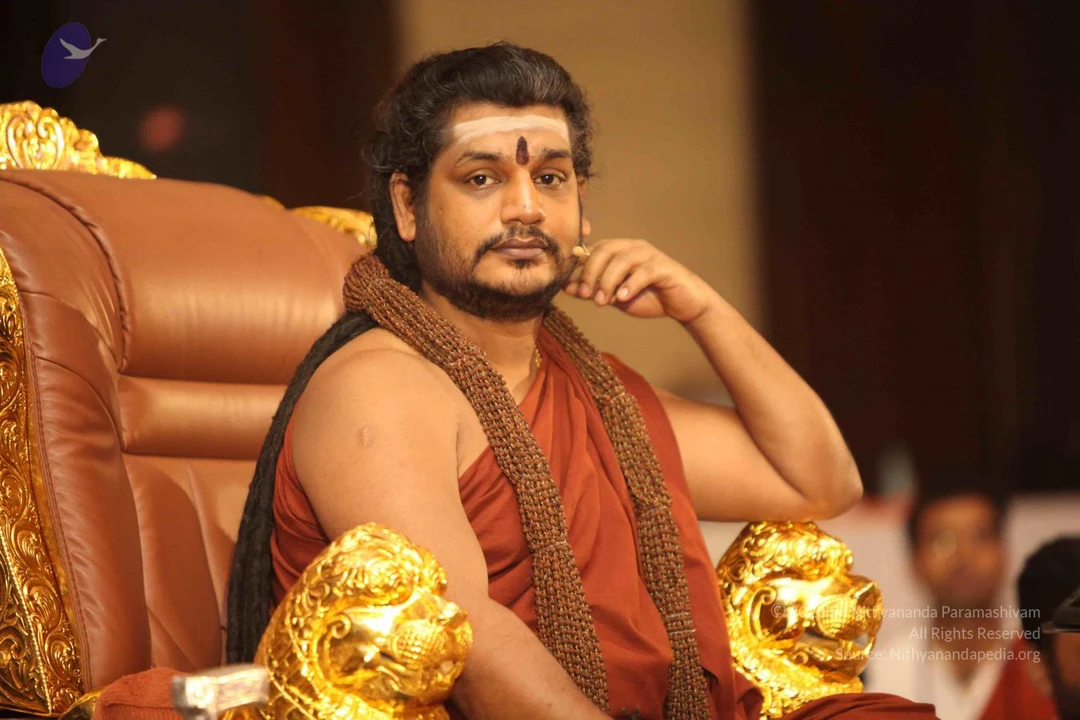
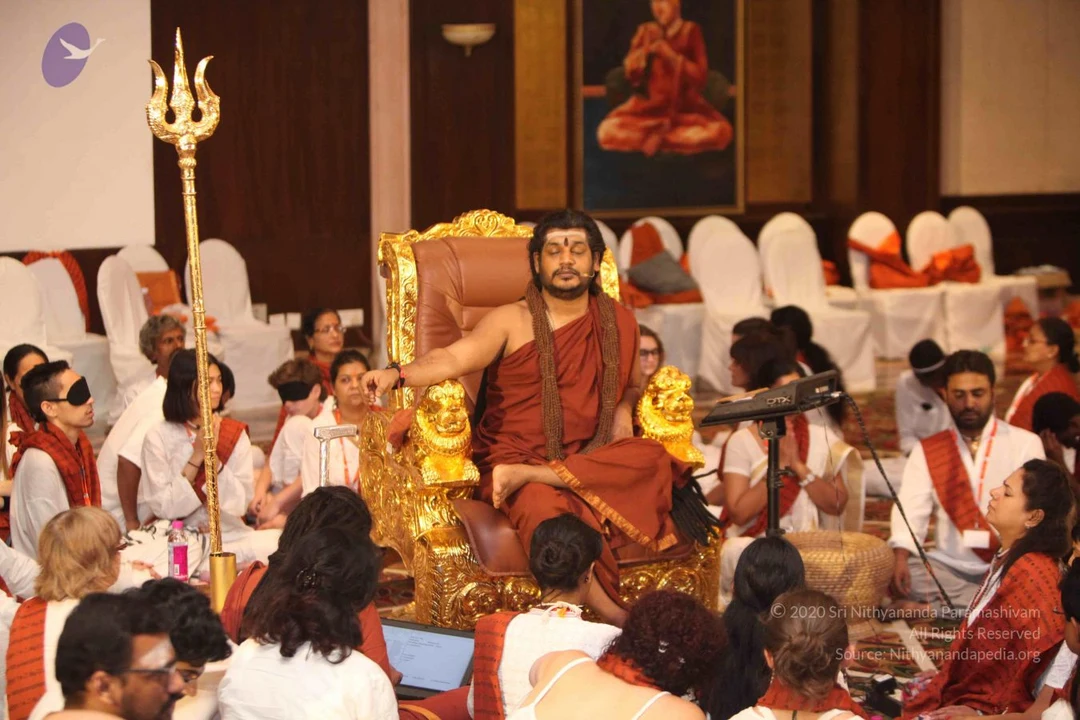
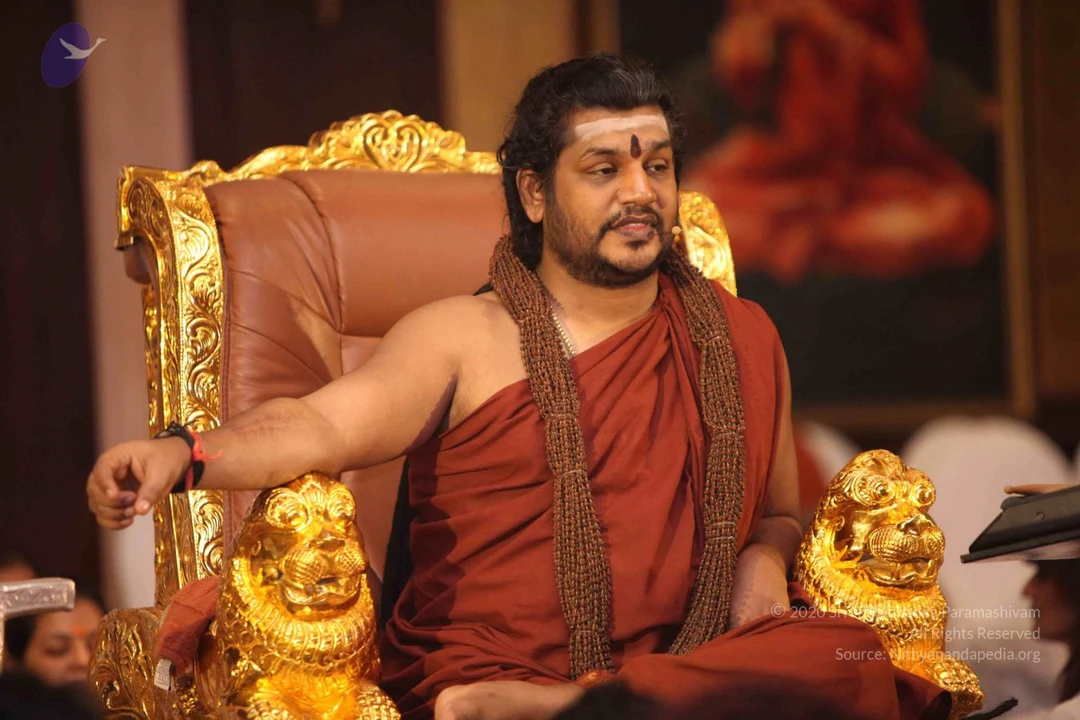
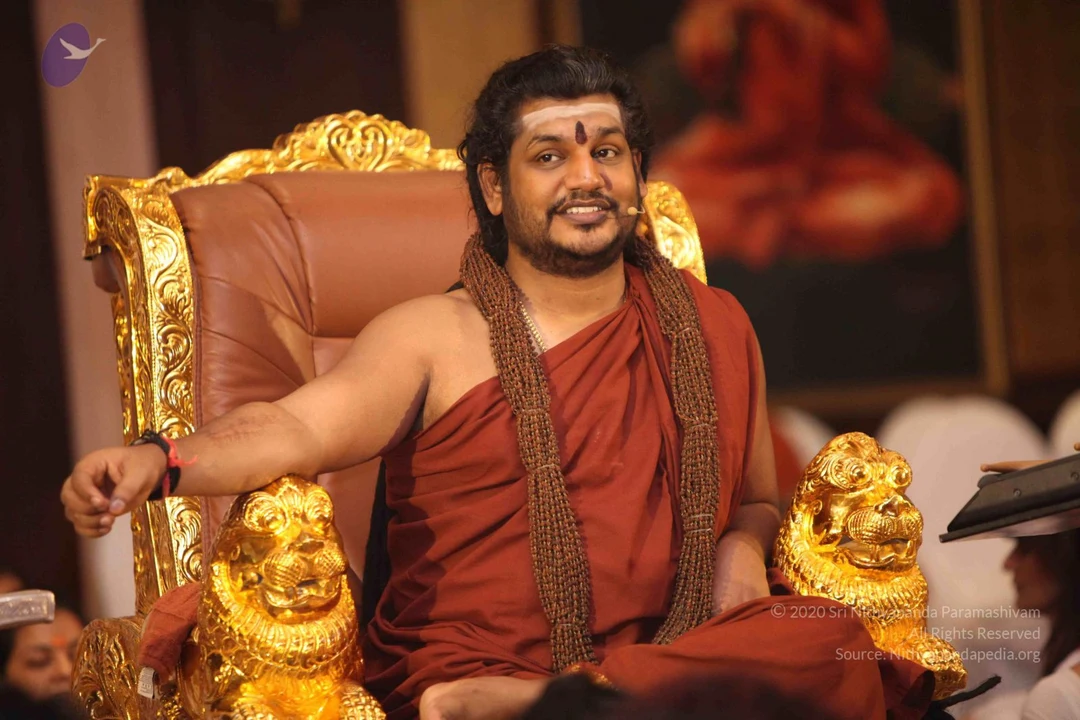
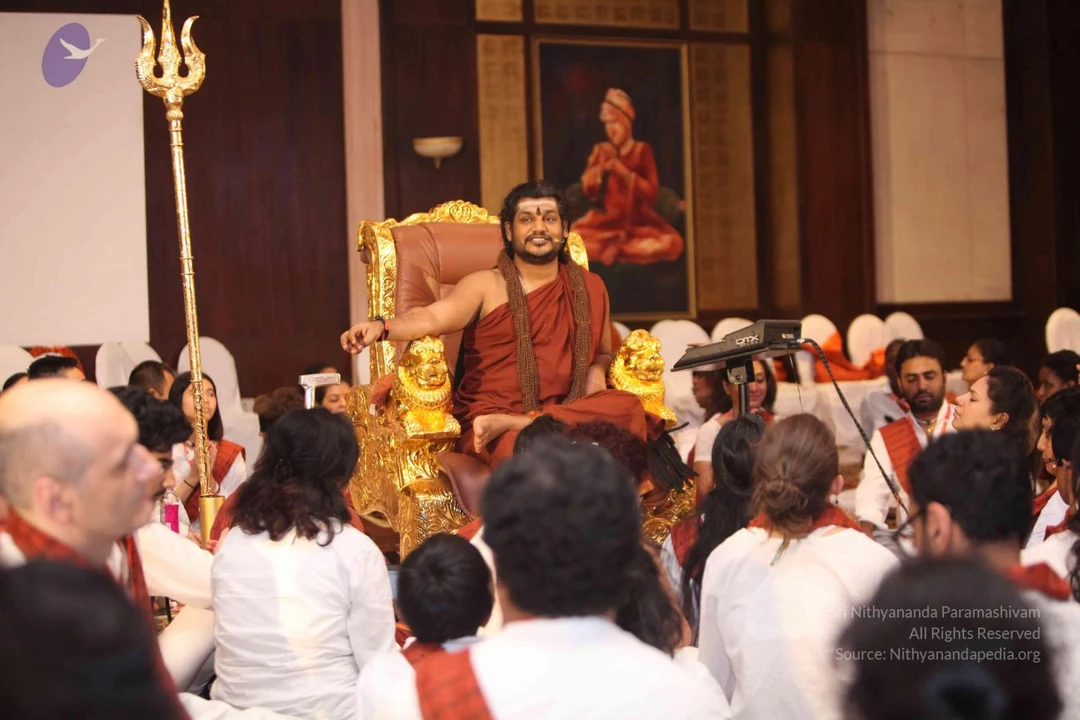
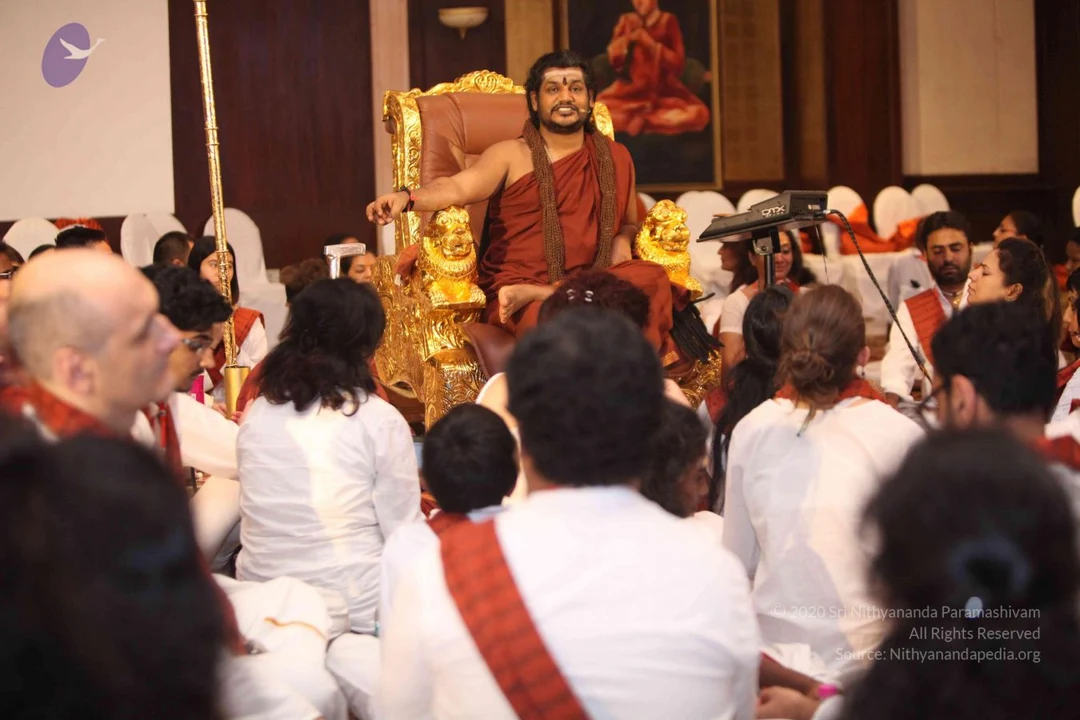
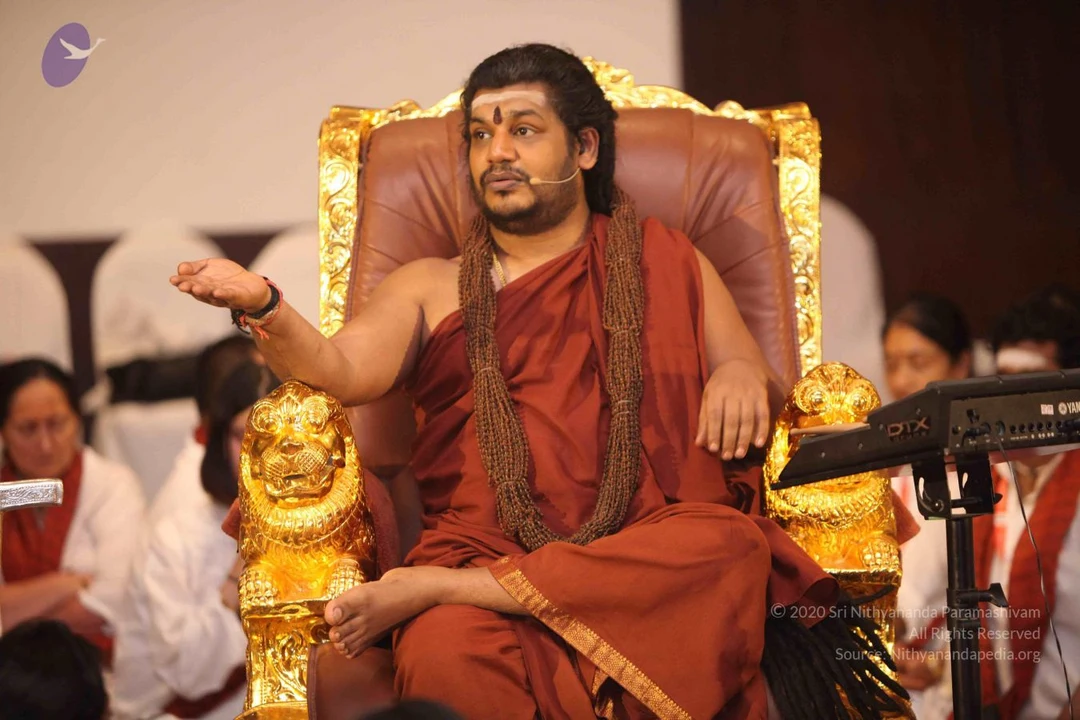
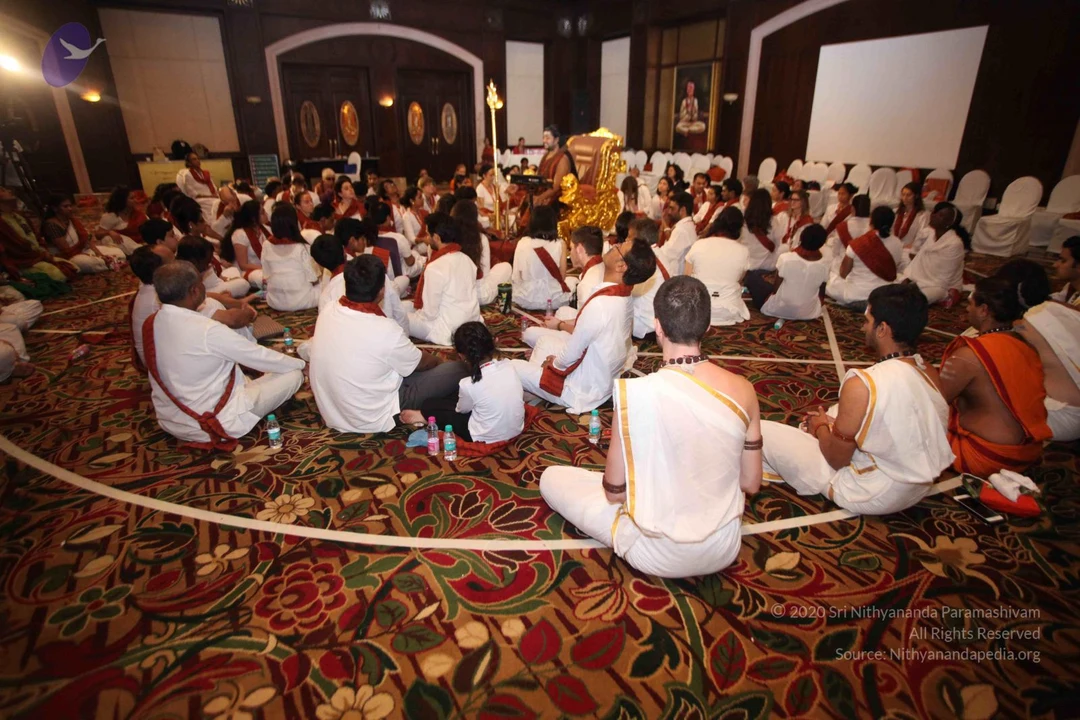
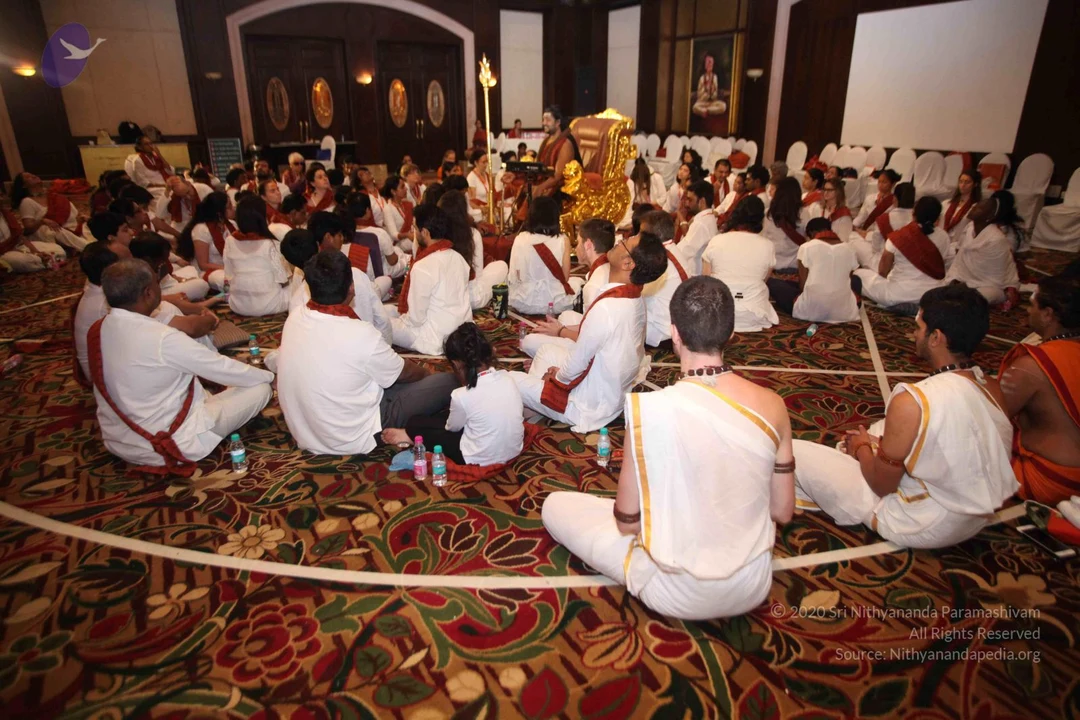
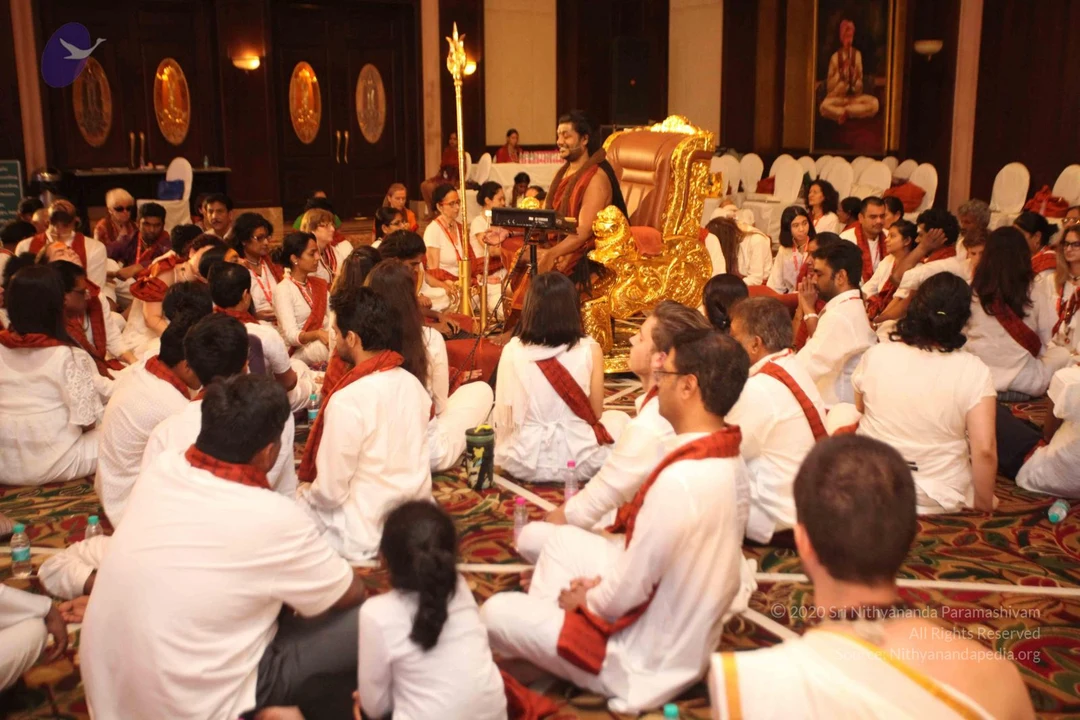
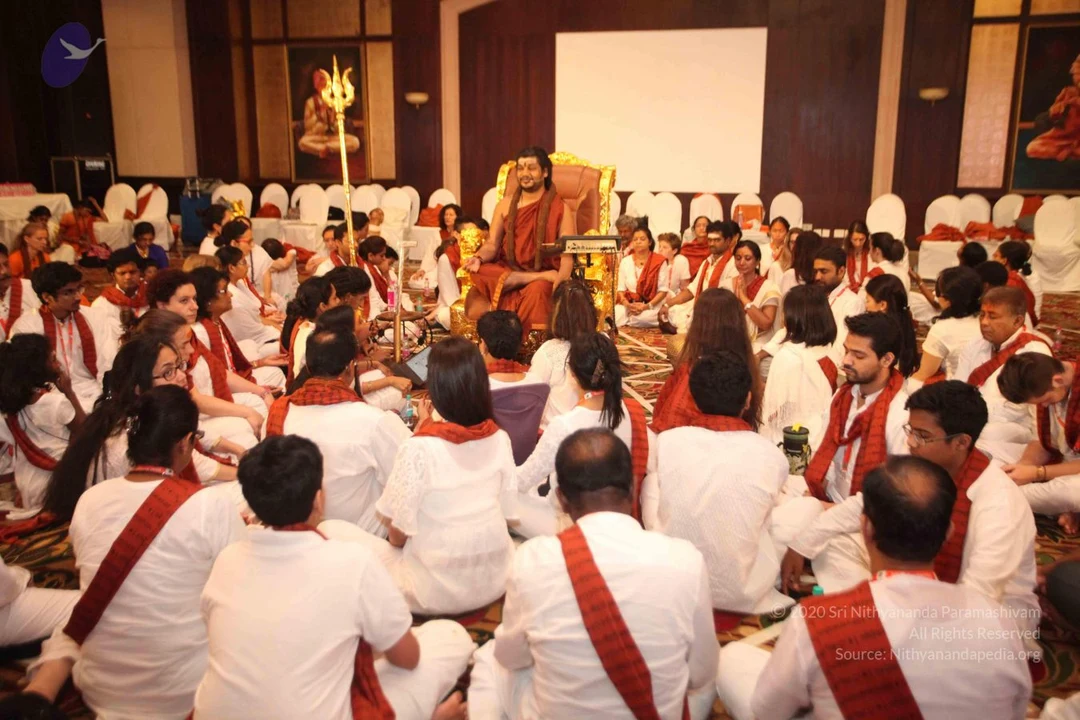
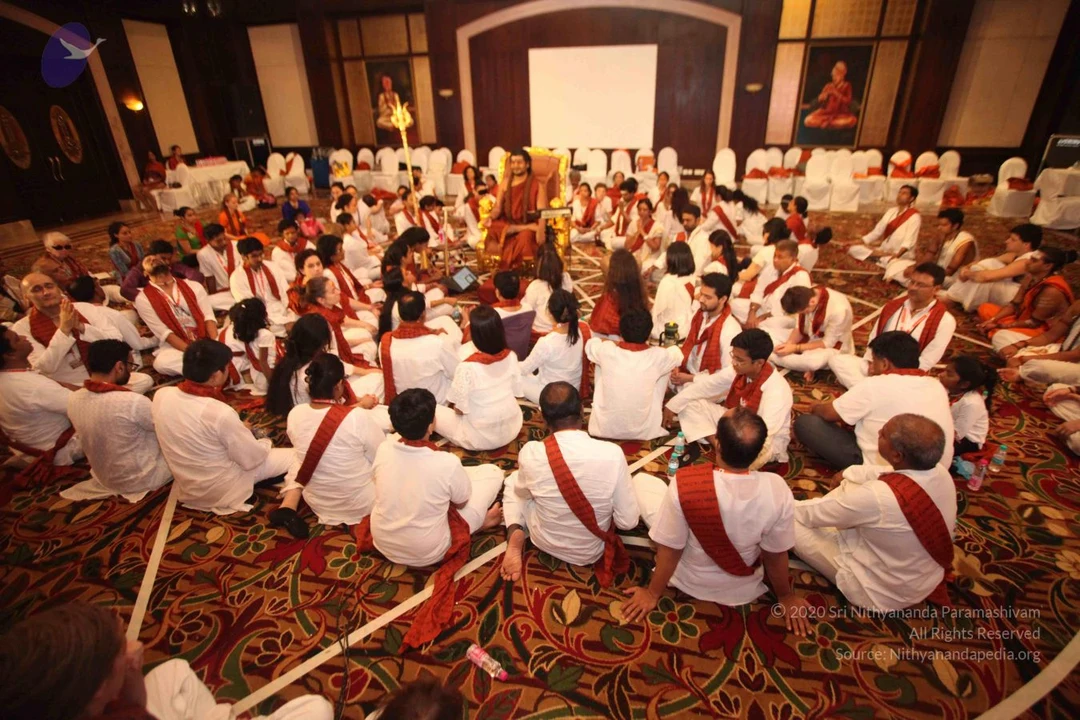
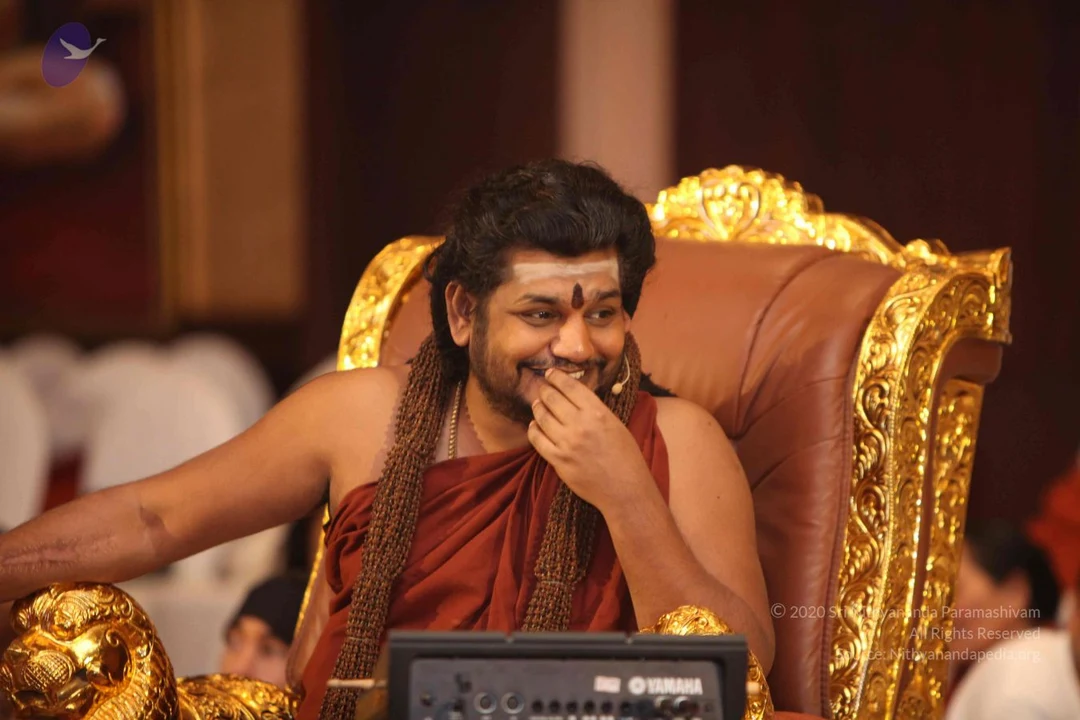
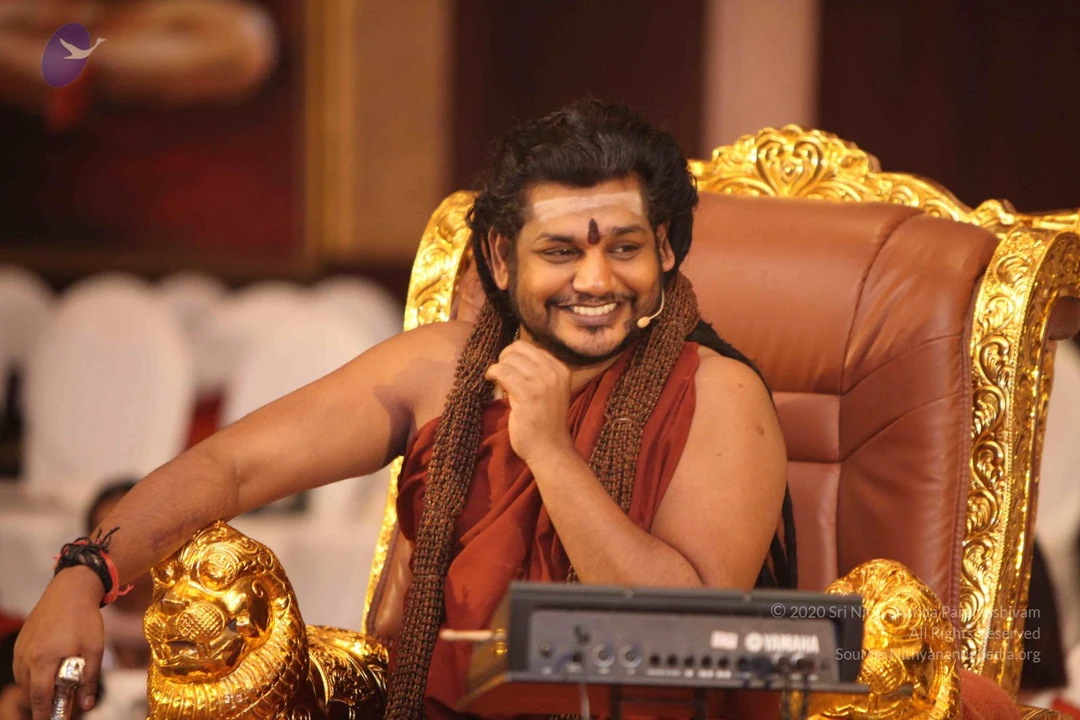
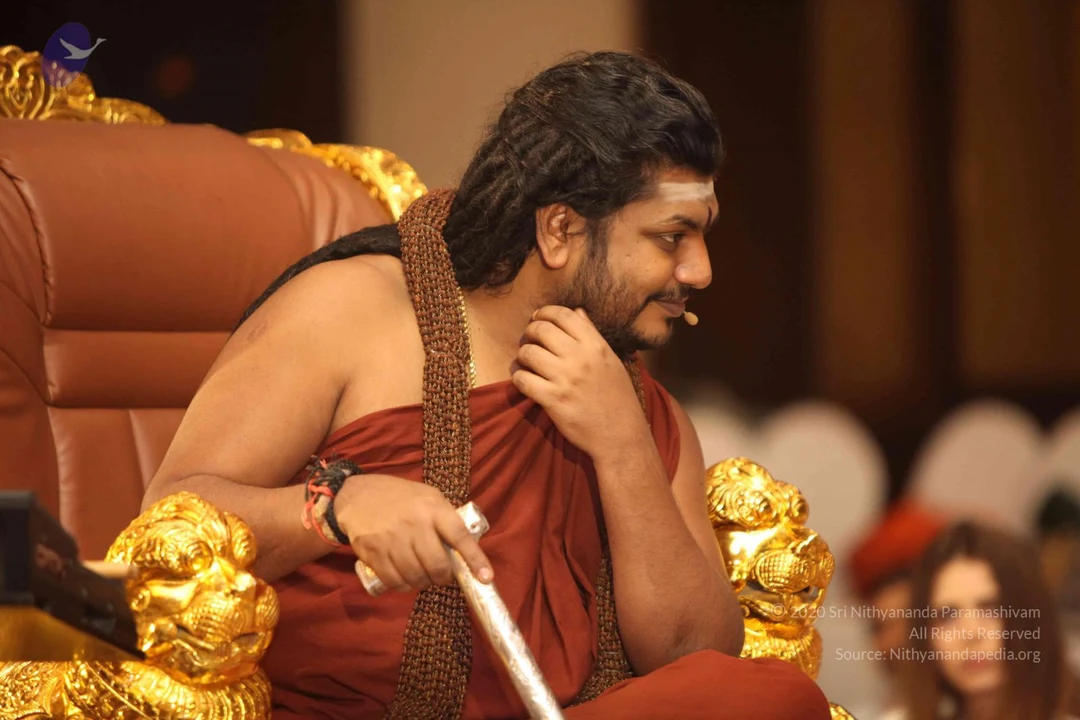
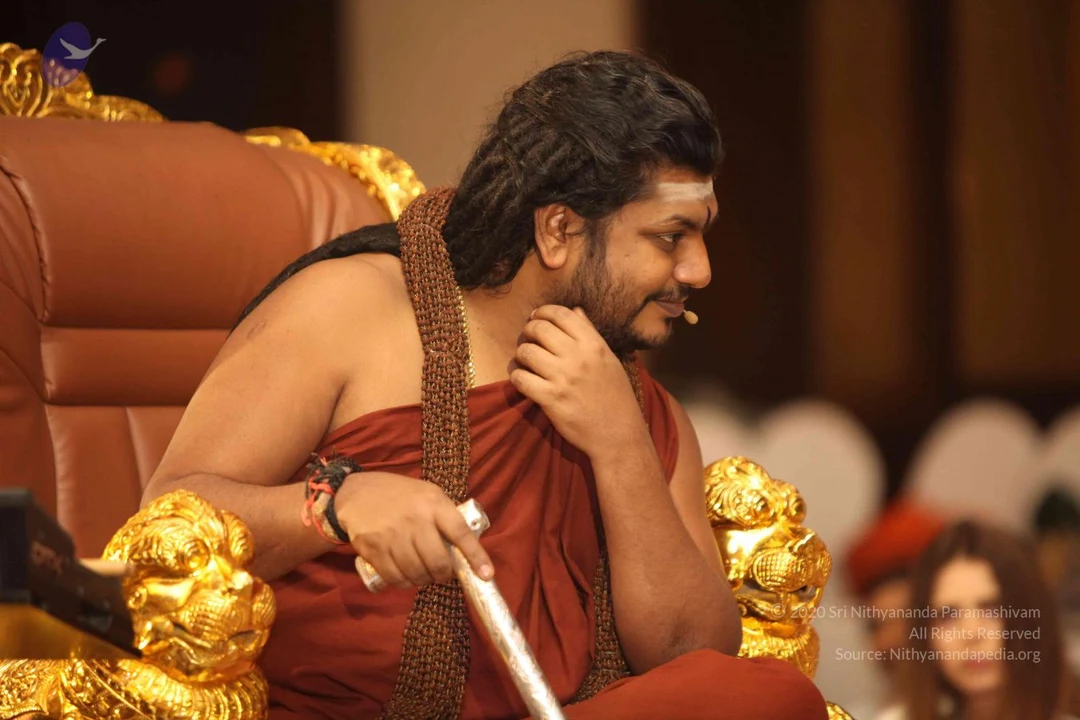
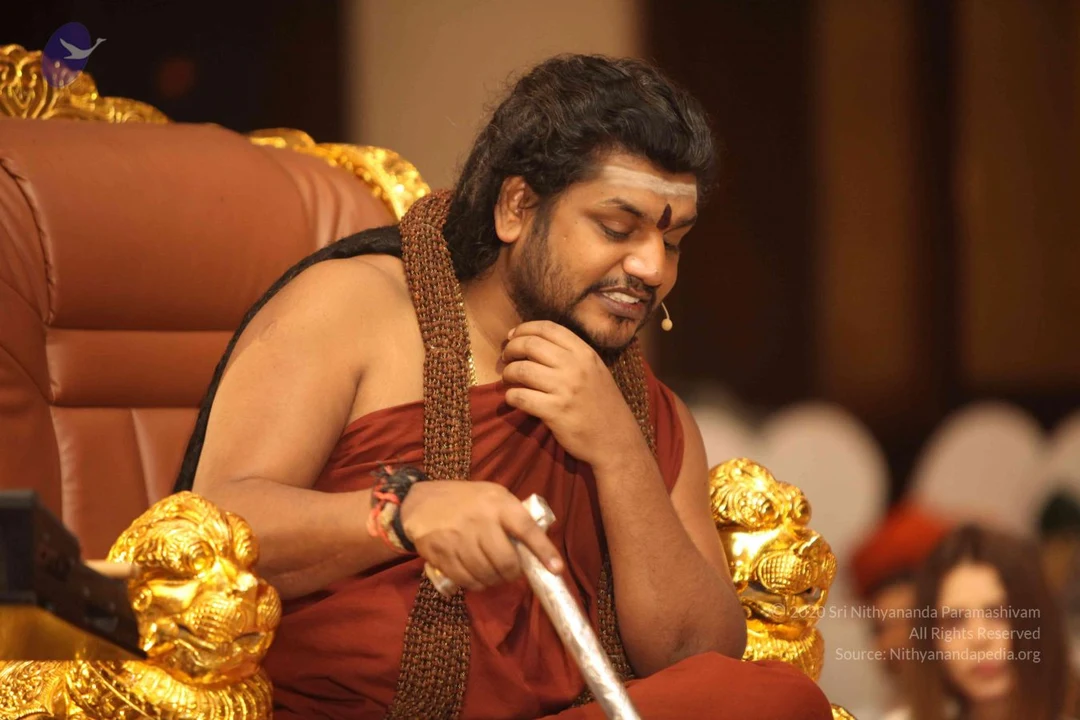
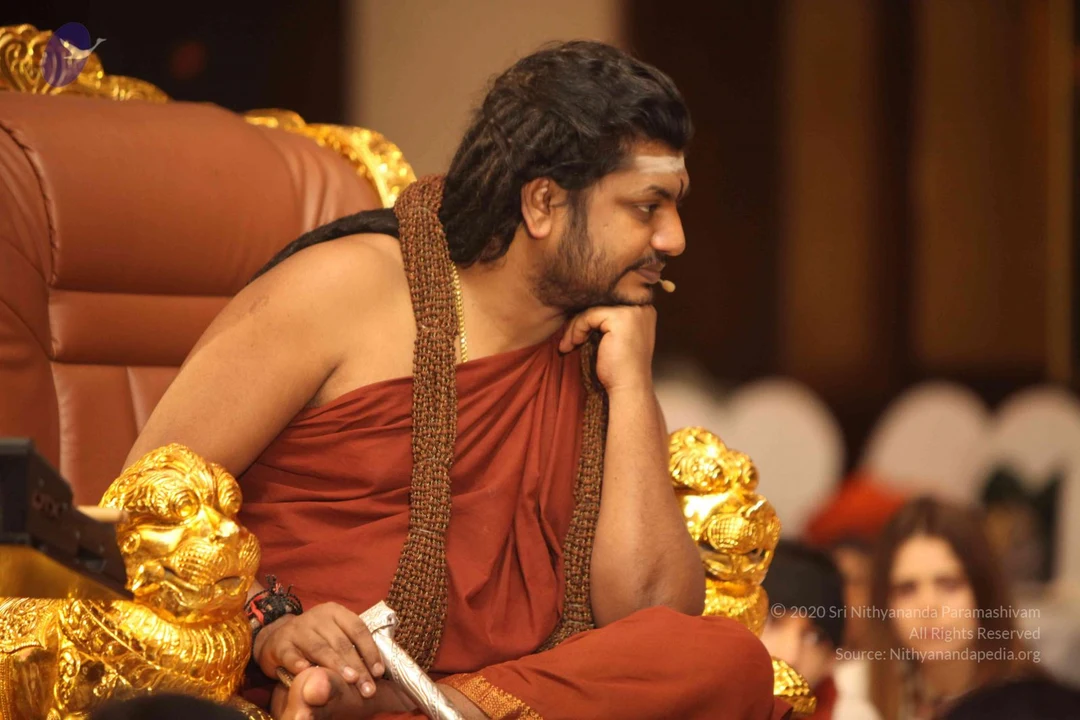
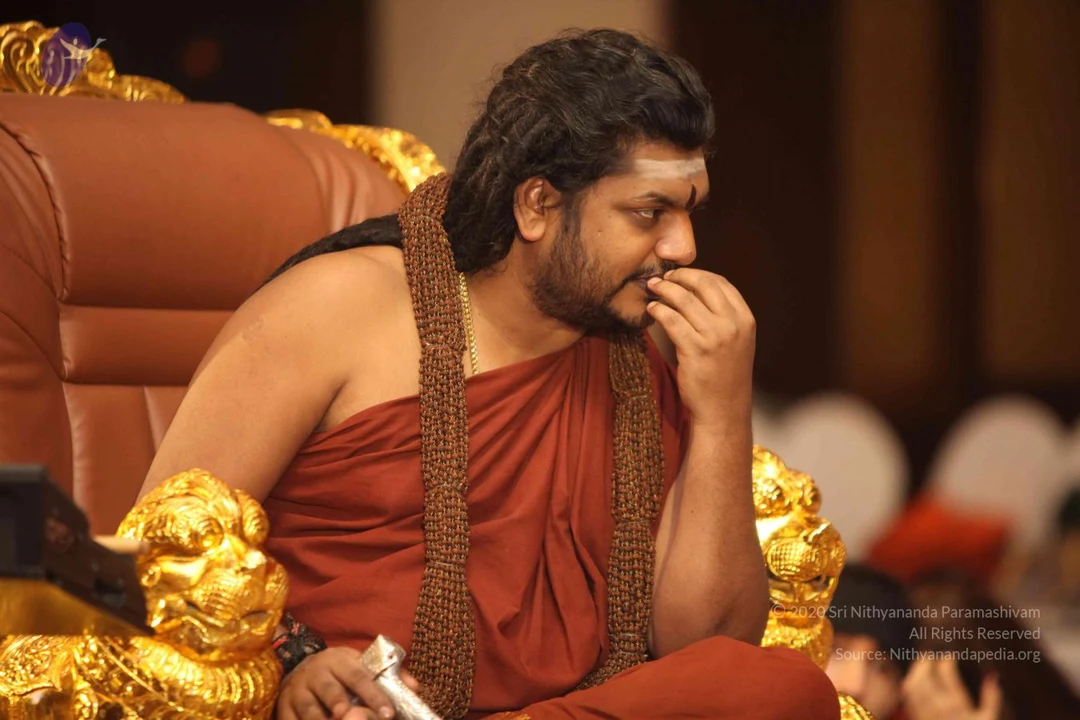
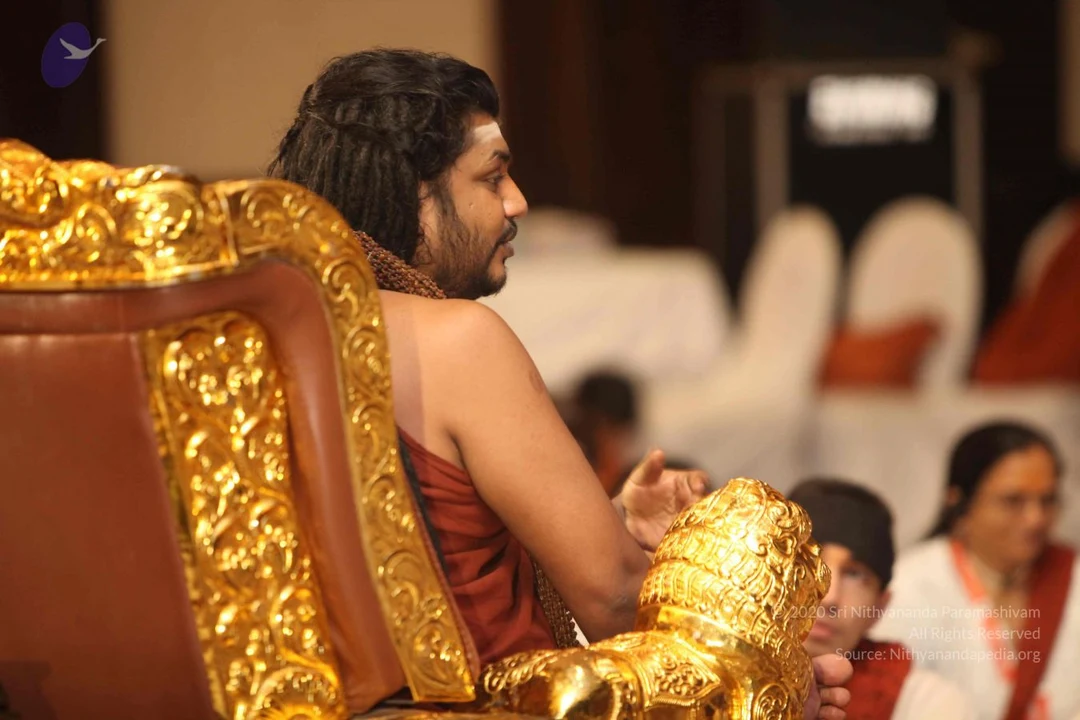
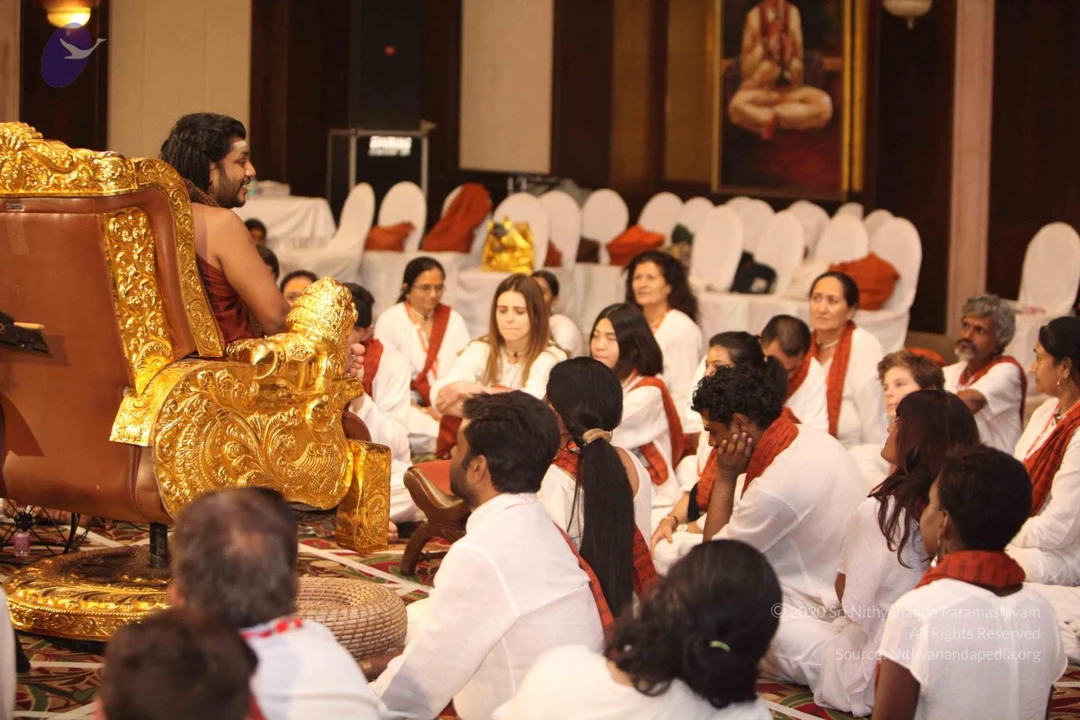
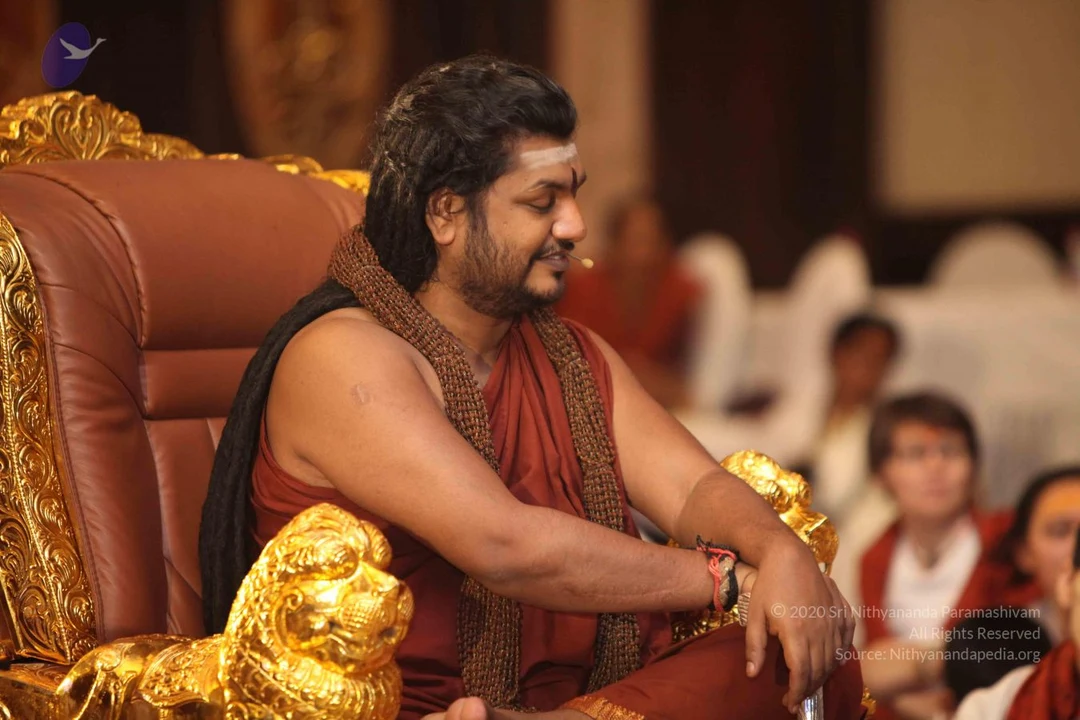
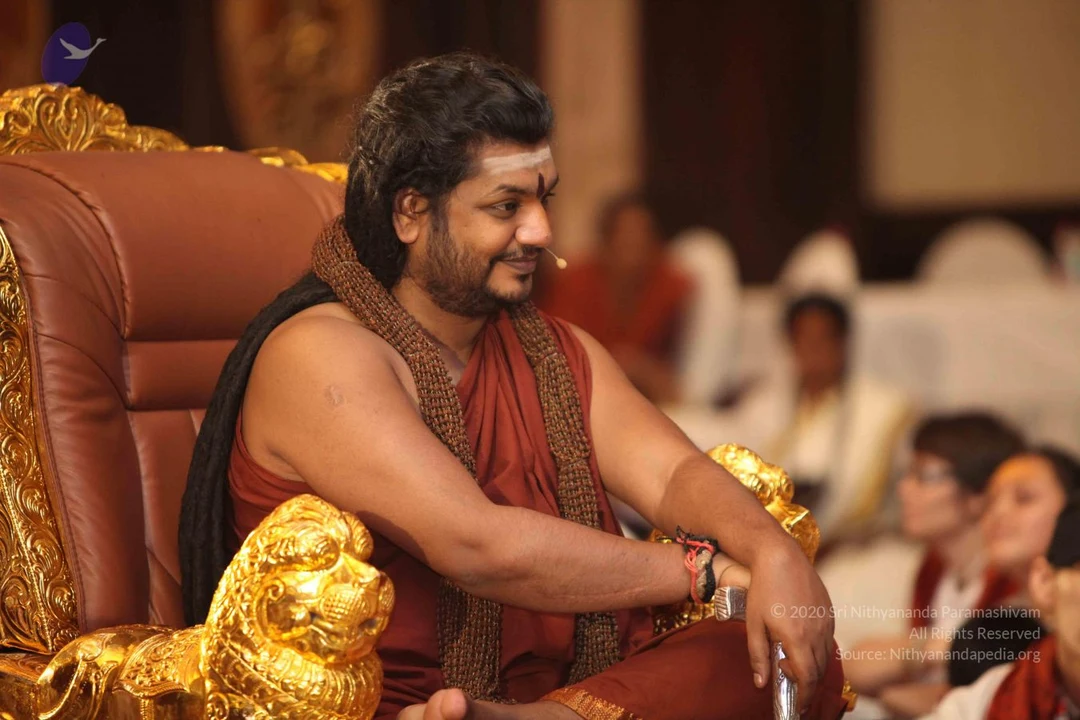
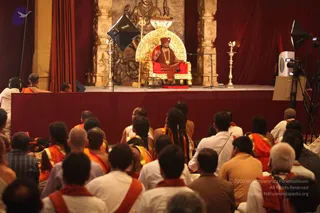
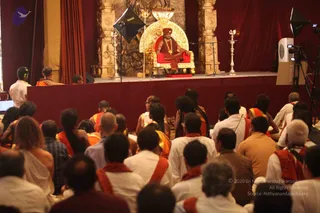
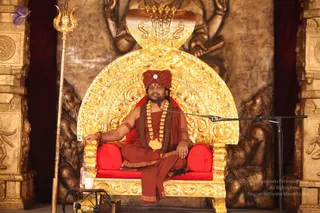
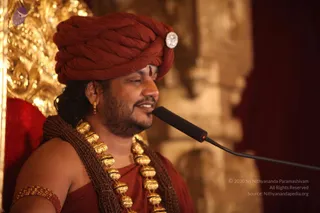
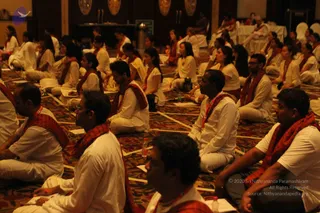
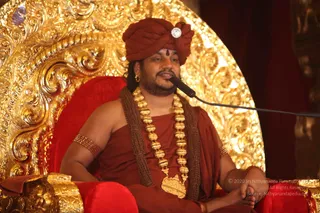
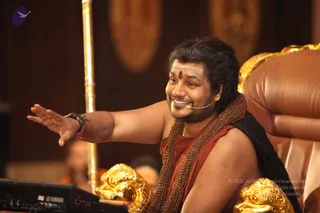
Indoor satsang in a hall with dark wood panelling. A man in saffron-orange robes and a rudraksha mala sits on an ornate gold-and-brown throne with carved lion-head arms, holding a discourse. A tall gold trident stands at left, and a painting of a seated figure in orange hangs on the wall behind him. Seated devotees in white clothes with red-orange shawls fill the foreground and right, and a microphone stands near the throne. The seated man has long swept-back dark hair and rudraksha malas, which the page-matched cues support as a probable Swamiji, seated on the throne during satsang.Photograph of a large hall with an ornate patterned carpet where a seated audience of many devotees in white kurta and dhoti with red-and-maroon shawls sit on the floor and on white chairs, several holding open booklets. A stage at the far left under gold drapery holds a lit lamp and a standing figure in a light outfit at a microphone, while a distant speaker is seated. Arched doorways with gold medallions lie to the right, and a satsang discourse is in progress.A man with long dark hair and a white tilak on his forehead sits on an ornate throne with a brown leather backrest and gold carved lion-head armrests. He wears a rust-red cloth wrap over his shoulder and a coarse brown beaded rope across his chest, with a gold chain visible at his neck. His right hand rests against his chin while he gazes to the side, and a small microphone is clipped near his mouth. Blurred audience members and a woman in the background suggest a seated satsang or discourse hall with warm lighting.

July 09 2016

Original wiki page
Contents

Title:

Natural Principles of Masculine & Feminine Physiology

Description:

“With seeking, spiritual practice starts; with right Guru’s initiation, spiritual practices end! After that, no matter what you do, it is manifesting…” expresses Paramahamsa Nithyananda in Nithya Satsang of 9th July 2016 at Varanasi on Kena Upanishad. Expounding on the sacred truths of the Shanti Mantra and the first verse of this Upanishad, His Holiness teaches us the ‘Supreme Thought Current’ or the supreme mental setup of MANIFESTING what we want in life. He insists on ‘sitting with tremendous declaration’ to MANIFEST. Only with the right Guru’s initiation, the seeds of extraordinary powers, extraordinary experiences are sown, and thus the disciple or seeker can MANIFEST. Spiritual practices, then, should be done only from the context of manifesting in our every step, in thinking, walking, talking., living. He also beautifully defines SEEKING as the coming to the basic questions of life. And whenever we face failure, the need to ask fundamental questions and reorganize, reinvent without the fear of dropping, burning some part of us – that courage is called RUDRA.

VideoAudio

Transcript

nithyānandeśvara samārambhām nithyānandeśvari madhyamām | asmat āchārya paryantām vande guru paramparām || I welcome all of you with my love and respects. I welcome all the devotees, disciples, Samajis, Satsanghis, Sri Mahants, Mahants, Kothari, Thanedar, visitors, YouTube subscribers, viewers. I welcome all of you with my love and respects. Let’s enter into Kena Upanishad. The more and more, I chew the thought current, and see it’s effect on the system, more and more, I fall in love with Upanishads. Sometimes I wonder, why, why, the humanity is missing, these great powerful liberating thought currents. keneṣitaṁ patati preṣitaṁ manaḥ kena prāṇaḥ prathamaḥ praiti yuktaḥ | keneṣitāṁ vācamimāṁ vadanti cakṣuḥ śrotaṁ ka u devo yunakti || 1 || There cannot be more non-assumption questions, non-assuming questioning, there cannot be more Pure Questioning than this line: keneṣitaṁ patati preṣitaṁ manaḥ kena prāṇaḥ prathamaḥ praiti yuktaḥ | keneṣitāṁ vācamimāṁ vadanti cakṣuḥ śrotaṁ ka u devo yunakti || 1 || “By whom willed and caused, does the mind go towards its object? By whom directed and United with which does the first vital life energy, the Chief cause, comes forth towards its activities? At whose WILL does the speech gets activated and speaks, enlivened and directed by what luminous divine power? Indeed do the eyes and the ears engage in their functions.” Pure questioning in the form of poetry that is the beauty of Upanishad. Pure questioning does not mean, they are dry. Pure questioning in the form of poetry. Amazing renunciation with extraordinary romance. amazing renunciation with extraordinary romance. Pure questioning in beautiful poetry. One more powerful lie taught to you and makes you powerless is, if you are logical, rational you cannot be poetic flowing; if you are masculine you can’t be feminine, if you are feminine you can’t be masculine. This is one of the most powerful lie, taught to you, which makes you powerless. Along with revealing the sacred secrets and sacred truths I need to tell you, the dirty lies taught to you; keneṣitaṁ patati preṣitaṁ manaḥ kena prāṇaḥ prathamaḥ praiti yuktaḥ | keneṣitāṁ vācamimāṁ vadanti cakṣuḥ śrotaṁ ka u devo yunakti || 1 || When I read this verse I am seeing the union of Pure Questioning, means powerful unassuming questioning, logic rationality and the beautiful poetry. This verse is like Anandeshwara, Sadashiva and Adi Shakti together, masculine and feminine together. Any muscle you may carry, the moment you identify that muscle is male, masculine and you try to dictate certain kind of ideas into it, it looses the ability to flow. Or, if you dictate certain identification and force it, you are denying the other part. You are going to be craving for the other part forever, and die in incompletion. This should be one of the important lesson in all my Gurukuls, do not brand your body, as male or female, and constantly program it. Listen. By its very natural physiology, how it functions let it function, that you can’t change. By it’s a natural physiology, if it is male it will function in certain male qualities, if it is female it will function with certain female qualities, but physiological masculine feminine natural principles are different, artificial psychological forced thought currents about the masculine and feminine are different. When you artificially force the social concepts of masculine and feminine, when you artificially push the social concept of masculine and feminine, the psychological concept of masculine and feminine, you suppress the free flow of muscle memory. I tell you, whatever muscle-memory you pick up by your own lifestyle; for example; if you eat too much, you will feel sleepy. This kind of muscle memories which you pick up by your habits, trial and error, can always be simply easily completed, but the muscle-memories you pick up, from the society has the definition or fantasy which is again by the wrong people and wrong thought current, wrong understanding, unenlightened resources, can cause deep complications from which you will never be able to get out, uunterstand. That is why I say natural physiological principles of masculine, feminine genders should be lived, but constant reminding of what society talks or considers as gender, those psychological principles, should not get into your system. They should not become part of your muscle-memory or bio-memory, because the suppression and repercussions they can cause, listen, suppression and repercussions they can cause, the incompletions they create, the tension they generate can cost your conscious growth for births, for many births. Don’t. Don’t. The ideas, the ideas from unenlightened resources should be denied access into your inner space. Let your muscle-memory, bio-memory grow out of your own experiments, trials, errors right, wrong, by celebrating you. A kid should not be given the idea of what is so called masculine, so called feminine. Let he or she grow up, they will naturally understand their physiology and the natural principles of their physiology. They should have their own understanding, only give them the subtle intelligence to watch themself, micromanage themselves. Then they will know, what hurts, what gives pleasure, what gives joy, what gives peace, what gives healthy feeling, what makes them feel sick. They will understand the natural physiological principles of their gender. Otherwise, feeding the misunderstandings from unenlightened resources, is one of the main reason where whole humanity is stuck. Sometimes, even till 90, you are craving for pornography. What it means? Your next janma [birth] is going to be hell. Listen, even when body cannot act, when your mind is craving, you are going to enter into the body, even before the body gets matured, mind will start craving. When the body cannot act still your mind is craving, you are going to enter into the next body, even before the body gets matured your mind will start carving. Means the physical maturity age will be drastically reduced, which will directly speak on your physical health, mental health, your ability to handle yourself and the longevity, on everything it is going to have an impact. I have a story. In a class one student asked what gender is computer? The teacher thought it would be a good exercise to have the students decide what they though the gender should be. She split the class in two groups appropriately enough by gender. Asked them to decide whether computer should be masculine or feminine now. Computer is male or female. Both groups were required to give at least 4 reasons for their recommendation. The men’s group decided the computer should definitely be of the feminine gender, because, no one but their creator understands their internal logic. The native language they use to communicate with other computers is incomprehensible to everyone else. Even the smallest mistakes are stored in long-term memory for possible later review. As soon as you make a commitment to one you constantly find yourself spending more money on accessories for it. The women group however concluded computers should be male, masculine, because in order to do anything with them you have to turn them on. They have a lot of data but still can’t think of themselves. They are supposed to help you solve problem, but half the time they are the problem. Fourth, as soon as you commit to one you realize if you had waited a little longer you could have gotten a better model. The social concepts and definitions of gender, gender related issues. If you take it as a joke great, but if you seriously record them in your muscle memory and bio memory and keep them in your cognition, it can be dangerous. Please listen. It can be dangerous. When a male body made to believe certain concepts of masculine, certain concepts of being a male by the society, that kind of a tension that muscles, muscle-memory, bio-memory goes through, the kind of a suppression it goes through, the kind of a expectation it has about the other gender, the kind of an incompletion it suffers, and craves for the suppressed part, is hell. Such punishment for whole life, and the worst thing is, whatever you suppressed in you declaring yourself as the male and avoiding anything other than so called male, you will be searching for it in some other muscle, which you will never find, which you will never find, and, this seeking goes on tortures the person who is living with you, who has committed their life to you. It is like you torture the other person, the other person, she has her own suppressions. She is also part of the society, unenlightened resources. She has suppressed tons of things in the name of she being a female. So, all that she is searching in your muscles. It’s like a in Indian villages this early morning hen will come out with chicken and start searching all the dustbins for food. Searching. Searching in others for the suppressed component in your muscle. Searching in others, for the suppressed component in your muscle, is the most frustrating thing that can happen to anybody in life. Even if you are a potato couch, because you did trial and error on yourself, it’s easy to get you out of it, but the patterns you pick up from others, believe it as your muscle memory, install it in your bio- memory, takes such long Completion, requires strong Completion process for you to get out. Again and again it triggers violence, dissatisfaction, incompletion, resistance, a wrong principles of sex. Understand this word a wrong principles of sex. Earlier in India men used to wear only the dhoti and maybe one small angavastra [cloth for body]. Slowly, slowly they exposed upper body, started getting associated with the idea of sex. Then they’ll have to cover, then, now even the exposed shoulders gets associated with the ideas of sex. I don’t know when the exposed eyes and nose are going to get associated with the idea of sex, and when you’ll have to wear complete covering. Understand, various parts of body triggering various ideas concepts patterns in your system shows how the societies going lower and lower level, and our common agreements are sinking deeper and deeper and stinking. Our common understandings do matter. Our common understandings do matter, because, knowingly or unknowingly even if you understand the higher principles in your day and day life you’re forced to live the common understandings. Unless you are a Naga, or you declare yourself to be Naga…..Indian cities are no more safe for Naga Sadhus. Even recently I saw 2, 3 videos uploaded by some of our Akhada Sadhus in the Facebook. Only if they travel two, three together it is safe. Understand. This line manifests, demonstrates the inner space of the Upanishadic Rishi through whom this verse was sung, revealed. It embodies the Pure Questioning, the rationality in its peak, and poetry in its depth, masculine and feminine in the space of Completion. Masculine and feminine in the space of completion. The muscles which complete, muscles which are complete, muscles which radiate Completion, demonstrates the grace of masculine and feminine principles. This should be one of the important lessons for our Gurukuls. Kids should be allowed to grow with natural physiological principles of their bodies, should not be abused with the concepts from unenlightened sources about masculine, feminine ideas which cripples their psychology, suppresses, inserts the suppression in their muscle-memory and bio-memory, makes them incomplete and makes them run around searching for the other part forever in their life, which they are never going to discover. The natural principles of sex does not need a part of you getting suppressed. It’s again the so-called stupid modern societies concept that unless you have a need, you will not act. It is like how the currency is, unless you are kept in poverty you will not work. Otherwise for who's sake we work, nobody knows. Whole planet earth, all the countries put together 1.33 trillion dollar debt. To whom? To whom? How the stupid concept of money is generated by the common understanding that only if people are kept in poverty they can work. No. It is not necessary, but it is a wrong common understanding. Same way, one of the most abusive common understanding is only if one part of you is suppressed you will start searching for it. You will start entering the married life; you will start living the married life. The life will go on the earth. No. No. Grain based civilization, which does not require poverty to make people work. Consciousness based understandings about masculine feminine principles, which does not require suppression for human beings to function and reproduce. The natural physiological principles are powerful enough to run the life as Sadashiva wants on the planet earth and keep the humanity alive. The artificial concepts about male female does not need to be inserted into your psychology in turn effect your muscle-memory and bio memory for the life to go on and the human beings to flourish, thrive, survive on the planet earth. Mediate today on the pure inner space where the masculine and feminine principles, understandings exist but not the social conditionings about masculine and feminine. Understand masculine feminine natural principles are different, socially conditionings are different. Why the computer is male or female? All the 8 principles are social conditions – meditate on them its not a joke, it’s truth. The social conditionings, conditioning of being male and female, need to be renounced for the complete Completion and renunciation of social conditioning about male, female makes most beautiful Beings on the planet earth. Beings like Krishna, beings like Sadashiva, Sundareshwara, Meenakshi. In recent times Ramakrishna, Ramana Maharishi, Anandamayi, Paramahamsa Yogananda, some of the most beautiful, graceful Beings are the people who renounced the social conditioning of being male and female, who held on to the natural principles of masculine and feminine energies. I’ll produce tons of these graceful Beings. This should be one of our important lessons in our Gurukul system. The natural principles the physiological understandings of being male and female, should be taught and the social conditionings should not be allowed. With this, I wanted the Vaakyartha Sadas to be done on this subject today. The natural principles of being male, female and social conditionings of male, masculine and feminine concepts. Natural, what all the natural physiological principles, what all the social conditionings? When we mix both of them and mess up how we suffer? This should be the subject for Vaakyartha Sadas for today. I bless you all. Let you all radiate with integrity, authenticity, responsibility, enriching, causing Living Shuddhadvaita Shaivam, the Eternal Bliss, Nithyananda. Be Blissful. Thank you.

Title:

The Supreme Thought Current Of Manifesting

Description:

9 Jul 2016 morning satsang. “With seeking, spiritual practice starts; with right Guru’s initiation, spiritual practices end! After that, no matter what you do, it is manifesting…” expresses Paramahamsa Nithyananda in Nithya Satsang of 9th July 2016 at Varanasi on Kena Upanishad. Expounding on the sacred truths of the Shanti Mantra and the first verse of this Upanishad, His Holiness teaches us the ‘Supreme Thought Current’ or the supreme mental setup of MANIFESTING what we want in life. He insists on ‘sitting with tremendous declaration’ to MANIFEST. Only with the right Guru’s initiation, the seeds of extraordinary powers, extraordinary experiences are sown, and thus the disciple or seeker can MANIFEST. Spiritual practices, then, should be done only from the context of manifesting in our every step, in thinking, walking, talking., living. He also beautifully defines SEEKING as the coming to the basic questions of life. And whenever we face failure, the need to ask fundamental questions and reorganize, reinvent without the fear of dropping, burning some part of us – that courage is called RUDRA.

VideoAudio

Title

Powerful Shodasi Initiation || IA || Varanasi || 09 July 2015

Description

Name Of The Convention: Inner Awakening Session on: Shodasi Initiation Date : Varanasi, India Venue : 09 July 2015

In this video Supreme Pontiff of Hinduism HDH #Nithyananda Paramashivam initiates all the delegates into a powerful shodasi initiation on reciting the syllables. This is an excerpt from the Shodasi Initiation conducted on 05 August 2017 in Varanasi, India. Delegates were initiated into an intense process to experience the power of the syllables.

The Supreme Pontiff of Hinduism Jagatguru Mahasannidhanam His Divine Holiness Nithyananda Paramashivam (HDH) is the reviver of #KAILASA - the ancient enlightened civilization and the great cosmic borderless Hindu nation. Revered as the incarnation of Paramashiva - the primordial Hindu Divinity, HDH has a following of 2 billion Hindus worldwide with de facto spiritual embassies in over 150 countries. He has worked untiringly for over 26 years for the revival of Kailasa, for global peace and to give super conscious breakthrough to humanity. He has survived the worst persecution of multiple assassination attempts on person and on character by anti-Hindu elements. He is collecting, organising, preserving, time capsuling, decoding, spreading and reviving 20 Million source books of Hinduism and the 64 sacred arts & sciences like Ayurveda, music, dance, sculpting, astrology, vastu and much more. Close to 20,000 hours of HDH’s timeless talks have been recorded till date (Sep 2020), which are a treasure trove of powerful cognitions to solve individual and global problems of any kind.

Title

Awaken Non Mechanical Parts of The Brain || Part 1 || IA || 09 July 2016

Description

Name Of The Convention: Inner Awakening Session on: Awaken Non Mechanical Parts of the Brain Part 1 Date : 09 July 2016 Venue : Varanasi, India

In the video, Supreme Pontiff HDH #Nithyananda Paramashivam uses sixteen sounds called Sodashi Vidya to make the non-mechanical parts of brain becoming alive and functioning by supplying intense kundalini energy in order to break the incompletion based activities. This video is an excerpt on awakening the non mechanical parts conducted on 09 July 2016 in Varanasi, India.

The Supreme Pontiff of Hinduism Jagatguru Mahasannidhanam His Divine Holiness Nithyananda Paramashivam (HDH) is the reviver of #KAILASA - the ancient enlightened civilization and the great cosmic borderless Hindu nation. Revered as the incarnation of Paramashiva - the primordial Hindu Divinity, HDH has a following of 2 billion Hindus worldwide with de facto spiritual embassies in over 150 countries. He has worked untiringly for over 26 years for the revival of Kailasa, for global peace and to give super conscious breakthrough to humanity. He has survived the worst persecution of multiple assassination attempts on person and on character by anti-Hindu elements. He is collecting, organising, preserving, time capsuling, decoding, spreading and reviving 20 Million source books of Hinduism and the 64 sacred arts & sciences like Ayurveda, music, dance, sculpting, astrology, vastu and much more. Close to 20,000 hours of HDH’s timeless talks have been recorded till date (Sep 2020), which are a treasure trove of powerful cognitions to solve individual and global problems of any kind.

Link to Video:

Title

Awaken Non Mechanical Parts of The Brain || Part 2 || IA || 09 July 2016

Description

Name Of The Convention: Inner Awakening Session on: Awaken Non Mechanical Parts of the Brain Part 2 Date : 09 July 2016 Venue : Varanasi, India

In the video, Supreme Pontiff HDH #Nithyananda Paramashivam uses sixteen sounds called Sodashi Vidya to make the non-mechanical parts of brain becoming alive and functioning by supplying intense kundalini energy in order to break the incompletion based activities. This video is an excerpt on awakening the non mechanical parts conducted on 09 July 2016 in Varanasi, India.

The Supreme Pontiff of Hinduism Jagatguru Mahasannidhanam His Divine Holiness Nithyananda Paramashivam (HDH) is the reviver of #KAILASA - the ancient enlightened civilization and the great cosmic borderless Hindu nation. Revered as the incarnation of Paramashiva - the primordial Hindu Divinity, HDH has a following of 2 billion Hindus worldwide with de facto spiritual embassies in over 150 countries. He has worked untiringly for over 26 years for the revival of Kailasa, for global peace and to give super conscious breakthrough to humanity. He has survived the worst persecution of multiple assassination attempts on person and on character by anti-Hindu elements. He is collecting, organising, preserving, time capsuling, decoding, spreading and reviving 20 Million source books of Hinduism and the 64 sacred arts & sciences like Ayurveda, music, dance, sculpting, astrology, vastu and much more. Close to 20,000 hours of HDH’s timeless talks have been recorded till date (Sep 2020), which are a treasure trove of powerful cognitions to solve individual and global problems of any kind.

Link to Video:

Photos From The Day:

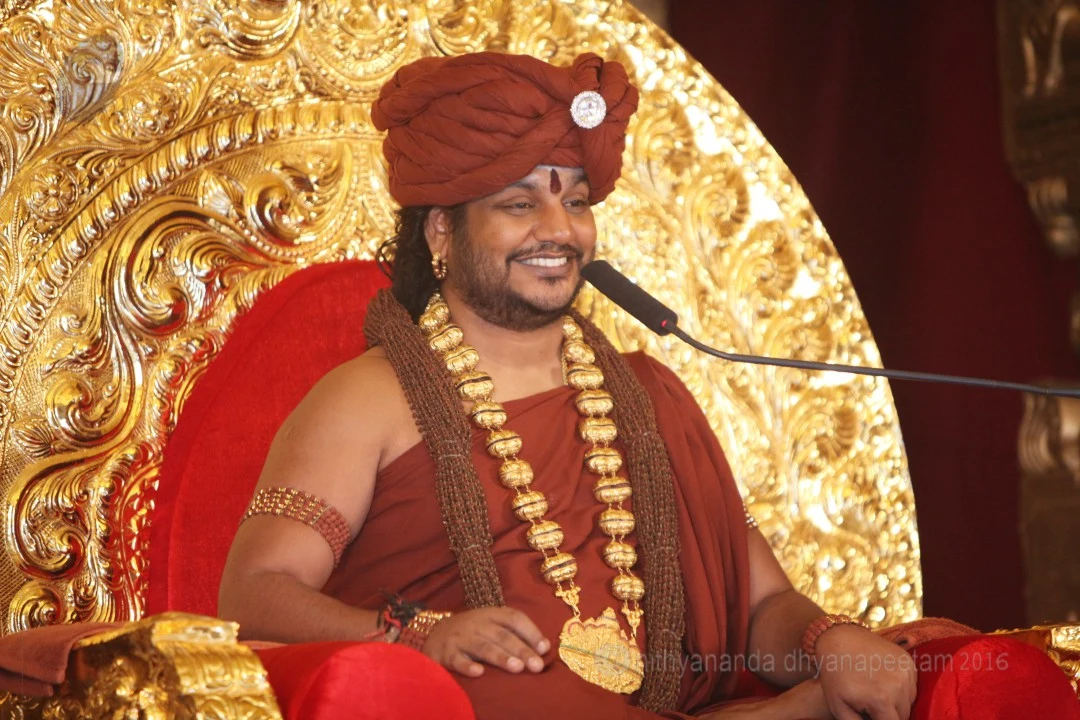
Nithya Satsang
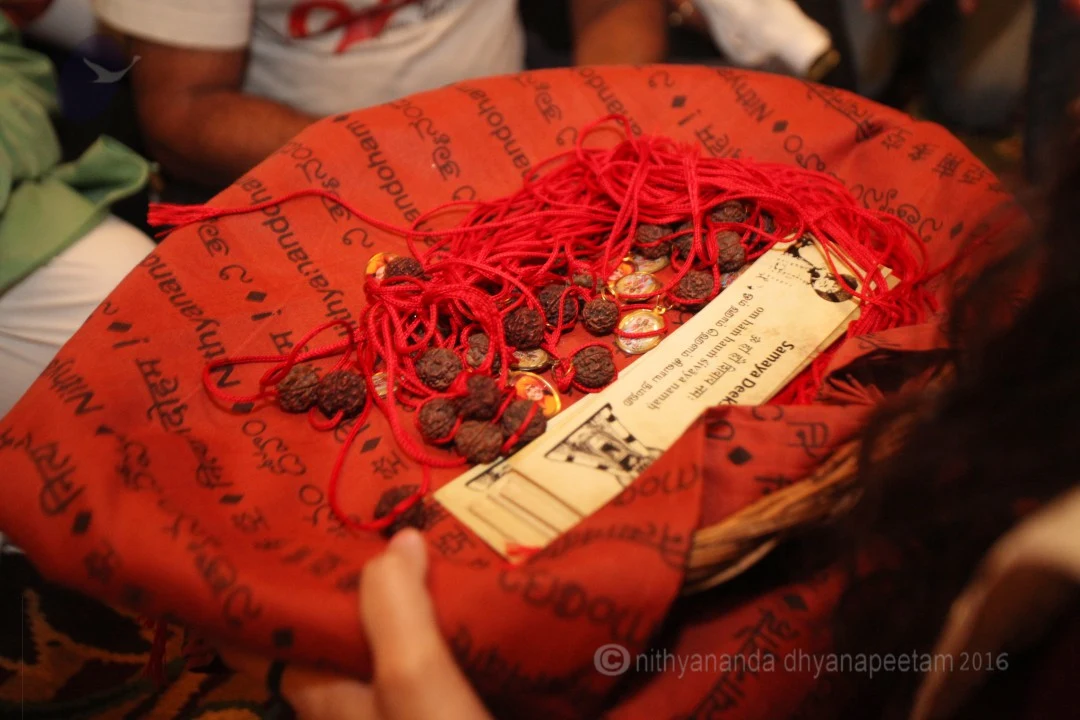
Guru Mantra Deeksha
Kalpataru Darshan
Third Eye Awakening and Shivoham session
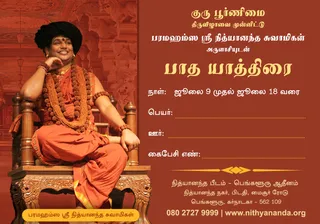
Flyer
Link to Facebook Page:

https://www.facebook.com/ParamahamsaNithyananda/posts/1074287739325742

Photos Of The Day:

Innerawakening-Varanasi-Morningsatsangh
Innerawakening-Varanasi-Powermanifestation

Innerawakening-Varanasi-Shivoham

Photos Of The Day:

FB-Photos-of-the-Day

01-SATSANG

02-SARVA-DARSHAN

03-SHIVOHAM-PROCESS

04-POWER-MANIFESTATION-SESSION

Photos from this day

View all 224 photos

Nithya Satsang

1 photoSource gallery
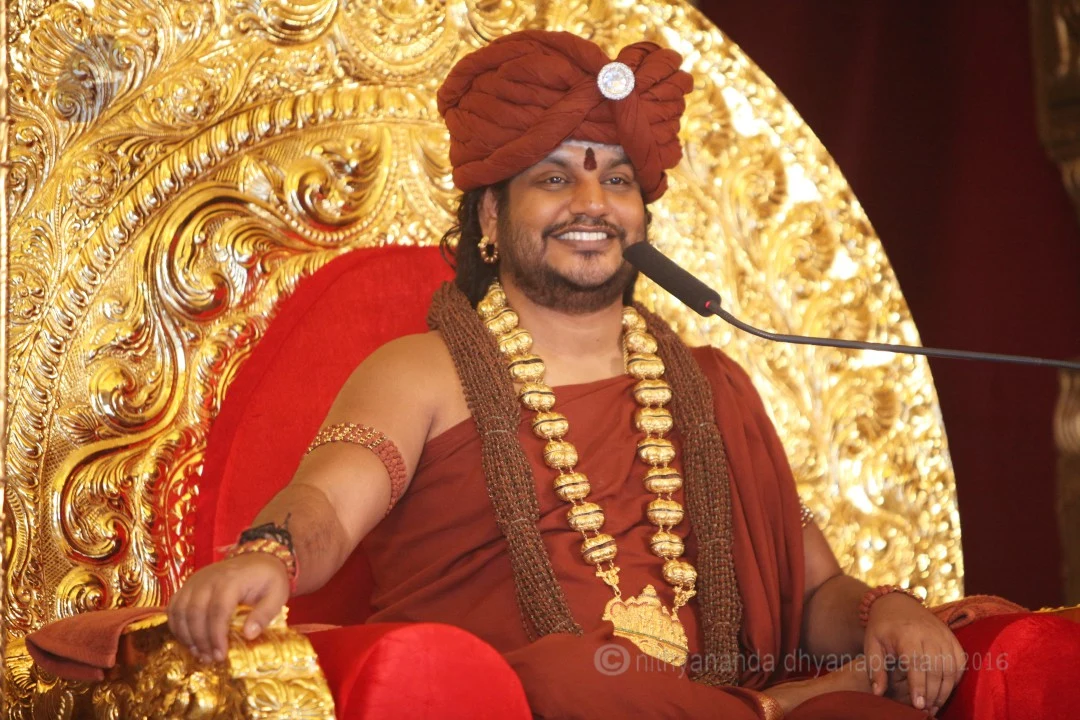
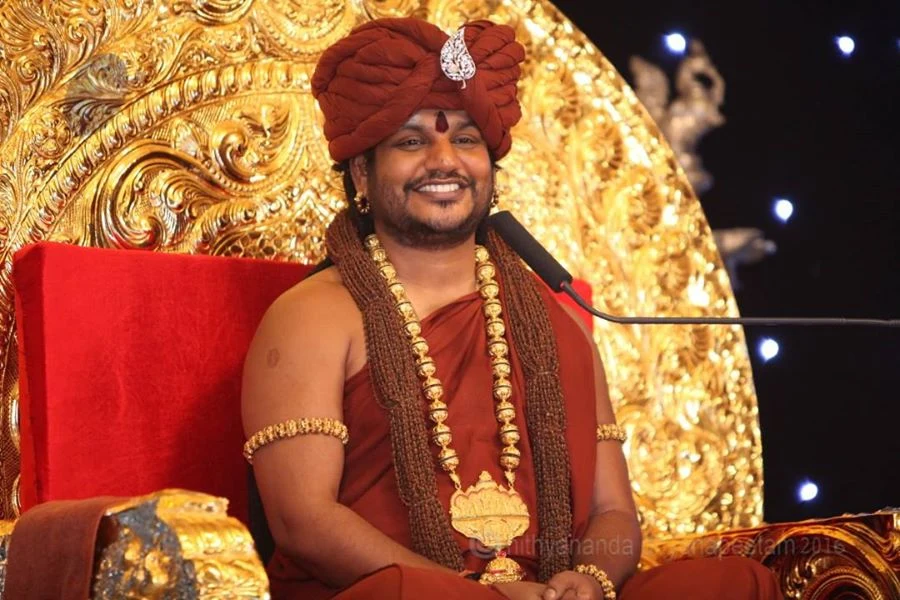
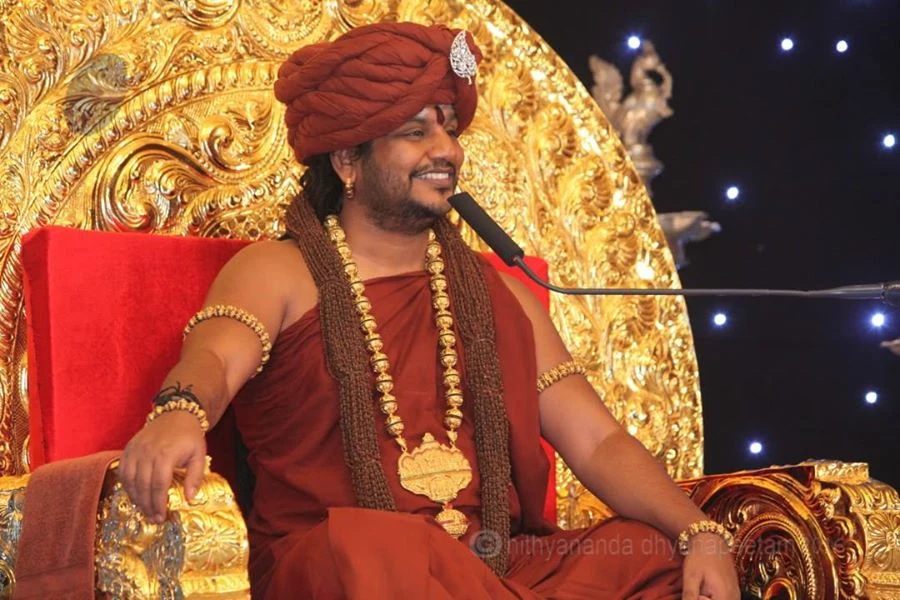
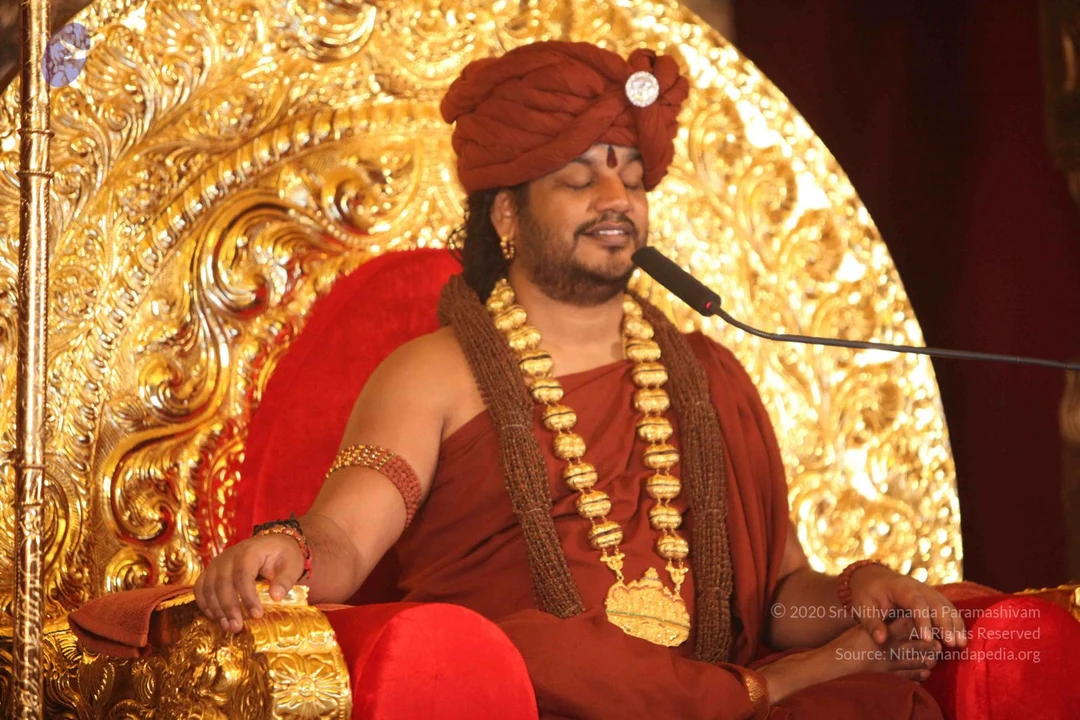
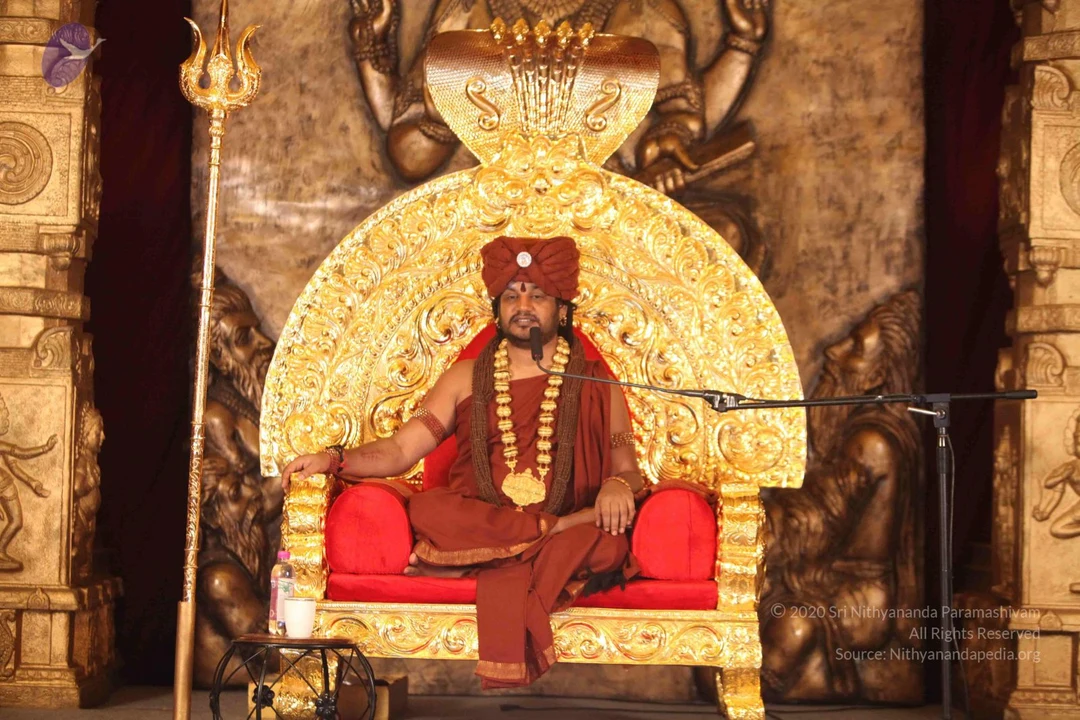
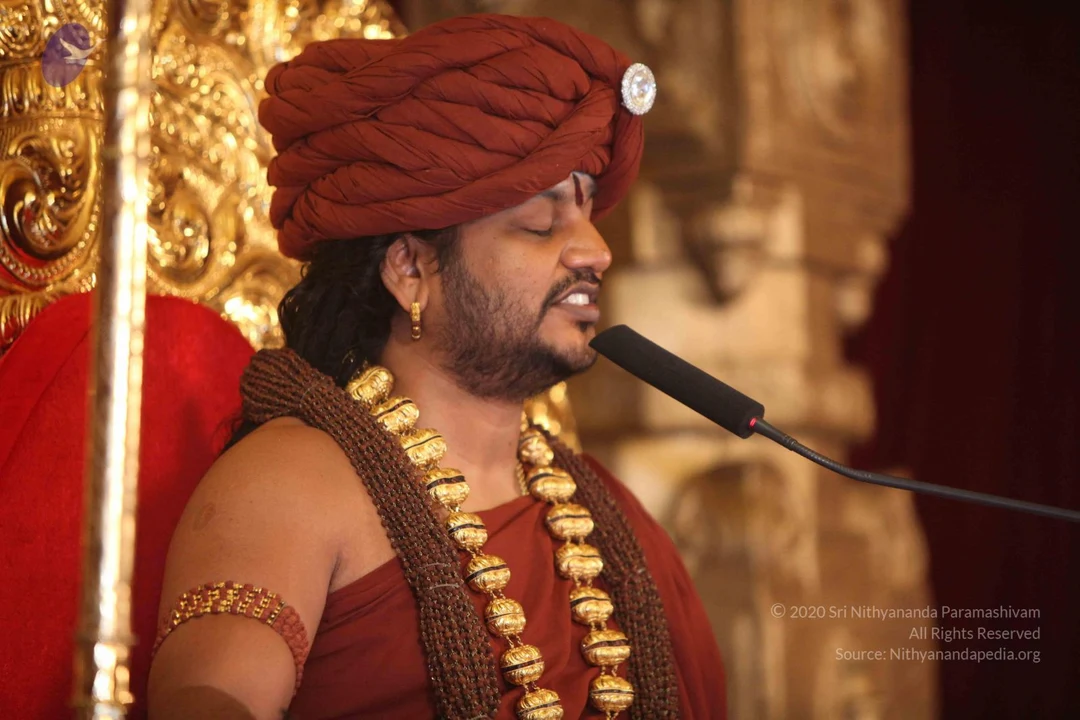
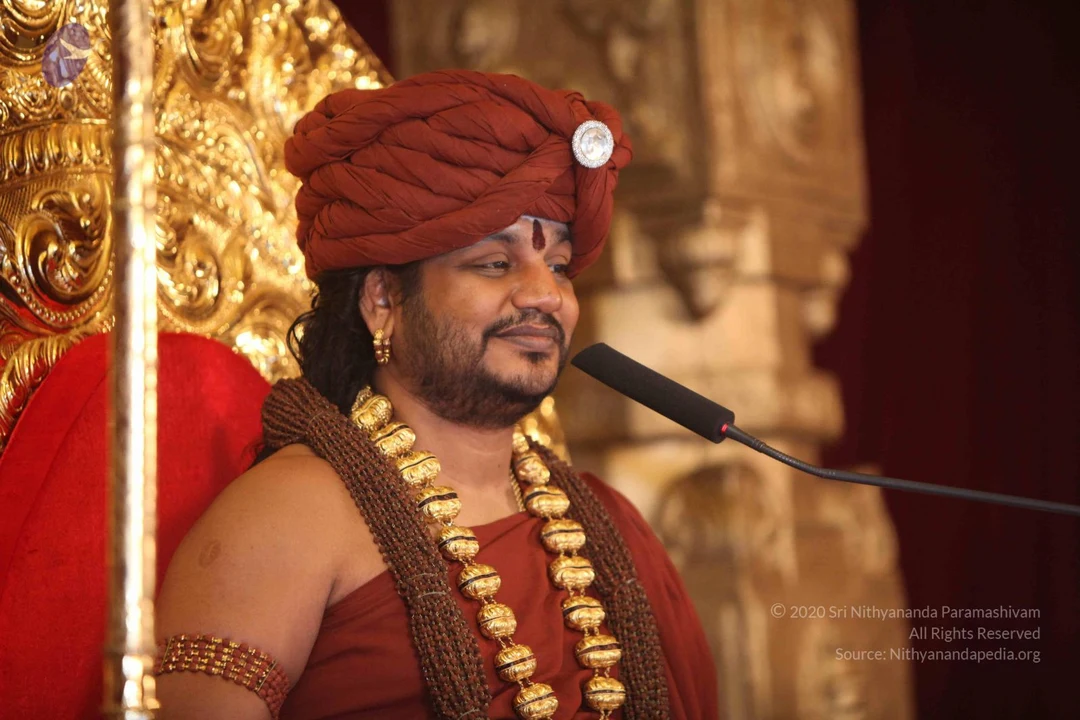
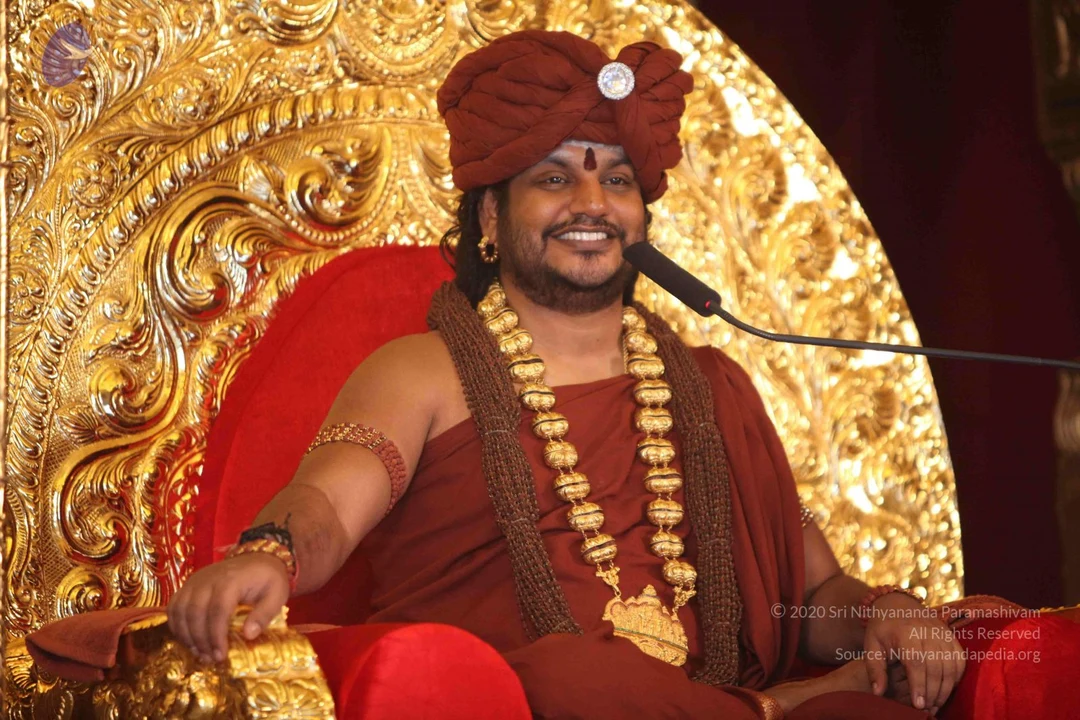
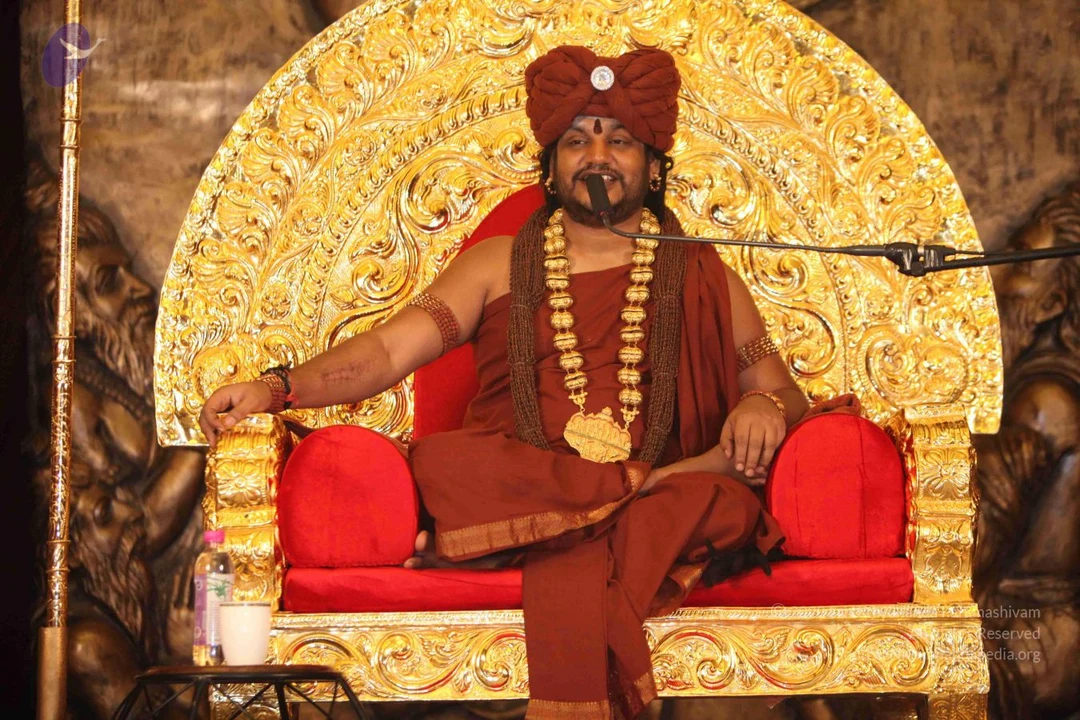
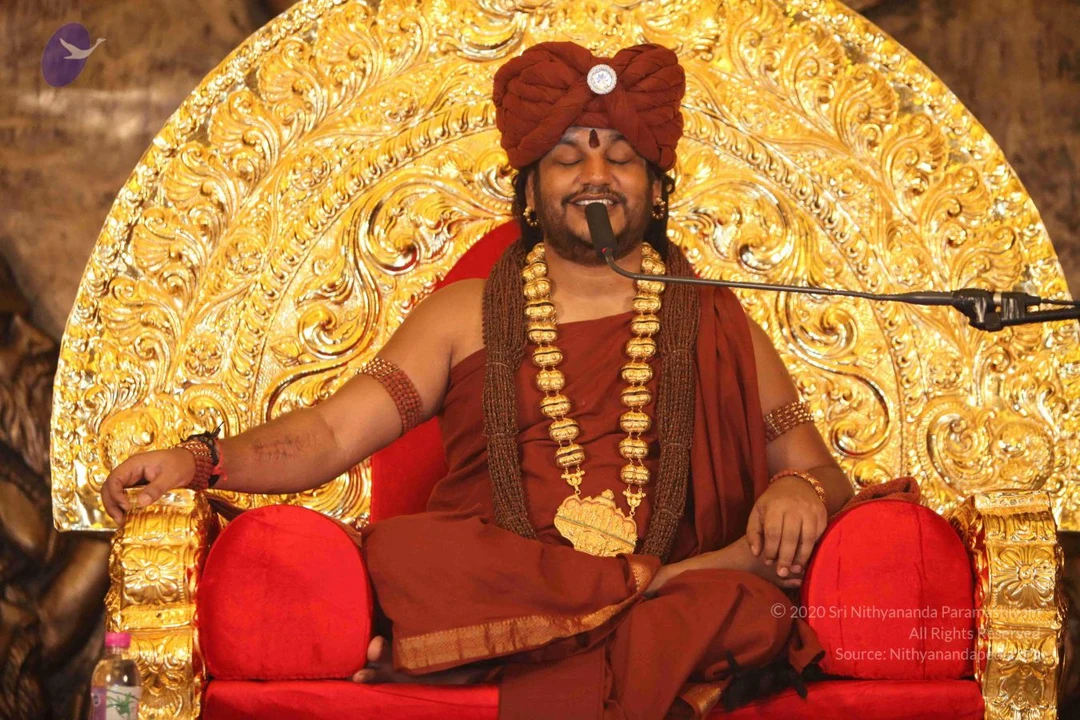
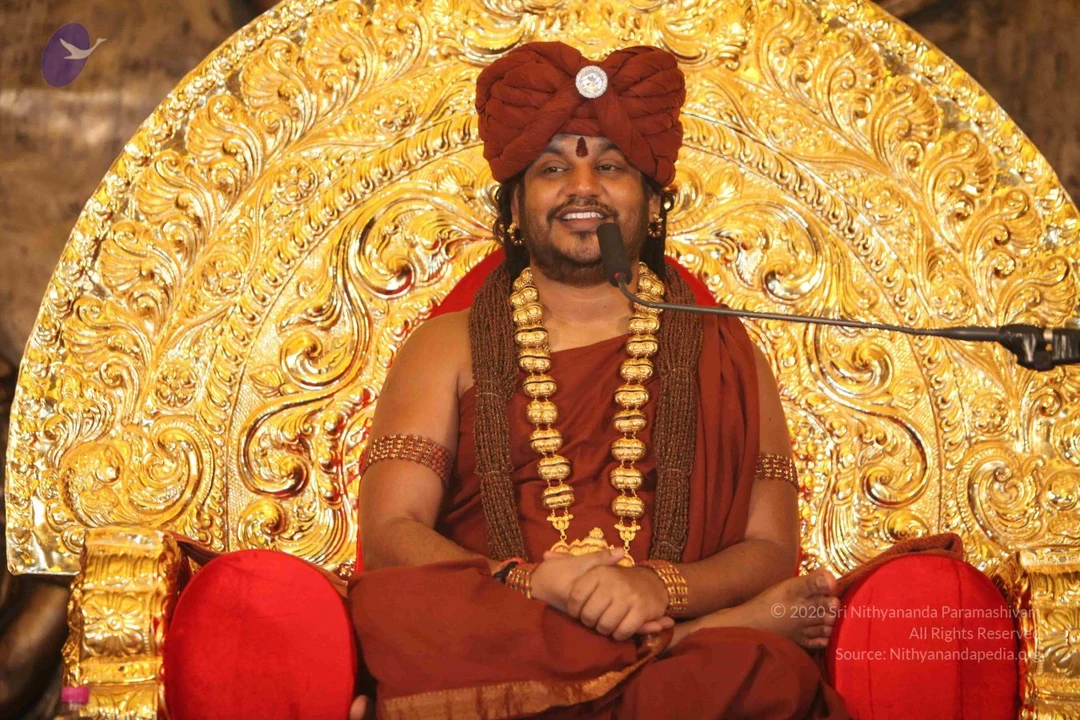
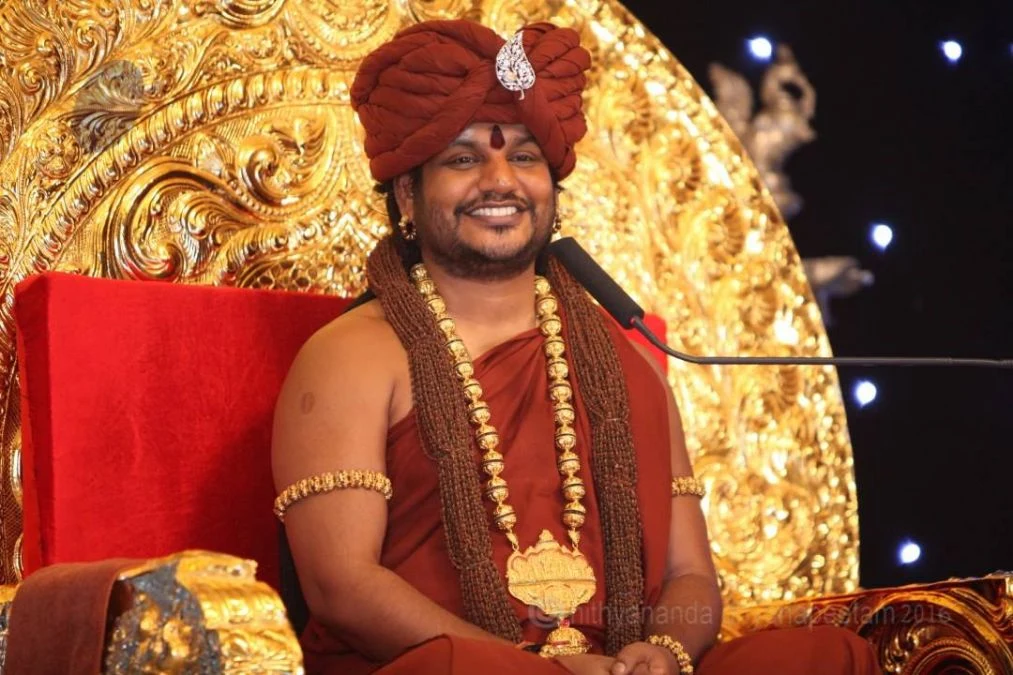
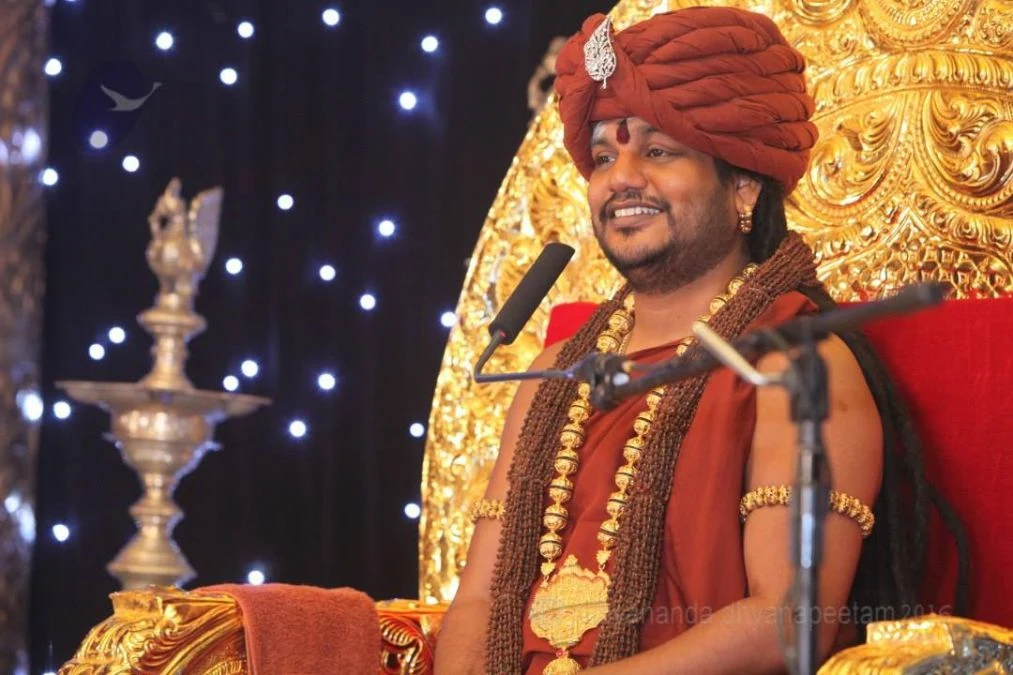
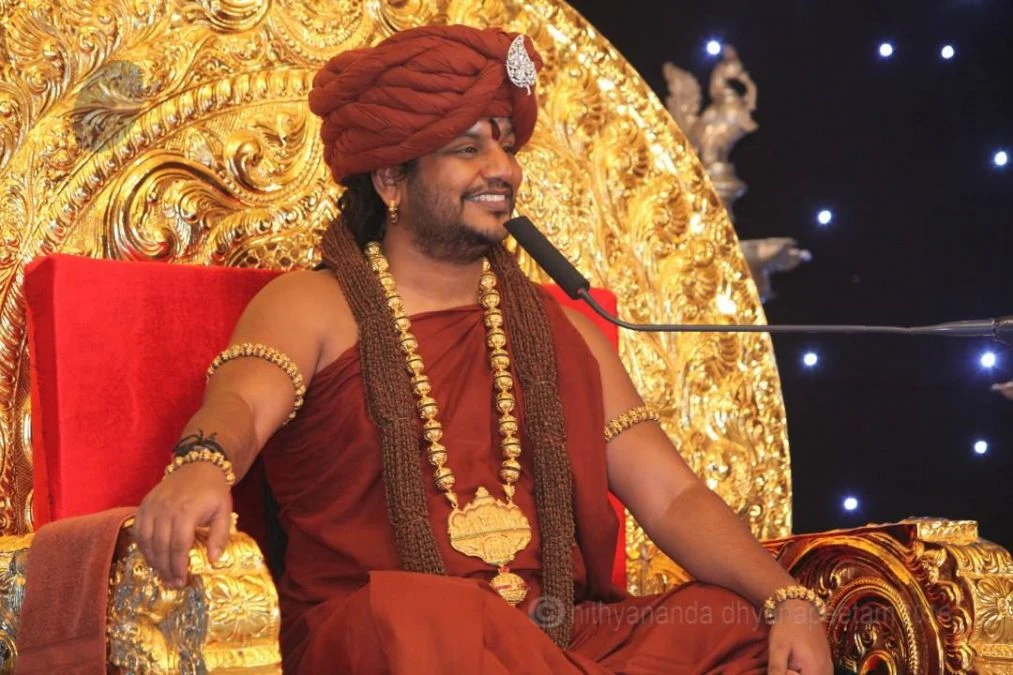
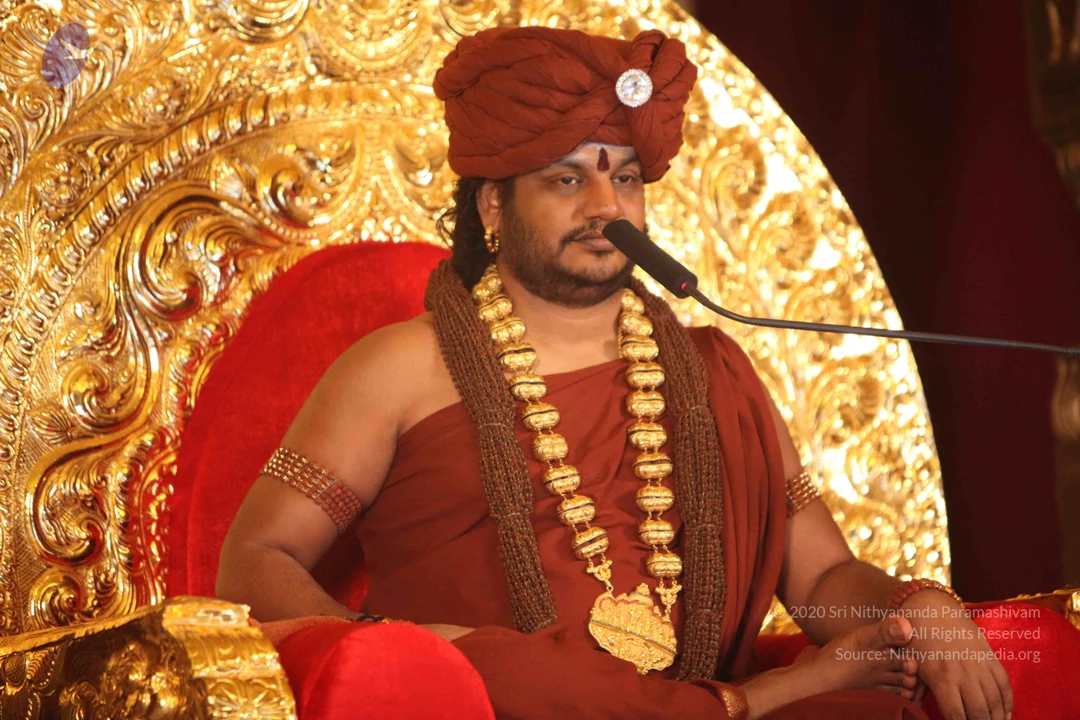
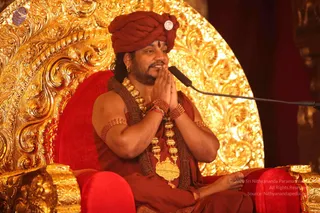
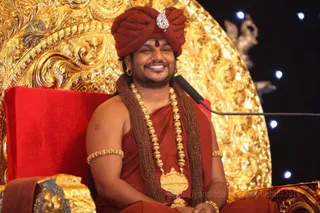
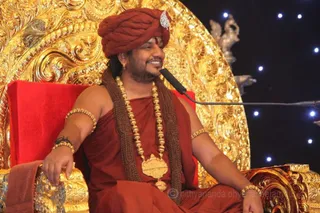
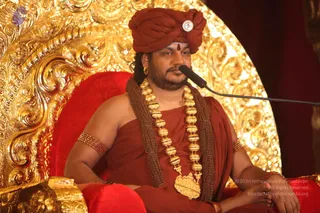
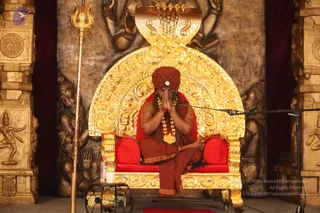
A seated man in a rust-red turban with a silver ornament and a red tilak on his forehead sits on a red cushioned throne with ornate gold carved panels behind him. He wears a rust-red robe, layered rudraksha beads, a heavy gold bead necklace with a gold pendant, and gold earrings and armbands. A black microphone stand is at right.

Guru Mantra Deeksha

1 photoSource gallery
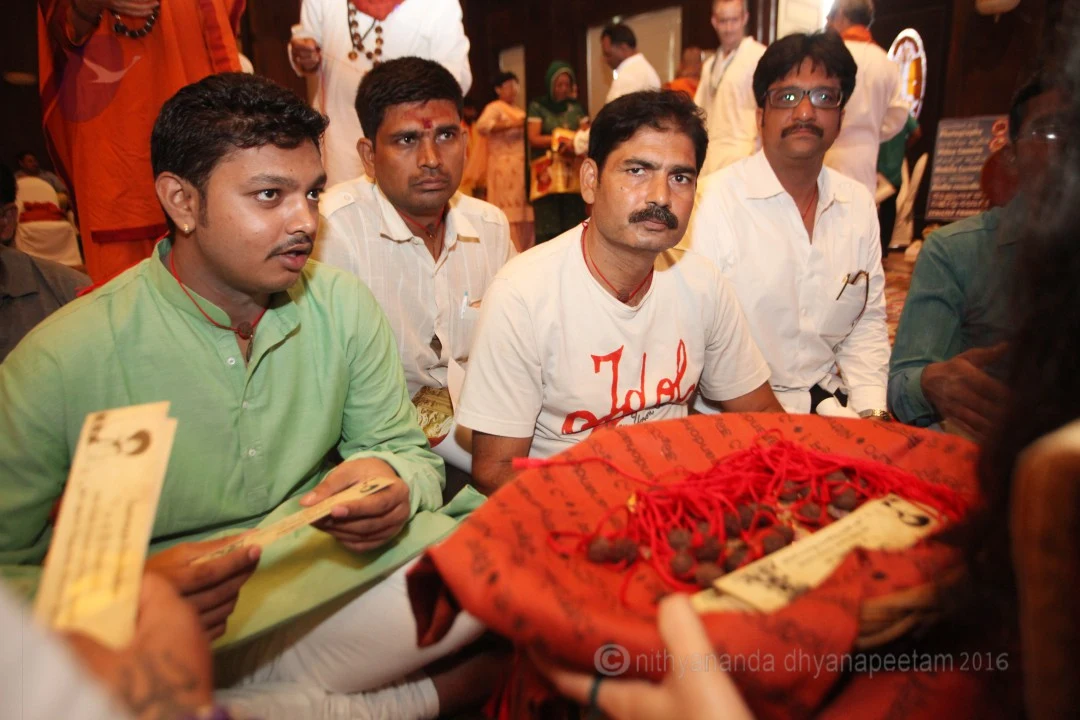
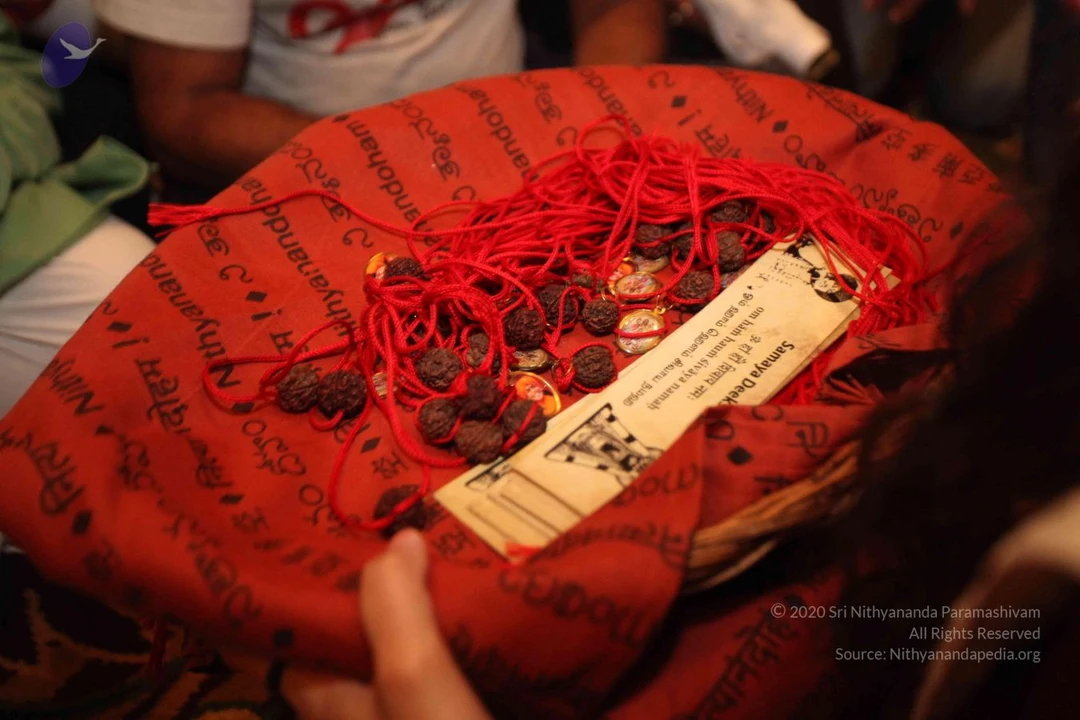
Photo of devotees seated on the floor at a Varanasi event. In the foreground a young man in a light green kurta with a red thread around his neck holds small cream-coloured slips of paper. Beside him a man in a white shirt has a red tilak on his forehead and a red thread necklace. A man in a white t-shirt with red lettering and a red thread necklace sits in the centre, and a bespectacled man in a white shirt with a mustache sits to the right. Across the front, an orange cloth printed with script holds a heap of rudraksha beads strung on red thread, with a cream slip beside them.

Innerawakening-Varanasi-Morningsatsangh
77 photosSource gallery
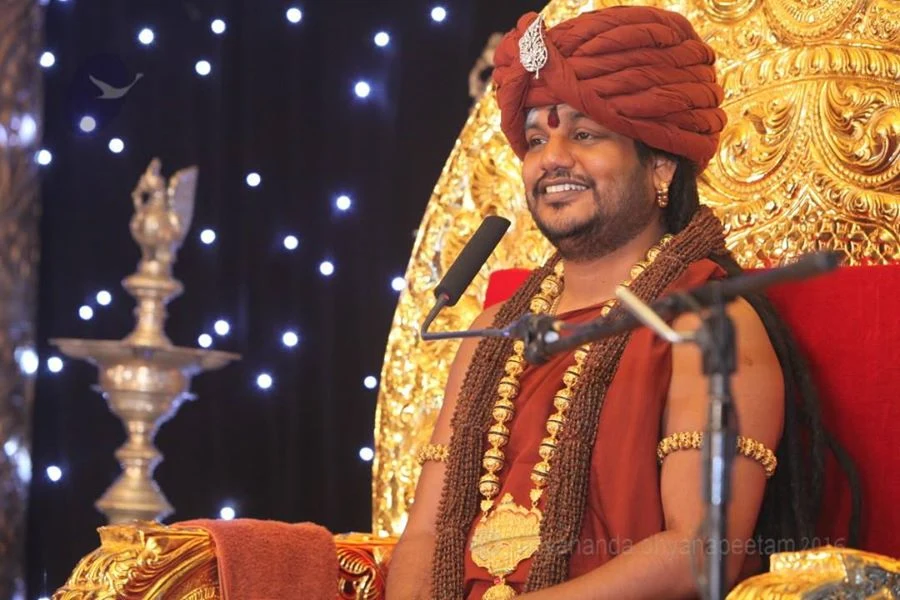
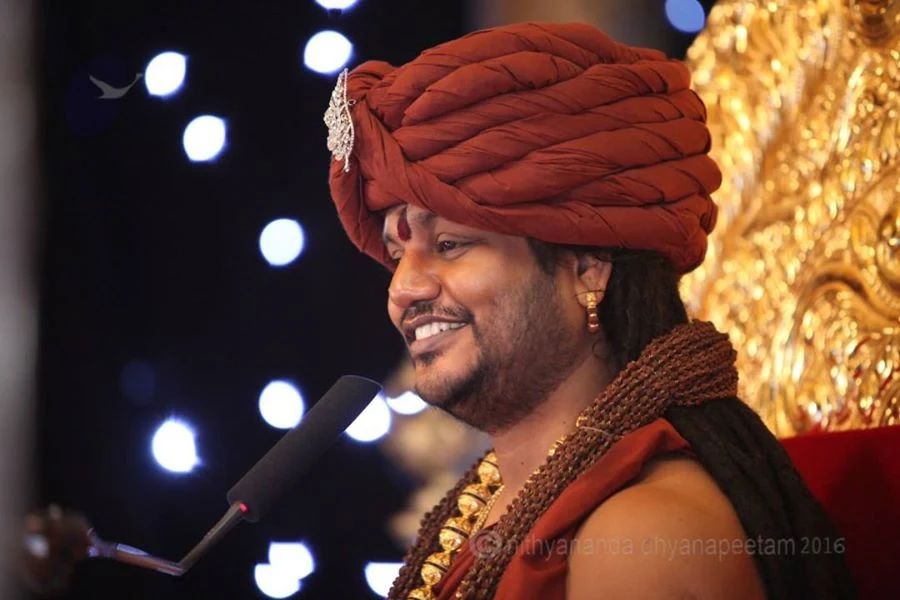
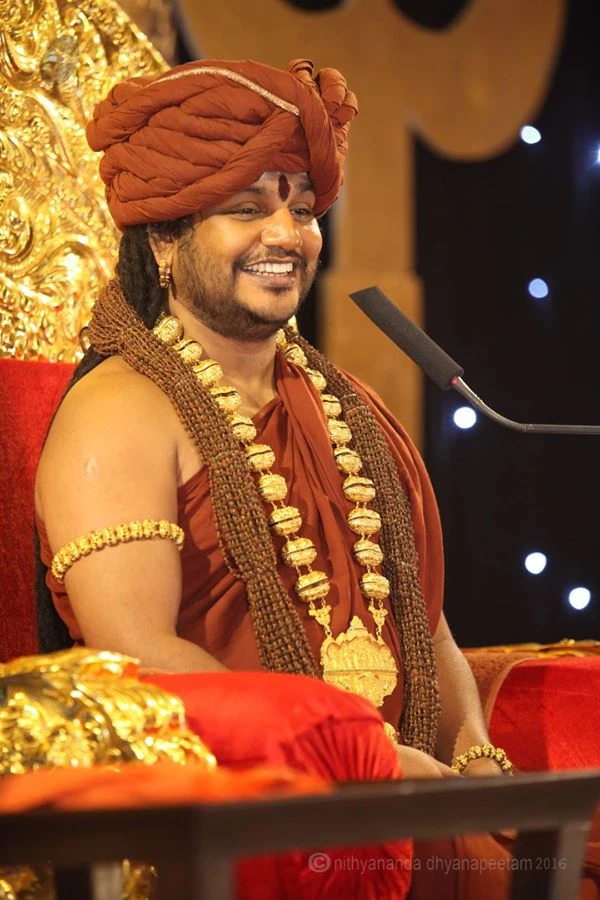
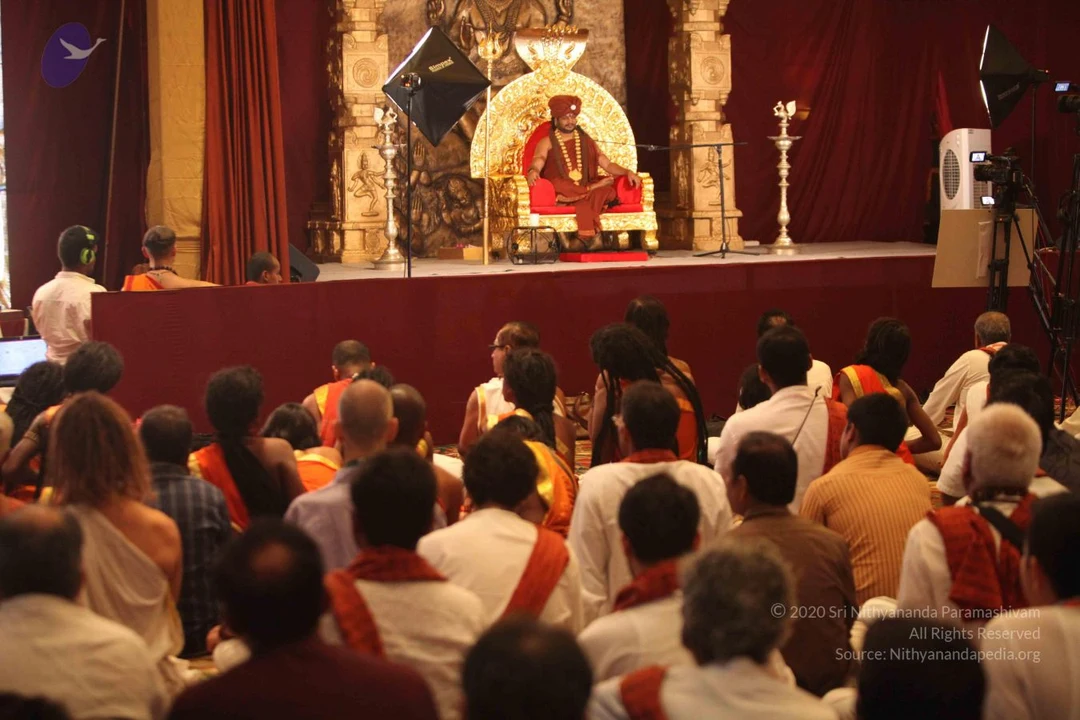
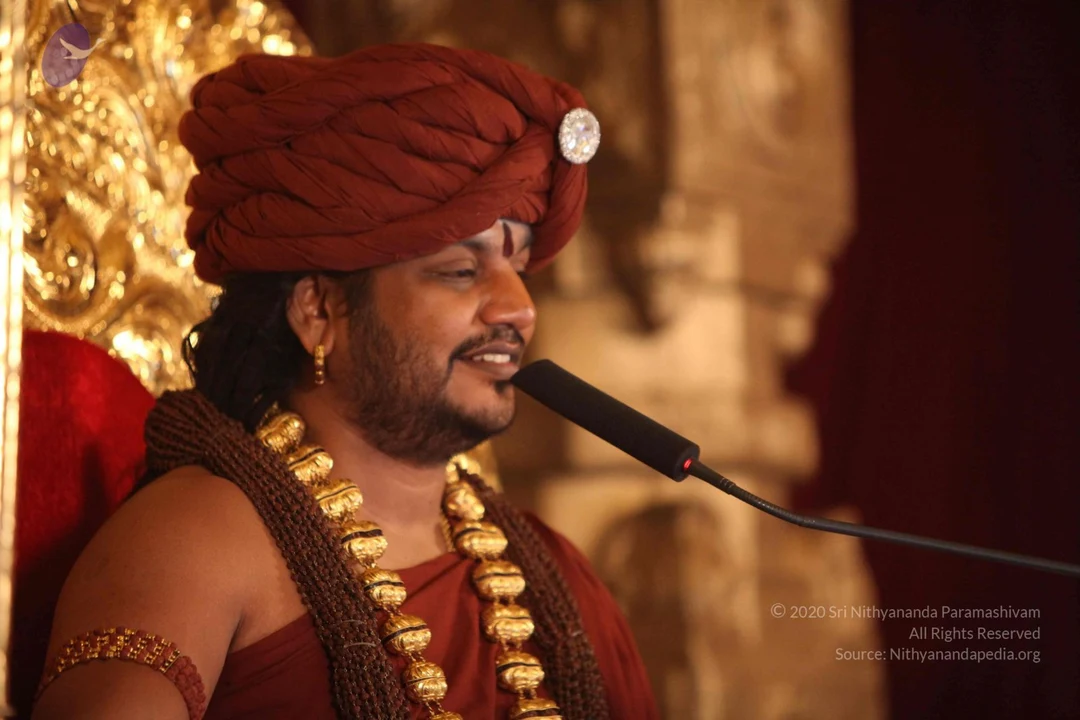
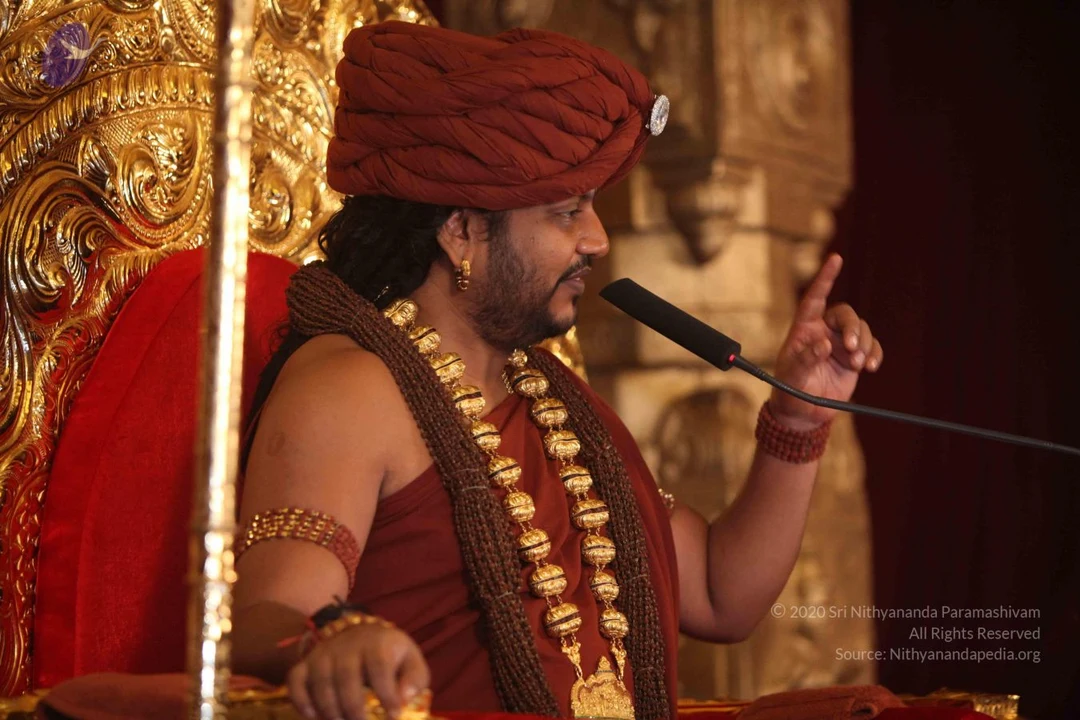
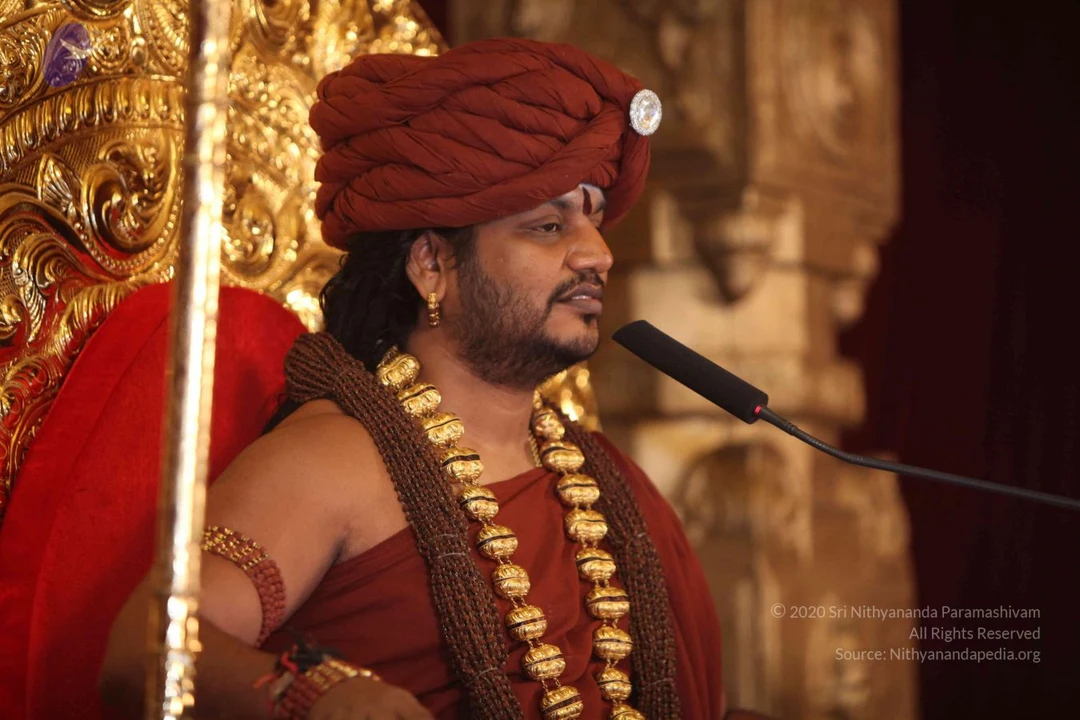
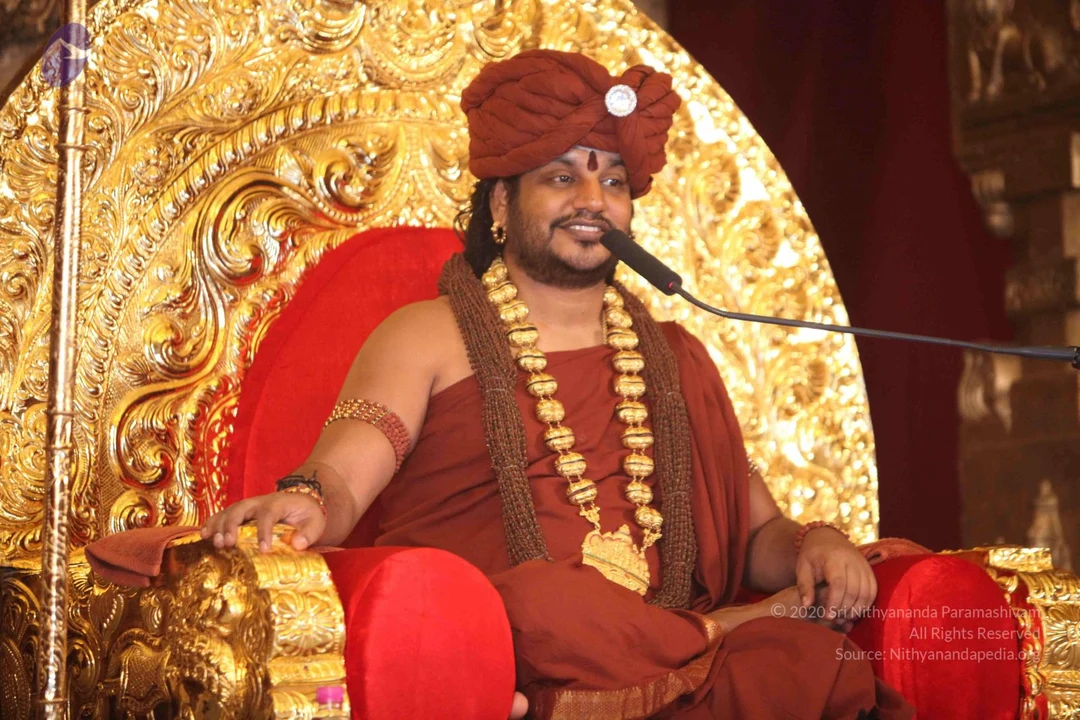
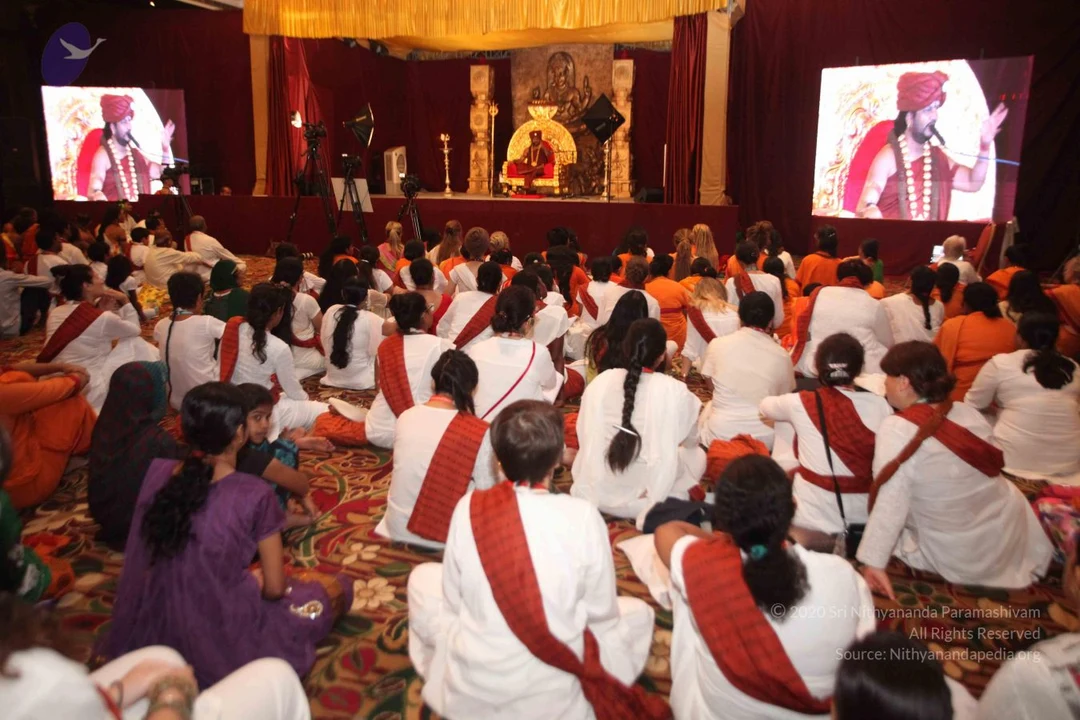
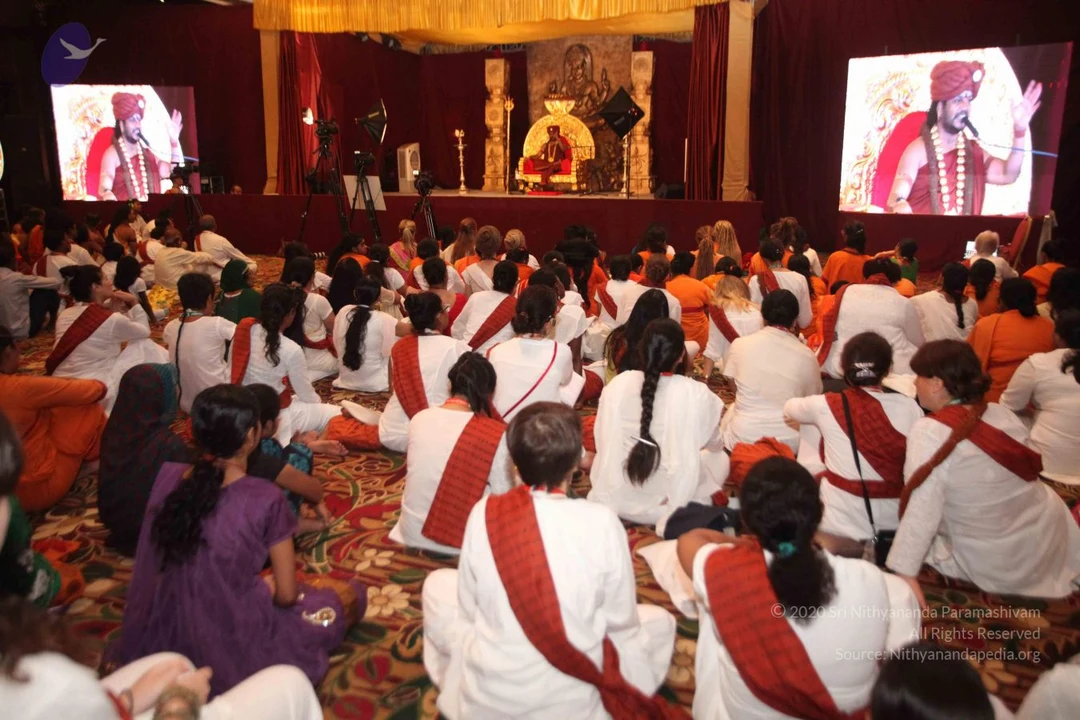
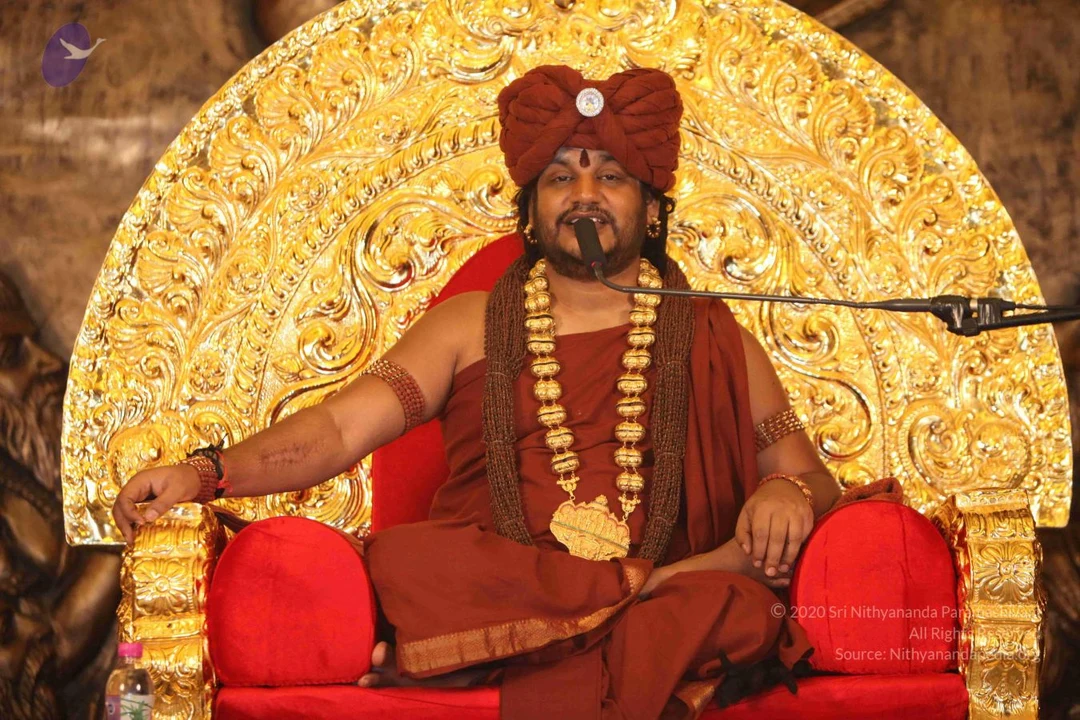
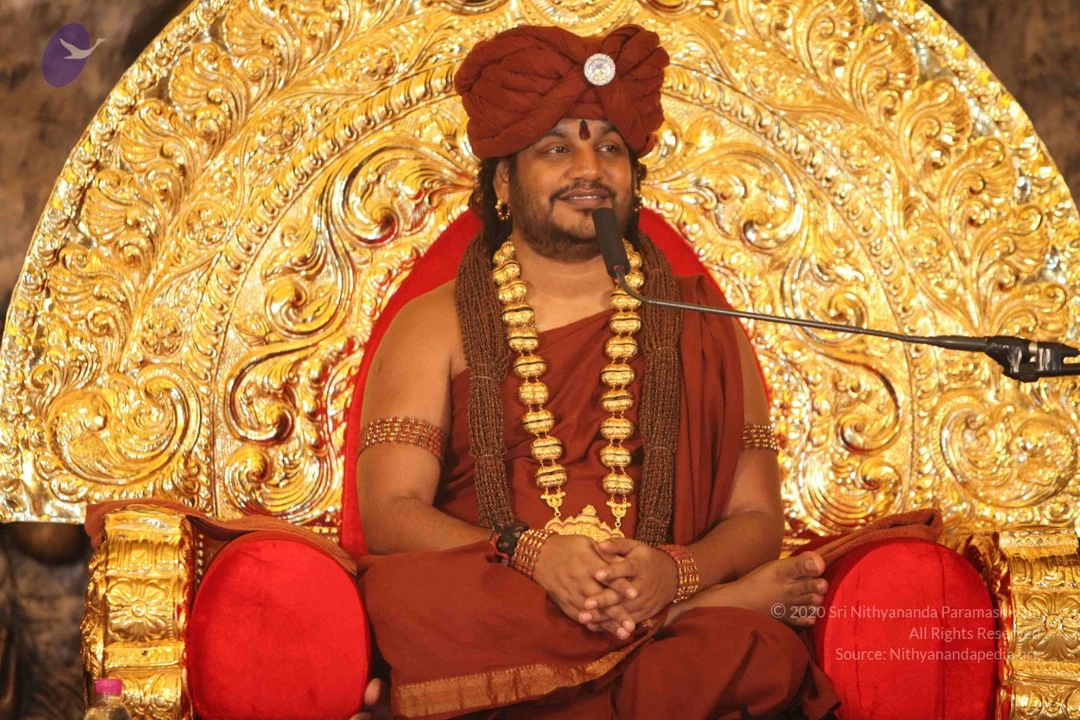
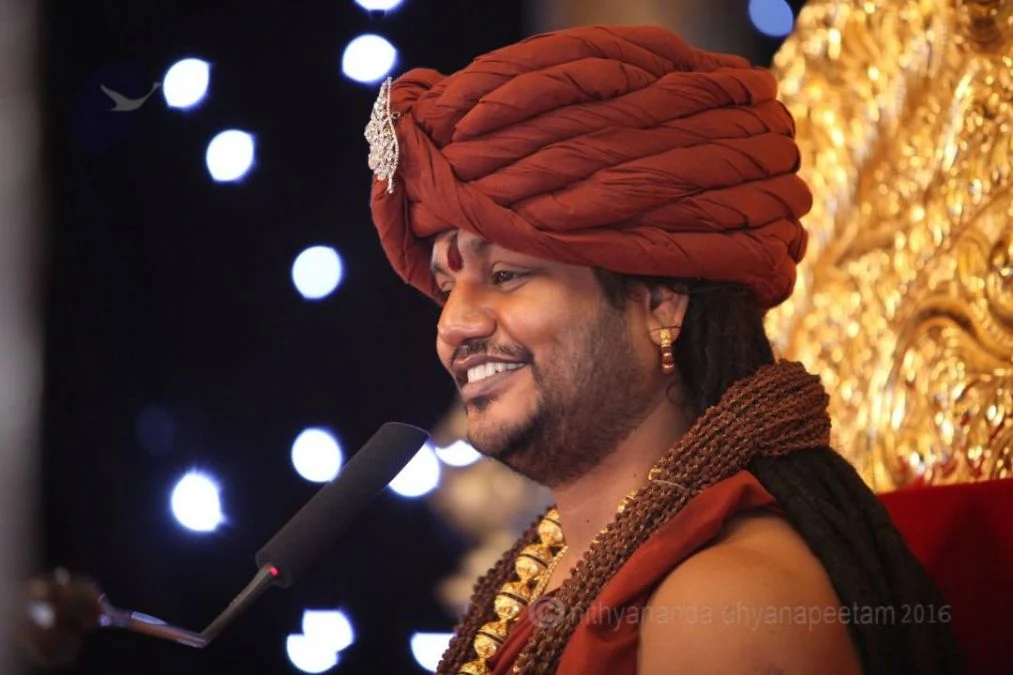
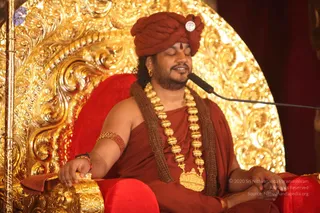
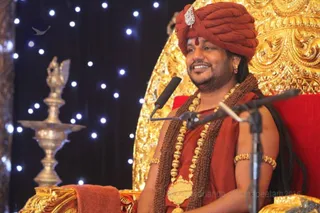
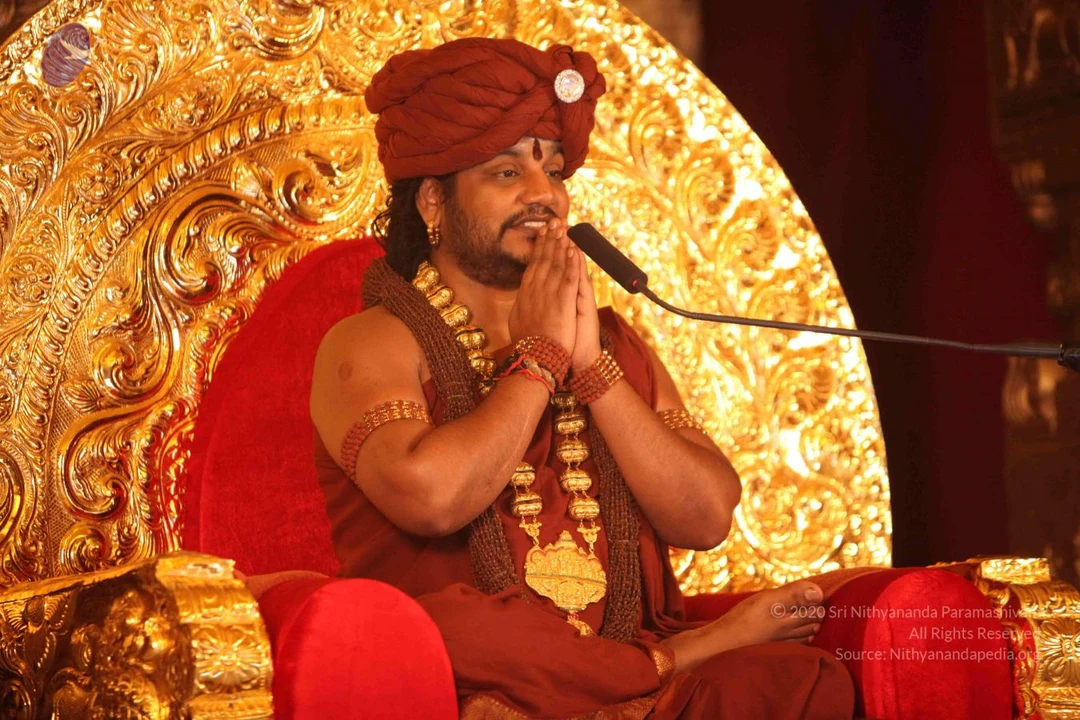
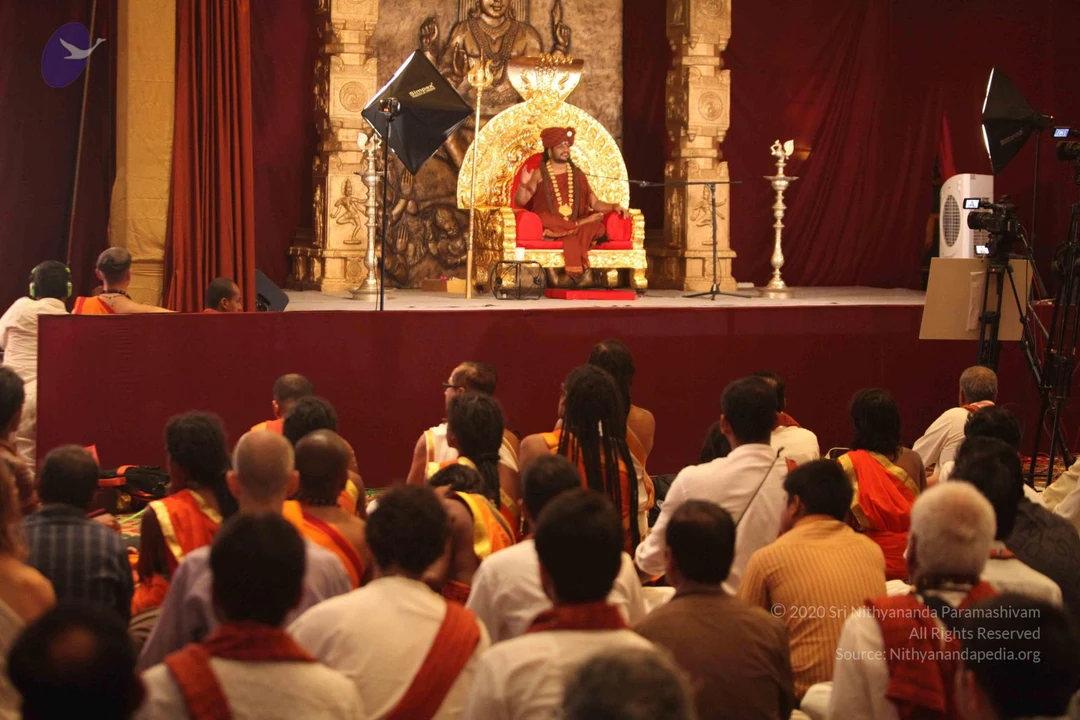
A seated man in a rust-red turban with a small white ornament and a red tilak mark on his forehead sits on a red velvet throne with ornate gold carved backrest. He wears a rust-red garment, a thick ornate gold necklace, rudraksha-style beaded bracelets and a gold armlet, and holds his palms together in front of his chest in greeting while speaking into a microphone on a stand. The background is a glowing gold ornate panel.A photograph of a satsang hall with a stage draped in deep red and maroon curtains. On a gold-and-red ornate throne sits a figure in saffron-orange robes with a red-orange head wrap, wearing a long beaded necklace and raising one hand in a gesture of teaching. Gilded carved pillars and a relief panel of deities frame the throne, with brass oil lamps flanking it and a tall staff leaning beside it. Seated devotees, mostly with backs to the camera, fill the front rows wearing white and saffron shawls. Studio lights and a video camera on a tripod are visible at the sides. a person: the seated teacher wears saffron robes, a red head wrap and a long beaded mala, a combination of cues consistent with the page's description of a satsang discourse.A satsang hall viewed from behind the seated audience toward a raised stage with a gold-and-red ornate throne. A figure on the throne wears a red turban, a saffron-orange garment and a long beaded mala; the appearance is uncertain, so no identification is made. Gold oil lamps flank the throne, and a camera on a tripod and studio lights are set up at the sides. Devotees in white and saffron-orange shawls sit on mats in rows, some with red shawls, and a few wear dark or striped clothing. Red drapes and a gold-framed carved backdrop with figures fill the background.A seated man in rust-orange robes and an orange turban with a white jewelled brooch sits eyes closed on an ornate red and gold throne with an elaborately carved gilded backrest. He wears a thick gold bead necklace, a brown rudraksha-style mala across his shoulder, a red-and-gold beaded bracelet and a vermilion mark on his forehead. His hands rest in his lap and on the armrest, and a black microphone stand is angled toward his face. Behind him is a deep red curtain. The scene suggests a seated discourse, with Swamiji probable from the saffron-orange robes, rudraksha mala, gold necklaces and turban cues.A photograph of a single seated man on an ornate golden throne with a cobra-hood backrest and red cushions, set against a carved bronze-toned backdrop with lion figures and deity relief panels. He wears a rust-orange turban with a white jewel at the front, an orange-red robe, a long gold-beaded mala with a large gold pendant, and bangles on his wrists. A gold trident stands at the left and a microphone stand at the right; a water bottle and glass sit on a small side table. Swamiji (probable): the seated man shows long swept-back hair beneath the turban, rudraksha-style malas and gold ceremonial necklace, and orange-saffron robes, consistent with the page's reference to a satsang discourse.A man seated before a microphone speaks during a satsang, wearing a deep red-orange turban with a large white stone at the front, a red-orange cloth draped over his shoulders, a rudraksha mala across his chest, and a large gold necklace with ornate gold beads. A gold arm band is visible on his upper arm. Behind him is a gold-embossed throne and a dark red curtain.

Innerawakening-Varanasi-Powermanifestation

11 photosSource gallery
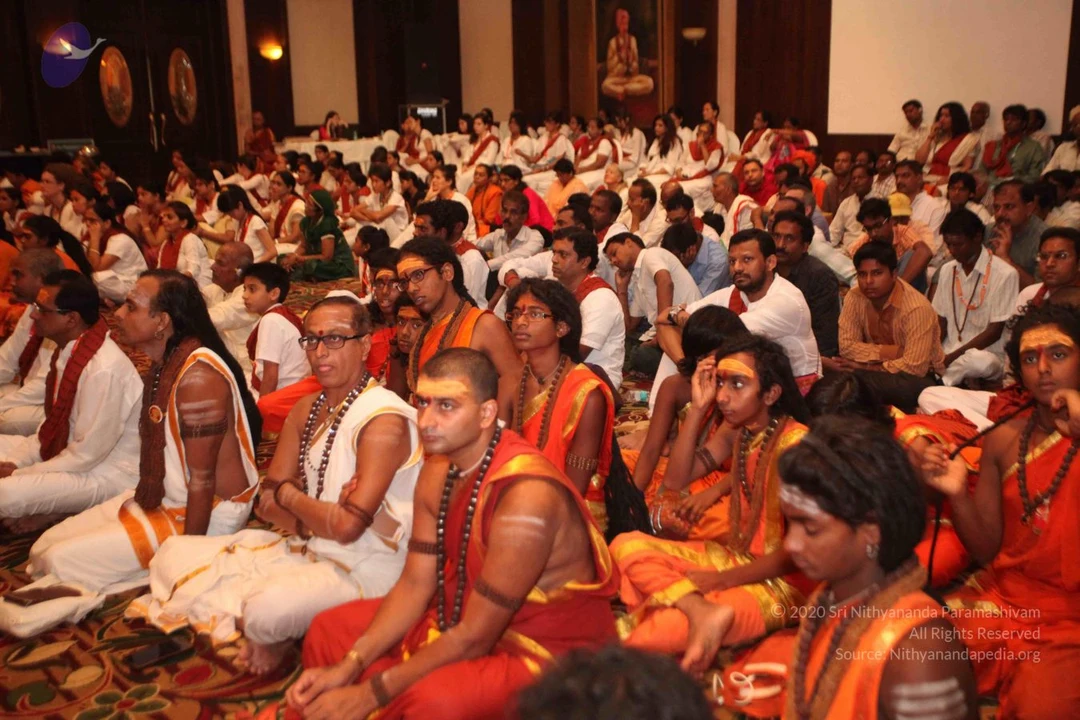
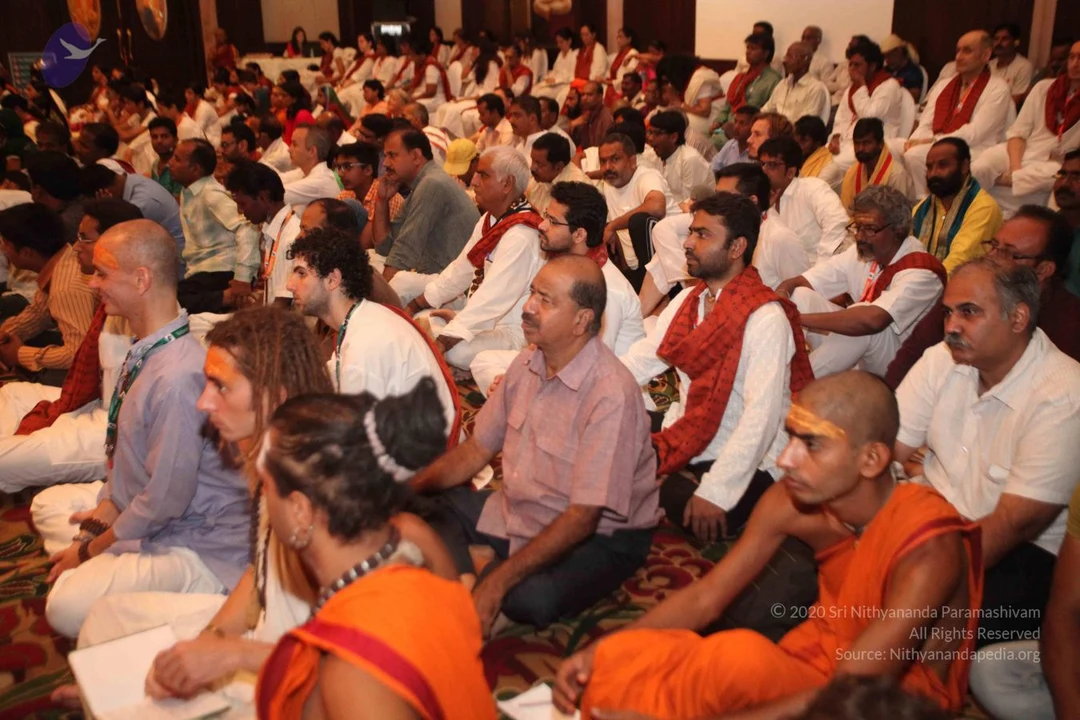
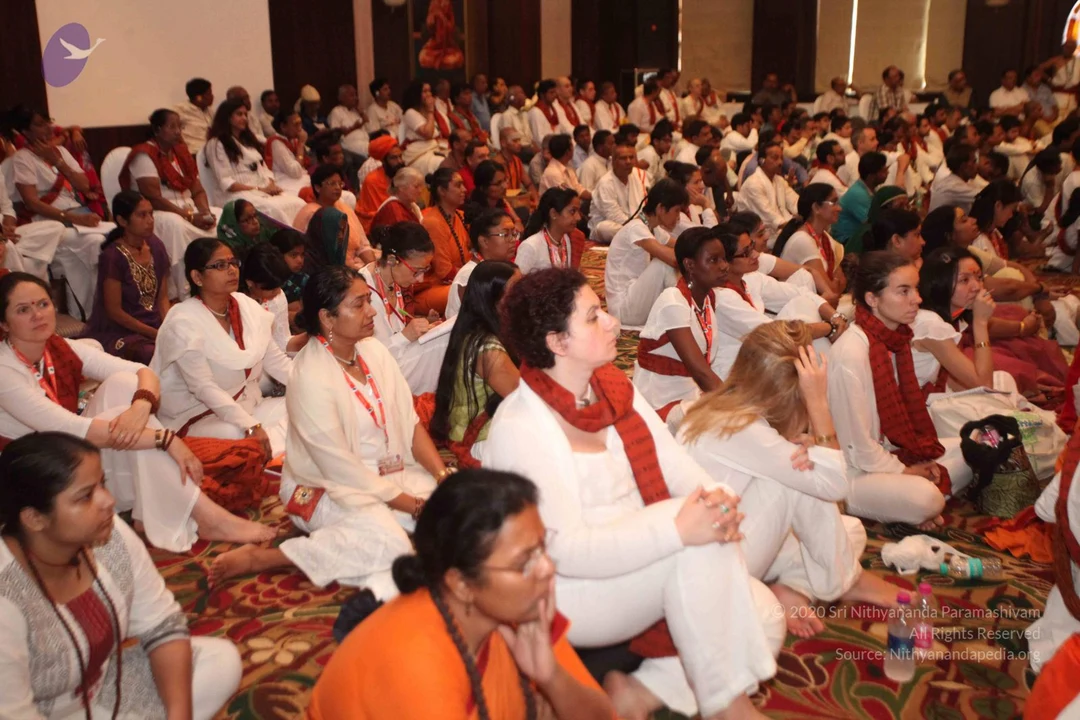
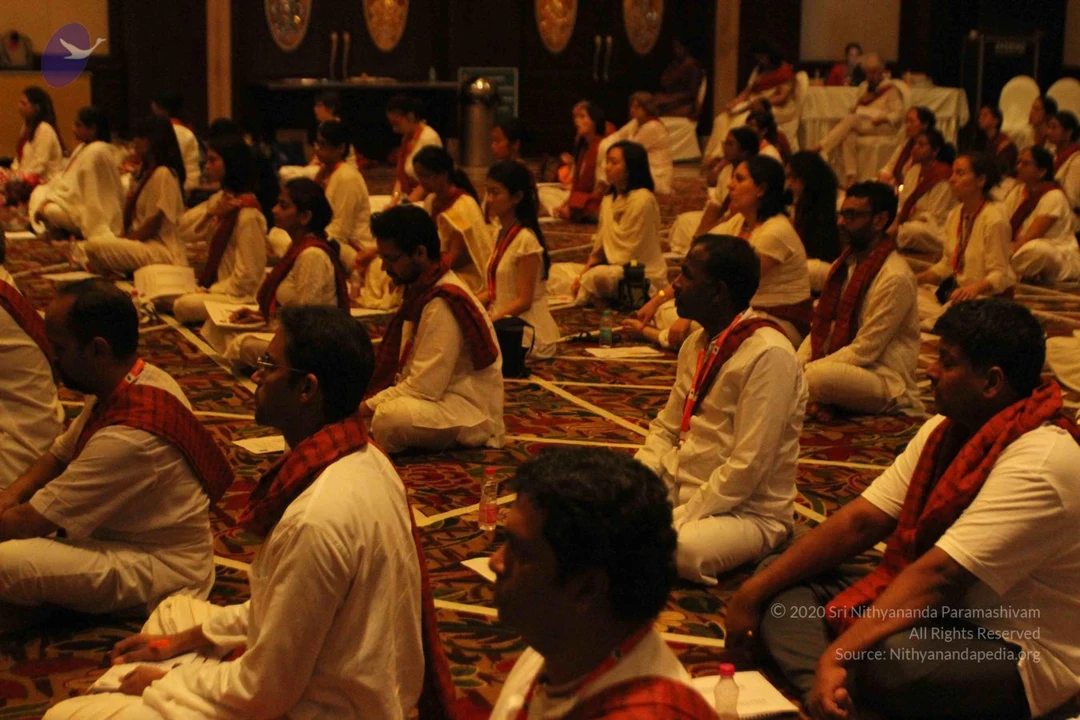
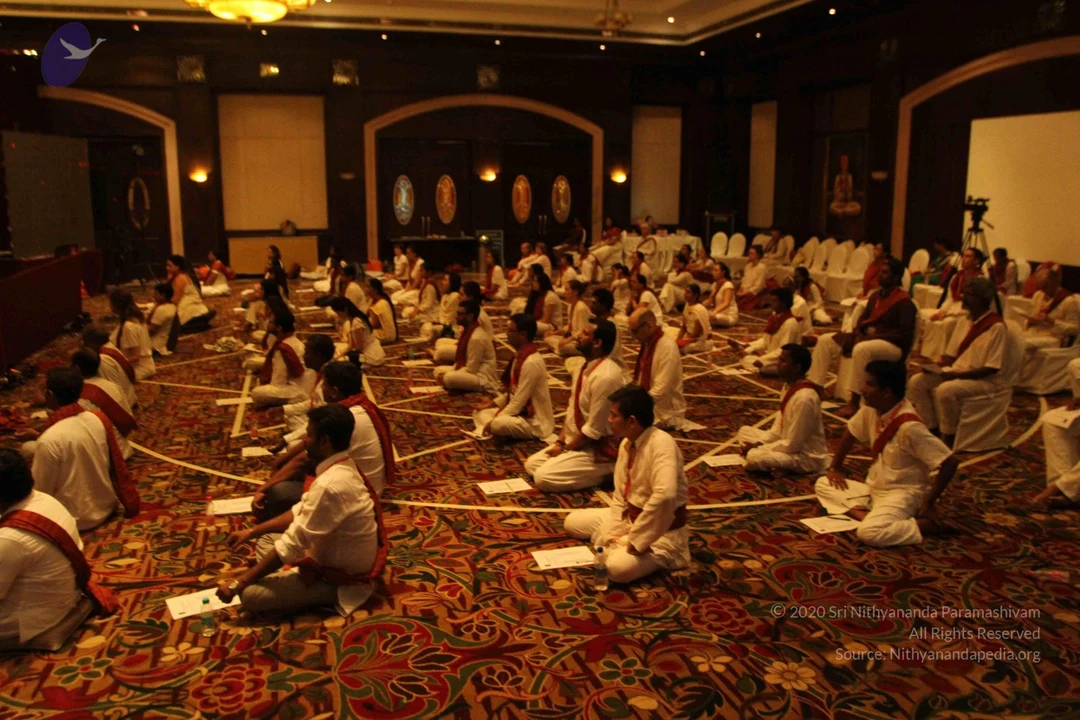
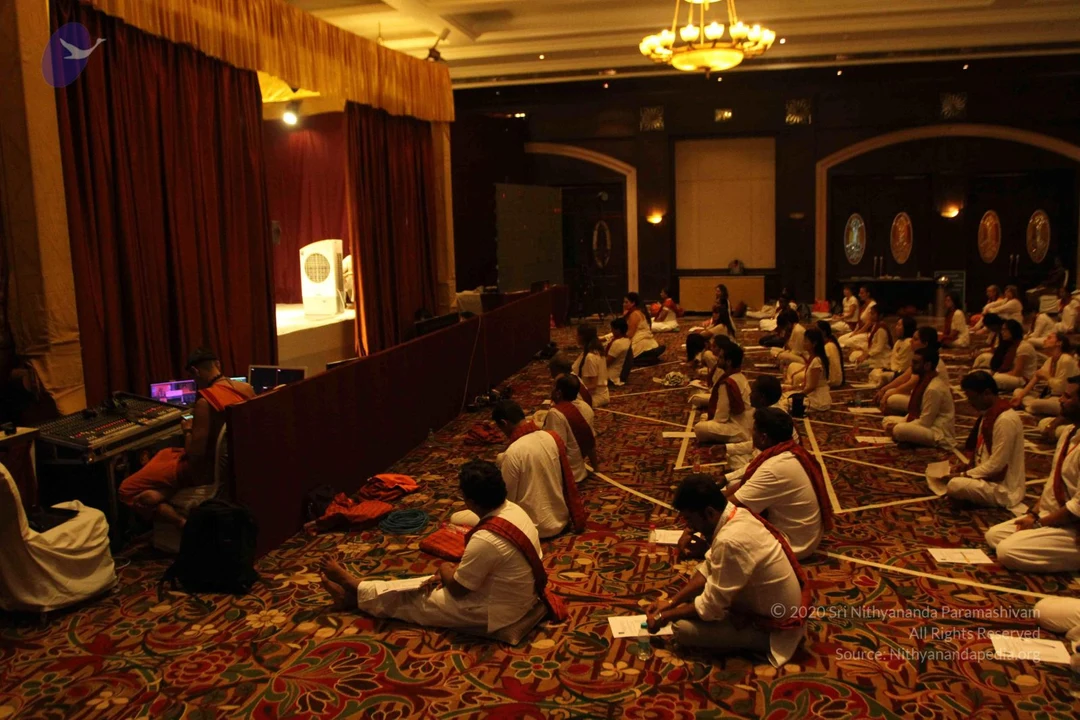
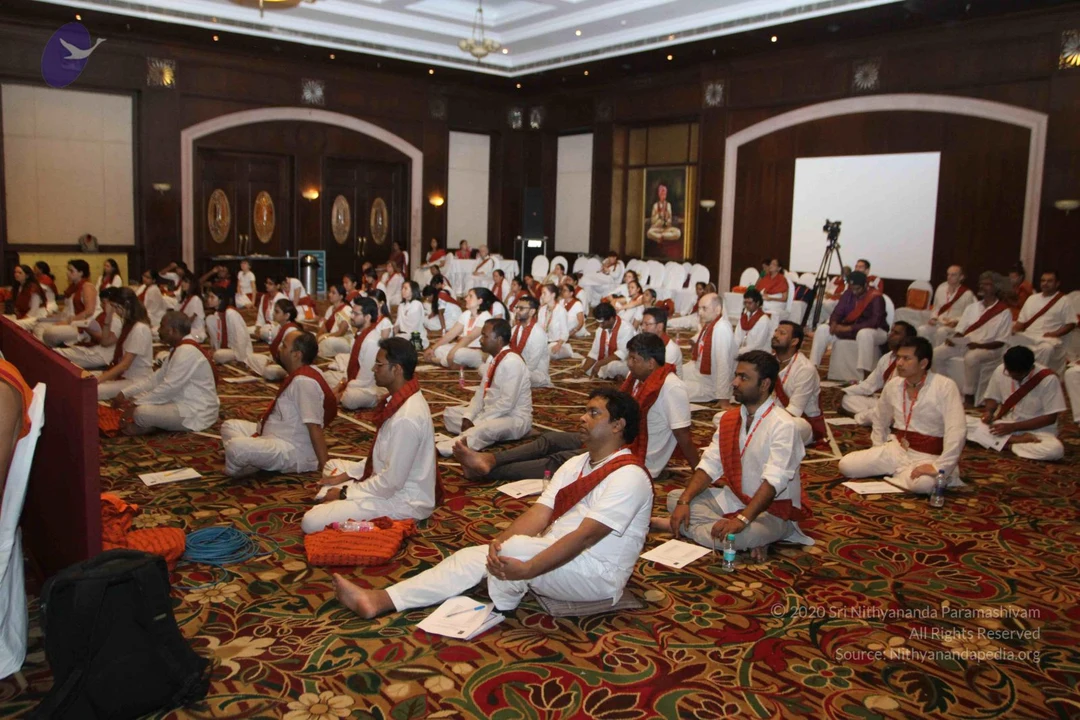
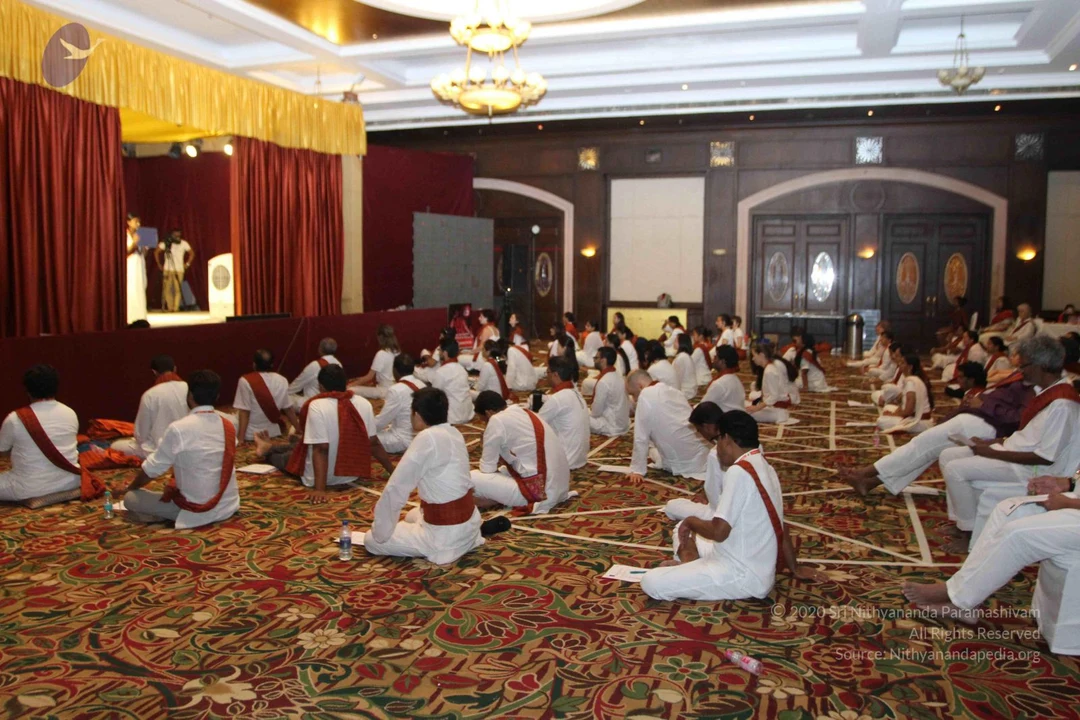
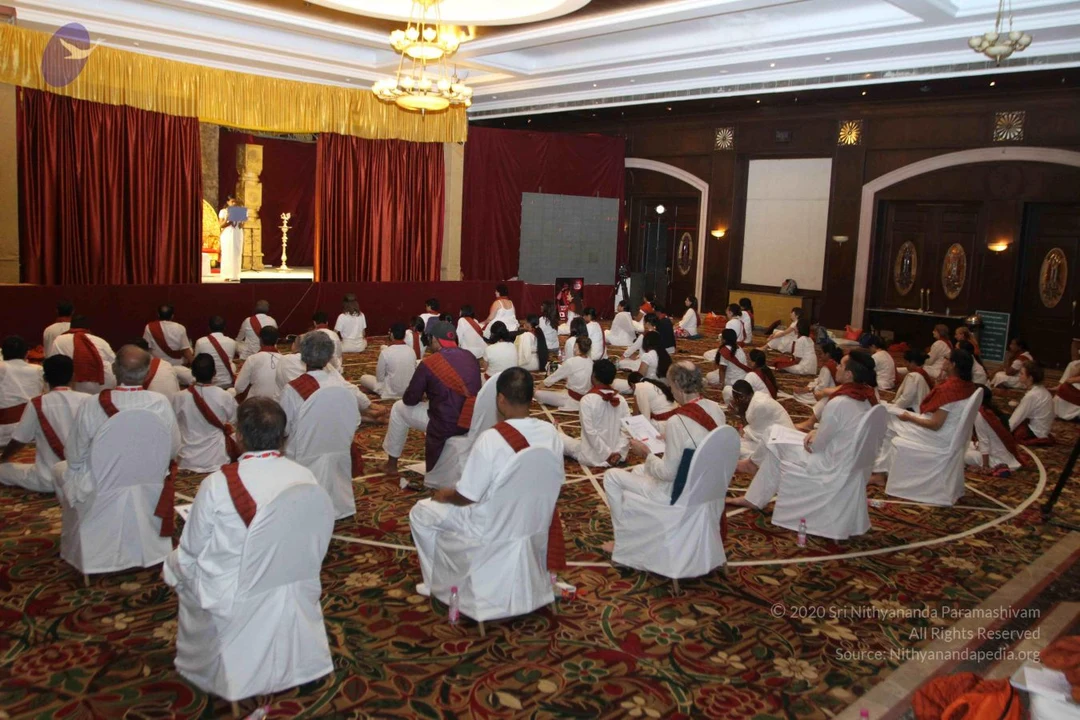
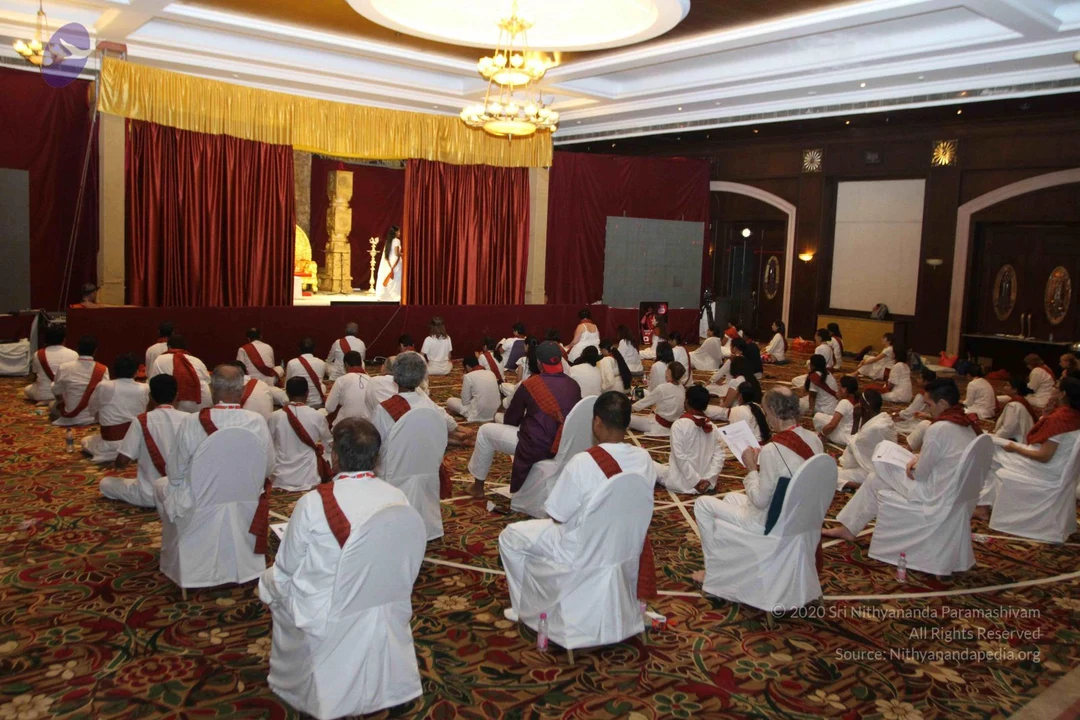
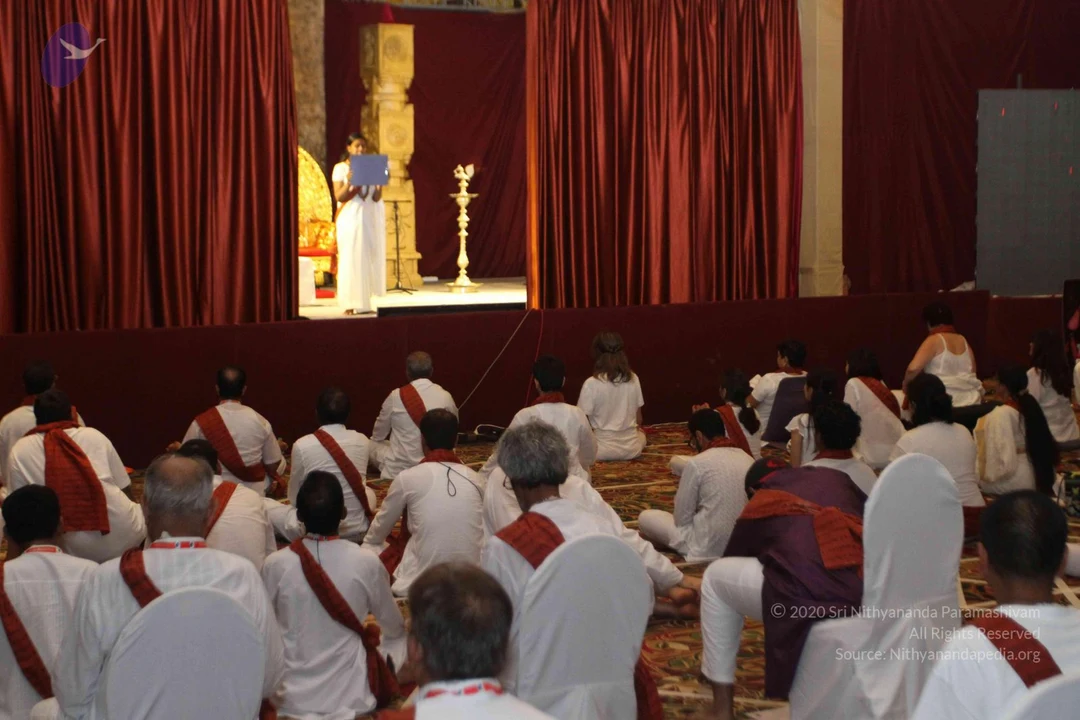
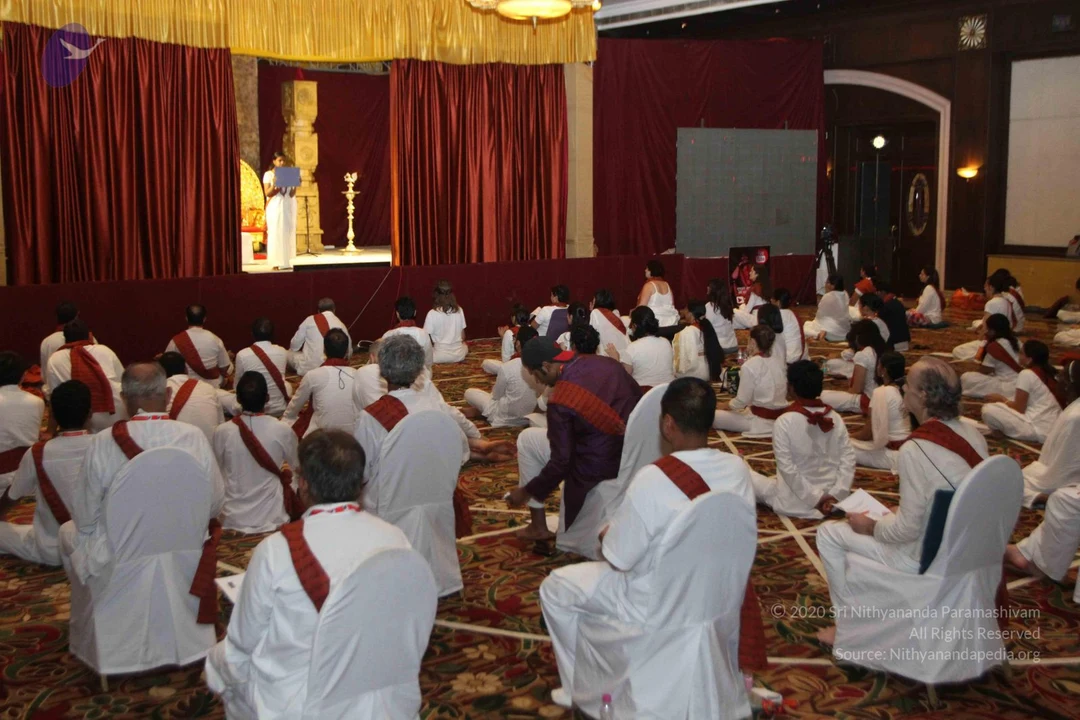
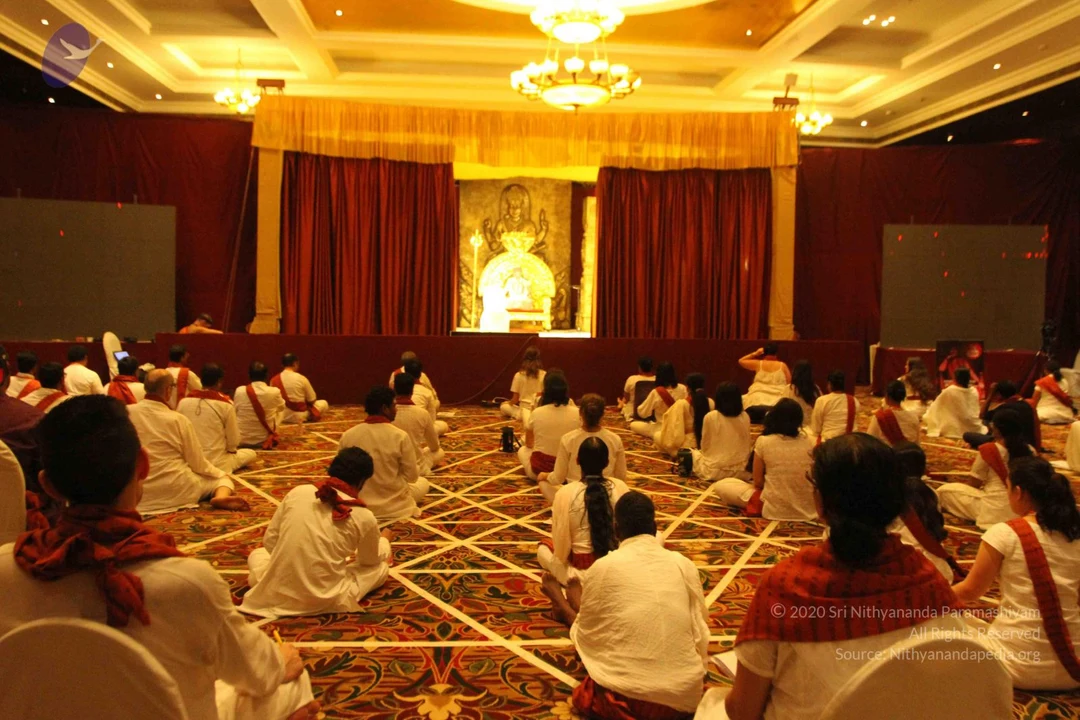
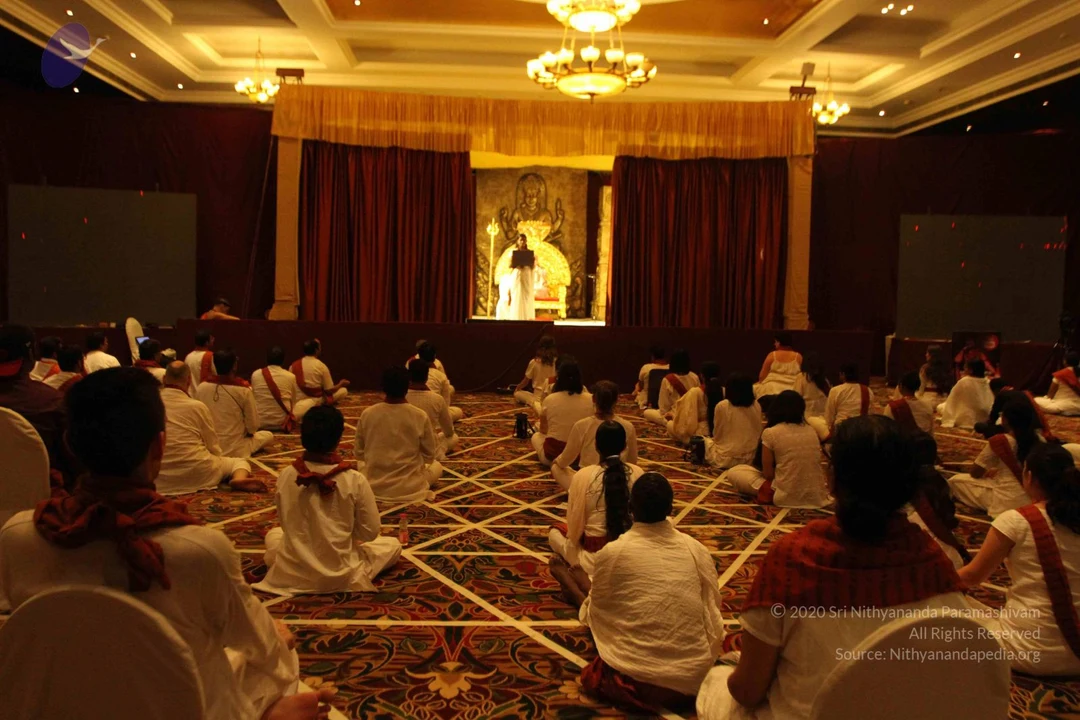
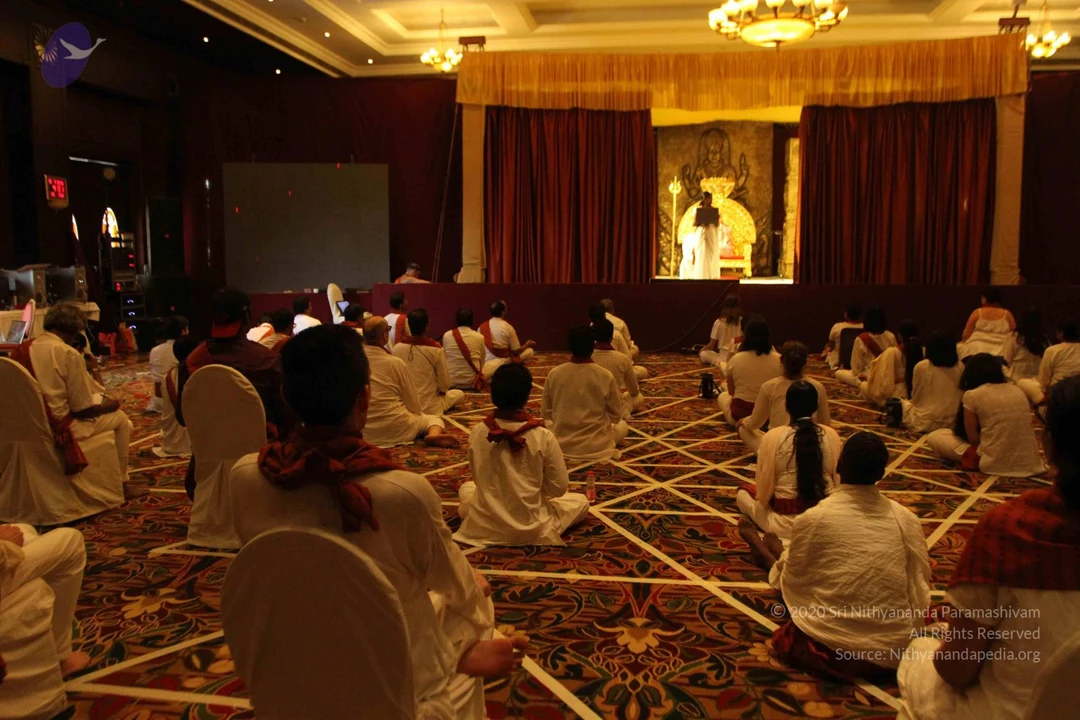
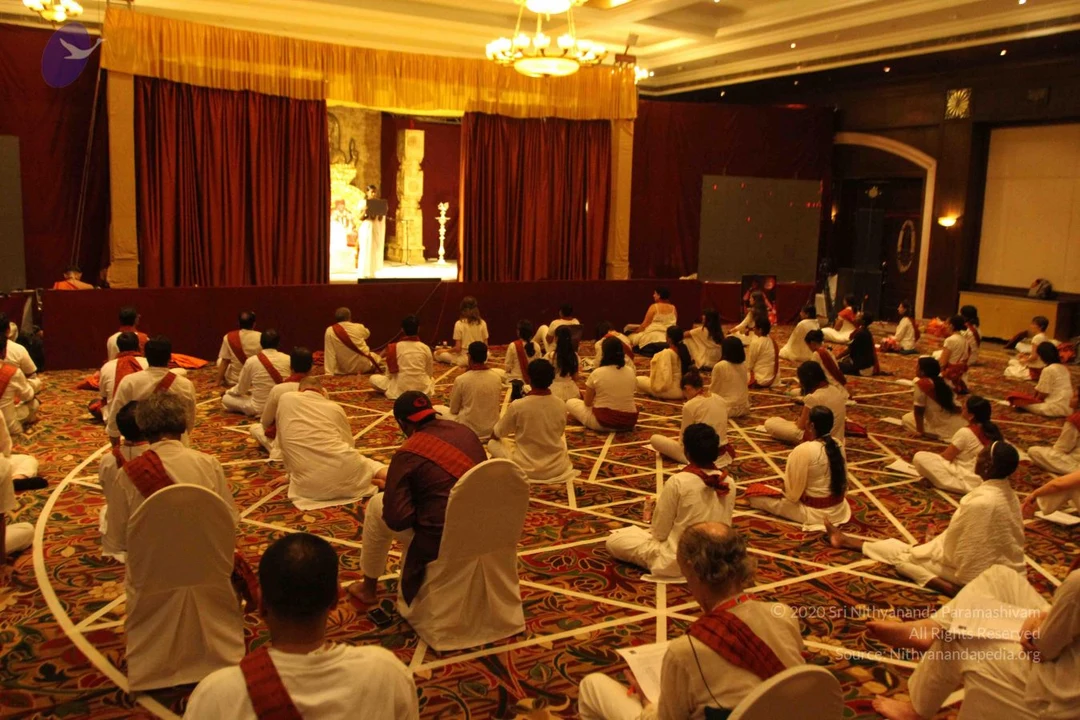
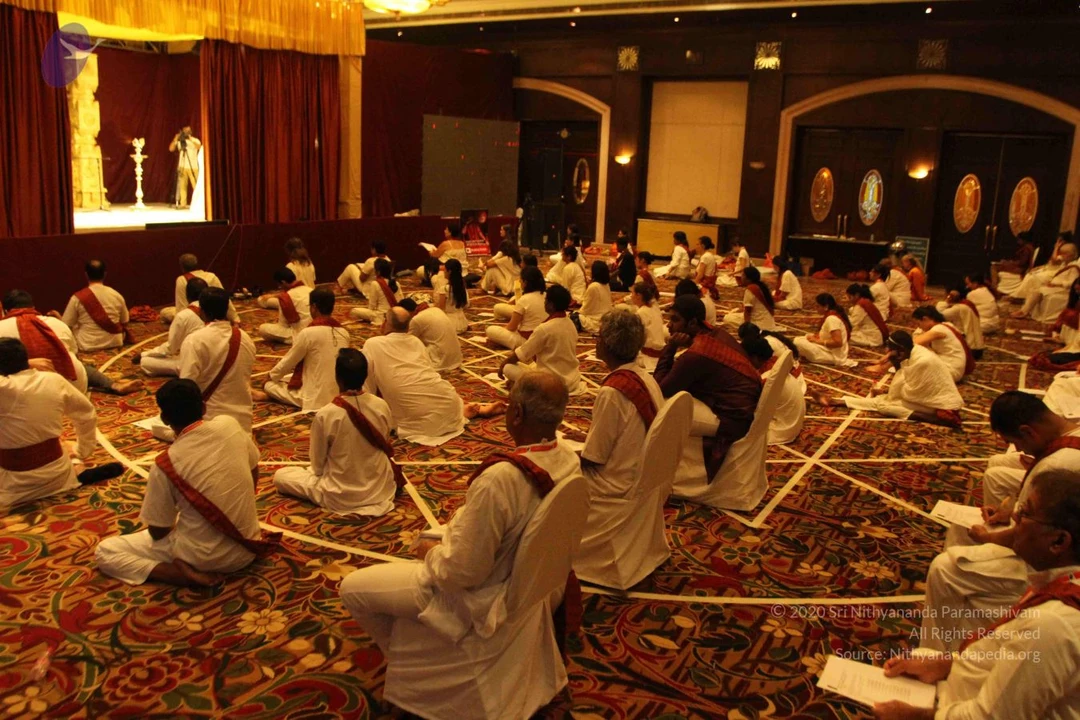
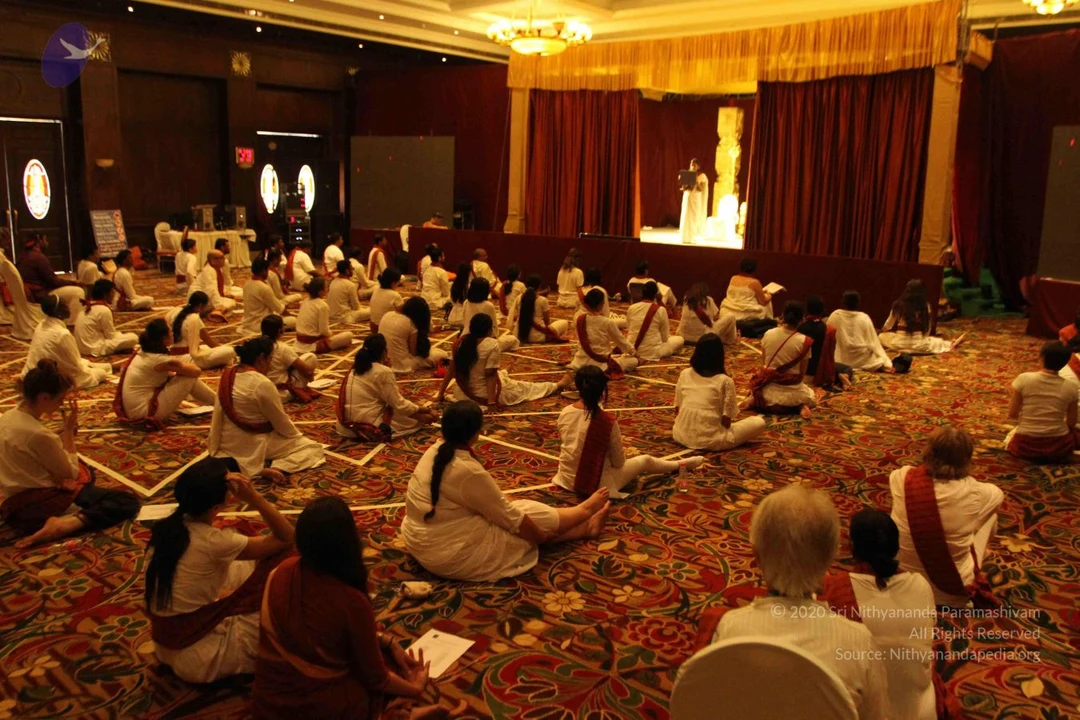
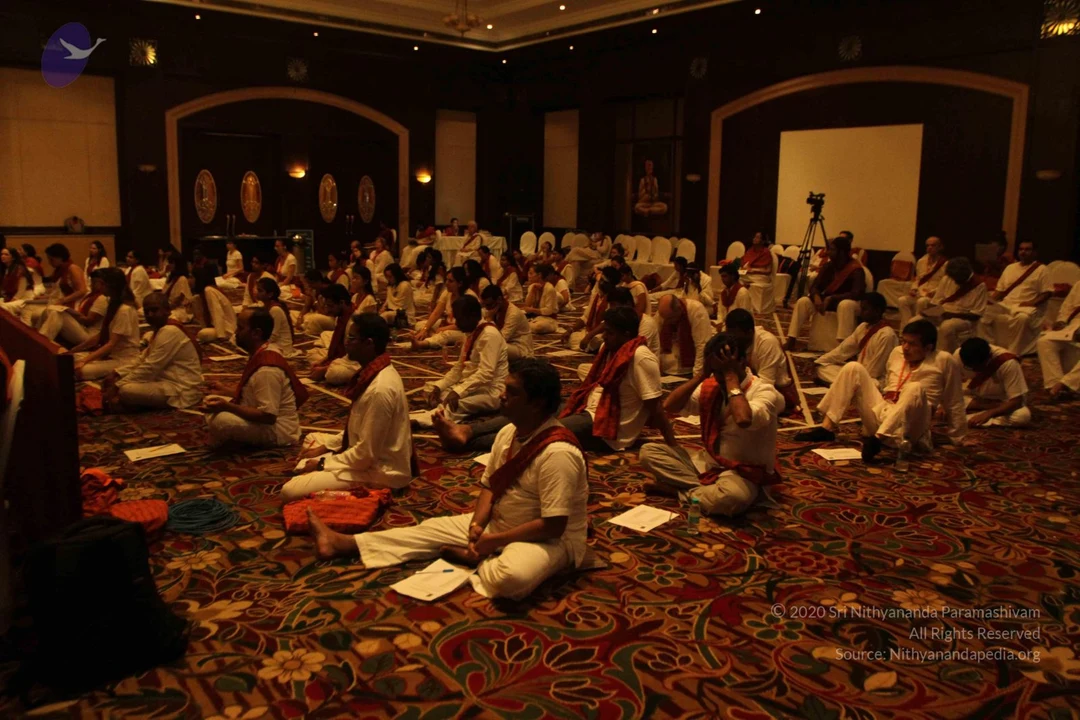
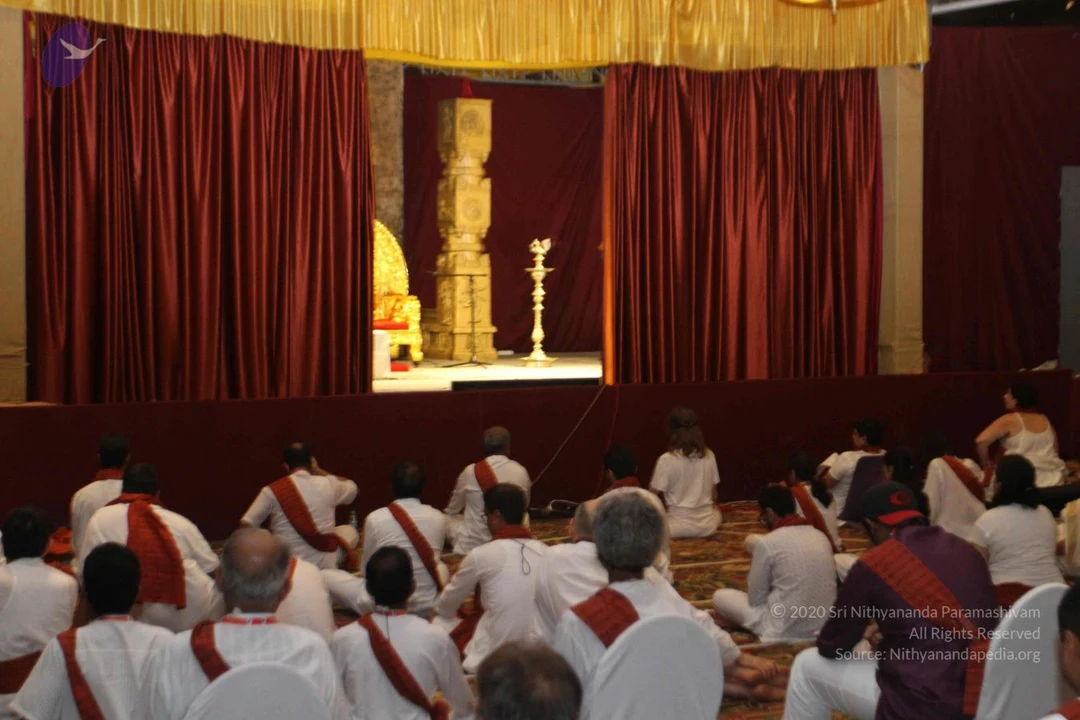
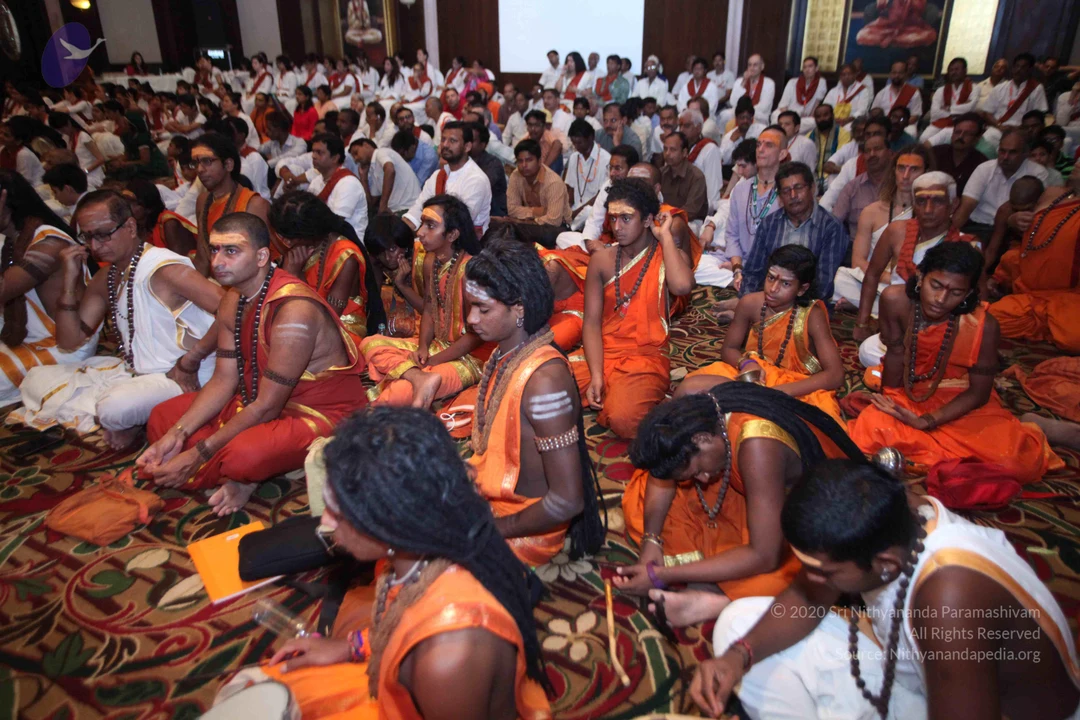
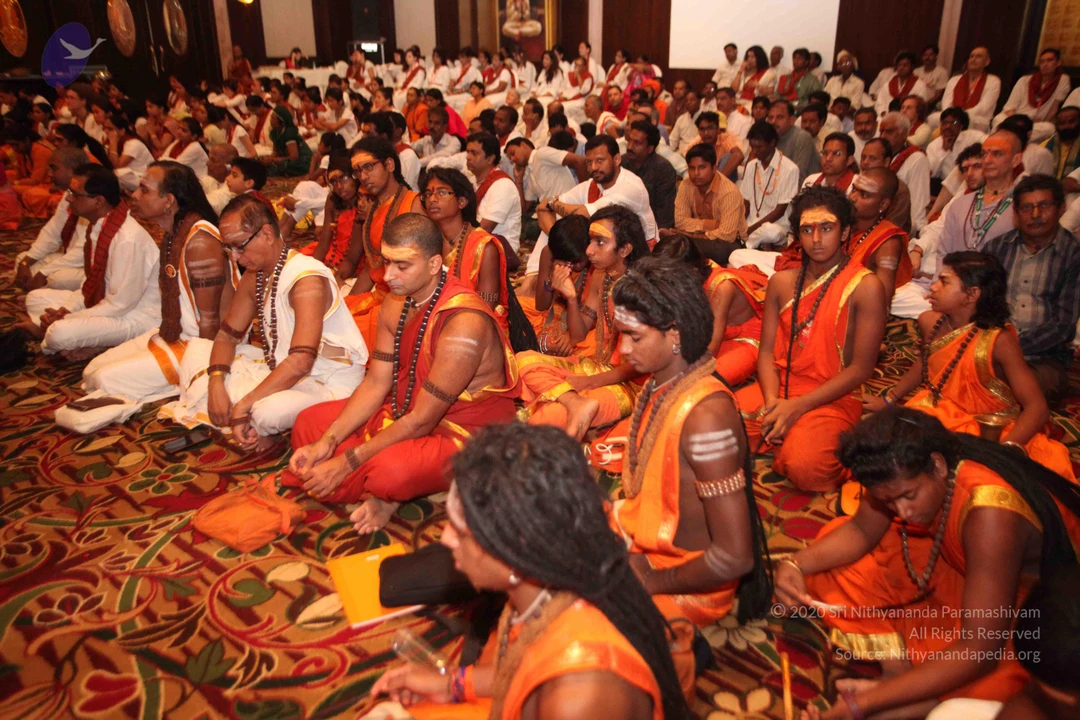
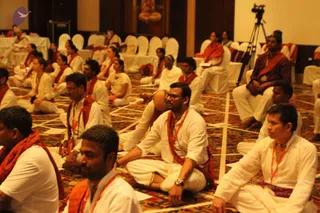
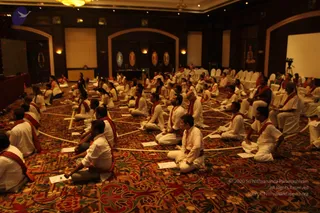
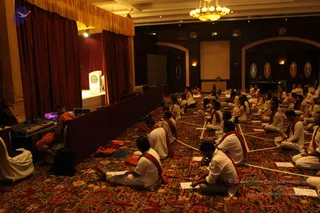
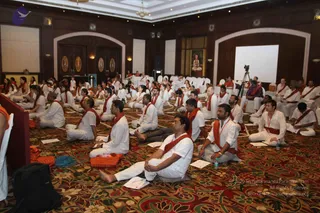
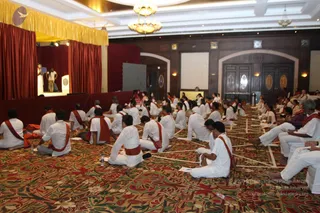
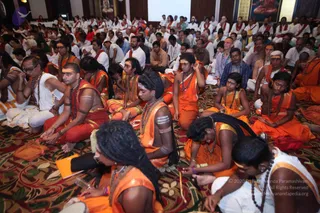
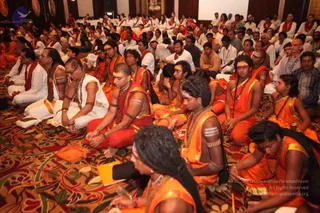
A photograph of a seated audience at a satsang in a hotel-style hall with patterned carpet. Many devotees sit cross-legged in white kurta-style clothing with red-and-orange shawls draped over their shoulders, some wearing red lanyards. Water bottles and papers rest on the floor beside them, and white-covered tables stand in the background. No speaker or a person is clearly visible in the frame, so no in-person candidate is identified. Visible physical people number roughly twenty to thirty-five.A seated satsang gathering in a hall with patterned carpet marked with white tape grid lines. Rows of devotees sit cross-legged in white kurtas and dhotis, many wearing red-orange shawls and orange beaded lanyards. A tripod-mounted camera stands at upper right, and a framed painting of a seated figure hangs on the back wall above white-covered tables and chairs.A large hall with a patterned carpet where many people sit cross-legged in rows on the floor, facing forward. Most wear white ritual clothing with red shawls or sashes draped over one shoulder, and several sit on white chairs at the right edge. Small white papers rest on the floor in front of some seated participants, and a ring of yellow tape or cords outlines the seating area. Ornate arched alcoves on the back wall hold framed circular emblems and a small figure, and a video camera on a tripod stands at the right. Warm, dim lighting and chandeliers complete the satsang setting.Photograph of a seated satsang hall with a patterned carpet and seated devotees arranged in rows in white clothes with orange-red shawls, many with papers and notebooks in front of them. At left, a man in orange robes sits at a sound mixing console beside red drapes and a small white stage unit. A chandelier hangs from the ceiling, and circular emblems decorate the back wall. a person is not clearly visible in the frame.A large hall with a patterned red and gold carpet holds a seated audience of devotees dressed in white kurtas and white dhotis with red shawls draped over their shoulders. Many sit cross-legged on the floor facing a stage at the left, with water bottles and notepads beside them, while a few sit on white chairs at the rear. At the back, a framed portrait shows a robed figure in saffron seated on a throne, and a projection screen and camera on a tripod are visible on the right. Ornate doors and warm wall lights frame the room, and a tote bag rests in the lower left foreground.A photograph of a seated group in a hotel-style banquet hall with a patterned carpet and chandeliers. Many participants wear white kurta-style clothing with red-orange shawls draped across their shoulders and sit in rows facing a raised stage at the left, behind red drapes and a gold valance. On stage, two people stand near a lectern, one in white and one in dark clothing. Water bottles sit on the carpet and papers rest on laps. The scene resembles a satsang session. No individual can be confidently identified as a person from appearance, and no candidate is clearly visible.

Innerawakening-Varanasi-Shivoham

114 photosSource gallery
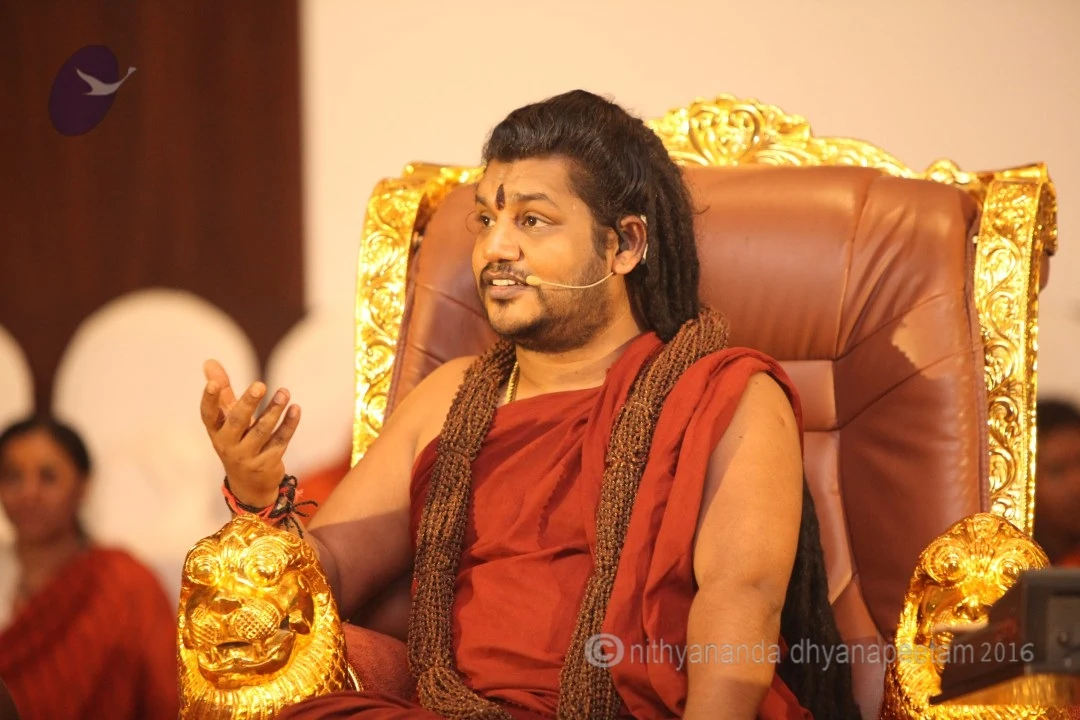
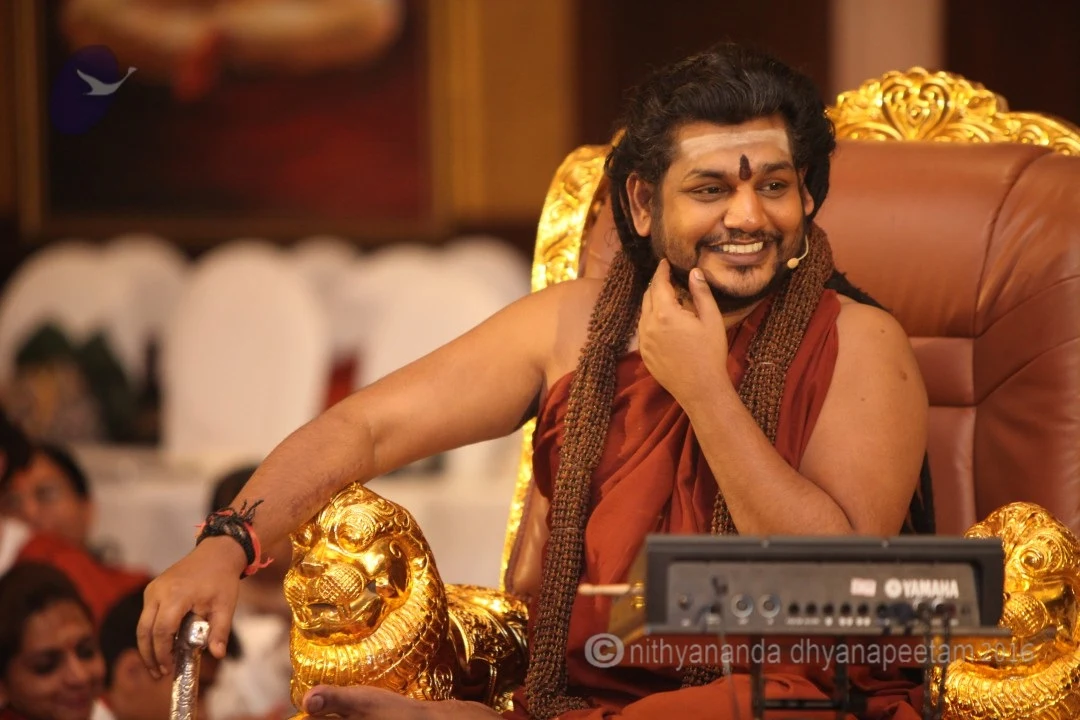
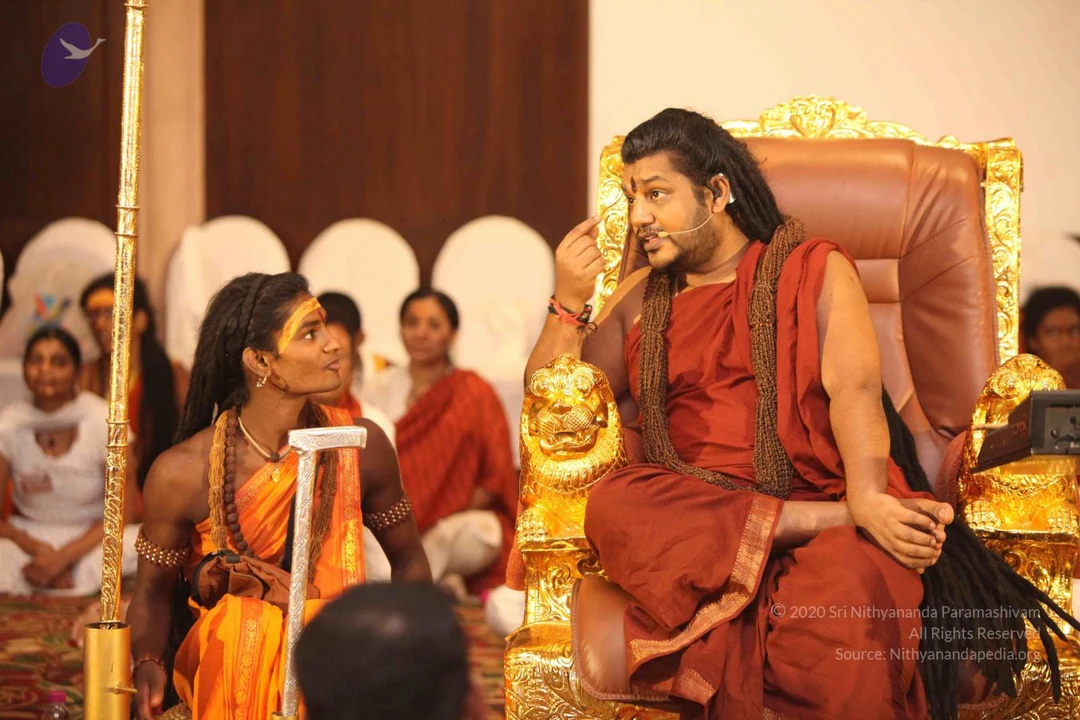
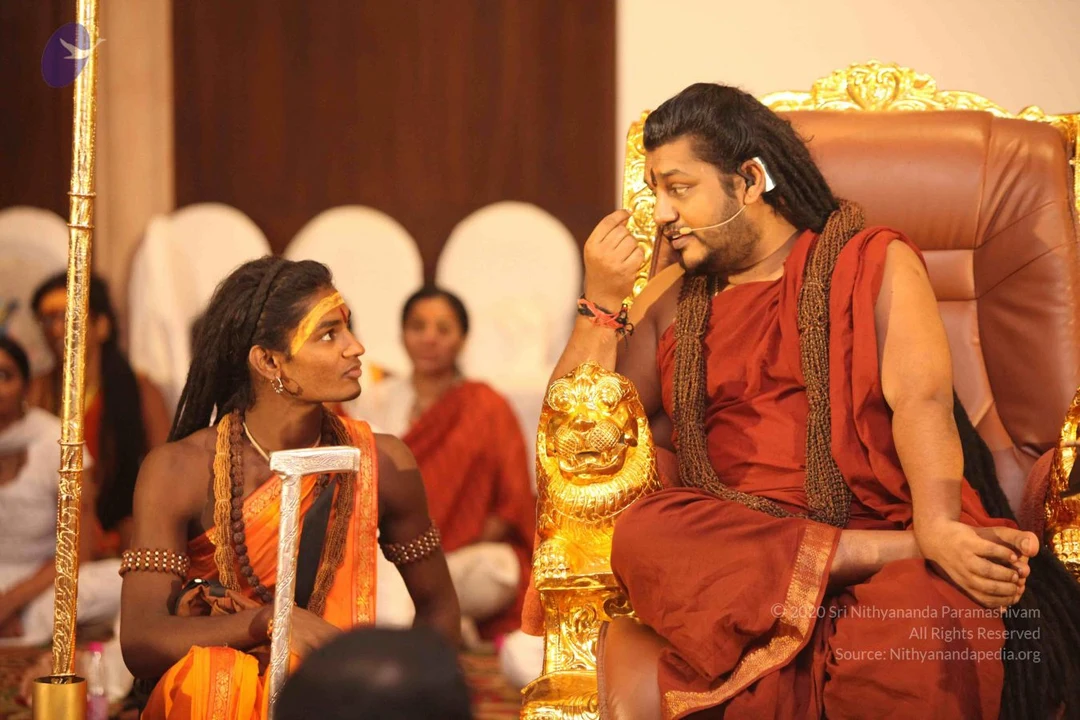
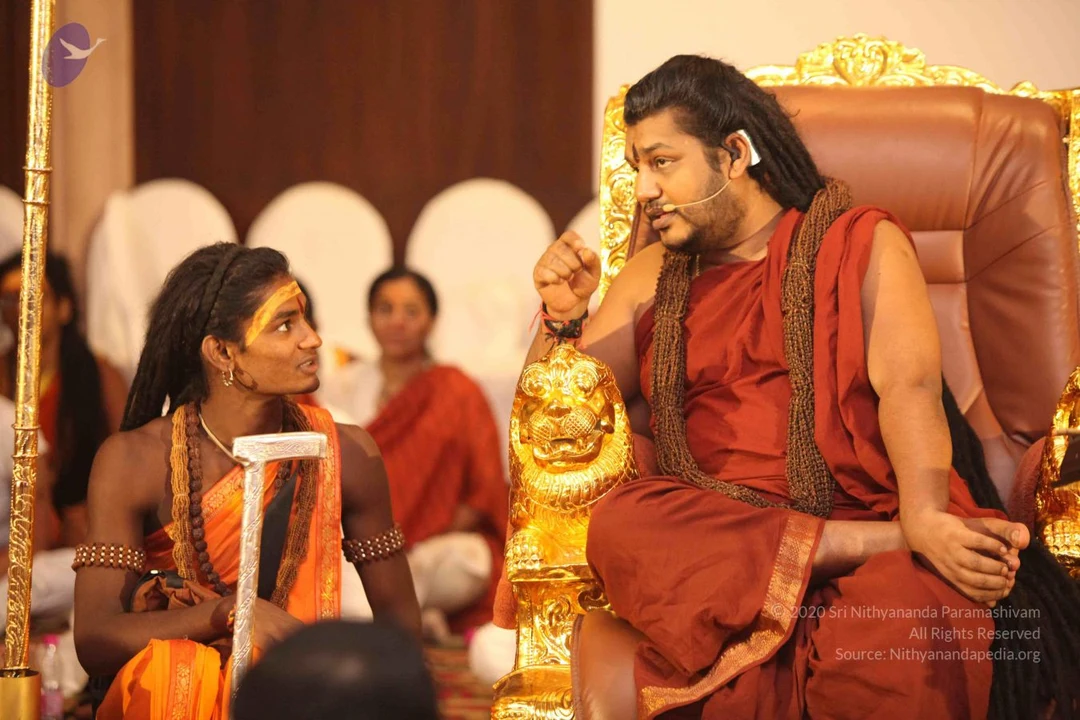
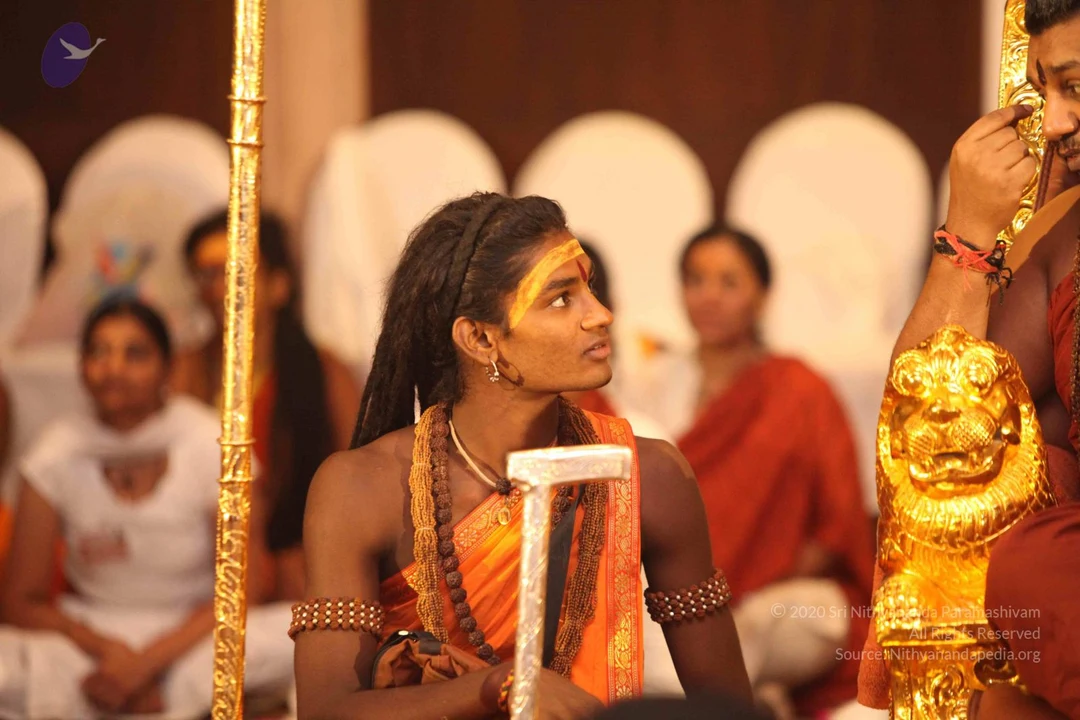
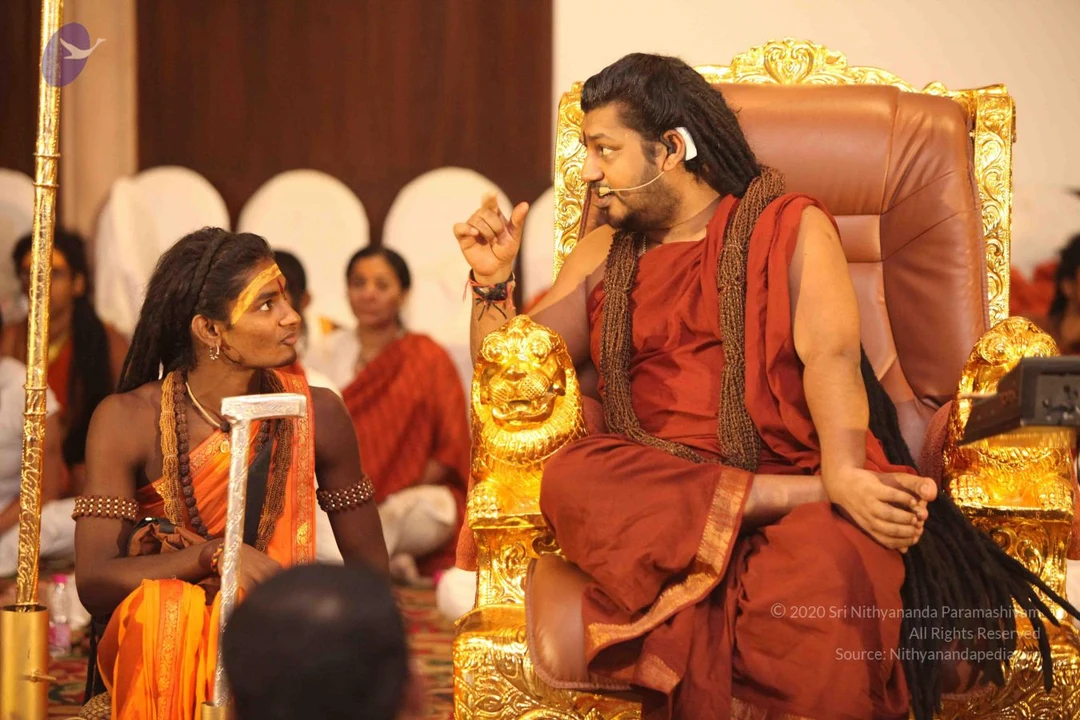
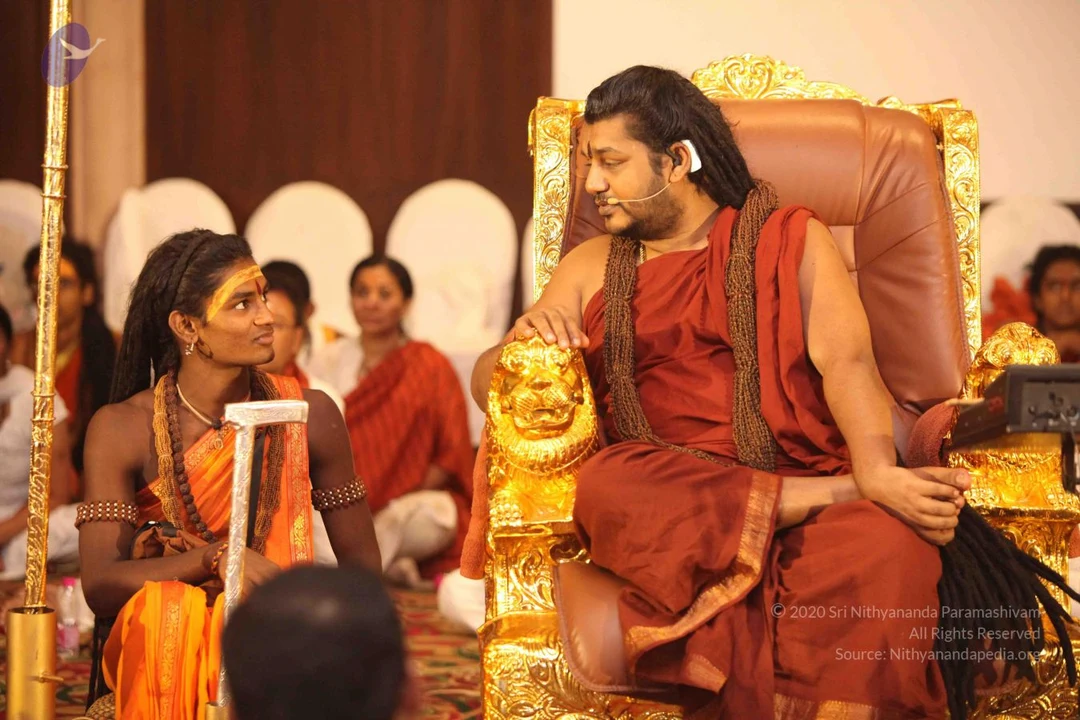
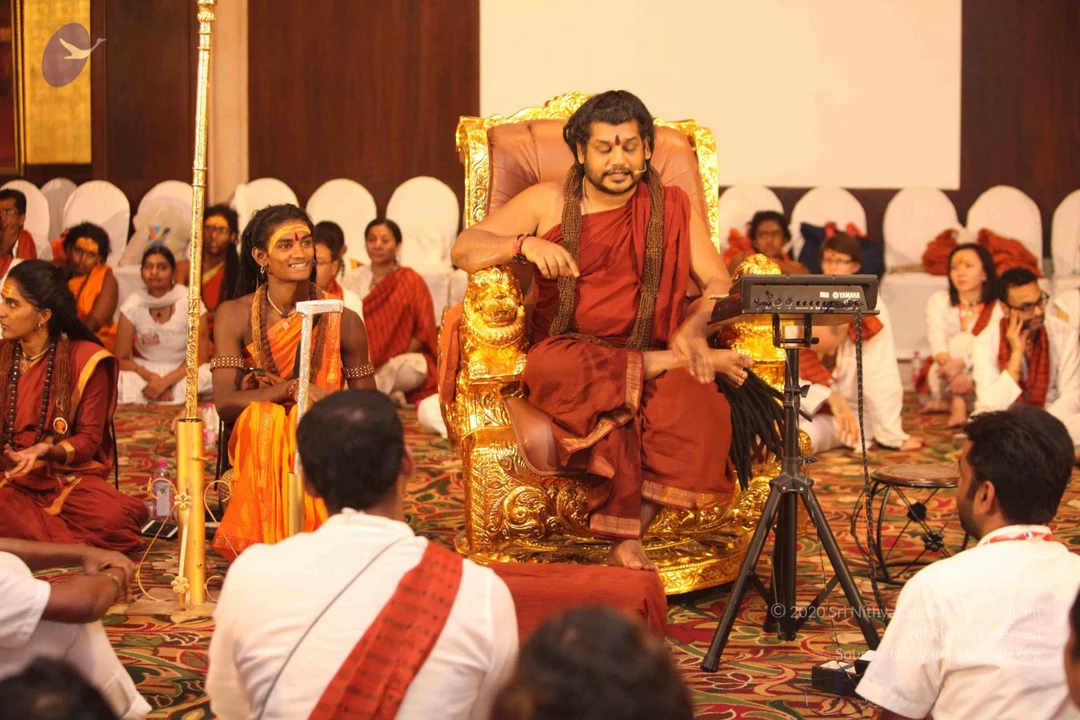
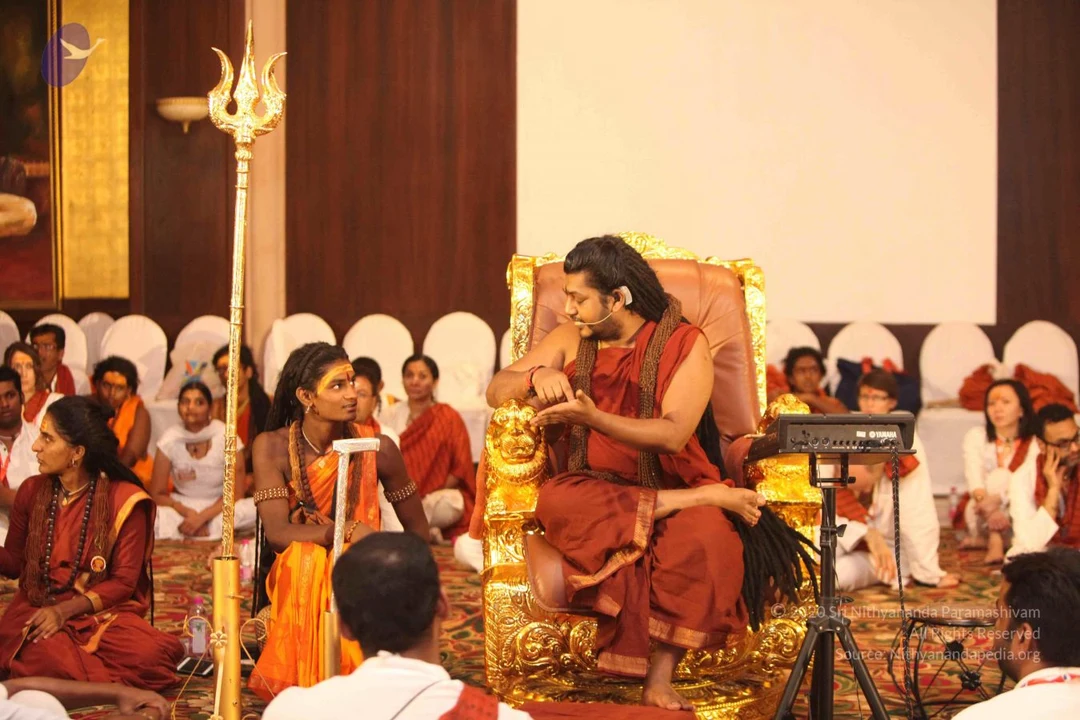
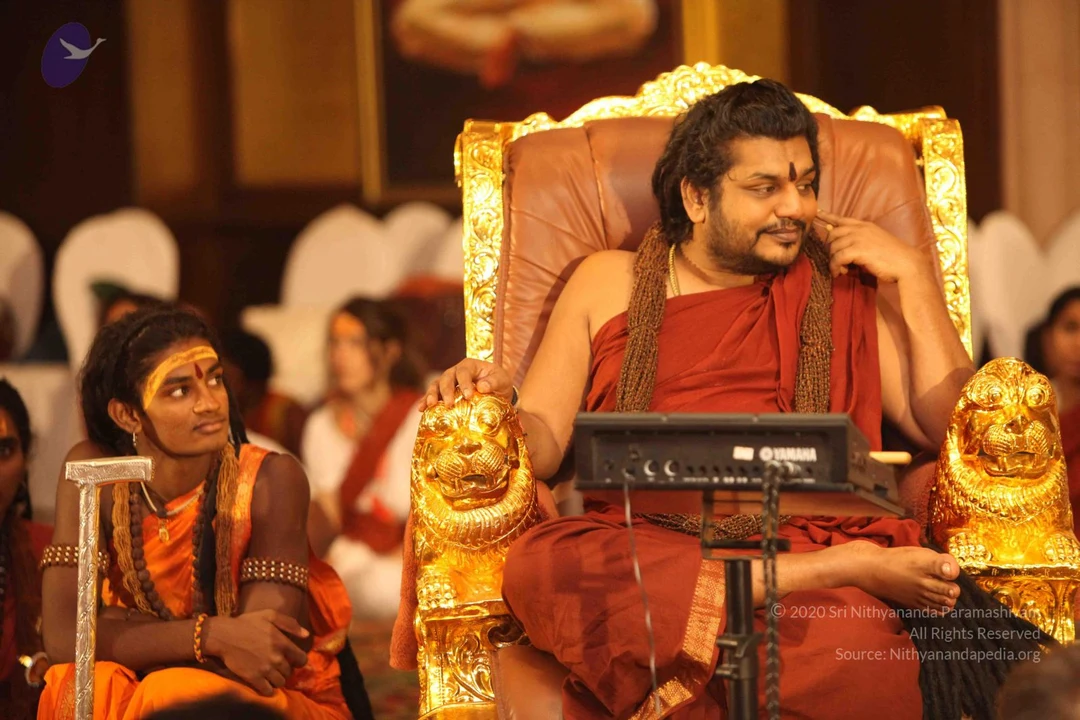
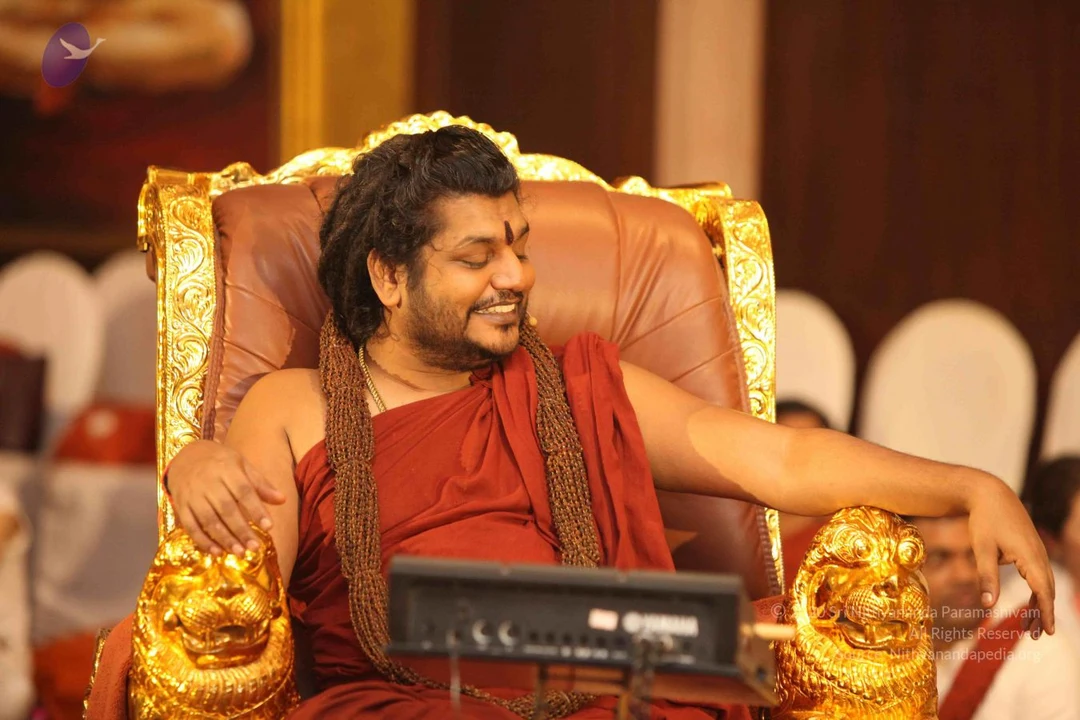
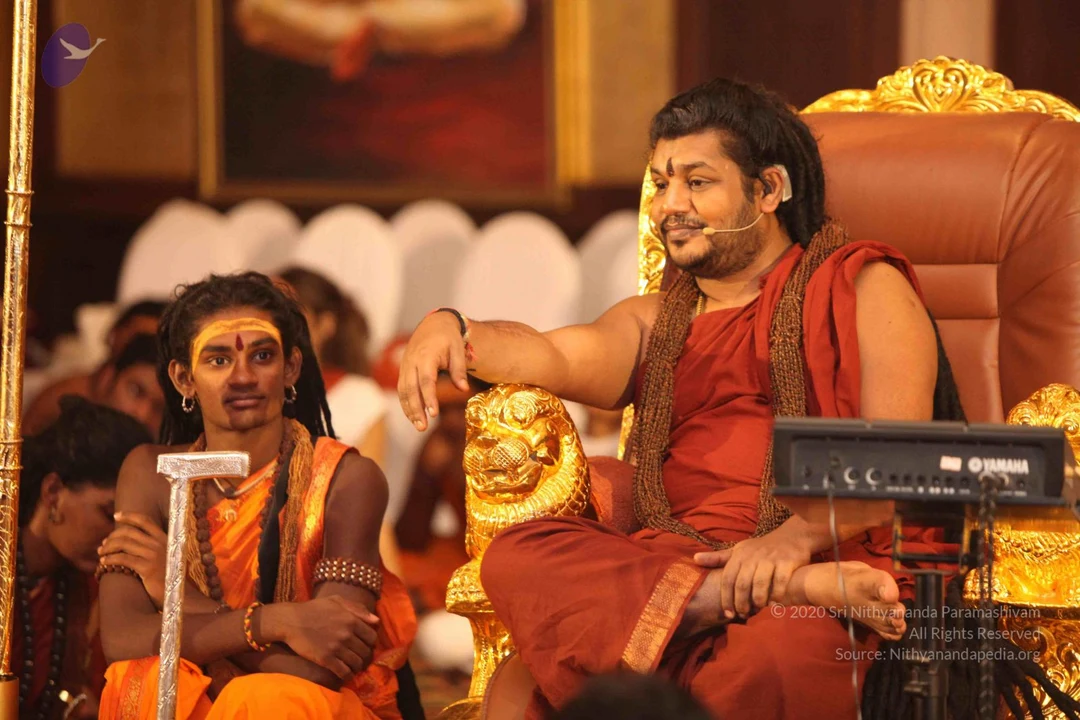
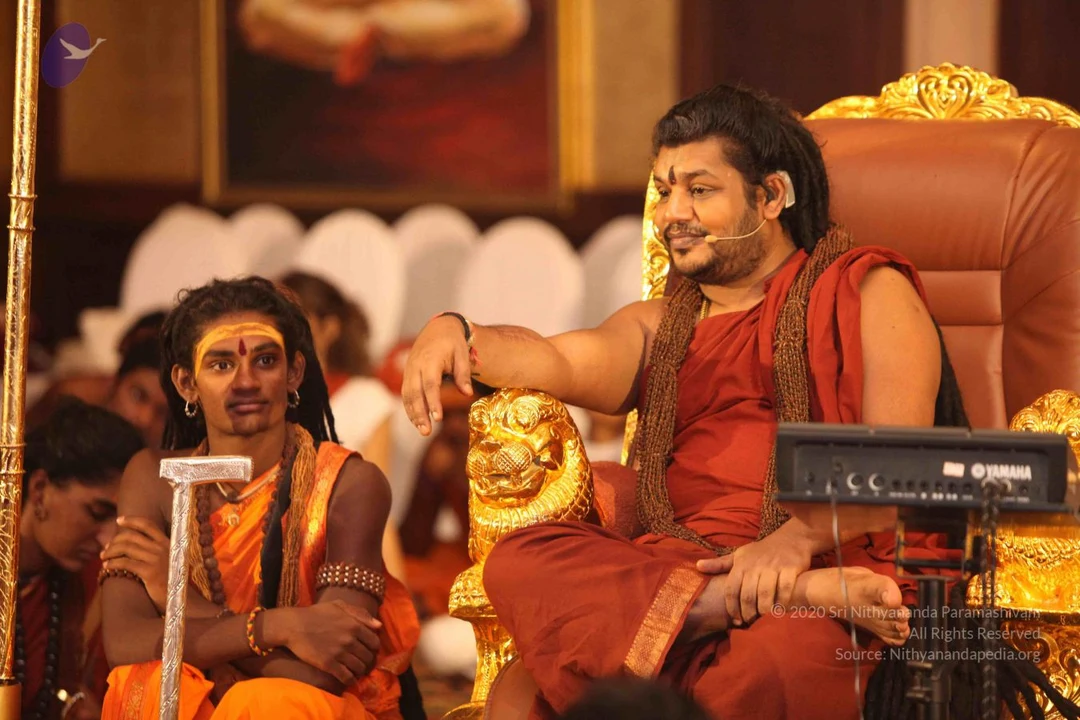
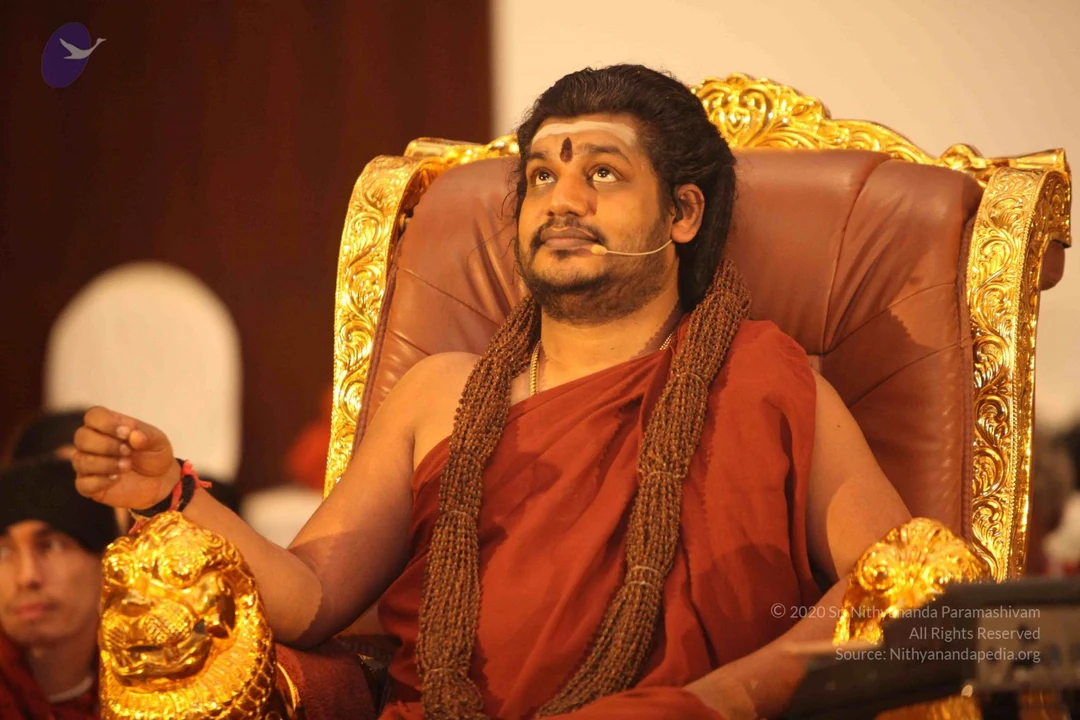
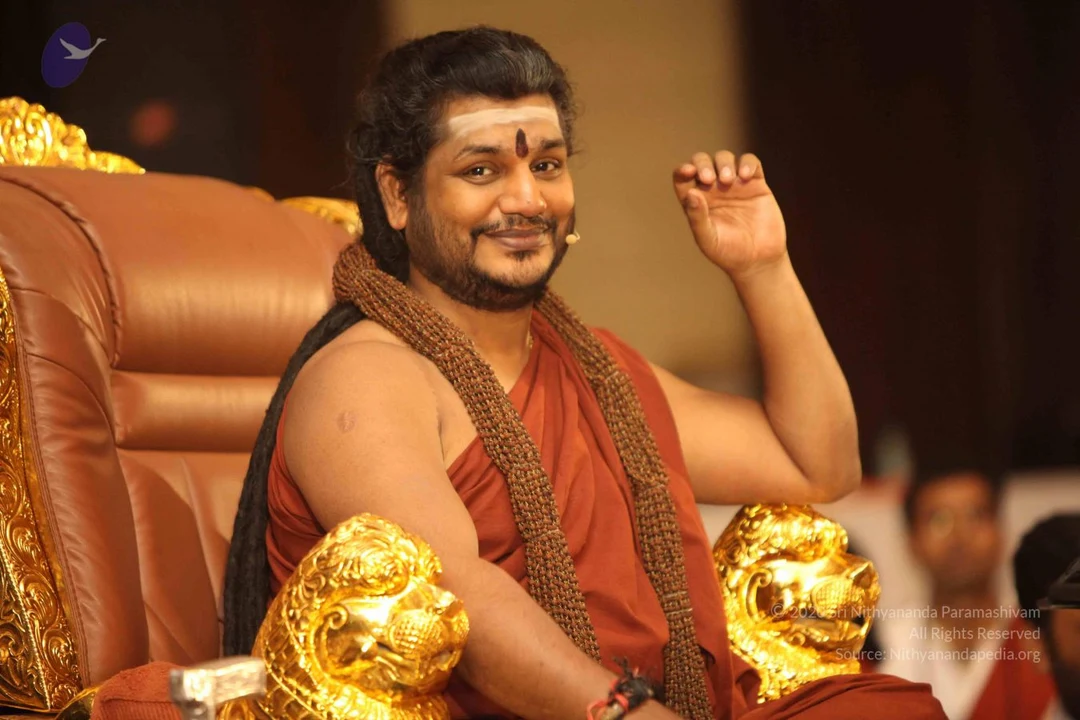
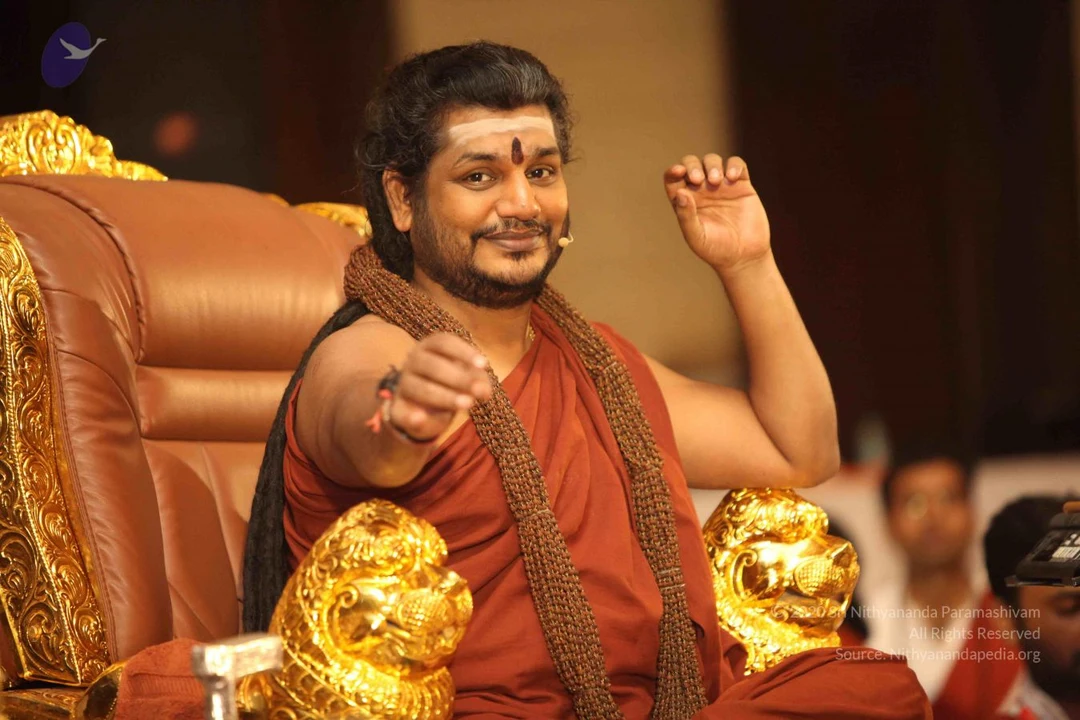
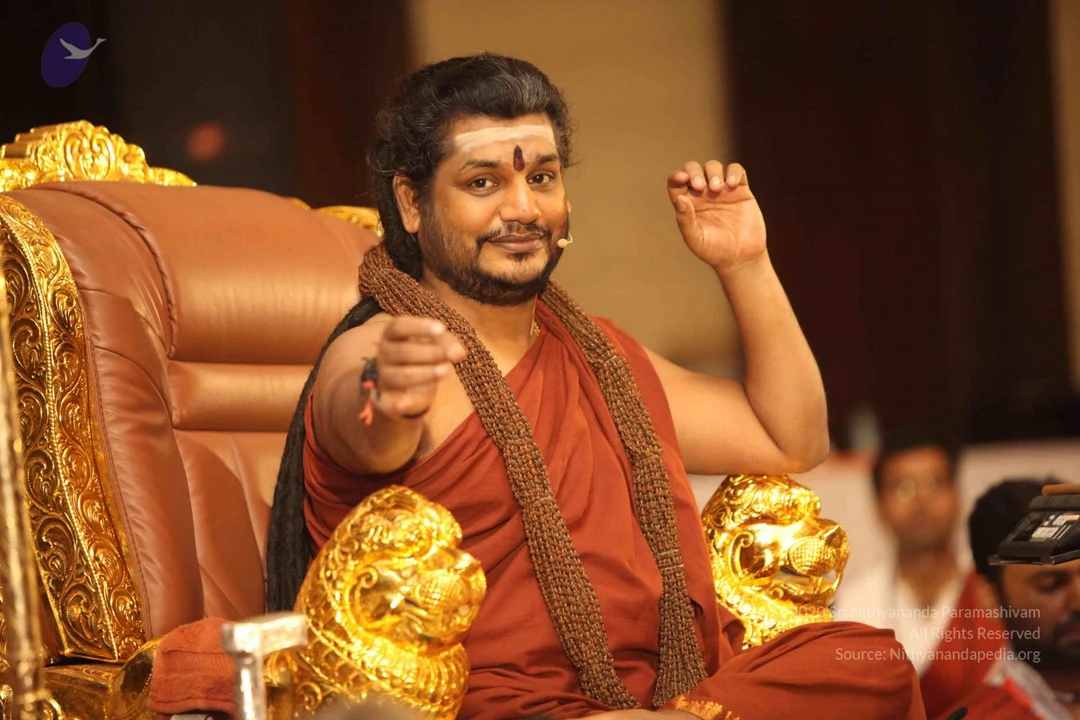
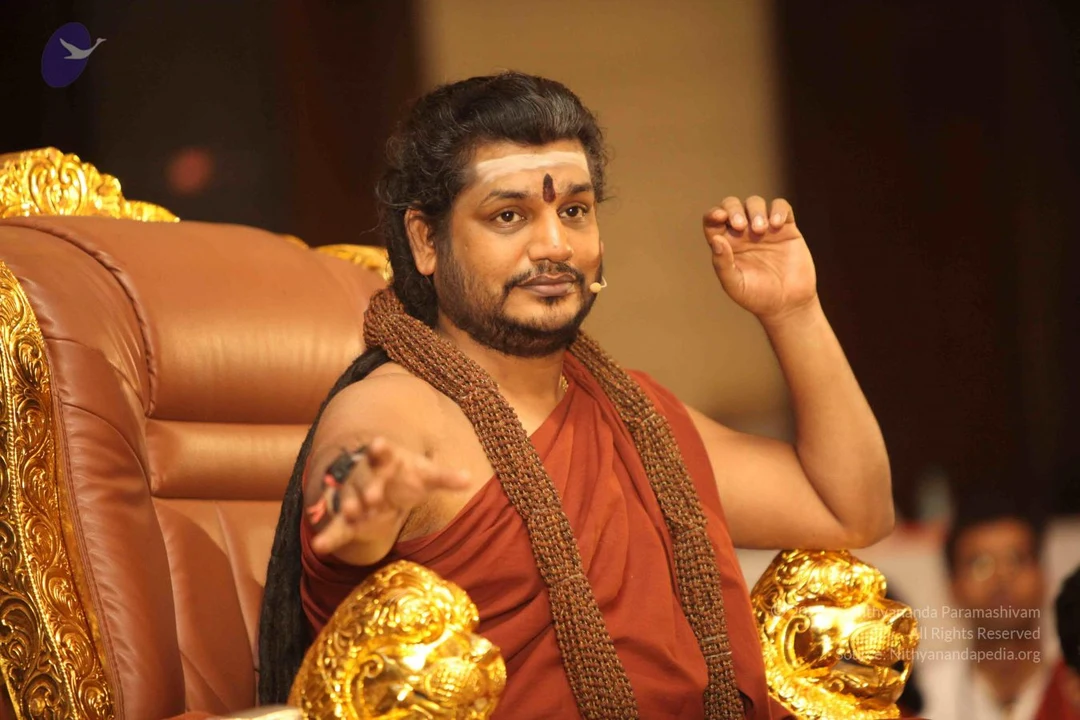
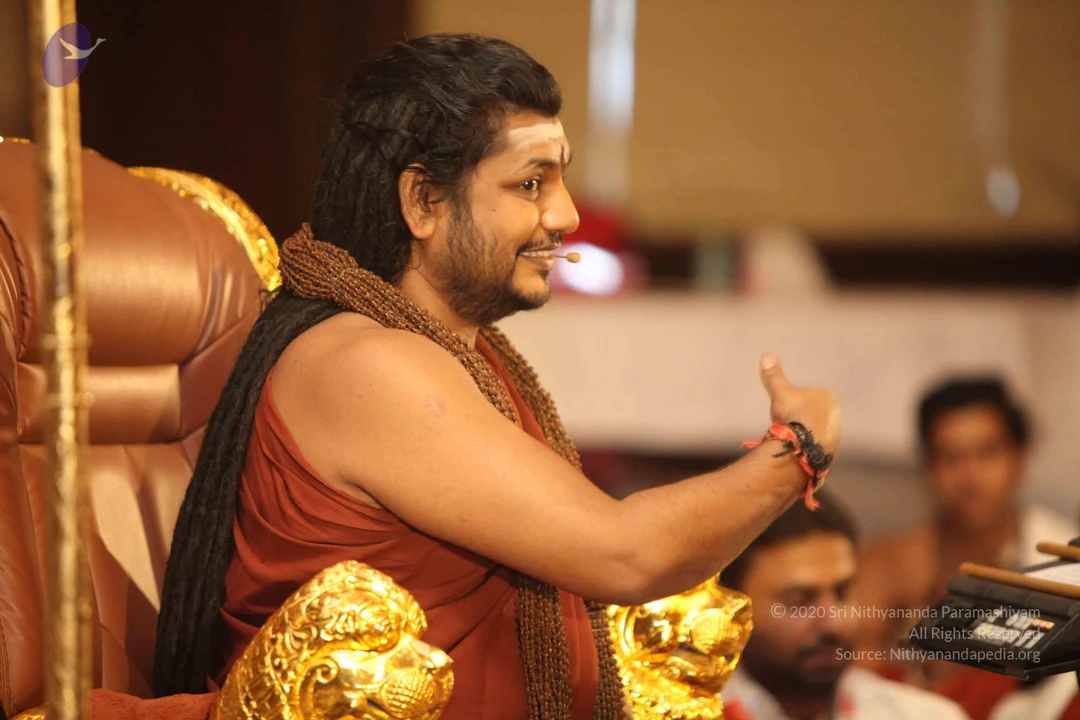
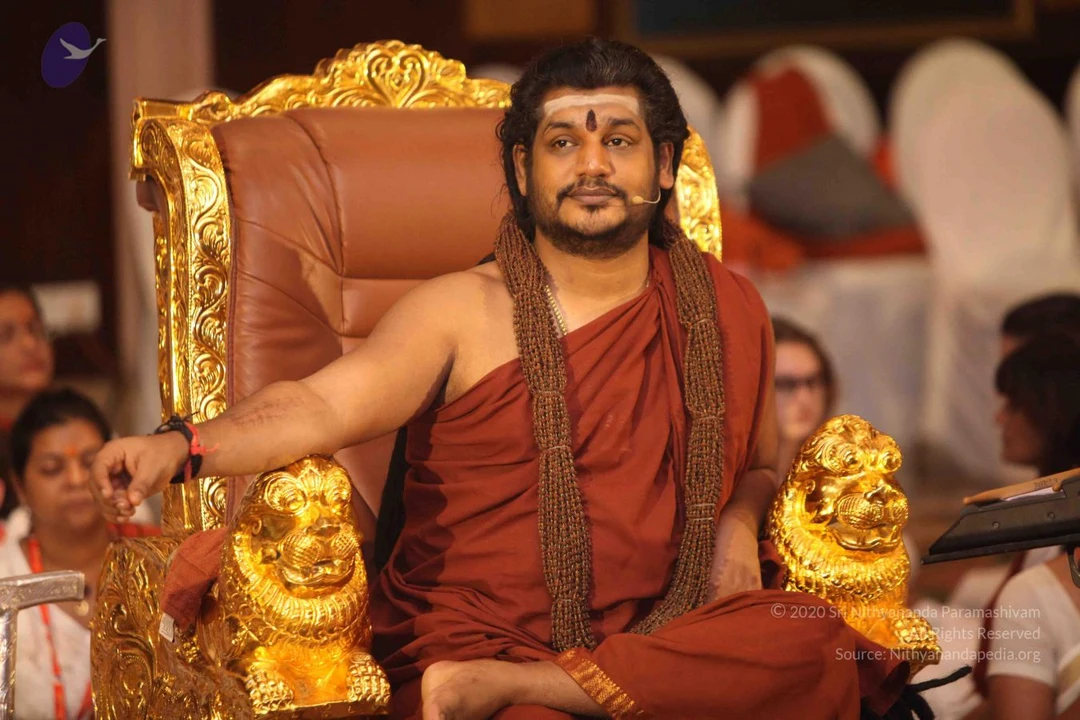
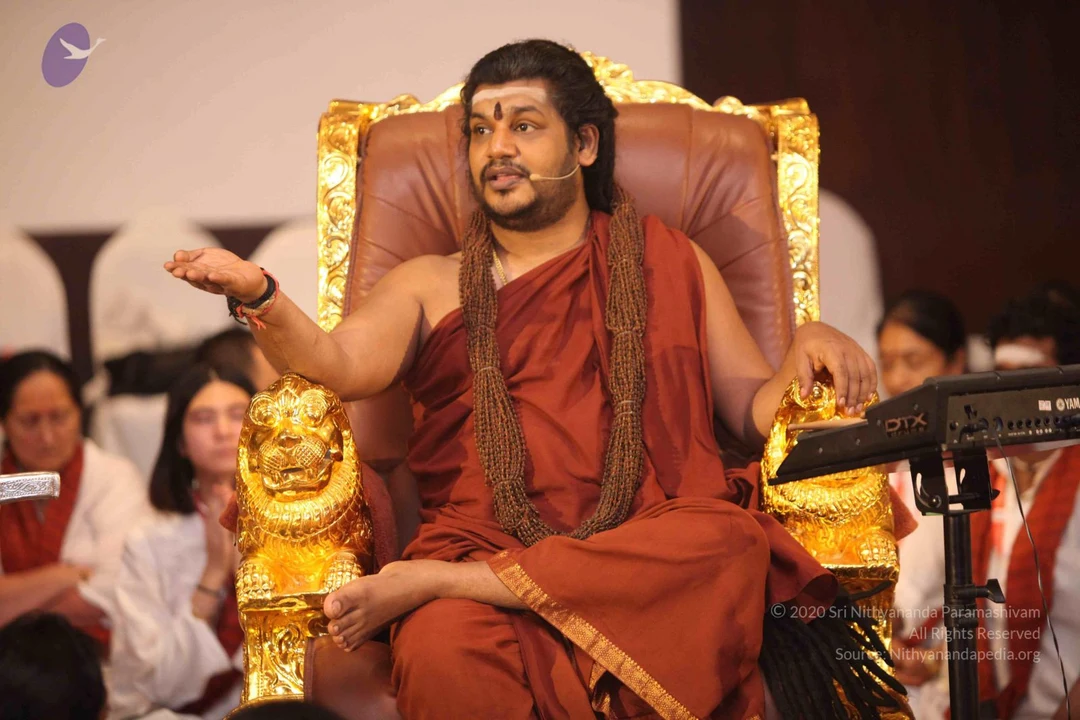
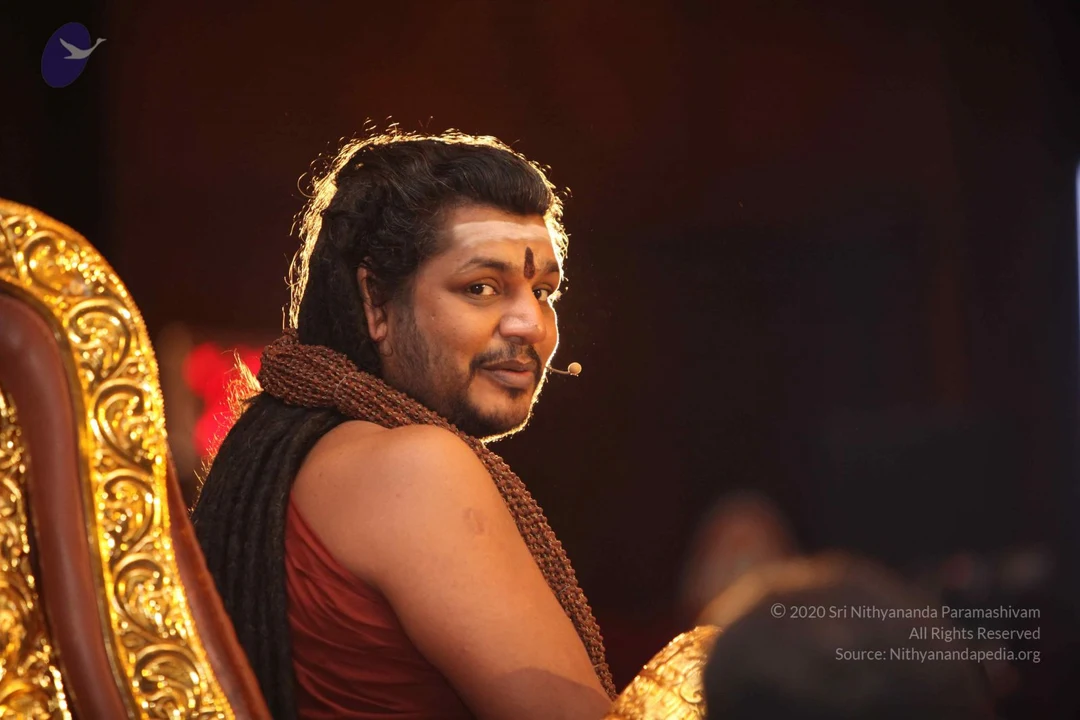
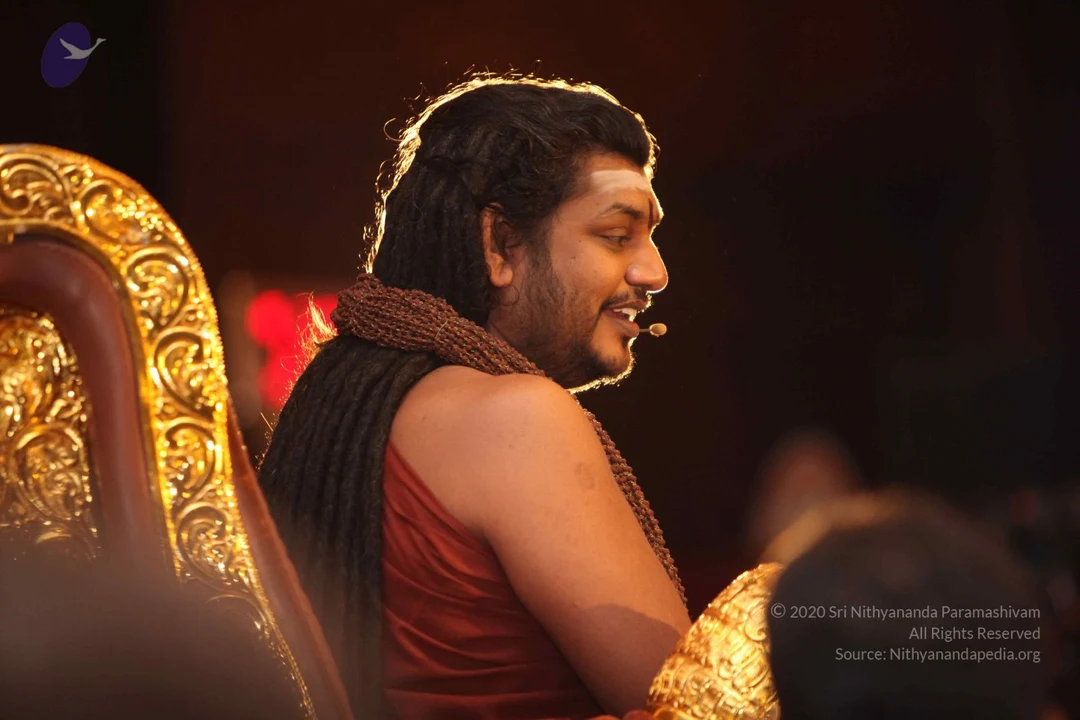
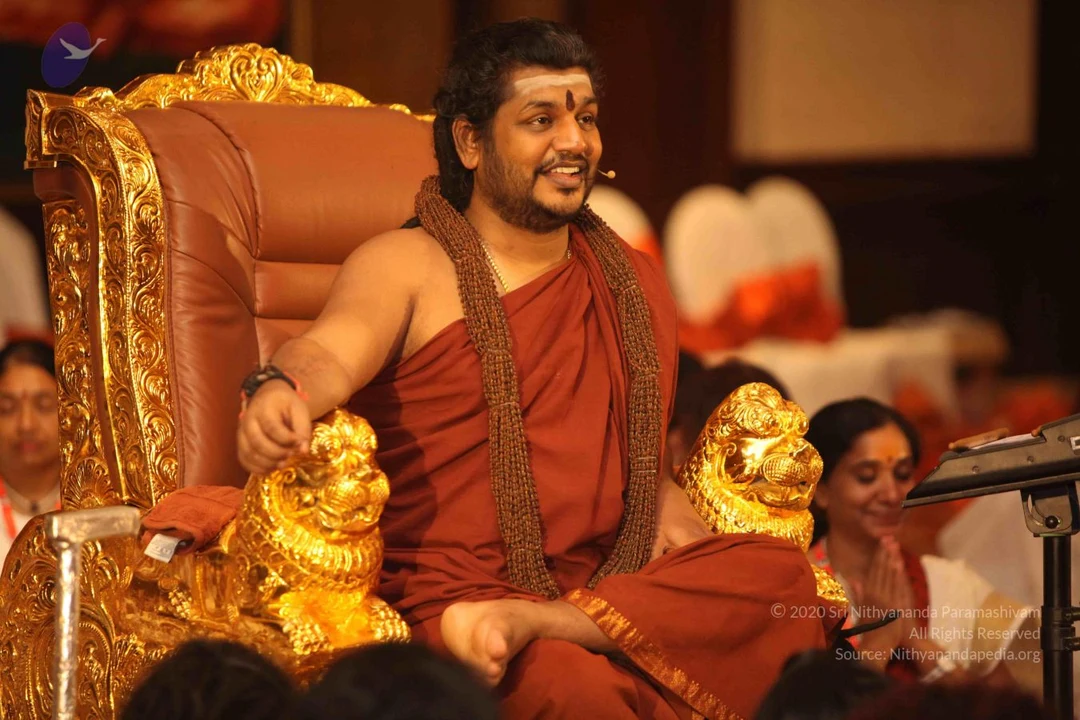
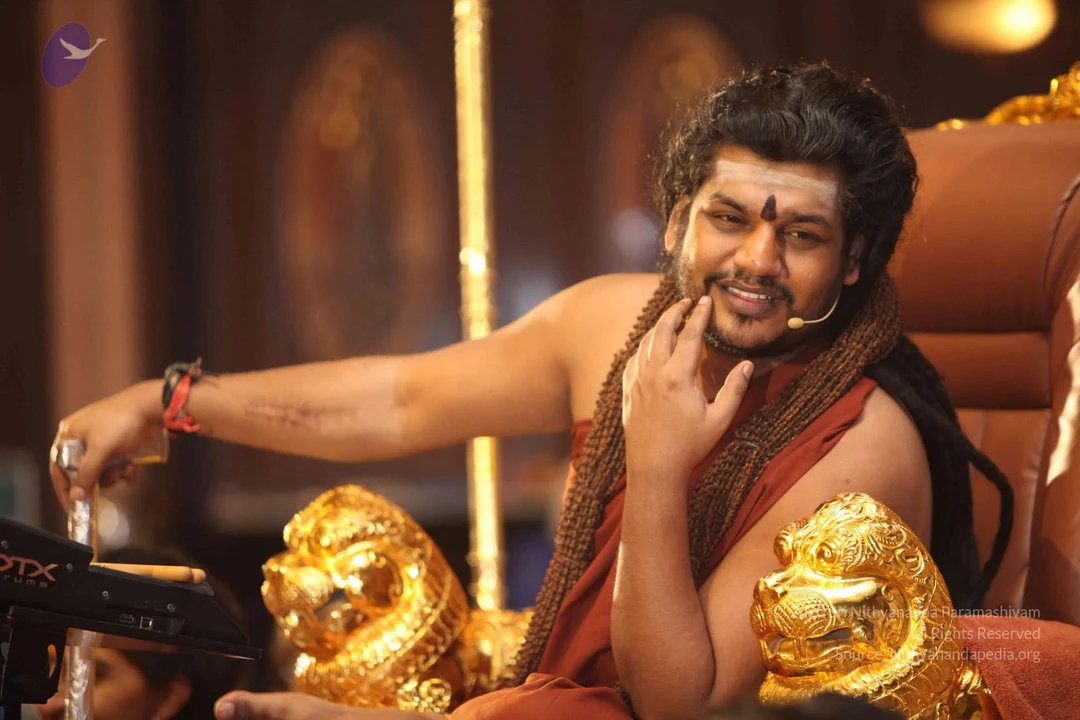
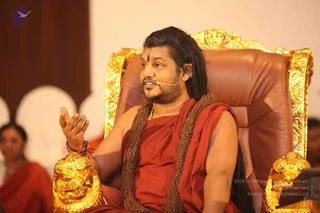
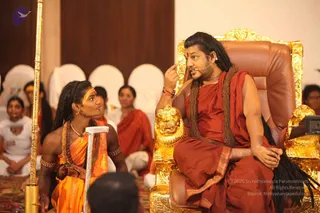
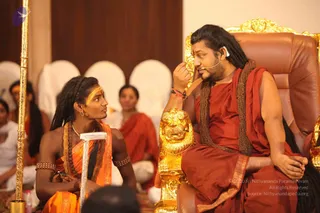
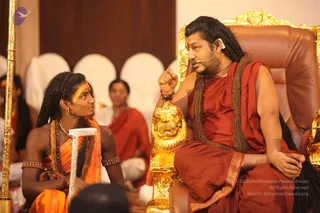
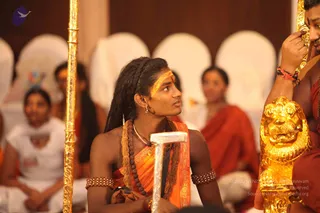
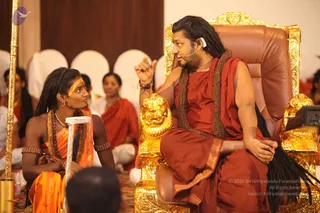
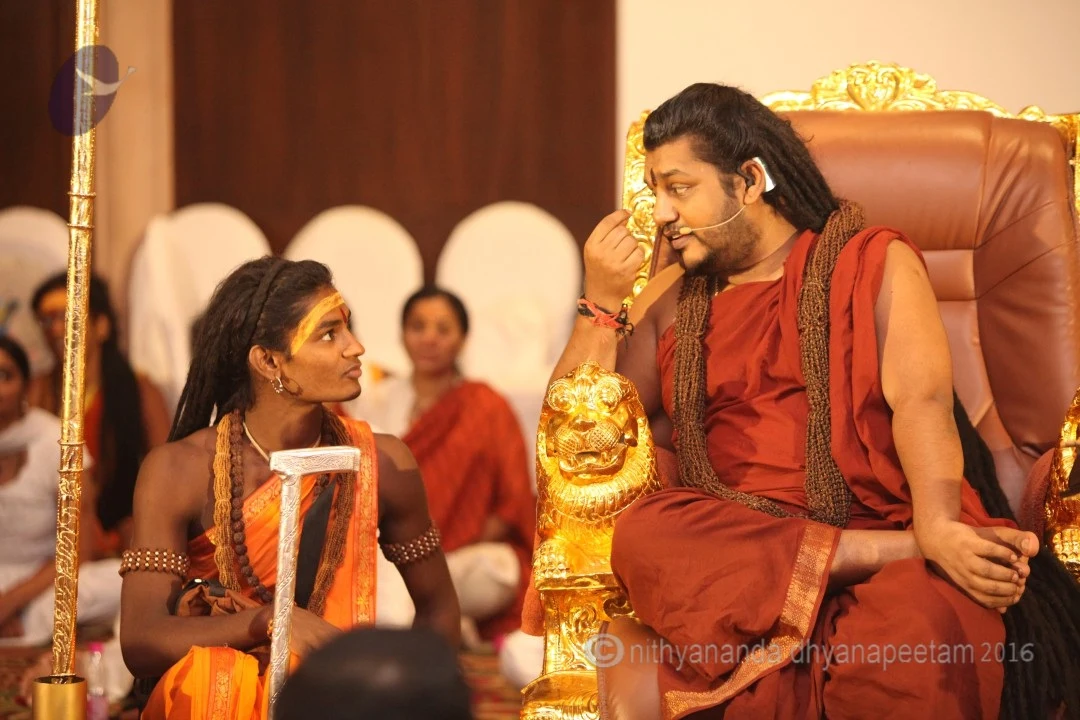
A man seated on an ornate brown leather throne with gold carved armrests shaped like lions, speaking into a headset microphone while gesturing with his right hand. He wears a red-orange shawl over his shoulders, long brown rudraksha mala strands crossing his chest, a red-orange garment, a small red forehead mark and a beaded wristband. Long dark hair falls past his shoulders. Appearance-based candidate: Swamiji (probable), seated in a teaching posture with rudraksha malas, saffron-red robes and long hair on a throne.A satsang scene in a hall with white chairs and seated attendees. A man with long swept-back hair, rudraksha mala and a microphone sits on an ornate gold throne with lion-head arms, wearing a red-maroon robe with gold border and a bindi. Beside him, a seated figure with long braided hair, orange turban-like headband with yellow tilak, orange-saffron cloth and rudraksha beads gestures while looking up at him; a tall gold staff stands at left. Two women in white and red saris sit in the background. The throne figure is an appearance-based a person candidate, seated and speaking in a teaching role.A seated man on a gold-and-brown leather throne with carved gold lion armrests wears a rust-red robe and a brown rudraksha-style beaded necklace, with a headset microphone and a wristband, and gestures with his right hand near his ear while looking toward a younger man. Beside him, a younger man in an orange dhoti and orange shawl wears a long rudraksha mala, dark bangles, and a yellow tilak across his forehead, sitting cross-legged with a silver staff-like rest. Behind them, white-clad and red-clad seated attendees fill a hall with white chairs and a dark wooden panel, and a gold-topped staff stands on the left. The scene reads as a seated satsang audience setting.A seated man in a rust-red robe with a rudraksha-style brown bead mala across his chest sits in a large golden-brown leather throne with gold-carved lion-head armrests, wearing a small headset microphone and long dark hair. Beside him sits a younger man with long dreadlocked hair, orange-and-gold clothing, a silver staff, a brown beaded bracelet and a yellow forehead mark, gesturing as he speaks. Behind them, seated devotees in orange and white clothing listen at a satsang. Three to four people are visible.A photograph of a long-haired figure in a satsang hall seated on a stage, wearing an orange and gold shawl over a bare chest, with multiple rudraksha malas across the shoulders and chest, bead armbands, a gold earring, and a yellow-orange tilak with red marking on the forehead. Behind, a gold lion-headed ornamental pillar stands beside a silver staff, with a man in red and orange clothing at right. Seated devotees in white and orange-red garments sit in the background in front of white chairs. The figure has long dreadlocked hair and looks off to the side, consistent with the page's a person flag but the appearance cues are only partly distinctive, so the identity is uncertain.A photograph of a satsang discourse on a stage. A man seated on an ornate golden throne with lion-head armrests, brown leather back, wears a rust-red robe, a long rudraksha-style mala across his chest, and a headset microphone; his long hair falls loose and he gestures with one raised finger while speaking. Beside him on the floor sits a younger person with long dreadlocked hair, a saffron-orange wrap and dark rudraksha beads, facing him with a yellow tilak on the forehead. A golden staff stands at left. Behind them, seated devotees in red and white clothing fill rows of white chairs, and a woman in red is visible. The clothing colours and ceremonial gold trim give a formal setting.

FB-Photos-of-the-Day

5 photosSource gallery
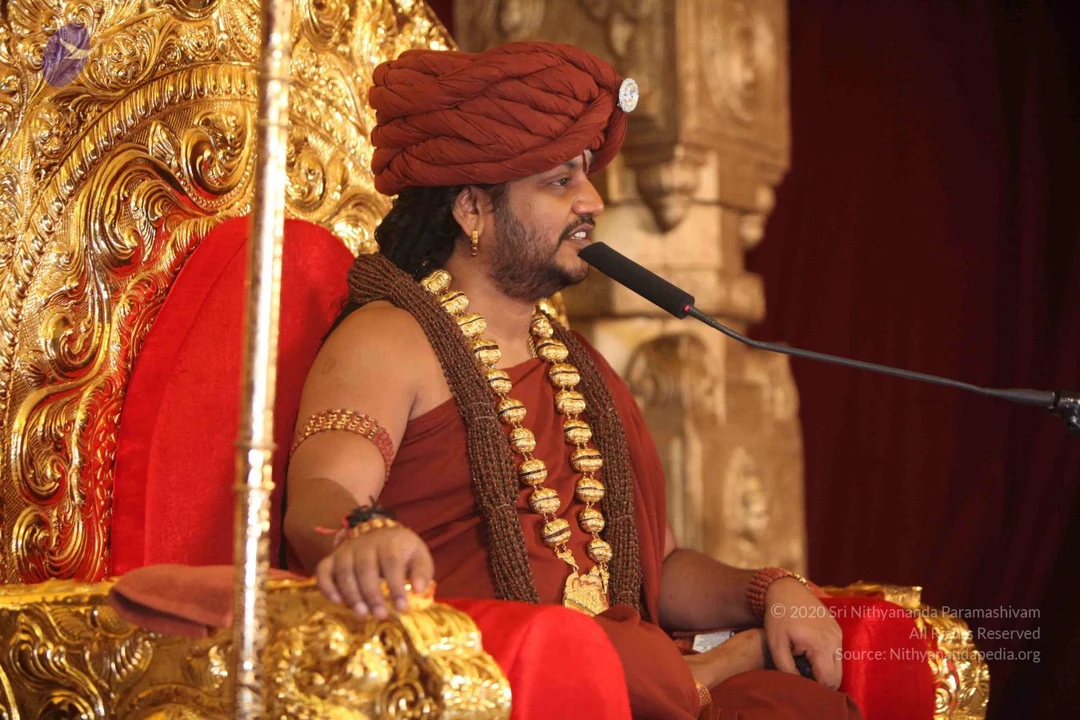
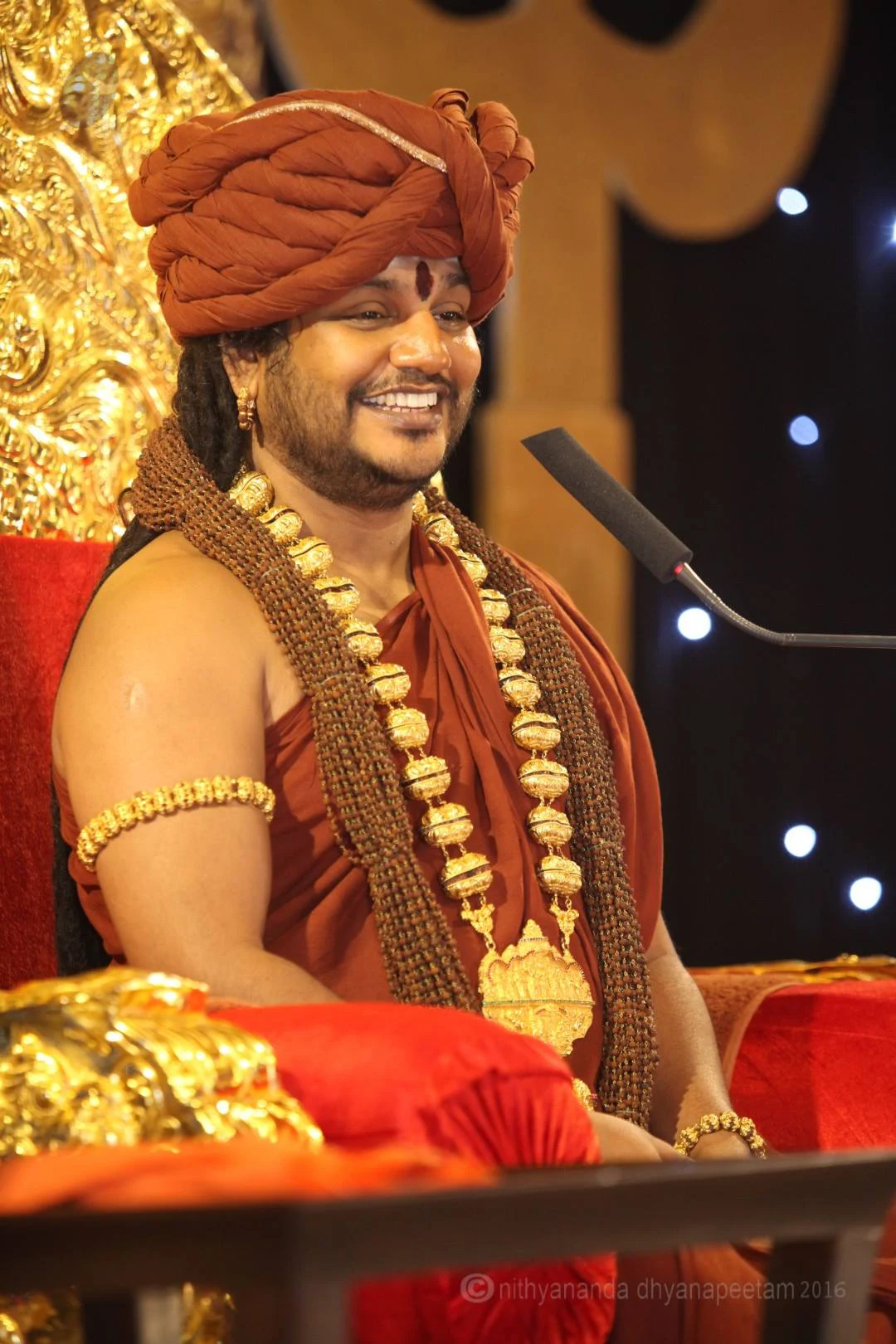
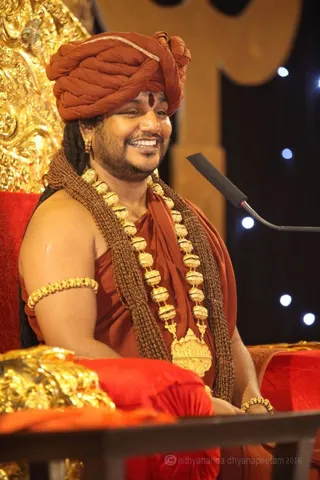
A man seated on an ornate gilded throne with a red cushioned seat, speaking into a microphone on a stand at right. He wears a rust-red turban with a silver ornament, a rust-red saffron-style robe draped over his shoulders, a long gold-beaded necklace with a large gold pendant, a brown rudraksha mala, gold armlets and bangles. Behind him is a large gold carved backdrop with starry lights. a person: appearance cues include the red turban, saffron robe, ornate gold necklaces and rudraksha mala, consistent with a seated discourse speaker.

01-SATSANG

6 photosSource gallery
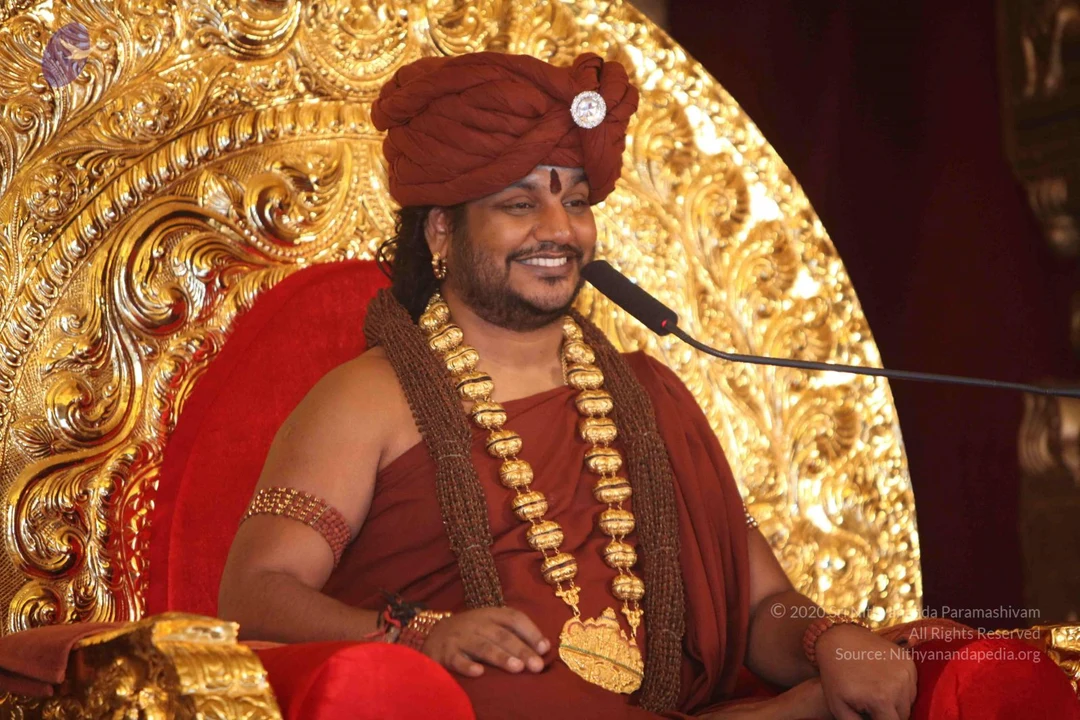
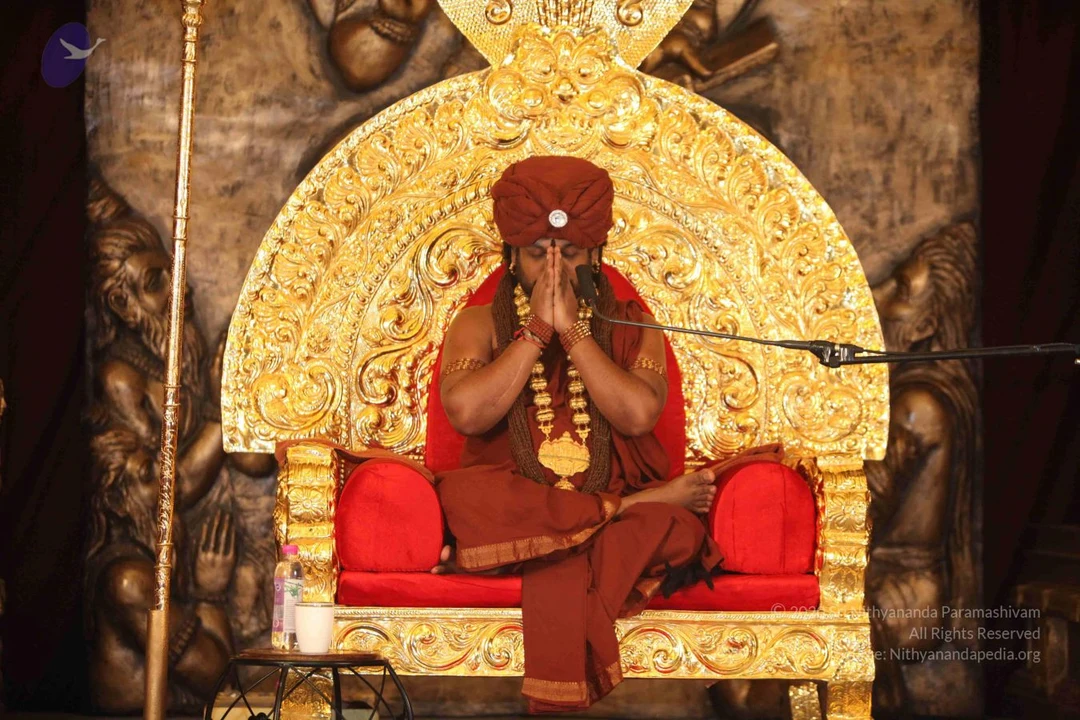
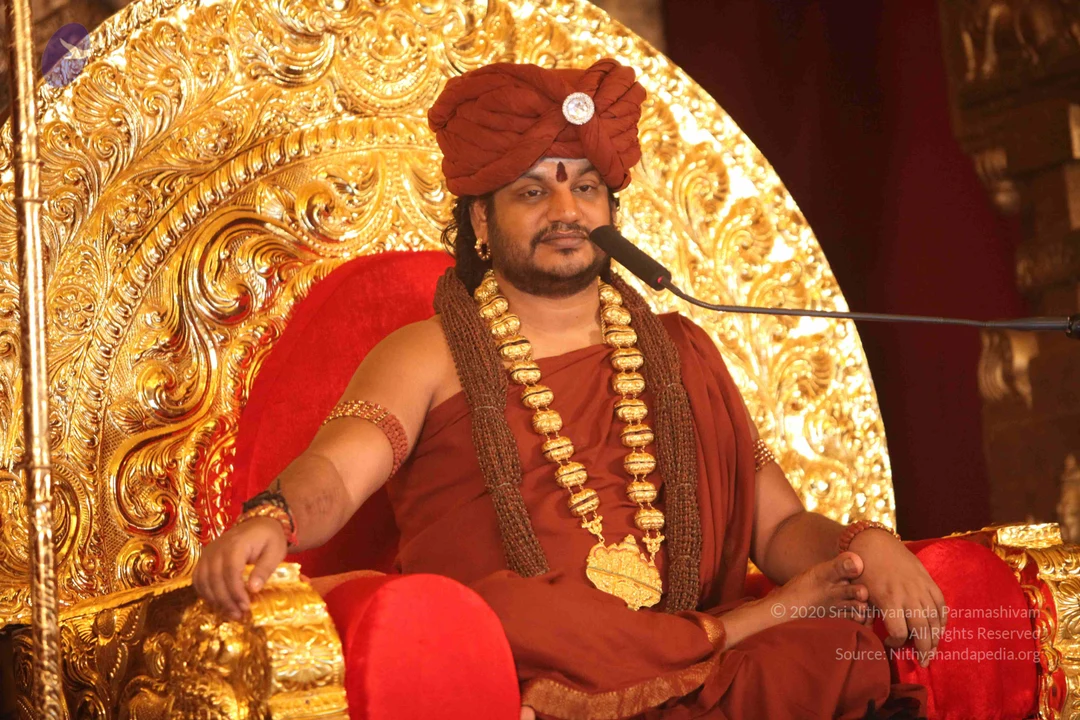
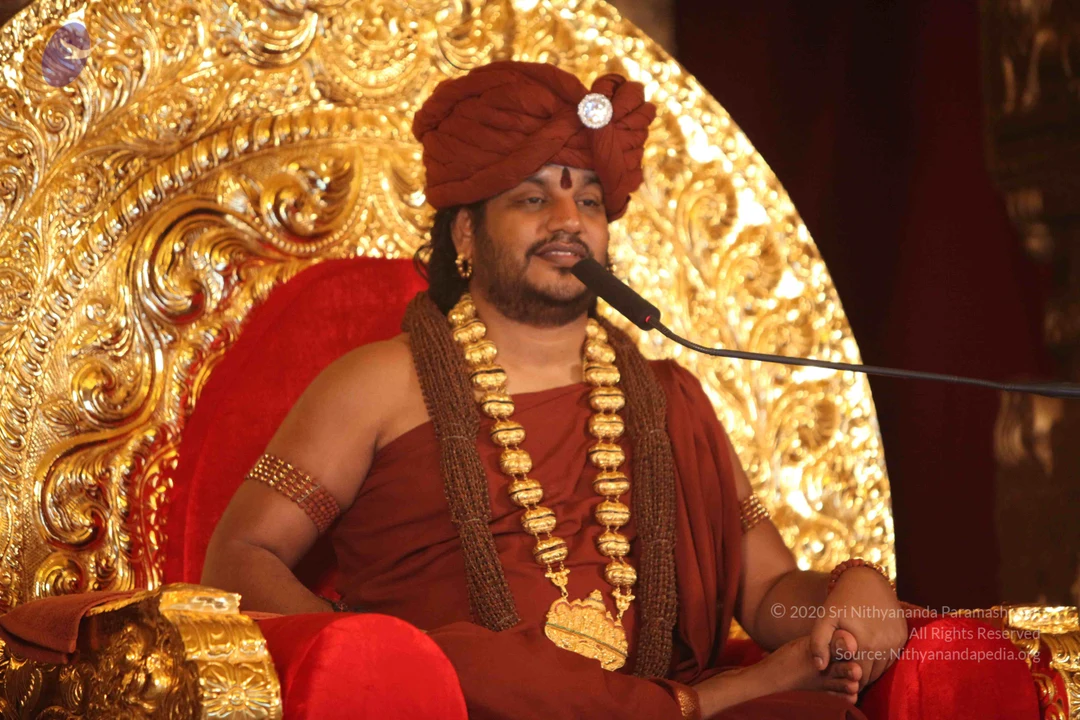
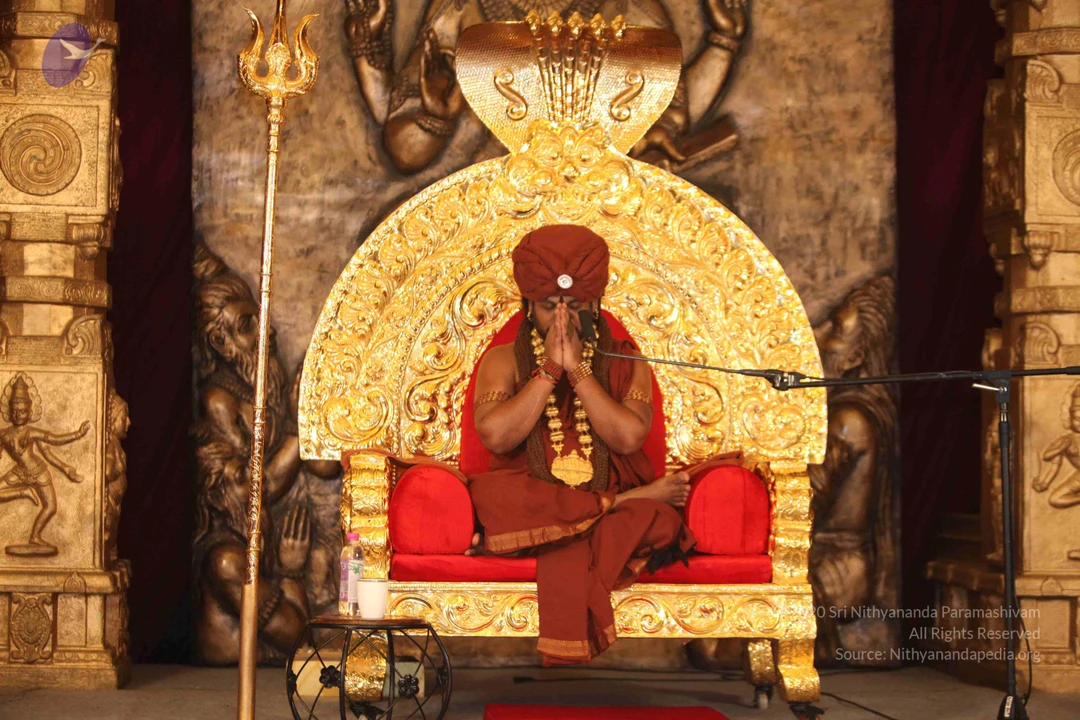
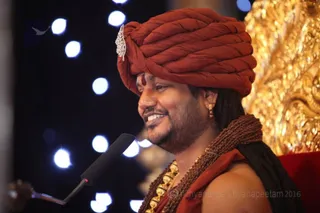
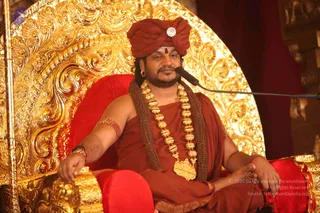
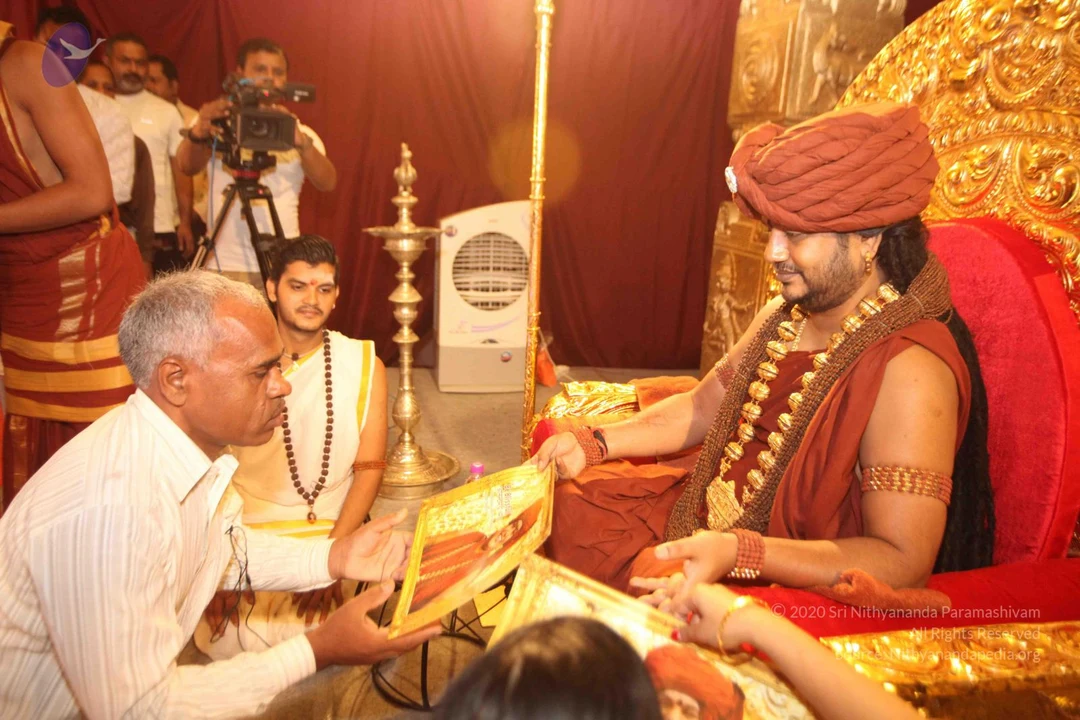
A man sits cross-legged on an ornate gold throne with a red velvet cushion, speaking into a microphone on a stand at right. He wears a rust-red turban with a round white jewel at the front, a vertical tilak on his forehead, a rust-red robe, a heavy gold bead necklace with a gold pendant, a dark rudraksha-style mala across his chest, and beaded red bracelets. Swamiji (probable) is indicated by the turban, saffron-red robes, ceremonial gold necklace and rudraksha mala, seated as the discourse speaker. Gilded carved panels fill the background. A sheen of gold and red dominates the stage setting.A seated man in a saffron-orange turban with a white jewelled brooch and a red bindi, wearing a saffron-orange robe draped over one shoulder, a thick brown rudraksha-style mala, and a heavy gold necklace with large gold beads and a gold pendant. He sits on an ornate red throne with gold carved backrest, arms resting on the armrests, speaking into a black microphone on a stand. The background is dark red with gold ornamentation.A photograph of a seated man on a red velvet throne in front of an elaborate gold-embossed backdrop, speaking into a microphone on a stand. He wears a rust-red turban with a white stone ornament and a red-brown robe, with a thick gold beaded necklace, rudraksha mala strands, gold armlets and a bracelet, and a small red mark on his forehead. His hands rest together in his lap. a person: long hair and ceremonial gold necklace with saffron-red attire as a distinctive presentation, seated in a satsang discourse setting, with a red velvet throne and gold ornate backdrop.A seated satsang gathering in a large hall, with a crowd of devotees sitting closely on a patterned carpet. In the foreground, young men and women in orange and saffron garments with rudraksha malas and white body markings sit cross-legged; some have their hands joined in prayer or rest them on their knees. Behind them, many attendees wear white kurtas and red stoles, and a row of framed portraits and a projection screen hang on the wall. The scene is dense and attentive, with a large audience facing the front.A seated satsang audience in a hall with ornate patterned carpet, with many people sitting cross-legged and attentively. In the foreground, several devotees wear saffron and orange robes with rudraksha malas and white body markings on their arms and chest; one young man with long dark hair and a rudraksha mala sits in the centre-right. Others in white kurtas and white clothing with red shawls sit behind them, and a projection screen is visible at the top of the room. The scene conveys a meditative assembly rather than a single identifiable presenter, and no clearly identifiable a person figure is visible.A seated figure in a rust-red robe and matching red turban with a small white emblem sits in a gold-ornate throne with red cushions, hands pressed together in namaste before his face. He wears a gold pendant and rudraksha-style beaded mala with a long gold necklace, gold armbands and bangles. Behind him a gold-toned temple backdrop with carved deity figures and a gold trident rests against a left pillar; a microphone stands at right, with a water bottle and glass on a small side table. The setting suggests a satsang discourse. a person candidate appearance cues are present (red turban, ornate gold necklace, mala, throne), but the figure's features are not distinct enough for confident identification.
02-SARVA-DARSHAN

9 photosSource gallery
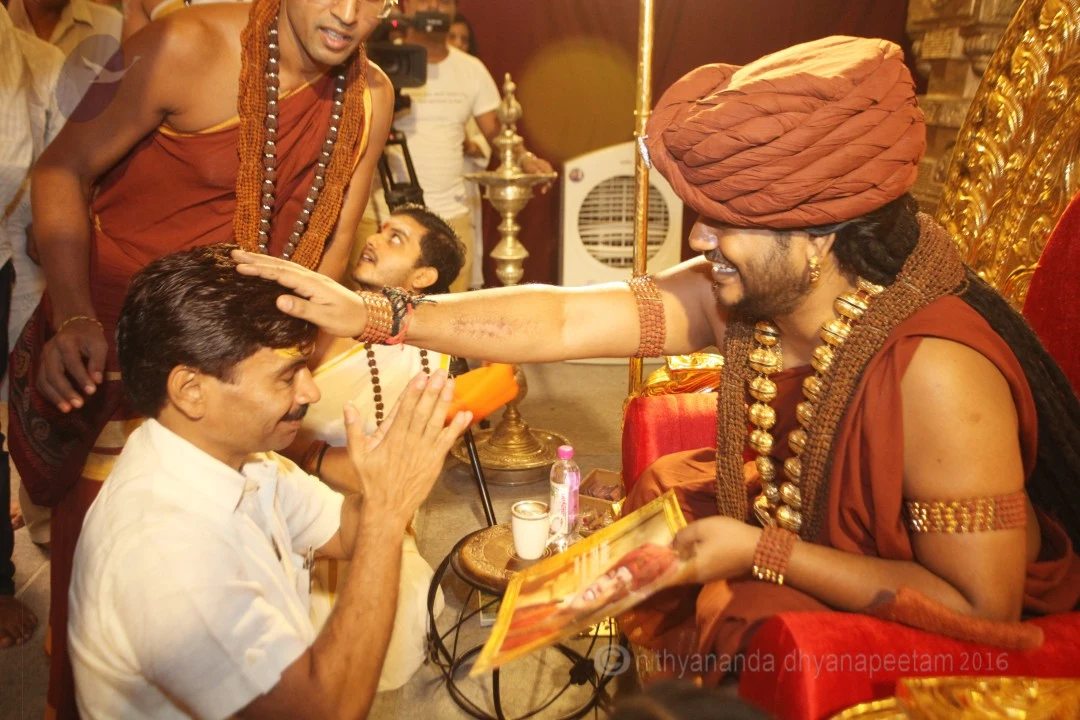
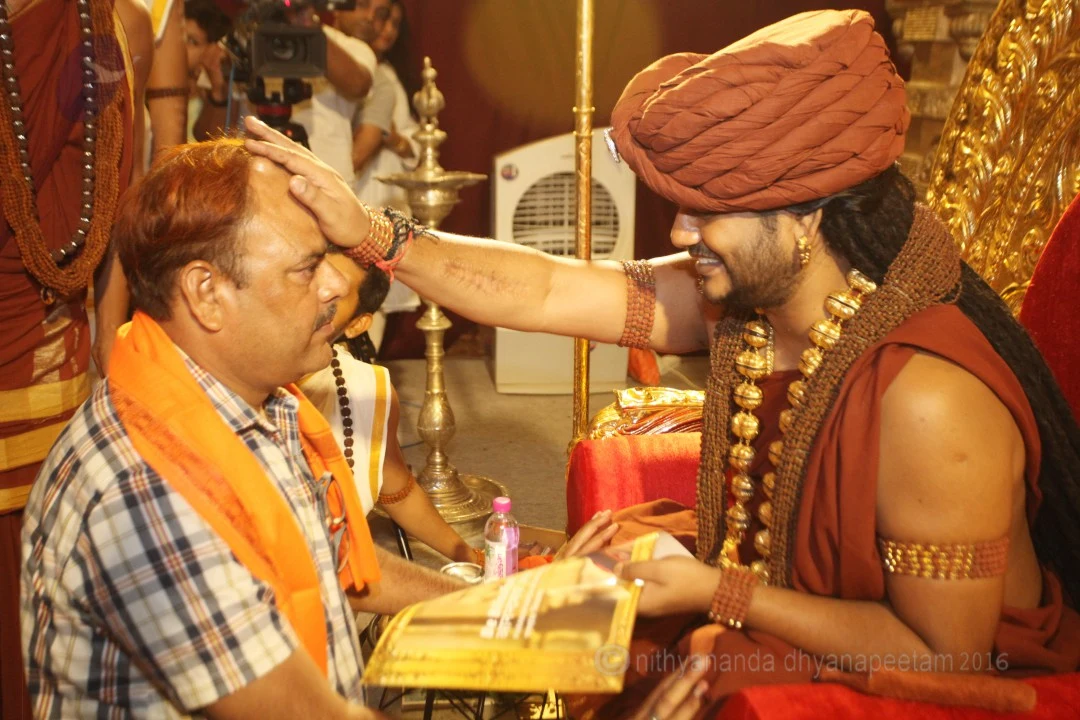
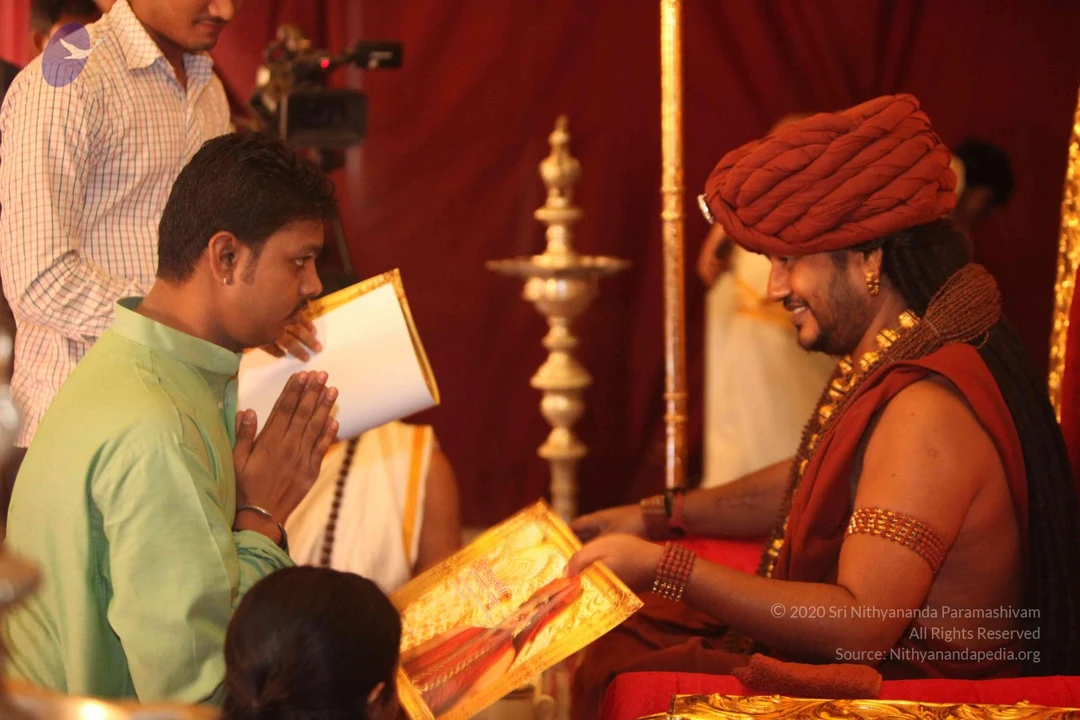
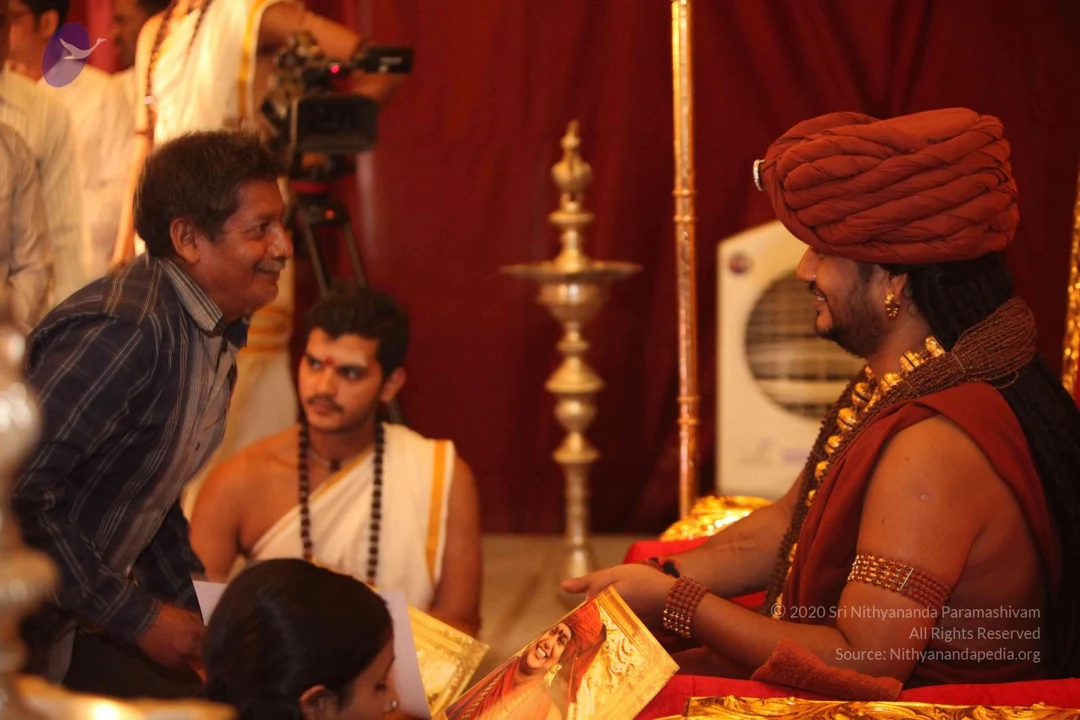
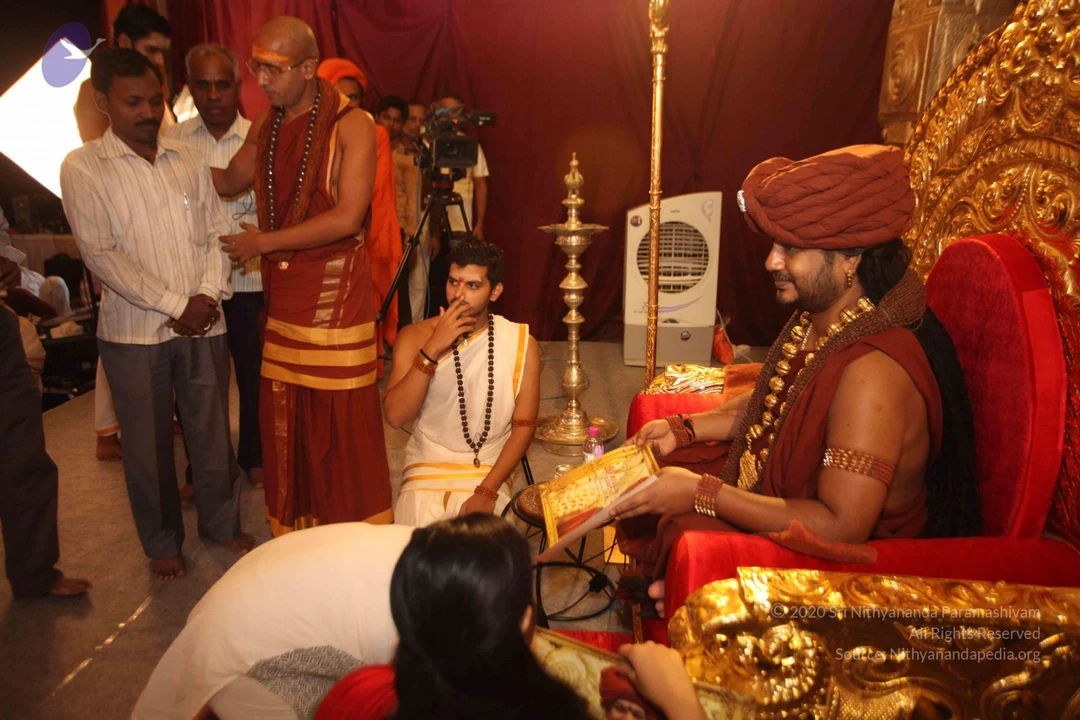
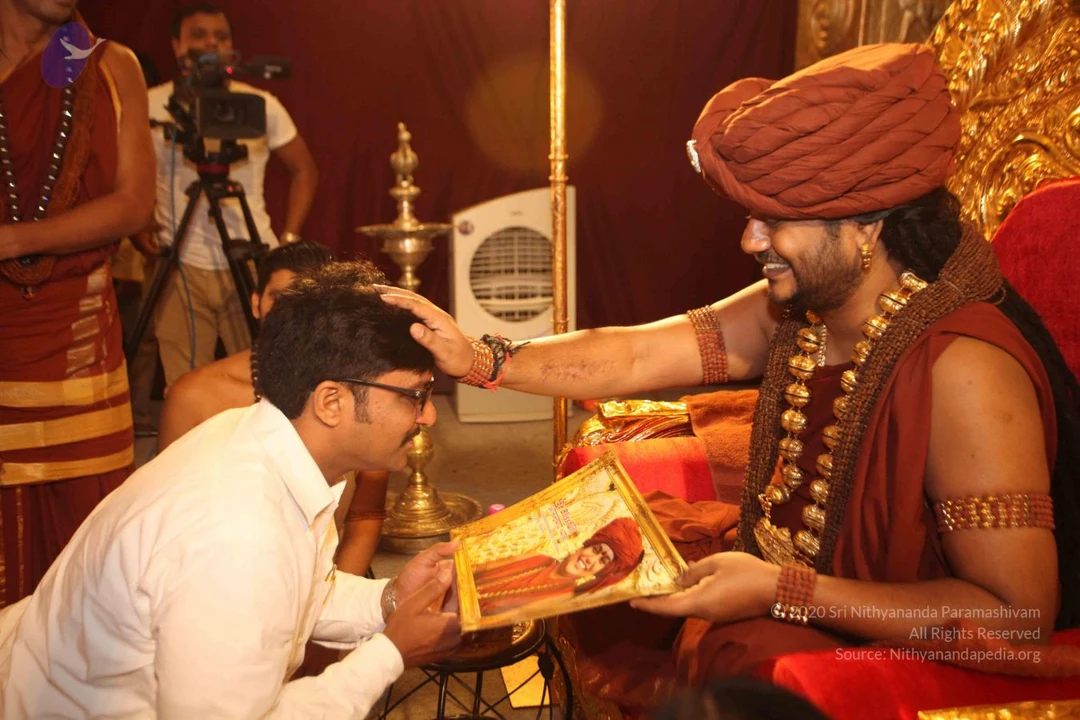
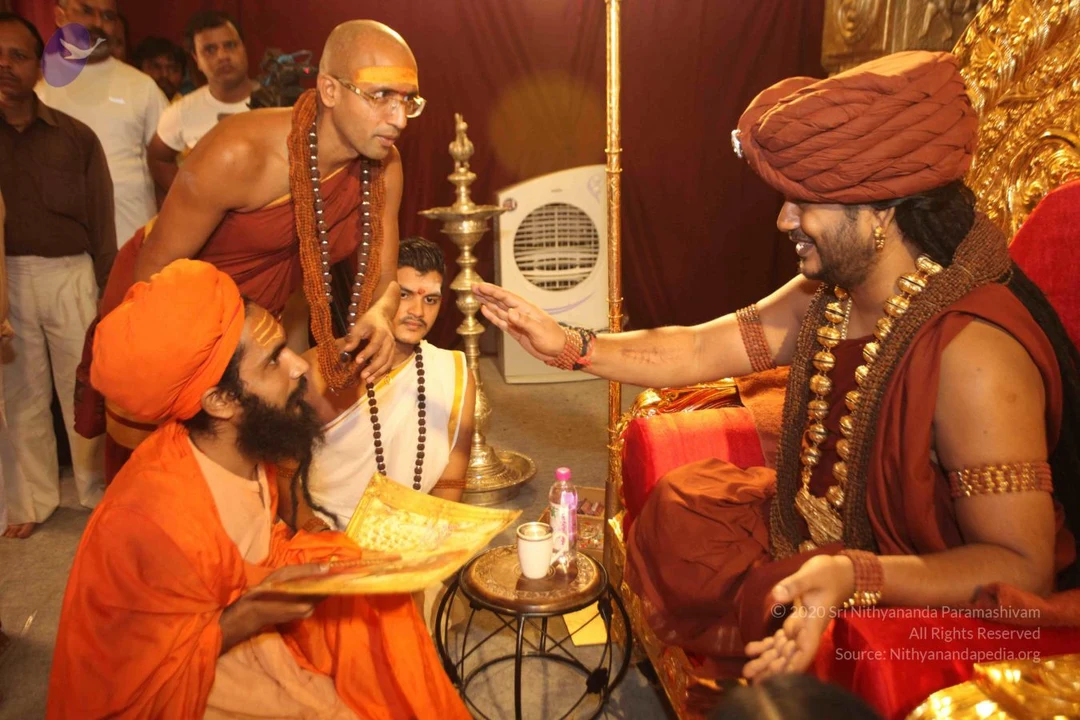
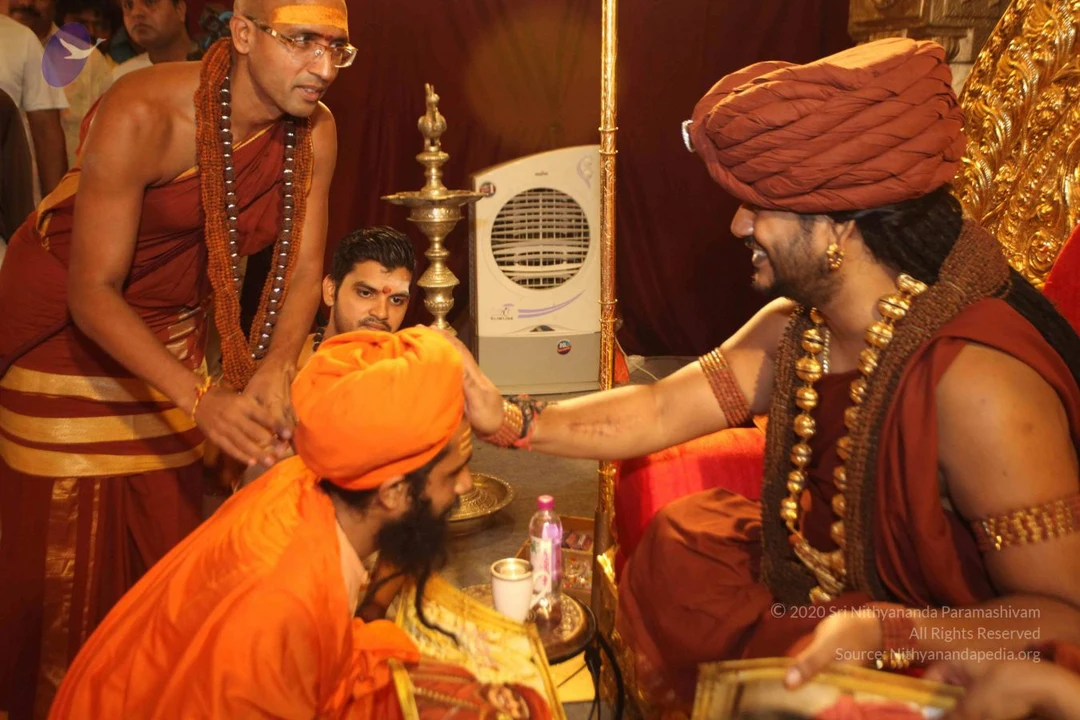
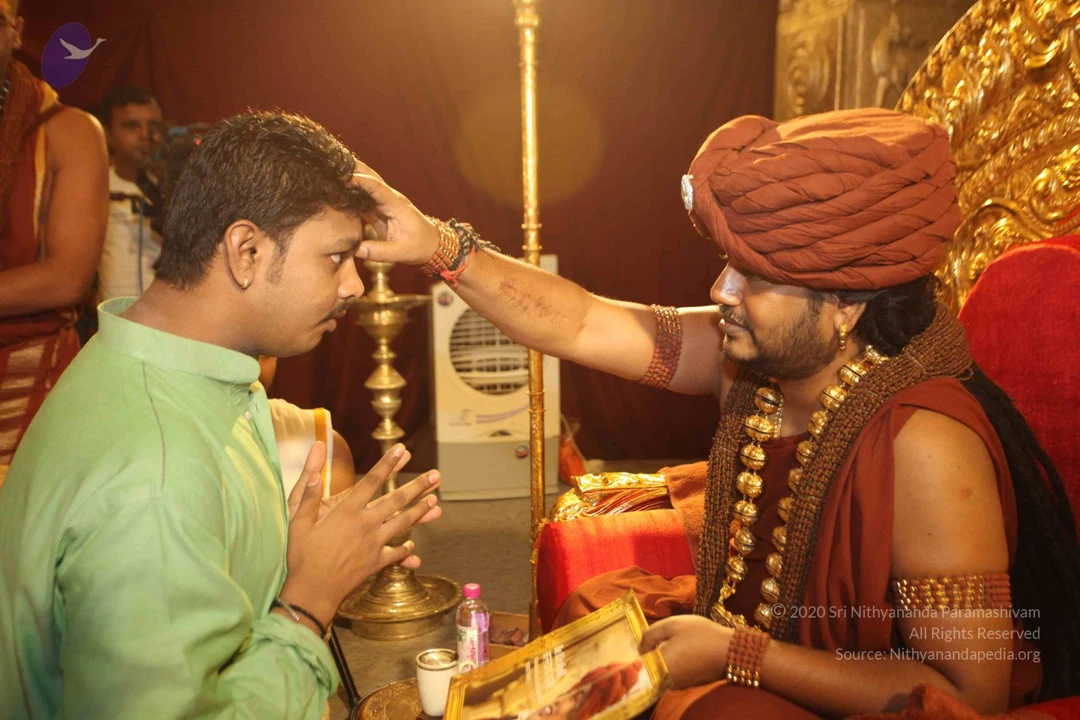
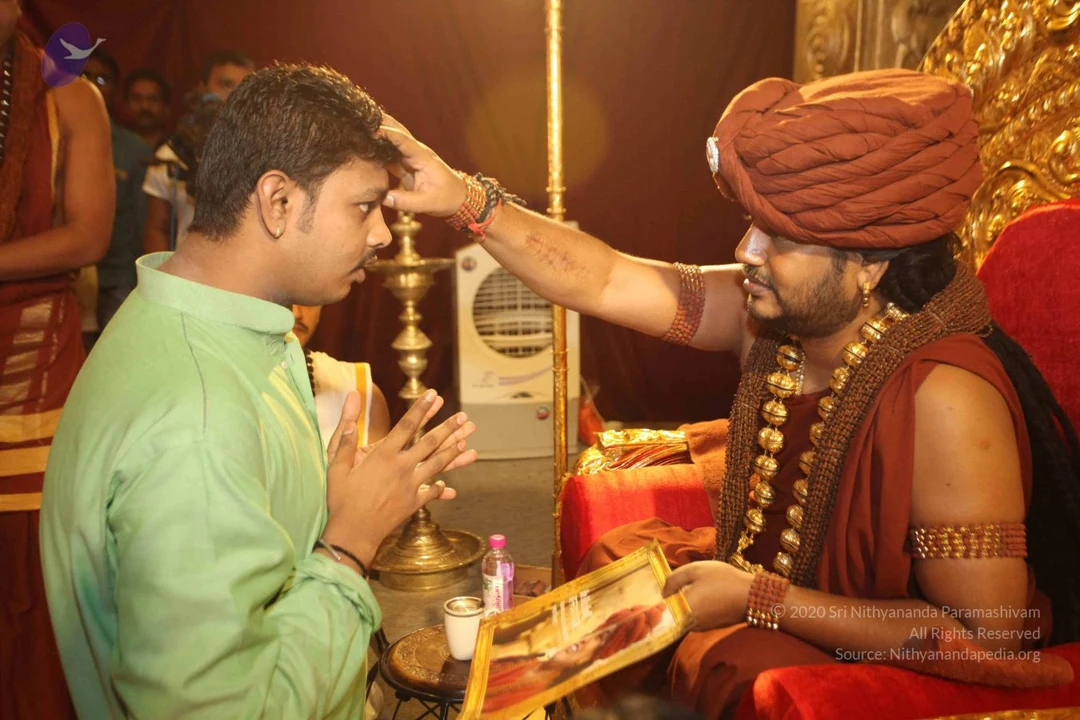
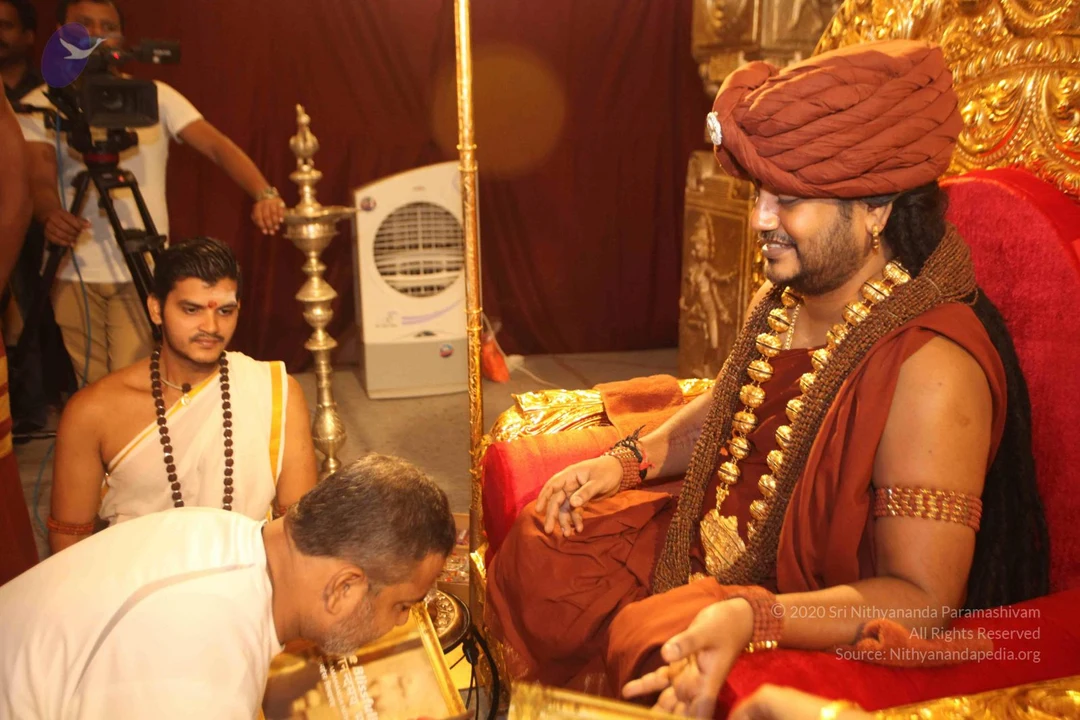
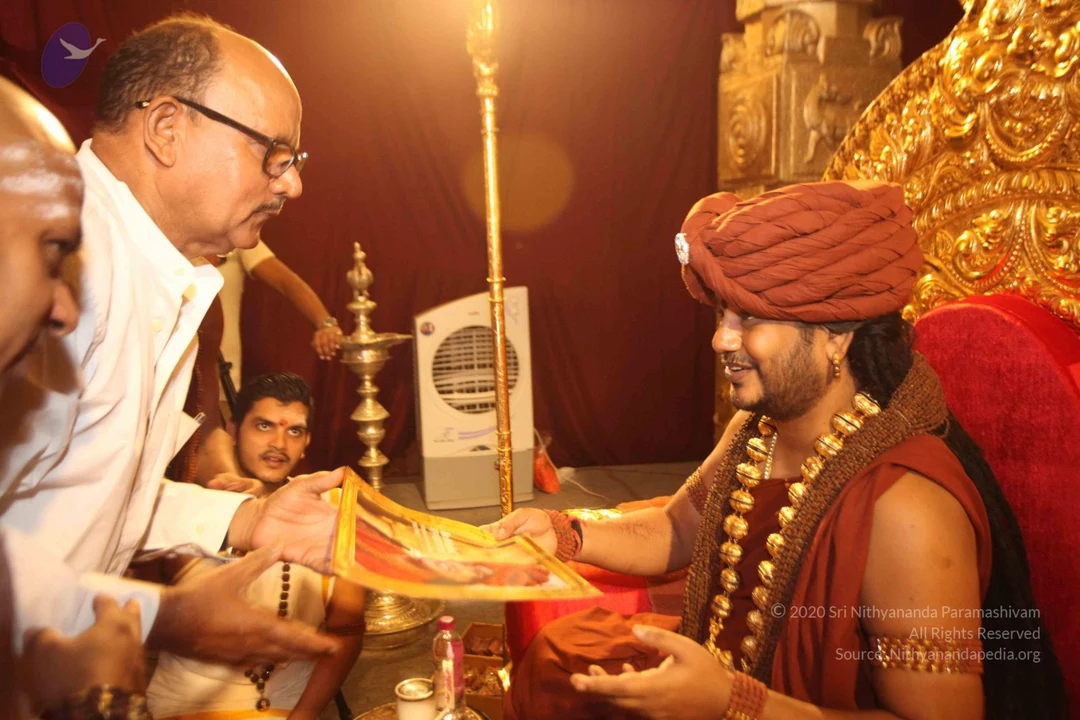
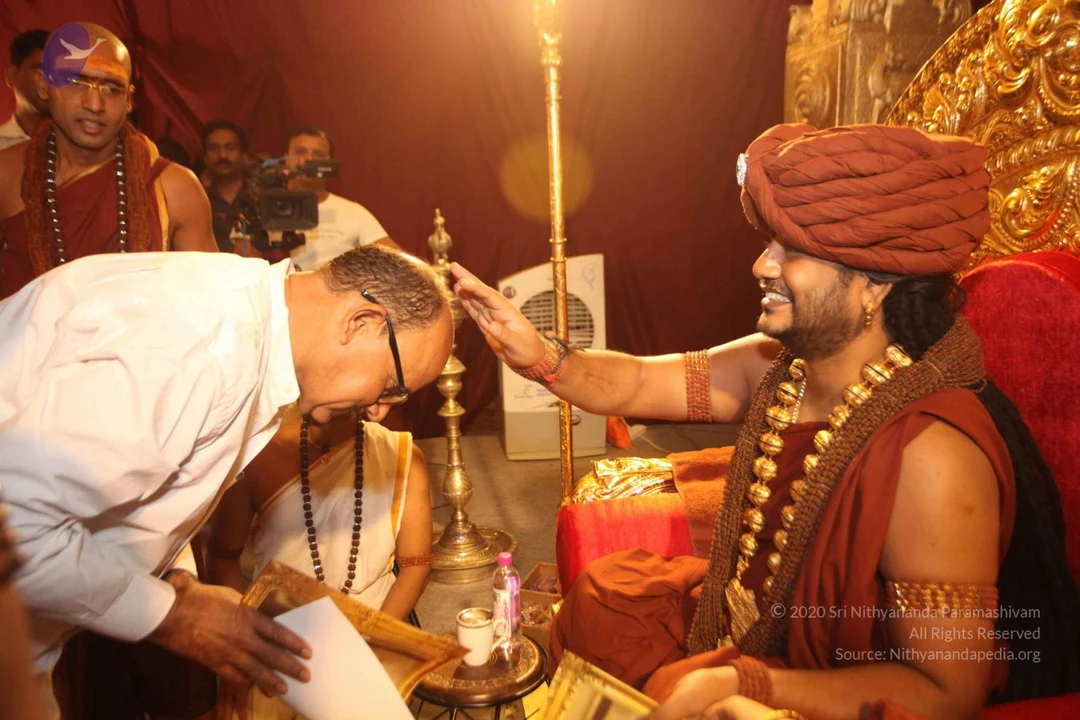
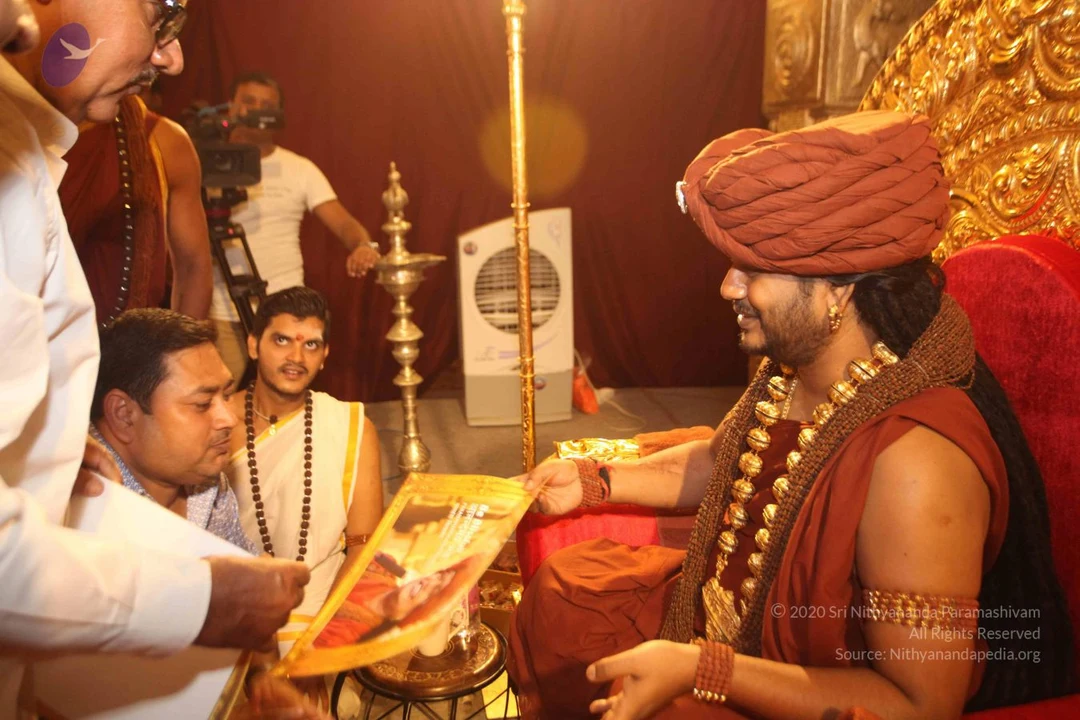
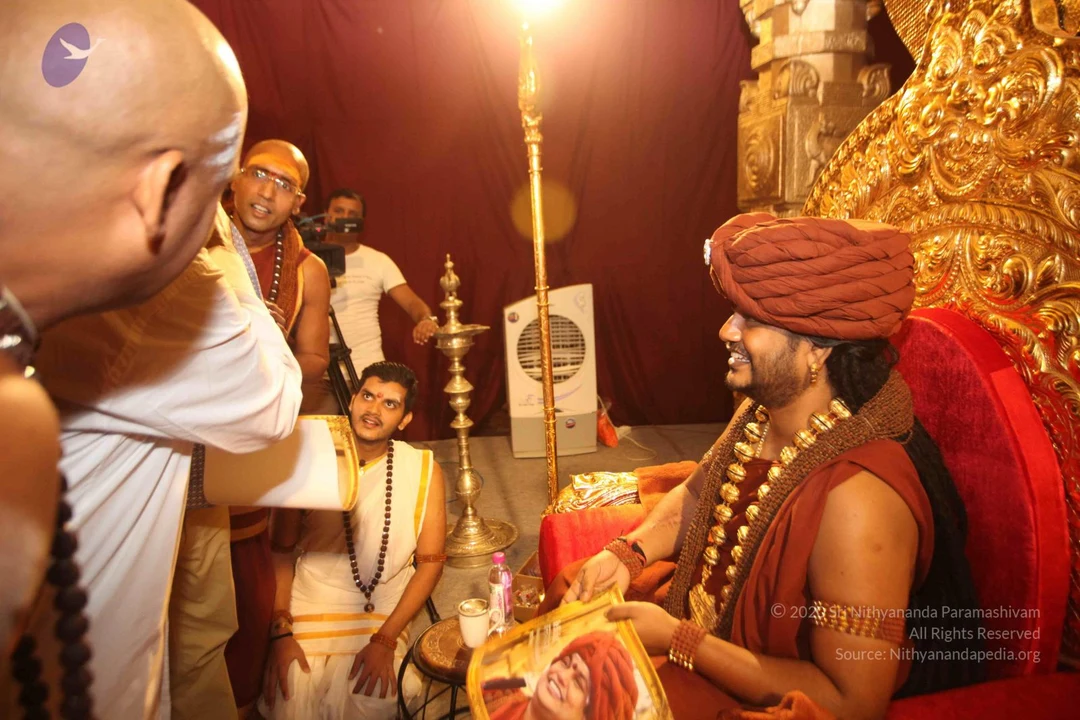
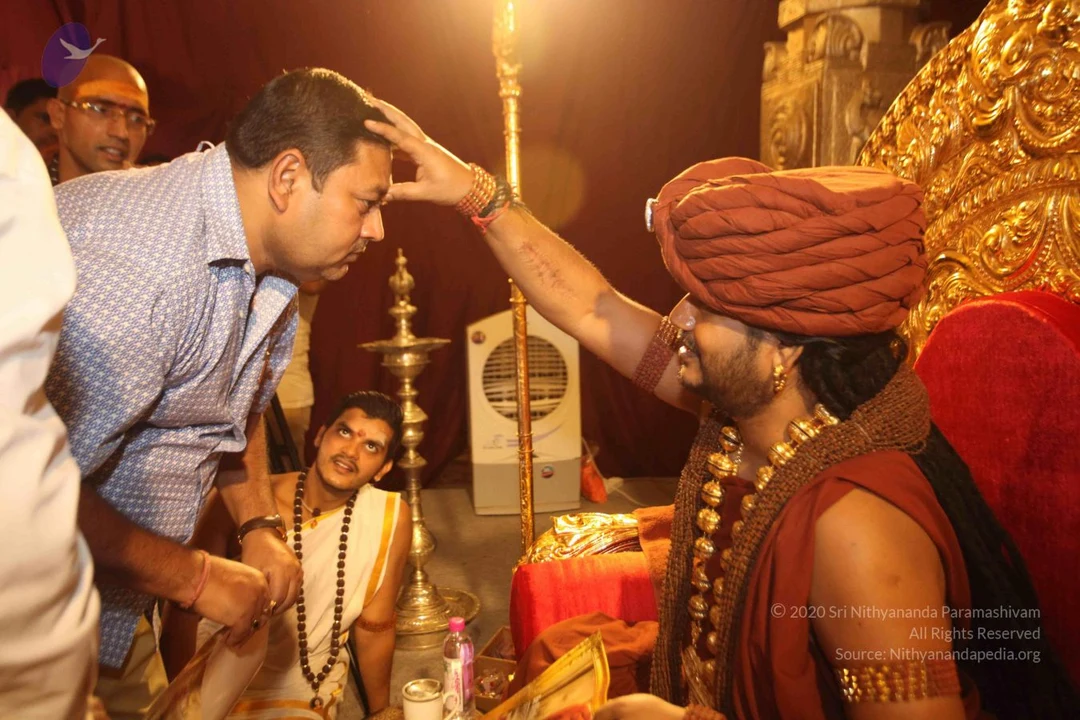
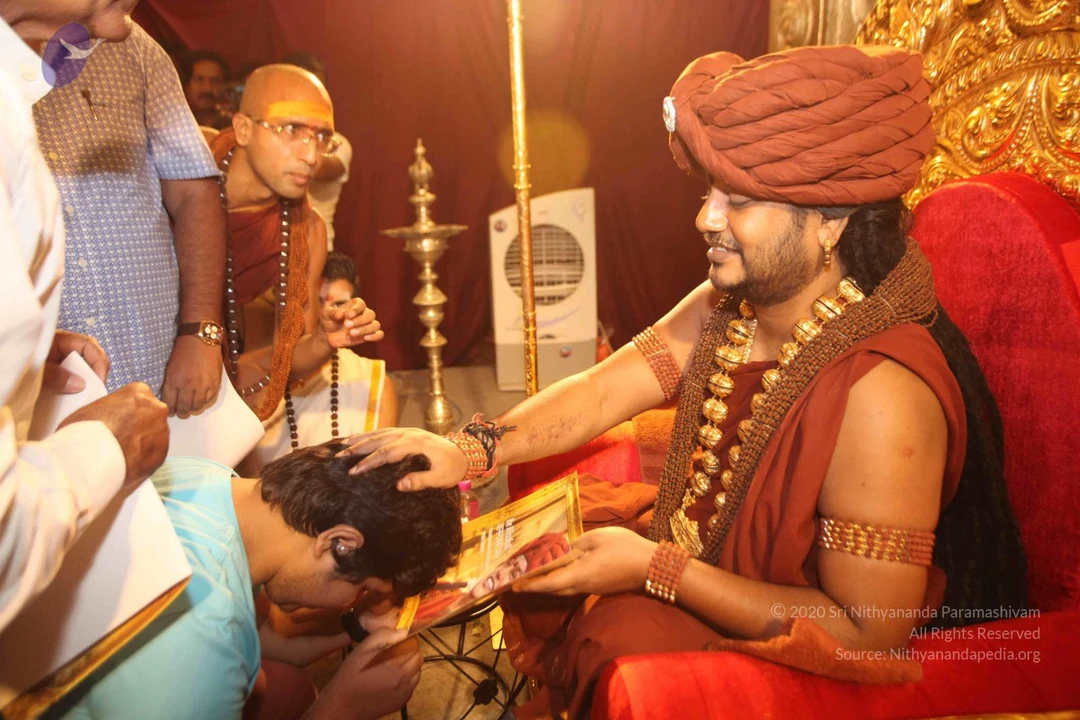
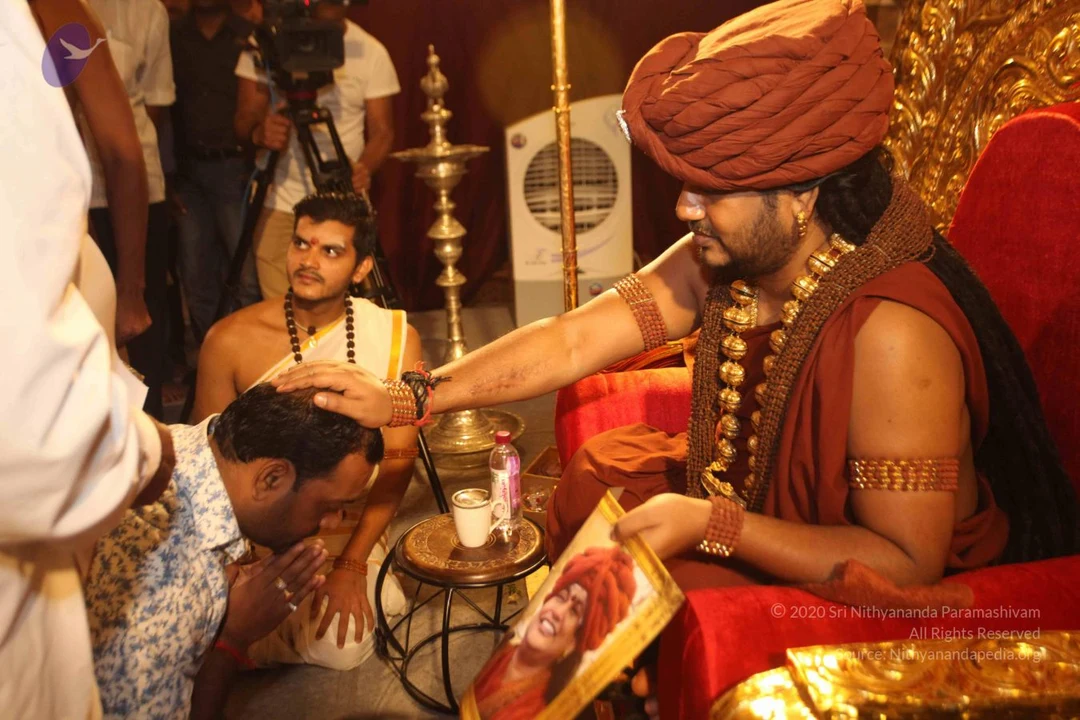
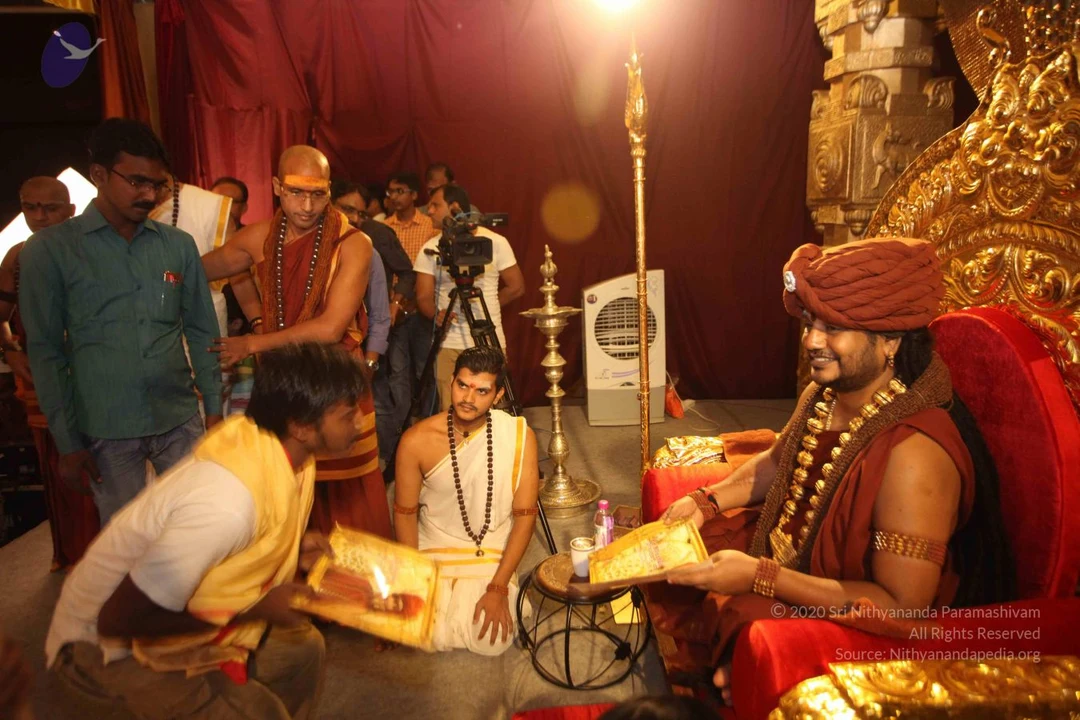
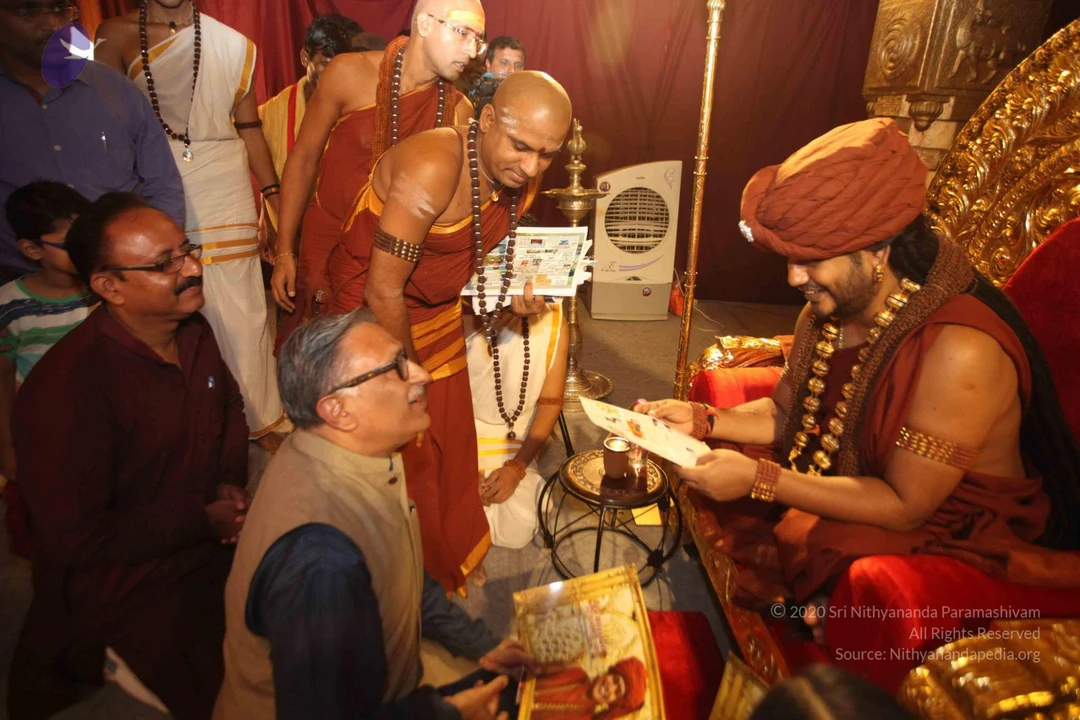
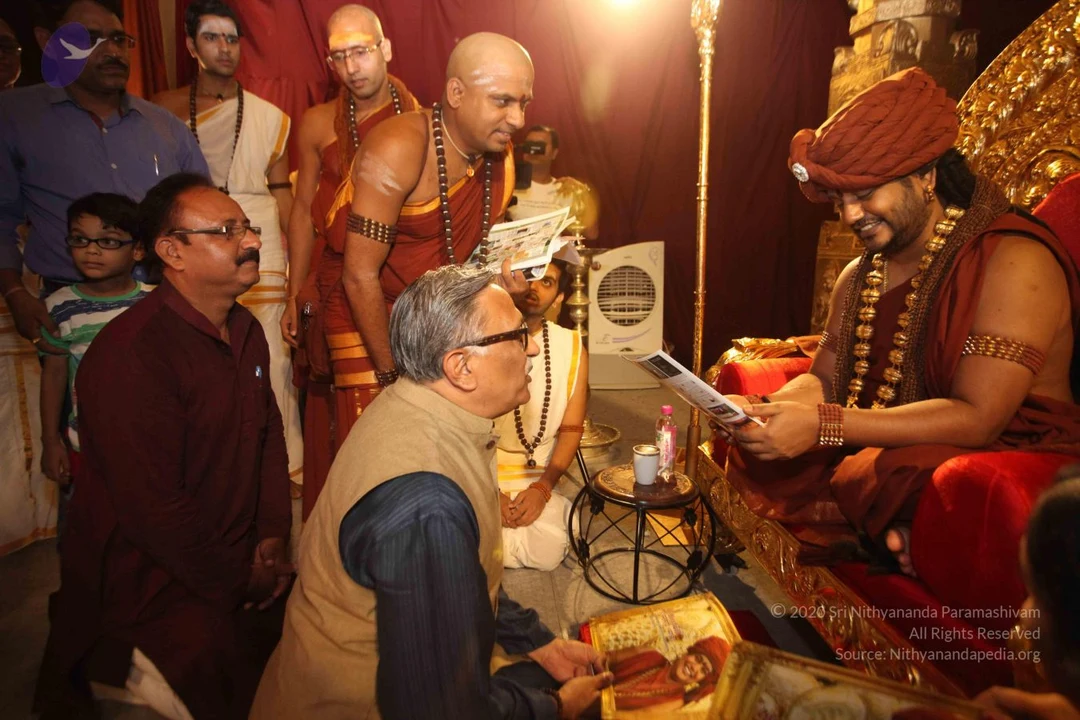
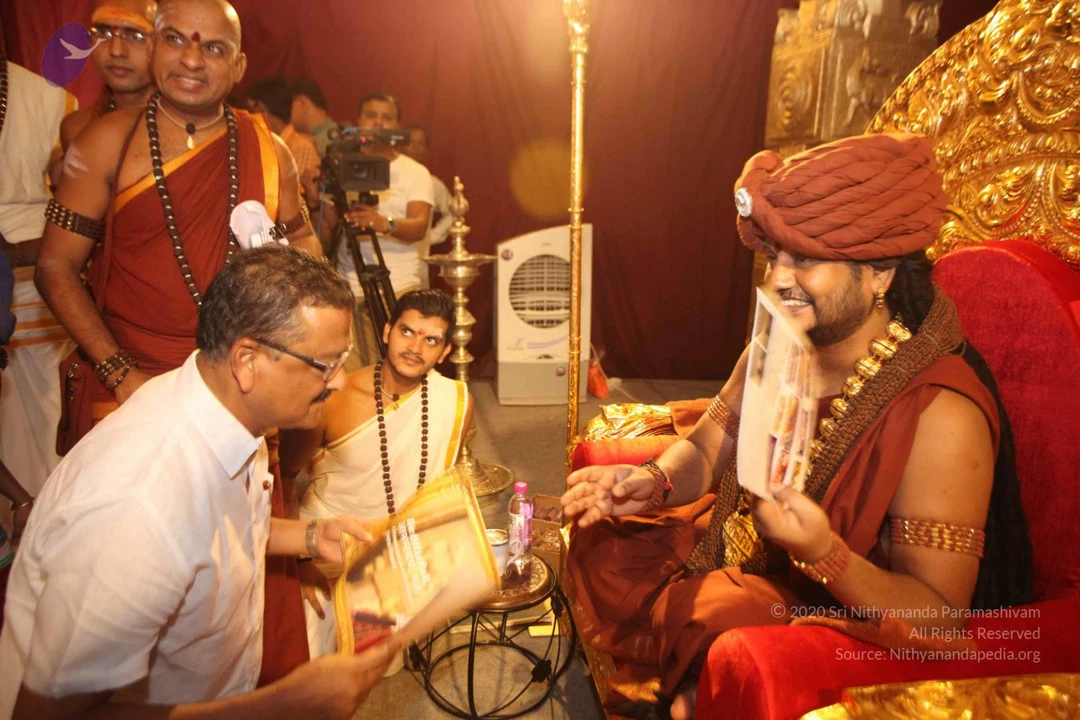
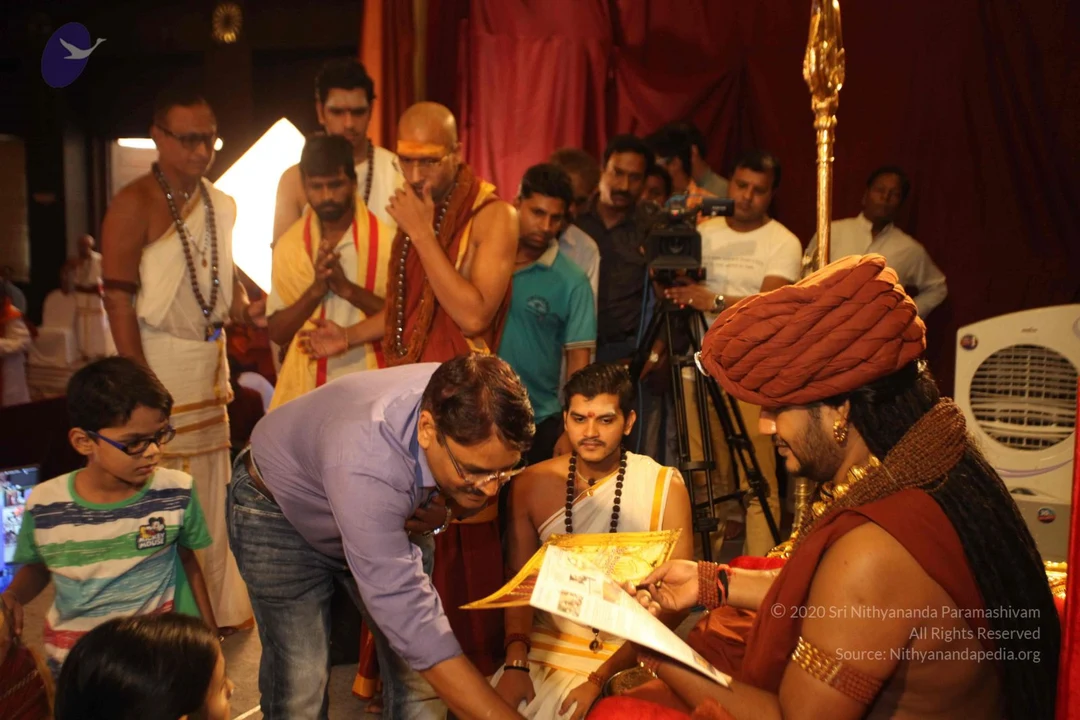
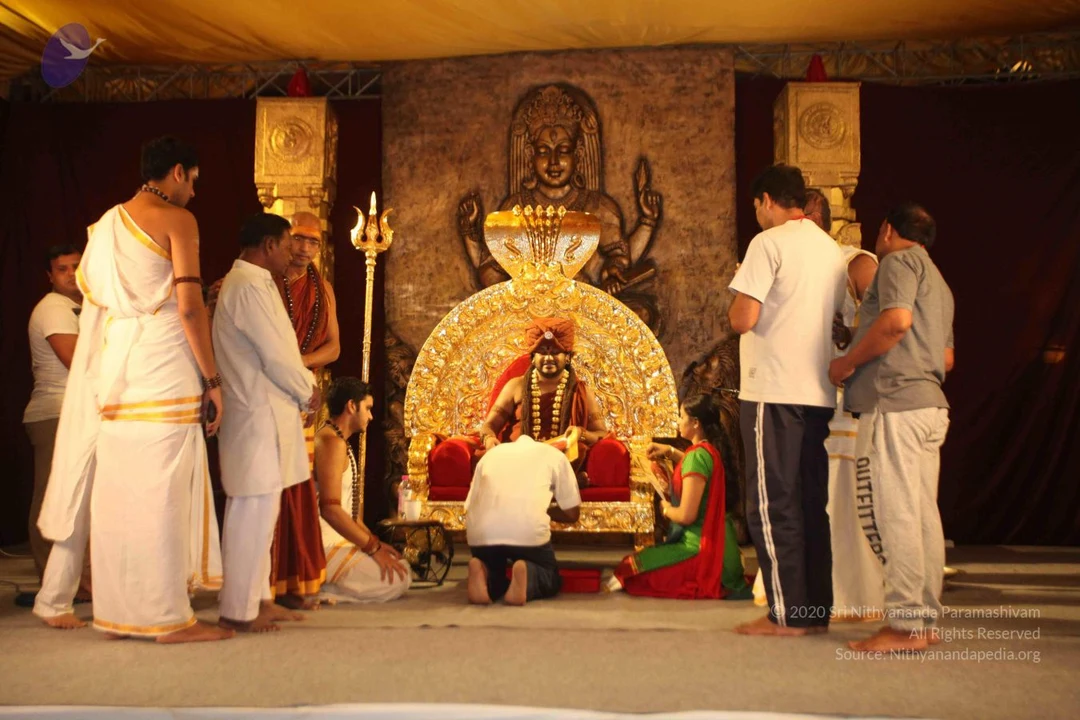
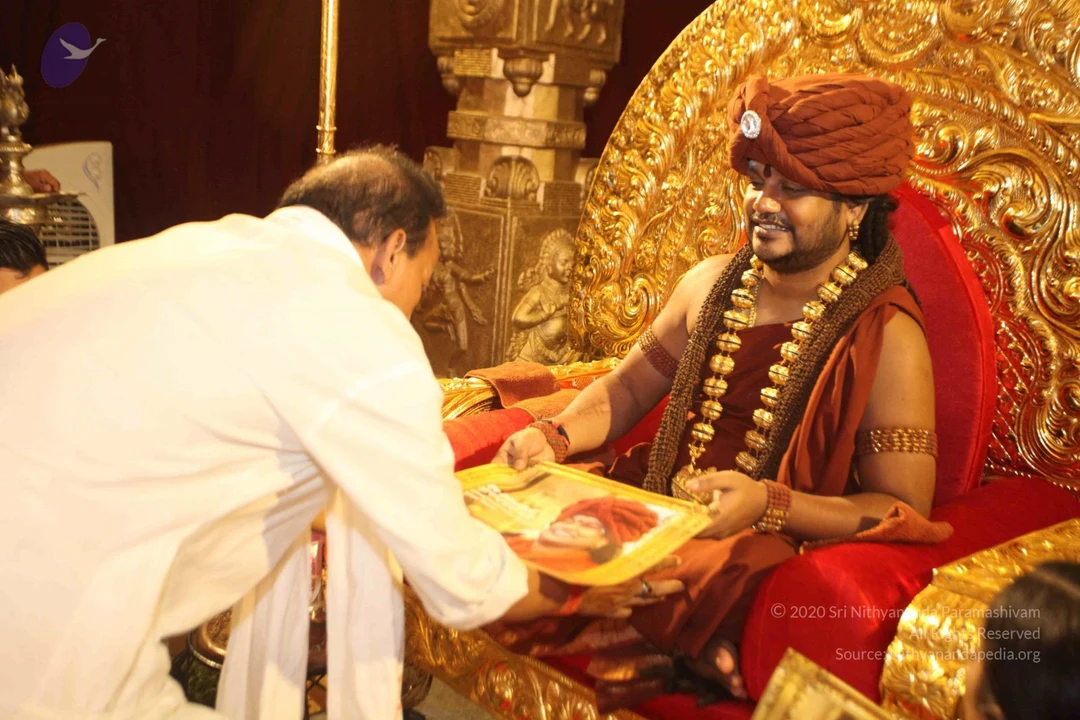
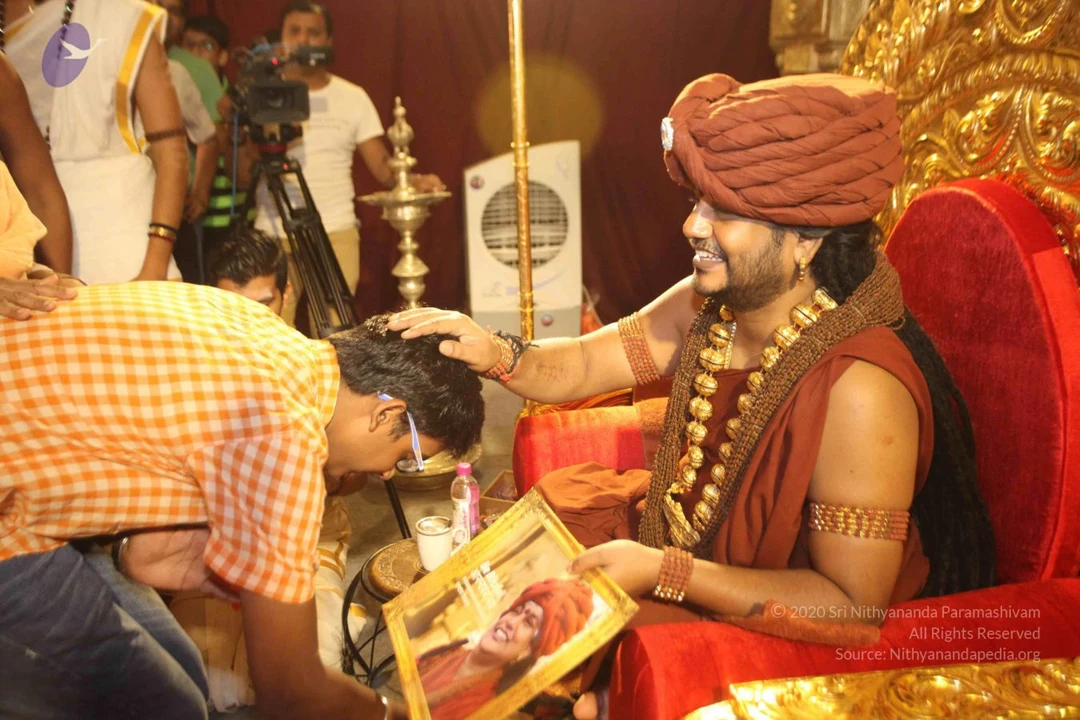
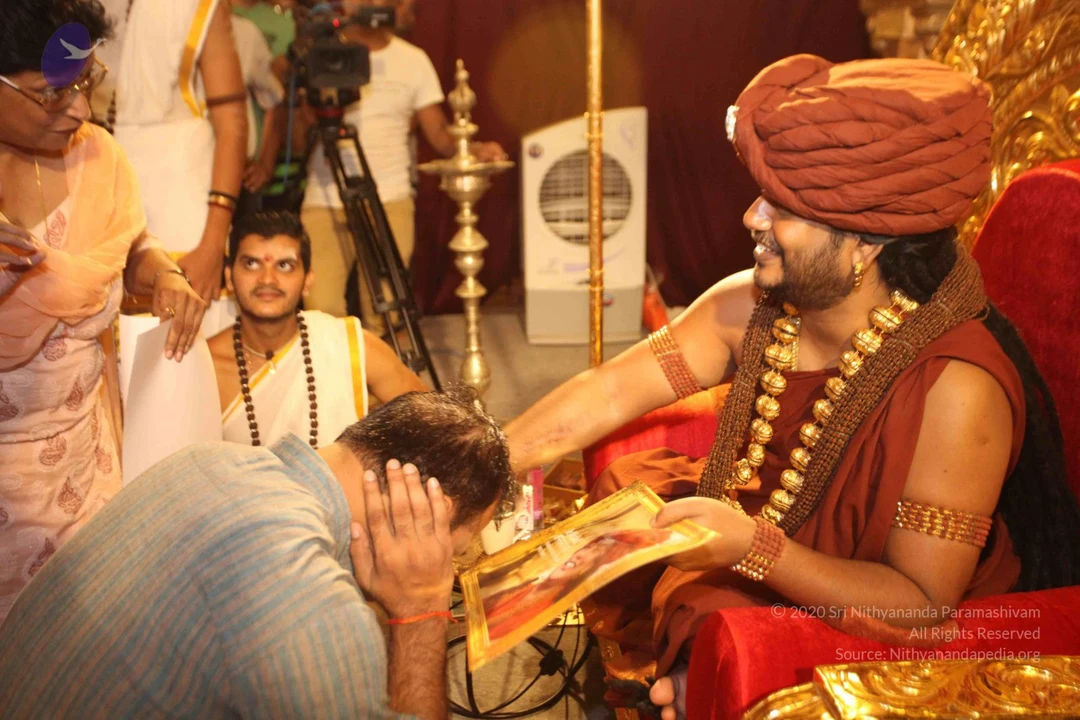
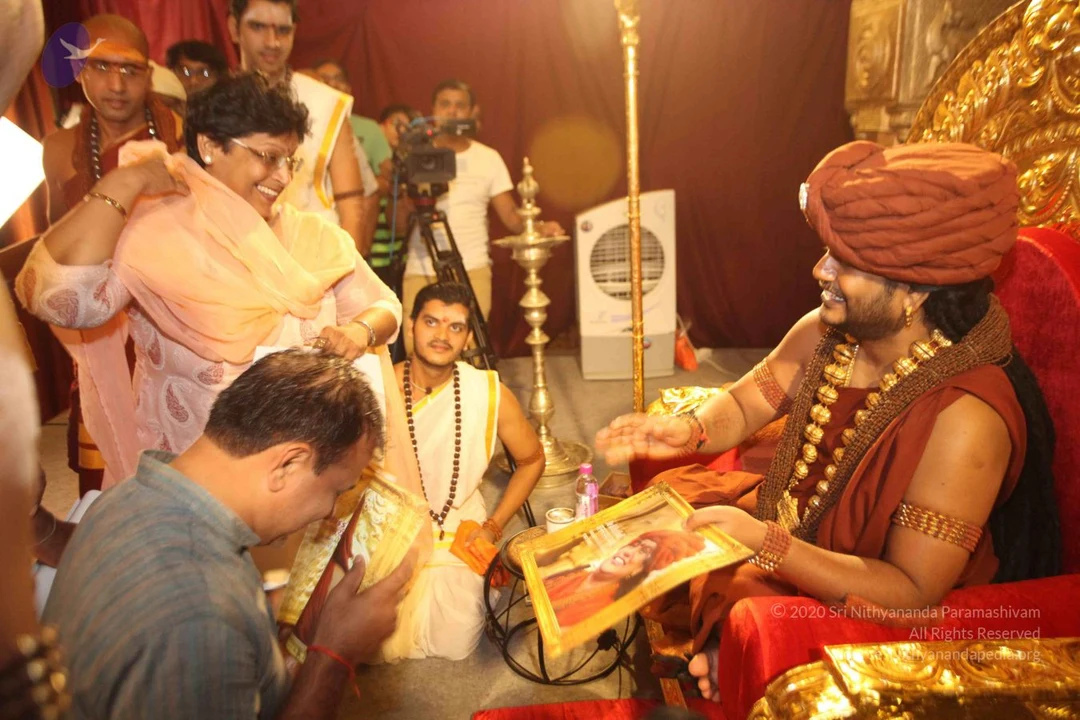
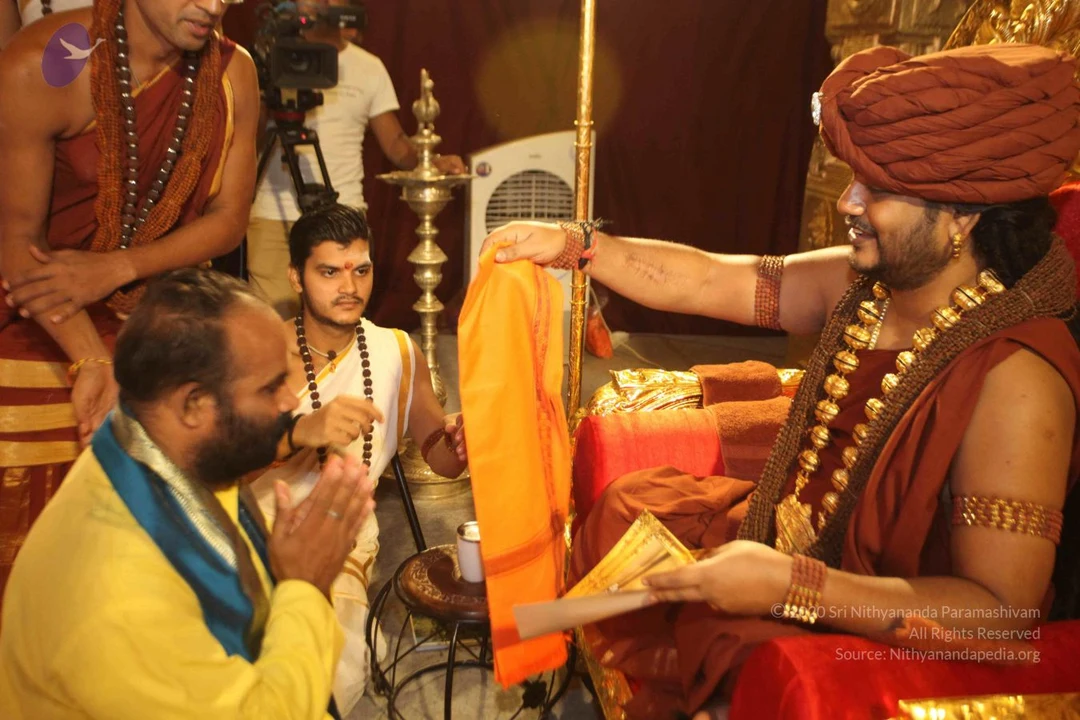
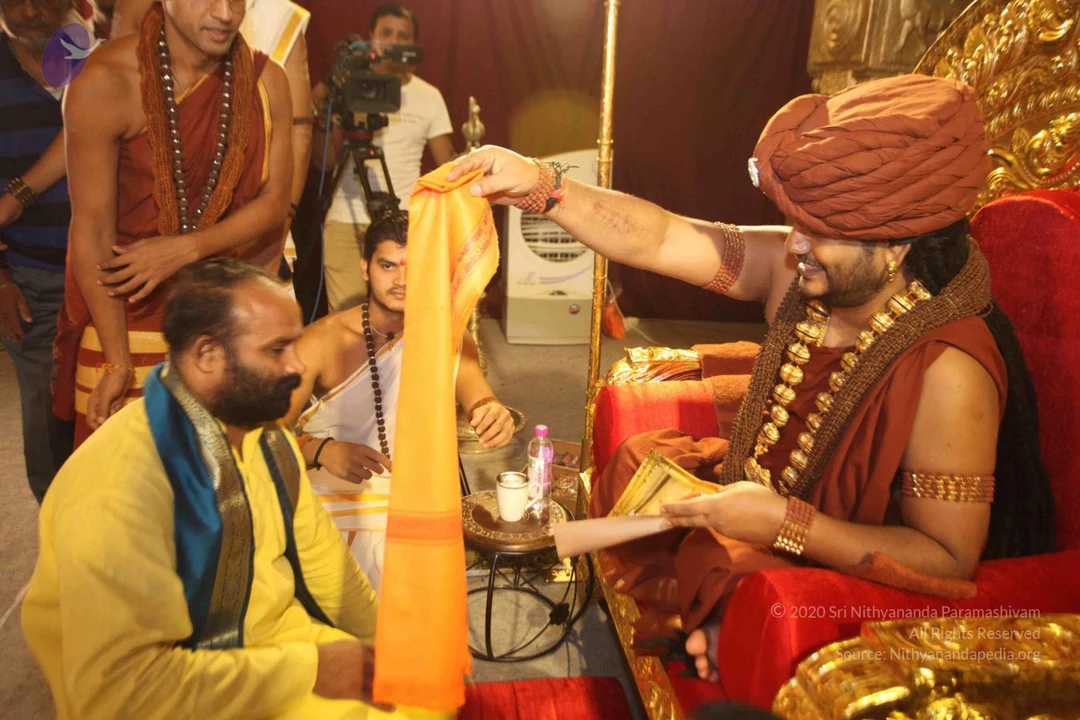
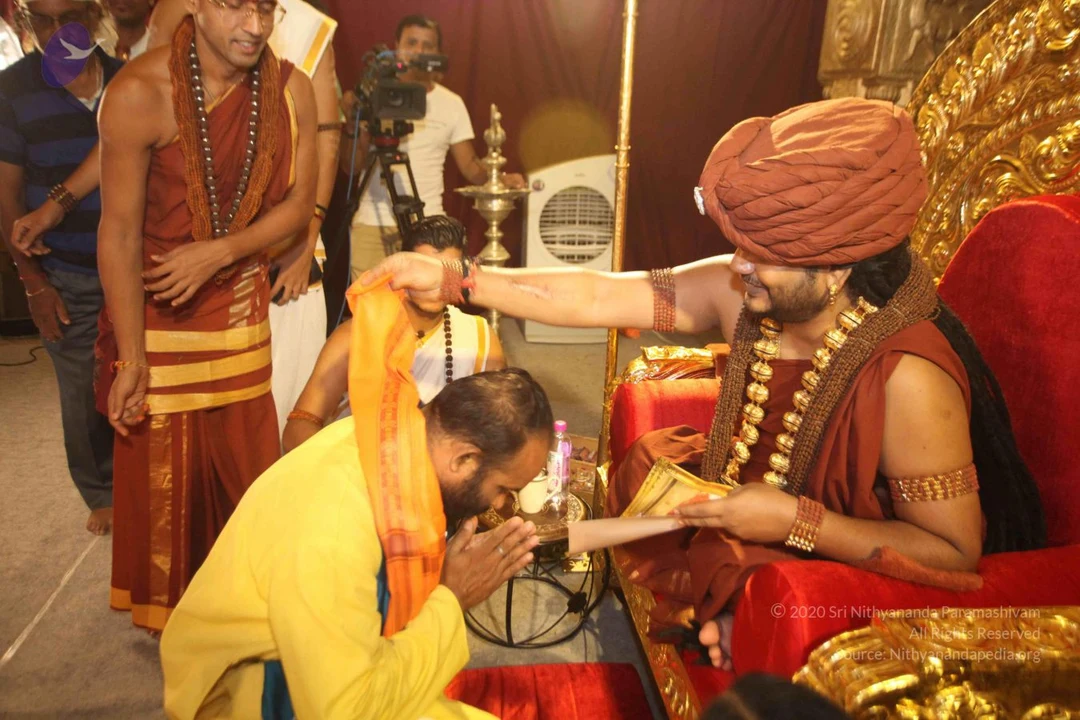
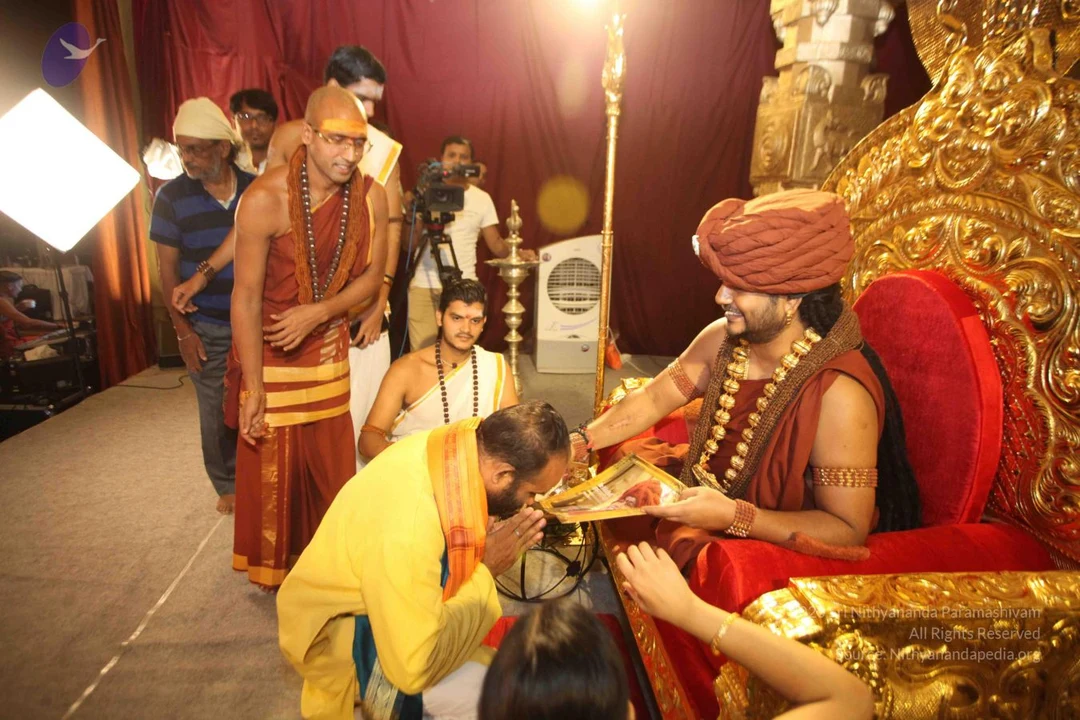
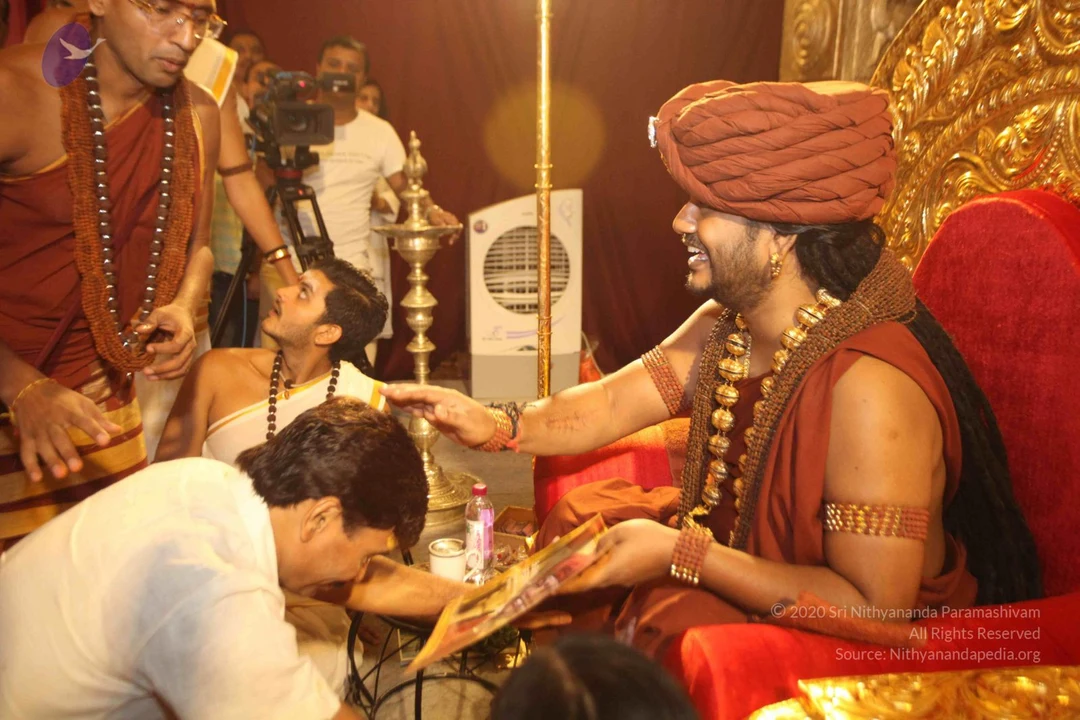
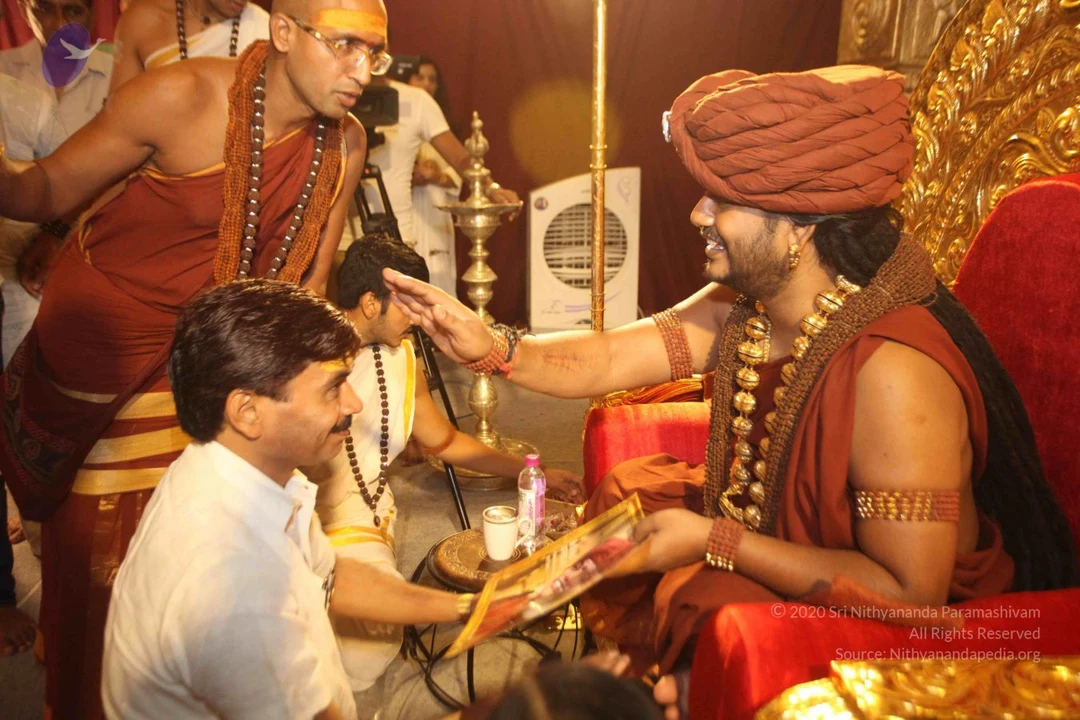
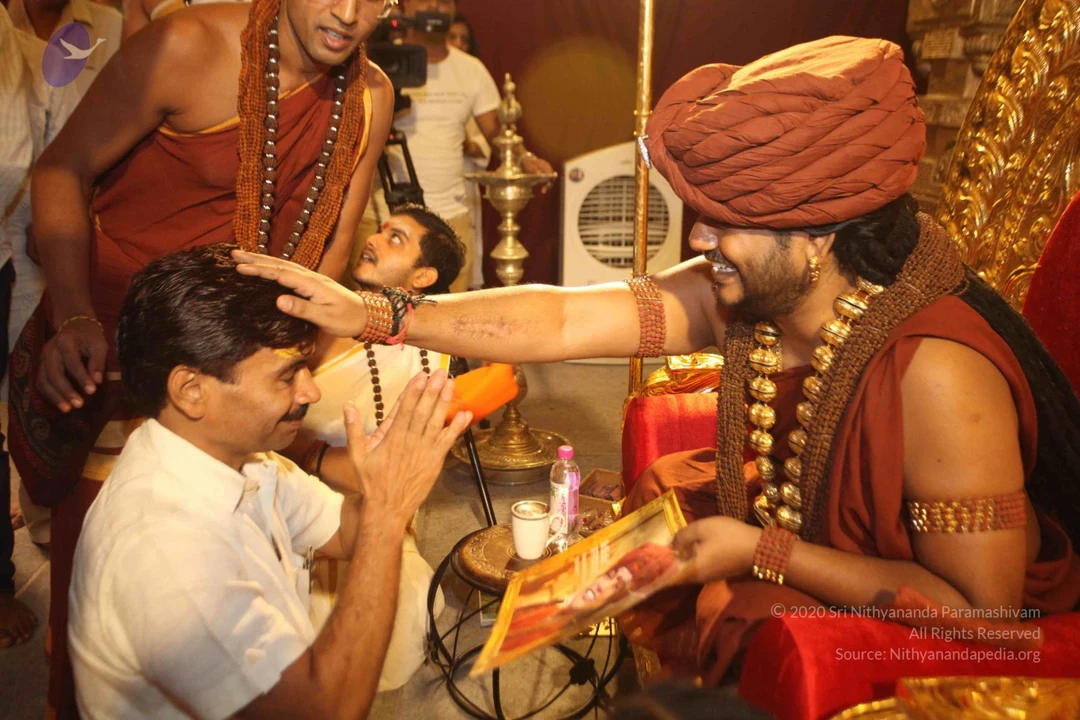
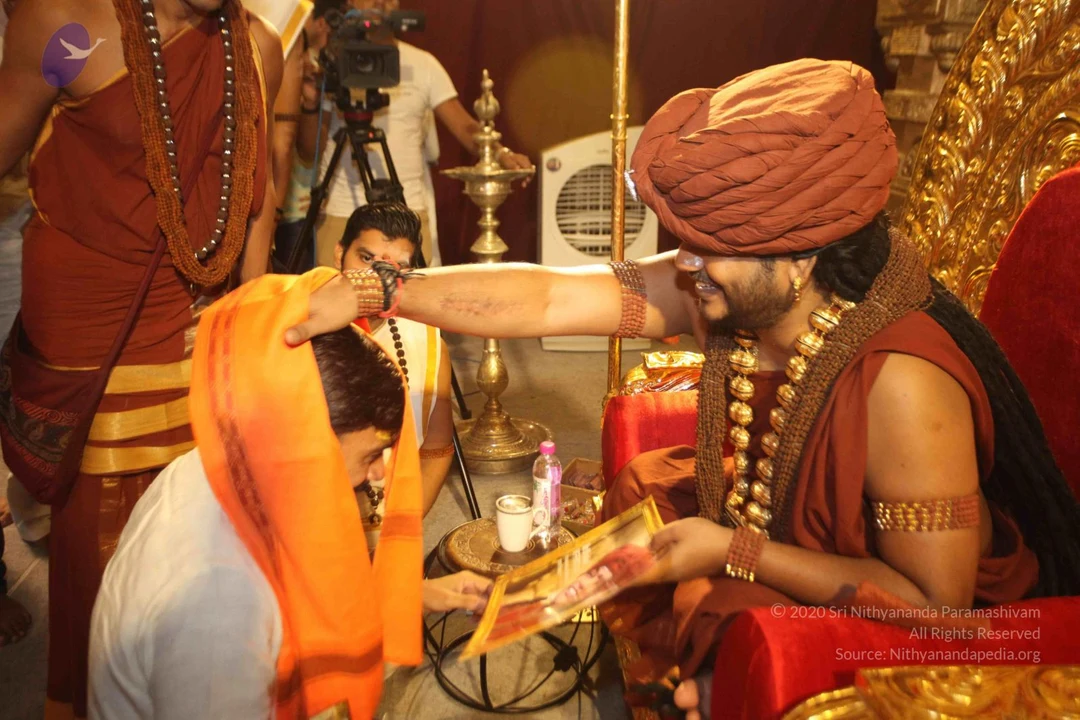
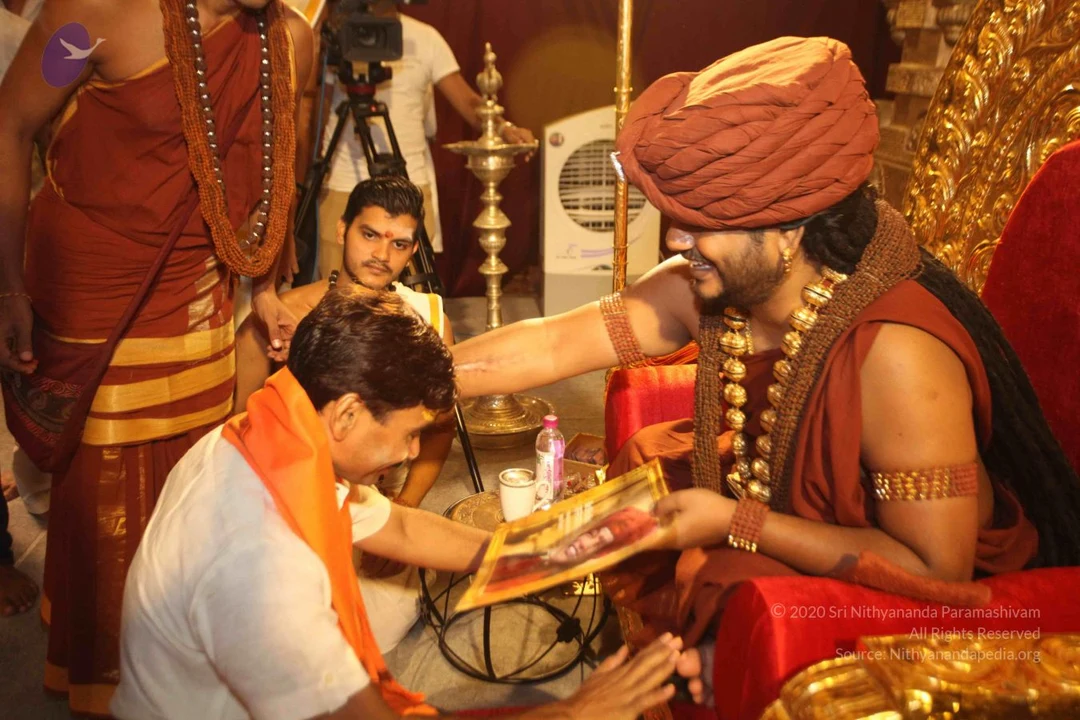
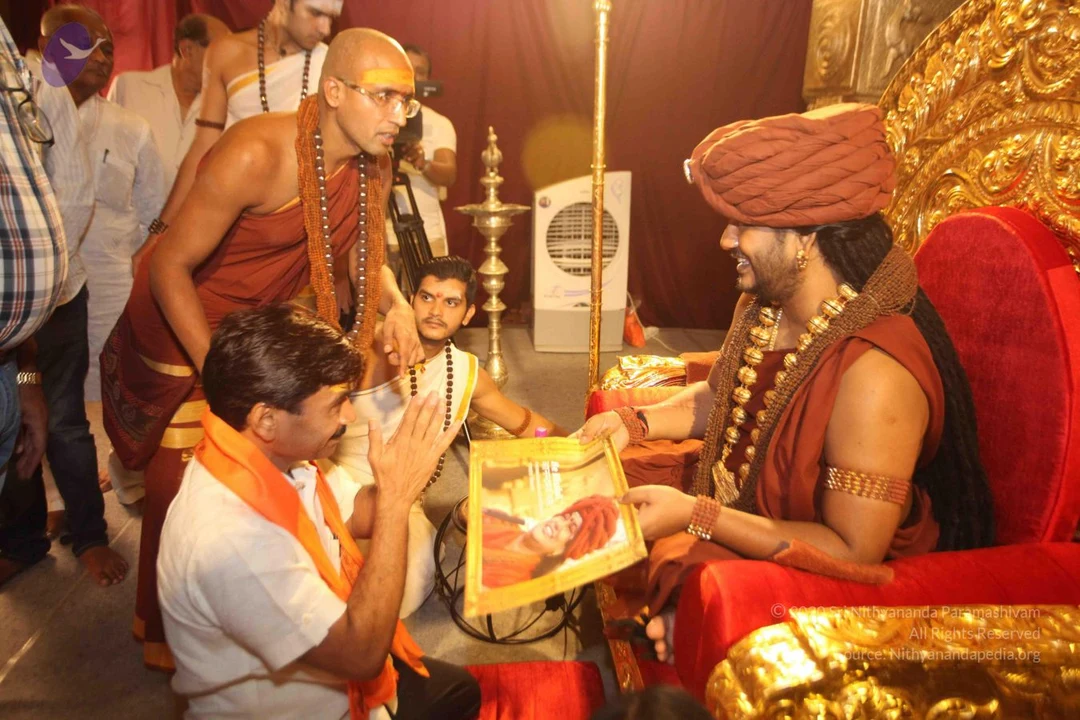
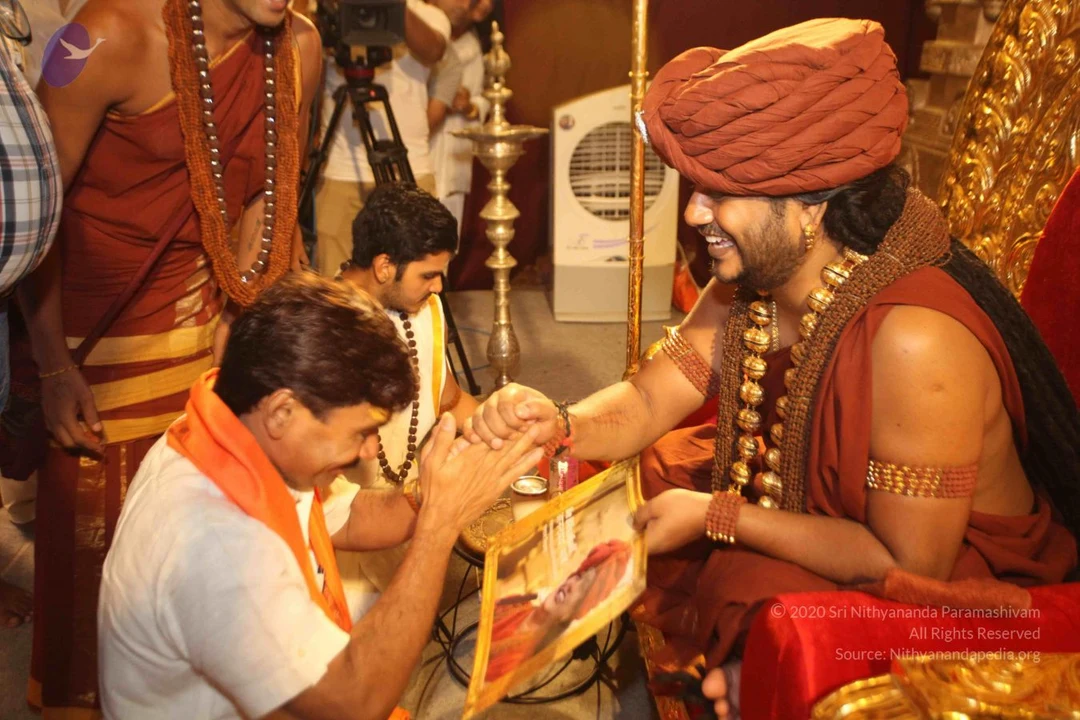
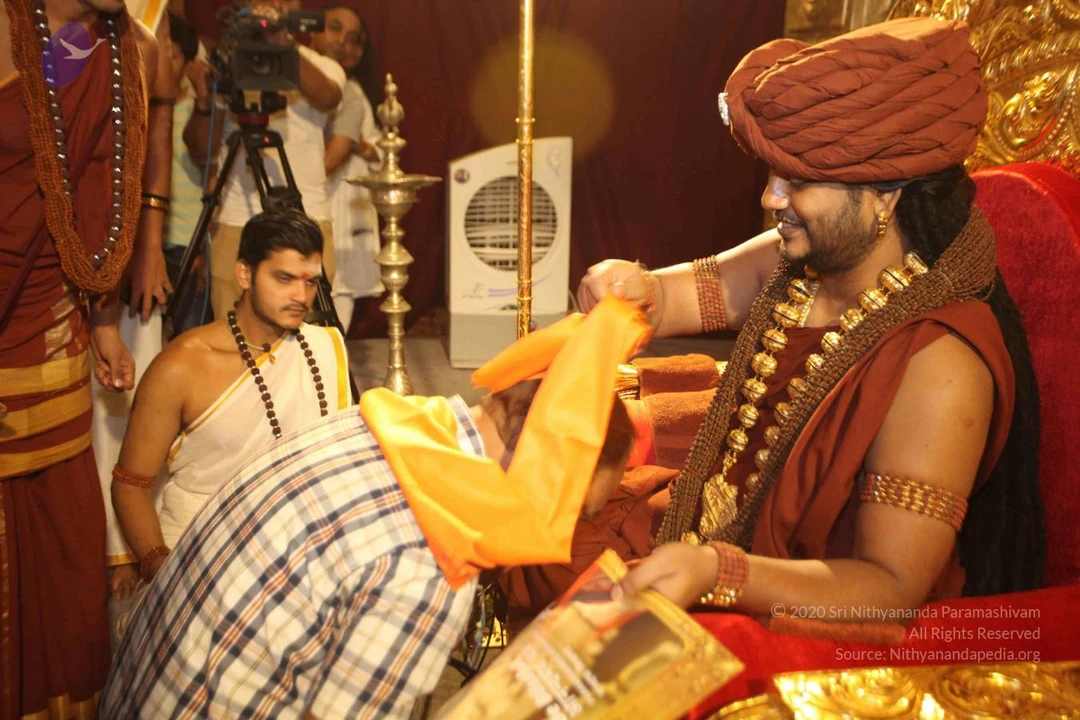
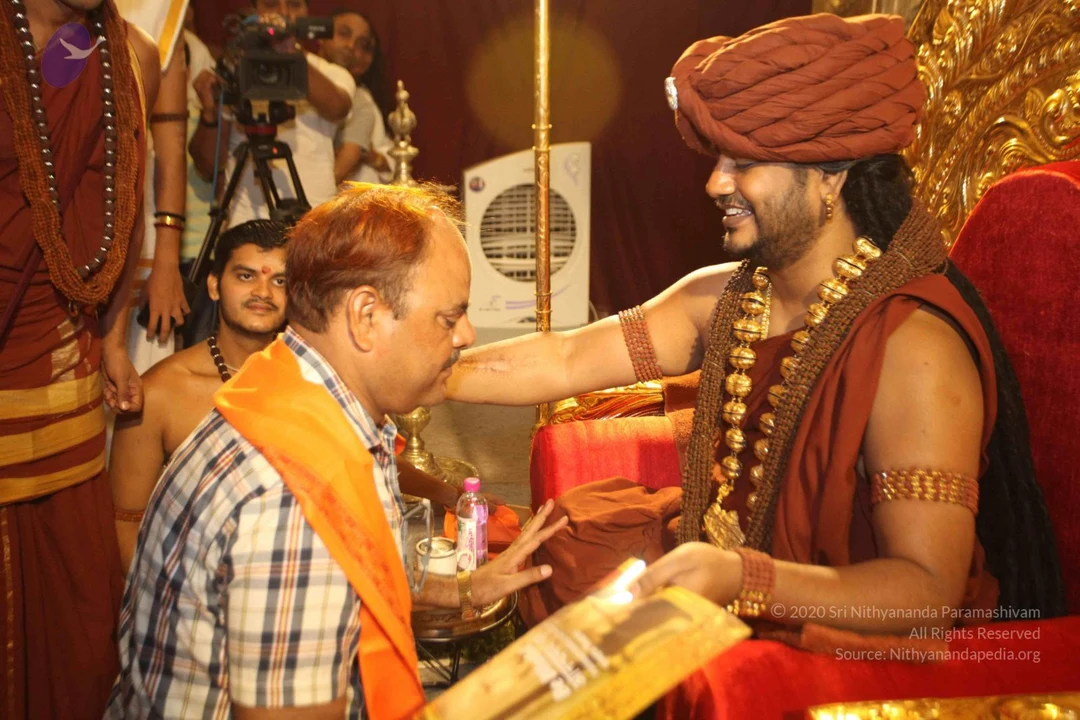
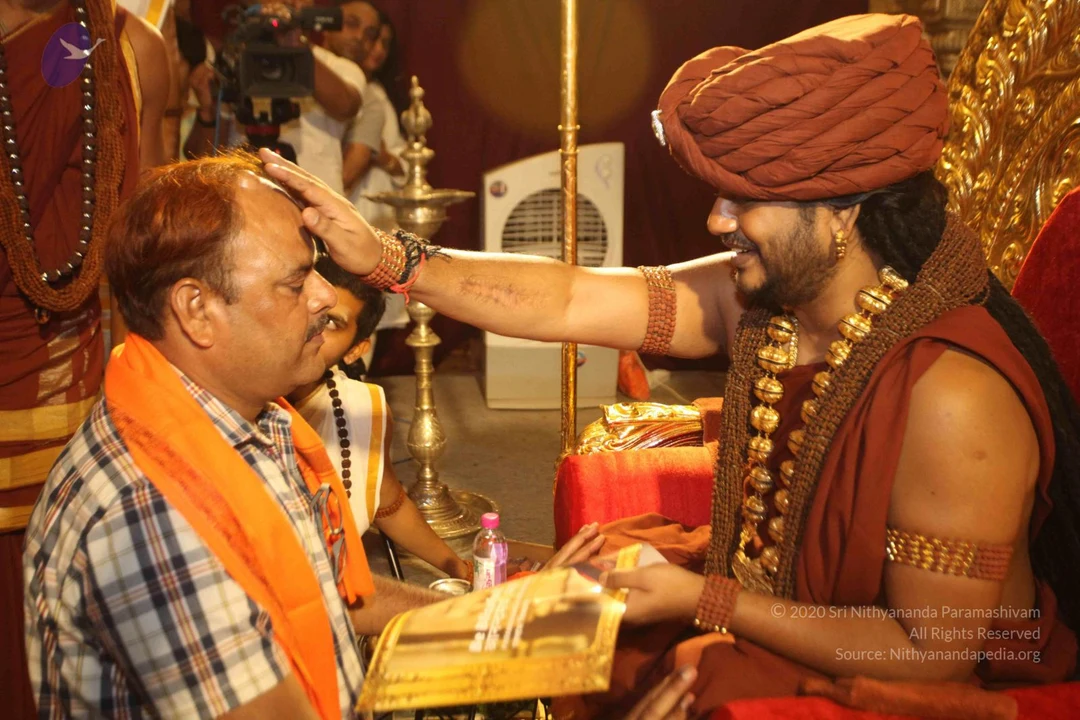
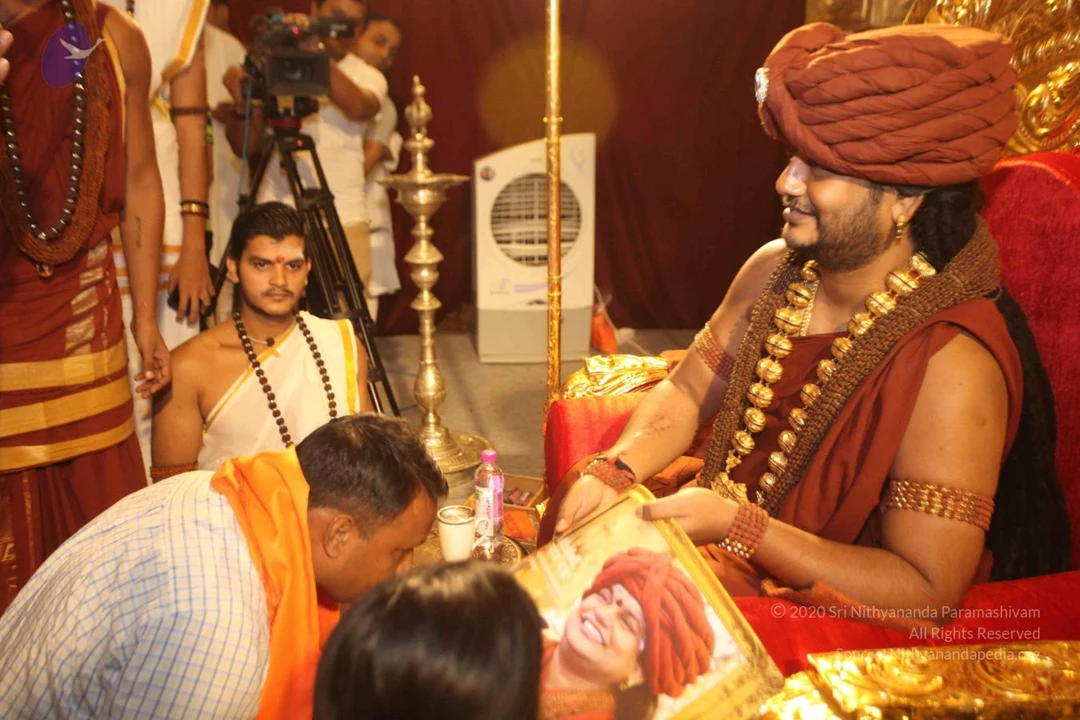
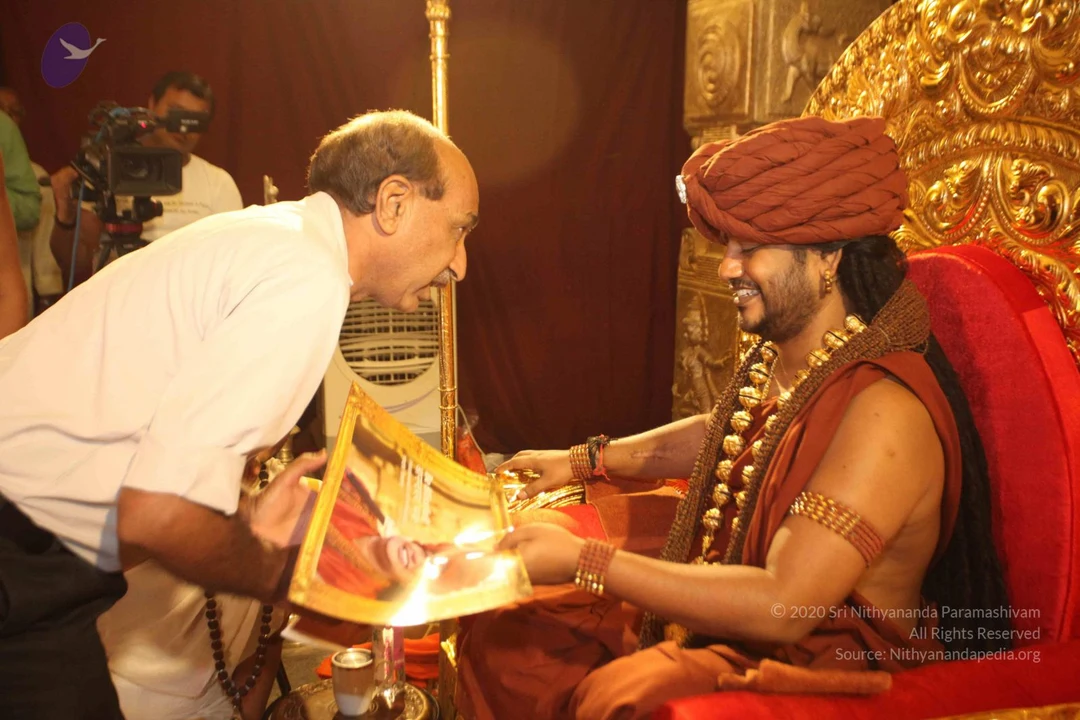
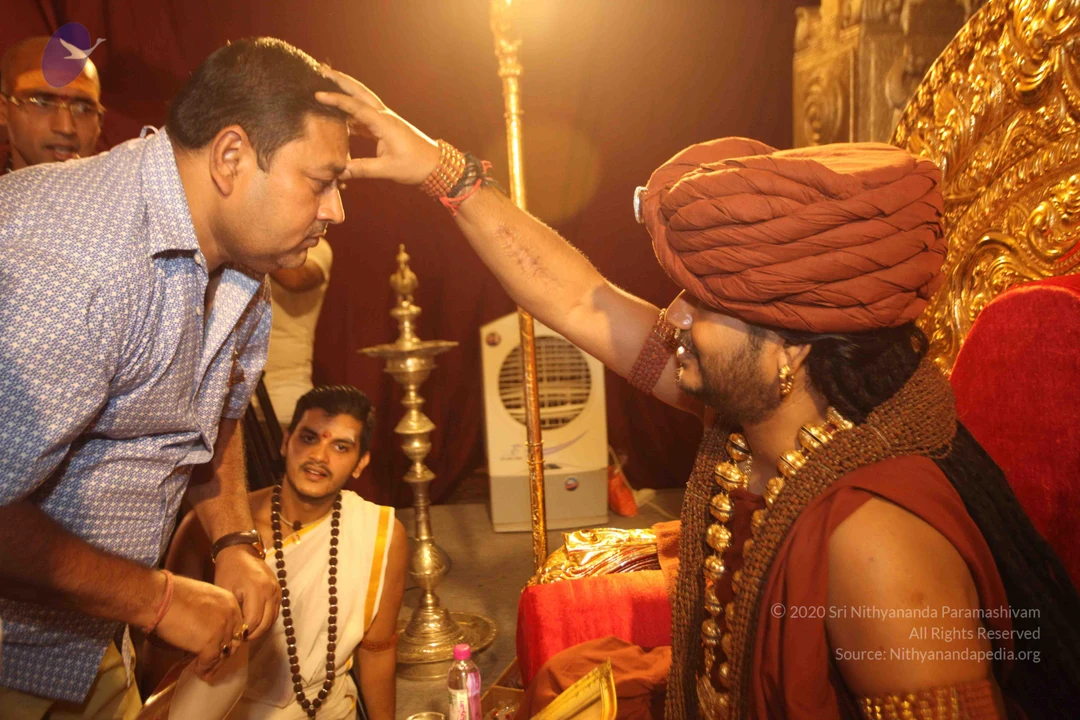
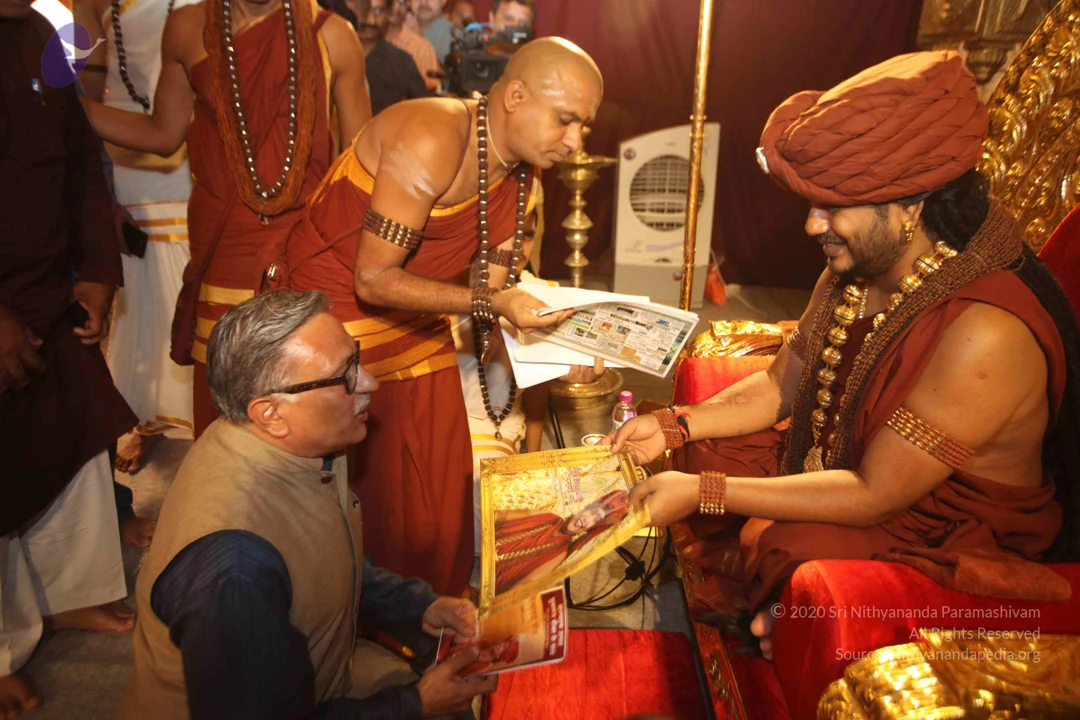
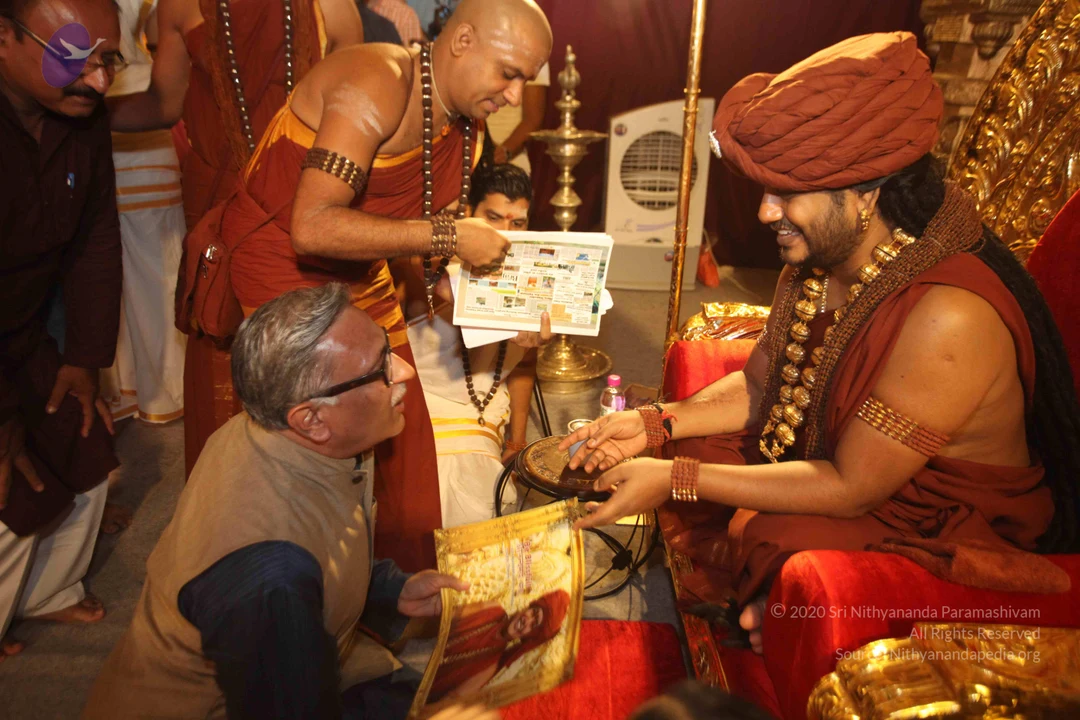
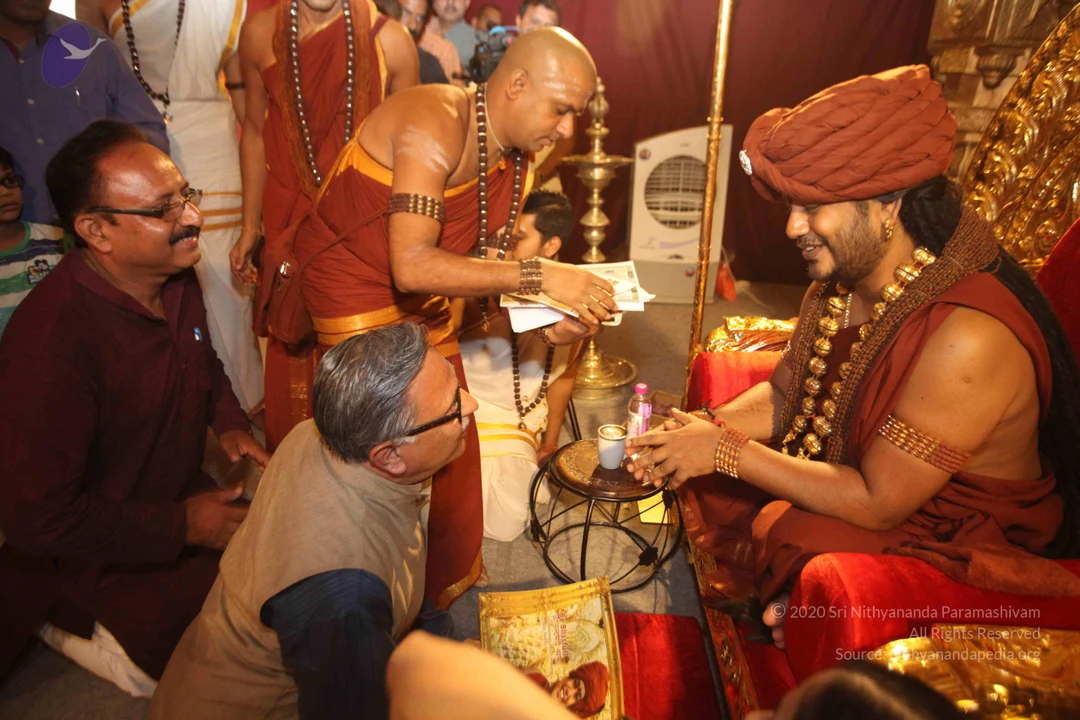
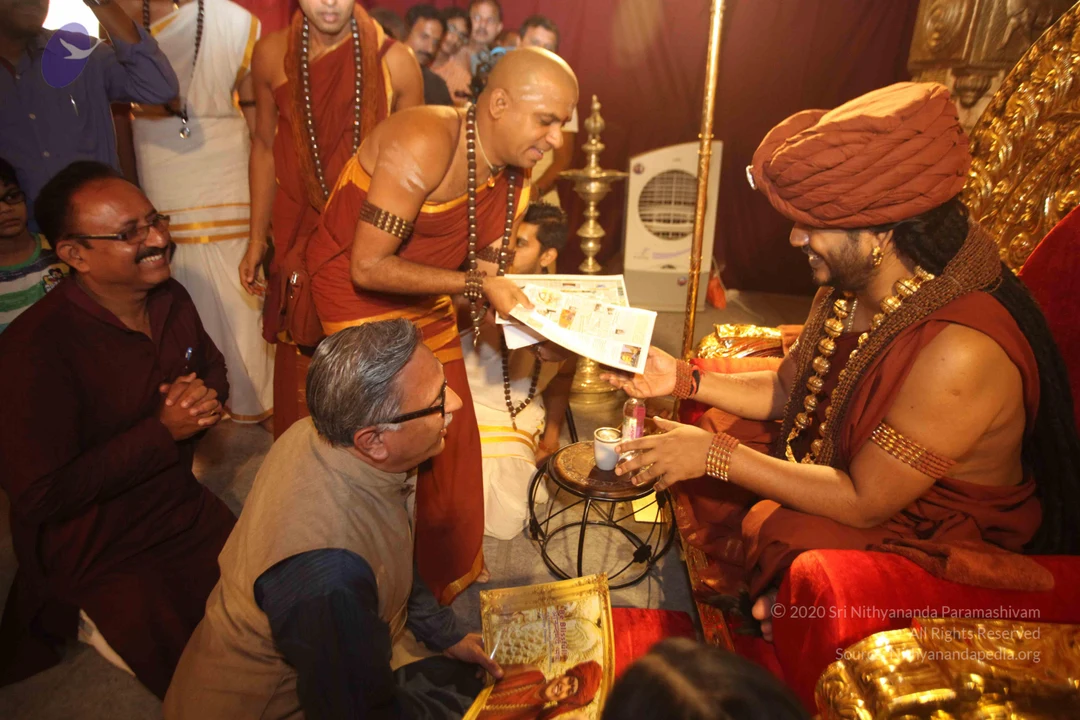
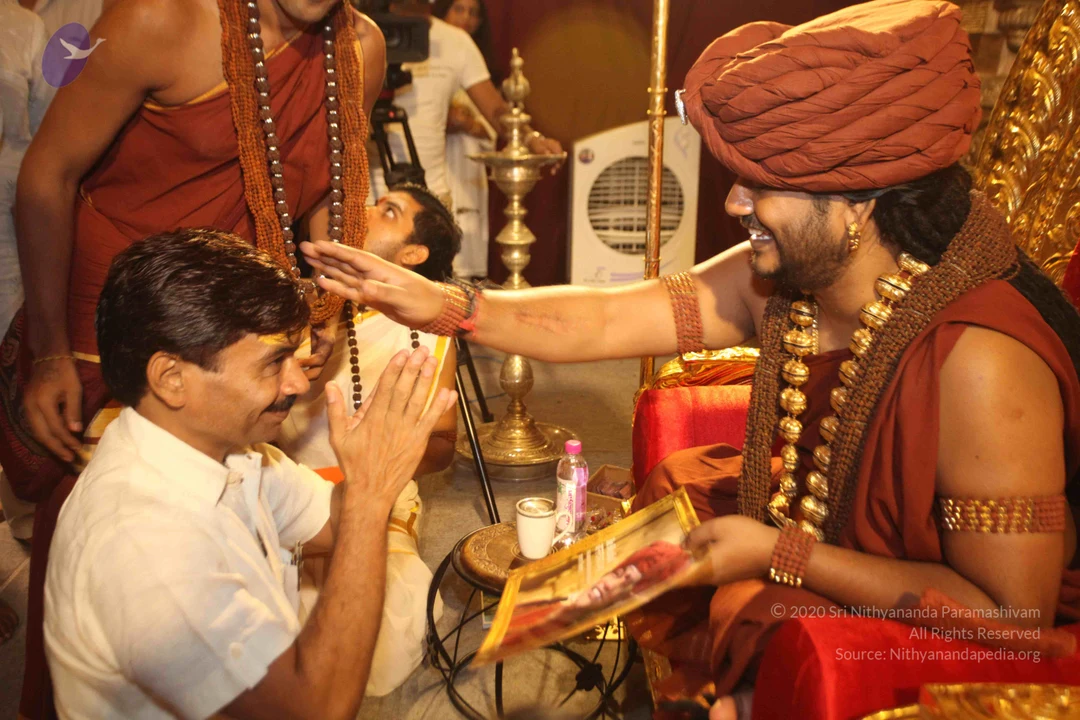
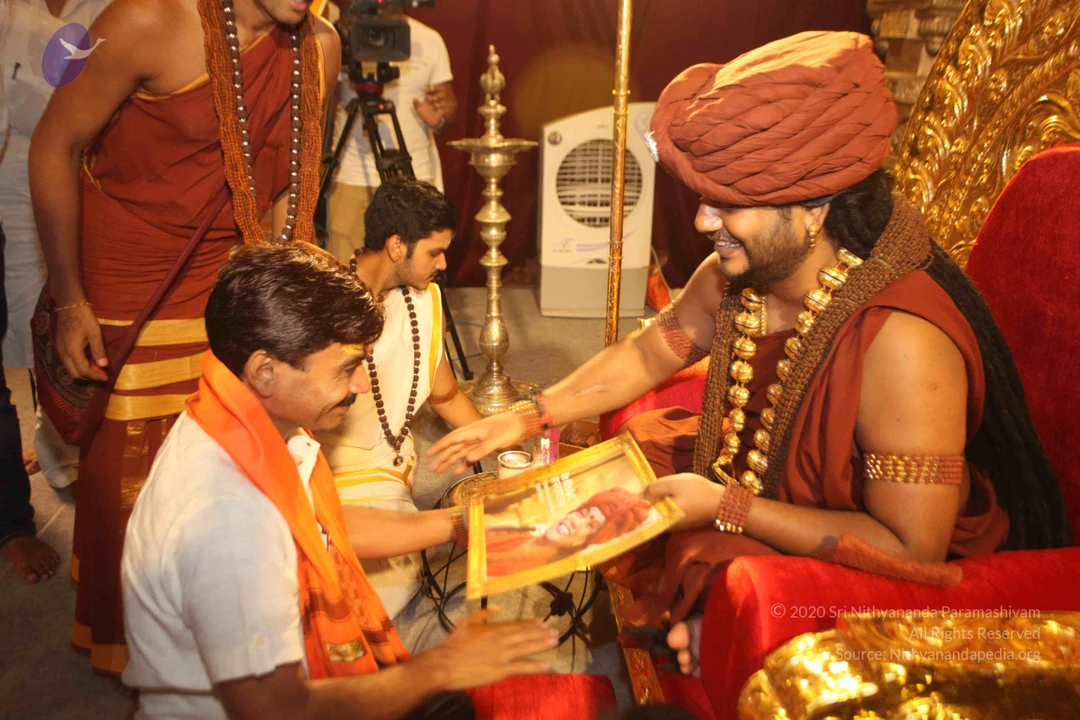
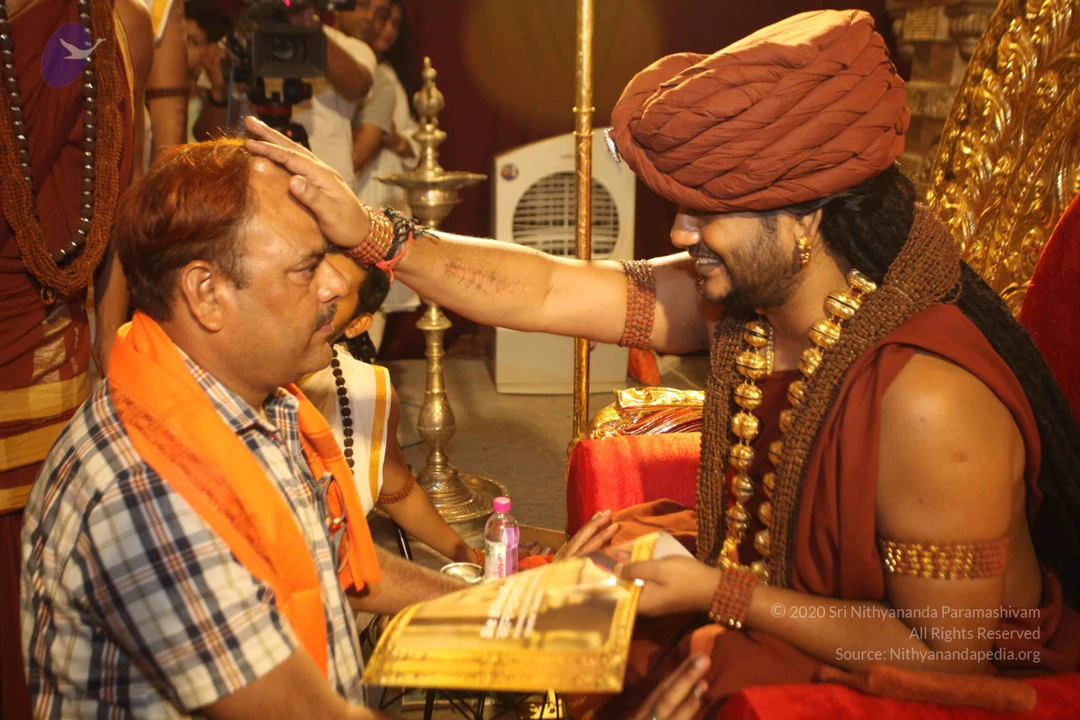
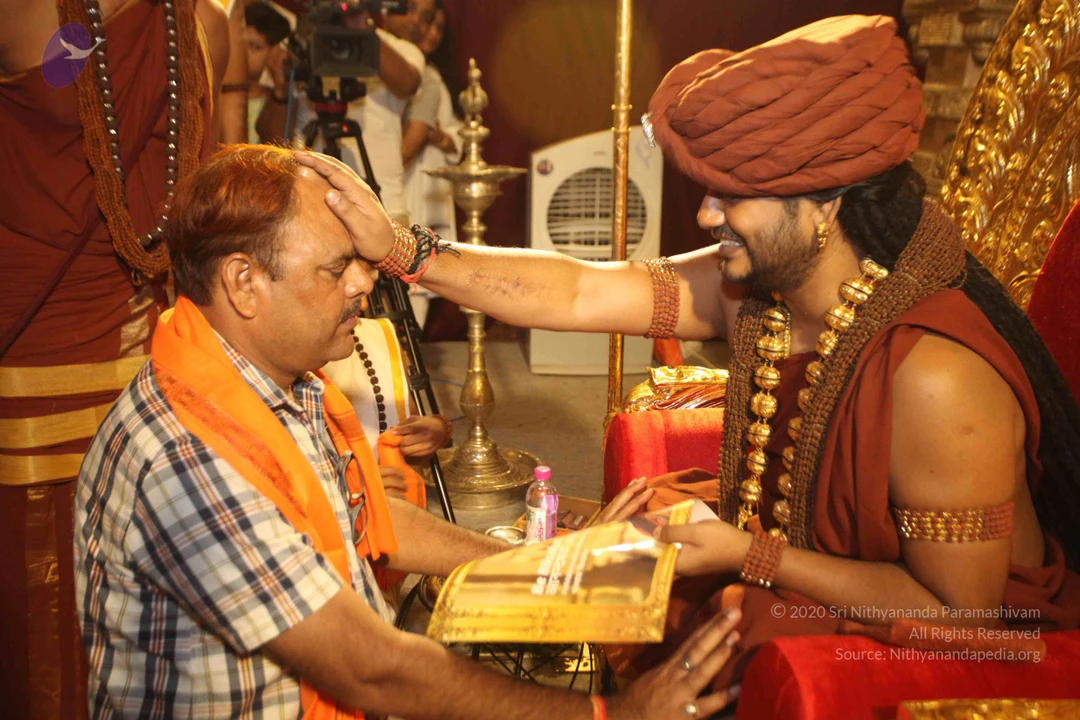
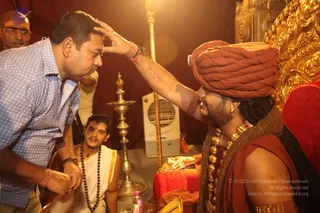
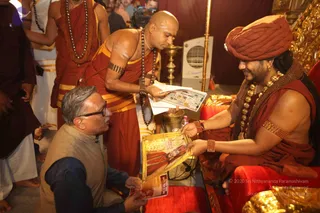
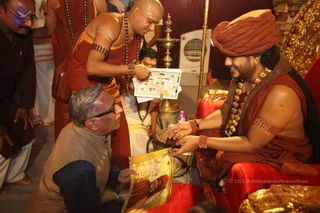
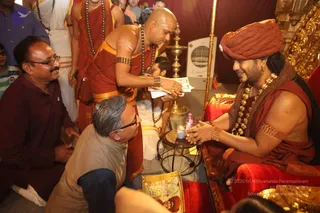
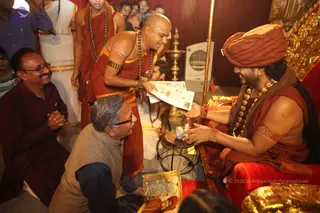
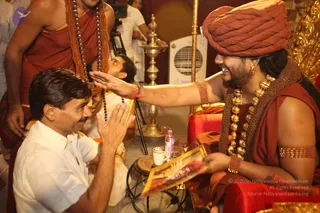
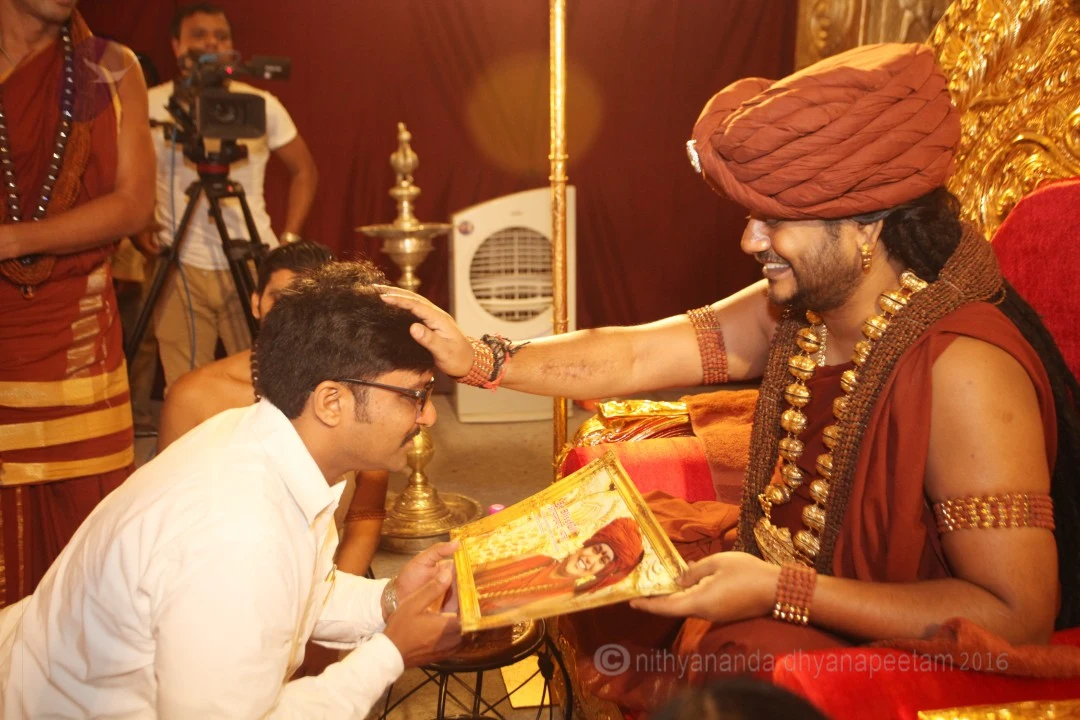
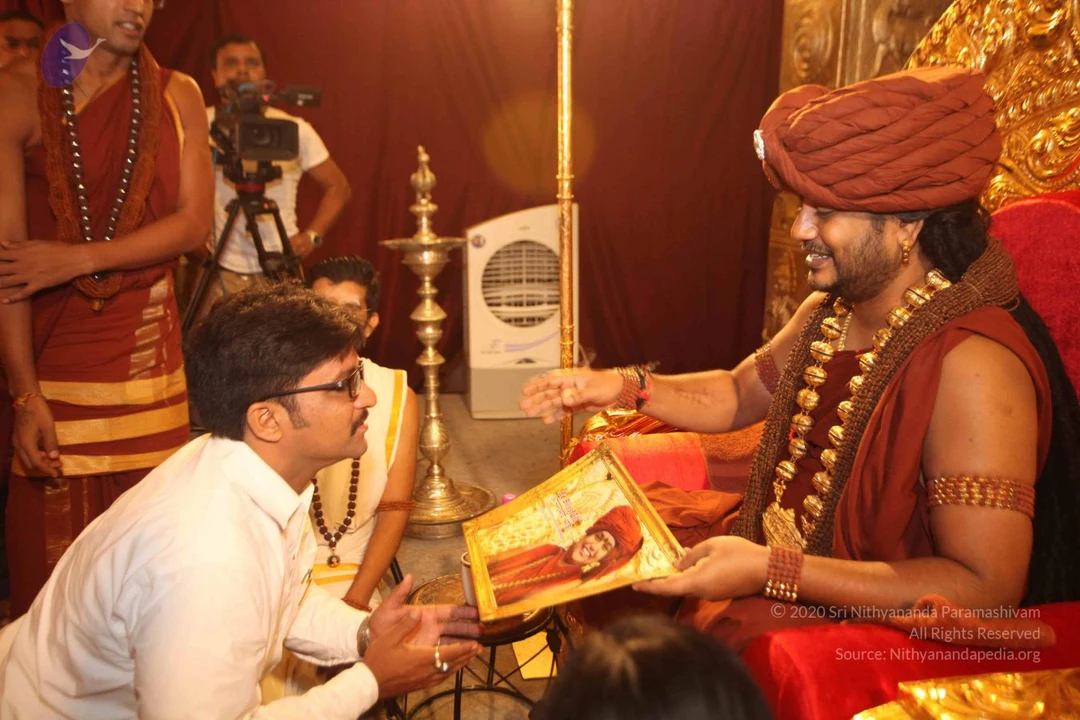
A photograph of a seated figure in a red-orange turban and ornate saffron-red garment, wearing a heavy gold and rudraksha-style necklace, large gold earrings and a crown-like headdress, receiving a blessing as a man in a light blue patterned shirt bends forward and a hand rests on his forehead. A standing man in white dhoti with a rudraksha mala and tilak sits nearby, with brass oil lamps, a red cushion and a golden throne behind. The.A photo from a darshan setting where a man in a red-orange turban, orange robes, a long rudraksha mala and ornate gold necklace sits on a red and gold throne-like seat, reaching to take a printed booklet with a golden cover offered by a kneeling man in a grey vest and dark blue shirt with glasses and a tilak. Behind them a monk in saffron robes with a rudraksha mala and arm bands holds papers, another saffron-robed attendant stands at left, and a brass oil lamp sits near the seat. Cues are present for a person, with the throne and attendants indicating a seated teacher receiving offerings.A photograph of a seated figure on a red and gold throne receiving a newspaper from a bald priest in an orange-red dhoti and shawl, wearing a long rudraksha mala and gold-coloured wrist bands. The seated person wears a large rust-orange turban, an orange-red robe, a long ornate necklace of gold beads and rudraksha, and gold bangles, and smiles while reaching forward. A kneeling man in a beige kurta and dark trousers with glasses holds a gold-bordered booklet. Behind them, a brass oil lamp and a standing fan stand near a golden throne with red cushions, and other devotees in white dhotis and orange shawls stand in the background.A photograph of a seated figure on a red and gold throne receiving offerings during darshan in a tent-like setting with red drapes and a brass oil lamp. The seated figure wears an orange-red turban, a long dark braided hair, a large beaded rudraksha-style necklace, gold bangles and an orange-red shawl, and smiles. A priest in an orange-red garment with a shawl and beaded malas stands and hands over a bundle of money notes. Two kneeling devotees in front: one in a maroon shirt with glasses, and another in a beige kurta and glasses with grey hair, bowing toward the throne. A small brass oil lamp, a glass and a bottle sit on a small black side table.Photograph of a seated figure on a red and gold throne receiving an offering at a satsang-style gathering. The seated man wears a rust-orange turban, orange robes, a long dark braid, a heavy beaded necklace and multiple gold bangles, and he holds a small lit lamp and a sheet of papers. In front, a bald priest in orange robes with rudraksha malas and white sandalwood markings on his arm presents documents, while a kneeling man in a beige vest and dark shirt holds a printed booklet. A brass oil lamp stands beside them, and standing devotees in white dhotis and maroon kurtas watch from behind, with a man in maroon at left smiling with hands folded.A photograph of a seated figure in a rust-orange turban, orange robe and multi-strand gold and bead necklaces, extending a hand in blessing toward a kneeling devotee in a white shirt with palms pressed together. The seated figure holds a framed picture in the other hand. Behind stand attendants in orange and white garments with rudraksha malas; a brass oil lamp, a small cup and a water bottle sit on a table, and a golden throne is visible at right. Probable Swamiji: the seated figure wears a turban, saffron robe, gold necklaces and rudraksha beads, marking him as a candidate for the Nithyananda Paramashivam identity, and he is performing a blessing for a devotee.
03-SHIVOHAM-PROCESS

5 photosSource gallery
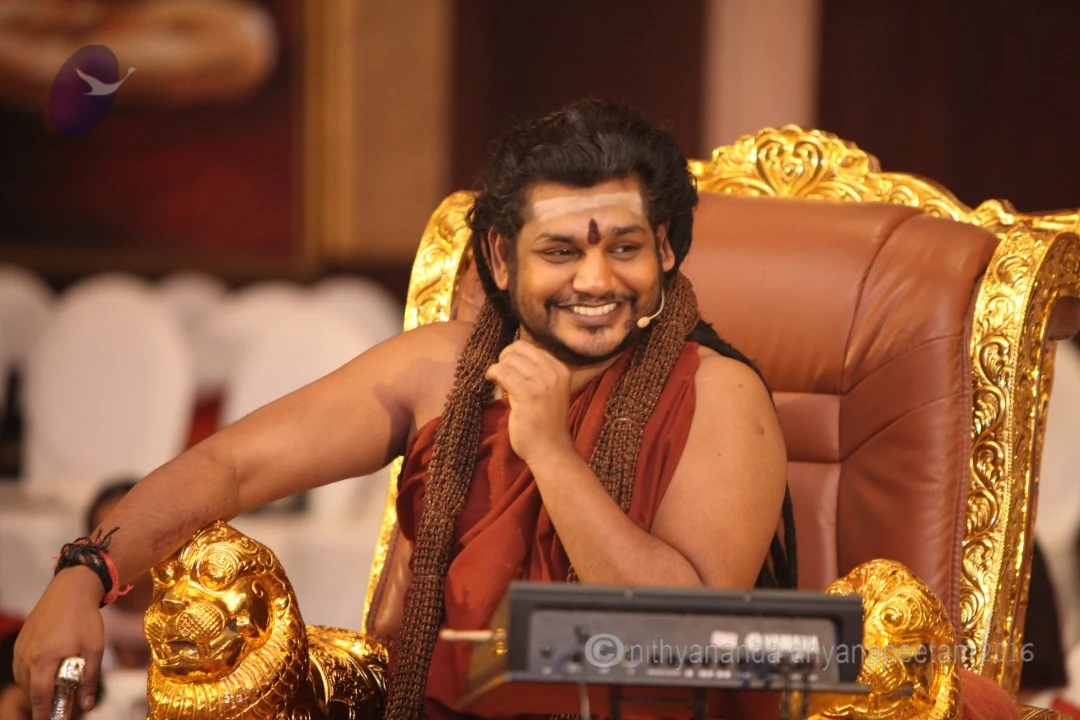
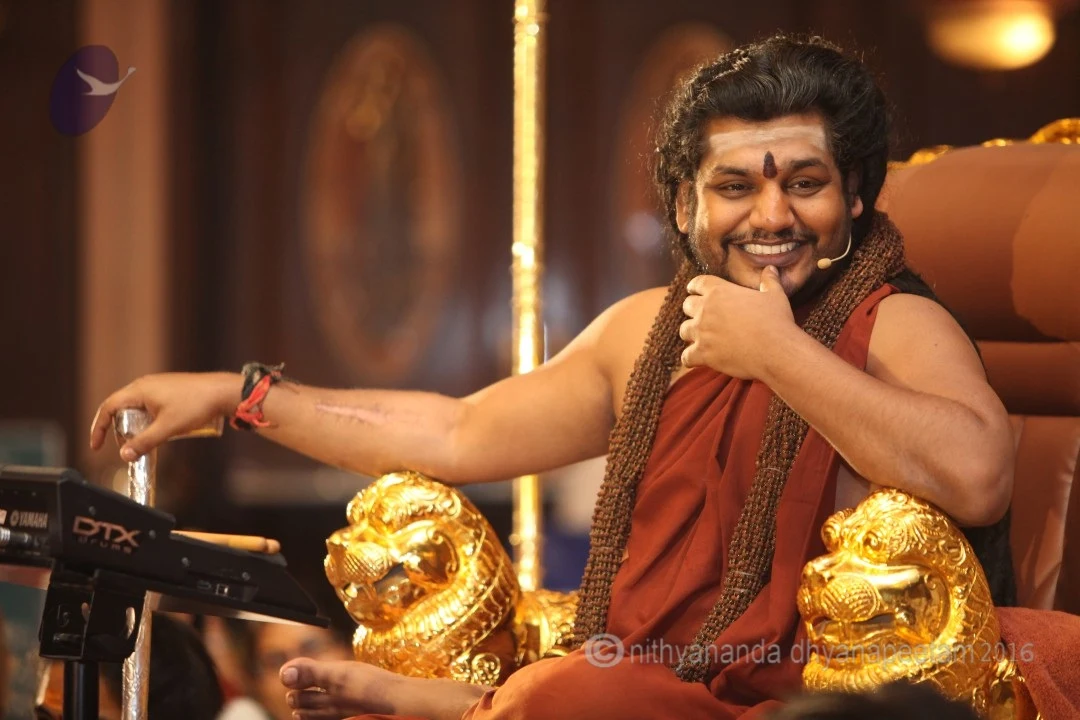
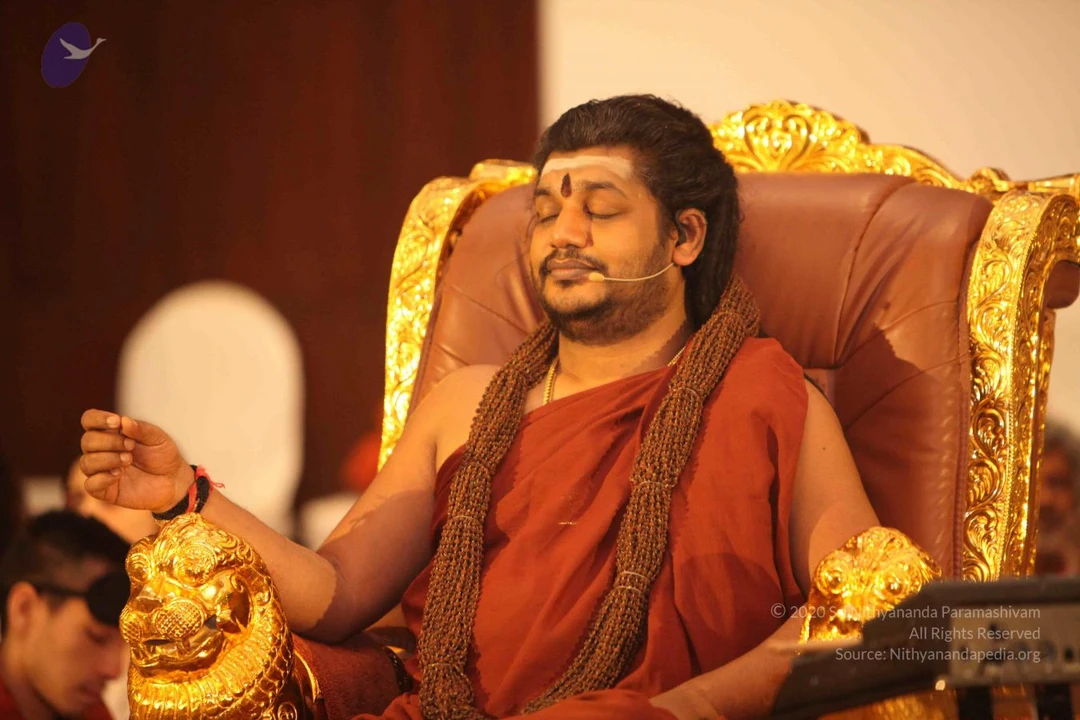
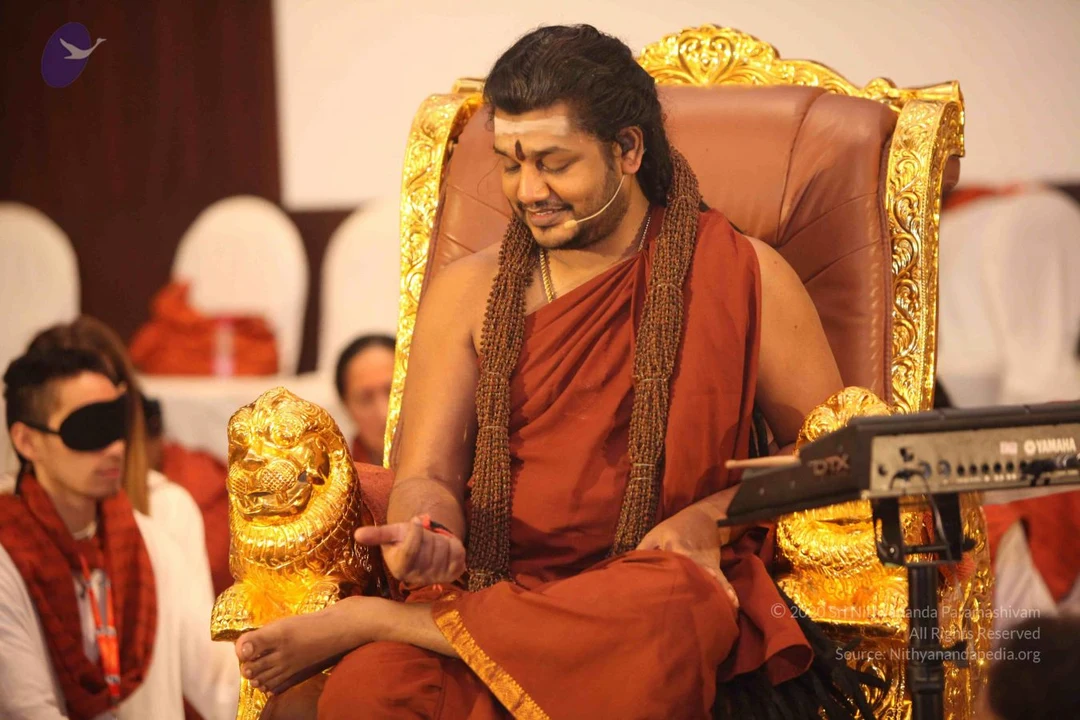
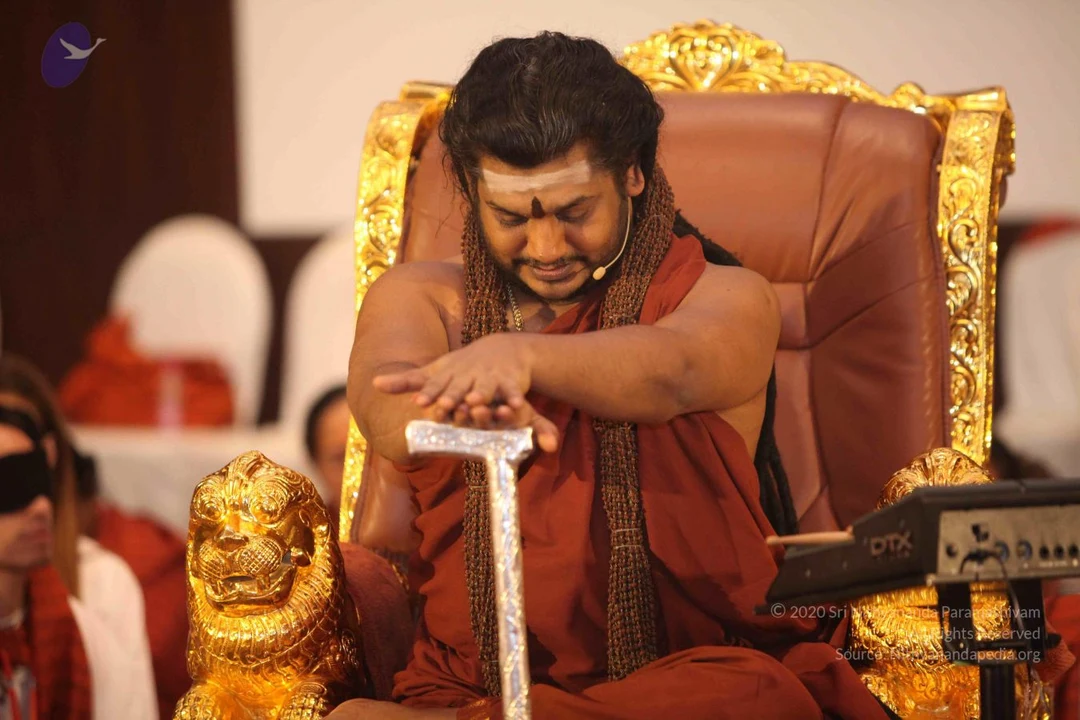
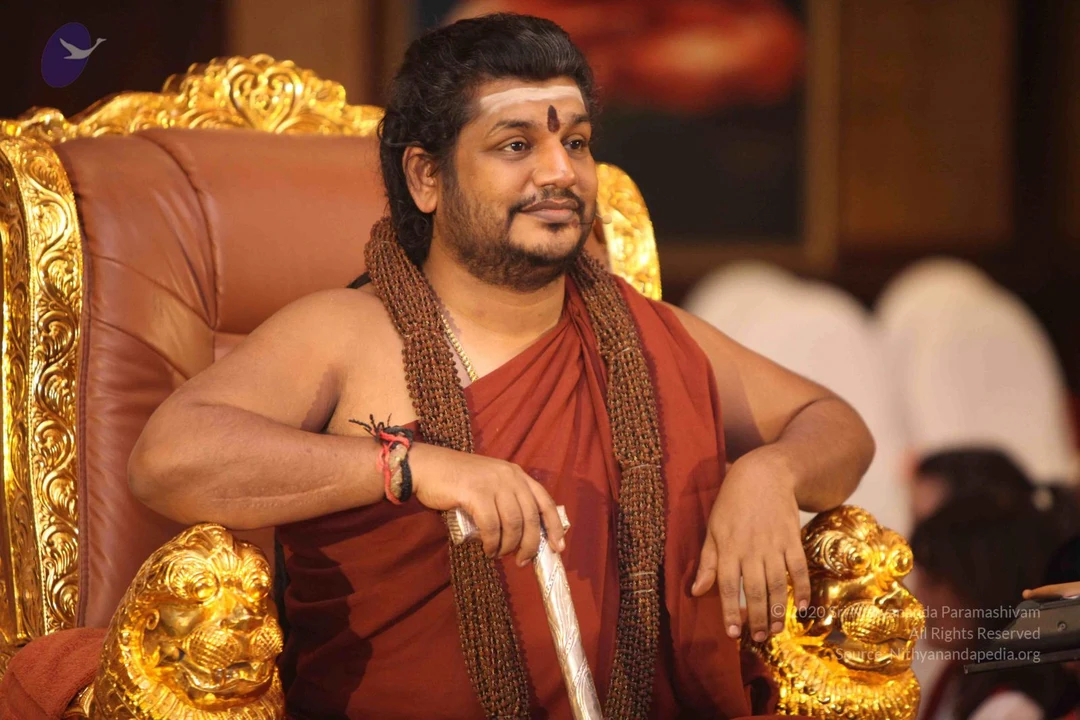
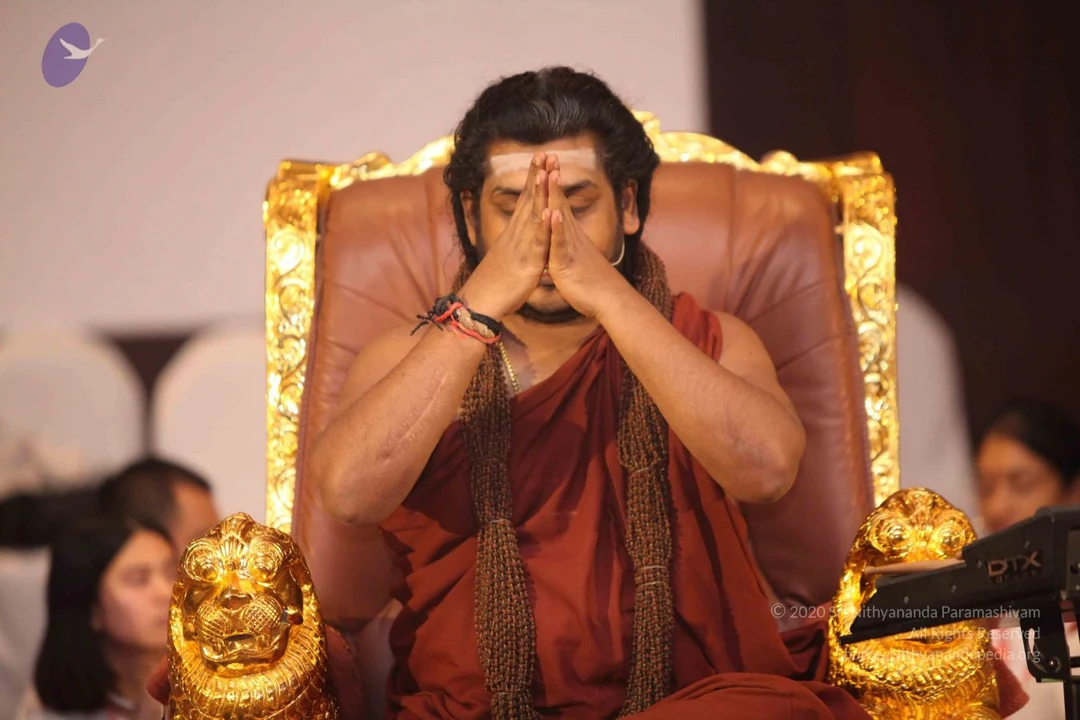
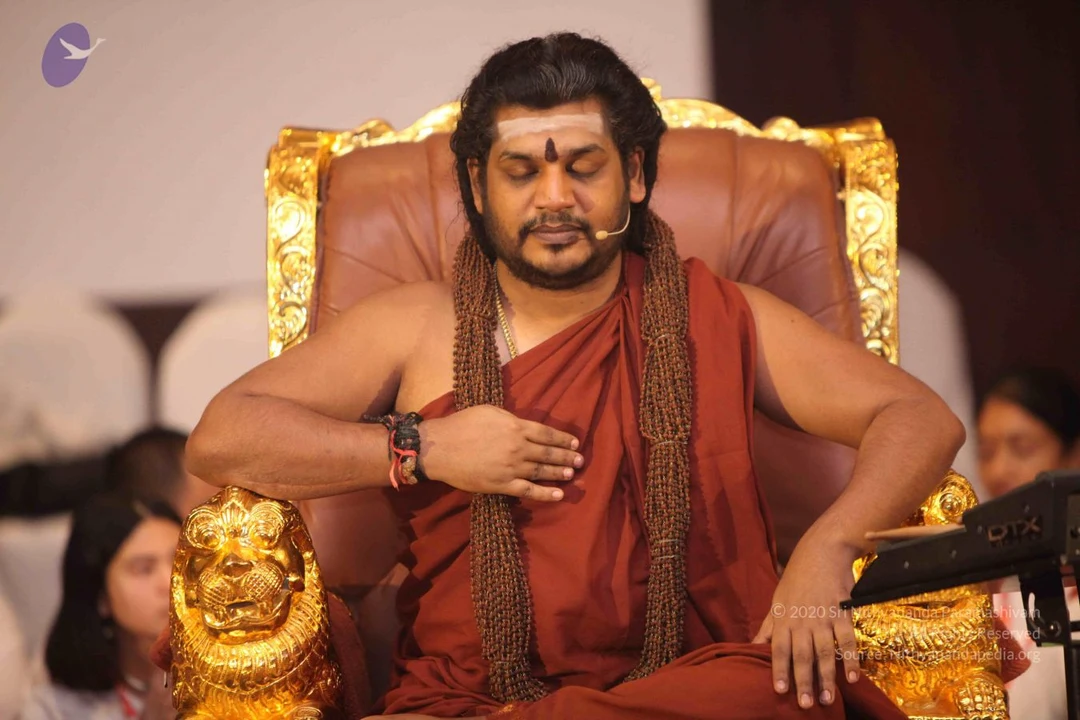
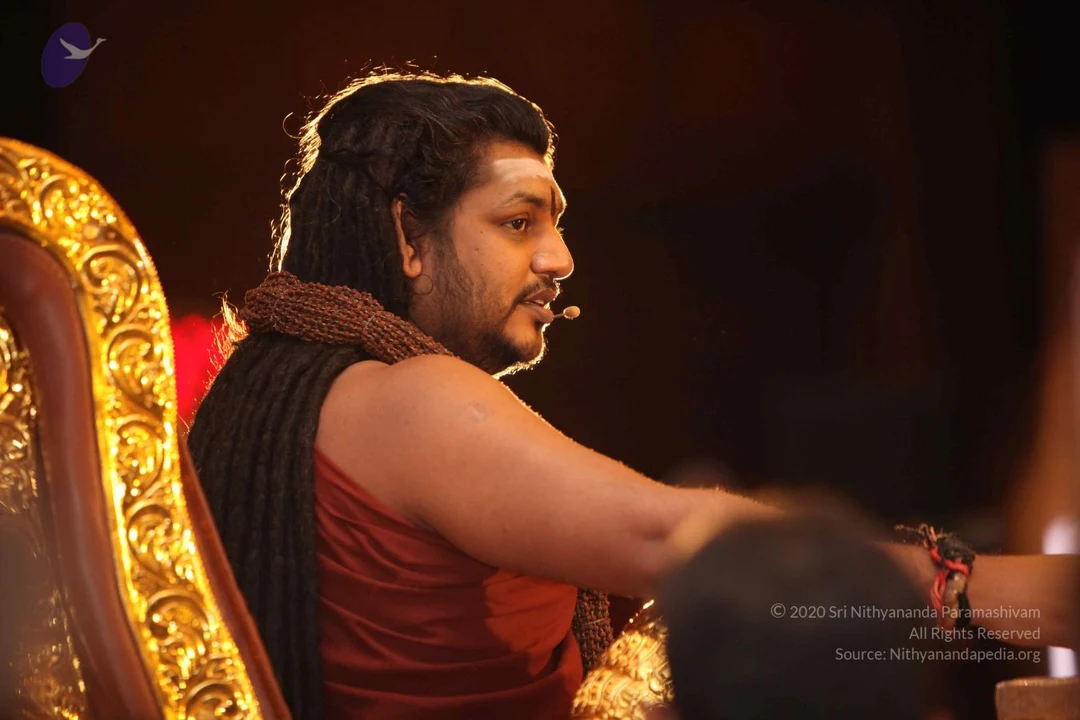
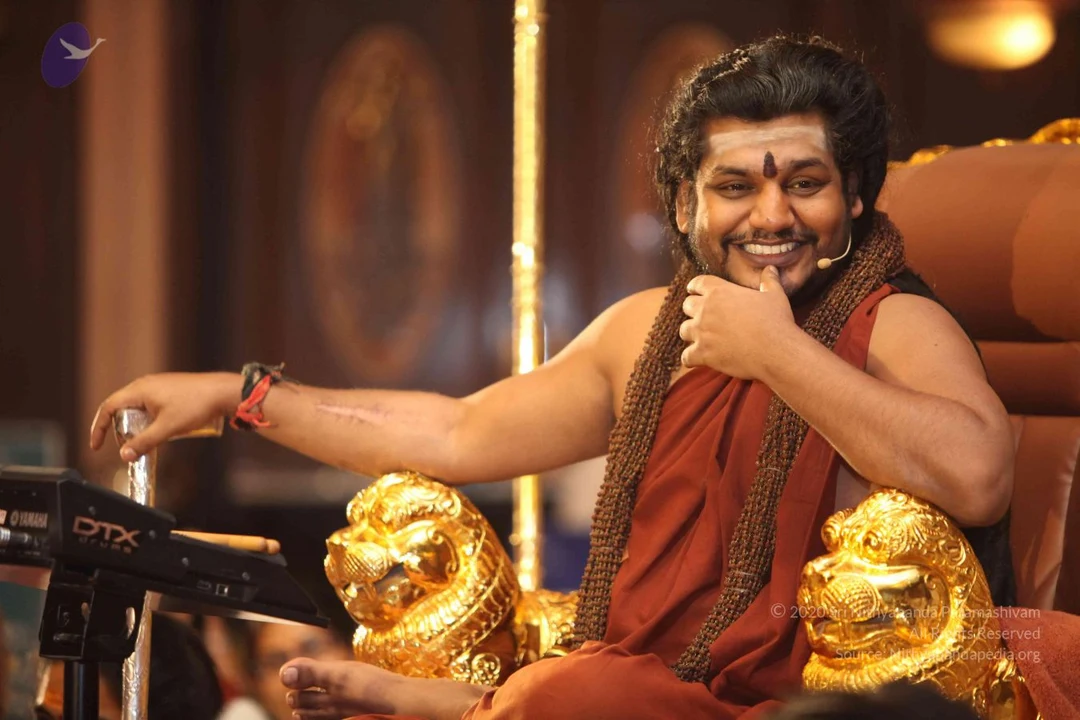
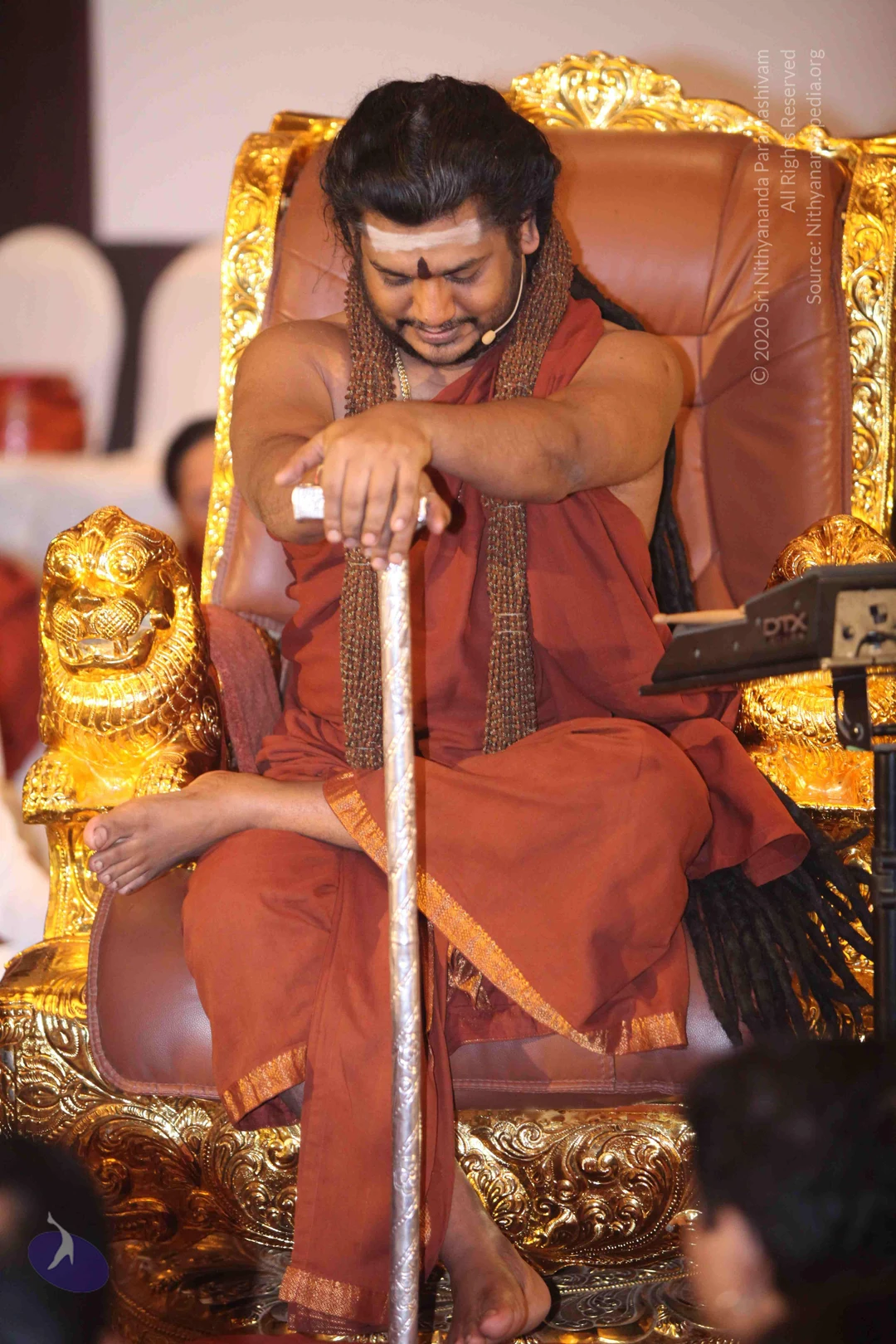
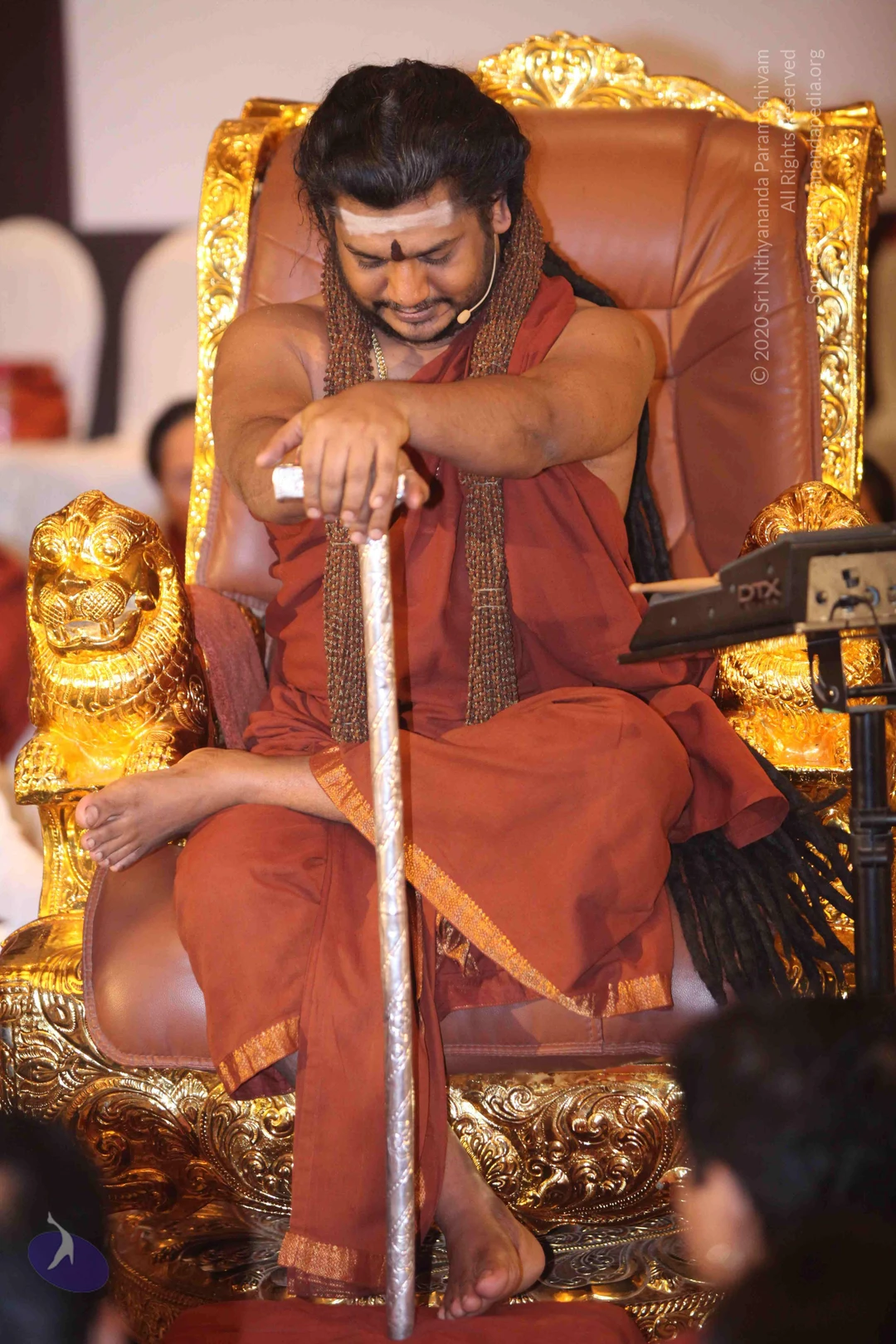
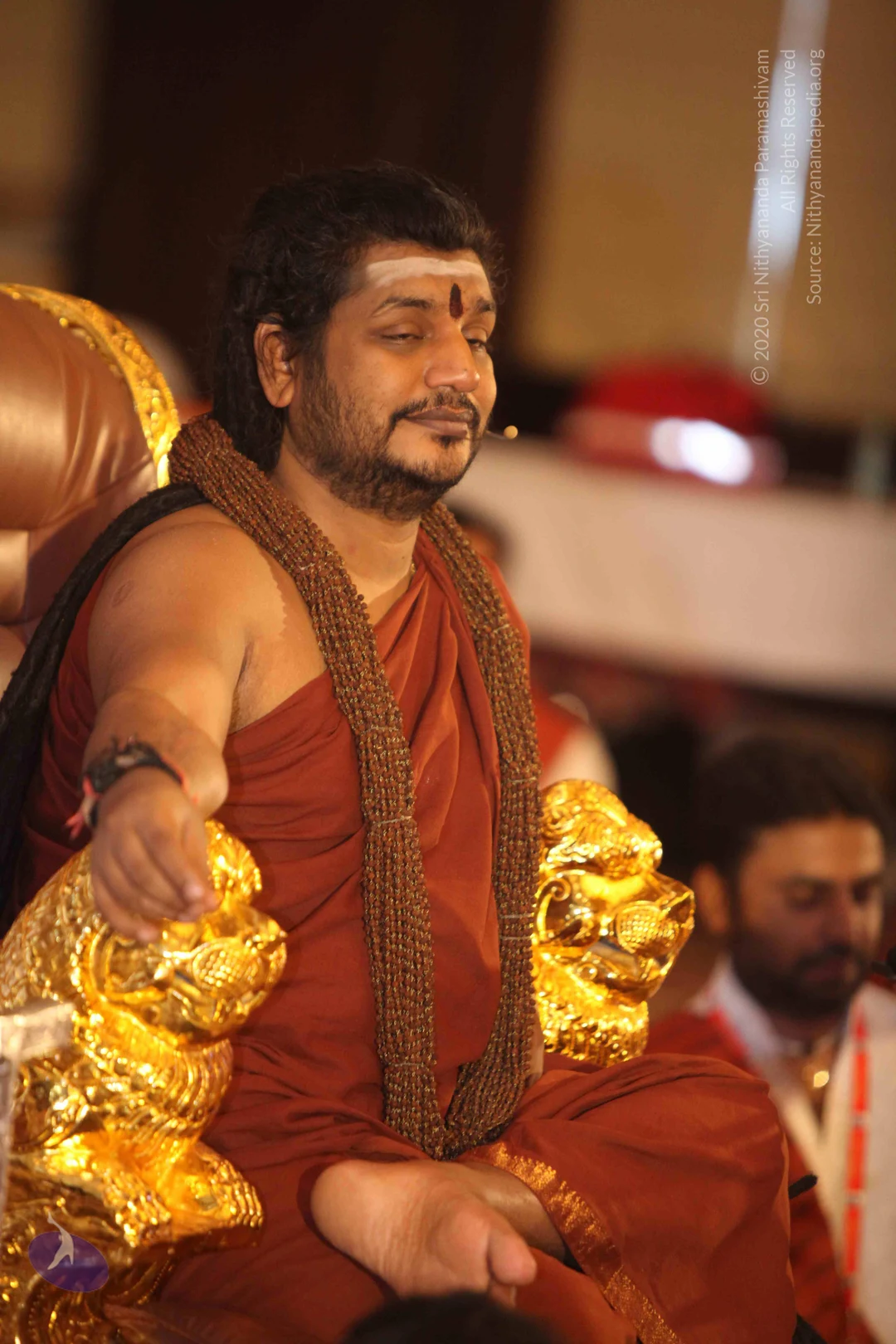
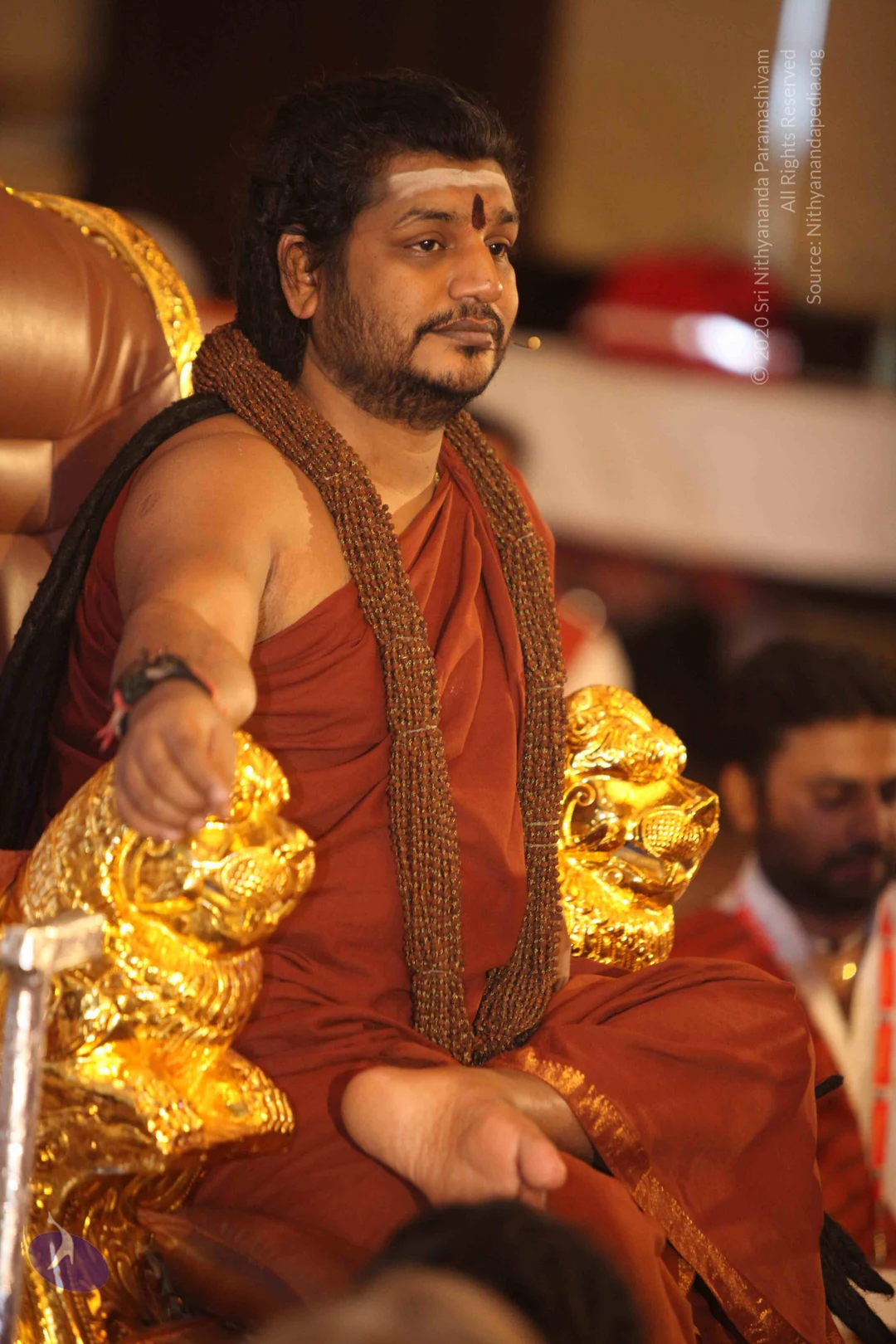
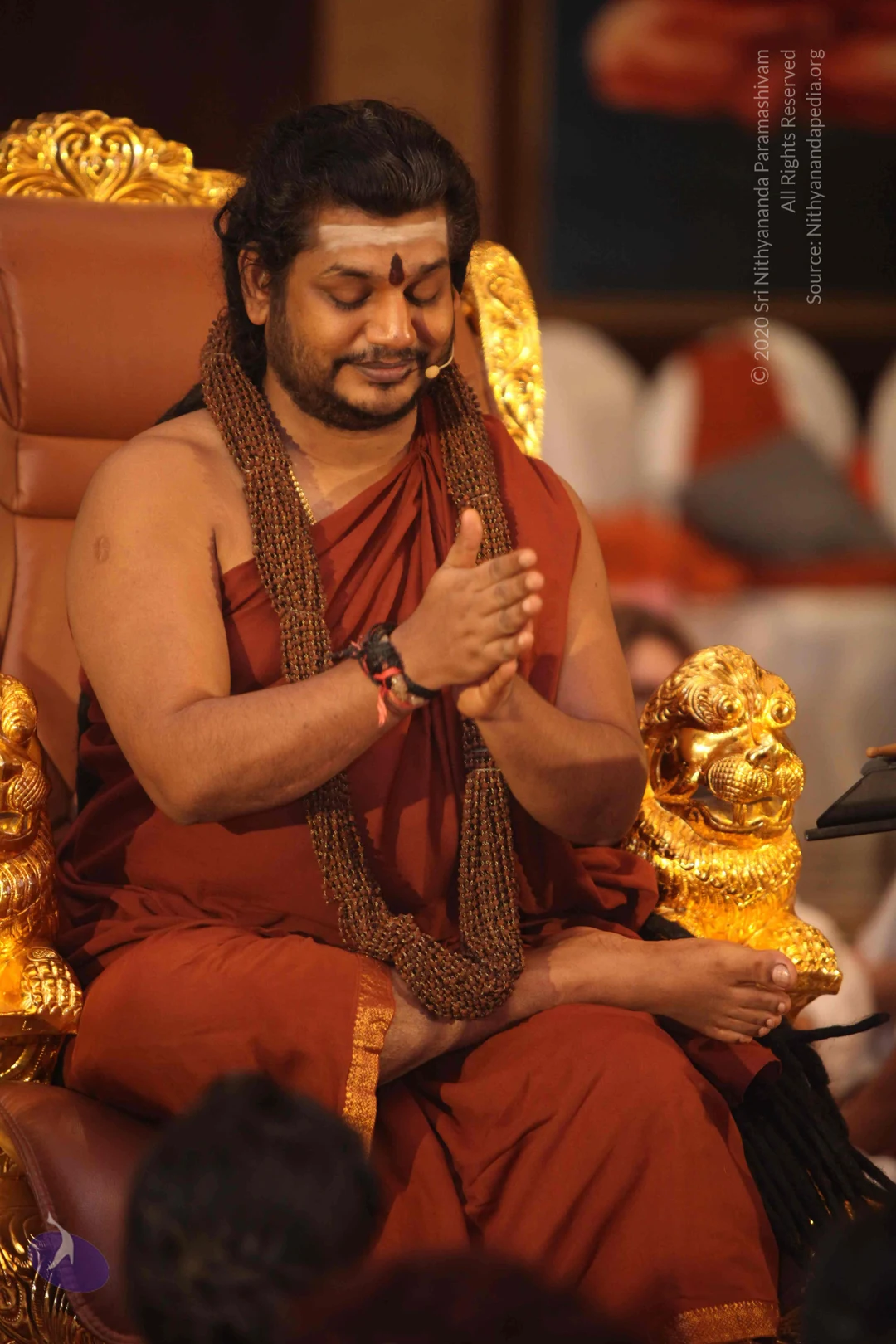
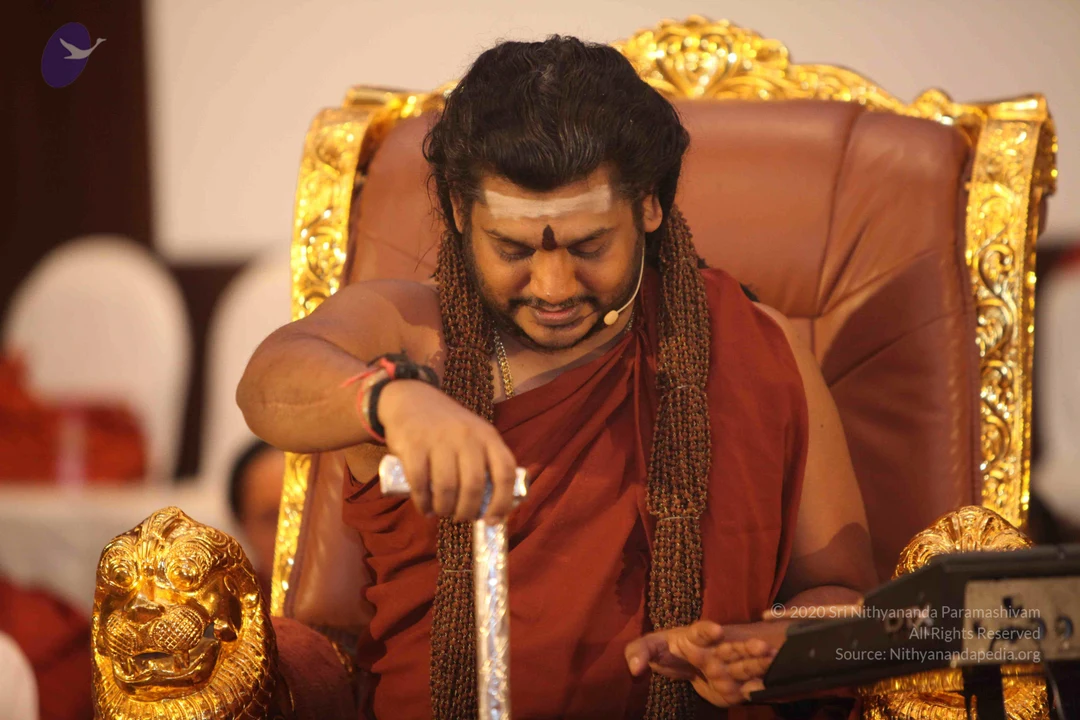
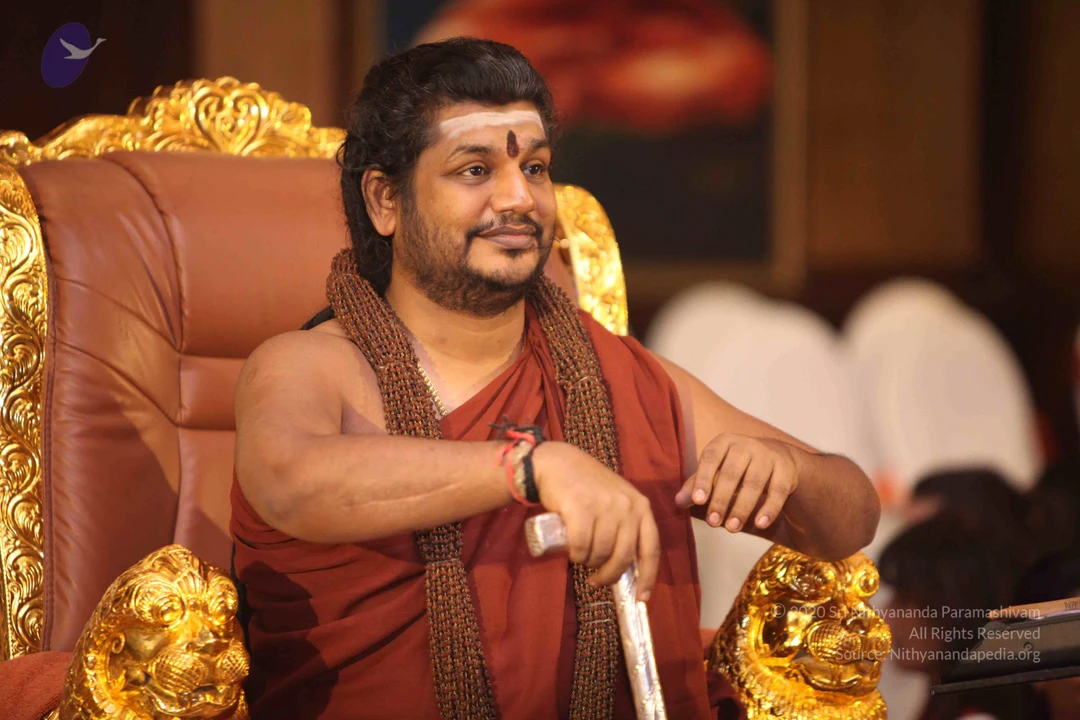
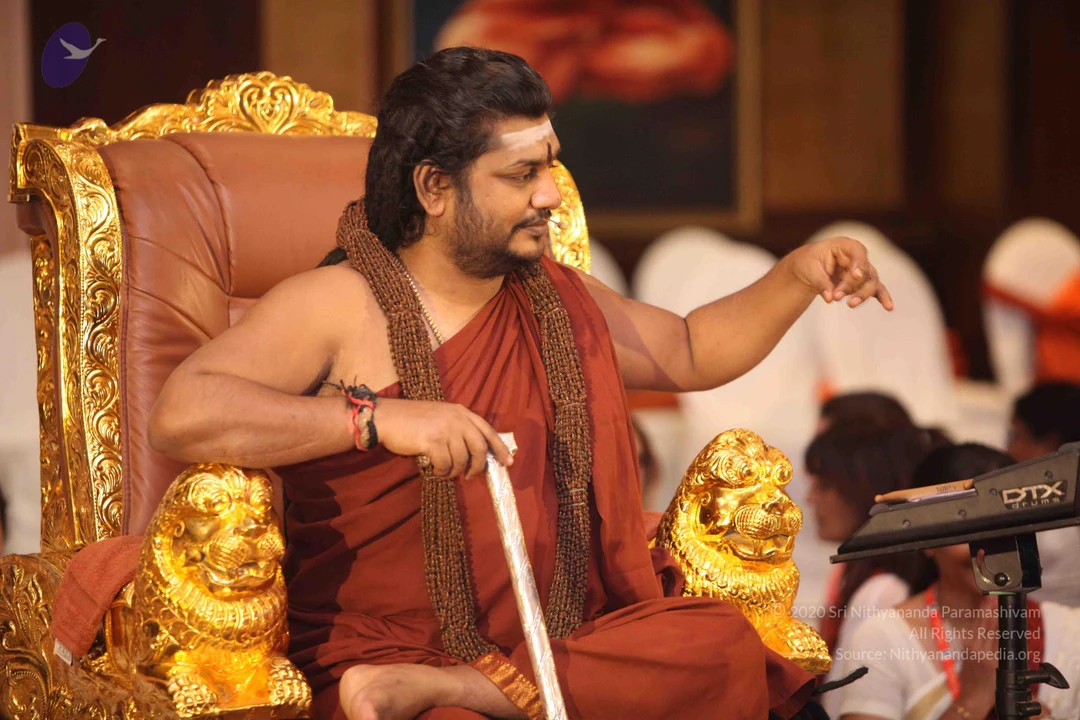
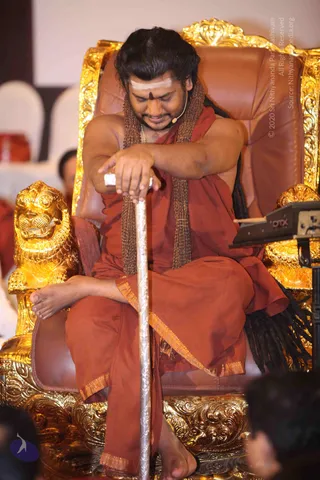
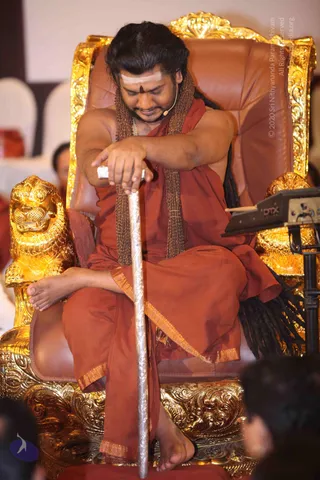
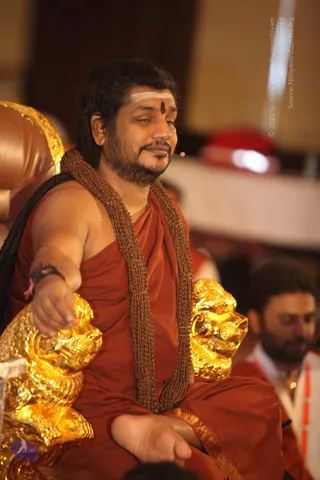
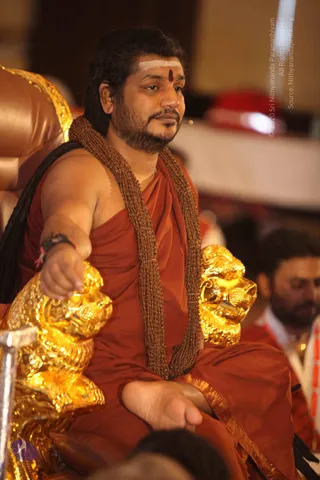
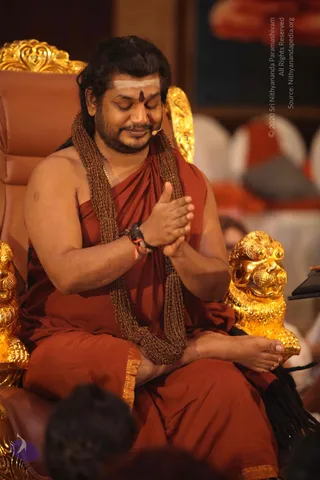
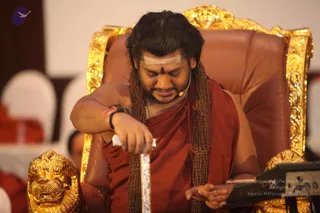
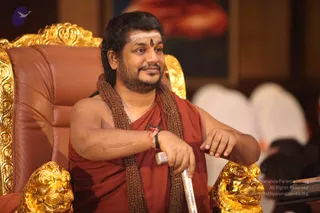
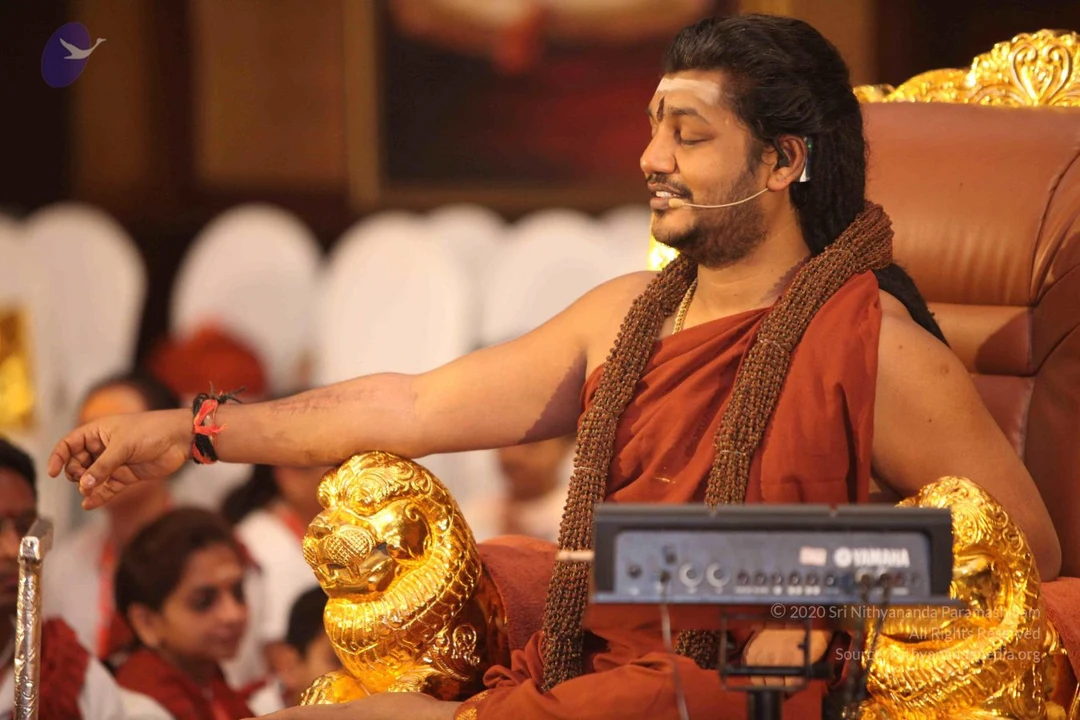
A man with long, swept-back dark hair sits on an ornate gold-carved throne with brown leather upholstery and lion-head armrests. He wears a rust-red garment with gold-bordered edge, a rudraksha mala draped across his chest, and a white horizontal tilak with a red dot on his forehead. He rests one arm on a silver staff, his eyes lowered, and a headset microphone is clipped near his face. A digital mixing unit sits beside the throne, and audience members are partly visible at the edges. The.A man with long dark hair and a white and red forehead mark sits cross-legged on an ornate gold-and-brown leather throne with carved lion-head armrests. He wears a rust-red robe with a gold-bordered edge and multiple strands of beads, and holds a long silver staff across his lap while looking downward. A headset microphone is clipped near his face, and a DTX electronic drum or sound unit stands at the right edge of the frame. Blurred heads of seated audience members appear at the bottom corners. a person cues: long swept hair, rudraksha-style beaded garland, and red robe on a throne at a teaching event.A man seated on an ornate gilded throne with lion-head armrests, wearing a rust-orange draped garment and a thick brown rudraksha-style mala across his shoulders. He has a white vertical tilak with a red dot on his forehead, long dark swept hair, a beard, and a wrist thread; his right arm extends toward the armrest while his eyes are half-closed in discourse. A second man in white with a white tilak and red-striped cloth sits to the right, slightly out of focus, and a red object is visible in the background. The setting appears to be a satsang stage with a bokeh-lit hall.A man seated on an ornate gold-and-copper throne with carved golden lion-head armrests, wearing rust-orange robes draped over one shoulder and a thick rudraksha-style beaded mala necklace. He has long dark hair, a white forehead stripe with a red vertical mark, and a small clip microphone on his cheek, extending his right arm forward while speaking. Behind him, a second man in a red-orange garment sits slightly out of focus, and a red object glows in the blurred background. The setting suggests a satsang discourse. Swamiji (probable) is the seated teacher, identified by the throne, orange robes, long hair, and mala cues, and the page indicates attendance.A seated man in a dark red-orange sannyasi robe sits on an ornate golden throne with lion-head armrests, eyes closed and palms pressed together in a gesture of greeting or reverence. He wears a long rudraksha mala draped over his shoulders, a white and red tilak on his forehead, and a red and black wrist cord, with a small headset microphone at his ear. Blurred figures in the foreground suggest a seated satsang audience.
04-POWER-MANIFESTATION-SESSION

5 photosSource gallery
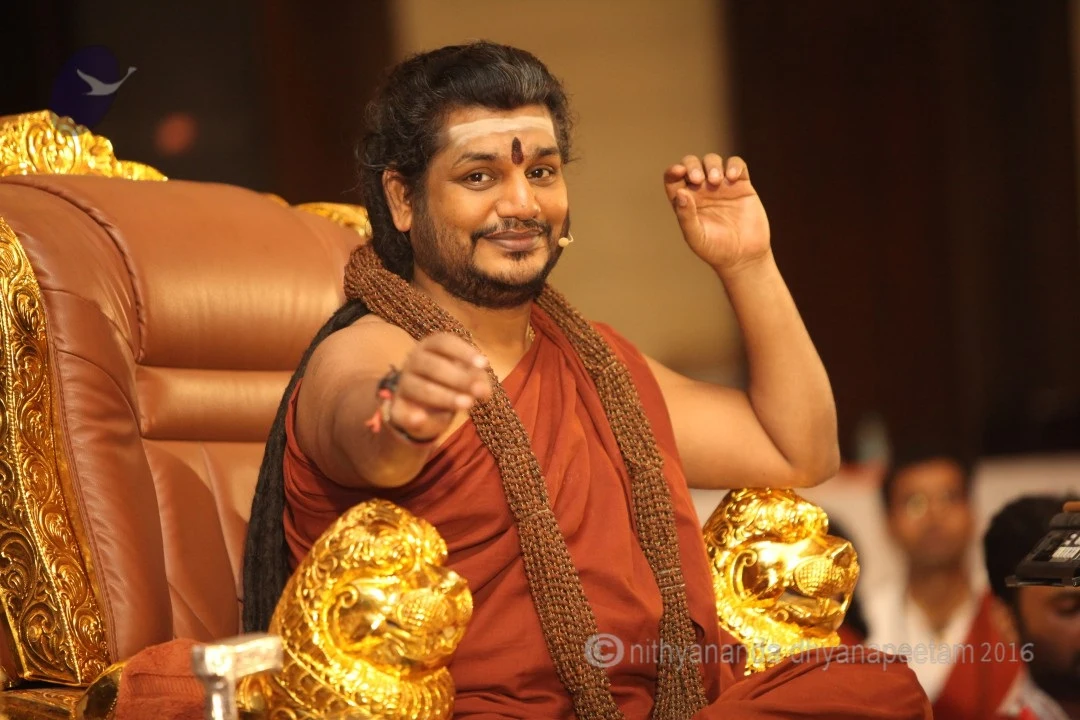
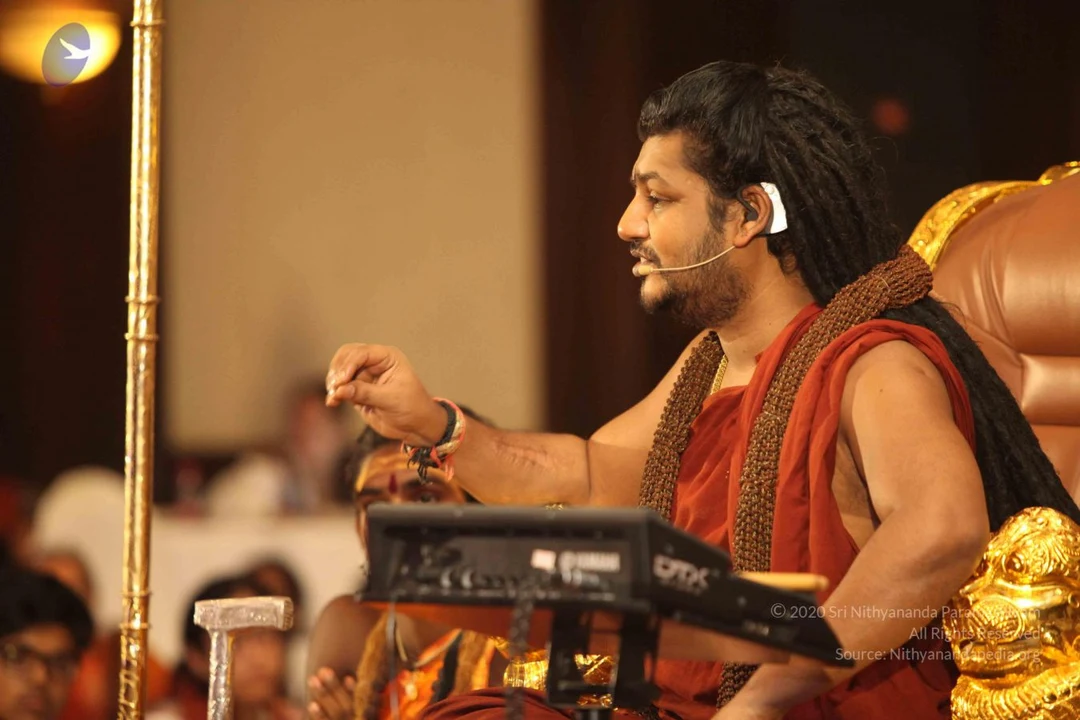
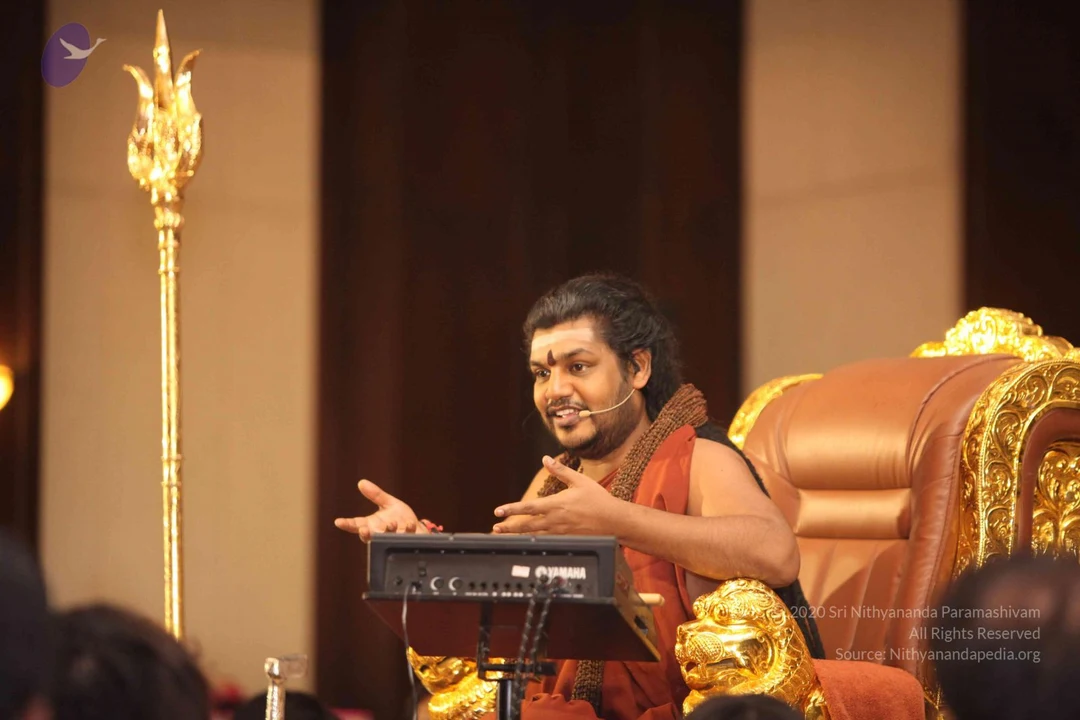
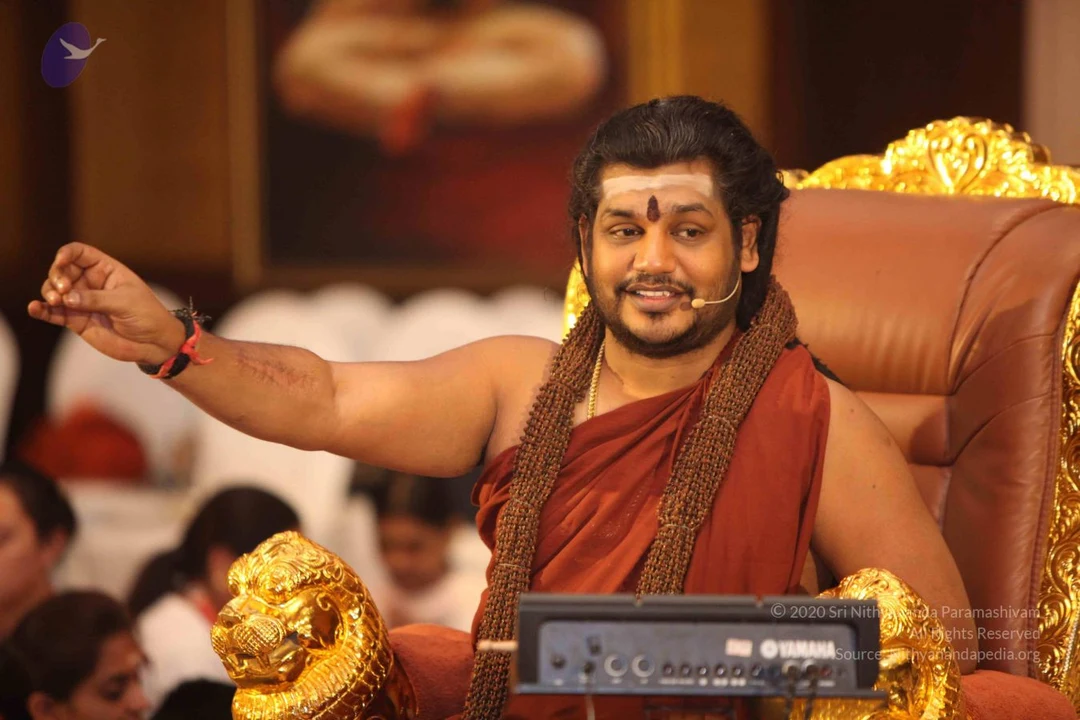
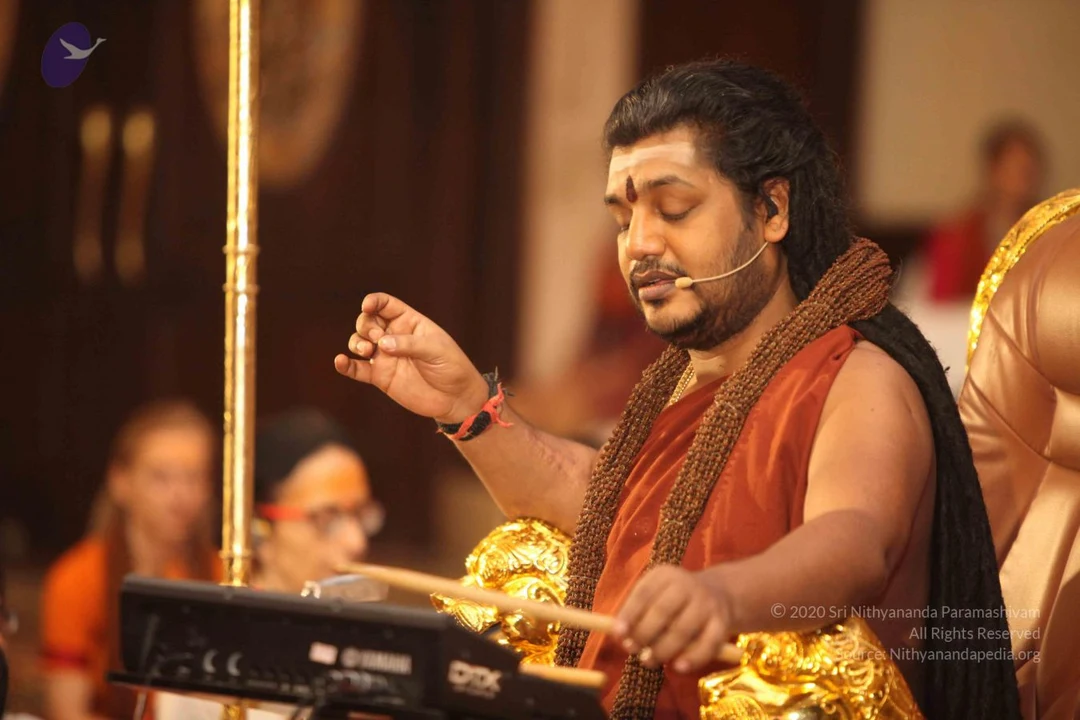
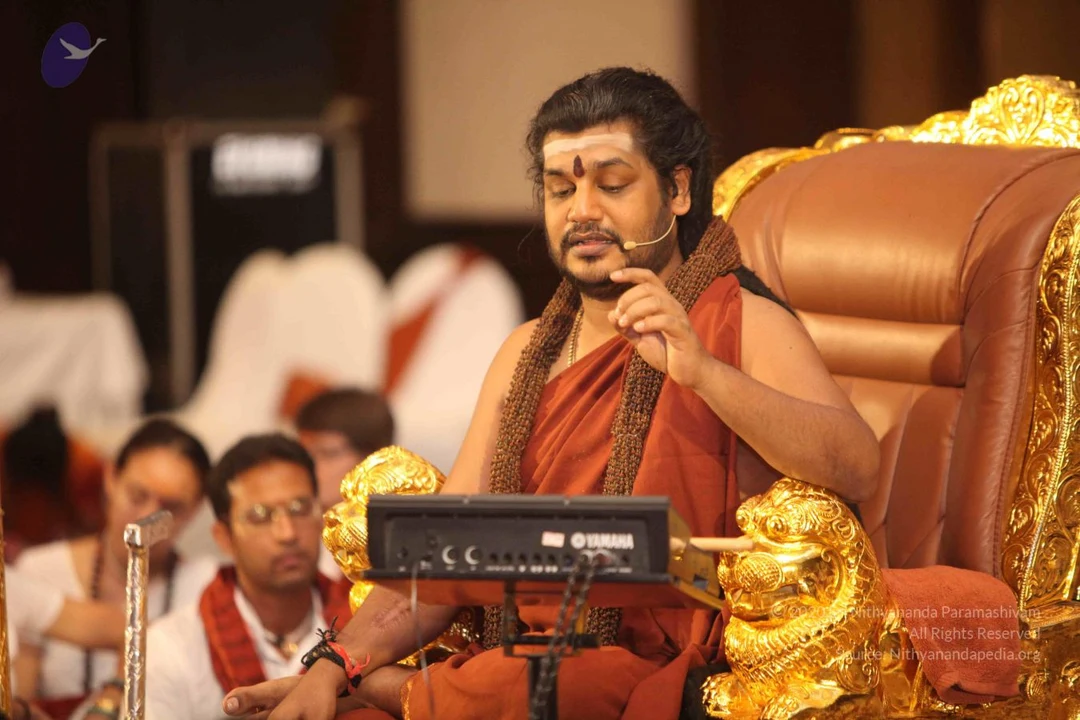
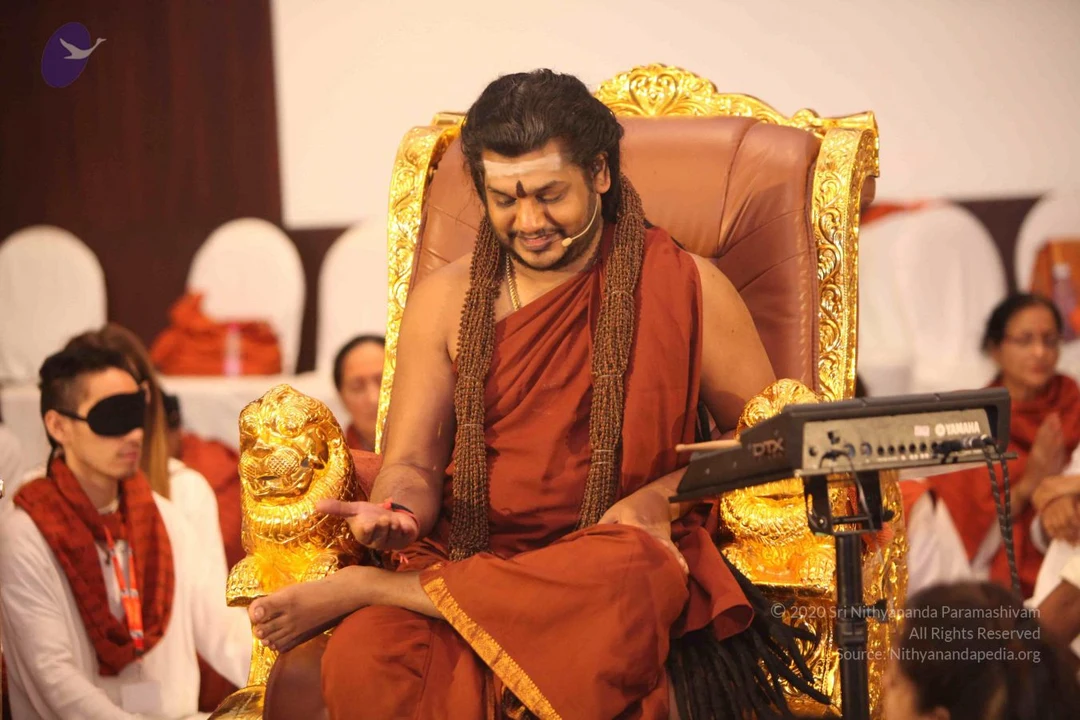
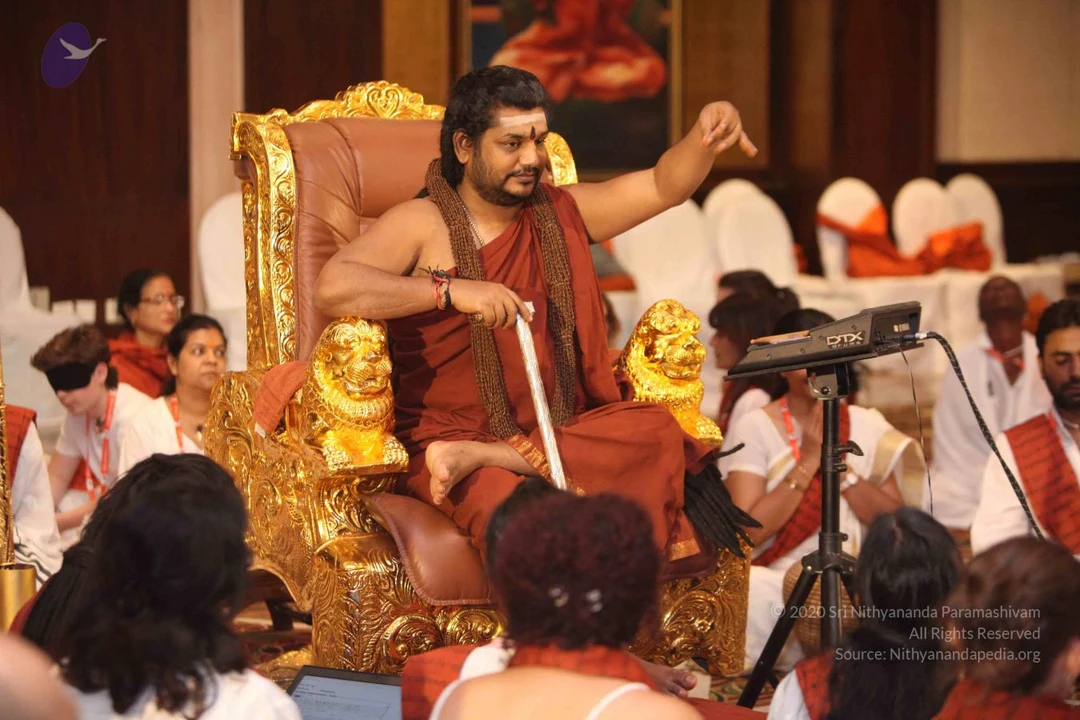
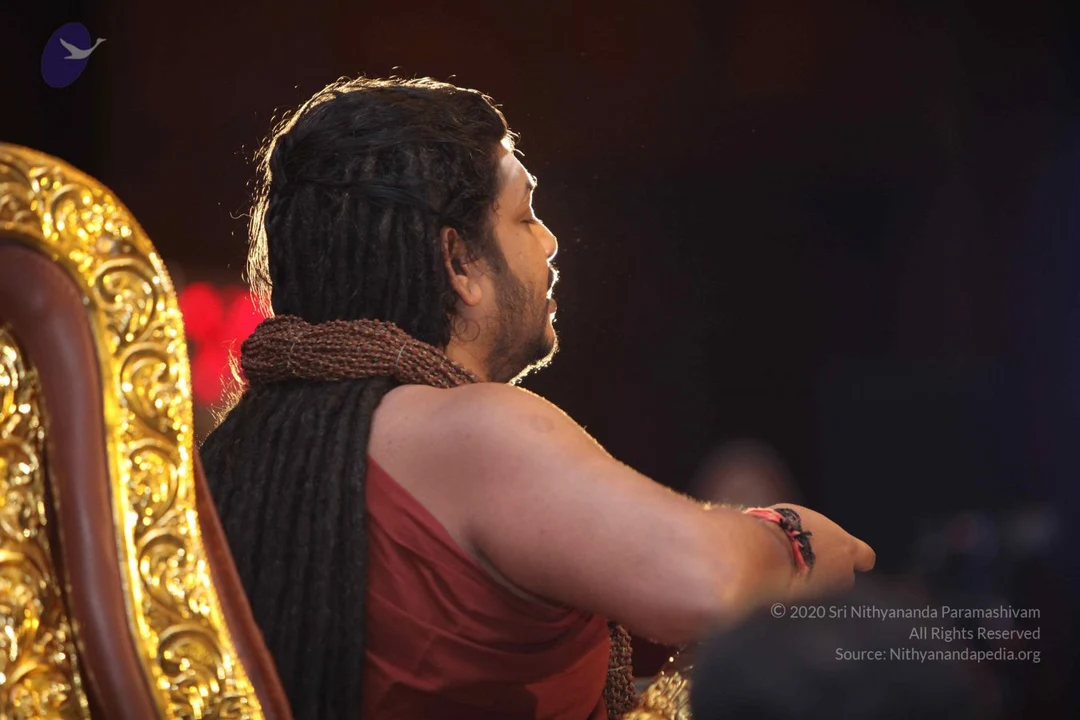
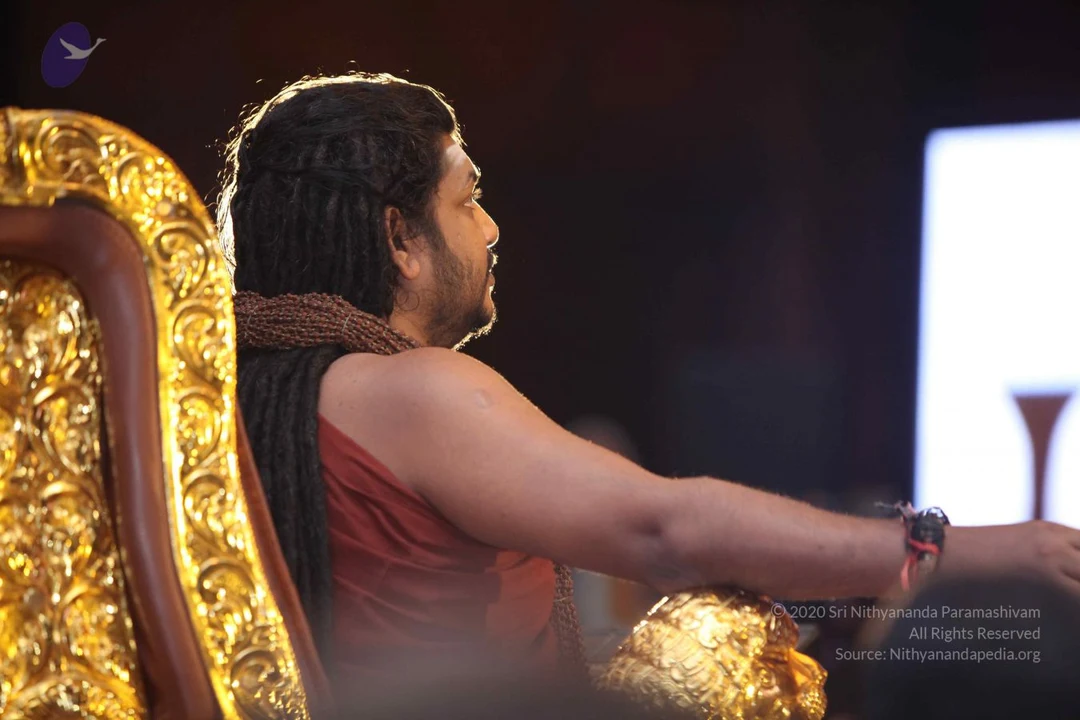
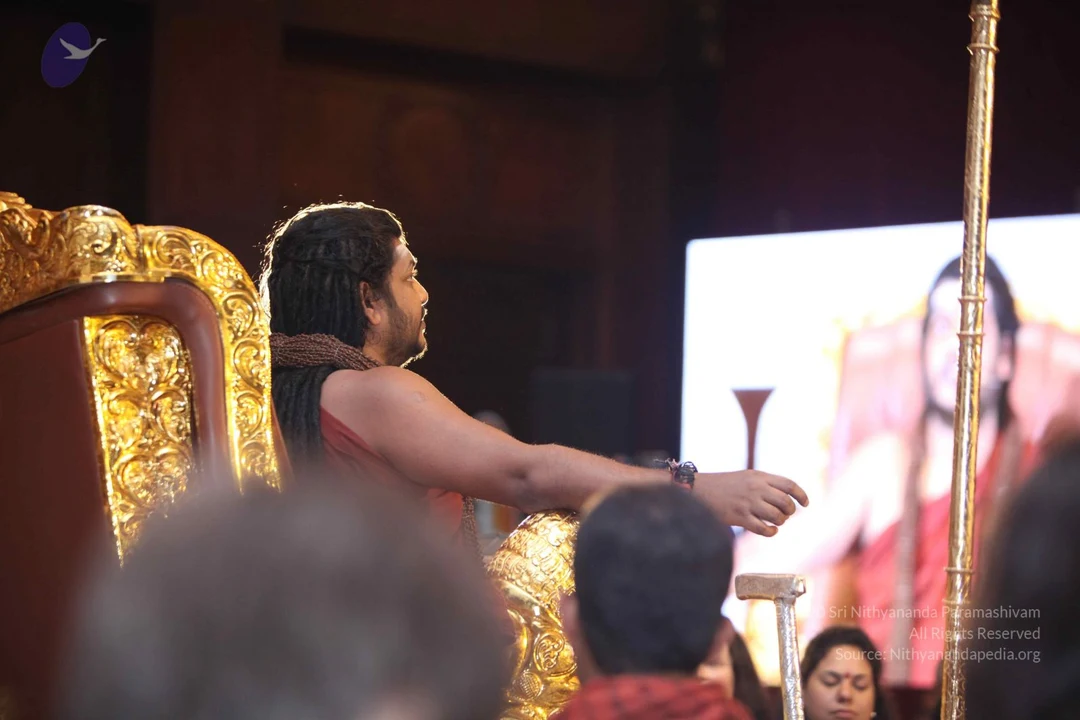
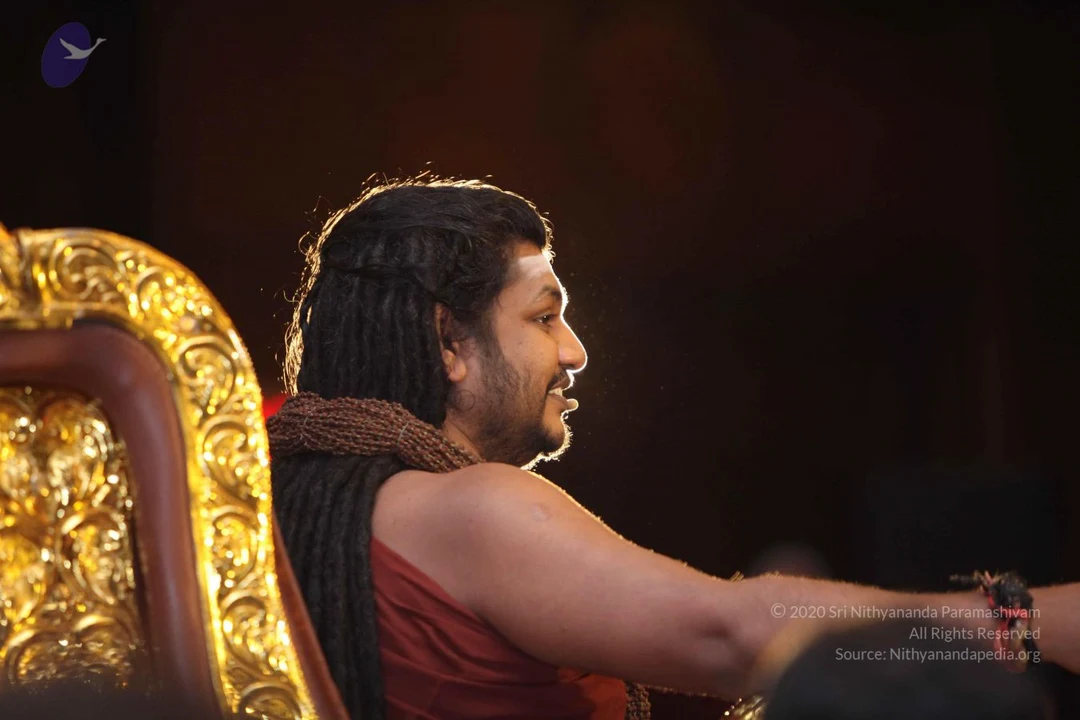
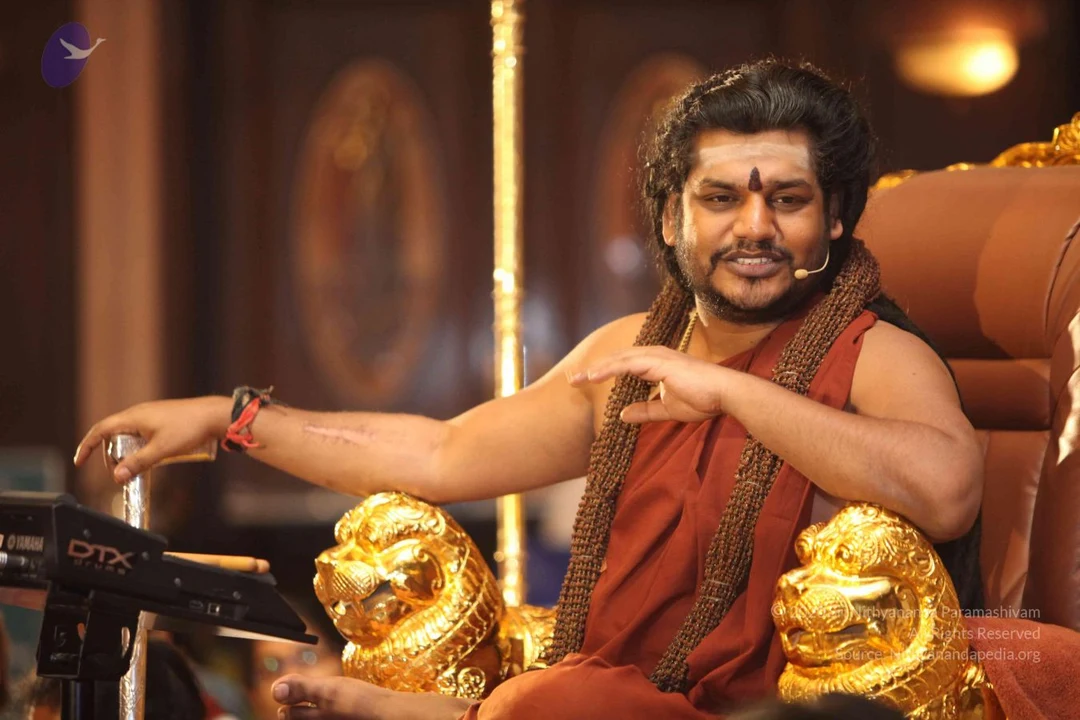
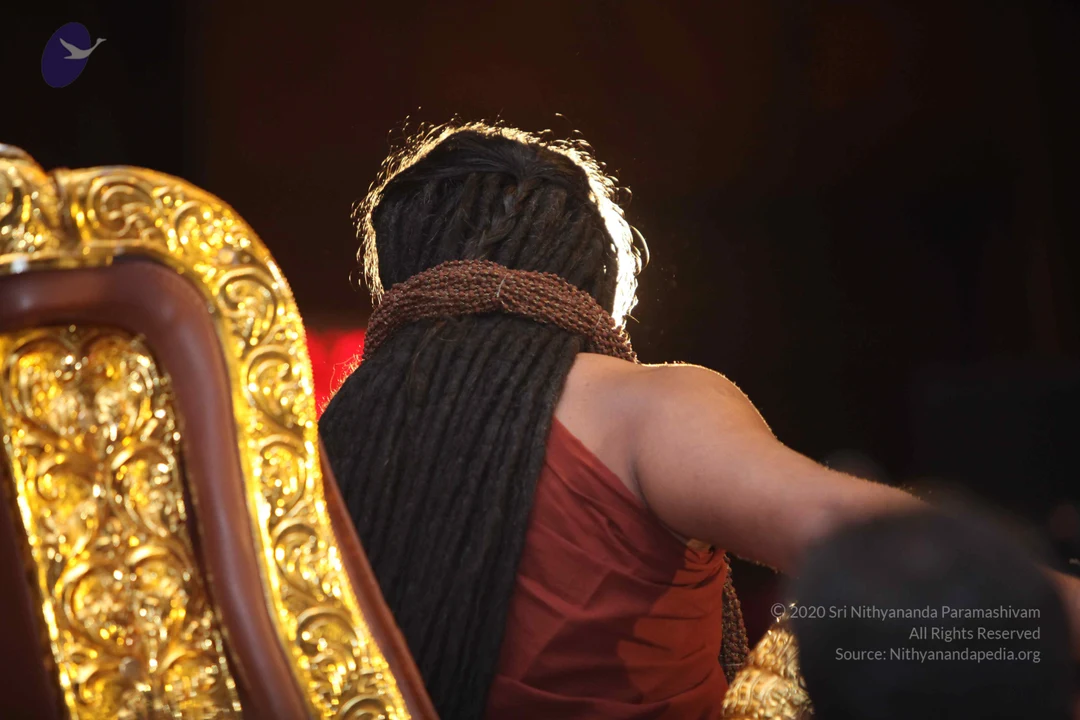
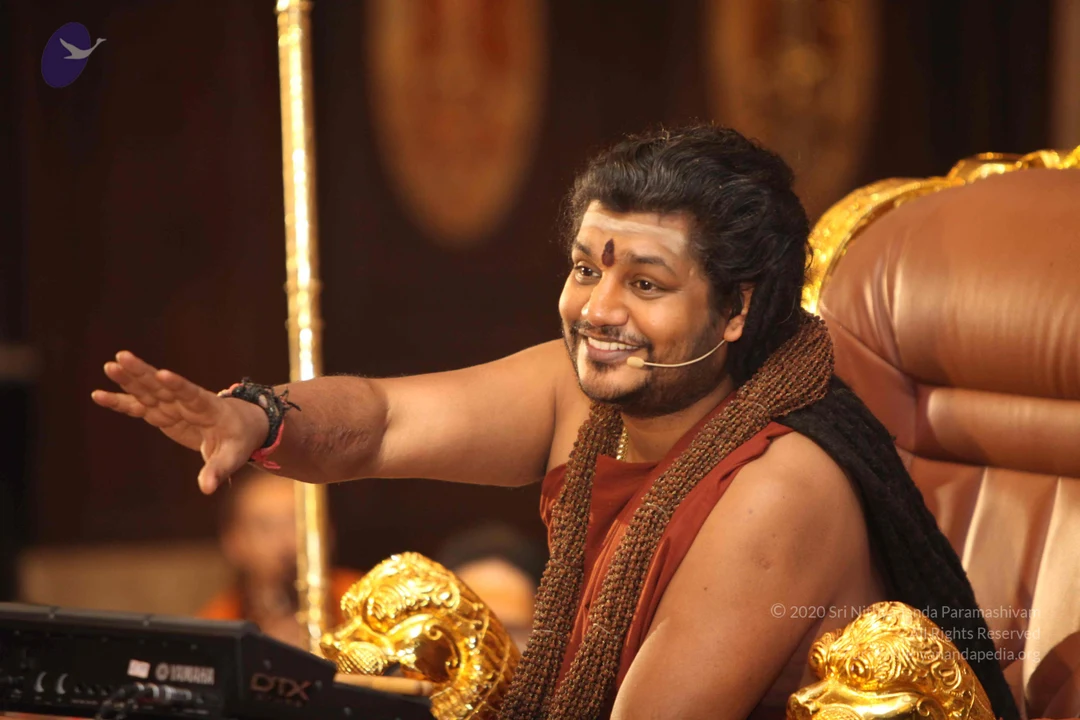
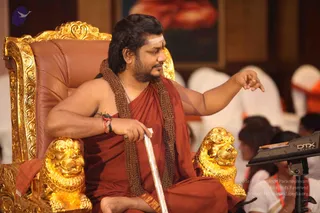
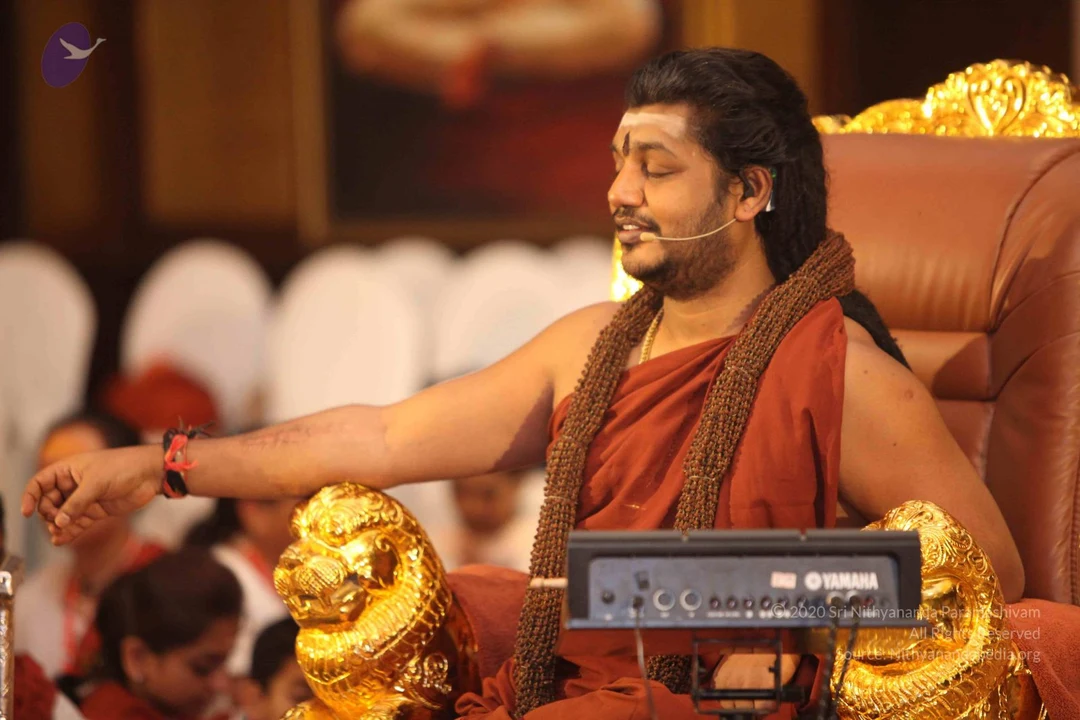
A seated man in a saffron-red robe sits on a brown leather throne with ornate gold carved armrests topped by golden lion heads. He has long swept-back dark hair, a white vertical tilak with a red dot on his forehead, and wears long rudraksha mala strands and a gold chain. A small wireless microphone is clipped near his face. He looks down while holding a silver-colored rod in his right hand, his left hand resting on a black lectern in front. Background shows white chairs and a red-draped table. Swamiji (probable): the long swept-back hair, saffron robe, rudraksha malas and gold chain align with the page's identification as Swamiji, seated on a throne.A man with long swept-back dark hair, a white horizontal tilak and red dot on his forehead, and a short beard sits in an ornate gold-and-brown leather throne with carved lion-head armrests. He wears a rust-red unstitched robe over a bare shoulder and a thick rudraksha mala around his neck, with a red thread wrist band, and holds a silver cane. Behind him are a dark painted backdrop and blurred white-clad seated devotees in a satsang hall. Appearance-based cues (long hair, rudraksha mala, saffron-red robe, ornate throne) suggest Swamiji (probable), seated in person at a discourse.A photograph of a man seated on an ornate brown leather throne with gilded lion-head armrests, wearing a rust-red robe, a long rudraksha mala and a white vertical tilak on his forehead. He holds a silver staff in one hand and gestures forward with the other, speaking. Behind him, a framed painting hangs on a dark wall. In the foreground at right, a few audience members in white clothing sit beside a lectern with a DTX microphone.Photograph from behind of a seated figure with long dark matted hair falling down the back, wrapped with a thick rudraksha mala around the neck, wearing a red-orange cloth draped over one shoulder. The figure sits on an ornate gold-carved chair with brown upholstered edges, facing a dim hall with warm backlighting on the hair. A partial head of another person appears in the lower right foreground. Ceremonial satsang setting.A man seated on an ornate brown leather throne with gold-carved lion armrests, speaking into a headset microphone while extending his right arm outward in a gesture of explanation. He wears a red-orange saffron cloth draped over his body, a thick brown rudraksha-style mala necklace across his chest, and a bracelet on his wrist. He has a white tilak with a red dot on his forehead and long dark hair falling to his shoulders. Behind him is a gold-tipped staff, and a Yamaha keyboard unit sits at the lower left. Another figure in saffron is partly visible in the blurred background. The scene resembles a satsang discourse setting.

July 09 2016

1 photoView all
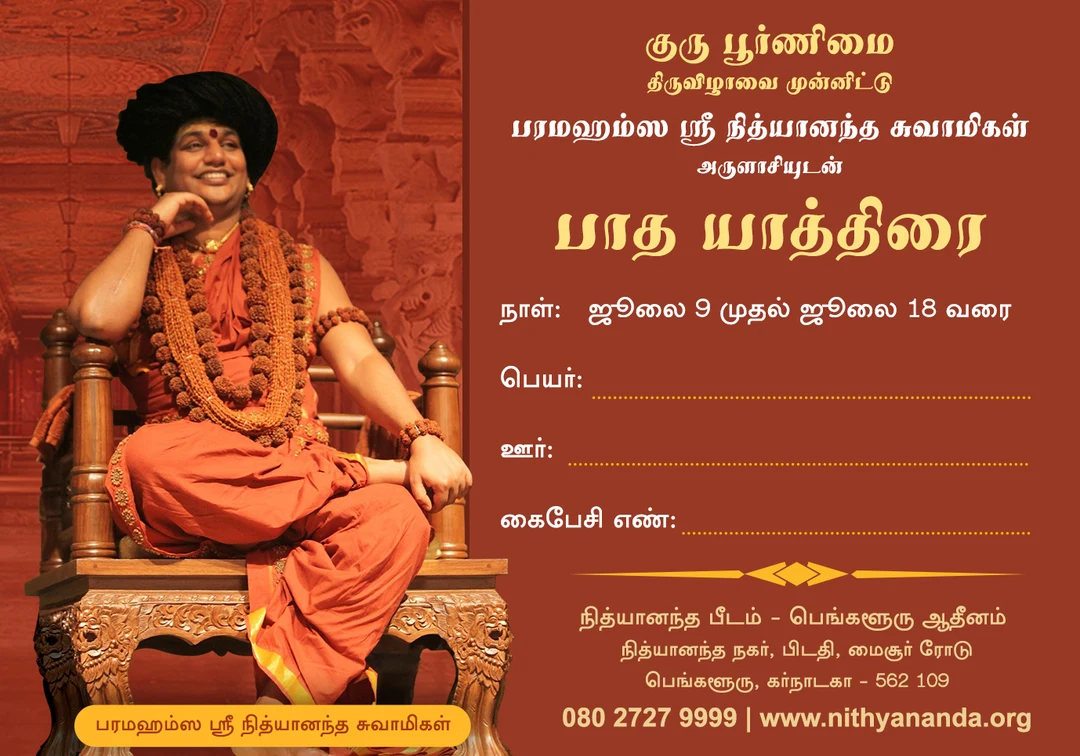
Promotional graphic in Tamil for a Guru Purnima padayatra announcement. A figure with a black turban-style headwrap, red bindi, rudraksha garlands and red-orange robes sits on an ornate carved wooden chair against a red temple-carved backdrop, smiling with hand raised to chin; a gold-trimmed label at lower left reads the name in Tamil. Right-side text panel with form fields for name, place and phone number, and address of Nithyananda Dhyanapeetam Bengaluru Ashram. Surfaces of the layout are red, gold and cream.