Skip to content
Sunday

11 October 2015

Dated photos
527
Source pages
1
Media
5
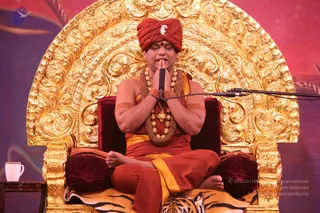
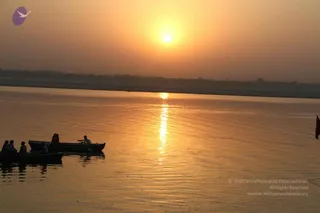
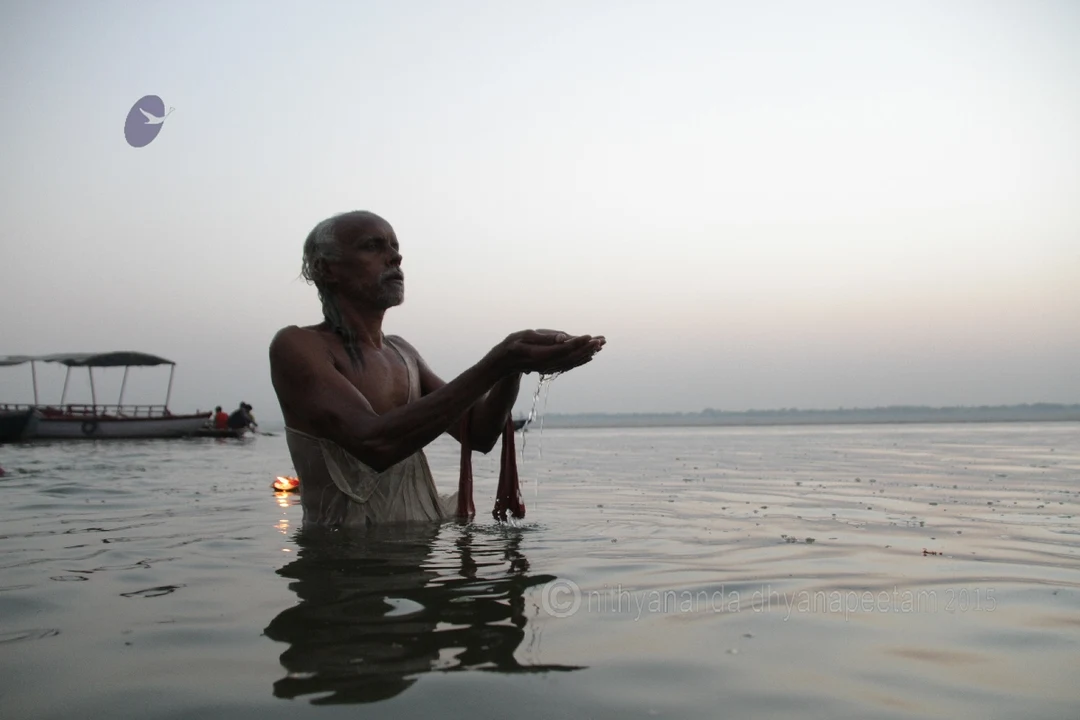
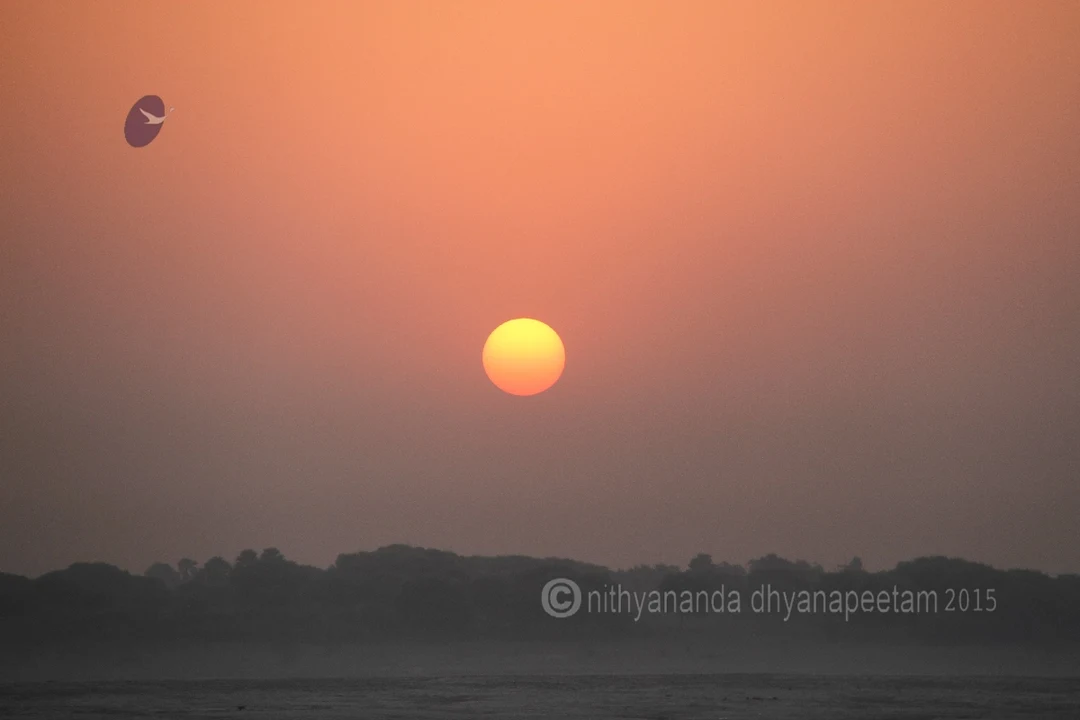
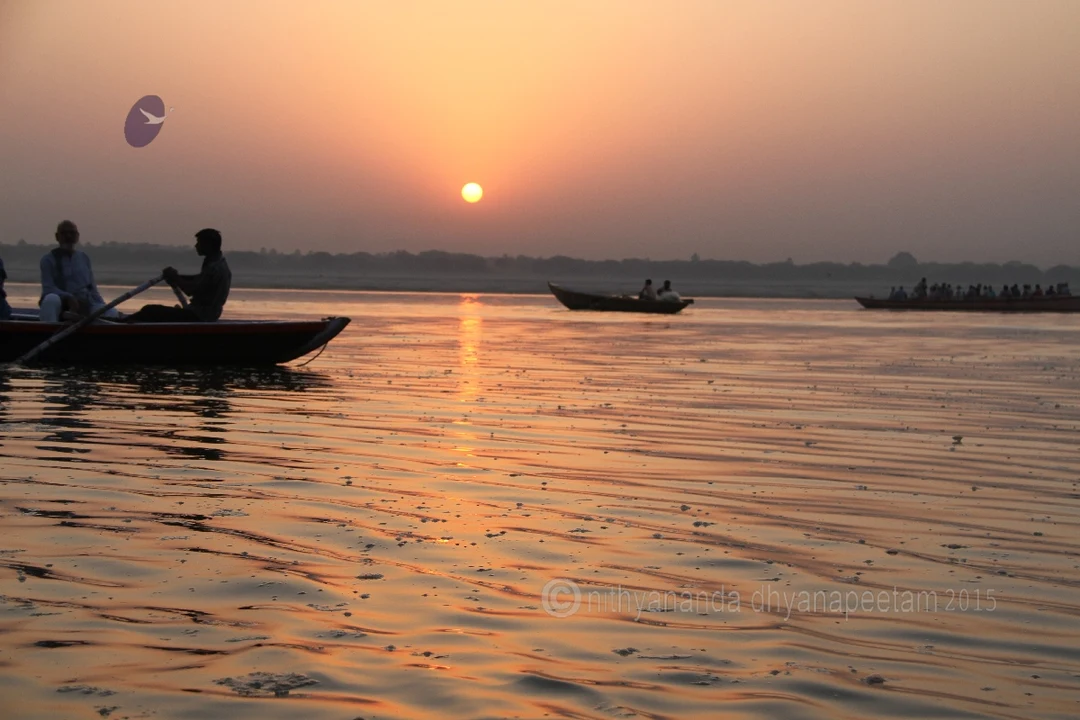
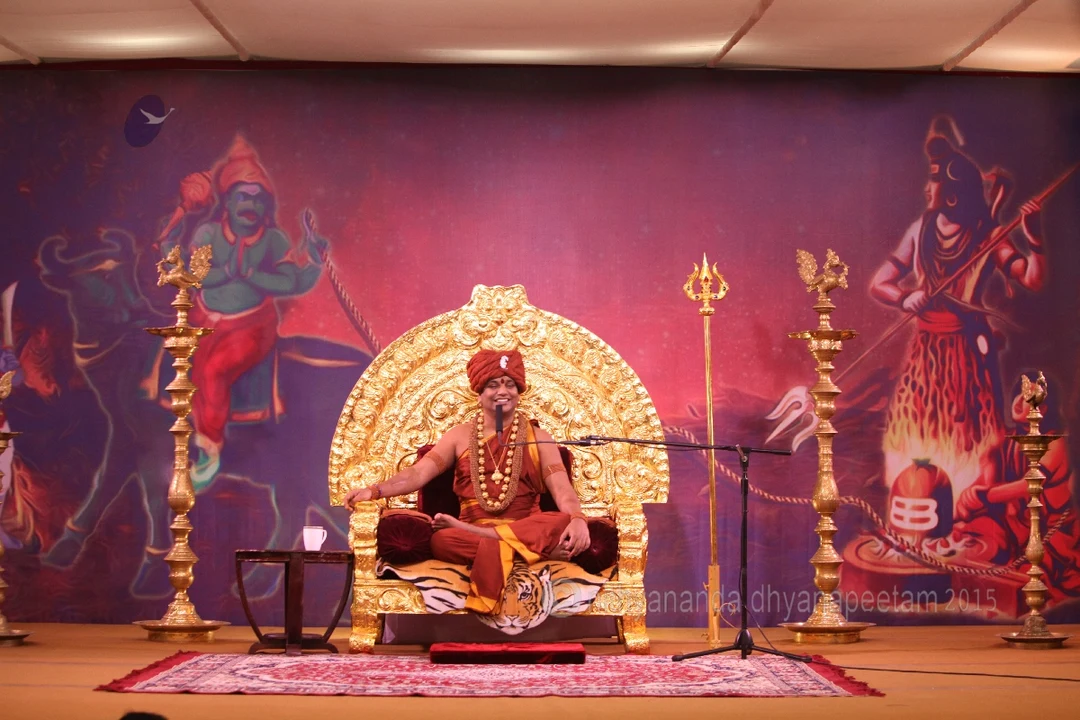
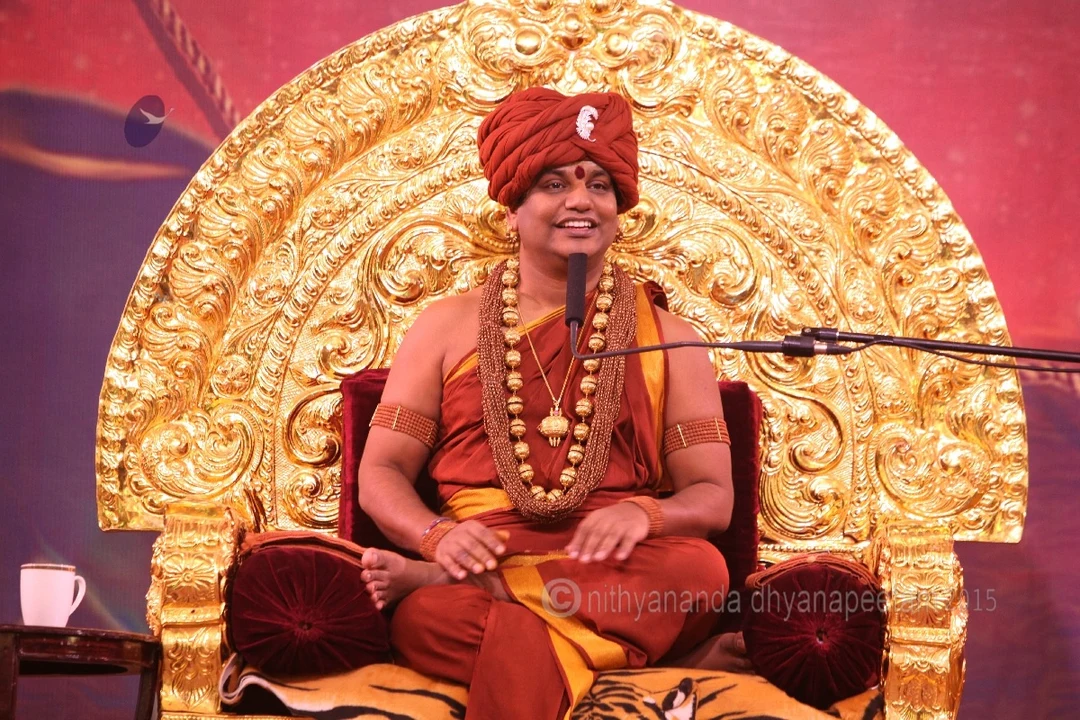
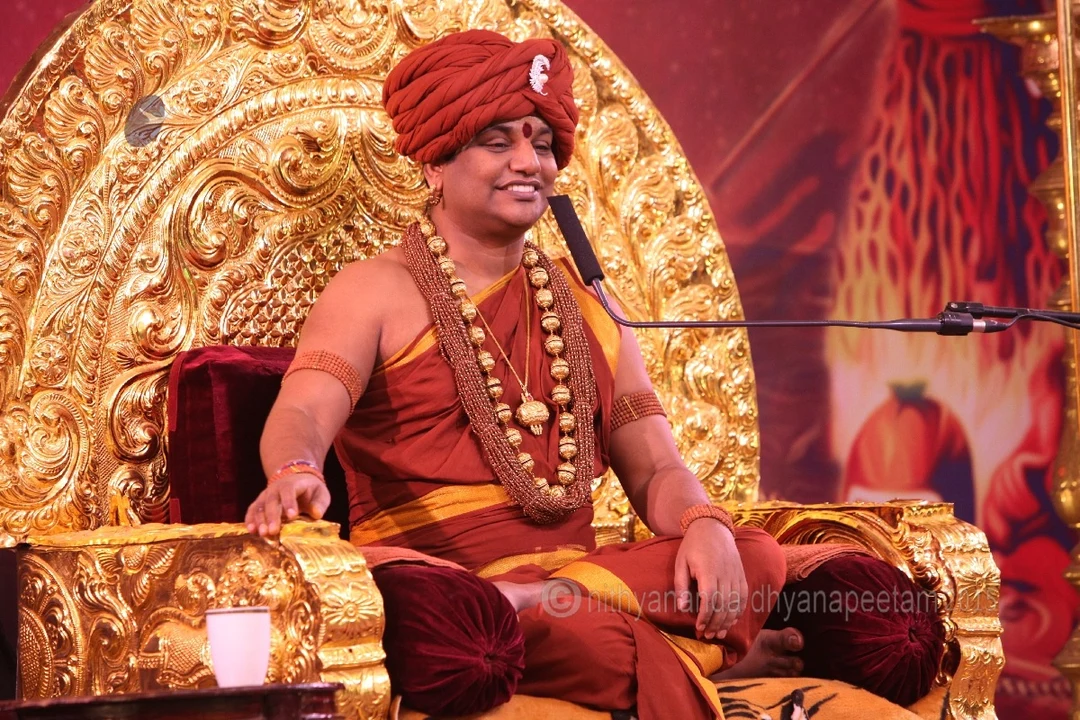
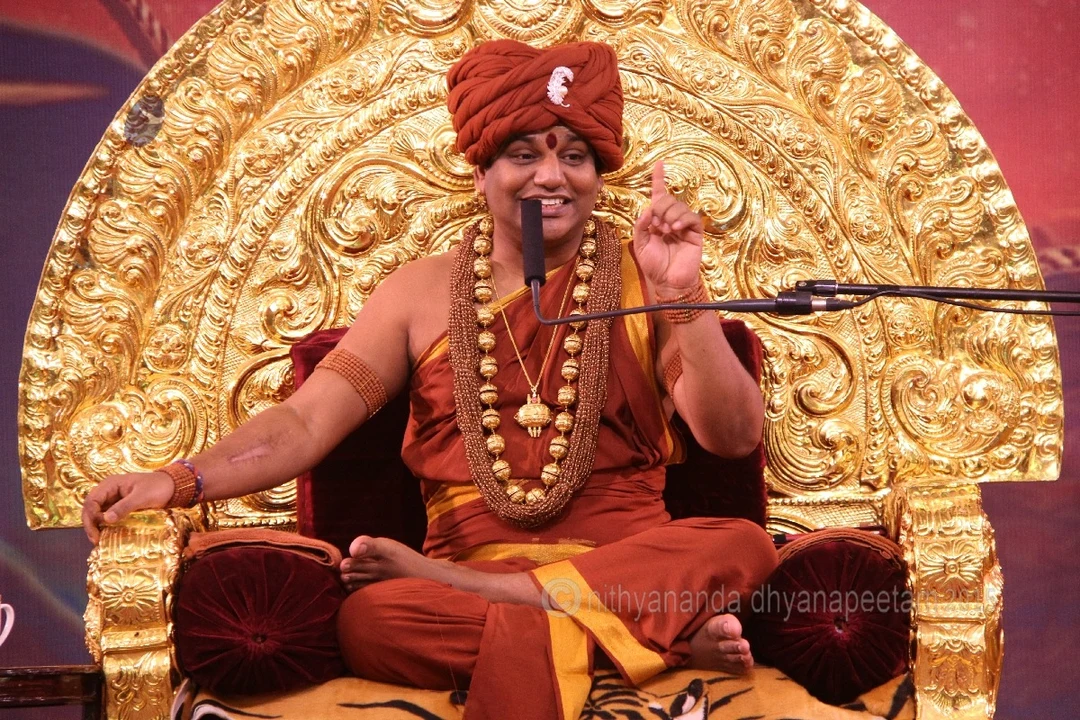
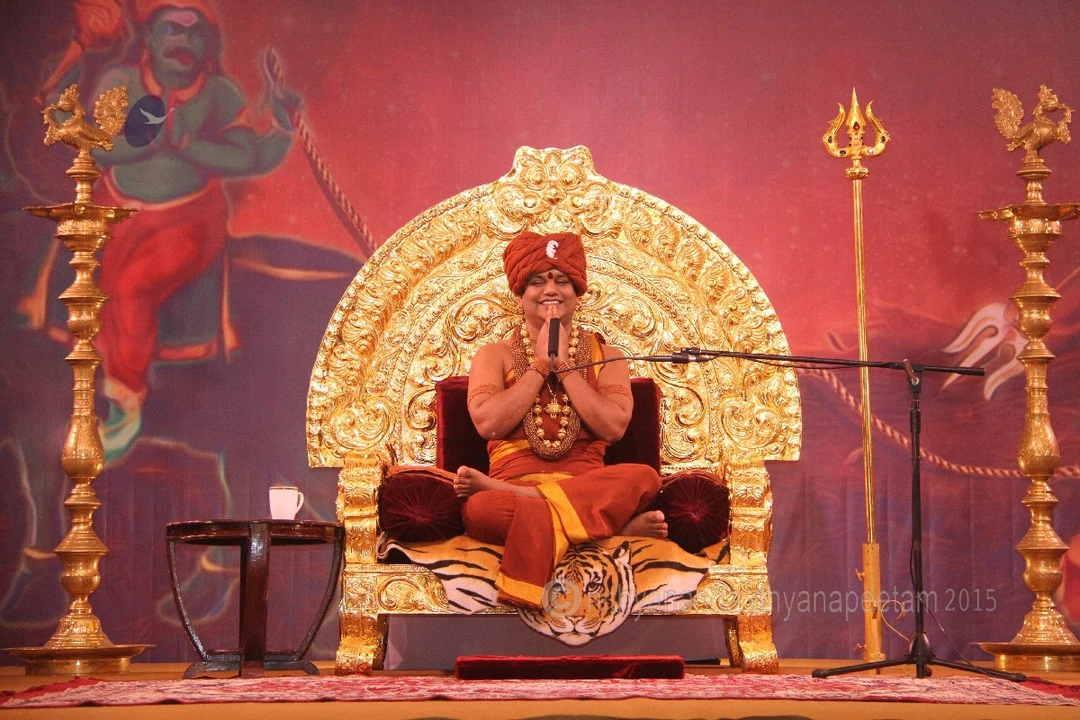
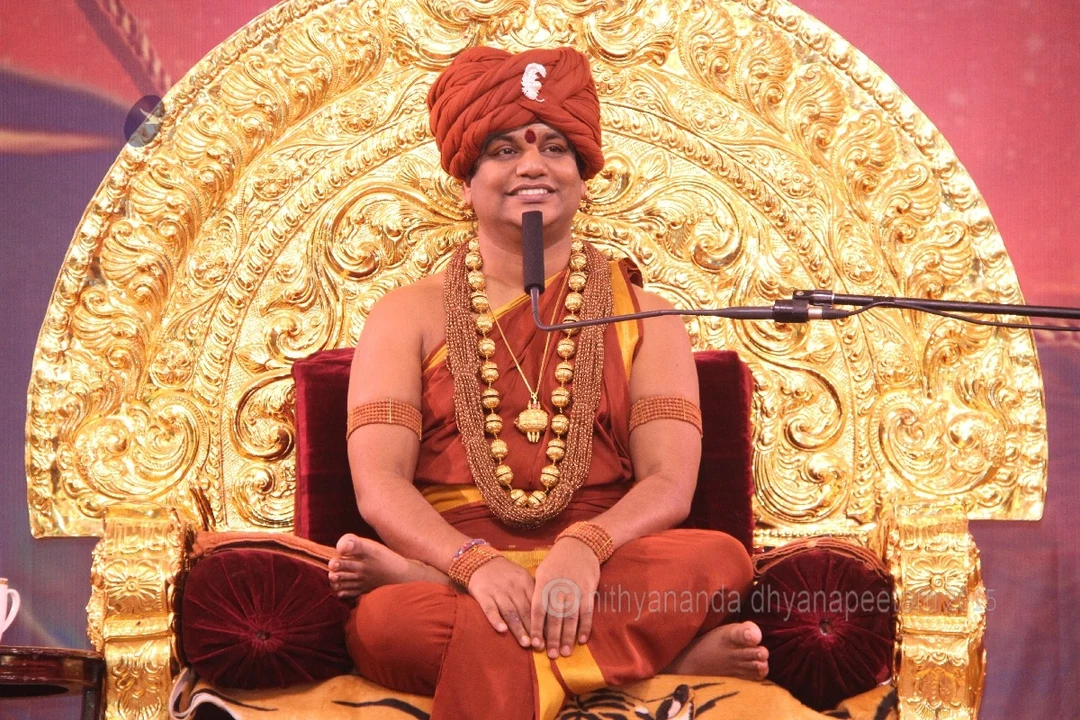
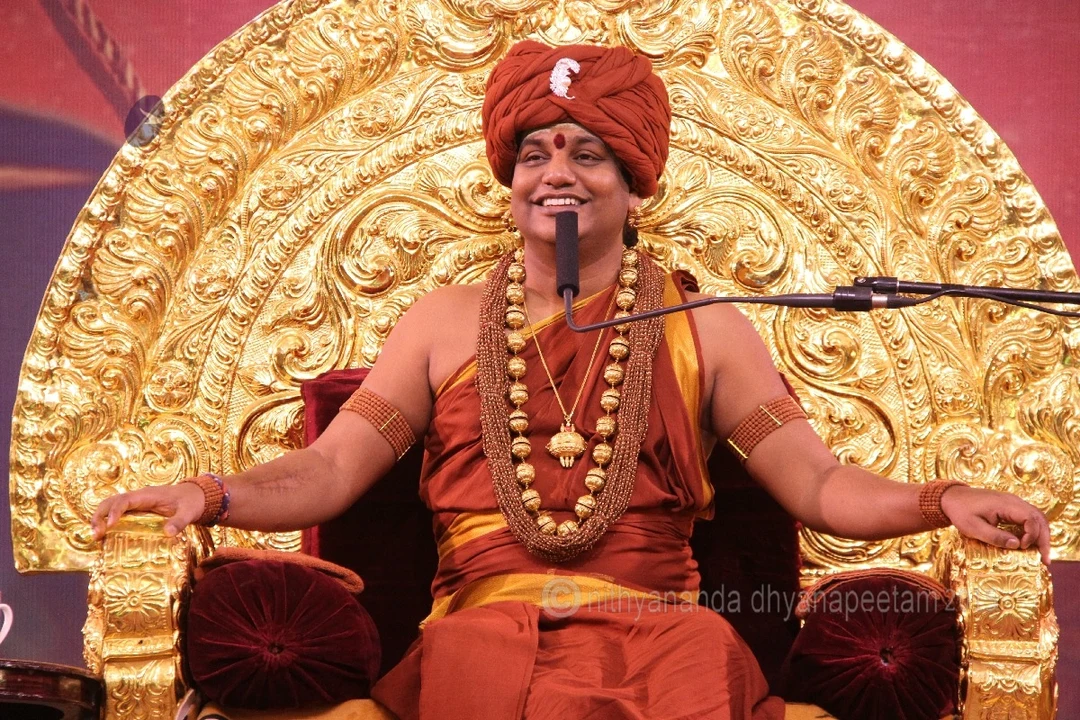
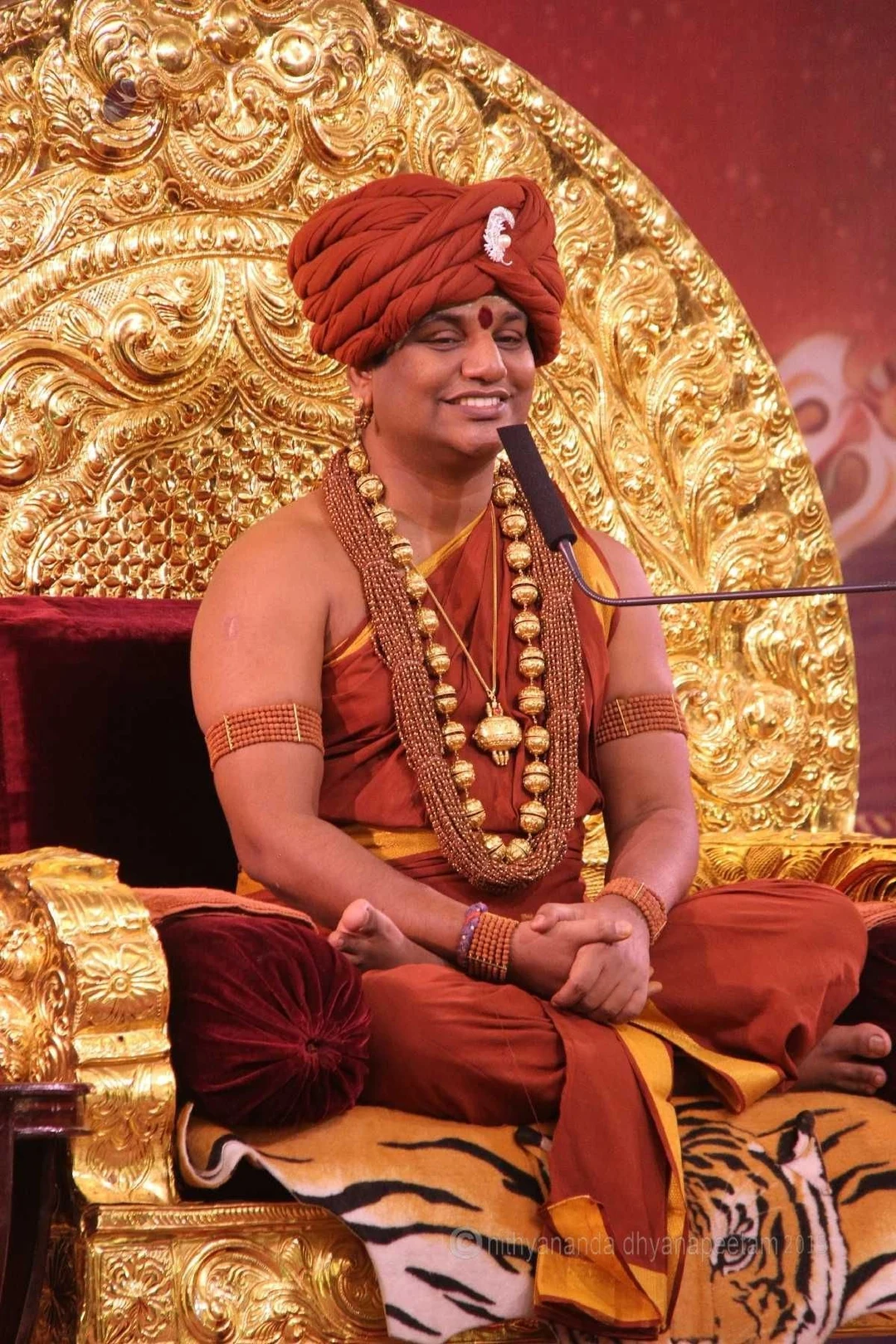
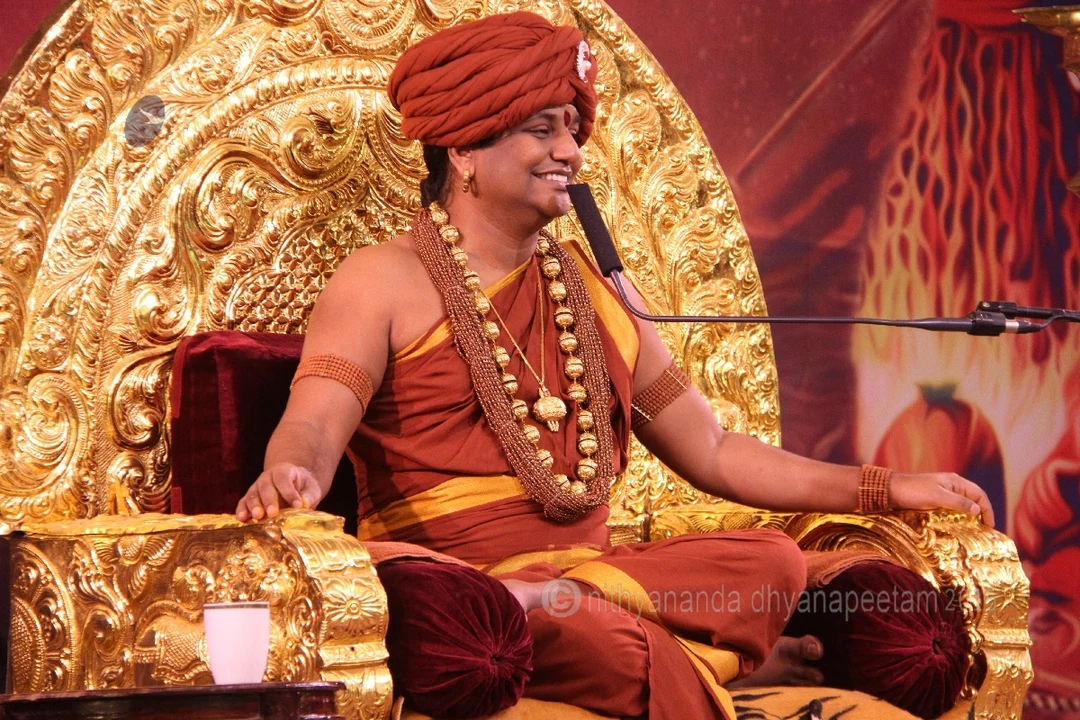
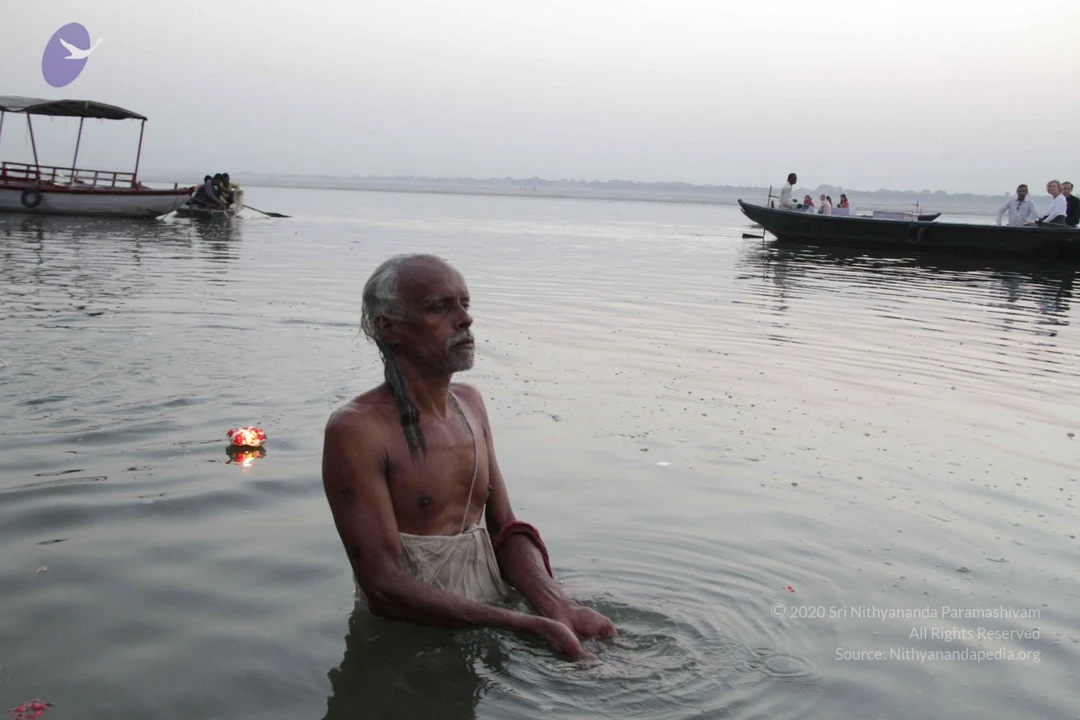
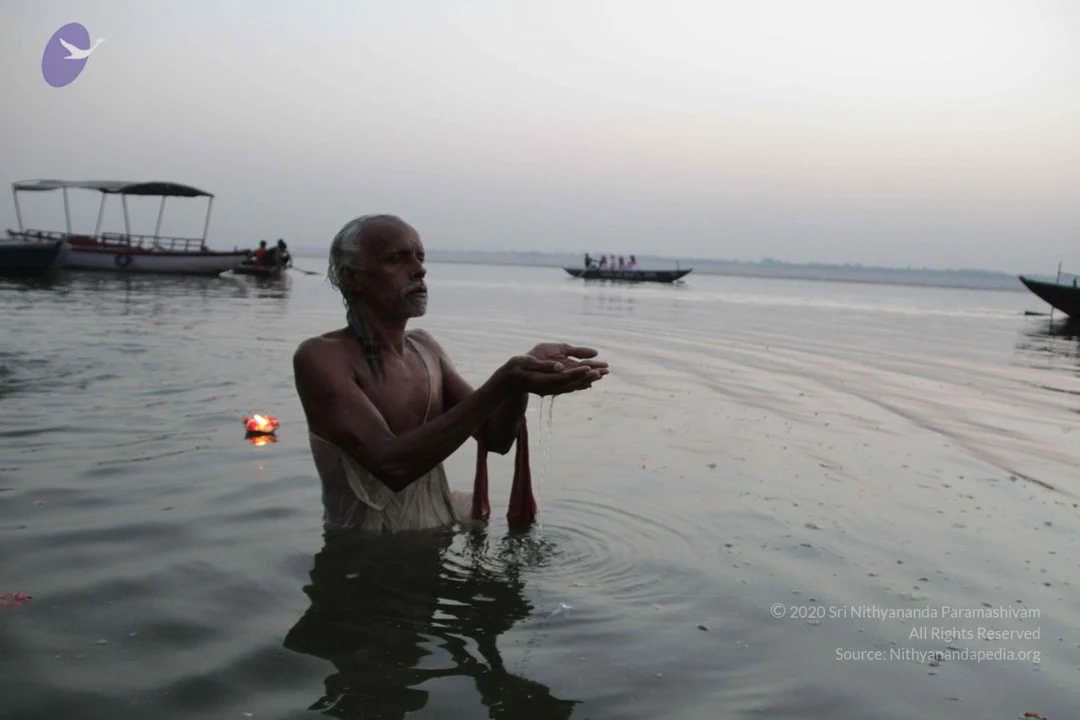
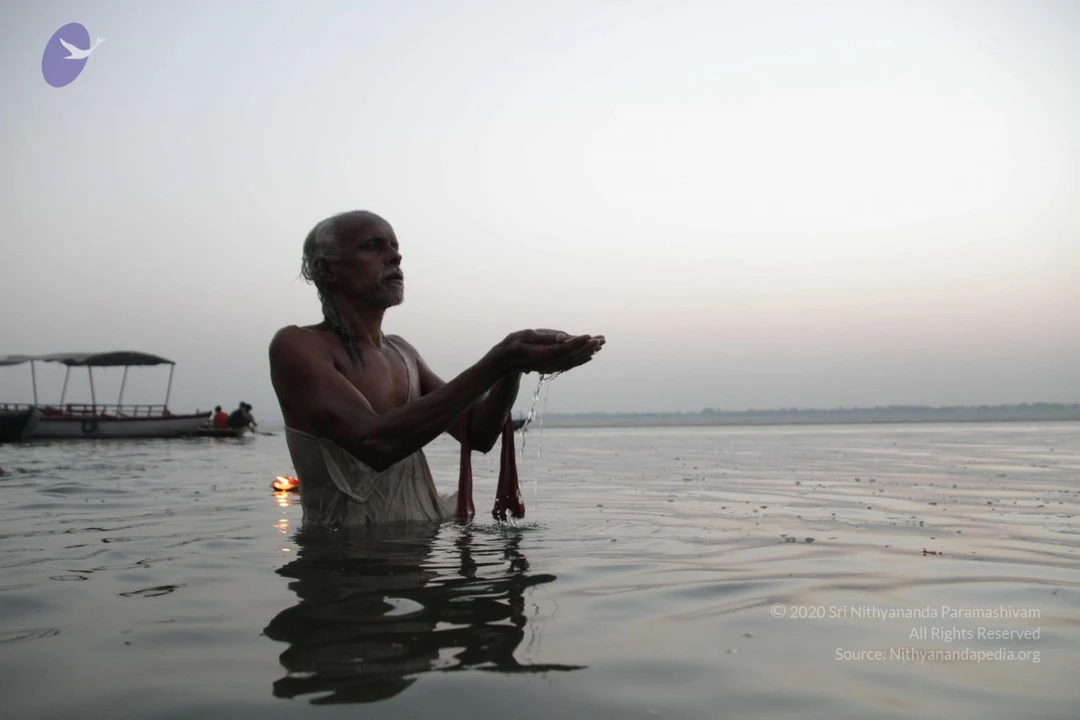
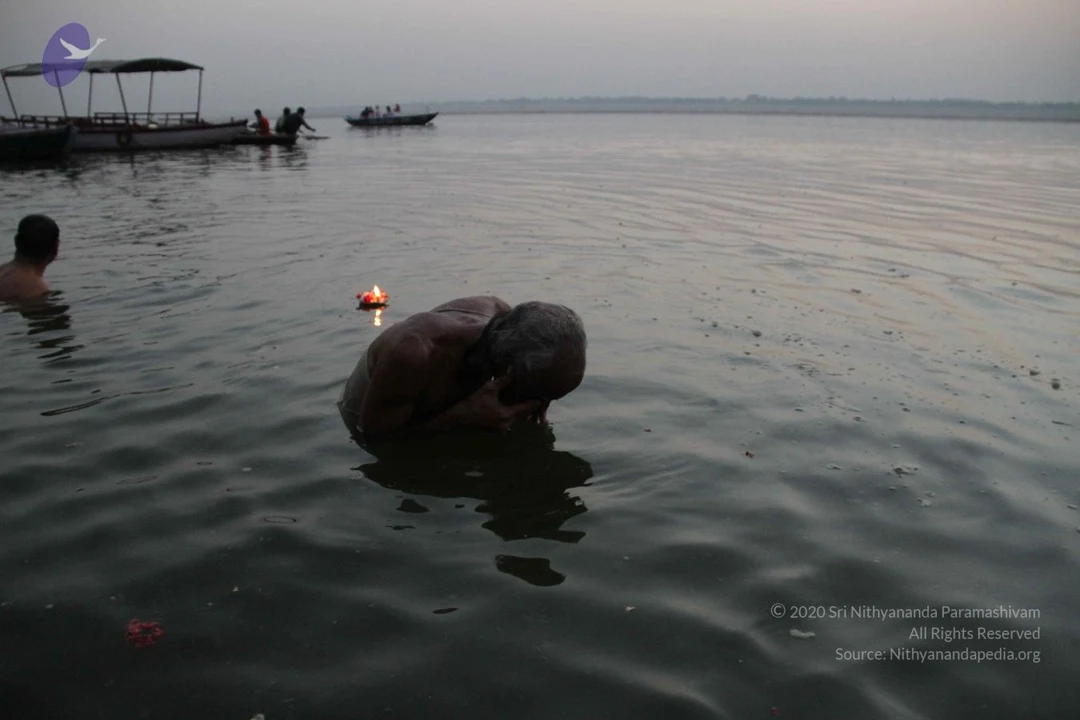
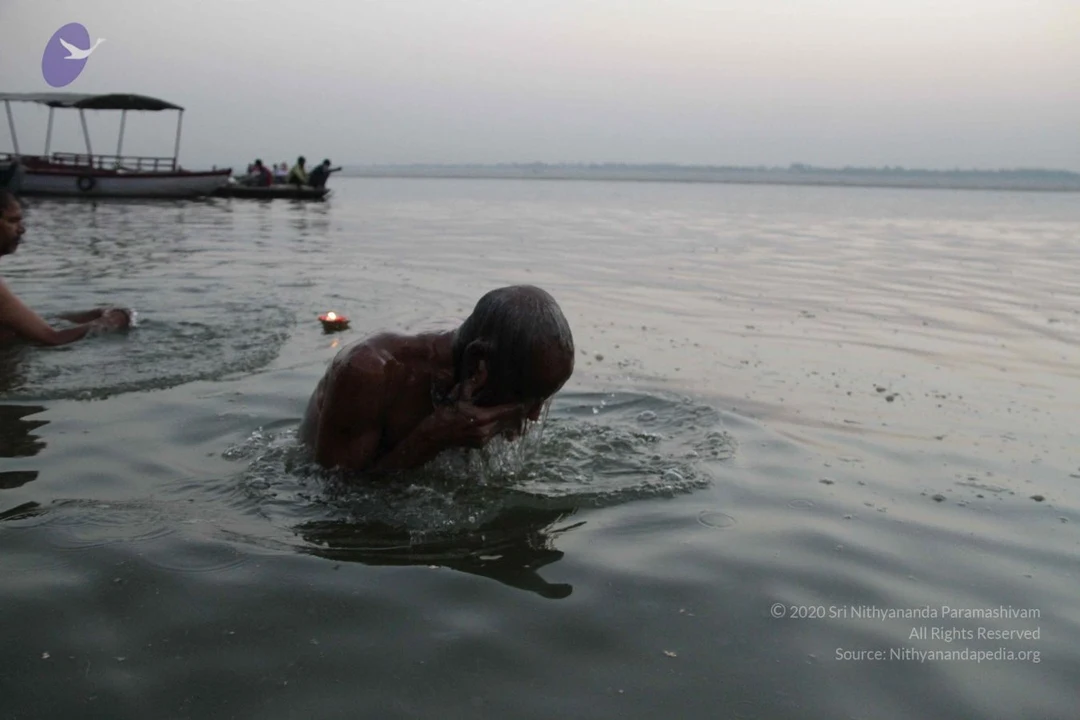
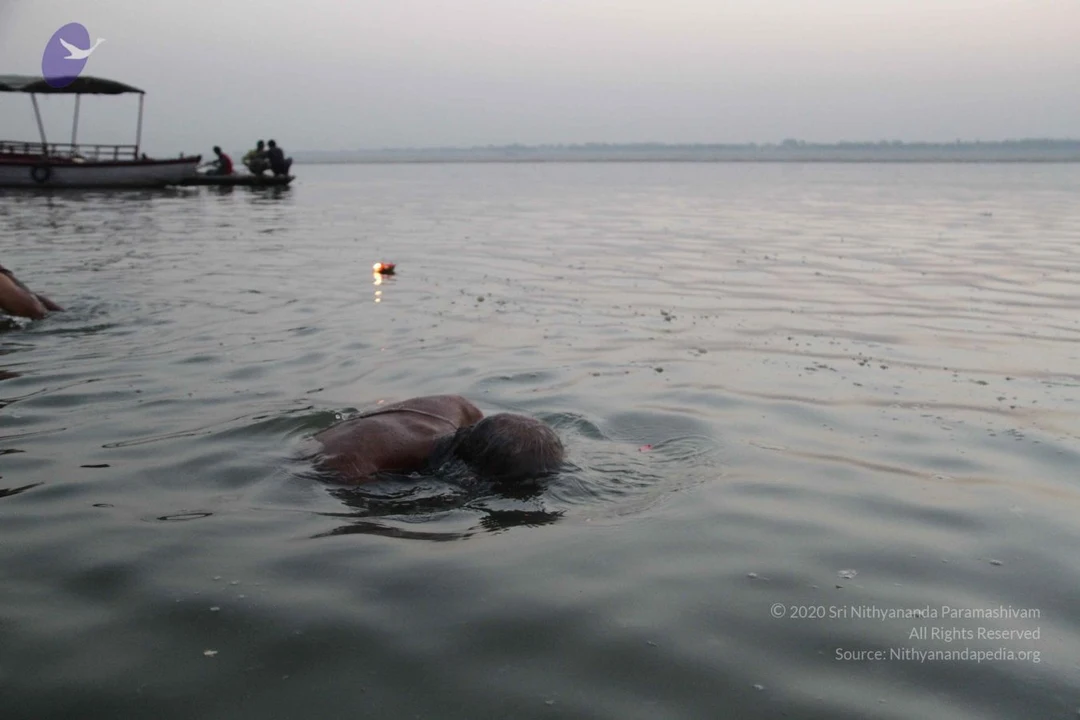
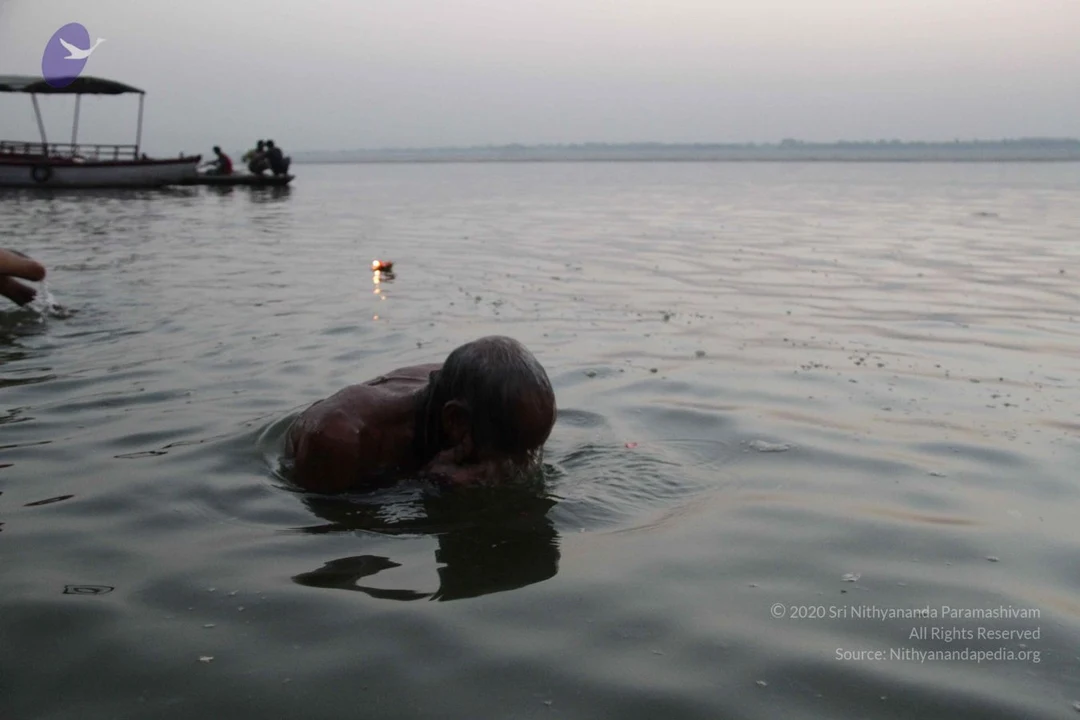
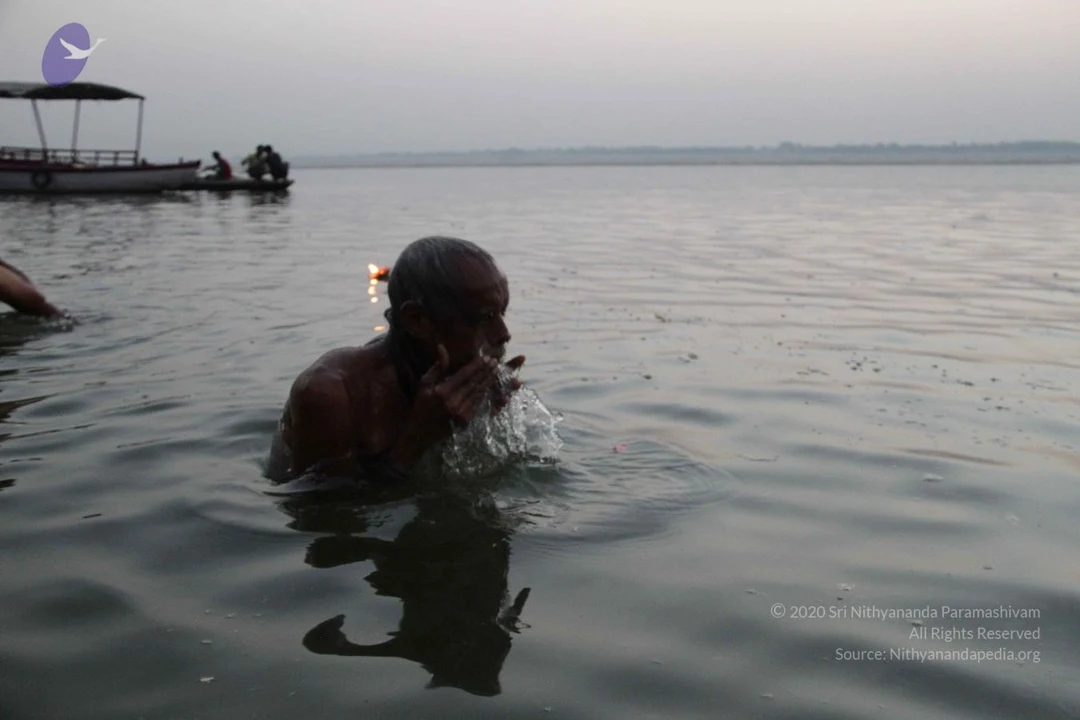
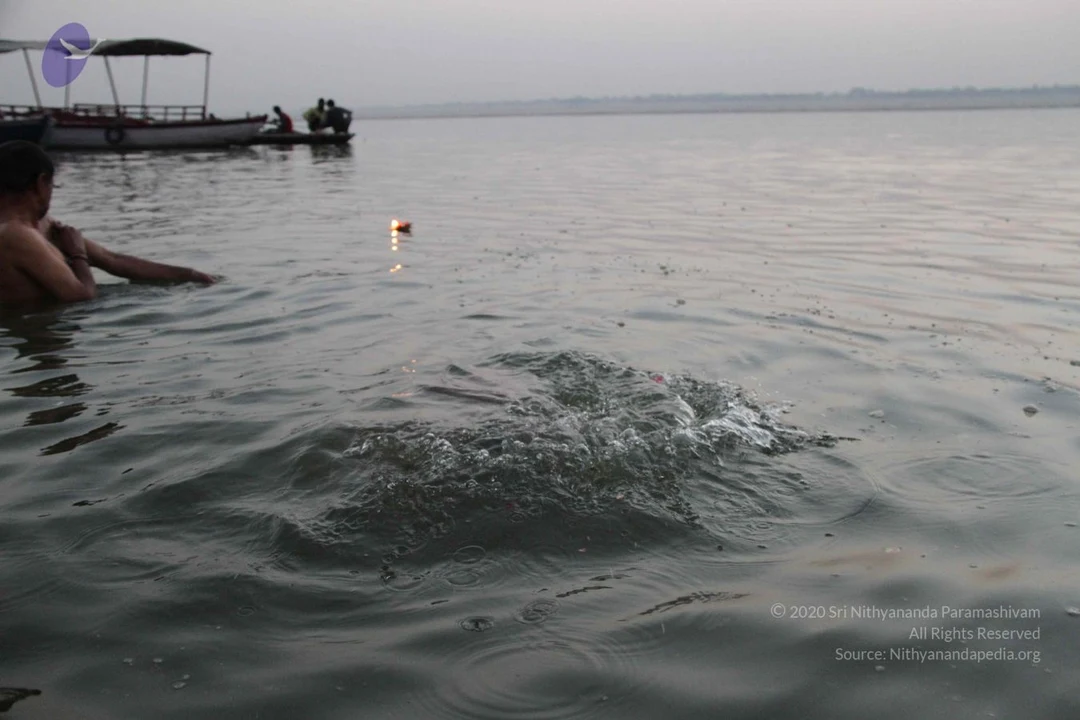
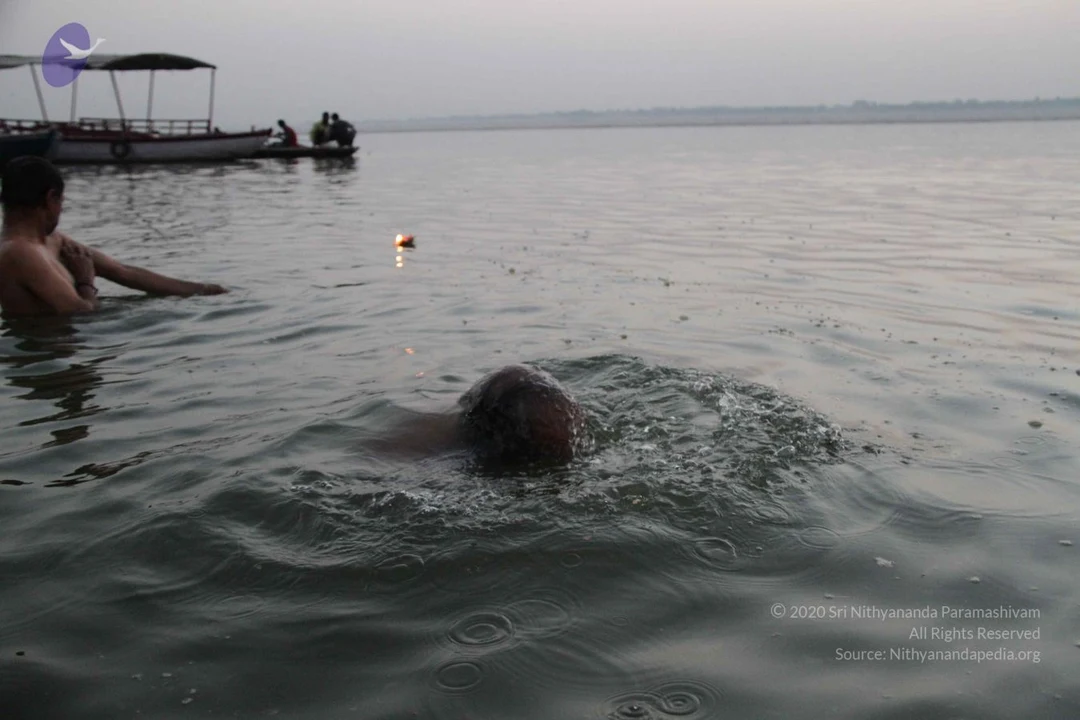
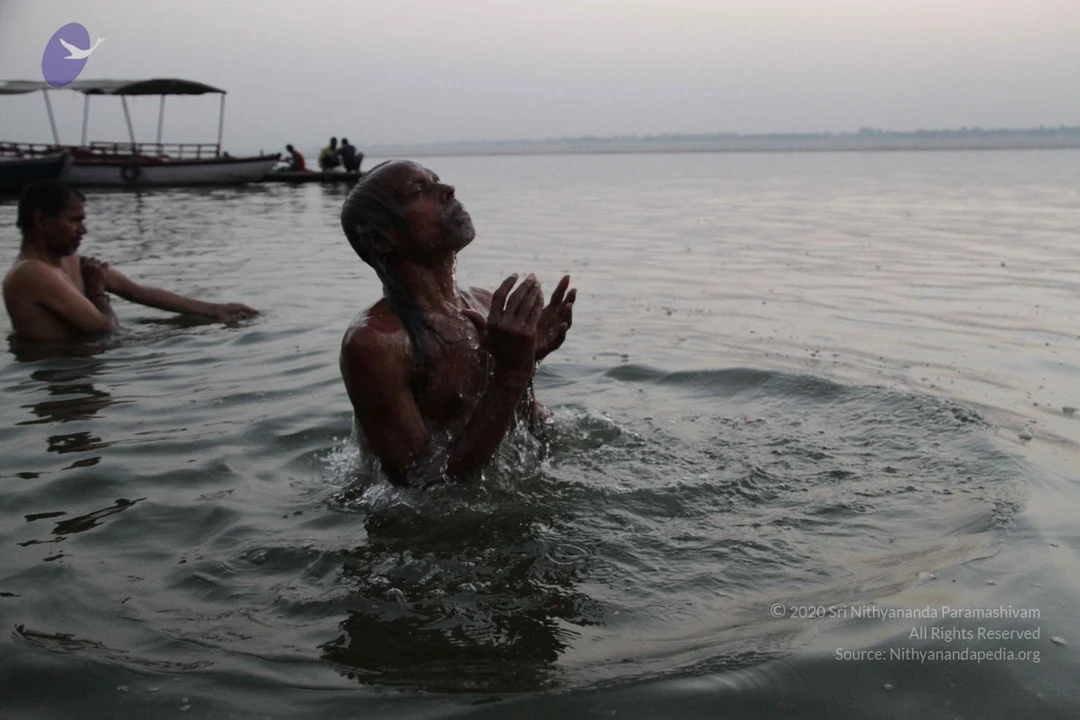
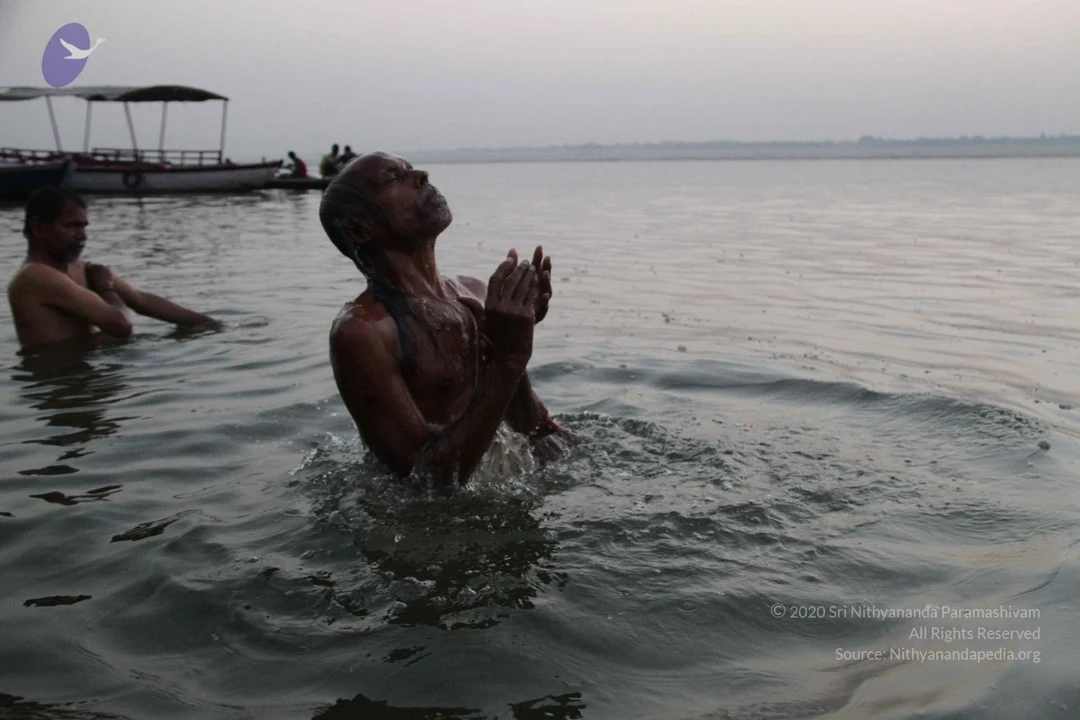
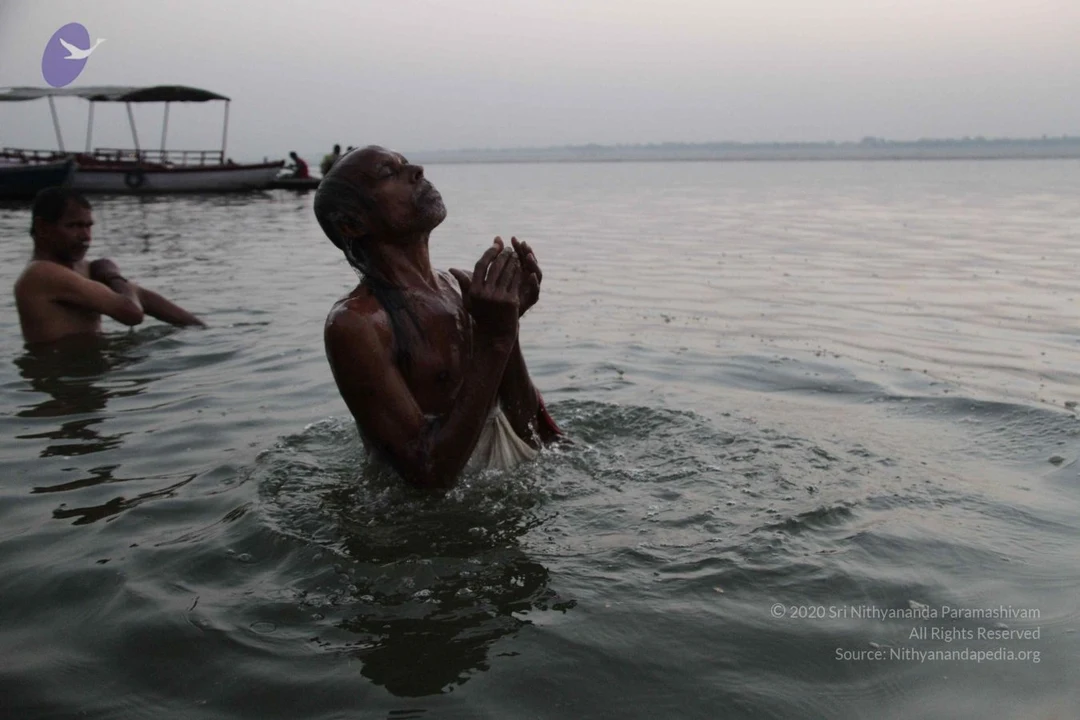
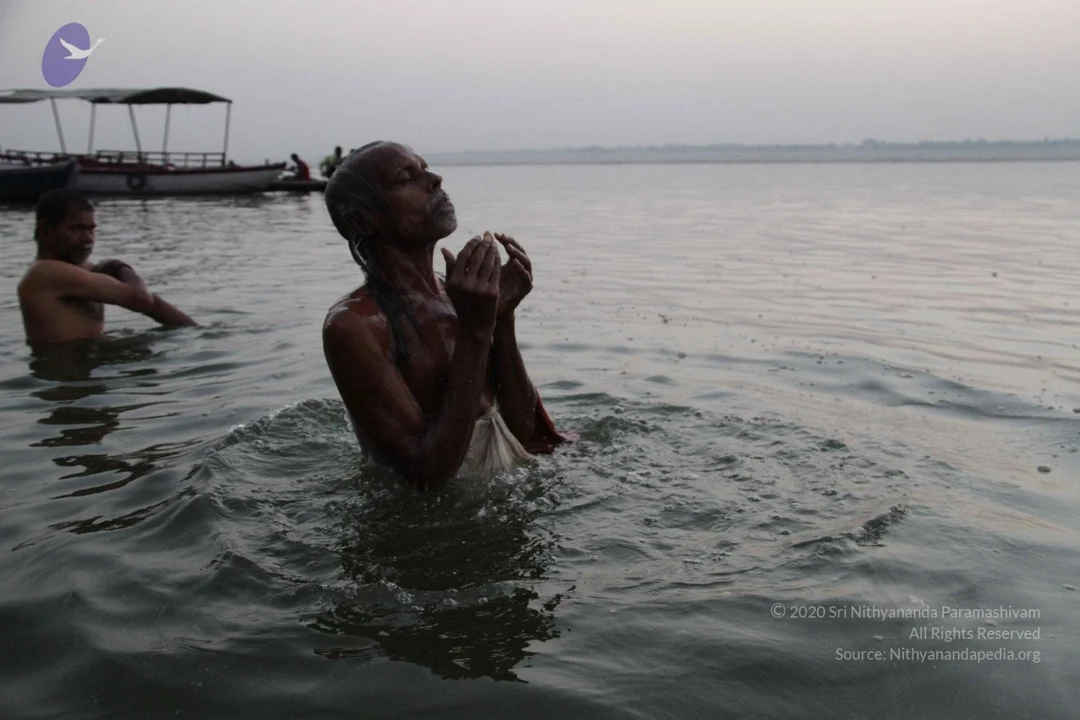
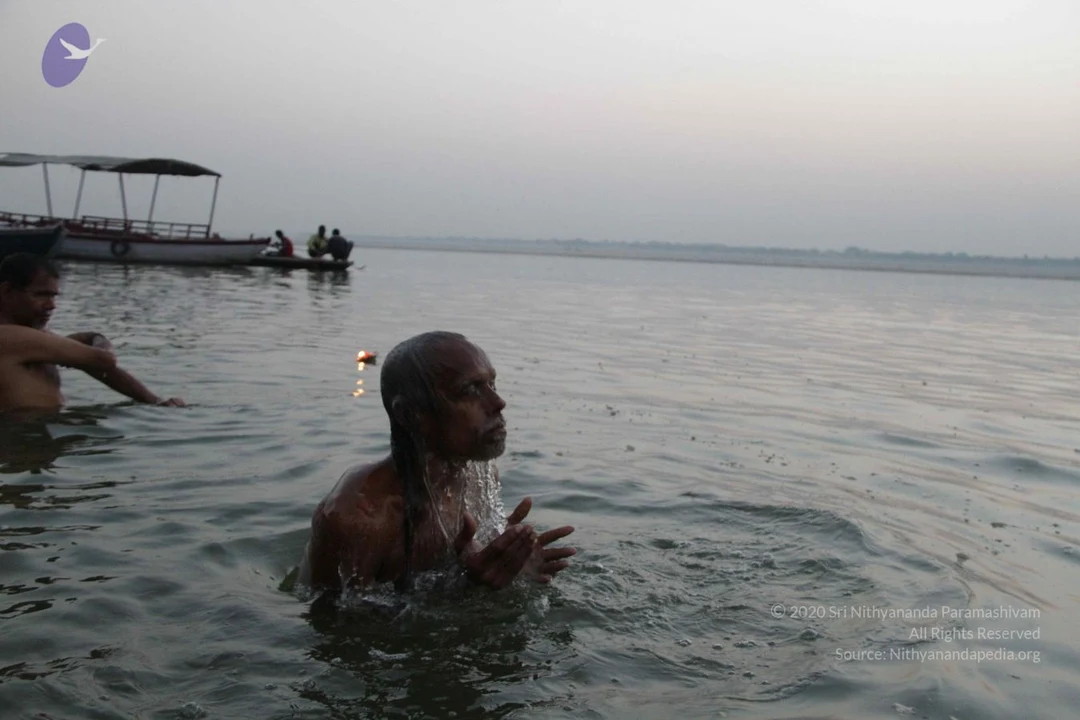
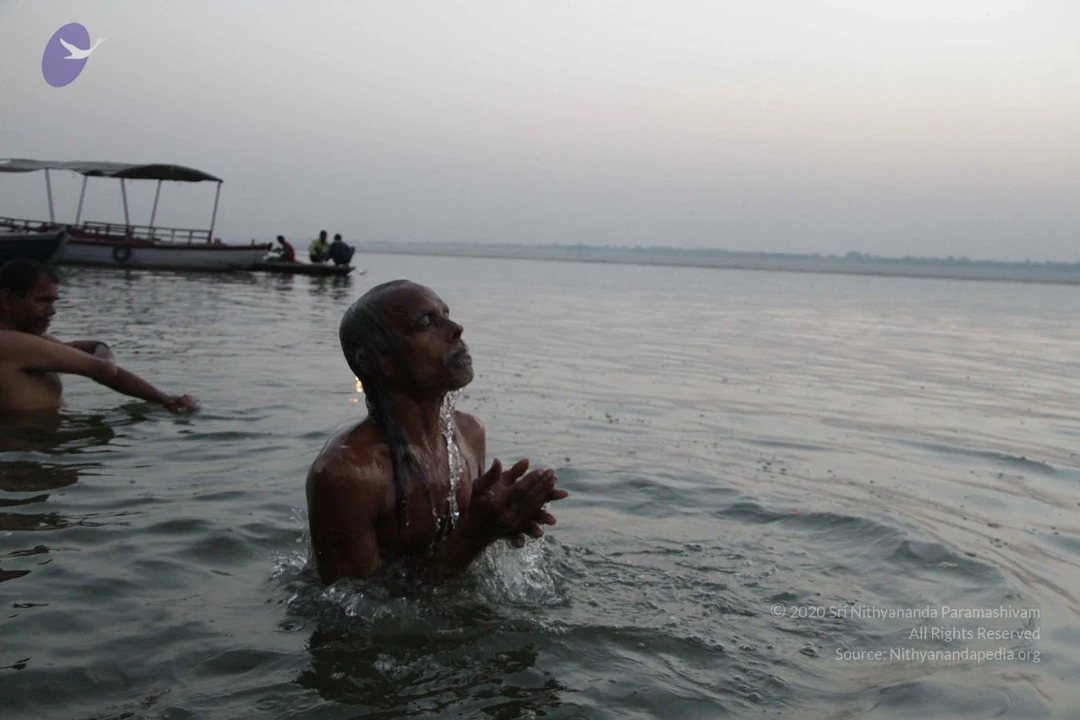
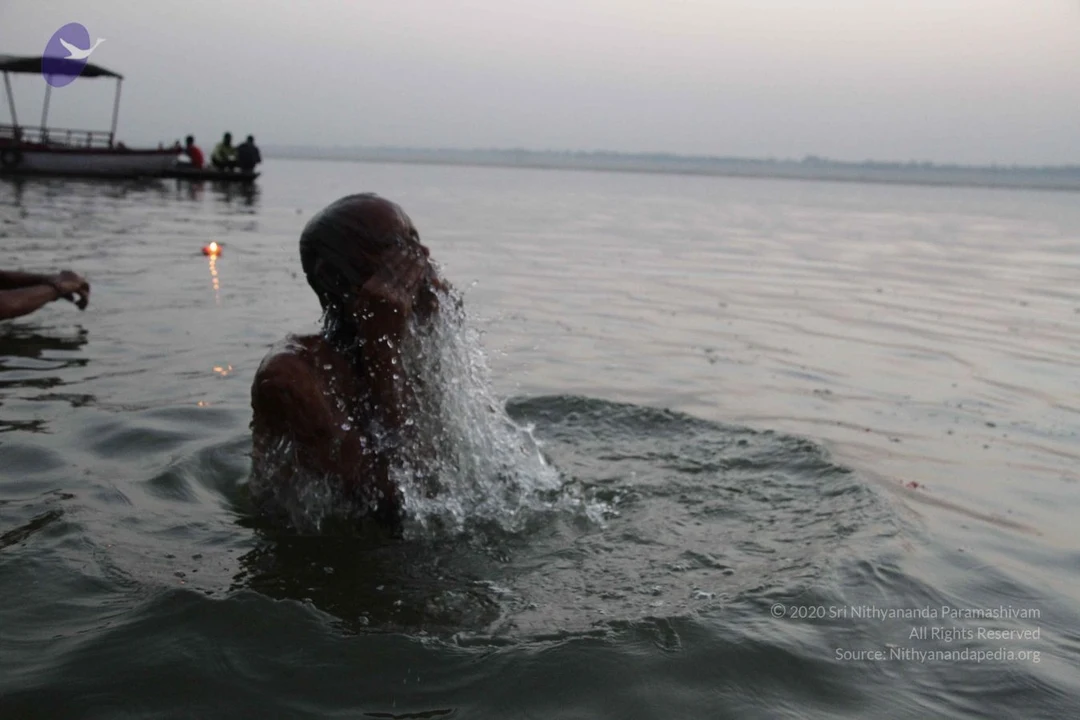
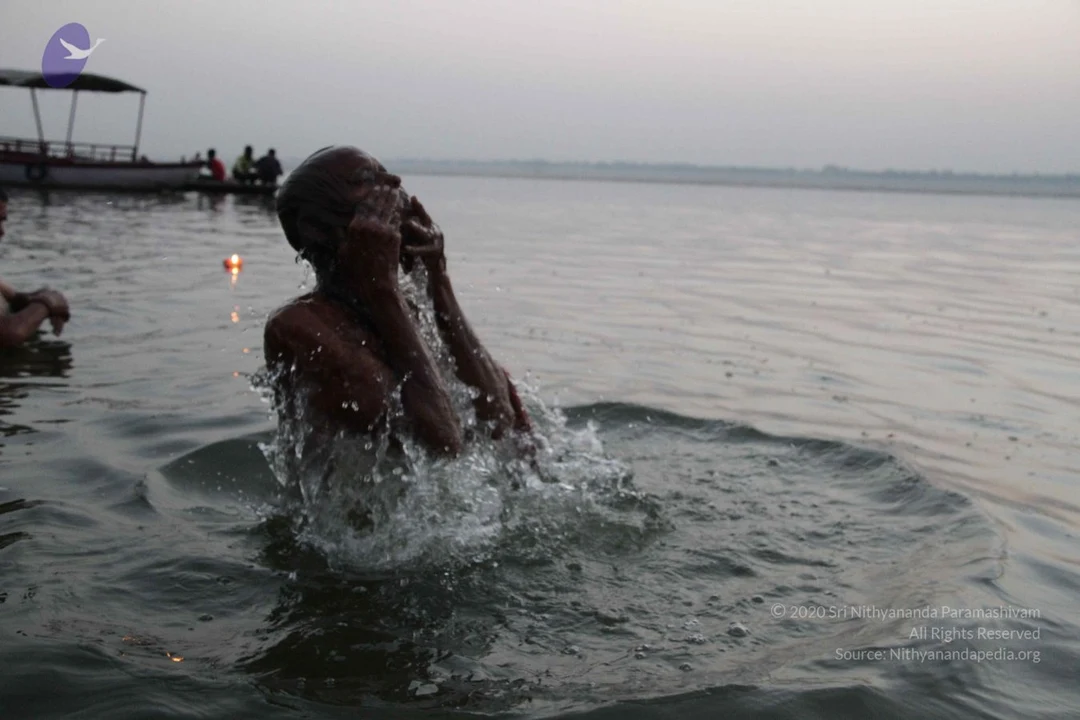
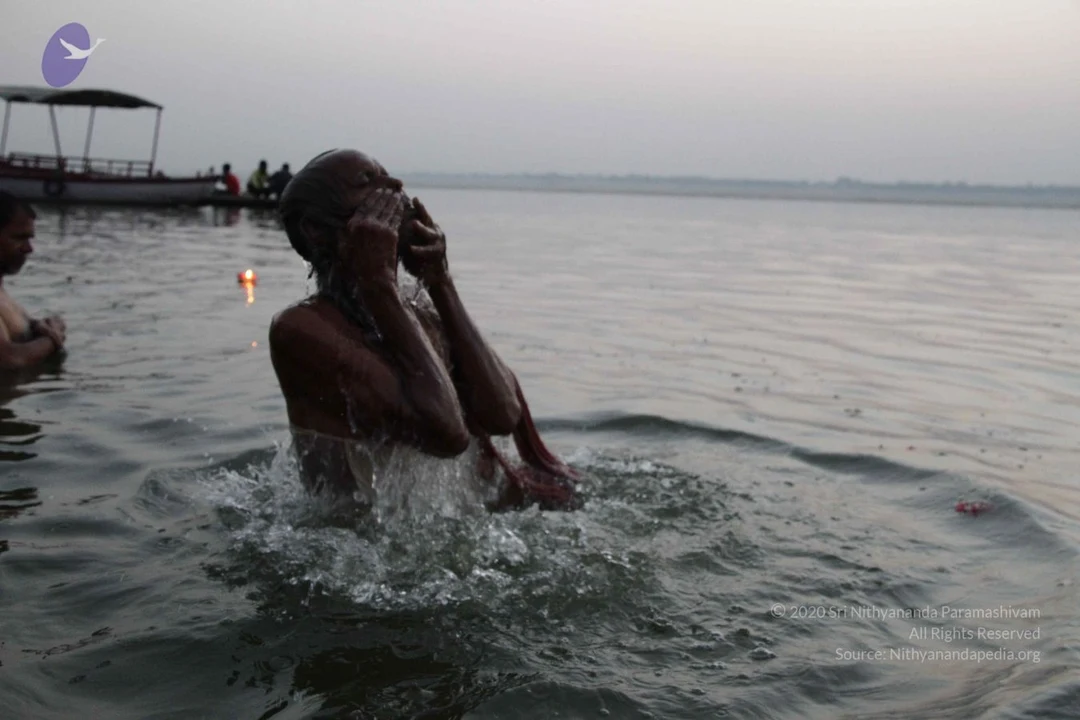
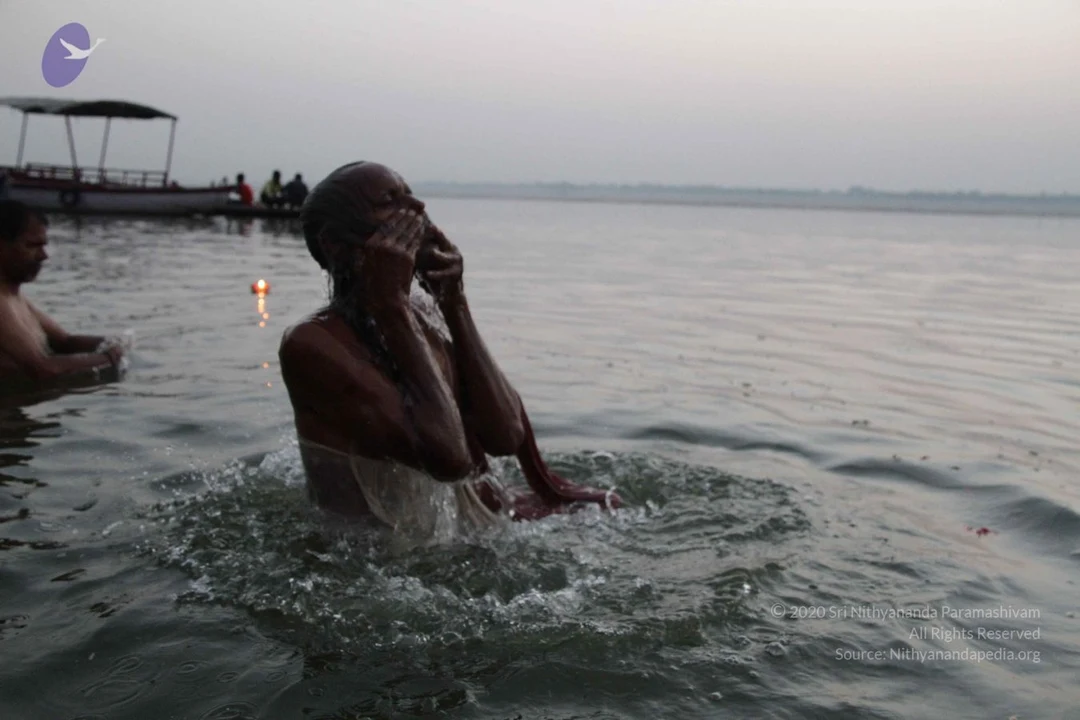
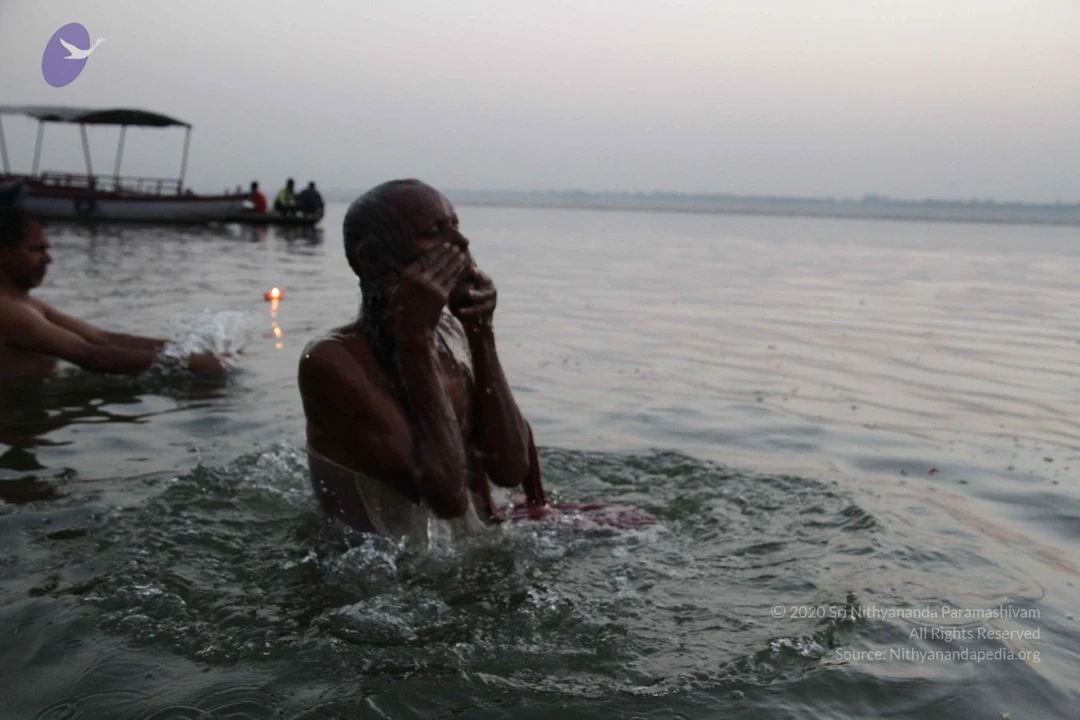
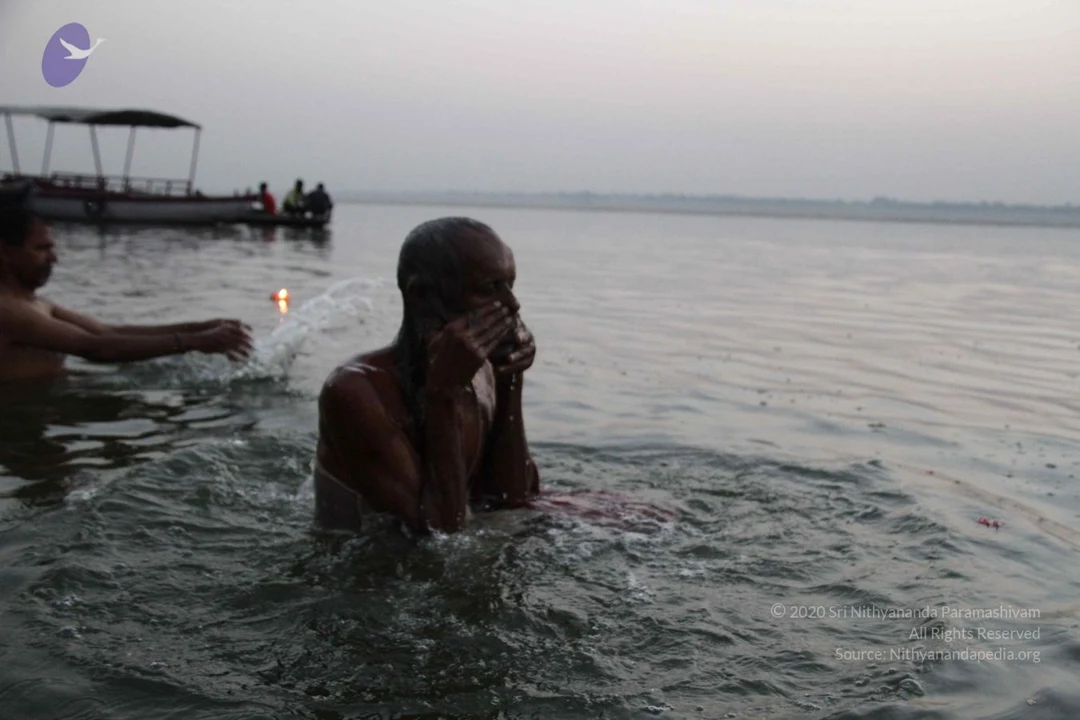
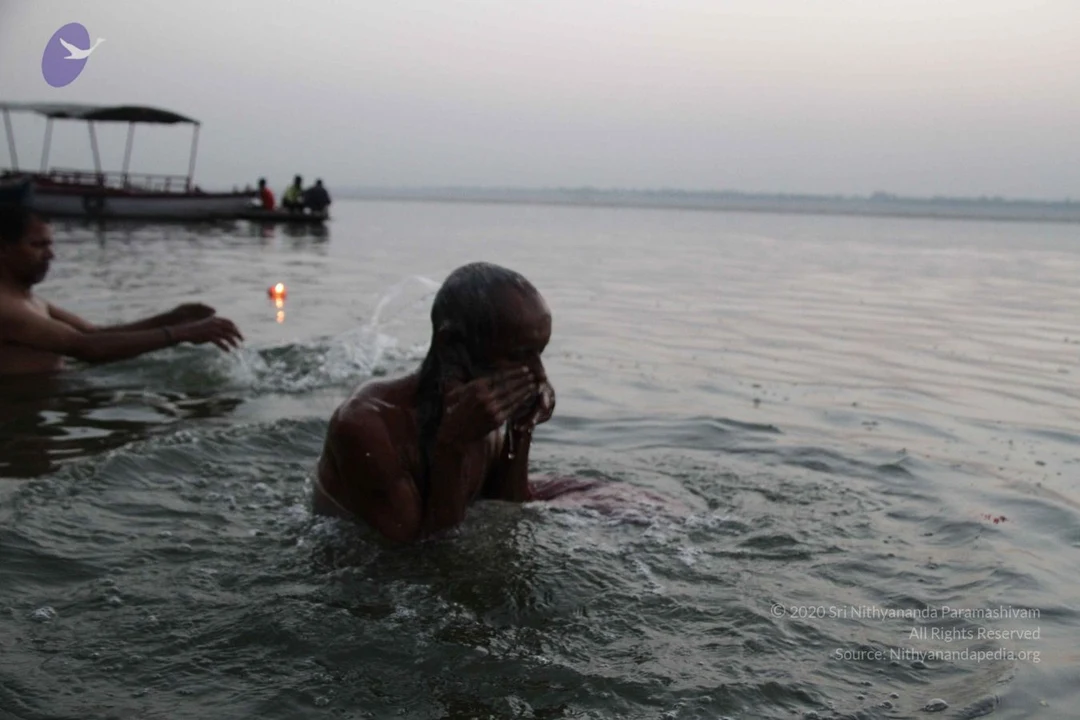
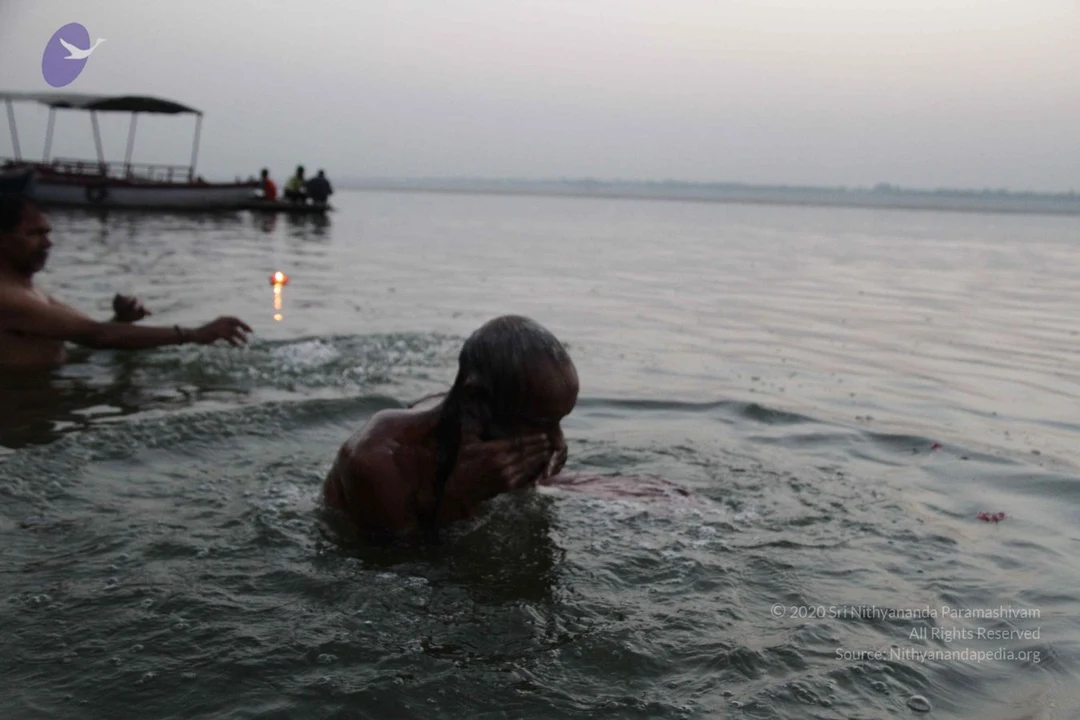
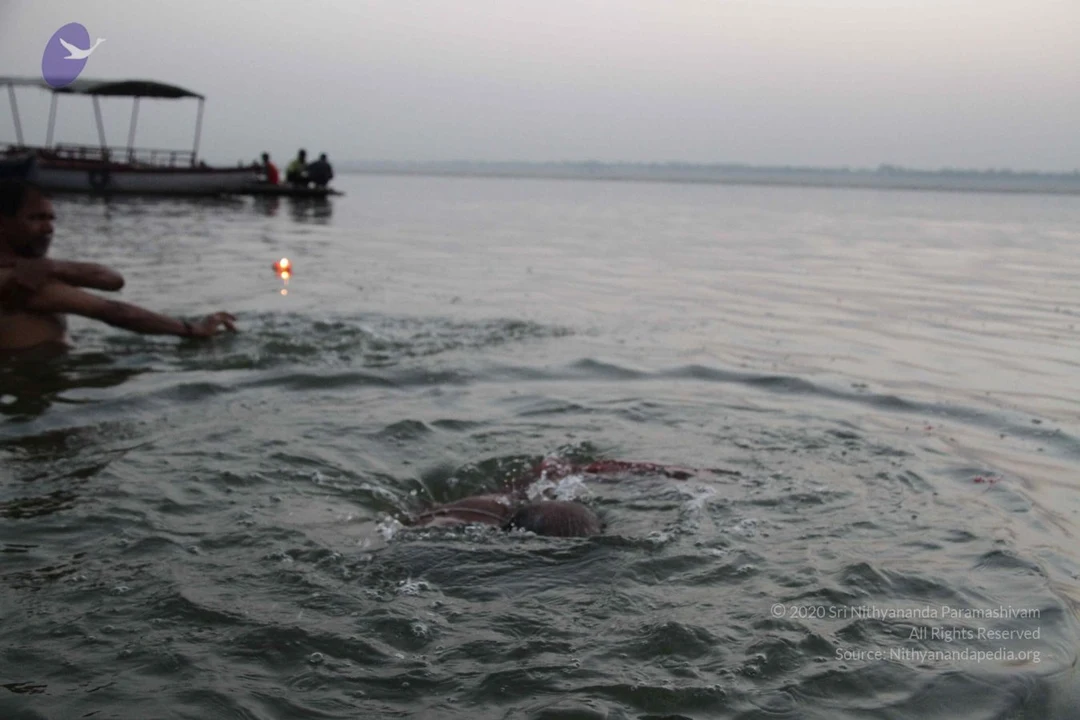
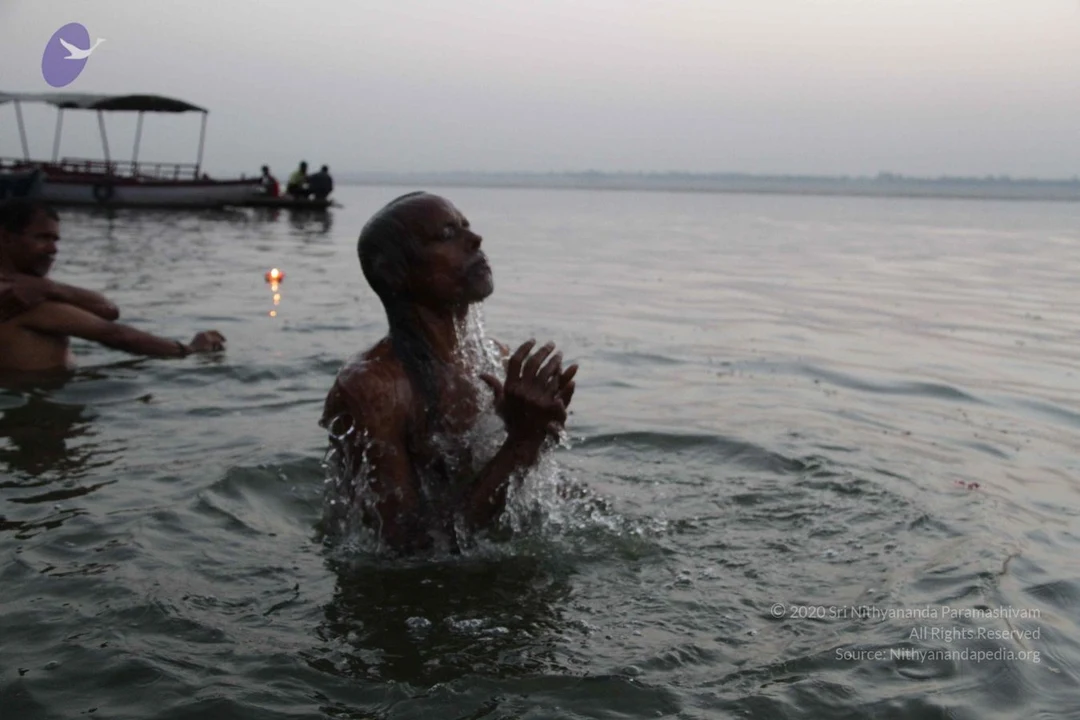
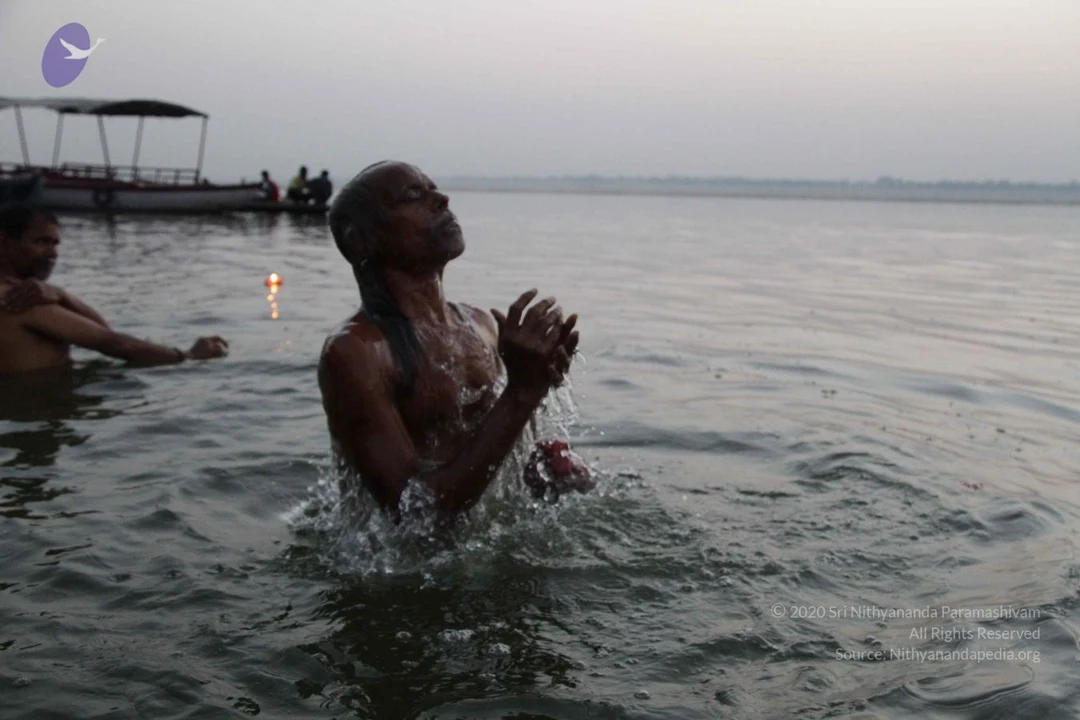
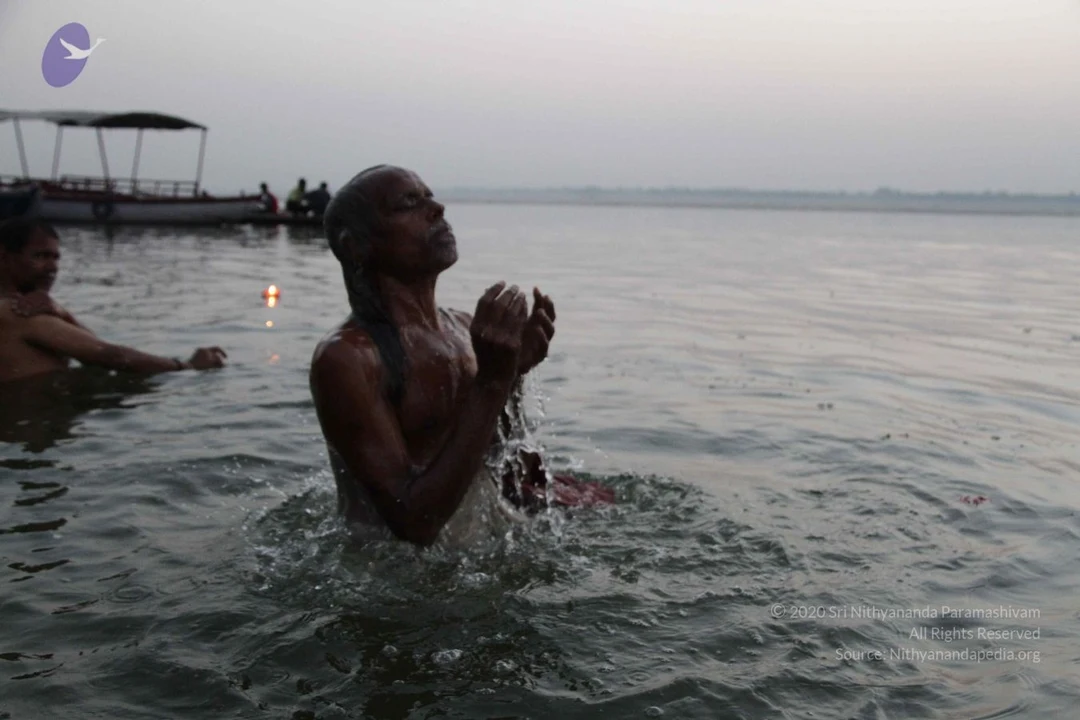
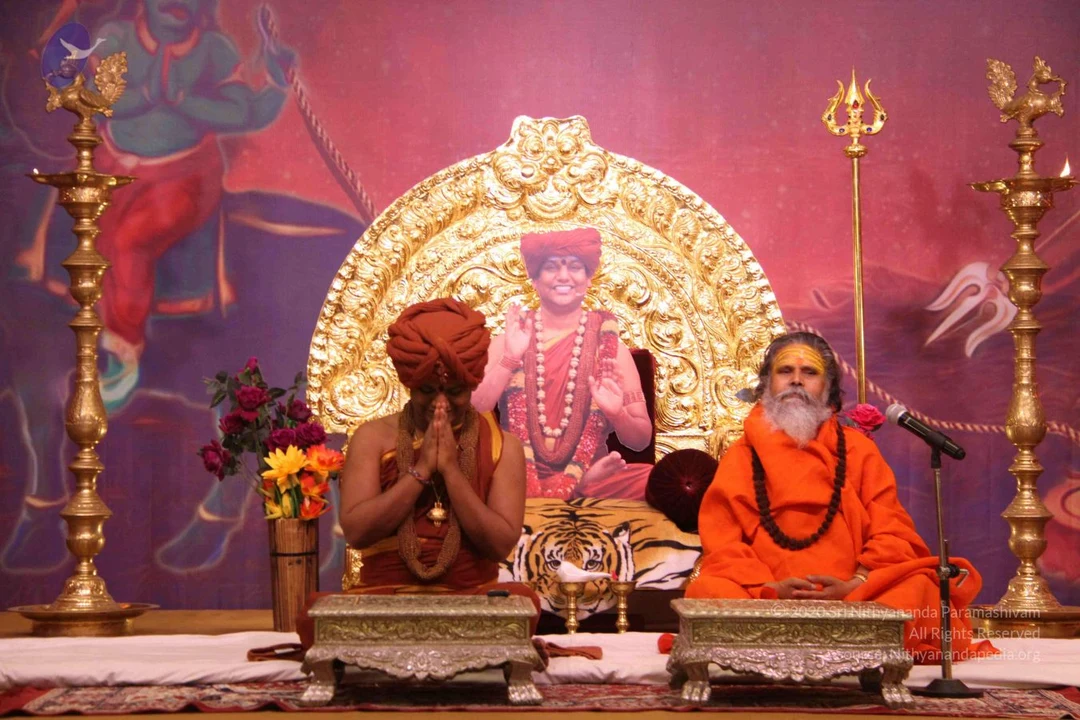
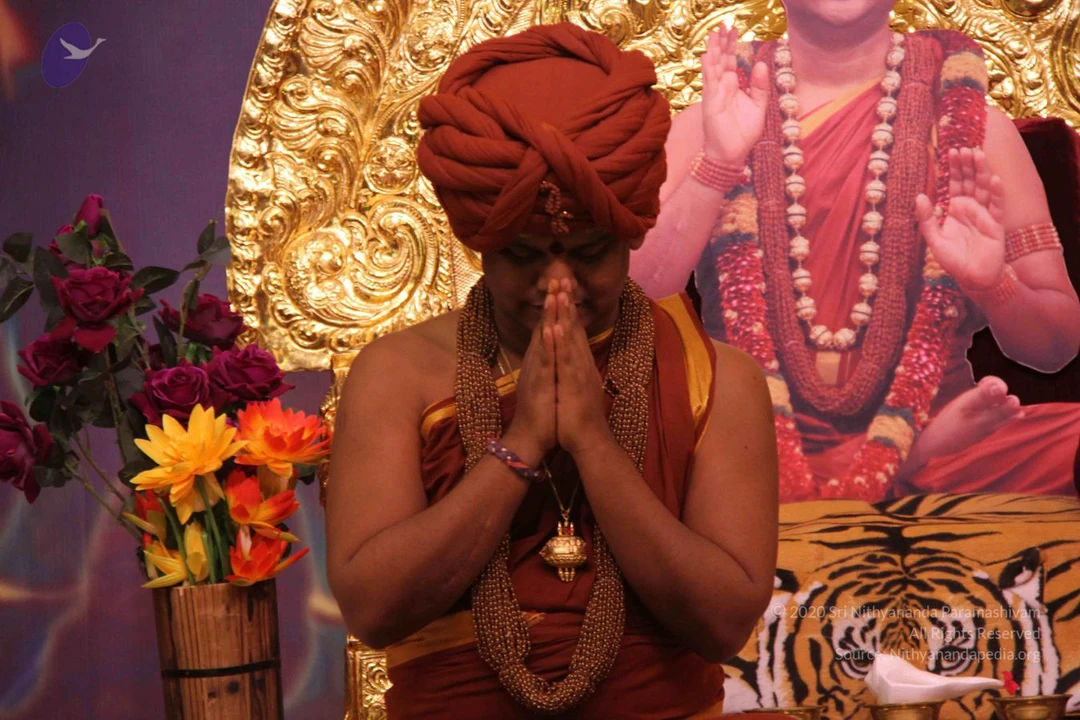
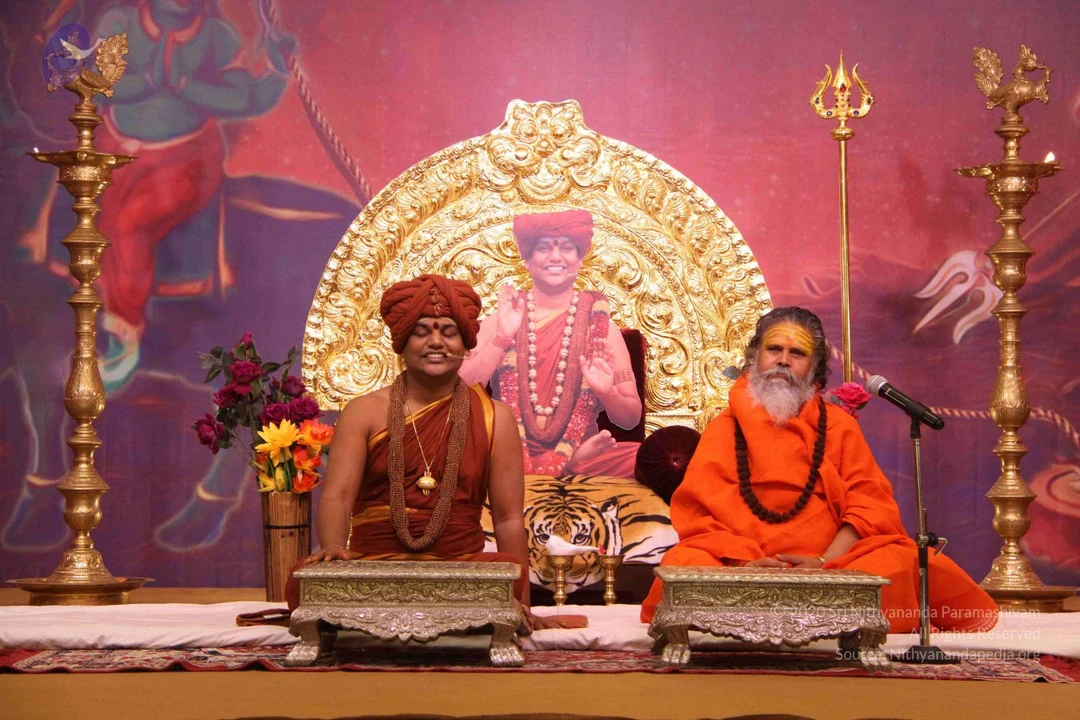
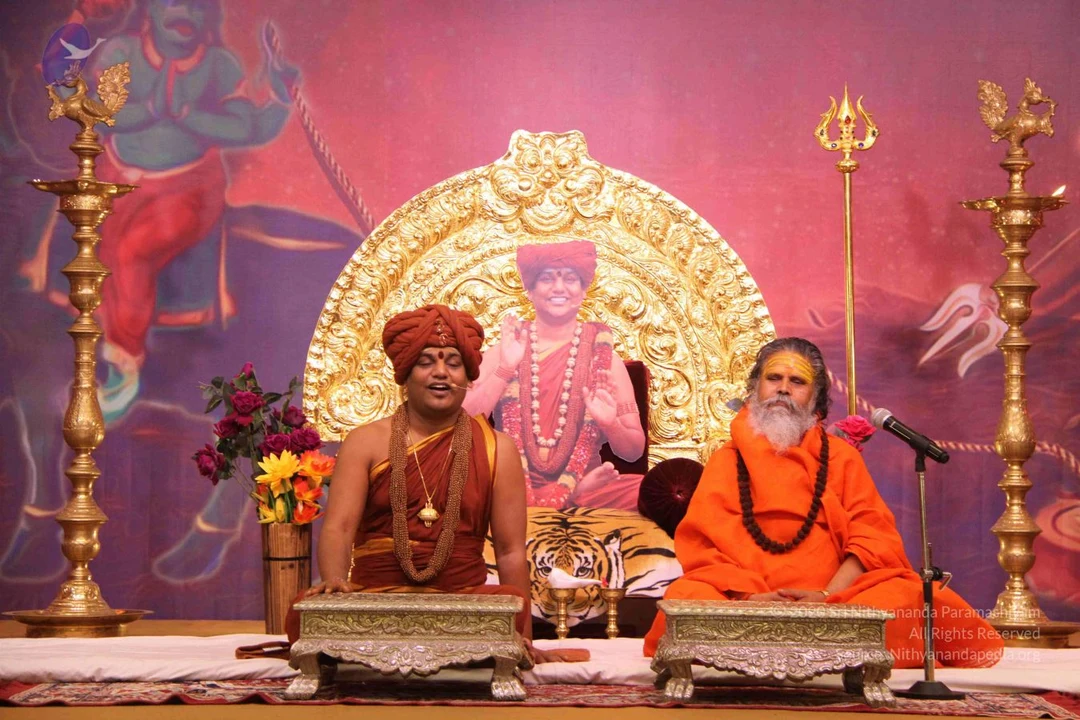
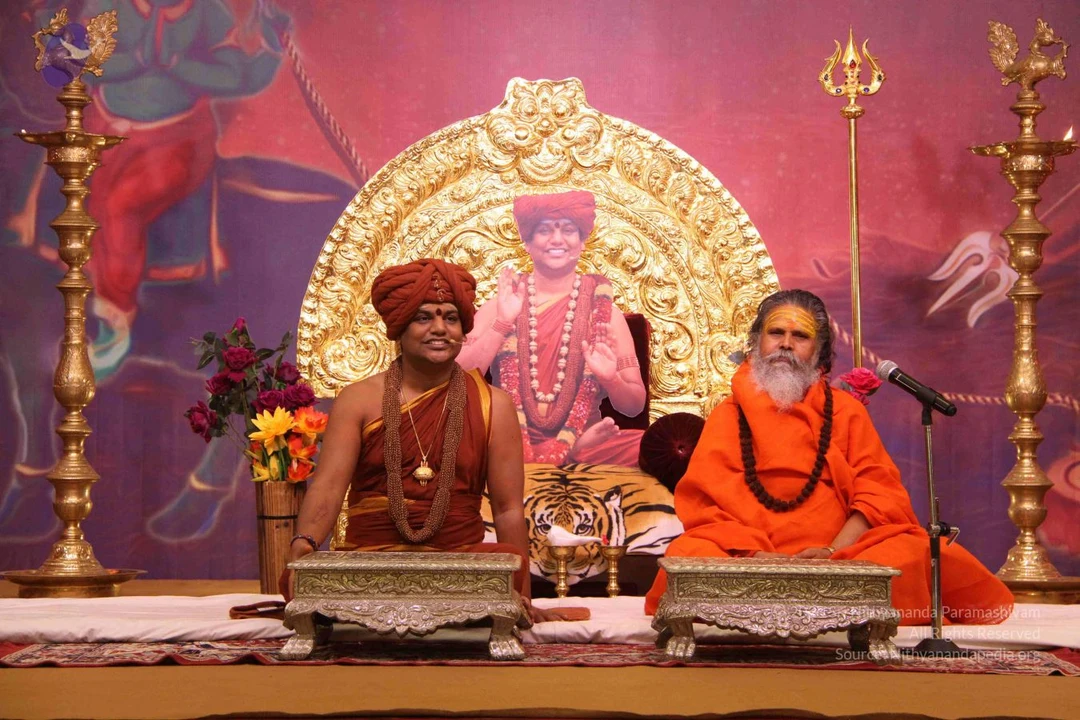
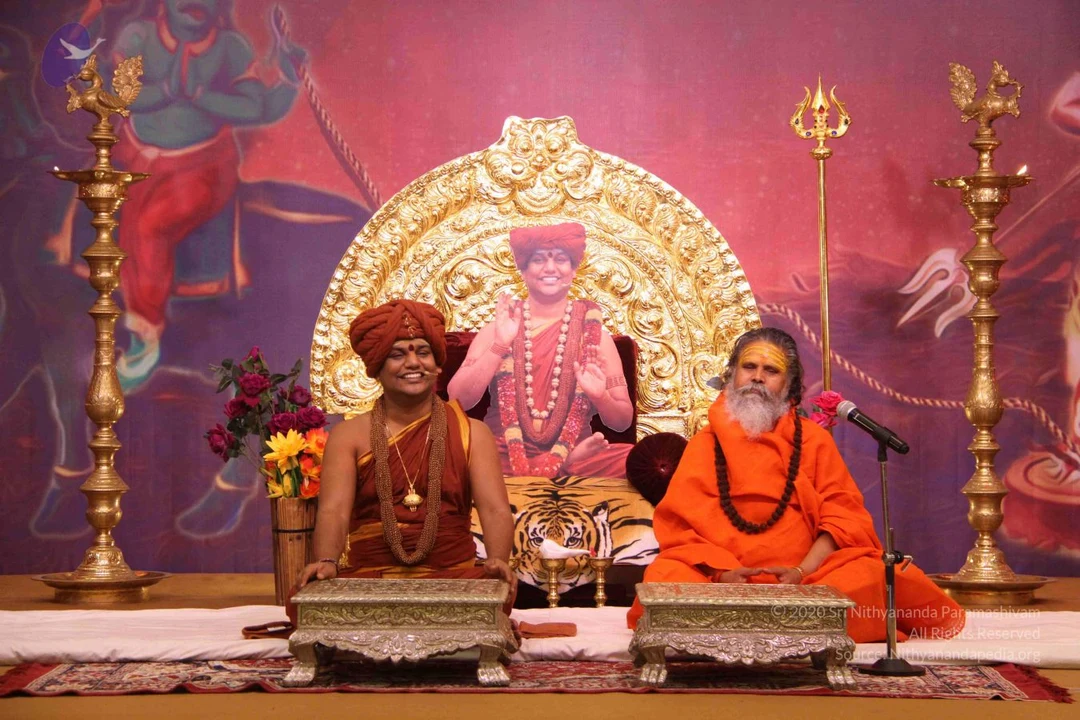
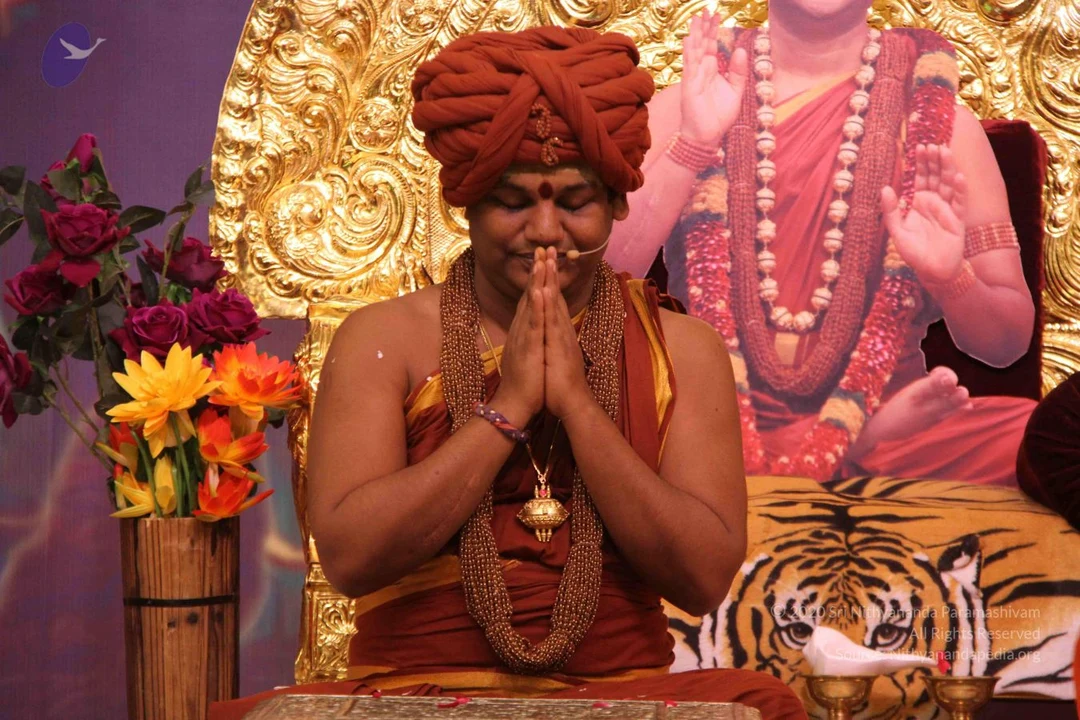
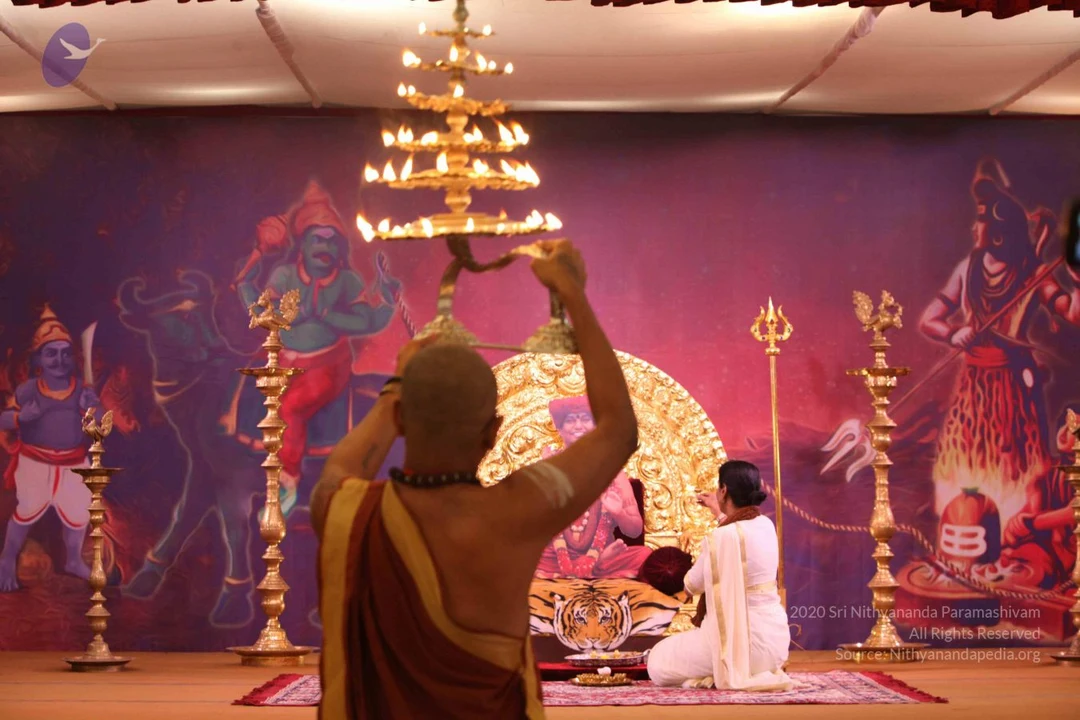
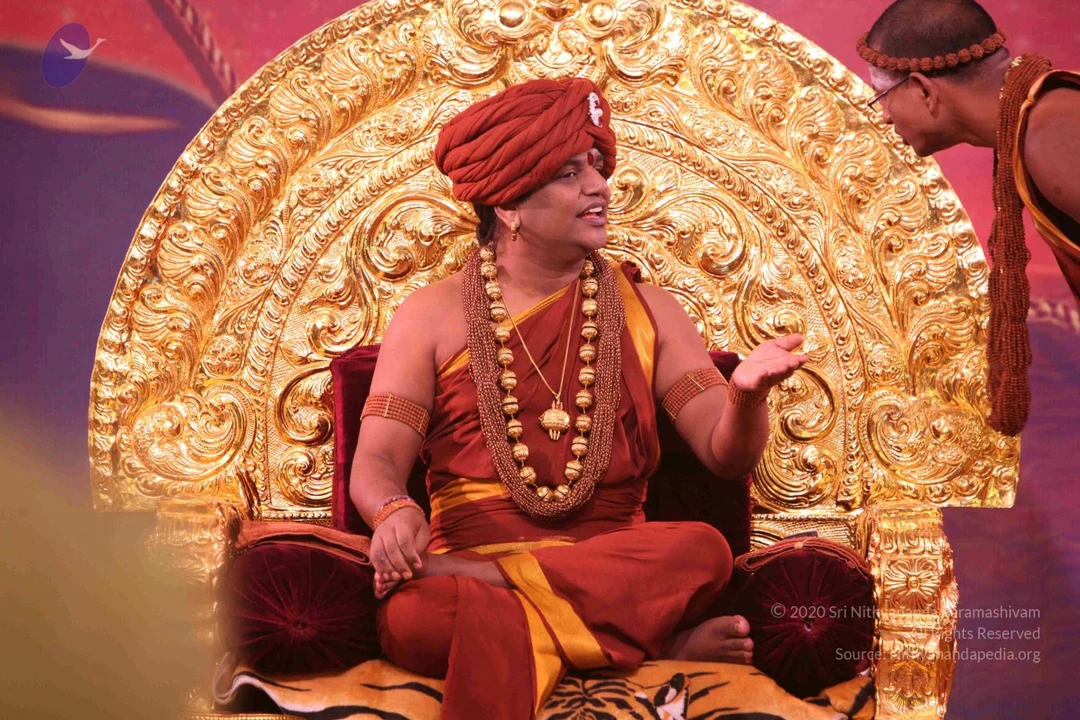
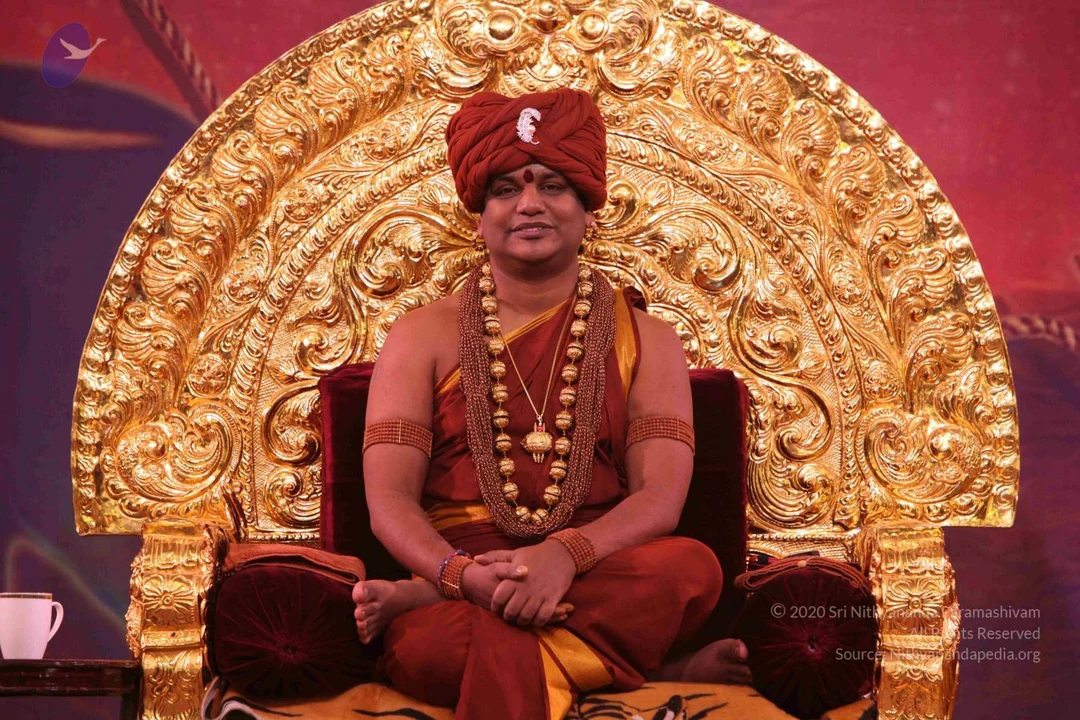
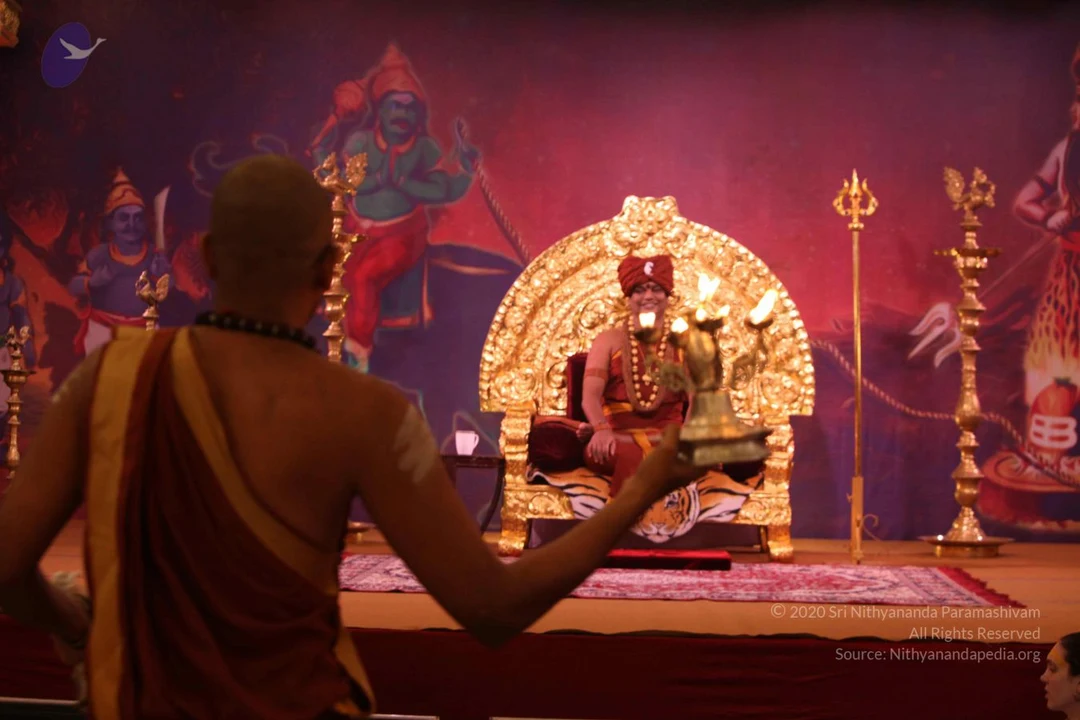
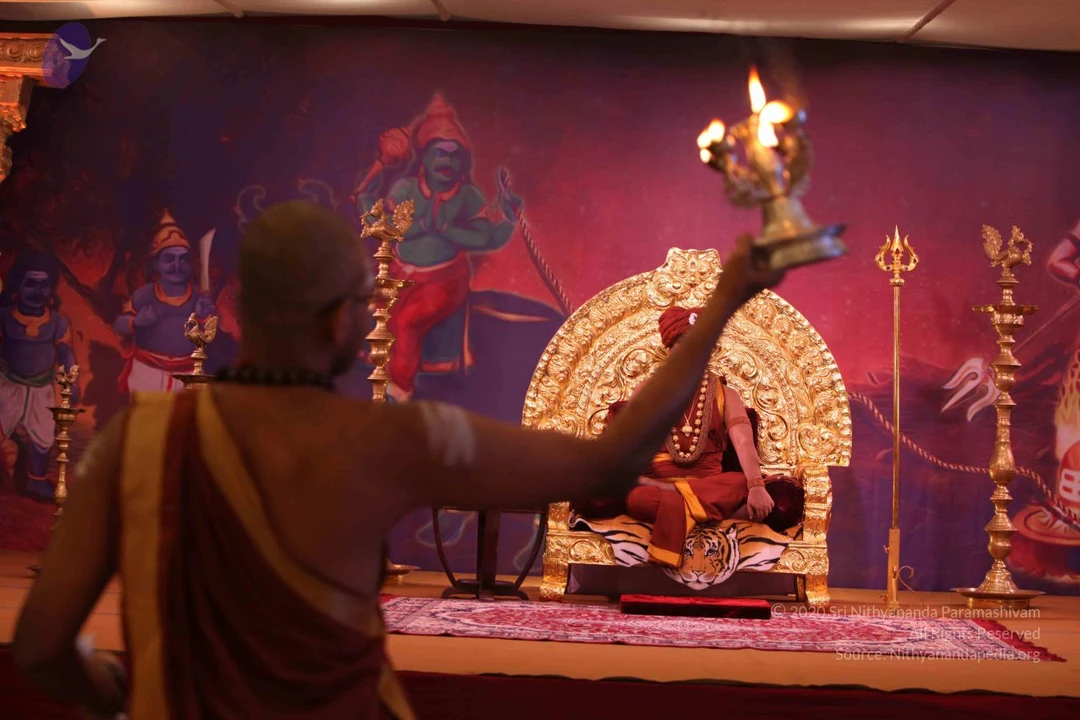
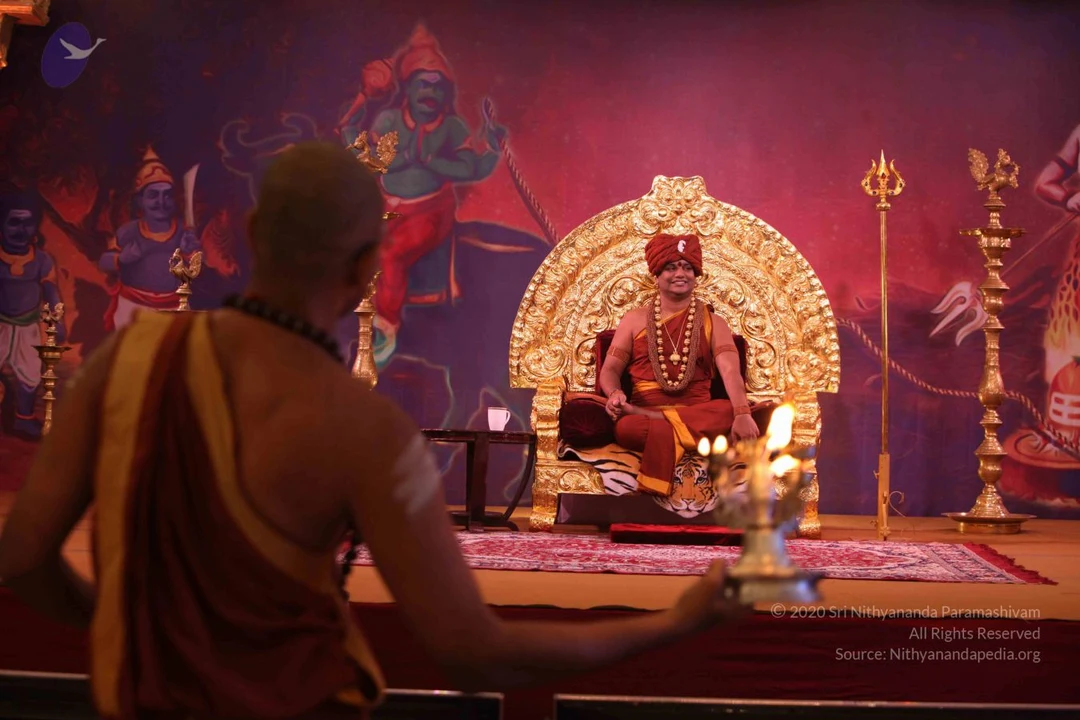
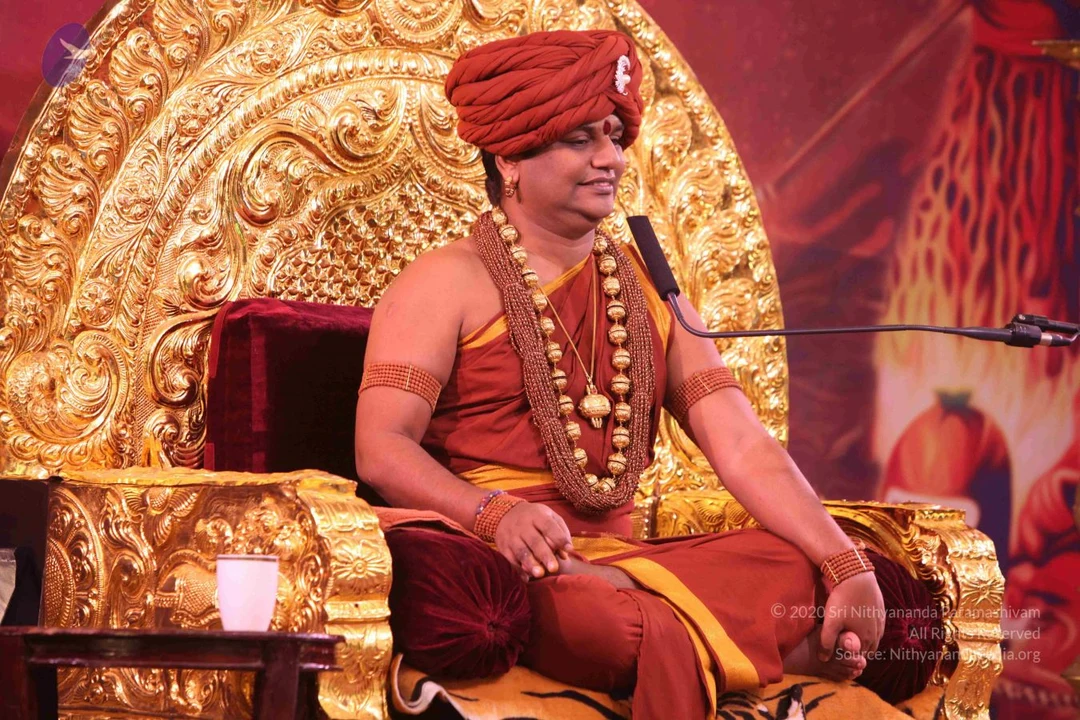
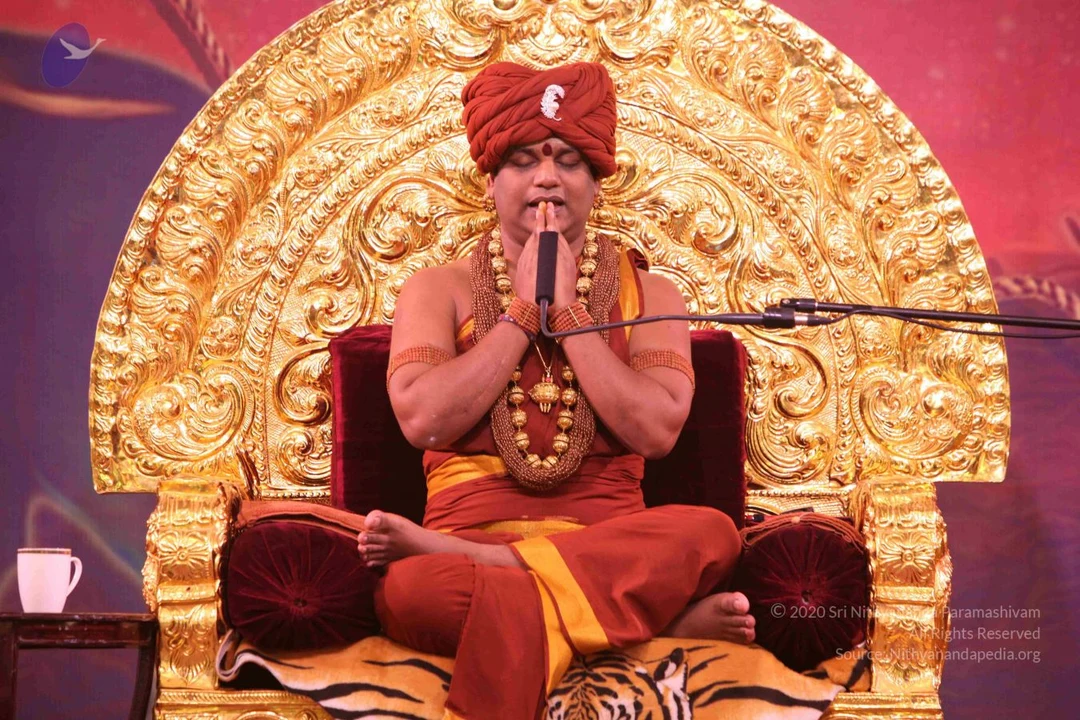
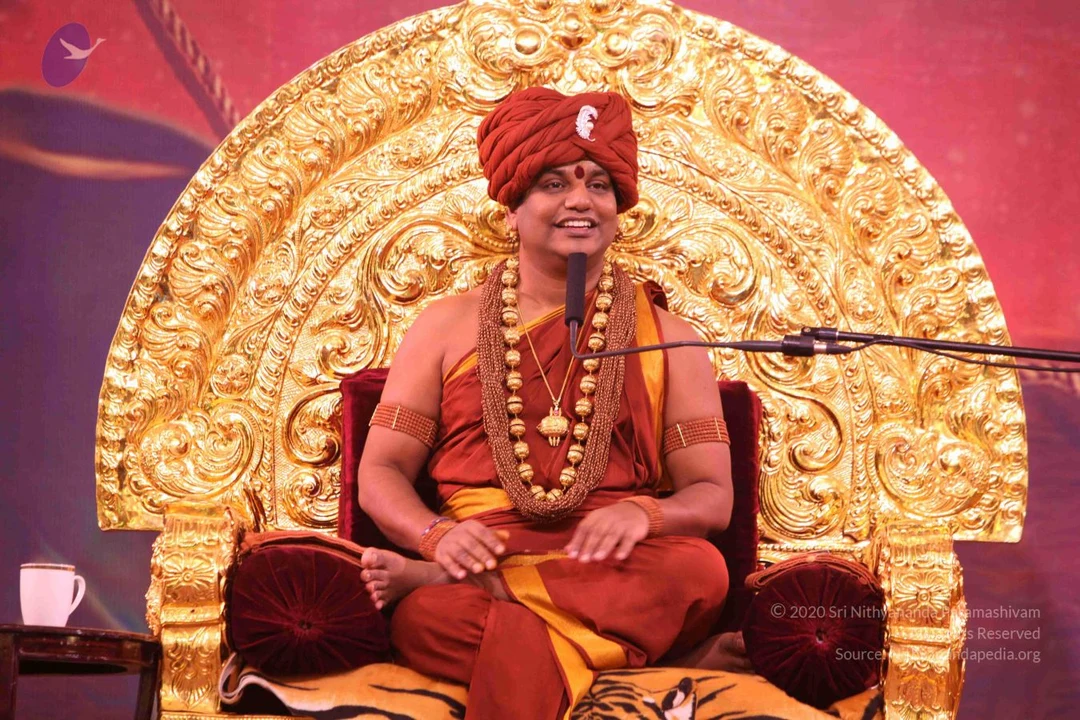
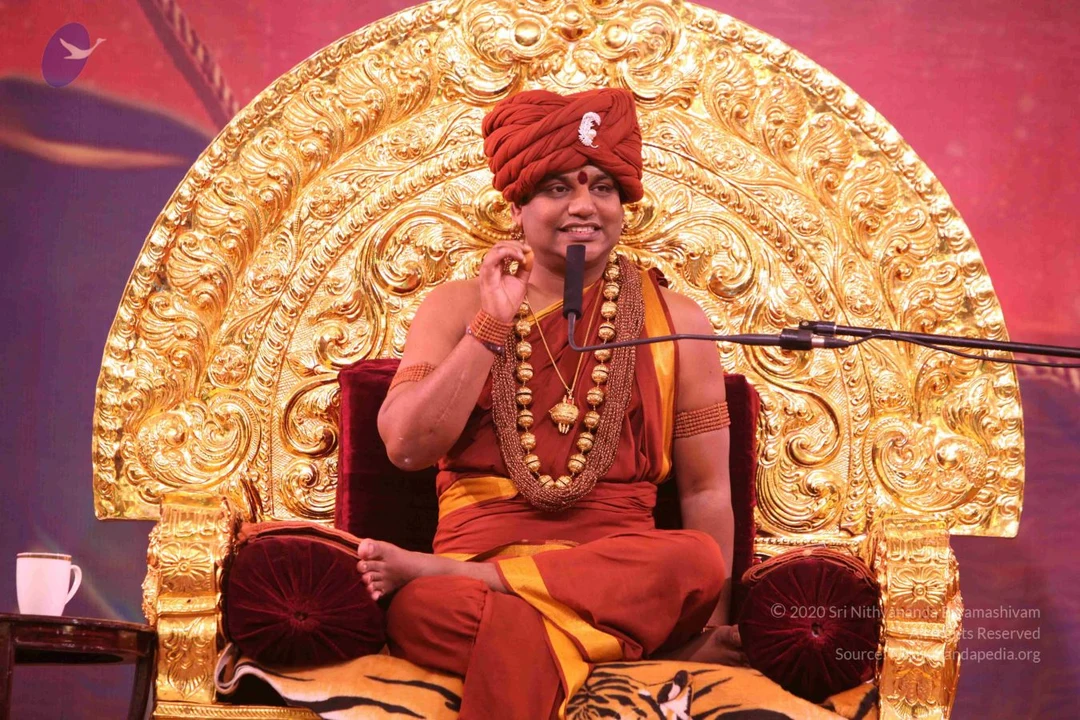
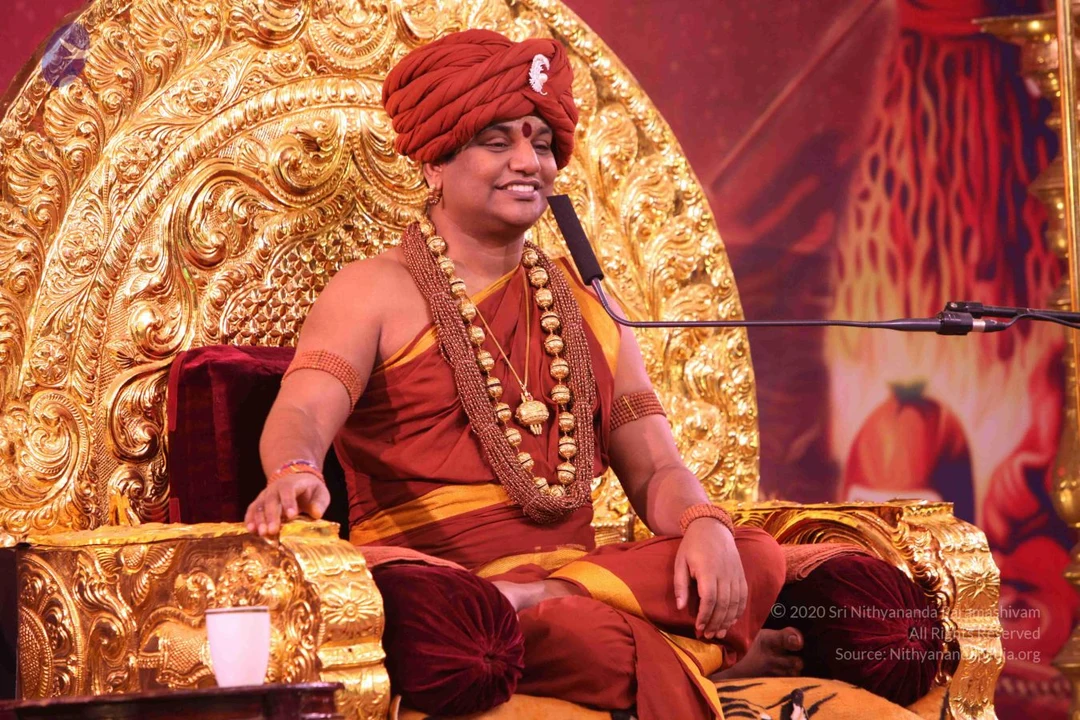
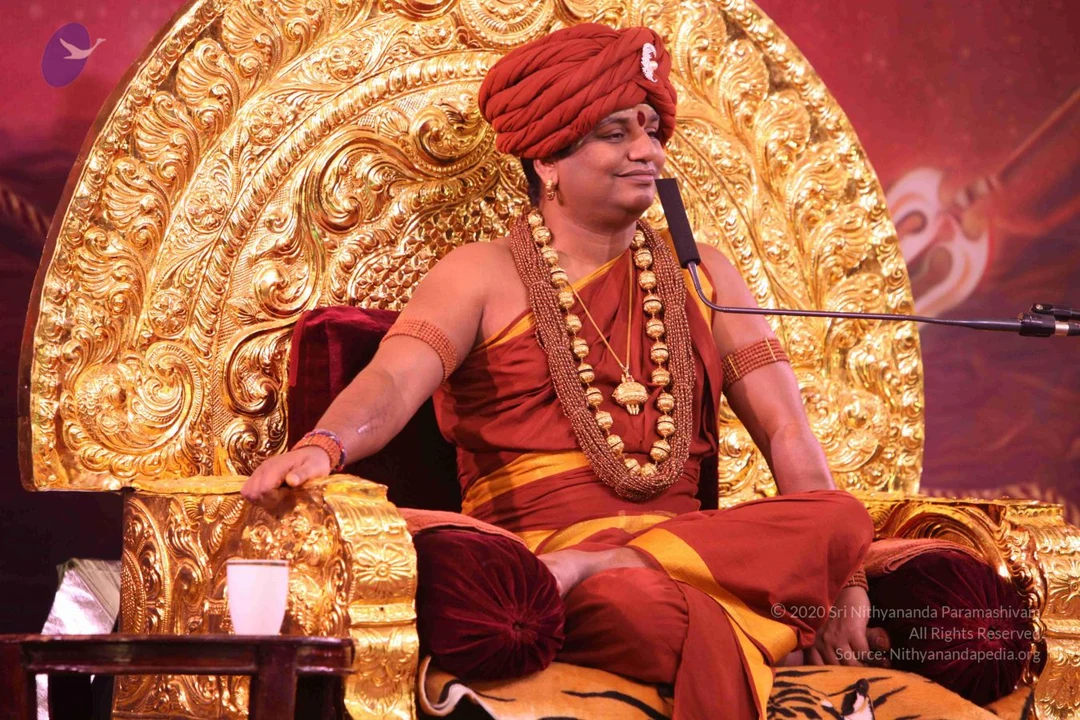
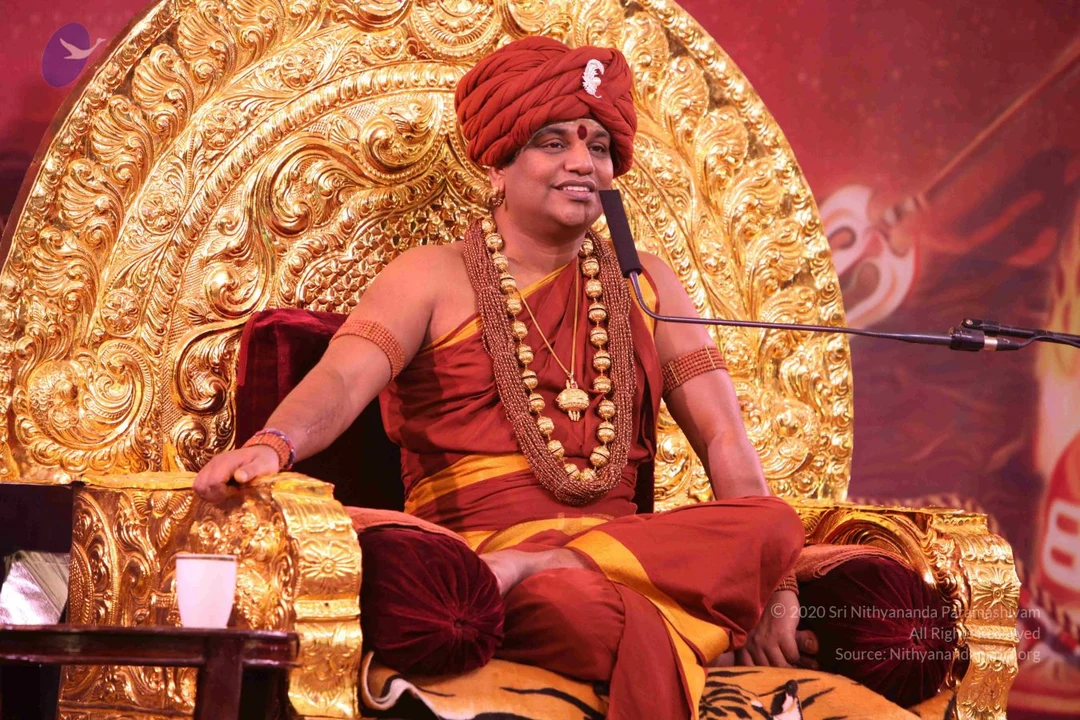
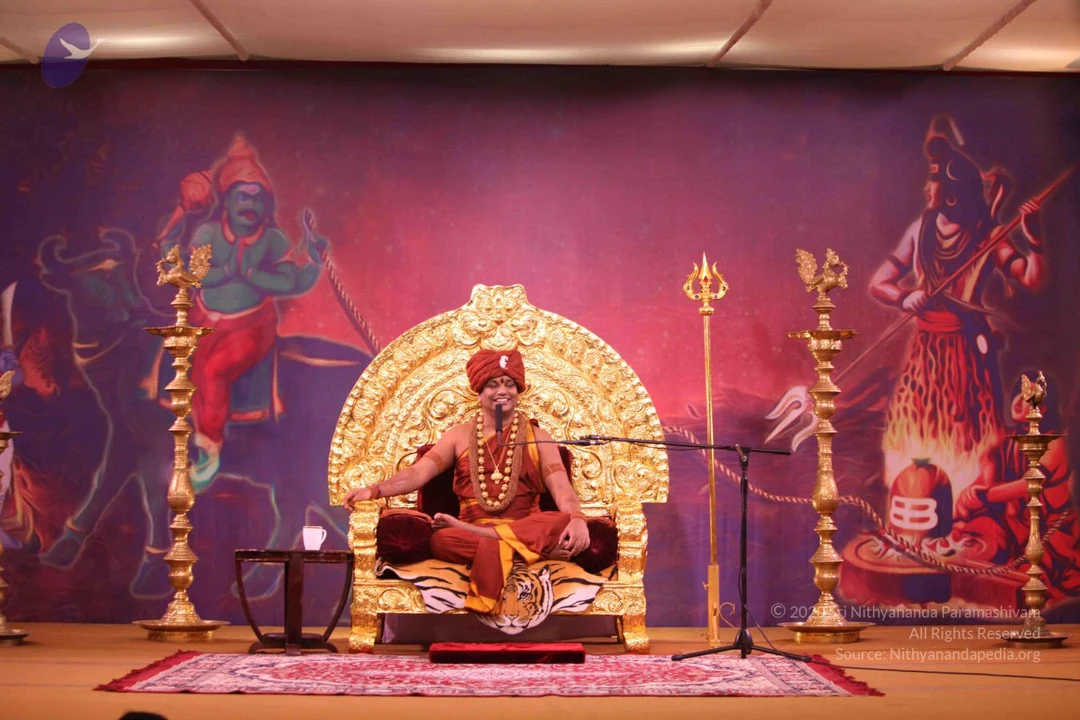
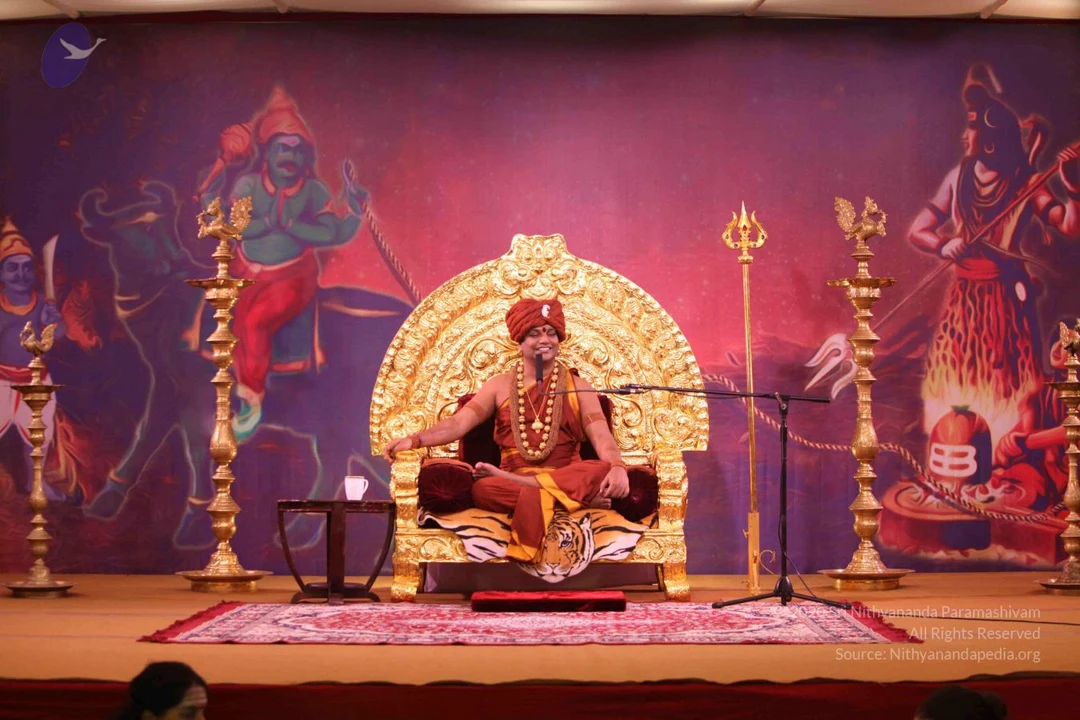
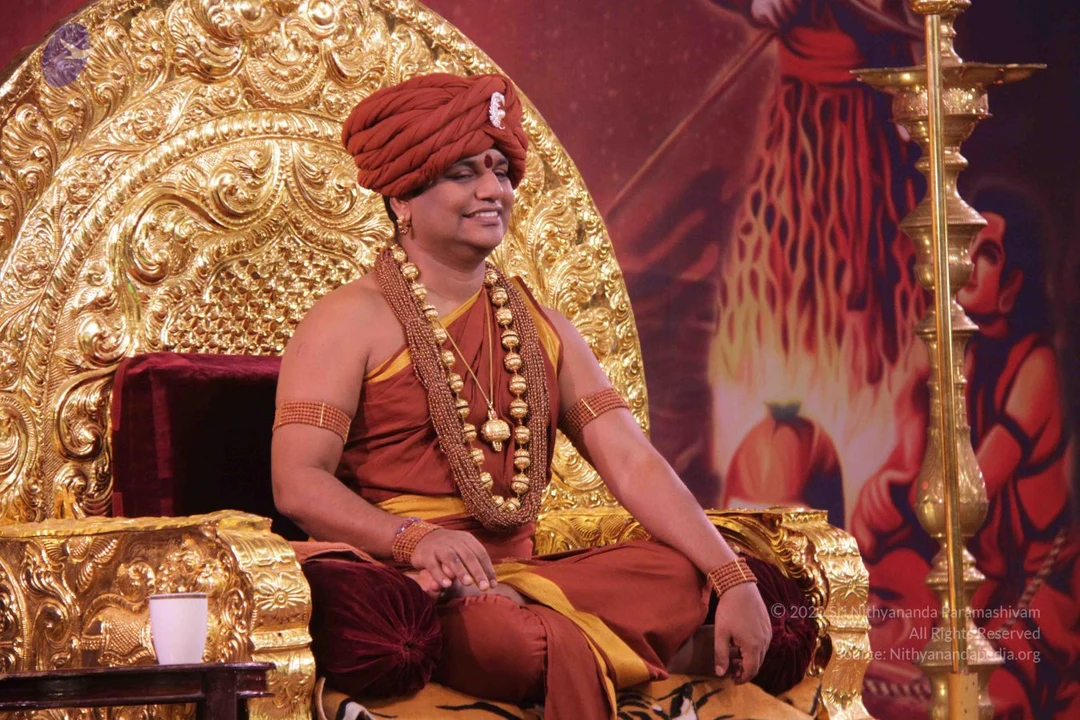
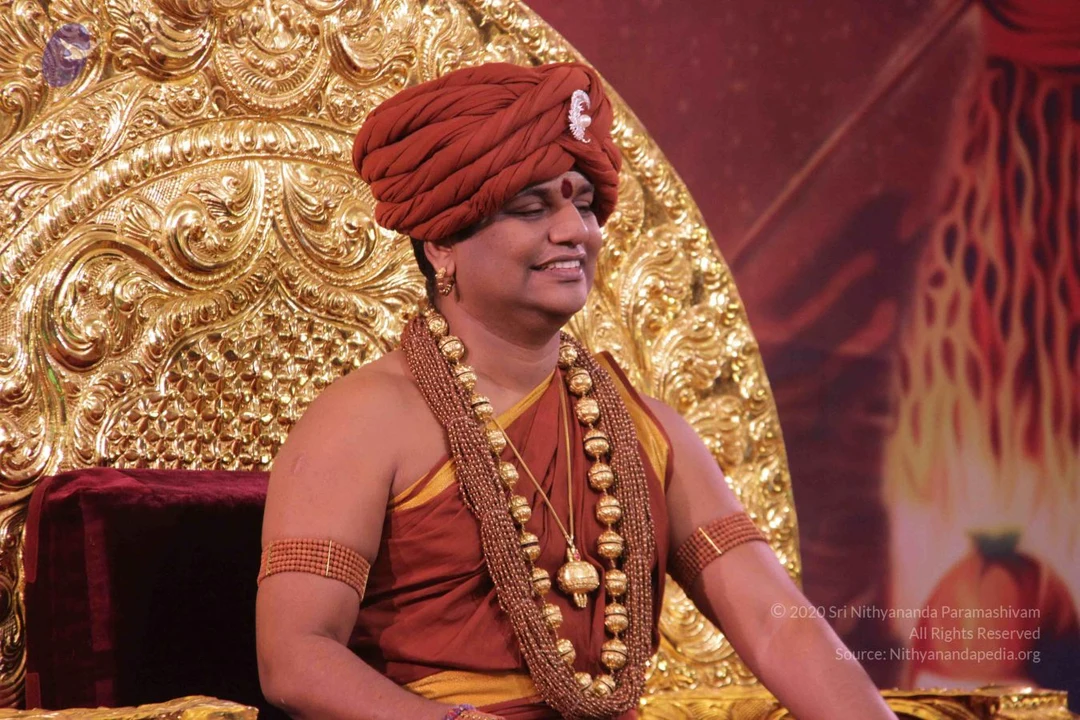
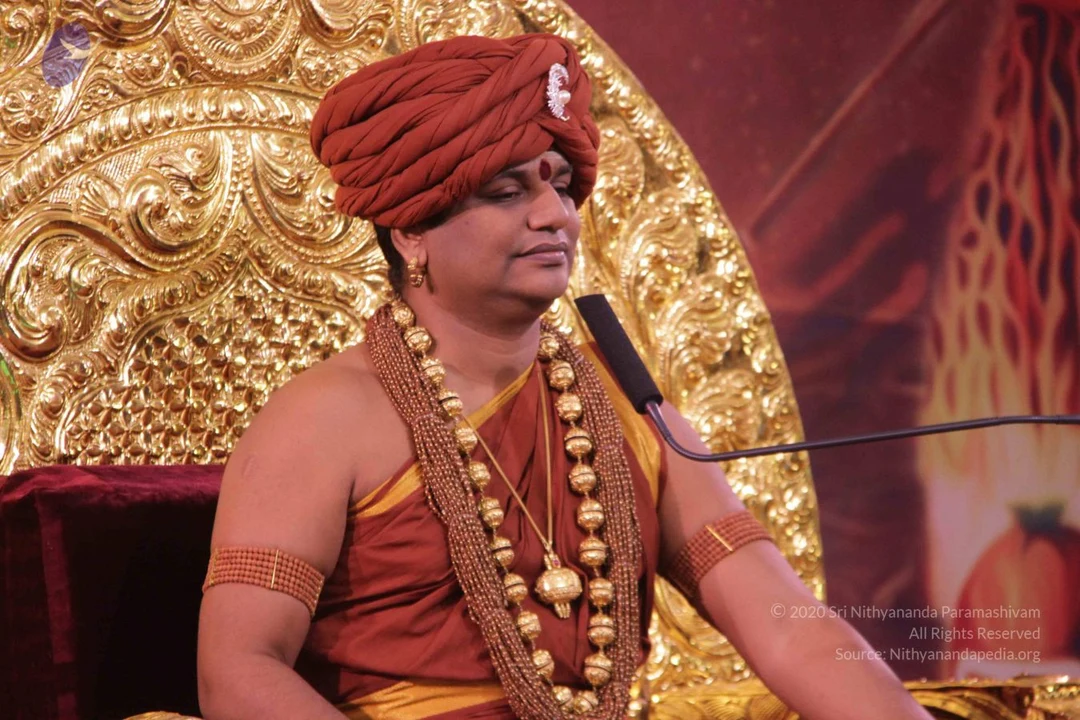
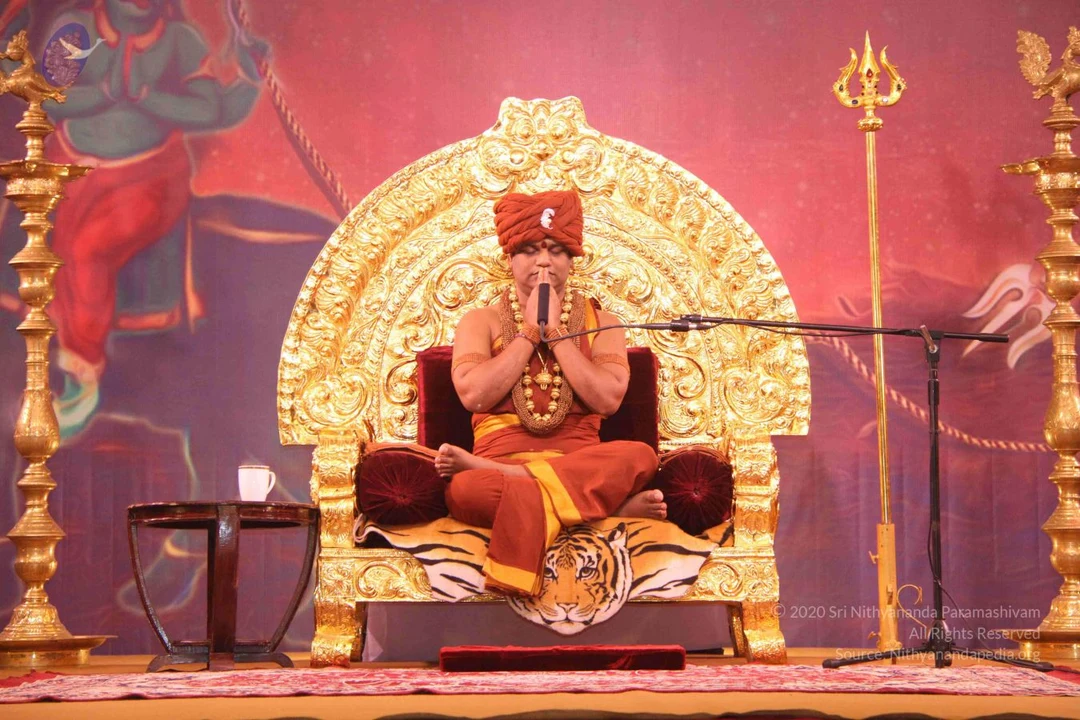
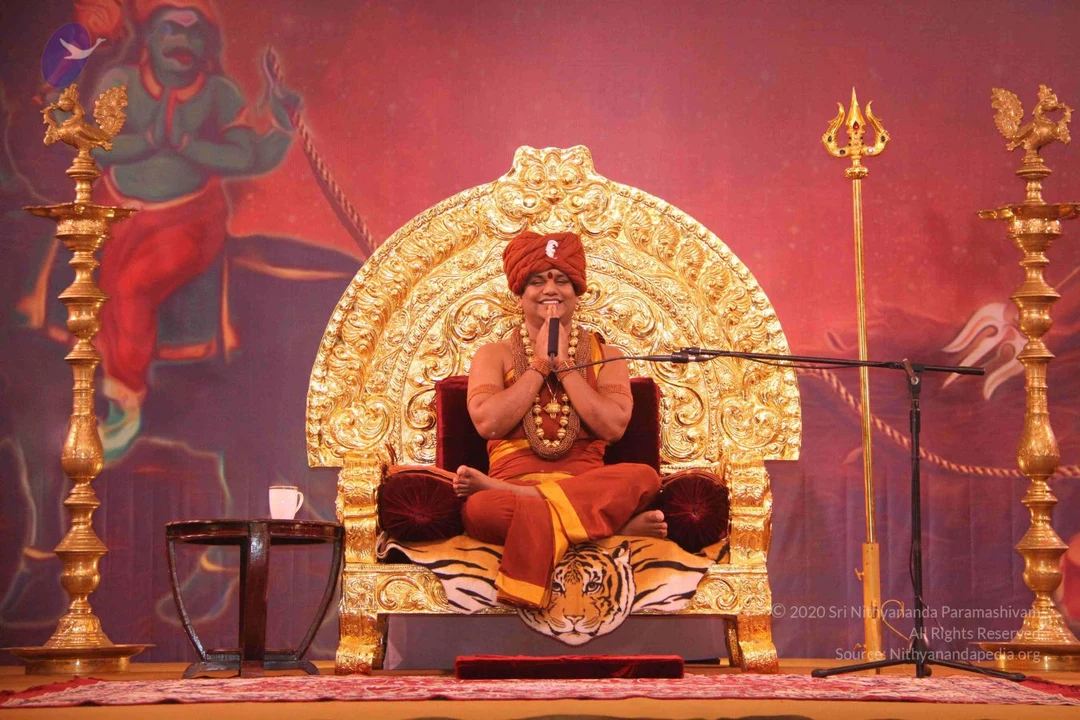
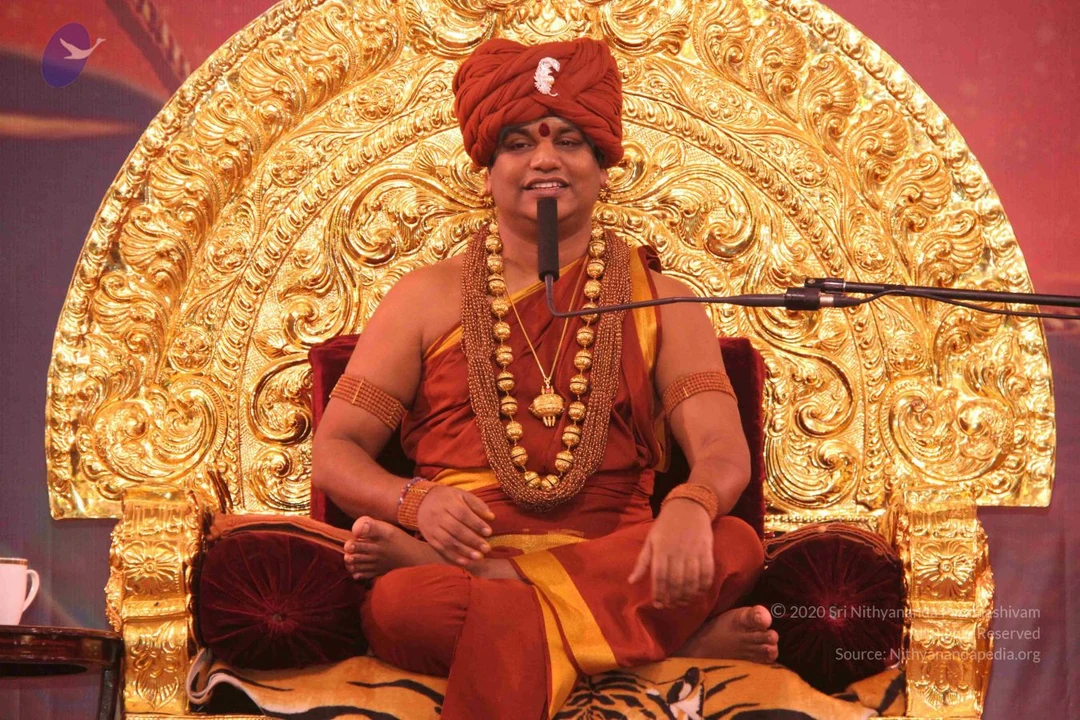
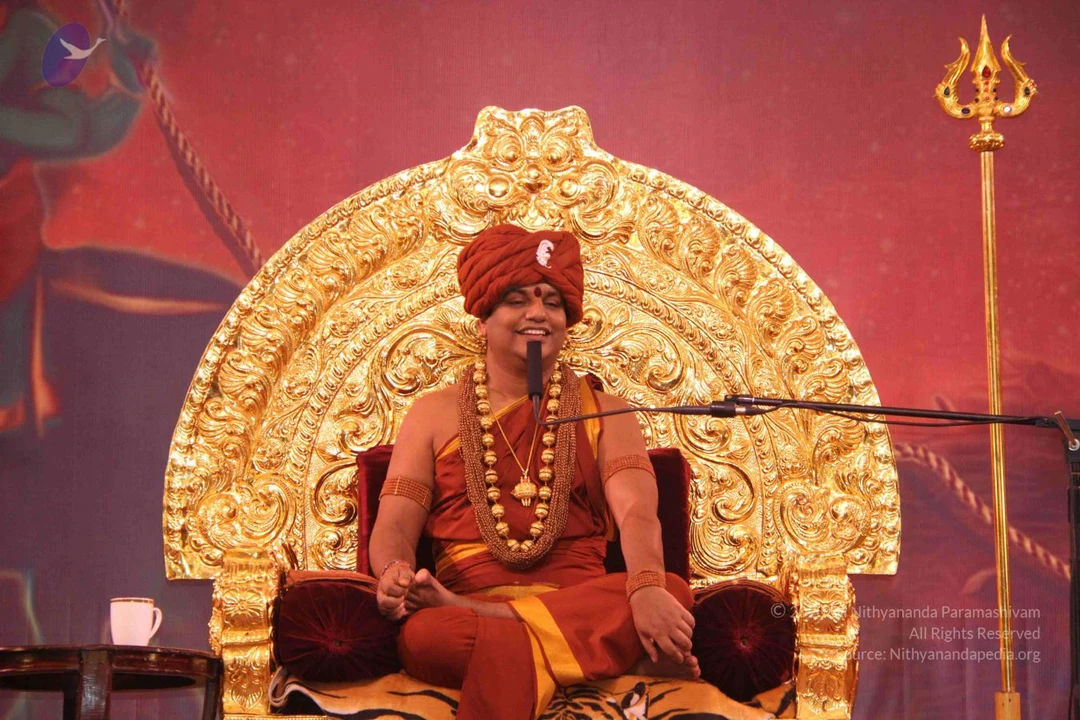
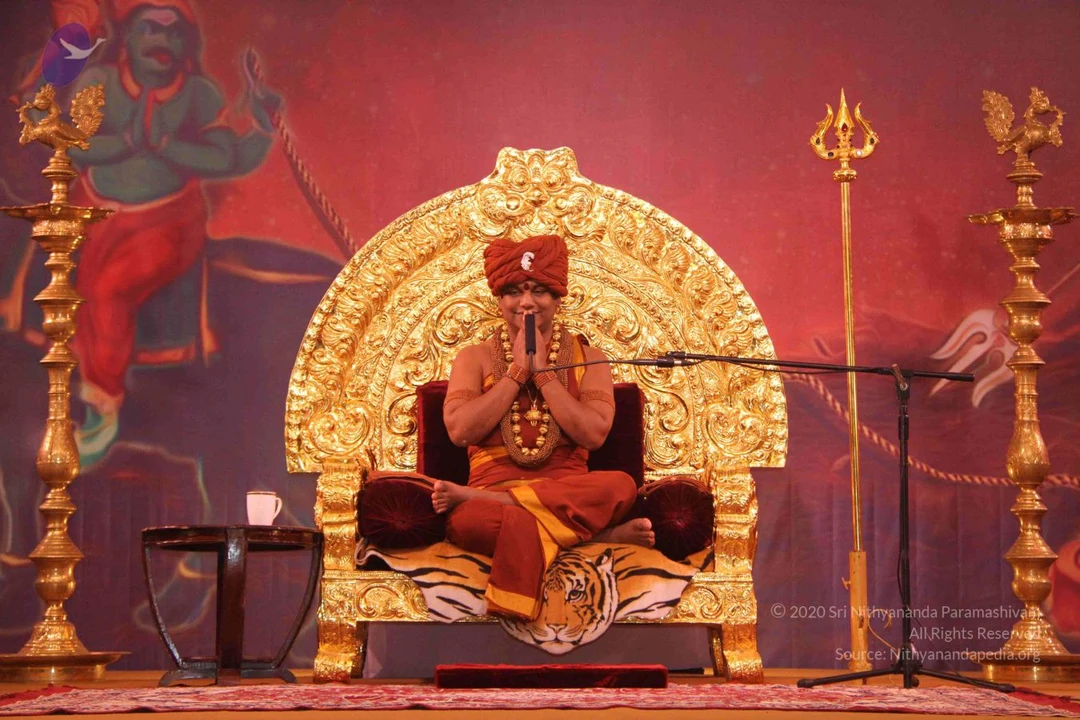
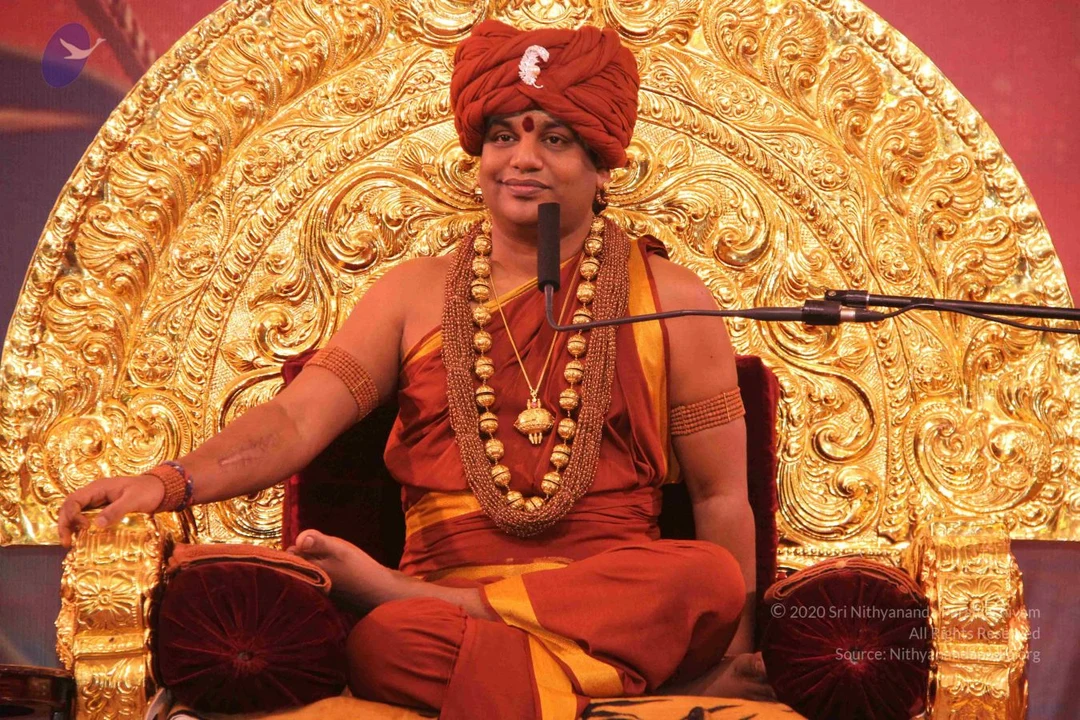
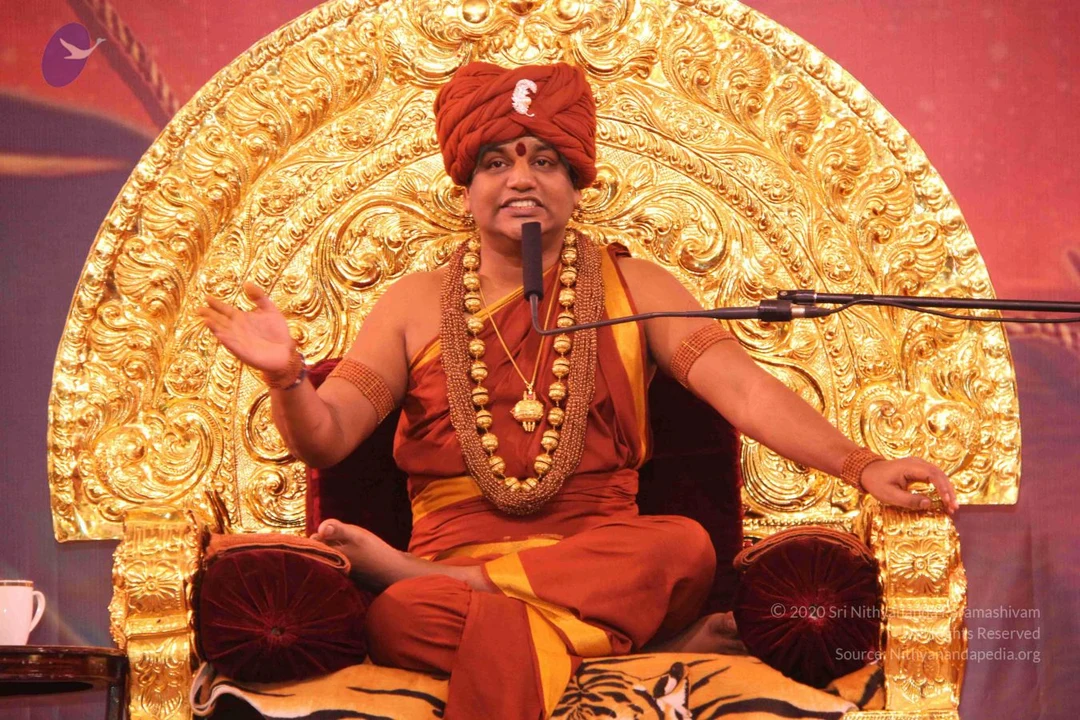
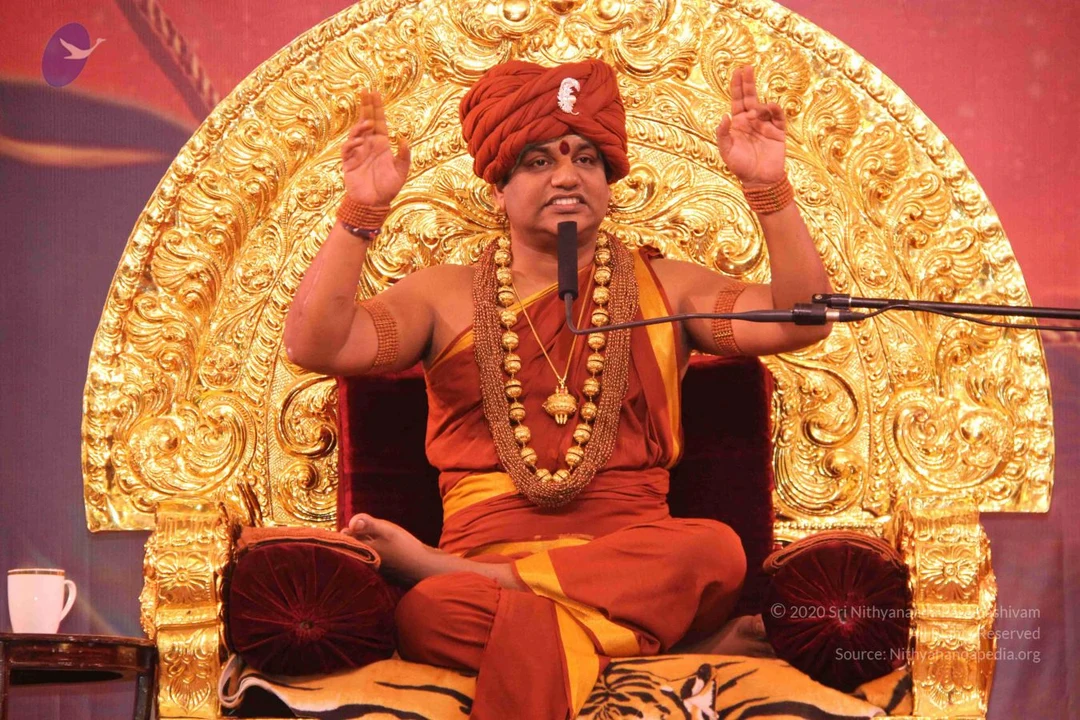
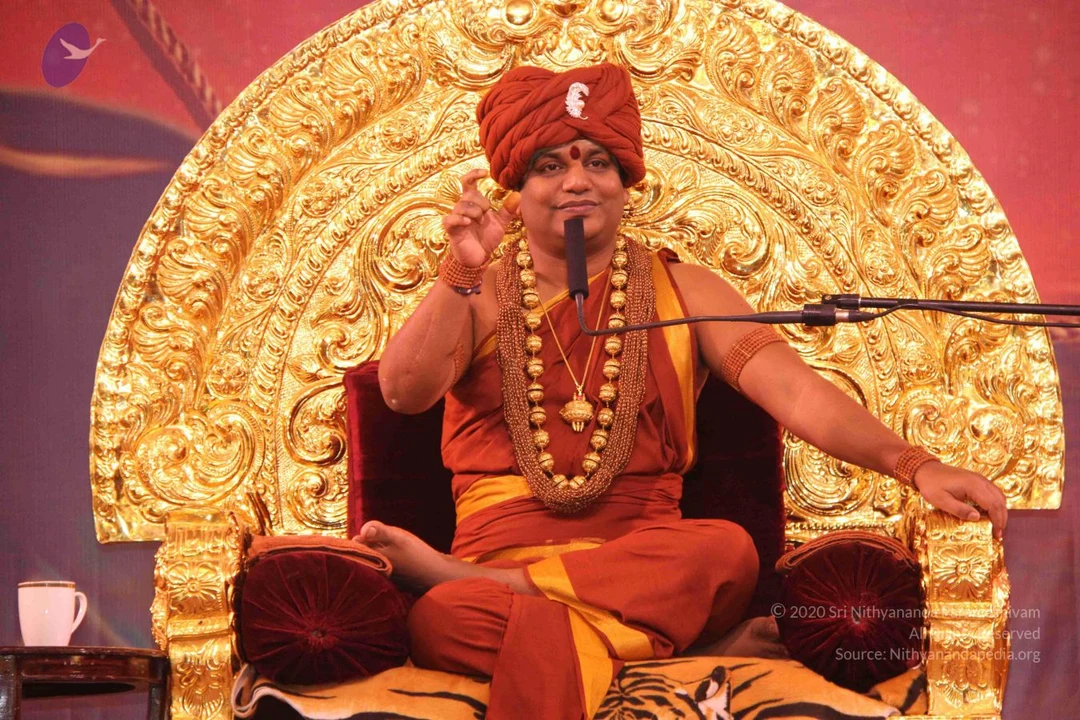
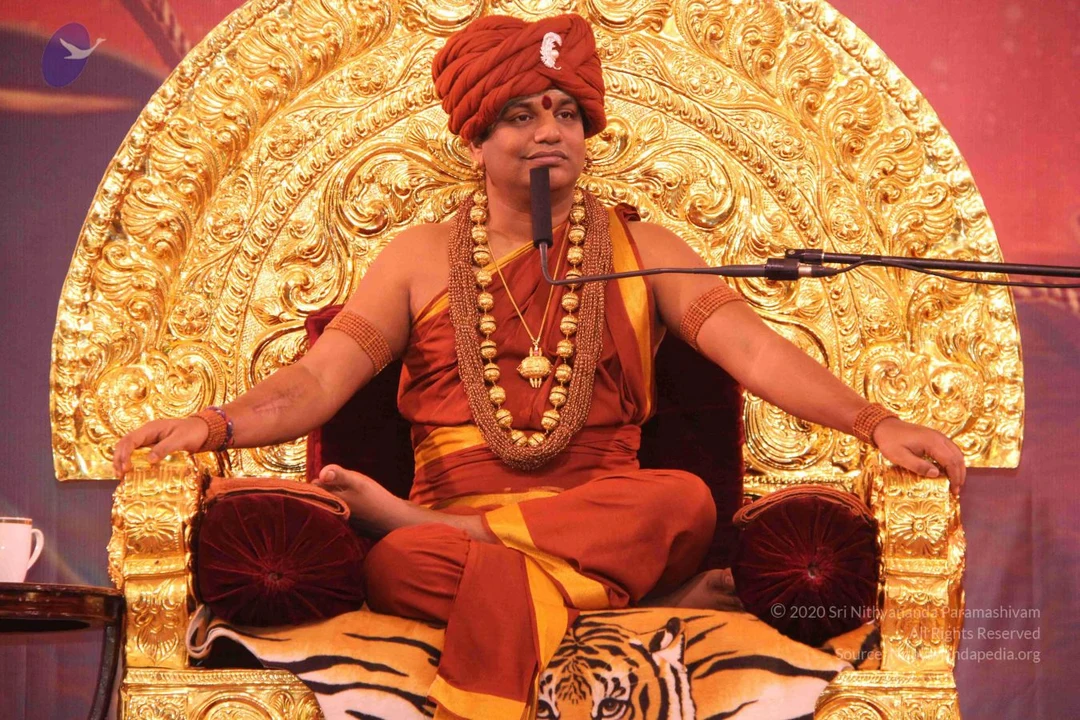
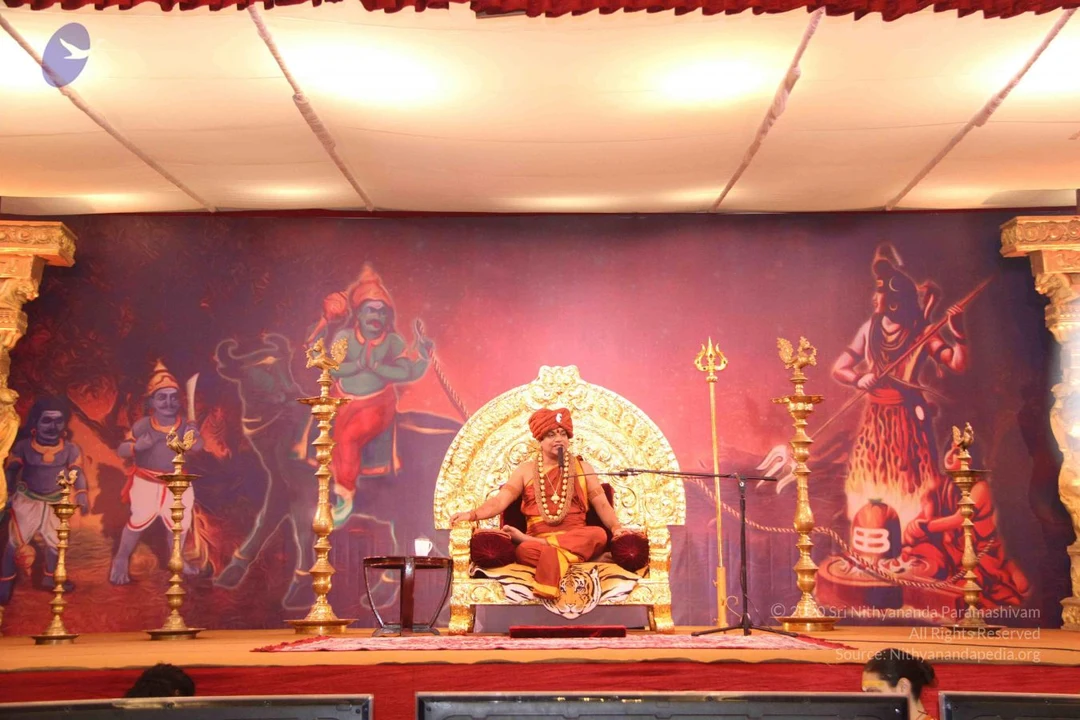
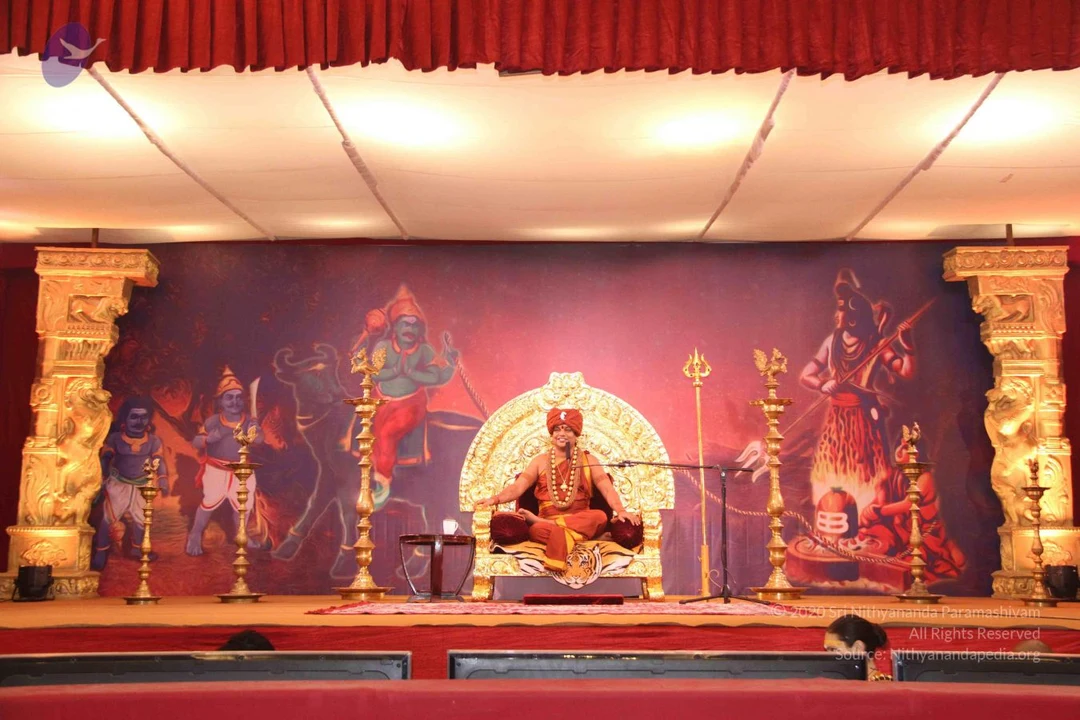
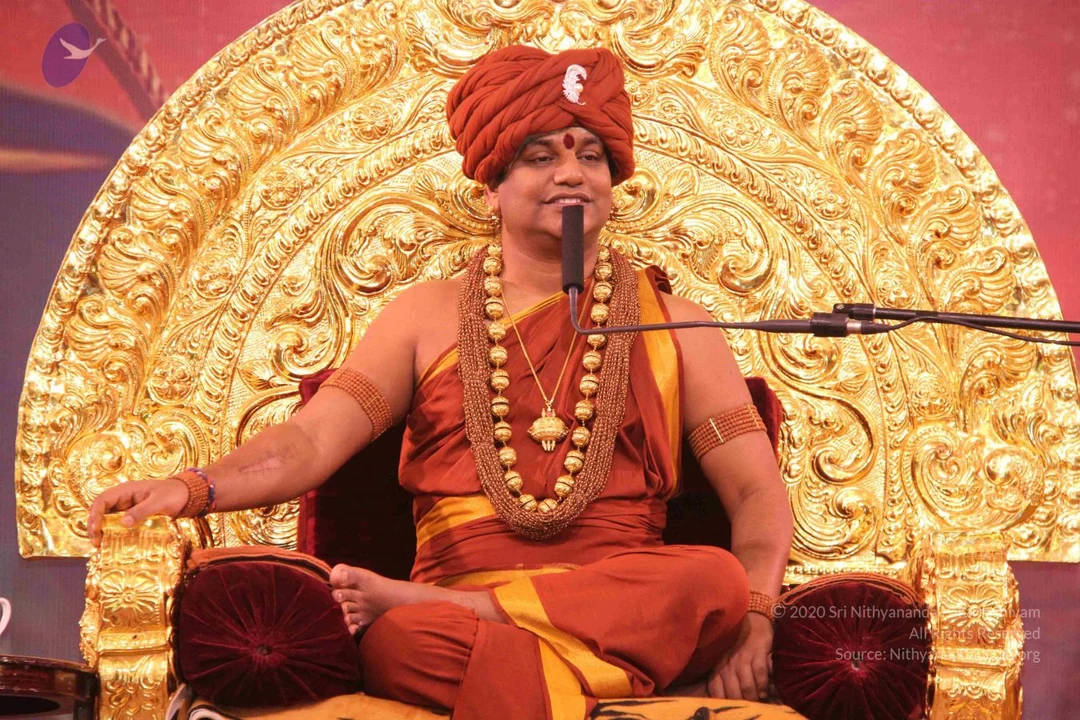
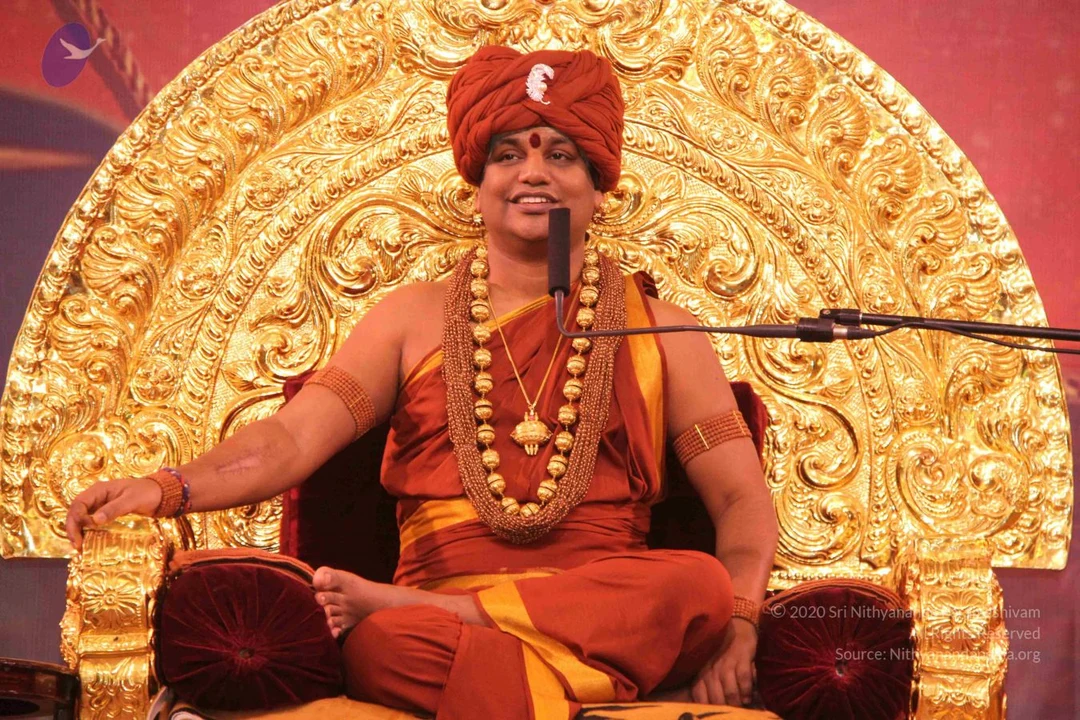
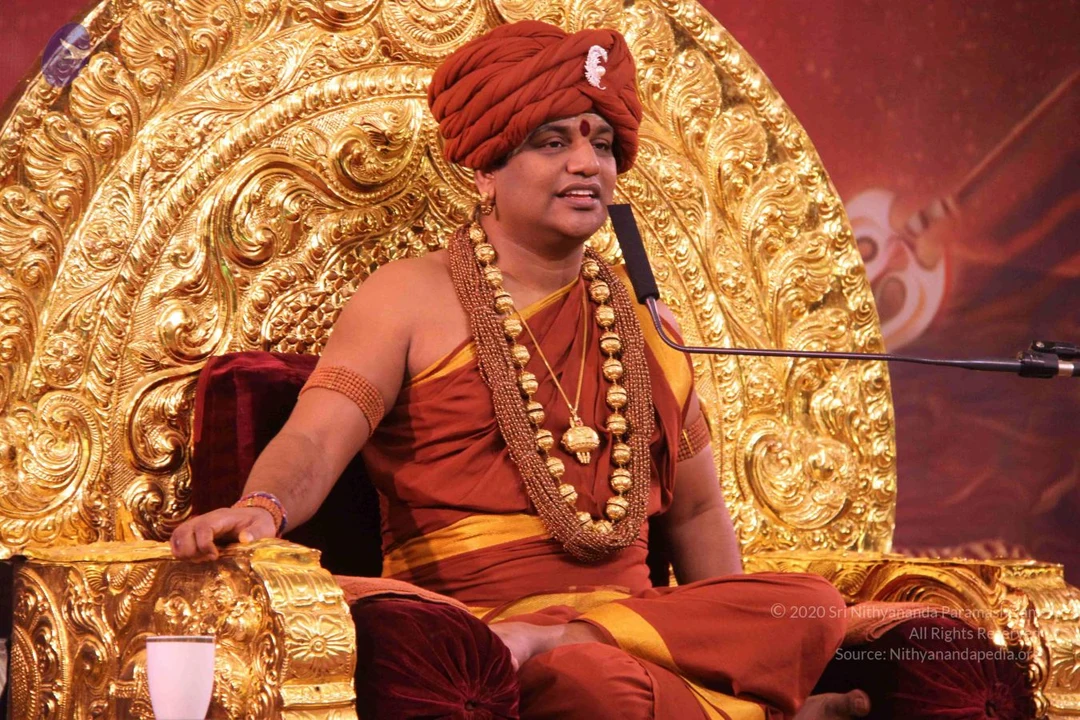
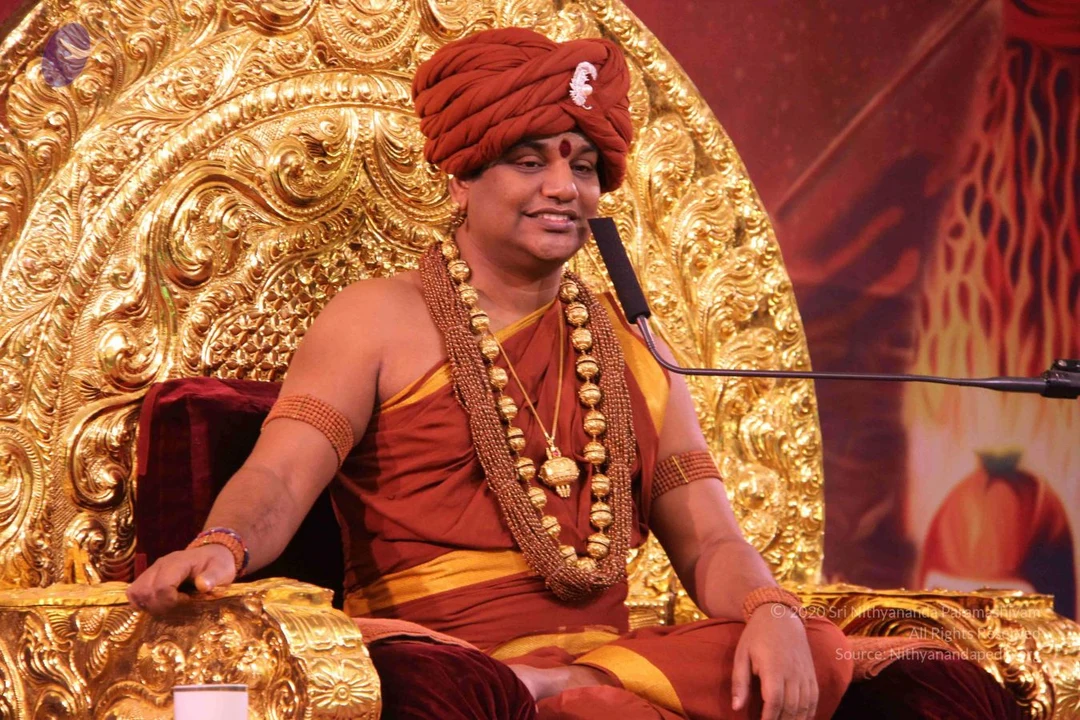
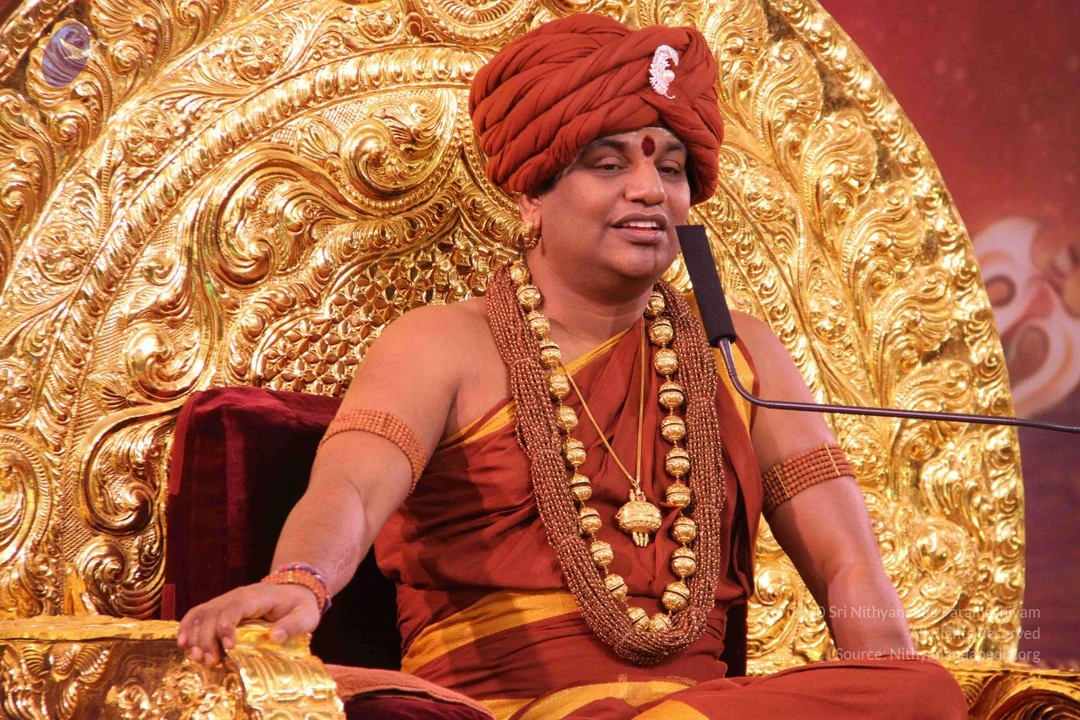
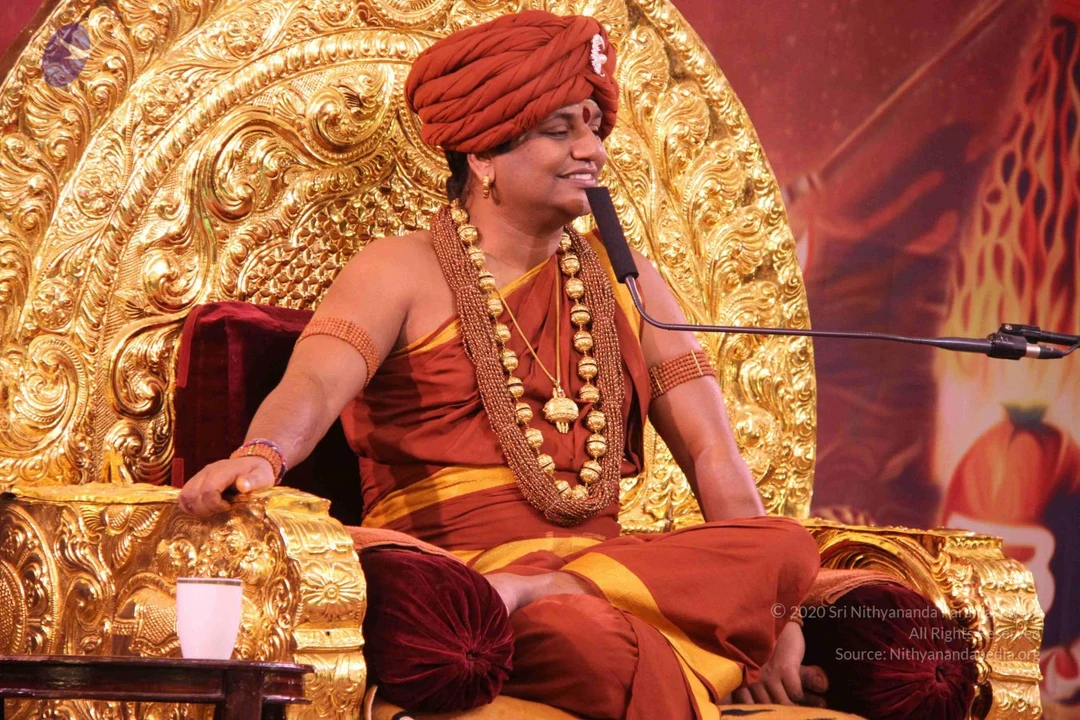
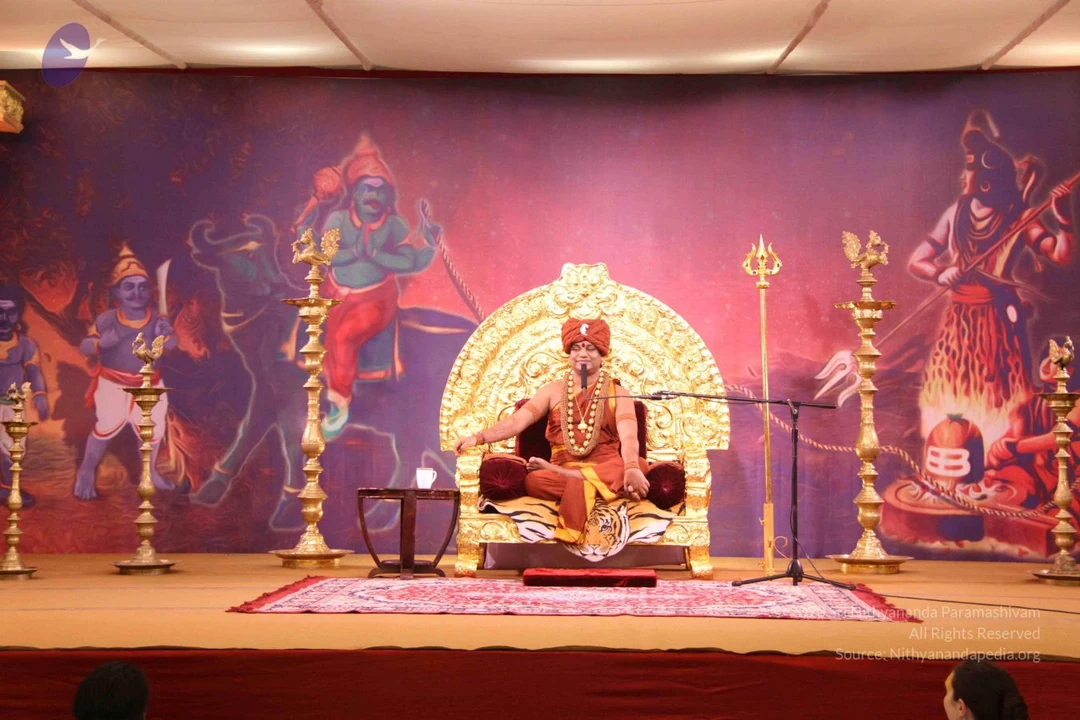
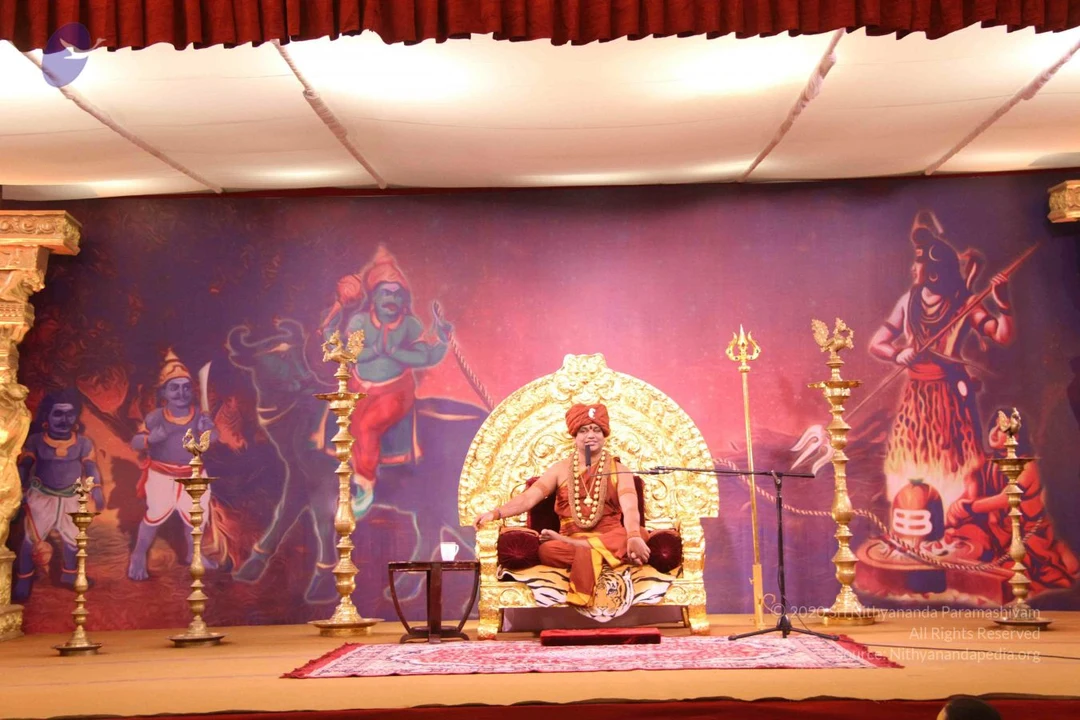
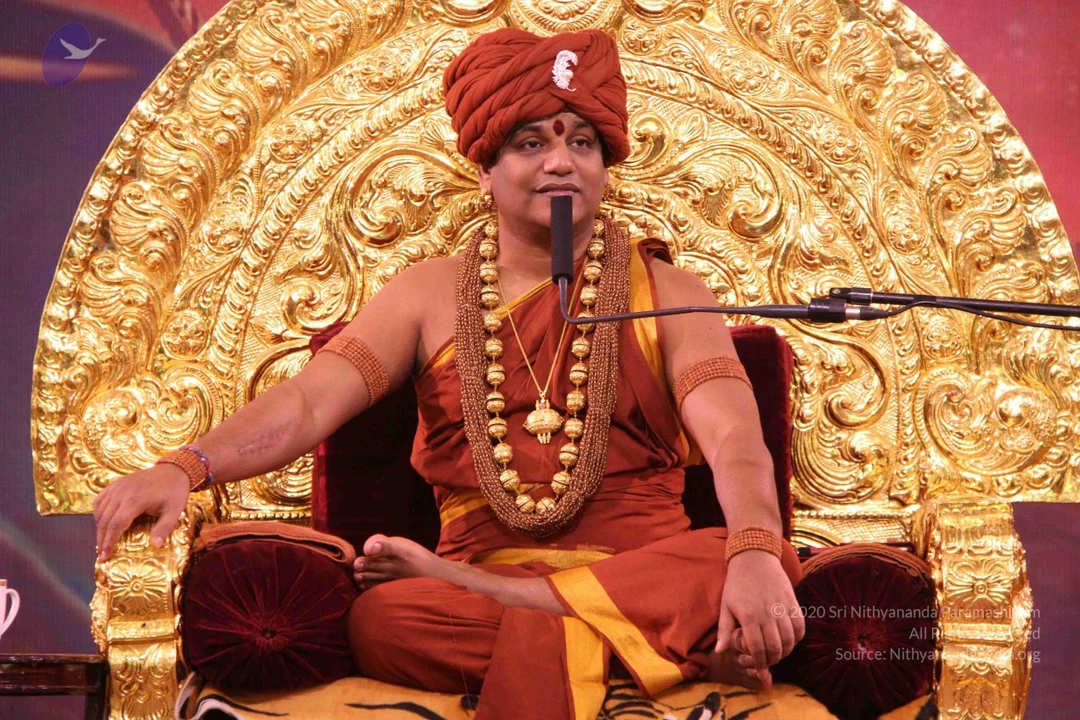
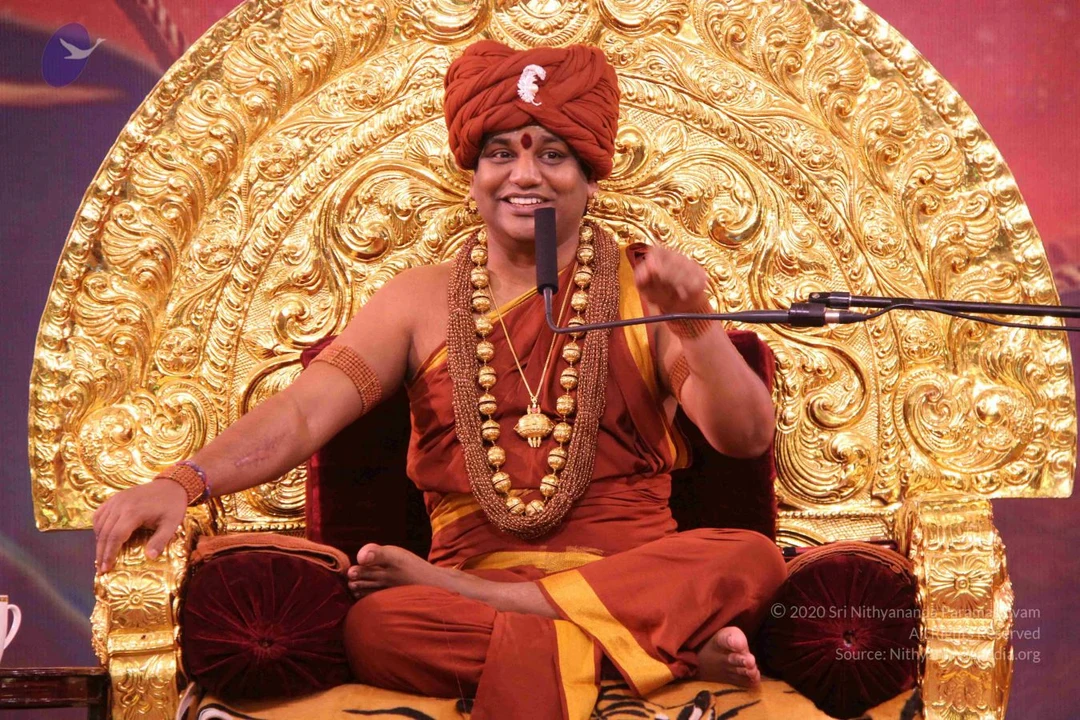
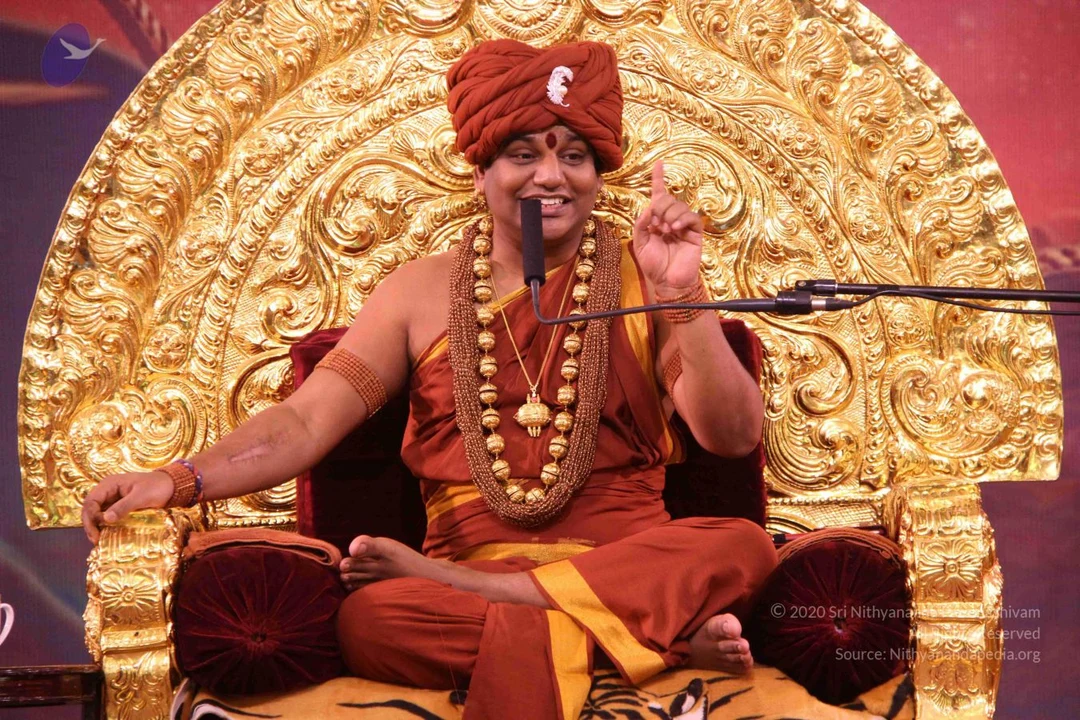
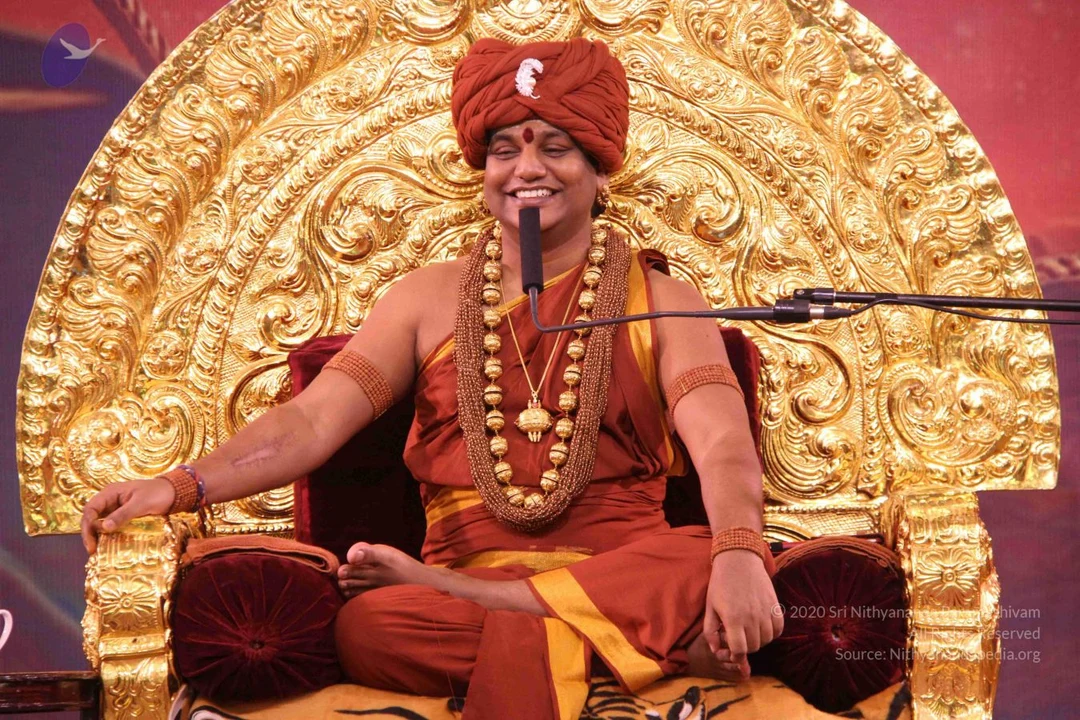
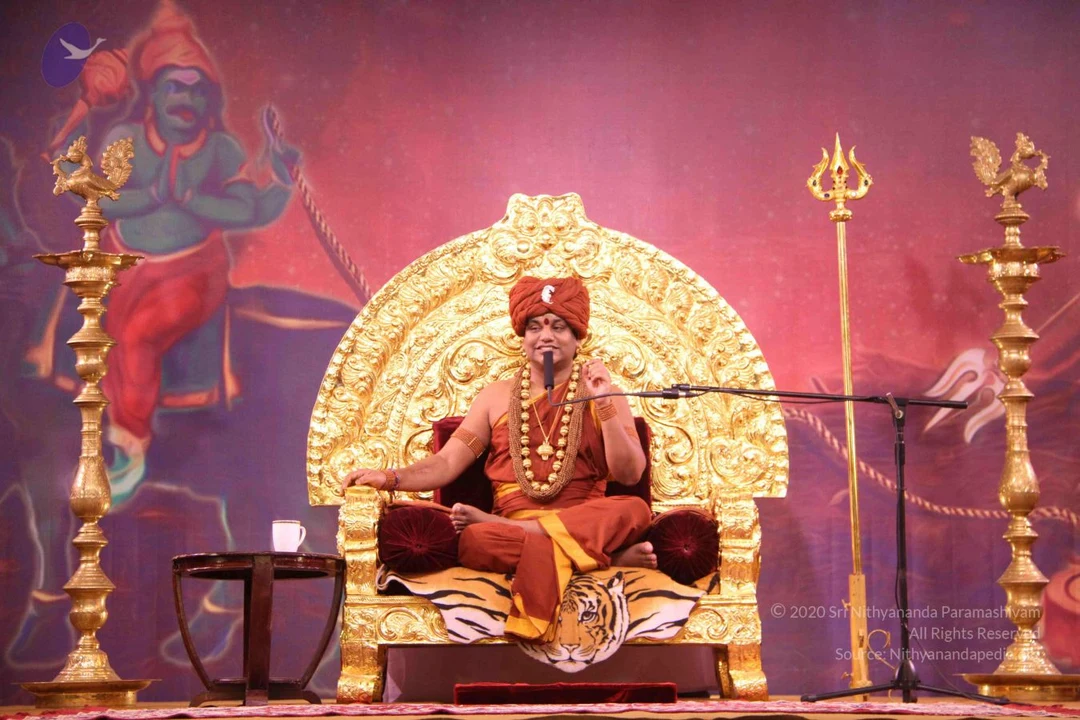
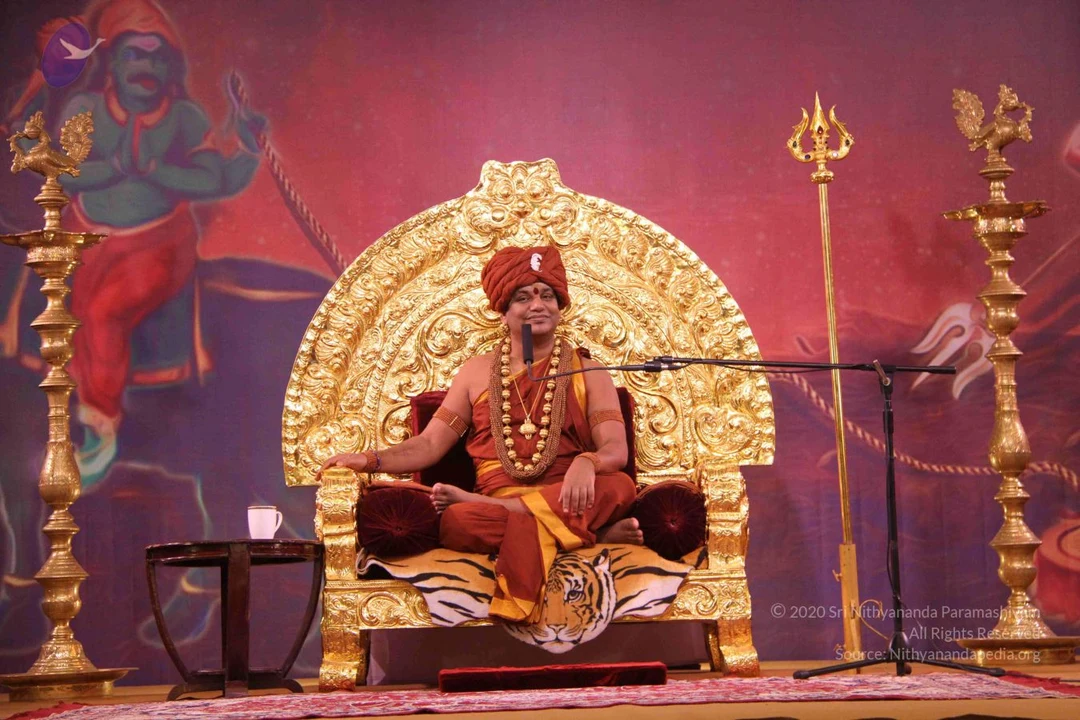
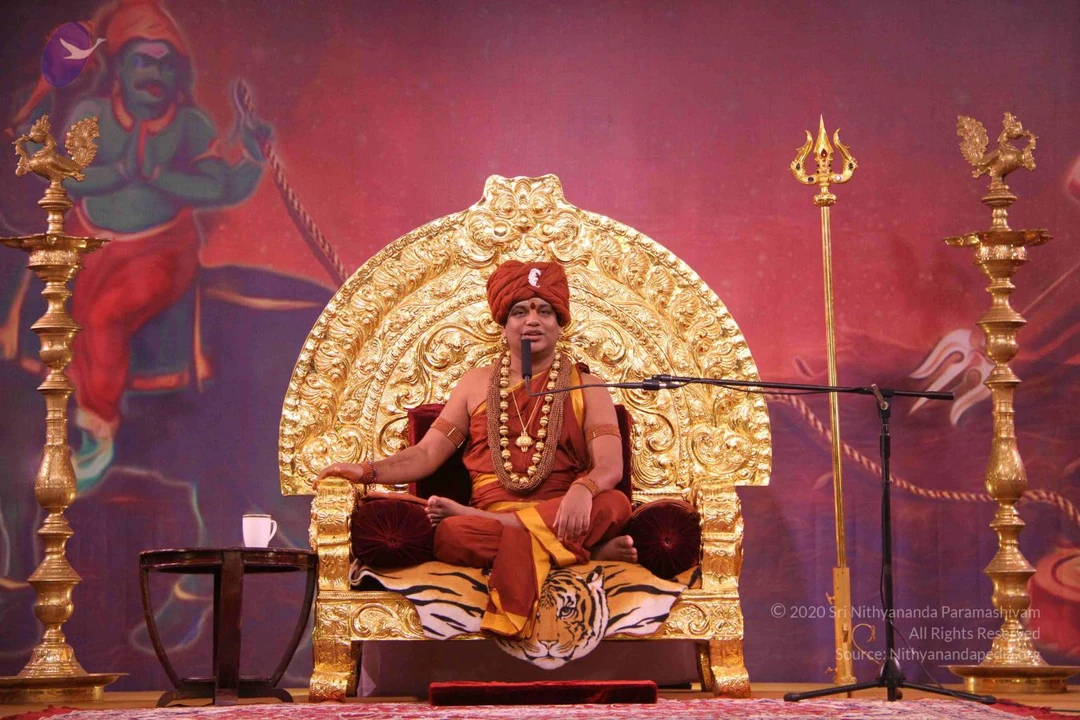
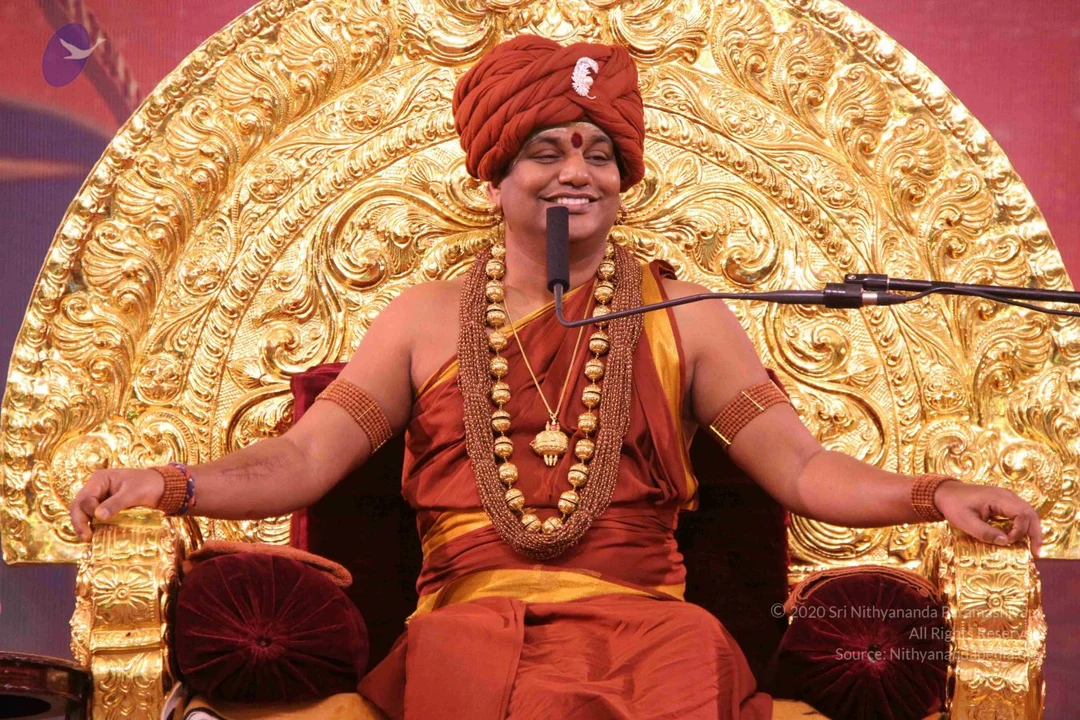
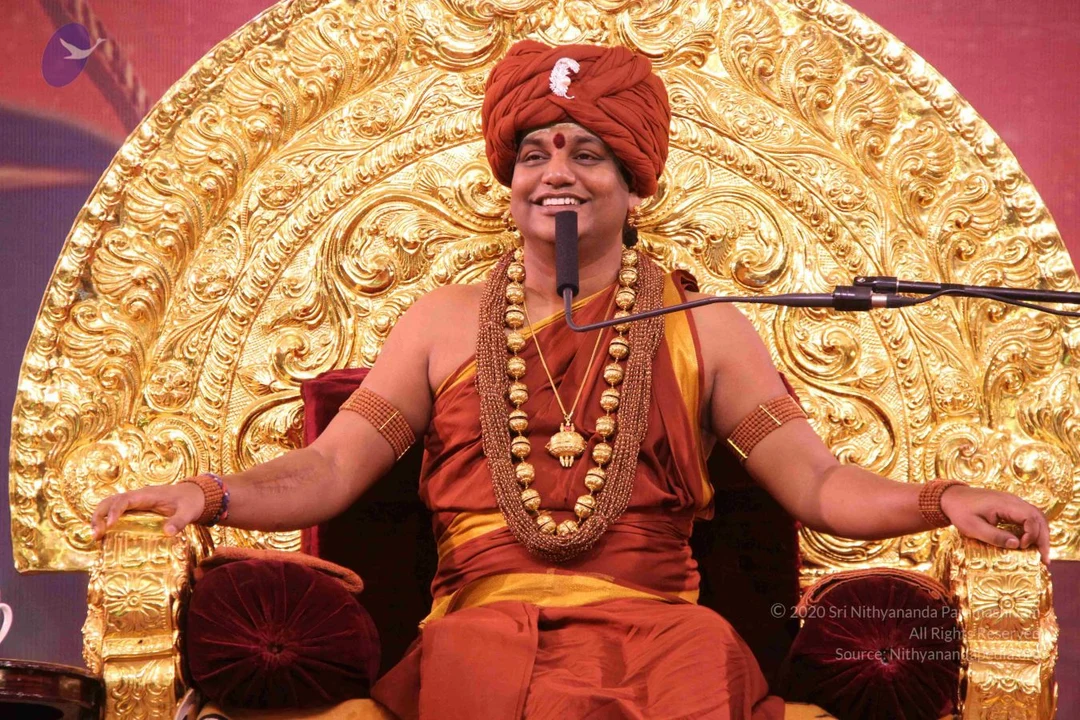
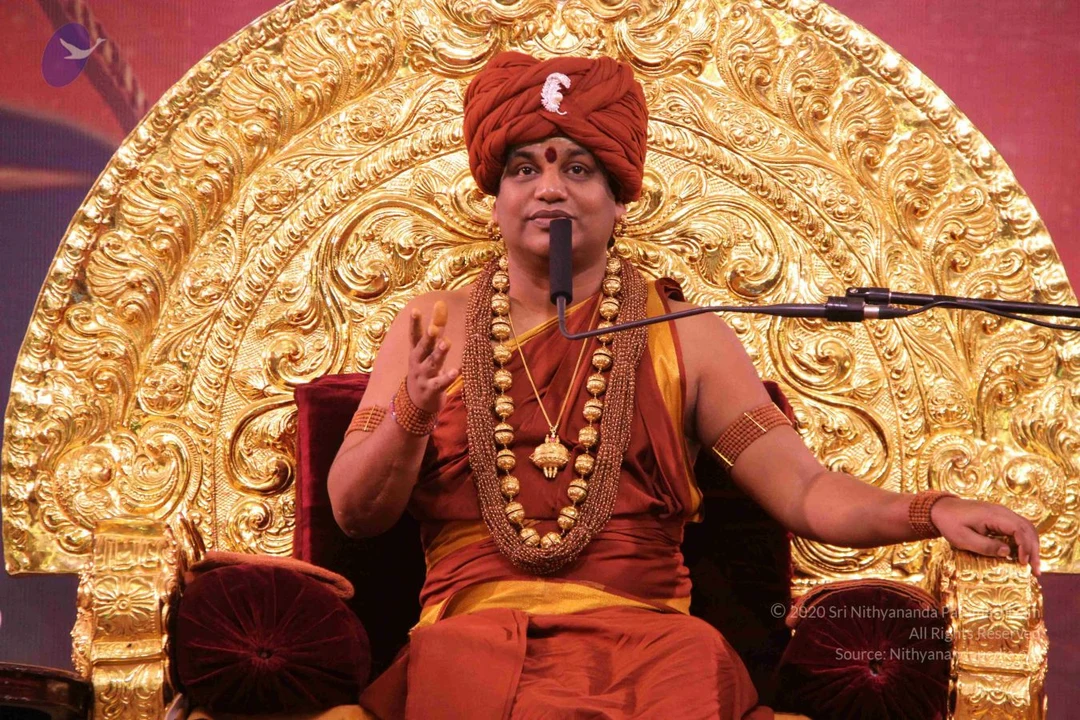
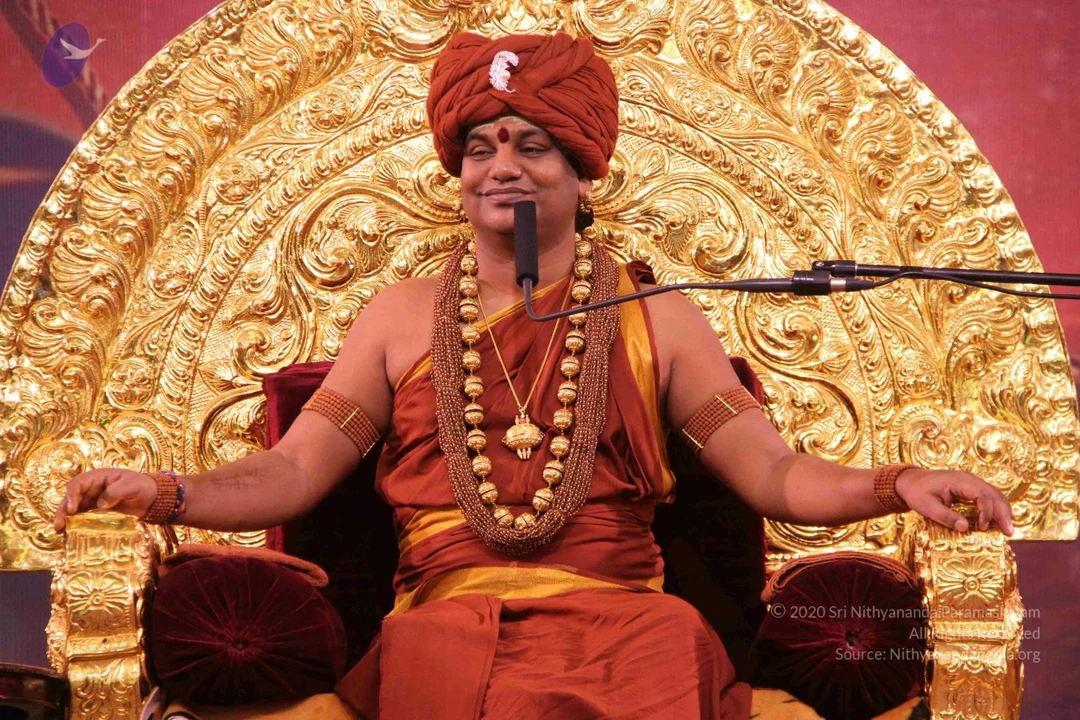
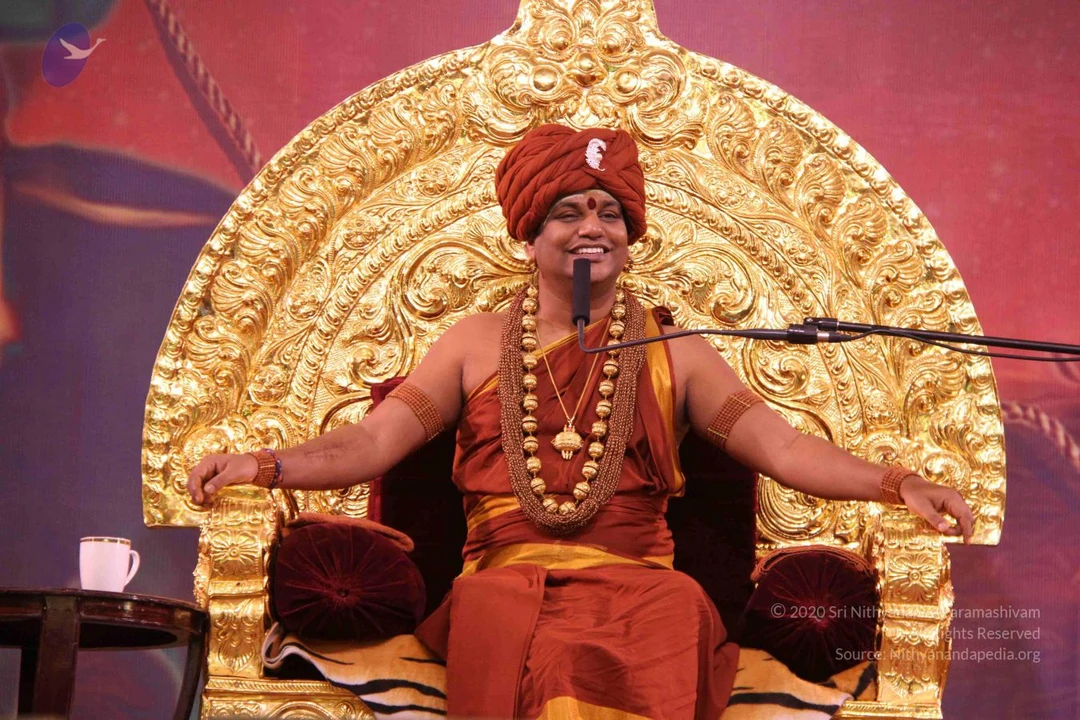
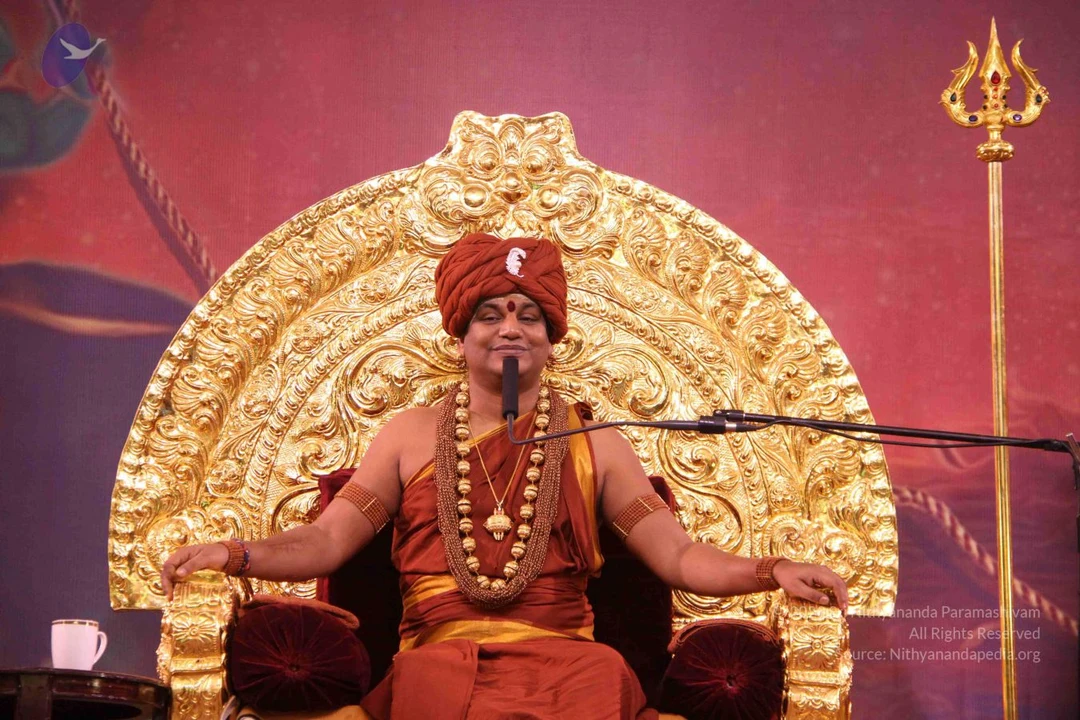
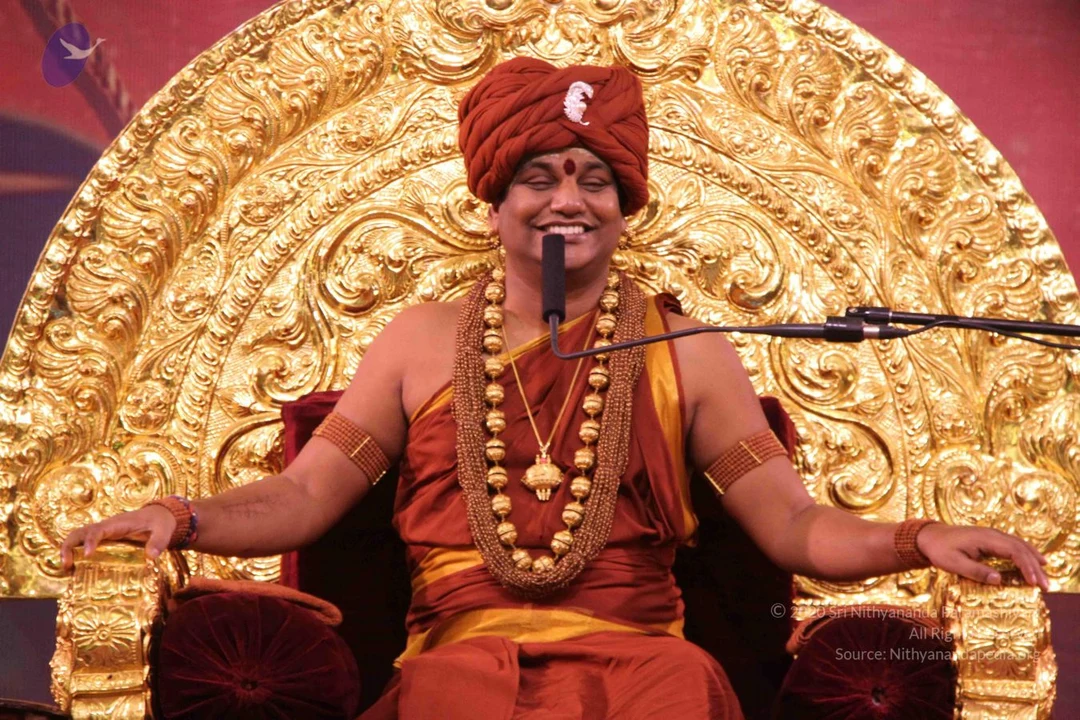
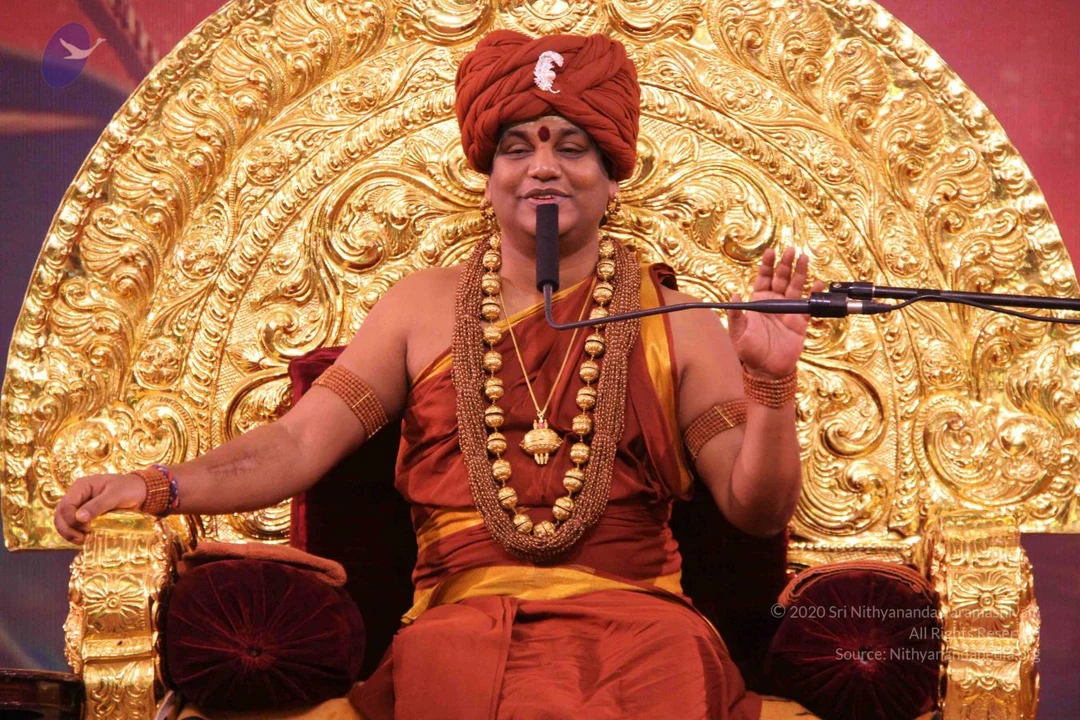
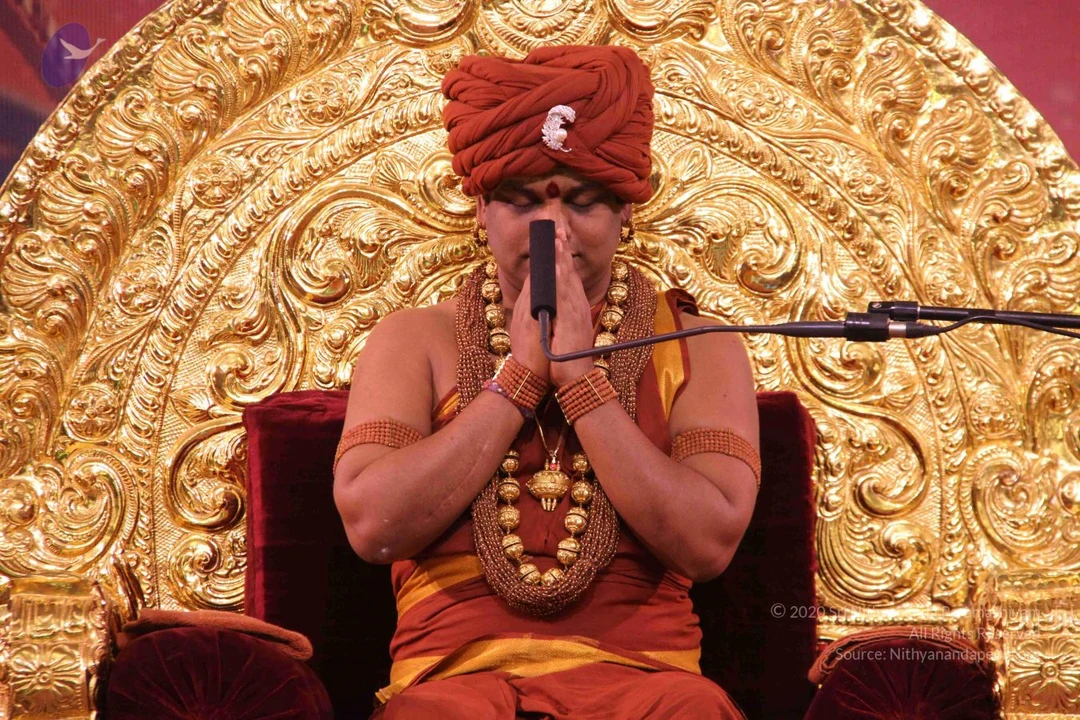
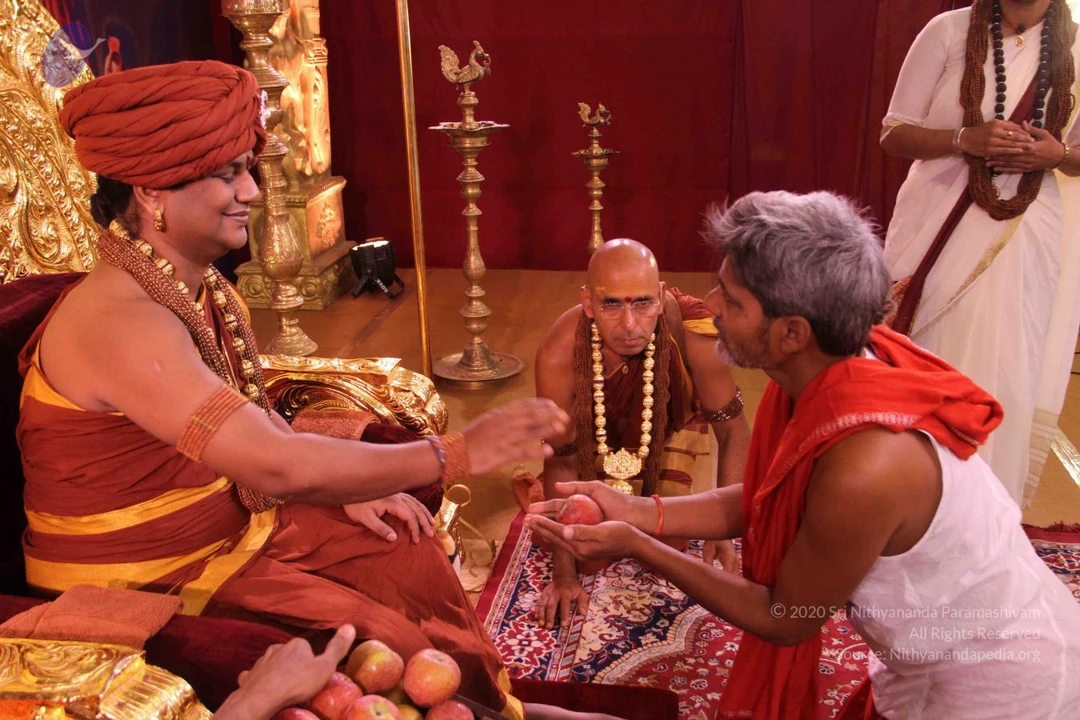
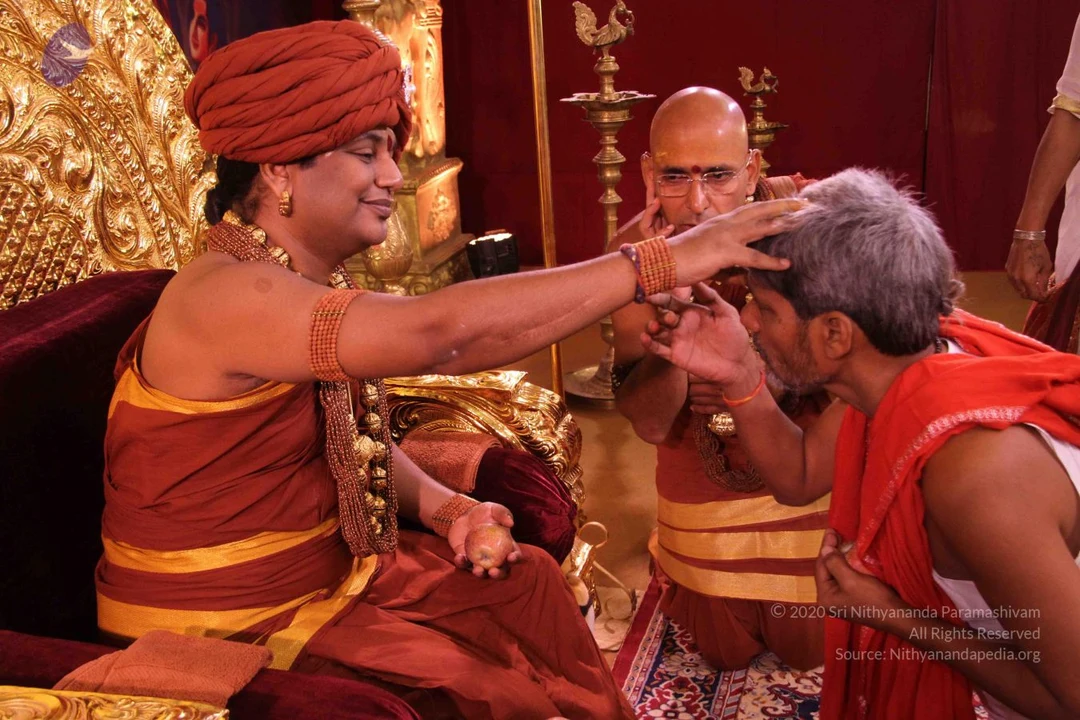
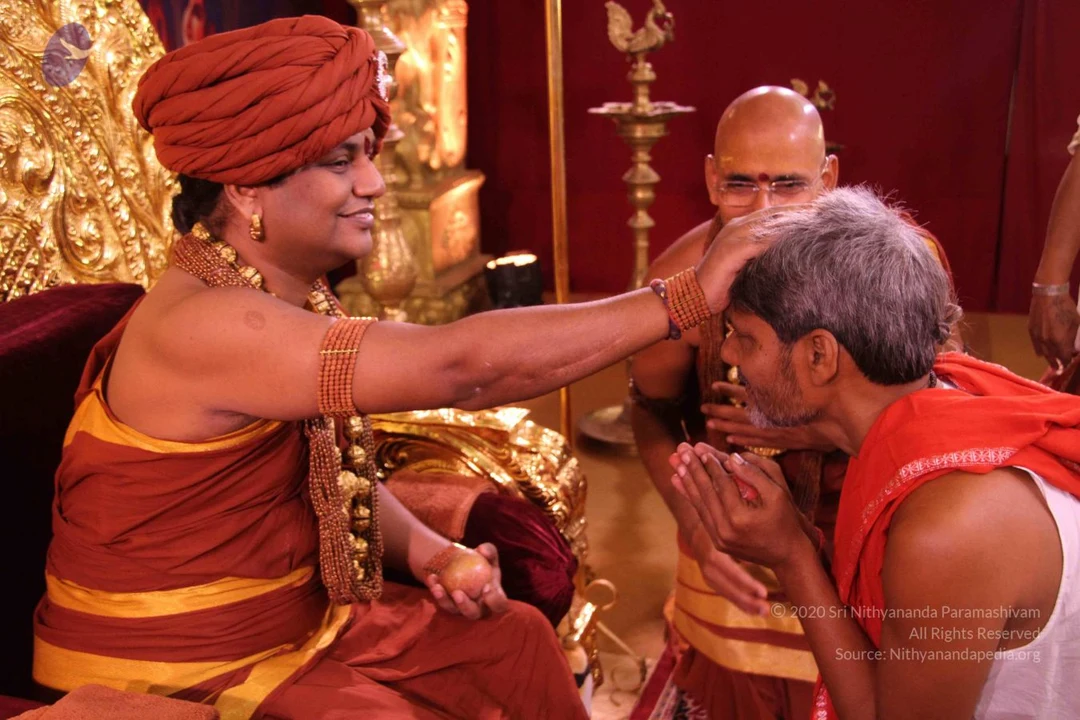
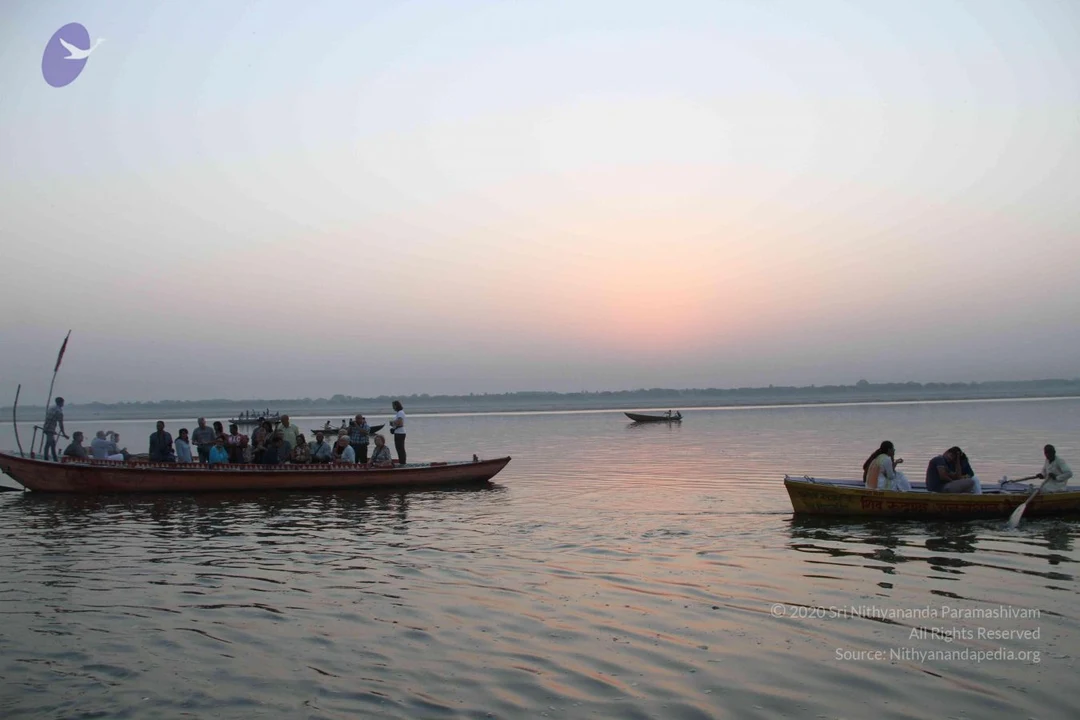
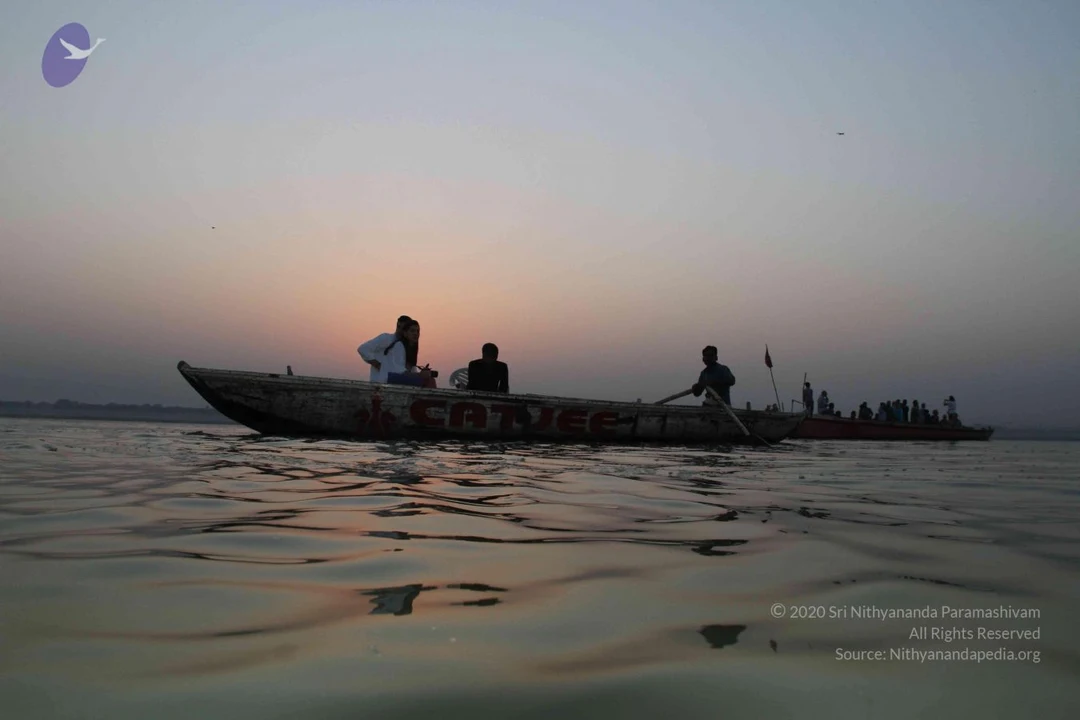
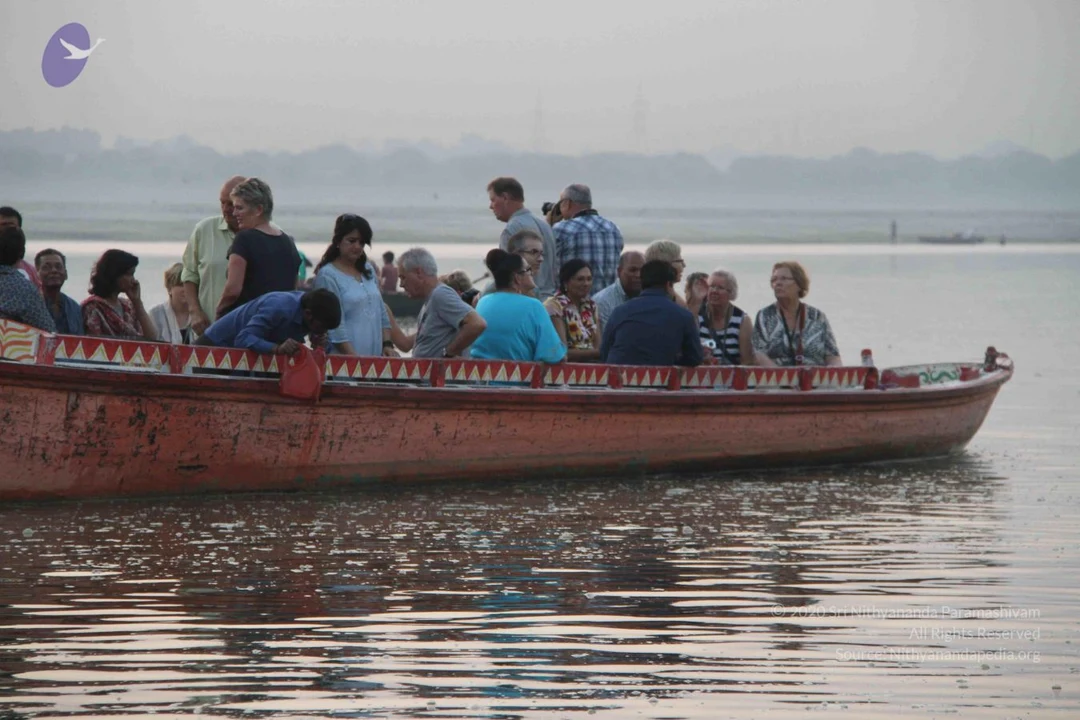
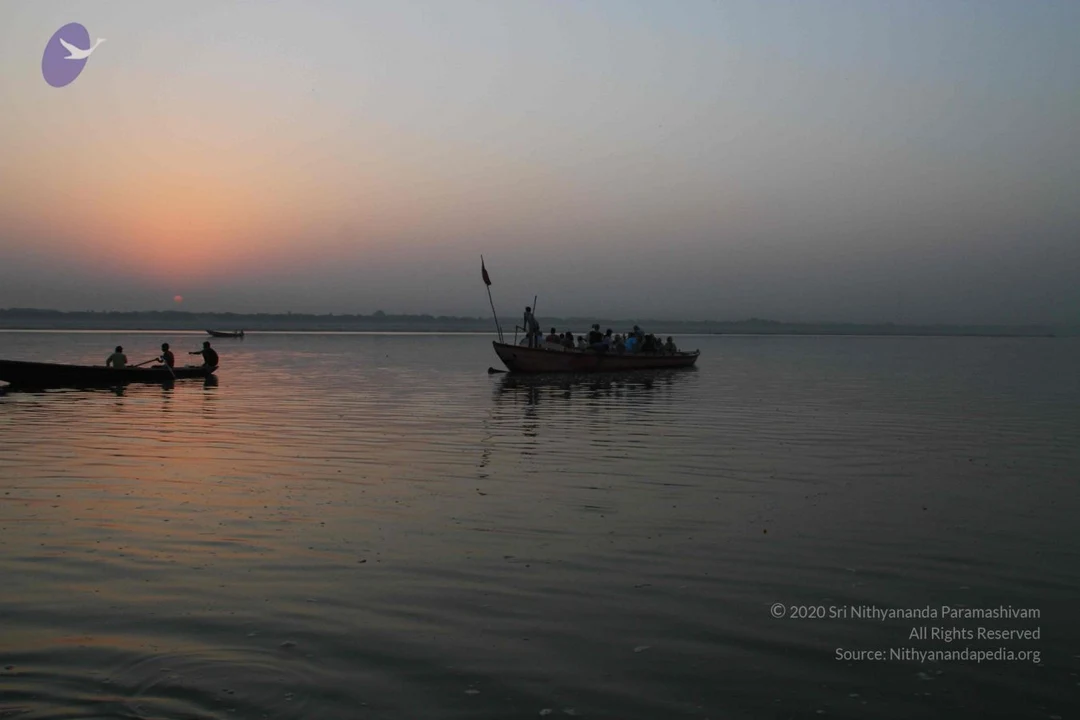
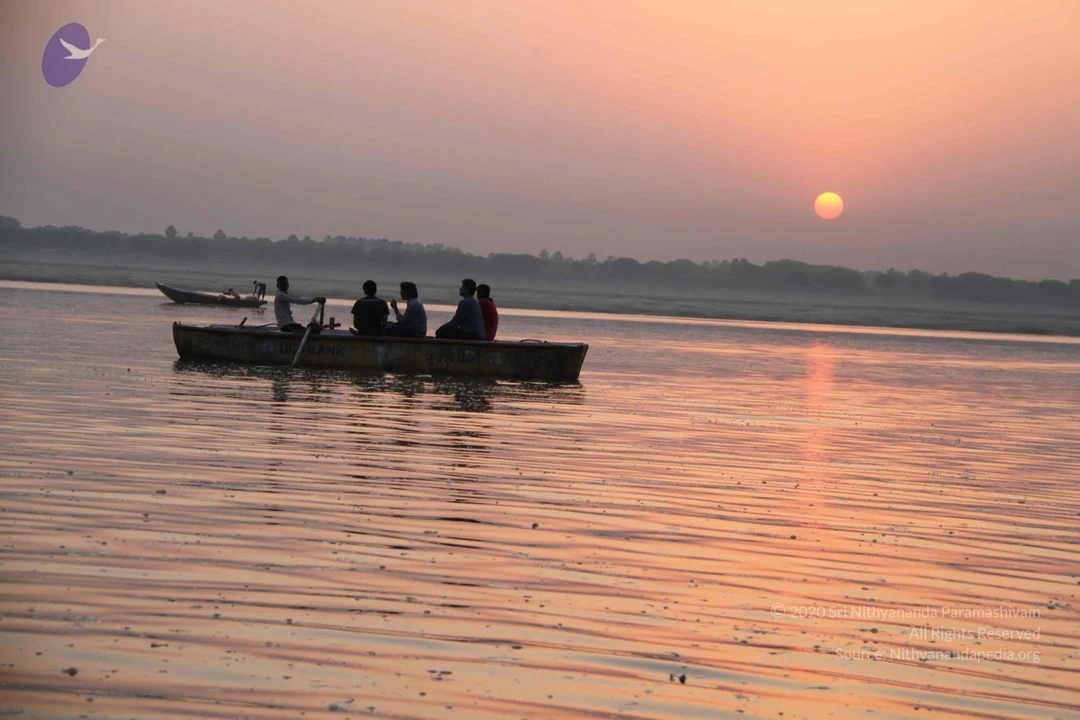
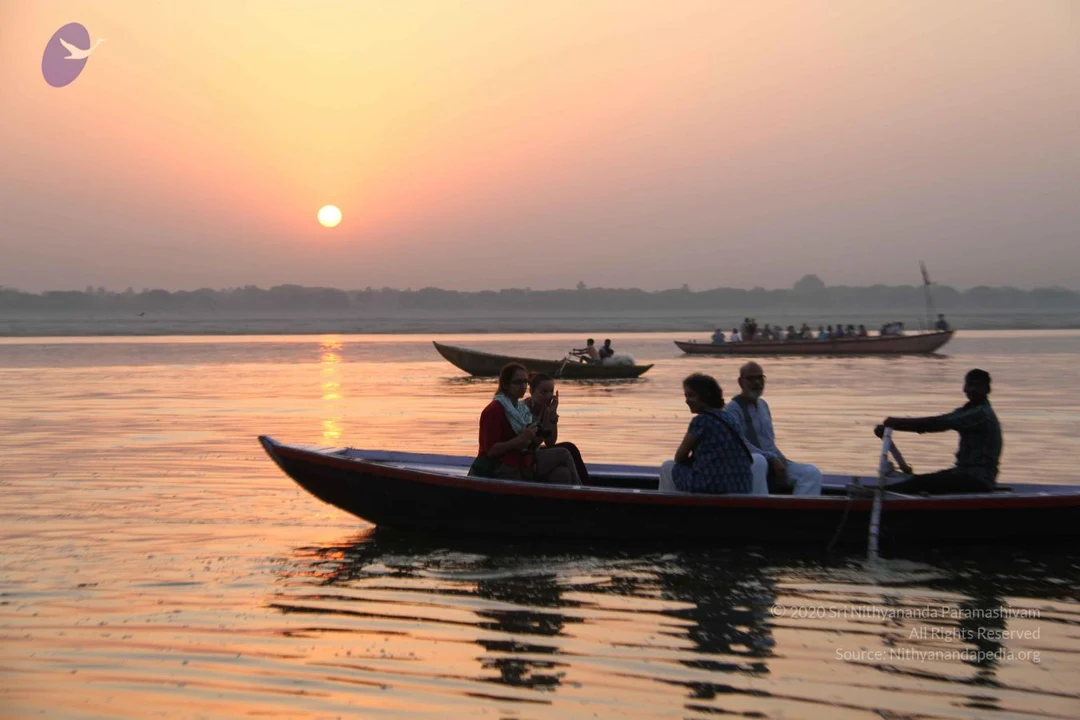
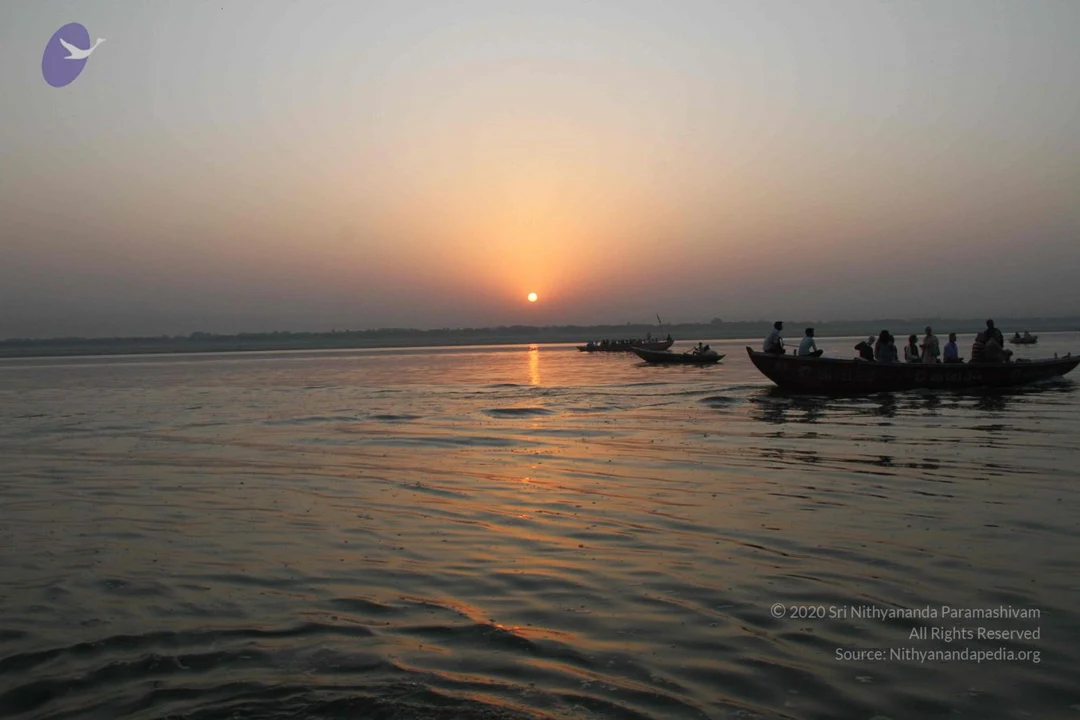
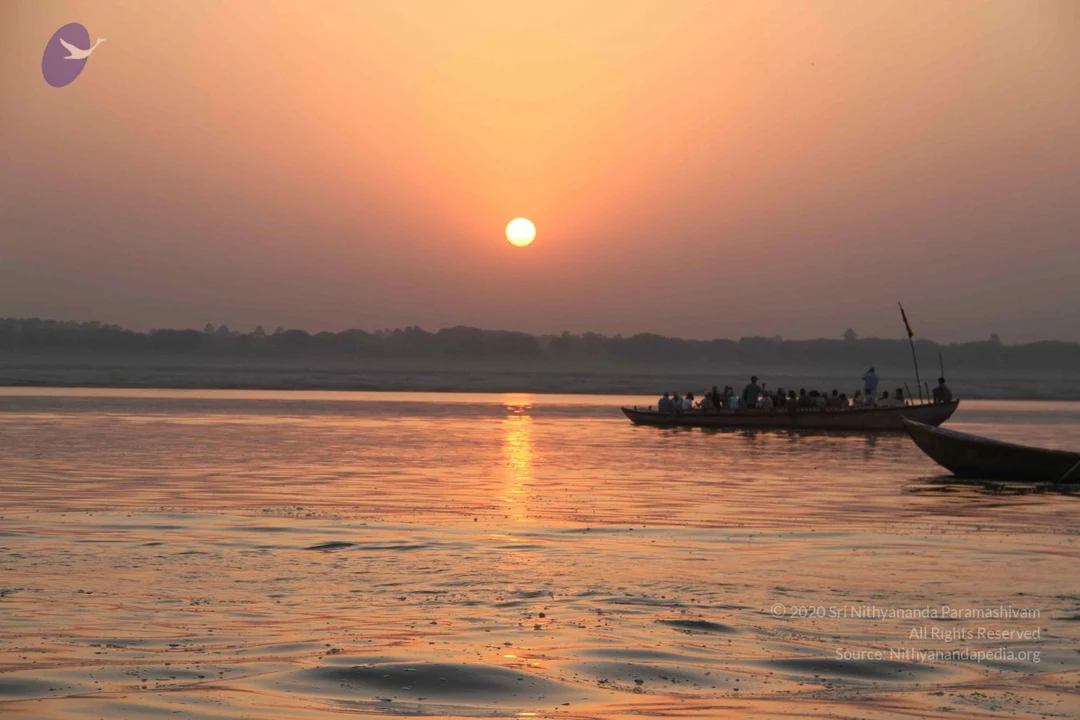
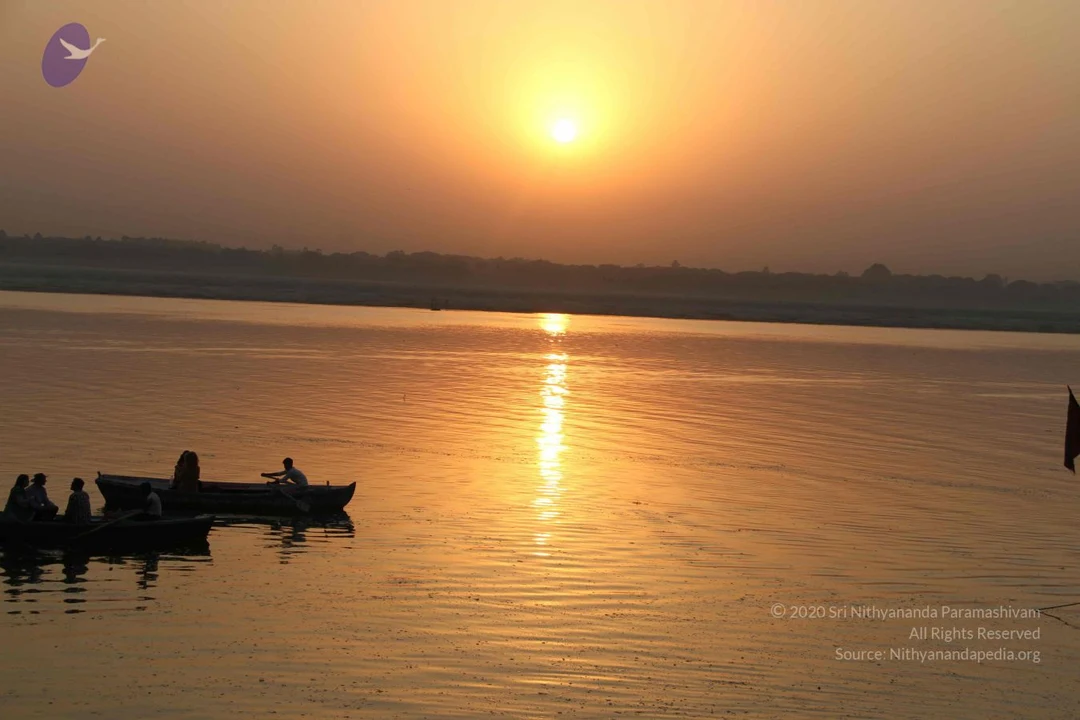
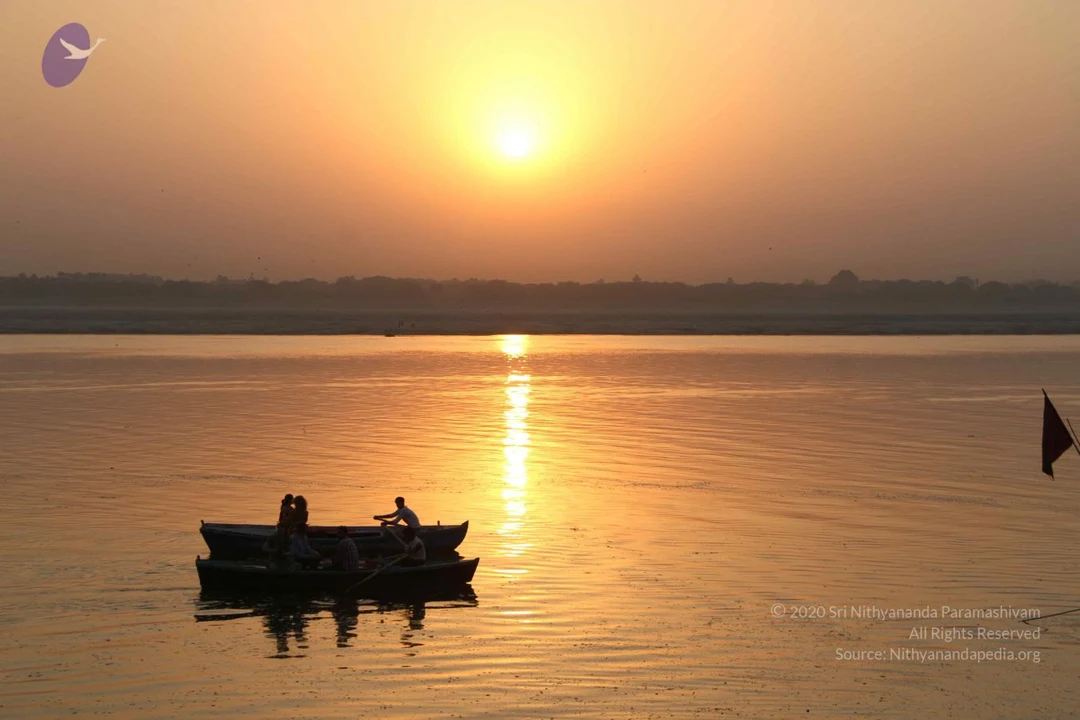
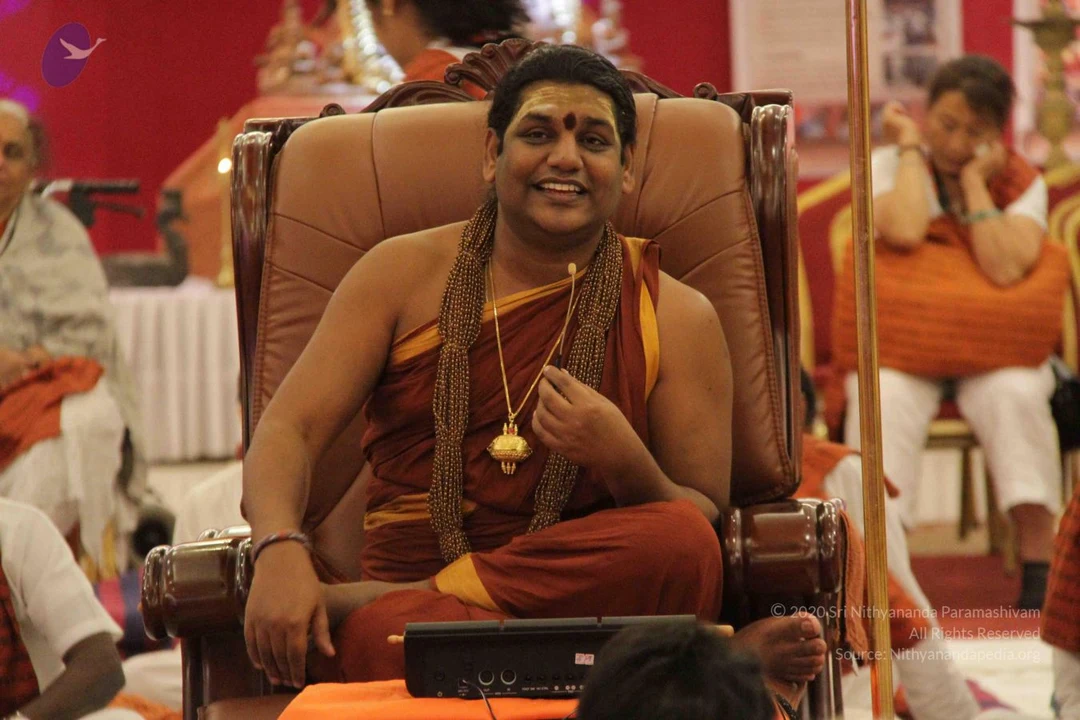
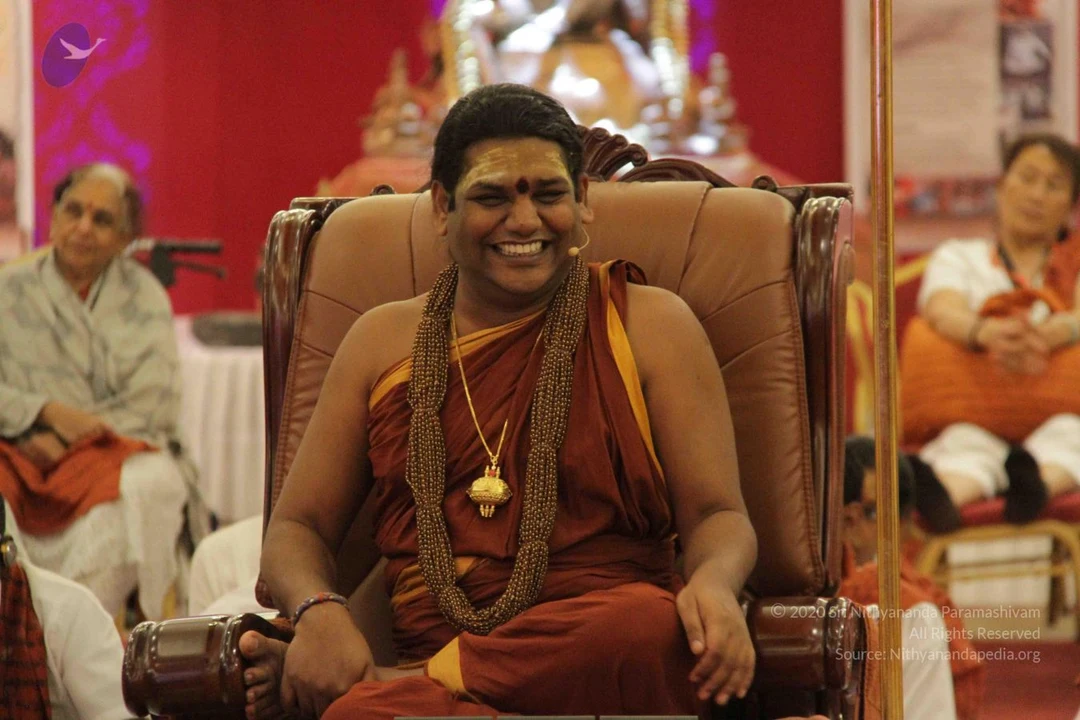
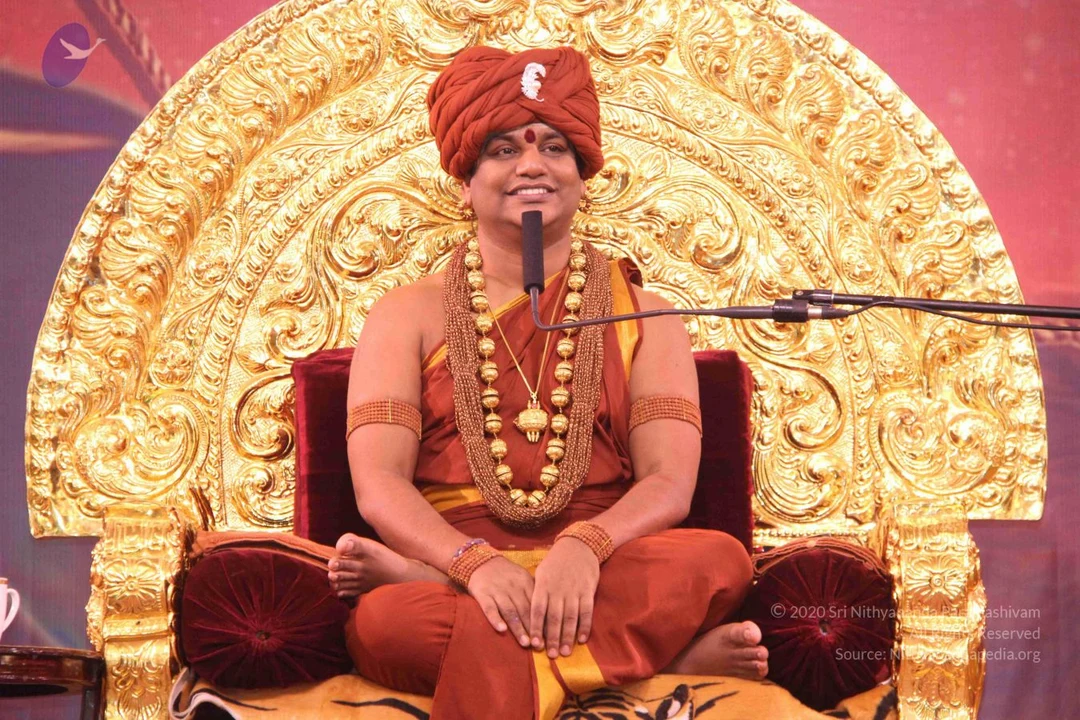
A wide photograph of a calm river at dusk, the water rippling in a circular swirl in the foreground. A small lit oil lamp floats on the surface at the left, its flame reflected in the water. At the upper left, a boat with a canopy carries a few seated people, and a hand holding a small object enters the frame at the left edge. The flat grey hazy shoreline stretches across the background under a pale sky.A seated figure in a red-orange turban with a small white emblem and a red bindi sits cross-legged on a red velvet cushion before an ornate gilded throne with carved scrollwork. He wears a rust-red garment with a yellow sash, layered gold-beaded necklaces and a rudraksha-style mala, and orange bands on his upper arms. His palms are pressed together at chest level with eyes closed, in a devotional gesture, with a microphone on a stand before him. A tiger-striped mat lies beneath the throne, a white cup sits on a side table at left, and a red-and-pink backdrop with a painted border fills the background.A sunrise over a wide, calm river at Varanasi, with the orange sun low in a hazy sky and its golden reflection stretching across the water. Along the far bank a line of dark trees is silhouetted. In the lower left, two small wooden boats drift on the river: one carries a rower in light clothing and a seated figure, and the other holds several passengers sitting close together. A red flag edge is visible at the right edge of the frame.

October 11 2015

Original wiki page
Contents

Title:

Seeking Is The Essence Of Life.

Description:

The moment authentic seeking is awakened in us, simply the realization happens.

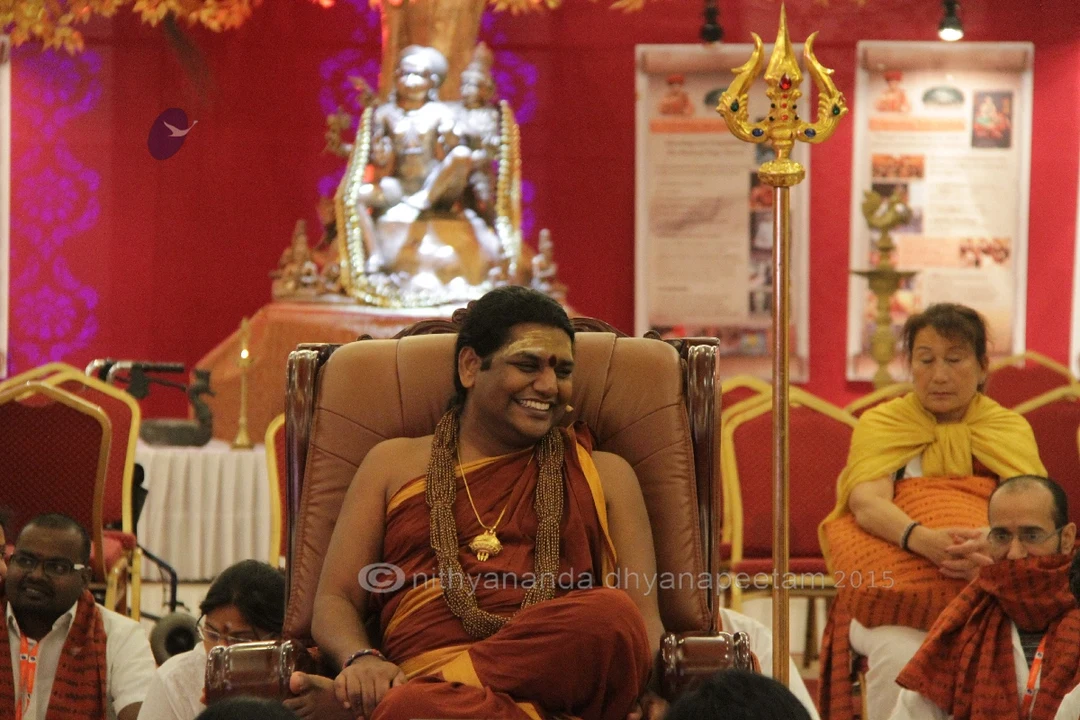
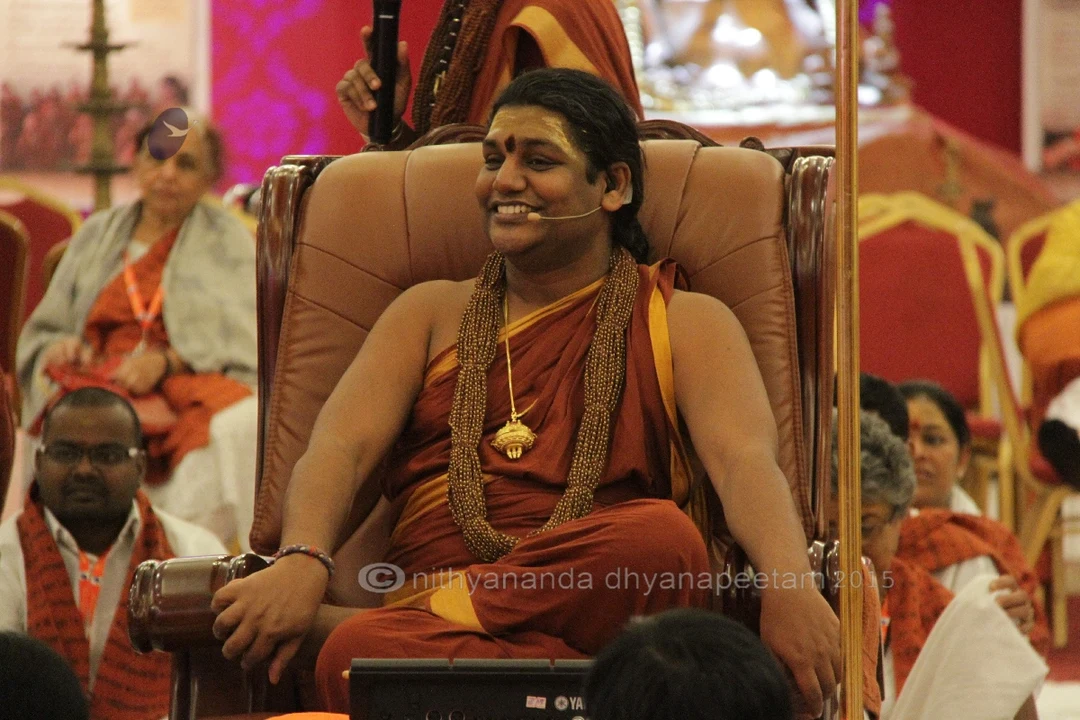
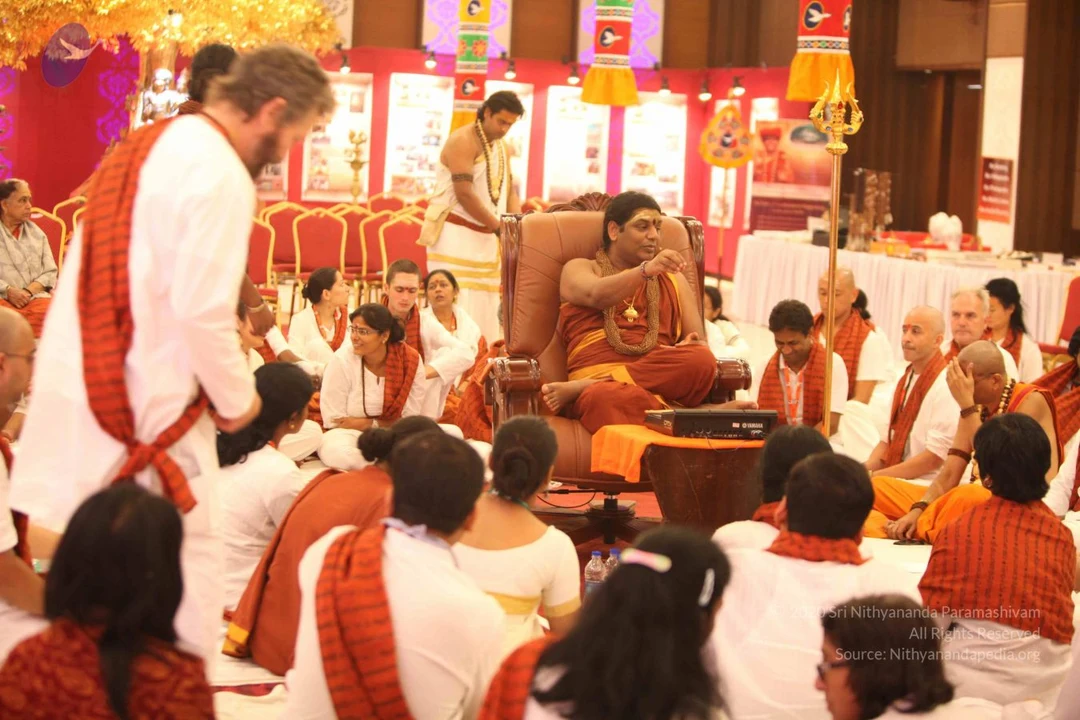
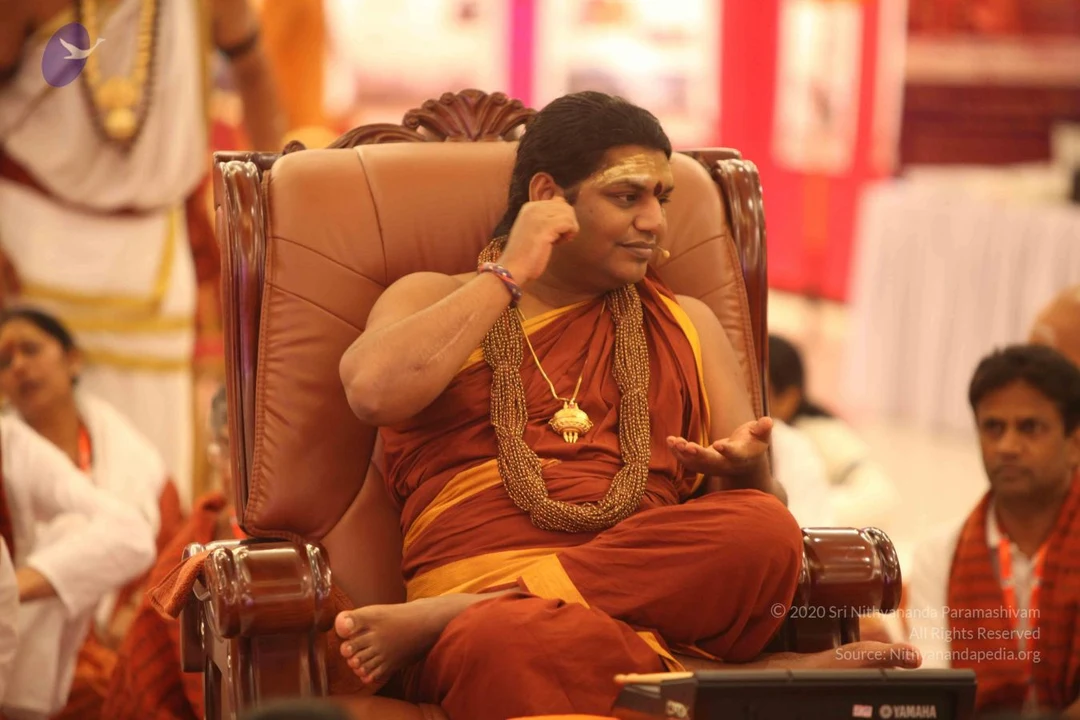
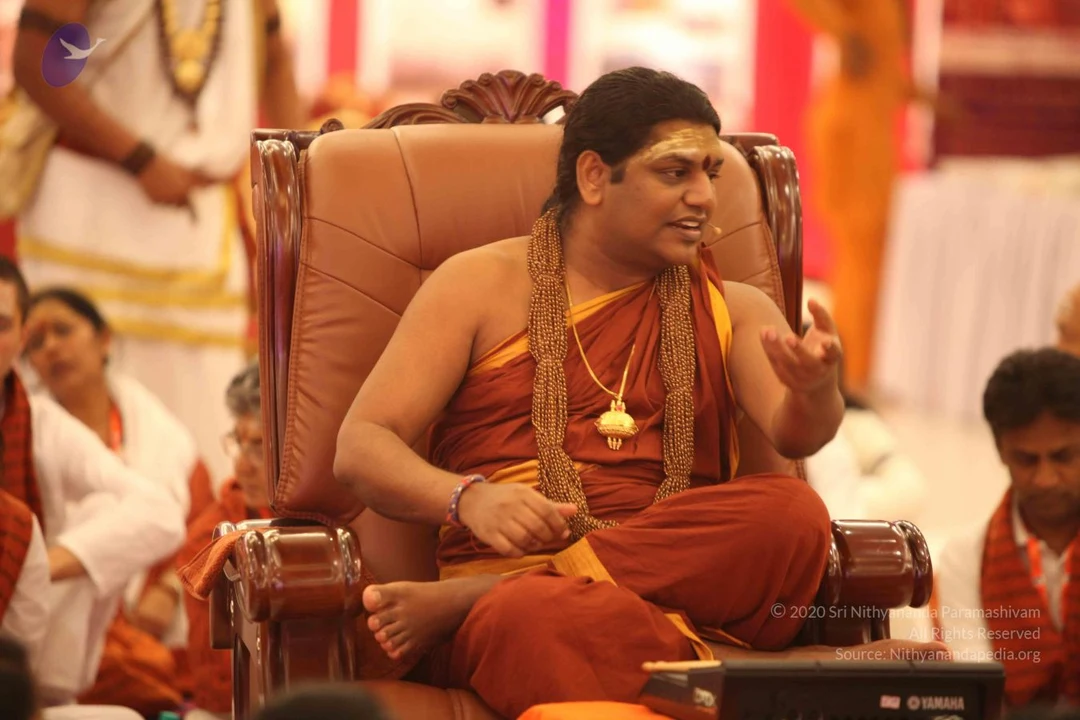
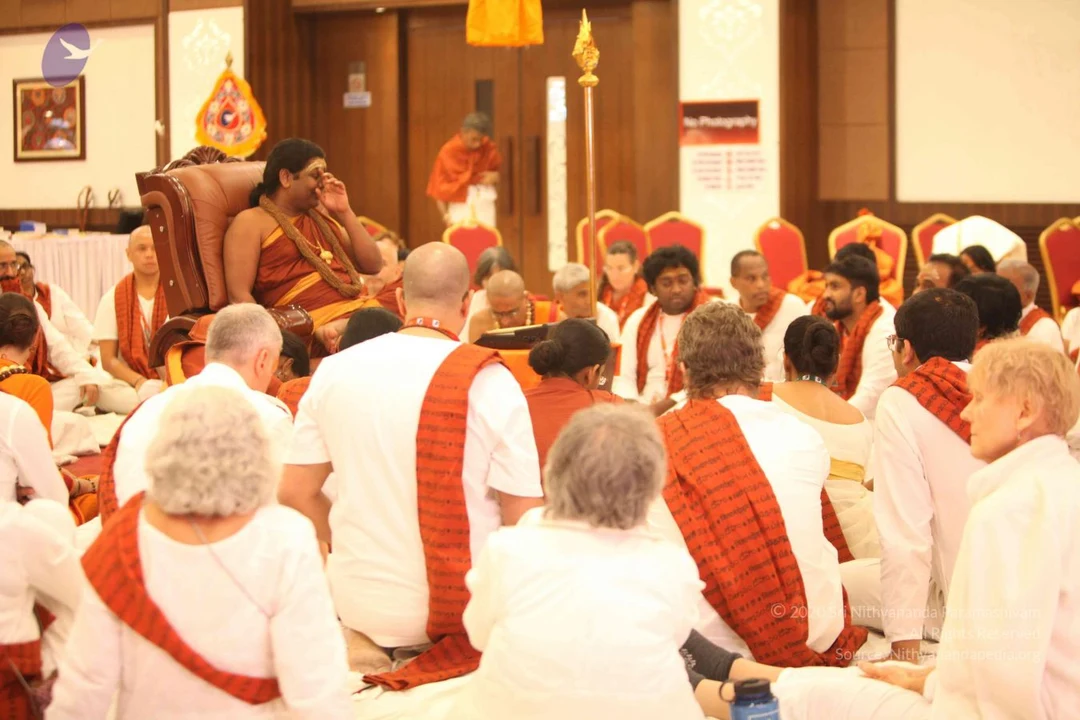
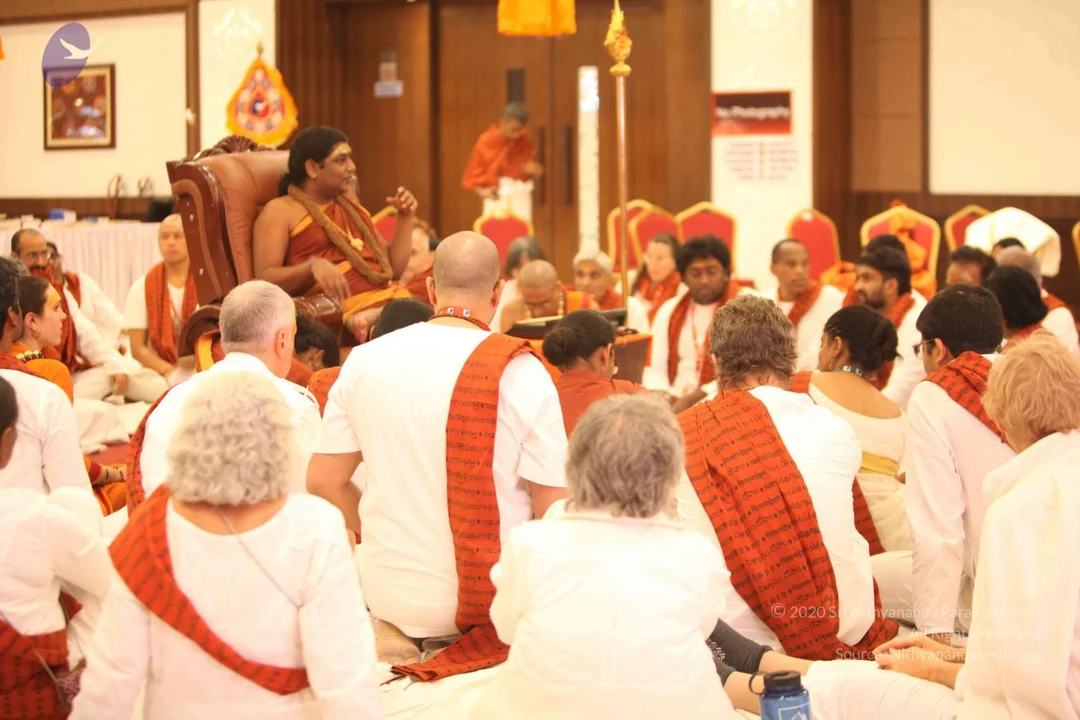
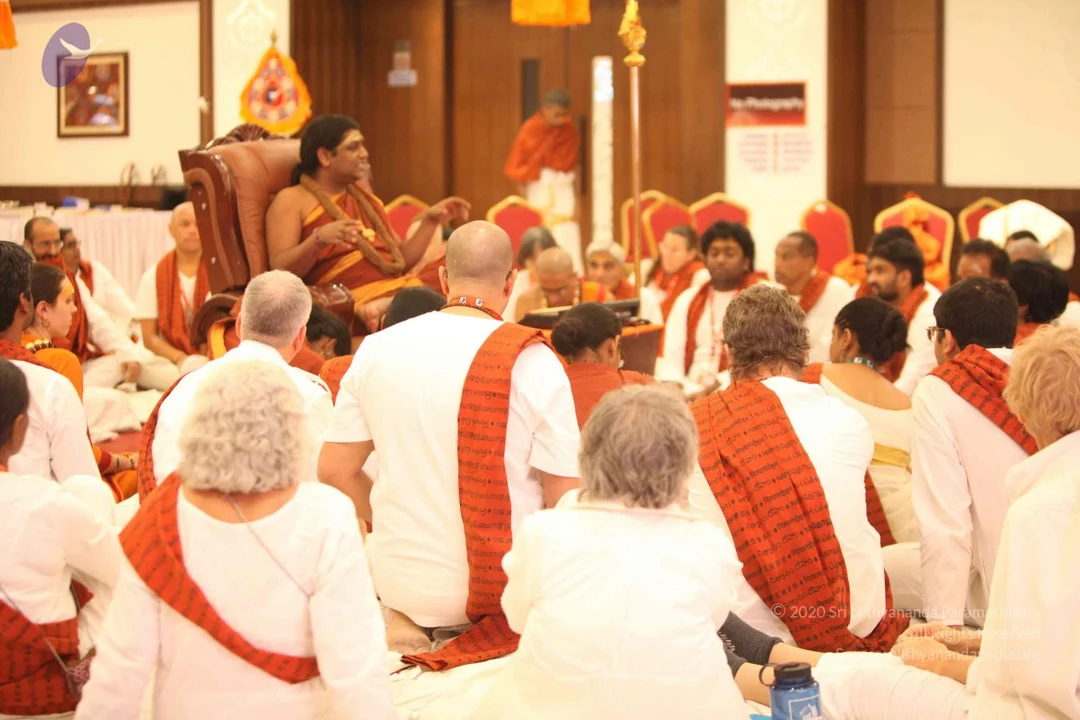
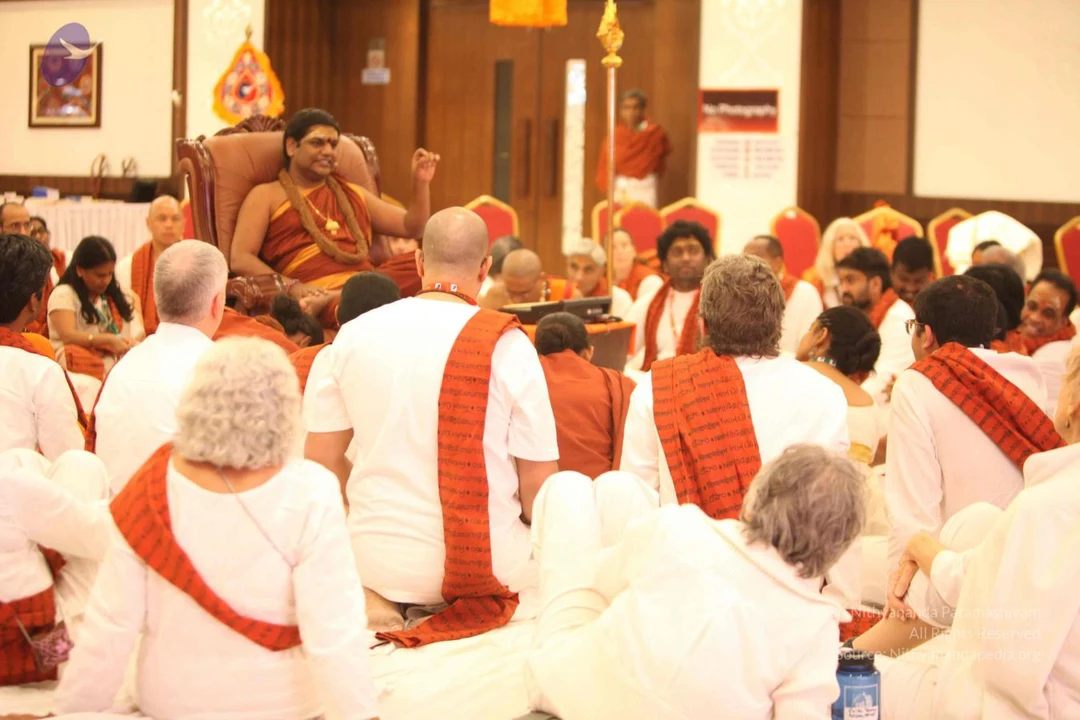
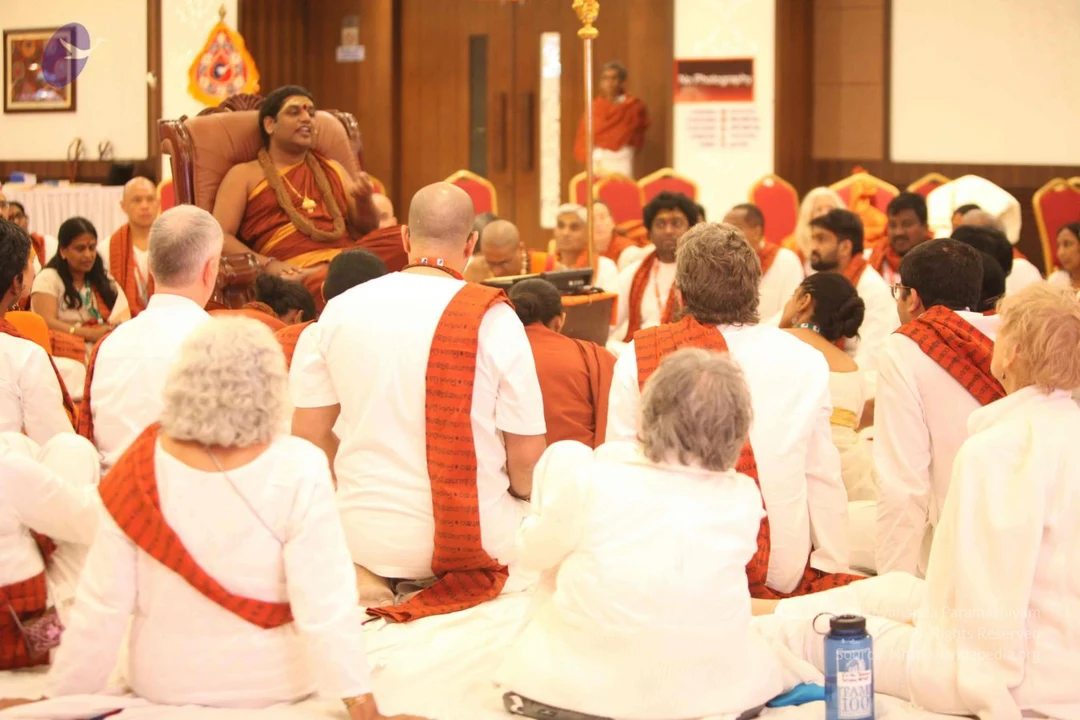
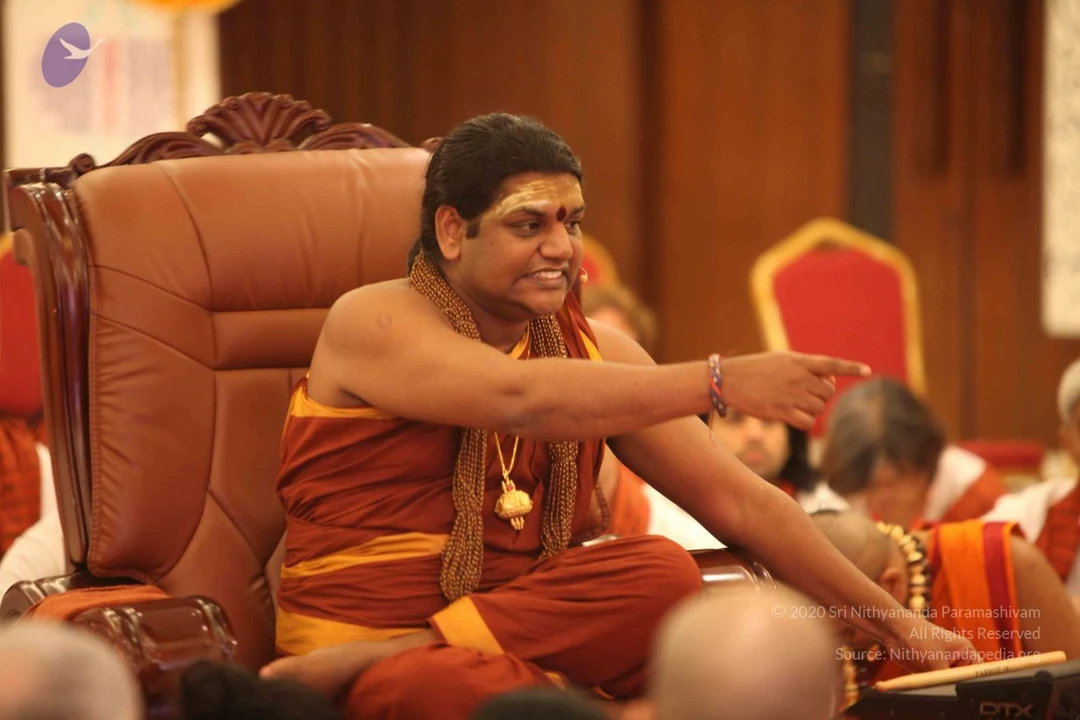
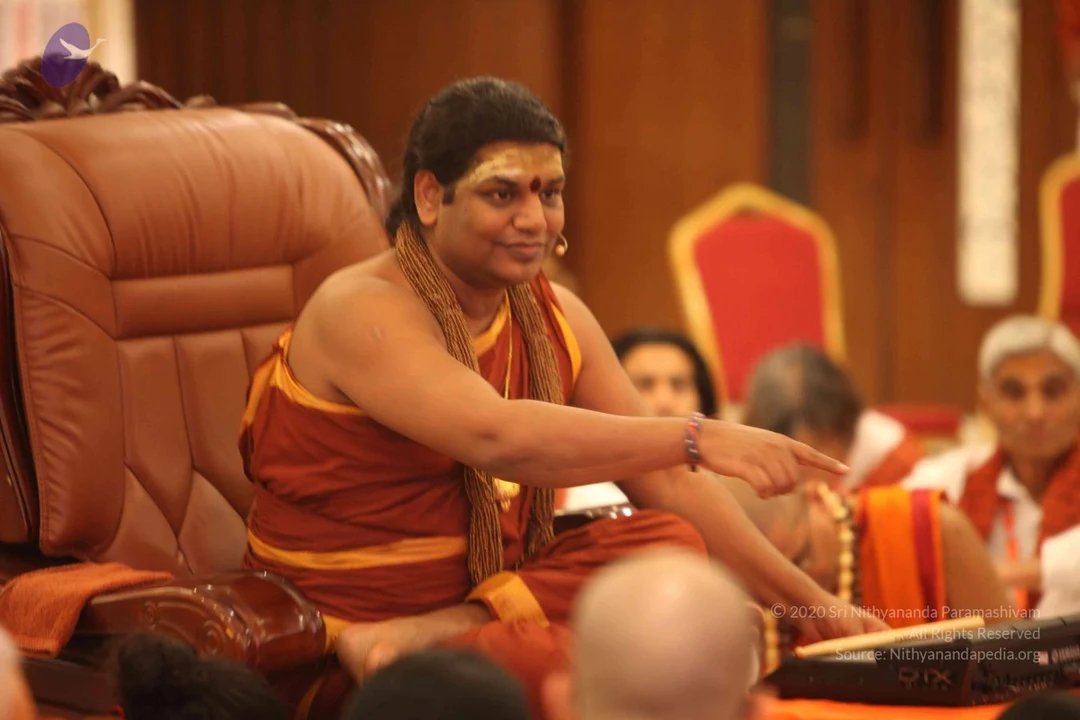
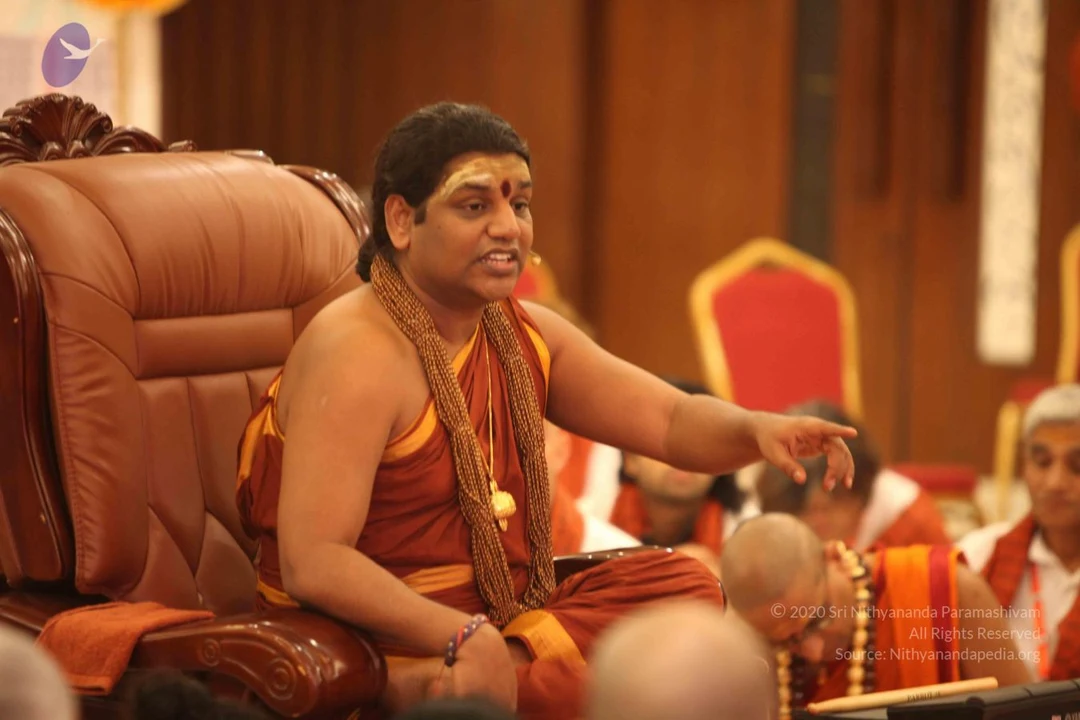
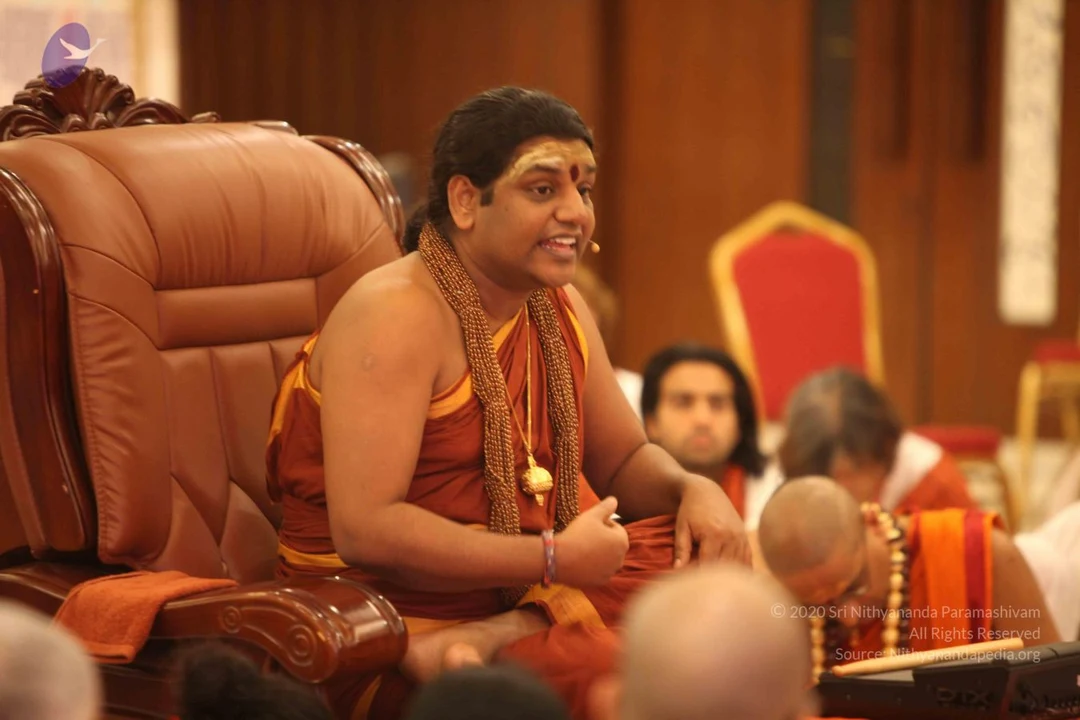
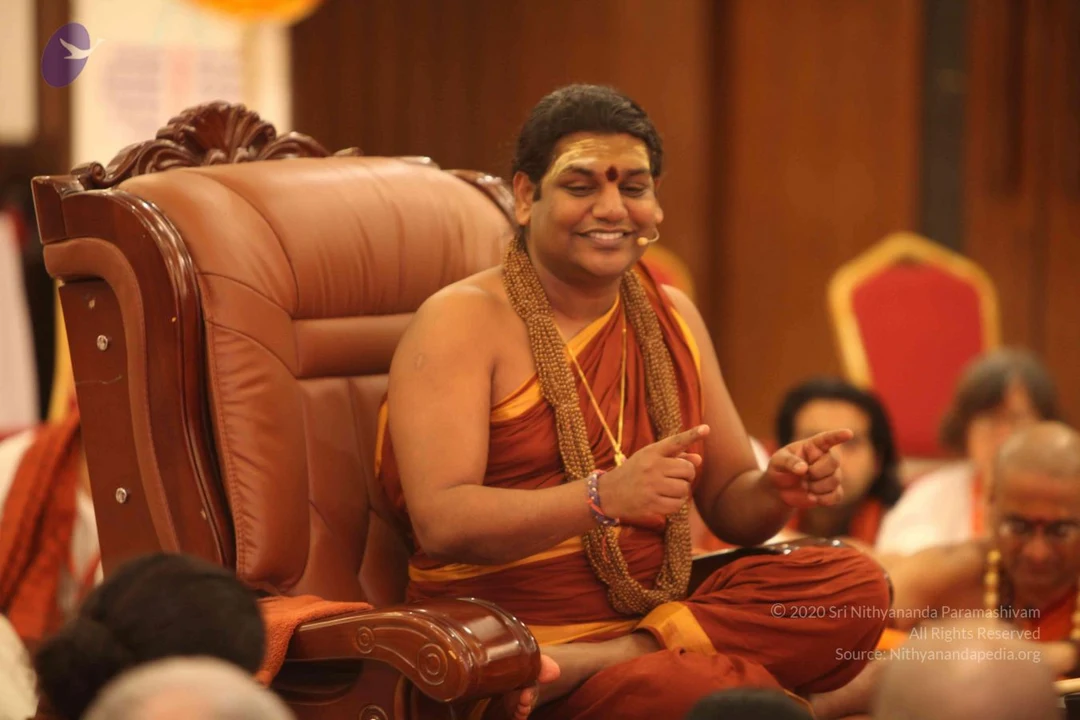
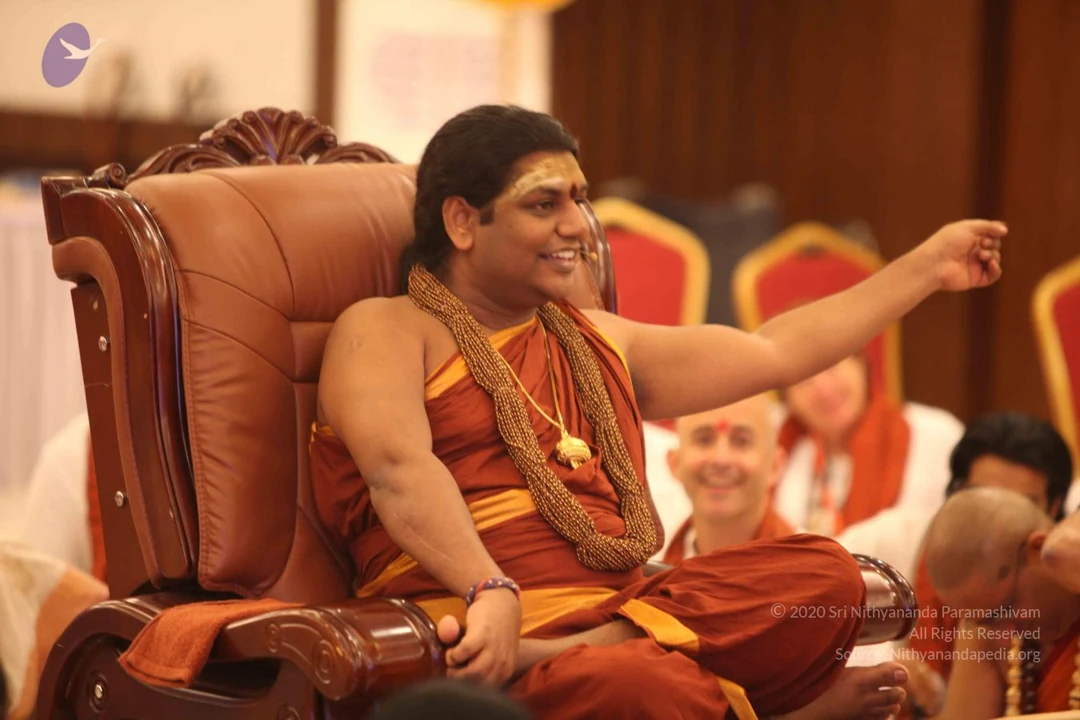
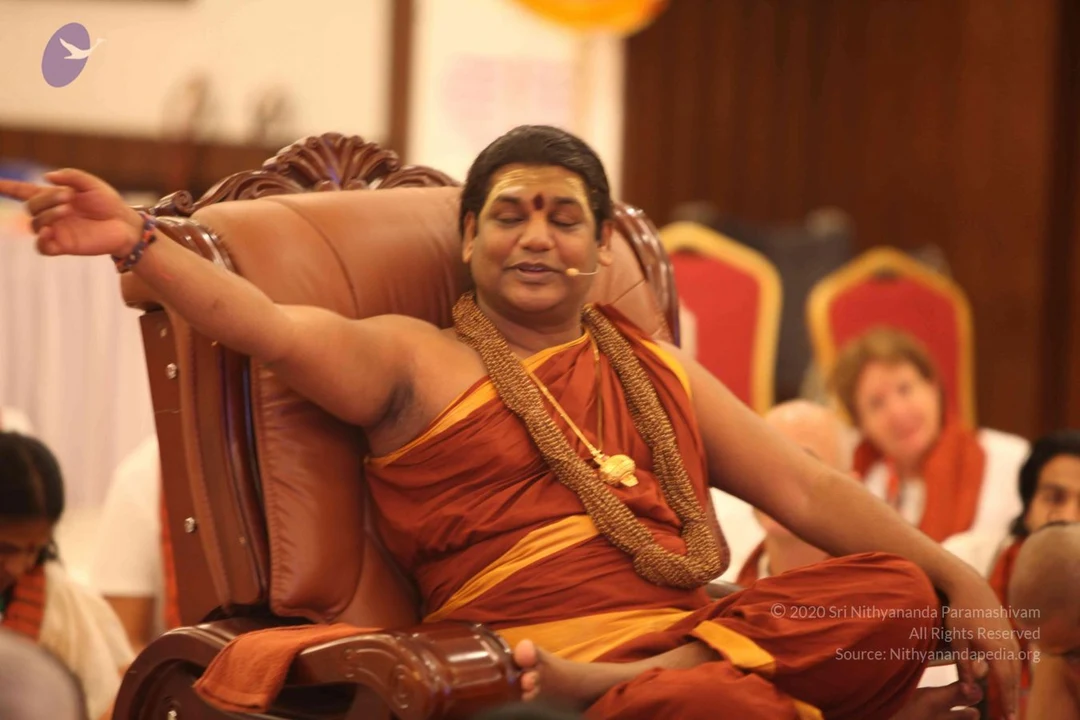
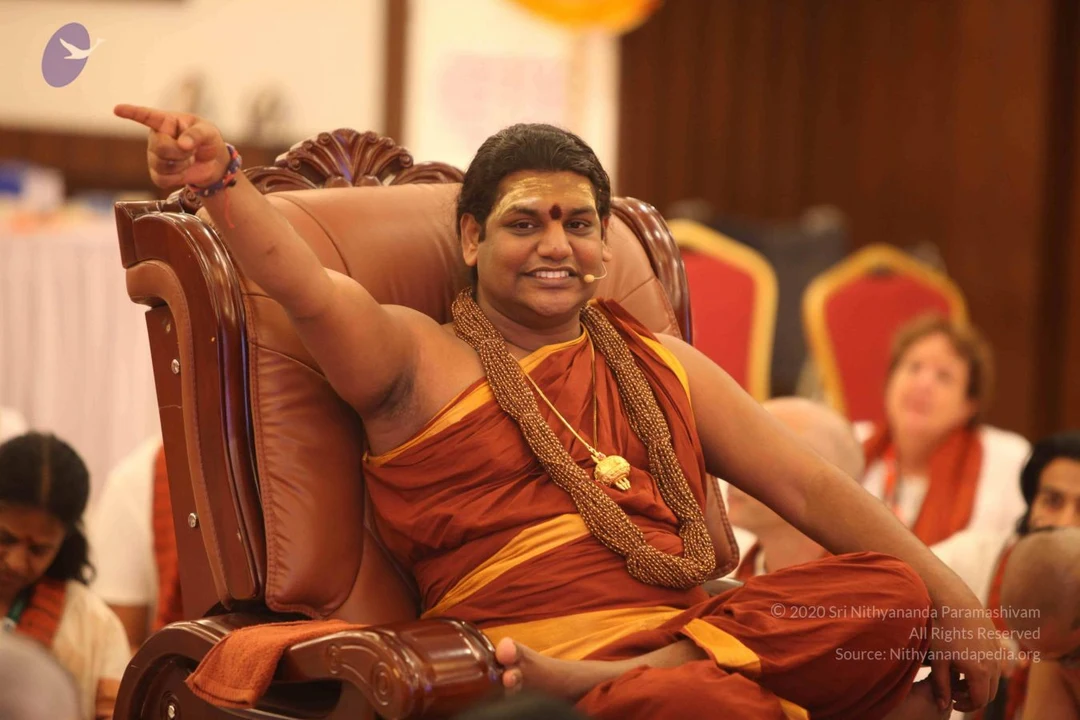
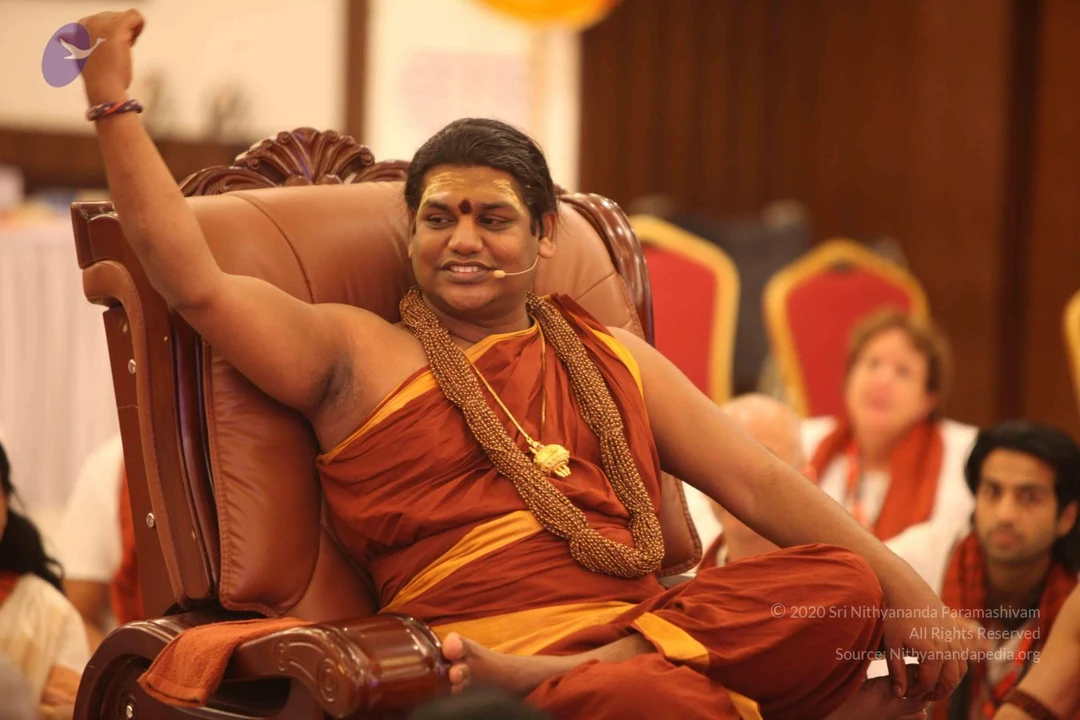
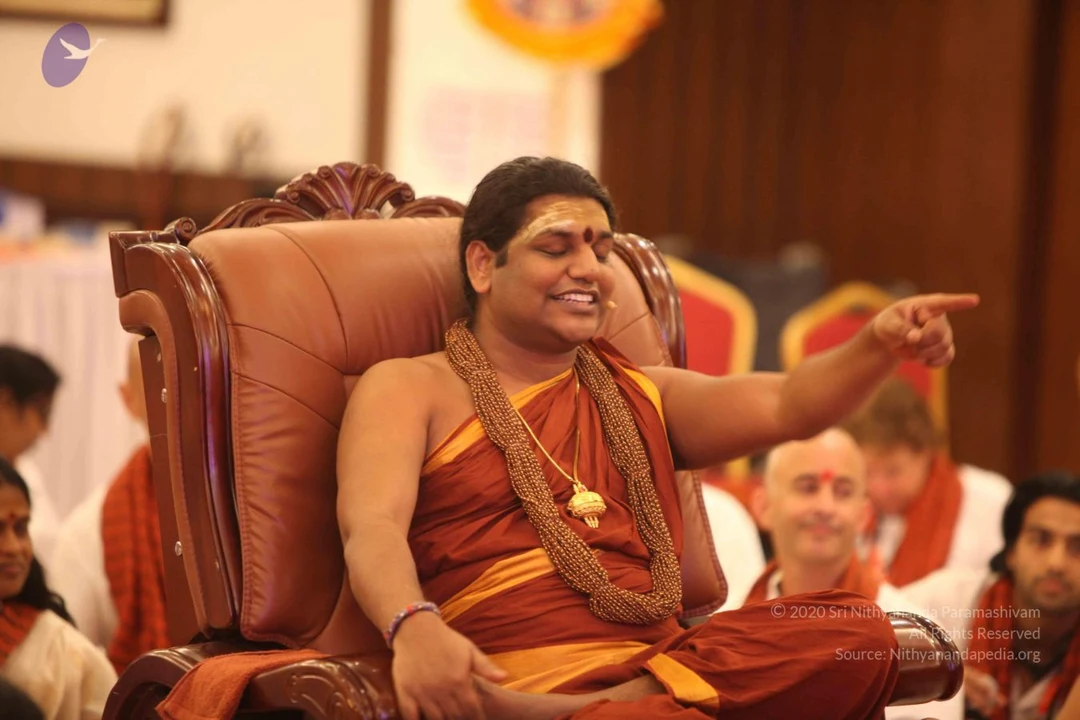
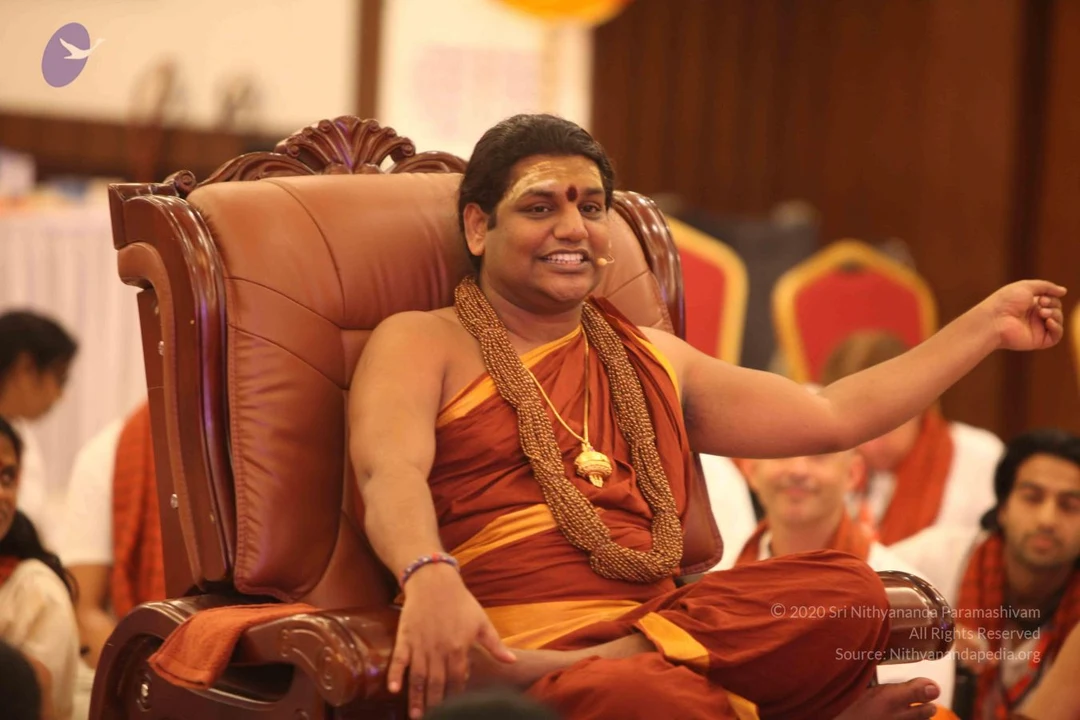
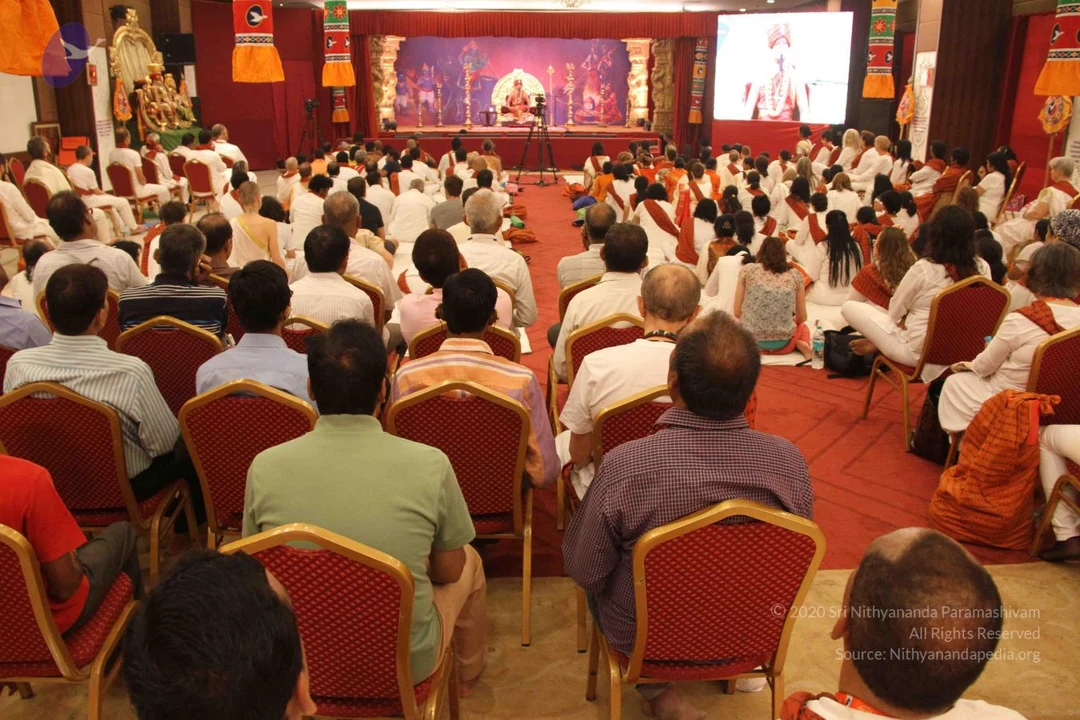
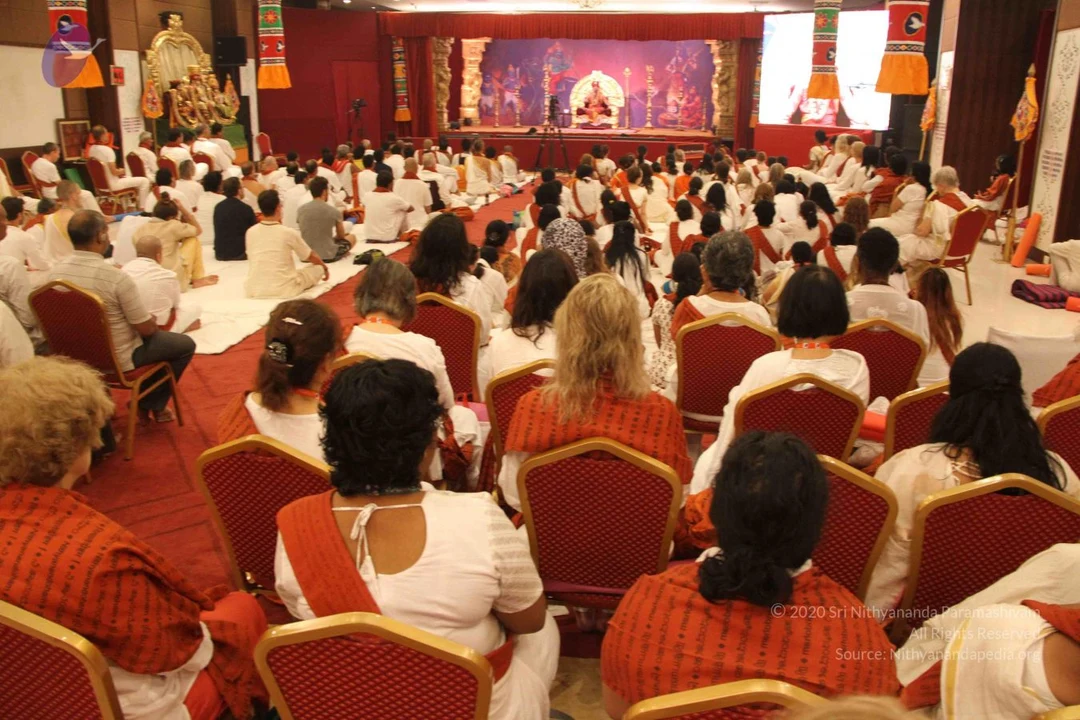
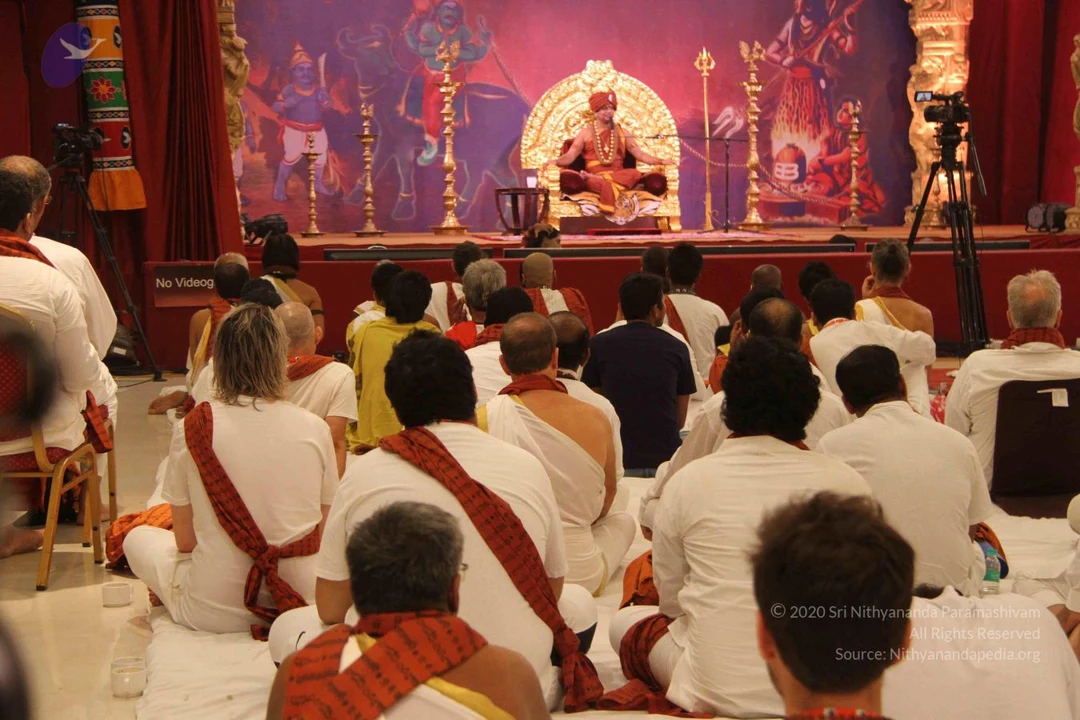
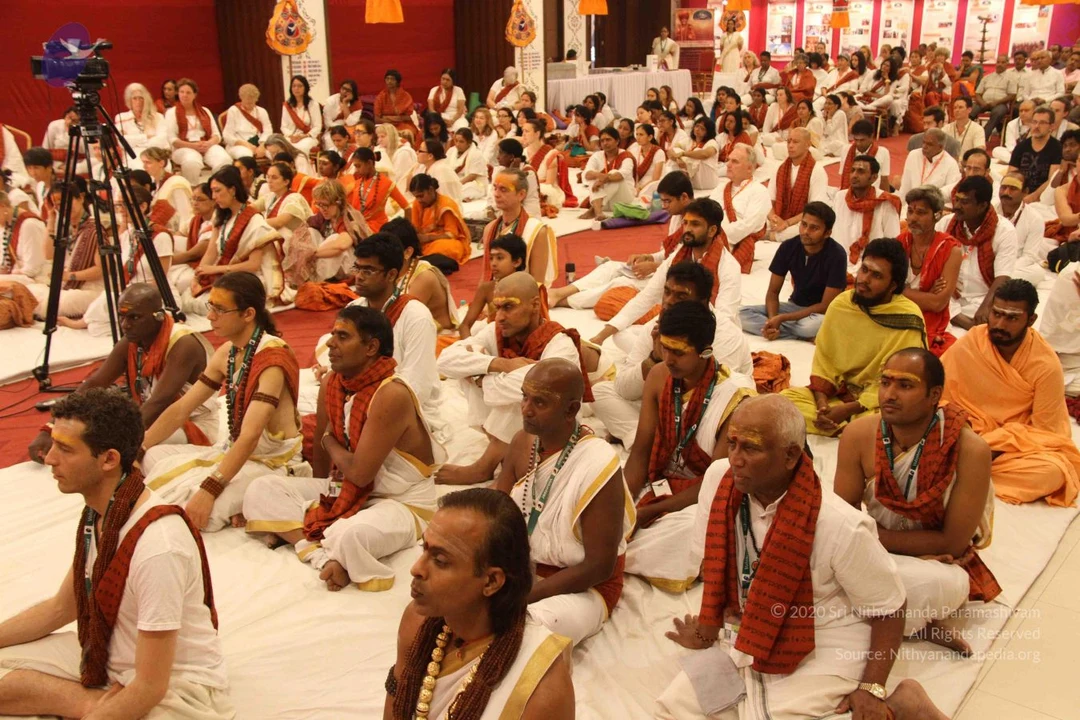
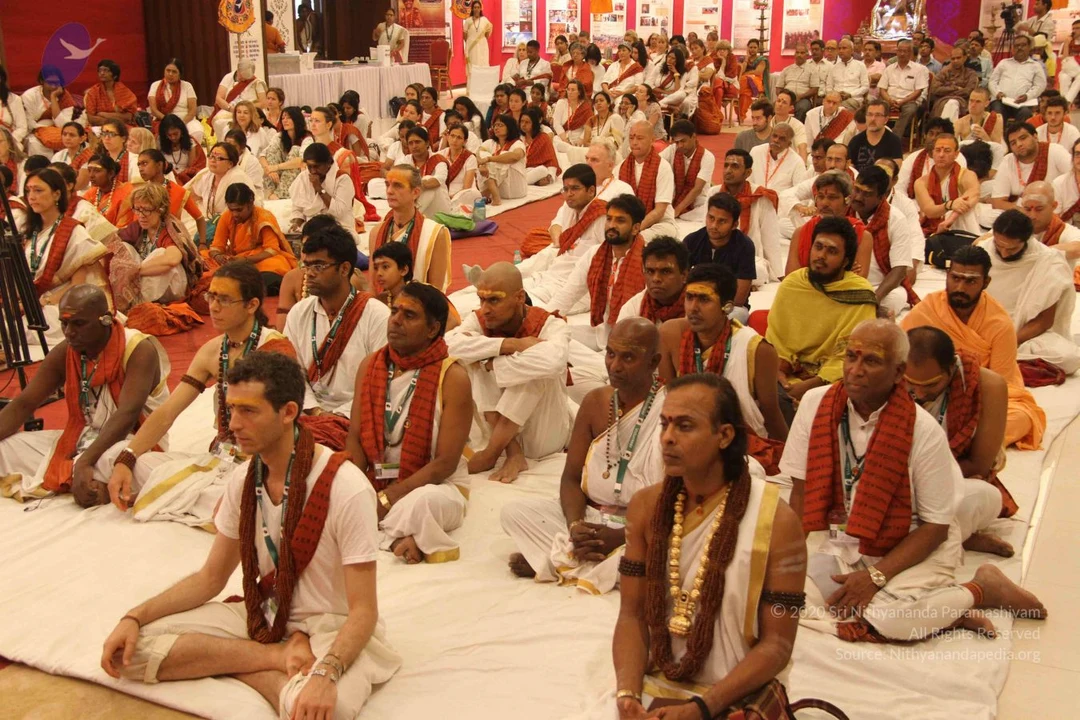
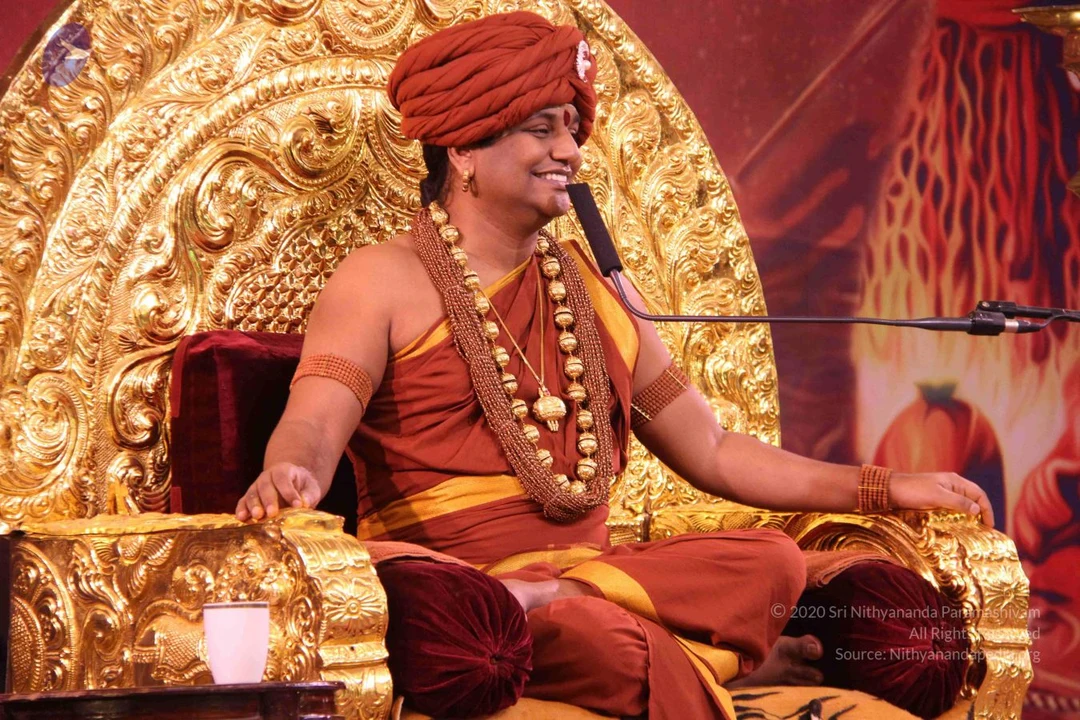
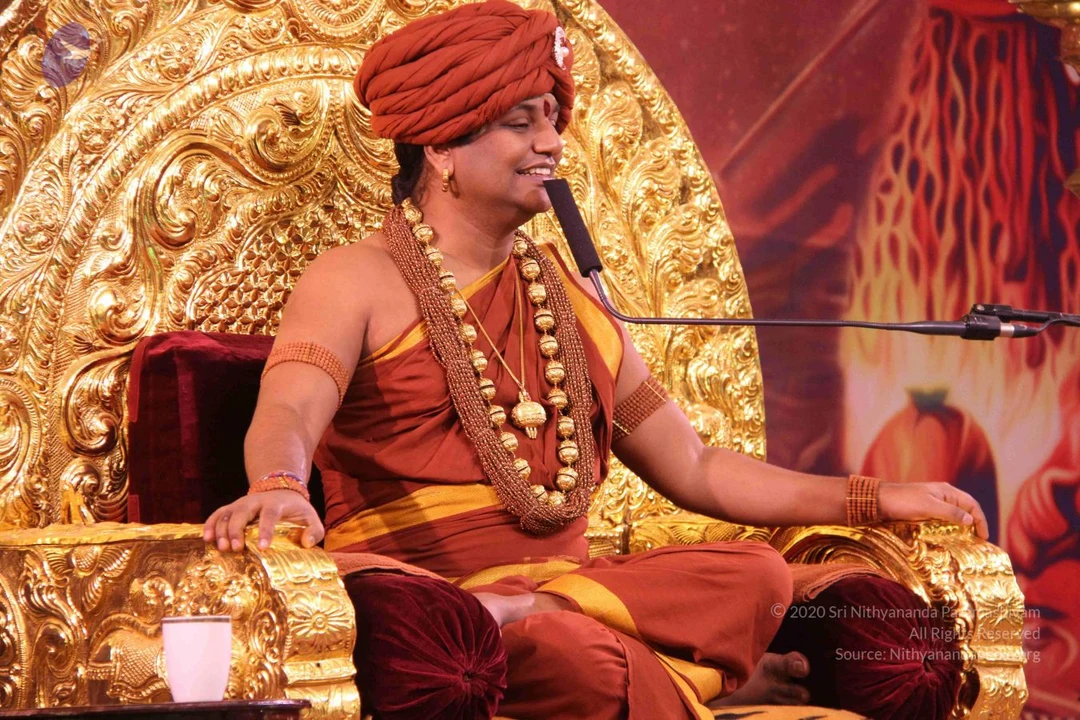
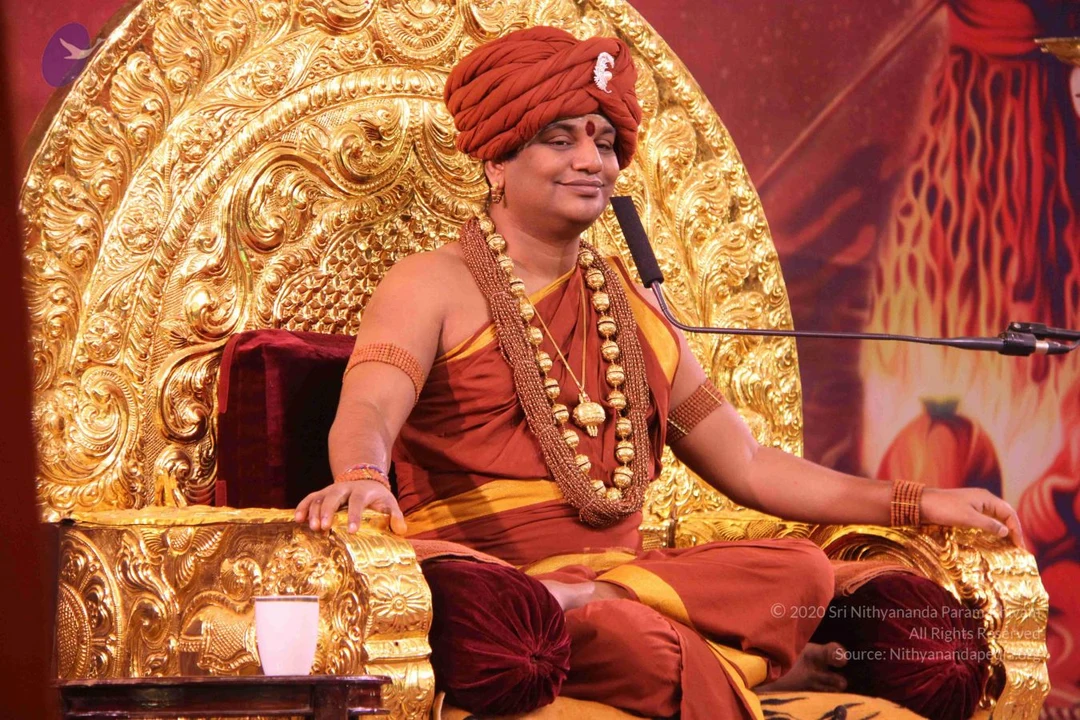
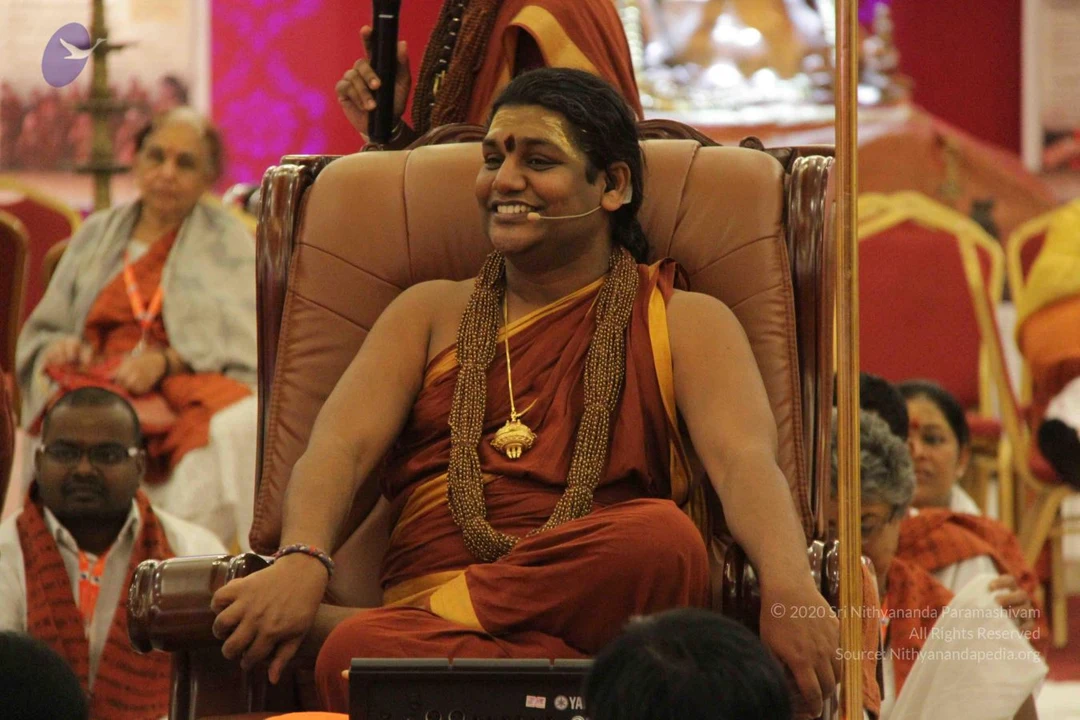
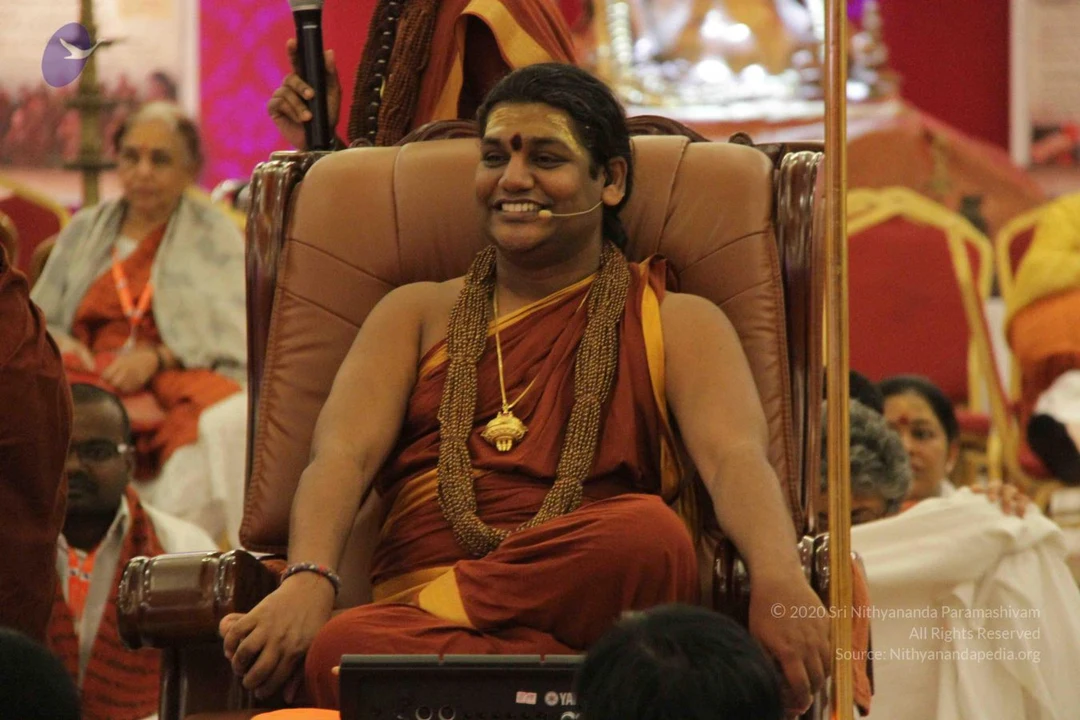
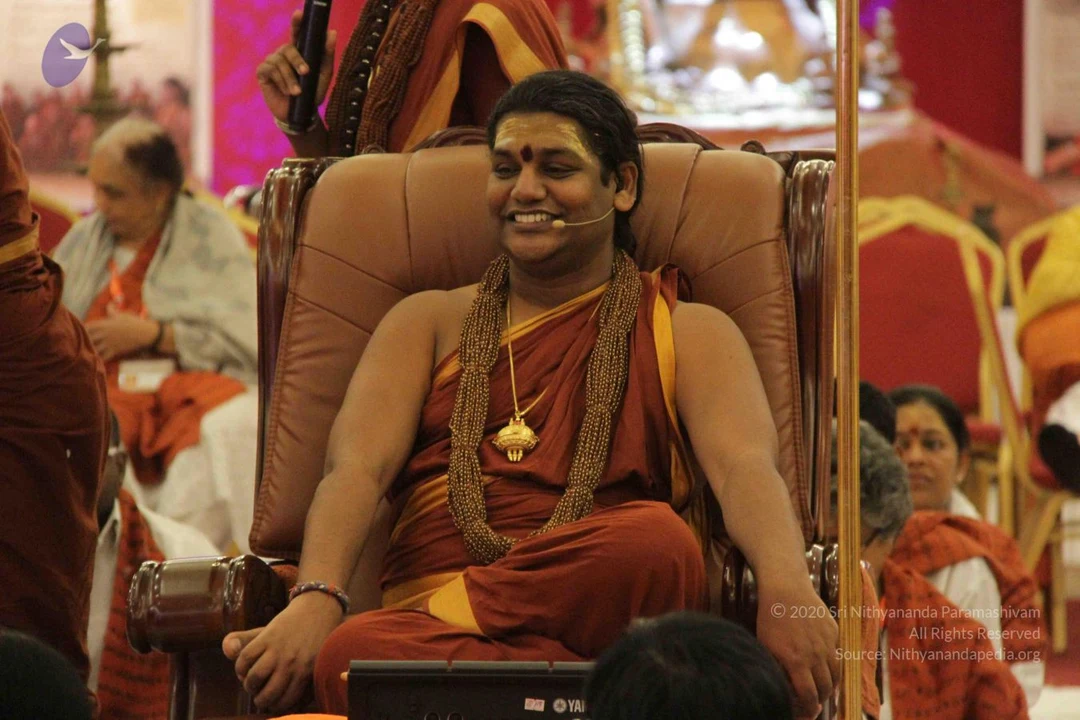
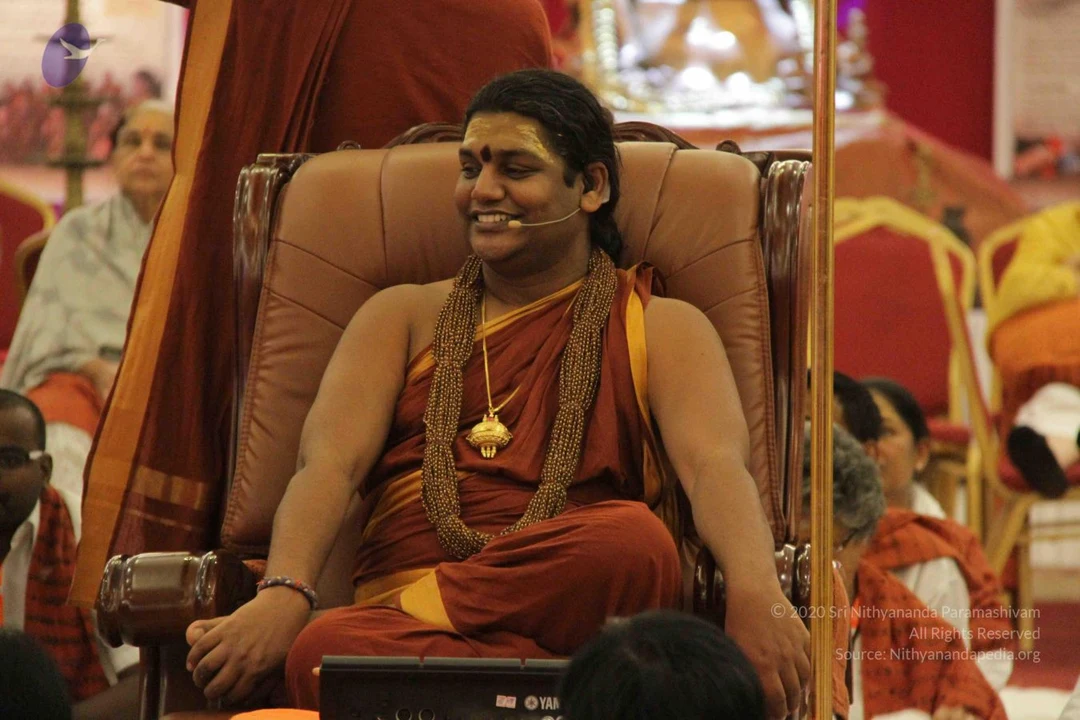
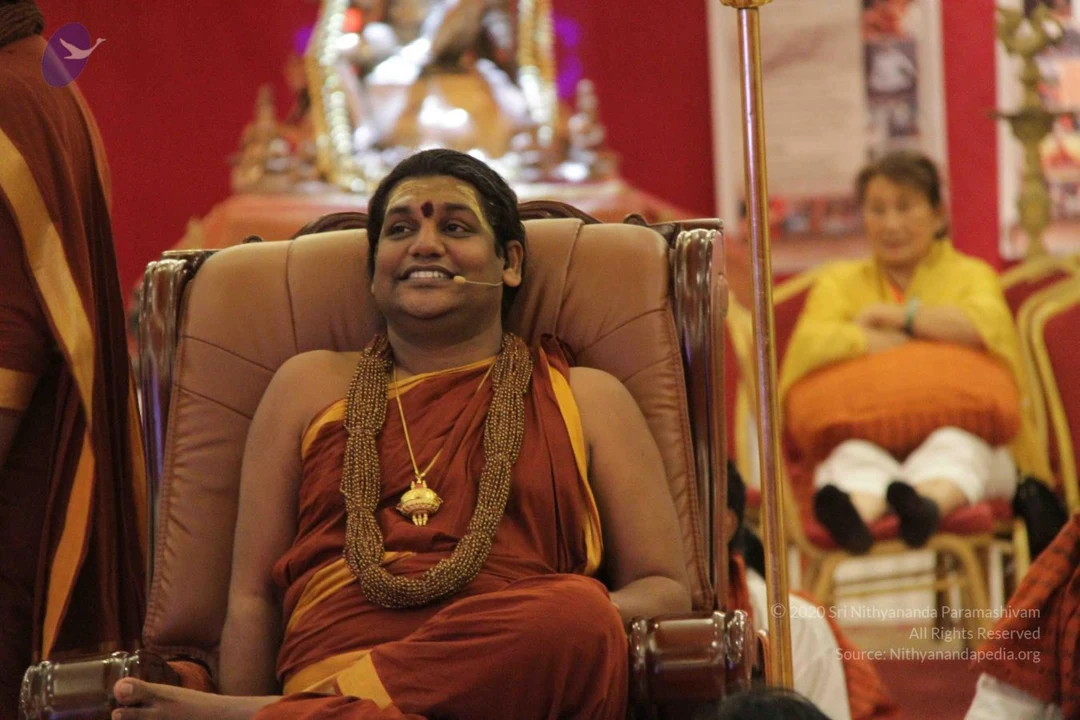
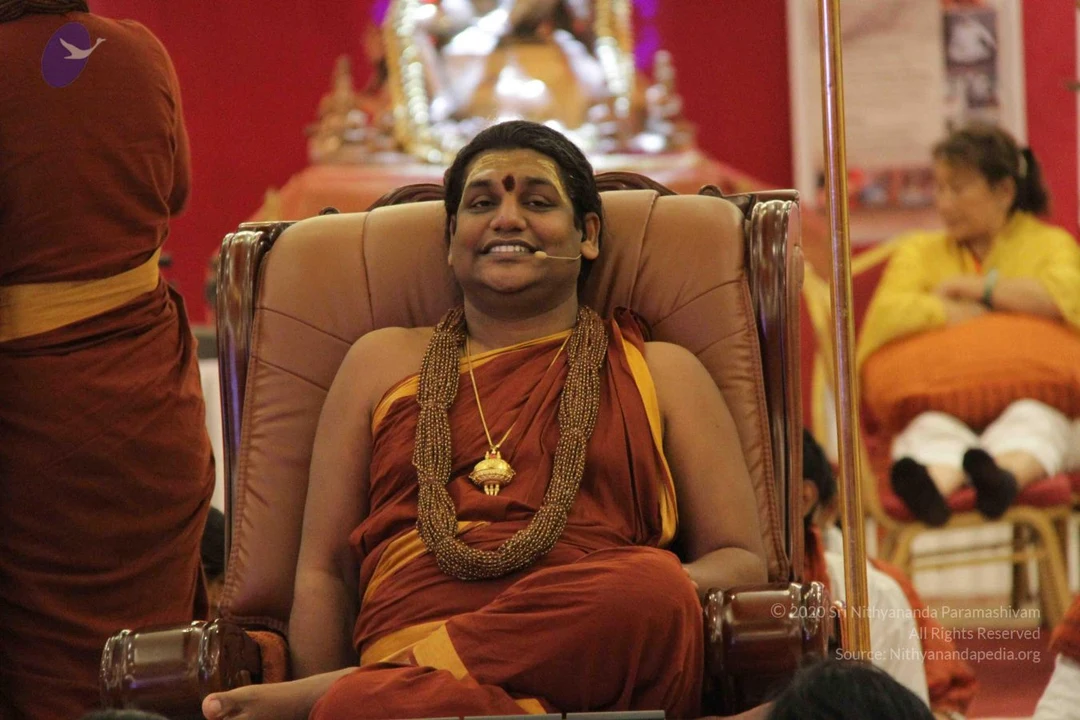
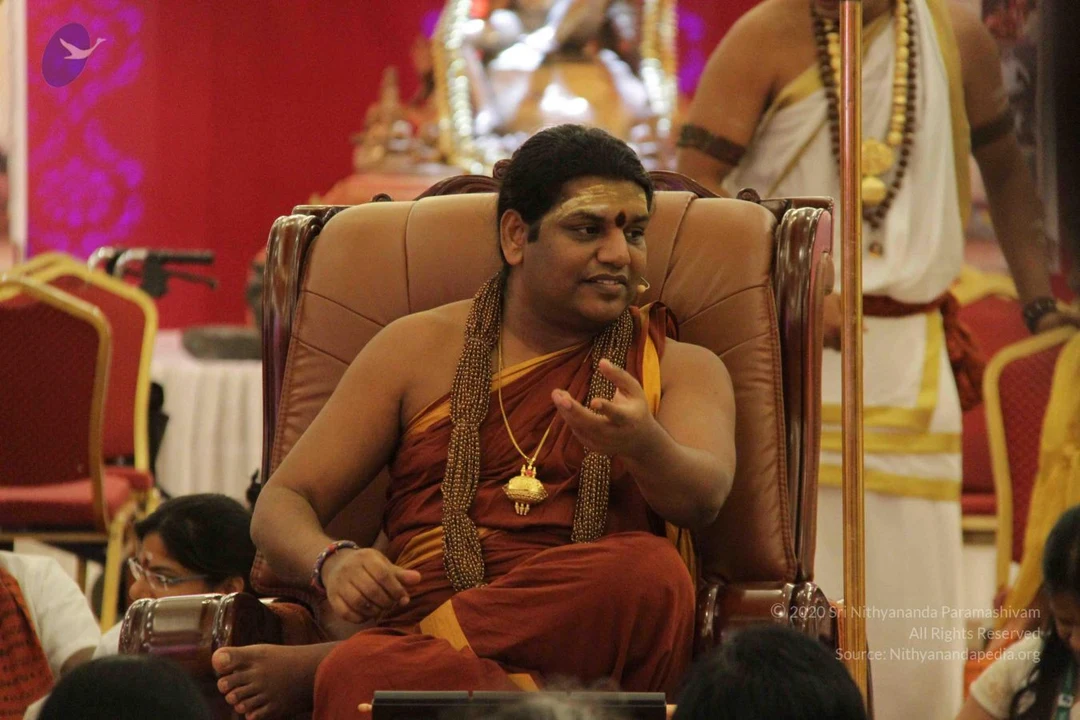
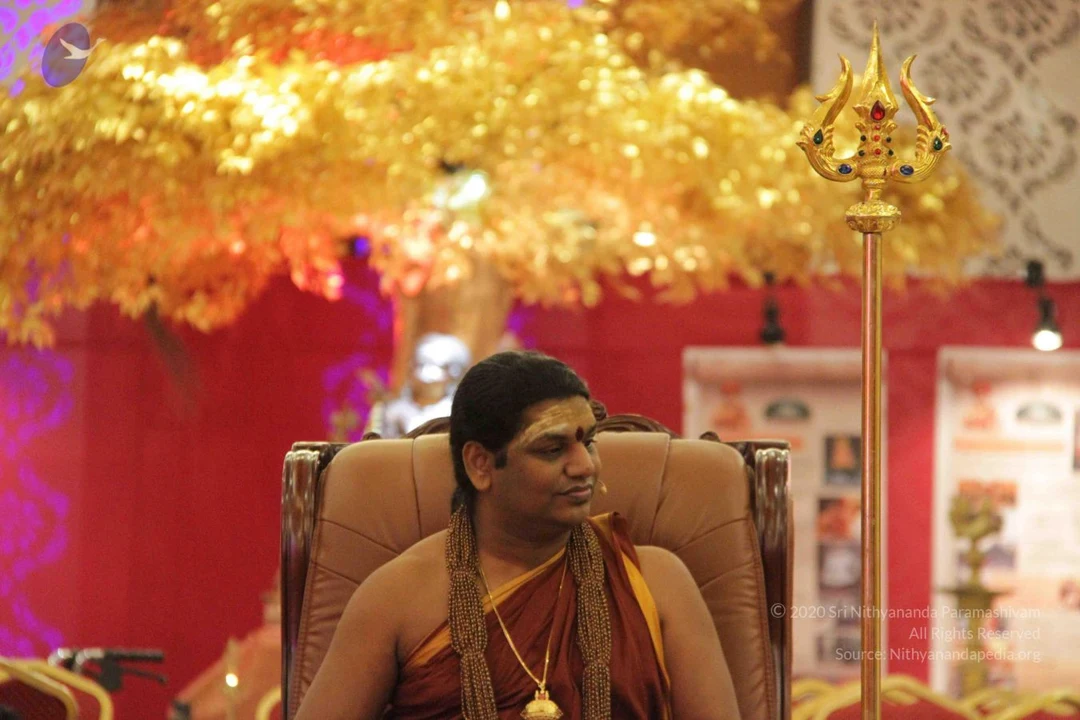
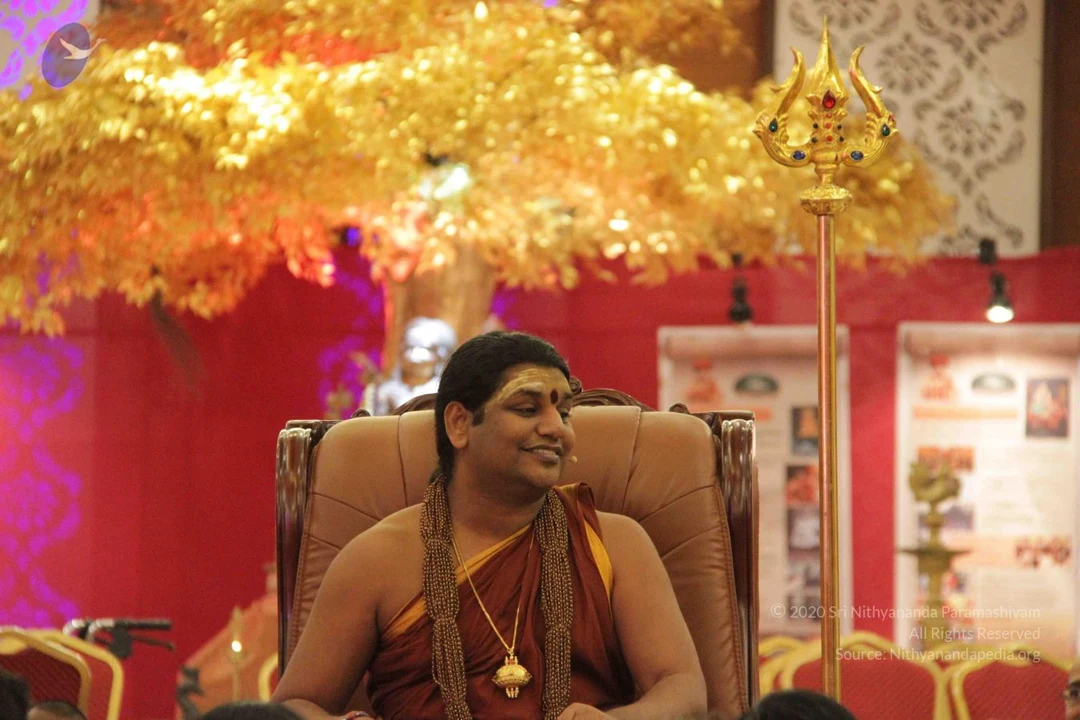
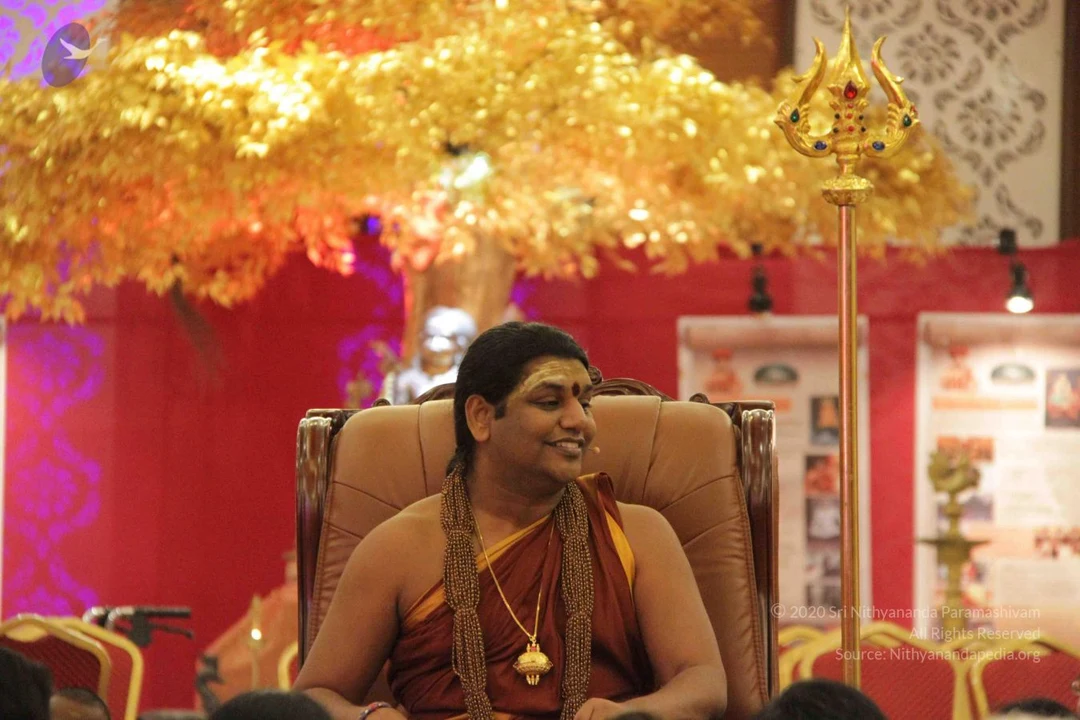
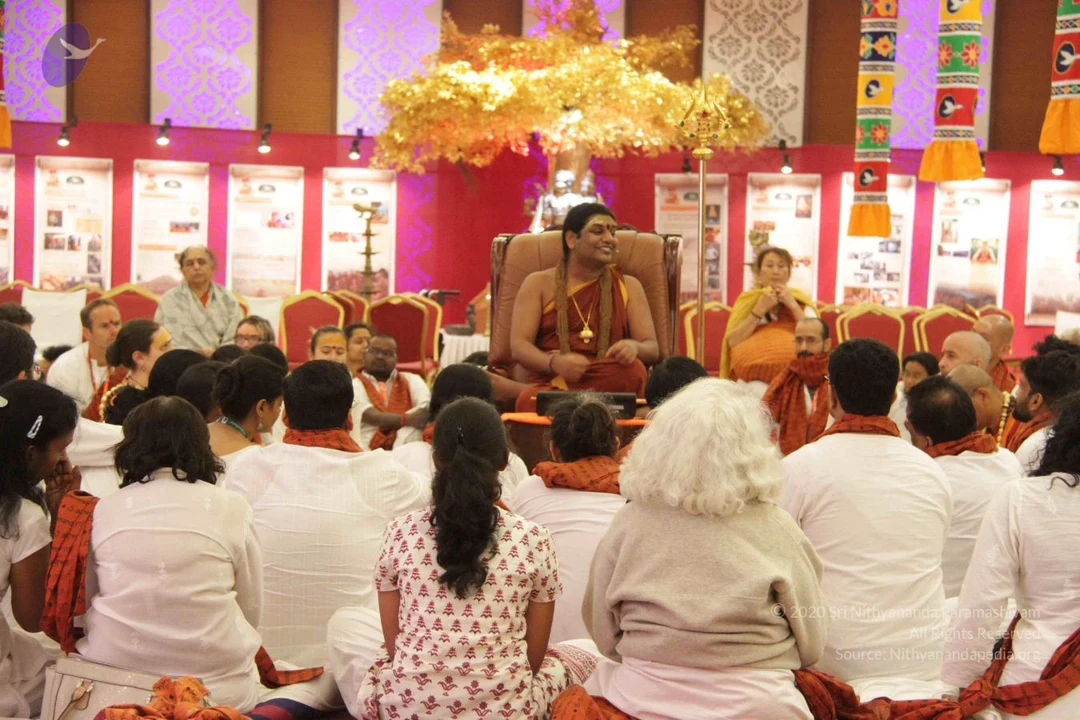
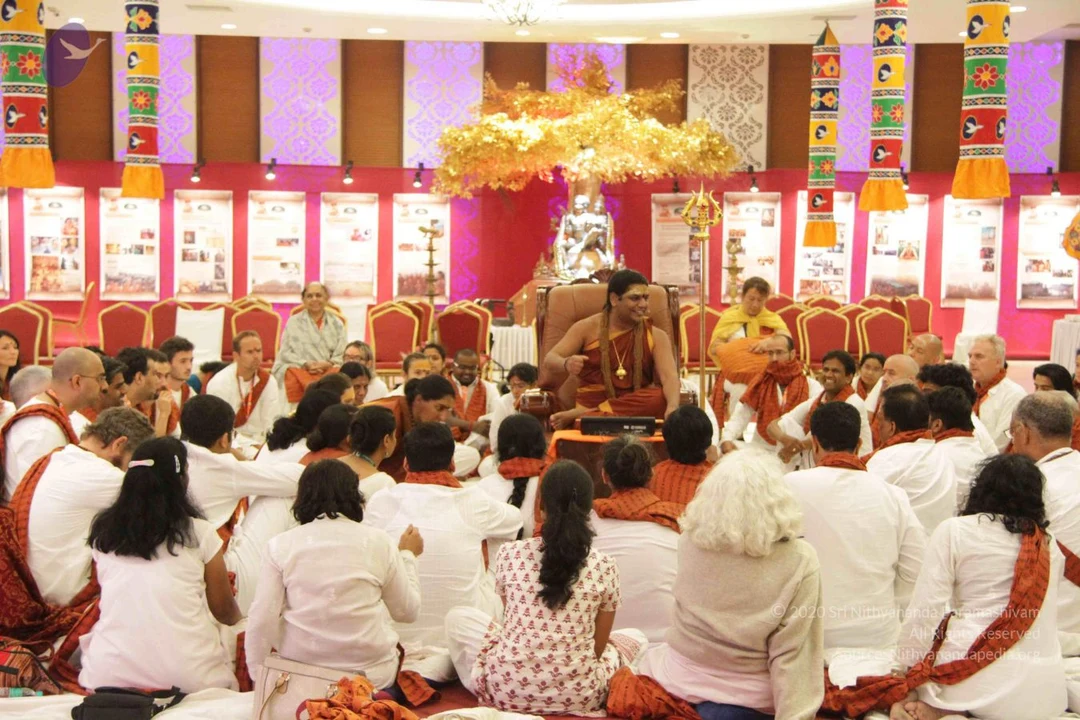
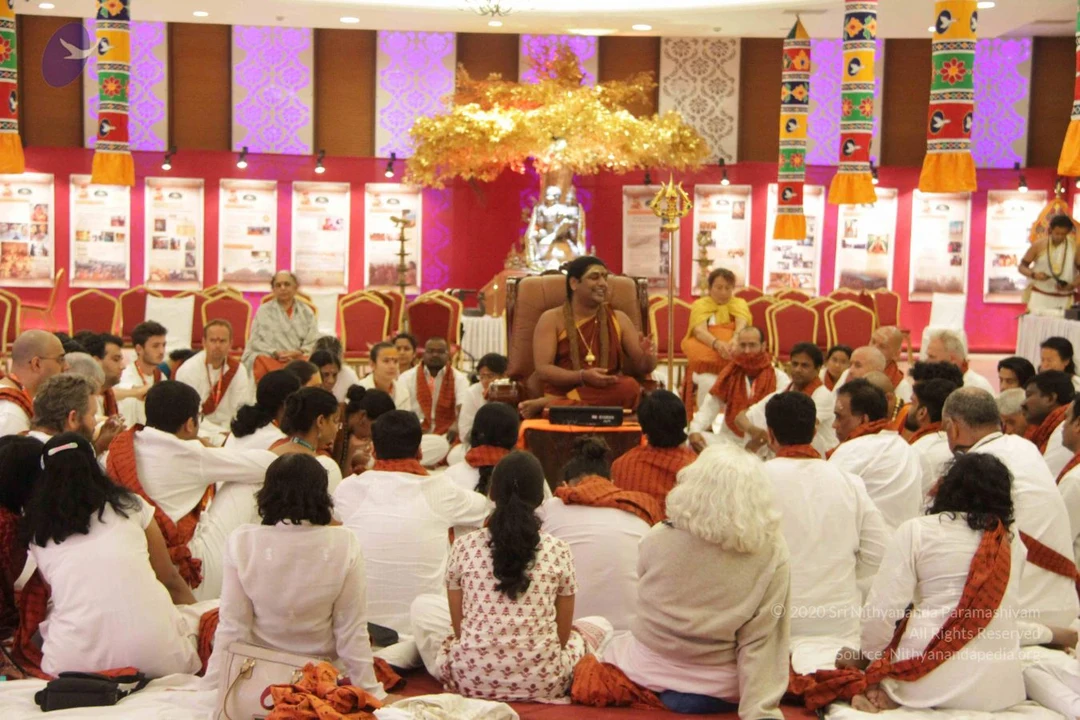
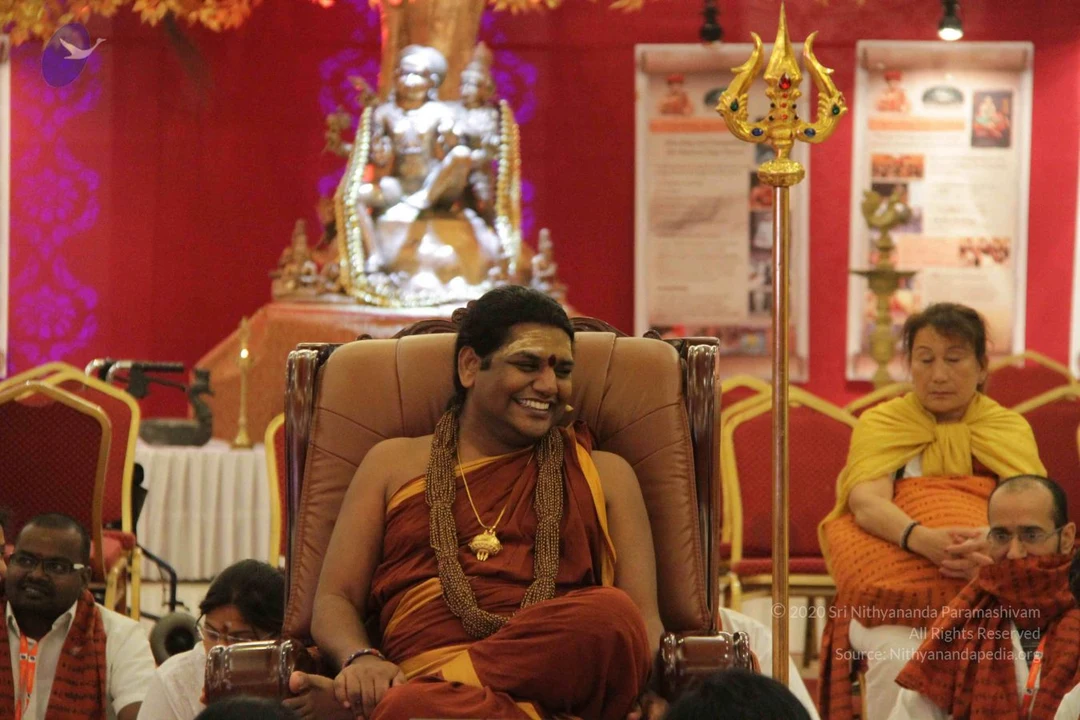
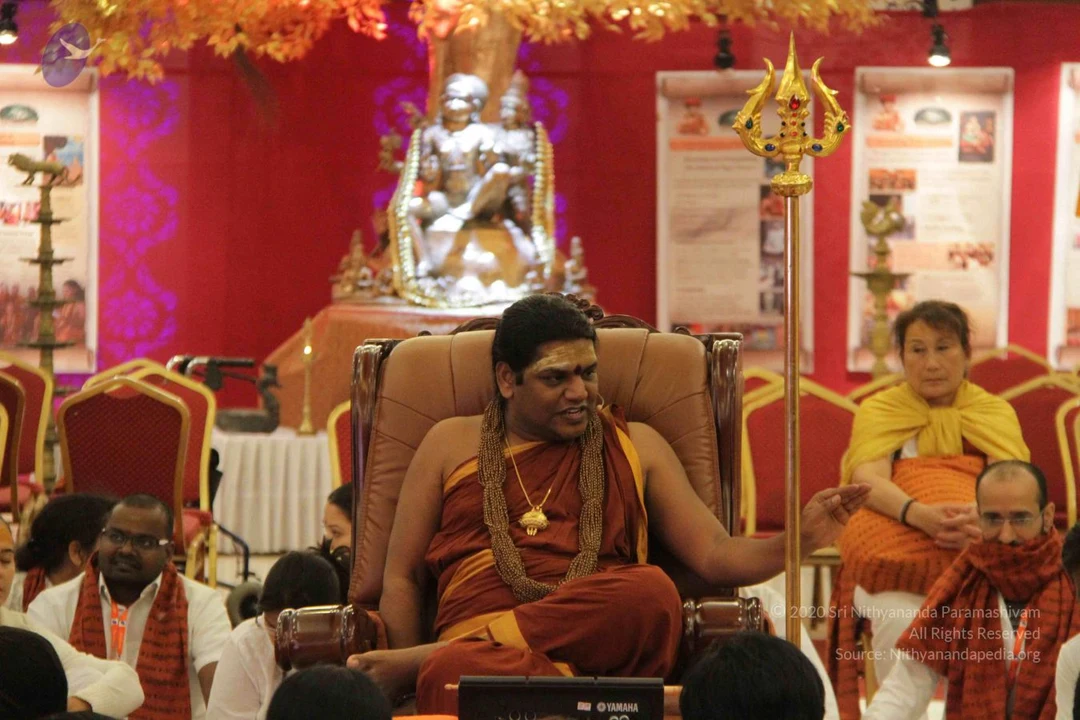
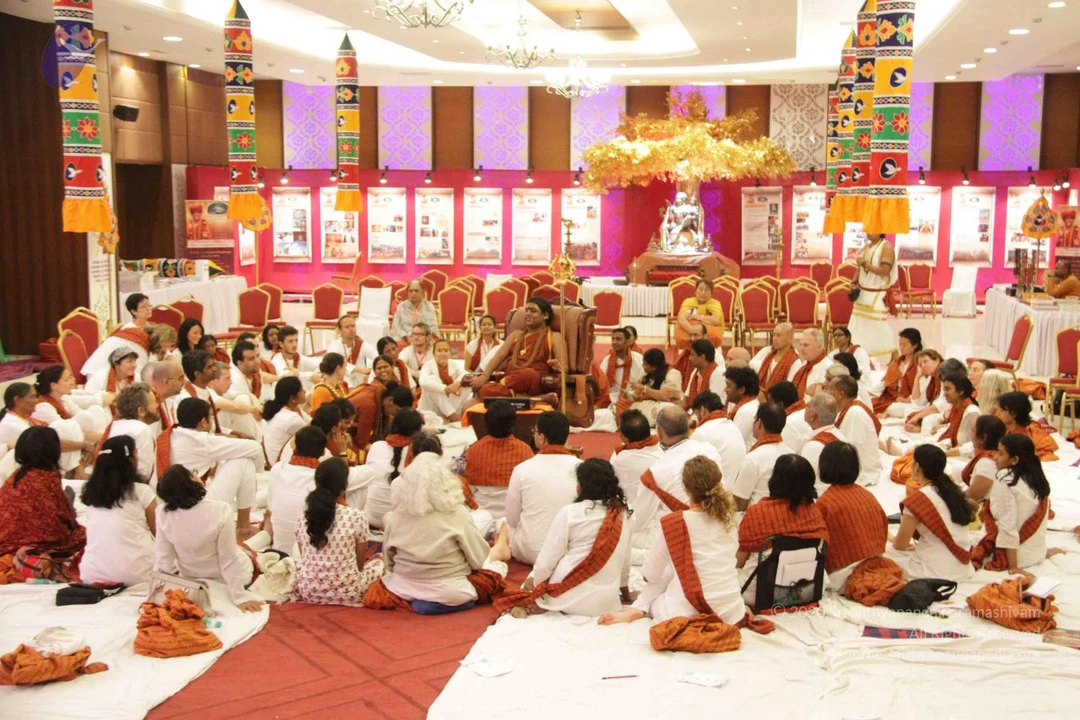
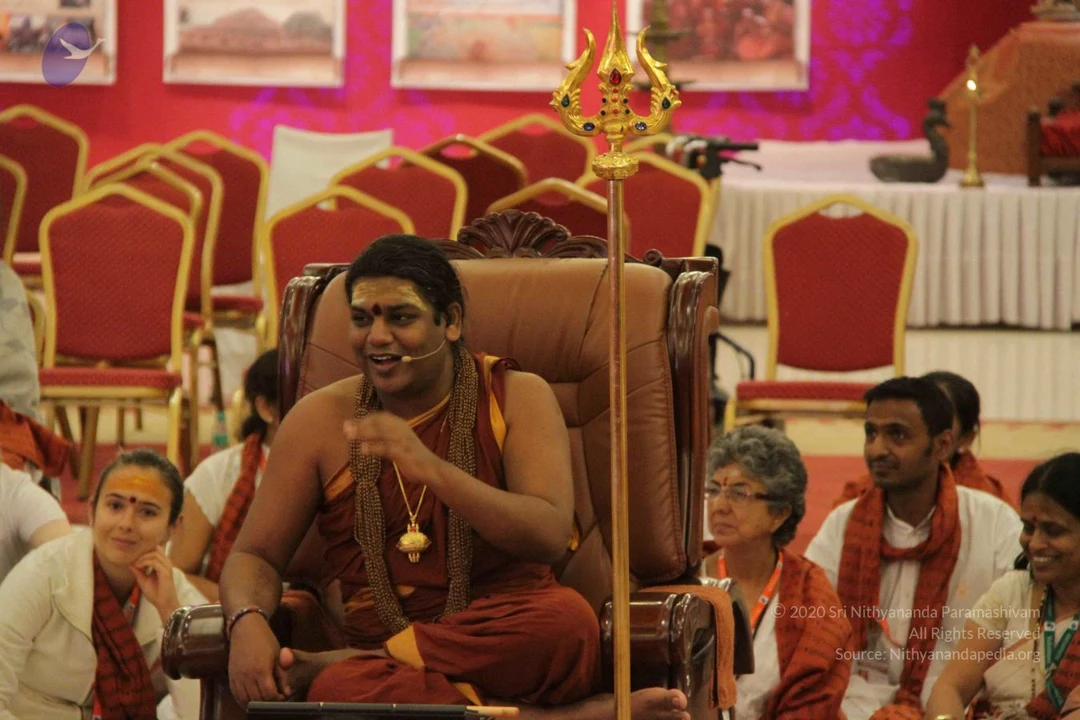
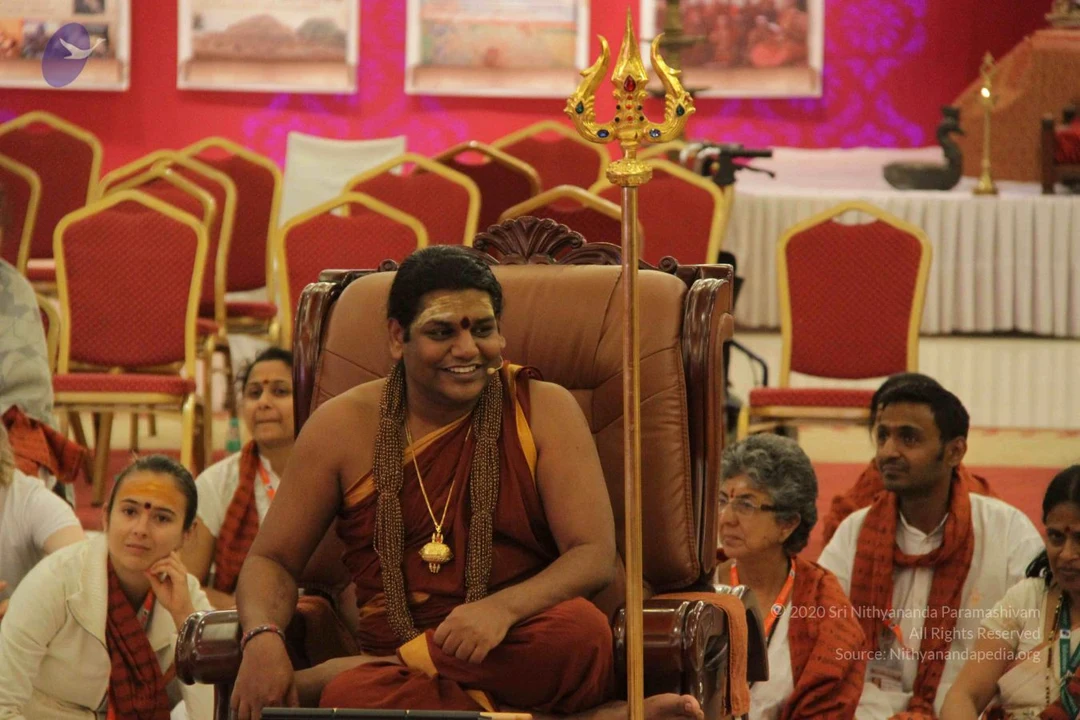
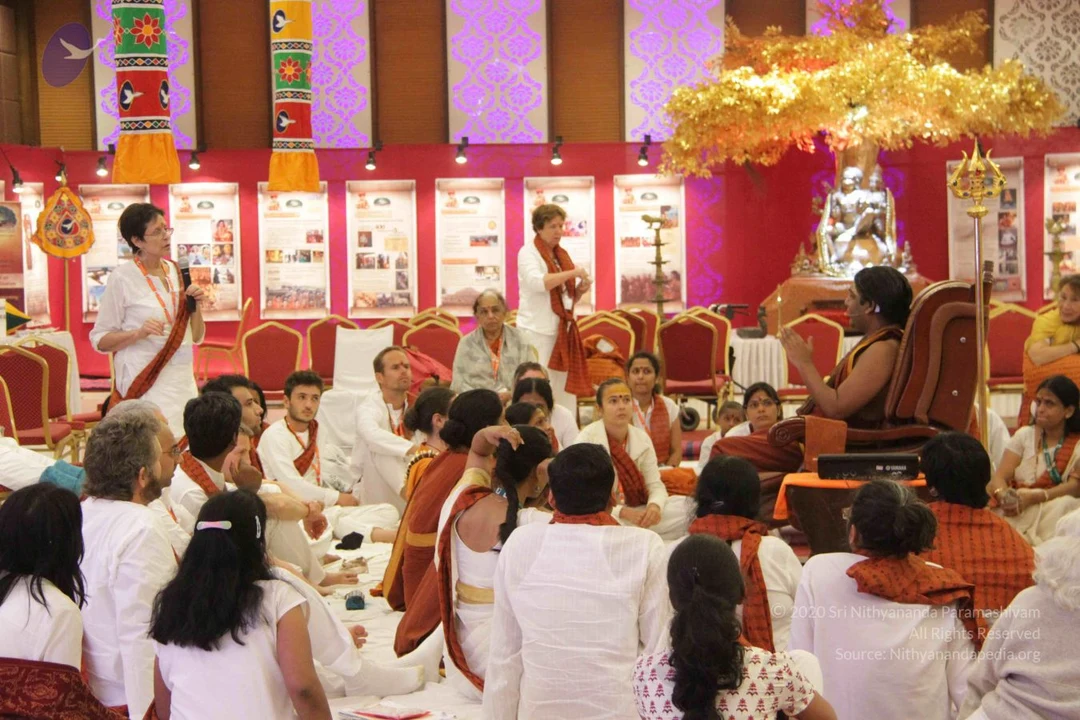
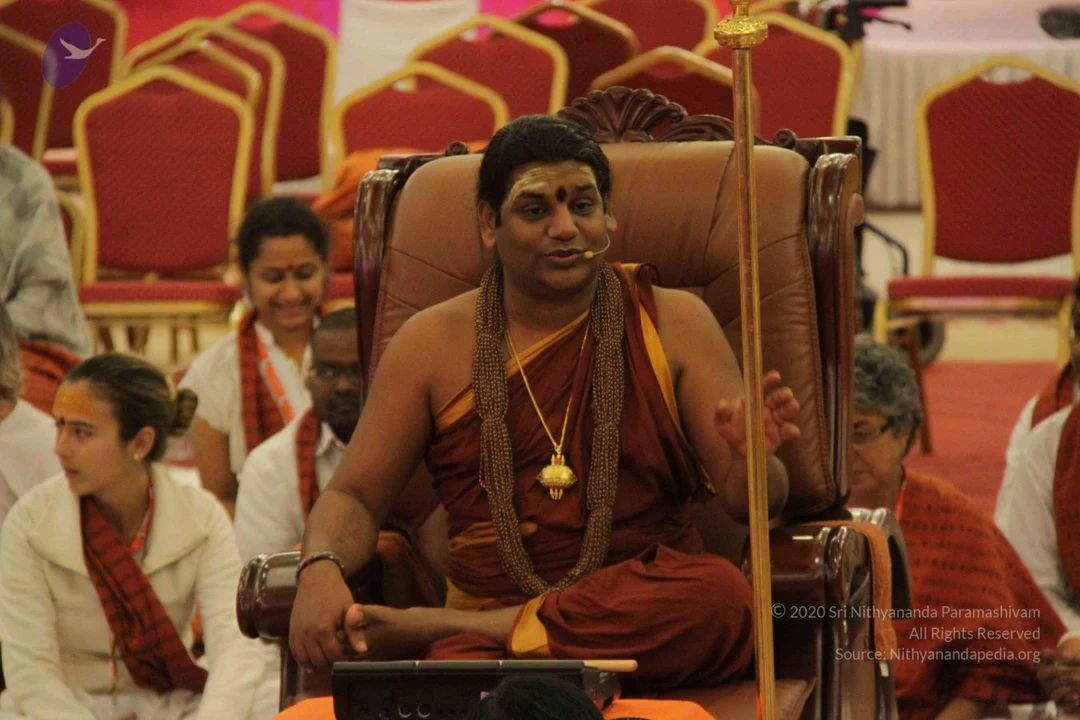
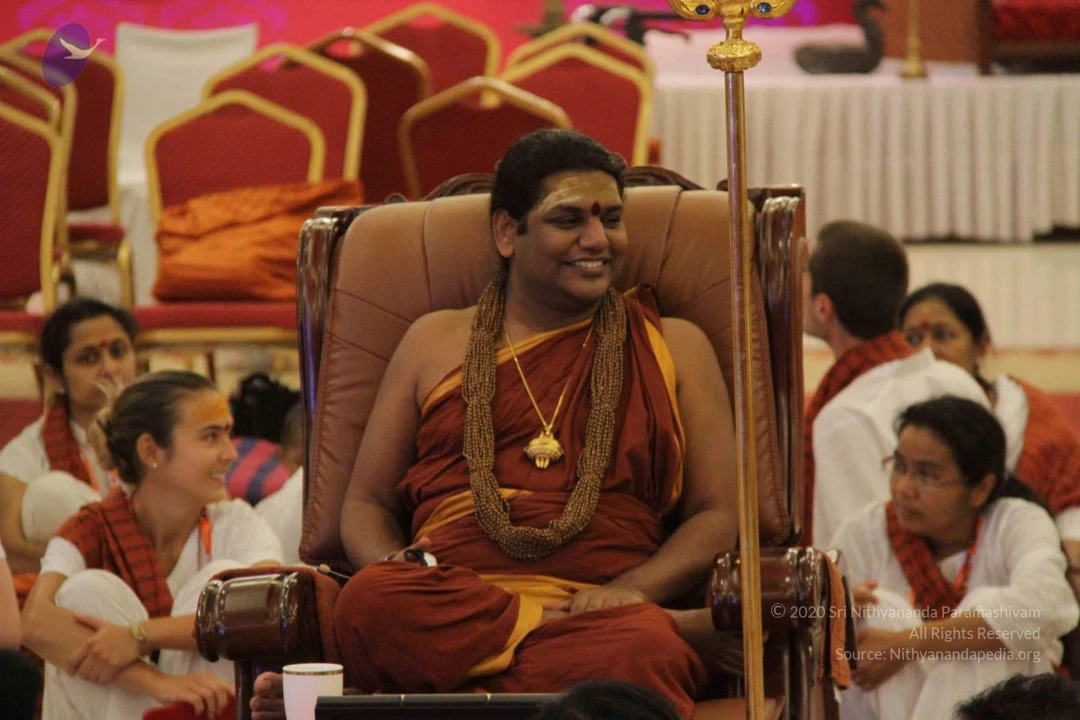
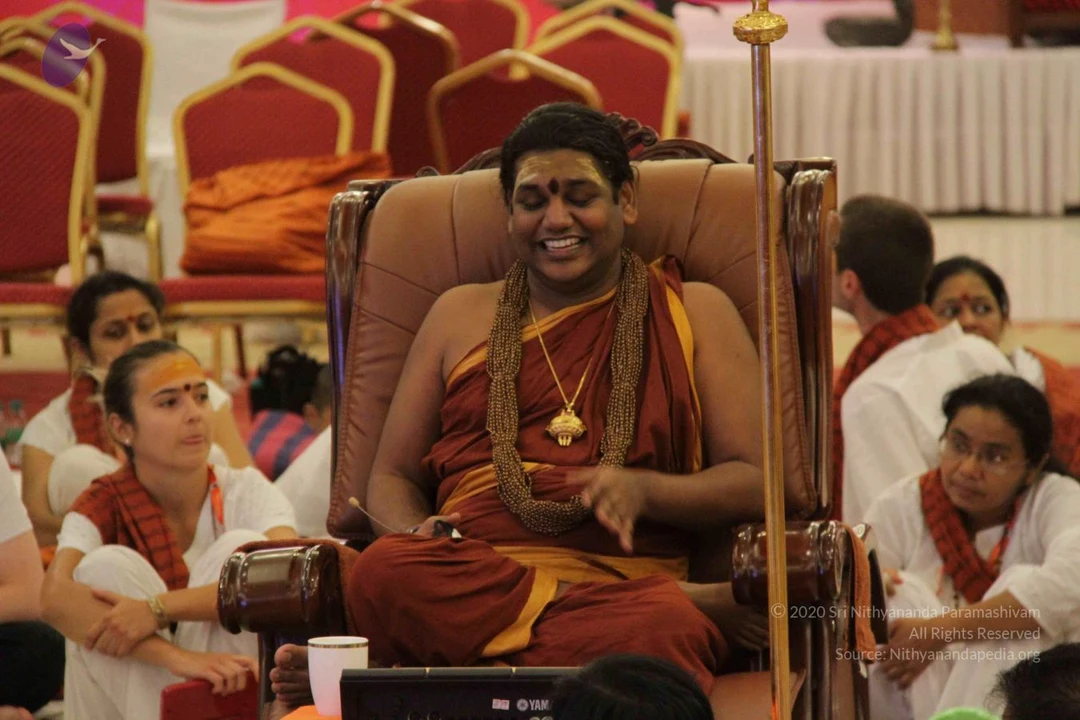
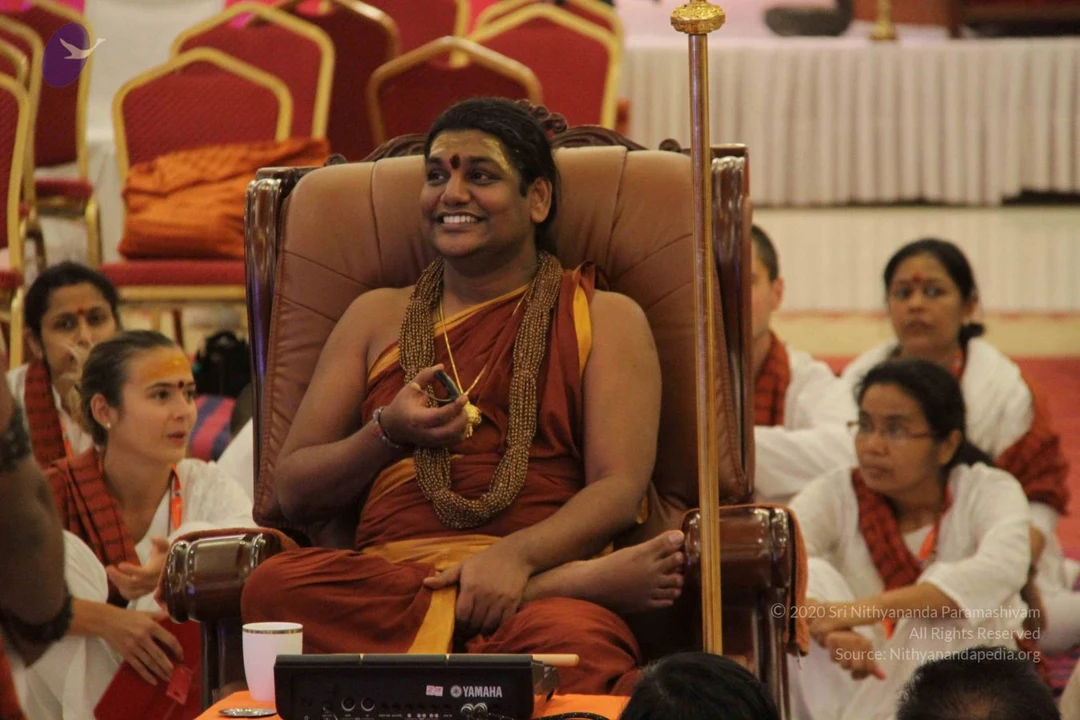
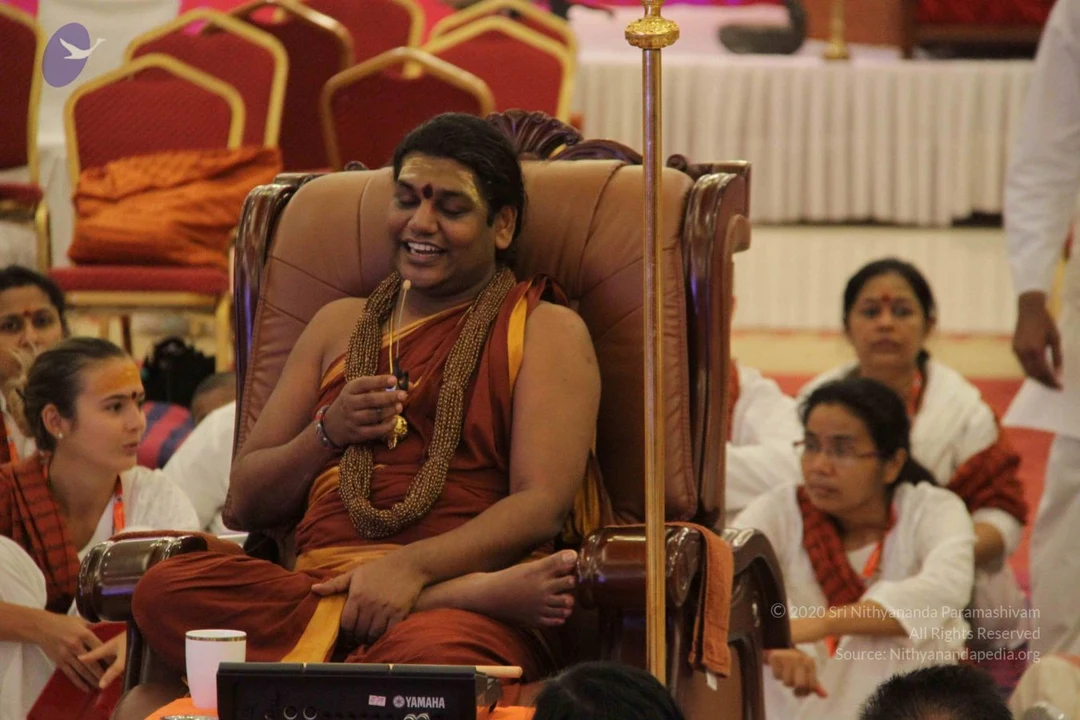
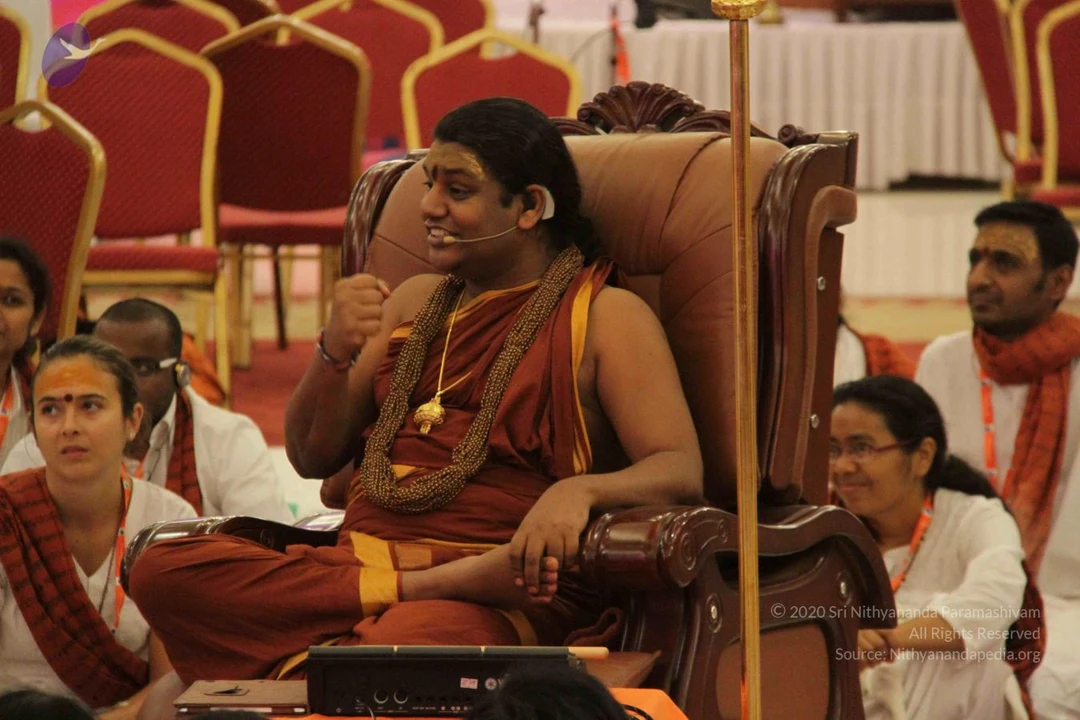
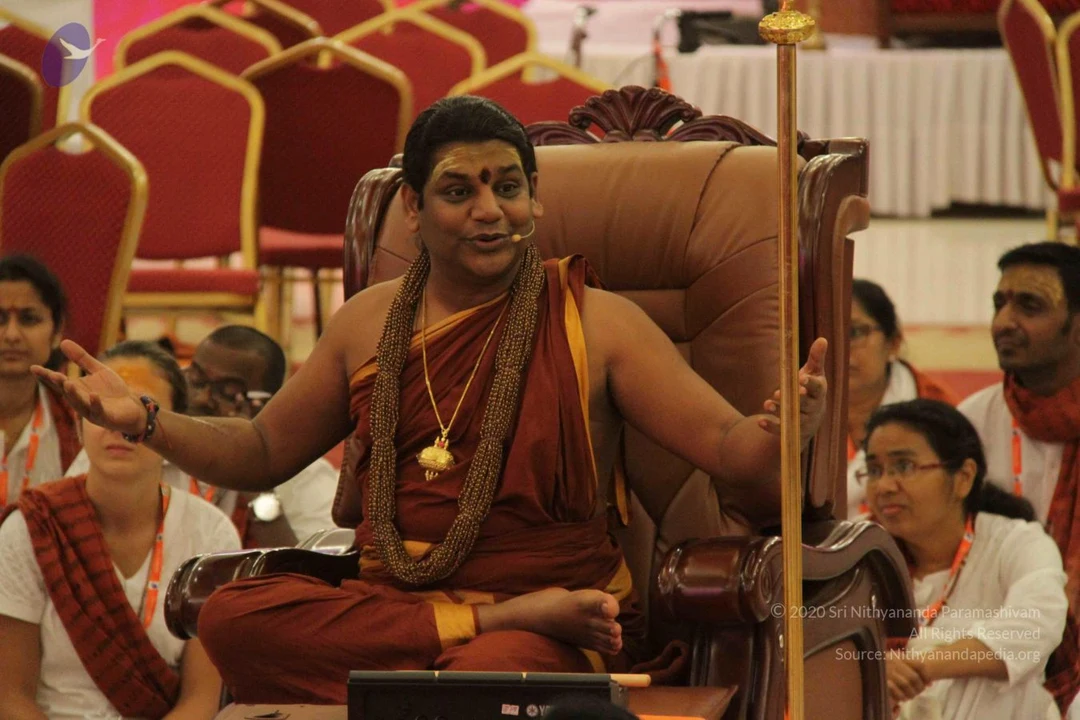
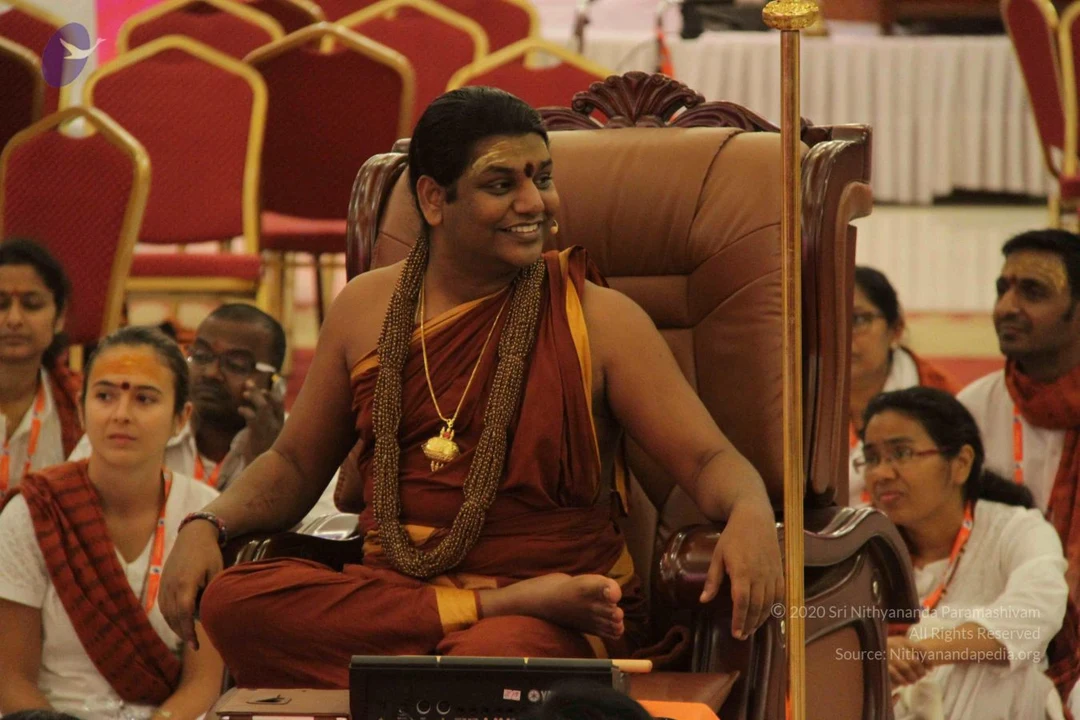
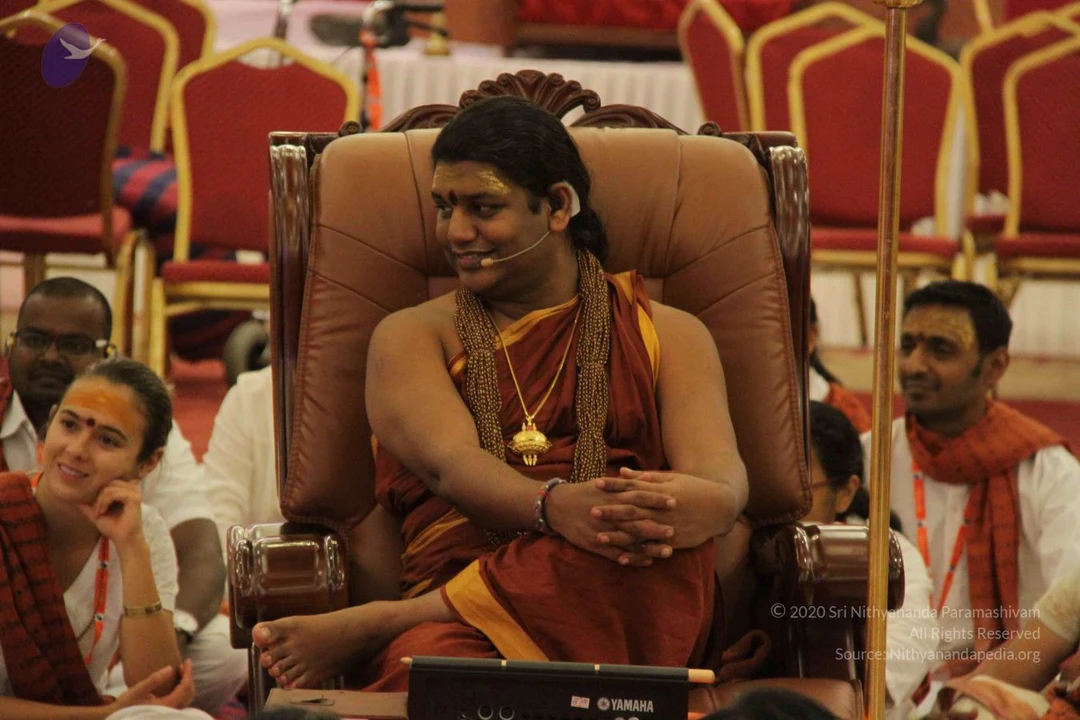
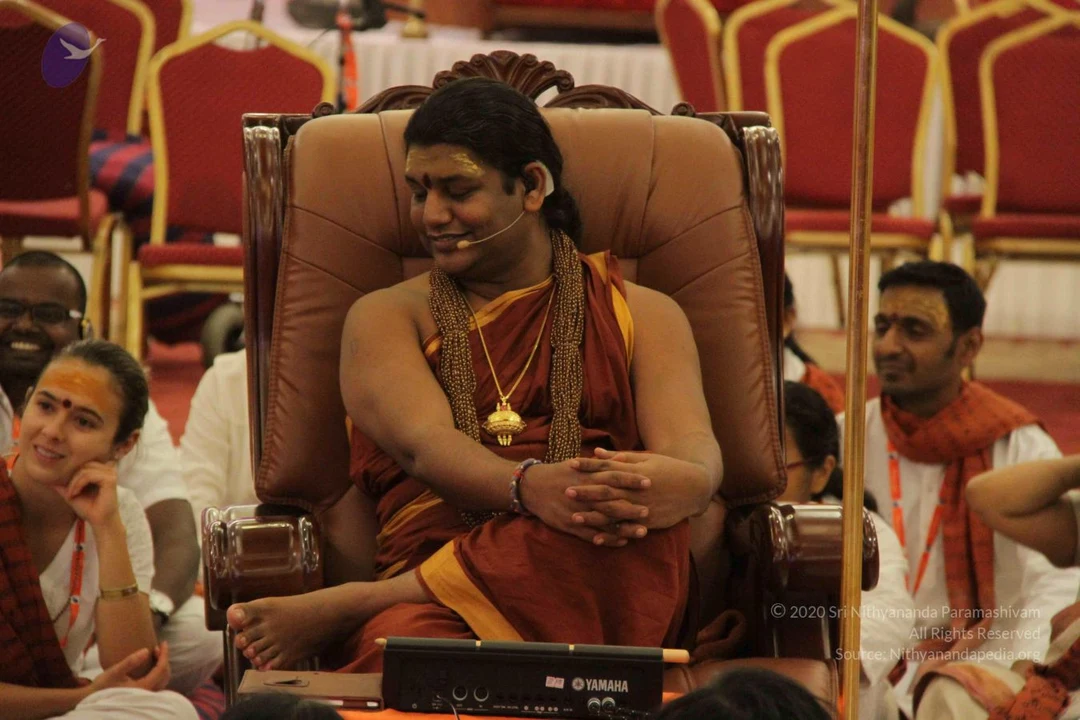
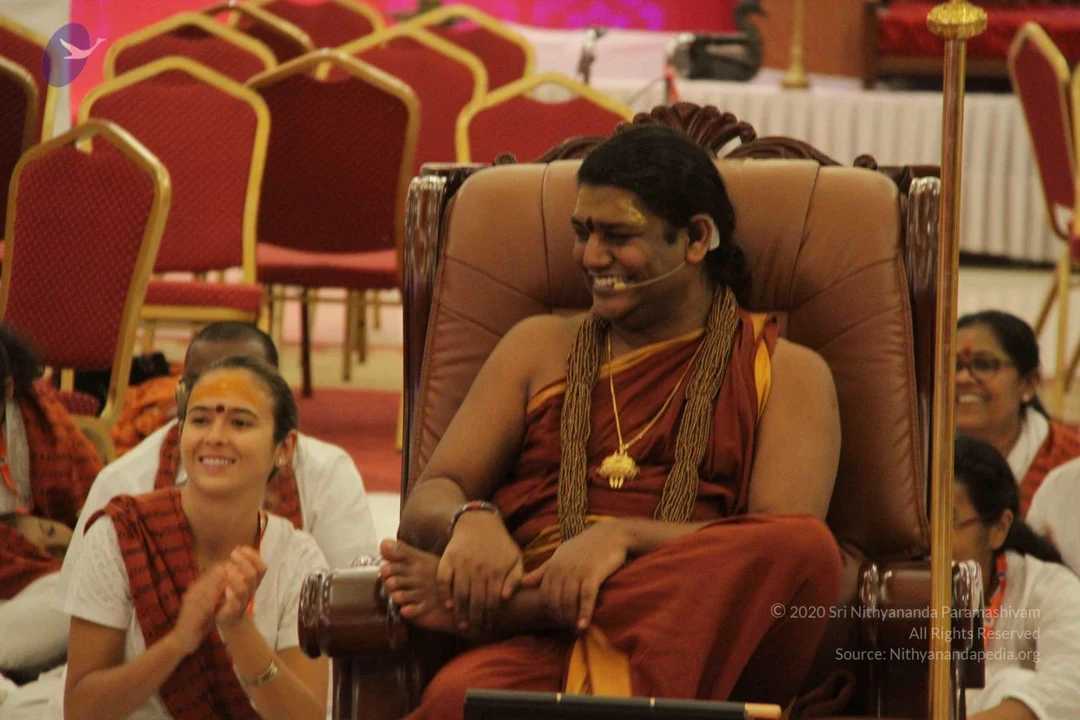
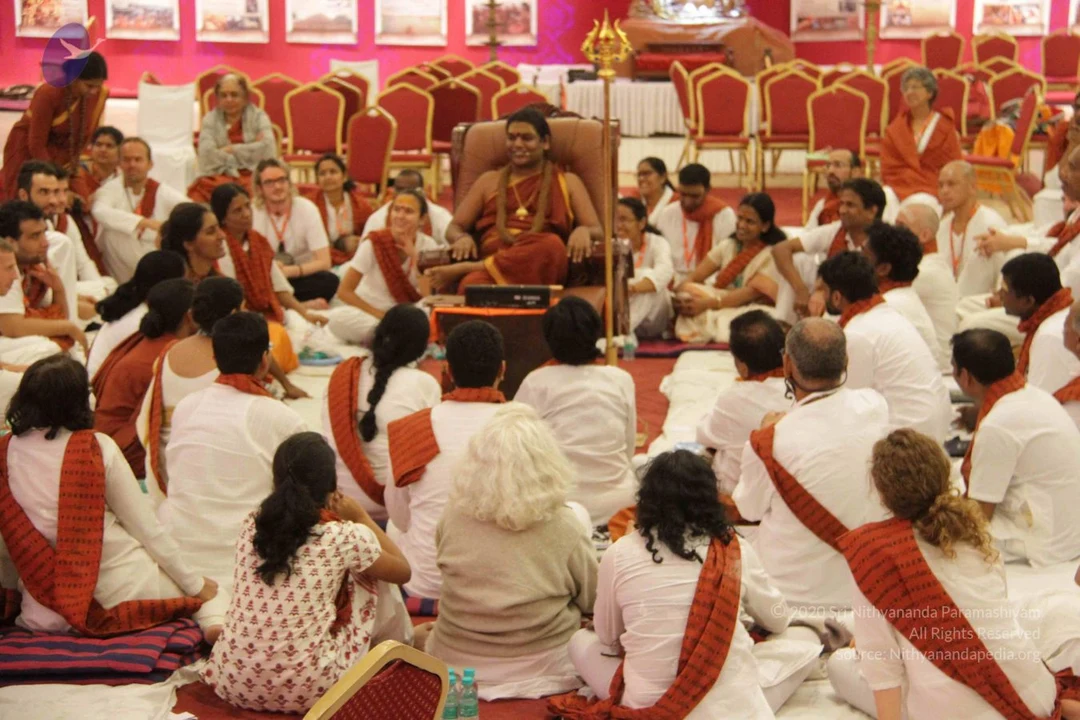
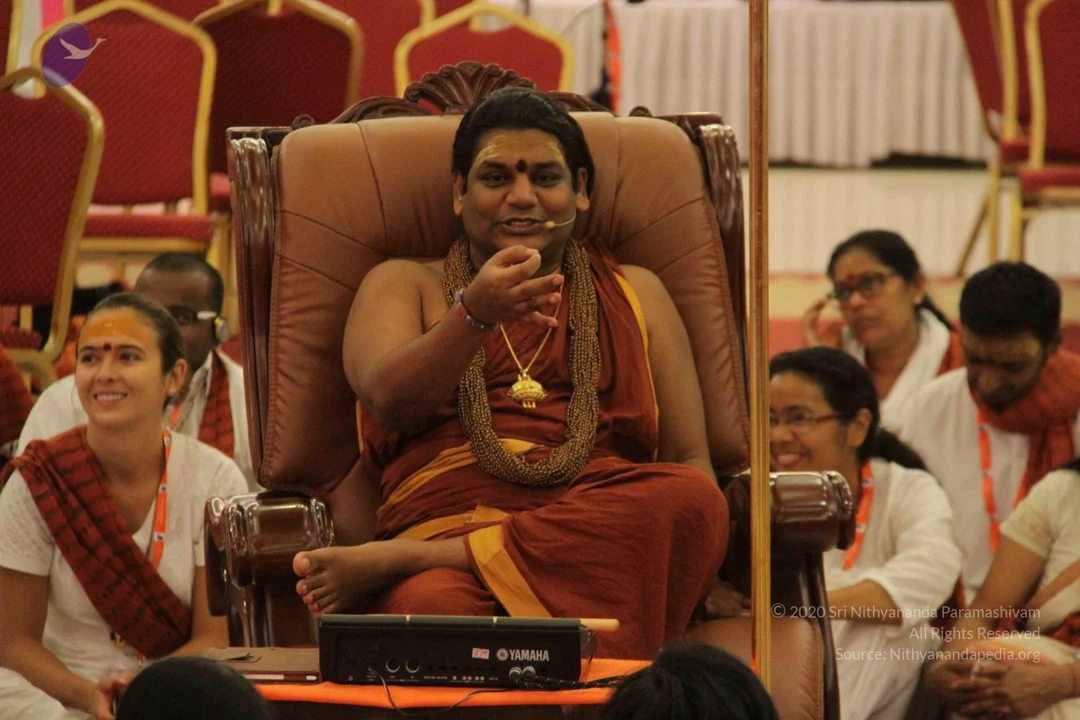
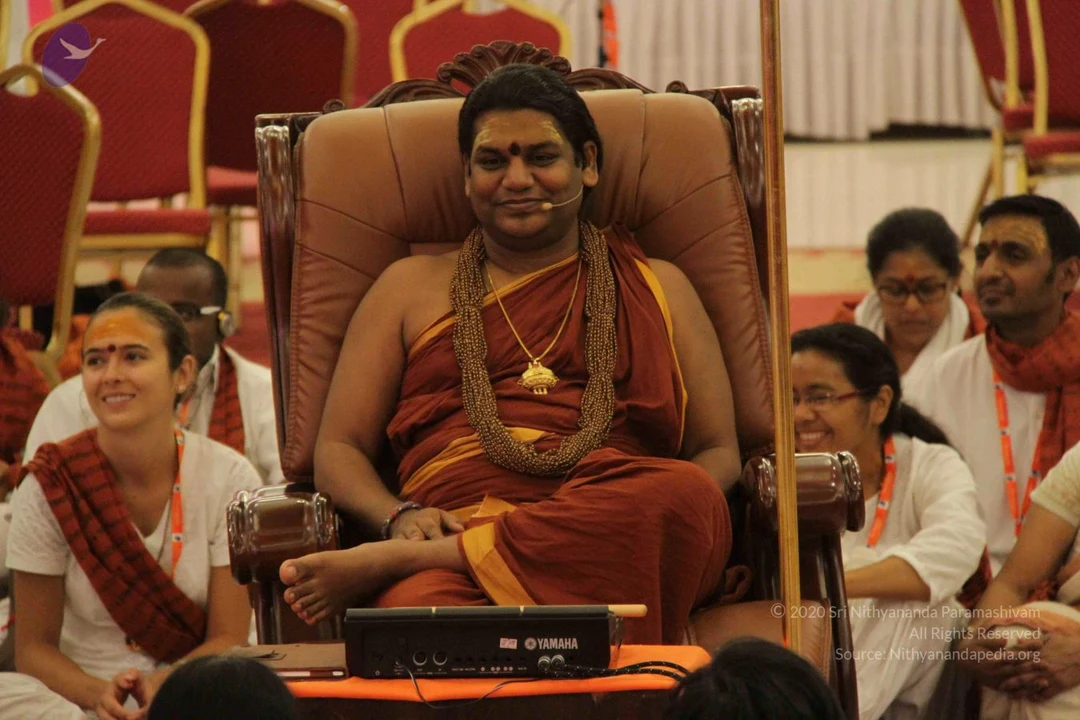
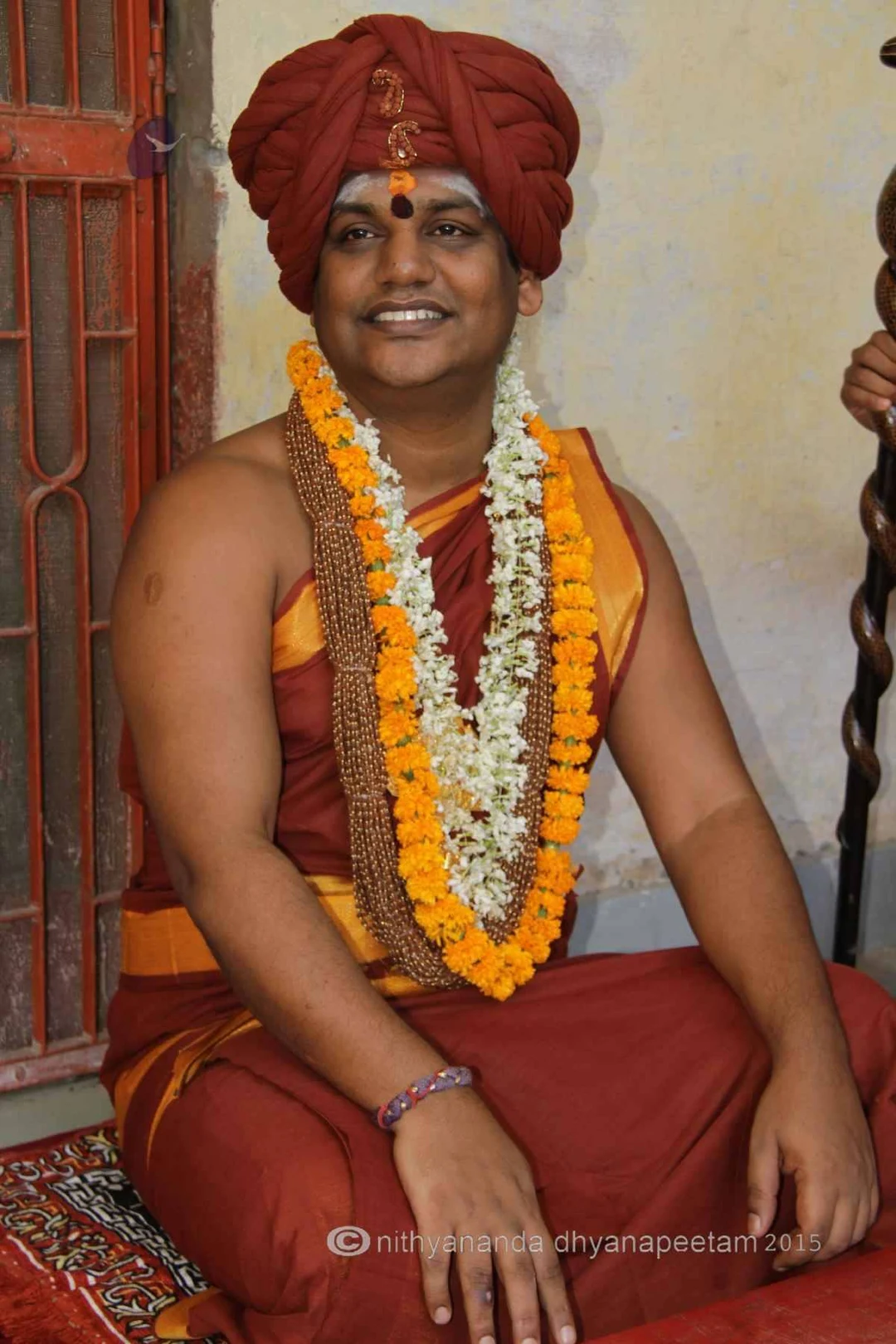
In today’s Nithya Satsang (11th October 2015) from Varanasi, Paramahamsa Nithyananda, dwells into the 16th verse of Isavasya Upanishad, in which the Rishis are declaring their realization after explaining about the pure seeking in verse 15. The moment authentic seeking is awakened in us, simply the realization happens. Beautifully expanding on ‘status-quo’ and ‘state-quo’, He explains that people are stuck with status-quo in the same thought patterns and idea about themselves and others. State-quo is being established in the ultimate truth and constantly radiating maturity in your thinking, words, feeling, actions, everything. Context getting matured is seeking. Having the best inner image is the greatest gift we can receive from the Guru. The essence of life is - soul getting matured, you seeking the state of awakening. pūṣann ekarṣe yama sūrya prājāpatya vyūha raśmīn samūha tejaḥ | yat te rūpaṁ kalyāṇatamaṁ tat te paśyāmi yo sāv asau puruṣaḥ, so’ham asmi ||16|| hiraṇmayena pātreṇa satyasyāpihitaṁ mukhaṁ | tat tvaṁ pūṣann-apāvṛṇu satya-dharmāya dṛṣṭaye || 15 || "The Truthful, Effulgent, Eternal Being is the ultimate sustainer, nourisher and protector of all that exists! You are the embodiment of the imperishable Truth and Reality. Your Divine face of Truth is concealed by the blinding dazzling upturned pot, which has golden orb of effulgence. This radiant golden pot conceals your glorious face of Truth from my view. O Pūṣan, O Sun, O Complete One, do reveal Yourself by removing that glaring veil, for I, on the path of Truth, am eager to have your Divine vision."

VideoAudio

Transcript:

nithyānandeśvara samārambhām

nithyānandeśvari madhyamām |

asmat āchārya paryantām

vande Guru paramparām ||

I welcome all of you with my love and respects.

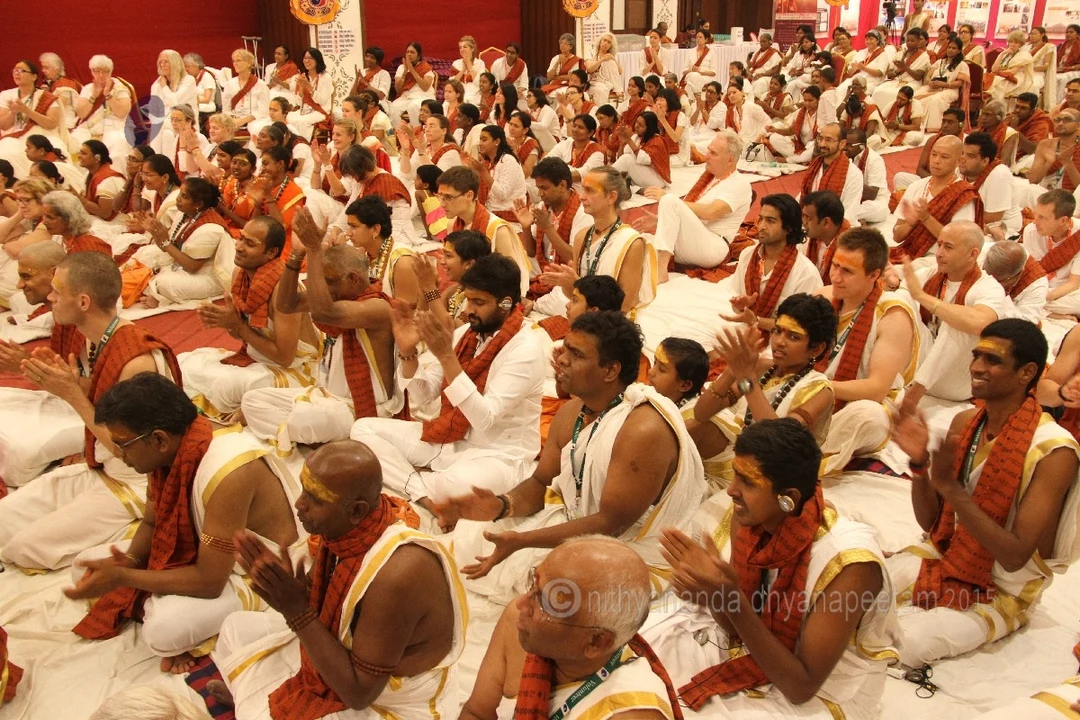
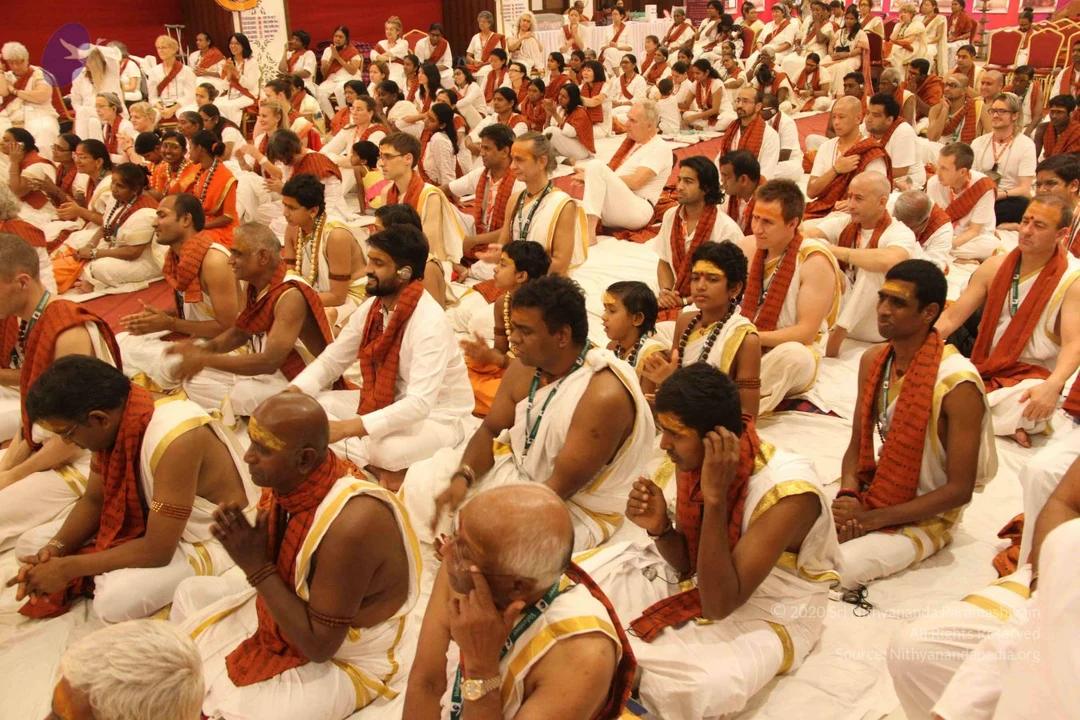
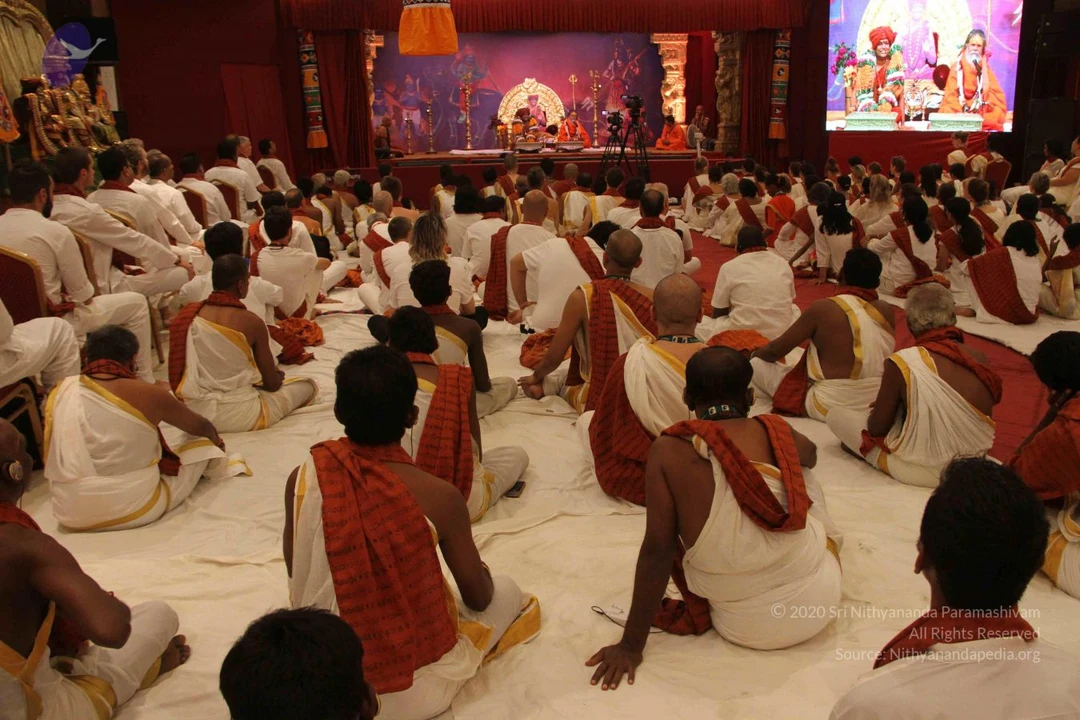
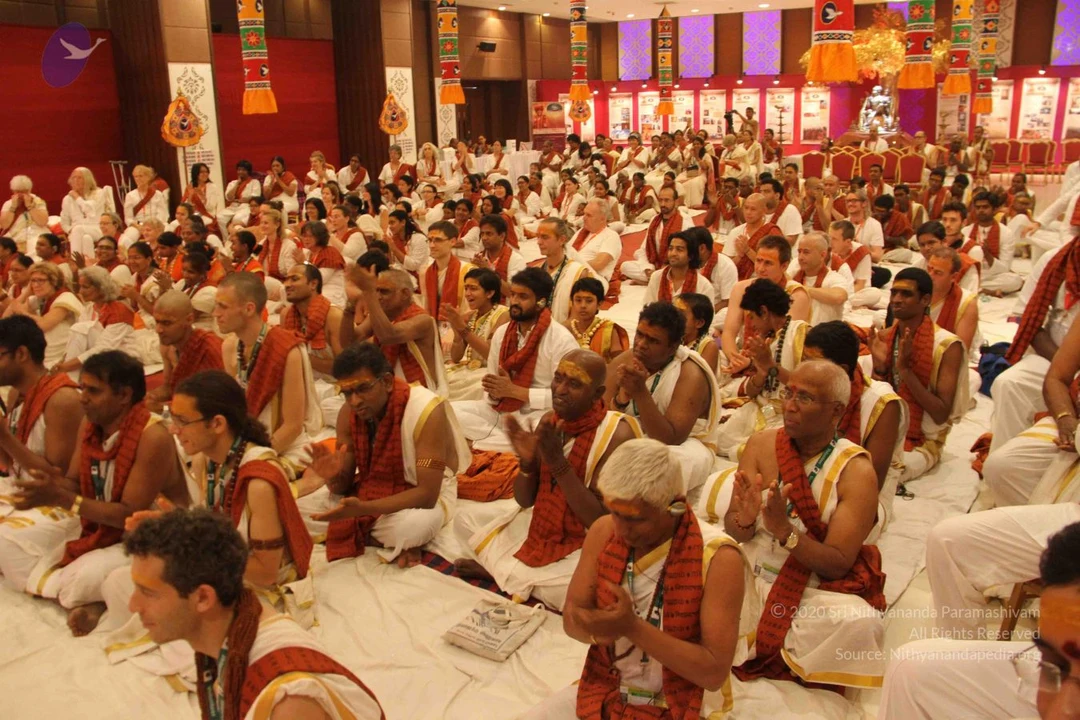
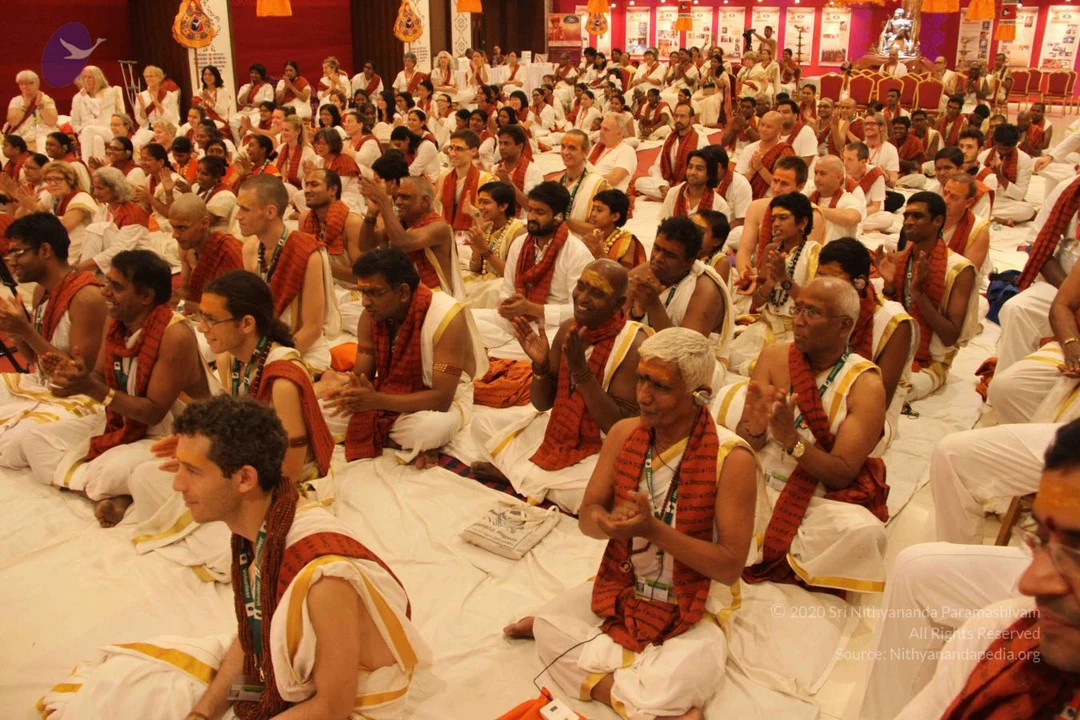
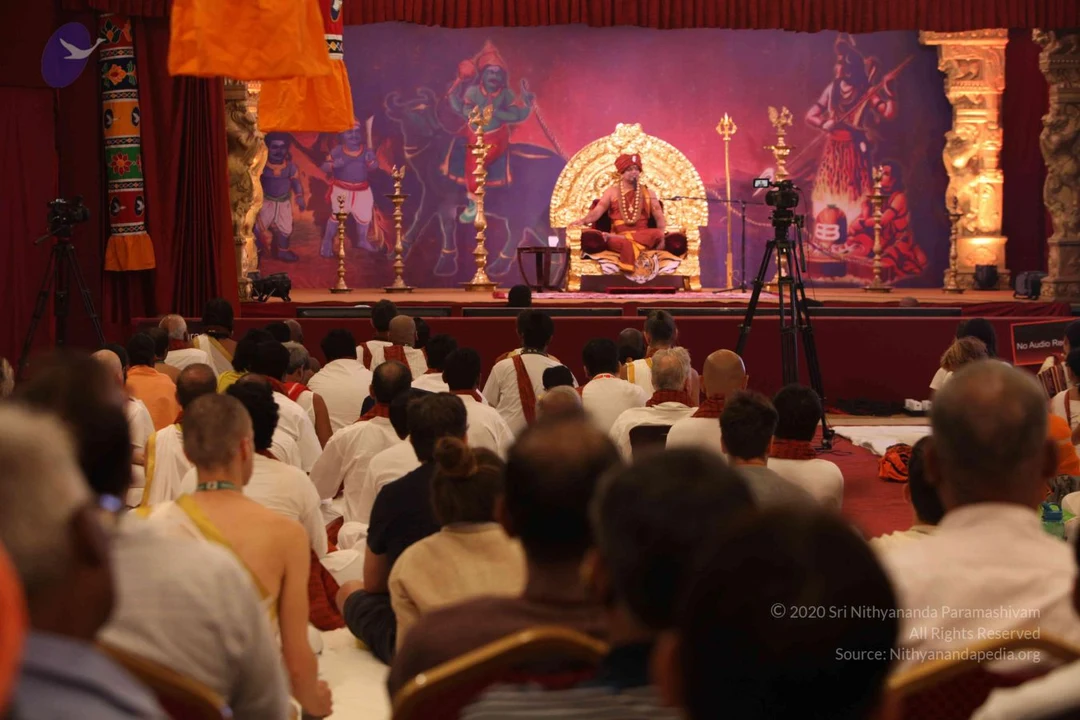
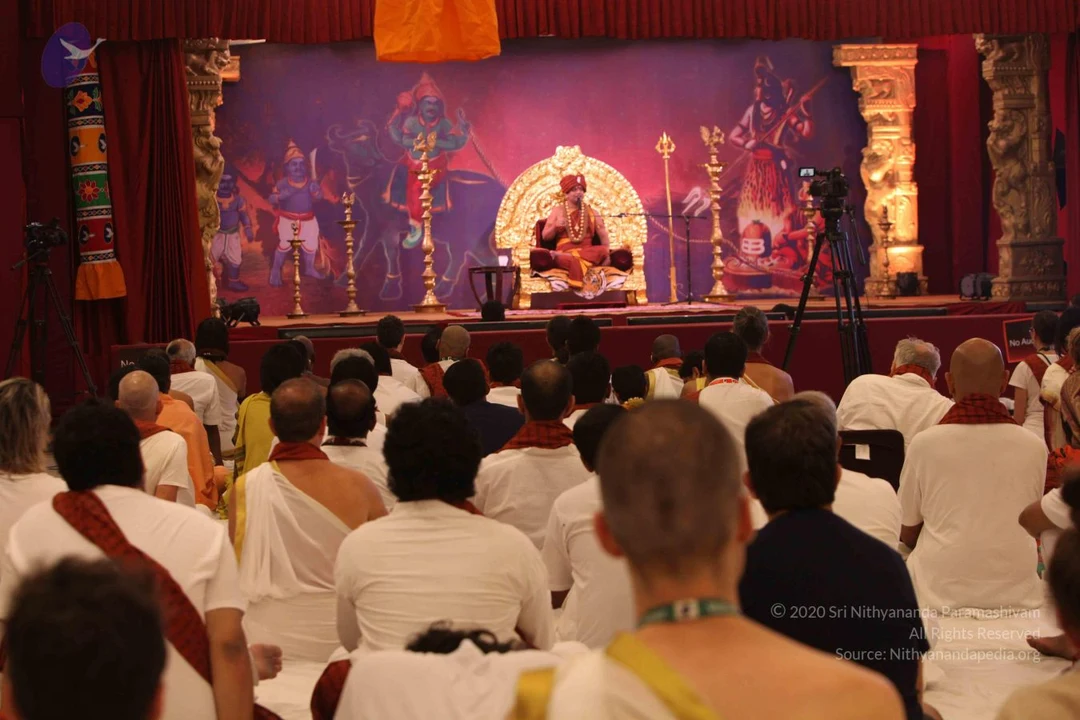
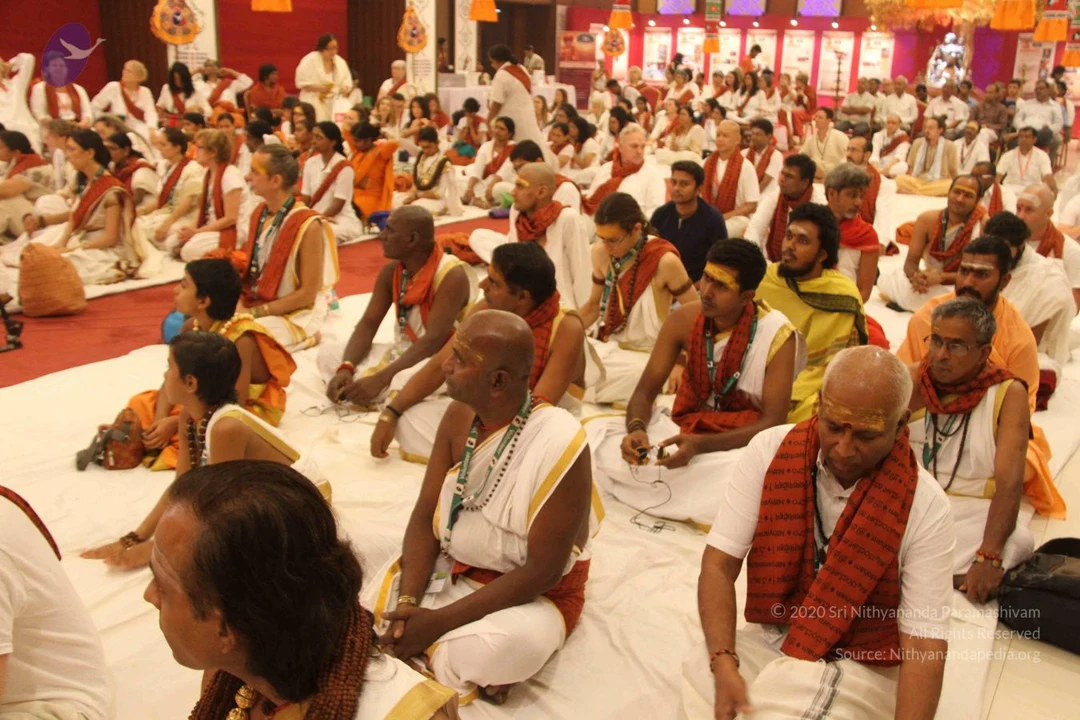
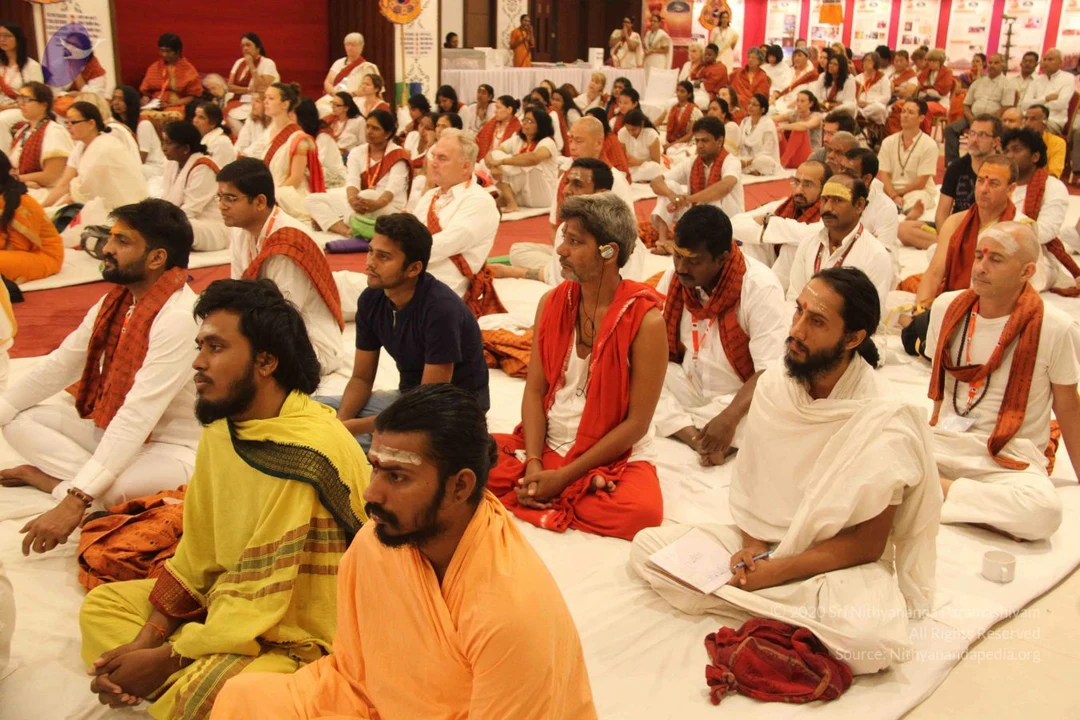
I welcome all of the disciples, devotees, samajis, satsangis, Srimahants, Mahants, Thanedars, Kotharis, owners of Sarvajnapeetha, visitors, viewers sitting in Nithyananda Sabha in Varanasi and through Nithyananda TV all over the world and Sadhana TV, Arra TV, Nakshatra TV and two-way video conferencing having Nayana Deeksha. Cities sitting with us having Nayana Deeksha – Moris Planes New York, Houston Aadheenam, Dubai Aadheenam, Hyderabad Guptakashi, Puduvai Aadheenam, Guadeloupe Aadheenam, Oklahoma Aadheenam, Seattle Aadheenam, Kuala Lumpur Aadheenam, St. Louis Aadheenam, San Jose Aadheenam, Los Angeles Aadheenam, Mt. Clair California, Ohio Aadheenam, Toronto Aadheenam, Vancouver, Canada, and some more cities are joining. Indrani New Jersey, Phoenix Aadheenam, and some more cities.

I welcome all of you with my love and respects.

(3.00 mins)

I will expand on Isavasya Upanishad. Usually when I come to Varanasi I speak on Kathopanishad. This time I decided I will continue on Isavasya Upanishad because last time we couldn’t spend much time on Kathopanishad. I was expanding on 14th verse of Isavasya Upanishad. Please recite along with me.

sambḥutiṁ ca vināśaṁ ca..

Actually I am uttering only one word. One word easily you all can recite. Listen and repeat. You don’t have to feel intimidated, ‘Oh Sanskrit. I don’t know.’ I am not giving you long words. Please und, these sounds are very powerful, they can sit inside your inner space, go on purifying on. They are like powerful inner purifiers. So listen and recite.

sambḥutiṁ ca vināśaṁ ca yastad vedobhayaṁ saha |

vināśena mṛtyuṁ tīrtvā sambhūtyāmṛtam aśnute || 14 ||

Just recite. It’s the 14th verse of Isavasya Upanishad. I will give you the translation.

One who cognizes the pure essence of these both—the imperishable consciousness, the cause of manifestation and the destructible, the perishable, manifested entities, simultaneously—such a person completes with the fear of death and transcends death by worshipping or by knowledge of the perishable entities; and reaches the imperishable consciousness; celebrates the nectar of immortality and bliss, the eternal space of oneness.

Now listen. It’s the literal translation I have read out. The key word in this whole Upanishad, you need to understand. What Upanishad is trying to convey it to you. Listen.

Listen intensely what Upanishads are trying to convey through this to you. The first thing, the key word — what you are worshipping in you life. Please understand, here worshipping does not just mean in front of whom you bow down, in front of what you bow down. What you think as goal of your life. What you remember again and again. Please understand., you may be bowing down in front of Shiva deity for money, then you are worshipping money. Whether it is right or wrong, don’t bother now, first let us diagnose, understand – what you are worshipping in your life. You may bow down in front of any God, Goddess, Guru, but what you think as the essence of your life, what you think as the lakshya (goal) of your life, that is what you are worshipping.

(8.05 mins)

I tell you, if you do not have any goal, just living, then be informed you are worshipping confusion and darkness. No, there are many people, I am telling you. They think let us drag on the life, one day something will happen, everything will become alright. No. You are worshipping darkness and confusion. If you are not standing up for yourself, you are only worshipping darkness and confusion. The key concept in this Upanishad is – what are you worshipping.

Listen. When Upanishad say,

sambḥutiṁ ca vināśaṁ ca yastad vedobhayaṁ saha |

vināśena mṛtyuṁ tīrtvā sambhūtyāmṛtam aśnute || 14 ||

what you think as your goal, what you think as the essence of your life, what you think towards which you are moving in your life – you are worshipping that. Remember, listen, understand. You are worshipping that.

Today I wanted Vakyartha Sadas on this subject – all the Gurukuls Vakyartha Sadas groups all over the worlds, take up this subject — what are you worshipping in your life? What you think as goal of your life? For some people it may be money. For some people it may be pleasures. For some people it may be name and fame. For some people all of this part, part, little-little. For some people, just confusion. I tell you, there are people who worship confusion. How you bring any problem, I will find solution. There are some people you bring any solution, they will find a problem for it. No, I have some people.

(12.08 mins)

Even in my own Sangha, I have some people. You bring any solution, they will find problem out of it. I call them confusion worshippers. Worshipping confusion. Worshipping the status-quo, worshipping the inaction. Worshipping the non-transforming stuck-up space. Understand, stuck up just stuck without moving in the life in any direction is hell. That is hell. Stuck without moving in any direction. Confusion worshipping.

First find out – what are you worshipping in life. Second – how much is consciousness and how much is materialistic, perishable. Look in, find out how much is imperishable and how much is perishable. What is imperishable which you are worshipping in you, what is the perishable which you are worshipping in you. For example, some part of you may feel – “I think I should have name and fame, recognition, money, all pleasures in the life”. And some part of you, “yes, but all this is not going to be the end. I need to be achieving something eternal, which does not move, which cannot be taken away.” Just see how much of you wants perishable, how much of you wants imperishable.

sambḥutiṁ ca vināśaṁ ca yastad vedobhayaṁ saha |

vināśena mṛtyuṁ tīrtvā sambhūtyāmṛtam aśnute || 14 ||

(15.42 mins)

Somebody asked Buddha, “Buddha, how you see your Sangha growing in the future?” He says very beautifully, “if my Sannyasis are able to inspire the truth of imperishable on the Grihastas, what I want will happen. The other way, if the Grihastas are able to inspire the Sannyasis about the perishable, it will happen as they want”. Understand, very simple word. Even in our Sangha, I can just shout out names, straight away I can shout out names. Instead of Sannyasis impressing, inspiring the people about the imperishable, Grihastas have inspired the Sannyasis about perishable. Of course, ultimately one truth is how much of perishable is inside you, how much of imperishable is inside you, that decides whether you are going to be a Sannyasi or a Grihasta. That’s the truth. It is your strength and the amount of imperishable you worship, the akshara, undying component of you which is the strength.

I tell you, imperishable is the bone structure of the cosmic law. When your inner infrastructure is dependent on the imperishable truths, you will never collapse. If your inner infrastructure is dependent on perishable, you will never stand up, you are just few kg (kilogram) flesh without bone, may be a beans bag; beans bag wearing jeans, that’s all. Nothing more. It is your decision to worship the imperishable, it is your decision to stand on the imperishable. If your inner thinking structure is build on imperishable, you are a man with bone. You are a person who has grown up.

(19.35 mins)

Death is the question which can never be answered. Life is the answer which can never be questioned. Understand, listen. Death is the question which can never be answered. Life is the answer which can never be questioned. Because the truth of death is established on imperishable. If you build your life by your living on imperishable the death does not happen to you as you understand. And life, if you build it on perishable it never happens to you as you want. Let the life be built on imperishable, akshara. Indestructible. All your strategies about life, whether it is short-term or long-term, do it with the clarity – I am the imperishable soul, consciousness. When you want to take up a job, take it up from this – Is this job or career which I am taking up, will it help me to open up my imperishable strength or let me learn how this can open up my imperishable strength and do it from that context.

(21.34 mins)

Understand, any job on the planet earth can be done from this context. You may be a doctor, engineer, even lawyer. Even lawyer can function from the context of imperishable. Discovering the context of imperishable for your career, for your job, all your major decisions of life is what I call living enlightenment. Anything you do in your life from morning till night and even after night, anything you do in your life, whether it is a short-term goal or a long-term goal, a short-term strategy or a long-term strategy, if it is done from the context of imperishable, you are living enlightenment. Learning that, learning that is what I call Completion. Aligning to that is what I call authenticity. Remembering that is what I call responsibility. Understand, ultimately everyday when you apply the bhasma (sacred ash), remember – everything seen, perceived by you is perishable. Every goal you have is perishable. Just to remind you – your forehead is full of perishable you are asked to apply the bhasma. Inside is full of perishable. When you understand, inside full of perishable, you will know how to catch the imperishable.

(24.17 mins)

I tell you, don’t be afraid at all, ‘if I start working with imperishable, suddenly will I lose attachment with my family, will I lose attachment with my job, will I lose attachment with my goals of money, name and fame, what I want. Understand, when you put your strategy on imperishable, the only one will be lost from you – that is suffering, nothing else will be lost. Nothing else will be lost. Purifying your logic with the truth of imperishable. Greasing your inner happenings with the truth of imperishable will remove all the sufferings and frictions. If you grease your inner happenings with the truth of imperishable, all, all, all sufferings, frictions inside will melt away, will disappear, will be destroyed.

sambḥutiṁ ca vināśaṁ ca yastad vedobhayaṁ saha |

vināśena mṛtyuṁ tīrtvā sambhūtyāmṛtam aśnute || 14 ||

Don’t go on be running, stop at some points, stop some time, look, are you moving 100% out of imperishable or are you moving 100% out of perishable? What is it that is driving you? What is it that you are worshipping? What is it that you are looking for? What is it that is making you go mad? What is it that is driving you?

sambḥutiṁ ca vināśaṁ ca yastad vedobhayaṁ saha |

vināśena mṛtyuṁ tīrtvā sambhūtyāmṛtam aśnute || 14 ||

I can see the courage and confidence in the voice of the Upanishadic Rishi who uttered the statement. The guy must have built not just his bones, even the muscles on the imperishable. Even his muscles must be singing the song of imperishable. If you are going to get married, see how I can express my imperishableness? If you are going to take up a job, see how I can express my imperishableness? Even if you are going to take up enriching, listen, all the volunteers listen, whoever is suffering with tiredness and boredom, you are suffering because you built your inner infrastructure on perishable. No! Whether short-term goal or long-term goal – whether you plan to become an enricher for your whole life or whether are you enriching just for this December IA, build yourself on imperishable truths and concepts. Whether you are planning to become an enricher your whole life or whether you are planning to enrich only this Nithyanandoham 1008, listen, let your decision to be enriching, words about enriching, the whole happening be rooted, established, founded on the truths of imperishable. Let it be on the great principle of authenticity – shraddha-vivecha. Let it be established on the powerful principle of shraddha, imperishable.

I tell you, confusion is the worst perishable. Understand, even if you are running behind the pleasure, at some point you will have little pleasure and you will have little disappointment. But if you are running behind confusion, it is suicide. Suicide not just physically, it is physical, mental, spiritual suicide. I tell you, the people who are stuck. Even in our whole sangha, I can give a list – starts from Saradananda from Salem, don’t celebrate I uttered your name. I am uttering your name in wrong list. It’s a long list. Stuck in confusion. I tell you, if you are stuck in confusion without breaking, if you are worshipping confusion, you are worshipping the ghost fantasies. Either your lusty fantasies have become more powerful than your ability to work with the reality or your fear fantasies have become more powerful than your ability to work with the reality. Sometimes your lust and greed fantasies become so extreme, you think, ‘even if I work and achieve I will be able to achieve only 10 crore in a year, but I wanted 10,000 crore, you are stuck, dead.’ That is the lusty greed fantasy, paralyzing your reality. And same way, the fear fantasies paralyzing your reality, ‘I don’t know what will I do? Even if I do, this, this, this, it will become end of the day only failure and collapse. Then what?’ The fear fantasies paralyzing your reality. Whether fear fantasies or lust, greed fantasies paralyzing your reality and collapsing you, not letting you function, is what I called worshipping confusion, getting stuck, getting stuck. Whenever you are stuck, look in and raise yourself, break free from lust fantasies or fear fantasies with which you are stuck.

Even living with Guru, if you don’t break your worship of confusion and evolve, I tell you, for lives you will be stuck in this confusion and hell. You may just commit suicide; take birth, just to plan to commit suicide. Then take birth, just plan to commit suicide. Its like you will grow-up just to build the pattern strong enough just to give you the strength of committing suicide and by 30 you will have enough reasons to commit suicide, then again grow up to 30 just to build reasons why you should commit suicide and die. Then again, build reasons why you should commit suicide. Your life is just trying to reason why you should not live, that’s what I call building on fear fantasies. Same way the lusty fantasies, when it becomes too much, when it becomes unrealistic, when it becomes impractical, it paralyses you. It just does not let you move. You are stuck in confusion. Back to basics.

(36.24 mins)

Analyze, what are you thinking? What is moving you? What are you worshipping? What is in the center of your heart? Paint it, don’t try to paint Shiva. Find out why you are worshipping Shiva, that only you are really worshipping. I call it gambling bhakti. People come and tell me, ‘Swamiji, if you do this for me, I know you are Incarnation.’ As if I am waiting, I have to prove me to them. Gambling devotion. So they gamble, if you do this, this. Of you do this, this. ‘Swamiji, if you give me 10 crores in lottery, I will accept you are enlightened.’ But if I give 100 crores, you will accept I am incarnation. If I give 1000 crores, you will accept, I am a God. So, I have to establish my Godhood by giving you 1000 crores in lottery.

Understand, when the devotion, feeling connection happens, you being showered with what you want is different. When there is a gambling game is going on, your so-called devotion is different. When you build your mind on the perishable, your mind will be logical. If you build your mind on imperishable, your life will be magical. That’s all is the essence of today’s satsang. Whether you want to build a magical life or logical life, you decide.

The subject for today’s Vakyartha Sadas, how much is imperishable in you, how much is perishable in you. Today I also have a very important announcement the whole Nithyanandoham 1008 program will be – Me working on your bio-energy. Please understand, in Shivoham process I used sound and light, means verbalization and visualization to awaken your bio-memory. When I awaken your bio-memory, all your possibilities will be awakened. But now in the Nithyanandoham 1008 program, I am going to use sound and light, everything to work with your bio-energy. Please understand, when I awaken your bio-energy, all My possibilities will be awakened. The key point is your possibility and My possibility - you-me. The difference between Shivoham and Nithyanandoham is – you-me. Shivoham is your possibilities. Nithyanandoham is My possibilities. That’s all is the difference. In Shivoham I awaken your possibilities to you. In Nithyanandoham I awaken all My awaken possibilities in you. It’s going to be happening in Andaman Islands. It’s a part of India. In Andaman islands, we are planning.

We started the 2012-2015 the conscious shift in cruise and landed in island. Started in ocean and landed in island, means world is saved. Understand, the conscious shift 2012 to 2015, the 2015 December Nithyanandoham 1008 is the last flight. Don’t miss it. Last flight in the conscious shift, don’t miss it. So Shivoham is awakening your bio-memory, awakening your possibilities. Nithyanandoham is working on your bio-energy, awakening your bio-energy, awakening all my possibilities in you; my possibilities in you. So don’t miss the last flight of 2012-2015 conscious shift.

(42.55)

With this I move to the next segment of the morning satsang, Kalpataru darshan. All Kashi vasis who have come to have darshan can gather. I bless you all, let you all radiate with integrity, authenticity, responsibility, enriching, causing Living Advaita, the eternal bliss. Nithyananda.

Thank you. Be Blissful.

Title

Paramahamsa Nithyananda backbone of Sanatan Dharma; Narendragiriji, Akhil Bharatiya Akhada Parishad

Description:

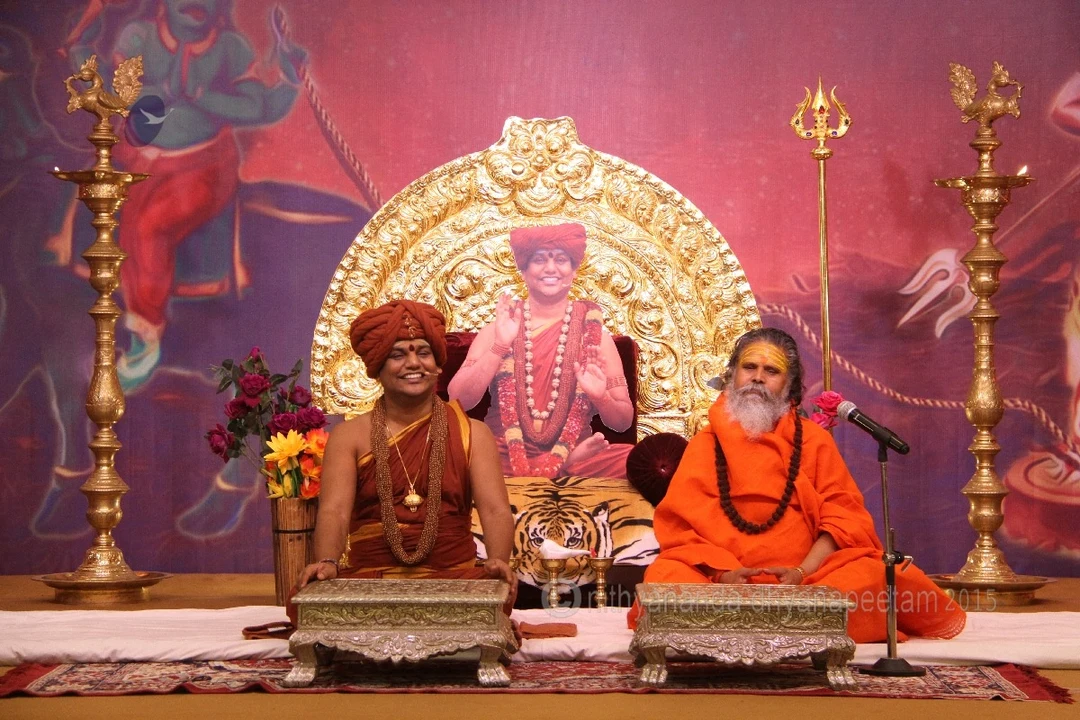
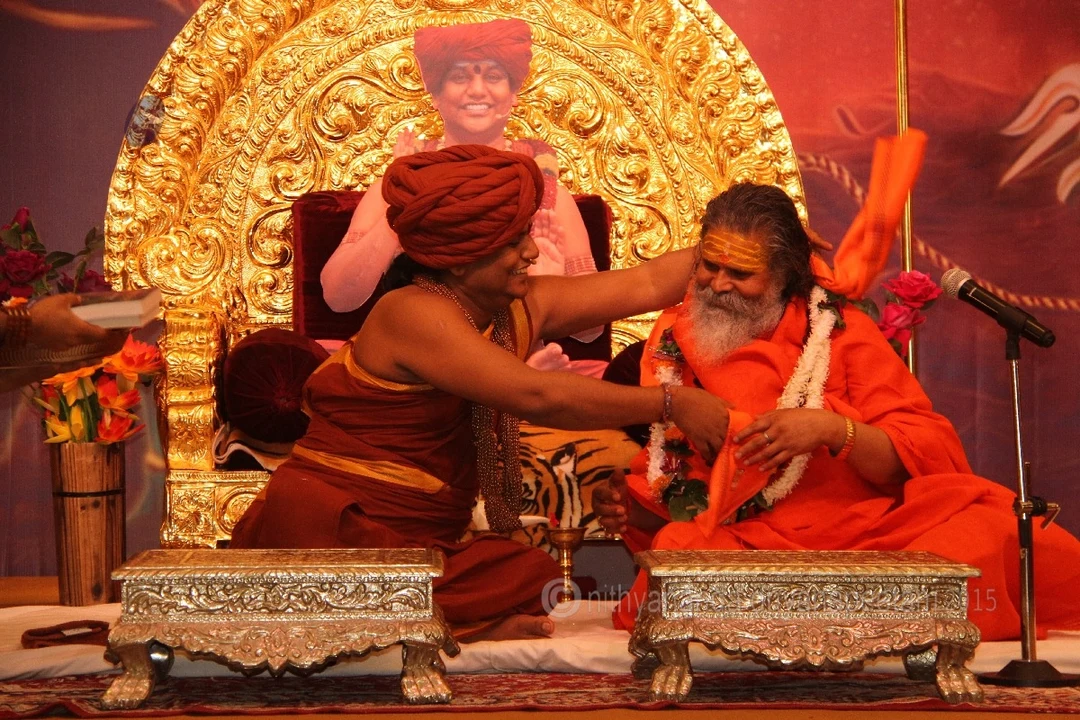
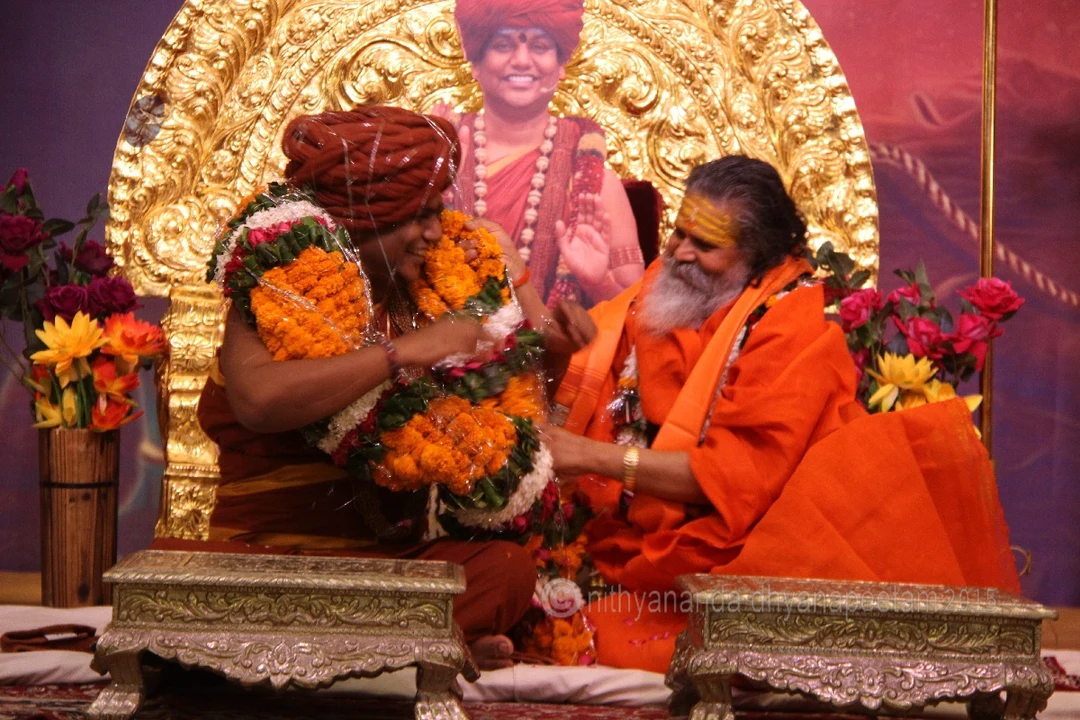
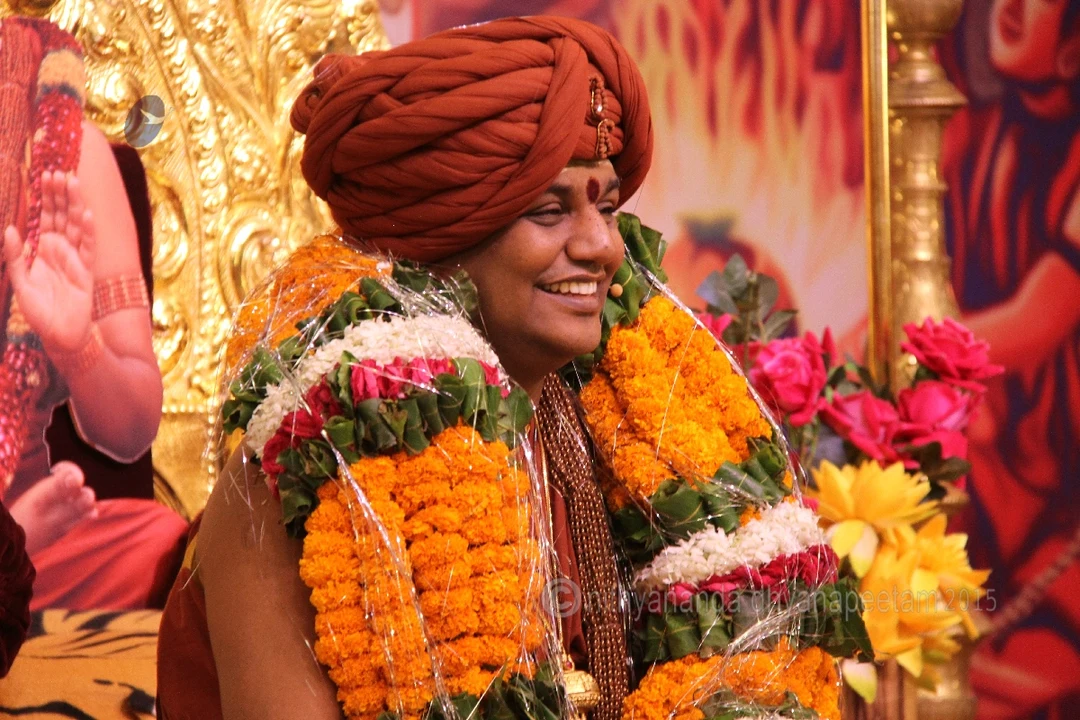
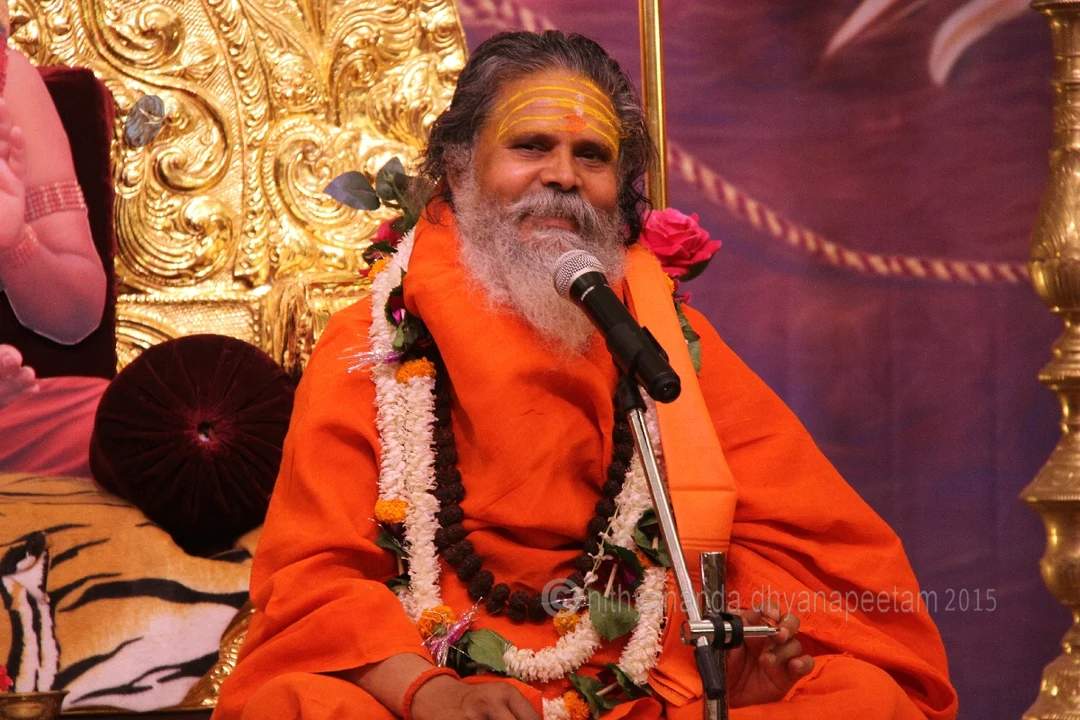
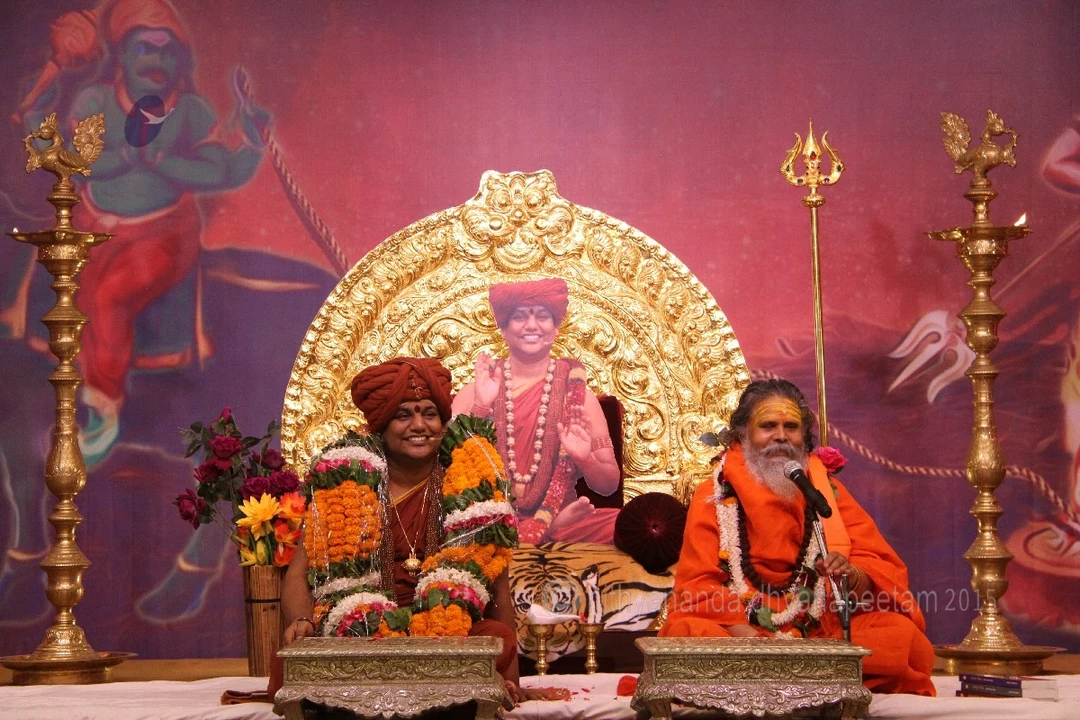
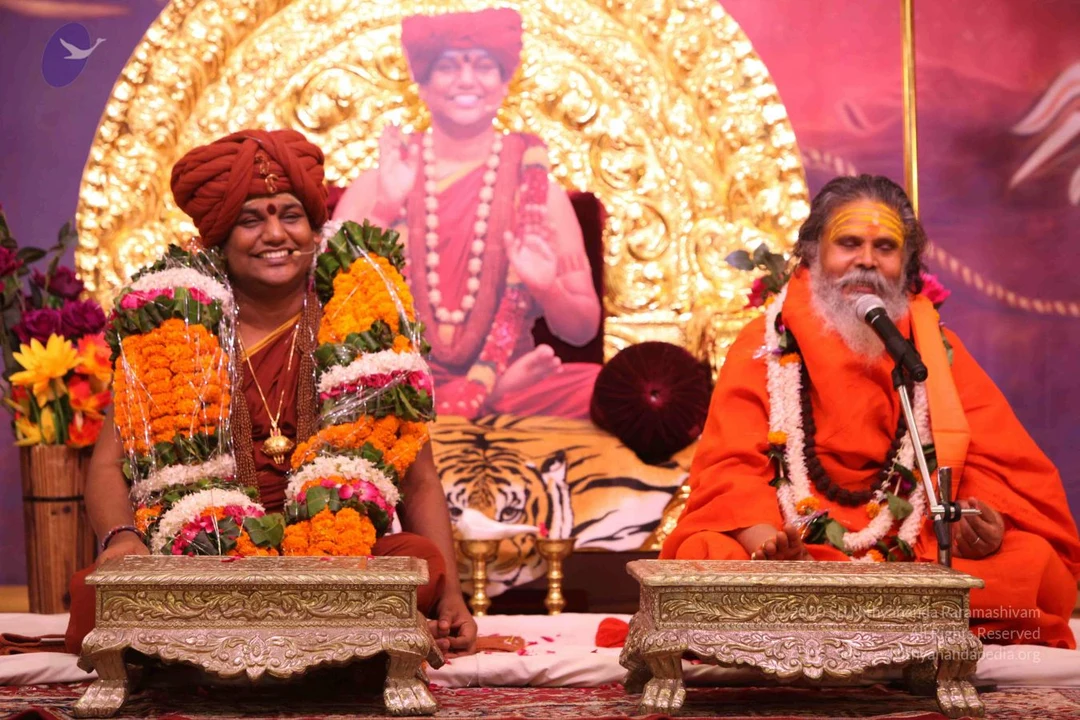
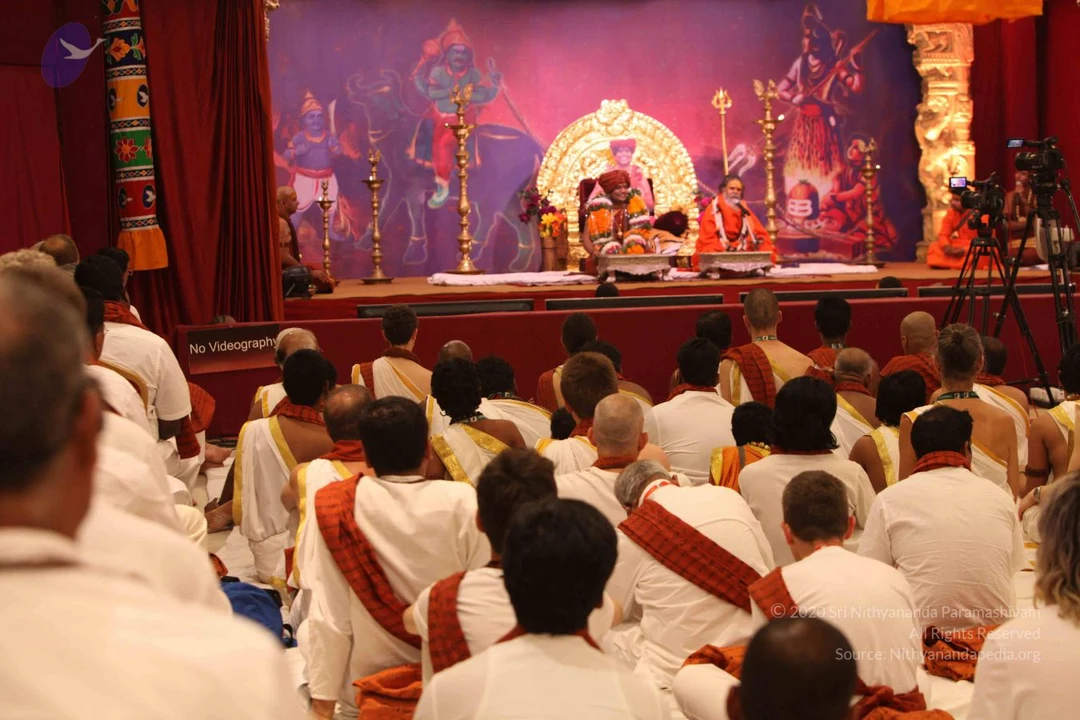
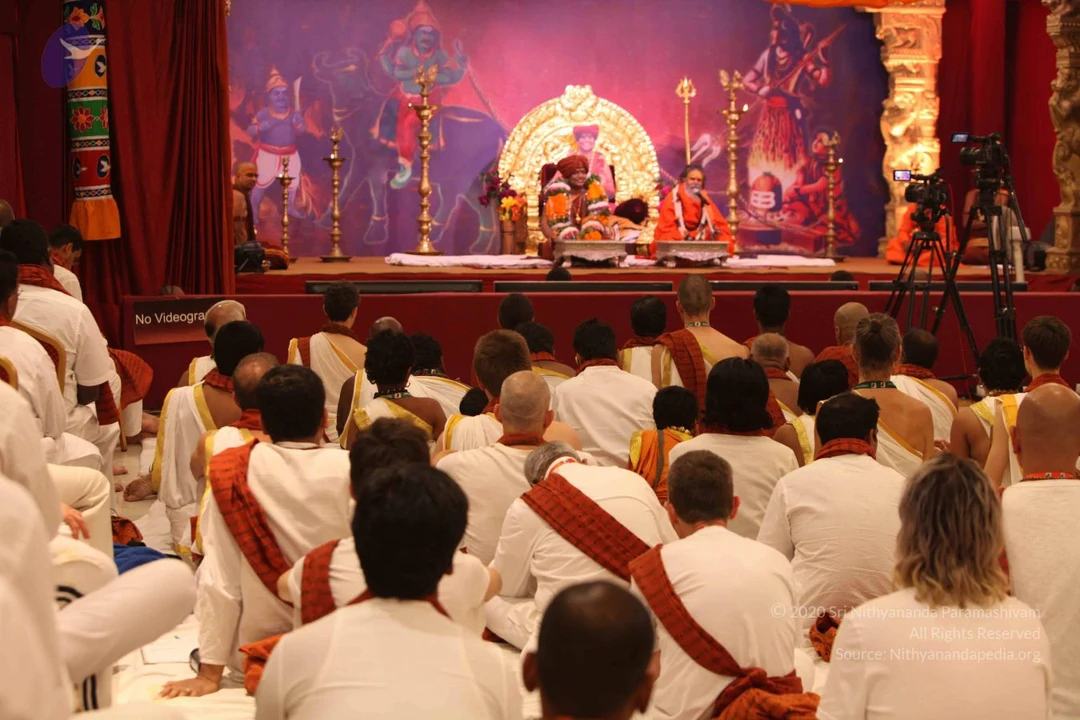
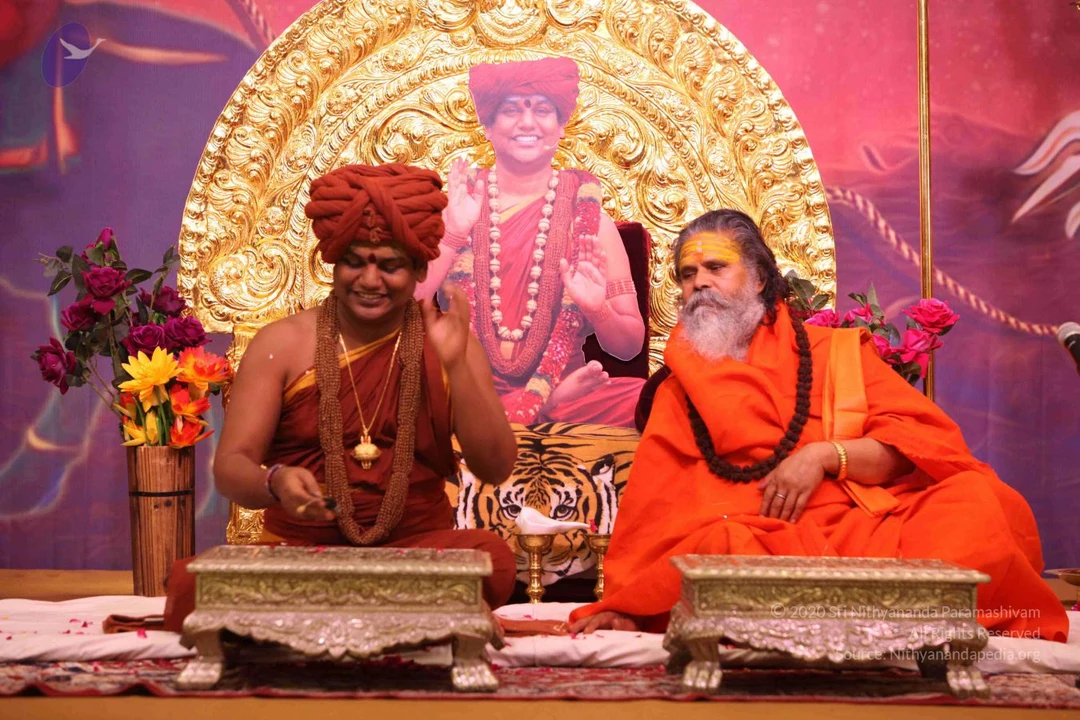
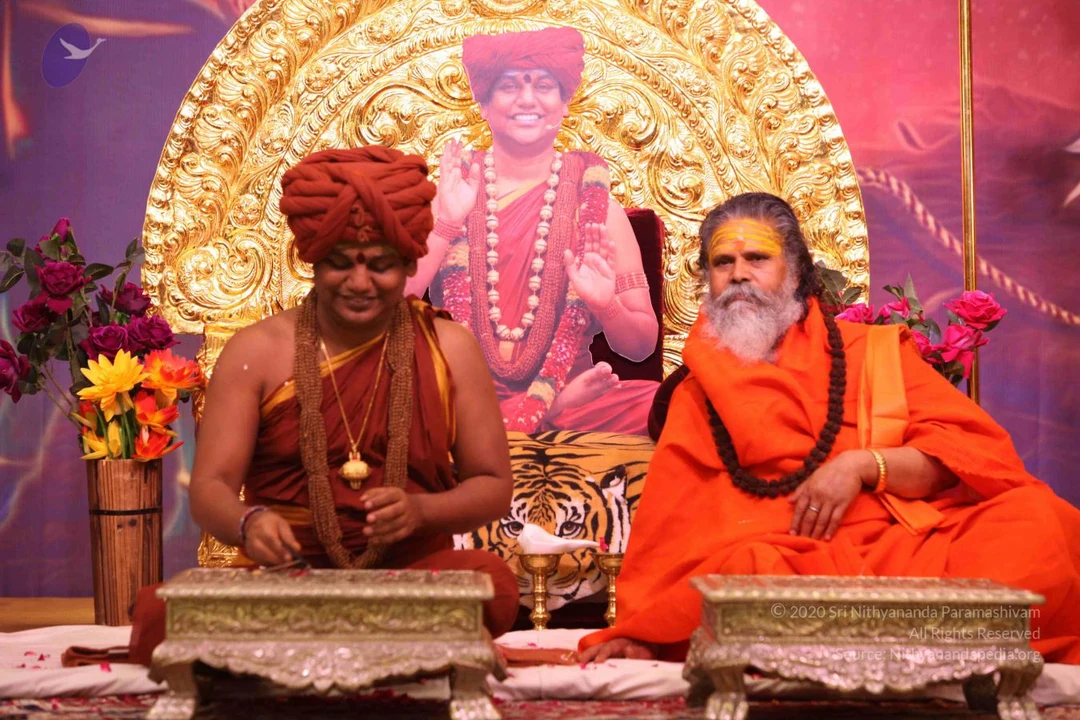
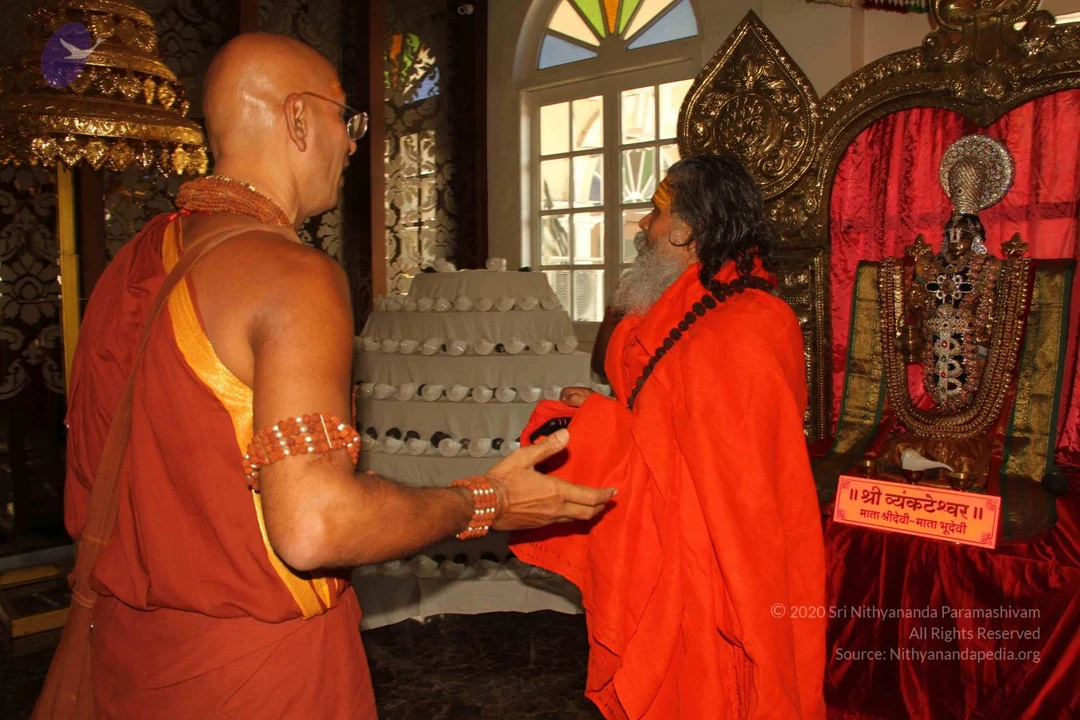
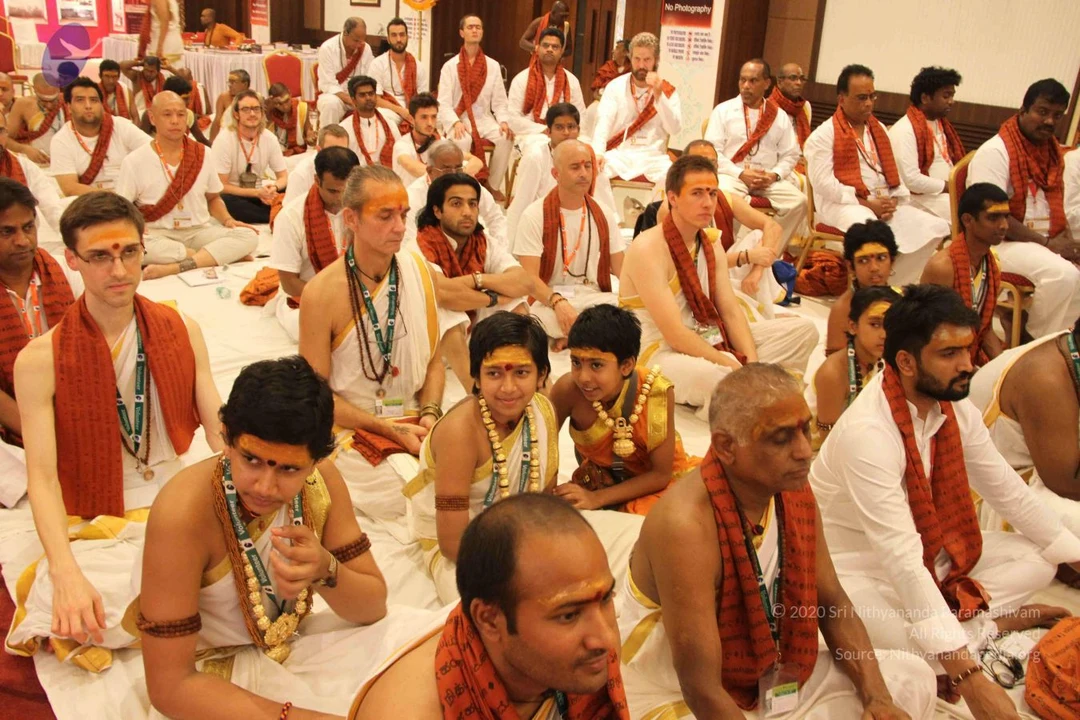
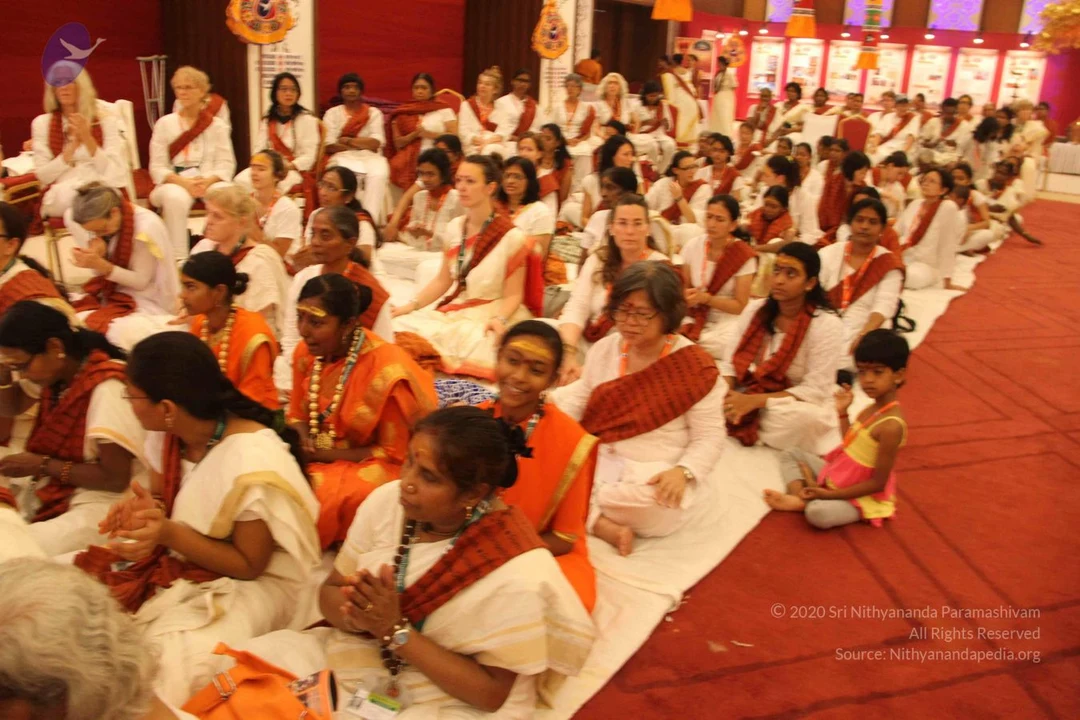
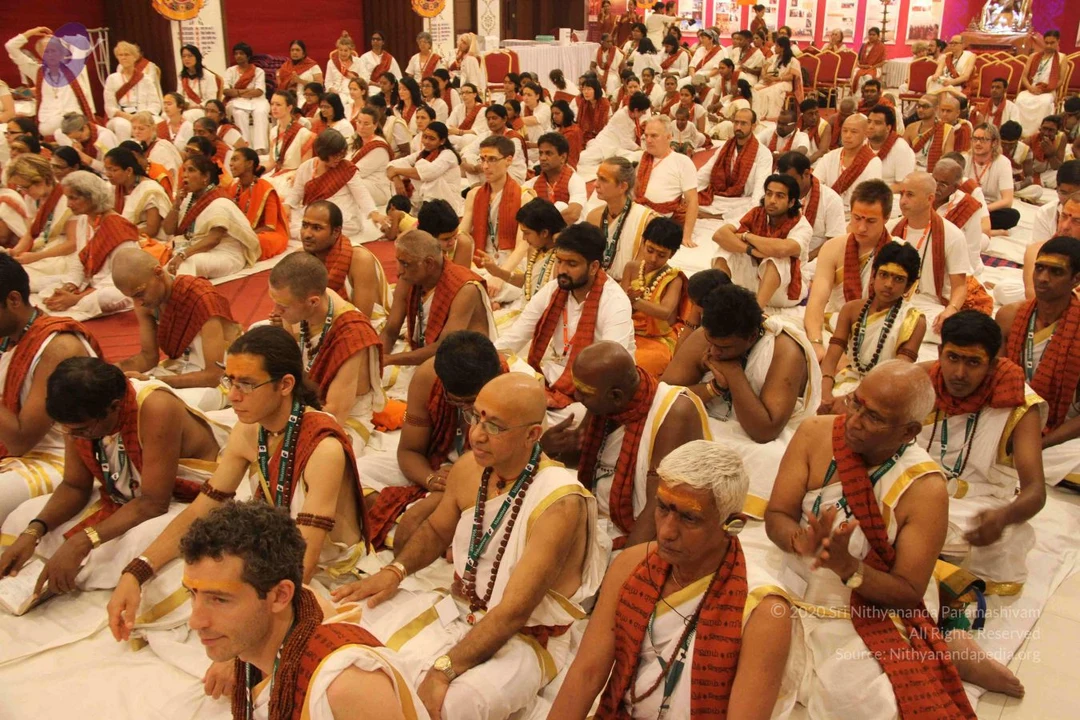
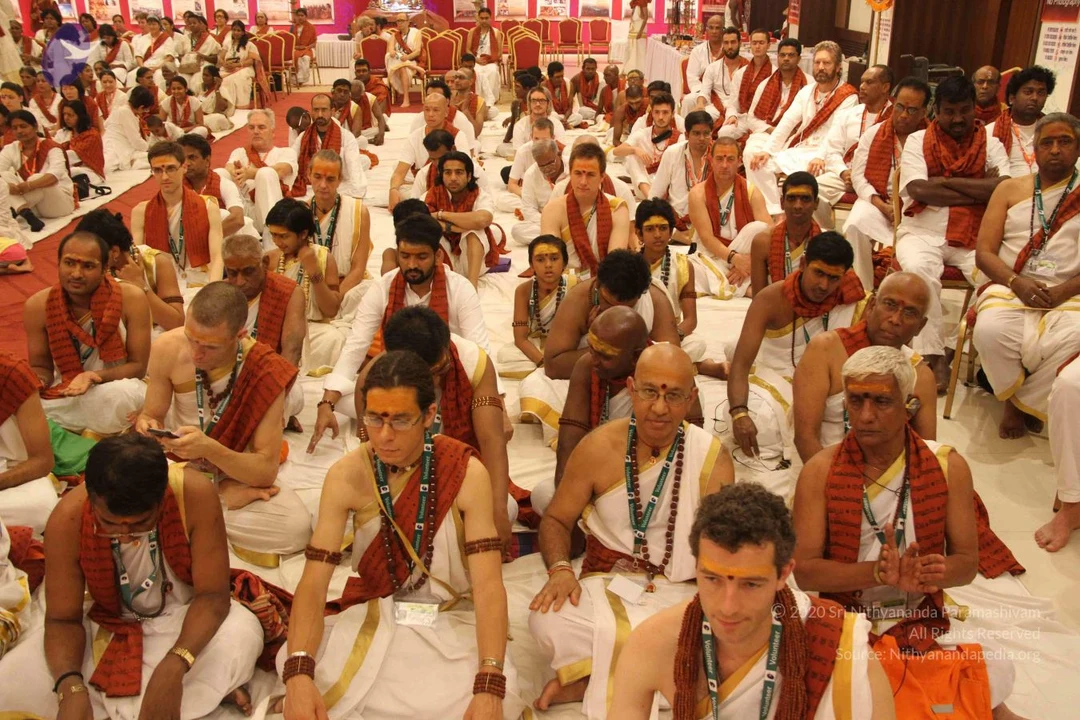
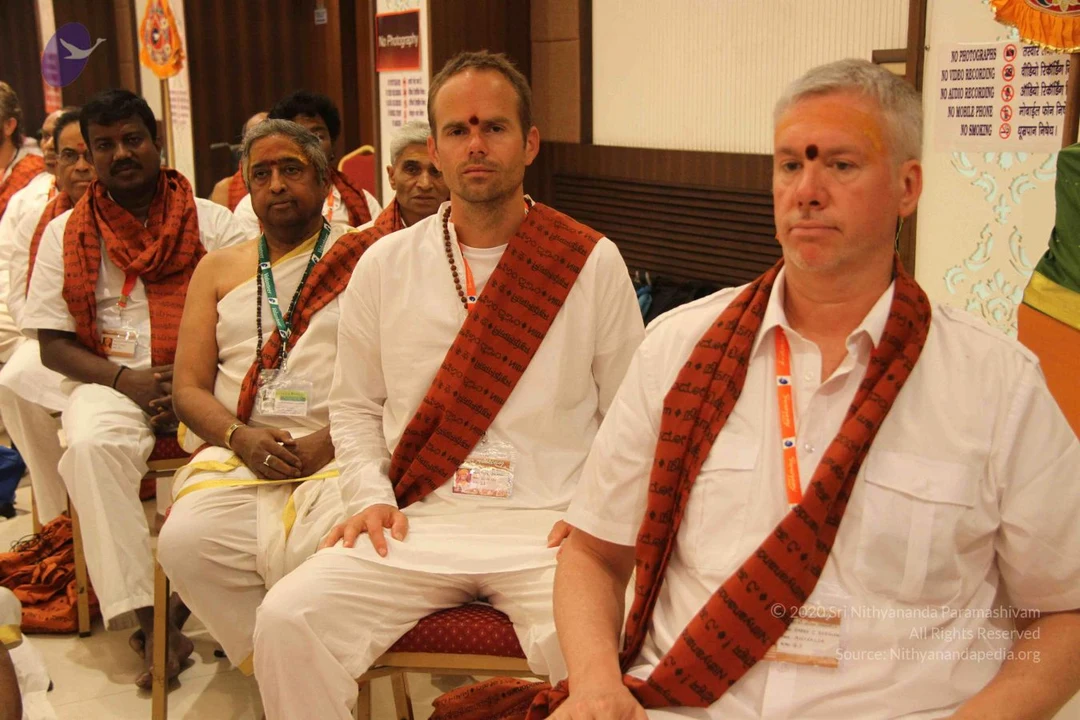
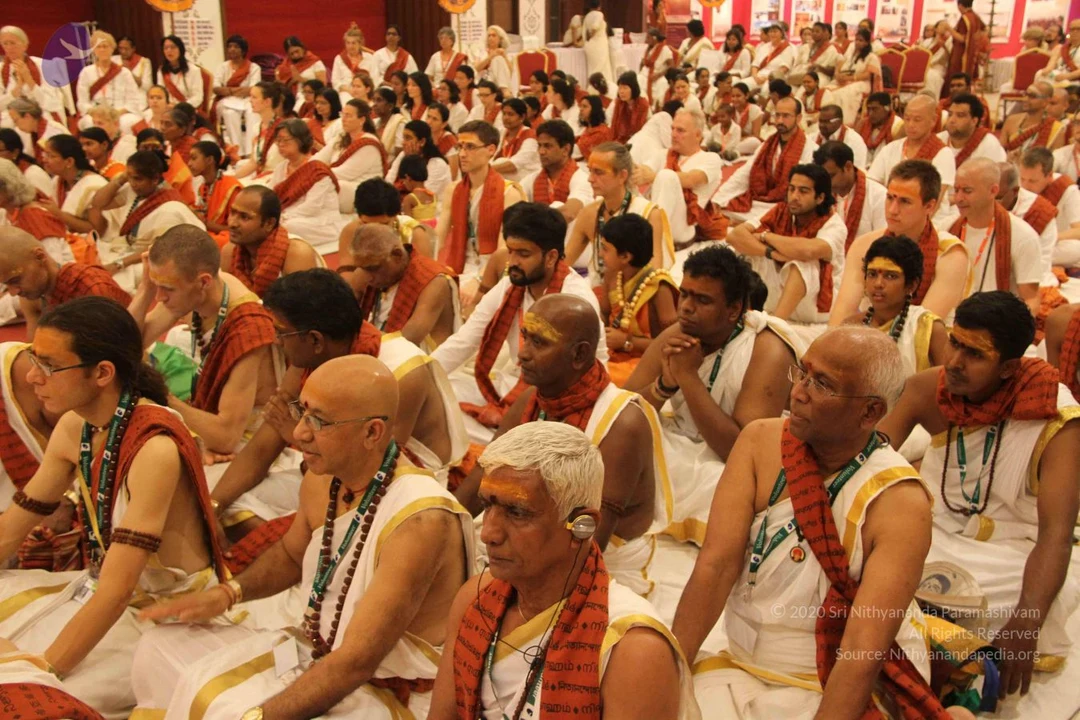
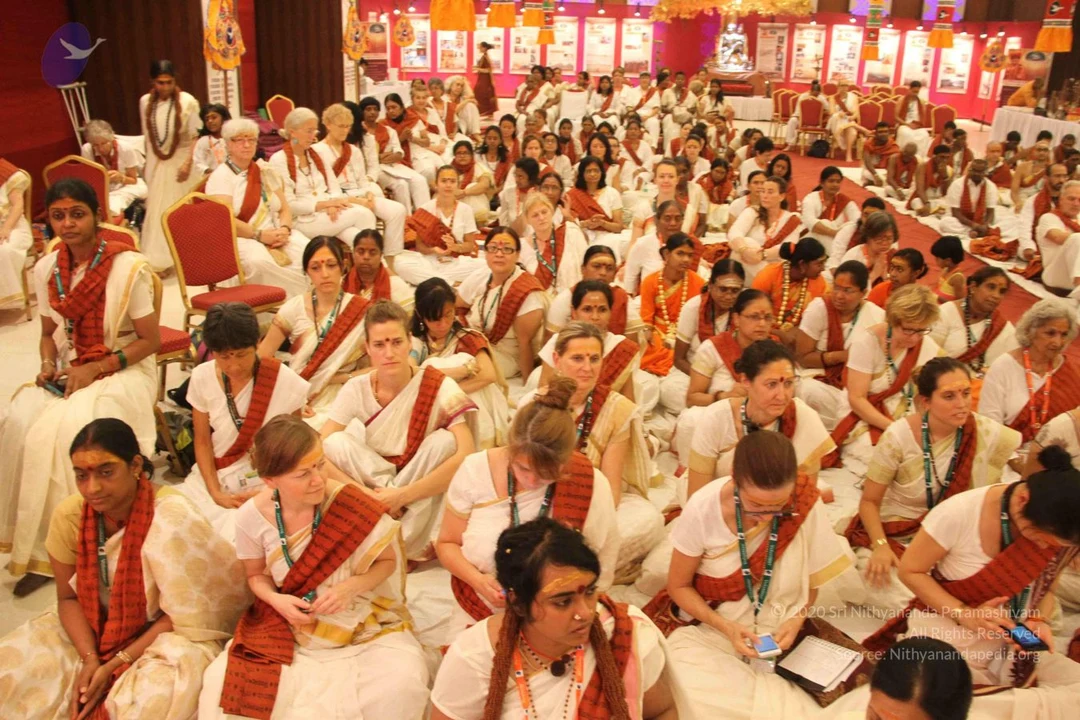
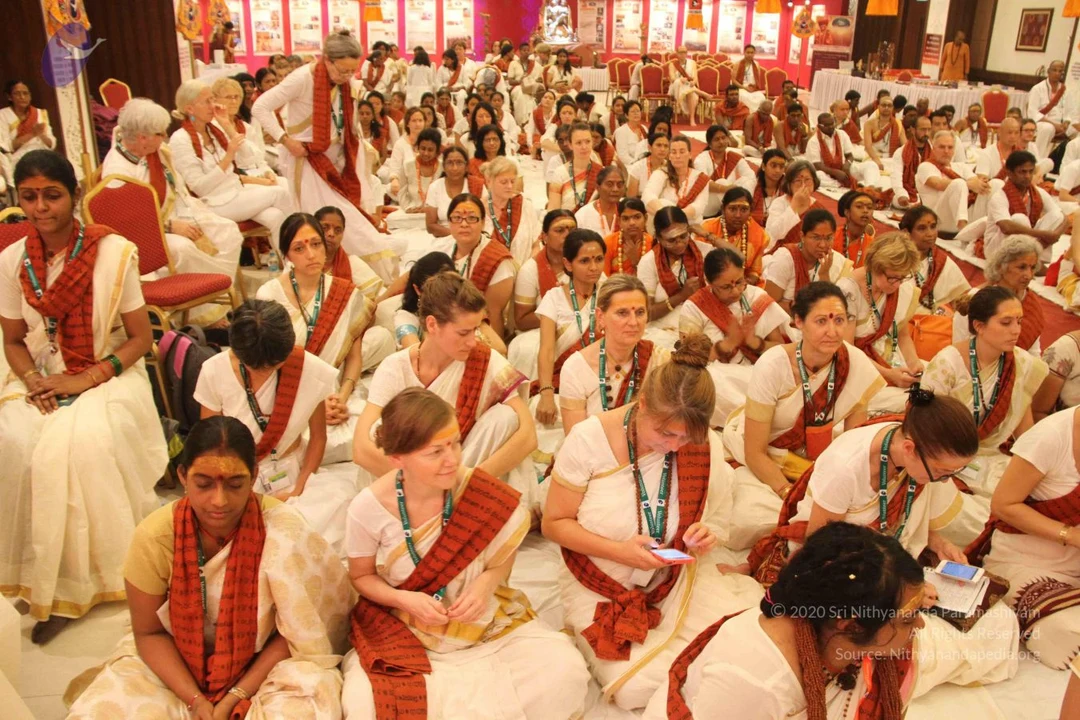
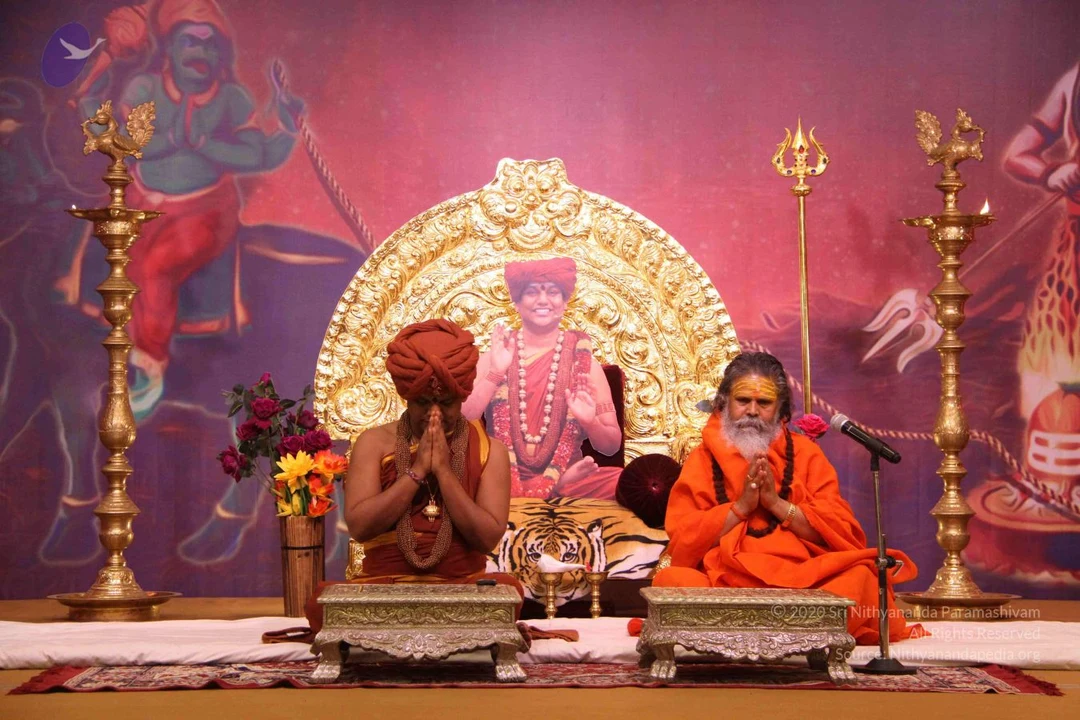
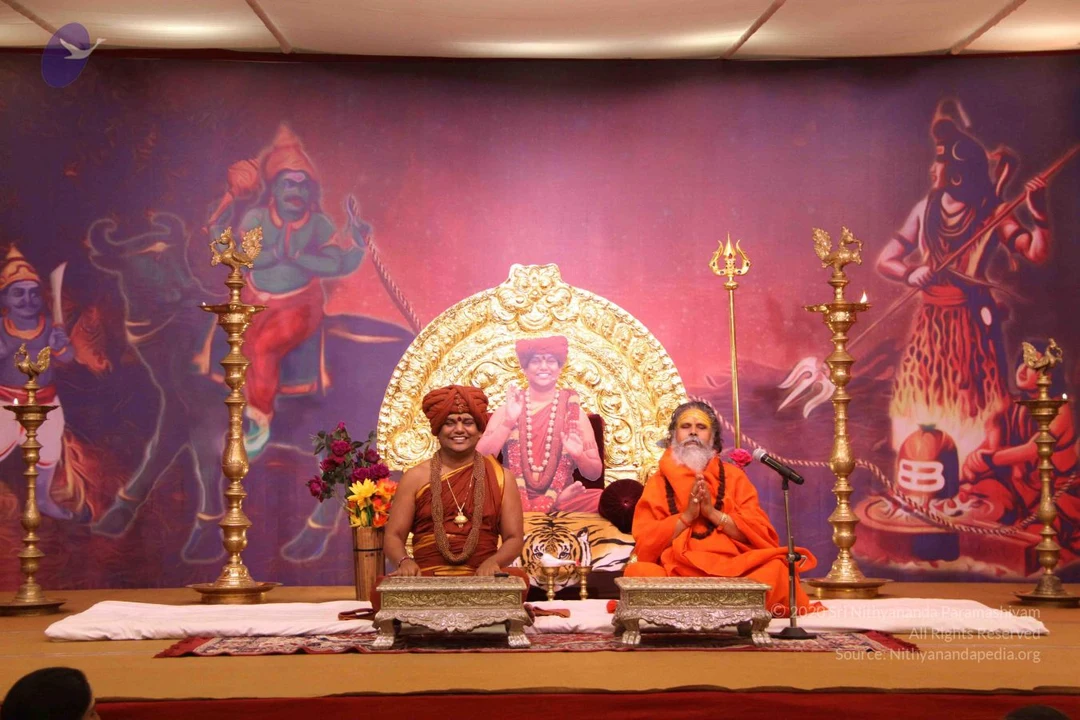
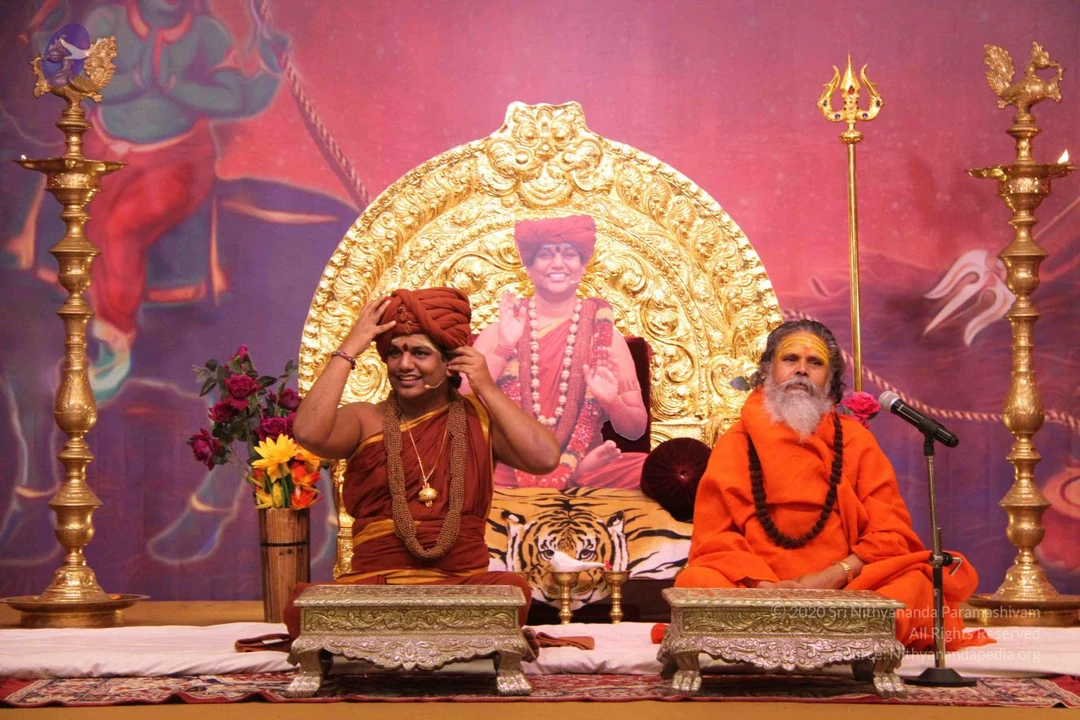
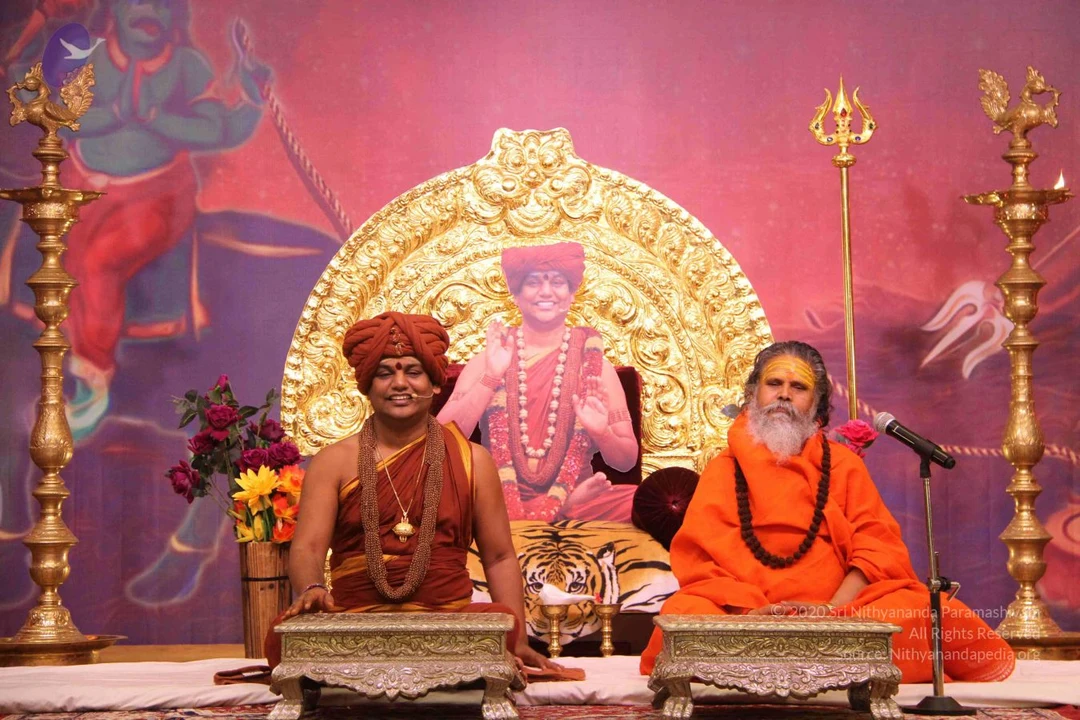
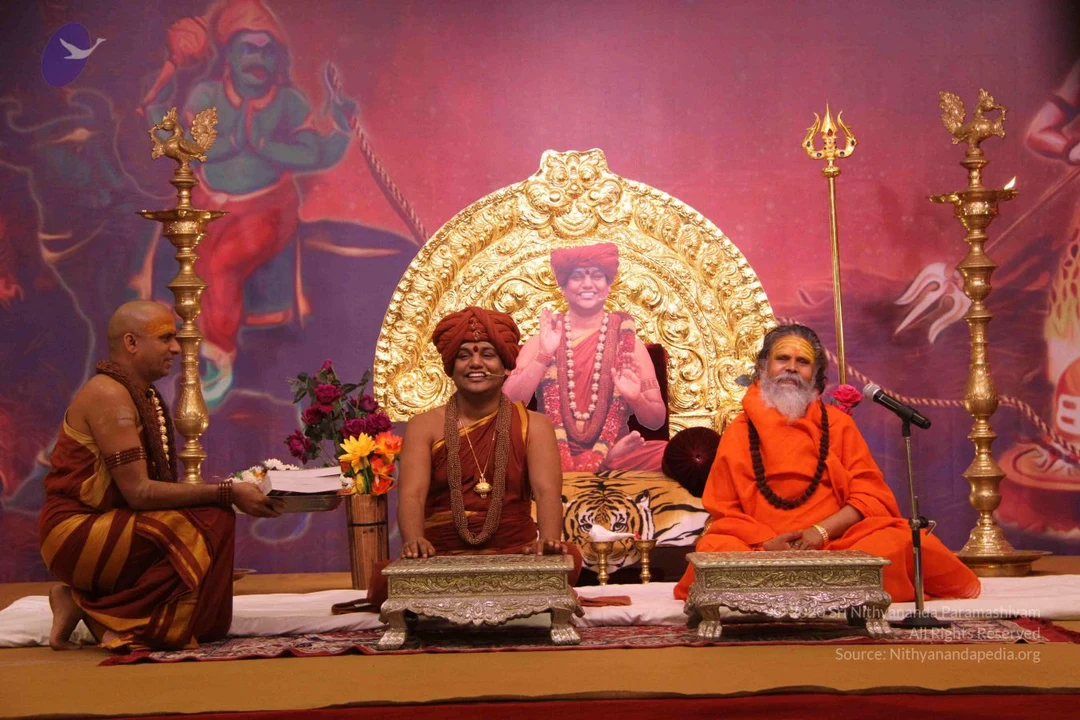
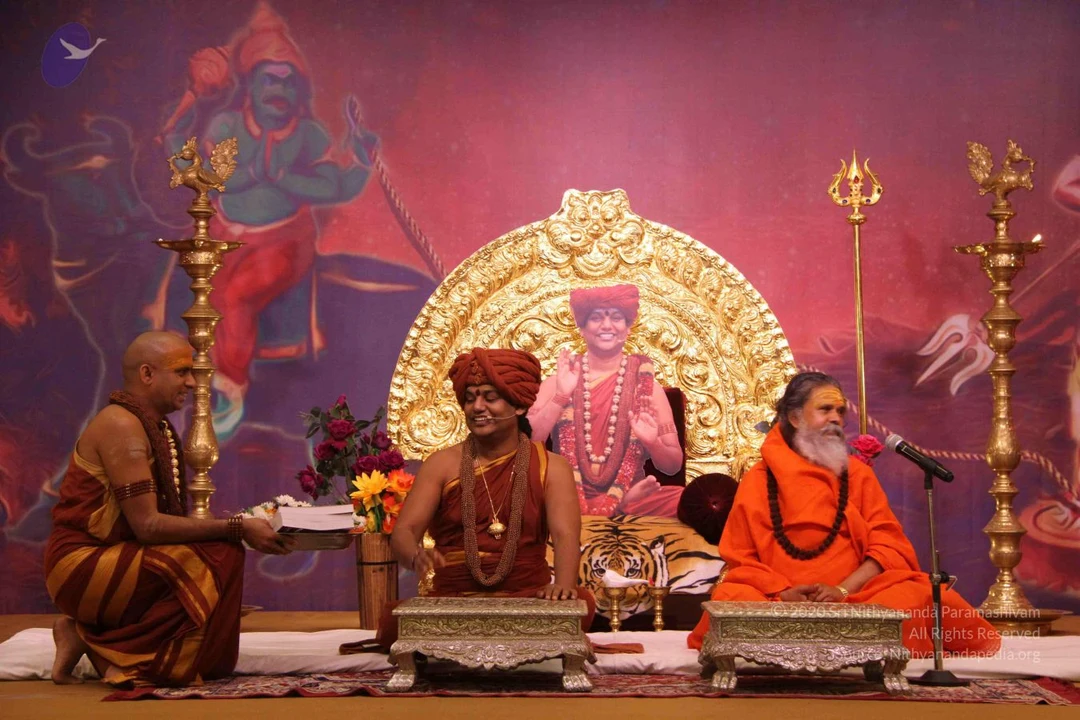
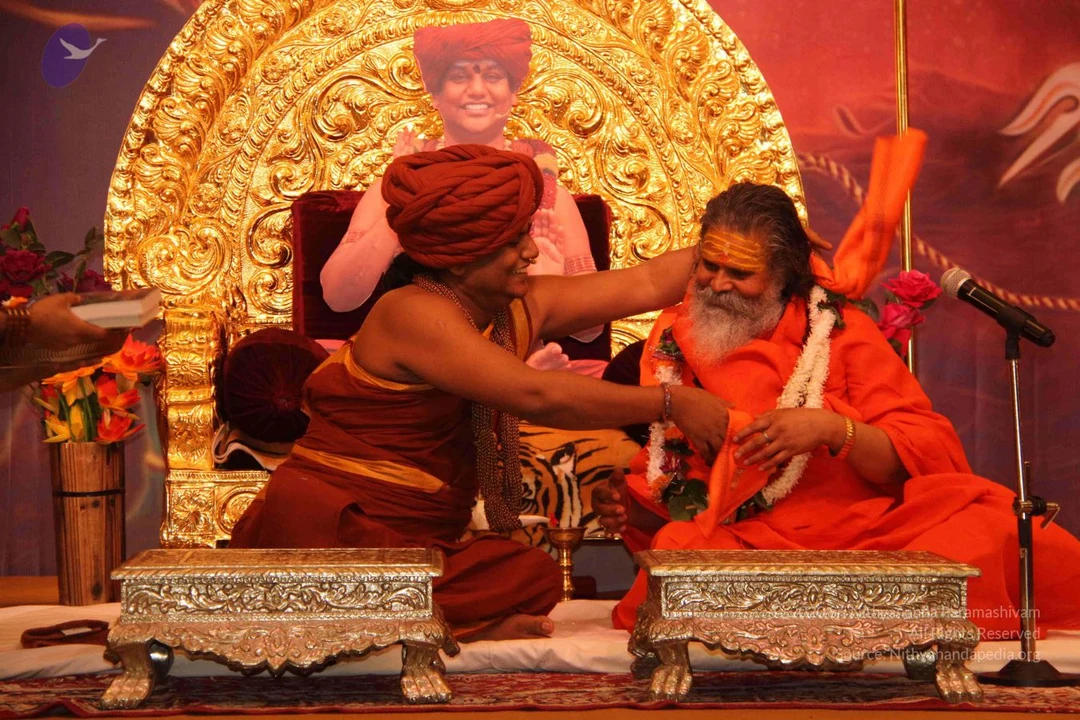
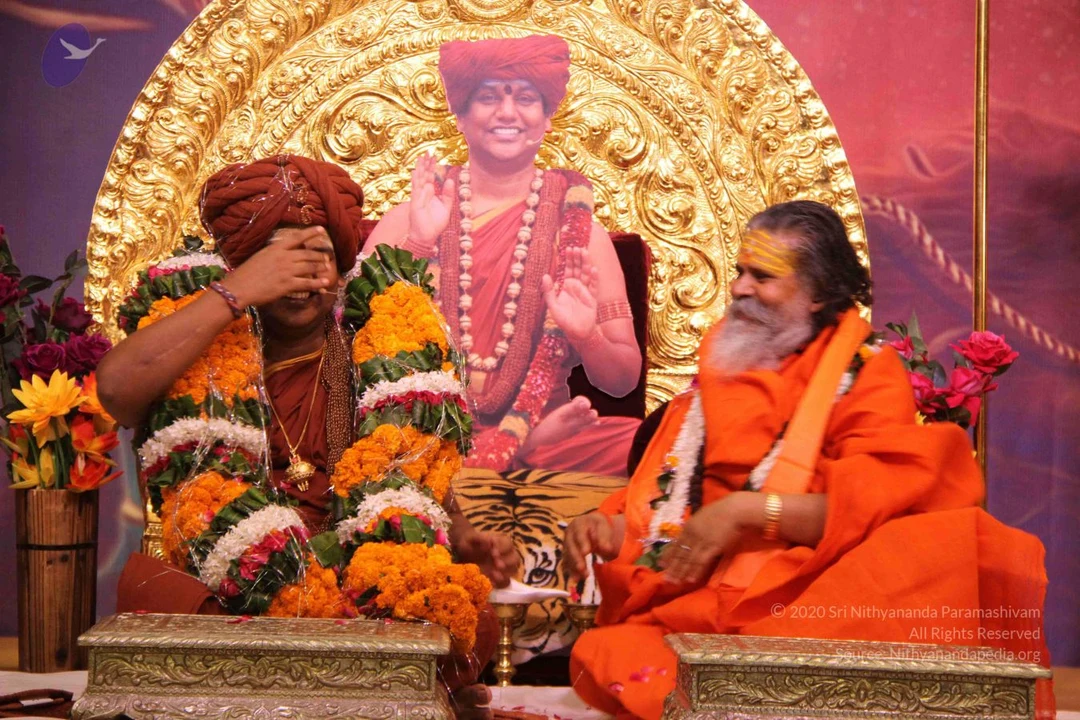
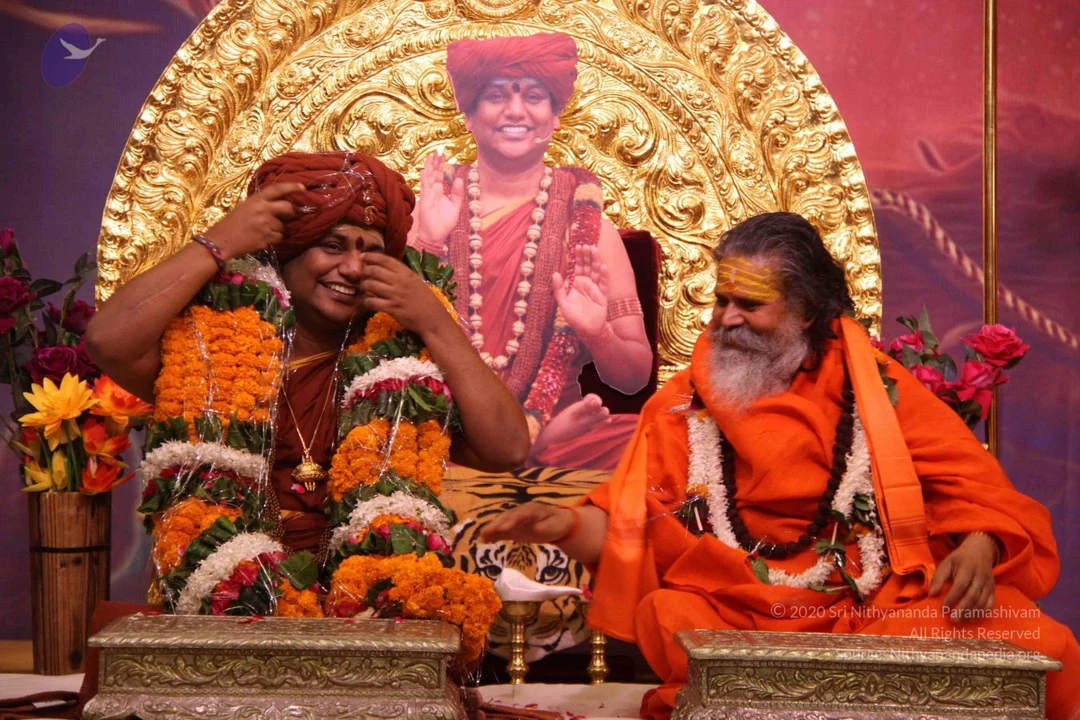
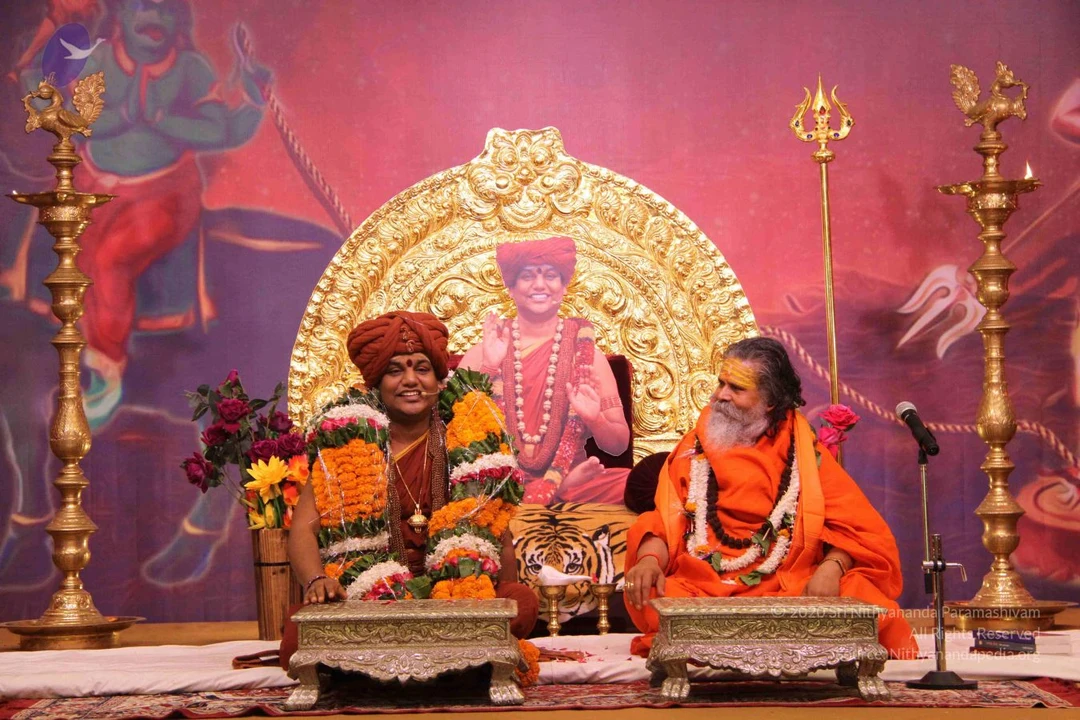
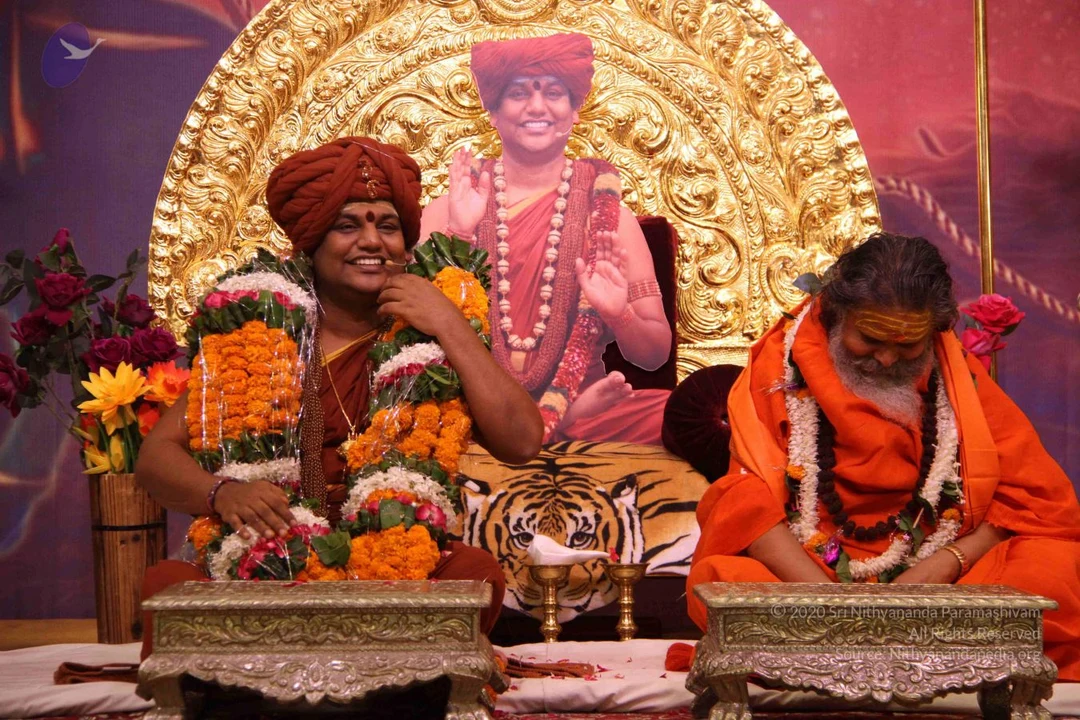
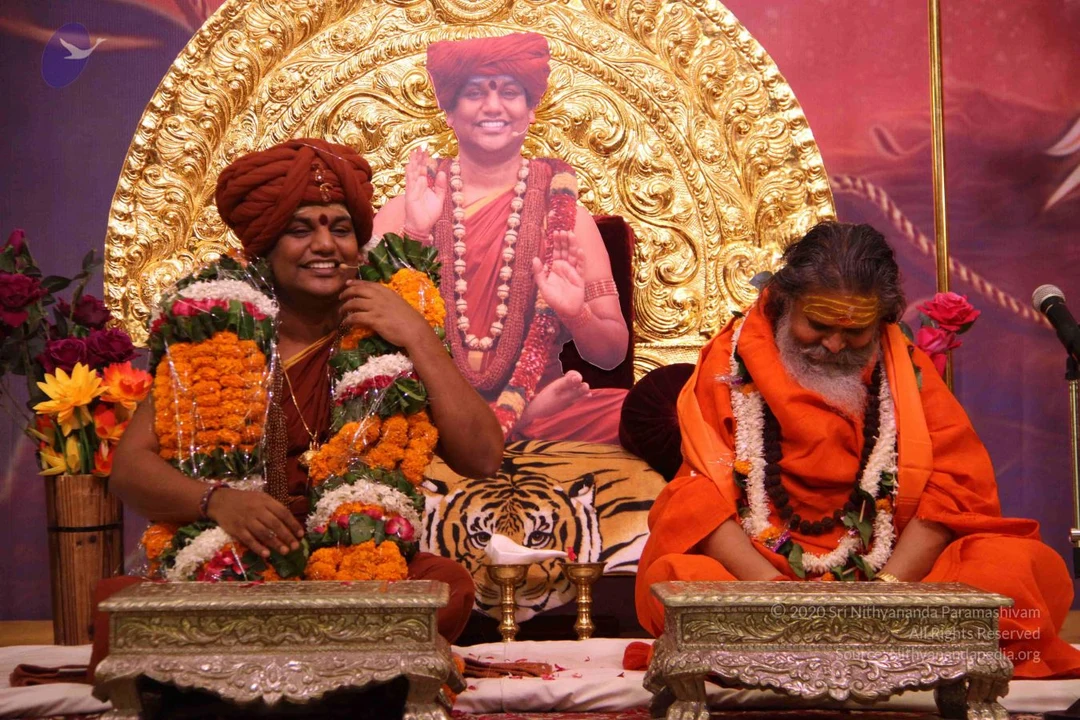
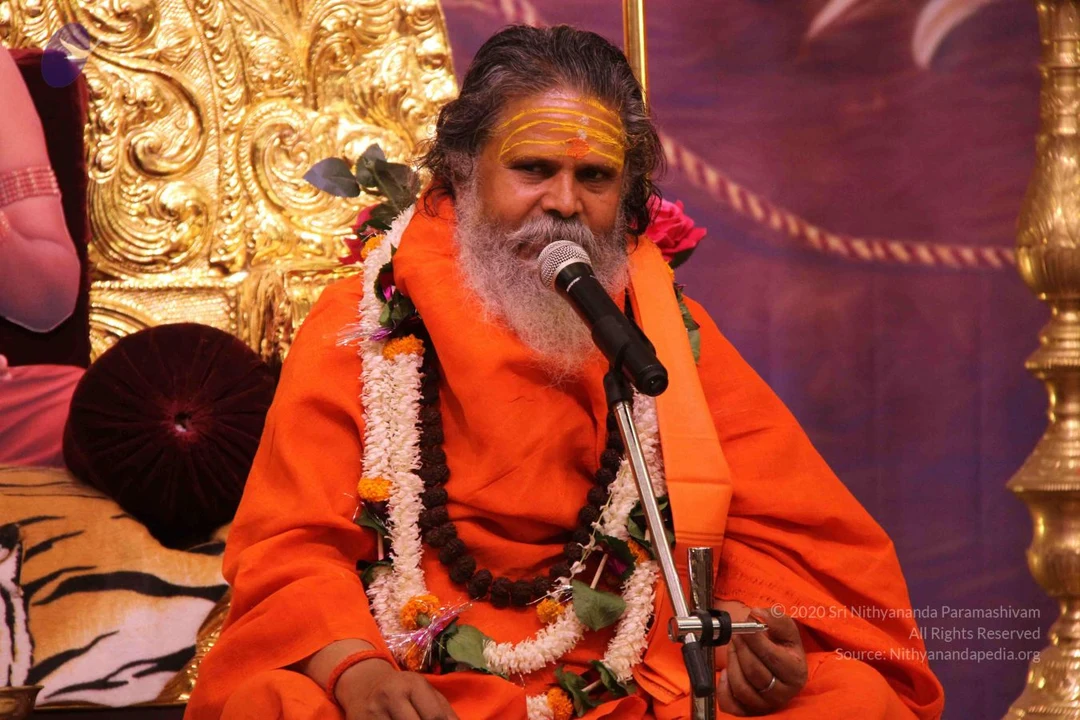
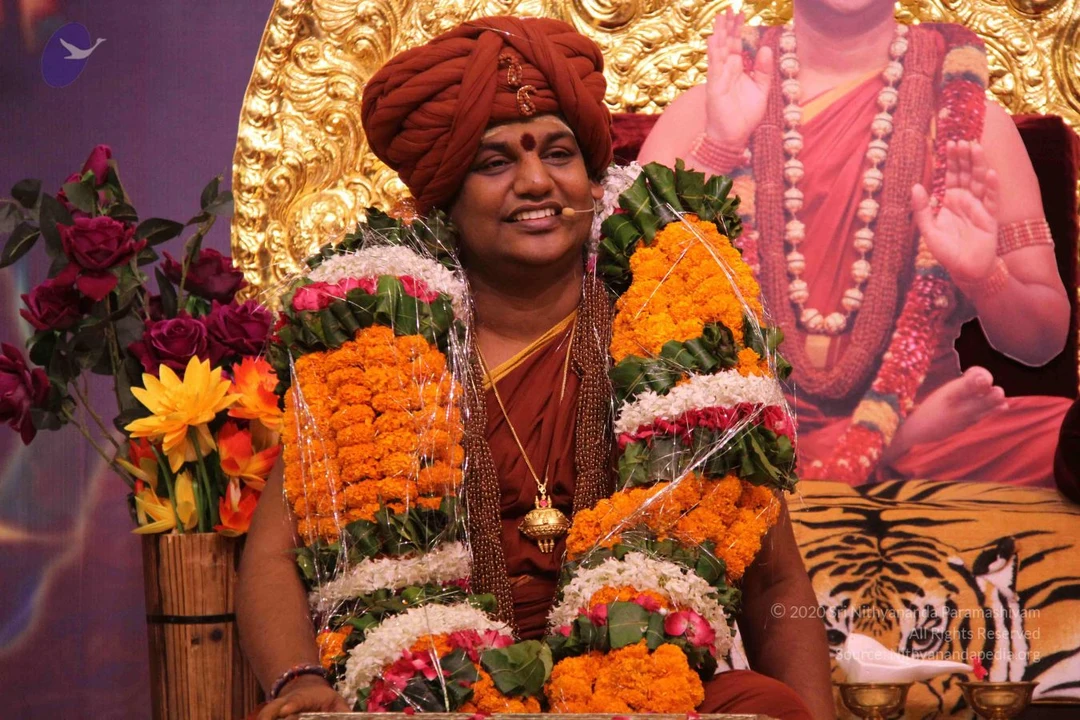
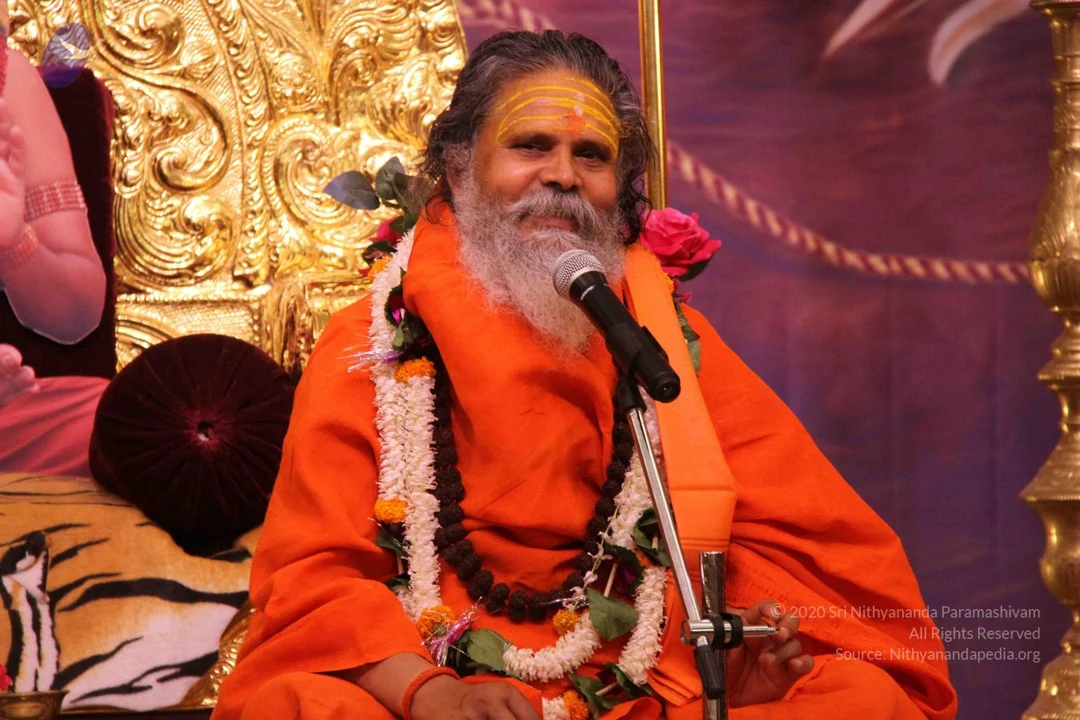
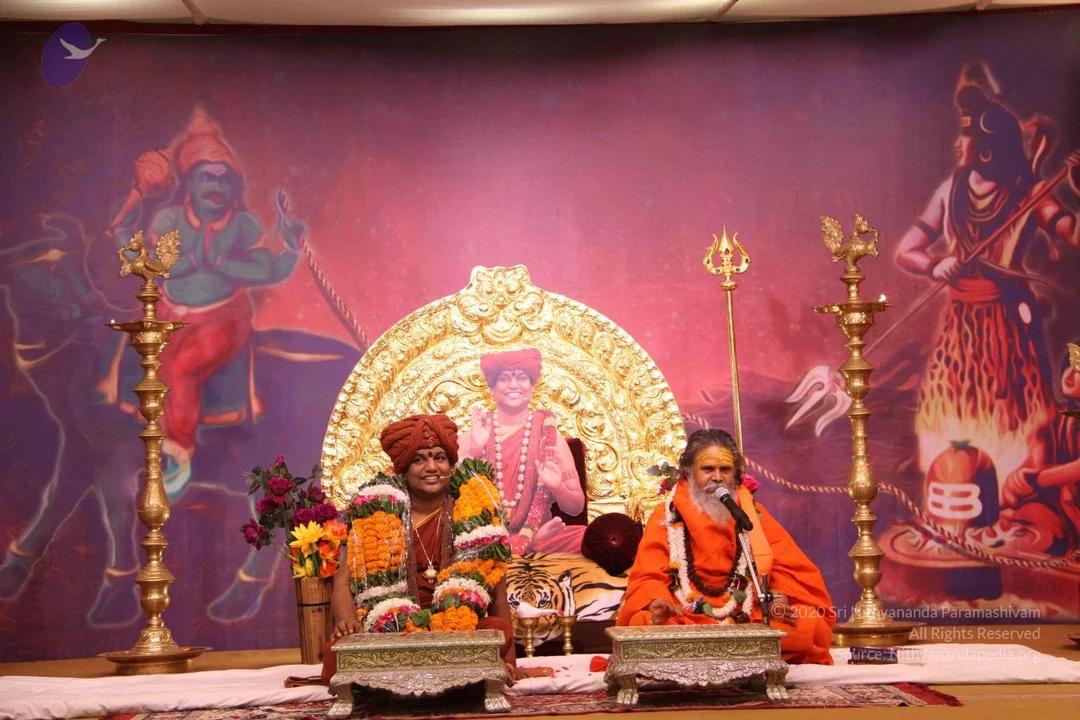
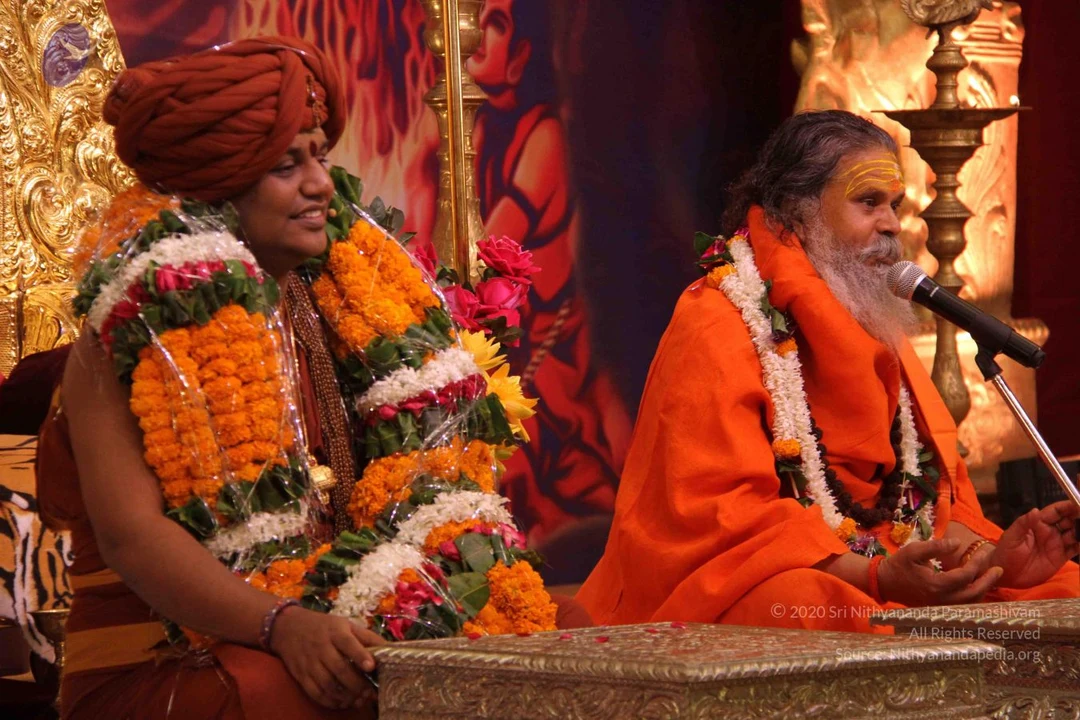
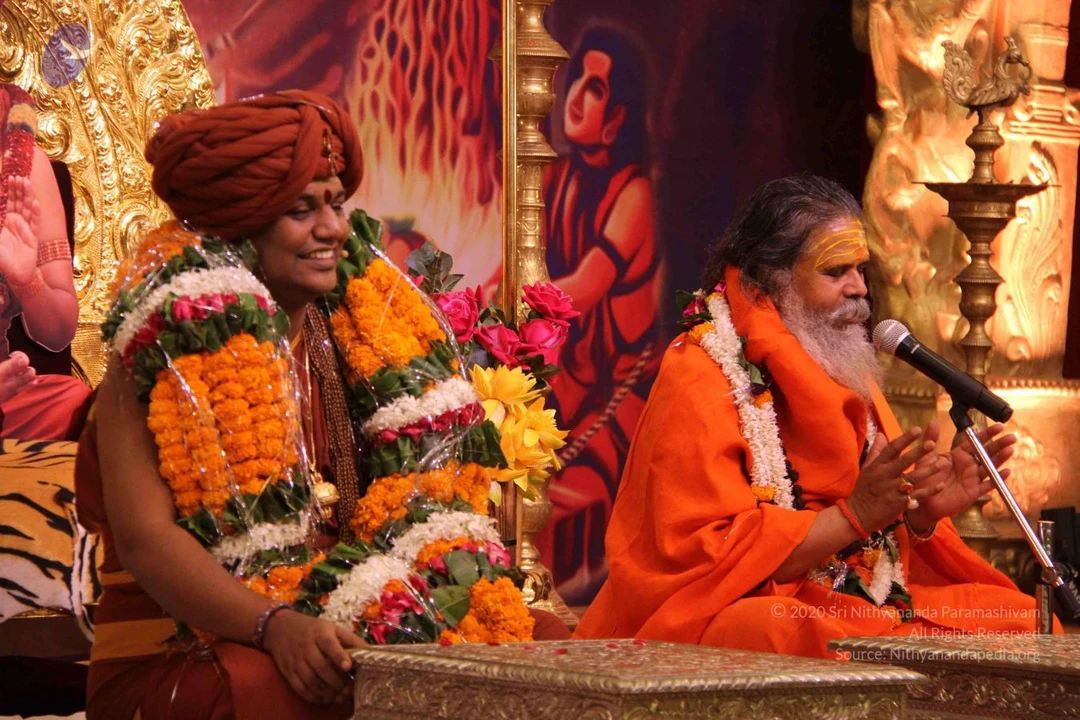
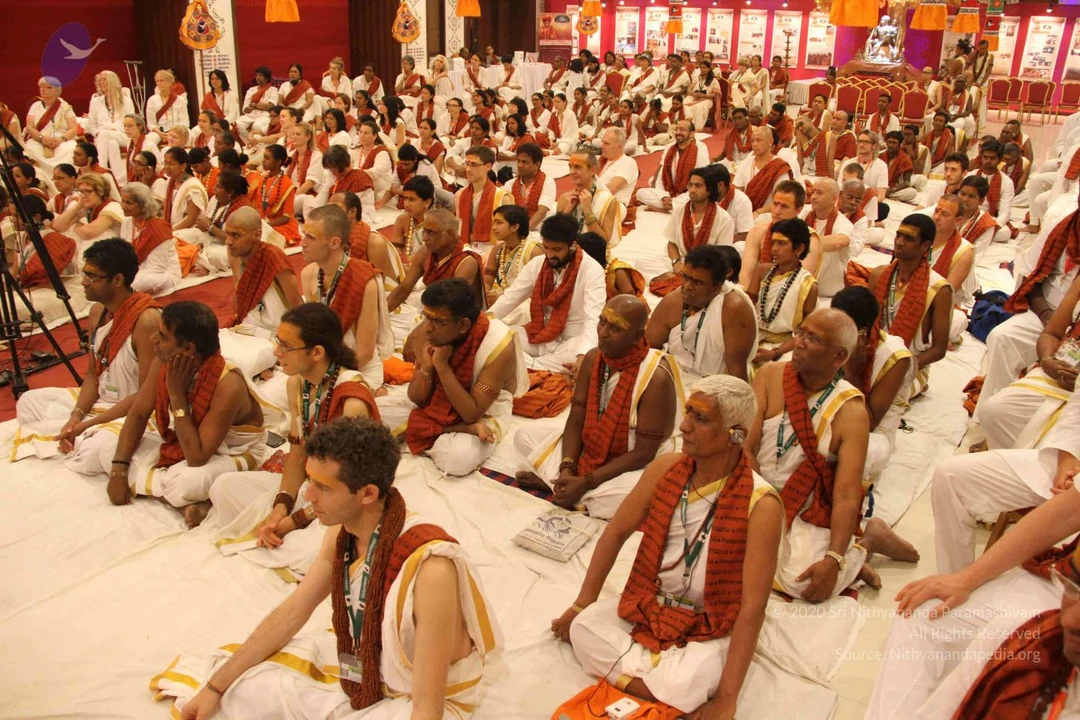
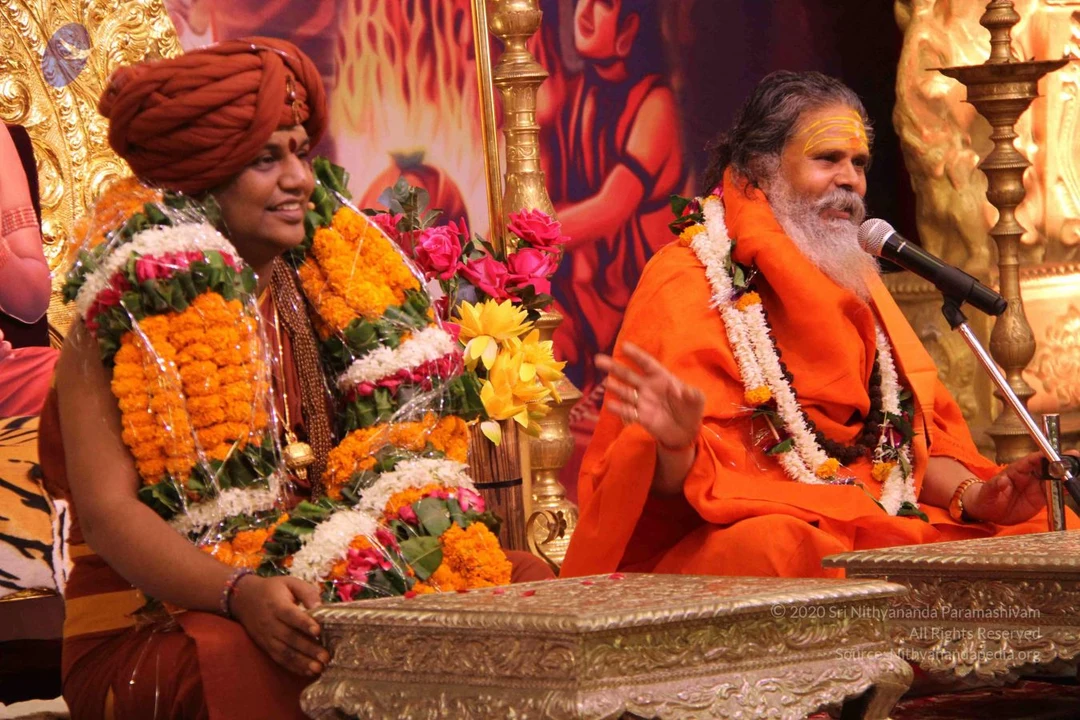
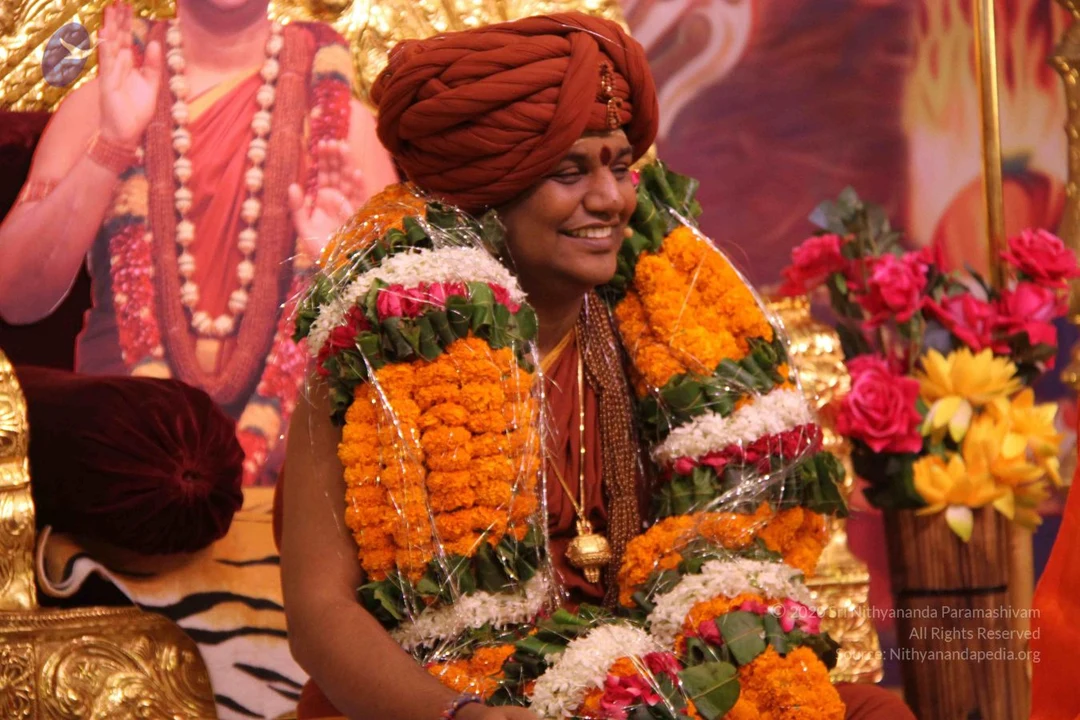
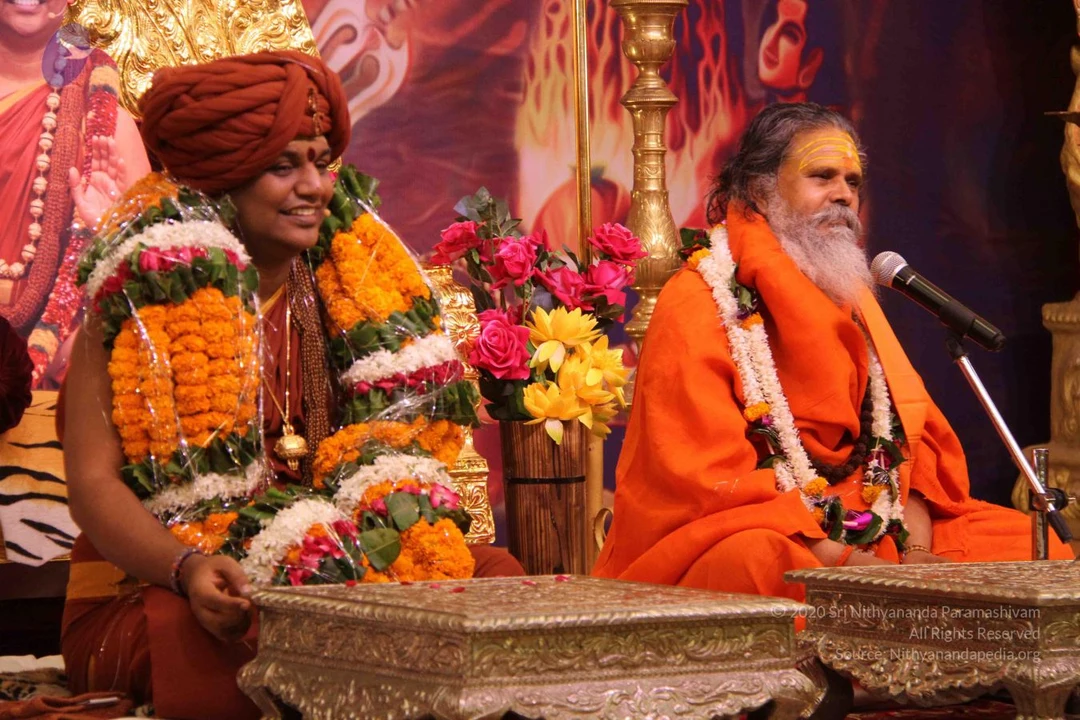
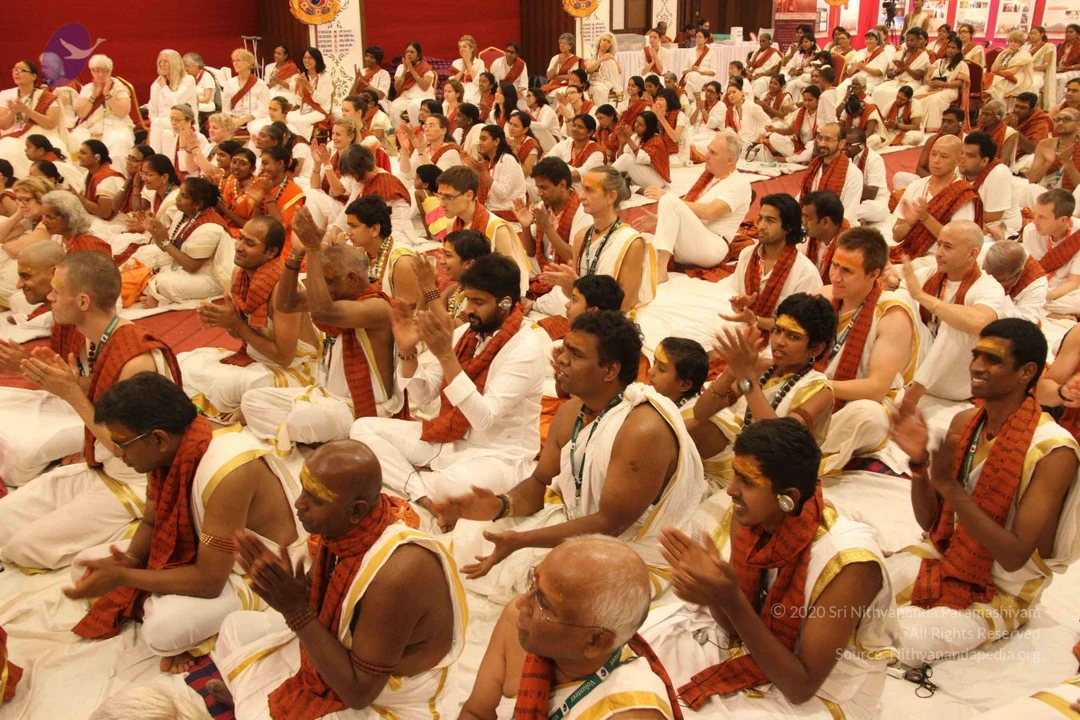
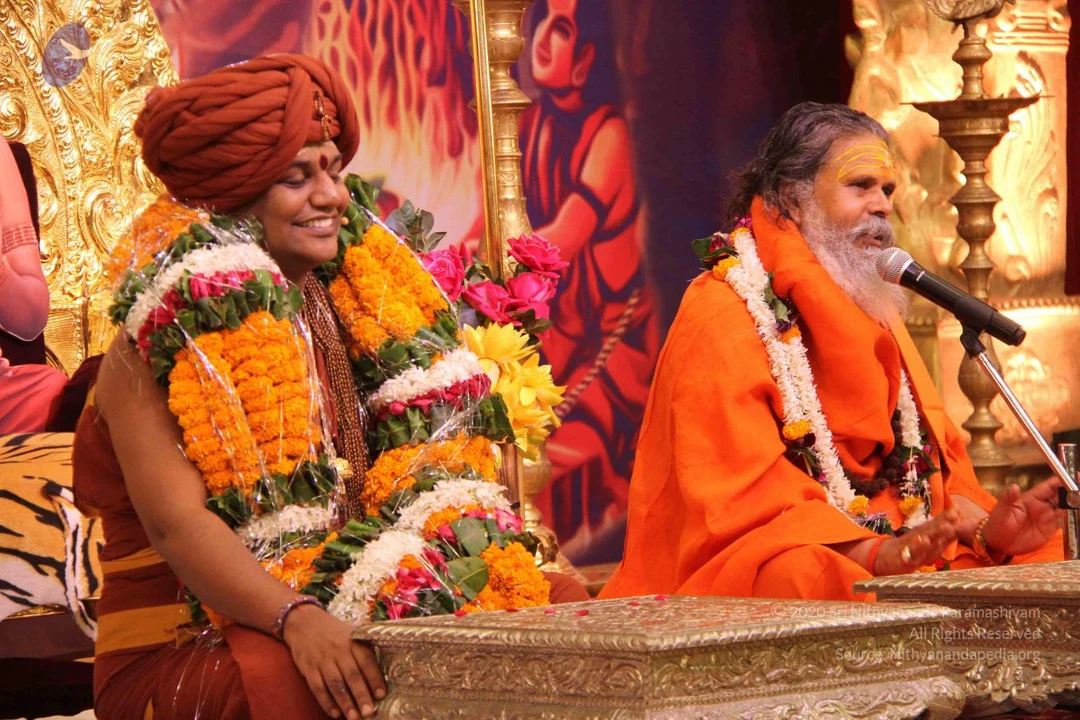
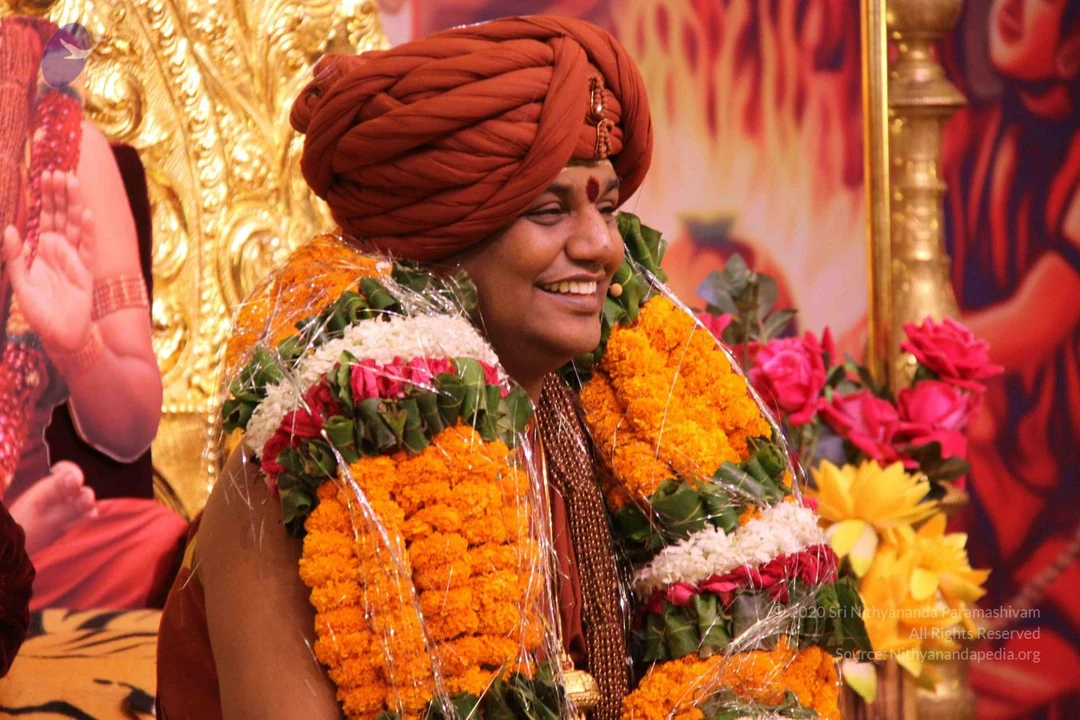
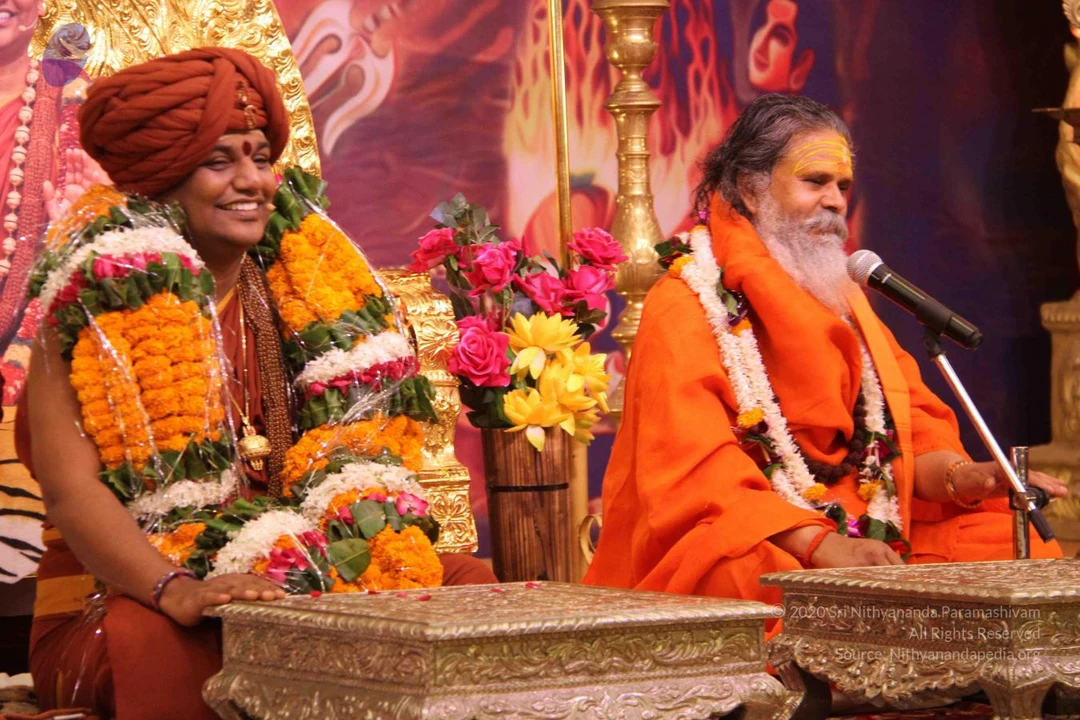
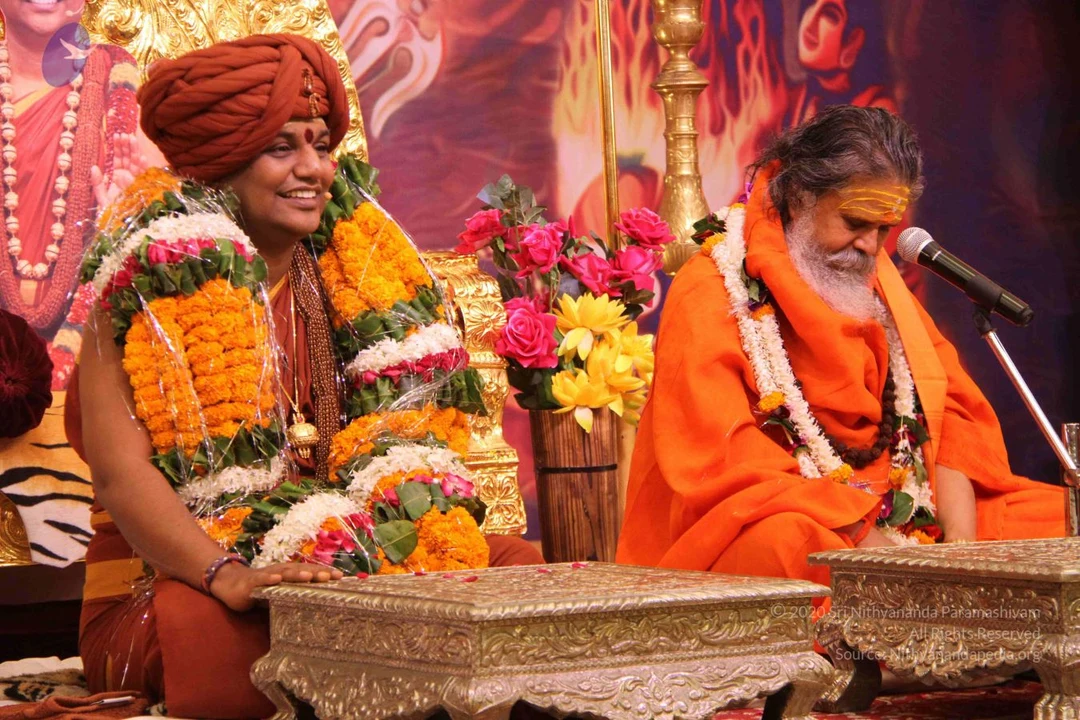
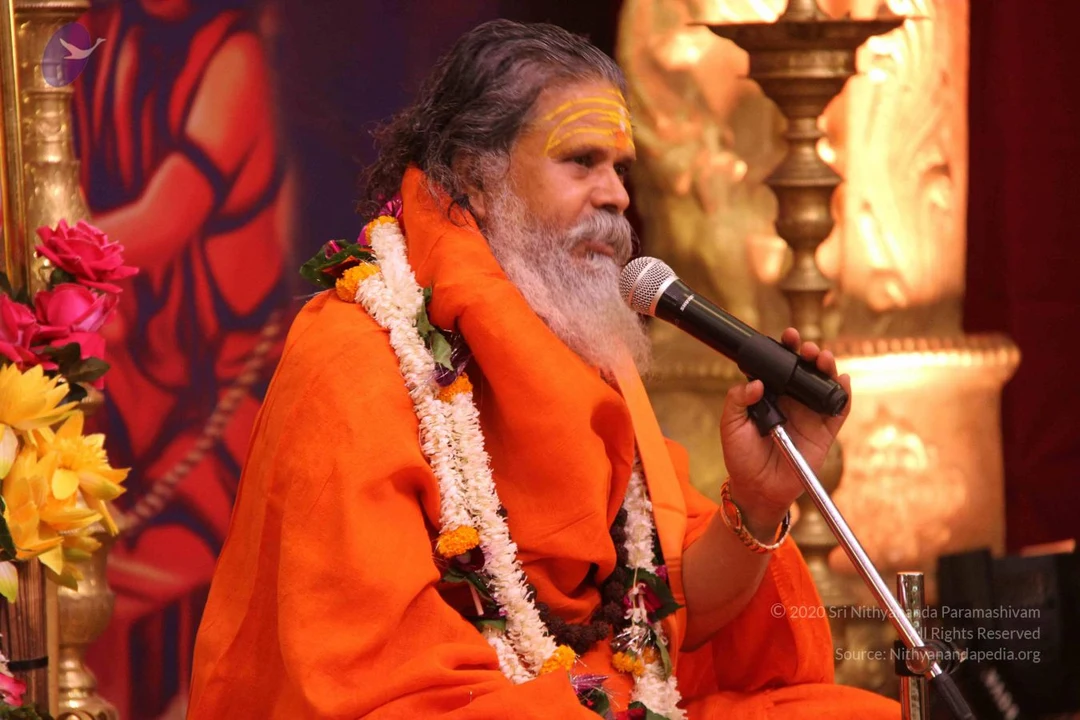
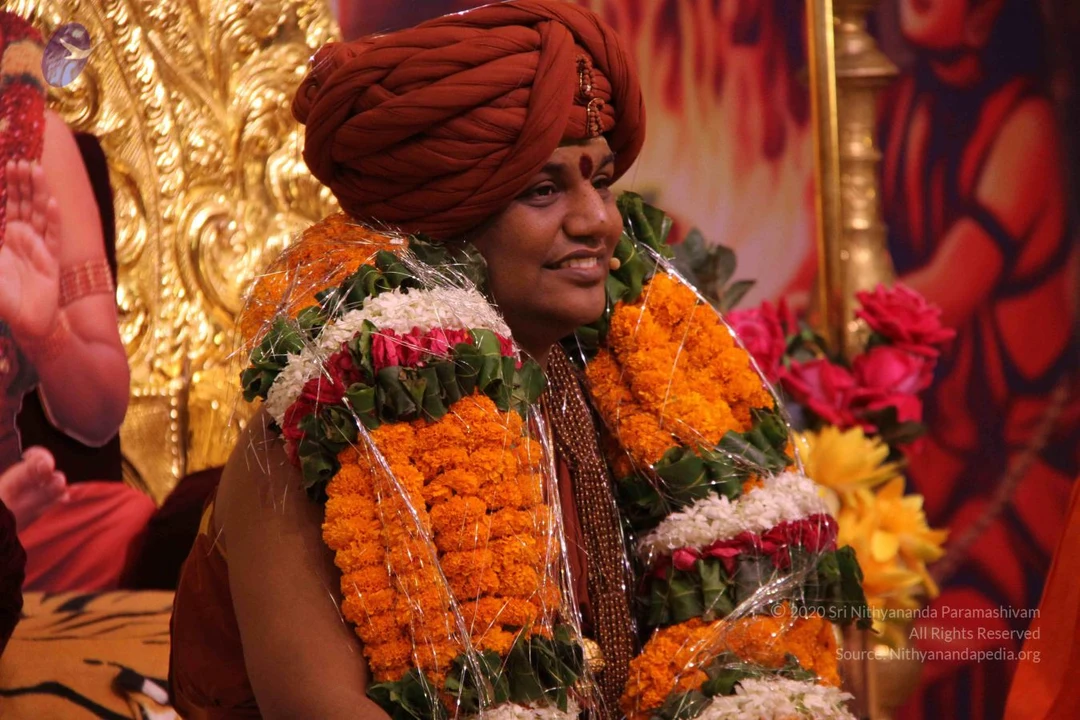
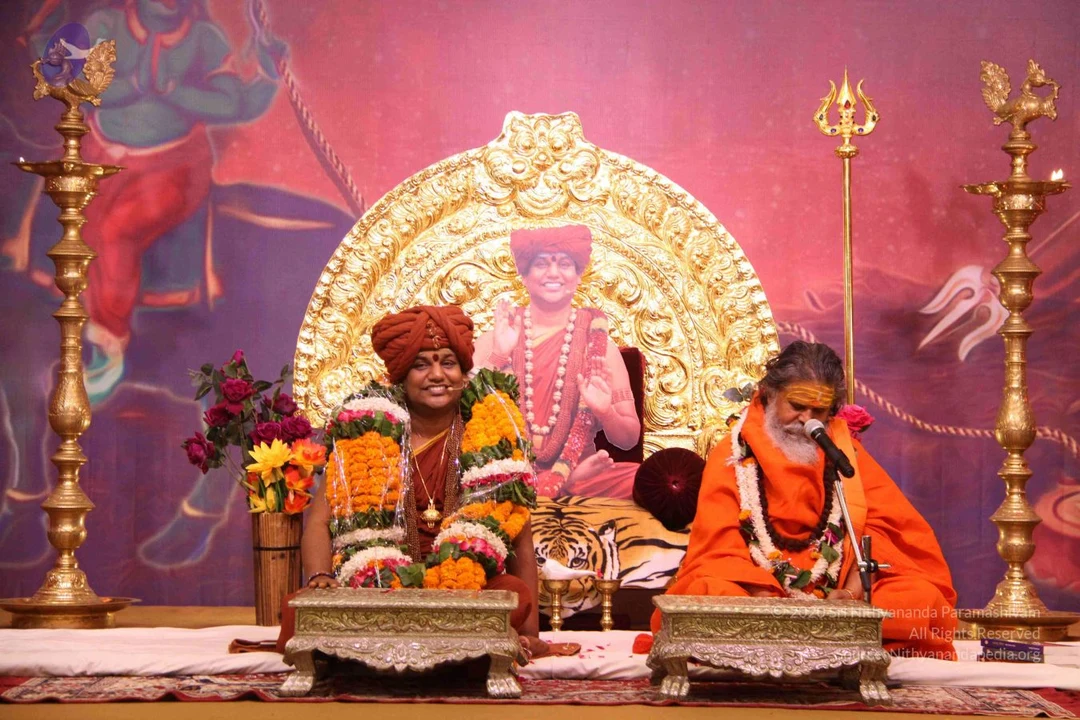
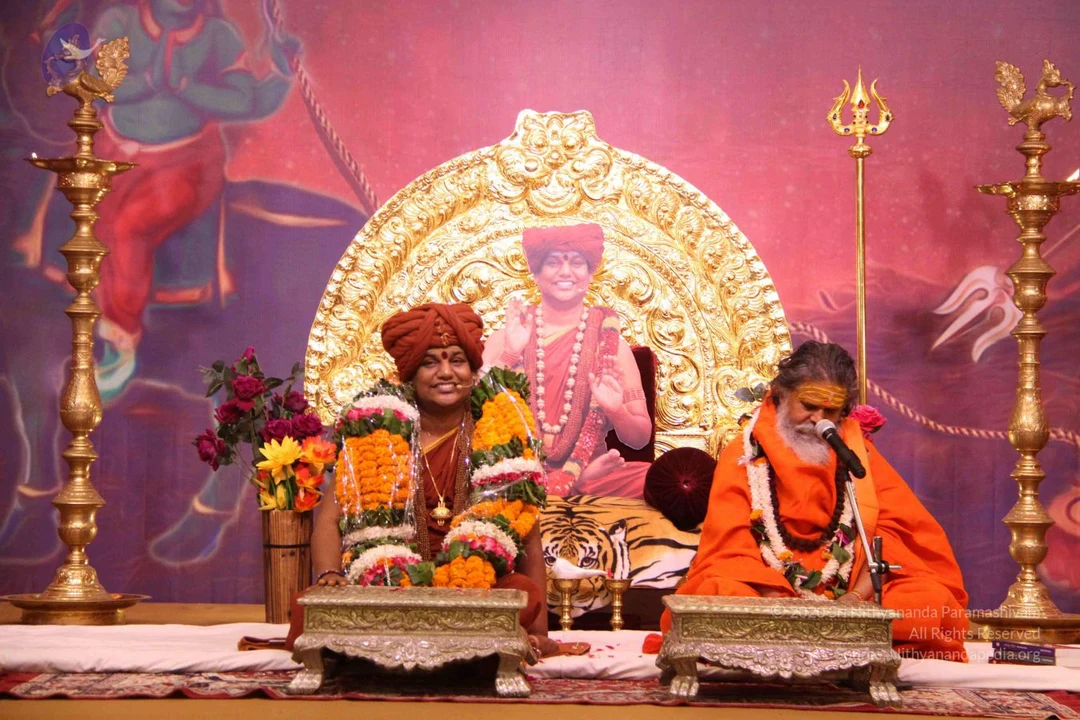
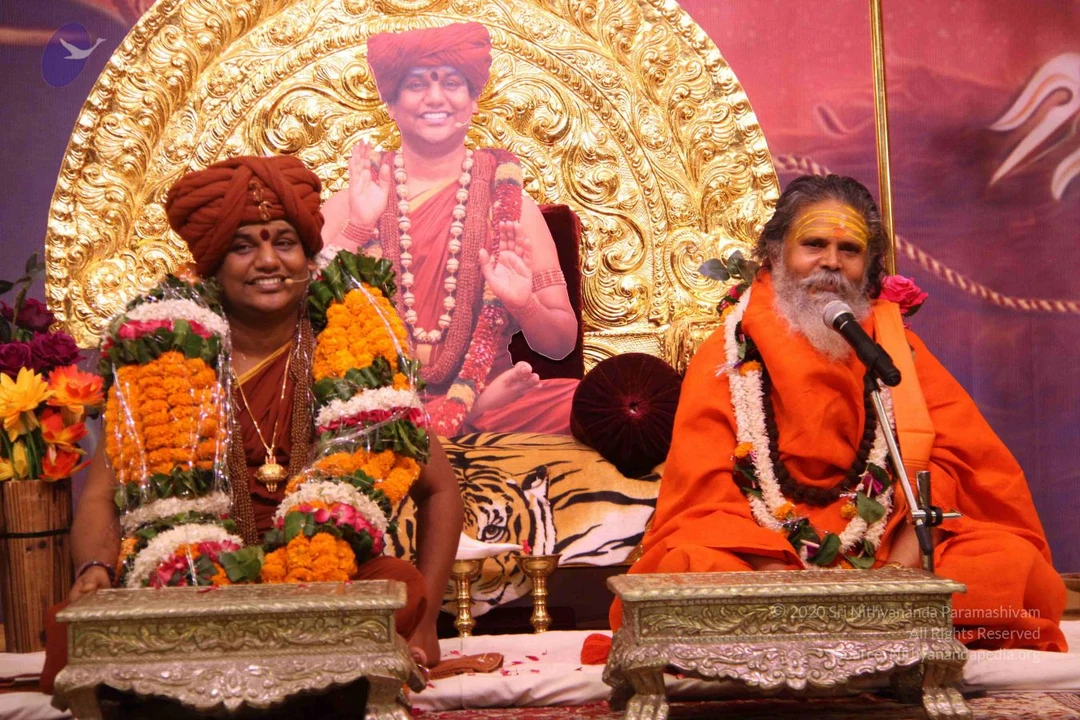
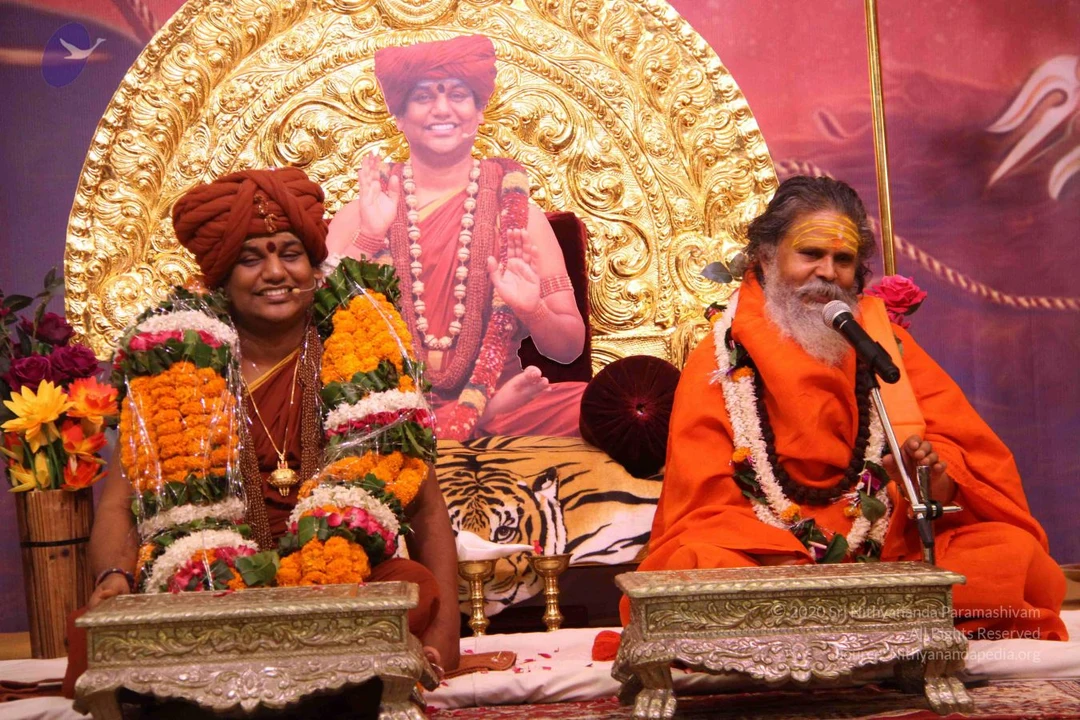
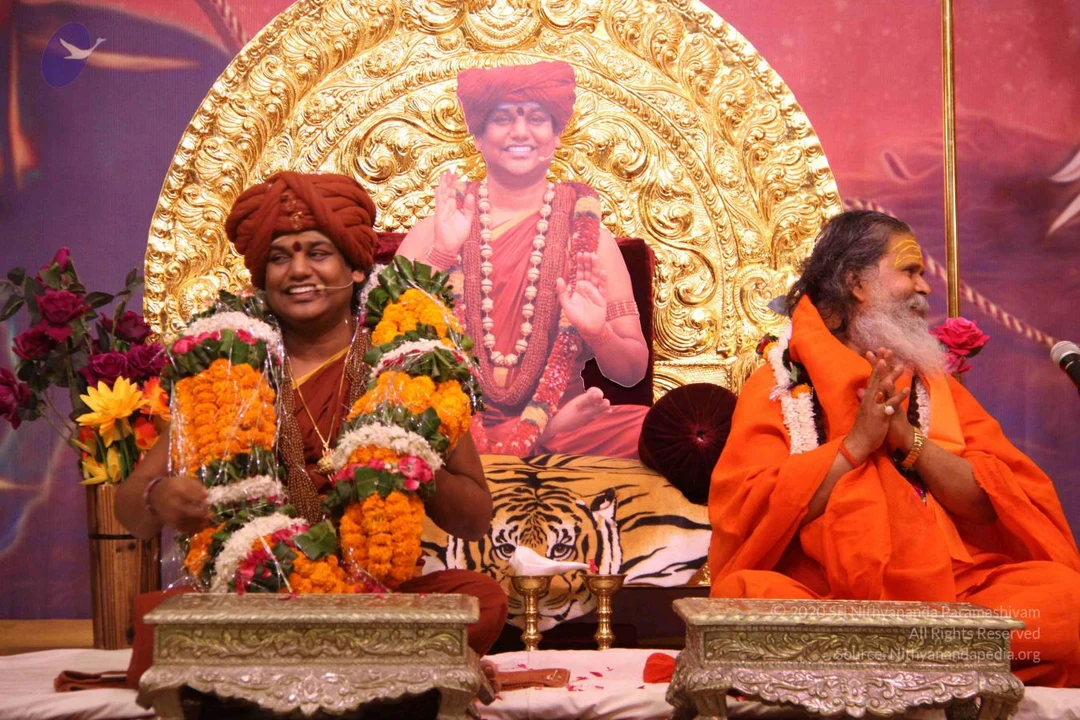
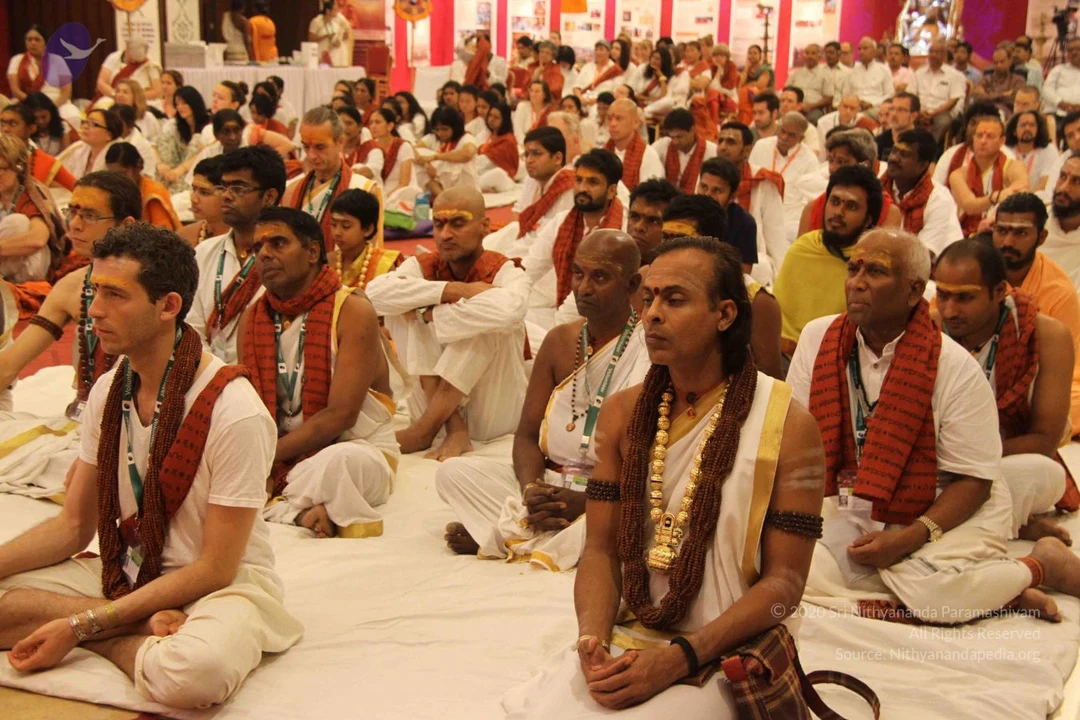
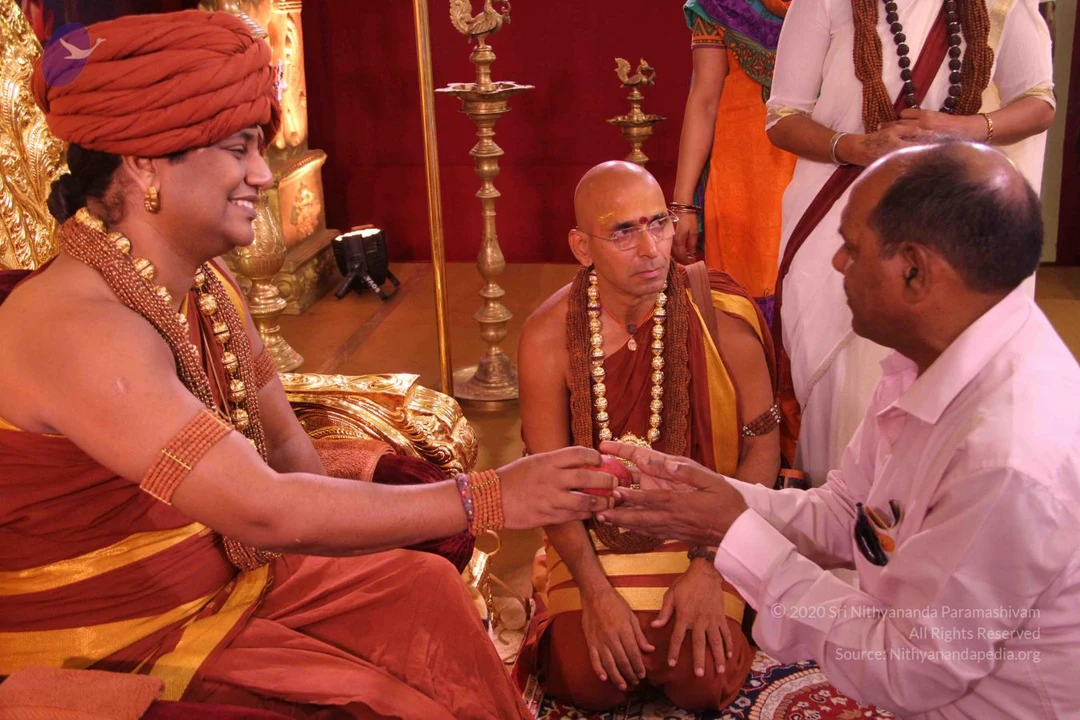
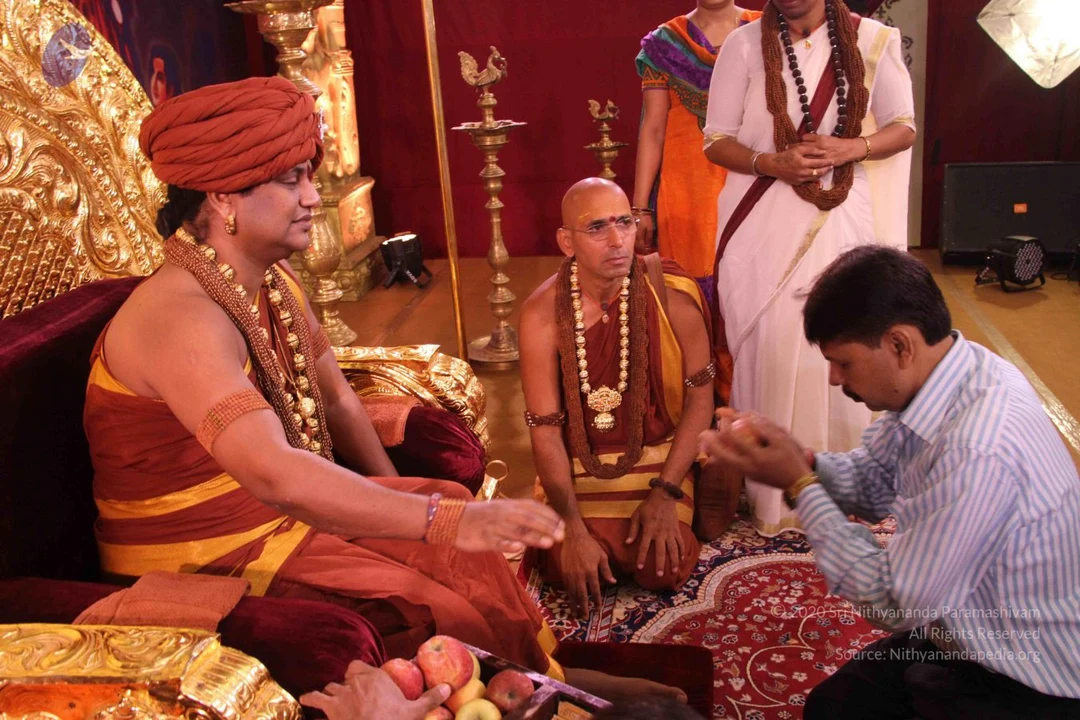
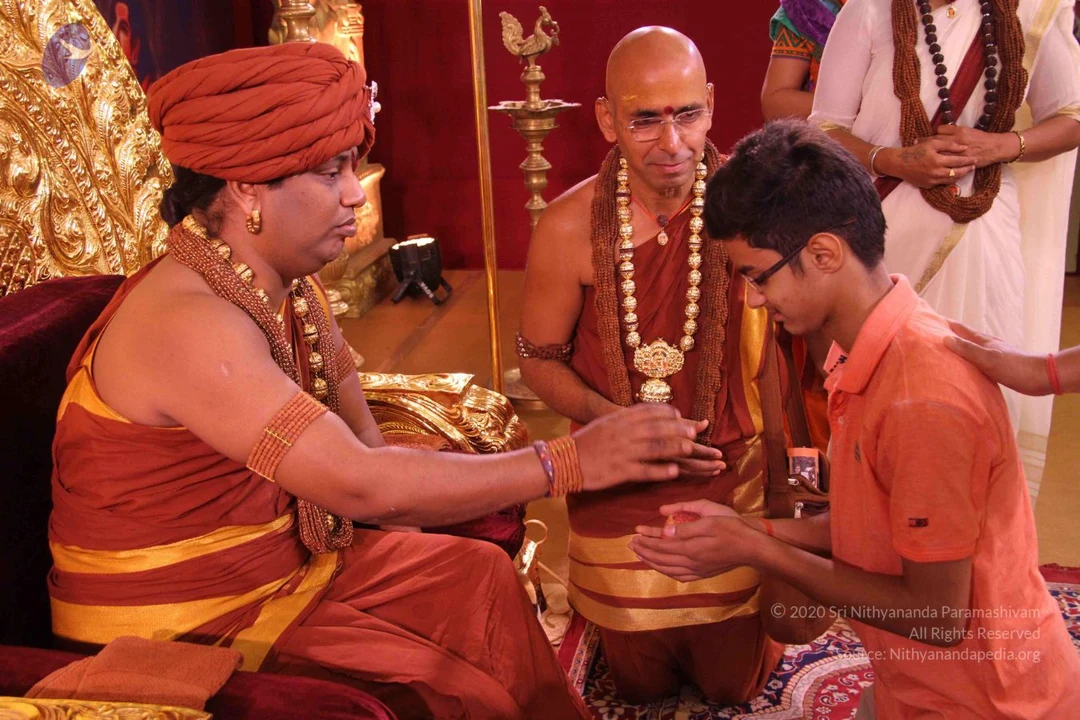
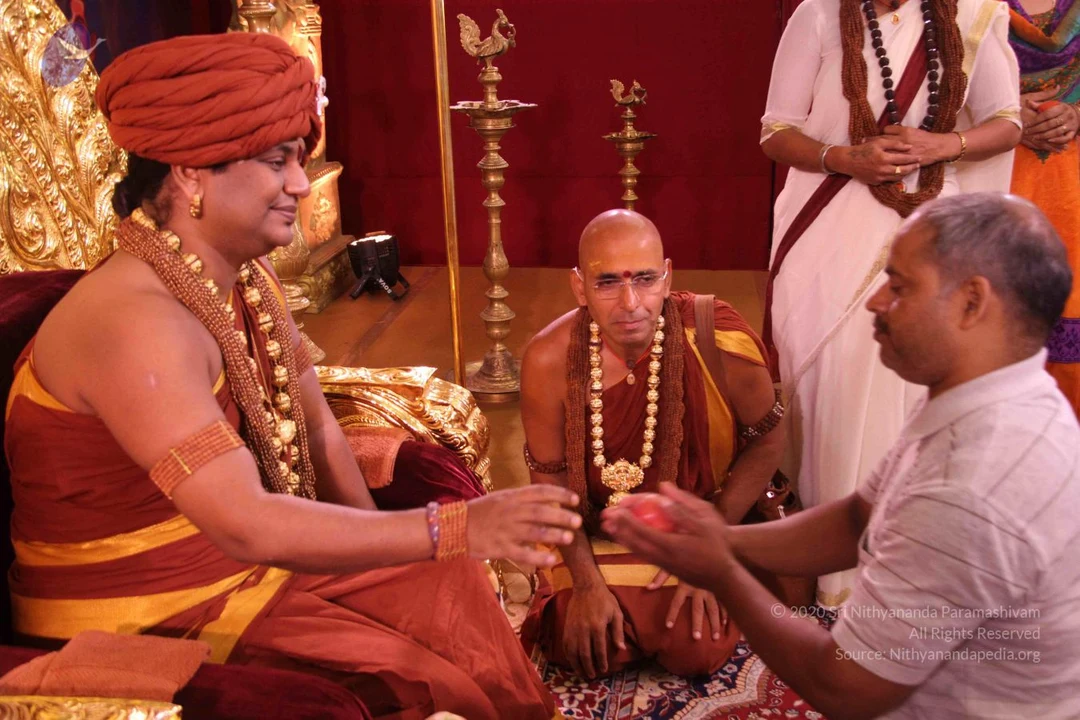
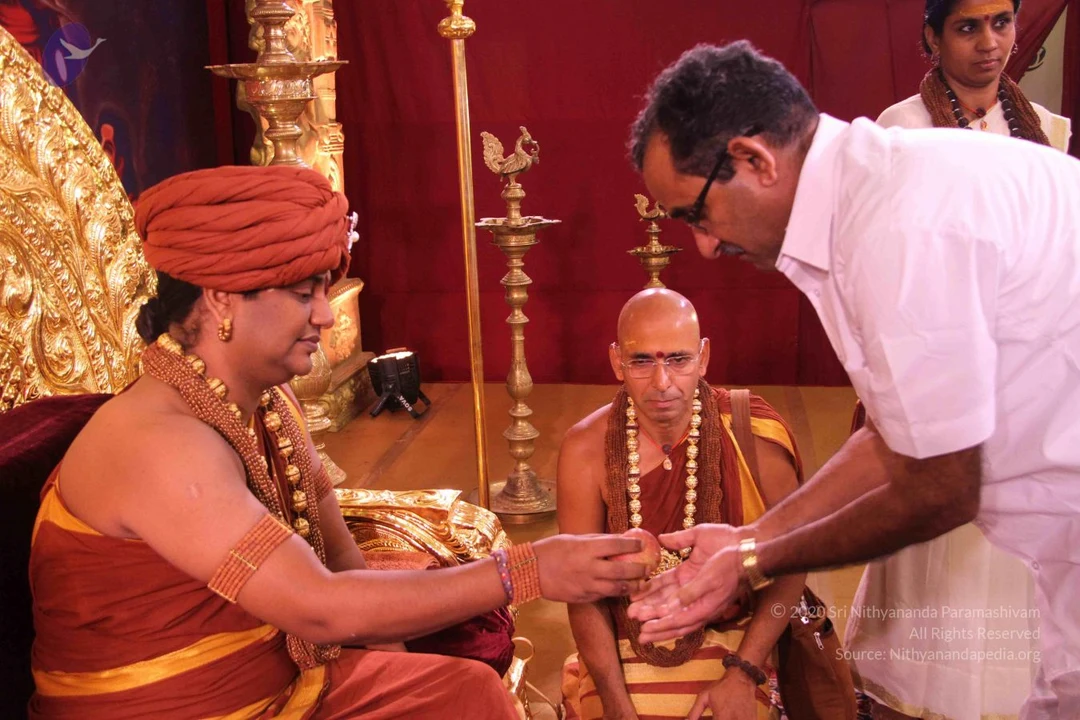
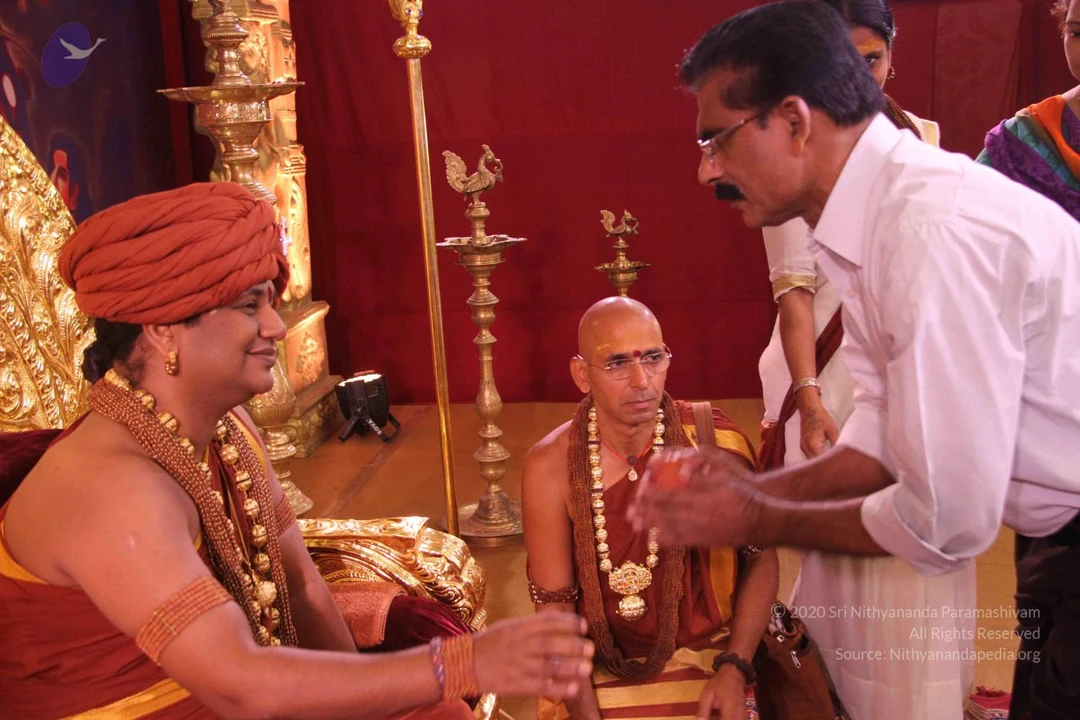
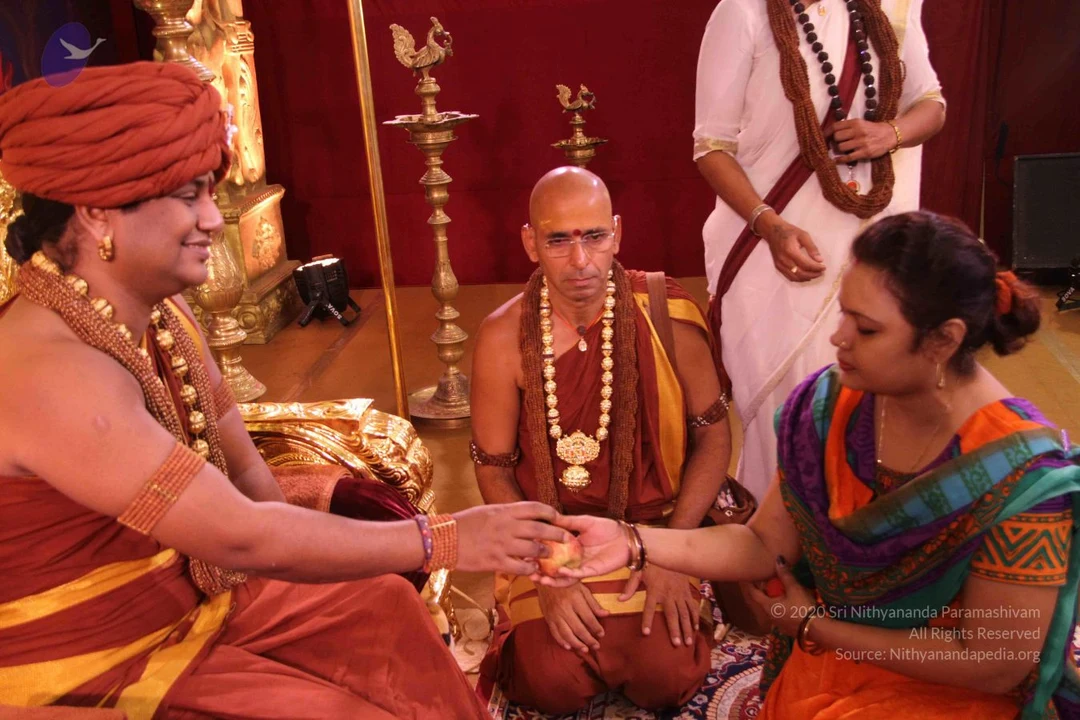
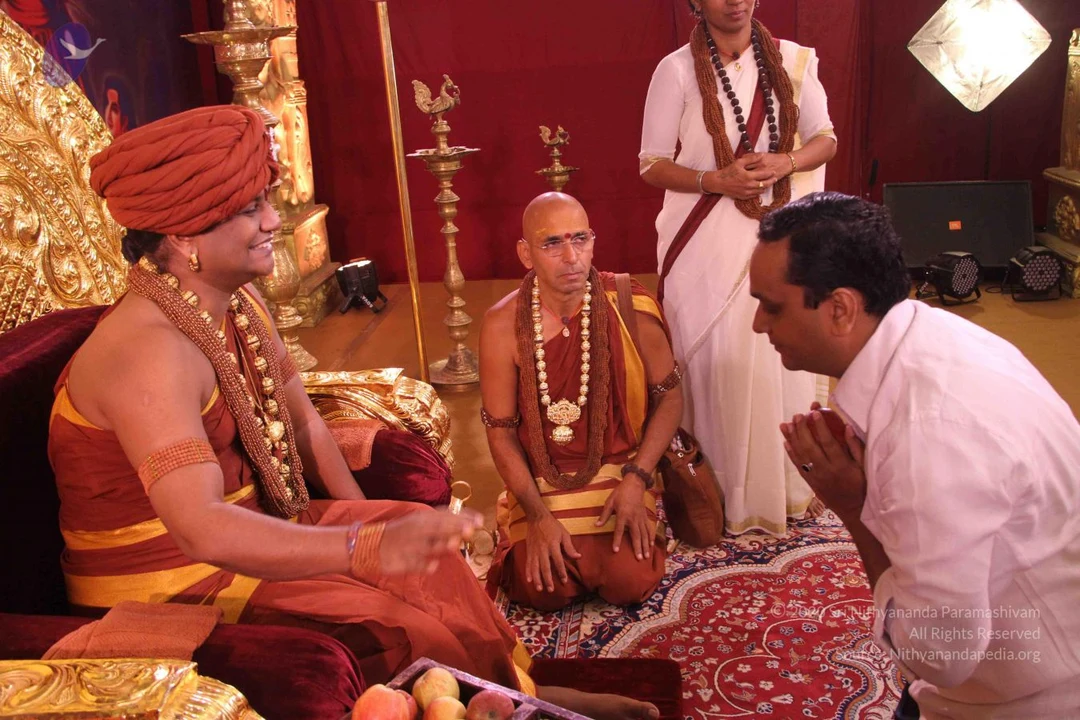
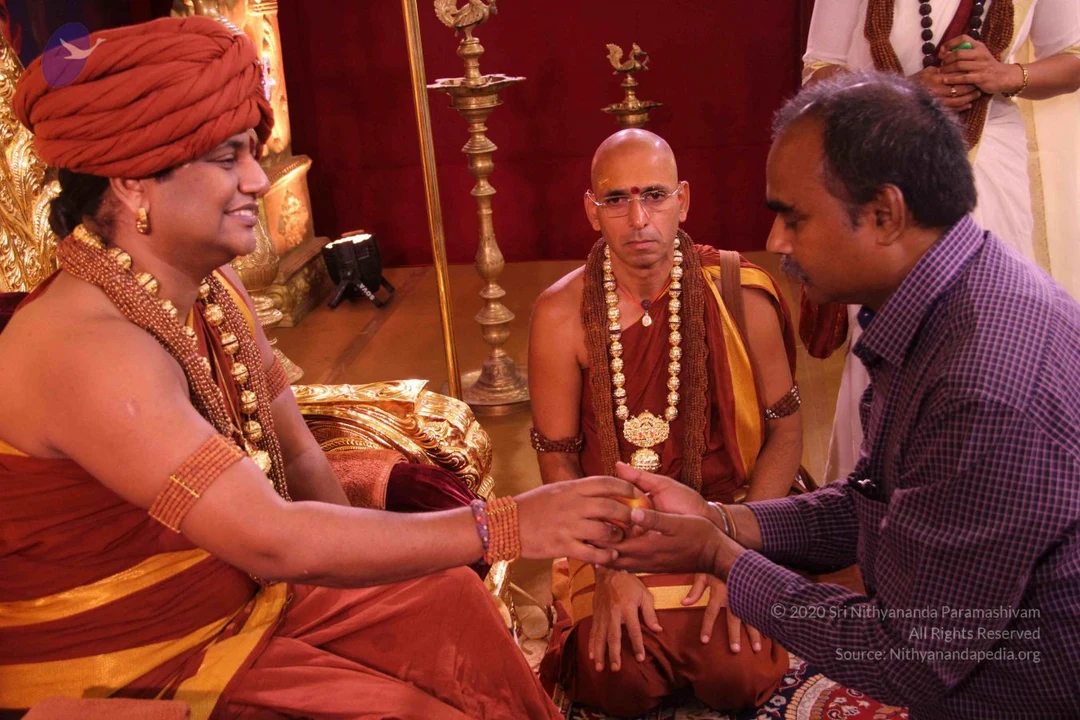
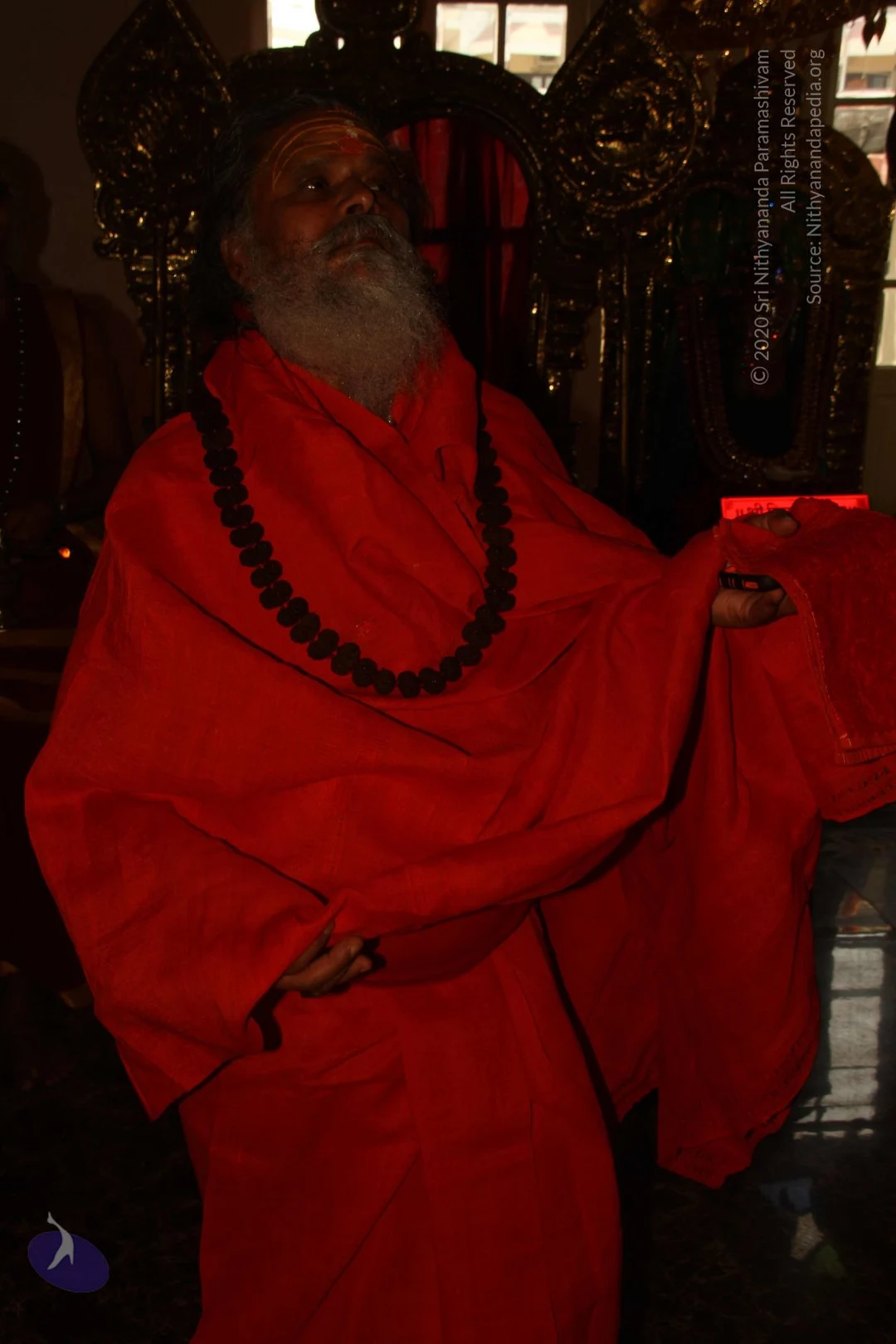
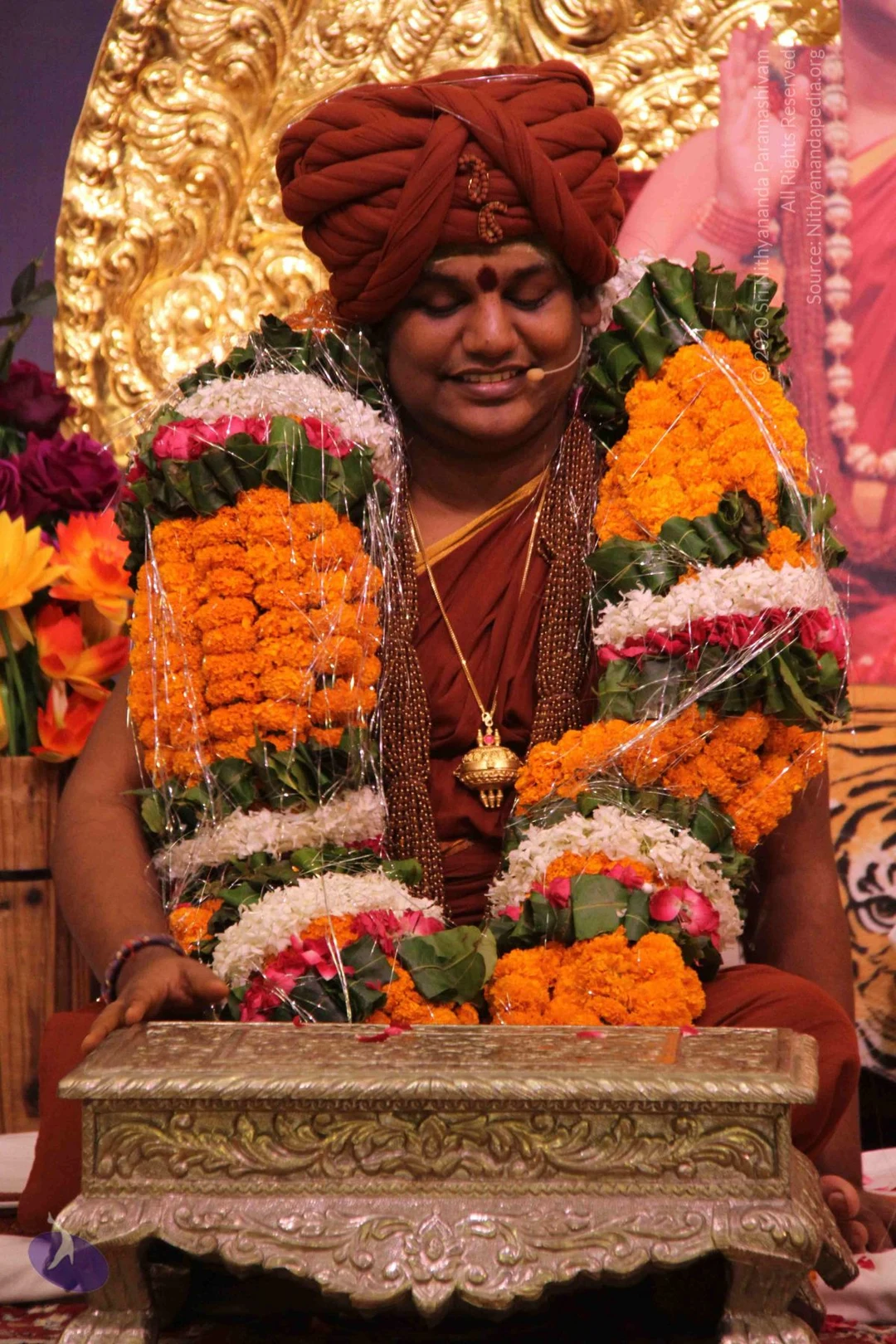
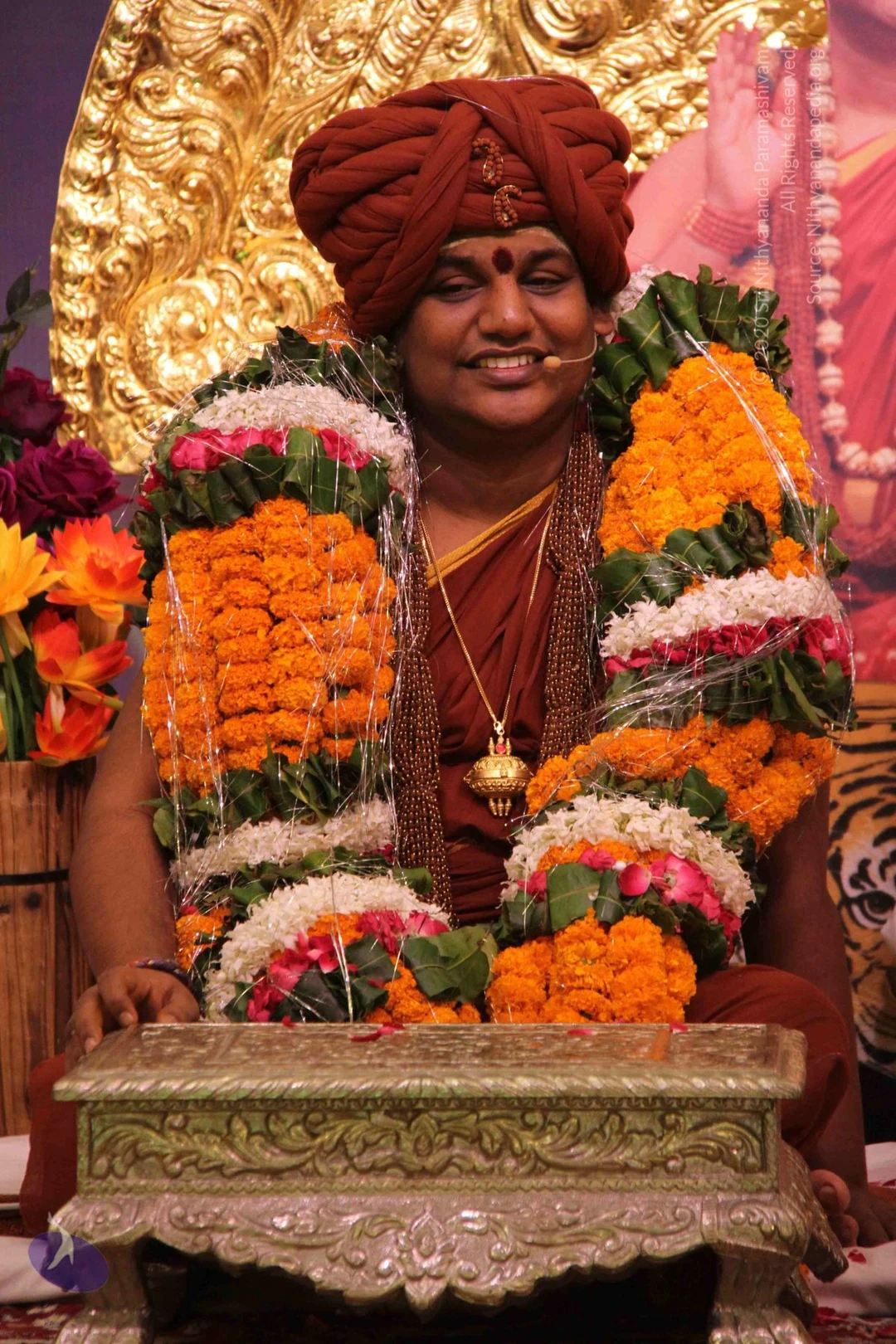
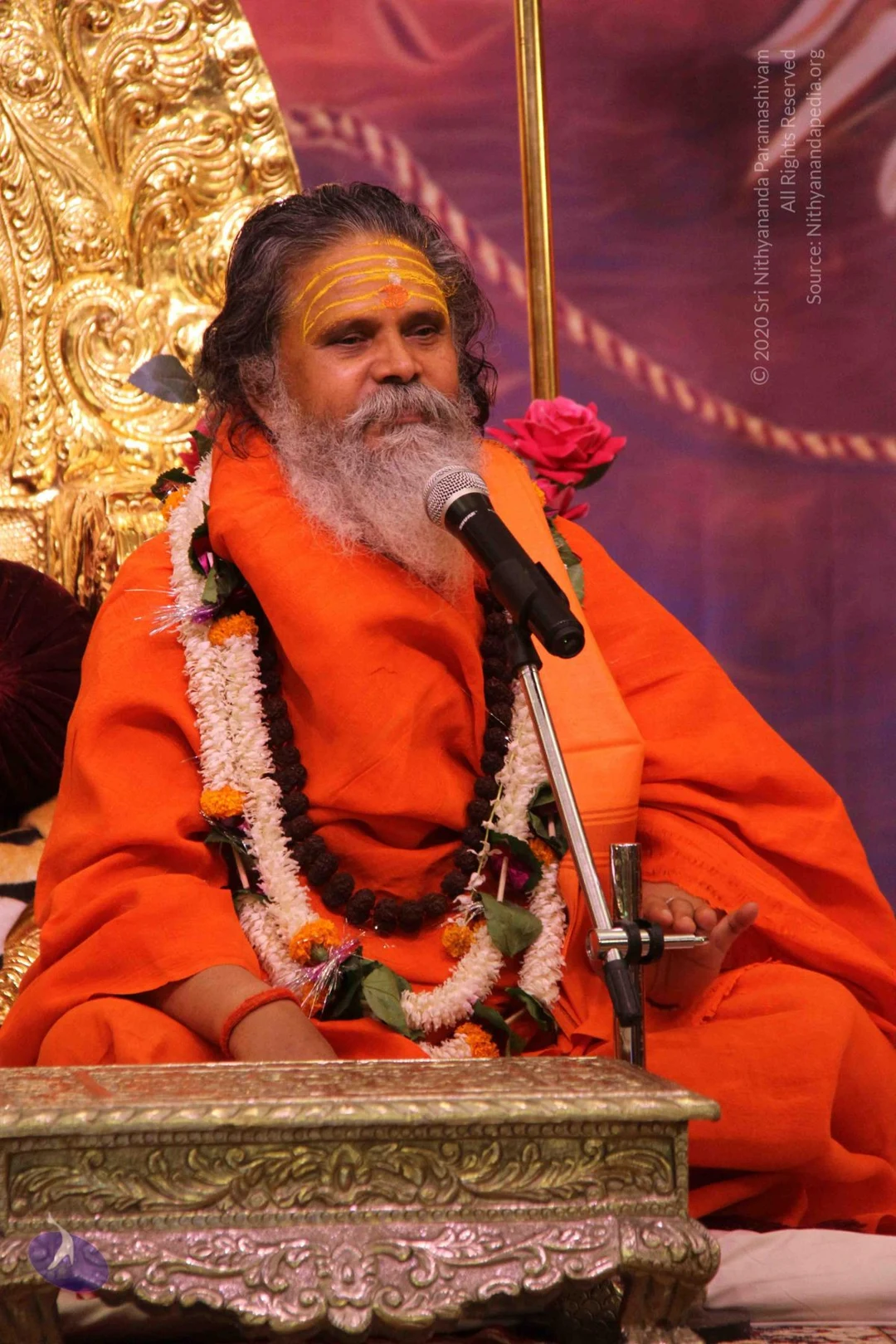
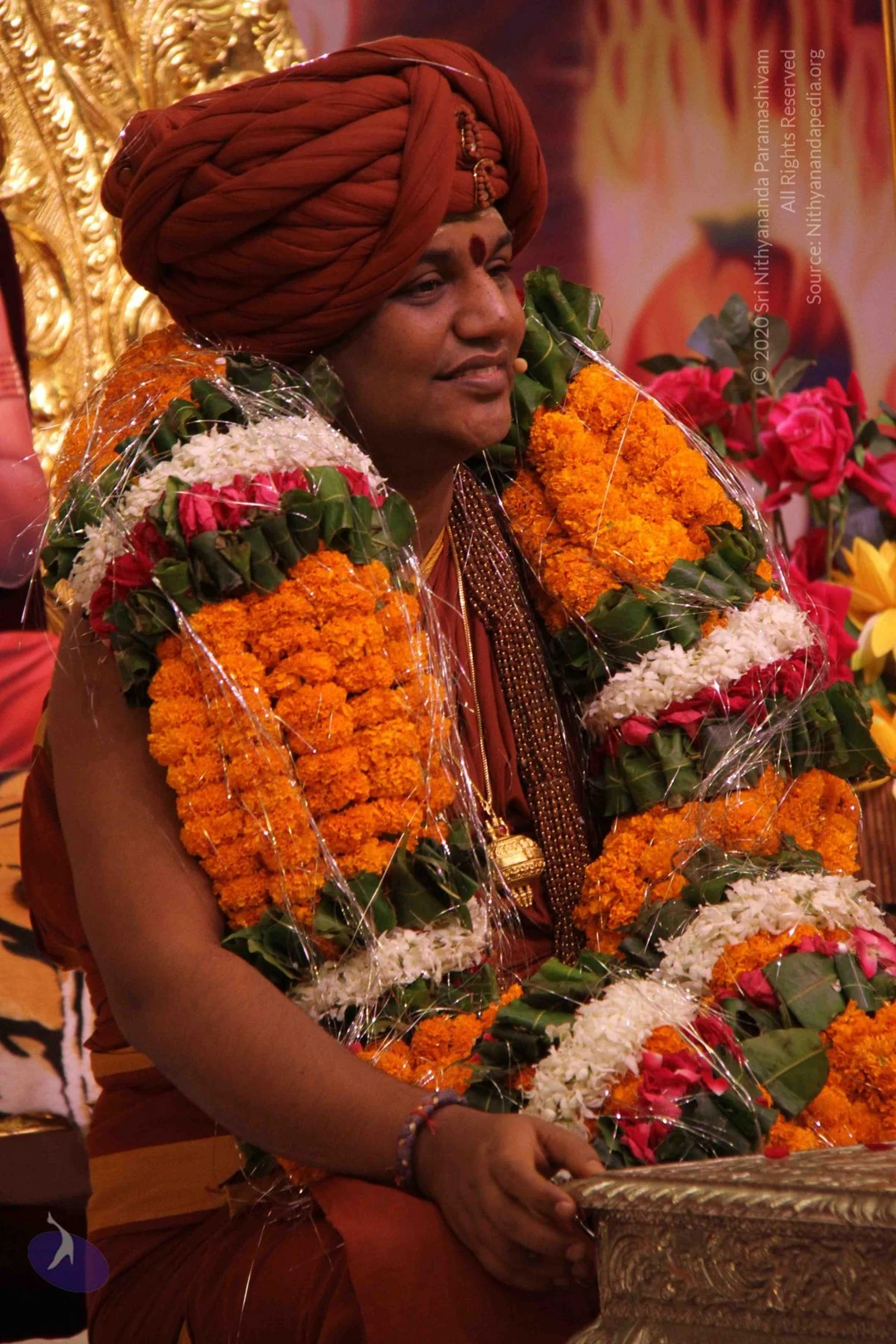
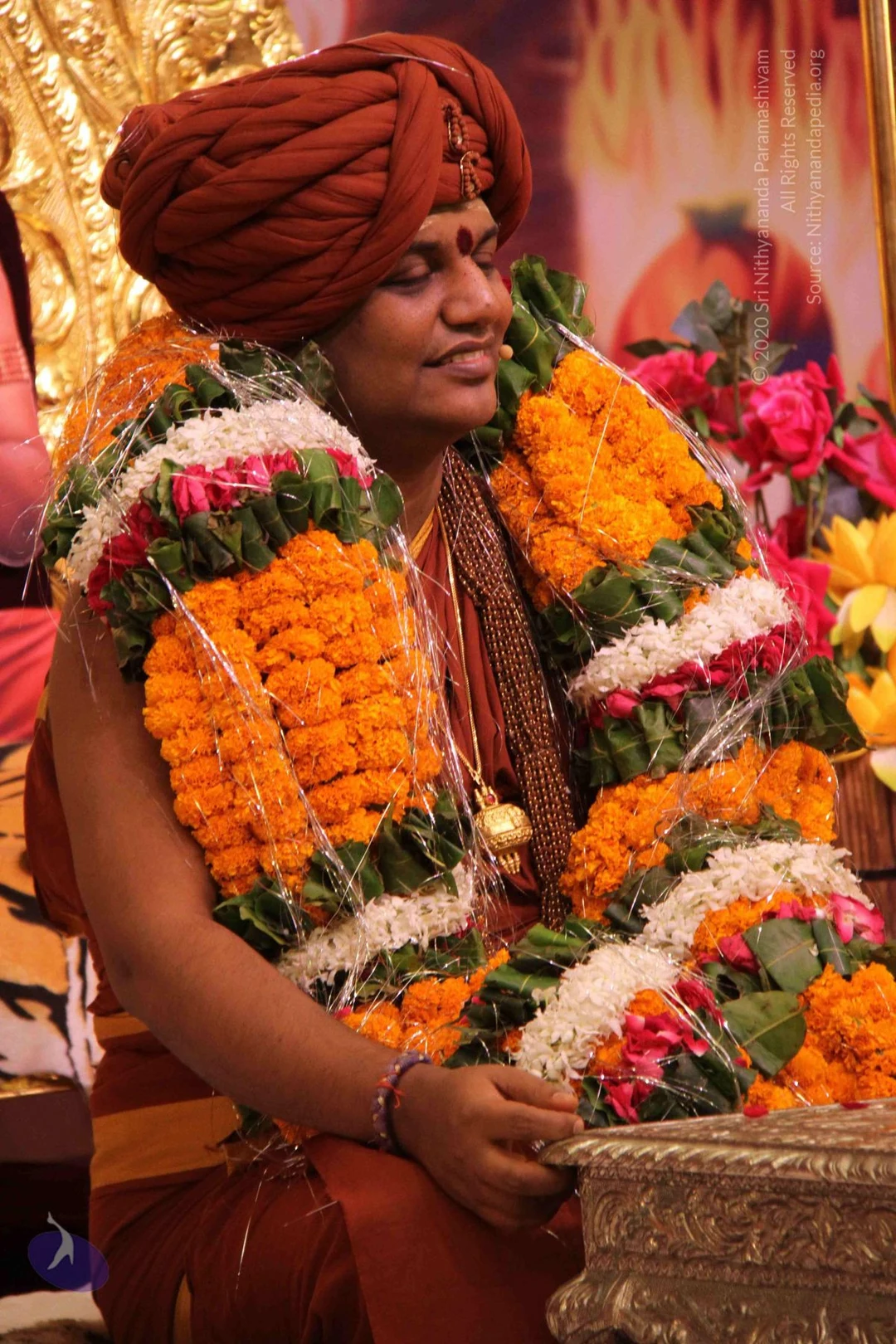
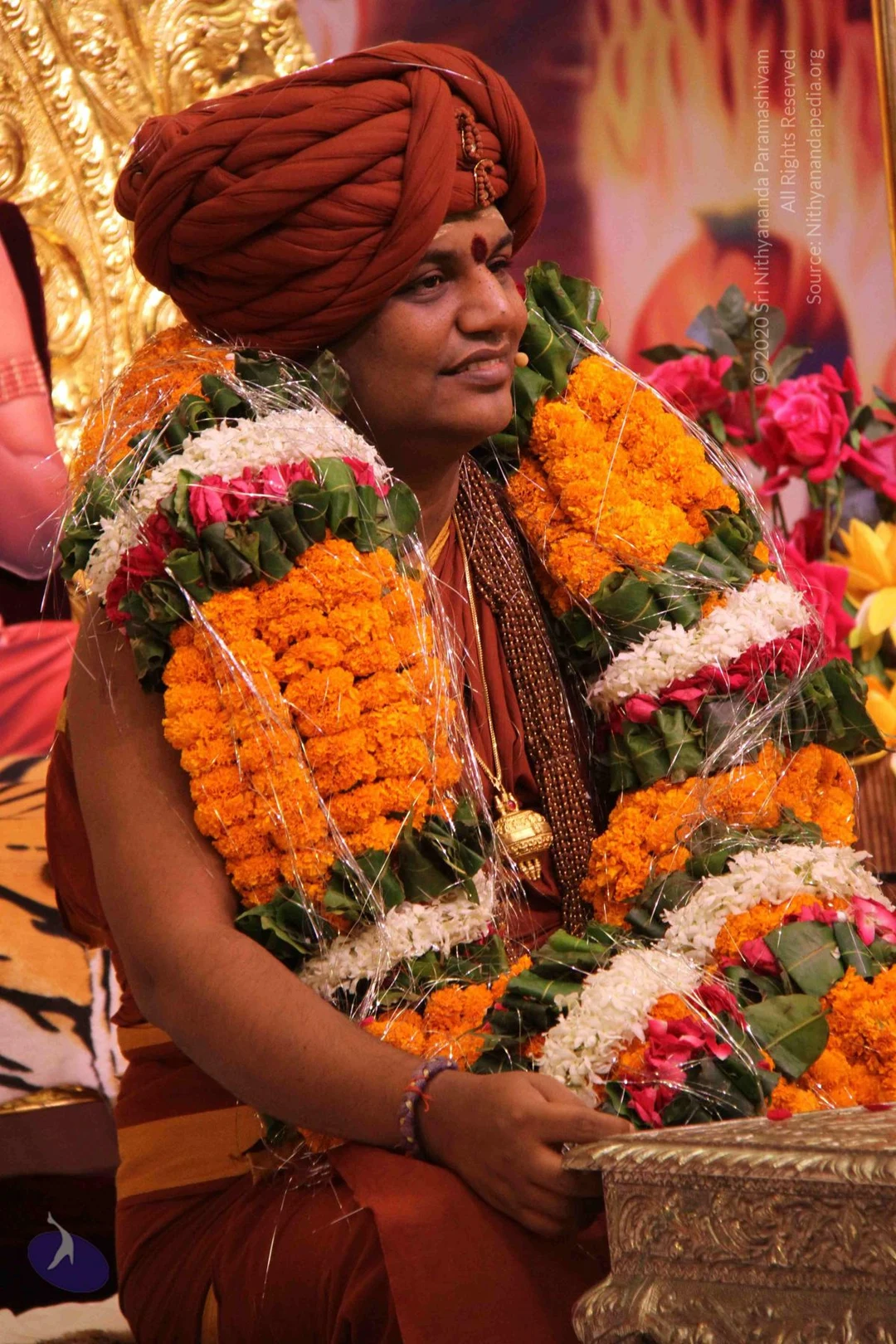
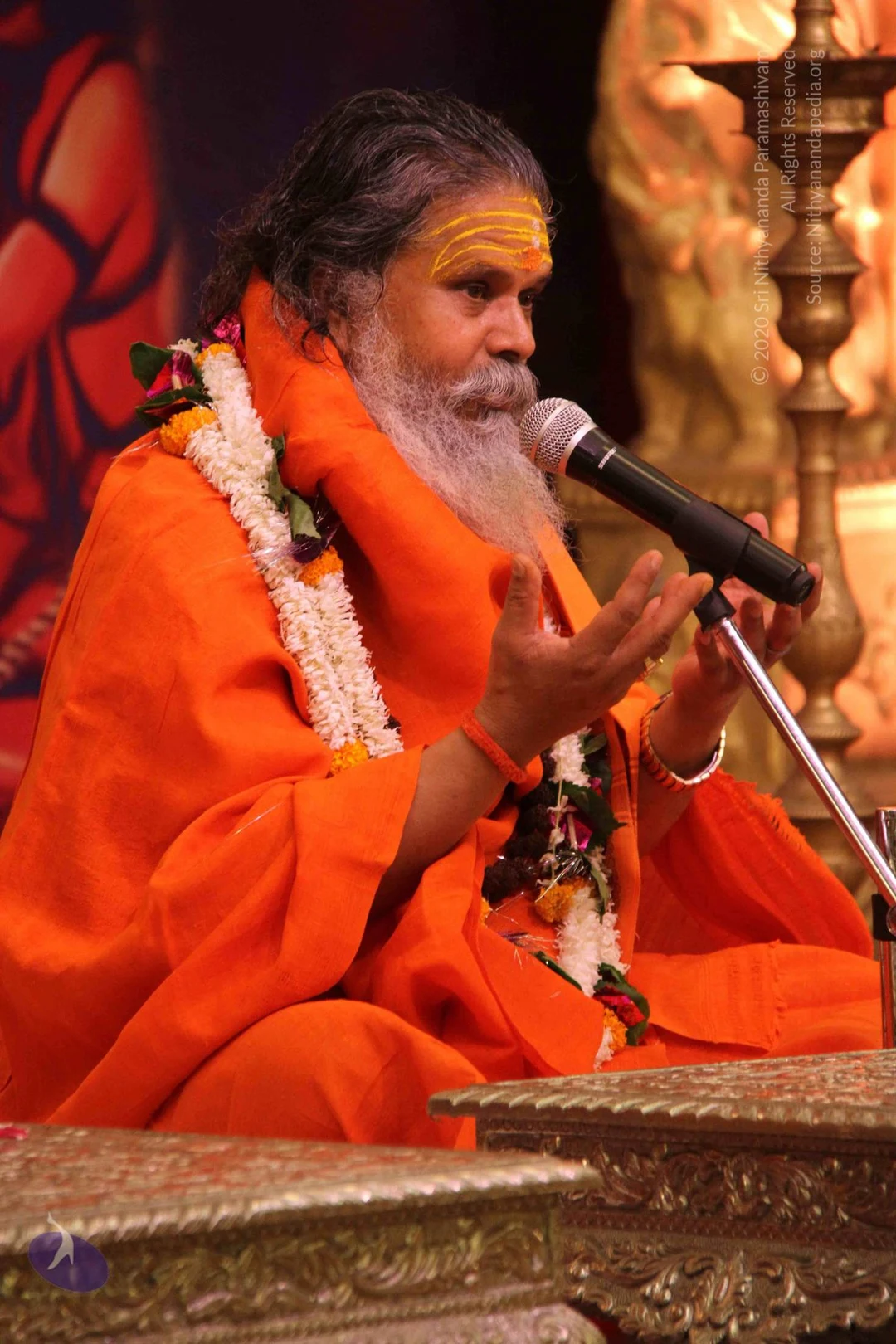
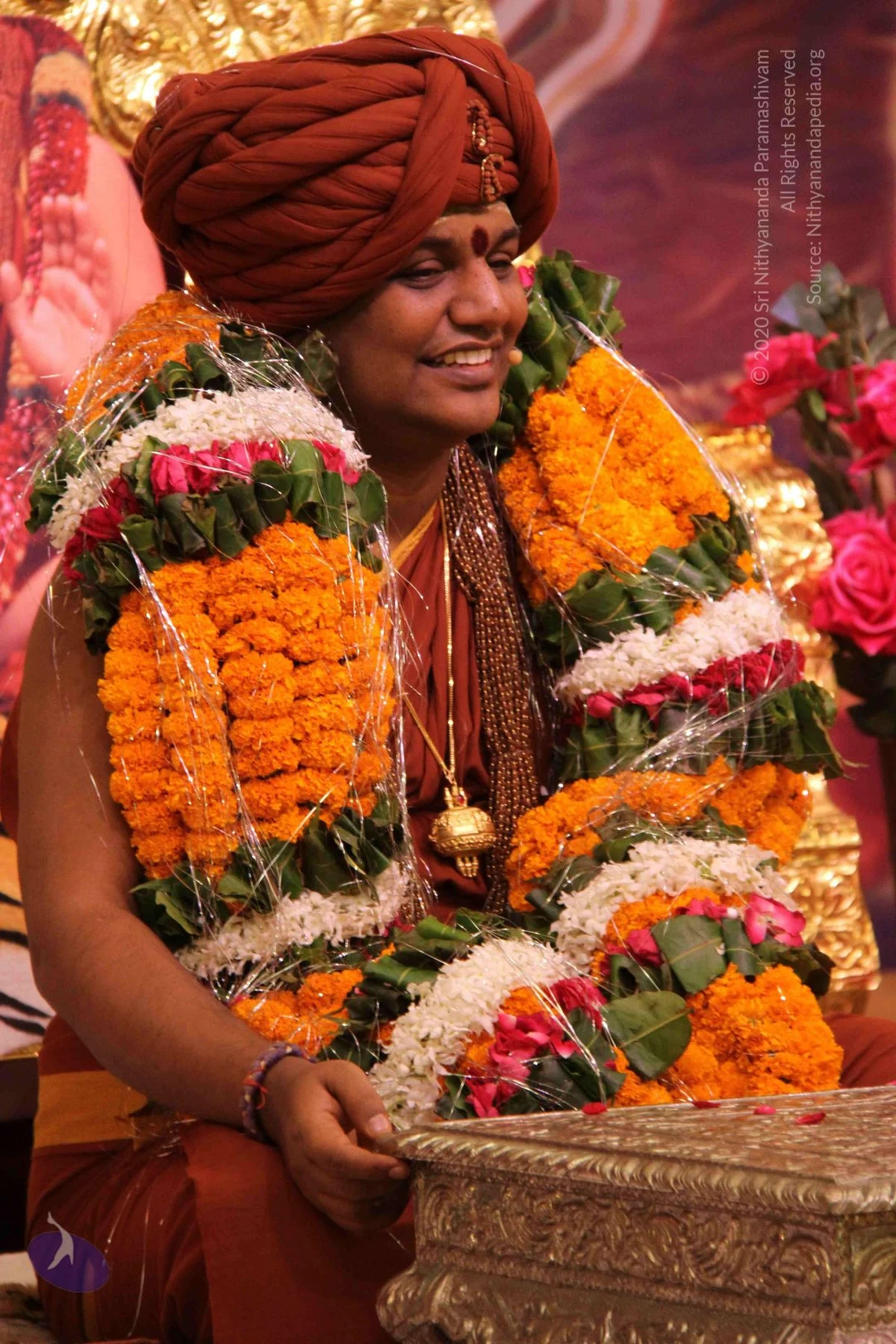
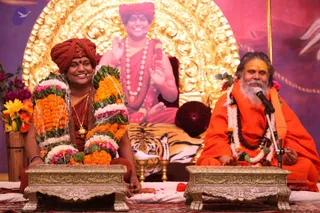
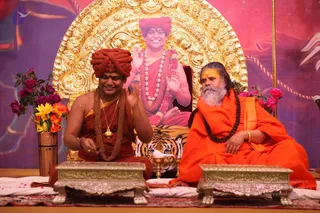
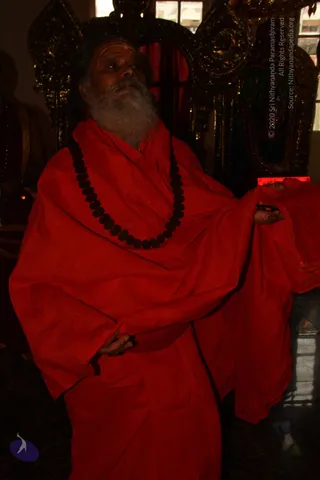
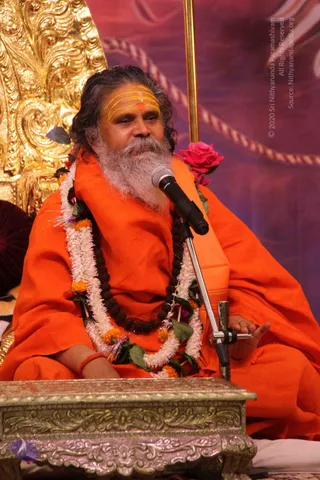
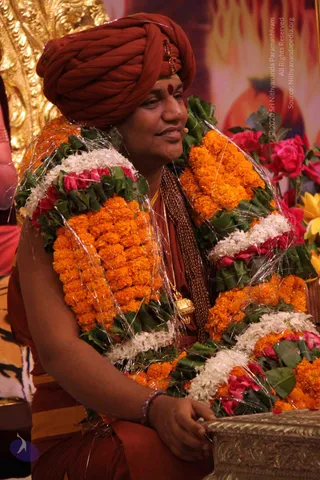
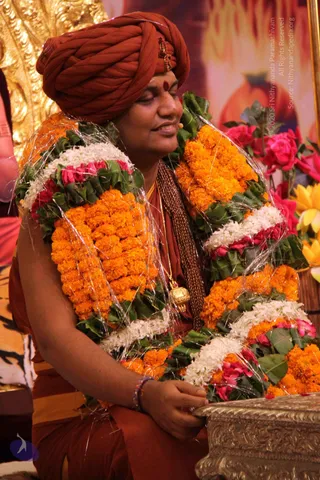
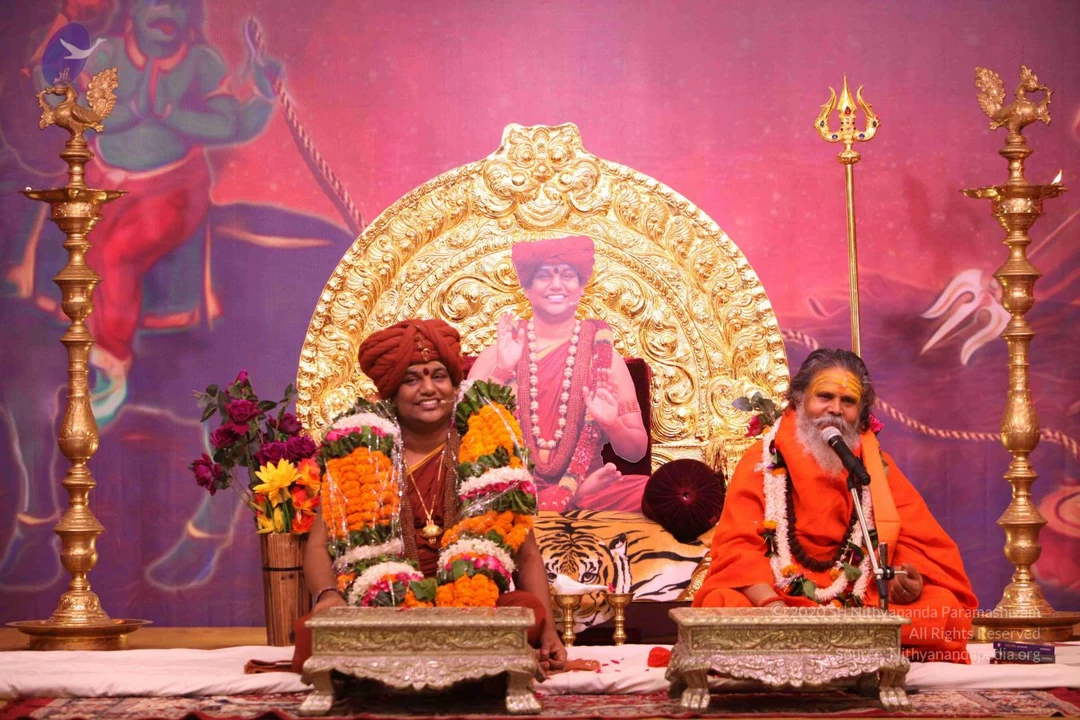
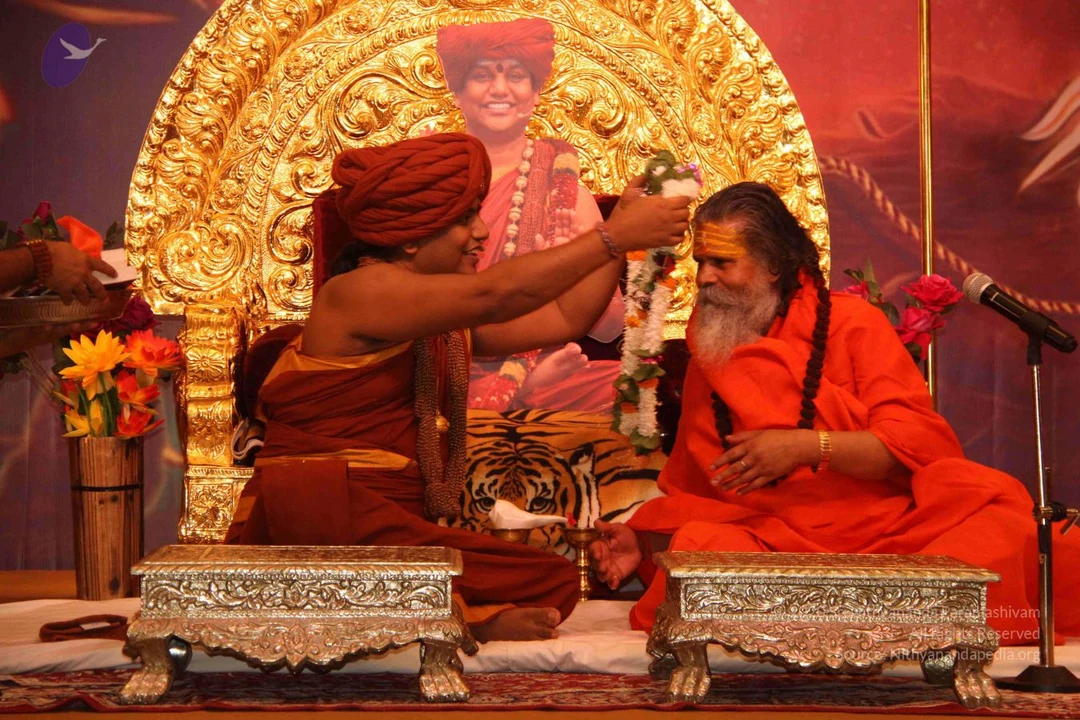
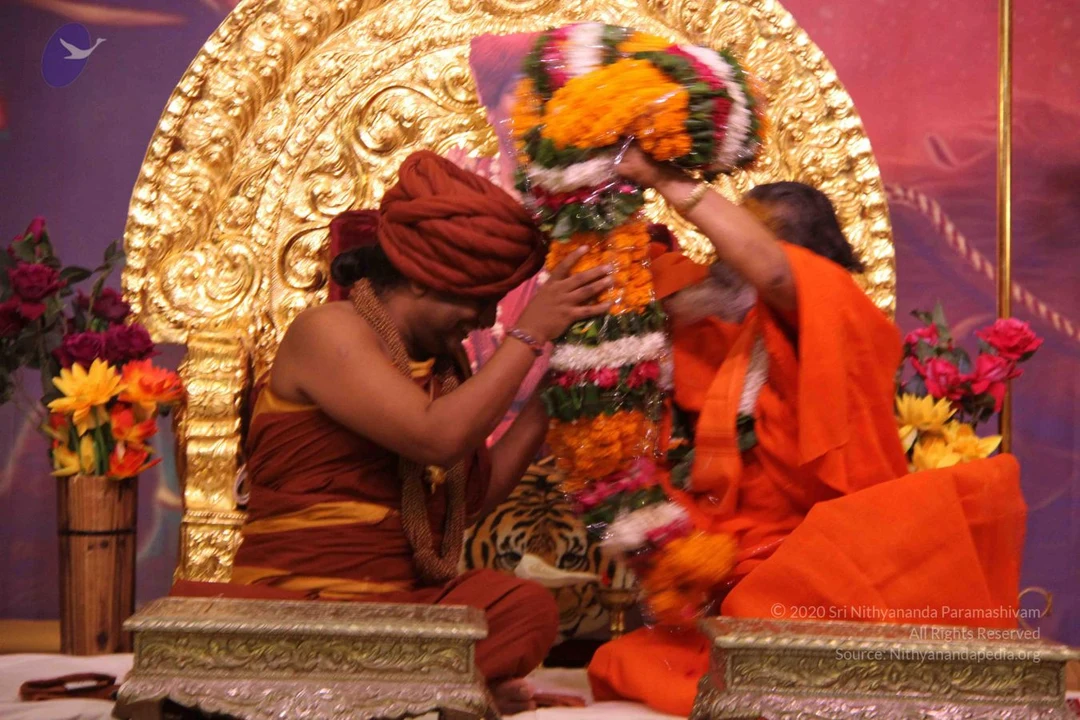
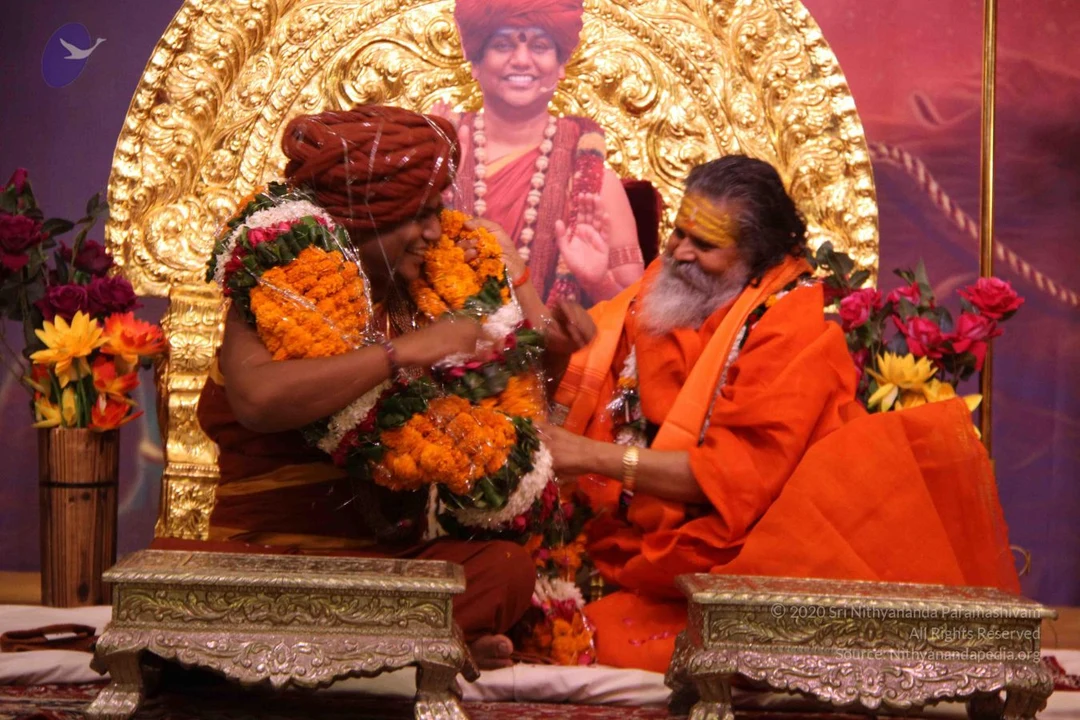
On 11 October 2015, Sri 108 Mahant Narendra Giri ji, the President of Akhil Bharatiya Akhada Parishad (most ancient apex body of Hinduism heading the 13 Akhadas consisting of 10 Lakh Sadhus around the country and which organizes the Kumbh Mela), came to the 21-day Inner Awakening program to have a darshan of Mahamandaleshwar Paramahamsa Nithyananda. He was given a warm respectful welcome by all the participants of the spiritual yoga program Inner Awakening,, who have come from 45 countries and received his blessings.

Narendra Giri ji lauded Paramahamsa Nithyananda for his yeoman contribution to Hinduism saying, “I am the head of 13 akhadas, but today I am so happy to be with such a great Saint - Paramahamsa Nithyananda! When the media came and asked me, I said, “Swamiji is the backbone of Hinduism!” The media people asked me, “You have made such a huge statement! How are you able to say that Paramahamsa Nithyananda is the backbone of Hinduism?” I said, "Paramahamsa Nithyananda Swami has not only done the work of Hinduism here, but he has taken the respect and honor of Hinduism all over the world. A human being cannot go forward or achieve big things in his life without tests and without hard work. Swamiji was put under so many attacks, but still he is untouched and is established in enlightenment.One day Paramahamsa Nithyananda is going to be the Guru for the whole world! ”

VideoAudio

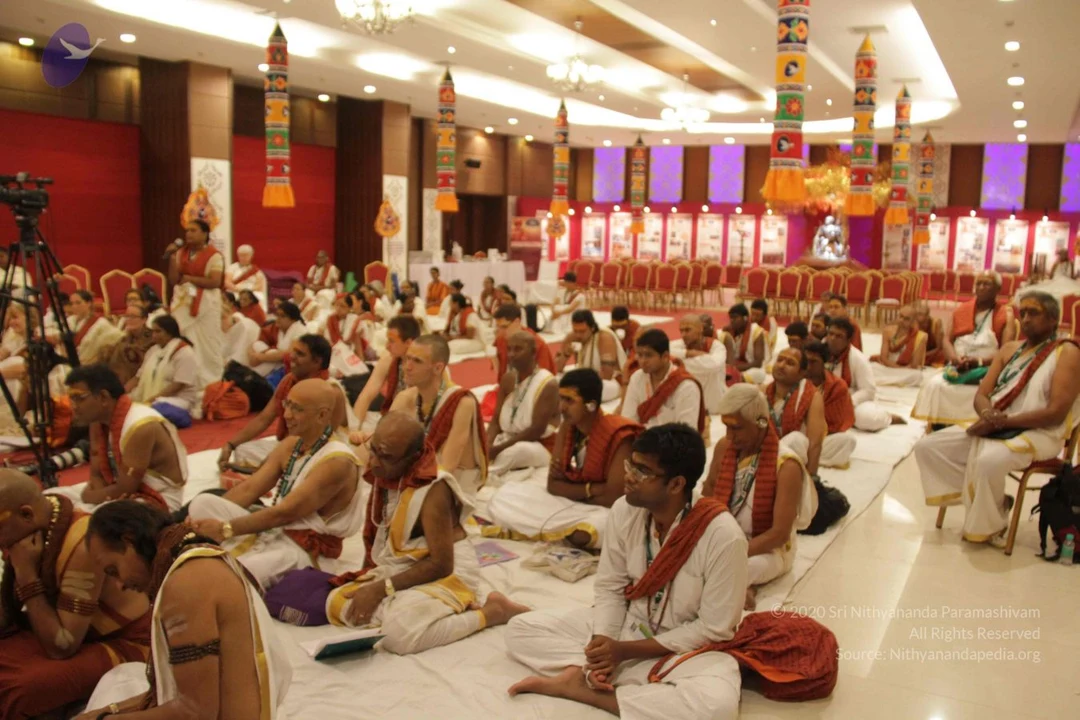
Photos From The Day:
Nithyananda Times

Link To Facebook Page:

https://www.facebook.com/ParamahamsaNithyananda/photos/a.321615927926264/906056536148864

Photos Of The Day:

SOLO 1-yoga-on-ganga-ghat-snan
solo 5-narendragirimahraj's visit

solo 6-shivoham- Q andA

SOLO satsung -kalpataru sssion

solo stock shots

solo7-qanda session

Photos Of The Day:

FB-photo-of-the-day

Photos Of The Day:

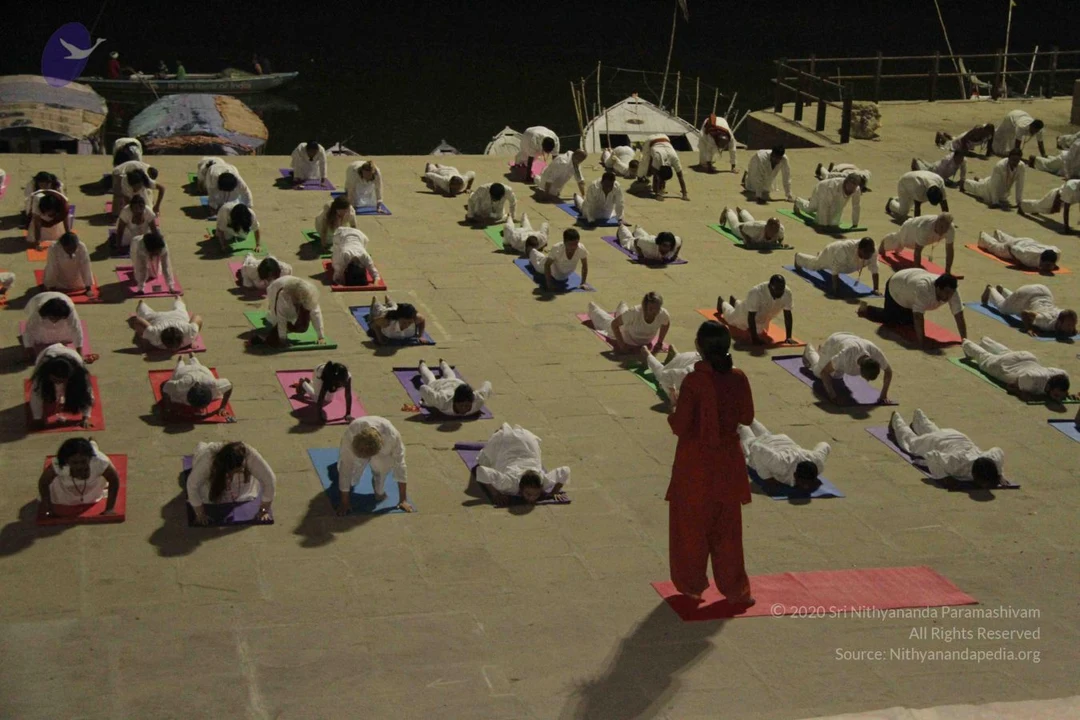
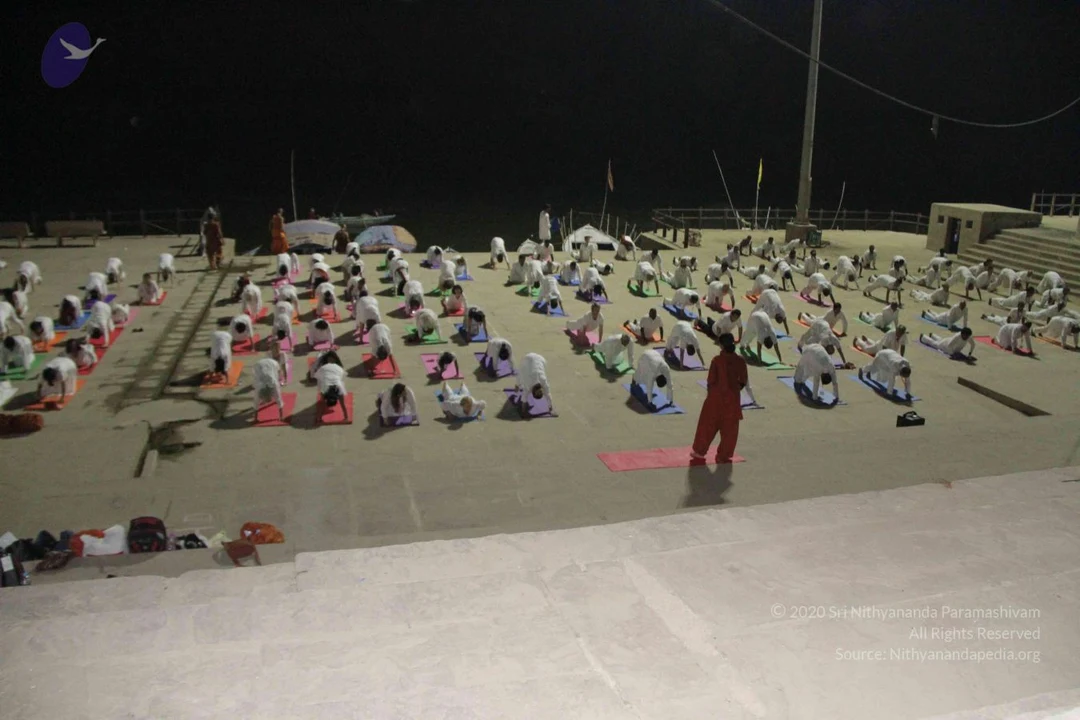
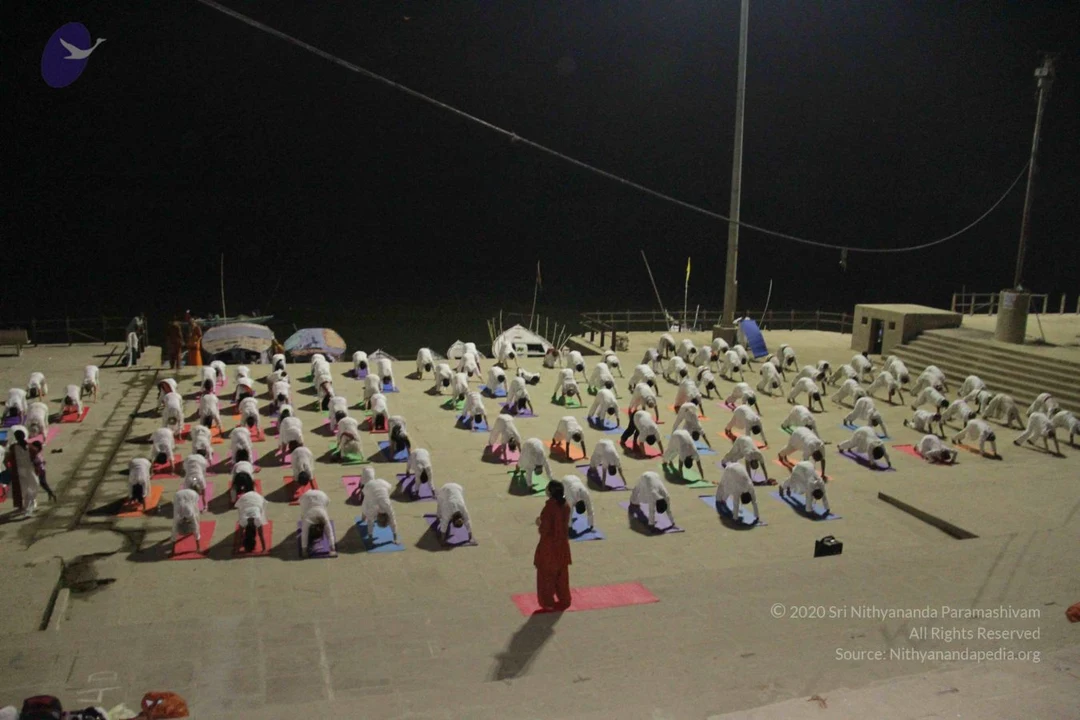
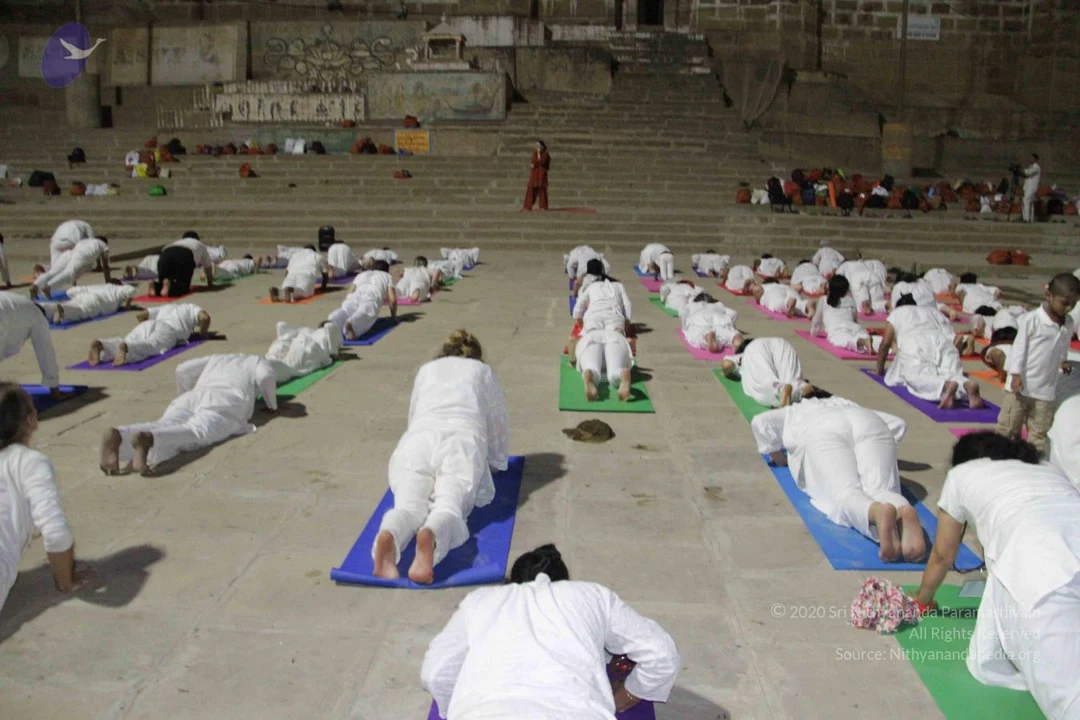
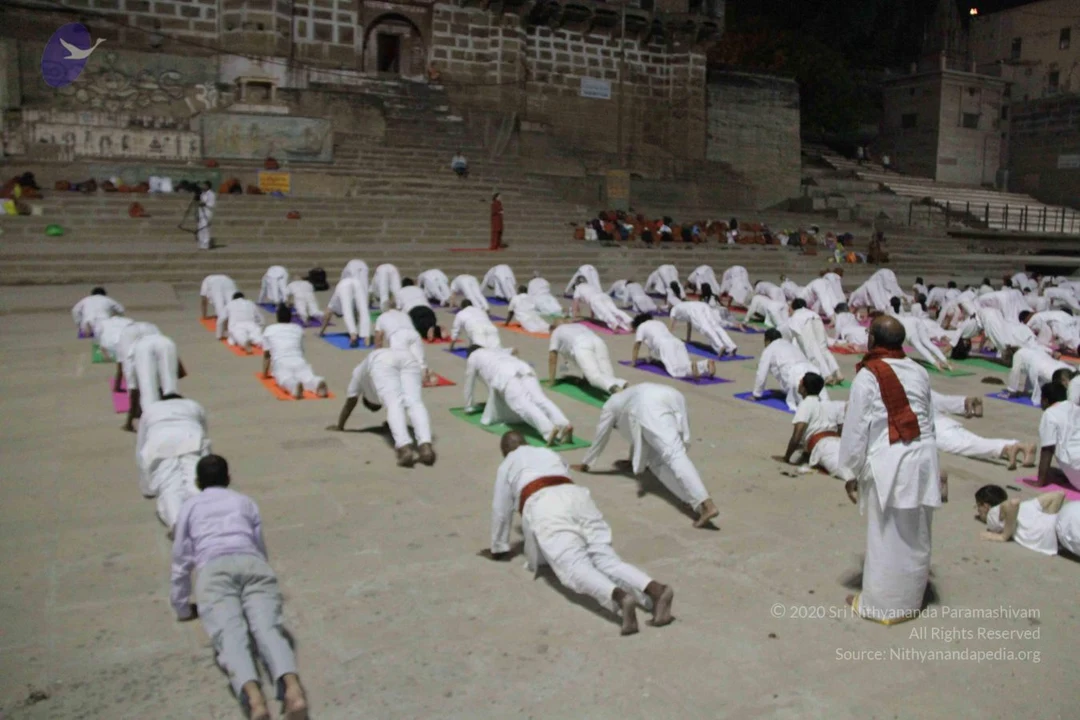
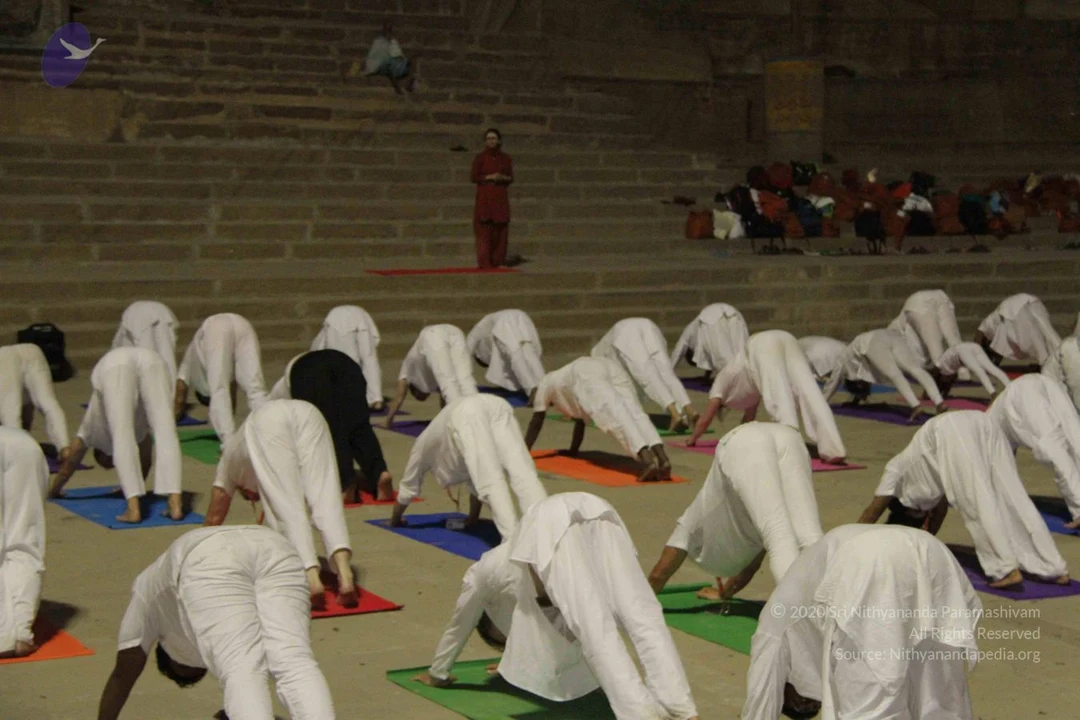
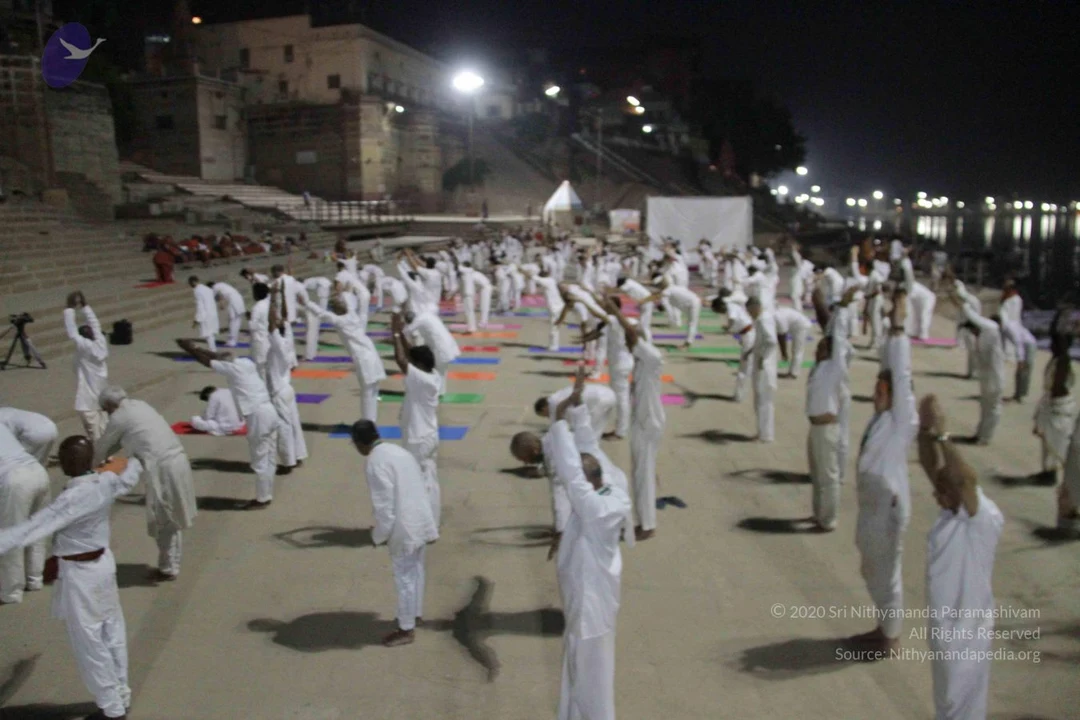
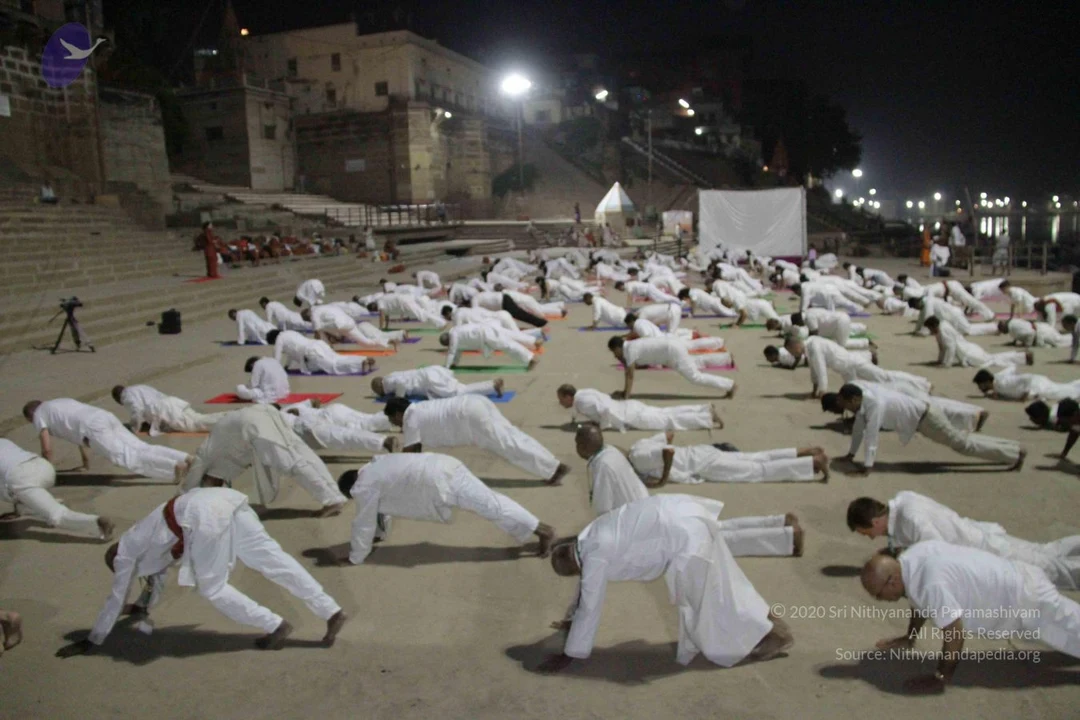
Yoga-On-Ganga

NarendraGiriMahraj-Visit

QnA Session

Photos from this day

View all 527 photos

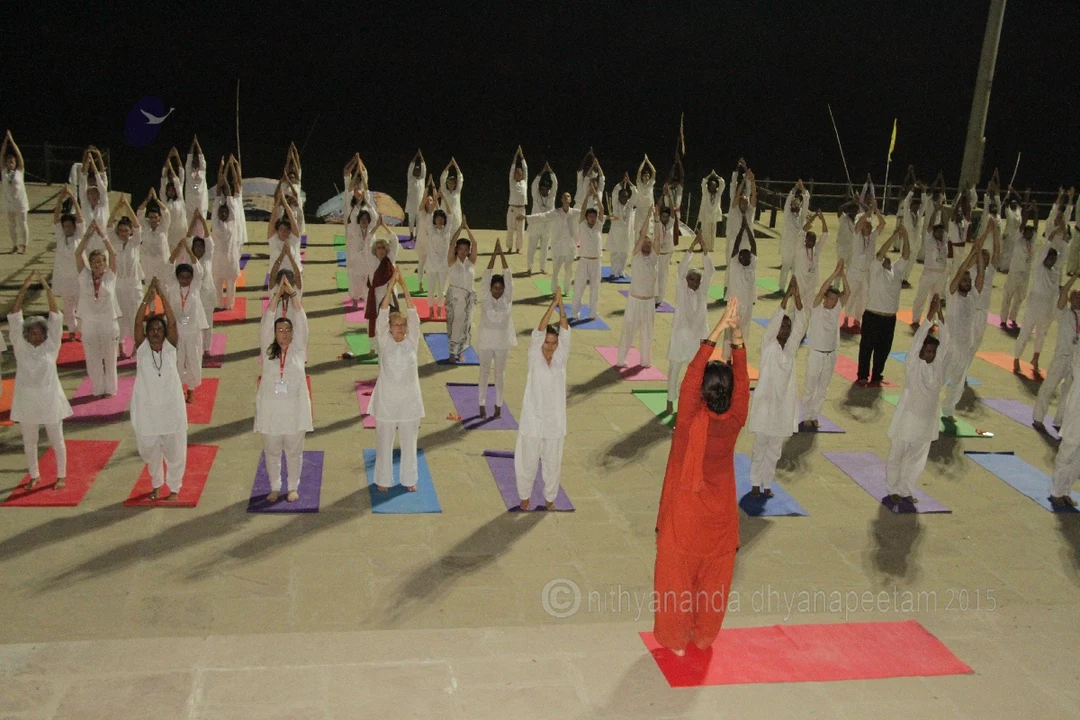
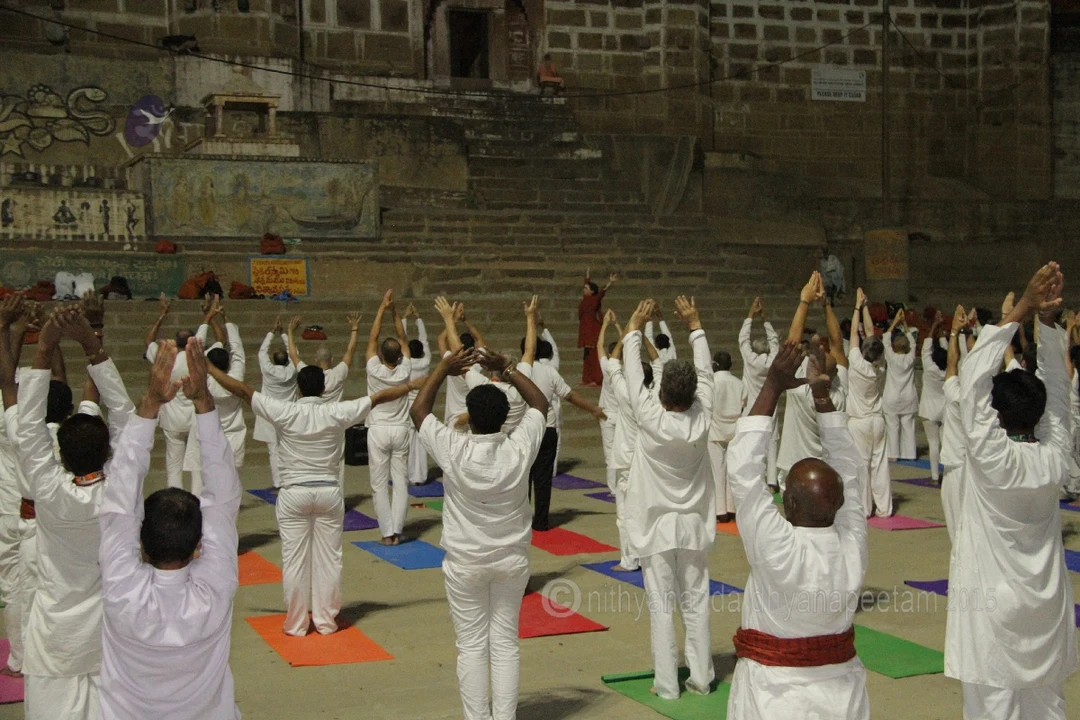
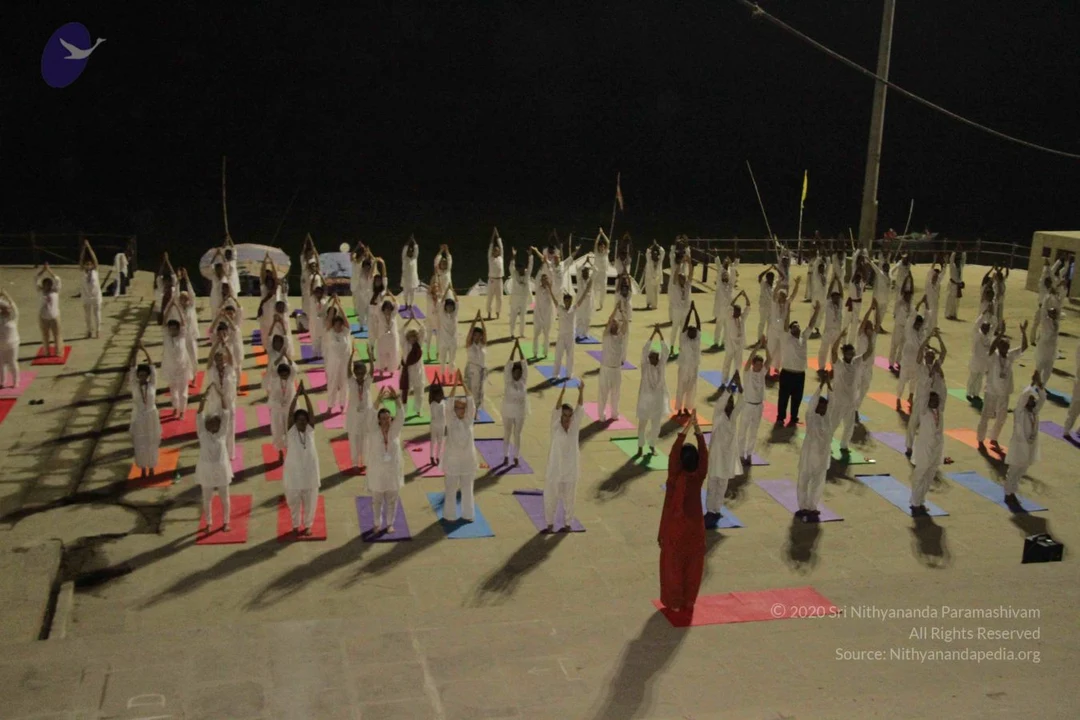
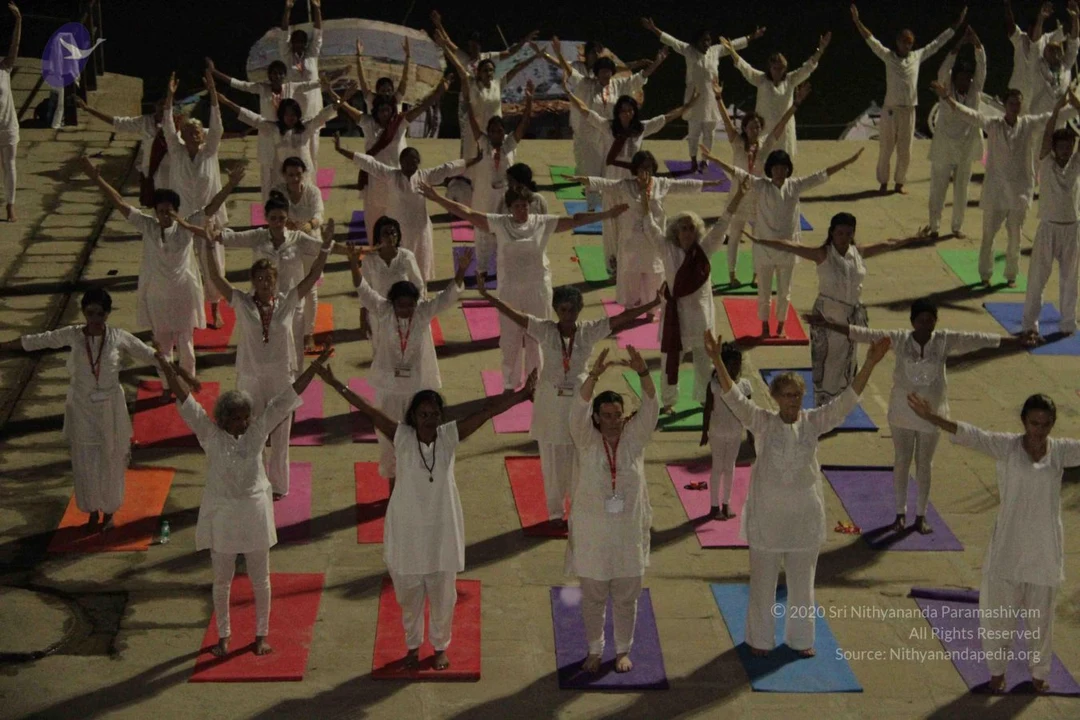
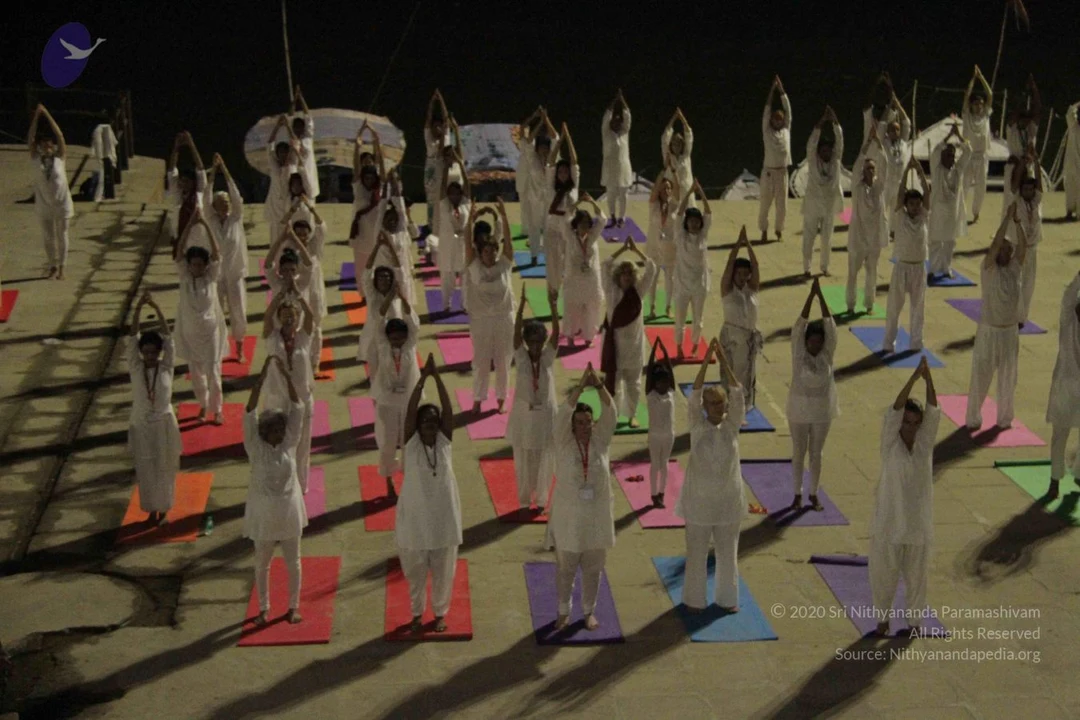
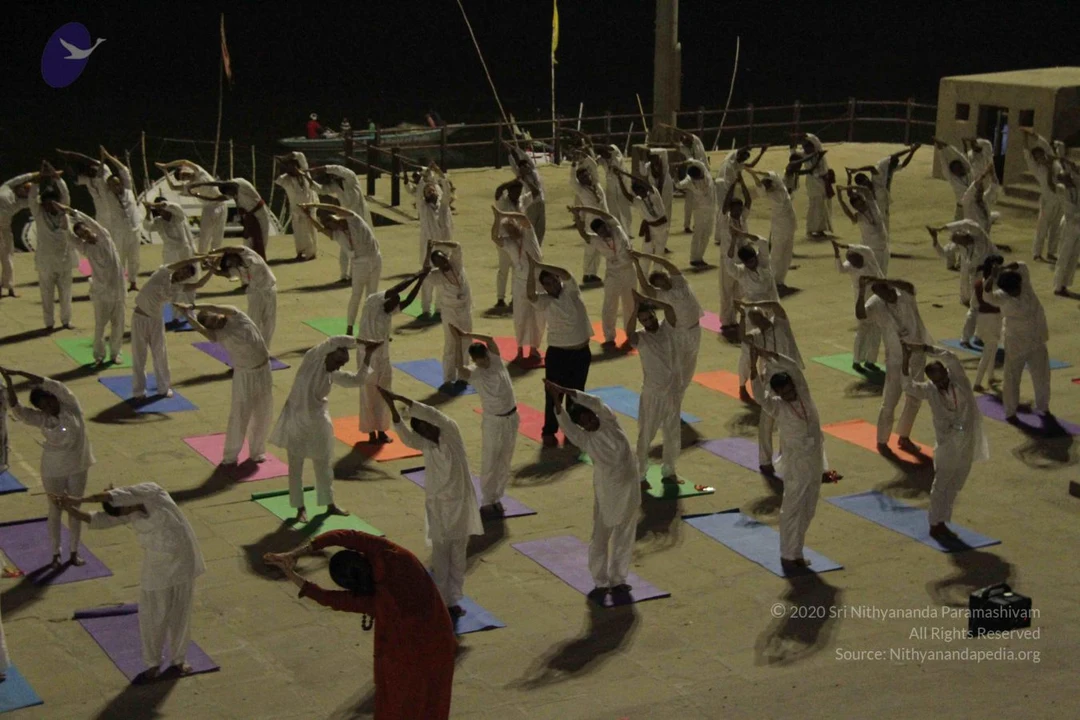
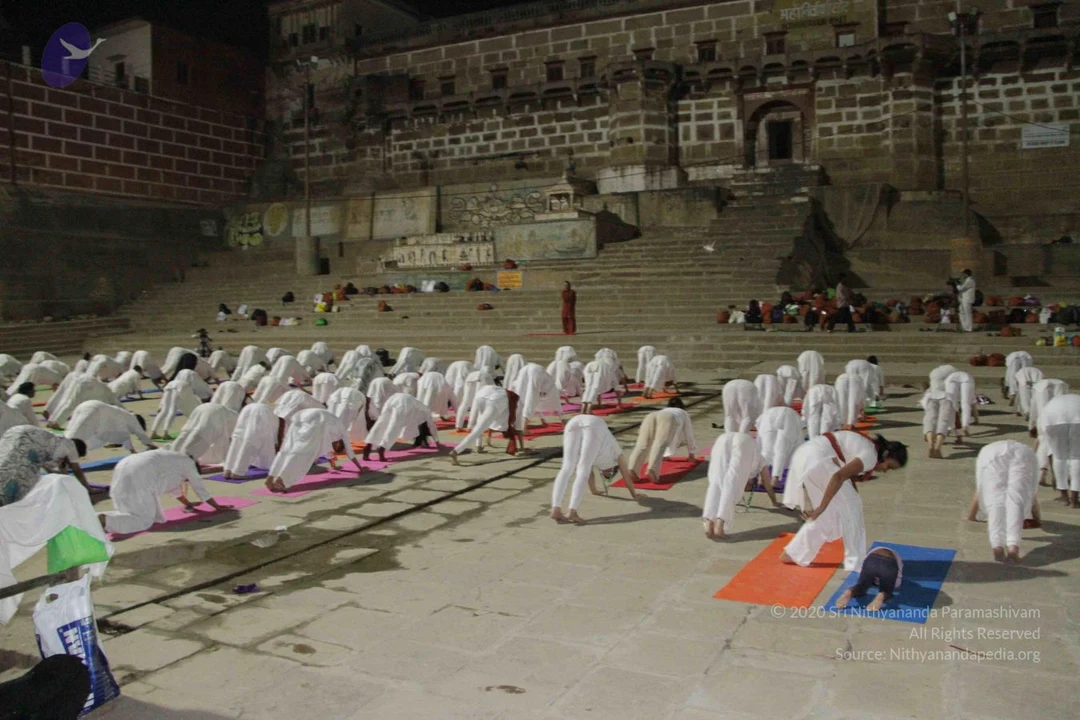
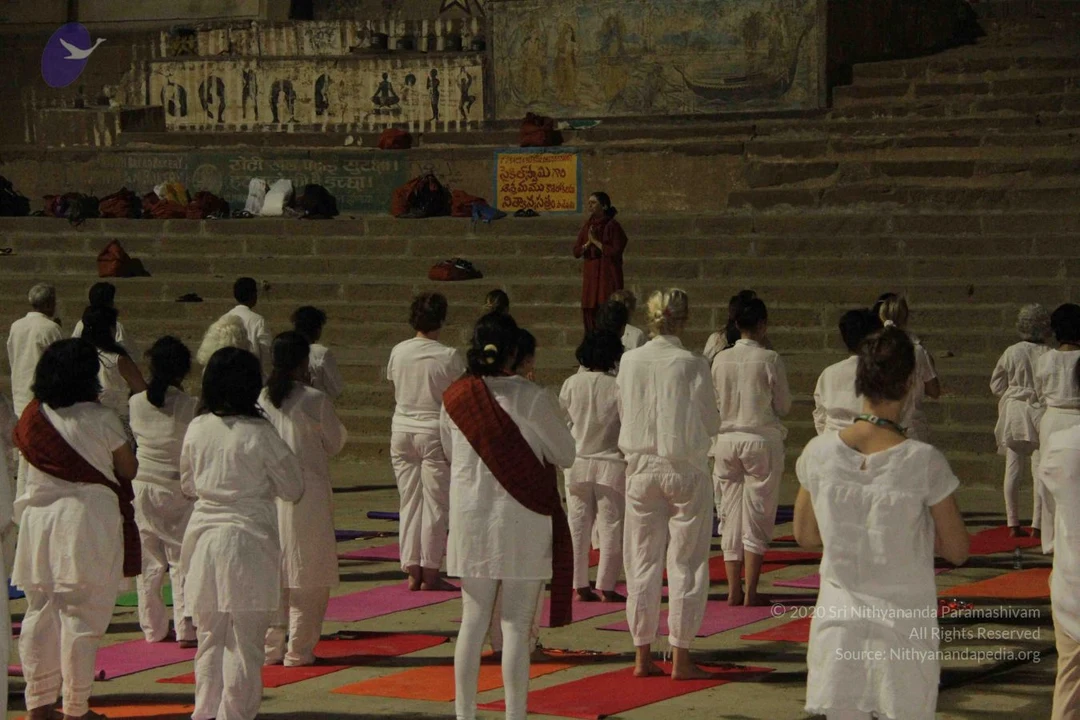
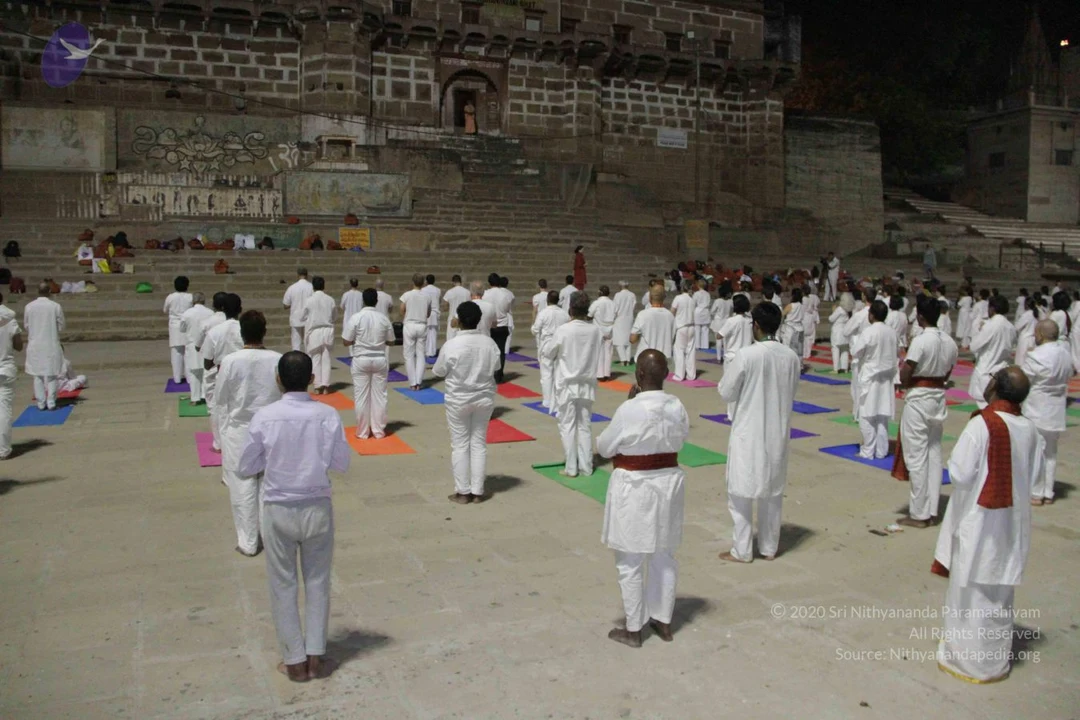
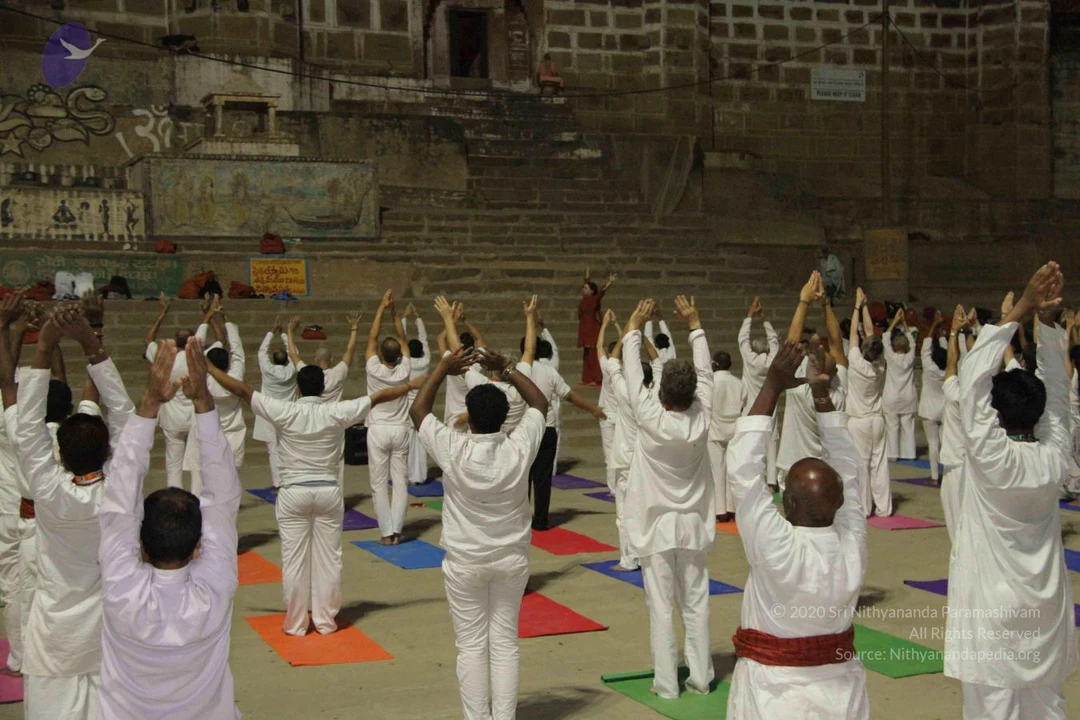
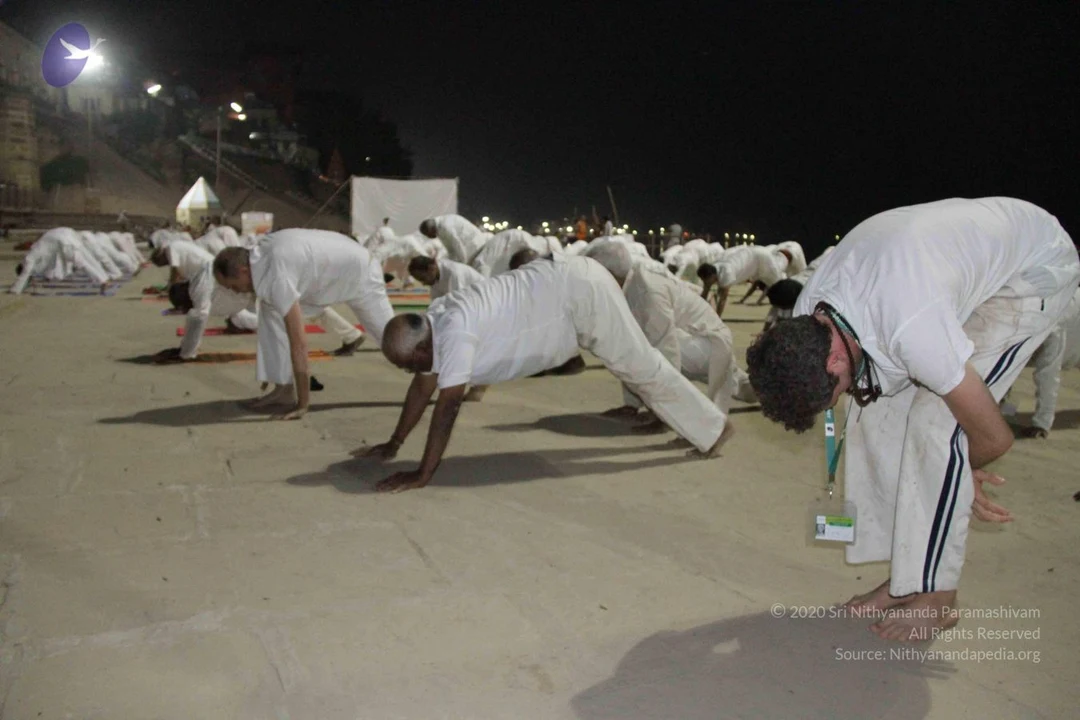
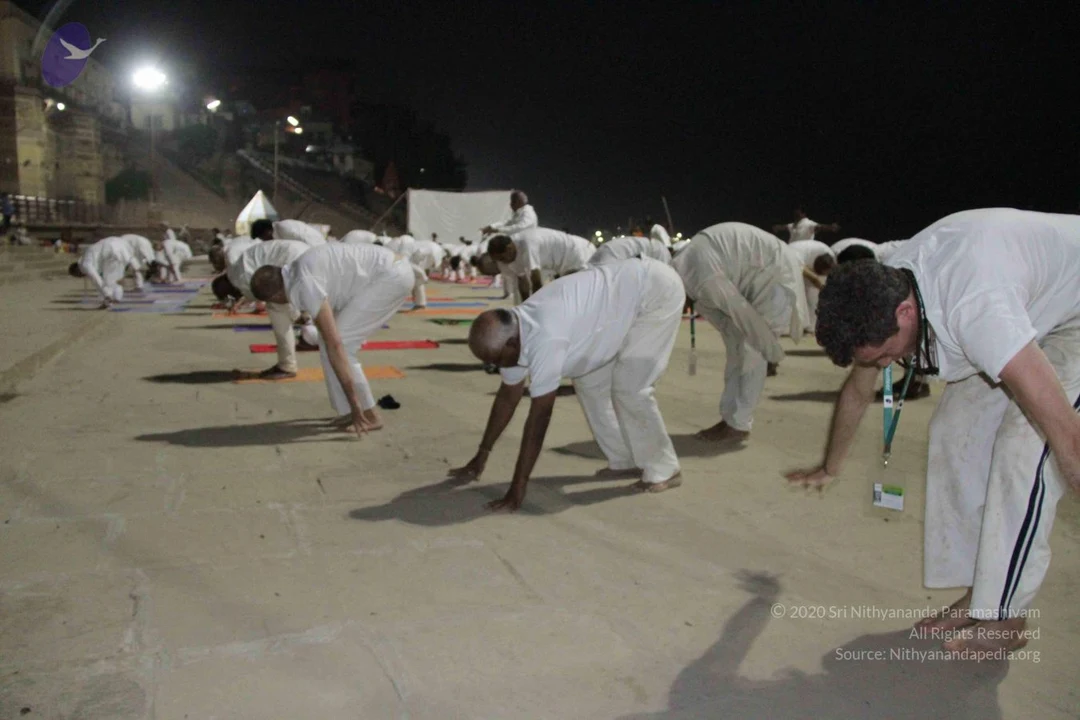
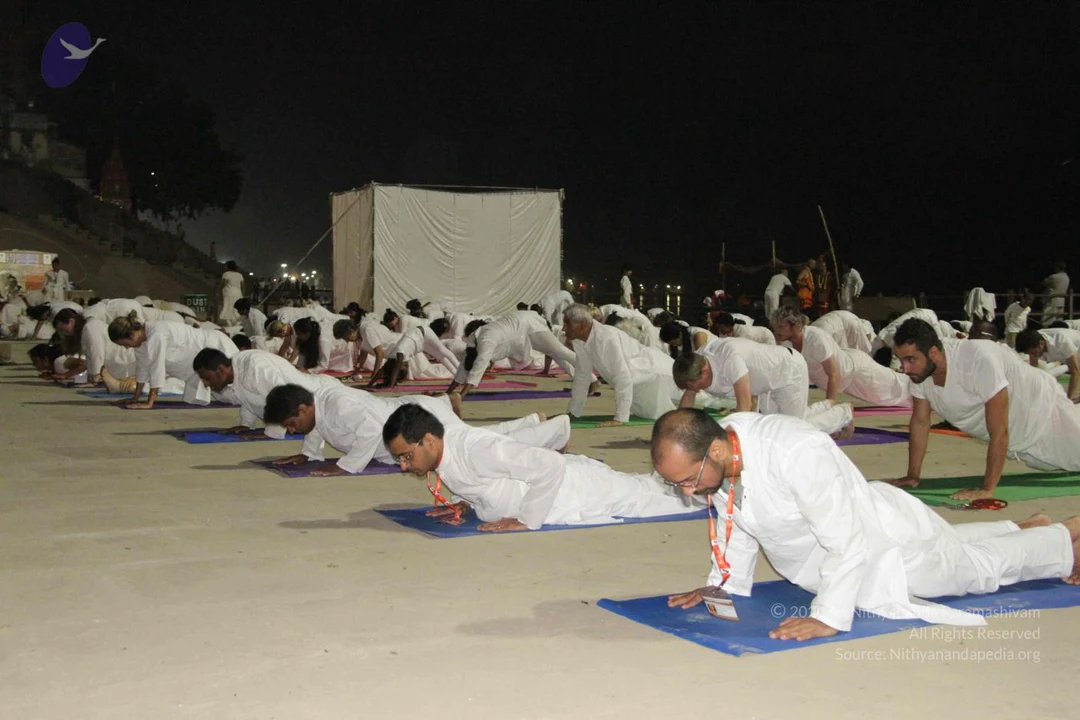
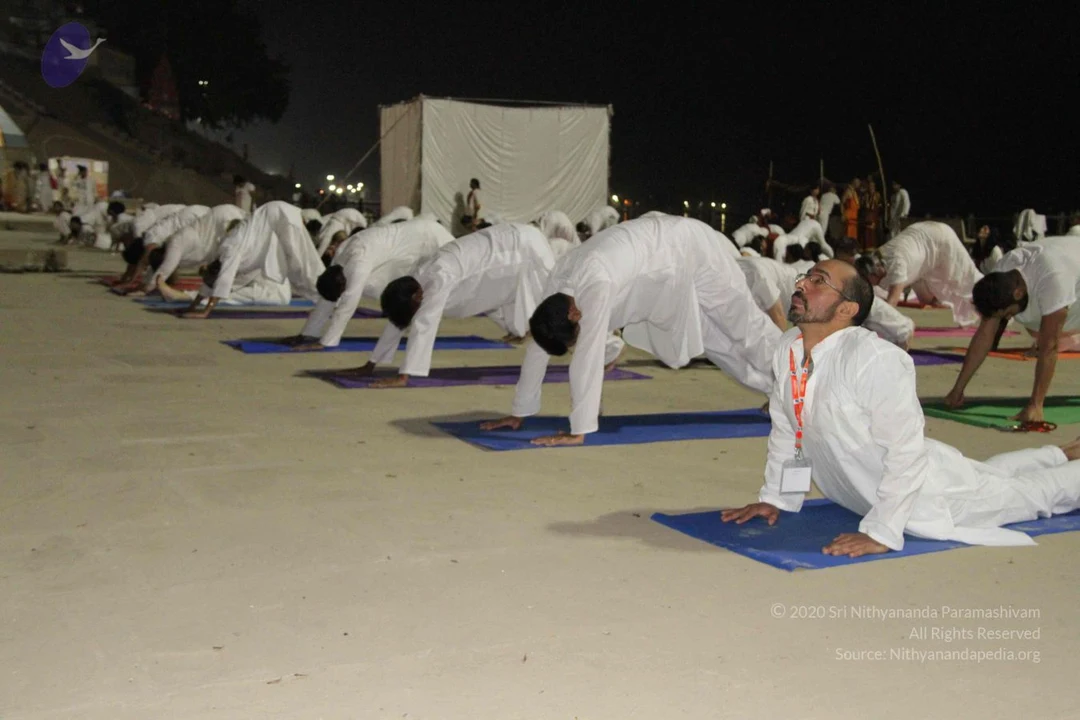
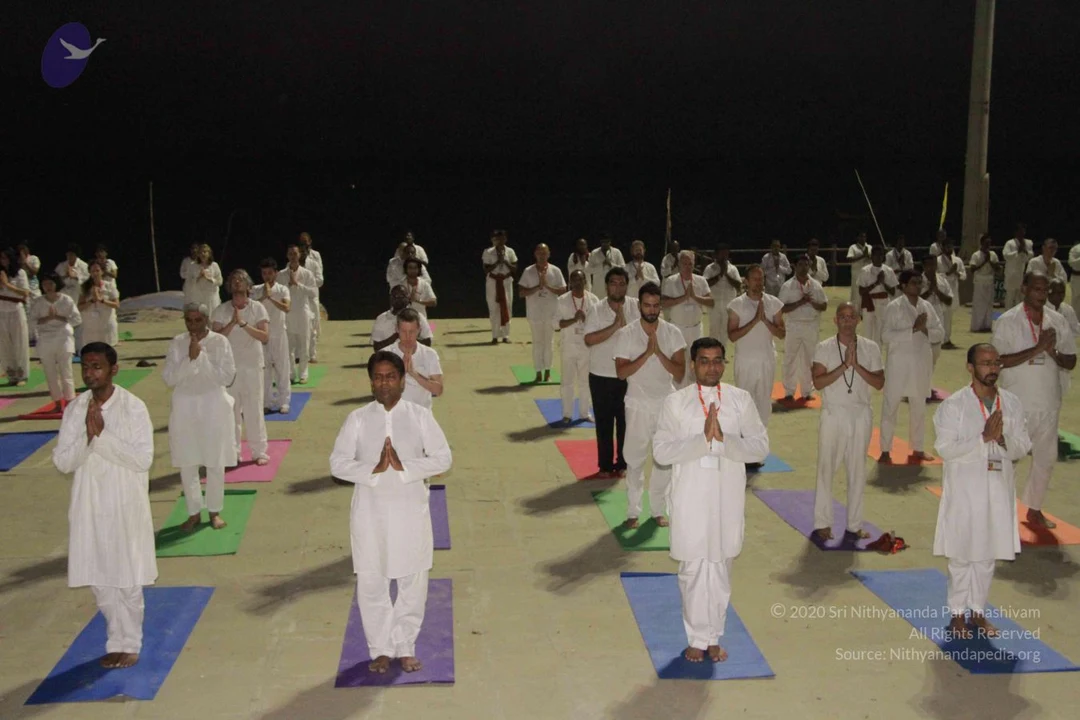
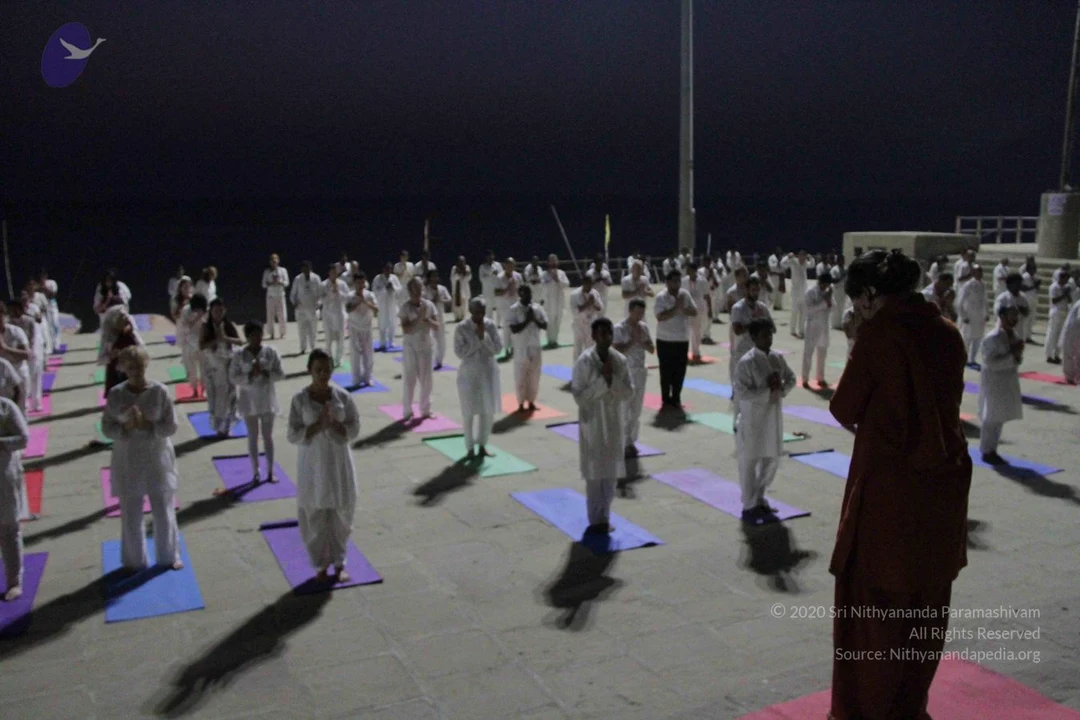
SOLO 1-yoga-on-ganga-ghat-snan
124 photosSource gallery
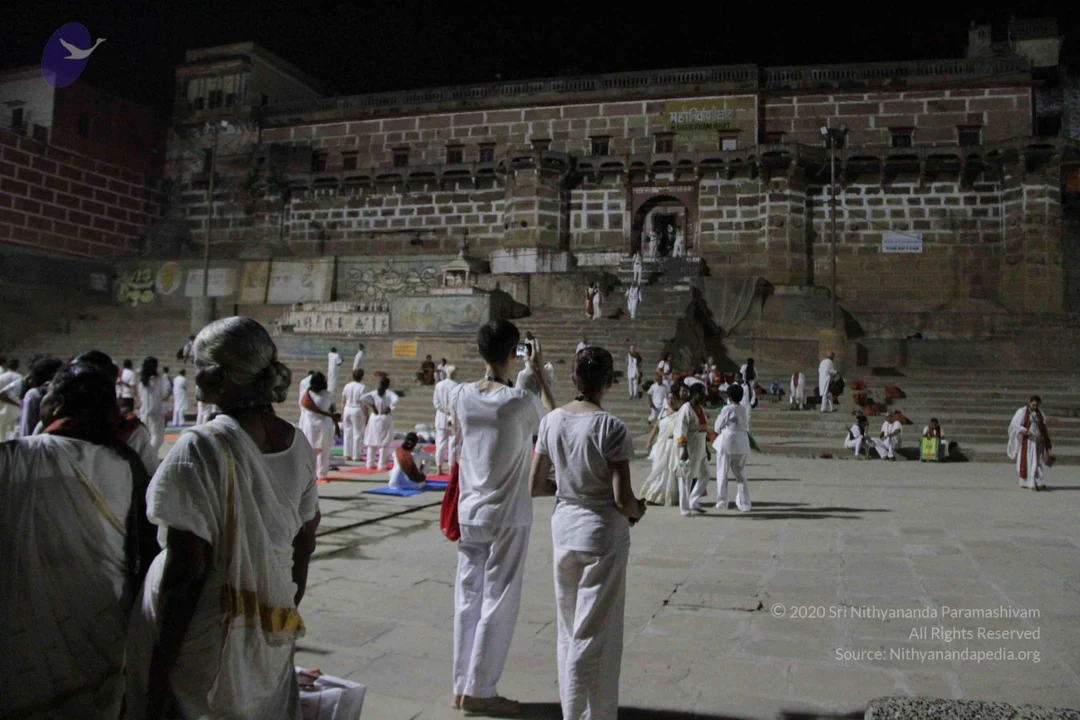
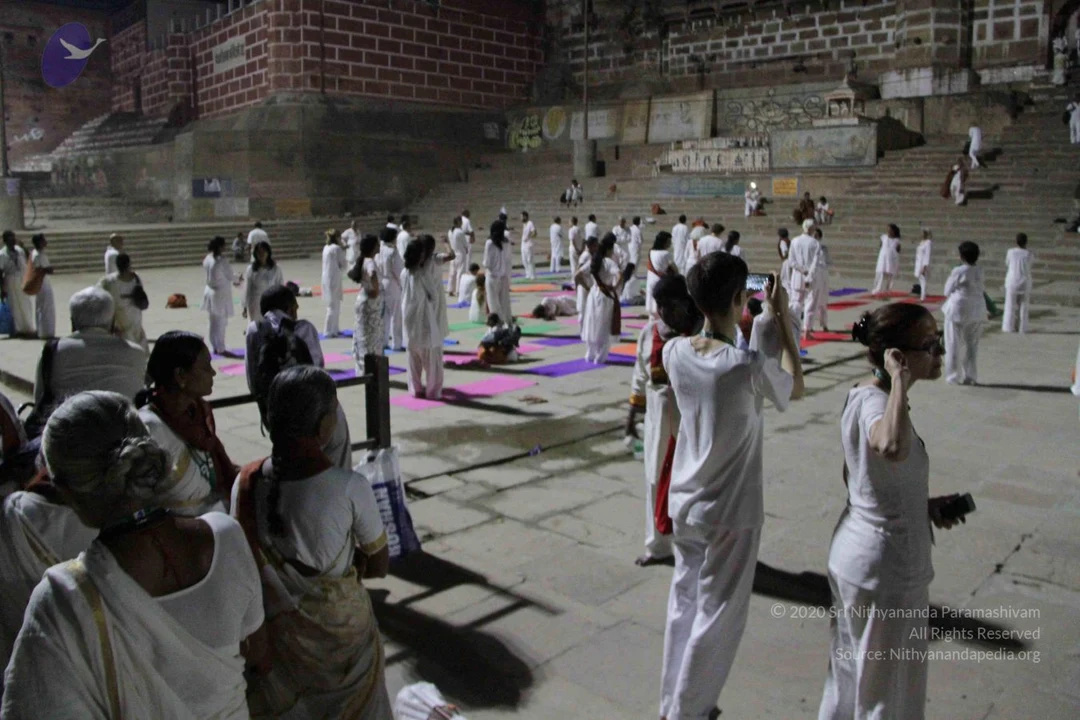
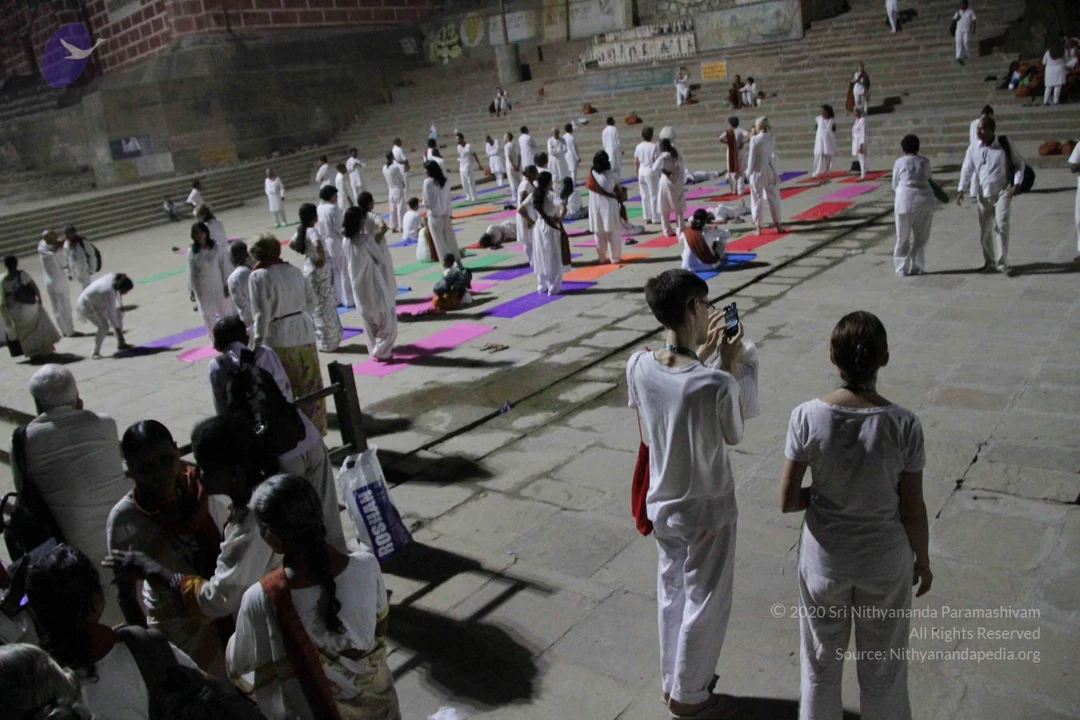
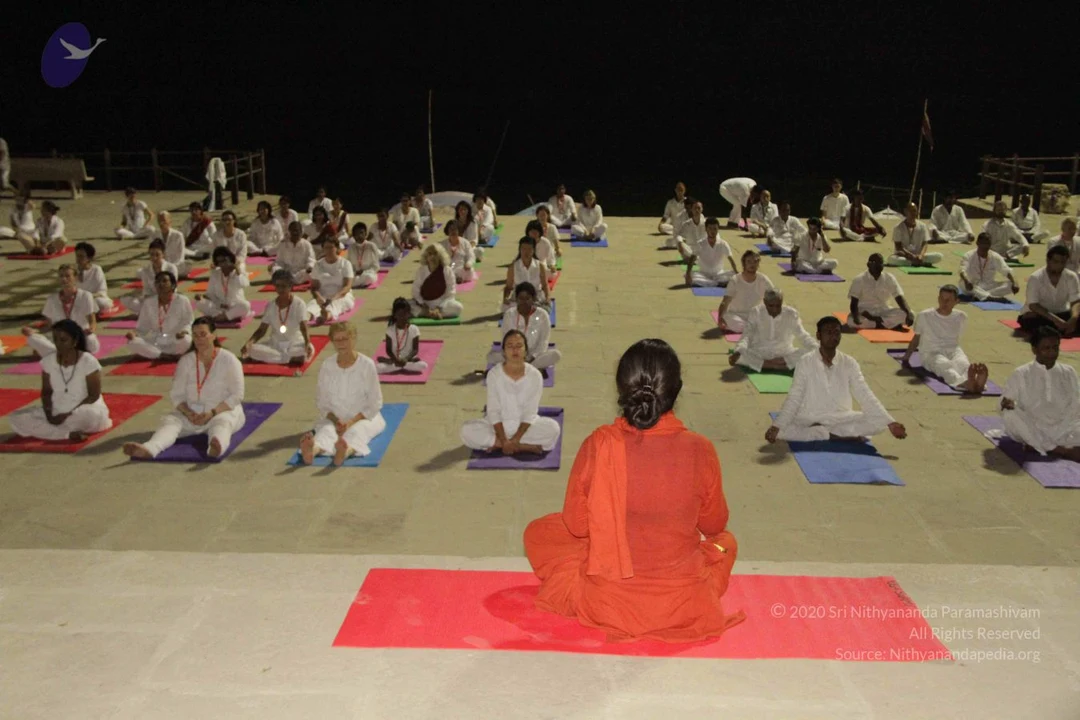
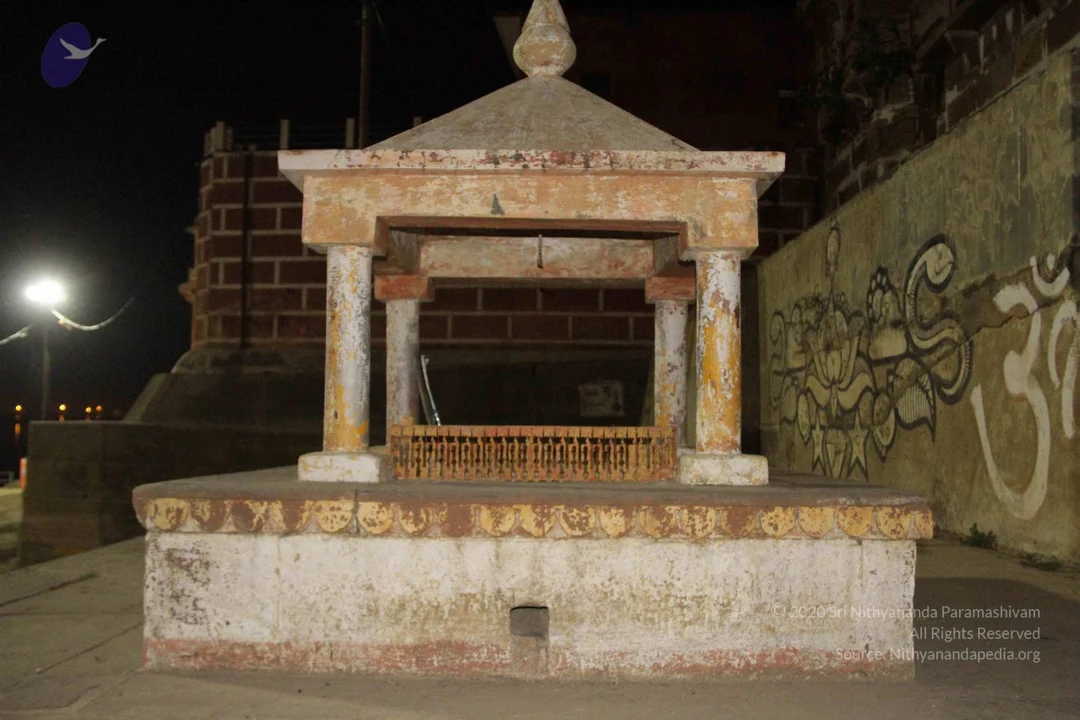
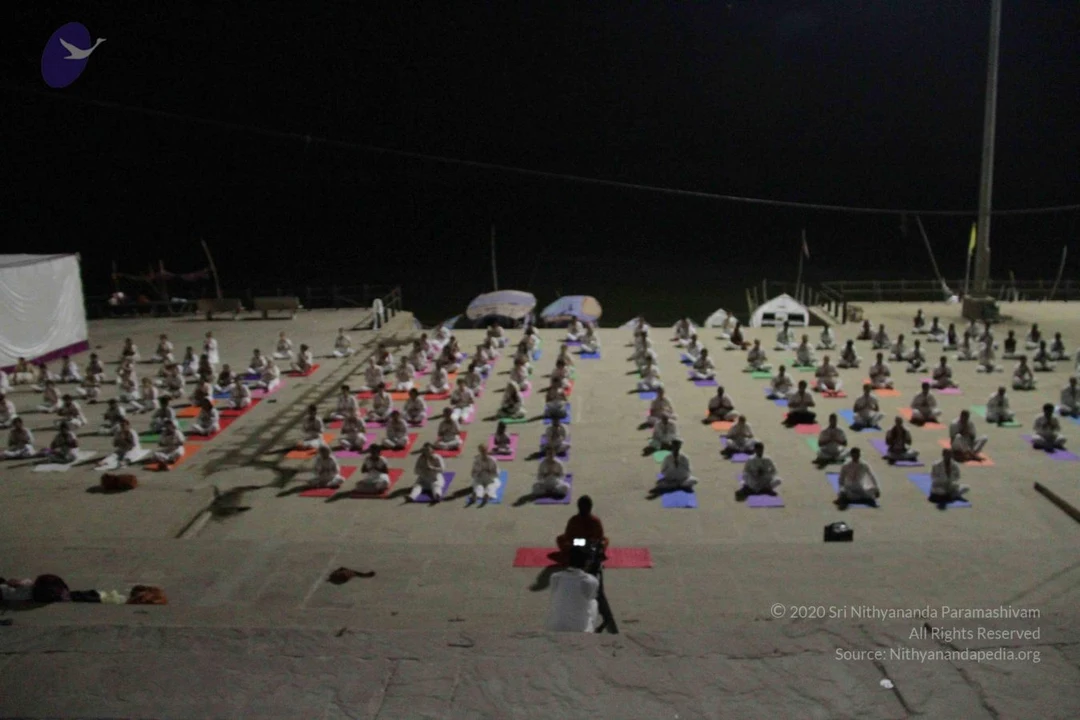
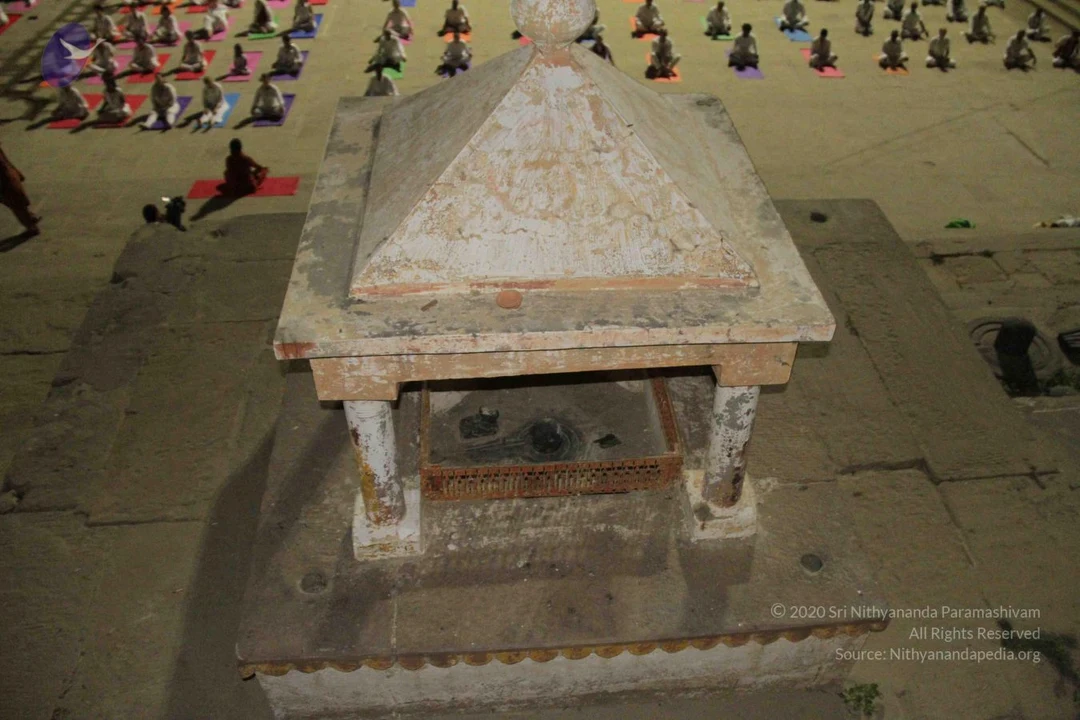
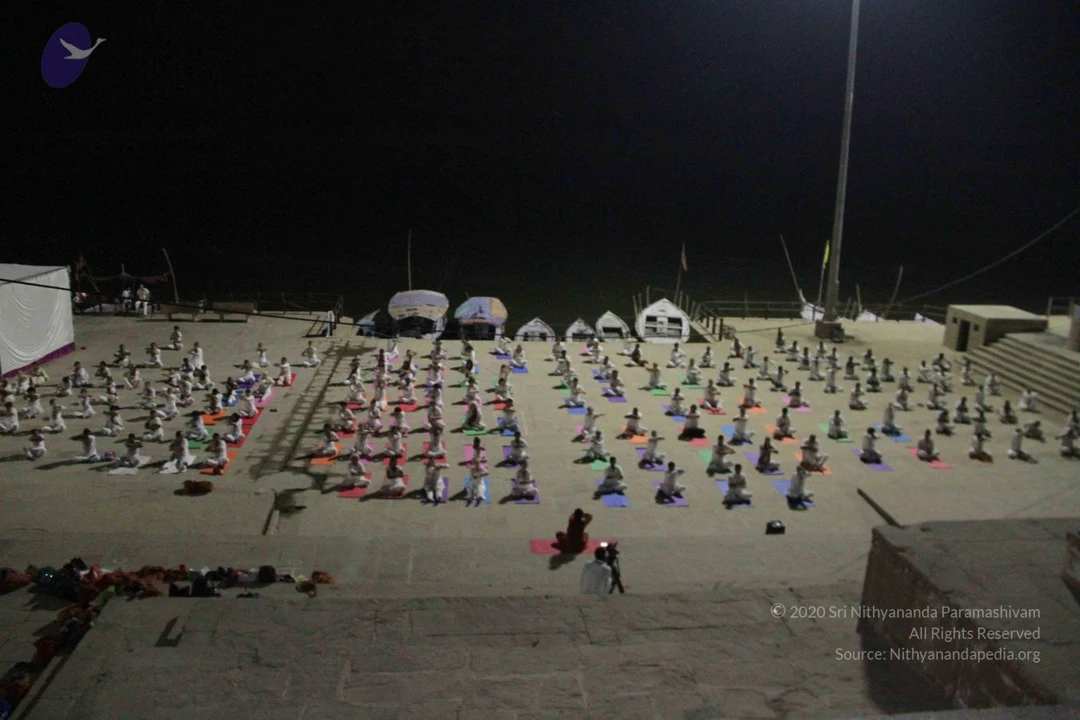
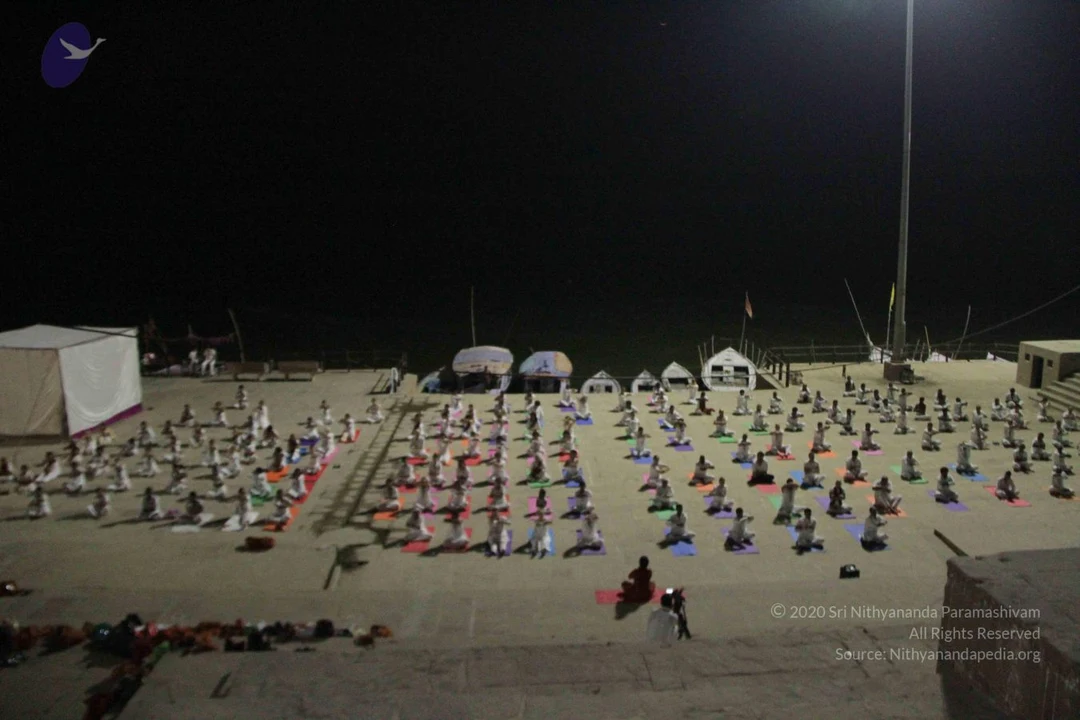
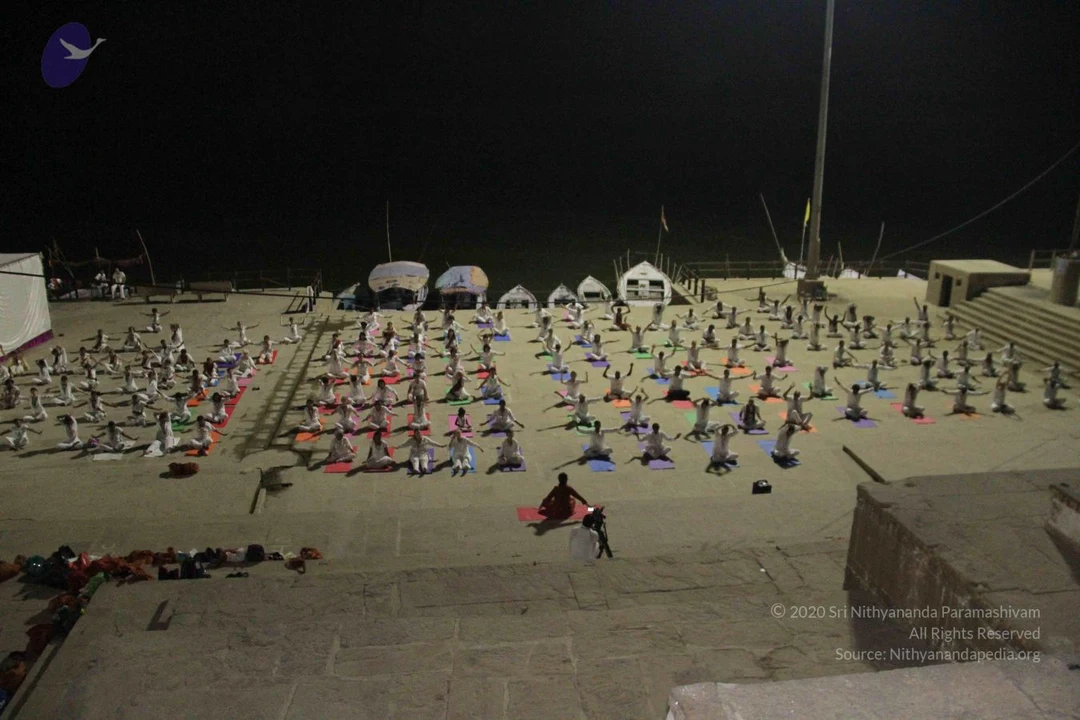
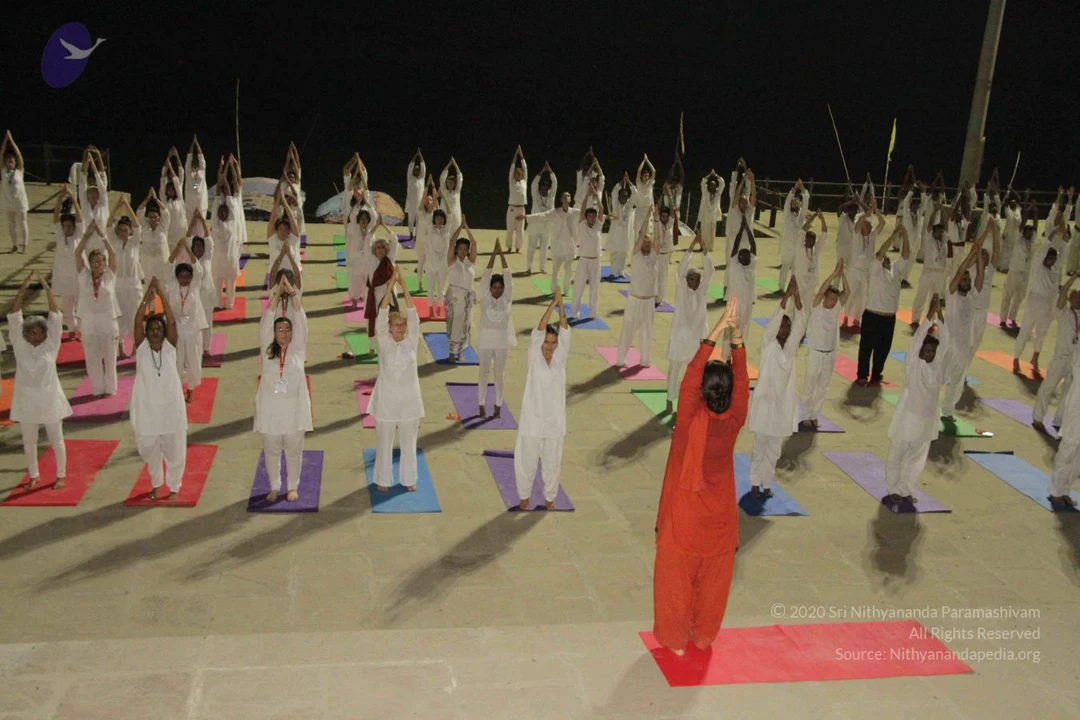
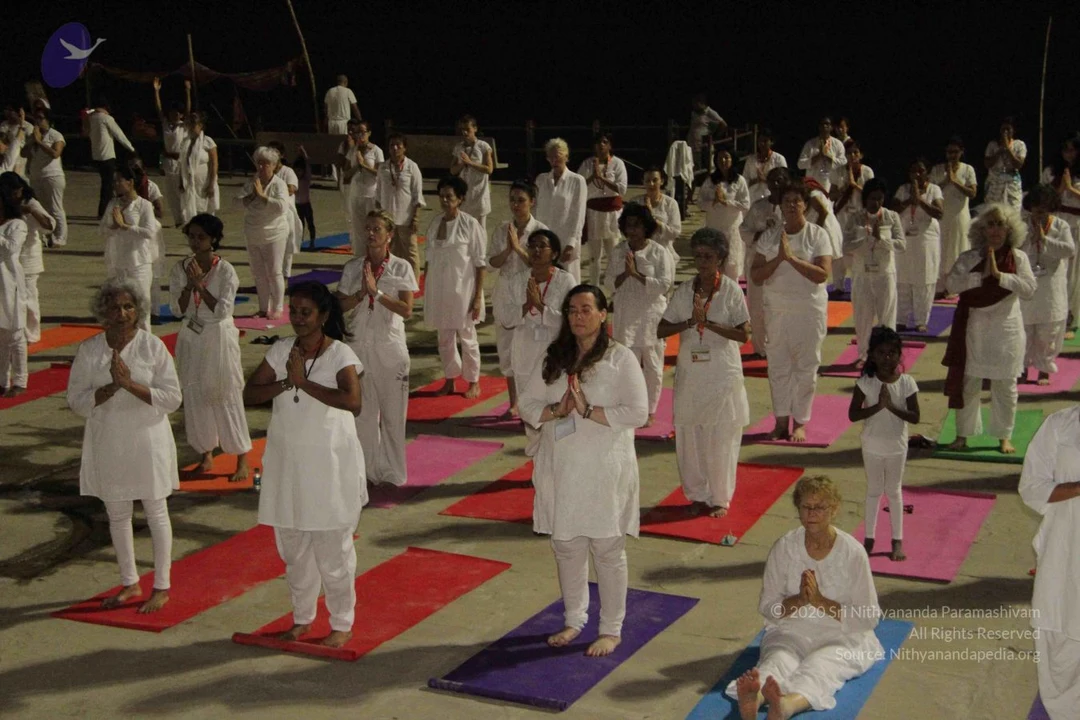
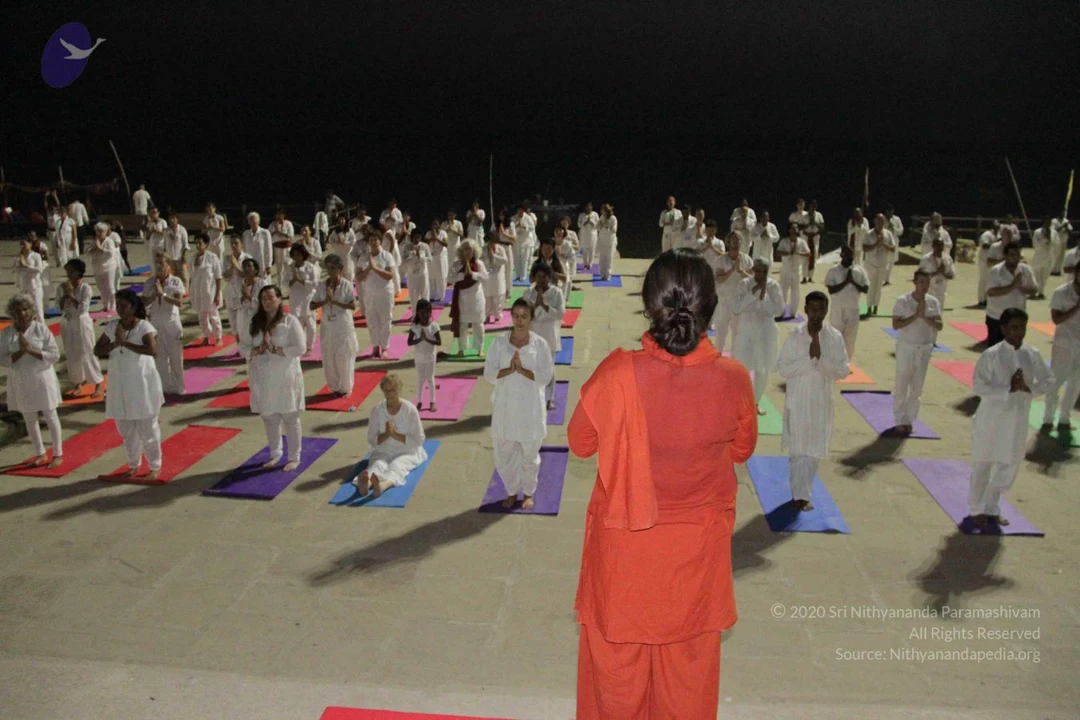
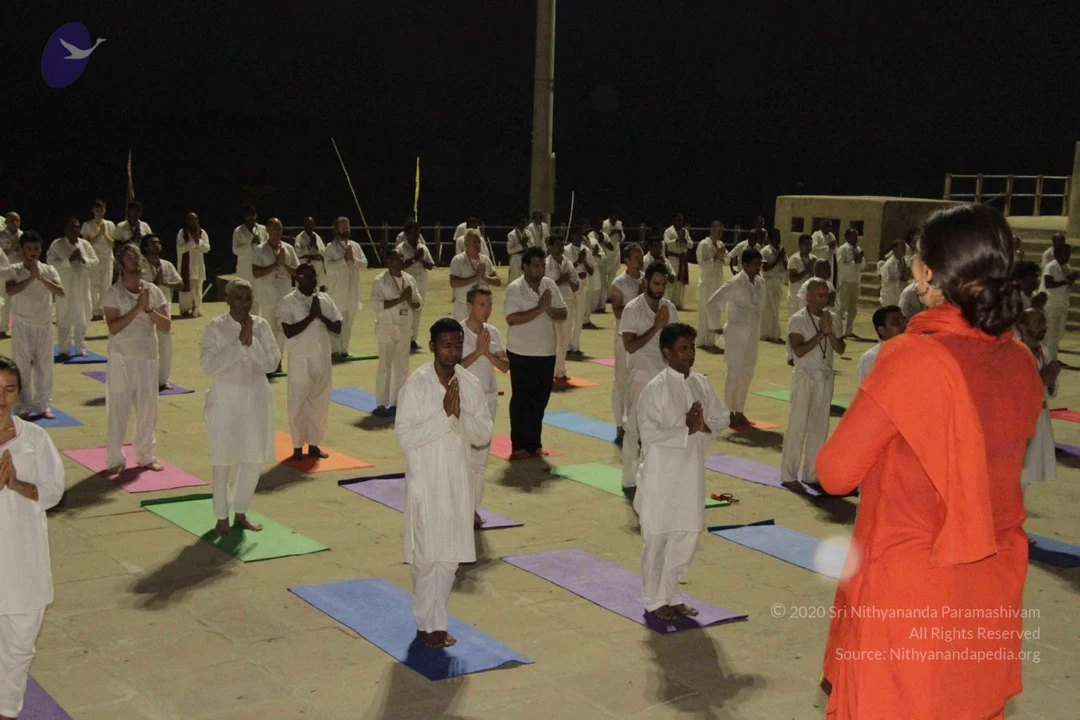
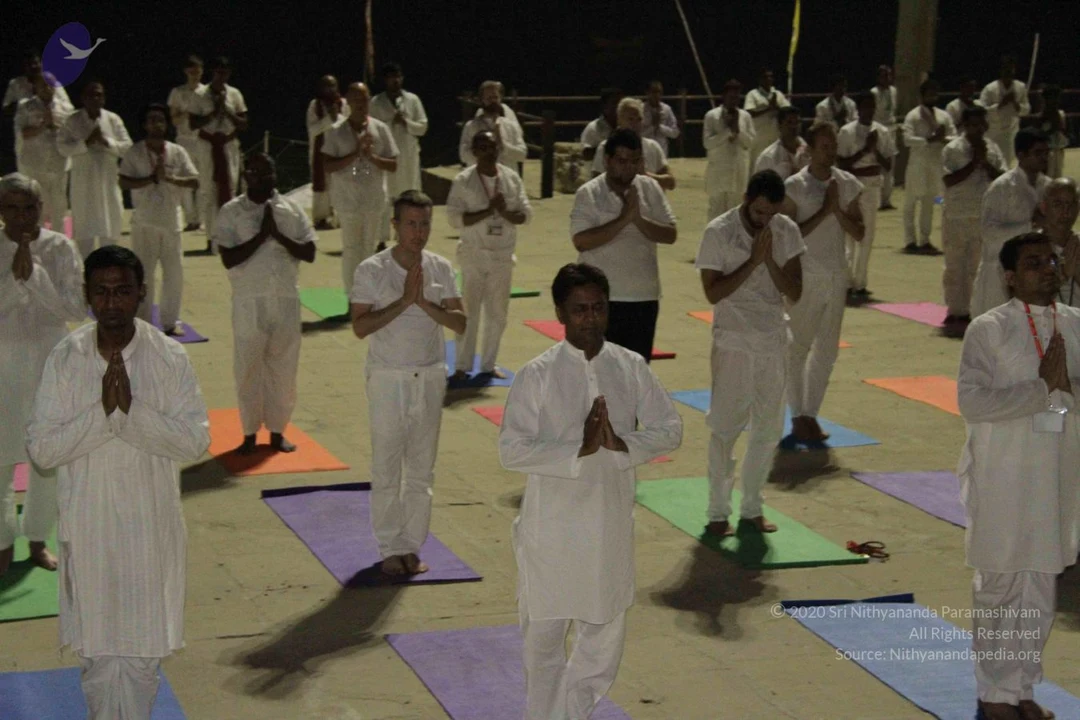
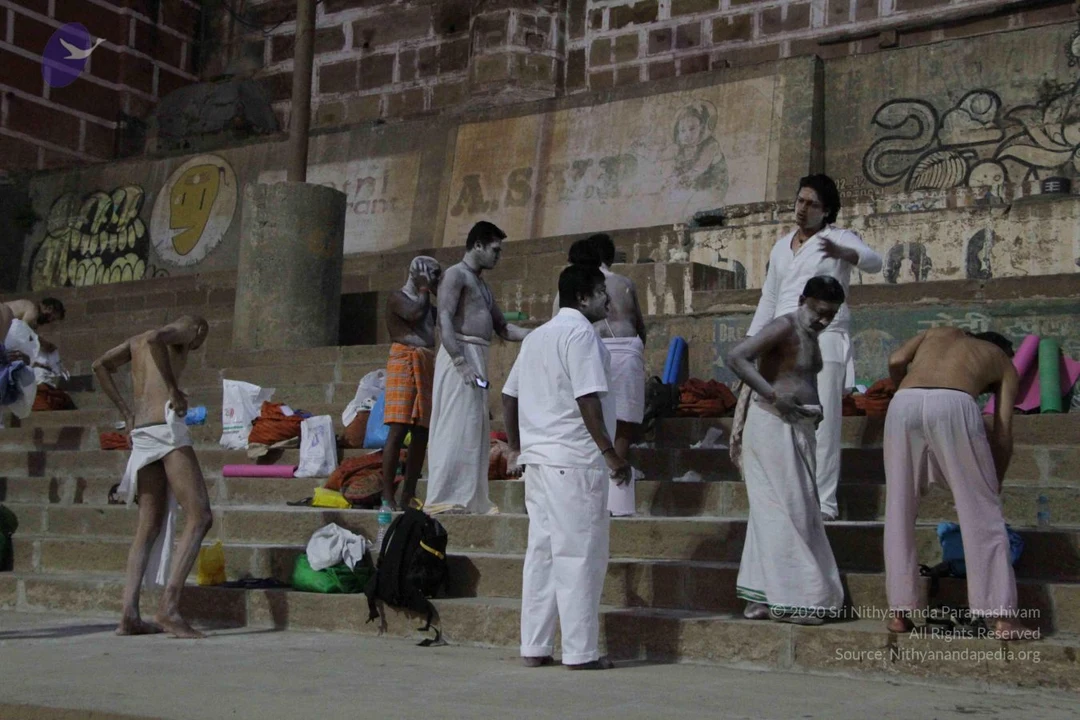
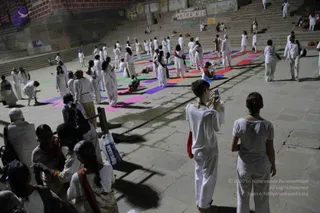
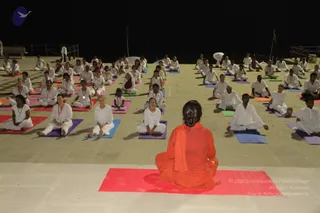
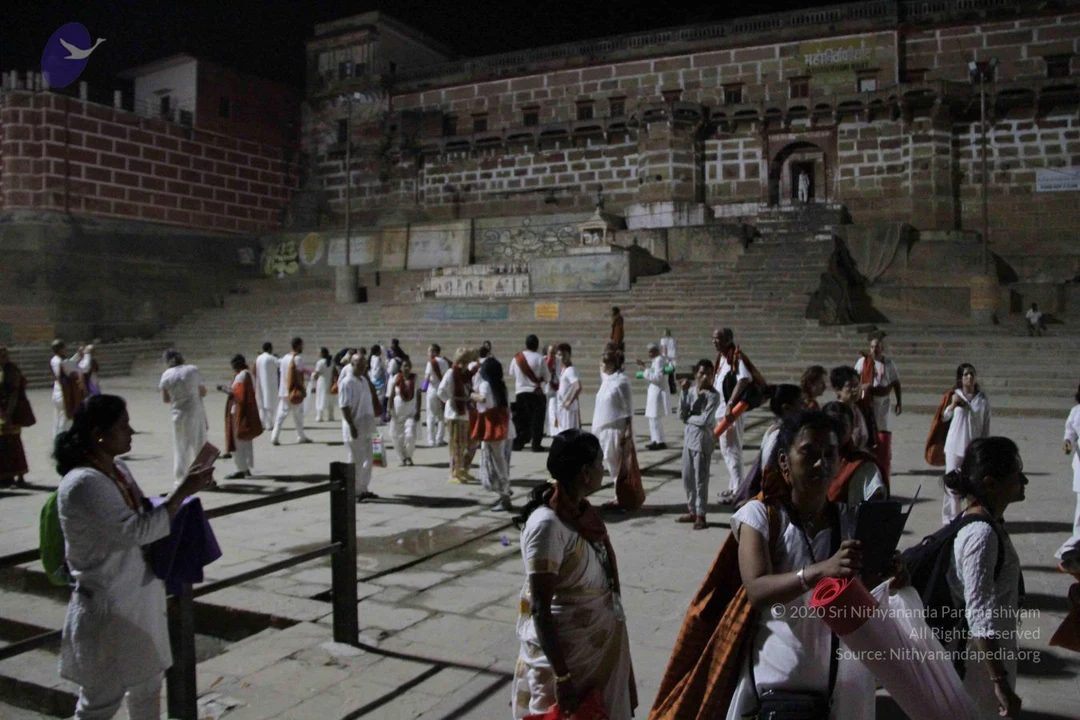
Night photograph of a large group of devotees gathered on wide stone steps and a paved courtyard in front of a massive red sandstone ghat building. Many people wear white kurtas, saris and dhotis, with orange or saffron shawls and sashes draped over shoulders; some carry notebooks, bags and pink-wrapped items. A few women in white saris and salwar move among the crowd, while one woman in the foreground holds a notebook and wears an orange shawl. Small lamps and scattered lights illuminate the scene. Faded painted murals and a sign with white lettering decorate the lower walls, and a standing figure is visible in the doorway at the top of the steps.Night photograph of a stone riverside ghat in Varanasi, with weathered red-brick and sandstone buildings, a lit arched doorway at top, and a large flat stone courtyard in front. In the foreground, several women in white saris stand with their backs to the camera, and a young person in white trousers and a white shirt holds up a phone to take a picture. Many people in white clothing sit, stand and move along the wide stone steps, some on colourful mats near the lower steps. Faint painted murals and small posters line the wall at left, and a faint translucent logo appears in the upper corner.Night photo of a riverside ghat in Varanasi with stone steps and old red brick buildings behind. Many people in plain white clothes stand and sit on a stone plaza, and rows of colourful yoga mats in pink, purple, green and orange are laid out. A woman in white in the foreground holds a phone up to film, another woman in white with glasses stands at right, and older women in white saris sit at left. Some participants lie or kneel on mats while others stand in rows.Night scene at a stone ghat with wide steps in Varanasi. Many people in plain white clothes stand and kneel on rows of pink, purple, orange and green mats laid across the stone terrace. In the foreground, a young man in white with a phone raised takes a photo, and a woman in a white top stands with her back to the camera. Seated devotees in white and a few in saffron-red sarees watch from the left, and a bag printed with blue text sits near them. Figures are scattered on the steps behind, with an illuminated red building and a purple circular logo at the top left.A large outdoor satsang at night on a stone riverside platform, with many participants in white clothes seated cross-legged on colourful yoga mats in rows. In the foreground, a figure with hair in a bun wears a saffron-orange shawl and robe and sits facing the crowd on a red mat, back to the camera. Many attendees wear orange or red garlands. Wooden railings and flagpoles stand at the edges under a dark sky.A night photograph of a small weathered open shrine on a stone platform beside a riverside wall in Varanasi. The shrine has a pointed stone canopy top and four pillars, painted with faded orange and white, with a low orange-and-white railing in front. Behind it stands a brick structure, and a street lamp glows at left. On the right wall, a painted Om symbol and a decorative lotus-and-trident motif are visible. No people are present.
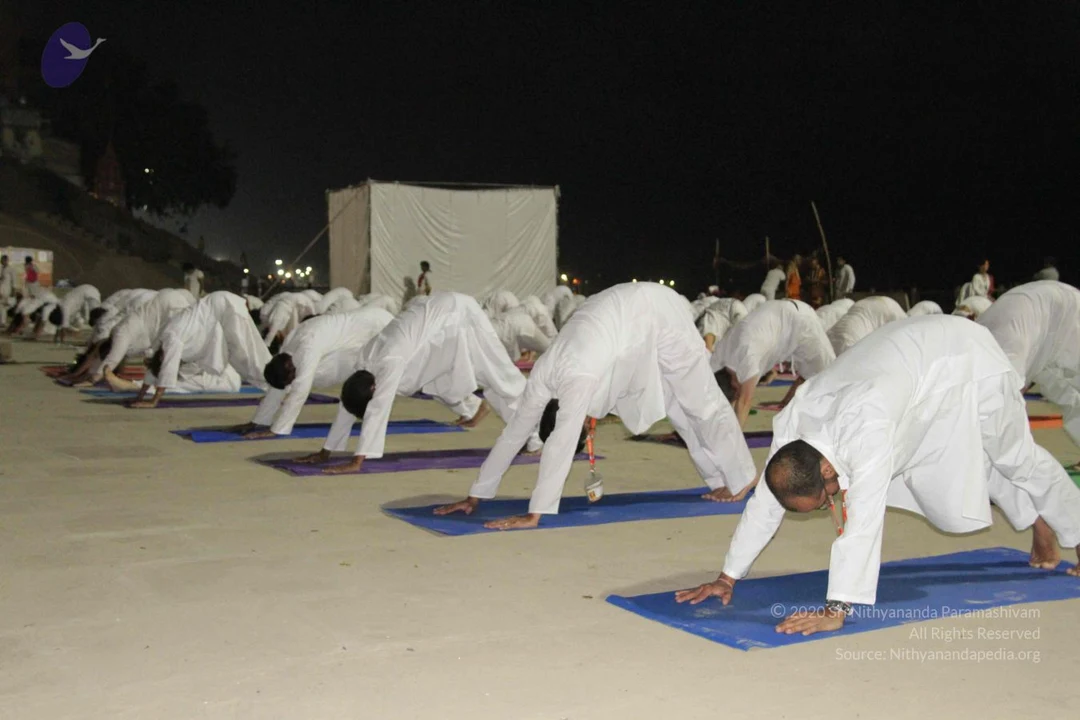
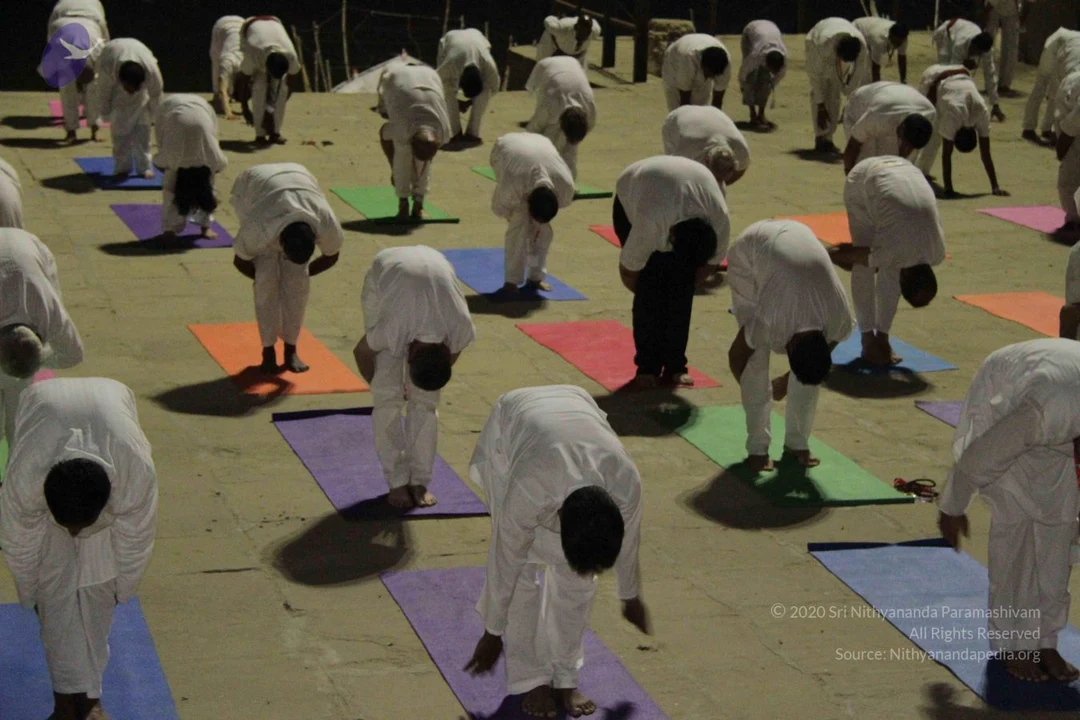
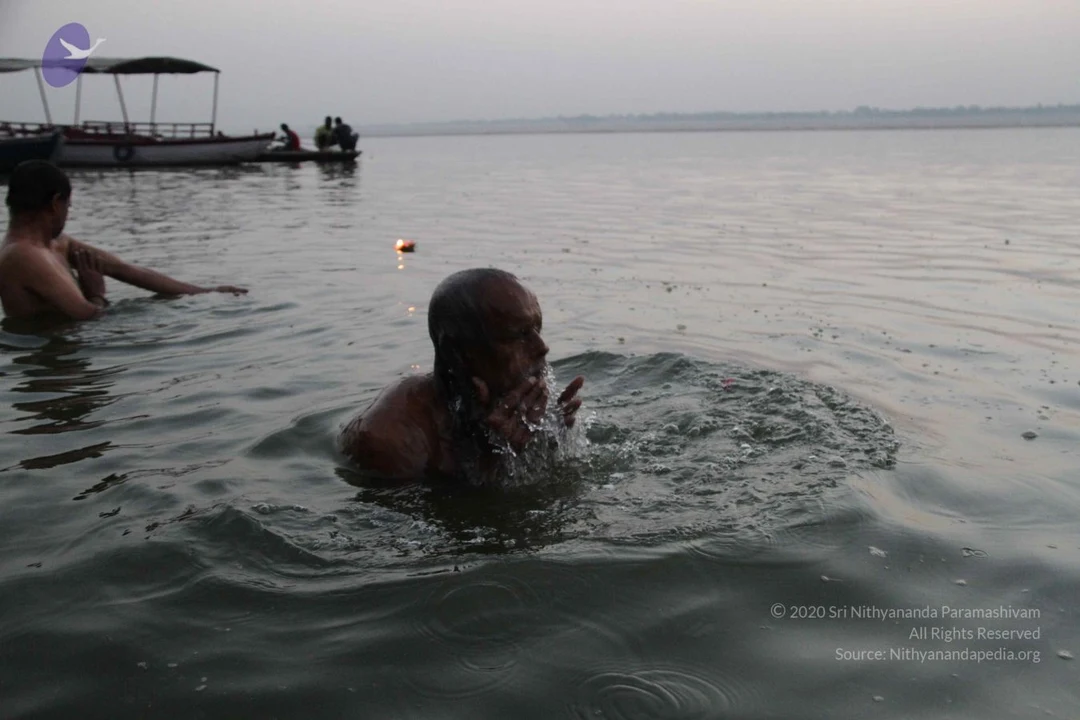
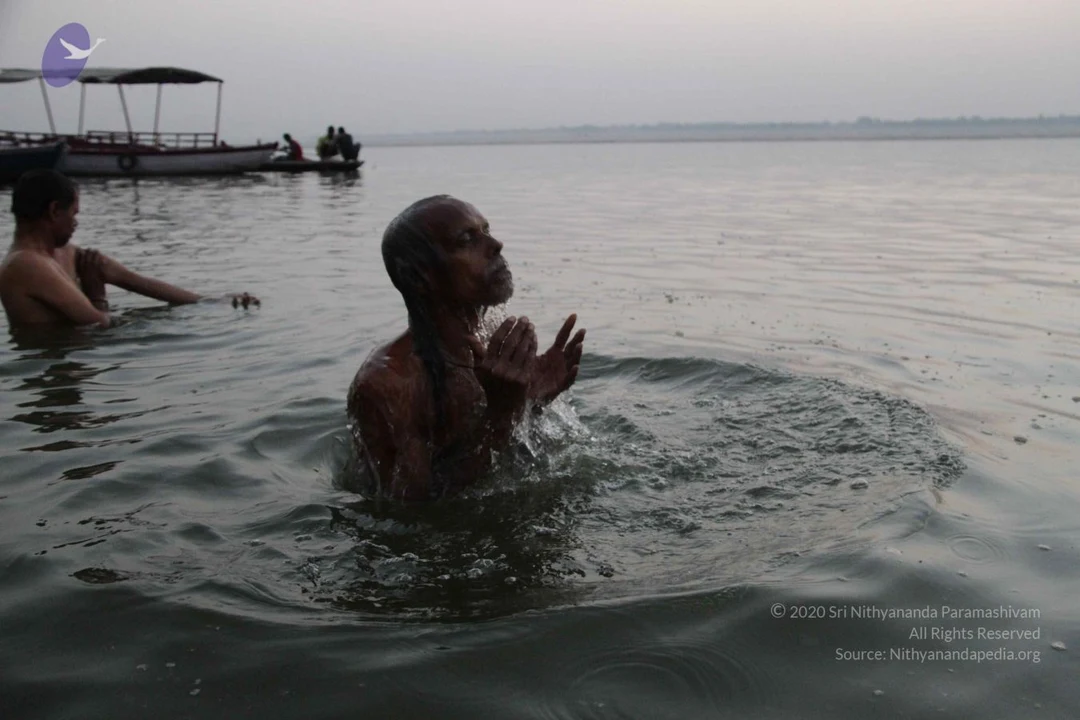
solo 5-narendragirimahraj's visit
70 photosSource gallery
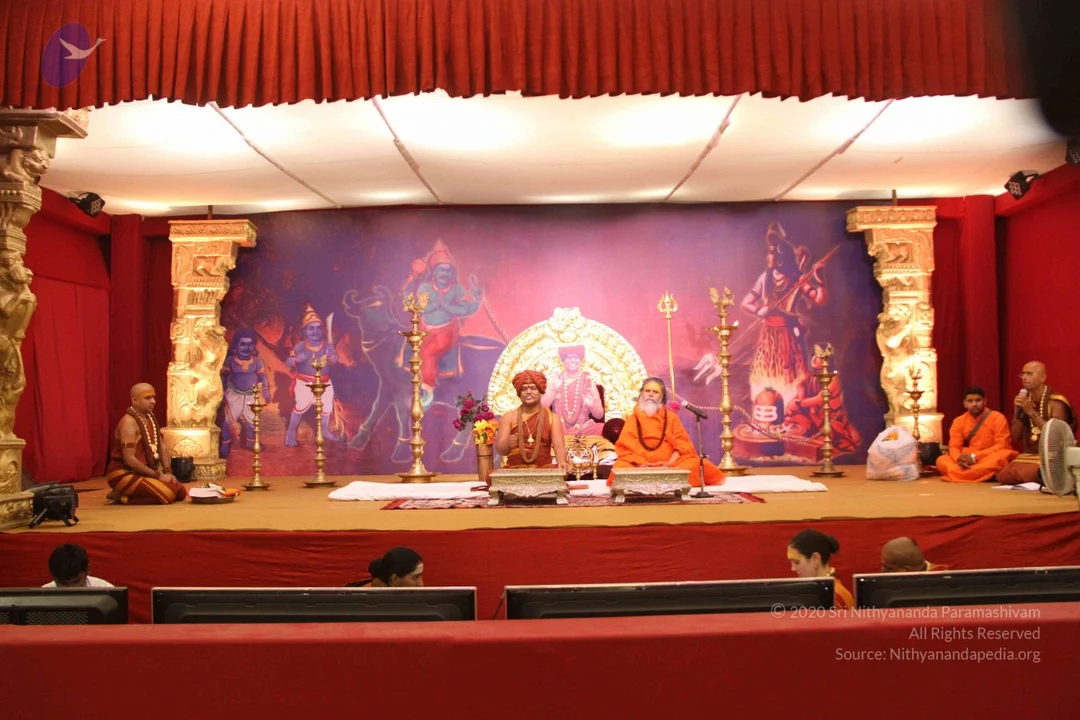
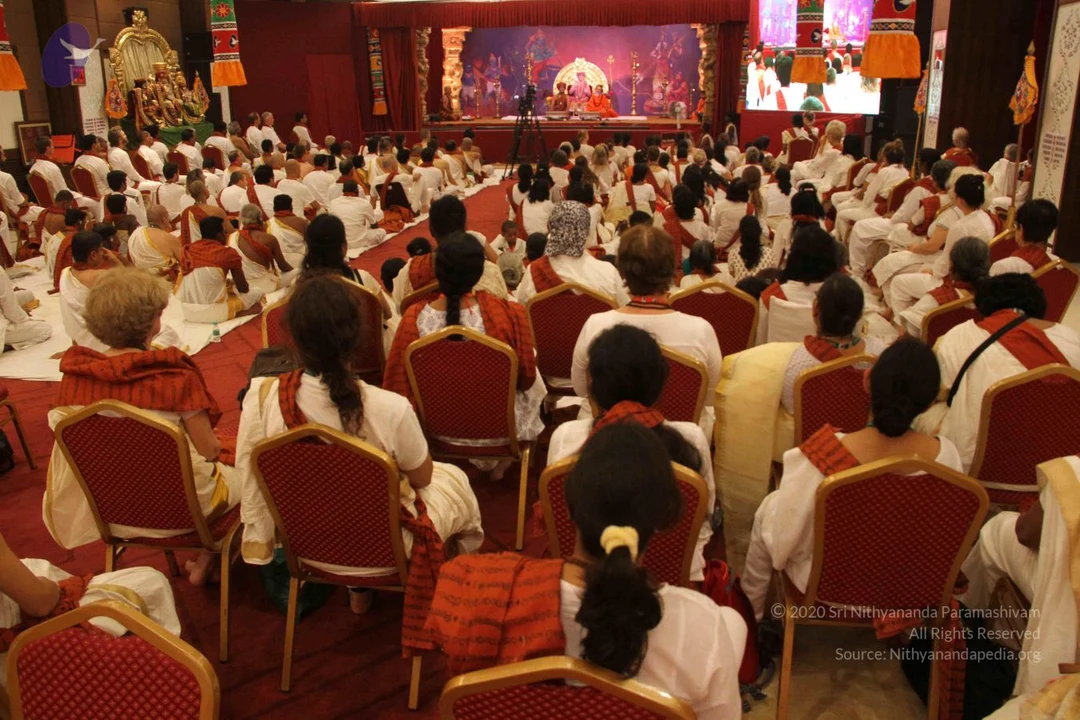
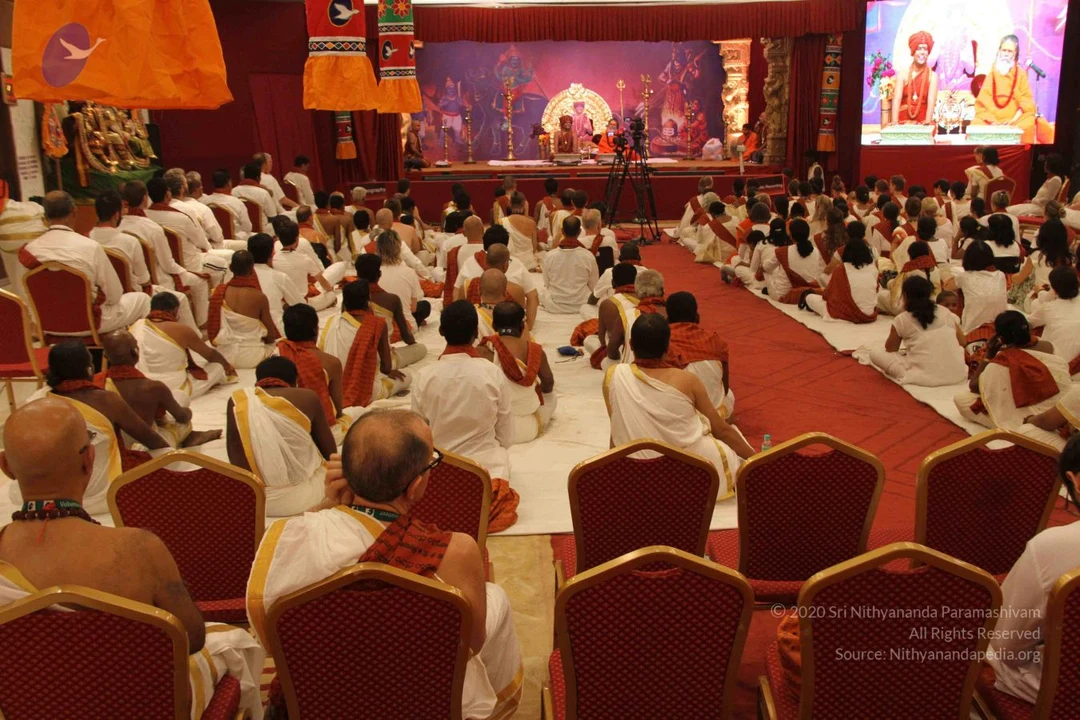
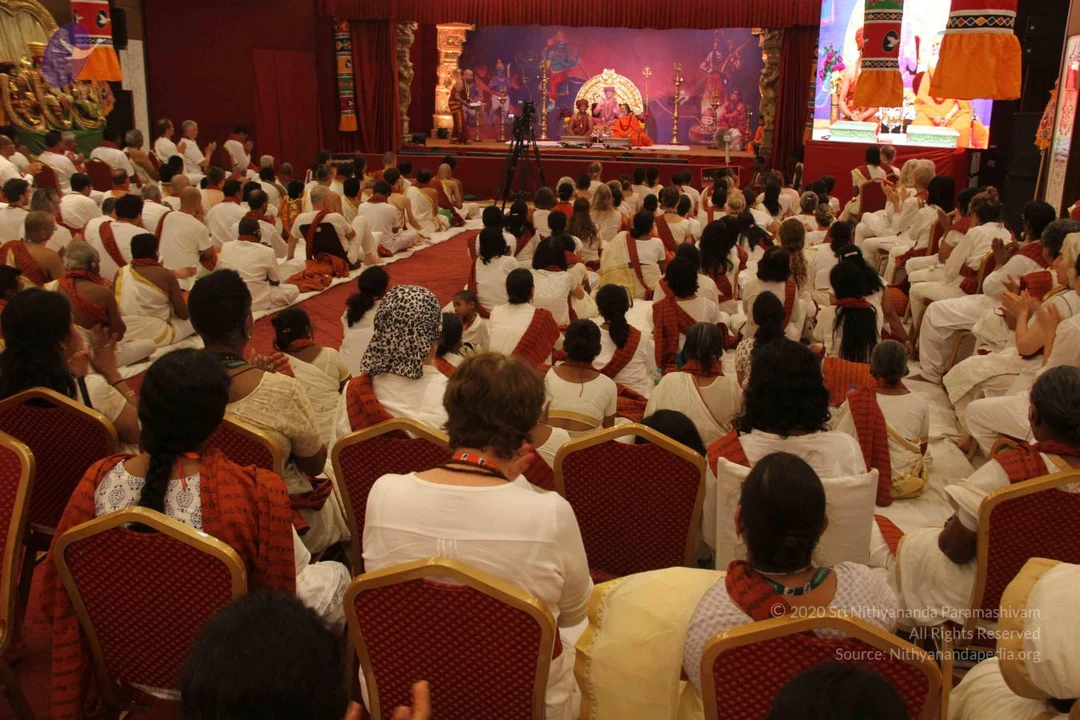
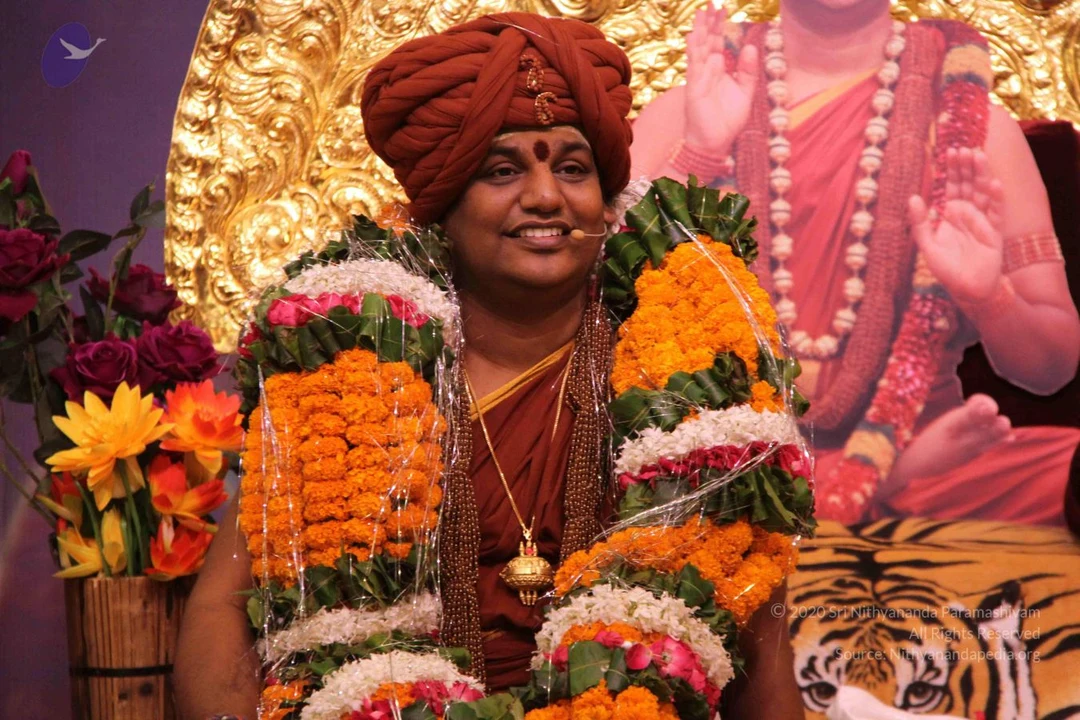
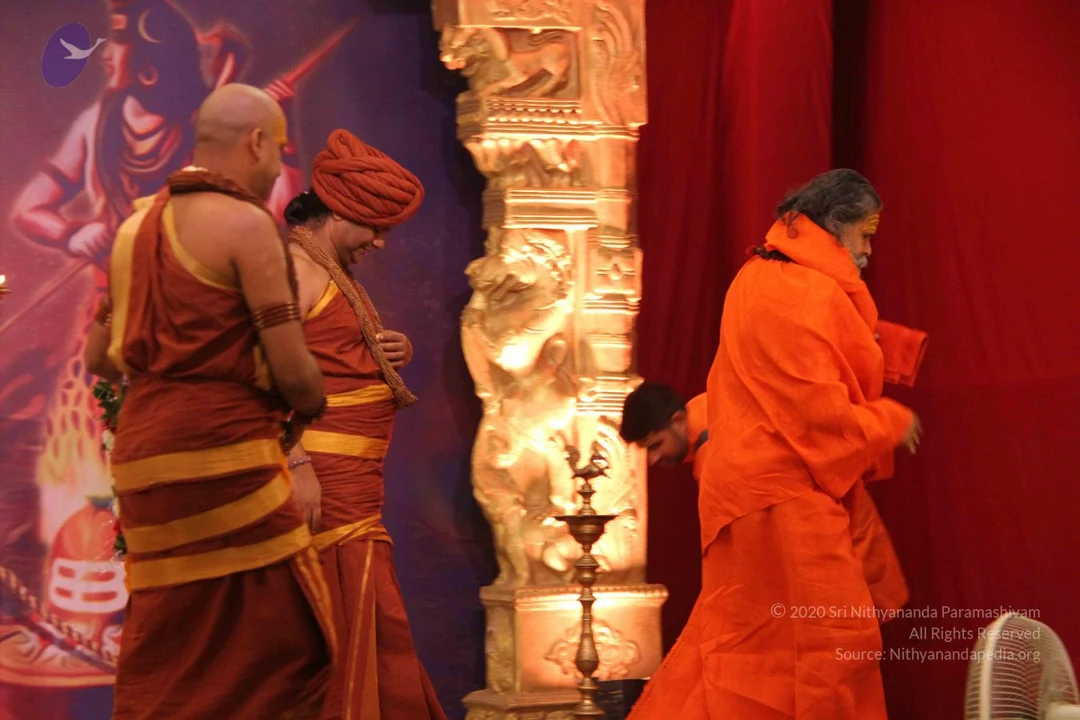
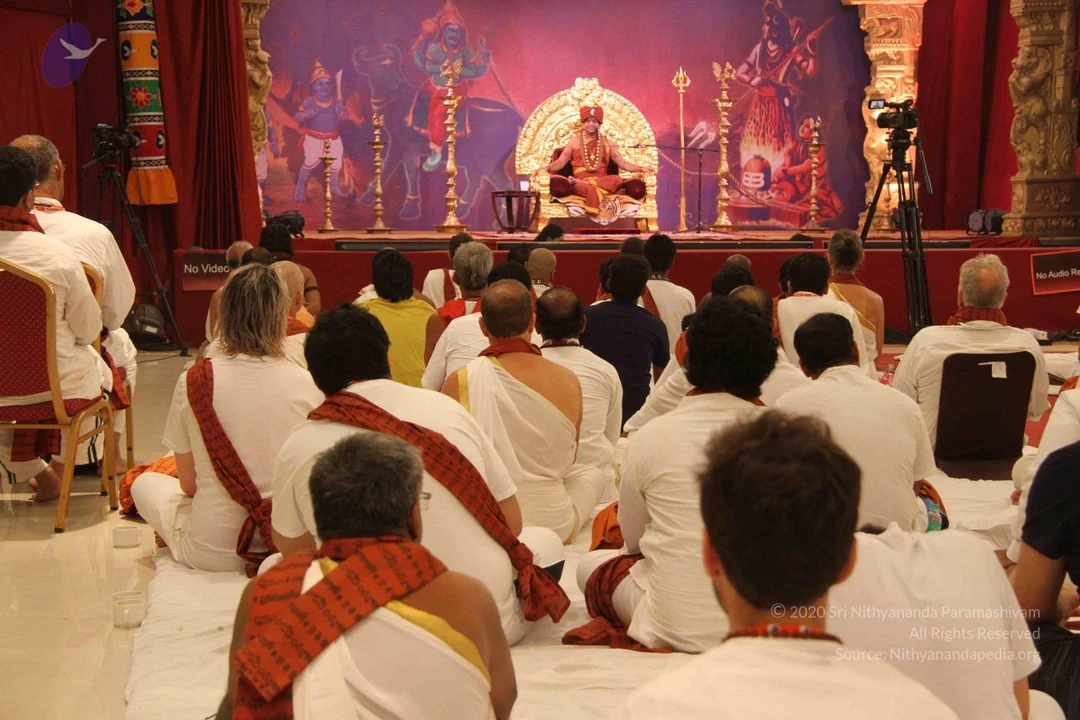
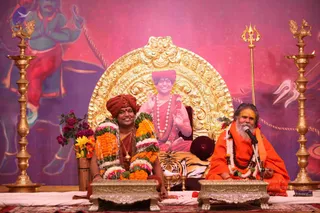
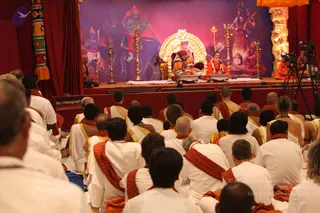
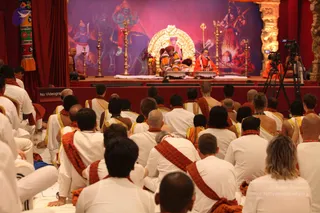
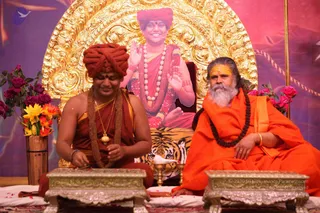
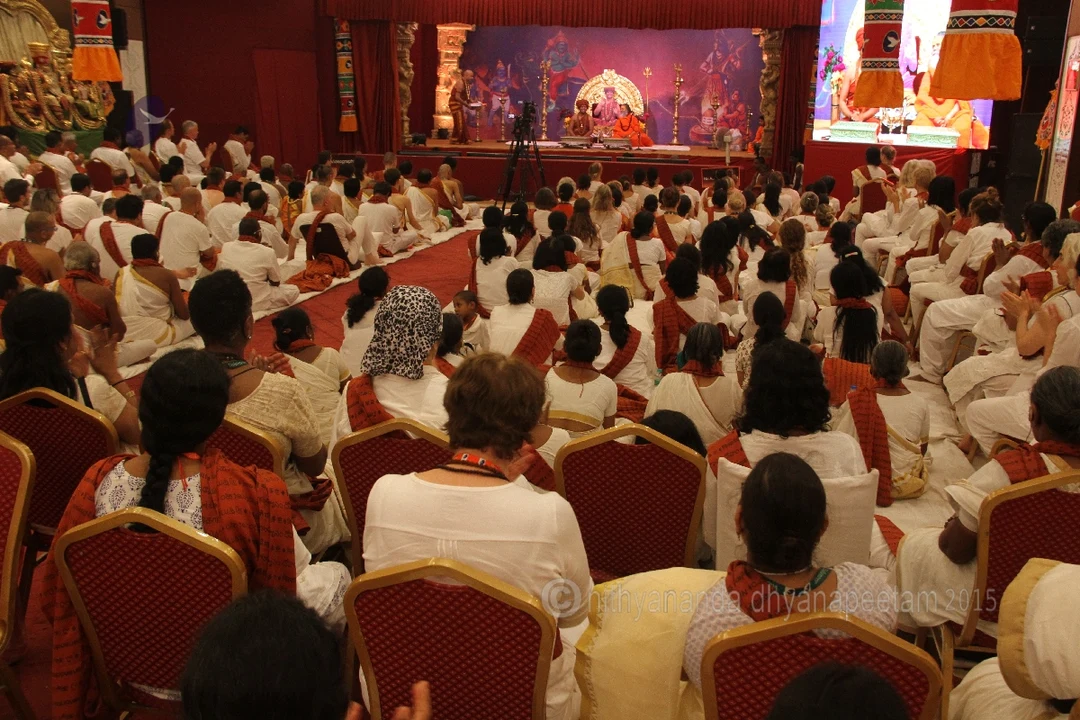
Photo of a satsang stage with a golden throne backdrop displaying a large portrait of a smiling figure in a red turban, rudraksha mala and pink-red garments, hands raised in blessing, with a tiger-skin seat cushion below. Two seated men sit on low gilded stools before a microphone: on the left, a man in a red-maroon turban and dark red robe with a mala, holding marigold garlands; on the right, an older bearded man with grey hair and orange-saffron robes, orange sash and white flower garland, speaking into the mic. Brass oil lamps stand at each side, a gold trident is behind, and a pink painted backdrop of mythic figures surrounds them. A vase of flowers is on the left.Two seated figures sit on a red carpet before a golden arched backdrop in a satsang setting. On the left, a smiling person in a rust-red turban and reddish-brown clothing wears a gold pendant and is draped in thick garlands of orange marigolds and pink flowers. On the right, a bearded sannyasi in an orange robe, white flower garland and dark rudraksha mala holds his hands together and speaks into a microphone, with an orange tilak on his forehead. Between them are two ornate silver-gilt low stands. Behind them, a large portrait shows a smiling figure in a red turban and rudraksha beads, hands raised in blessing, seated before a tiger-skin cushion, with a red kalasha-style cushion beside it. A purple backdrop and floral arrangement complete the stage.A satsang hall with a large audience of devotees seated on the floor, mostly in white clothes with orange-red shawls, viewed from behind. On a raised stage before a painted backdrop of mythological scenes, a seated speaker in orange robes and a red turban sits beside a golden arched halo and a deity murti, with brass oil lamps, a kalasha-like offering and floral decorations. A second seated figure in orange sits nearby. A video camera on a tripod and a 'No Videography' sign are visible at the side. The scene appears to be a discourse or satsang.Photograph of a satsang in a temple-style hall with a large painted backdrop of Hindu deities and mythic scenes in red and purple tones. On a raised stage, a seated figure wearing an orange-red shawl and a red turban sits on a throne-like seat beside a golden arch, and a second seated figure in orange robes is nearby; the seat is garlanded and flanked by brass oil lamps and a trident. In the foreground, a large audience of mostly men in white ritual clothes with red and orange shawls sits on the floor facing the stage, and camera tripods stand at the side. A sign reads No Videography.Photograph of two seated men on a white-draped dais before a golden arched throne backdrop. The man on the left wears a rust-red turban, a rust-red robe, a long beaded necklace and a gold pendant, and gestures with his hands while smiling. The man on the right has a white beard, an orange turban-style cloth, orange robes, a dark rudraksha mala and a gold bangle, and sits with hands folded. Behind them a large printed portrait of a smiling woman in red robes and beaded garlands with raised hands sits on a tiger-print cushion. Pink roses and orange and yellow flowers stand in a vase at left, and a small oil lamp with petals lies on the floor between two gold-trimmed low tables.A photograph of two seated men on a stage before a large gilded arched backdrop. On the left, a man in a red-maroon turban and red-brown robe with a long gold chain and a bead garland sits cross-legged, smiling and handling an item near a brass tray. On the right, a bearded man with long grey hair, a yellow tilak on his forehead, and a dark rudraksha mala wears an orange saffron robe and a gold bangle. Behind them a large printed portrait shows a smiling figure in red robes with a flower garland and raised hands, seated on a tiger-skin cushion. Pink roses and a bouquet of yellow and orange flowers stand beside them, with oil lamps and brass tables in front.

solo 6-shivoham- Q andA

44 photosSource gallery
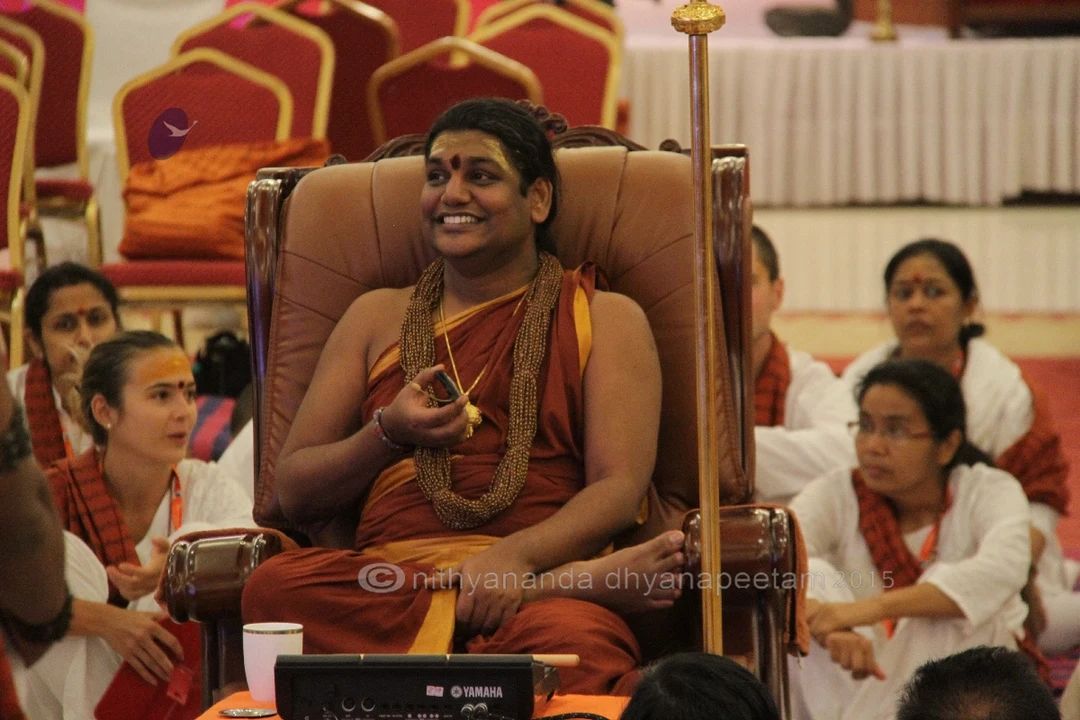
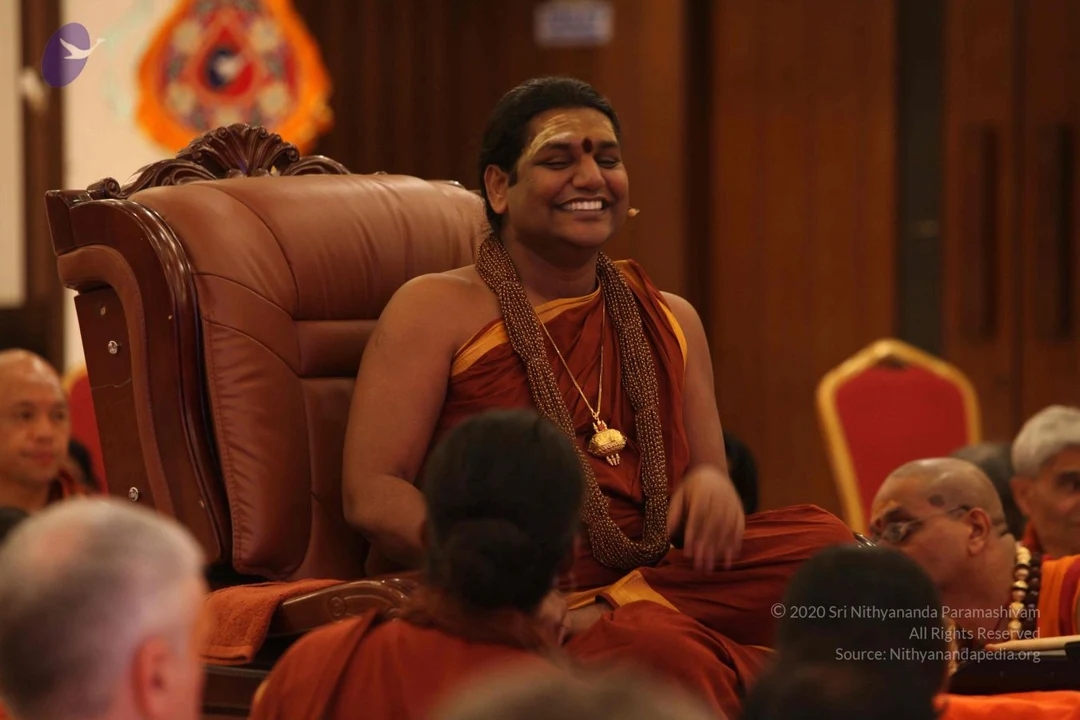
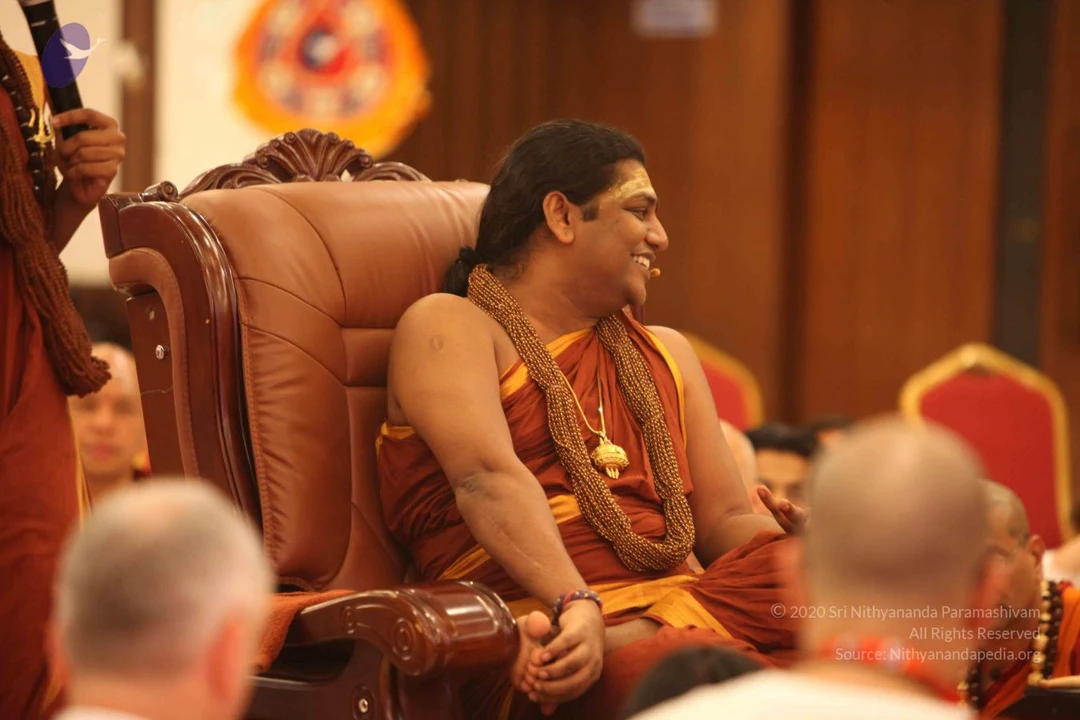
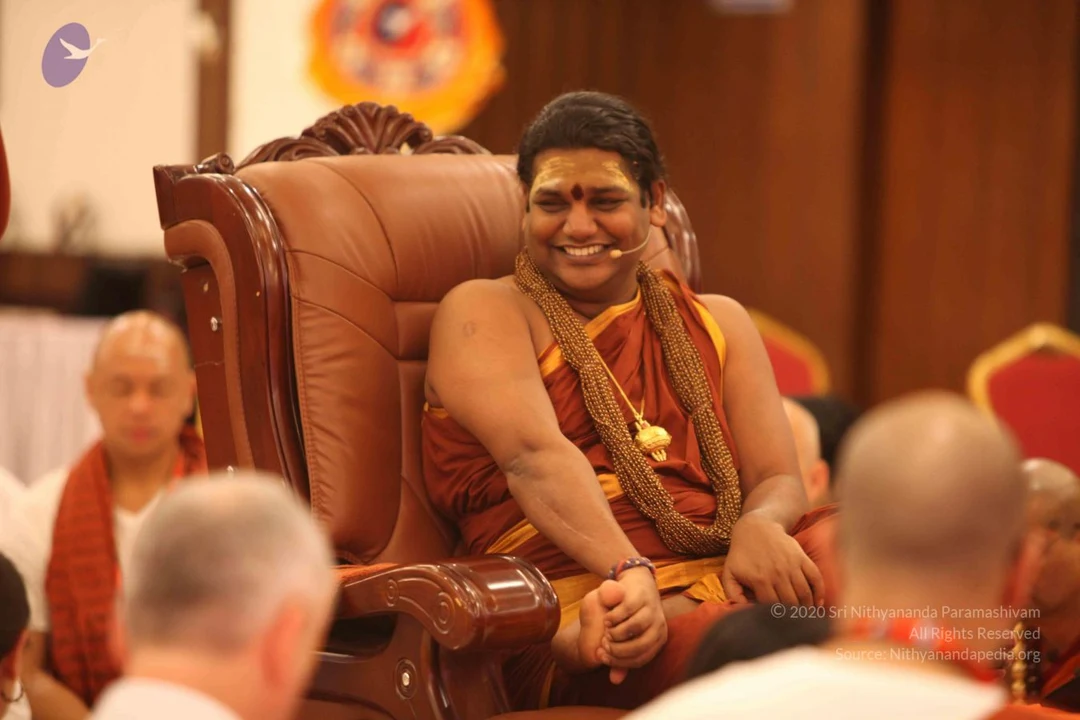
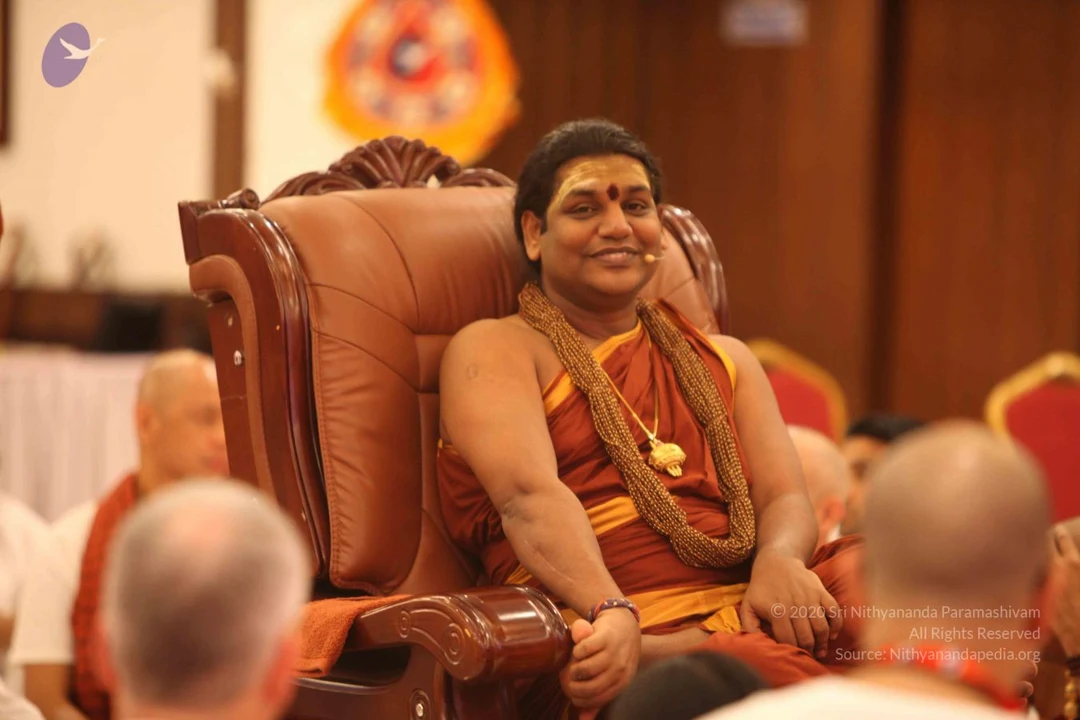
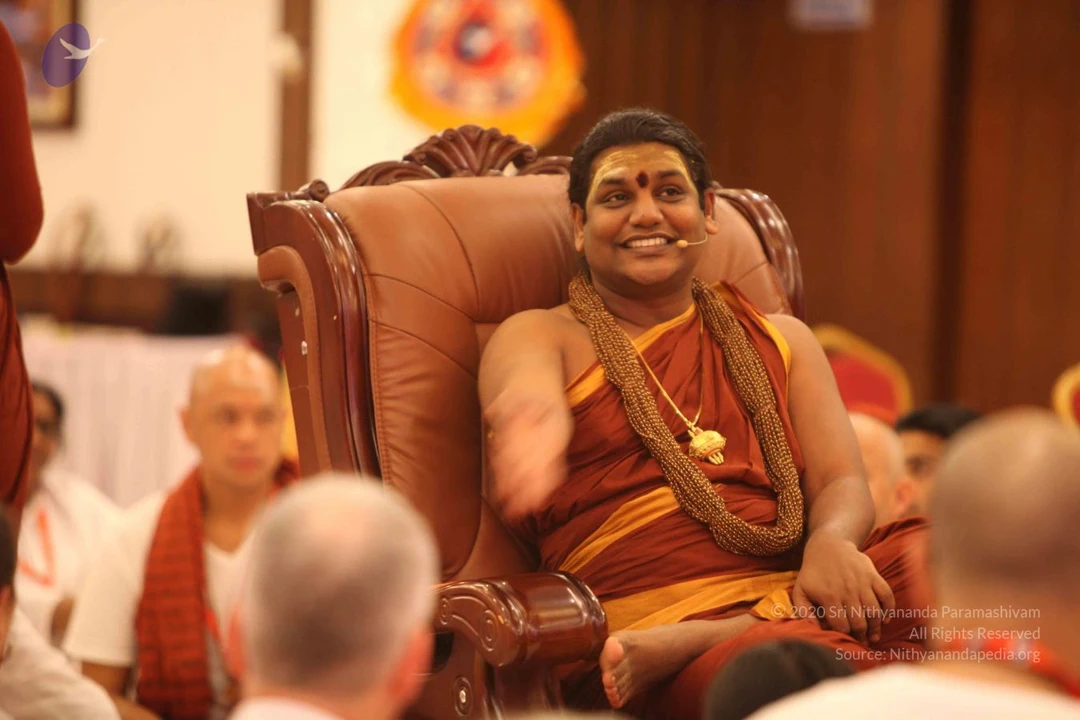
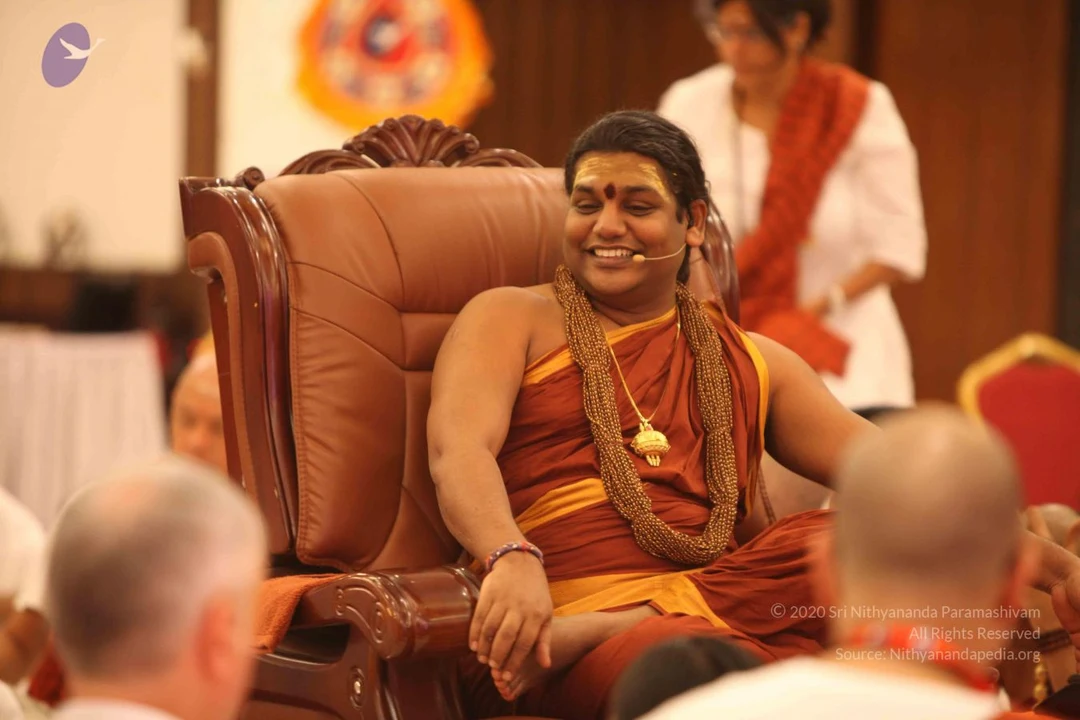
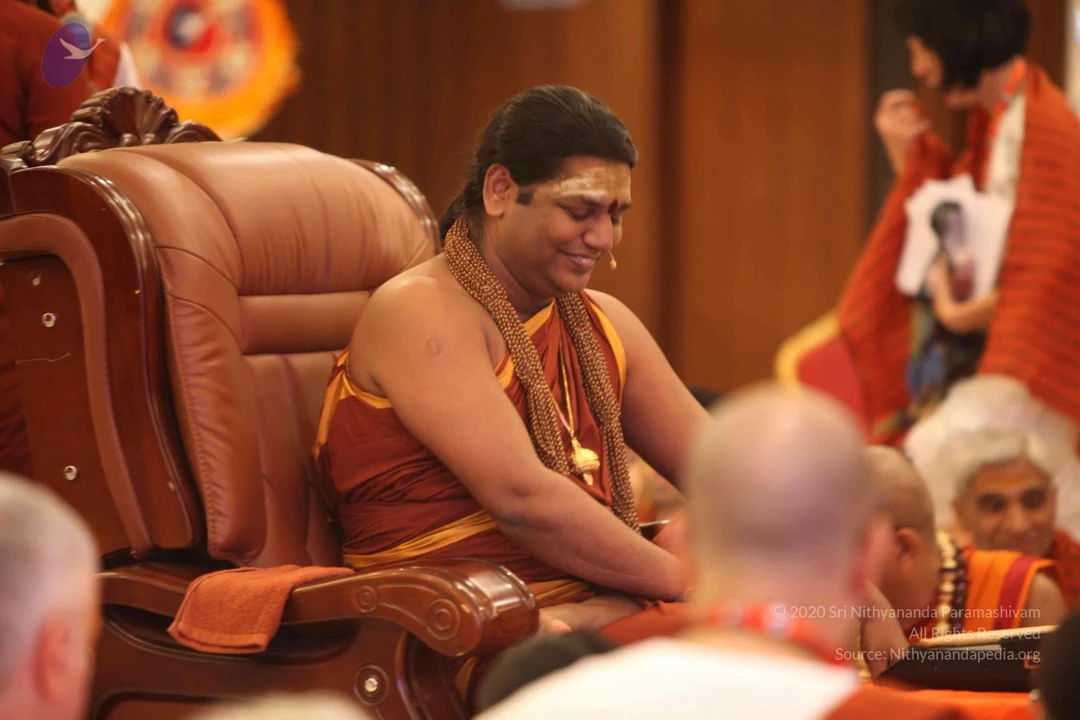
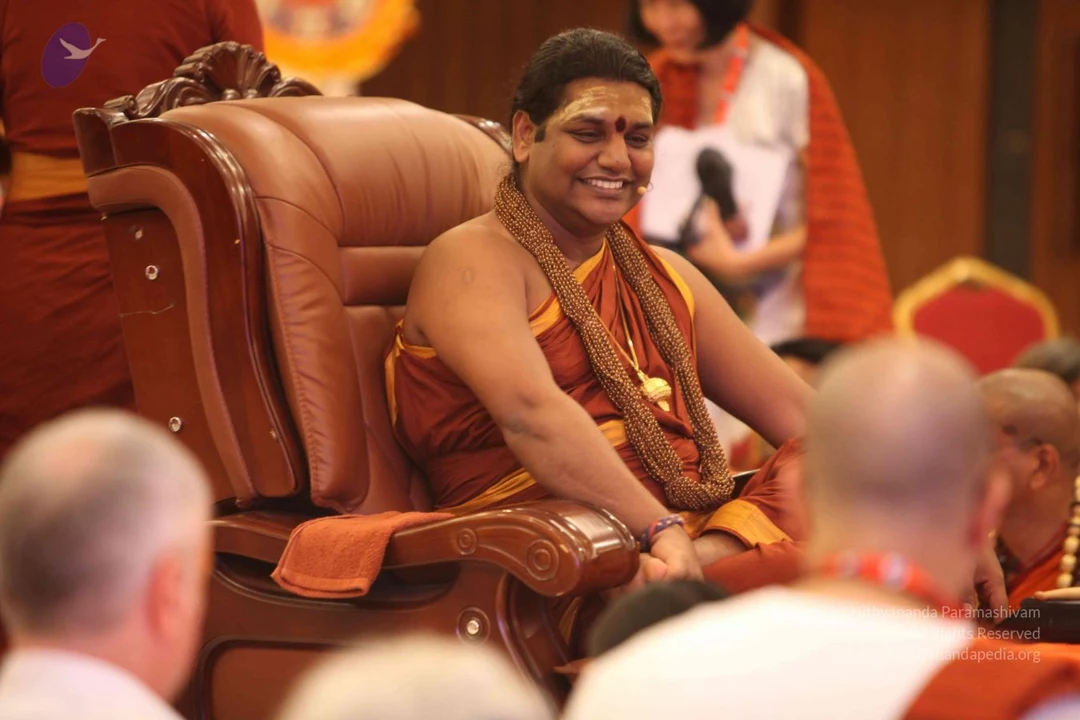
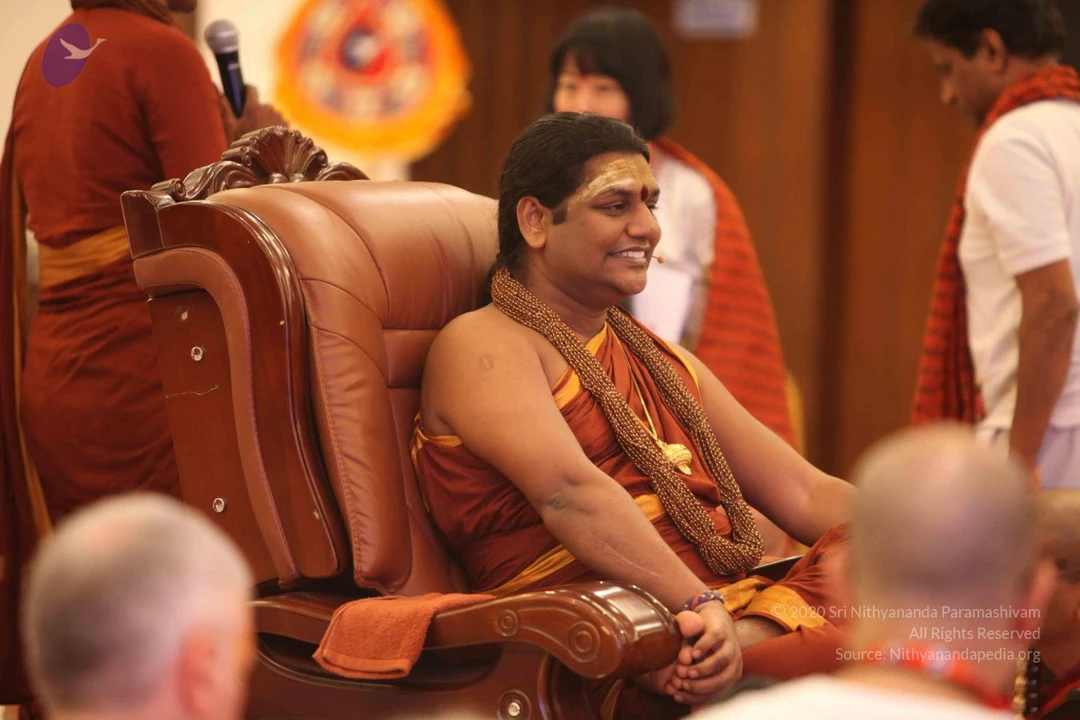
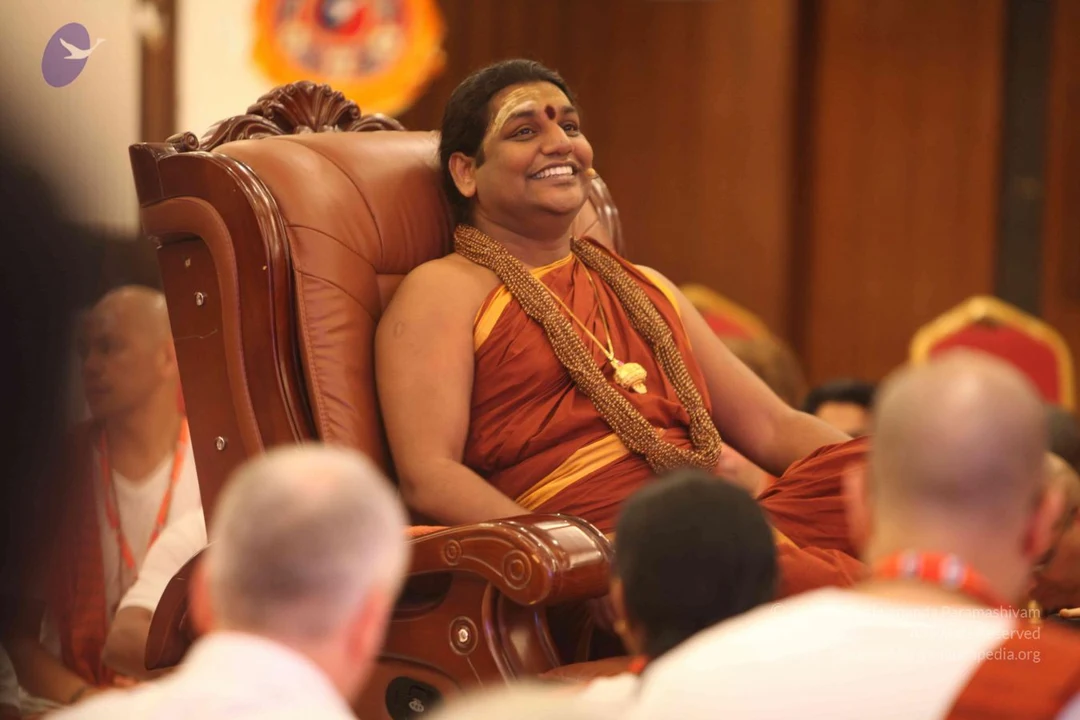
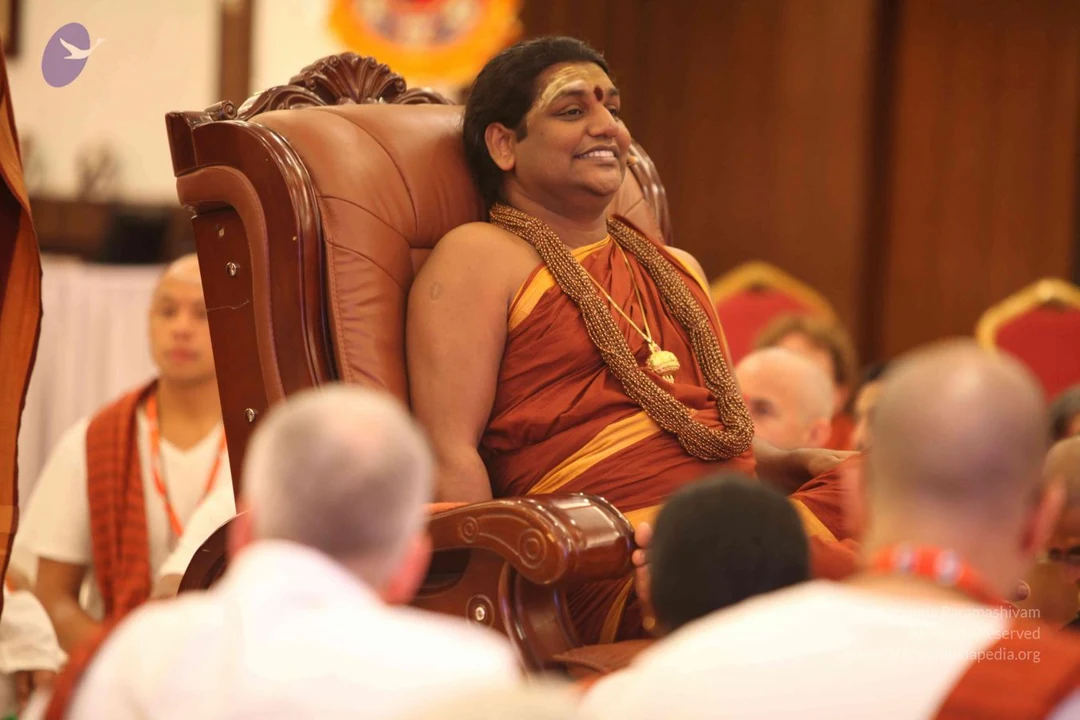
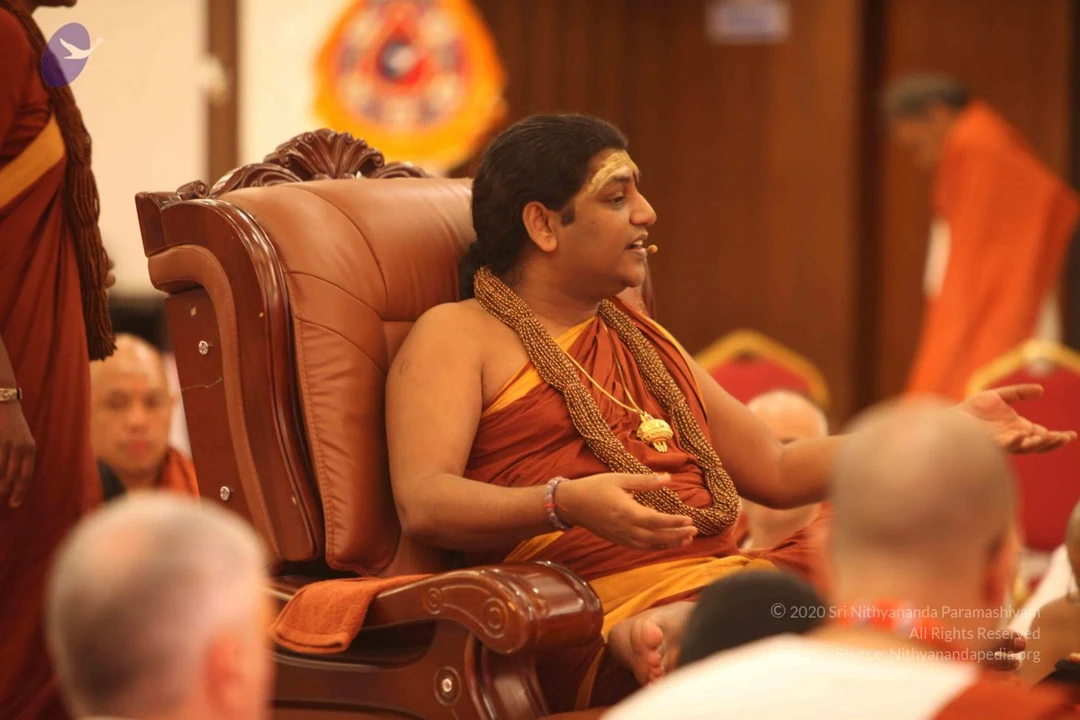
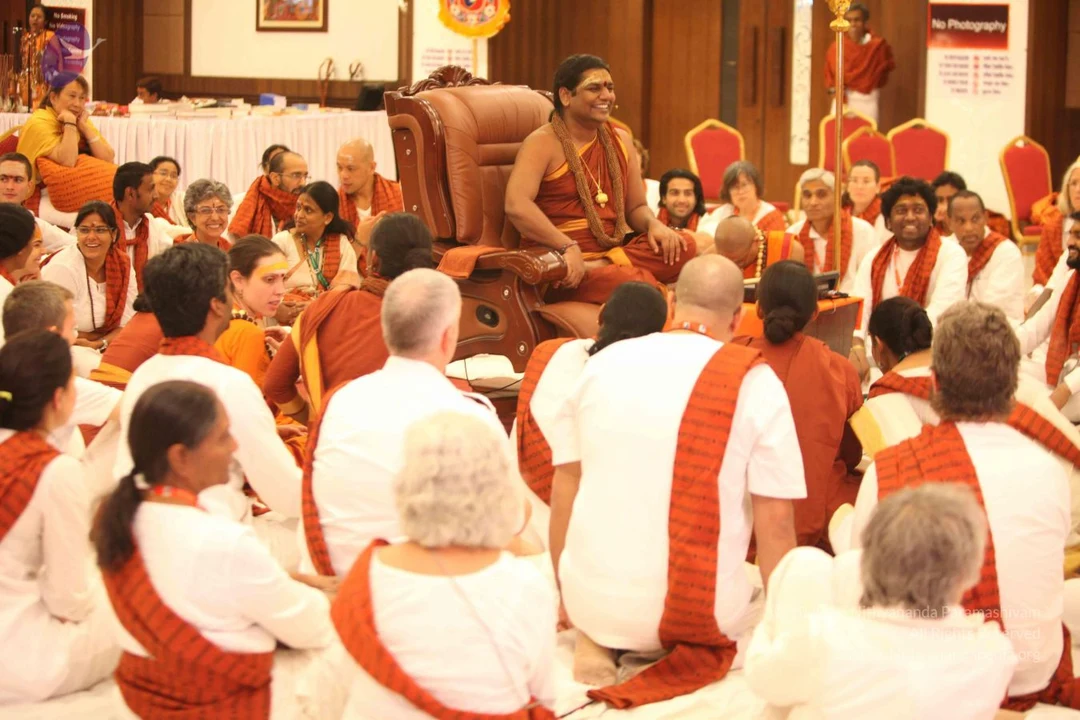
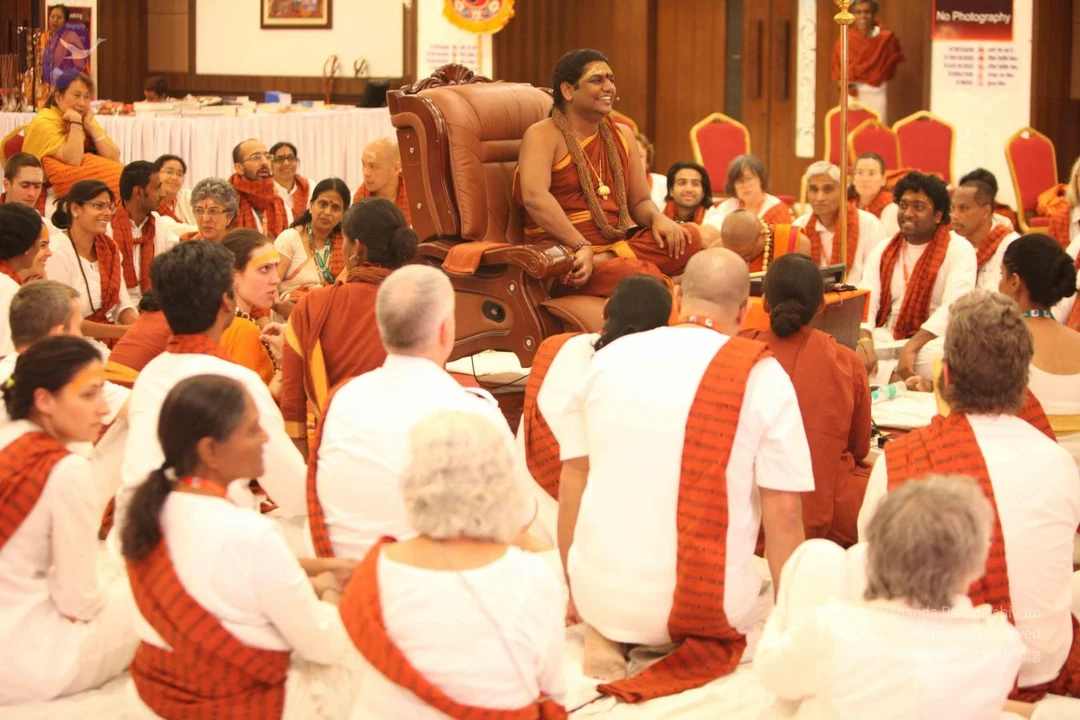
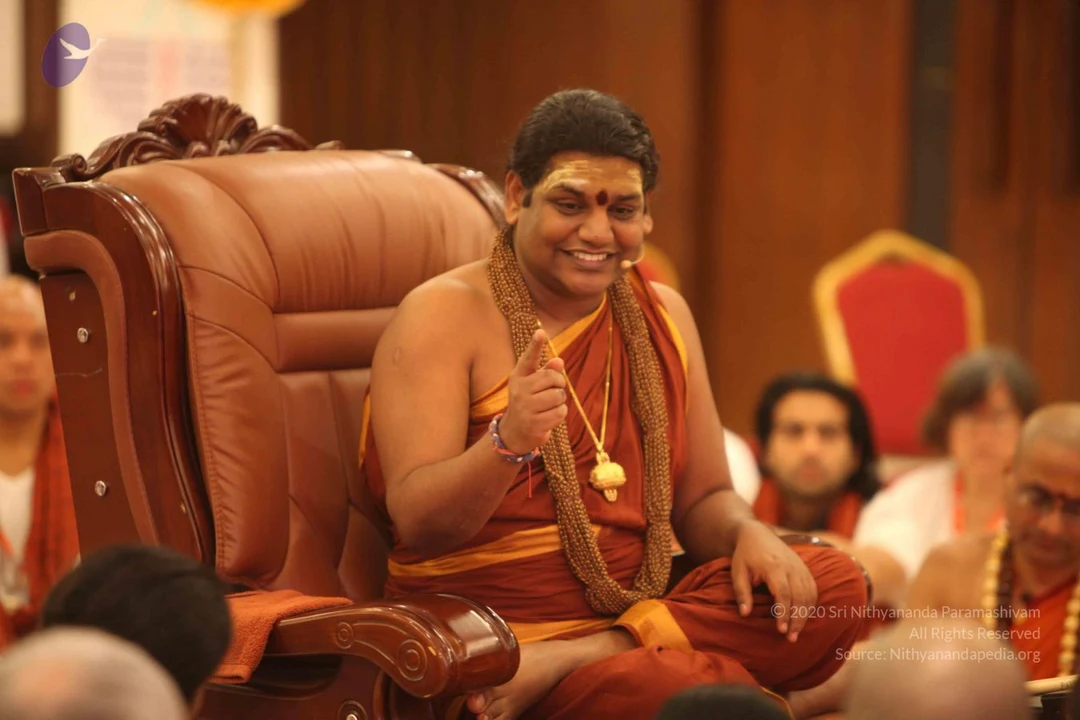
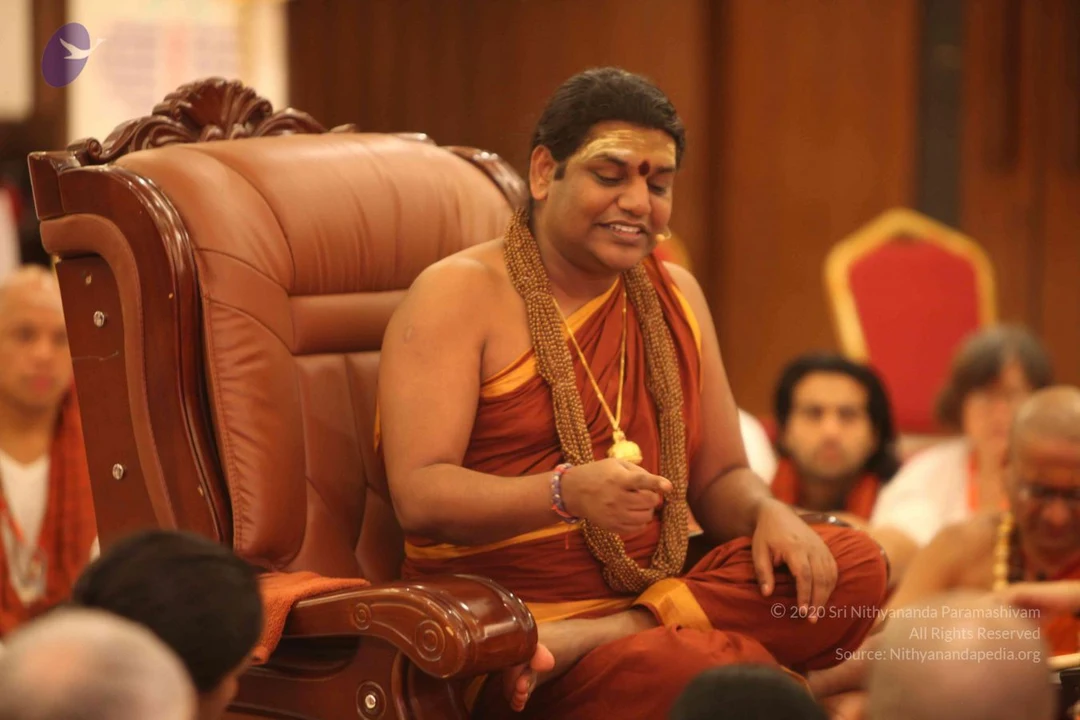
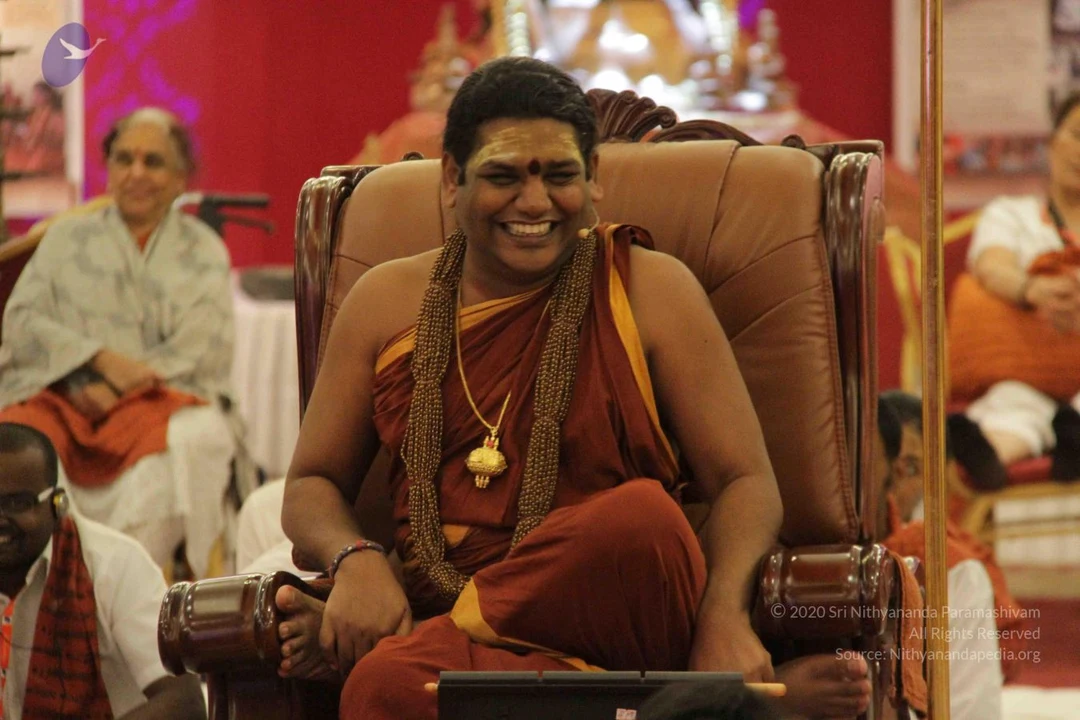
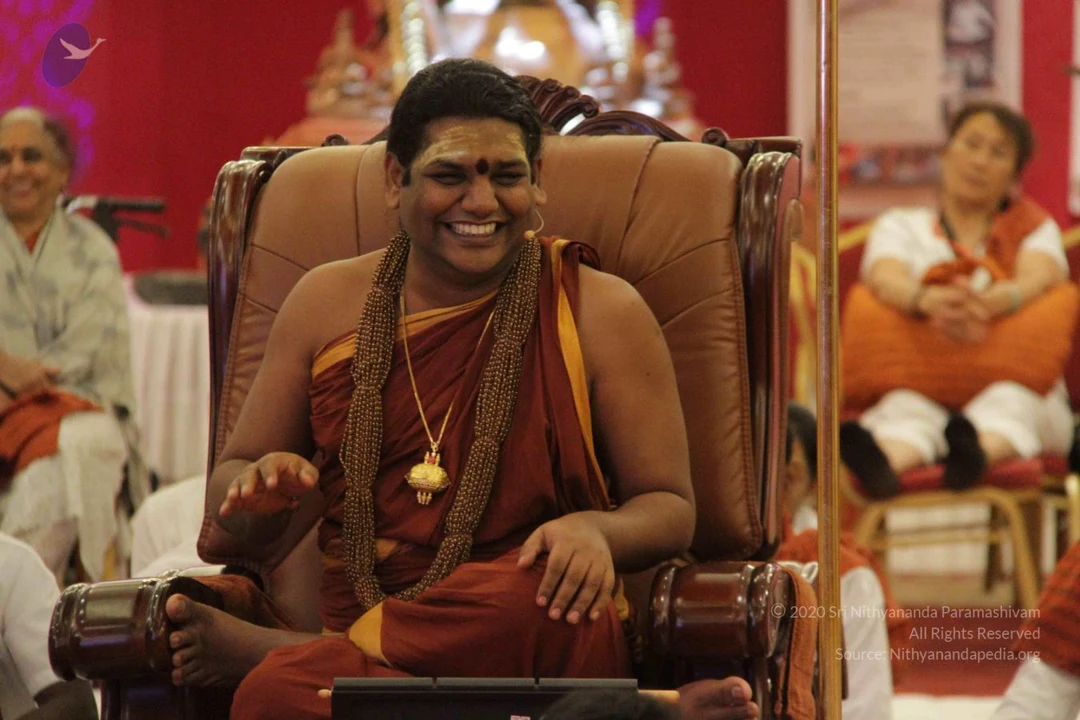
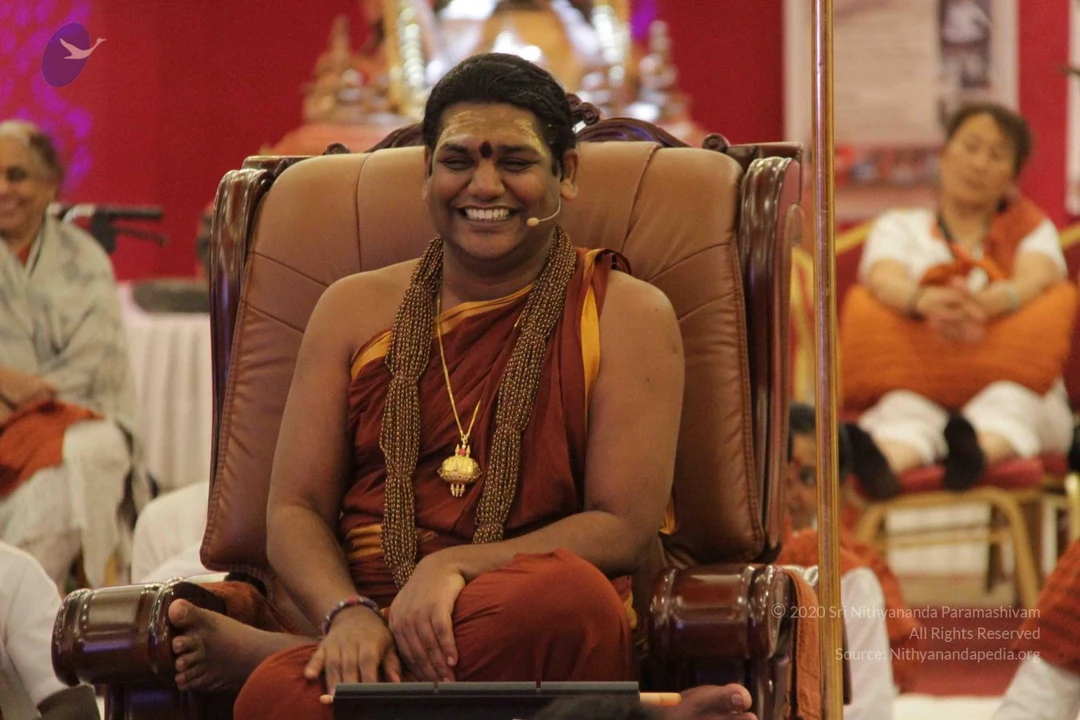
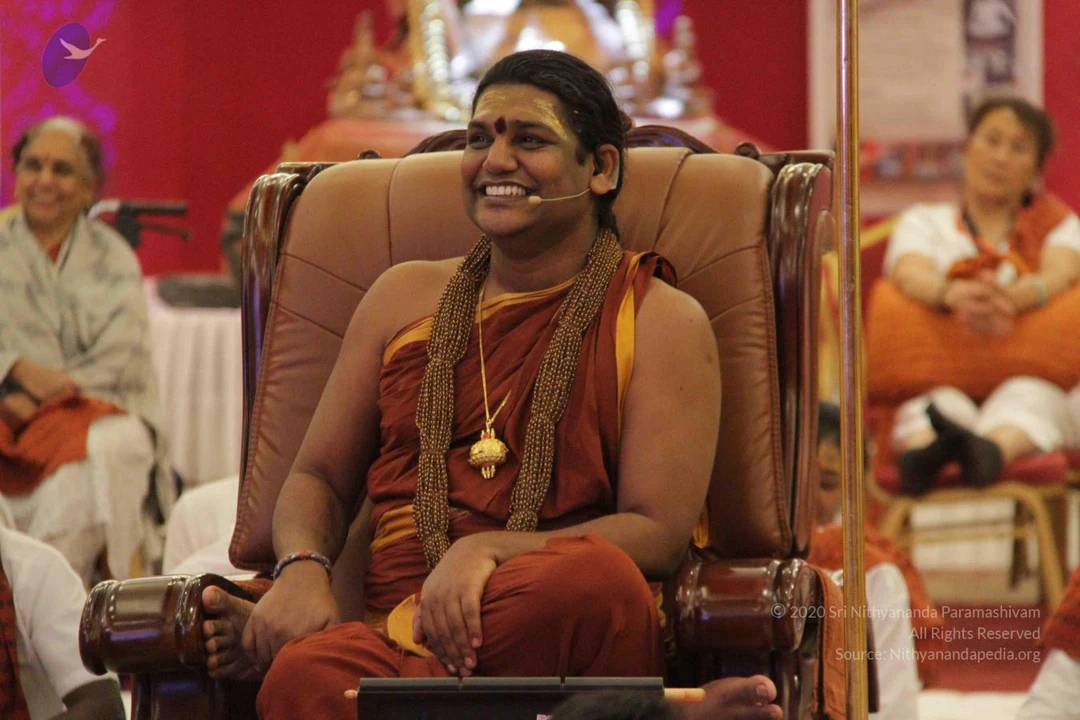
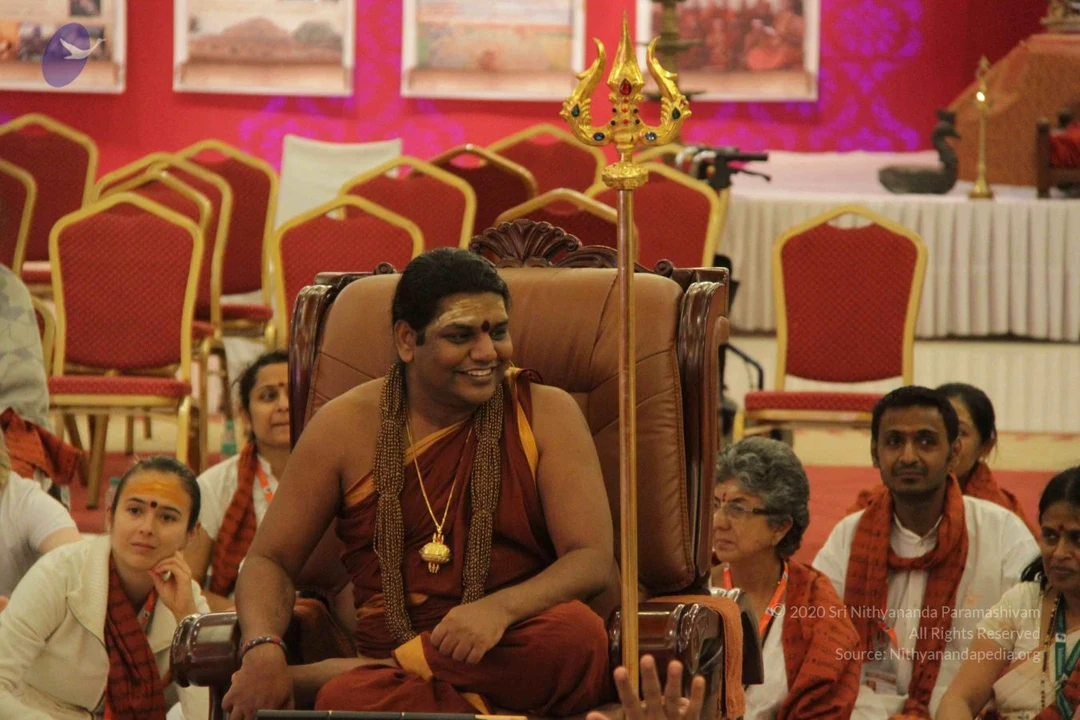
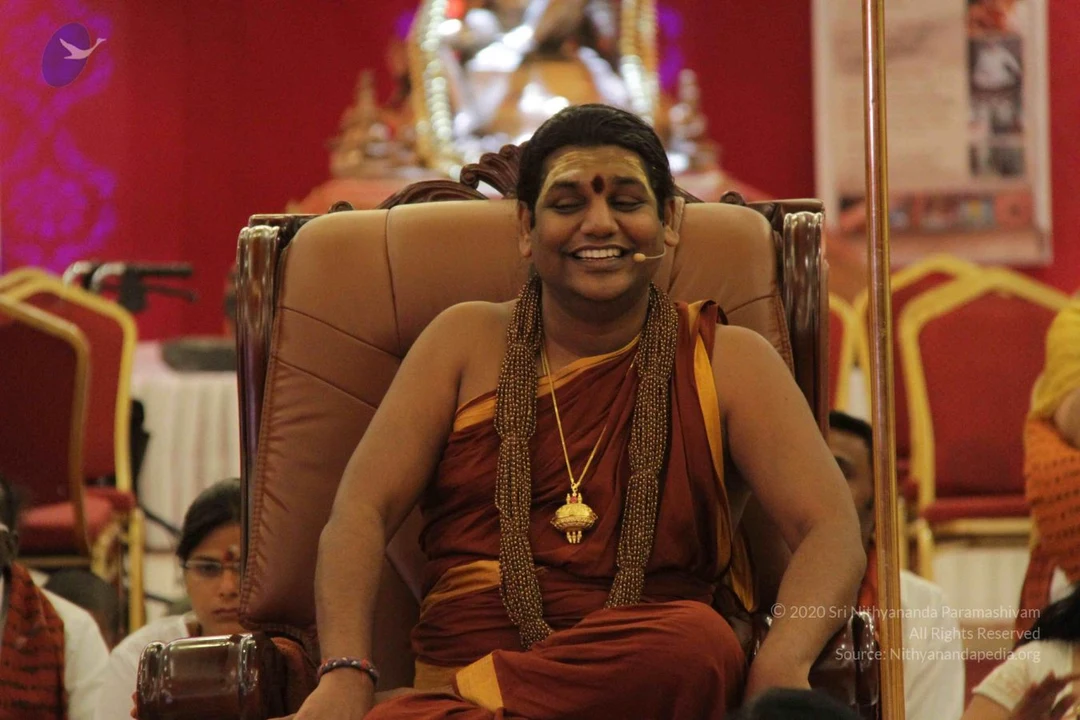
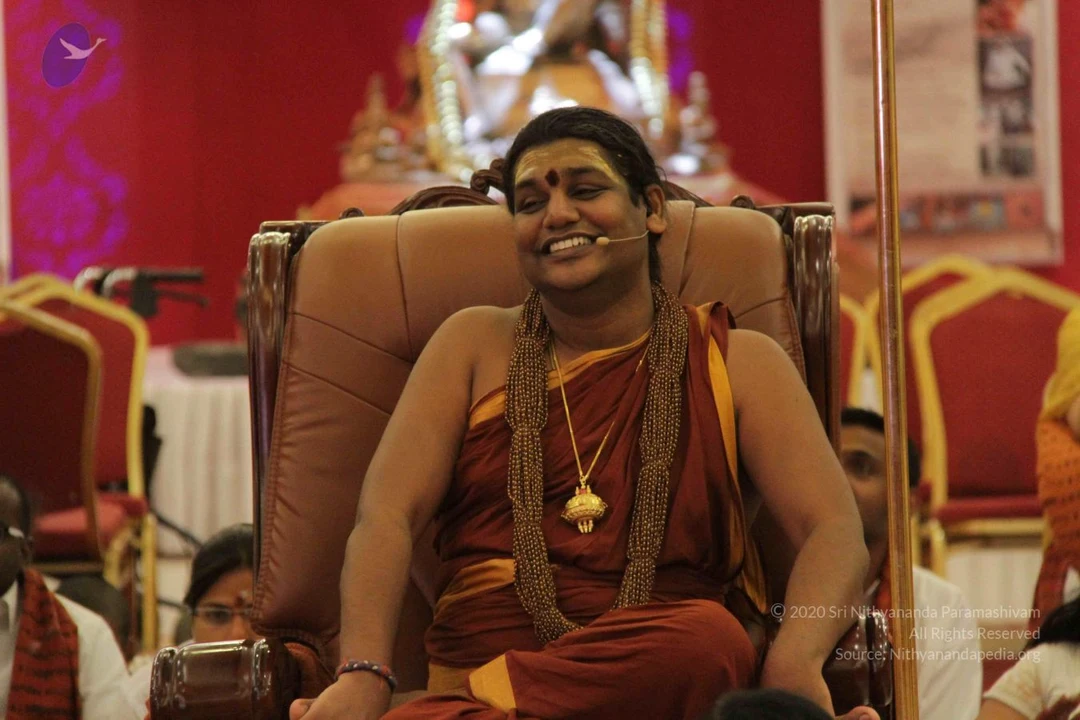
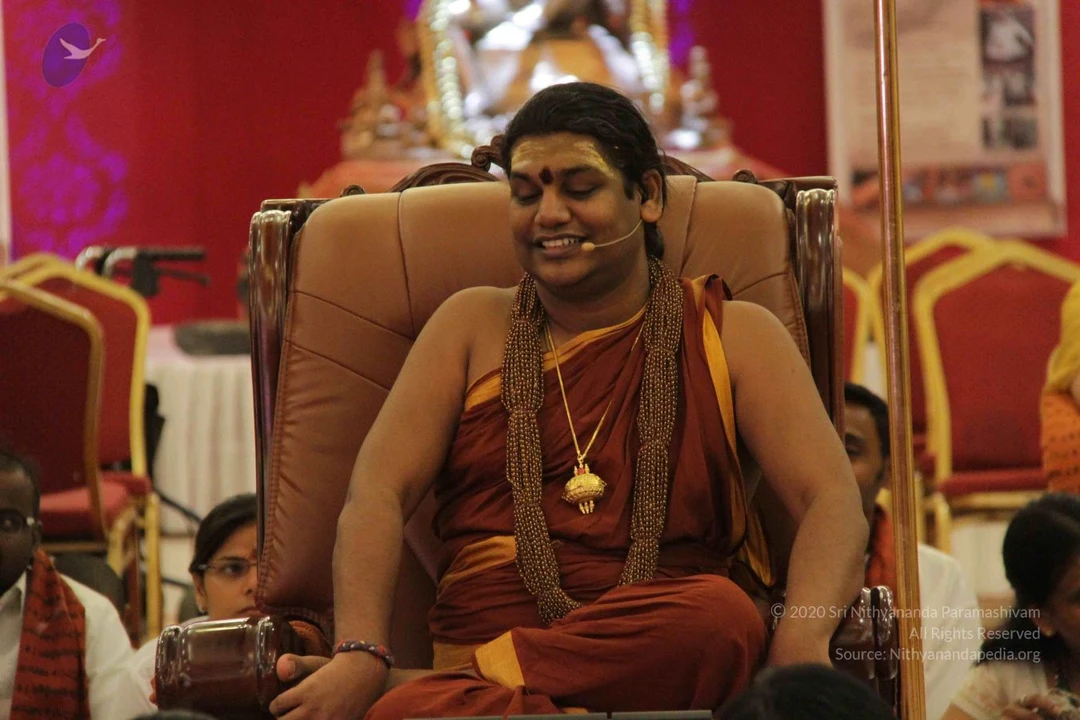
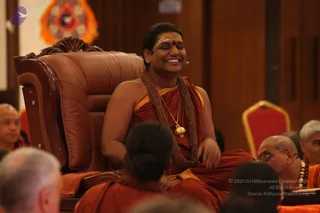
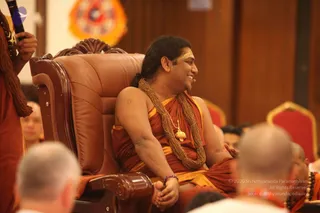
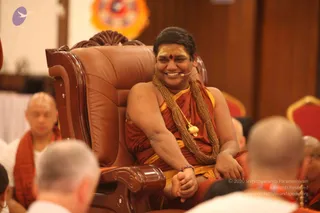
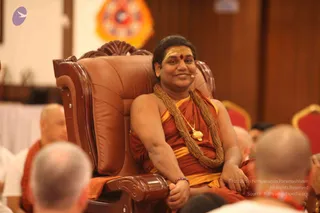
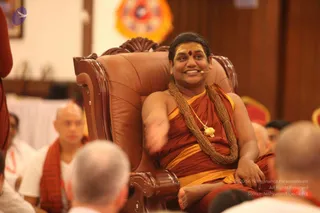
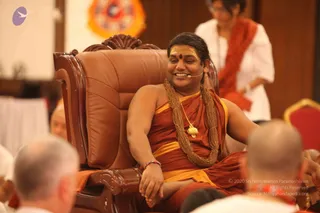
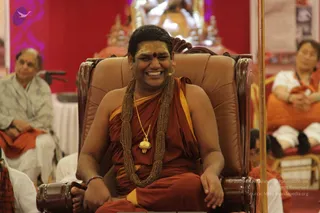
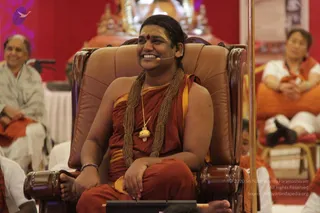
A smiling man with eyes closed sits on an ornate carved wooden throne with a brown leather seat at a satsang. He wears an orange-saffron robe with a gold trim, a long rudraksha mala, a gold pendant and a tilak on his forehead, and has a small microphone near his face. Seated audience members in orange and white clothing fill the foreground and right, including a bald man wearing glasses and a rudraksha mala. A red-and-gold chair and wooden panelling stand in the background, with a colourful framed textile on the left wall. Swamiji (probable) appears in person, seated on the throne, by his long swept-back hair, saffron robe, rudraksha mala and ceremonial gold pendant.A man in saffron-orange robes sits smiling in a large brown leather throne-style chair in a wood-panelled hall. He wears a thick gold-coloured beaded necklace with a gold pendant, a yellow tilak on his forehead, and a beaded bracelet on his wrist, and has a small headset microphone. Left, a person in orange robes holds a handheld microphone. Blurred, bald heads of seated devotees are in the foreground, with red-cushioned chairs behind. The man's appearance is consistent with a person seated in a satsang setting, presiding as the teacher with a microphone attached to him.A smiling man in an ornate brown leather throne chair sits centre frame, wearing an orange-brown robe with yellow trim, a long multi-strand gold-toned bead necklace with a gold pendant, a lapel microphone, and a yellow-and-red forehead marking. His hands are clasped and his right wrist has a coloured bracelet. Seated audience members in the foreground and background are partially visible, including a bald man in white and a figure in a red shawl at left. Wooden panelling and red-gold chairs fill the background. a person: the man on the throne wears a saffron-orange robe, a gold ceremonial necklace and a forehead marking, and is seated centrally as the speaker.Photo of a satsang gathering. A man seated in a large brown leather throne-style armchair with carved wooden arms smiles toward the camera. He wears an orange-and-saffron draped robe with a gold-yellow border, a thick multi-strand rudraksha-style mala and a large gold pendant necklace, a yellow tilak on the forehead with a red bindi, and a small microphone clipped near his face. Blurred heads of seated audience members in the foreground, one bald figure in a saffron robe at left, and a red-cushioned chair in the background. Warm wooden-panelled hall with a round orange emblem on the wall.A seated man in a brown leather armchair smiles and gestures with his right hand while speaking to an audience. He wears a rust-orange robe with a gold-yellow waist sash, a thick beaded rudraksha-style mala and a gold pendant, a yellow-and-red forehead mark, and a small headset microphone. a person in appearance, with long swept-back dark hair and ornate ceremonial adornment; he sits on a throne-like chair in a satsang hall. In the foreground and background, shaved-headed devotees sit, including one in white with a red-orange shawl. Wooden panelling and a framed artwork appear behind him.A man in saffron-orange robes sits on an ornate brown leather throne-style armchair with carved wooden arms, smiling broadly with eyes closed and wearing a headset microphone. He has a yellow-and-red tilak on his forehead and wears a heavy multi-strand gold-toned mala with a large gold pendant. His right wrist has a colourful beaded bracelet. In the background, a woman in a white top and red-orange shawl stands near a wall with an orange-and-yellow emblem. Several bald heads of seated devotees in the foreground frame the scene. Appearance-based: a person, seated on the throne in a satsang setting, with saffron robes, a gold mala and a tilak as visible cues.

SOLO satsung -kalpataru sssion

132 photosSource gallery
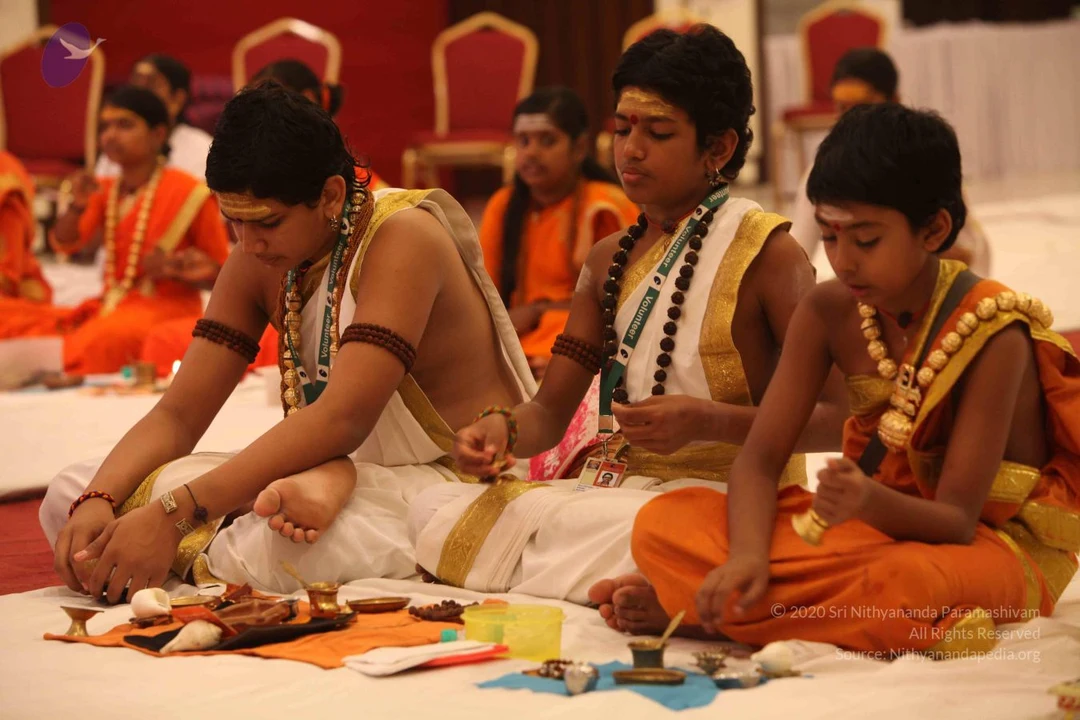
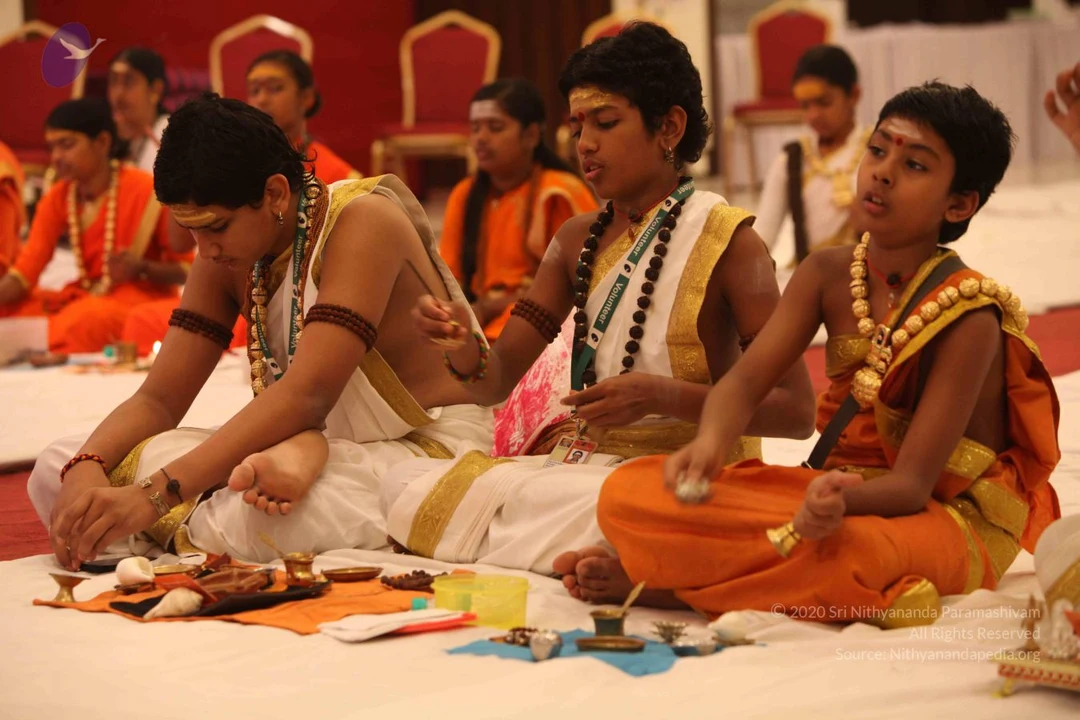
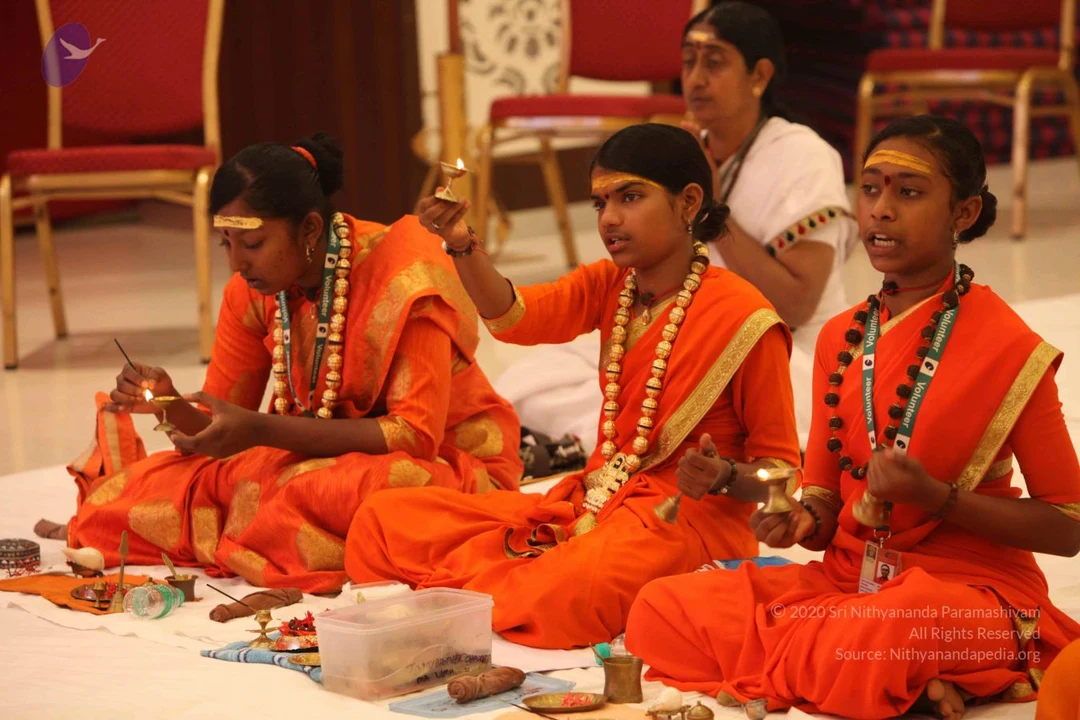
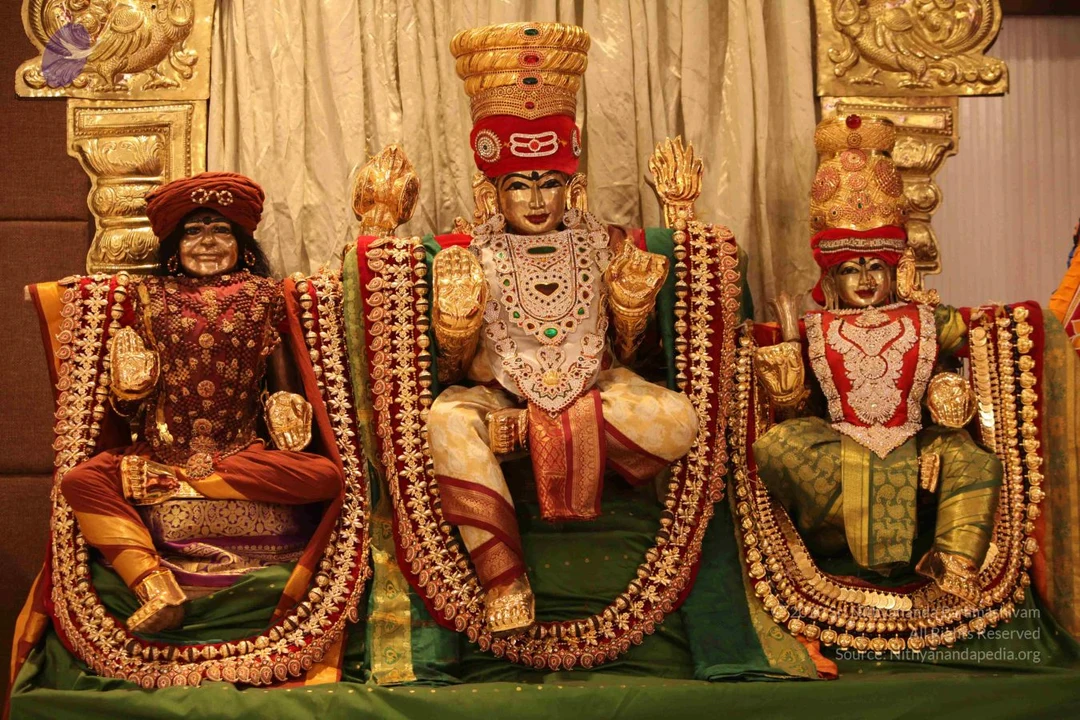
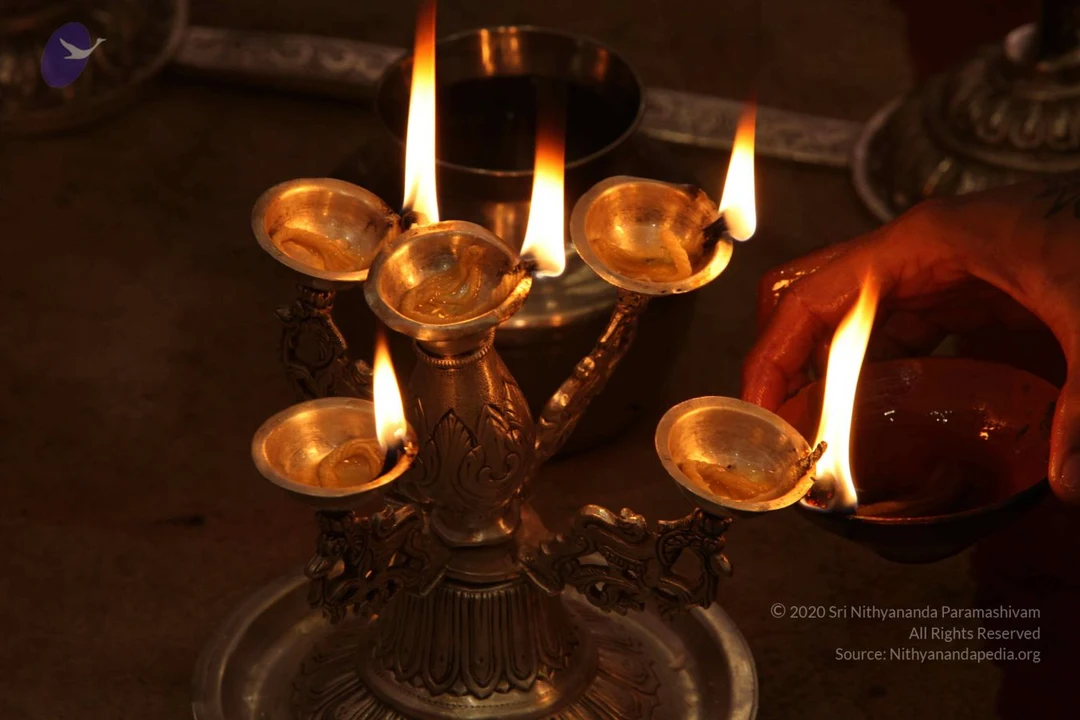
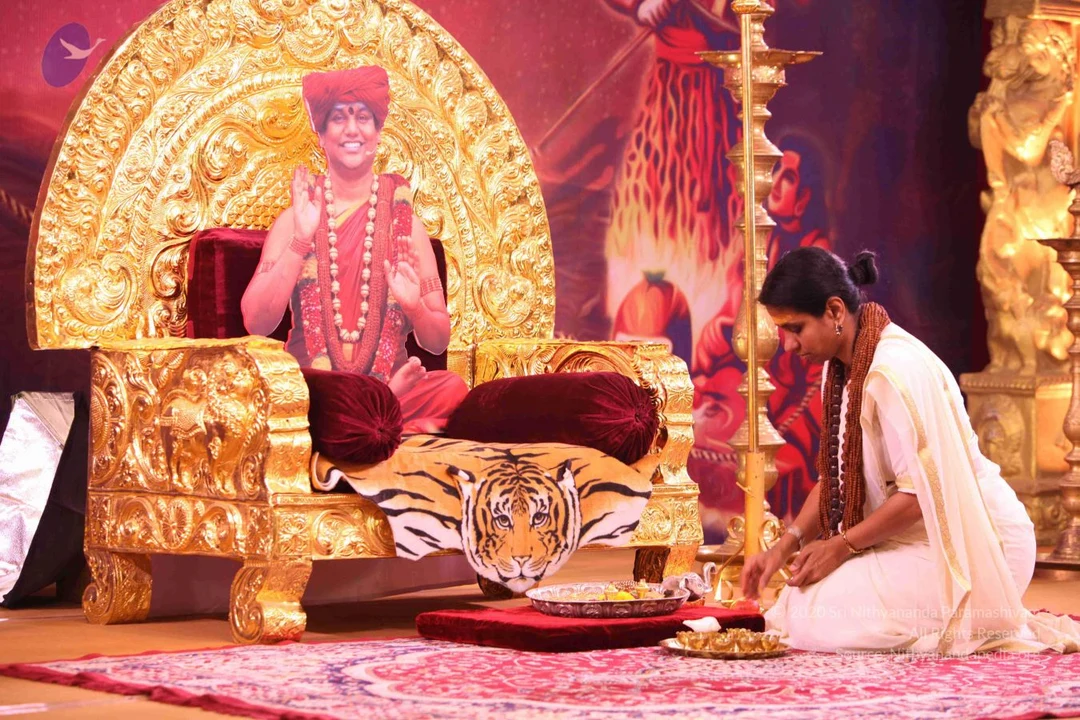
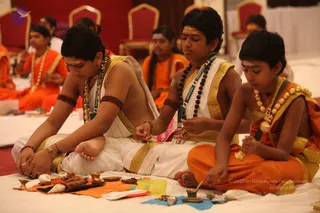
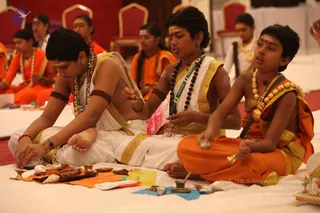
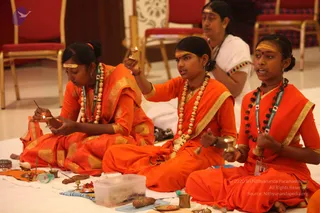
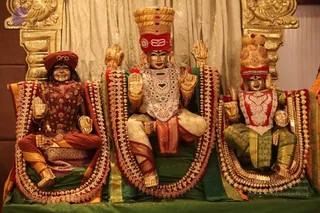
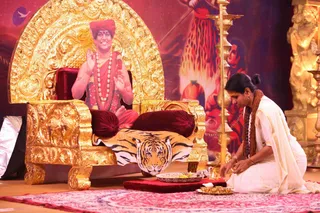
Three young boys sit cross-legged on a white cloth at a ritual gathering, performing a puja with brass vessels and small offerings. The boy on the left wears white and gold dhoti-style cloth, rudraksha bracelets and a green volunteer lanyard, and sorts items on an orange cloth. The middle boy in white with gold border and a dark rudraksha mala holds a small object while looking down. The boy on the right wears orange and gold cloth with a gold bead necklace and bangles, and holds a small item. Behind them, several seated people in orange robes and garlands are visible, and red-cushioned chairs stand along the back wall of a hall.Photograph of a ritual gathering on a white cloth-covered floor. Three boys in front sit cross-legged in white dhotis with gold borders; the left boy has a sandalwood-marked brow and wears a green lanyard, the centre boy wears a rudraksha mala and green lanyard while holding a small pot, and the right boy wears a gold-bordered orange garment with gold beaded necklaces and holds a small shell-like object. In front of them lie brass bowls, a lamp, a shell, an orange cloth, a plate and a glass. Behind them, several people in orange robes with beaded necklaces sit in the background on a red-carpeted hall with red chairs.Three young women in saffron-orange saris with gold borders sit cross-legged on a white cloth in a hall, performing a puja. Each wears a yellow sandalwood tilak on the forehead, beaded rudraksha-style malas and a green volunteer lanyard. The woman on the left tends a small oil lamp, the centre woman raises a lit lamp, and the woman on the right holds a brass bell and vessel. Brass pots, a kumkum plate, incense sticks and a plastic container sit on the floor cloth. A woman in a white sari stands behind them, and red-upholstered chairs fill the background.Three life-size painted statues sit side by side on a green cloth-draped platform before gold curtains and gilded carved panels. The central figure is a deity murti with a tall gold crown set with red and green stones, a red and white tilak, a white jewelled chest ornament and a heavy green gem necklace, wearing gold-patterned dhoti and holding gold hand attributes. The figure on the left wears a red turban and a dark red beaded garment with gold trim and a gold waist cloth, seated cross-legged with hands folded. The figure on the right wears a gold crown with red stones, a red and white embroidered blouse and green silk garment with gold border, seated with a gold scepter. Garlands of gold beads drape the platform edges. No physical people are visible.A close photograph of a brass multi-branch oil lamp with five cupped wicks, each burning with a bright flame, set on a decorated brass base with floral and scroll engraving. A hand, with a reddish-toned wrist, holds a small brass cup of oil and tilts it to refill or light one of the right-hand lamps. The background is dark with a blurred brass vessel behind the lamp. The scene suggests an oil lamp ritual such as aarti, but no person's face or role is visible.A woman in white traditional attire with a golden-bordered shawl kneels on a red cushion at right, holding a small lamp near a silver tray of offerings and a brass lamp stand. On a large ornate gold throne at left, a figure in red and orange robes, a red turban, and a long rudraksha mala with a ceremonial necklace sits with raised hands in a blessing gesture; a tiger-skin cloth covers the throne's footrest. A red and gold backdrop with a painted fiery deity scene and gold carved pillars completes the stage setting.

solo stock shots

47 photosSource gallery
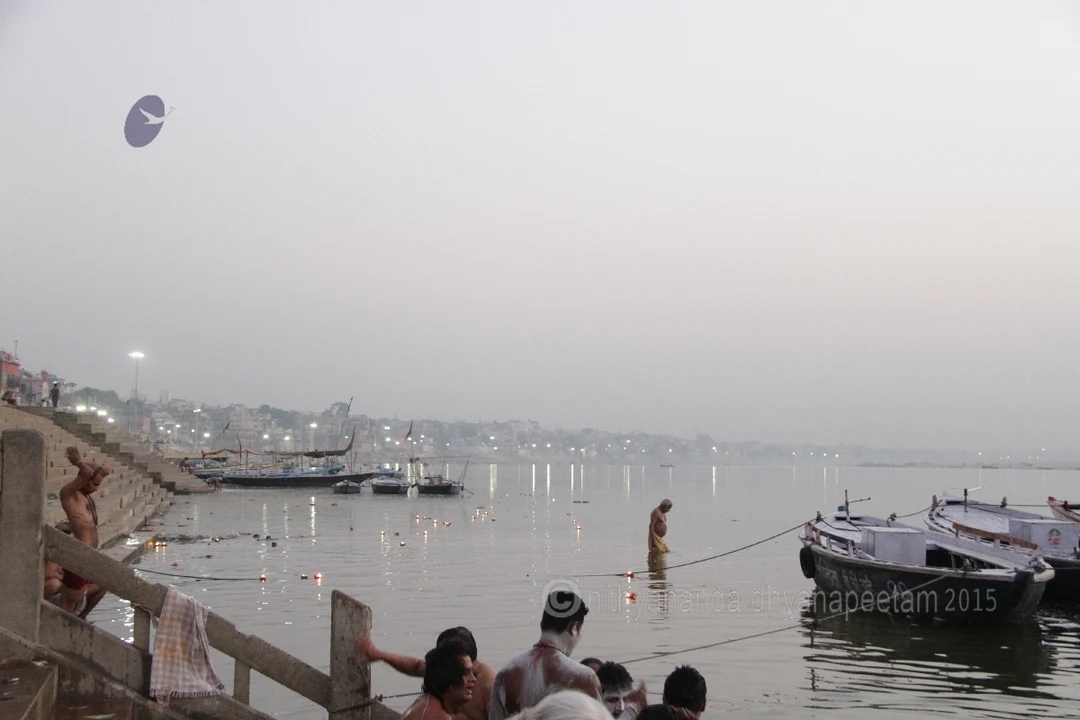
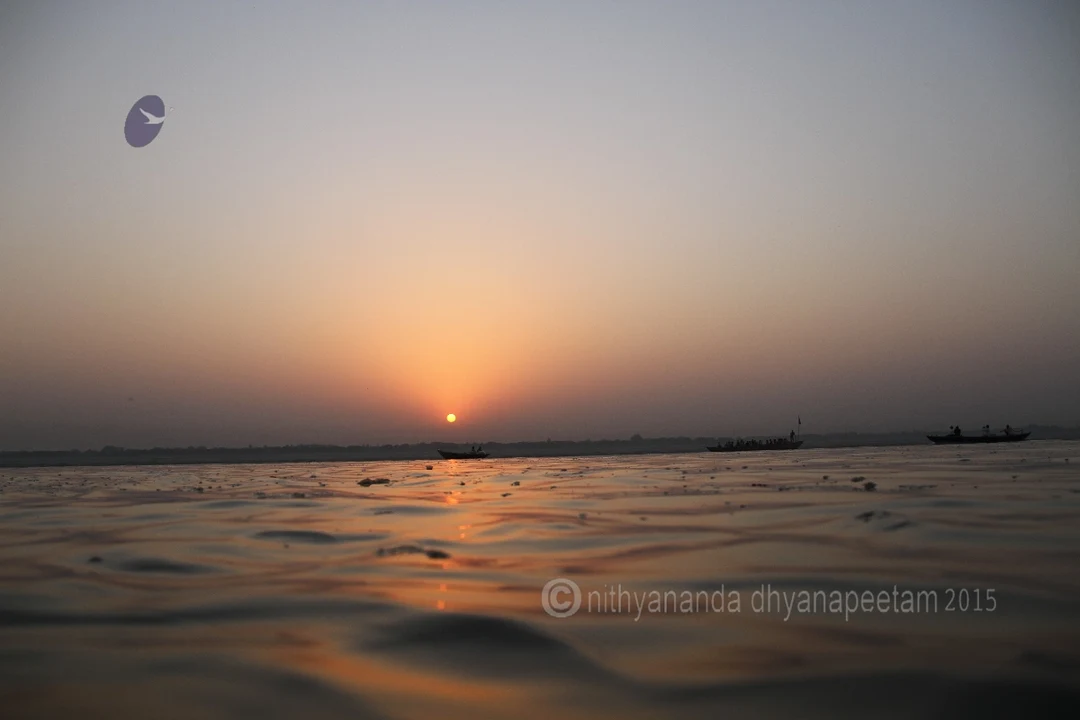
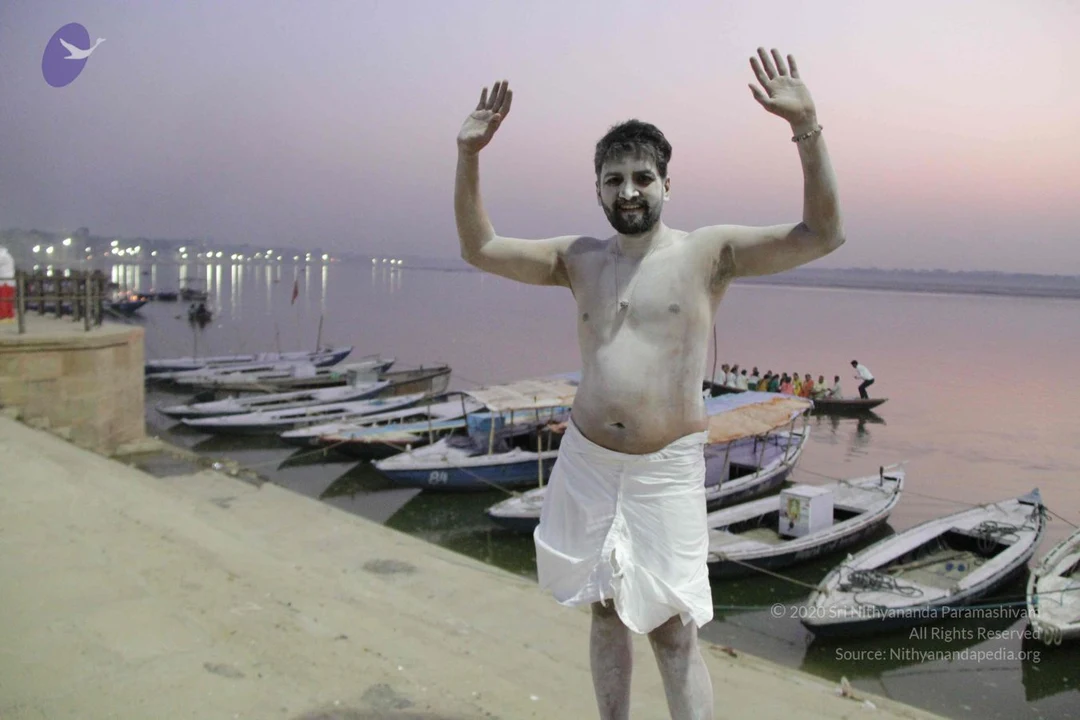
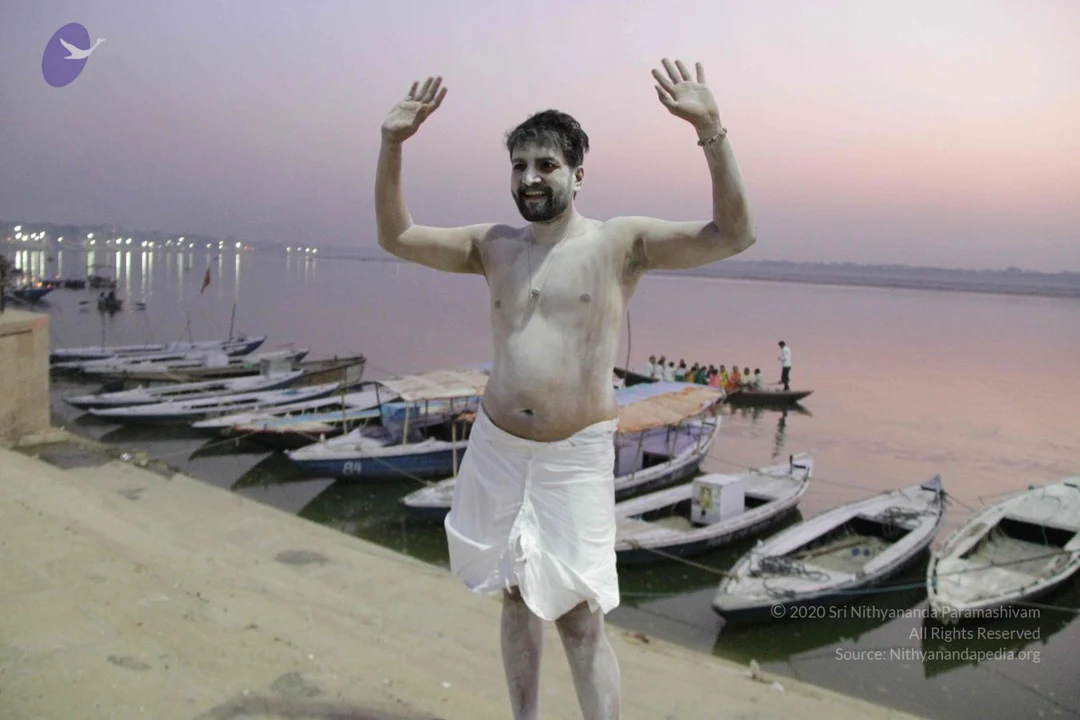
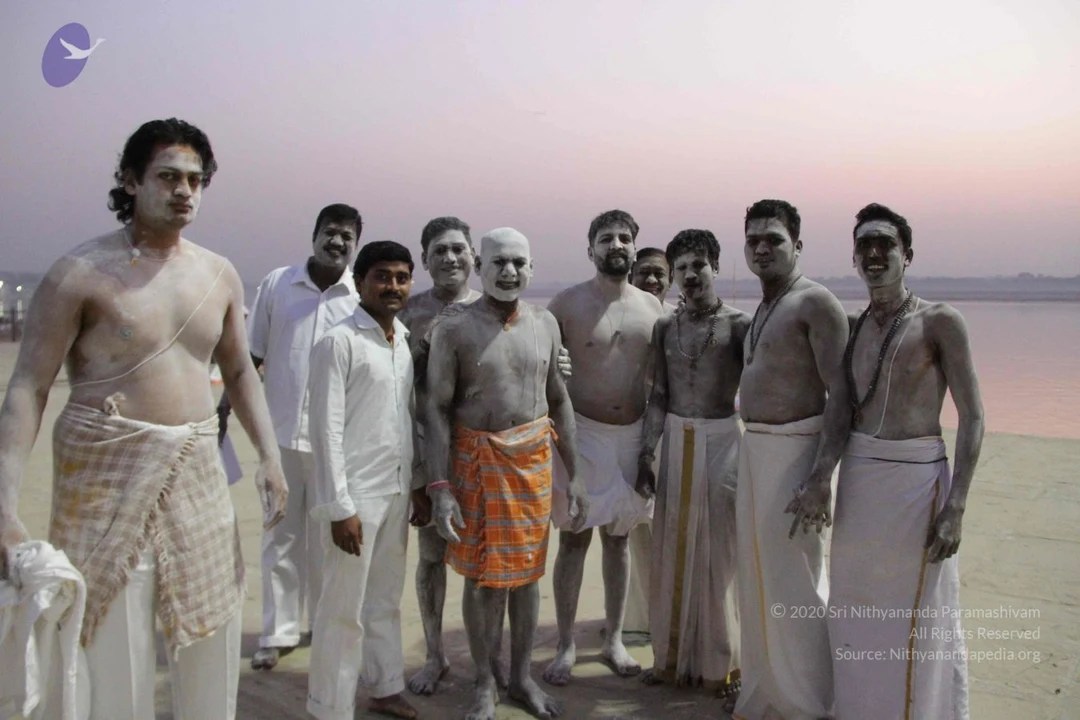
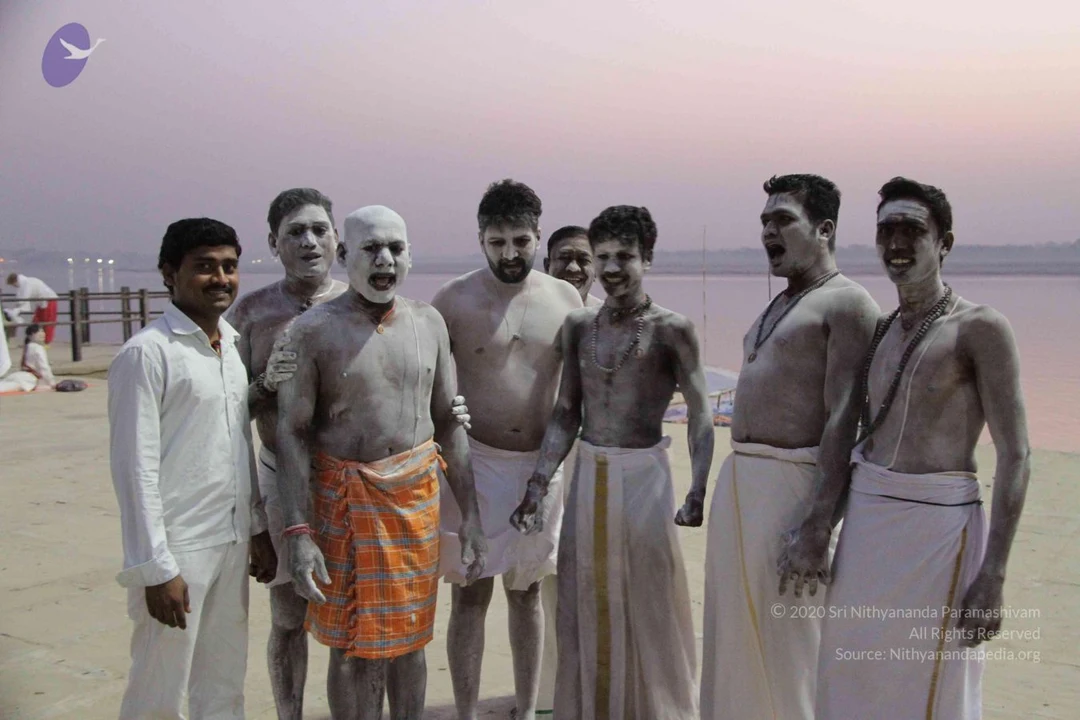
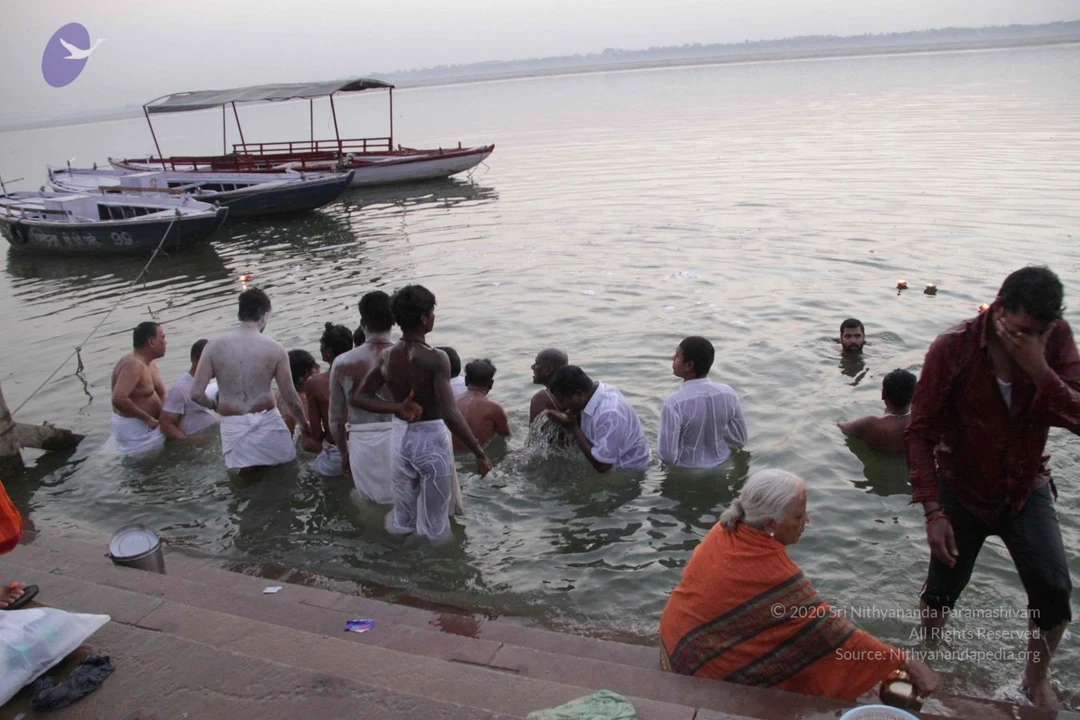
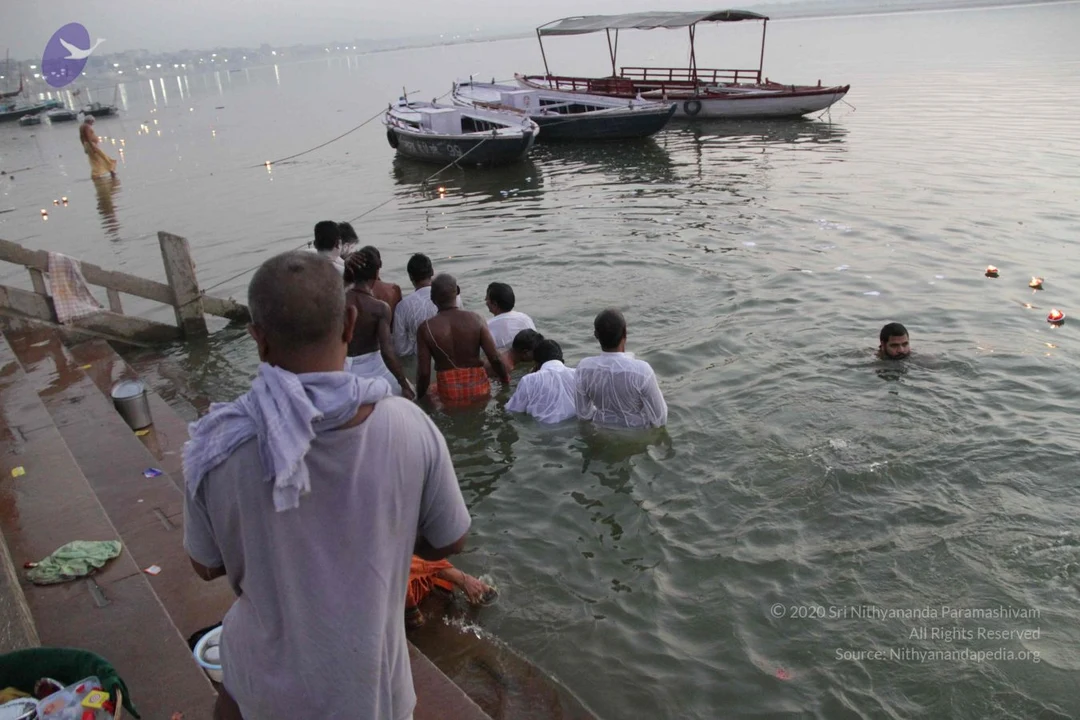
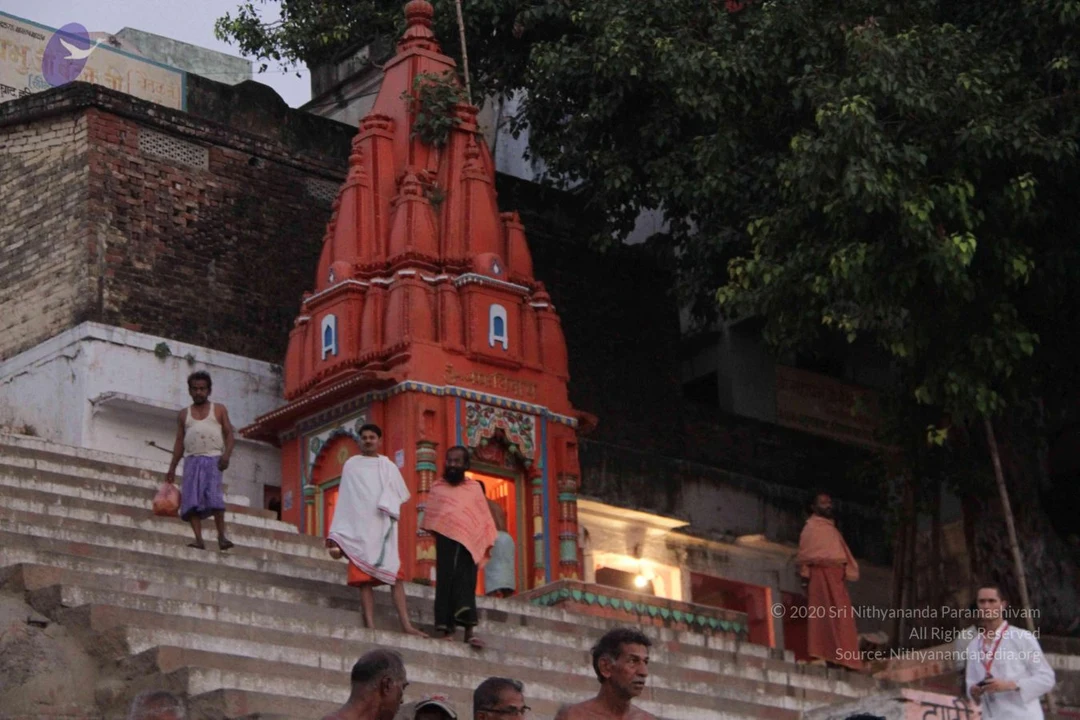
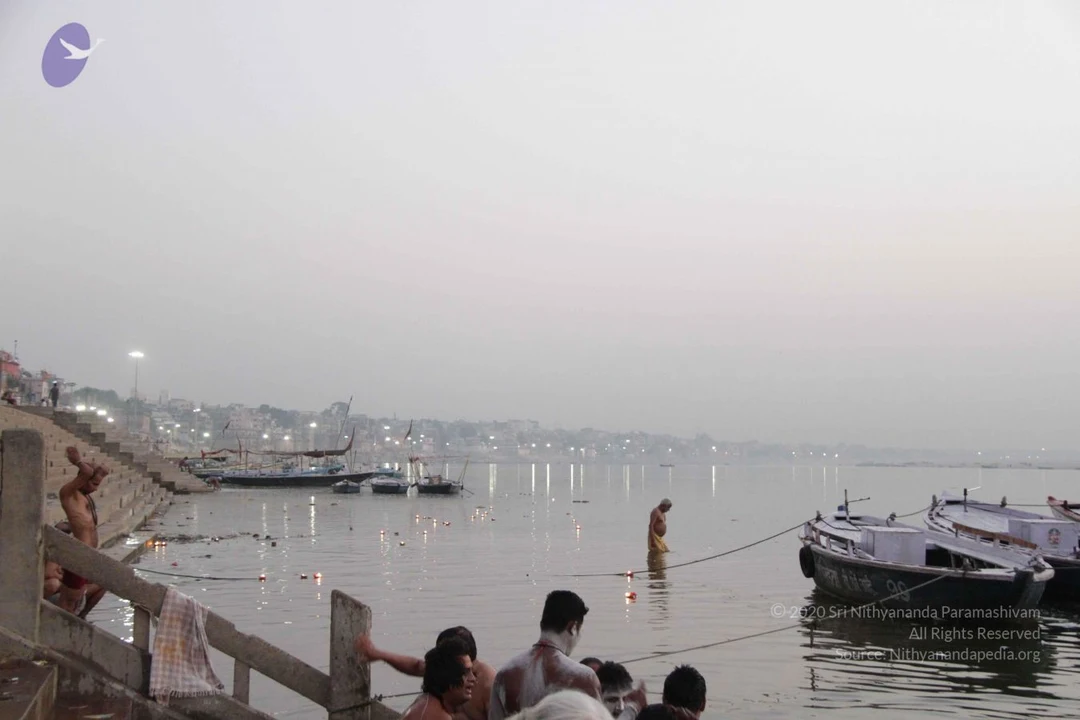
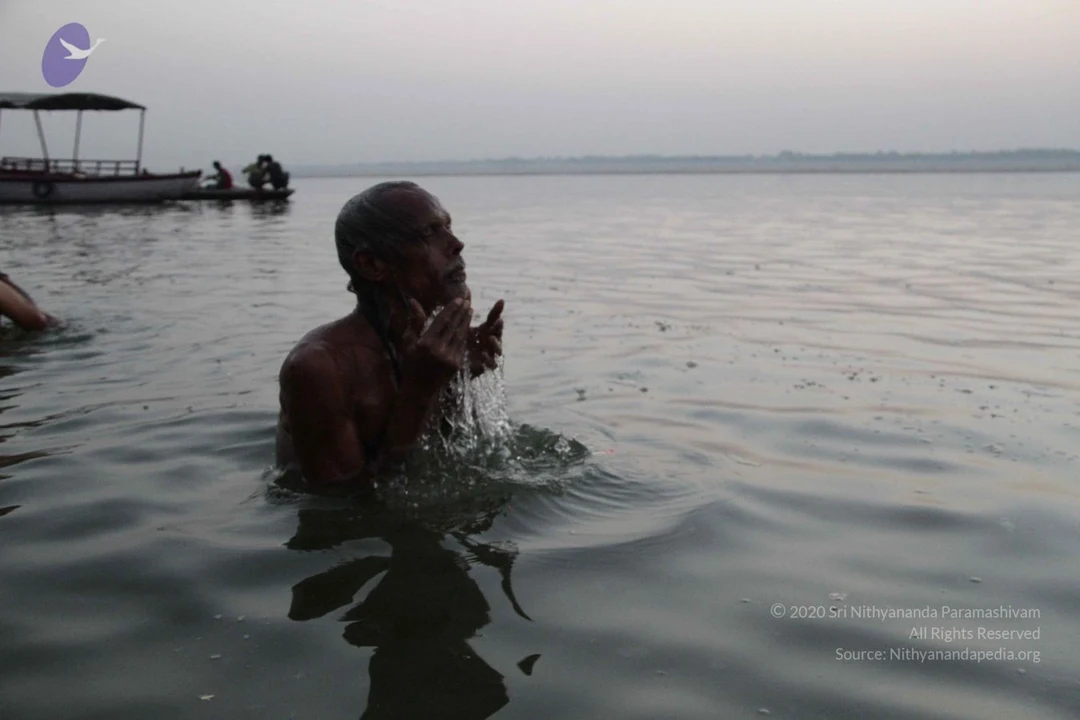
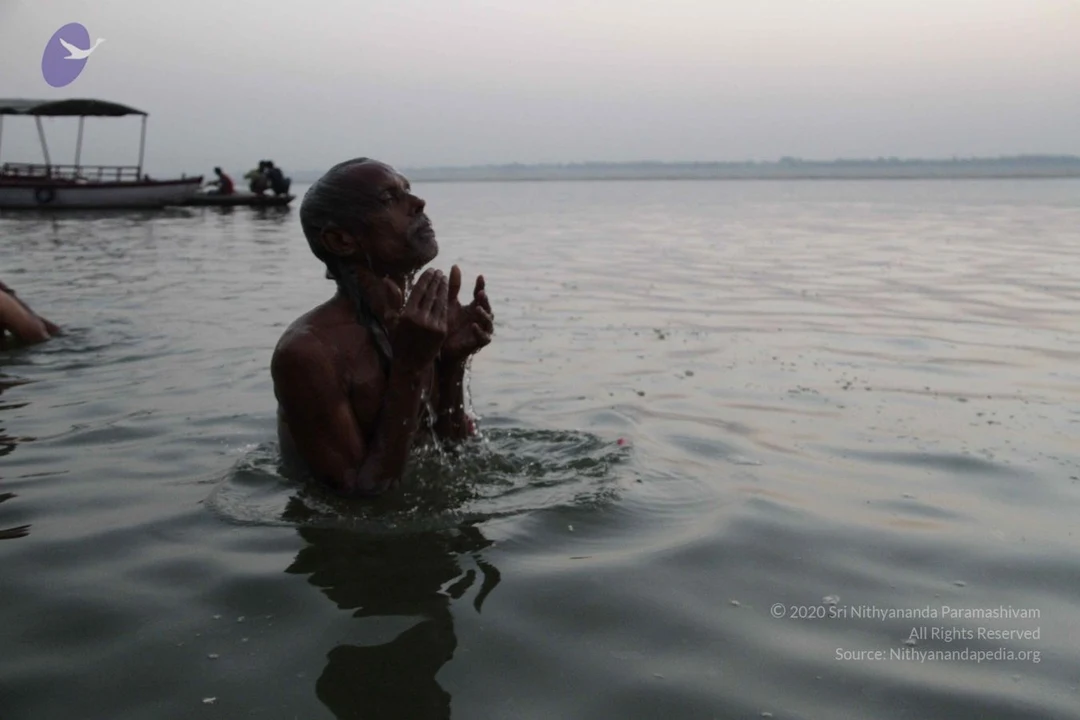
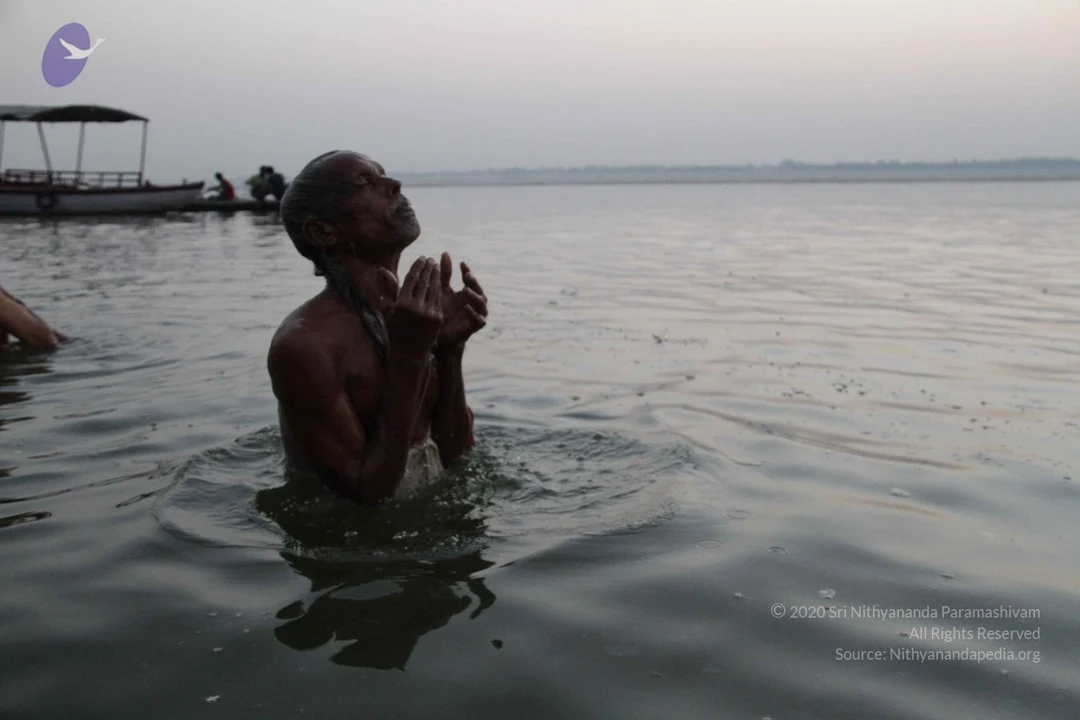
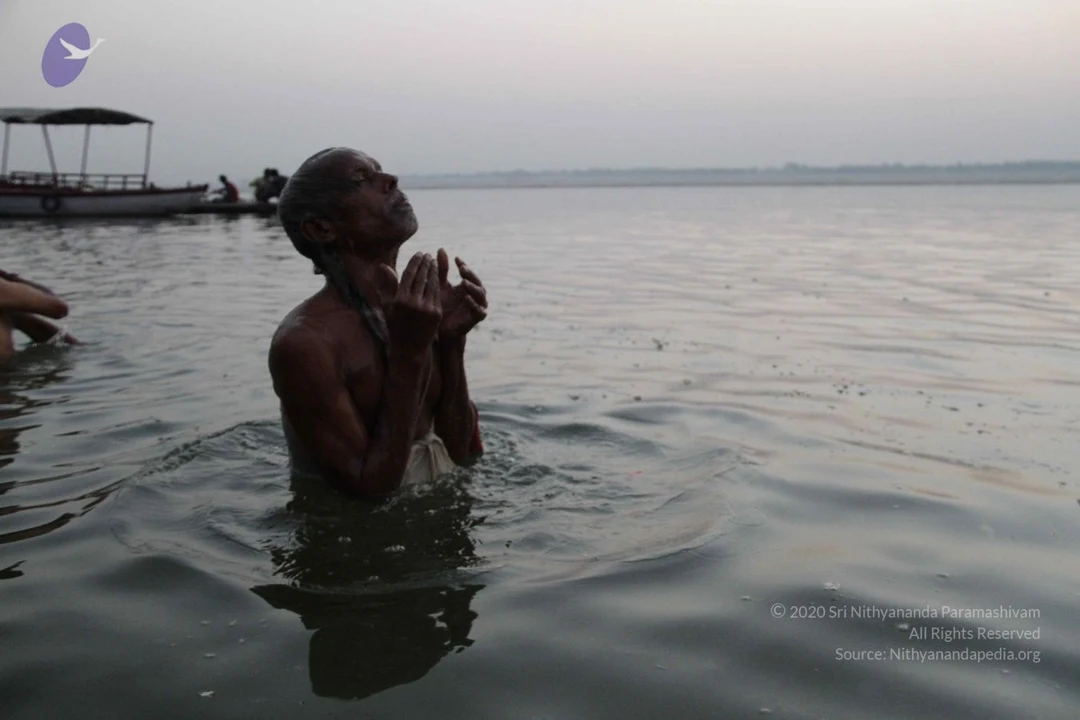
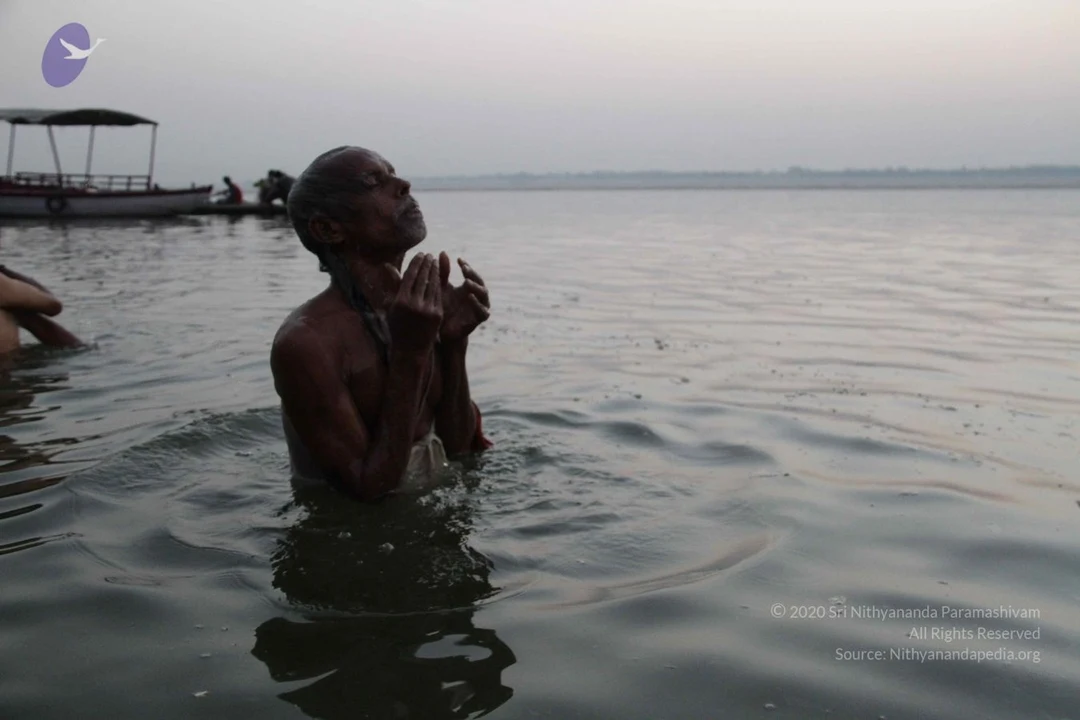
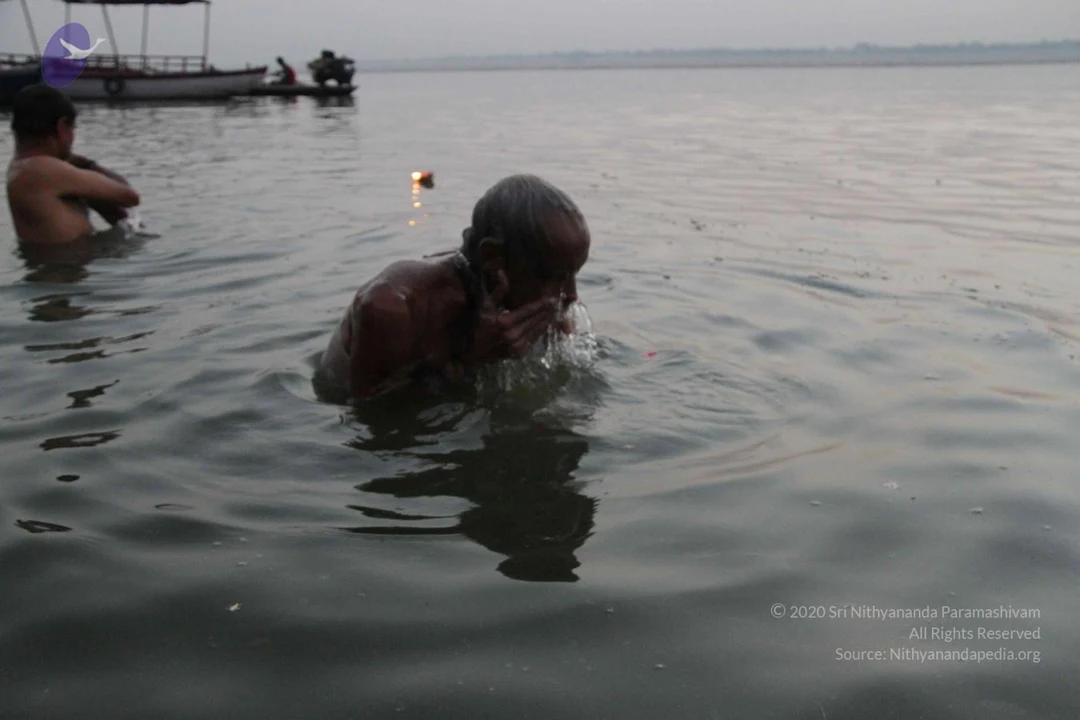
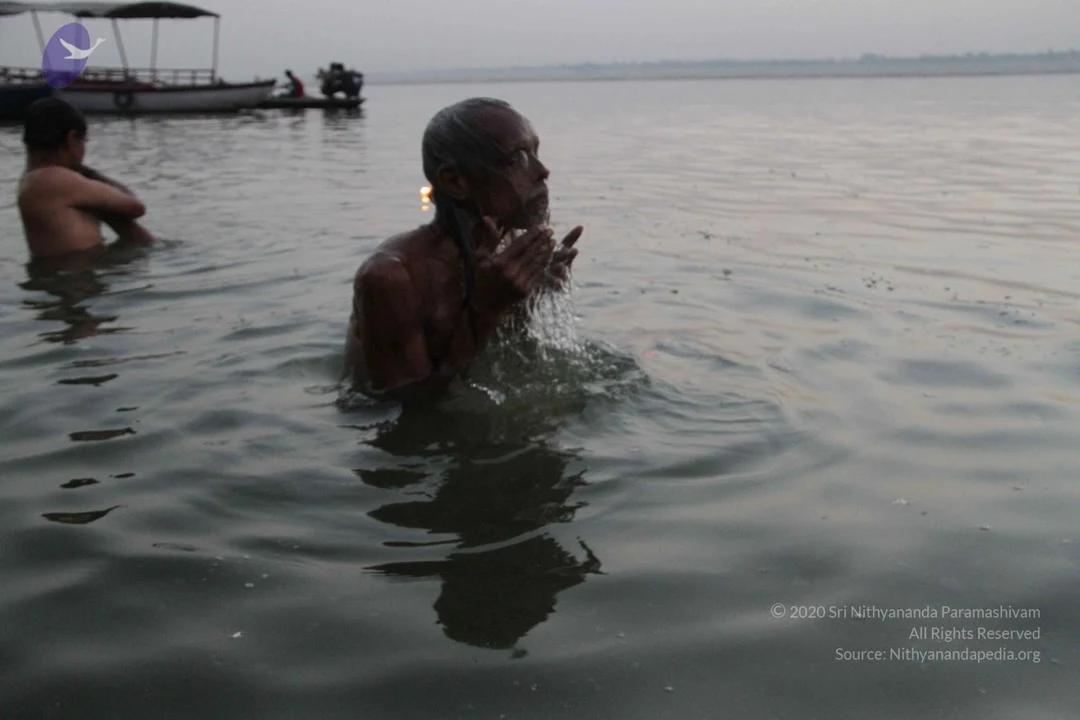
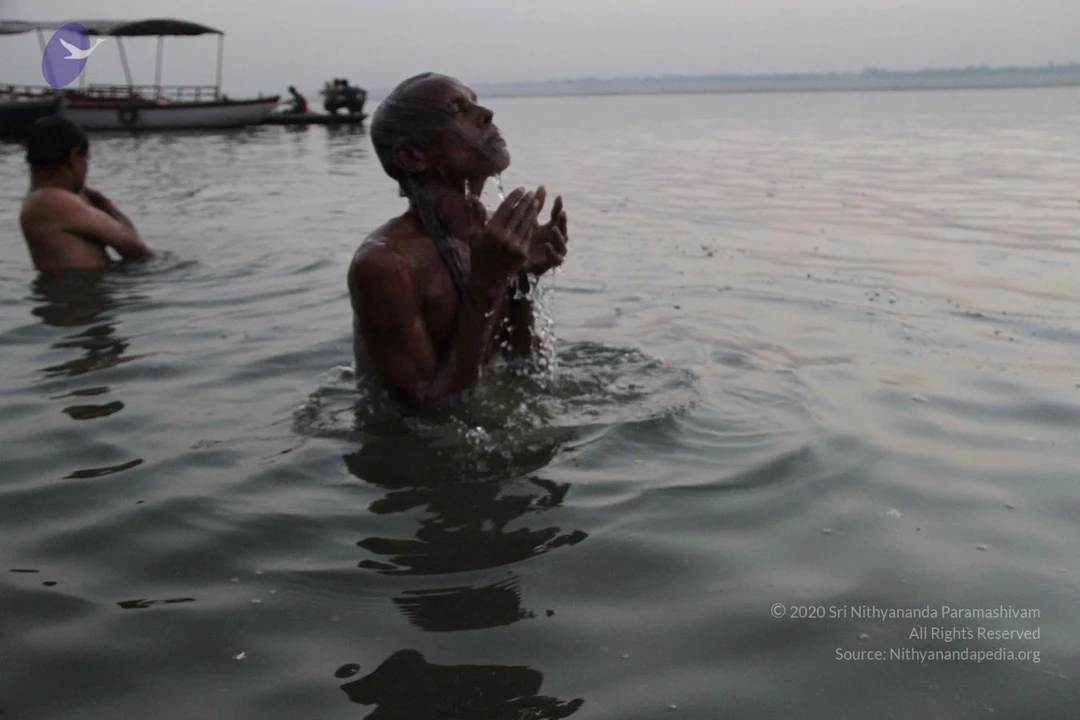
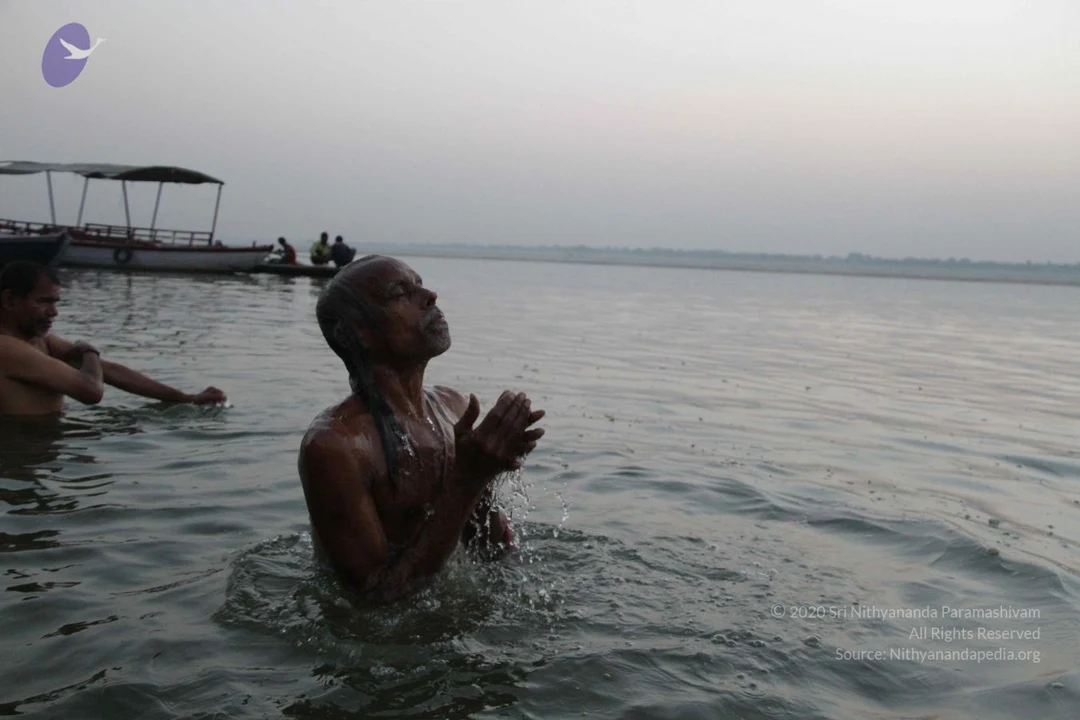
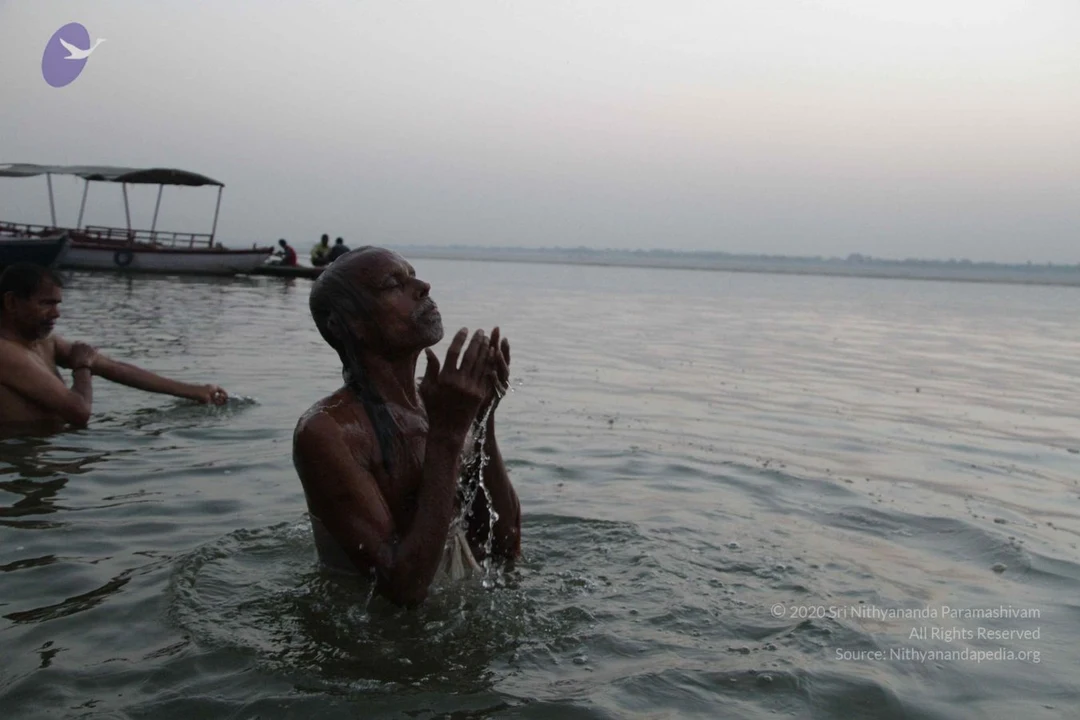
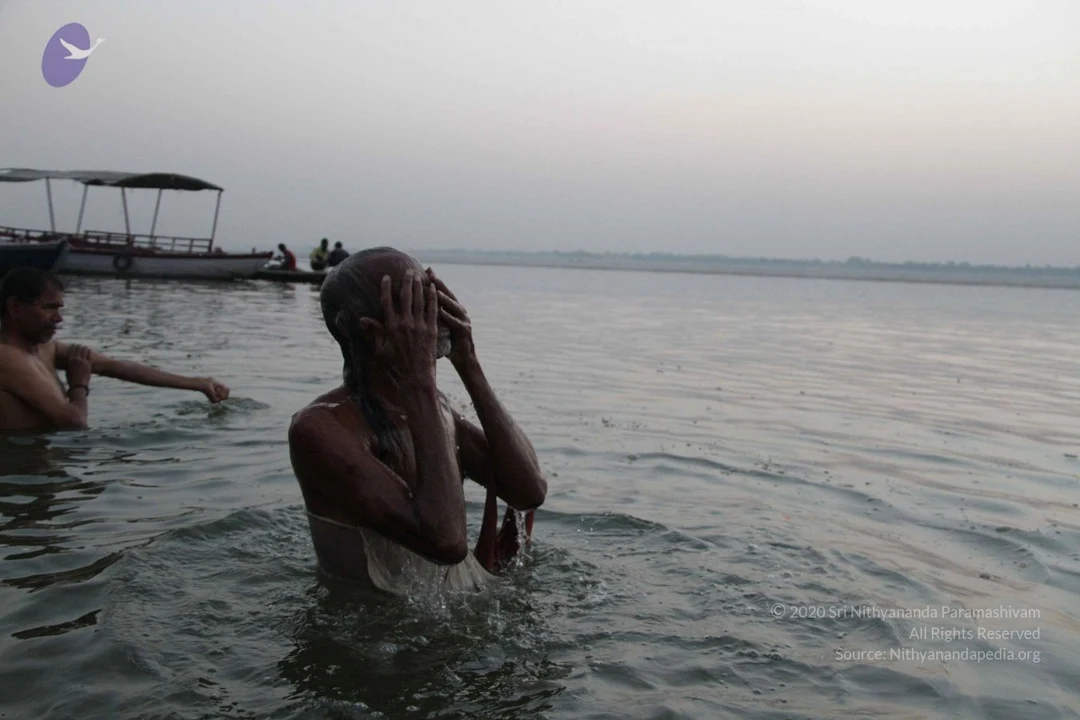
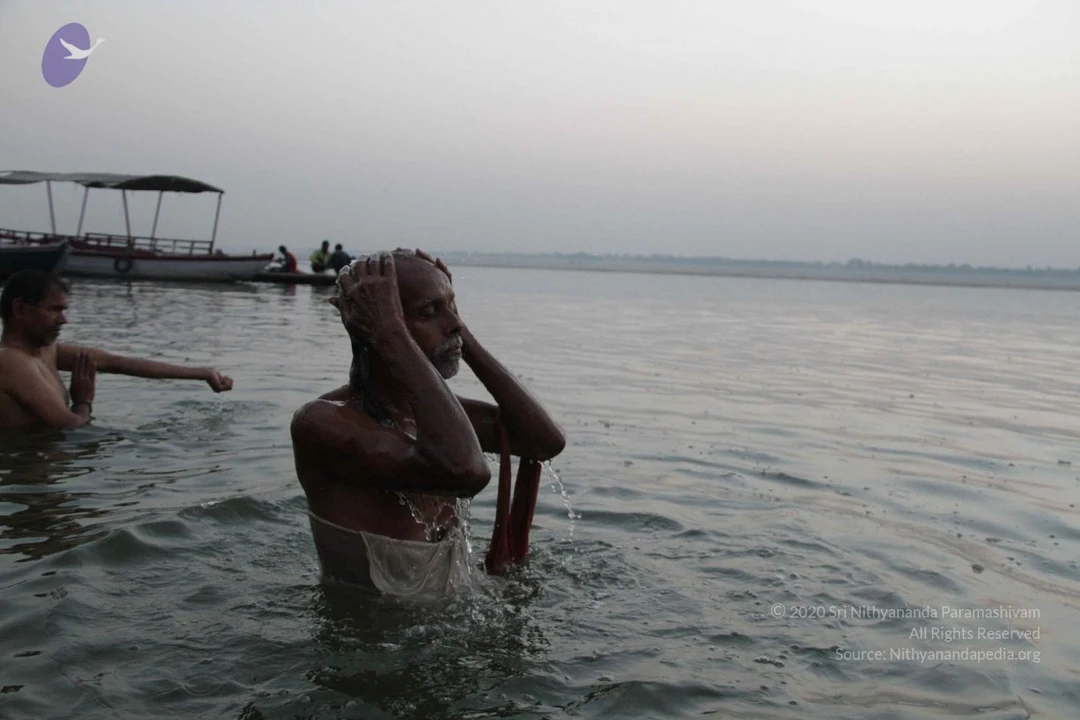
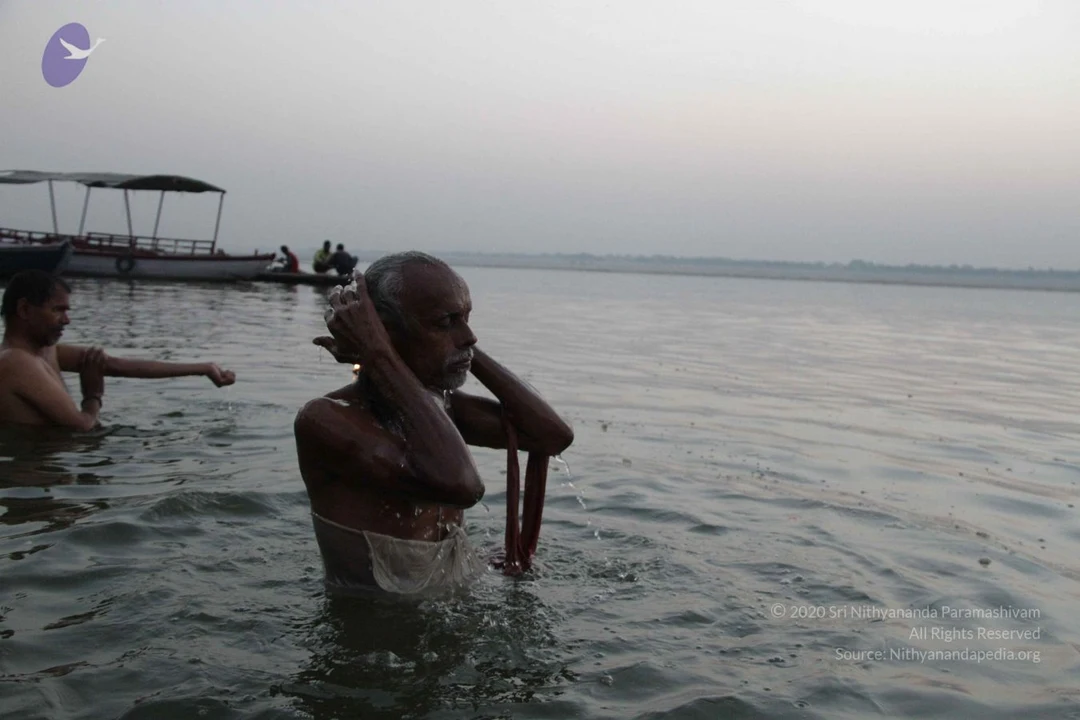
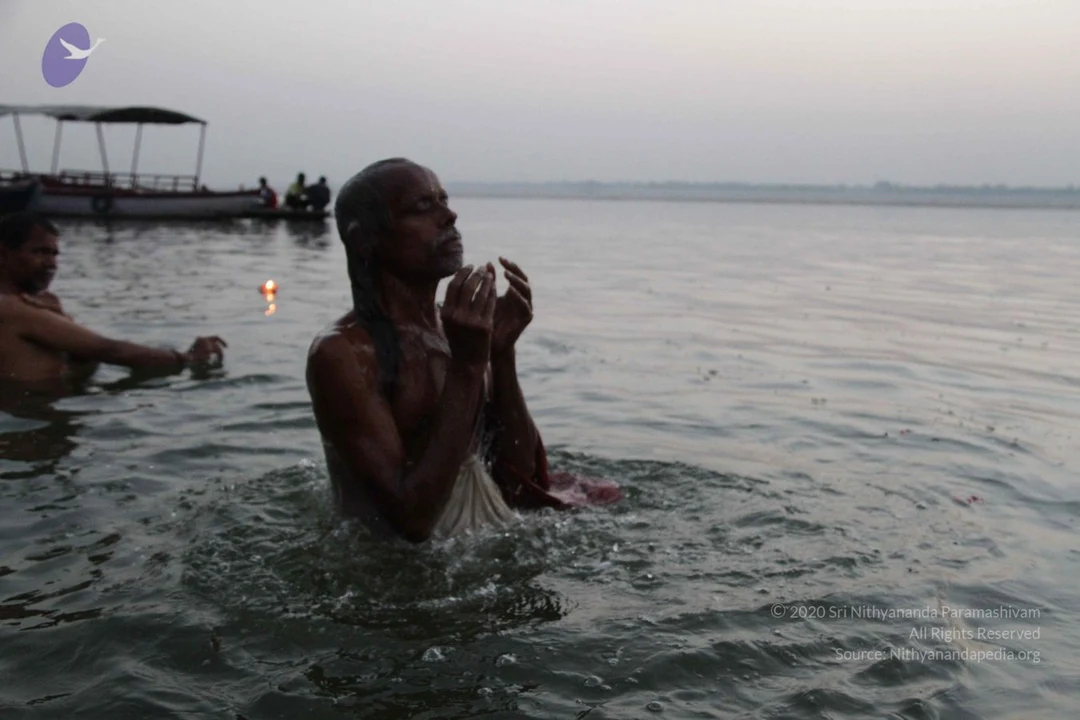
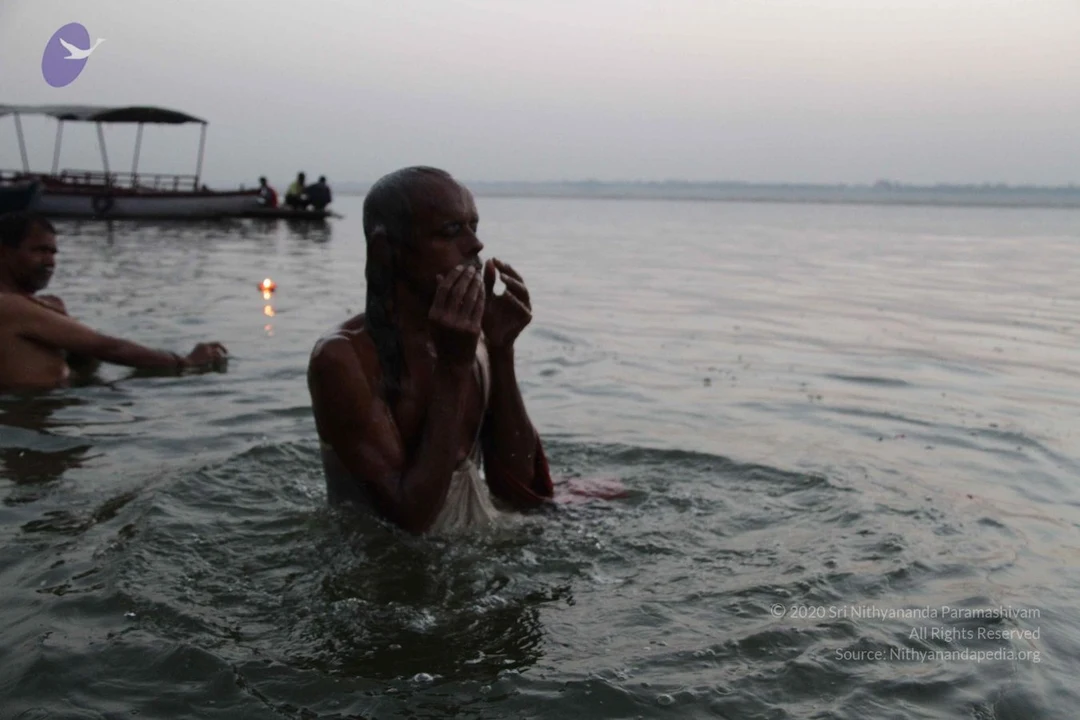
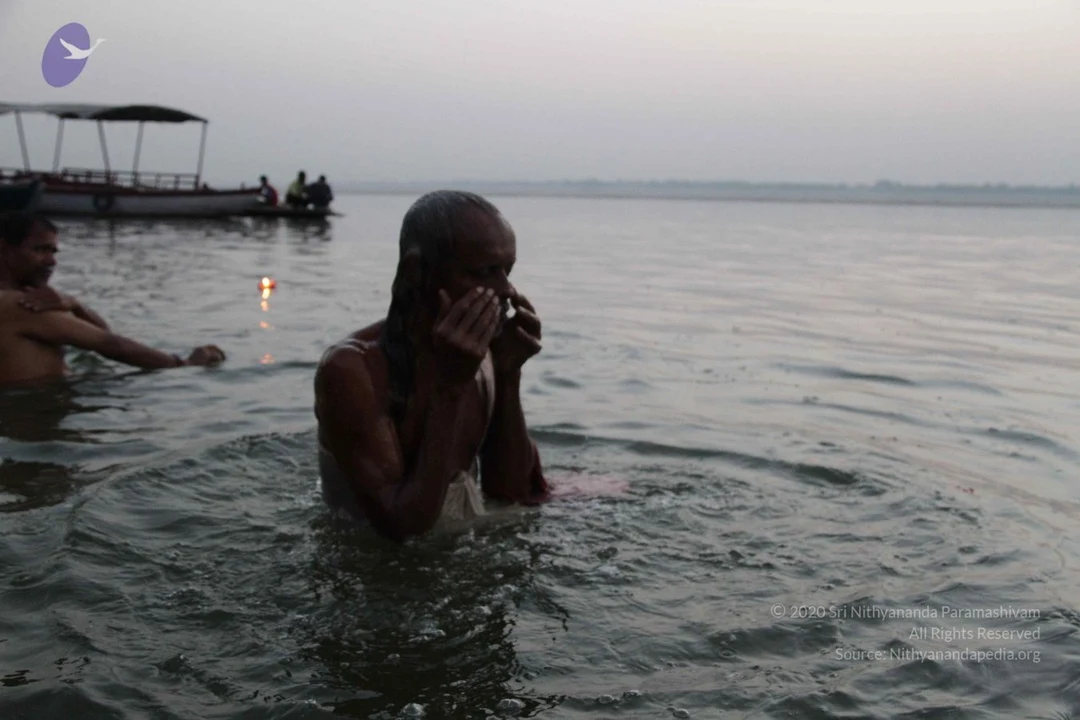
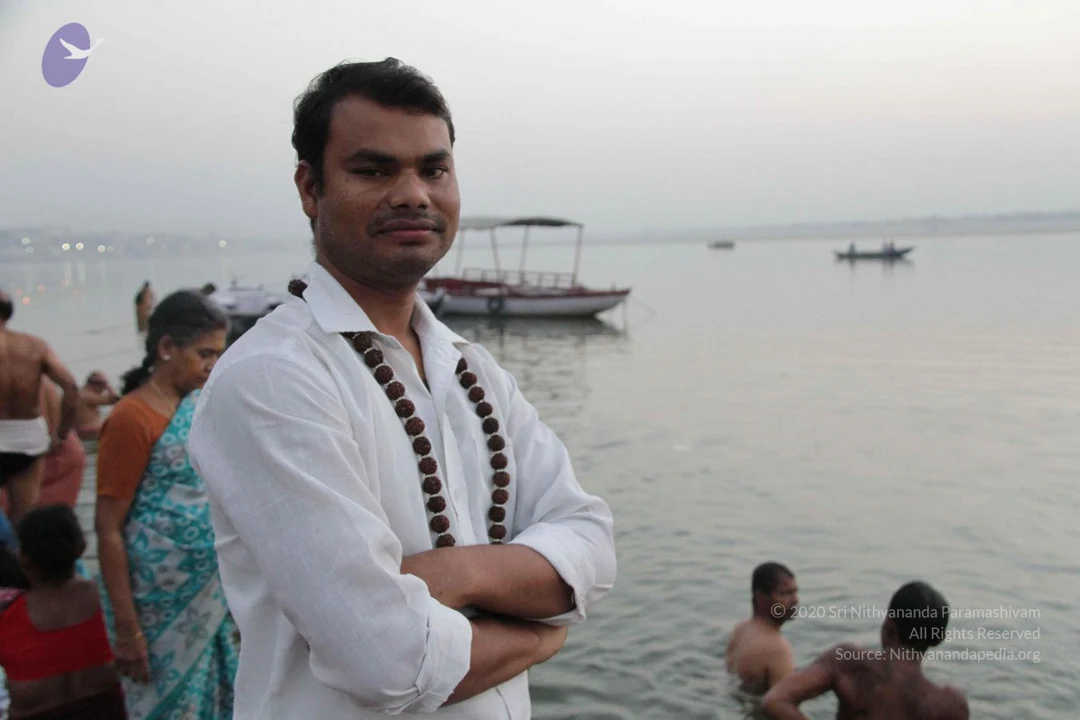
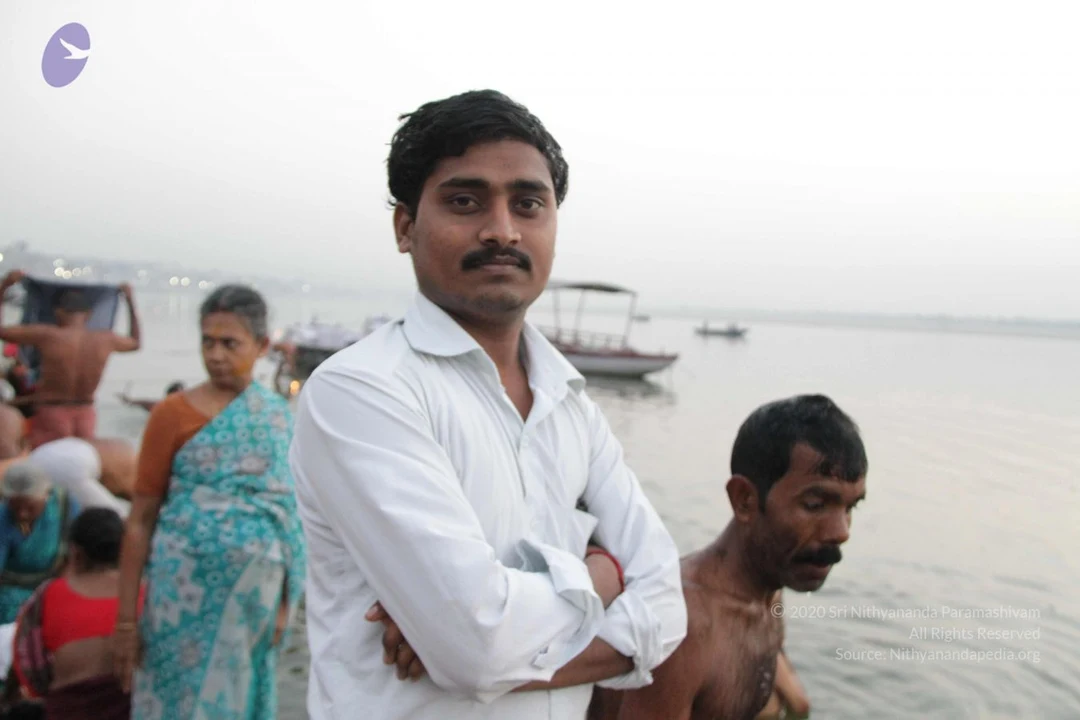
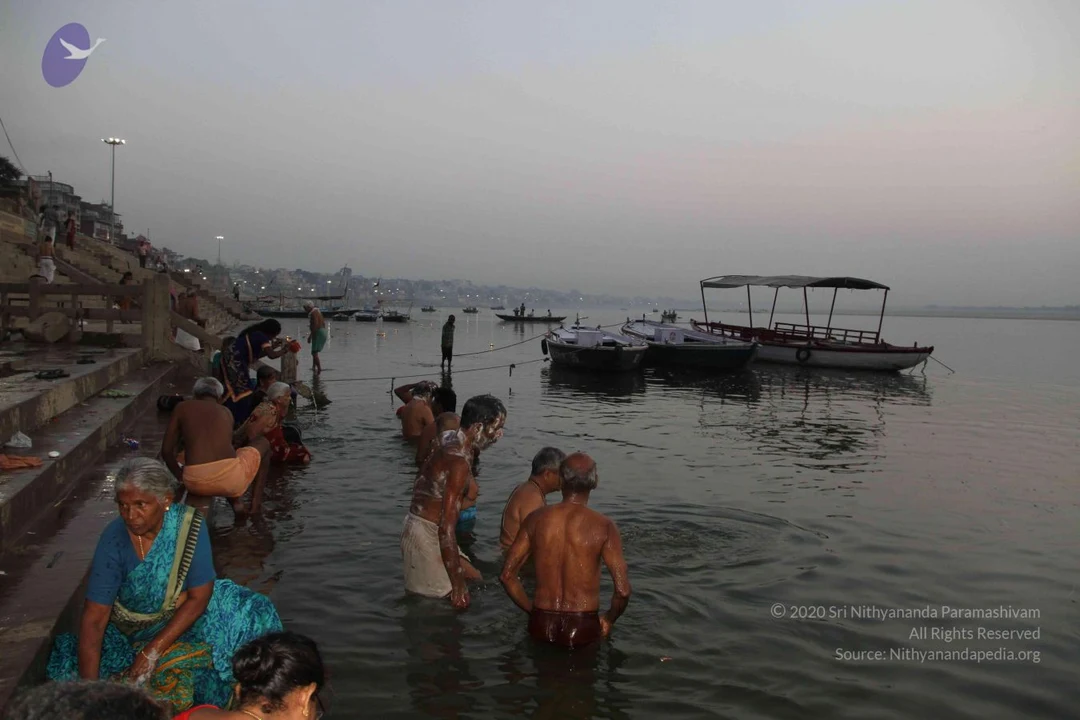
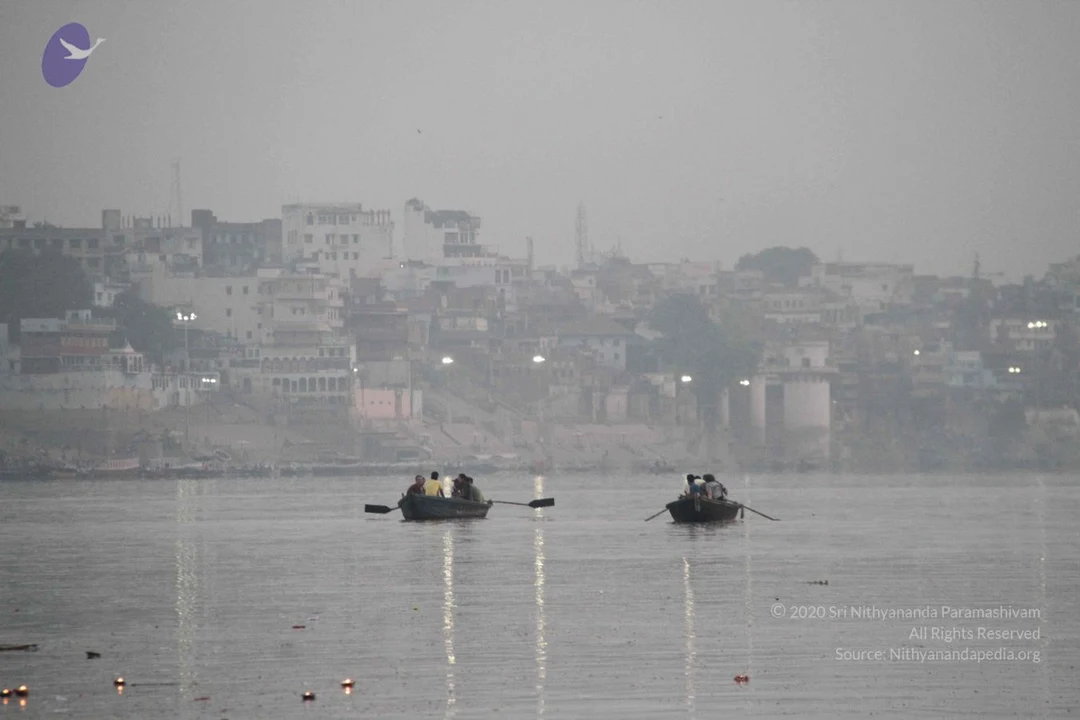
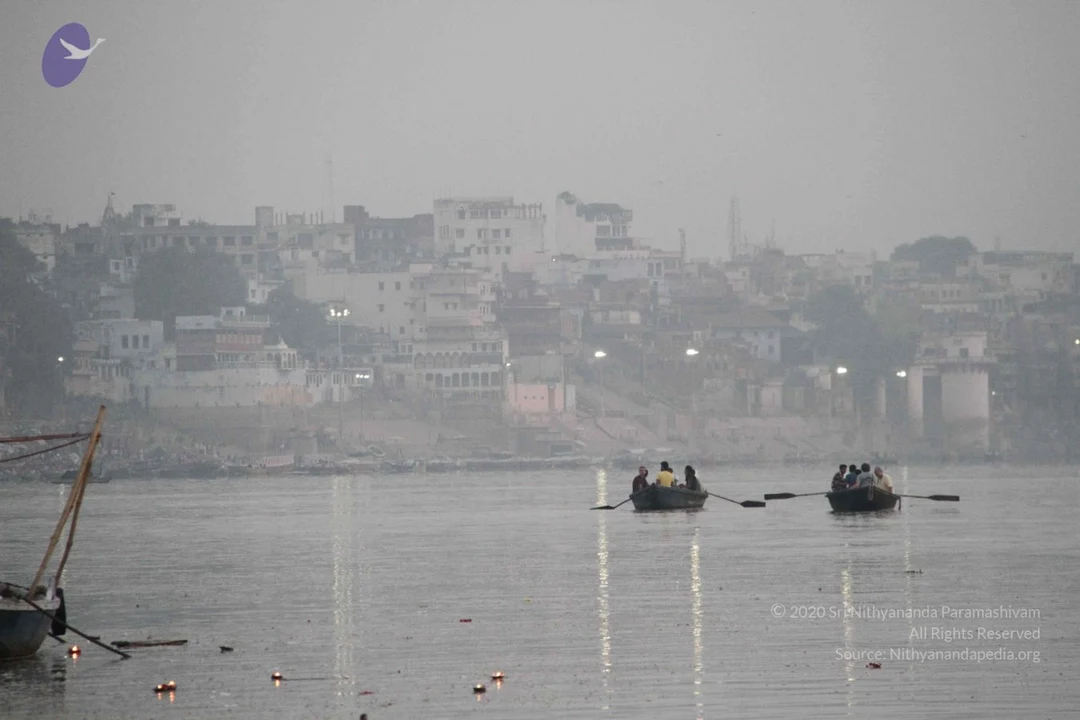
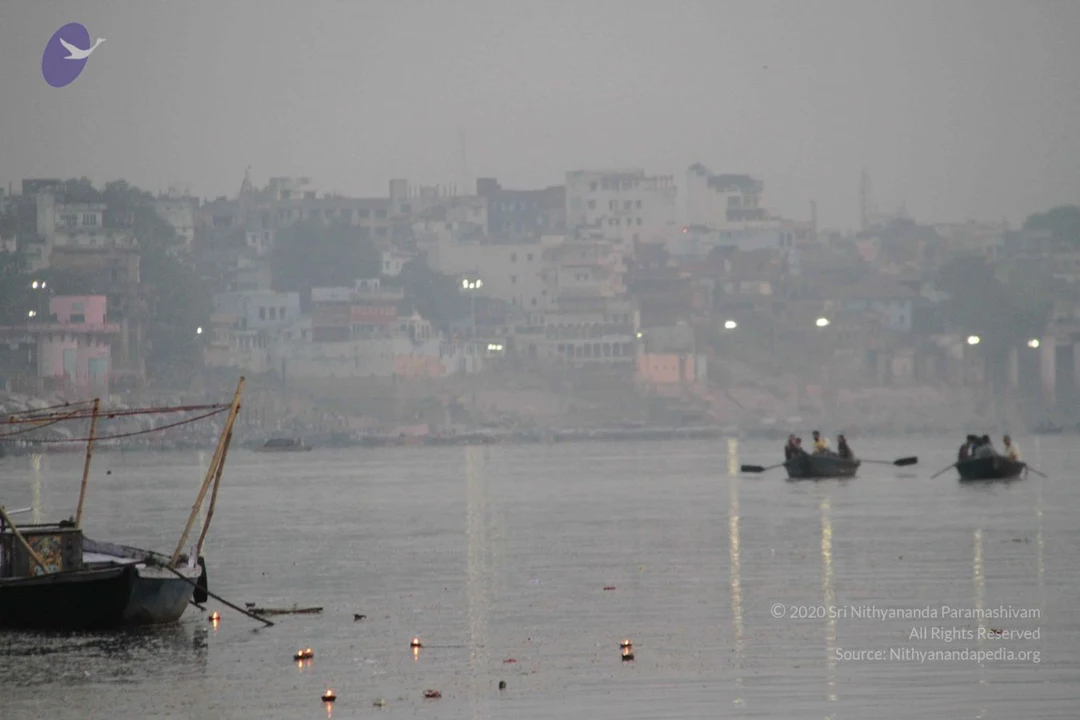
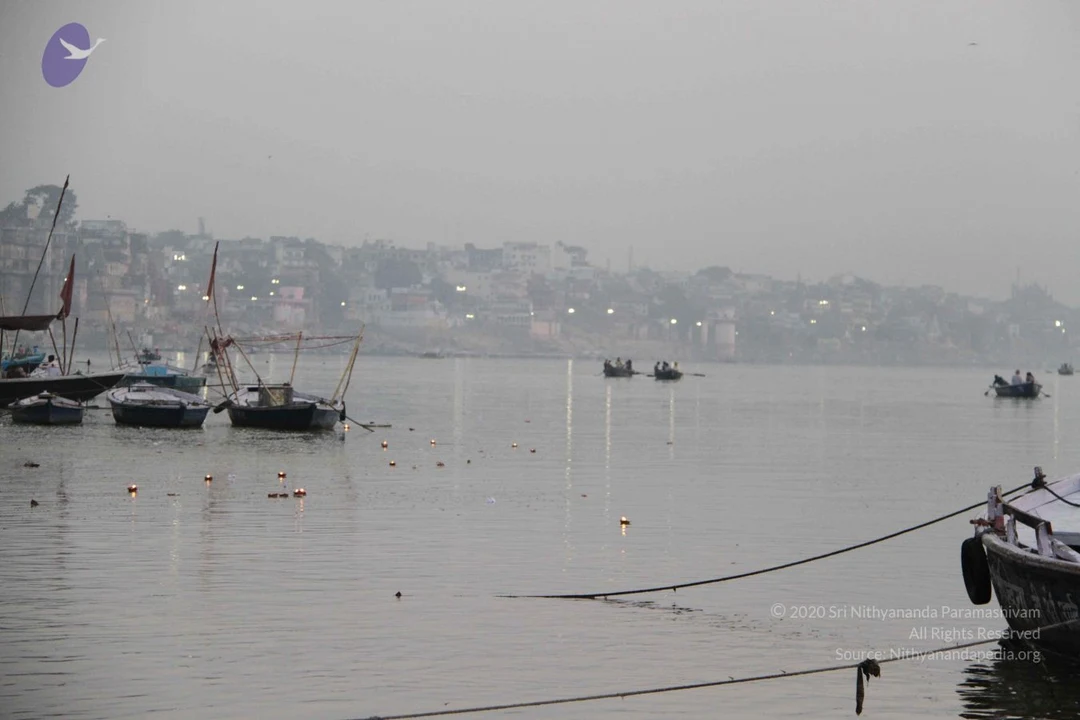
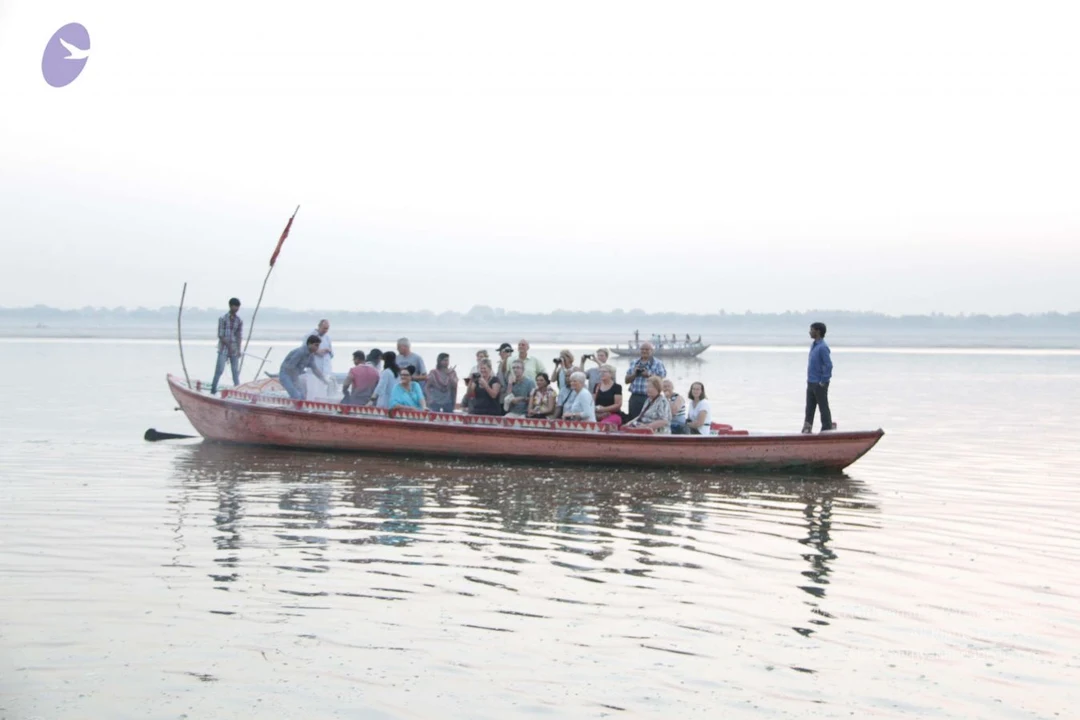
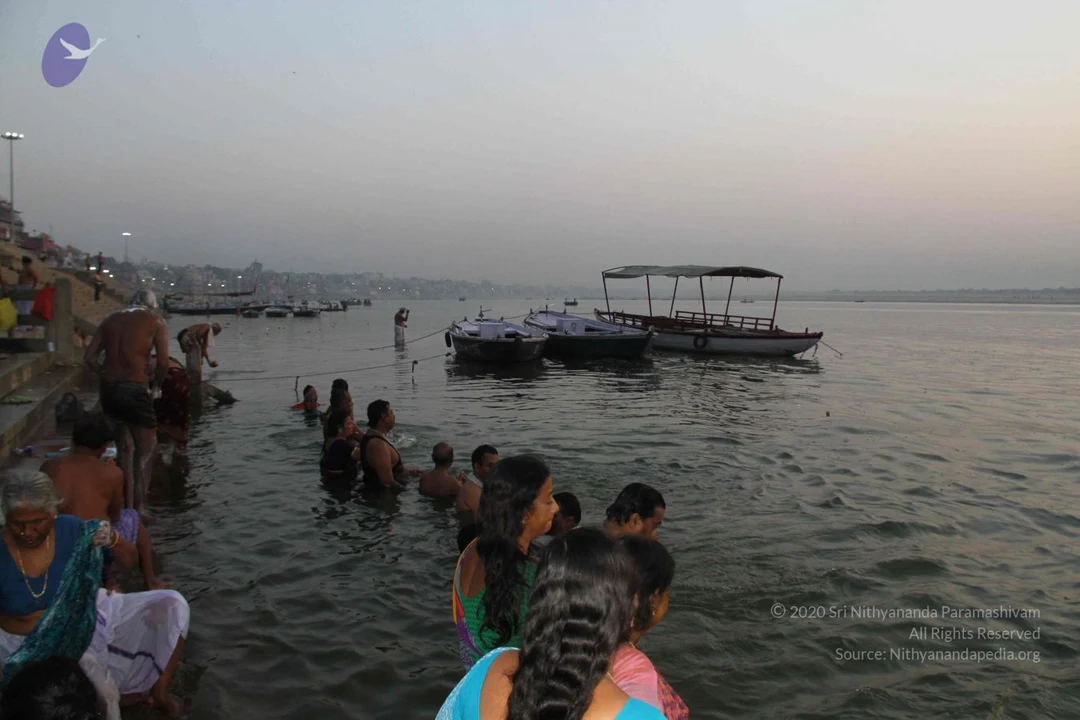
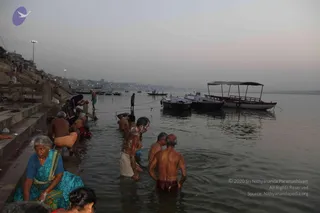
Night photograph of a river waterfront. In the foreground a small dark boat with a canopy sits at the water's edge, with another boat partly visible at lower left. No people are visible, and no ritual or a person presence can be seen in the scene.A hazy, overexposed photograph of a wide, calm river surface with gentle ripples under a pale white sky. A faint low shoreline runs across the horizon in the distance. No people, boats, or ritual activity are visible; the scene is an empty river view.A blurred photograph of a broad river at dusk, taken from a boat. Rippled, dark grey water reflects faint pink and mauve light from the sunset sky. A low, dark treeline runs along the distant far shore under a pale hazy sky. No people, ritual objects or figures are visible.A calm river at dusk under a pale pink and grey sky. Gentle ripples and reflected warm light cover the water in the foreground, while a low dark shoreline runs across the horizon. No people, structures or ritual objects are visible.A wide, calm river at dusk under a pale hazy sky with a soft pinkish glow near the horizon. Rippled water fills most of the frame, reflecting muted tones, and a low dark treeline runs along the far bank. No people, statues, or ritual objects are visible.Dawn bathing on the Ganges ghats at Varanasi. Several devotees wade into the grey river water near a stone stepped embankment, some men bare-chested in dhotis, others in saris or dark clothing. An elderly woman in a teal and blue sari sits on the steps at the lower left, while a woman in a red garment and a woman with her hair in a bun appear in the foreground. Moored wooden boats with a covered canopy sit on the water to the right, and the hazy city skyline with street lamps lines the far bank.

solo7-qanda session

61 photosSource gallery
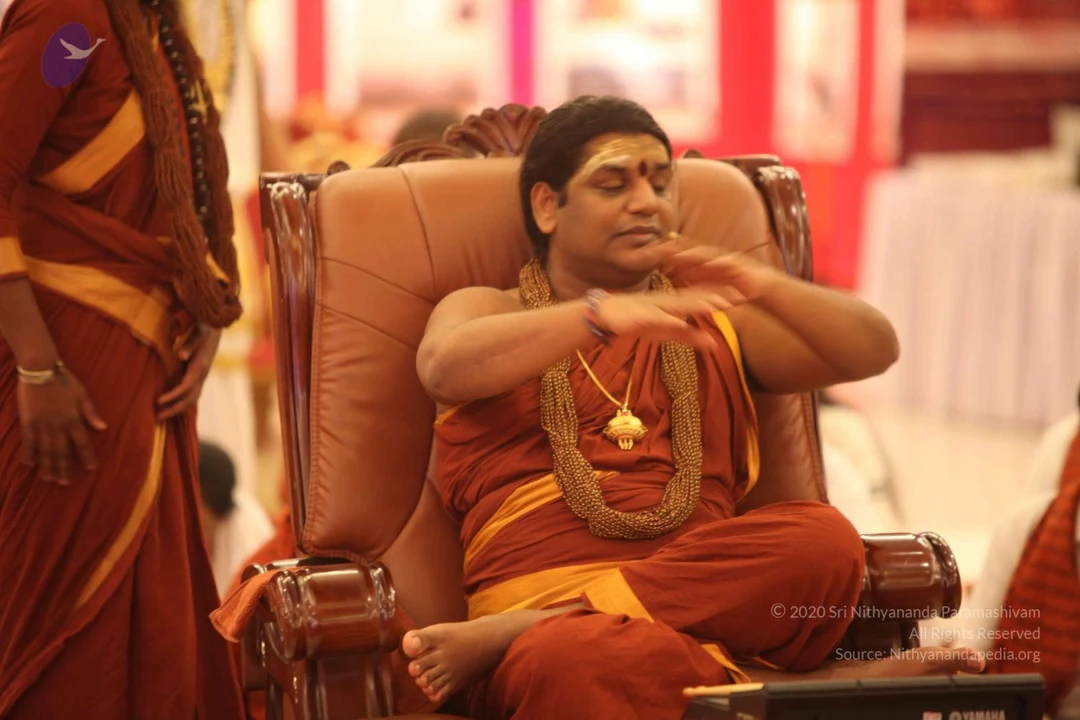
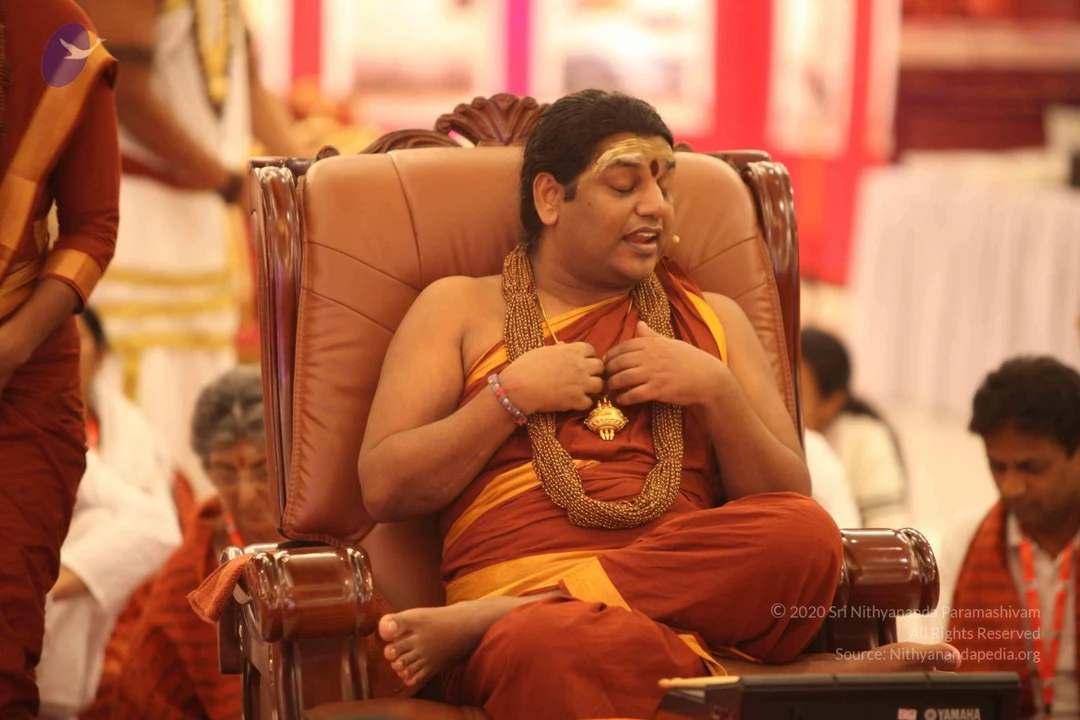
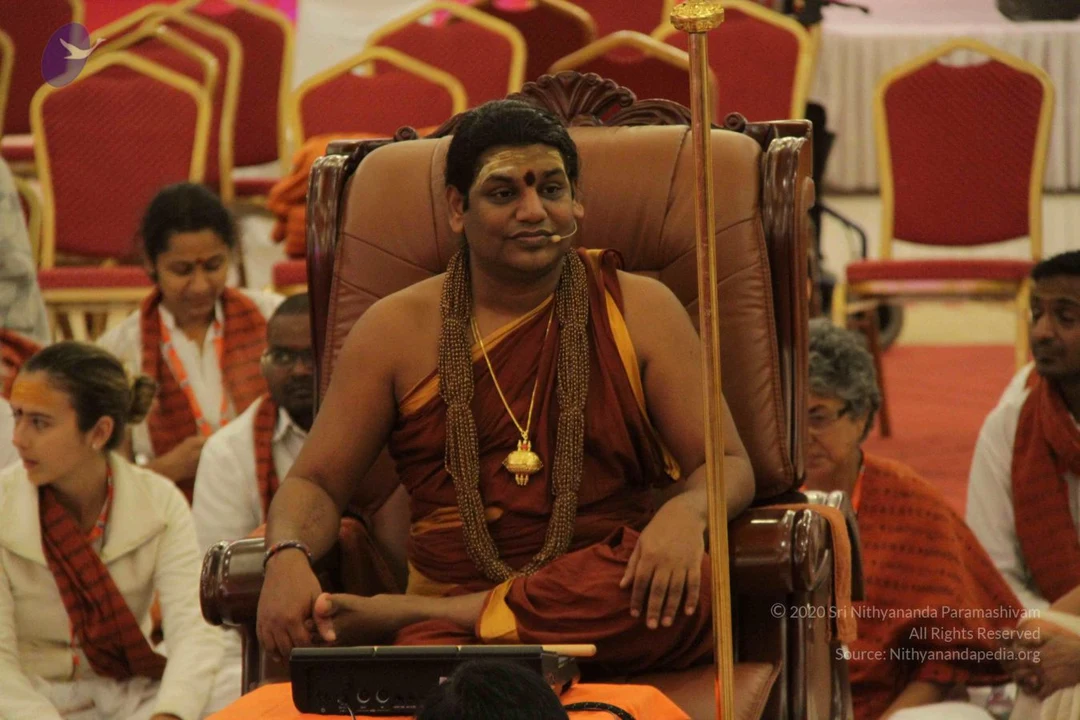
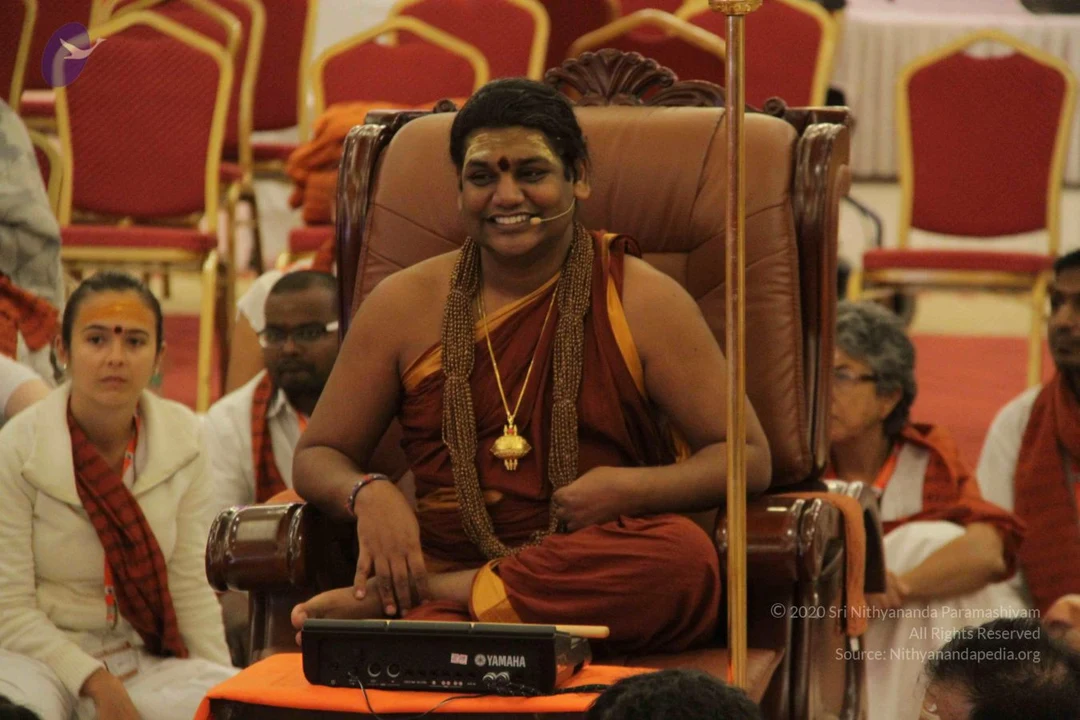
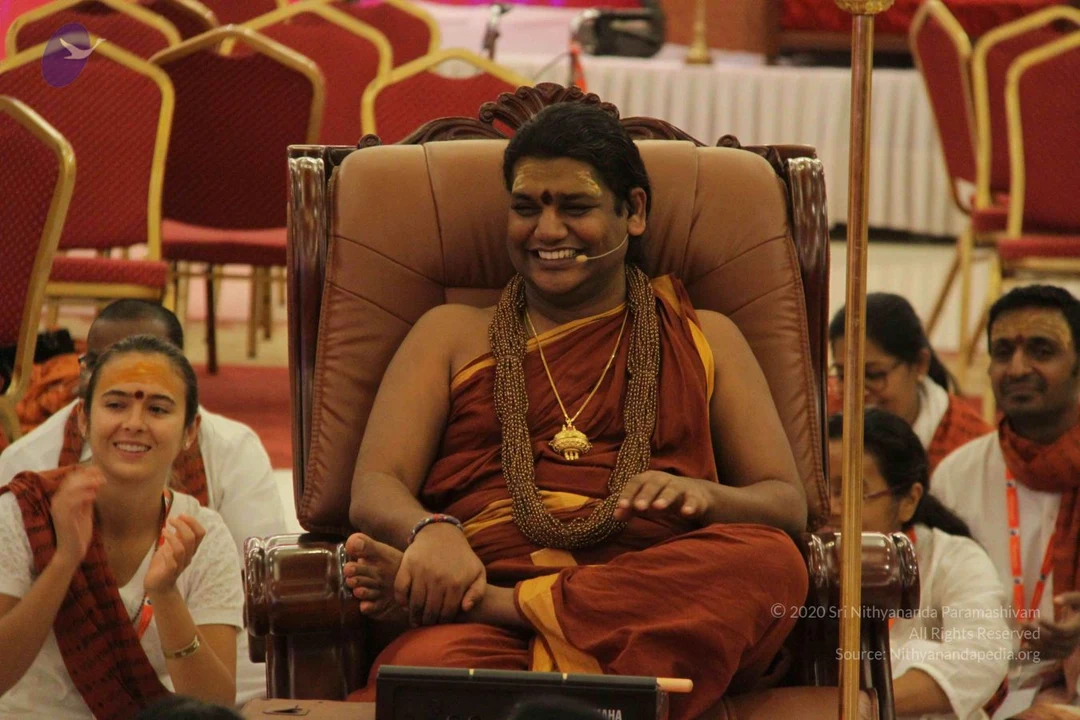
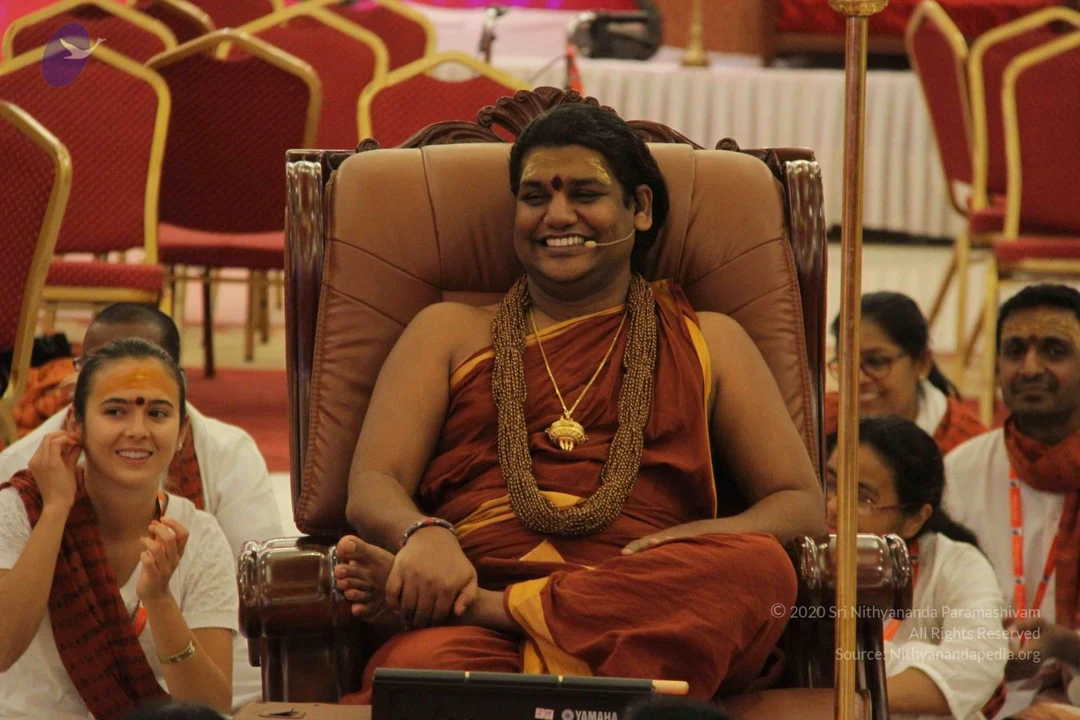
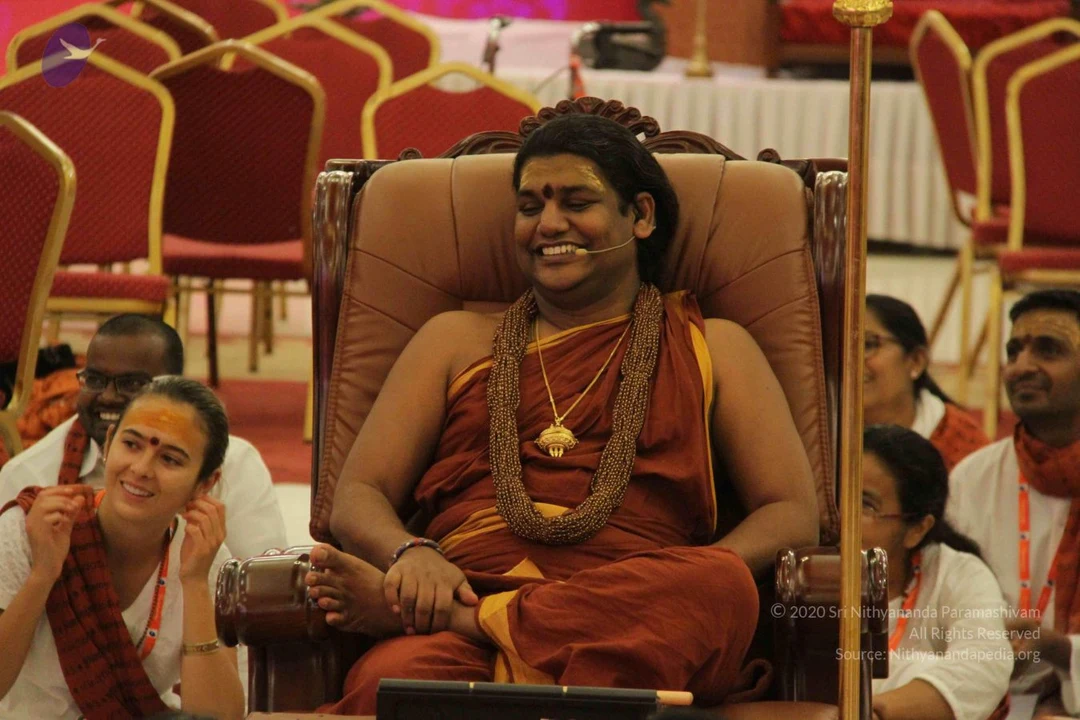
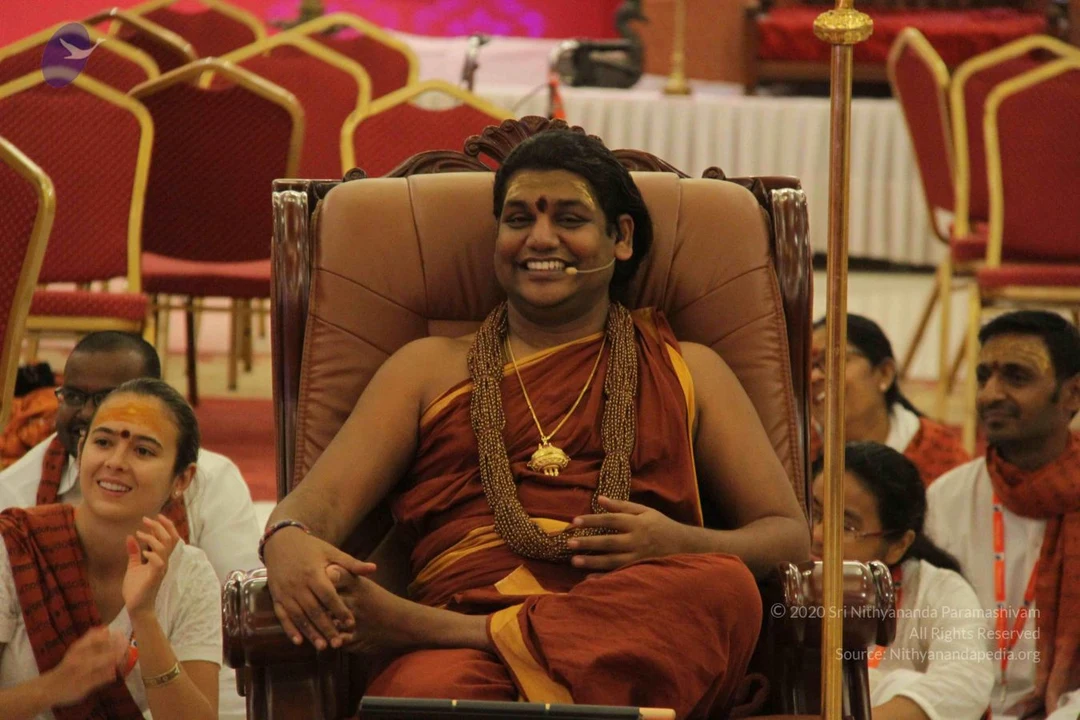
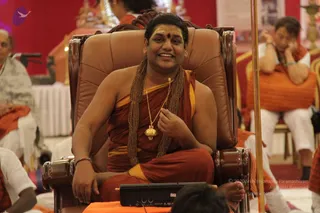
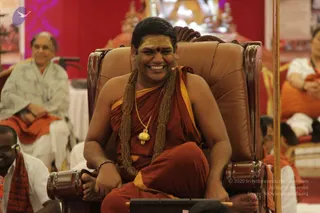
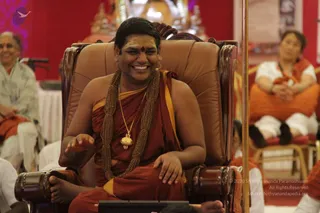
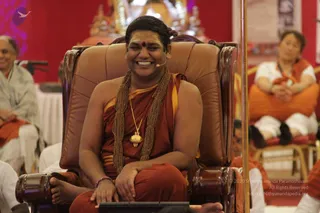
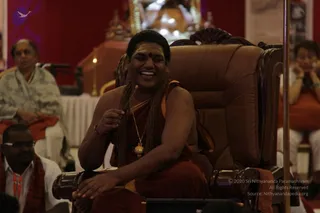
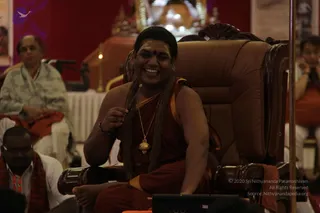
A smiling man sits in a large brown leather throne-style chair in the centre of a red-walled hall. He wears a rust-orange and saffron cloth draped over his shoulders and torso, a gold pendant on a gold chain, several strands of brown beaded malas across his chest, a red-orange bindi on his forehead and a beaded bracelet on his wrist. He holds a small lavalier microphone near his chin and rests one foot on a footstool beside a black audio mixer. Behind him to the left, a white-haired woman in a grey shawl and seated devotees in orange shawls and white clothing sit on chairs, with a tall brass pole in the foreground. Appearance-based label: a person, identified by the saffron clothing, beaded malas and gold pendant on a throne with a microphone.A smiling man in saffron-orange robes sits on a carved dark wooden throne with brown leather cushions, a gold pendant hanging on his chest and a long brown rudraksha mala with a gold ceremonial necklace draped over his shoulders. He wears a red tilak on his forehead and a small lapel microphone clipped near his ear, and his hands rest on the armrests. Behind him a red backdrop shows a golden deity murti and decorative altar elements. To the left an elderly woman in a white shawl sits in a chair, and to the right another woman in orange clothing sits with hands folded. The scene suggests a satsang discourse, with saffron-clad figures and a microphone indicating a seated teaching session.A man in a brown leather armchair with carved wooden armrests smiles broadly during a satsang. He wears a rust-red and saffron draped robe, a golden pendant on a gold chain, and layered brown rudraksha malas, with a red bindi and white forehead markings. He sits cross-legged with bare feet visible, a red bracelet on one wrist. Behind him, a red backdrop with gilded decorations and a small shrine area. To the left, an elderly woman in white and orange sits smiling, and to the right, seated devotees in orange and white attend the gathering. A man in white with a red shawl sits at the far left edge. The setting is a satsang hall with a microphone stand in the foreground. a person is seated on the throne with the distinctive saffron robe, rudraksha malas and gold pendant as cues.A smiling man in a brown leather armchair with carved wooden arms, wearing a rust-orange saffron wrap, a long multi-strand beaded mala and a gold pendant necklace, with a red bindi on his forehead and bare feet. His hands are open in front of him and a small microphone is at his ear. Behind him, a red backdrop with gold deity murti and a framed picture. Seated devotees in orange and white clothing sit on either side, and a woman in a light grey top smiles at left. a person in the centre of the satsang setting.A man seated on a large brown leather throne-style chair smiles broadly, wearing a red-orange saffron cloth wrap and a gold-coloured pendant on a golden chain, with multiple strands of brown beaded rudraksha-style malas around his neck and a wristband. He has a red bindi and white tilak on his forehead and a small microphone headset. Bare feet rest on the floor and a black tablet or stand sits in front of his lap. Seated devotees in orange and white clothing and a seated older woman in white line the background, with a red backdrop and a decorated altar with deity murti visible behind.A smiling man with a short dark crop and a red bindi sits in a large brown leather throne chair during a satsang. He wears a saffron-orange robe with a yellow-gold trim, a thick brown rudraksha mala and a gold pendant, plus a small wrist bead bracelet, and has a headset microphone at his cheek. Behind him, a deity murti stands on a red-draped stage. On the left, an older woman in white with an orange shawl smiles, and on the right a woman in orange and white sits in a chair with her feet tucked up. a person in a saffron robe and rudraksha mala, seated on a throne as discourse speaker.

FB-photo-of-the-day

1 photoSource gallery

Yoga-On-Ganga

7 photosSource gallery
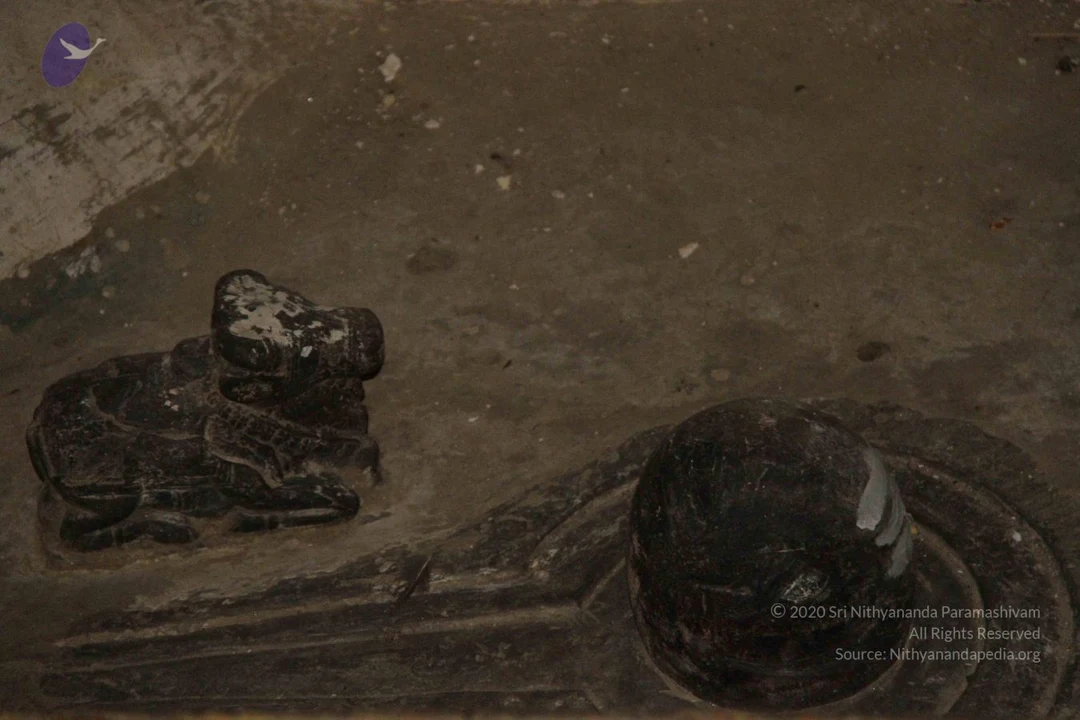
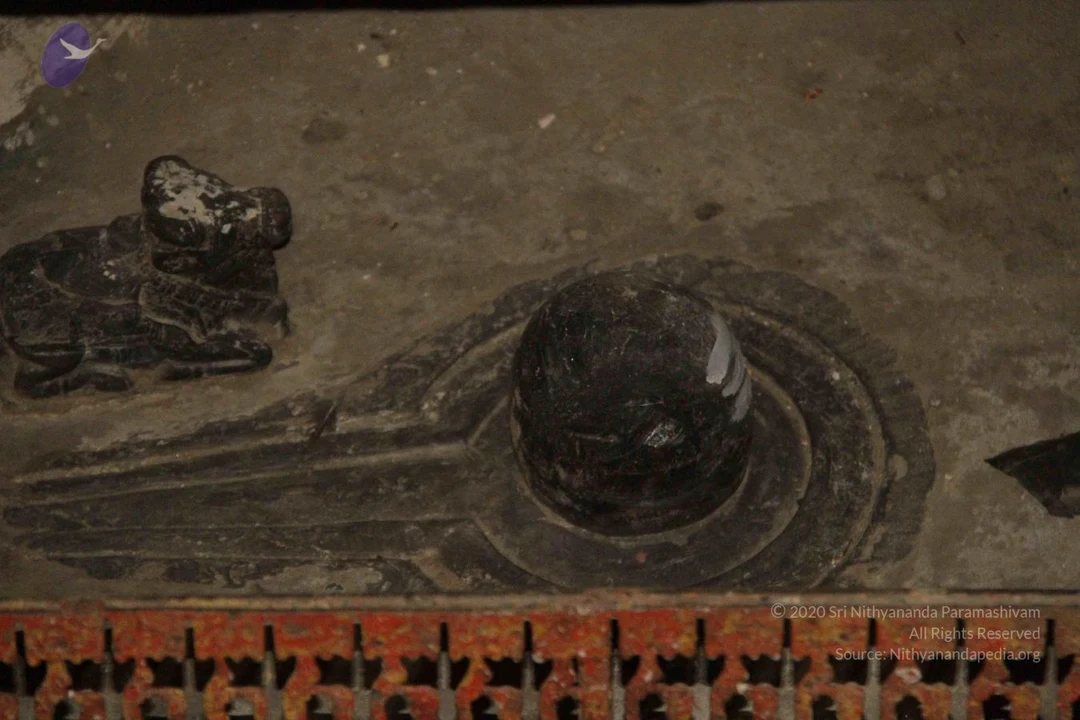
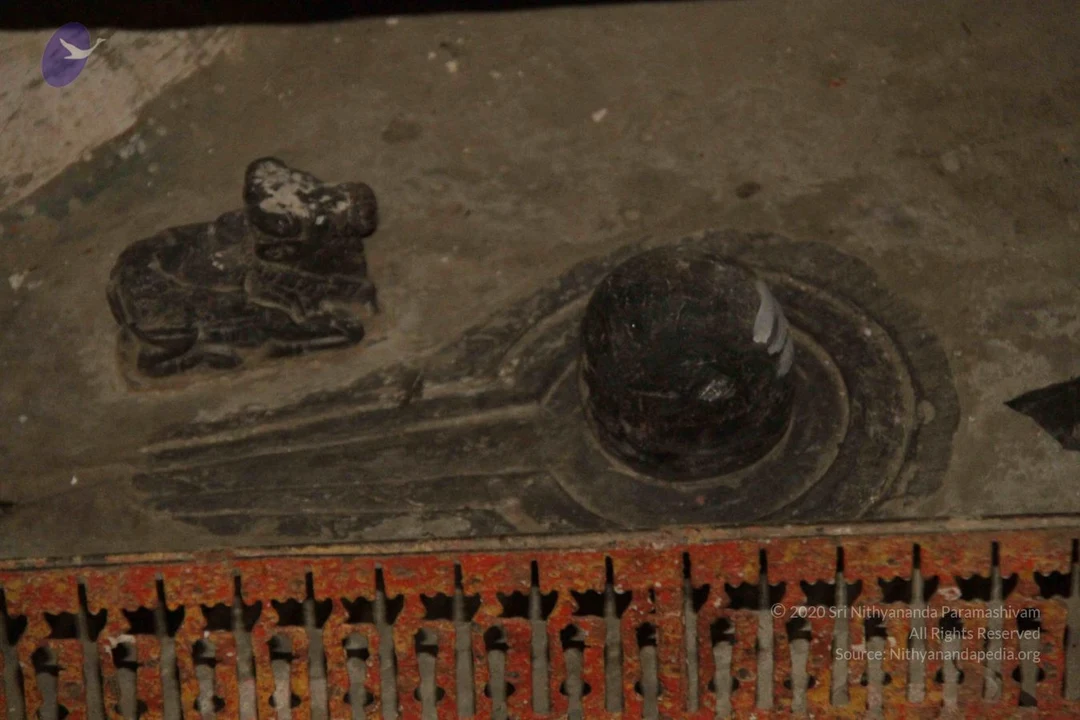
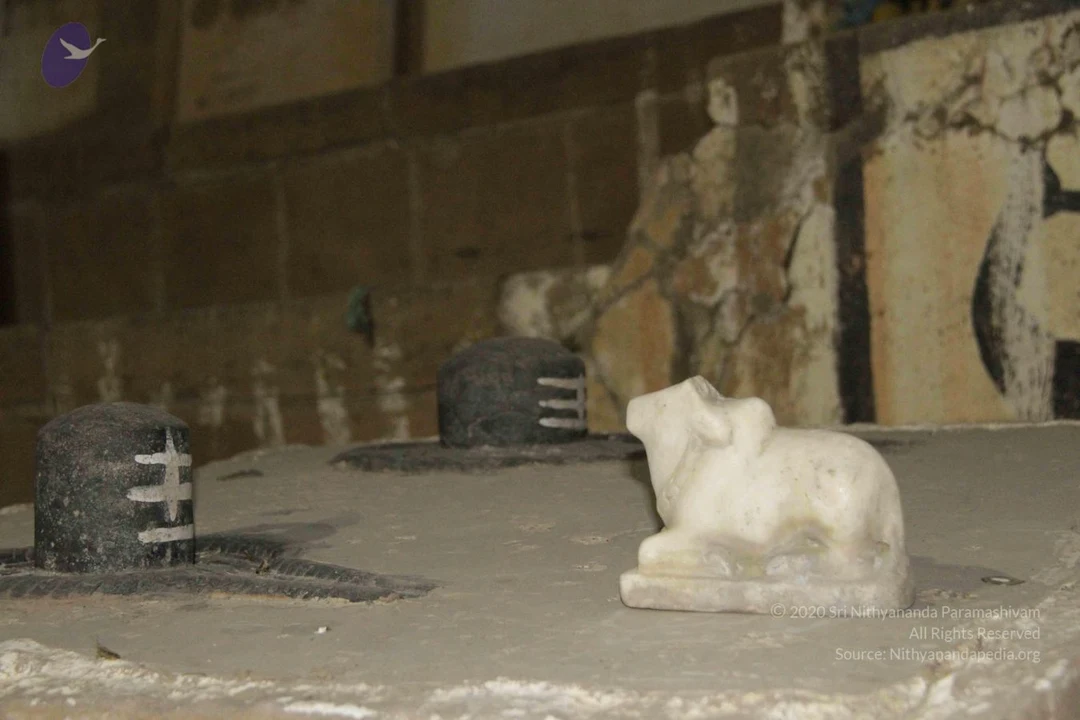
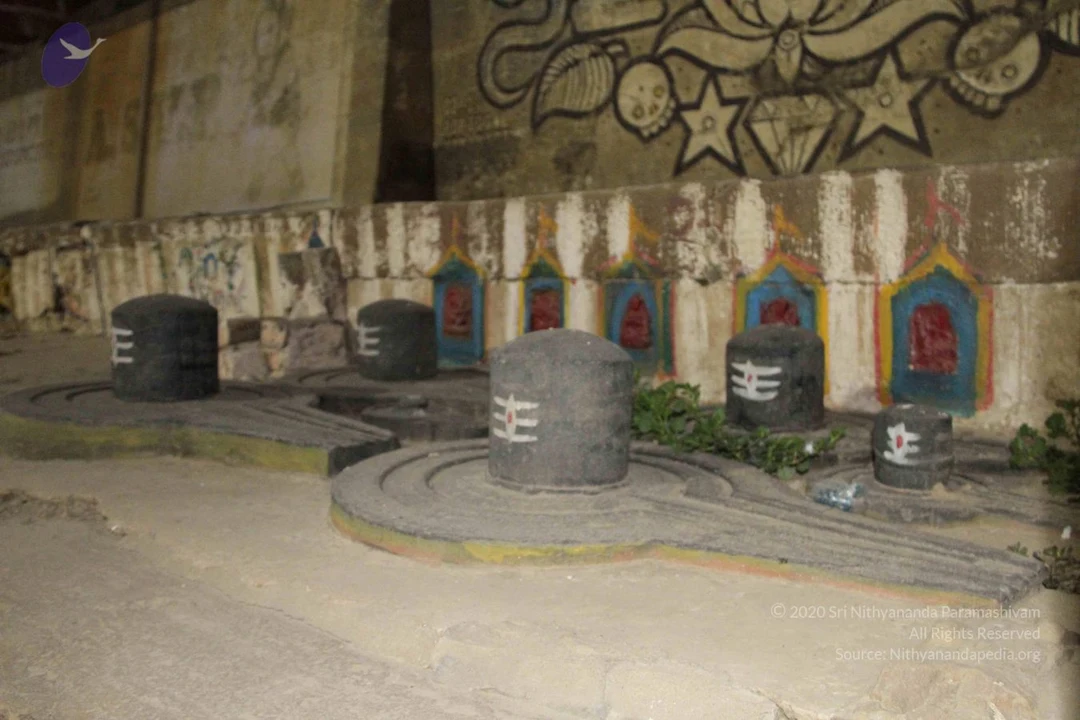
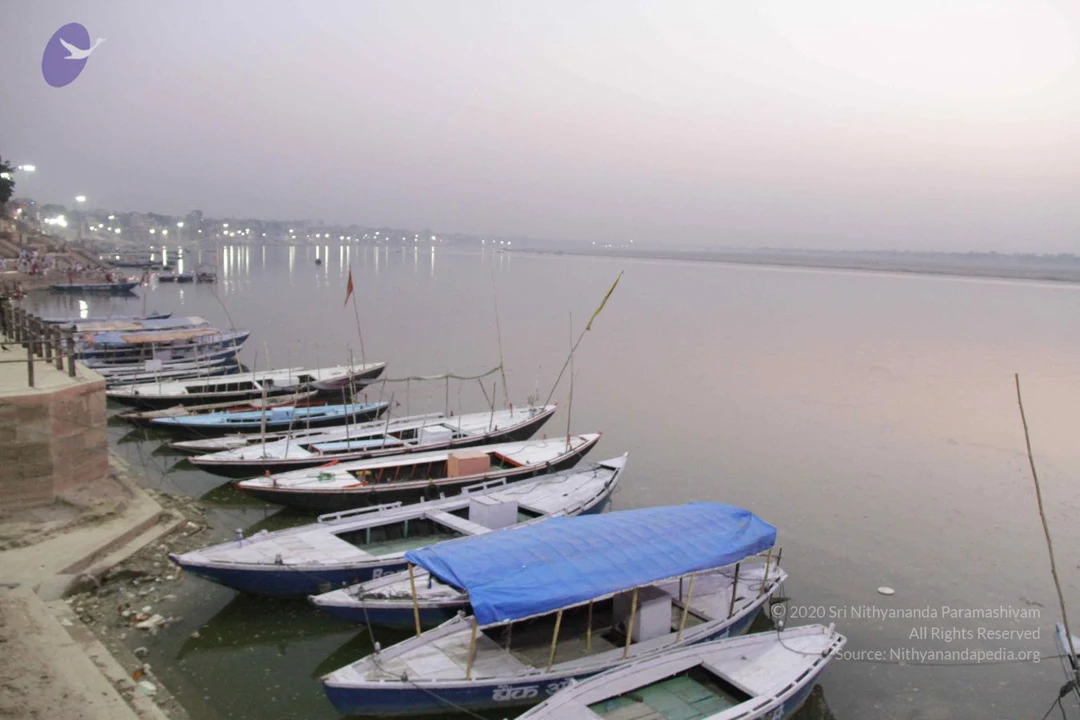
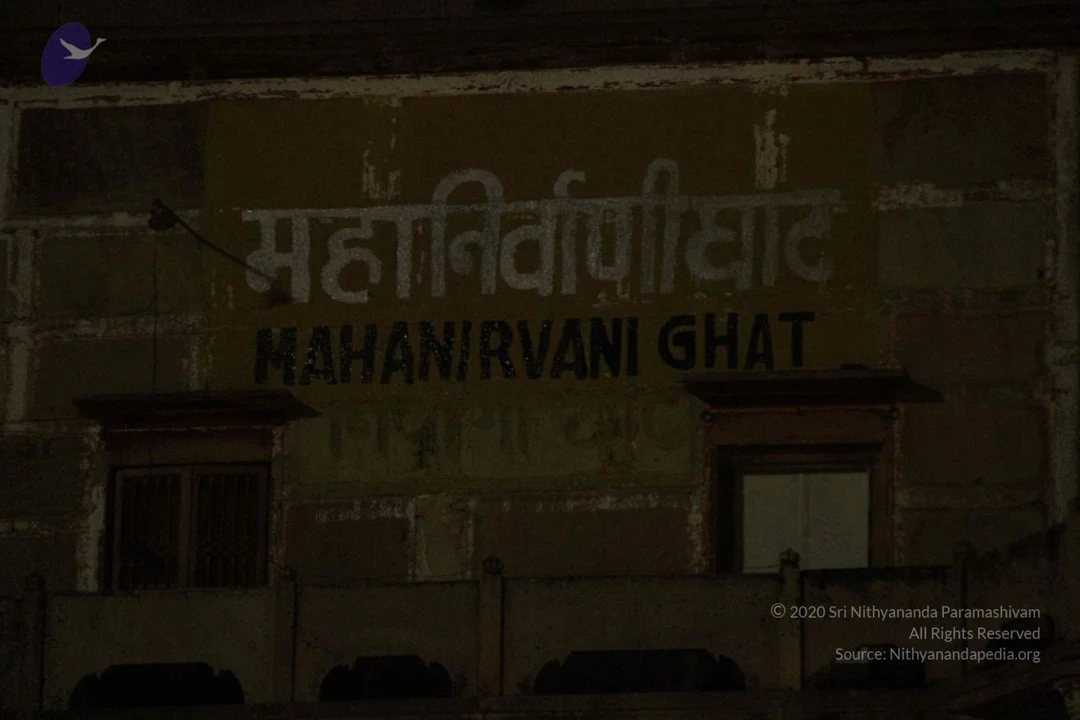
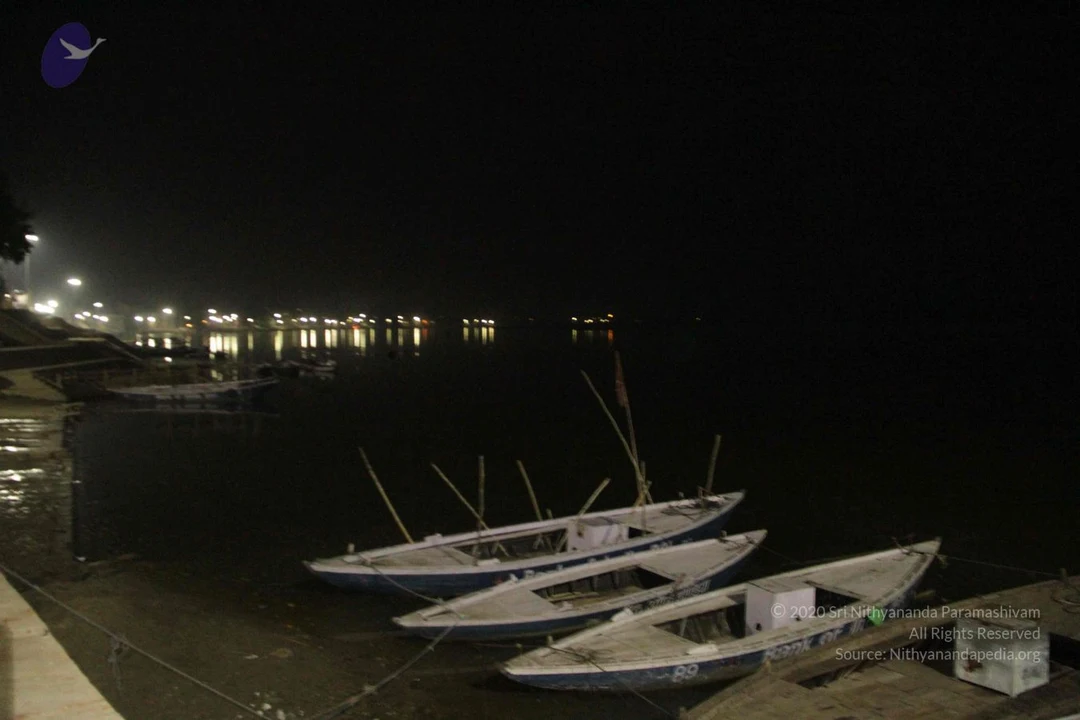
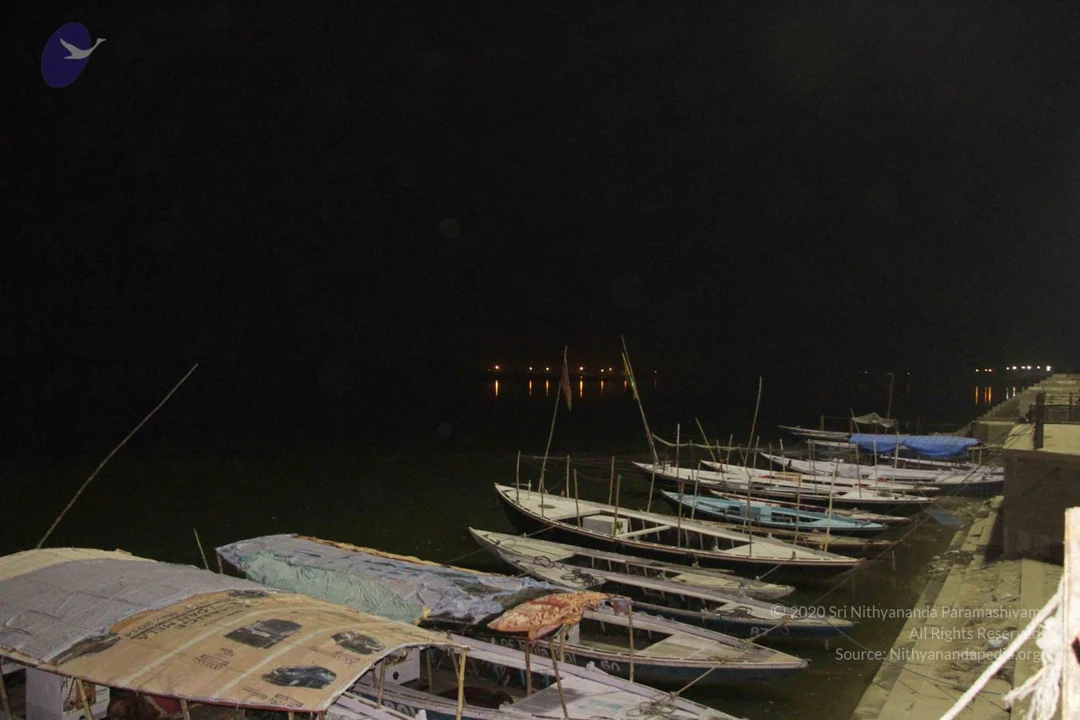
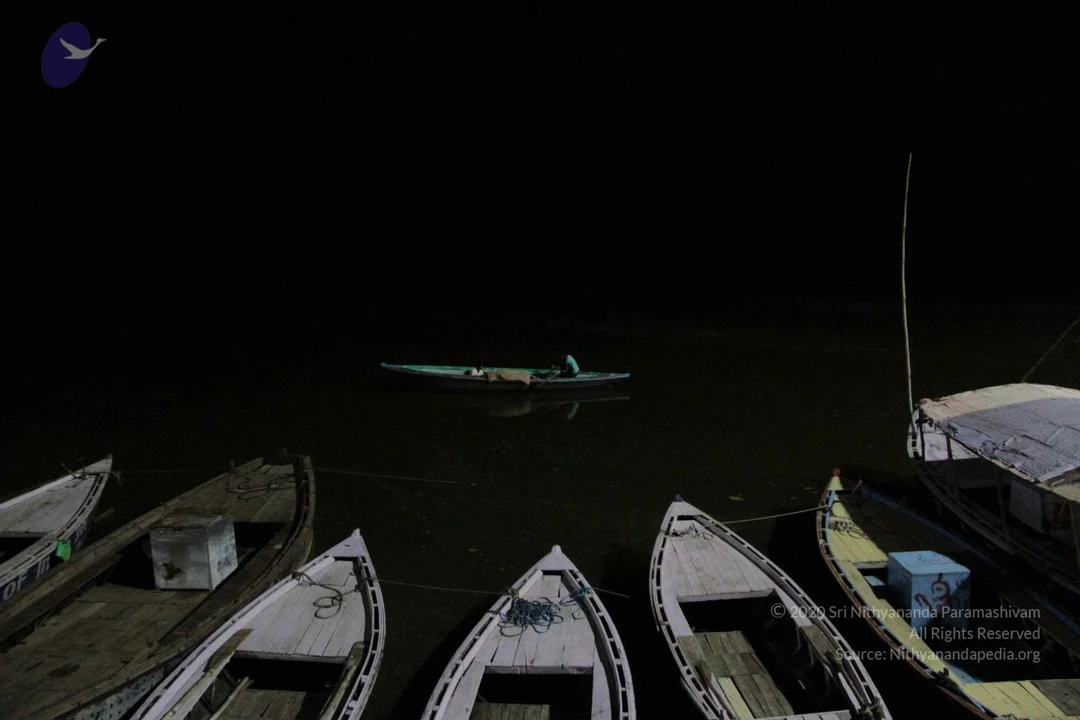
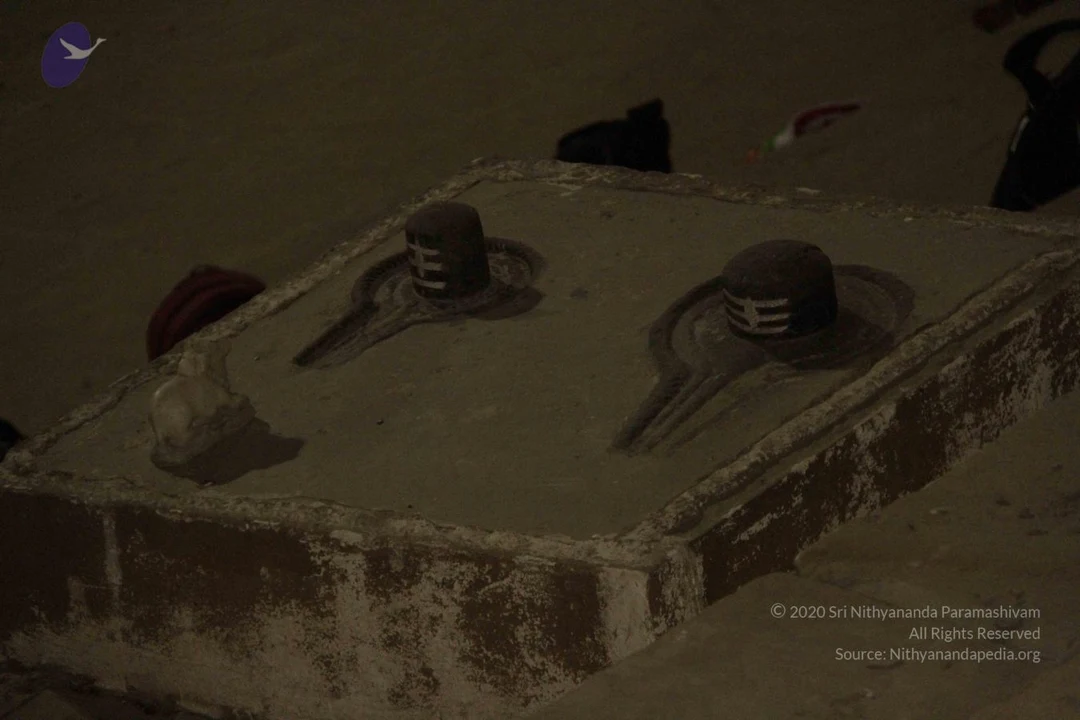
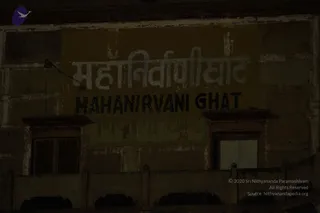
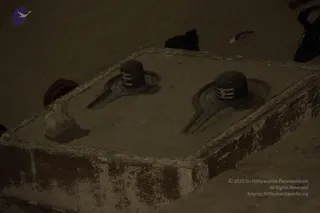
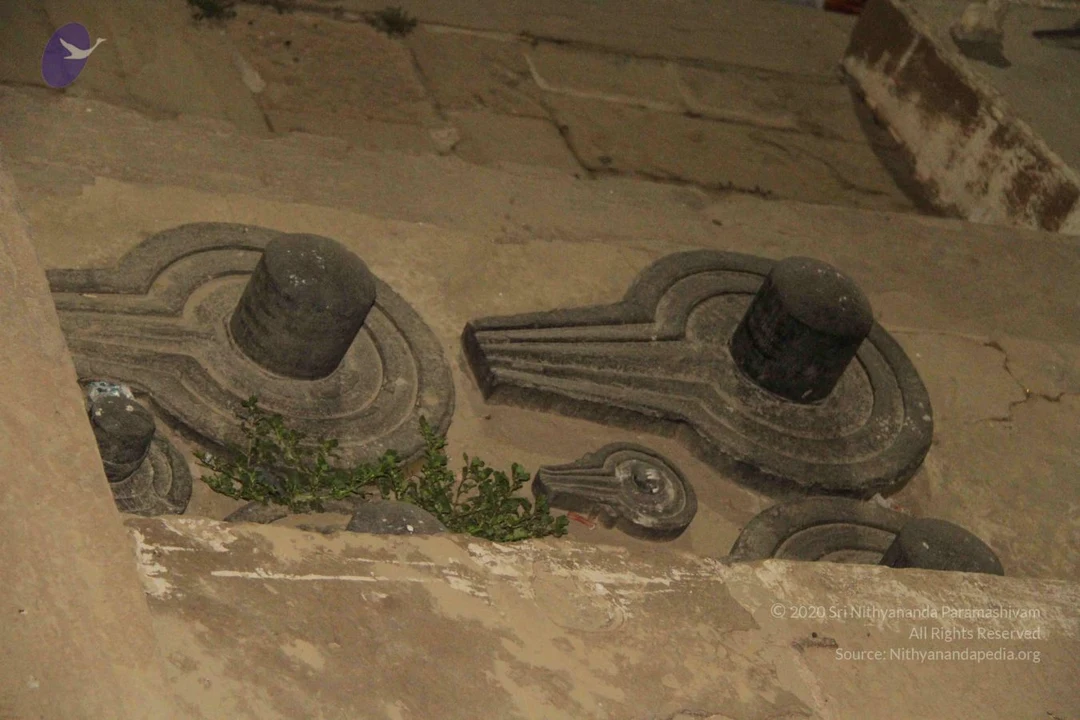
Night photograph of a weathered, dimly lit building facade at Mahanirvani Ghat in Varanasi. A painted sign in Devanagari and in Latin capitals reads Mahanirvani Ghat across a pale, peeling wall. Below it are two small windows, one with iron grille bars, and a low parapet with dark arched openings in the foreground. No people are visible, and no a person candidate appears in the scene.Night photograph of the Ganges riverfront ghats at Varanasi. Three wooden rowboats with blue-painted hulls and bamboo poles are tied up at the stone steps in the foreground, with a white metal box on one boat. Street lights and reflections glow across the dark river in the background. No people are visible in the scene.Night photograph of a riverside ghat with a row of wooden rowing boats moored along the stone steps at the water's edge. Several boats have faded tarpaulin or cloth covers, one in the foreground with a printed fabric canopy, and others have blue covers. Thin bamboo poles stick up from the boats. Dark water reflects scattered lights from the far shore and the embankment. No people are visible.A night photograph of a river bank with several moored wooden boats in the foreground, their white-painted hulls and planked seats visible under faint light. Dark water extends behind them, and a single small boat with a figure sitting in it floats in the middle distance. A thin pole rises at the right edge beside a boat with a yellow-trimmed deck and a blue box. The scene is dark and quiet, with no ritual activity, deities or a person visible.A dimly lit photograph of two stone Shivalinga on a raised concrete platform with a flat square yoni base each, marked with horizontal white tripundra lines. A small carved stone figure sits at the left edge of the platform. Dark cloth bundles and a faint red and white item lie on the floor around the platform. No people are visible.A dusky twilight photograph over a wide, calm river at dusk. A thin crescent moon hangs in the pale sky above a dark tree line on the far bank. At the lower right, the bow of a small white boat is visible, with a bamboo pole carrying a faded orange flag and thin rope lines. No people are visible in the scene.

NarendraGiriMahraj-Visit
10 photosSource gallery
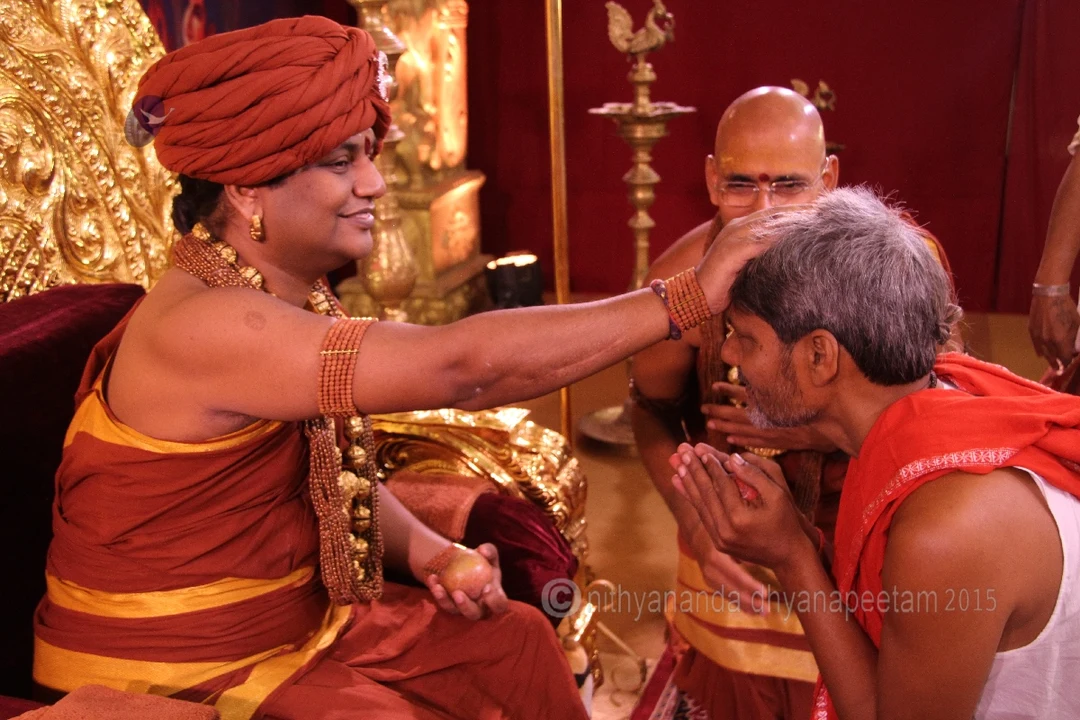
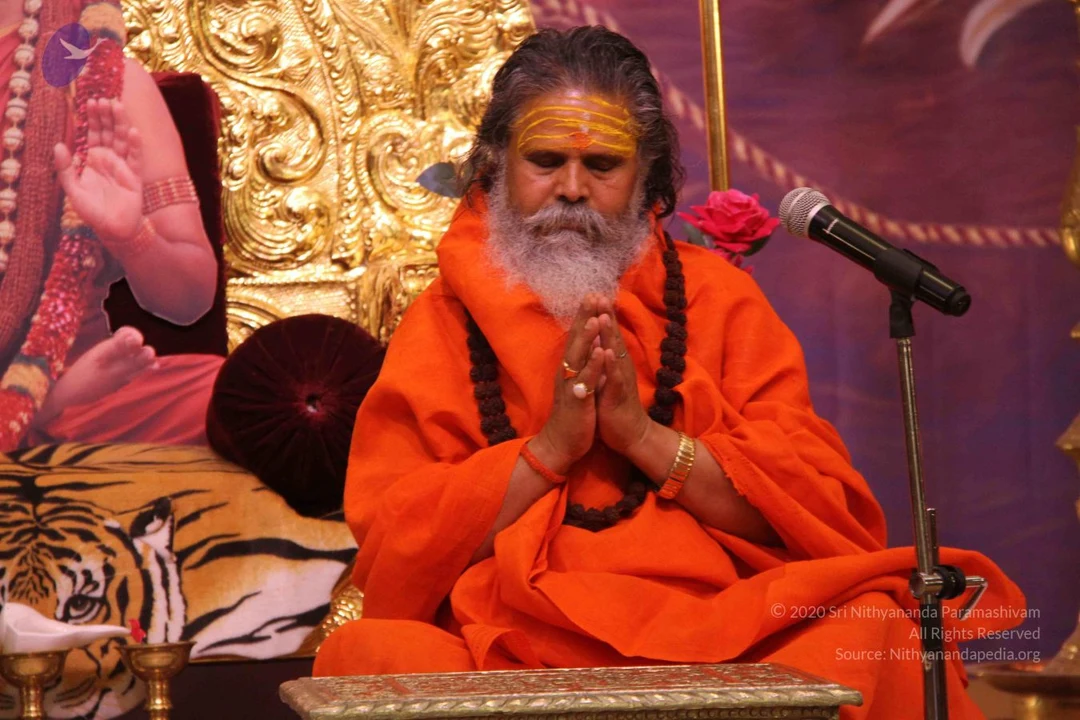
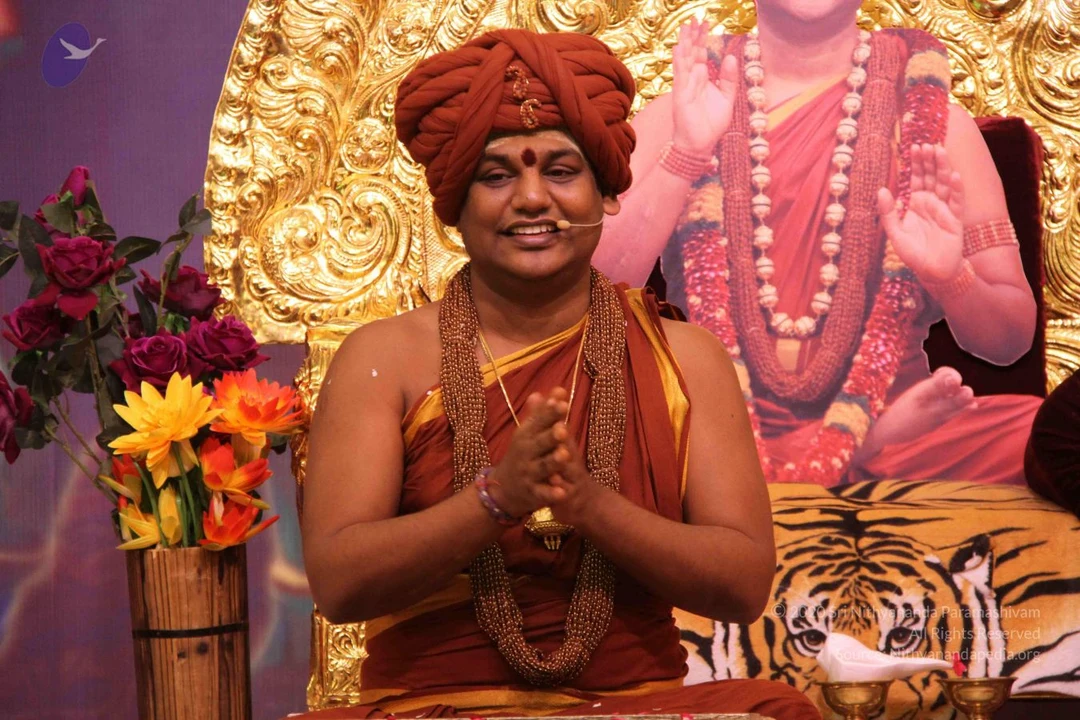
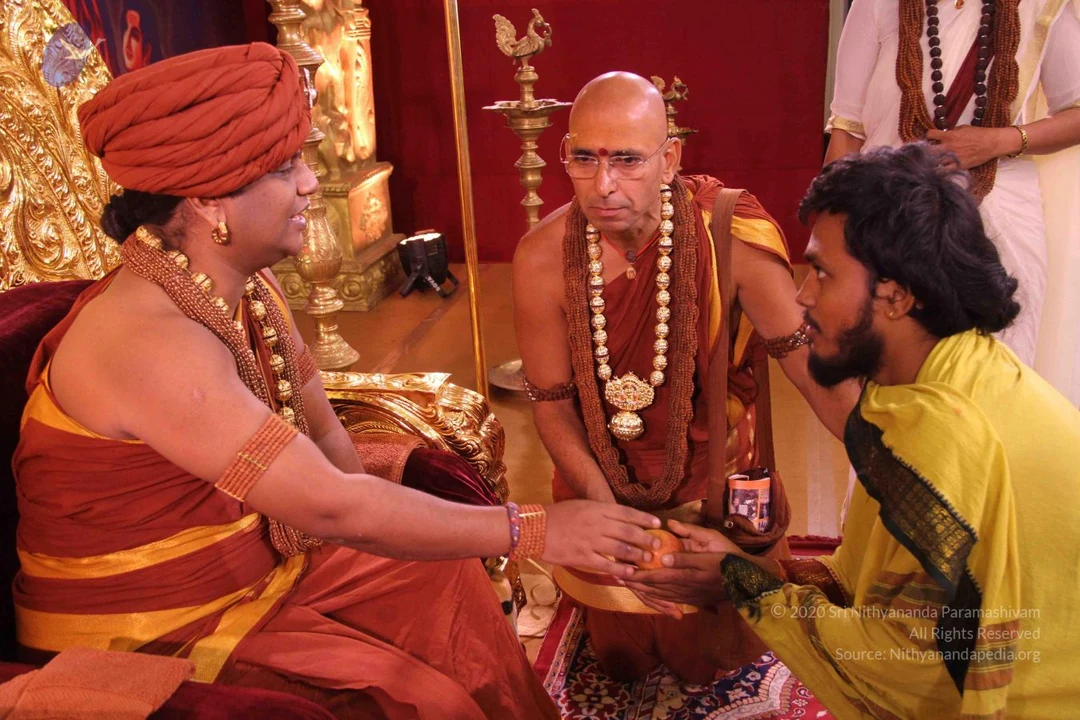
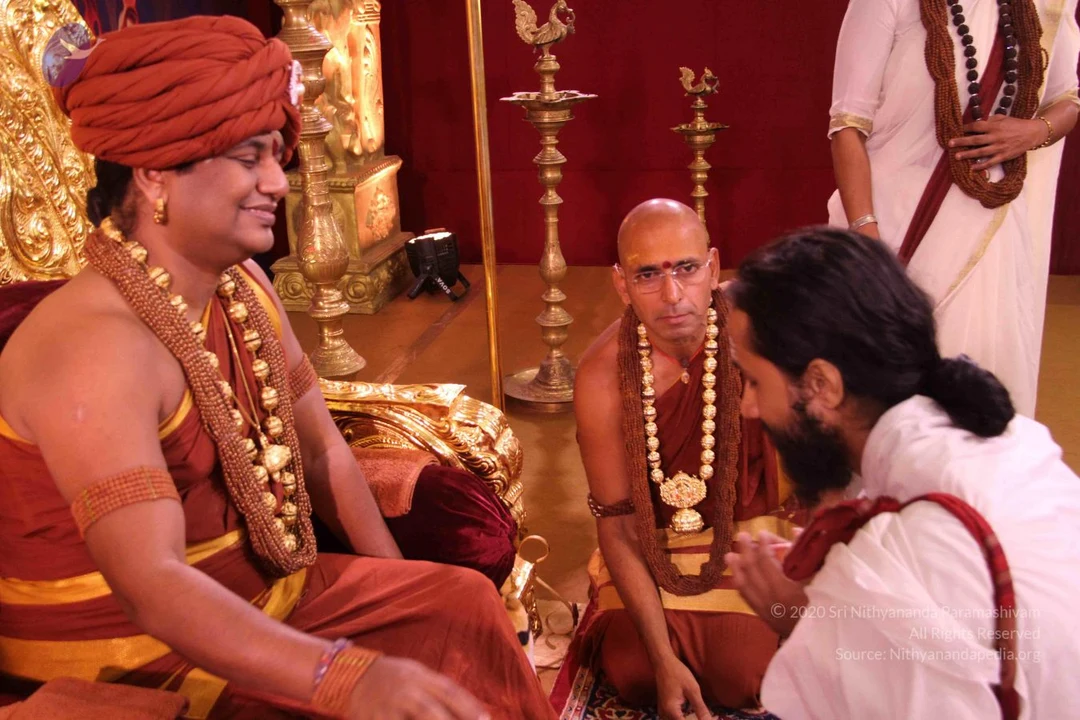
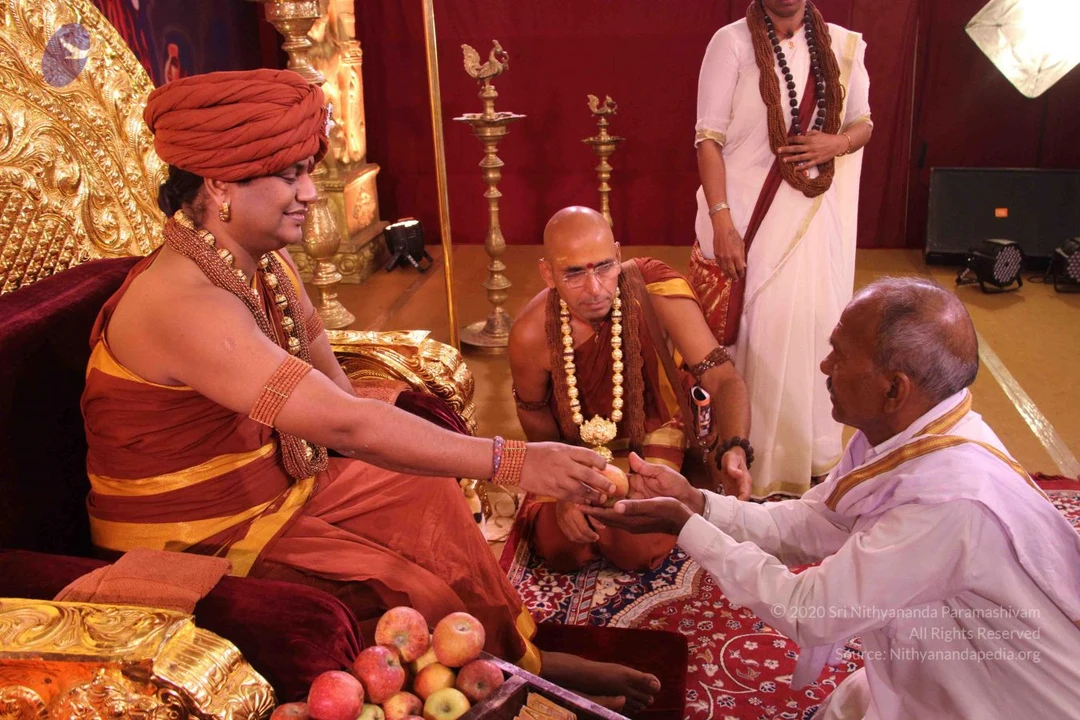
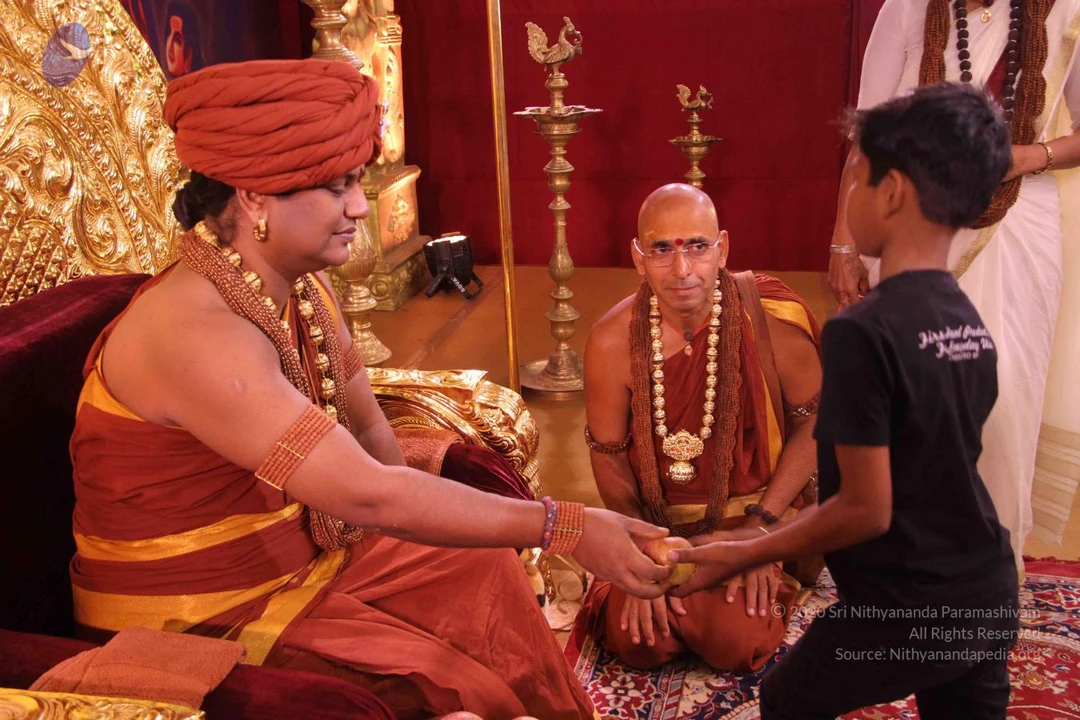
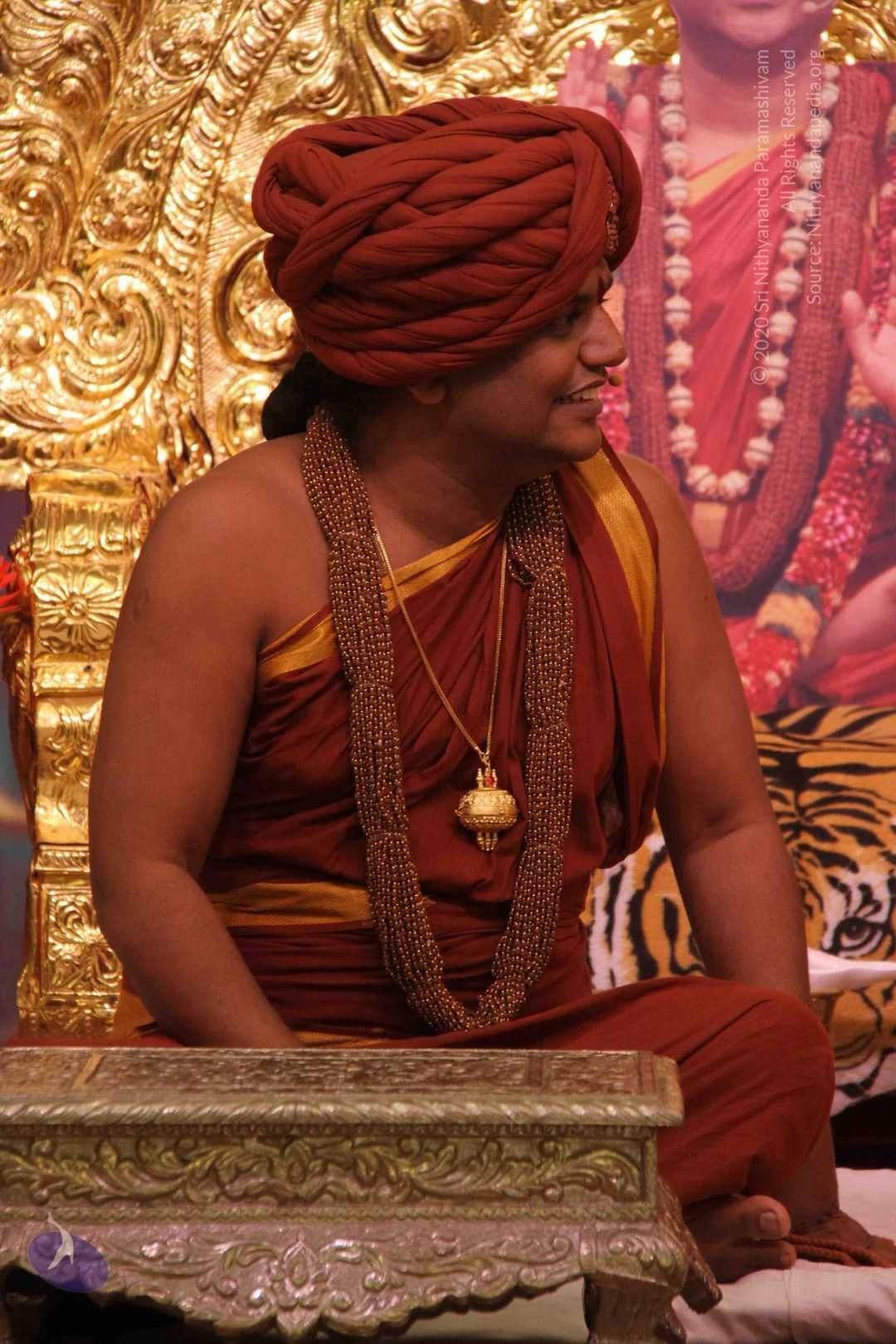
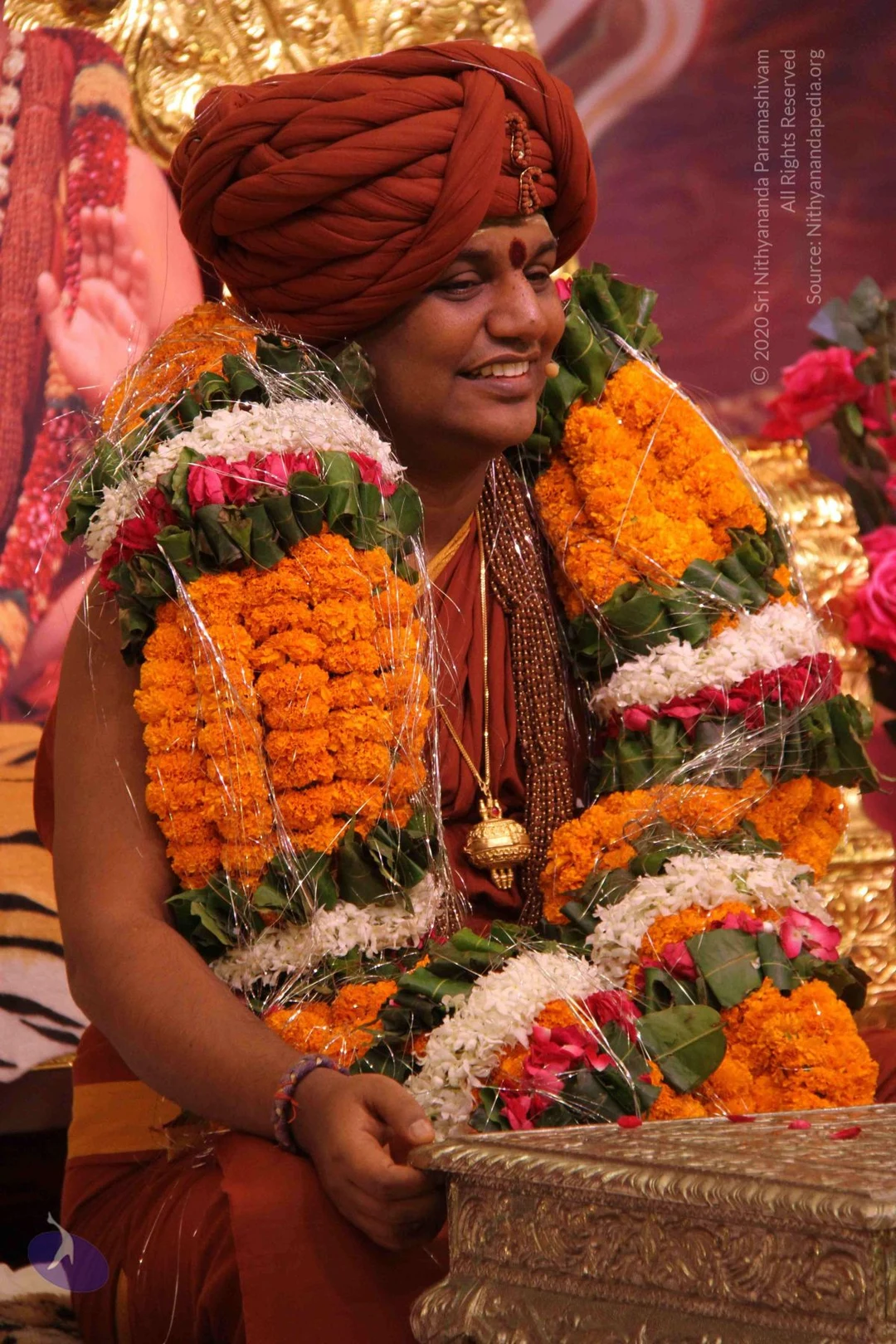
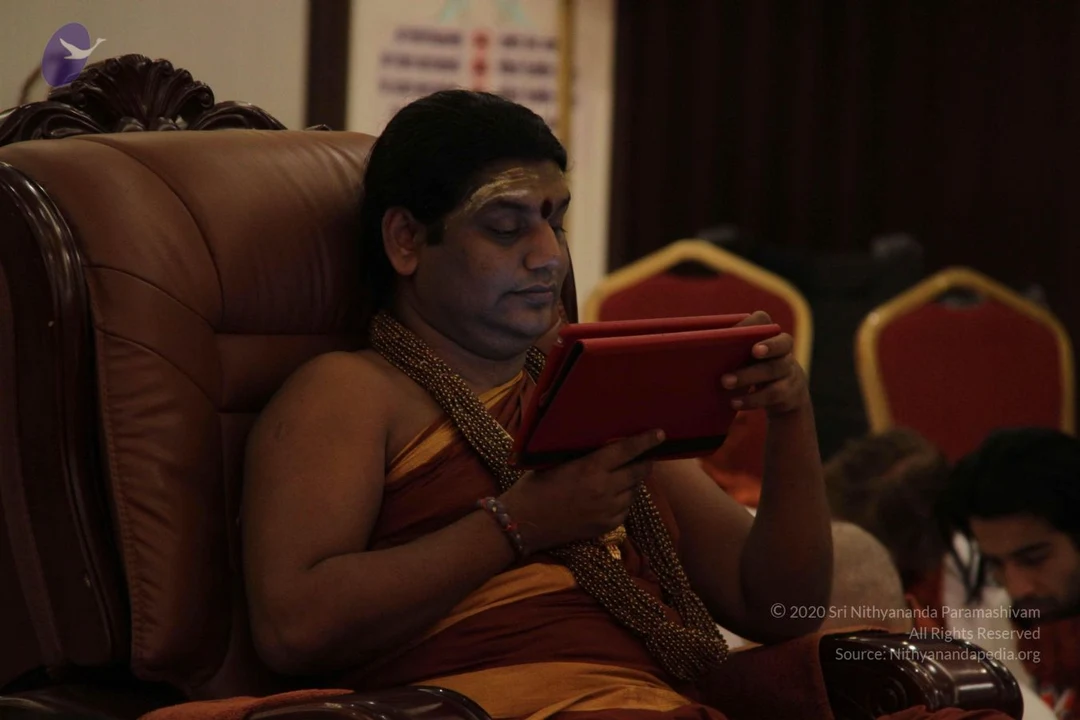
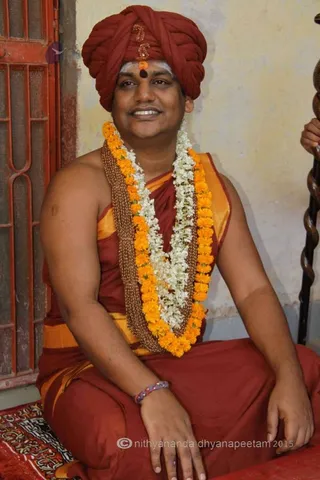
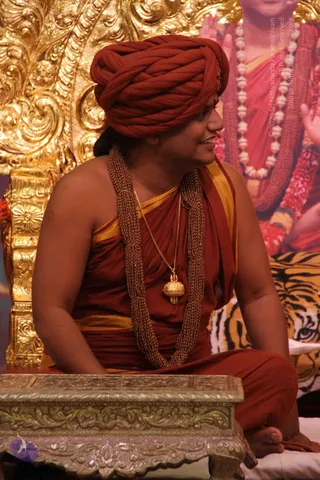
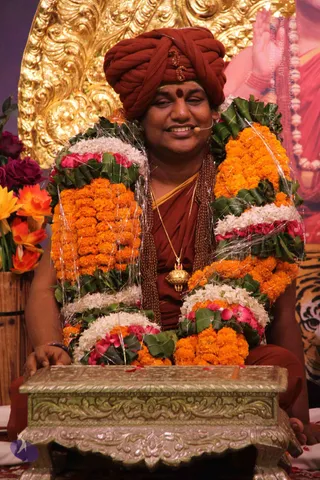
A bearded man in a flowing red-orange robe and a dark rudraksha mala stands in front of an ornate gilded shrine with a red curtain. He wears orange-yellow tilak on his forehead, holds a corner of the red cloth in his right hand while the left hand rests at his waist, and gazes upward. The setting is dim and warm, with a small red electronic display visible behind him. a person cues: the rudraksha mala and saffron-red robe are distinctive, but no further identifying features are clear enough for certainty.A seated man wearing a large rust-red turban and a red-orange draped robe with gold border sits on an ornate gilded throne-like seat. He wears long beaded bead necklaces of golden-brown beads and a thin gold chain with a gold pendant. Behind him is a backdrop showing a printed portrait of a figure in red robes with pink and white beaded garlands, and a tiger-striped cloth. In front is a carved silver-toned pedestal.A smiling man seated behind an ornate silver-toned table or pedestal, wearing a rust-red turban with a rudraksha mala looped over it, a red tilak on his forehead, and a reddish-brown robe. He is draped with thick garlands of orange marigolds, white jasmine and pink flowers with green leaves, wrapped in clear plastic, and wears a long chain with a gold pendant. A small headset microphone is visible near his face. Behind him is an ornate gold-leaf backdrop with a partially visible pink-robed figure, a bouquet of purple and orange flowers sits at left, and a tiger-striped cloth is at right.A seated man in an orange saffron robe speaks into a black microphone on a stand during a satsang. He has long grey-streaked hair swept back, a full white beard, yellow tripundra markings with a red dot on his forehead, and a white and orange marigold garland over dark rudraksha beads. His right hand is raised in a gesture while he speaks. Behind him are a gold ornate throne and a deep magenta backdrop with a rope motif and a pink rose. A carved brass stool stands in the foreground. Swamiji (probable): the seated speaker has the long swept-back hair, saffron clothing, rudraksha mala and garland cues associated with the teacher named on the page.A seated man in a rust-red turban and saffron-red robes sits at a golden ornate throne-like structure, smiling gently. He wears a rudraksha mala, a gold chain with a pendant, and a red tilak on his forehead. Heavy garlands of orange marigolds, white jasmine and pink roses drape over his shoulders, and clear plastic wrapping covers the flowers. His hand rests on a silver-toned ornate table beside him, with pink roses and yellow flowers in the background. Swamiji (probable): the rudraksha mala, rust-red turban and saffron-red robes match the page description of a satsang setting.A seated man in a rust-red turban and matching red-orange robes sits with eyes closed and a faint smile, his head tilted slightly. Multiple layered garlands of orange marigolds, white jasmine and pink roses, wrapped in clear plastic, drape over his shoulders and chest. A gold pendant and a dark beaded chain hang at his neck, and a red bindi marks his forehead. One hand rests on an ornate silver-coloured tray or stand in front. A gold-framed backdrop with red roses and a flame-like image appears behind him.
QnA Session
4 photosSource gallery
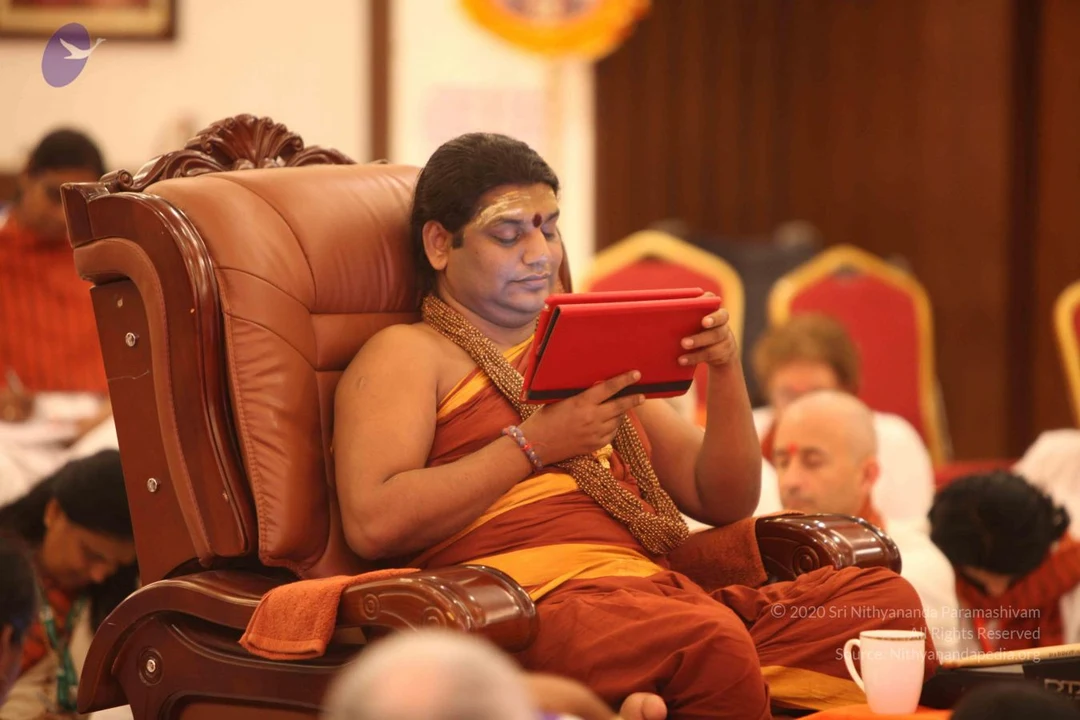
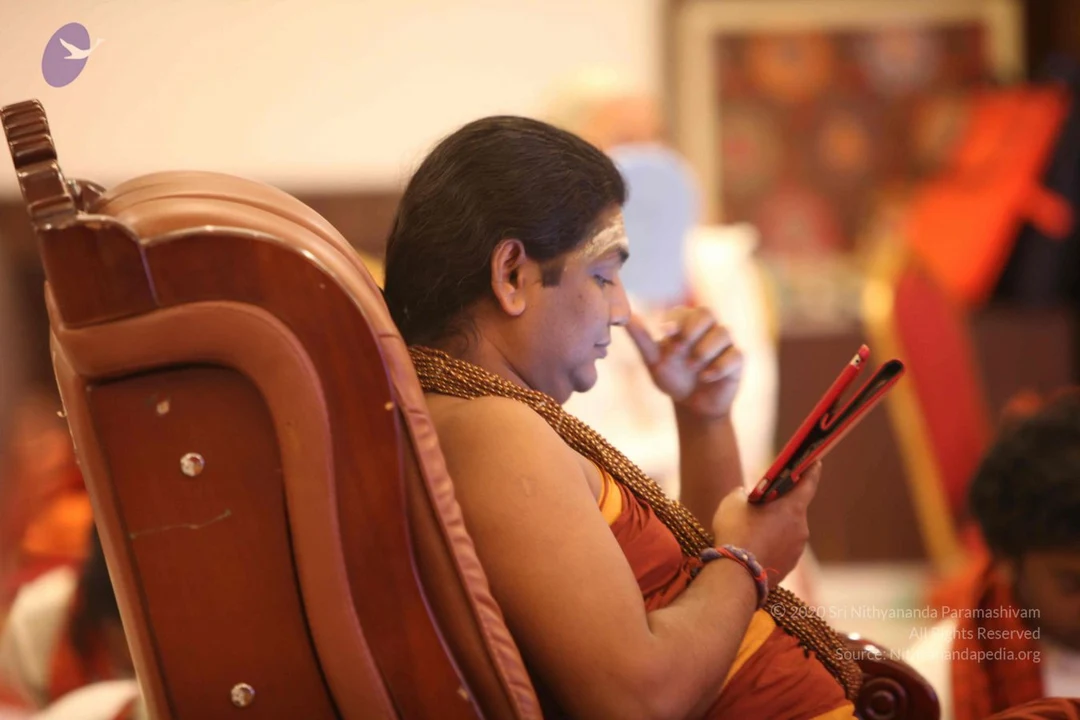
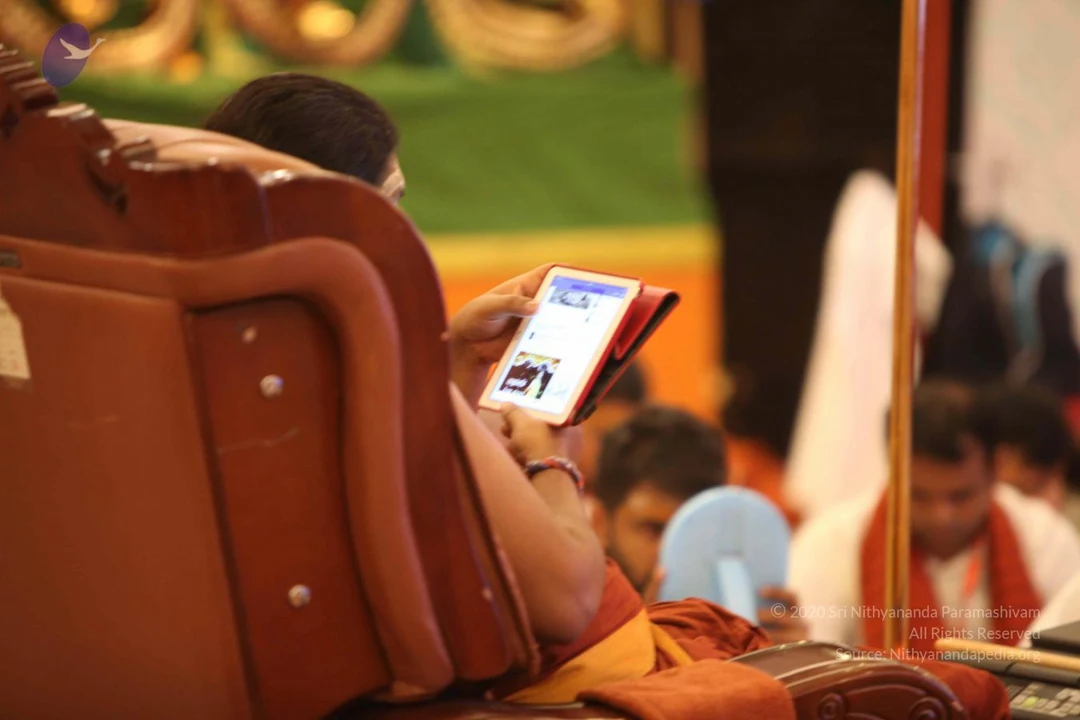
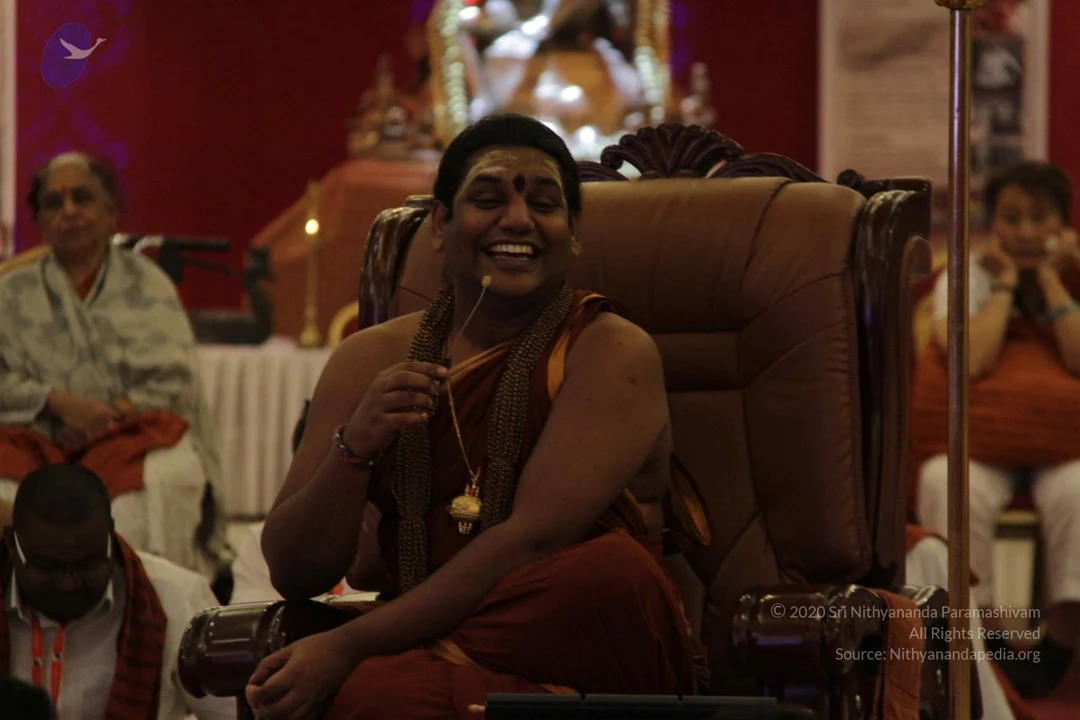
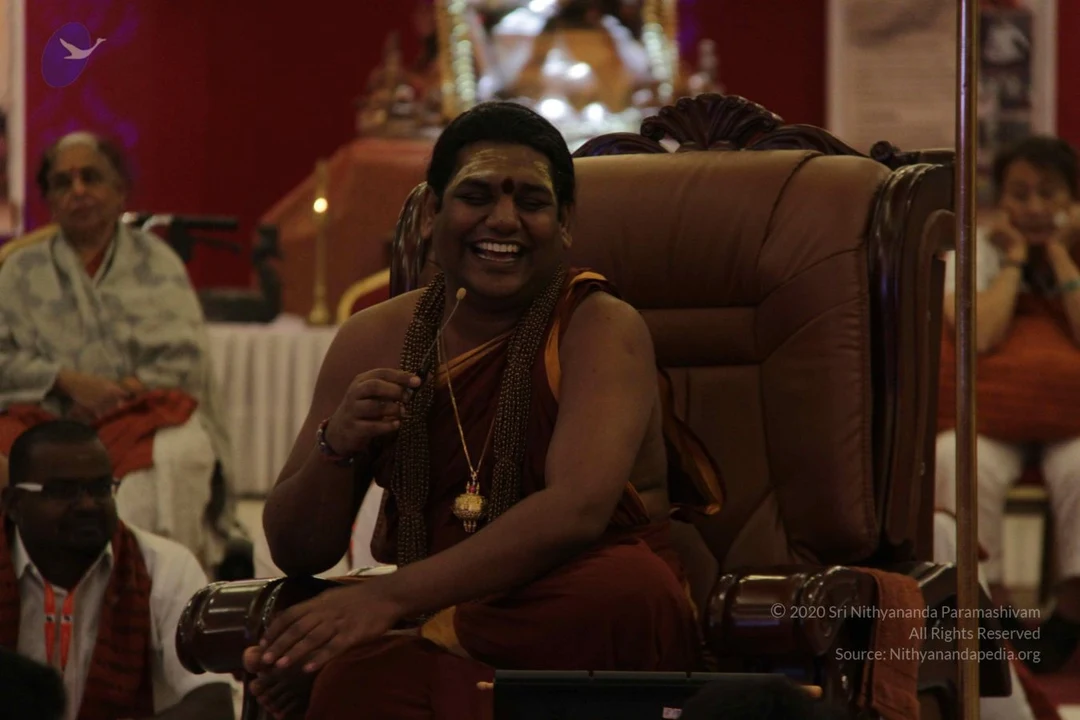
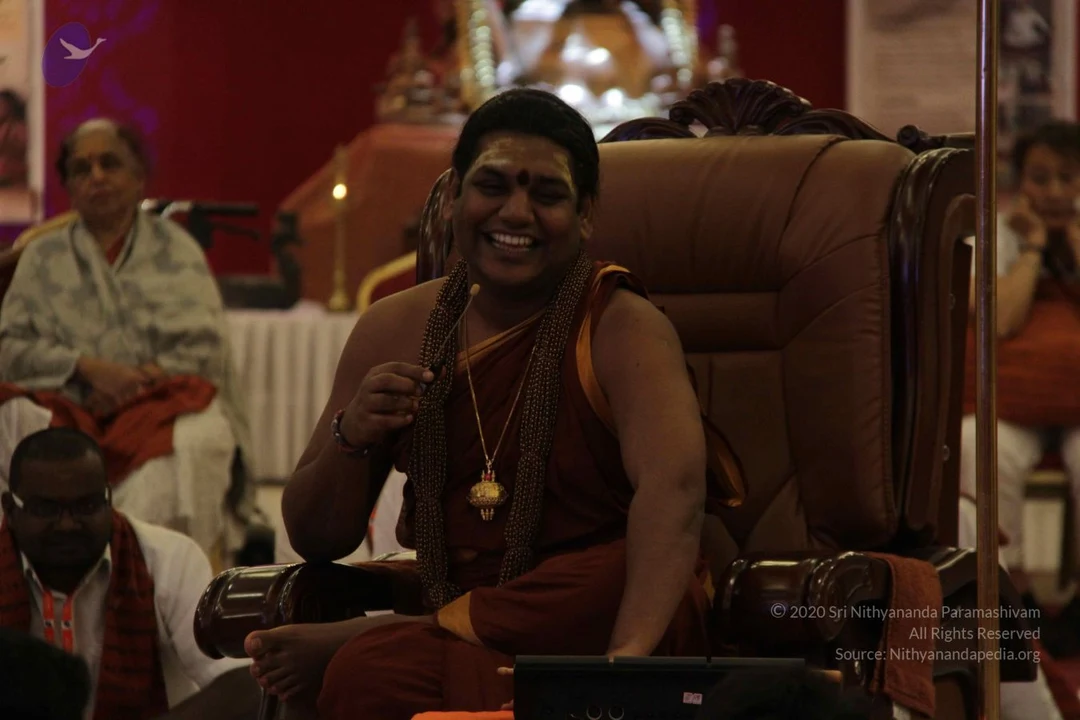
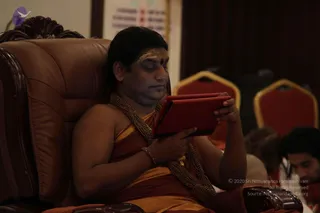
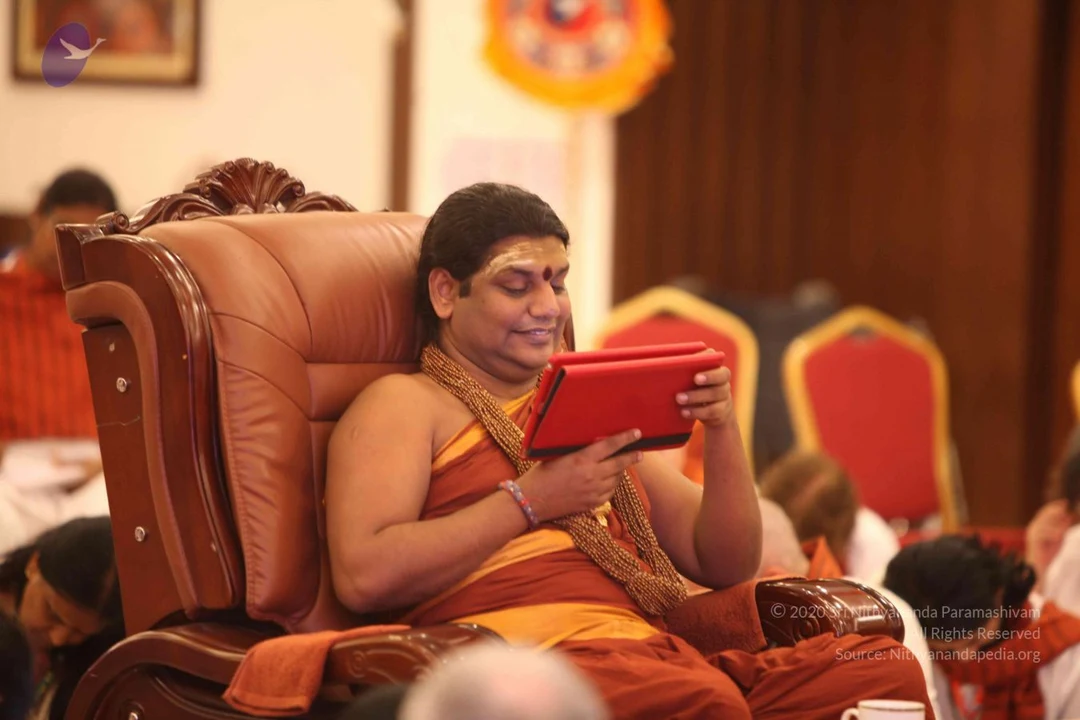
A smiling man in orange-saffron robes sits on a large brown leather throne-style armchair with carved dark wooden arms, a red bindi on his forehead and a long rudraksha mala with a gold pendant around his neck. He holds a small handheld microphone near his chin and laughs broadly. Behind him a red backdrop shows an ornate golden deity murti under a lit canopy. A woman in a white shawl with red border sits at left, a man in white with an orange lanyard sits at lower left, and a woman in orange clothing sits at right with hands near her face. A tall brass-coloured stand stands at right. The a person identification rests on the saffron robes, long rudraksha mala and gold pendant with the throne seating.A man in saffron-orange robes sits in a large brown leather armchair, laughing broadly with his head tilted and eyes closed, one hand raised holding a microphone near his chest. He wears a dark beaded rudraksha mala with a gold pendant, a tilak mark on his forehead, and a red bindi-like dot. A cordless microphone is in his hand. Behind him are seated devotees in saffron and white; an elderly woman in a grey-white shawl sits at left and a woman in orange sits at right. A seated man in a white shirt with an orange shawl and glasses is at lower left. Red draped walls, a golden deity shrine and oil lamps are visible in the background.A photograph of a seated man in a large brown leather armchair during a satsang gathering. He wears rust-orange robes, multiple brown rudraksha malas and a gold pendant necklace, with a red-brown tilak on his forehead. He laughs broadly and holds a small microphone near his chest. Next to him, a bare-footed figure rests on the chair's arm. A woman in a white and grey shawl sits to the left, a man in glasses and a red shawl sits at lower left, and a woman in orange clothing is at the right edge. Behind them stand a red backdrop, an ornate golden deity murti and a lit oil lamp on a white-draped table. The seated man is the probable Swamiji by appearance, with long swept-back hair, rudraksha malas, a gold pendant and saffron robes, and he is shown leading the satsang.A man seated in a large brown leather armchair reads from a red tablet held in both hands. He wears an orange-saffron cloth draped over his shoulders and a thick beaded rudraksha-style mala necklace with a gold-toned clasp, with a yellow-orange tilak marking on his forehead. A bracelet is on his wrist. Behind him are red upholstered chairs with gold trim and a dark curtain, and a partially visible person in the lower right edge sits with a red and white garment. The man's appearance with the mala and saffron cloth is a plausible candidate for the page's subject, but the identity is not established from appearance alone.