Skip to content
Saturday

10 October 2015

Find Your Root Pattern The Root Of All Your Sufferings

Dated photos
404
Source pages
1
Media
8
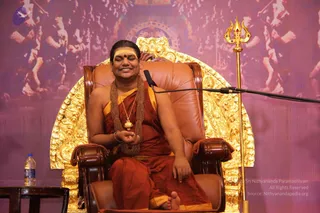
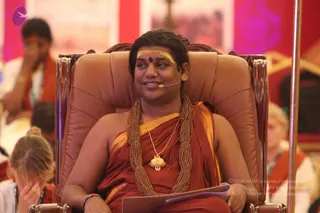
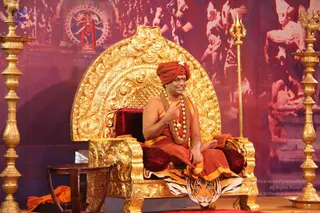
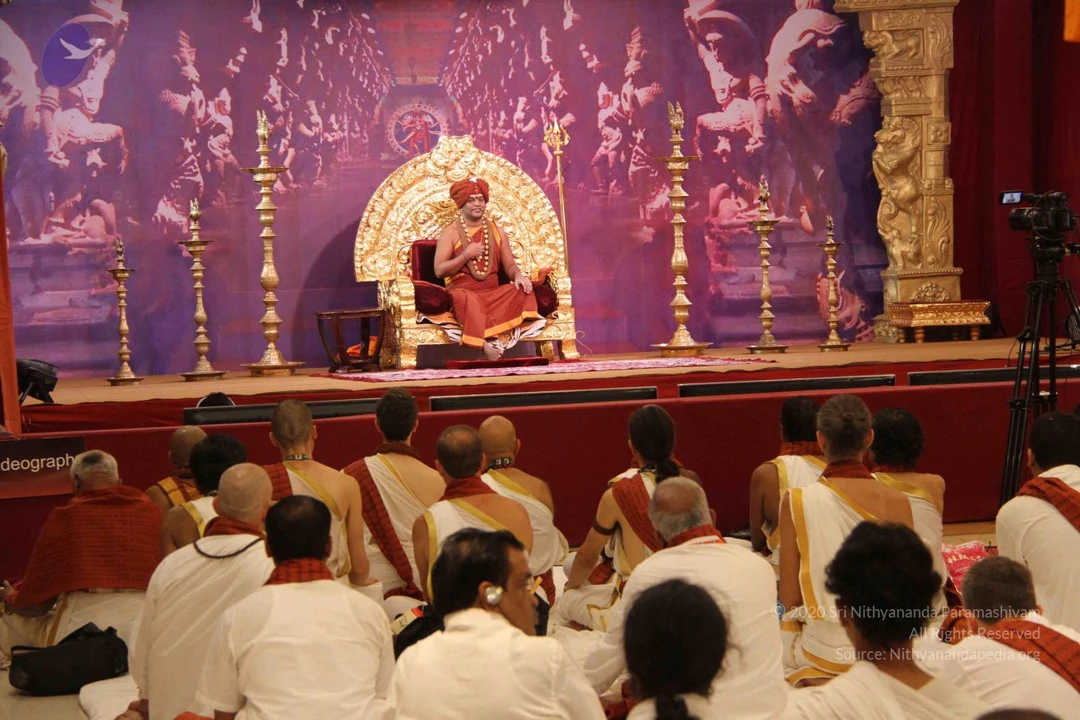
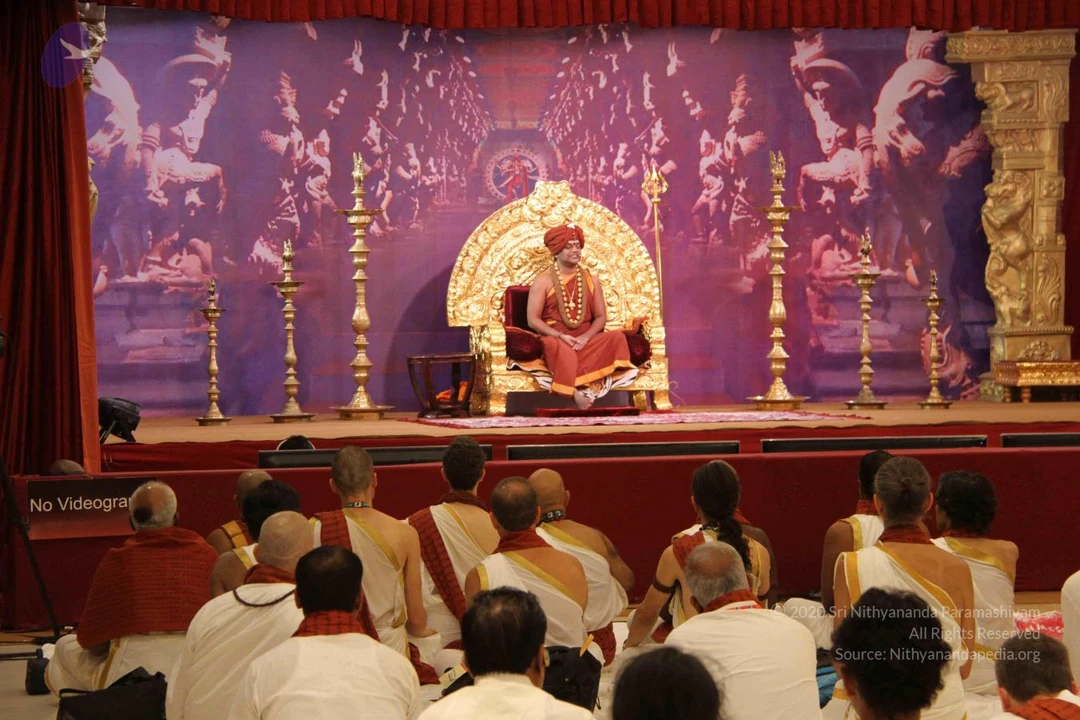
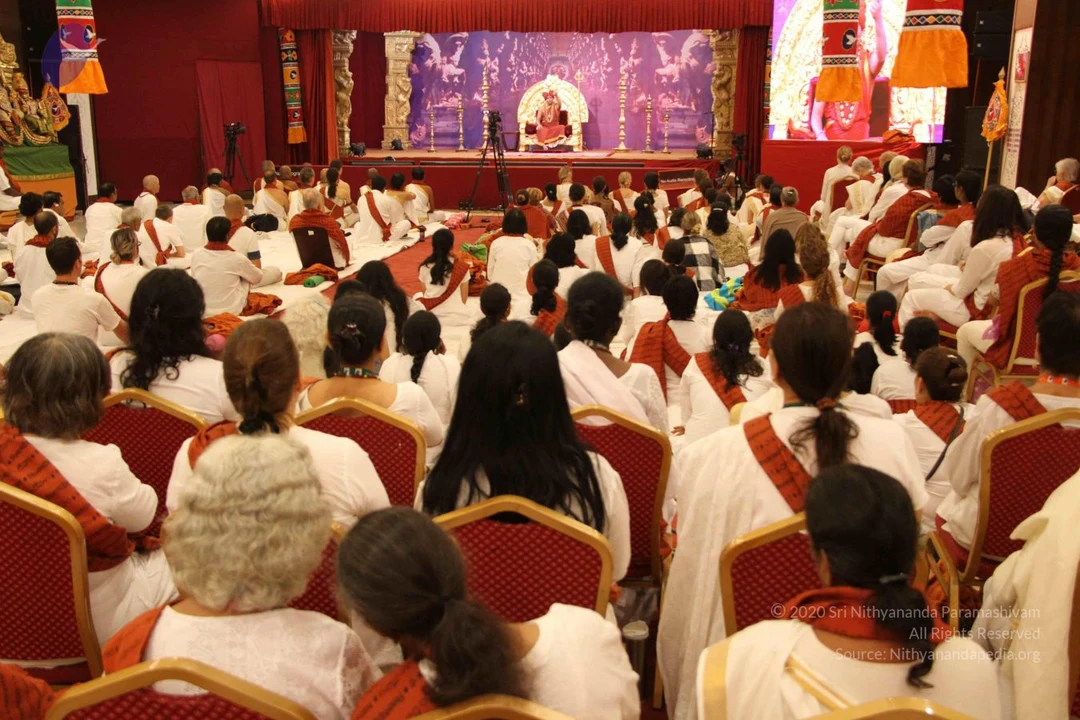
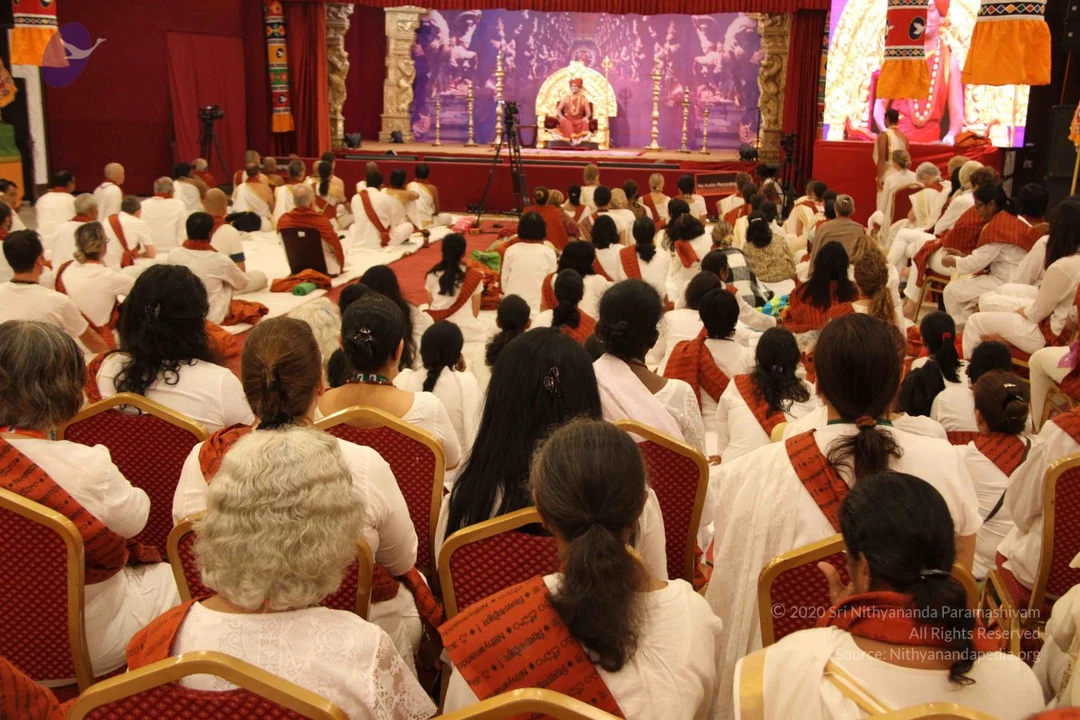
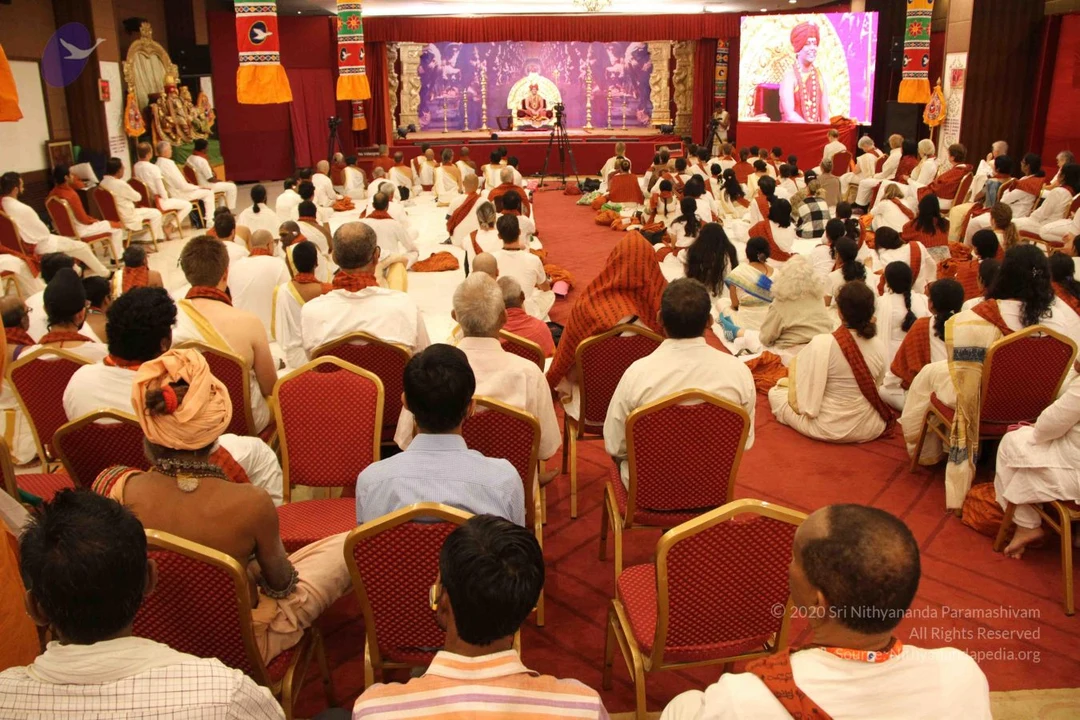
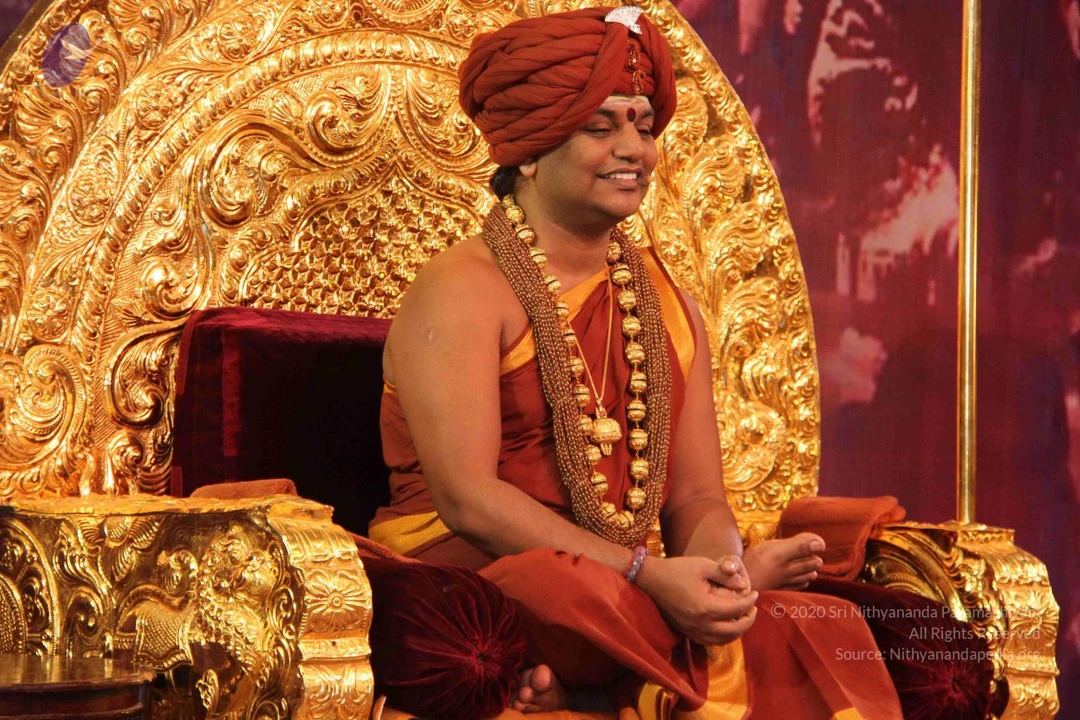
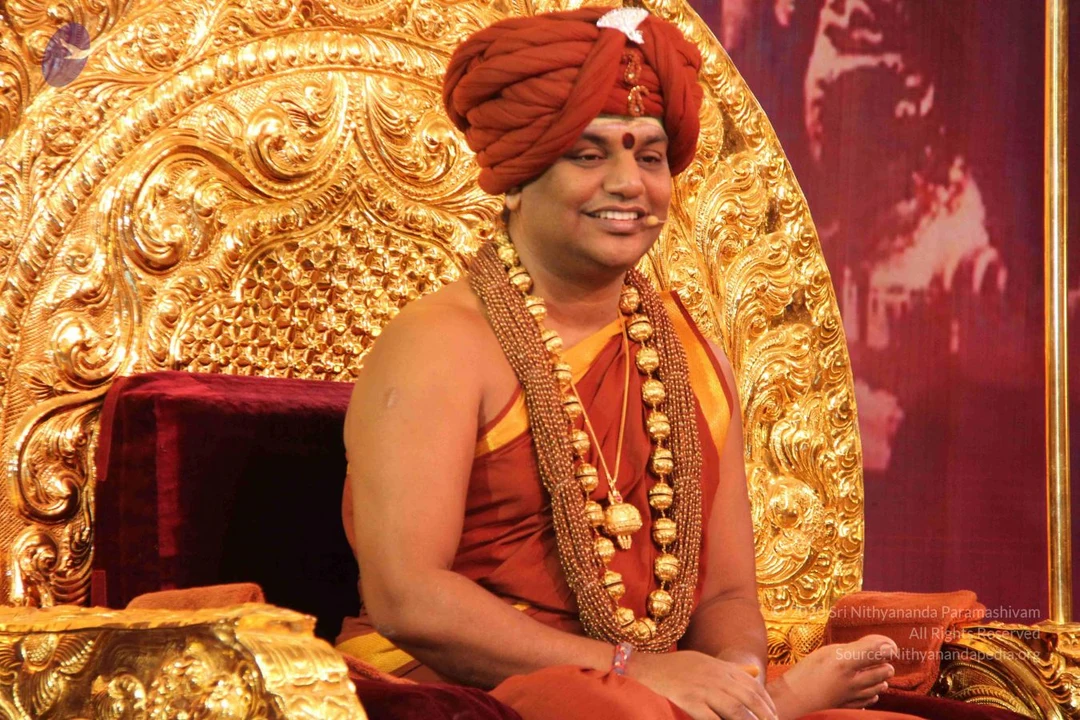
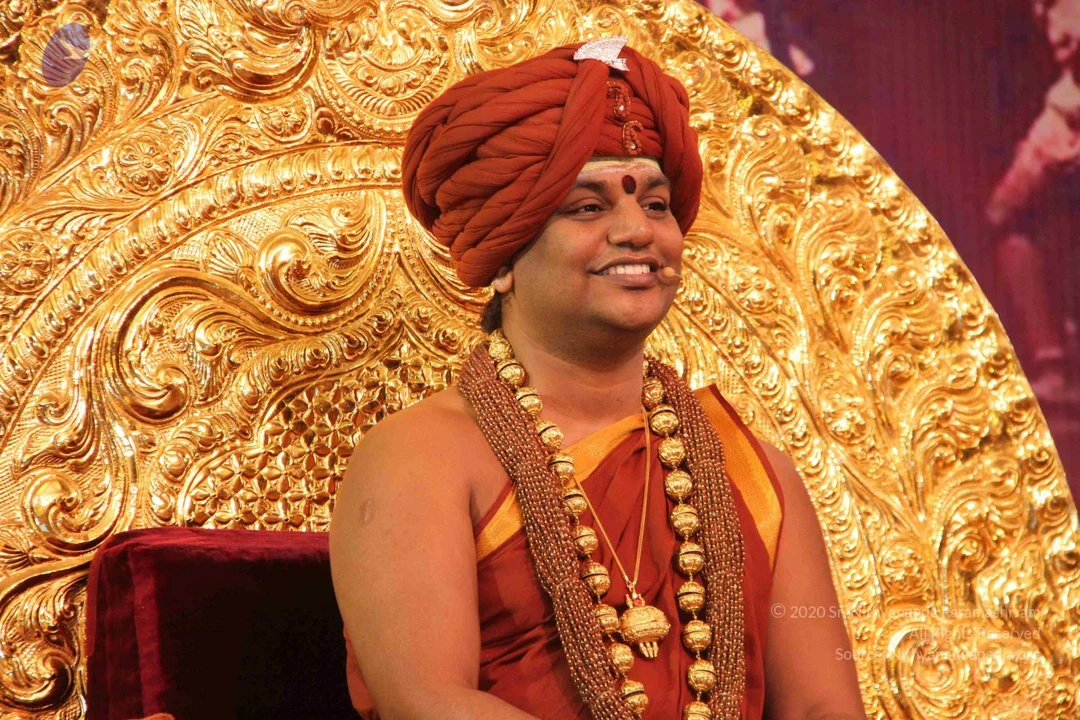
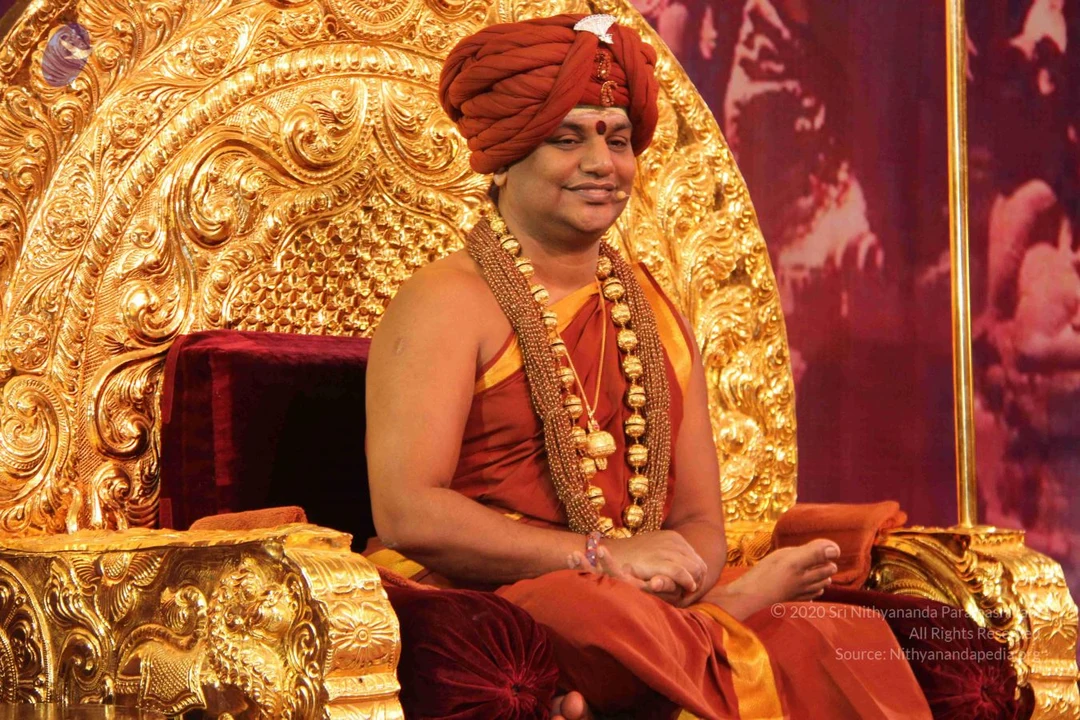
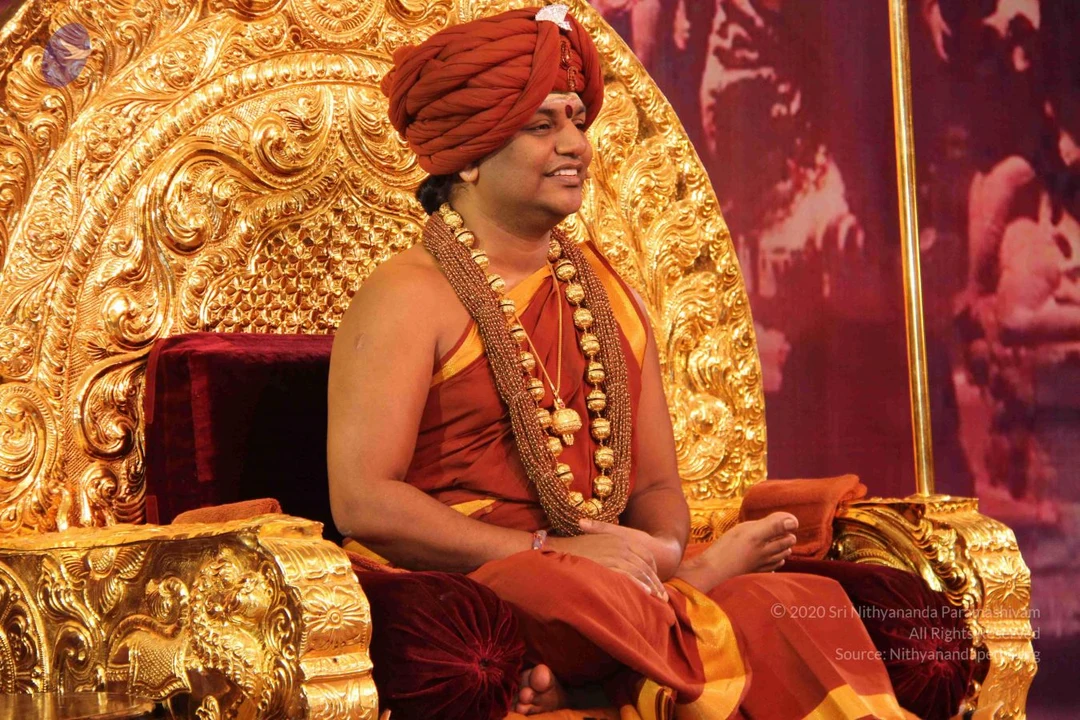
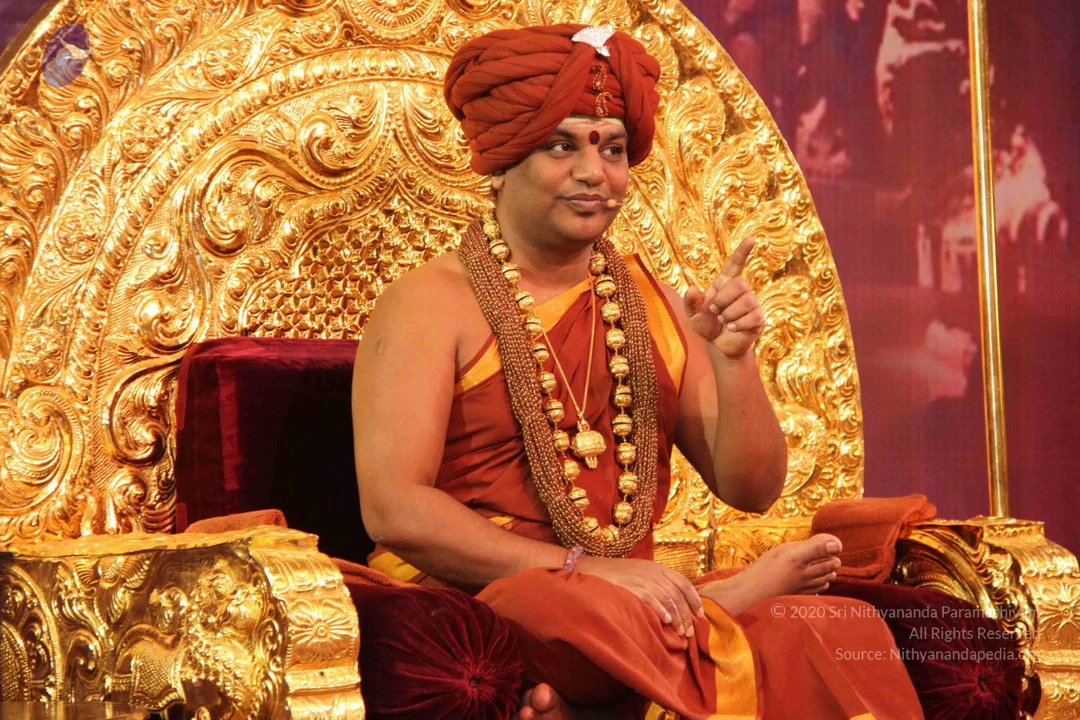
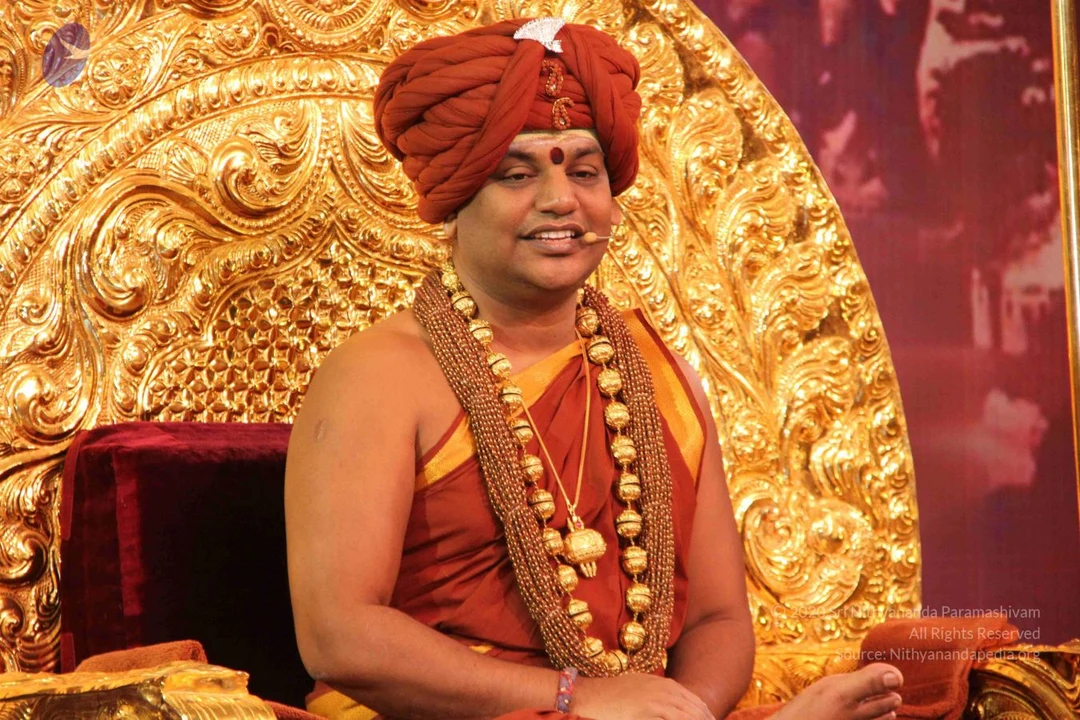
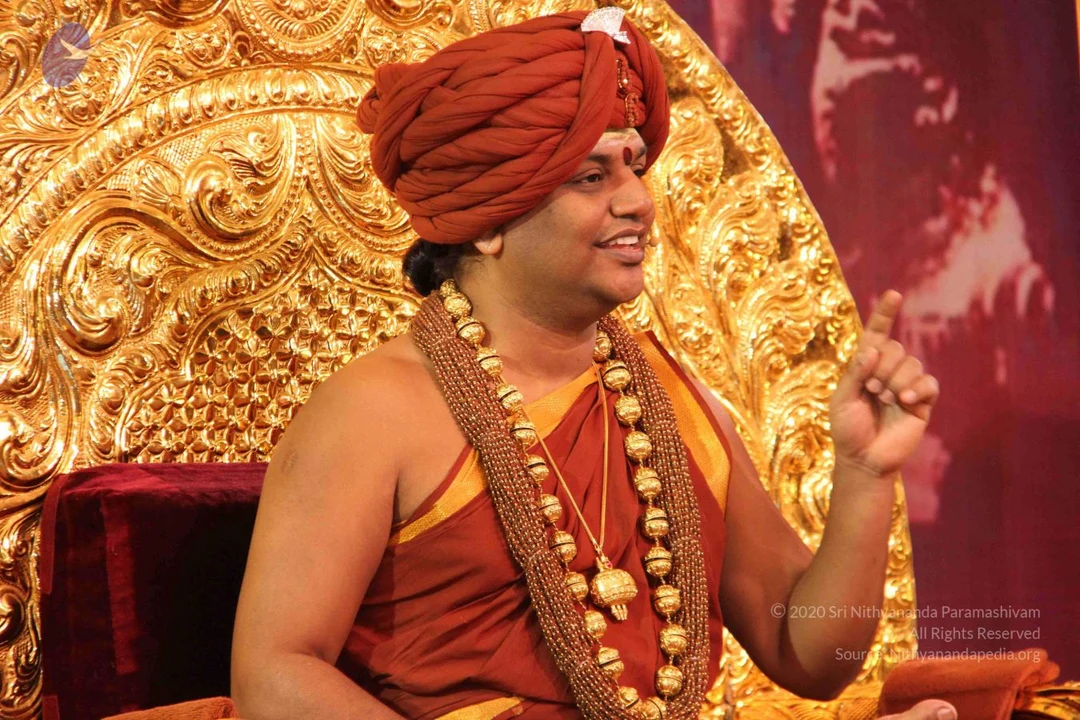
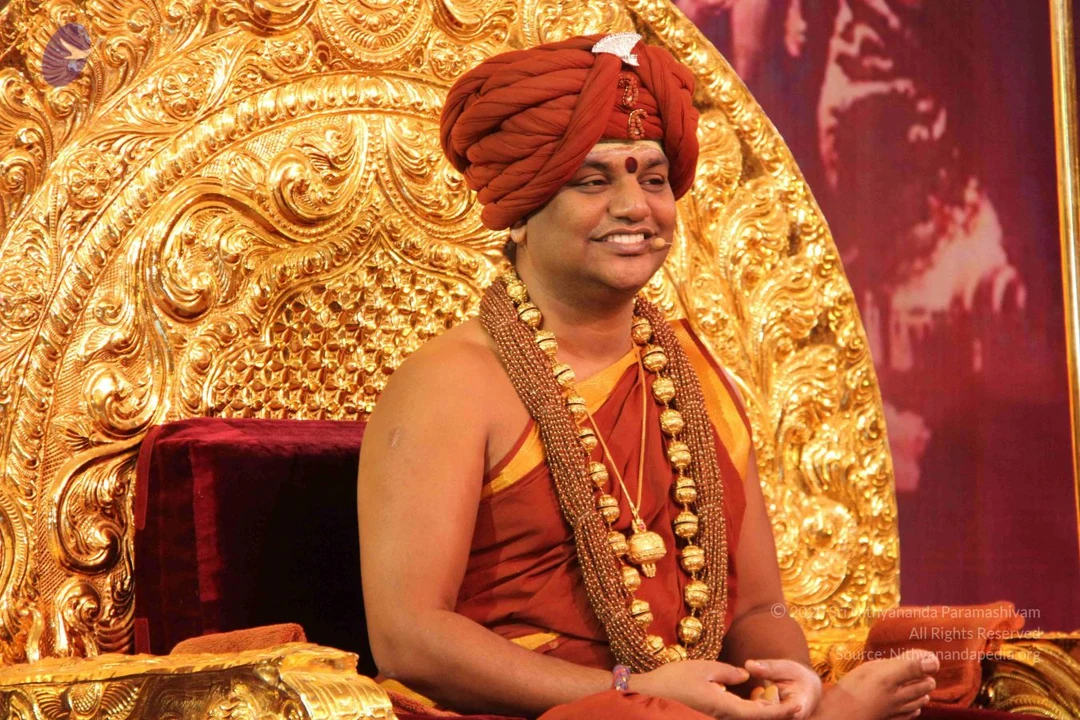
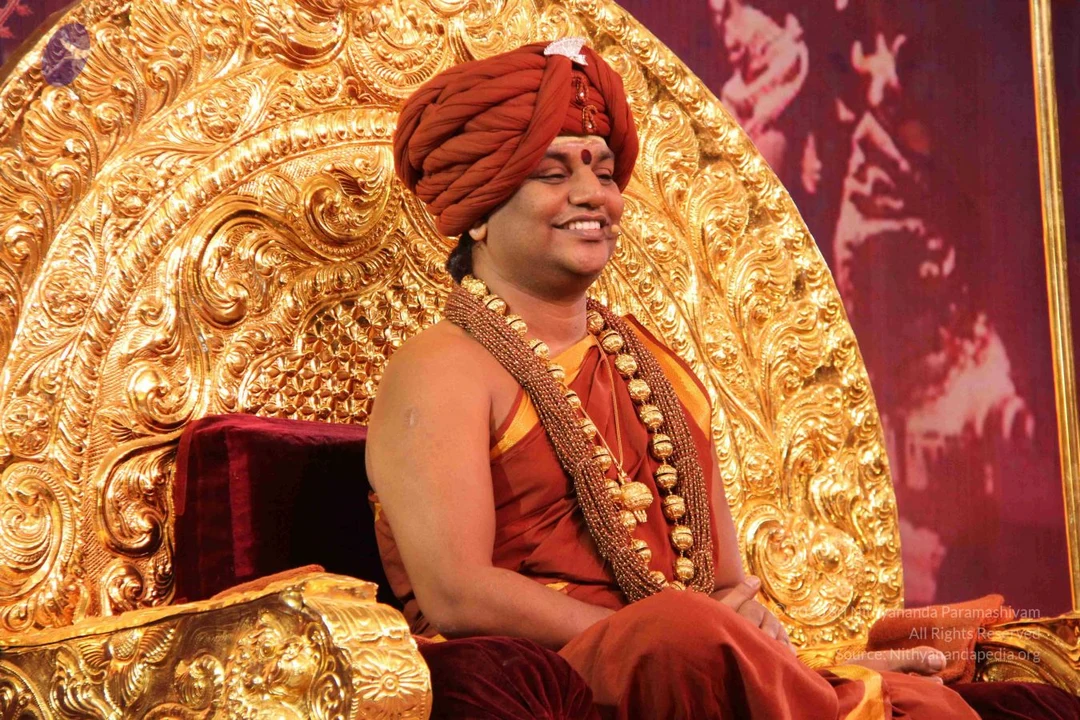
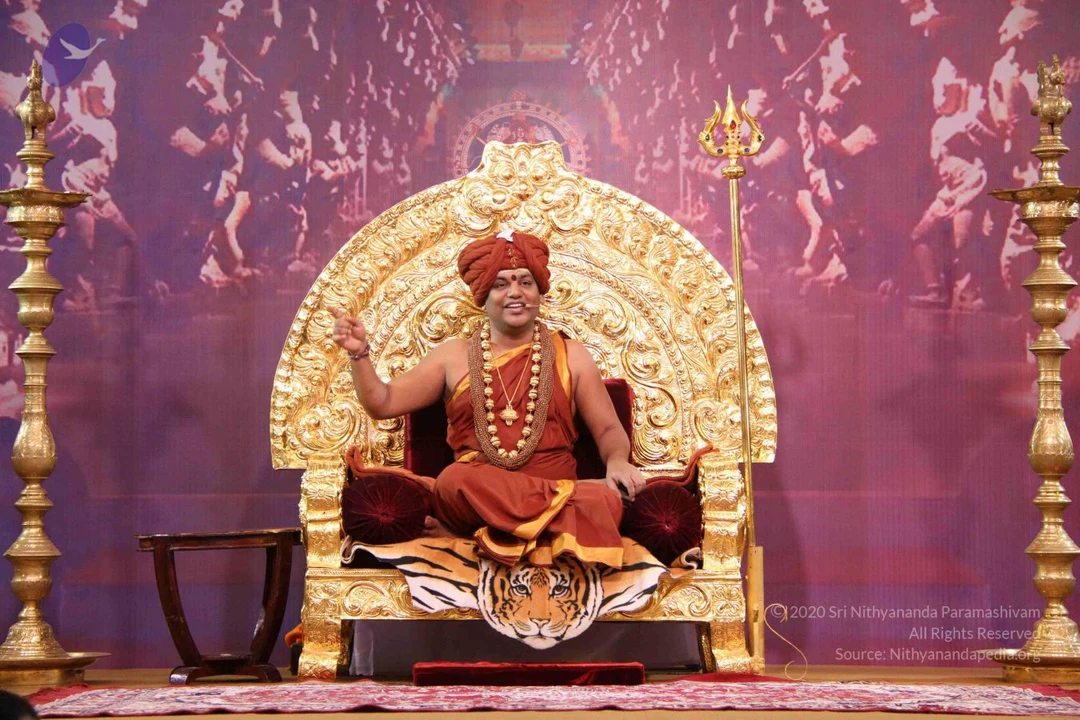
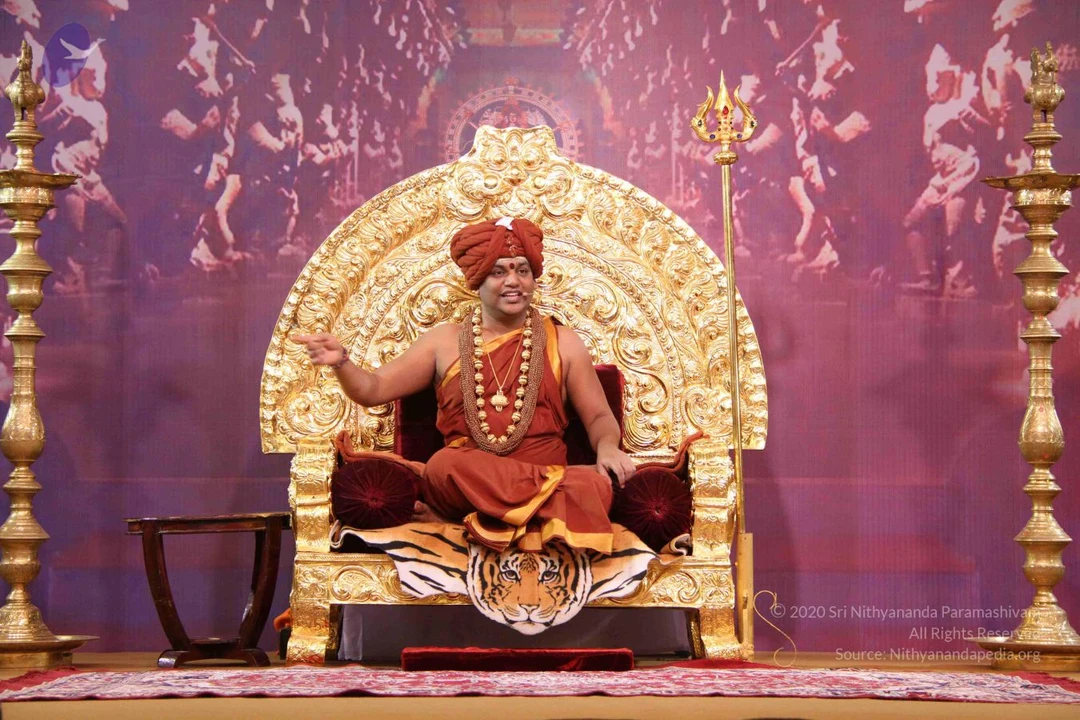
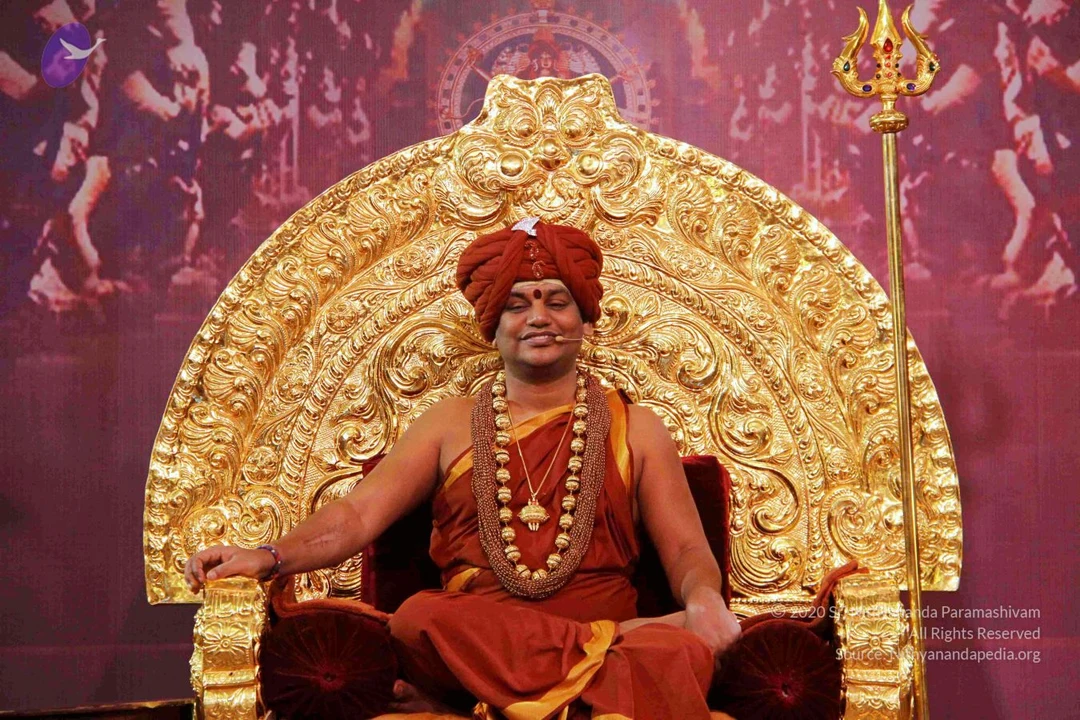
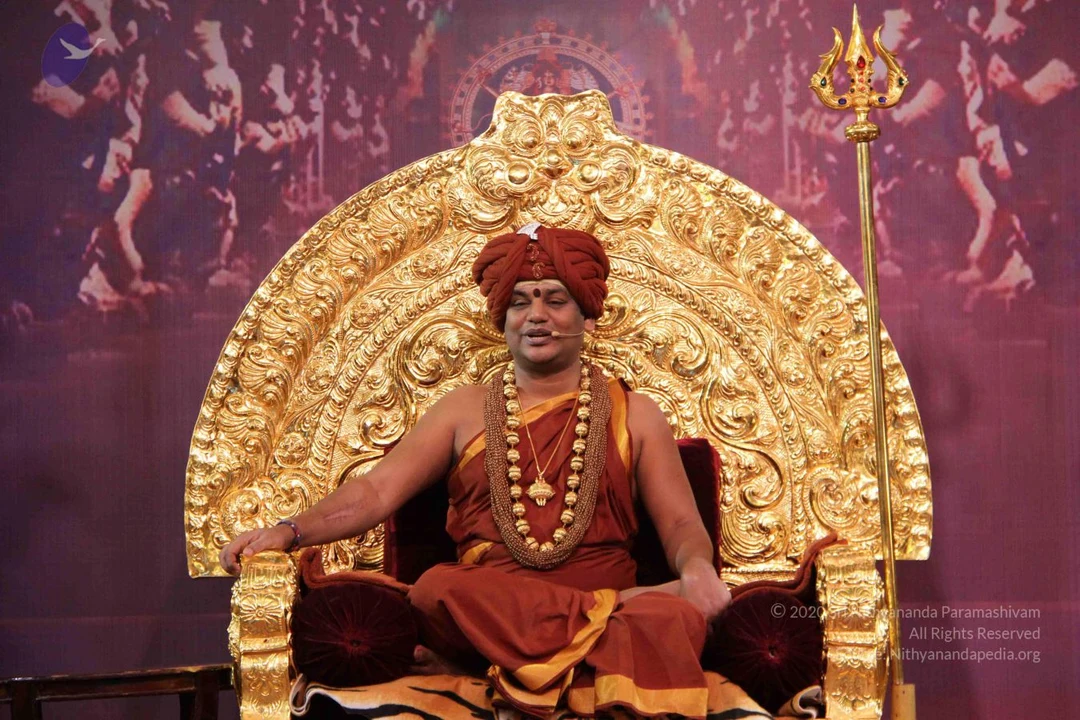
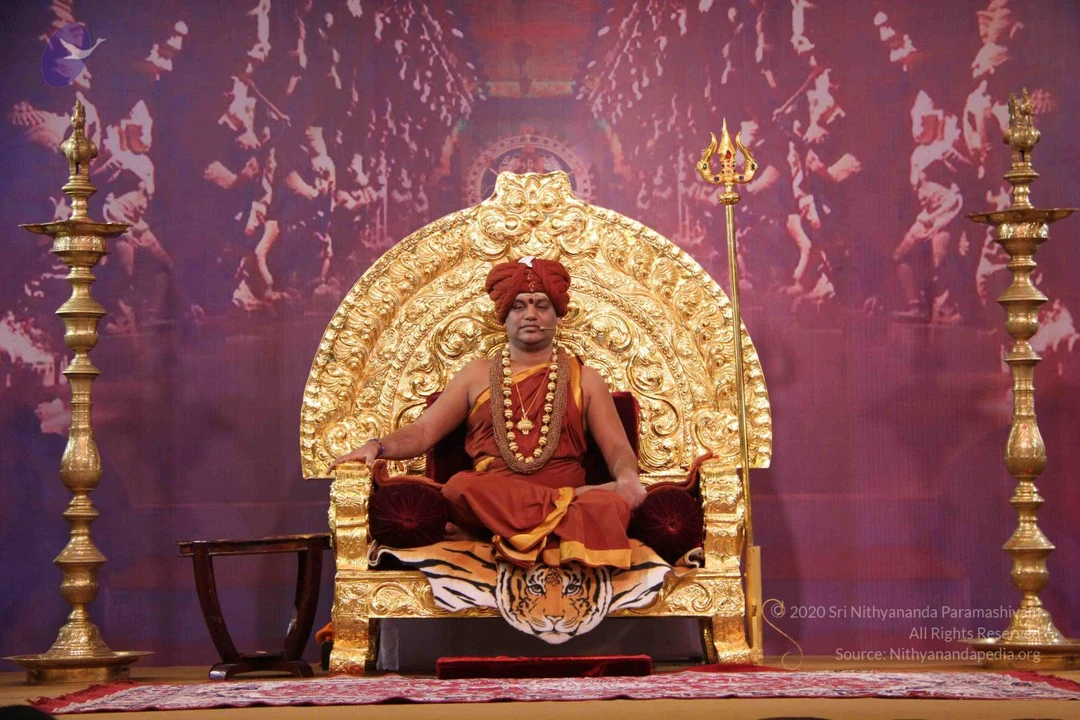
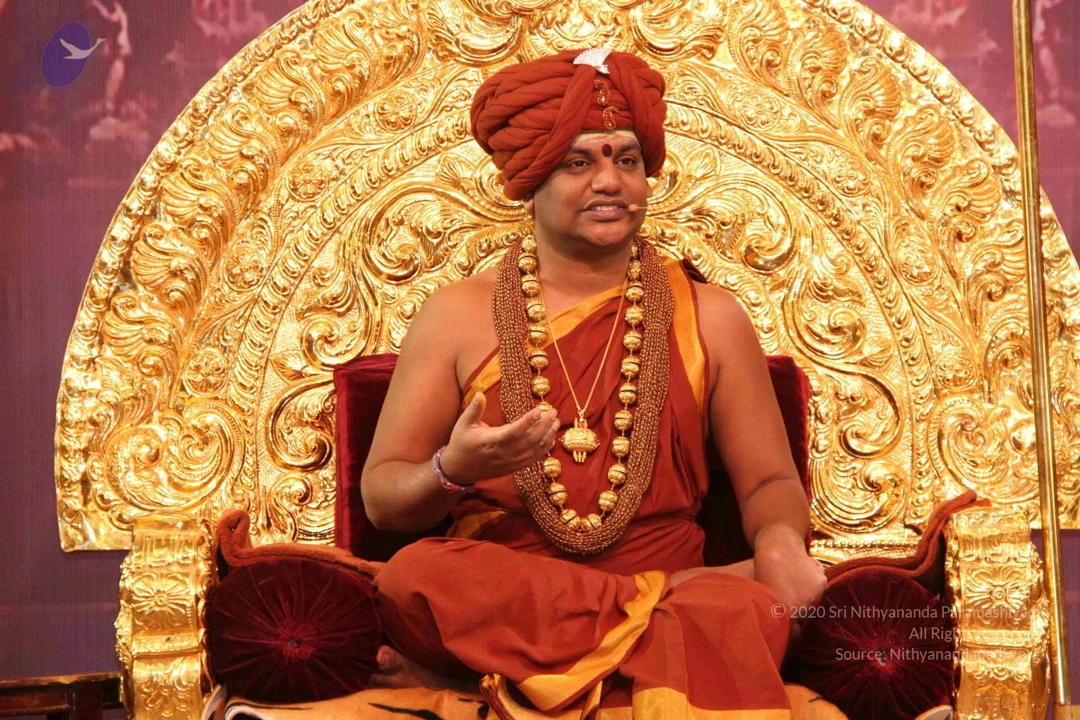
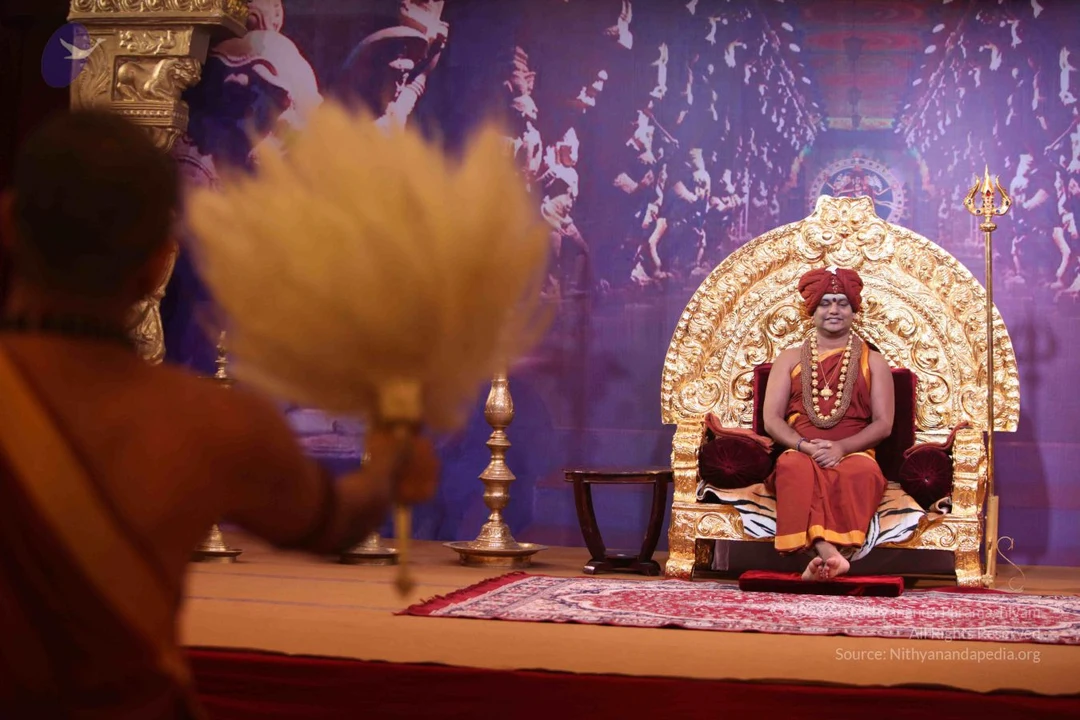
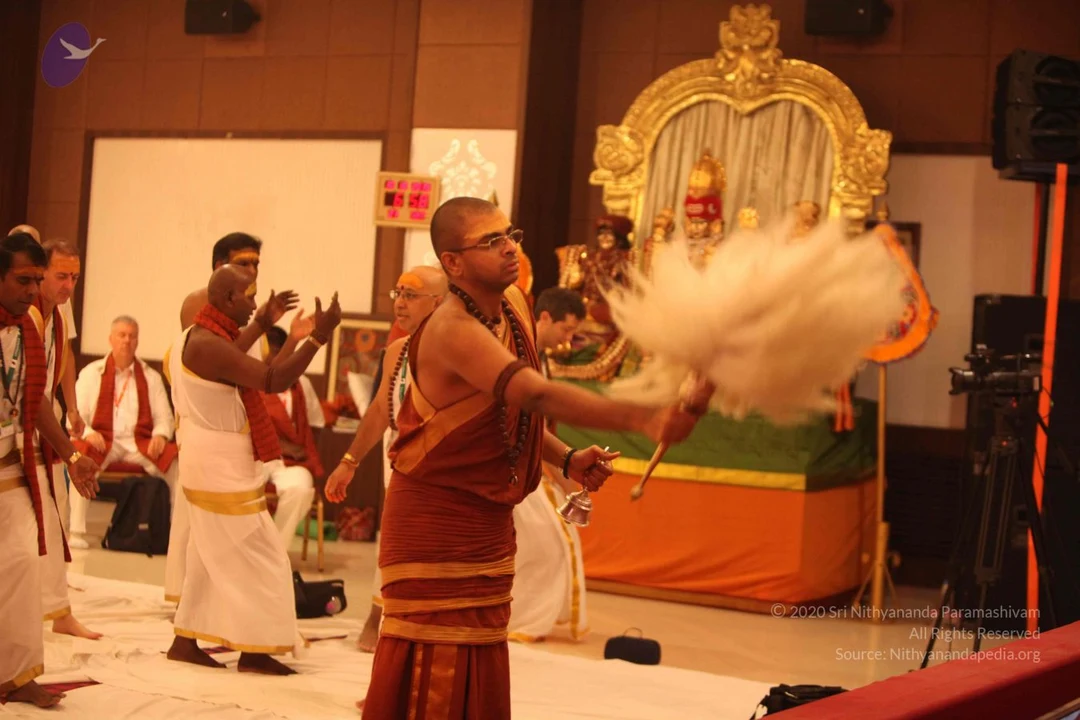
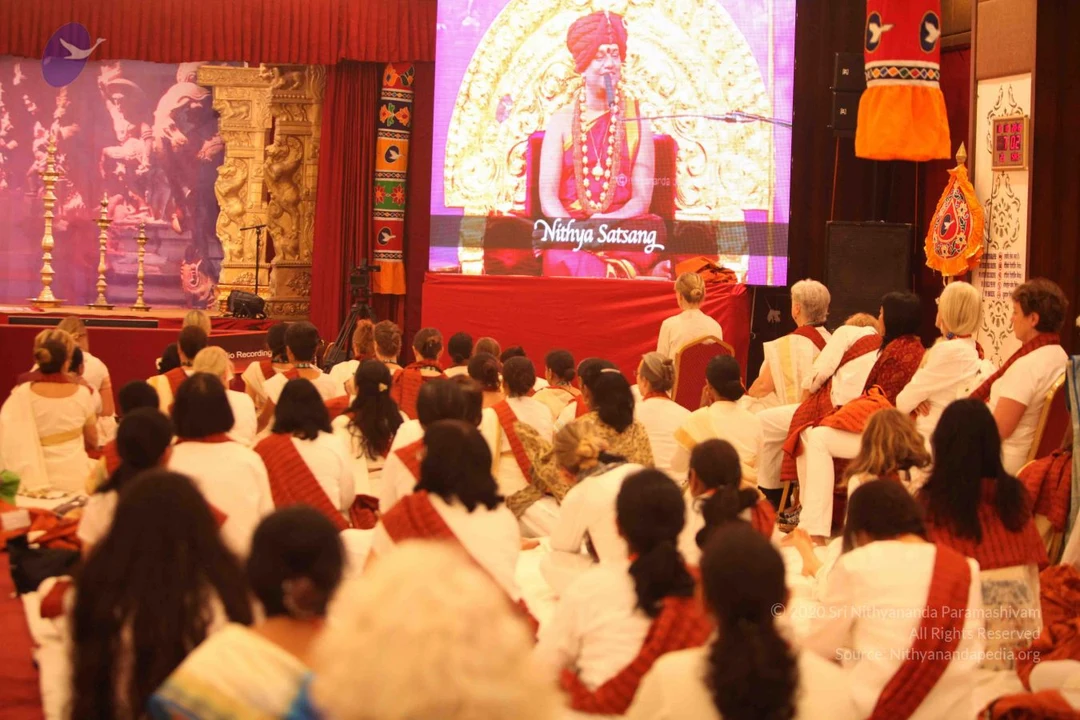
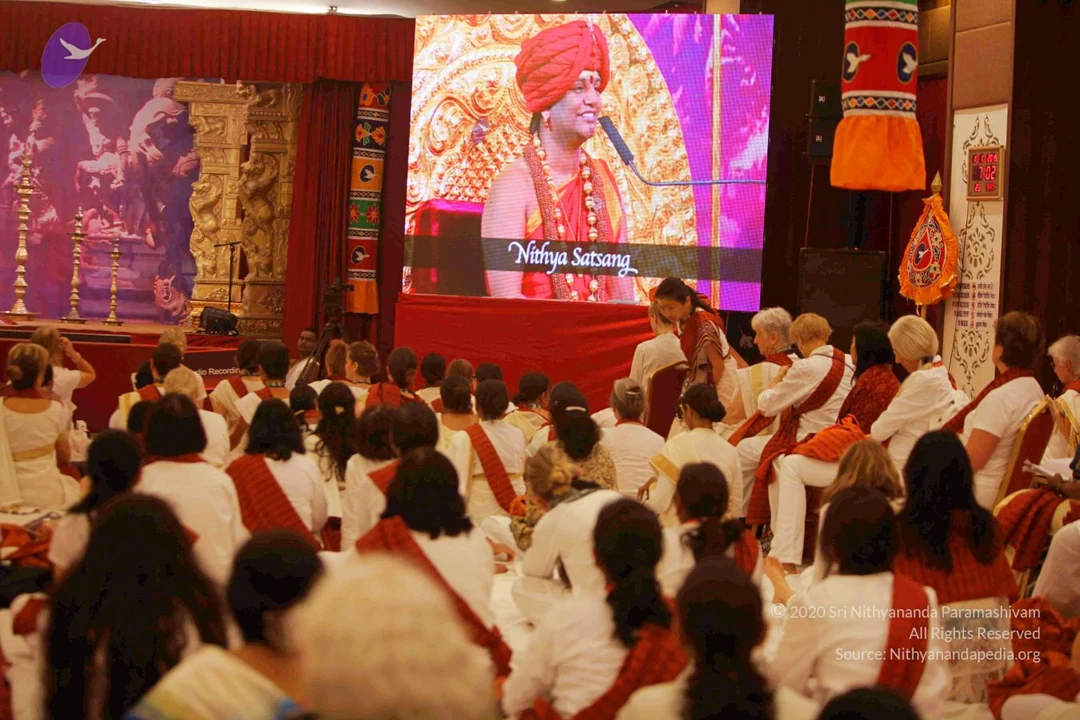
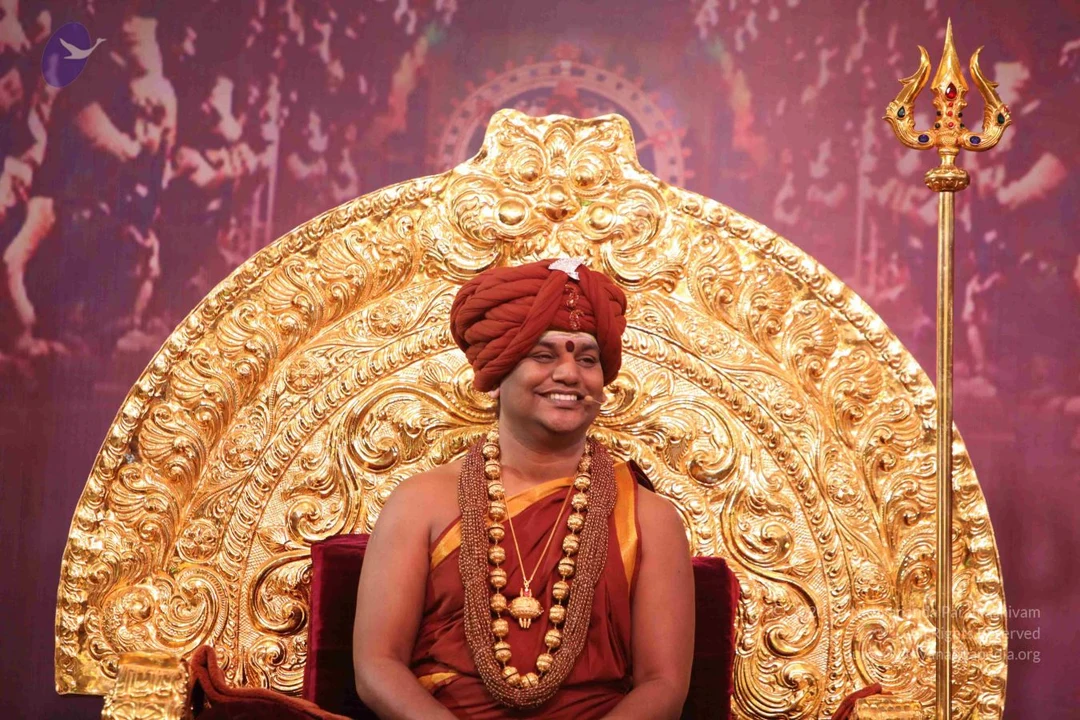
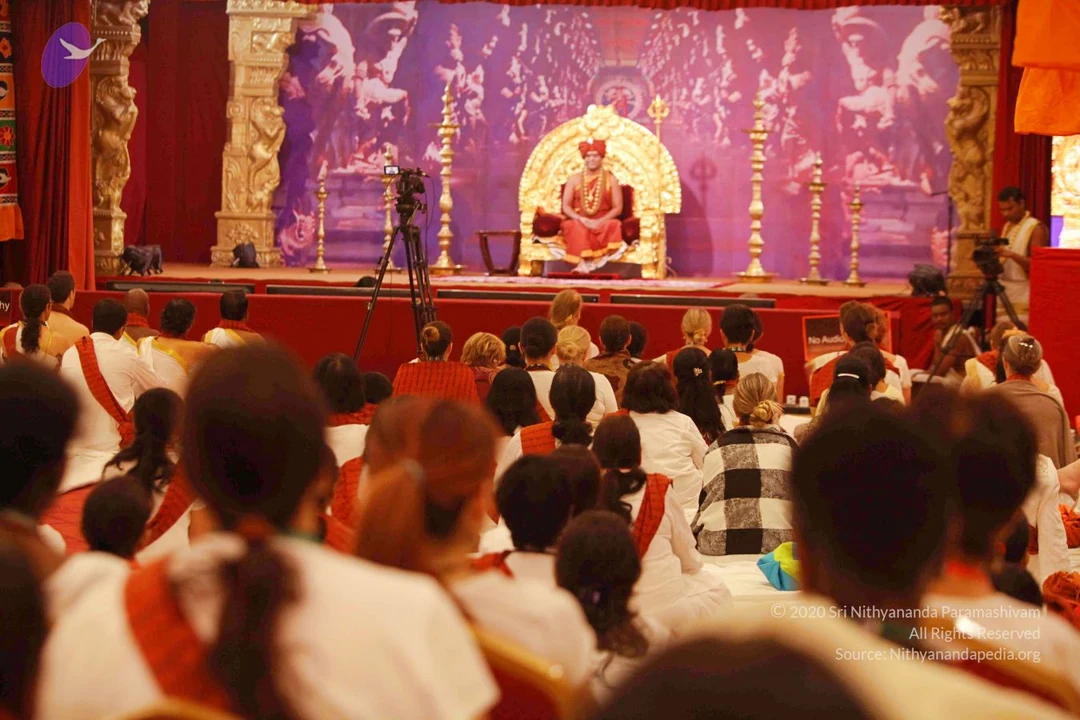
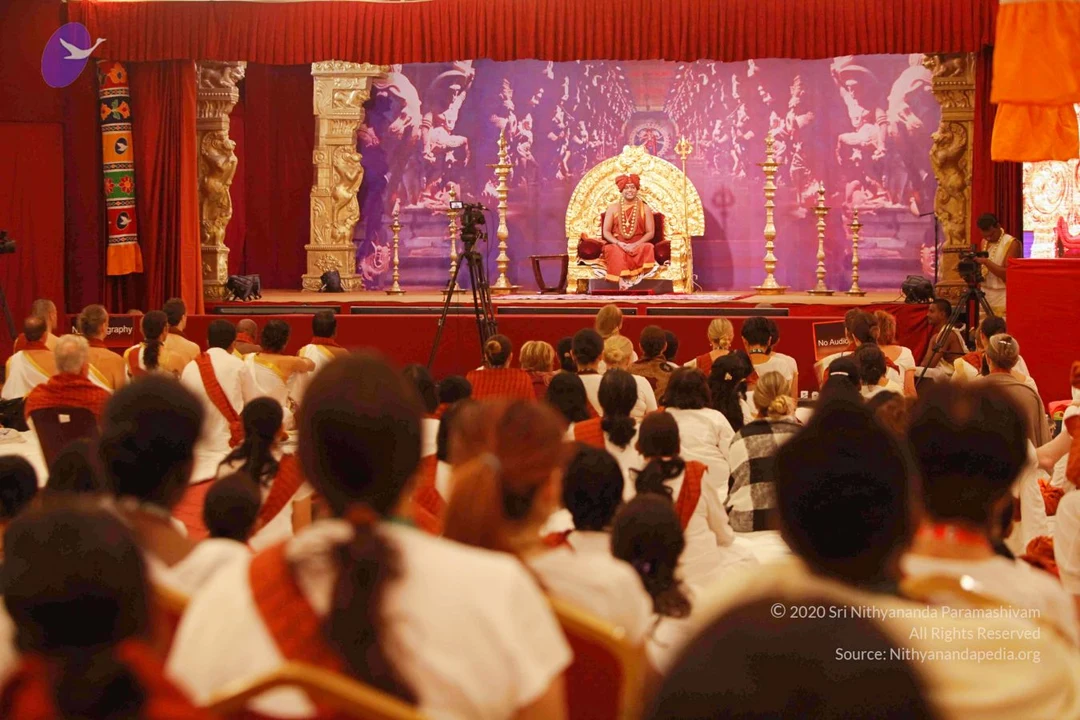
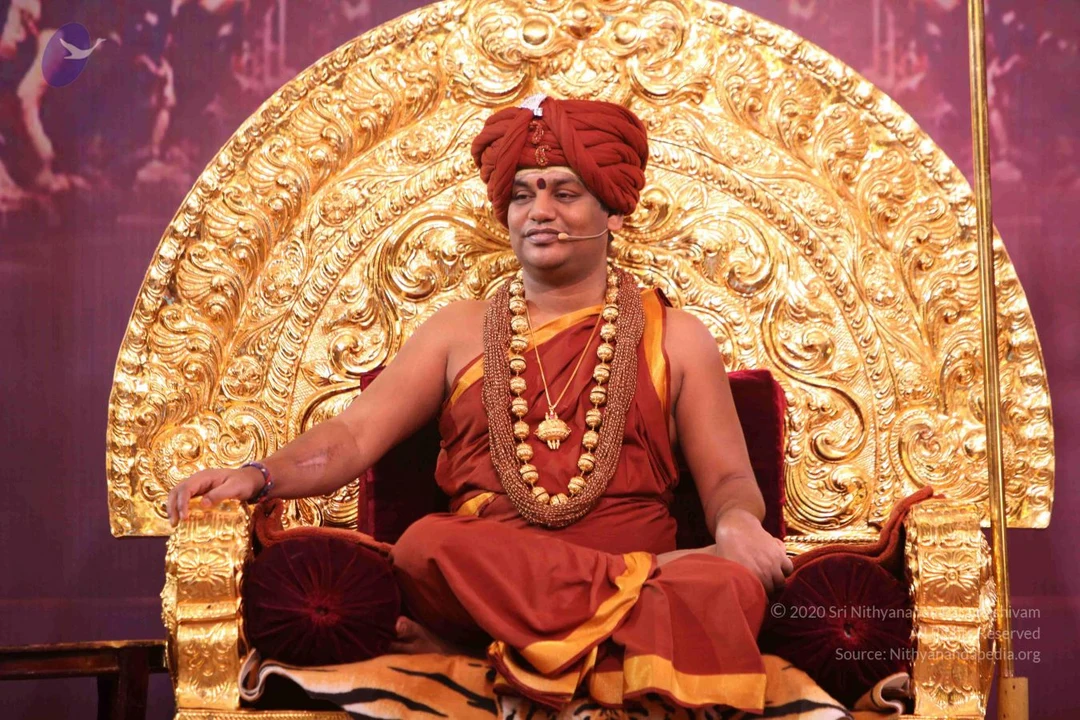
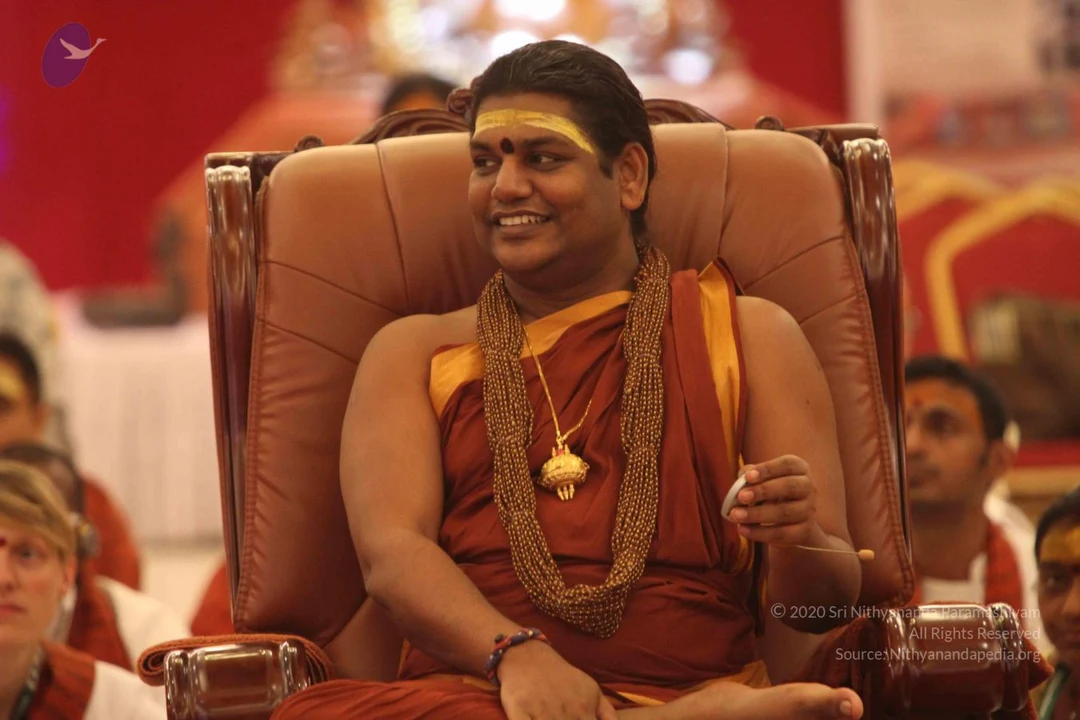
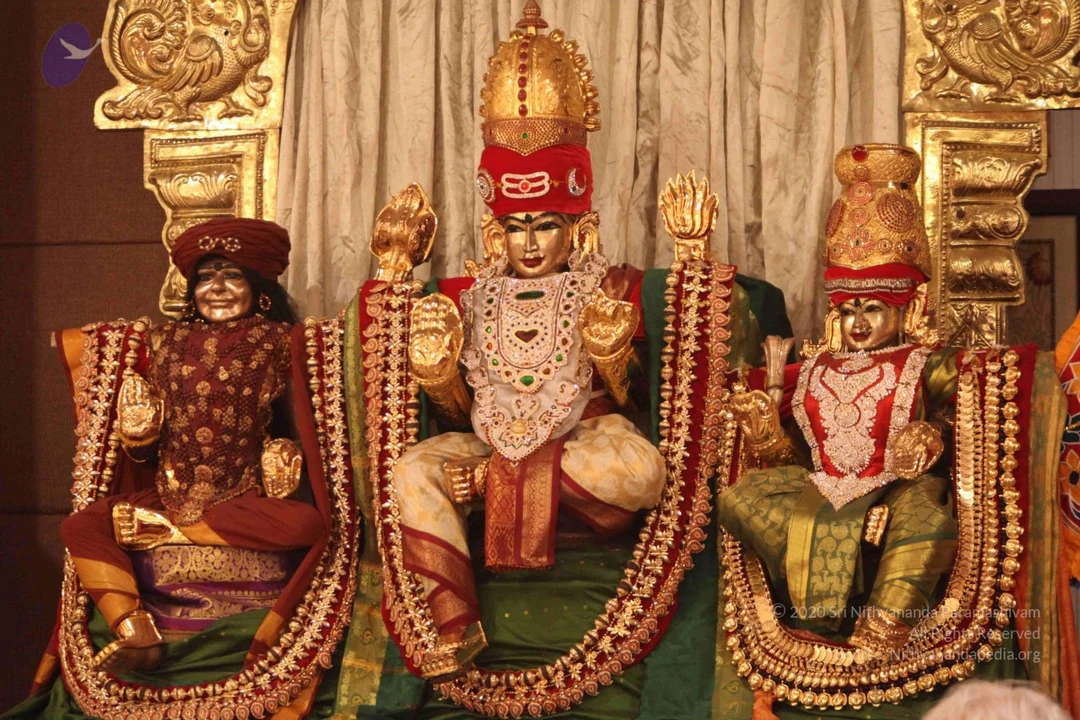
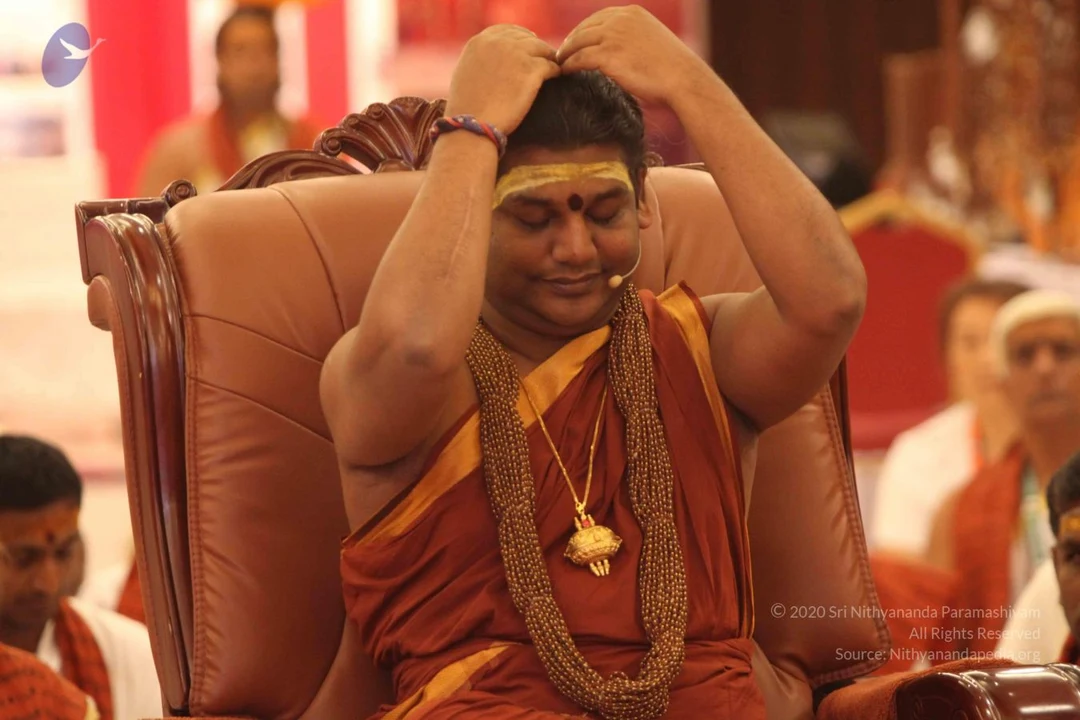
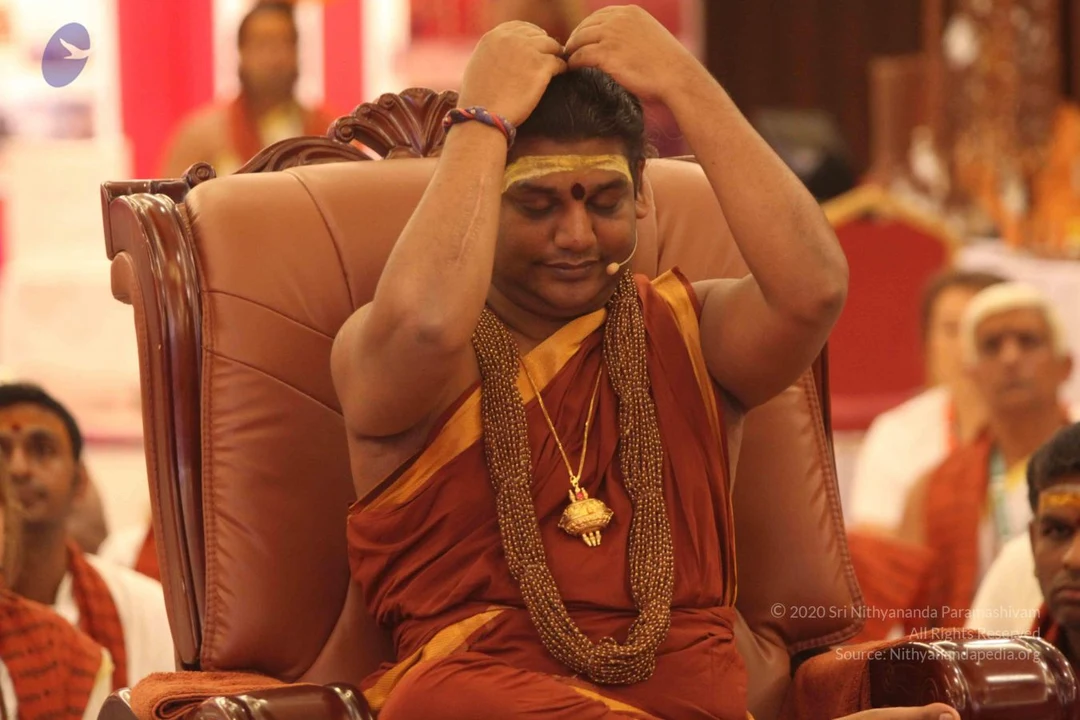
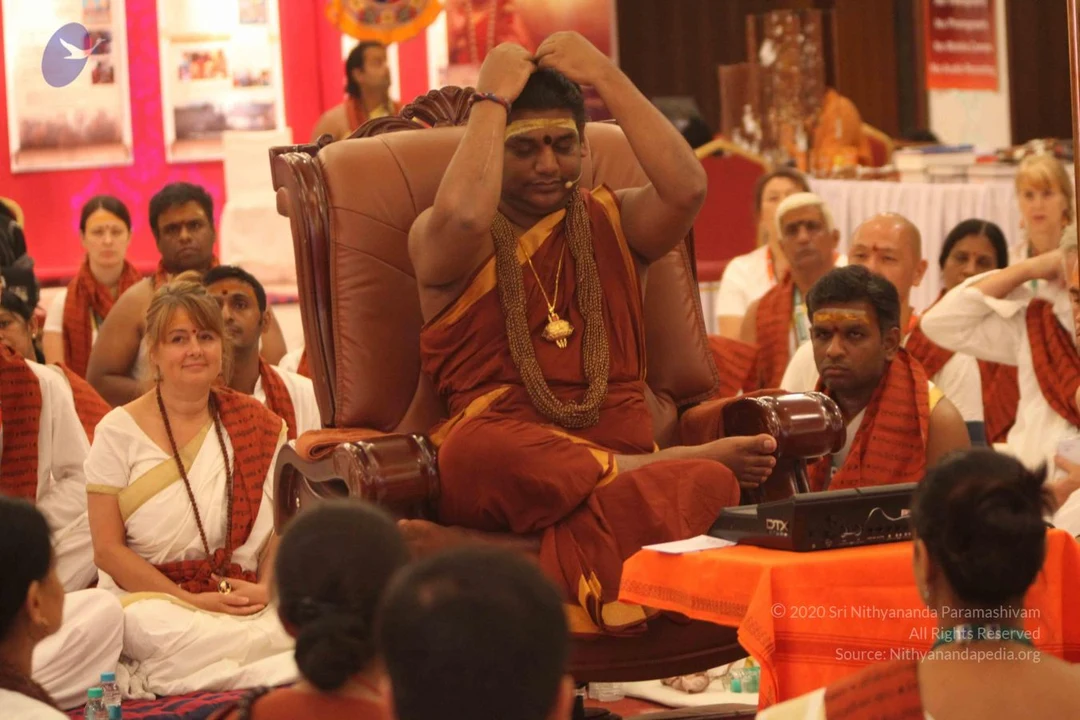
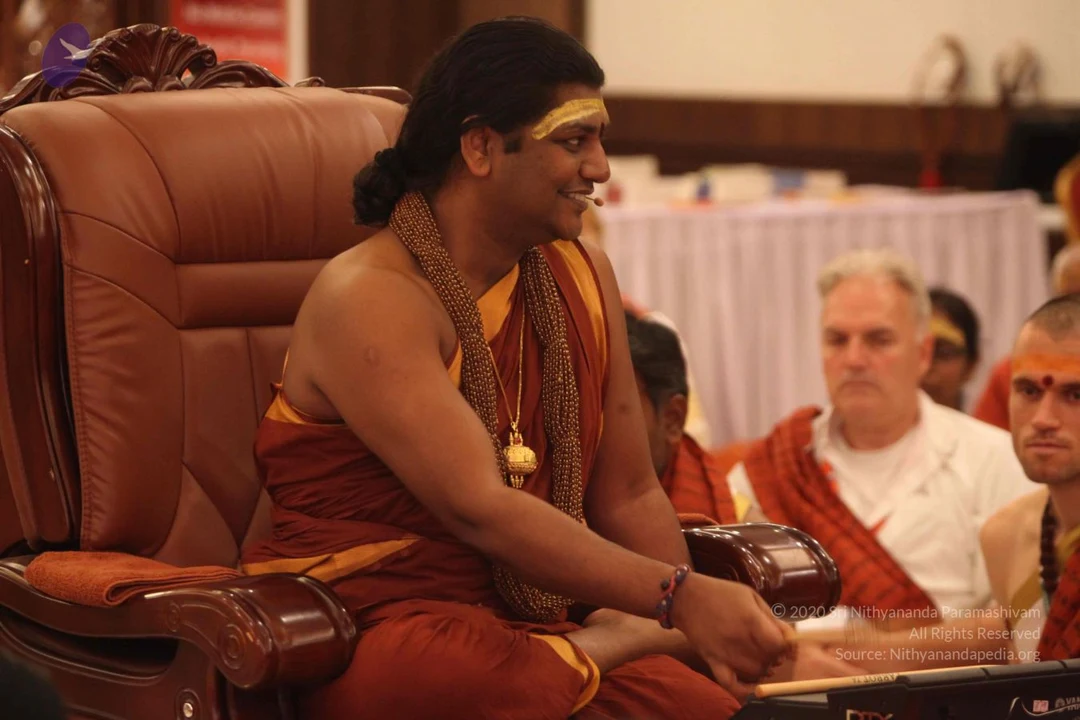
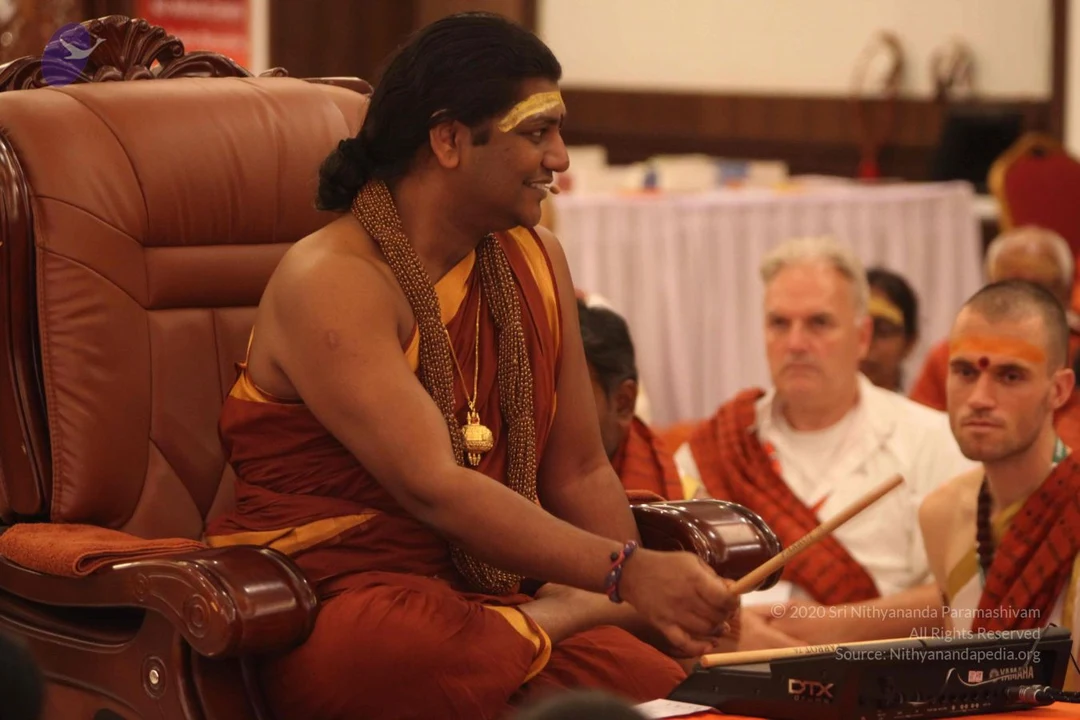
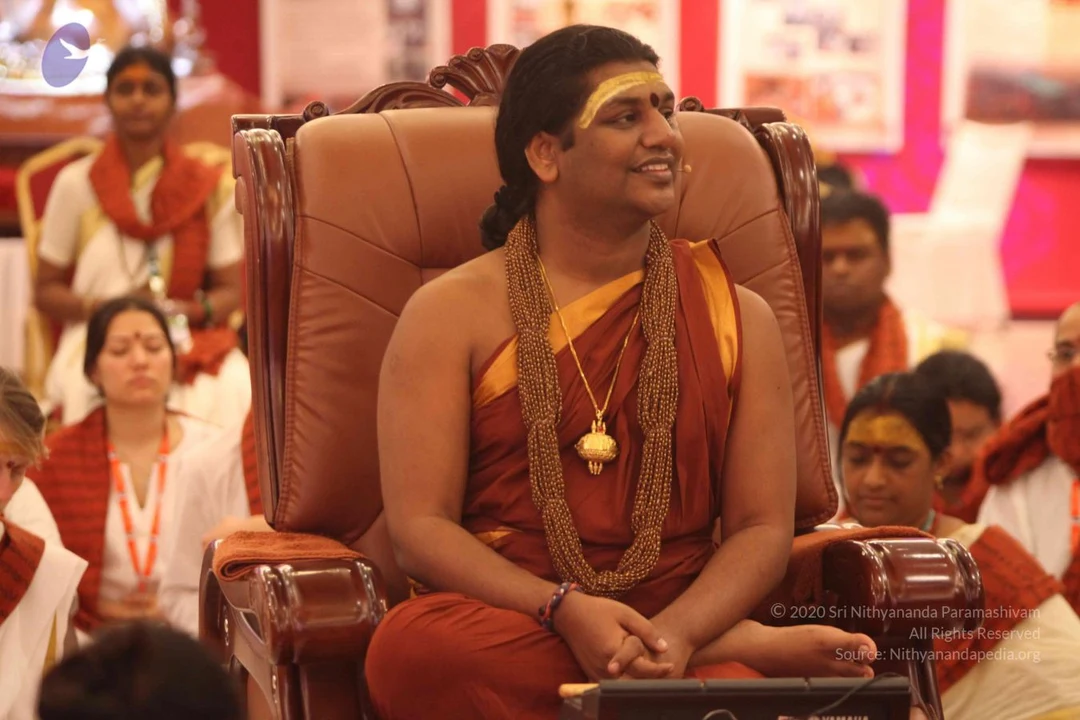
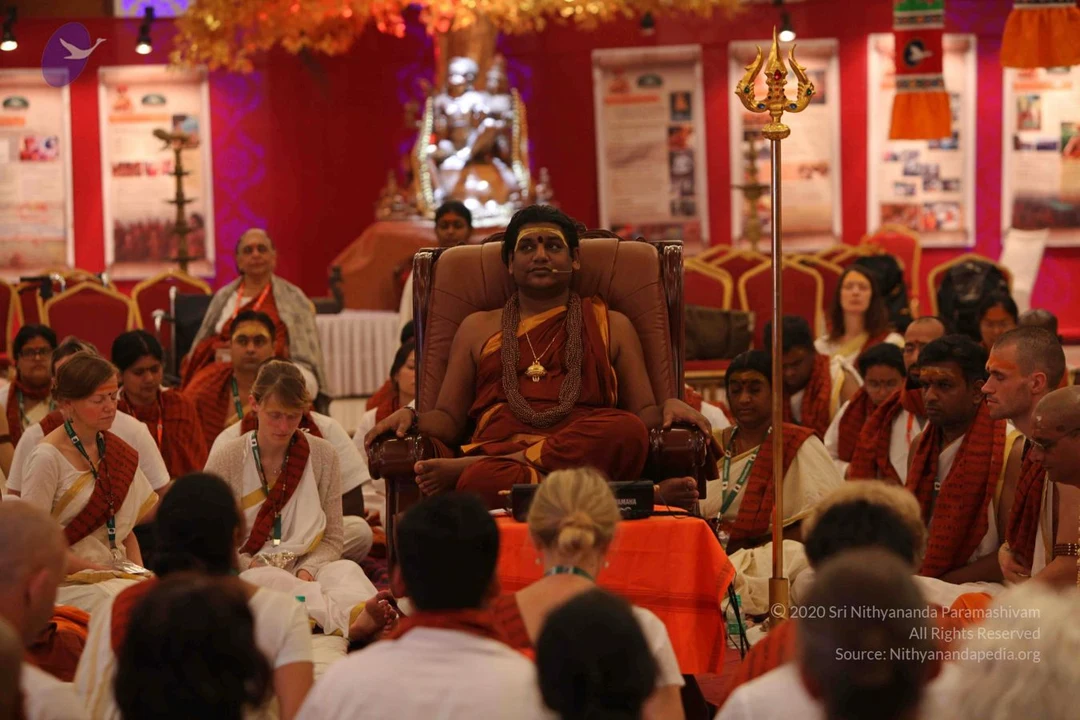
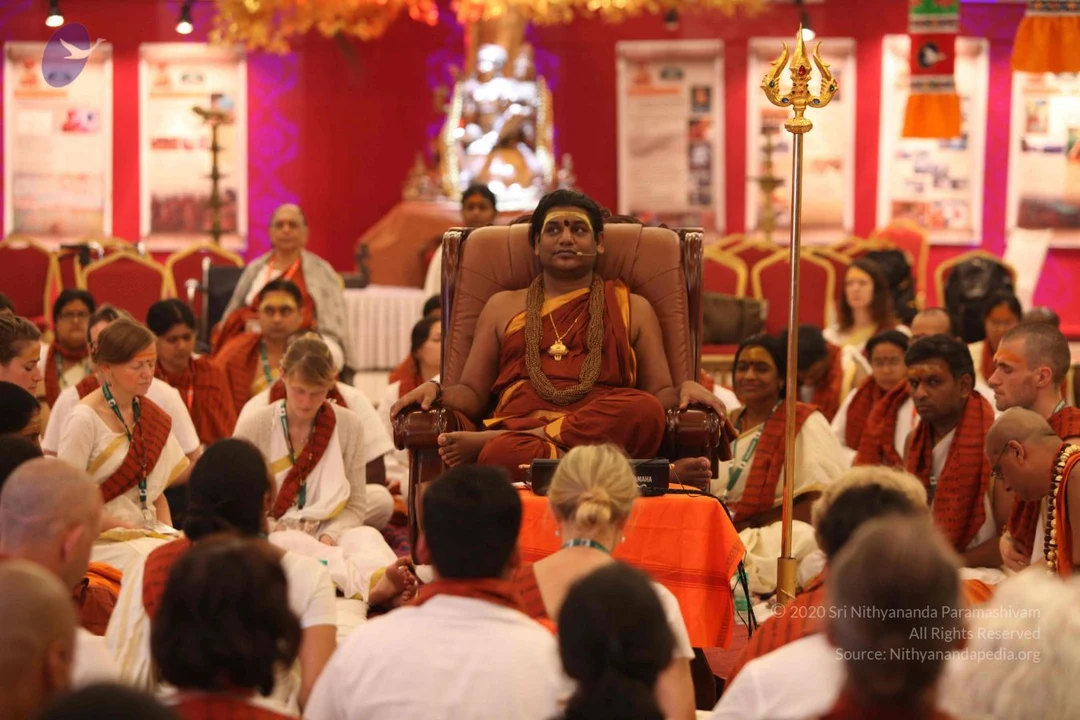
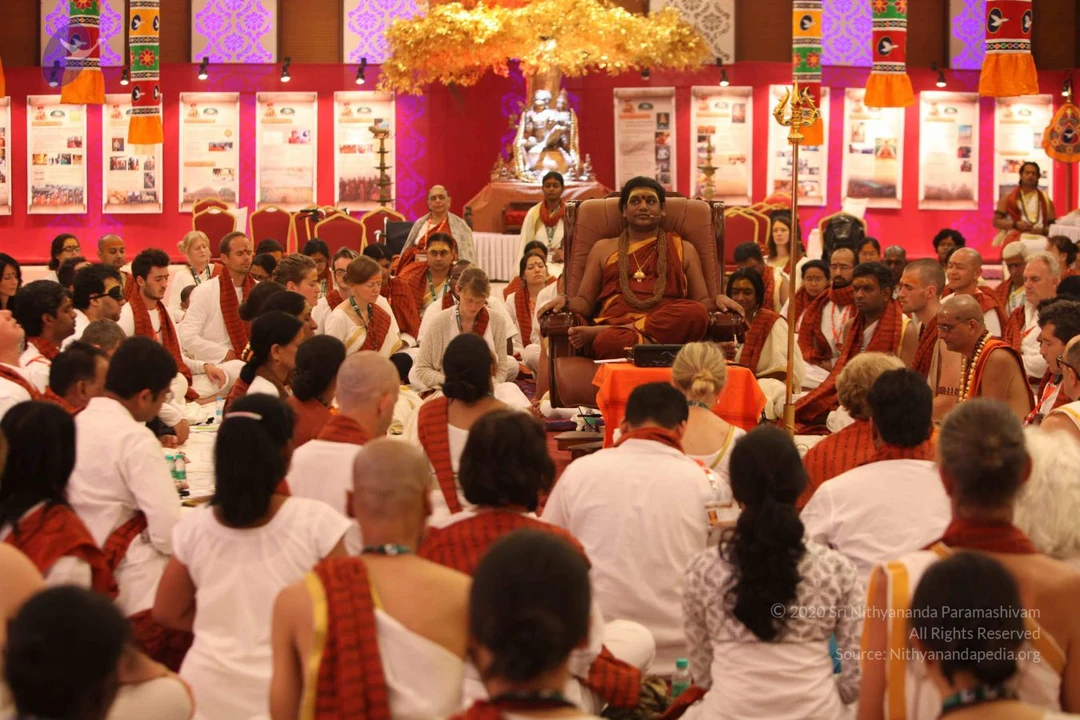
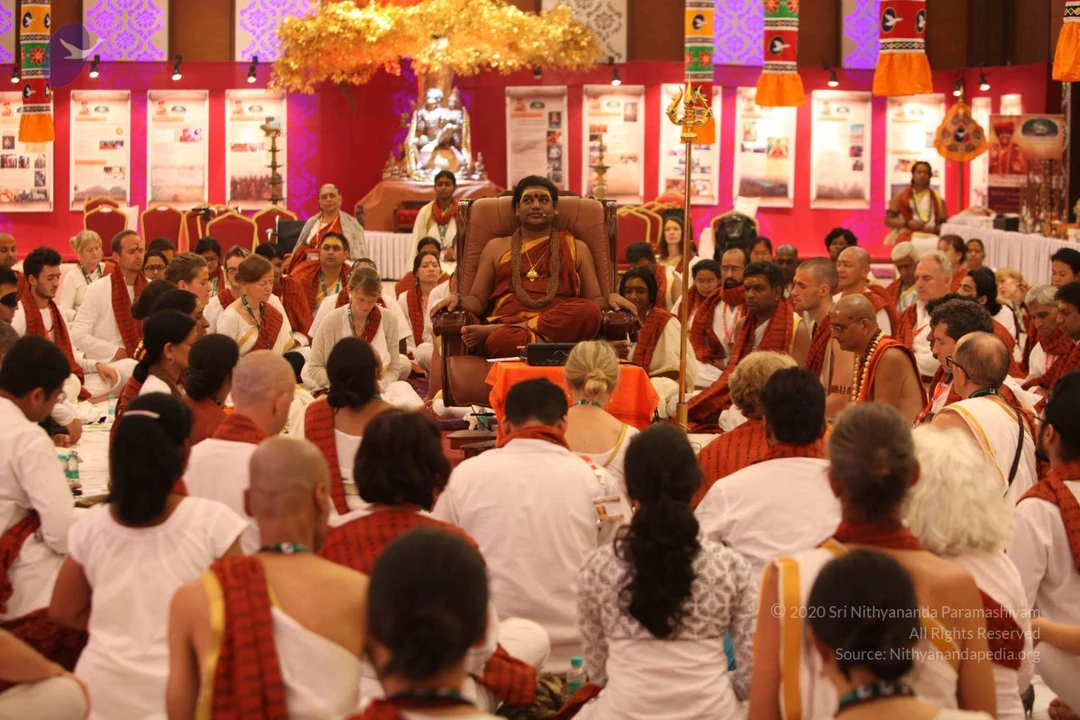
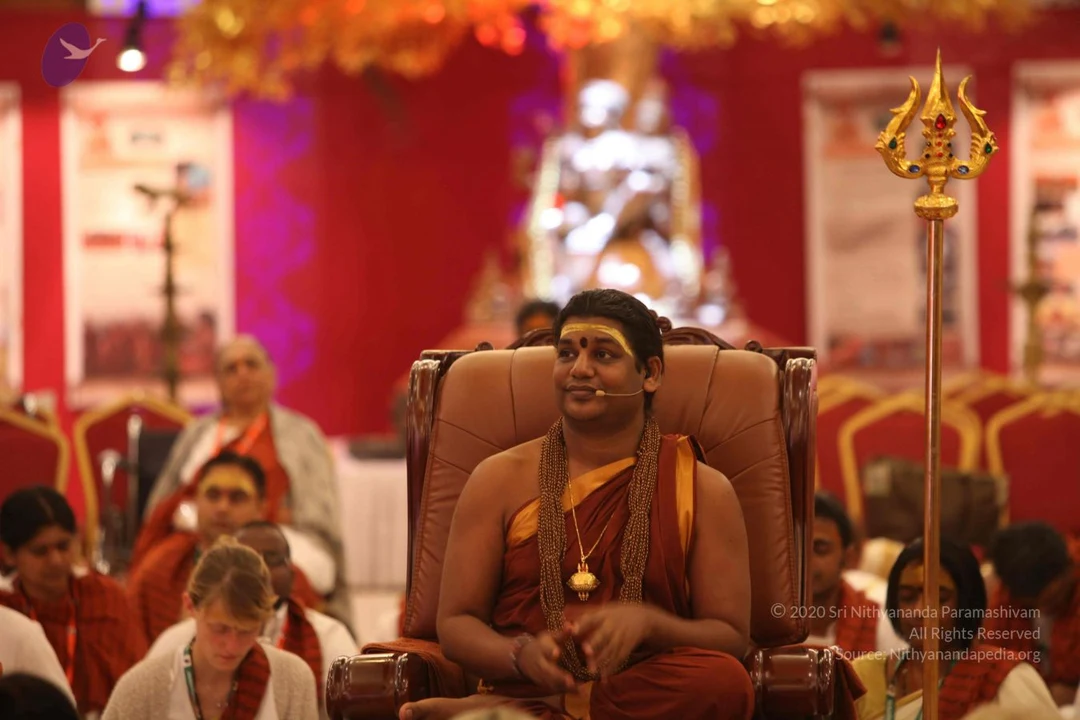
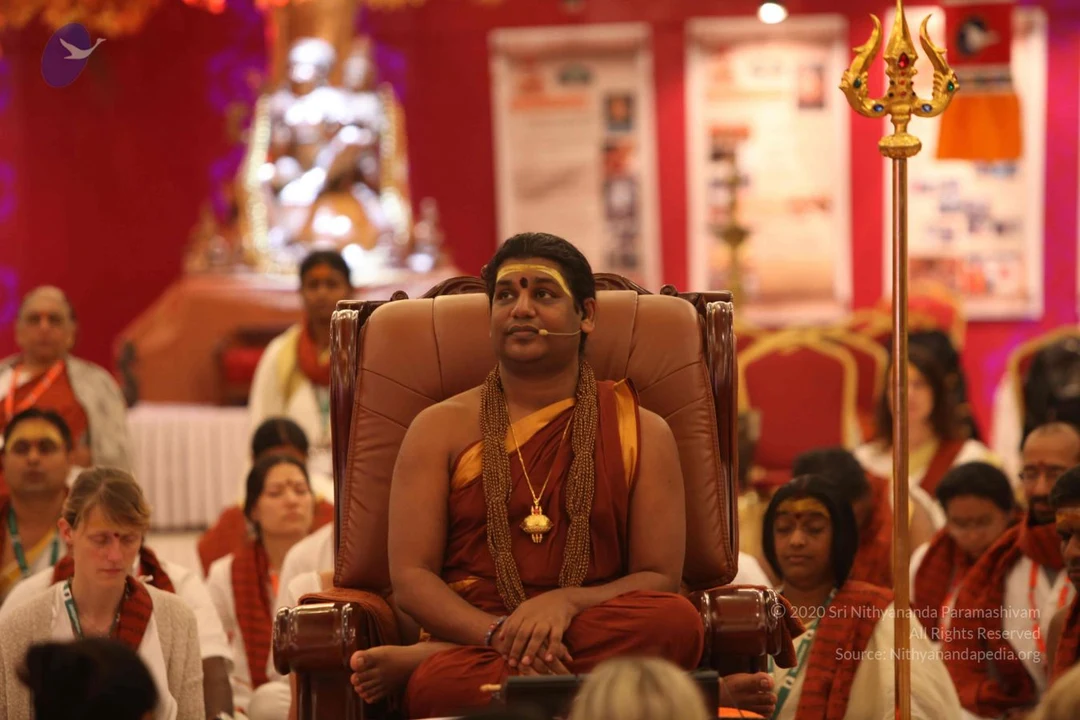
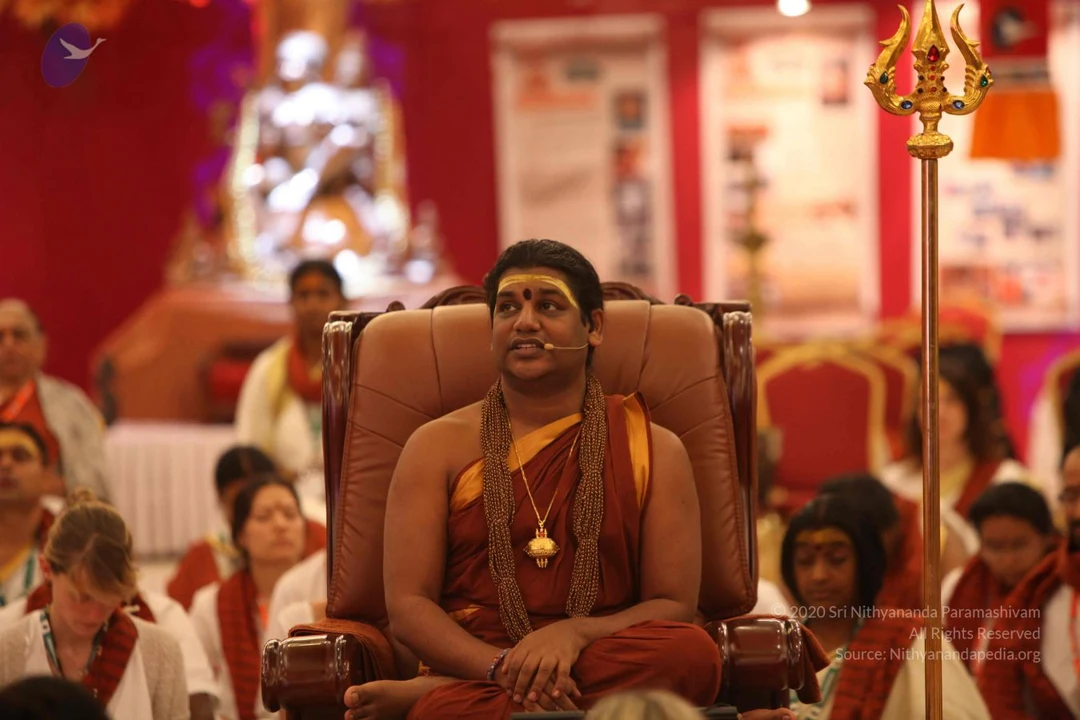
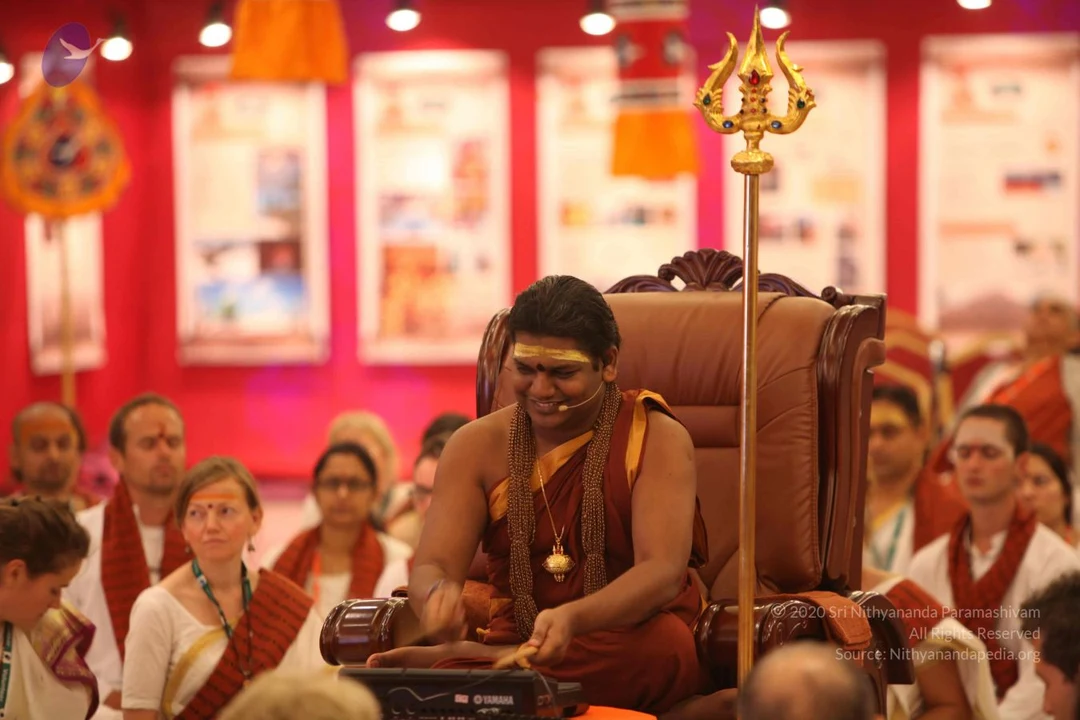
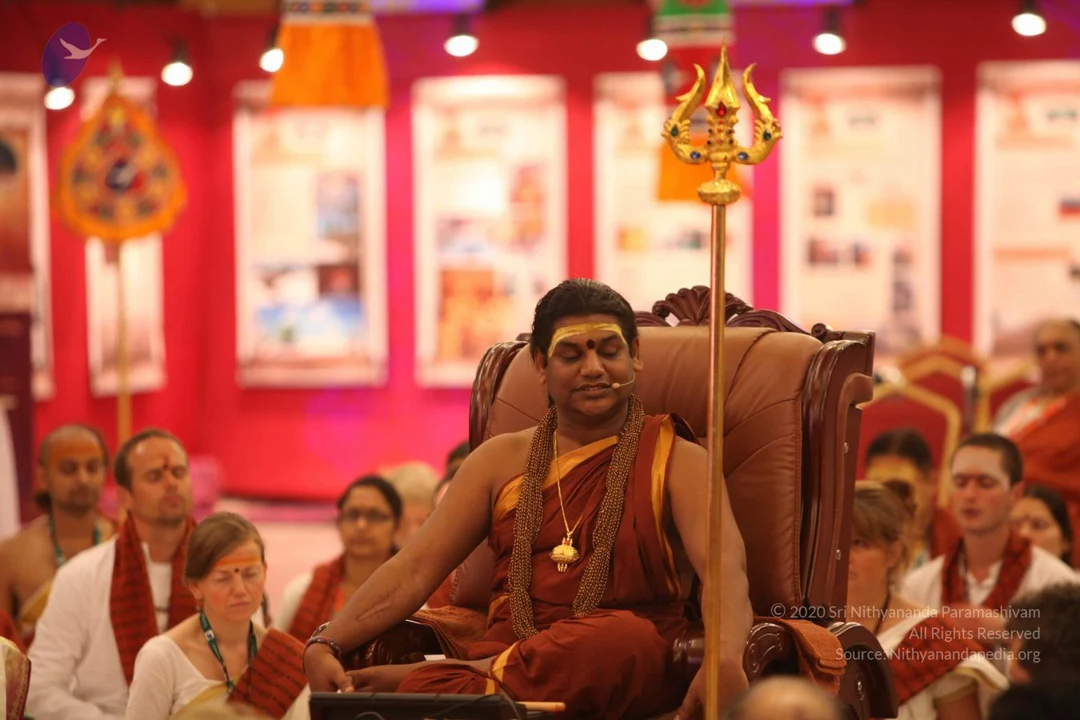
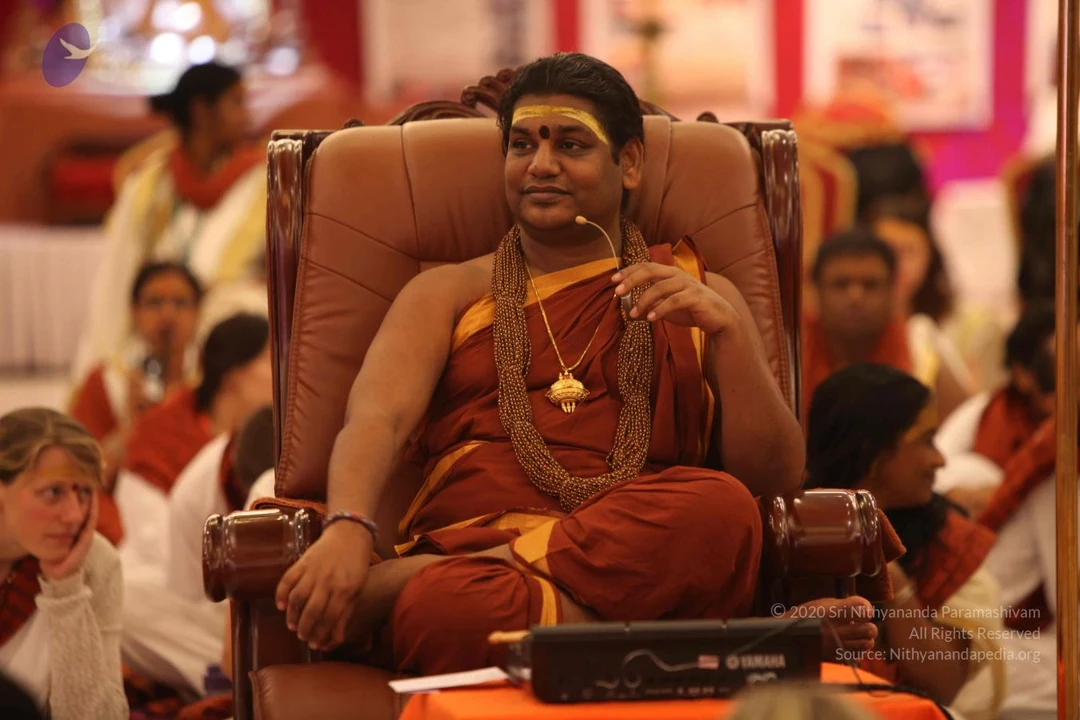
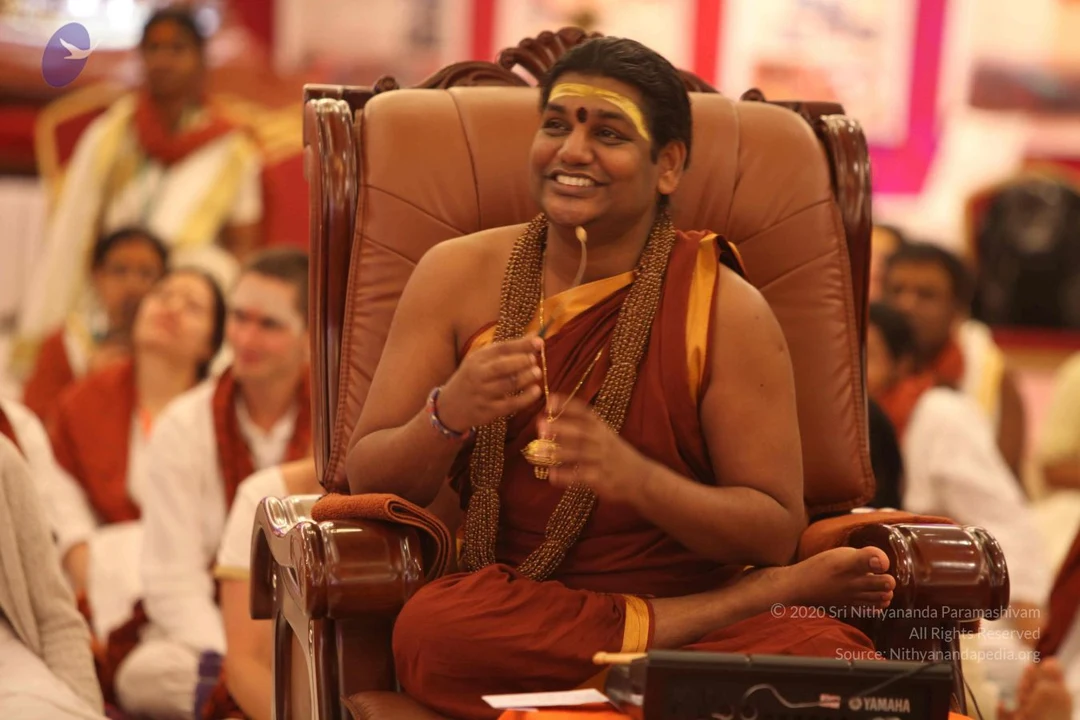
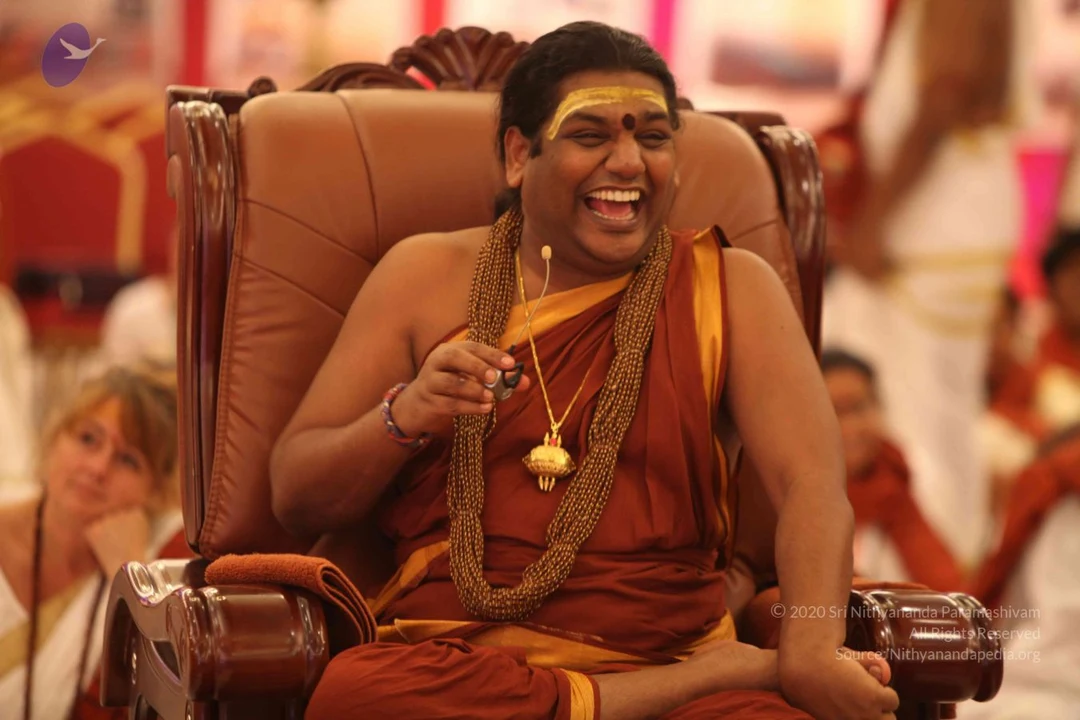
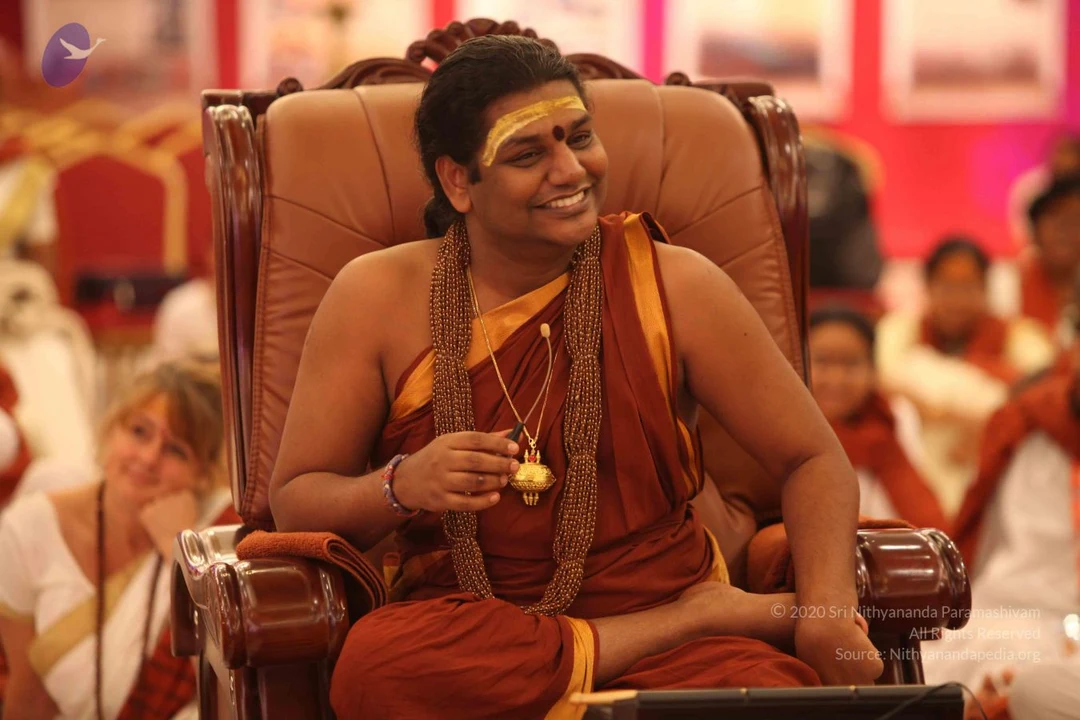
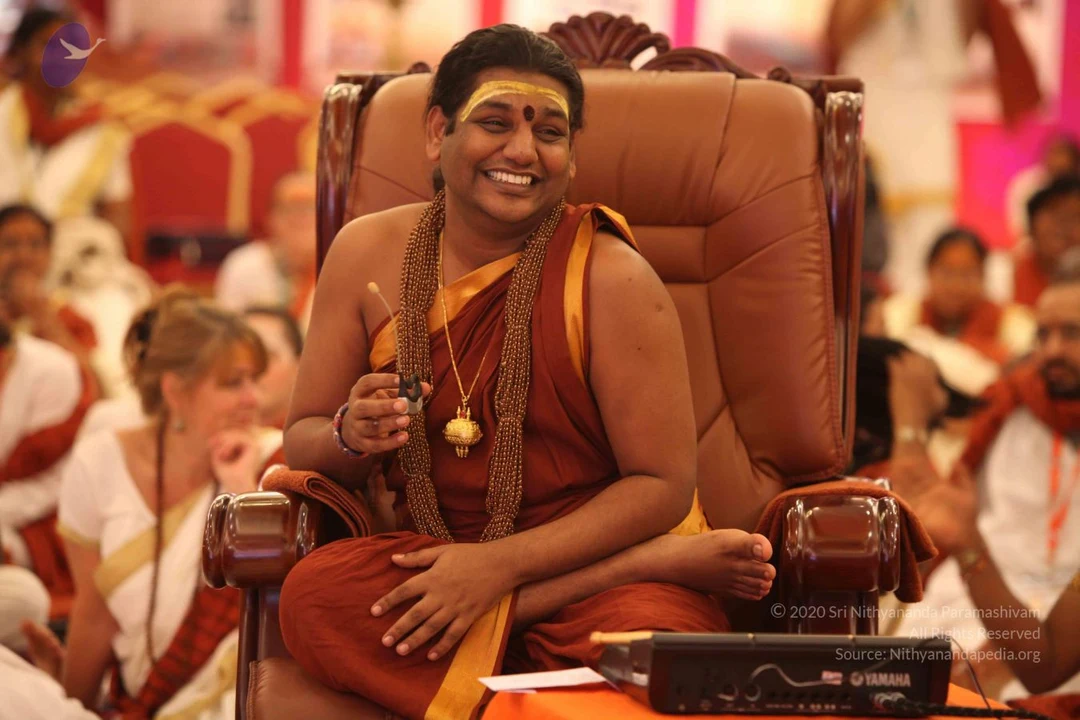
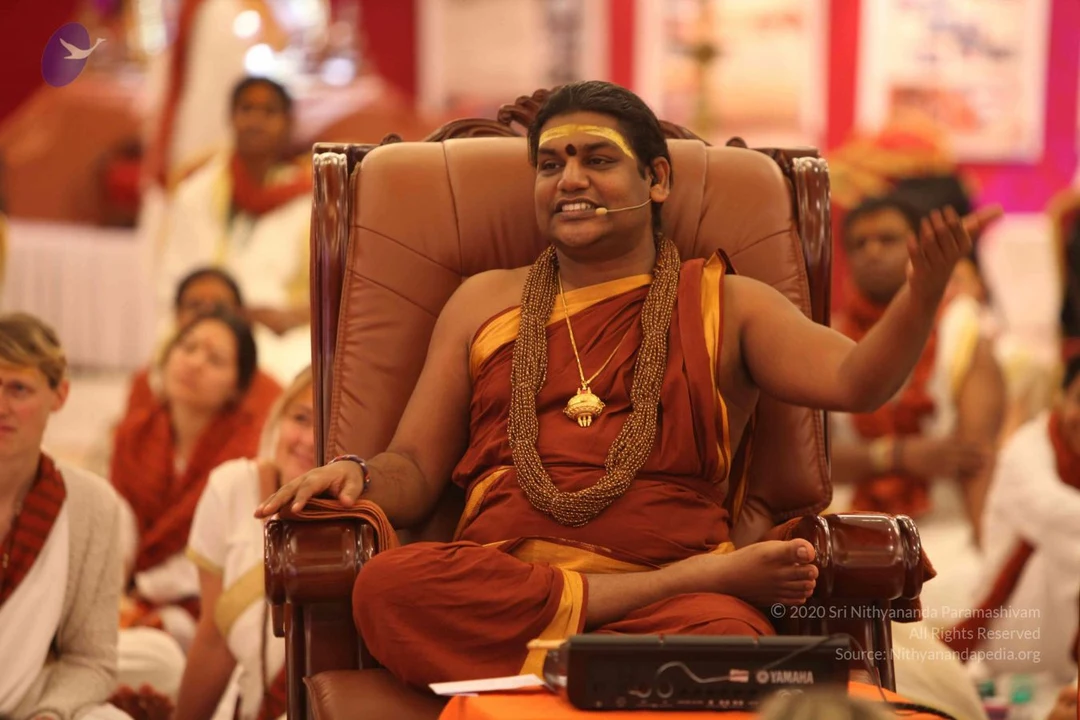
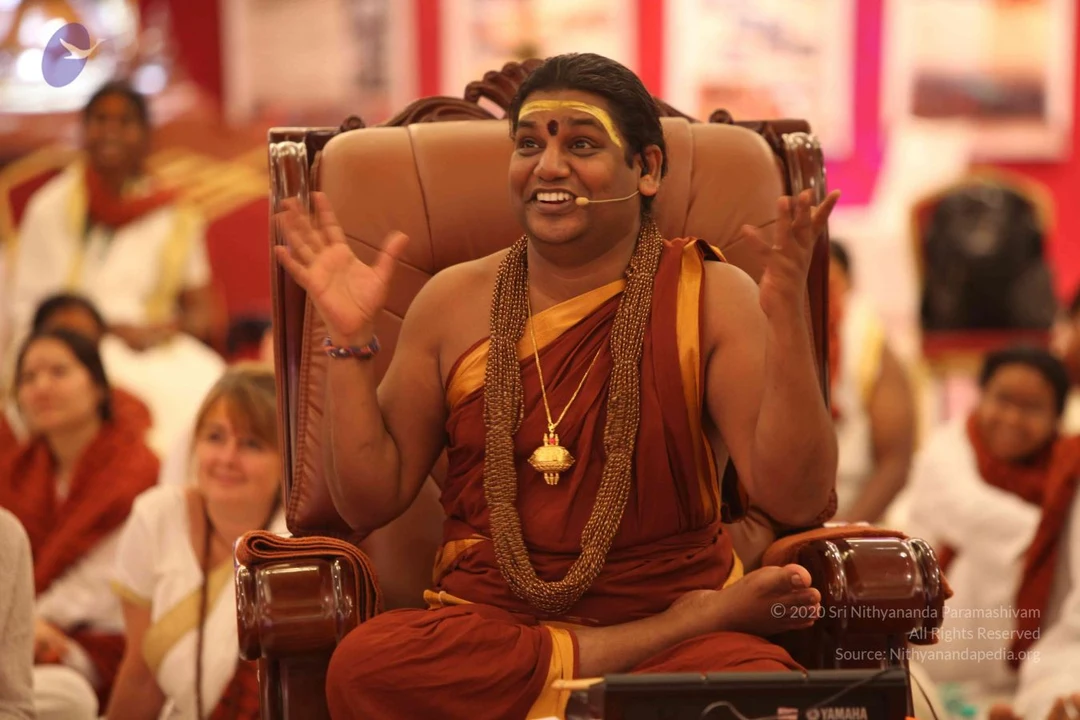
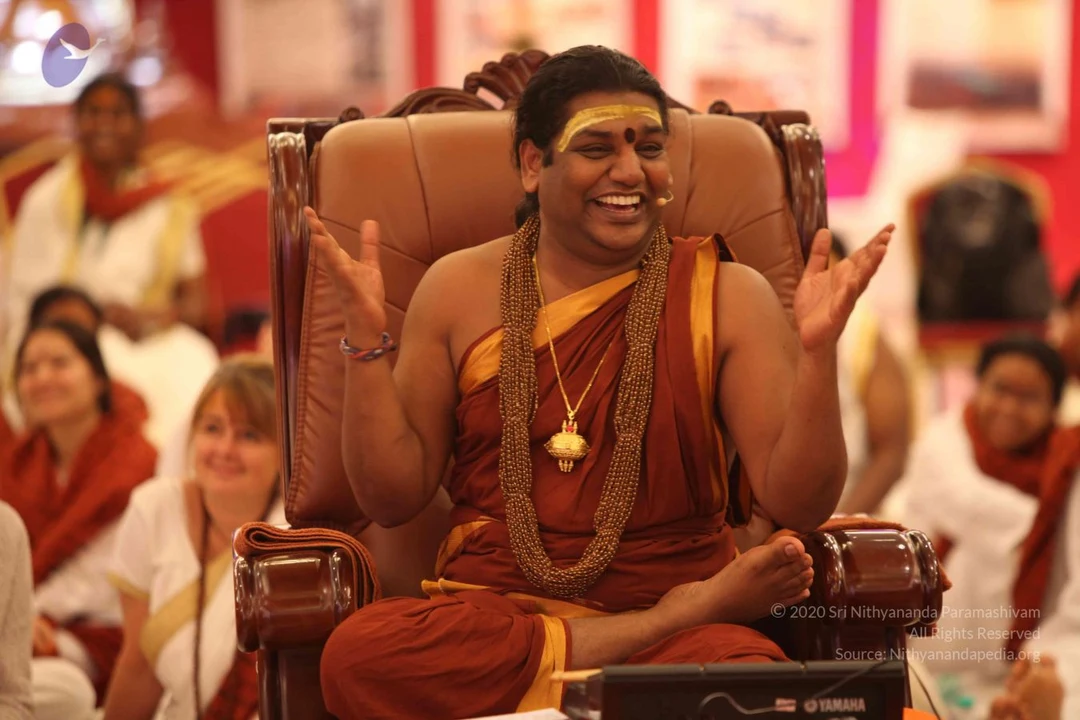
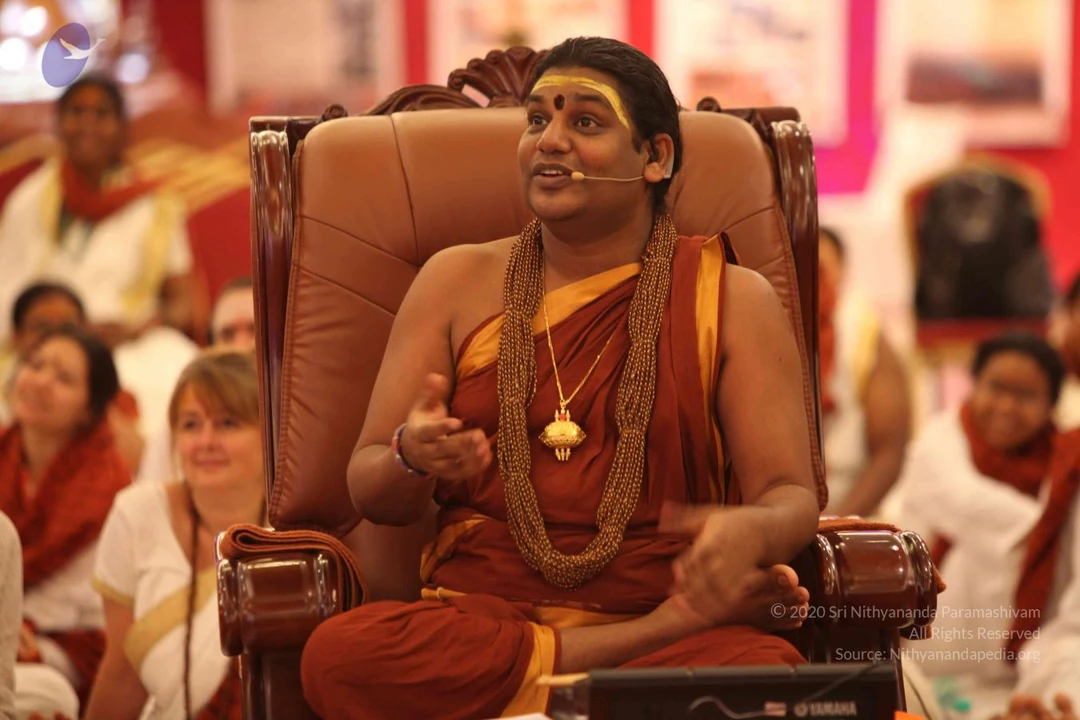
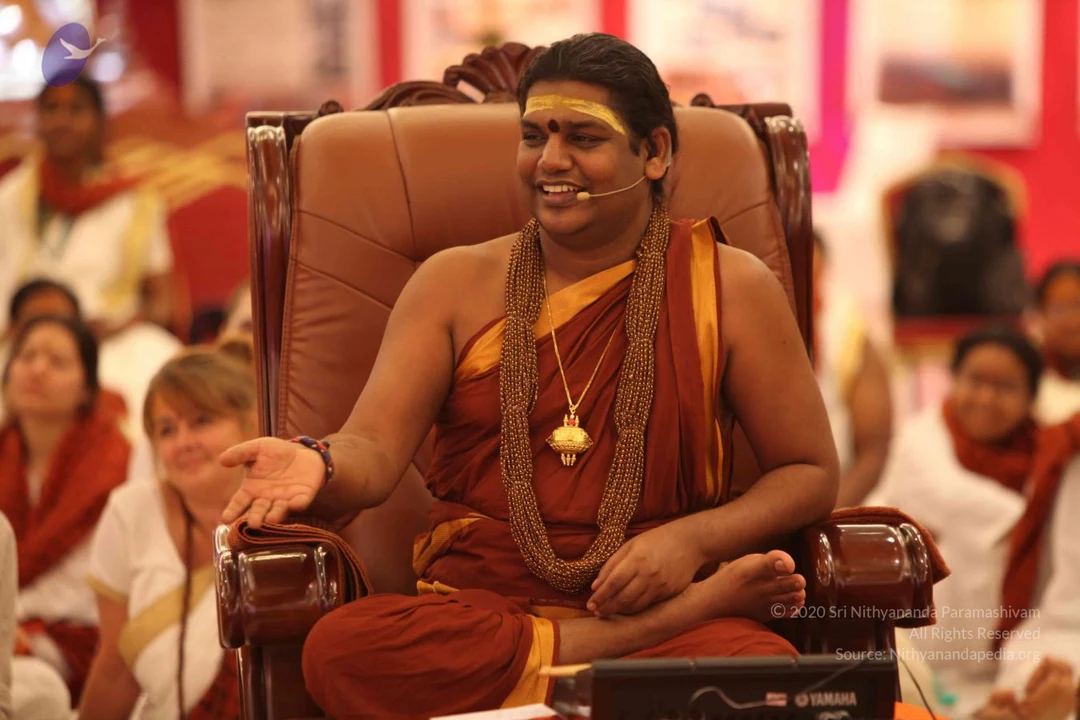
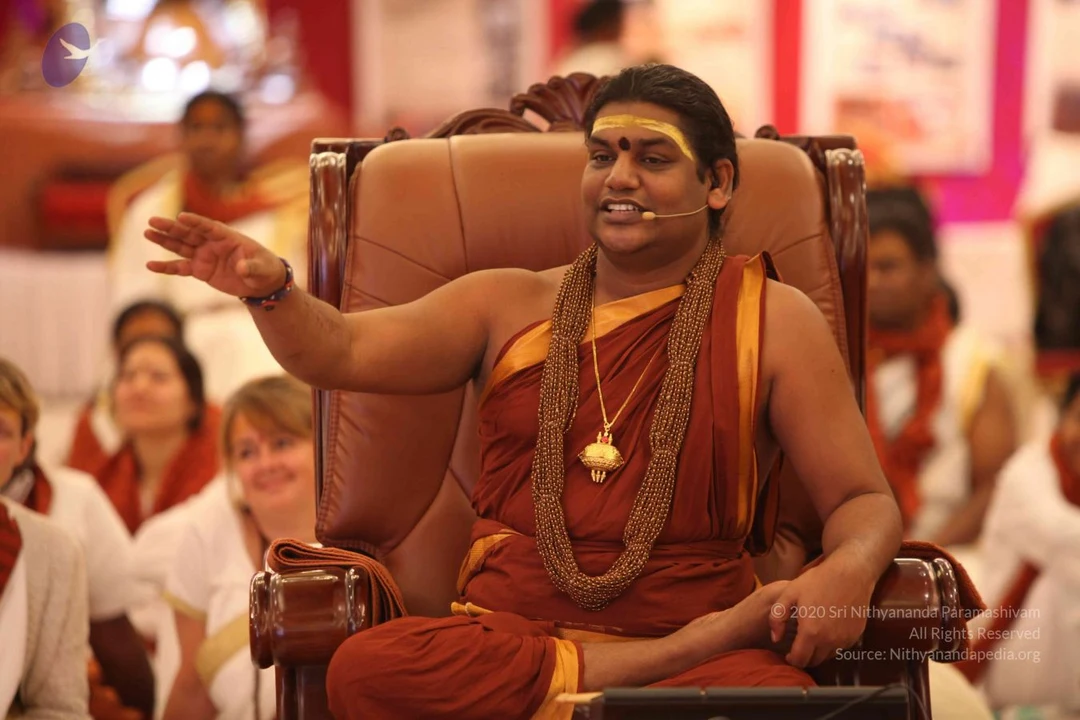
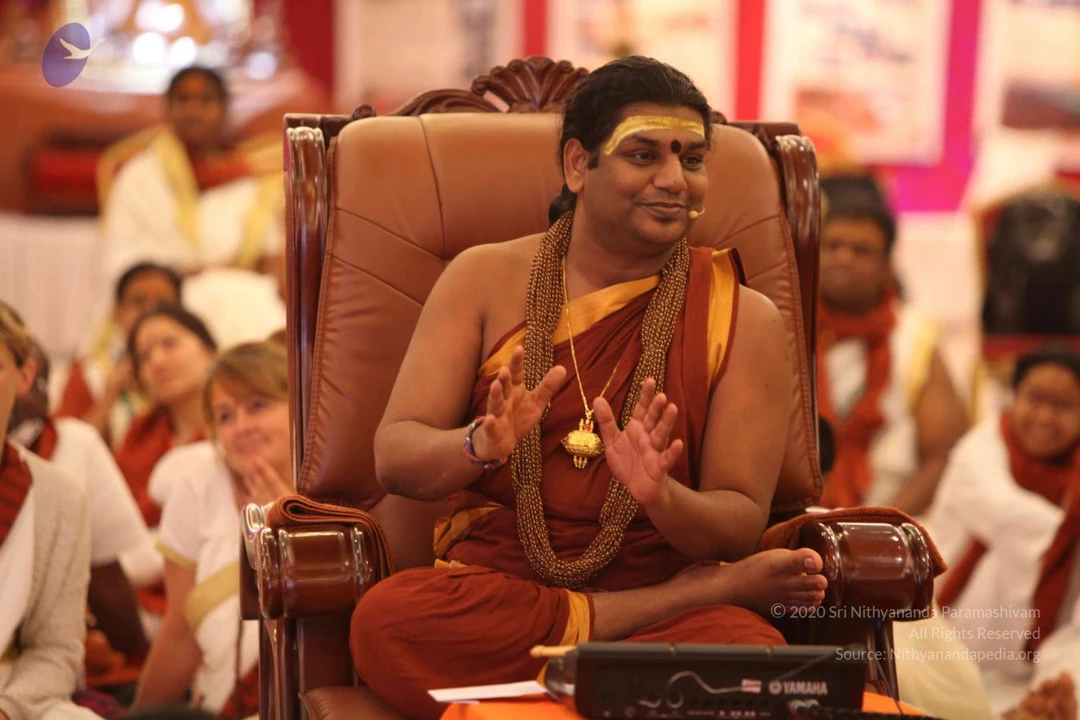
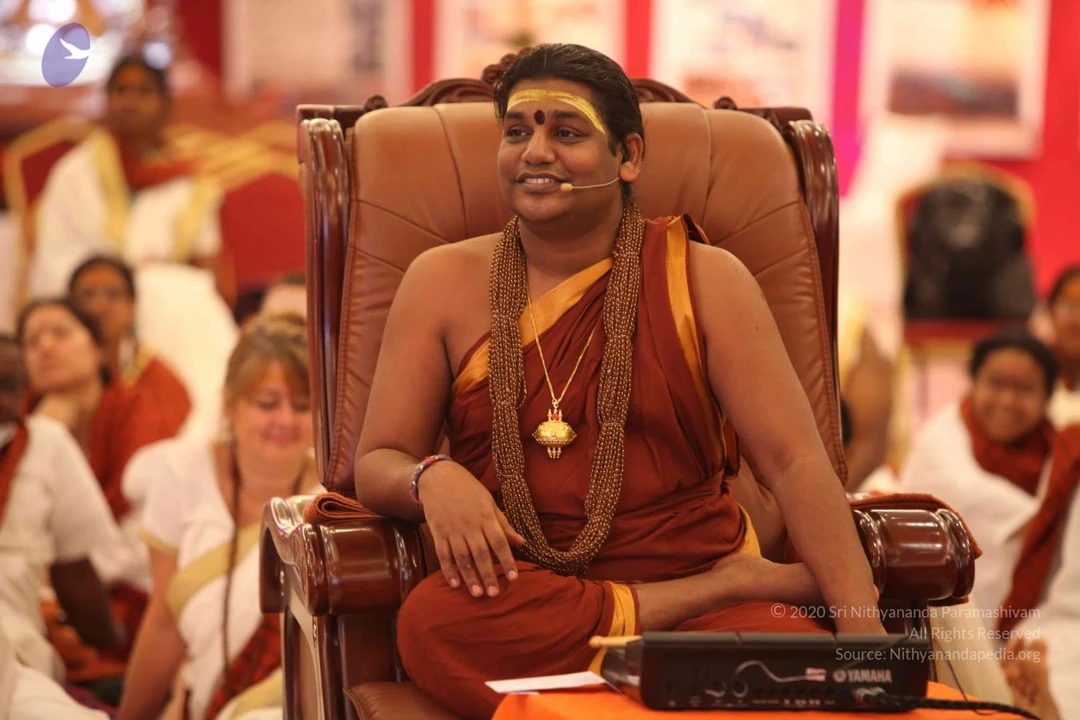
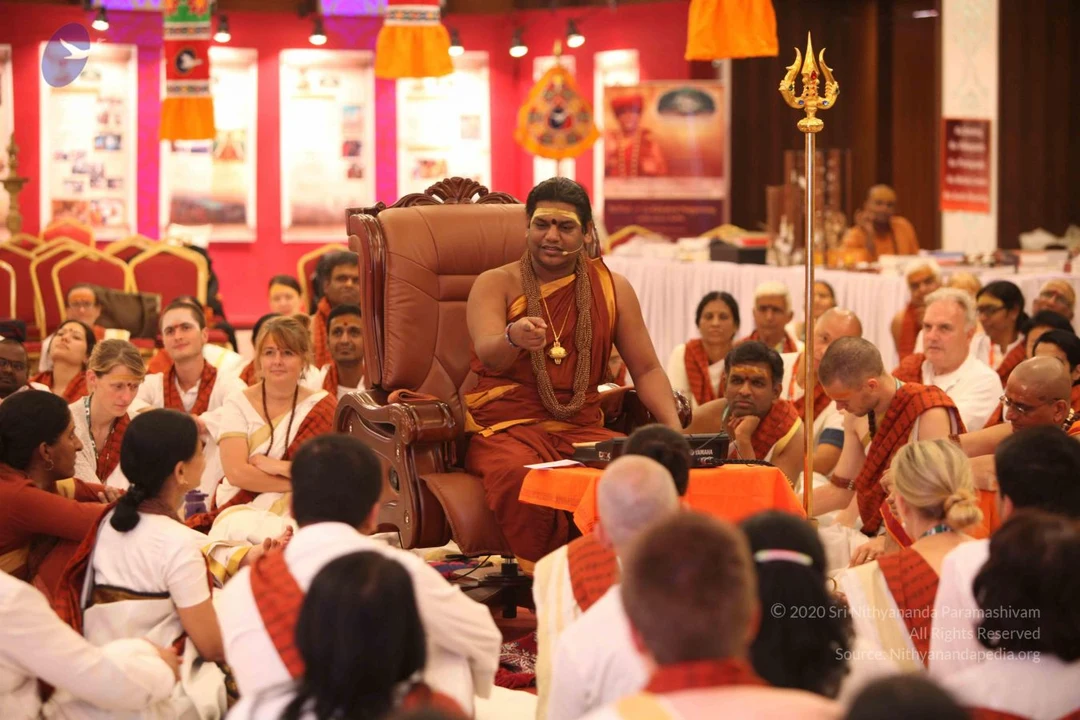
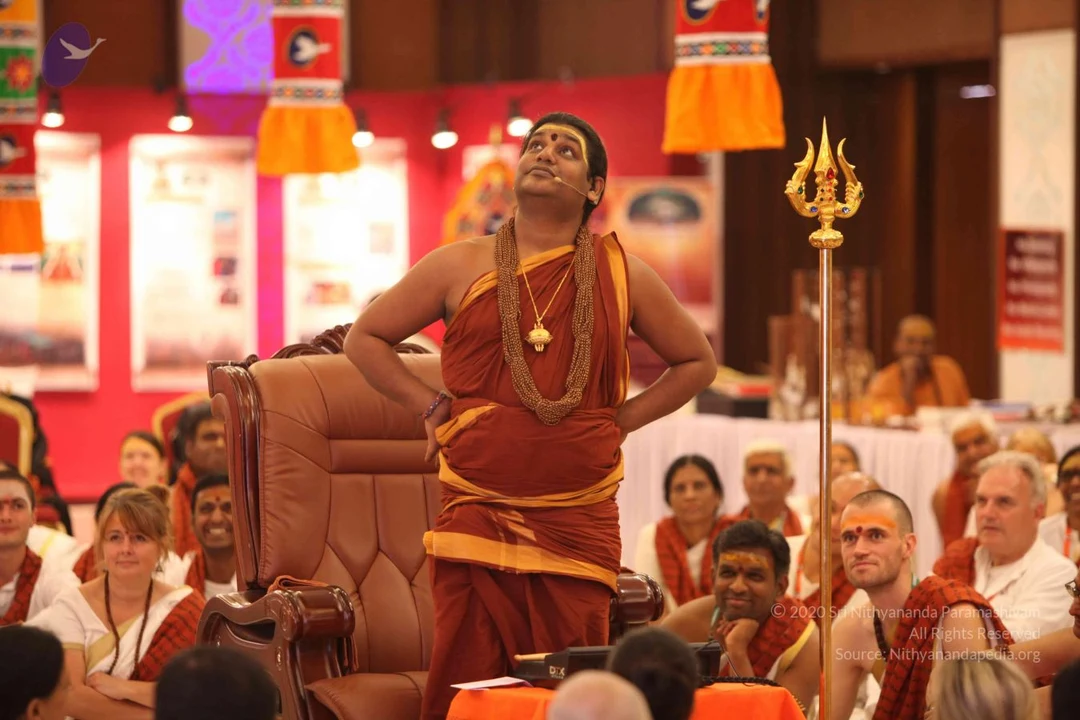
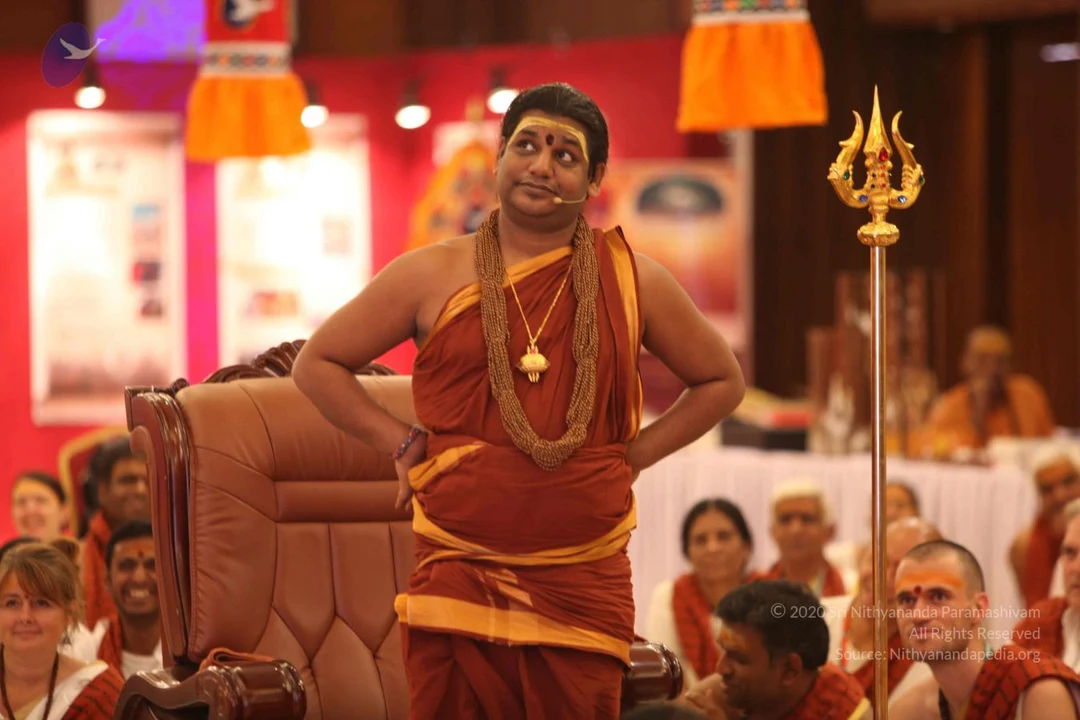
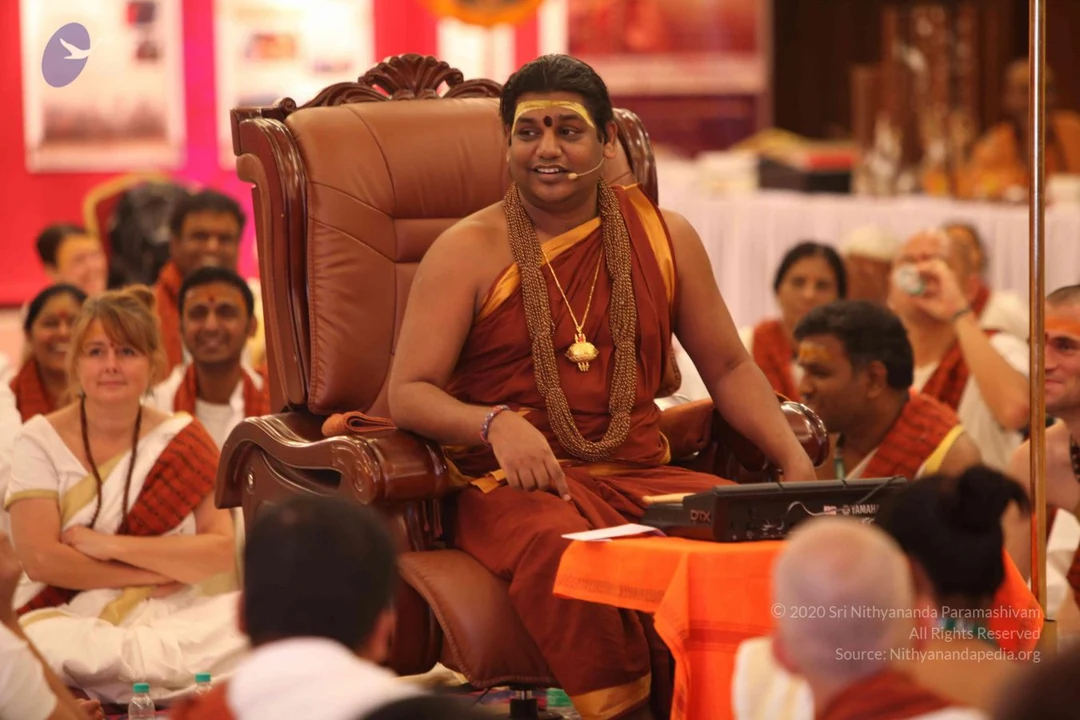
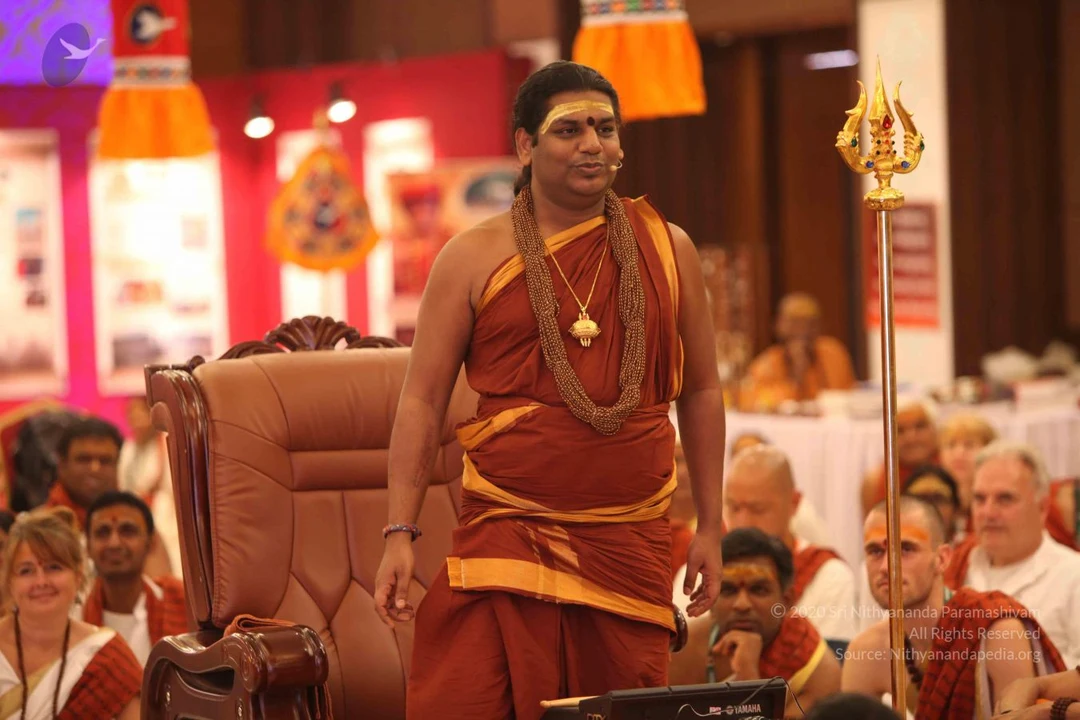
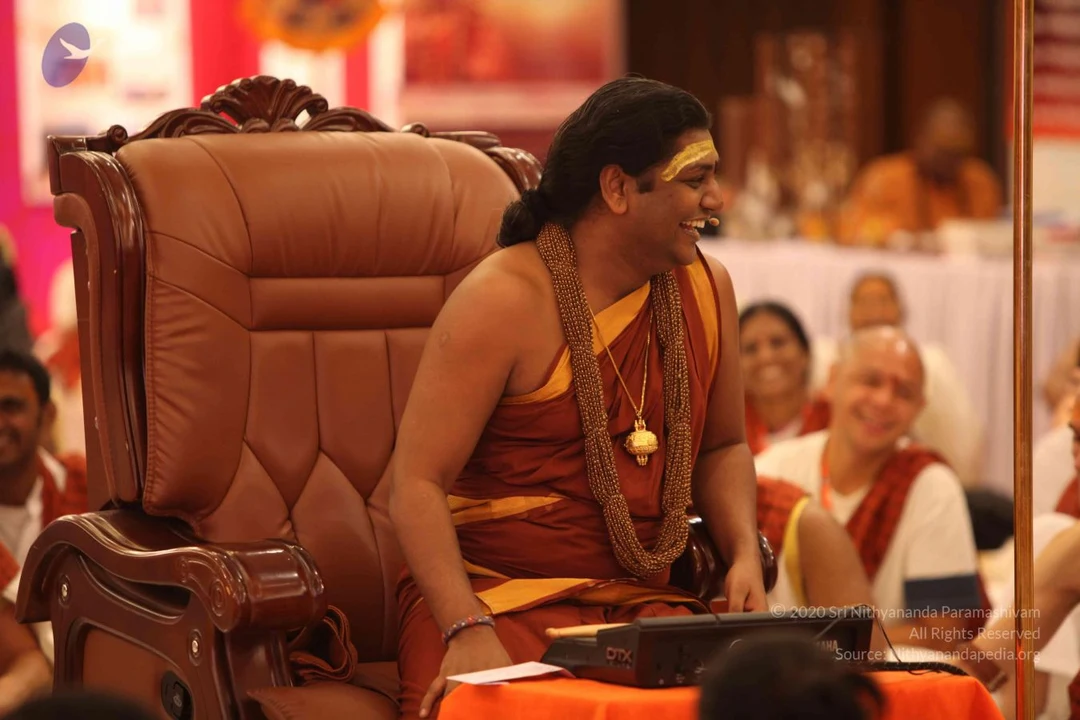
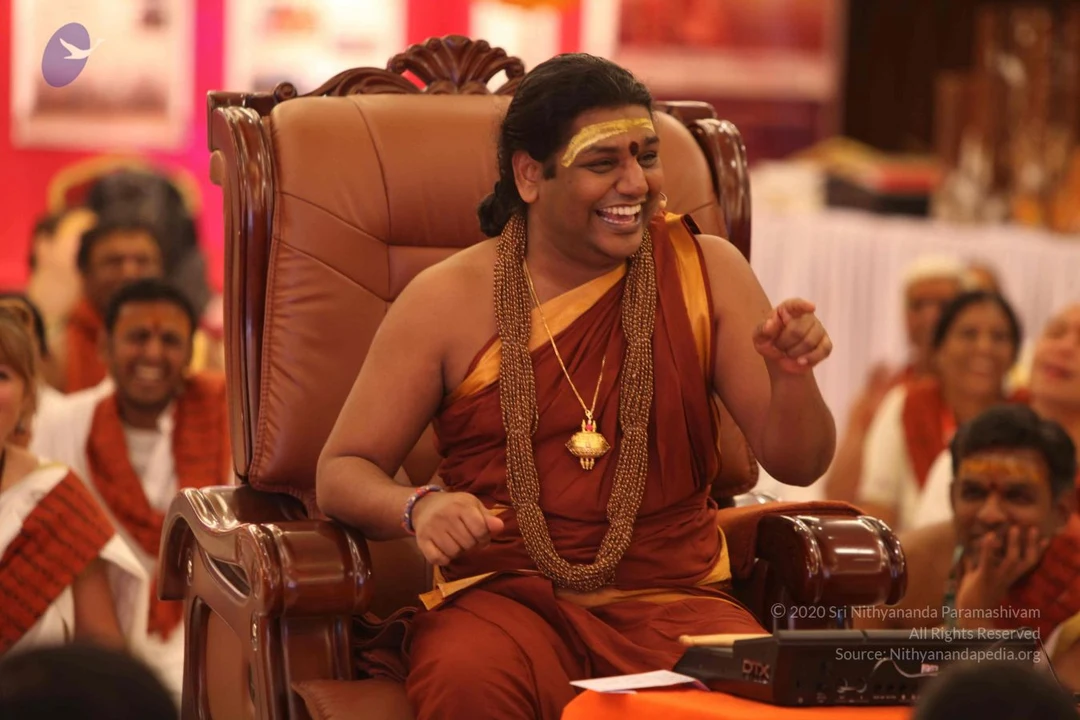
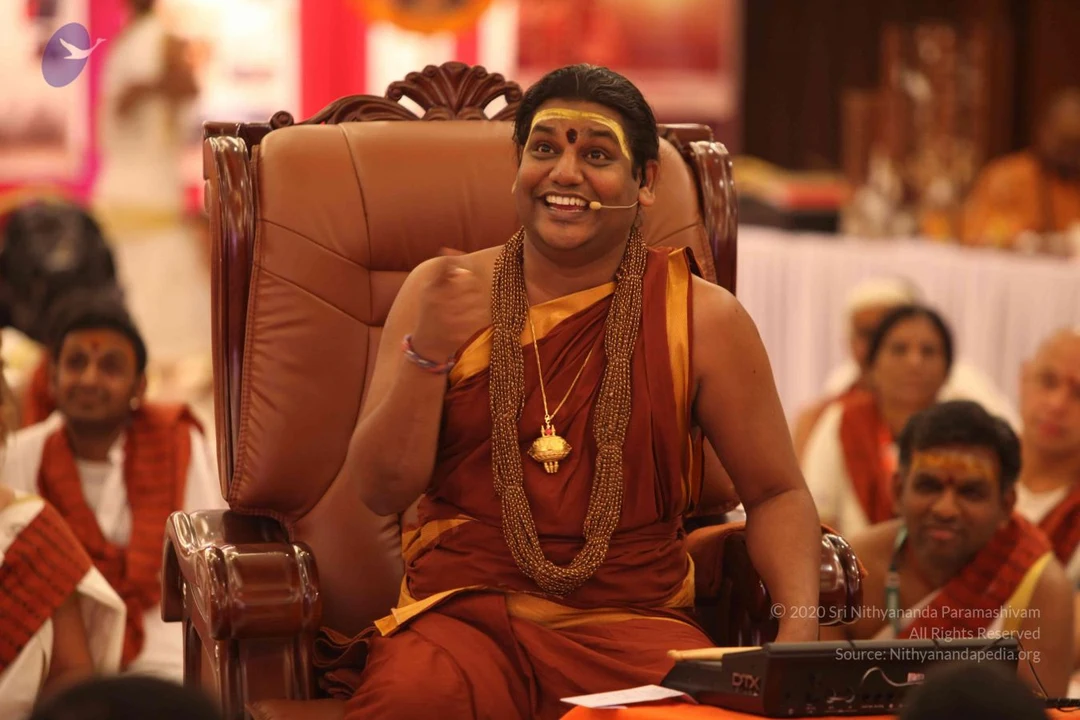
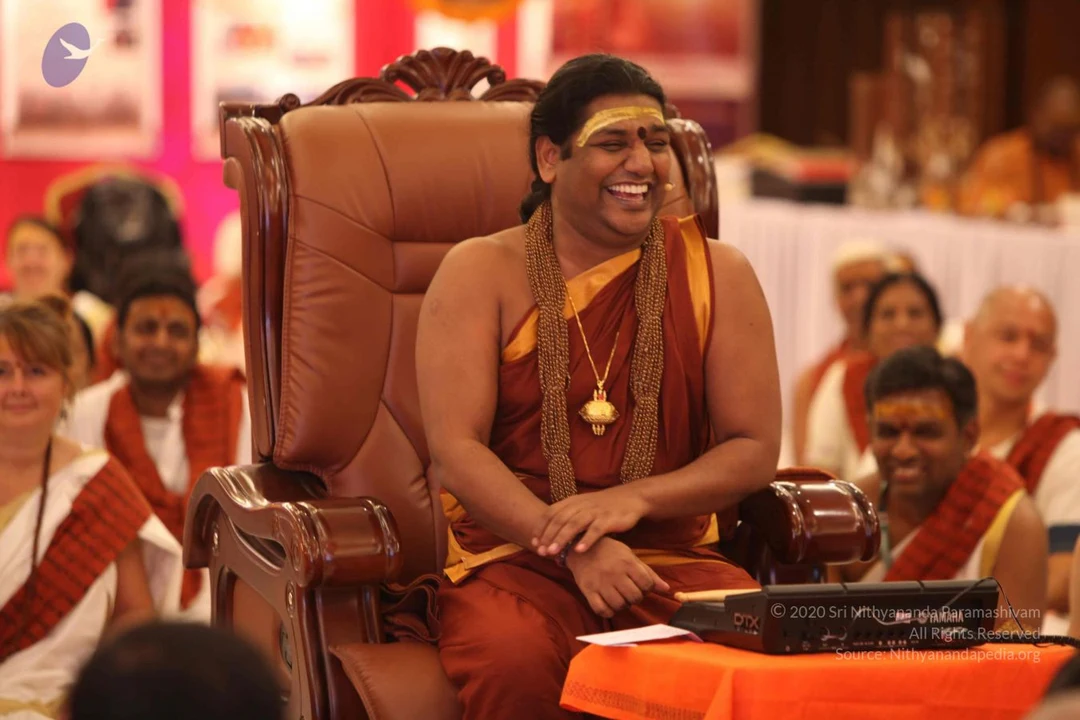
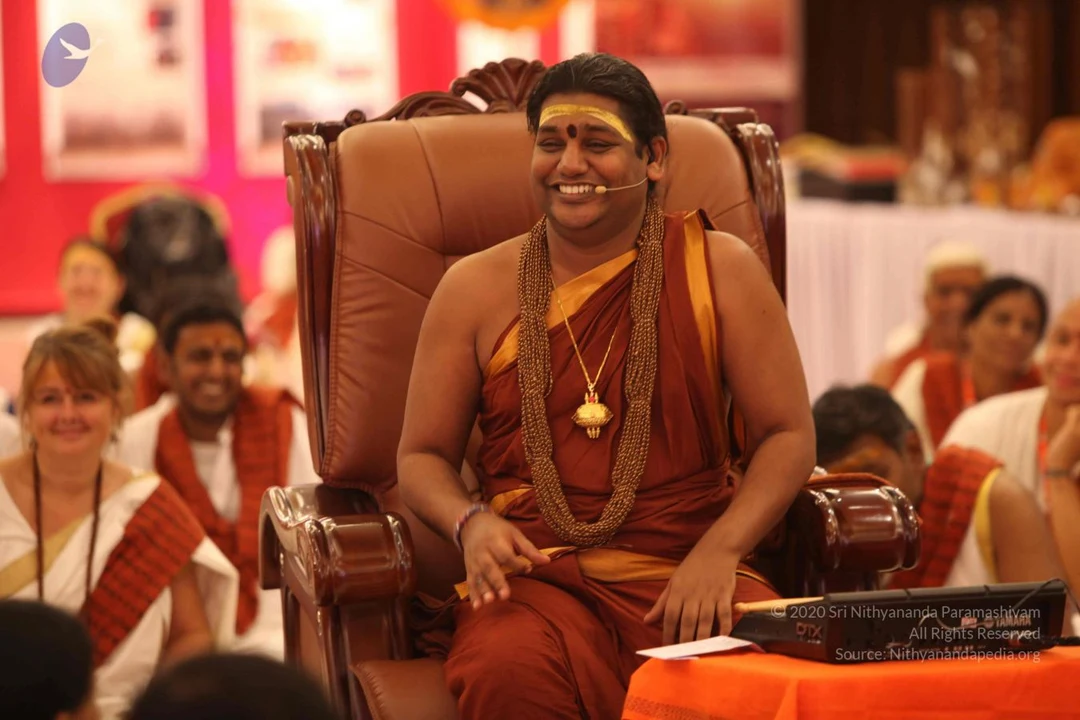
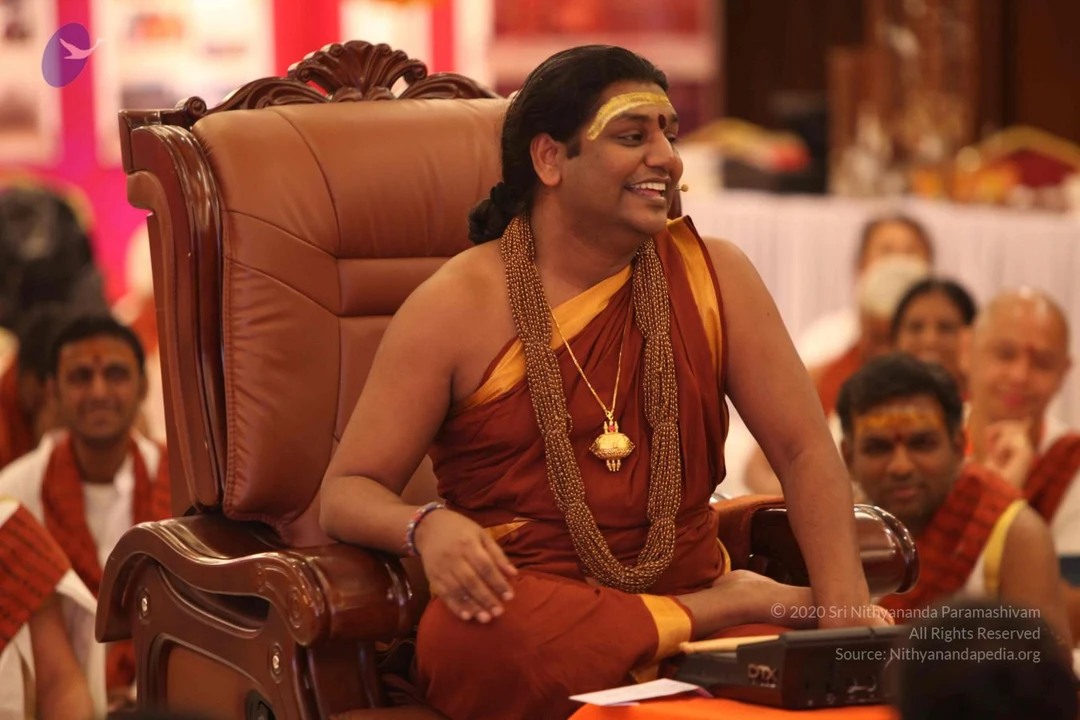
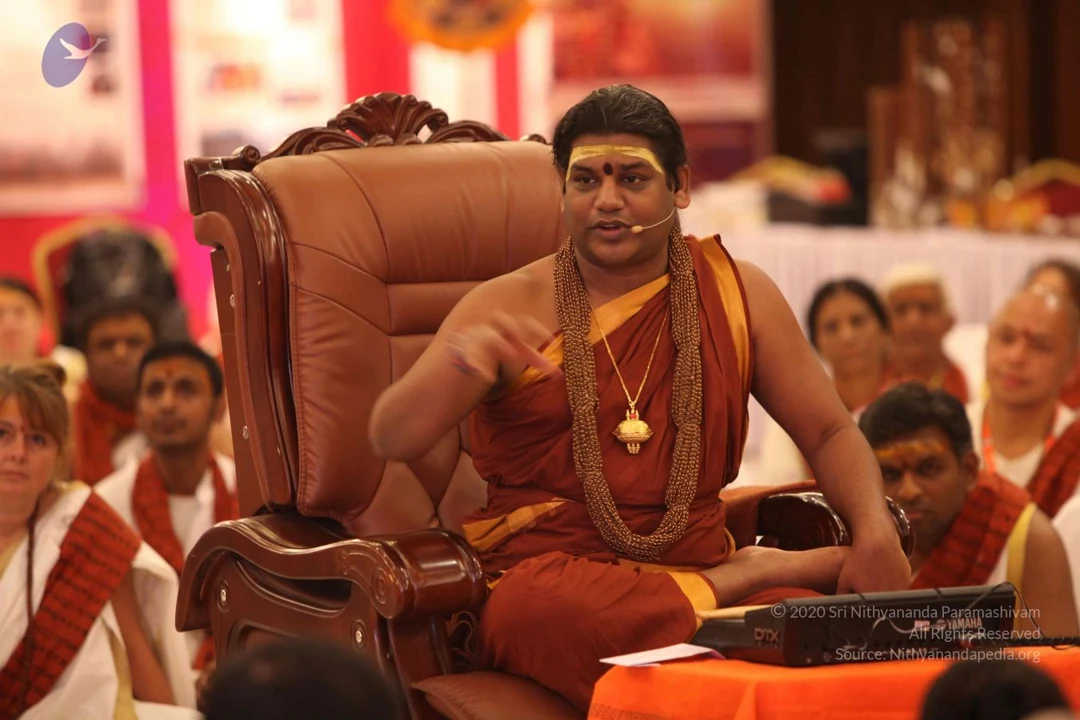
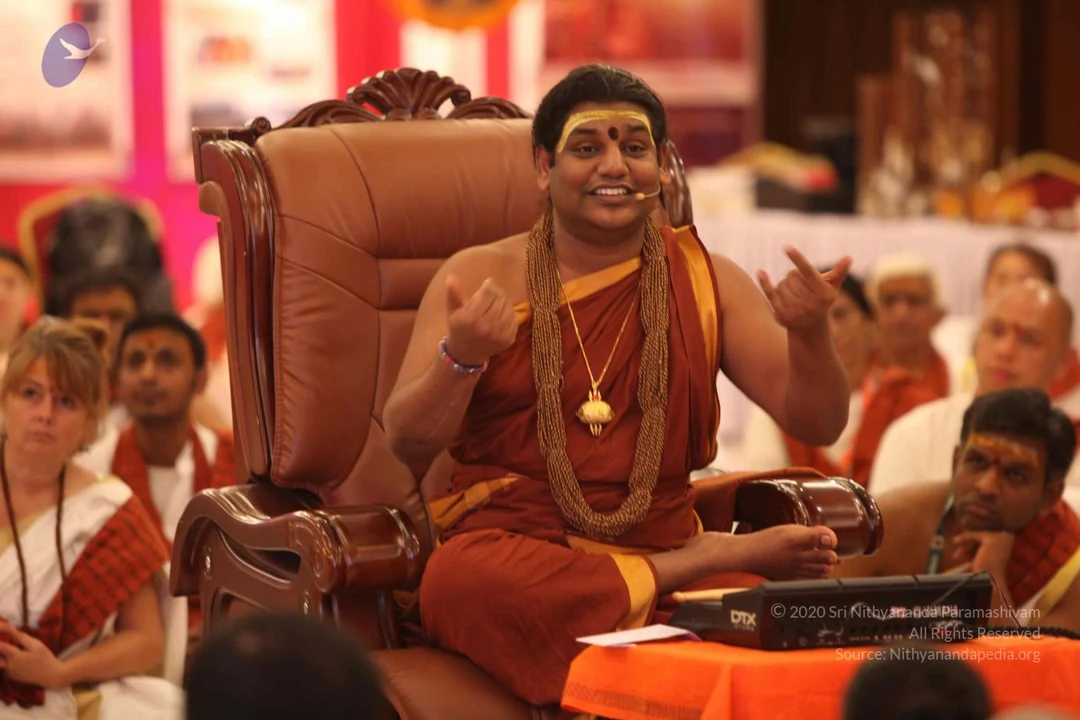
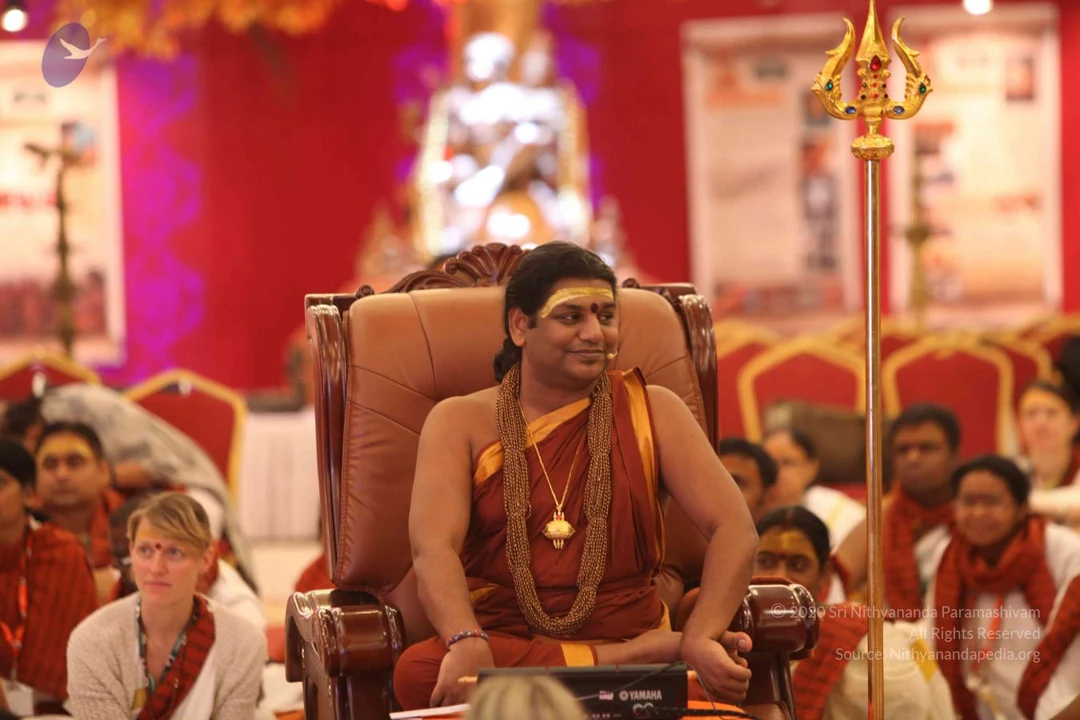
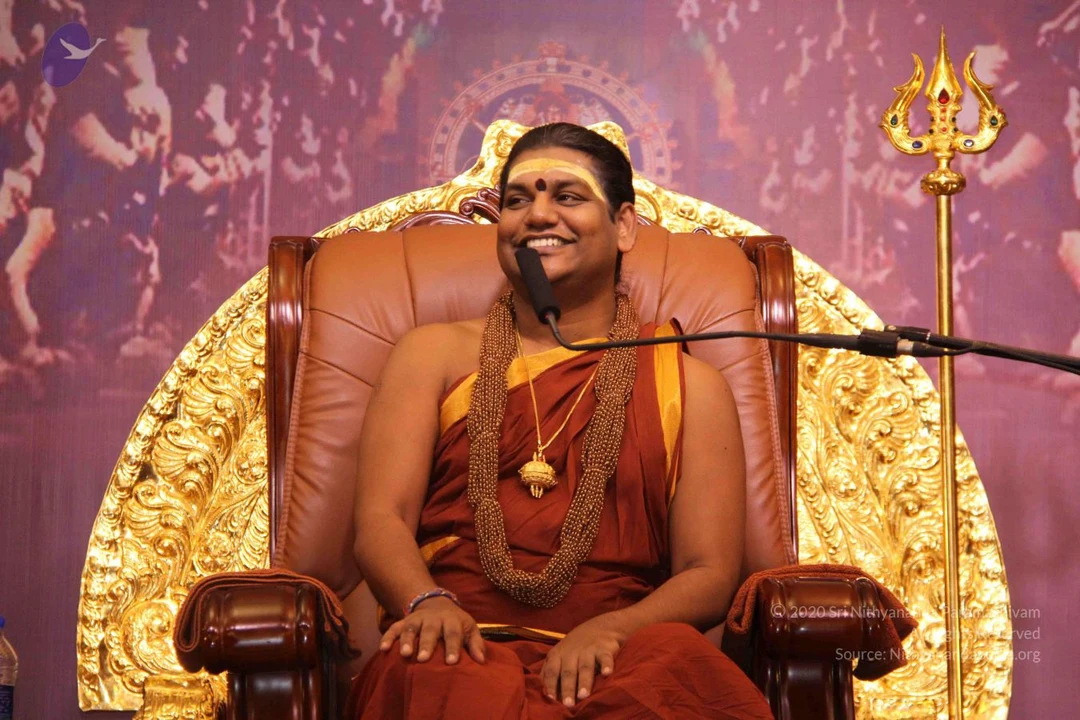
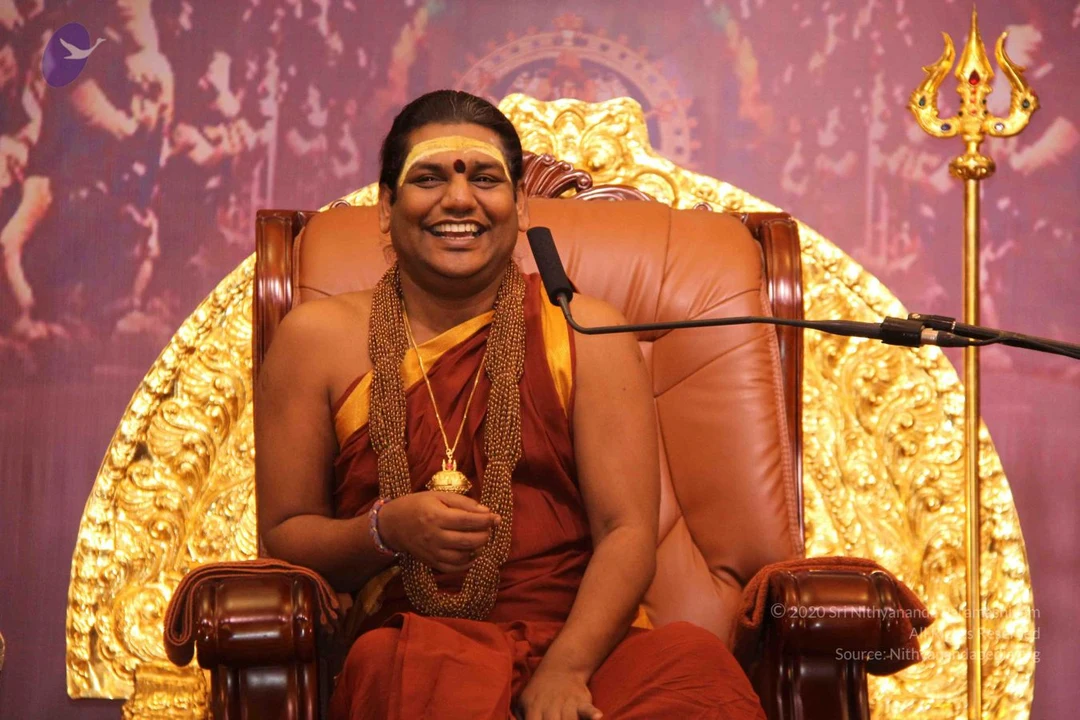
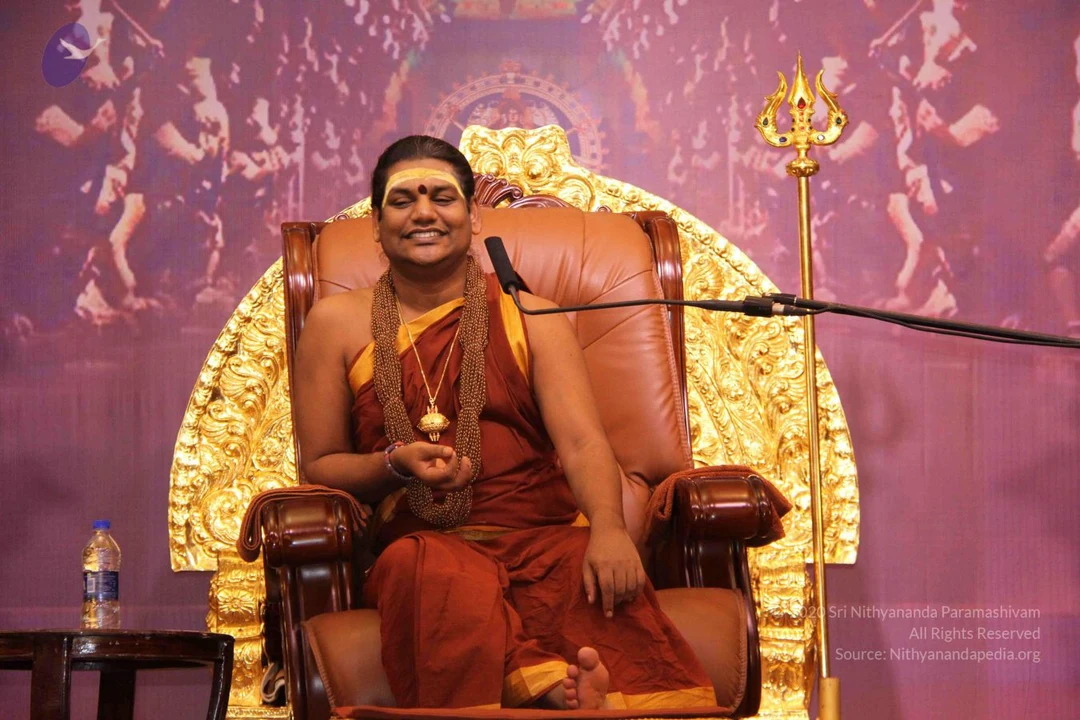
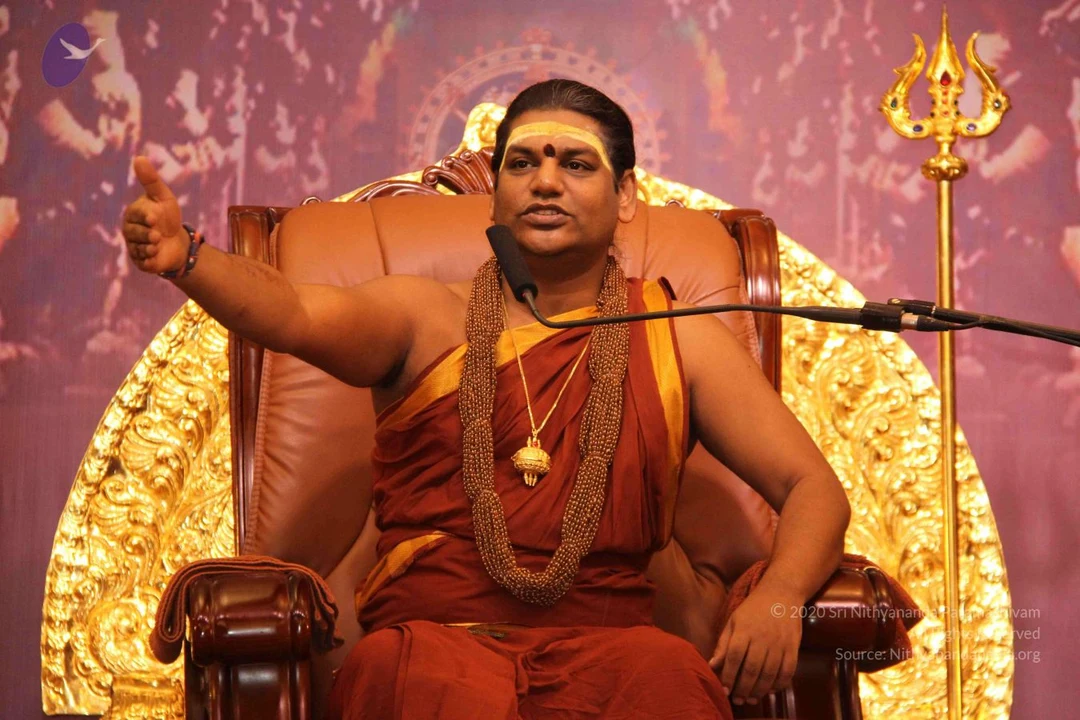
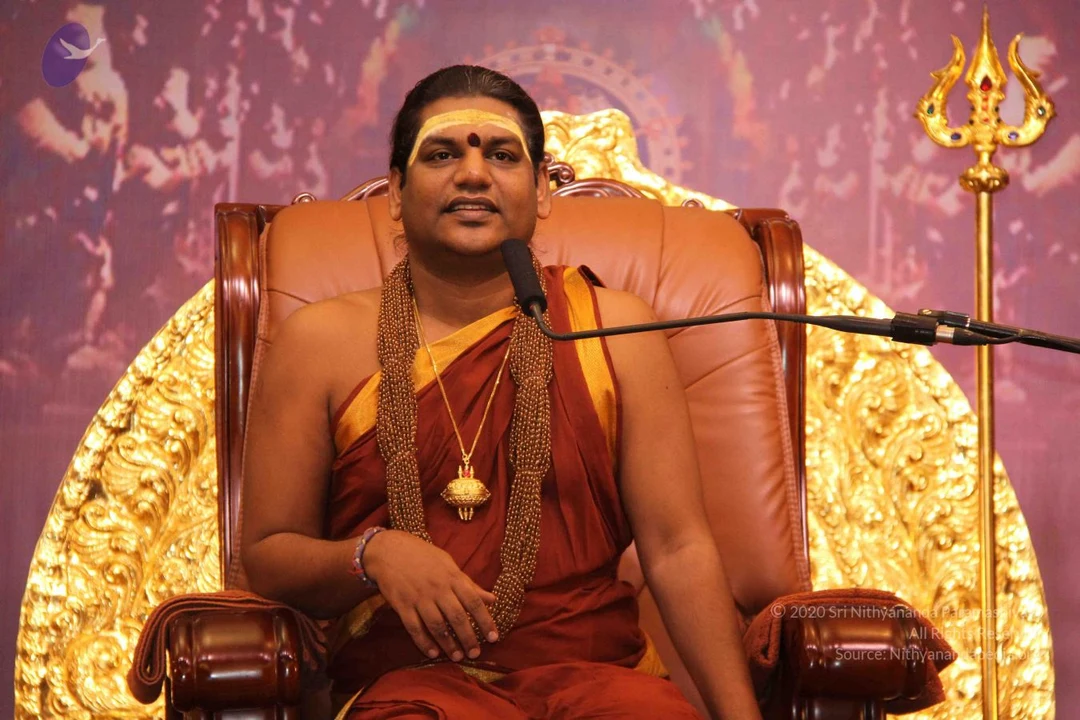
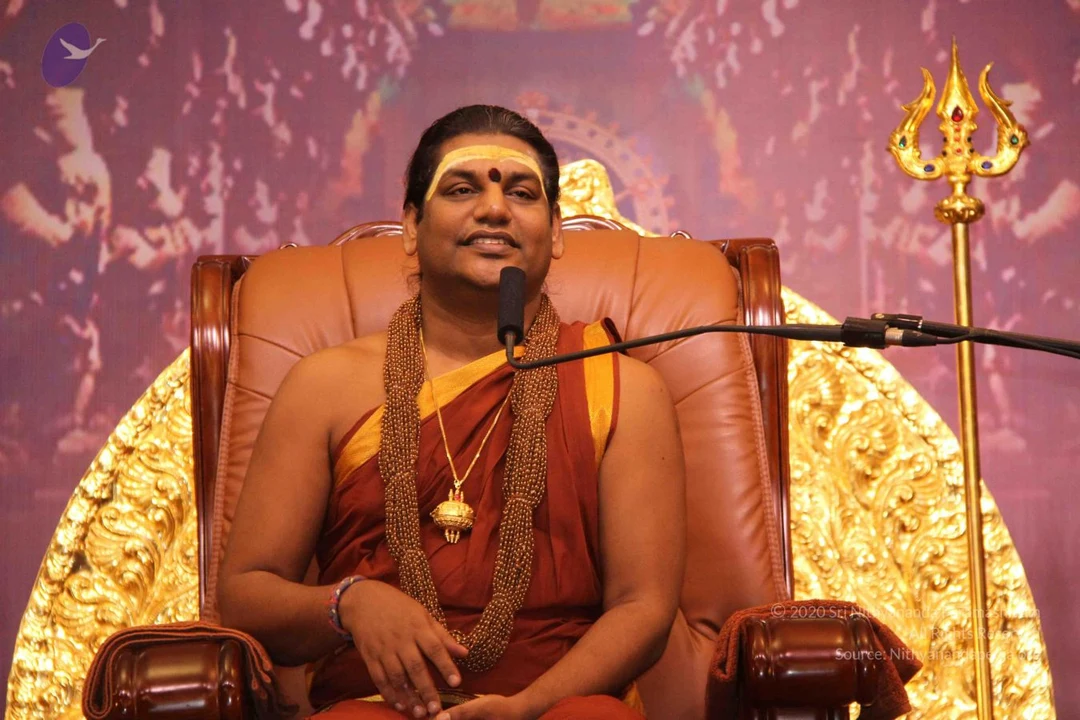
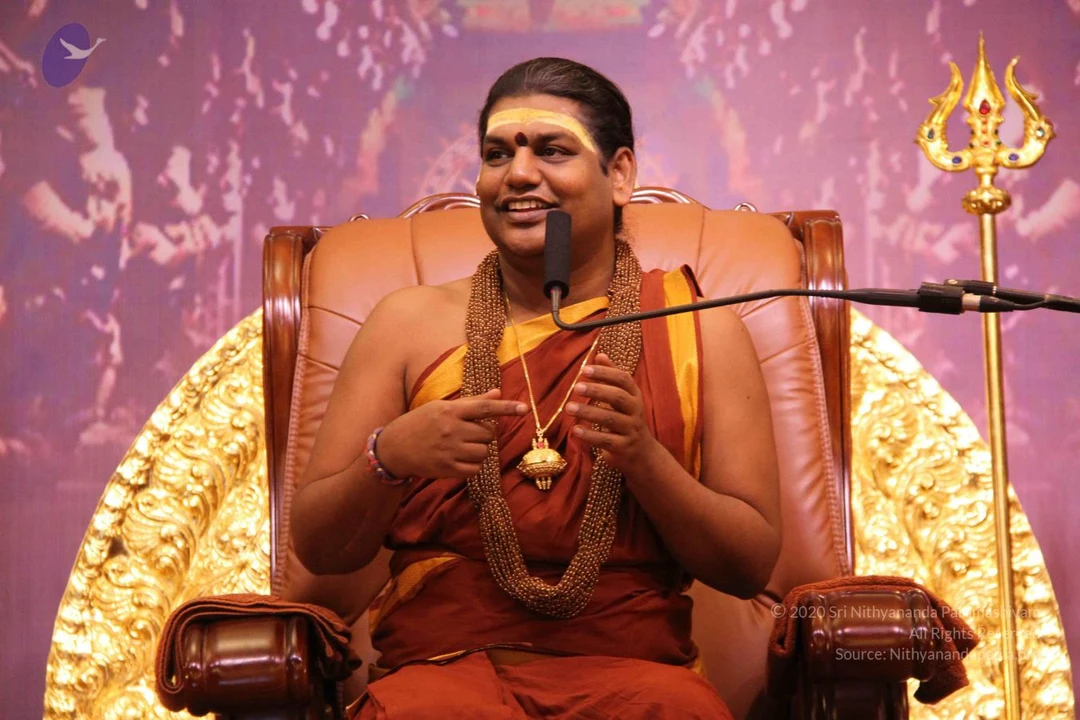
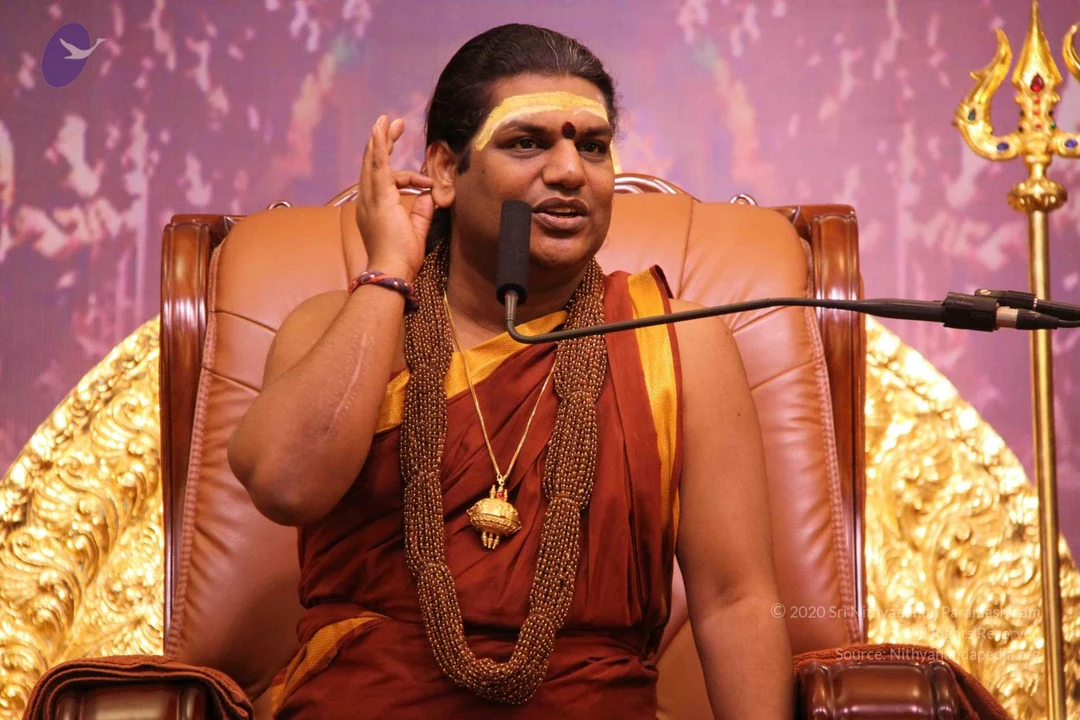
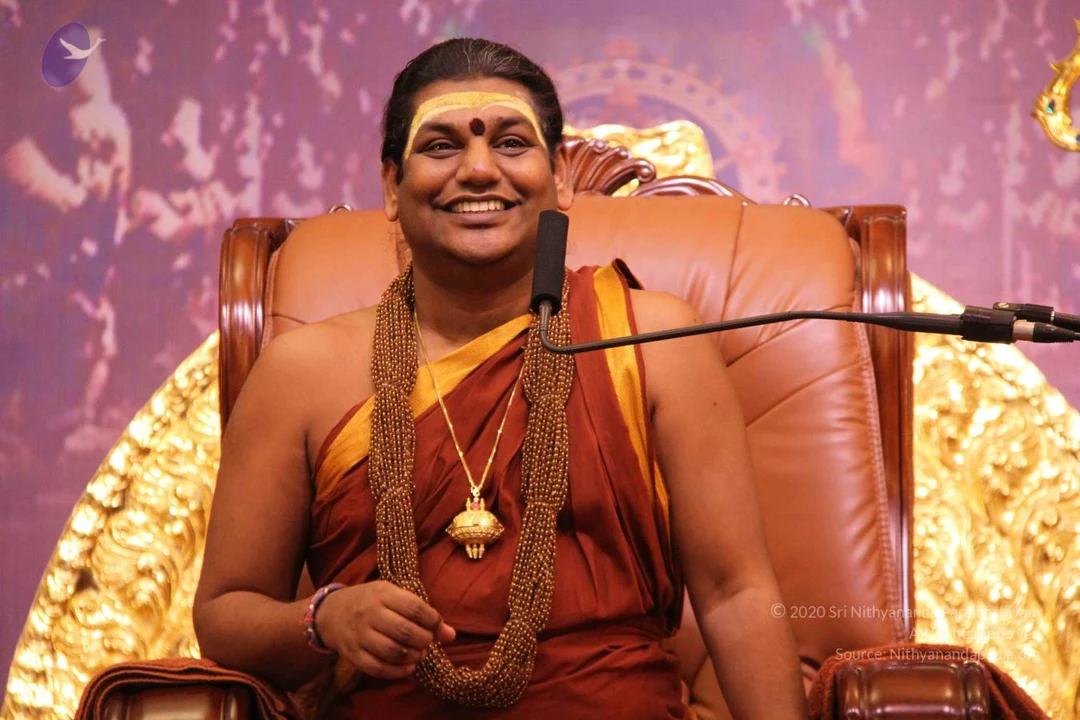
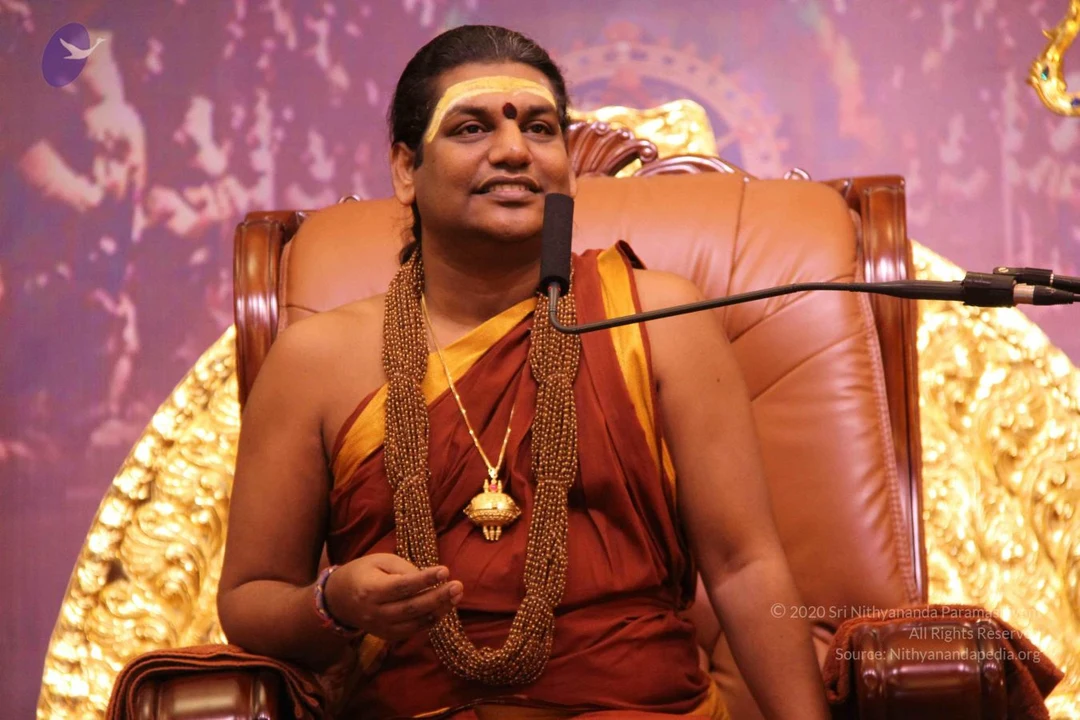
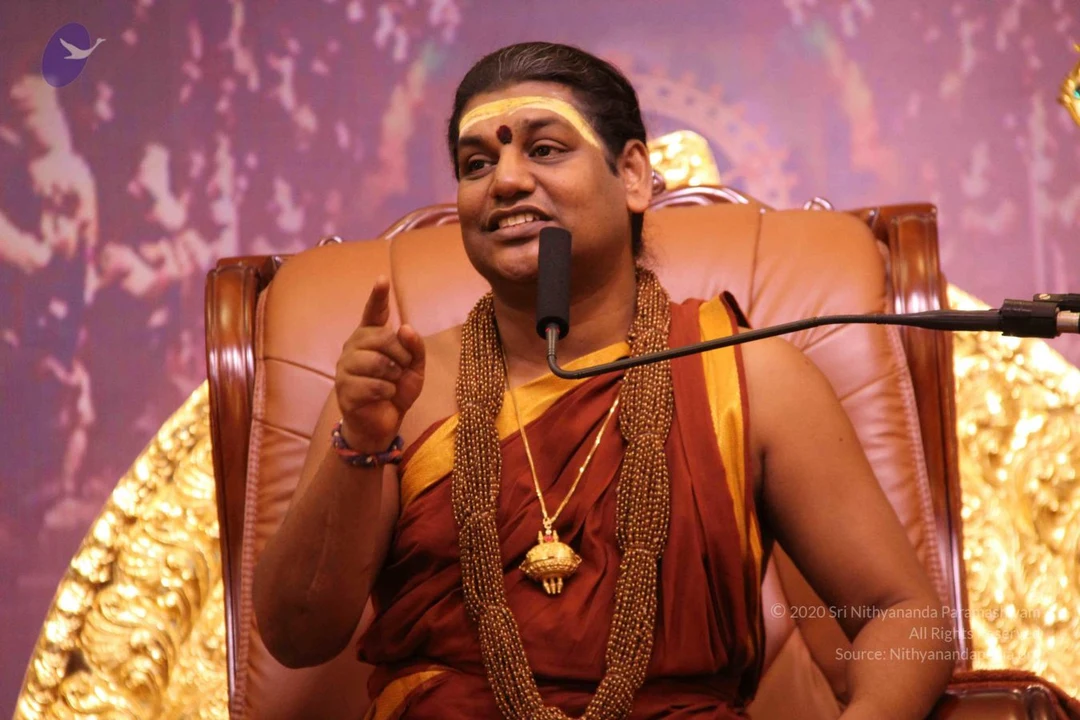
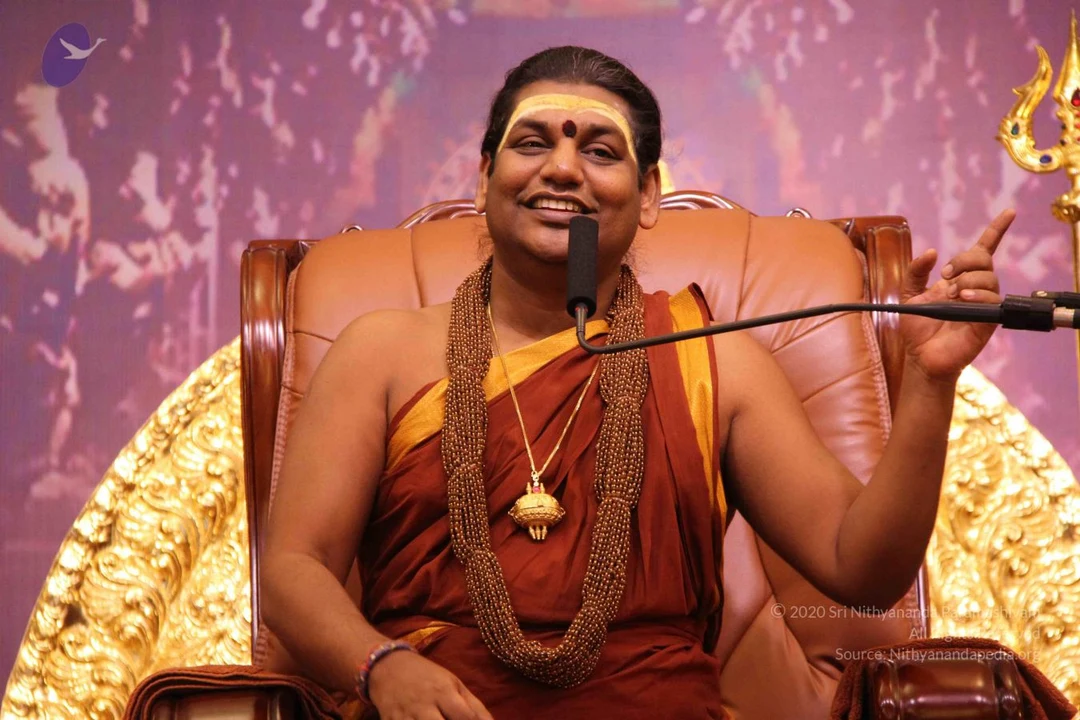
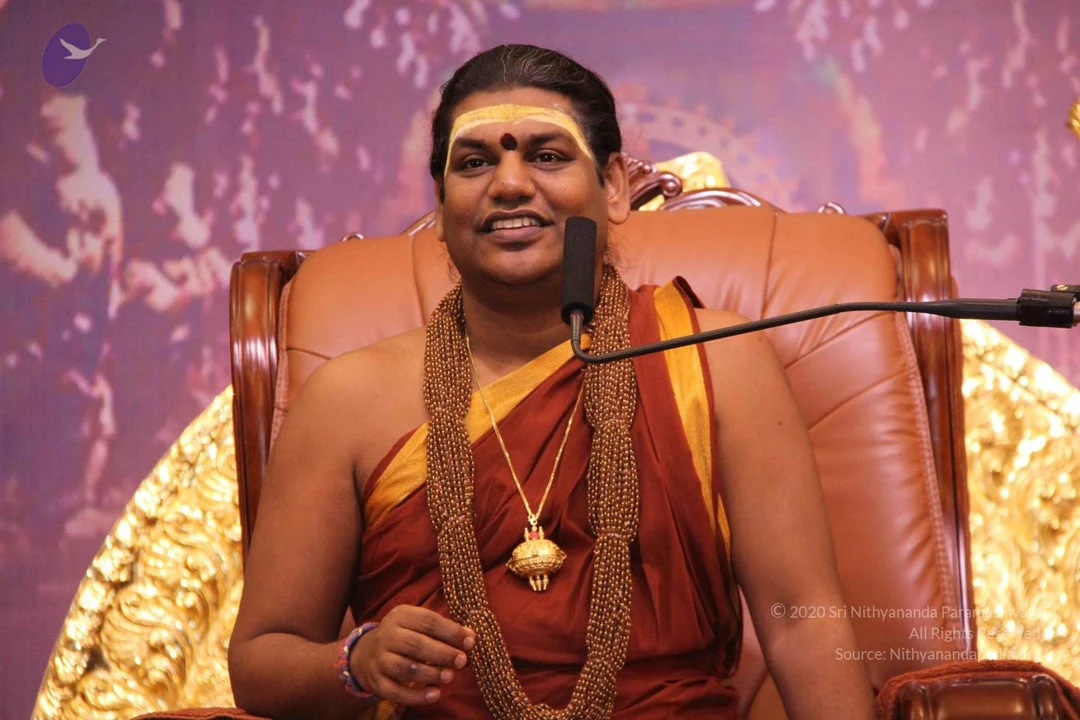
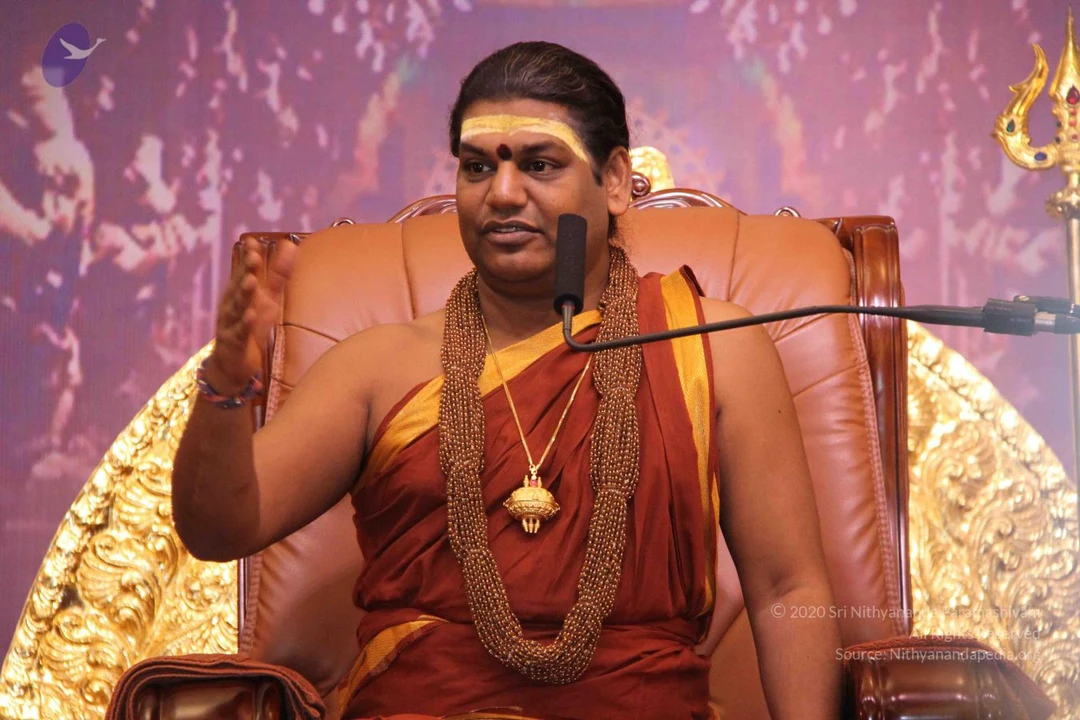
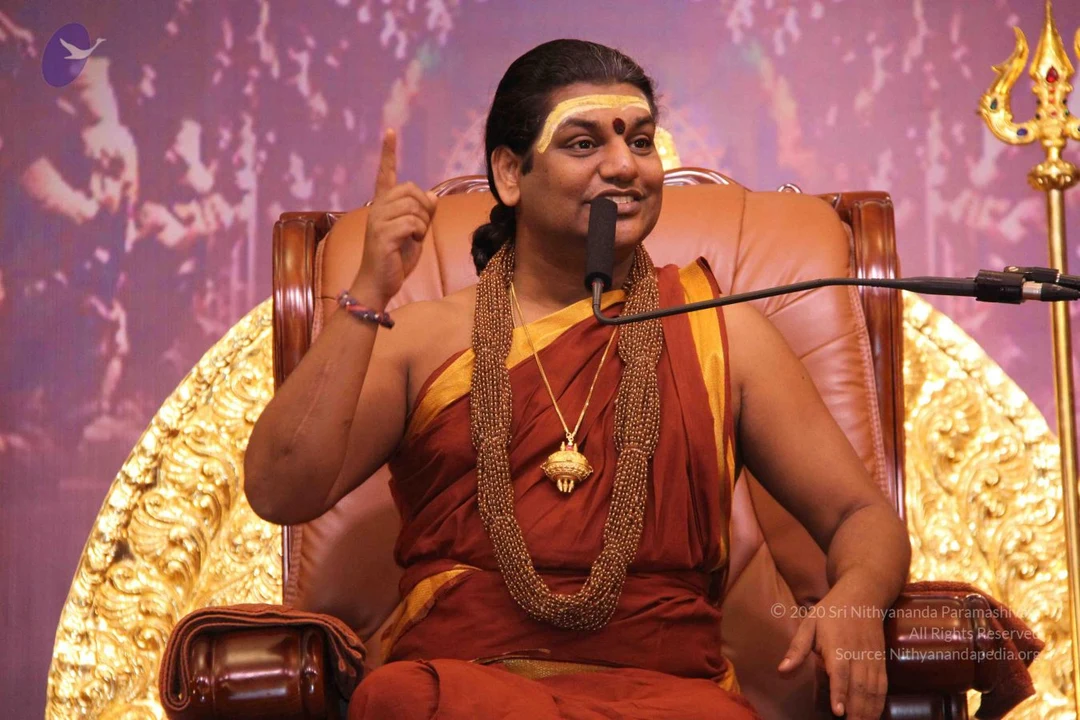
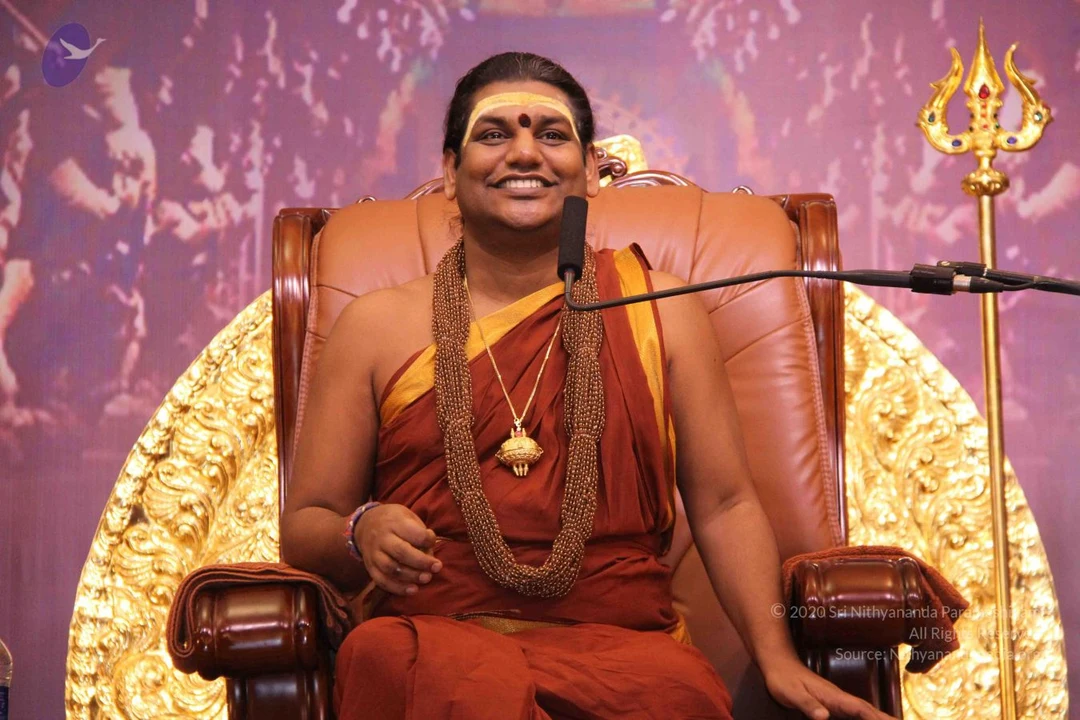
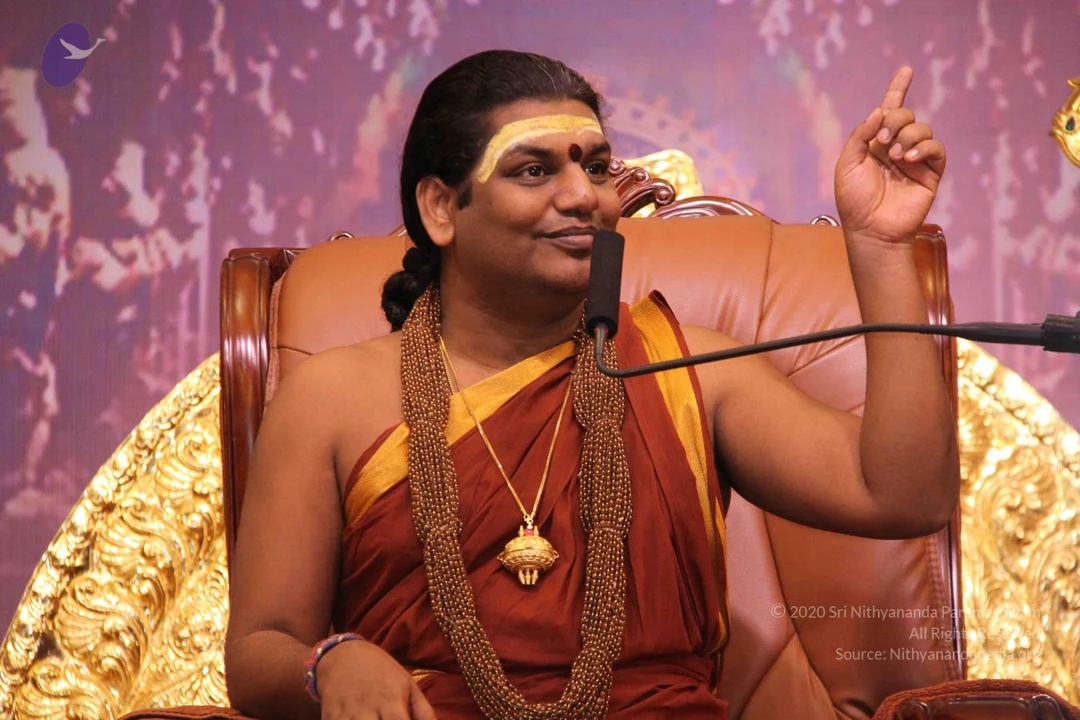
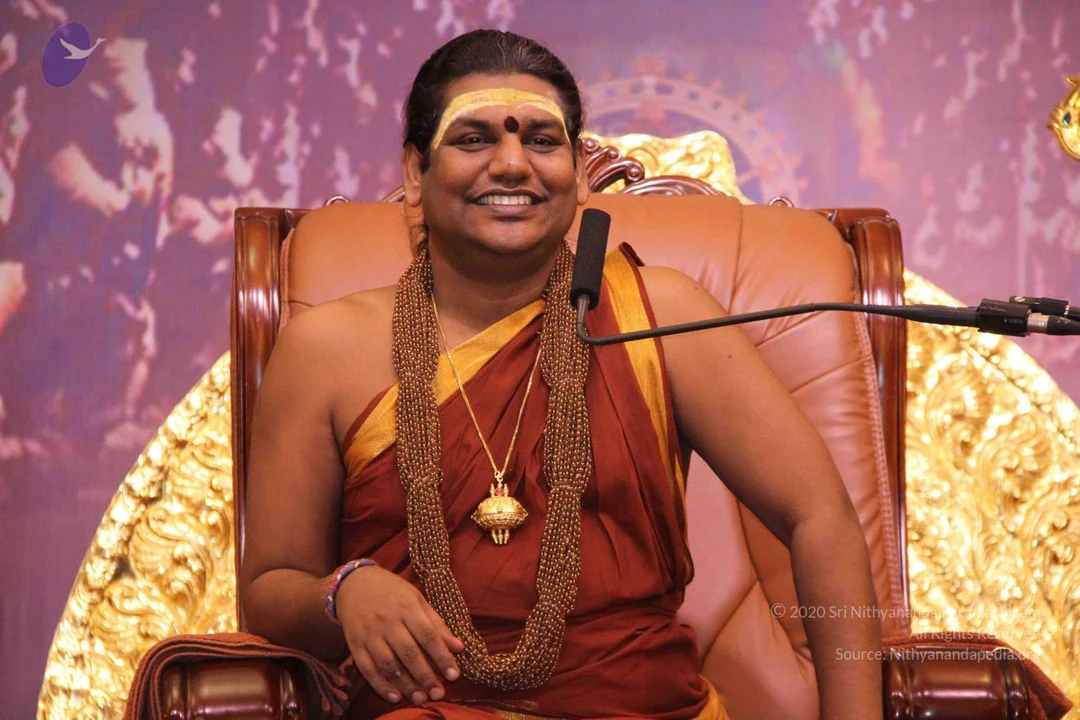
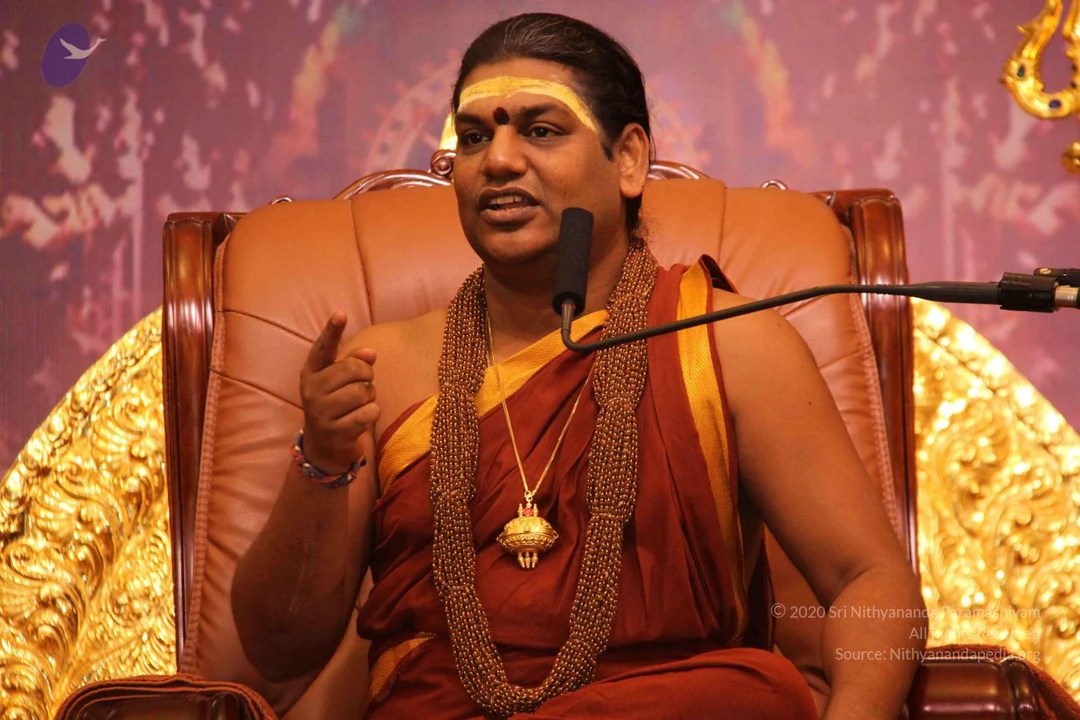
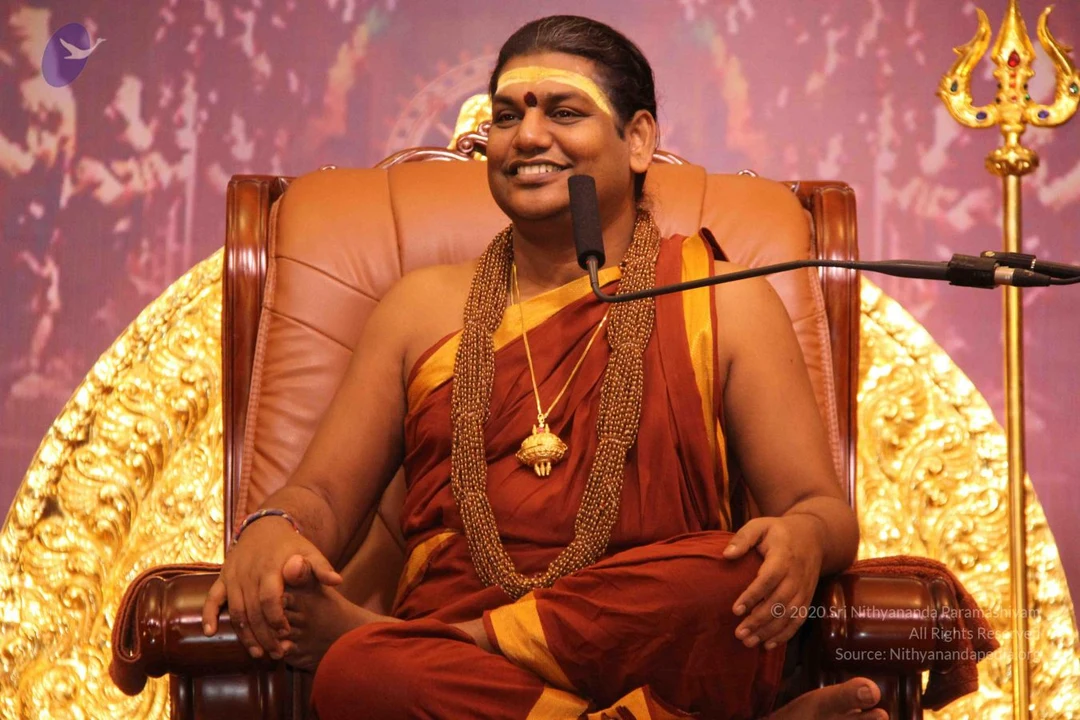
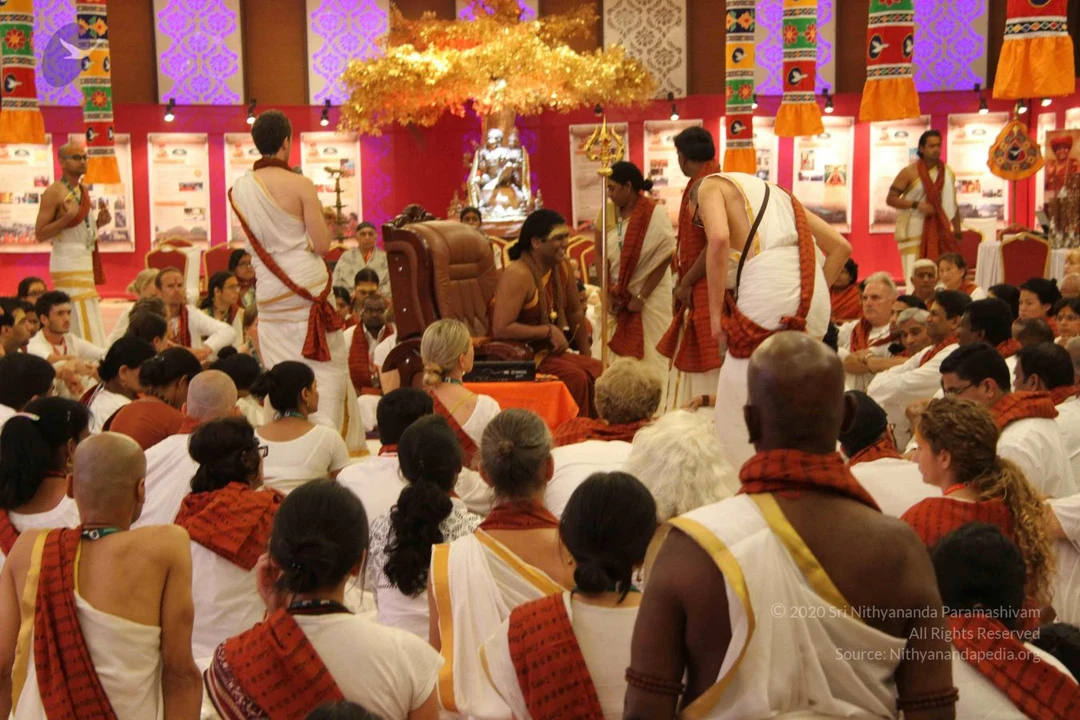
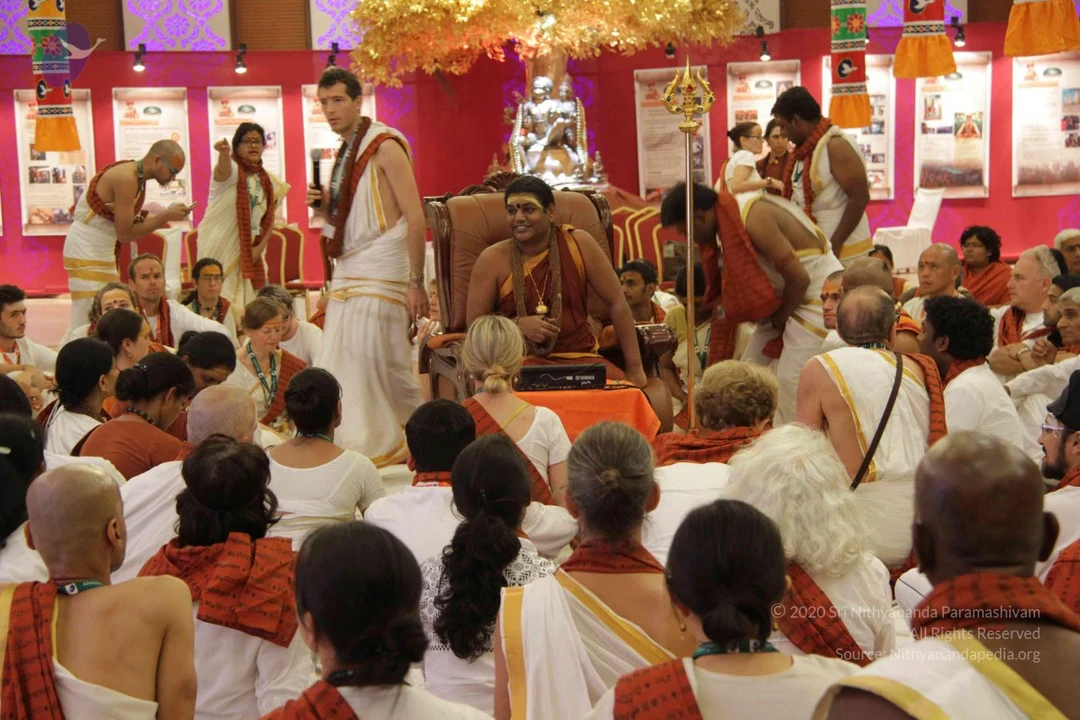
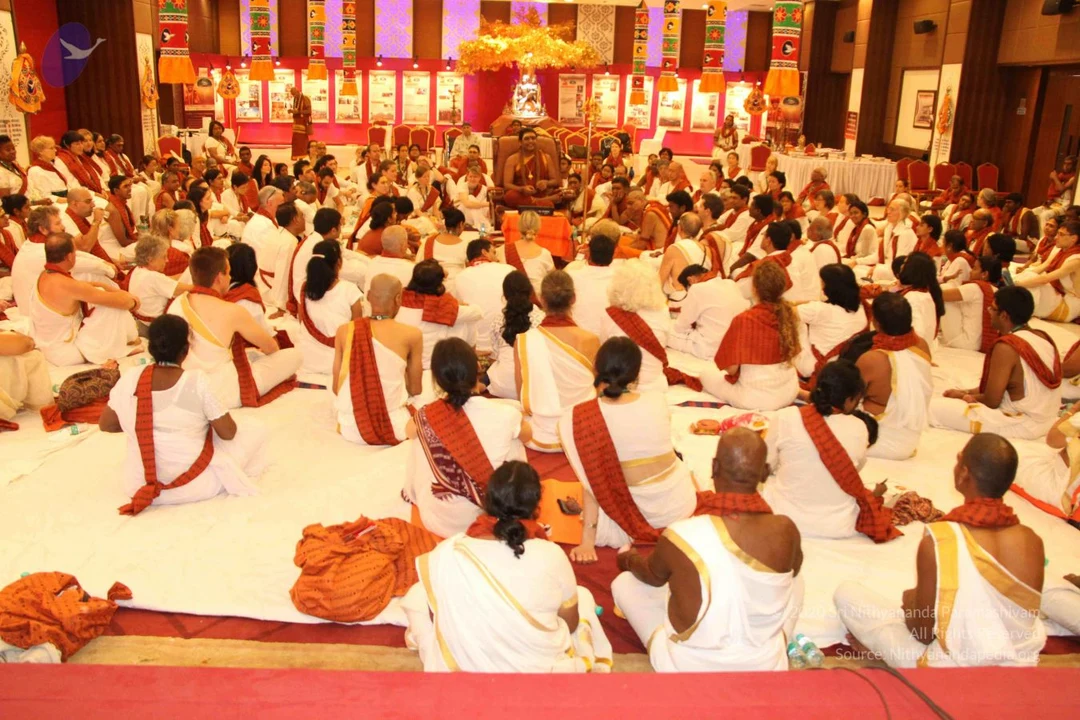
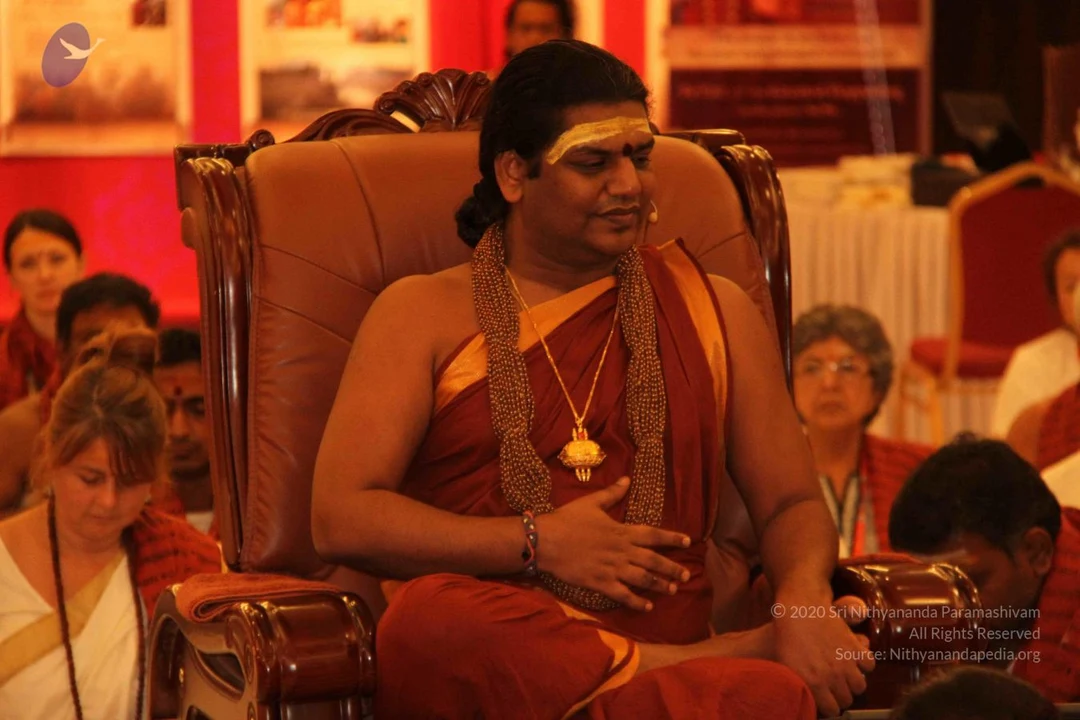
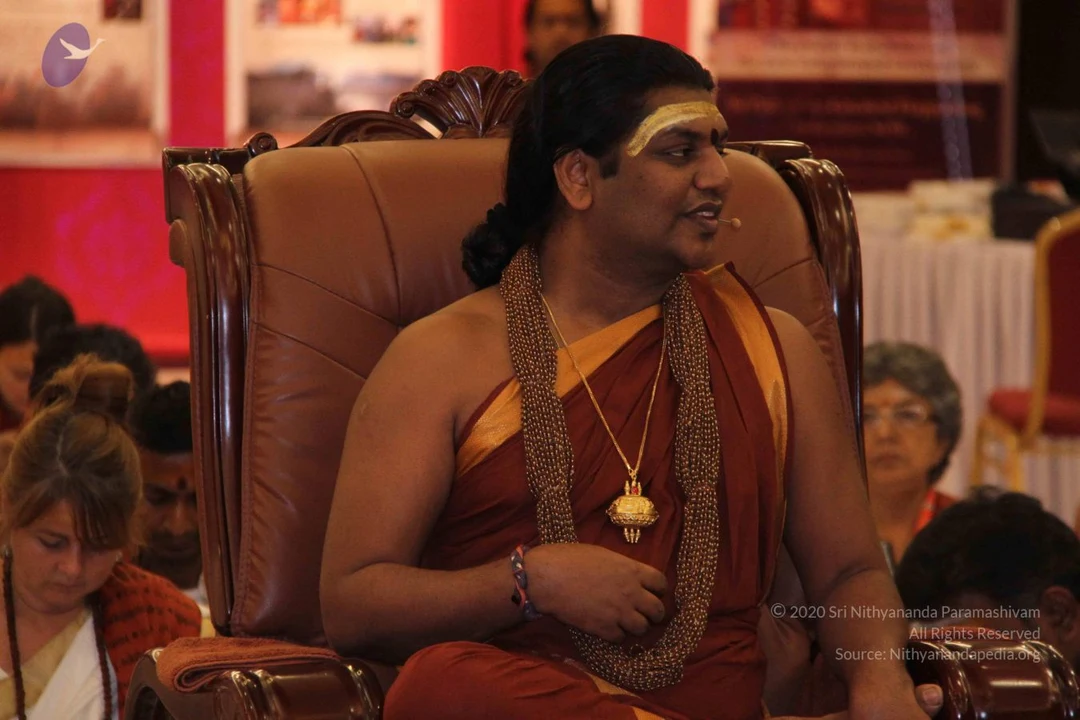
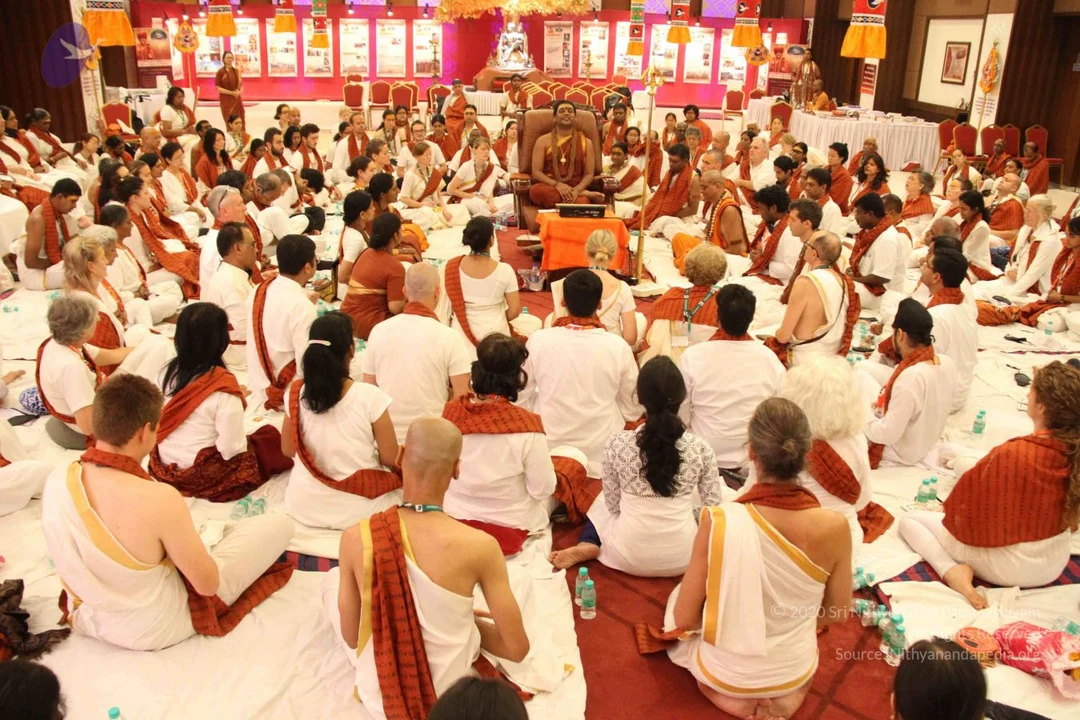
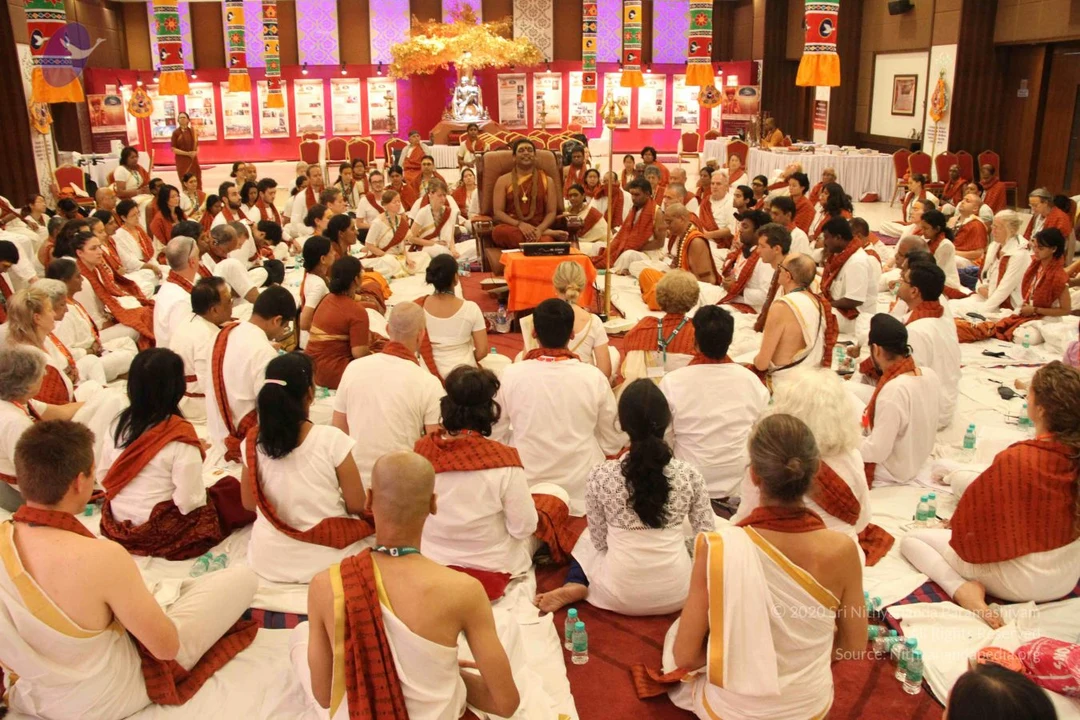
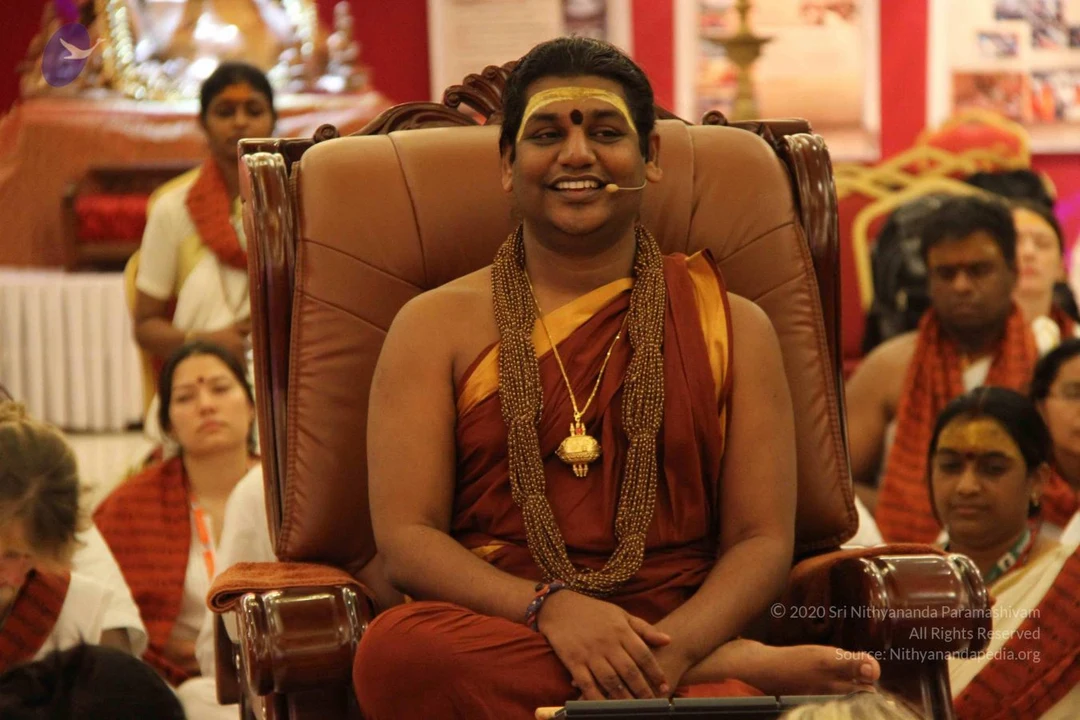
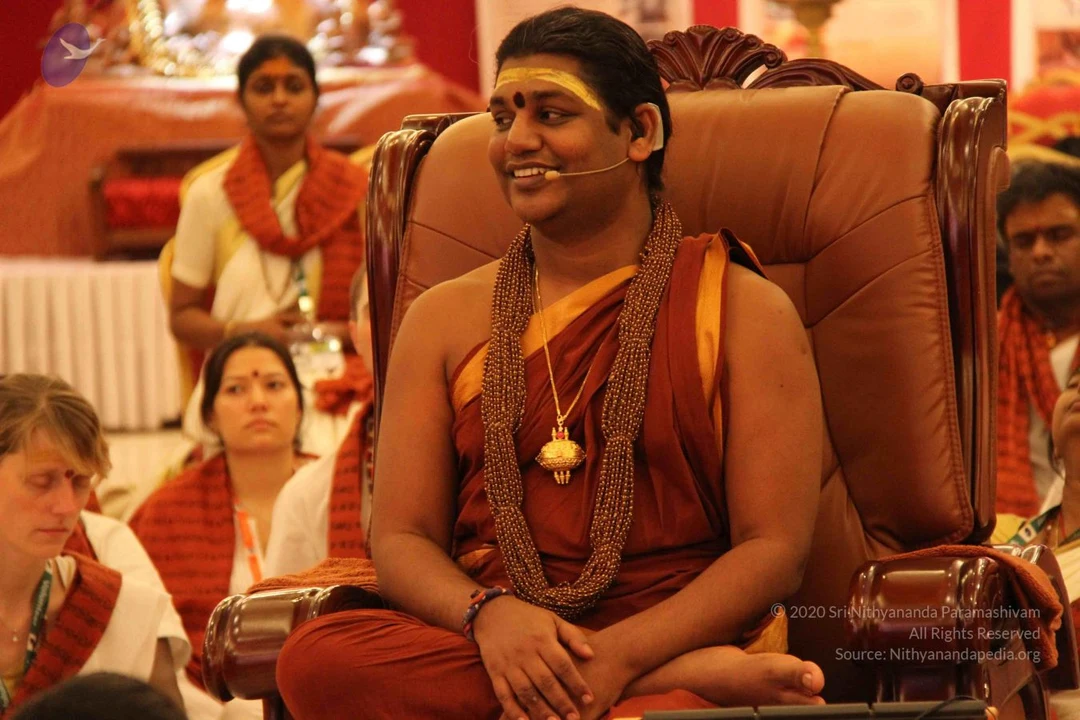
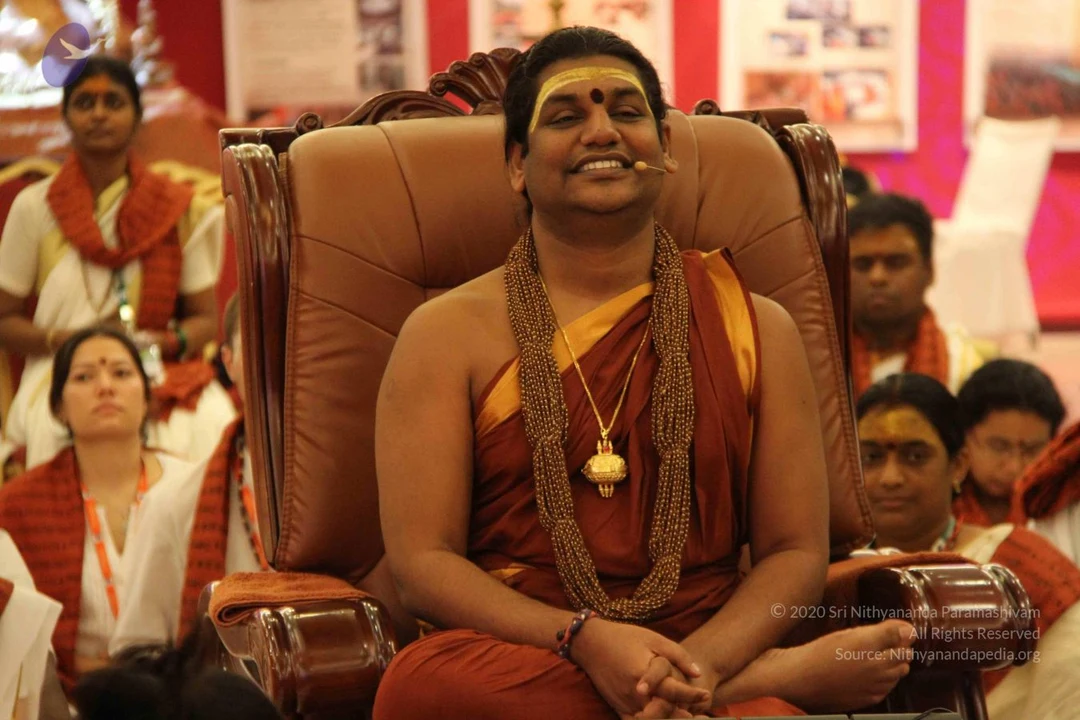
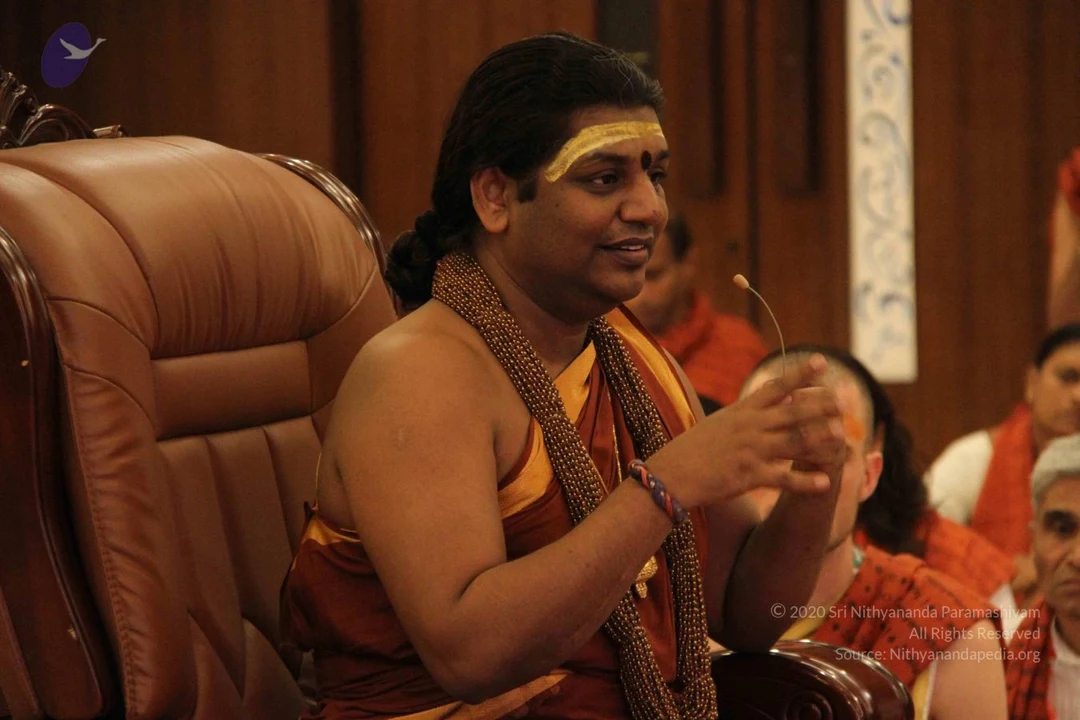
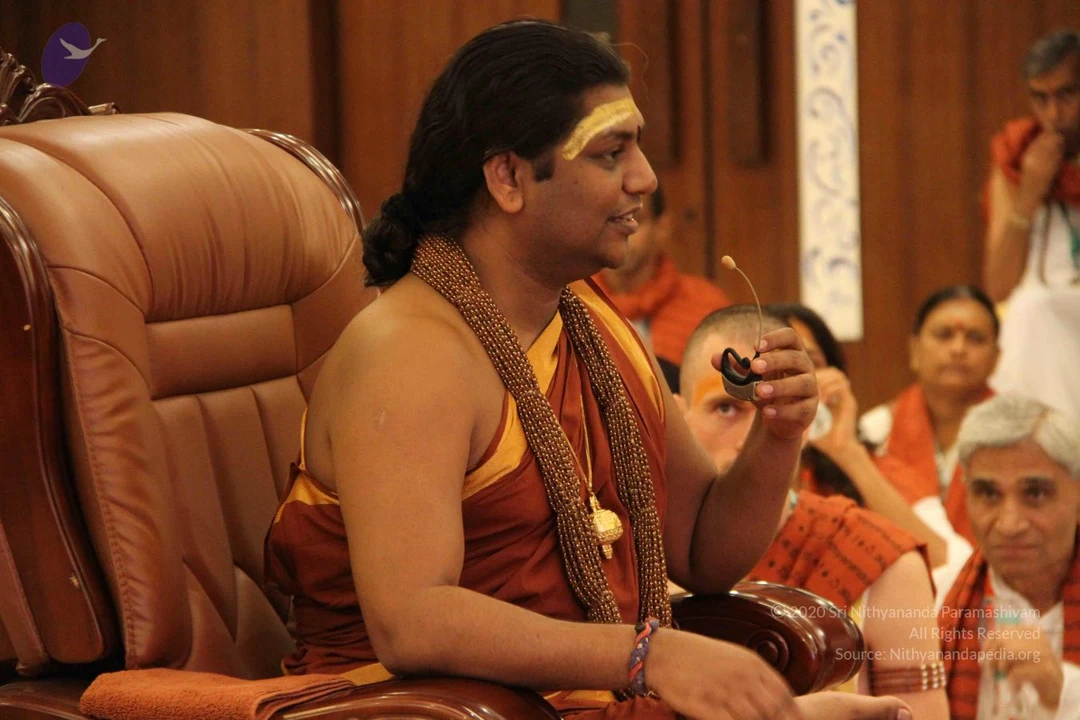
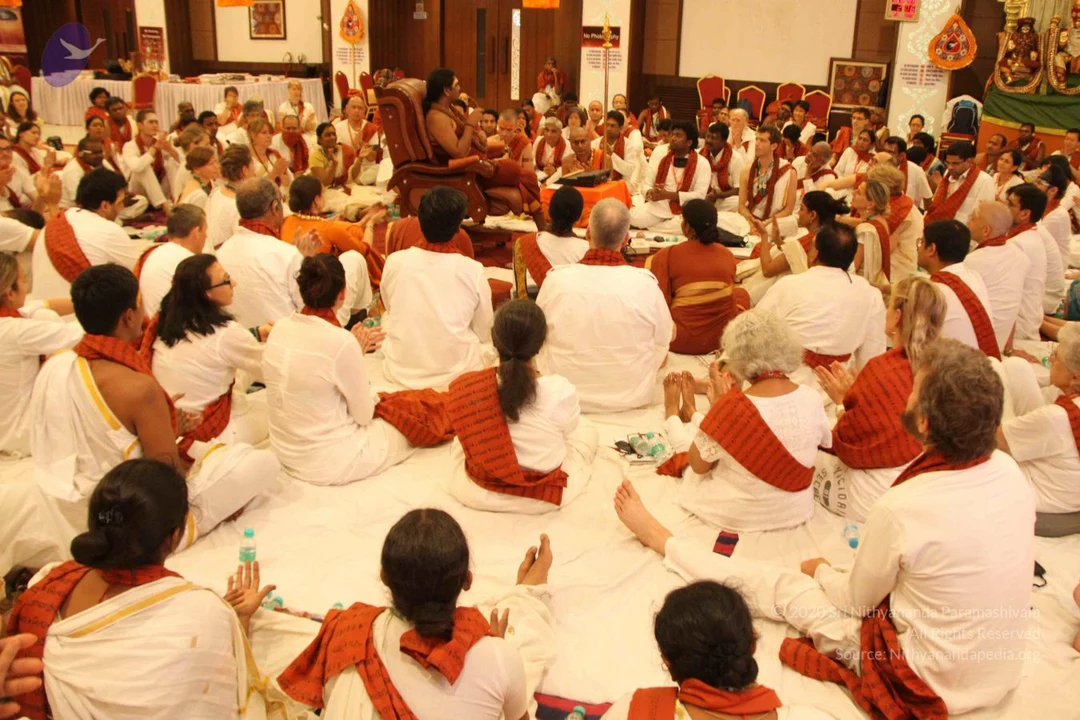
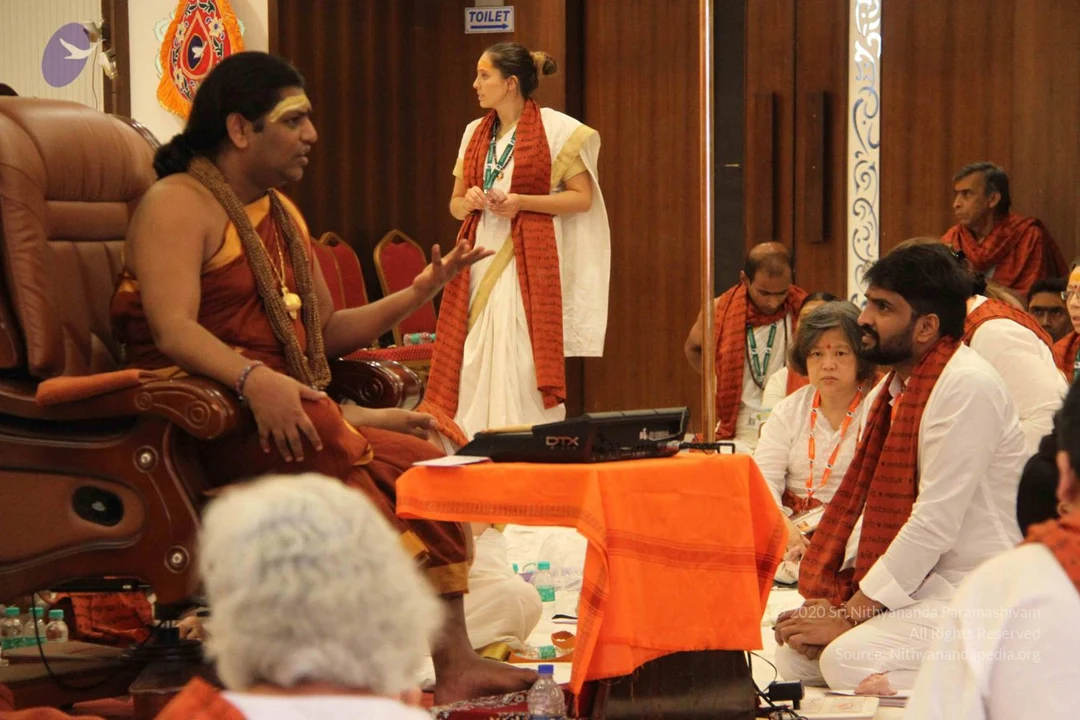
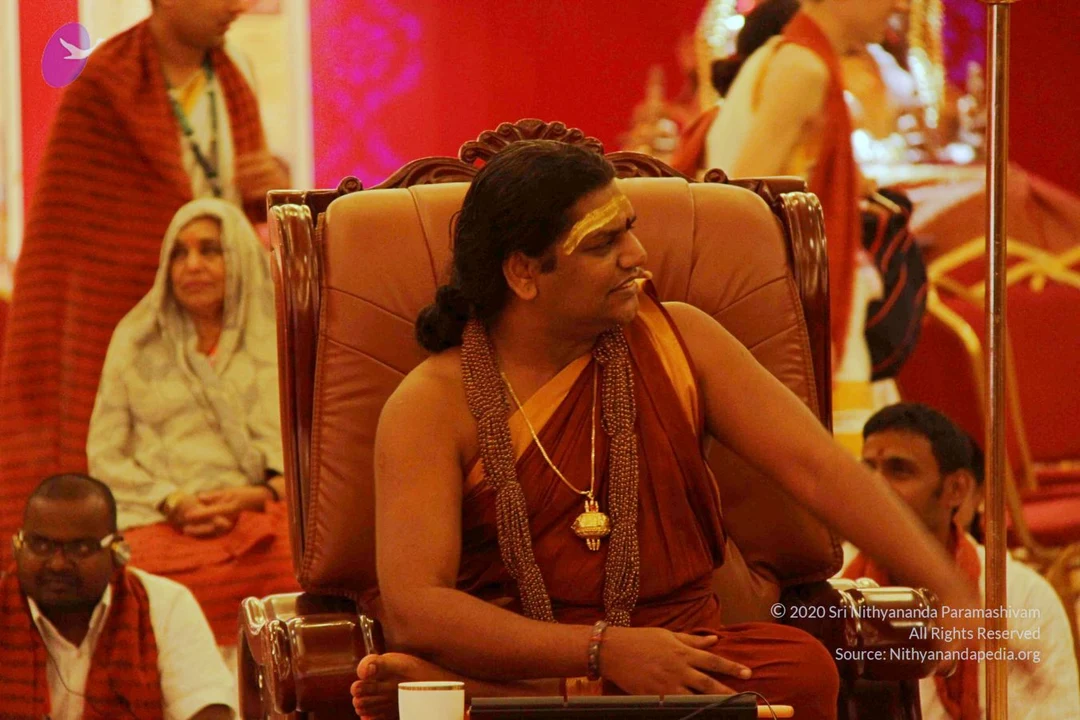
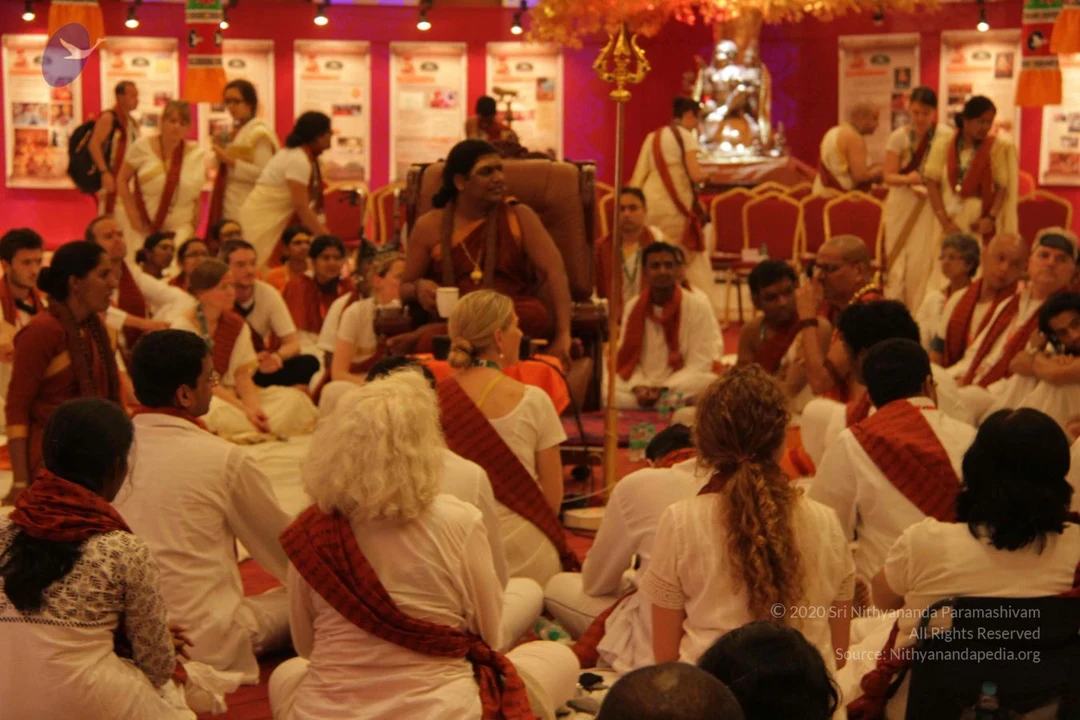
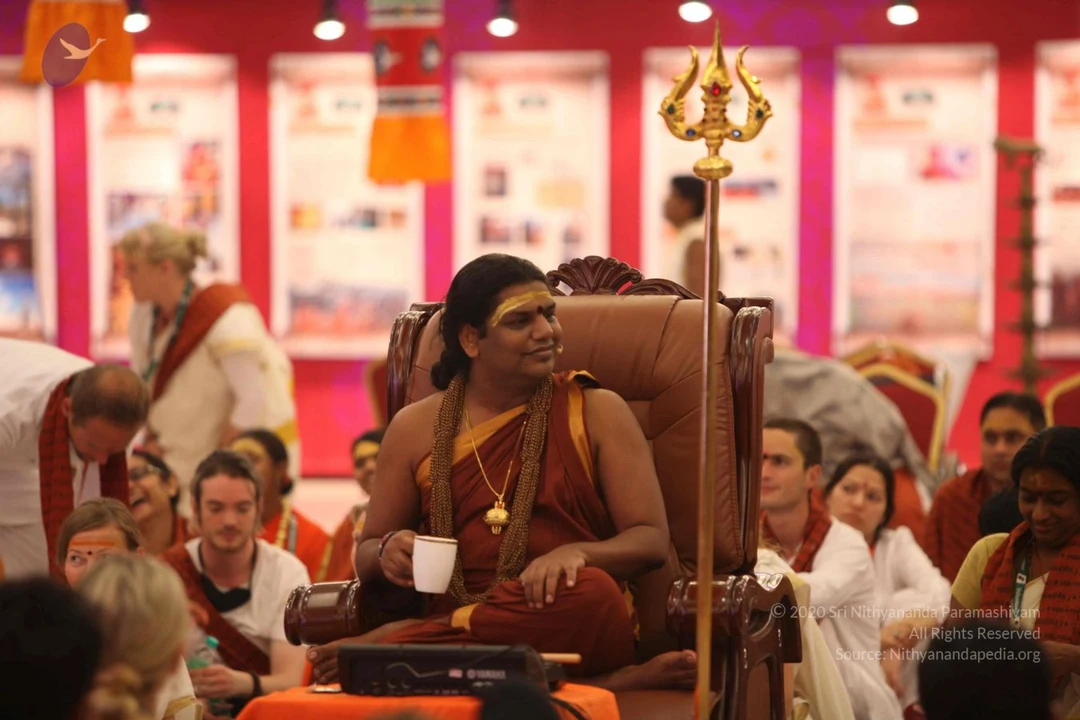
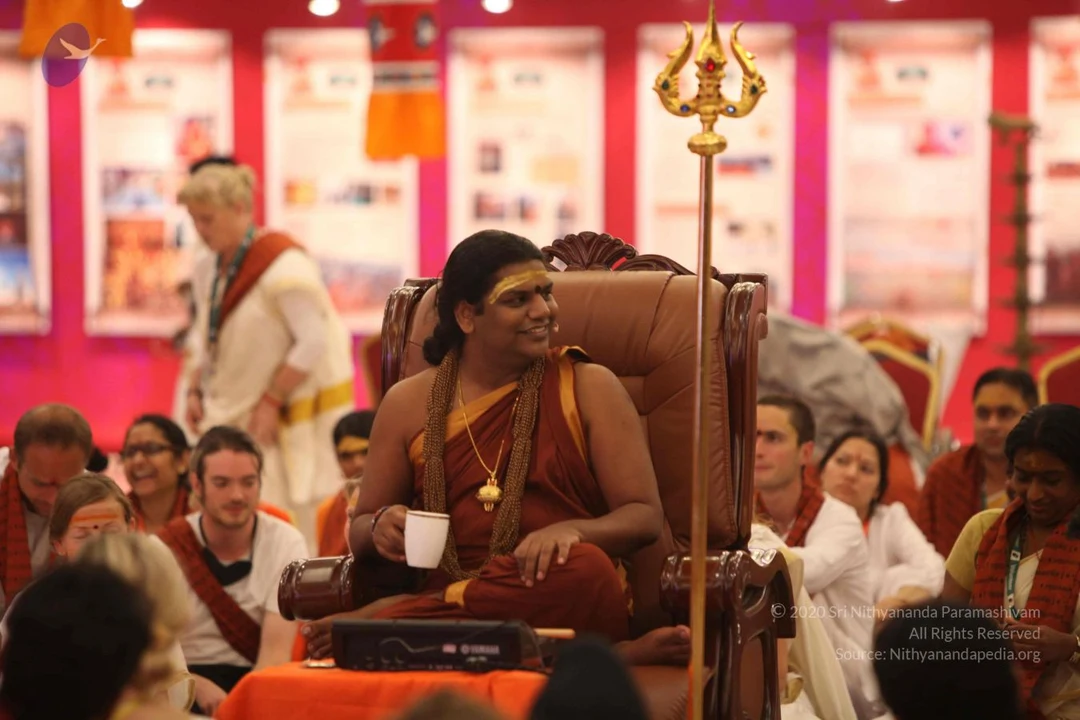
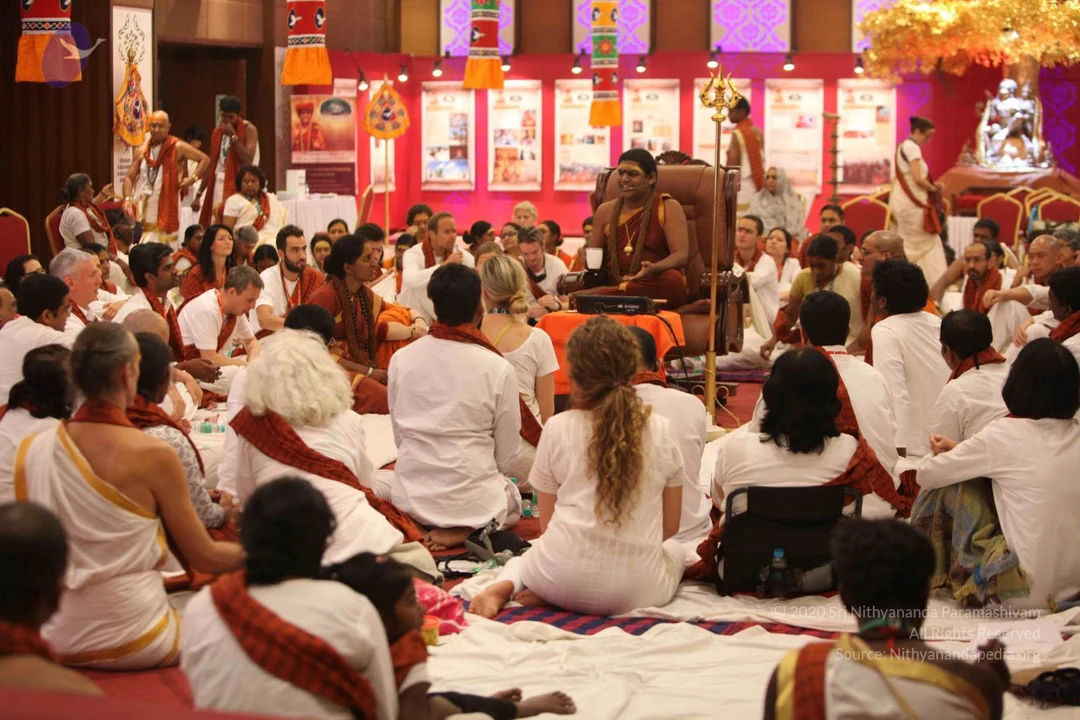
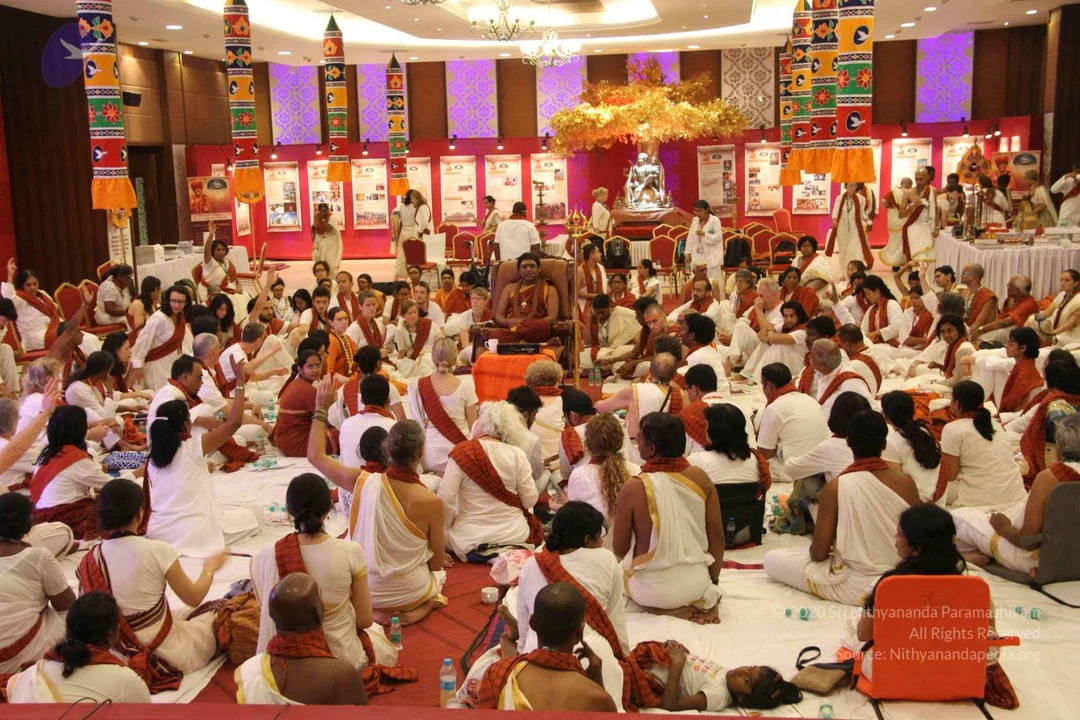
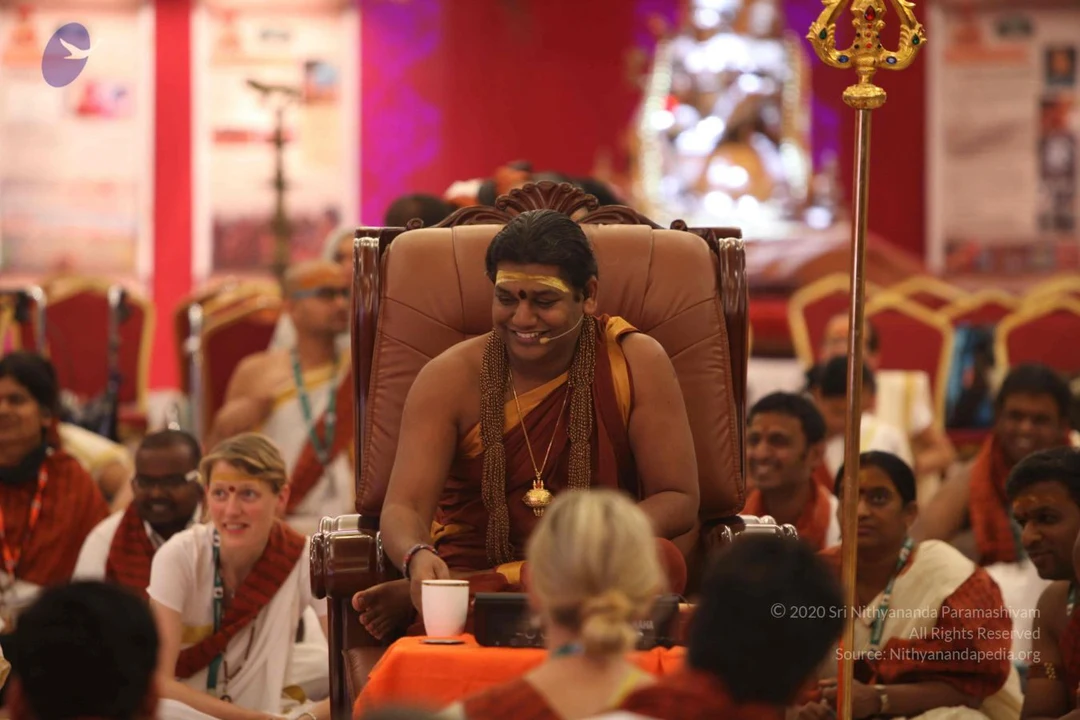
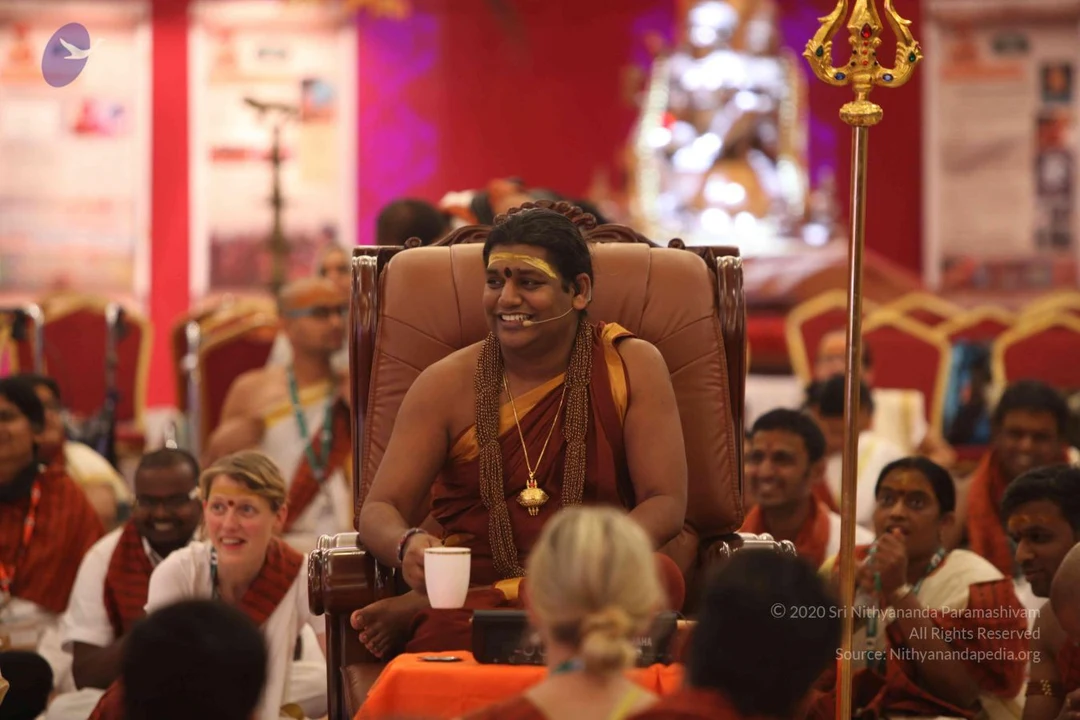
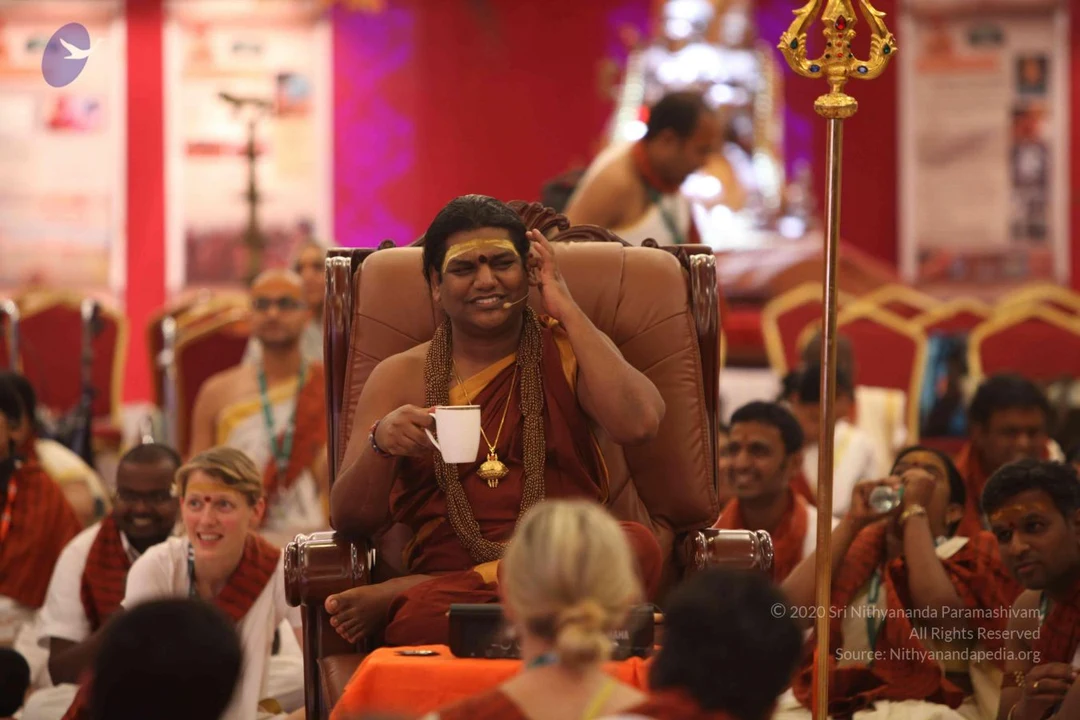
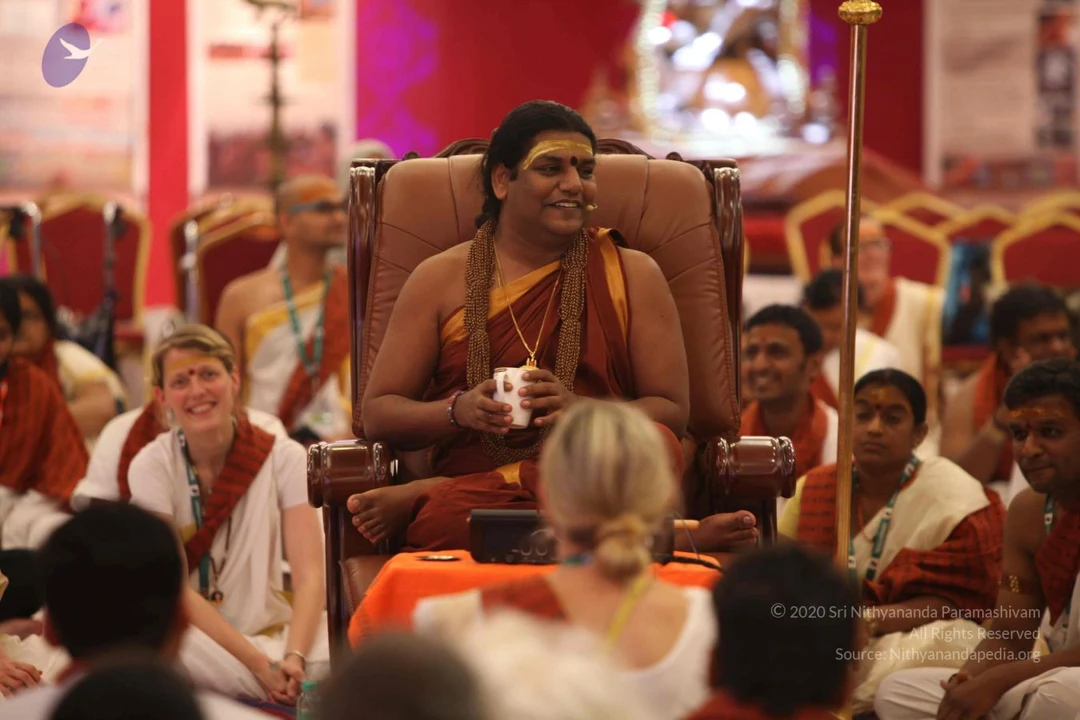
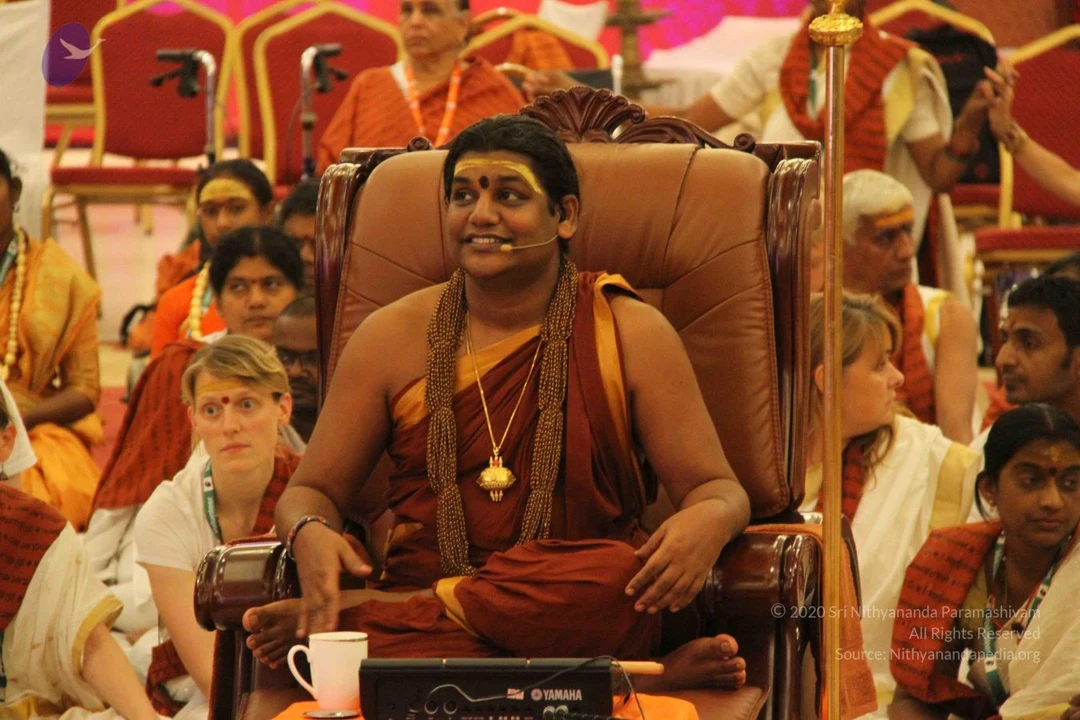
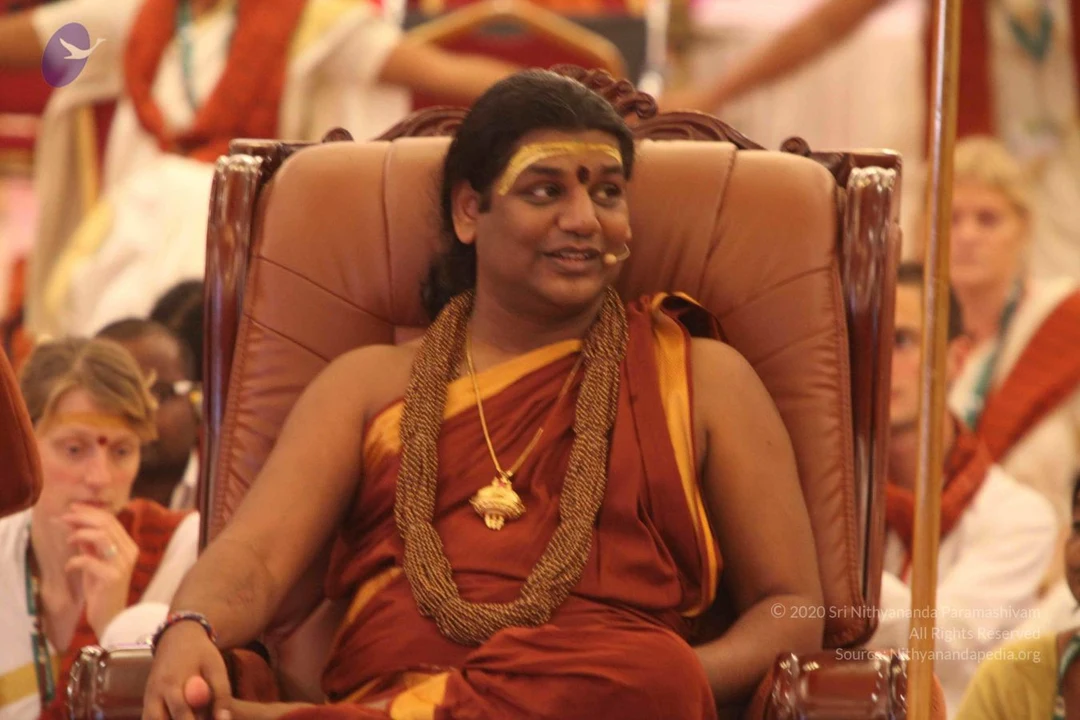
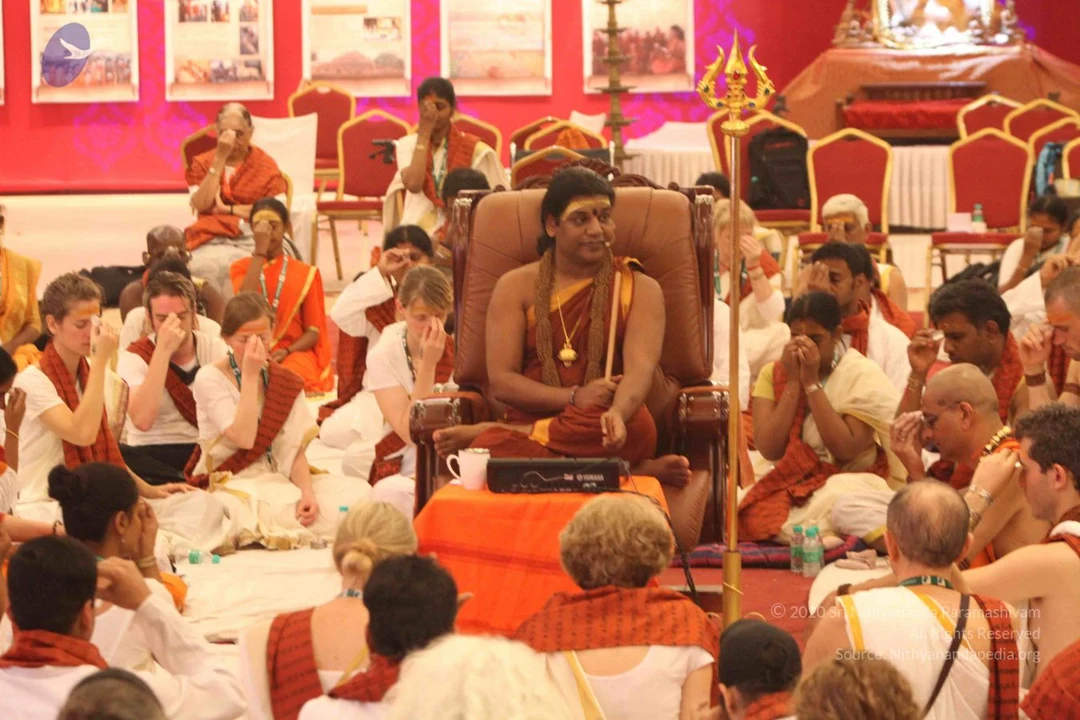
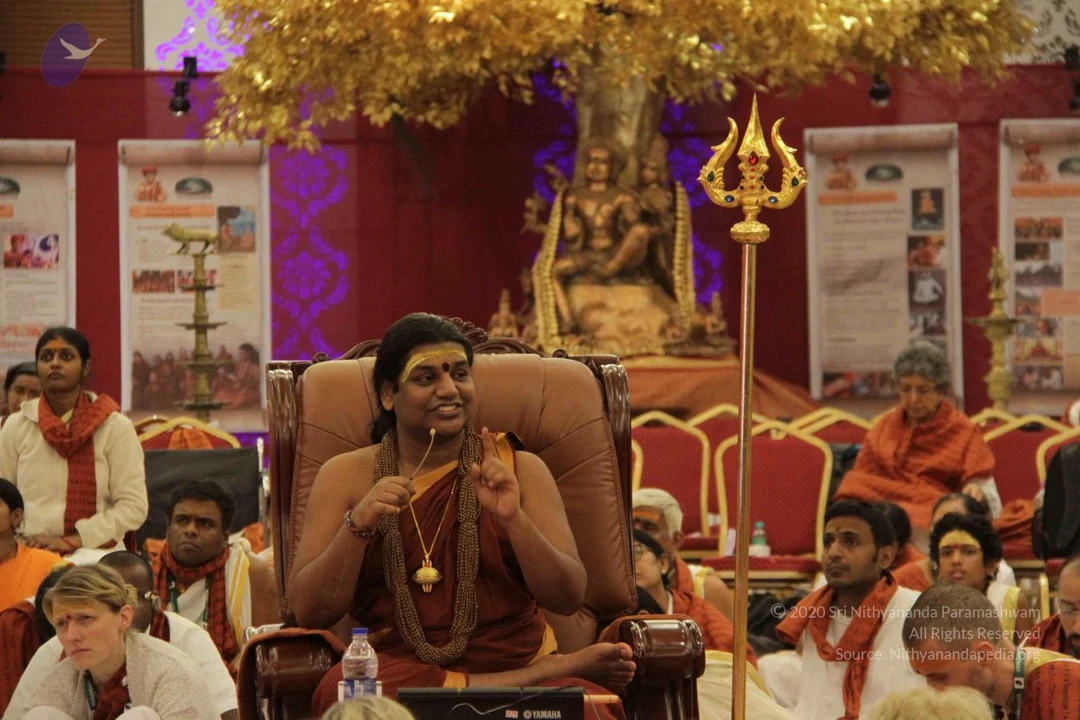
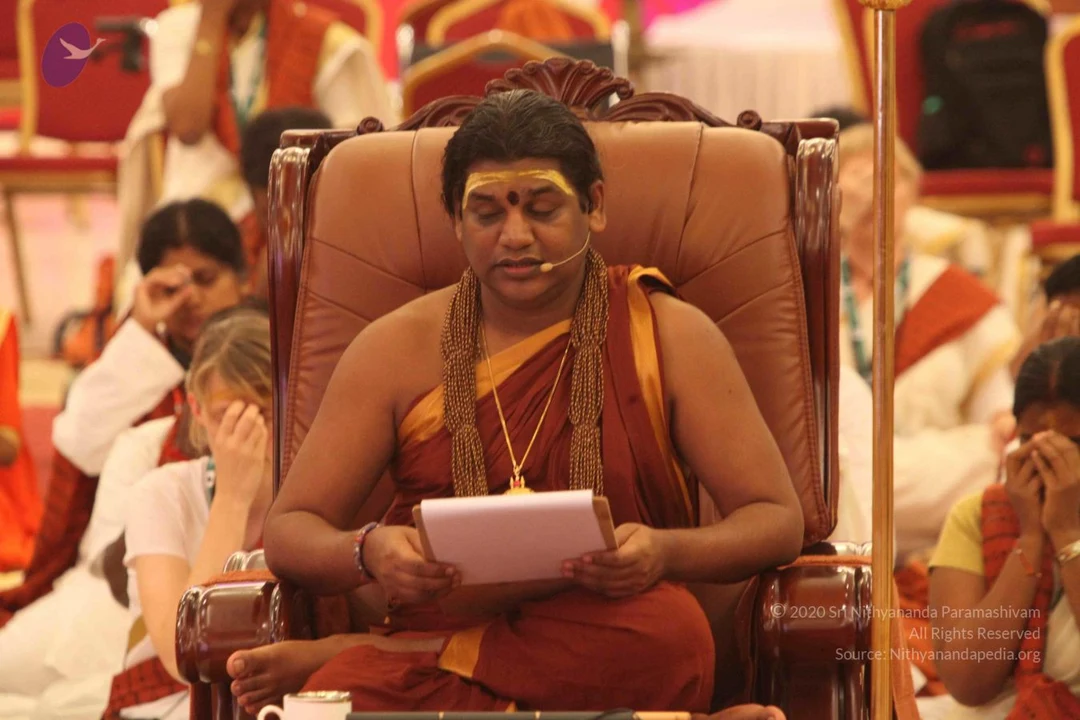
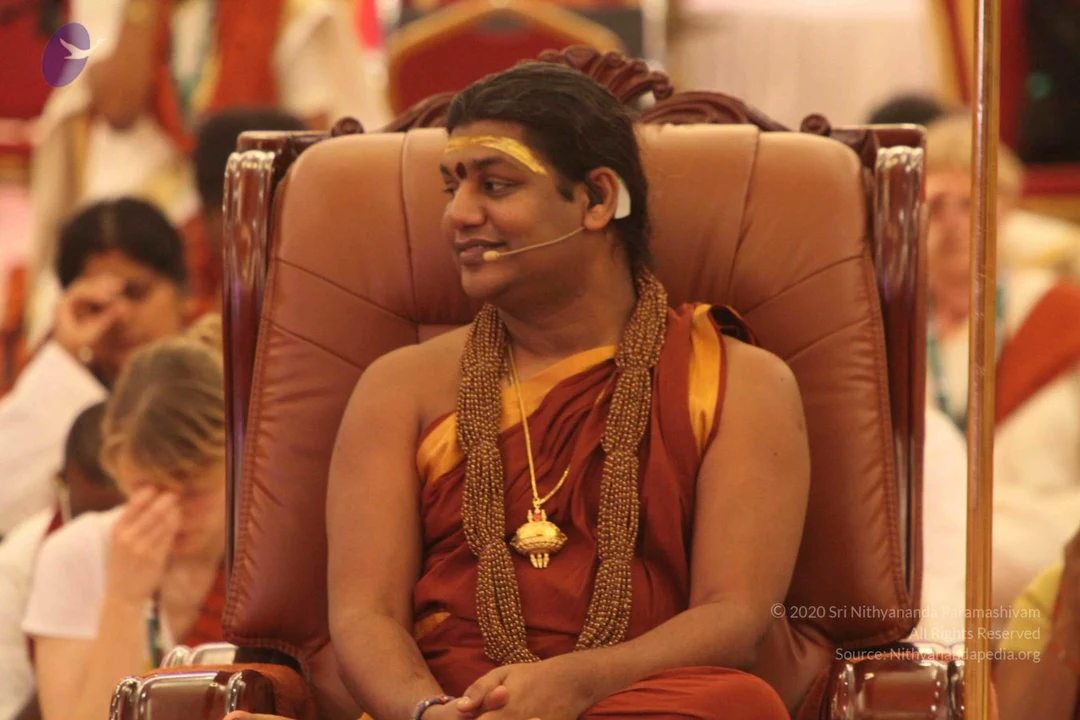
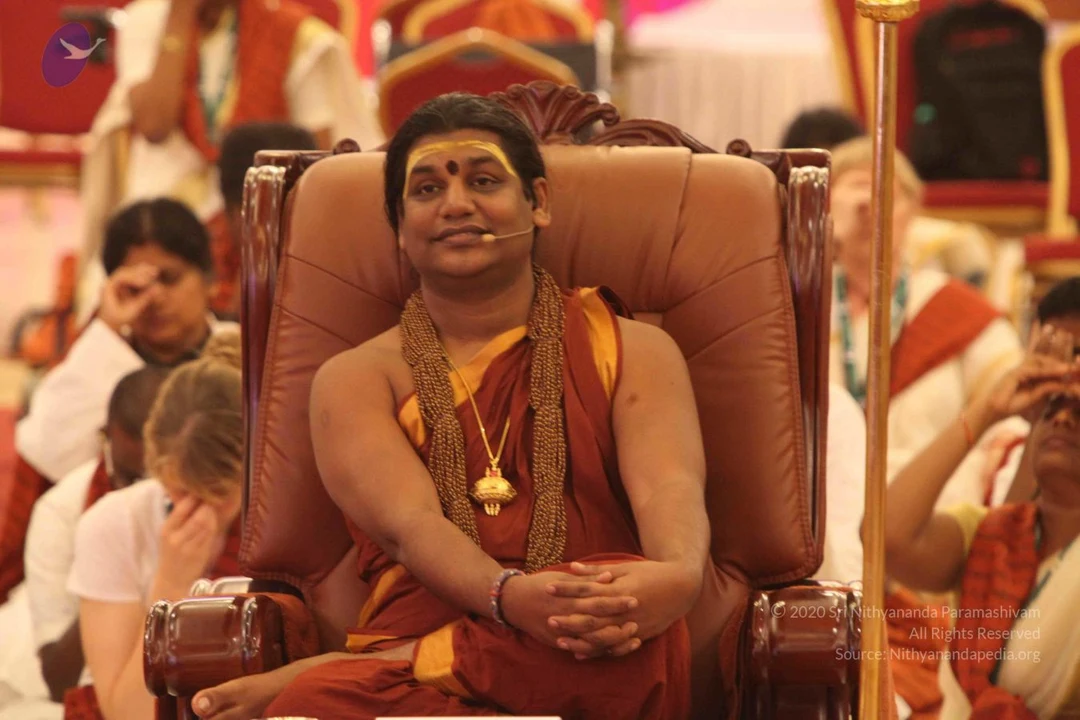
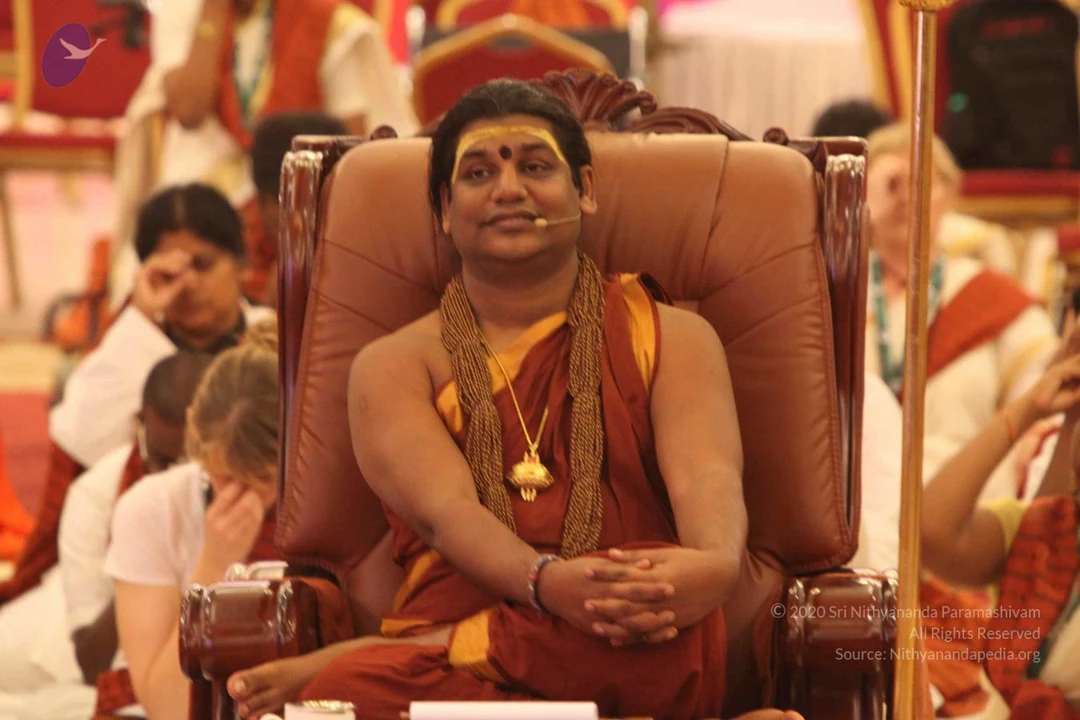
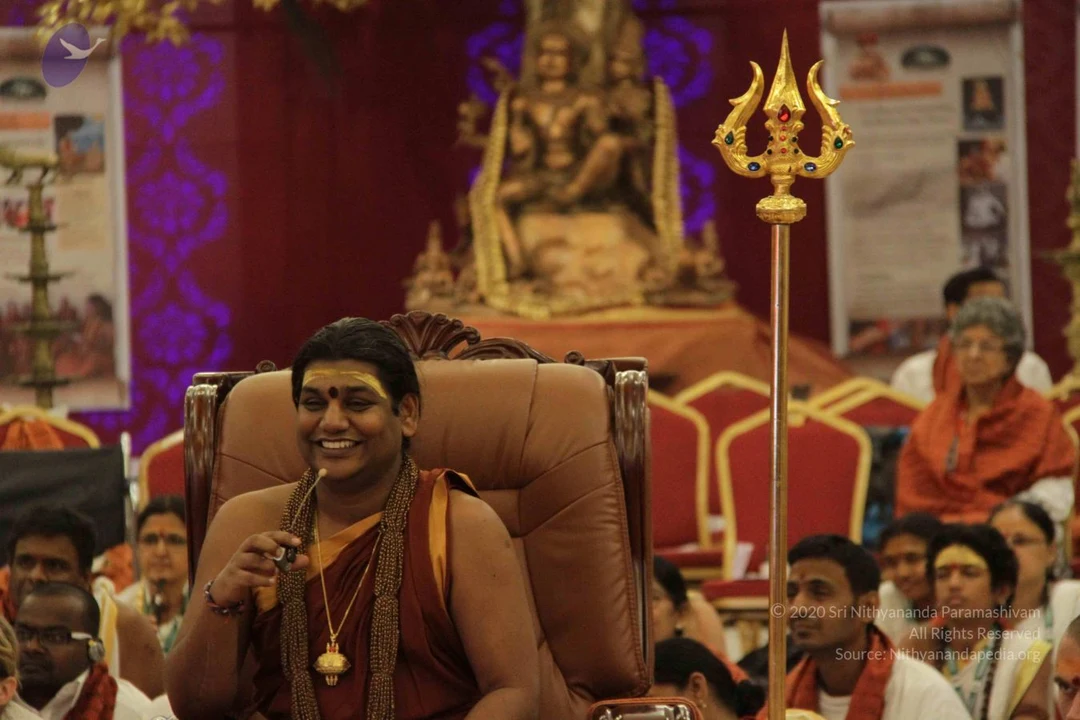
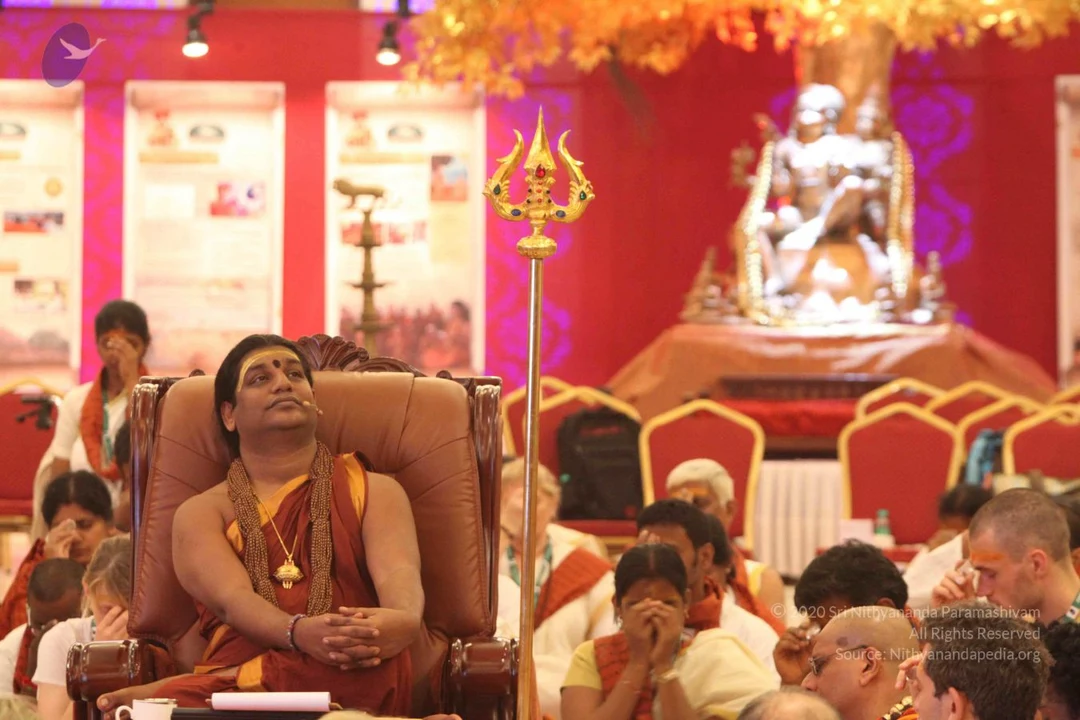
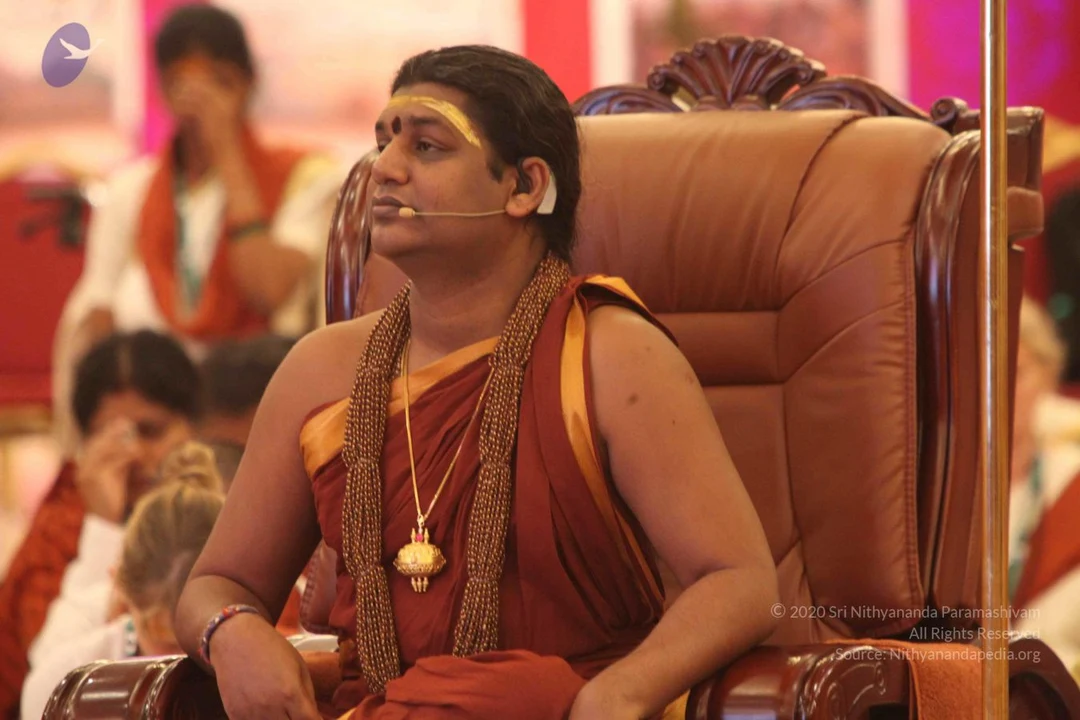
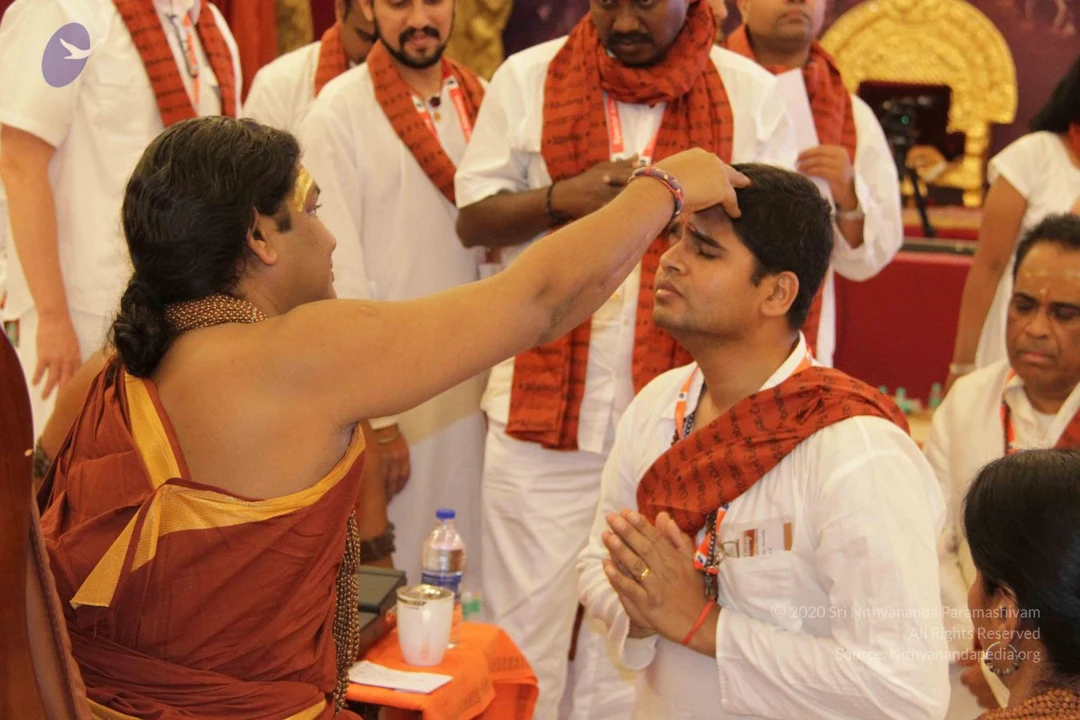
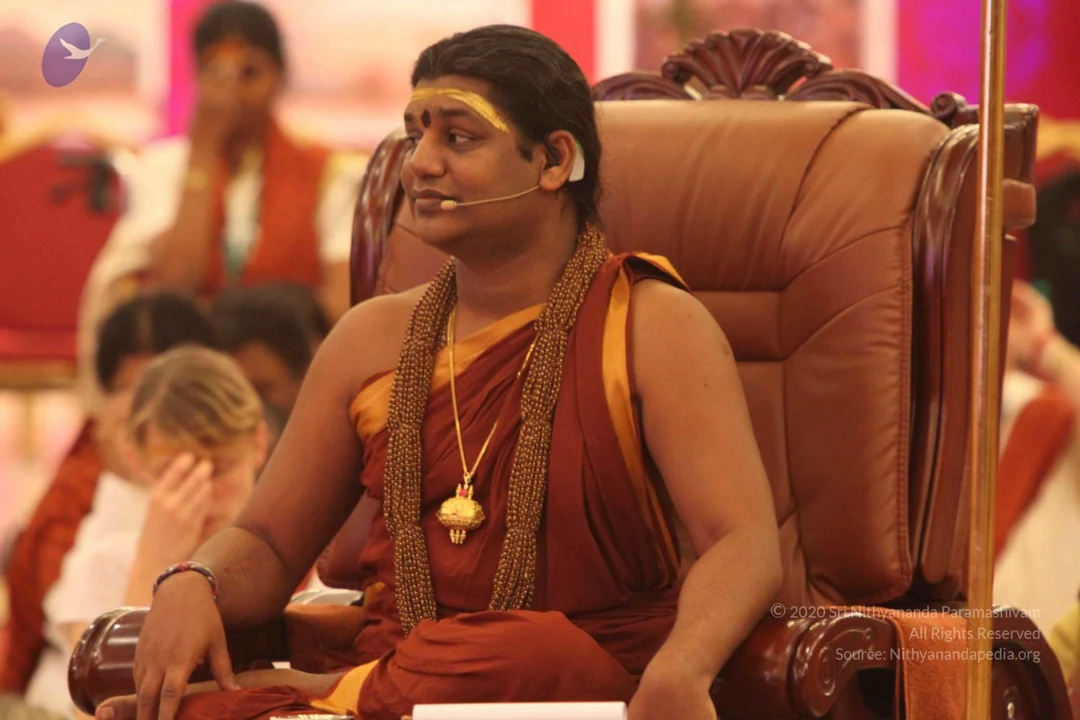
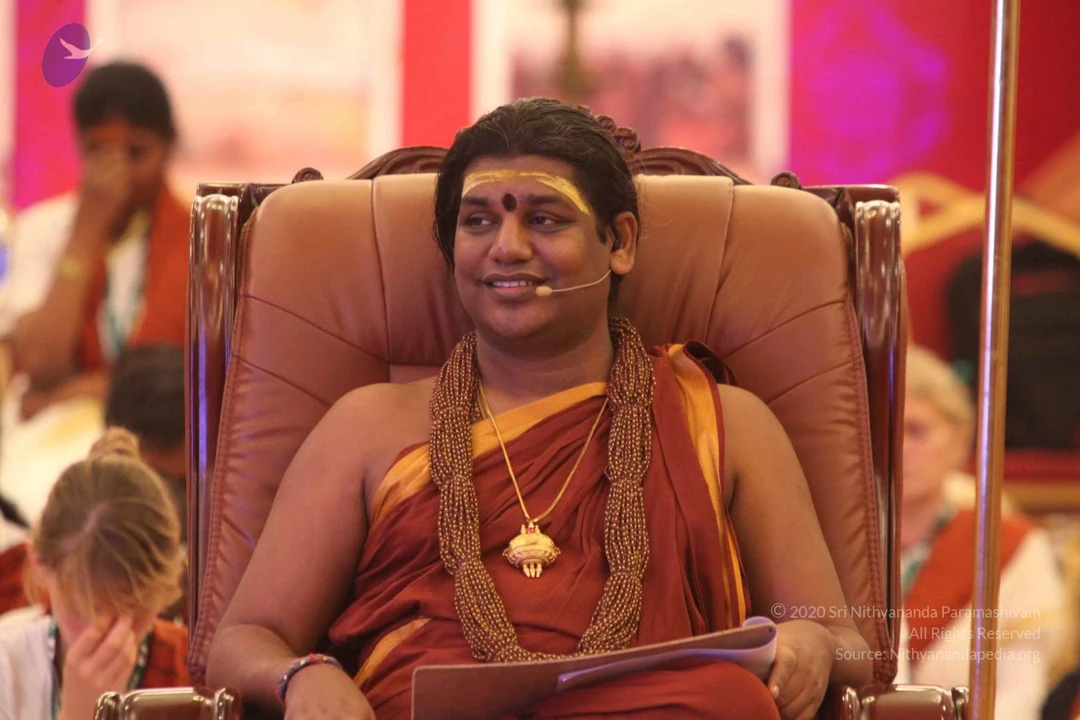
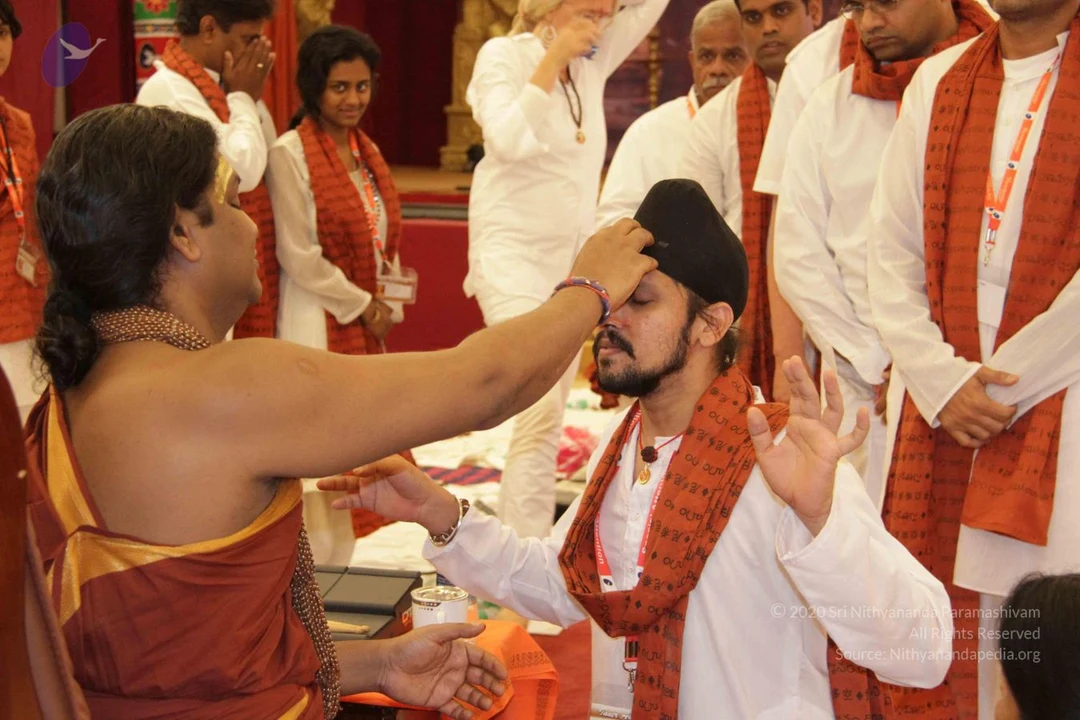
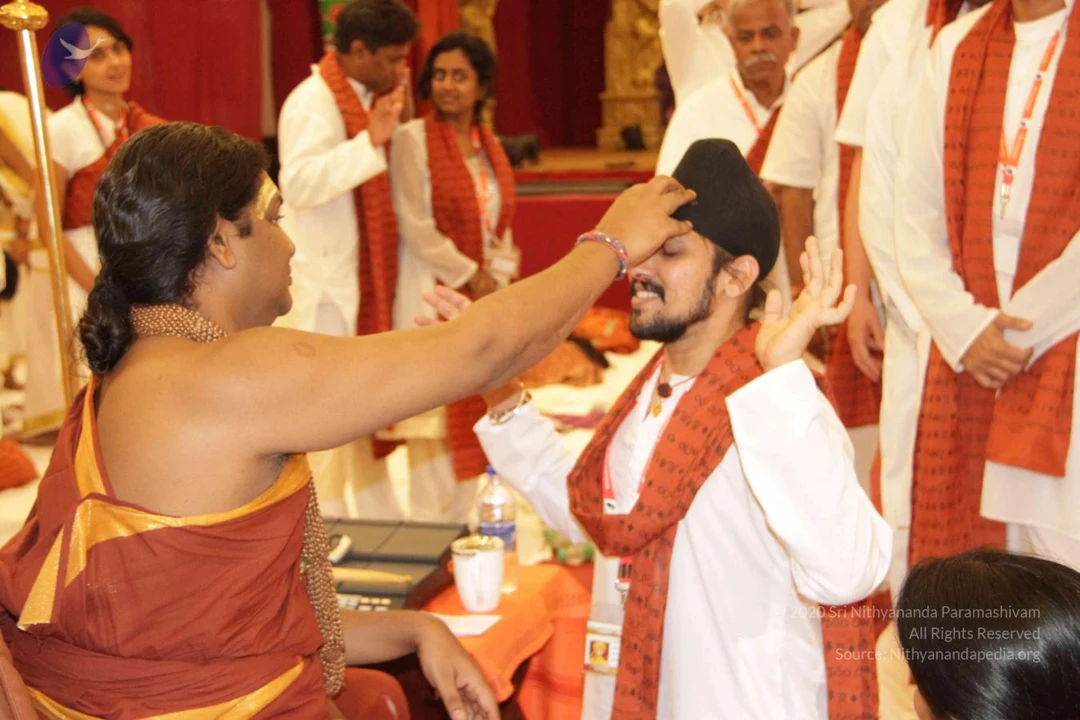
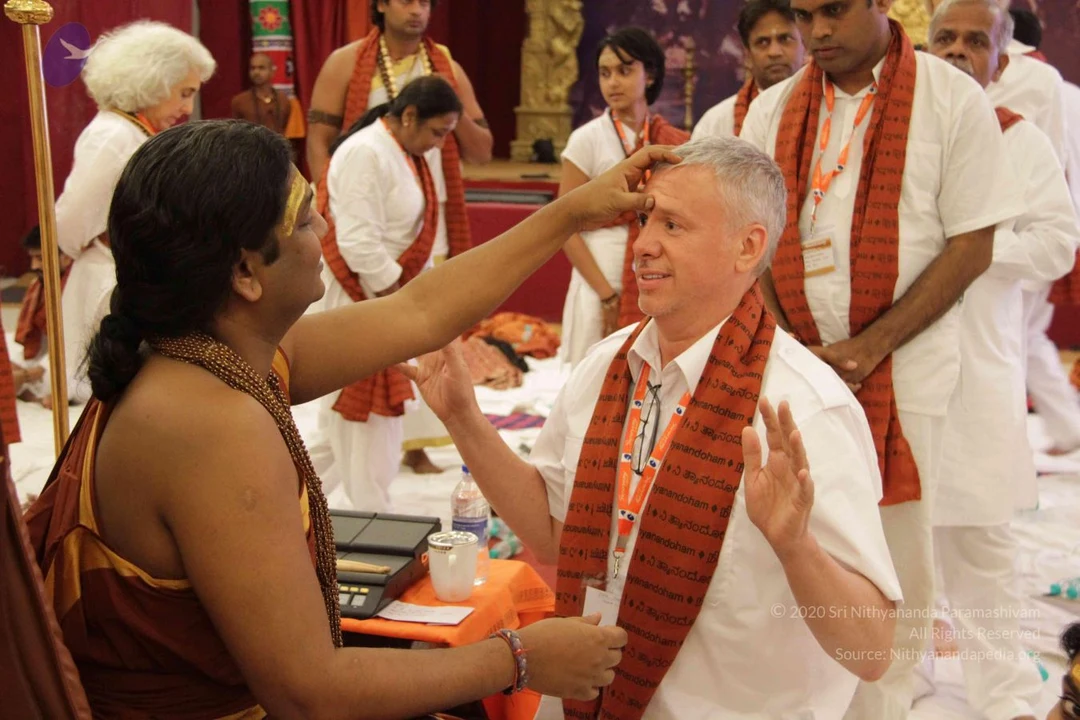
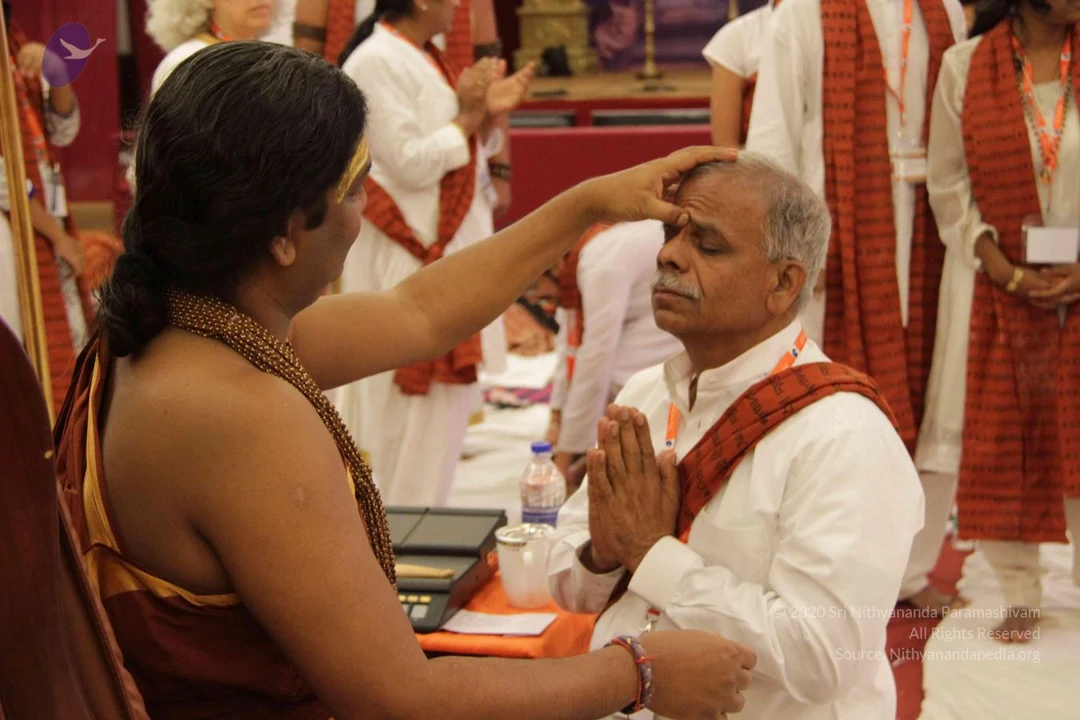
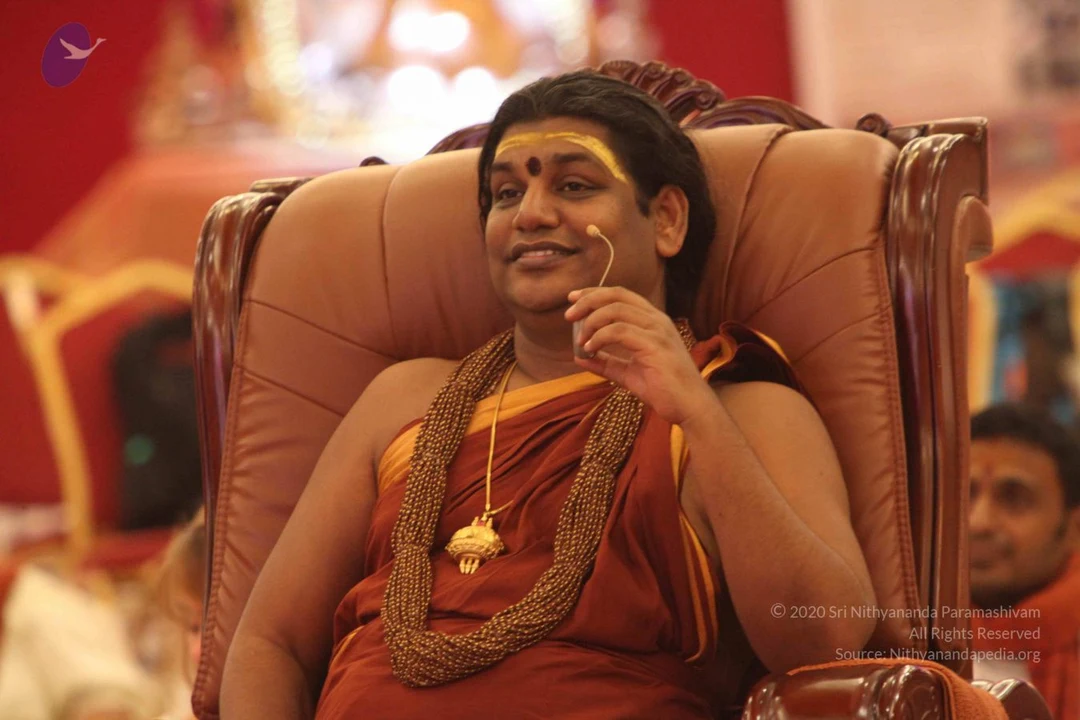
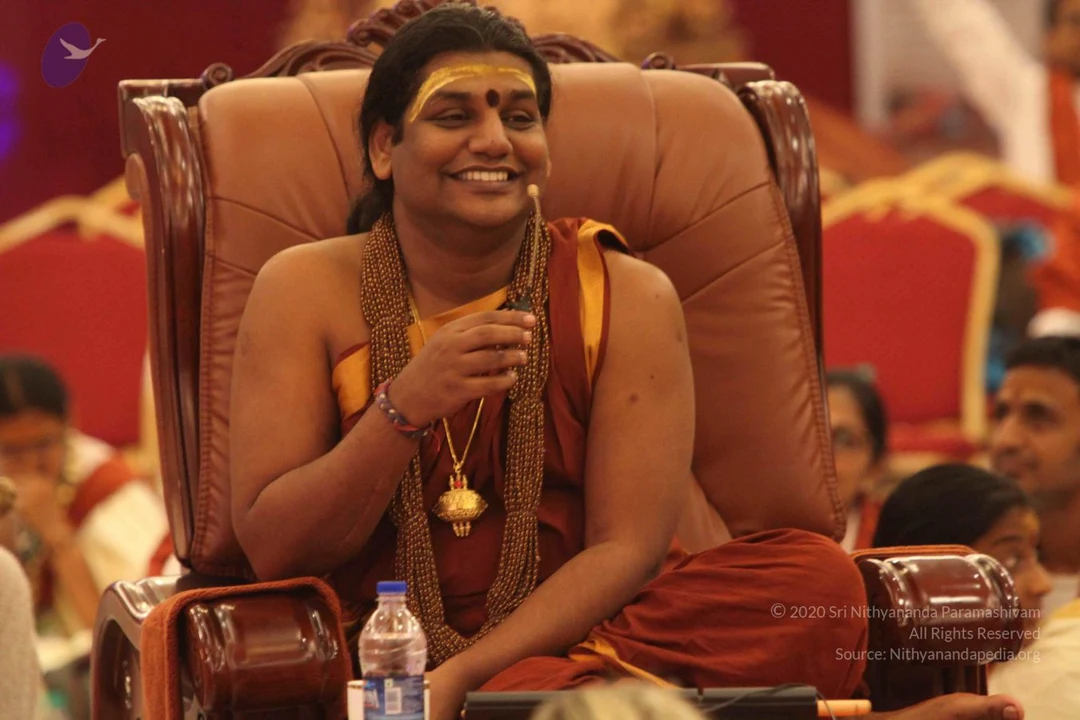
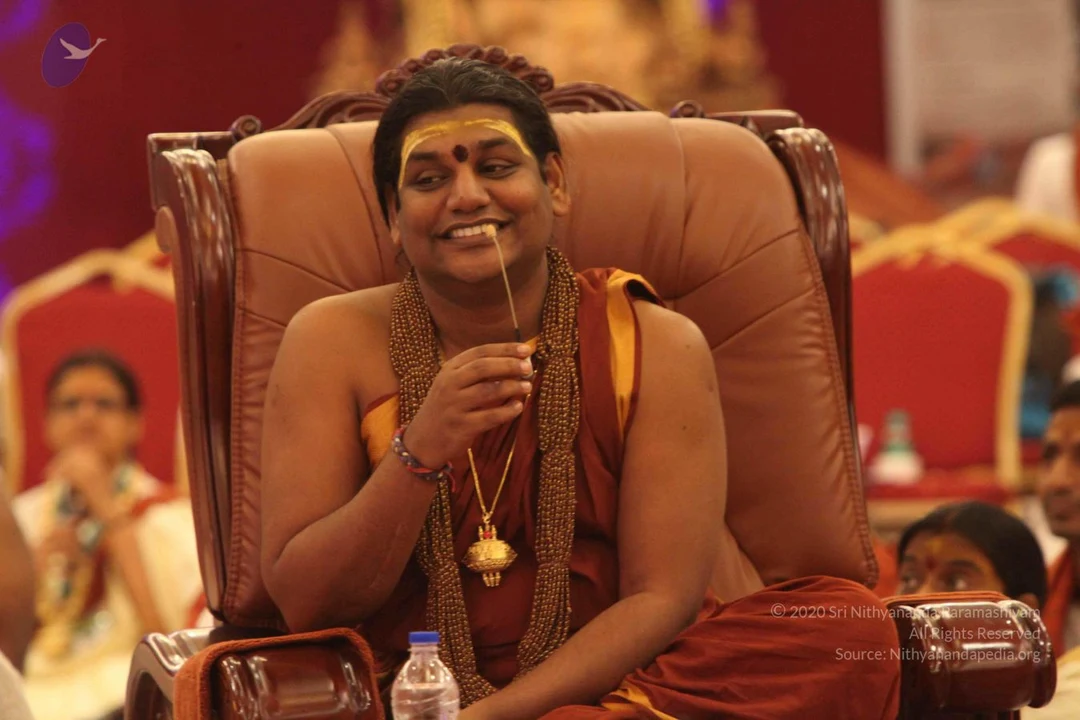
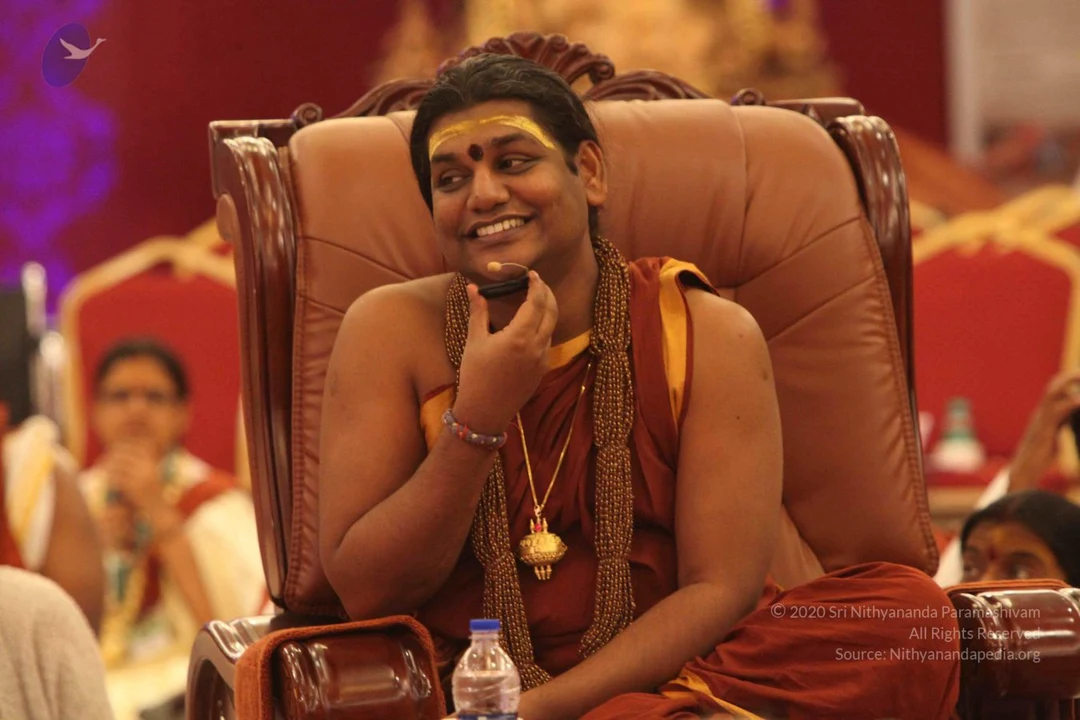
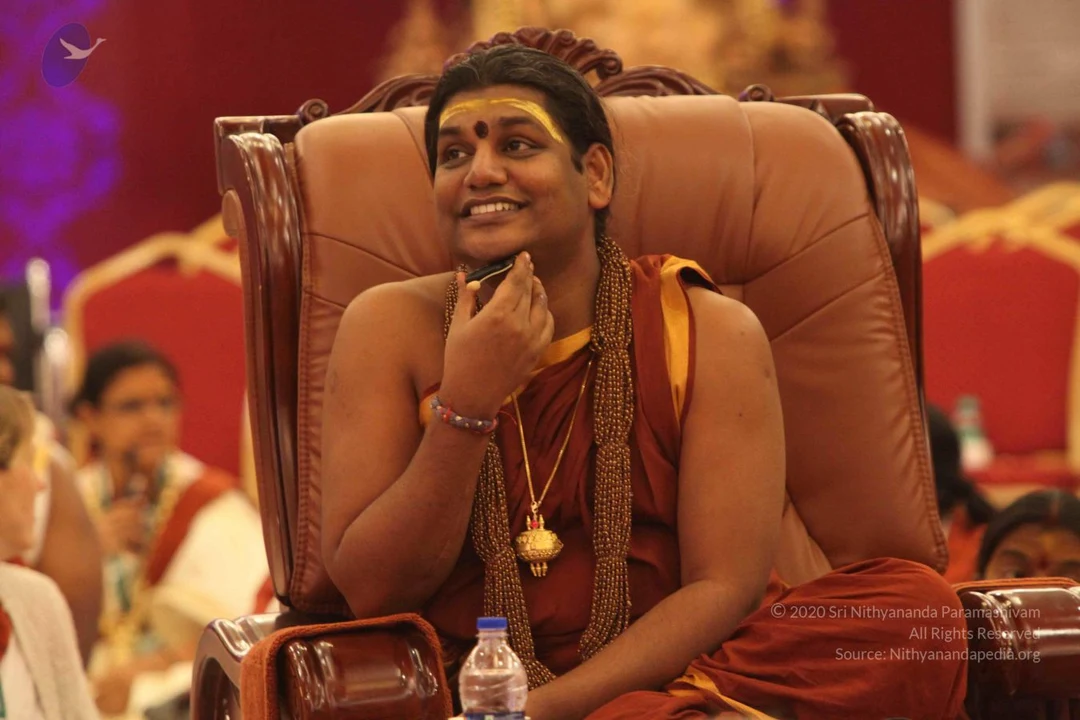
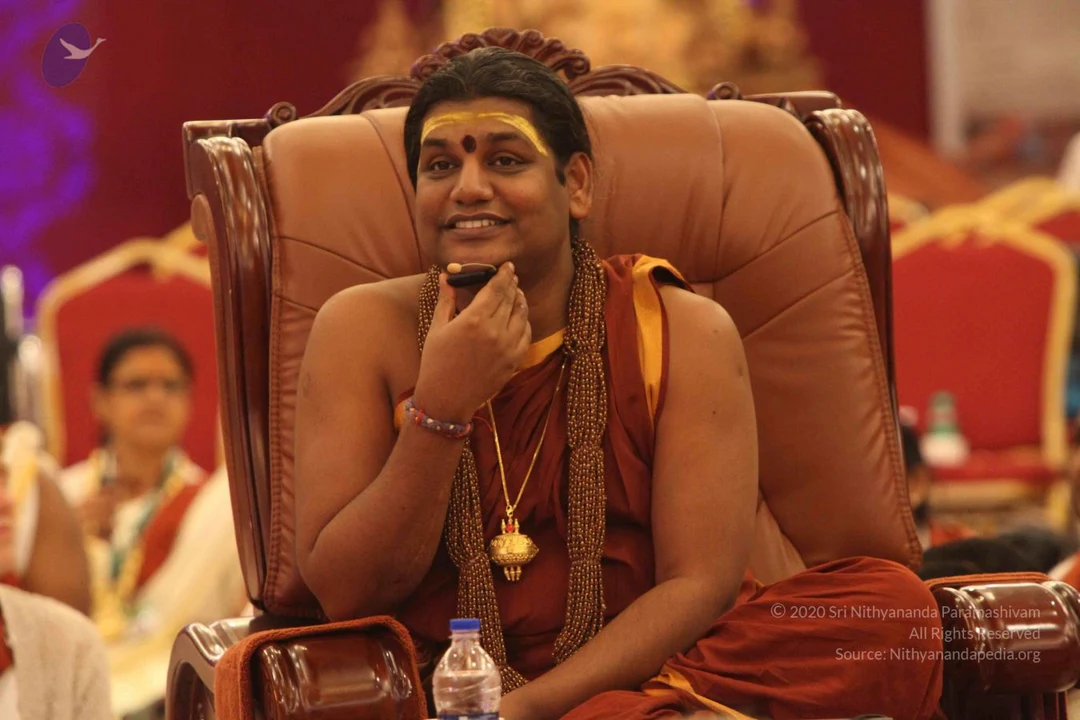
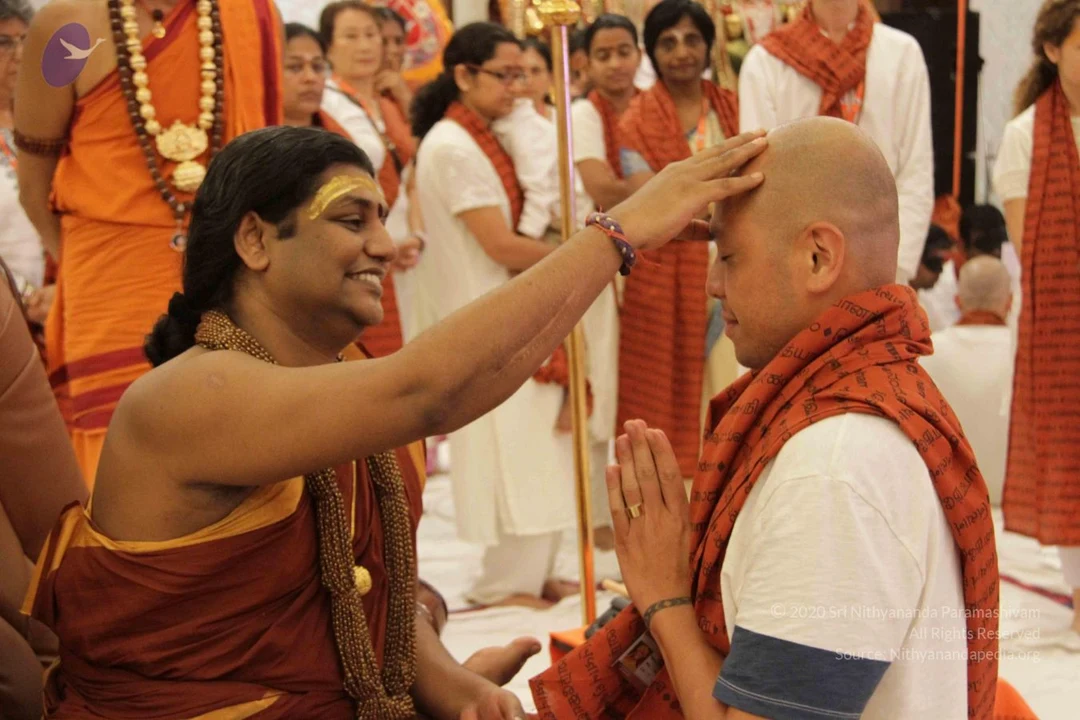
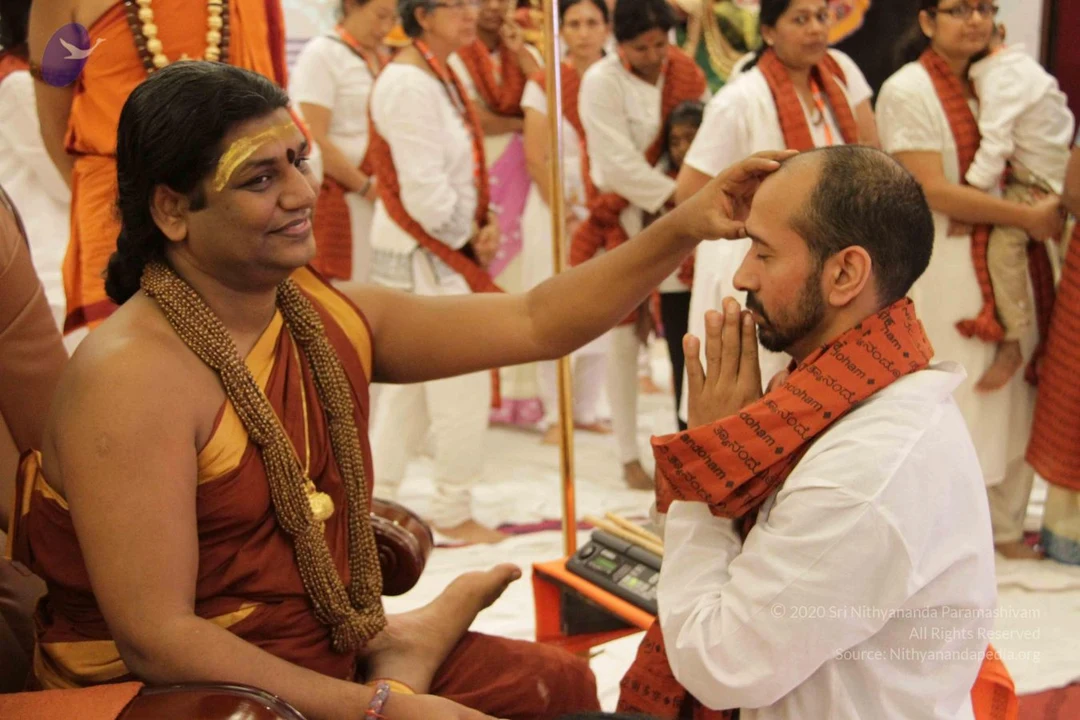
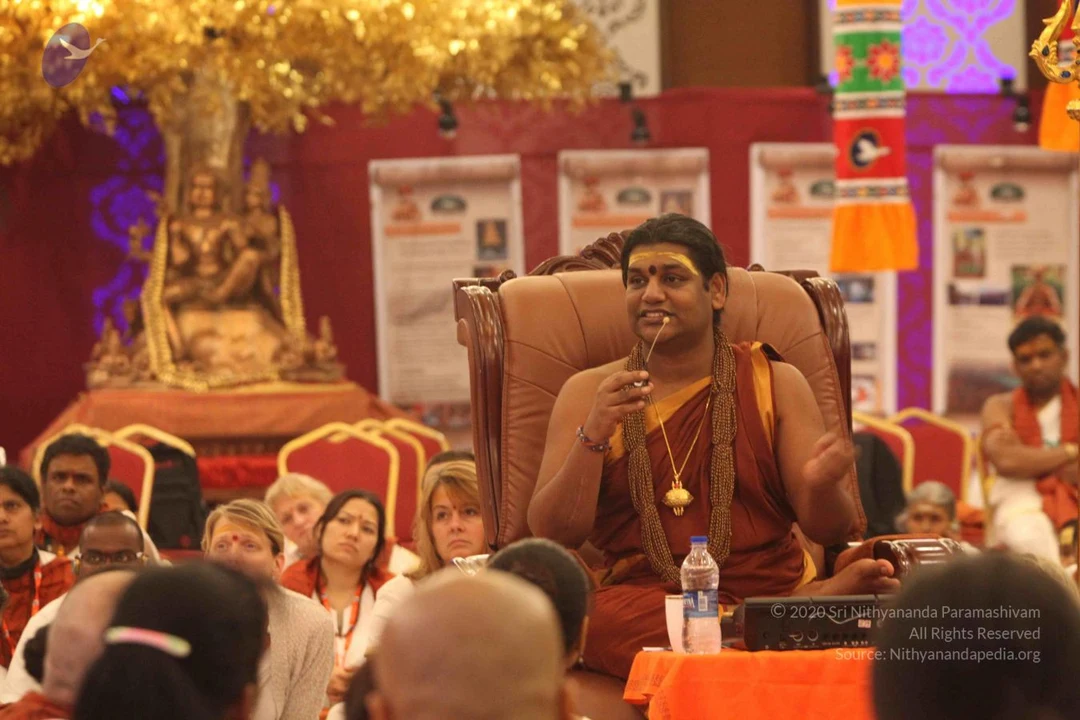
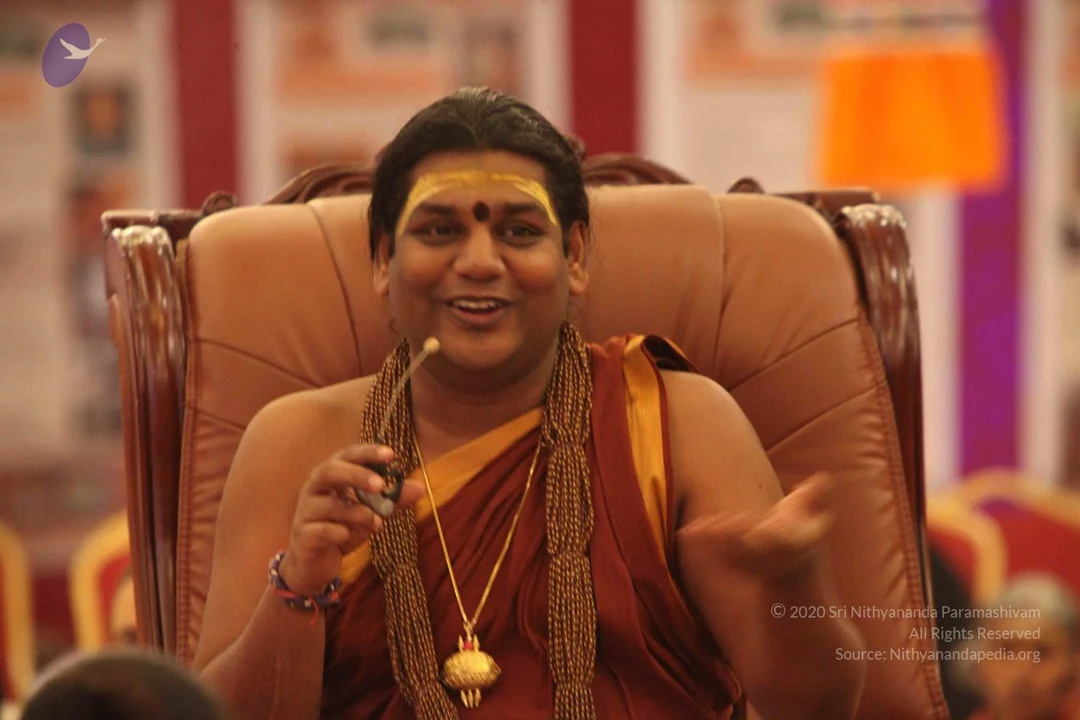
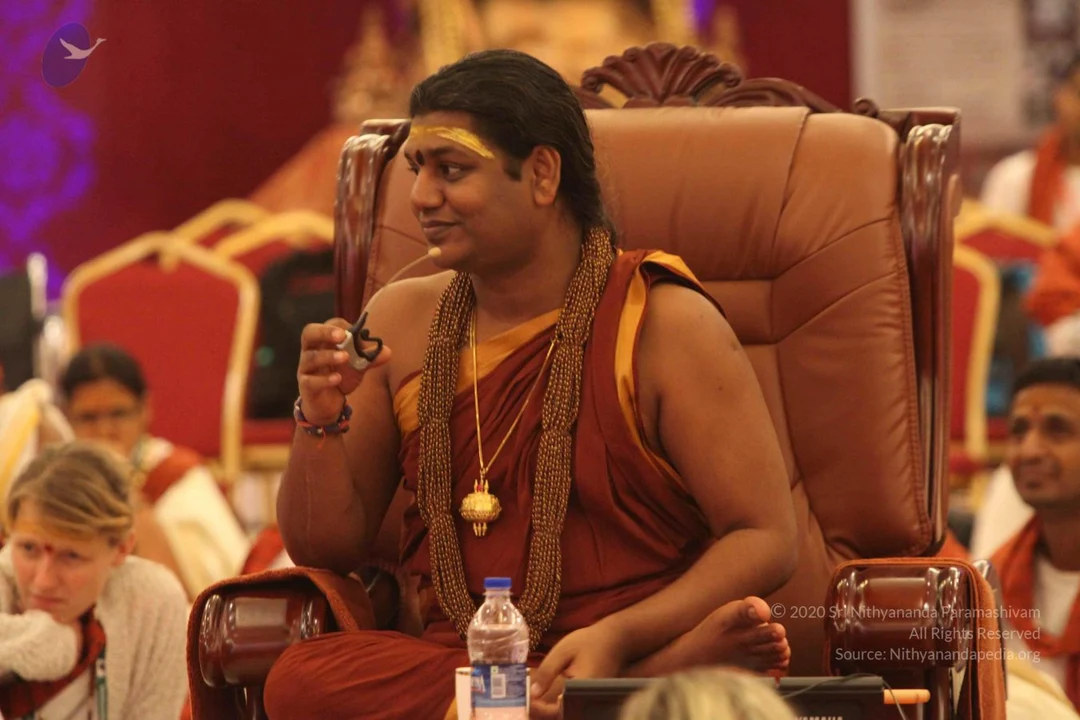
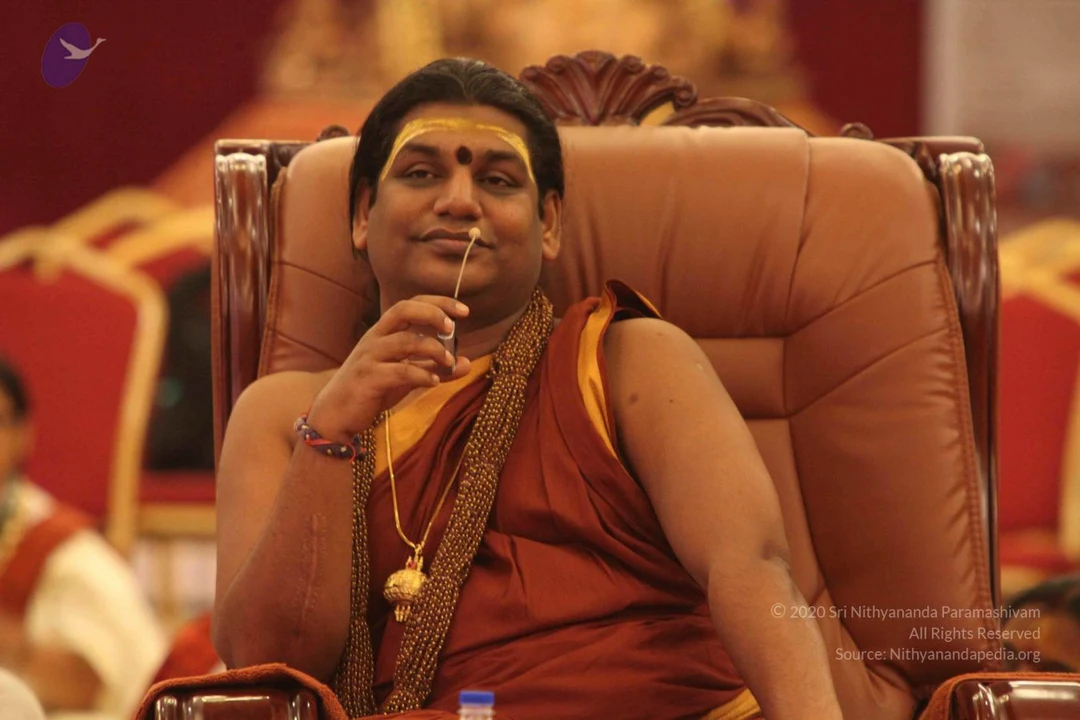
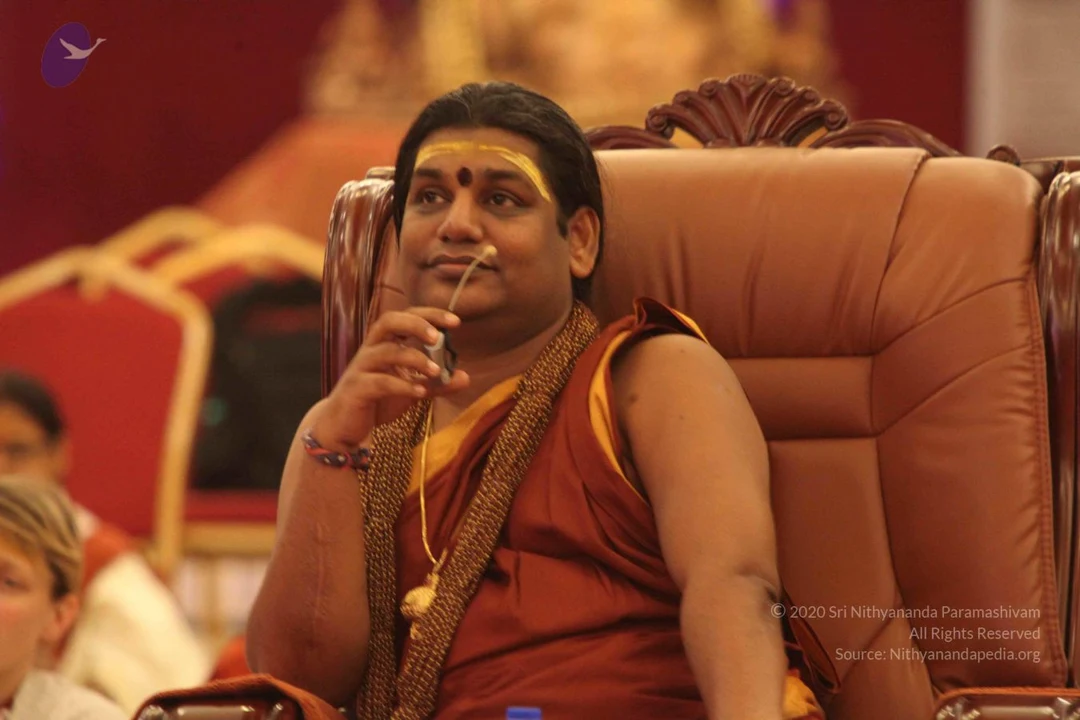
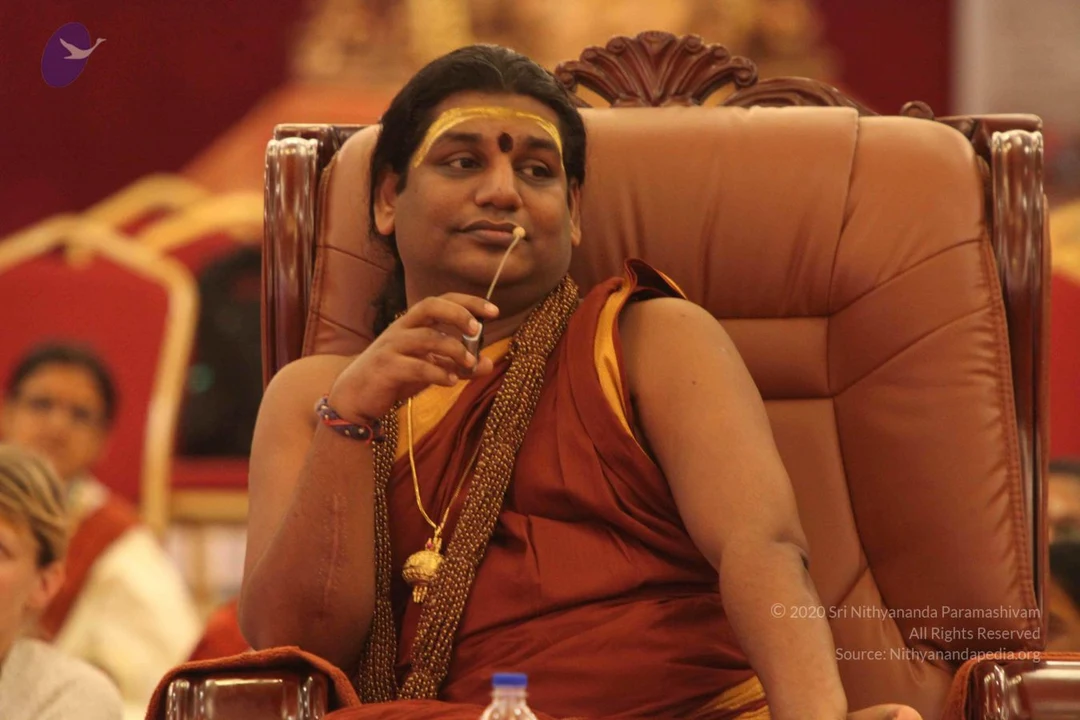
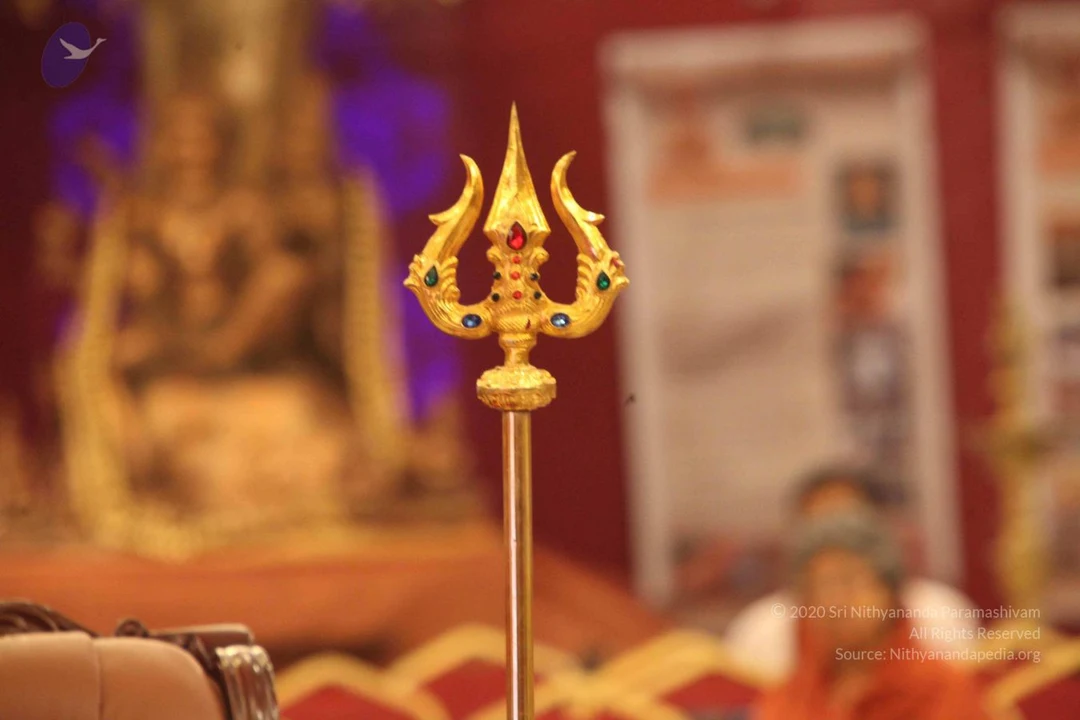
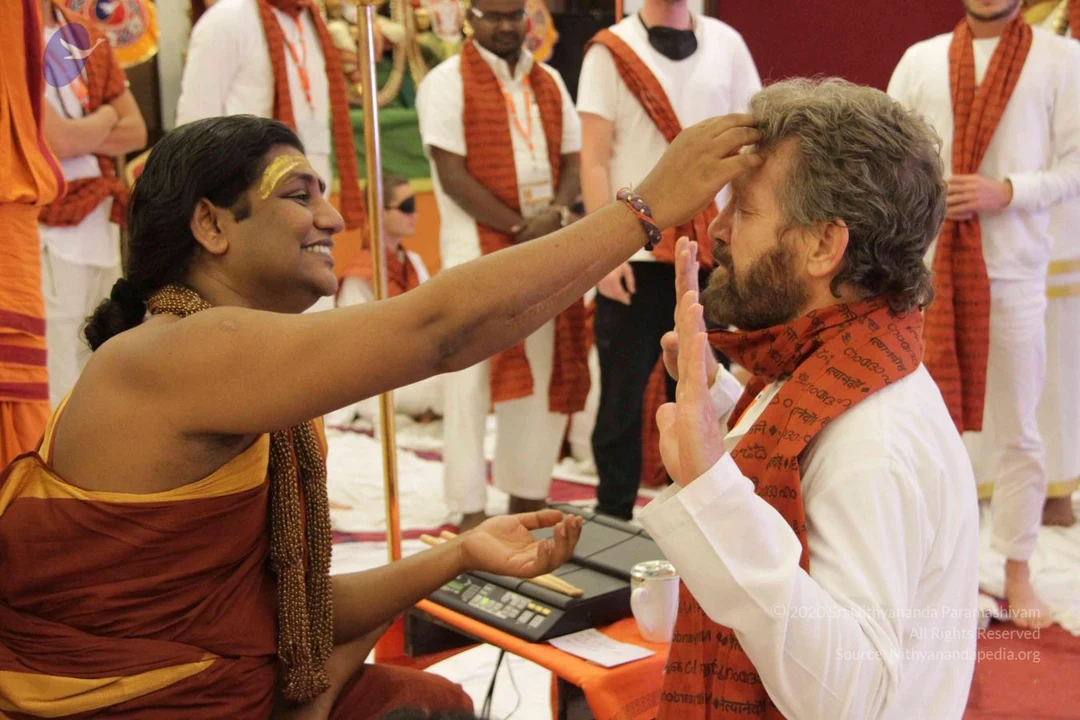
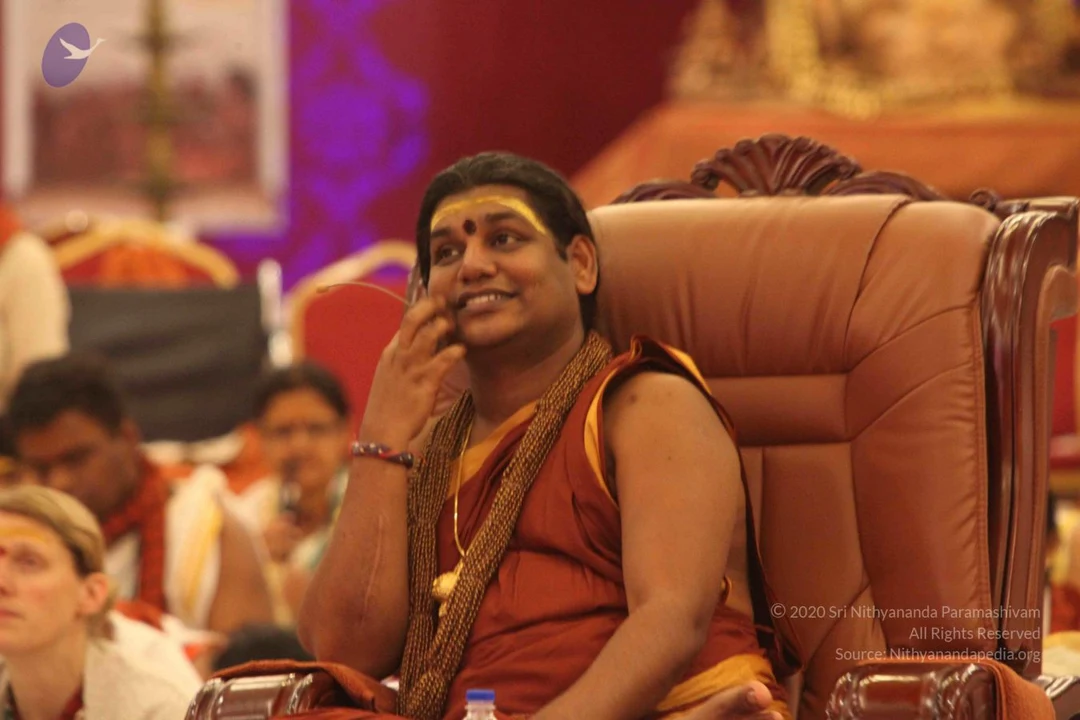
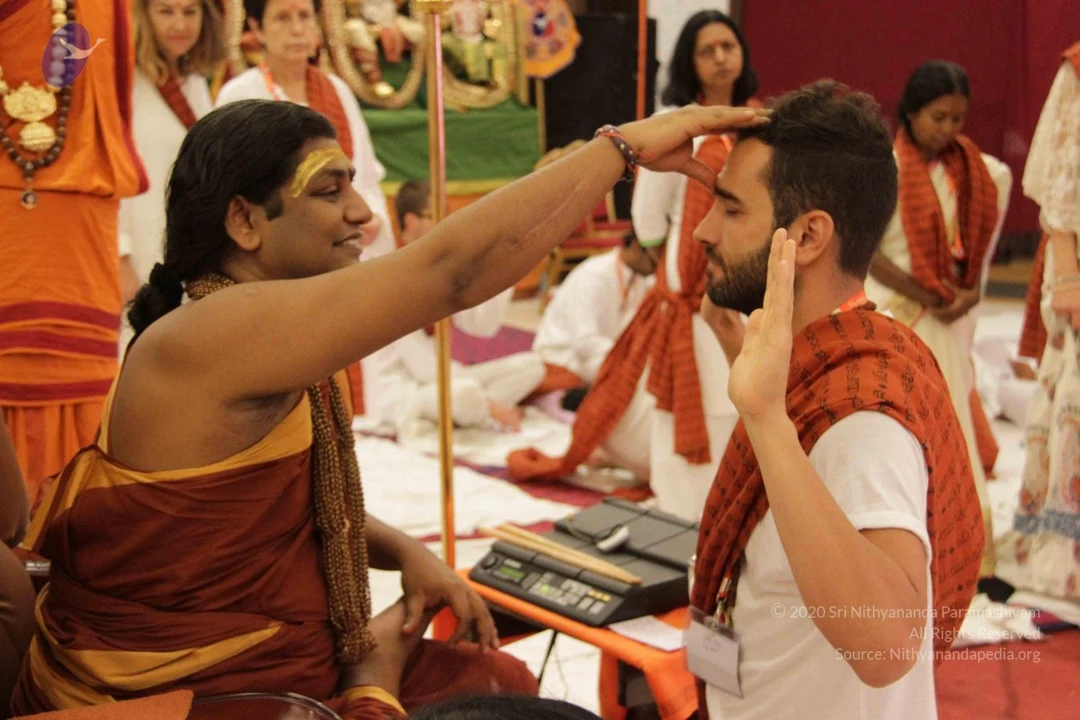
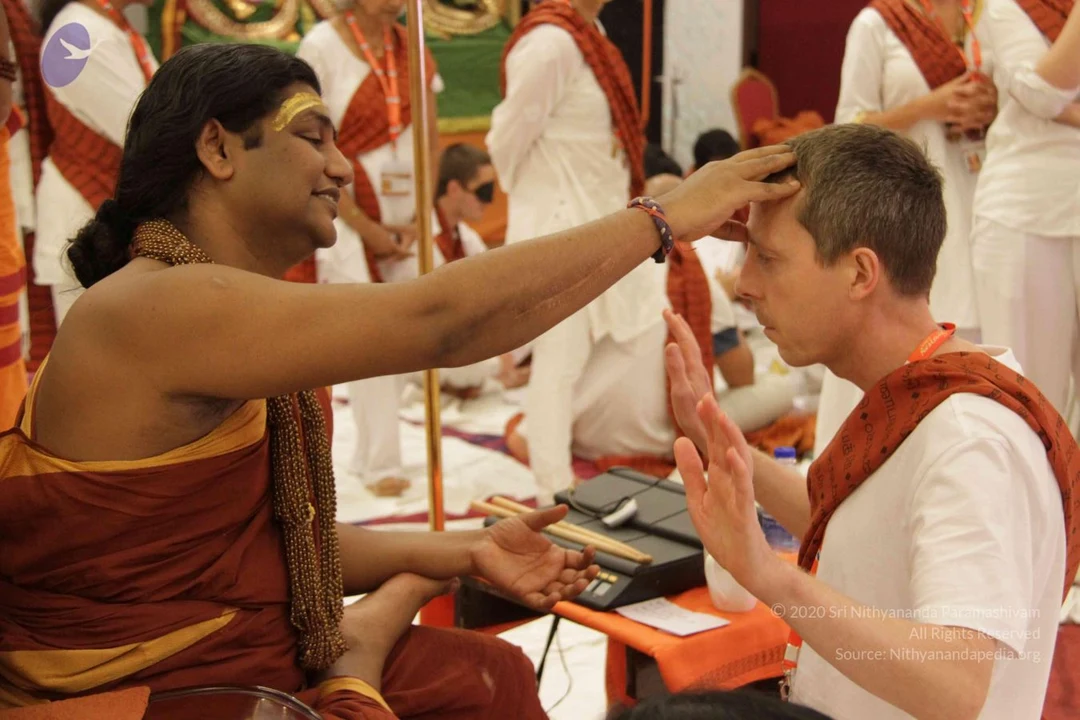
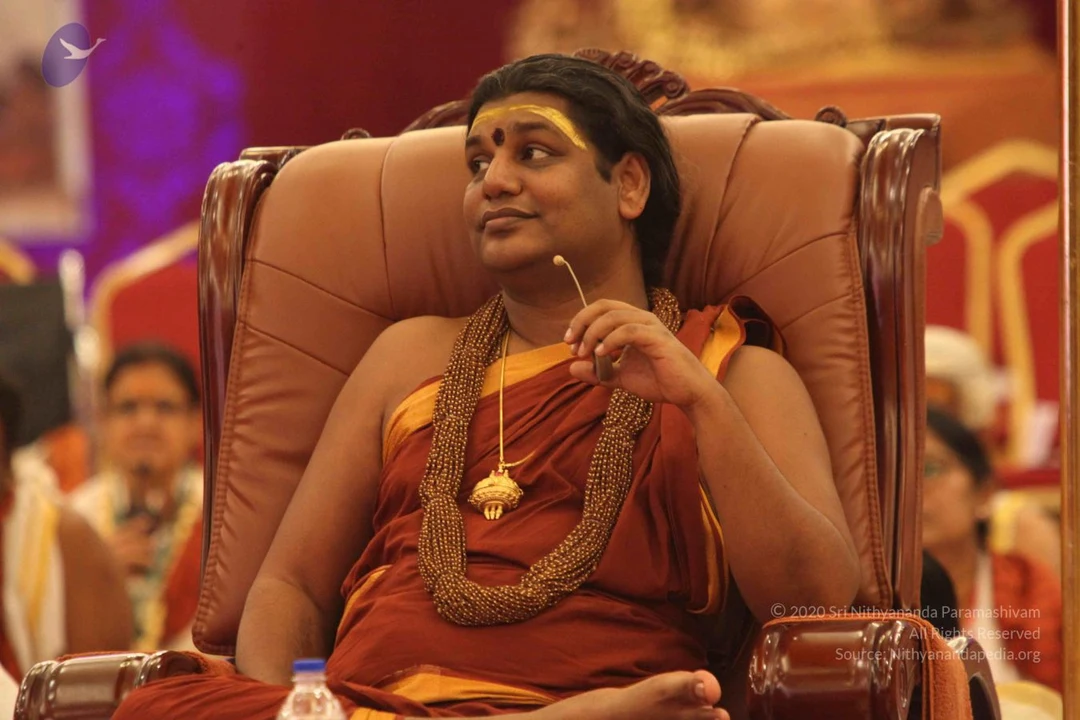
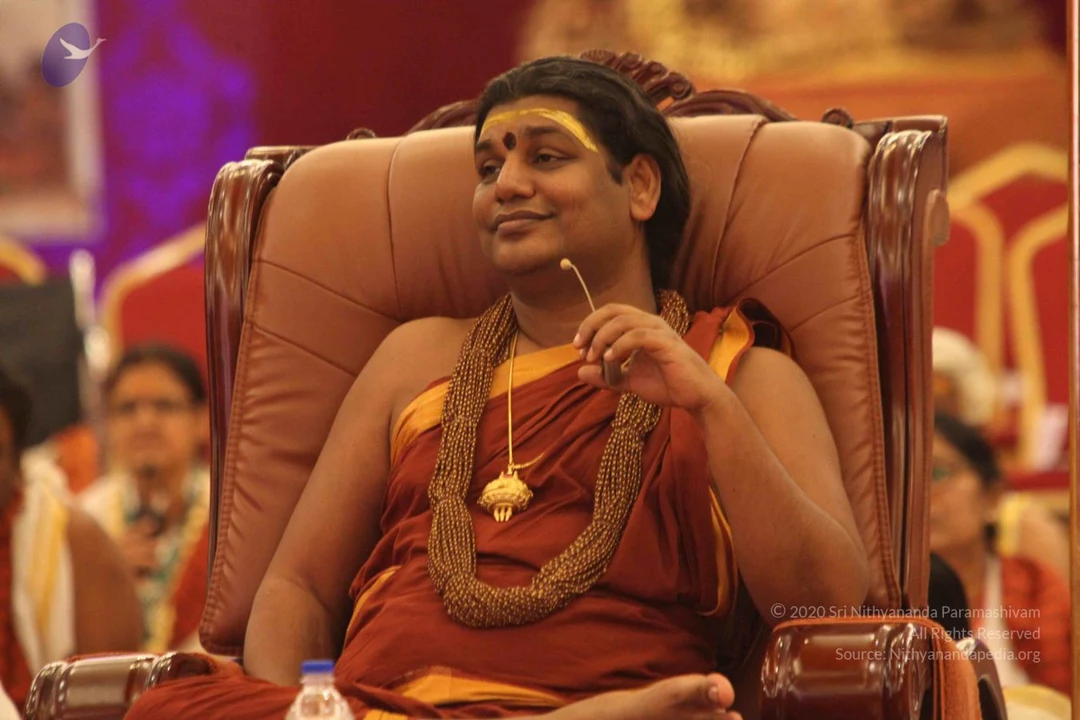
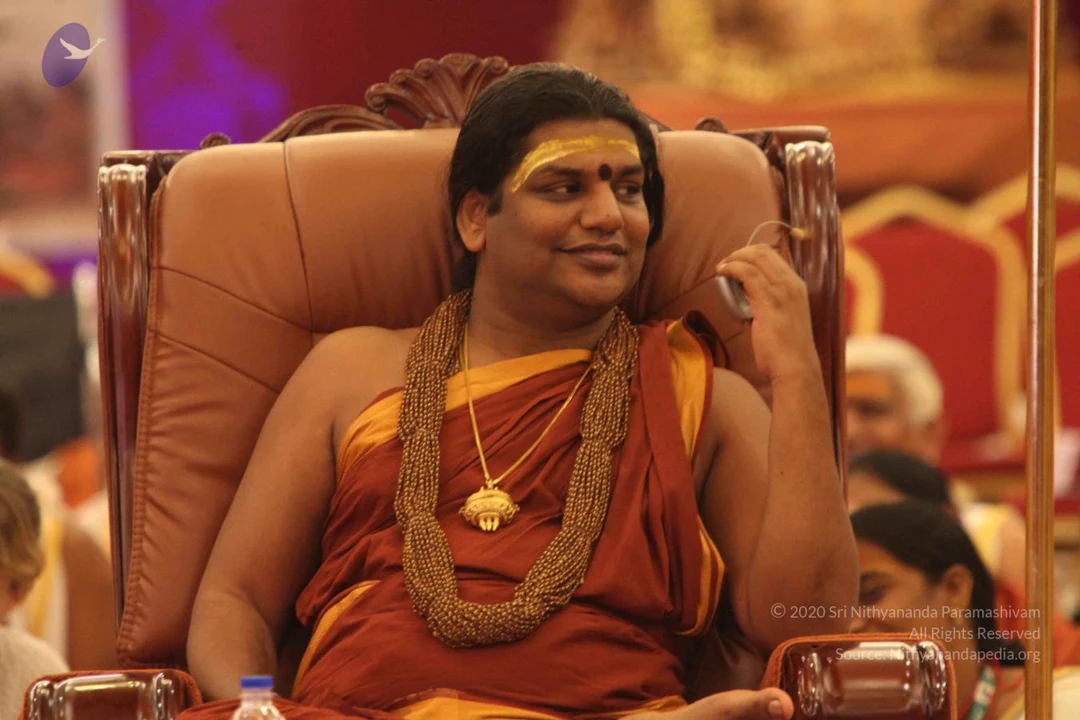
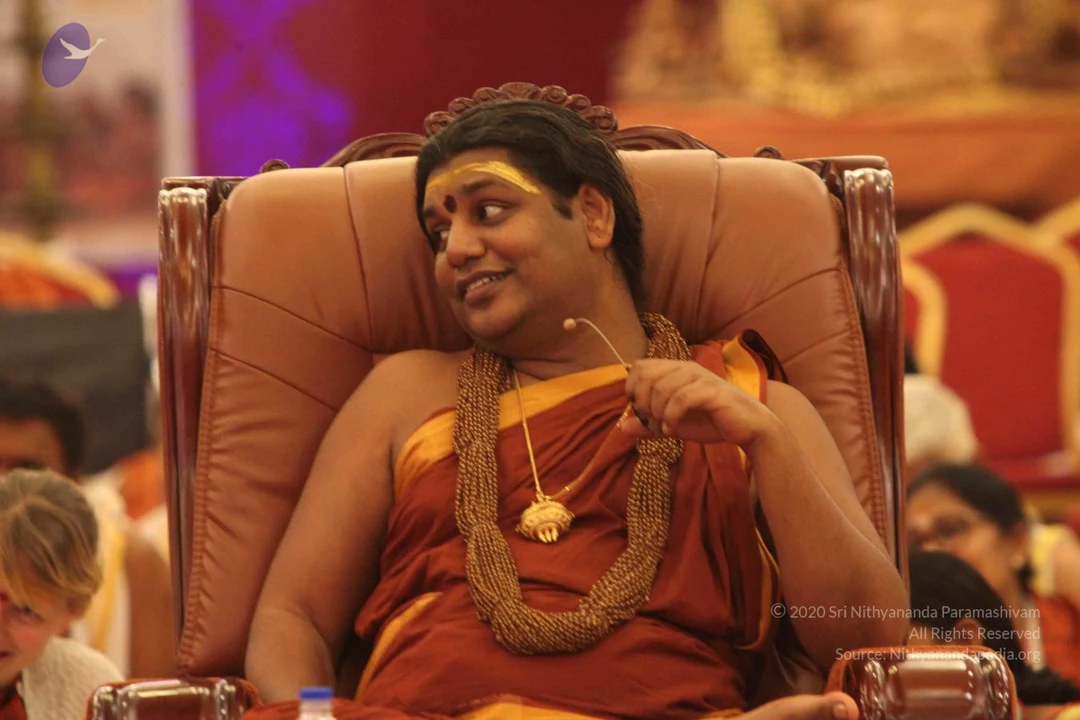
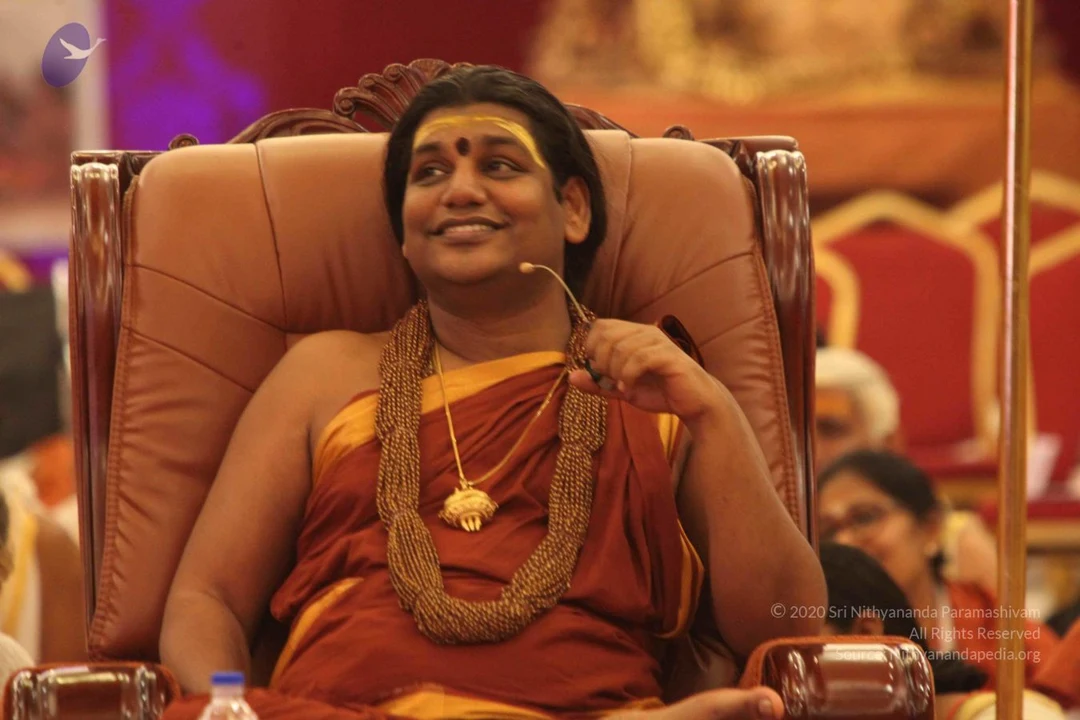
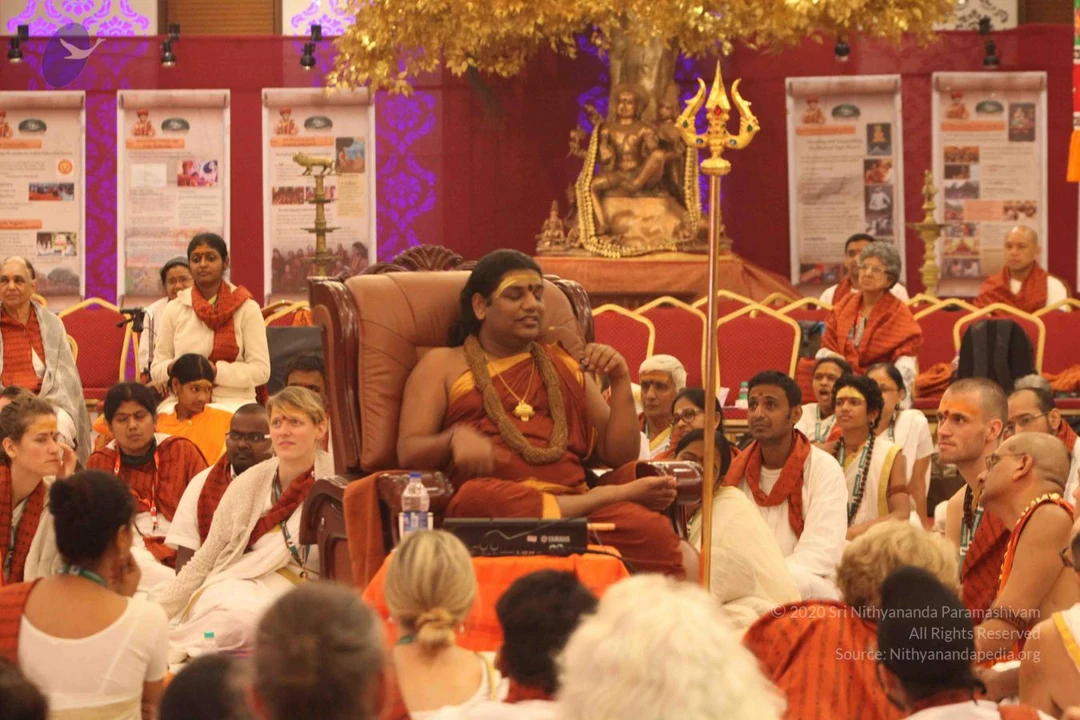
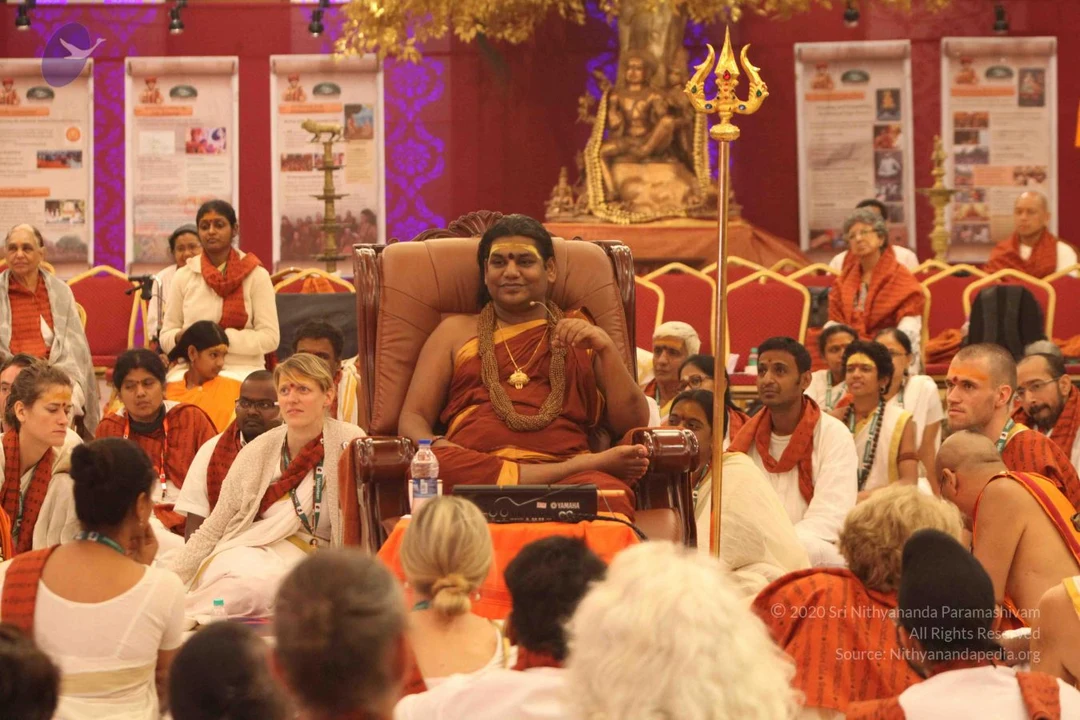
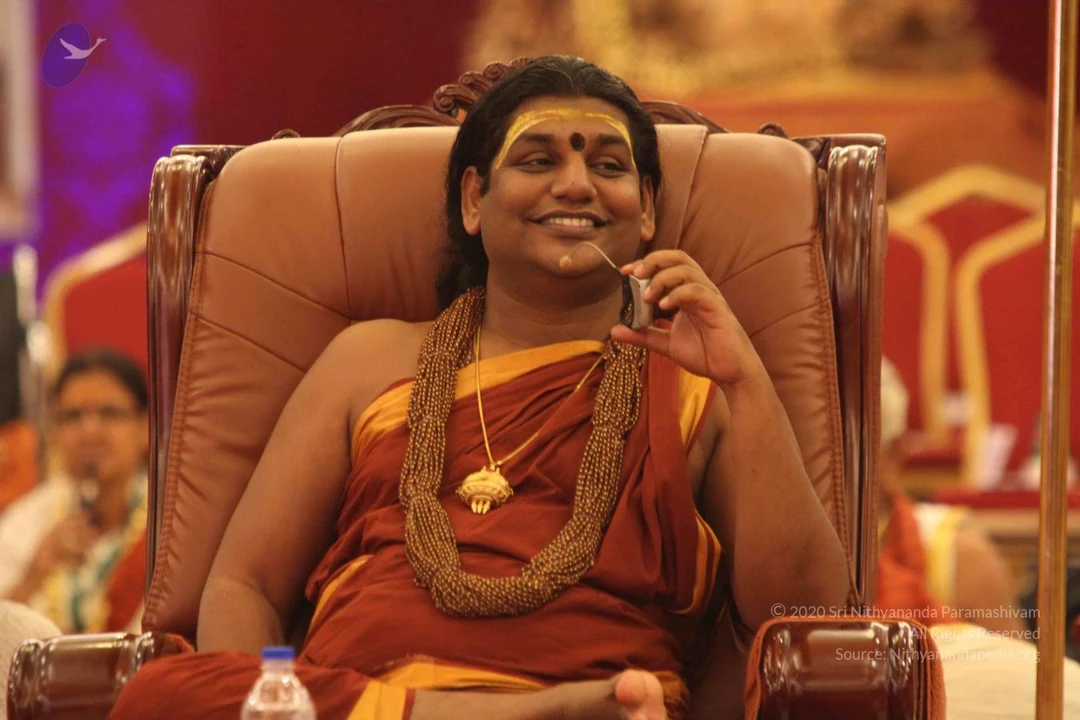
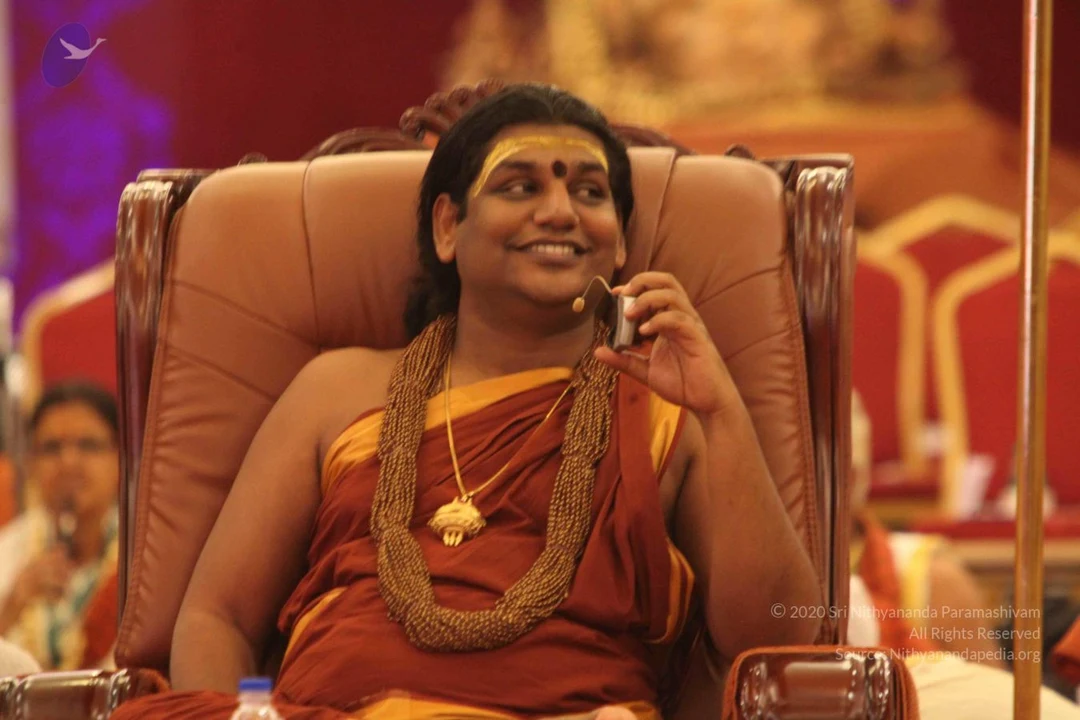
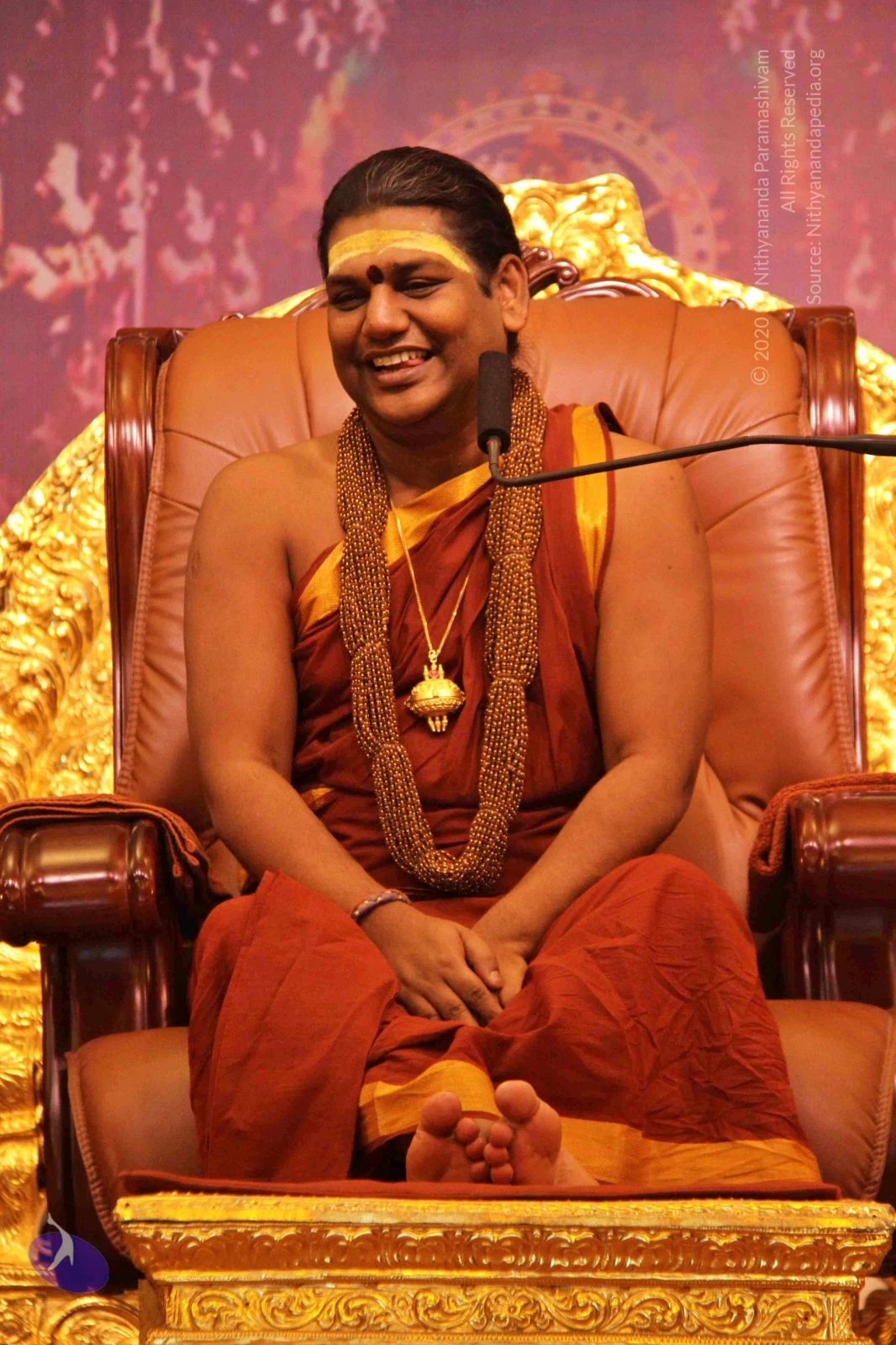
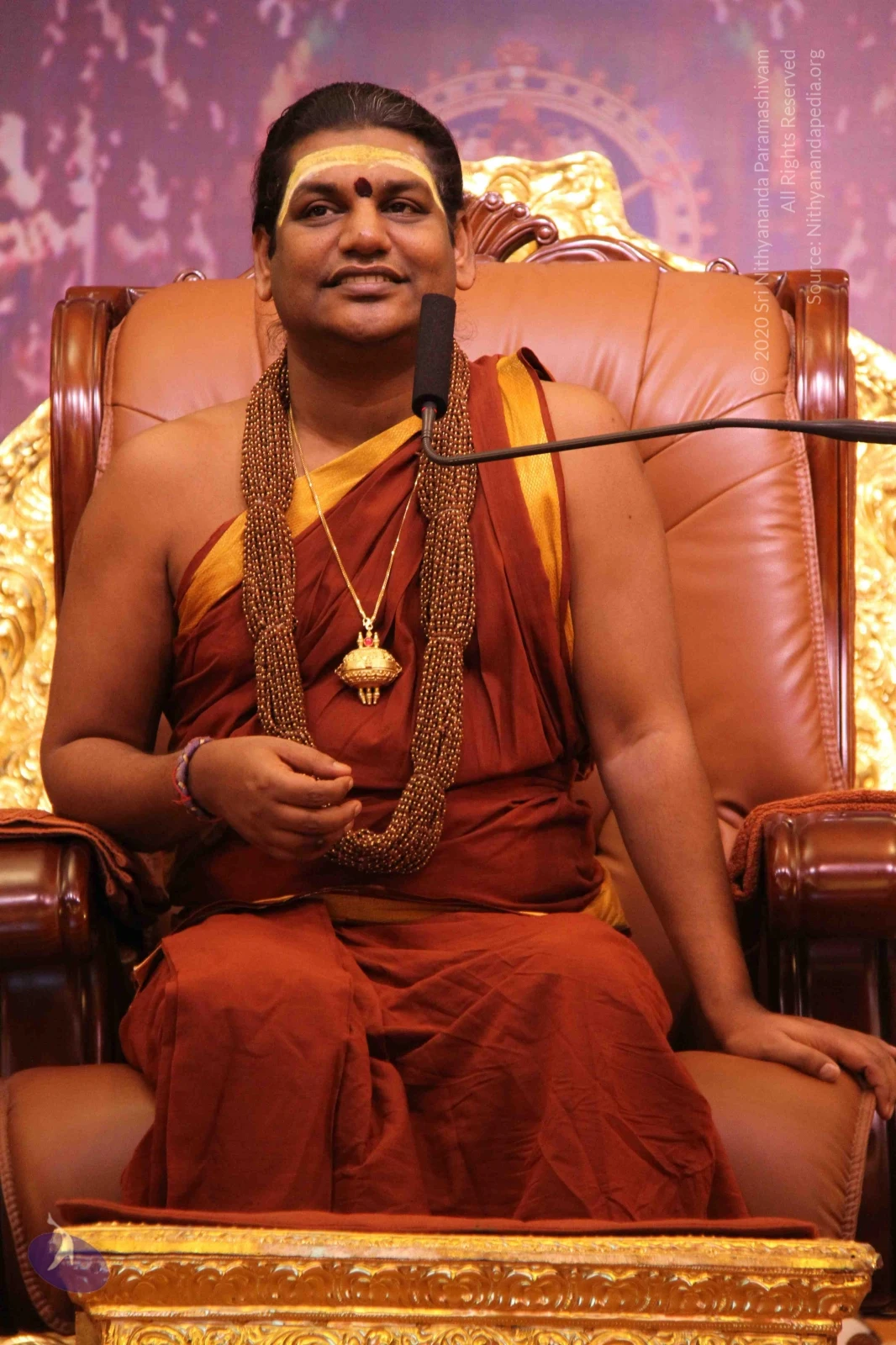
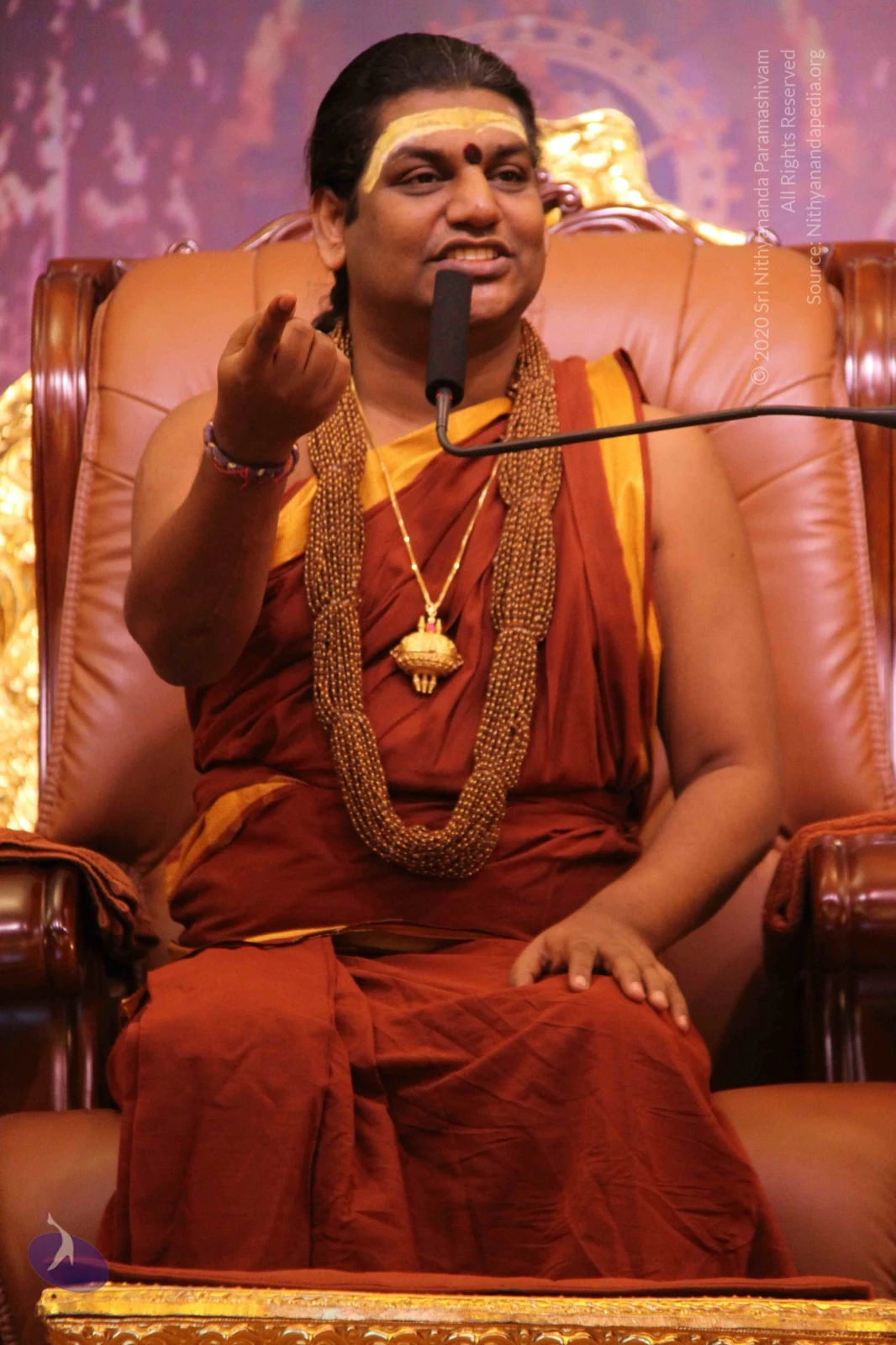
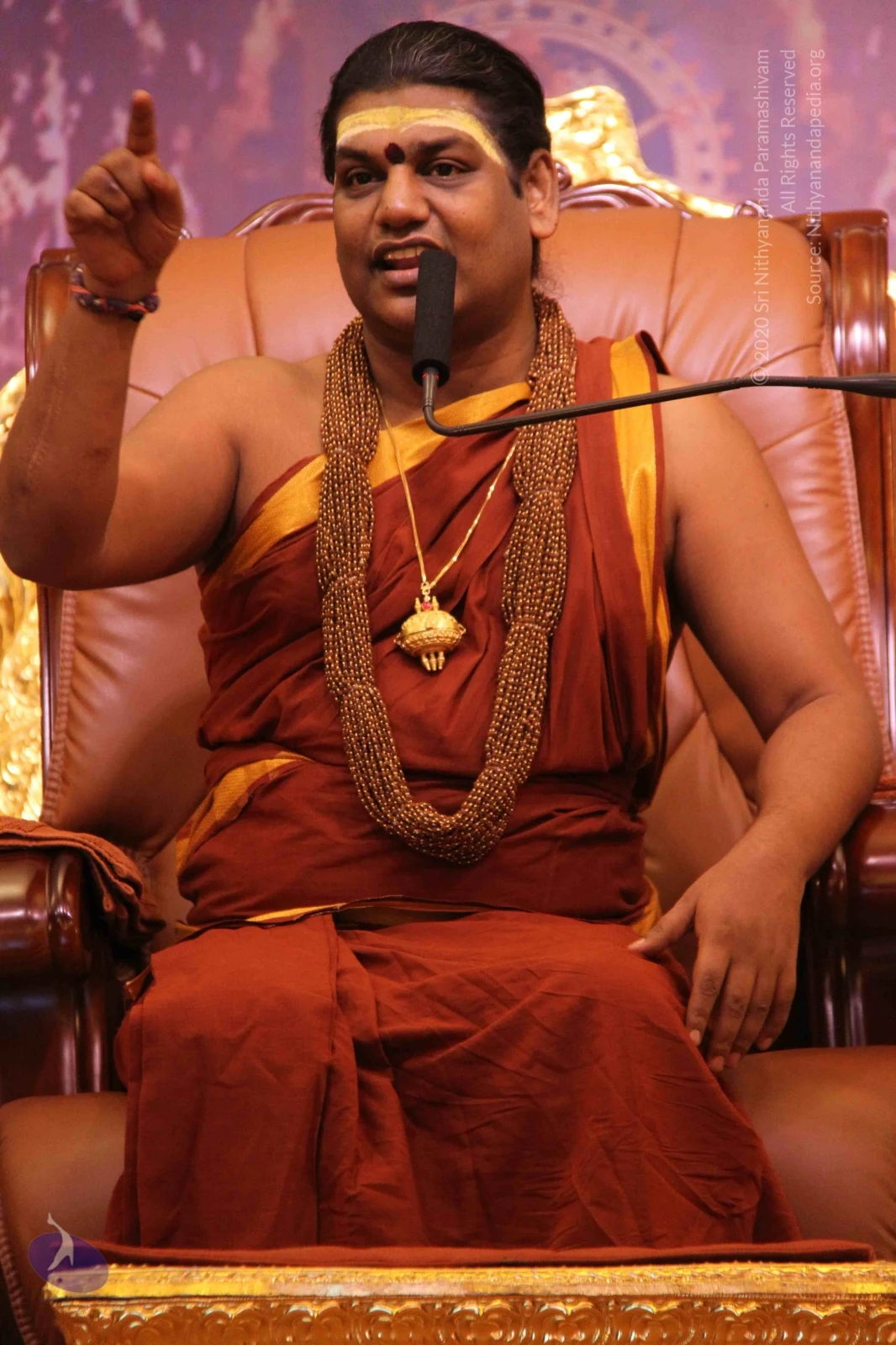
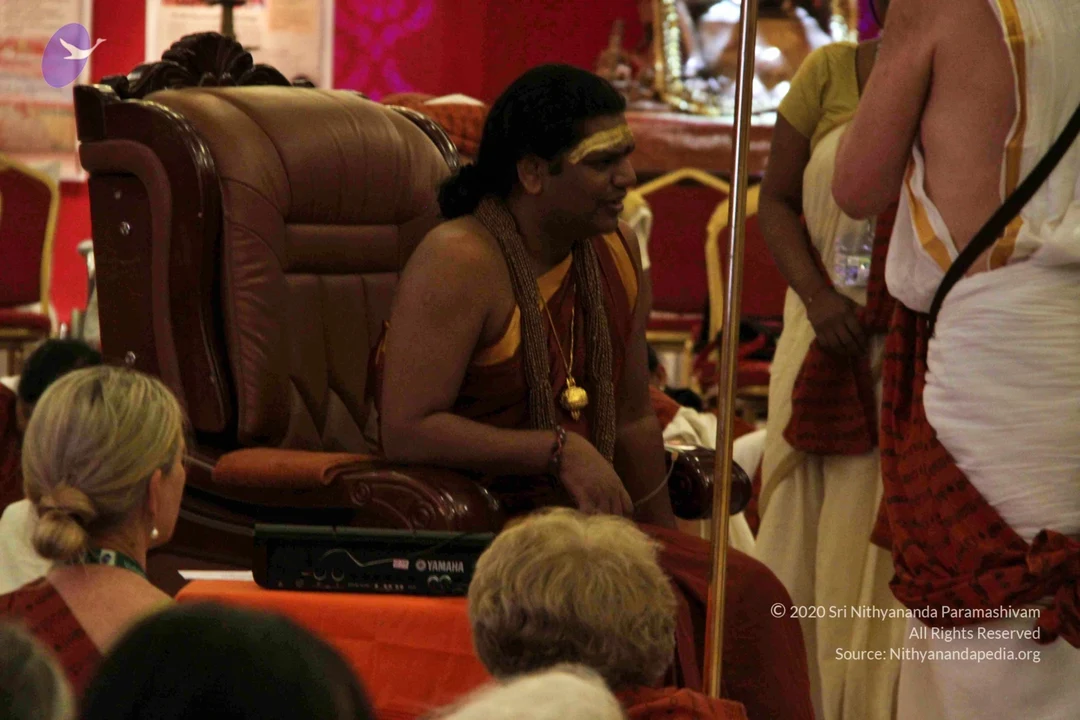
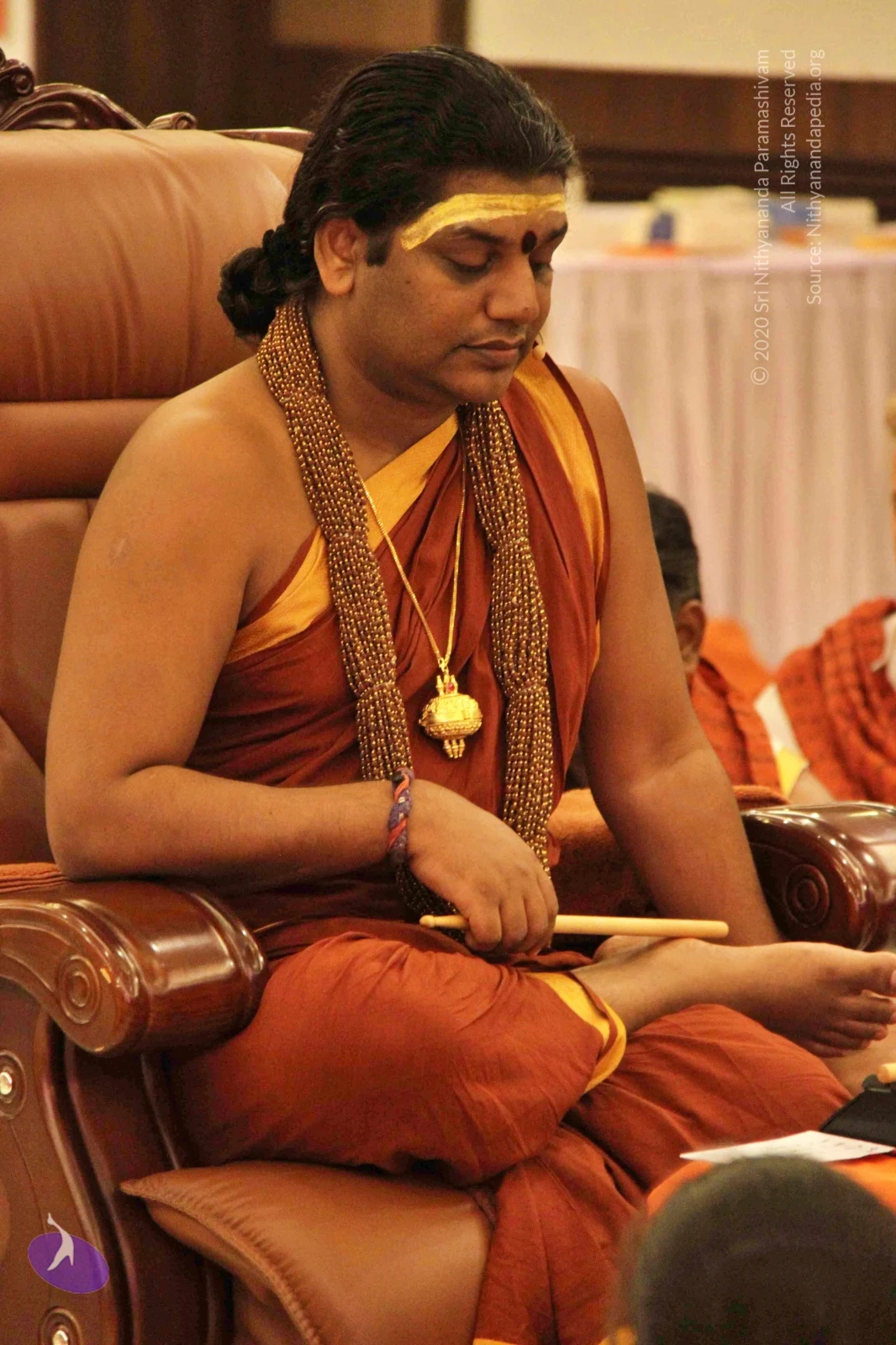
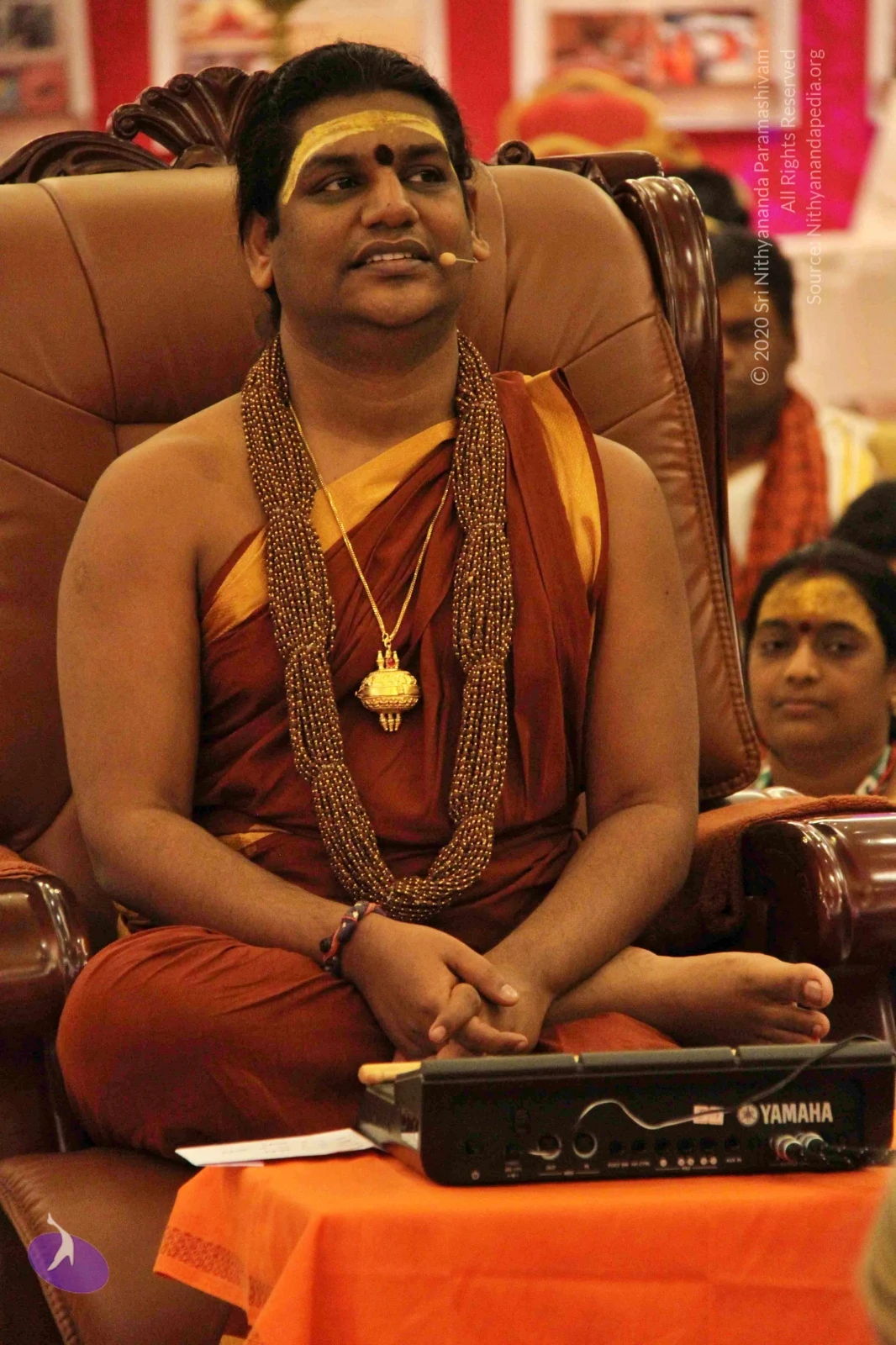
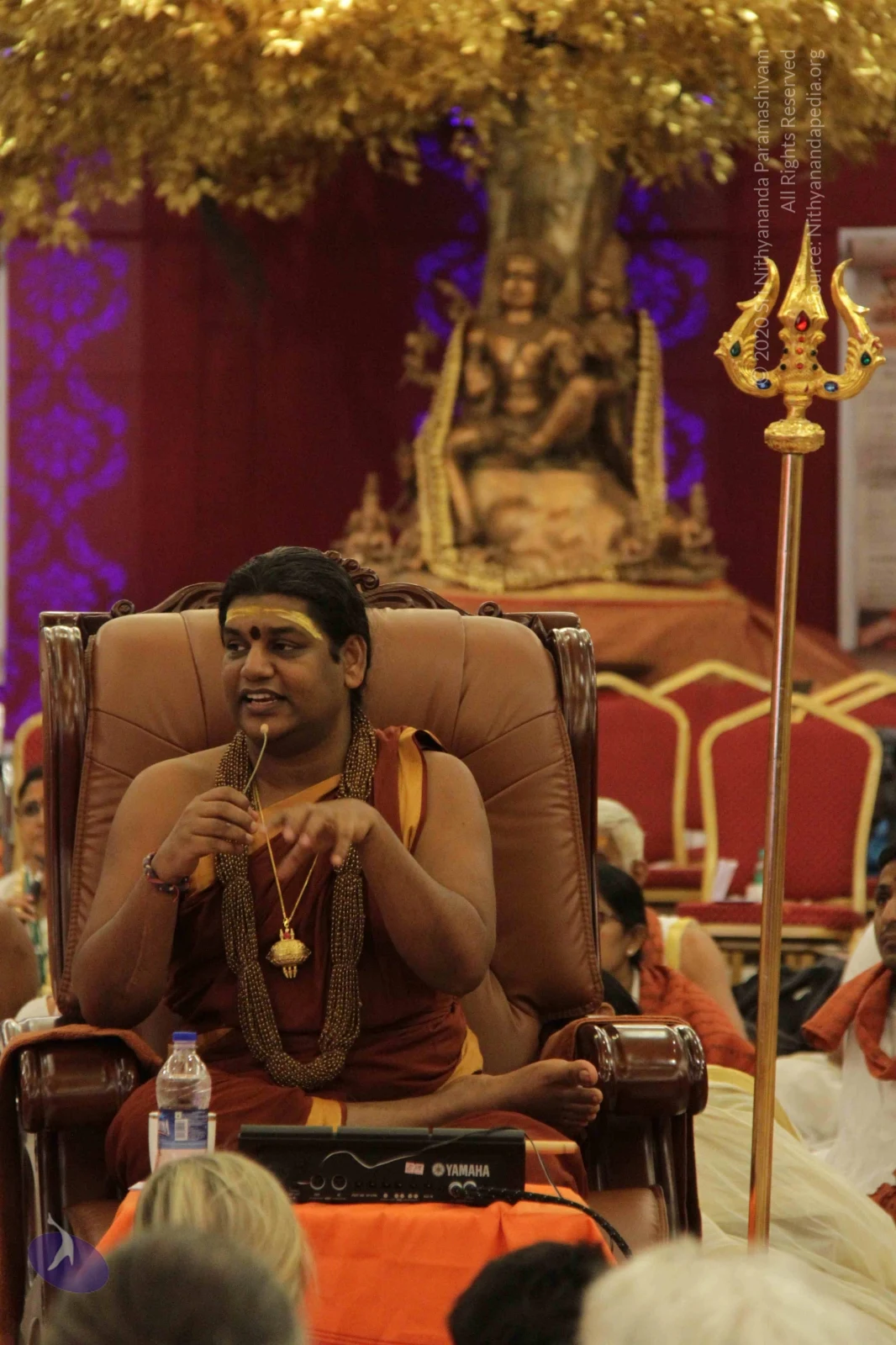
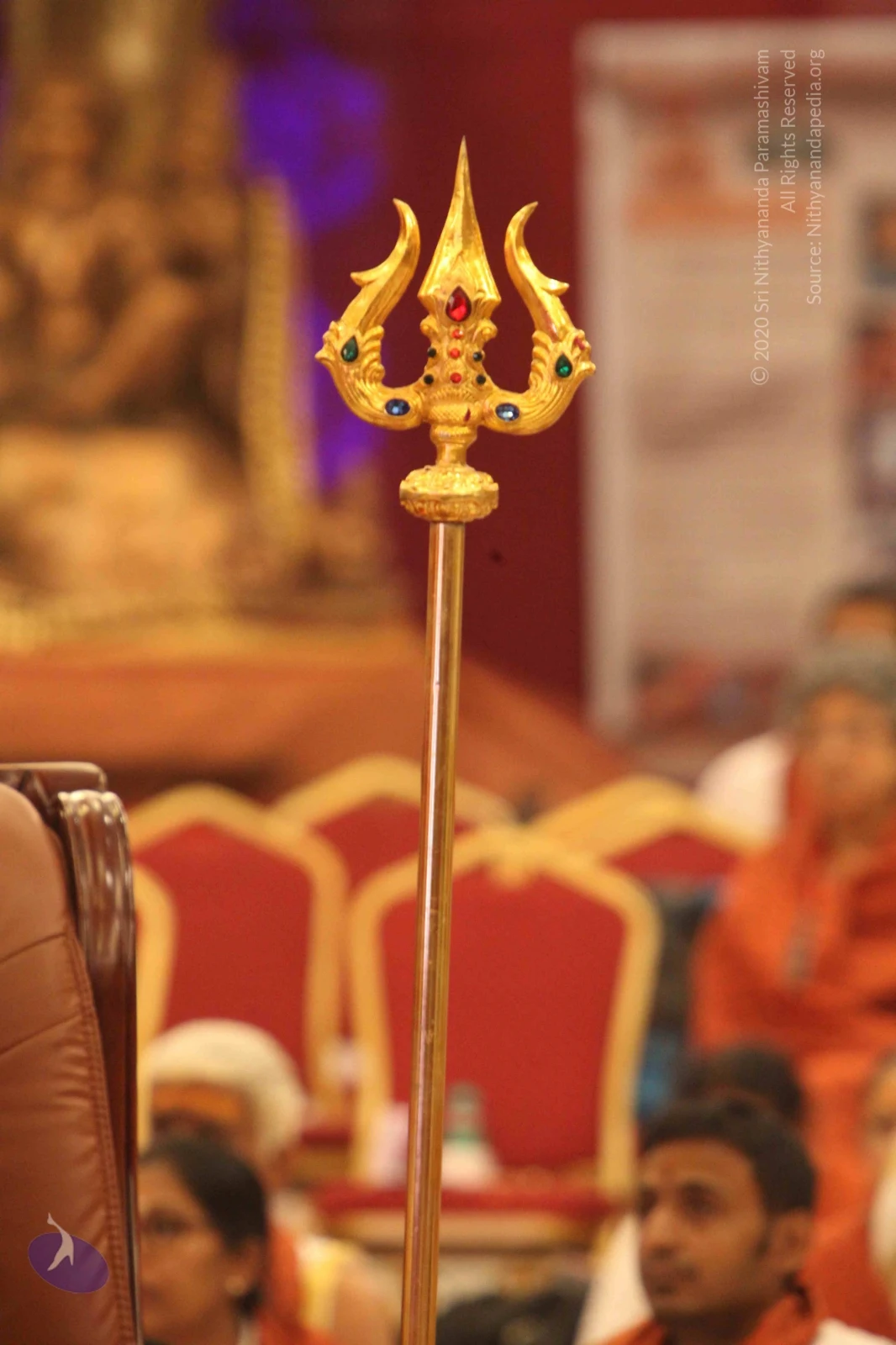
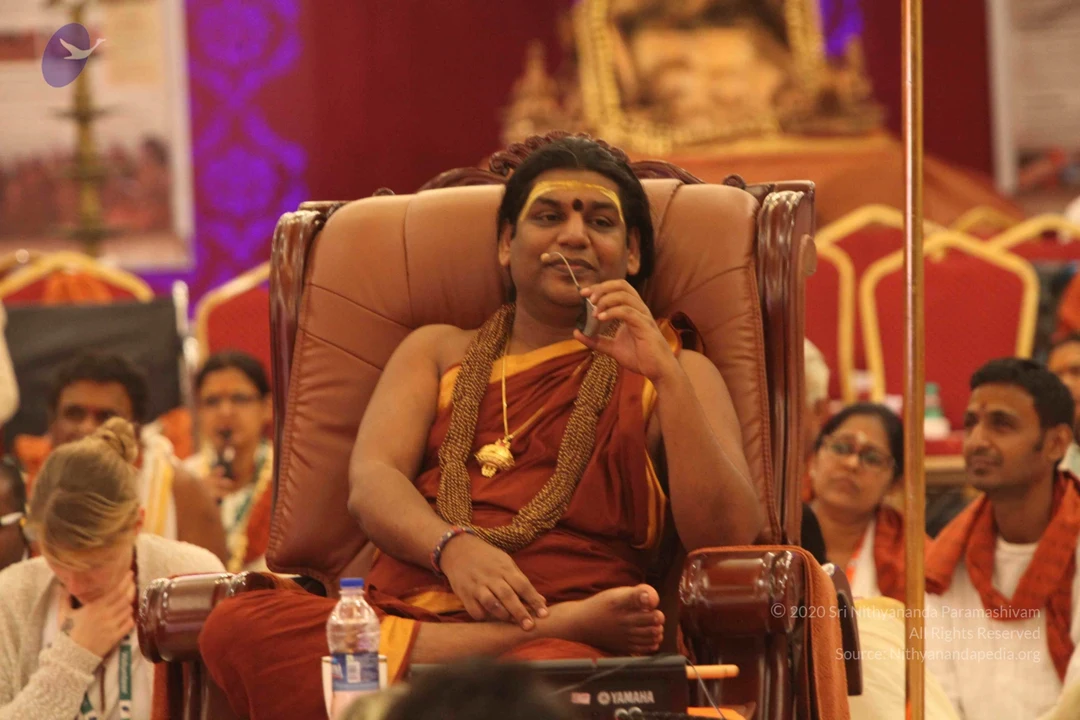
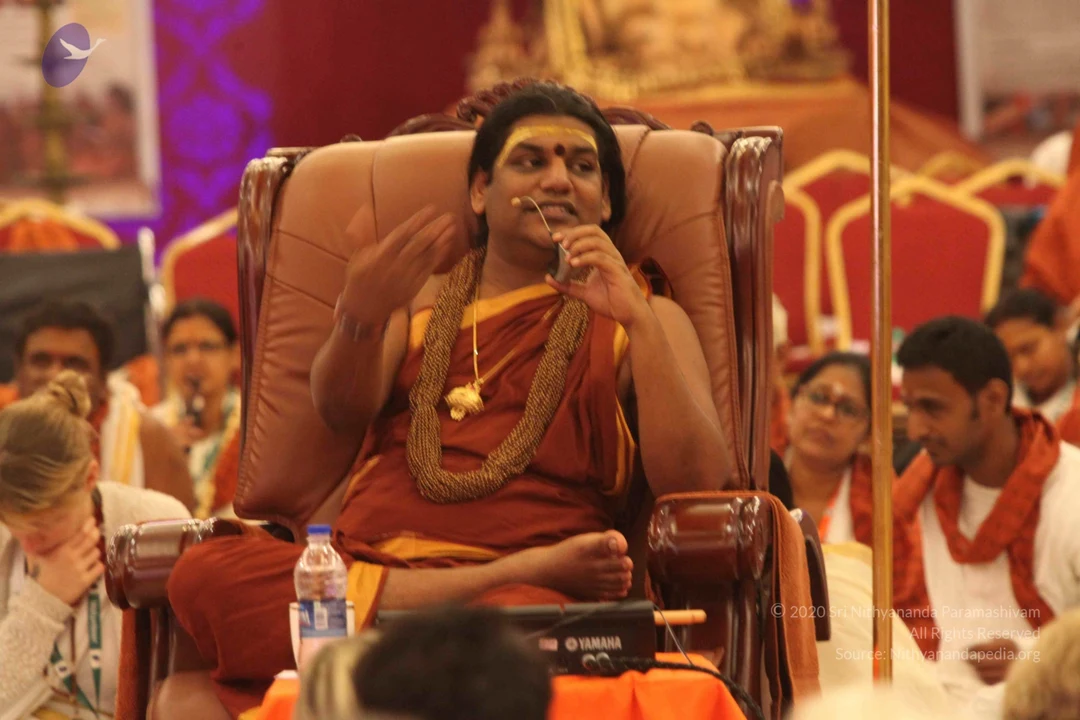
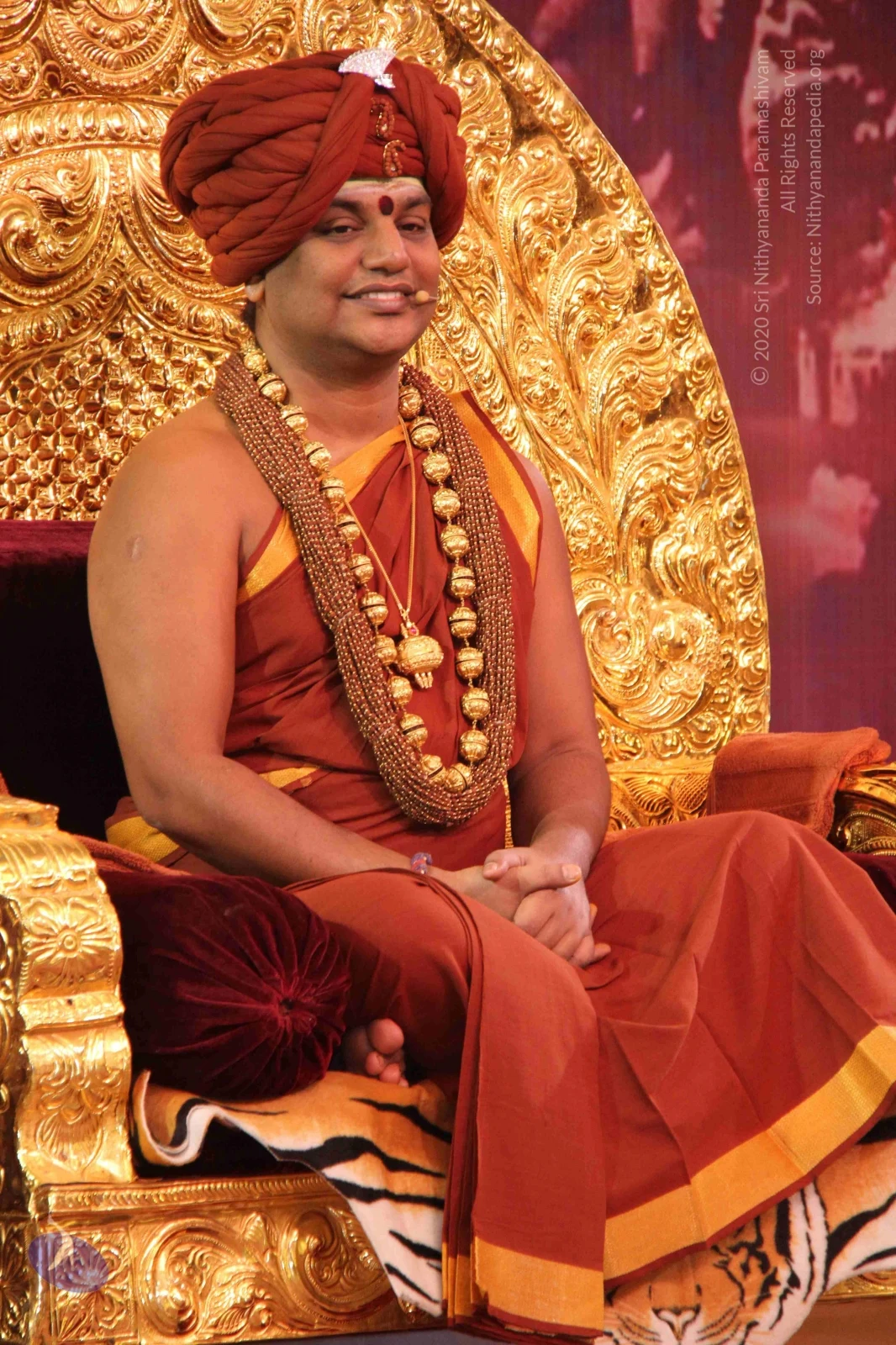
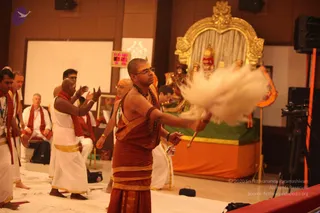
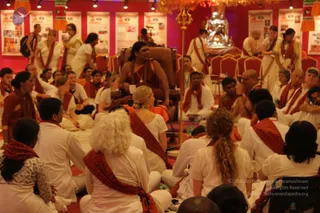
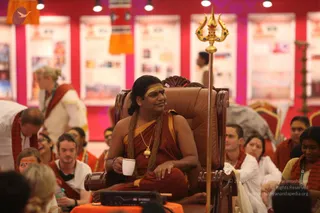
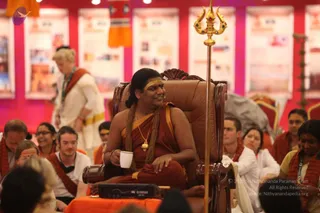
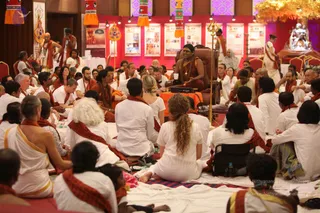
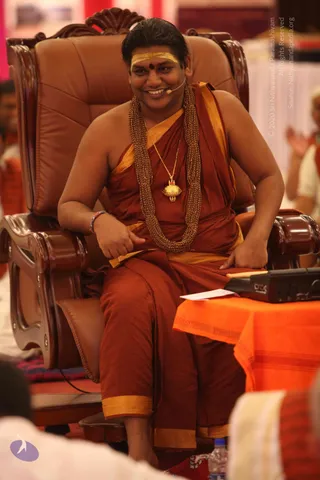
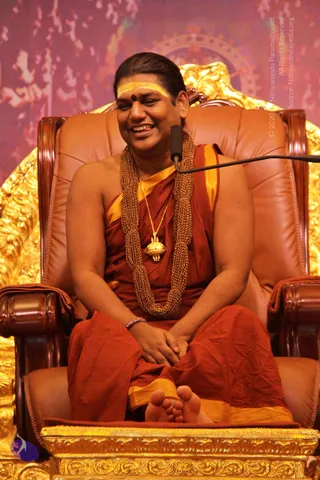
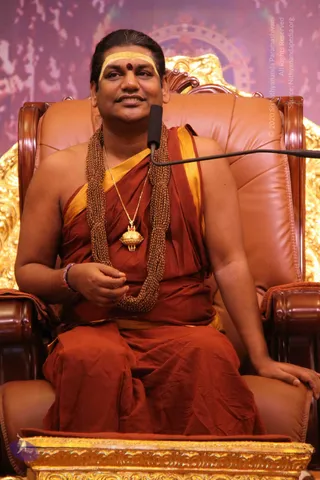
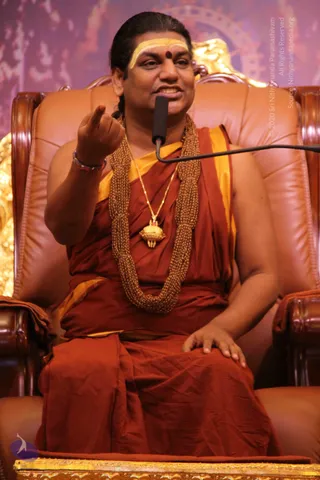
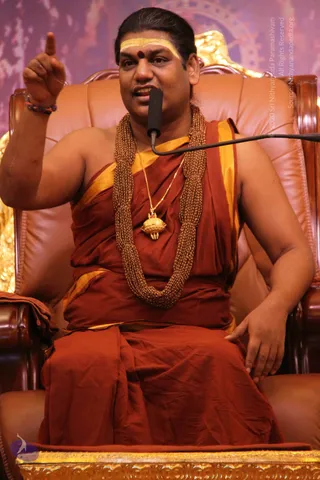
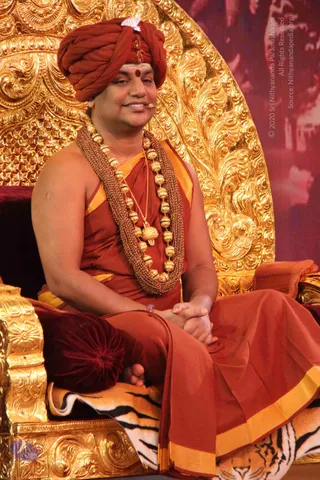
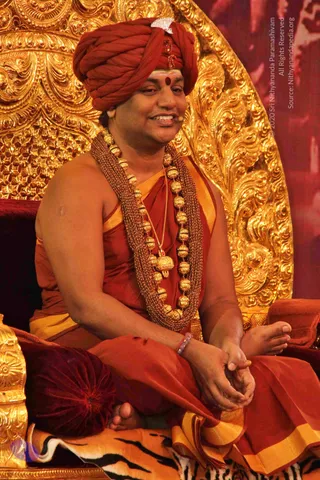
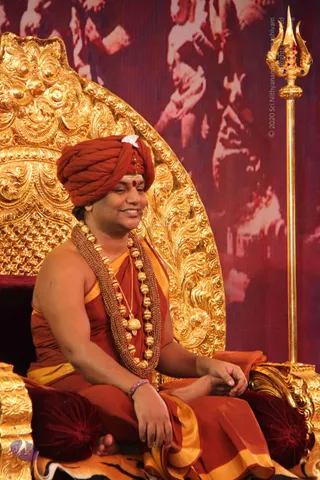
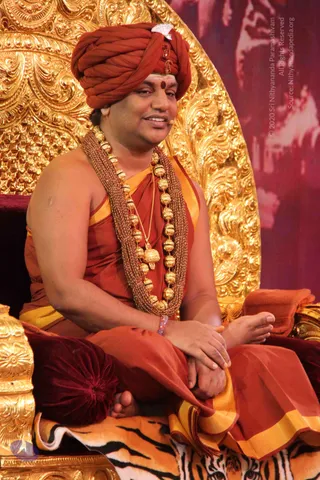
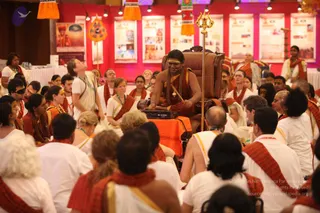
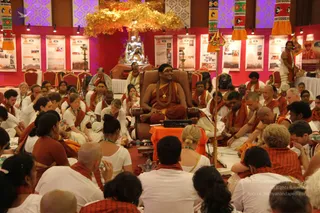
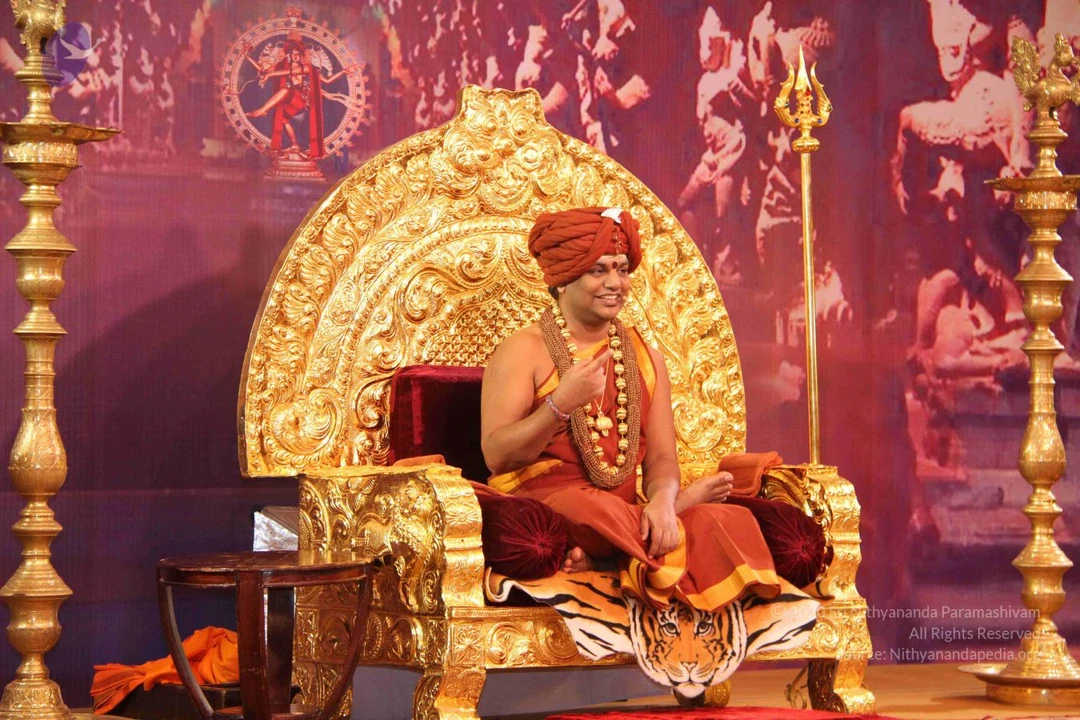
A photograph of a man seated on an ornate golden throne with a tan leather seat and wooden armrests. He wears a rust-orange robe with a gold-yellow border, a thick multi-strand rudraksha mala with a gold pendant, and a yellow-gold tilak on his forehead with a red bindi. He holds his hands in a mudra near his waist and sits with a microphone on a stand beside him. A gold trident stands to the right, and a water bottle sits on a small side table at left. The backdrop is a pink-purple screen showing large projected figures. a person is seated on the throne, identified by the robe, mala and throne cues.A man seated on a brown leather armchair with carved wooden arms in a satsang hall, wearing a saffron-orange shawl over a bare upper body, a gold-coloured sandalwood tilak on the forehead and a red dot between the brows, and a long rudraksha-style bead mala with a gold pendant necklace. He holds a folded brown paper and wears a clip-on microphone, smiling as he looks to his right. Behind him are red and pink backdrops and a blurred audience, including a woman in white with an orange shawl on the left and a person in white on the right. Sessions of this kind are satsang discourses.A seated man in red-orange sannyasi robes and a rust-red turban sits cross-legged on an ornate gold throne carved with floral scrollwork, with a tiger-skin cloth draped over the seat. He wears a thick rudraksha mala and a gold-beaded necklace, and gestures with his right hand while smiling. A tall gold trident stands beside the throne, and tall ornate gold lamp stands flank the scene against a red backdrop with dancing figures and a circular Nataraja-style Shiva image.

October 10 2015

Original wiki page
Contents

Title:

Make Seeking Your Lifestyle.

Description:

In today’s (10th October, 2015) Nithya Satsang Paramahamsa Nithyananda intercepts into the Truth of this golden verse of Isavasya Upanishad, which is the first prayer uttered on planet earth and emphasizes the pure seeking. It shows us how the first humans, the Upanishadic Rishis started seeking at the Ganges-Saraswati Civilization. As 'natural worshippers', they are seeking Truth behind the glaring orb of Sun, declaring - "your shining face is covering your original truth, please remove that and show your original truth!” Even the glorious sun, which they look up to, does not hold them from seeking the Truth. Be it glories or powers of God or Guru, they are only a veil covering the Truth. 'The awakened state of you that enters into the waking state of you and awakens you, that is Seeking.' hiraṇmayena pātreṇa satyasyāpihitaṁ mukhaṁ | tat tvaṁ pūṣann-apāvṛṇu satya-dharmāya dṛṣṭaye || 15 || "The Truthful, Effulgent, Eternal Being is the ultimate sustainer, nourisher and protector of all that exists! You are the embodiment of the imperishable Truth and Reality. Your Divine face of Truth is concealed by the blinding dazzling upturned pot, which has golden orb of effulgence. This radiant golden pot conceals your glorious face of Truth from my view. O Pūṣan, O Sun, O Complete One, do reveal Yourself by removing that glaring veil, for I, on the path of Truth, am eager to have your Divine vision."

VideoAudio

Transcript:

nithyānandeśvara samārambhām

nithyānandeśvari madhyamām |

asmat āchārya paryantām

vande Guru paramparām ||

I welcome all of you with my love and respects.

I welcome all of the IA participants, devotees, disciples, owners of Sarvajnapeetha, samajis, satsangis, visitors, viewers, everyone sitting with us through Nithyananda TV and Sadhana TV, Arra TV, Nakshatra TV, two way video conferencing having Nayana Deeksha and Kashi-vasis (residents of Kashi) who are here. Cities sitting with us in two-way video conferencing having Nayana Deeksha – Puduvai Aadheenam, Trinidad Tobago, Nithyananda Nagar Bidadi, Hyderabad Aadheenam, Houston Aadheenam, Dakota Dunes, Hyderabad Guptakashi, Singapore Aadheenam, Moris Planes New Jersey, Indrani New Jersey, Austria, Spain, Kajang, Malaysia, Rajapalayam Aadheenam, Warrington, UK, Australia, Spain, Bangalore North, Kajang Malaysia, Salem Aadheenam, Kuala Lumpur Aadheenam, Seattle Aadheenam, Oklahoma Aadheenam, Ohio Aadheenam, Guadeloupe Aadheenam, Mexico, Los Angeles Aadheenam, Toronto Aadheenam, Ohio, San Jose Aadheenam, Oman Aadheenam, Mt. Clair, Phoenix Aadheenam and some more cities are joining.

I welcome all of you with my love and respects.

(3.29 mins)

I will continue to expand on Isavasya Upanishad. Please recite along with me.

hiraṇmayena pātreṇa satyasyāpihitaṁ mukhaṁ | tat tvaṁ pūṣann-apāvṛṇu satya-dharmāya dṛṣṭaye || 15 ||

The Truthful, Effulgent, Eternal Being is the ultimate sustainer, nourisher and protector of all that exists! You are the embodiment of the imperishable Truth and Reality. Your Divine face of Truth is concealed by the blinding dazzling upturned pot, which has golden orb of effulgence. This radiant golden pot conceals your glorious face of Truth from my view. O Pūṣan, O Sun, O Complete One, do reveal Yourself by removing that glaring veil, for I, on the path of Truth, am eager to have your Divine vision.

Understand, there are tons of things you need to understand to understand this verse. First of all, when the human beings started seeking. Please understand, origin of seeking is from Sarasvati-Ganges civilization. Just recently some of the western historians jointly gave a statement – the Greece civilization is a complete hoax created to put down the Ganges-Saravati civilization, just to distort the history because they do not want the credit to go to Ganges civilization. So the hoax called Greece civilization was invented. Seeking started in Ganges civilization. Understand, when the seeking started how human beings responded, how human beings reacted, how they expressed when the seeking started expressing in them; when the experience of seeking started in them.

(7.05 mins)

First thing, you need to understand – we worshipped nature also. We worshipped through deities also but we are not just nature worshippers. That is why I am using a new word – NATURAL WORSHIPPERS. We were naturally worshippers but not just nature worshippers. Because the Upanishad is very clear. The first Upanishad itself shows the maturity. The Rishi is not saying here – “Oh Sun, please give me the blessing.” He says, “No! Oh the energy behind the sun, which is covered by your shining form which we can all see, please you reveal yourself.” And he is very clear, “your shining face is covering your original truth. Please remove that and show your original truth.” Even the glaring Sun could not mesmerize the Rishis from the seeking of the ultimate truth. In front of the glaring Sun they are saying, “No! You may be glaring but you are only a veil. There is something behind you. We want to see that. Let that be revealed.”

When you see a darkness and try to find out something beyond darkness is not great. That you know its possible. It is possible and you will try to look beyond the darkness always because you don’t want to be stuck with it. But when you see a powerful light, asking, “Let me see the reality behind this light. Because this is stopping..” That is something too much. Means the Rishis know what they are looking for. Their seeking so strong, it cannot be diverted, manipulated, misguided, diluted, even if something is glaringly radiating - hiraṇmayena pātreṇa - even if it is shining like a golden light.

hiraṇmayena pātreṇa satyasyāpihitaṁ mukhaṁ | tat tvaṁ pūṣann-apāvṛṇu satya-dharmāya dṛṣṭaye || 15 ||

Sometimes even what you understand as glory is used as covering. Understand, if 100 people have missed me seeing some defects which they think is defect, I can say, million people have missed me seeing something which is glory as per their understanding in me. Understand this statement. Not only the concept of defect as per the society is used by me to veil myself, even the concept of glory is used by me to veil my reality, to veil myself from people. Because whatever you understand as glory is also too small, too small. If you think healing is my glory and you are celebrating me just for it, I tell you, it is too small to be celebrated. I can just make you run around the same veil forever and ever and ever. Whether it is defects or glory, if you are standing with it, you are lost. Try to find out the man behind the defects or the man behind the glory. Whether you perceive glory or defect, try to find the person behind, you will catch the truth.

(13.12 mins)

hiraṇmayena pātreṇa satyasyāpihitaṁ mukhaṁ | tat tvaṁ pūṣann-apāvṛṇu satya-dharmāya dṛṣṭaye || 15 ||

The Truthful, Effulgent, Eternal Being is the ultimate sustainer, nourisher and protector of all that exists! You are the embodiment of the imperishable Truth and Reality. Understand…Your Divine face of Truth is concealed by the blinding dazzling upturned pot, which has golden orb of effulgence. This radiant golden pot..

Actually the Upanishadic Rishi is beautifully describing his seeking. When they started seeking one of the impressive thing is the Sun on the sky. But they did not stop with the Sun. They started looking, what is it that is behind this Sun, which is making this Sun radiant. If they started with the Sun or stopped with the Sun, I can say, Vedic tradition is nature worshippers. But that is not, that is not truth. That’s not the truth. They are starting with the truth behind the nature.

(15.23 mins)

If you miss me seeing me some of your own ideas of defects, you missed, over. But there are some people who miss me, seeing my powers and glories. Understand, if you are just celebrating only powers and glories, stuck with only powers and glories, you will lose me. You will lose me. The powers and glories are not enough. See, what is it that radiates powers and glories, then you will realize the ultimate truth inside you. Understand, you catching the truth of Shivoham, Living Advaita is the only result that shows you realized – who is me. Please understand, sometimes even by celebrating my powers and glories if you divert yourself from the original experience of Shivoham which you need to achieve, again you missed it. Of course, if there is a feeling connection and devotion, that very devotion will raise you and remind you, help you to reinvent. But that devotion of celebrating the glory and powers should not make you lose your attention from the true reality, from the truth.

The need to keep your seeking pure is emphasized in this verse. Power of seeking and the need to keep your seeking pure. Power of seeking and the need to keep your seeking pure – is emphasized in this verse.

hiraṇmayena pātreṇa satyasyāpihitaṁ mukhaṁ | tat tvaṁ pūṣann-apāvṛṇu satya-dharmāya dṛṣṭaye || 15 ||

(19.00 mins)

The beauty is, he is praying to the same Sun, “Oh Sun, your glory is veiling. Please remove that glaring veil and reveal yourself.” They know there is something glorious and they know there is something behind this glory. The Rishis wanted what is that - that is behind the glory. They are not lost in the very glory itself. They are not lost in the shining skin. They are not lost in that shining, glaring effulgence. They are not lost in the golden orb of effulgence. Any form, any name, any glory, any powers, they are not ready to be lost or satisfied, they are digging deep. They are looking deep. They are going into the next. They are going into the source, origin. Understand, the real danger in your life is when you get cozy with the powers and glories of your life or the life you appreciate. You should explore the energy behind this glory; whether it is in your life or the life you appreciate.

I know it is really…because with so much of suffering, sadness and everything, when you find some peace and glory and joy, you always wanted to settle down in that very station. But settling down may dull your seeking. It may take away seeking from you which Rishis are not going to allow. Seeking should continue for forever and ever and ever. It should become just your breathing style, lifestyle. It should become your breathing style, lifestyle. It should just become part of you, your very core.

(22.46 mins)

hiraṇmayena pātreṇa satyasyāpihitaṁ mukhaṁ | tat tvaṁ pūṣann-apāvṛṇu satya-dharmāya dṛṣṭaye || 15 ||

The Truthful, Effulgent, Eternal Being is the ultimate sustainer, nourisher and protector of all that exists! You are the embodiment of the imperishable Truth and Reality. Your Divine face of Truth is concealed by the blinding dazzling upturned pot, which has golden orb of effulgence. This radiant golden pot conceals your glorious face of Truth from my view. O Pūṣan, O Sun, O Complete One, do reveal Yourself by removing that glaring veil, for I, on the path of Truth, am eager to have your Divine vision.

(23.50 mins)

On the path of Truth, even the glaring veils are veils. However glaring it may be, veil is a veil is a veil. If you have traveled in the path of seeking, you will understand, what the Rishis are revealing. You will understand, what these great masters are expressing. I tell you, seeking should be one of the first, foremost and last quality a man should develop. Constantly seeking the ultimate truth. Whether you pick up a job or build a career, get married, in every decision, every action, every step of your life, seeking should be the first priority.

When you get married, seek the truth of the relationship, how this relationship completes the other person and completes me. What is the nitty-gritty’s, bolts and nuts of fulfillment or completion the other person is seeking in me and I am seeking in the other person. Explore. That is marriage. In career, in job you have to explore what is it that my employer tries to complete through me. What is it I try to complete through my employer? In your career, try to see what is it my customer tries to complete through me. How can I become complete through this customer? How he can enrich me and I can enrich him? You will see tremendous integrity and authenticity in all your dealings of life. When the seeking becomes the source of inspiration whether in your business or in your career, in your job, in your relationship, tremendous authenticity will start radiating without even you practicing it. Tremendous integrity will start radiating. I tell you, if authenticity is awakened, even if you are in relationship, you are better than any Sannyasi. If authenticity is not invoked, even if you are a so-called Sannyasi, you are worst than any person having any number of relationships. It is the invoking of the authenticity, it is level of authenticity that decides you, not the number of relationships, number of business, number of jobs you do. You can be whole day free or whole day active, you can be whole day working or whole day lazing around. You can be whole day making money or whole day spending money, nothing is right or nothing is wrong. It is just your authenticity – the ability to radiate your authenticity, either in your relationships or your business or in your career or in every deal in your life. The ability to radiate authenticity.

I tell you, when the seeking is awakened, the ability to radiate authenticity, the joy of radiating authenticity, the way you will hold your family, the way you will hold your team, the way you will hold your very life. Especially this enrichers and causers of our Sangha - understand very clearly, when you connect somebody with me, there whole life is enriched. Remember the level of authenticity, integrity, responsibility and the energy, intensity started radiating in you by connecting with the Master. You will see that is going to happen to the next person whom you are trying to enrich. That will only give you the strength and responsibility to make that person connected. Whether you are enriching somebody with the spiritual truths or causing them to attend the program, whatever. If you yourself are in the space of seeking, the state of seeking, you will understand – by enriching what I can add to him. I can just simply transform that being. What he can add to me – the joy of brotherhood, Sangha brotherhood. When you know what he can add to you and you can add to him, then the authenticity and integrity, responsibility radiates in your thoughts, words and actions, will be immeasurable. You will become authentic, you will become integrated, you will become responsible, without even you need to practice it. It is just like ultimate acid wash, the conscious acid wash. You will be active your whole day and night. You will be producing the results beyond your wild imaginations. You will be just radiating, radiating, radiating and continue to radiate the energy, continue to awaken people. Seeking not only awakens you, it awakens everyone around you. It not only awakens you, it awakens everyone around you. Not only awakens you, it awakens everyone around you.

satya-dharmāya dṛṣṭaye..

hiraṇmayena pātreṇa satyasyāpihitaṁ mukhaṁ | tat tvaṁ pūṣann-apāvṛṇu satya-dharmāya dṛṣṭaye || 15 ||

The Truthful, Effulgent, Eternal Being is the ultimate sustainer, nourisher and protector of all that exists! You are the embodiment of the imperishable Truth and Reality. Your Divine face of Truth is concealed by the blinding dazzling upturned pot, which has golden orb of effulgence. This radiant golden pot conceals your glorious face of Truth from my view. O Pūṣan, O Sun, O Complete One, do reveal Yourself by removing that glaring veil, for I, on the path of Truth, am eager to have your Divine vision.

(32.30 mins)

This is the first prayer uttered on the planet earth because this is the first Upanishad uttered on the planet earth. So this is the first prayer uttered on the planet earth. Seeking! The joy of seeking is expressed in this one verse, I tell you. Actually the seeking when it expresses through your head, it comes out as a knowledge to you. When it expresses through your heart, it comes out as a devotion to you. When it comes out through your being, it comes out as an energy. Whether it is knowledge, devotion or energy, the source material is seeking.

Seeking is the way the God in you wakes up. Early morning when you remember the person ‘you’ who is in the waking state, that is the way you get out of the person who is in the dream state. There is one you - the dreamer you and waking you. When you remember the waking you, the dreaming you, merges into the waking you, you wake up and move to that waking you. Please understand, its very important truth.

In the waking state, you exist as somebody. In the dream state, you exist as somebody. The moment you remember you, who is in the waking state, the person who is dreaming, wakes up. Remembrance of the waking state is the way, the waking state person moves away from the dream person.

You need to catch what I am trying to convey.

Its actually the waking state person who enters into the dreaming person and removes you from the dream and you wake up! Same way God, supremely awakened being, which is YOU, who enter into the waking state person and moves you to that state – that is called seeking.

Understand, a waking personality of you enters into the dream personality and reminds your waking state to the dream personality and waking you up to your waking state. This is your everyday experience. This all of you can understand. Same way, the awakened state of you. You have 4 states – deep sleep, dream state, waking state, awakened state. The waking state ‘you’ enters into dream state and wakes you up. The awakened state of ‘you’ enters into the waking state and awakens you, that is Seeking.

The awakened state of you entering into the waking state of you and awakening you is Seeking. If you have started seeking, be very clear, God has graced you. He has showered His grace on you. Now, the train is going to stop only where you achieved your goal, not before that. Mumukshtva, Shankara says, awakening of seeking in a human being is one of the greatest, rarest thing can happen. Understand, seeking fulfills everything you seek and beyond. It awakens the truth in you. It awakens the possibility in you.

hiraṇmayena pātreṇa satyasyāpihitaṁ mukhaṁ | tat tvaṁ pūṣann-apāvṛṇu satya-dharmāya dṛṣṭaye || 15 ||

Awaken the seeking in you. That is the best way to prepare yourself for Nithyanandoham 1008. If you are going to be there physically, prepare yourself by awakening your seeking. If you don’t plan going for Nithyanandoham, awaken your seeking, you will be there. If you have already planned, awaken your seeking, that is the best way of preparing yourself. If you are not planning, awaken your seeking, you will be there. That’s all I have to say now – seeking, seeking, seeking.

Seeking is the most finest expression of God in human being. See, when God expresses, you may express many qualtiies. Even third-eye power is nothing but the expression of Mahadev radiating in you. Every power is God expressing through you. But the most finest, subtlest, greatest power, experience God can express through you is seeking; because He reminds His nature to you and makes you into He; makes you into He.

I bless you all, let you all radiate with integrity, authenticity, responsibility, enriching, causing Living Advaita, the eternal bliss. Nithyananda.

Thank you. Be Blissful.

Title:

Find Your Root Pattern The Root Of All Your Sufferings

Description:

In this video (10 October 2015), Paramahamsa Nithyananda explains how to find your root pattern and complete with it. A root pattern is the root of all you sufferings in life which repeats itself across all painful incidents in your life.

VideoAudio

Transcript:

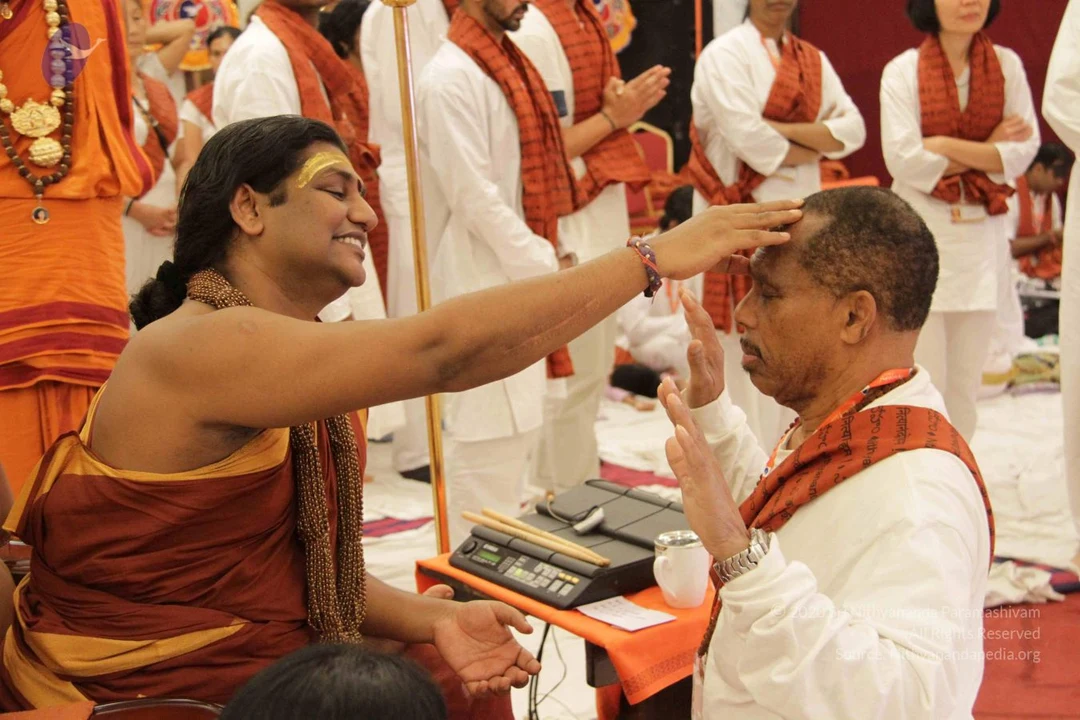
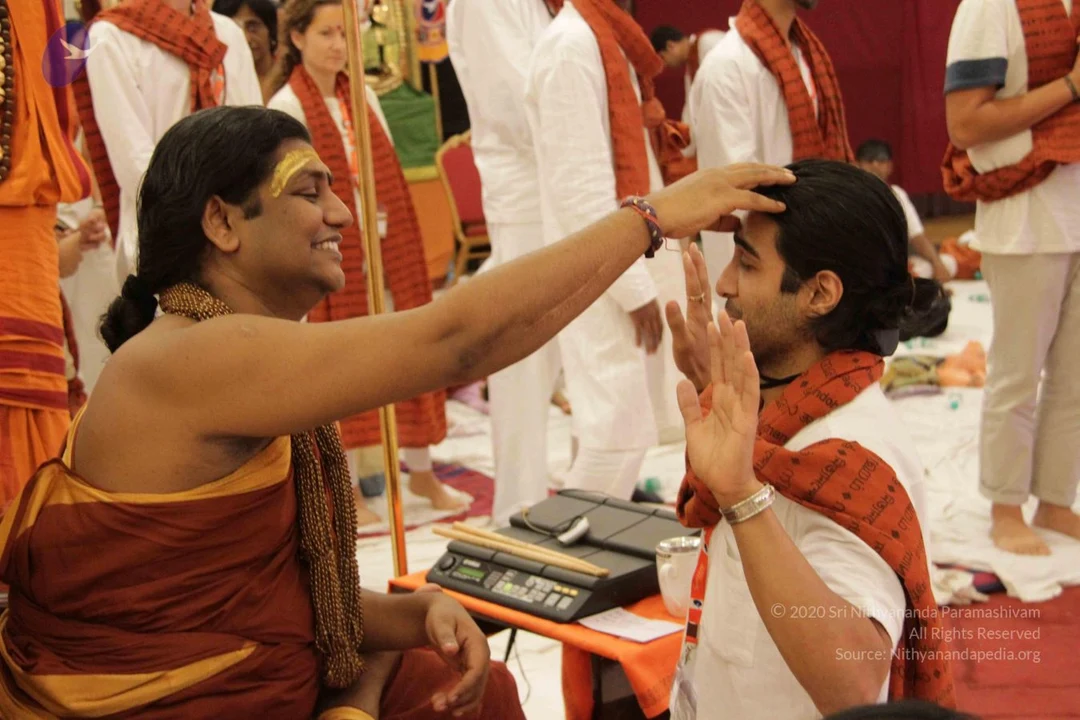
I want you to understand this one thing please listen carefully whenever it comes to deal yourself. you try to be very safe ,handle in you in a very ,like a baby and rose flower very cutely with a light romance you feel you should be handled but when it comes to handling others you become a judge. see, for you, you are a lawyer. For others you are judge .because of this childishness The many cognitions you built when you repeat again and again suddenly all that will start breaking. All that will loose power over you. Very simple ,very very very straight forward simple .just few lines listen to this few line carefully one ... Try to remember the earliest as far as your memory goes the earliest first time you felt power less either by fear or guilt or weakness first time when you felt power less it can be as simple as your mother made you sit on the dining table or you are playing in the rain and mother slapped you and dragged you inside the room or just a stone throne by your friend or your brother has hit you. It can be as simple as this or your sister snatching the ice cream usually sisters don't snatch only brothers snatch. No I have seen sister is the best relationship. I grew up in large family sister is the best relationship it can be as simple as your mom gave one sweet extra to your younger brother, your dad gave one cloth or jewel extra to your younger sister it can be anything first time when you felt power less what was your inner image means what did you tell about you to you what was your outer image how you showed you to others. How you reacted to that situation and what was the your life image. Means how did you judge others or life at that moment. Listen what was your inner image what was your outer image what was your life image at that moment it is almost like surgery you have to now cut yourself and see.

It's surgery literally because now you will remember incident which happened at the age of eight when you try to find out open that incident suddenly you will remember Something which happened at six. When you cut and start remembering, remembering that incident suddenly it will open up something happened at the age of three. earliest memory earliest memory first time as far as you can remember when you became powerless. Actually you will be surprised because I am going to blow prana into you means awaken your pranic energy .you will remember the memories you never thought you never imagine you will be able to remember . Actually only now you will see directly what I can do to your mind. you will suddenly remember the deepest layers of your memory. you may even remember what happened during your birth even those scenes you may start seeing. Actually I am going to blow prana Into your navel centre .you will be there and I will be here only. i will be awakening see that navel centre means umbilical cord connection with your mother. That is zone stores earliest memories and if that awakens means kundalini enters into that navel zone suddenly you will see from your birth when they cut that umbilical Cord from that you will start remembering the memories. I will give you an example if a child is playing in the rain mother just slaps and brings the child and puts him in the house. The first inner image in the child will develop I am powerless weak orphan victim and the first outer image even if the child is powerless it will try to hit the wall or door cry it will demonstrate I will show you. Outer image it will show is I have to survive I will show you who I m.

I am powerful and the life image ,the image it will have about others means who is in front of the child mother. Cruel demon can't tolerate my happiness. See now you may think no no my mother did it for my health reason otherwise I would have caught cold. i would have caught fever I would have died all that now you will justify but at that time you will not have any of those justification . With that intelligence you will create only this cognition. All of you are getting it. Actually I am going to churn and awaken the kundalini Shakti on your navel. How many of you understood this example when the child is dragged. There are three four rules always root pattern will be formed before the age of seven. So the first incident you find will be before age of seven. if it is after age of seven you will have to dig out and you will find it. Always the incident will be before the age of seven that's one. Second all major sufferings whether it is physical or mental you go through in a life will be connected to that root pattern.it is the root pattern responsible for serious physical or mental sufferings you go through. It starts only from there and blessed are those who complete with there root pattern when they are young or before it manifest as any serious disorder. How many below thirty raise your hand. You guys are real blessed, real blessed ,because it will never manifest as any disease in you. It's killed. Means the poison is destroyed before it can damage any part of you . Of course others also poison is destroyed but now I have to heal the parts which is already been damaged. The toxic mental setup which is already created the subtle brain grews get developed based on your thinking pattern that needs to be completed. Means that work has to be done by Tomorrow next next few sessions. before thirty the strong grews don't get developed. that is almost like a rangoli only you can wipe it ordinarily But after thirty it's almost like a they say guru gita say whatever brahma writes with the hand guru wipes by legs brahma writes by hand guru wipes by legs so this is the wiping I am supposed to do. The subtle grews you develop in brain with your toxic mental setup. Now only you are entering into the most serious important part of inner awakening please understand last four days more like warming up sessions I am introducing some concepts some theories some techniques some simple very entertaining processes.

Today we are entering into very serious transformation. Where literally many of your past loads will be wiped from you mean you will forget them. It will just not be there but that not there zone you would have never imagined can happen to you. You understand.

See you can never imagine some heavy load from You can be taken away once for all. So now this is the process we are going to enter, so much load will be taken away once for all, where not only they become irrelevant to you, they are just not there for you that is the best space to be.

Your root pattern again and again repeat and hurts you deeply one more thing how many of you understood yesterday in that whole sanskar dahan kriya many of your sufferings are almost like same type. Same type only your sufferings your patterns the way you torture your self is the same type. How many of you understood that. That will be disconnected or broken it's like a there is pearl chain. If you just cut the centre thread the whole thing will fall apart . Today I am going to cut the centre thread. The root pattern which makes your life go in the same trend of suffering whether it is physical problem or mental problem. Usually it will start as a mind then translate into physical but now when we kill this in the root it will never grow or it will never it does it looses its power to torture you physically or mentally or in any way.

Title

Completion with Biomemory Mandala Process || Inner Awakening || 10 October 2015

Link to Video:

Title

Protect Hindu Rights and Freedom to Practice || Inner Awakening || 10 October 2015

Link to Video:

Title

The Cause of Autoimmune Disease || Inner Awakening || 10 October 2015

Link to Video:

Title

Raise Your Mitochondrial Cell Energy! || Inner Awakening || 10 October 2015

Link to Video:

Link to Facebook Page:

https://www.facebook.com/ParamahamsaNithyananda/photos/a.321615927926264/905530879534763

Photos Of The Day:

Morning-Satsang1
Morning-Satsang2

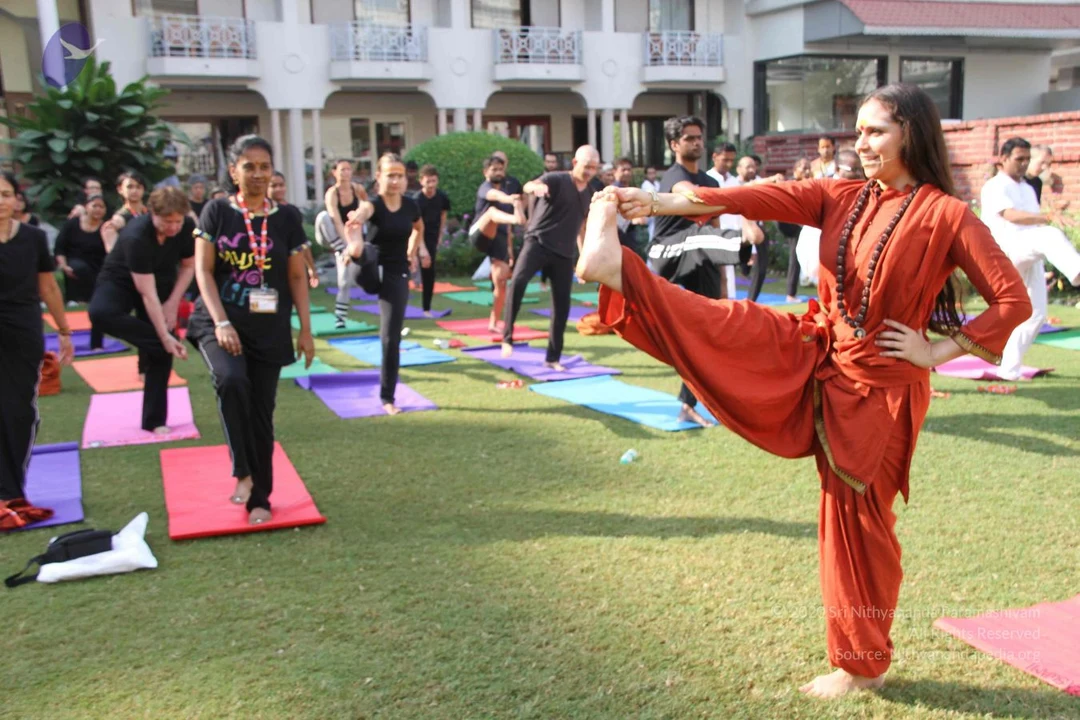
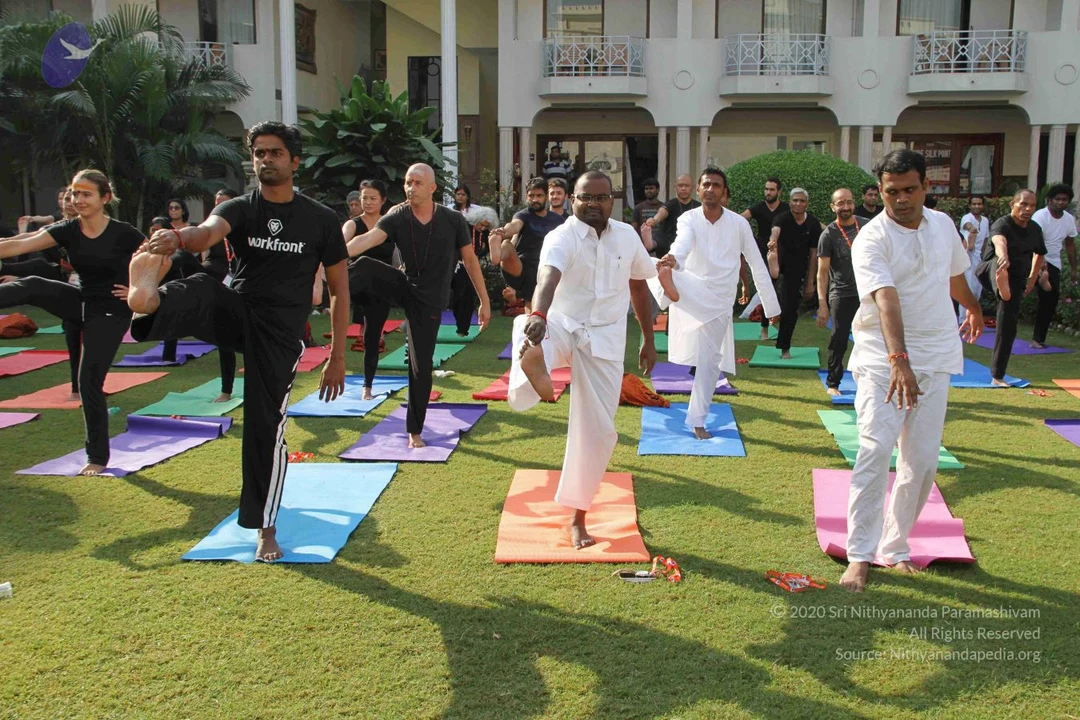
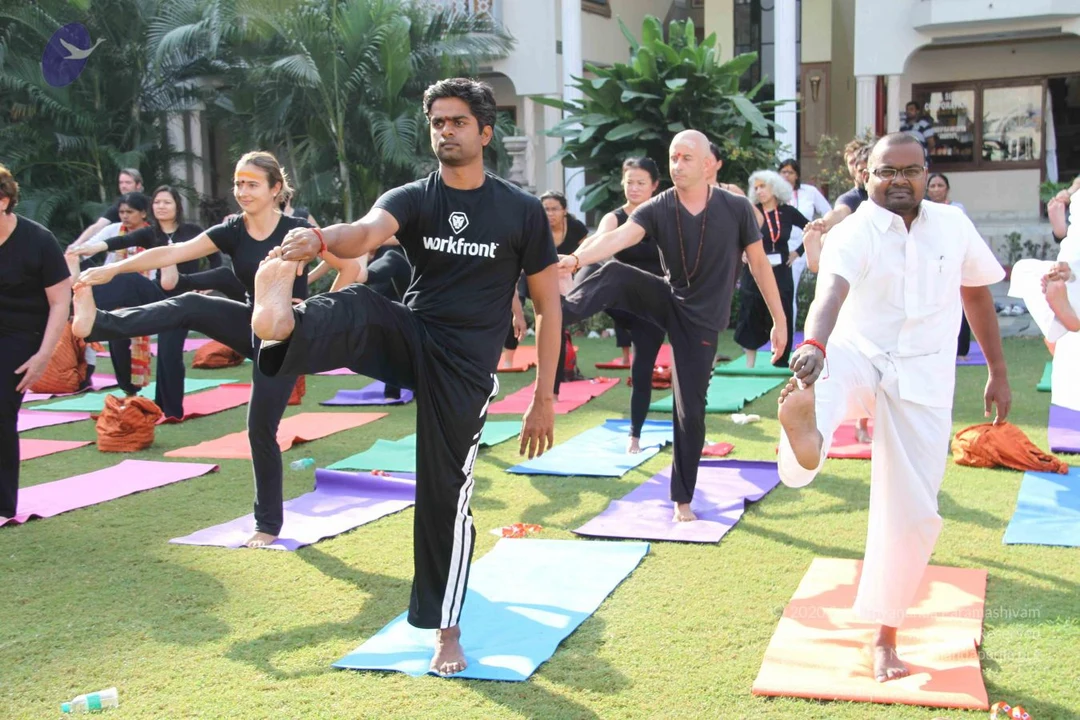
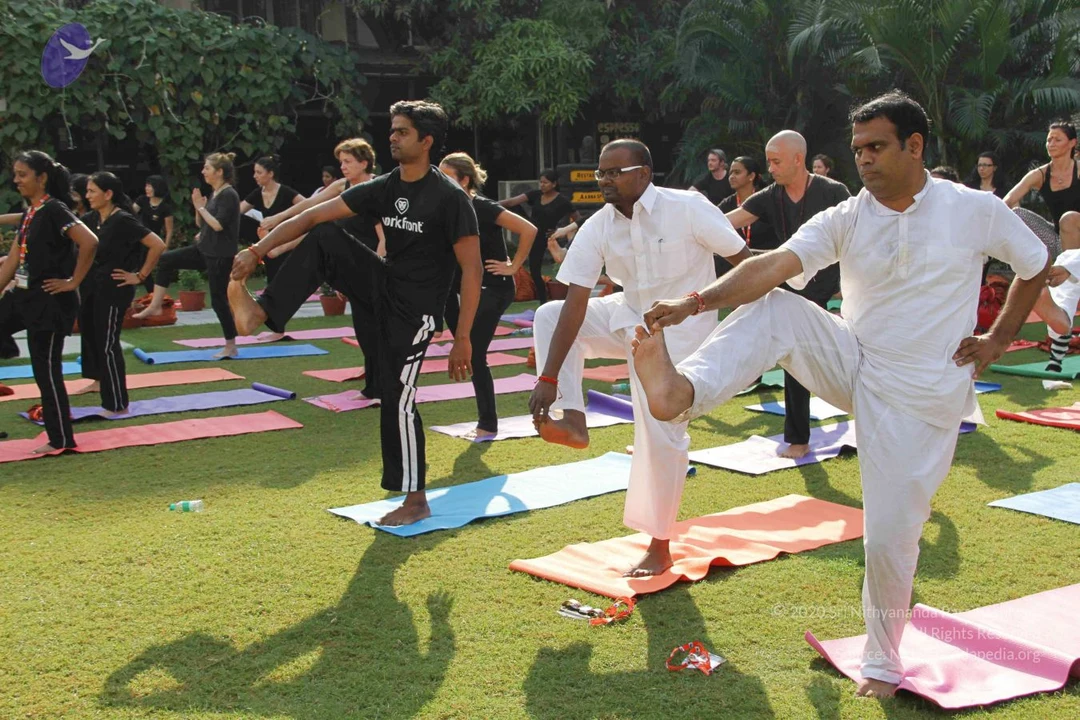
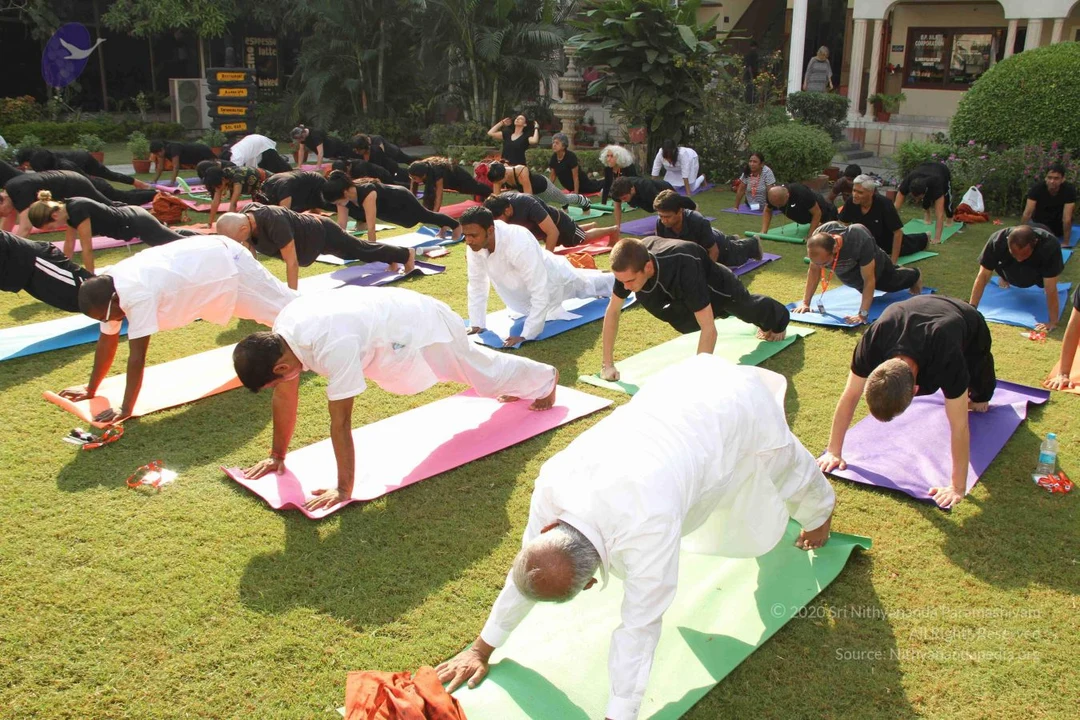
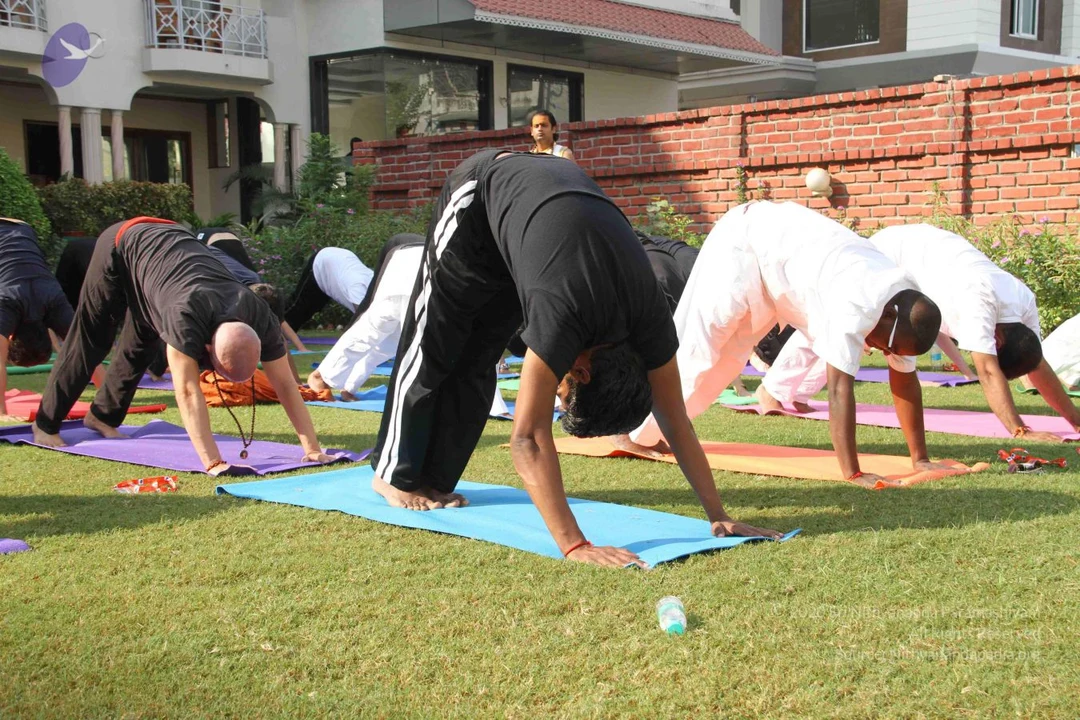
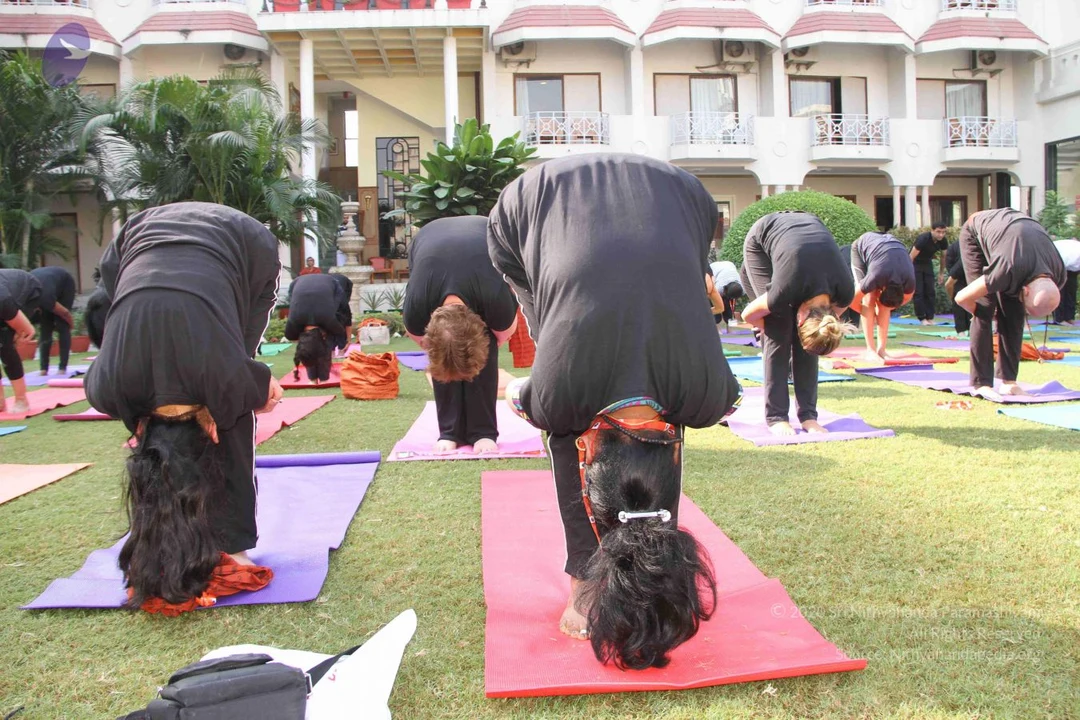
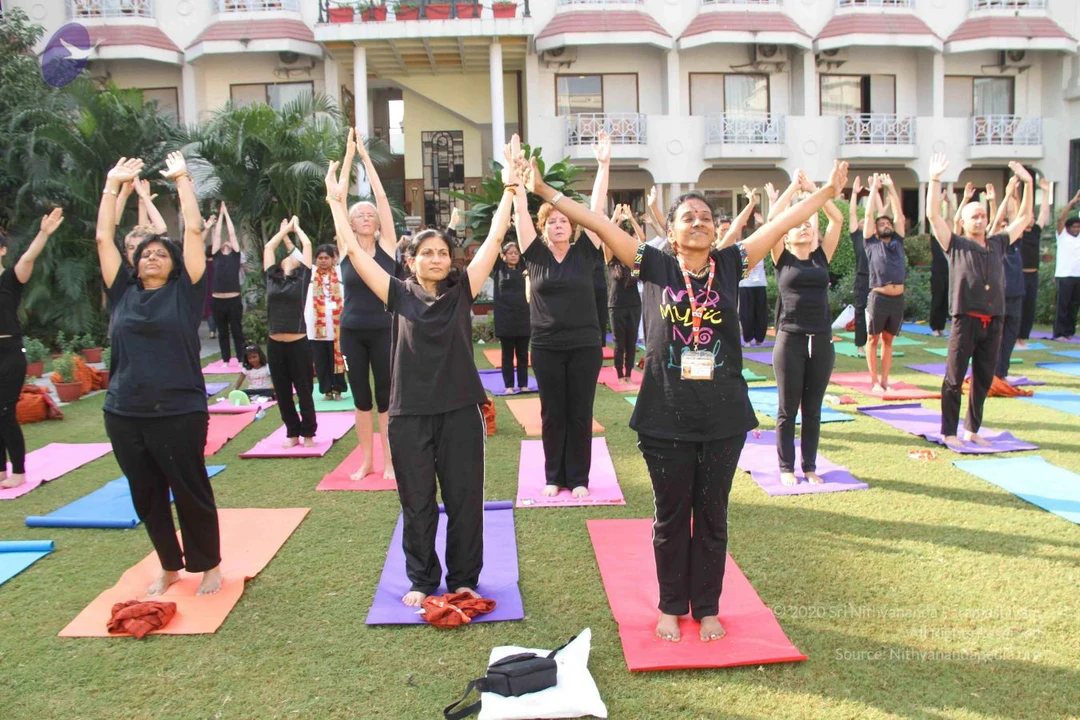
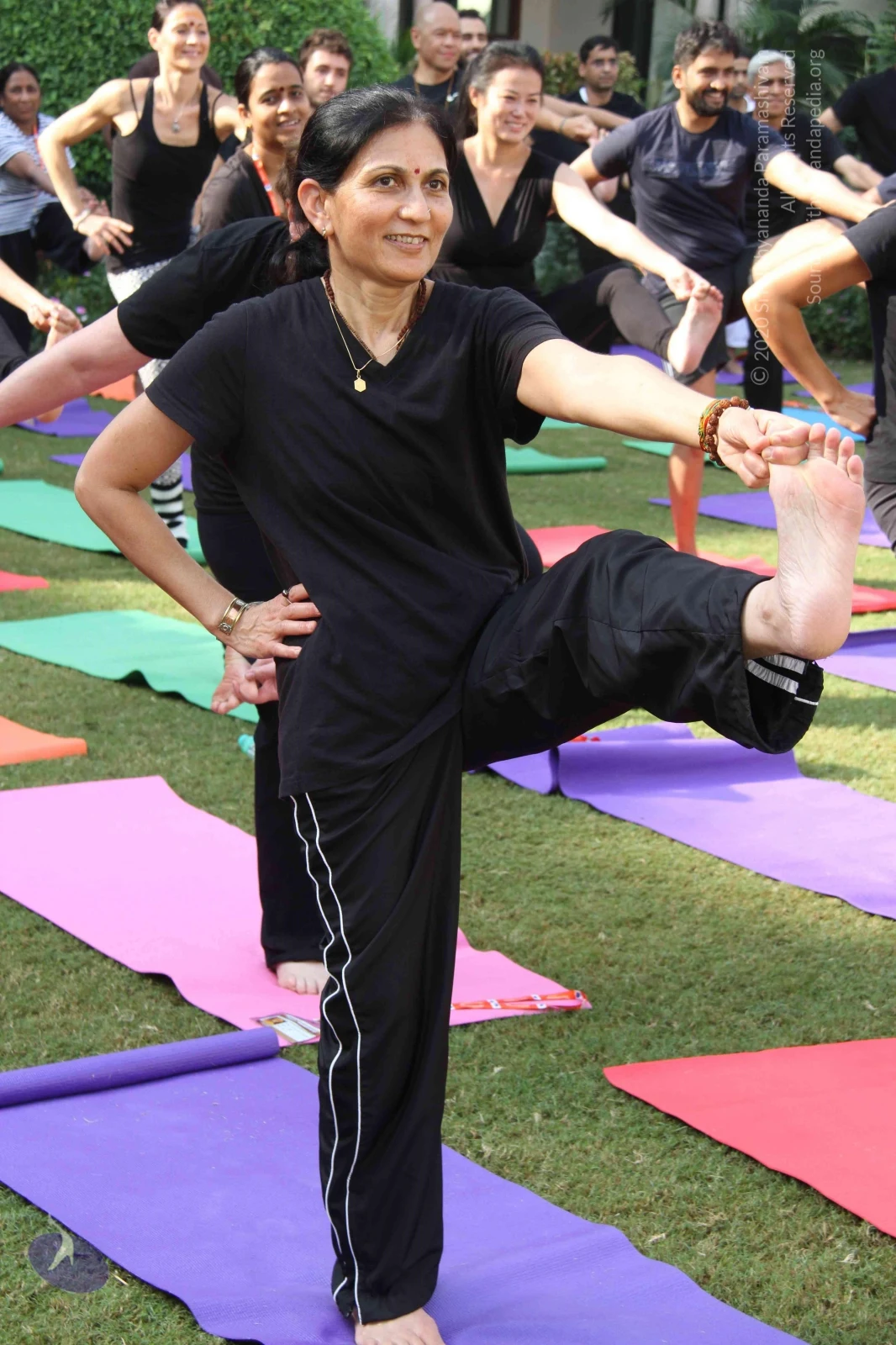
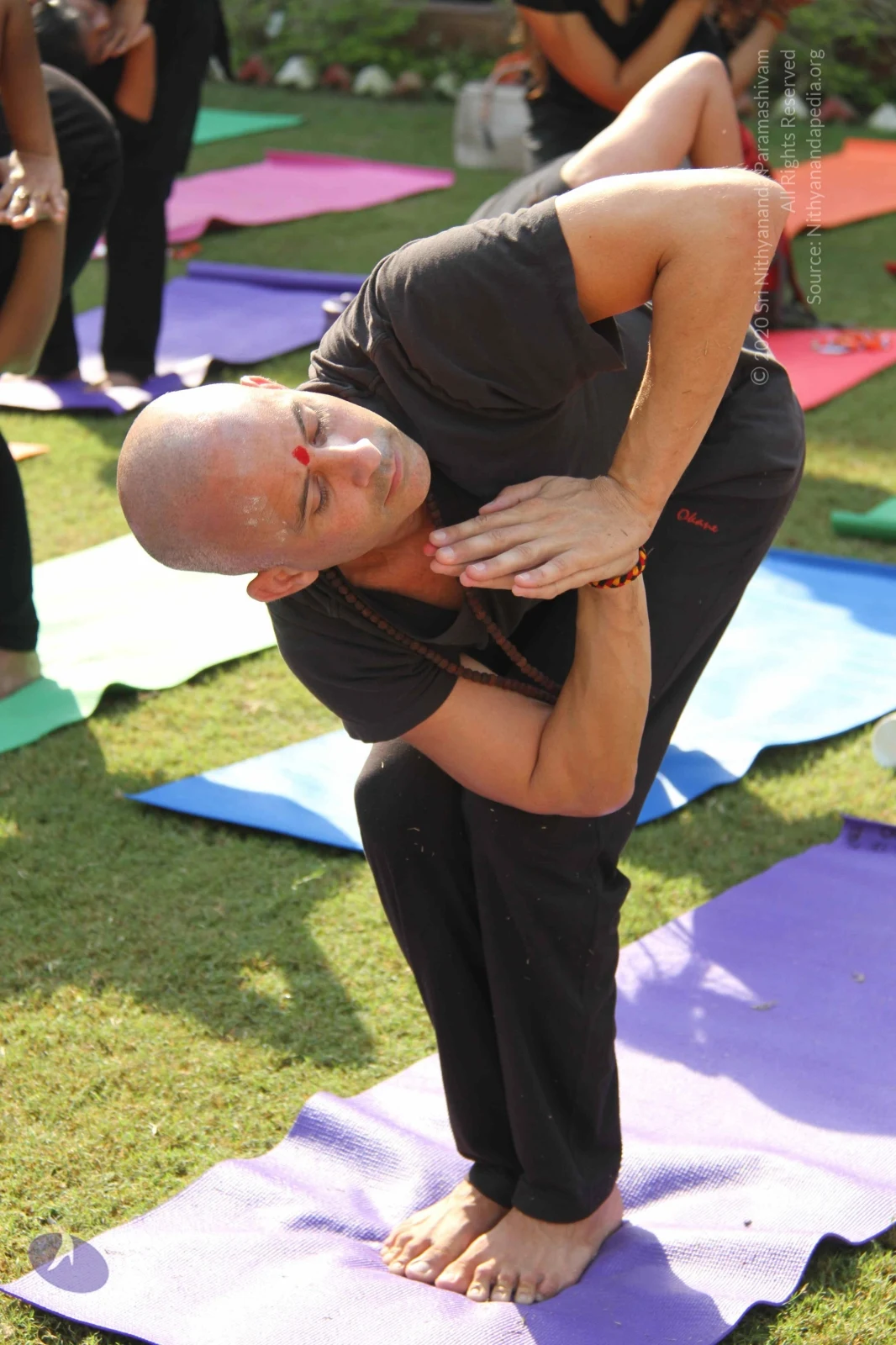
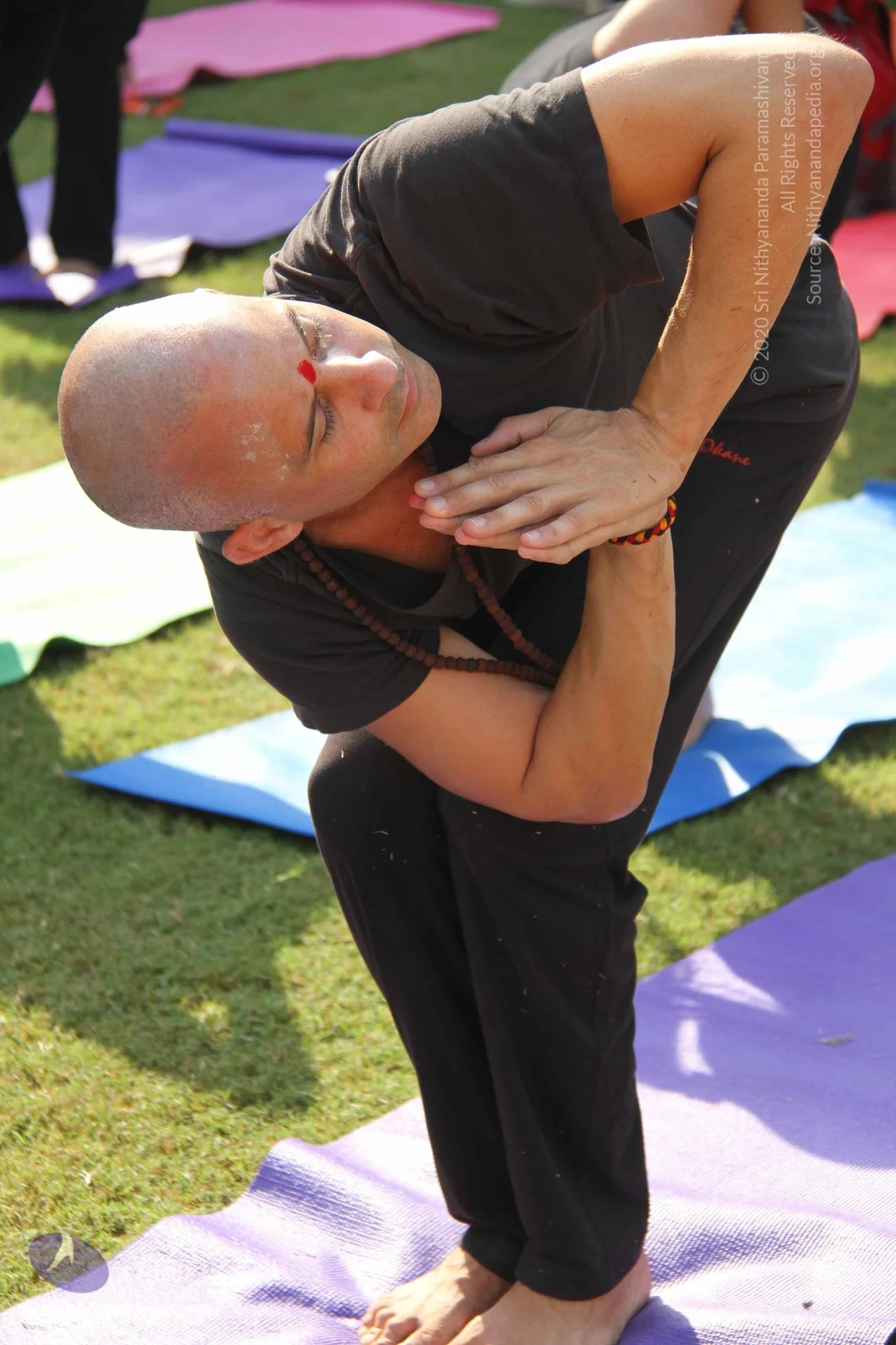
Yoga

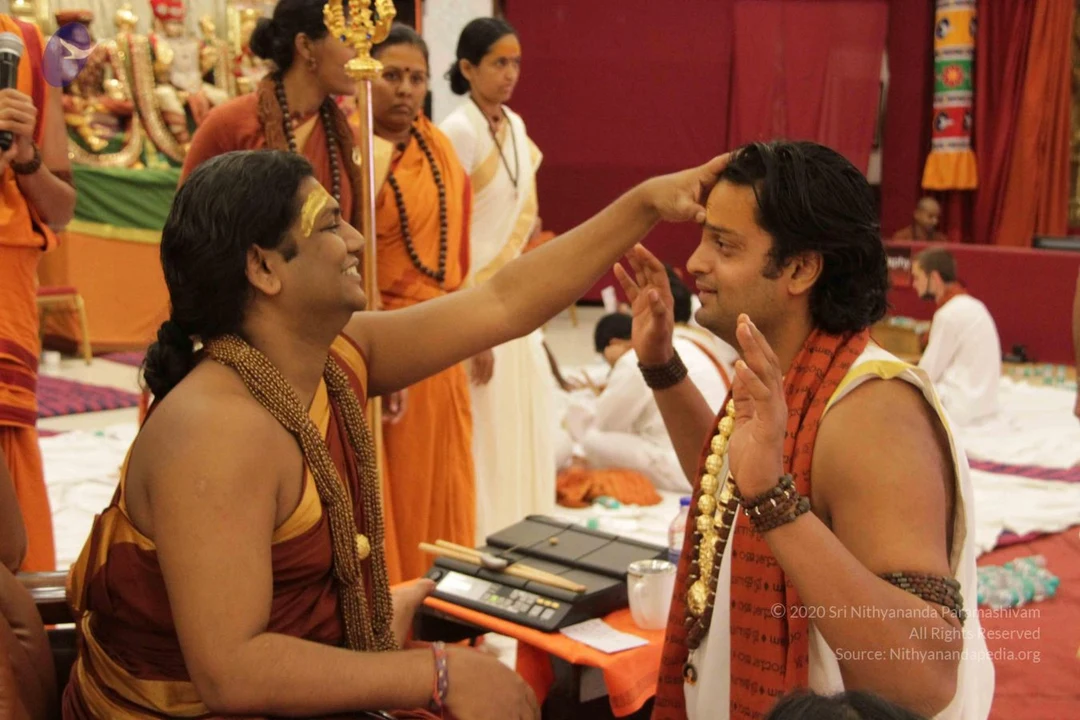
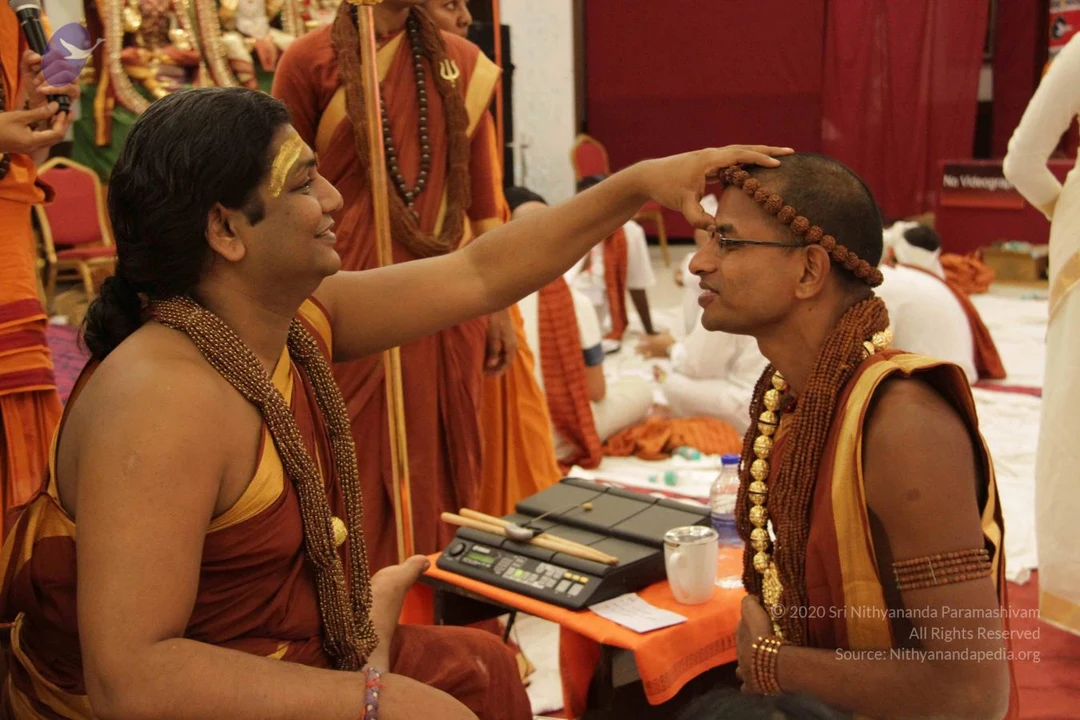
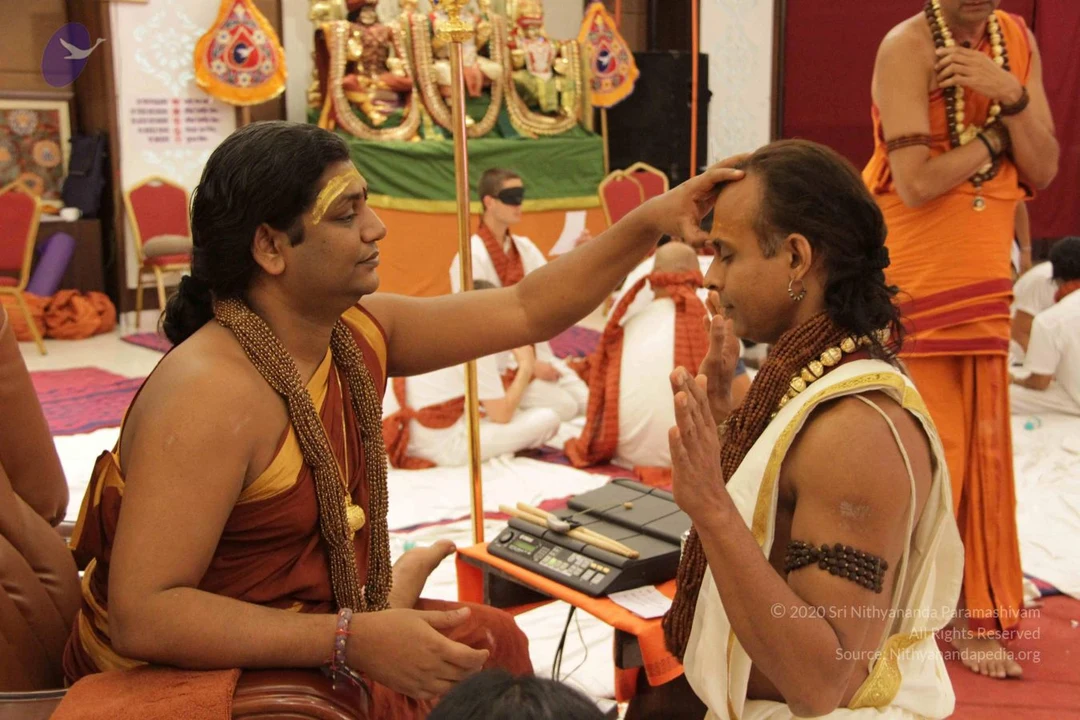
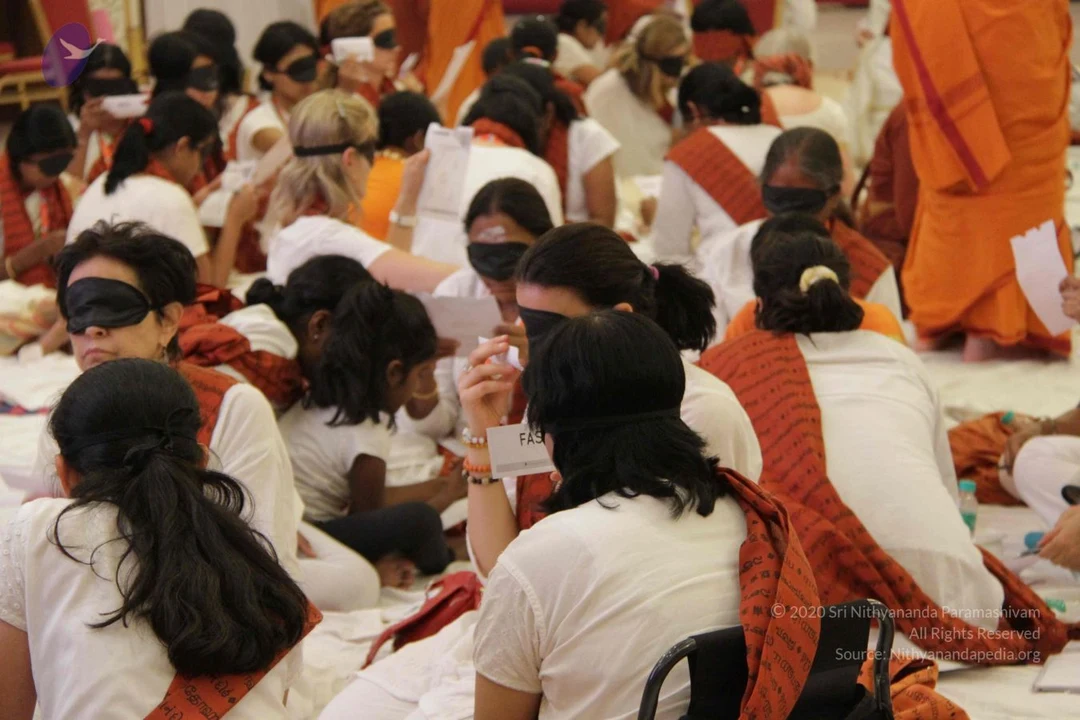
Mandala process session

Third-Eye-Shivoham

Photos Of The Day:

FB-photo-of-the-day

Mandala-Process-session

Morning-Satsang

Yoga

Photos from this day

View all 404 photos

Morning-Satsang1
74 photosSource gallery
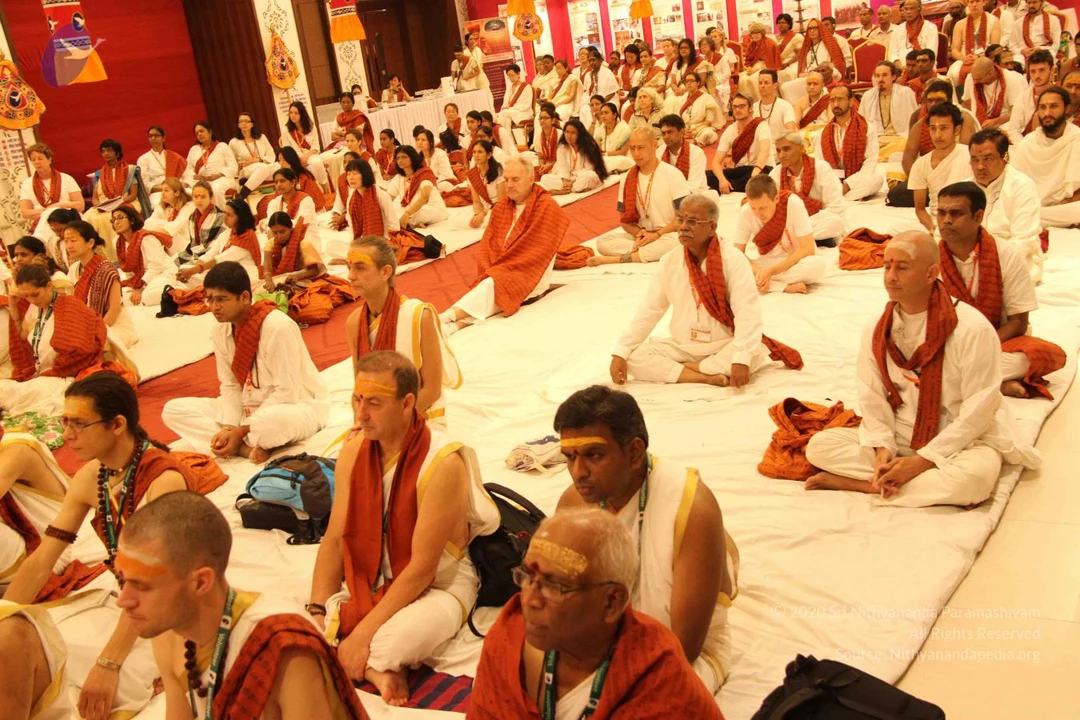
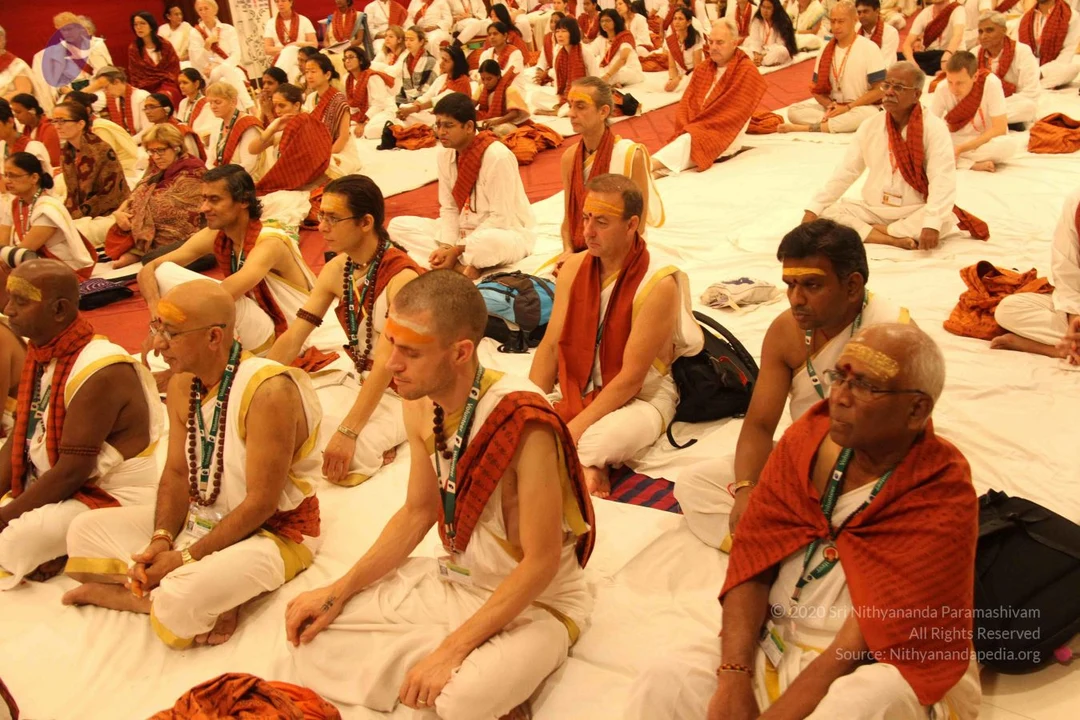
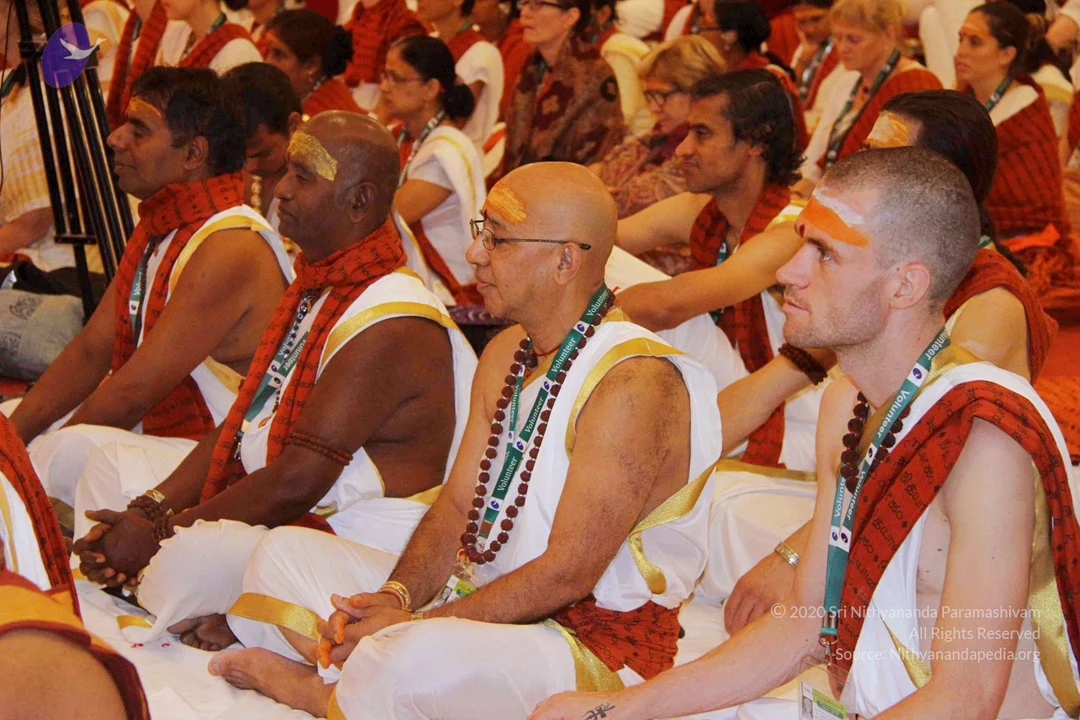
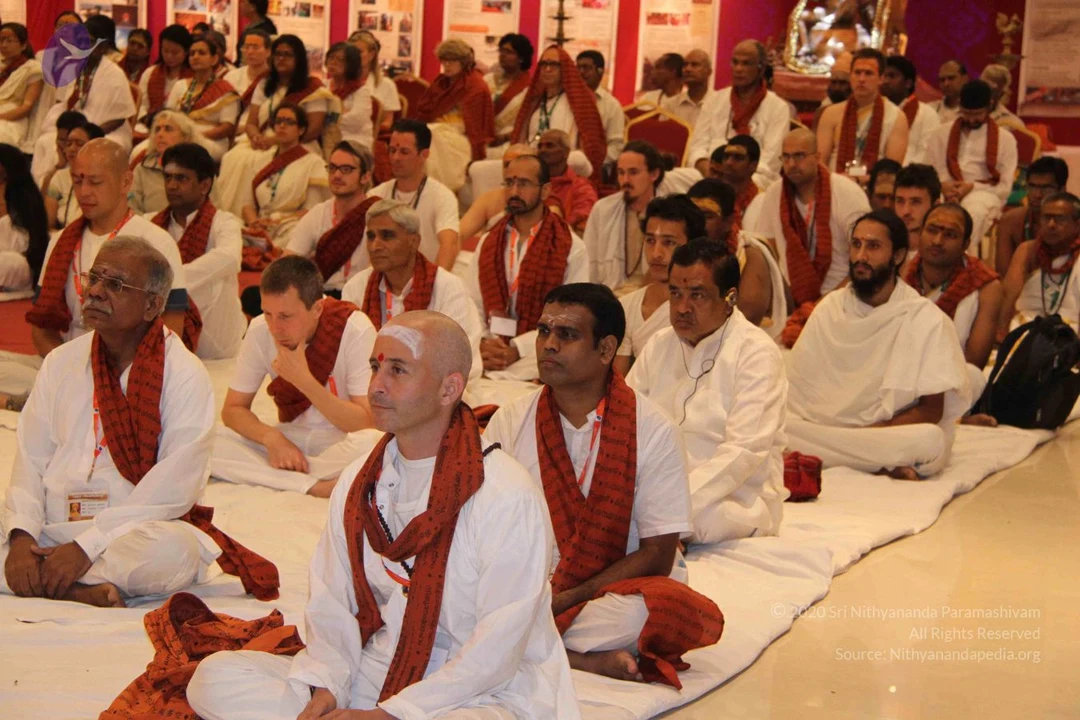
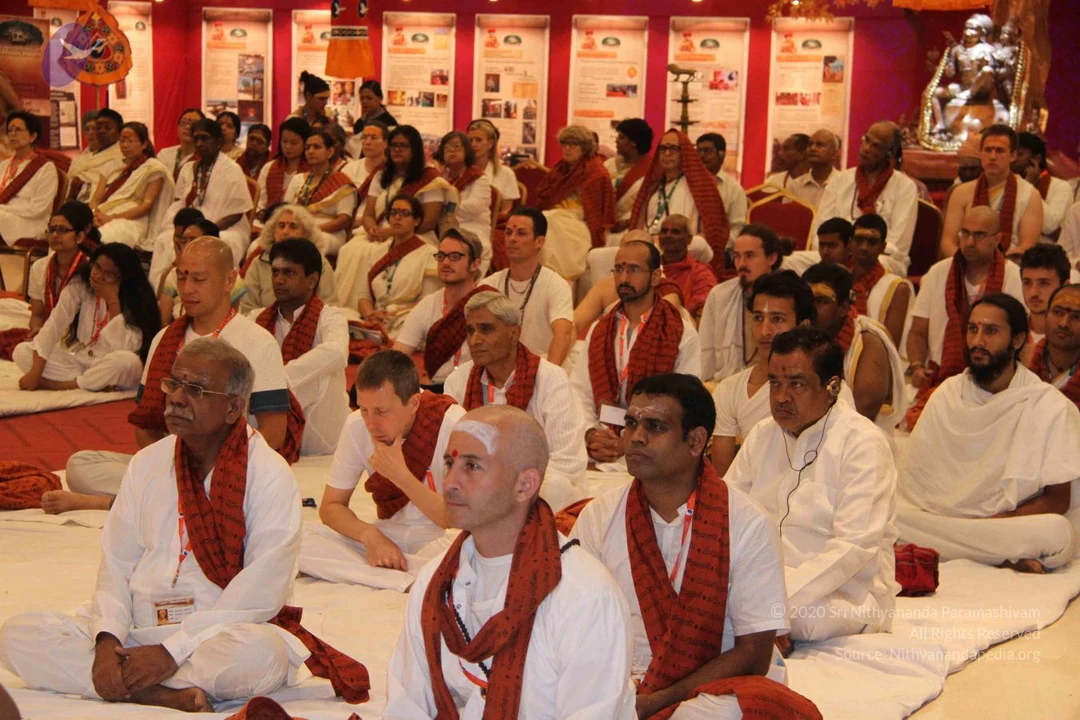
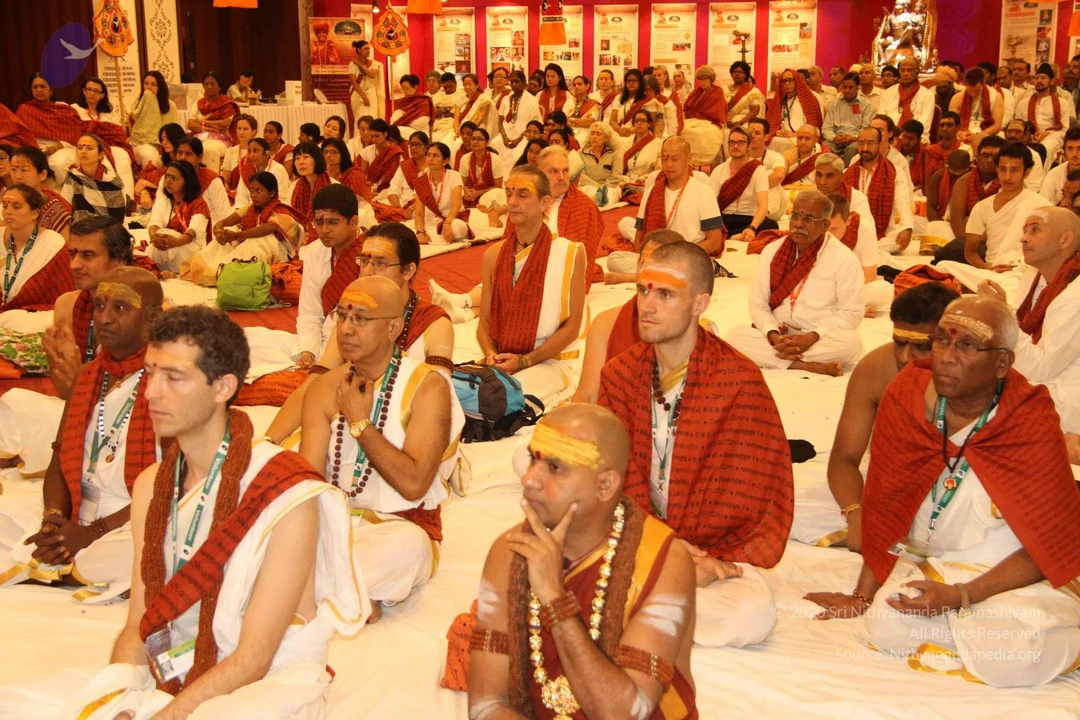
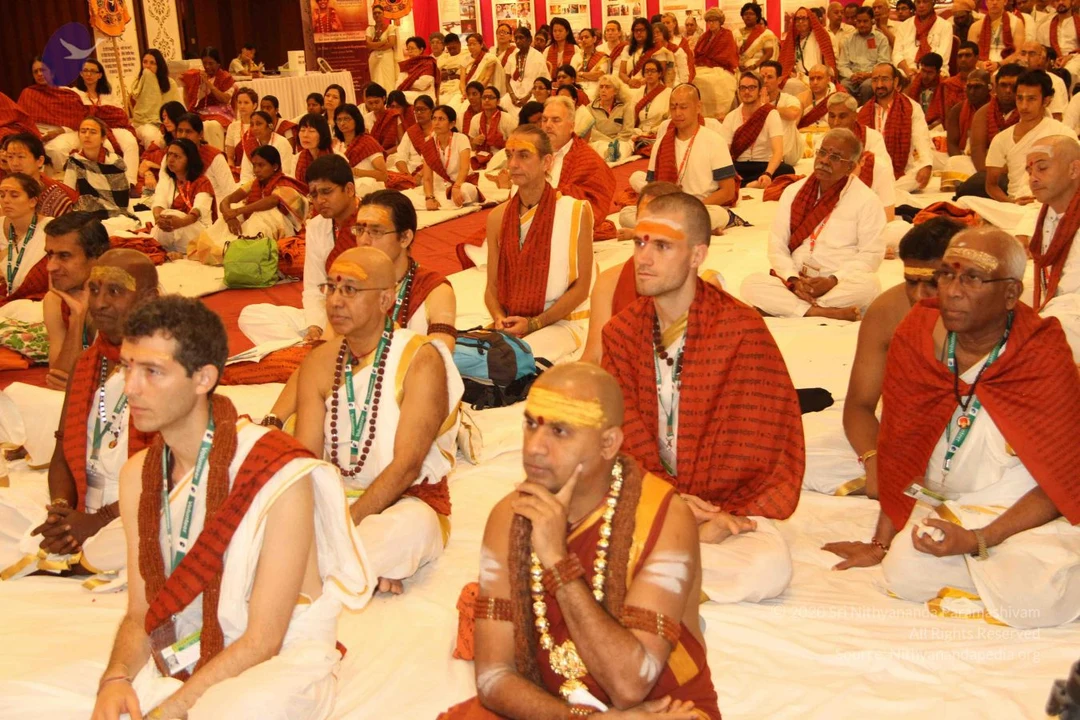
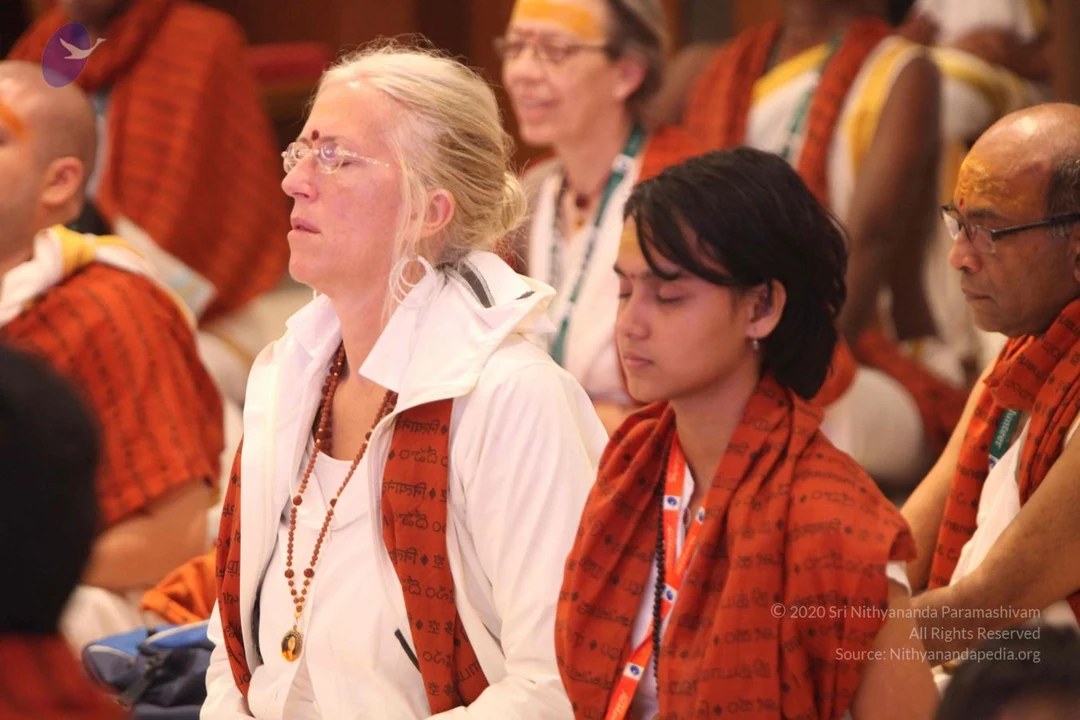
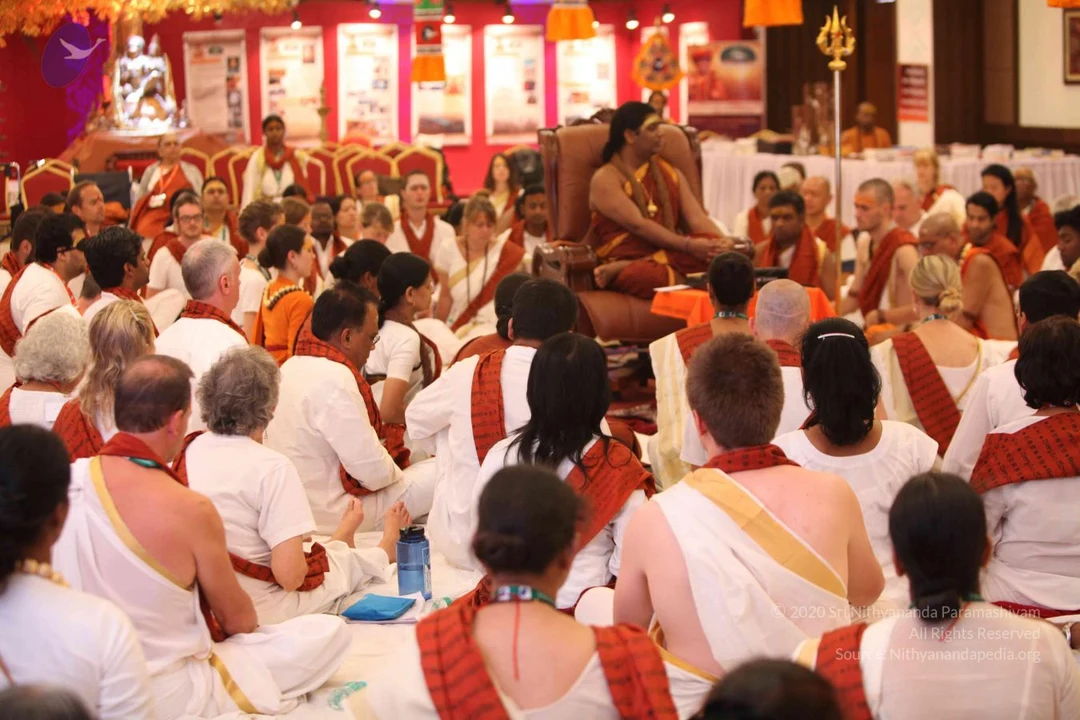
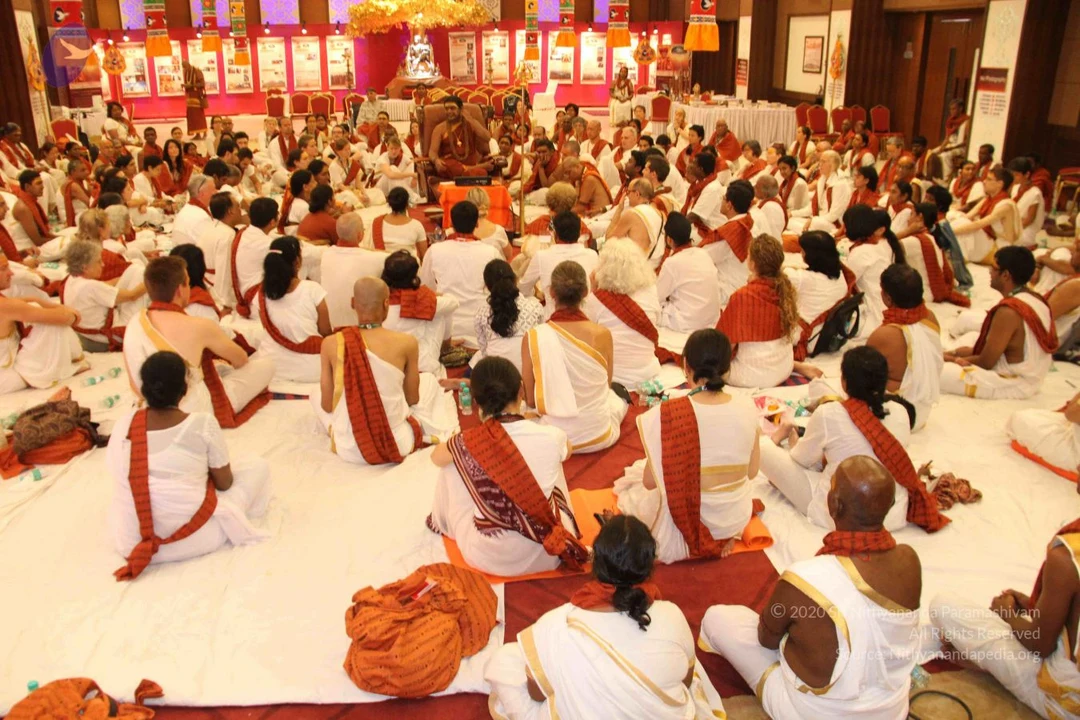
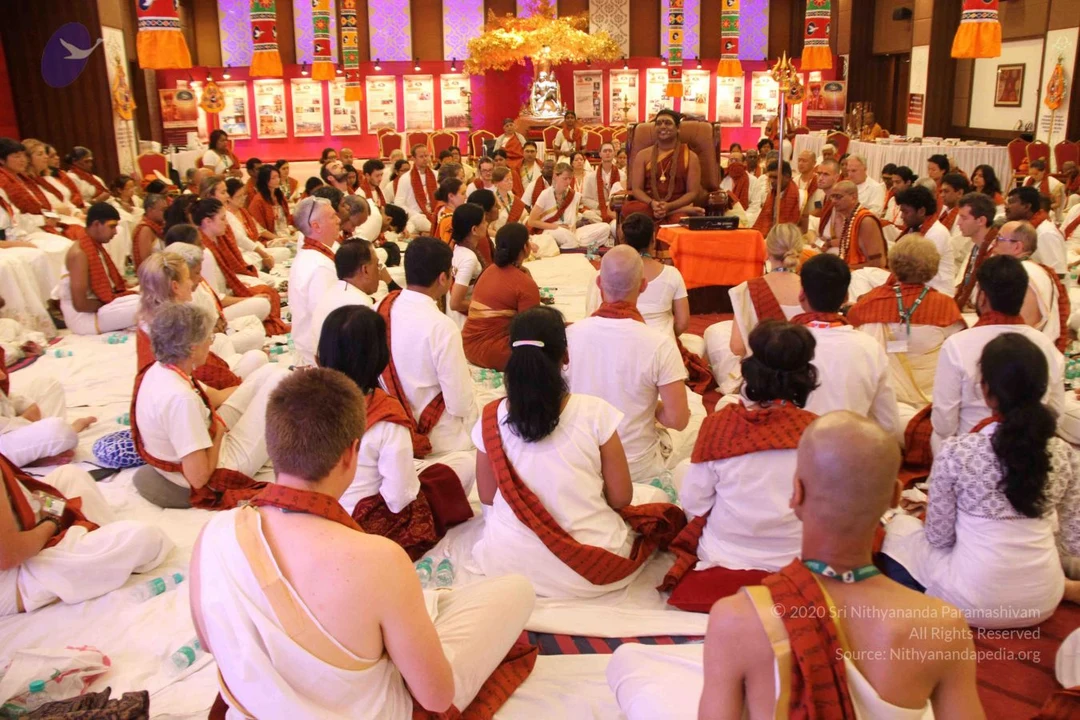
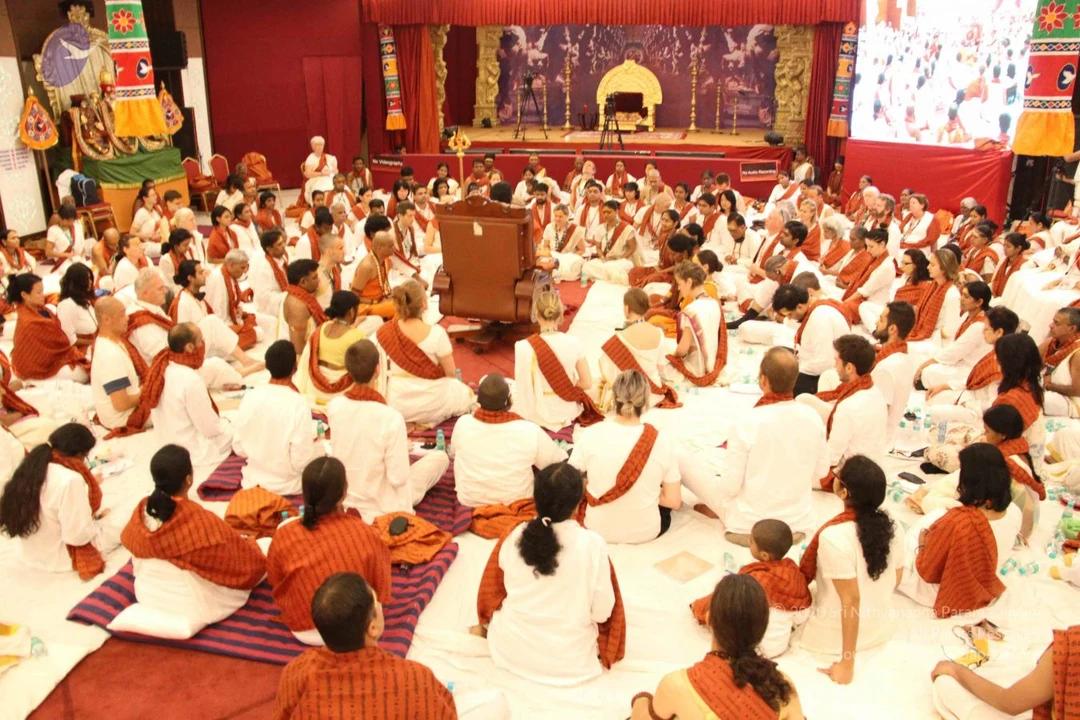
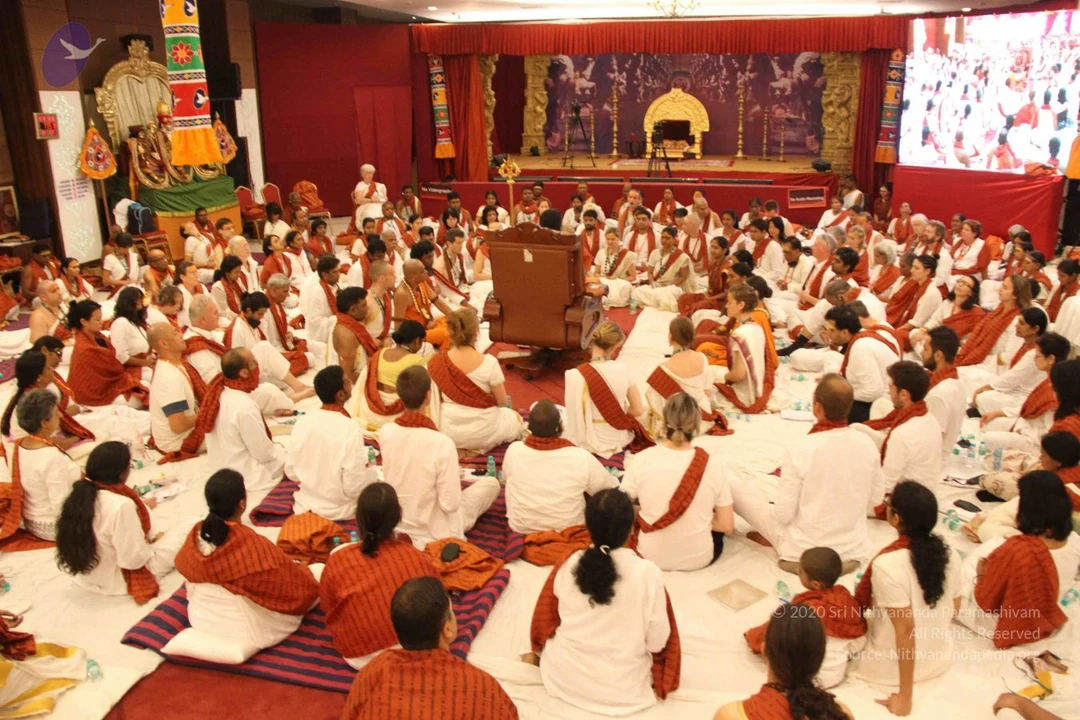
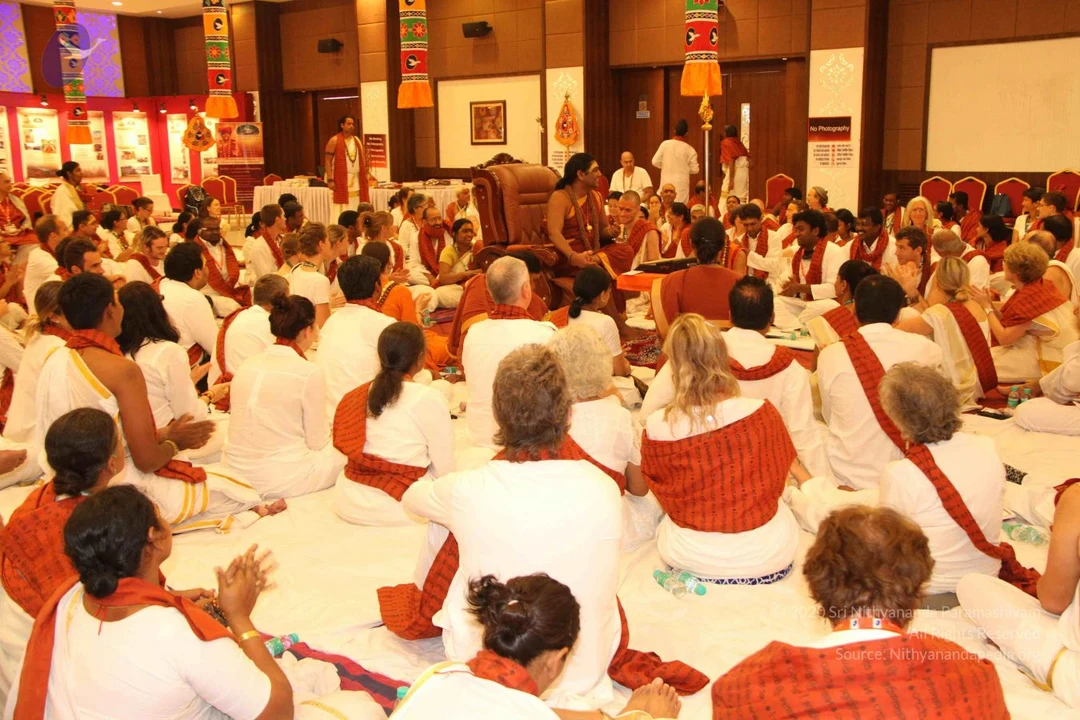
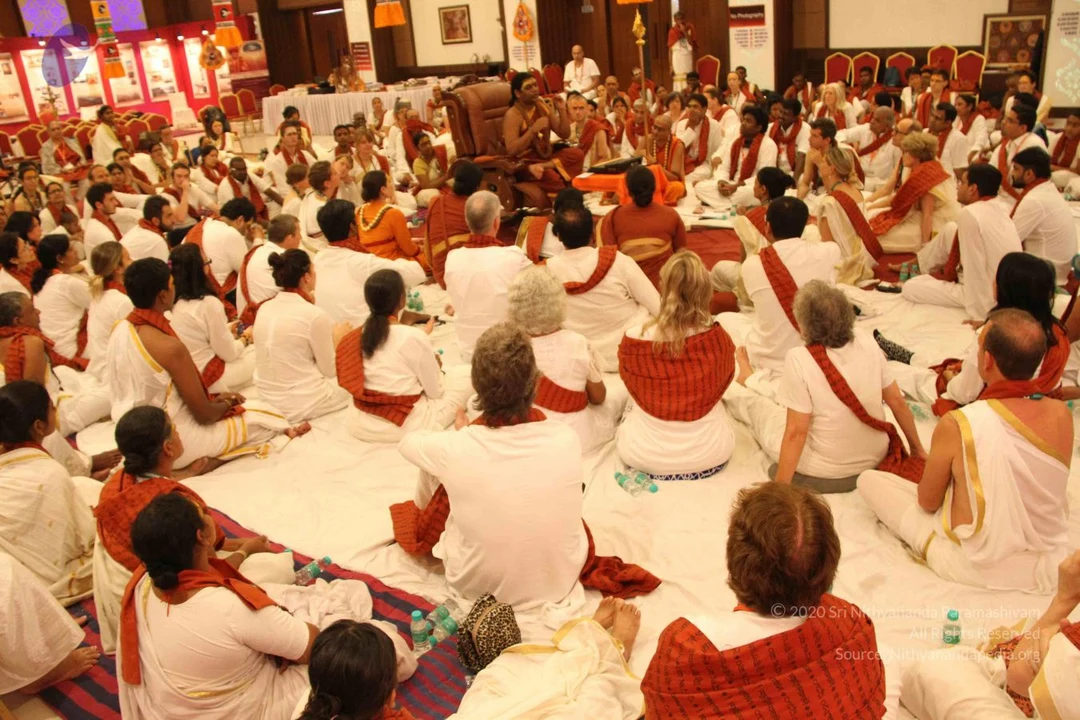
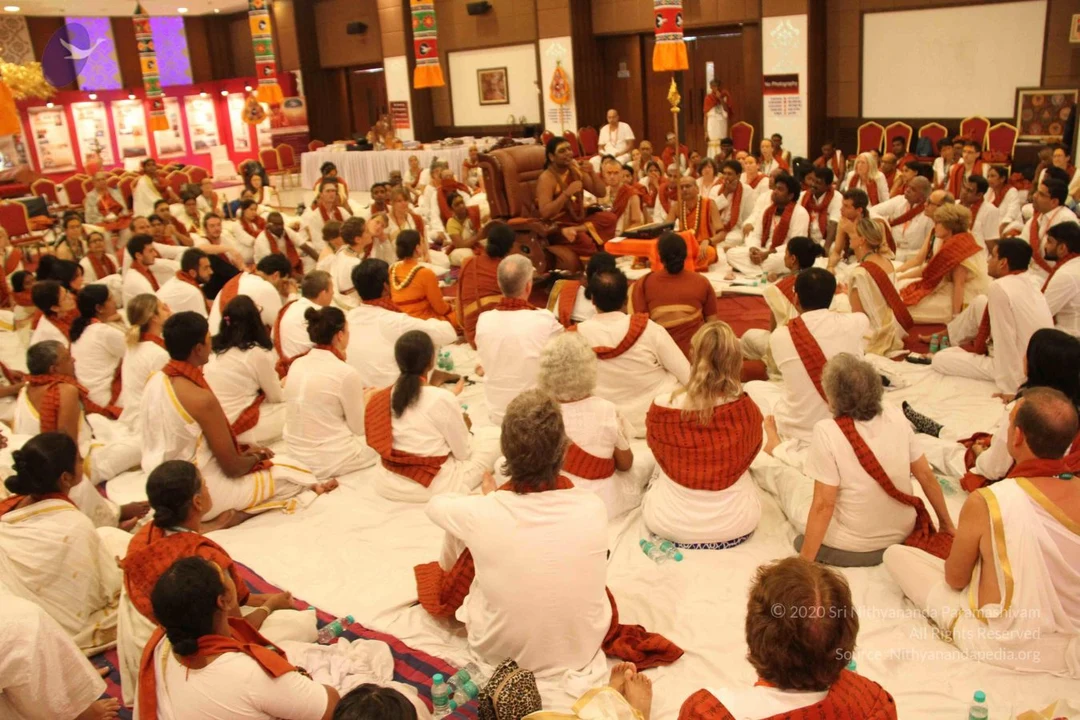
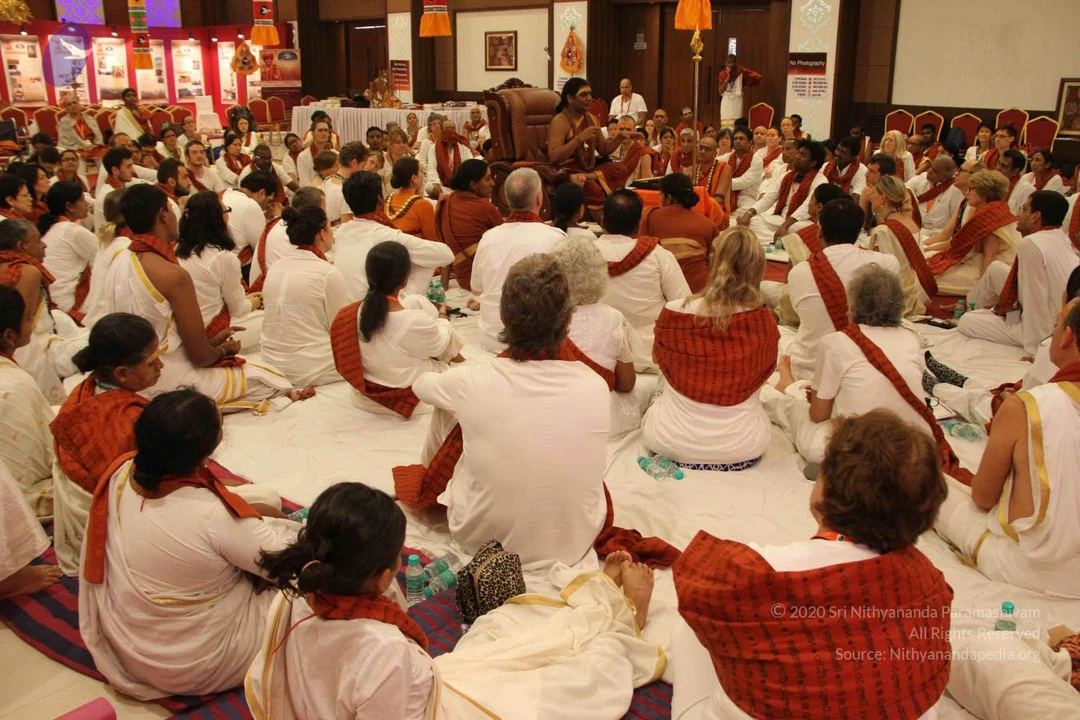
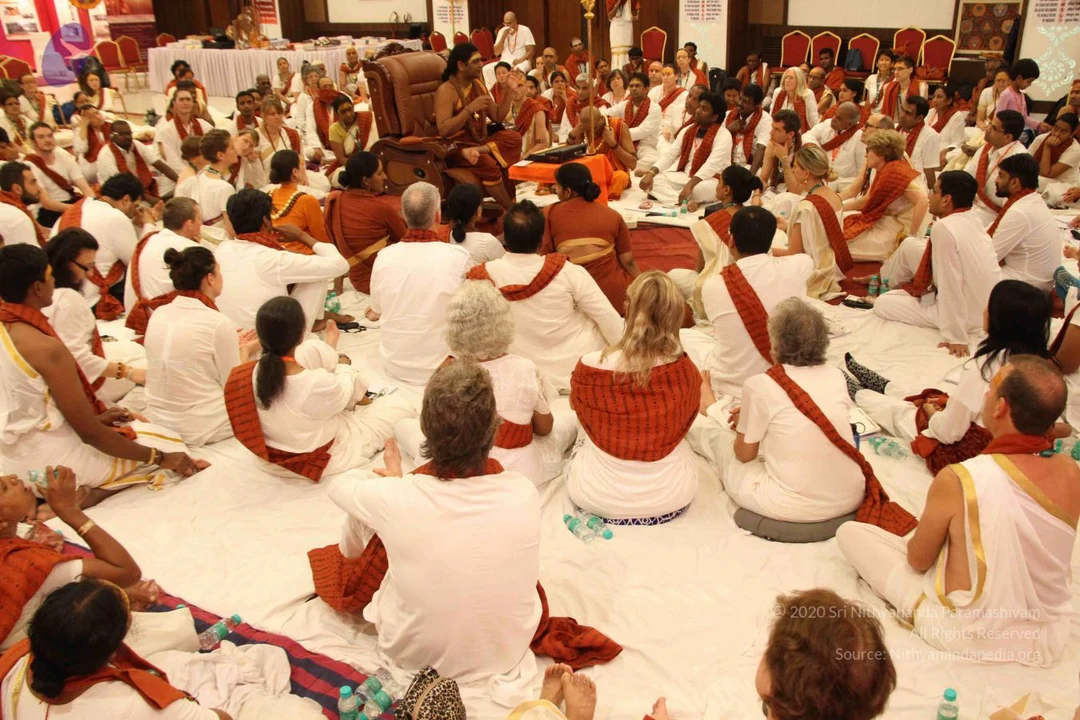
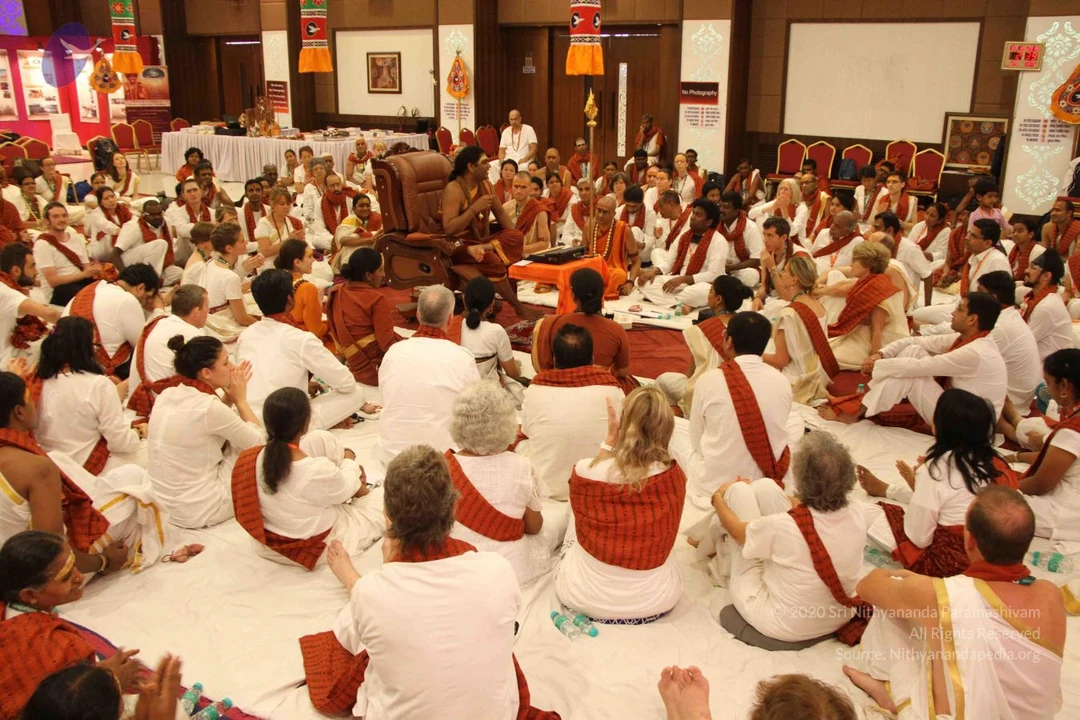
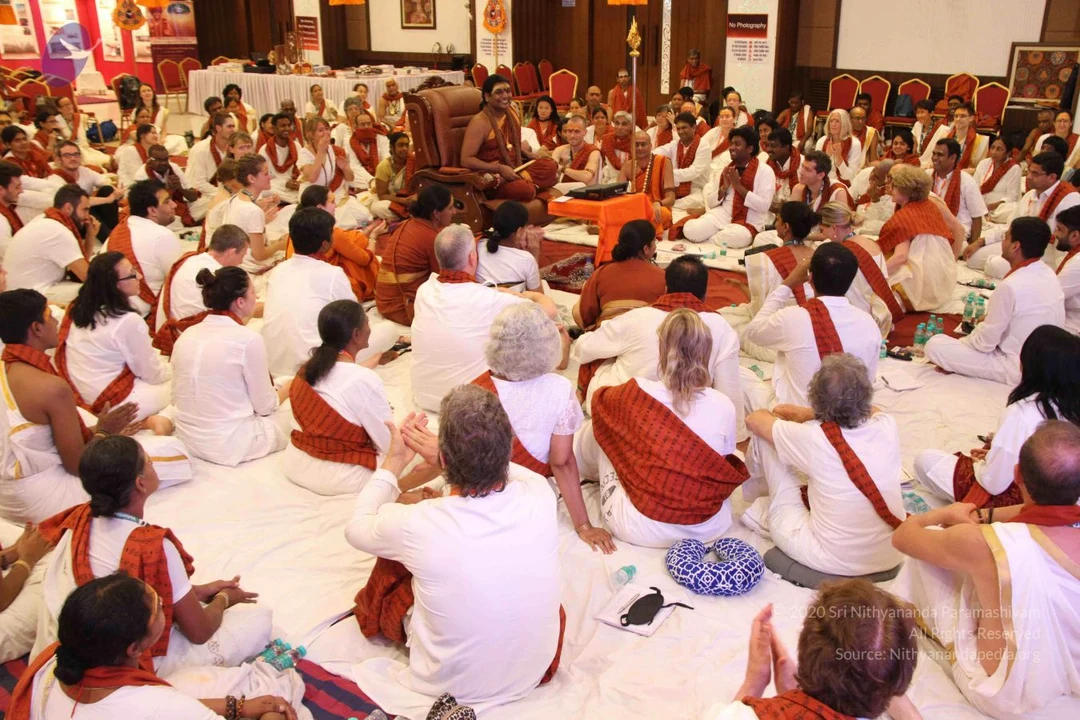
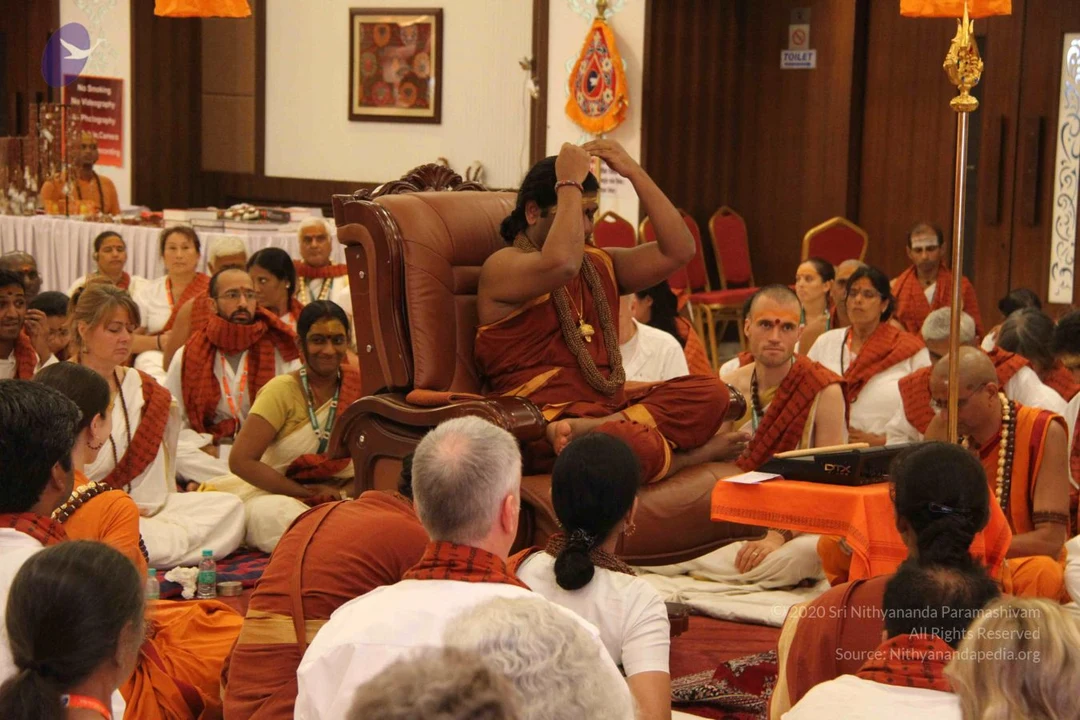
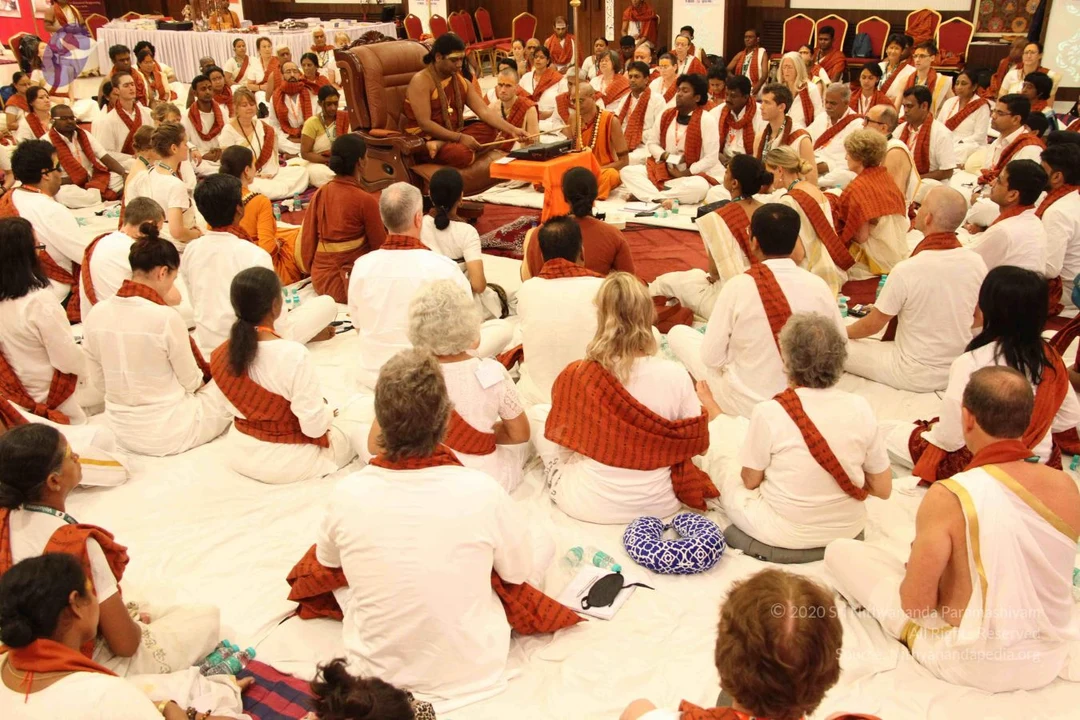
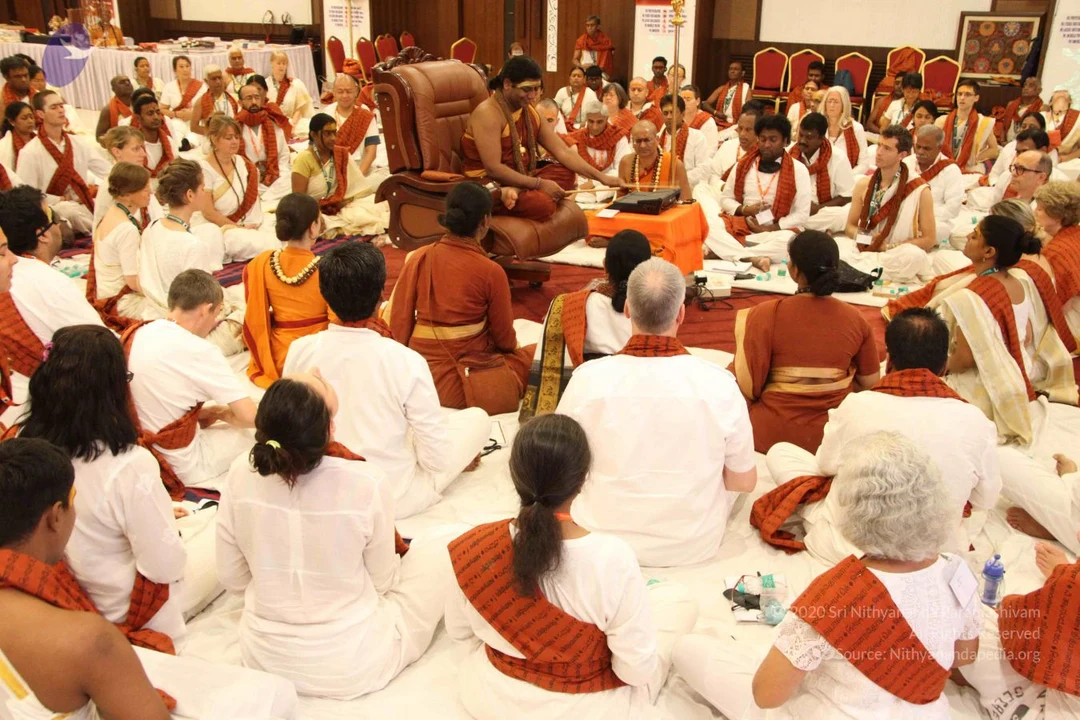
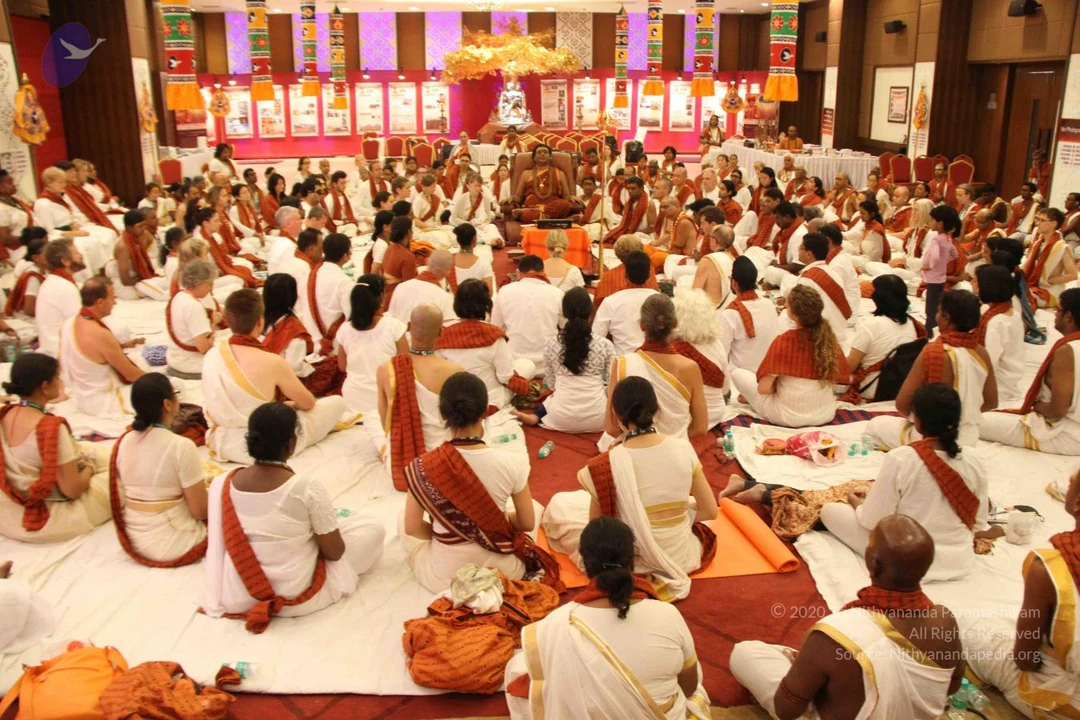
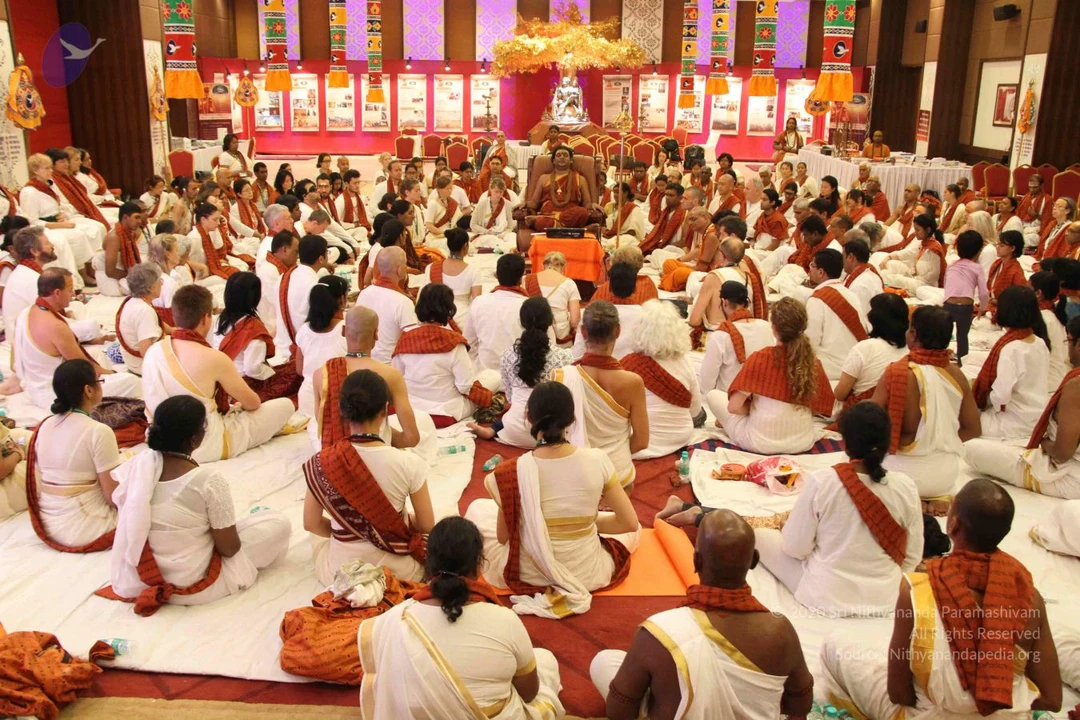
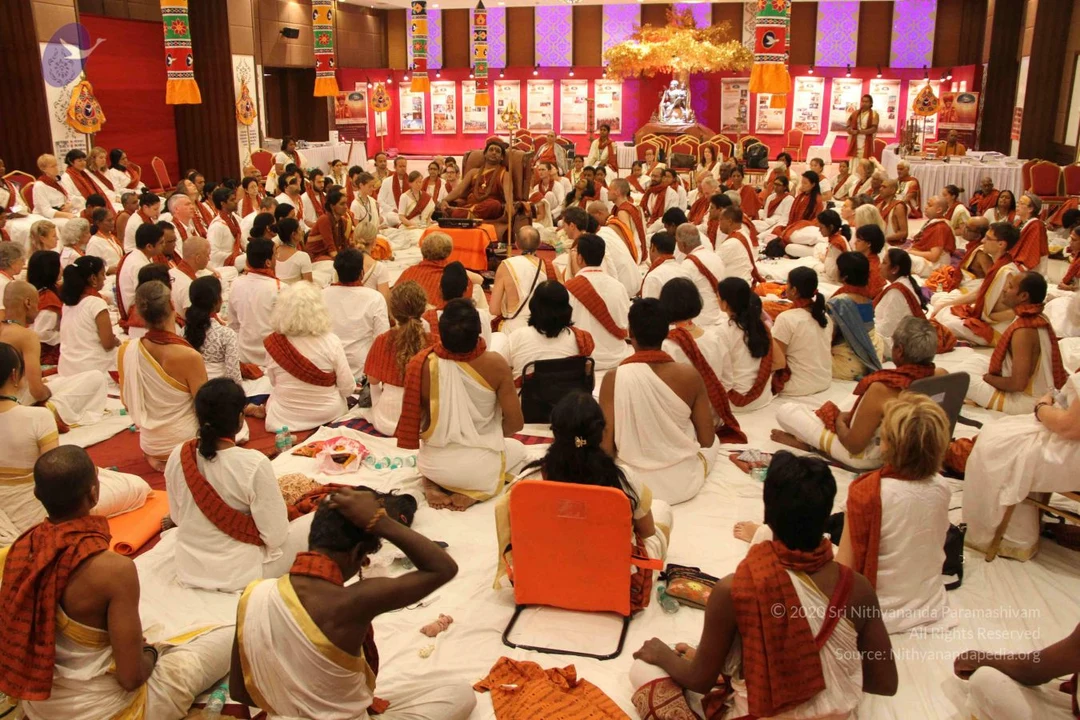
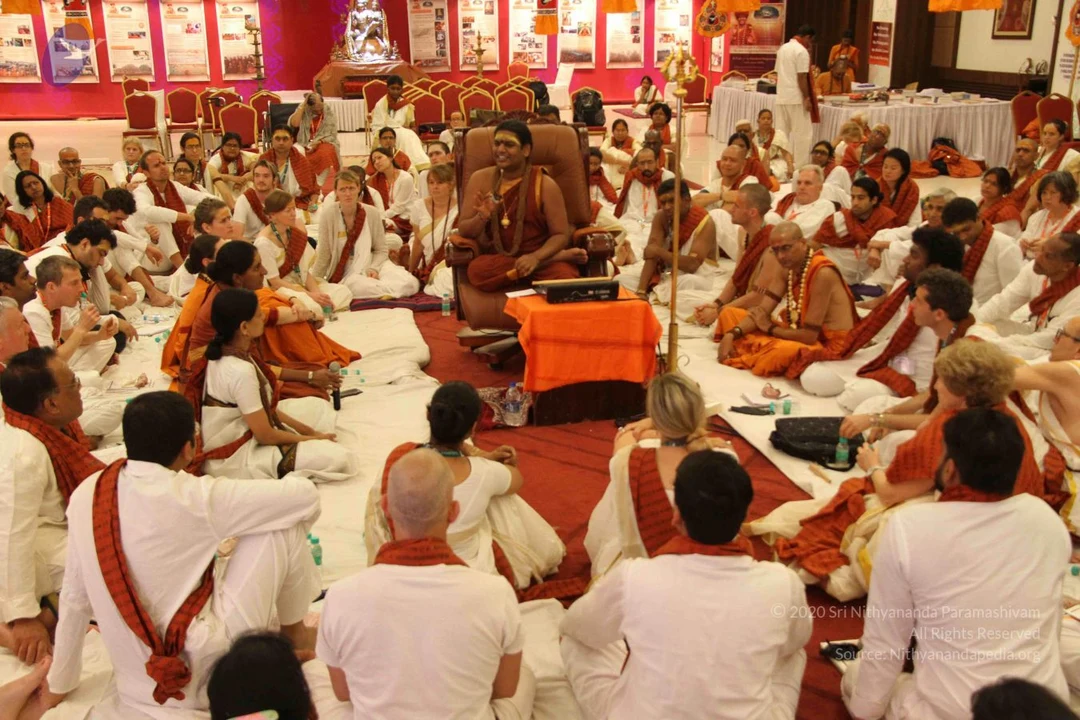
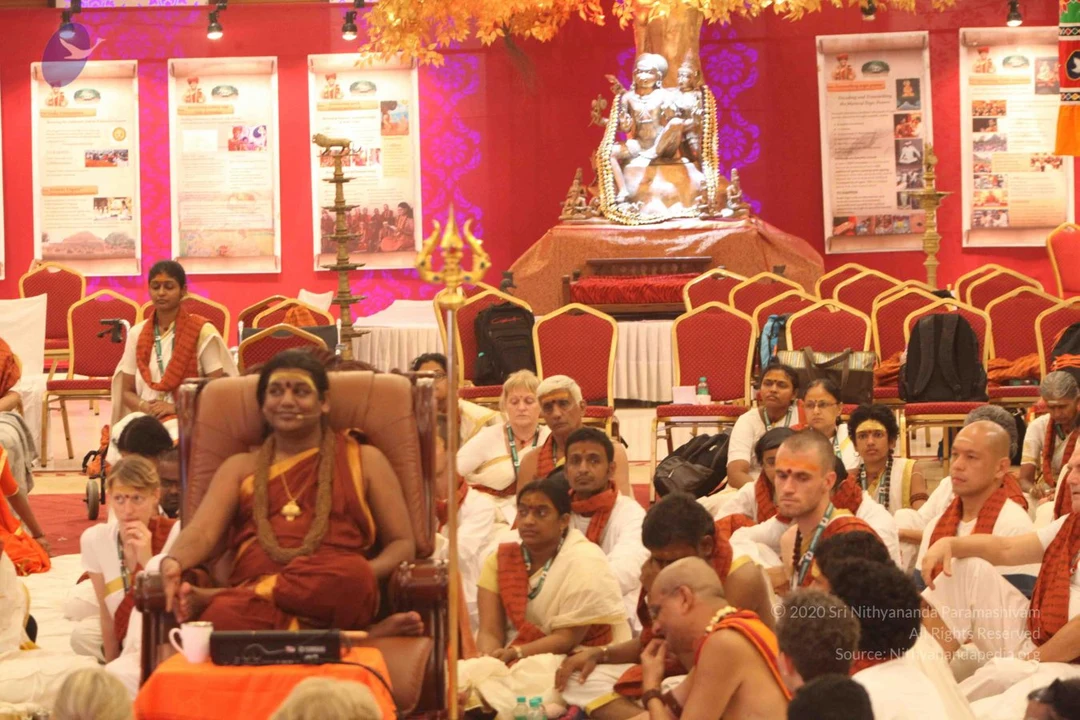
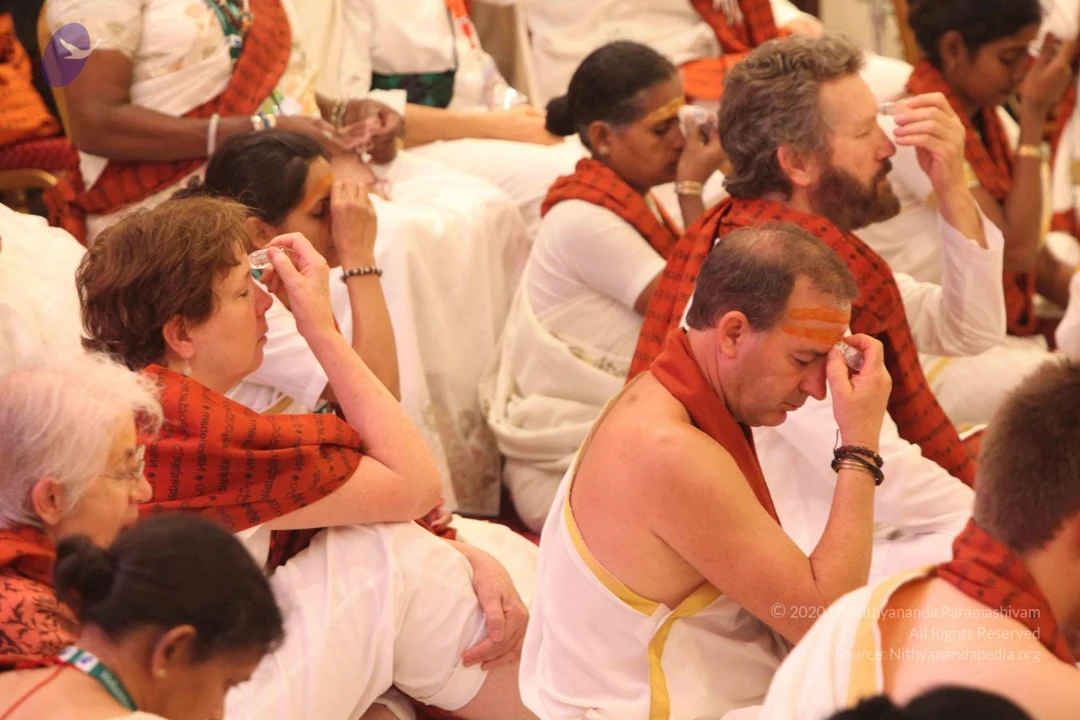
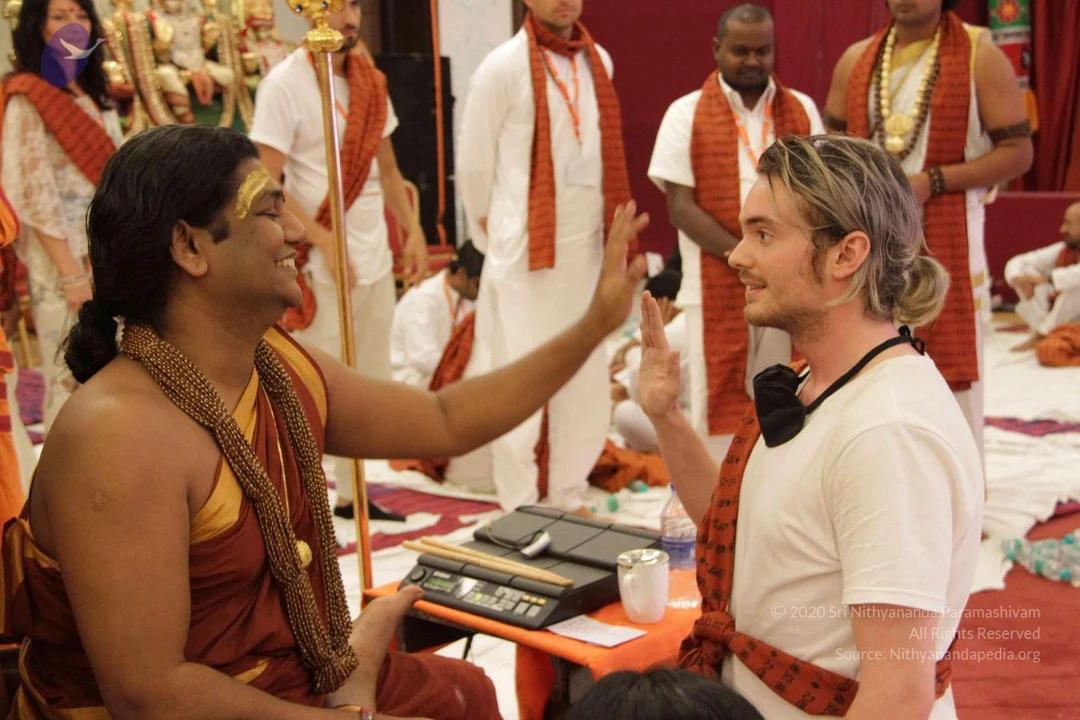
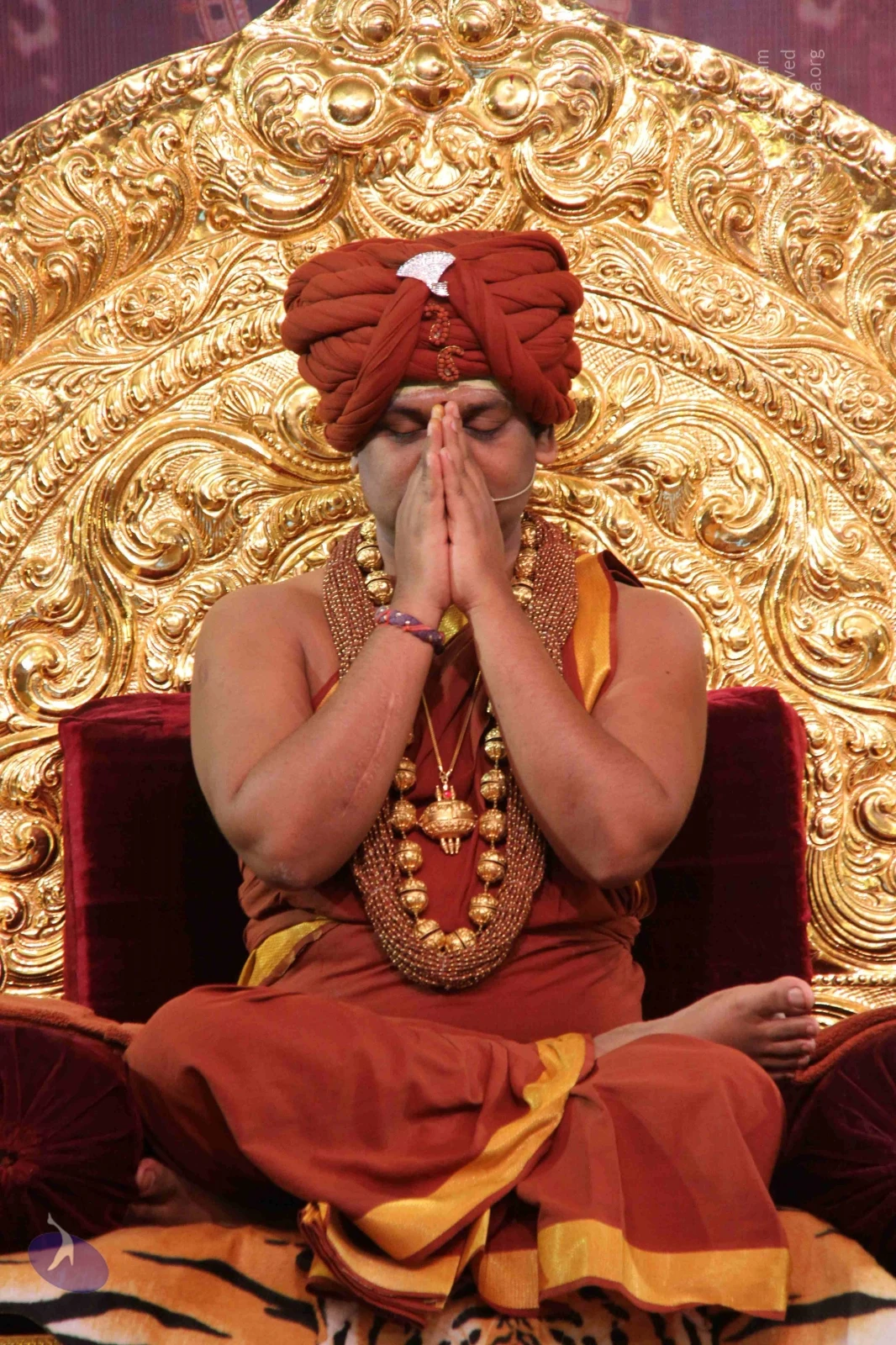
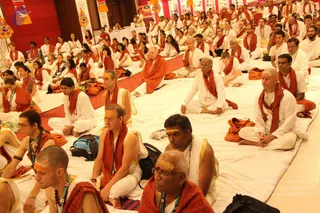
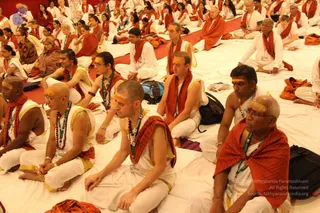
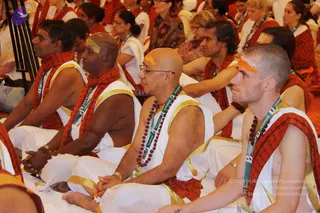
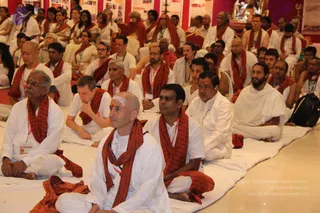
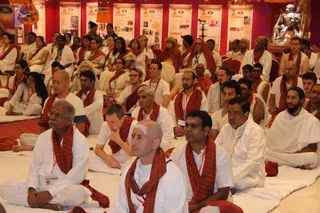
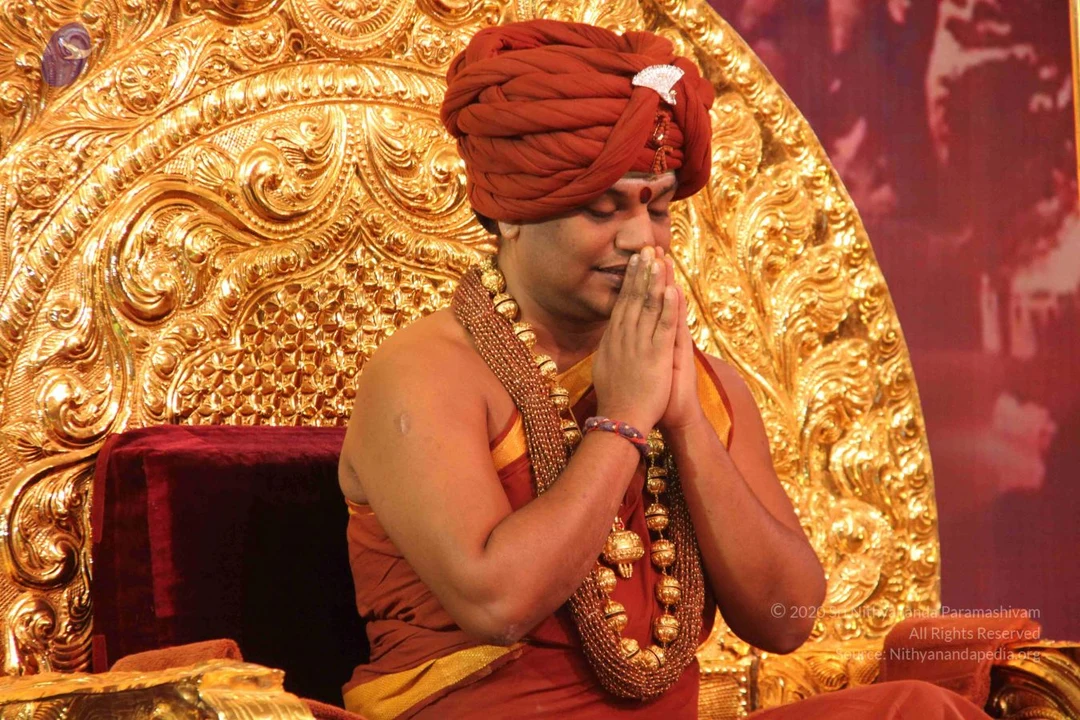
A seated man in a red-orange turban with a silver ornament and a red bindi sits with his palms pressed together in namaste, eyes lowered and smiling. He wears a bare-chested orange-red cloth with a gold border and a thick ceremonial gold bead necklace with rudraksha-style beads, plus a red-and-blue wrist band. Behind him is an ornate gold-leaf throne with carved scrollwork and a deep red velvet cushion, against a red backdrop. The swami-style presentation with turban, saffron clothing and gold necklaces matches the Swamiji (probable) label for a satsang seat, shown as in person.A large seated audience in an indoor hall with white floor mats and a red carpet runway. Rows of devotees sit cross-legged in white dhotis and kurtas with orange-red shawls draped over their shoulders, many with orange or yellow tilak on their foreheads and beaded malas or lanyard badges around their necks. Orange cloth bags rest on the mats, and a front-row man in glasses wears a white garment with an orange shawl. Red and gold banners and decorative panels hang on the back walls behind the seated crowd.A large seated congregation sits cross-legged on white cloth mats in a hall during a satsang gathering. Many men in white dhotis and white shirts with yellow borders wear red-orange shawls over their shoulders, and some have orange tilak marks on their foreheads. Several wear green lanyards and rudraksha malas. Women in white and red-orange saris sit among them on the left. In the foreground, a bald elder with glasses and a red shawl sits beside a younger man with eyes closed in meditation. Bags and folded orange cloths lie on the mats. No speaker or throne is clearly visible in this frame, so no specific person is identified as a person.A seated satsang audience of devotees in white dhotis and gold-bordered white garments with red-and-gold shawls and green Volunteer lanyards. In the foreground a shaved-headed man in glasses wears a rudraksha mala and a white garment with gold border, hands resting in his lap. Beside him a bald man with yellow tilak and a younger man with orange tilak sit cross-legged. Behind them, rows of women in colourful saris and men sit attentively in a large hall.A large seated satsang audience in white clothing and red-orange shawls sits on white mats in a hall with red walls and framed posters. In the foreground a shaved-headed man in white with a vertical white tilak on his forehead and a red shawl sits upright, with a man in glasses beside him. Behind them rows of devotees in white and red-orange shawls face forward, some wearing lanyards. A gilded deity murti stands at upper right. The scene reads as a seated discourse or satsang gathering.A large seated audience in white clothes and red-orange shawls fills a hall during a satsang. Many attendees wear identity lanyards and some have a tilak on the forehead. In the foreground, a bald man in a white kurta and red shawl sits on a white mat with a rudraksha-style necklace. Behind them, rows of devotees sit closely together under display panels with photographs and text, and a golden deity murti stands at the upper right. Red walls and red chairs complete the setting.

Morning-Satsang2

19 photosSource gallery
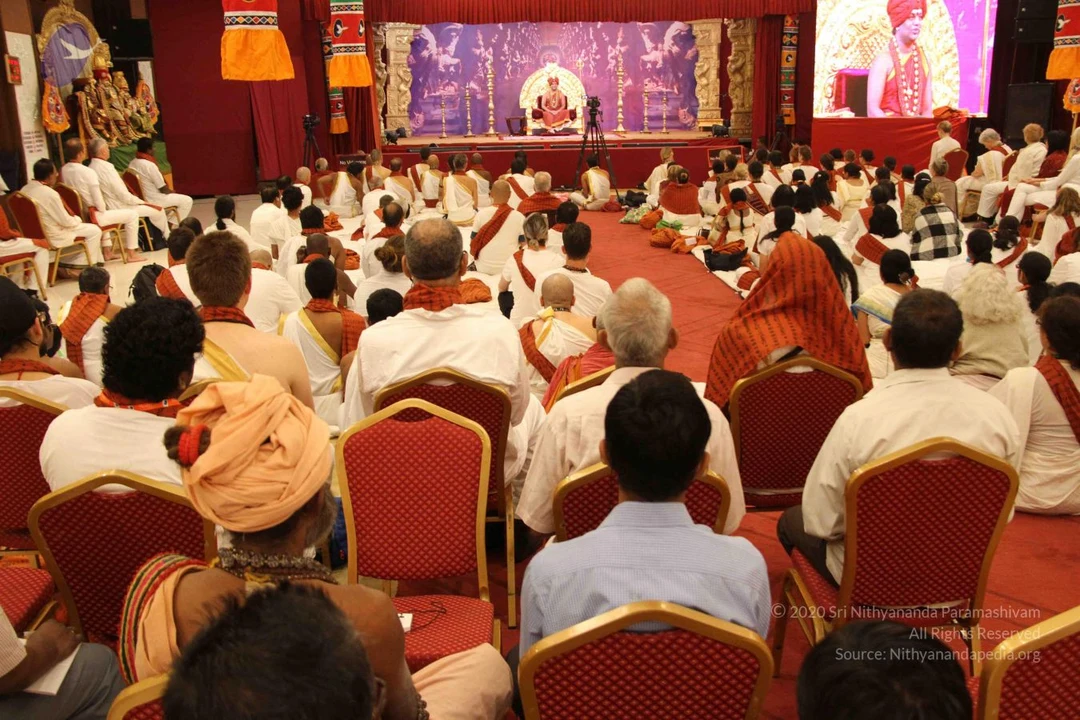
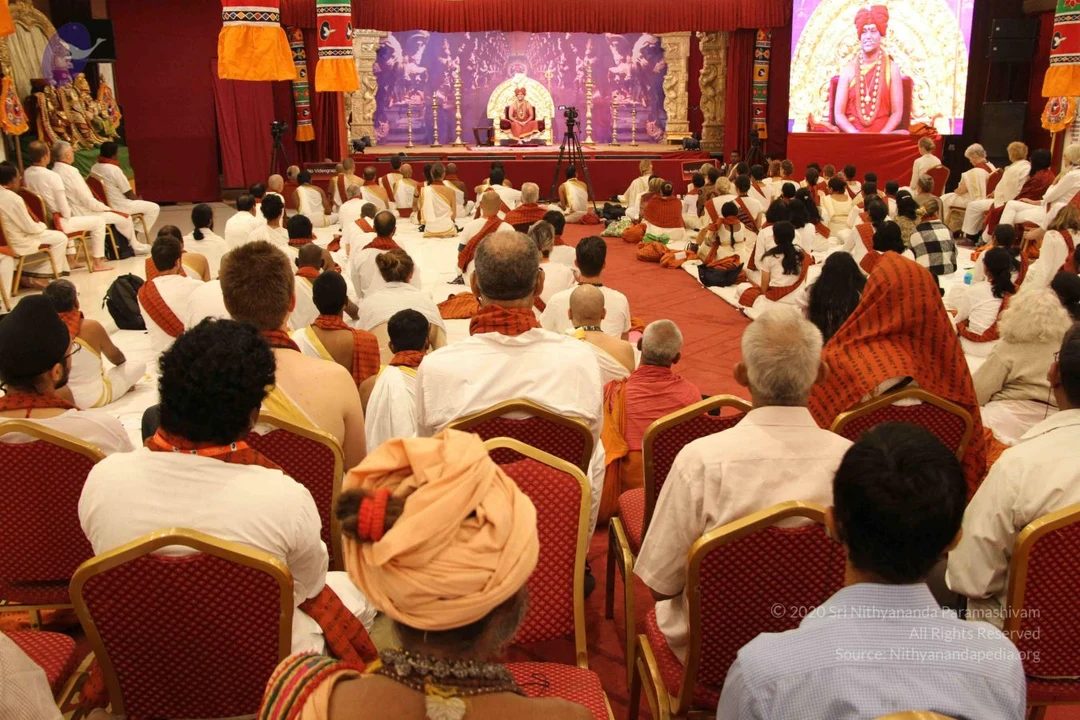
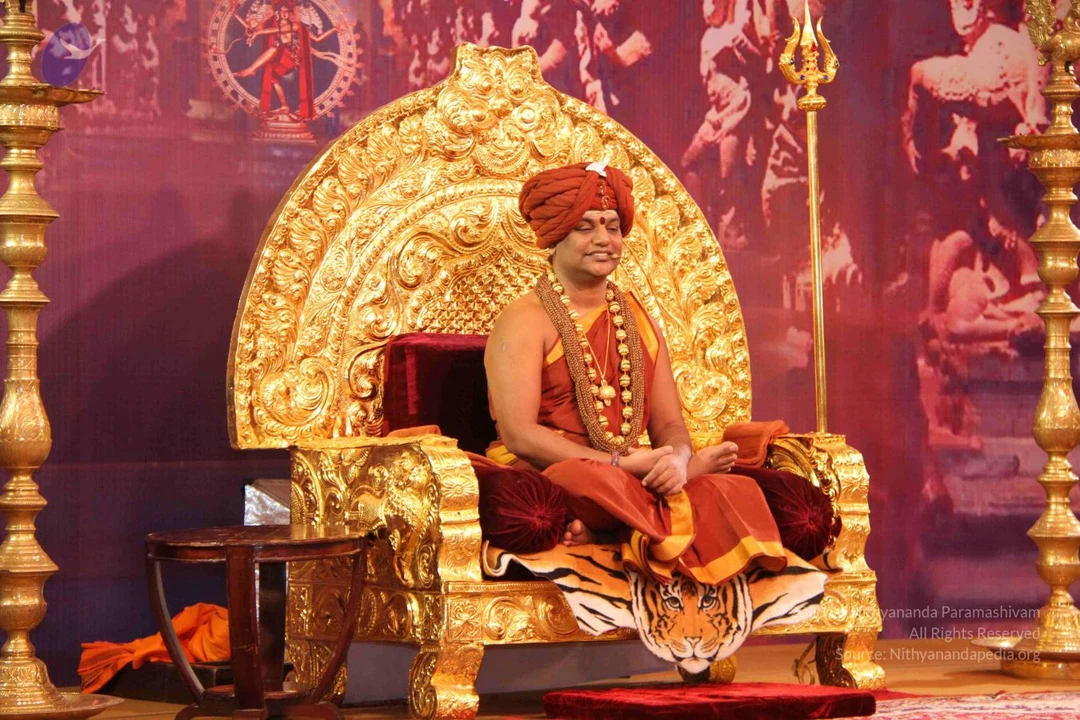
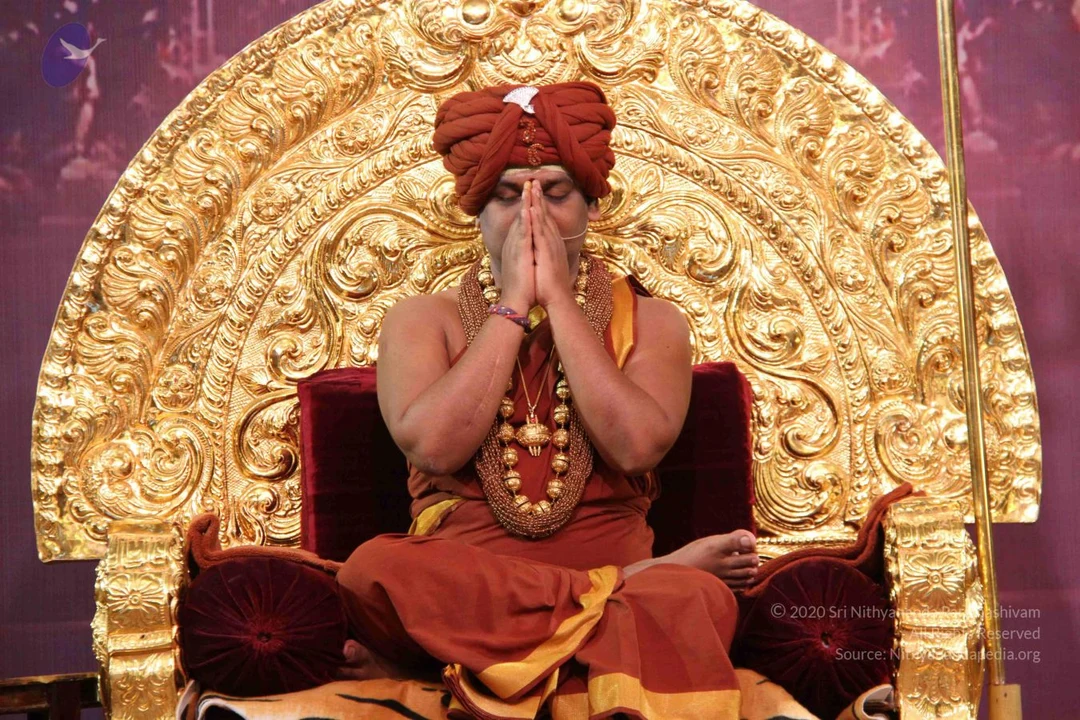
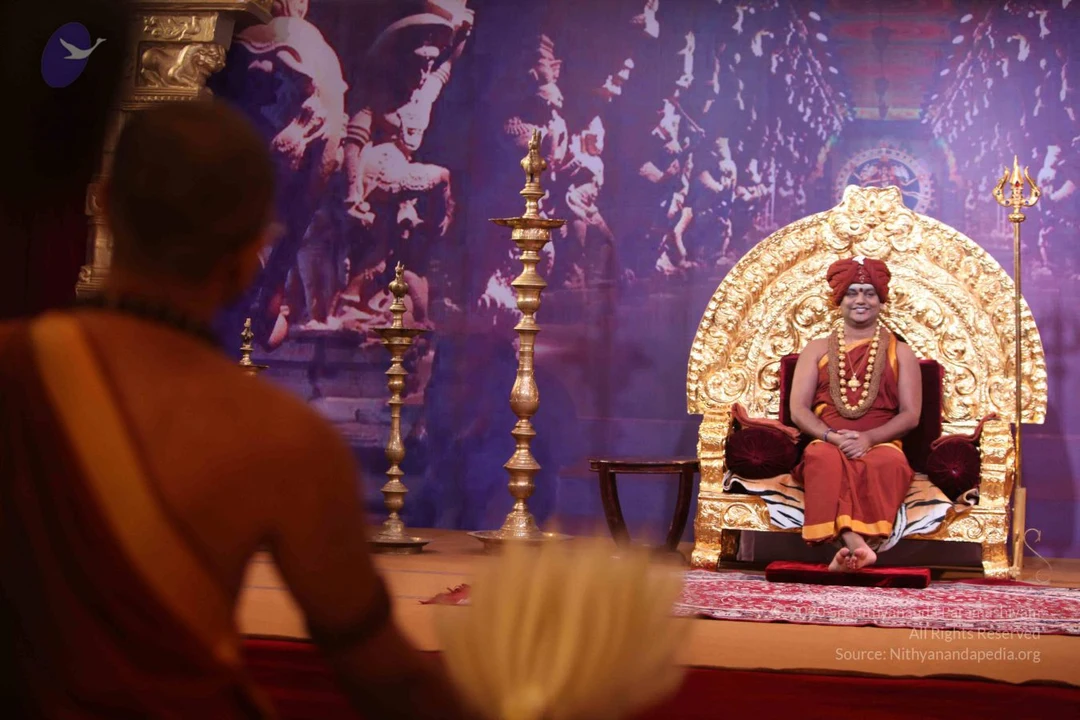
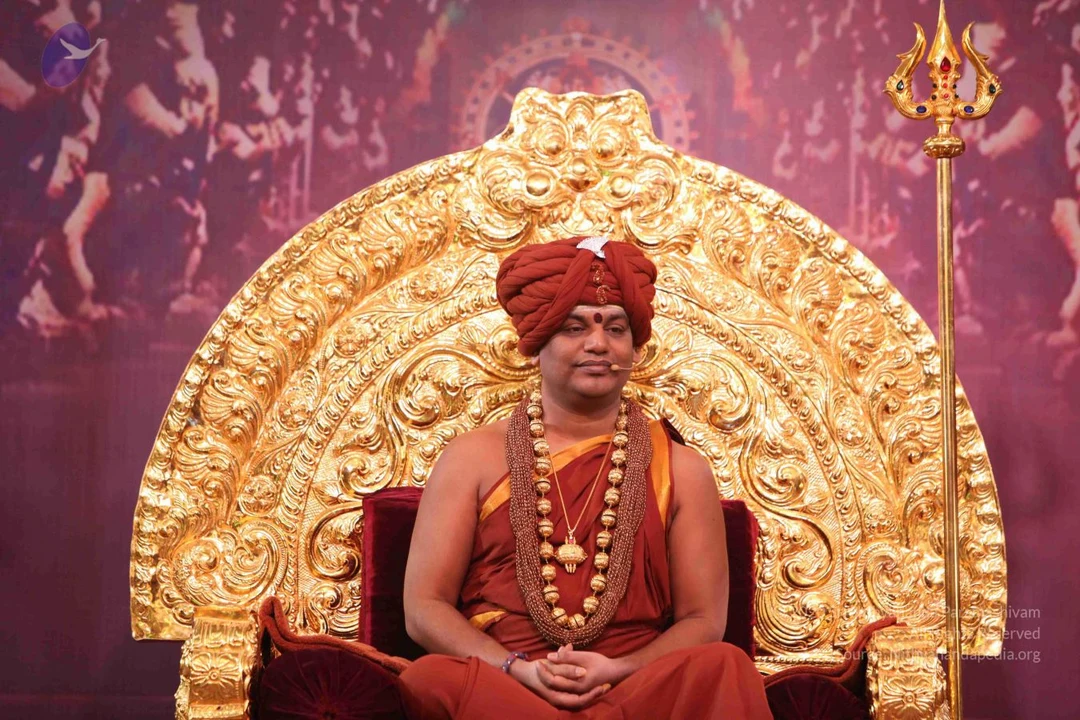
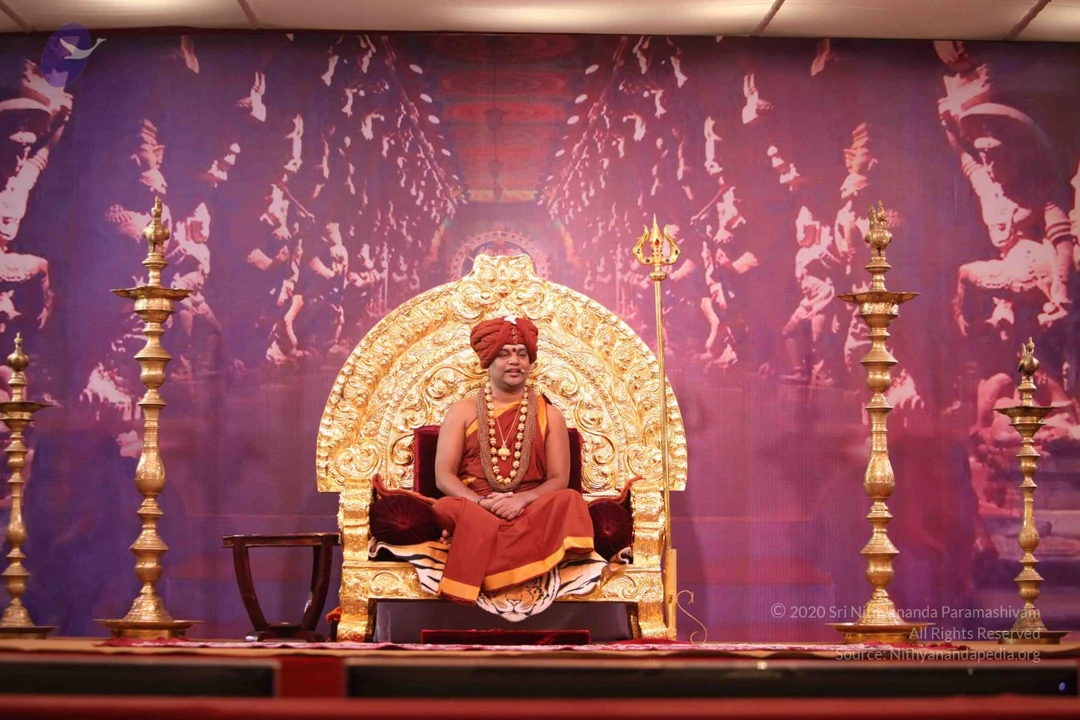
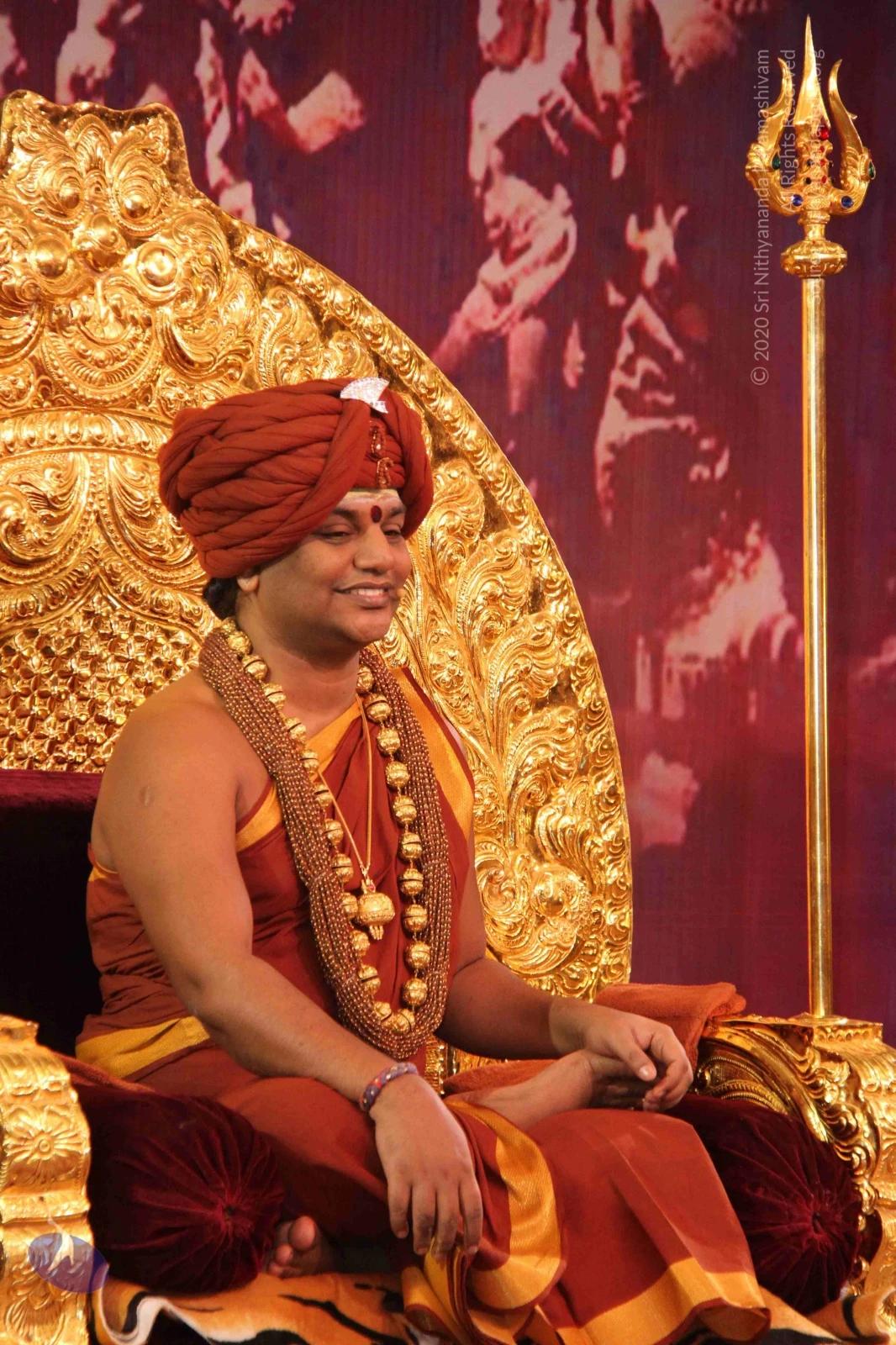
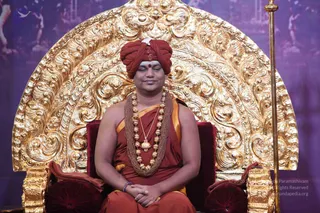
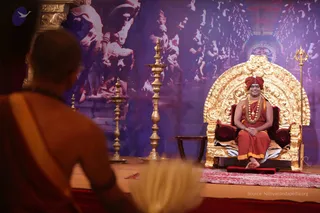
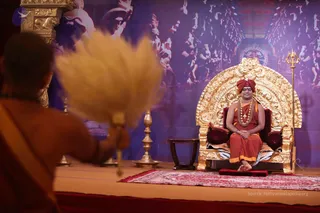
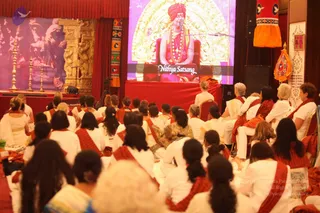
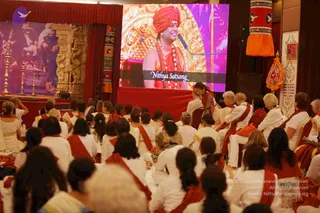
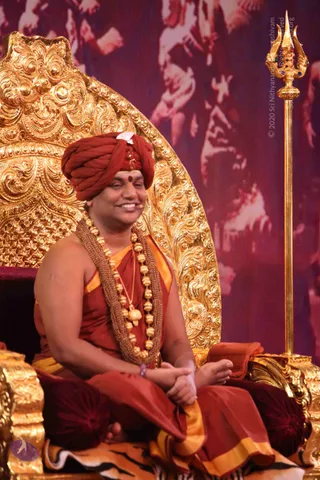
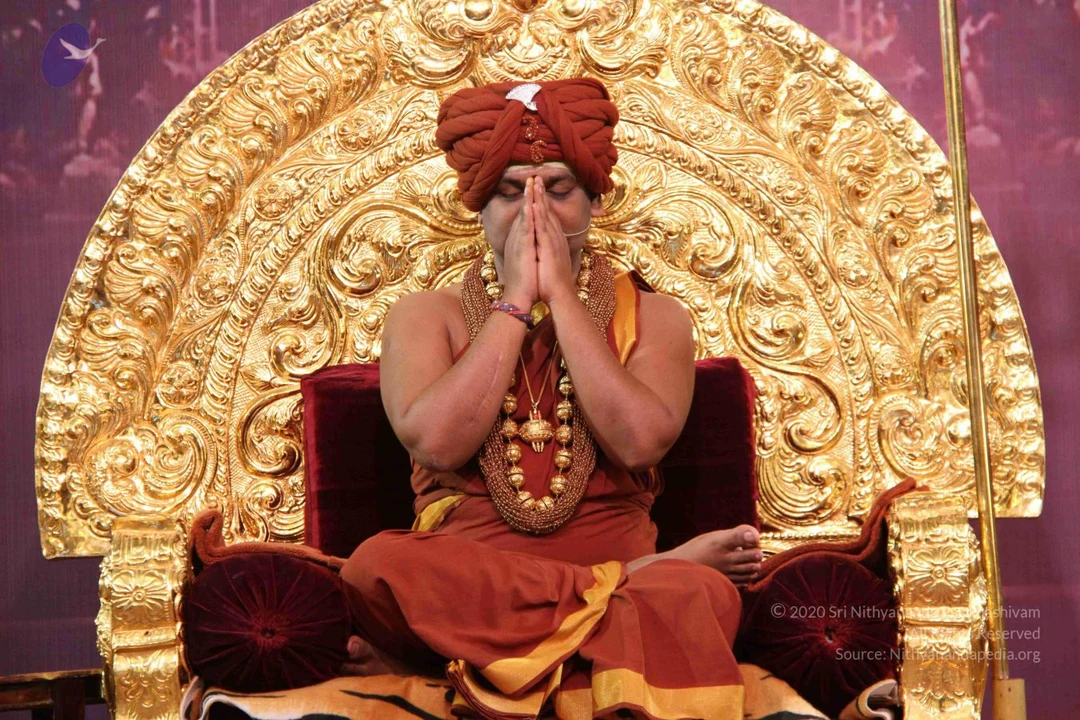
A seated man in a deep red turban and saffron-red robe sits on an ornate gold throne with a large repoussé gold back. He wears a heavy multi-strand mala of gold-toned beads, a pendant, and a blue bracelet, with hands folded in his lap and eyes closed. A red bindi and white marking adorn his forehead. A tall gold staff stands to the right against a purple backdrop, with blurred figures visible behind. Probable Swamiji seated in satsang setting, showing red turban, red robe with gold border, and ornate gold mala cues.A photograph of a satsang on a stage before a purple backdrop with painted figures. A seated man on an ornate gold throne with a carved gold back wears an orange-red turban, an orange-red robe and a beaded necklace, with a crown-like turban and long adornments; the appearance is consistent with a person figure in sannyasi dress, seated with hands folded and bare feet on a red cushion. Gold lamp stands and a golden trident stand beside the throne. In the foreground, a person seen from behind in an orange-brown robe sits facing the throne, and a blurred white fan or whisk is at the lower edge.Stage photograph of a satsang: a seated man in saffron-orange robes and an orange turban, with a rudraksha mala and a gold necklace, sits on an ornate gold throne with dark red cushions and a tiger-skin cloth. He is seated with hands folded in his lap and a trident stands beside the throne. In the foreground, out of focus, a person in orange robes waves a large cream-colored chamara fan. Behind them hangs a purple backdrop with painted figures and a golden ornamental panel, and a red carpet covers the stage floor.A photograph of a ritual in a hall with wood-panelled walls. In the centre, a man in a rust-orange dhoti and matching upper cloth, with a rudraksha mala and gold bangles, holds a brass bell in one hand and a white chamara fan in the other, waving it energetically. Behind him, several men in white dhotis with gold borders and red shawls stand with palms raised in worship on a white cloth. A golden ornate throne-like peetha with a deity murti sits against a green and orange draped stage, with a digital clock and projection screen nearby. A man in white and a red shawl sits on the left, and camera equipment stands on the right. Visible people: about eight.Photograph of a satsang hall with a large audience seated on the floor and in chairs, mostly women dressed in white with red-orange shawls, viewed from behind. Many have dark hair in braids or buns. On a stage at left stand brass lamps and carved golden panels. A large screen above shows a figure in a red-orange turban and layered white and orange garments with a rudraksha mala and ceremonial gold-toned necklace, seated before a gold-framed backdrop; the screen caption reads Nithya Satsang. The figure on screen is a depiction and not a physically present person. Vertical saffron and orange banners hang at right.A satsang hall where a large crowd of devotees, mostly women in white clothes with red-orange shawls, sits on the floor and in chairs facing a large LED screen. The screen shows a speaker wearing a red turban, red garments and multiple red-orange beaded necklaces, speaking into a microphone against an ornate gold-and-pink backdrop; the caption reads Nithya Satsang. In the foreground a woman in red-orange clothing stands near the seated audience. On the left stand gold lamps and a carved gold shrine panel, and an orange and red hanging decoration hangs on the right wall beside a digital clock.

Yoga

34 photosSource gallery
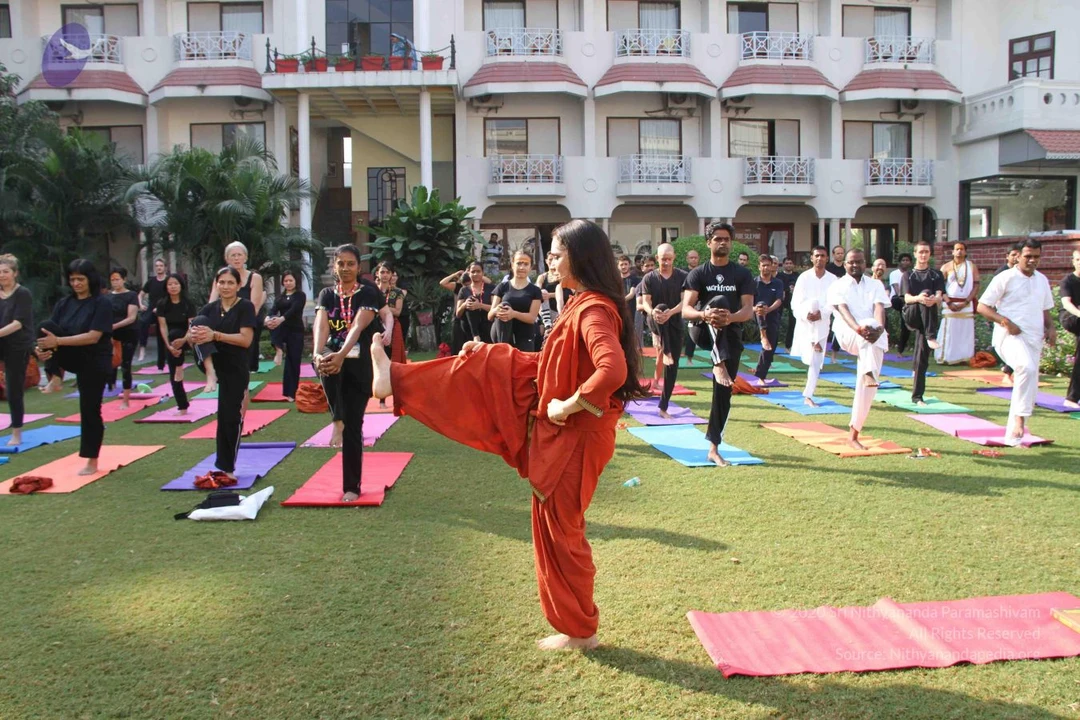
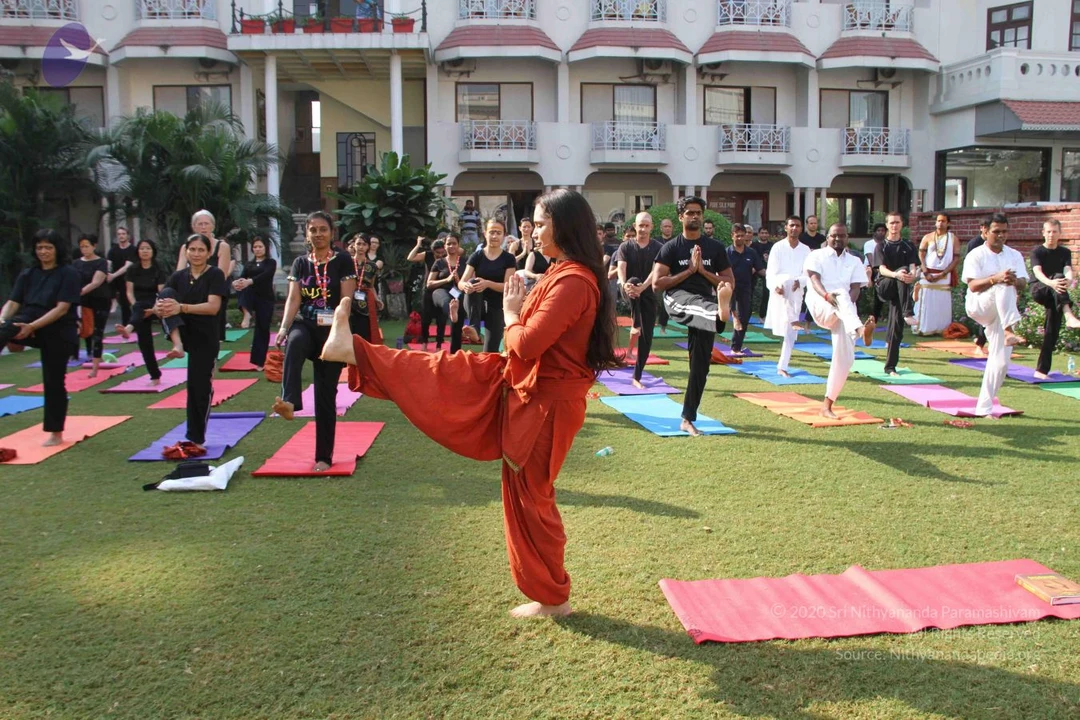
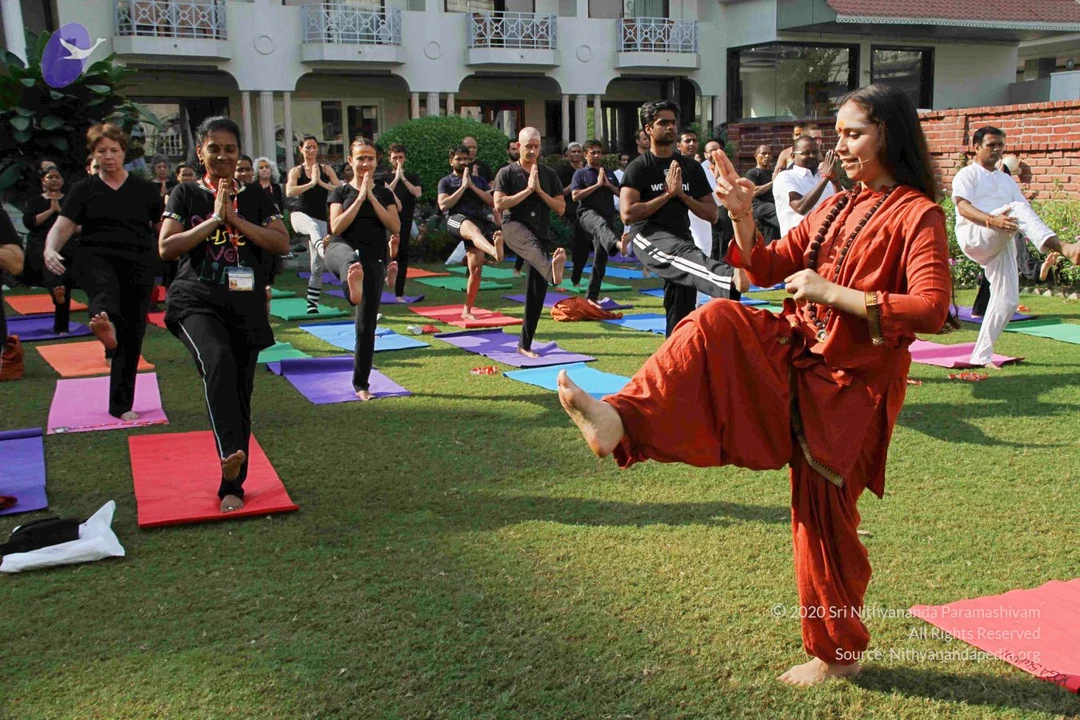
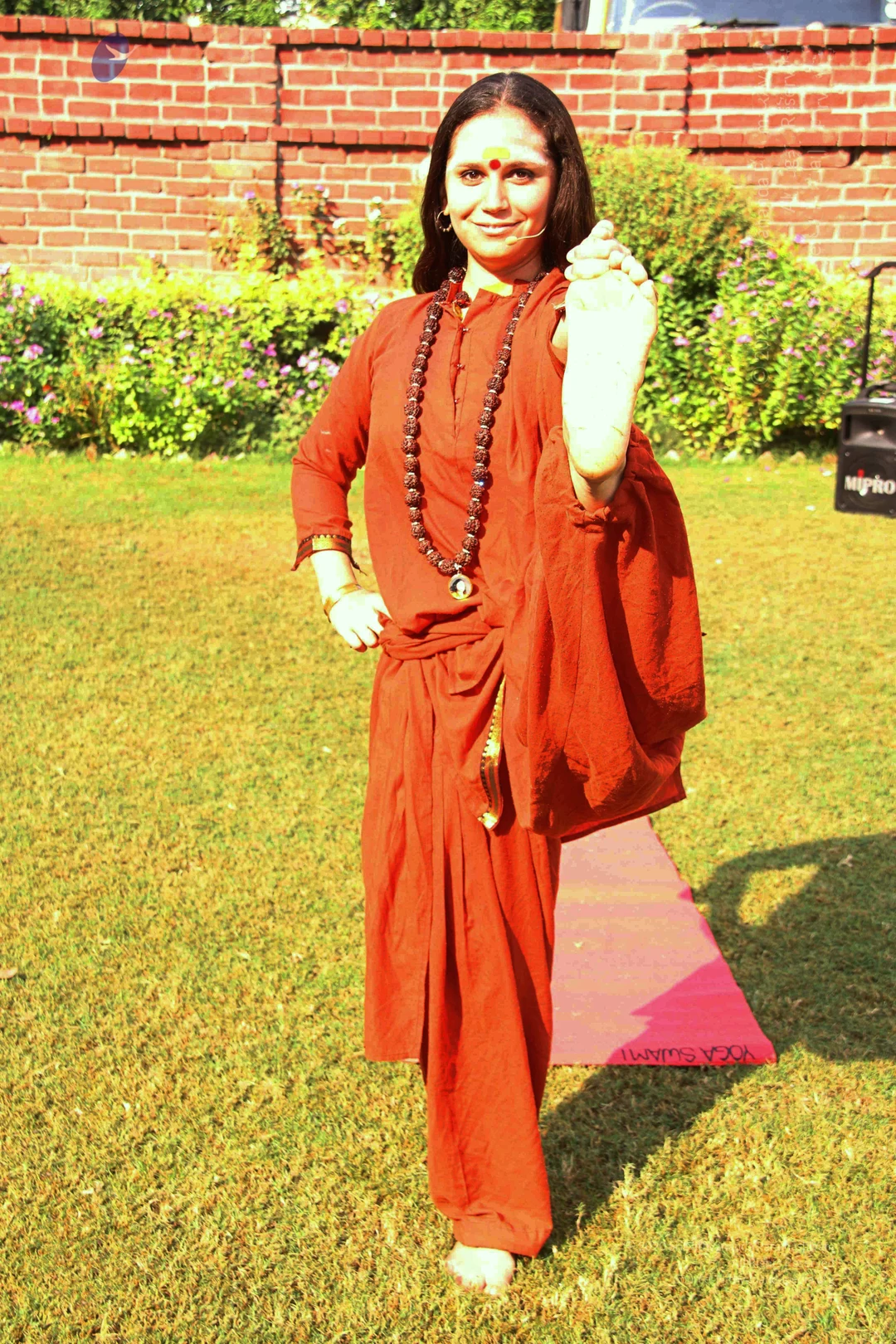
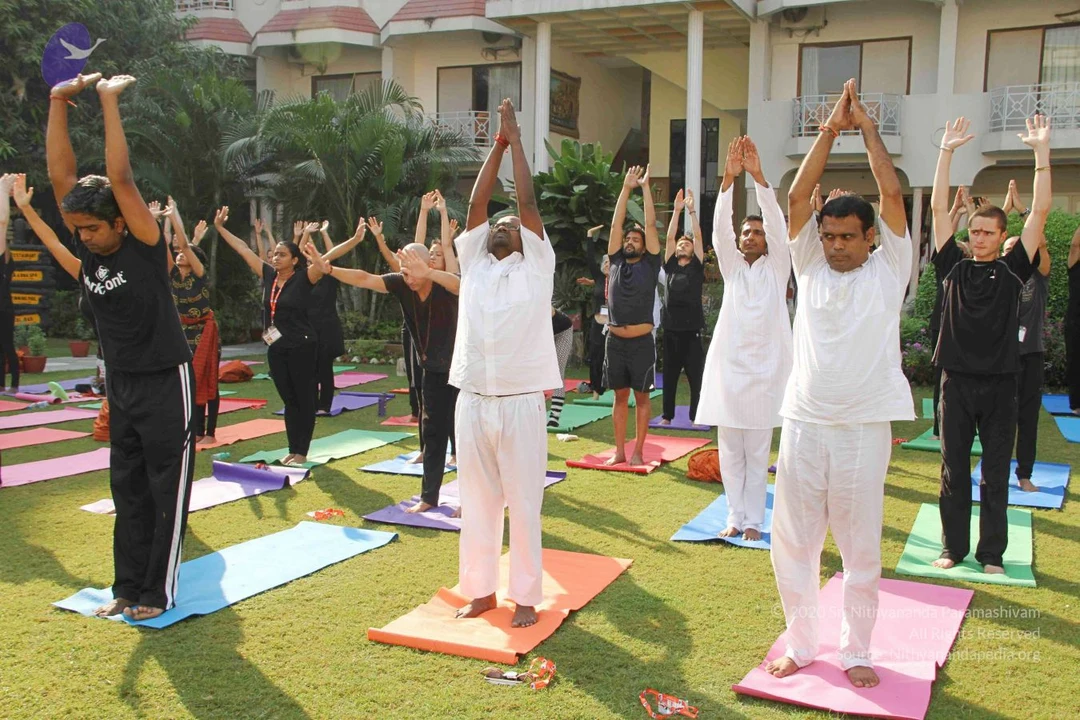
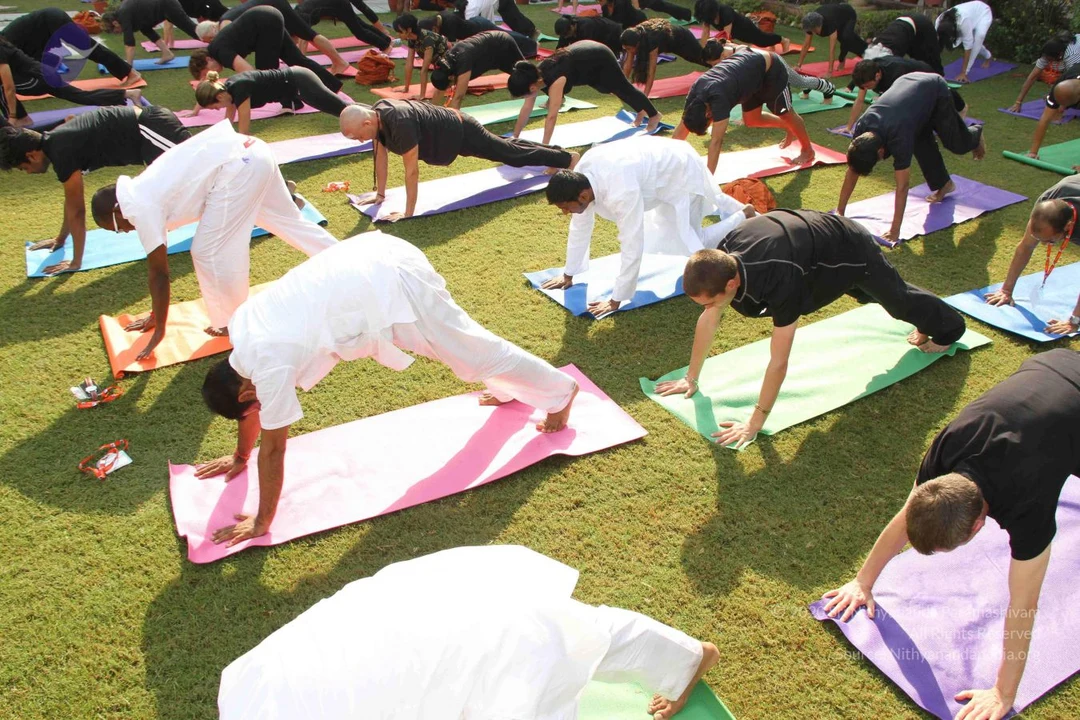
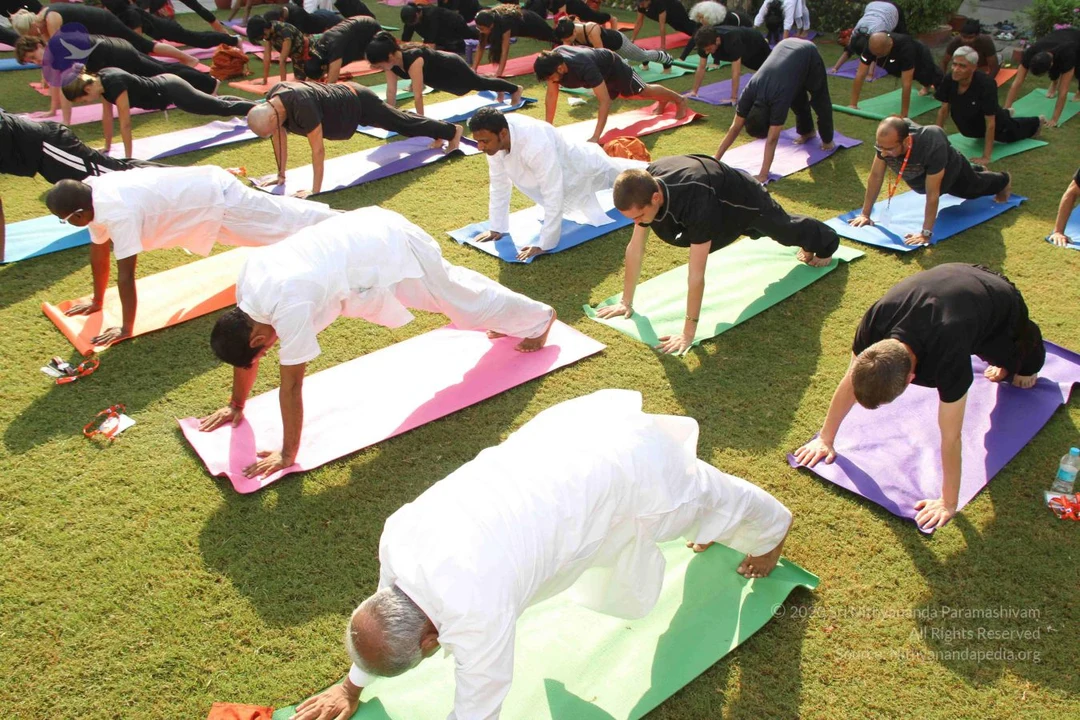
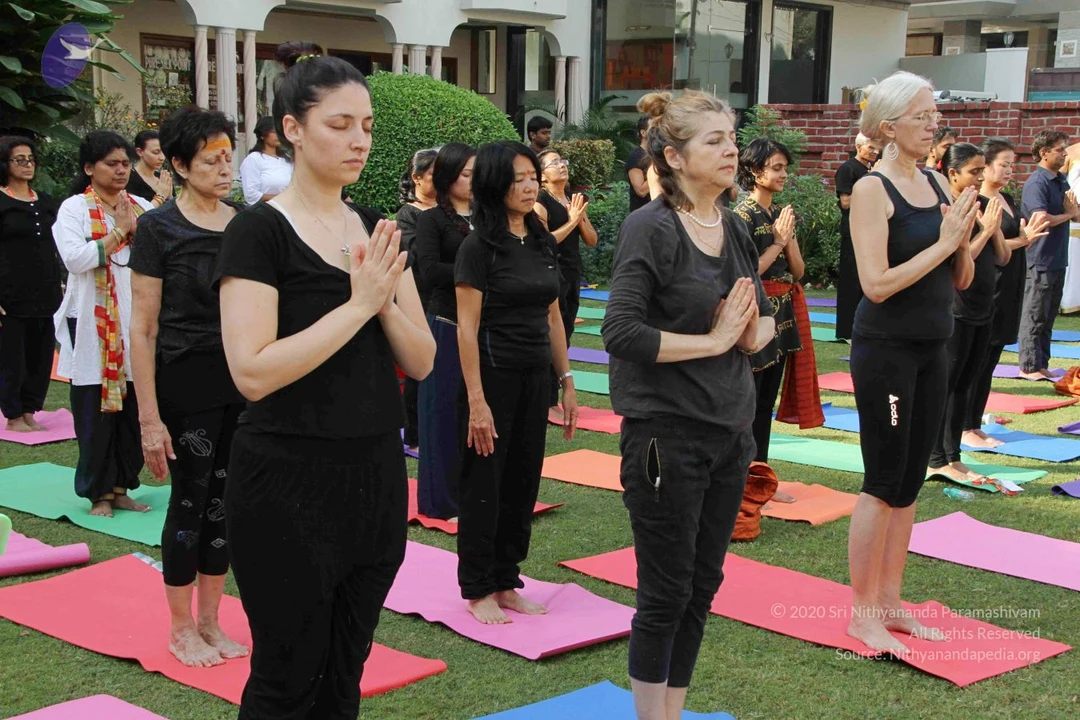
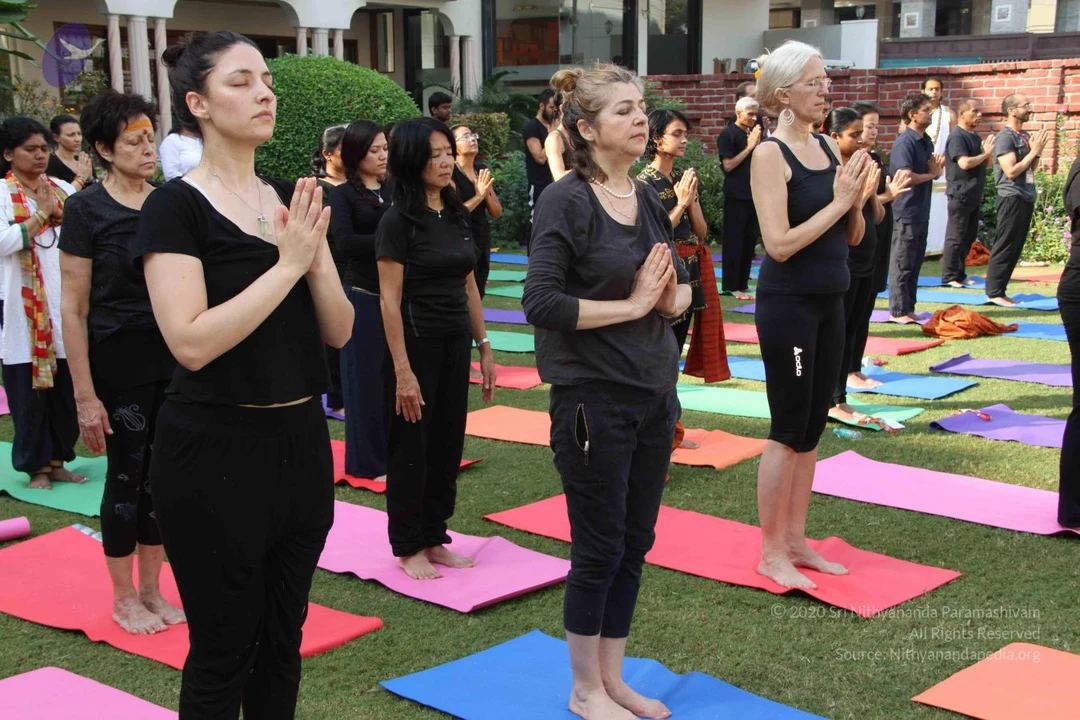
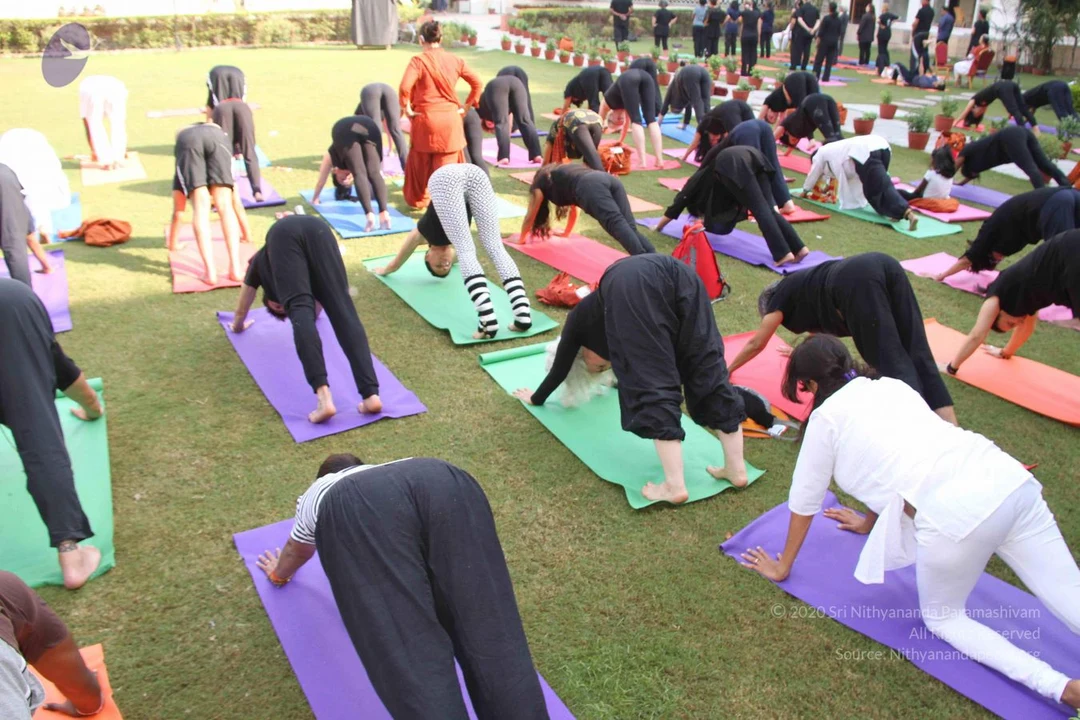
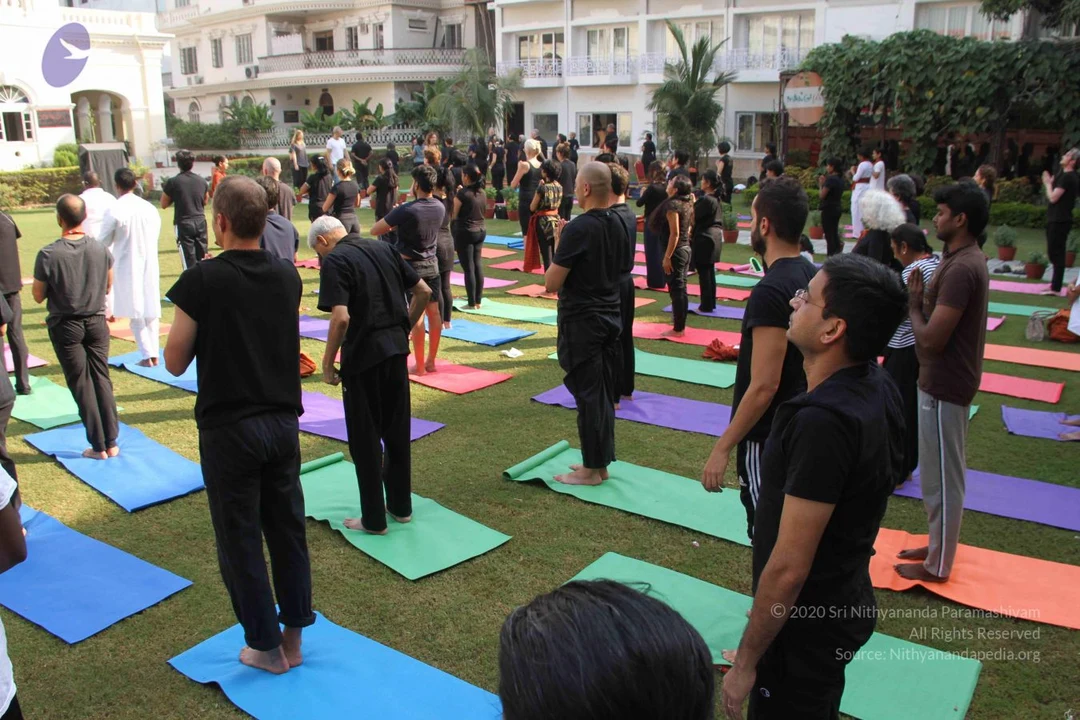
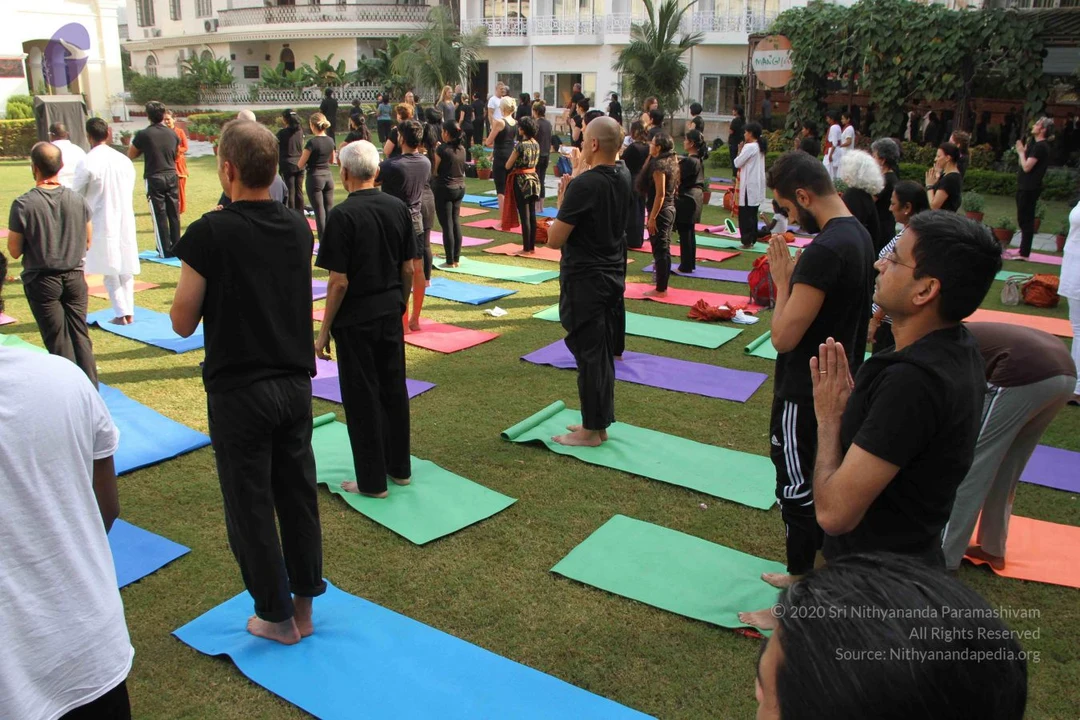
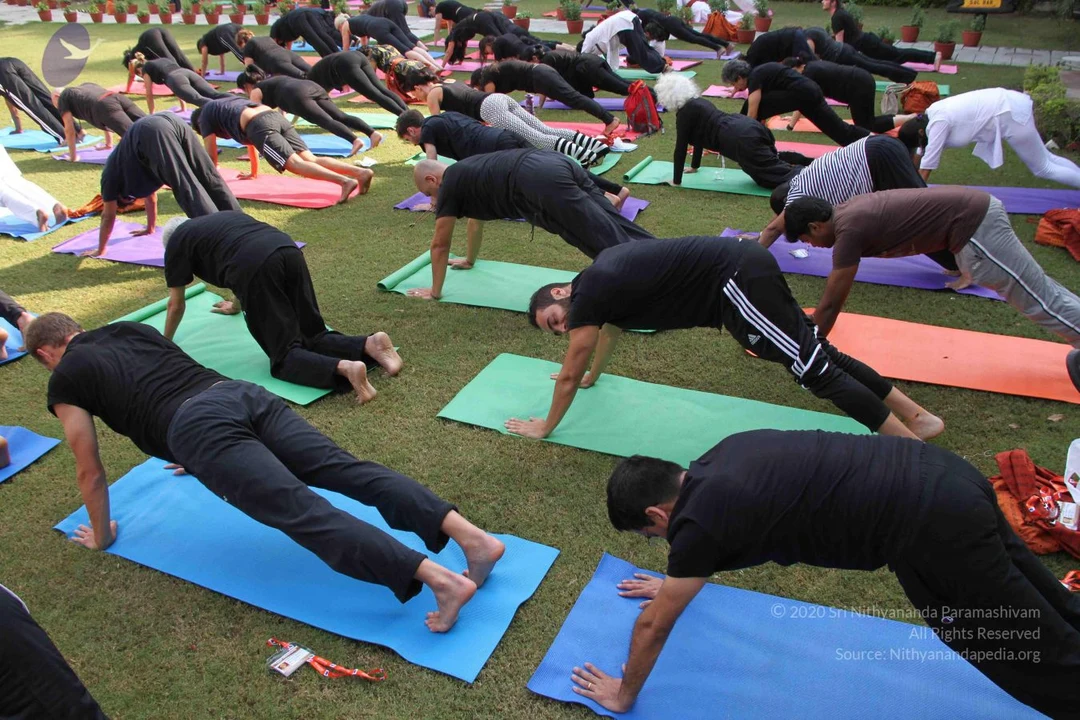
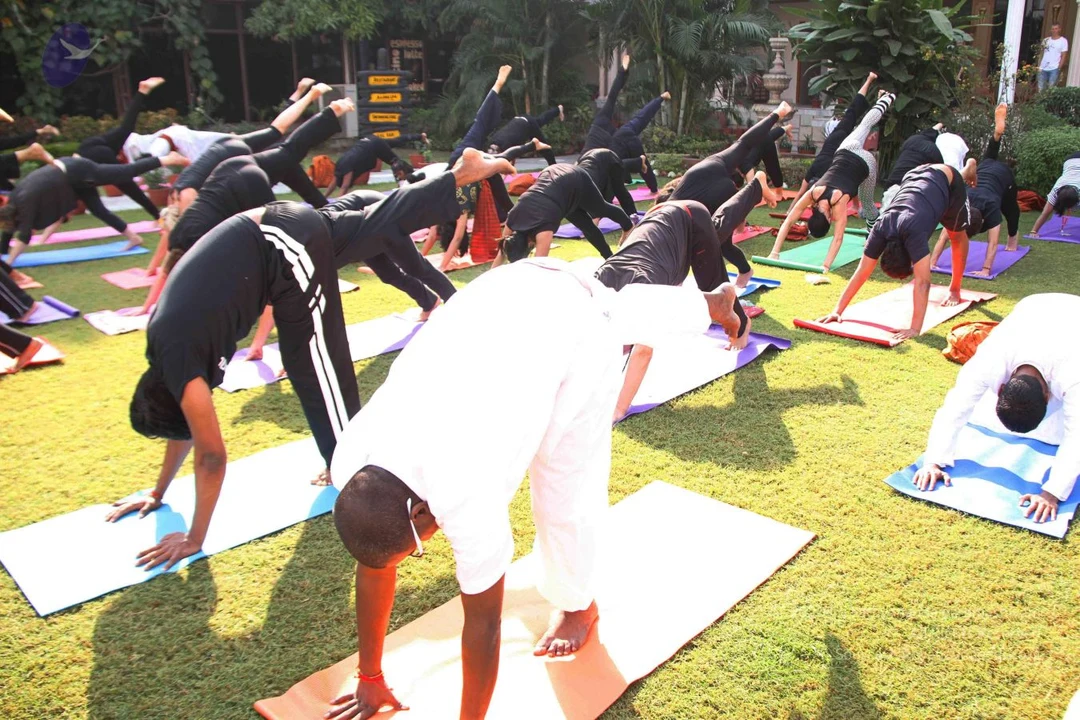
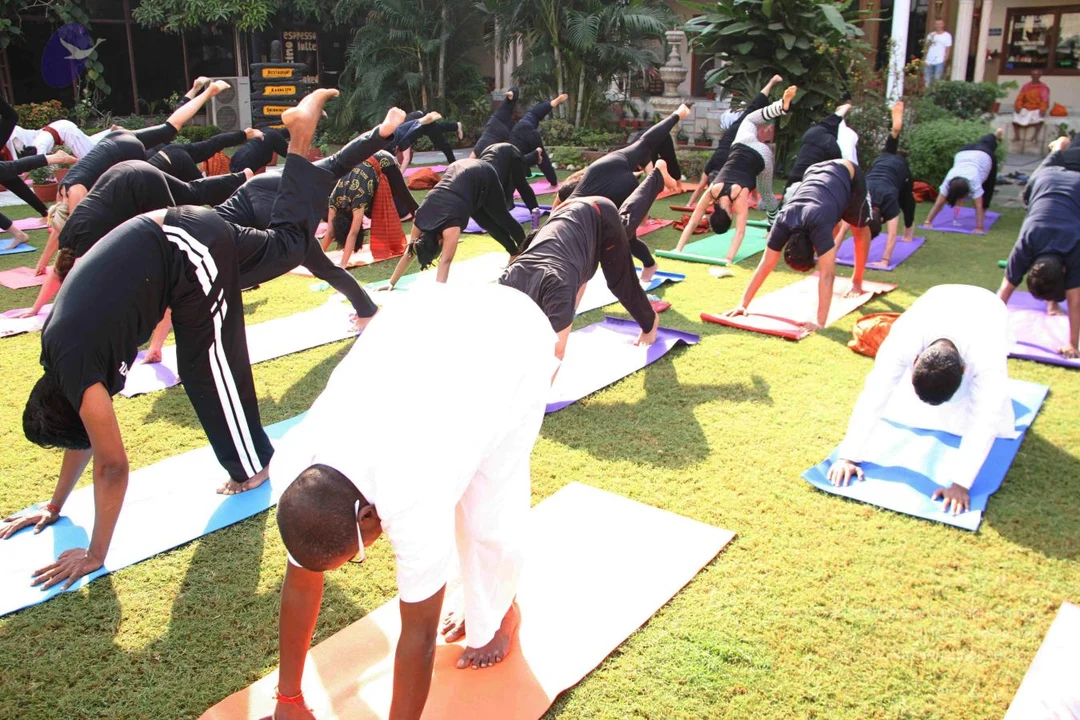
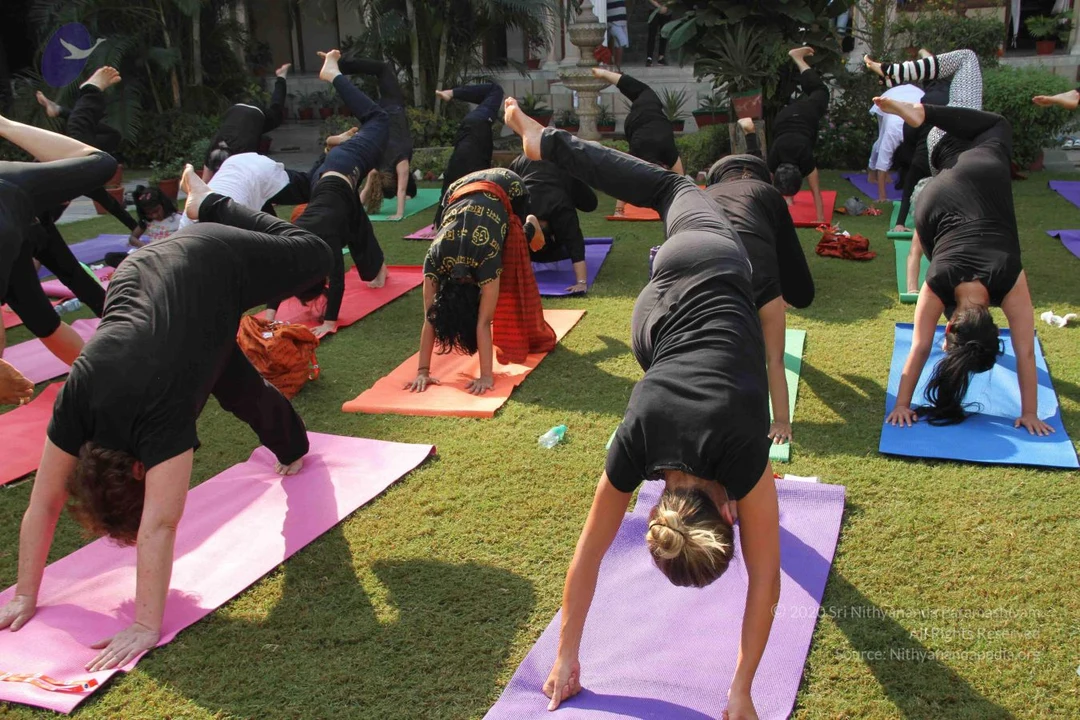
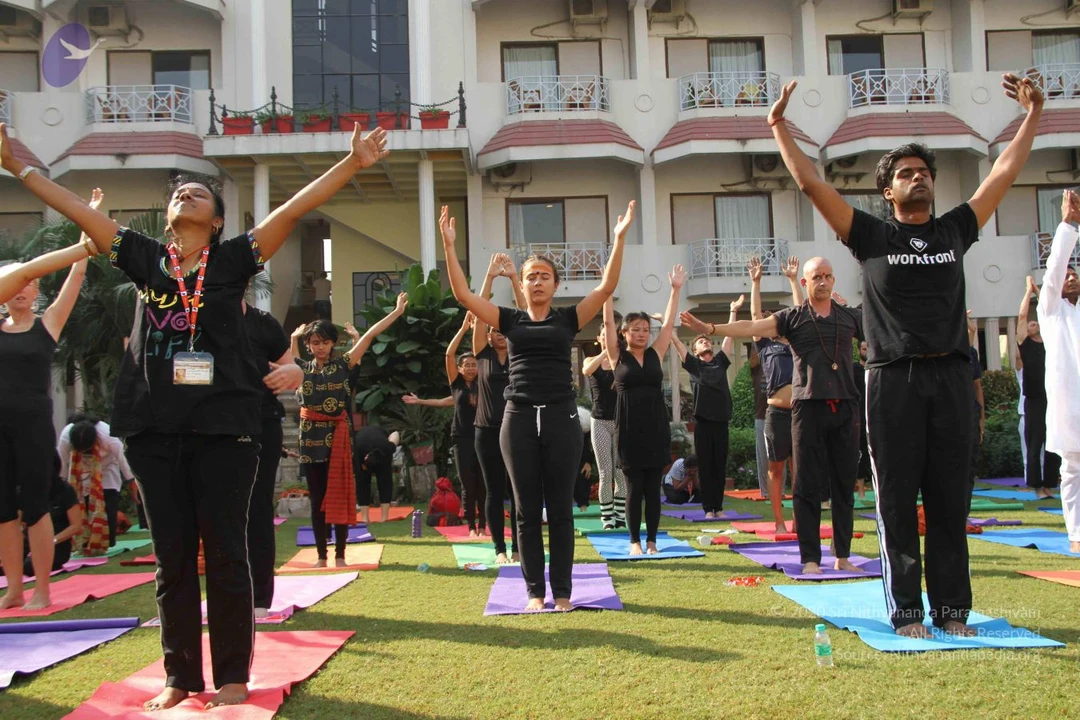
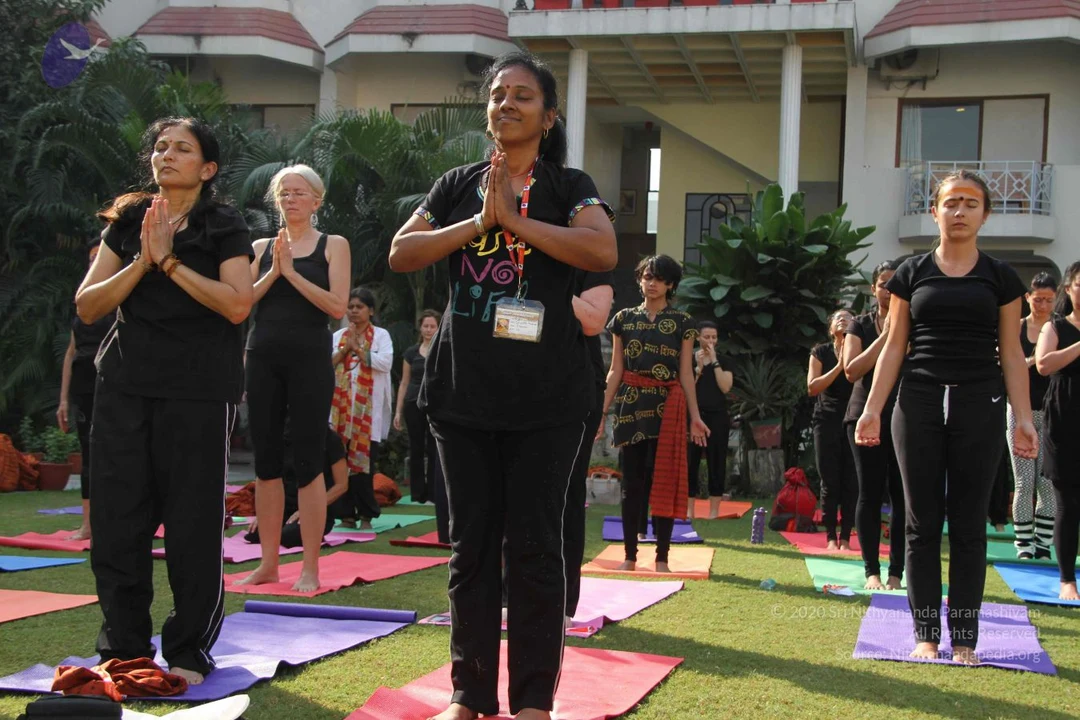
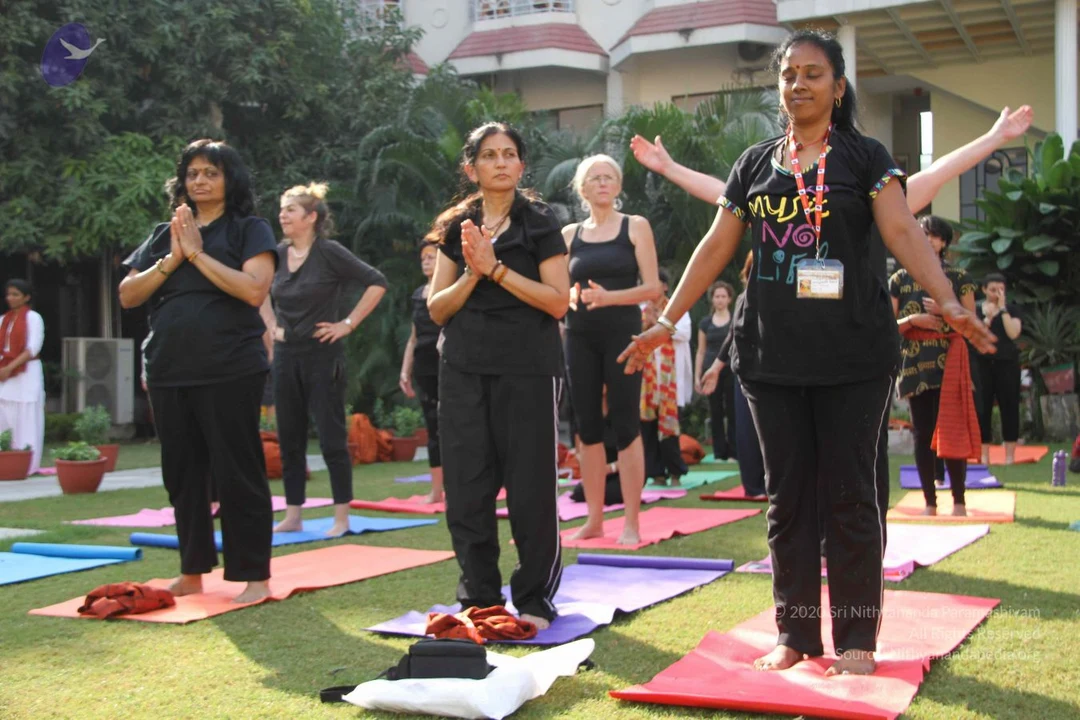
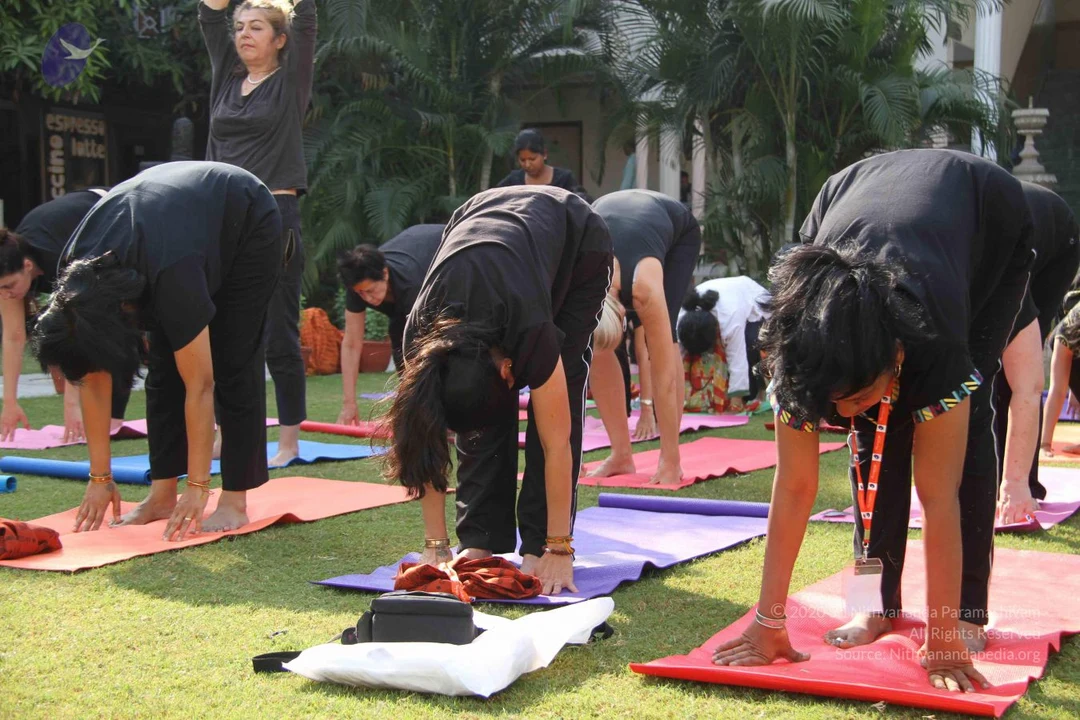
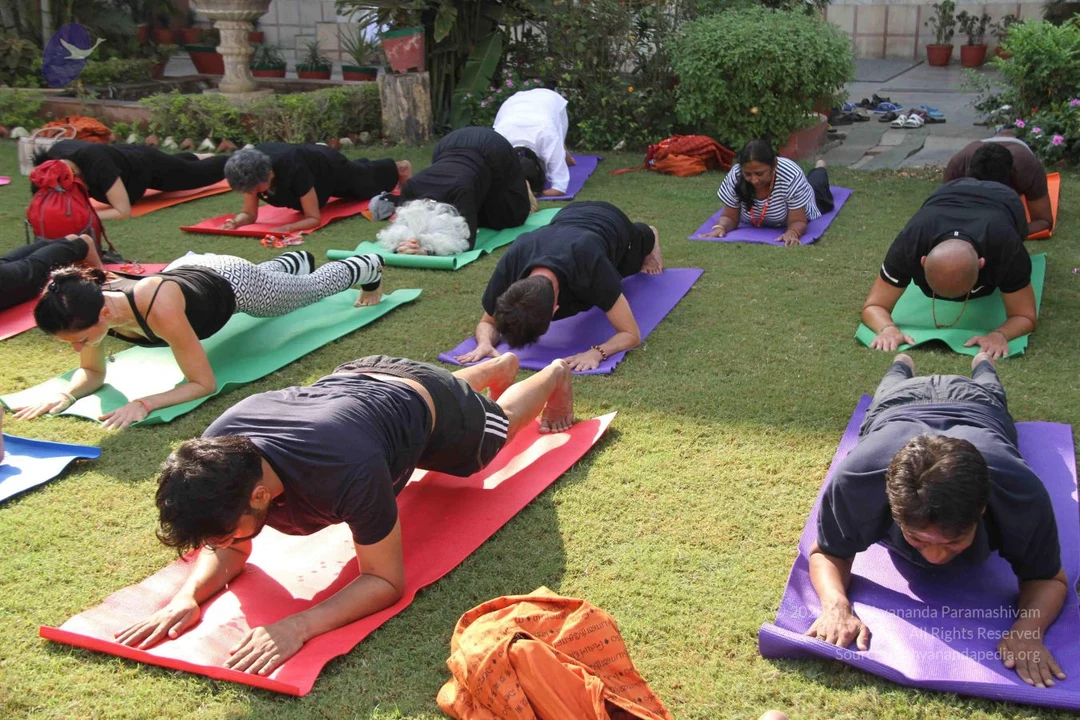
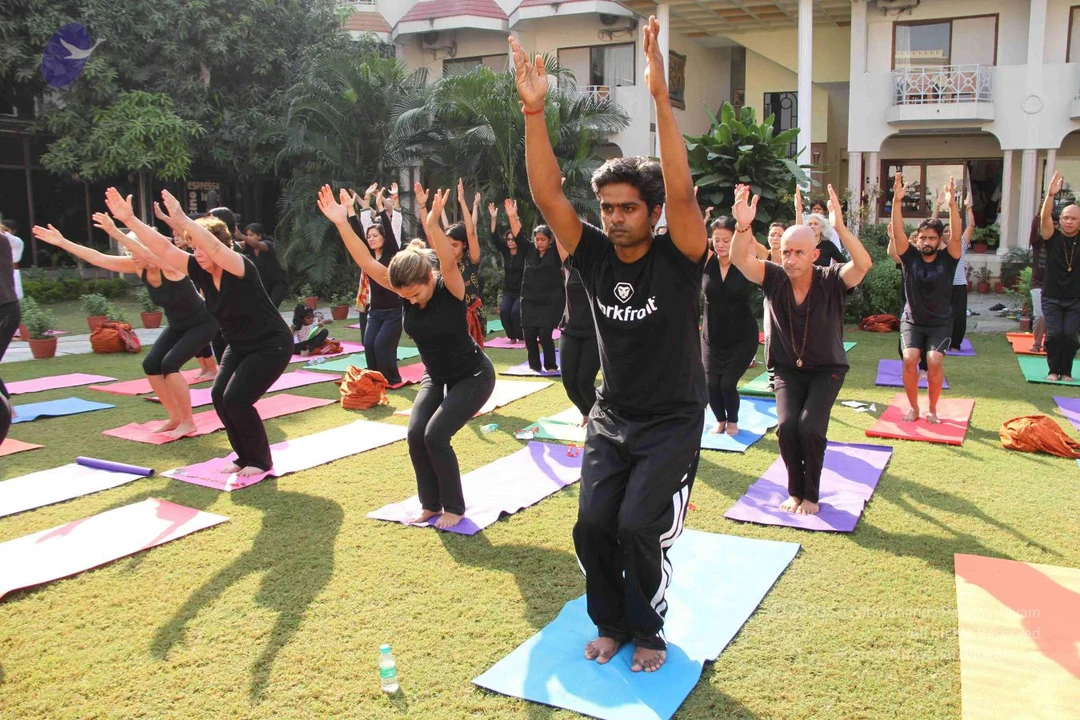
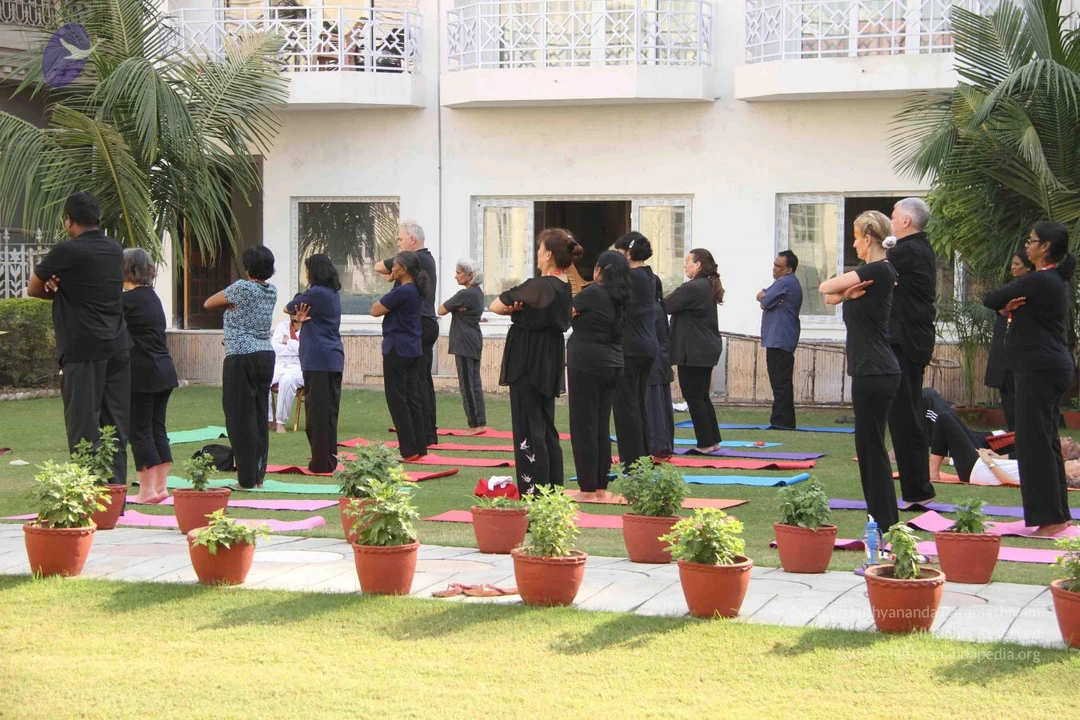
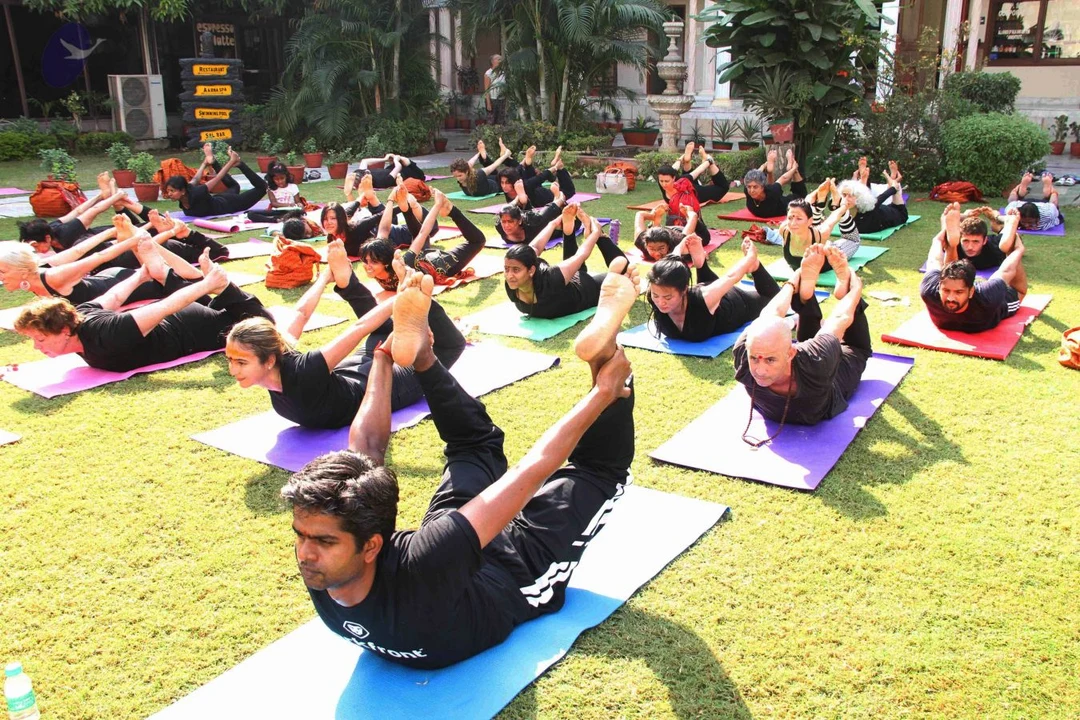
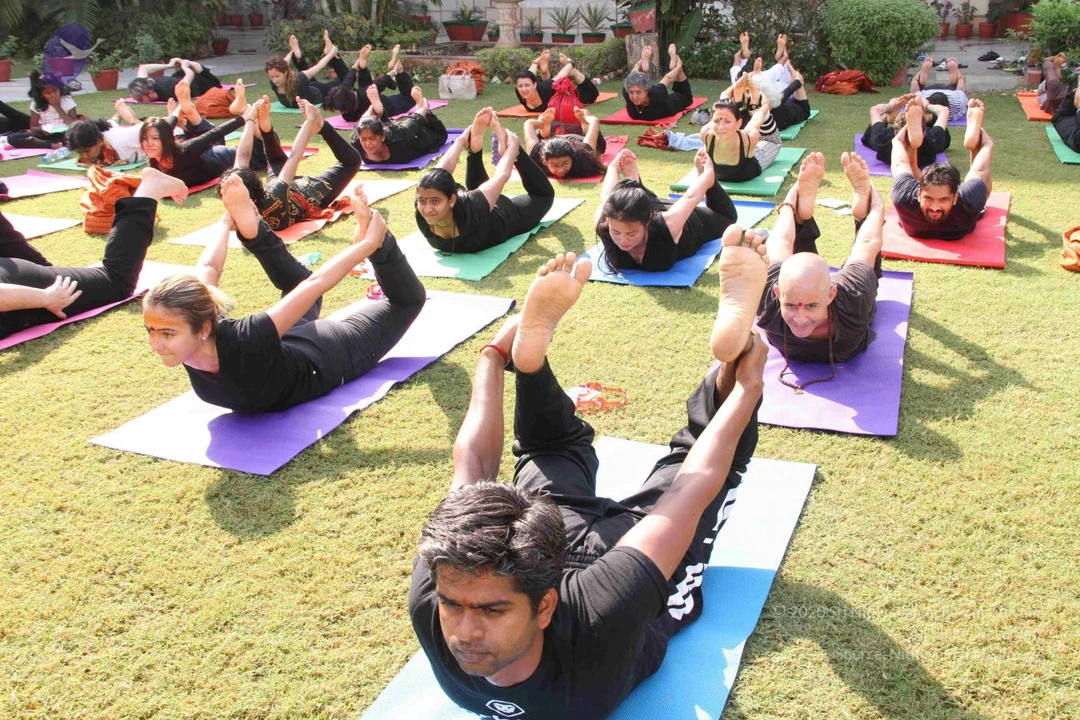
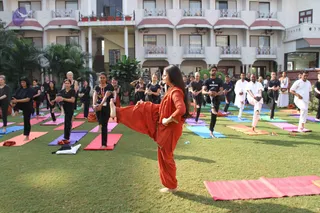
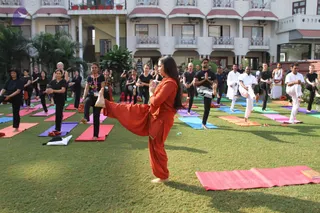
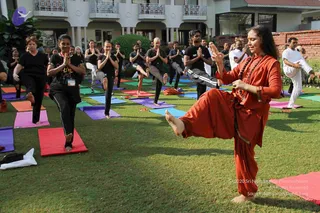
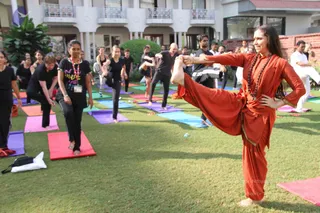
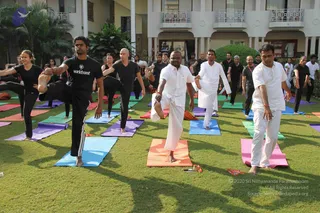
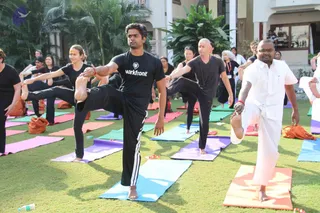
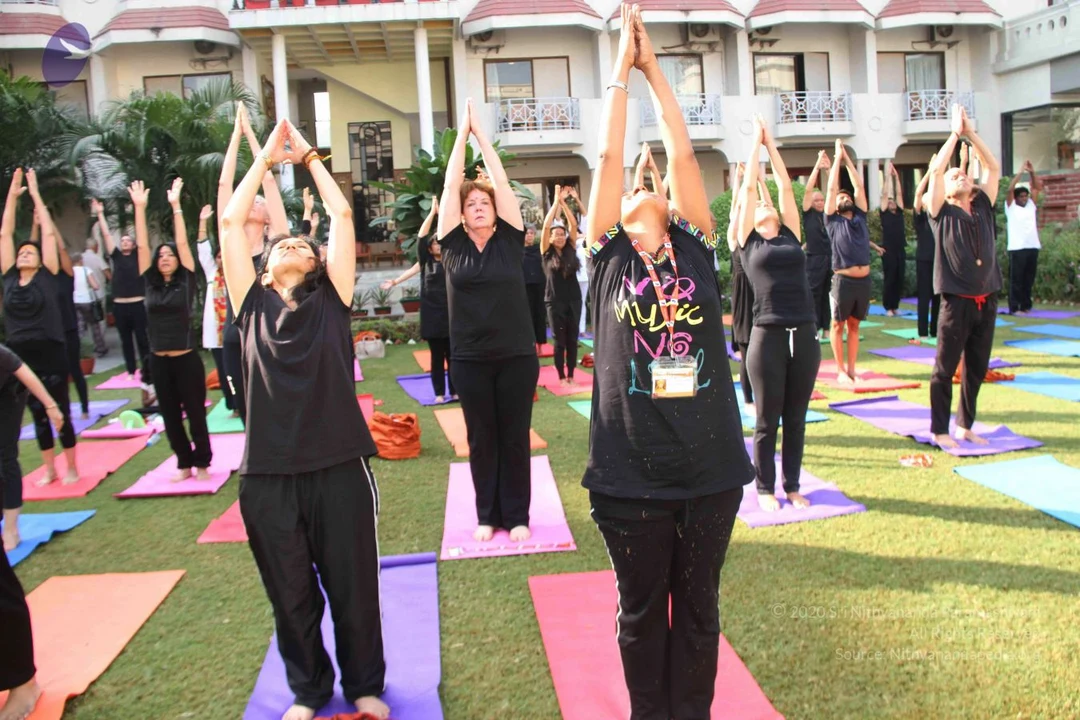
Outdoor yoga session on a lawn in front of a multi-storey cream building with balconies and palm plants. In the foreground a woman in an orange-red kurta and trousers stands on one leg, the other leg extended sideways, arms out. Around her a large group of participants on coloured yoga mats performs the same standing balance pose; most wear black tops and dark trousers, while several men on the right wear white kurtas and white dhotis. Some participants wear mala beads.Outdoor yoga session on a lawn in front of a white multi-storey building with balconies and potted plants. In the foreground a woman in an orange-red kurta and trousers stands on one leg with the other foot raised, palms pressed together at her chest. Around her, thirty-plus participants on coloured yoga mats in pink, purple, blue and orange perform balancing poses; many wear black tops and trousers, some wear white, and several wear rudraksha-style beaded necklaces. A man in black with hands in anjali mudra and a man in white with an arm raised stand among them. No a person candidate is visible.Outdoor group yoga session on a green lawn in front of a white multi-storey building with balconies. In the foreground a woman in a rust-orange kurta and loose orange trousers, with a rudraksha mala and wrist bangles, stands on one leg in tree pose with palms joined at the chest. Around her, rows of participants on coloured yoga mats in red, purple, blue and green perform balance poses, many in black tops, with hands in anjali mudra. A man in a white kurta stands at the right edge, and a few people are visible in the background.Outdoor yoga session on a lawn in front of a white multi-storey building with balconies. A woman in the foreground wears a rust-orange sleeveless tunic and dhoti-style trousers with a long rudraksha mala, and balances on one leg while raising the other foot high and holding it with one hand. Around her, dozens of participants on coloured mats in pink, purple, blue and red stretch in tree and balance poses, many dressed in black athletic wear. A staff member in black with a lanyard and red cord stands near the left edge. Potted plants and a red brick wall frame the background.Outdoor group yoga session on a green lawn in front of a white multi-storey building with balconies and columns. Many participants stand on coloured yoga mats in tree pose, balancing on one leg. Foreground figures include a man in a black Workfront T-shirt and black trousers, a man in white kurta and dhoti with red thread on his wrist, and a man in white shirt and trousers. Others wear black or grey t-shirts. A red-and-white flower garland lies on the grass. Some visible white clothing and yoga mats in blue, purple, green and pink.Outdoor group yoga session on a lawn in front of a white building with palm trees. Participants in black and white clothes stand on one leg with arms extended on coloured yoga mats in pink, purple, blue and orange. A man in a black workfront t-shirt and black track pants balances centrally, while a man in a white shirt and white dhoti on the right balances on an orange mat. A bald man in a black t-shirt wears a rudraksha mala, and a woman with an orange forehead mark and a red wrist thread is visible on the left. Orange bags lie on the grass. Ritual or satsang context is not shown; this is a yoga practice.

Mandala process session

130 photosSource gallery
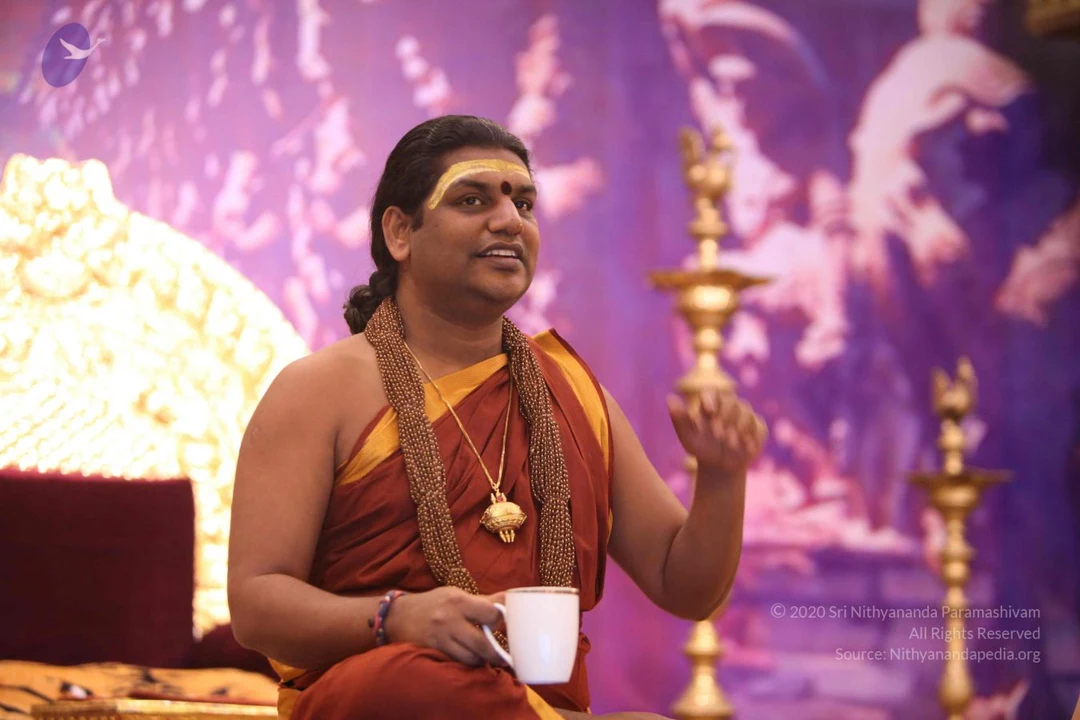
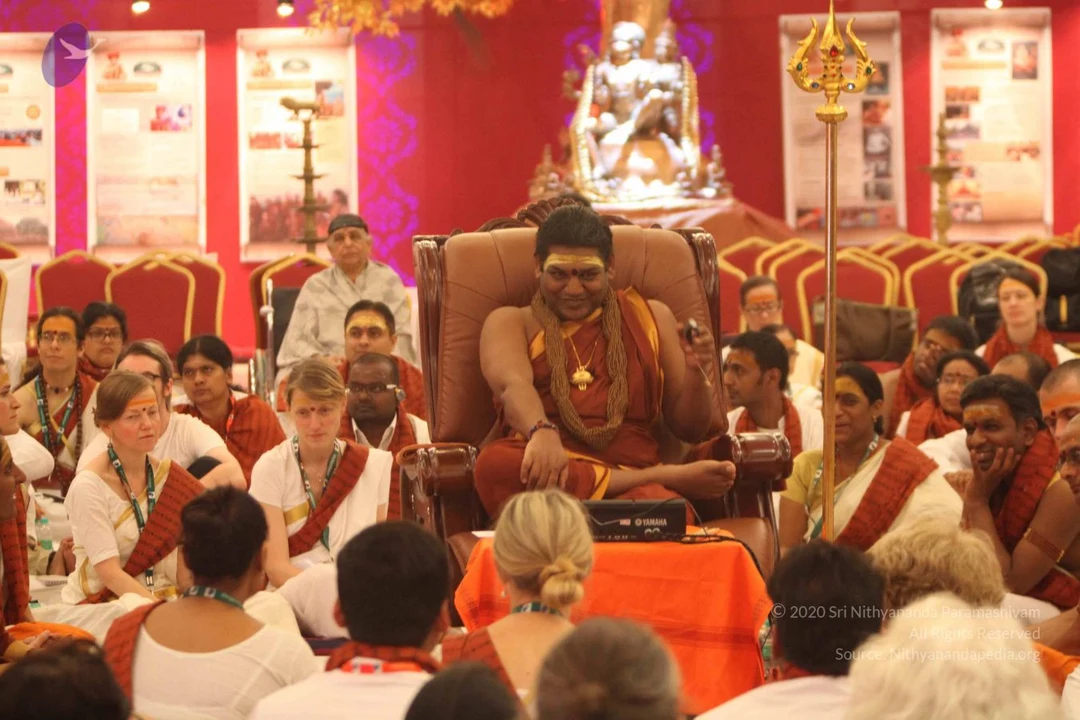
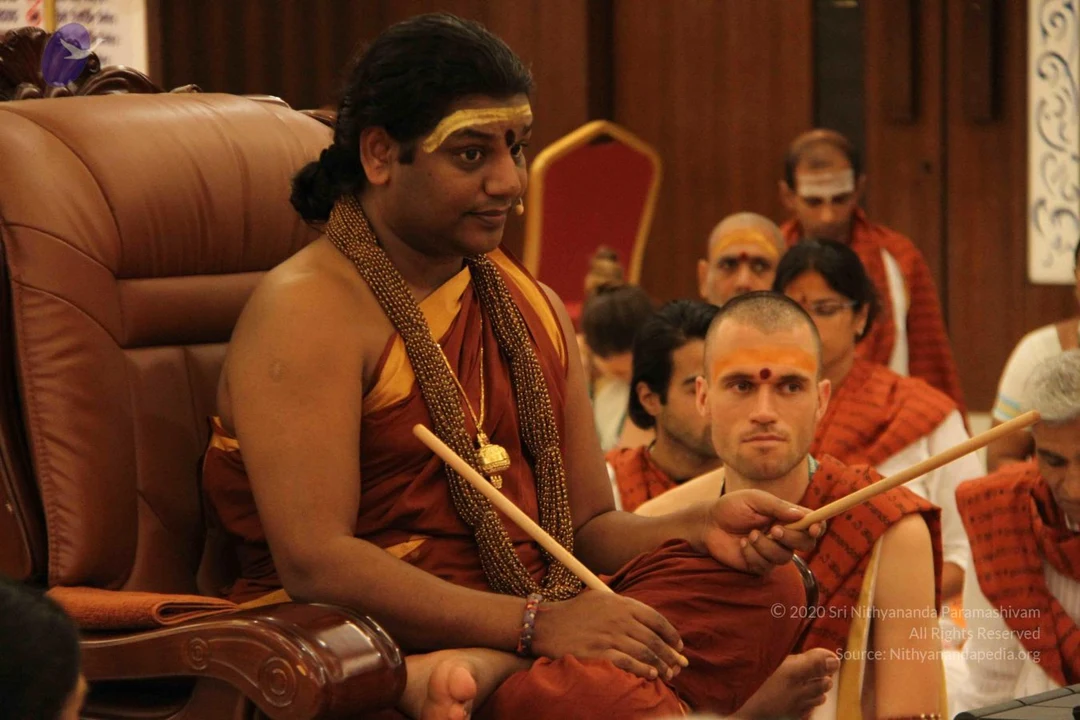
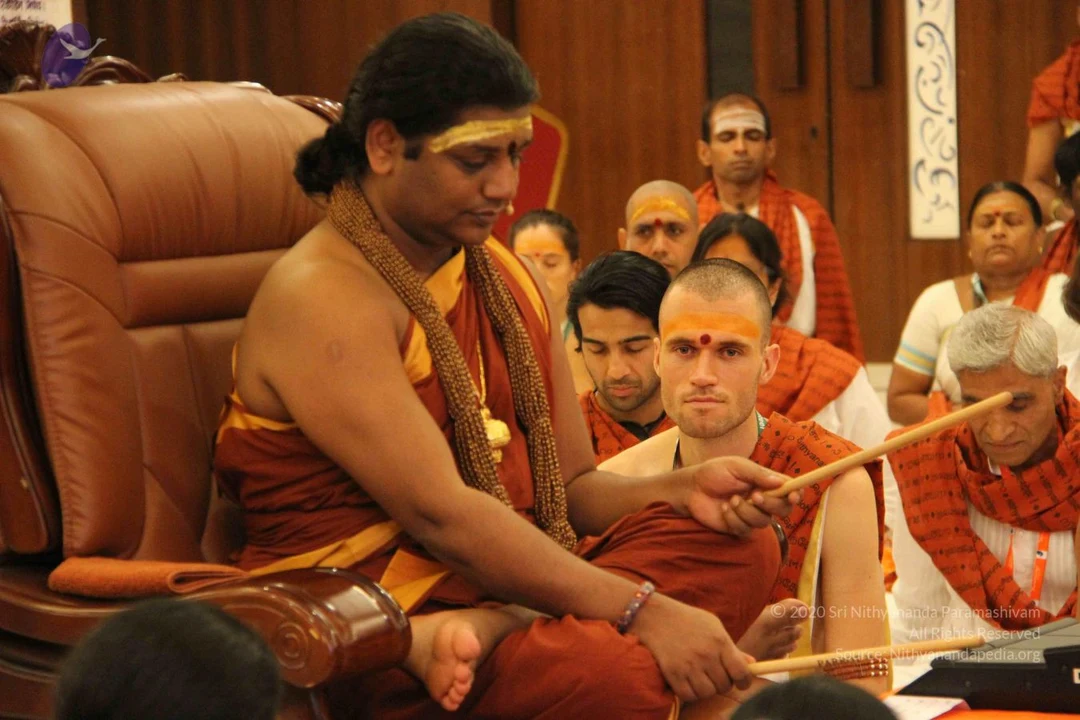
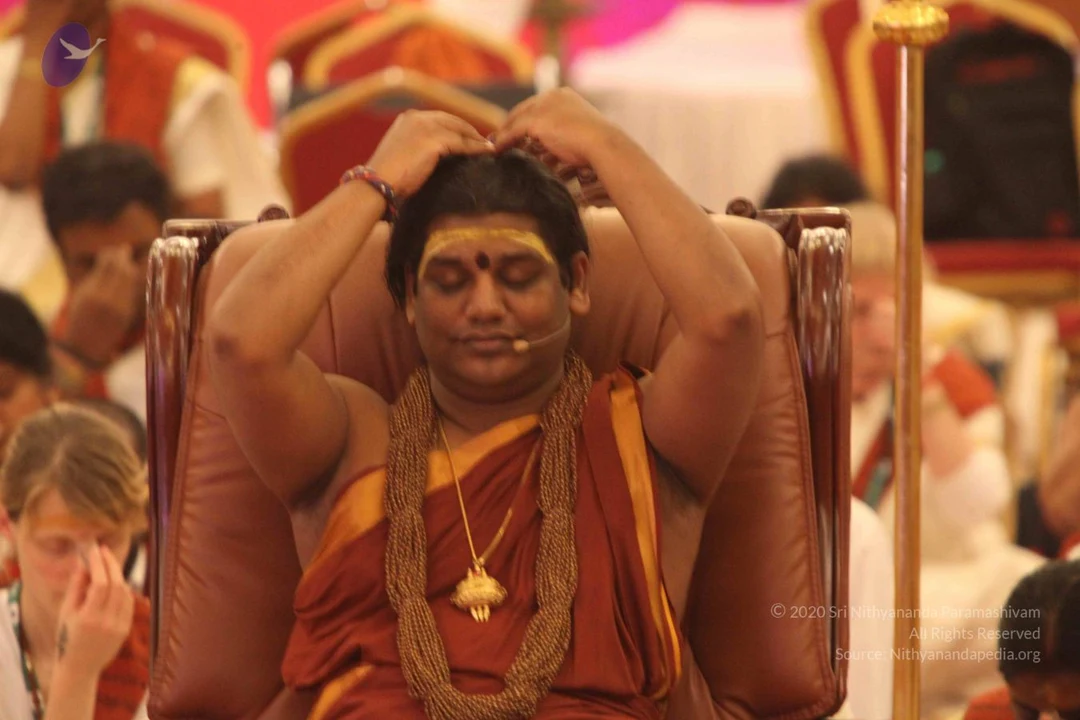
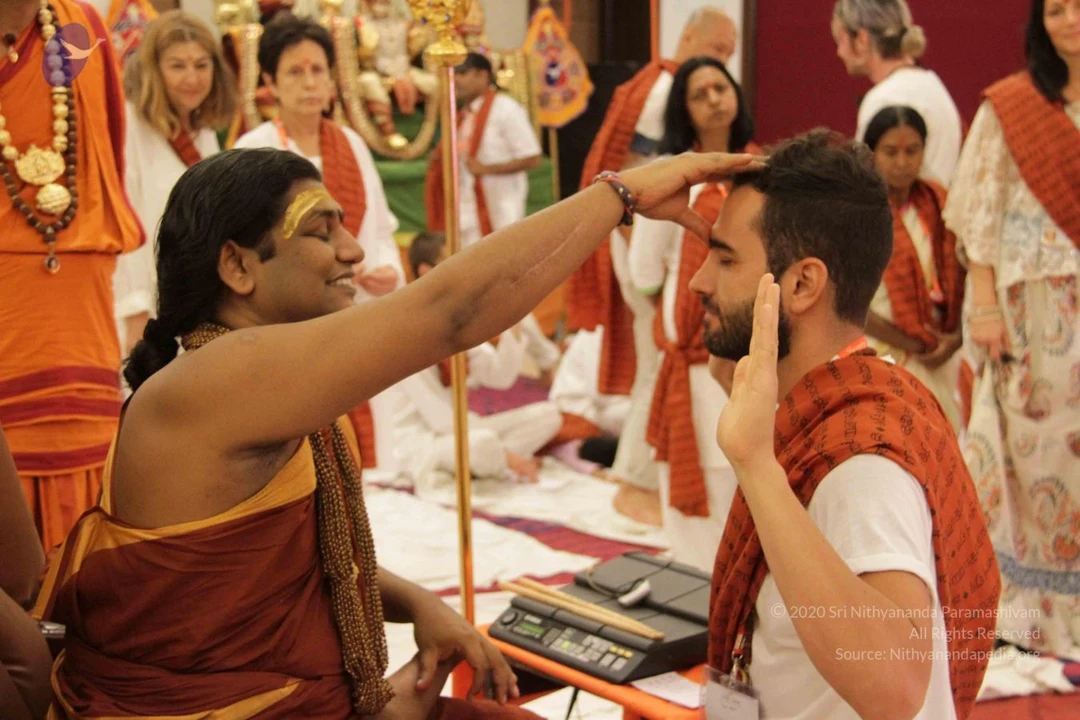
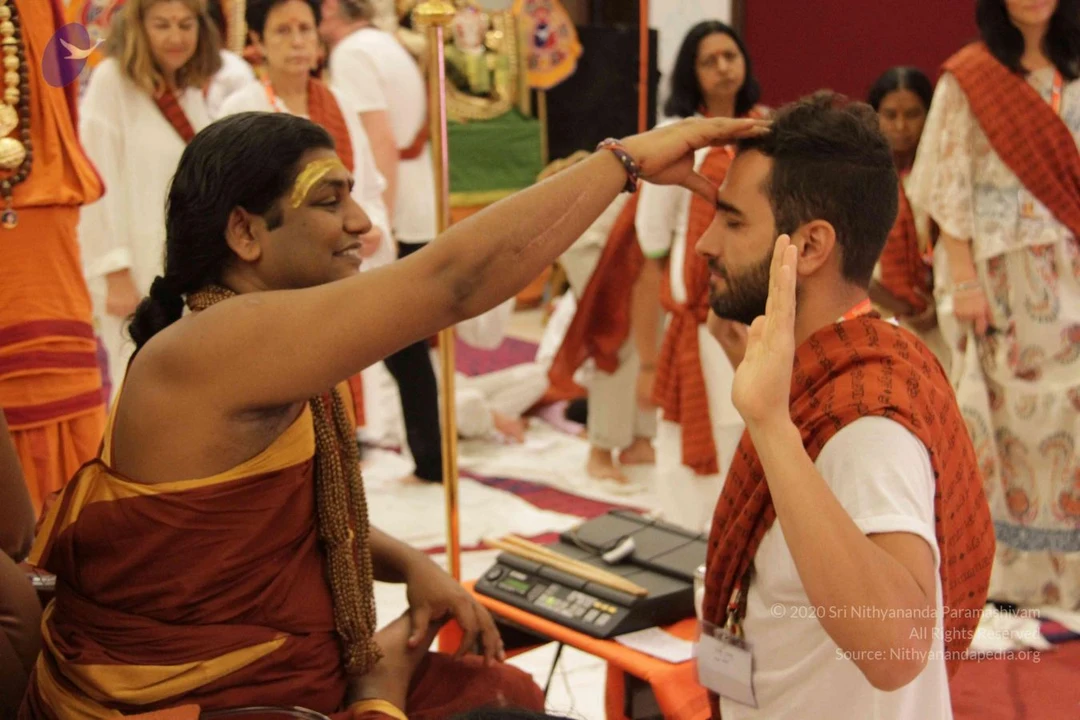
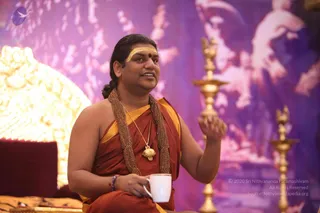
A man seated on a golden throne-like chair with a dark red cushion, speaking while holding a white cup in his left hand and gesturing with his right hand. He wears a rust-red and saffron draped garment, a long rudraksha mala necklace with a gold pendant, a bead bracelet, a yellow tilak on his forehead and a long braid. Behind him are tall golden oil lamps and a purple backdrop with painted floral and figure motifs. Swamiji (probable): the man has long swept-back hair, saffron ornate clothing and rudraksha malas, indicating a sannyasi giving satsang.A seated man in saffron-orange robes sits on a brown leather throne-like chair at the centre of a red-walled hall, wearing a gold-toned necklace with a pendant and a long beaded mala. He has a yellow tilak on his forehead and a yellow-painted face, one hand resting on the armrest. In front of him, a dark-haired man in a white shirt with saffron wrap sits near an orange-draped table with a Yamaha microphone and a golden trident stands at right. Around them, rows of devotees in white and saffron clothes, some with green lanyards and yellow tilak marks, sit on chairs facing him. A golden deity murti sits on a pedestal behind, and framed information panels line the back wall, with a brass oil lamp at left. a person (in_person): the seated man wears saffron robes, a long beaded mala and a gold necklace with a pendant.A man with short dark hair and a yellow tilak with a red dot on his forehead sits smiling on a large brown leather throne-like chair. He wears a rust-orange wrap with gold trim and multiple strands of gold-toned beaded necklaces with a gold pendant. He holds a small white object in his right hand. Behind him are red and gold ornate decorations, and seated devotees in orange garments and yellow forehead markings are visible at the sides of the frame.Three gilded deity figures sit side by side on a green and gold cushioned seat against a pale silk curtain and gold carved wall panels. The central figure wears a tall golden crown with a red band, a shiva-lingam tilak and crescent ornament on the forehead, a white and gold embroidered chest piece, and raised gold hands. Figures on either side wear red and green embroidered garments, ornate golden crowns and jewelled necklaces, with gold-embellished red and gold borders draped across the seat. The statues have painted faces and ornate ceremonial dress, consistent with festival deity murti; no living people are visible.A seated man in saffron-orange robes with a heavy gold-bead mala and a gold pendant sits in a large brown leather throne-style chair. He has both hands raised to the top of his head, eyes closed, with a yellow tilak and red bindi on his forehead and a small headset microphone near his ear. Behind him, a red and gold backdrop and a partially visible ornate chair frame the scene. Several other people in white and orange clothing sit in the background, and a man in white with an orange shawl is visible at the right edge.A seated man in saffron-orange robes sits on a large brown leather throne-style chair with carved wooden armrests and back, both hands raised to the top of his head, eyes closed. He wears a thick multi-strand rudraksha-style mala and a gold pendant, a gold-coloured forehead band with a red bindi, and a small lapel microphone. Behind him, blurred devotees in white and orange clothing sit and stand in a bright hall with red draping, and a gold-coloured flag or banner is visible at the top right. The man is distinctively presented with long swept-back hair, ornate gold pendant and multiple malas, so this is a probable Swamiji in person in a satsang setting.

Third-Eye-Shivoham

90 photosSource gallery
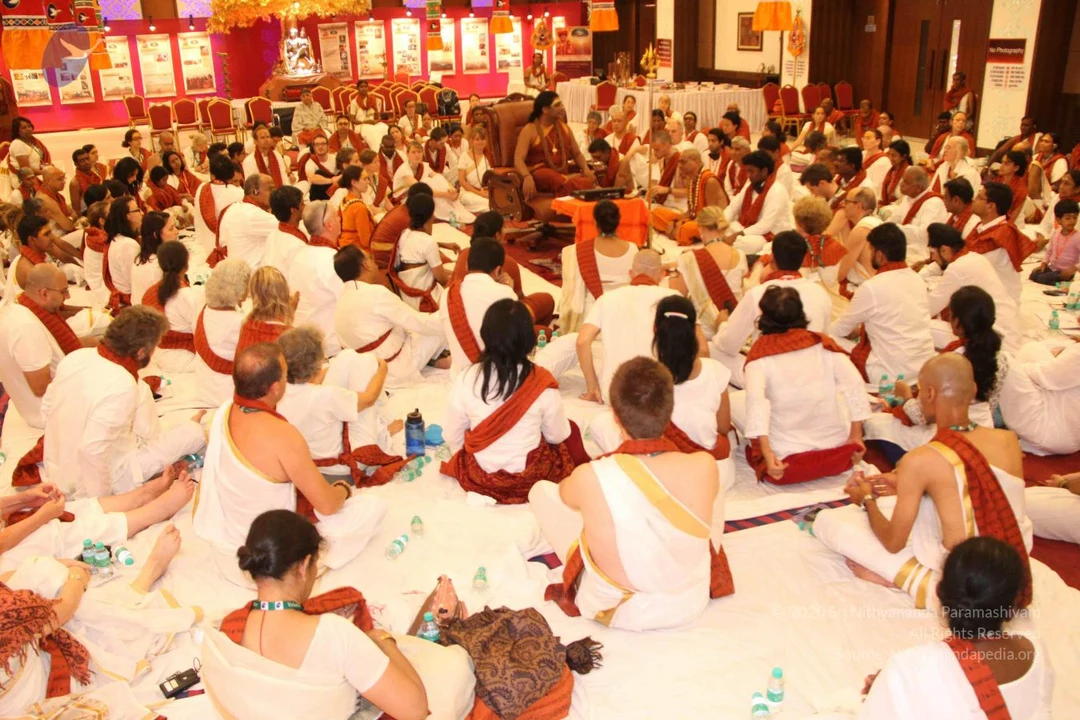
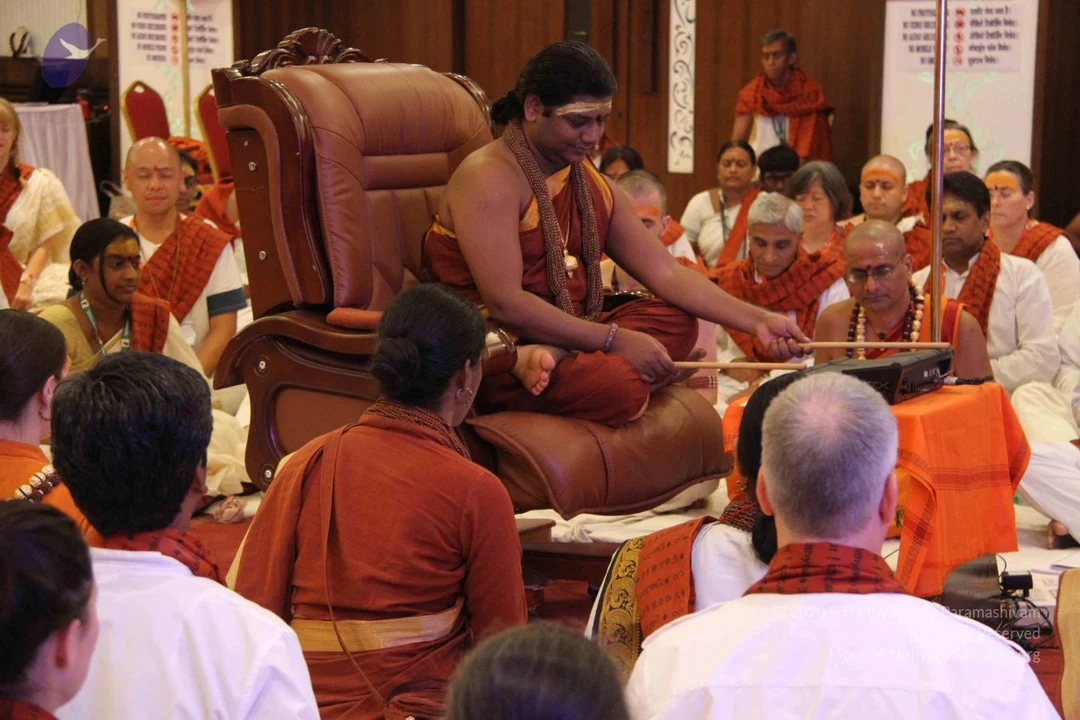
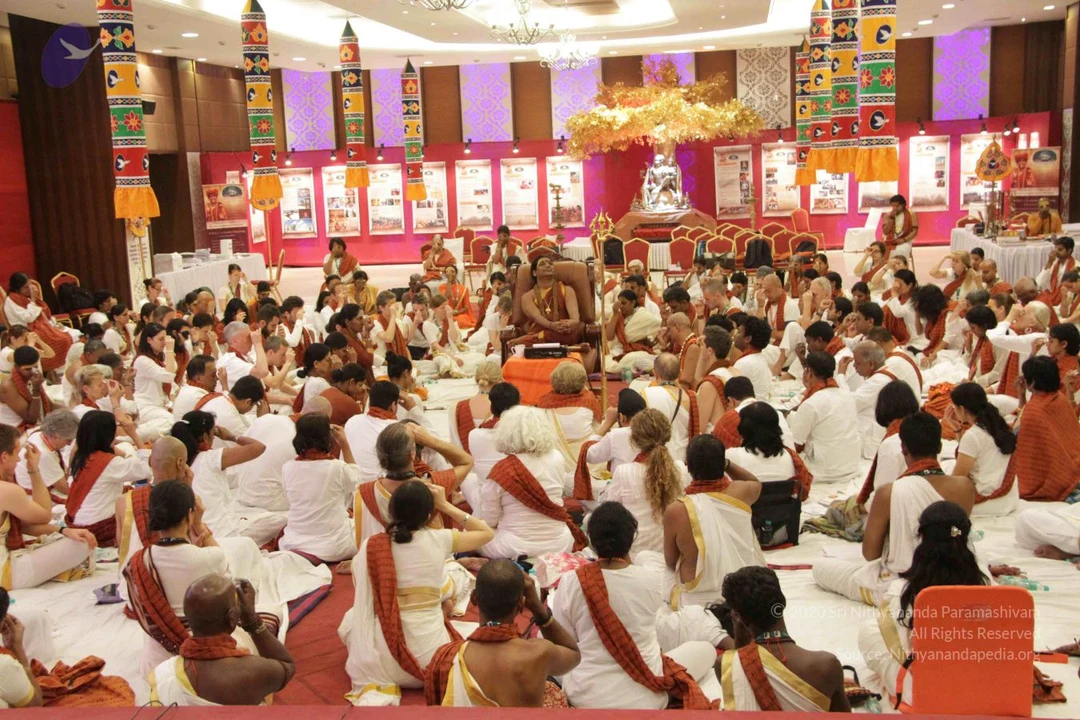
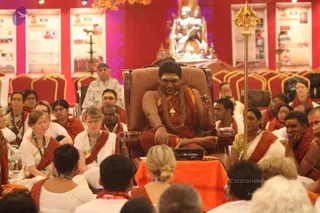
A central man sits in a large carved wooden throne with brown leather upholstery, wearing an orange-brown robe draped over his shoulder, a long gold pendant necklace, multiple rudraksha mala strands, and a gold tilak mark on his forehead. He turns his head to the side with a hand resting on the armrest, and a white cup sits on a small table in front. Behind him, a woman in a white head-covering and red garment sits in the background, a man in red and white robes stands near the left edge, and red-draped figures move near a red-curtained altar with ornate decorations.A seated satsang gathering in a red-walled hall lined with information panels. Around him, devotees in white clothes with red and maroon shawls sit on the floor, some with hands folded, while others in white stand and move near a gilded deity murti on a shelf behind and a tall brass trident-like staff in front. Water bottles and cushions are visible on the floor.A seated figure in a brown leather throne-style chair at the front of a satsang hall, with a tall golden trident (trishul) standing beside him. He wears saffron-orange robes, a long gold-and-beaded necklace, a gold pendant, and a yellow-gold tilak on his forehead, and holds a white cup. Around him, devotees in white and orange-red shawls sit on the floor, and a wall behind shows framed panels with photographs. Swamiji (probable): a long, swept-back dark hairstyle, saffron robes, a rudraksha-style bead necklace and gold pendant, with a crown-like trident beside the throne. Nearby, a woman in a white outfit with an orange shawl and other attendees fill the space, and a few people in white and red shawls sit in the foreground.A seated man in an ornate brown wooden throne chair holds a white cup and smiles while addressing a seated audience. He wears a saffron-orange robe, a thick gold-and-beaded rudraksha mala, a gold pendant, and a yellow tilak on his forehead. Behind him stands a tall golden trident. Audience members in rust-coloured shawls and white clothing sit before an orange-draped table with a microphone. Printed panels hang on the pink-red walls behind. Swamiji (probable) appears in the throne, with long swept-back hair, saffron robe, rudraksha mala and gold pendant, in a satsang setting.A seated satsang gathering in a hall with red walls and purple patterned panels. A person in a rust-red and saffron garment sits on a brown leather throne-style chair at the centre, with a microphone in front and an orange cloth draped on the table. Around him, many devotees sit cross-legged on white sheets, most in white clothes with red-orange shawls. Foreground devotees face the throne. Behind, framed photo panels line the wall, a golden tree hangs at upper right, and a white figure stands near a seated statue. A tall brass staff with a trident-like top stands beside the throne. Orange and red banners hang from the ceiling. The seated figure at the throne appears to be a candidate for the a person, but the appearance is uncertain.A photograph of a large satsang gathering in a hall with red walls and colourful patterned pillars. A seated man in an orange-red garment sits on an ornate throne-like chair at the centre, with a golden tree-like canopy and a deity murti on a decorated altar behind him. Around him, many devotees sit on white cloths wearing white dhotis and saffron-red shawls, some raising their hands. Several people stand in white clothing near the altar, and orange chairs and white-draped tables line the sides of the room. Backdrop panels display framed photographs and text.

FB-photo-of-the-day

1 photoSource gallery
Mandala-Process-session

12 photosSource gallery
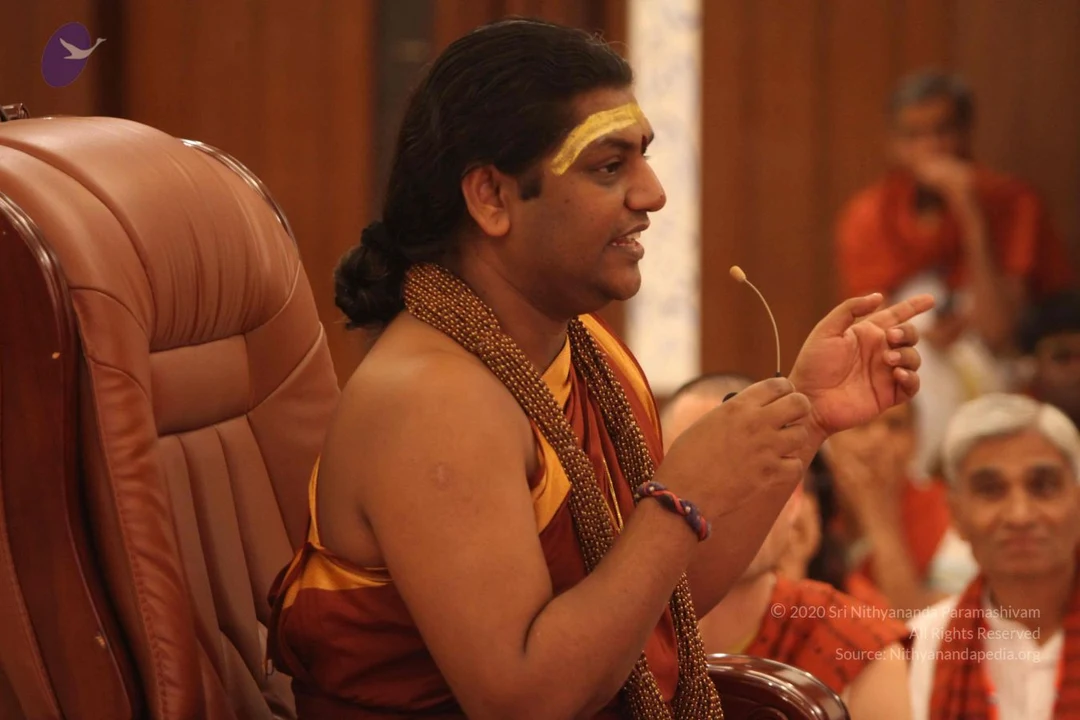
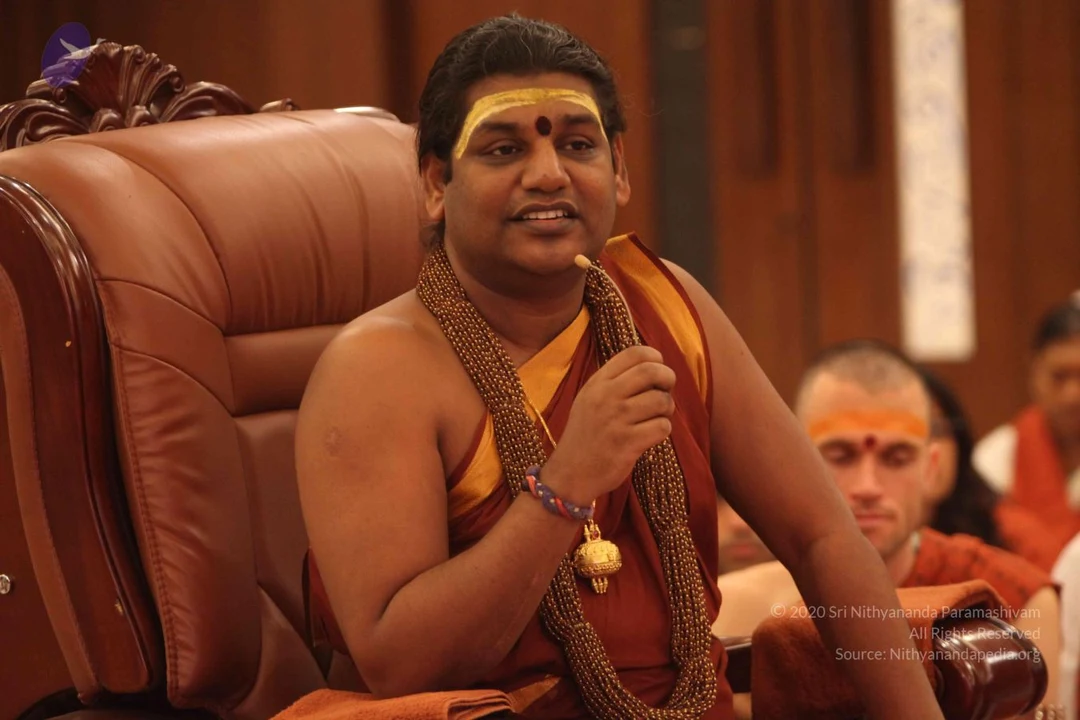
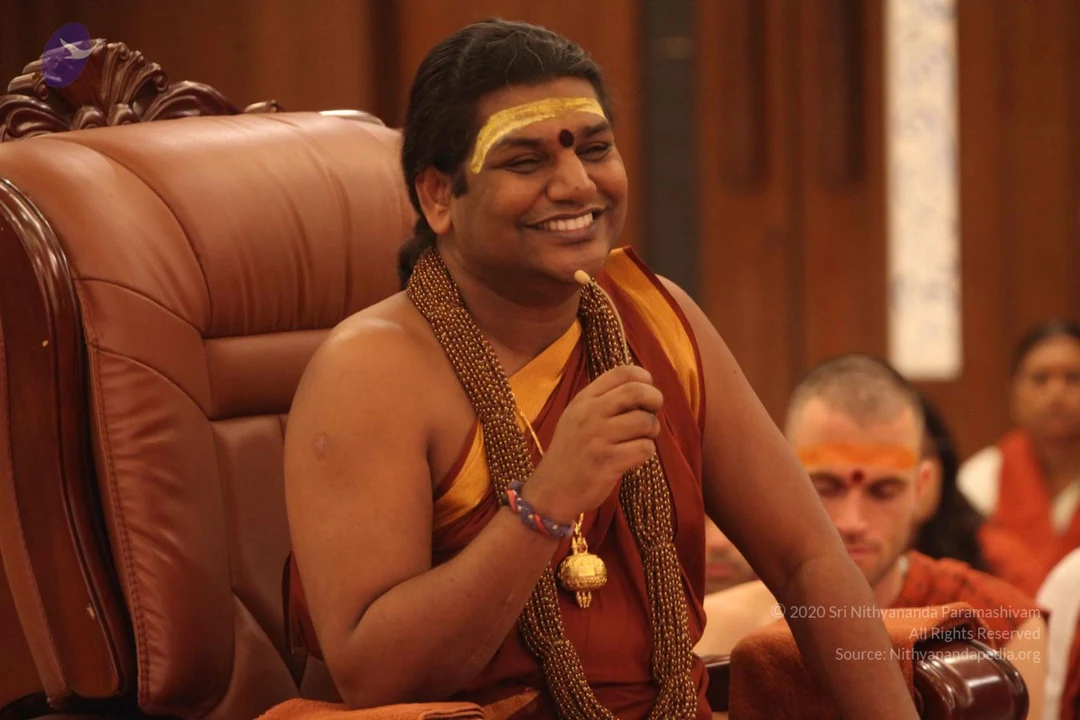
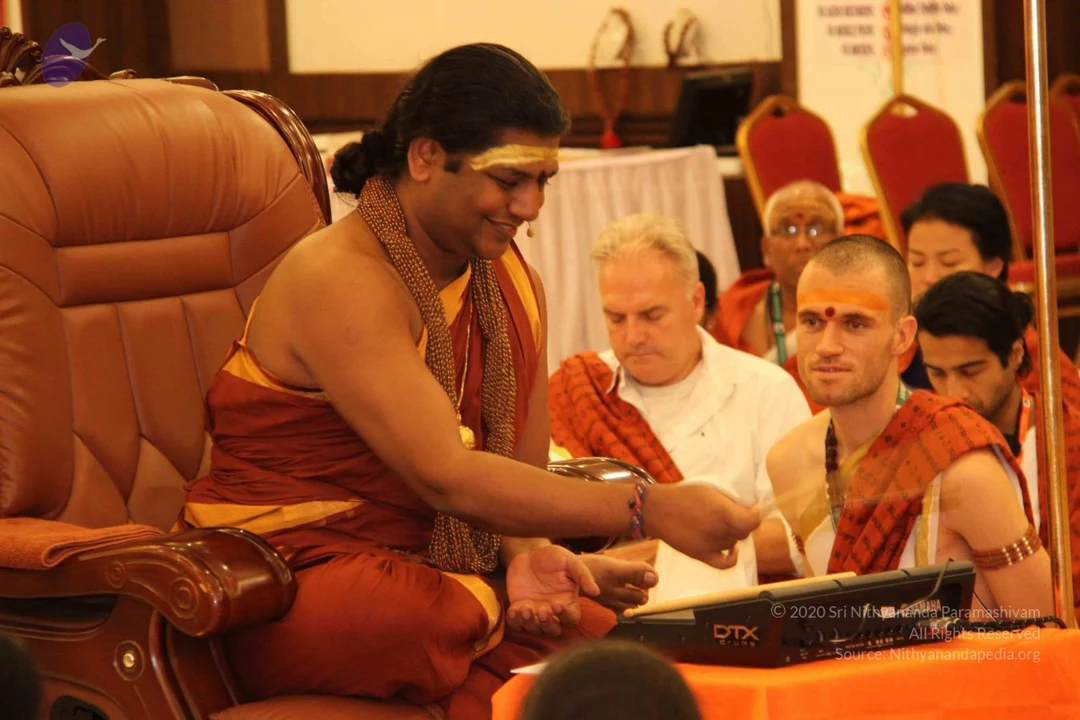
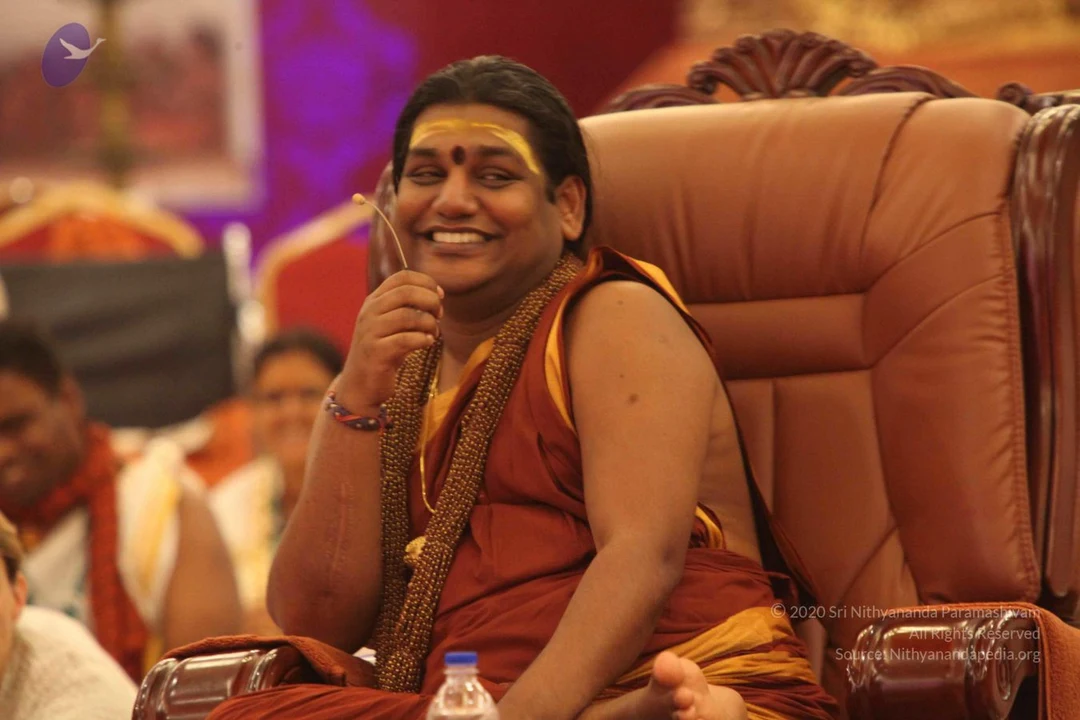
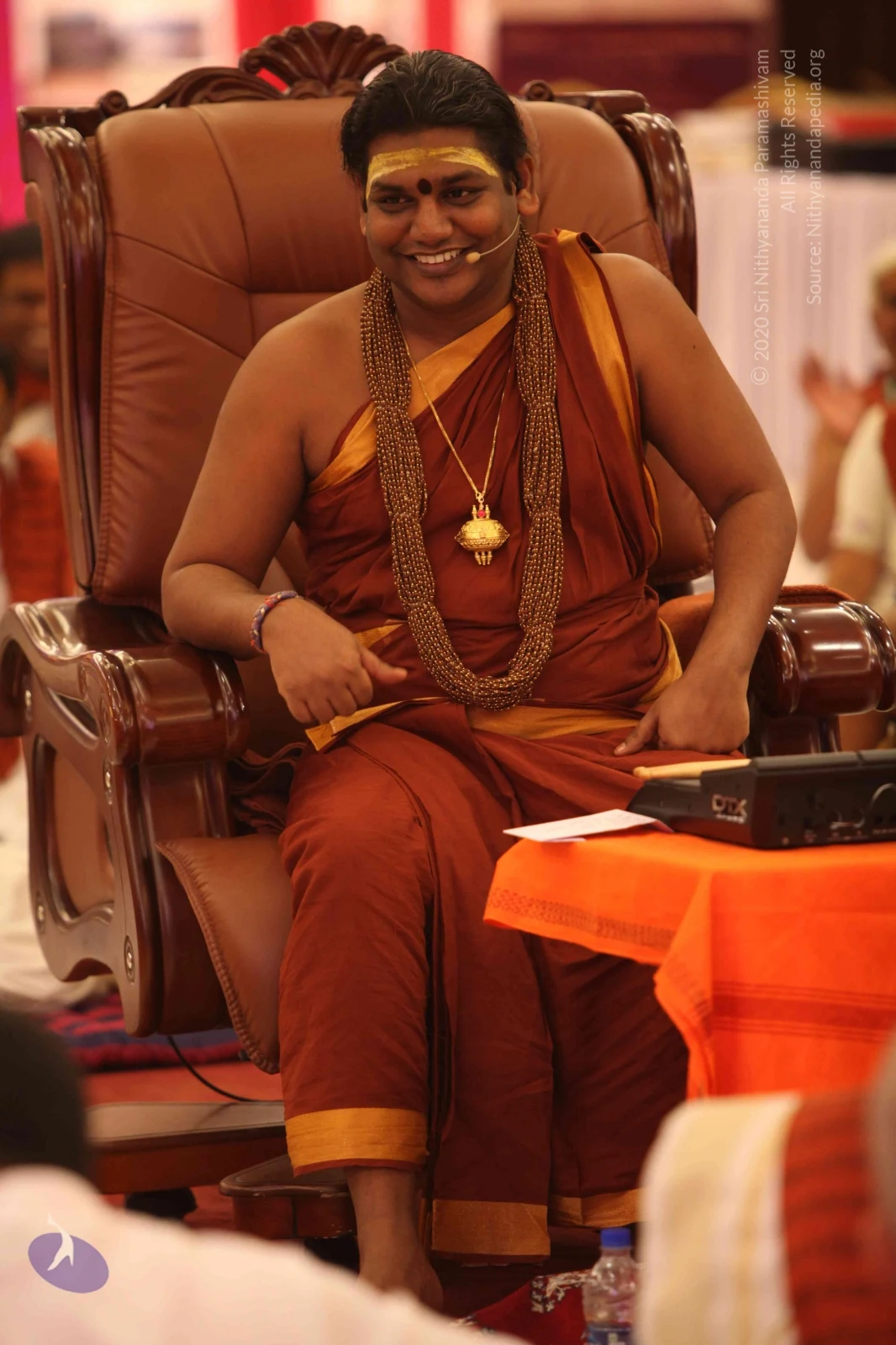
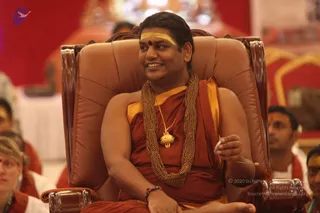
A smiling man sits in a large carved brown leather throne-style chair at a seated event. He wears a rust-red robe with gold borders, a heavy multi-strand gold-toned bead necklace and a gold pendant, a red bracelet, and a gold tilak with a red dot on his forehead. A small microphone is at his mouth and a DTK-branded device with an orange-draped table sits beside him. Blurred attendees in white and red clothing are at the edges. a person appears in person, seated on a throne with ceremonial gold beads and saffron-red robes, leading the satsang.A smiling man sits cross-legged on an ornate brown leather throne with gold-carved armrests and a gold-patterned backdrop. He wears a rust-red and gold-bordered robe, a multi-strand gold bead necklace, a gold pendant, a bracelet, and a yellow tilak with a red dot on his forehead. A microphone stand is at his side, and his bare feet rest on a gold-carved footstool.A seated man in rust-red and gold-bordered saffron-toned robes sits on an ornate brown leather throne with gold-carved armrests and a gold footrest in front. He wears multiple strands of gold-toned beaded necklaces, a gold pendant on a chain, a red-beaded bracelet, and a yellow sacred-ash band with a red kumkum dot on his forehead. A black microphone stands at his right, and a pink-and-gold backdrop with a faint ornamental emblem is behind him. He smiles and gestures with his hands while speaking.A man seated on an ornate brown leather throne-style chair speaks into a black microphone on a boom stand during a satsang. He wears a rust-red robe with gold-yellow borders, multiple strands of gold beaded necklaces and a gold pendant, and a red bindi with a yellow forehead marking. His right hand is raised in a gesture while his left rests on his knee. A gold-patterned backdrop with a golden ornamental chair frame appears behind him. a person: the seated speaker wears saffron-red robes, gold bead necklaces and a gold forehead marking, consistent with the page's a person reference, and sits on a throne-like chair.A man seated in a large tan leather throne-style chair speaks into a microphone on a stand while raising his right index finger. He wears a rust-red robe with a gold border draped over one shoulder, multiple strands of heavy gold beaded necklaces, and a gold pendant. A gold tilak band and a red dot mark his forehead, and a beaded bracelet is on his wrist. Behind him is a purple and gold backdrop with a decorative gold emblem. The image is a photograph of a teaching session.A seated man in a large brown leather throne-style chair at a satsang hall with red walls and gold trim. He wears a saffron/orange wrap, a rudraksha mala draped over his shoulders, a gold pendant on a chain, and a yellow-gold tilak on his forehead. Standing to the right, a person in white dhoti and cream shawl with orange border and a woman in a cream sari with gold border stand near a microphone stand. Audience members are seen from behind in the foreground, including a woman with blonde hair in a bun. Ornate red and gold decor is visible behind.

Morning-Satsang

12 photosSource gallery
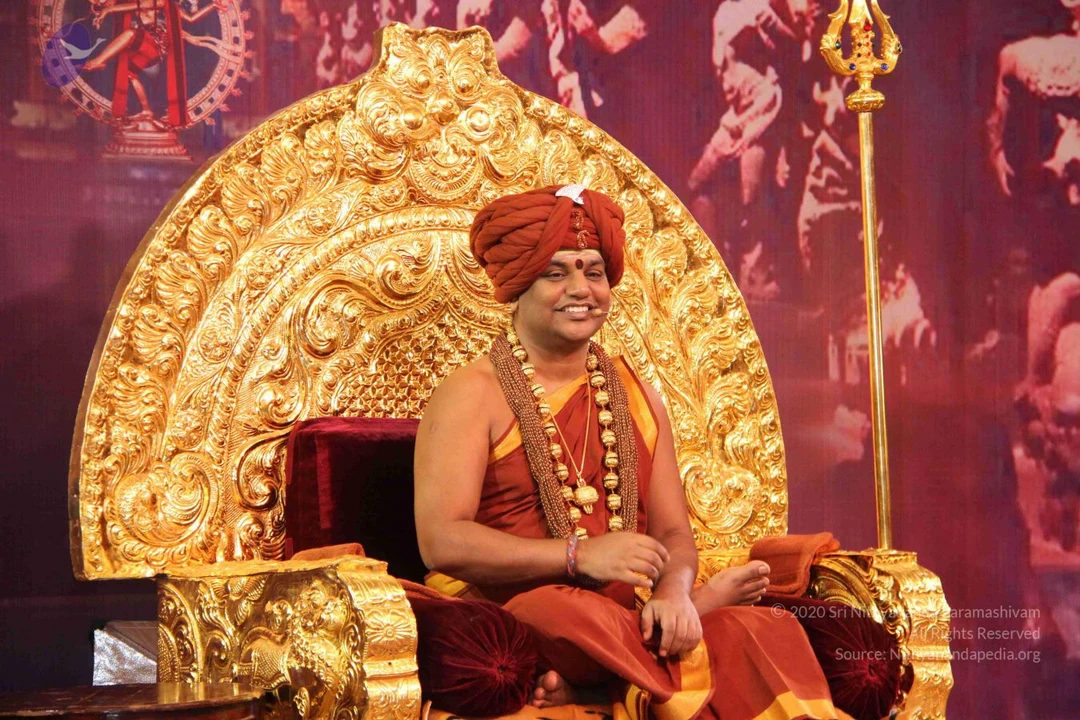
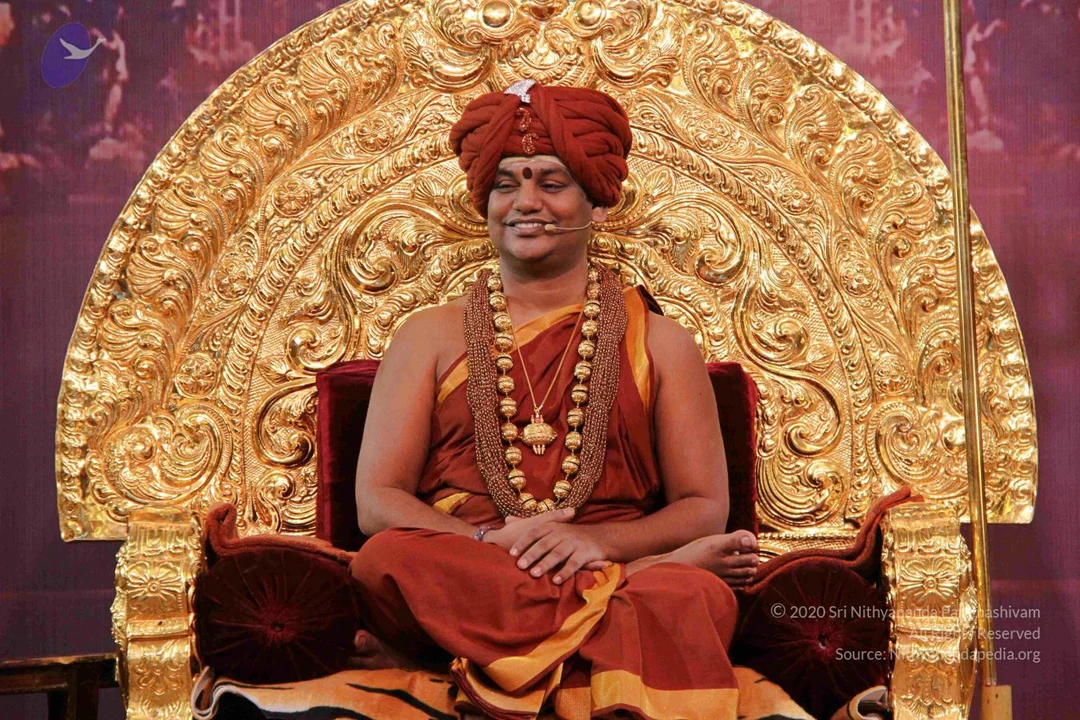
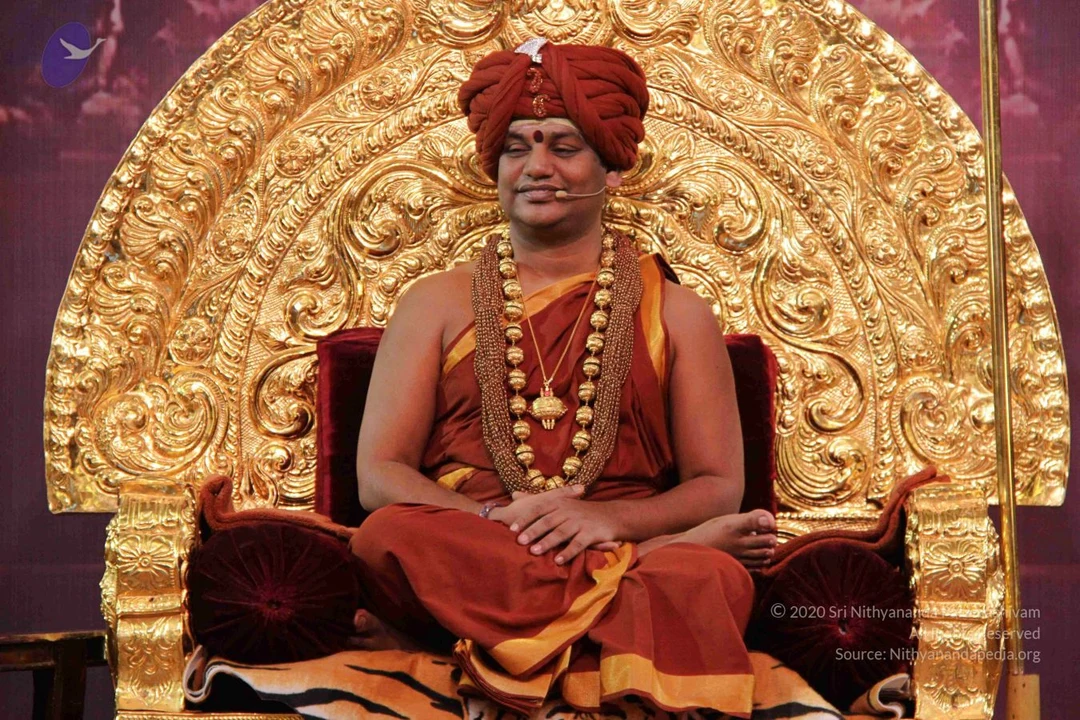
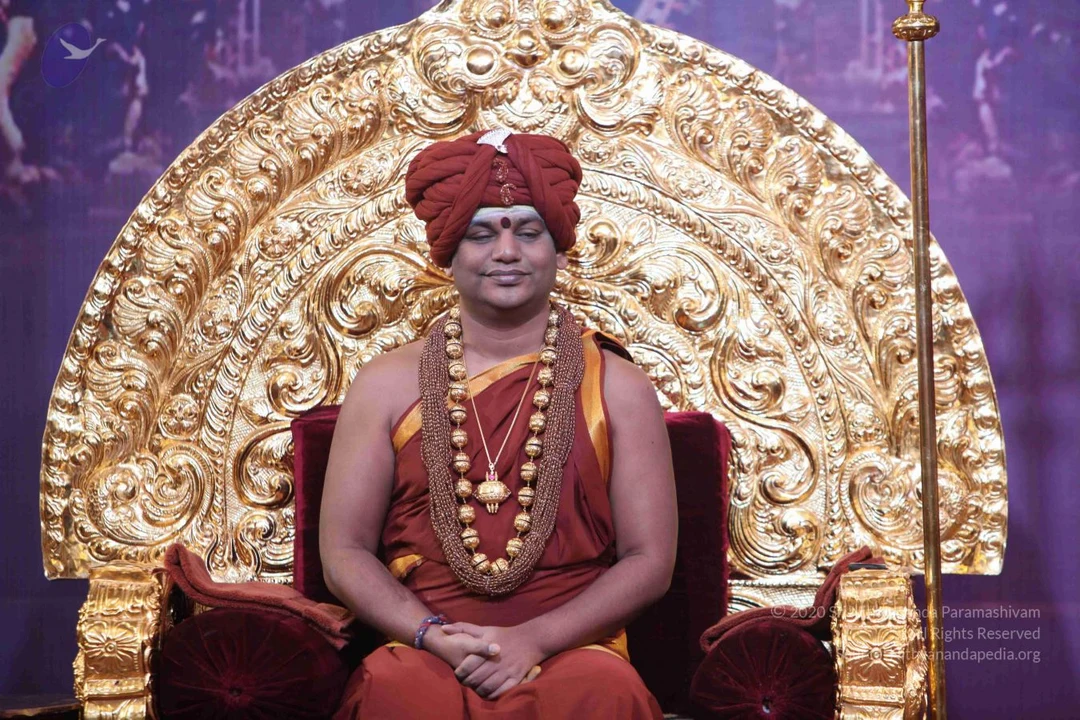
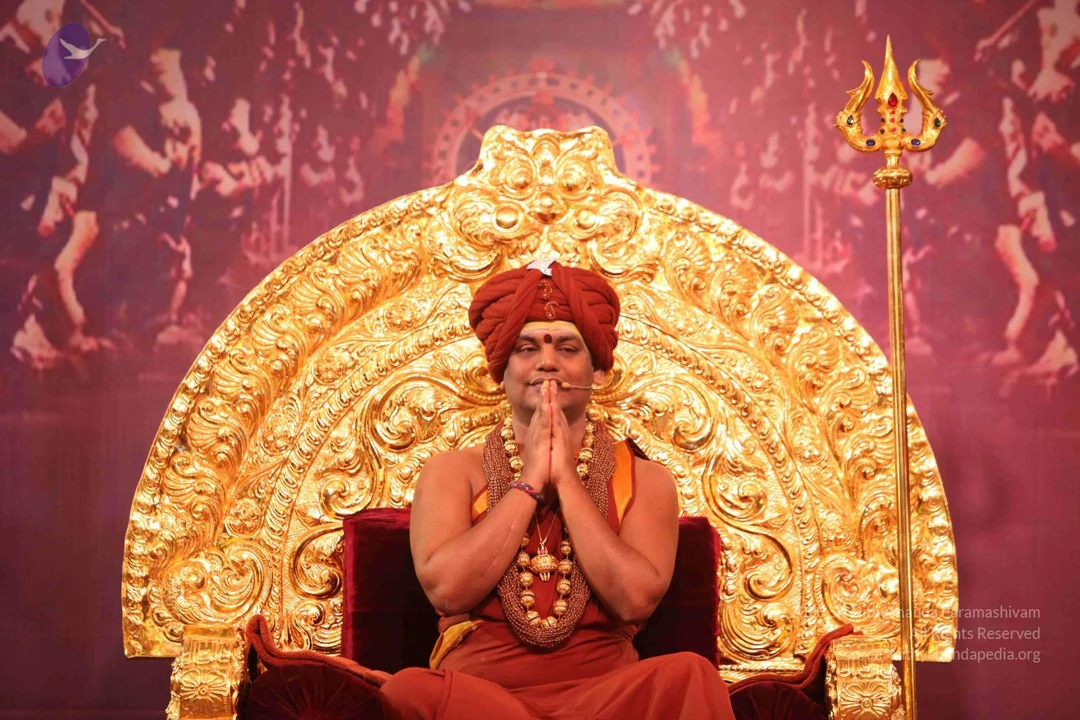
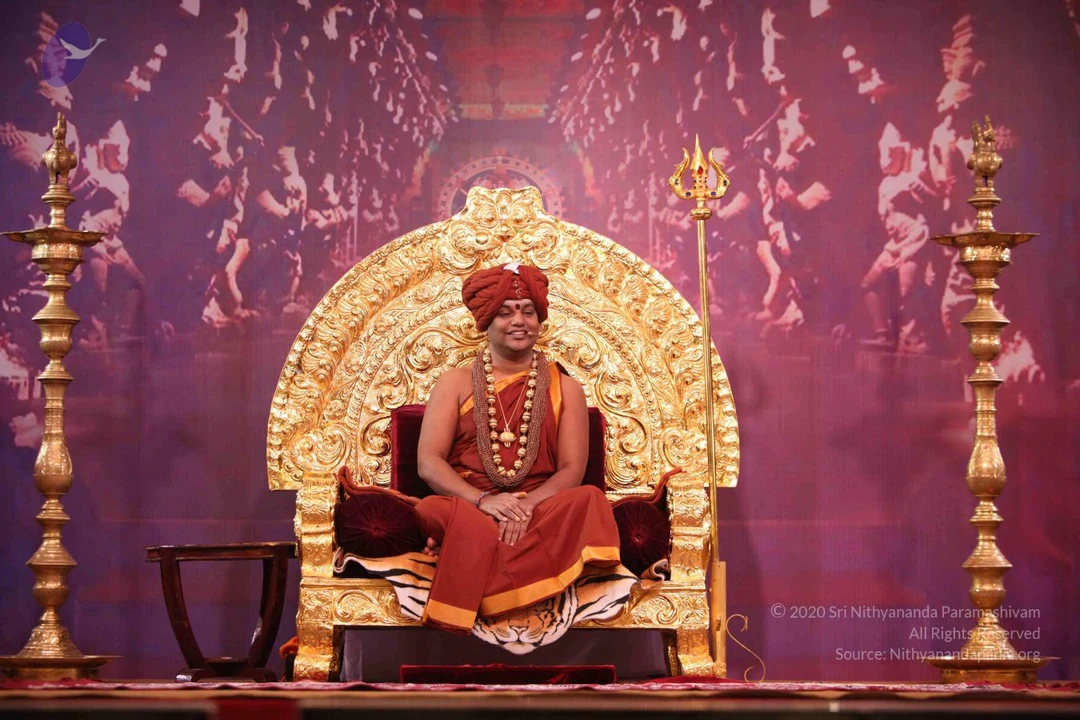
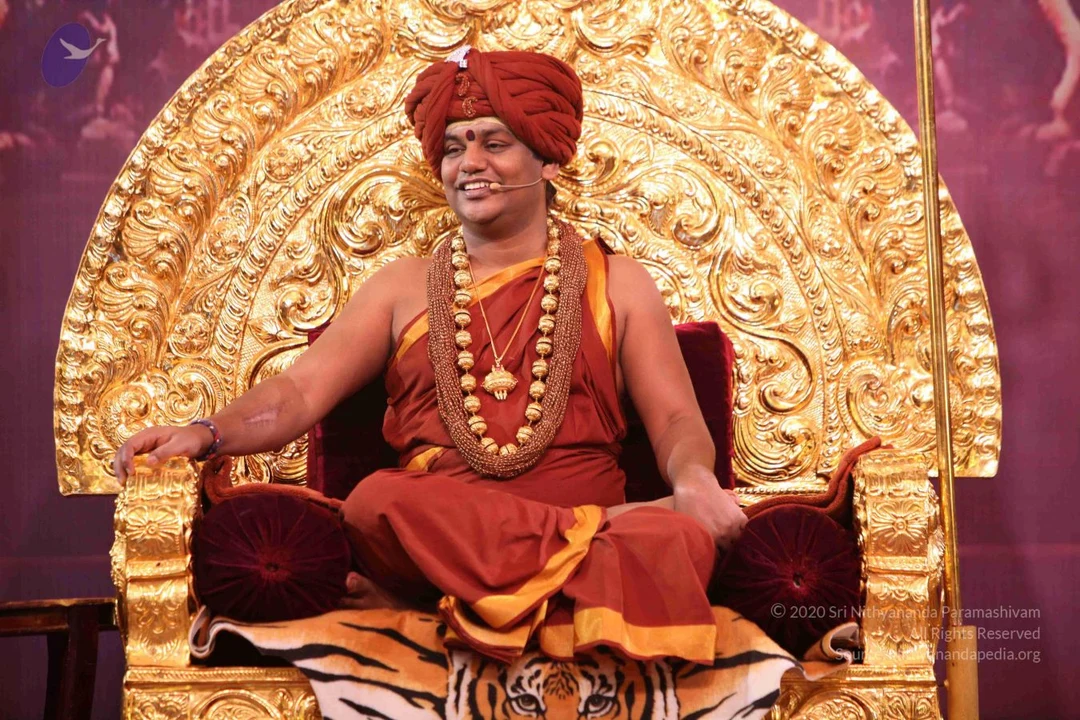
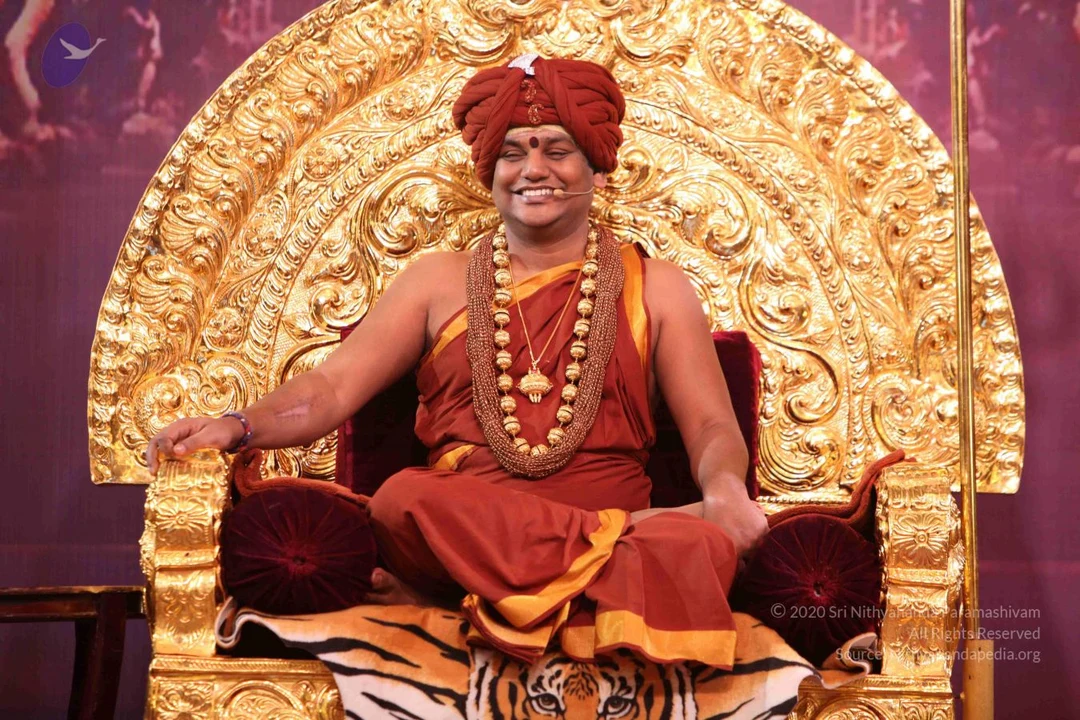
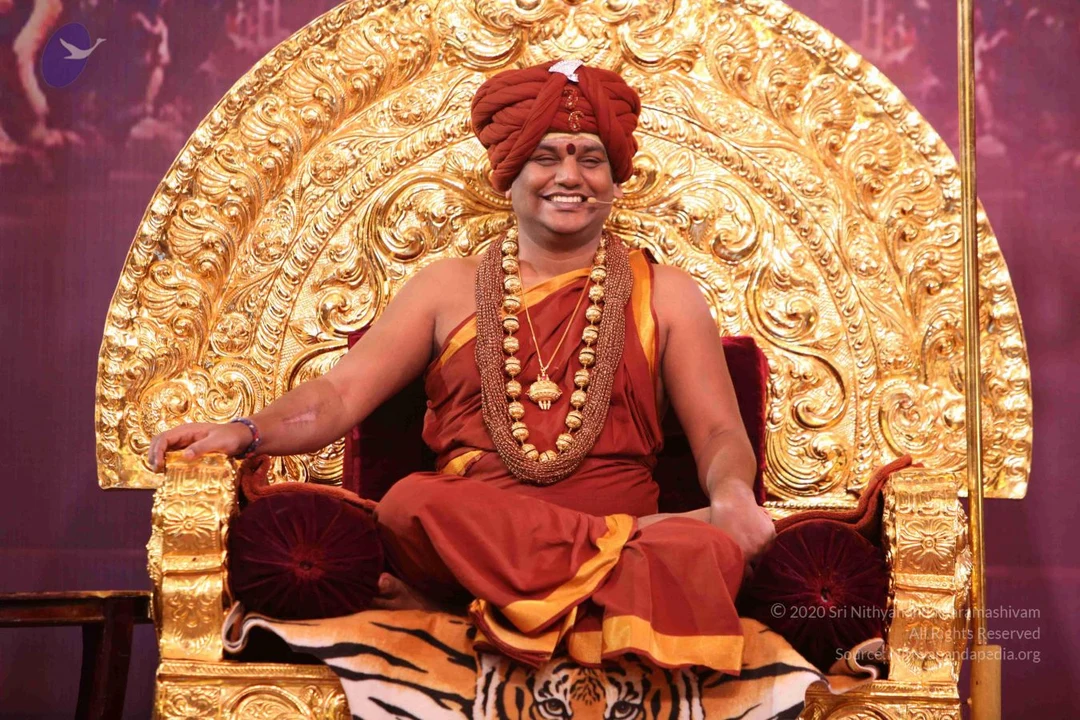
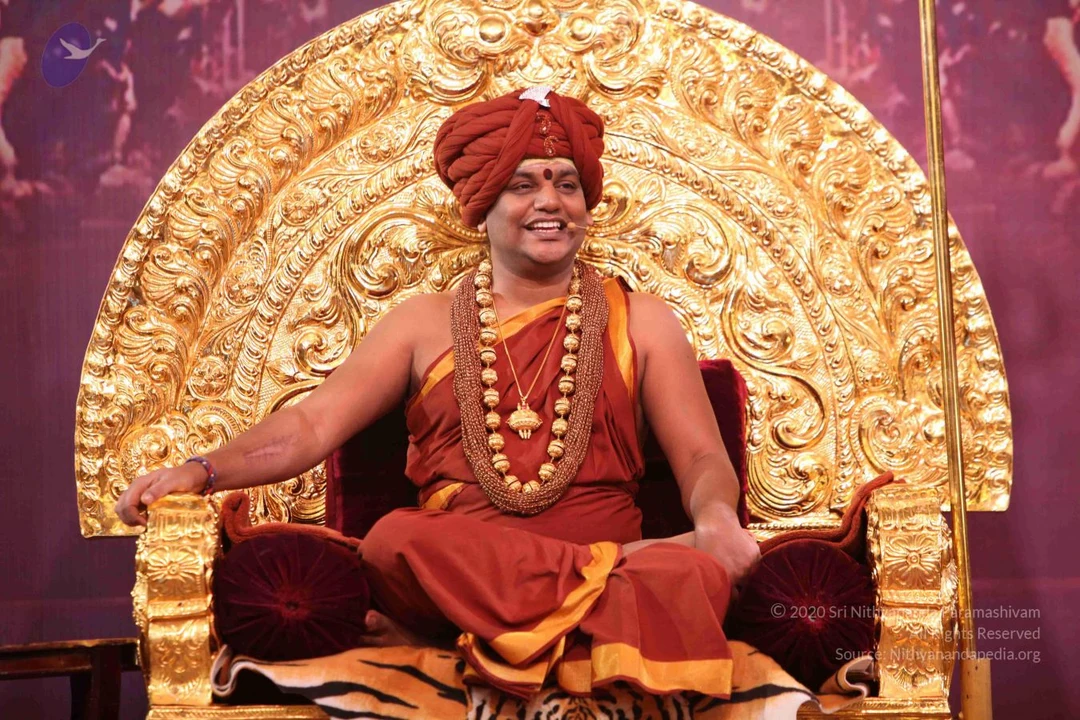
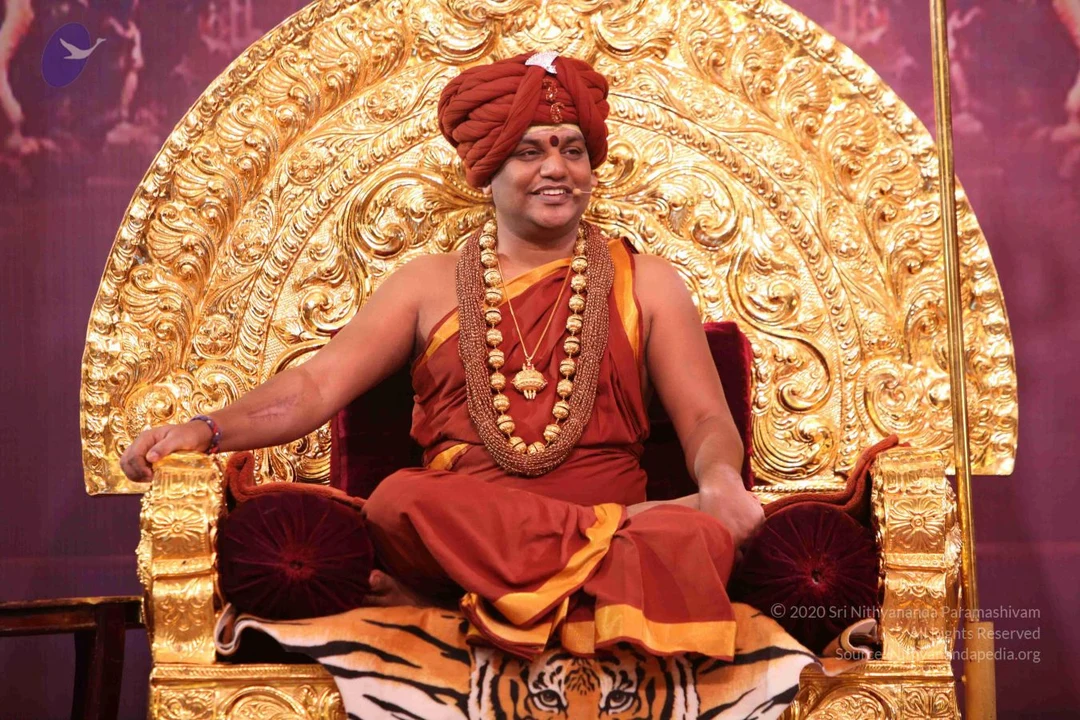
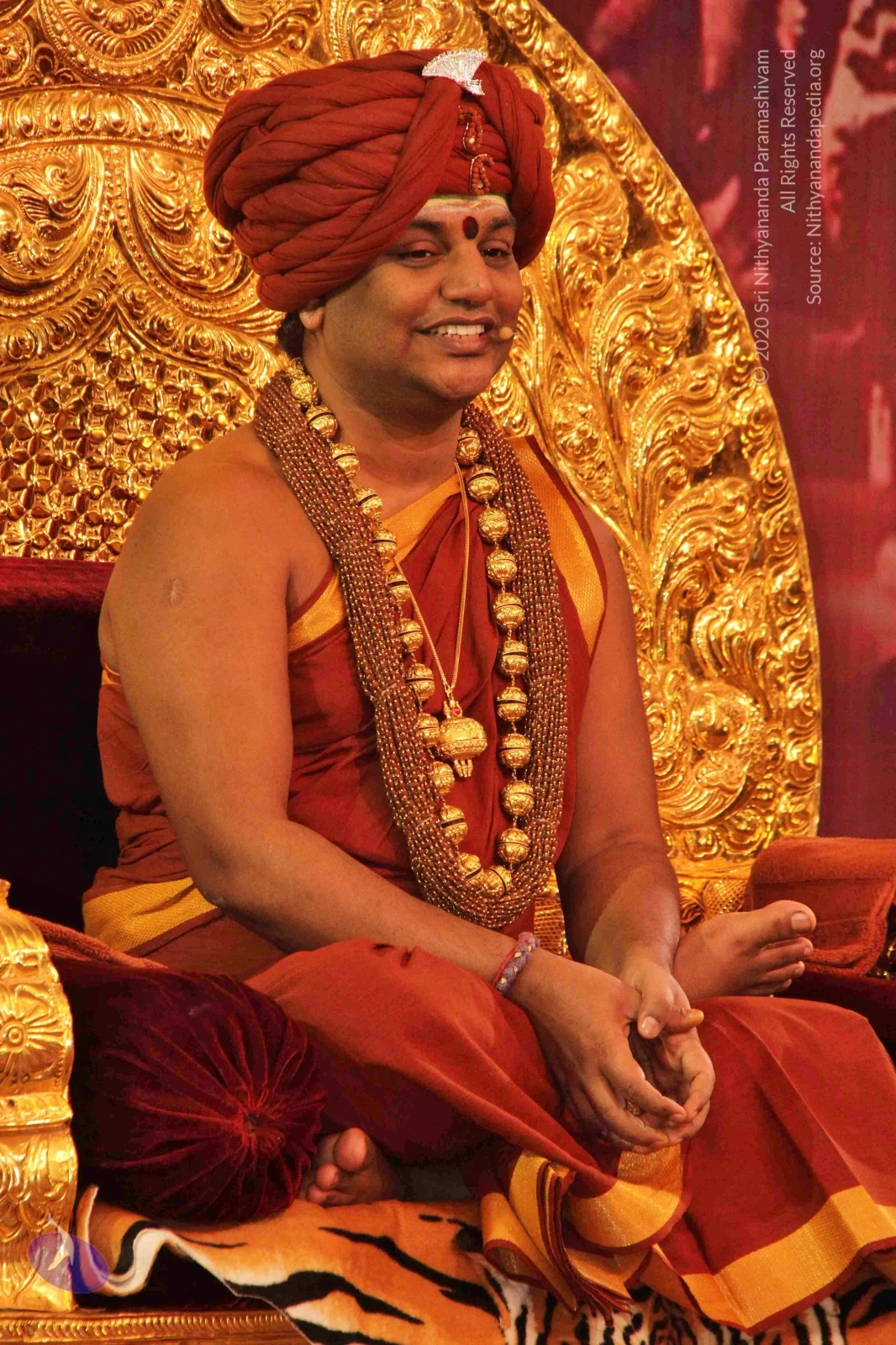
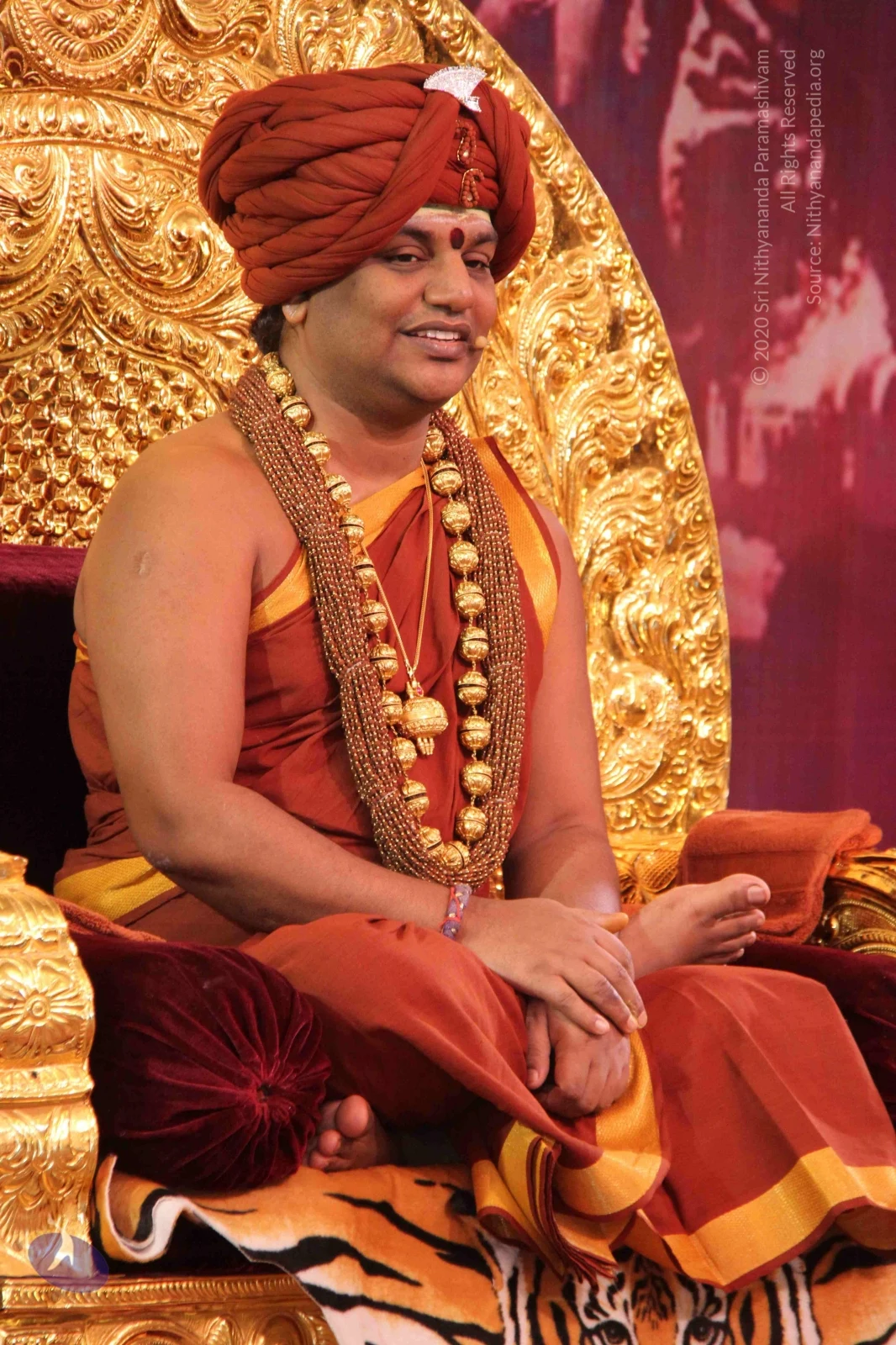
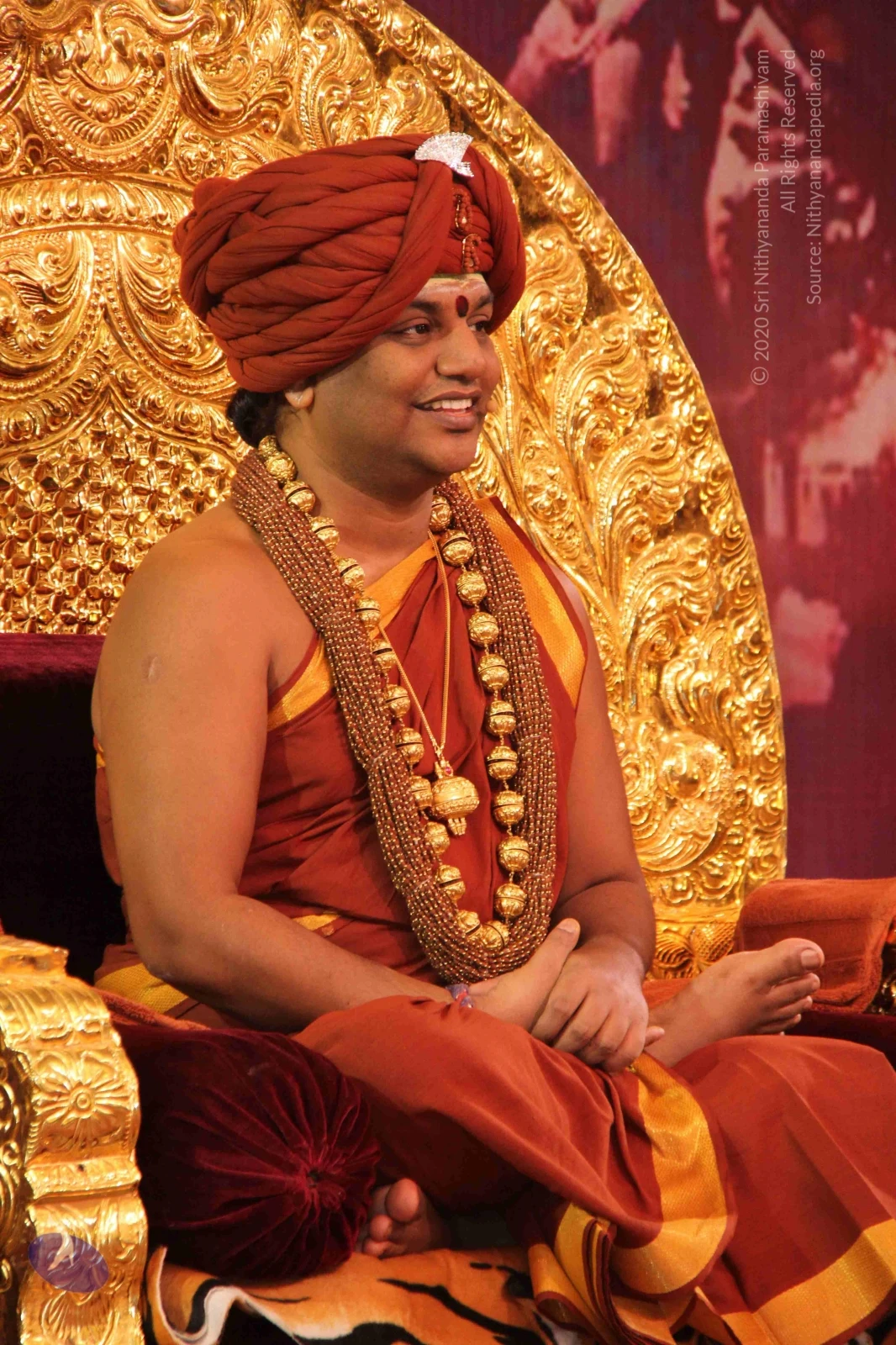
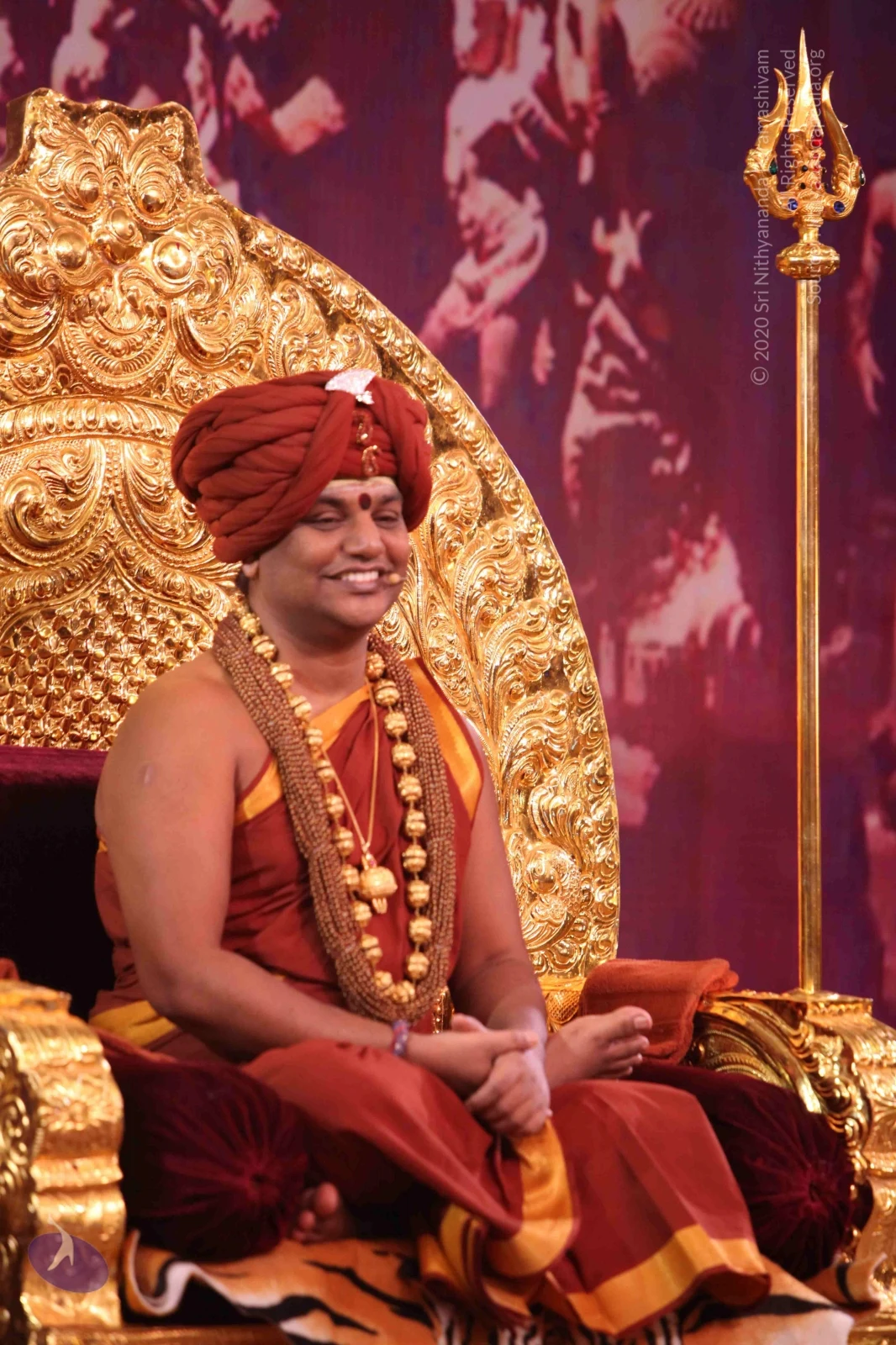
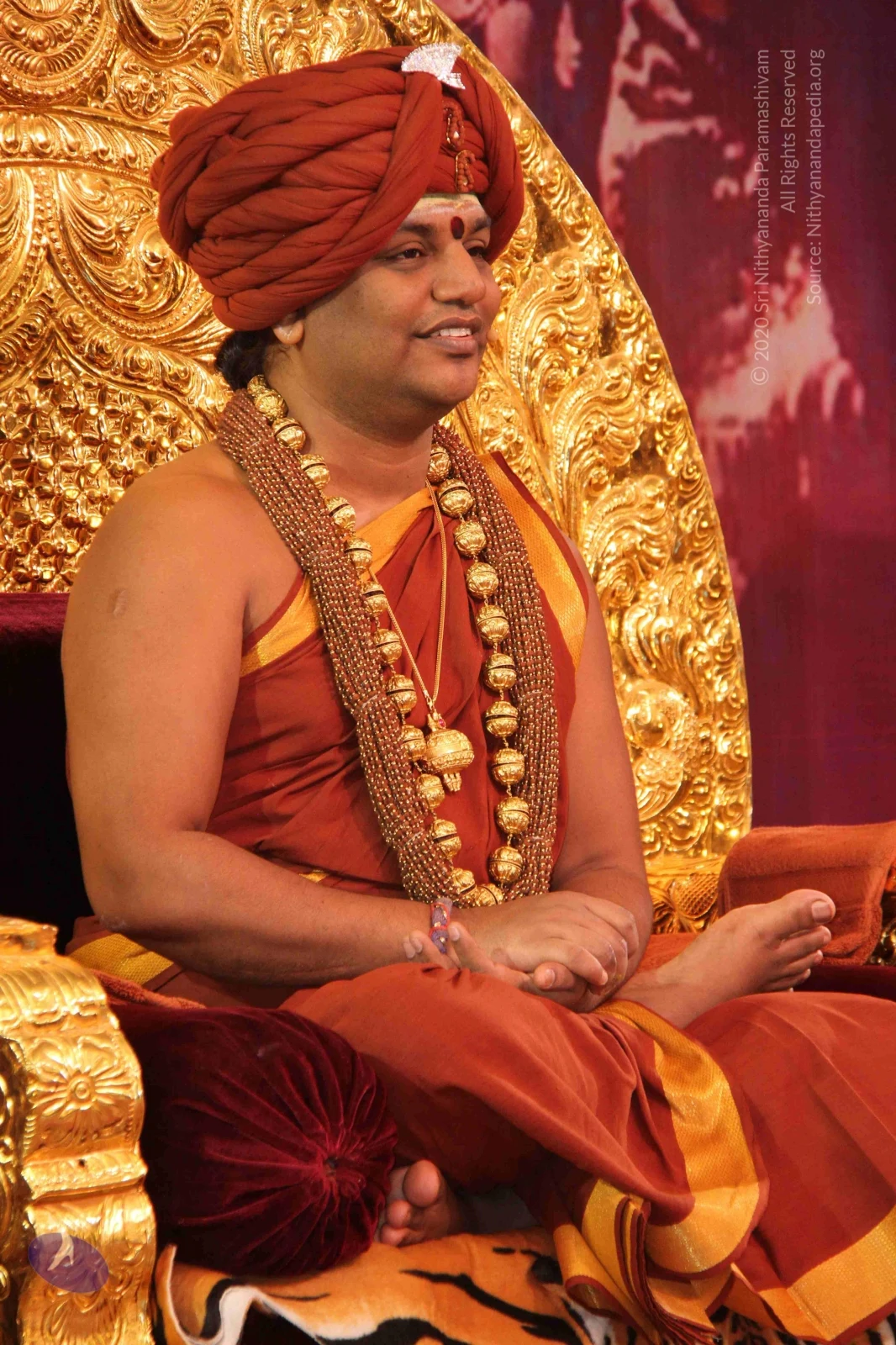
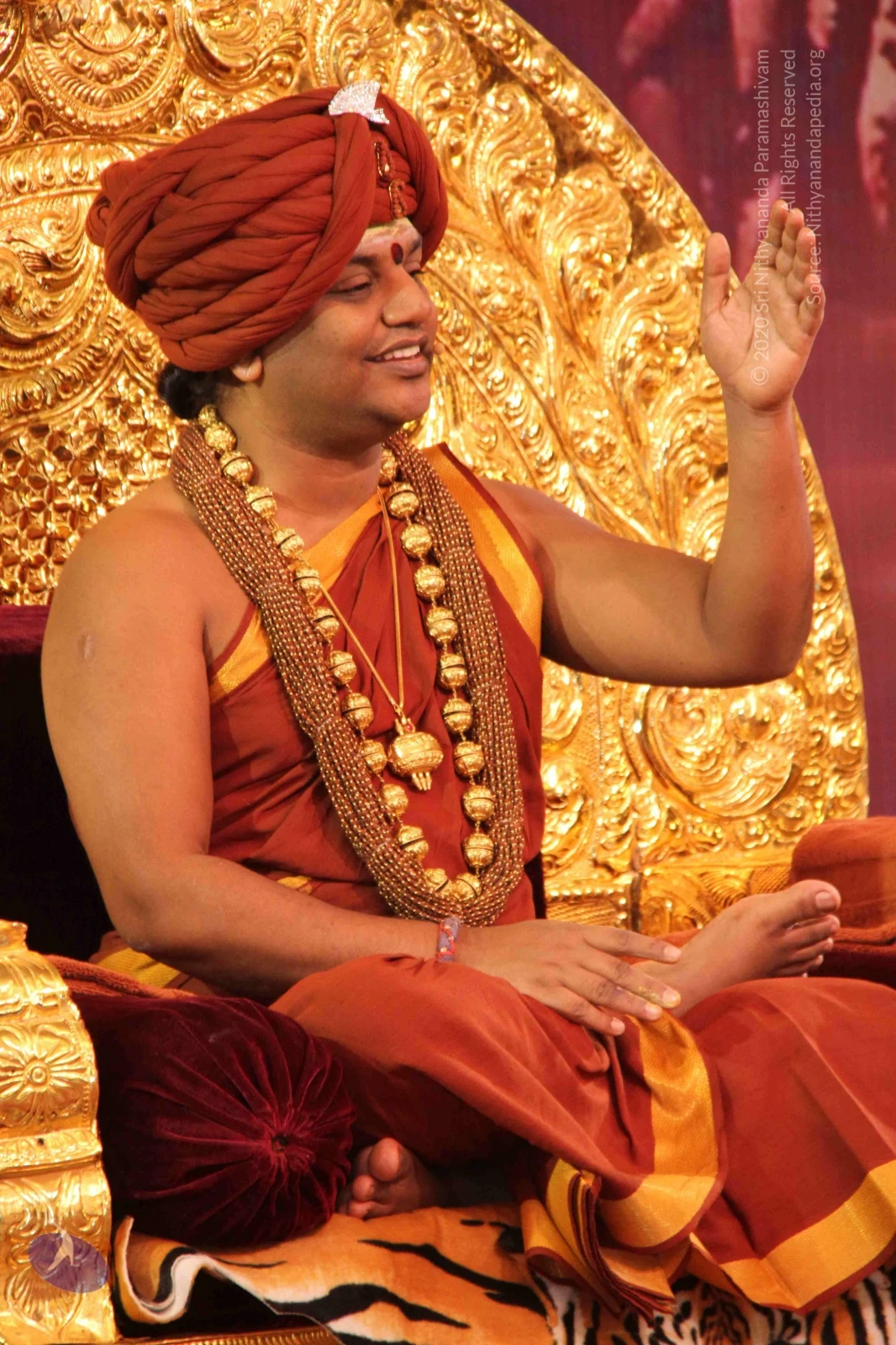
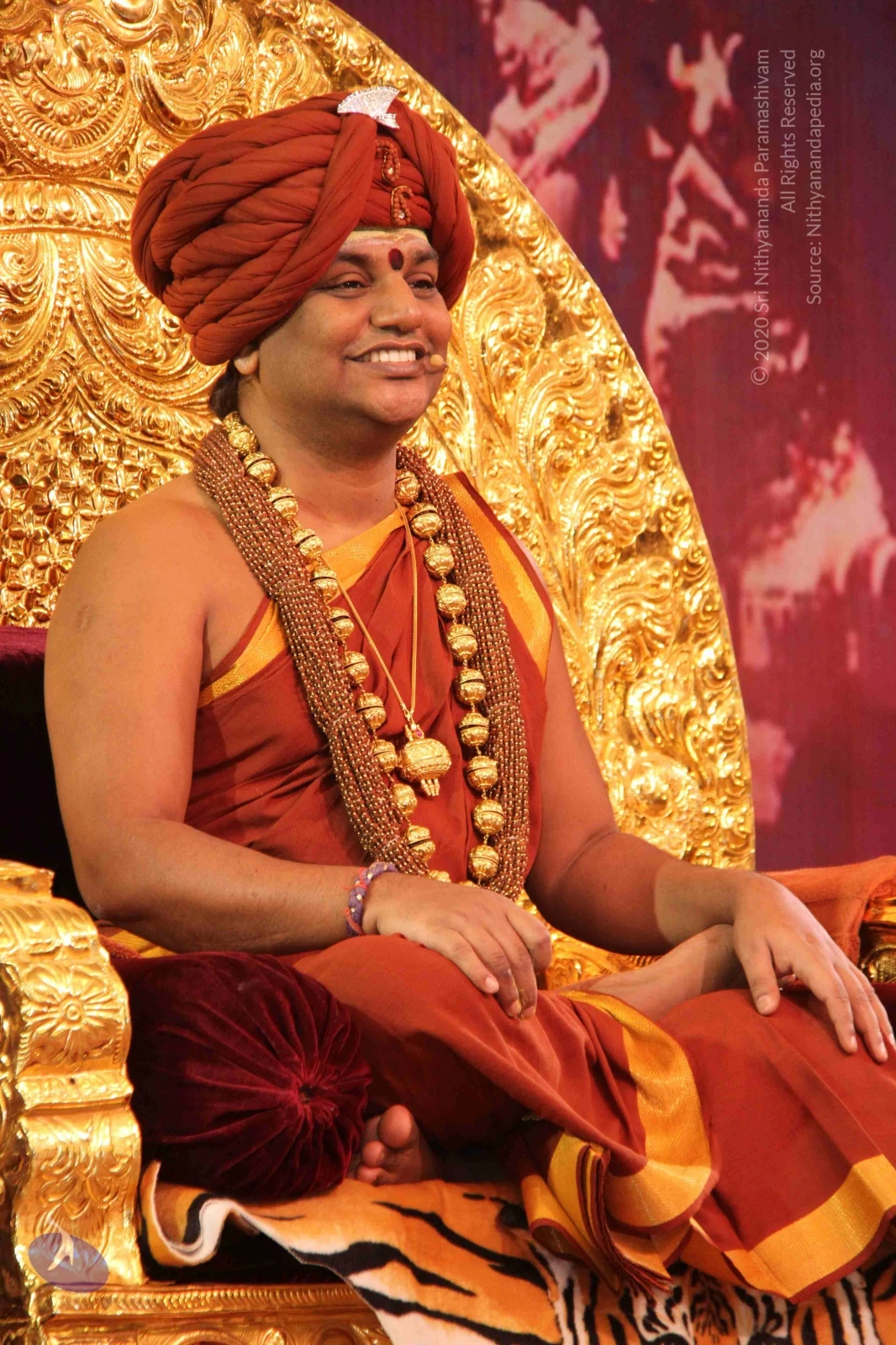
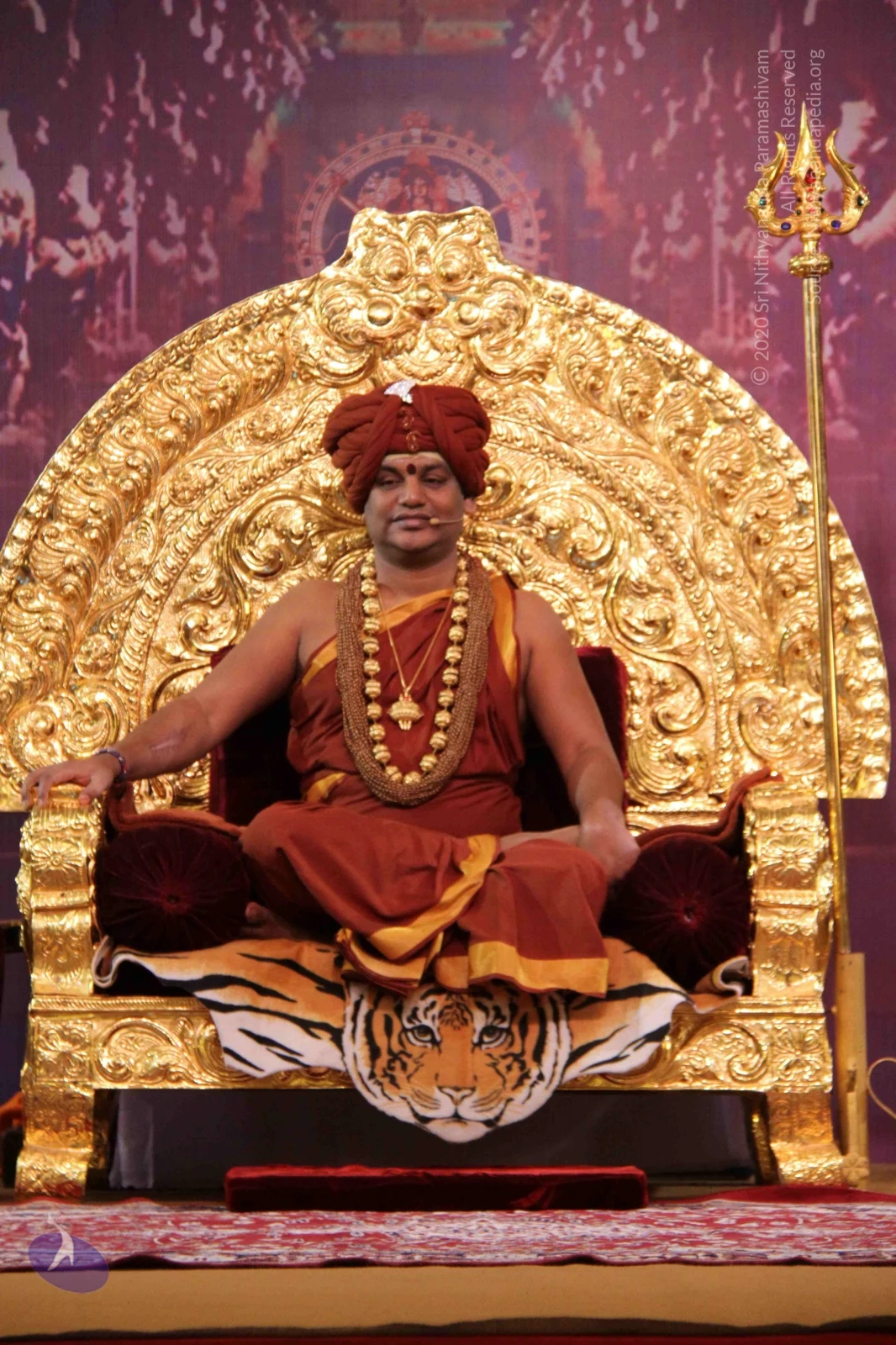
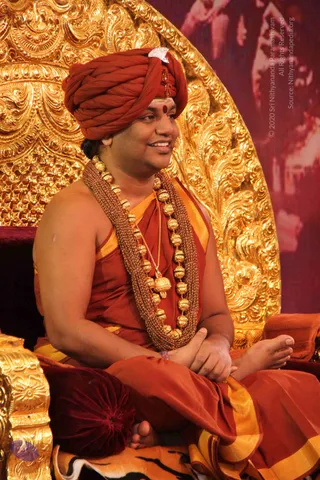
A seated man in a deep red turban with a small white ornament and red tilak on his forehead sits on an ornate gold throne carved with scrollwork. He wears red and saffron-bordered robes, multiple strands of rudraksha beads and a gold bead necklace with a gold pendant, and a small lapel microphone. His hands rest folded in his lap, and a maroon velvet cushion sits beside him on a tiger-striped cloth. A dark red backdrop stands behind the throne. The appearance matches the Swamiji (probable) cues of a turban, red and saffron ceremonial clothing and rudraksha with gold beads, seated in the role of a discourse speaker.A seated man in a red-orange turban with a silver ornament and a red tilak on his forehead sits on an ornate gilded golden throne with a tiger-striped cloth beneath him. He wears a rust-red and saffron-bordered garment, multiple strands of gold-bead and ball necklaces with a gold pendant, and a red bracelet. His hands are clasped in his lap and he smiles, with a small microphone clipped near his face. Swamiji (probable): the appearance cues are the saffron-red turban and ornate gold necklaces, and the page states he is present at this satsang. A red velvet bolster sits beside him.A seated man in a saffron-red turban with a small silver ornament at the front, wearing a red-orange shawl with gold border and a multi-strand rudraksha mala with large gold bead accents and a gold chain. He sits cross-legged on a tiger-skin-covered seat in front of an ornate gold throne with carved floral scrollwork, with a maroon velvet cushion beside him. A red backdrop with faint pictures is behind the throne. a person: the saffron turban, layered mala and gold ornaments on a throne match the page's claim, though the appearance is only partly distinctive. One person is visible.A seated man in a deep red-orange turban with a small white ornament and a red vertical tilak on his forehead sits cross-legged on an ornate gold throne with carved floral and scrollwork backrest. He wears a matching red-orange robe with a gold-bordered edge and a multi-strand necklace of rudraksha-style beads with large gold bead accents, plus a gold pendant. His hands rest in his lap and he smiles while looking to his left. A red velvet cushion and a striped fabric lie beside him, with a red backdrop behind the throne. Swamiji (probable): appearance cues include the saffron-red turban, rudraksha mala and ornate gold necklace on a throne, consistent with the page's Swamiji reference.A seated man in a red turban with a small white ornament and a red tilak on his forehead sits on an ornate gold throne carved with scrollwork, smiling. He wears a red-and-saffron robe with a gold border and multiple strands of gold and beaded necklaces, with a small gold pendant. His hands rest folded in his lap over a red cloth, and a tiger-striped rug lies beneath the throne. A gold trident with jewelled details stands to the right against a red backdrop with faded figures. The strong cues here are the turban, ornate golden throne and ceremonial necklaces, so the figure is a probable Swamiji (probable) seated in person as the speaker at this satsang.

Yoga
4 photosSource gallery
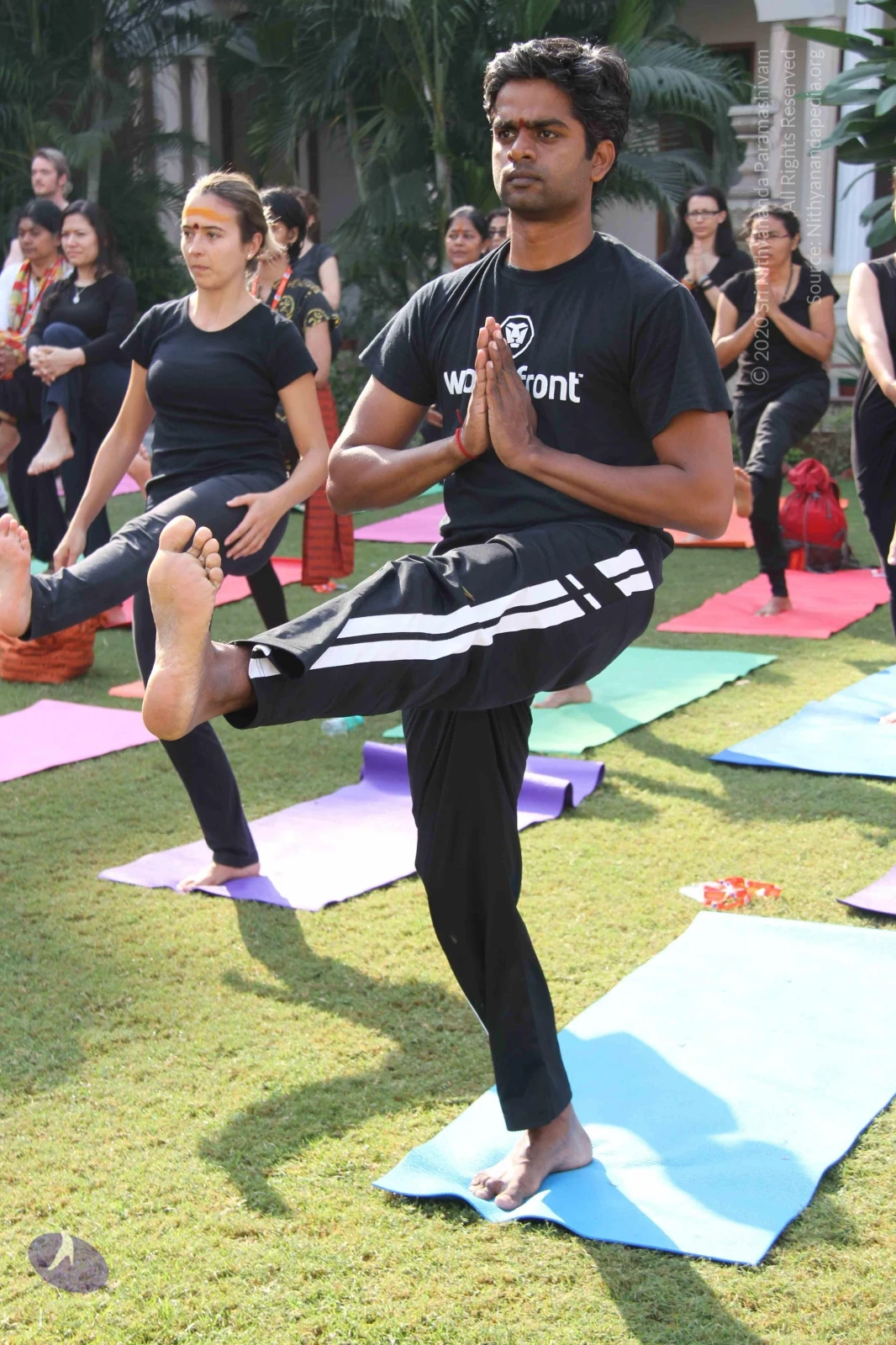
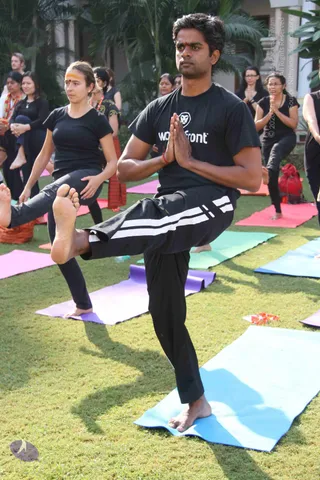
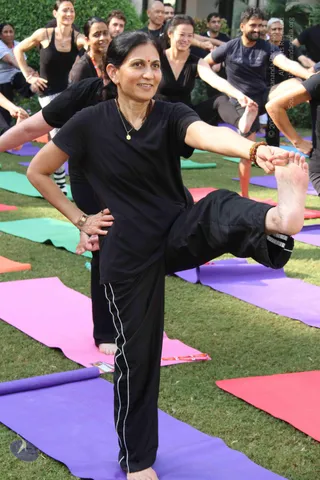
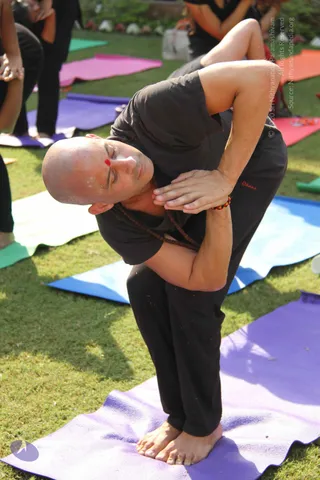
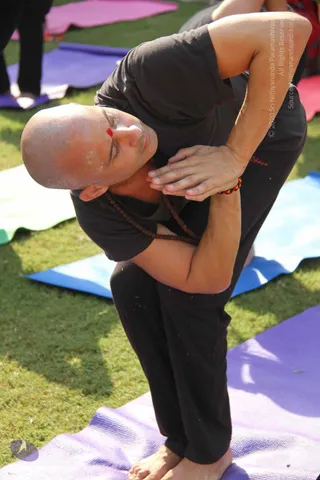
Outdoor group yoga session on grass with many participants on coloured mats. In the foreground a man in a black t-shirt with a white logo and black track pants with white stripes stands on one leg in tree pose with palms pressed together at his chest. Beside him a woman in black athletic wear with an orange tilak on her forehead balances on one leg with her other foot raised. Behind them, rows of people in black clothing sit and stand, some with hands in anjali mudra. Palm trees and a building with columns form the background.Outdoor group yoga session on grass with colourful rubber mats in purple, pink, red, green and orange. In the foreground a smiling woman in a black V-neck top and black track pants with white side stripes balances on one leg, holding her raised foot with one hand while her other hand rests on her hip, wearing a gold pendant, rudraksha-style beads, bangles and a red bindi. Behind her, around twenty participants in black athletic wear stretch and balance on mats among hedges and palm trees.A photograph of a shaved-headed man in a dark short-sleeved top and black trousers standing on a purple yoga mat on grass, performing a side-bending yoga pose with hands pressed together at his chest and eyes closed. A red bindi is on his forehead and a rudraksha mala hangs at his neck. Behind him, other participants in black clothing sit or bend on coloured mats in pink, green, blue and orange, in an outdoor garden setting.Outdoor yoga session on grass with students on coloured mats. In the foreground a bald man in a dark grey t-shirt and dark trousers performs a standing side-bend yoga posture, eyes closed, palms pressed together at his chest, with a red bindi on his forehead and a brown rudraksha mala around his neck. A red-and-yellow wristband is visible. Behind him, purple, pink and blue mats hold other practitioners. No deity or a person identification is evident from appearance; the man is shown only as a yoga practitioner.
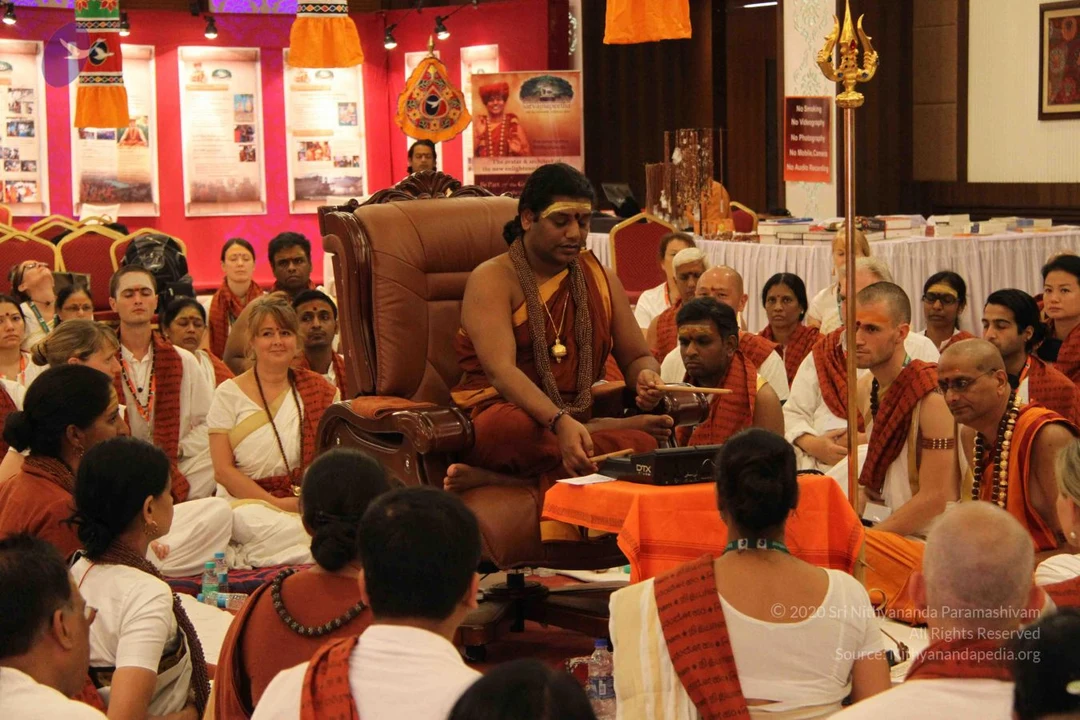
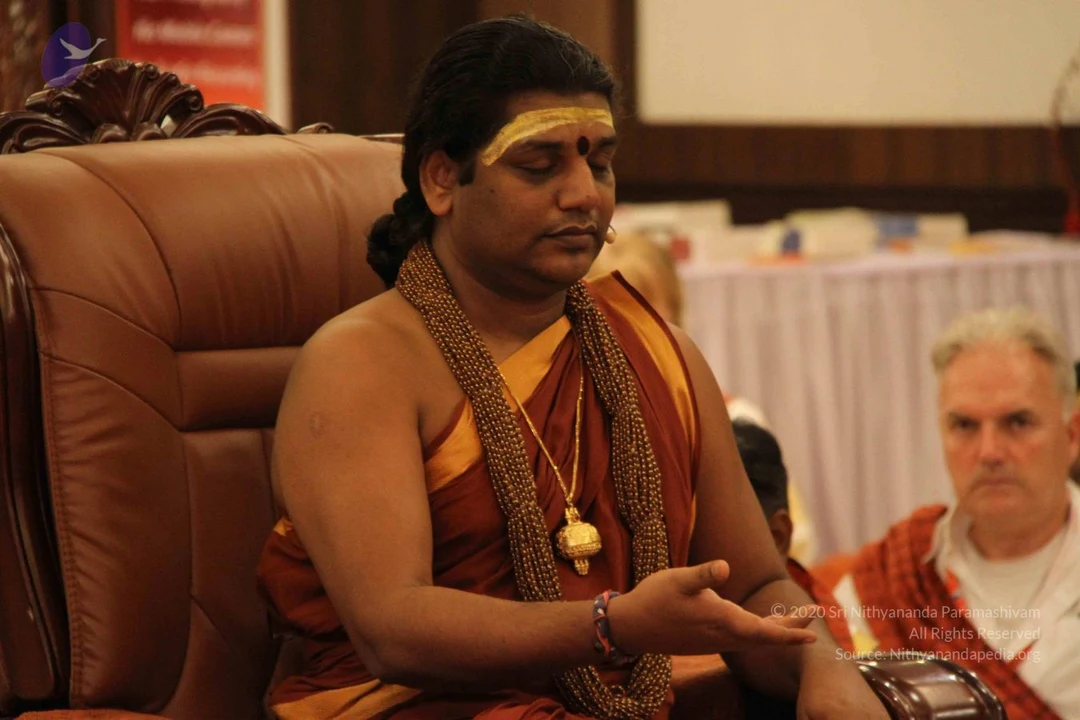
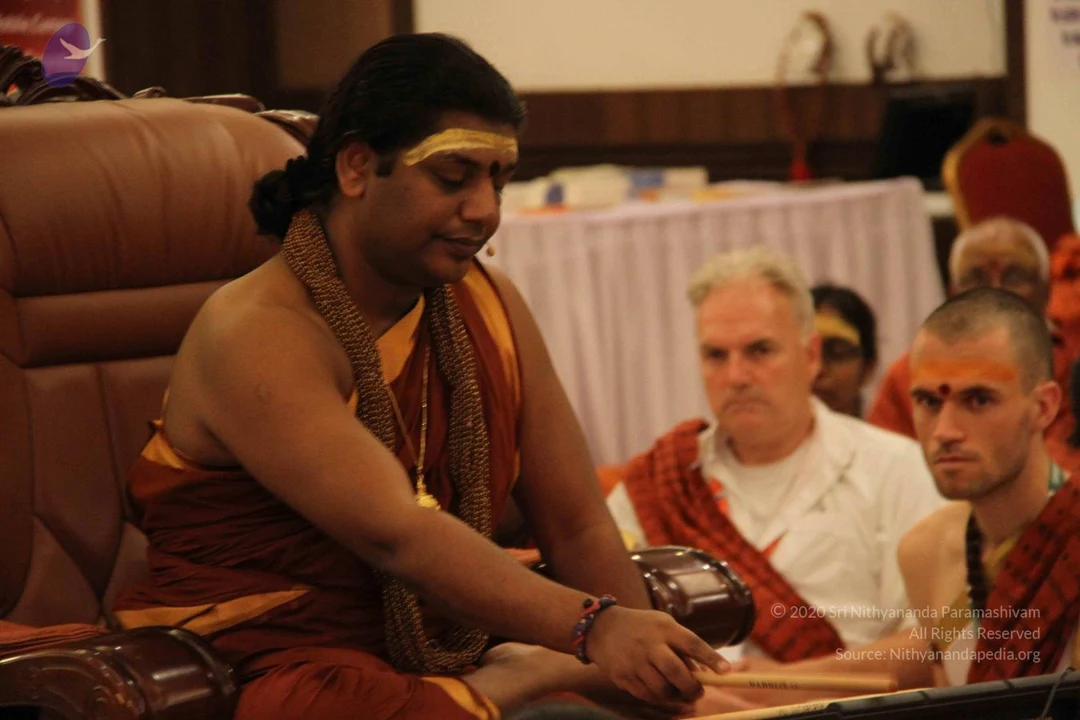
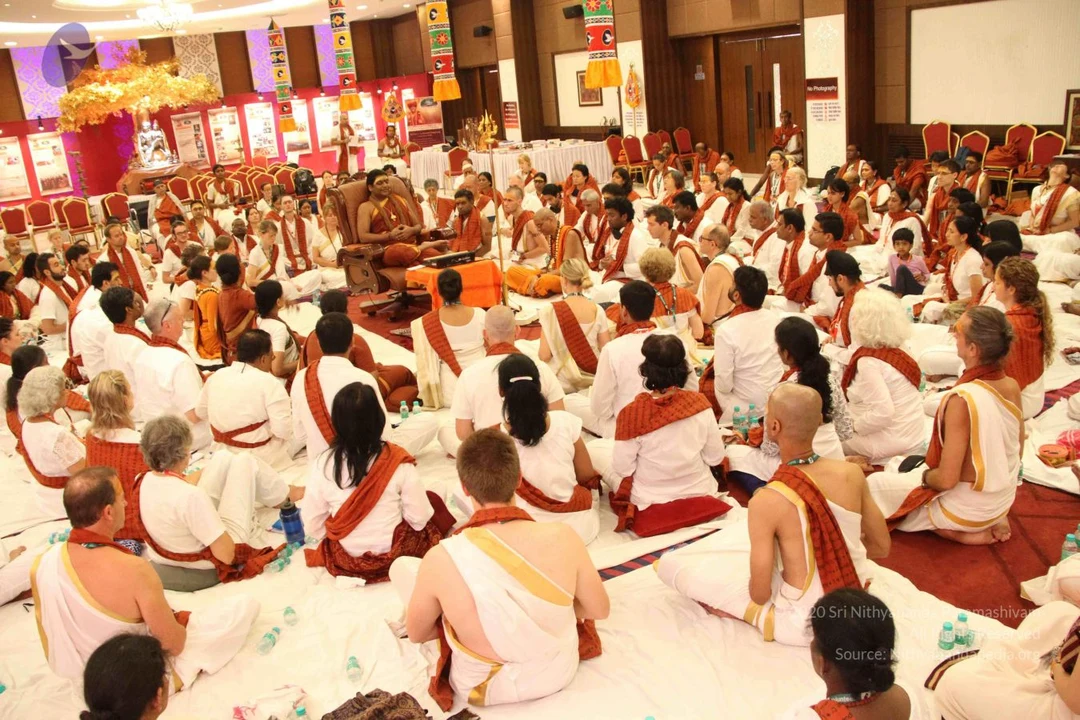
October 10th 2015

28 photosView all
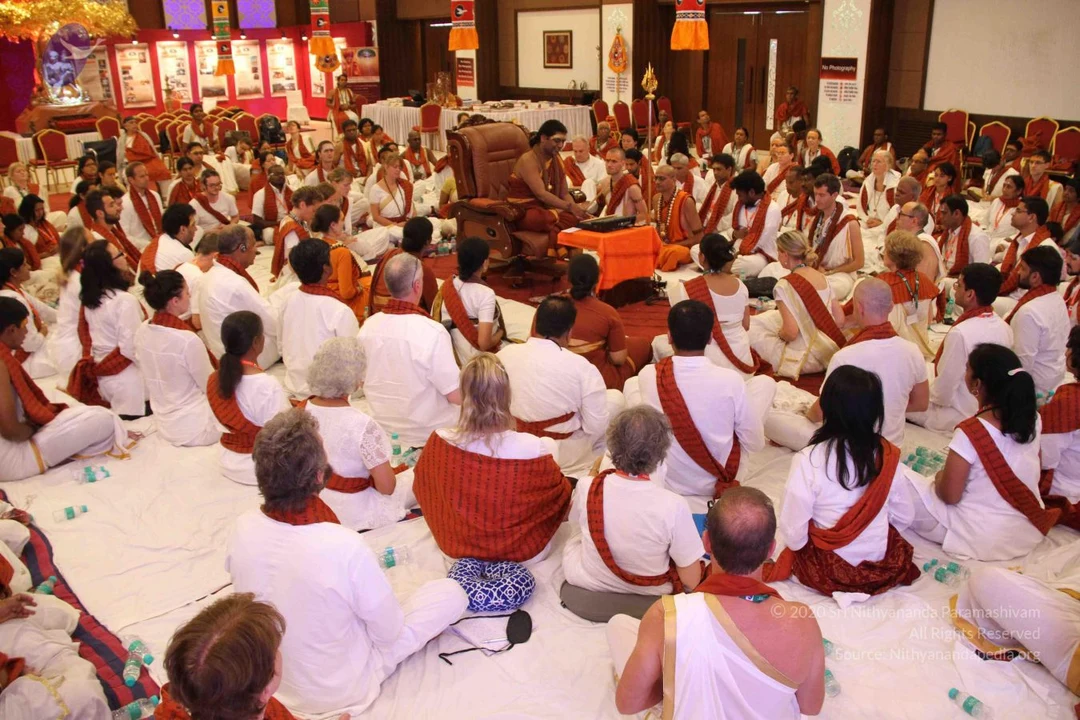
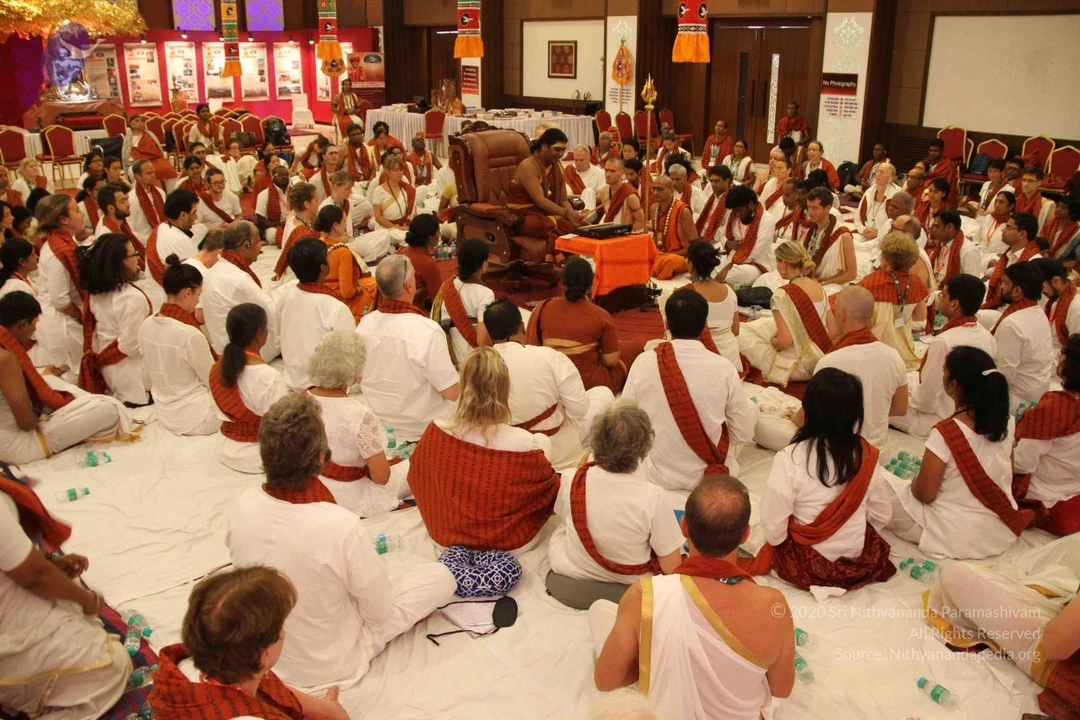
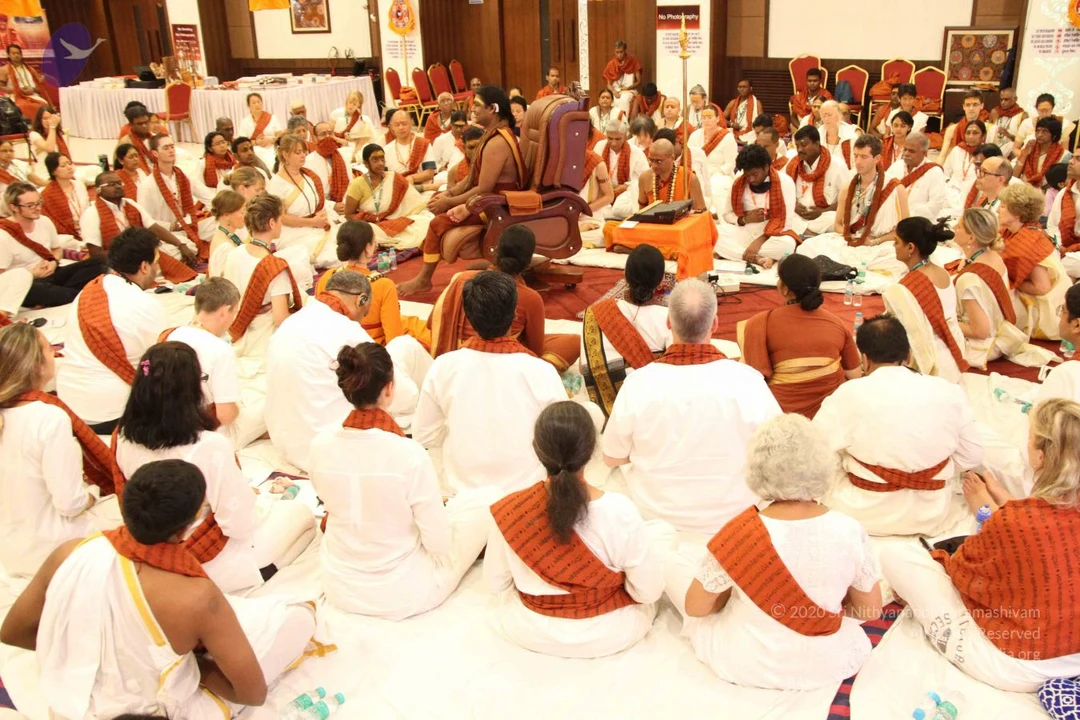
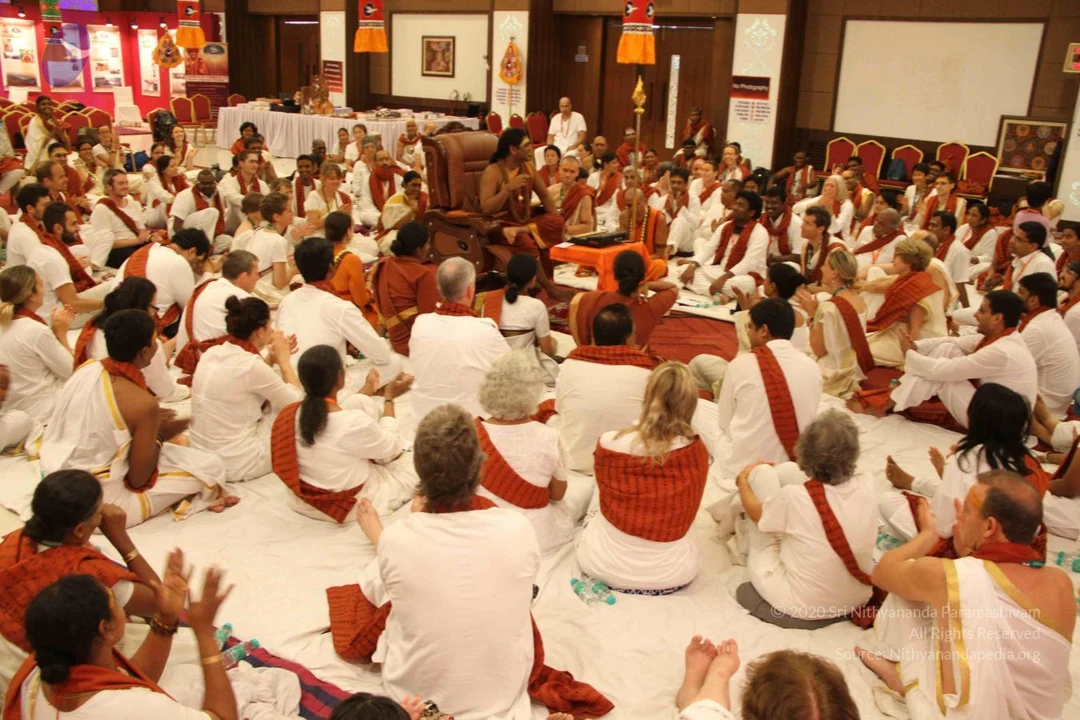
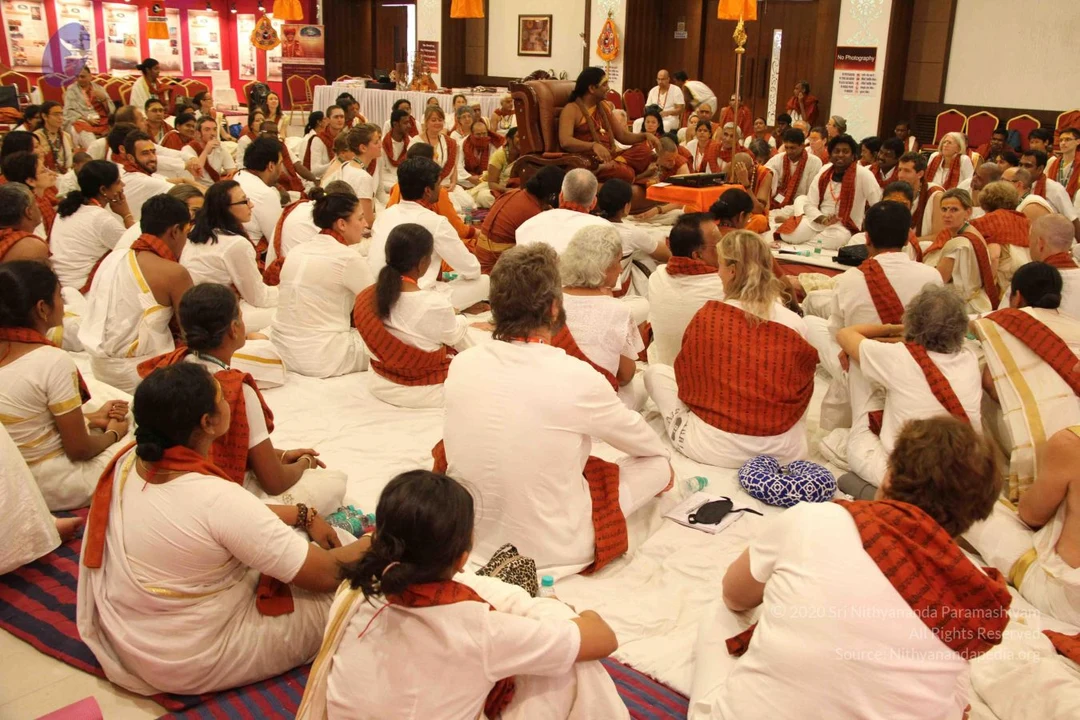
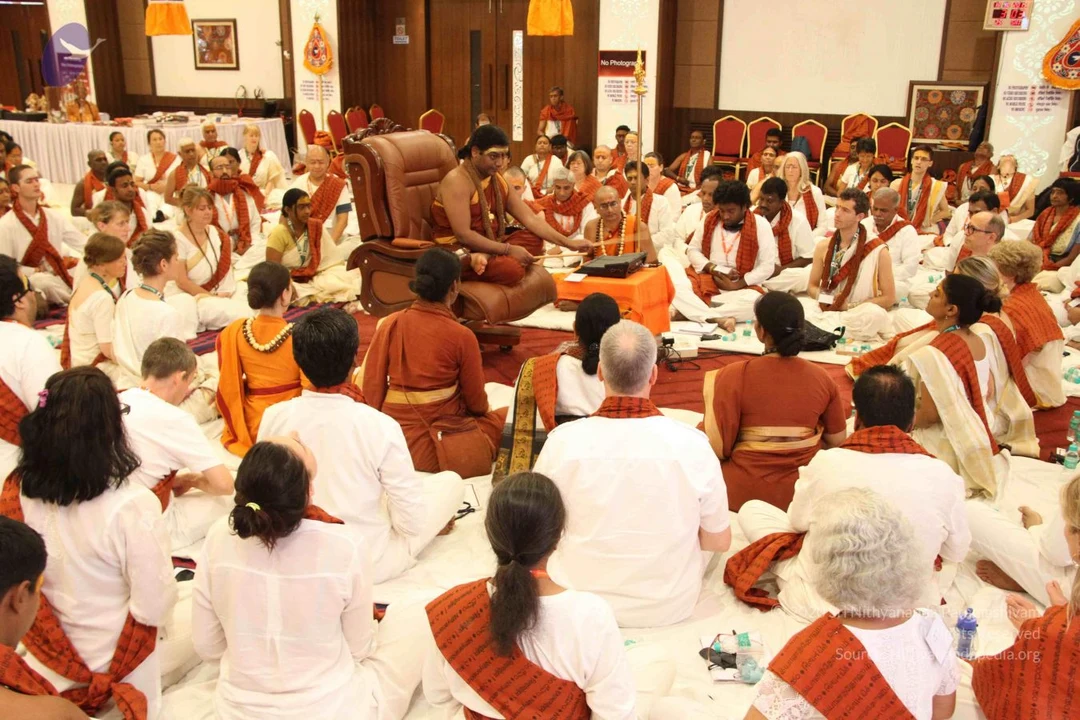
A seated man in an orange-red robe with a rudraksha mala and yellow forehead markings sits on a brown leather throne, playing a small Yamaha keyboard in front of him. A large golden trident stands beside the throne. Around him, a crowd sits on the floor in white clothes with red-orange shawls, some wearing garlands. A woman in the left foreground tilts her head back with eyes closed, and a man in a white dhoti stands at left. Behind them, red walls display framed printed panels and a banner.A large satsang hall with red walls, purple and patterned hangings and a golden floral canopy. A seated man in orange and saffron robes with a rudraksha mala and long swept-back hair sits in a brown armchair on a raised red dais, with a trident and a deity murti behind him. Dozens of devotees in white and orange shawls sit on the floor in rows, many with orange and red stoles. Framed informational panels line the walls, and a standing attendant stands at the right edge.A large indoor satsang hall filled with seated devotees on white sheets. Many wear white clothing with orange-red shawls draped over their shoulders, and some wear beaded necklaces. In the centre, a man in orange robes sits on an ornate wooden throne-like seat draped with an orange cloth, facing the gathered crowd. Behind him stands a golden canopy over a small shrine with a deity murti, flanked by colourful vertical banners with patterned designs. Framed printed panels line the back wall, and a white-draped table with brass items sits to the right. Water bottles are placed among the seated people in the foreground.A large indoor satsang hall with a crowd of devotees seated cross-legged on white sheets in rows. Most wear white clothing with red-orange shawls, and some wear orange robes. In the centre, a man in orange and saffron clothing sits on a low orange-draped platform before a brown ornate chair, with a red-carpeted area in front. Water bottles are scattered on the floor. A red wall behind holds framed panels, a gold floral arrangement and a small deity murti. A sign reads No Photography on the right.A large satsang hall with red-and-gold decor, a deity murti on a shrine at the upper left, and framed panels on the back wall. A seated figure in orange-red and gold robes sits on a high brown throne behind an orange-draped low table with a small object on it. Around them, rows of devotees sit on white sheets in white clothes with red-orange shawls, many with rudraksha malas. Several listeners sit in the foreground with their backs to the camera, and water bottles are scattered on the floor. A standing figure in white with a red shawl stands at the far right near the doorway. The centre figure's appearance is not clearly distinctive enough to confirm identity.A large hall filled with seated devotees on white sheets during a satsang. At the centre front, a man in saffron-orange robes sits on an ornate wooden throne with a low orange-draped table before him. Many devotees wear white clothes with orange-red shawls, some with rudraksha malas. Behind them, a red-walled backdrop displays framed photographs and a golden canopy, with a gilded deity murti visible on the left. Water bottles are scattered across the floor among the seated crowd.