Skip to content
Monday

12 October 2015

THE SUPREME PONTIFF OF HINDUISM JGM HDH BHAGAVAN NITHYANANDA PARAMASHIVAM

Dated photos
460
Source pages
1
Media
3
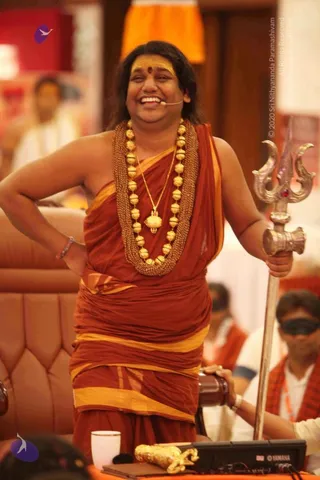
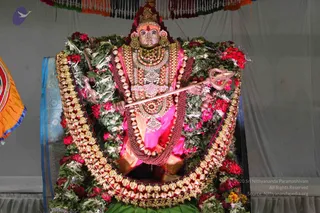
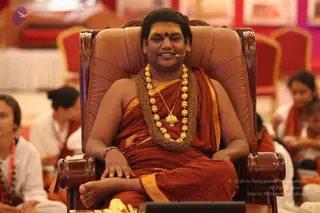
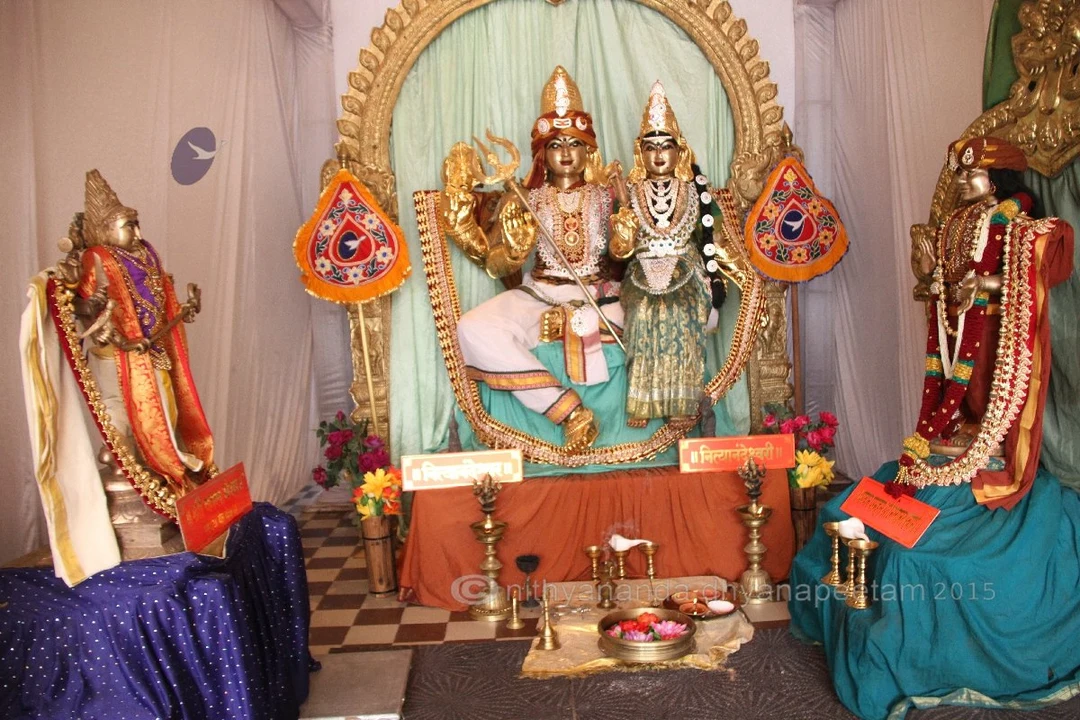
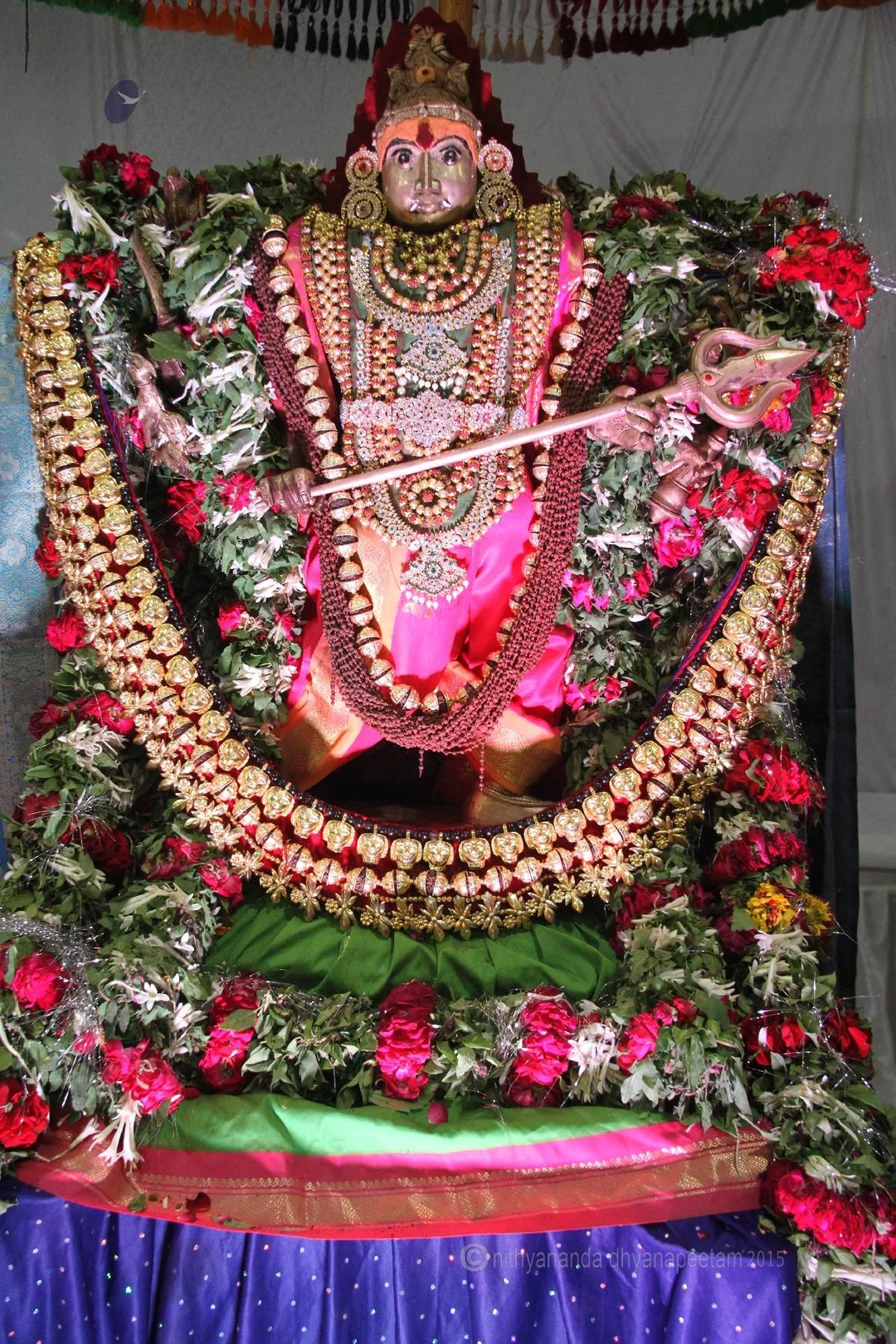
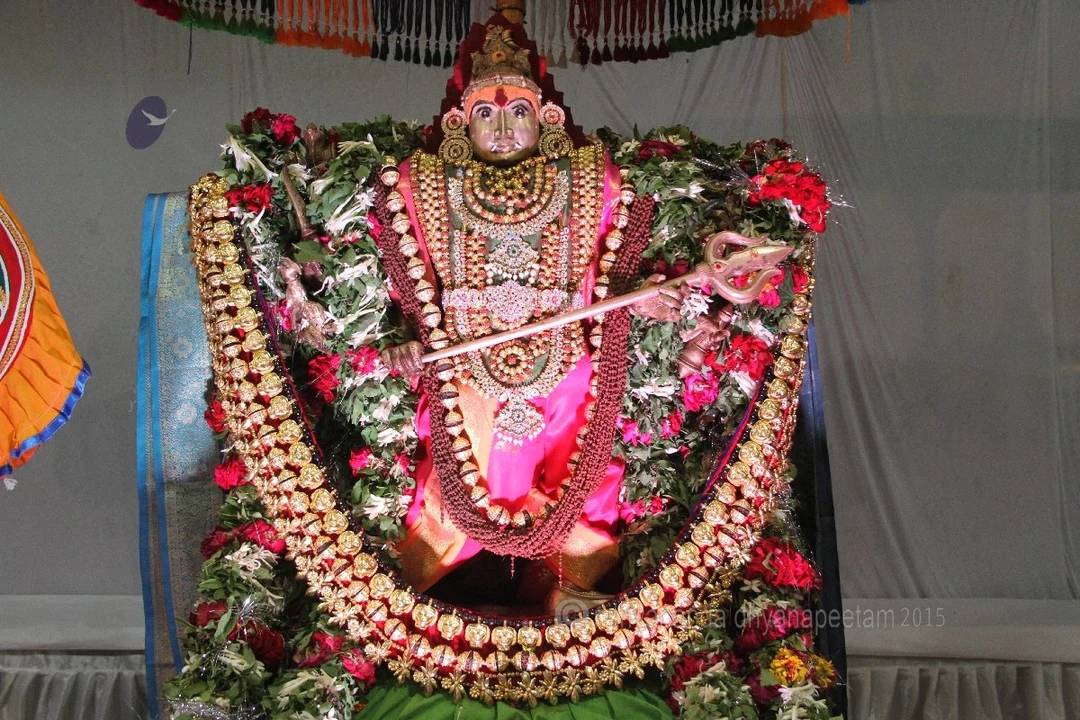
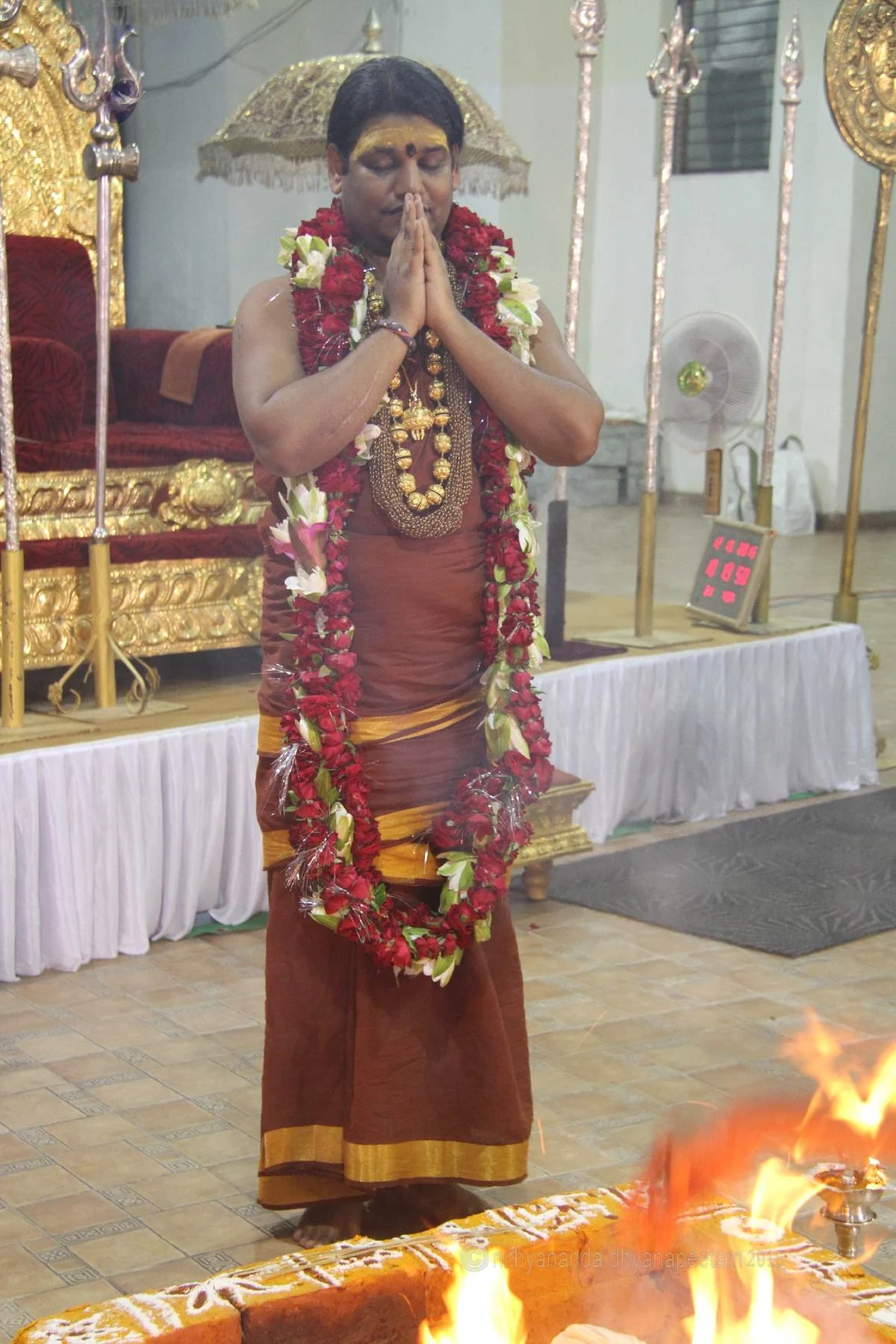
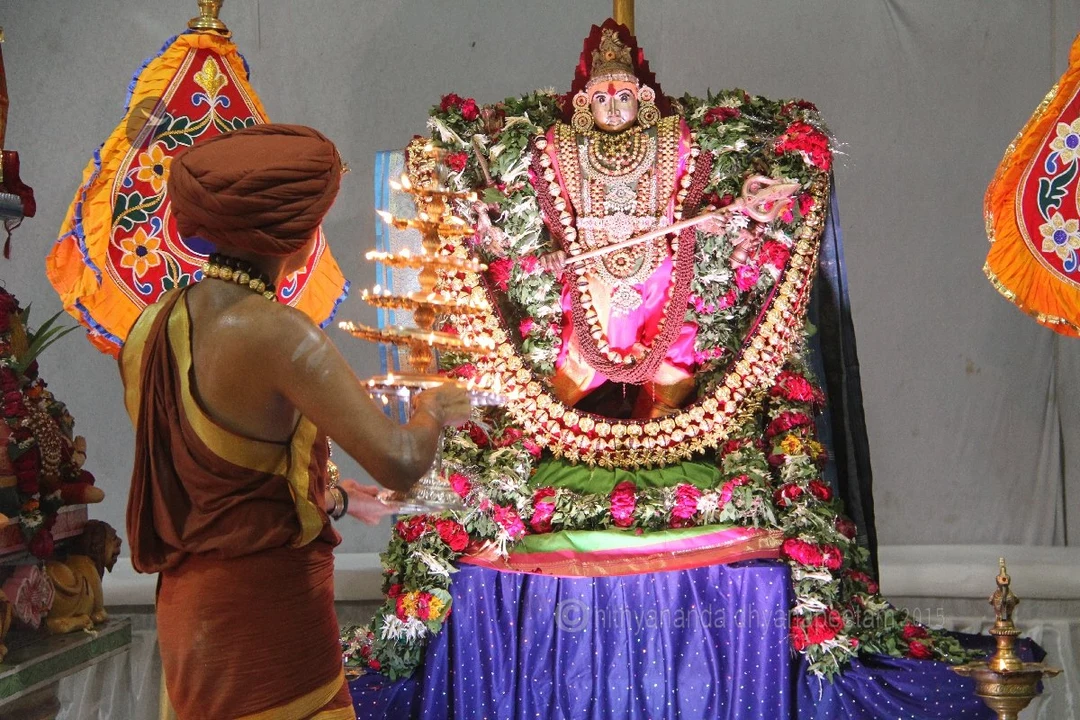
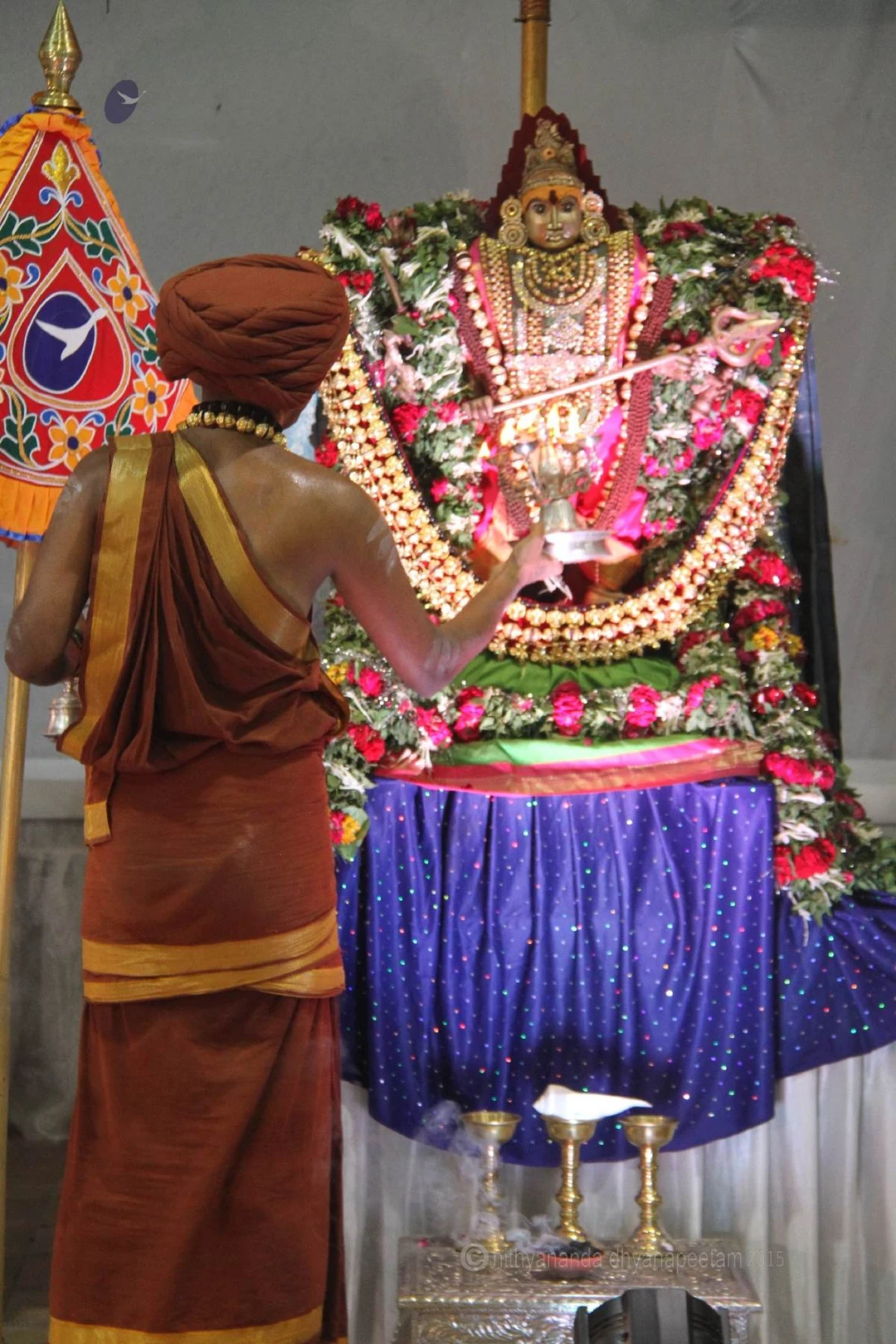
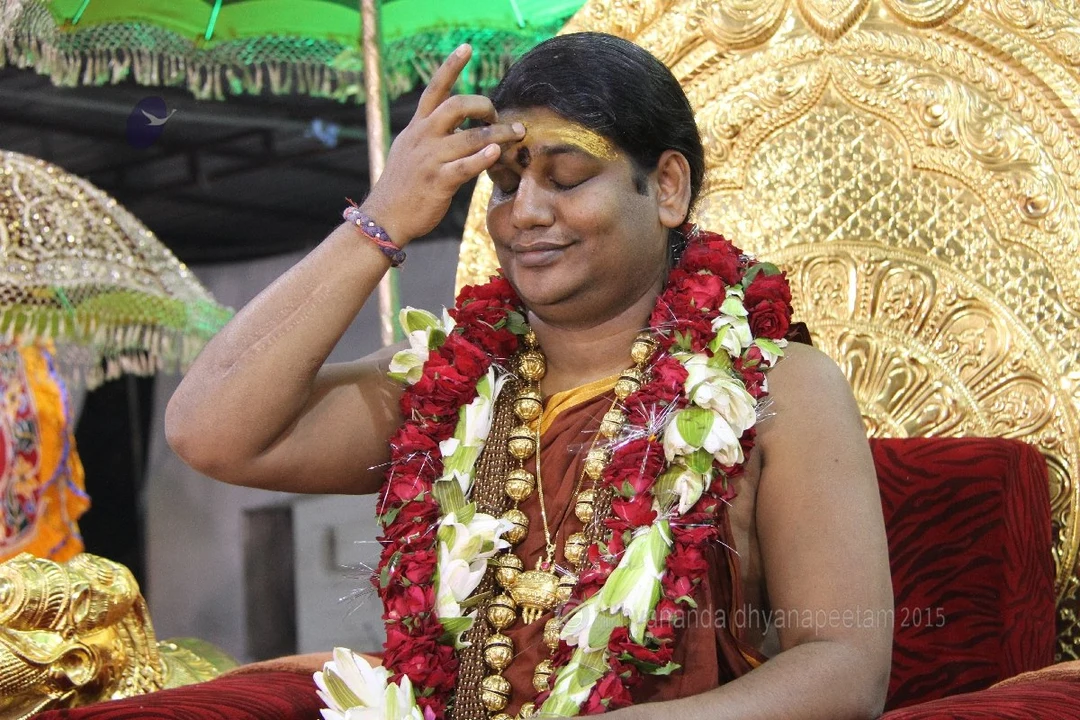
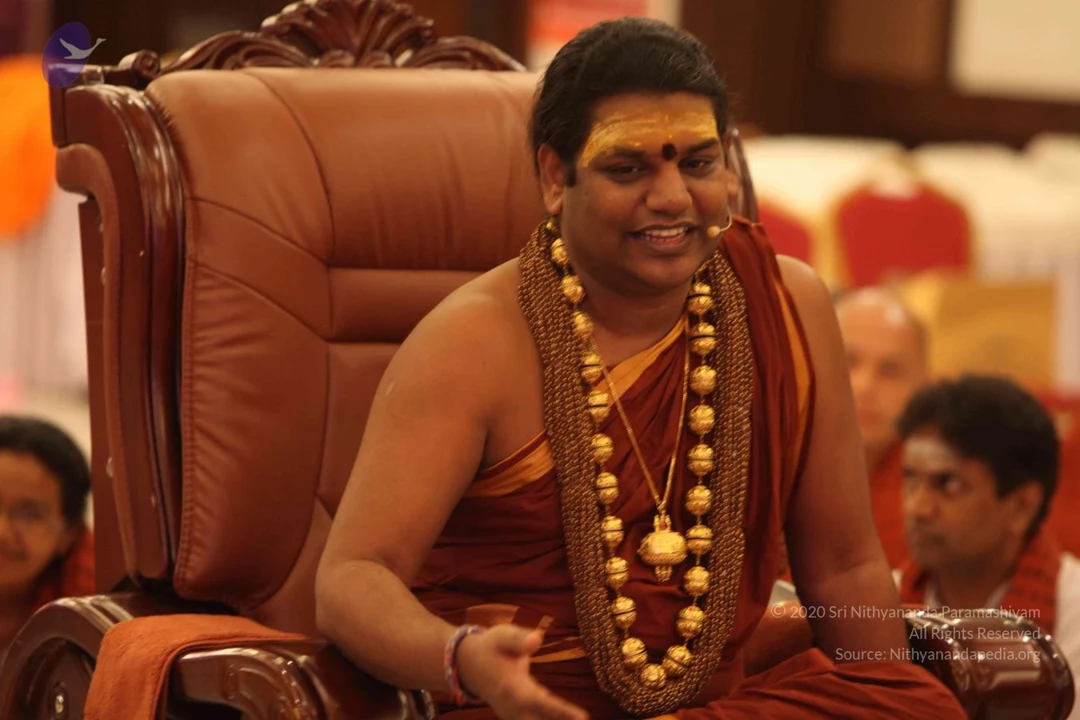
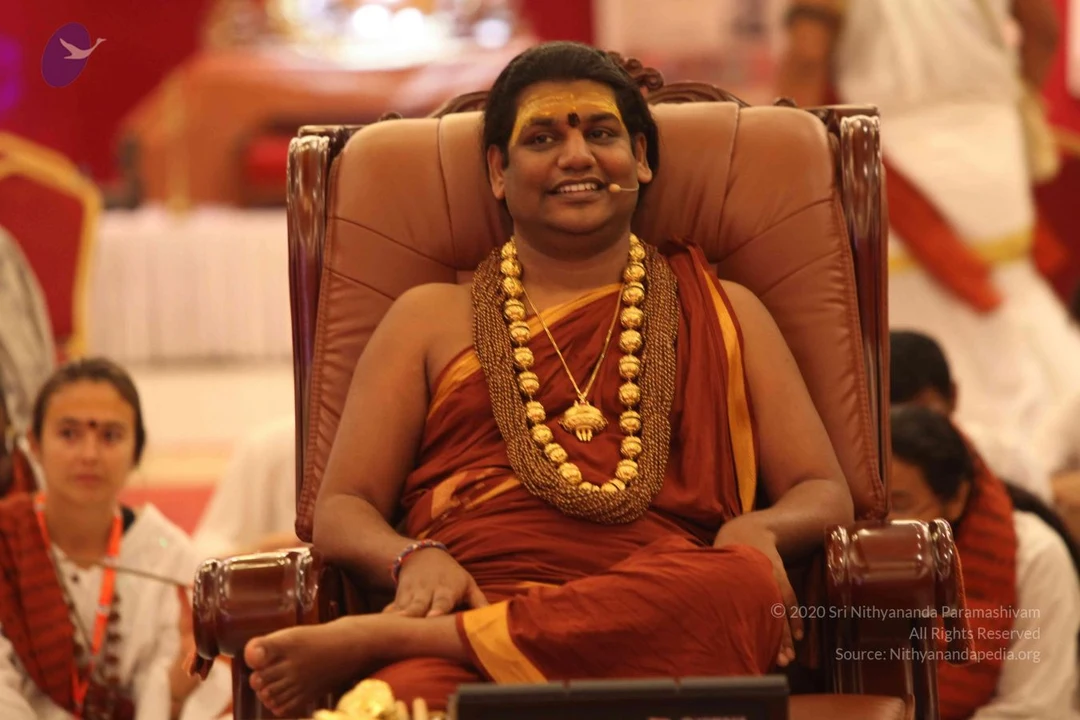
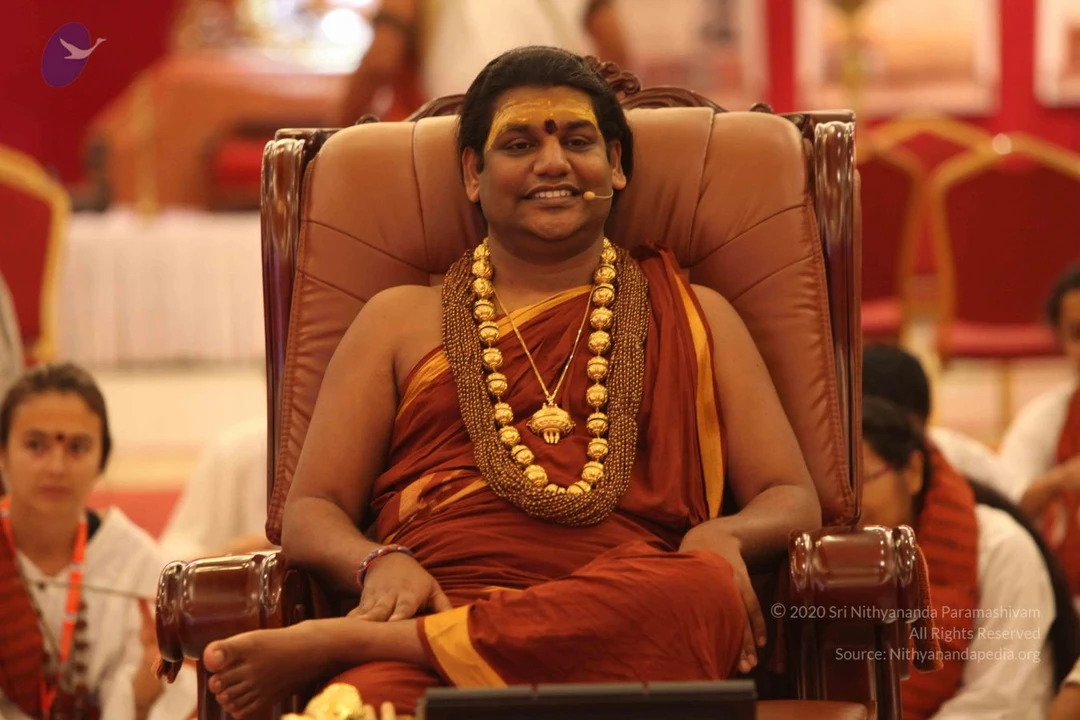
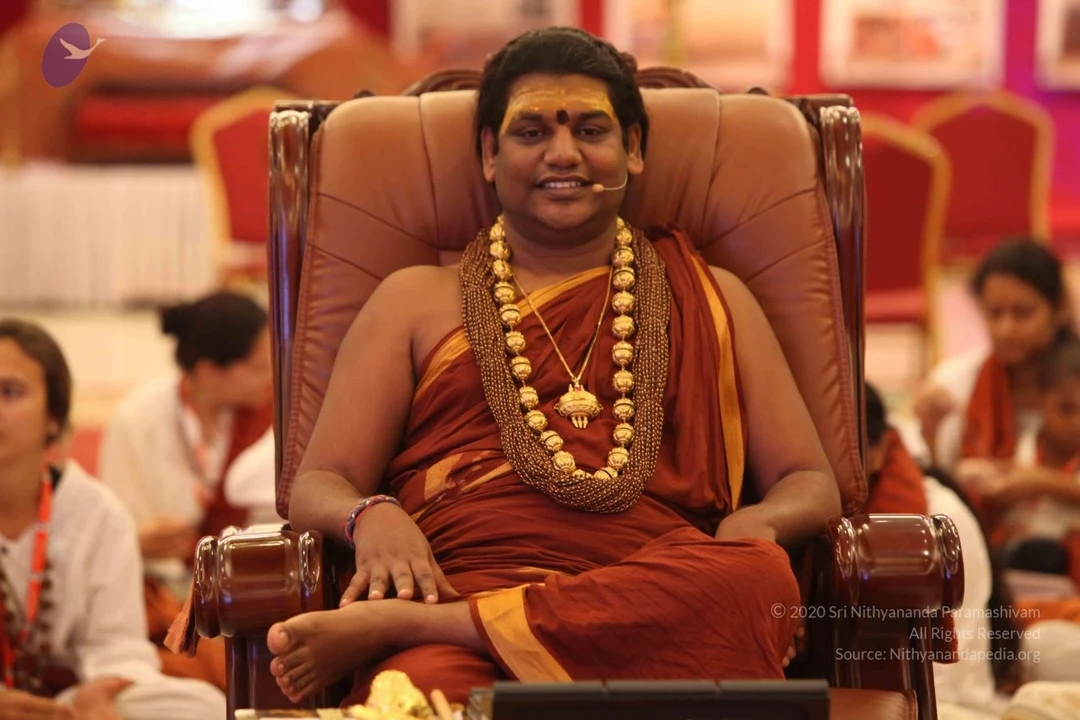
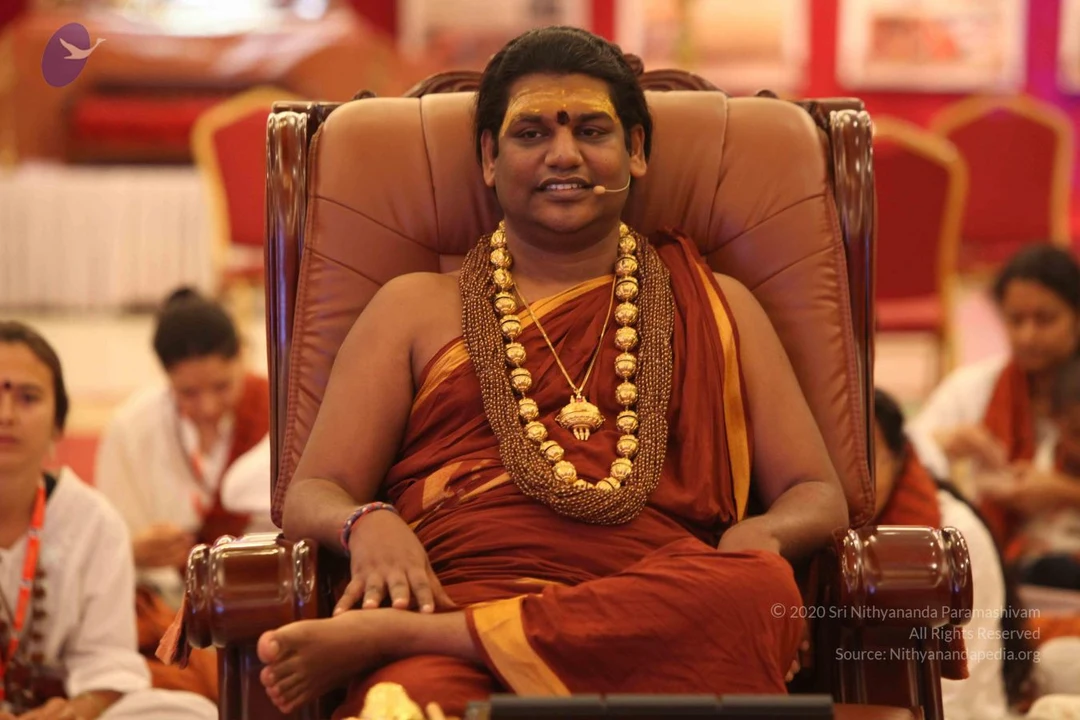
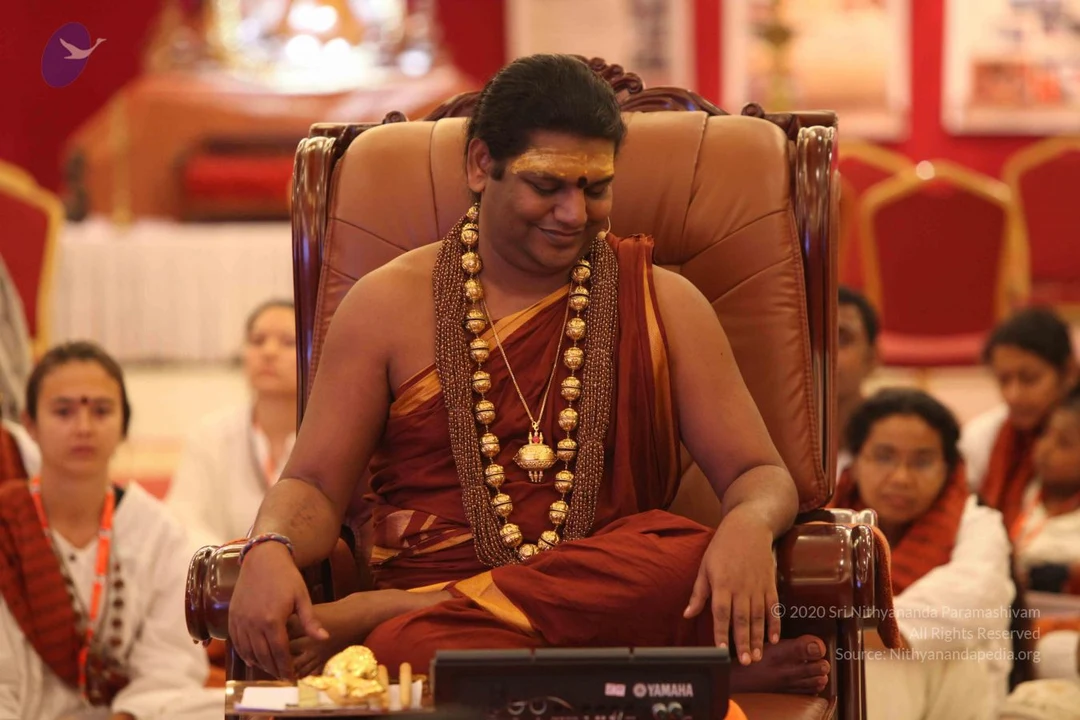
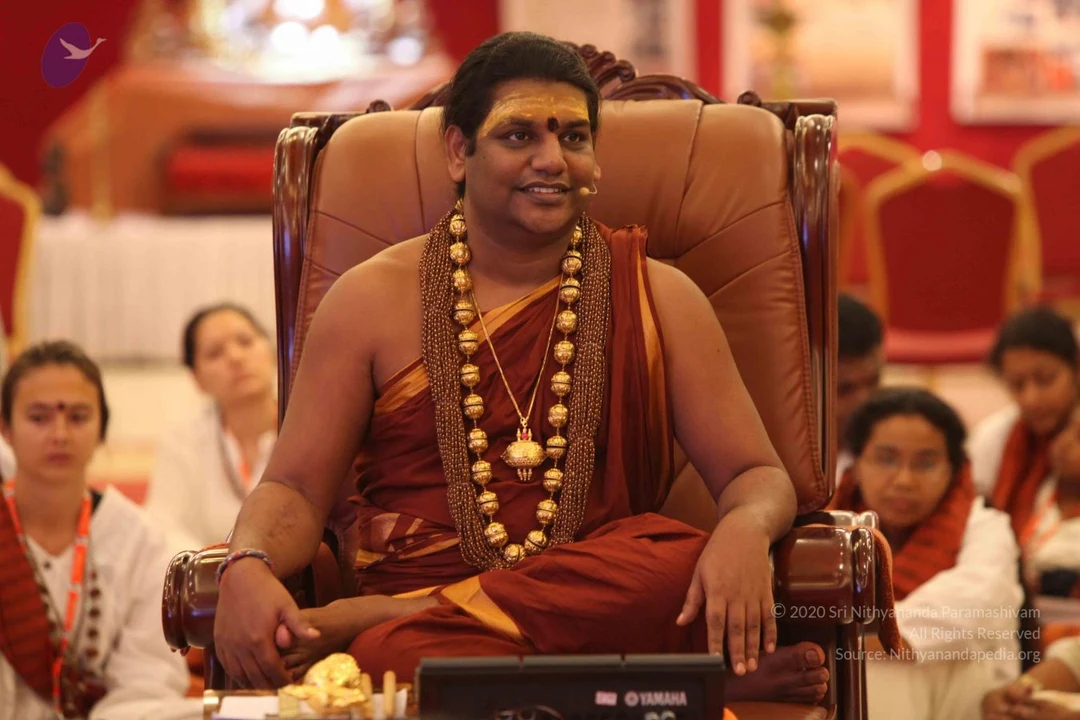
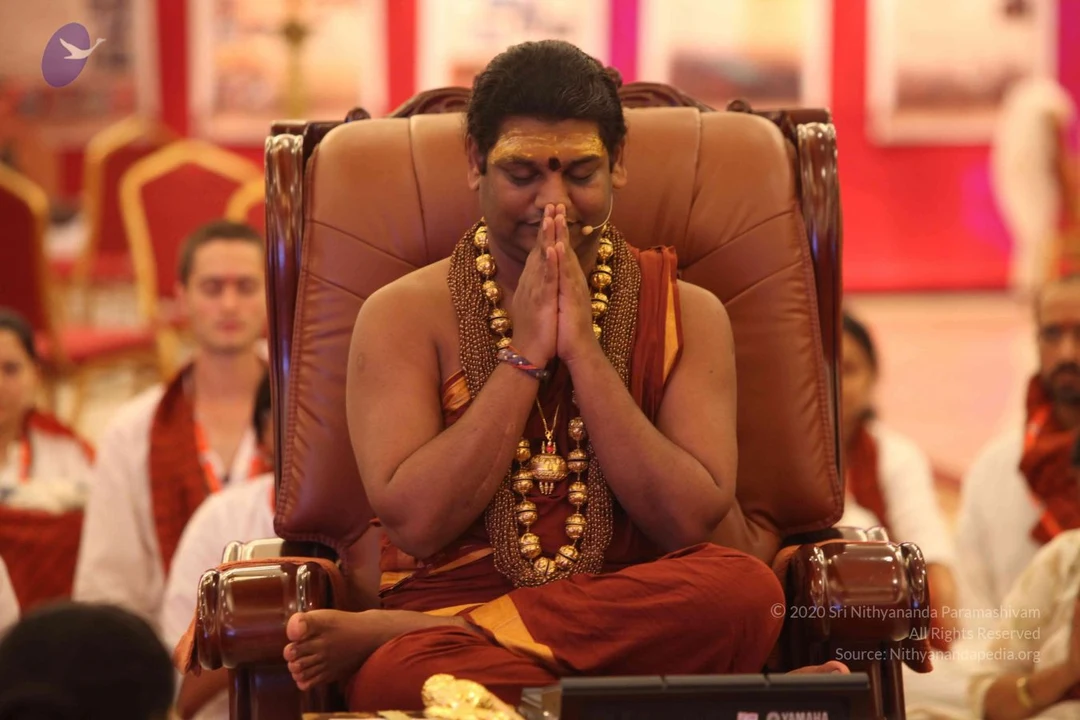
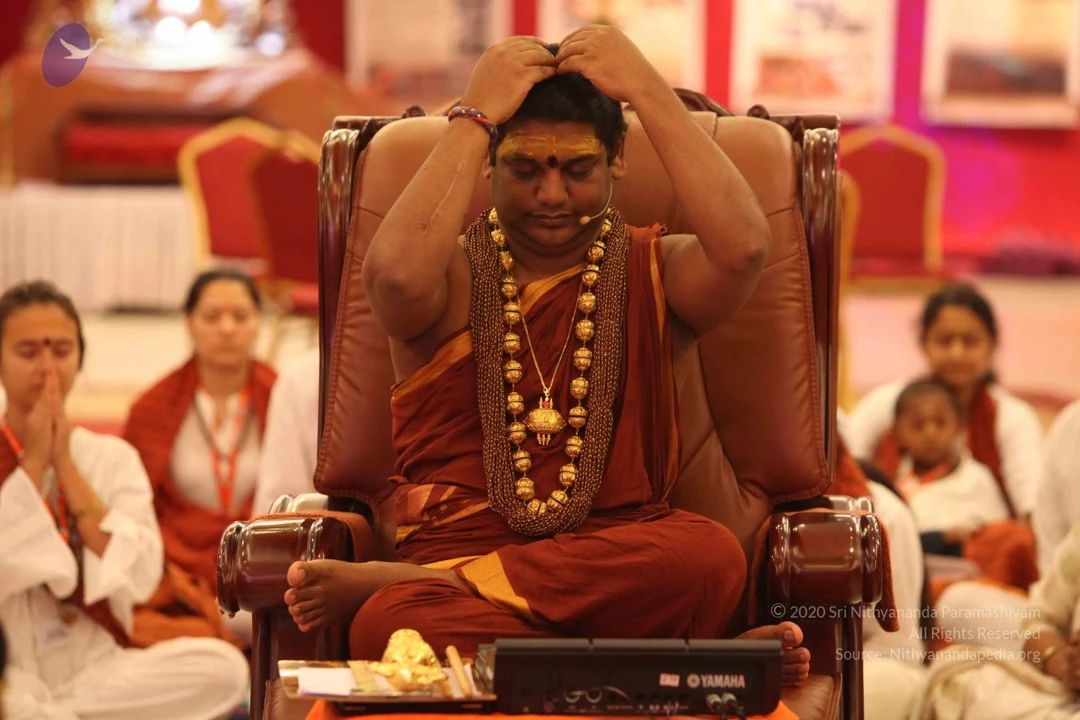
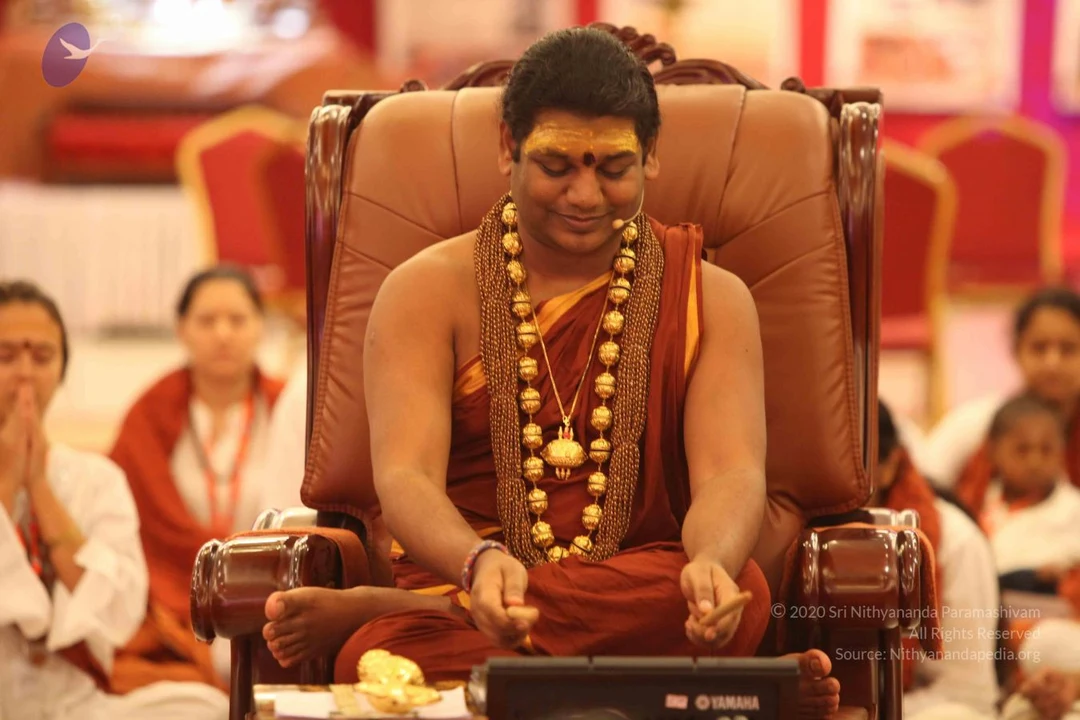
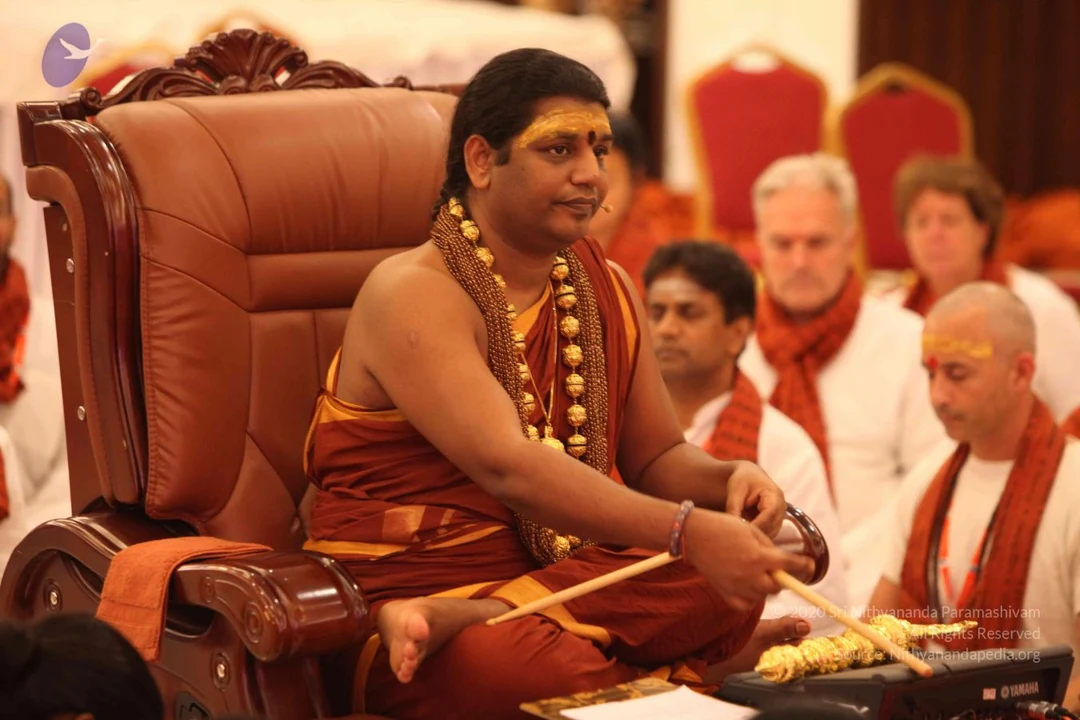
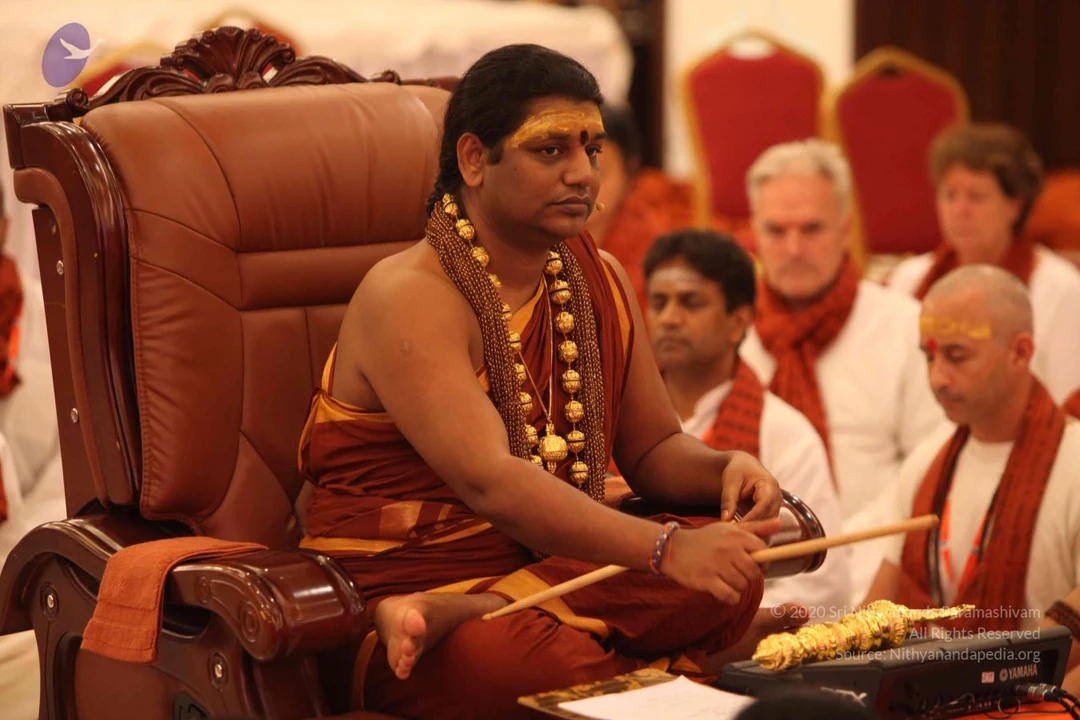
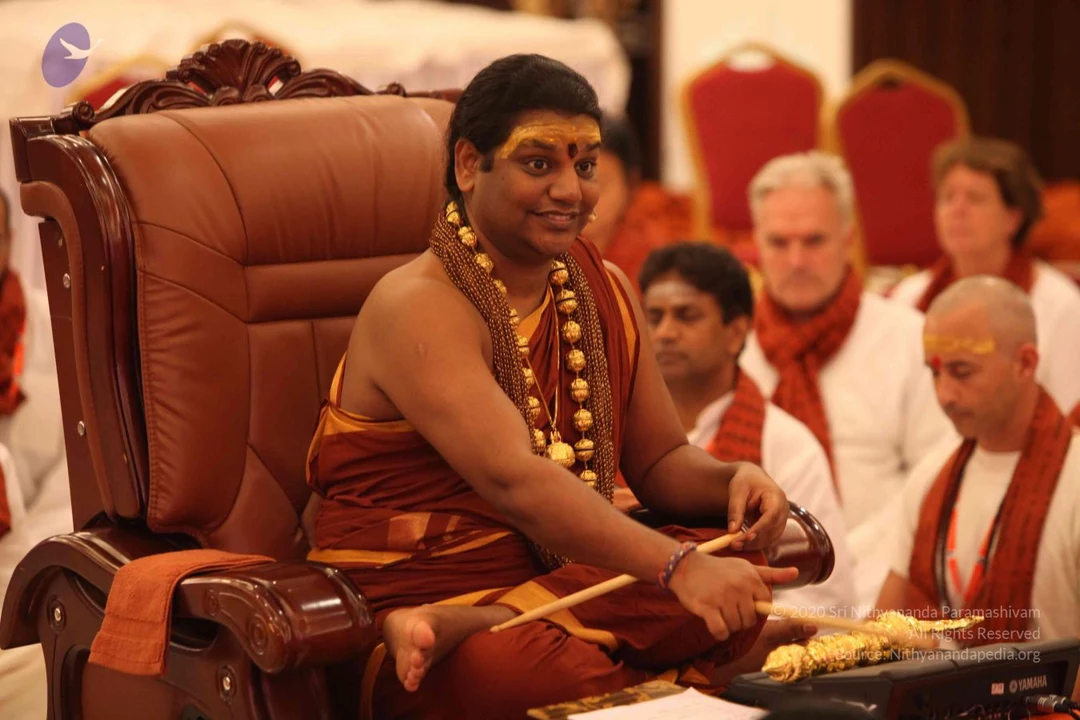
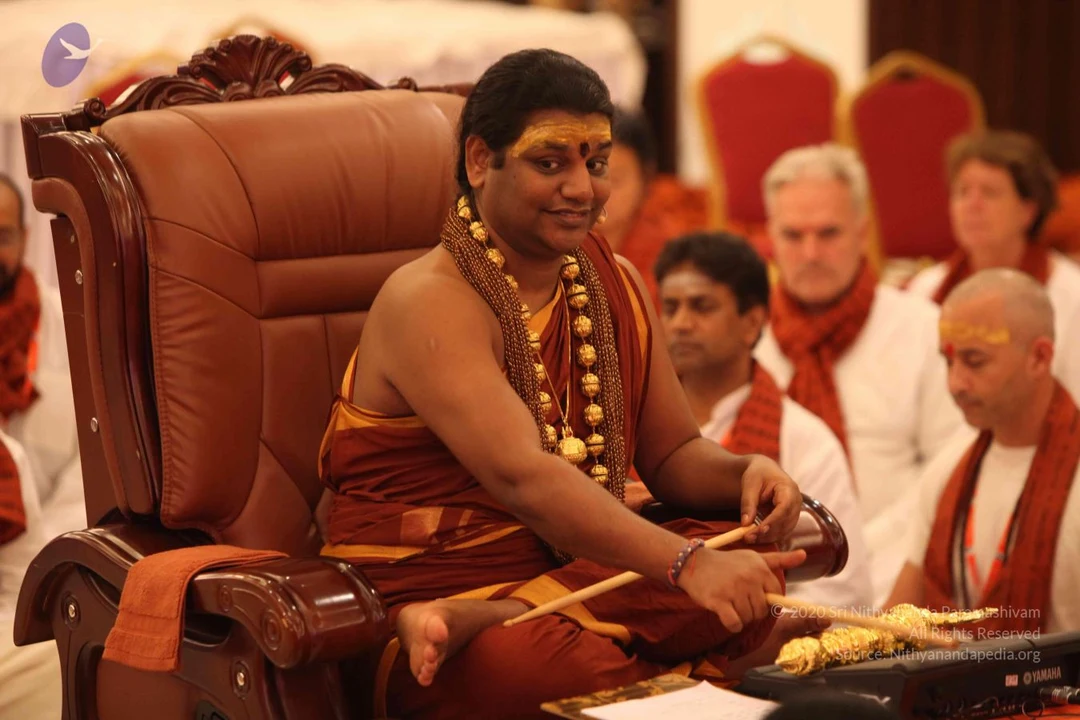
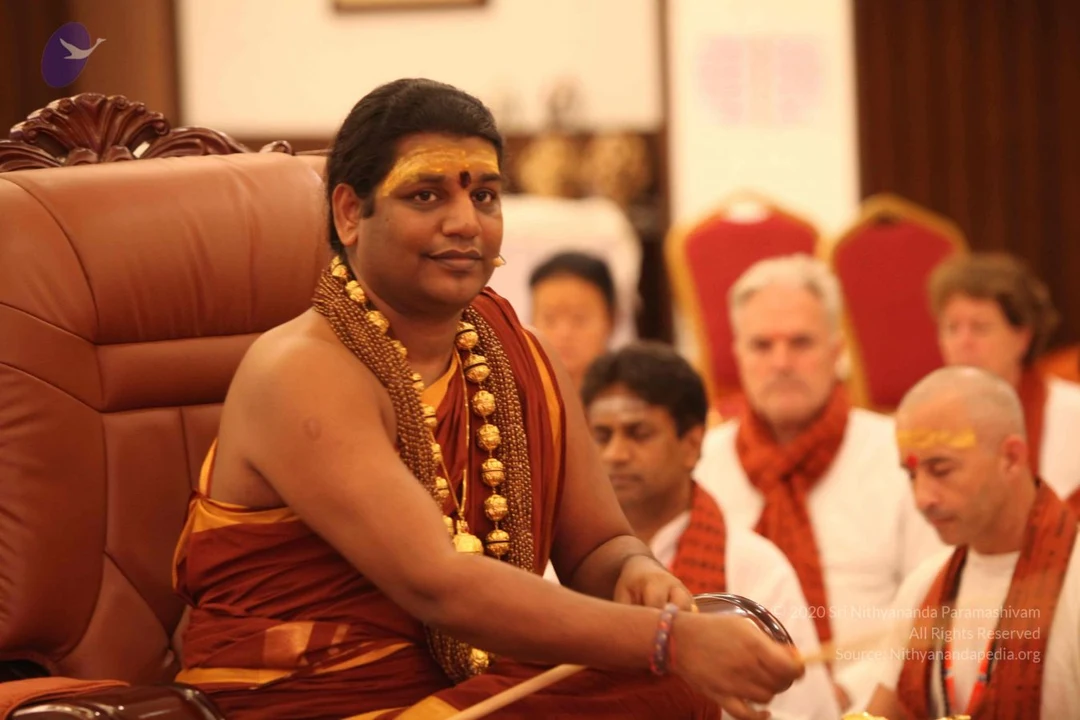
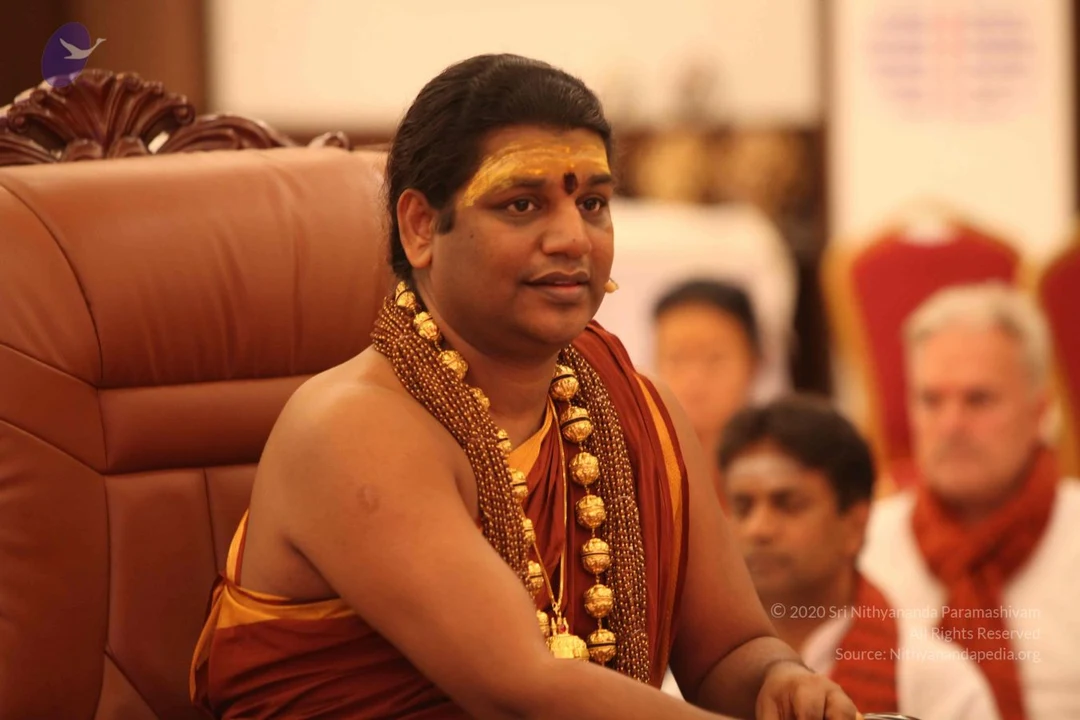
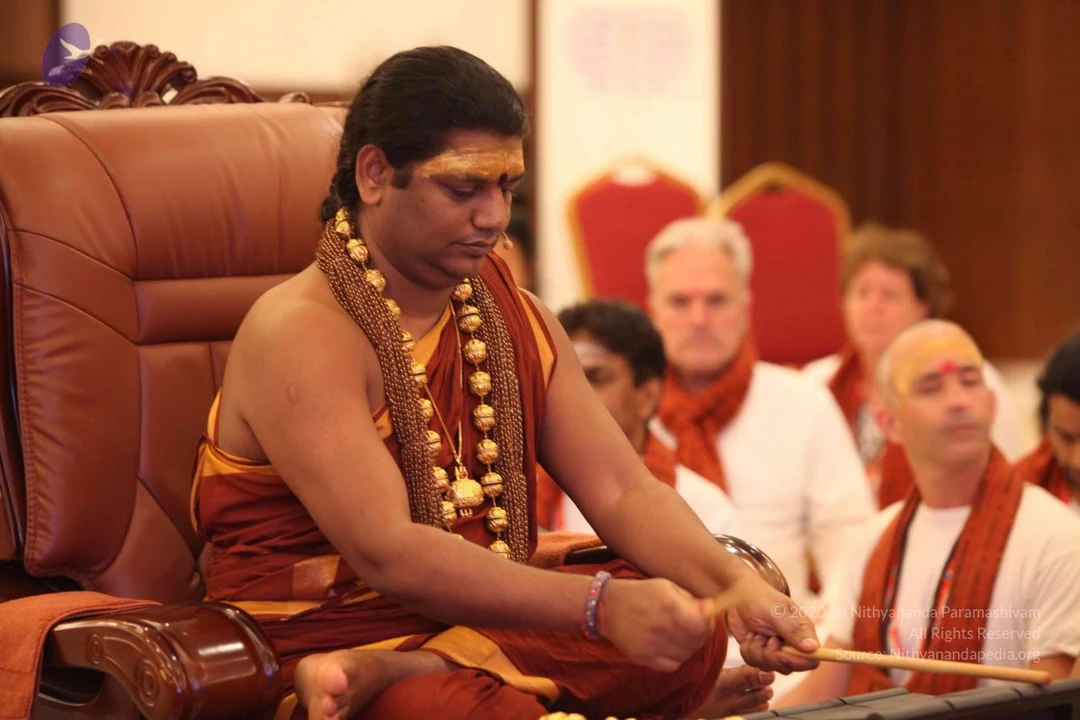
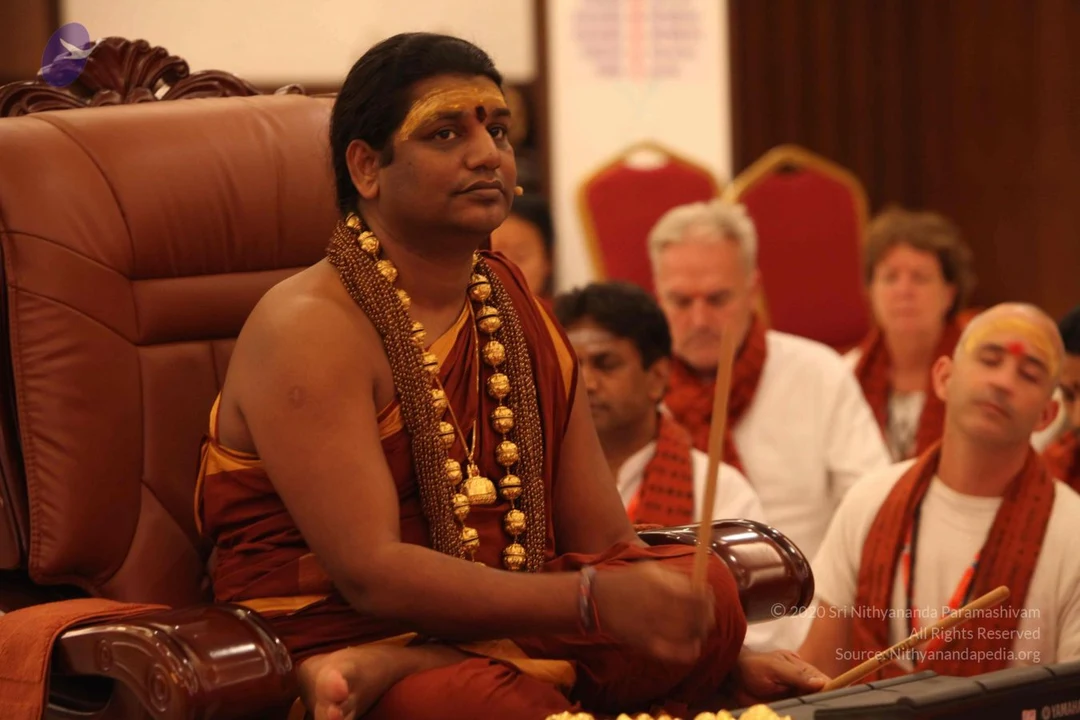
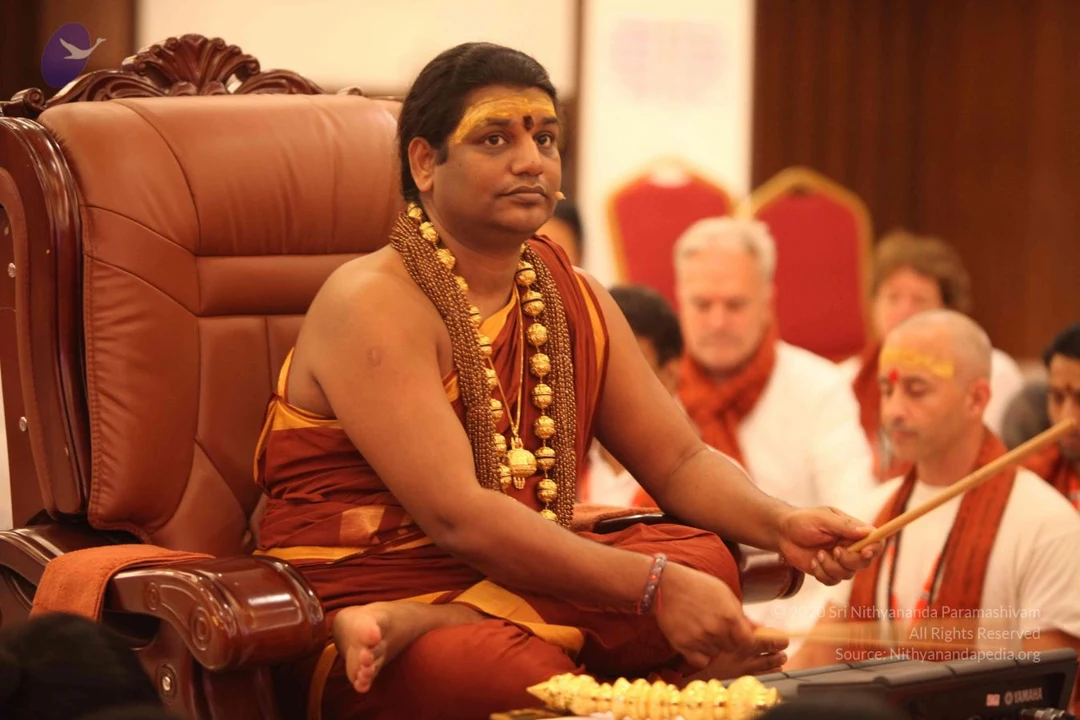
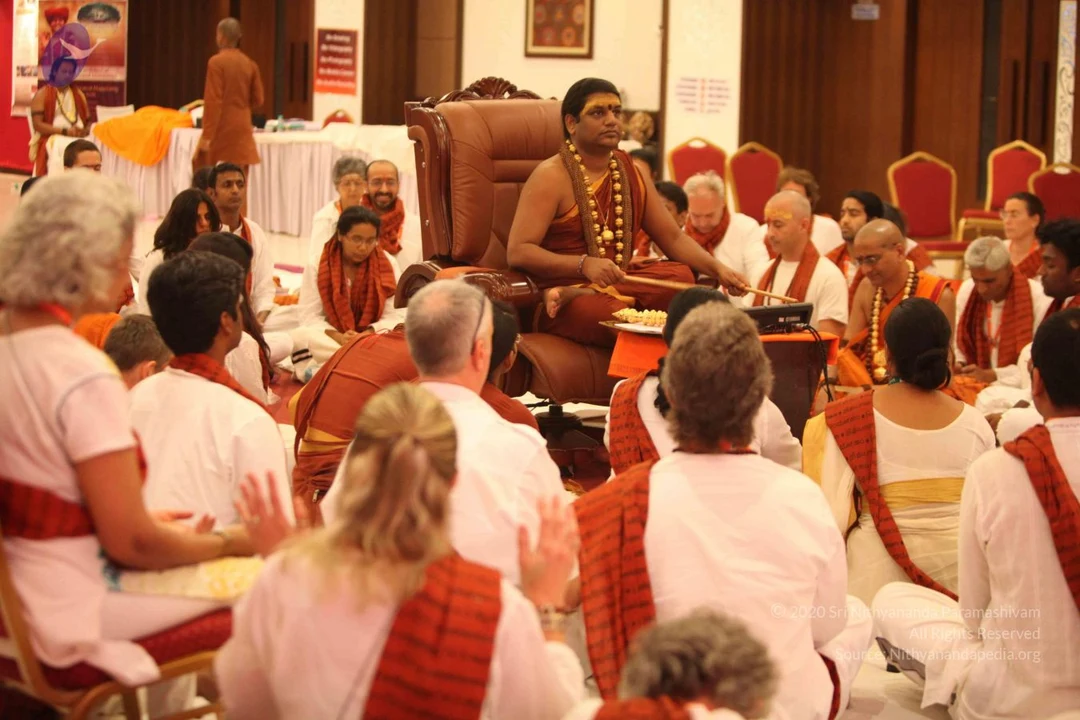
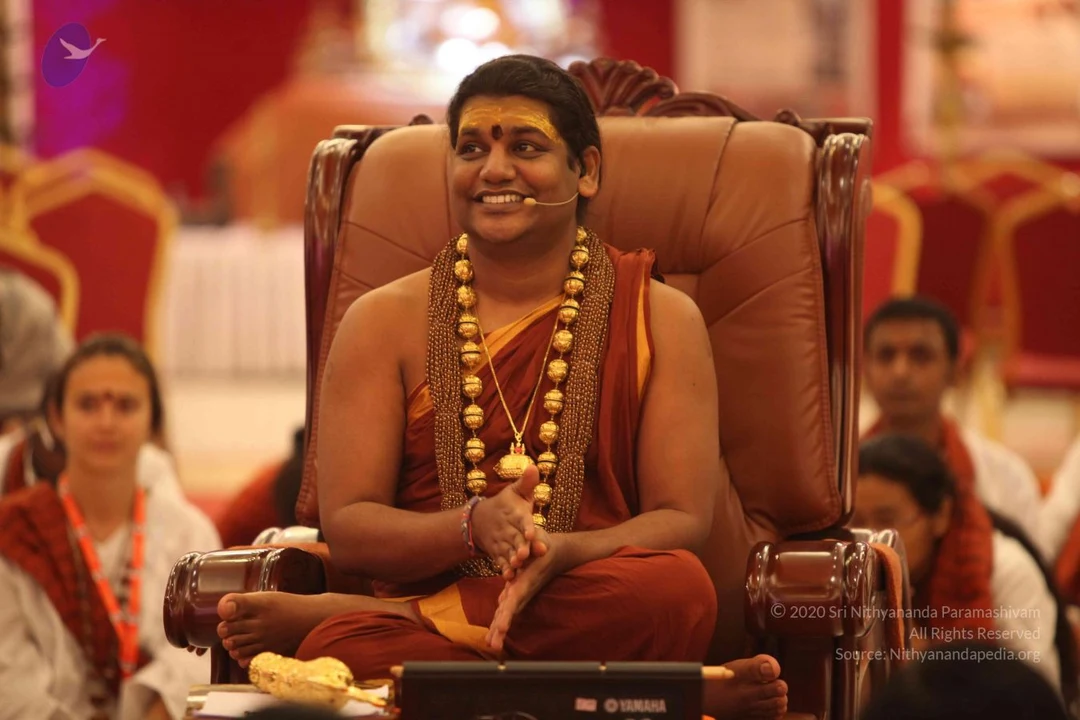
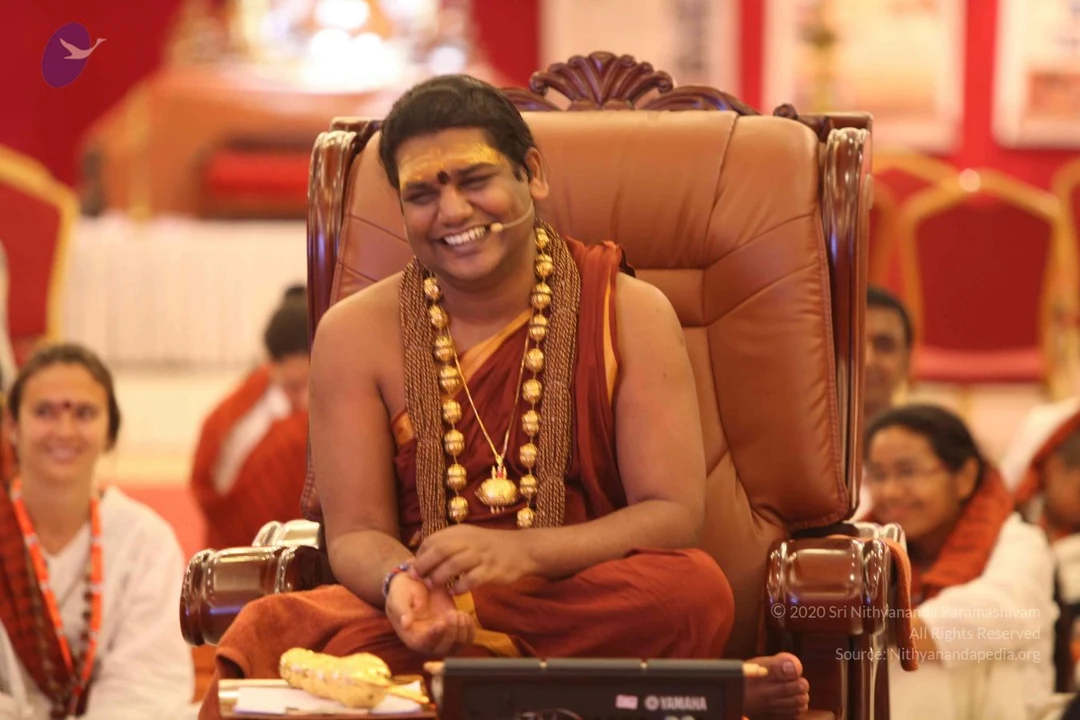
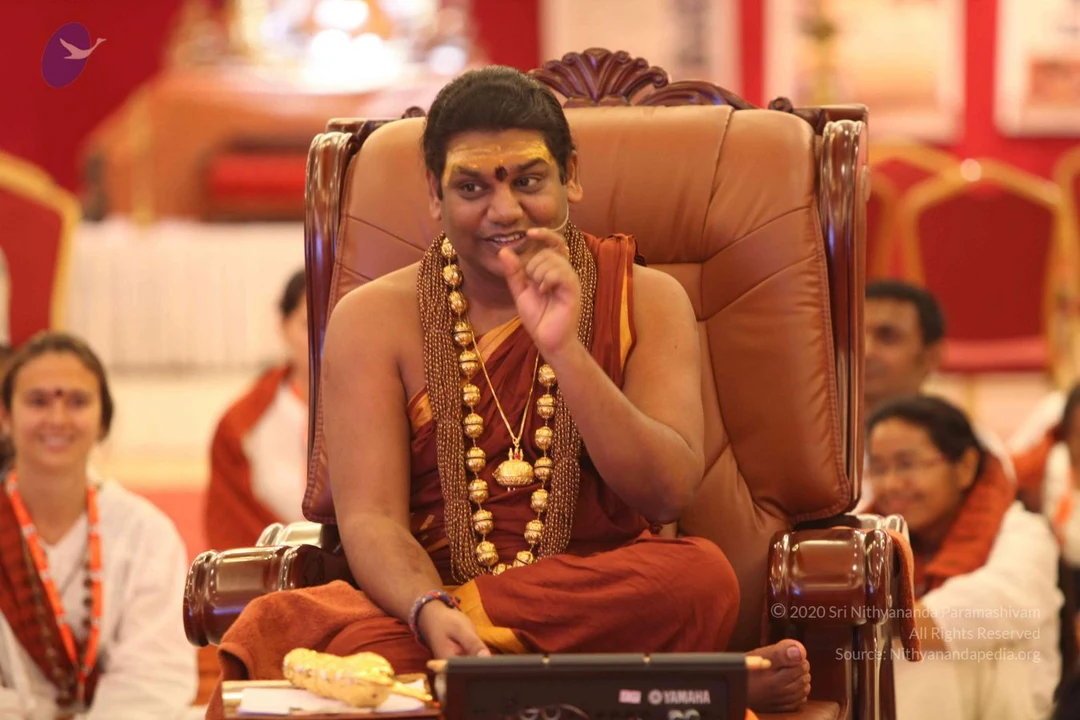
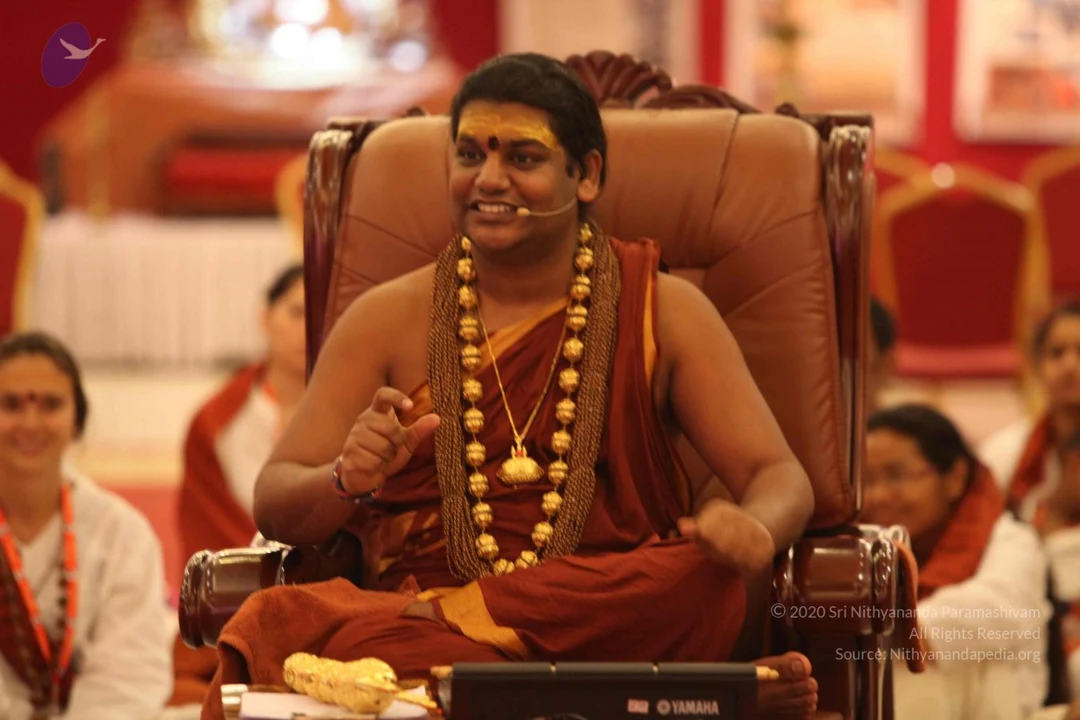
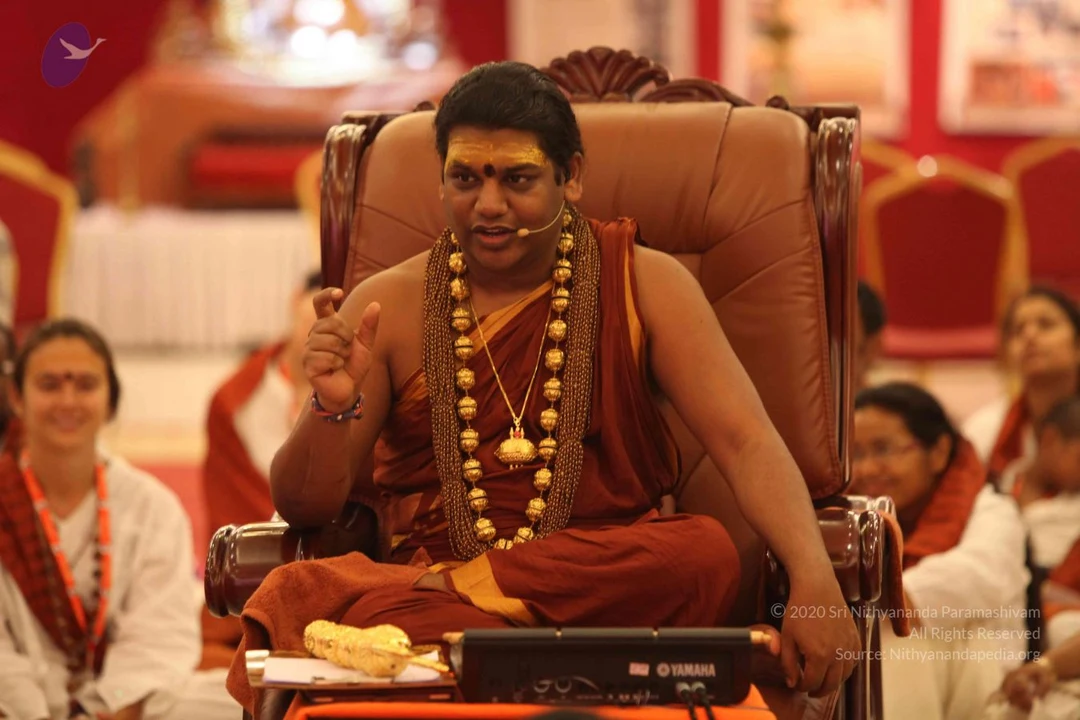
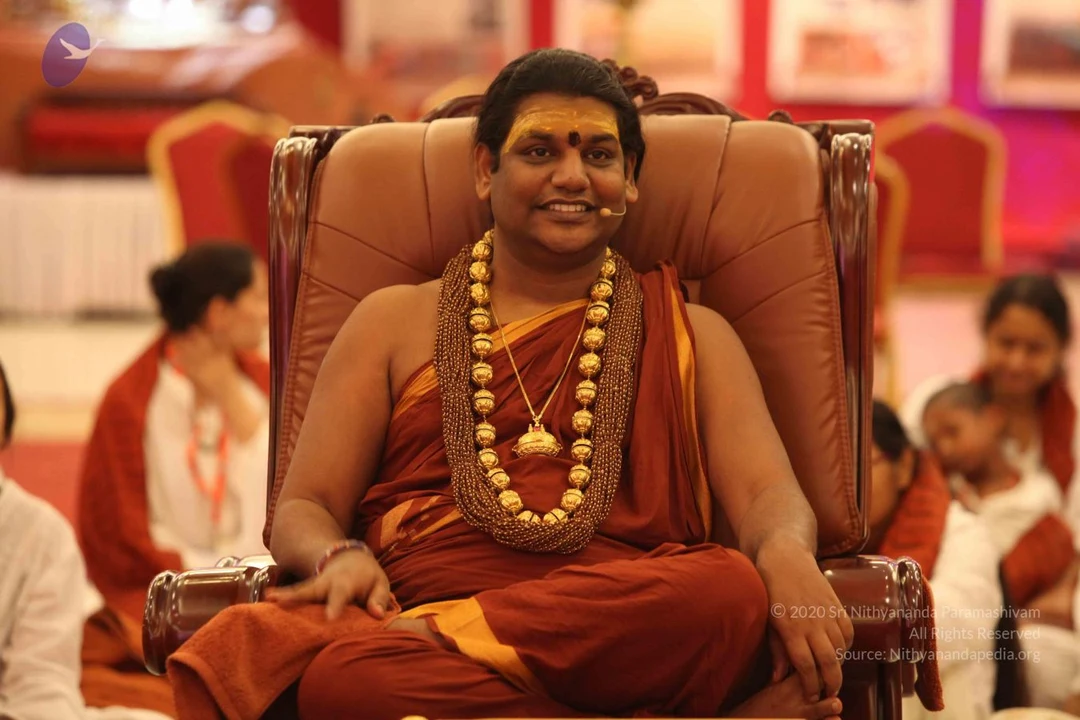
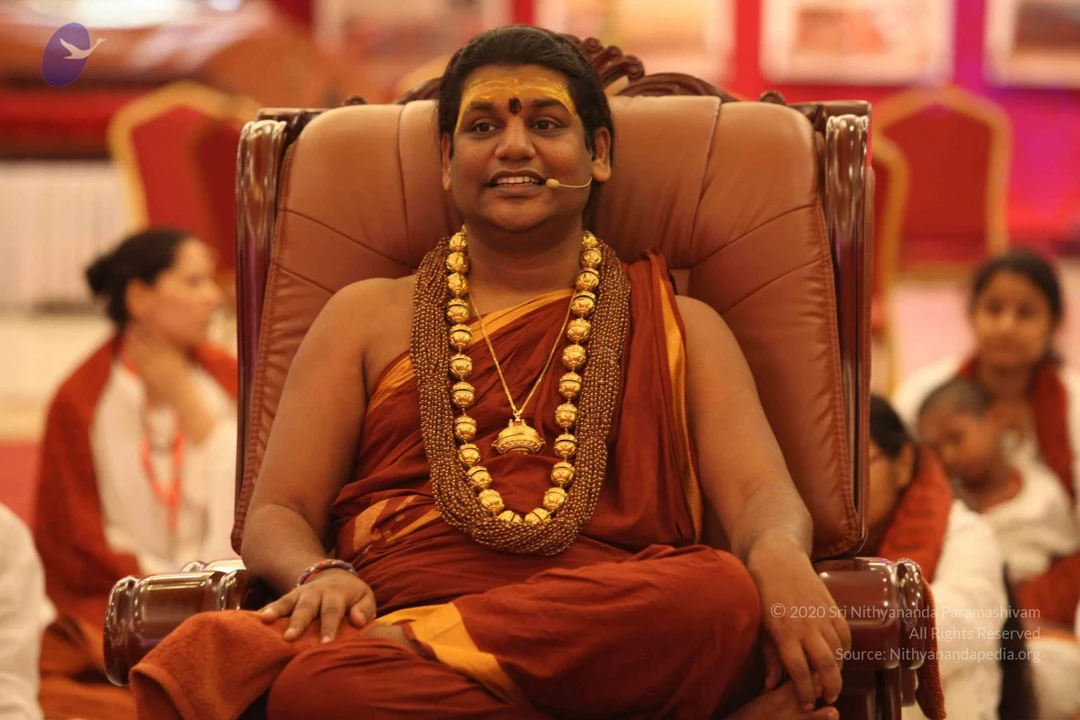
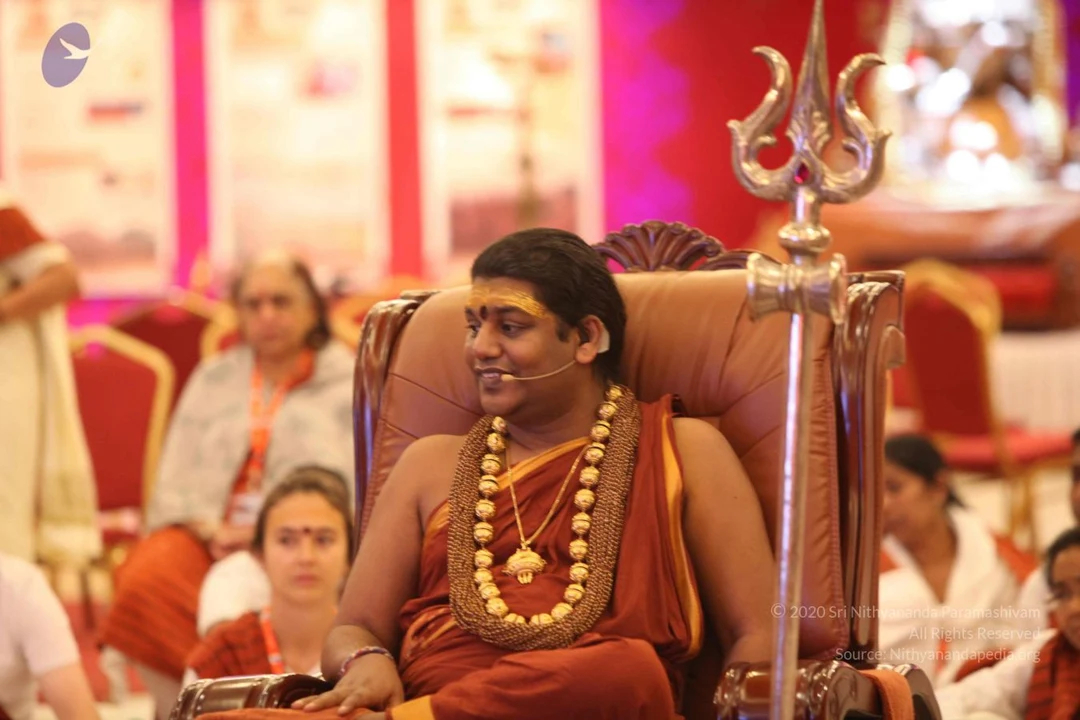
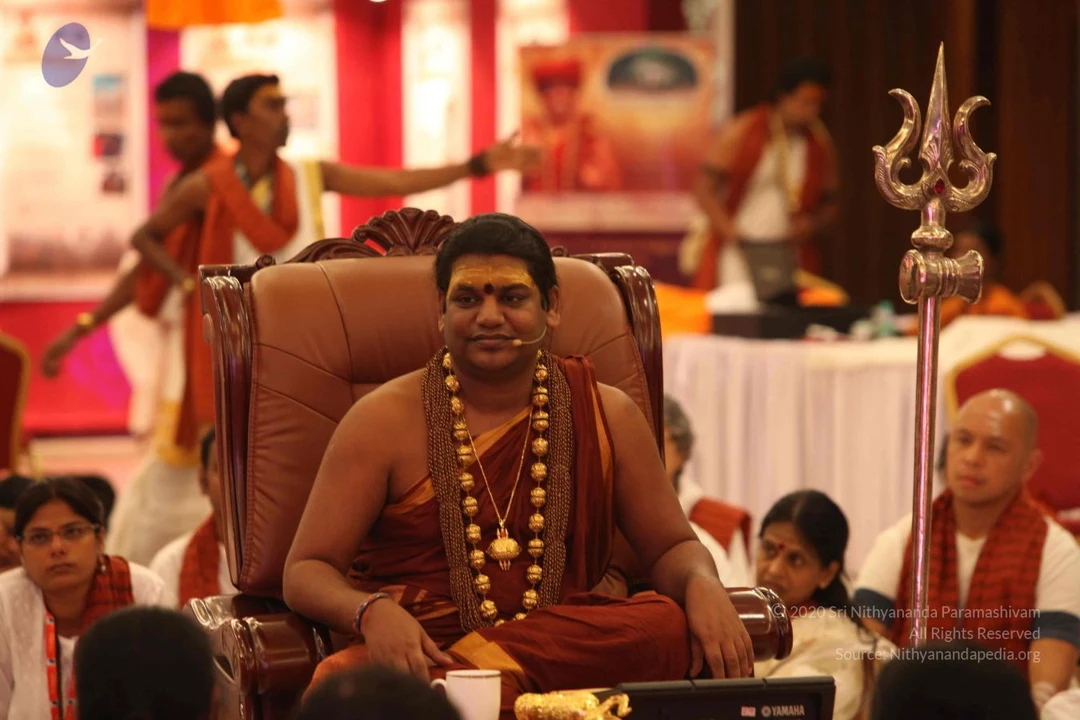
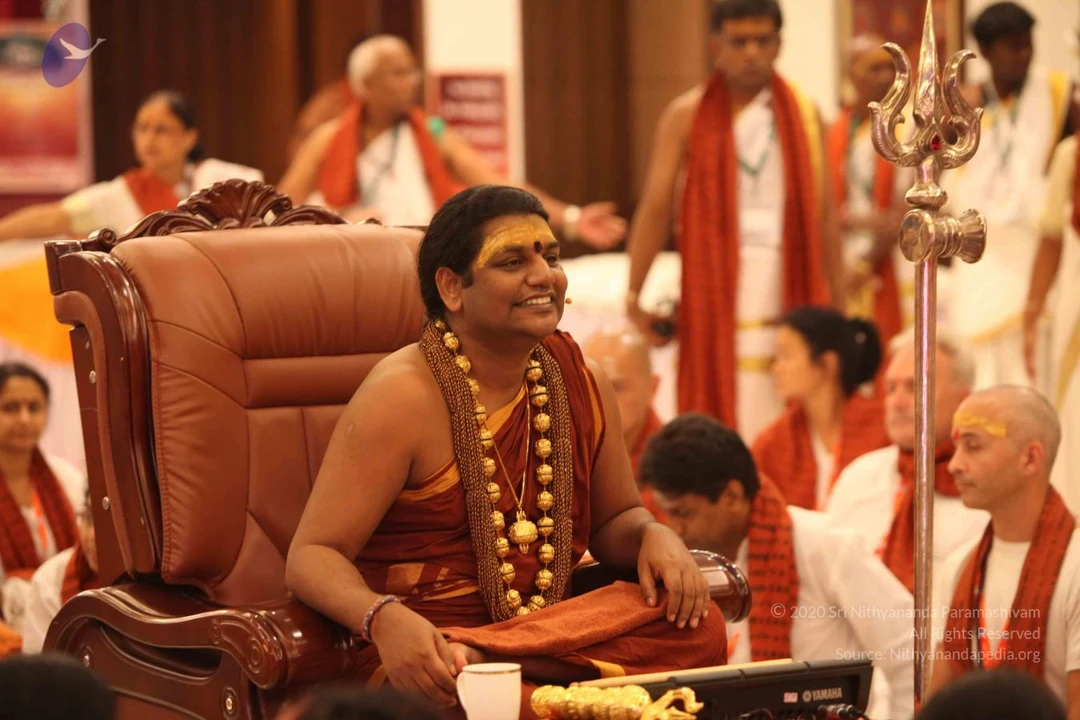
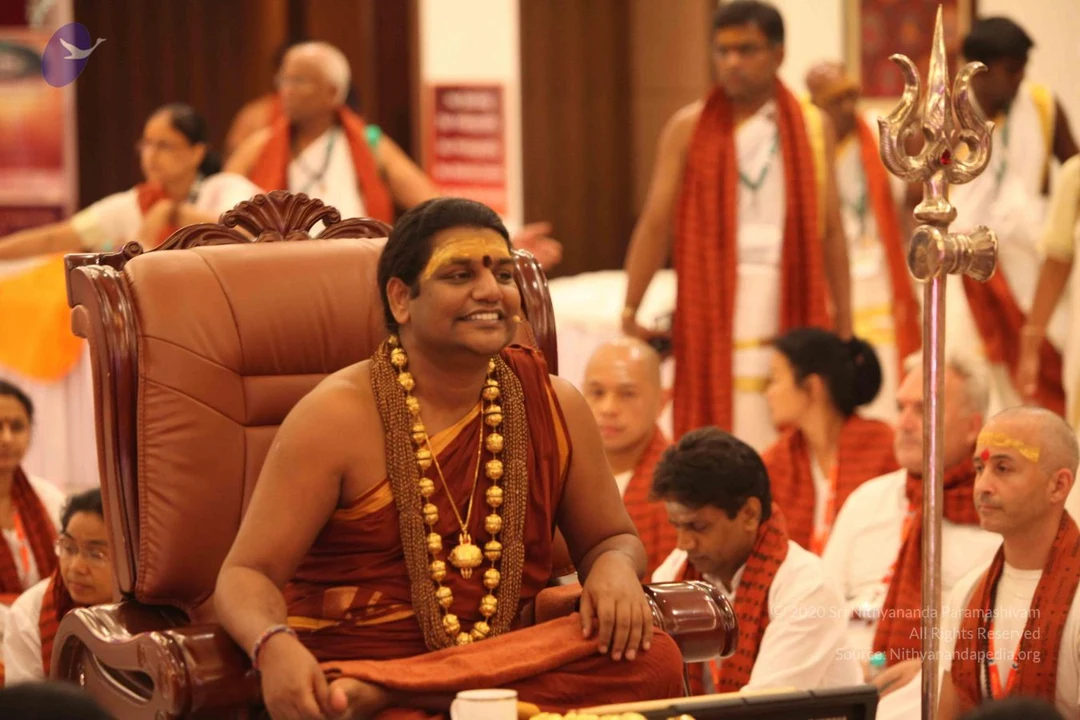
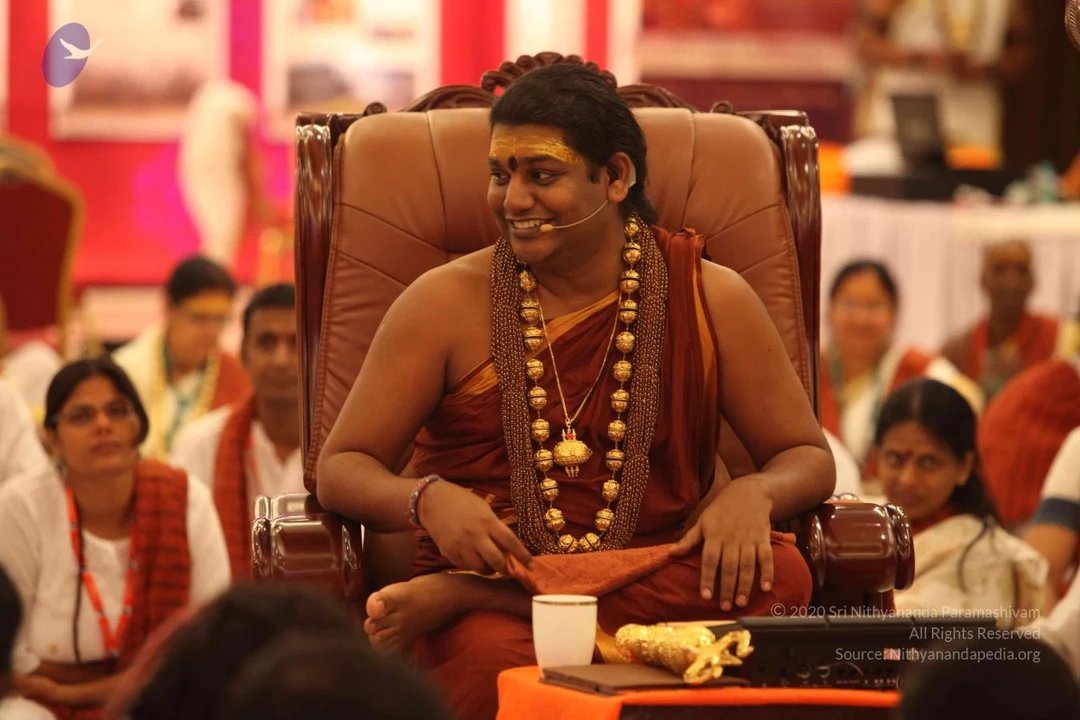
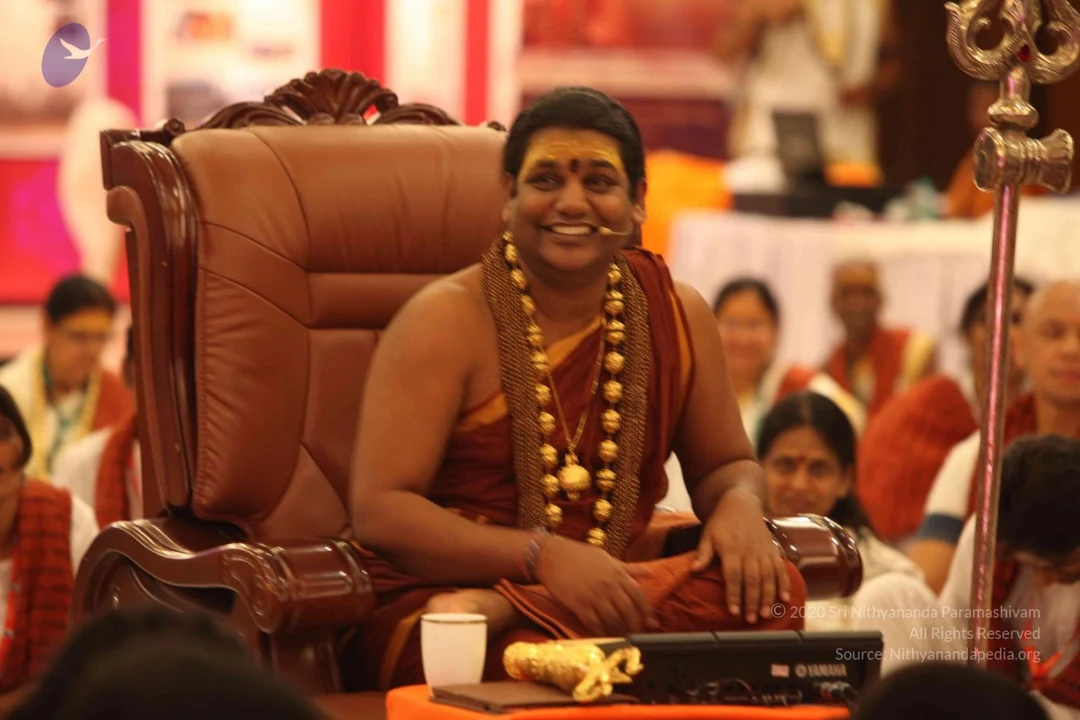
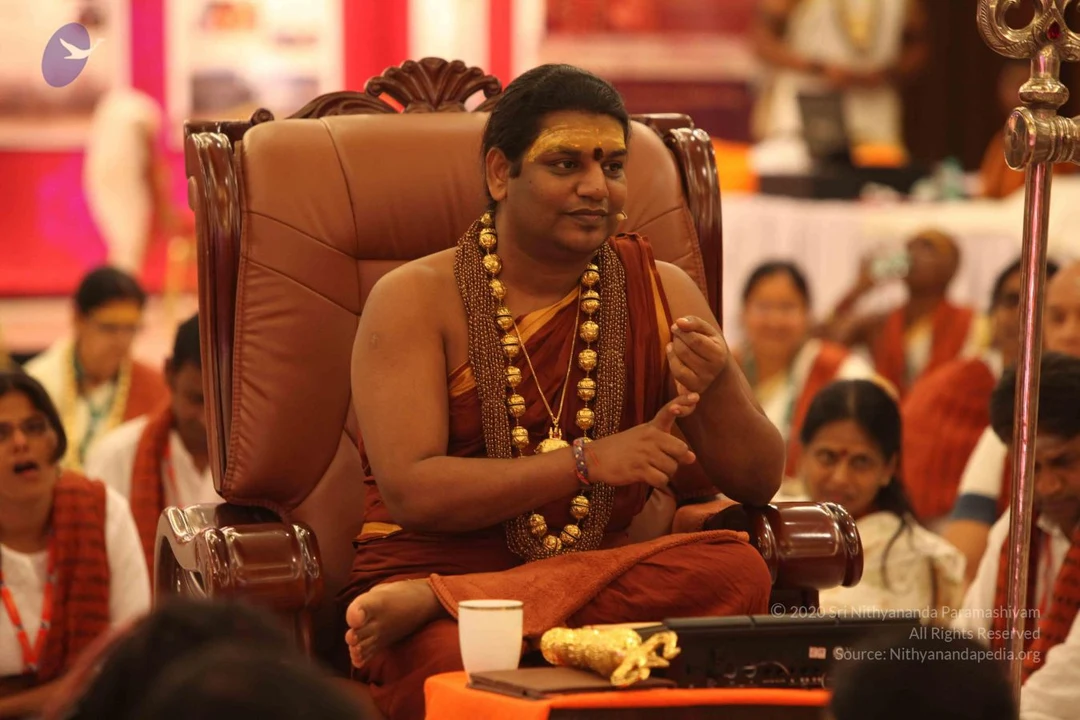
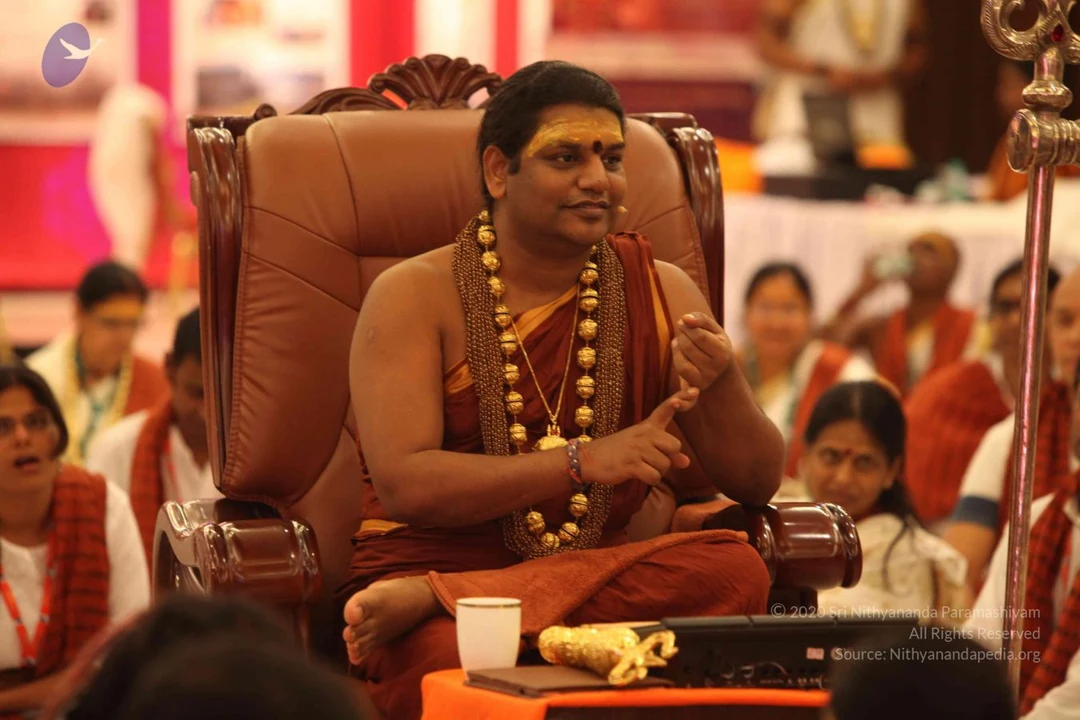
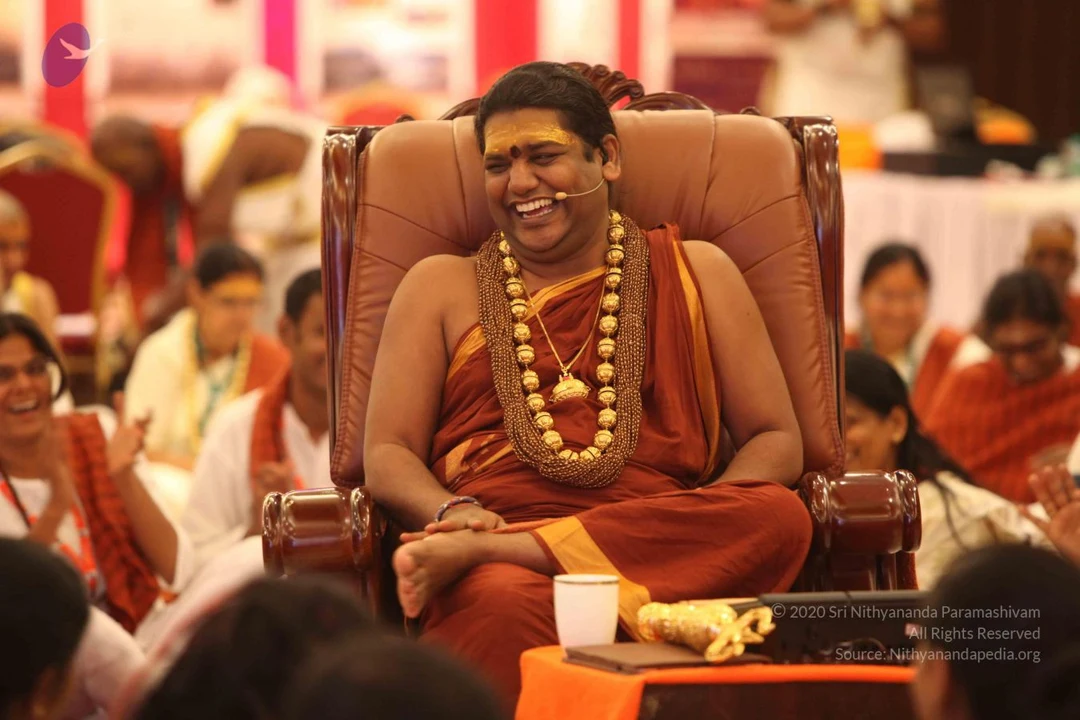
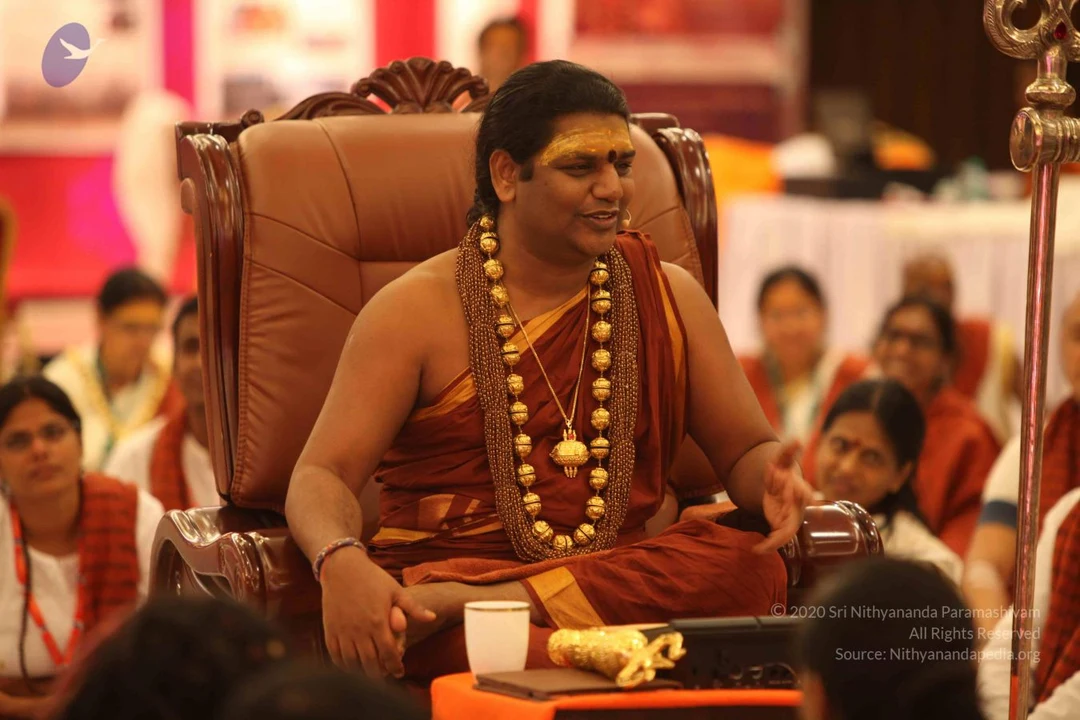
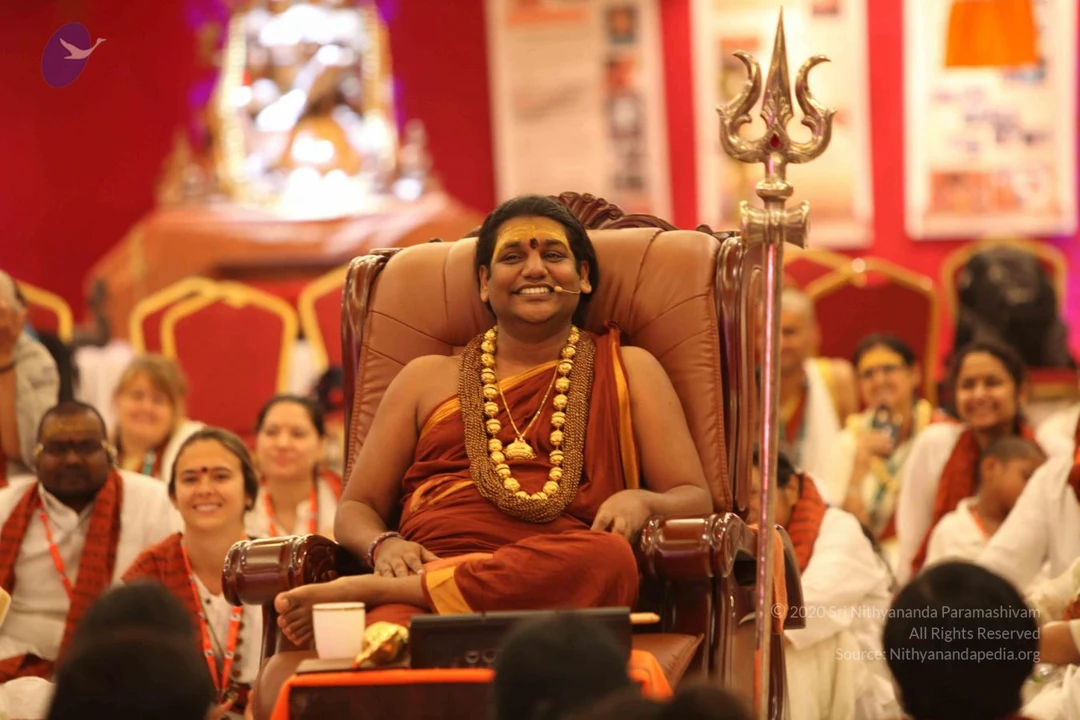
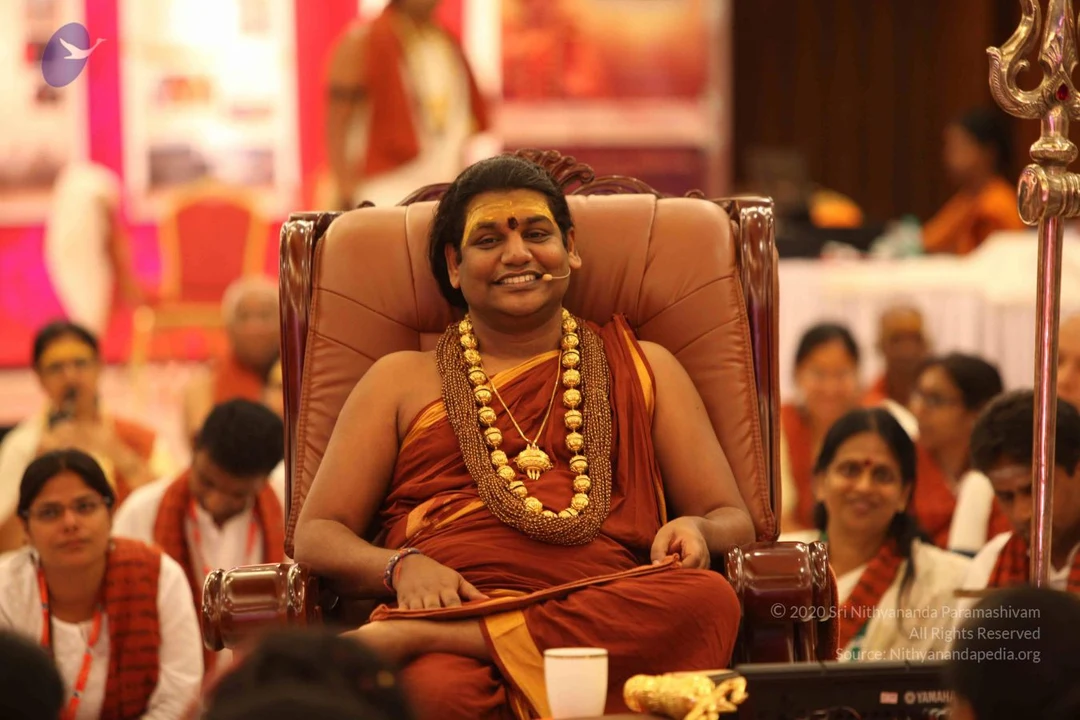
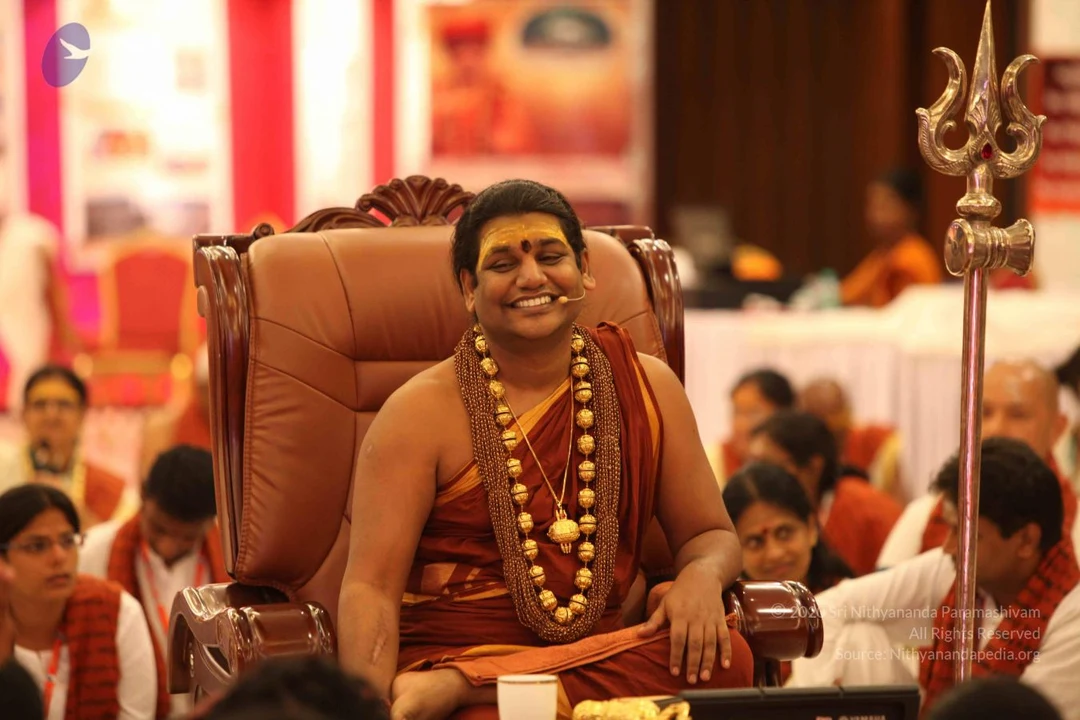
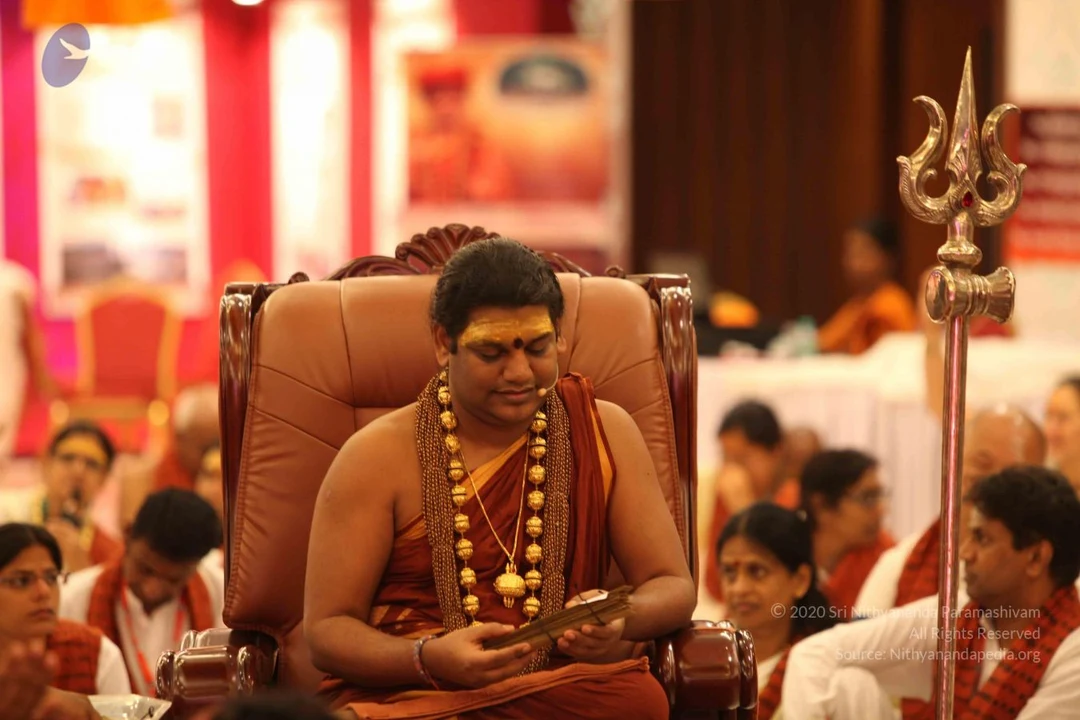
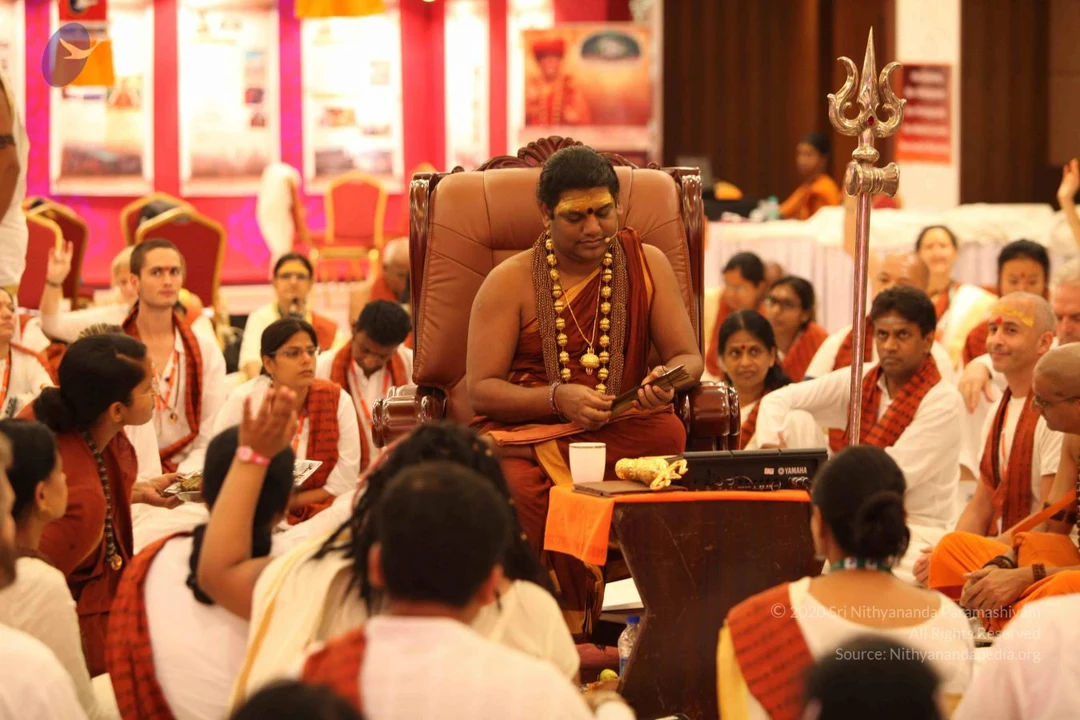
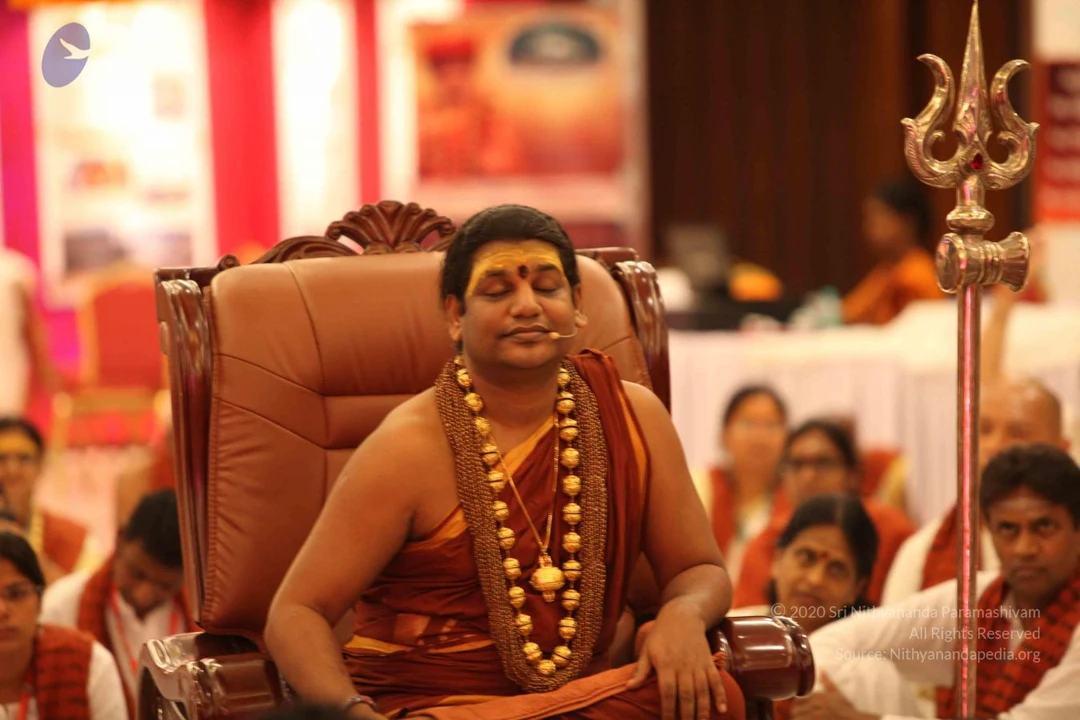
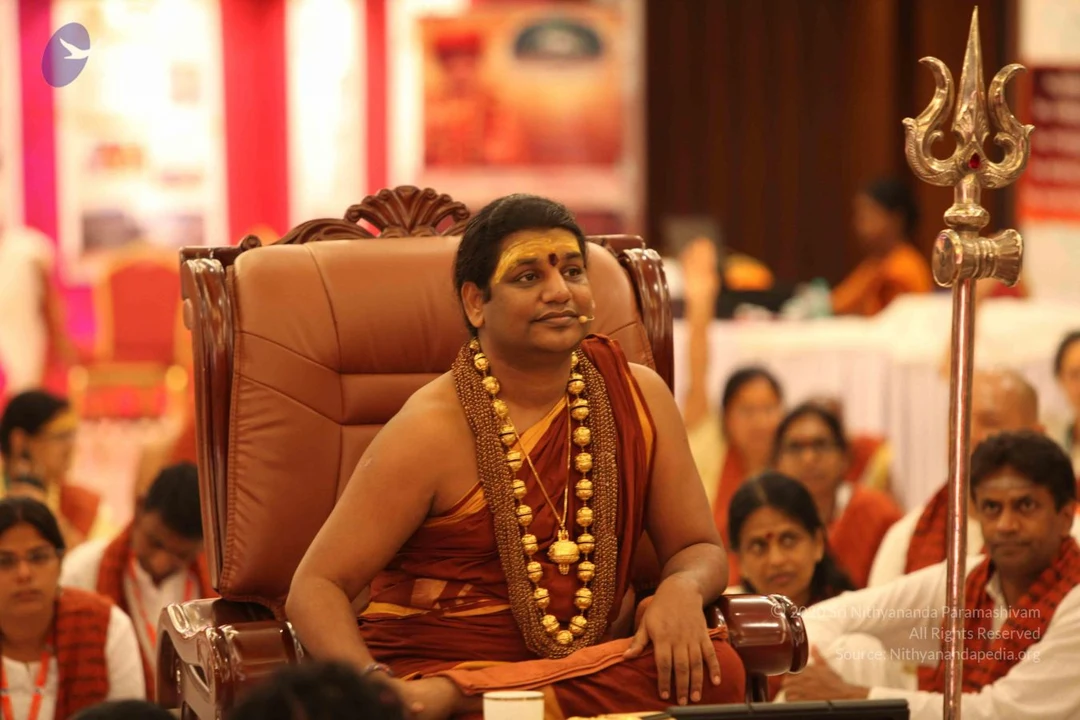
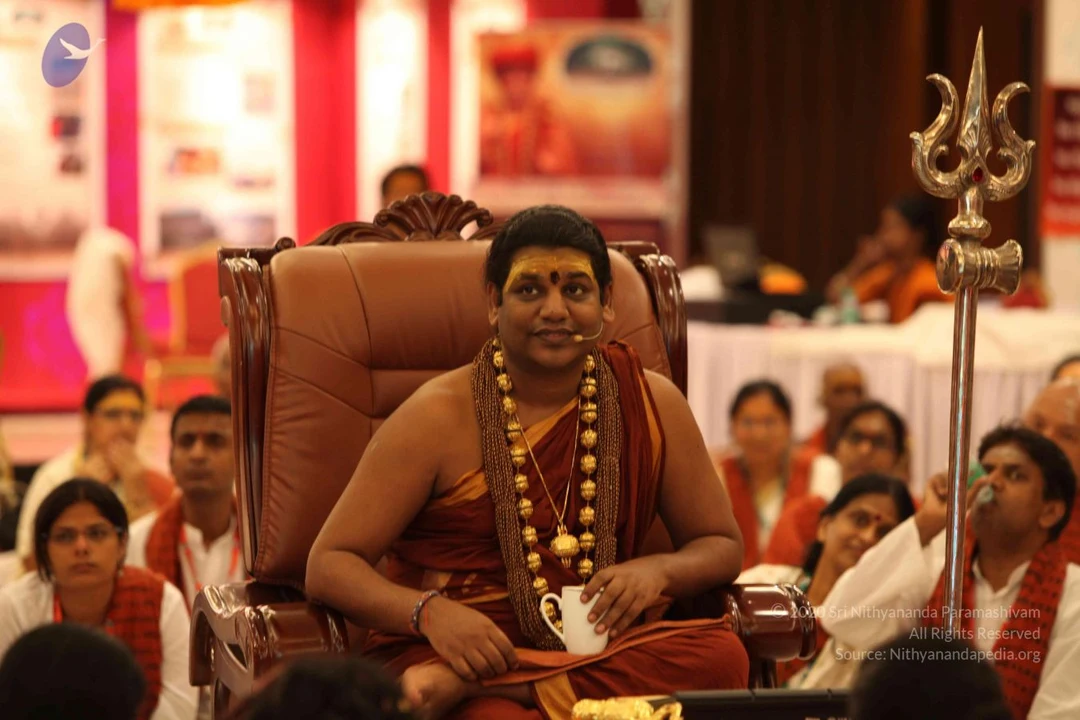
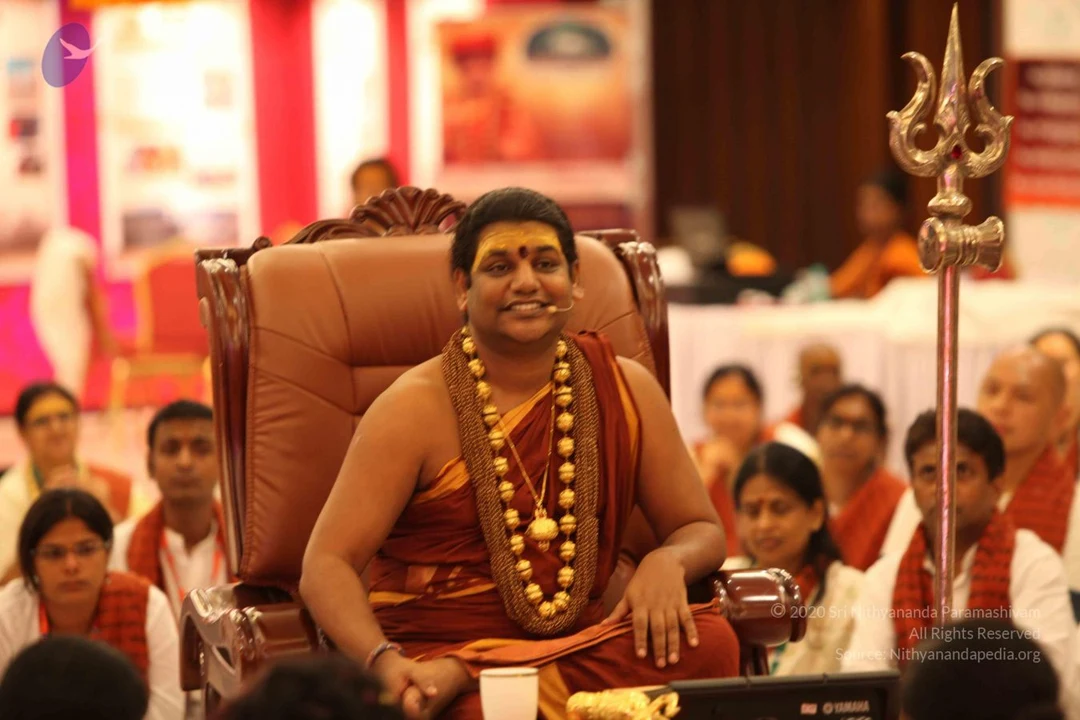
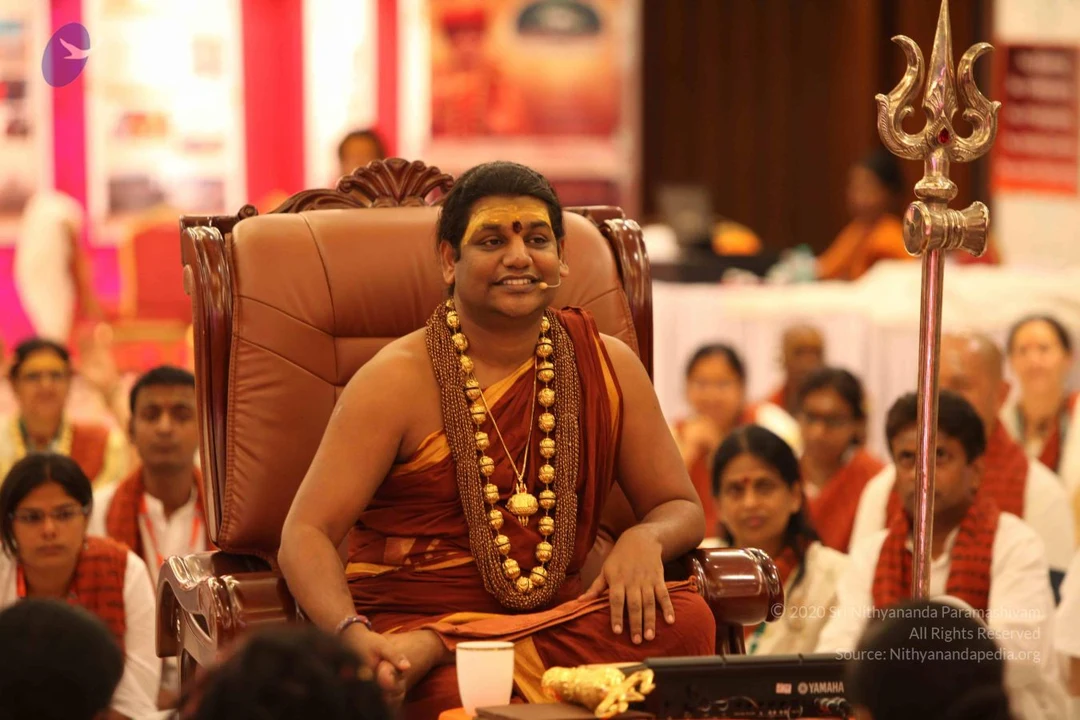
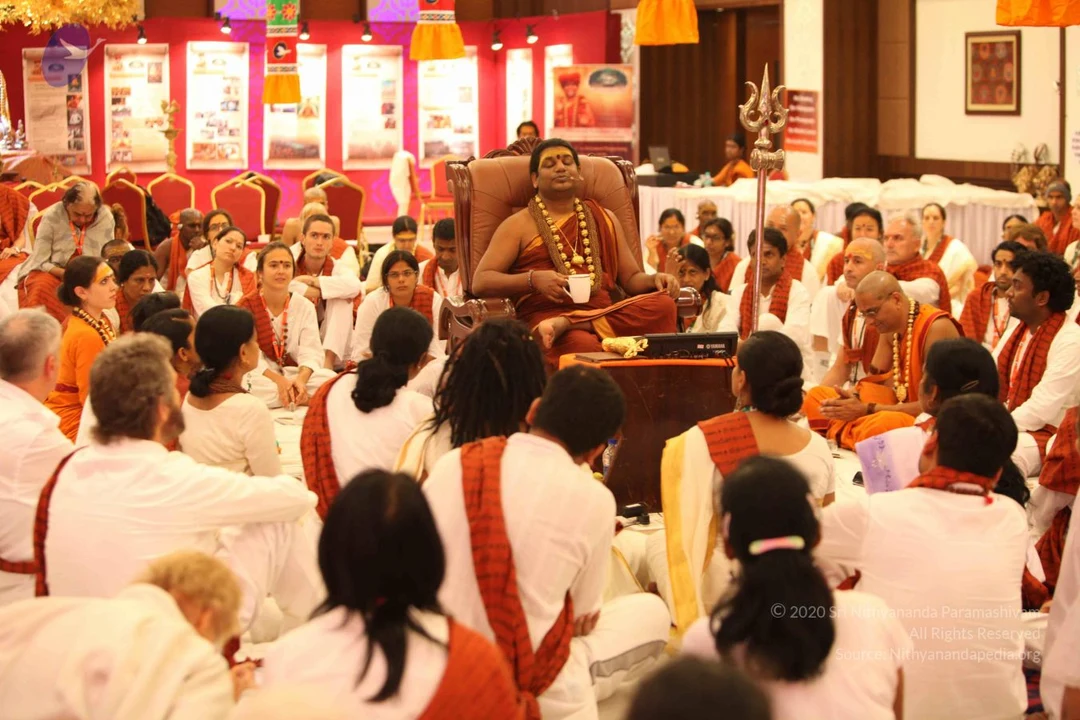
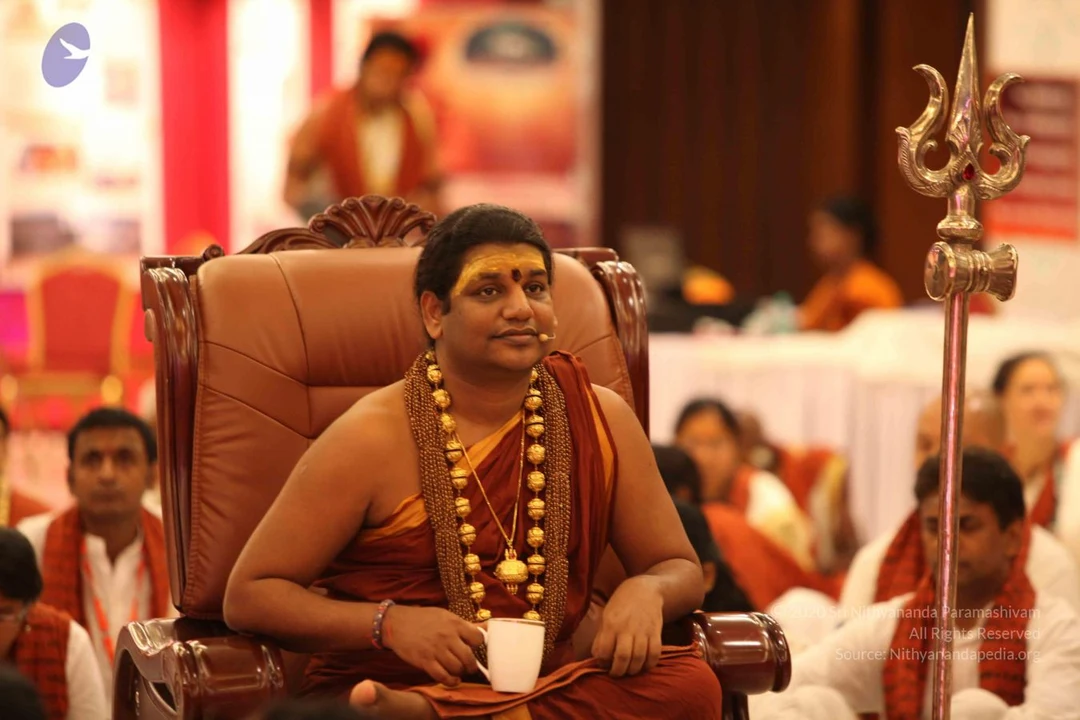
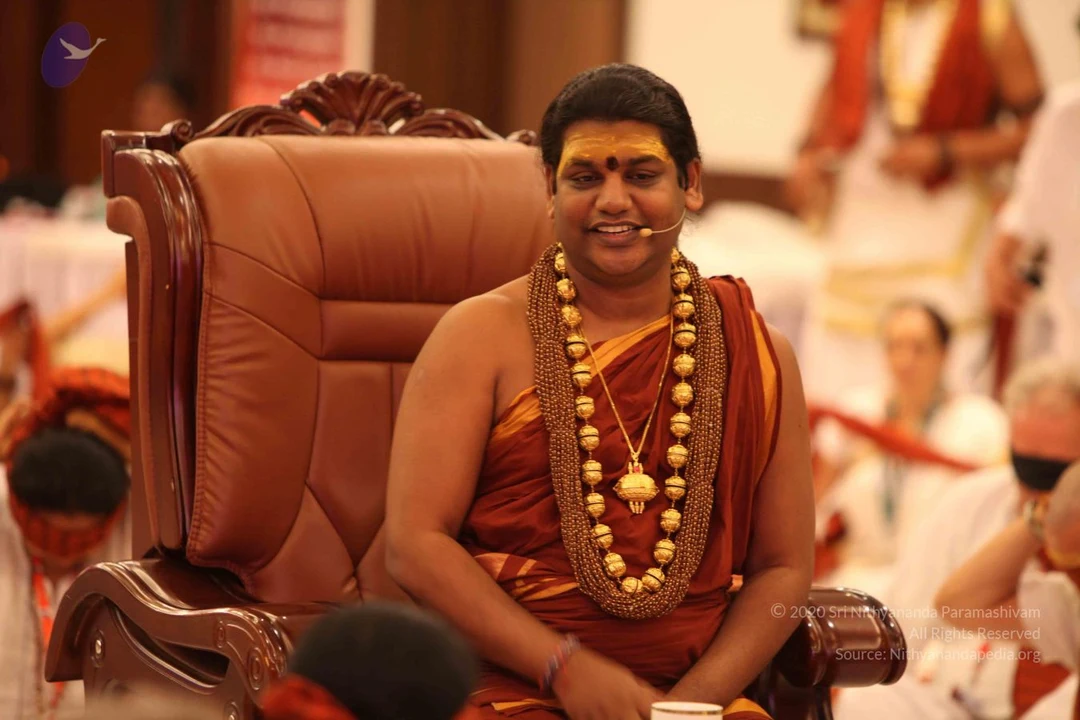
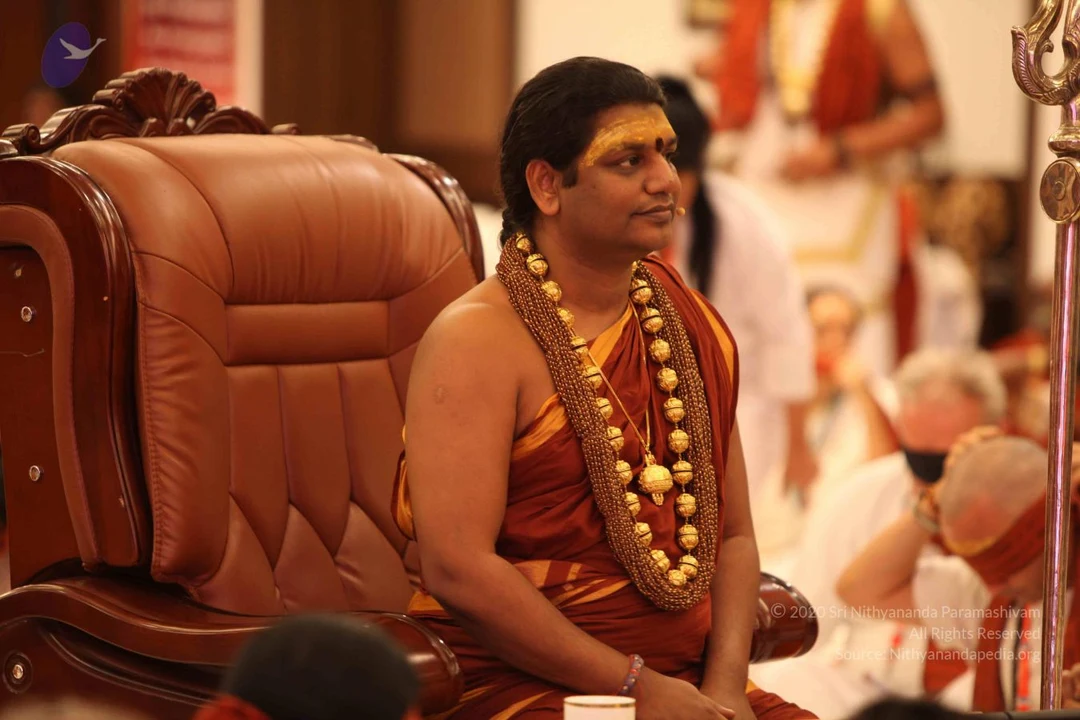
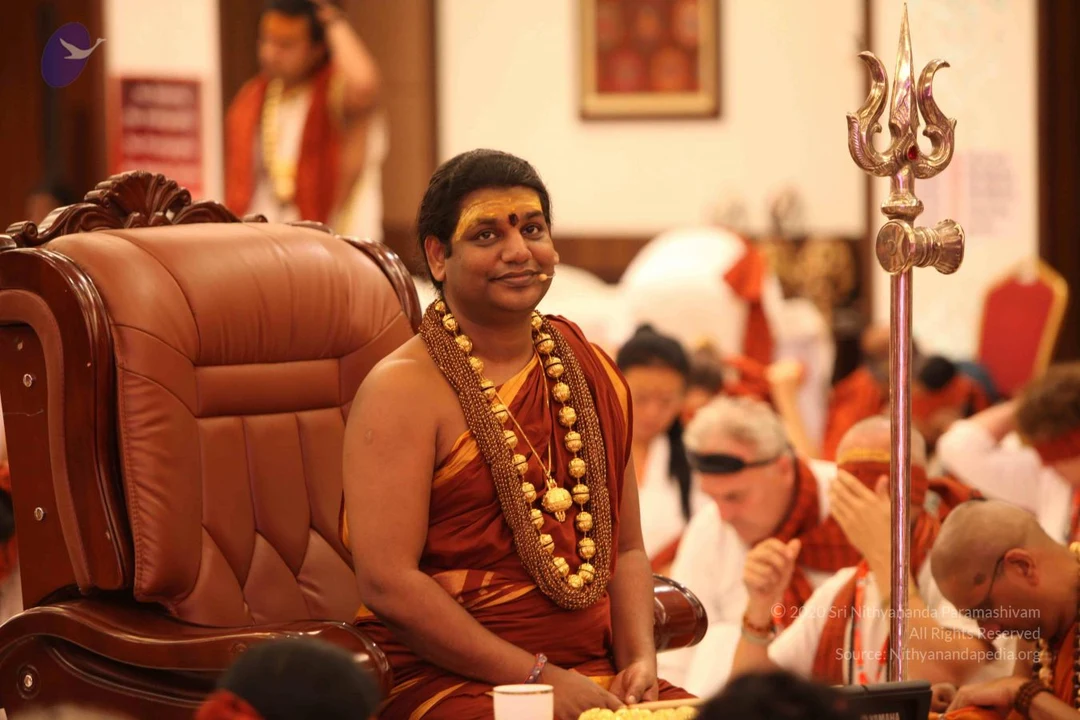
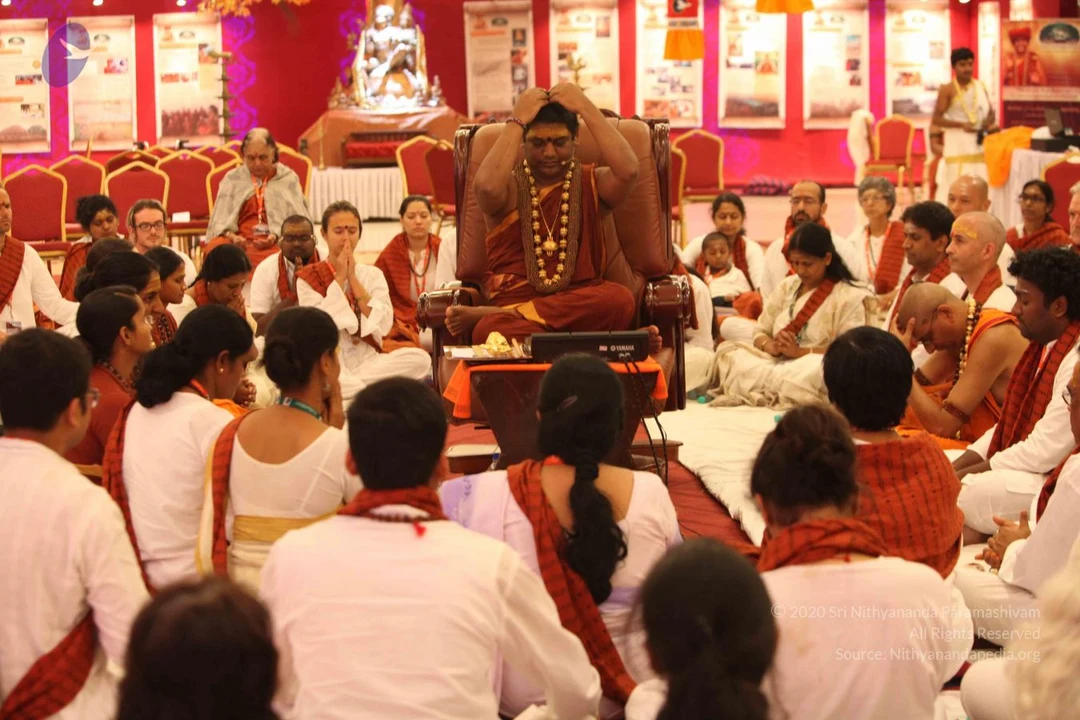
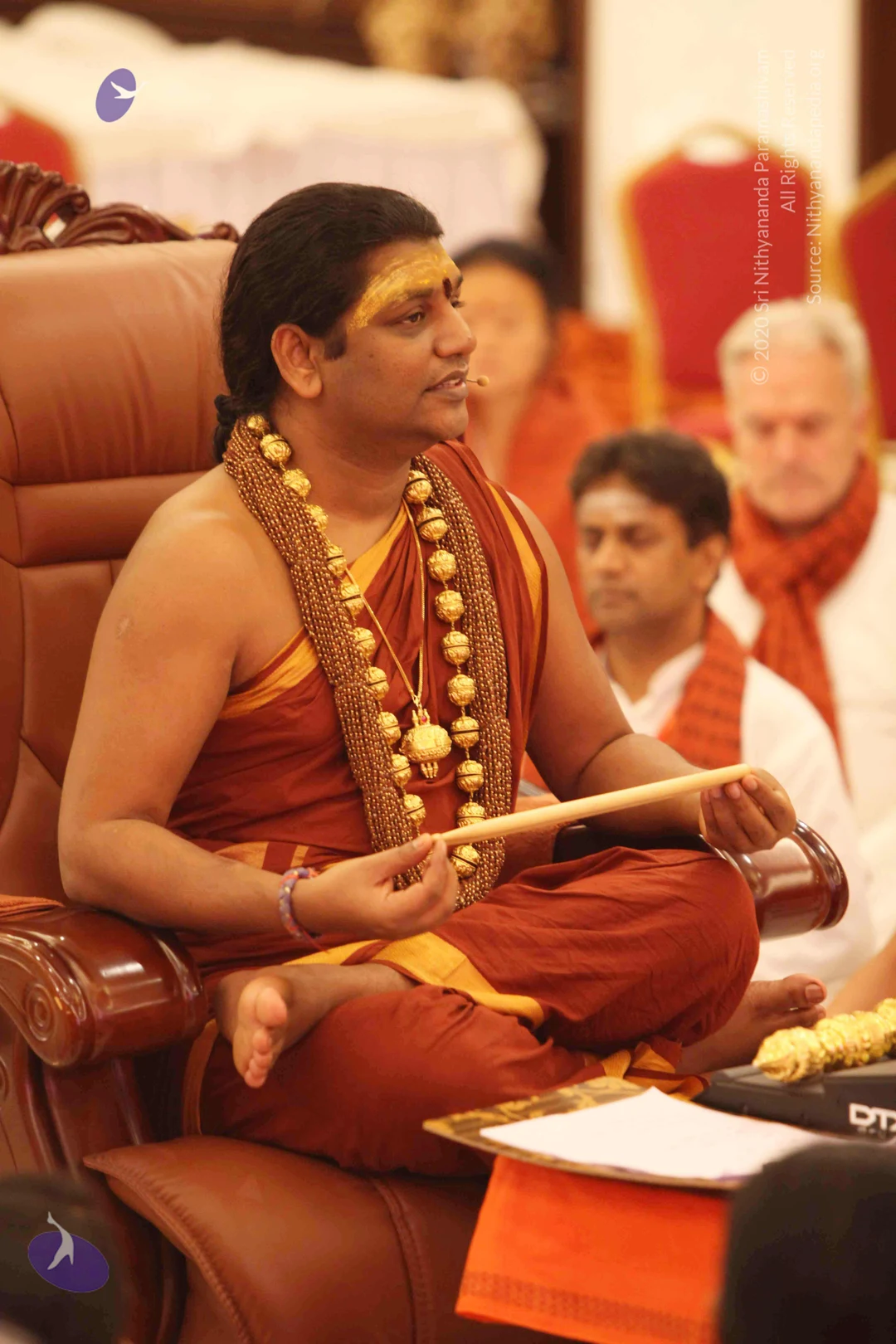
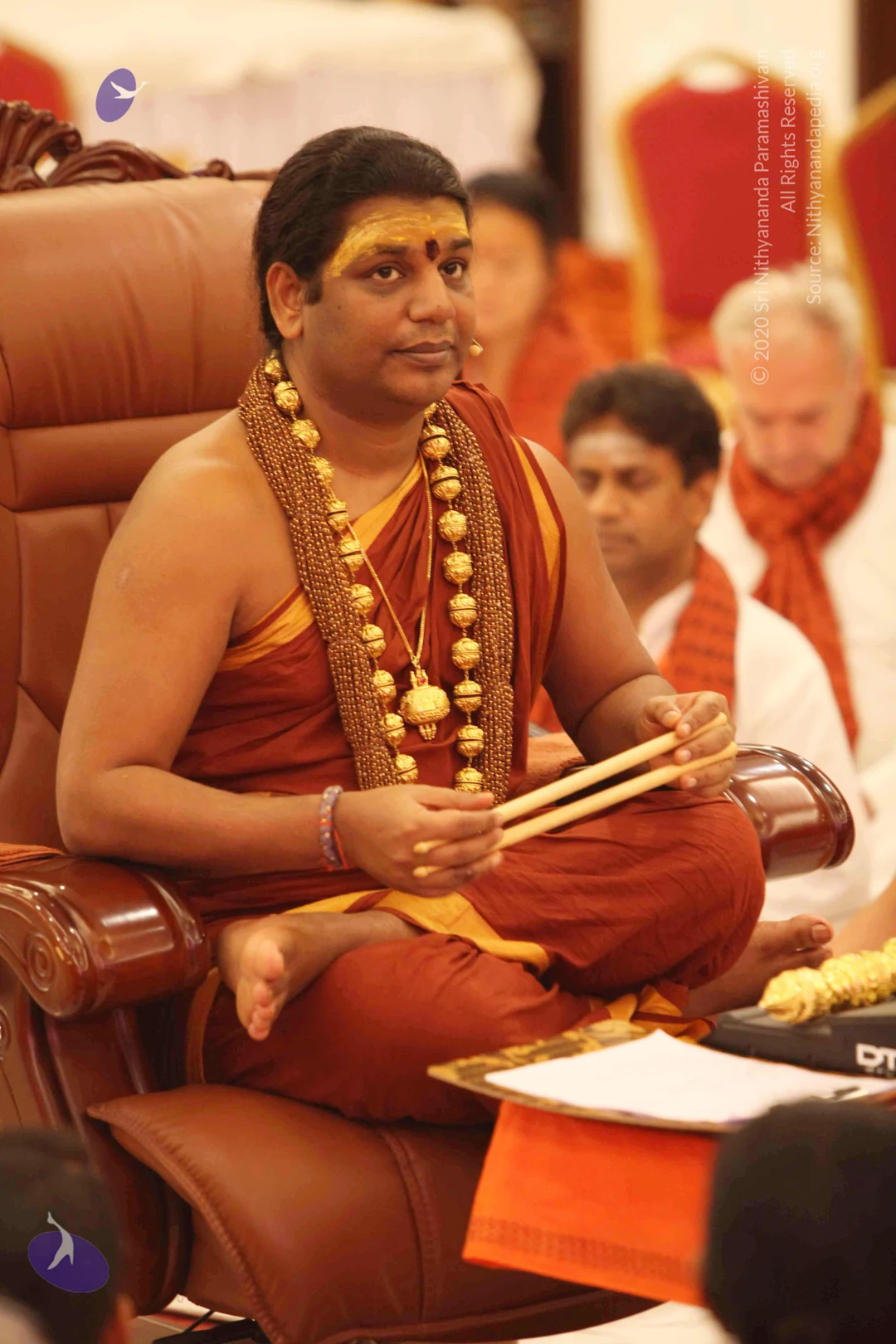
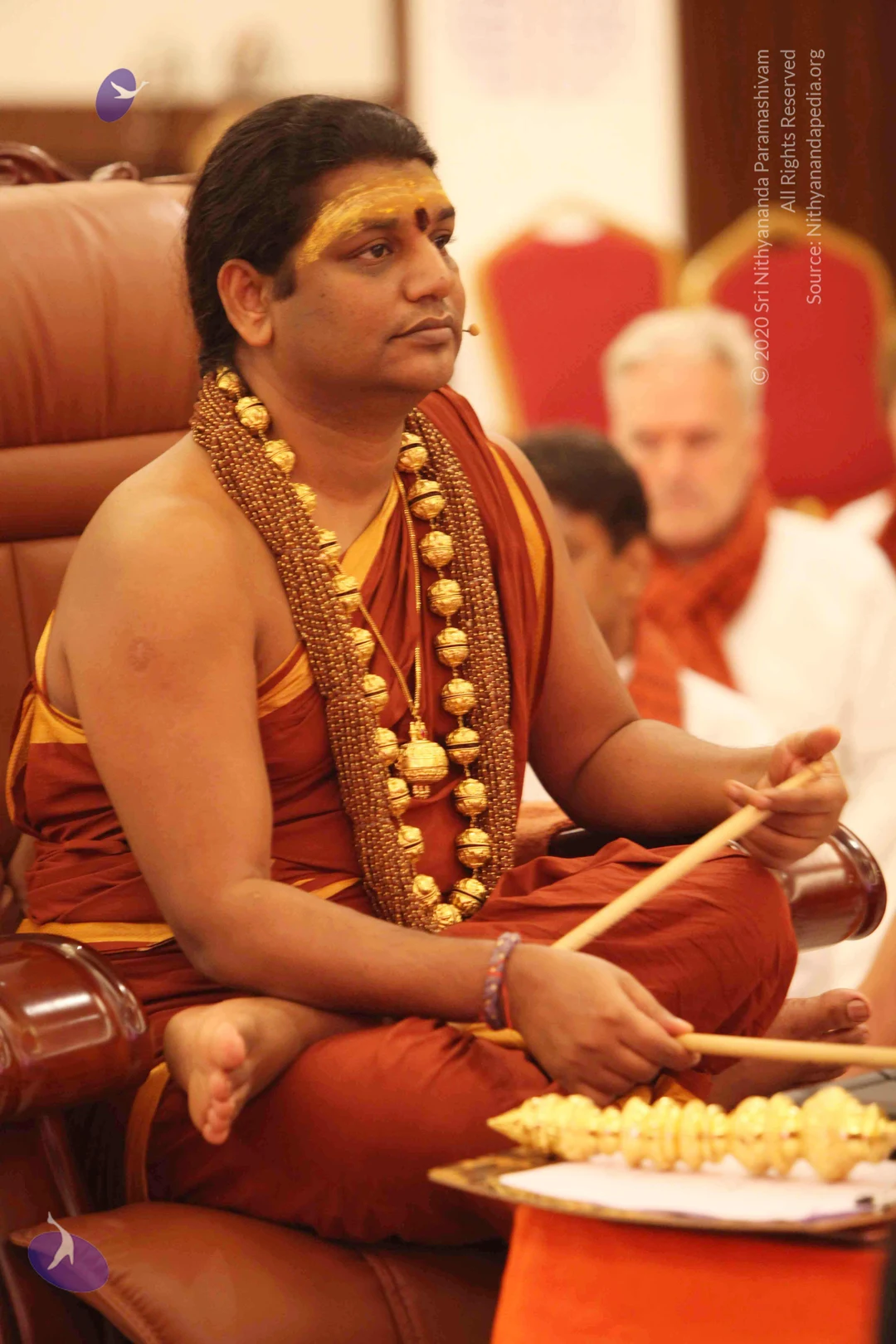
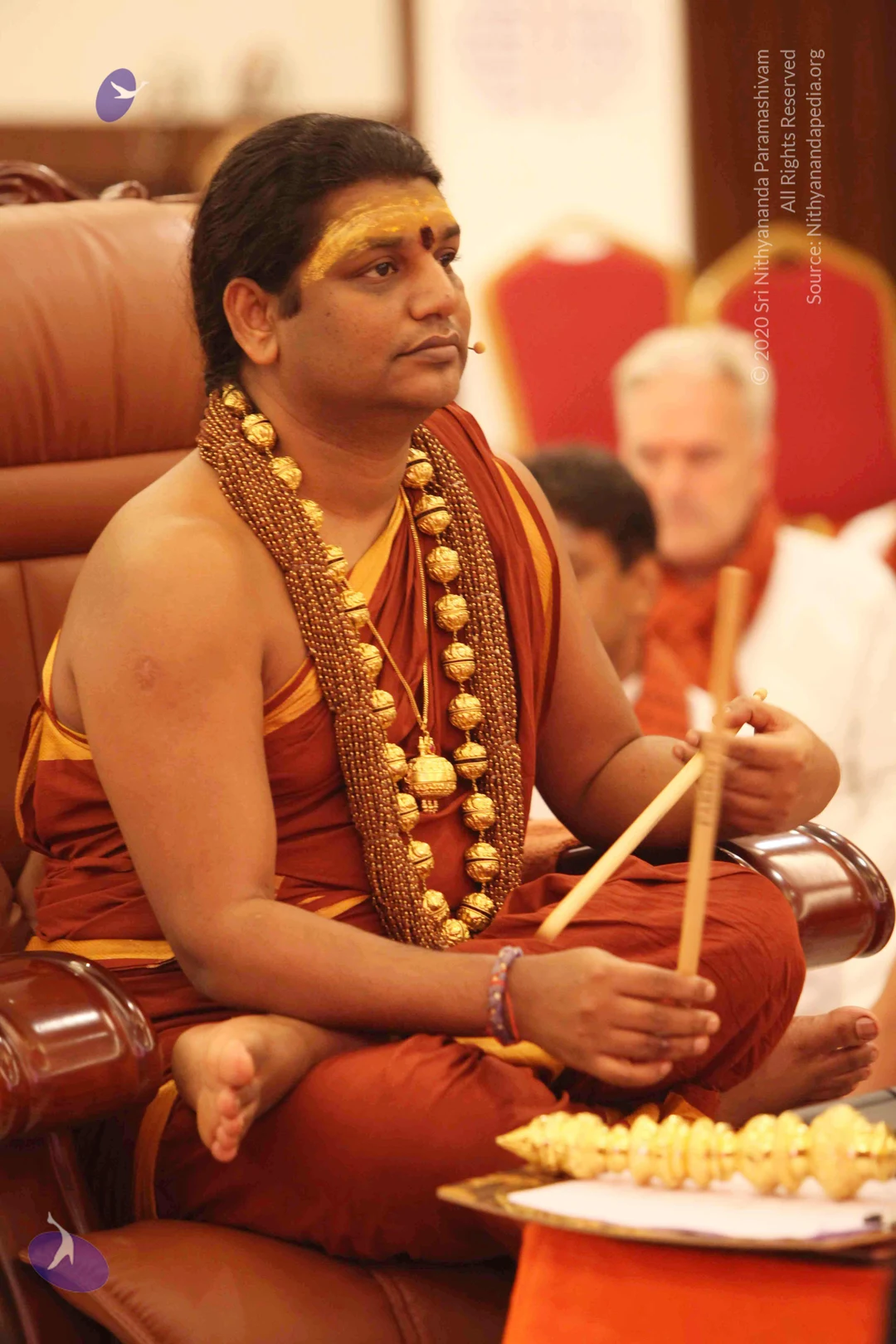
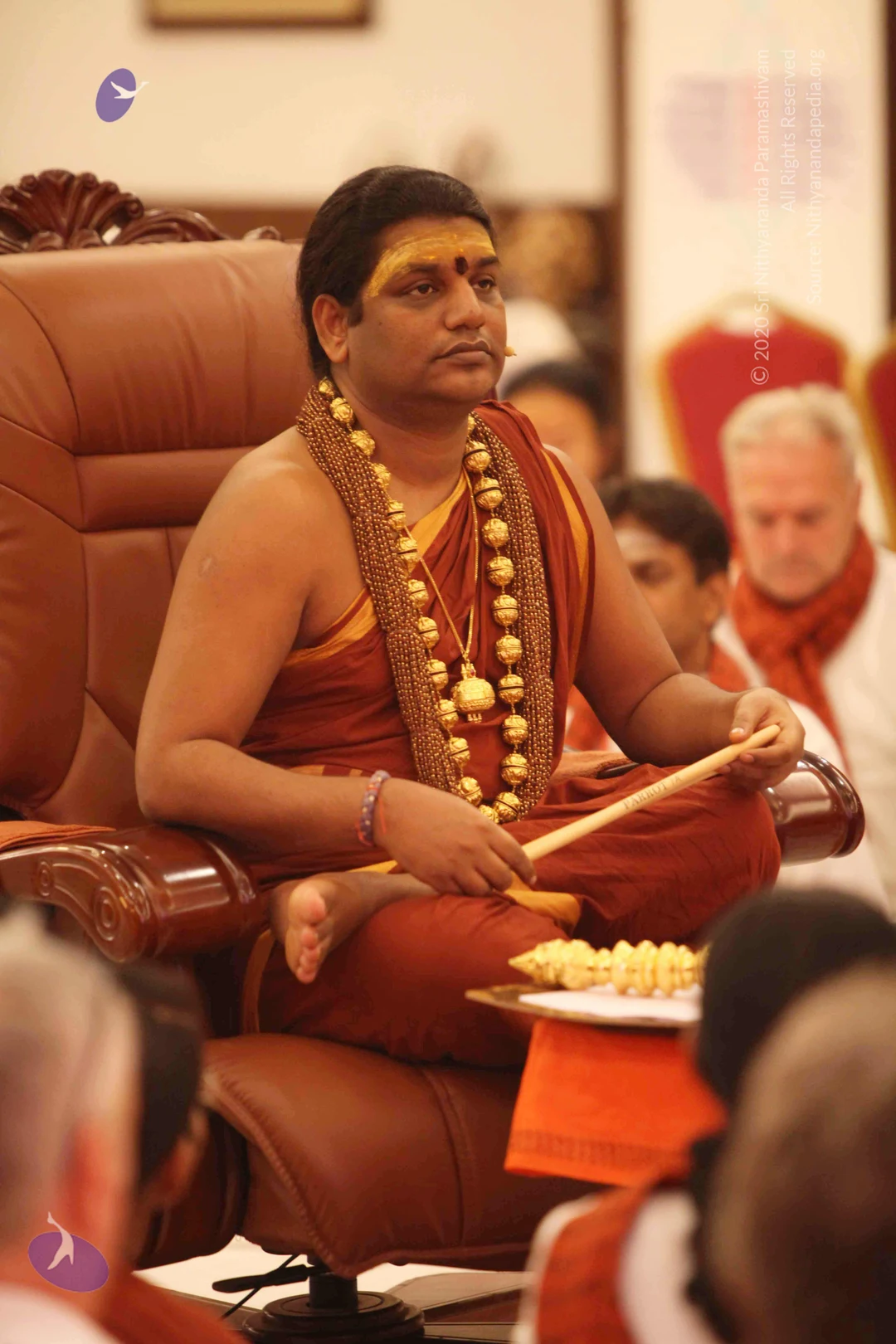
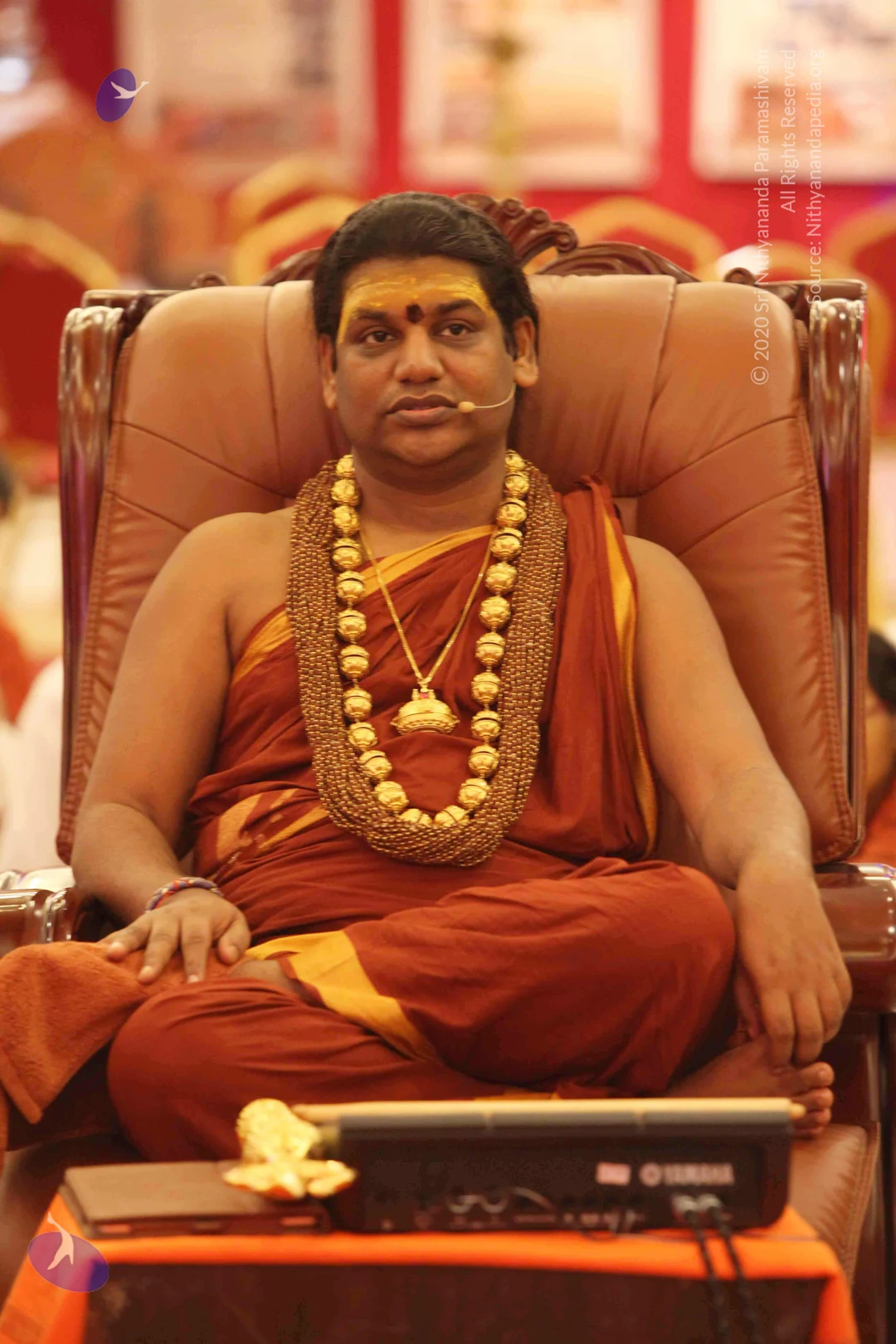
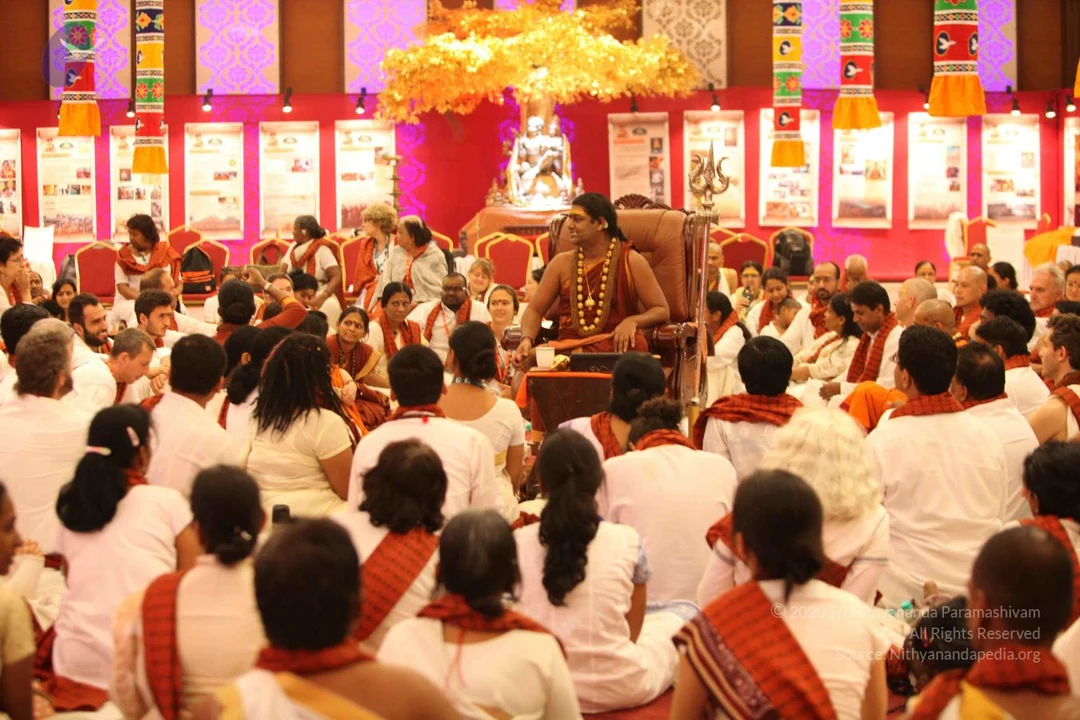
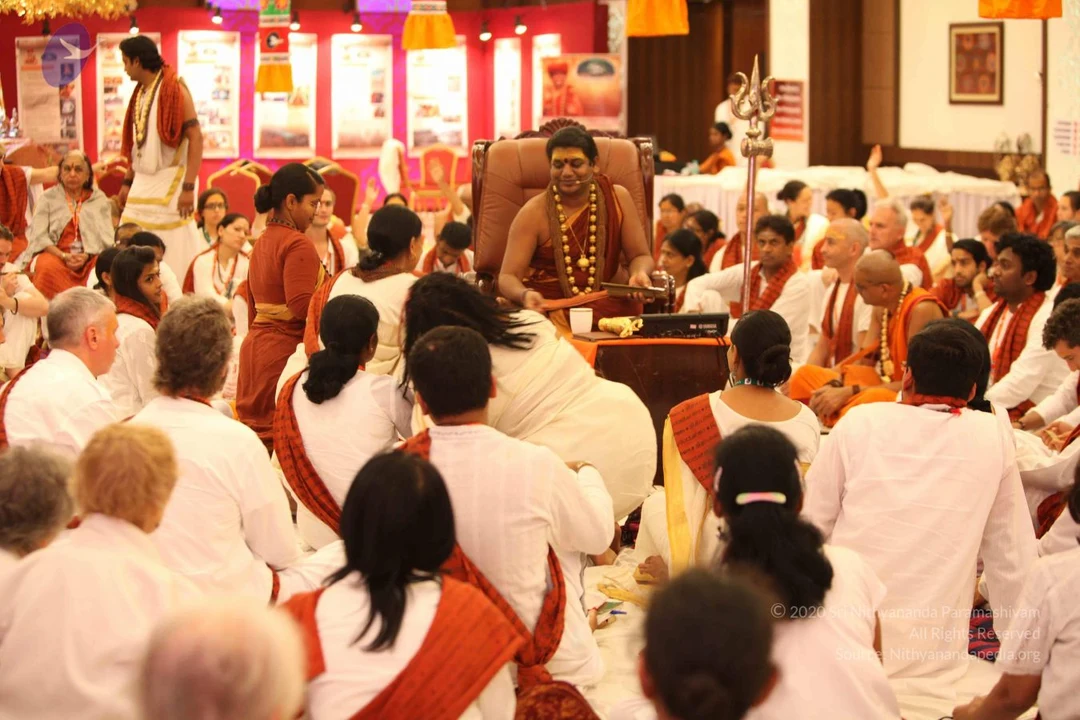
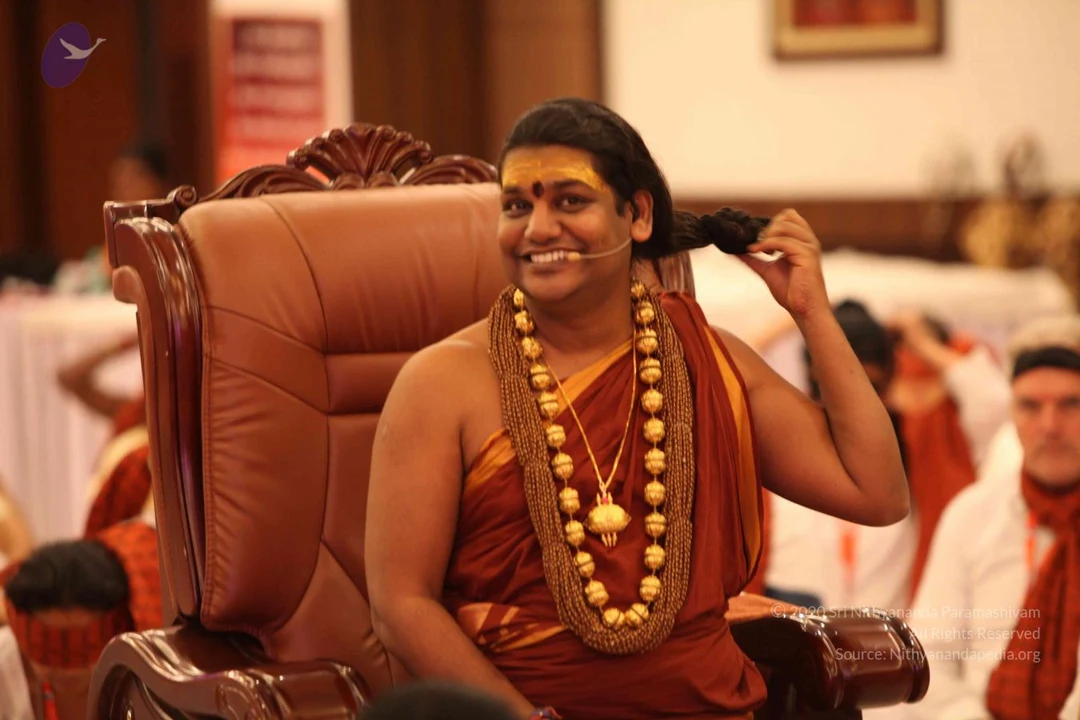
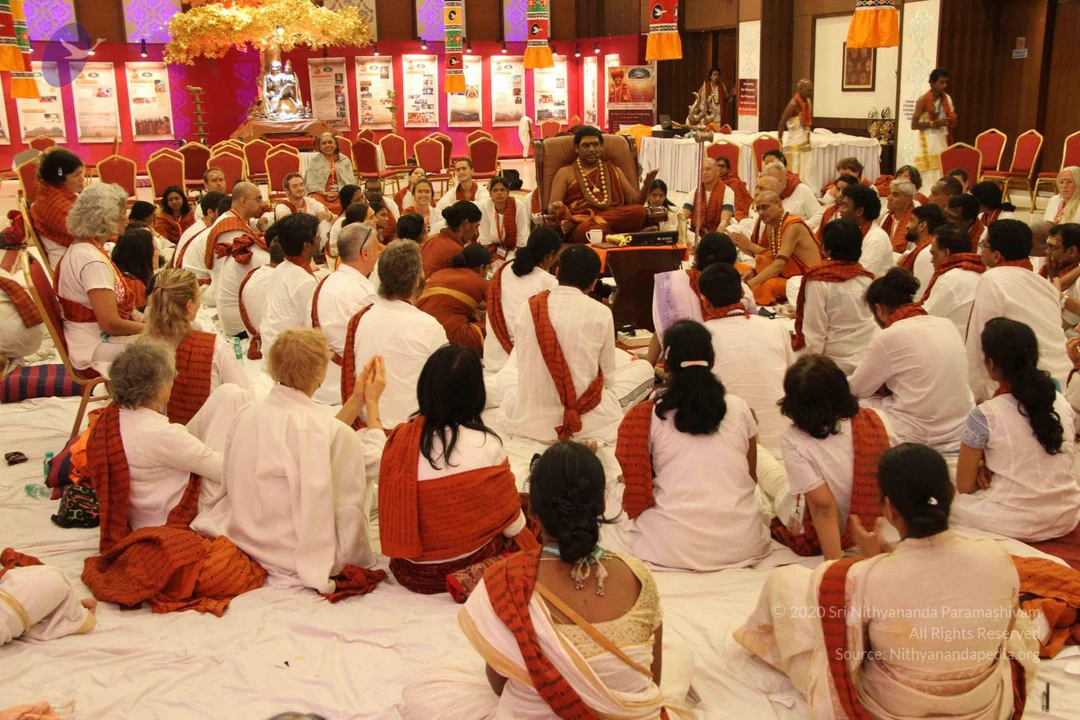
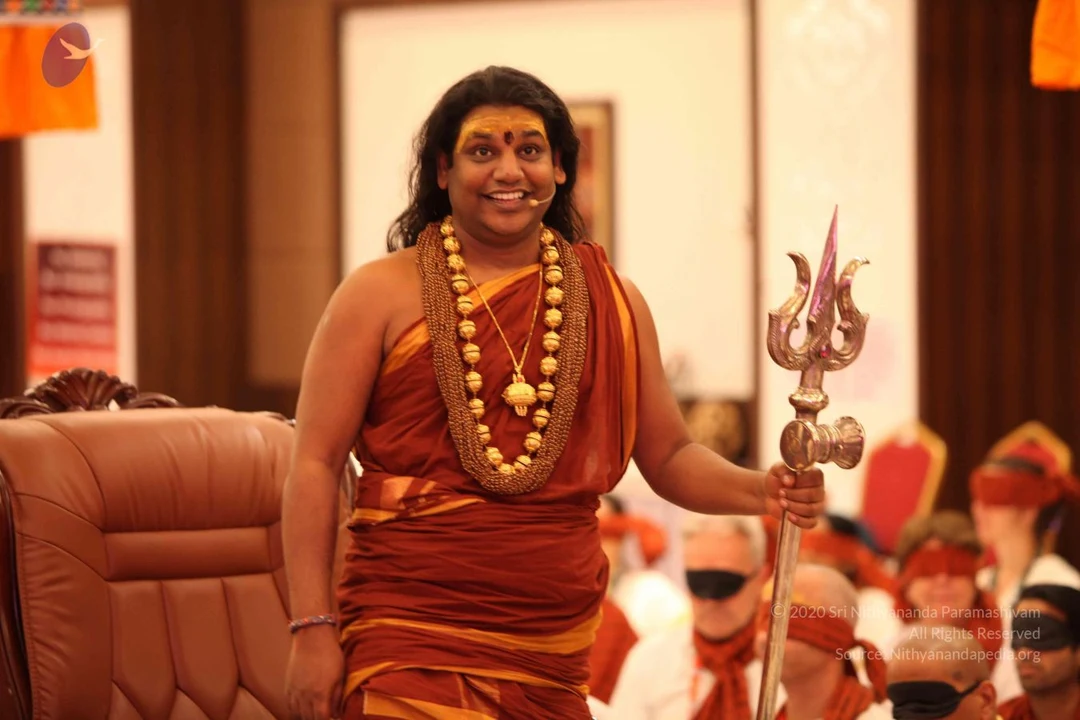
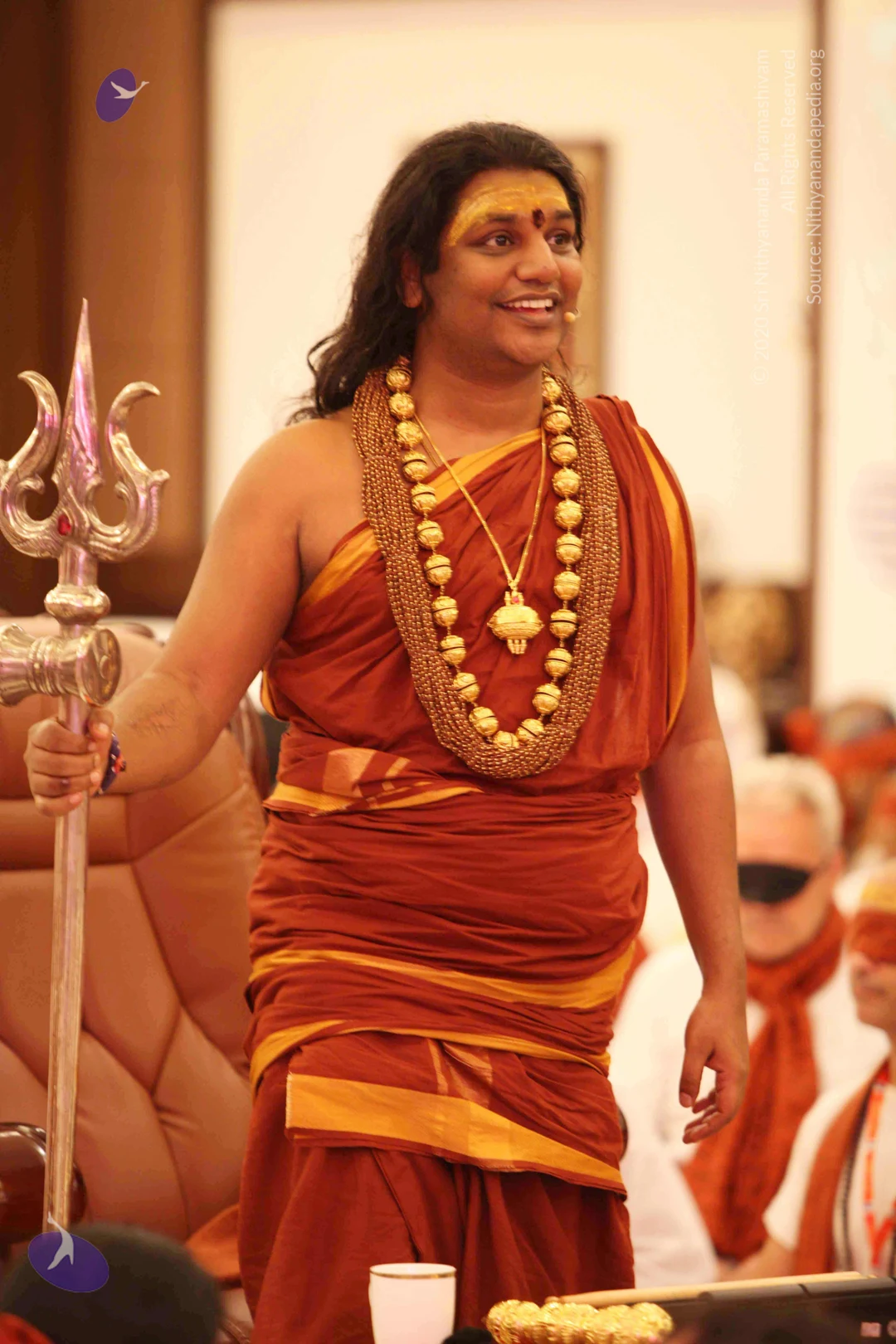
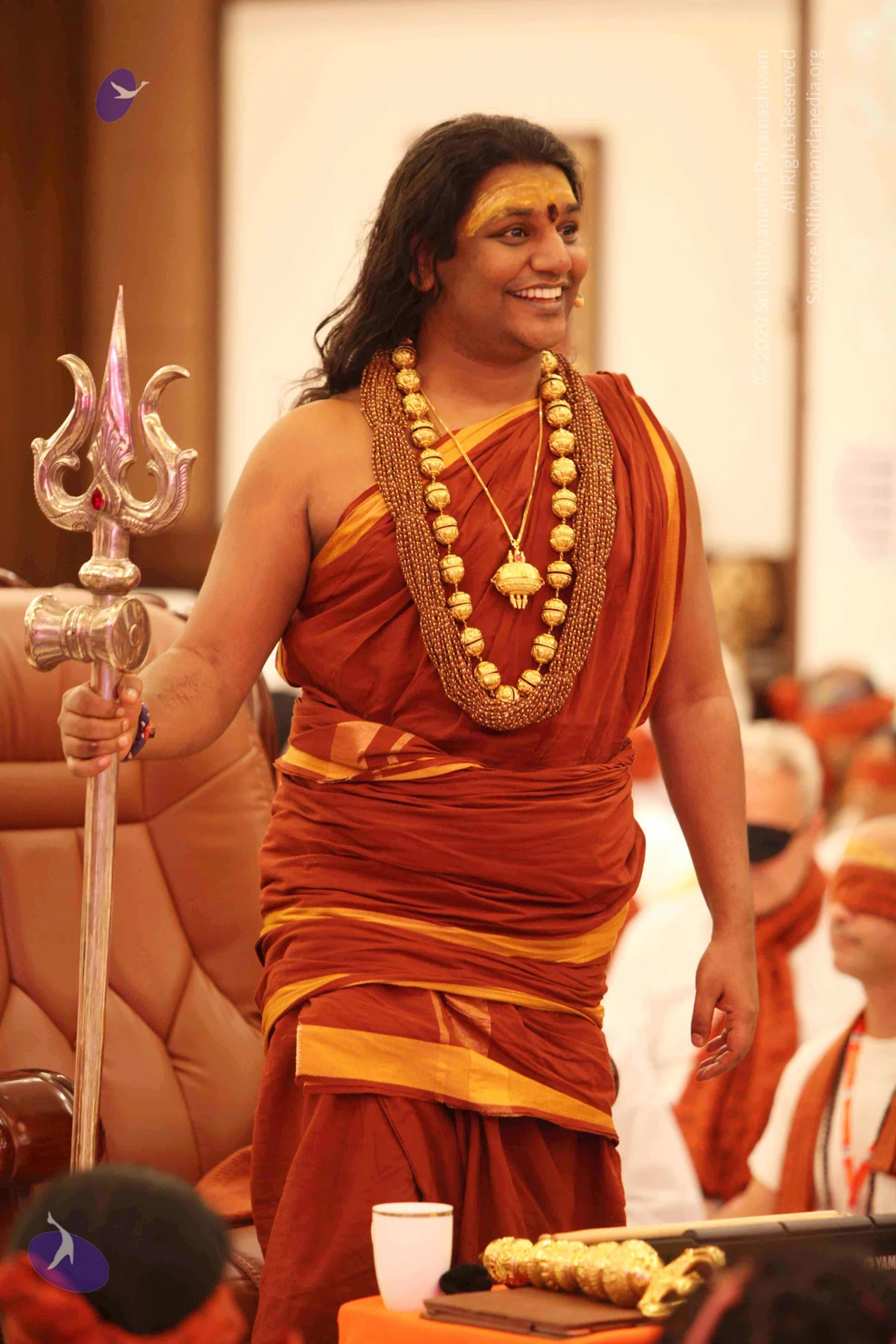
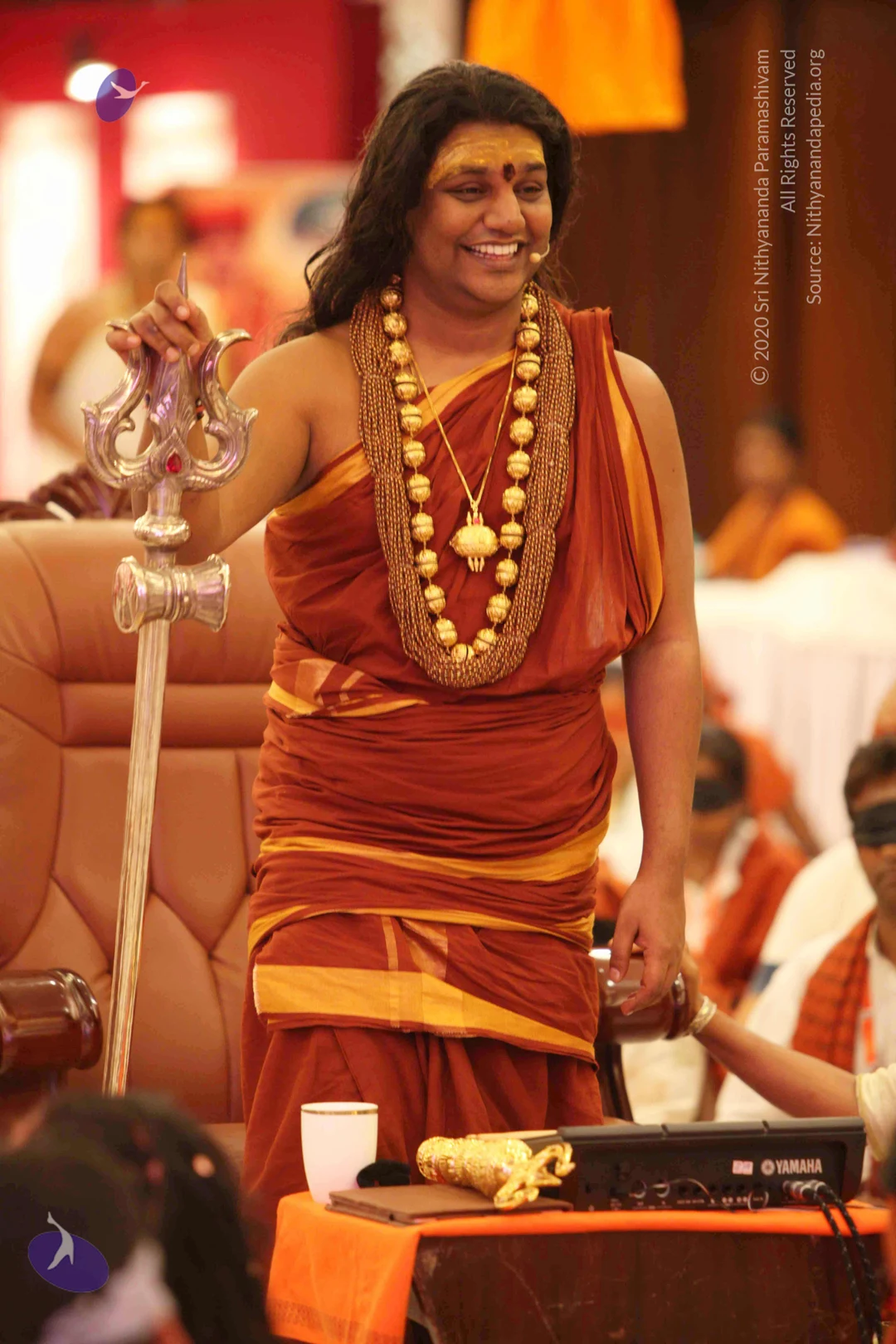
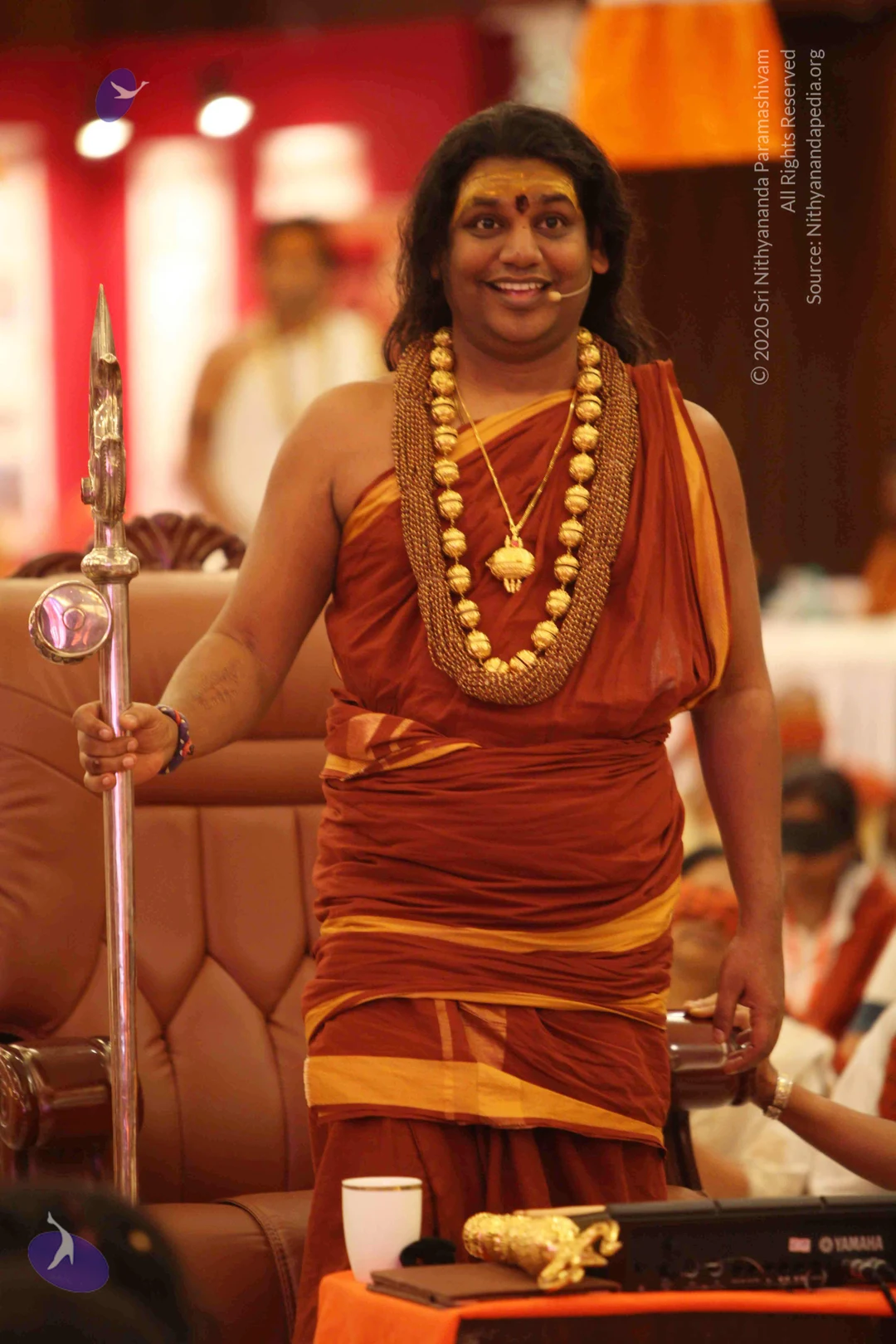
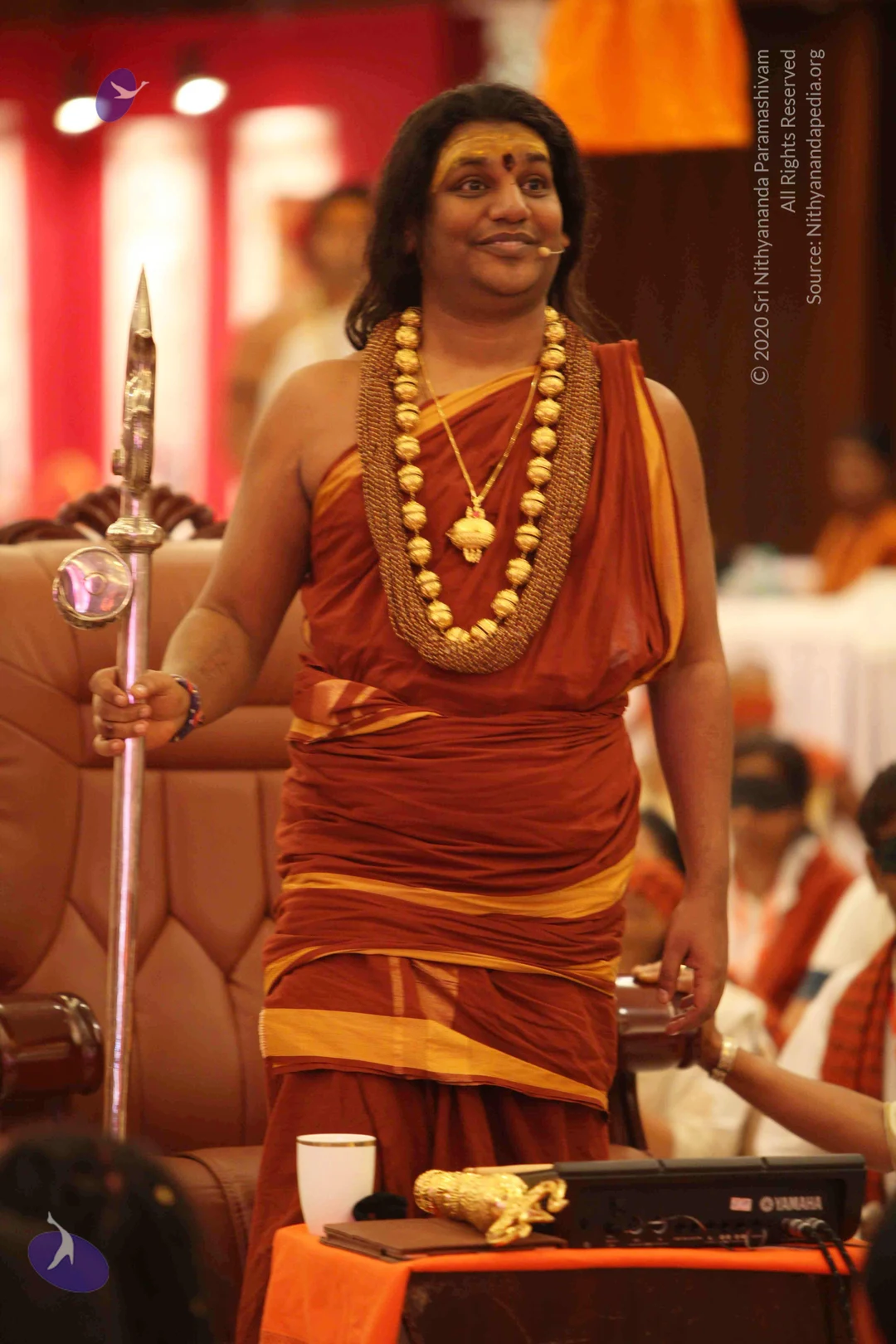
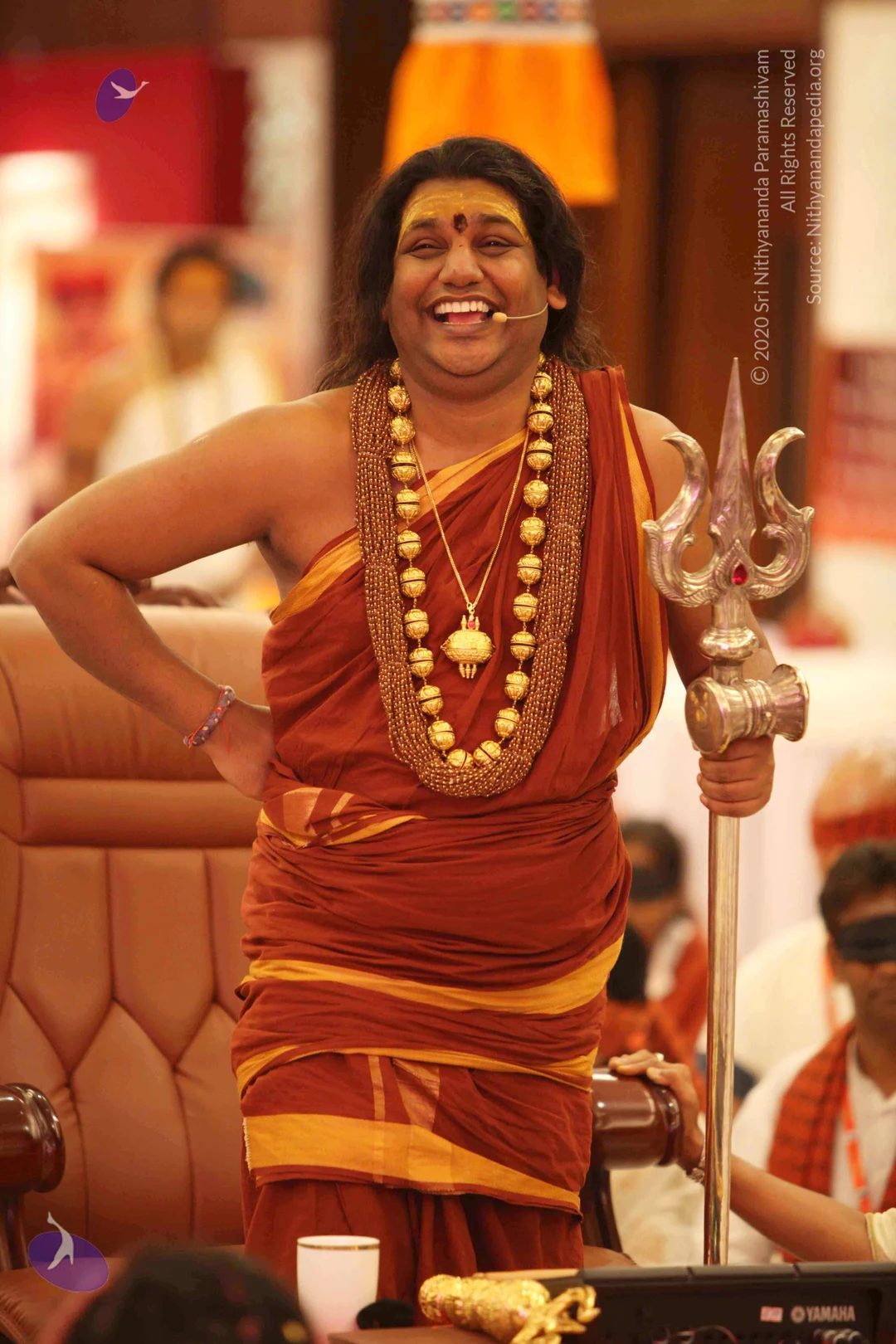
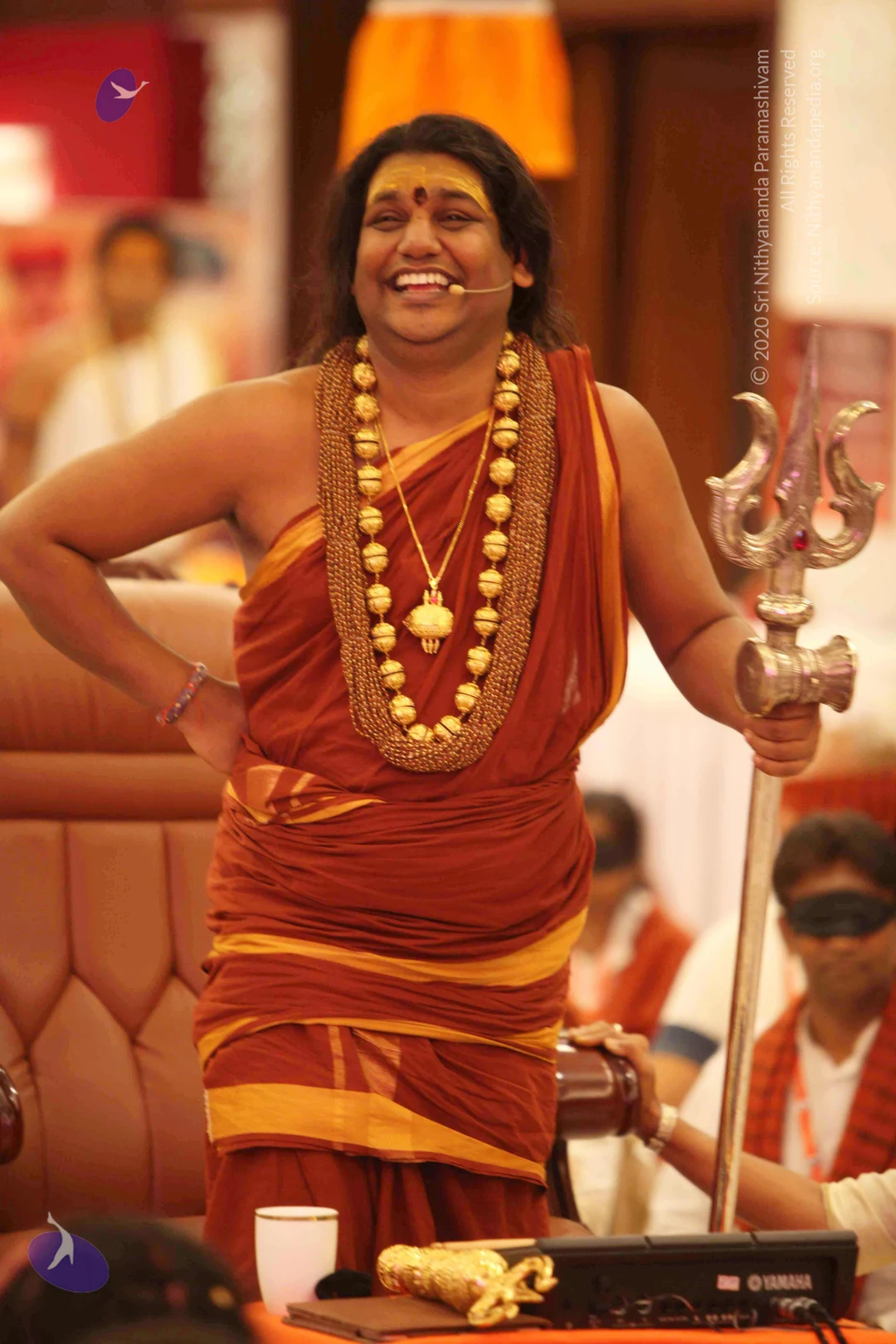
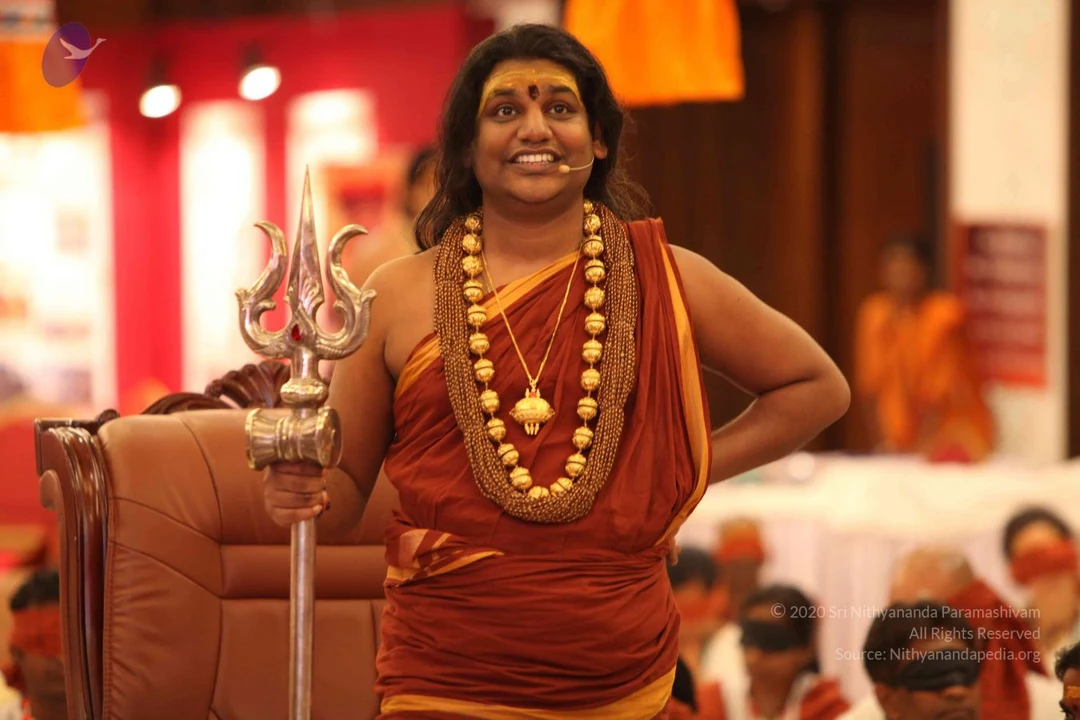
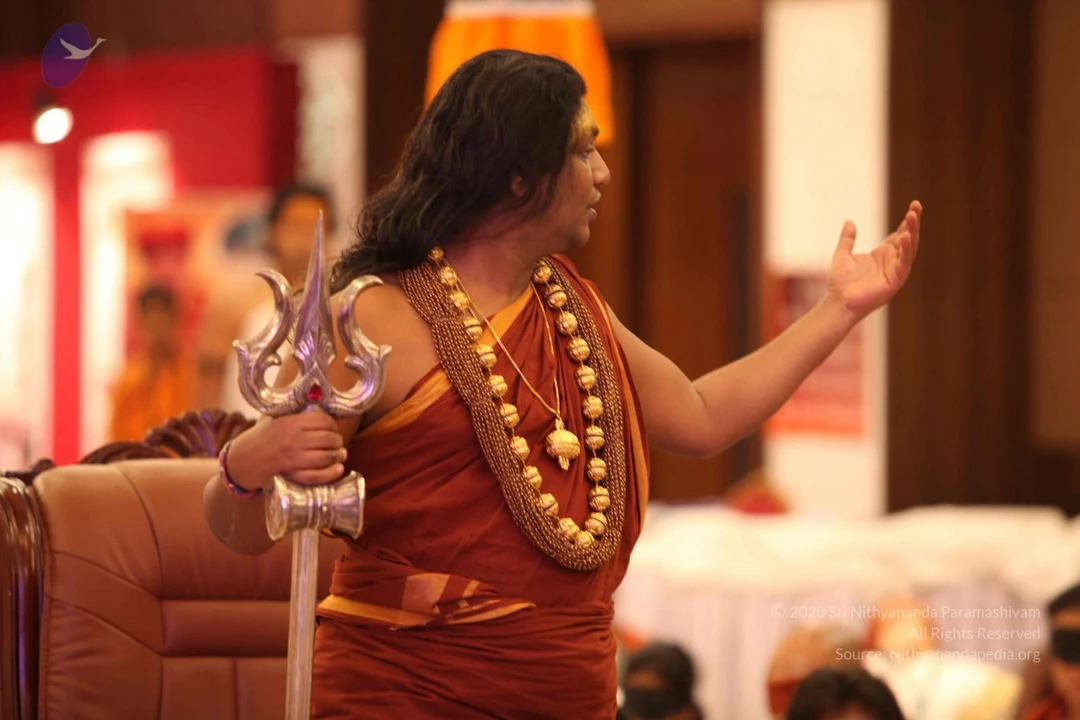
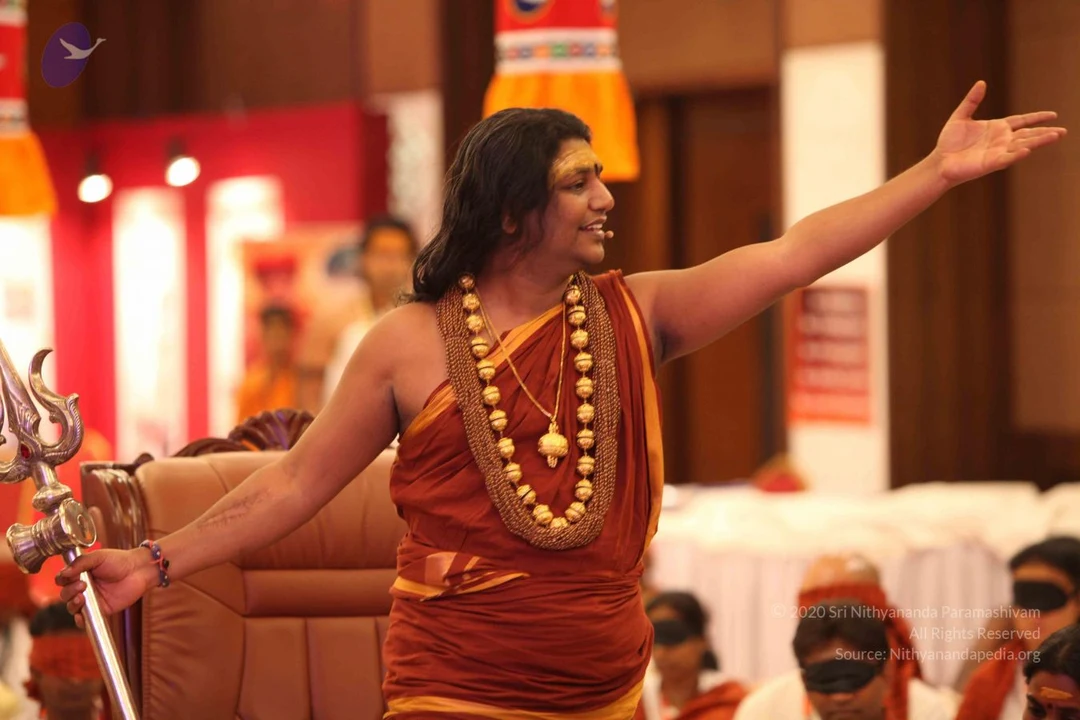
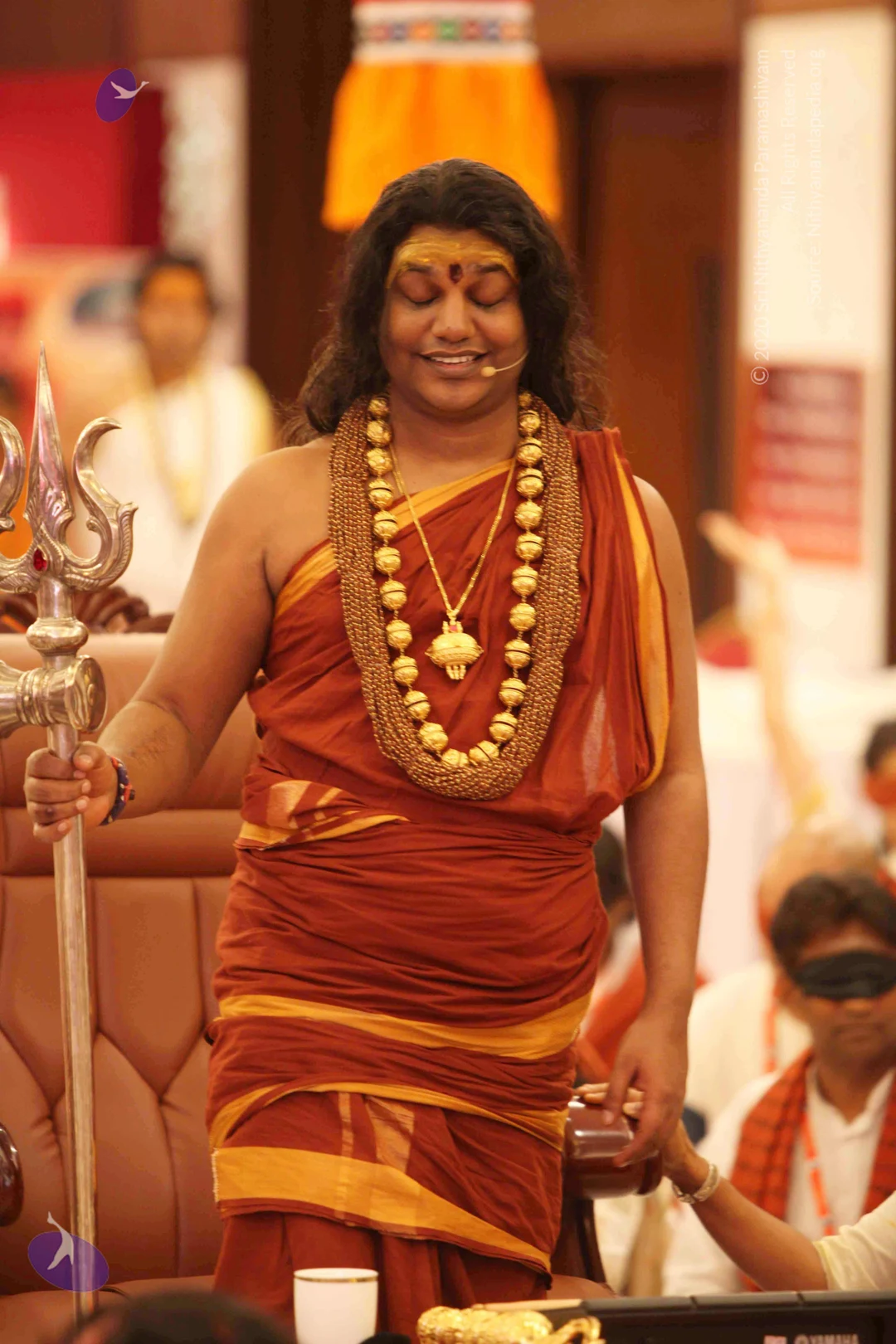
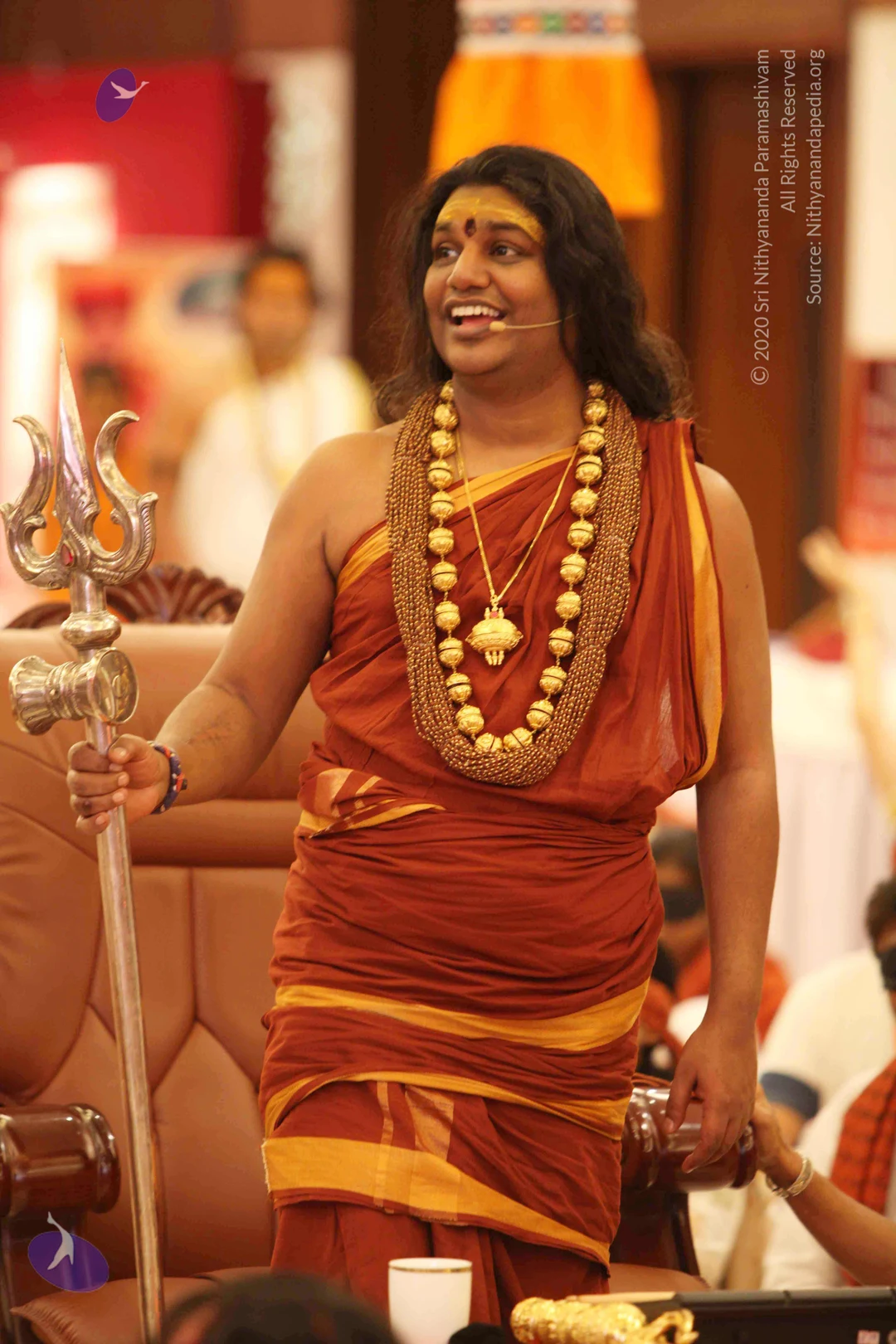
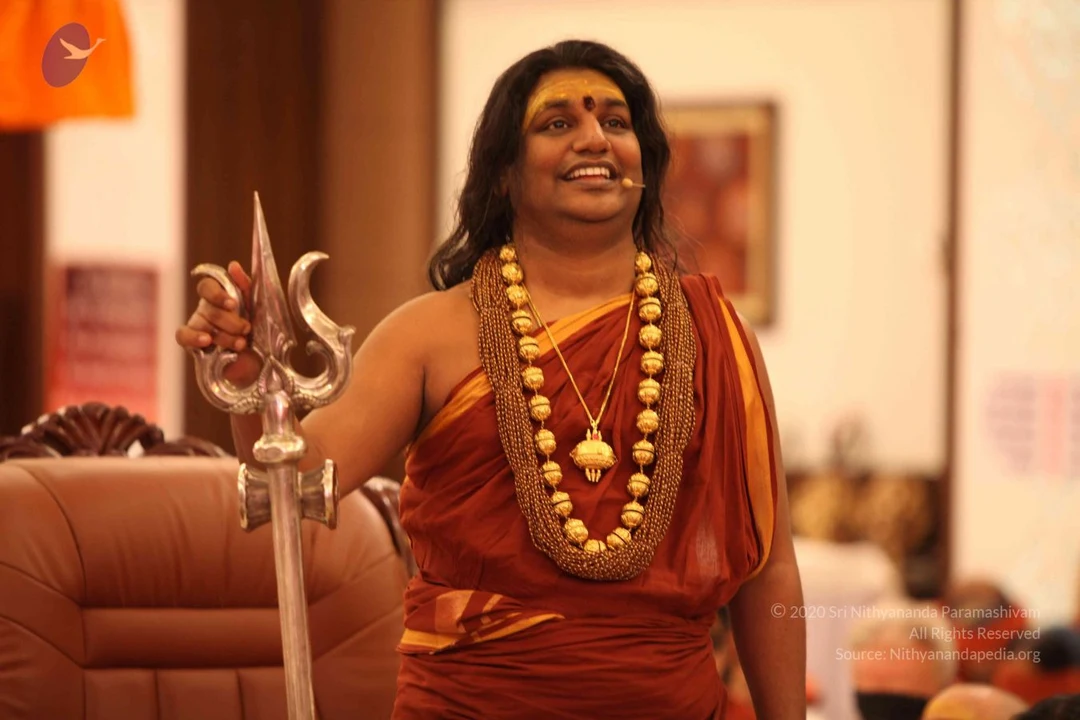
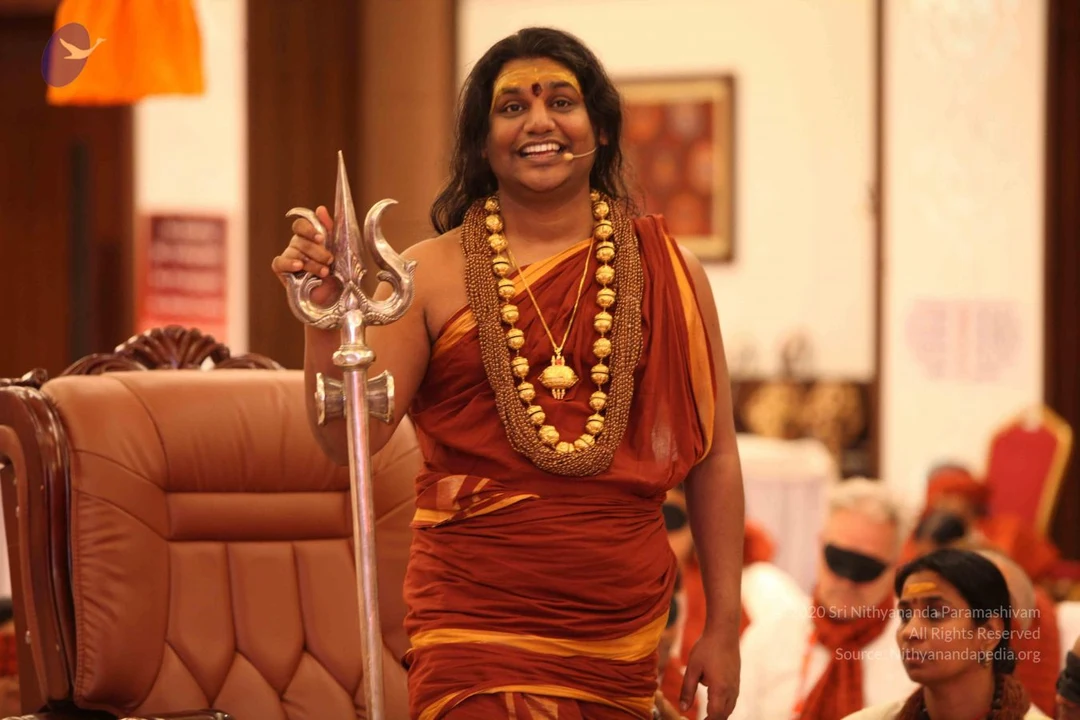
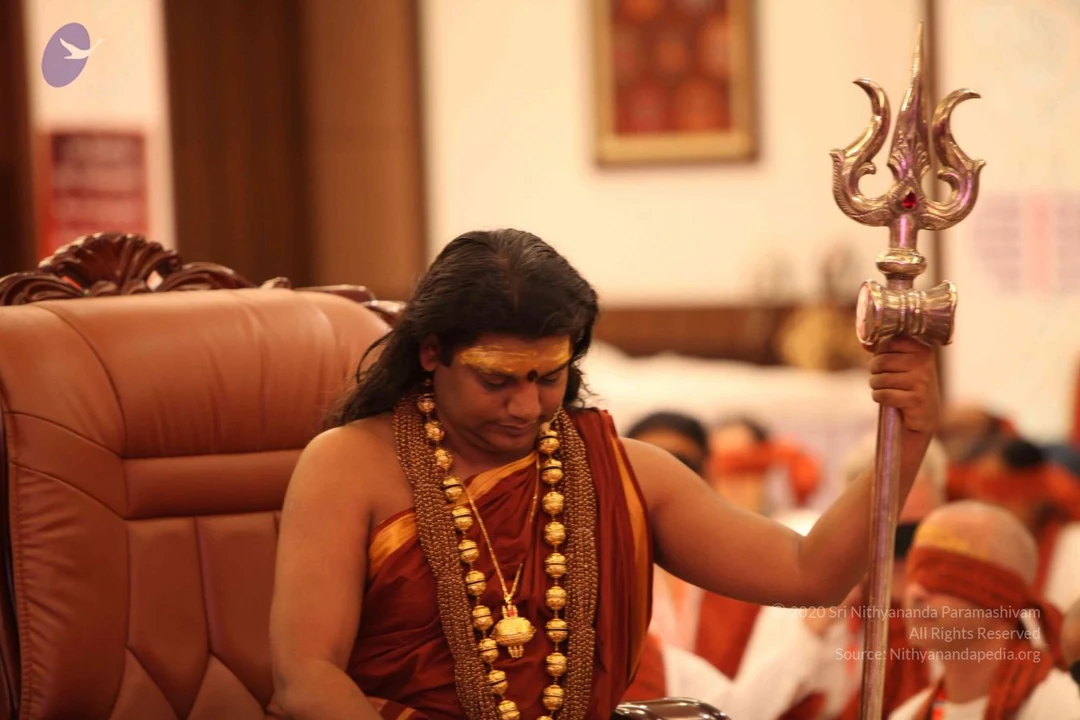
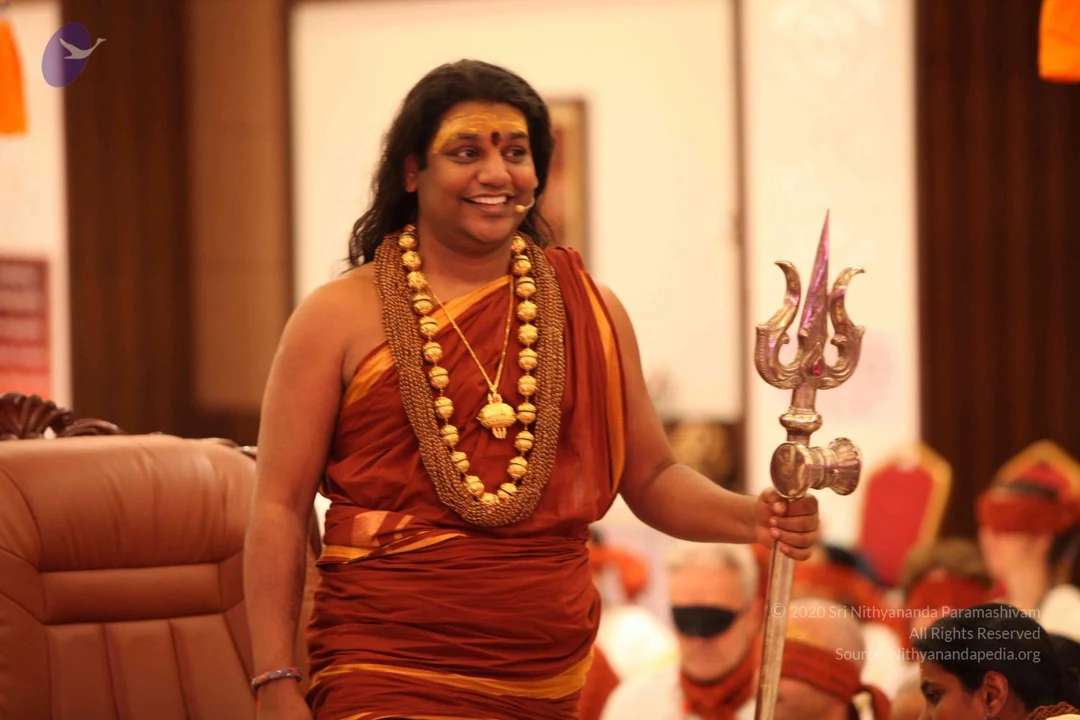
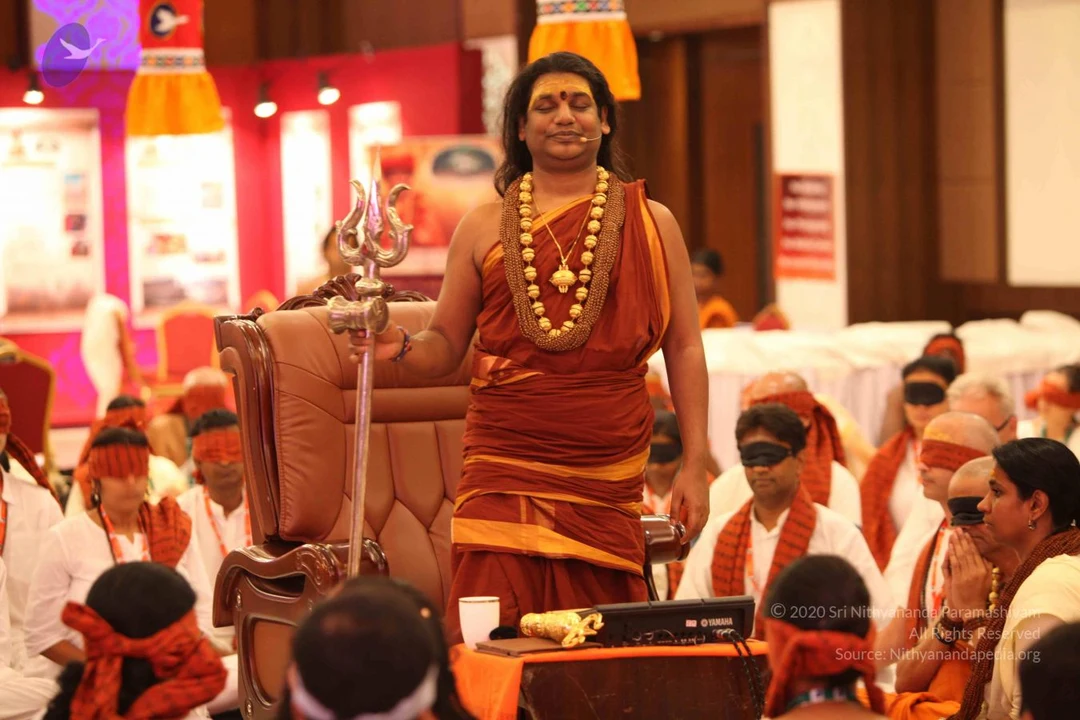
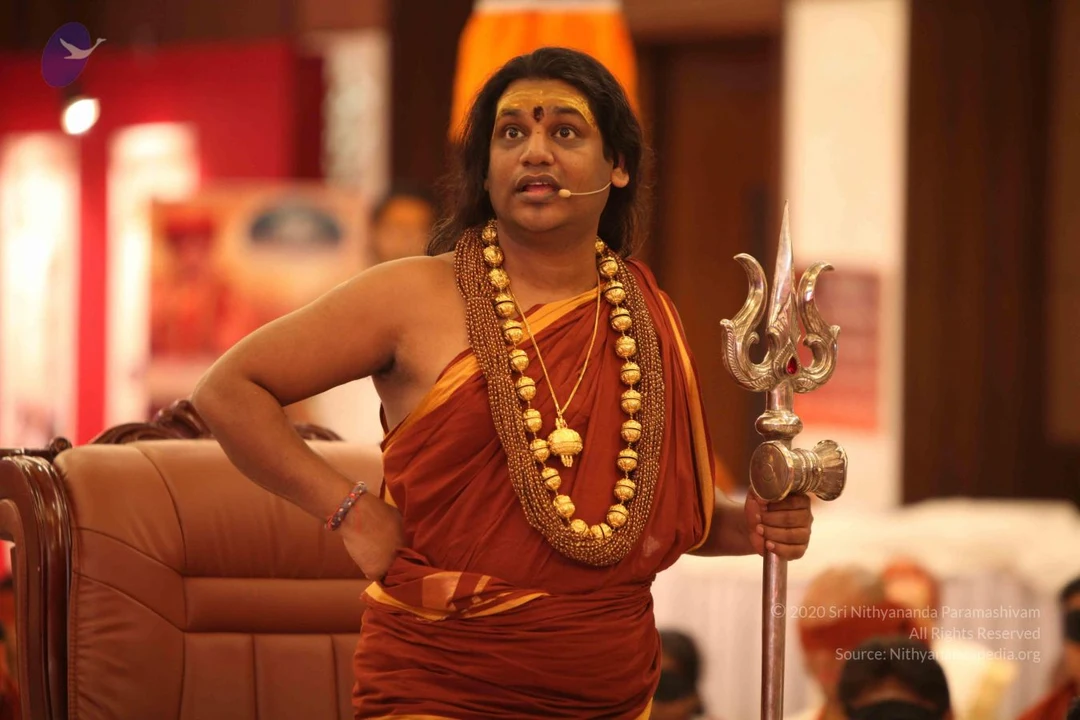
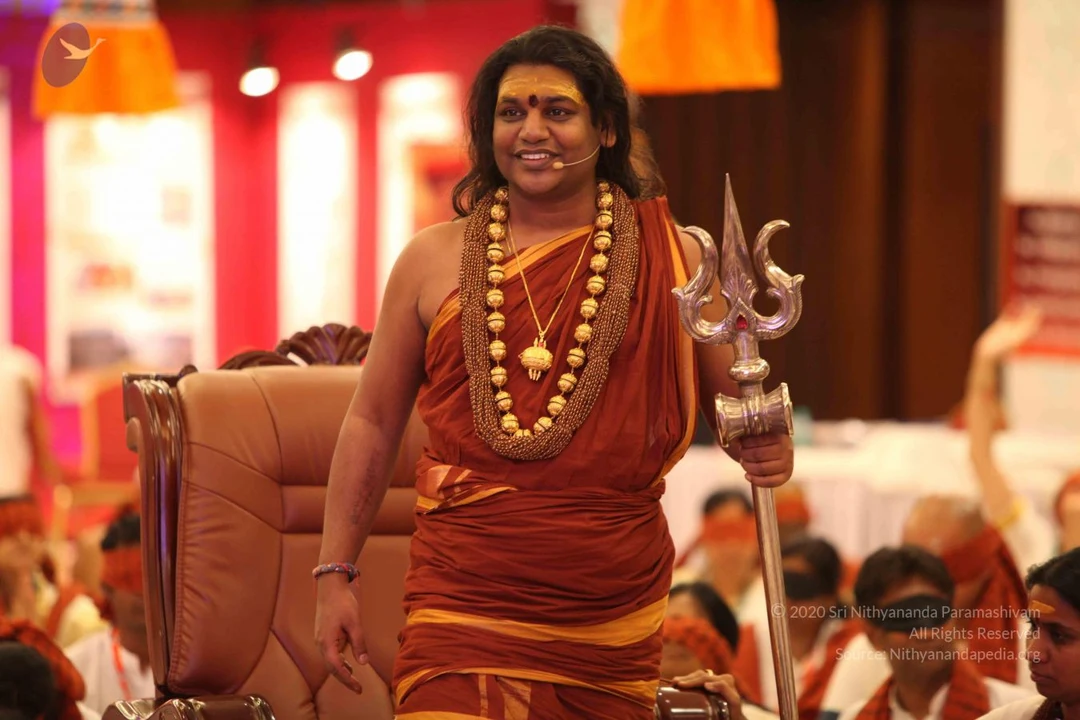
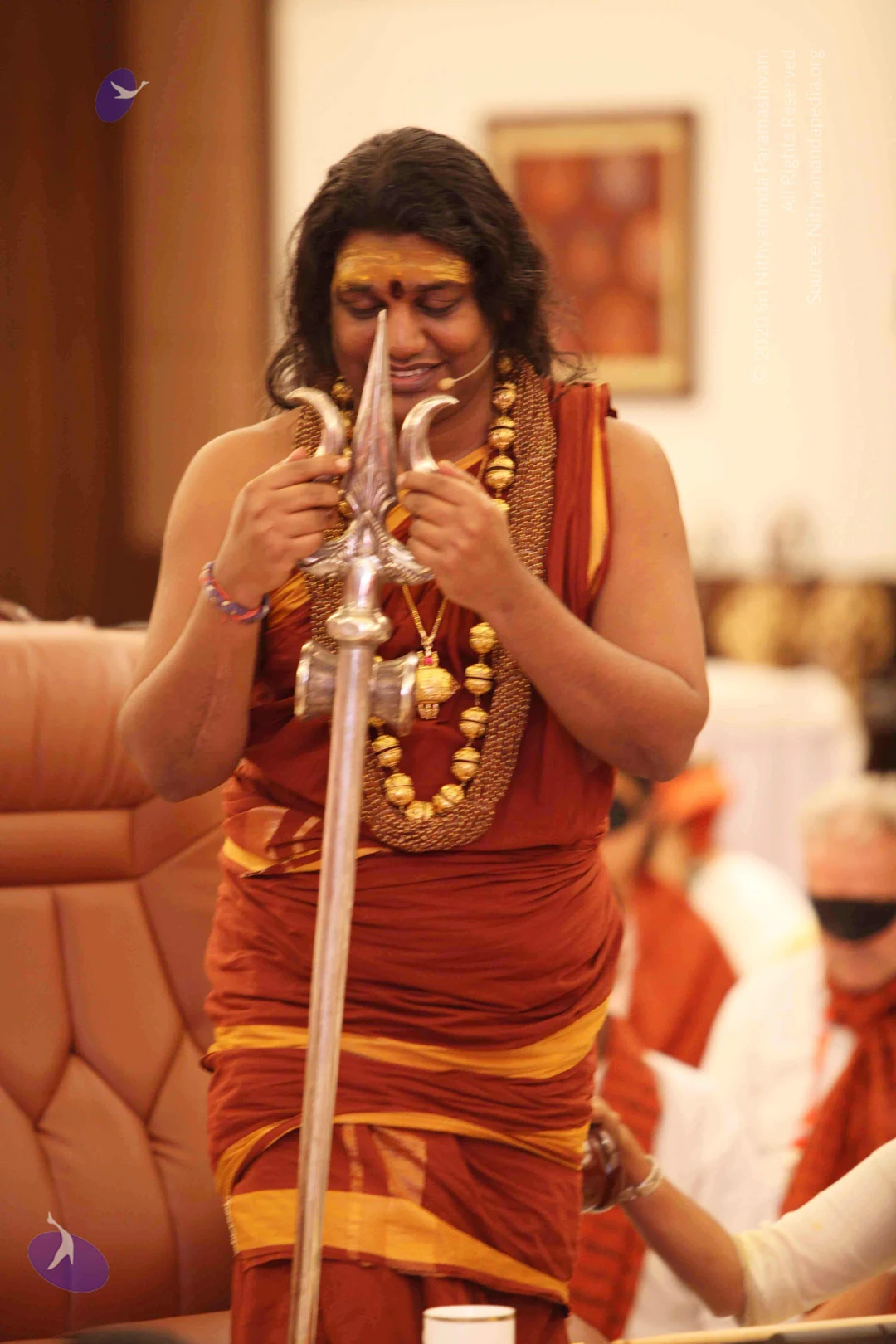
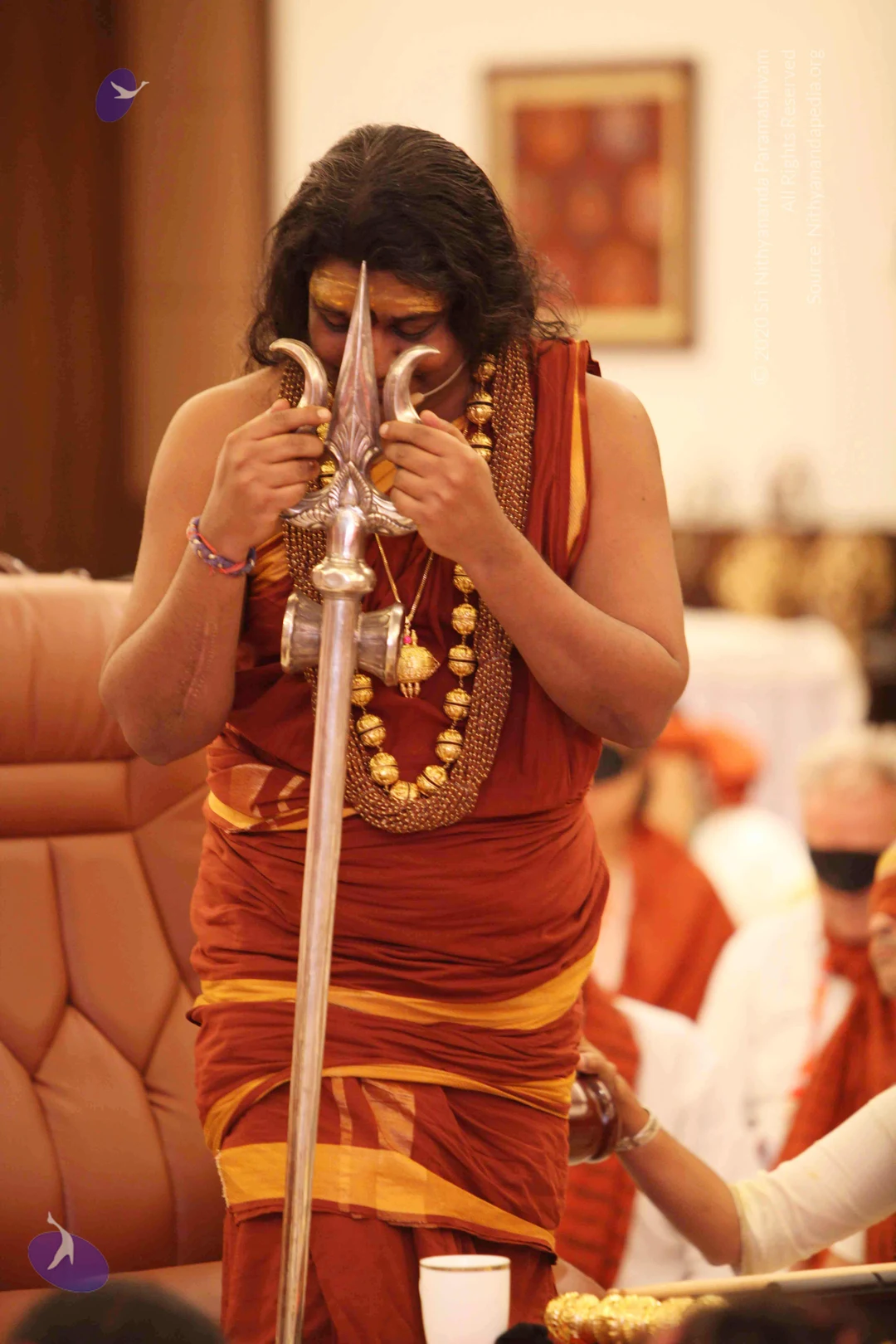
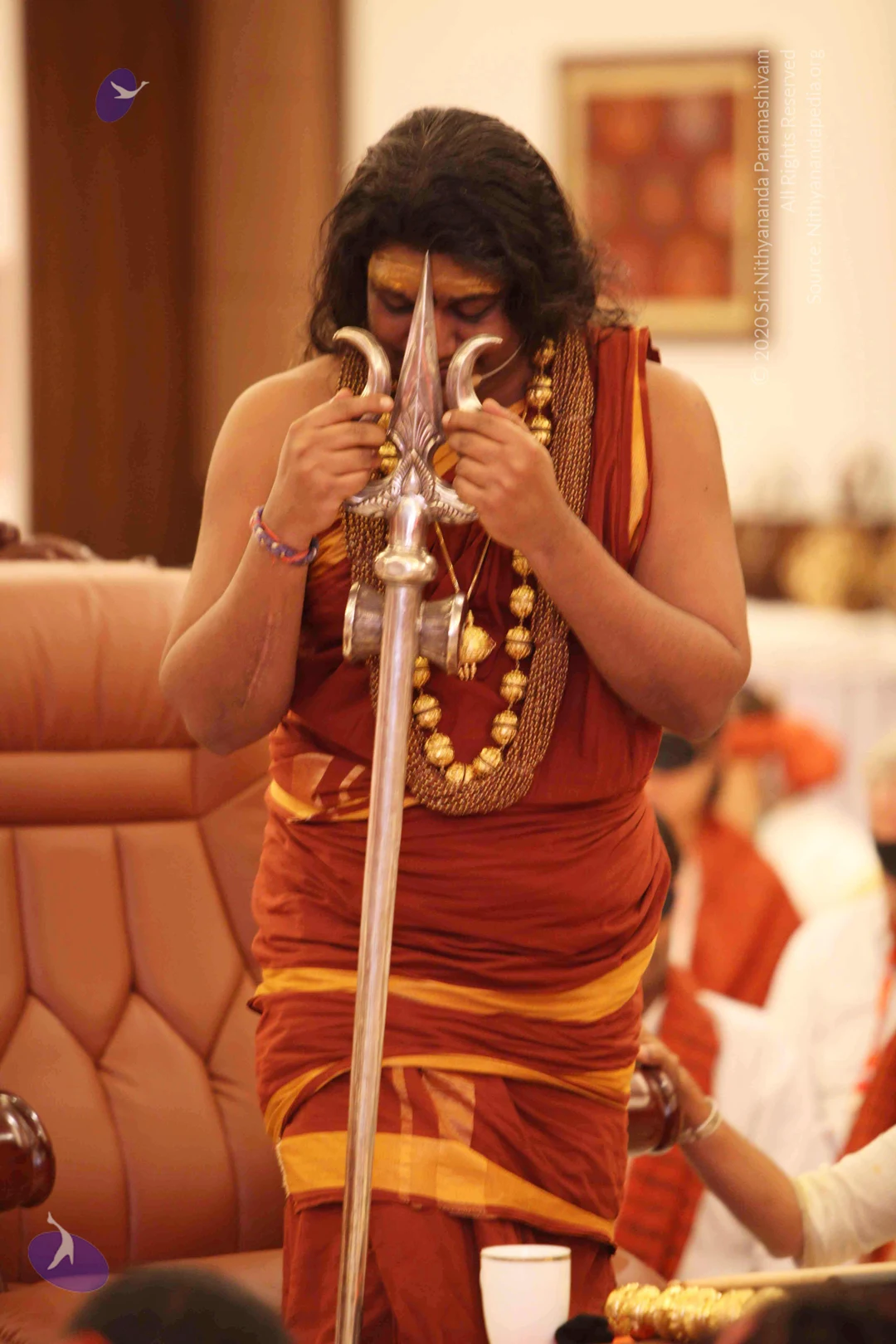
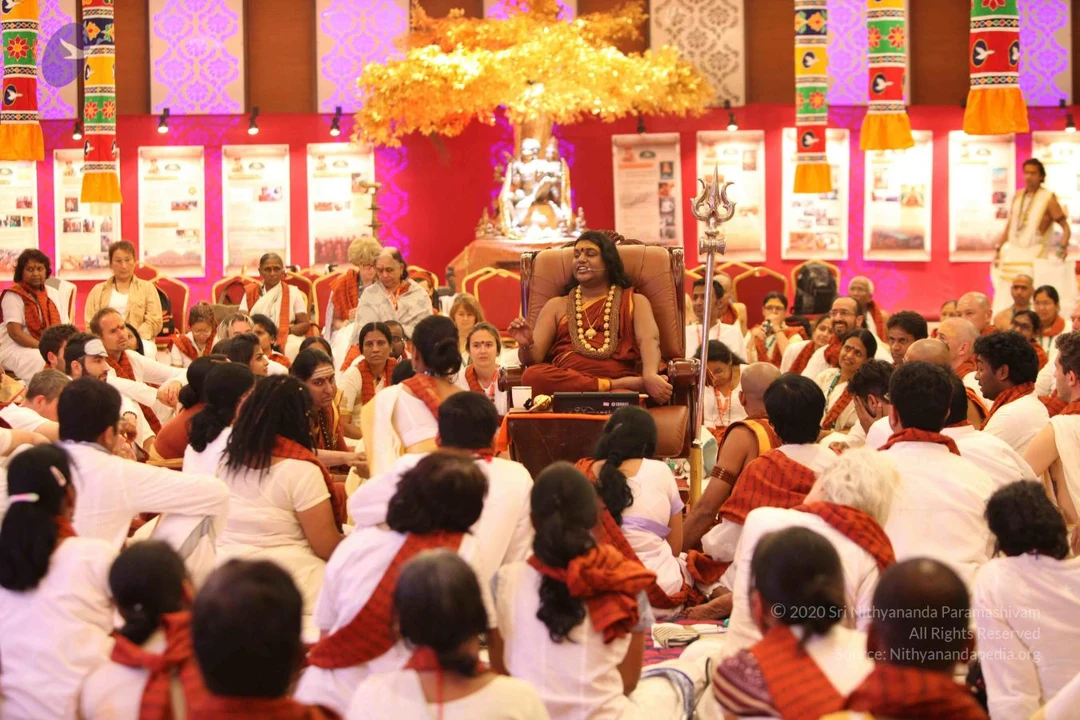
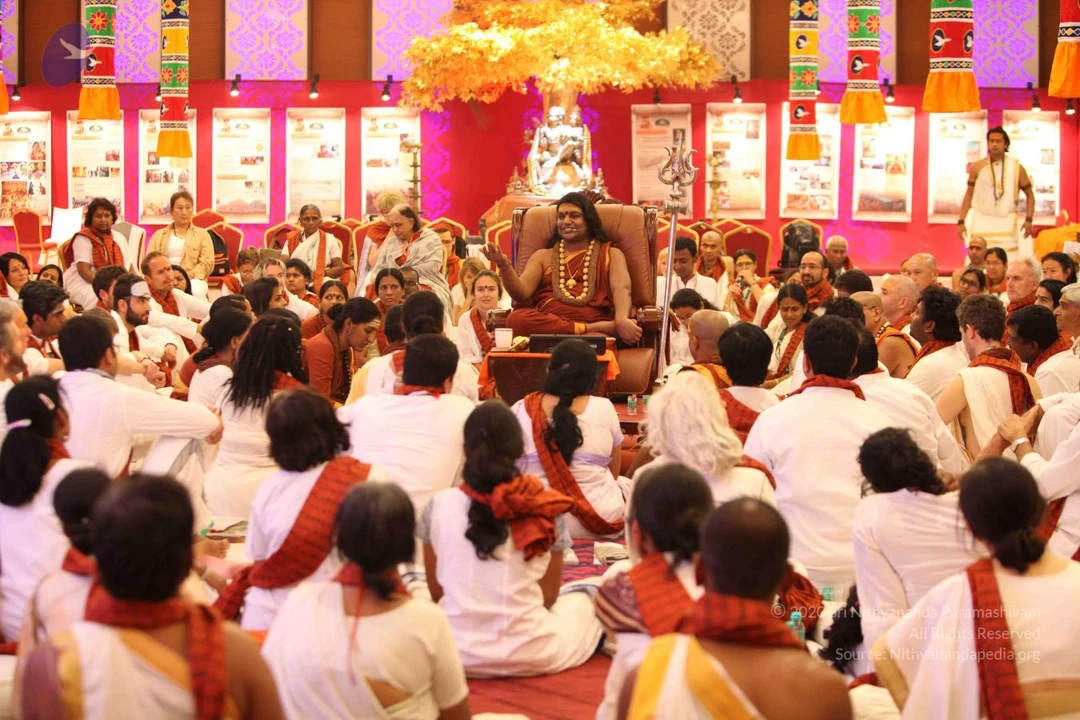
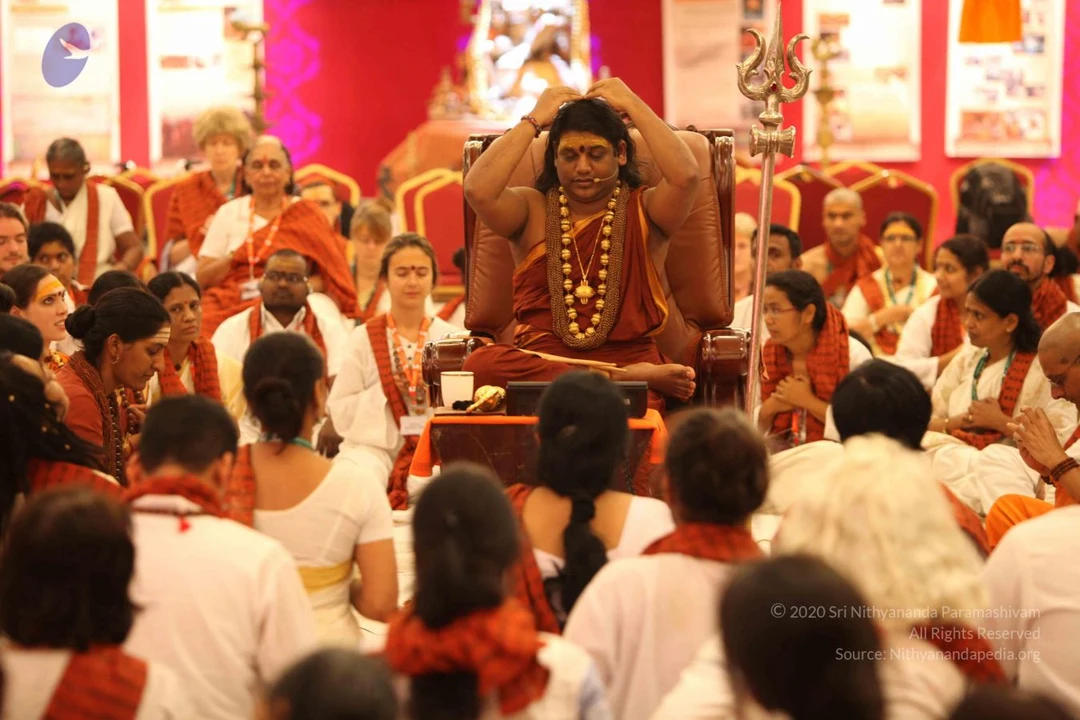
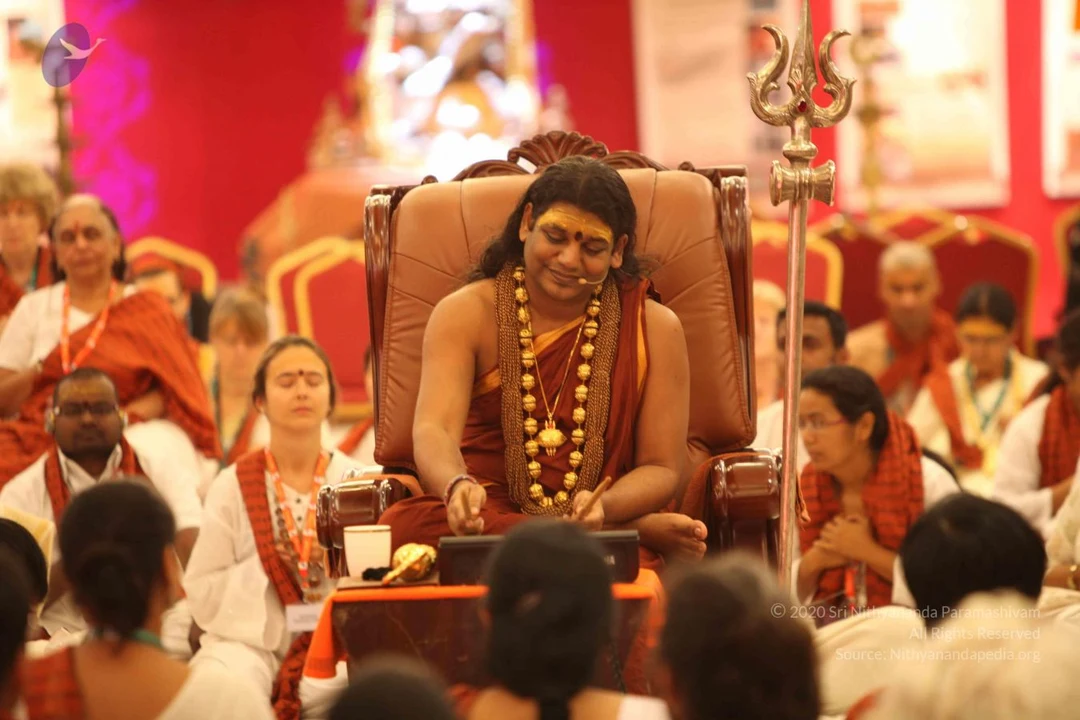
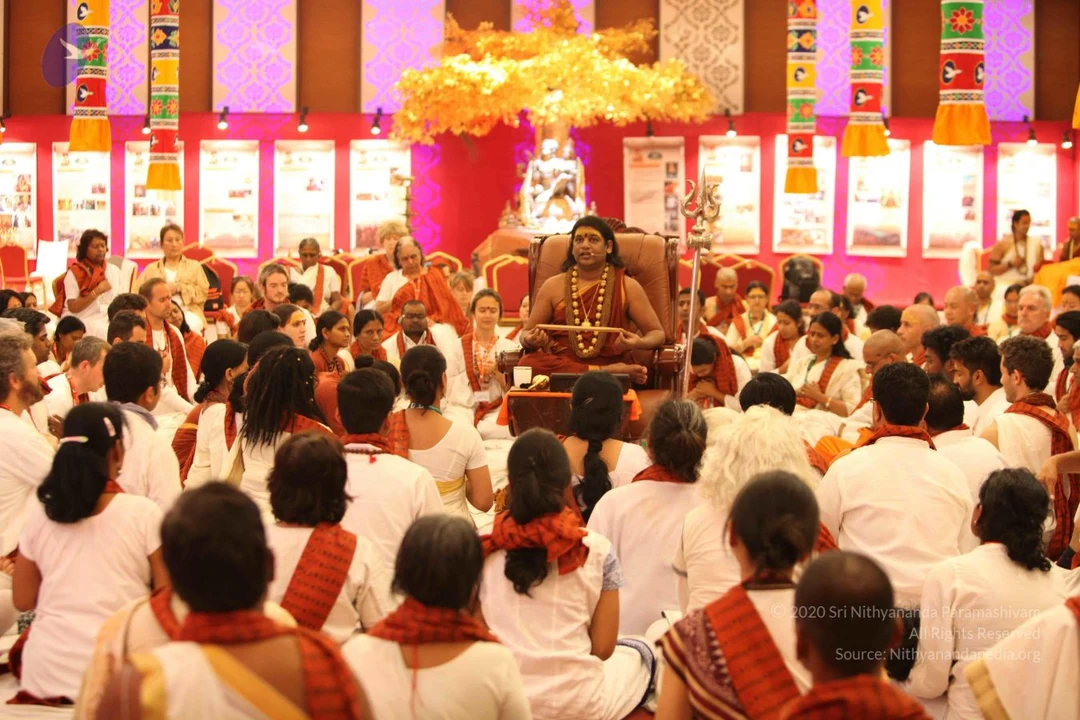
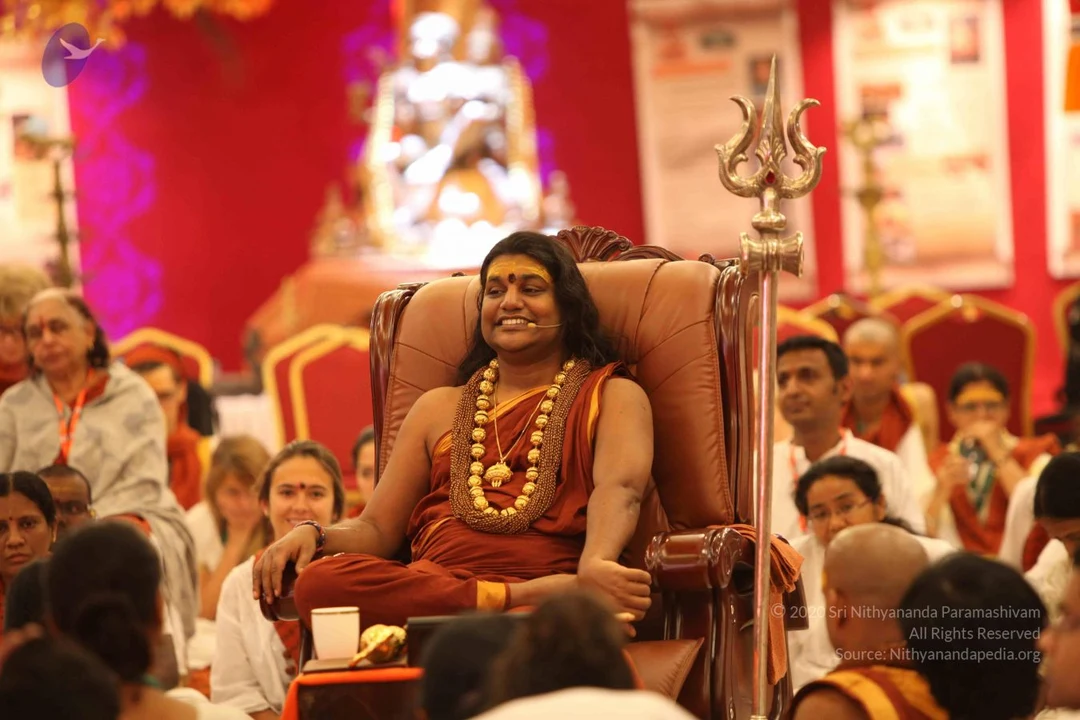
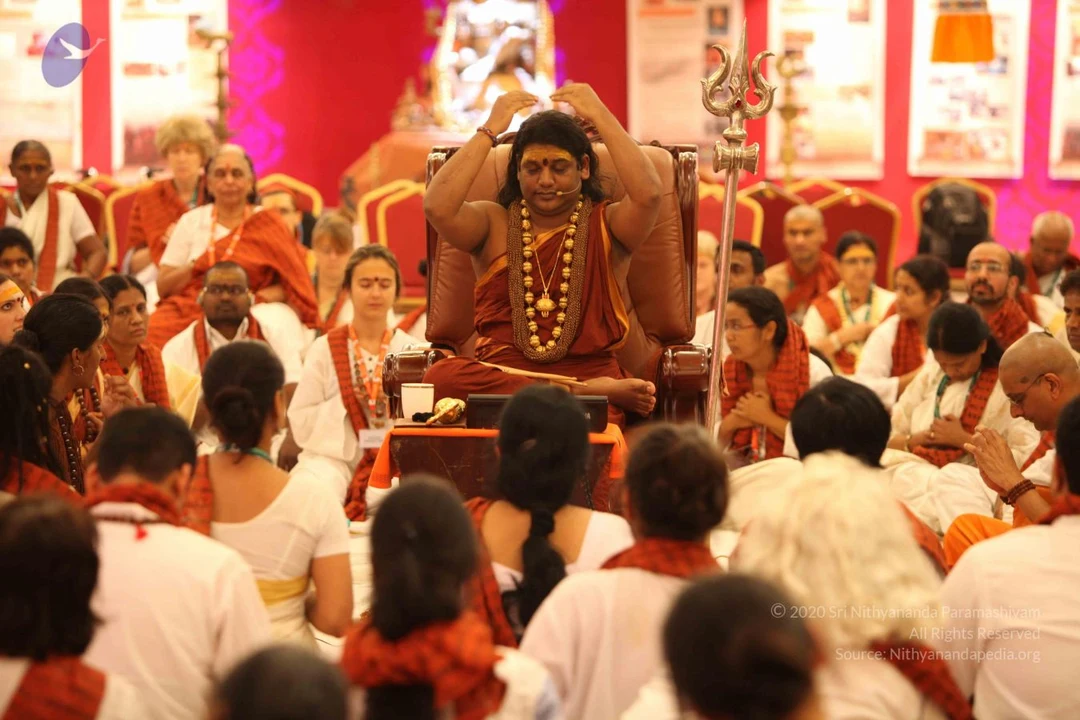
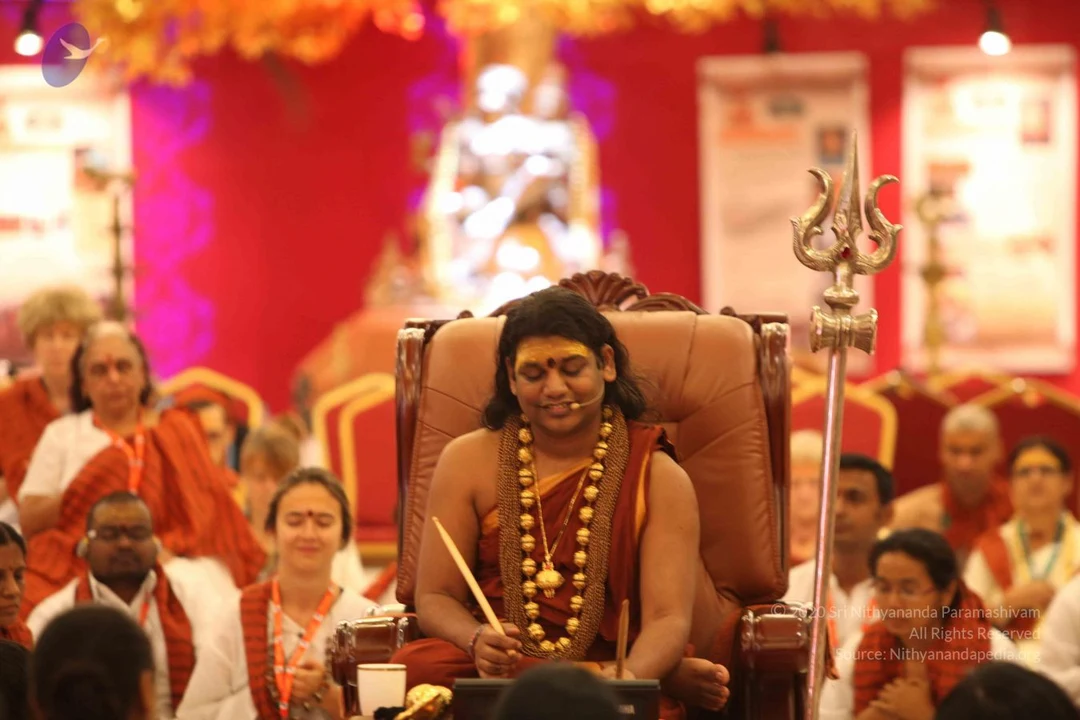
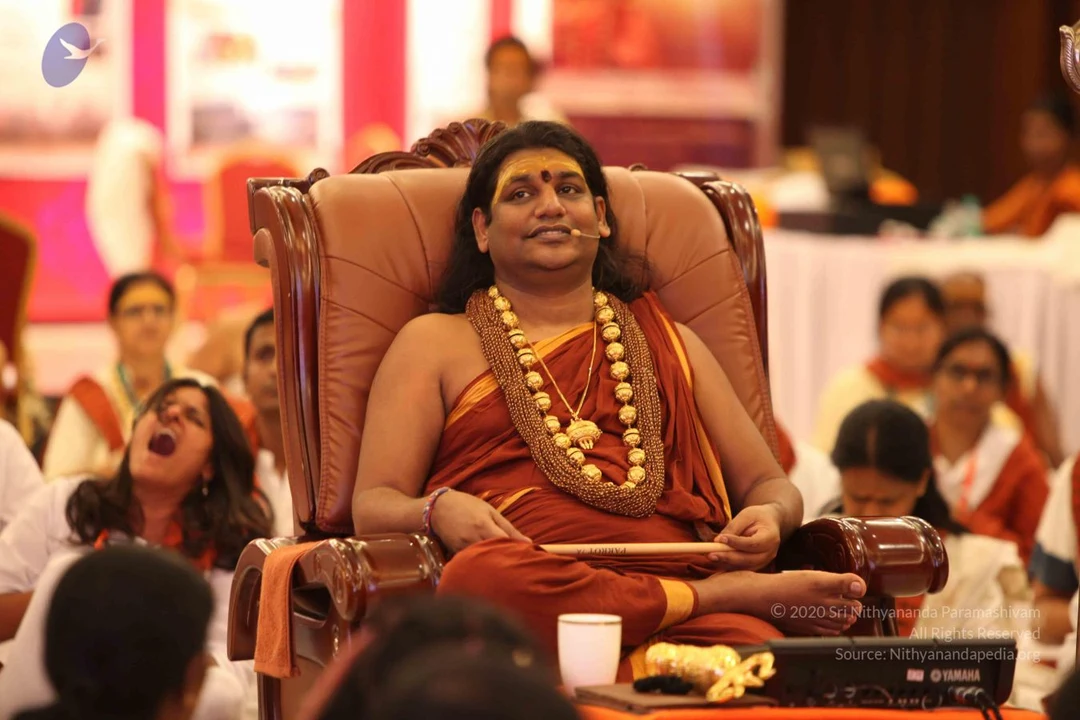
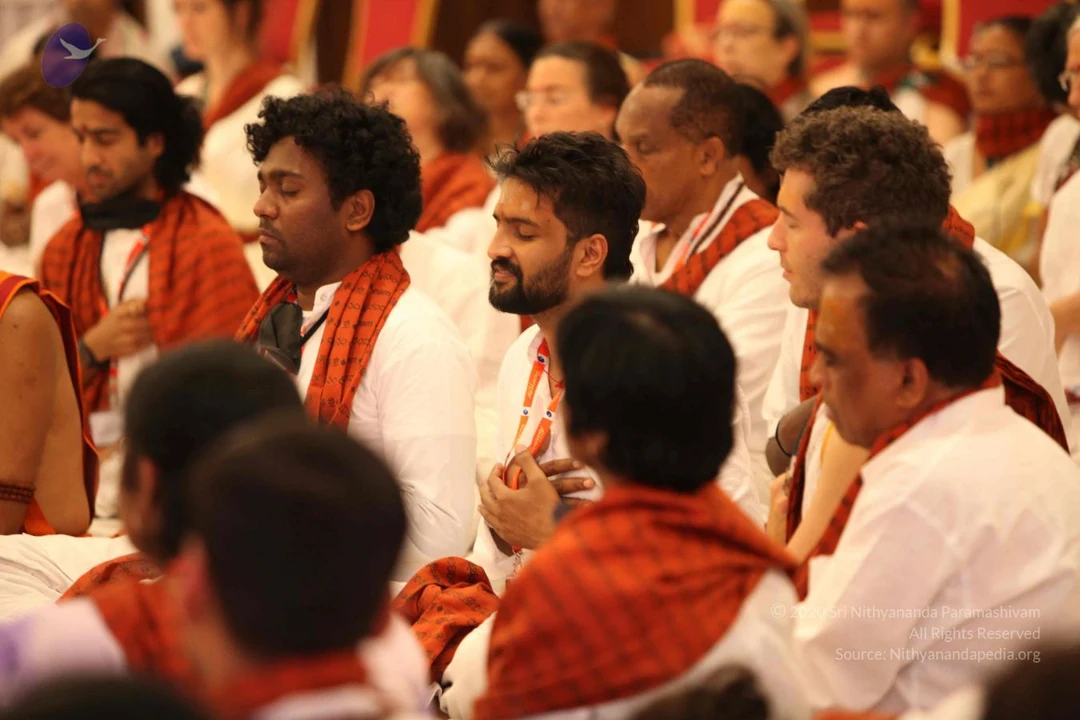
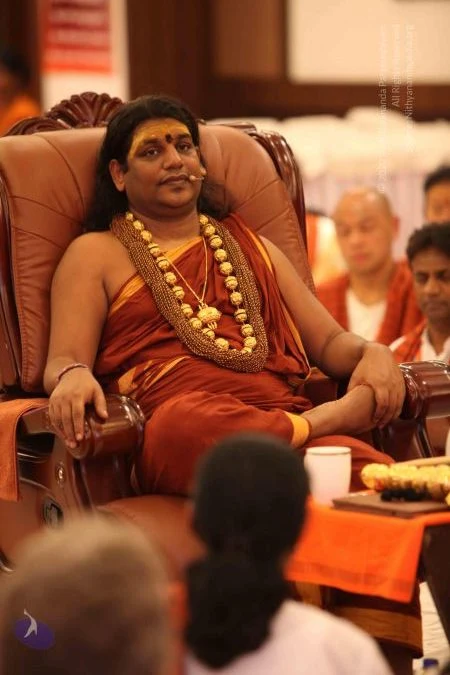
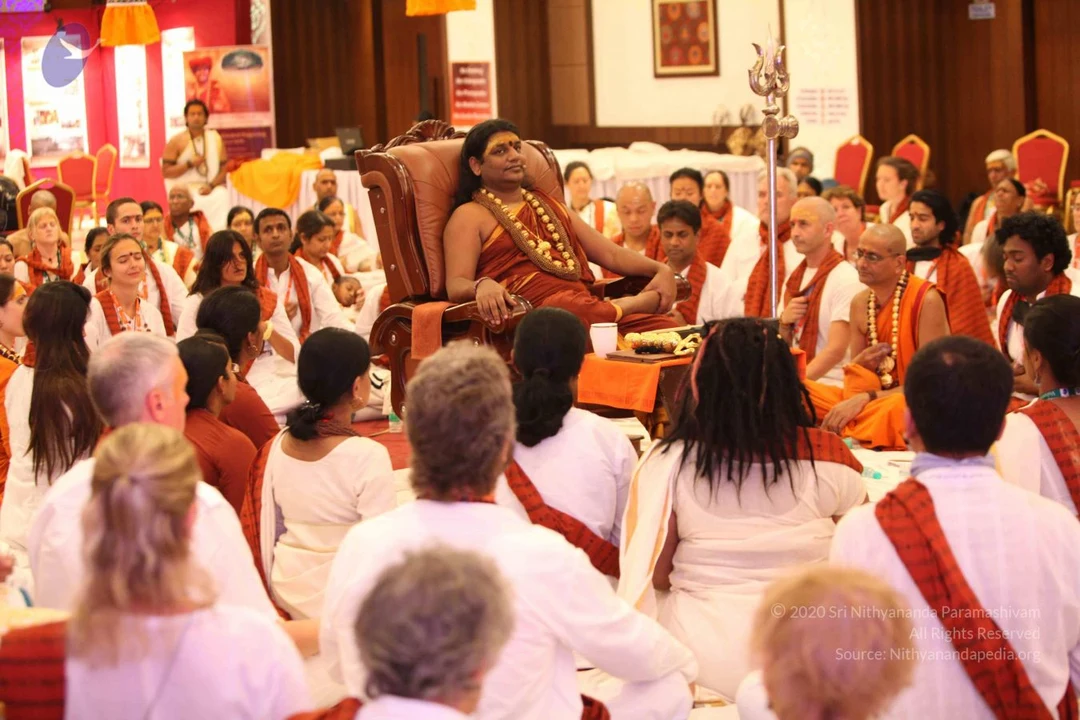
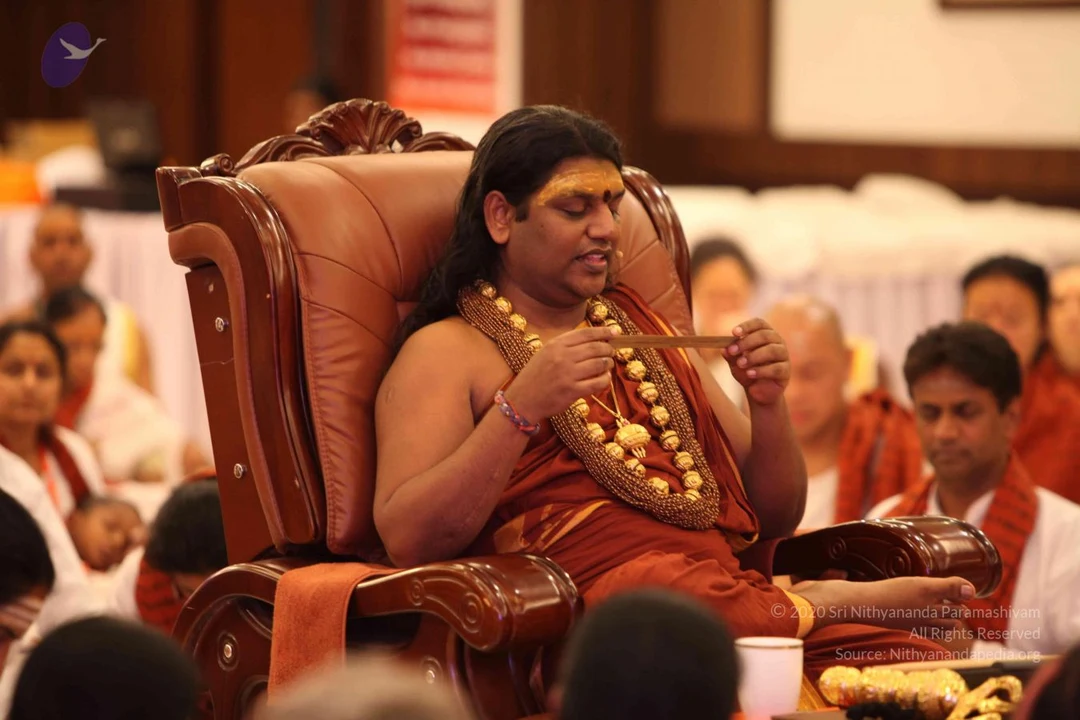
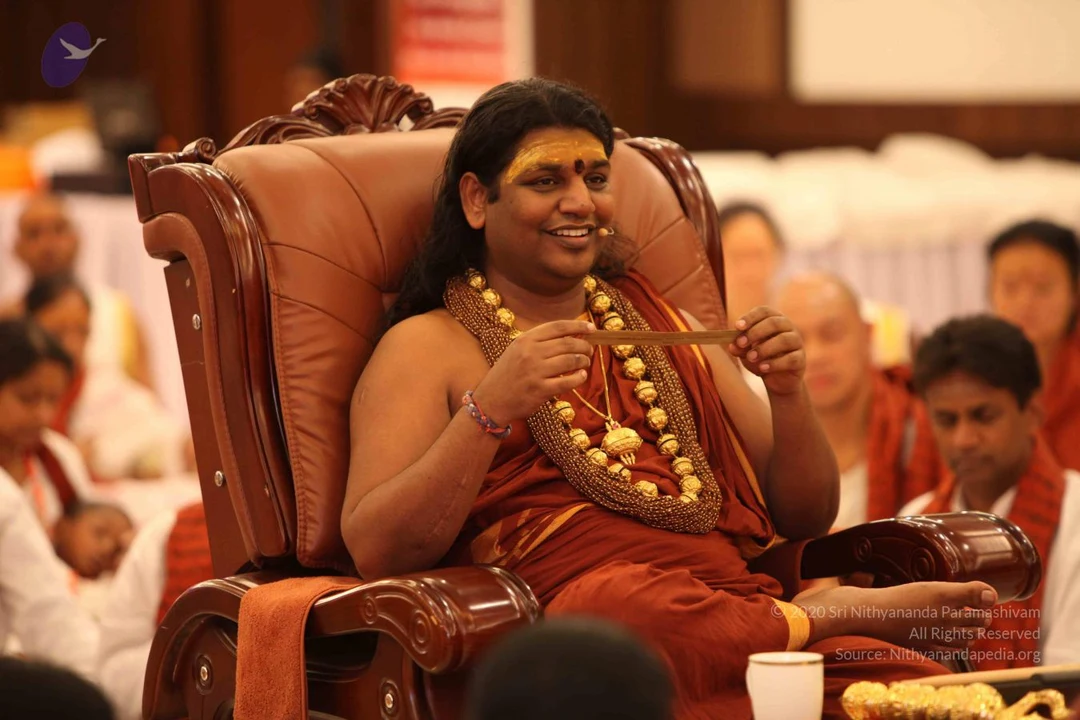
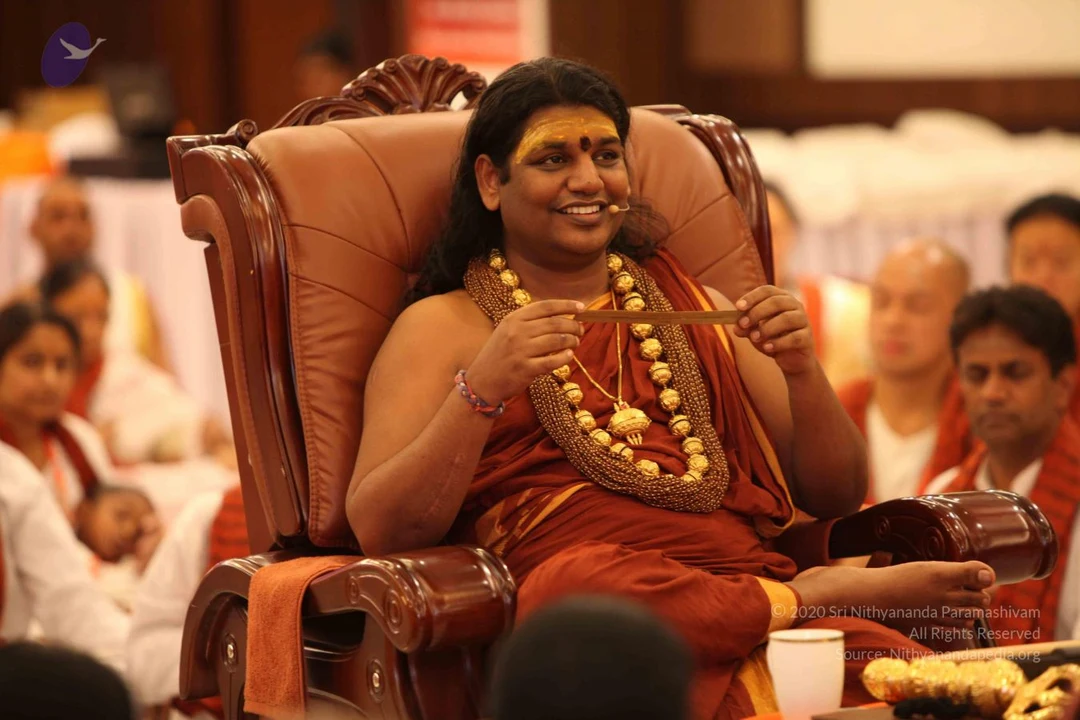
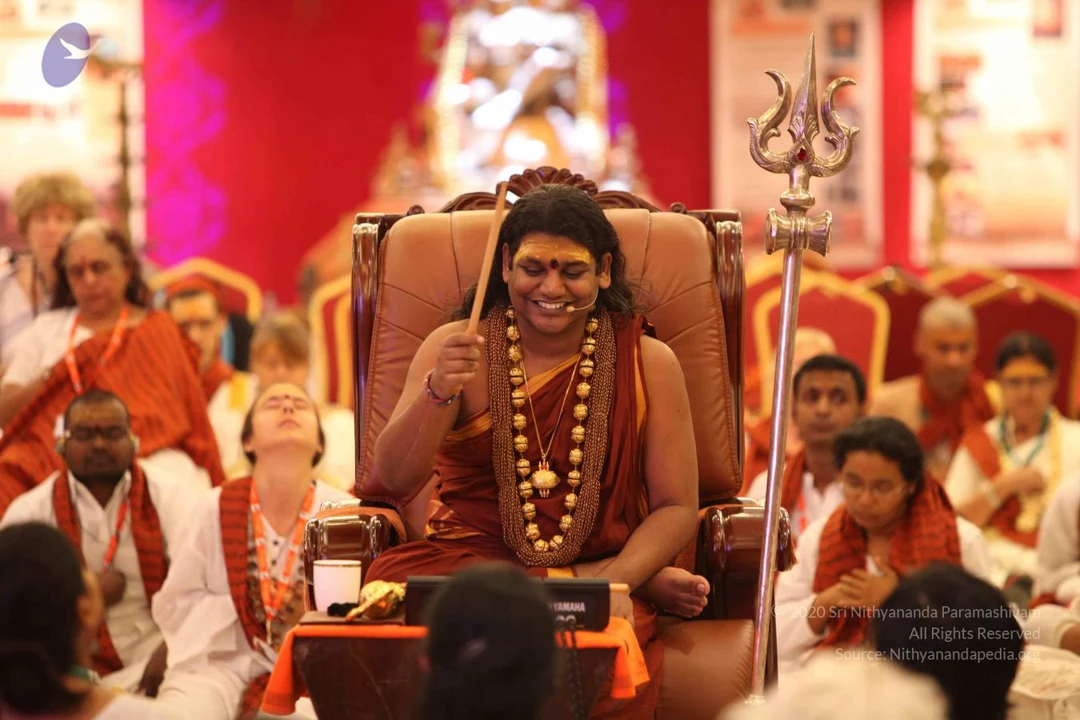
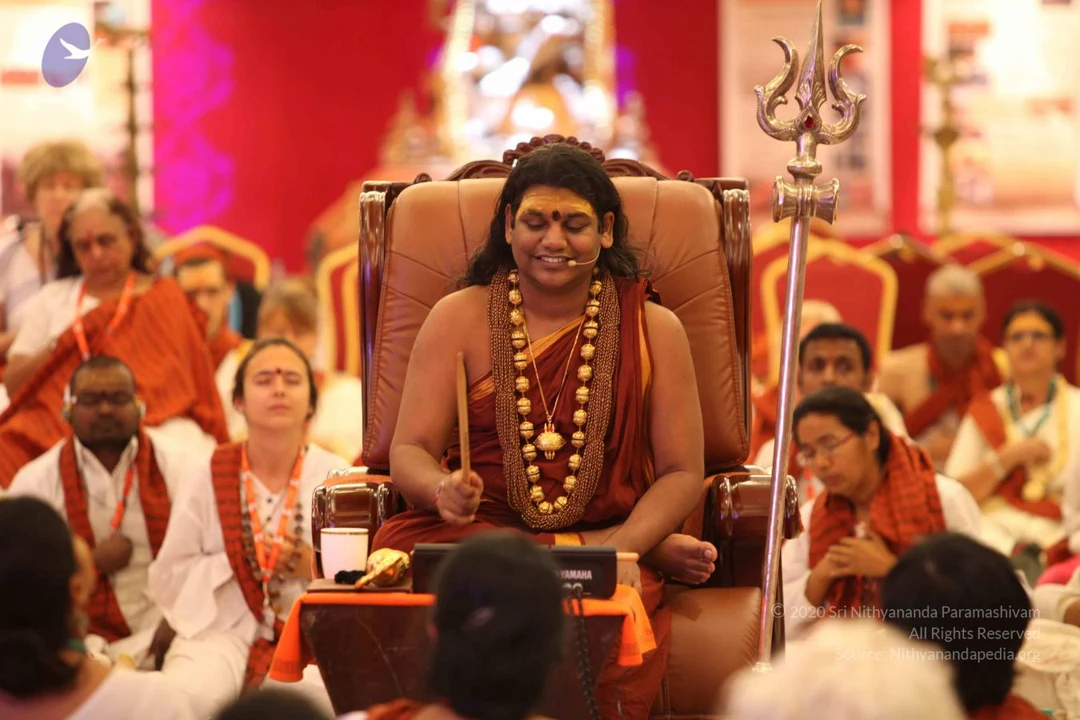
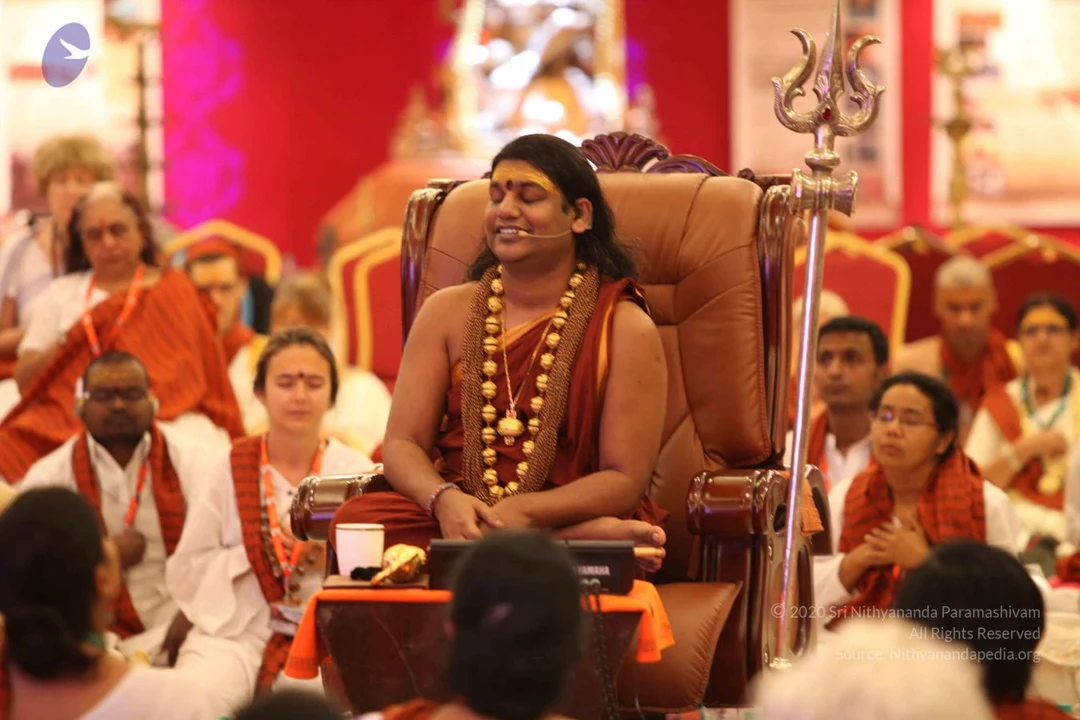
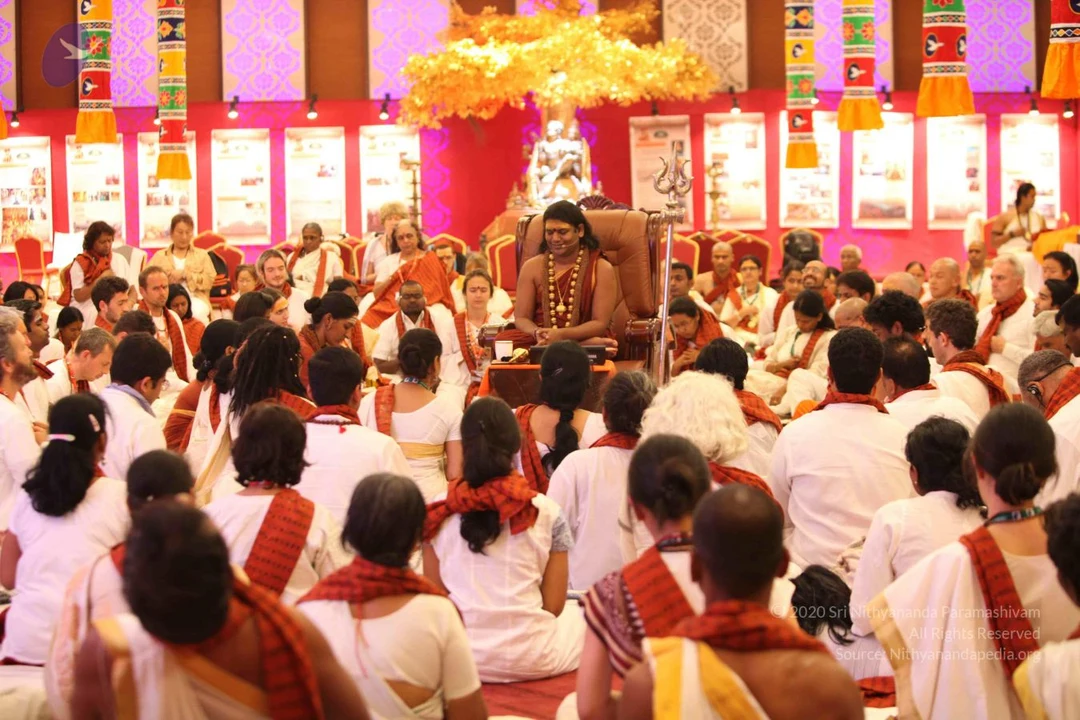
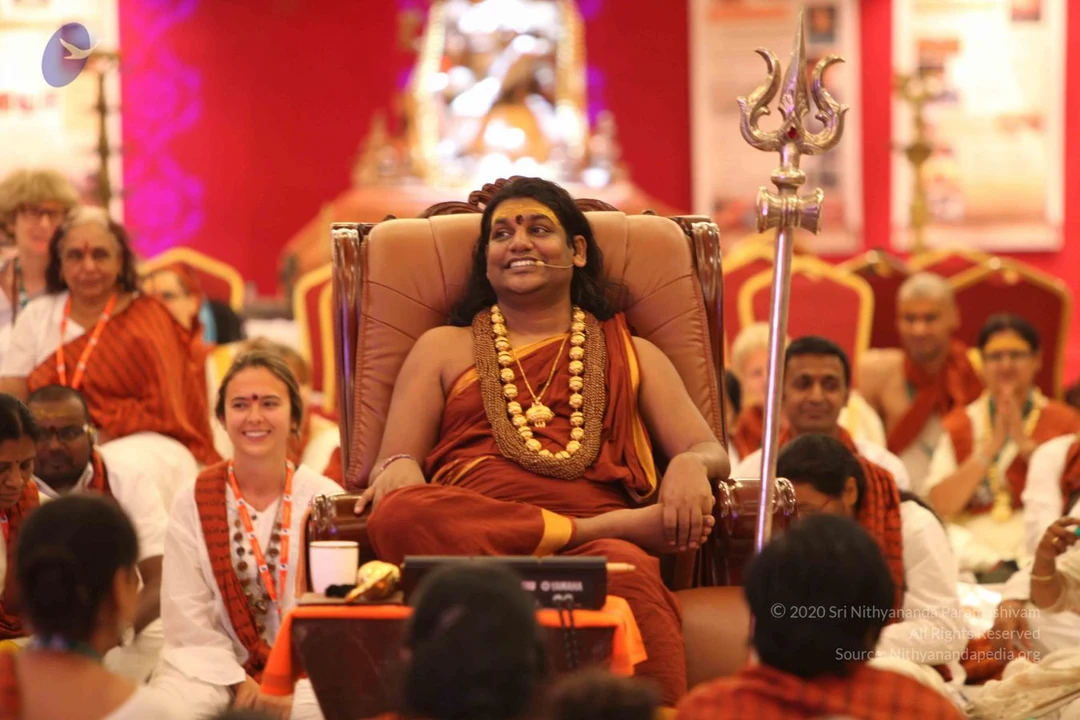
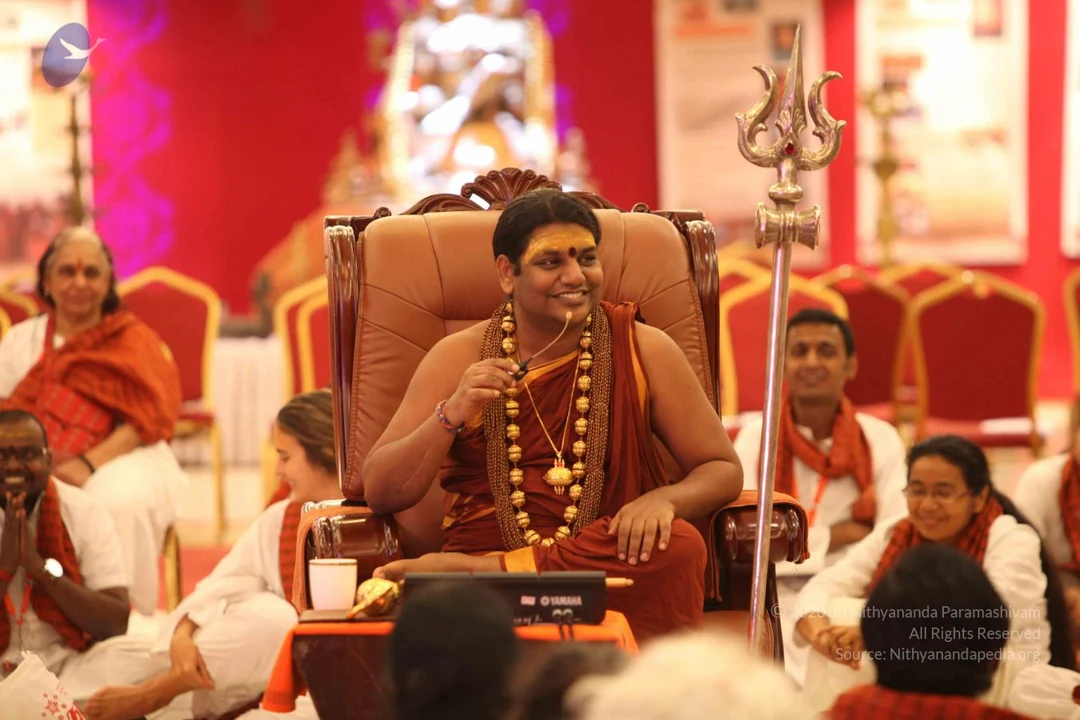
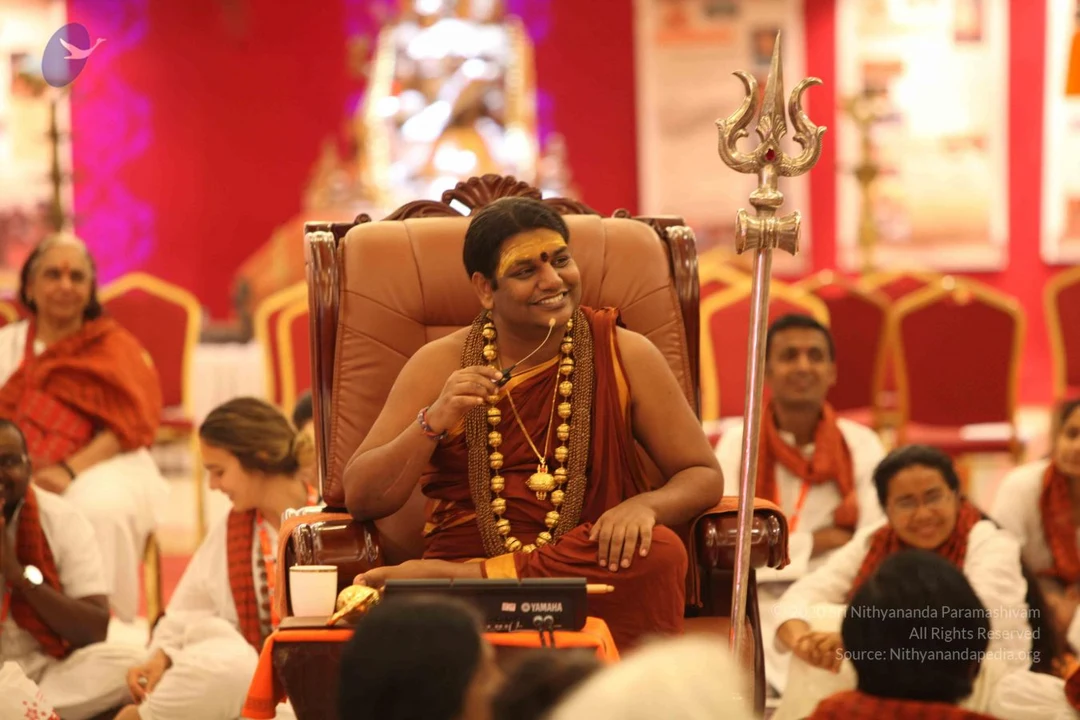
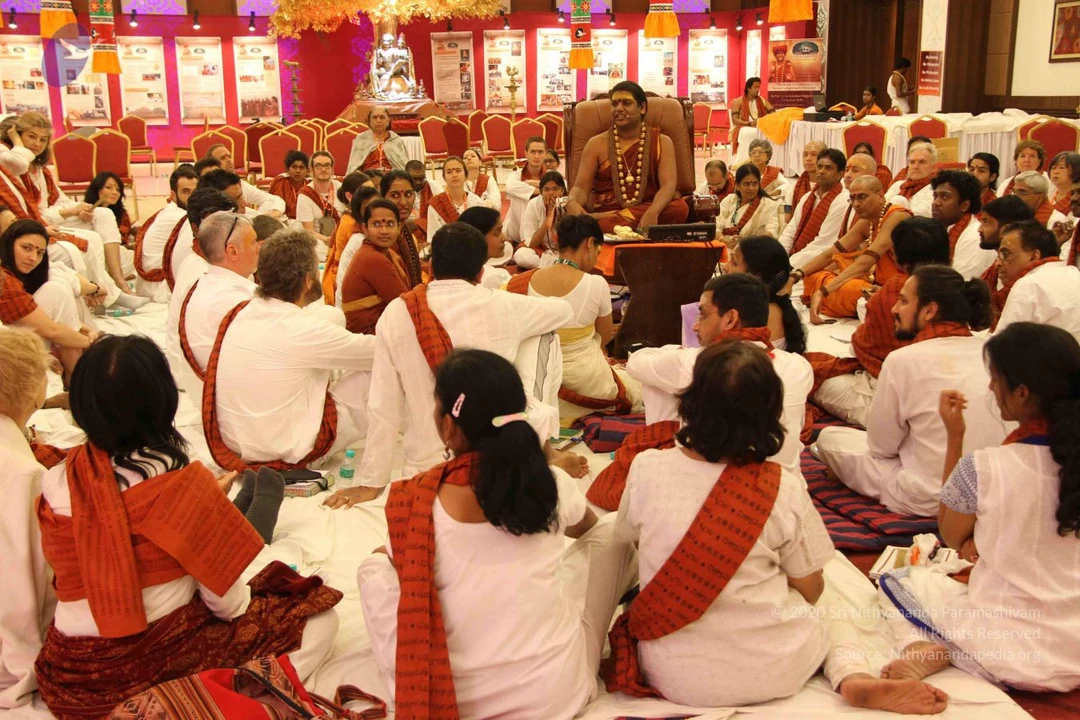
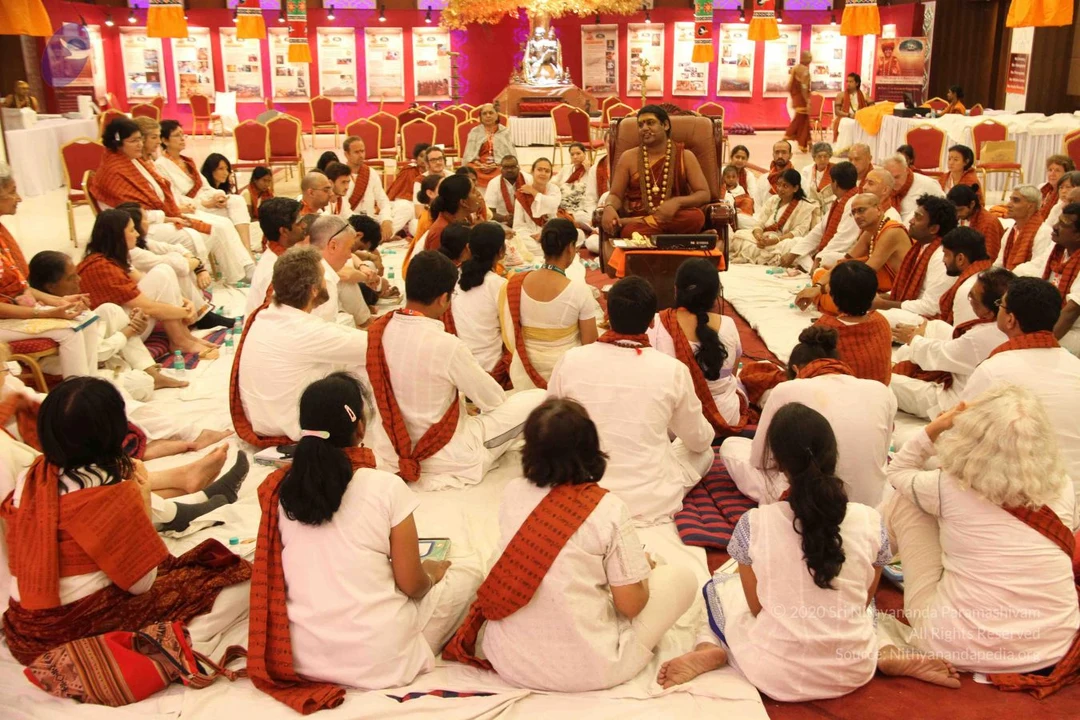
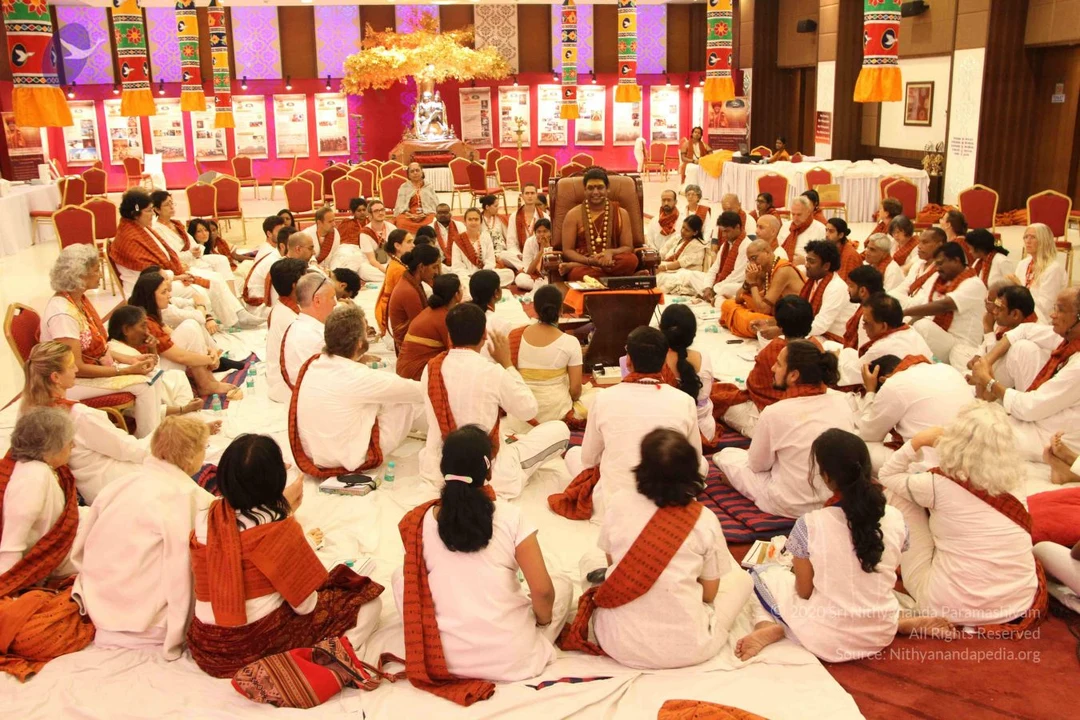
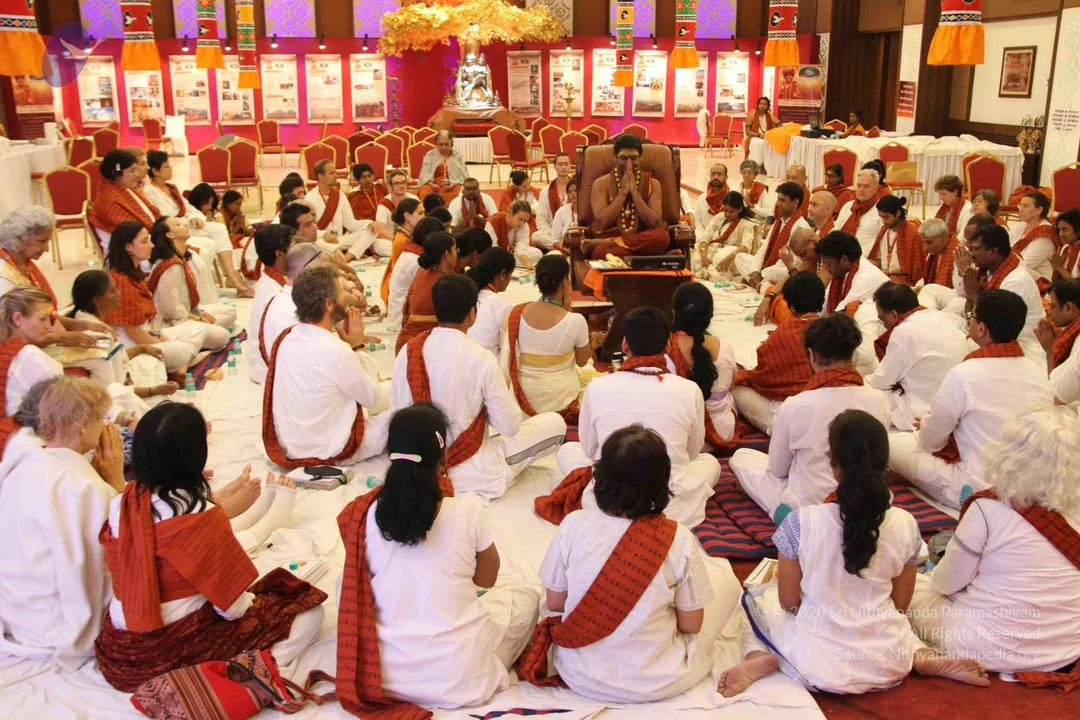
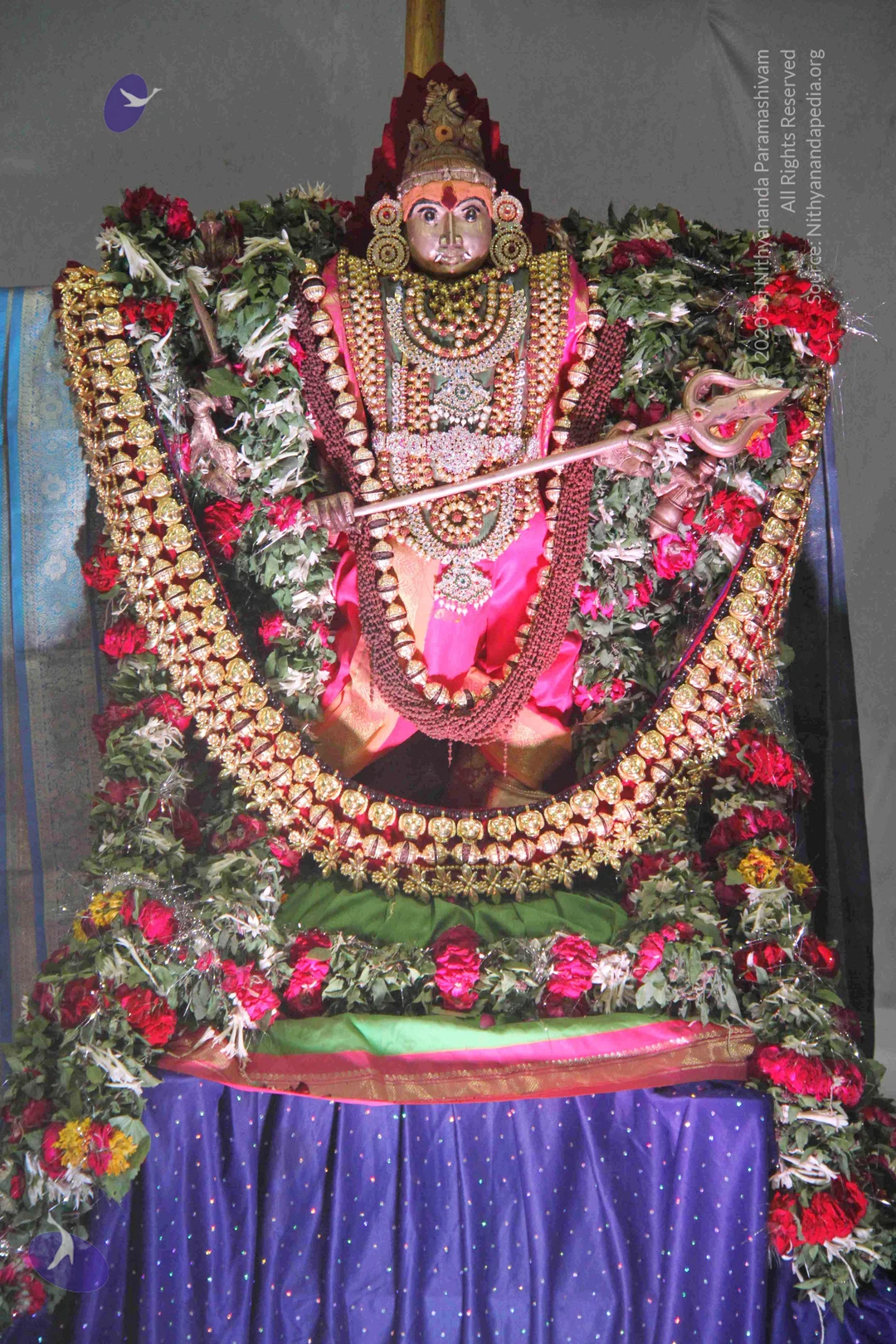
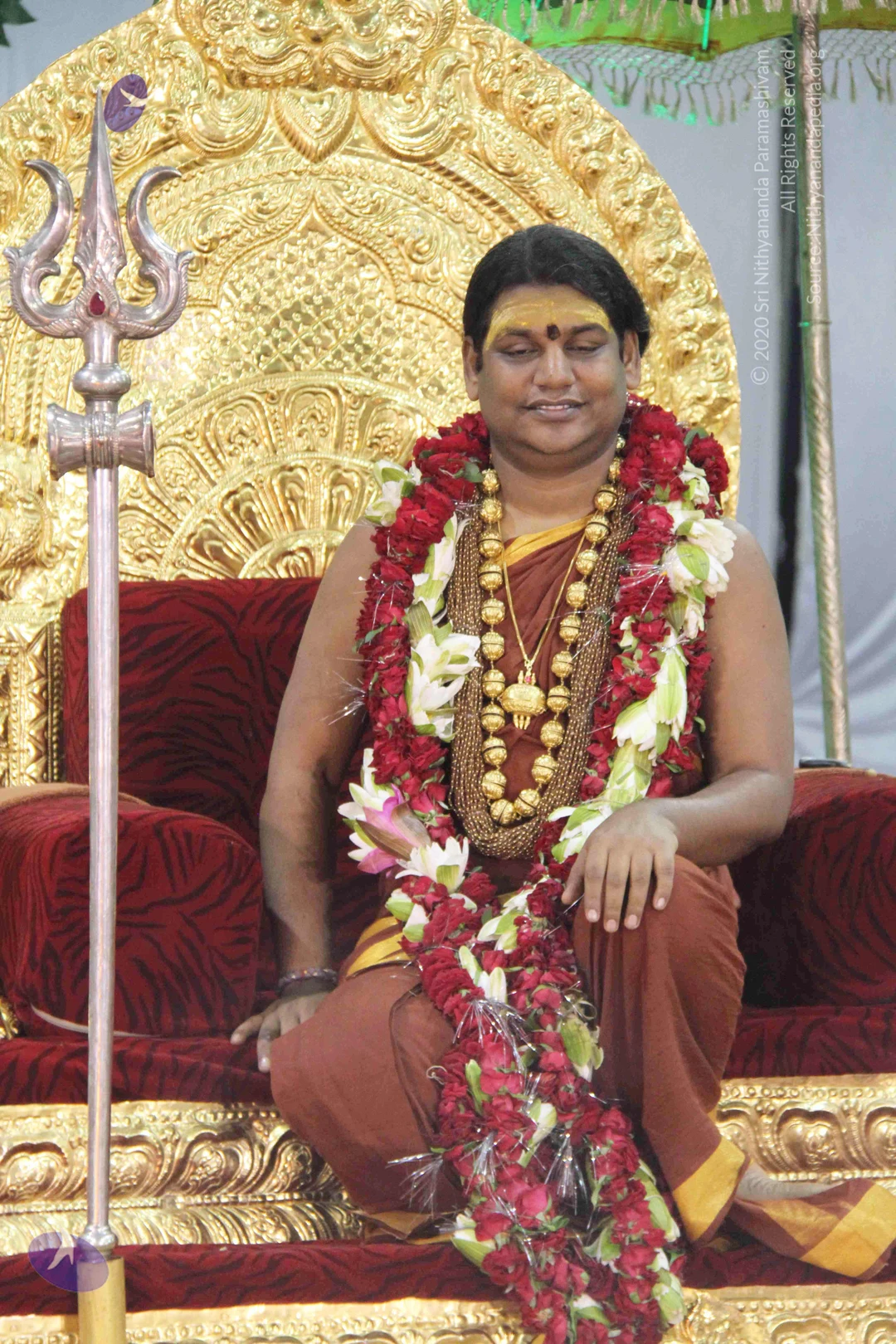
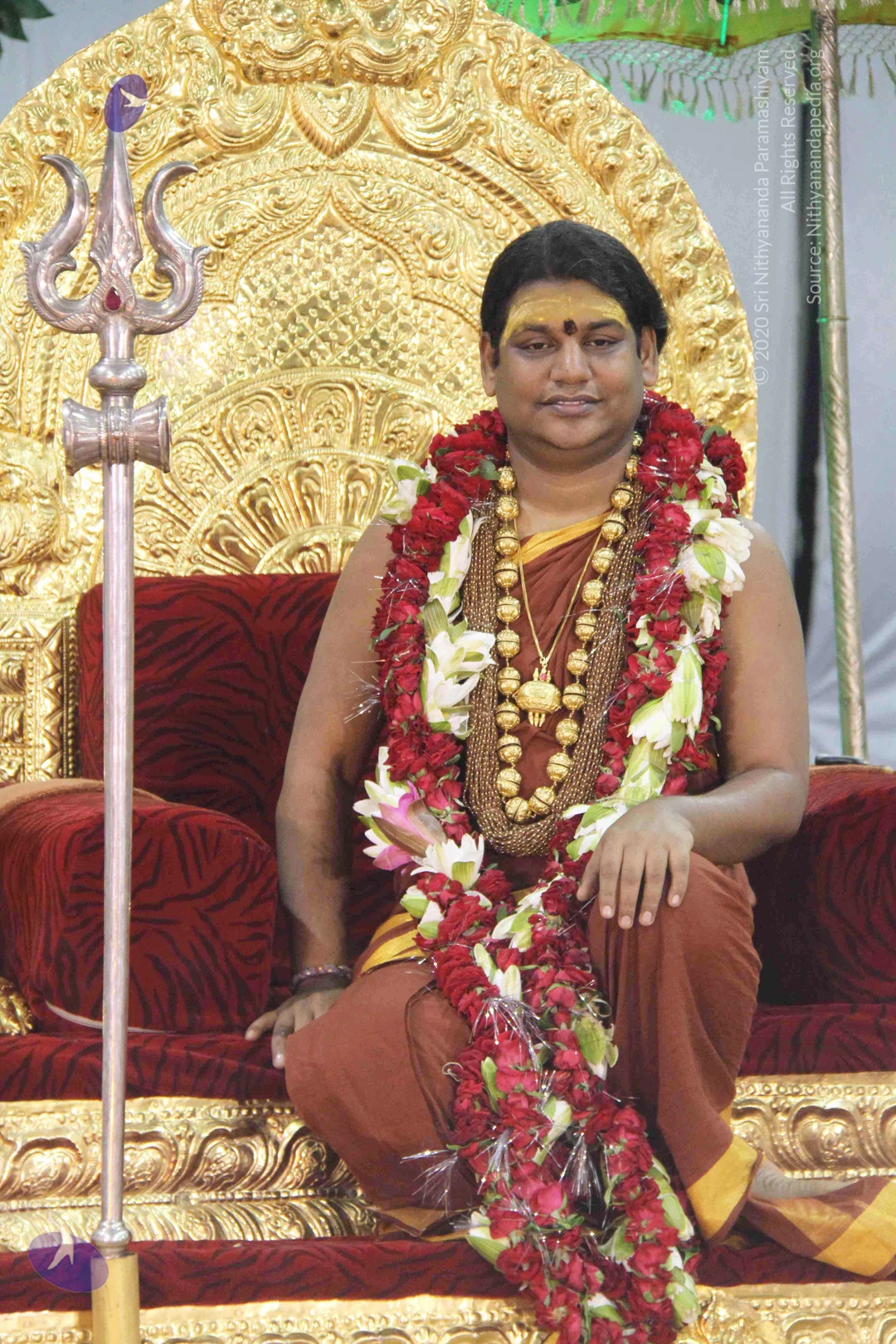
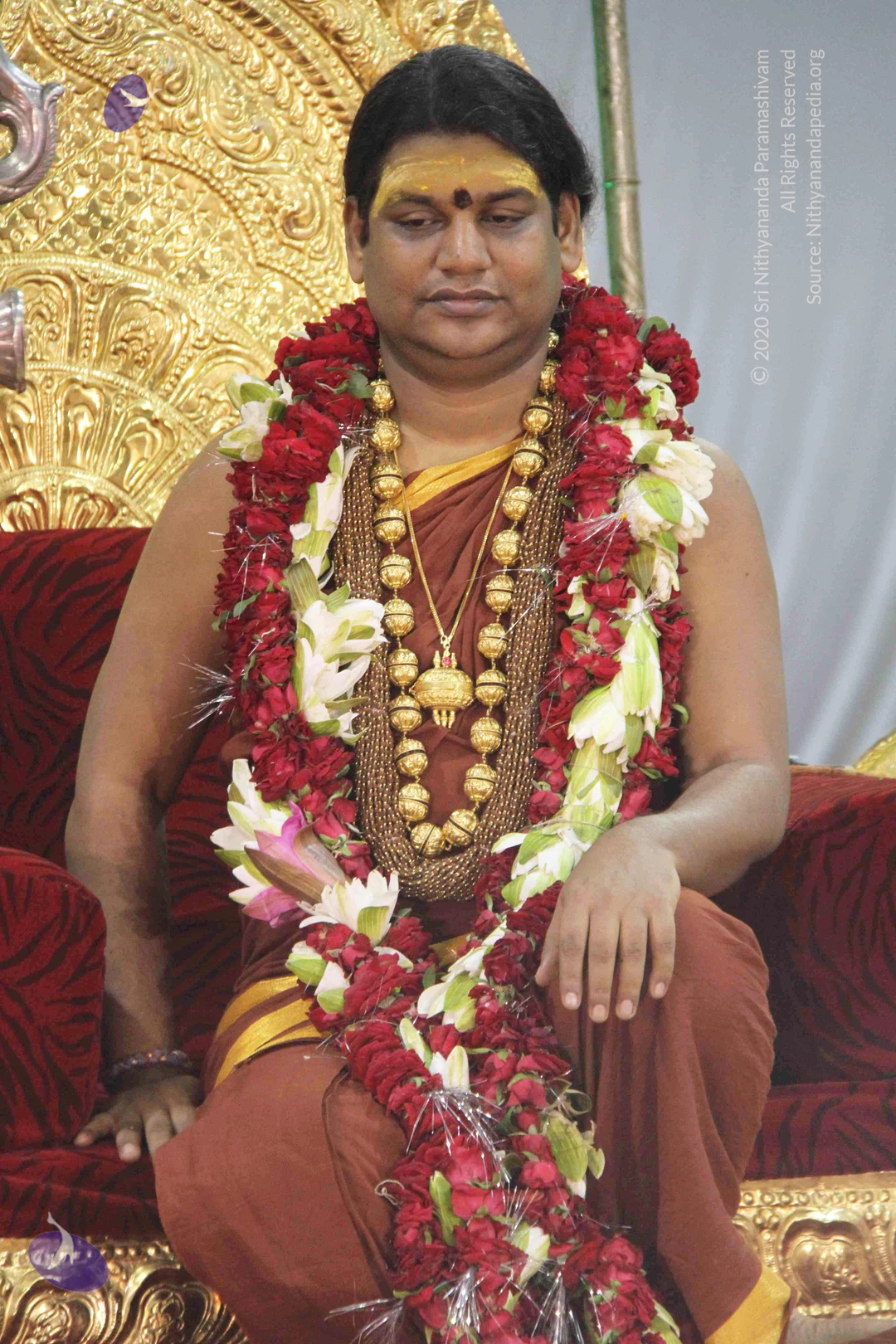
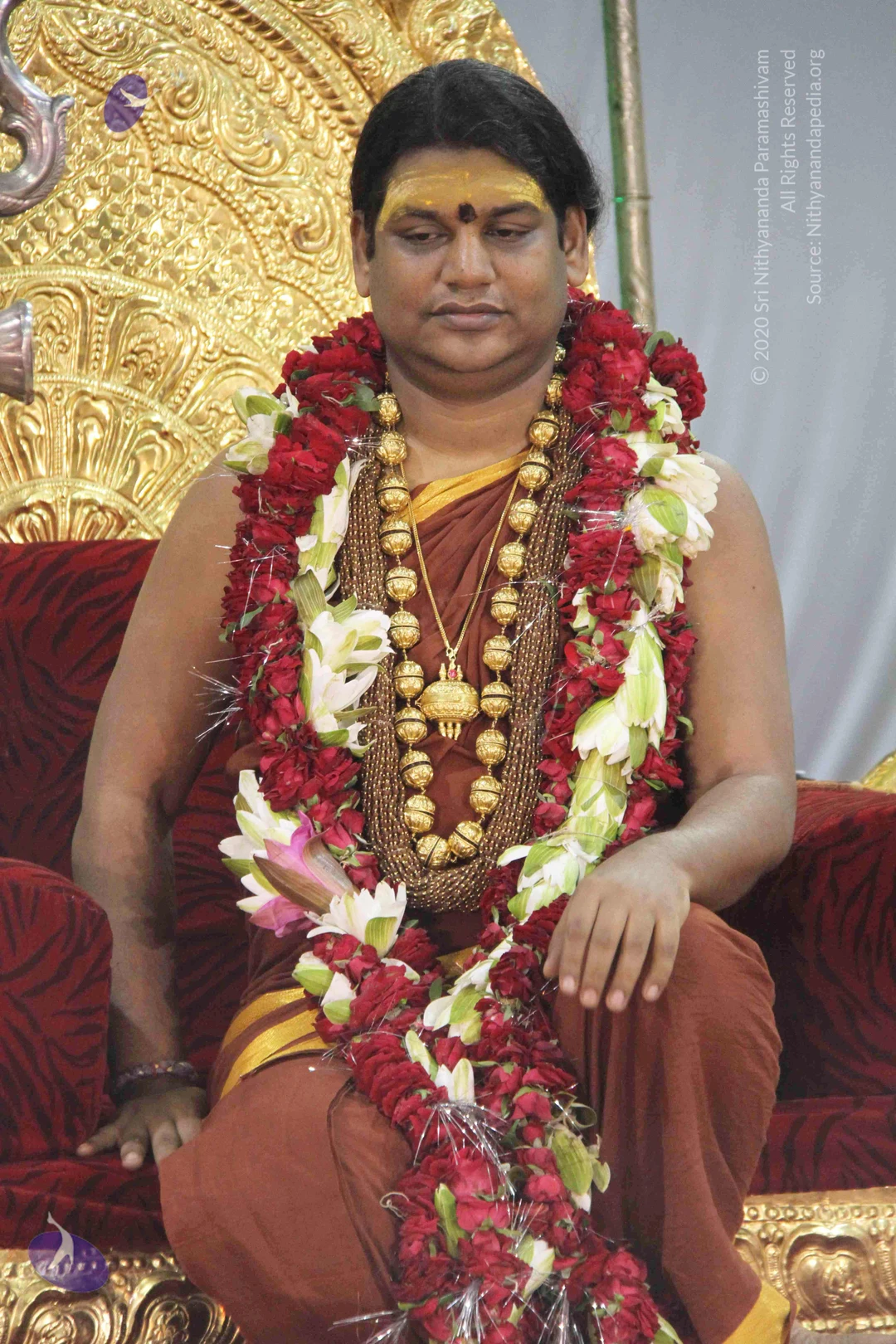
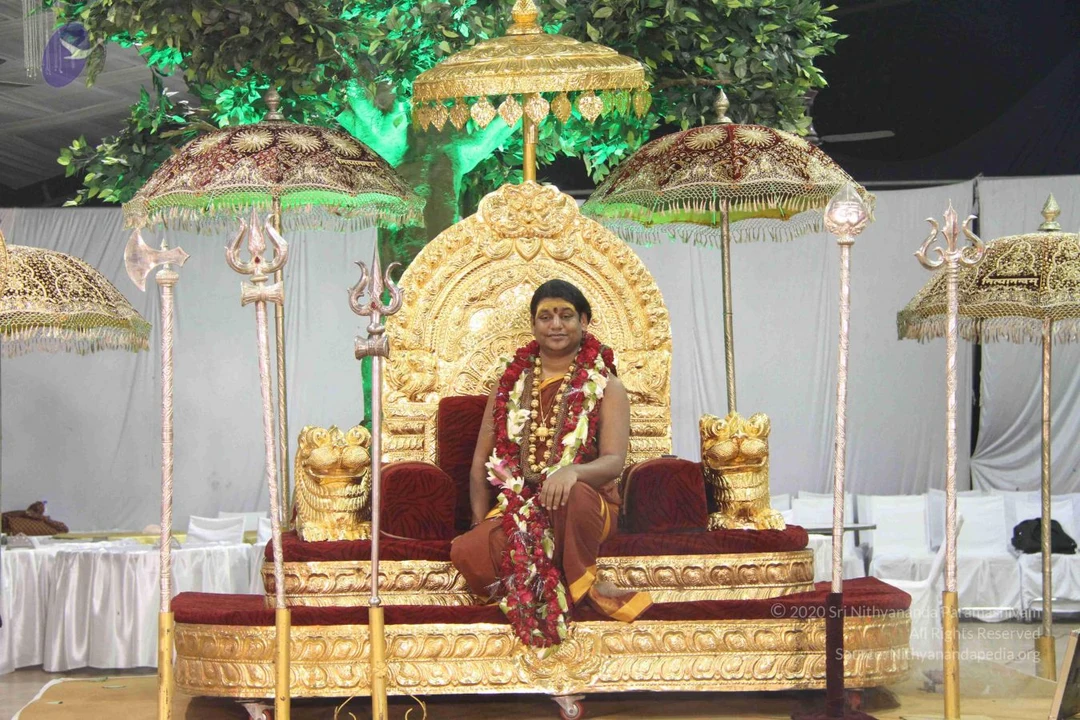
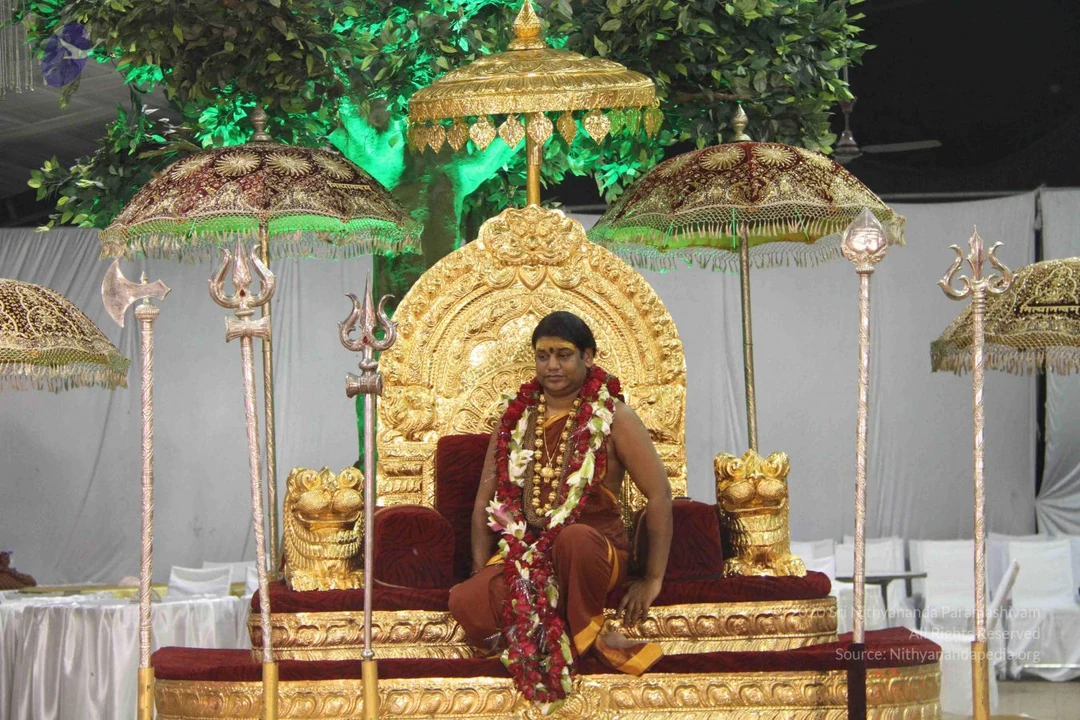
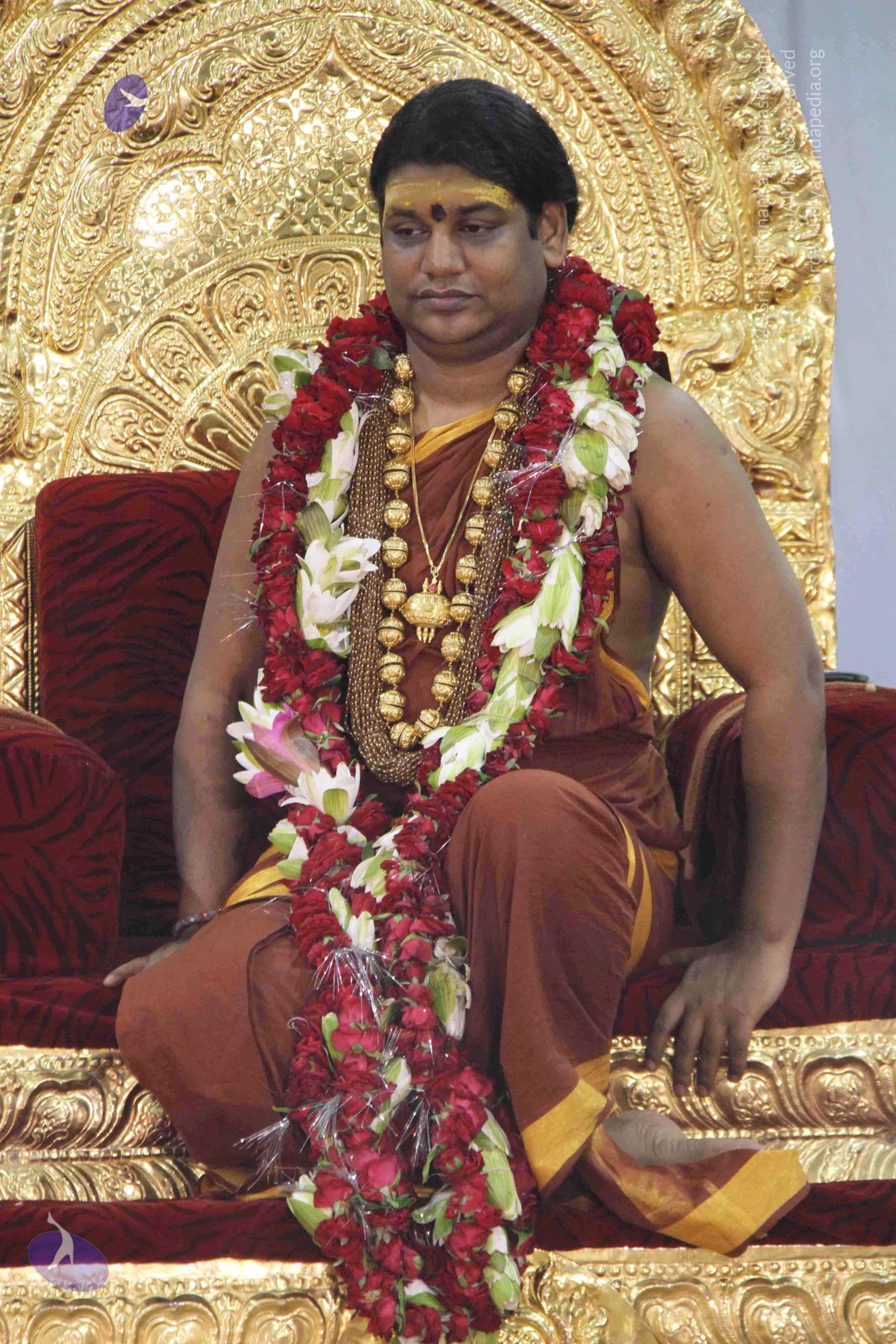
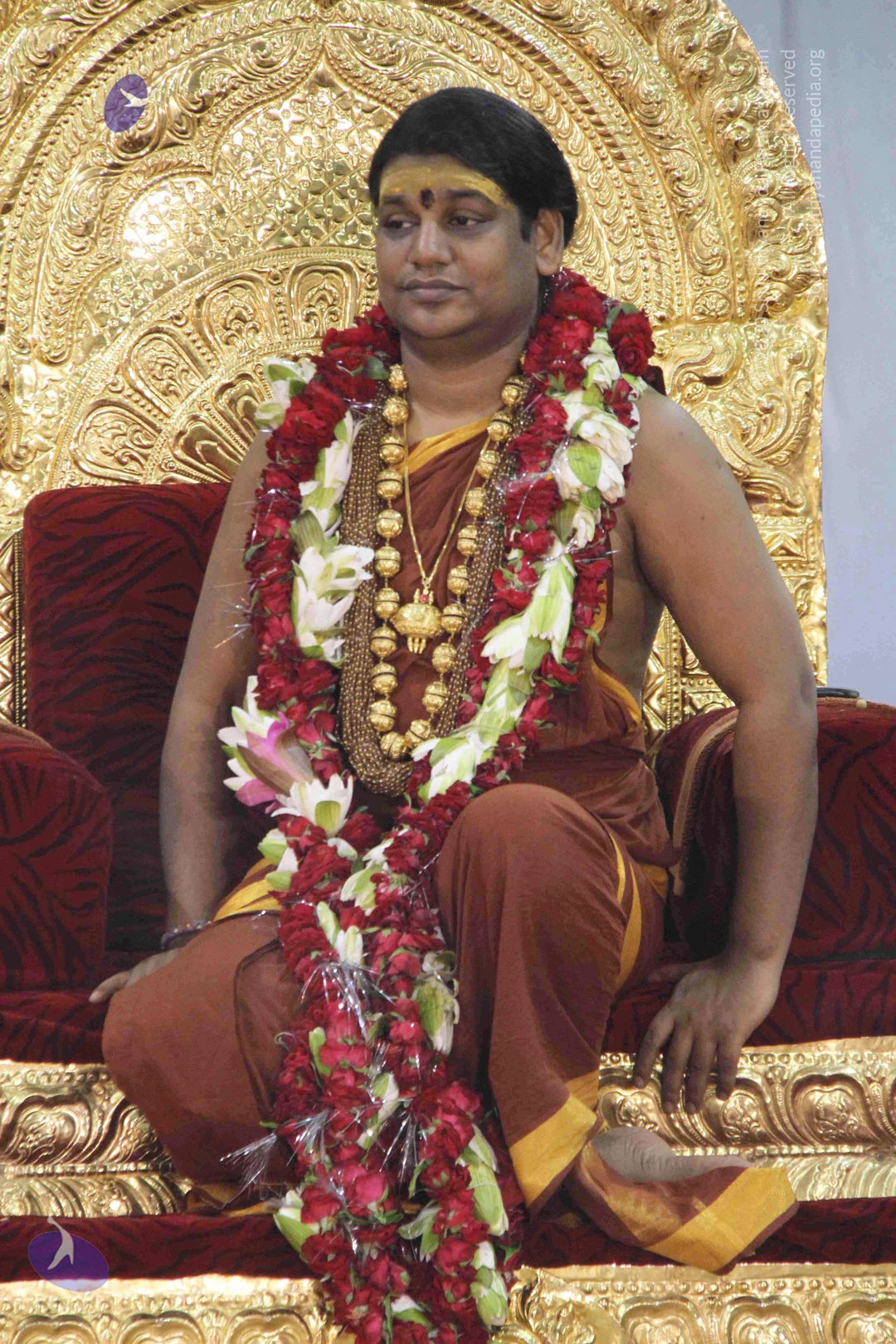
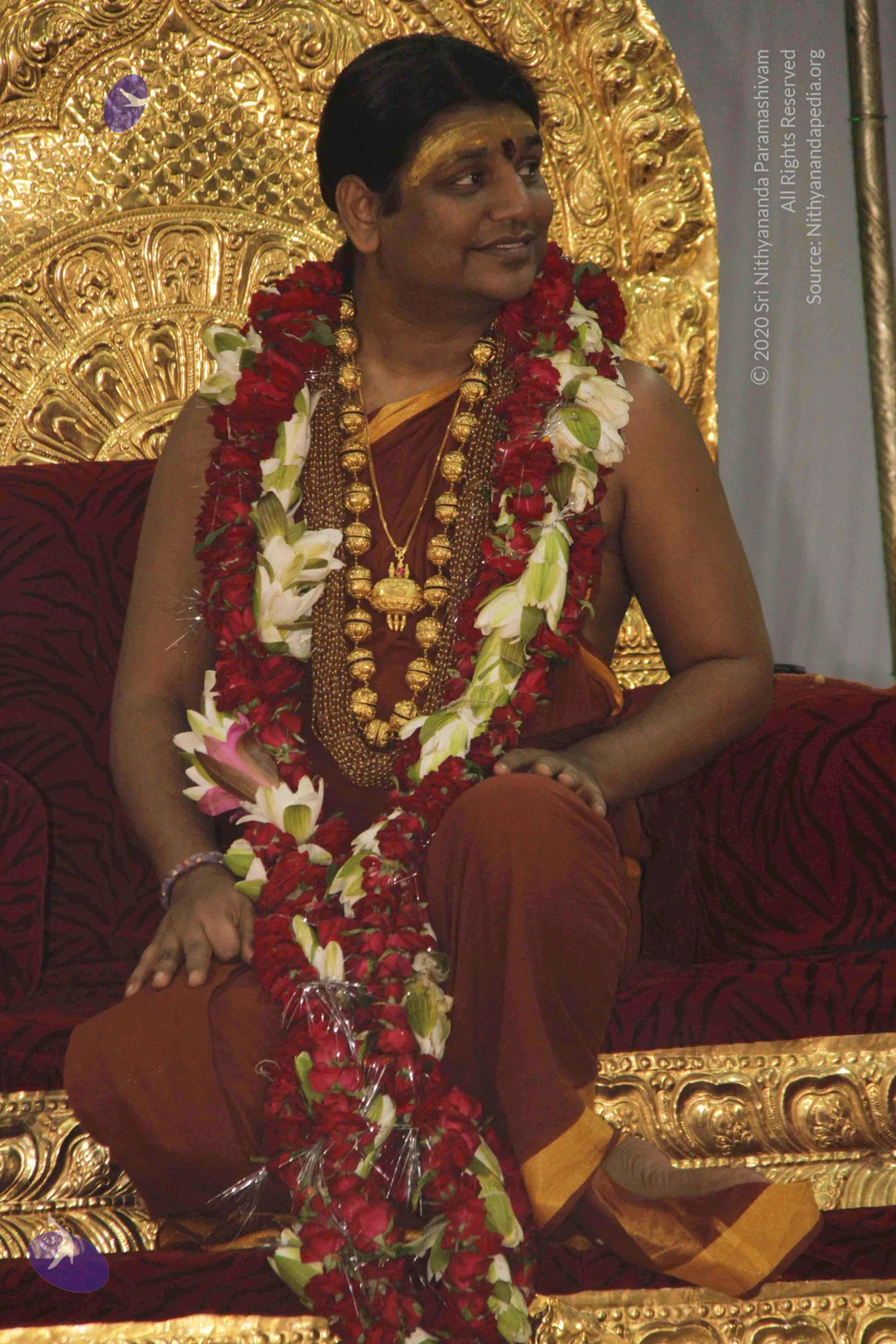
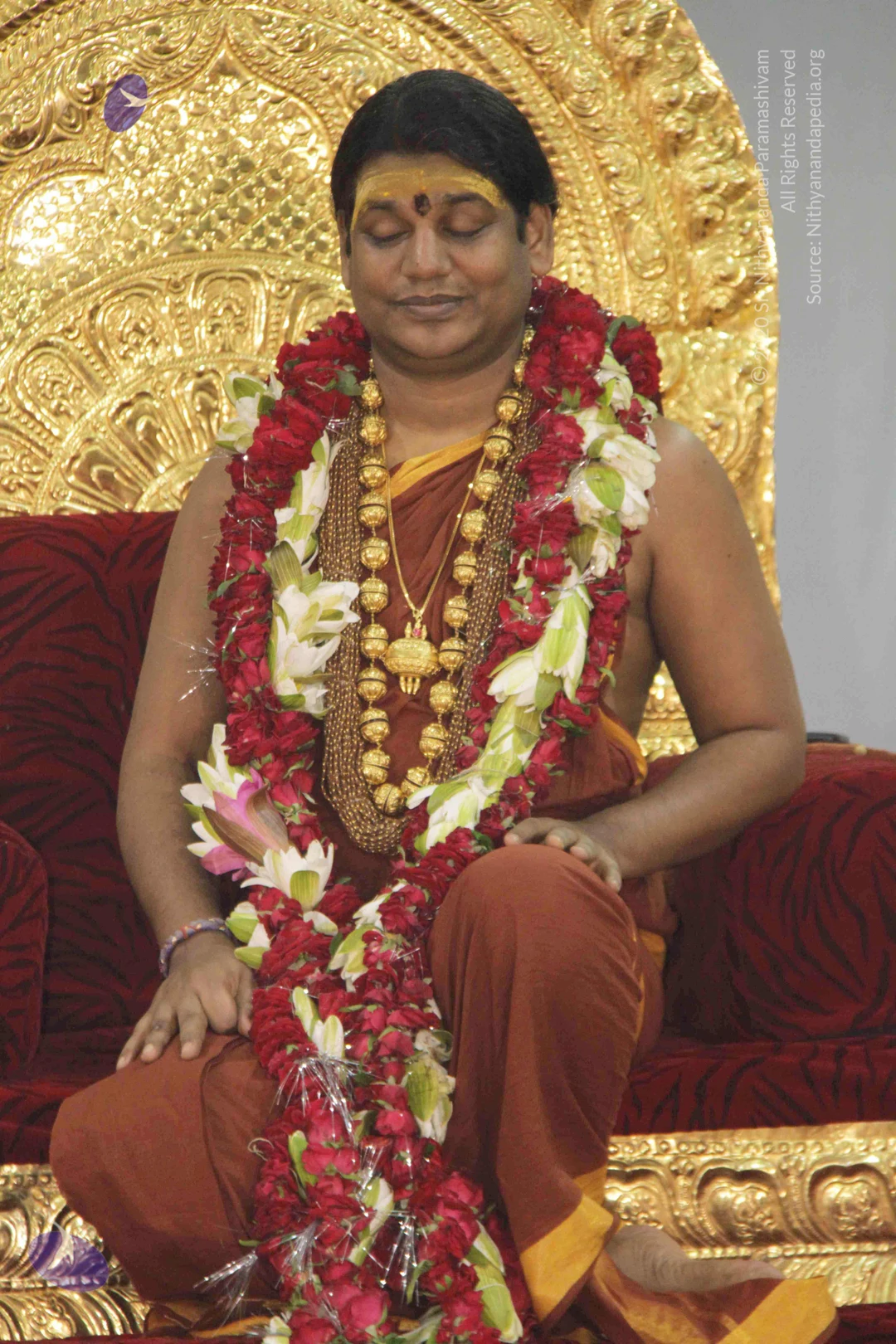
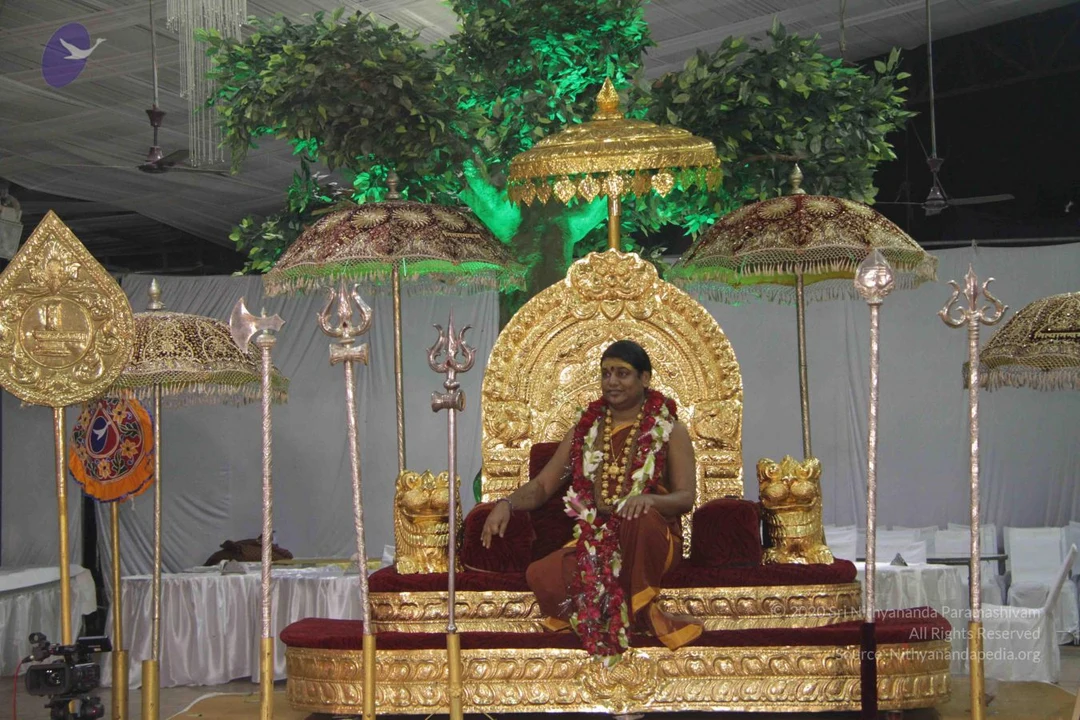
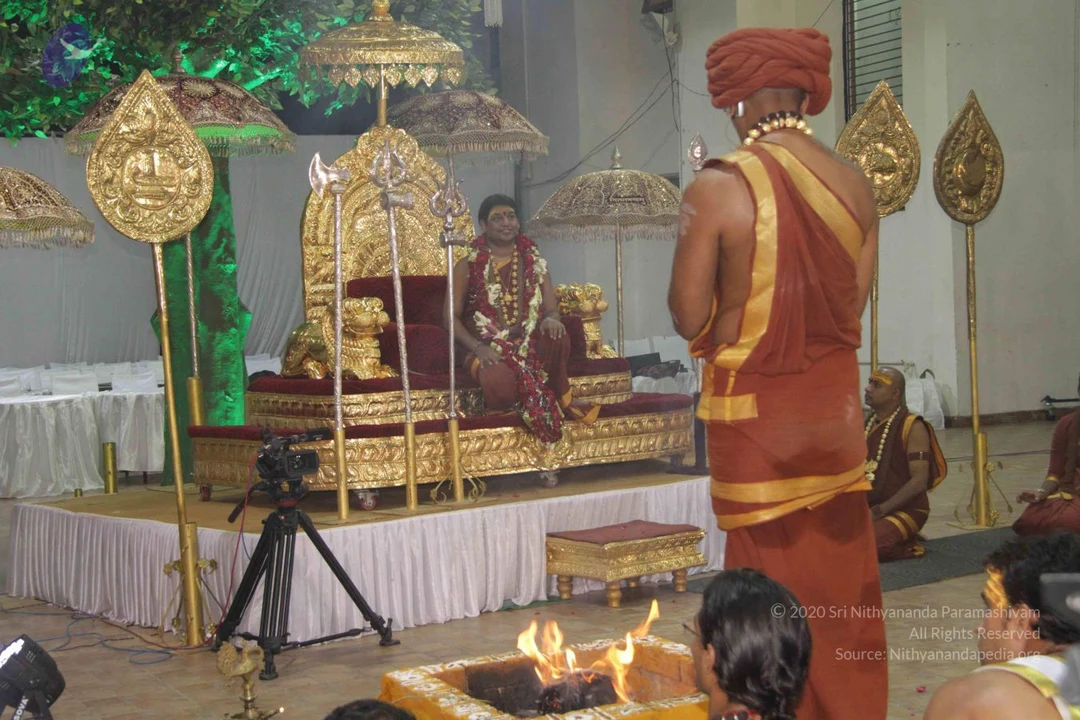
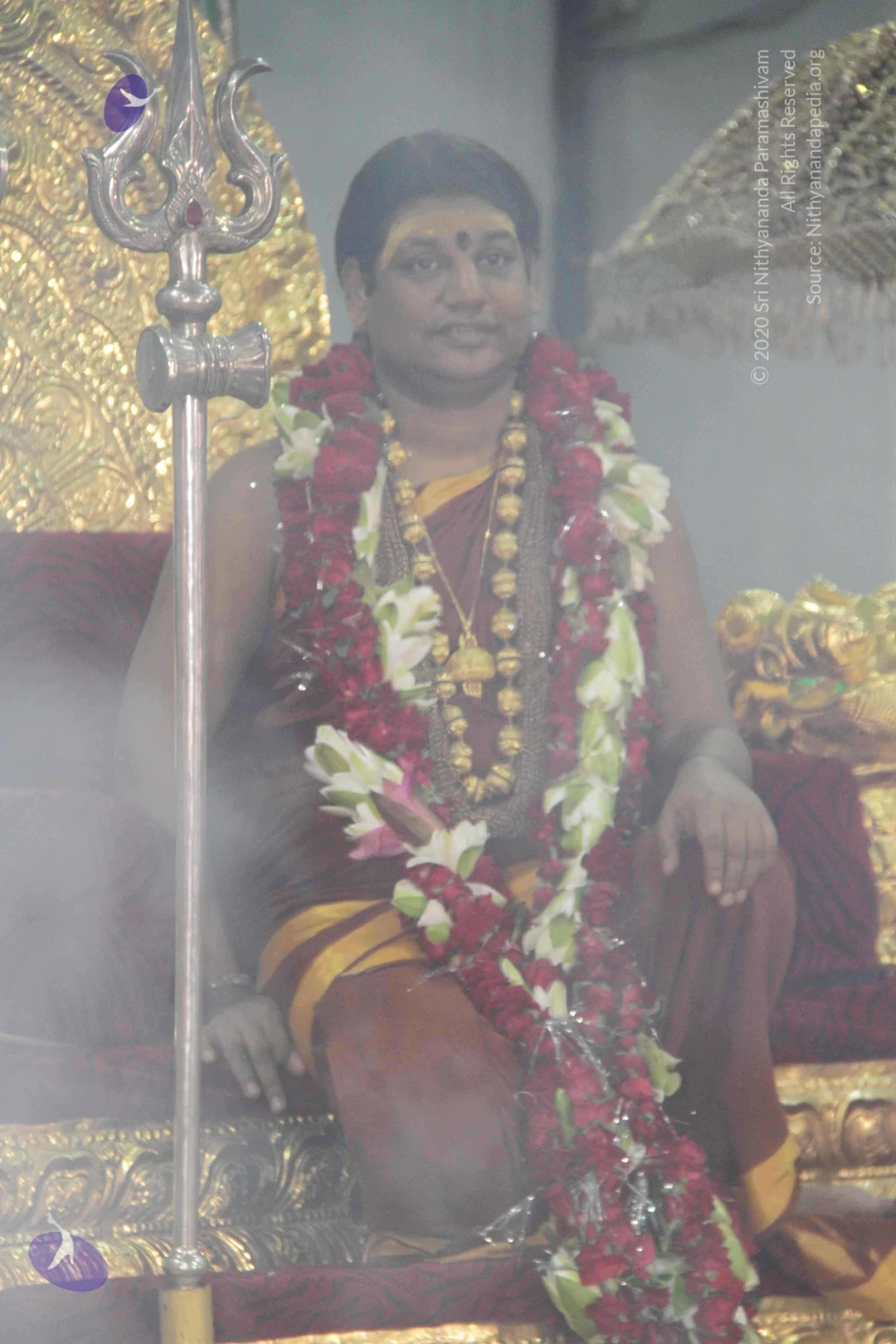
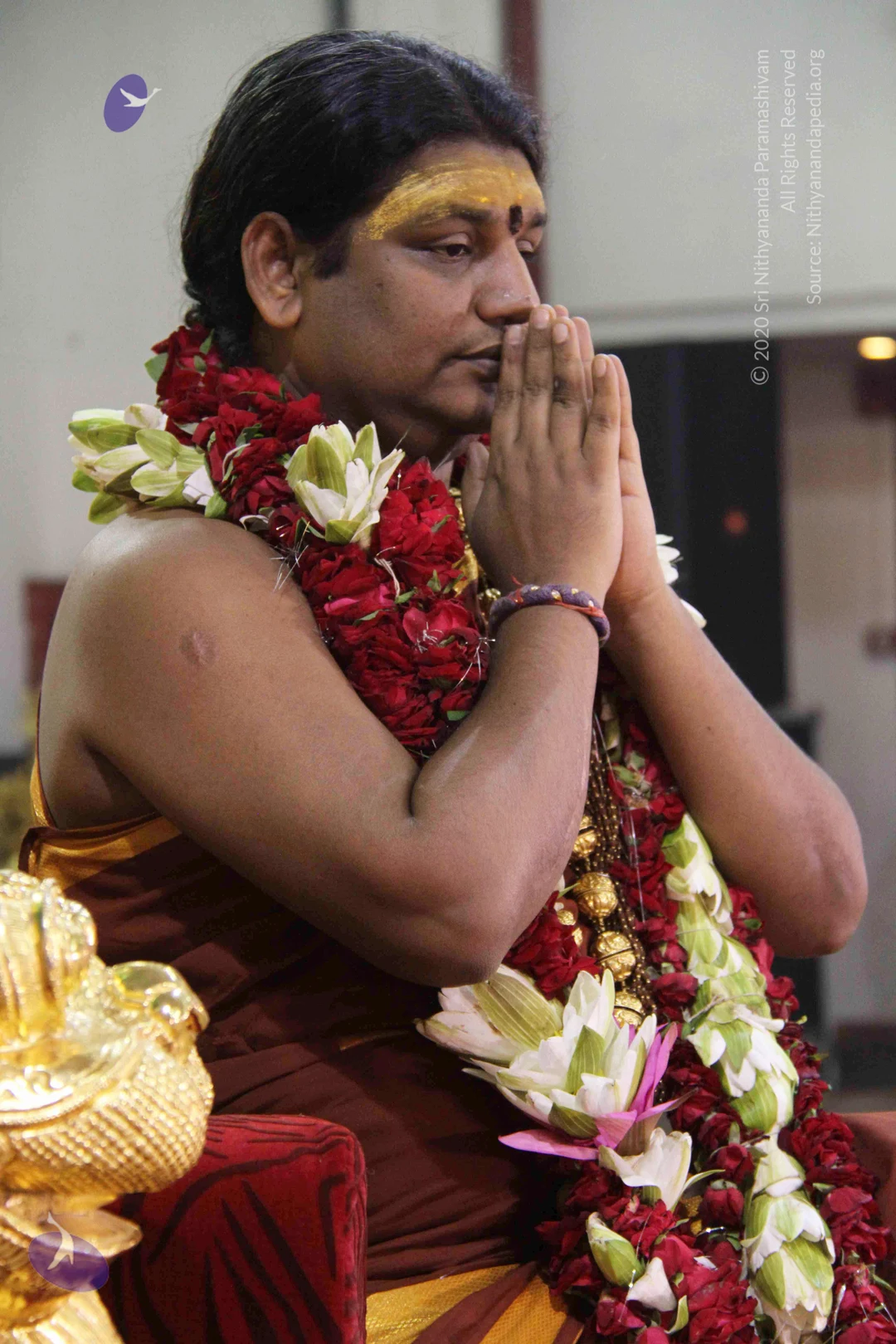
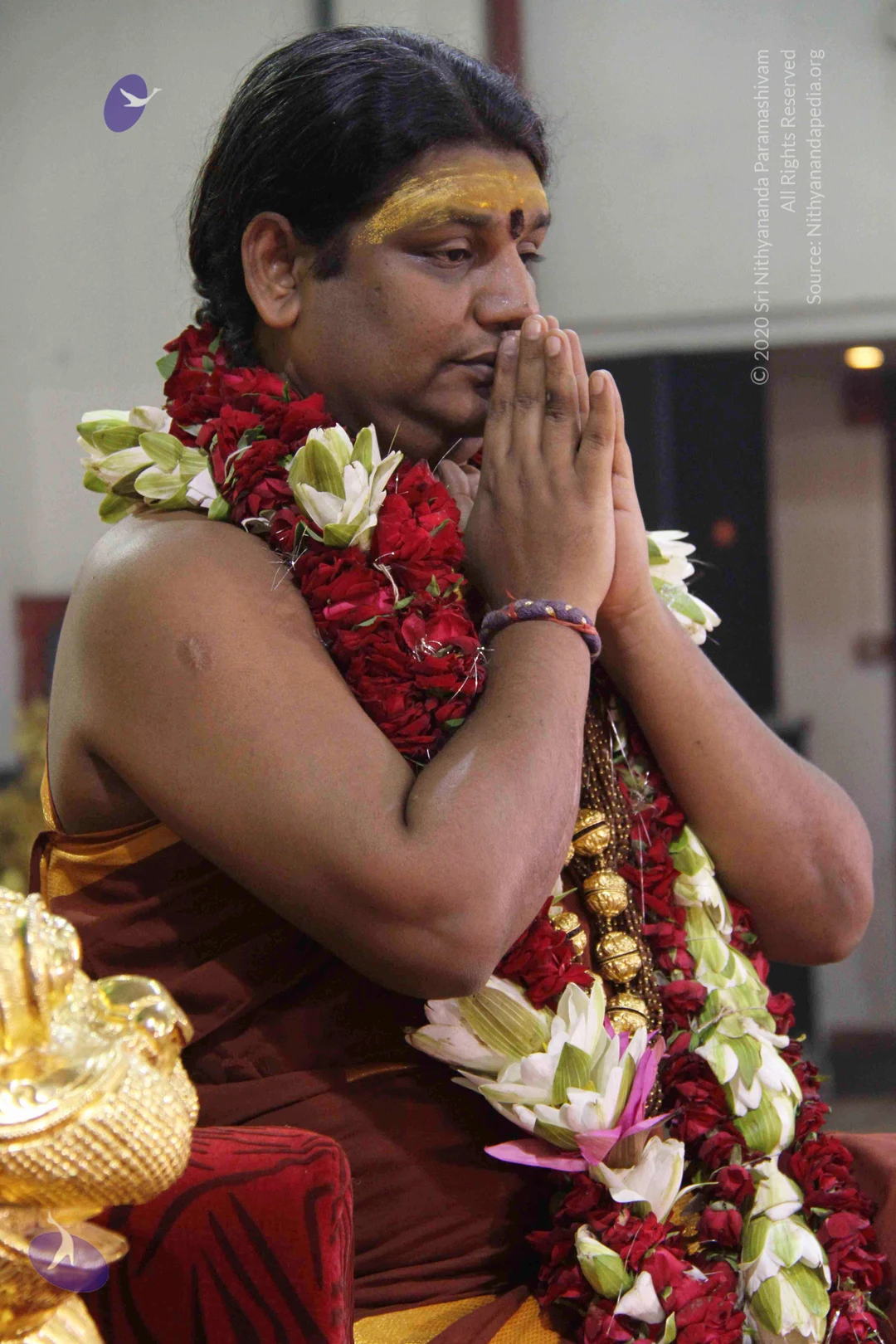
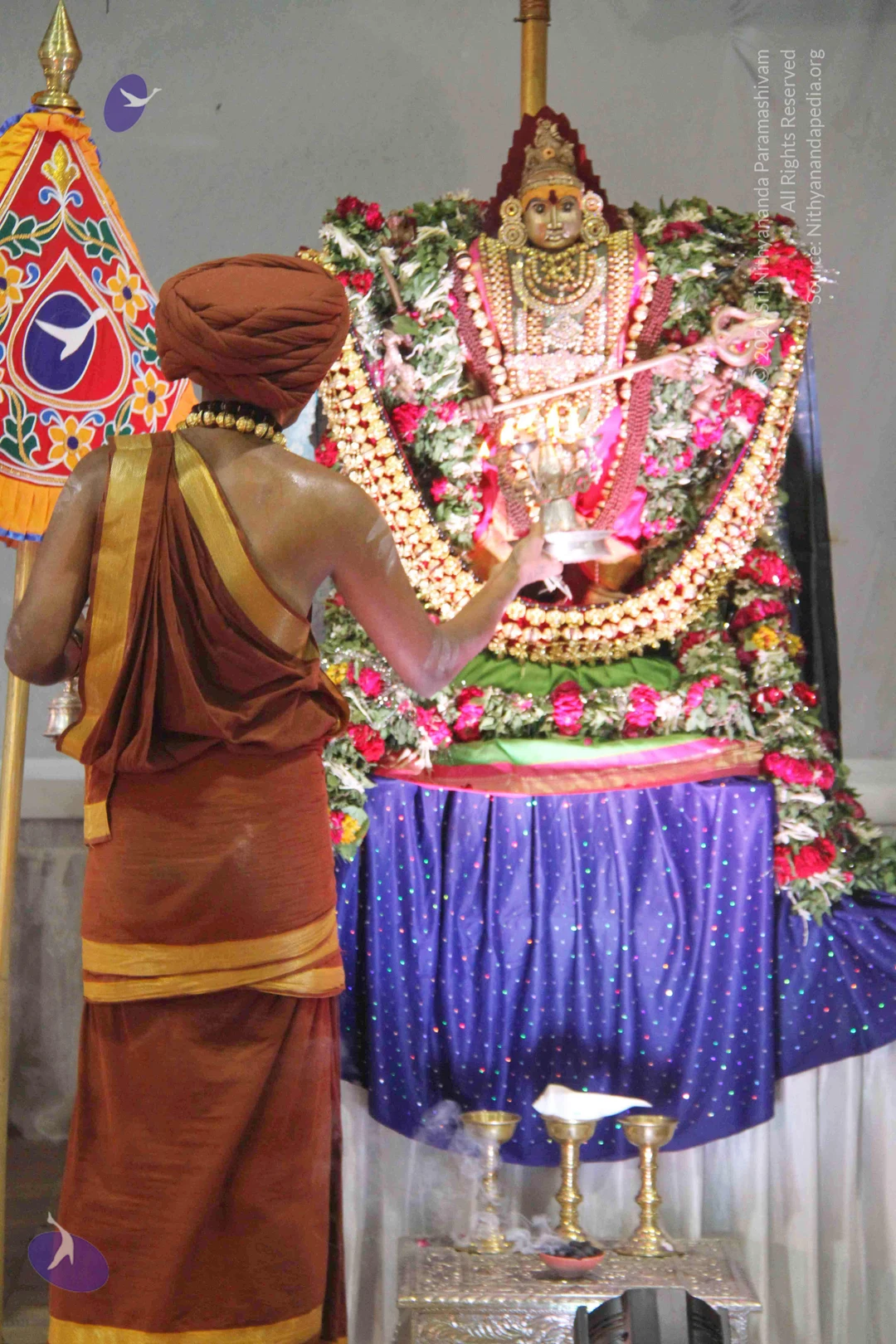
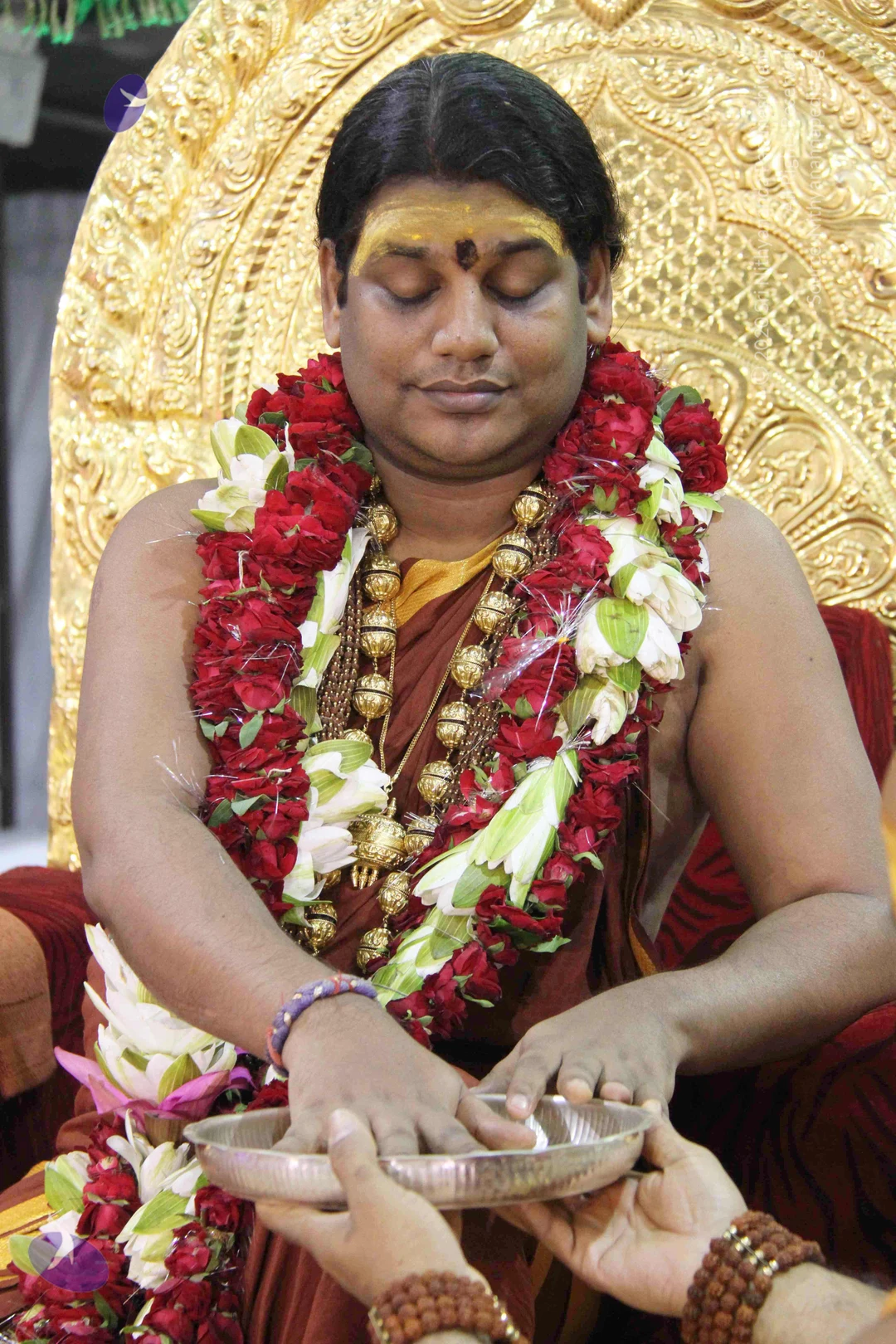
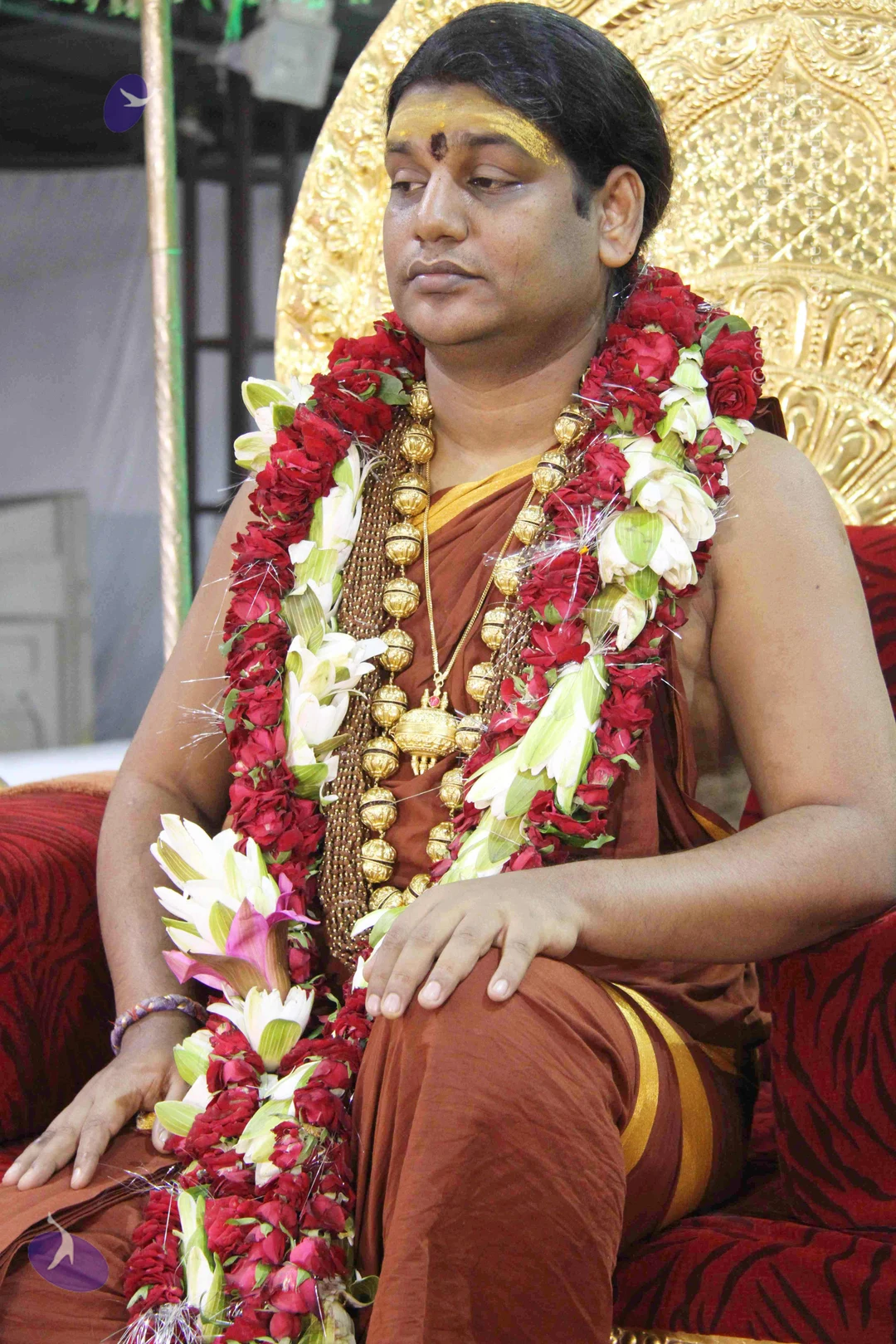
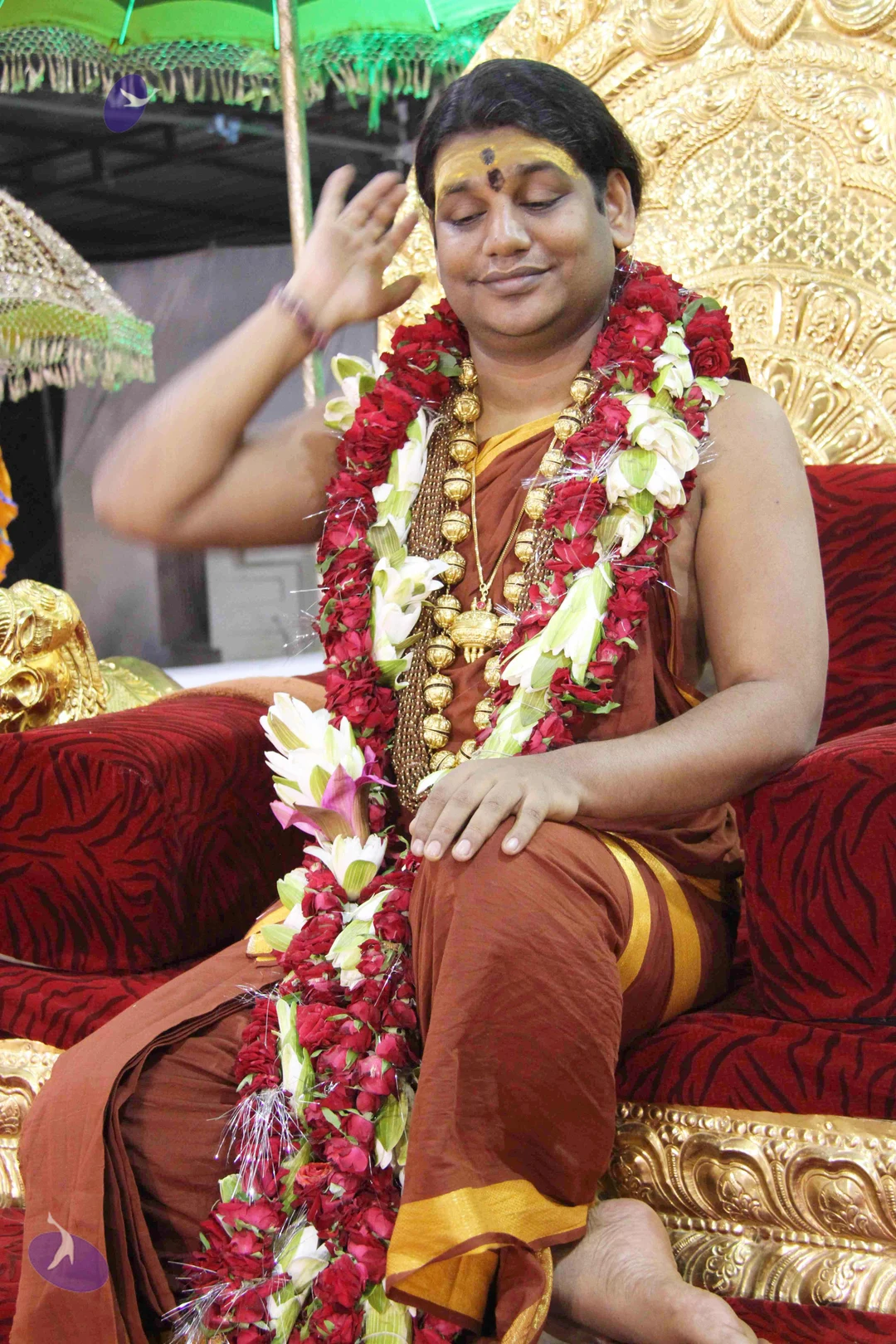
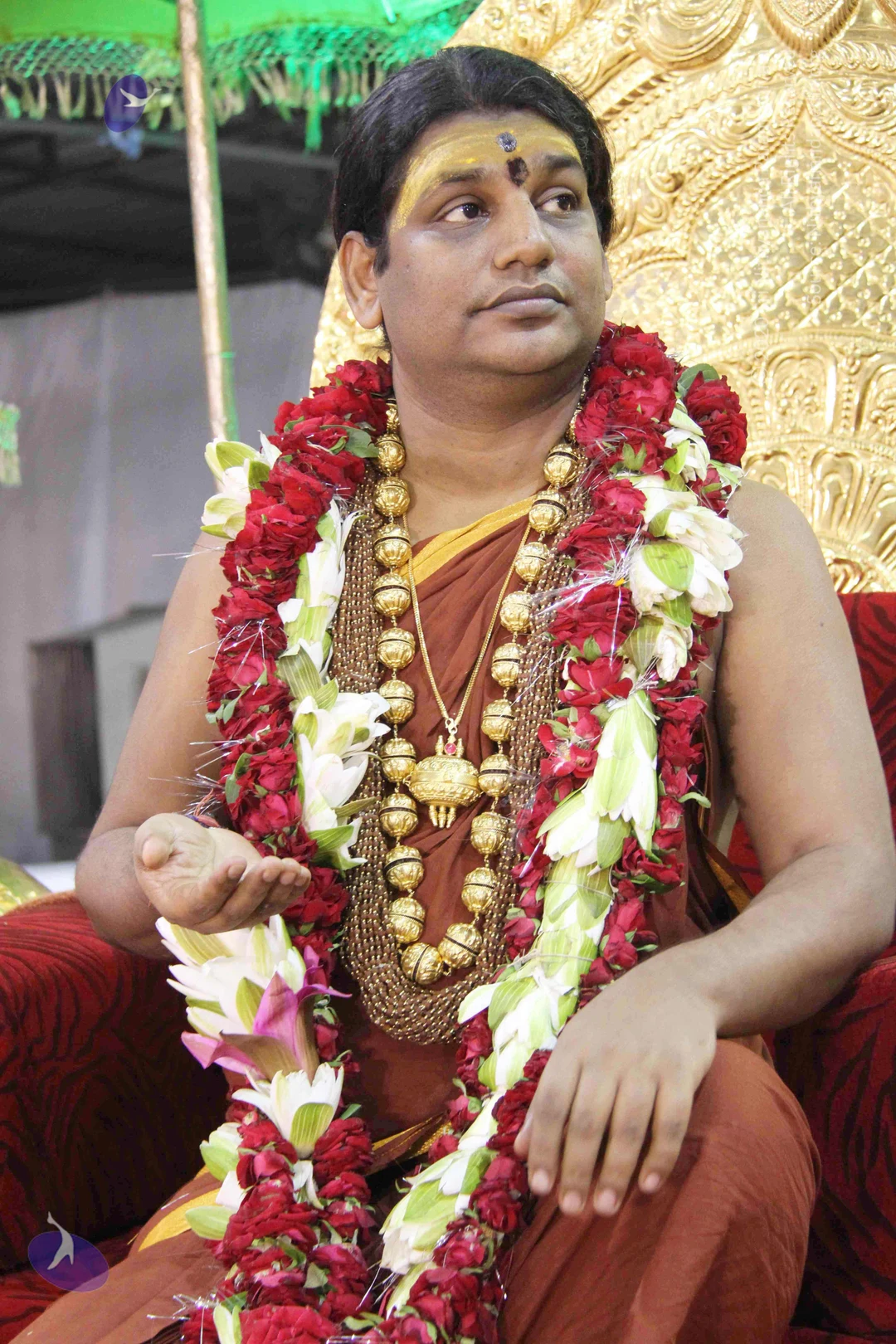
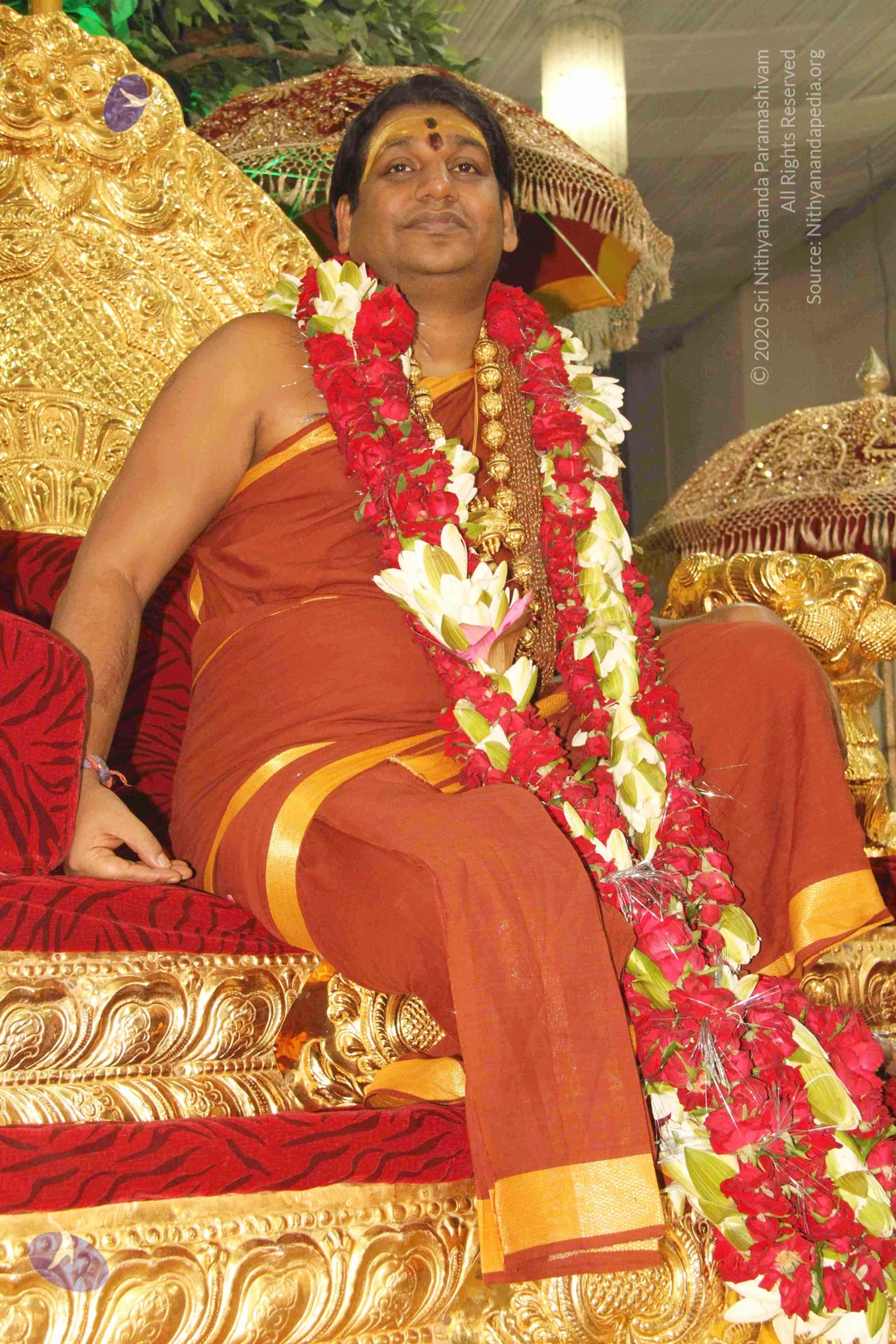
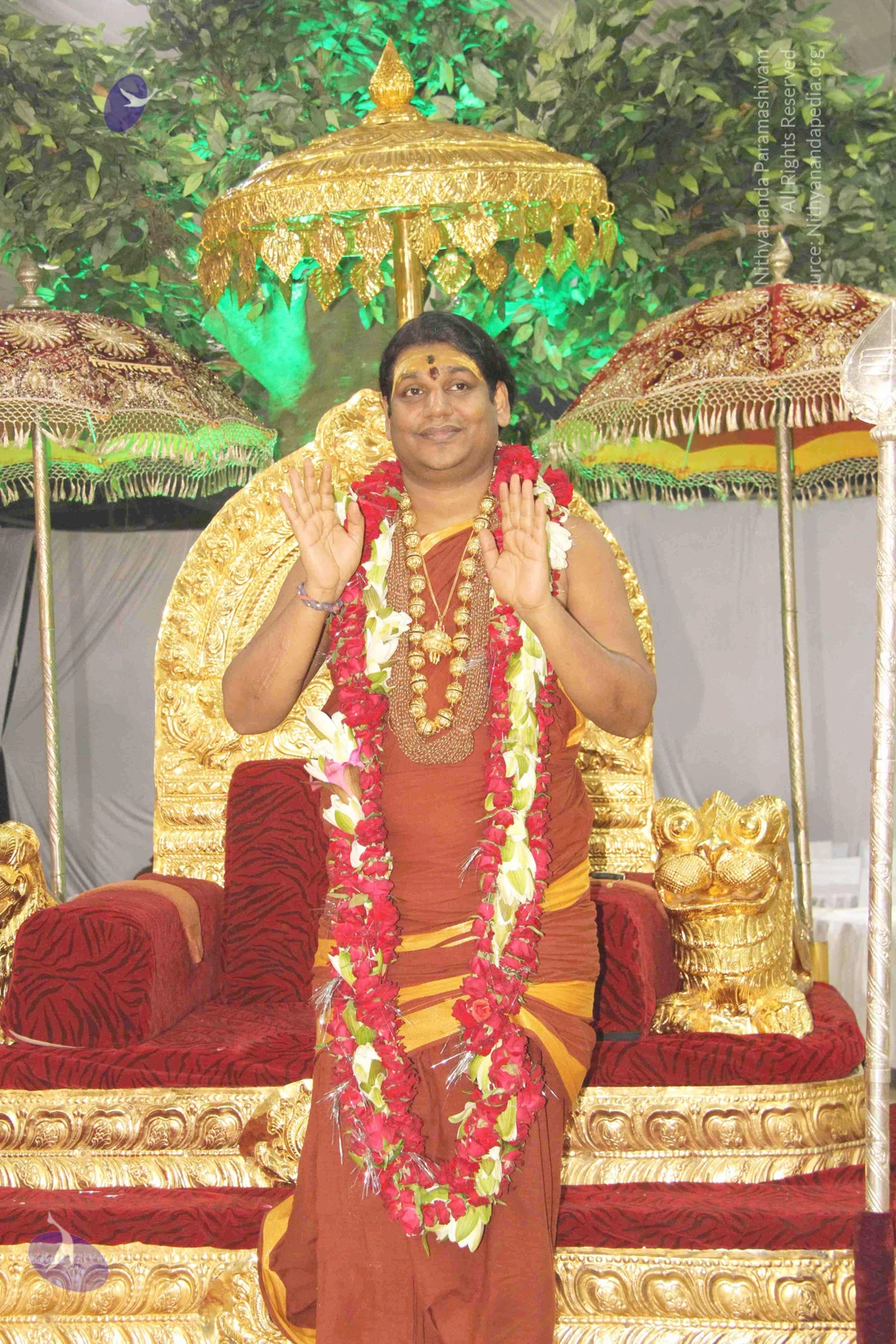
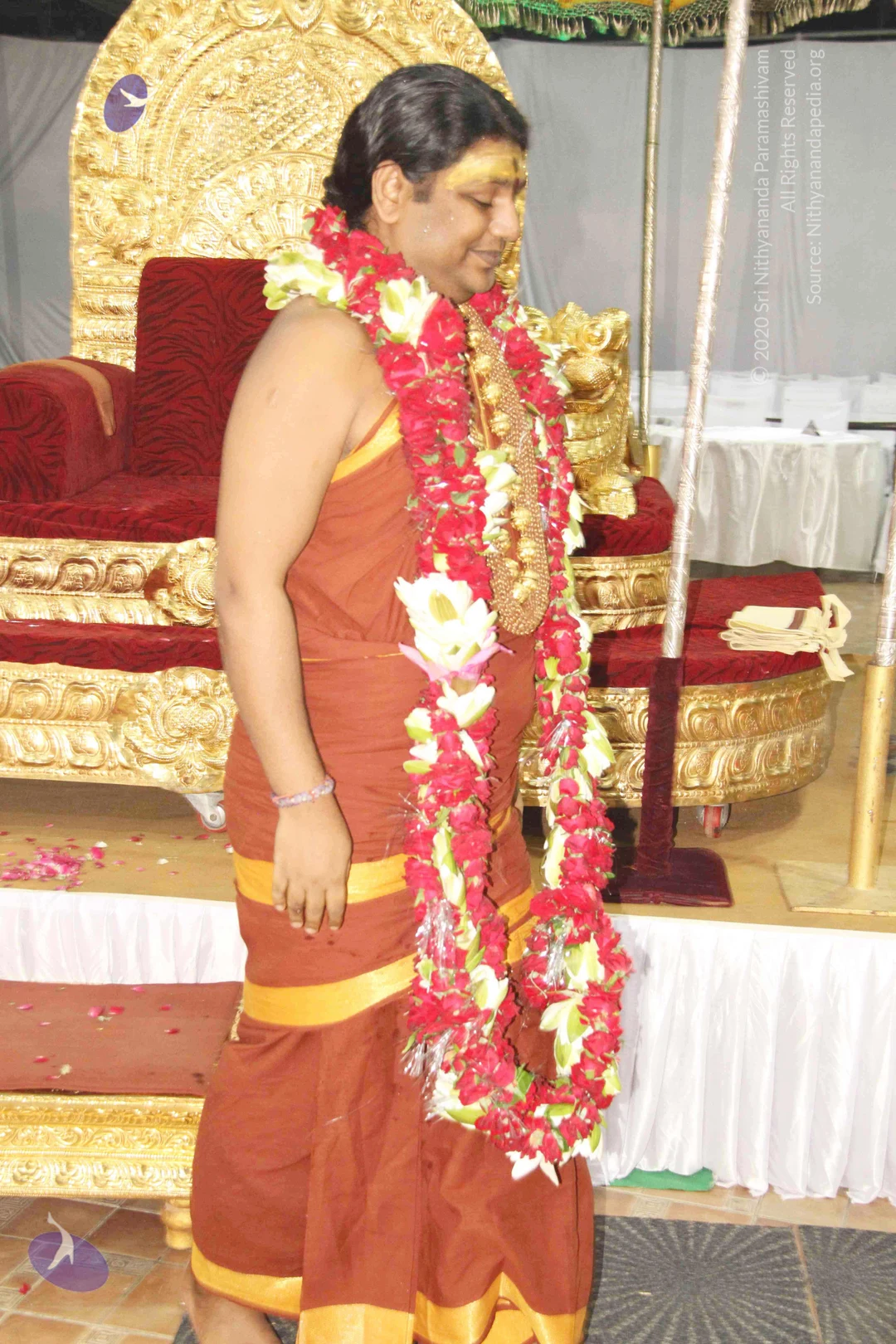
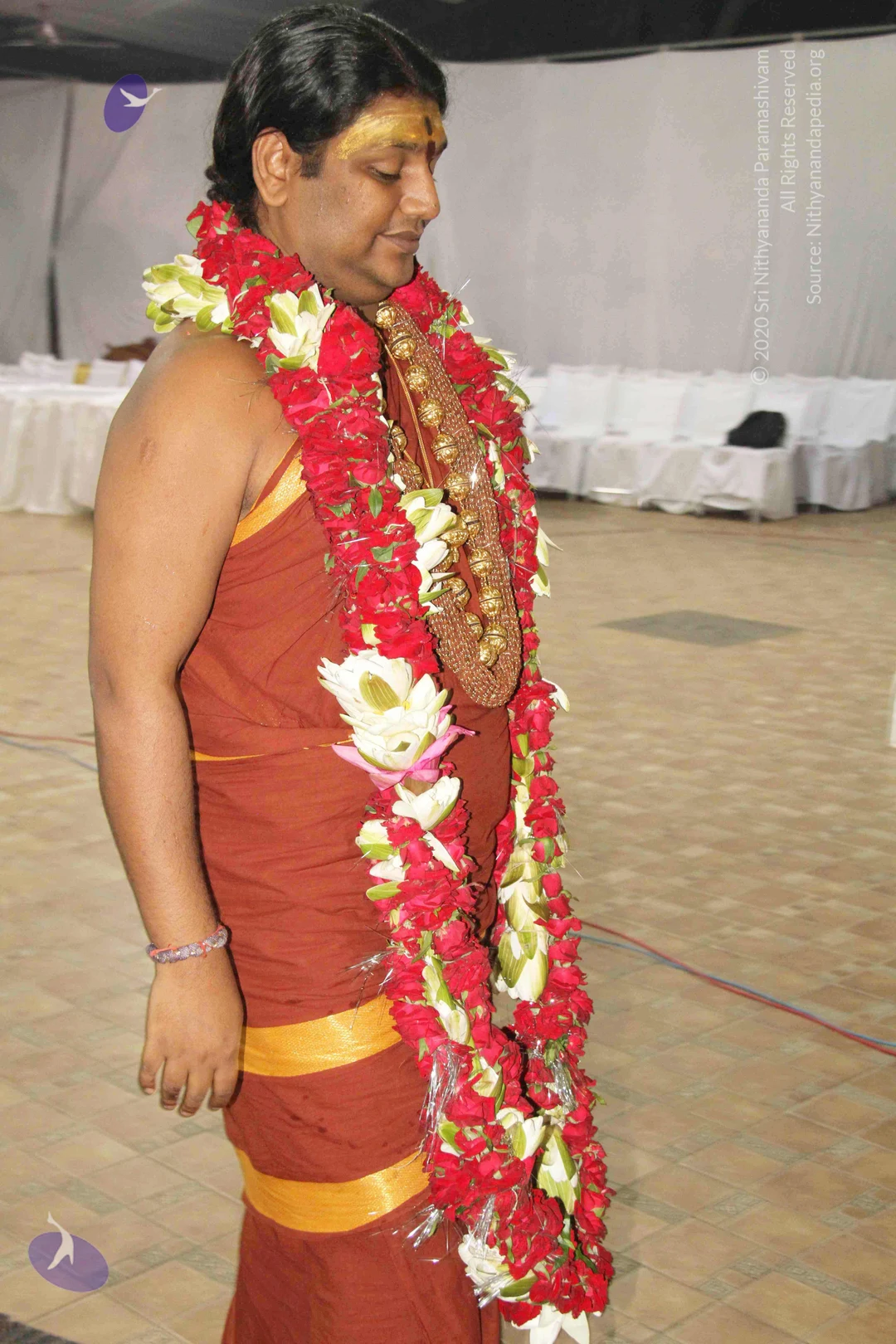
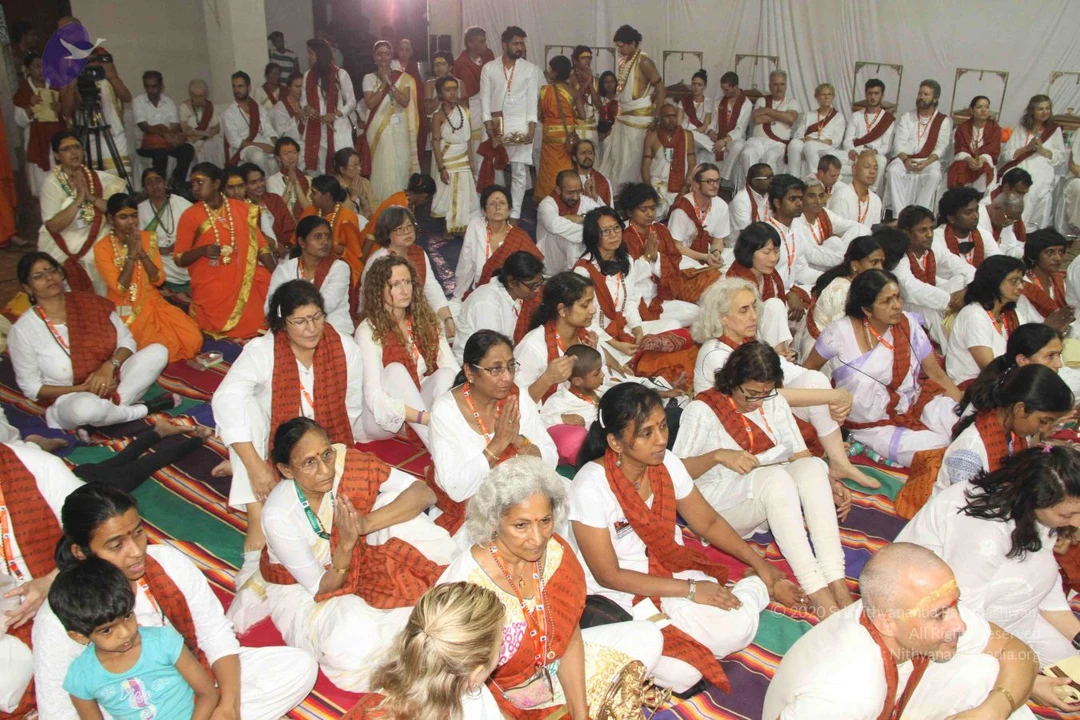
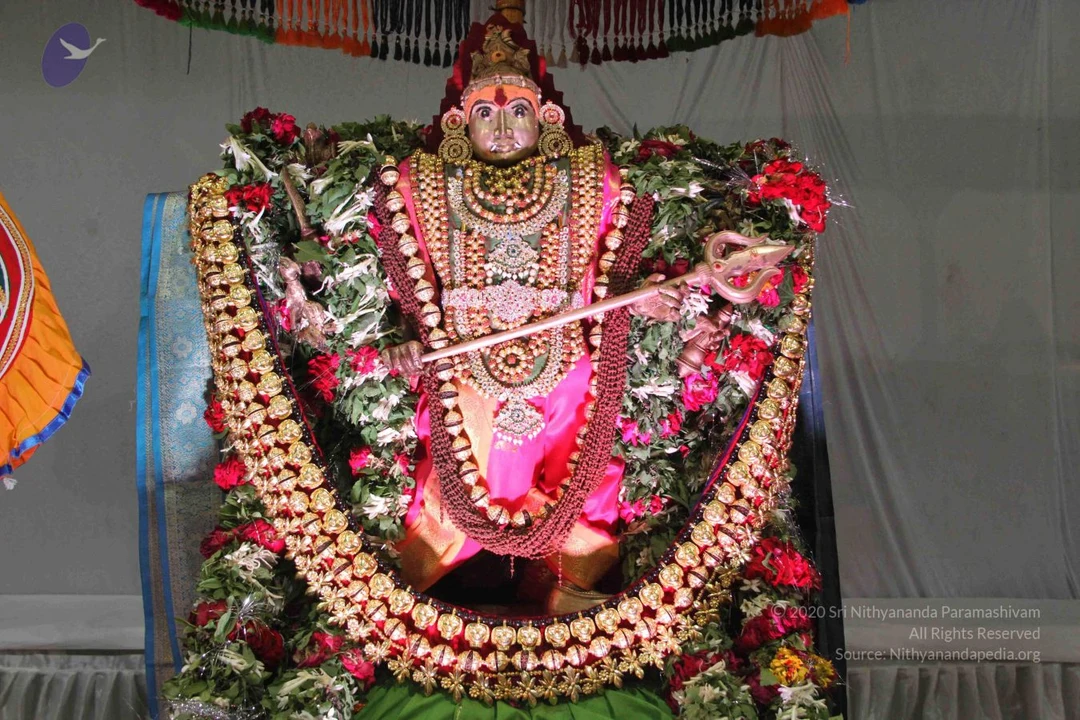
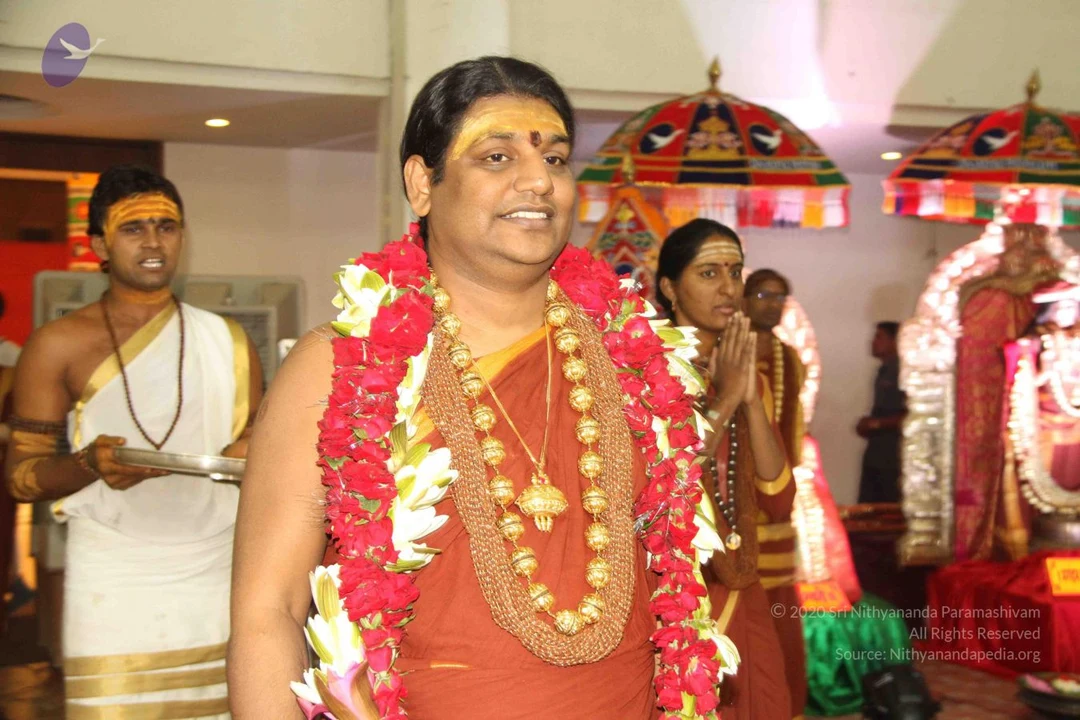
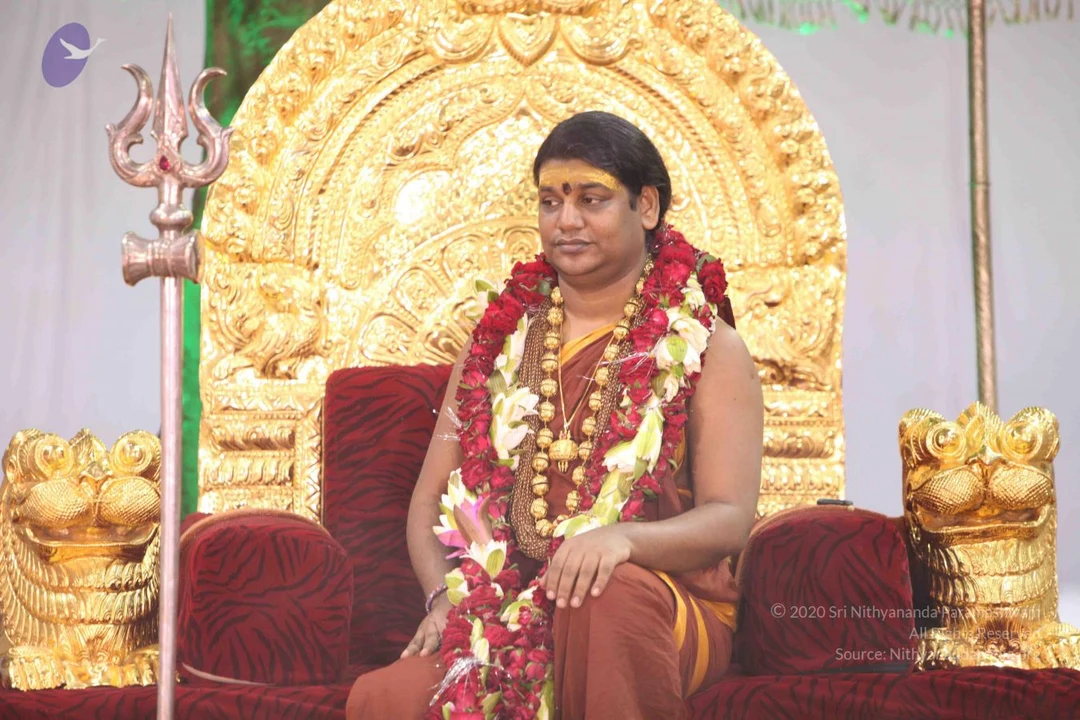
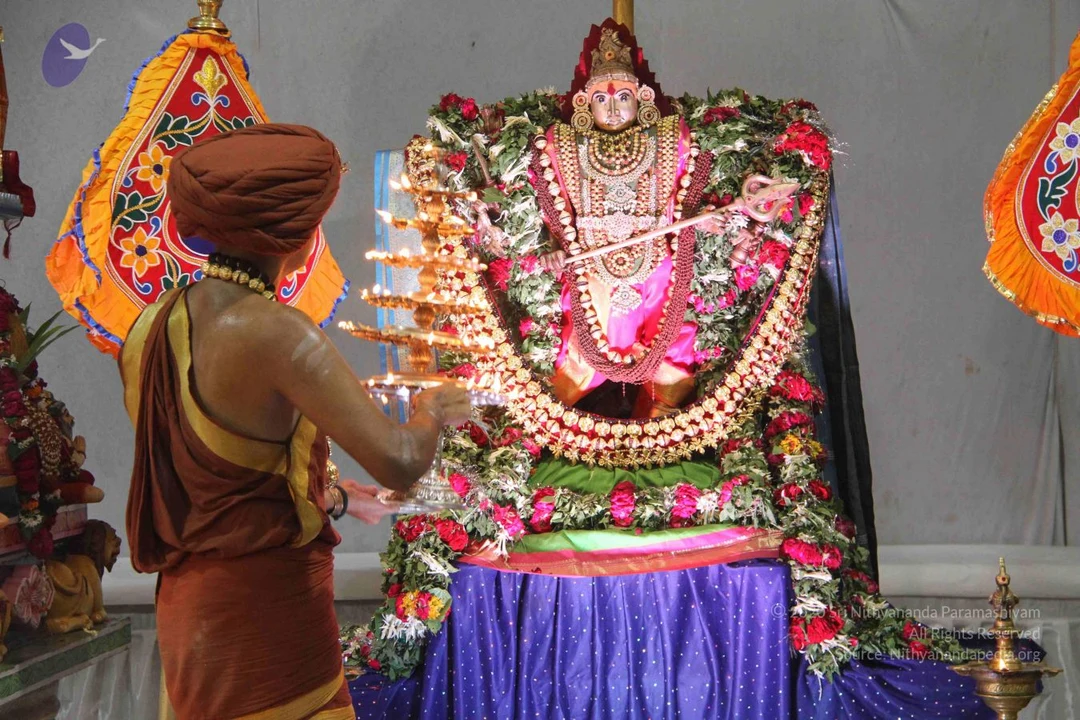
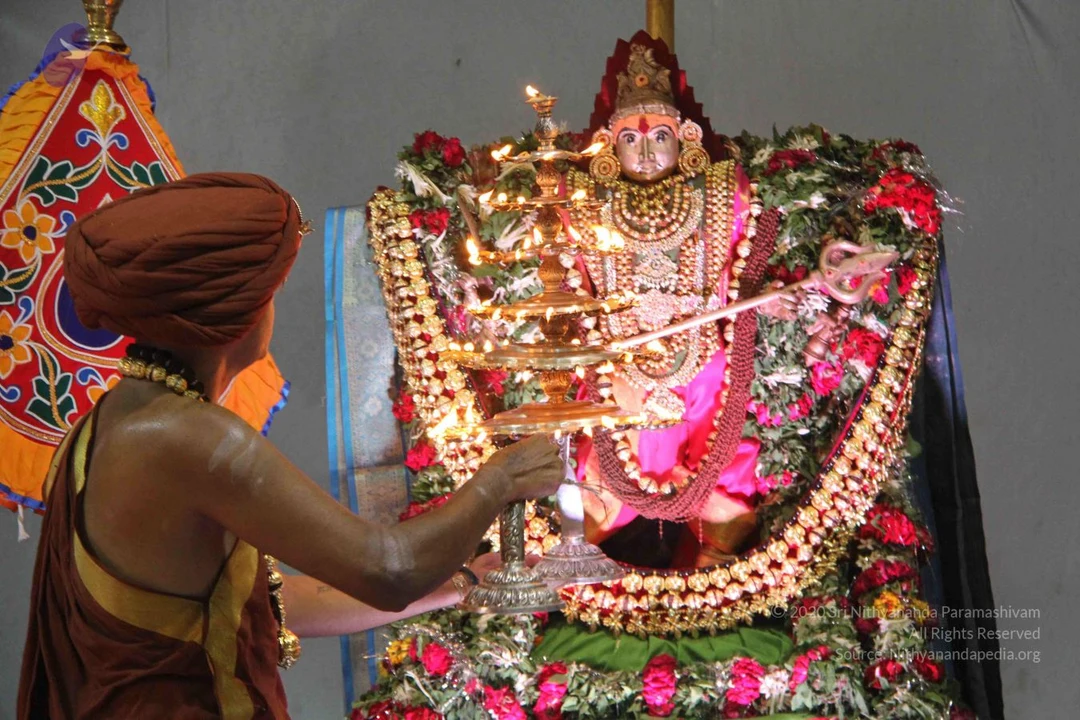
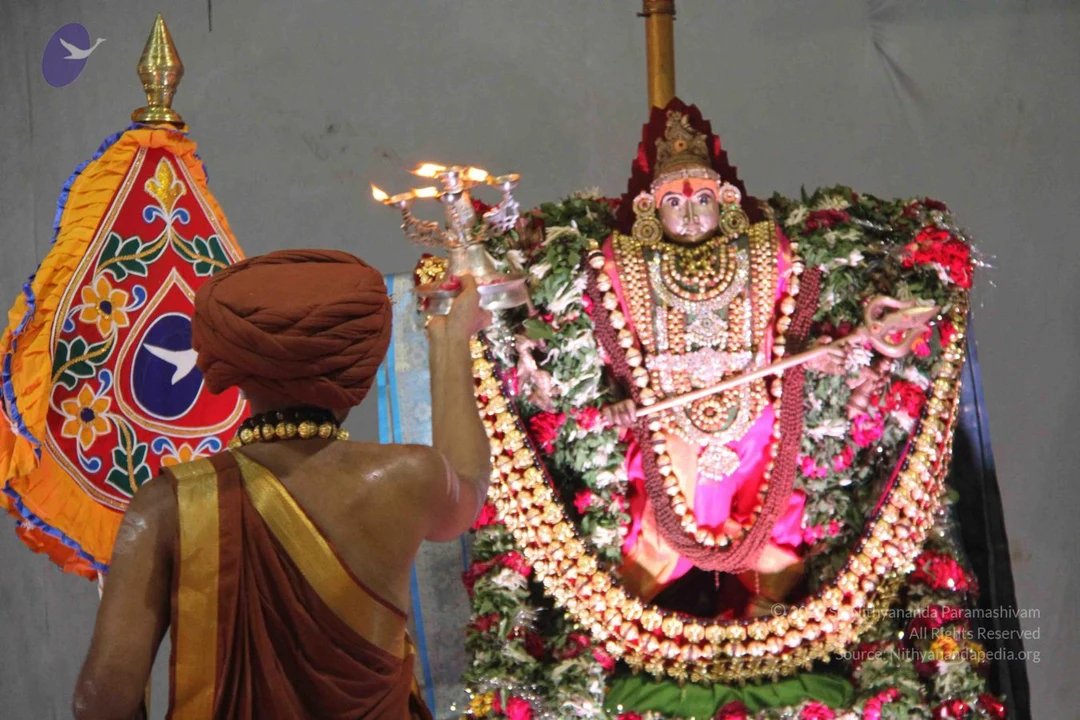
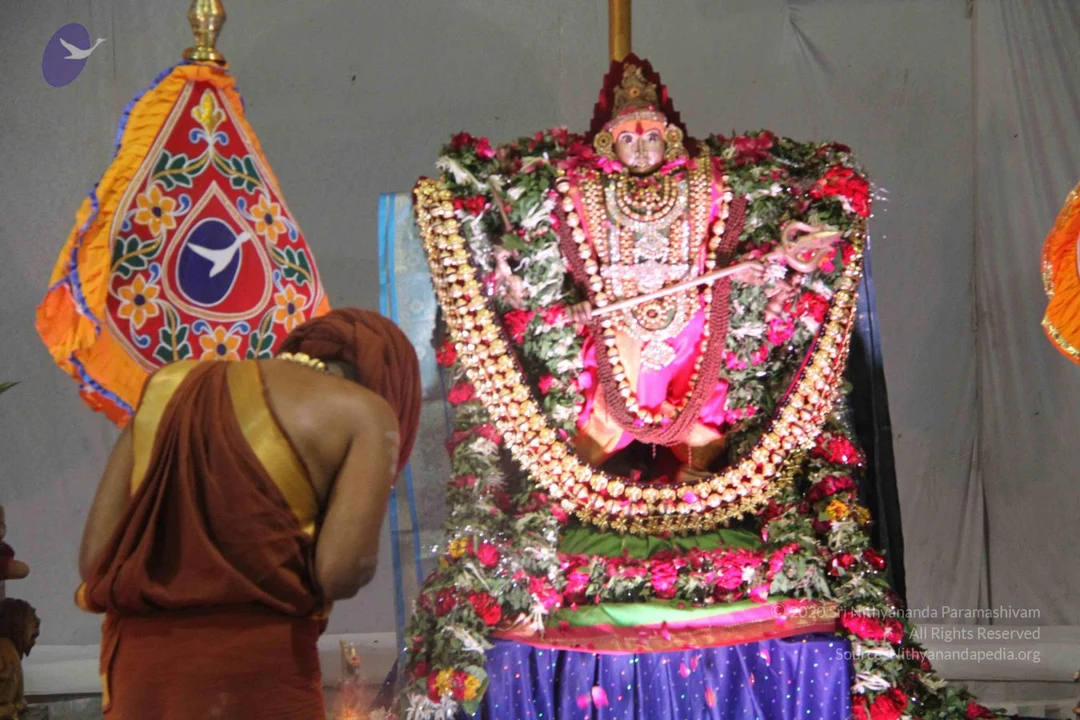
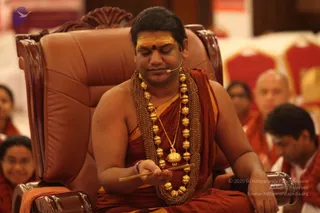
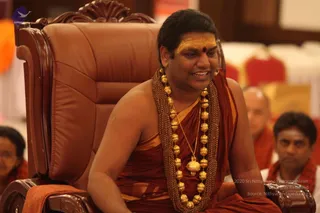
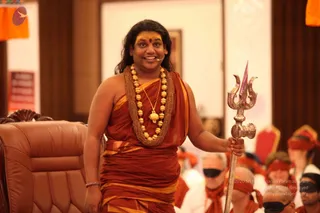
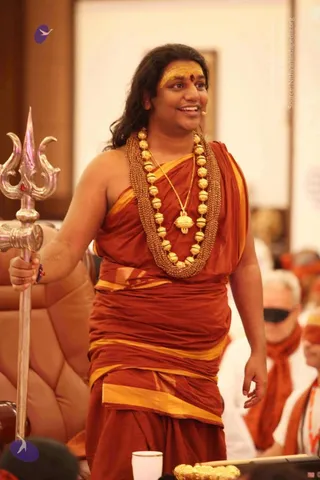
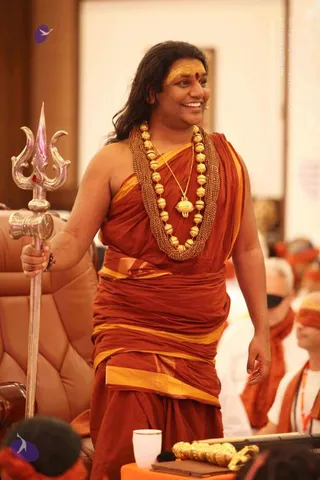
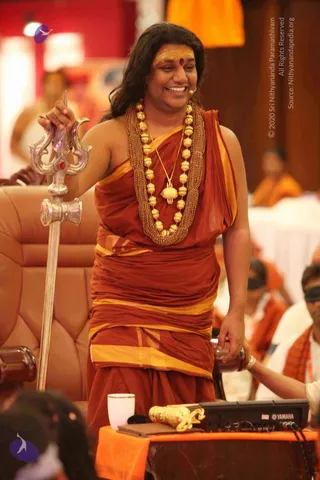
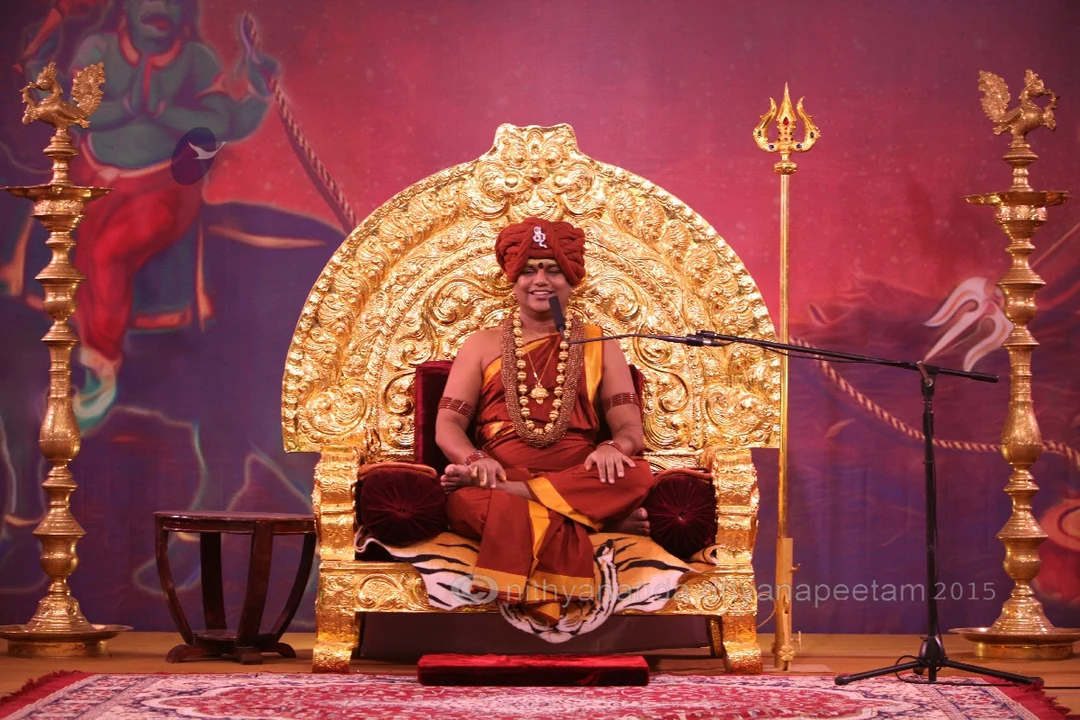
A smiling man in rust-red and gold-bordered robes stands beside a tufted tan leather chair, holding a silver trident in his right hand and resting his left hand on his hip. He wears a long gold-bead and bronze-bead necklace with a gold pendant, a red bindi and yellow tilak, and a headset microphone. A seated man in dark glasses and a white shirt with an orange lanyard appears behind him, and a Yamaha keyboard and gold ceremonial object sit on the table in front.A photograph of a decorated deity murti standing against a grey draped backdrop, with an orange and blue cloth at the left edge. The murti wears a pink silk sari with gold border, layered gold and multicoloured bead necklaces, a gold crown and red bindi, and holds a trident (trishul) in one hand. It is heavily adorned with garlands of red roses, white flowers and green leaves, and a gold bell-and-coin garland encircles its base. No physical people are visible.A man seated in an ornate brown leather throne-style armchair with wooden arms, smiling, wearing an orange-saffron cloth draped over his shoulder and a saffron-and-gold wrap around his waist. He has yellow-gold tilak markings on his forehead and a red bindi, a multi-strand gold bead necklace with a gold pendant, a beaded bracelet, and a small clip-on microphone. He is barefoot with one leg crossed over the other. a person given the distinctive saffron robes, ceremonial gold necklaces and throne seating. Behind him, seated devotees in white and saffron clothing sit on the floor of a hall with red chairs and framed pictures on the wall.

October 12 2015

Original wiki page
Contents

Title:

THE SUPREME PONTIFF OF HINDUISM JGM HDH BHAGAVAN NITHYANANDA PARAMASHIVAM

Video Title:

Devotion or Renunciation is Your Choice.

Description:

Cooperating with the life to create extreme harshness or extreme pleasantness is Seeking In today’s Nithya Satsang (12th October, 2015) from Varanasi, Paramahamsa Nithyananda on Isavasya Upanishad, Paramahamsa Nithyananda explains the basic truths about seeking. He says, “Cooperating with the life to create extreme harshness or extreme pleasantness is Seeking”. In our life, only in struggle the dream continues, not in extremes. When it is extremely harsh, we wake up. When life is extreme sweetness, again, we wake-up. As long as there is struggle between sweetness and harshness, greed and fear, it is incompletion. Allowing the extreme sweetness and awakening is the lifestyle of devotion. Seeking either leads you to extreme pleasantness-devotion or extreme harshness,renunciation.

VideoAudio

Transcript:

nithyānandeśvara samārambhām

nithyānandeśvari madhyamām |

asmat āchārya paryantām

vande Guru paramparām ||

I welcome all the devotees, disciples, samajis, satsangees, sri mahants, mahants, thanedars, kotharis, visitors, viewers, owners of Sarvajnapeetha, everyone sitting with us through Nithyananda TV, Sadhna TV, Arra TV, Nakshatra TV and two-way video-conferencing having Nayana Deeksha all over the world and Nithyananda Sabha in Varanasi. I welcome all of you with my love and respects.

Cities sitting with us – Kulum Lumpur Aadheenam, Los Angeles Aadheenam, Oklahoma Aadheenam, Vancouver, Canada, Seattle Aadheenam, San Jose Aadheenam, Ohio Aadheenam, New Zealand Aadheenam, Toronto Aadheenam, Philadelphia, Montclair, China, Mexico, Dublin (NC), Singapore Aadheenam, Spain, Trinadad Tobago, Dakota Dunes, Nithyananda Nagar Bidadi, Houston Aadheenam, St Louis, Manchester, Doncaster (UK), Hyderabad Aadheenam,Croatia, ajabala Aadheenam. I welcome all of you with my love and respects.

Before entering into the verse, I want to explain some basic truth about Seeking, which is explained in these verses.

See if I explain the basic concepts, the truth expressed in this verse will be more experiential for all of you. When you are tired of dreaming or you can’t handle dreaming anymore, you decide to wake up. If there is a nightmare, if there is a fantasy dream, where the dream becomes too sweet, or too harsh to handle, then you wake up. Same way, the waking state, if you make it too sweet or too harsh, you will become awakened.

Making it too harsh, becoming awakened, is the lifestyle of renunciation. Making it too sweet and waking up, is lifestyle of devotion.

Listen, I will repeat. In the dream state, if you see two tigers are chasing you or two snakes are chasing you. If it’s harsh to handle, you will wake up. Same way, if it is too fantastic, exactly the same place you always want it to be is there, the same person with whom you want to be is there, you will suddenly wake up. If it is too sweet, you will wake up, too harsh, you will wake up. So that dream state is sustained in the struggle, not in the extreme, listen, only in the struggle, the dream continues, not in the extreme.

Same way, in the waking state, if it is extreme sweetness, you will wake up or extreme harshness, you will wake up. But as long as there is a struggle between these two, the struggle between the extreme sweetness and harshness, greed and fear is what your incompletions. As long as there is a struggle you will continue to maintain this waking state. This state you will continue to maintain. If any one takes over, it’s all over.

Allowing the lifestyle of extreme harshness and awakening, getting awakened is the lifestyle of renunciation. A Naga, Aghori, allowing the extreme sweetness and awakening is the lifestyle of devotion, a Shavaite. Using both of process and getting awakened is the lifestyle of Nithyanandaite. I use all available, possible methods, process, kriyas to help you into awakening whether it is nightmare or fantasy dream, you will wake up. You will wake up. You will wake up.

Understand, neither fantasy dream nor nightmare will let you continue sleep. Same way, neither extreme harshness nor the extreme sweetness will help you to continue your waking state. It will lead to awakening, it will lead to awakening.

I tell you, if life itself brings the harshness and awakens you, if life itself brings that sweetness and awakens you, you will be wasting a lot of time. You voluntarily getting into that state, cooperating for your awakening is what I call Seeking. It is not that every night you wake up with the nightmare or fantasy dream. Many nights you wake up because you are too tired.

Understand, same way in your life also, it is not that all the time you can get the extreme harsh dream, harsh reality or extreme pleasant reality. Creating either extreme harshness of reality or extreme pleasantness of reality leads to your awakening. Cooperating with the life to create the extreme harshness or extreme pleasantness is Seeking.

(11.49 mins)

Either with the concept of Shiva you can make every moment of your life extremely pleasant. You know this is the place Sadashiva walked, this is the very air He breathed, this is the very forest He and Devi spent so much of time. Every tree here is the descendent of the trees which had the fortune of having darshan of Sadashiva. Still the moon and the sun is a living witnesses. You can go on cherishing this and get into the extreme pleasantness that will lead to awakening or you can deny everything including your own existence and that will lead to extreme harshness, again you will be awakened.

Use any one, cooperate with any one. Allow the awakening to happen. That’s all is essence of life. That’s all is essence of life.

Your self-doubt, self-hatred, self-denial neither allows you to experience extreme harshness or extreme pleasantness.If you go through pleasantness, you doubt it. “No, no, no. This cannot be permanent or eternal.” If you go through harshness, you build a hope, “No, no. I will get out of it and I will have pleasantness, joy one day.” The hope stops you going through the extreme harshness. Doubt stops you going through the extreme pleasantness. When you don’t allow both, continue to enjoy your struggling state, incompletion; because only that will maintain your ordinary waking state.

Sleep is the base material out of which the dreams can be dreamt. Confusion is the base material out of which this waking state can be perceived. Only when you are in the state of sleep, you can dream. Only when you are in the state of confusion, you can see this waking state.

Understand, that is why confusion is very precious investment for you. It is one of the most precious investment. Most precious investment! But I tell you, let confusion not become your most precious investment. In every step, every line, every inch of your life, if confusion becomes your basic stand, basic foundation, then imagine the amount of time you are wasting, energy you are destroying. There is a beautiful verse in the Taitirriya Upanishad: anando brahmeti vyajānāt (3.6) – Bliss is God, don’t waste it.

You may think, what do they mean by don’t waste it. Don’t waste it by attributing it to your confusion. If you think confusion is bliss, if you maintain the stand that confusion is bliss, you are wasting your life, destroying your life. You are wasting the bliss, destroying bliss. anando brahmeti vyajānāt.

See your day-to-day habits get recorded in your muscle memory. Your lifestyle patterns, like what you feel about you, all that, gets recorded in your bio-memory. Cleaning up your muscle memory can be done by building good habits, nut cleaning up your bio-memory – what do you feel about you consciously, can be done only by awakening the Seeking. Awakening the seeking.

Listen carefully to this statement, to this truth. Seeking either leads you into extreme pleasantness or extreme harshness of the Reality. In both ways, it awakens you. Whether you get into completing your individual existence or whether you get into expanding your individual existence into cosmic existence.

If your individual existence becoming cosmic existence by devotion it is called Upāsanā. If your individual existence becomes nothing by allowing the cosmic existence, it is called Vipāssanā. In both extreme, you are awakened. Whether Upāsanā or Vipāssanā, you will be awakened. But go through any one extreme, only then, you will be awakened. Don’t continue to play in the field of confusion you will continue to be just in this dilemma - waking state. Dilemma destroys your dignity; takes away your respect for yourself. Dilemma destroys your dignity; takes away your respect for yourself.

Today we are going to be having a long session for Inner Awakening participants. It’s going in high speed. This Inner Awakening I can say is one of the unique Inner Awakenings where there is no break IA which I introduced. The concept of no break IA. NBIA! No break IA.

We are completing with all the inner awakening processes. And then, Shivoham process, and third eye awakening practice and enjoying Kashi.

Today we are going to be working with the world and my world, which is going to be quite a enjoying process, a joyful process. Today’s satsang essence – Vipāssanā or Upāsanā. Subject for Vakyartha Sadas, understanding Upāsanā and understanding Vipāssanā; how both leads to awakening.

With this I bless you all let you all radiate with Integrity, Authenticity, Responsibility, Enriching Causing Living Advaita, the Eternal Bliss, Nithyananda. Thank You. Be Blissful!

Title

Nithyananda Times, 12th October, 2015

Description

The Daily Video Magazine of the Nithyananda Sangha

Photos From The Day:
Link To Facebook Page:

https://www.facebook.com/ParamahamsaNithyananda/posts/906321872788997

Photos

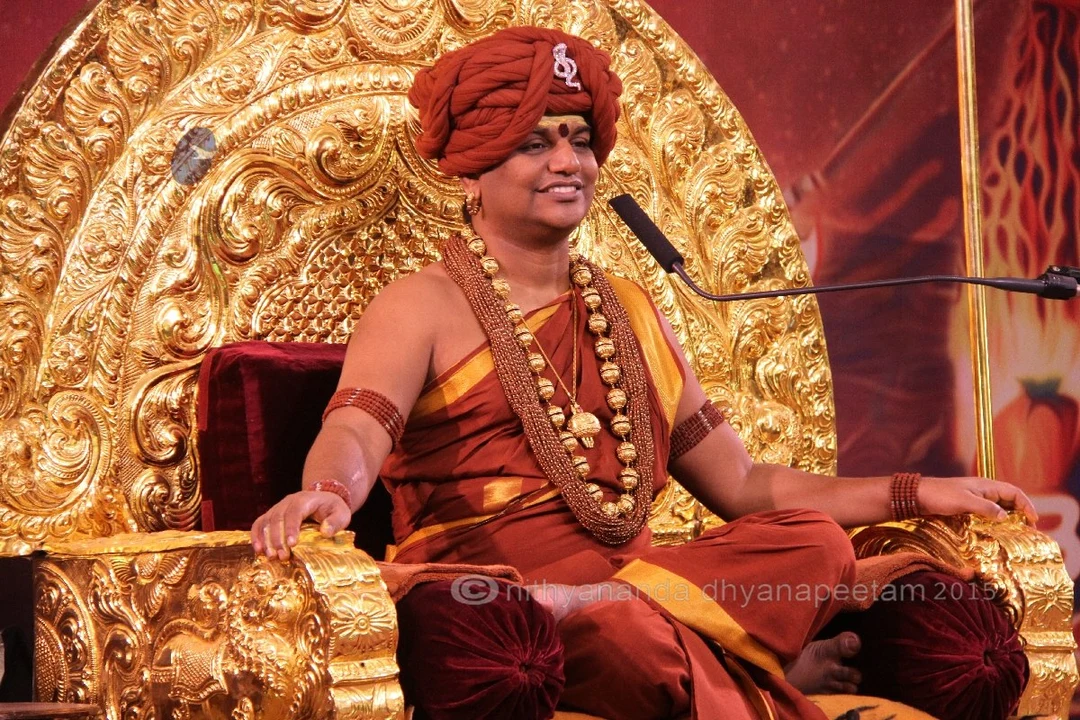
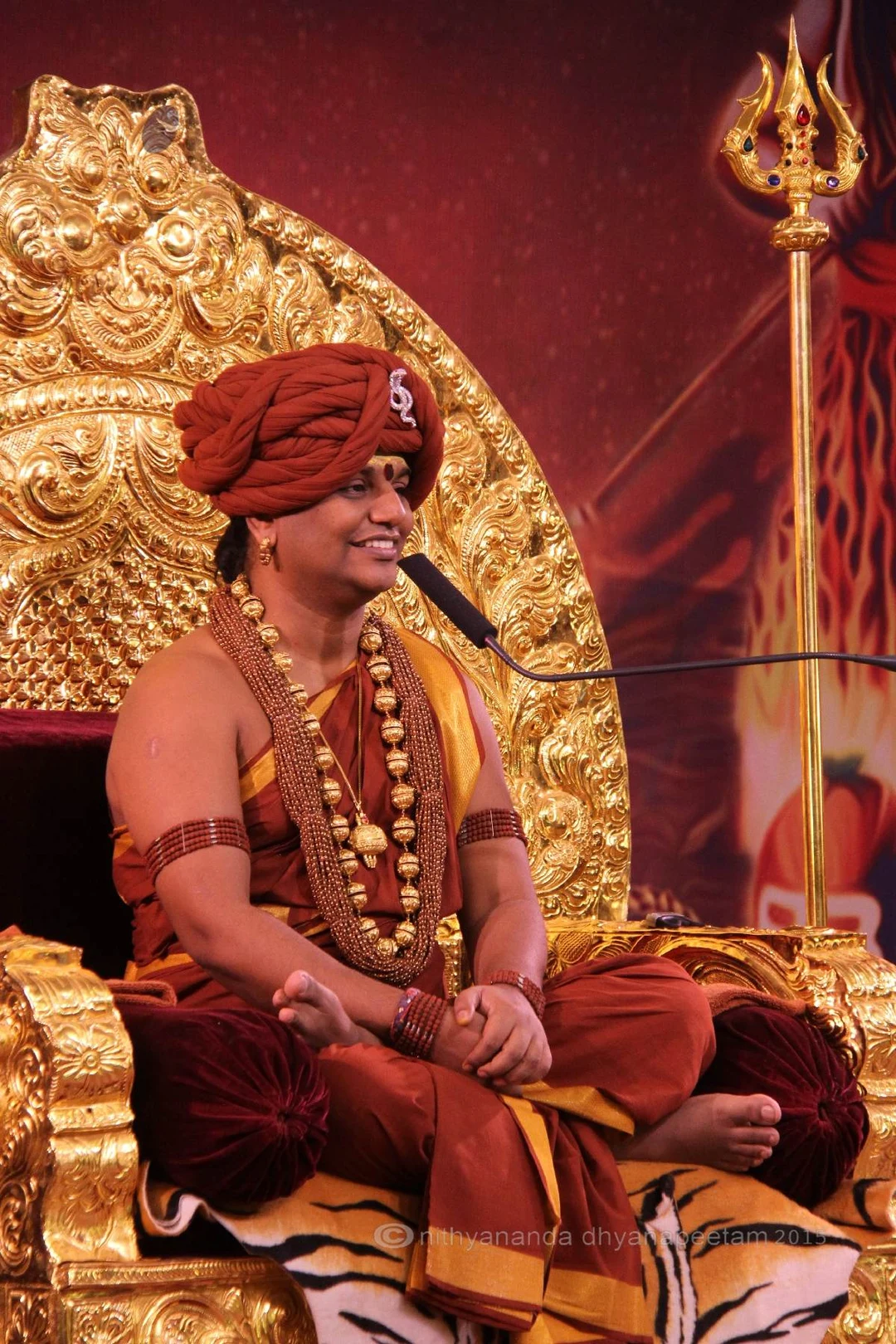
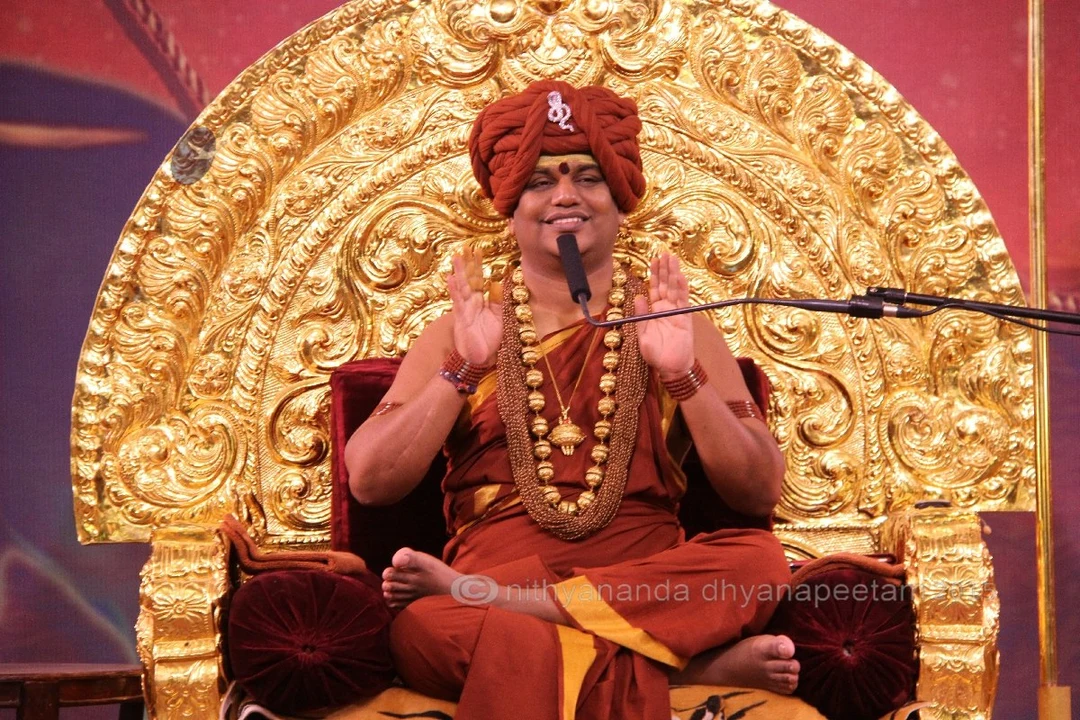
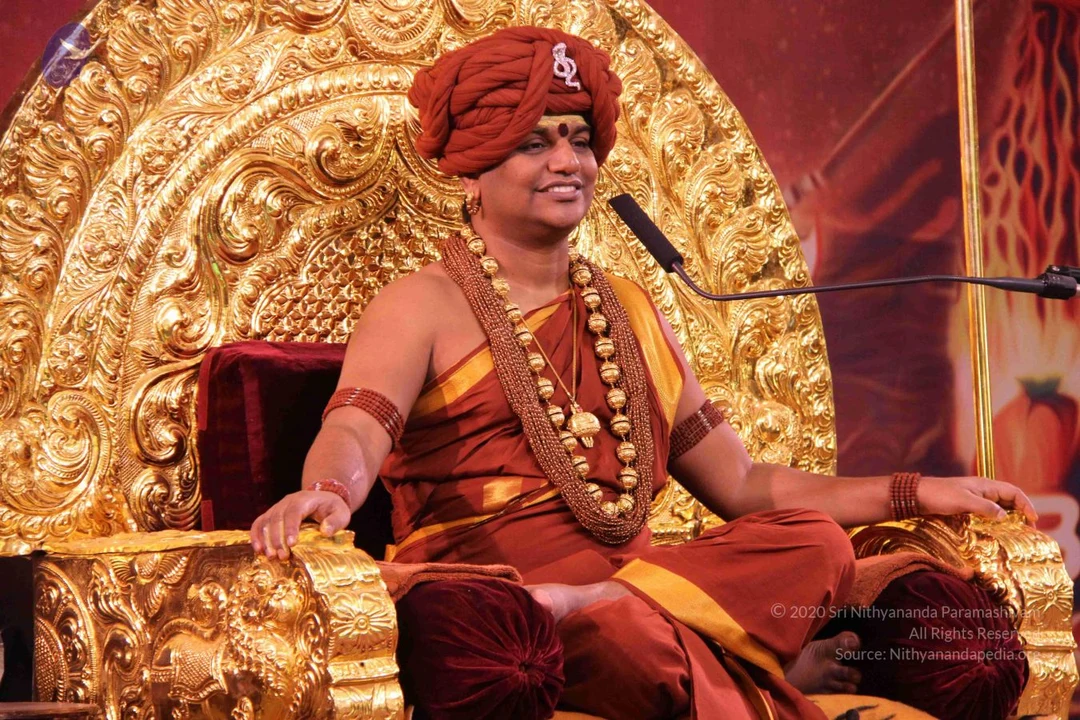
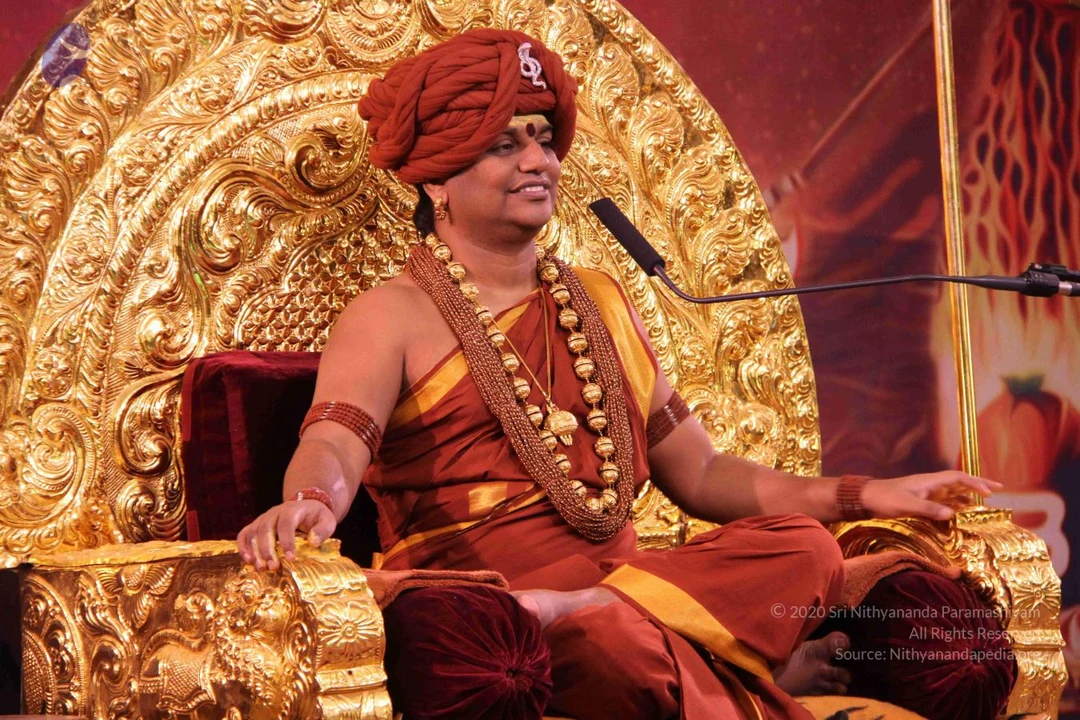
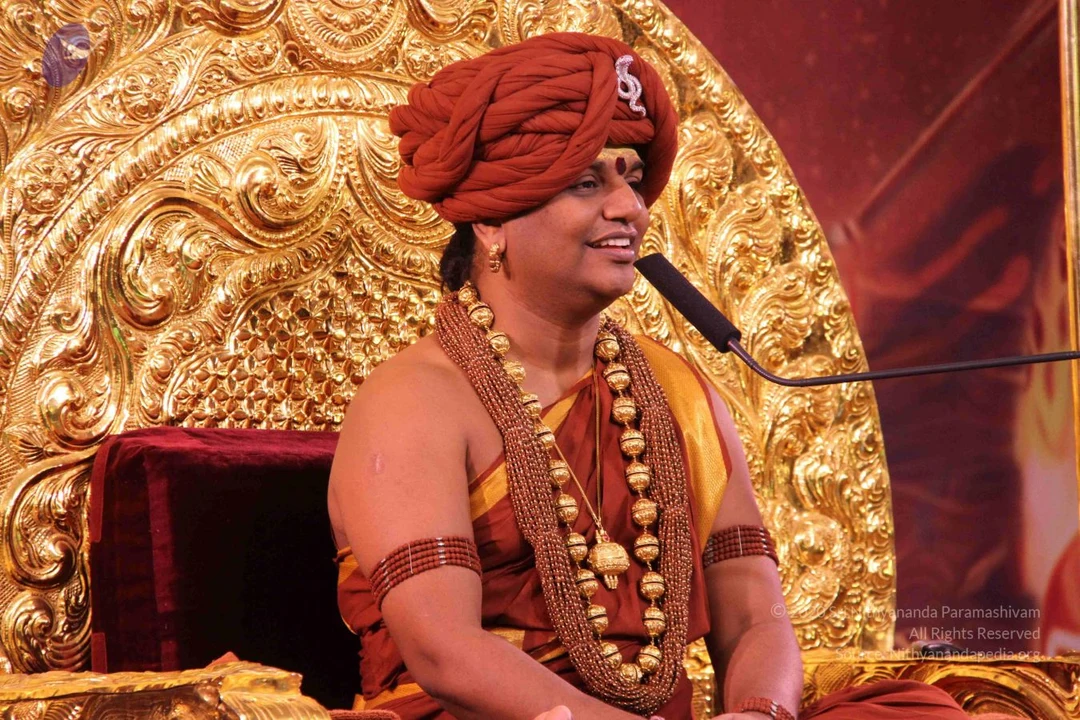
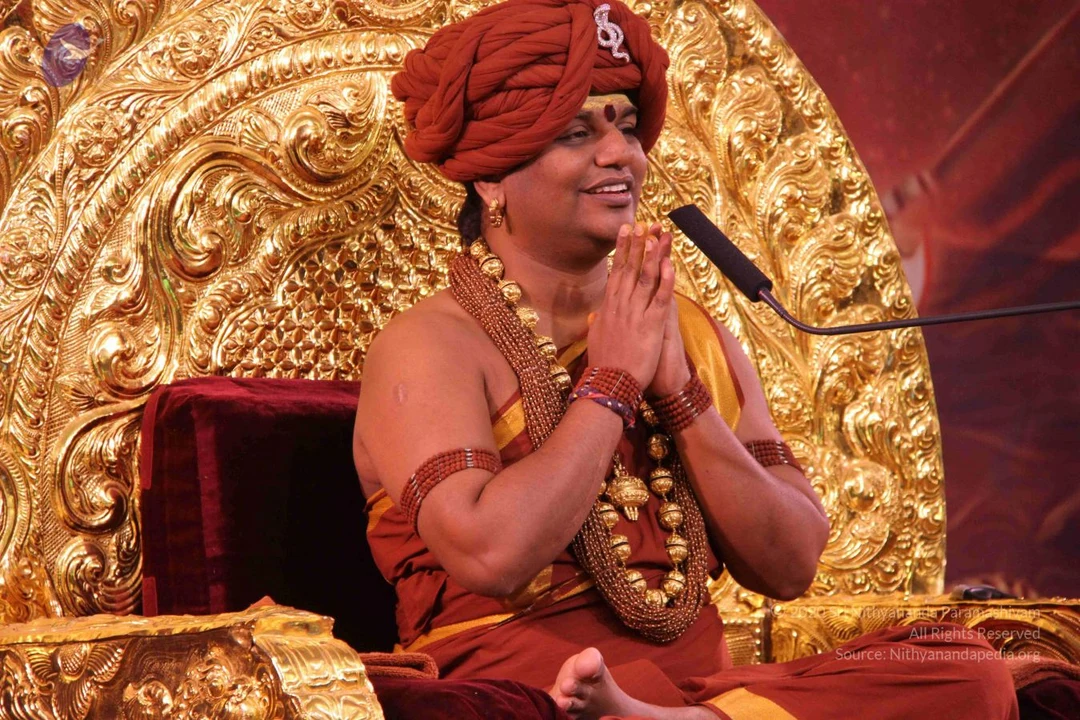
SPH at The Nithyananda Satsang in Varanasi, India

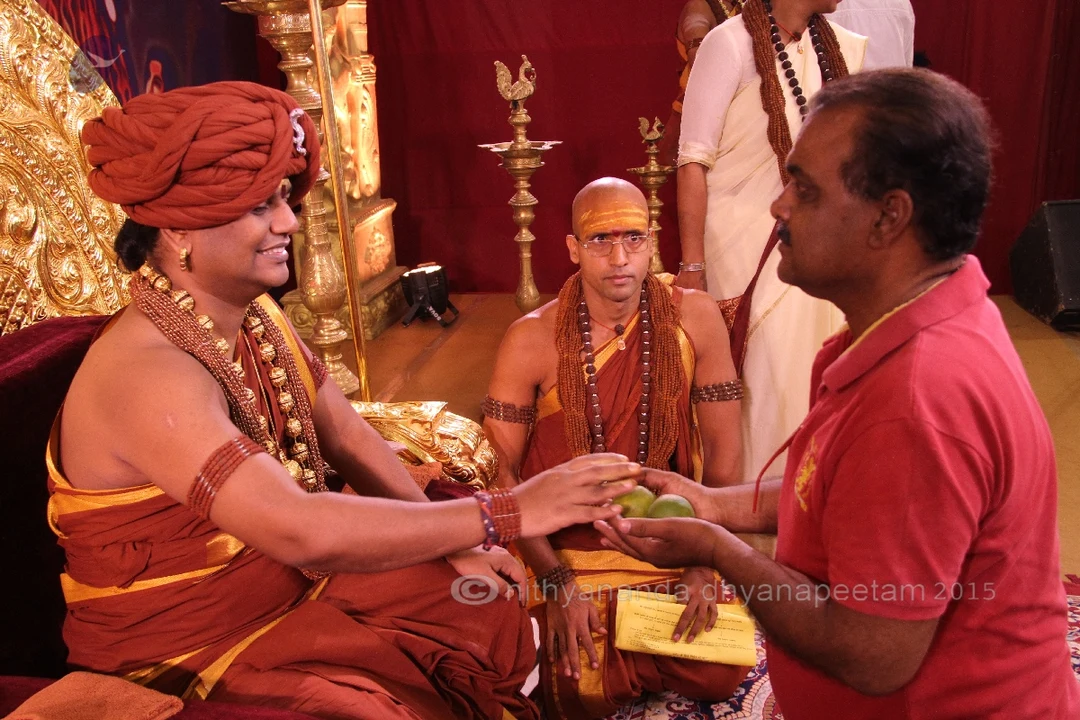
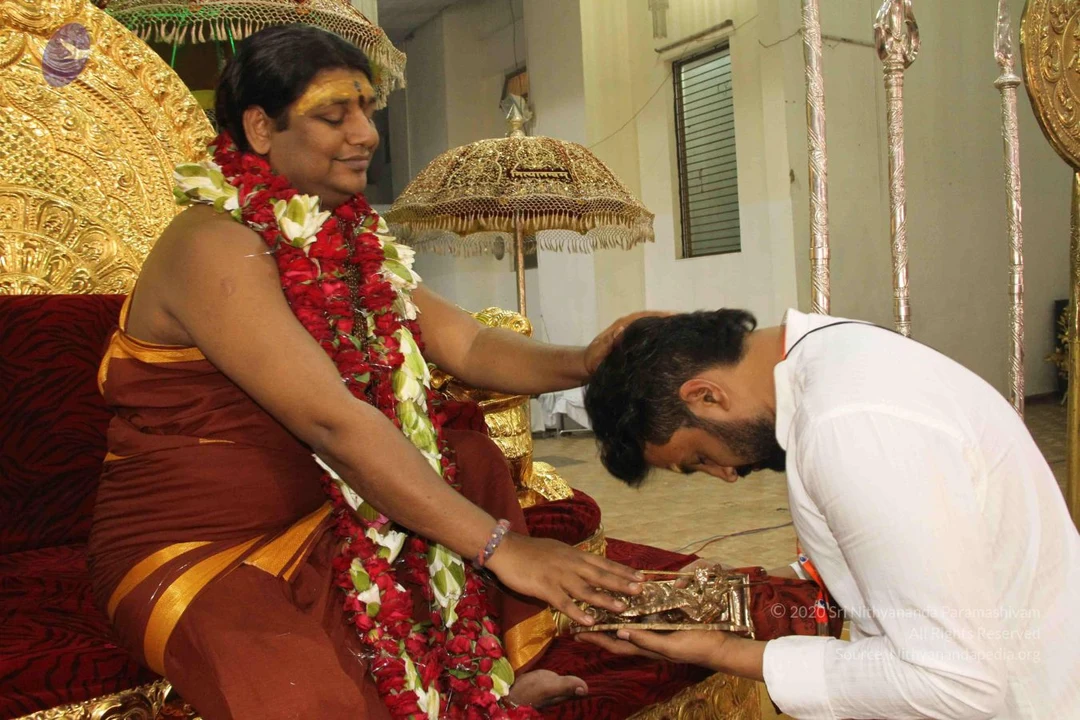
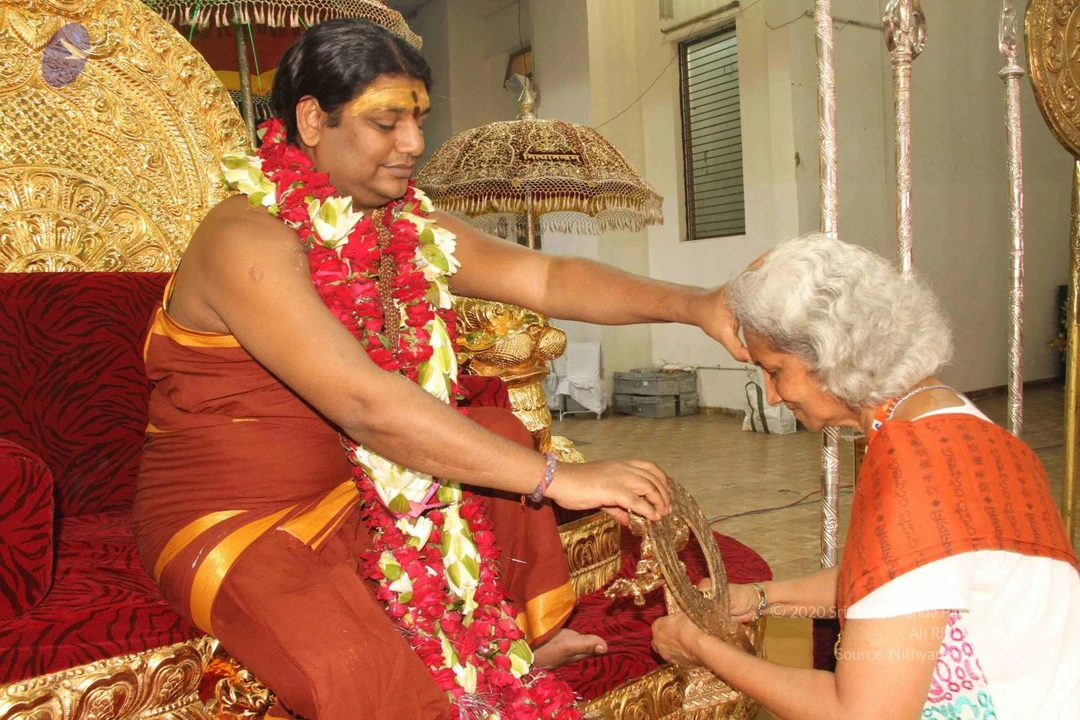
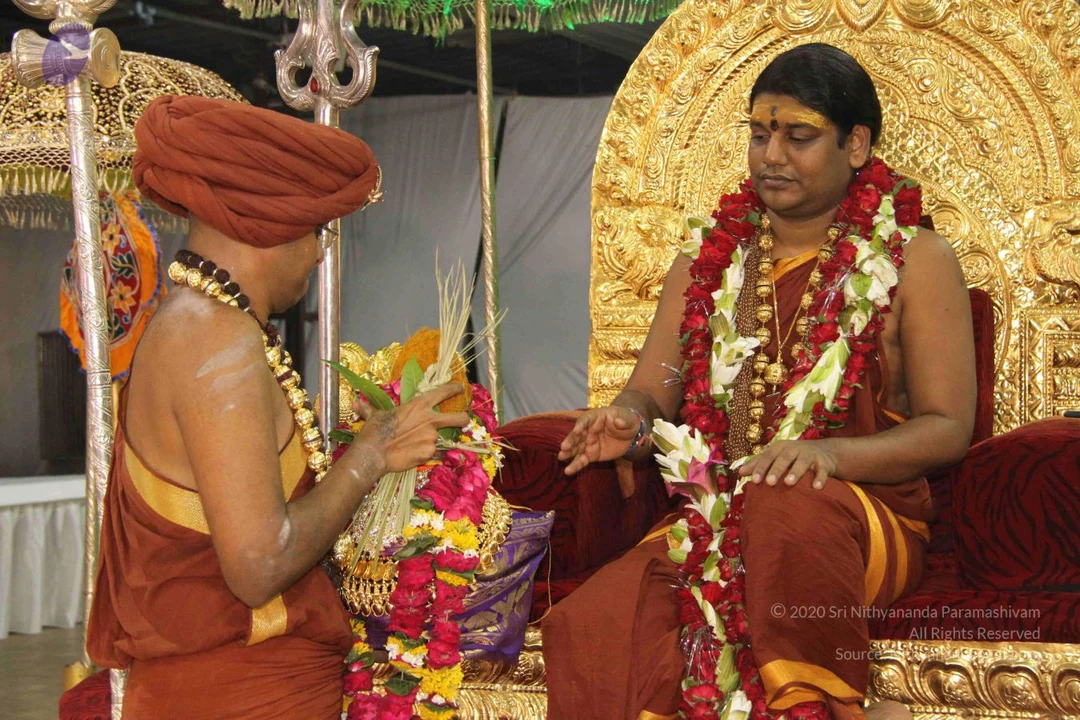
Sarva Darshan To all

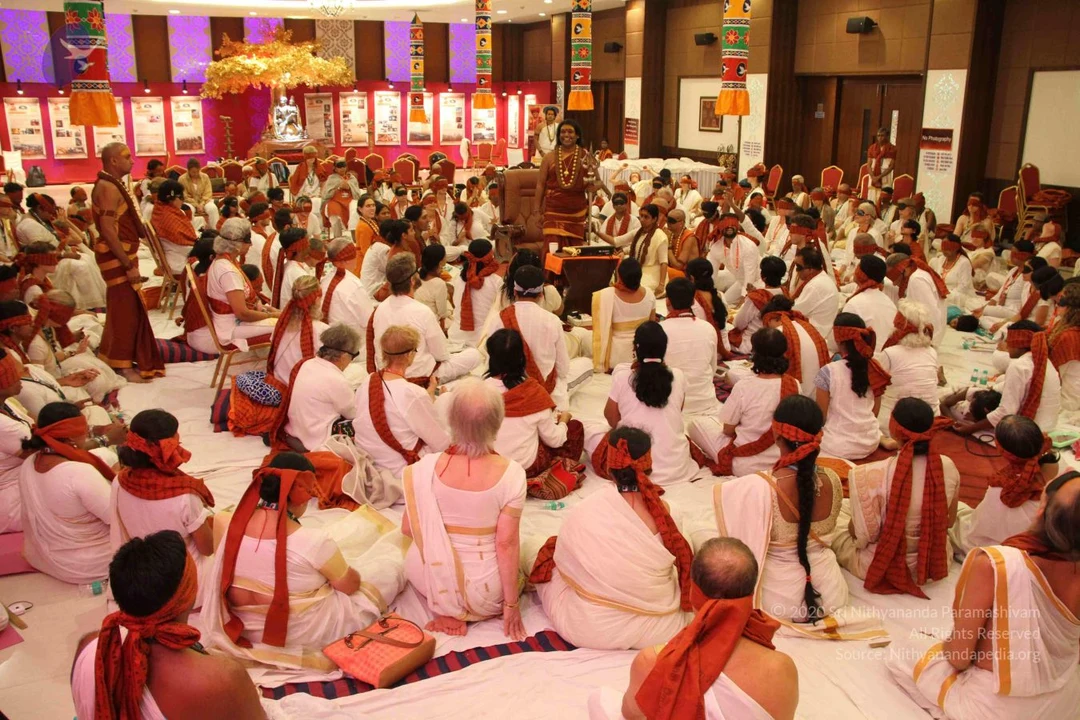
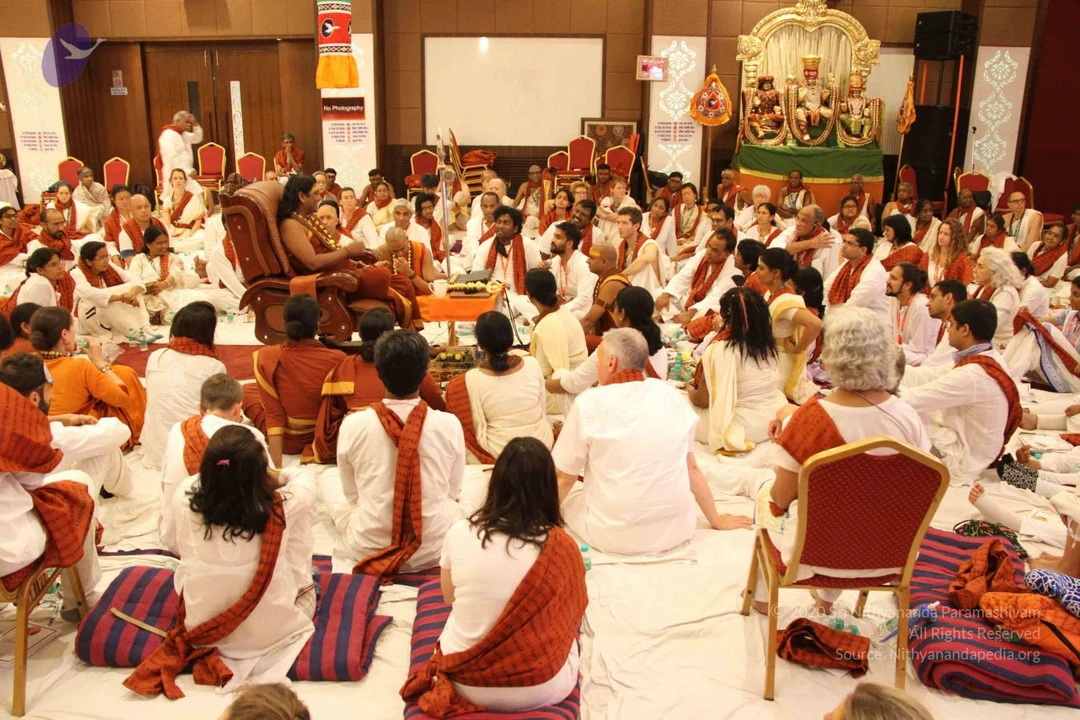
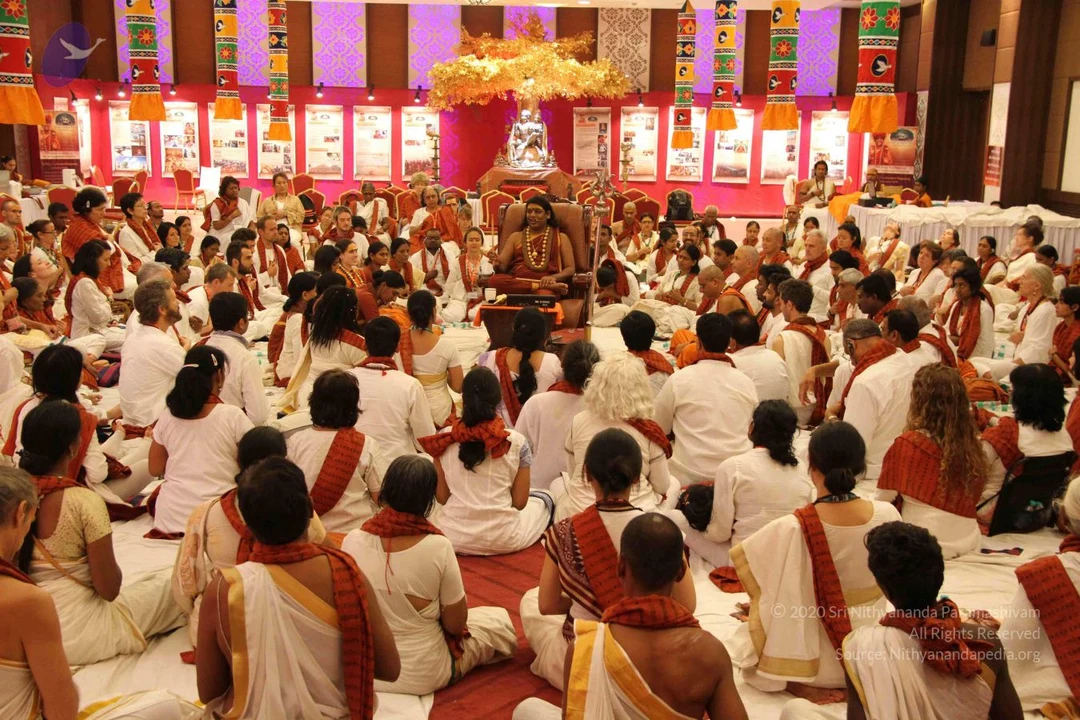
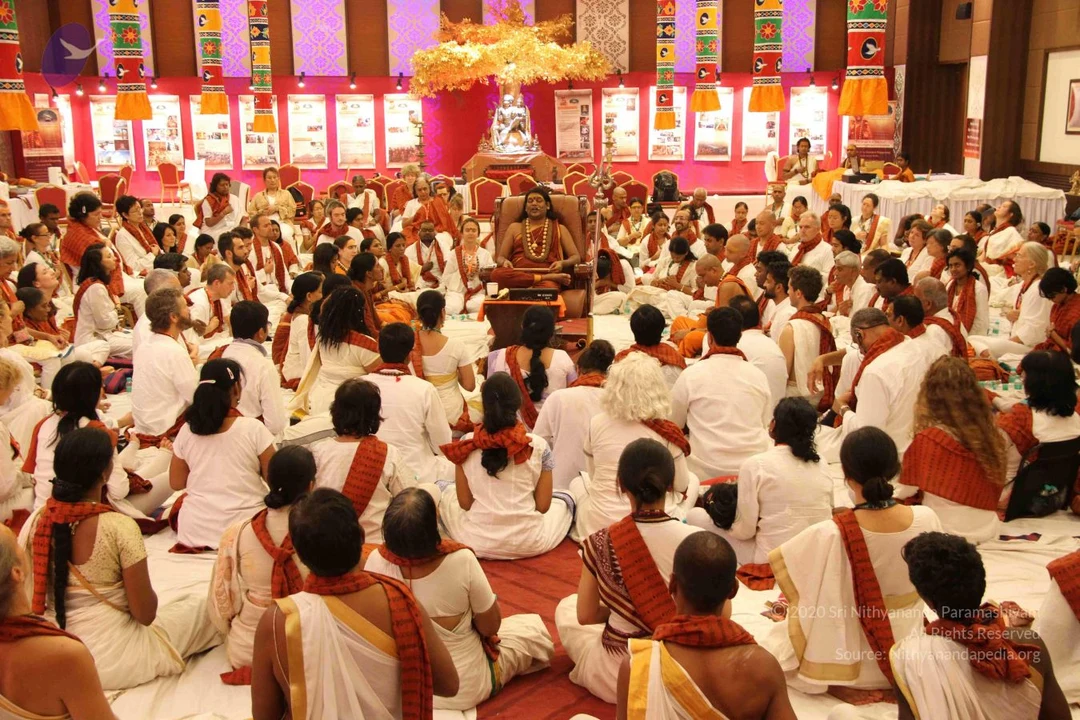
SPH Conducting The Inner Awakening Convention At Varanasi, India

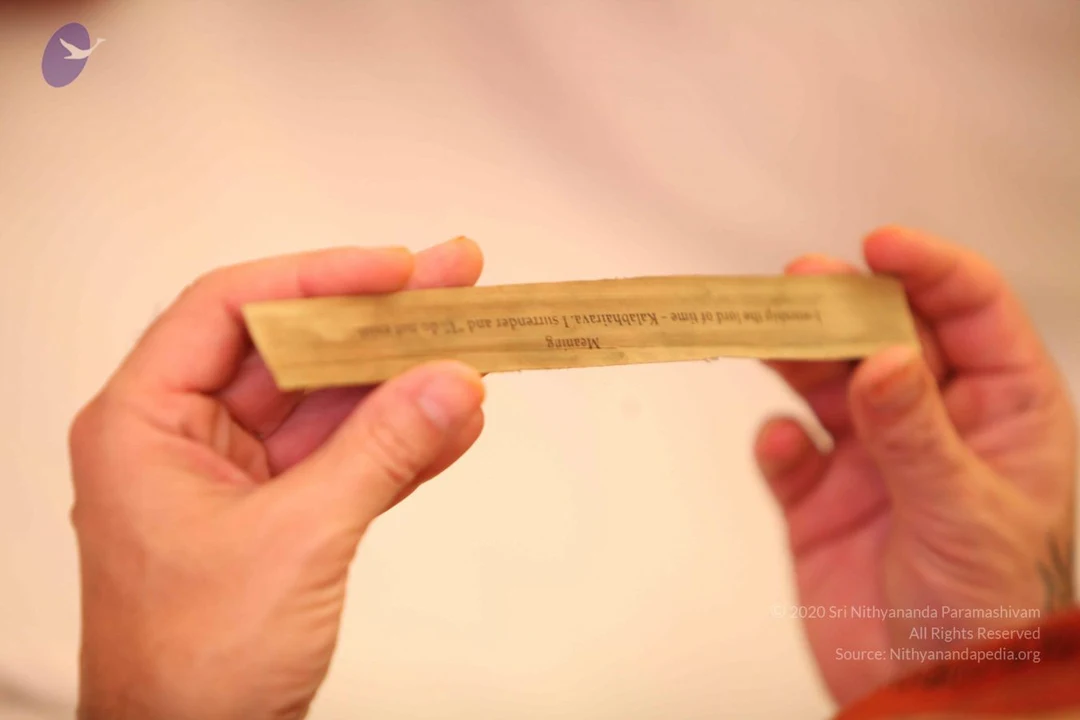
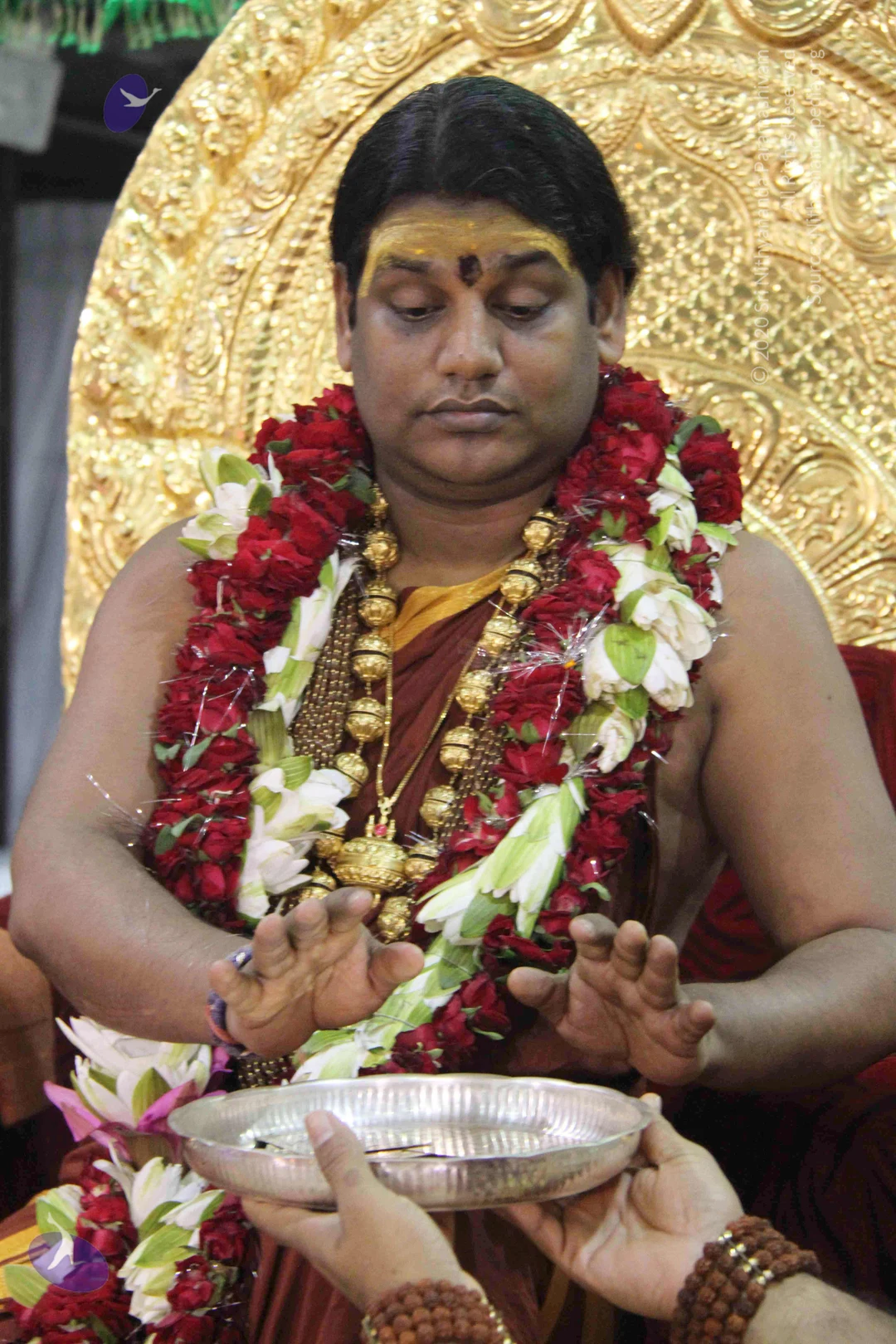
Kalabhairava Darshan And Shivoham Initiation To All Delegates of The Inner Awakening Convention

More Pictures of Darshan and Initiation

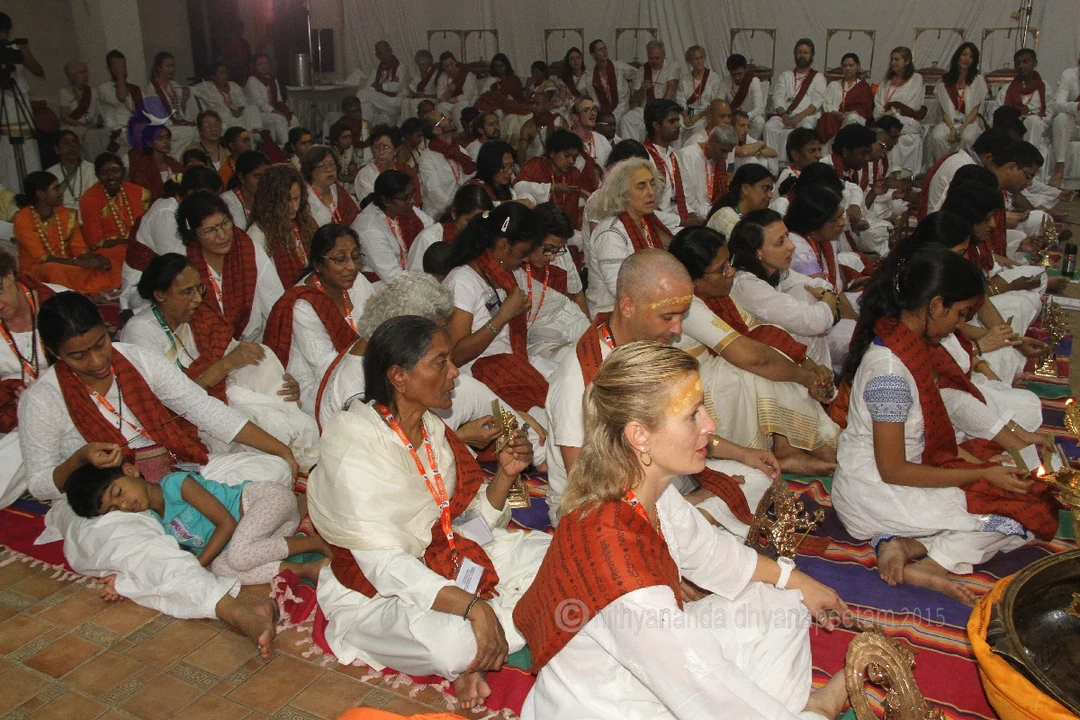
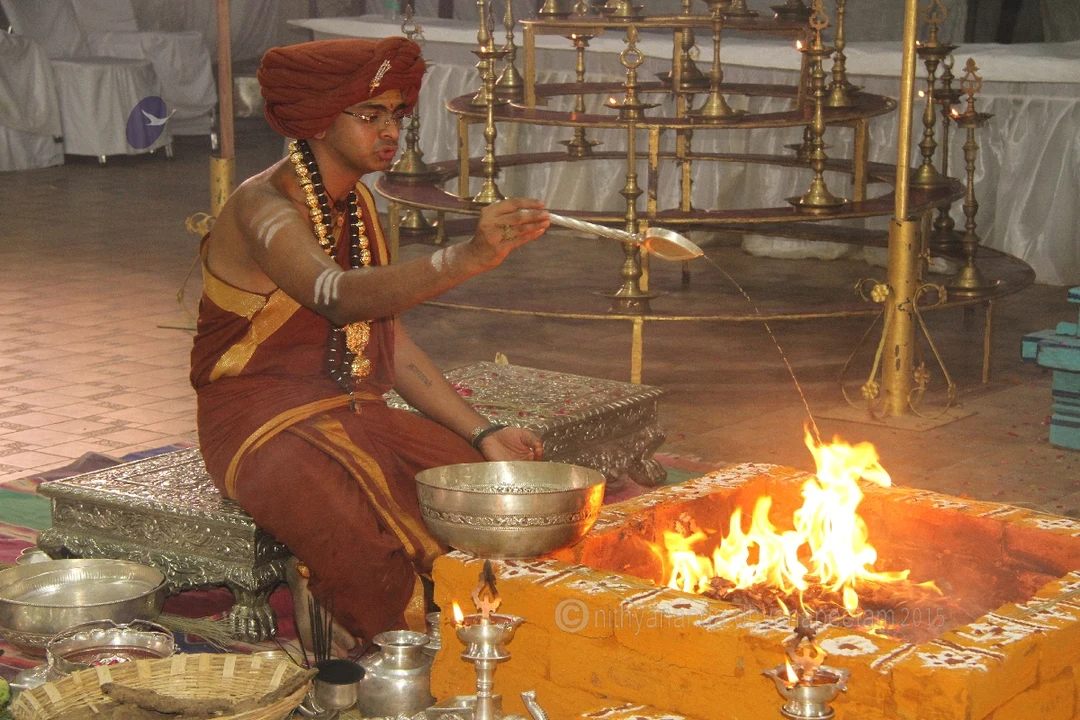
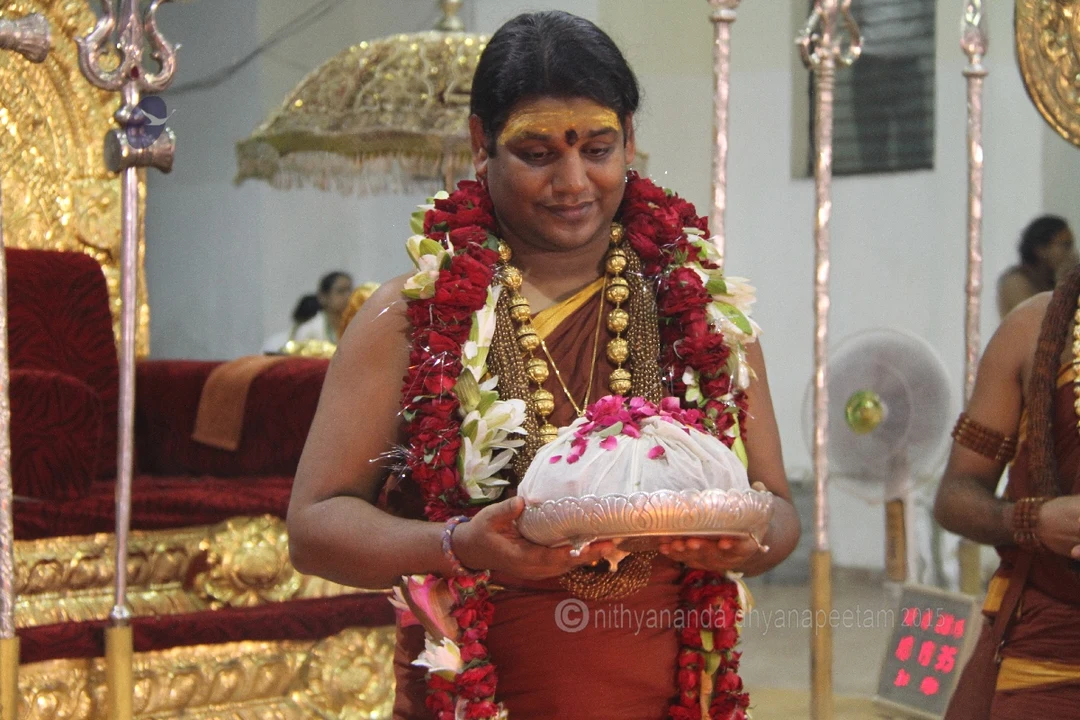
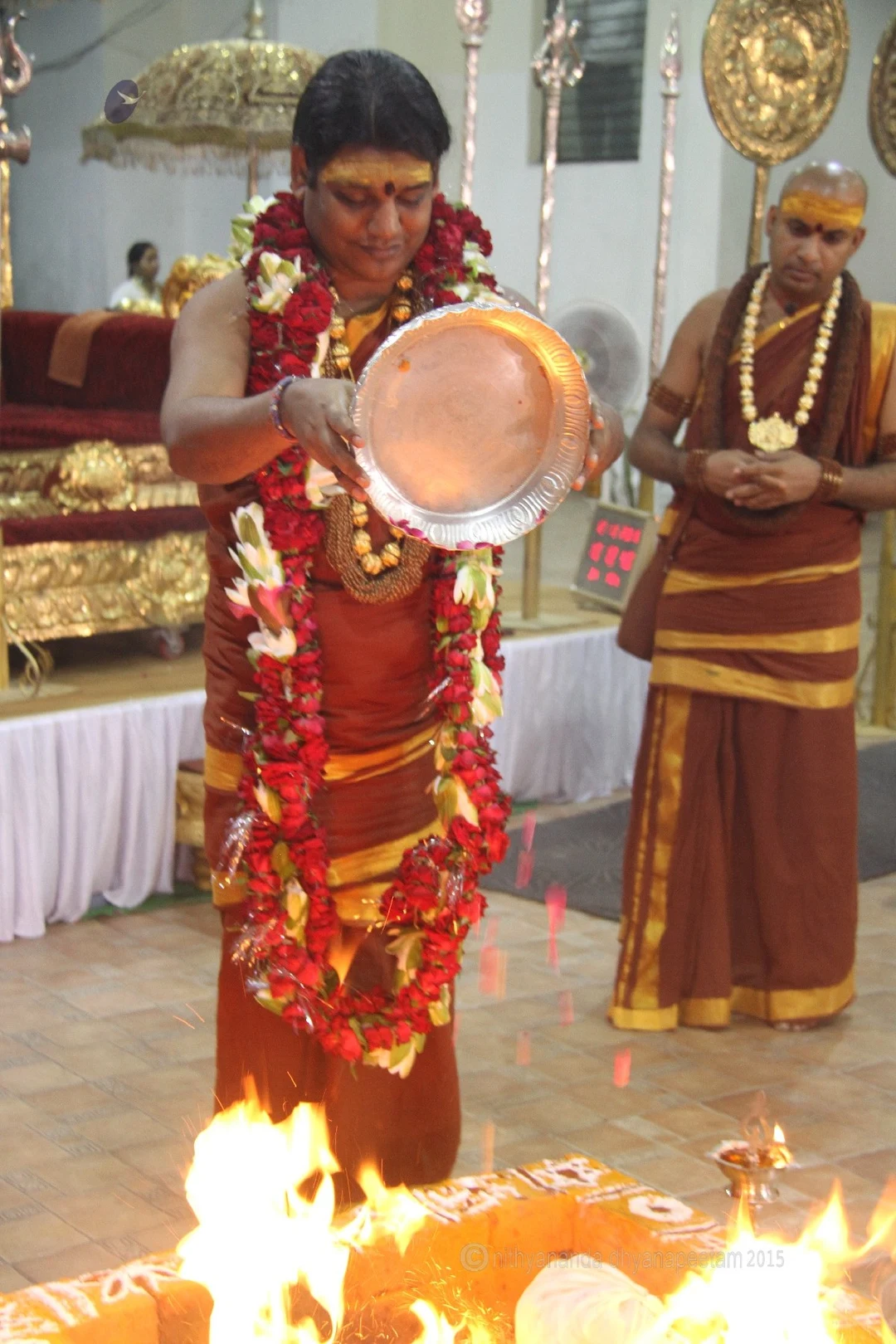
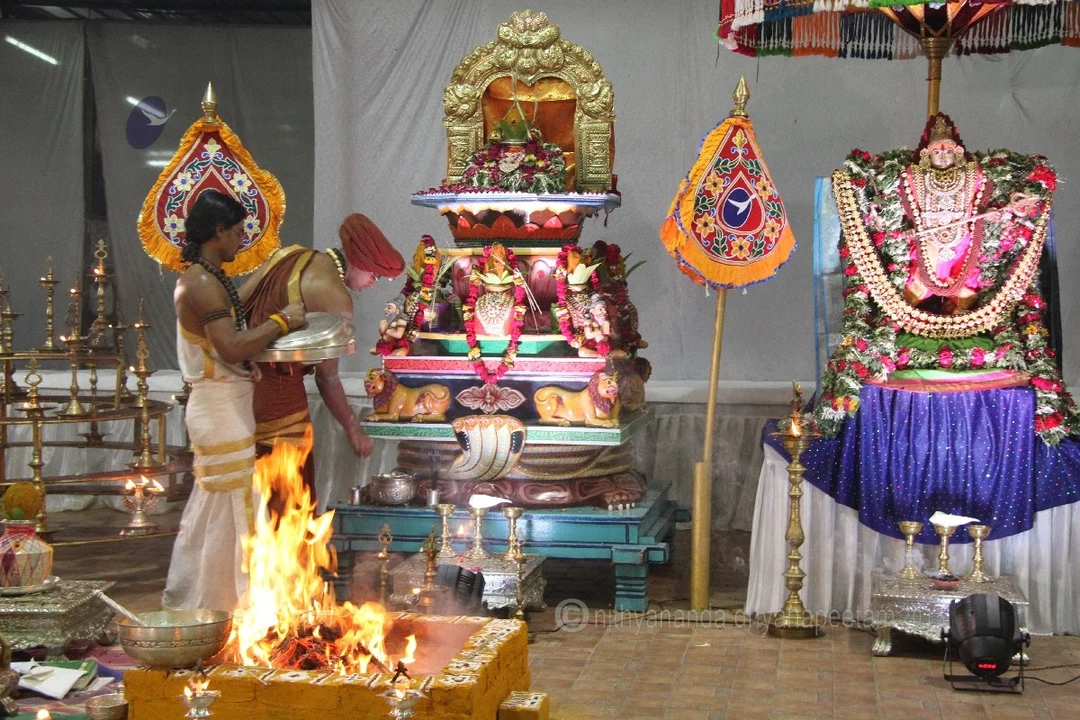
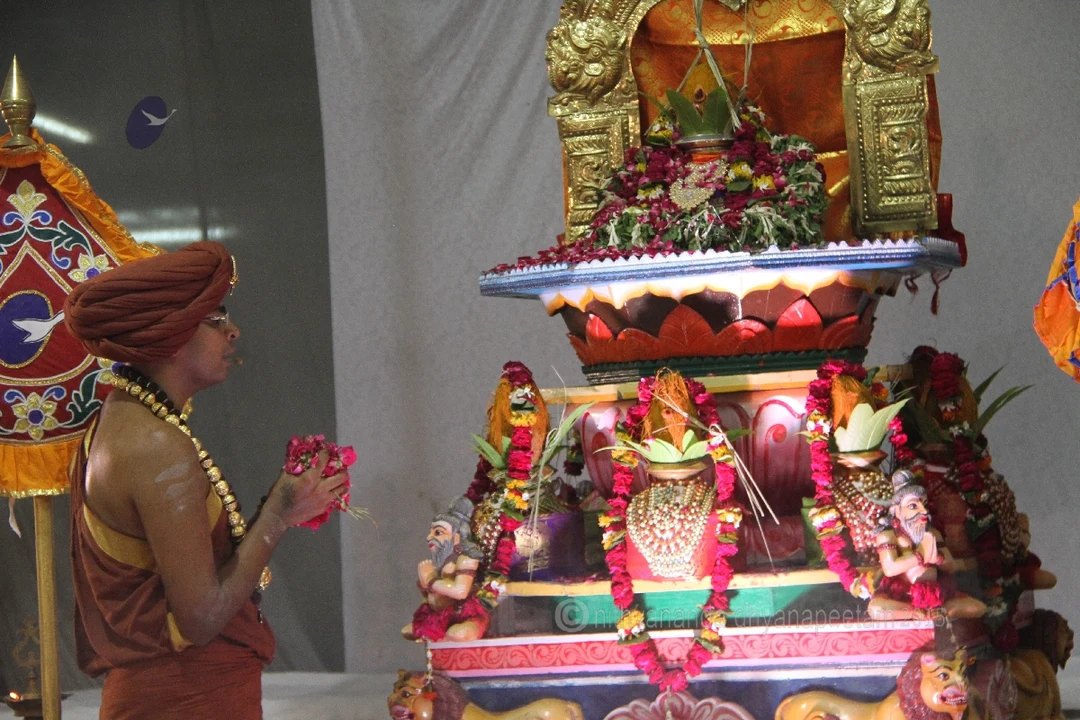
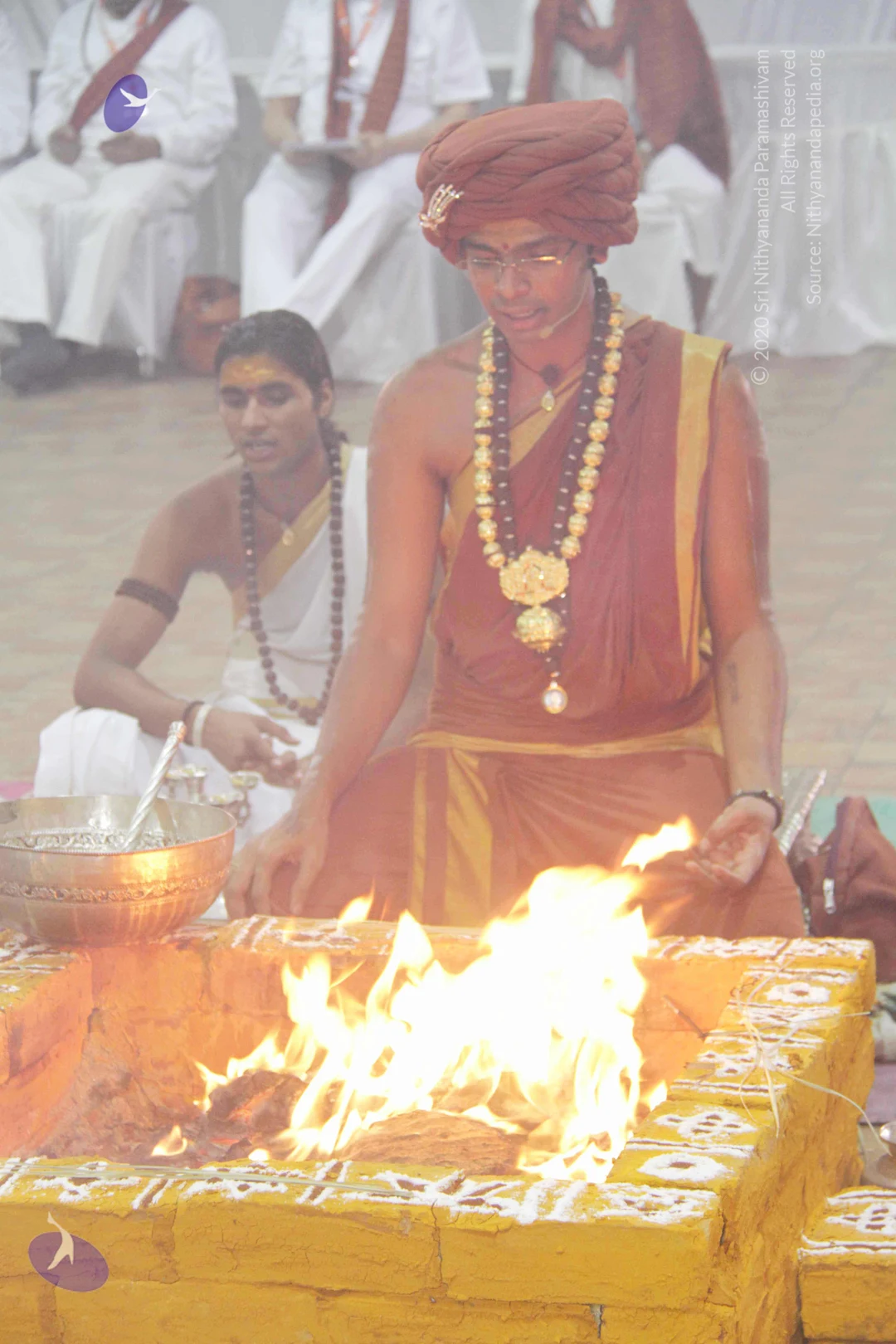
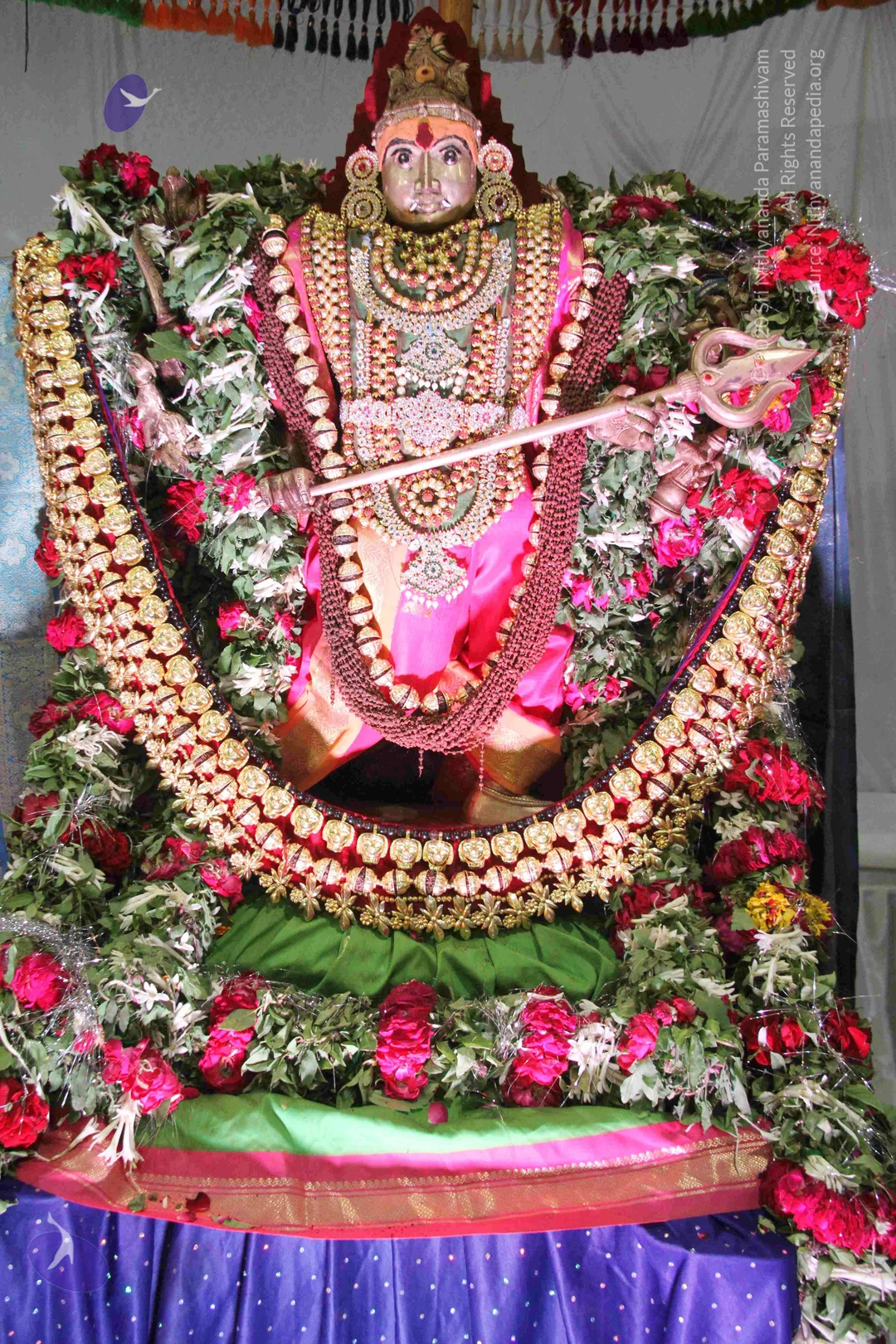
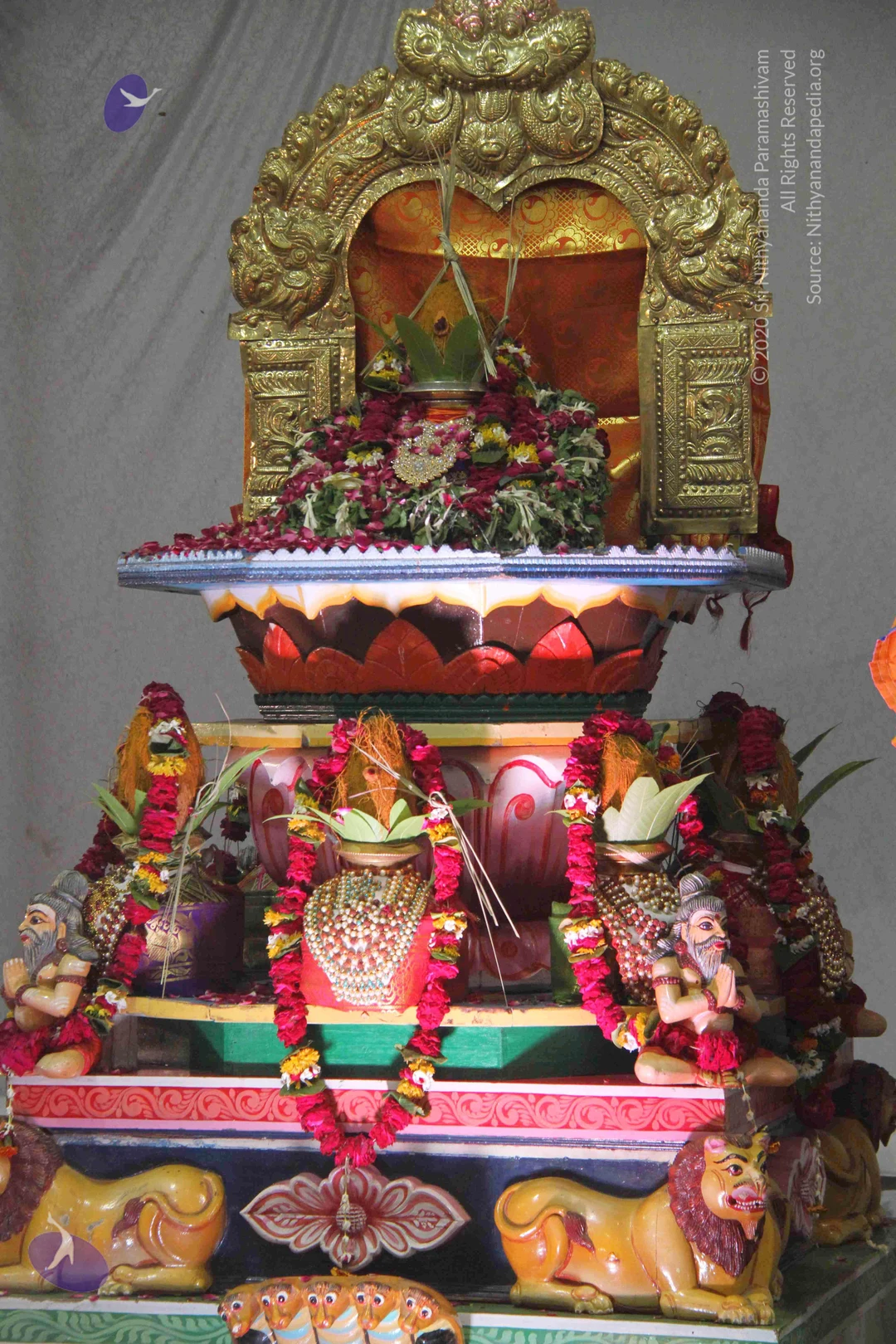
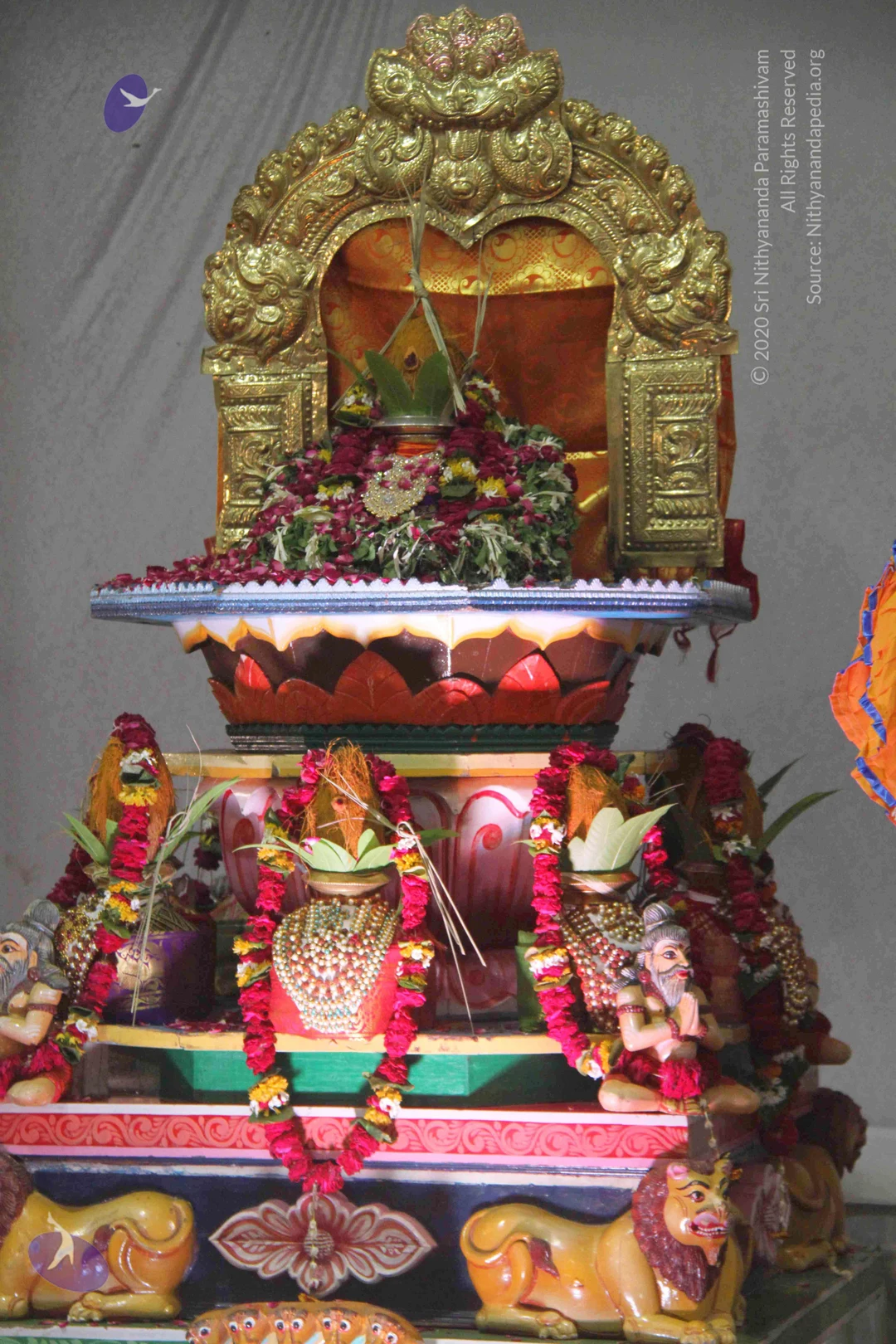
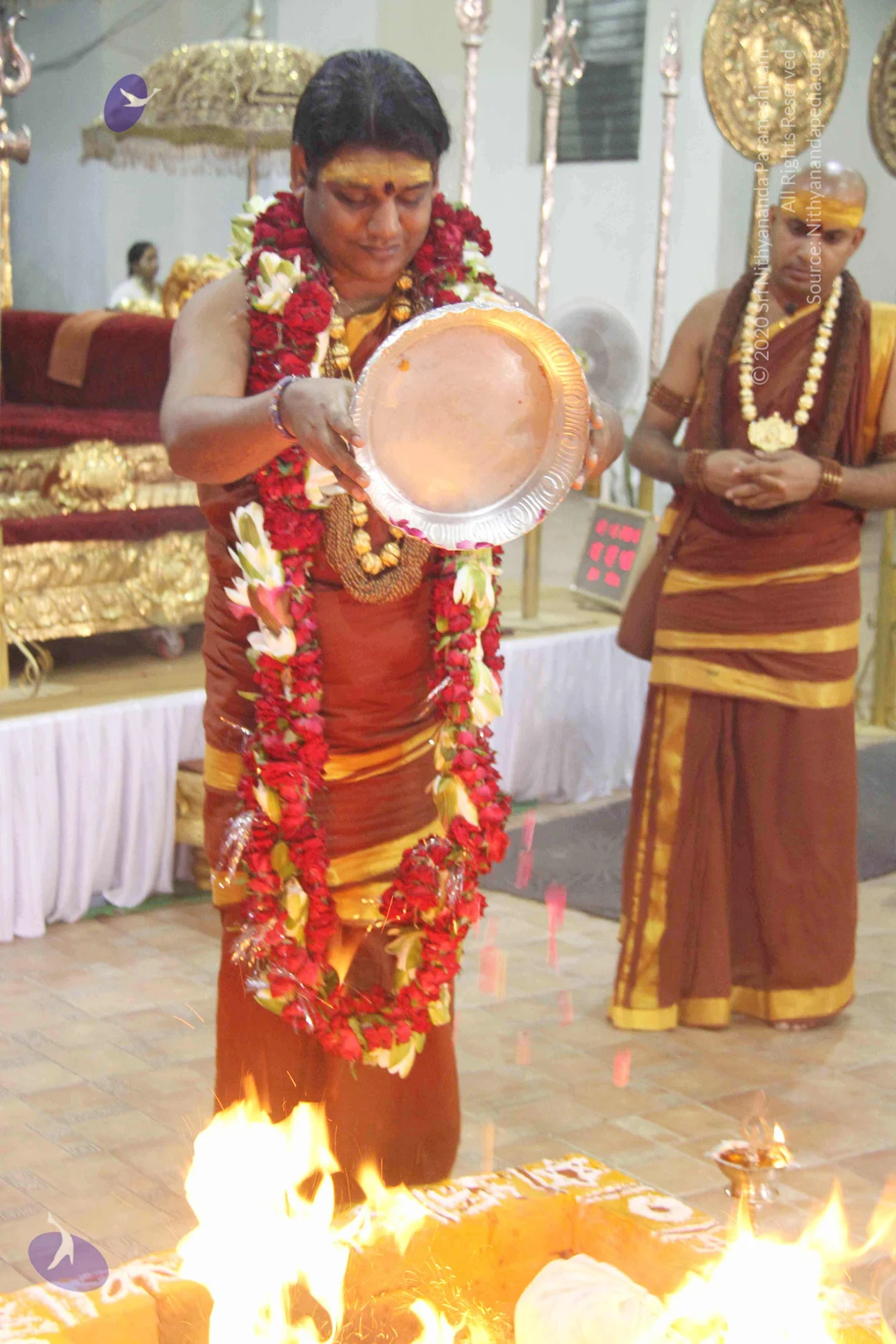
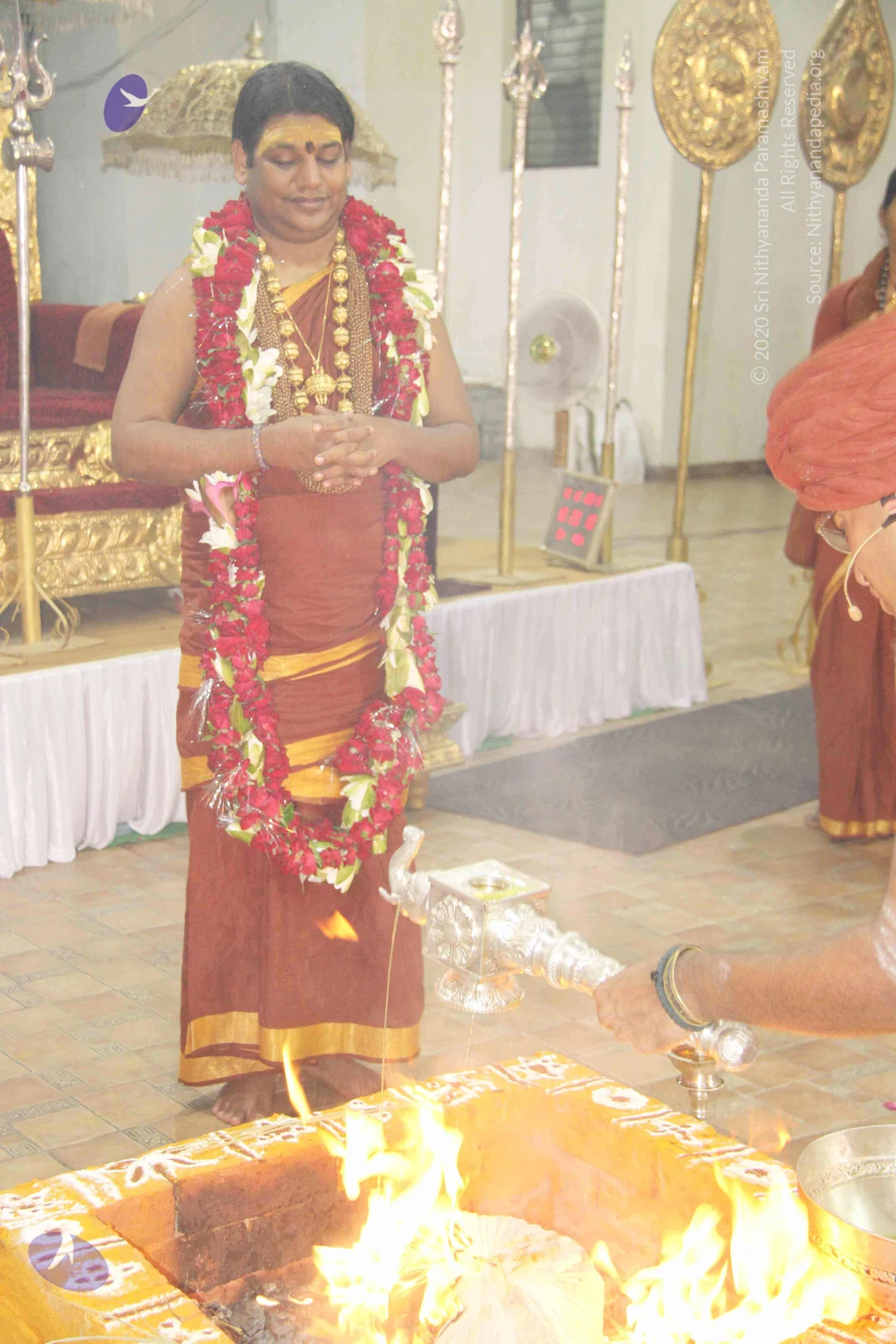
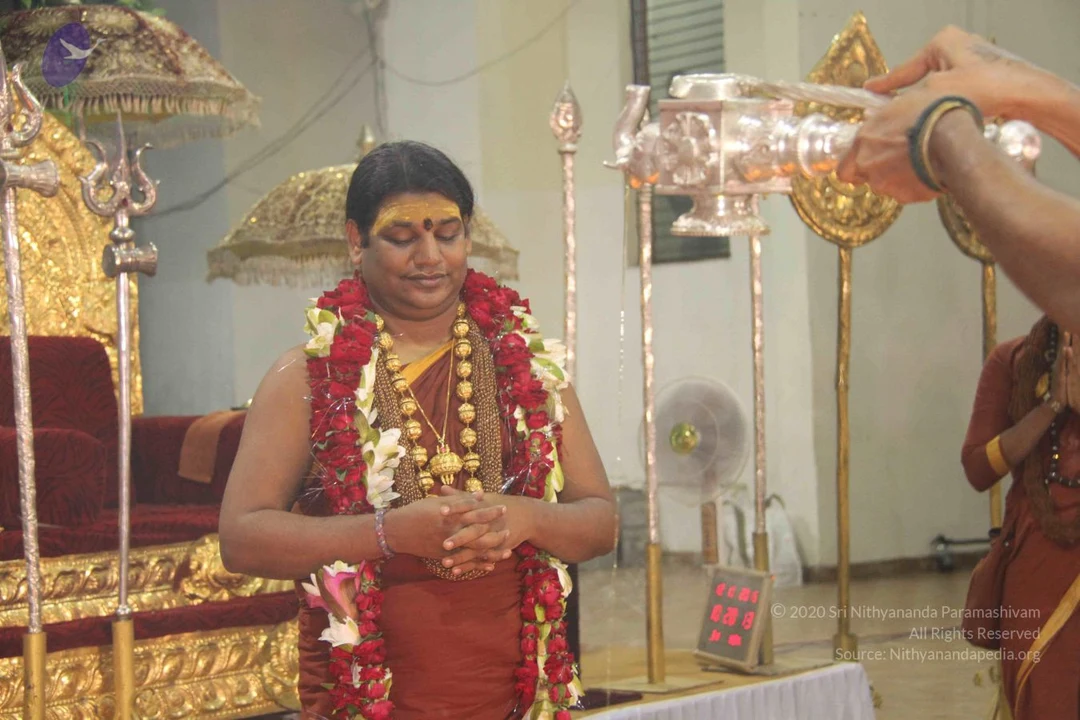
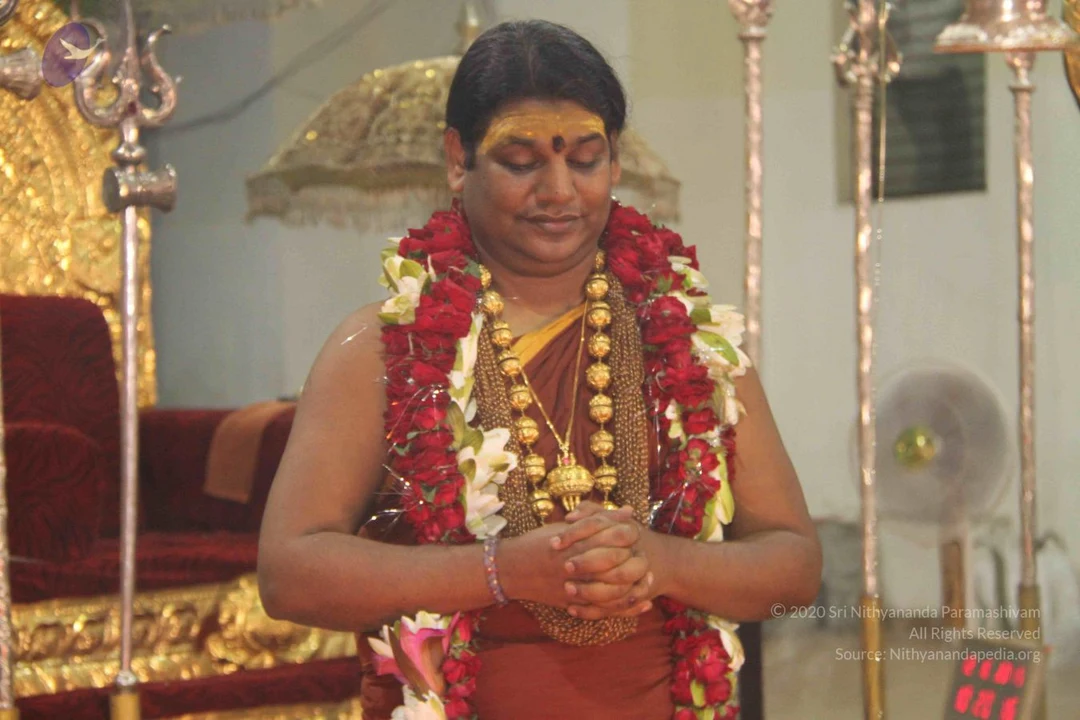
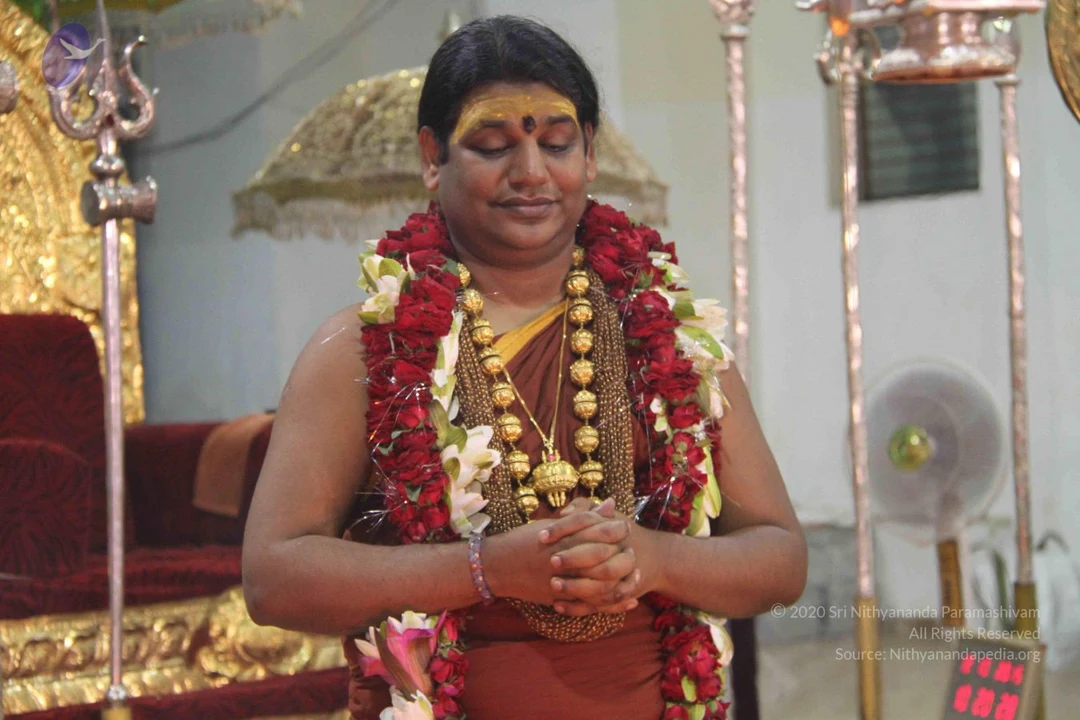
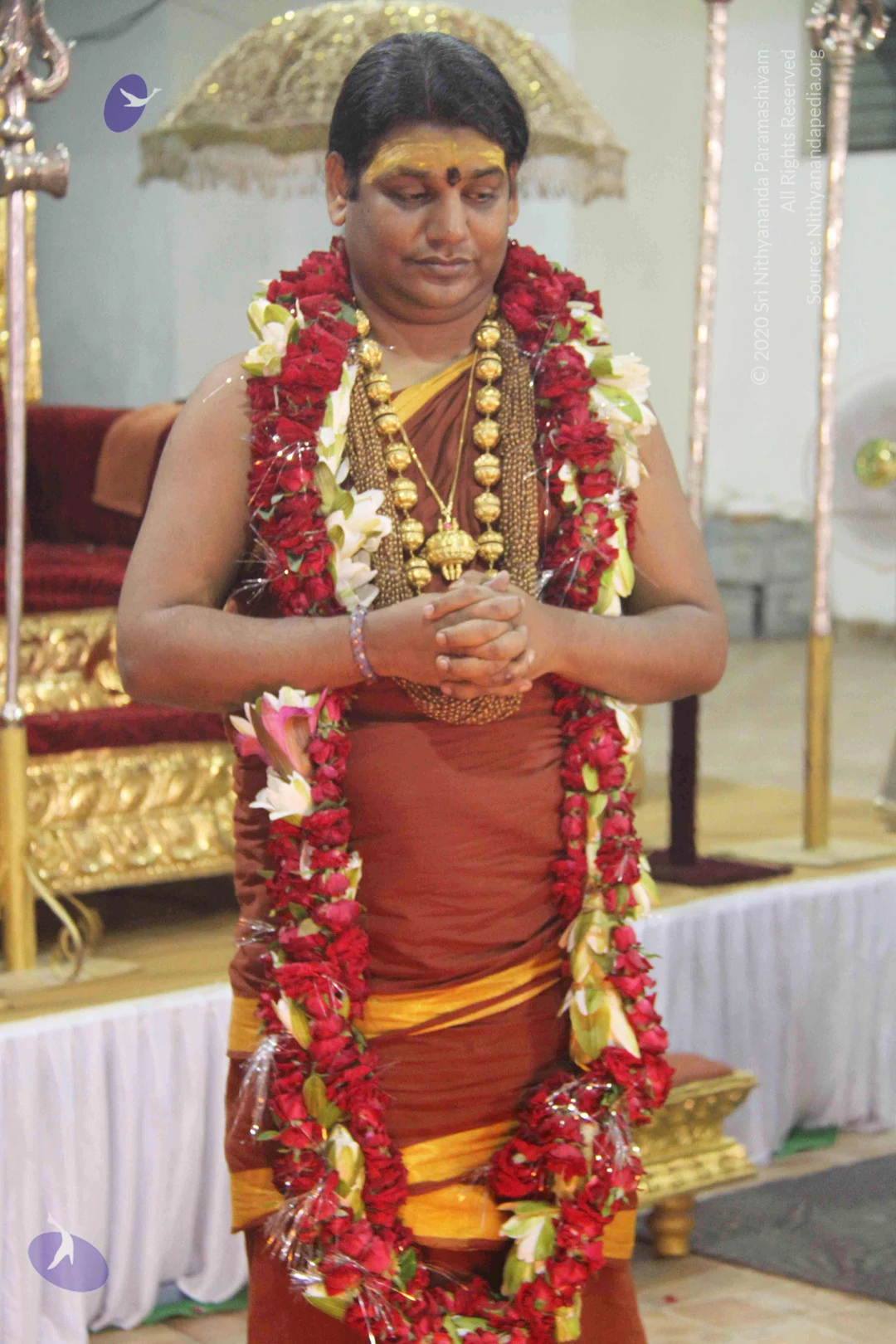
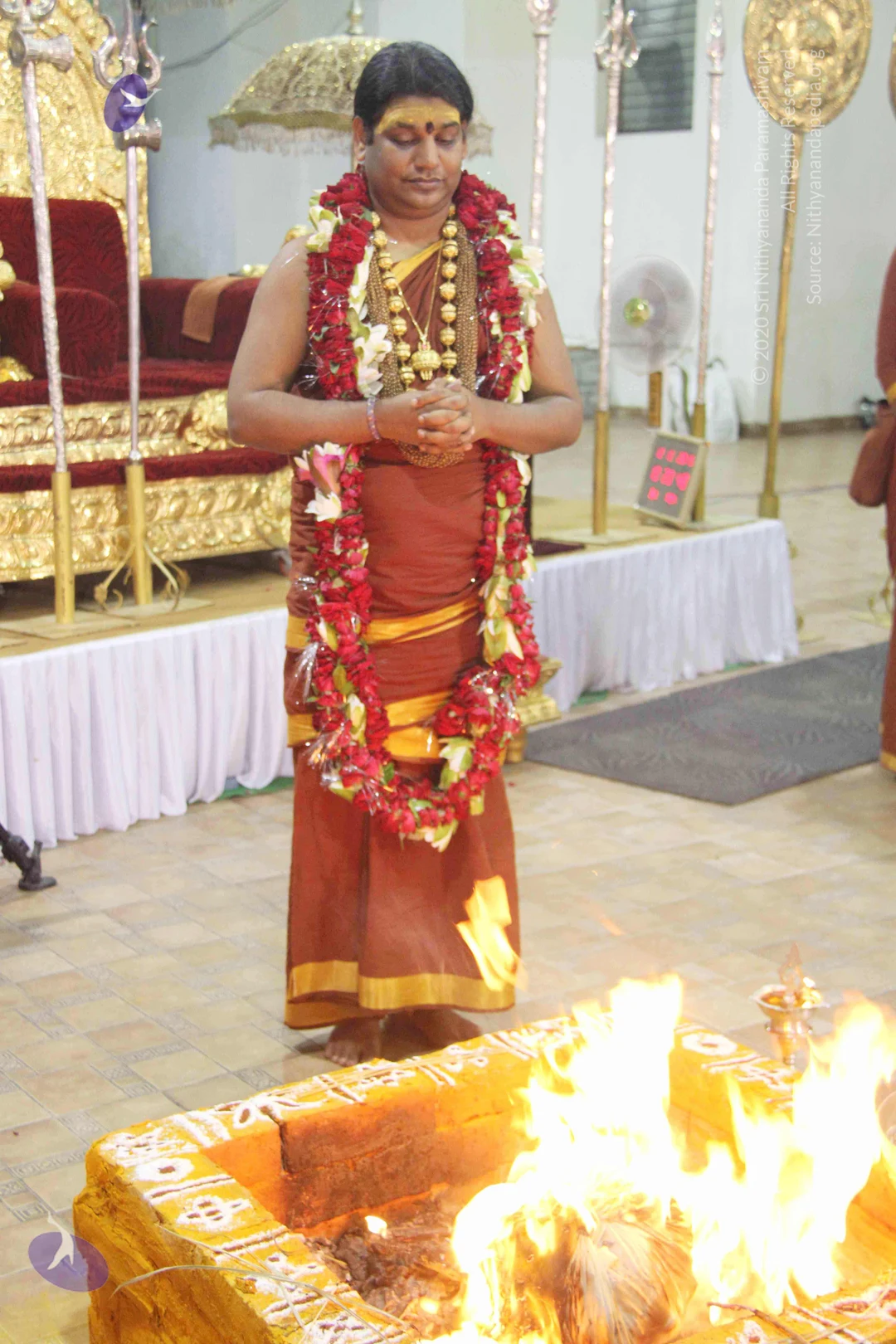
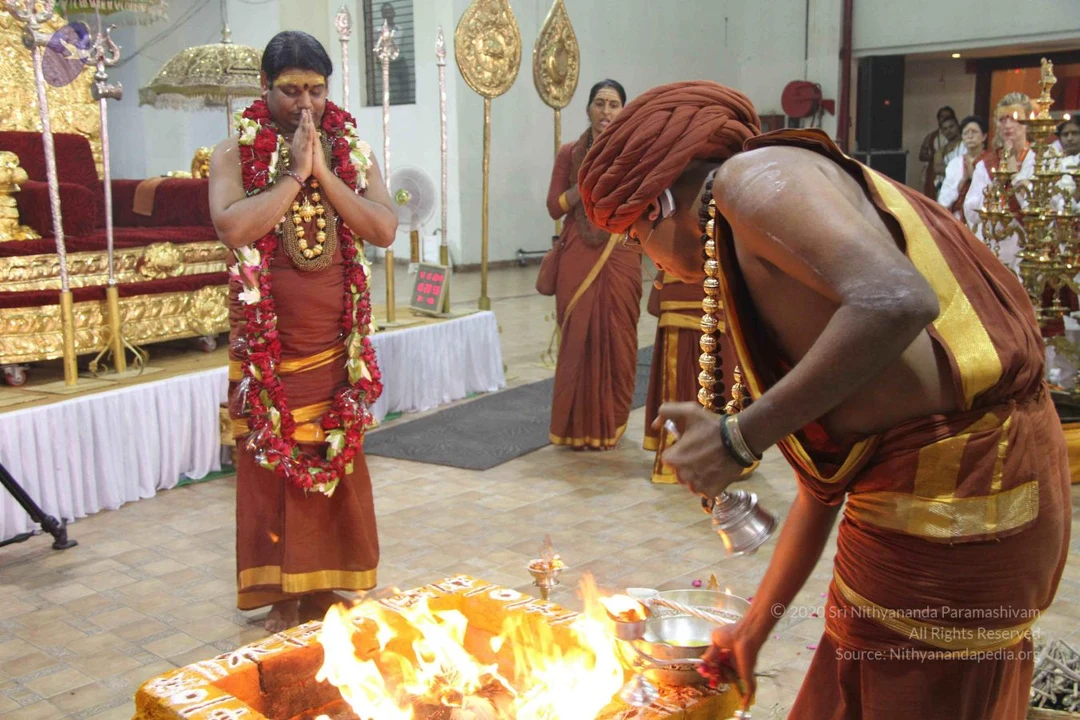
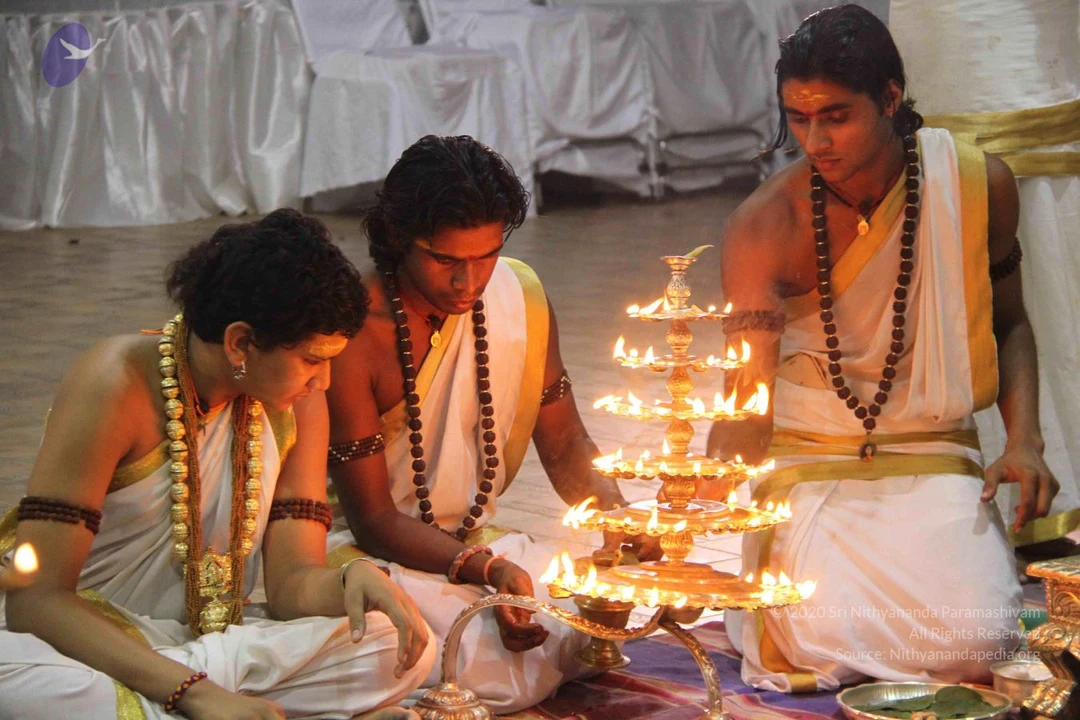
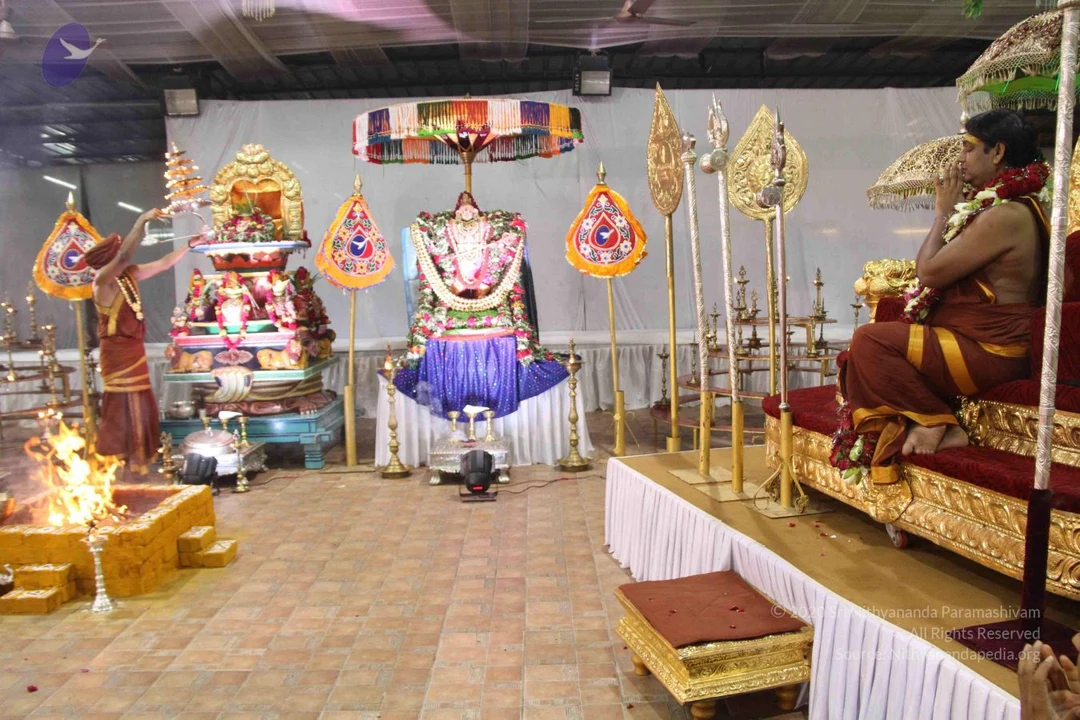
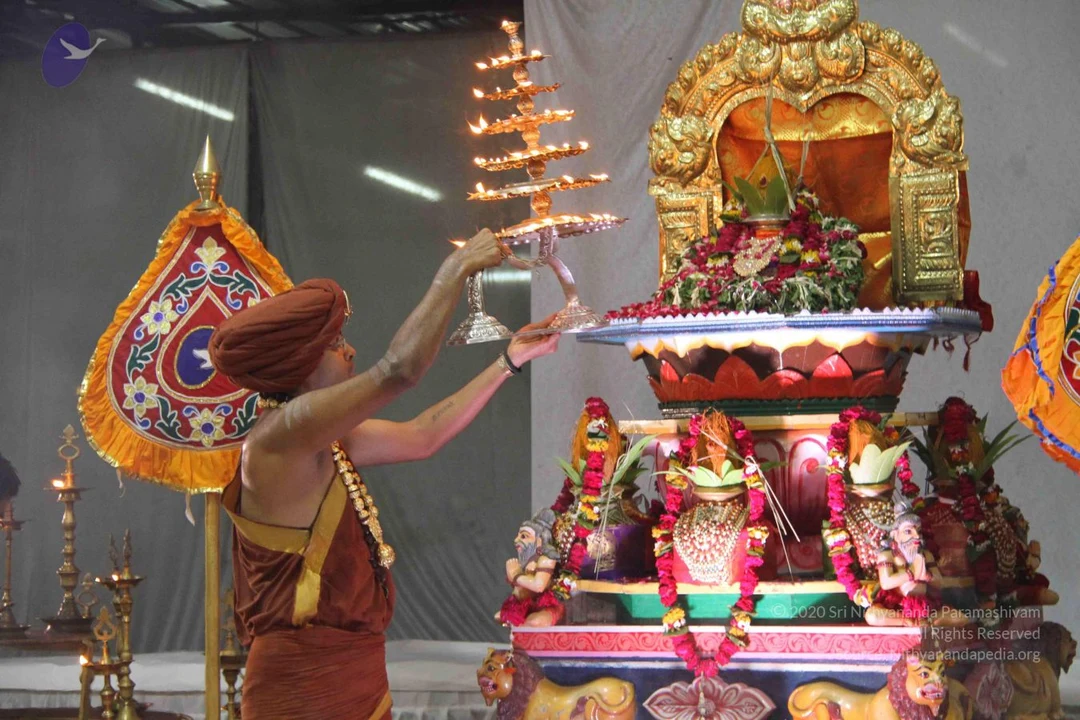
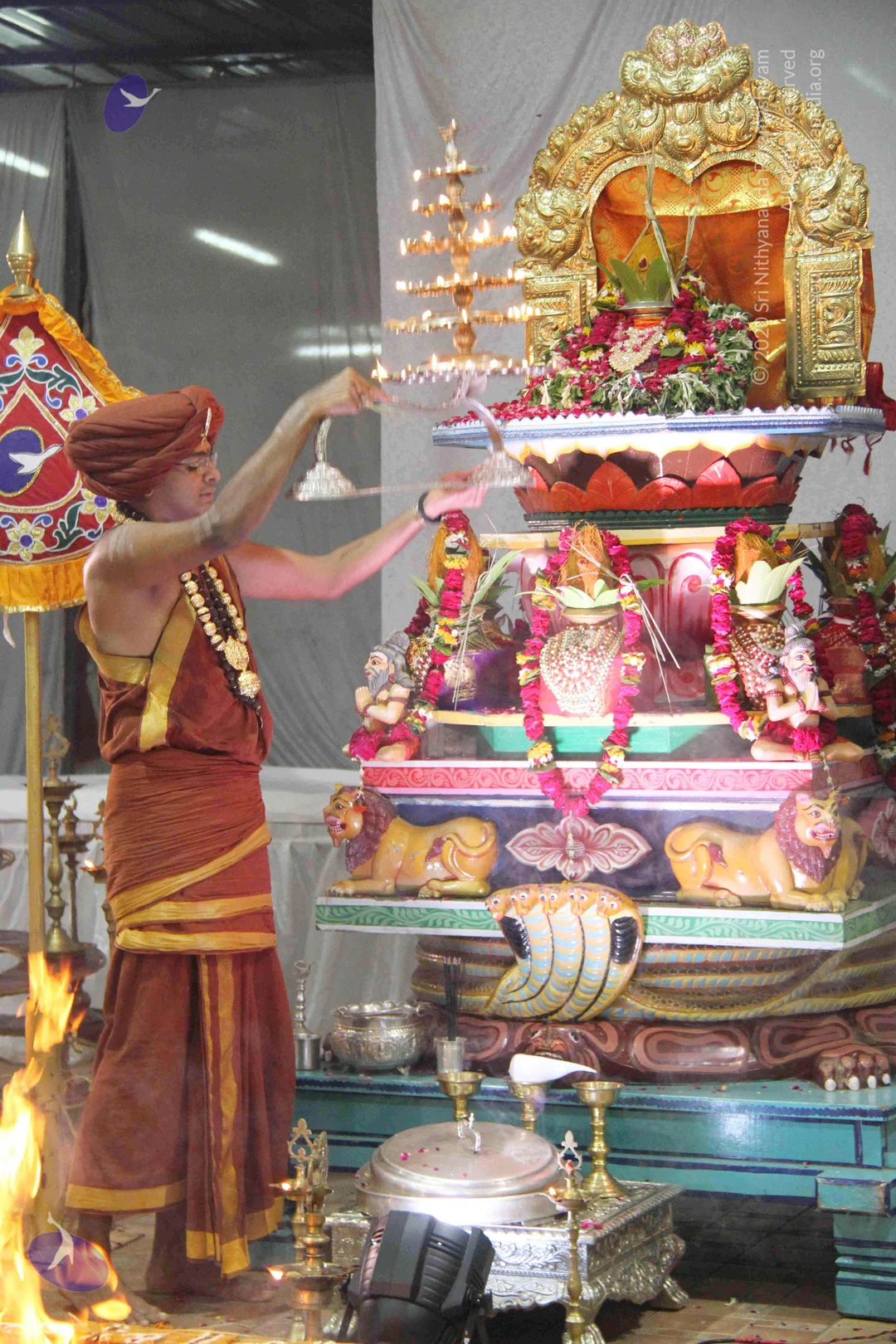
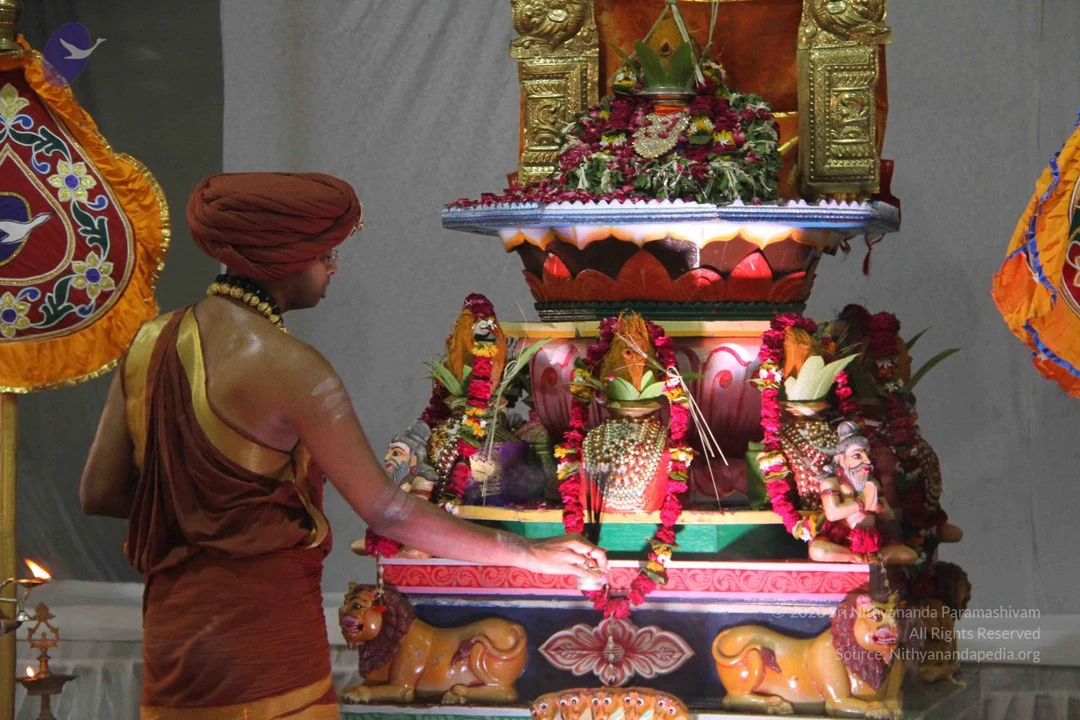
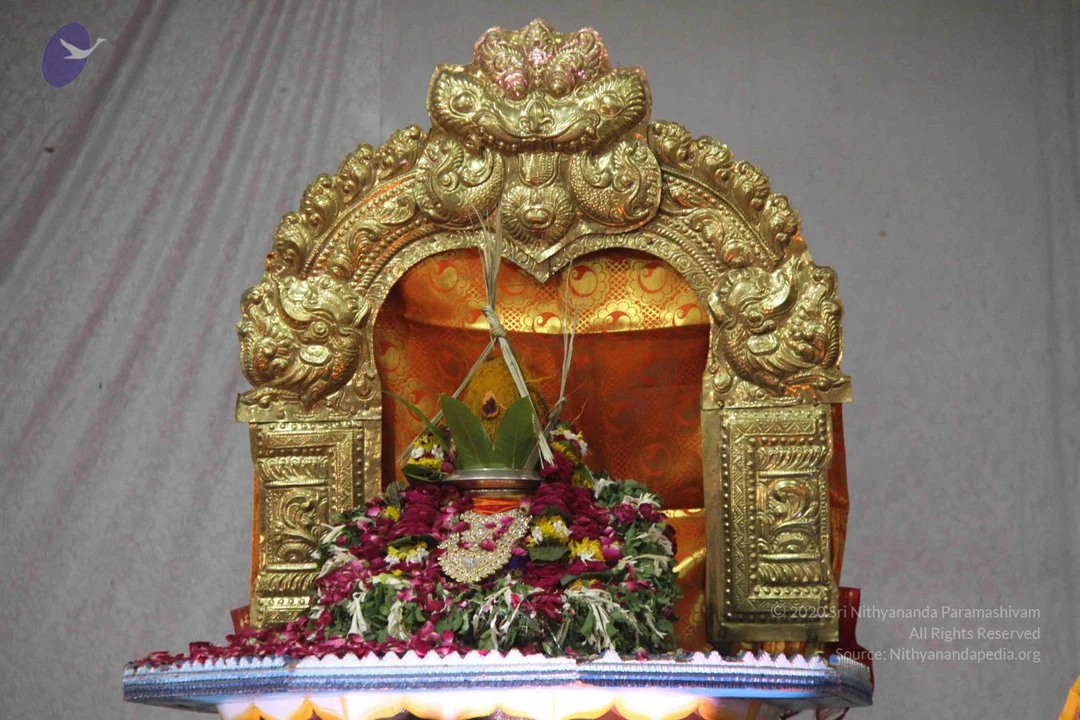
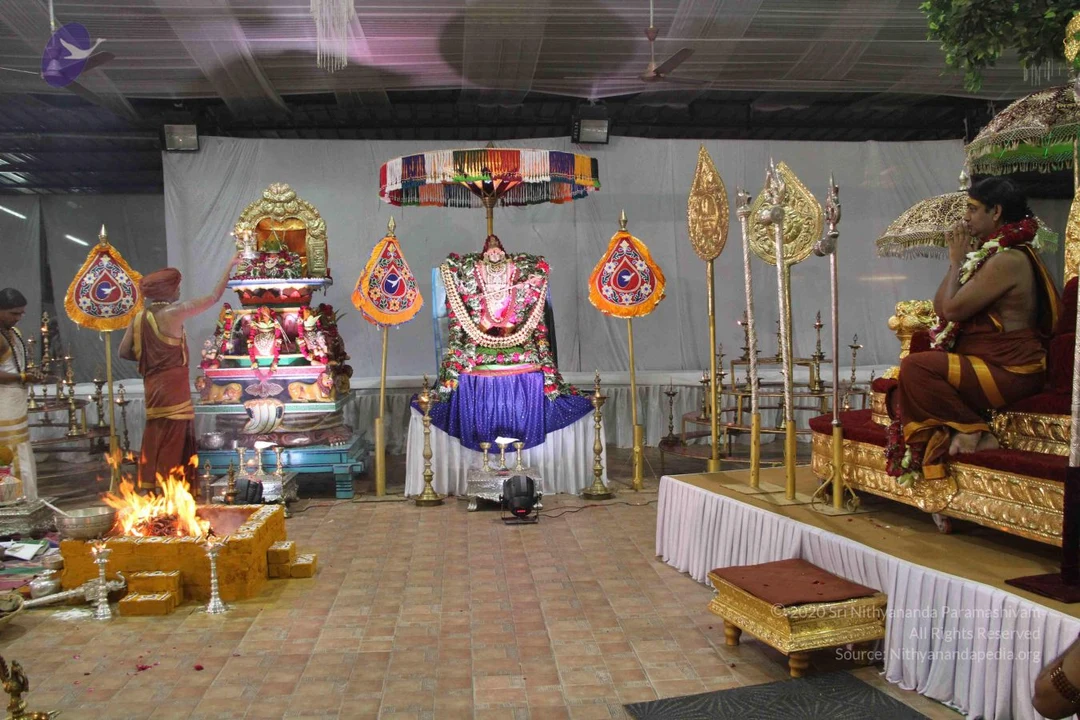
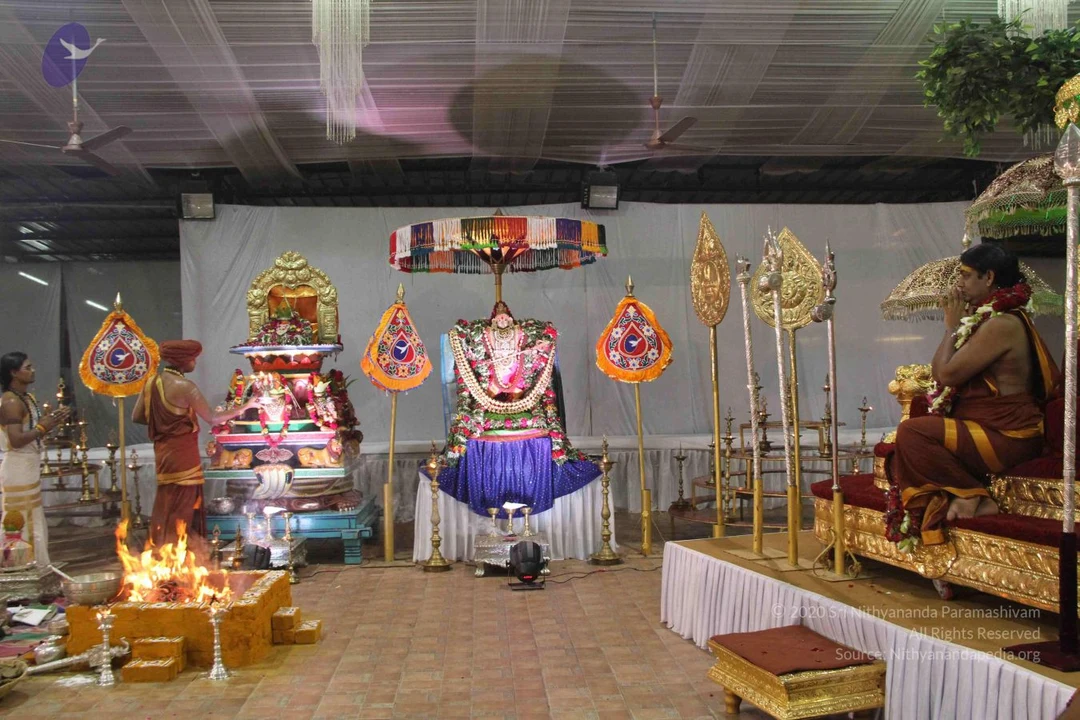
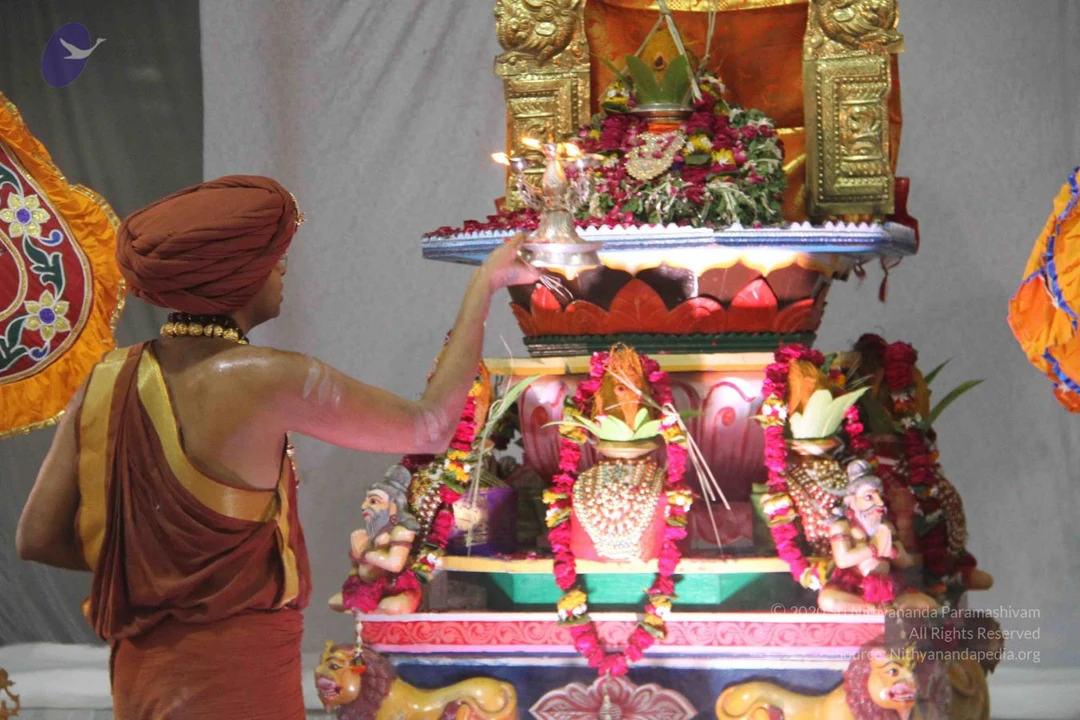
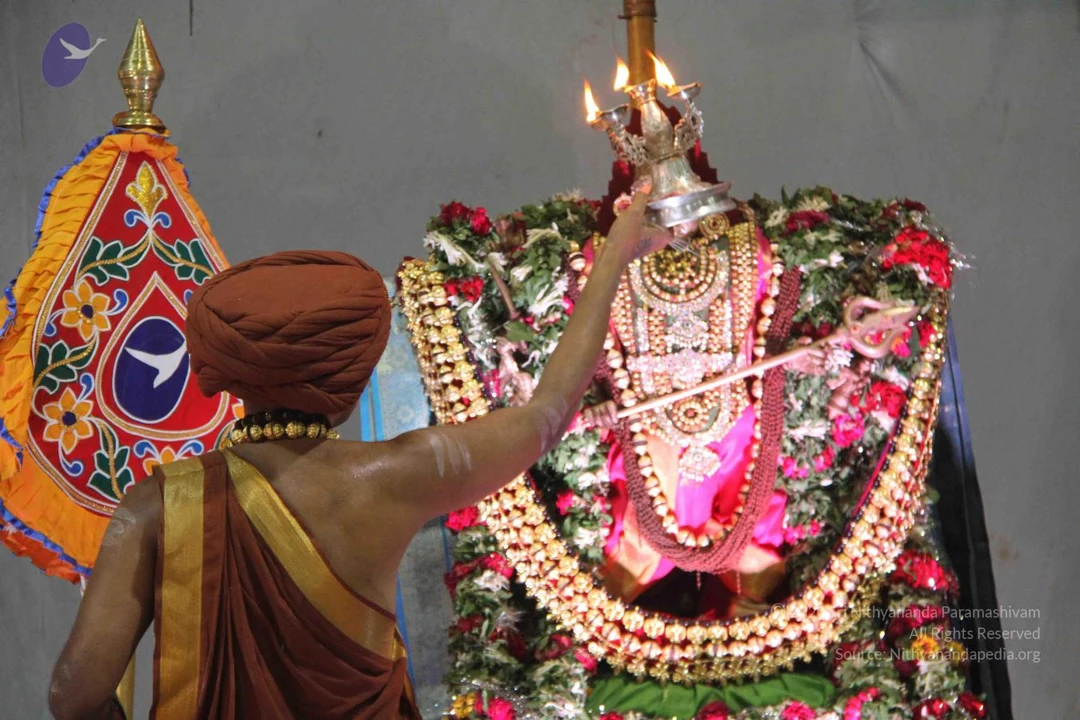
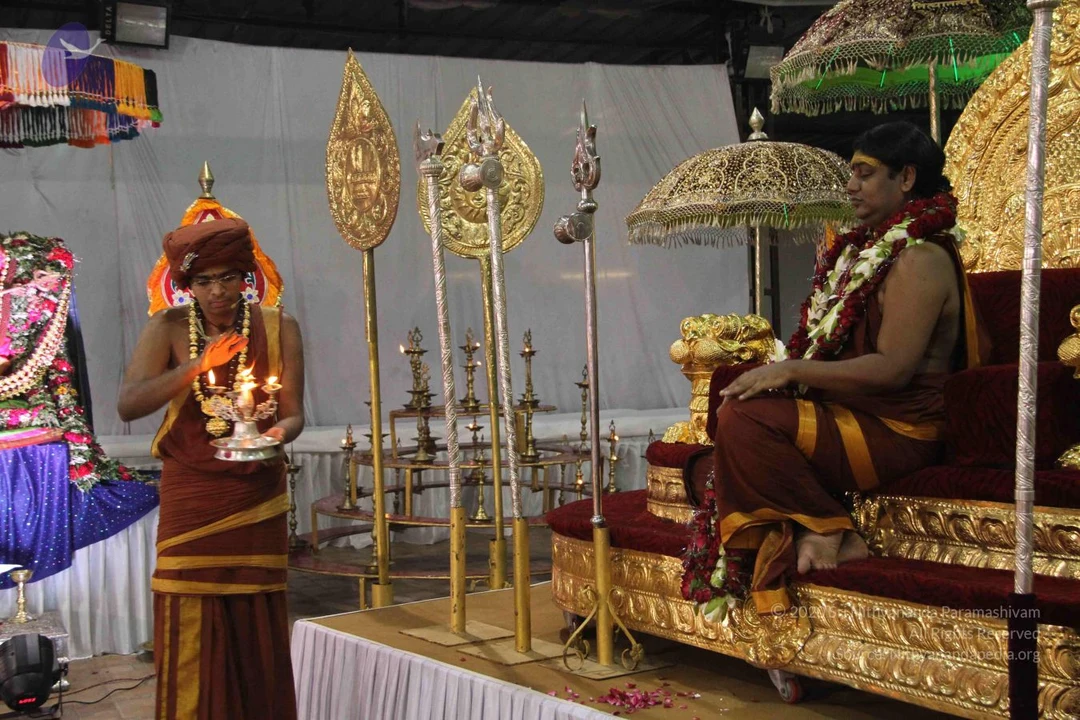
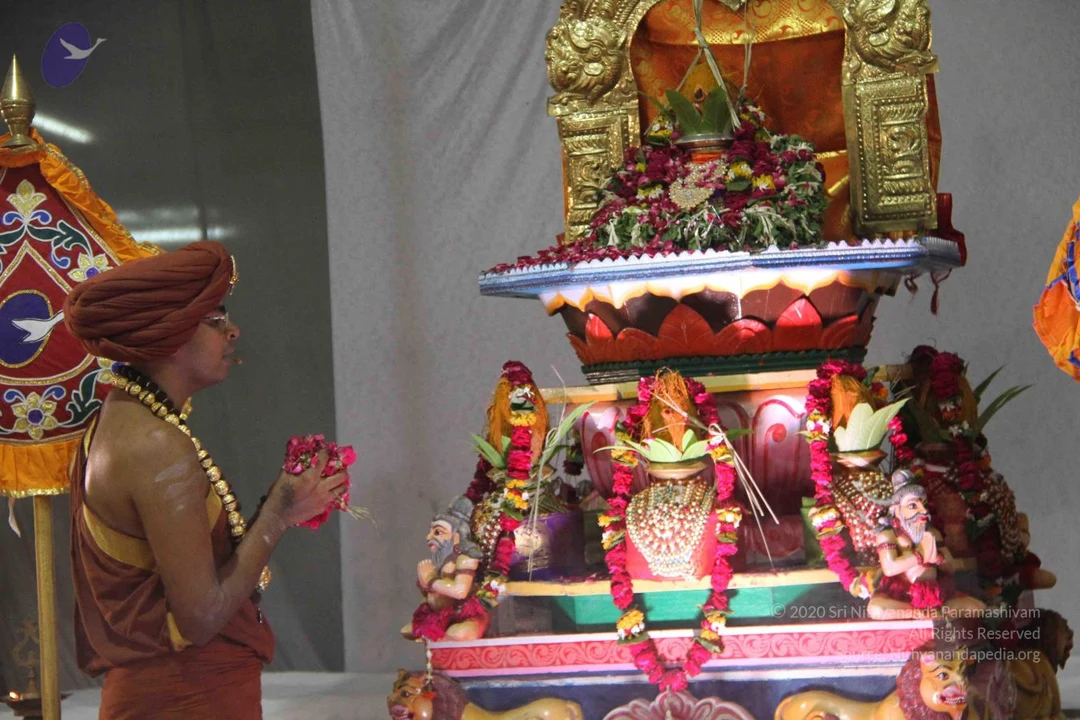
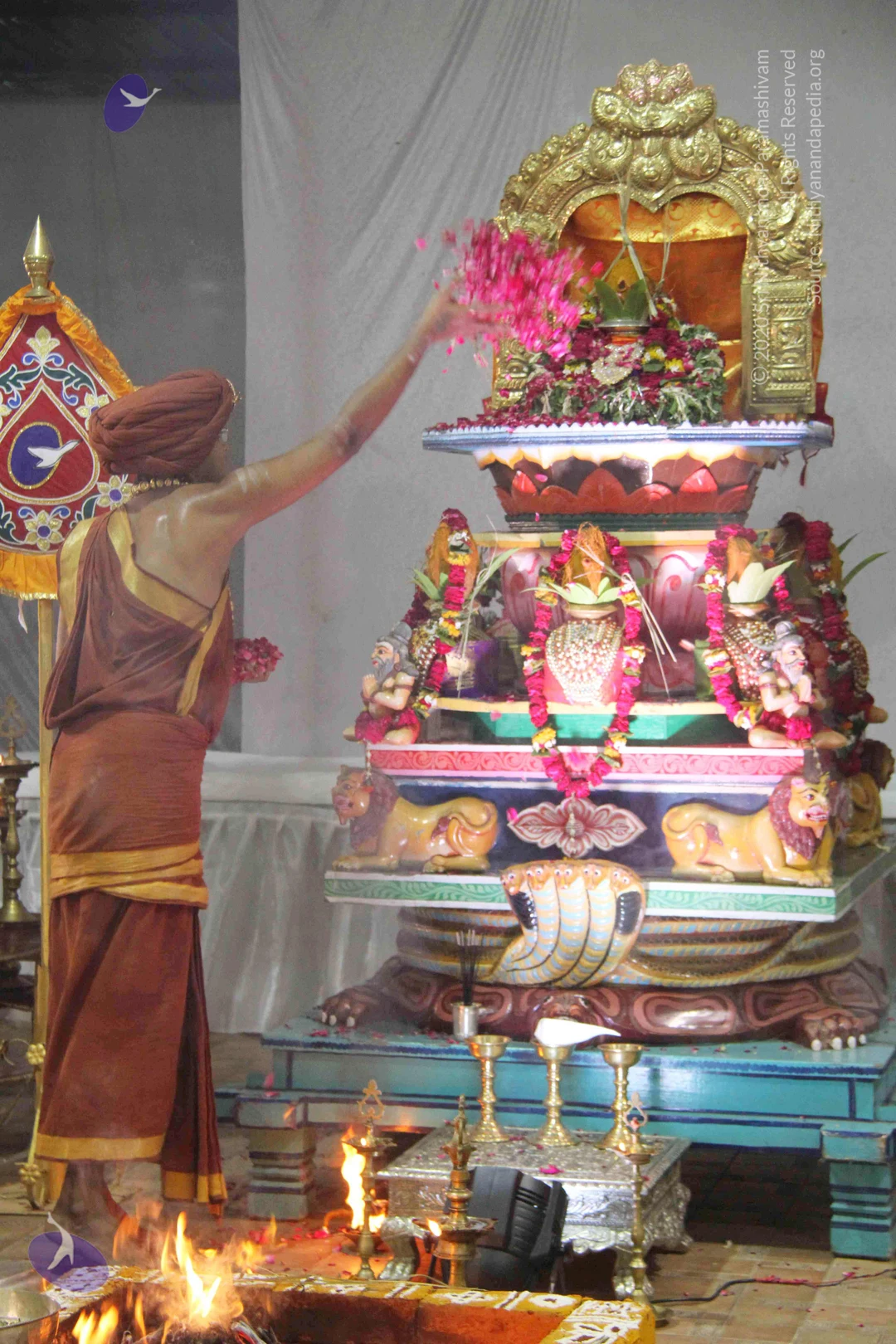
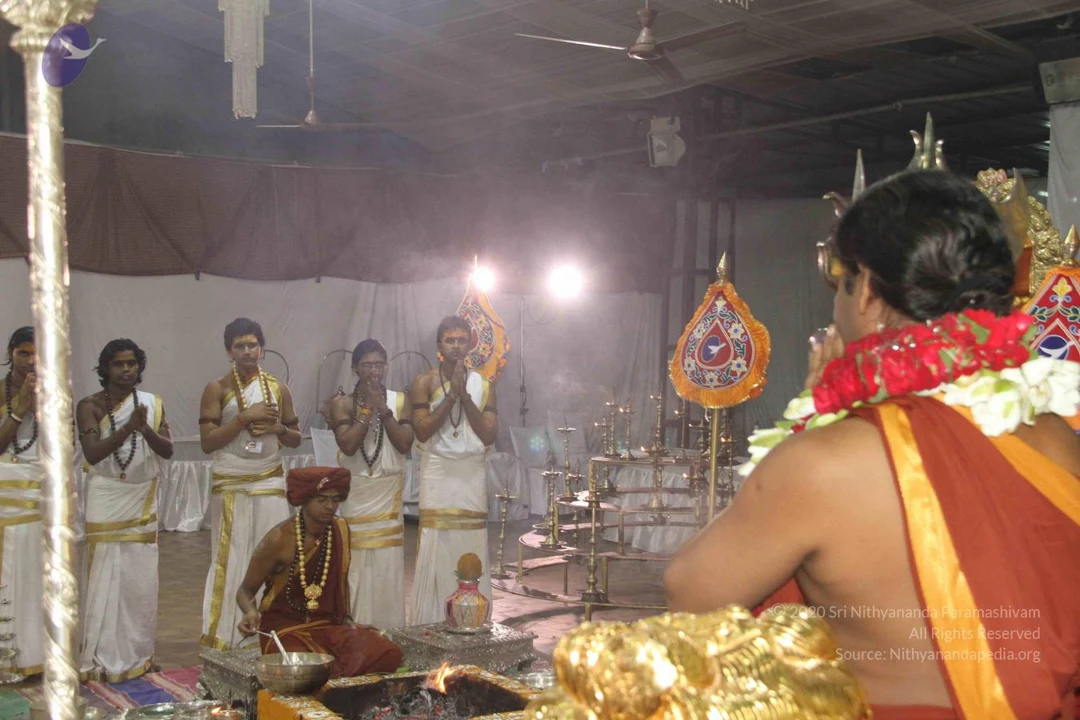
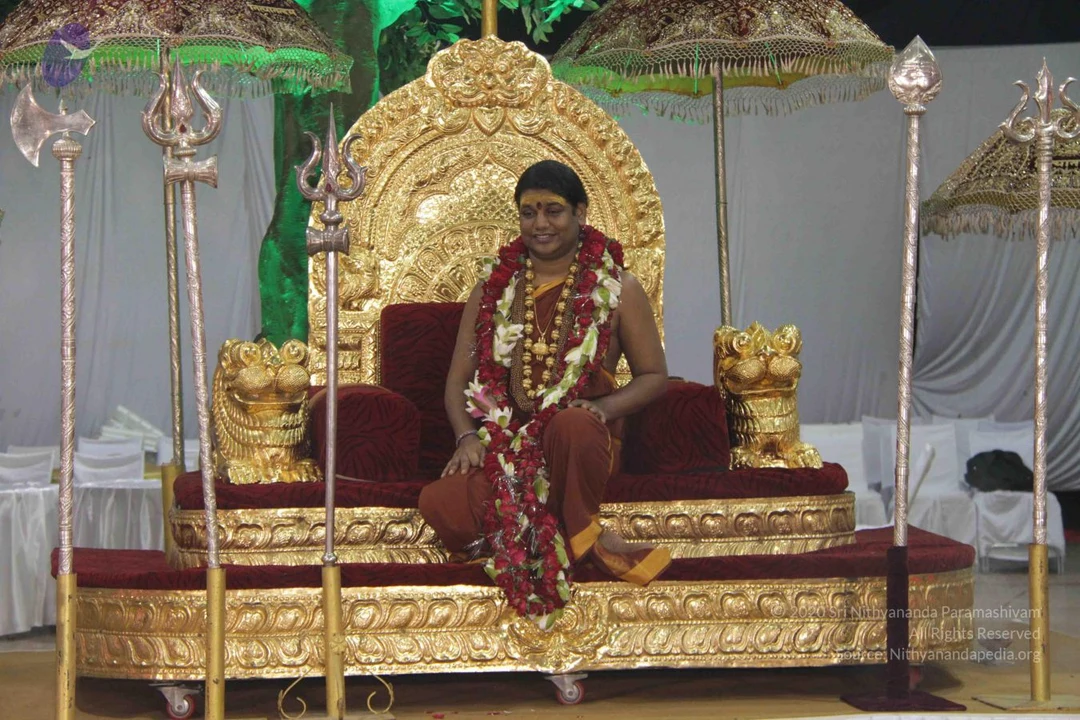
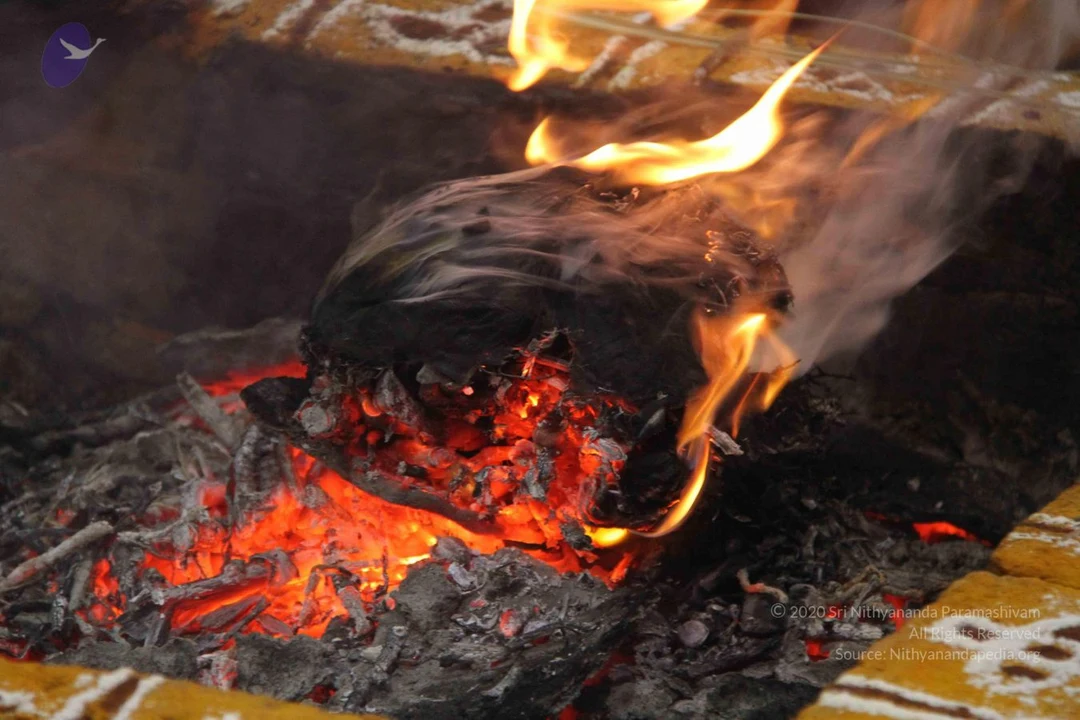
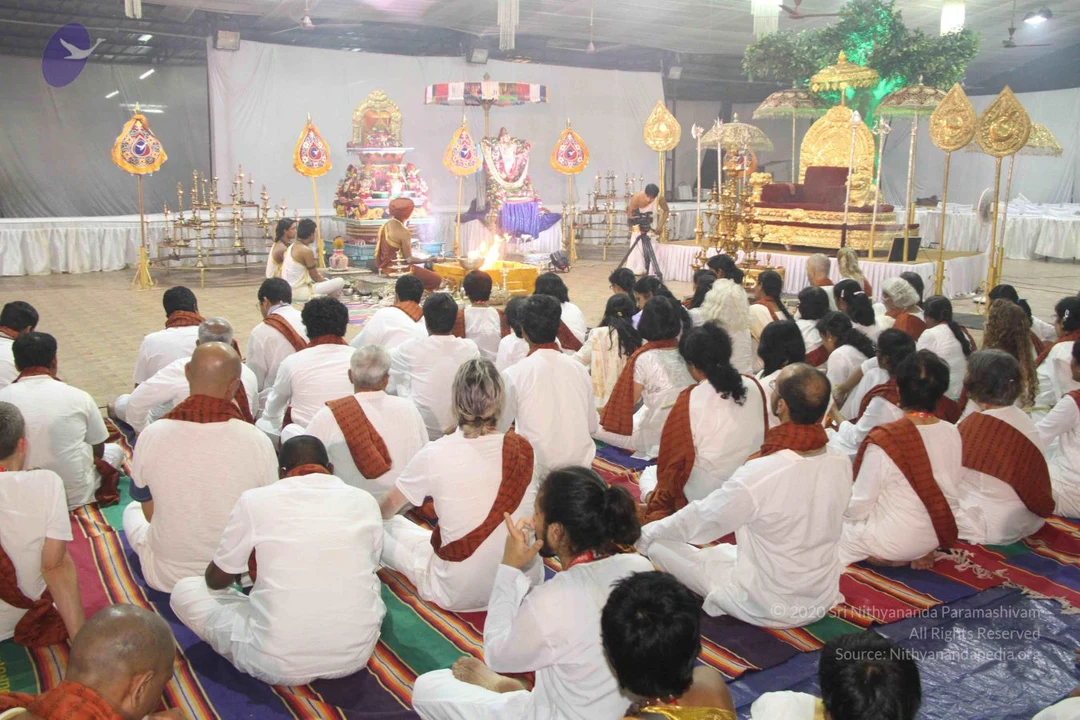
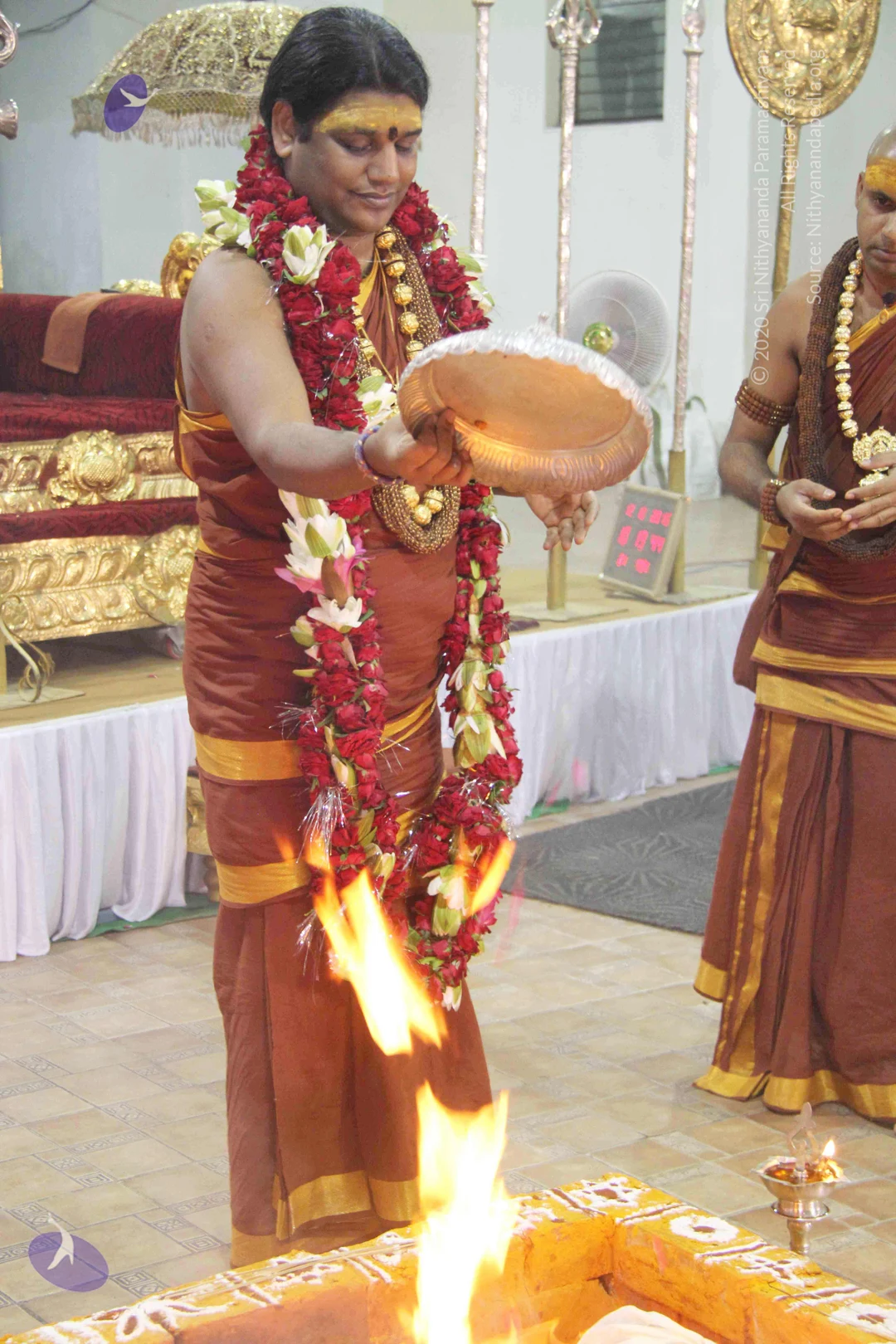
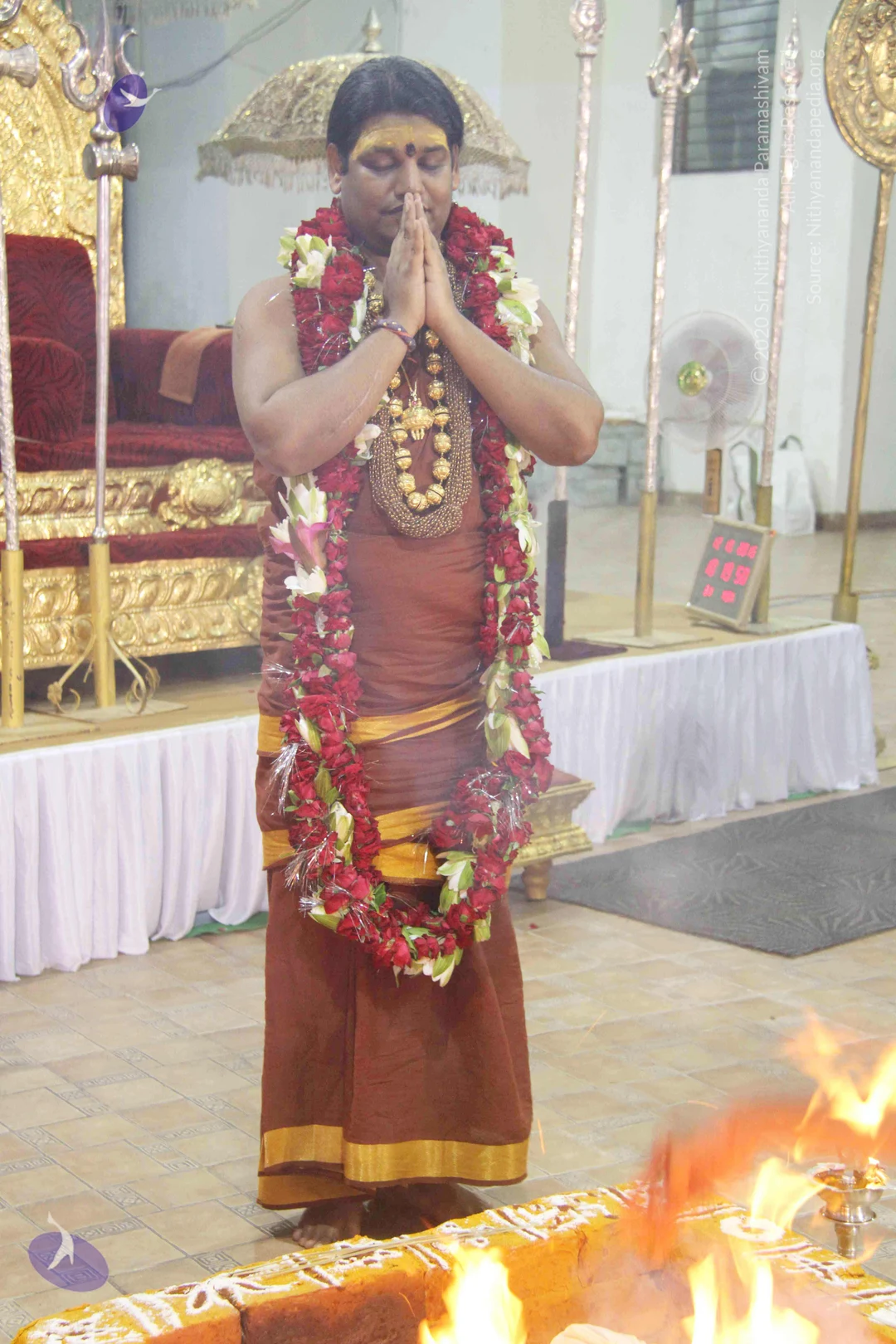
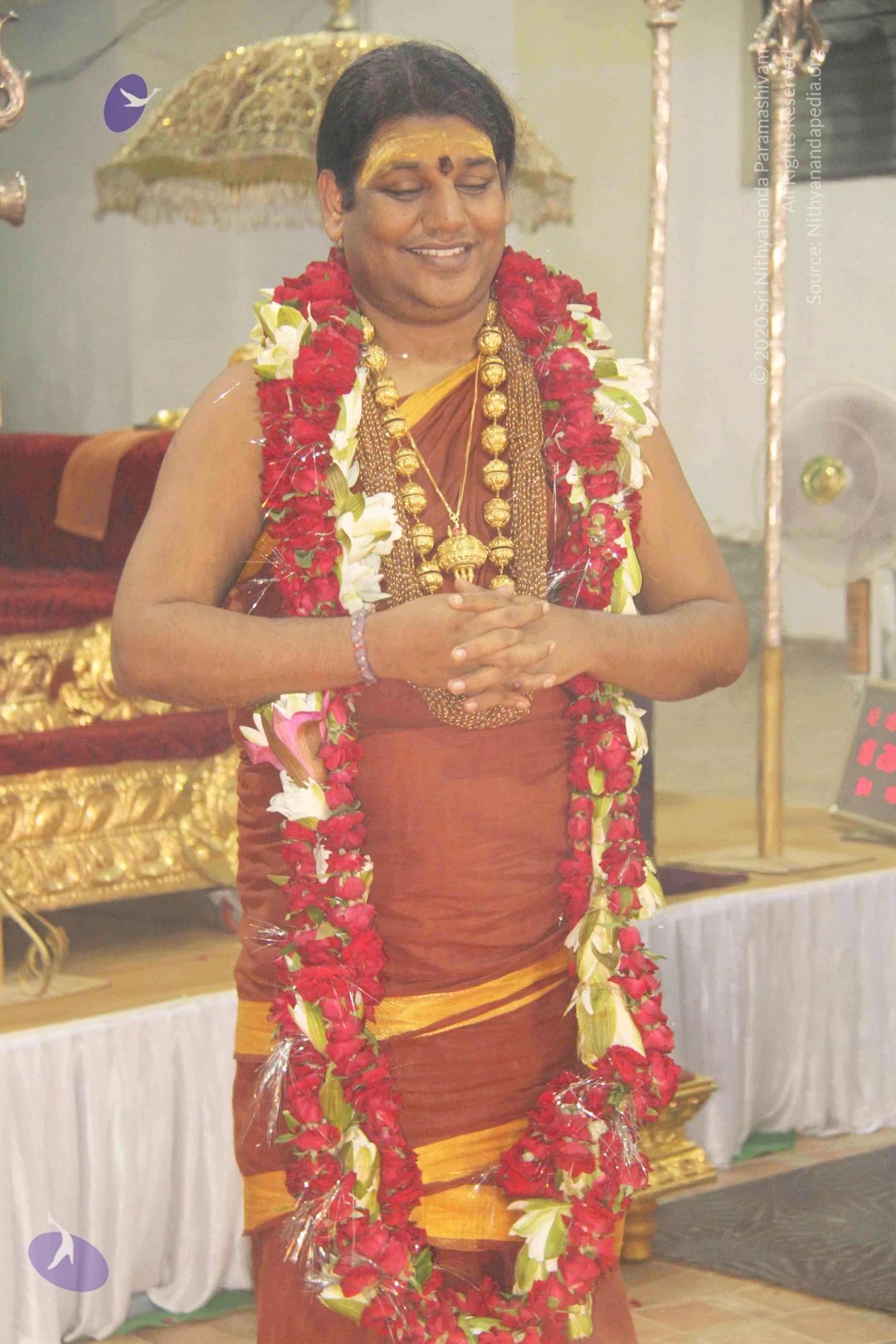
Kalabhairava Homa

More Pictures Of The Kalabhairava Homa

FB-photo-of-the-day

Photos from this day

View all 460 photos

Photos From The Day:
11 photosSource gallery
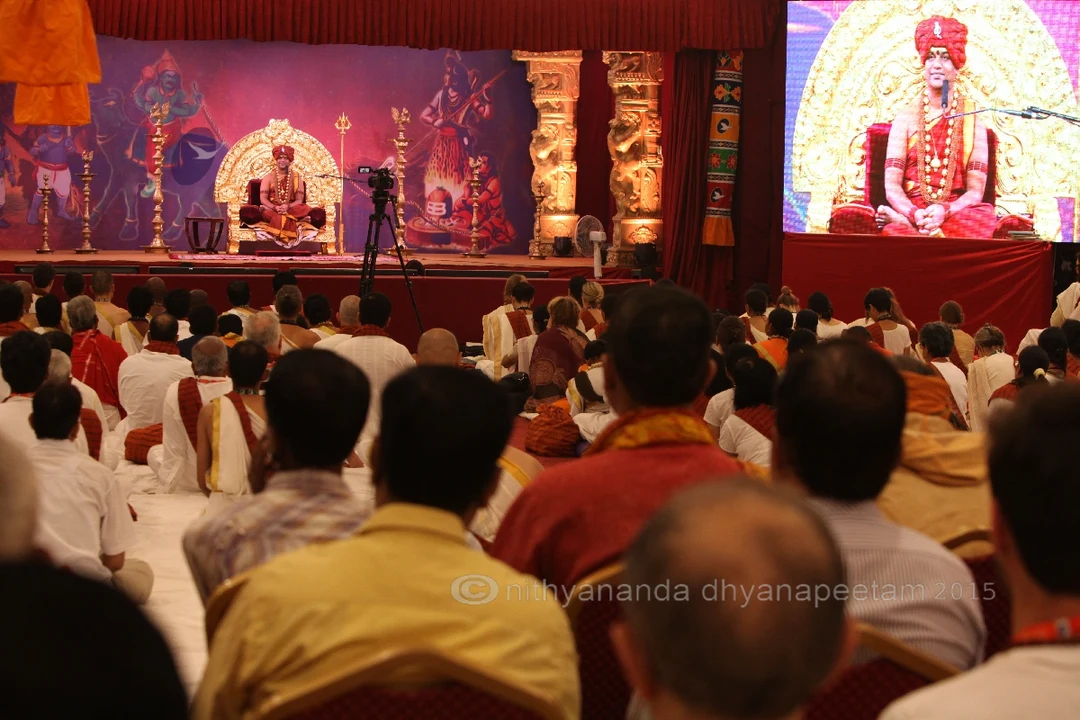
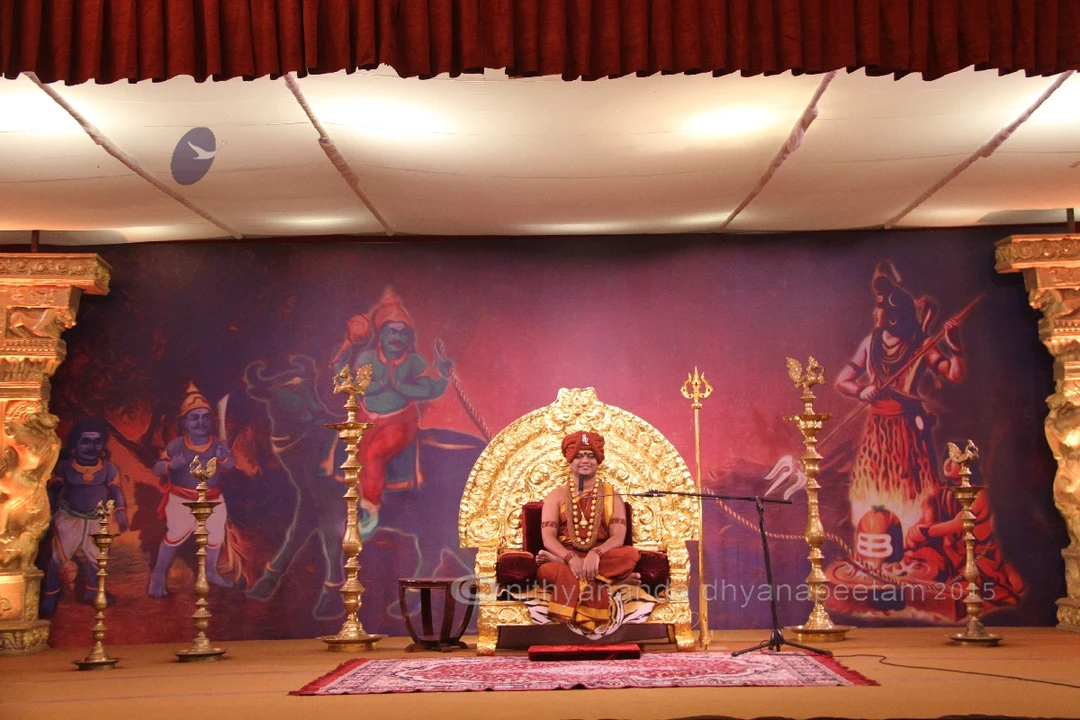
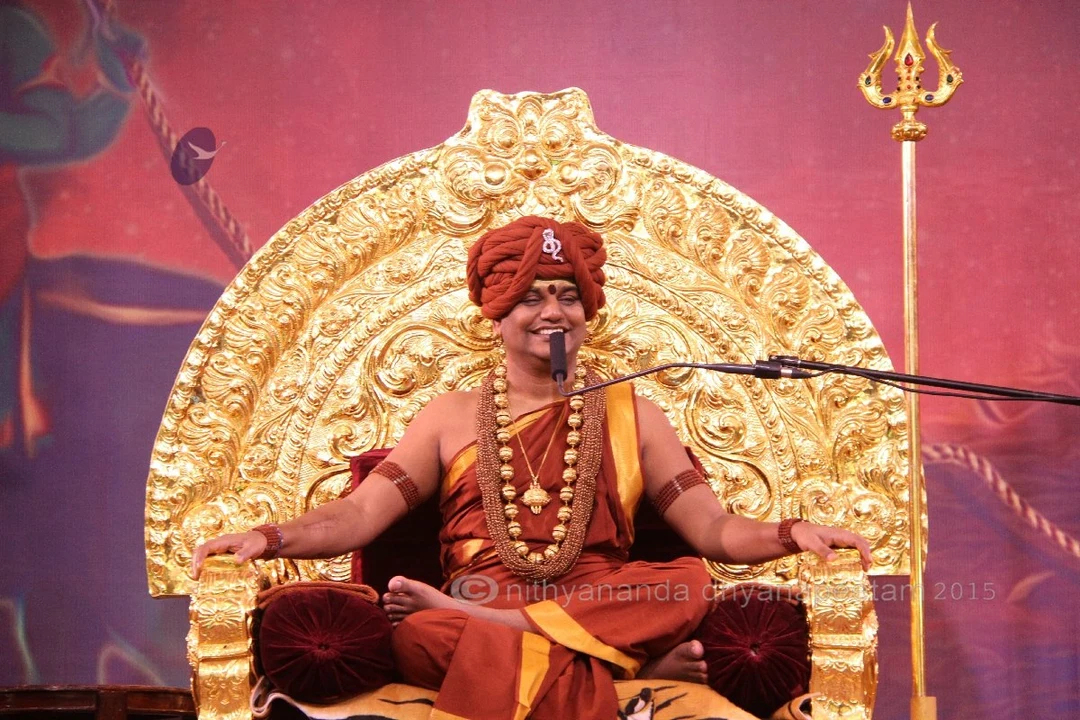
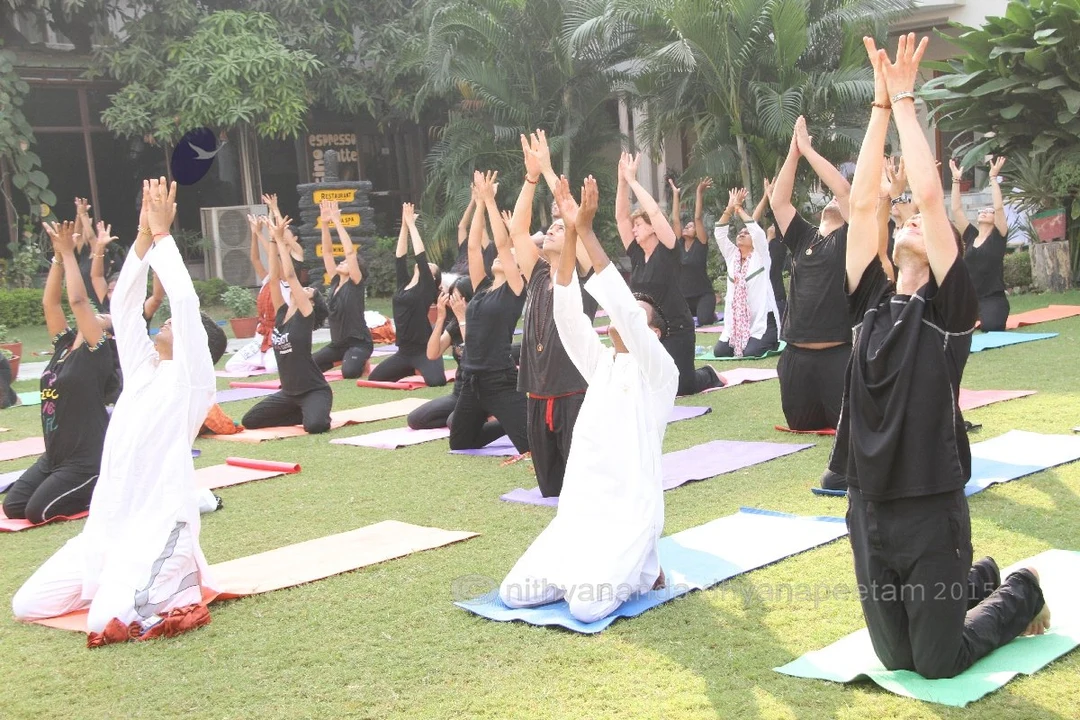
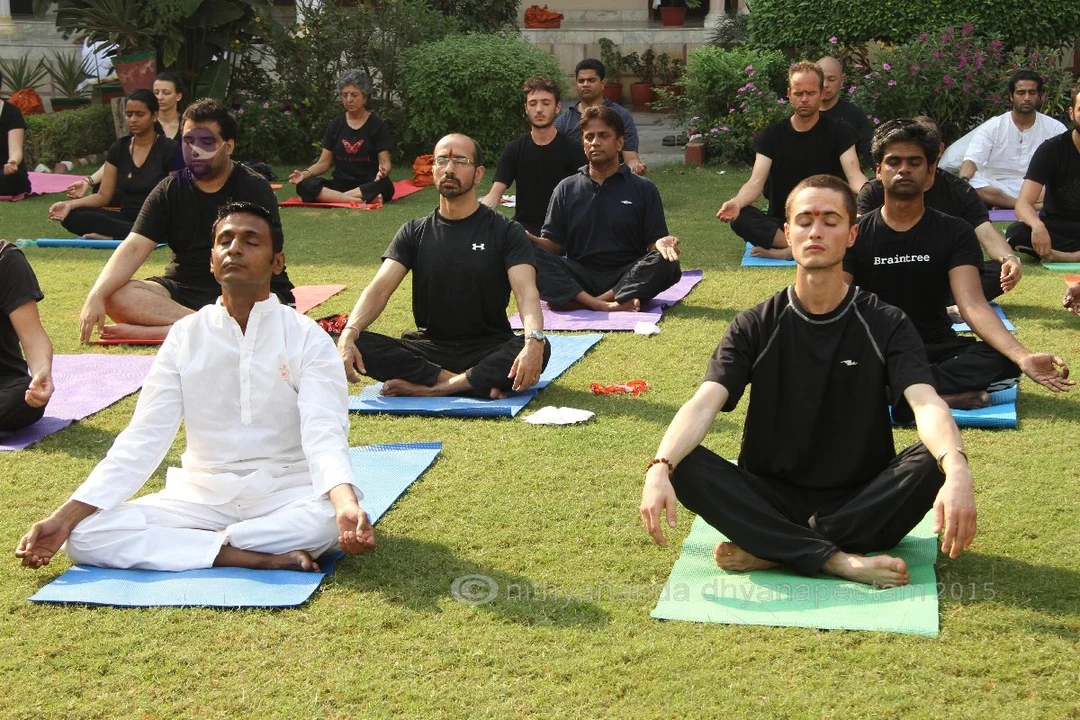
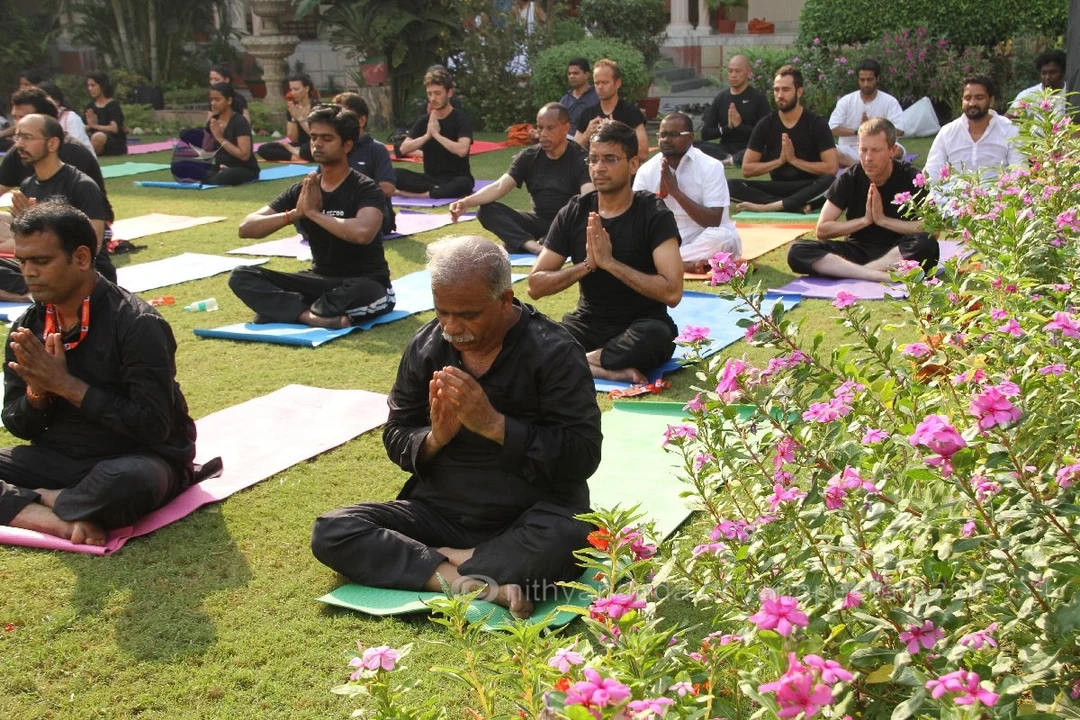
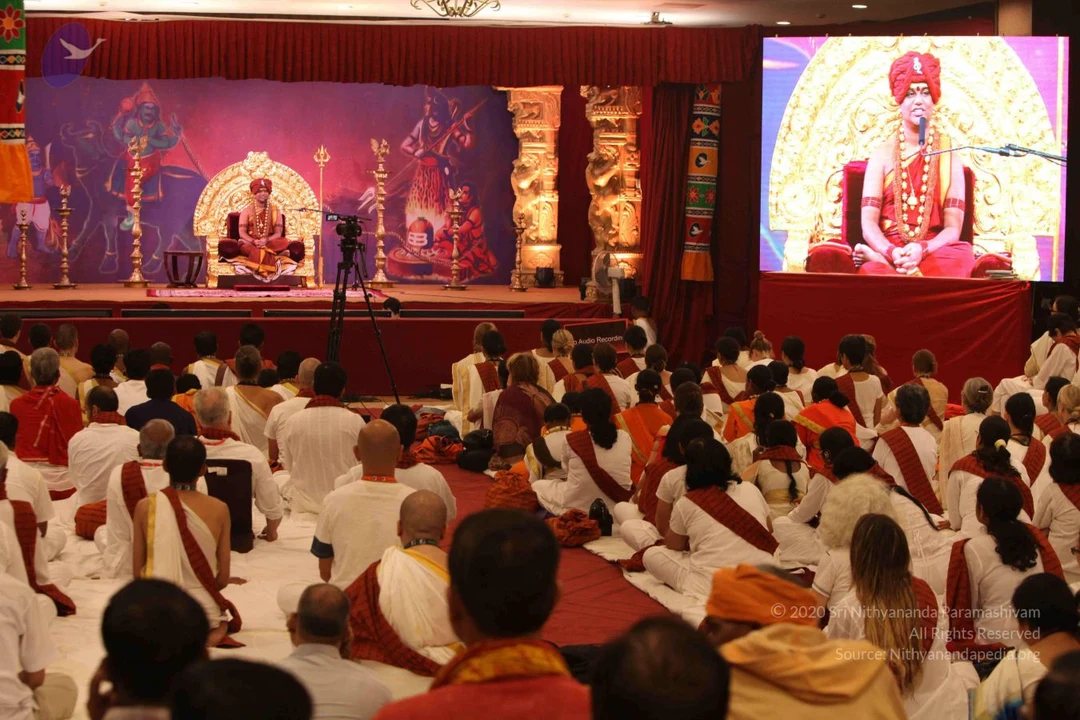
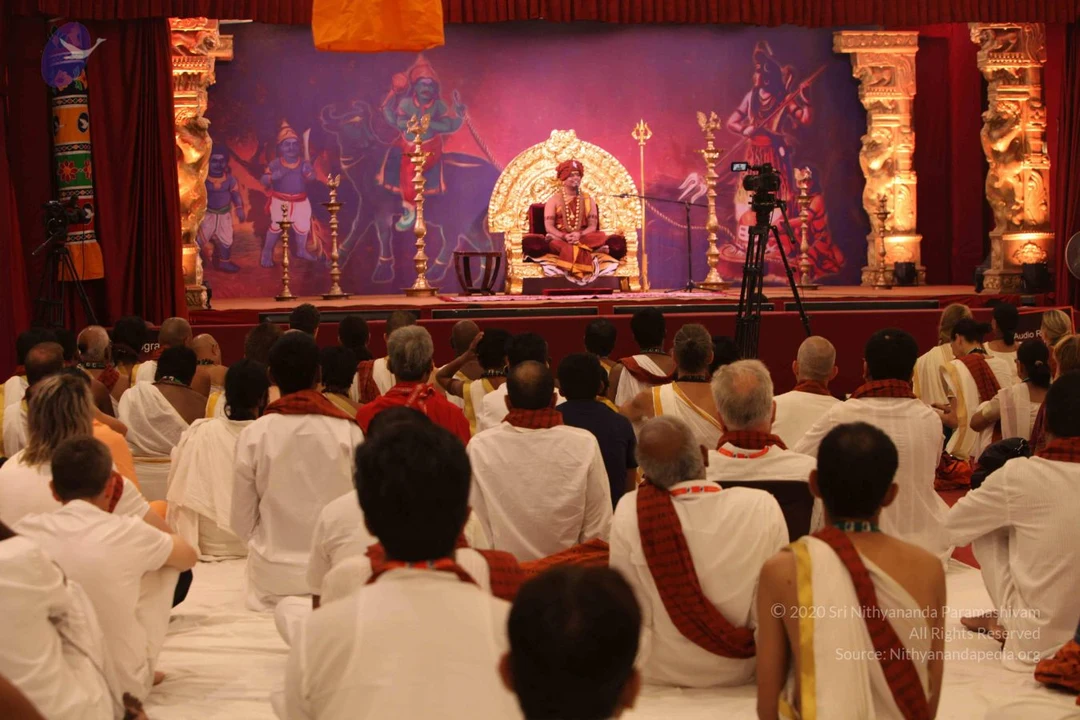
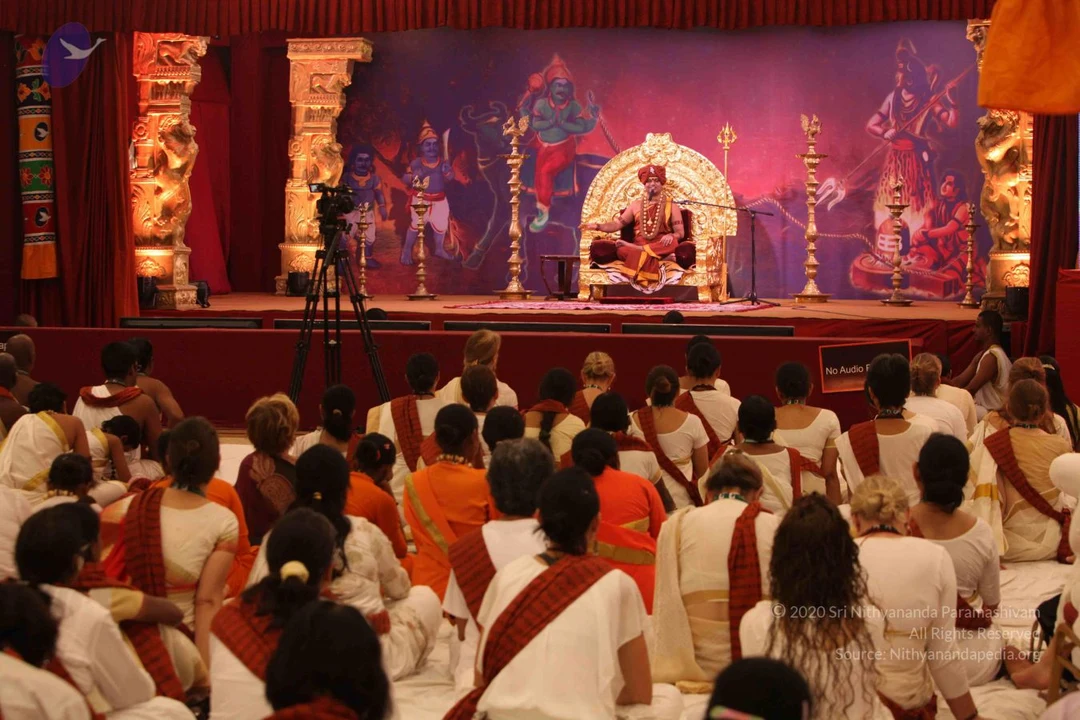
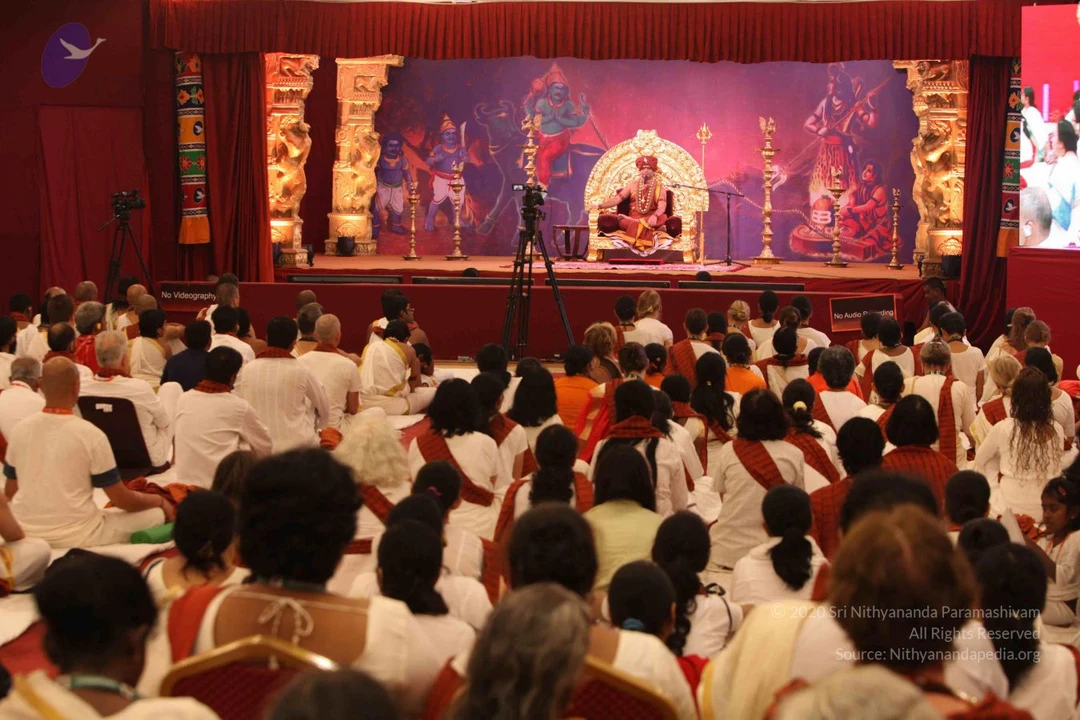
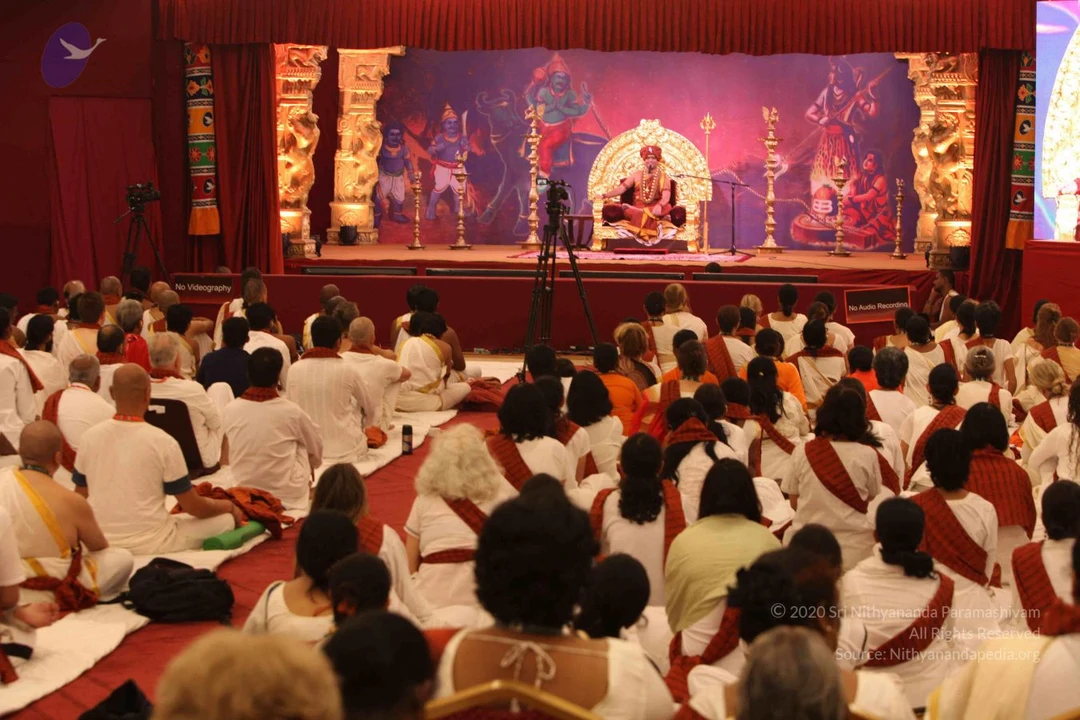
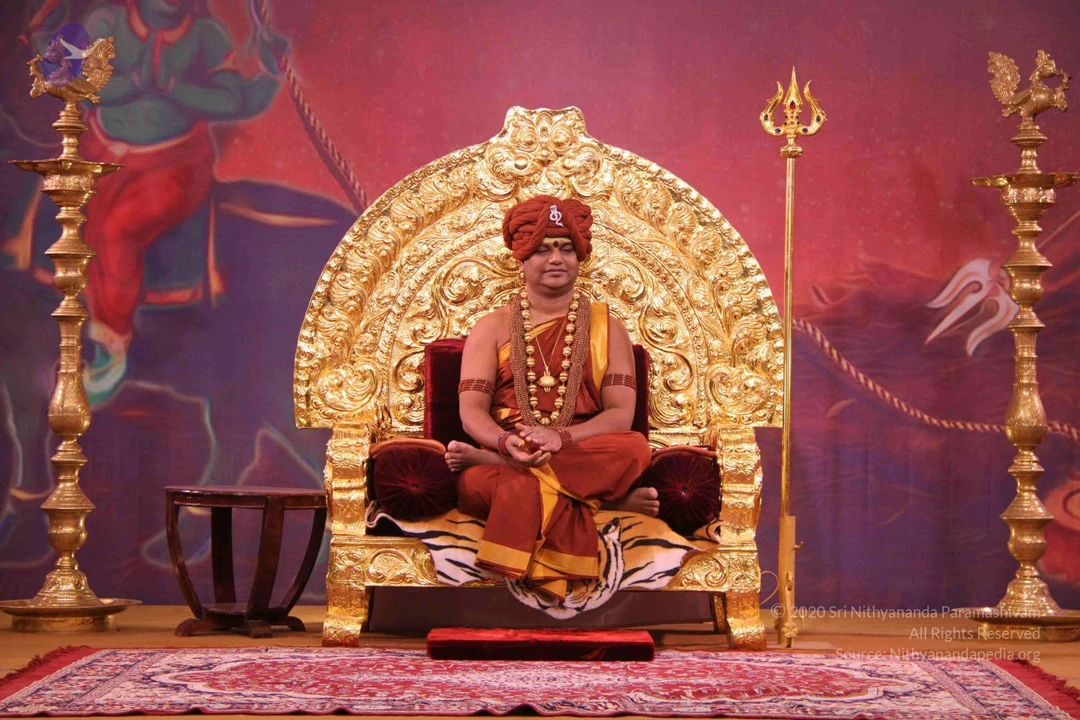
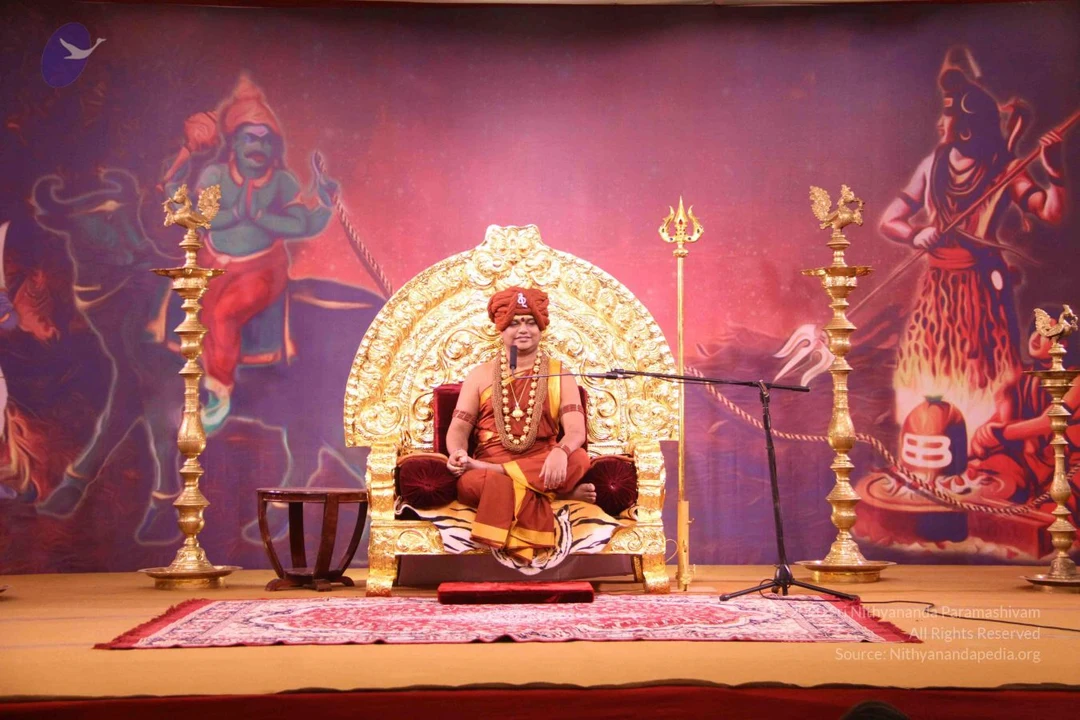
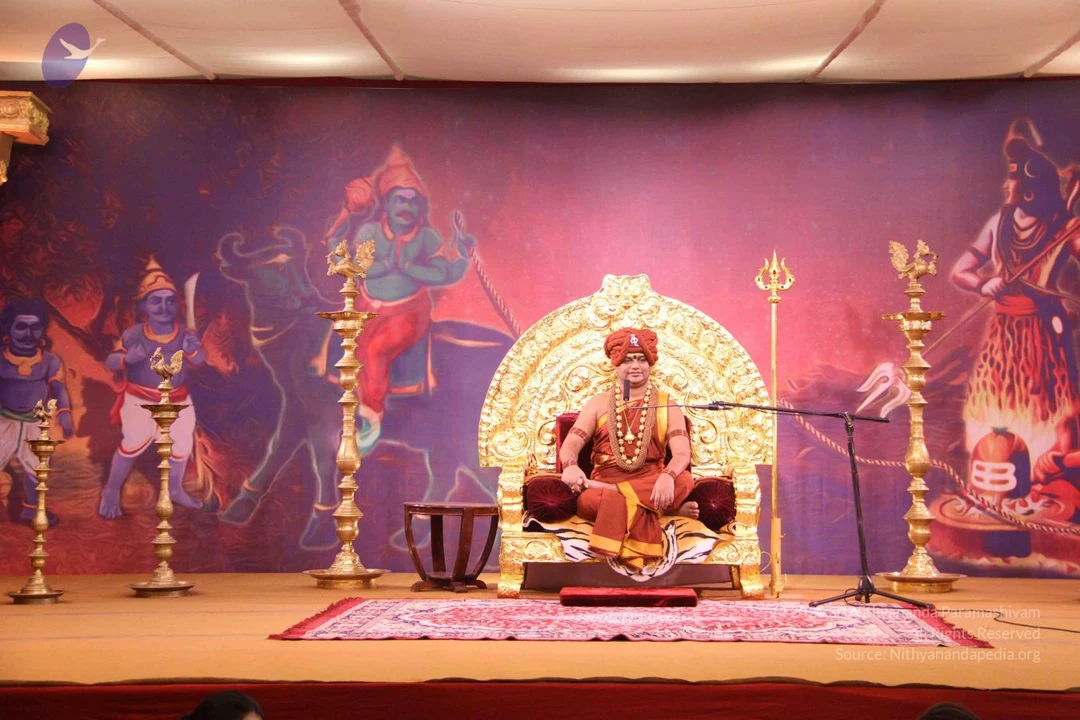
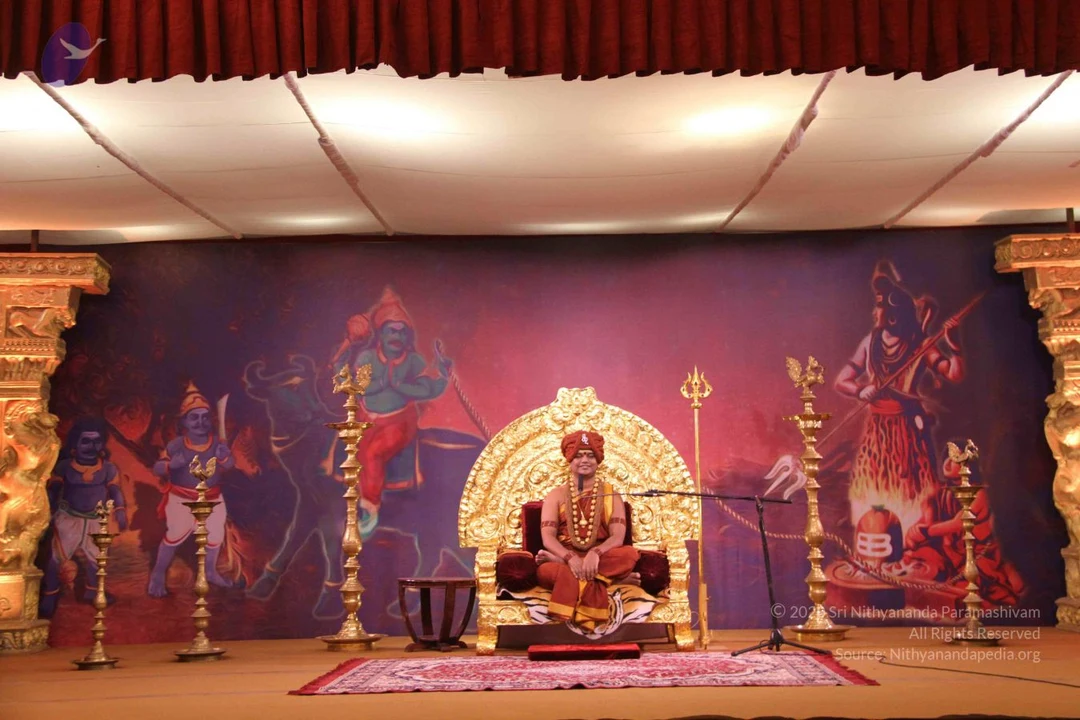
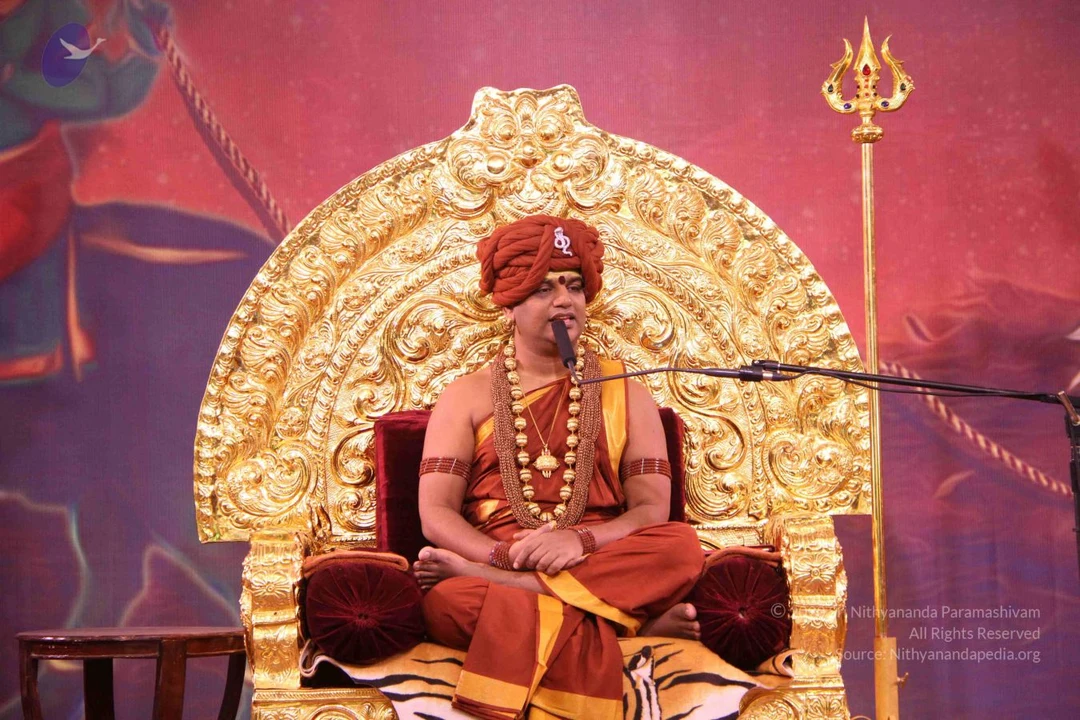
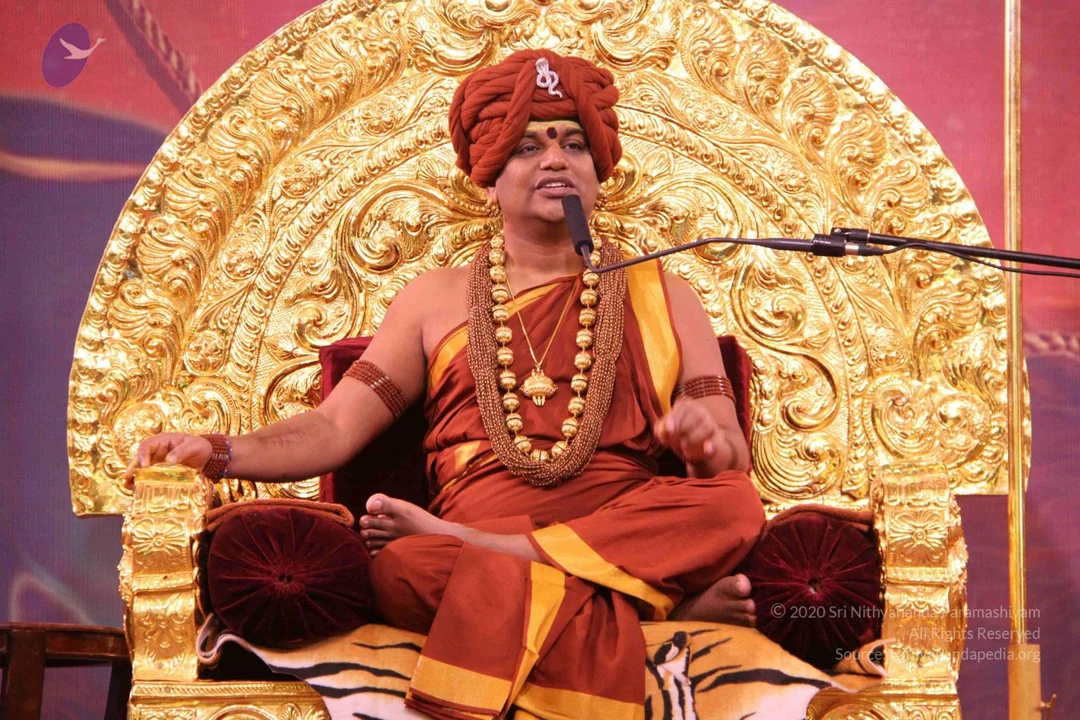
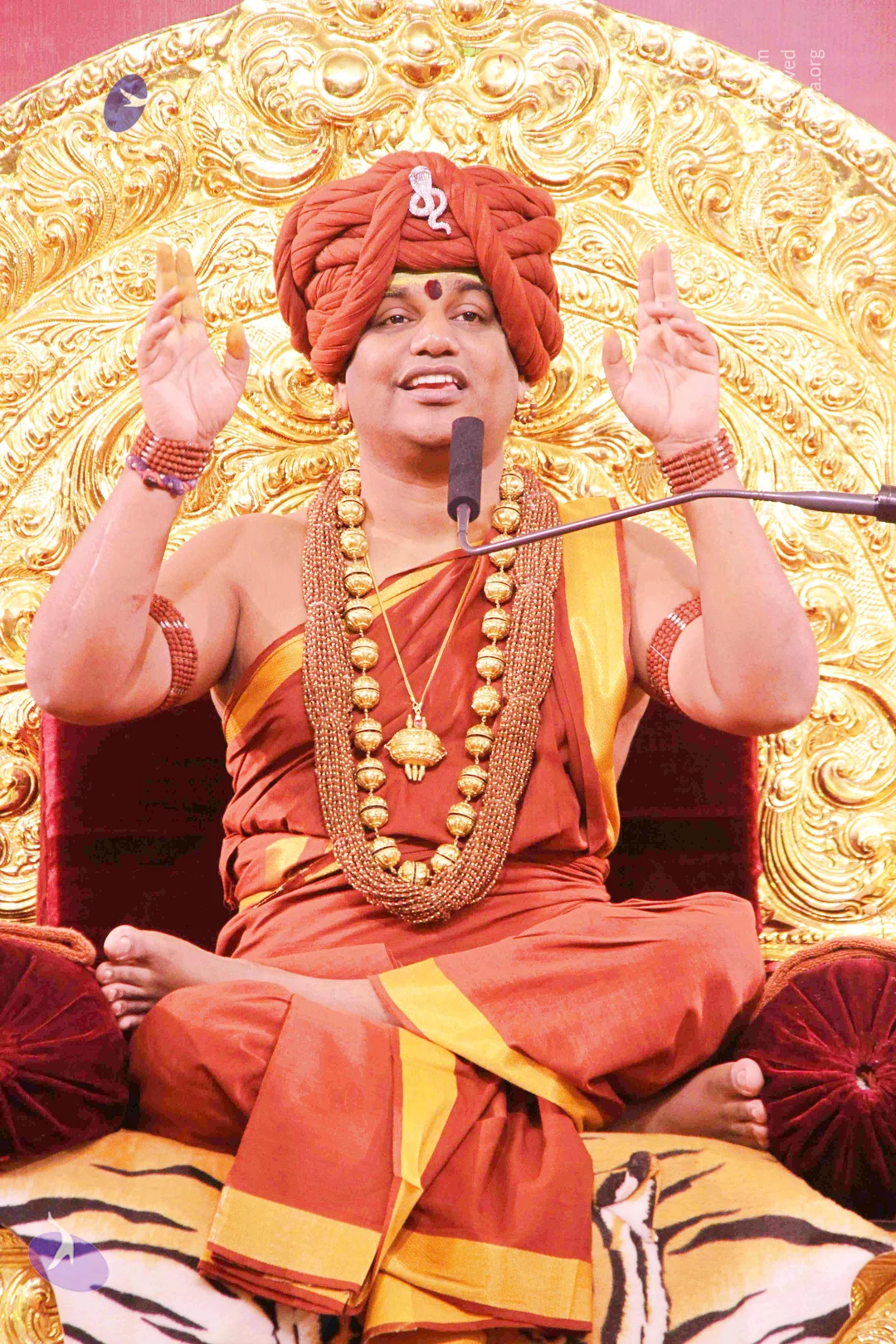
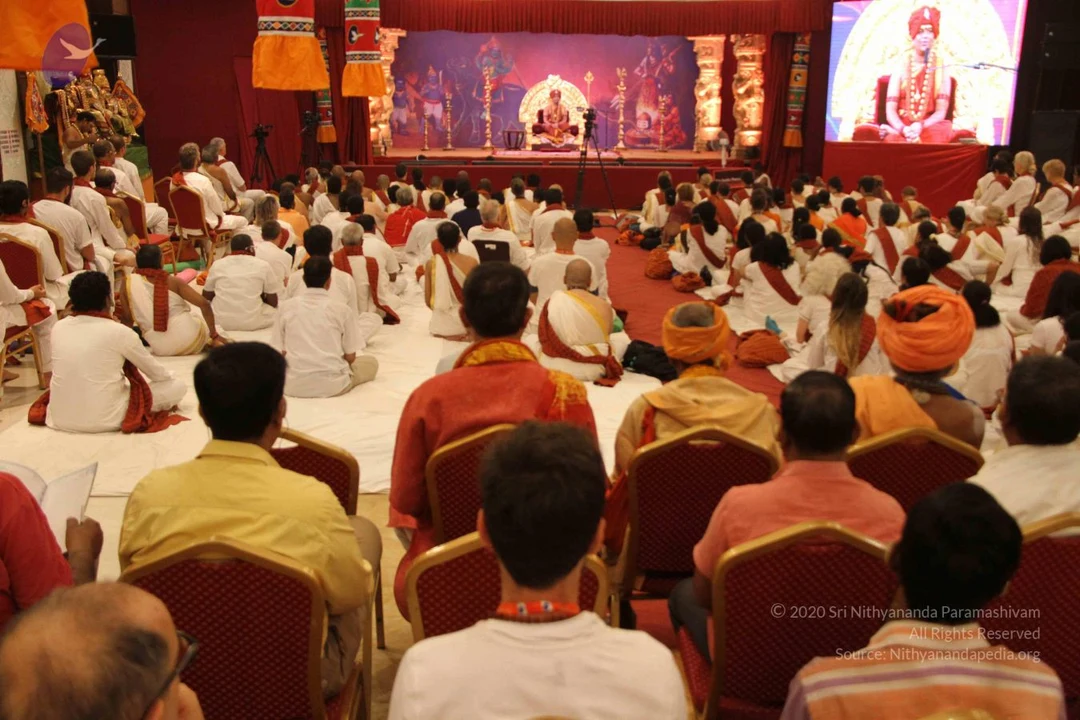
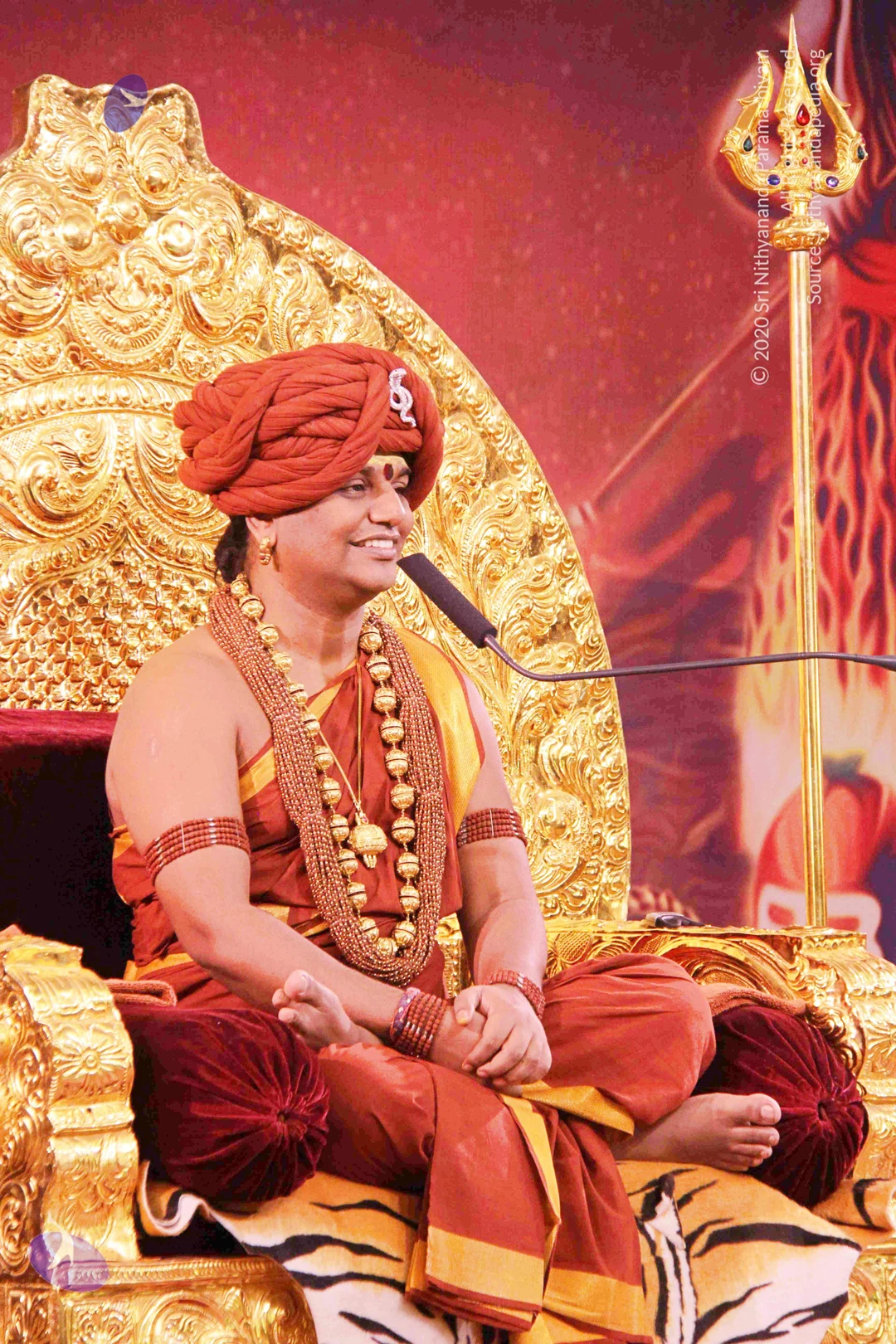
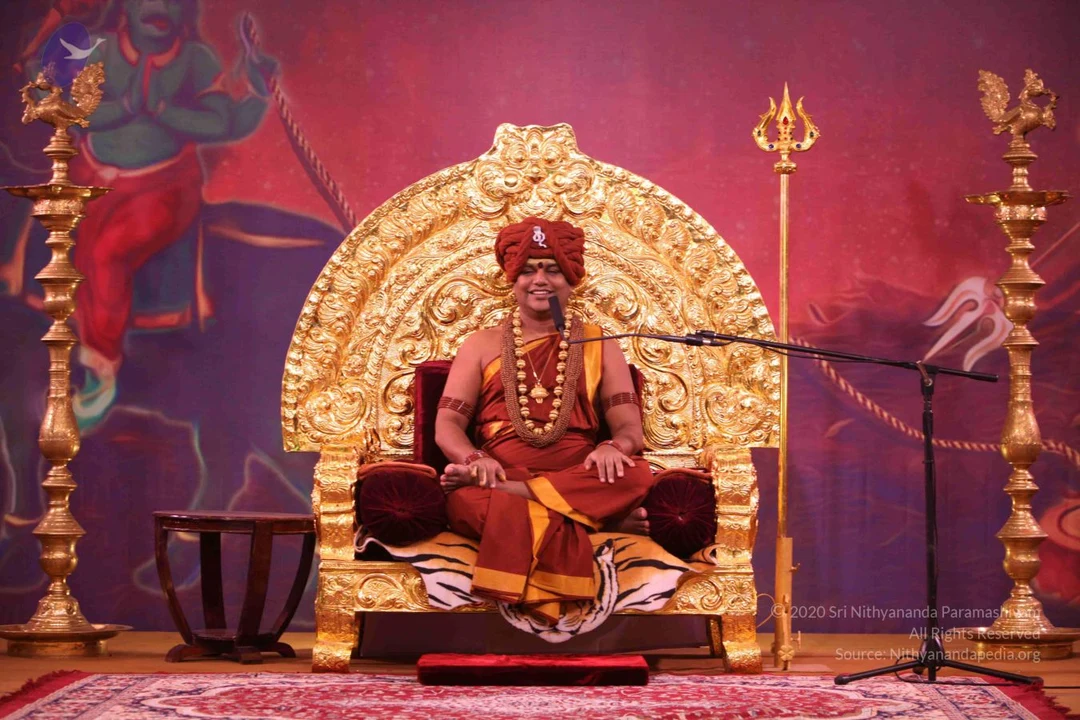
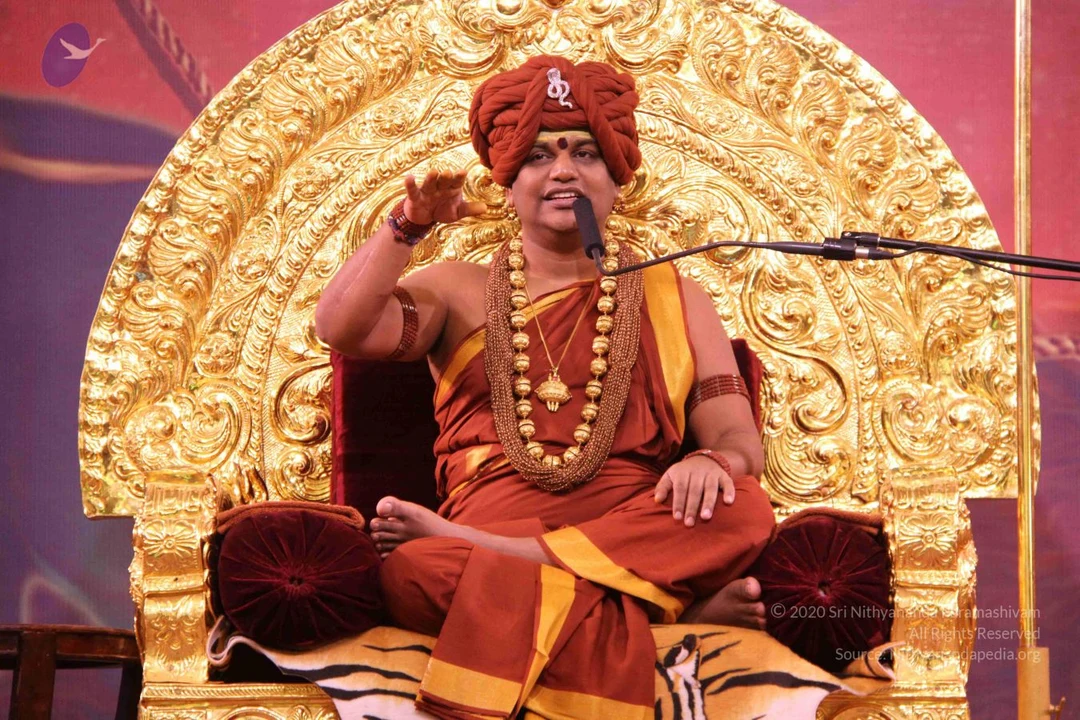
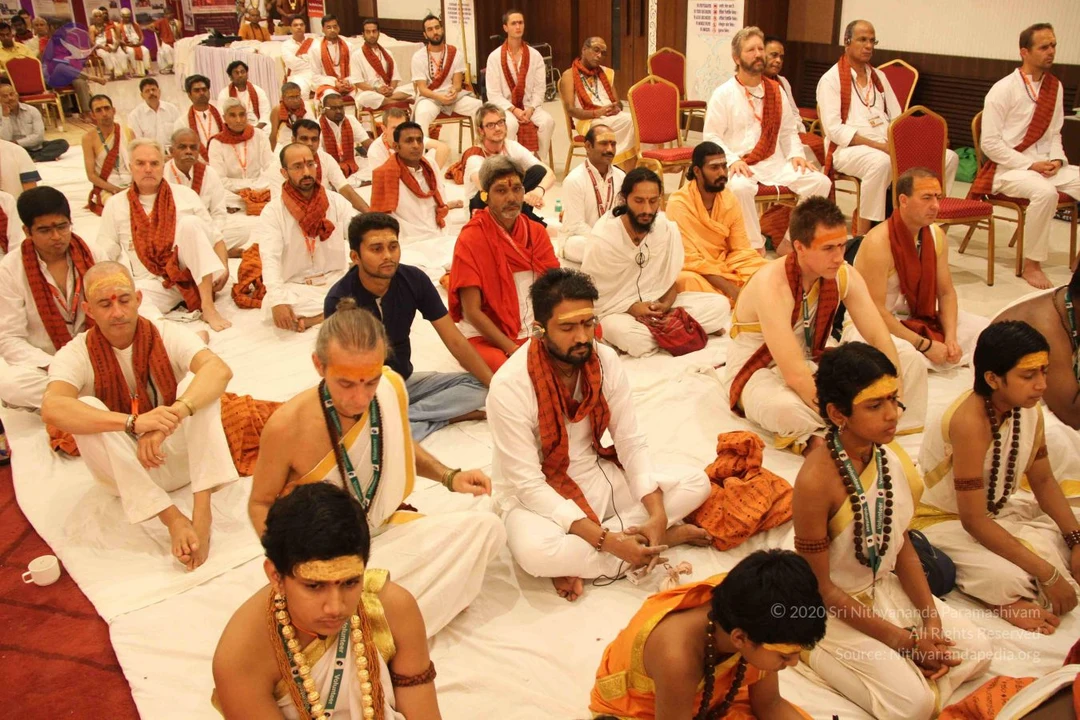
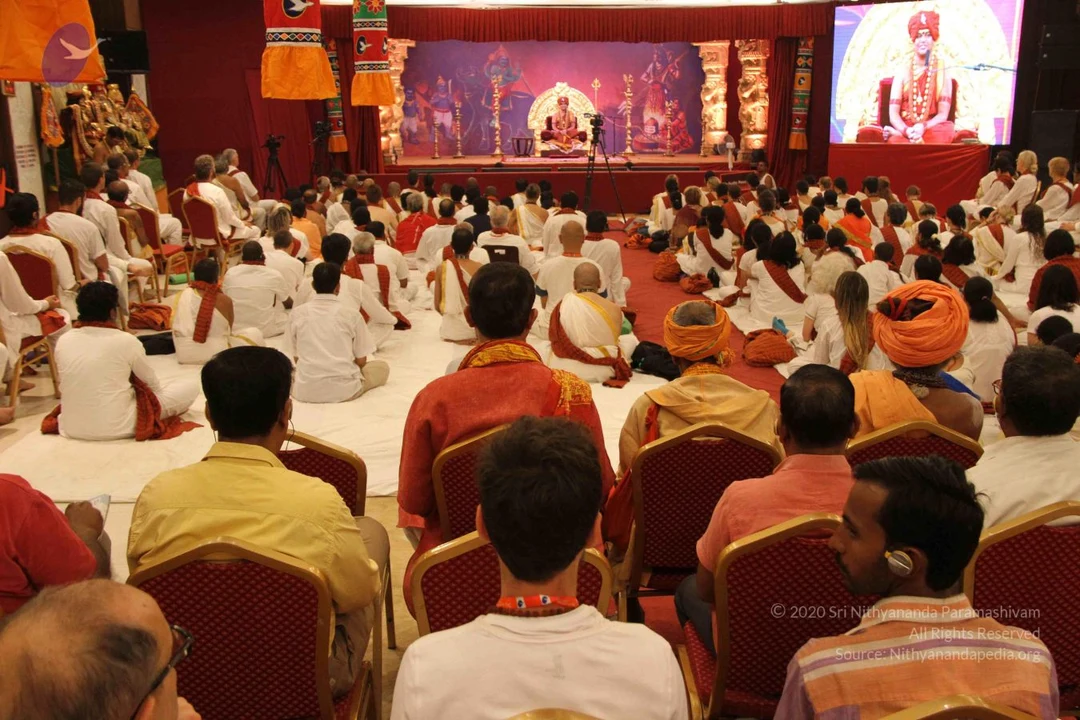
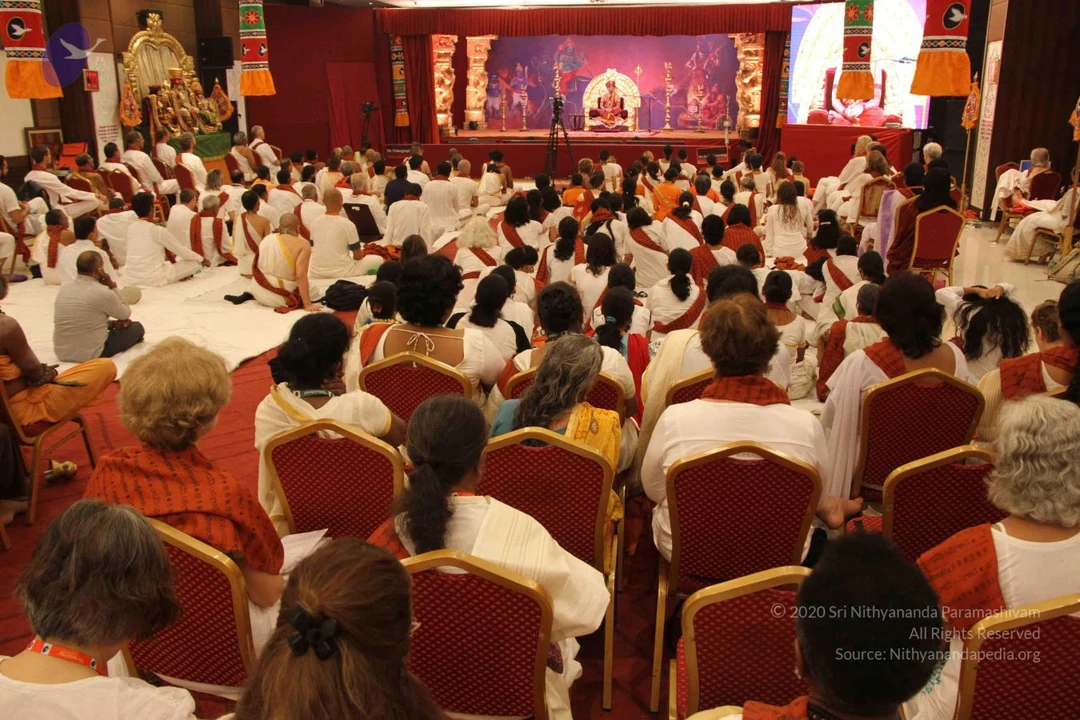
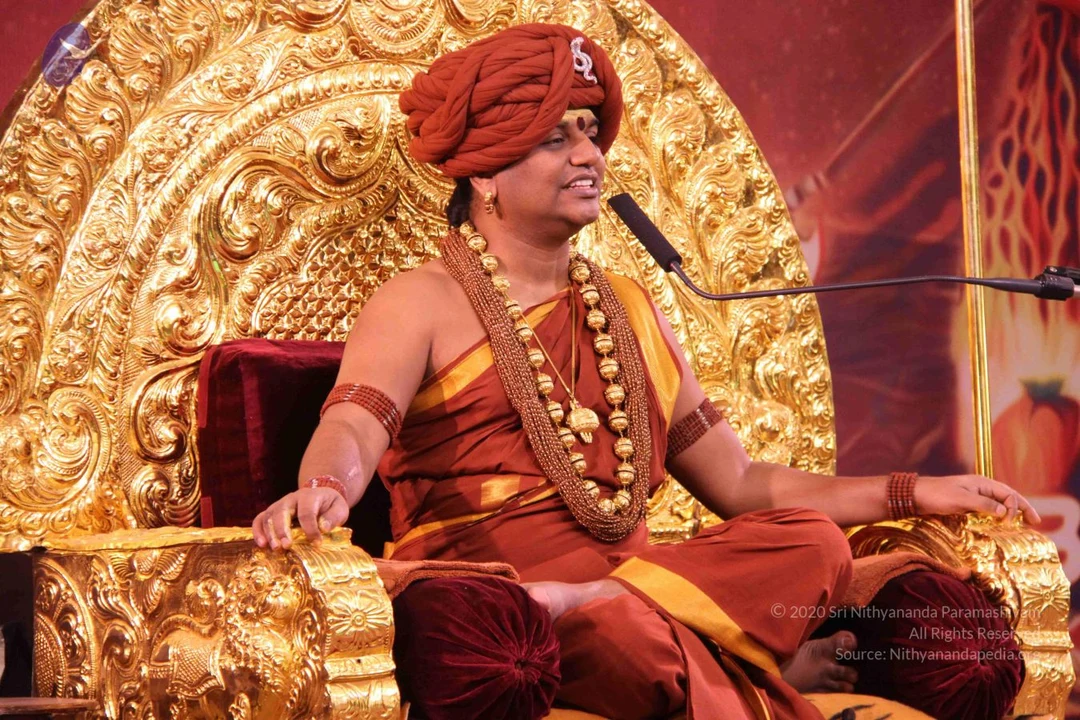
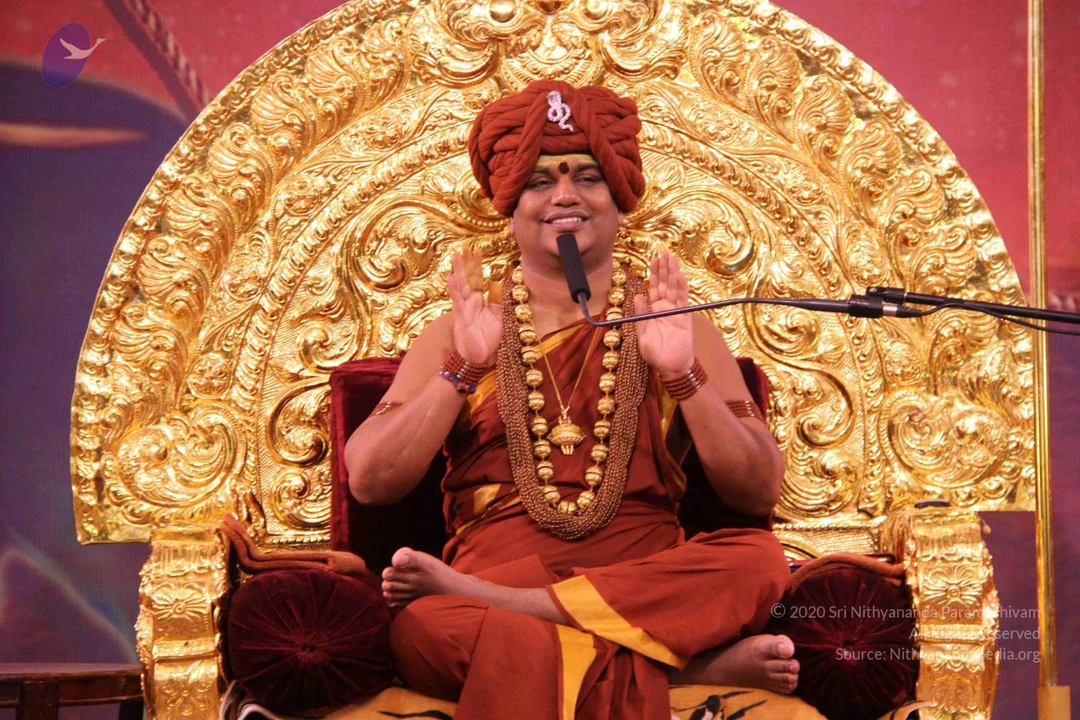
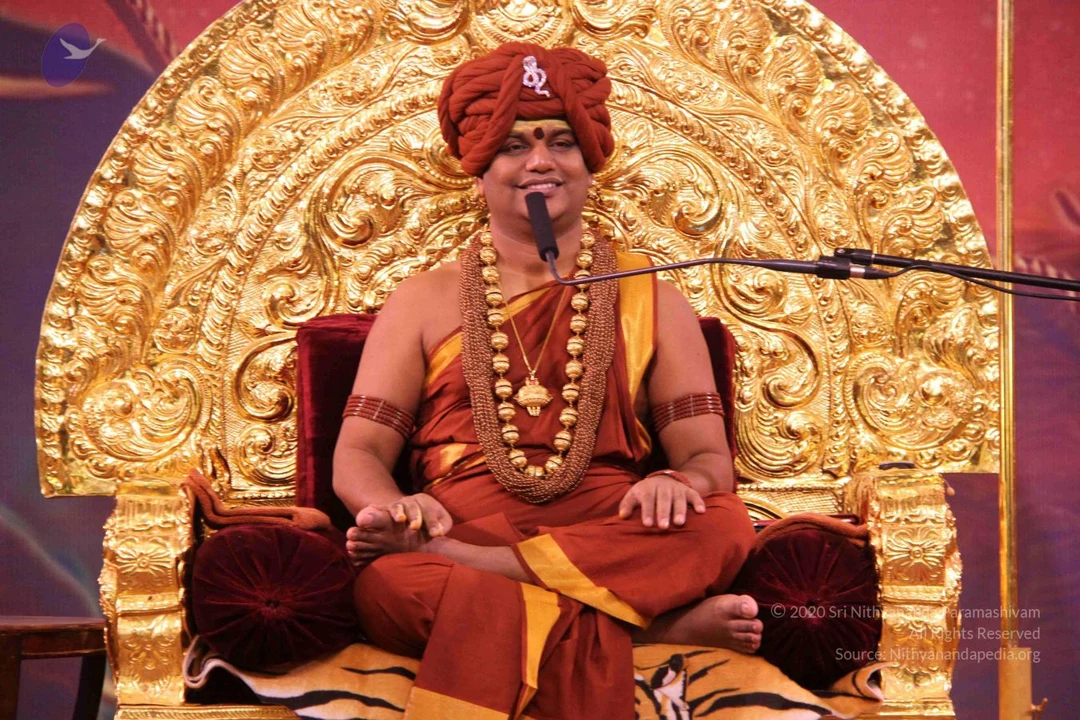
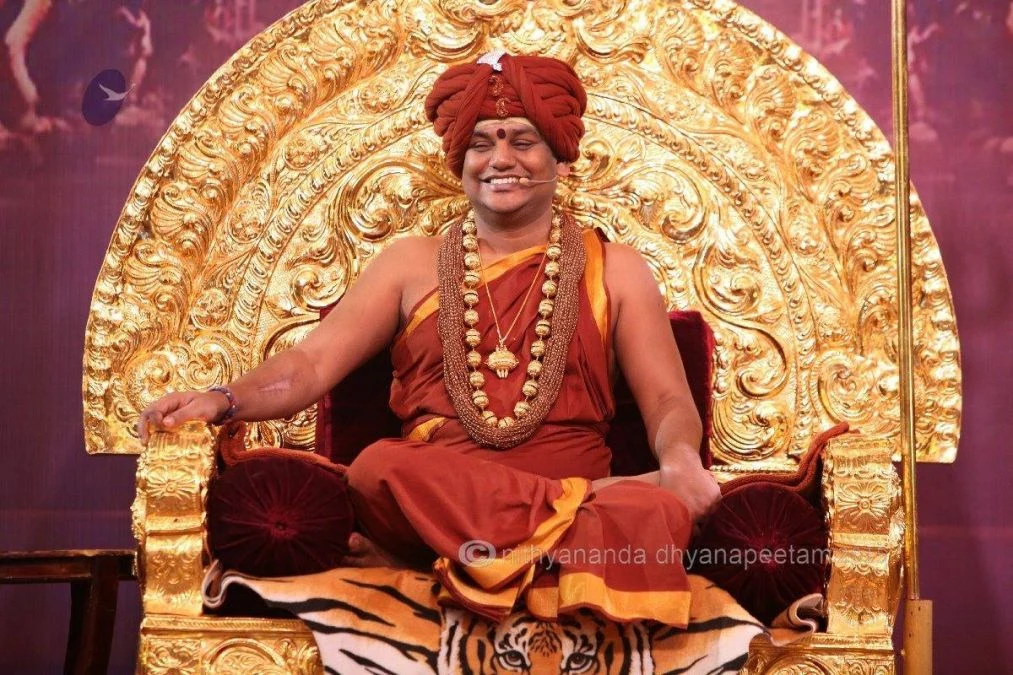
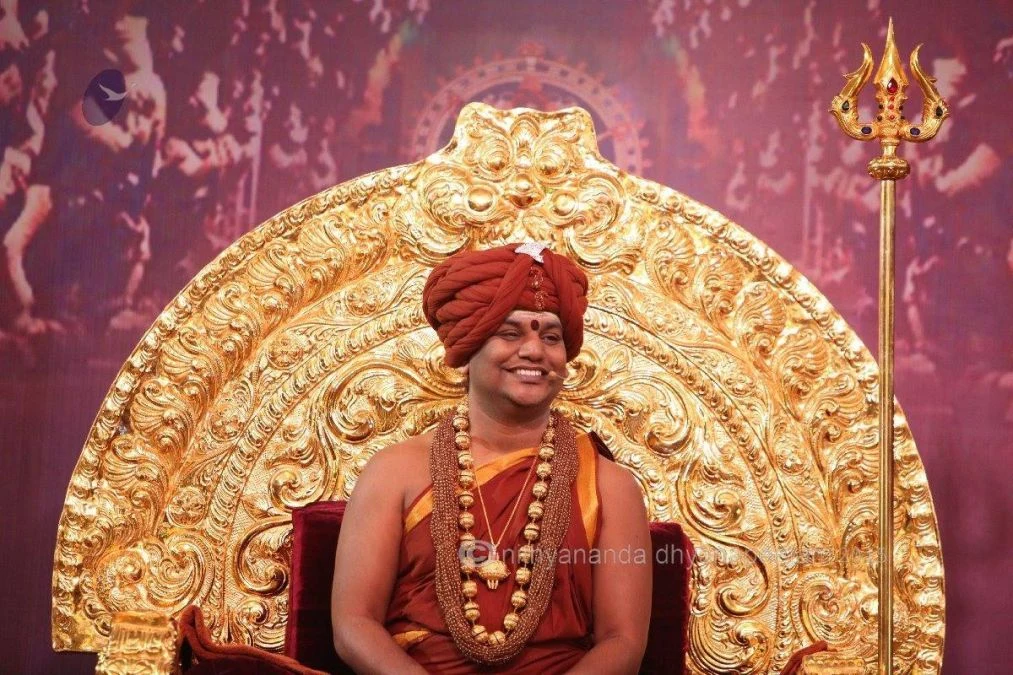
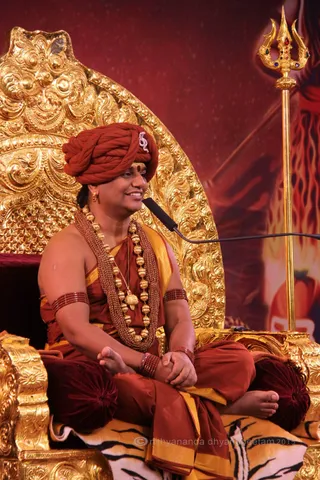
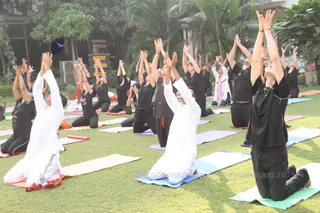
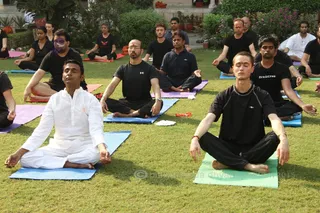
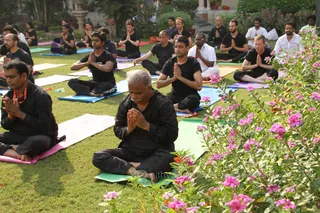
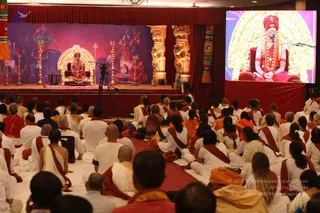
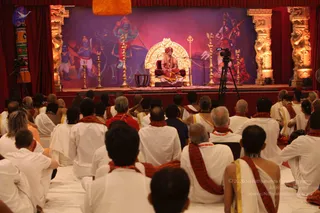
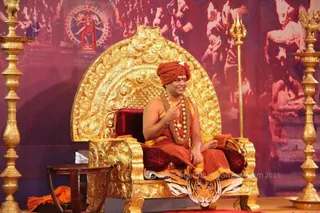
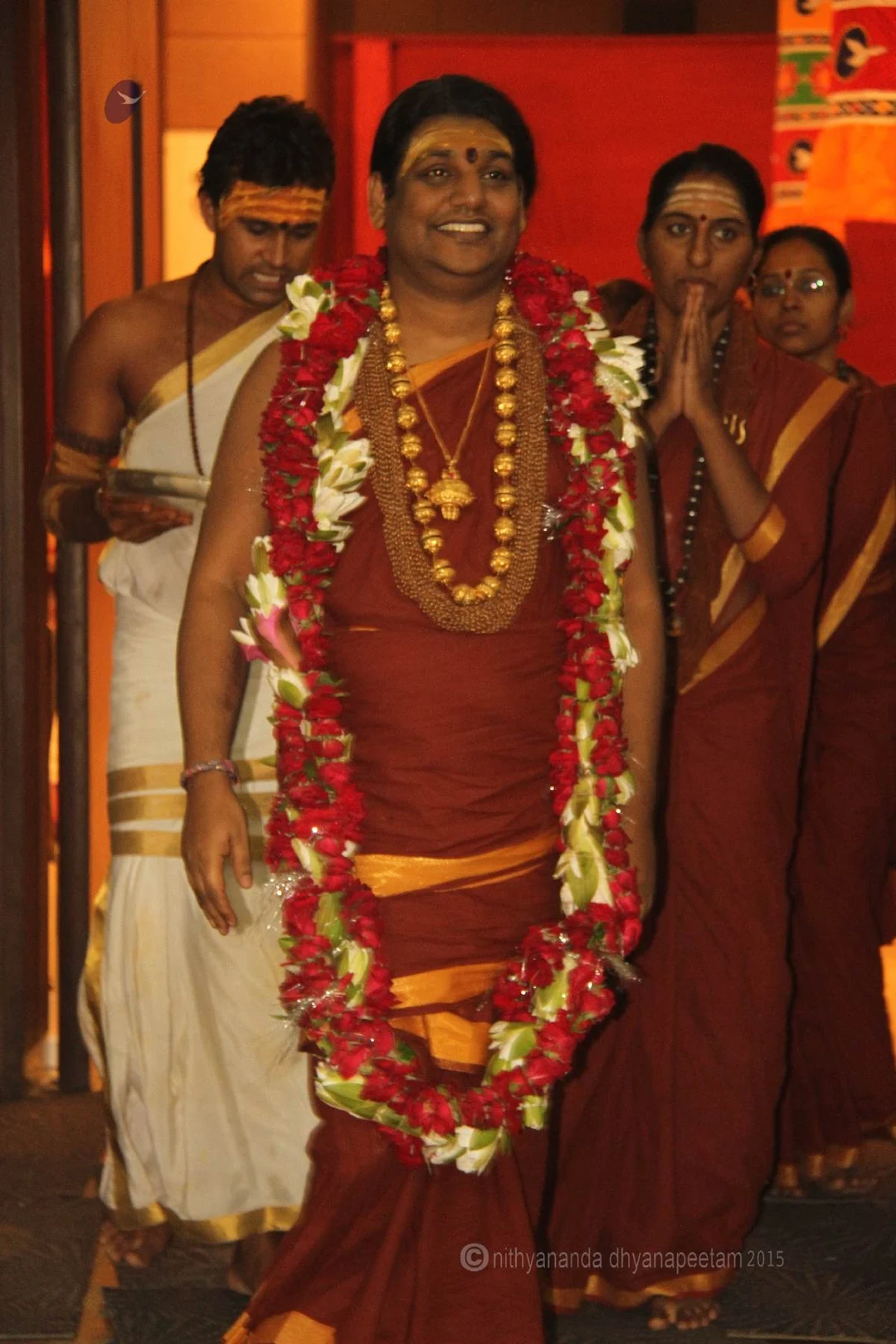
Large satsang hall with a stage backdrop painted with Hindu deities and Shiva imagery. A figure in orange and red clothing sits on a gold-framed throne on the stage, flanked by brass oil lamps and a trident. A large screen at right shows a close view of a seated figure wearing a red turban, red garments and a beaded mala, with a microphone before him. Audience members fill the foreground, many in white and saffron-coloured clothing, some wearing orange shawls, seated on white cloth. A camera on a tripod records the stage. Swamiji (probable): the seated figure on the throne wears a red turban and orange-red robes, with a rudraksha-style mala, appearing as the discourse speaker.A seated man in an ornate gold throne at the centre of a stage, wearing an orange-saffron turban, orange robe and layered beaded necklaces, with a microphone stand beside him. Behind him is a large painted backdrop with mythological figures, a red bull, and a trident-bearing deity by a fire with a Shiva lingam. Brass oil lamps stand on both sides of the throne, a golden trident is planted to one side, and a red carpet lies at his feet under a red curtain. The setting suggests a satsang discourse. The man on the throne matches the Swamiji (probable) cues of a saffron turban, orange robe and beaded necklaces, though the image alone cannot confirm identity.A seated man on an ornate gold throne with carved floral backrest, speaking into a microphone at a satsang. He wears a rust-red turban with a small silver ornament, a red-and-gold shawl over a red garment, a heavy multi-strand gold bead necklace with rudraksha-style beads, and red-beaded armbands. A golden trident stands to the right against a red backdrop with a painted flame motif, and a tiger-striped cloth covers the throne seat.Outdoor yoga session on a lawn with a group of about 20 people kneeling on mats with arms raised overhead and palms together. Most wear black tops and trousers; a few in front wear white kurta-style or loose white clothes. Potted plants, palm trees and a restaurant sign with a small cafe frontage stand behind them. No visible a person candidate; participants are yoga practitioners.A group of about twenty people sit cross-legged on colourful yoga mats on a green lawn, eyes closed, in meditation or yoga practice. Most wear black t-shirts and black track pants; a man in the front left wears a white kurta and white trousers, and another front-right wears a black top with a red tilak on his forehead. A man in the centre wears black and glasses, and a man at right wears a black shirt printed with Braintree. Hands rest on knees in mudra positions. Pink flowering shrubs and potted plants stand behind them, with a building in the background. Red cloth lies on the grass.Outdoor photograph of a group yoga session on green lawn, with many participants seated cross-legged on colourful mats in prayer pose with palms pressed together. Most wear black fitted clothing; a few in front and right wear white kurta-style outfits. Pink flowering bushes fill the right foreground and a stone pillar with urn stands in the background. A man in the front centre has a grey beard and wears black; another at left wears a rudraksha-style red and orange bead necklace. No speaker or throne is clearly visible. The setting suggests a meditation or yoga gathering in a garden.

SPH at The Nithyananda Satsang in Varanasi, India
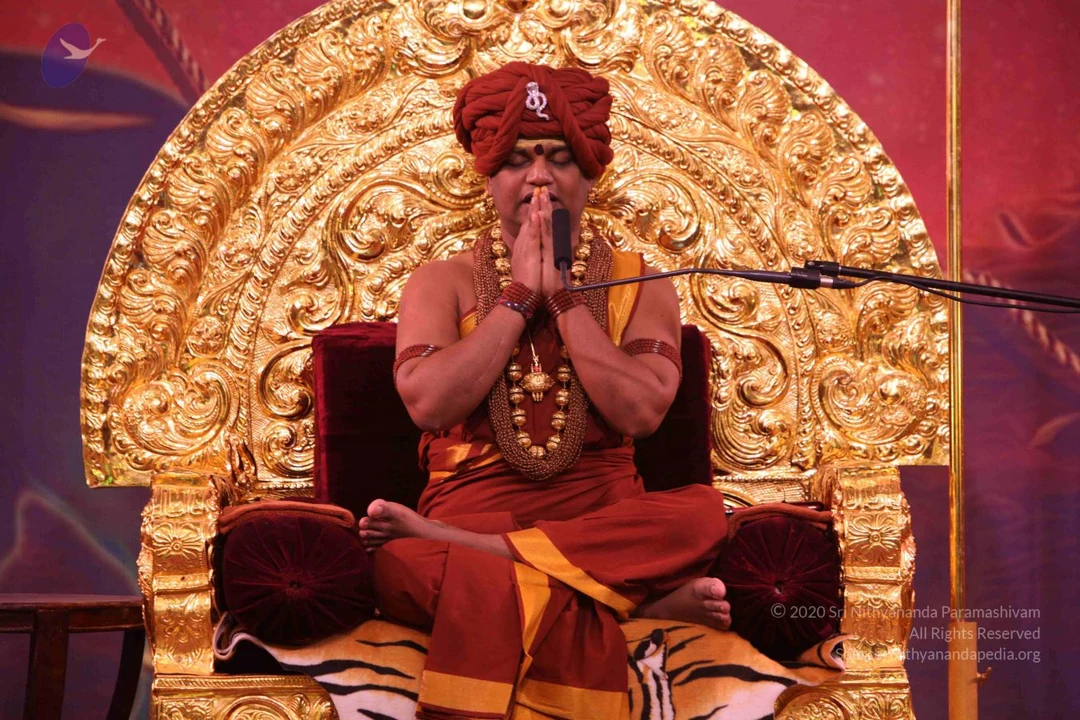
53 photosSource gallery
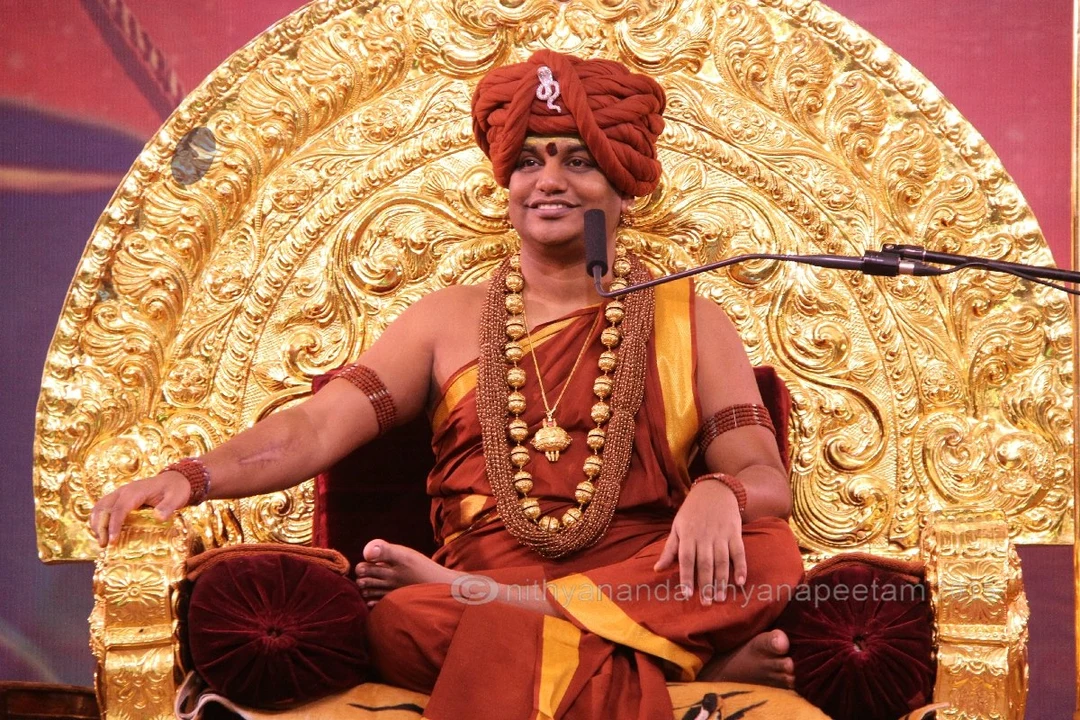
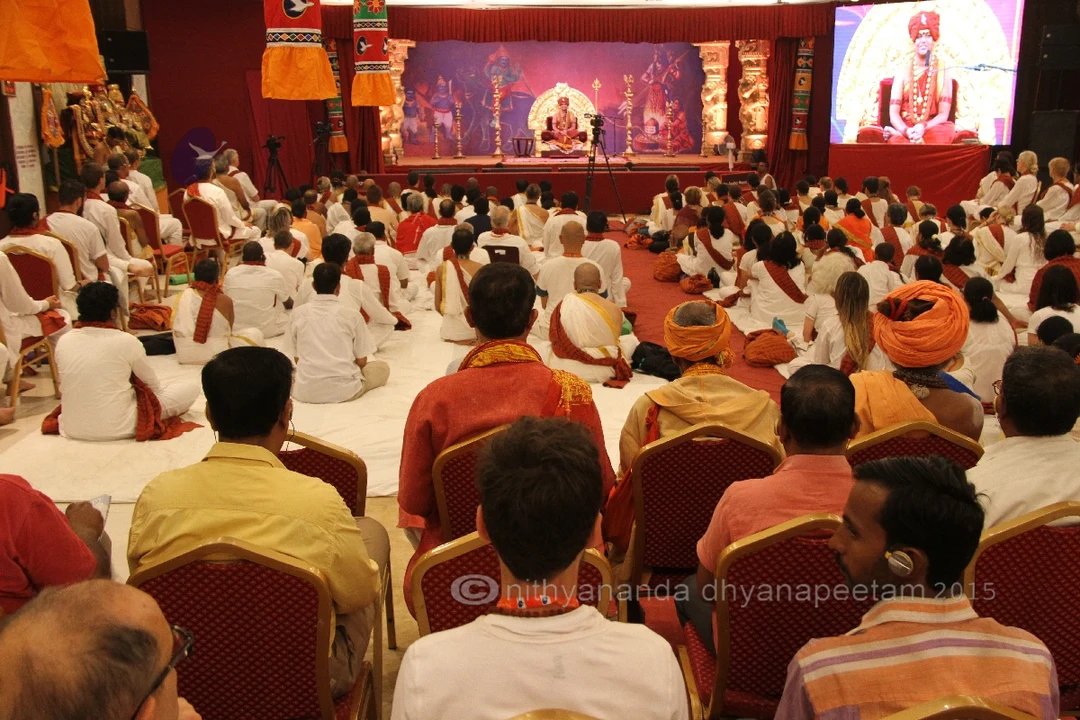
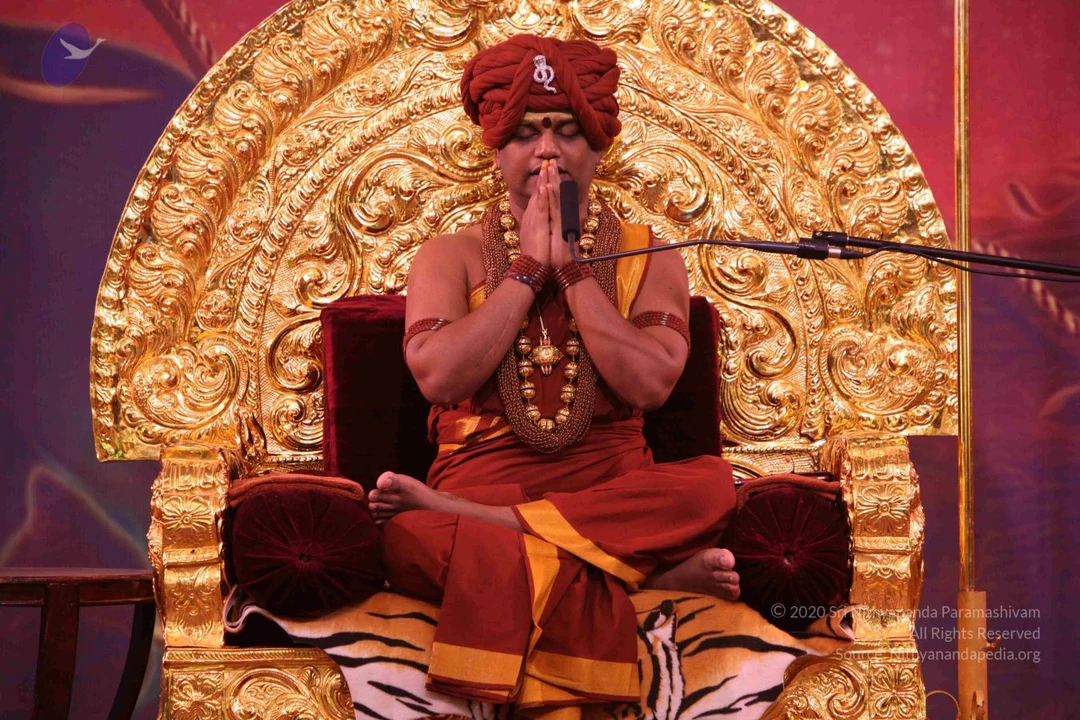
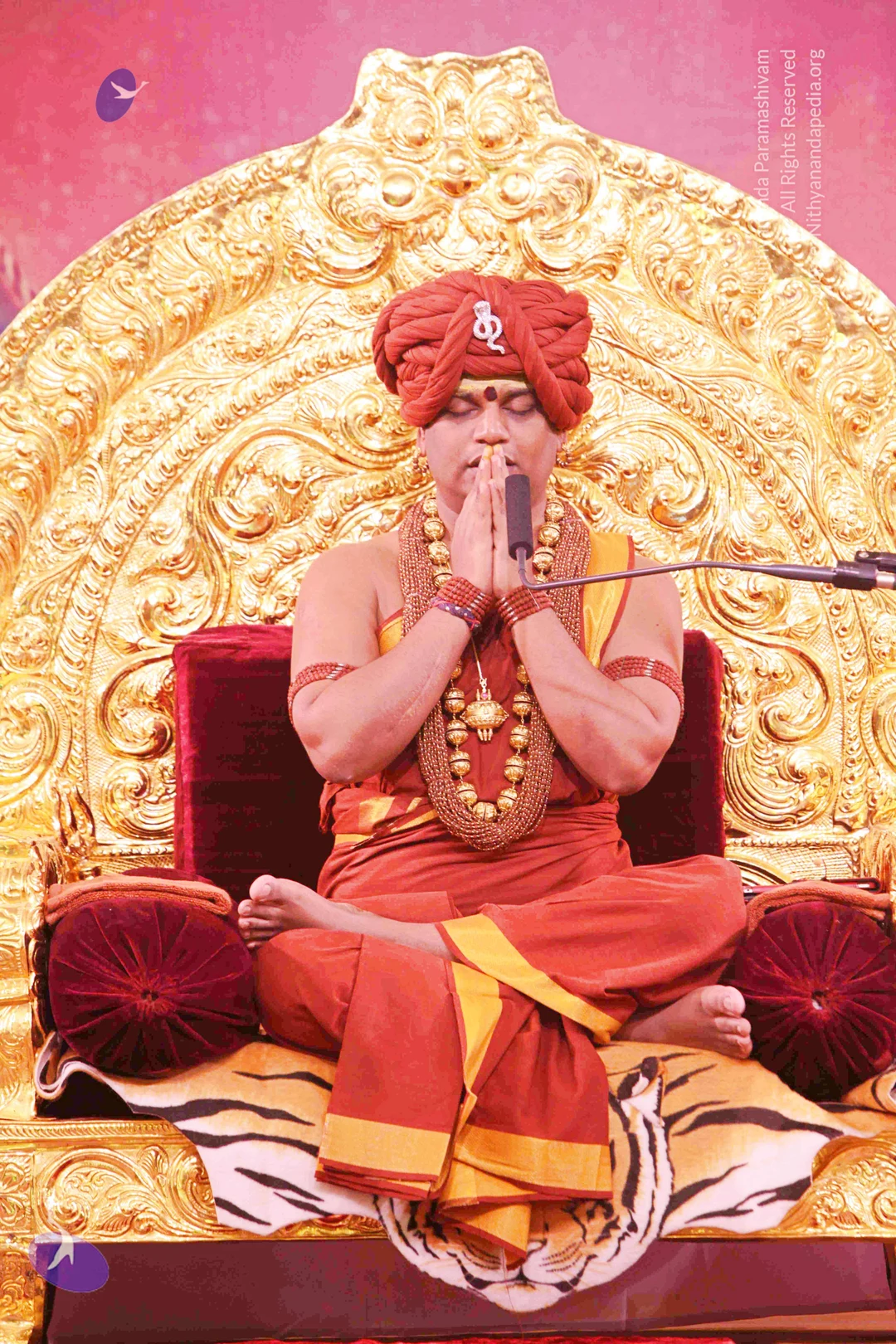
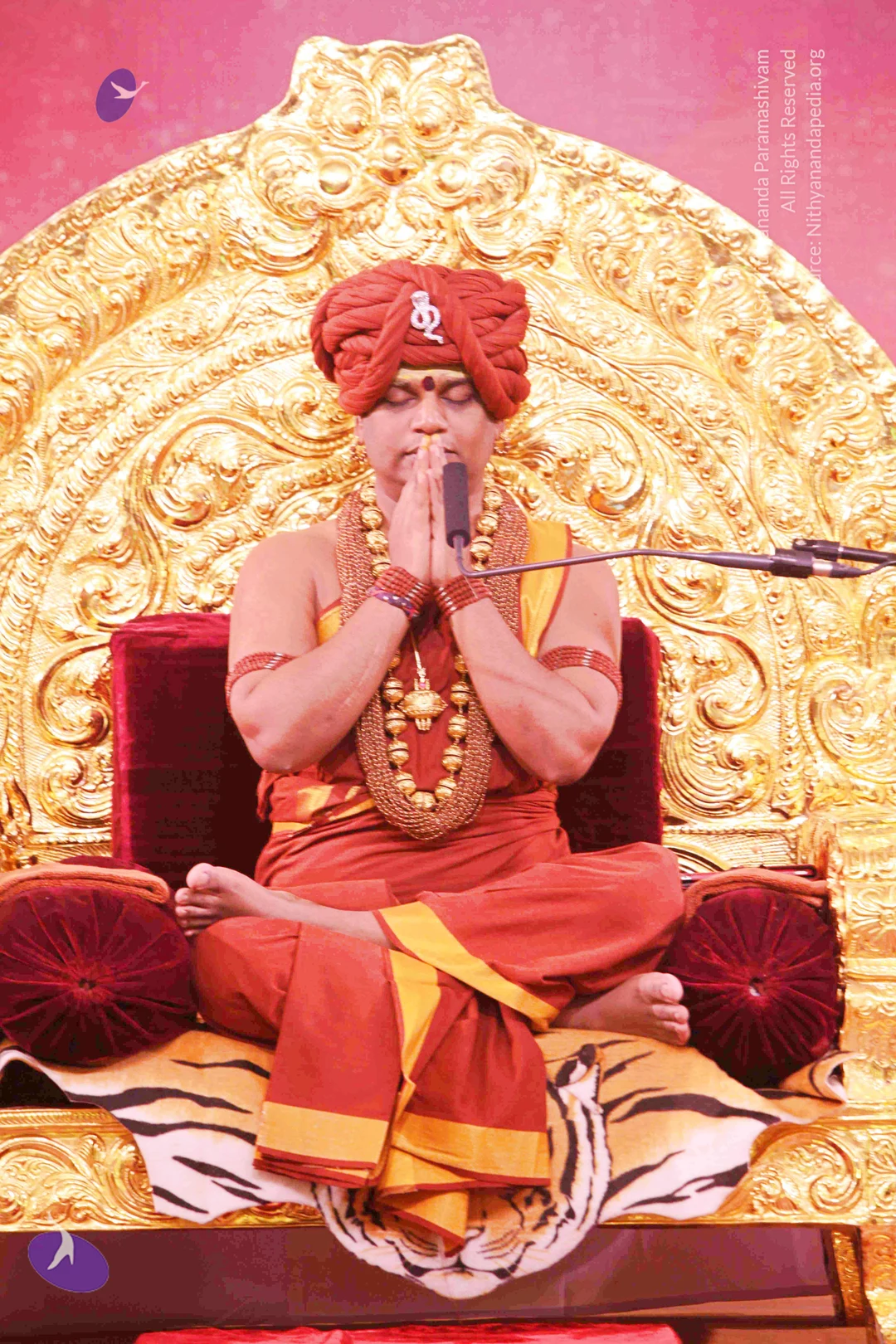
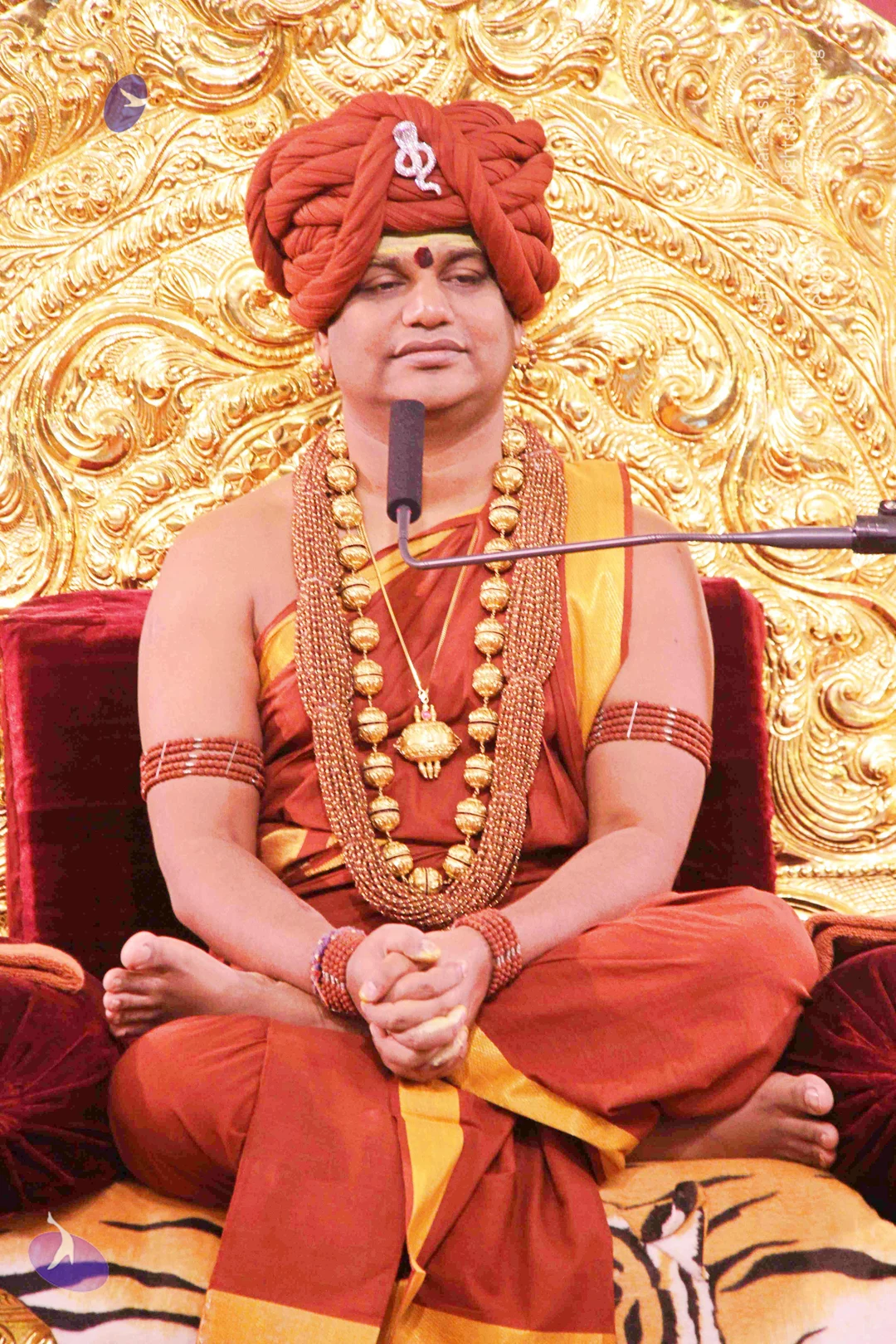
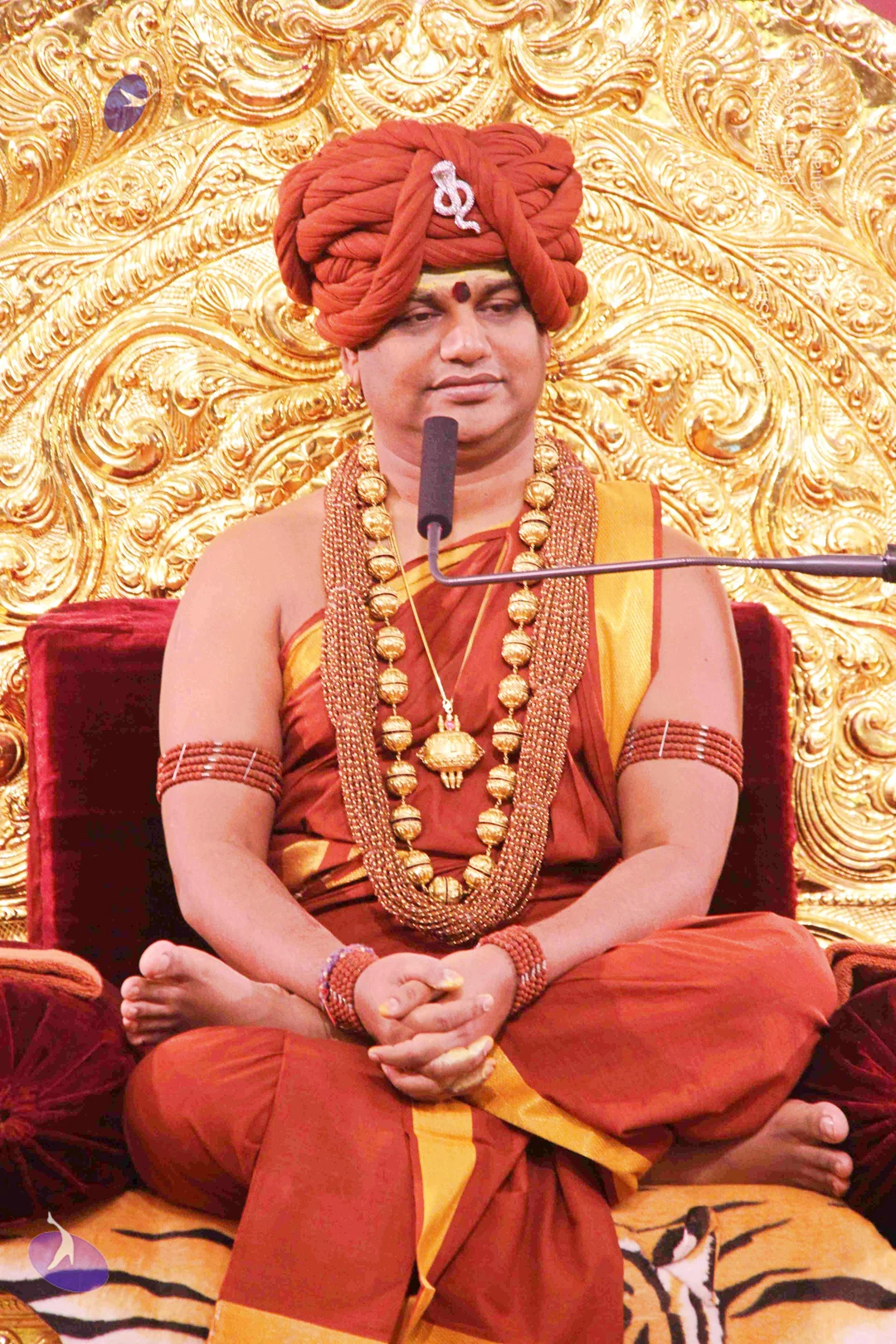
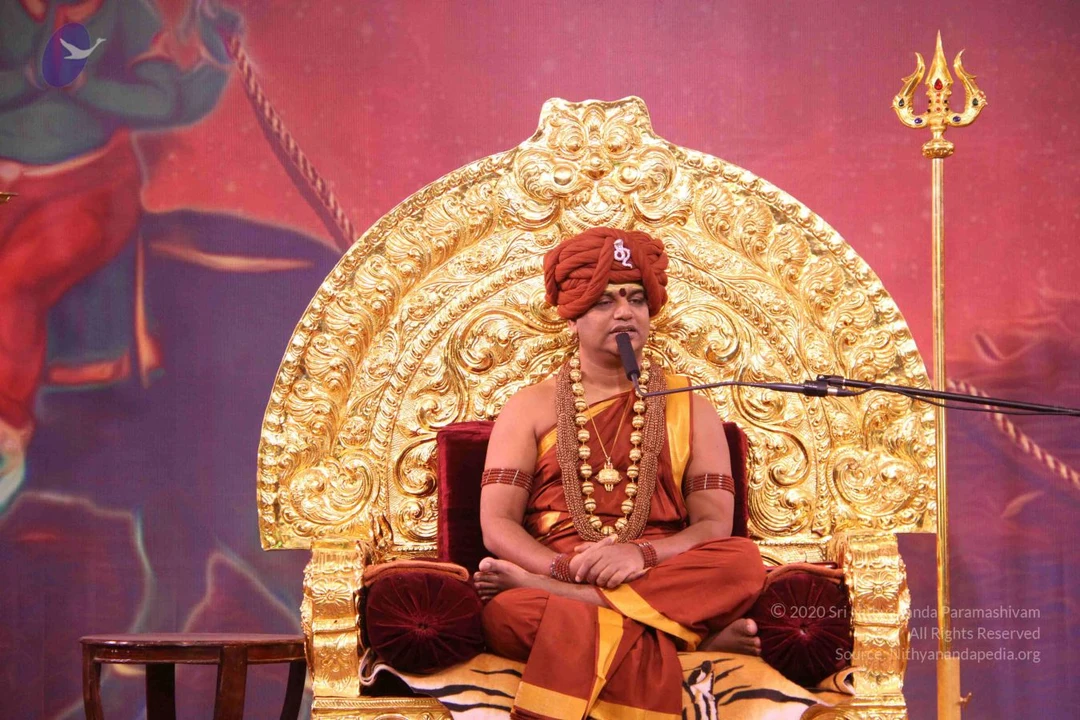
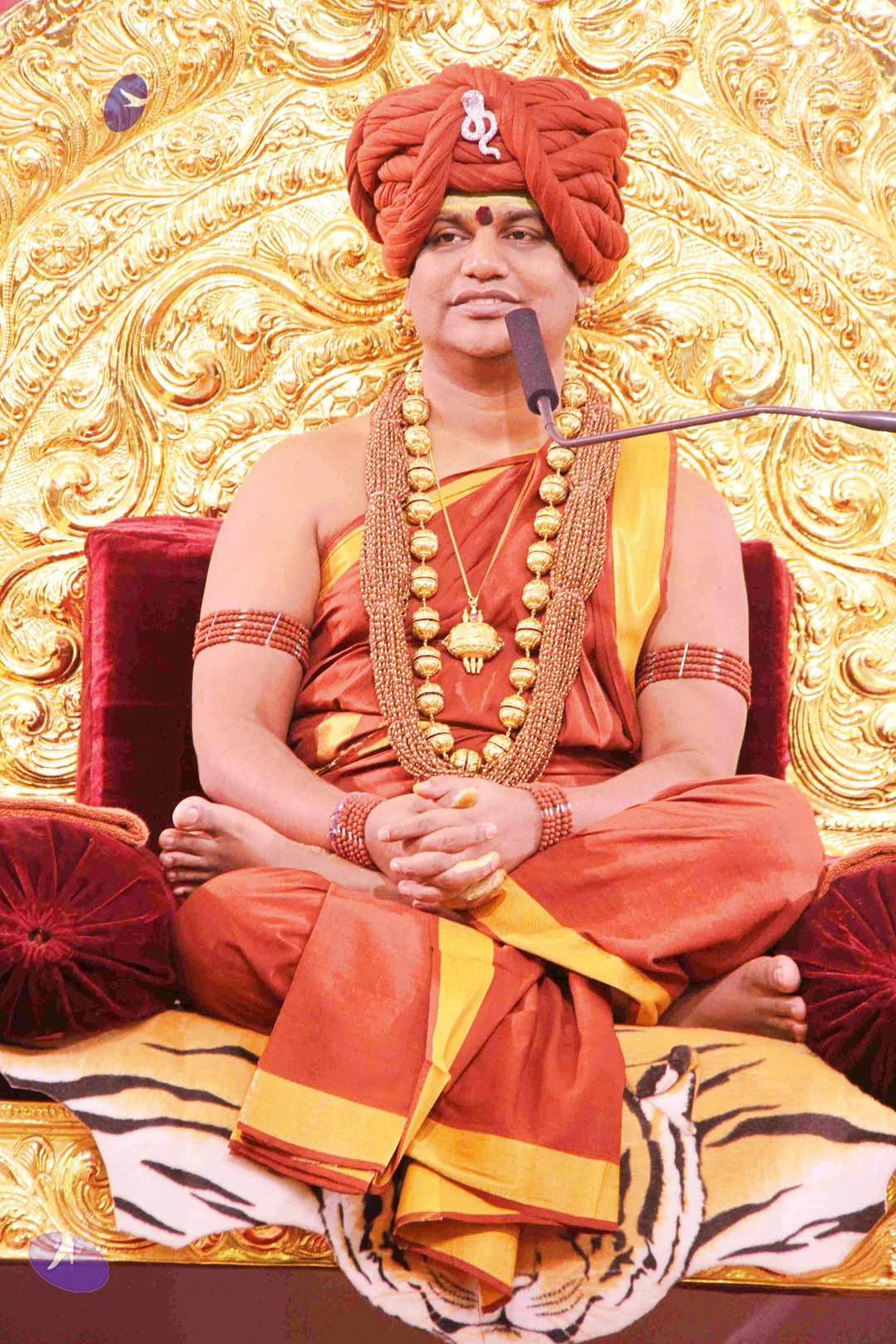
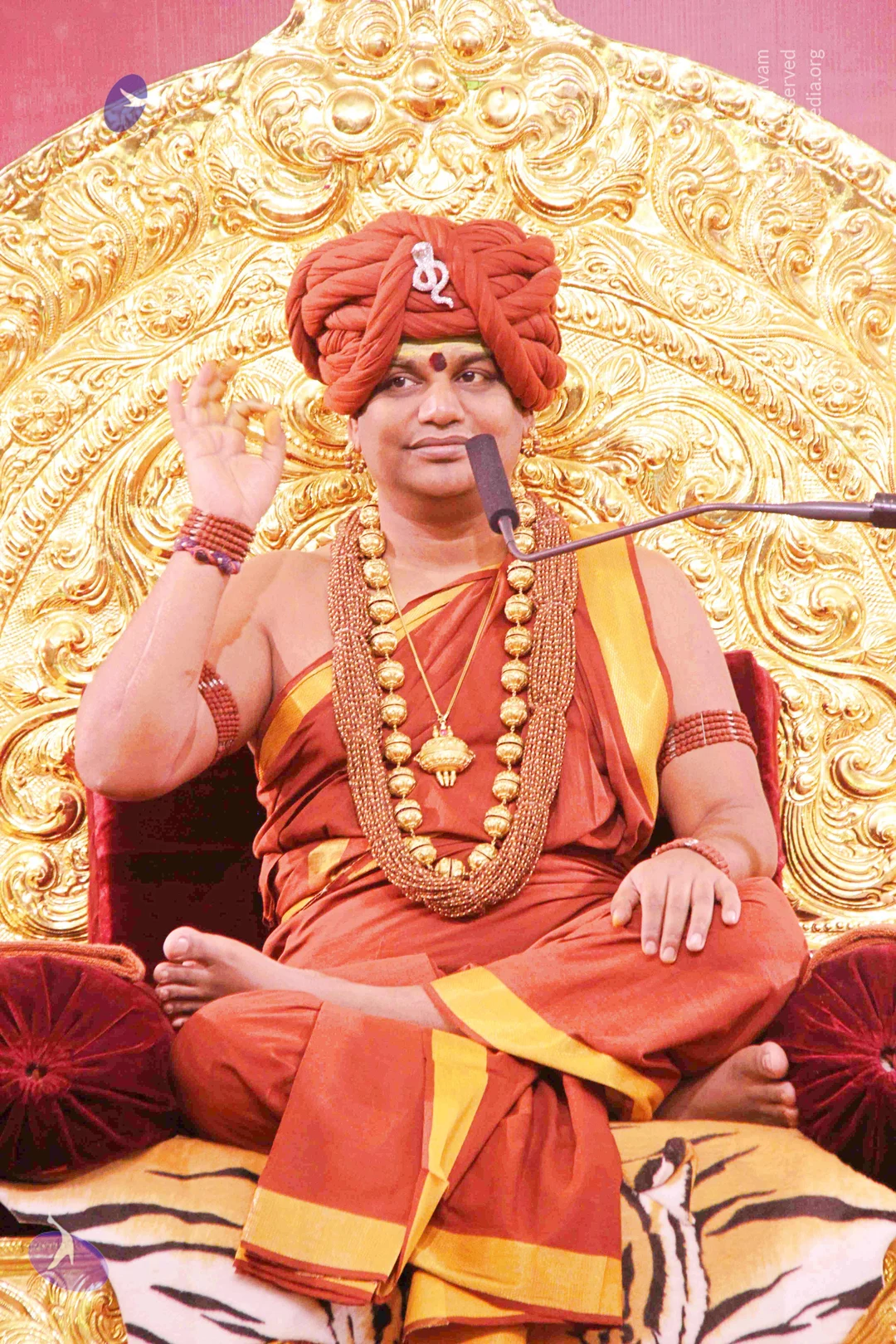
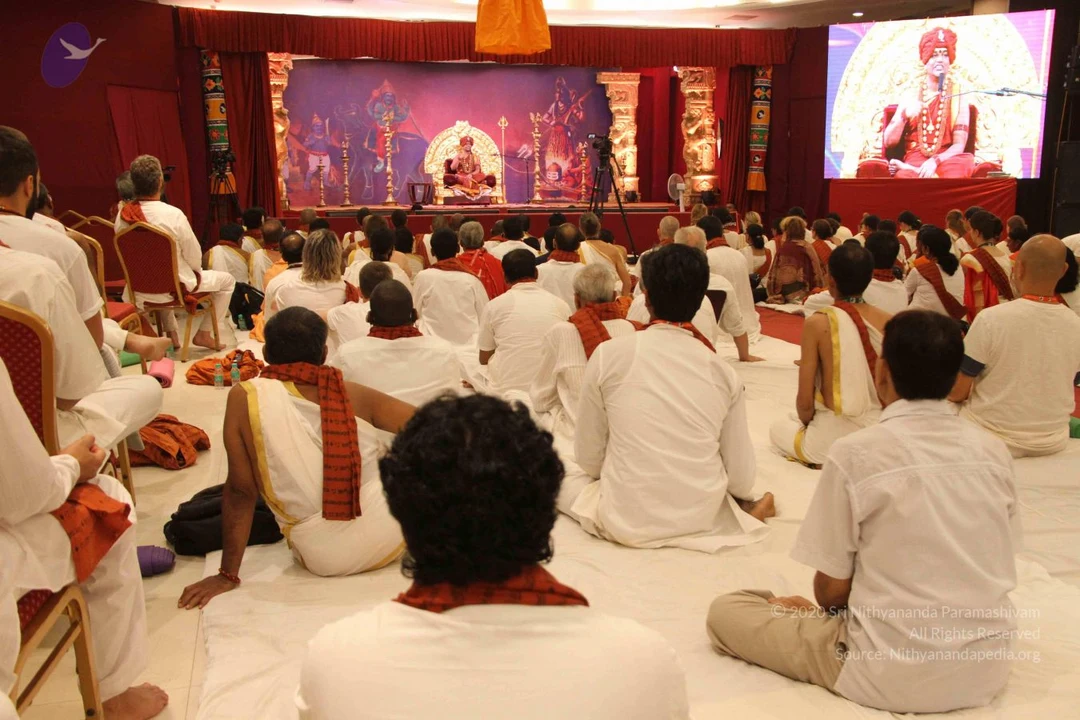
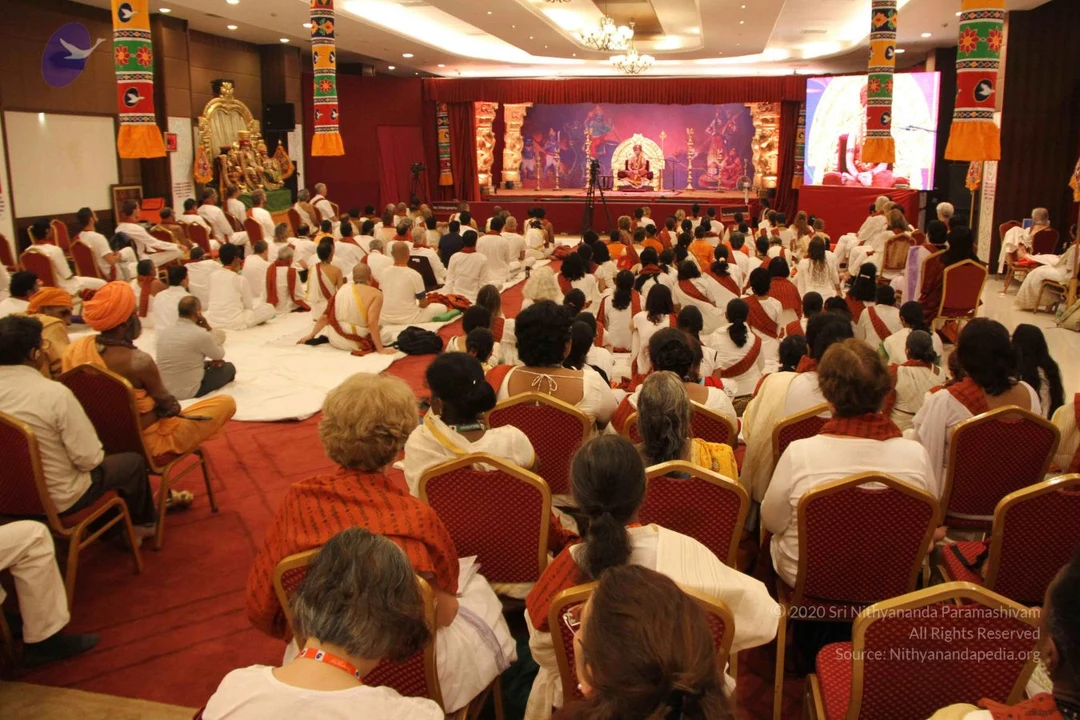
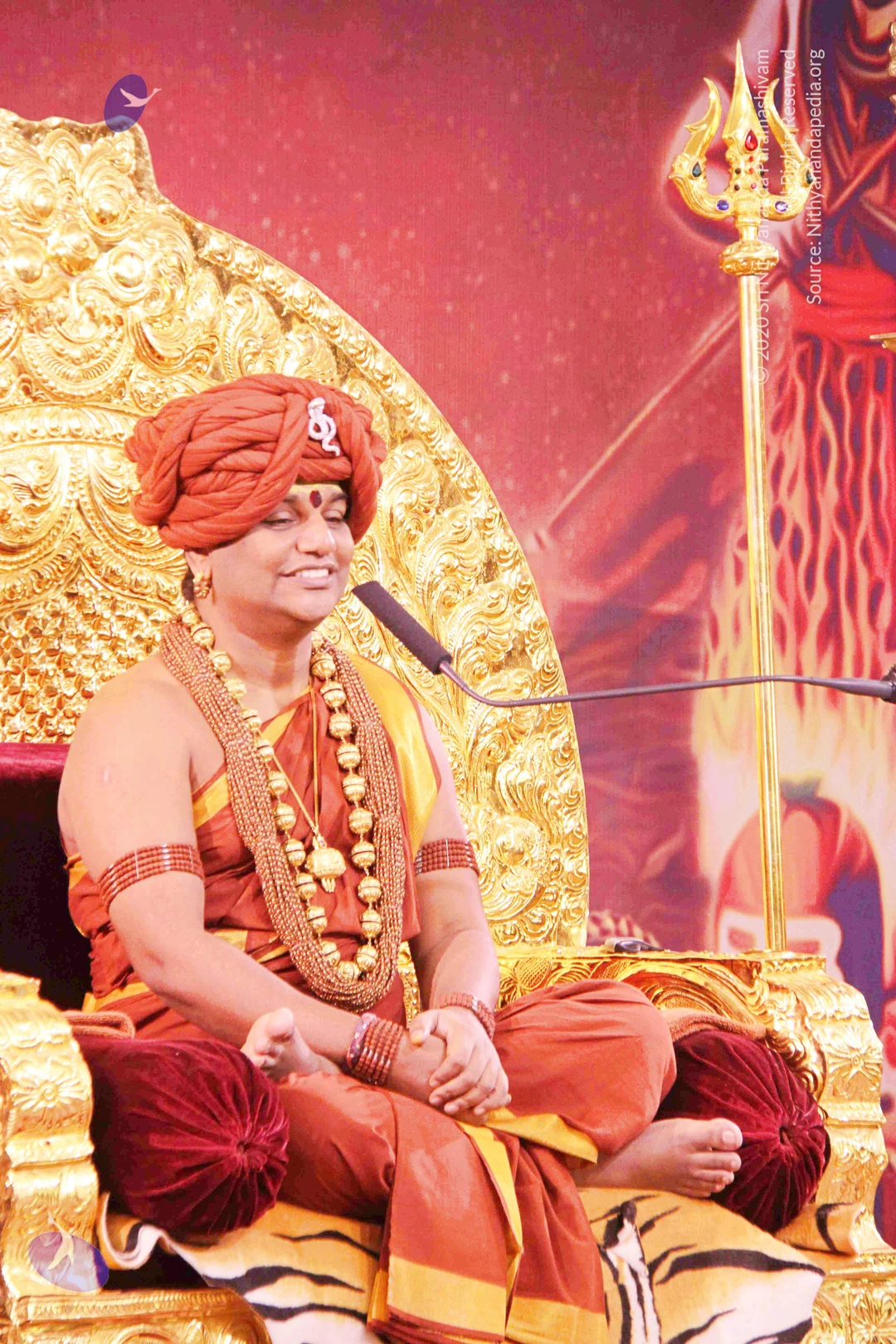
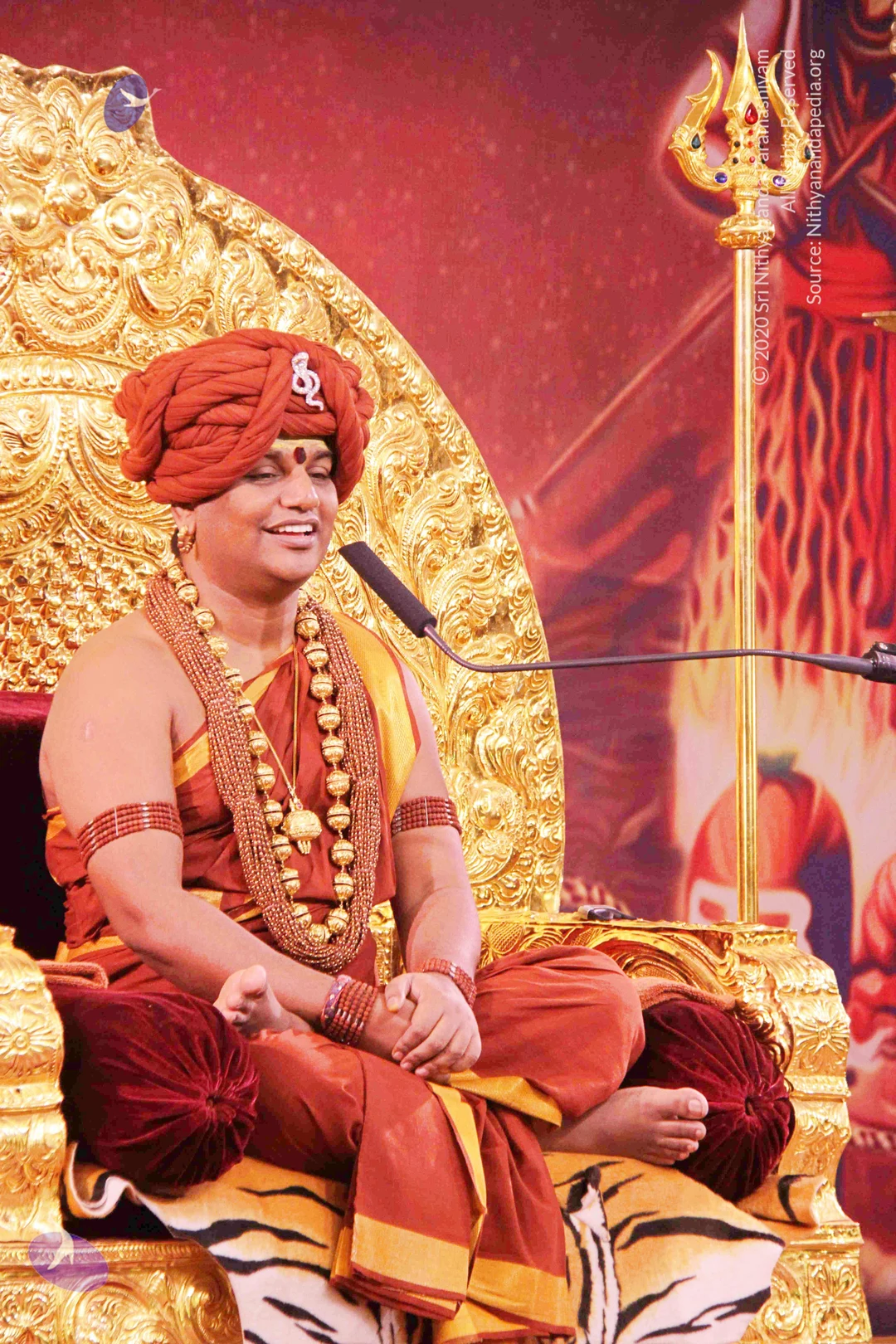
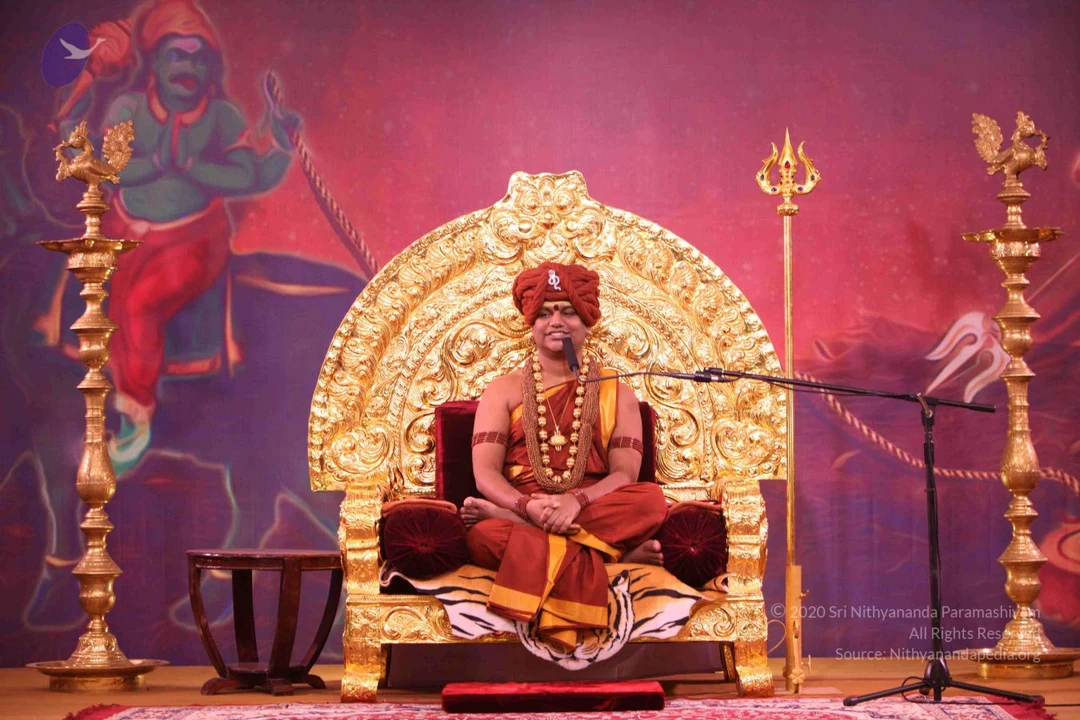
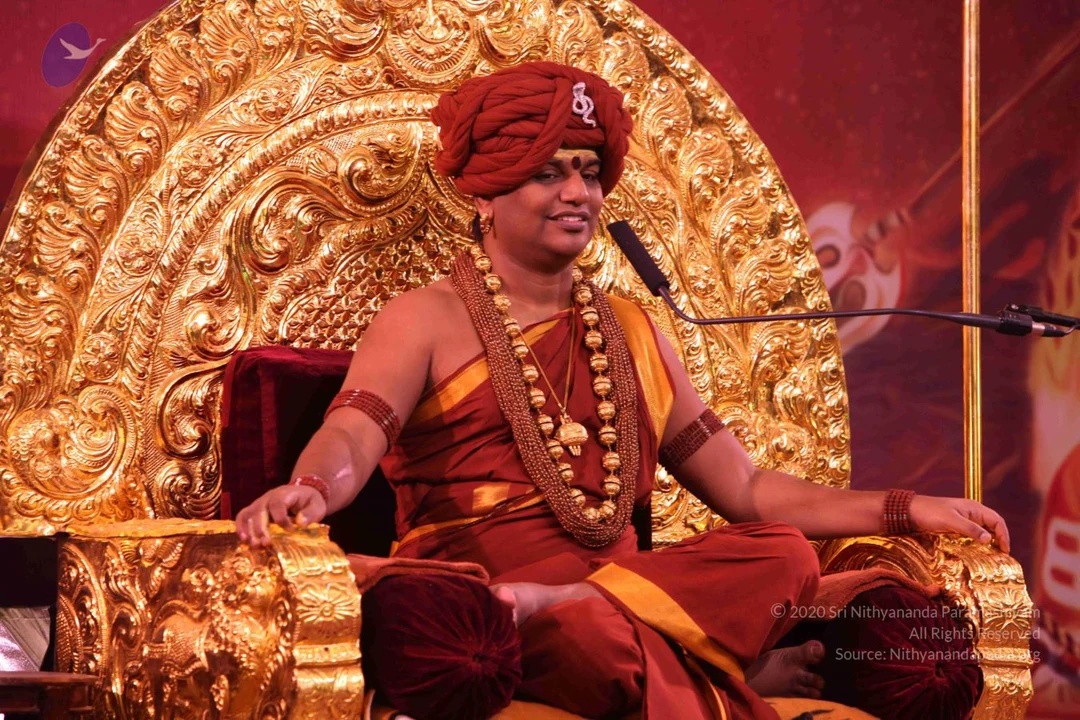
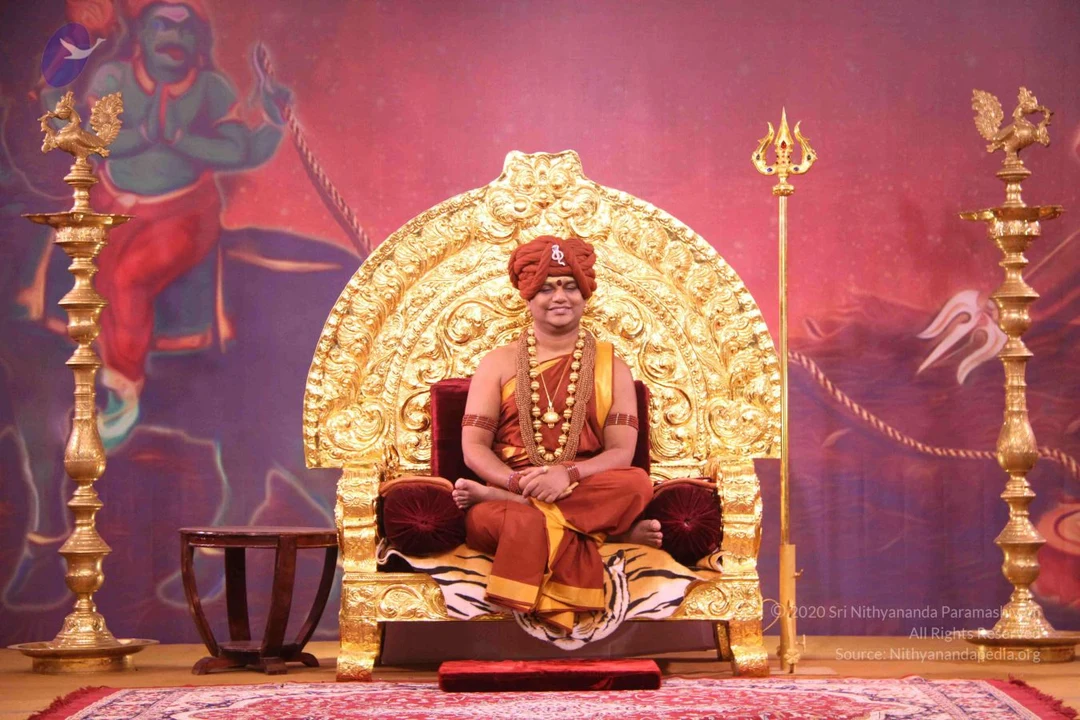
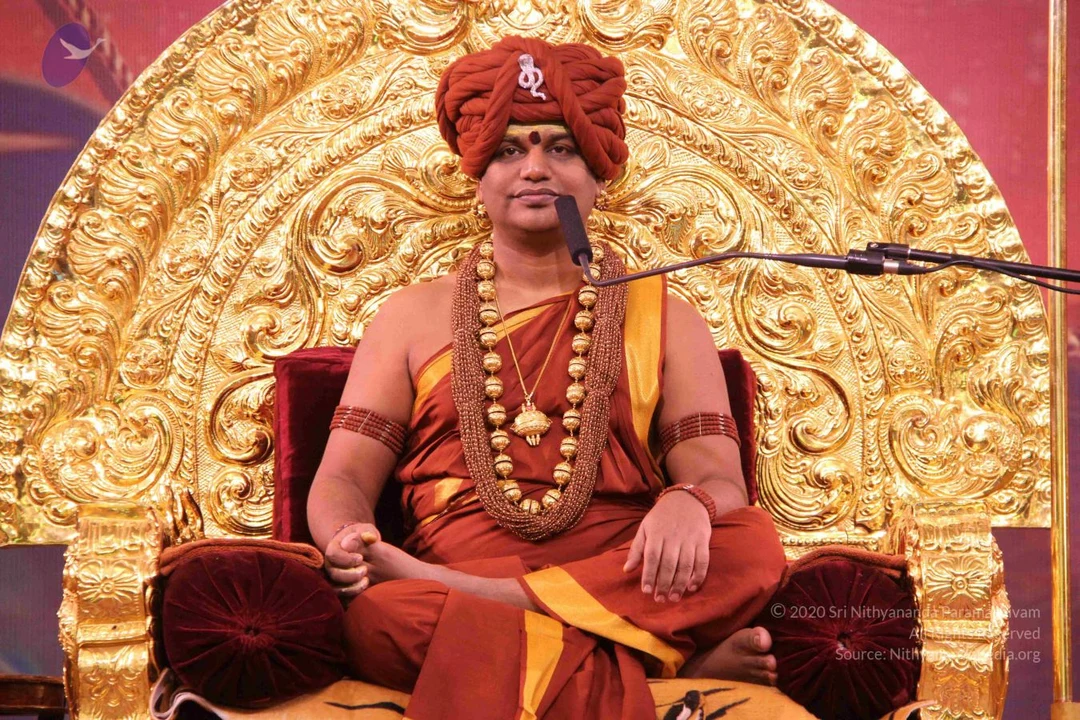
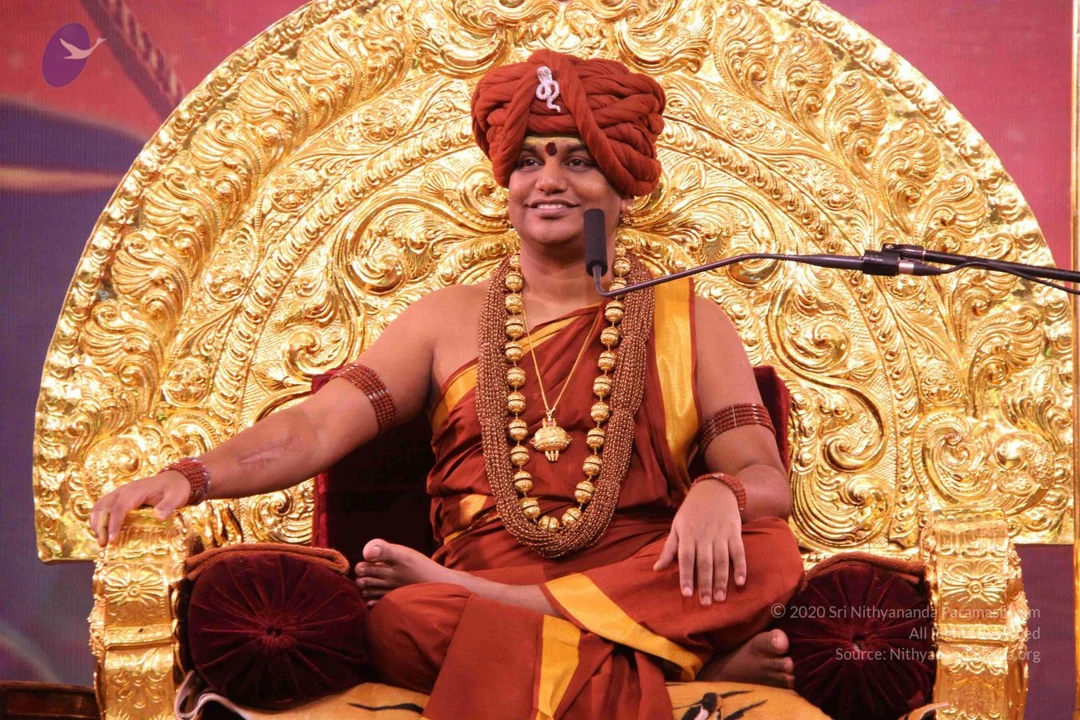
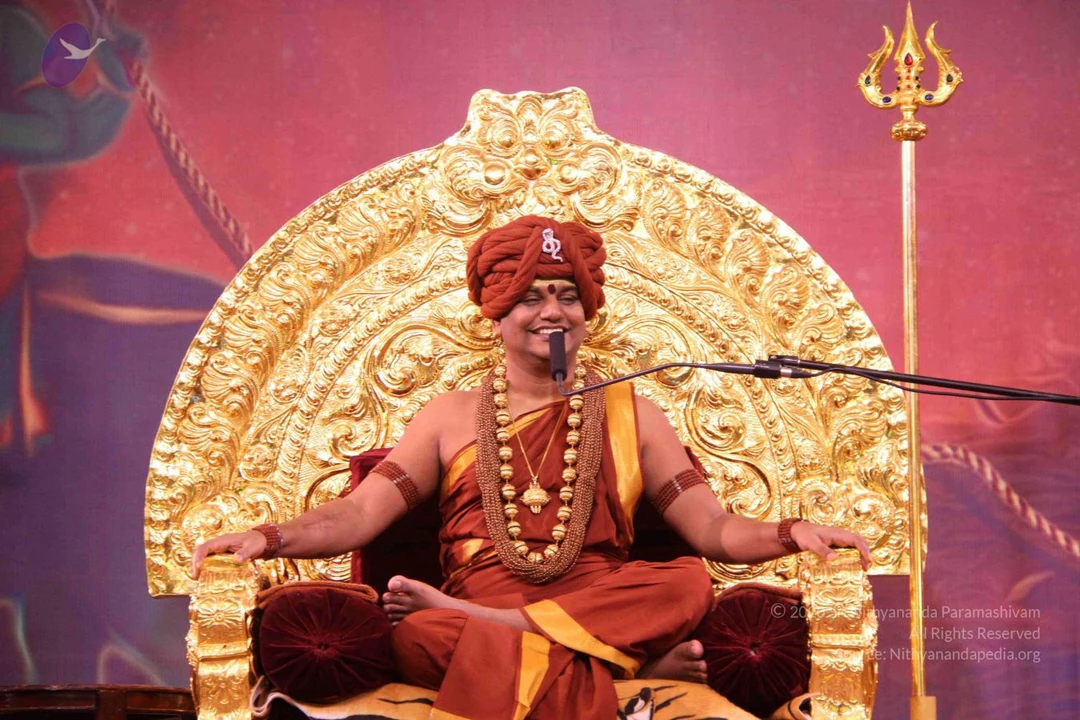
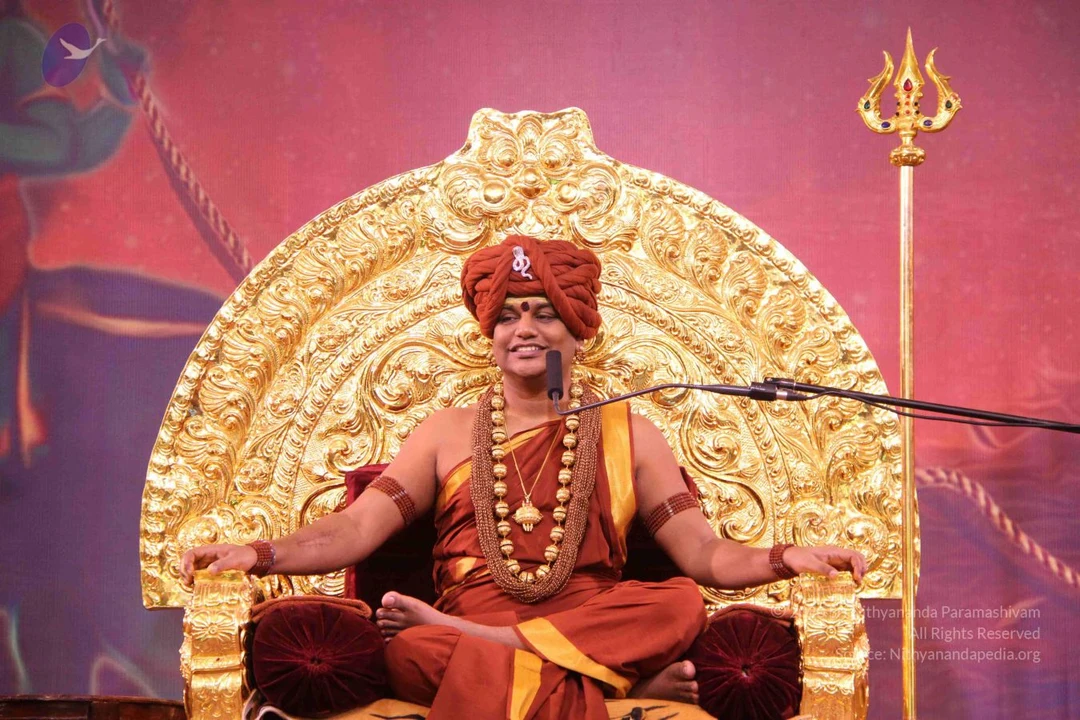
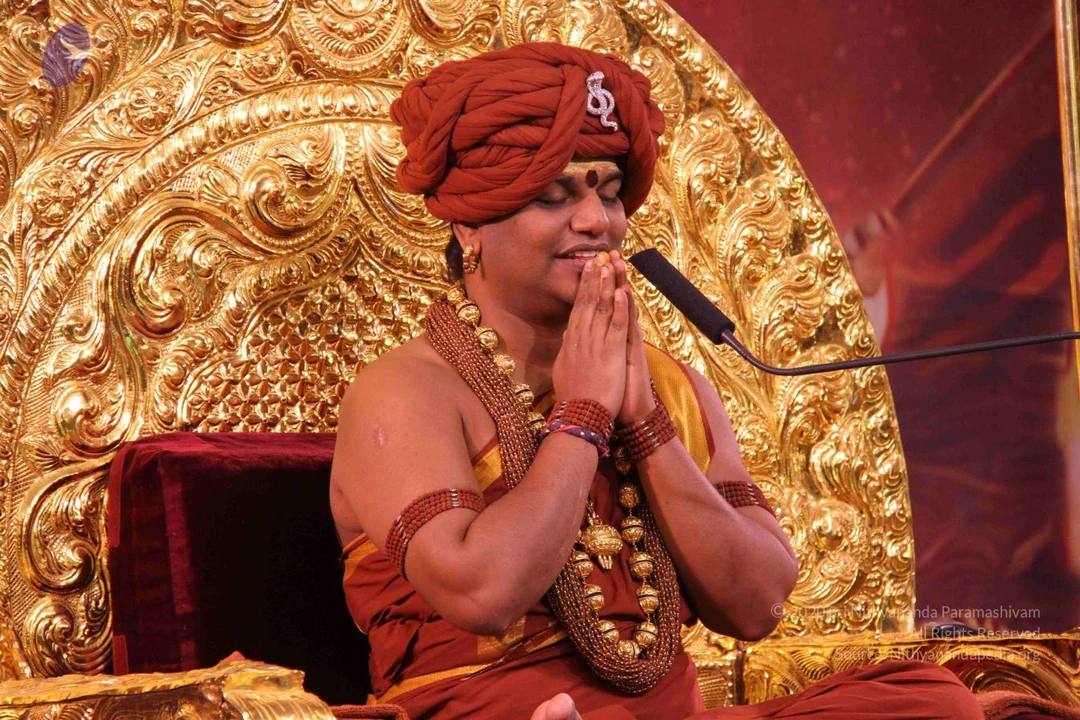
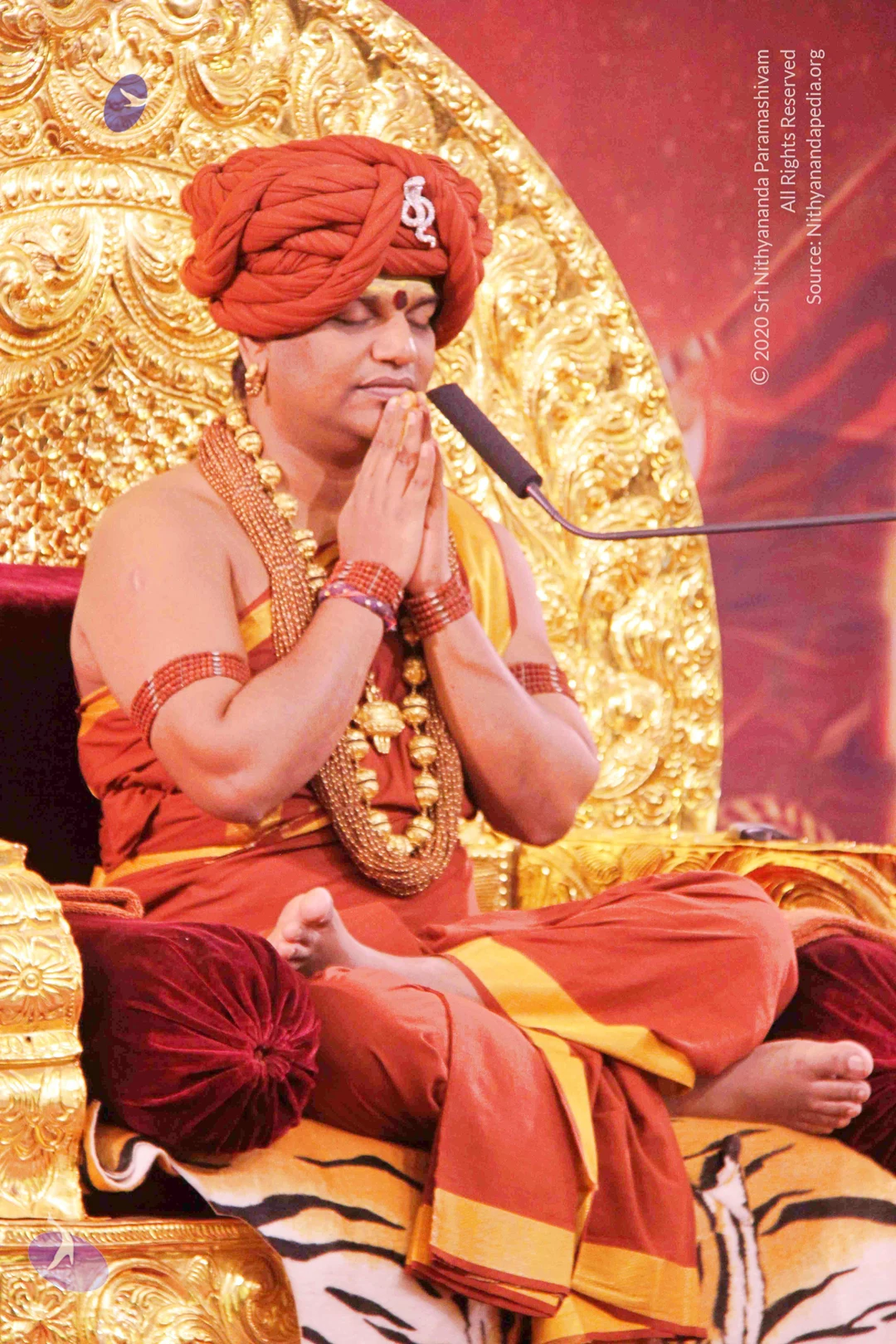
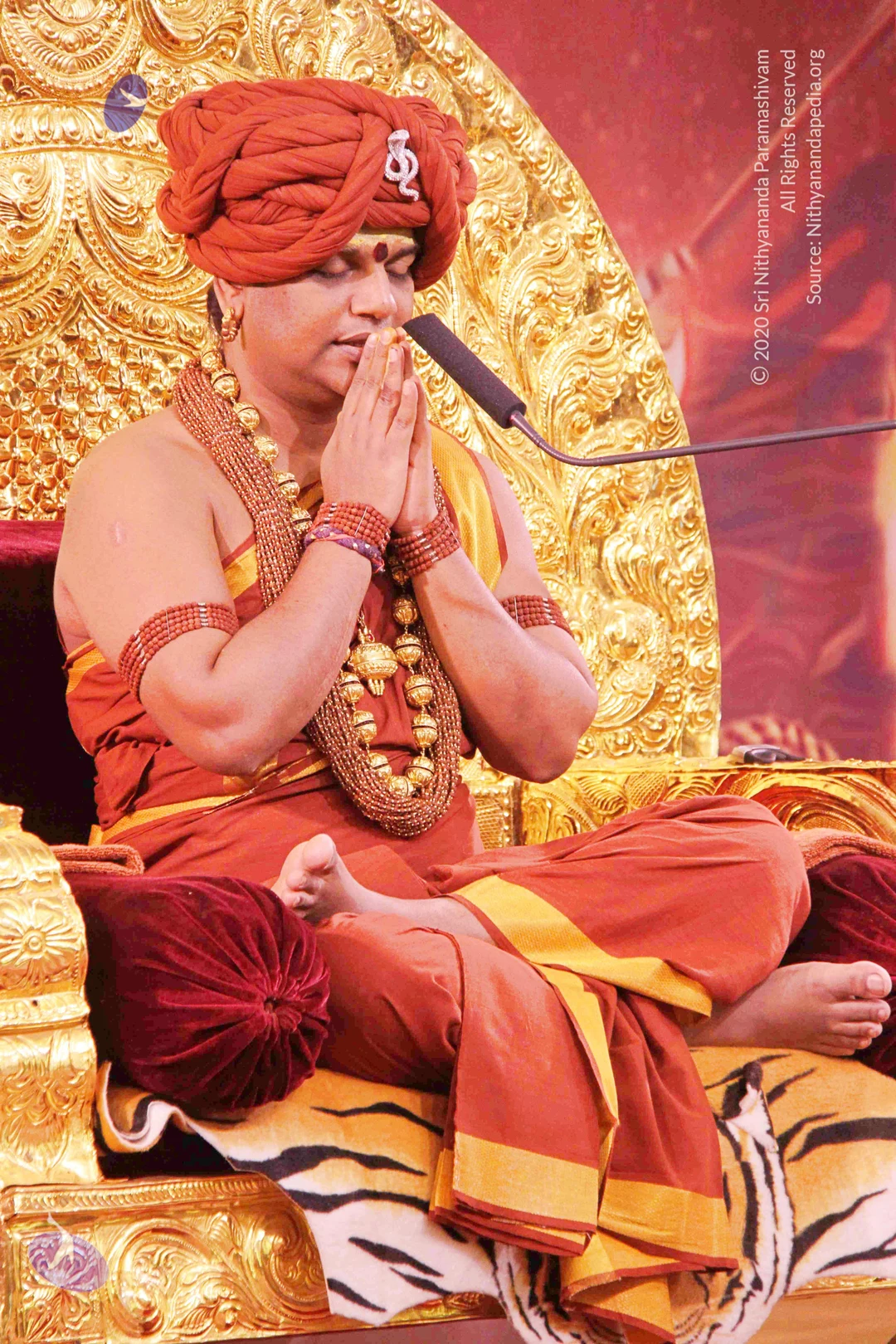
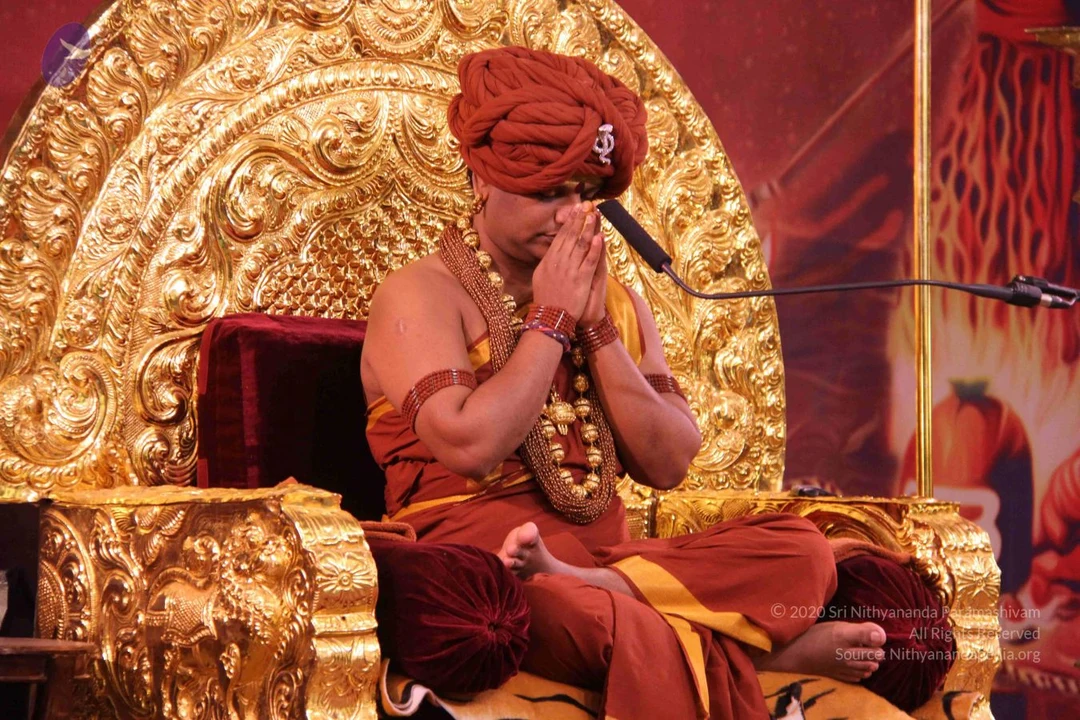
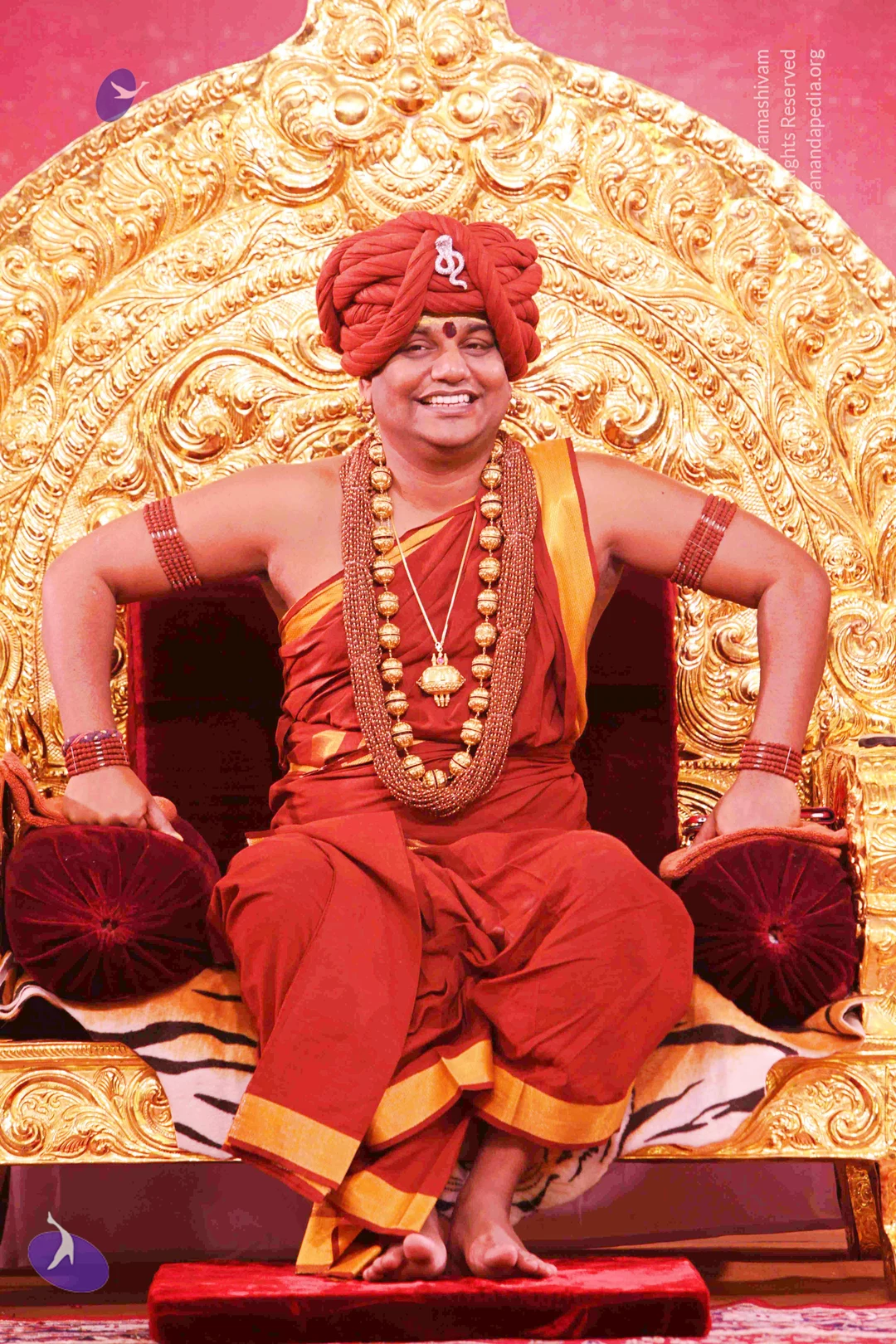
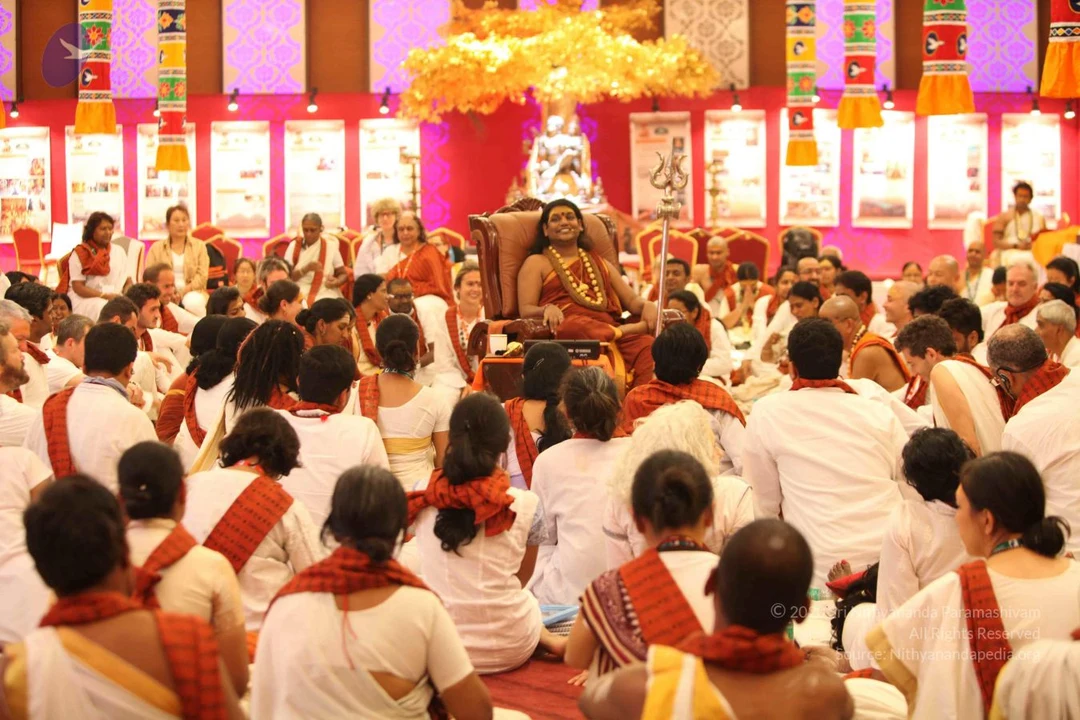
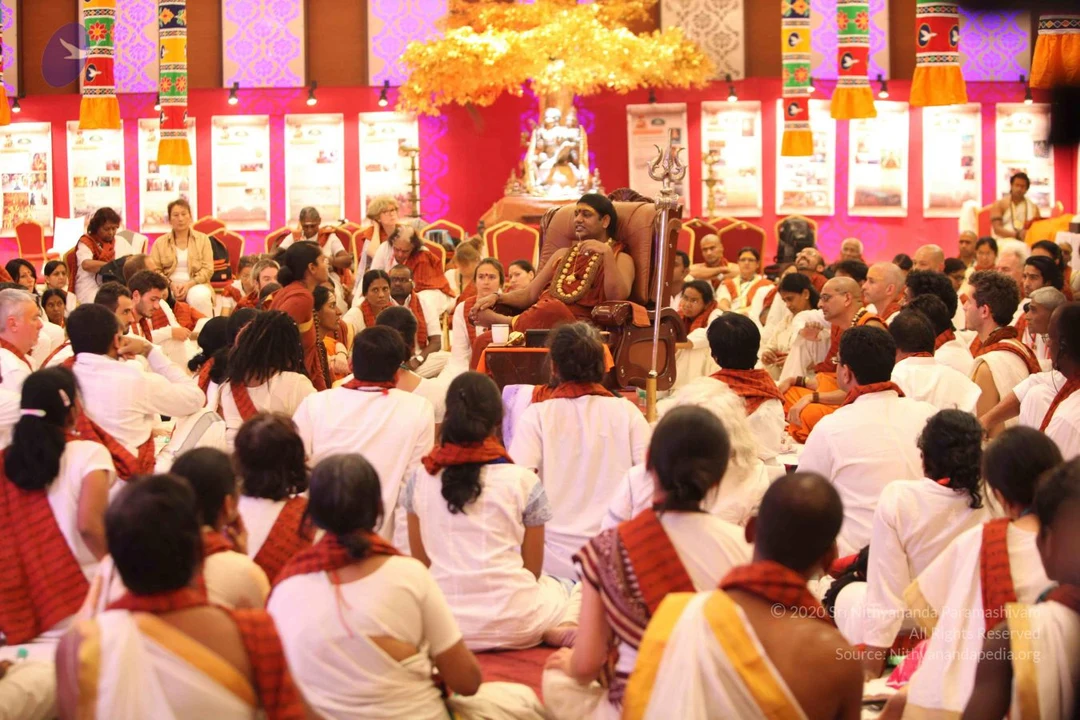
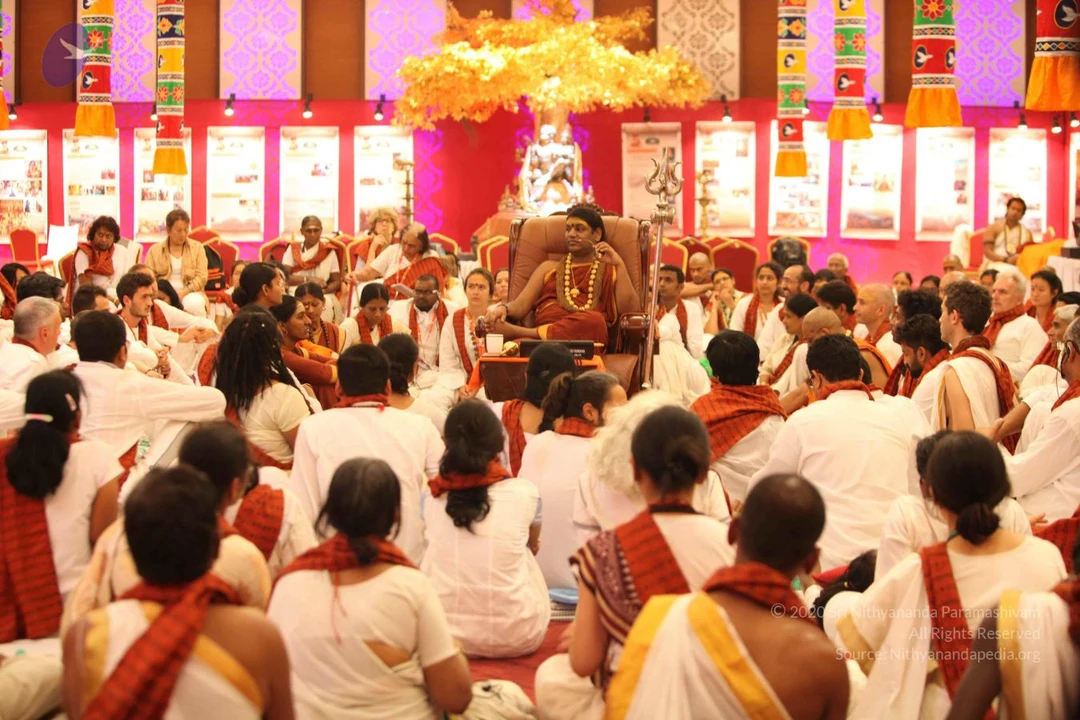
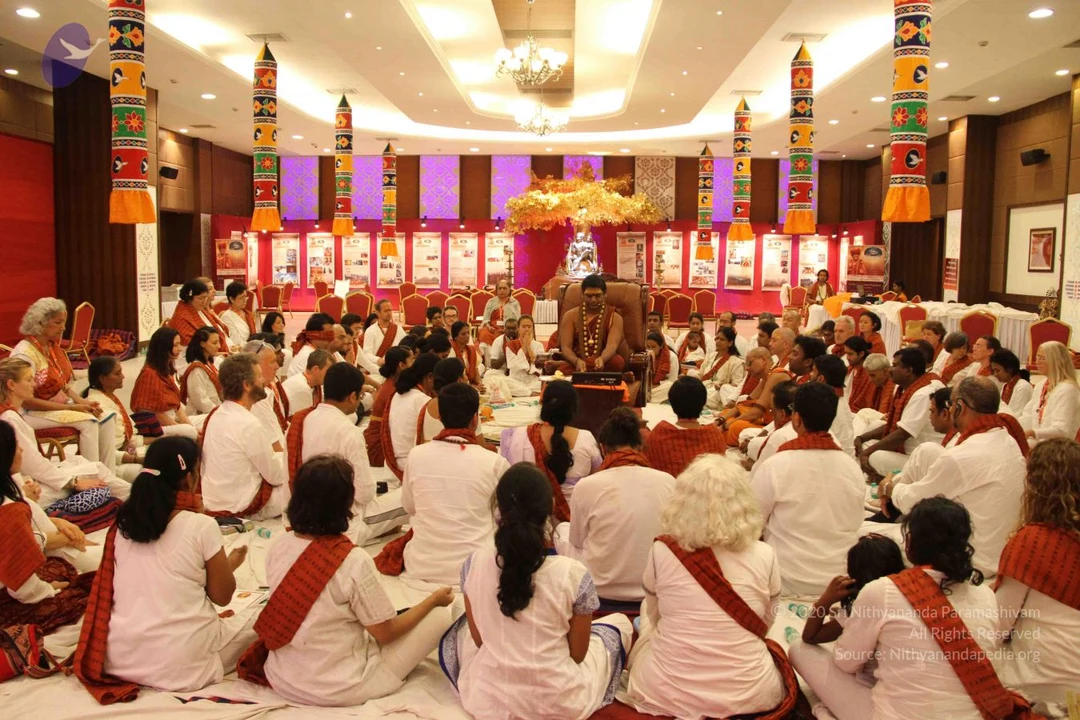
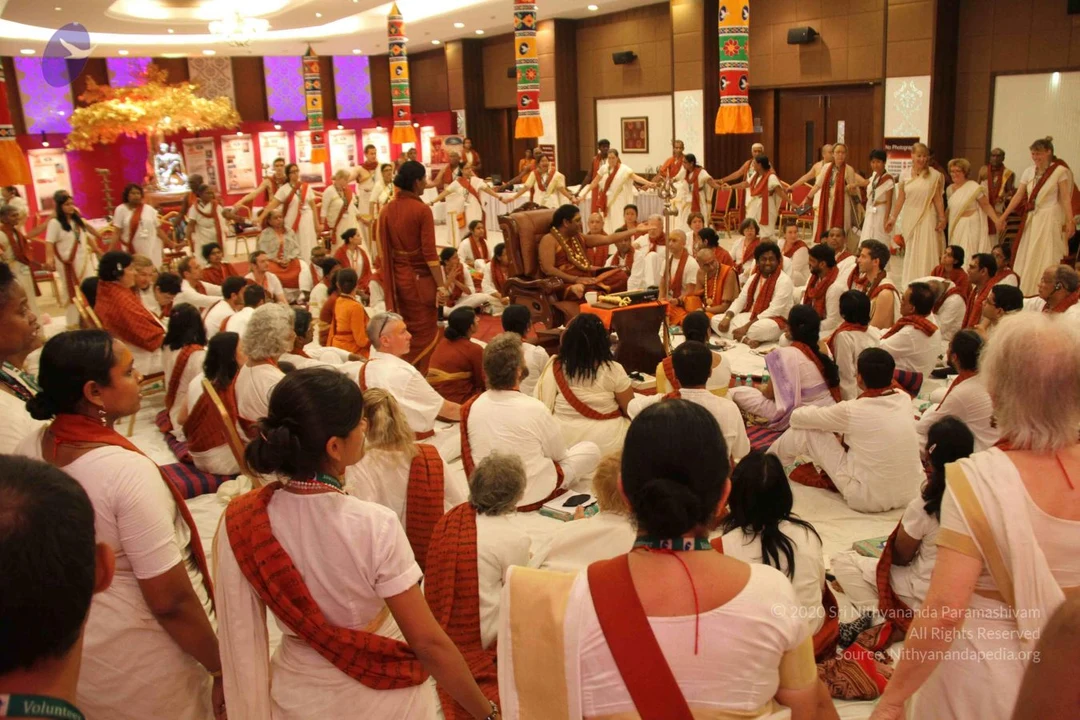
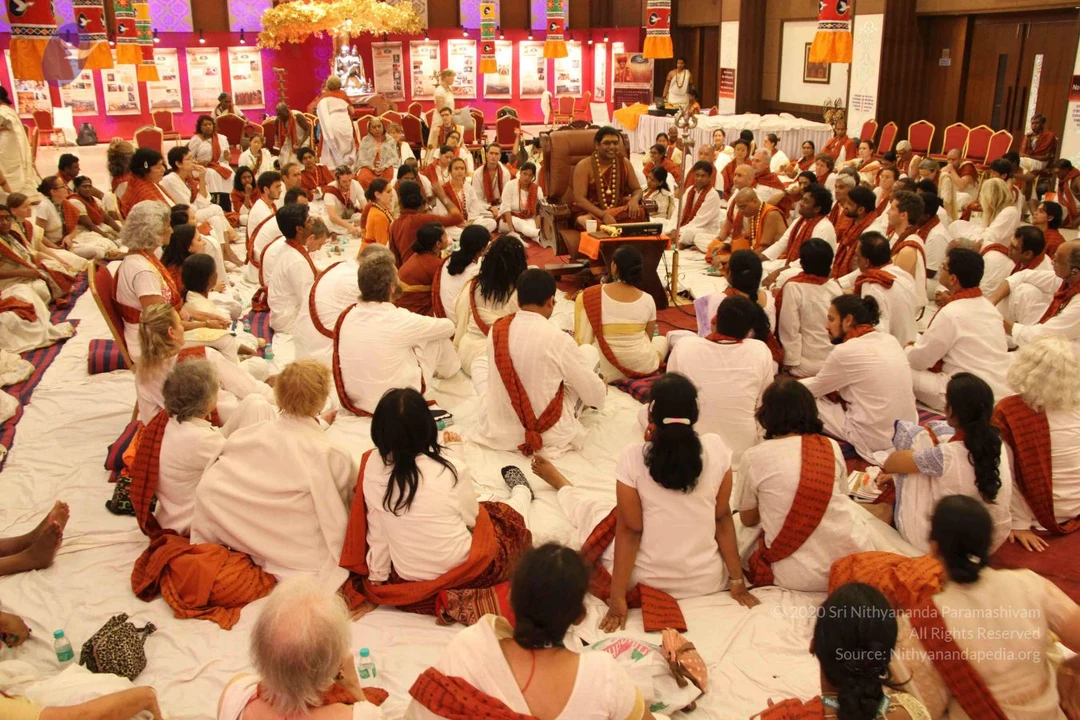
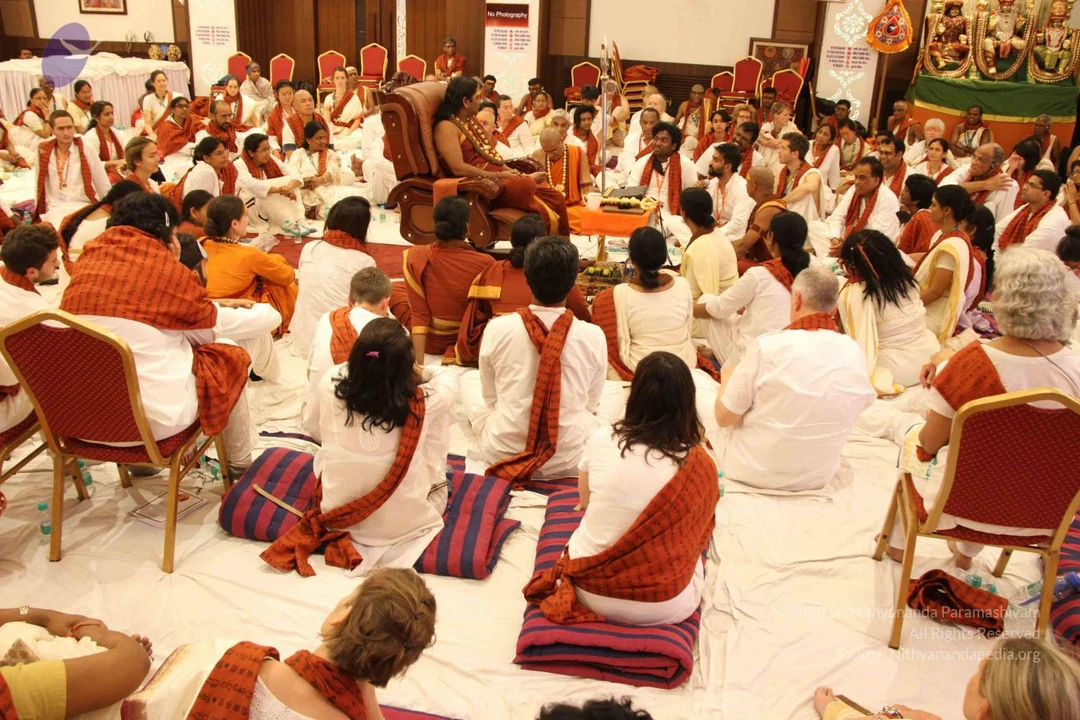
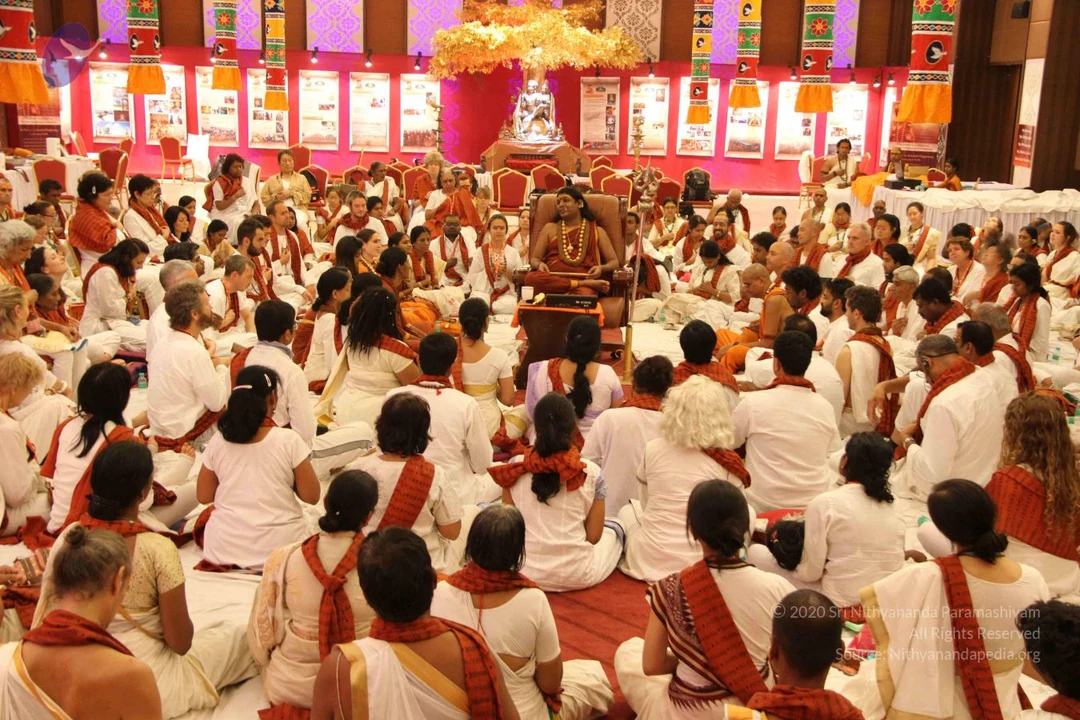
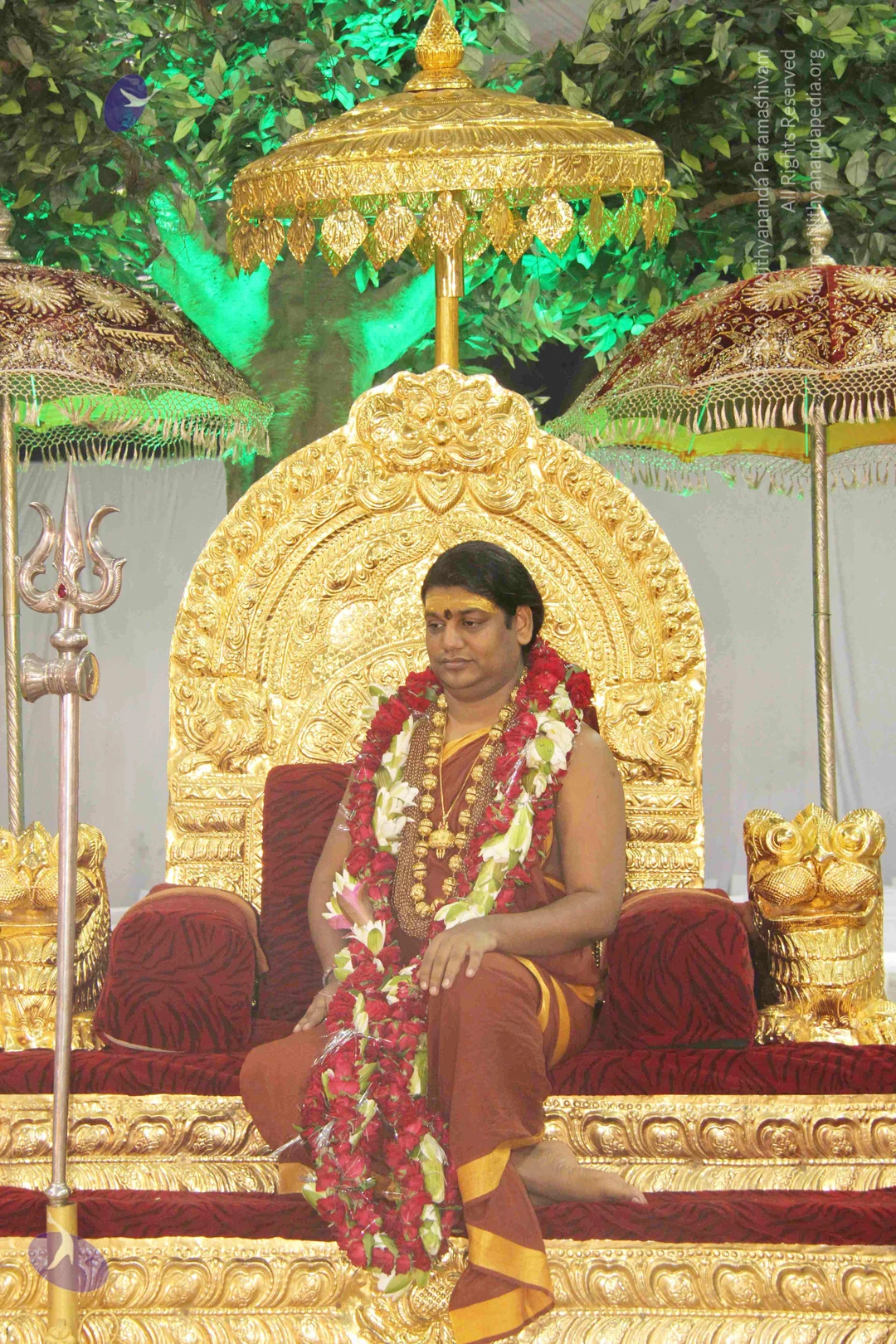
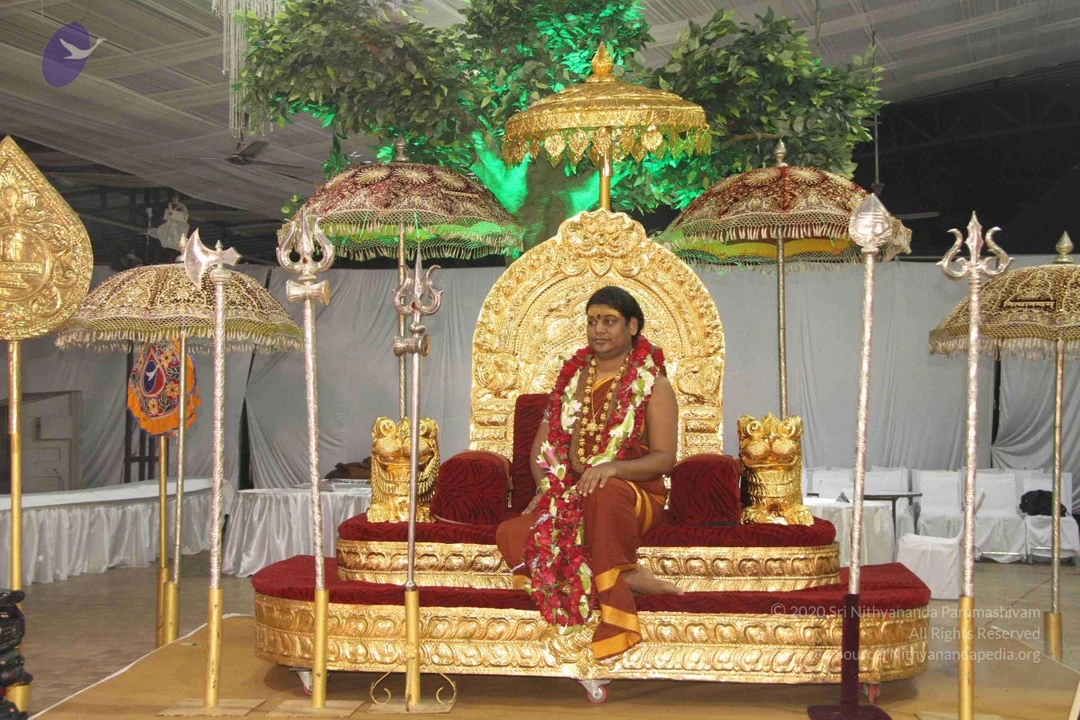
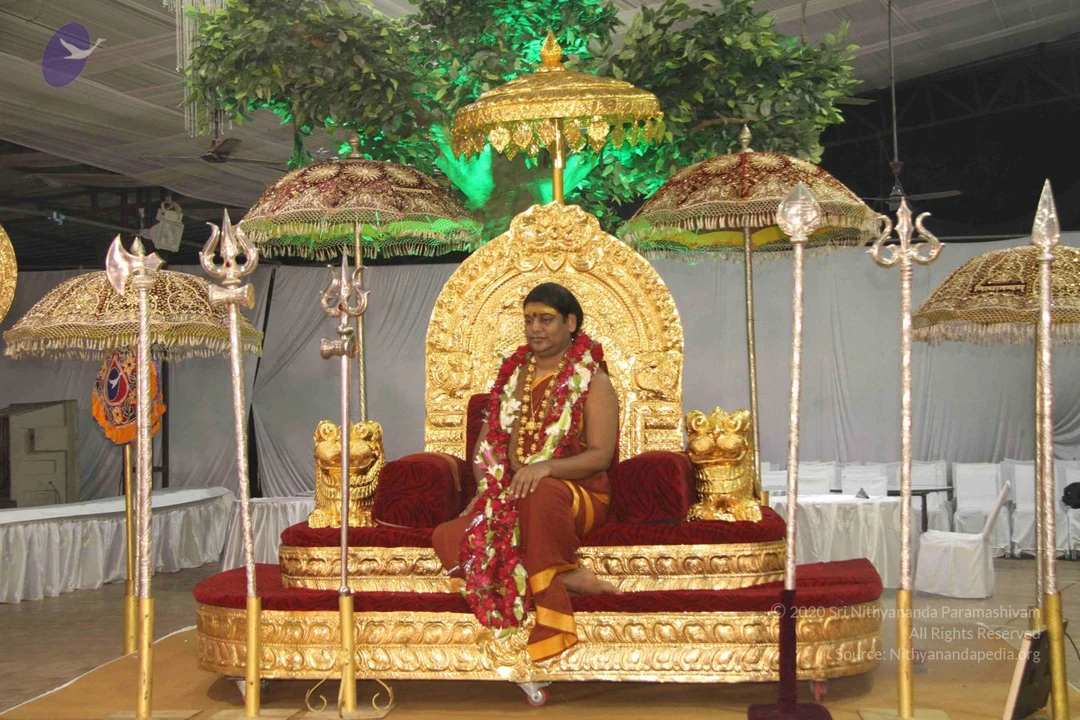
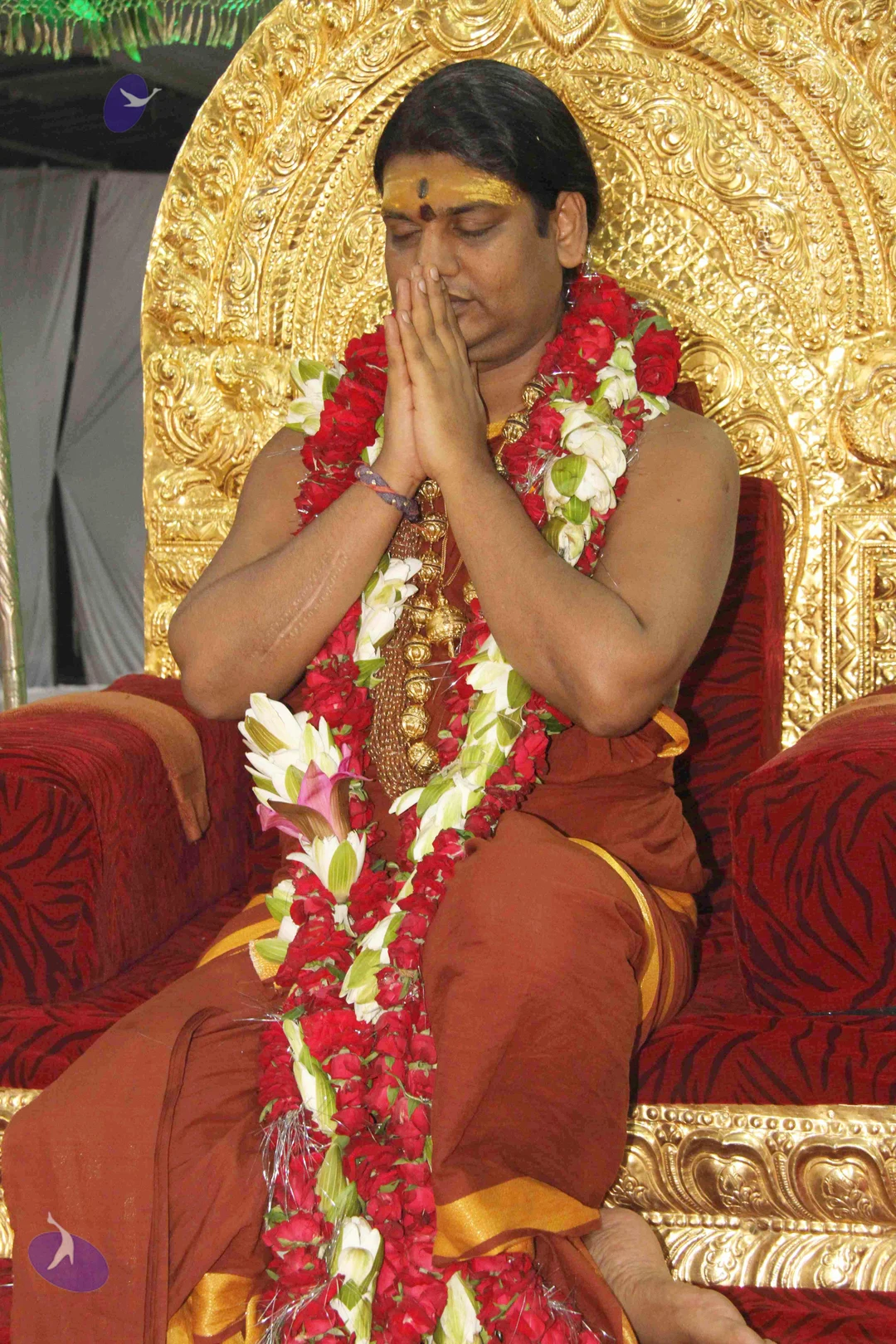
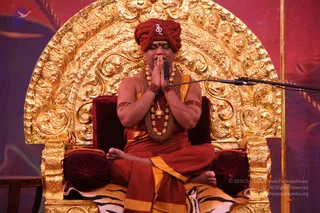
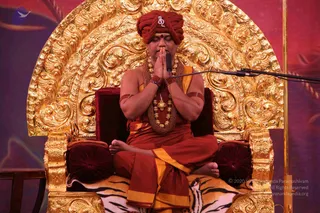
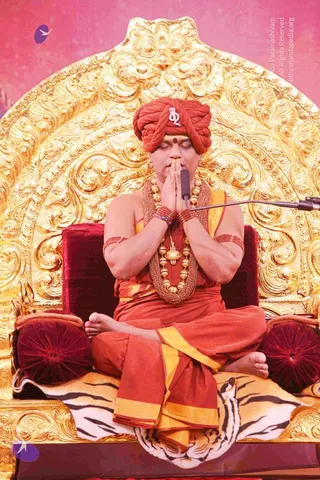
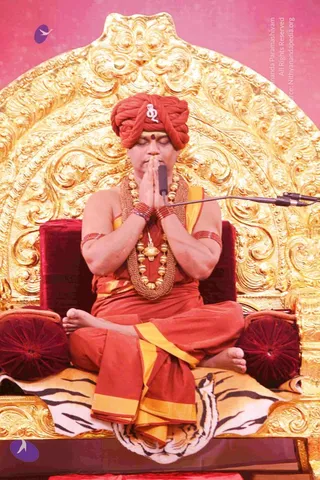
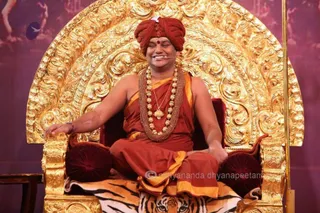
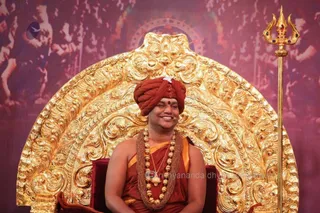
A seated man in a red-orange turban with a white emblem and red-orange robes sits with palms pressed together in namaste before a microphone on a stand. He wears layered gold-toned beaded necklaces, a rudraksha-style pendant, and multiple bangles. He sits on an ornate gold throne with carved scrollwork and a red velvet cushion, with a tiger-striped cloth beneath his bare feet. A red backdrop fills the background. a person: the long-established presentation cues here are a turban, saffron-orange ornate clothing, and ceremonial gold necklaces, seated on a throne. This is a satsang discourse setting.A man seated cross-legged on an ornate gold throne with a carved, repoussé backrest, draped over a striped tiger-skin cover, with maroon cushions at his sides. He wears a deep red turban with a small white emblem, a red and saffron-yellow garment, multiple beaded rudraksha-style malas, a large gold pendant, and red and gold bangles. His palms are pressed together in namaste with eyes closed, and a microphone stands beside him. The background is a warm red and purple stage backdrop. The figure appears to be a person, seated in a saffron-clad, turbaned, mala-adorned presentation with ceremonial gold necklace and pendant, in a stage setting of a discourse or satsang.A seated figure in a red-orange turban with a silver emblem and red bindi sits in padmasana-style crossed legs on a tiger-skin-covered red velvet throne with a large ornate gold repoussé backrest against a pink backdrop. He wears an orange-red dhoti-style garment with a gold border, a multi-strand gold and red beaded necklace, a pendant, and red-beaded bangles and armbands. He sits with palms pressed together in anjali mudra with eyes closed, a microphone stand beside him. Appearance-based probable candidate Swamiji (probable): a seated teacher in ceremonial saffron-orange robes, long turban and ornate beaded necklaces, speaking at a satsang.A seated man in an ornate golden throne with a red velvet seat and red cushions sits cross-legged on a striped tiger-skin rug, hands pressed together in namaste with eyes closed. He wears a red-orange turban with a small white emblem, red-orange robes with yellow borders, layered gold beaded necklaces, red bangles and red armbands. A microphone stands before him against a pink backdrop, and a gold-filigree arch rises behind the throne. One physical person is present.Wide photo of a satsang hall in a large venue with a red-draped stage backdrop painted with deity scenes. On the stage, a man with a red turban, rudraksha mala and red-orange robes sits on an ornate gold throne with a microphone. A large screen on the right shows a close-up of the same figure seated on a gold throne. Brass oil lamps stand beside the stage and a camera on a tripod films the event. Rows of seated audience members wear white and red-bordered shawls, with some in orange robes and saffron shawls in front. Overall dense seating with many people in white clothing.A seated audience in white ritual clothes, many with red-and-orange shawls and garlands, faces a central stage. A figure in saffron robes, with an orange turban and a long beaded necklace, sits cross-legged on an ornate golden throne (peetha) during a satsang discourse. Brass oil lamps (lamps) and a trident stand beside the throne. Behind them a large painted backdrop shows mythological scenes with a bull and figures in blue and red, and a camera on a tripod records the event. Swamiji (probable) is seated on the throne, the speaker of the discourse, with the cues of saffron clothing, orange turban and rudraksha-style beads.

Sarva Darshan To all

34 photosSource gallery
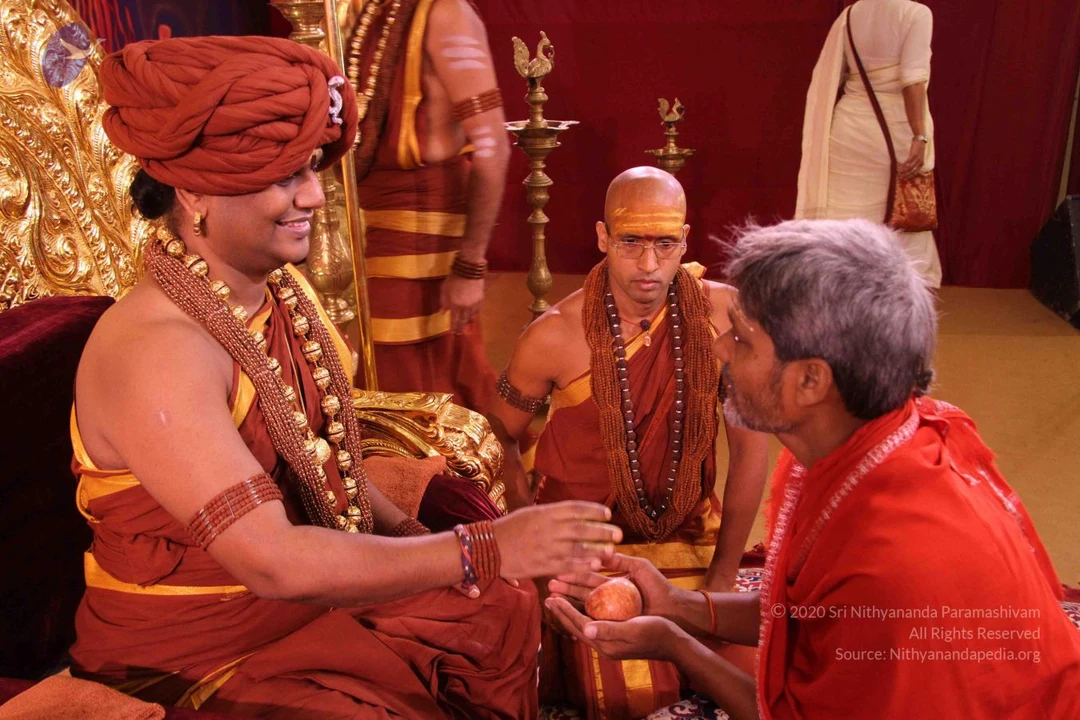
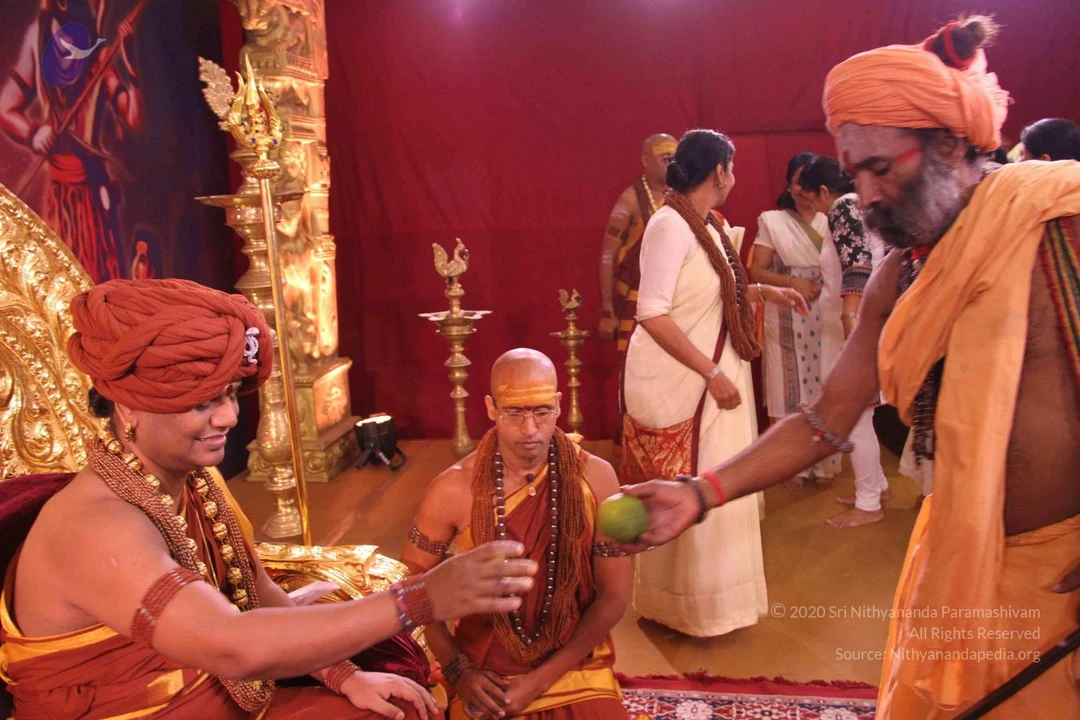
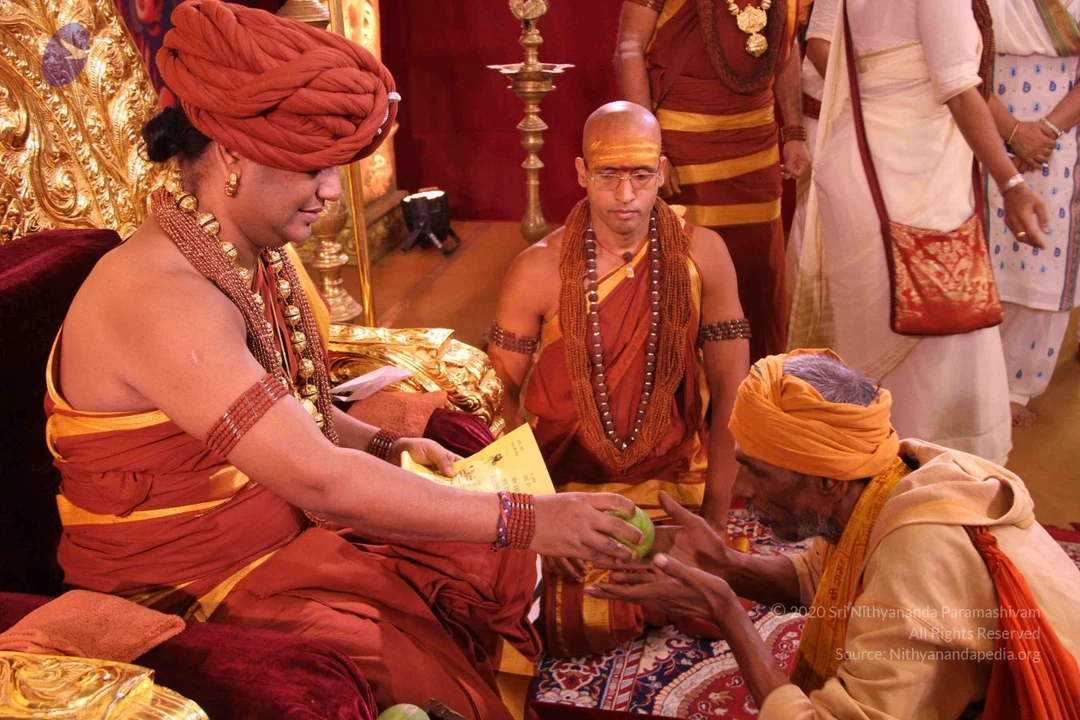
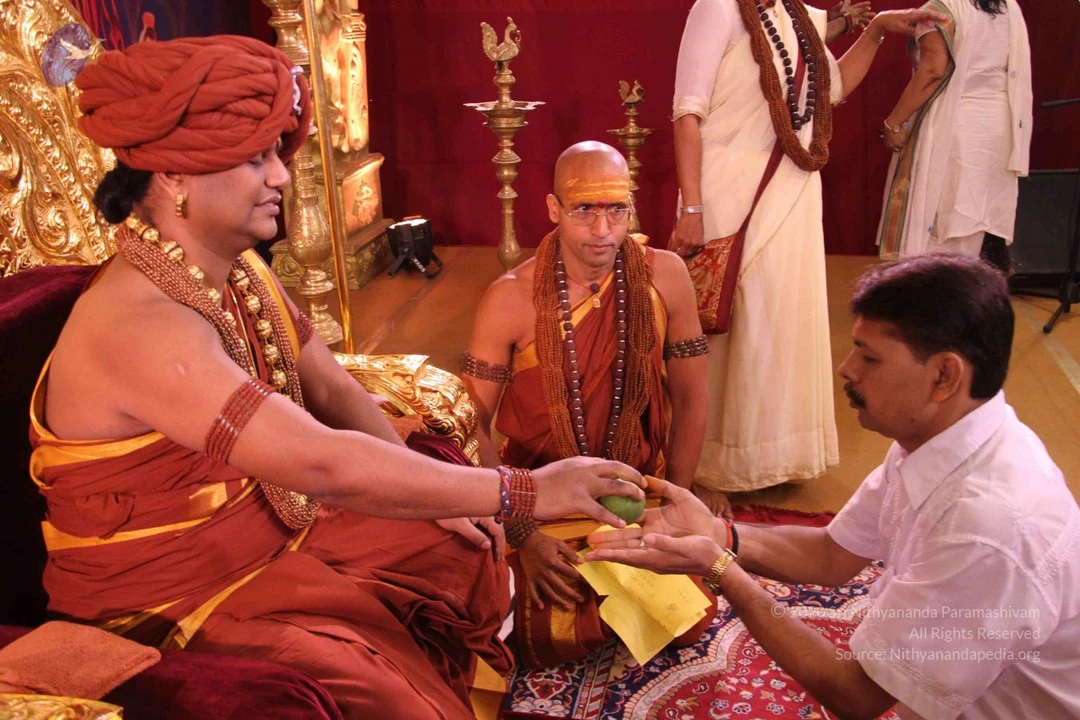
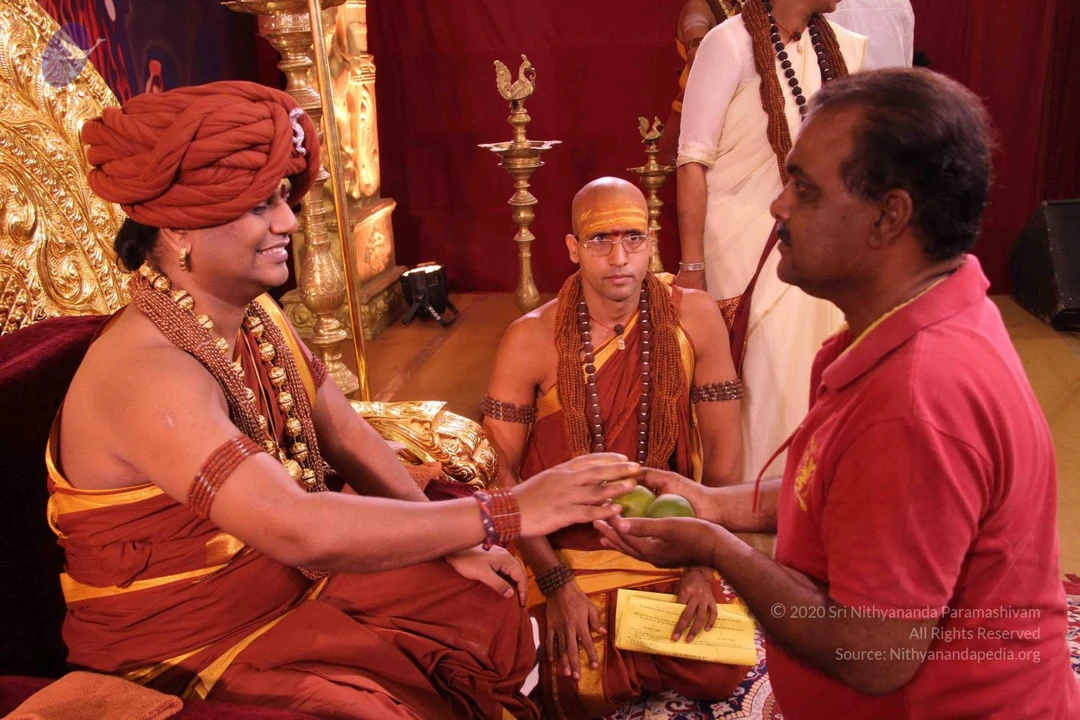
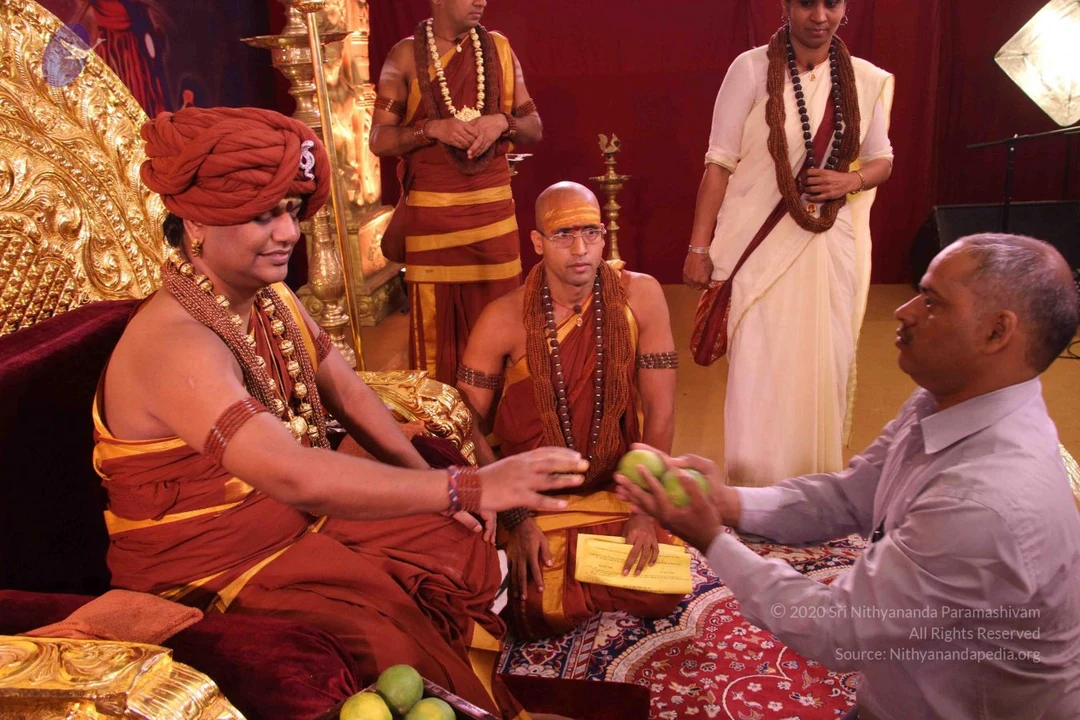
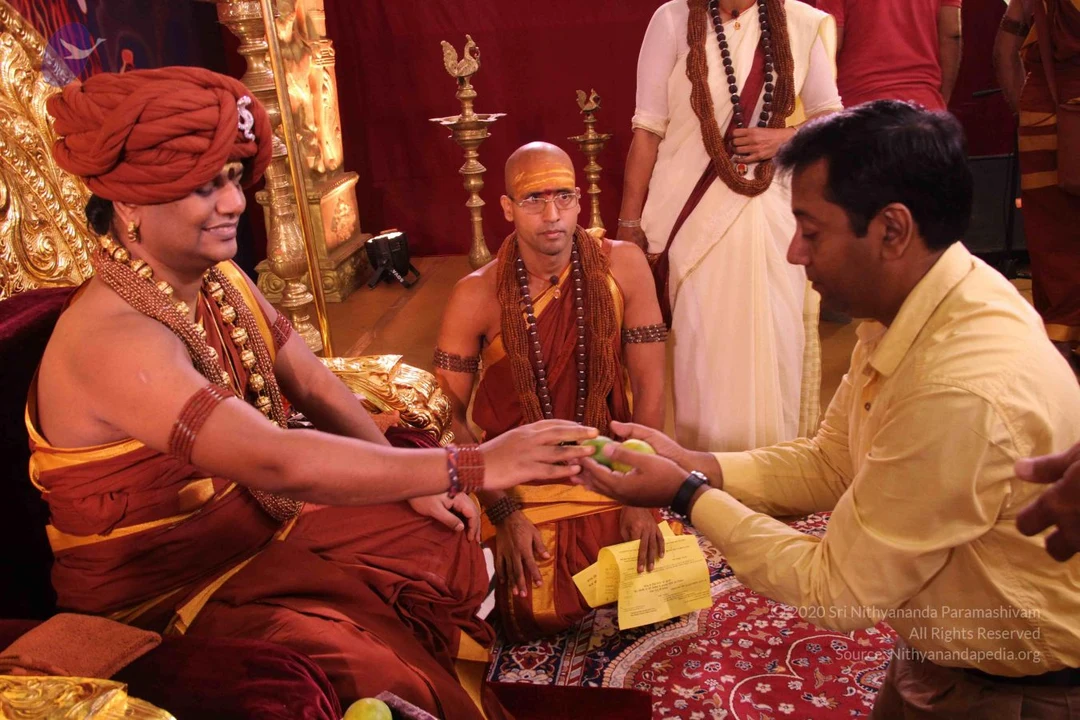
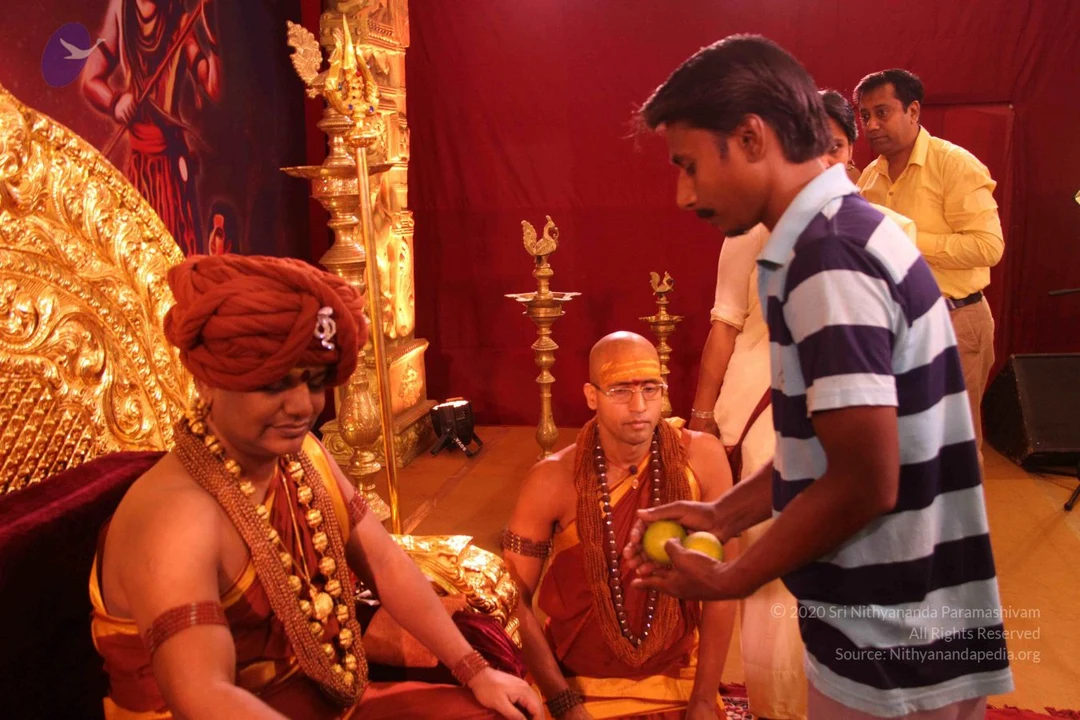
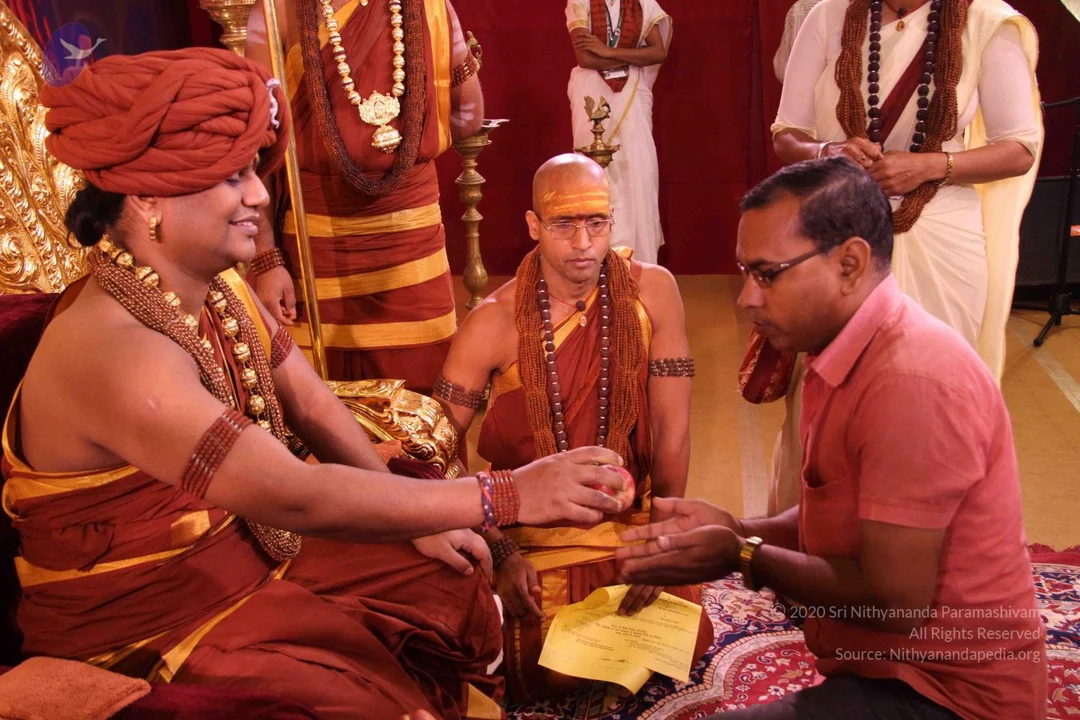
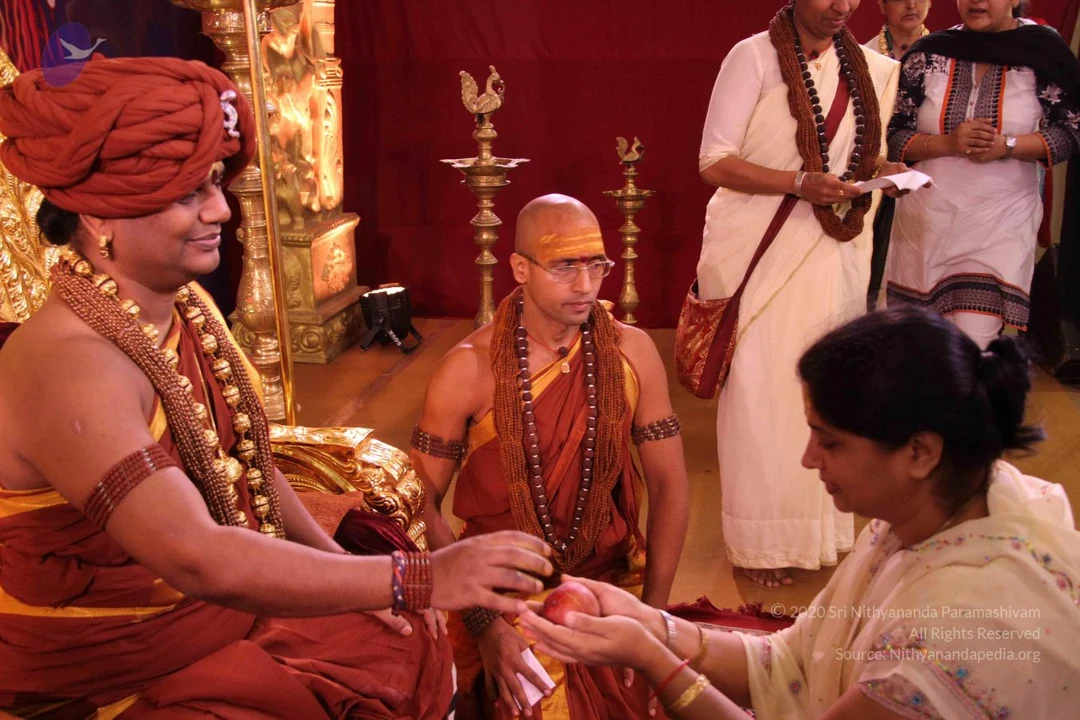
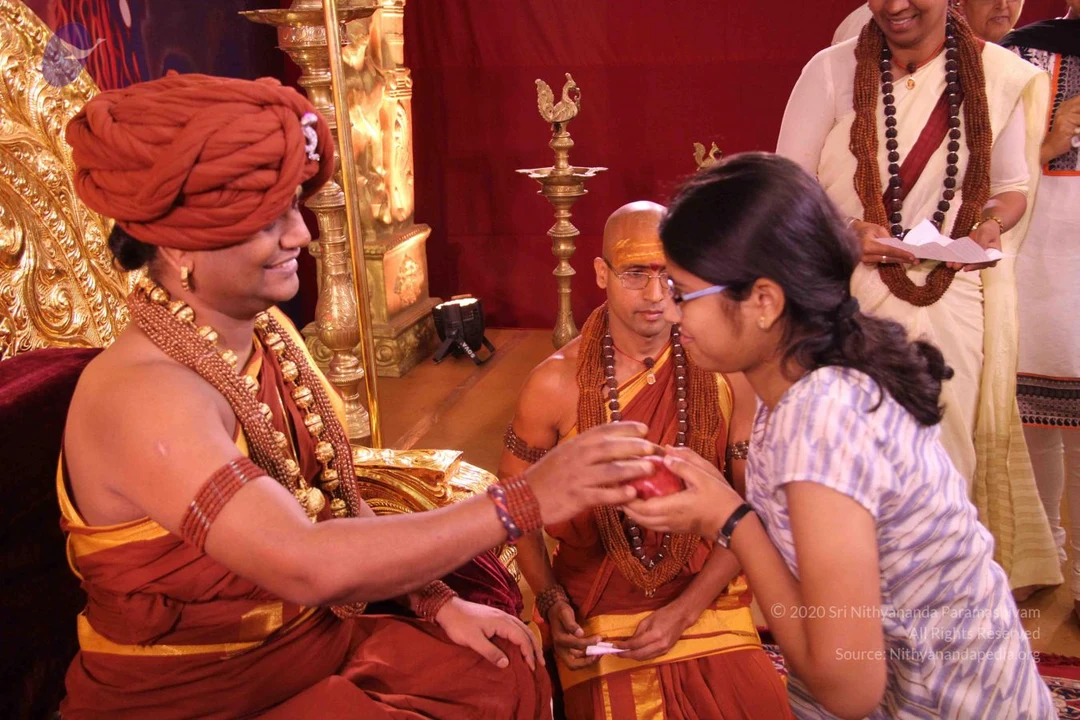
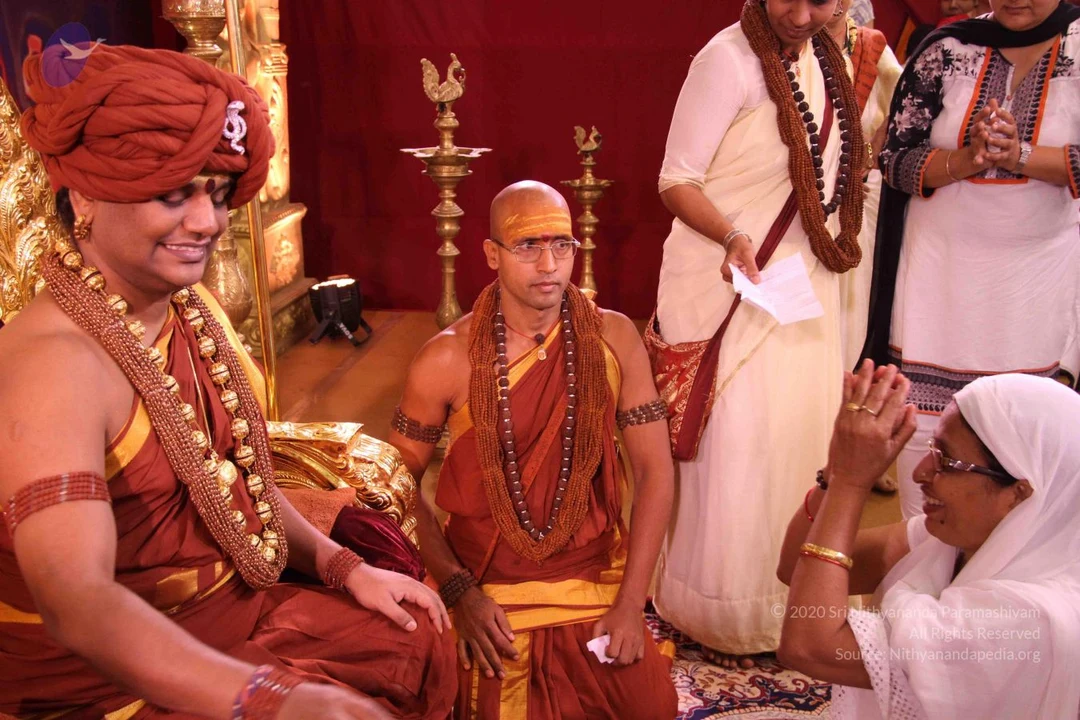
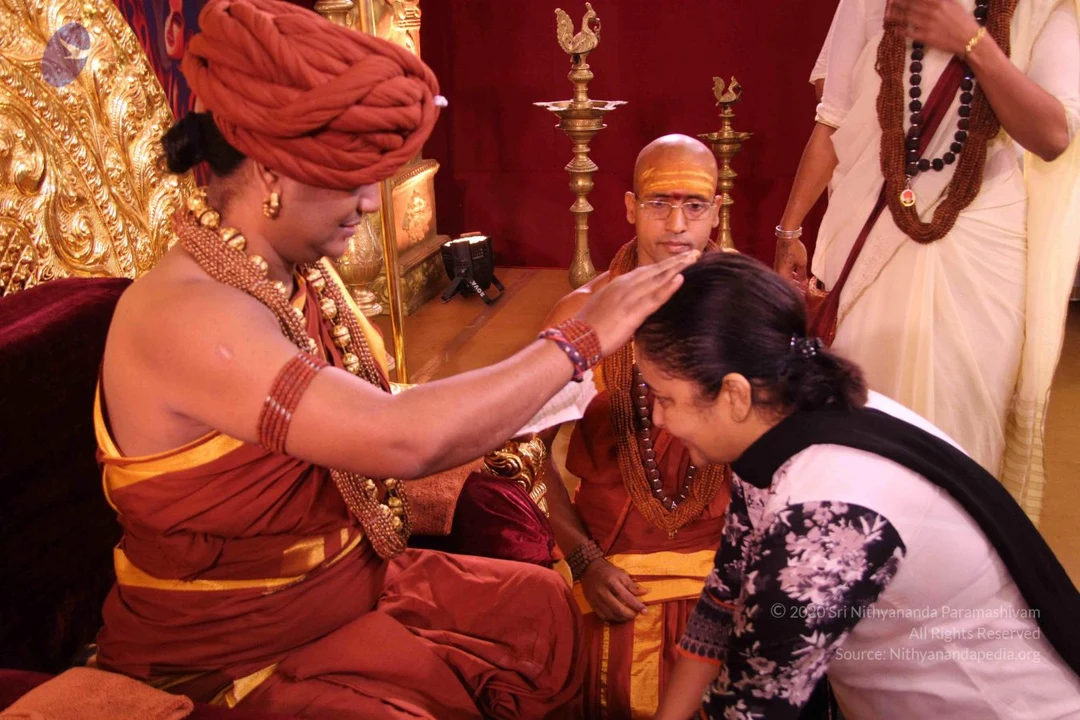
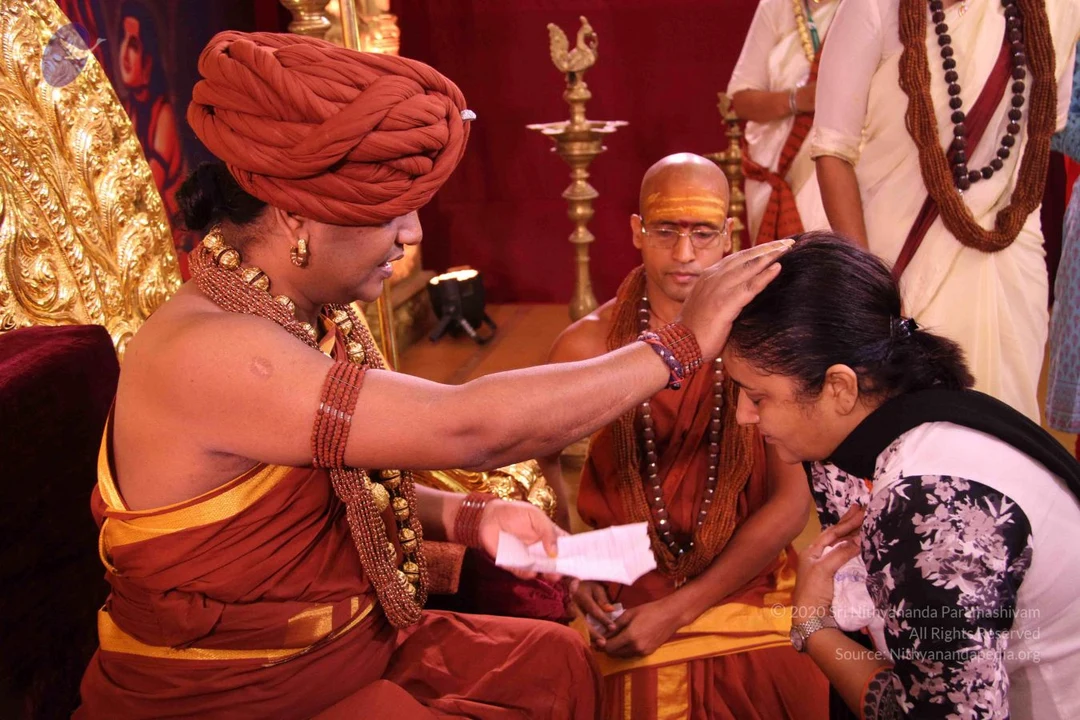
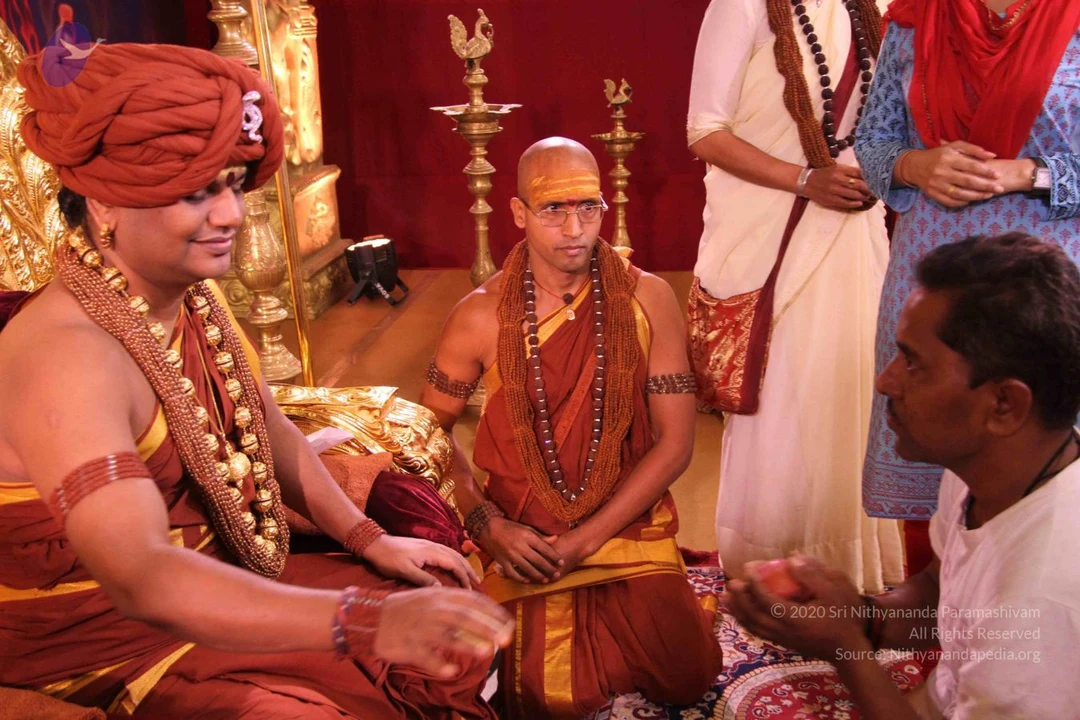
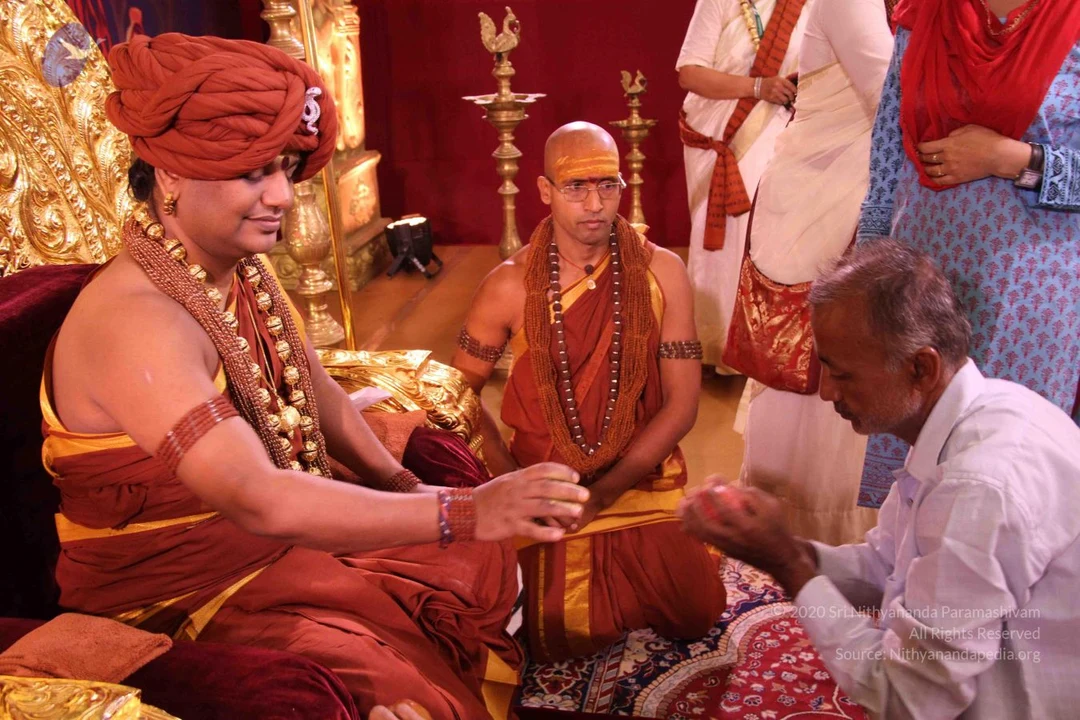
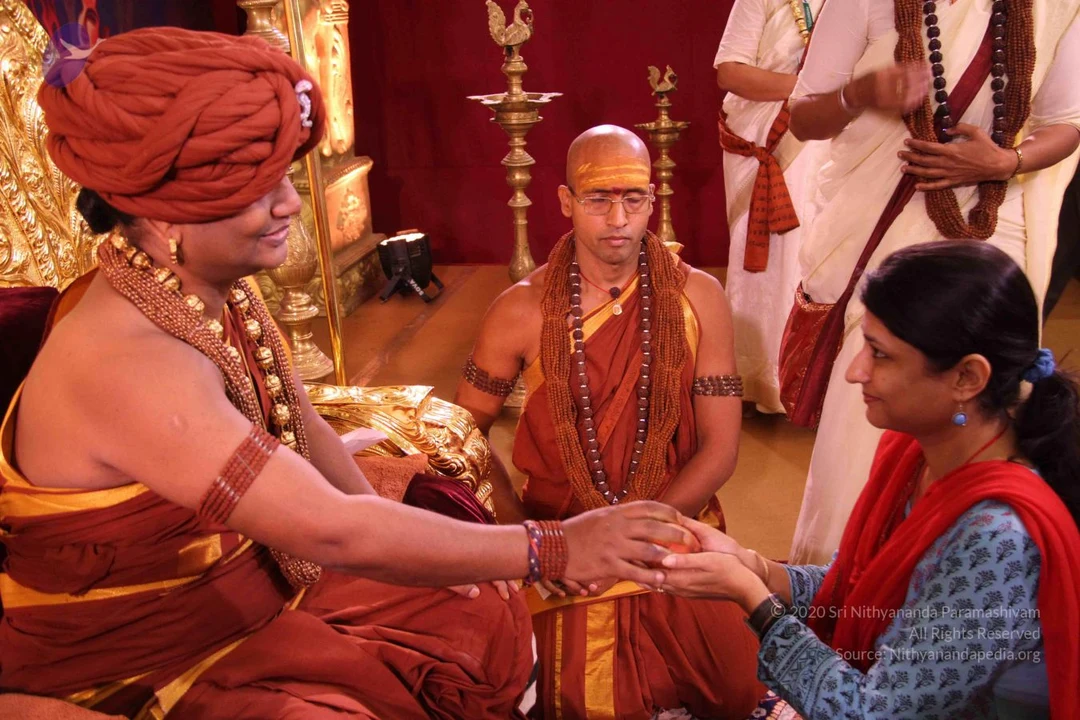
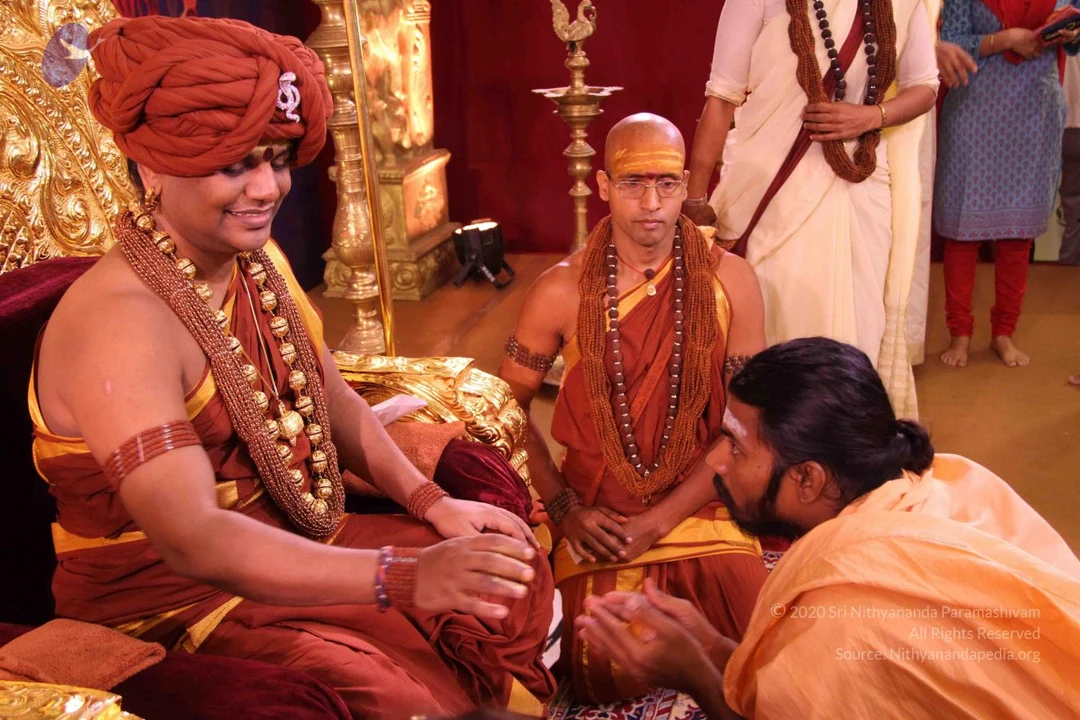
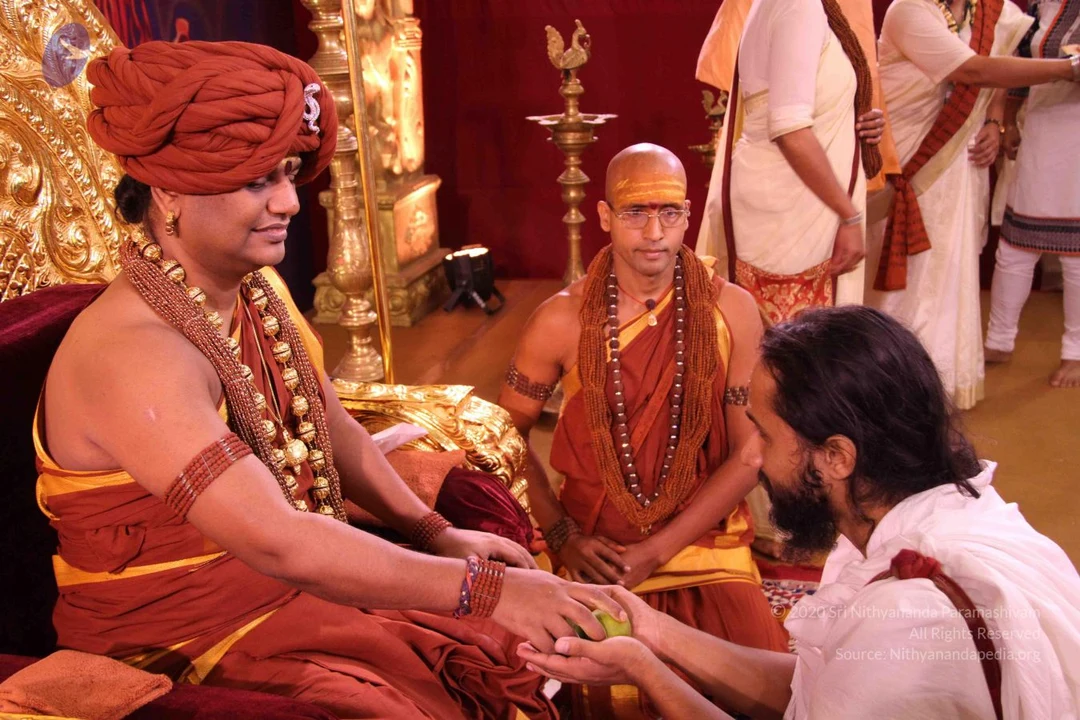
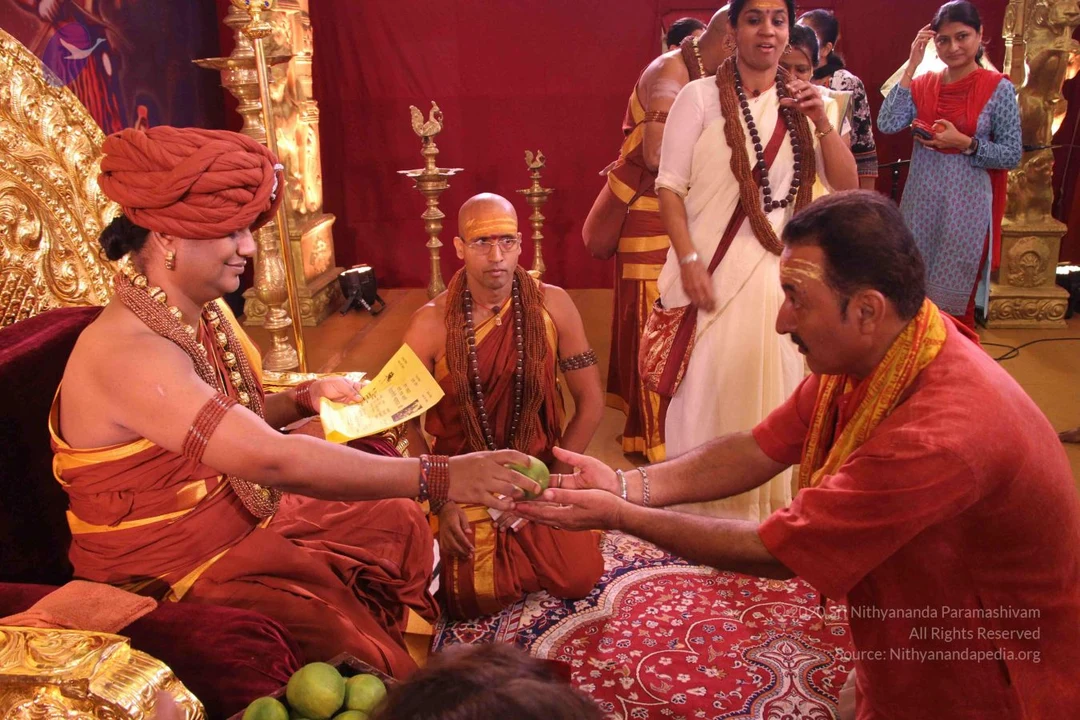
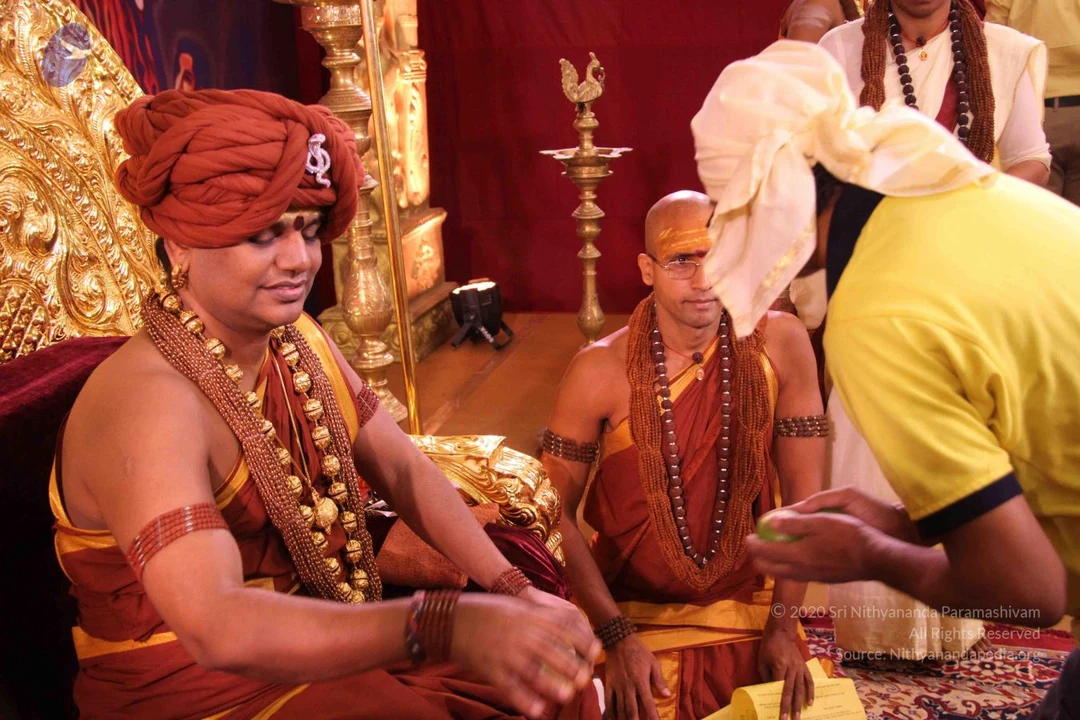
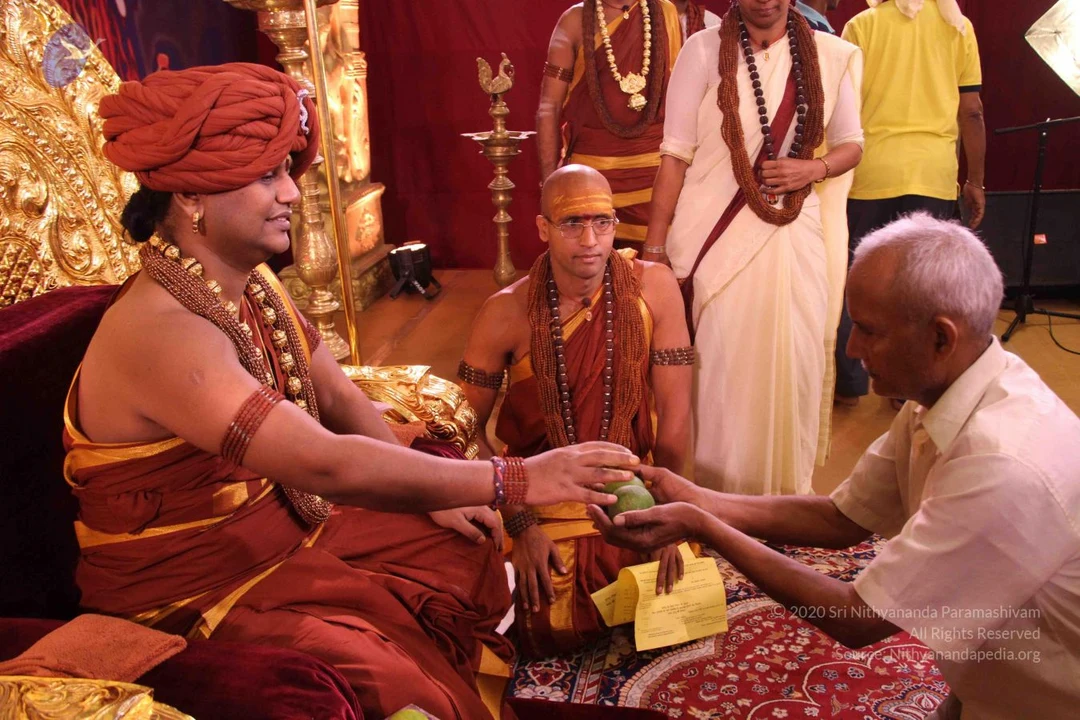
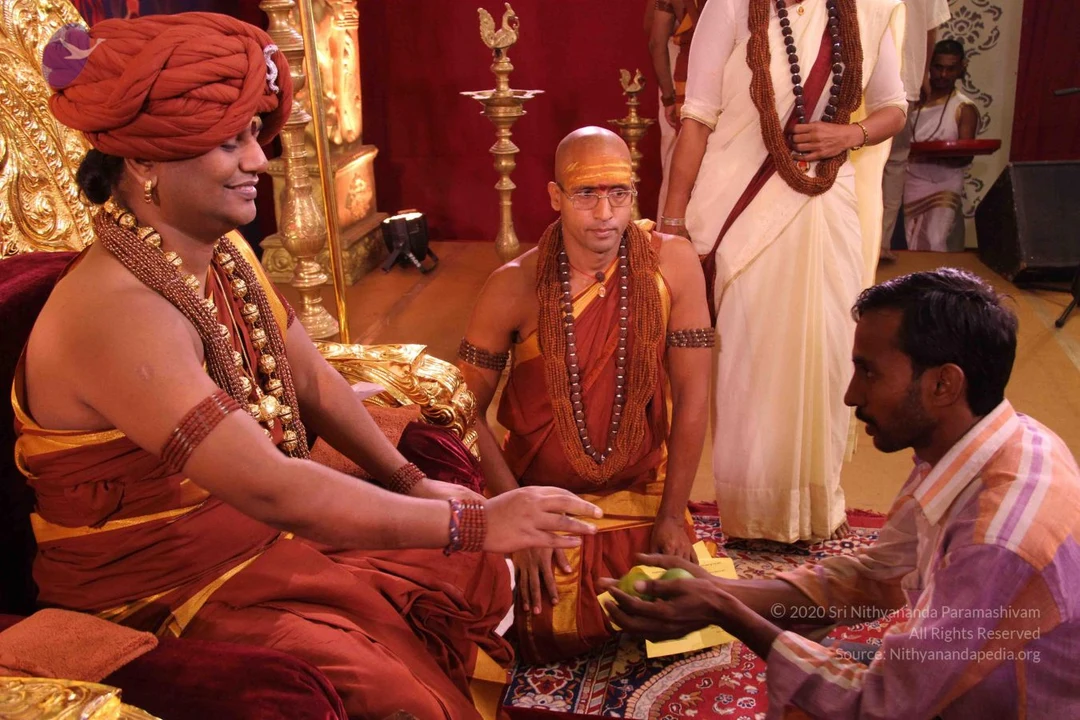
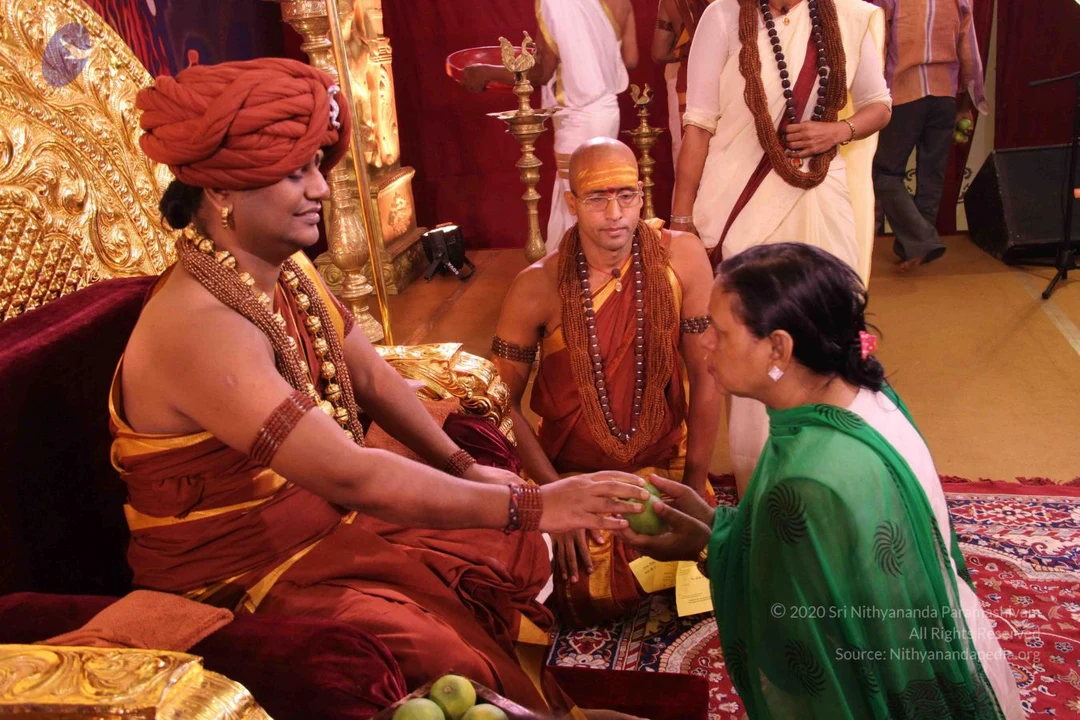
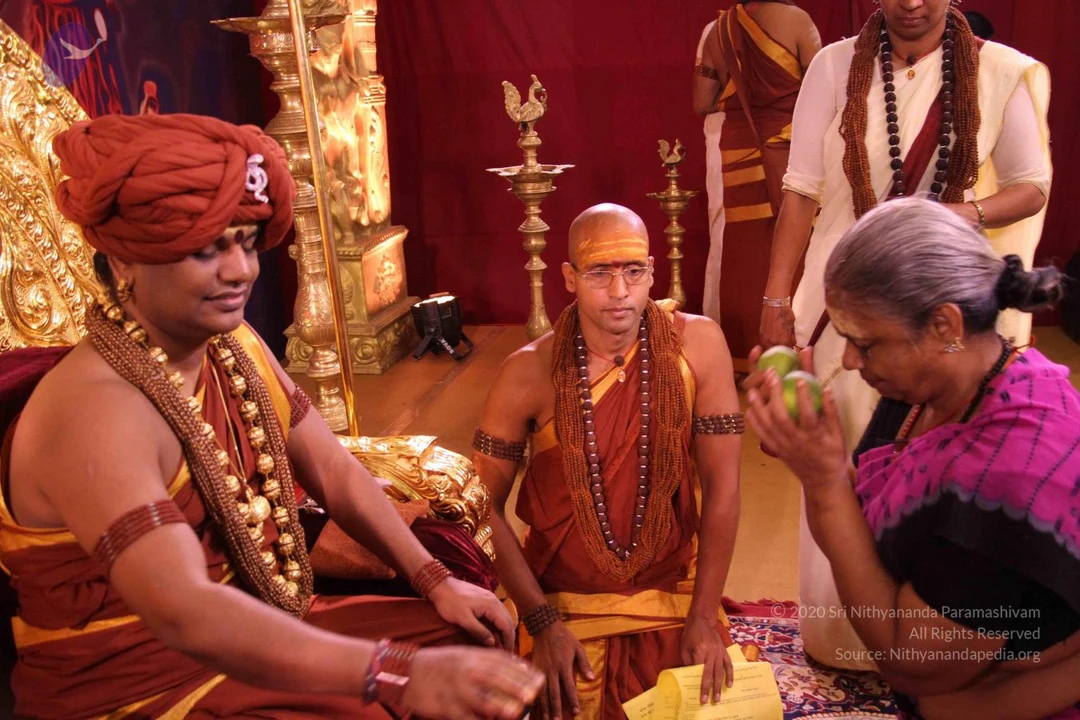
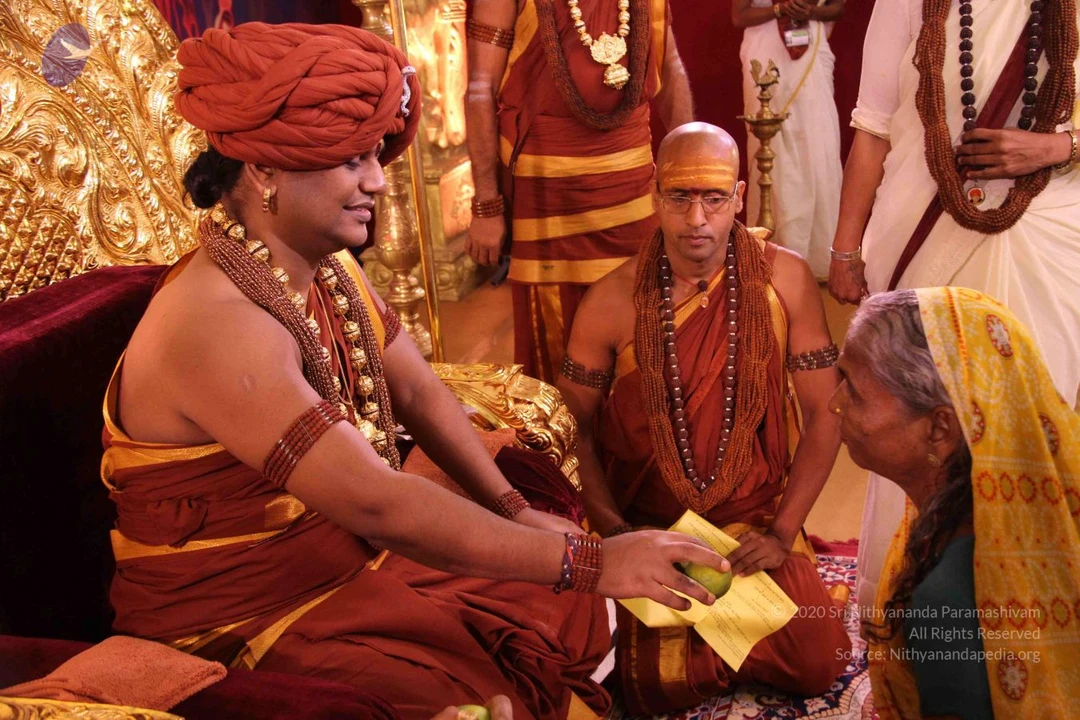
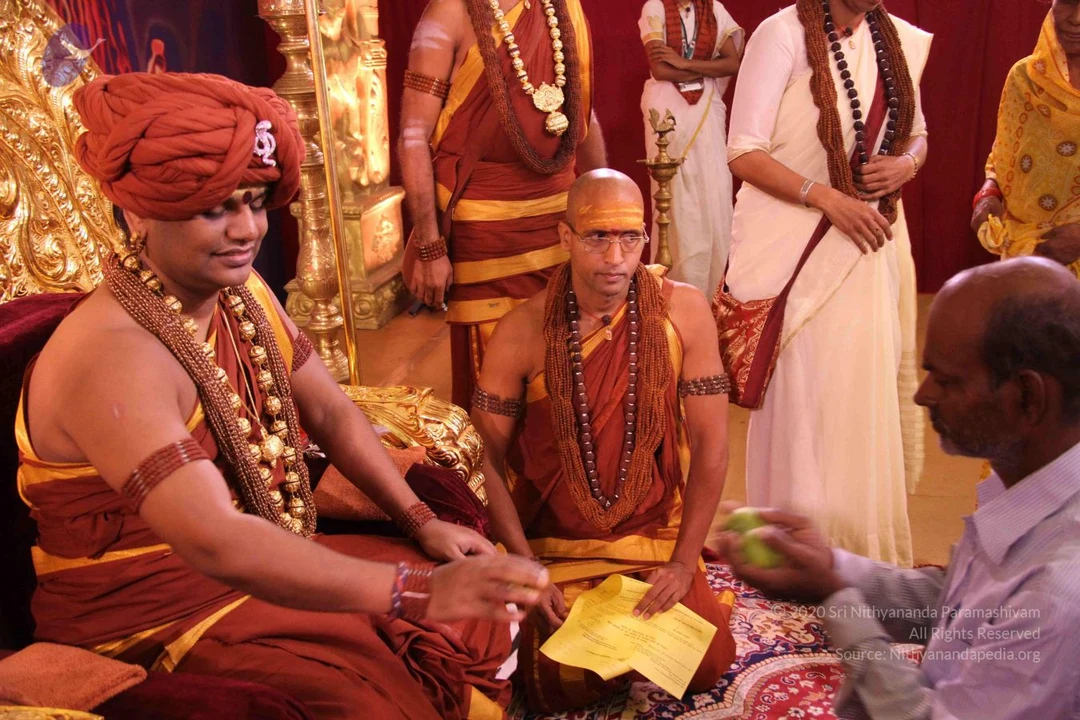
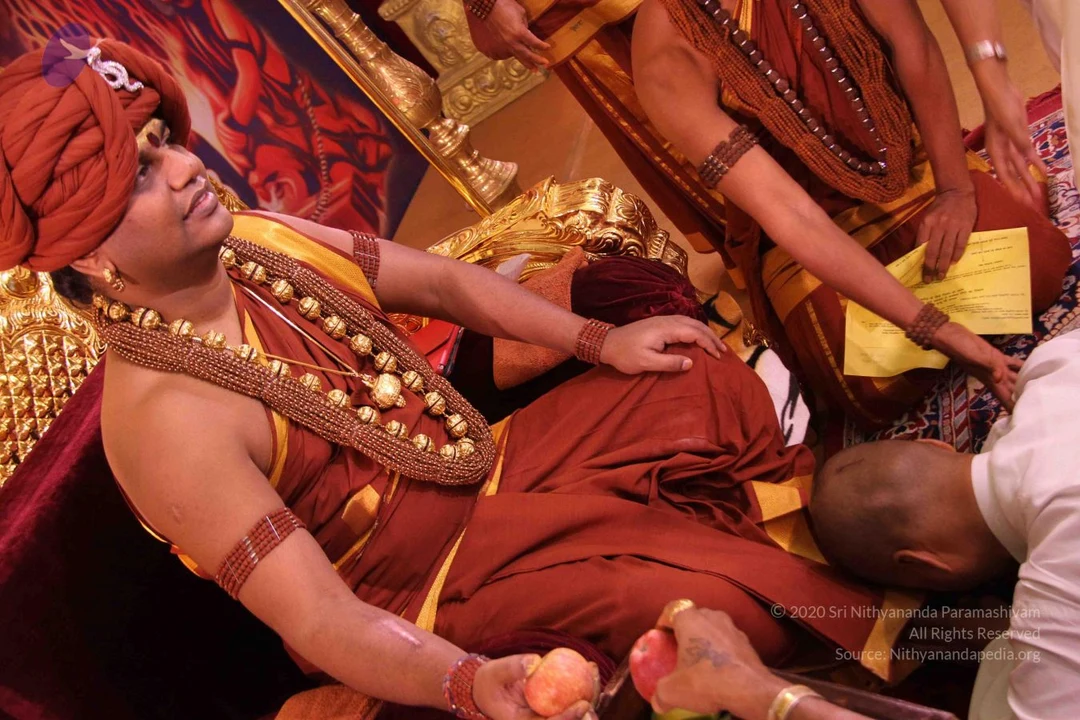
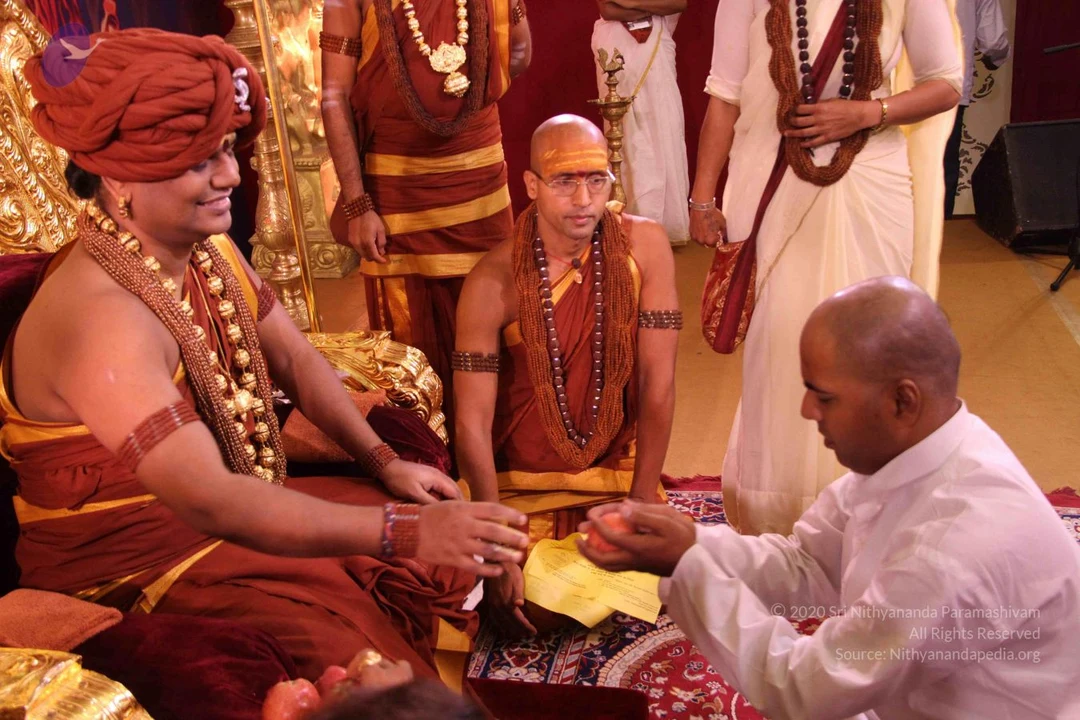
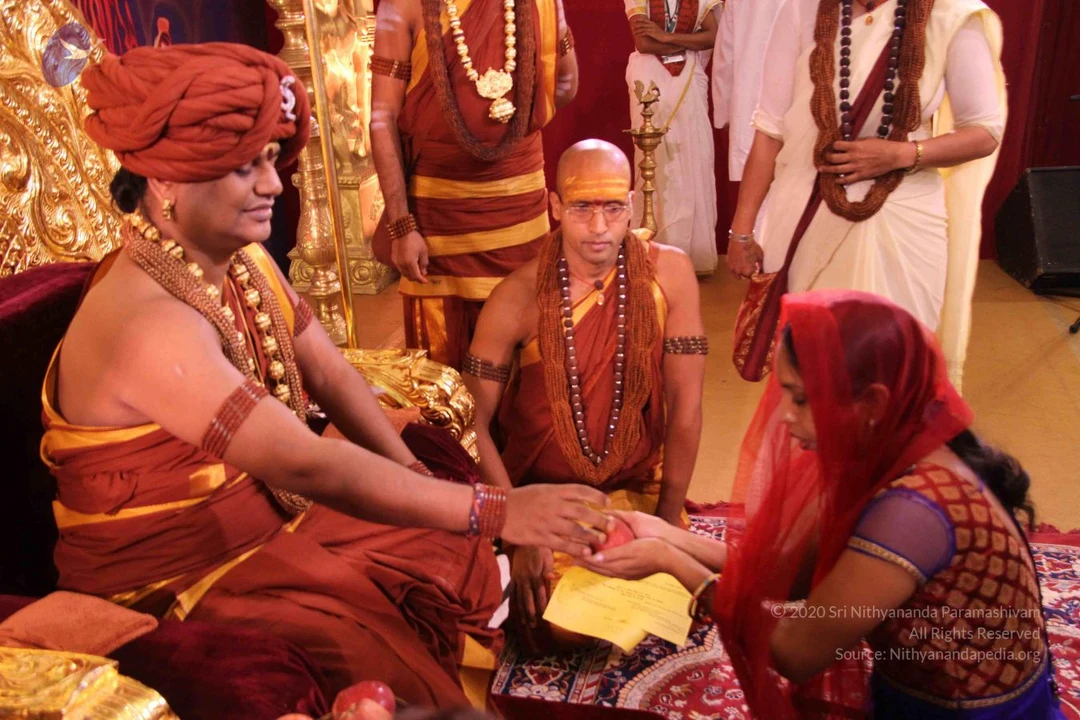
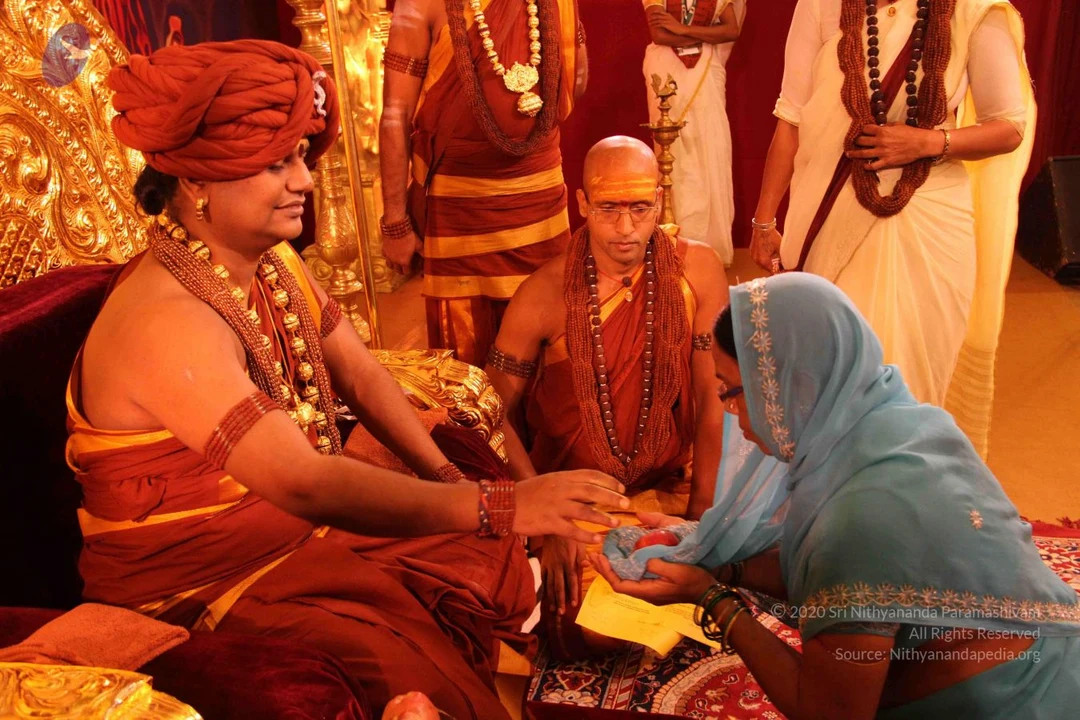
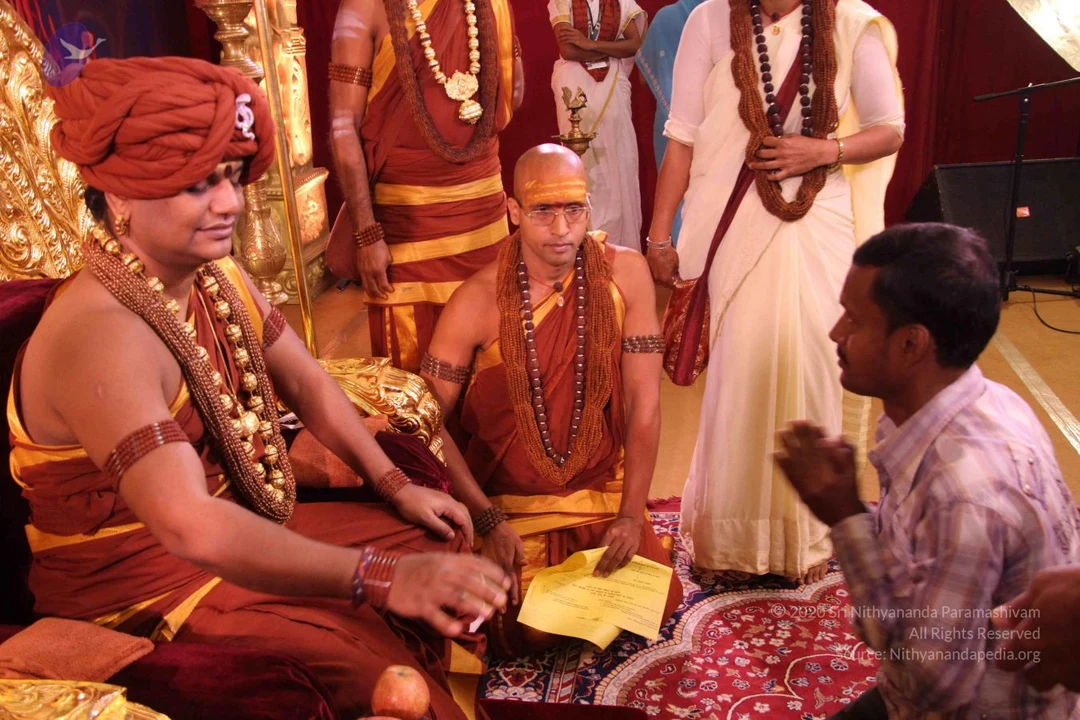
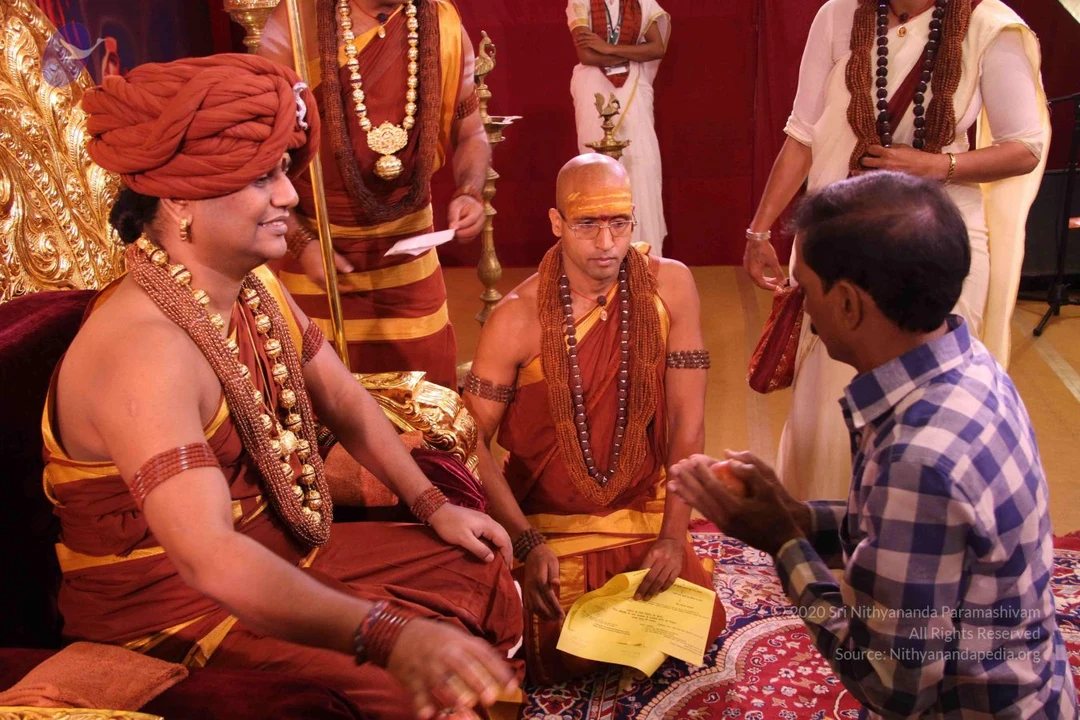
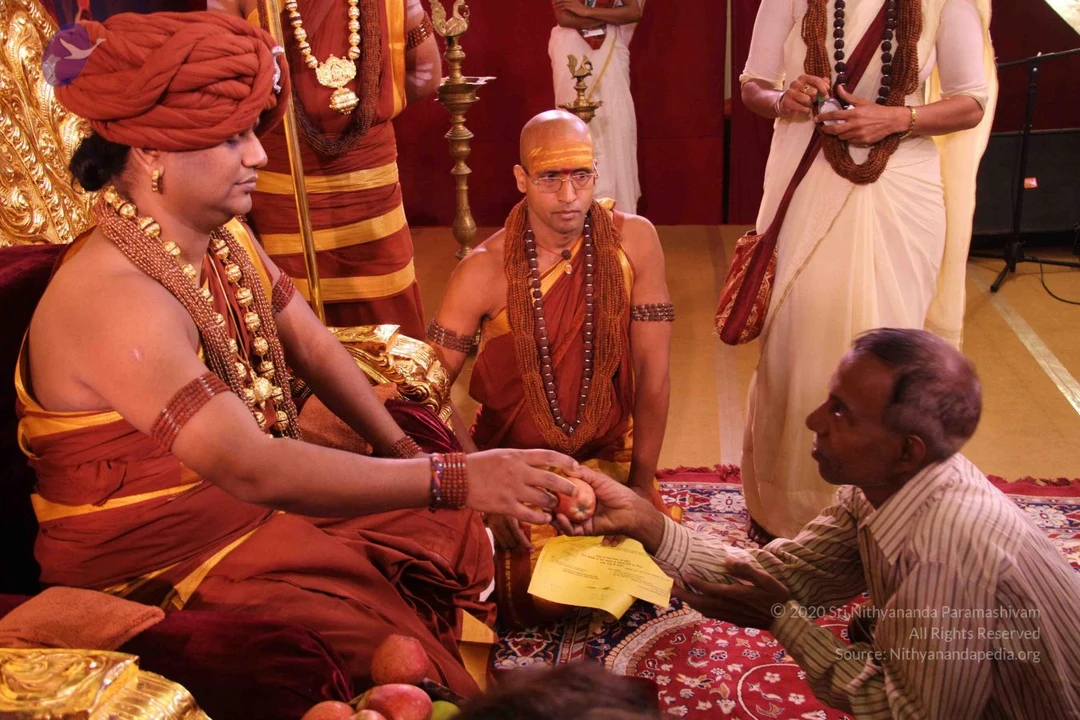
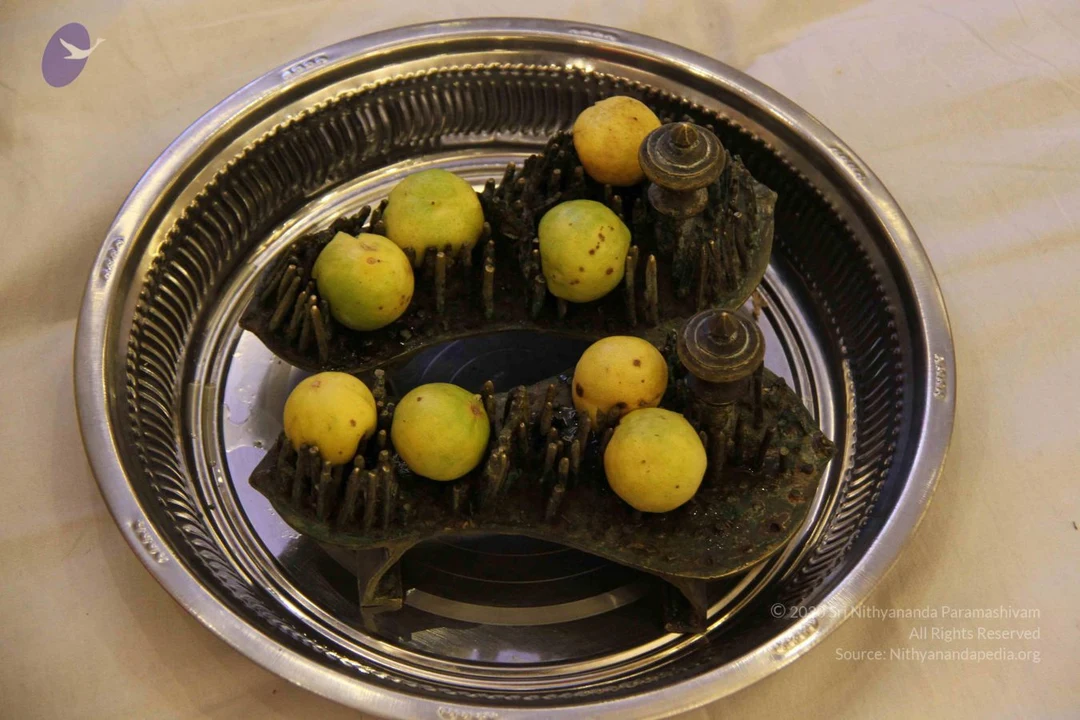
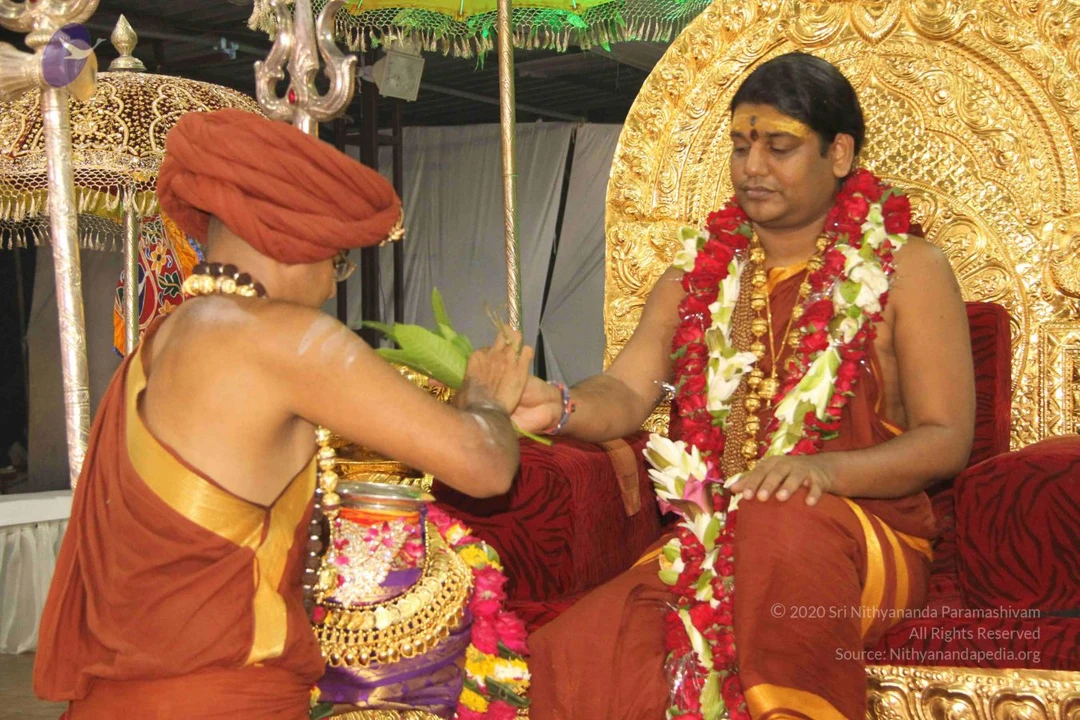
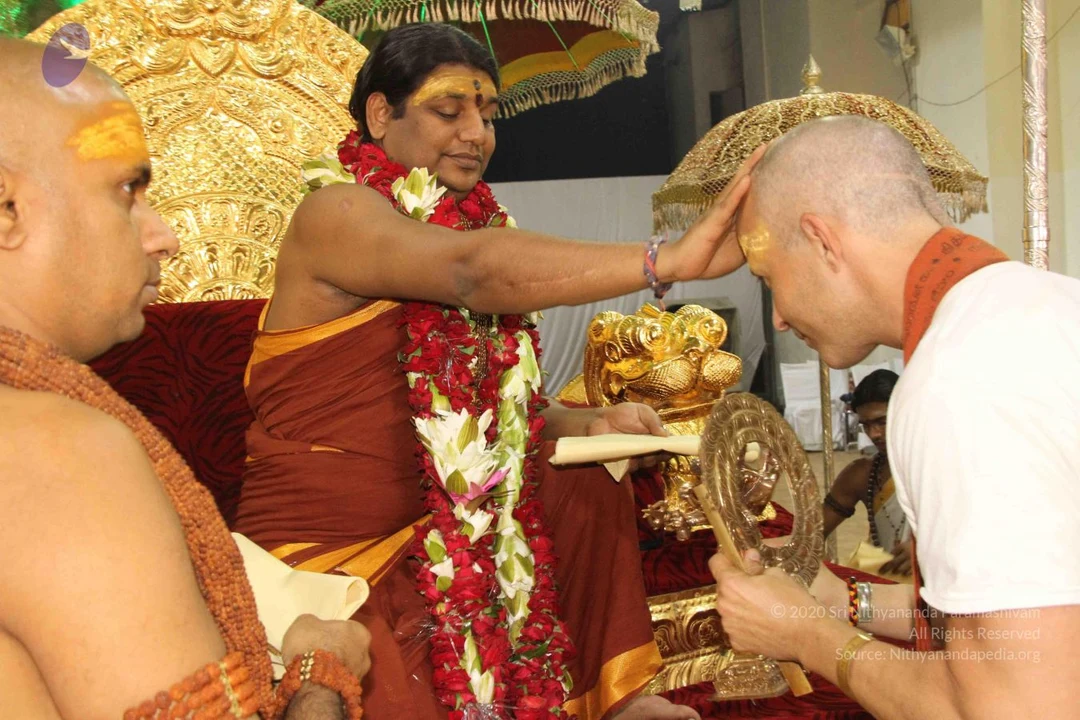
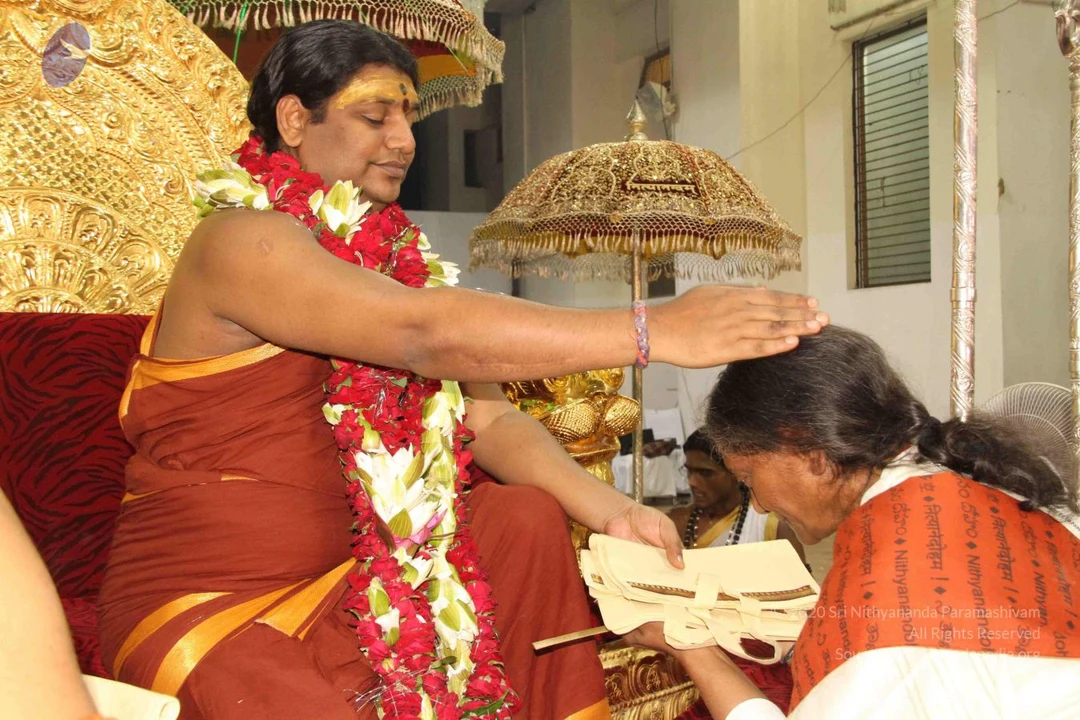
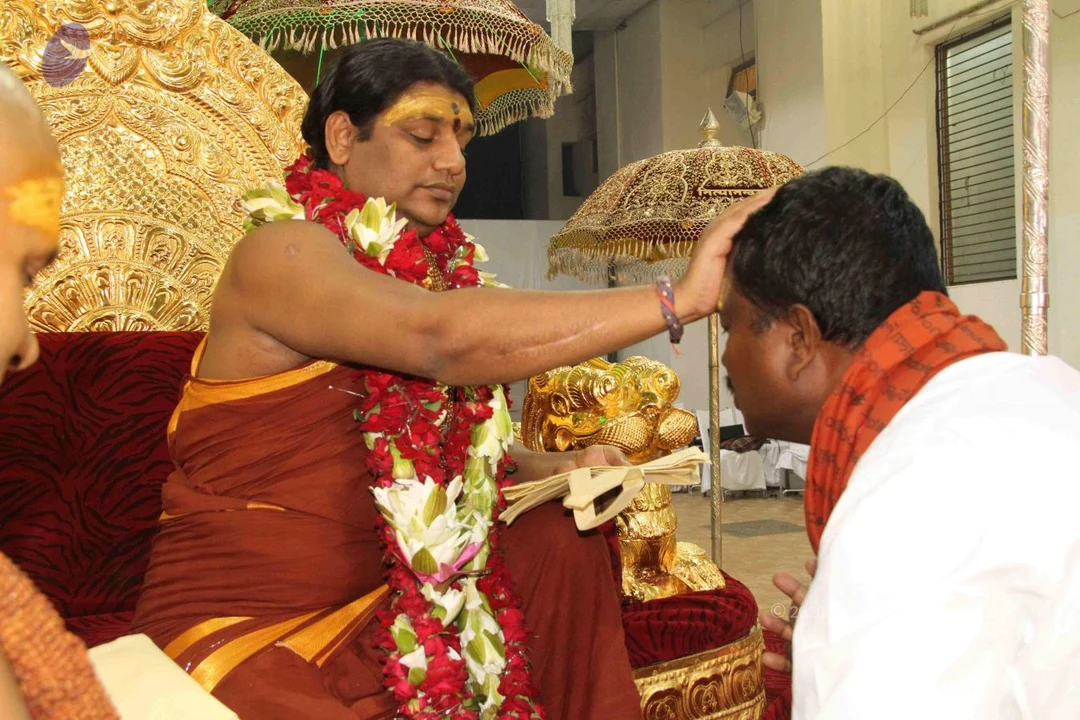
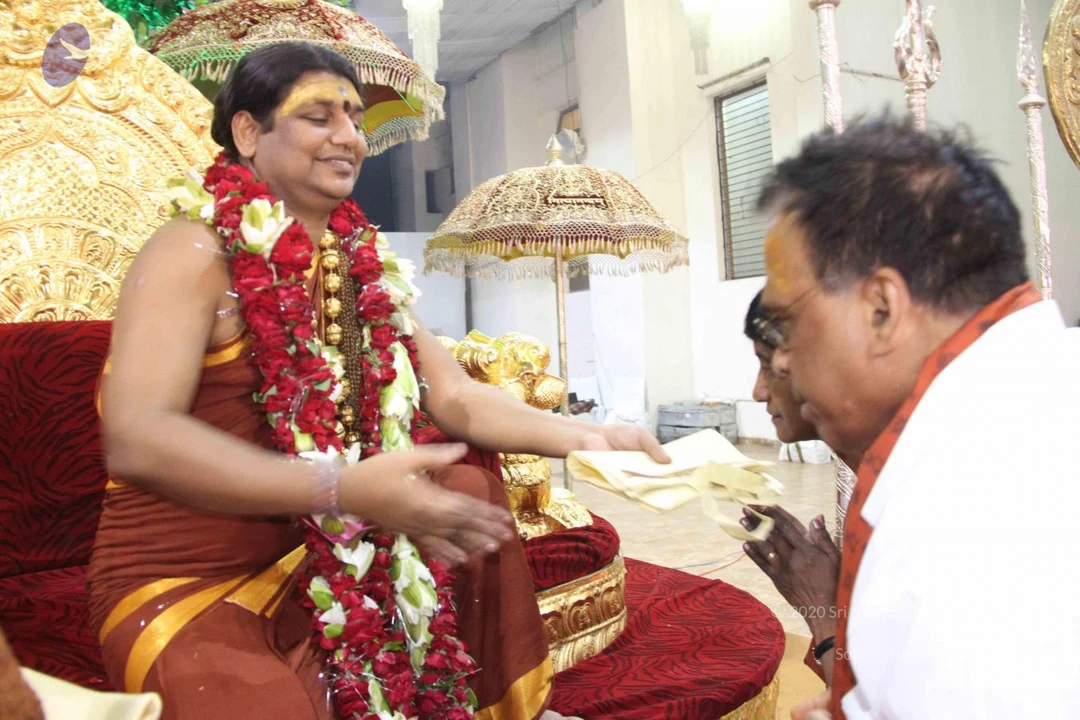
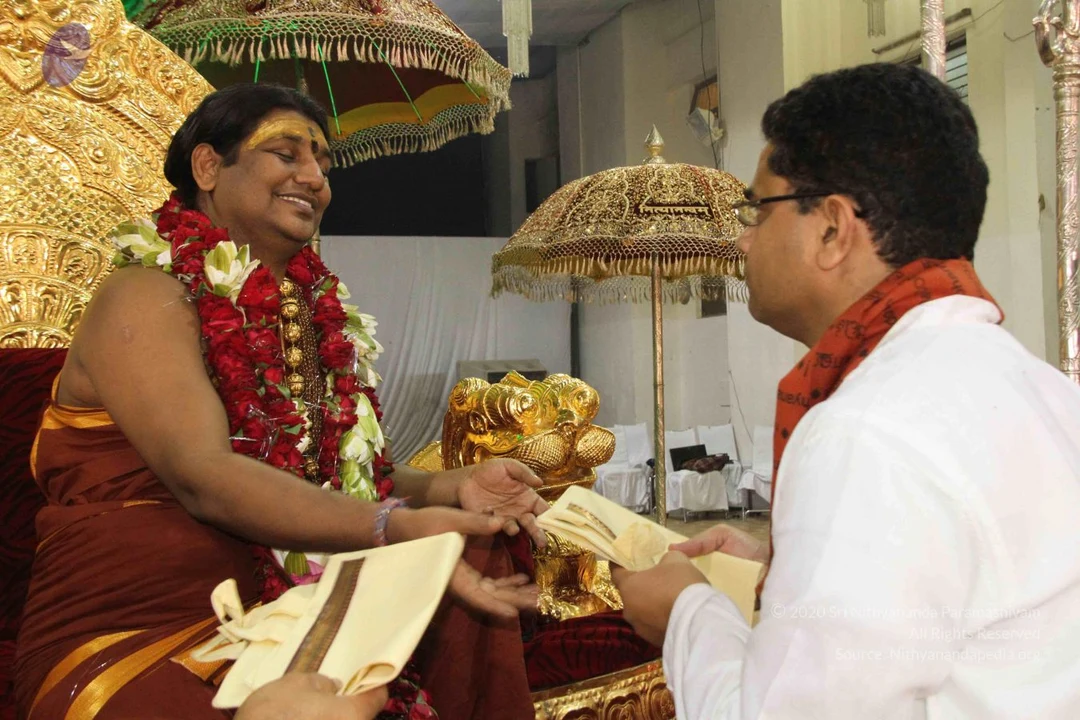
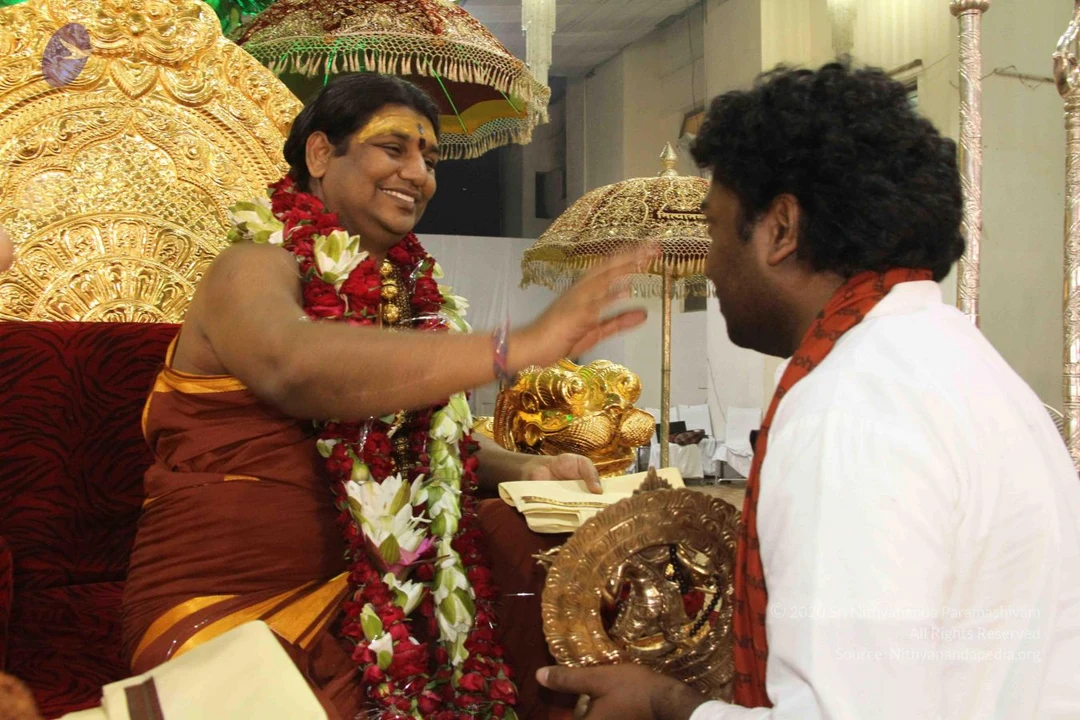
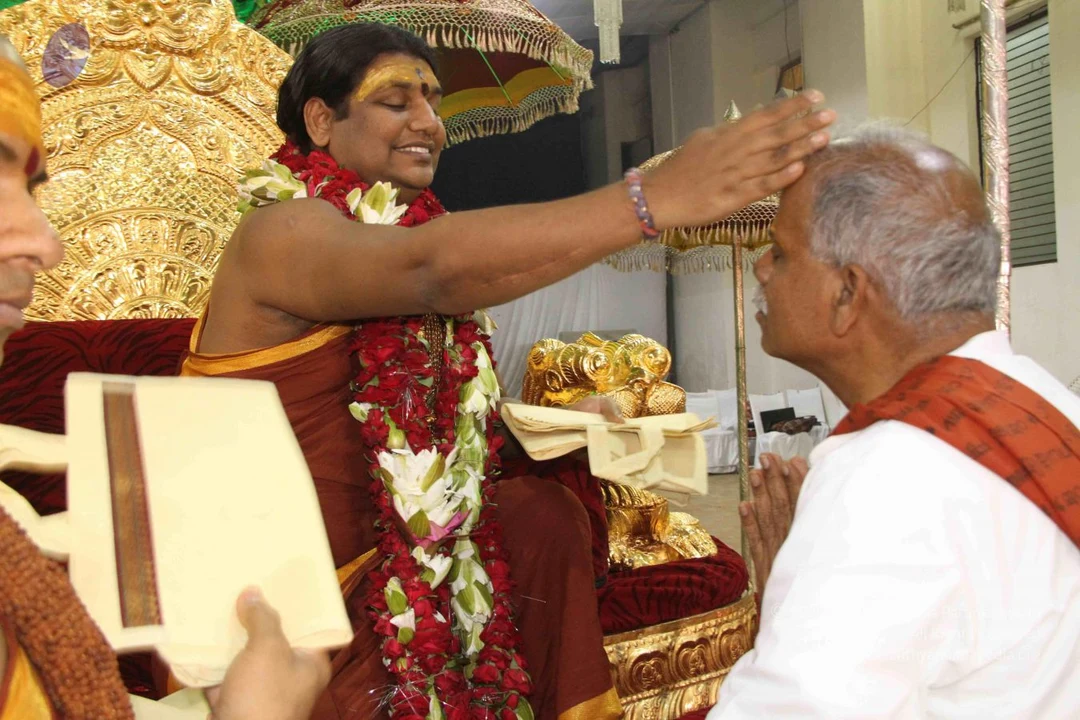
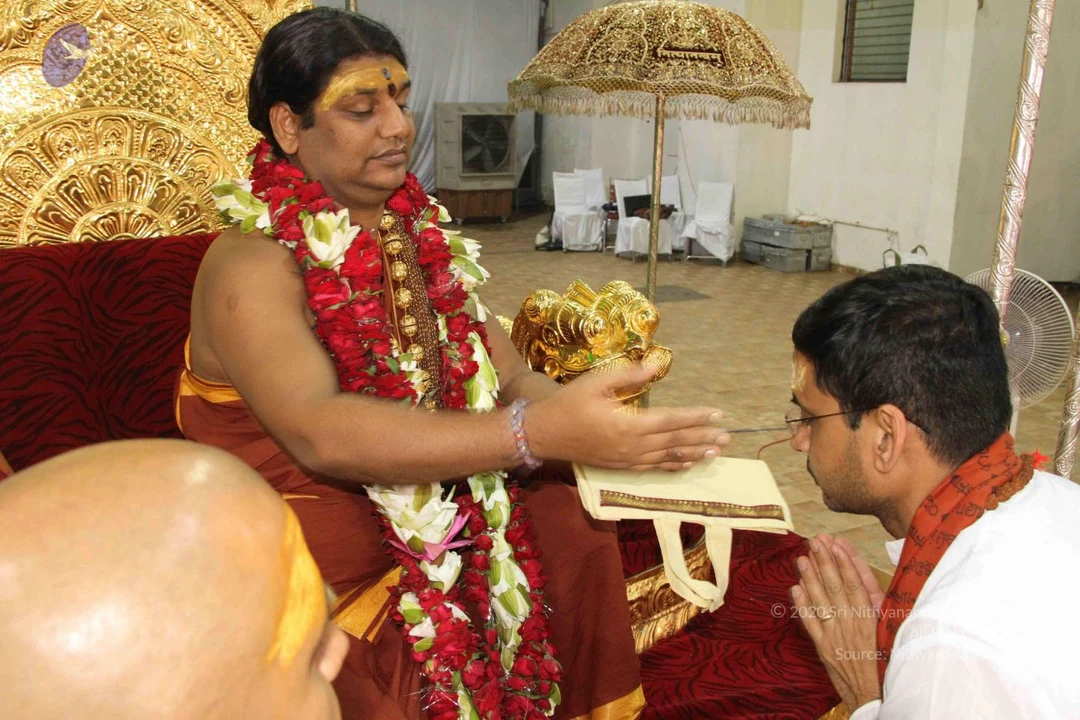
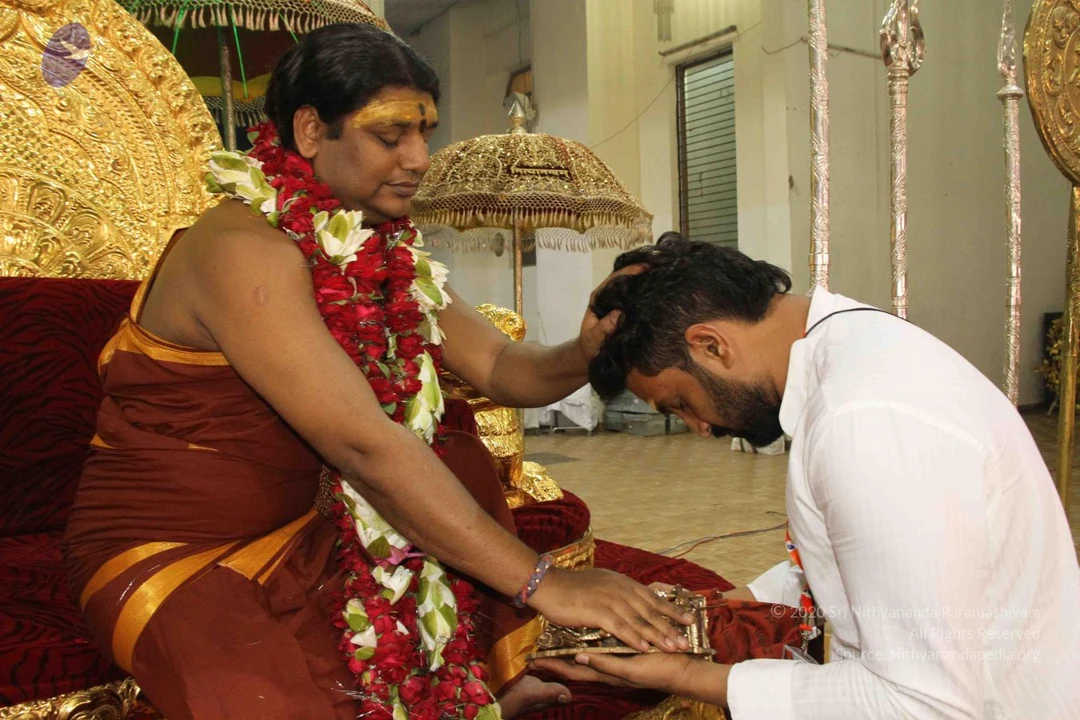
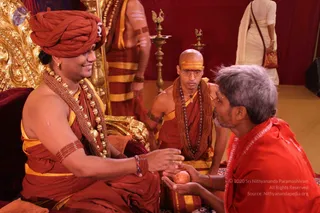
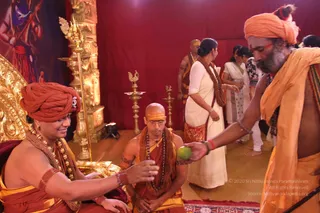
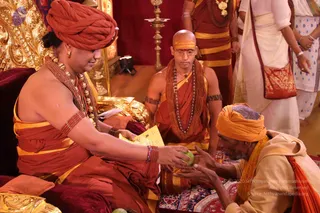
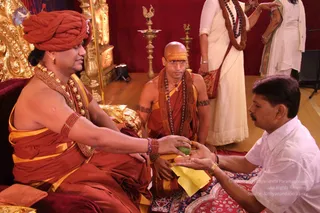
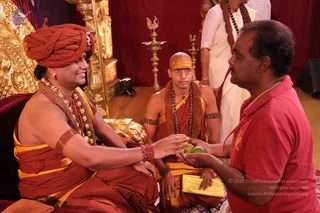
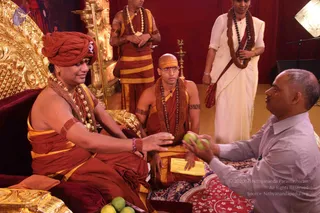
A seated woman in a rust-orange turban and saffron-orange robe with a gold-bordered shawl, wearing layered rudraksha and gold bead necklaces and bangles, smiles while extending her hand toward a kneeling man in a red-orange shawl who offers a small round reddish object cupped in his palms. Behind them a bald man with a vibhuti line on his forehead, wearing glasses, a brown rudraksha mala and an orange-gold cloth, sits attentively. A gold-carved throne stands at left, brass oil lamps sit on a table, and a white-clothed figure and a standing attendant in orange and gold appear in the background before a red curtain. Printed copyright text overlays the lower right corner.Ceremonial scene inside a red-draped hall with a gilded throne. On the left, a seated man in a rust-orange turban with a crest, bright orange-gold cloth, and long gold and rudraksha necklaces smiles as he reaches forward. In the centre, a bald priest with a yellow tilak and rudraksha mala sits in orange robes. On the right, an elderly man in an orange turban and orange shawl with red tilak holds out a green lime toward the seated figure. Brass oil lamps and a trident-topped staff stand nearby; a painted deity image hangs at upper left. Several people in white and cream clothing stand in the background.A seated man in a red-orange turban and matching saffron-orange robes with gold borders sits on a gold throne, wearing a layered rudraksha mala and ornate gold necklaces, and hands a green coconut to an older man kneeling on a patterned rug. The older man wears an orange turban and cream shawl with a saffron stole and reaches forward with both hands. A bald, bespectacled attendant in orange robes with a rudraksha mala sits behind the throne and holds a yellow paper. Brass oil lamps stand behind, and standing people in white and cream clothes watch at the right edge. Probable Swamiji is the seated figure, identified by his turban, rudraksha malas and ceremonial gold necklaces, presiding in a satsang-style exchange.A photograph of a seated man in a saffron-orange turban and saffron-orange robe with a gold-edged yellow sash, wearing a rudraksha mala, a multi-strand beaded necklace, bangles and an armband. He is seated on a gold-decorated throne in front of a red cloth backdrop and handing a small green fruit to a kneeling devotee in a white shirt, who holds out cupped hands over a yellow paper slip. Beside him sits a bald priest with a yellow tilak on his forehead, wearing a saffron dhoti, a rudraksha mala and arm bands. Behind them a woman in white with a beaded necklace stands, and brass oil lamps sit on the platform.A photograph of a seated person in an ornate red-orange turban and saffron-orange robes with a gold-bordered wrap, wearing layered rudraksha-style beaded necklaces and gold ornaments, receiving fruit from a man in a red polo shirt. A bald man in saffron robes with a vertical tilak and glasses sits behind them, beside a gold throne and brass oil lamps (lamps) against a red draped backdrop. A standing person in white and red beaded garlands is partly visible at the top right. The red-shirted man offers two green fruits with a folded paper in his other hand. a person: the seated figure in the turban and multi-strand beaded necklaces, shown in the role of the central recipient of the offering.A seated figure on a gold ornate throne, wearing an orange-red turban with a small emblem, orange-red and gold robes, a long beaded rudraksha-style mala and gold necklaces, receives mangoes from a bald man in a light grey shirt kneeling on a red patterned rug. A second seated robed man with a yellow vibhuti line on his forehead, glasses and beaded mala holds a yellow paper. Behind them stand a man in orange-red robes with a beaded necklace and a woman in a white sari with a brown beaded necklace and a red-brown bag. Gold lamps and mangoes lie in the foreground; a studio light is at upper right.

SPH Conducting The Inner Awakening Convention At Varanasi, India
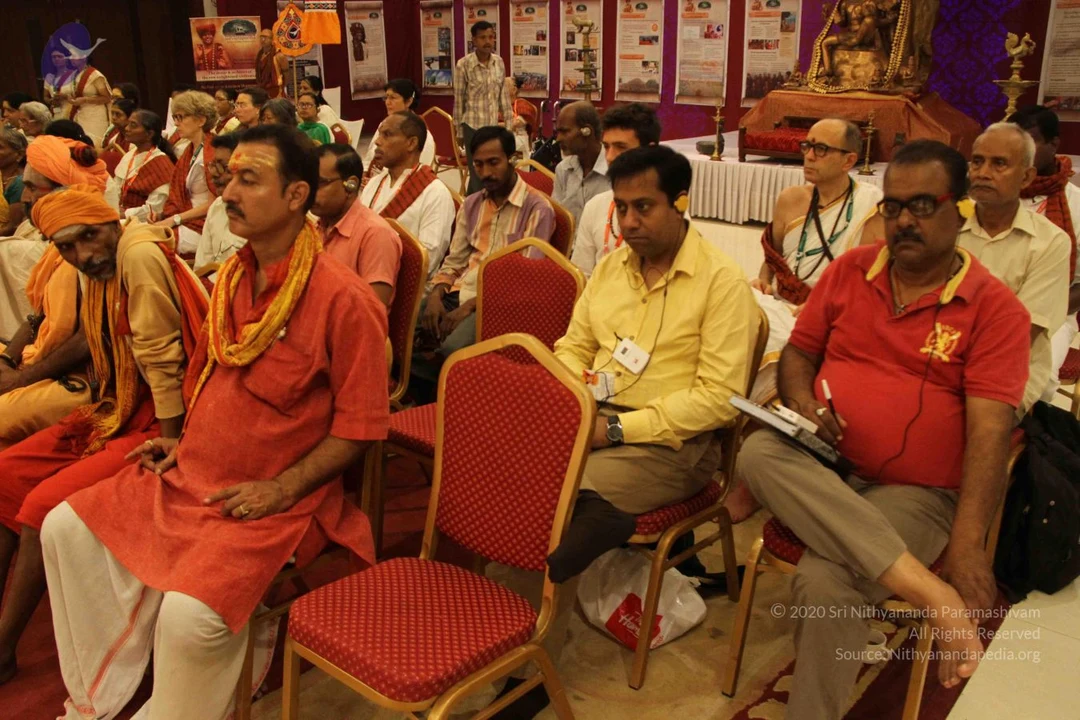
99 photosSource gallery
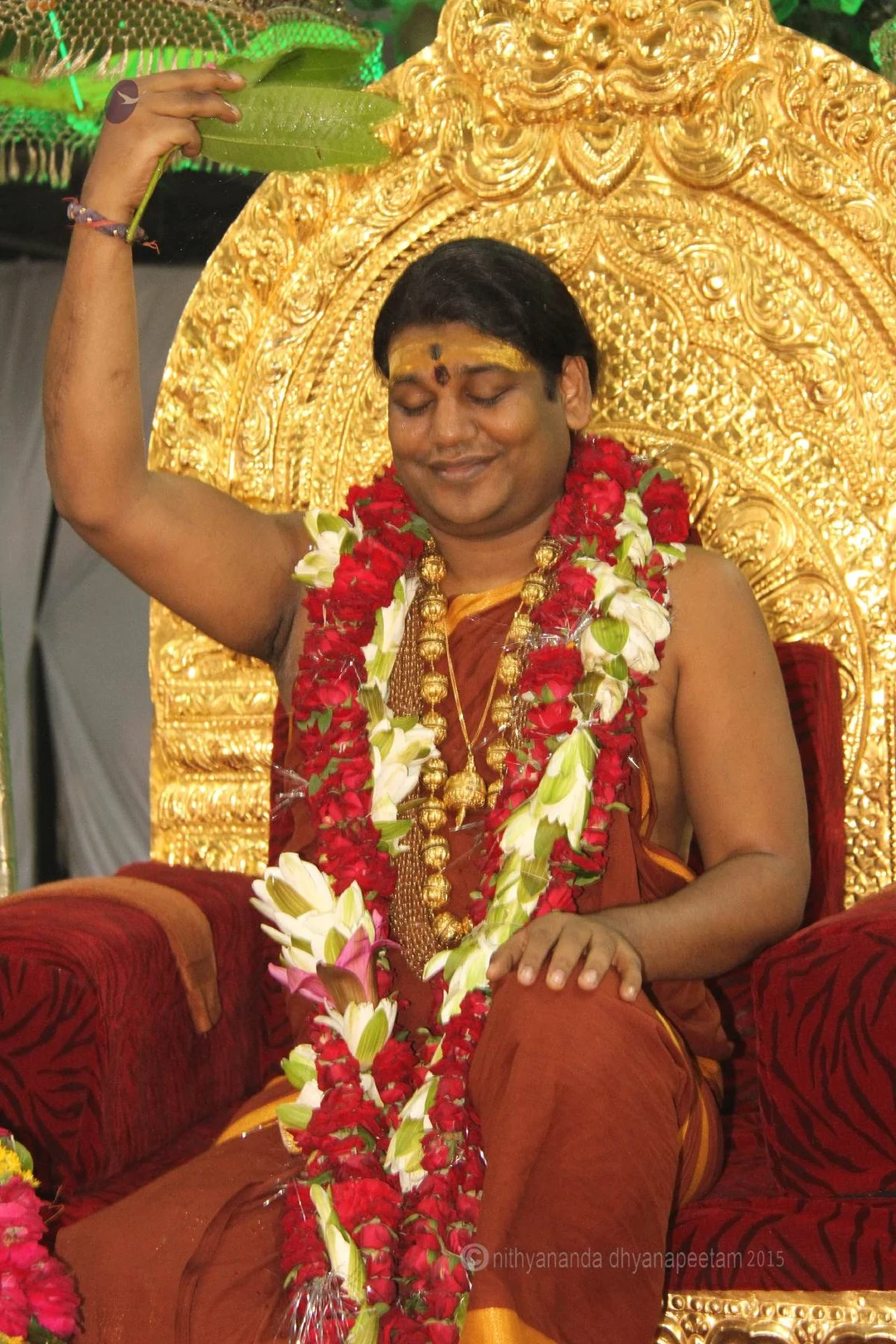
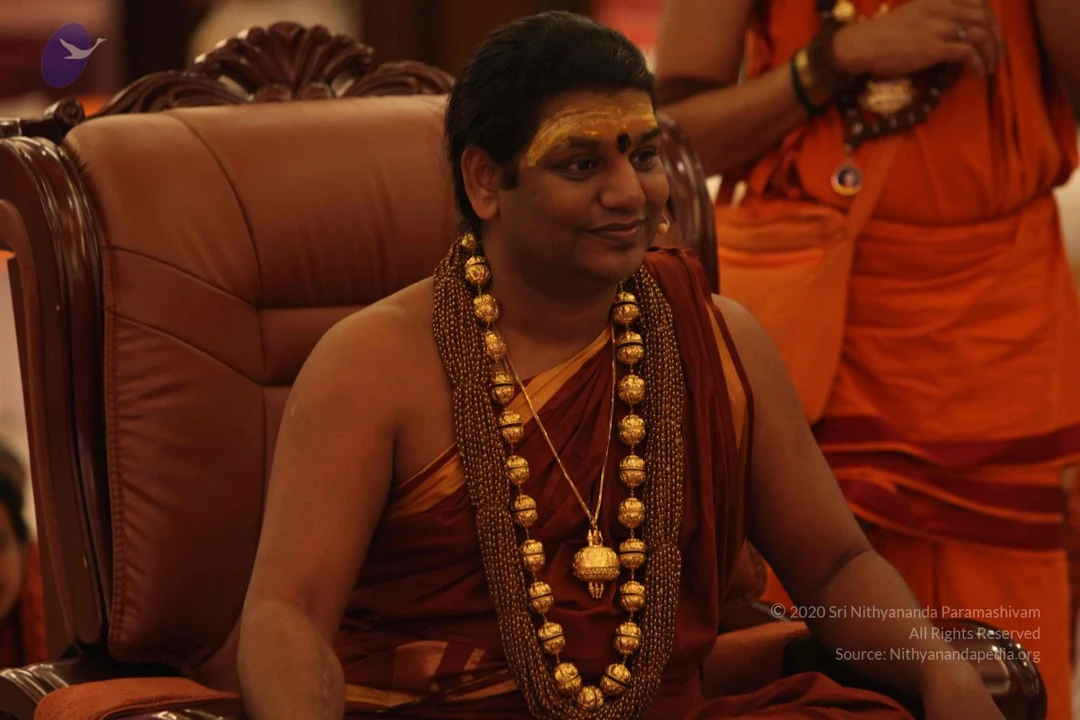
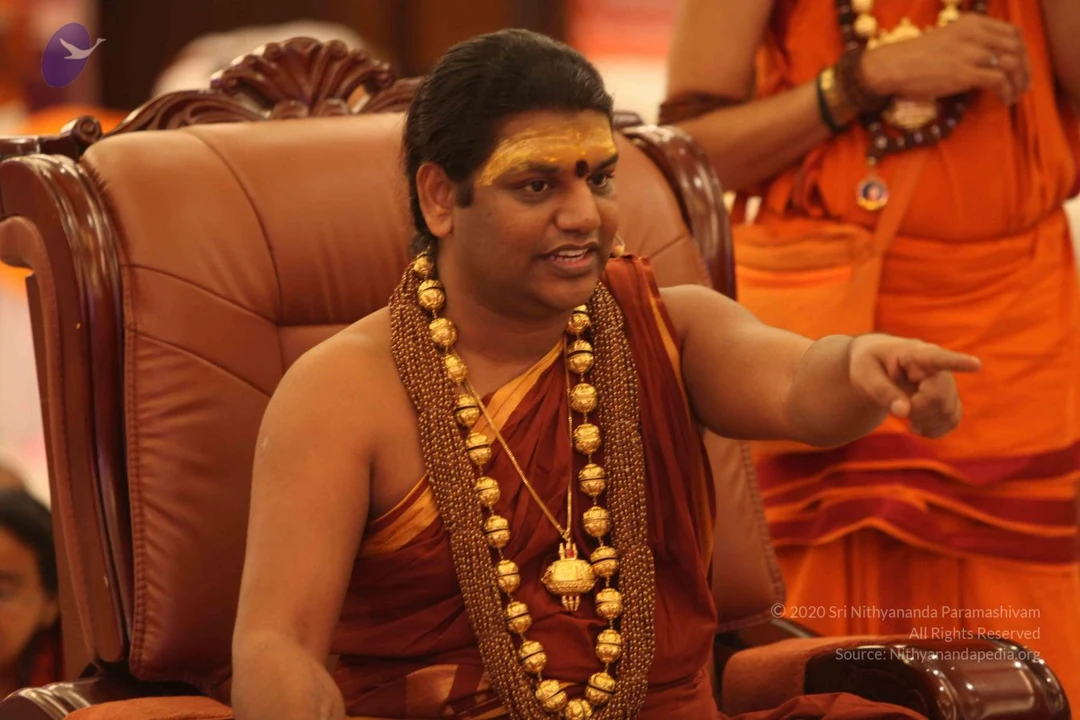
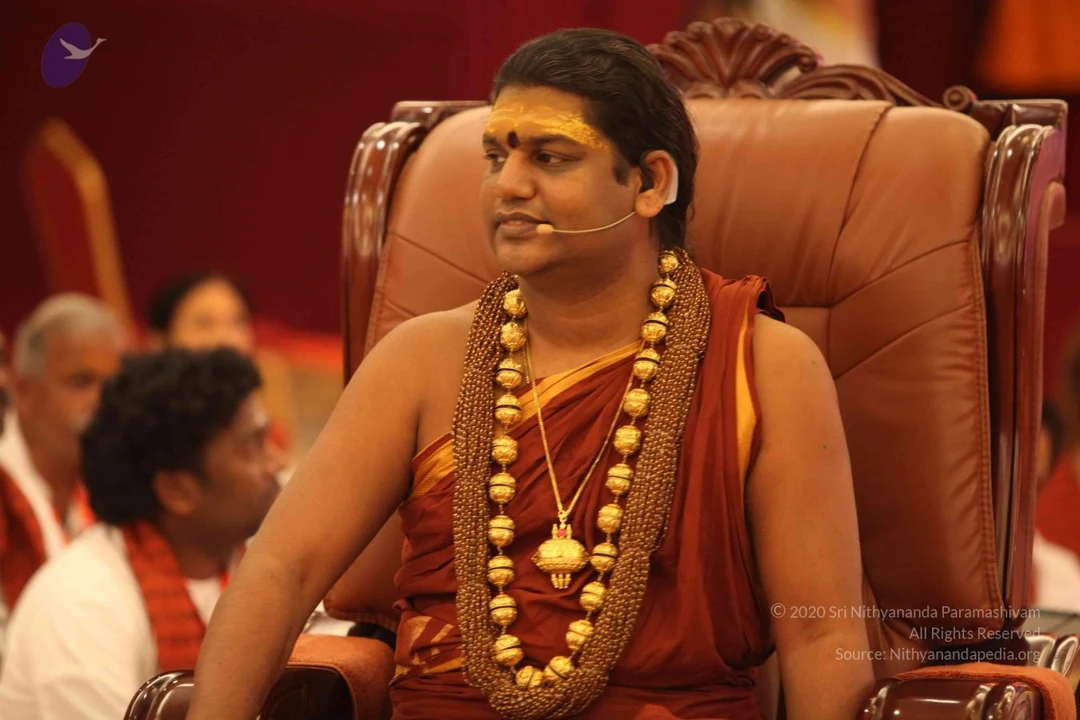
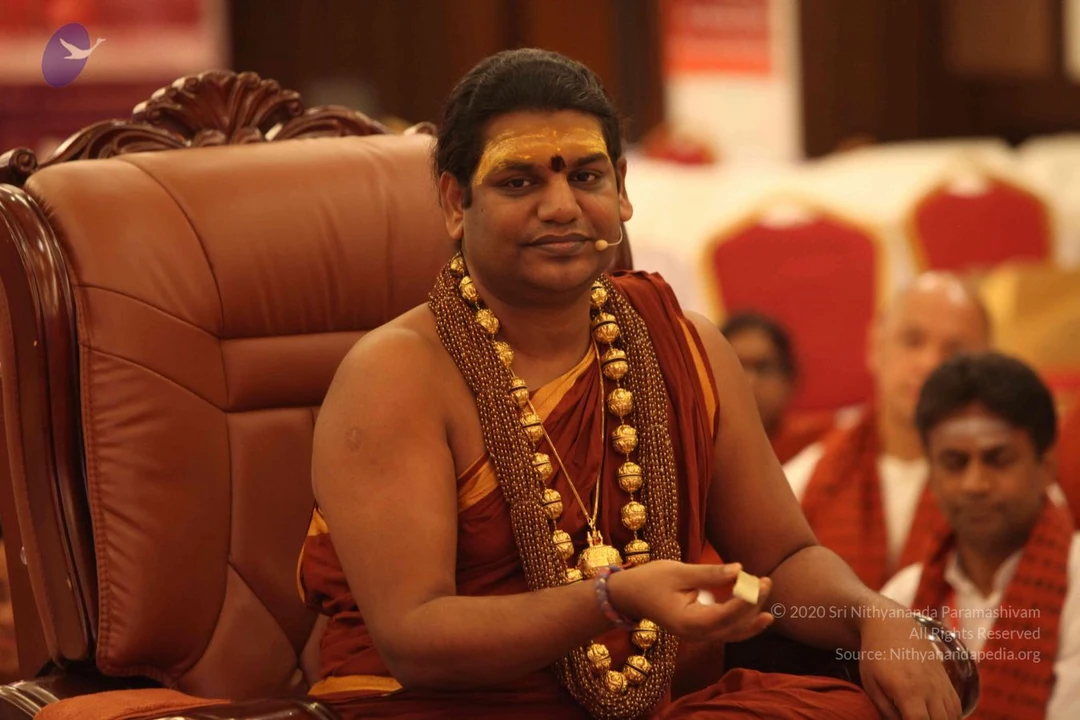
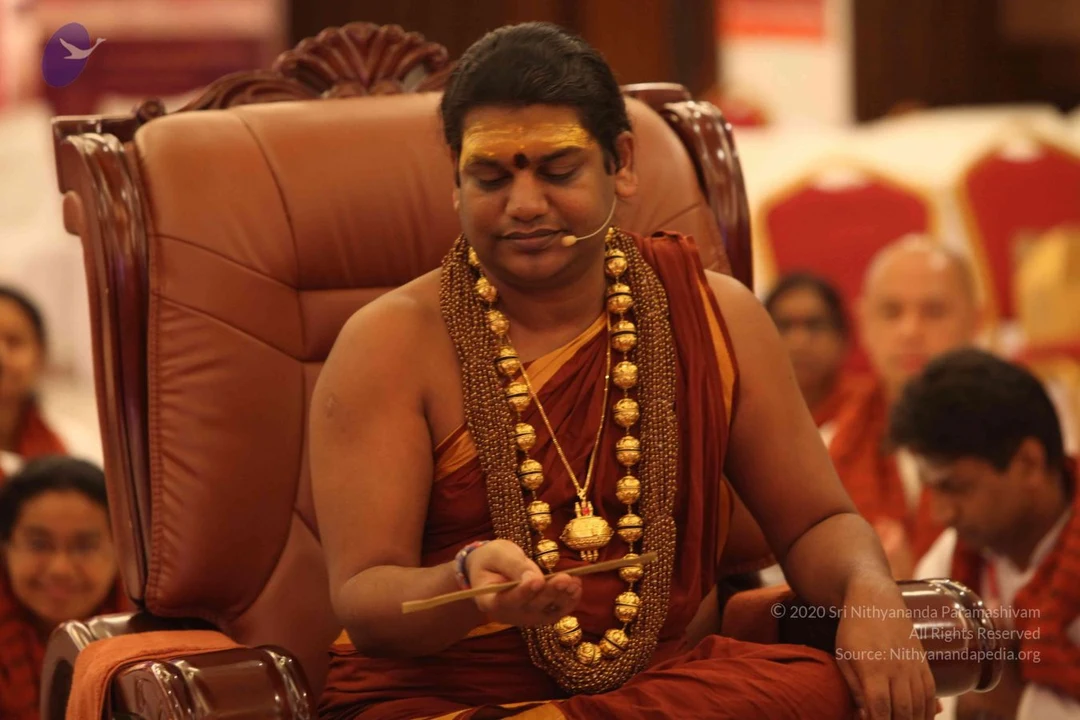
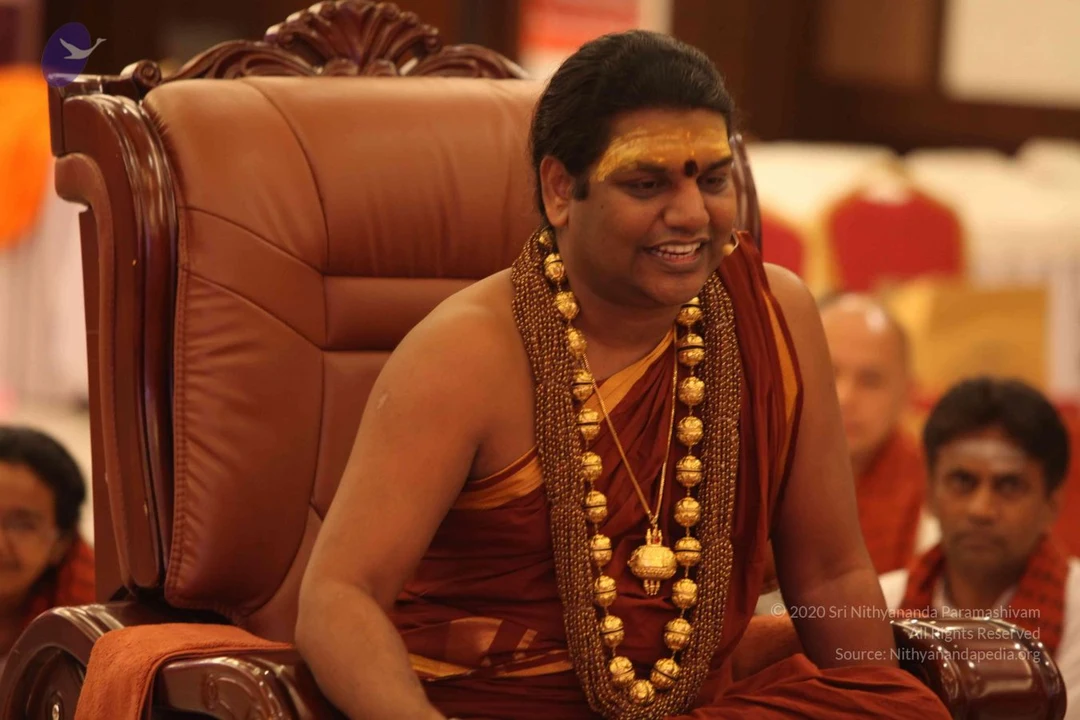
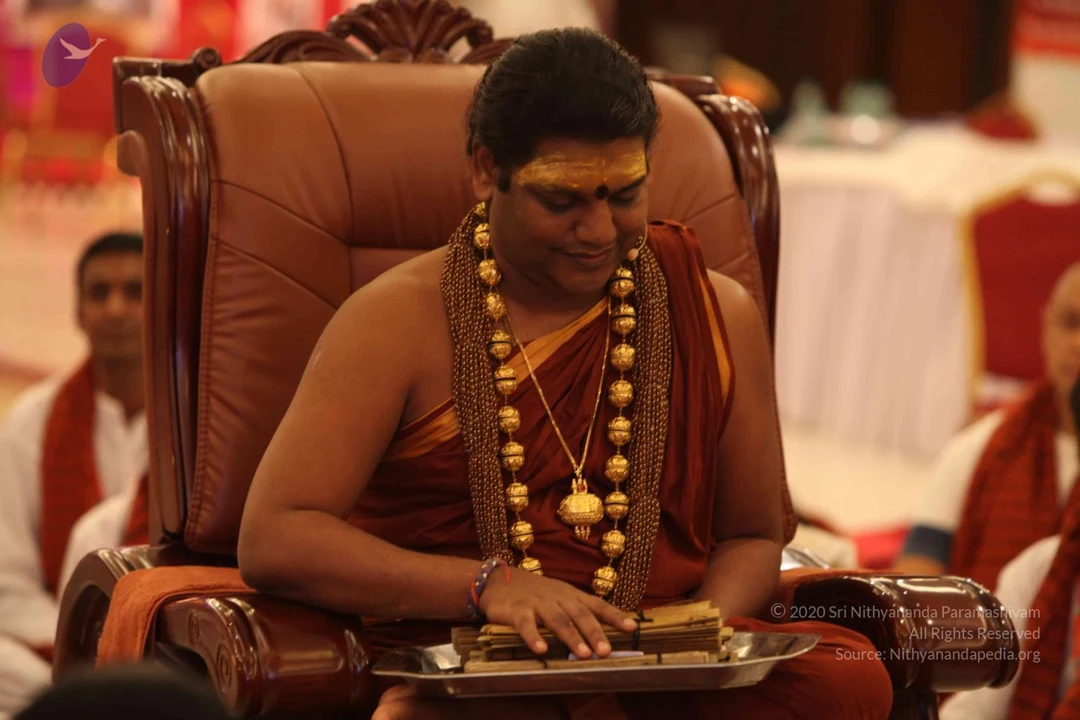
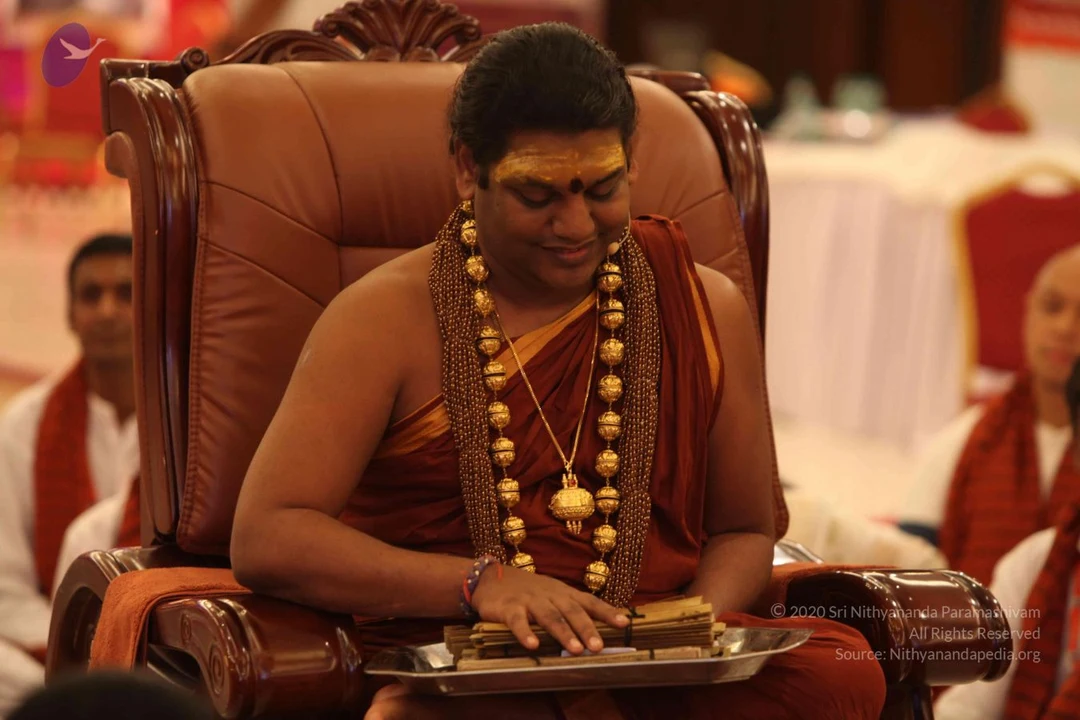
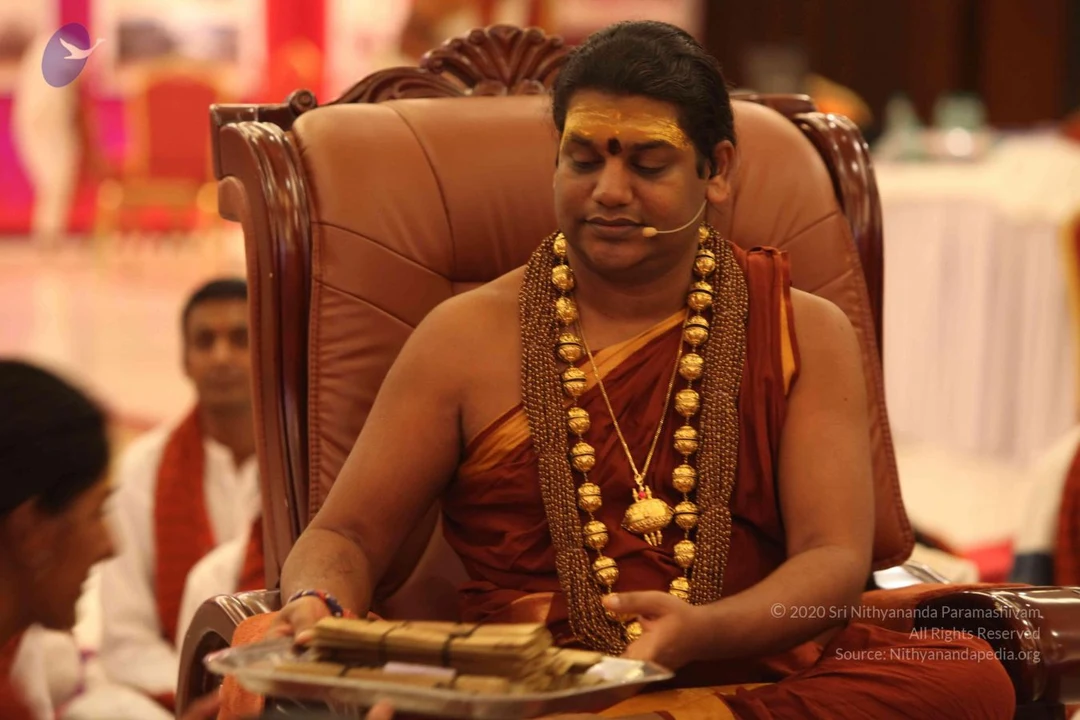
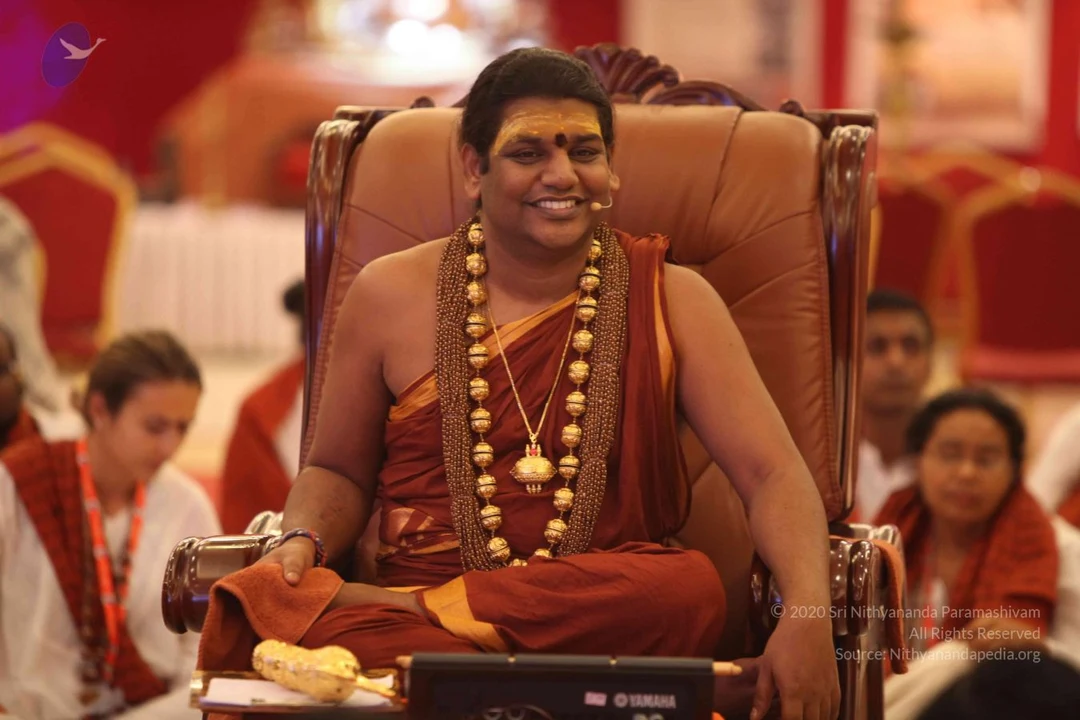
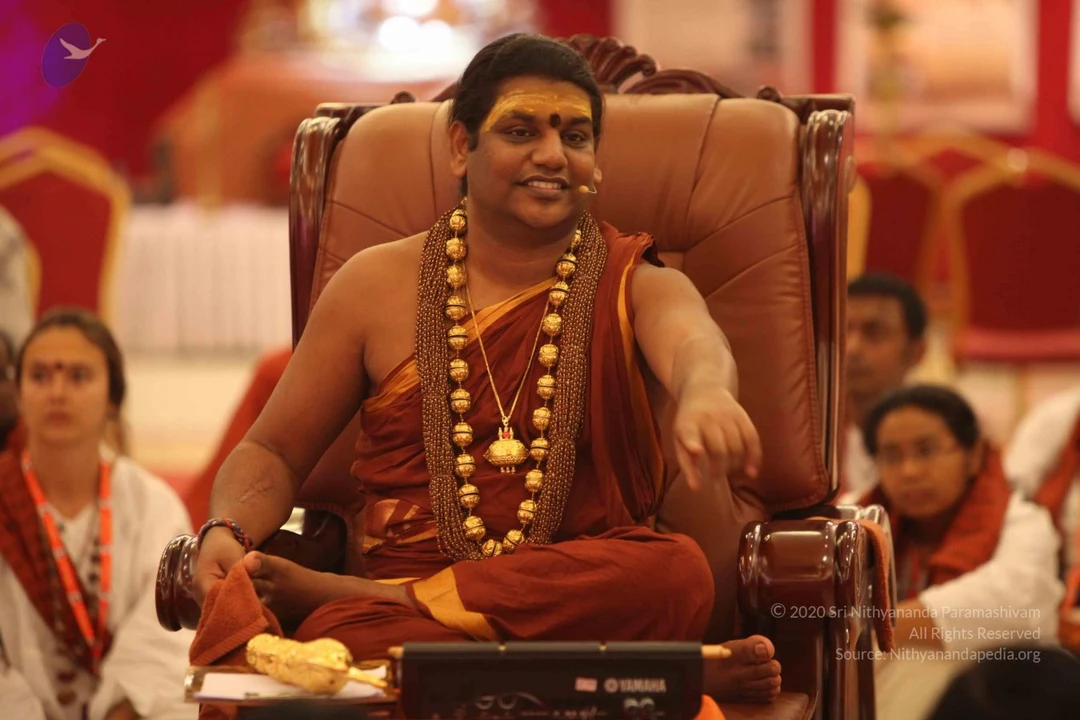
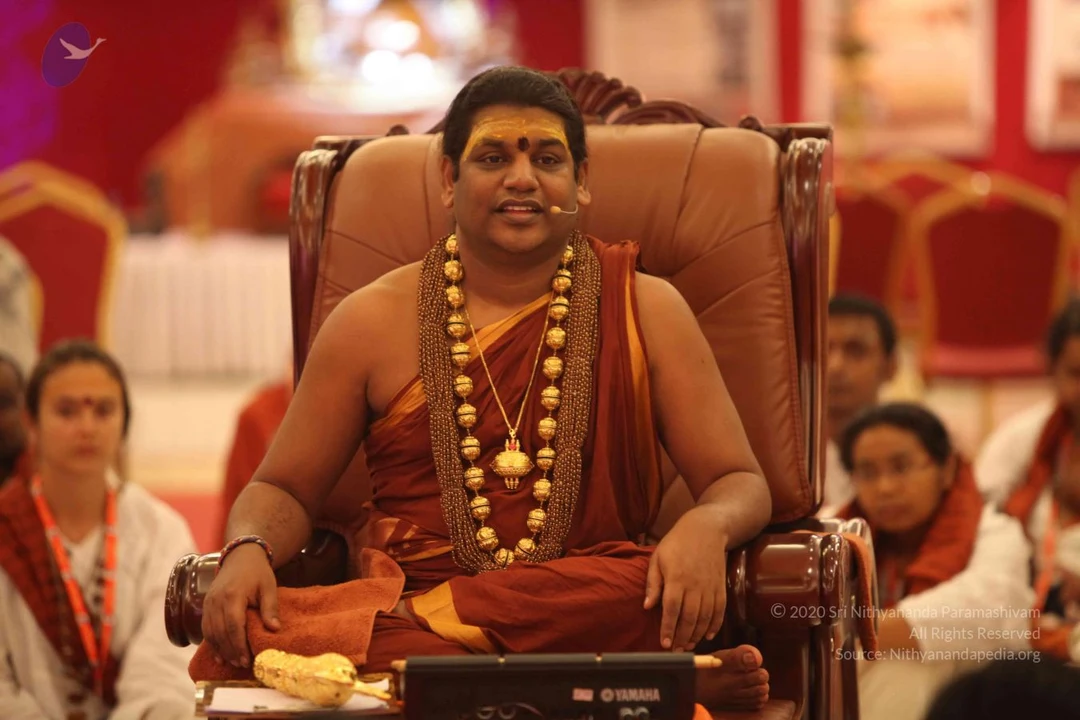
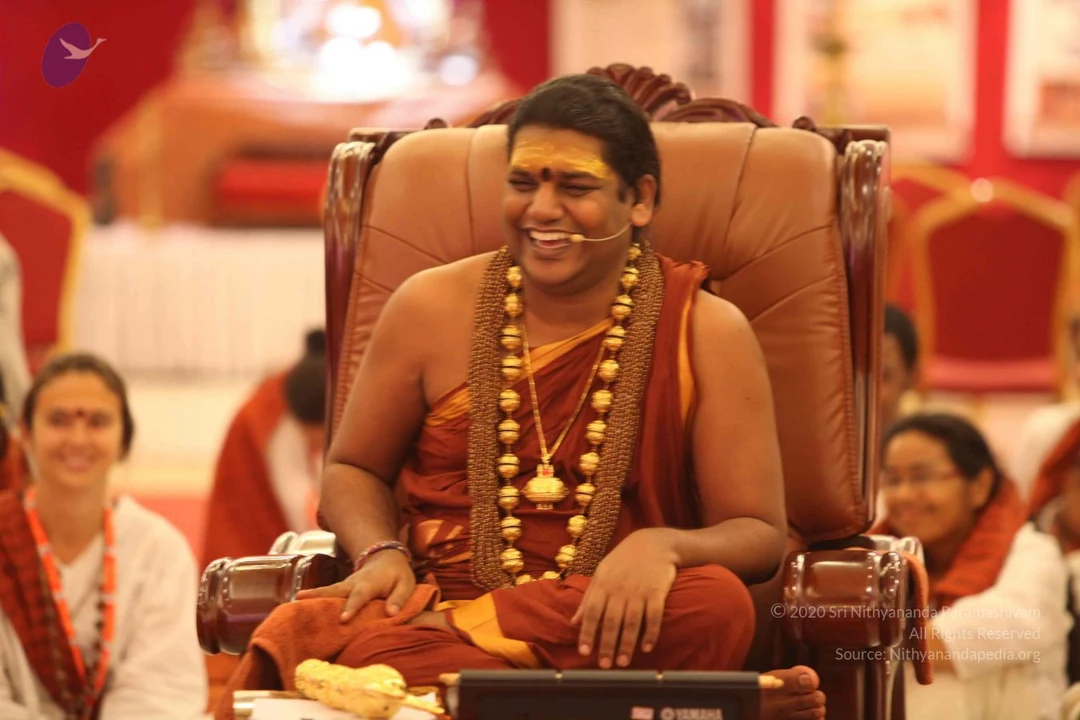
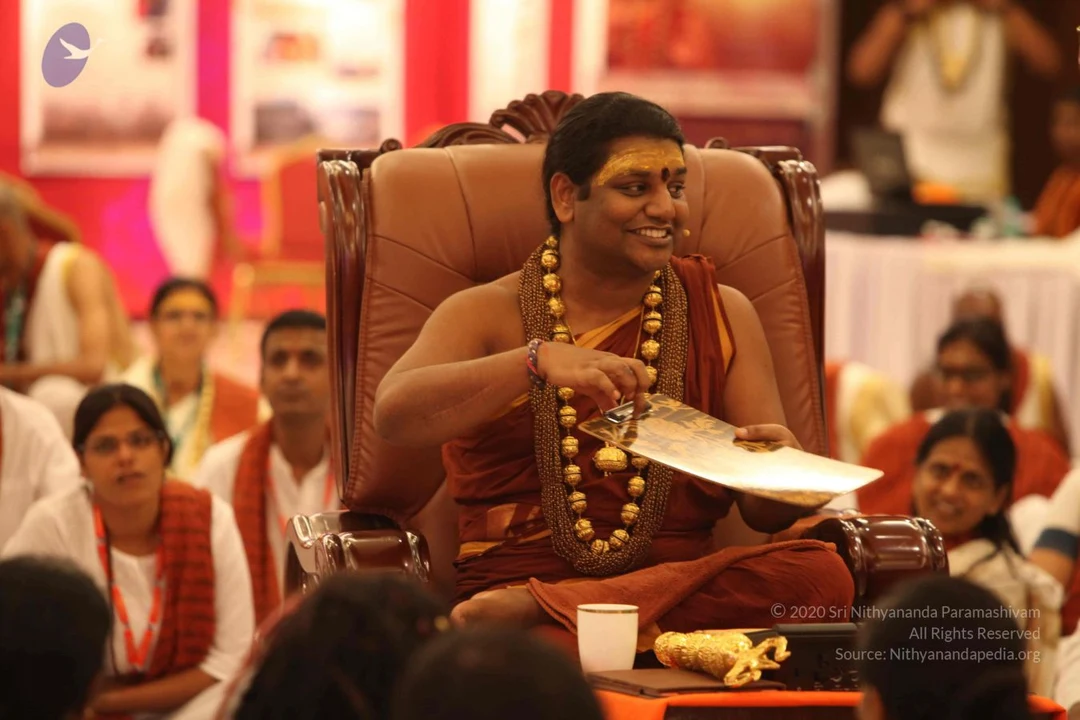
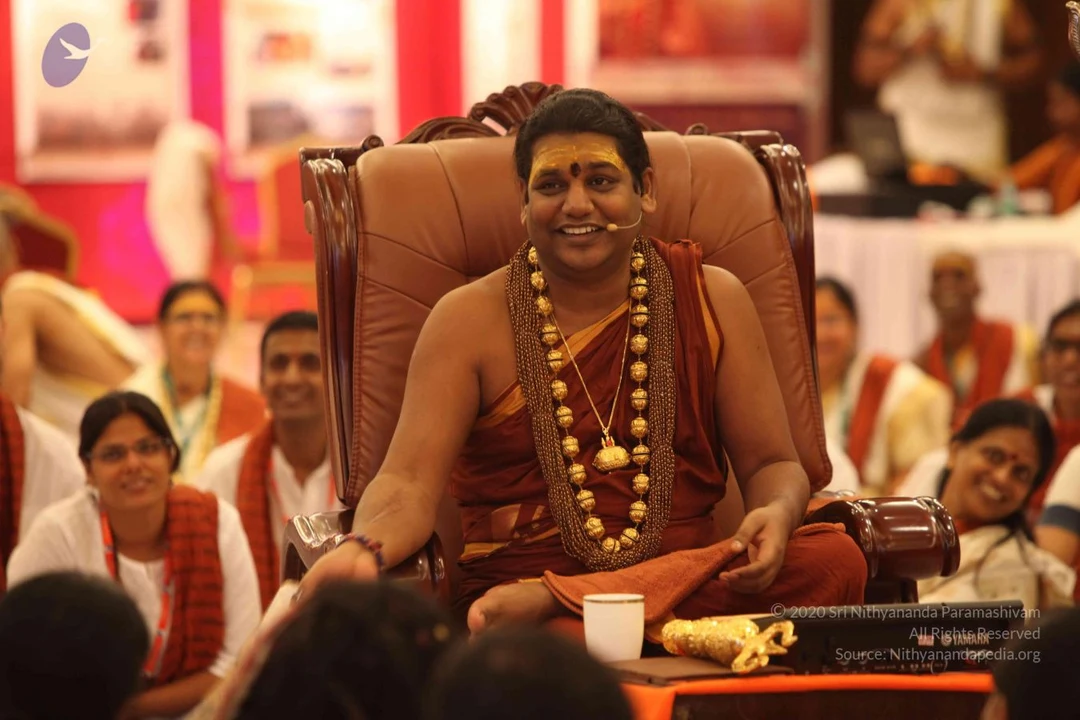
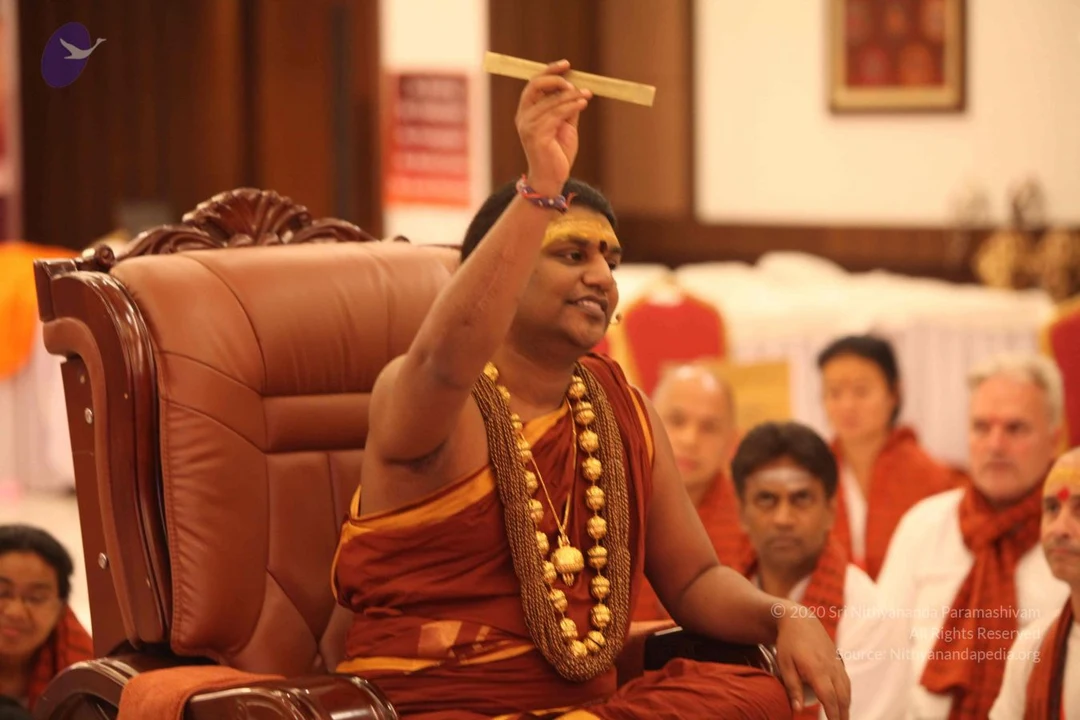
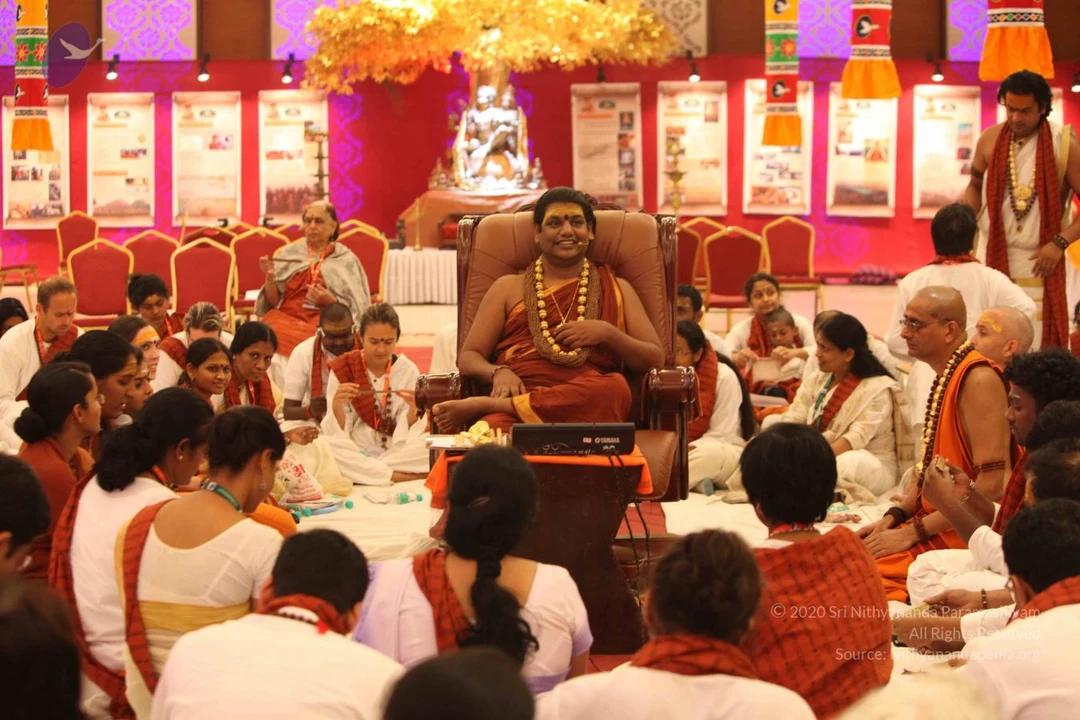
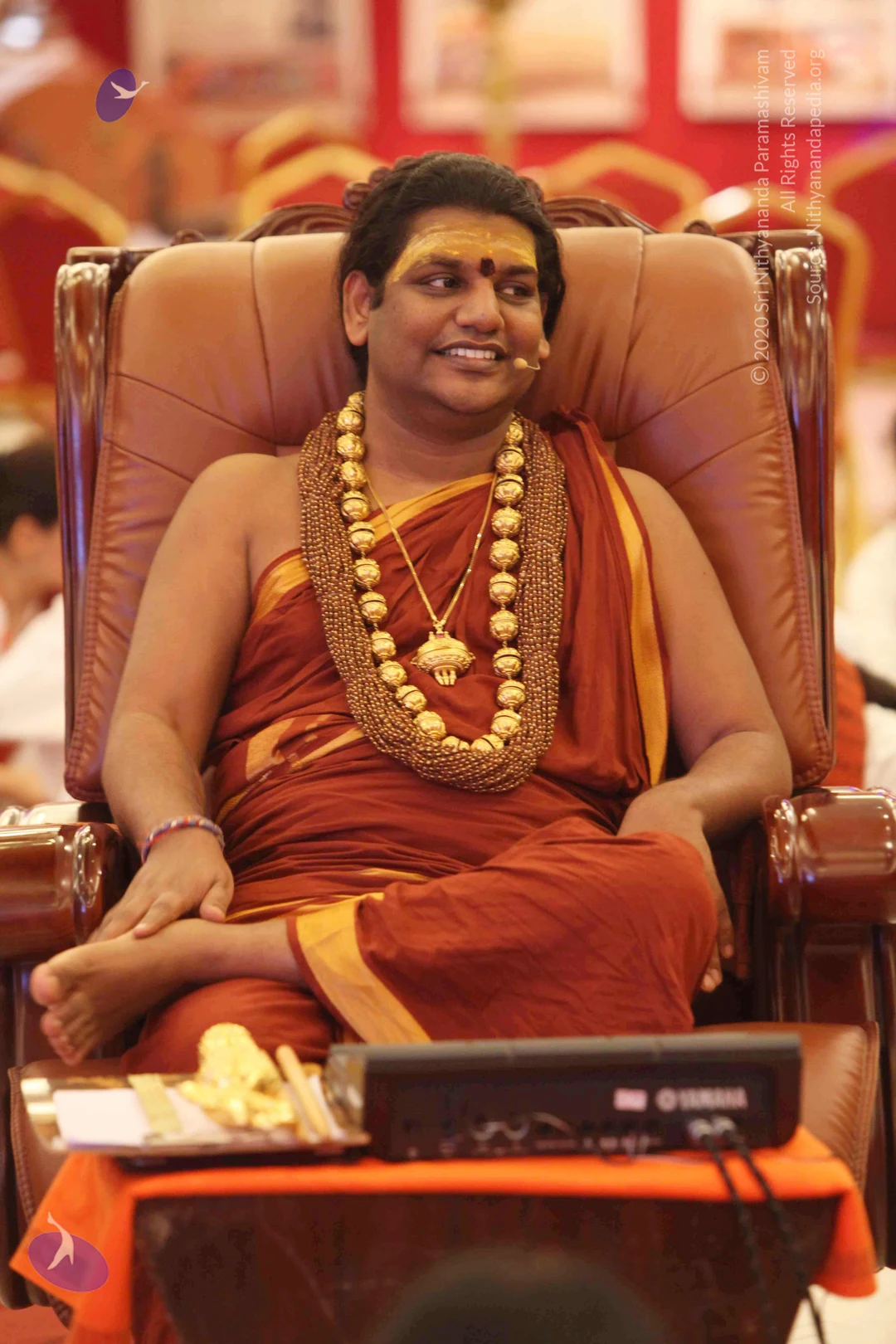
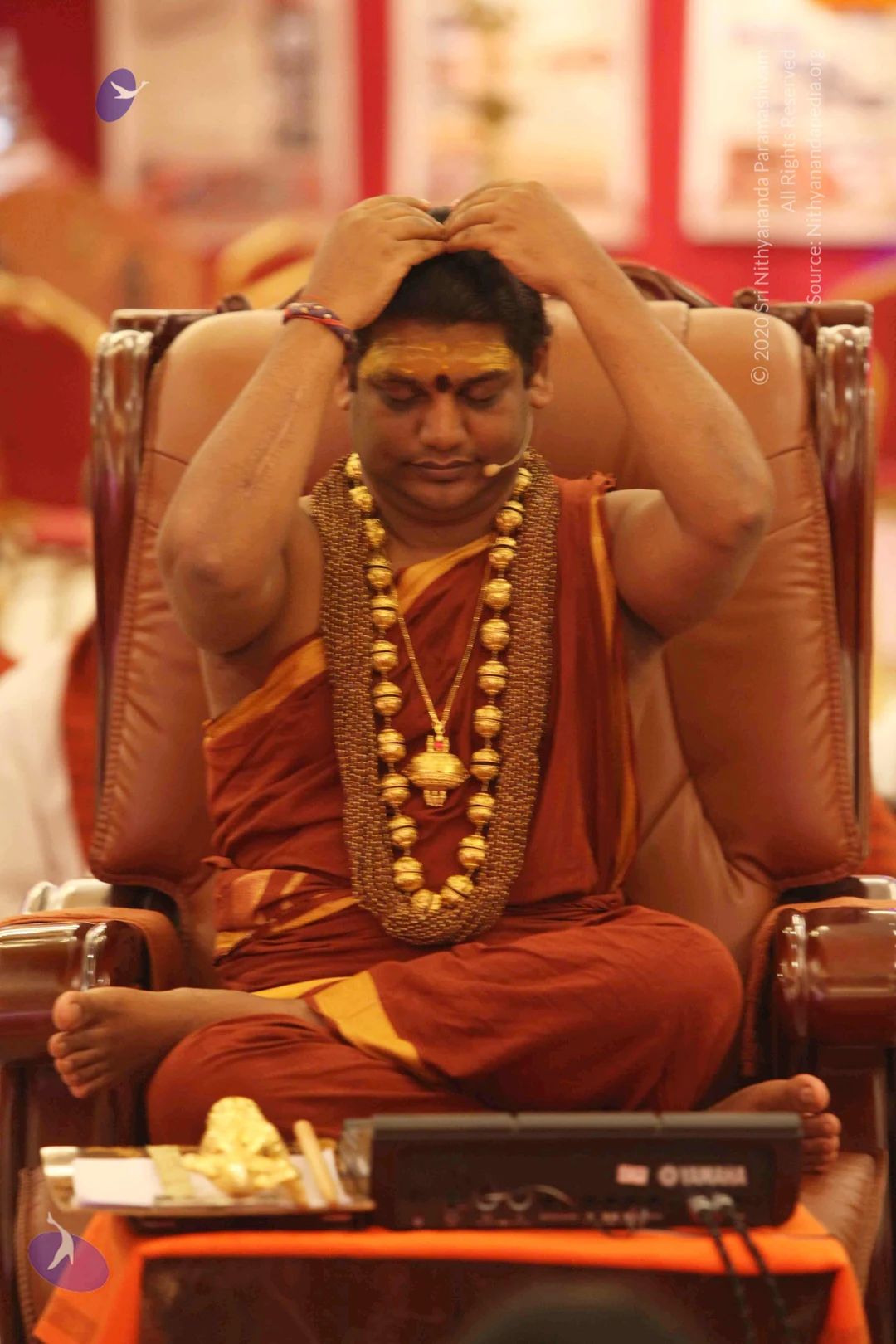
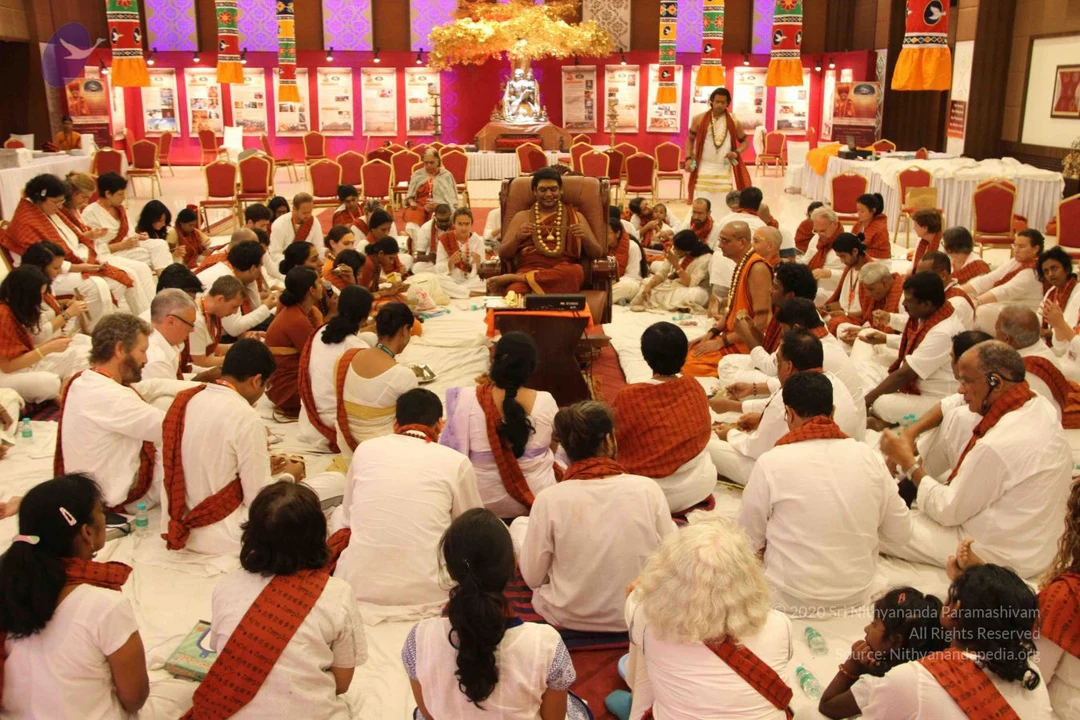
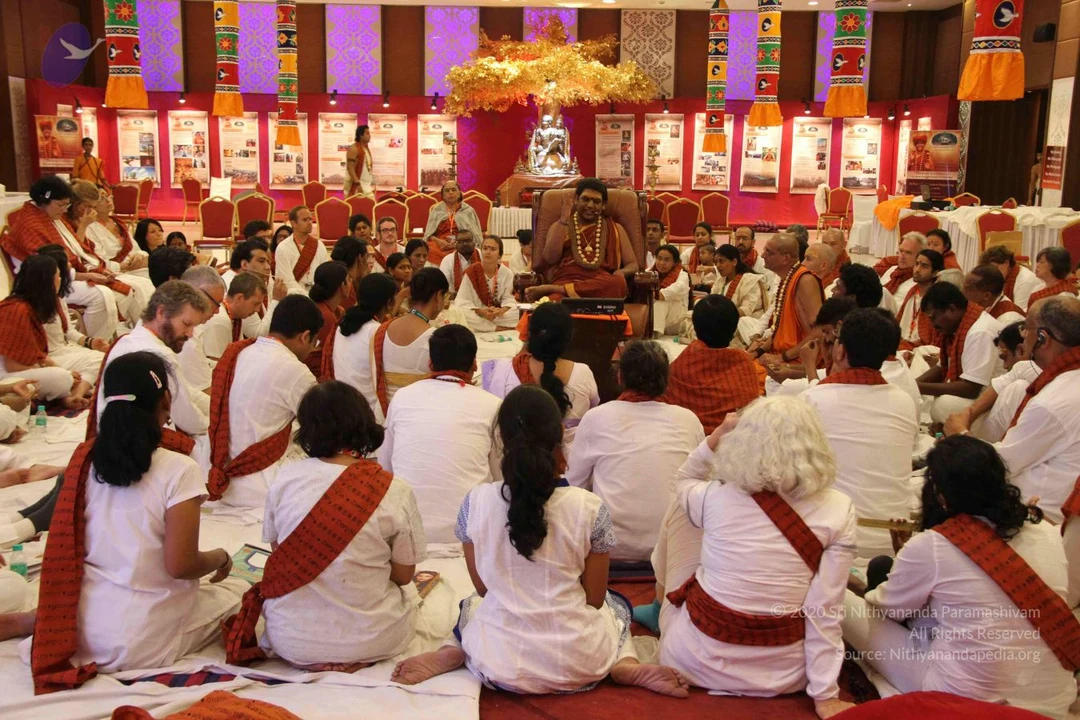
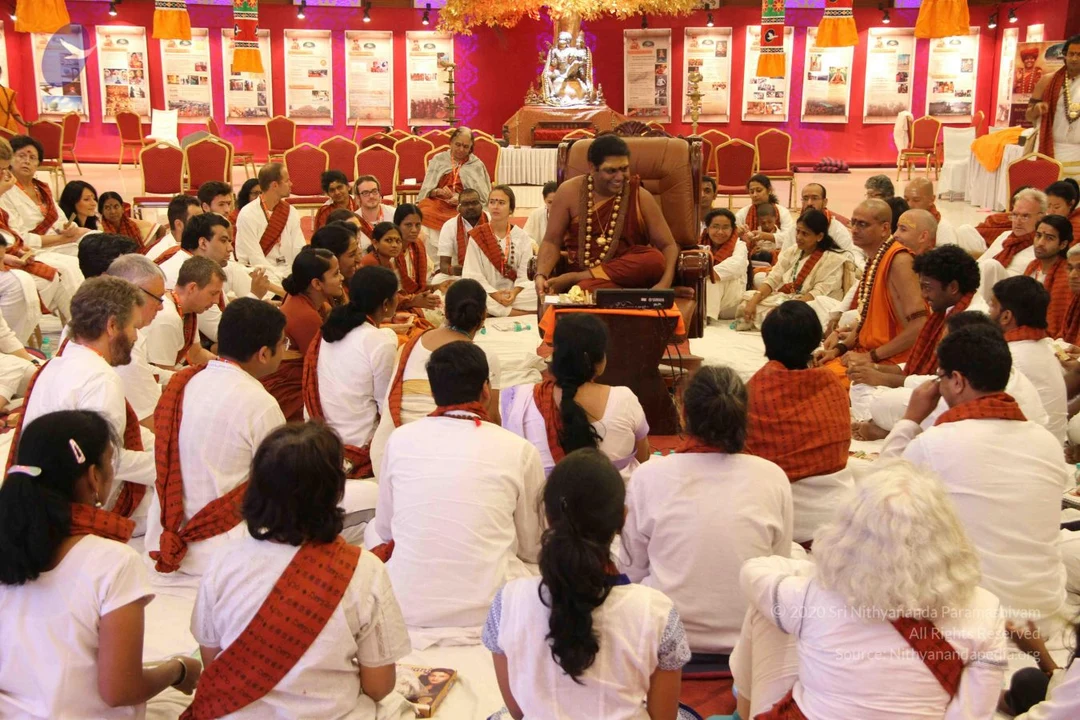
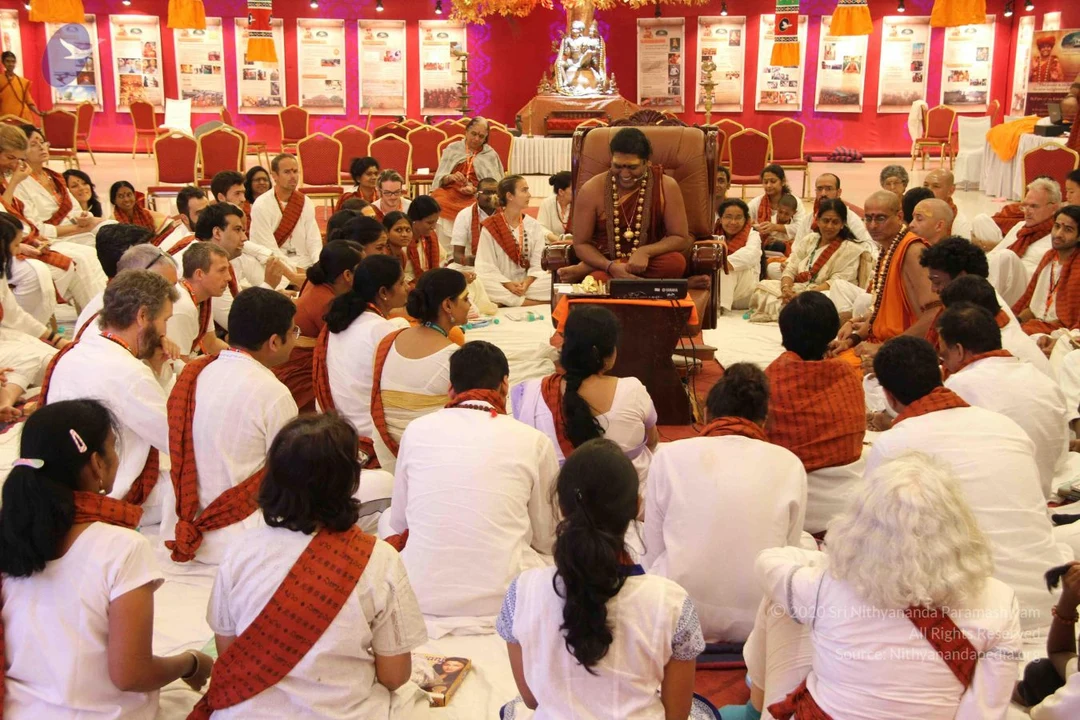
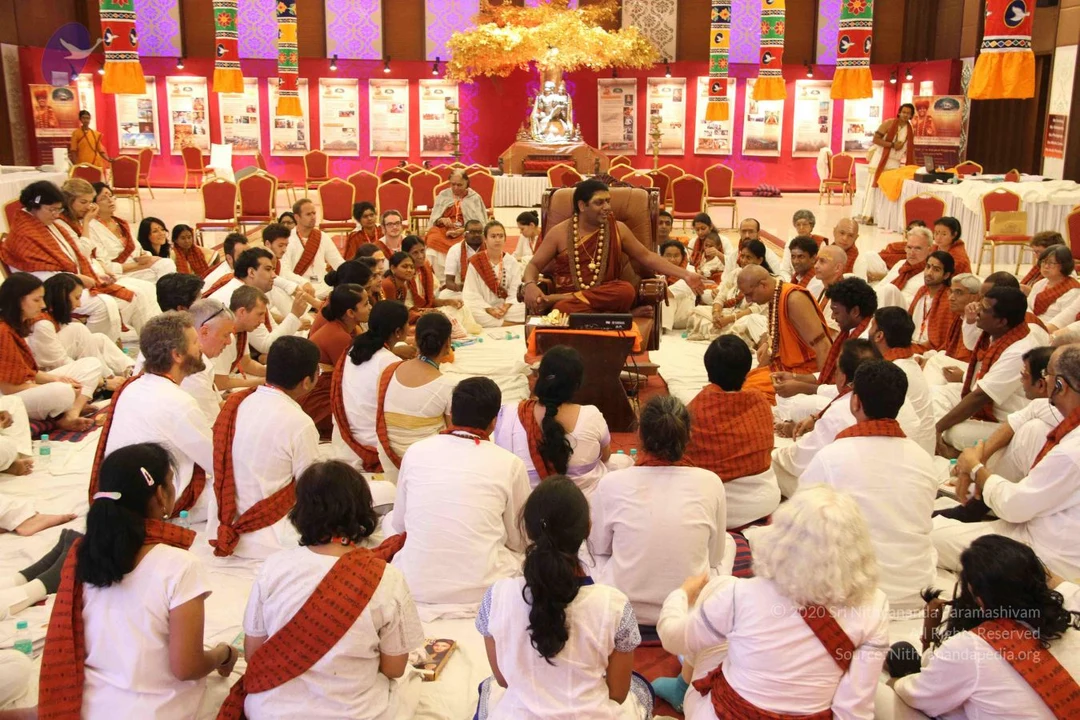
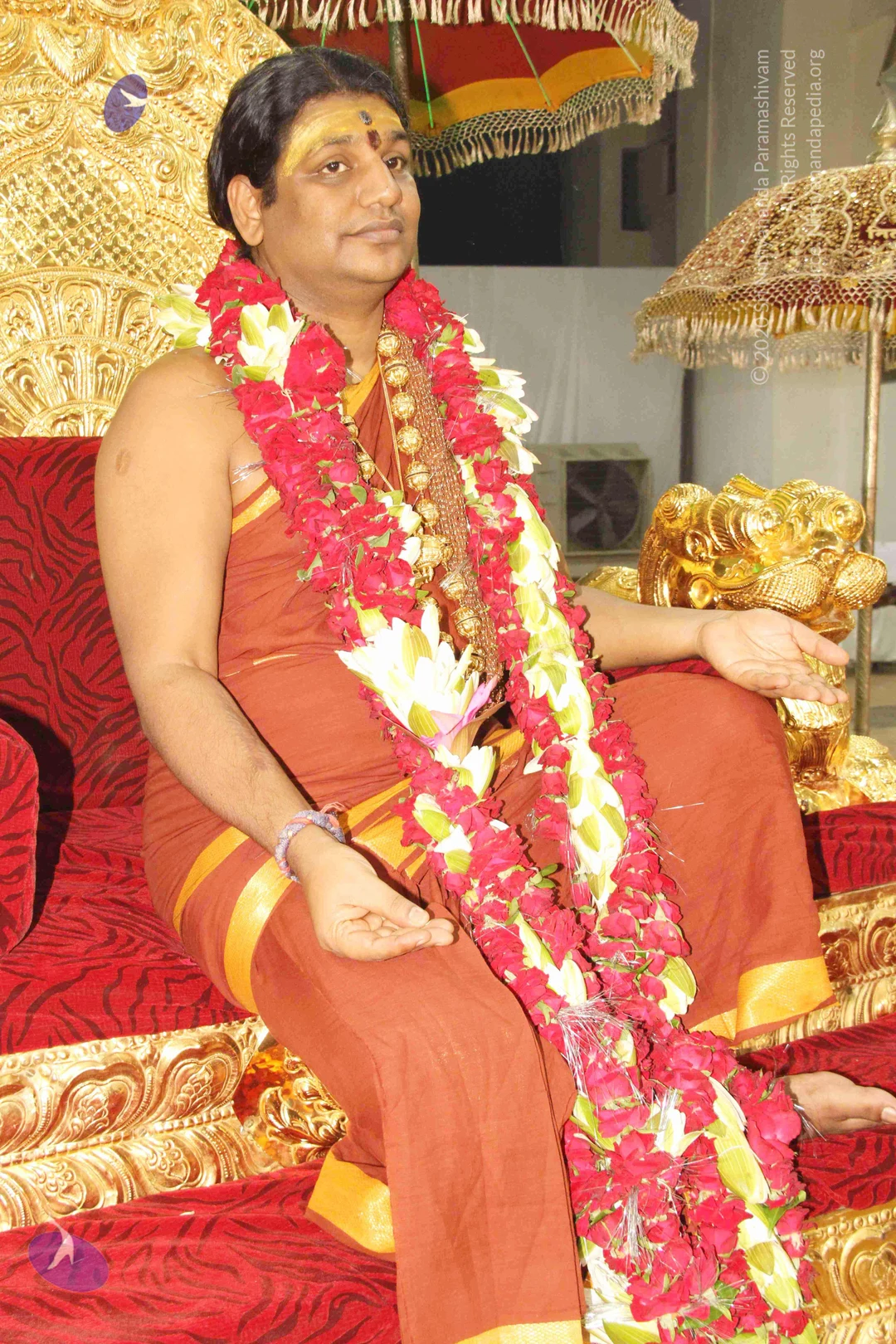
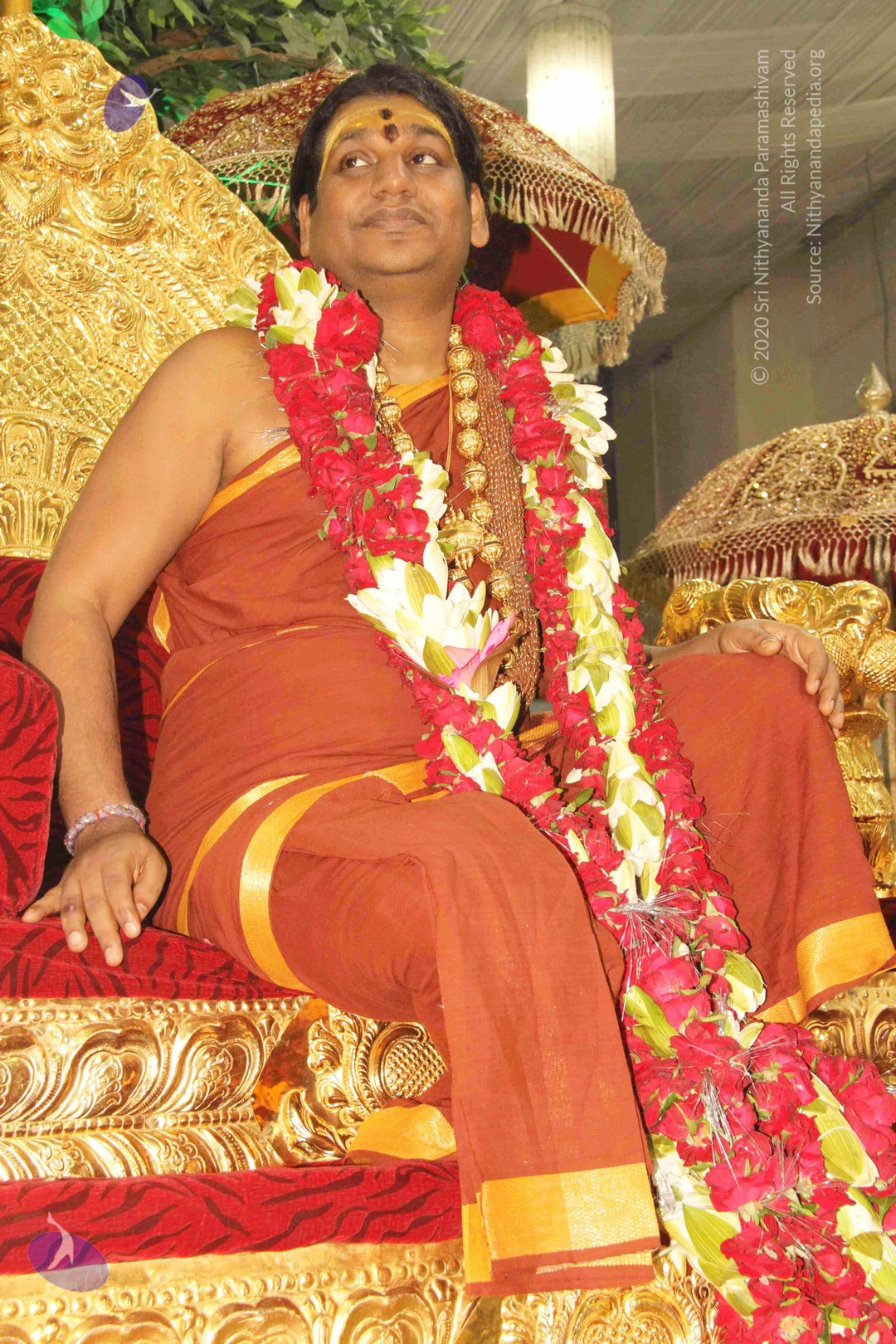
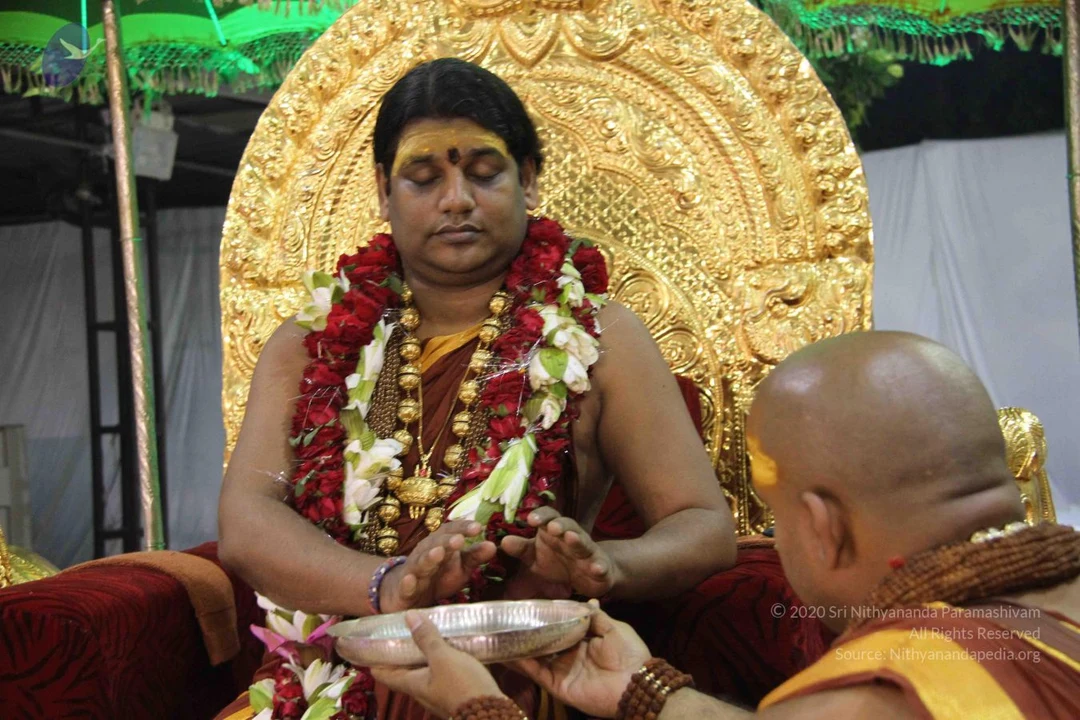
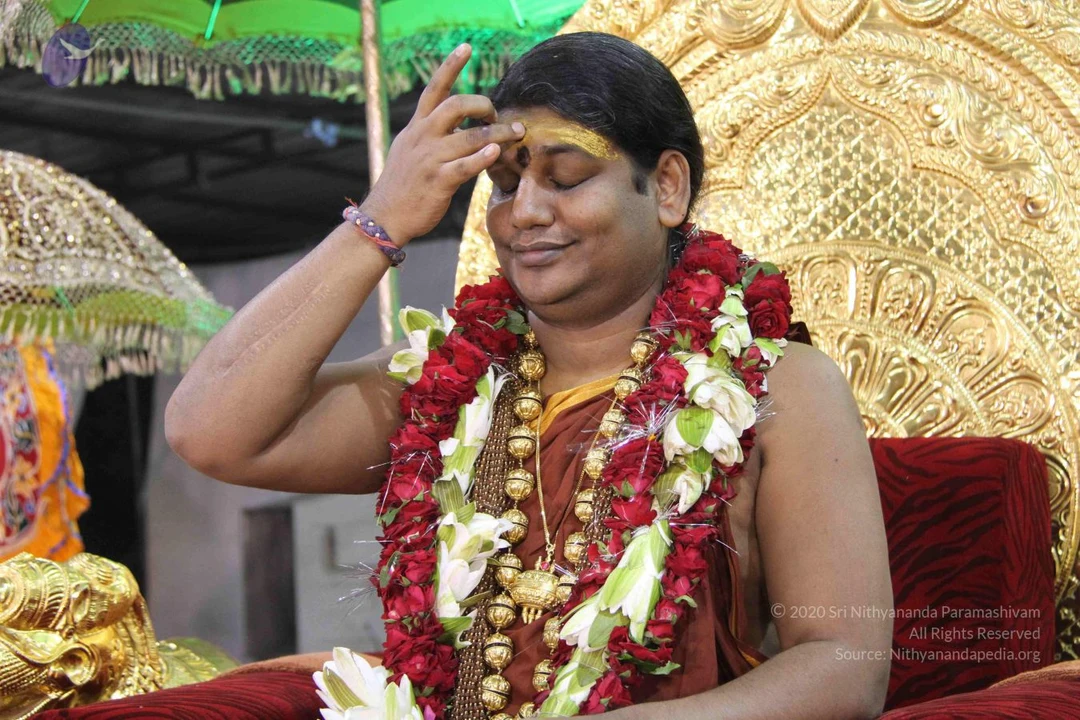
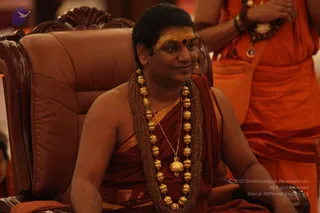
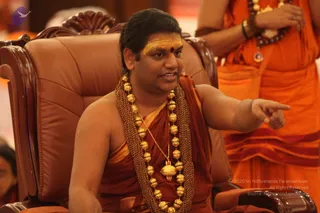
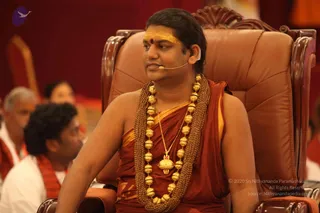
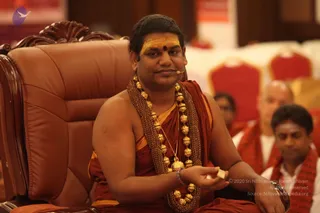
A seated man in a dark maroon-red shawl and draped cloth sits in a brown leather high-backed chair, smiling slightly and looking to his right. He wears a dense multi-strand necklace of gold beads with a larger gold pendant, and yellow-orange sacred ash marks across his forehead with a small red dot. Behind him, a standing attendant in bright orange robes and beaded necklaces stands partly visible at the right edge. a person is shown in person on a throne-like chair, wearing a maroon shawl, dense gold bead necklaces with a gold pendant, and yellow sacred marks on his forehead, seated among devotees in orange clothing.A man seated on a brown leather throne-style armchair with carved dark wooden armrests and back, speaking and pointing his right arm outward. He wears a rust-red and saffron shawl over bare shoulders, a heavy gold bead necklace of large round golden beads with a golden pendant, and a yellow-orange sacred mark with a red bindi on his forehead. Behind him, a standing attendant in orange robes wears a beaded necklace with a gold pendant. The scene suggests a satsang gathering.A man seated in a large brown leather throne-style chair with carved wooden armrests and a high back, wearing a headset microphone over his right ear. He has yellow sandalwood paste on his forehead with a red bindi, and wears a rust-orange garment draped over his shoulders with gold trim, along with a heavy multi-strand gold bead necklace and a gold pendant. Behind him, a red backdrop is visible. Two seated attendees in white with red shawls are partly visible at the left edge, and another person is seen in the background. The man's appearance, including the throne seat, gold beaded necklaces and orange-red robes, is consistent with the a person candidate, though the identification remains uncertain from appearance alone.A man in saffron-orange draped clothing sits on an ornate carved brown leather throne-style chair, speaking into a small headset microphone. He wears a heavy gold multi-bead necklace with a large pendant and a rudraksha-style mala, and yellow-orange sacred markings with a red bindi on his forehead. He holds a small white object in one hand. Behind him, seated devotees in red-orange shawls sit in a hall with red chairs. Probable Swamiji cues: long swept-back hair, saffron clothing, ornate gold necklaces and a throne-like seat, seated as the speaker.A seated figure in a large brown leather throne-style chair holds a thin wooden stick across the palm of one hand while looking down. He wears an orange-saffron shawl over the shoulder, a dense chain of large gold beads and a gold pendant, and yellow-gold tilak with a red dot on the forehead; a small headset microphone is visible. Behind him, several seated devotees in red-orange shawls are blurred in a hall with red-cushioned chairs. Two appearance-based candidates for the seated teacher are present, presenting with saffron clothing, gold ornaments and a rudraksha-style bead mala, so the seated central figure is labelled a person as the teacher. The visible people are the central figure and about four devotees.A smiling man with swept-back dark hair and yellow-orange tilak with a red bindi sits in a large brown leather throne-style chair, wearing an ornate gold ceremonial bead necklace and gold pendant over a rust-orange shawl and orange garment. Behind him a bald man in orange and a man in an orange shawl with a tilak sit in an event hall with red and white chairs. Swamiji (probable): the seated central figure has long swept-back hair, ornate gold bead garland, and orange-saffron robes, consistent with the page's reference to Paramahamsa Nithyananda.
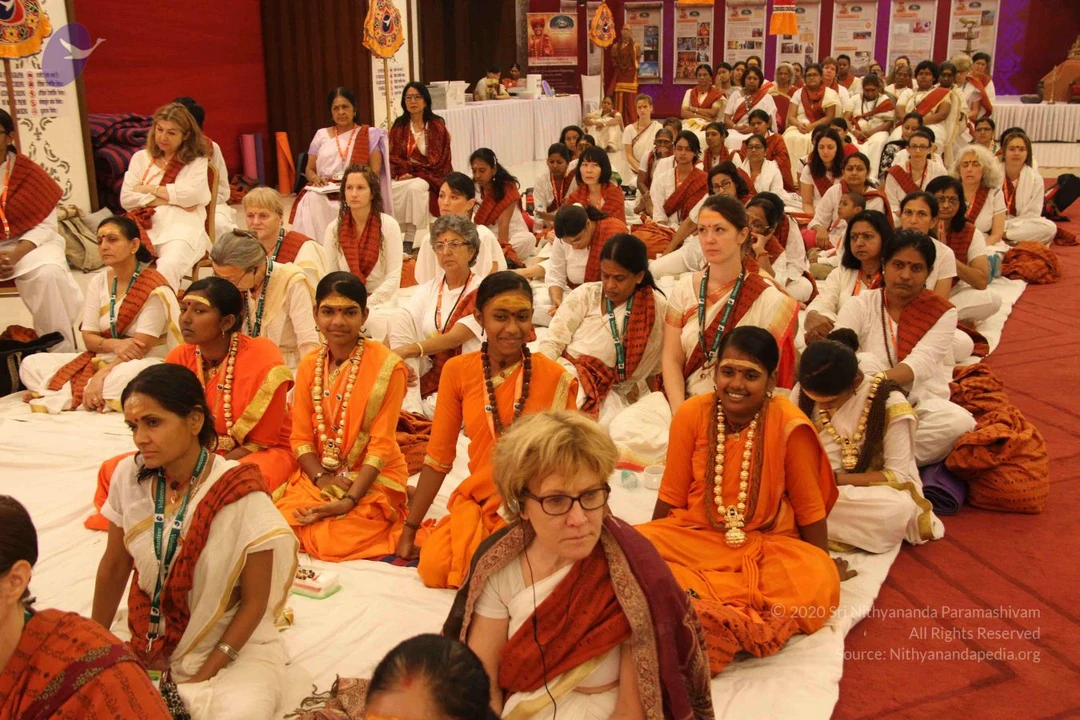
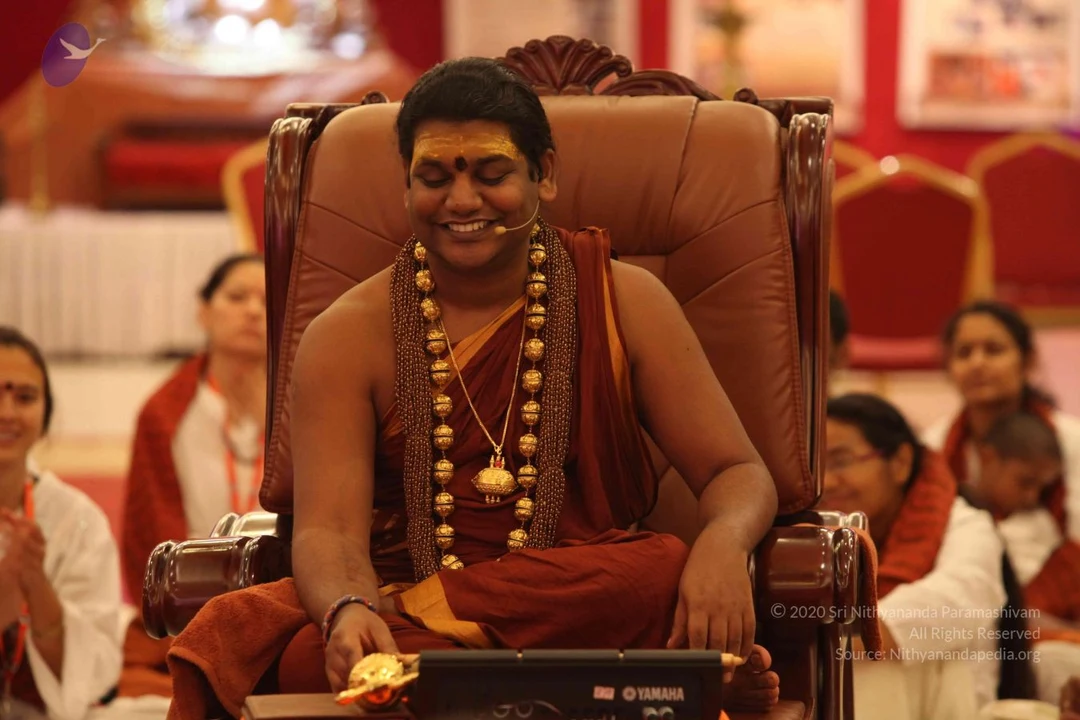
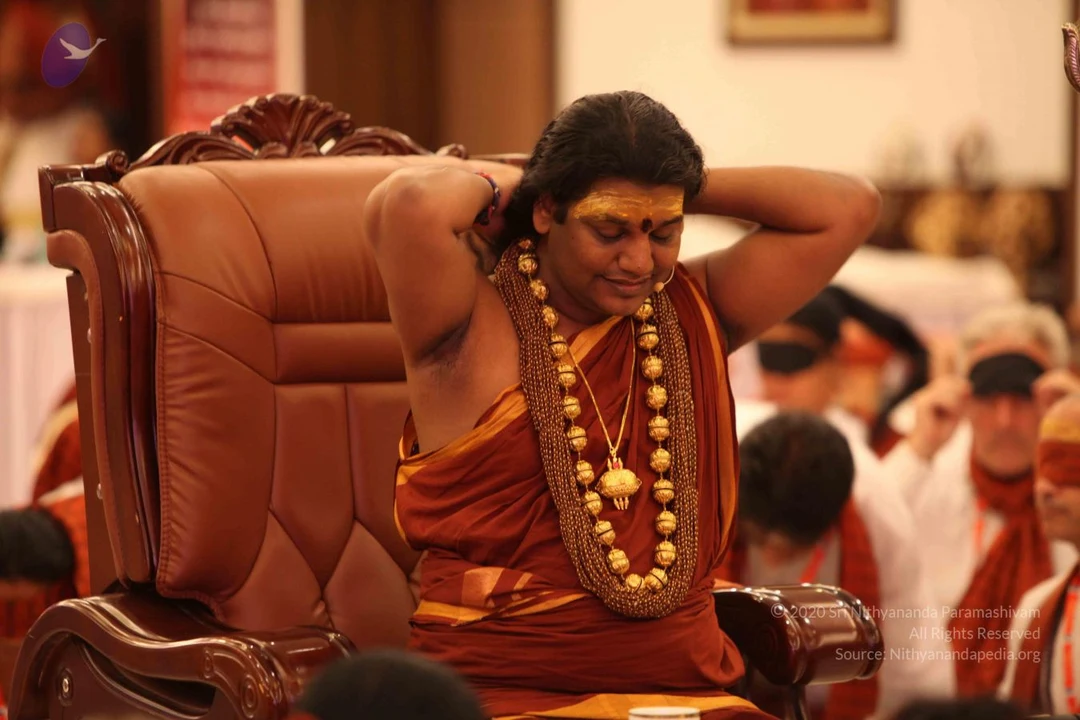
Kalabhairava Darshan And Shivoham Initiation To All Delegates of The Inner Awakening Convention
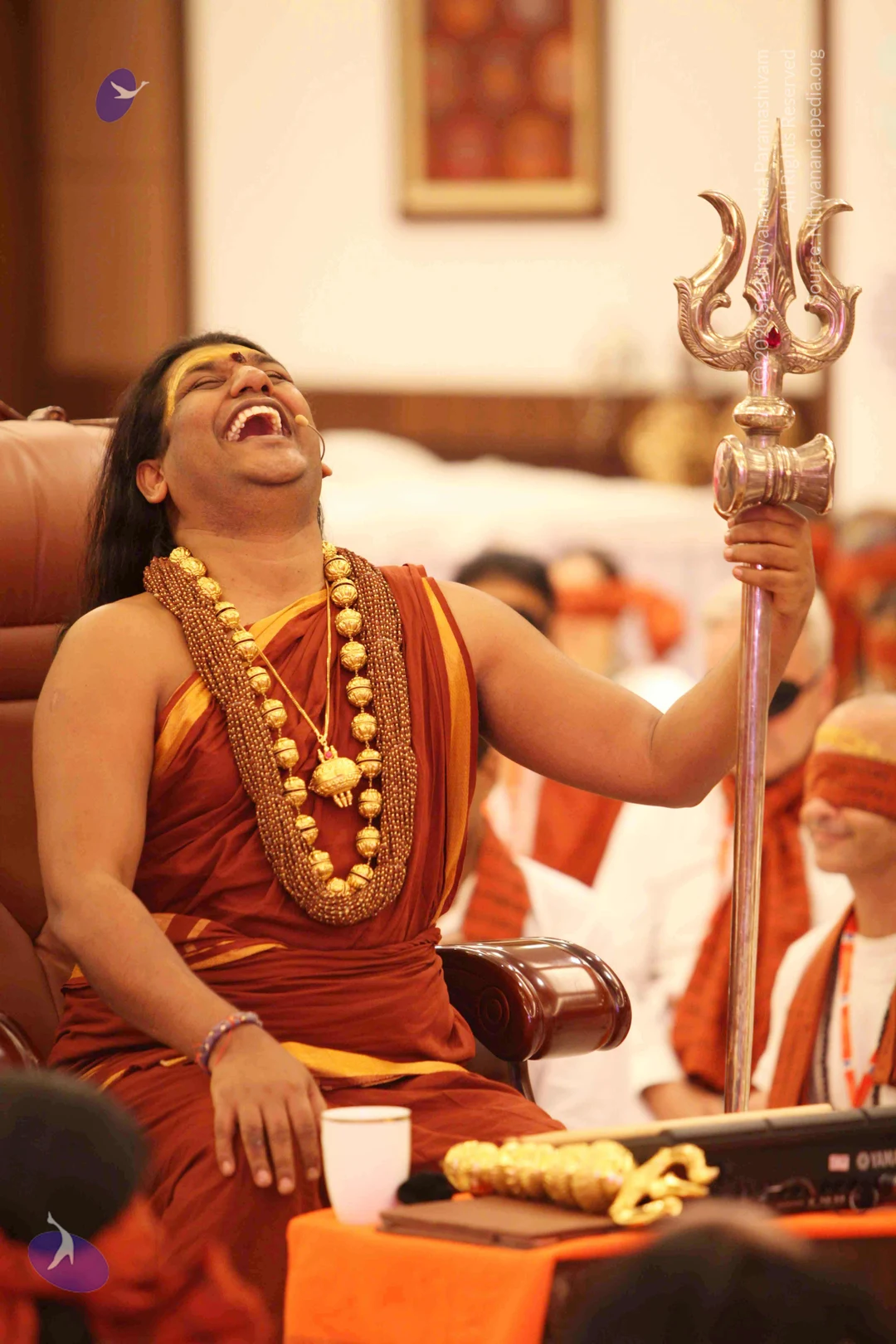
72 photosSource gallery
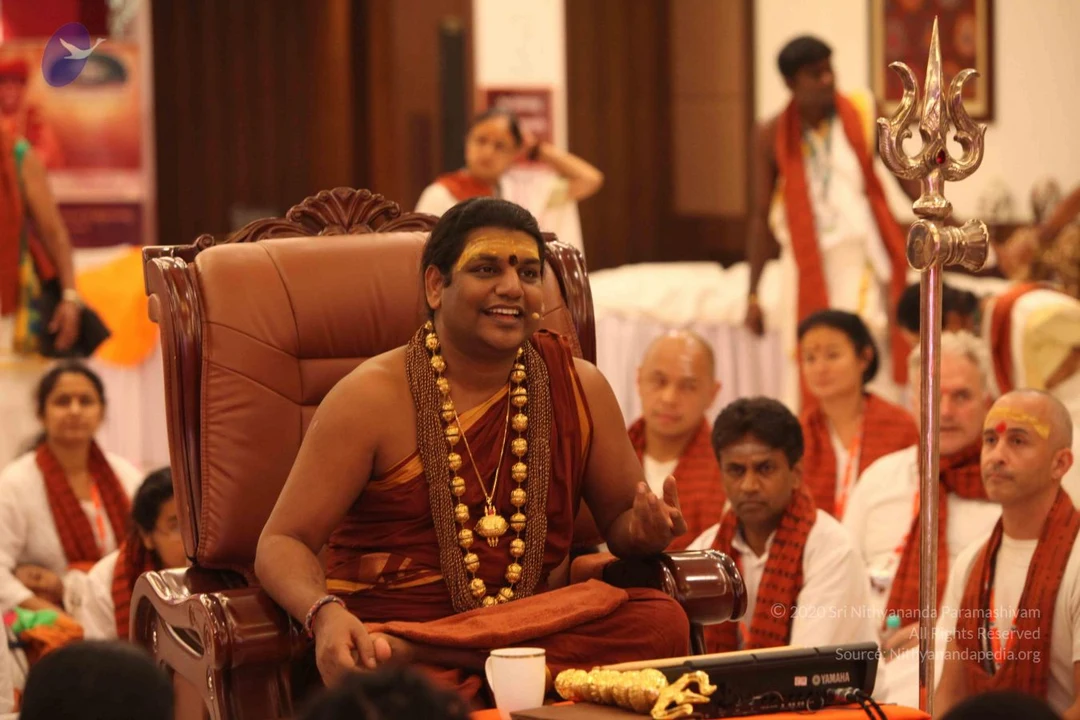
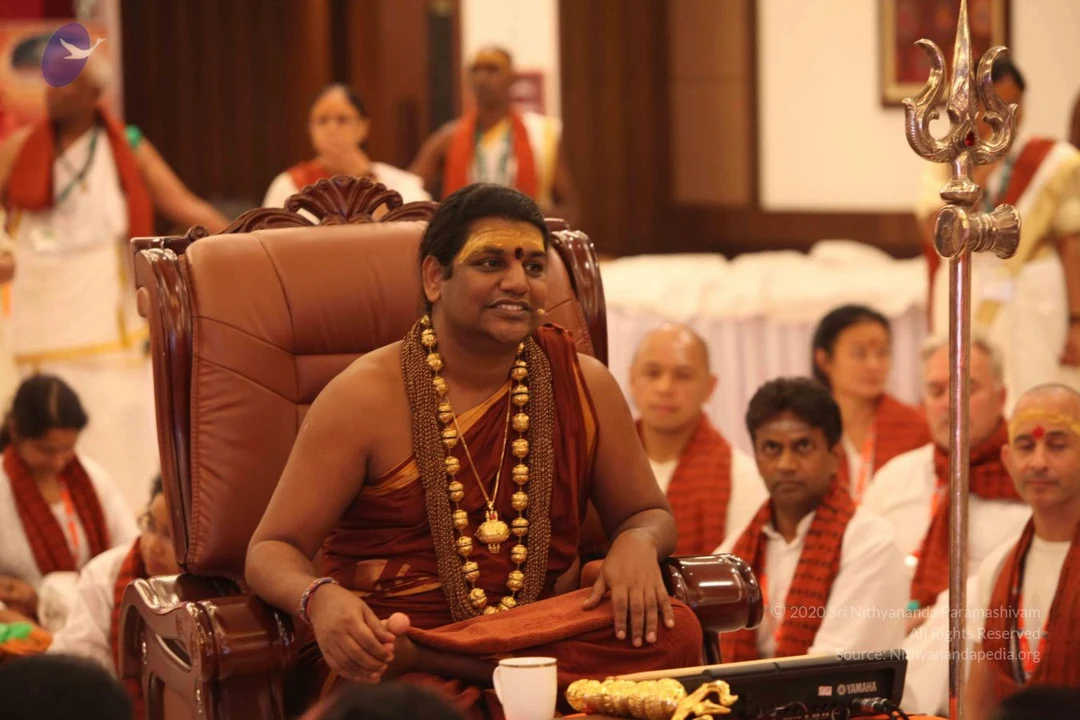
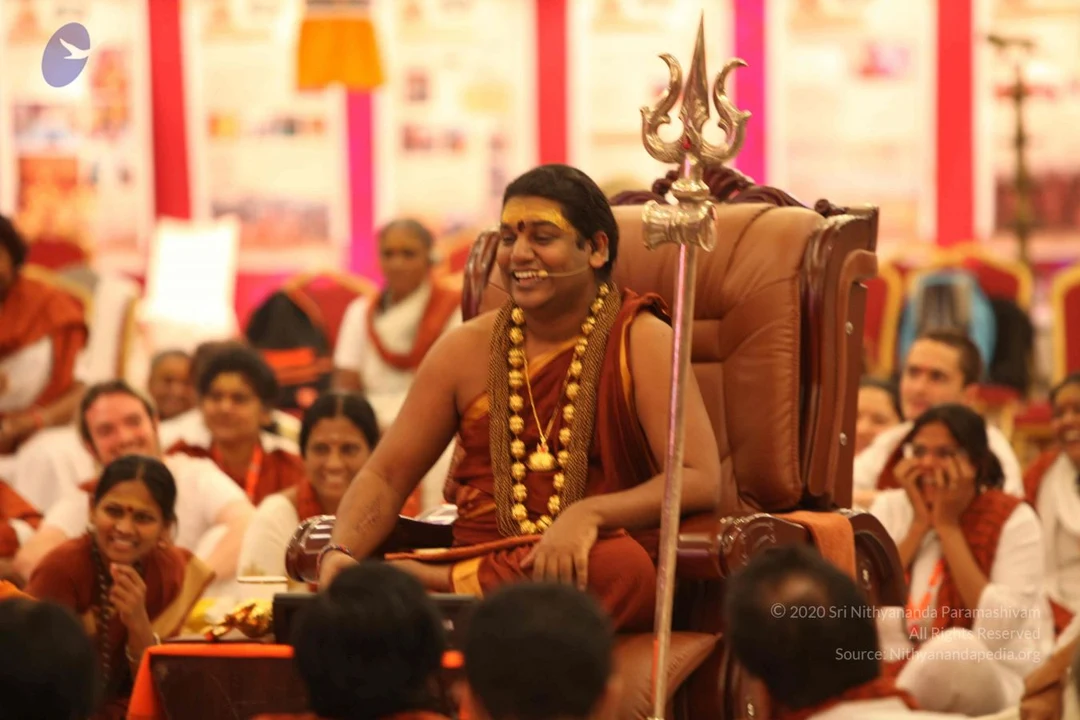
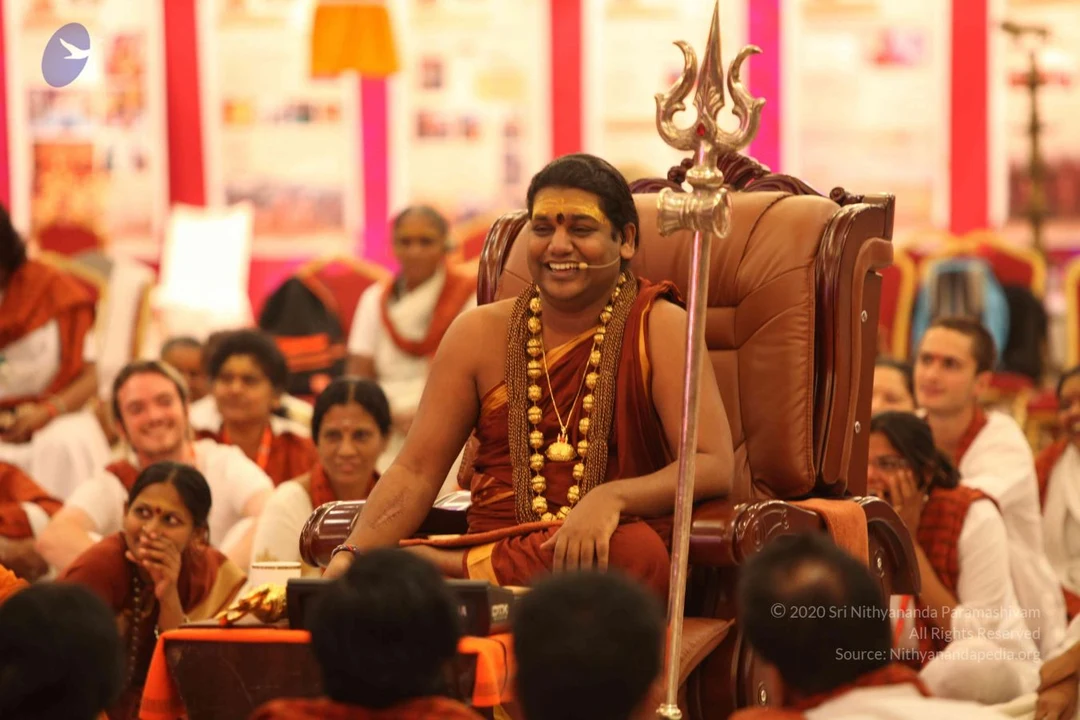
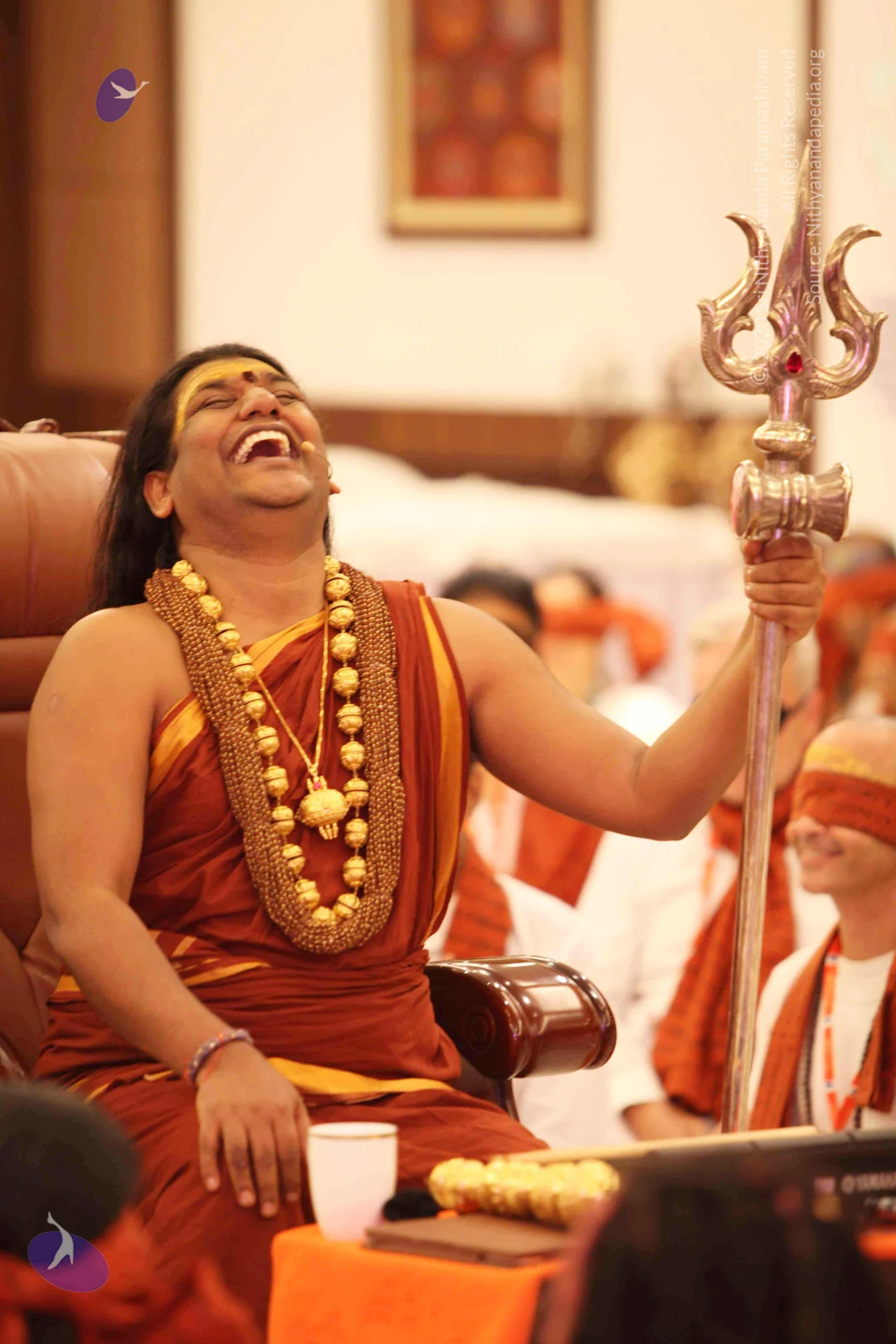
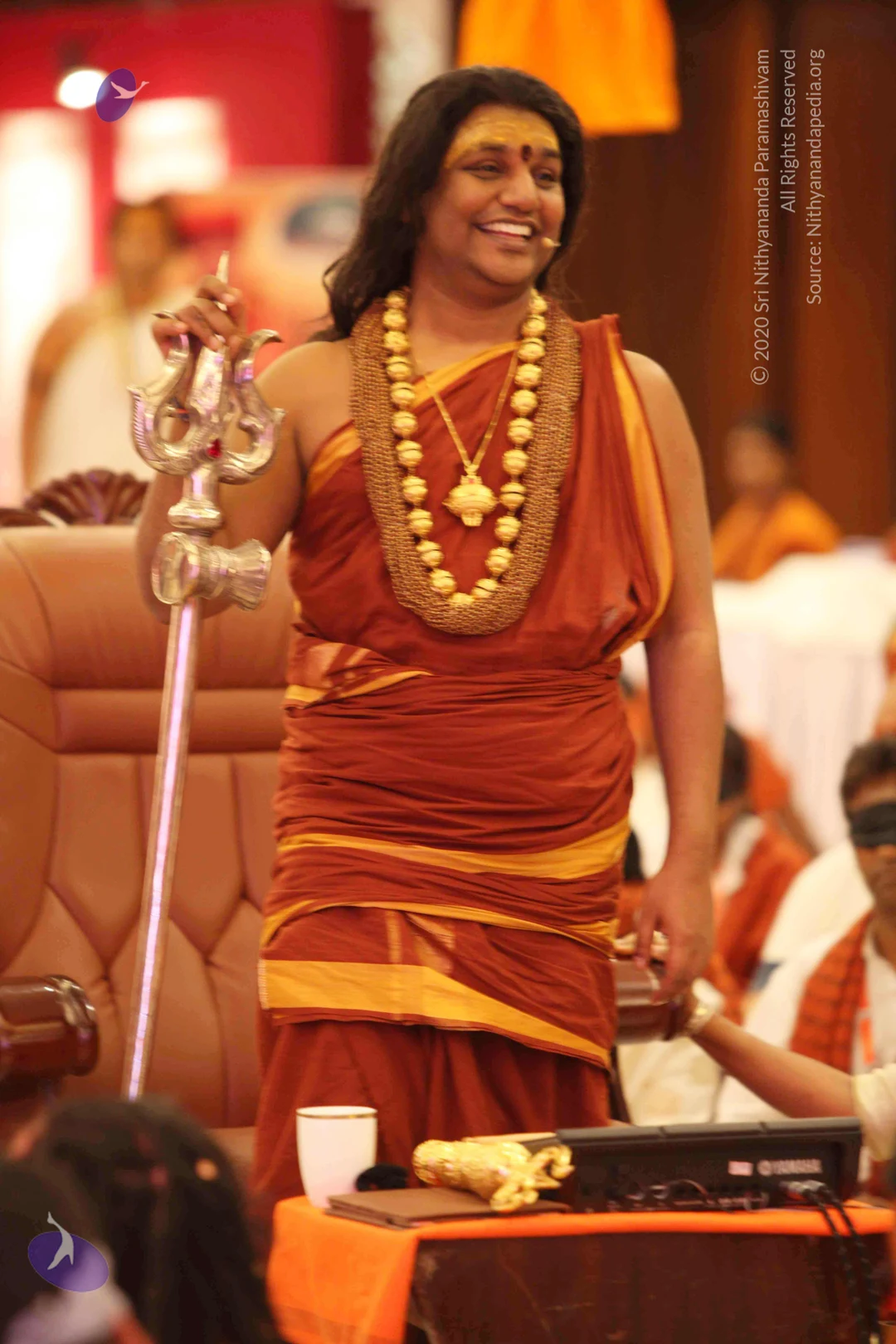
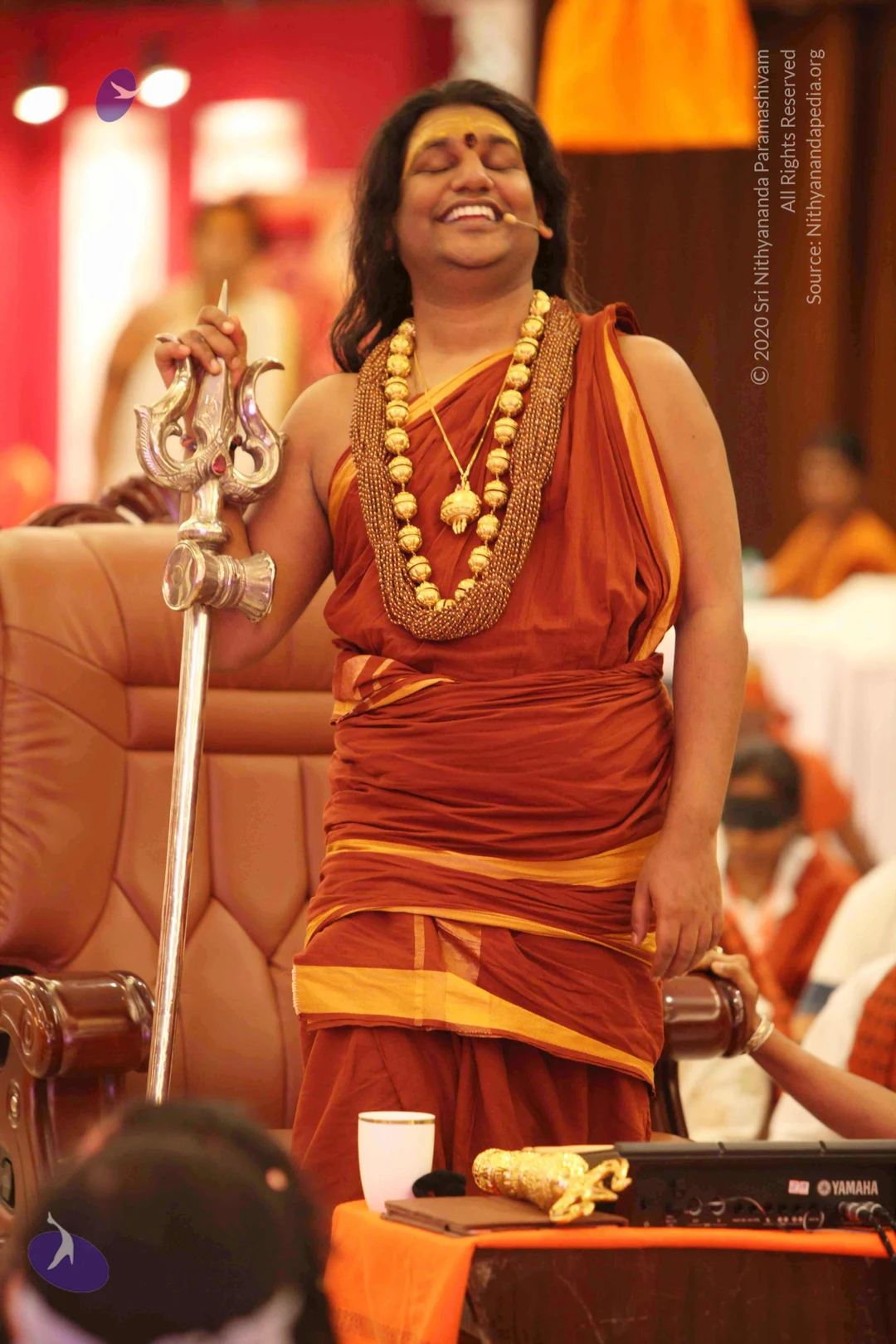
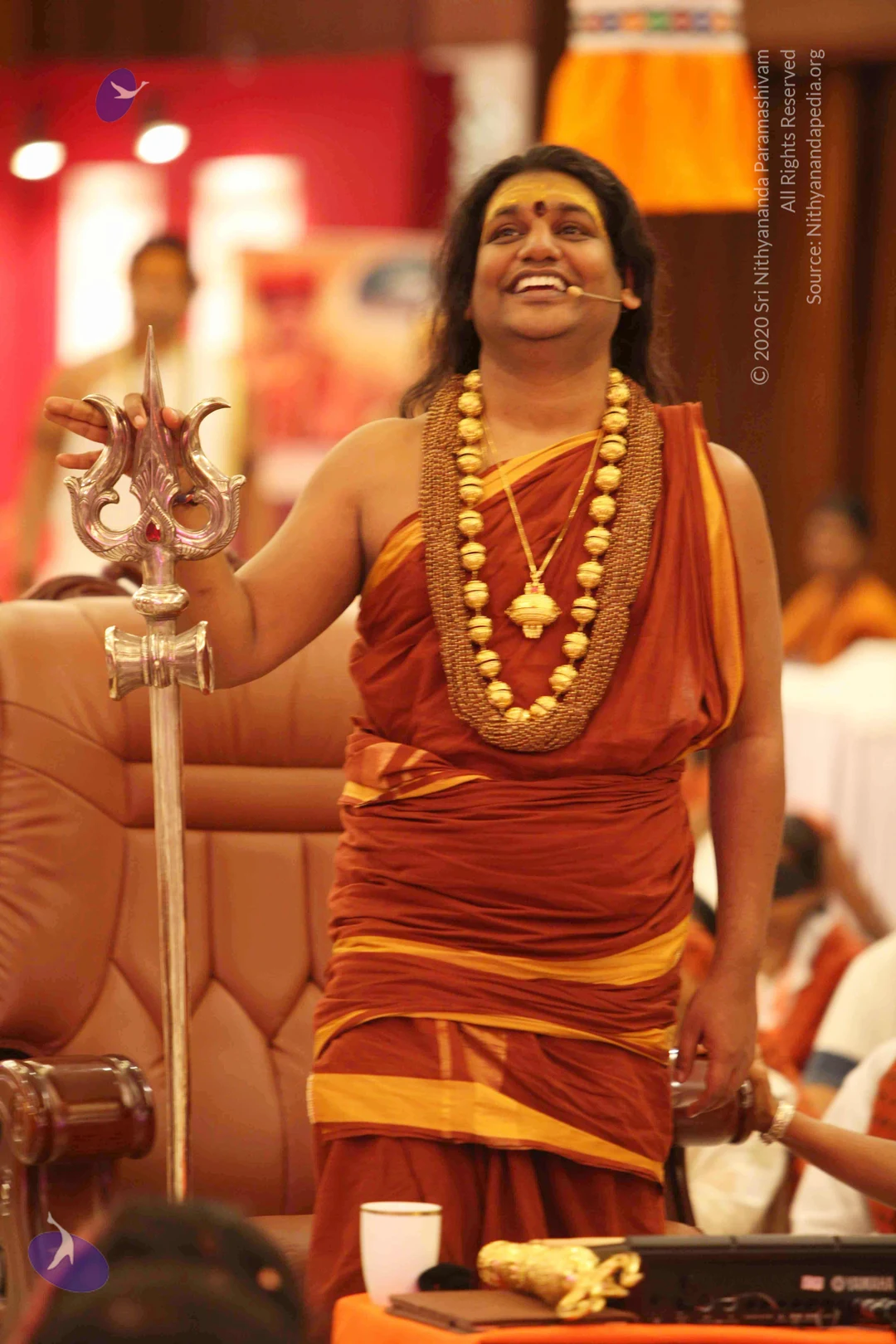
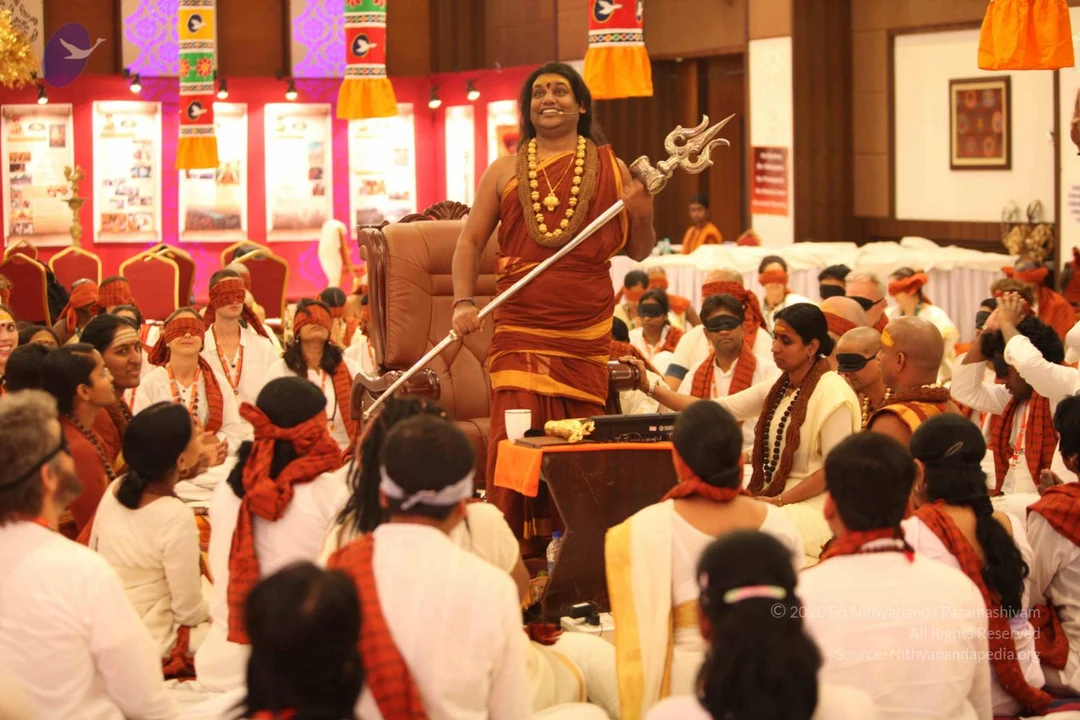
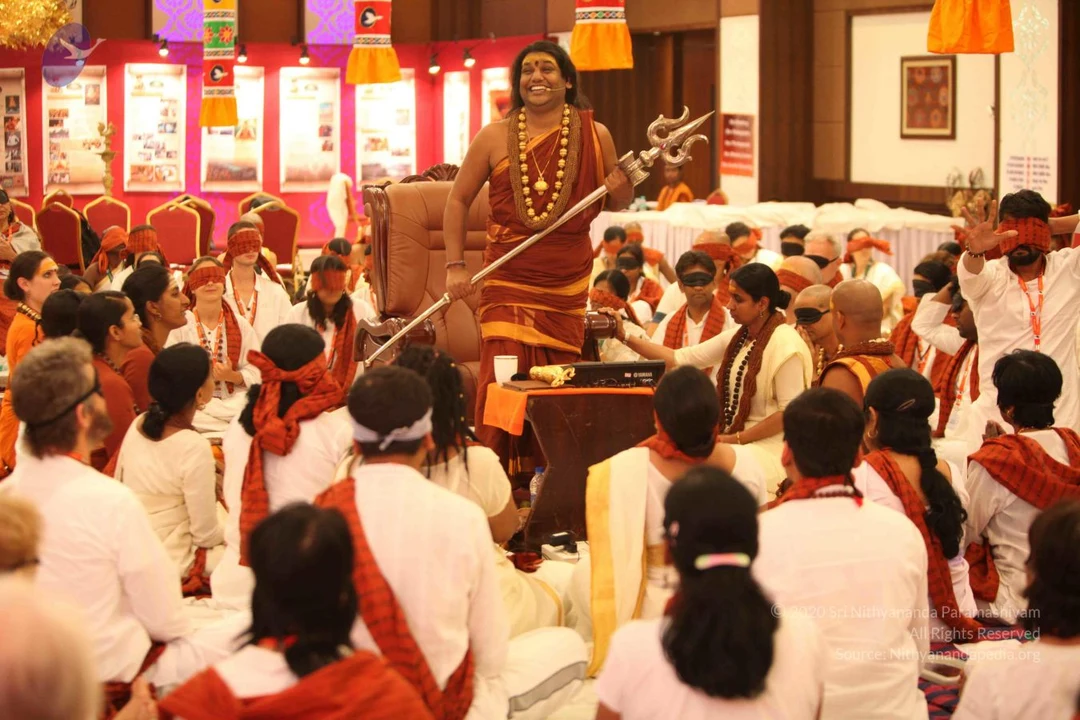
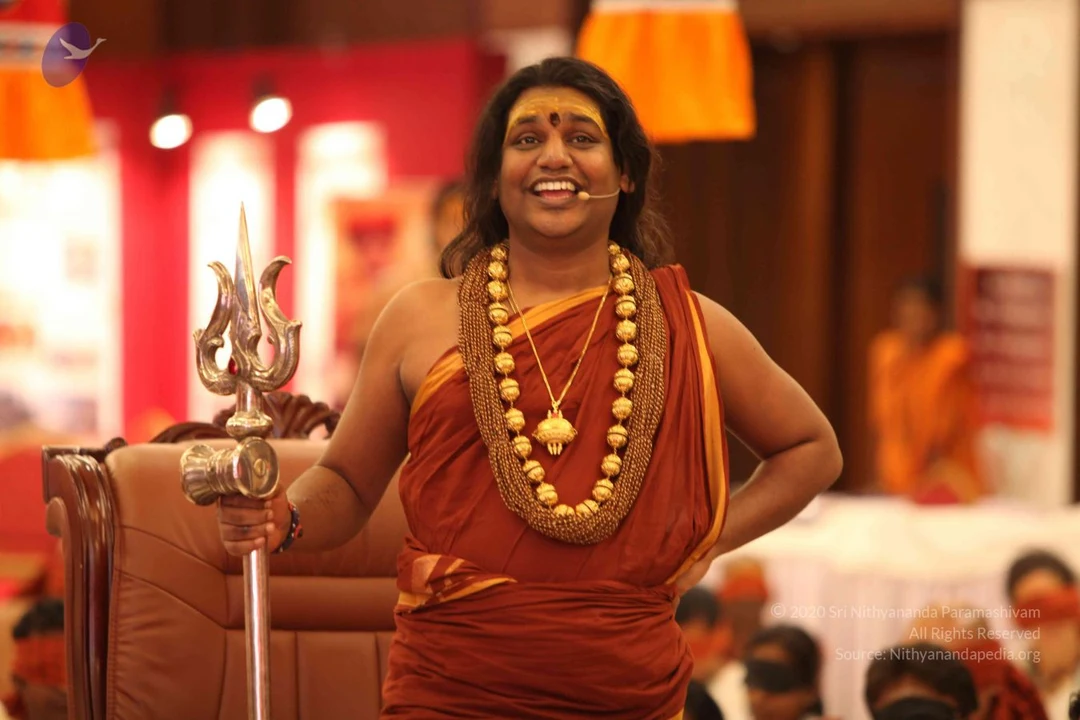
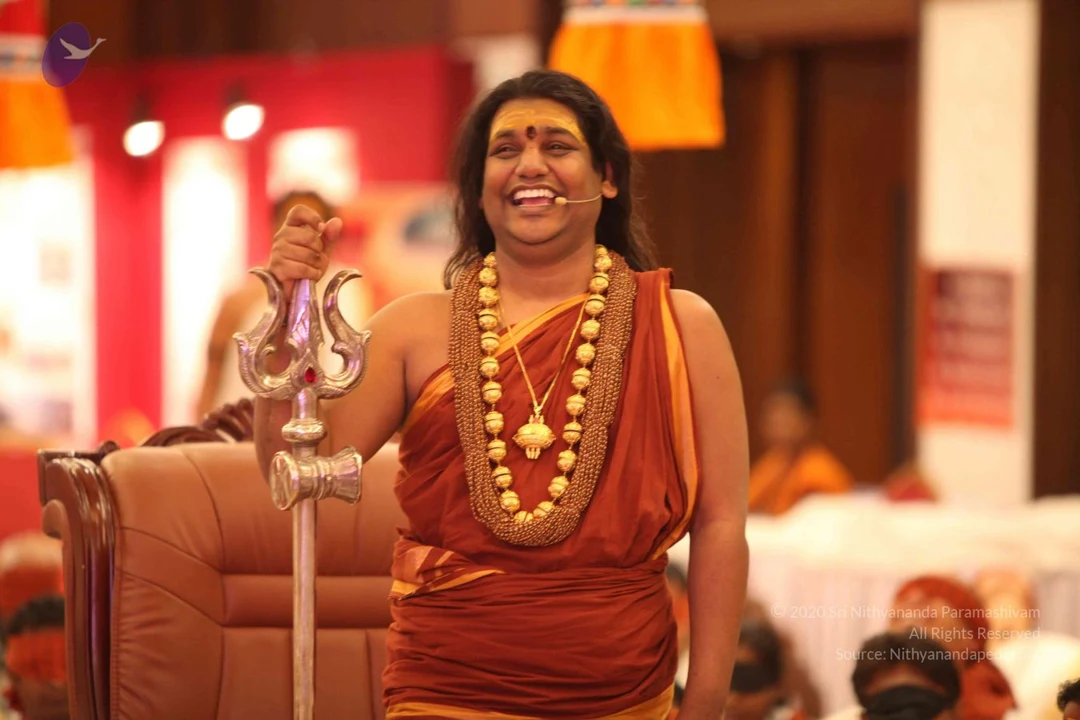
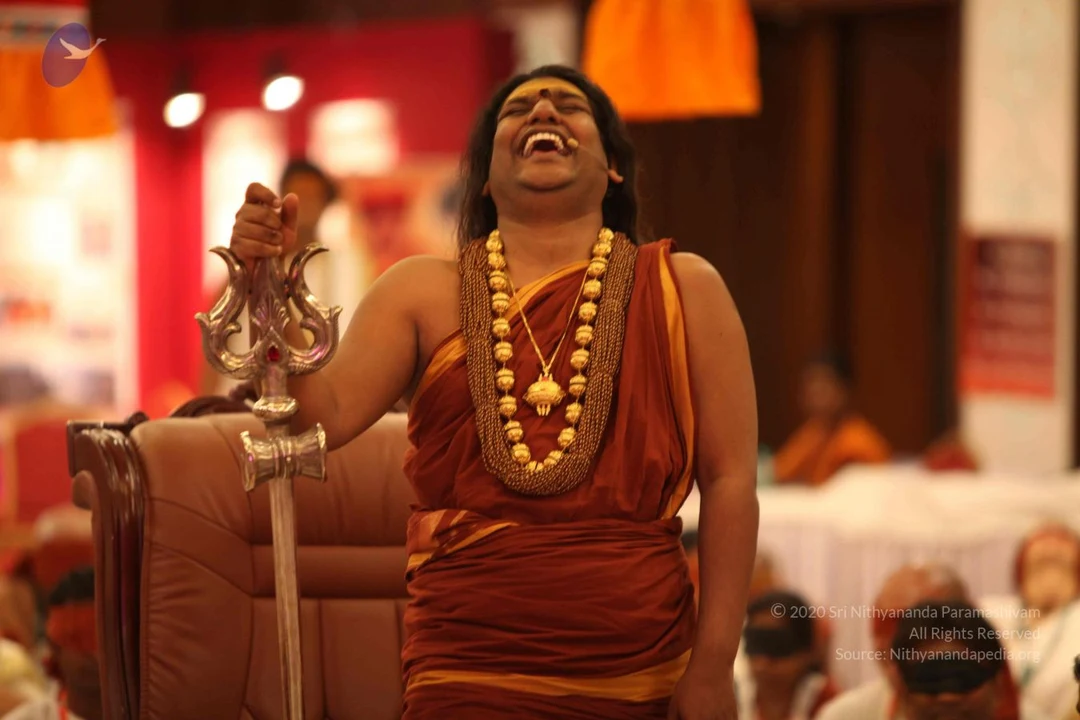
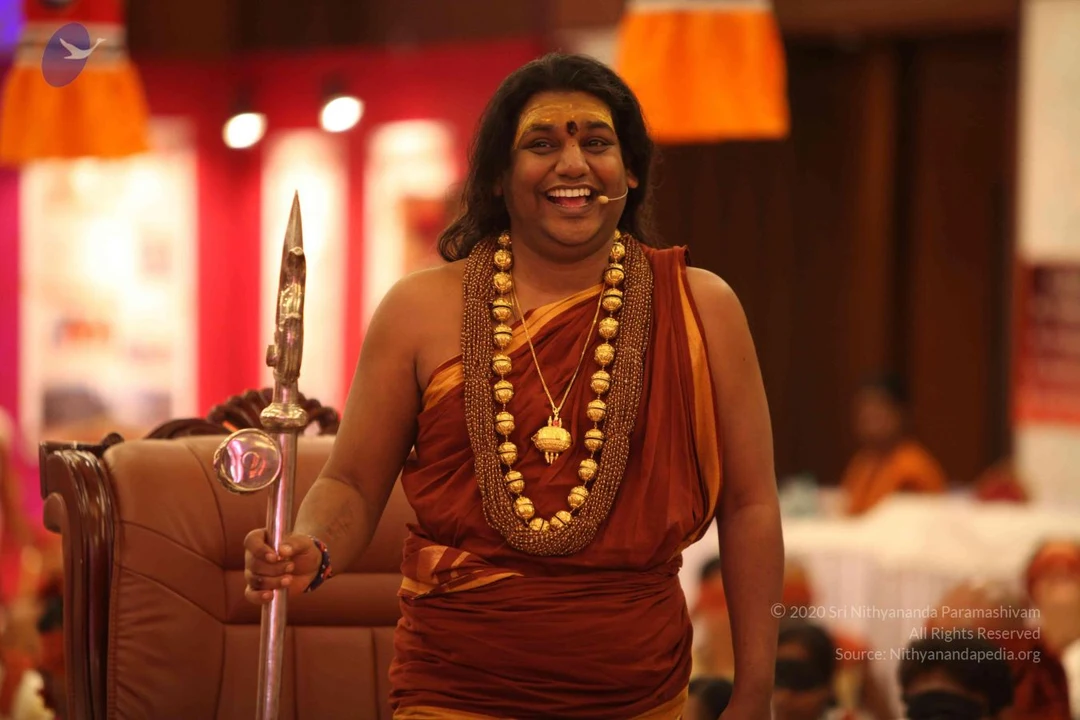
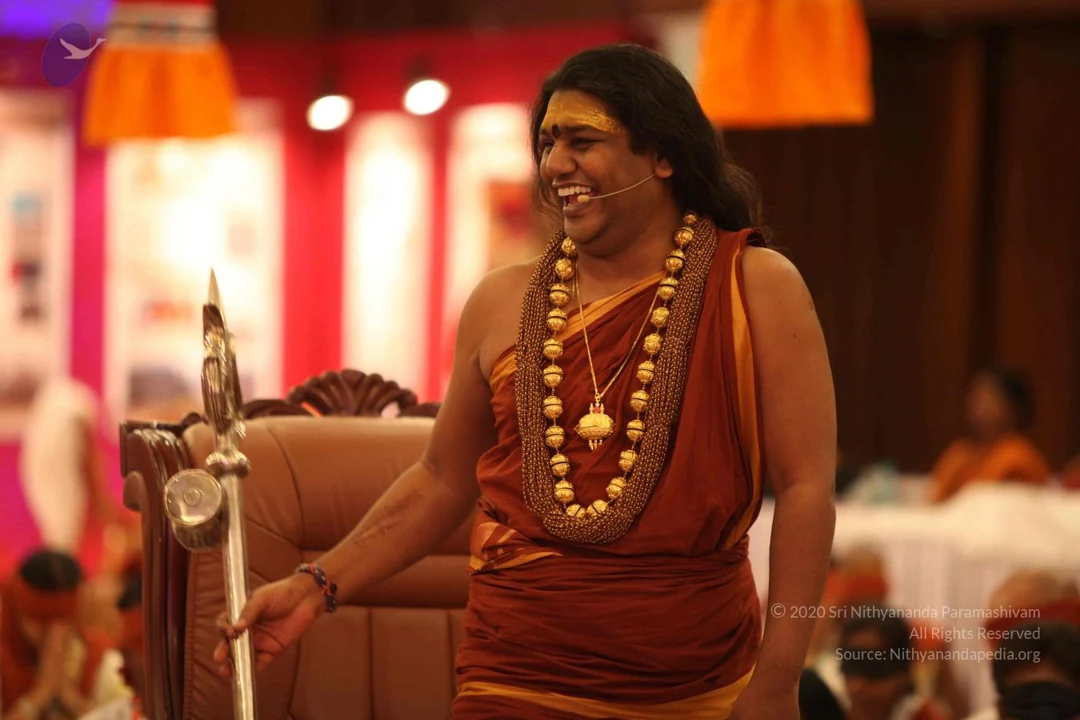
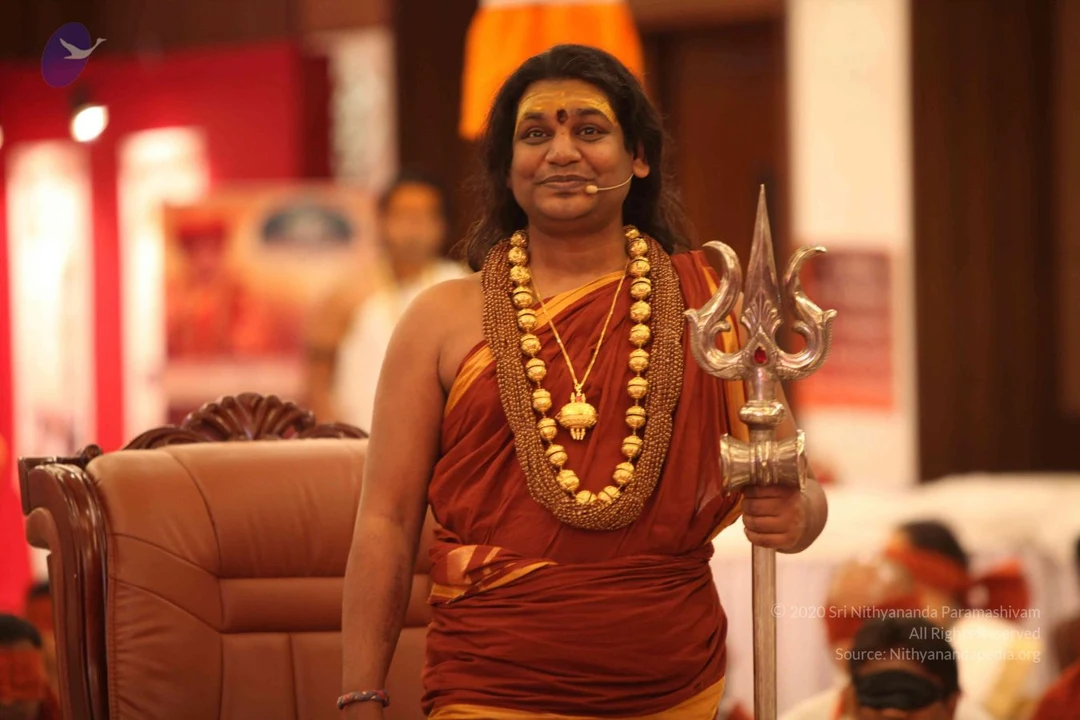
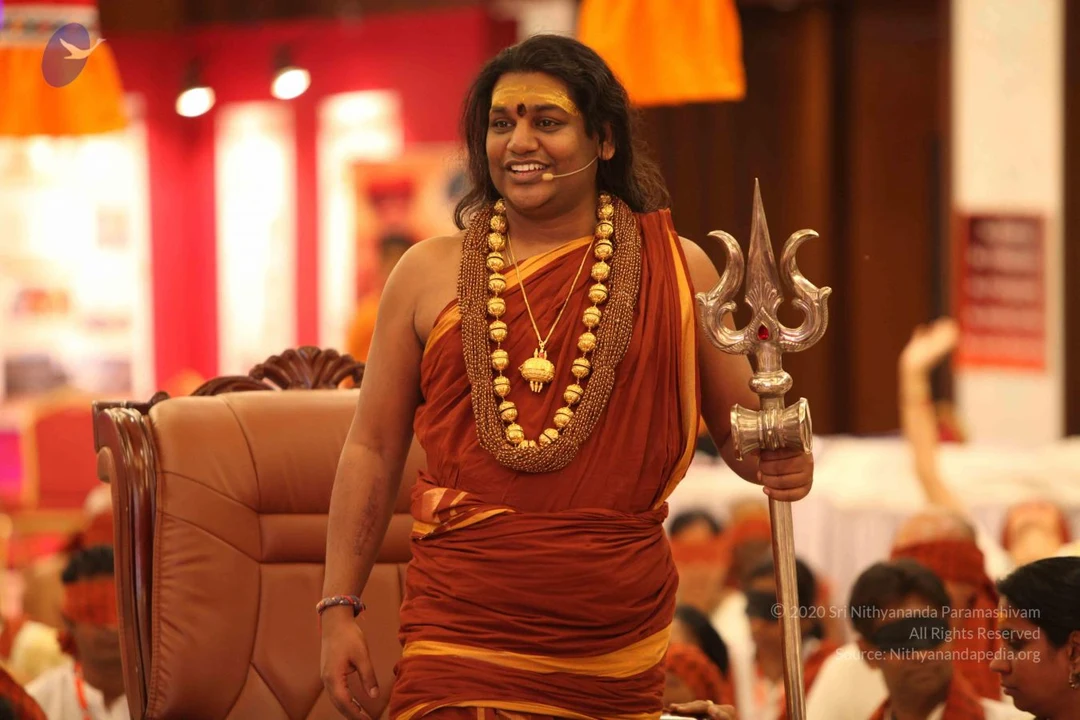
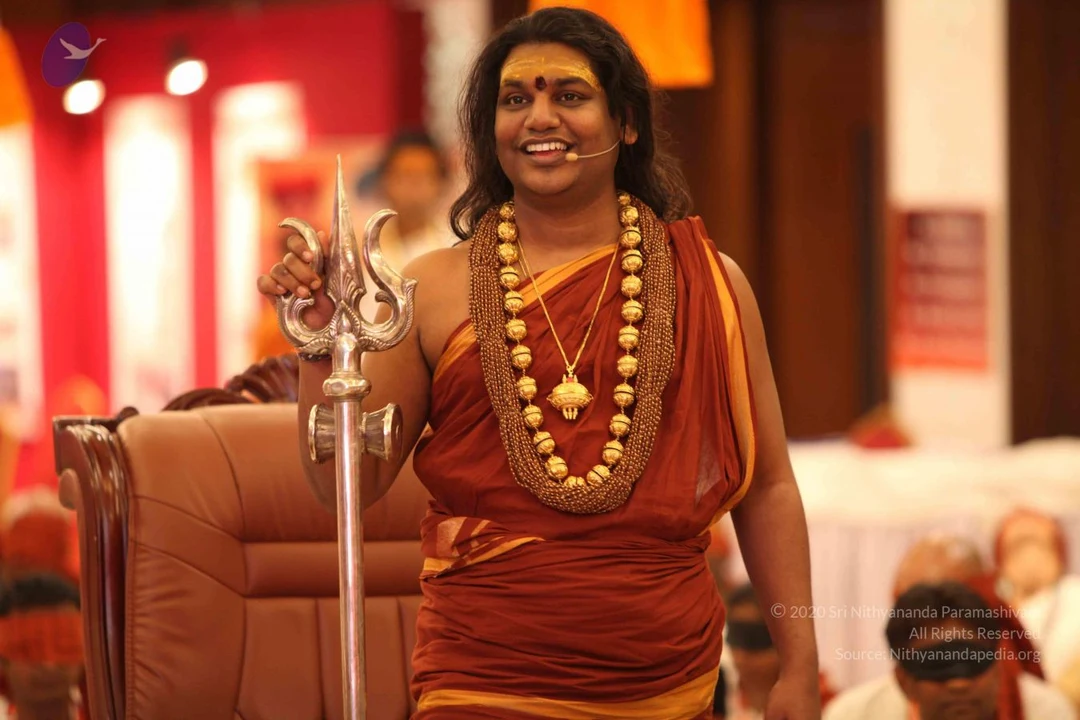
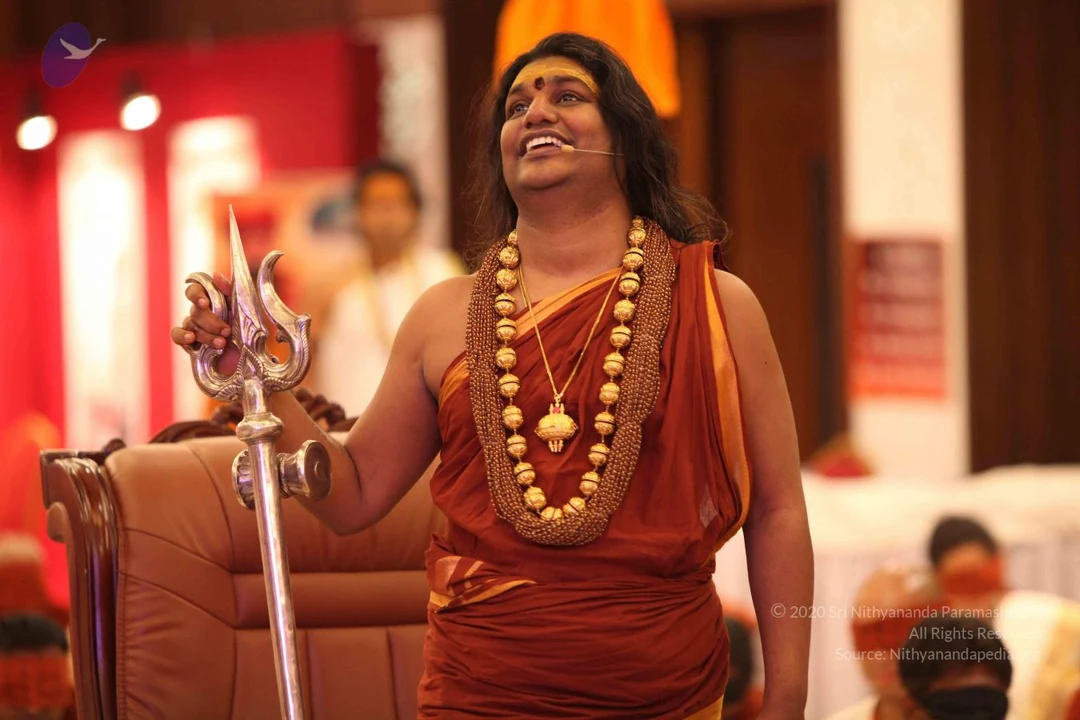
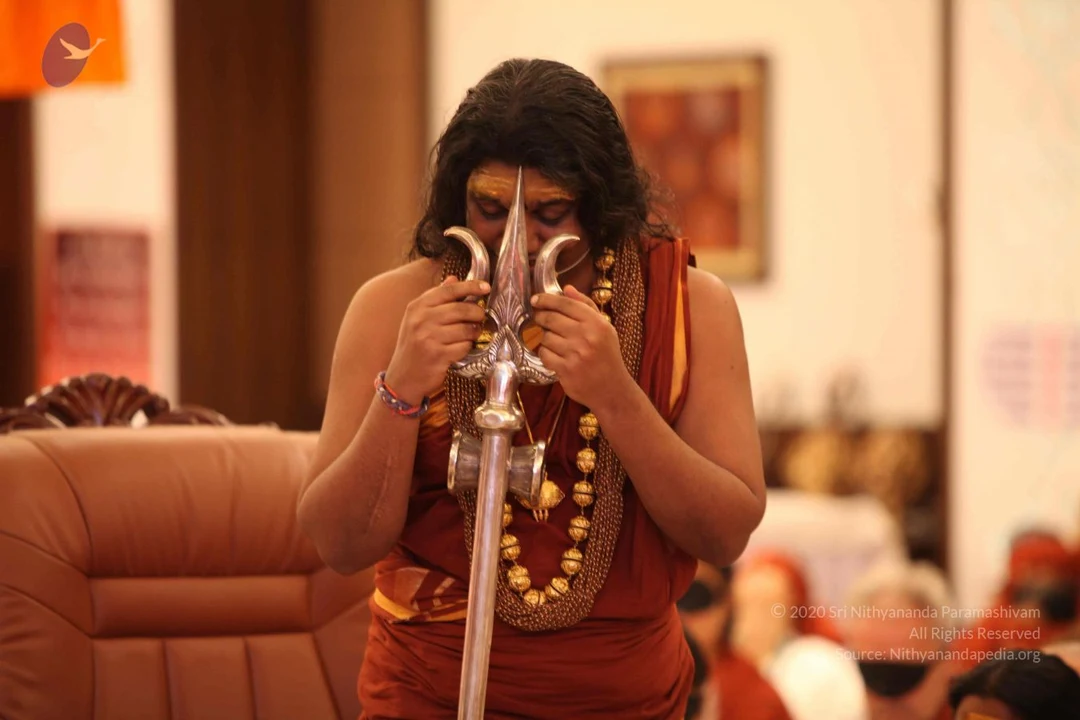
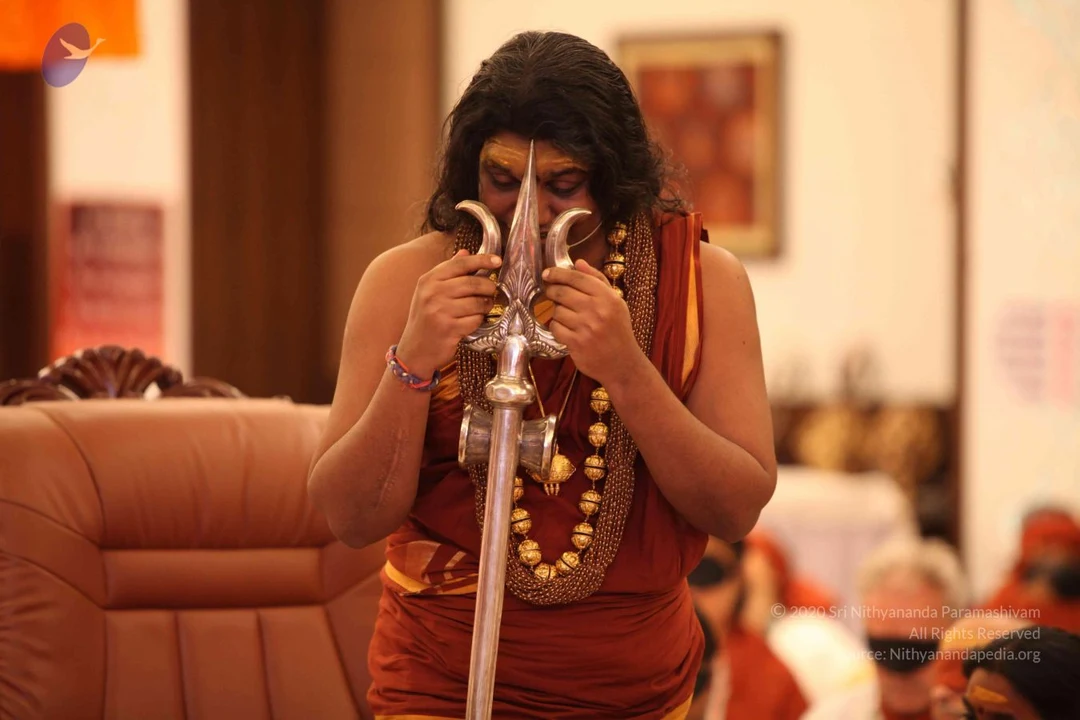
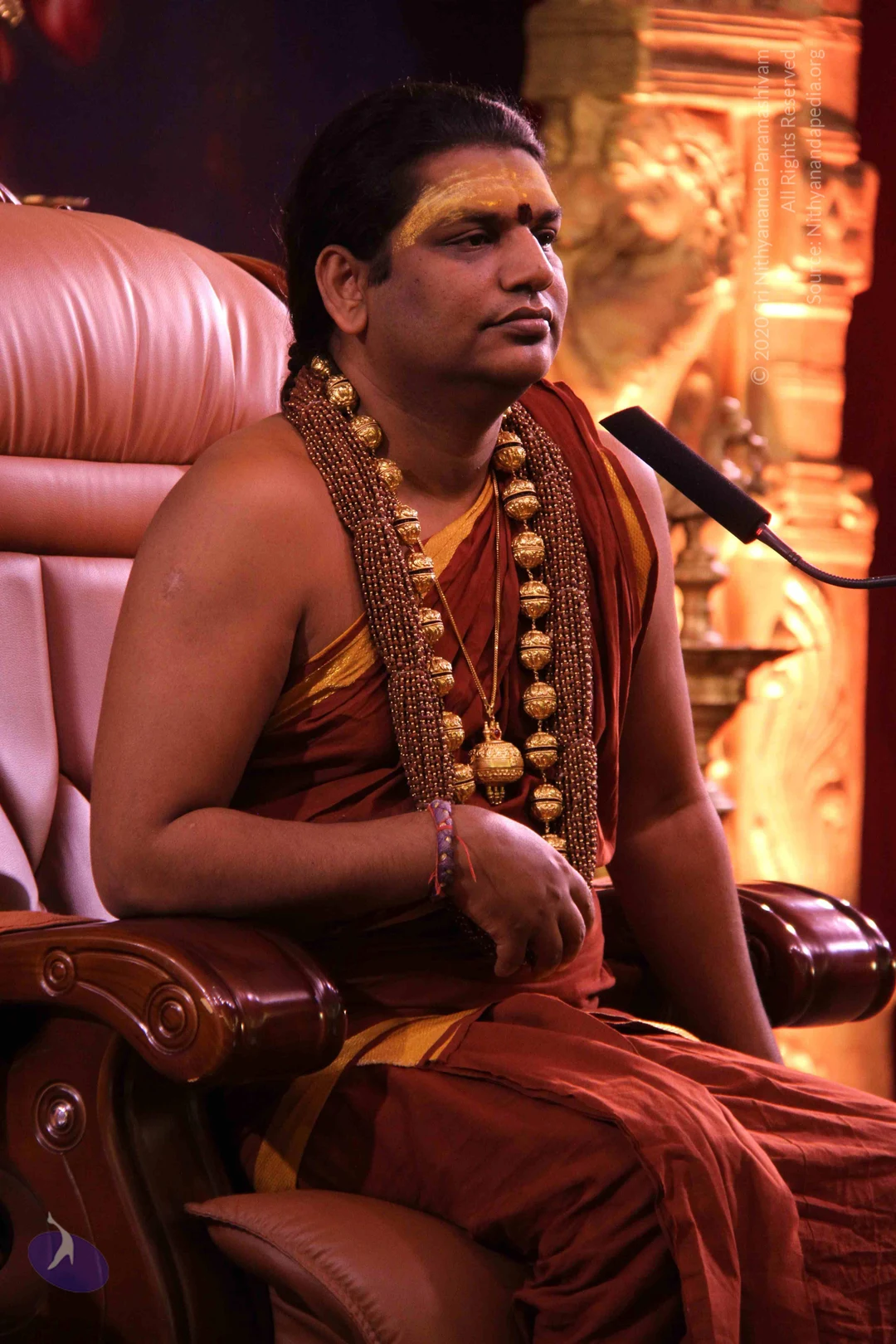
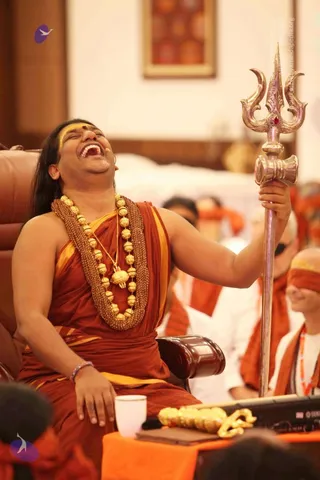
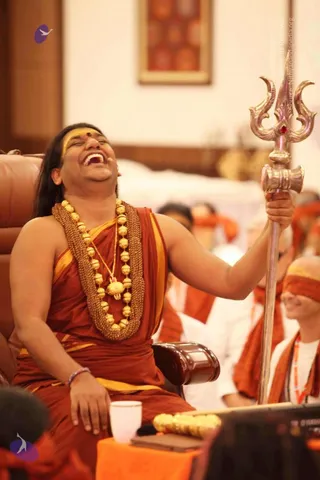
A man with long dark hair, yellow tilak and a red bindi sits laughing with his head tilted back in a brown leather armchair. He wears a rust-red and gold-bordered robe, a thick multi-strand golden bead necklace with a gold pendant, and a headset microphone. He holds up a silver trident with his right hand. Behind him, seated devotees wear orange and red robes and headbands, and a gold ceremonial object lies on an orange cloth-covered table in front.A laughing man sits in a brown leather armchair holding a silver trident with a red gem in his raised right hand. He has long dark hair, a yellow tilak on his forehead, a rudraksha mala and a gold necklace with a pendant, and wears an orange-red saffron wrap. Behind him, several devotees in orange-red shawls and white clothes sit in a hall, one wearing an orange blindfold-style headband. A white cup sits on a table beside a gold garland.A man in a saffron-orange draped robe stands beside a brown leather armchair, smiling and holding a silver trident (trishul) upright in his right hand. He wears a heavy gold multi-bead necklace with a gold pendant, has long swept-back dark hair, and a yellow-and-red forehead mark. Seated behind him in the hall are devotees in white and red clothing, several wearing black blindfolds and red head cloths. Behind the leather chair is a cream wall with framed panels, in a hall setting.A smiling man stands in a hall holding a silver trident in his left hand. He wears an ochre-red and gold-bordered draped garment, a heavy multi-strand gold bead necklace with a gold pendant, and has a yellow-gold tilak with a red dot on his forehead and long dark hair. Behind him, a brown leather chair and blurred seated devotees in saffron and orange robes and a white-clad man in dark glasses appear, with a white cup and gold items on a table in the foreground. Appearance-based a person in this satsang setting, standing with the trident and gold ornaments.A smiling man with long dark hair stands beside a leather armchair, holding a silver trident in his left hand. He wears a rust-orange wrap with gold-bordered sashes, multi-strand gold and rudraksha-style beaded necklaces, and yellow-gold paste with a red bindi on his forehead. Behind him, several people in orange and white clothing sit or stand in a bright hall. A small white cup and a golden ceremonial object sit on a table in the foreground.Photograph of a smiling man with long, swept-back dark hair and a sandalwood-paste tilak with a red dot on his forehead, wearing a rust-red and gold-bordered sannyasi cloth draped over one shoulder and a heavy gold bead necklace with a gold pendant. He stands beside a brown leather throne, holding a silver trident-shaped staff with a red gem in his left hand and resting his right hand on the chair arm. A microphone is clipped near his mouth. On the orange-draped table in front lie a white cup, a gold ceremonial horn-shaped object and a black Yamaha audio mixer. Blurred seated devotees in white and orange clothing fill the background. Printed on the right edge, a vertical caption reads " " and ""
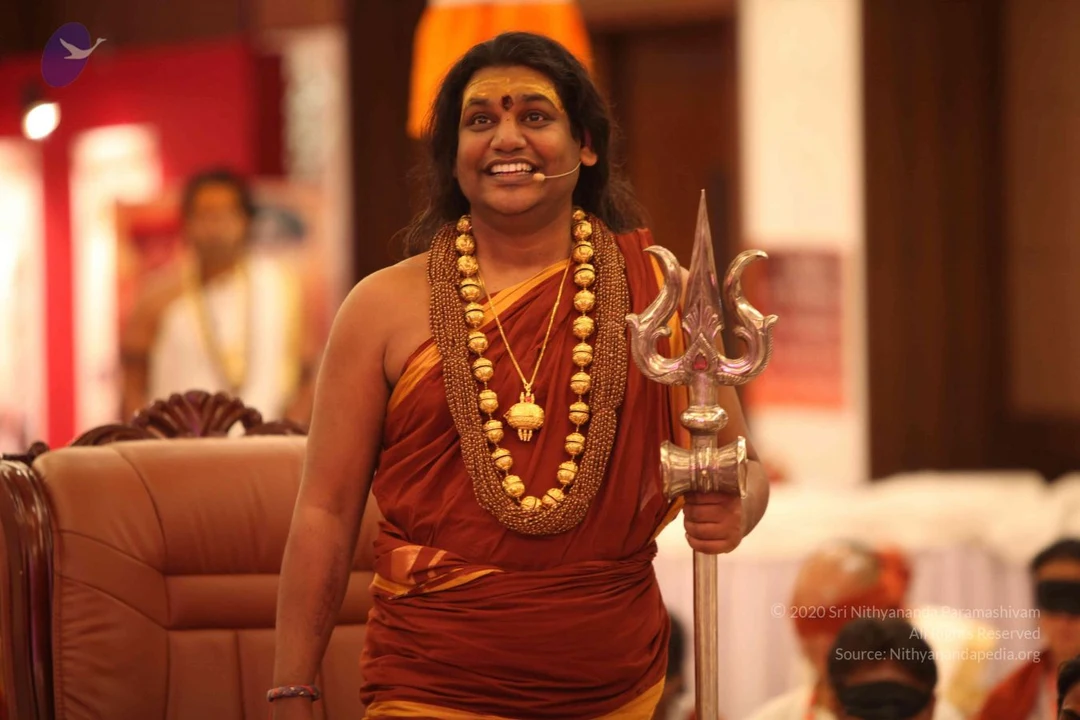
More Pictures of Darshan and Initiation
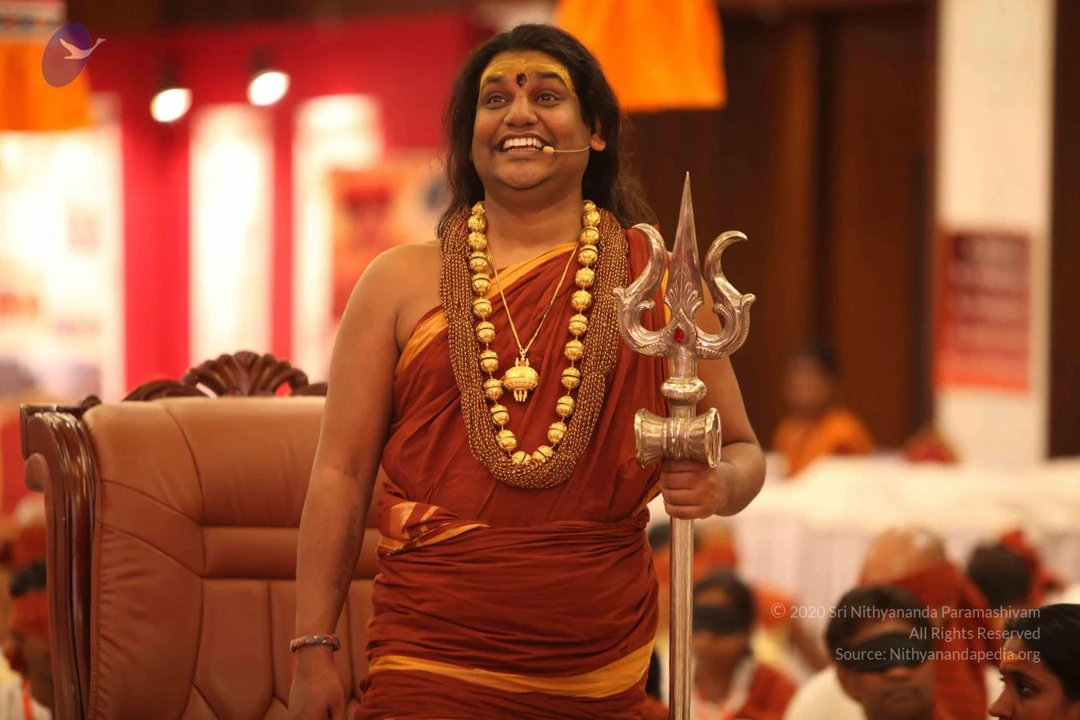
41 photosSource gallery
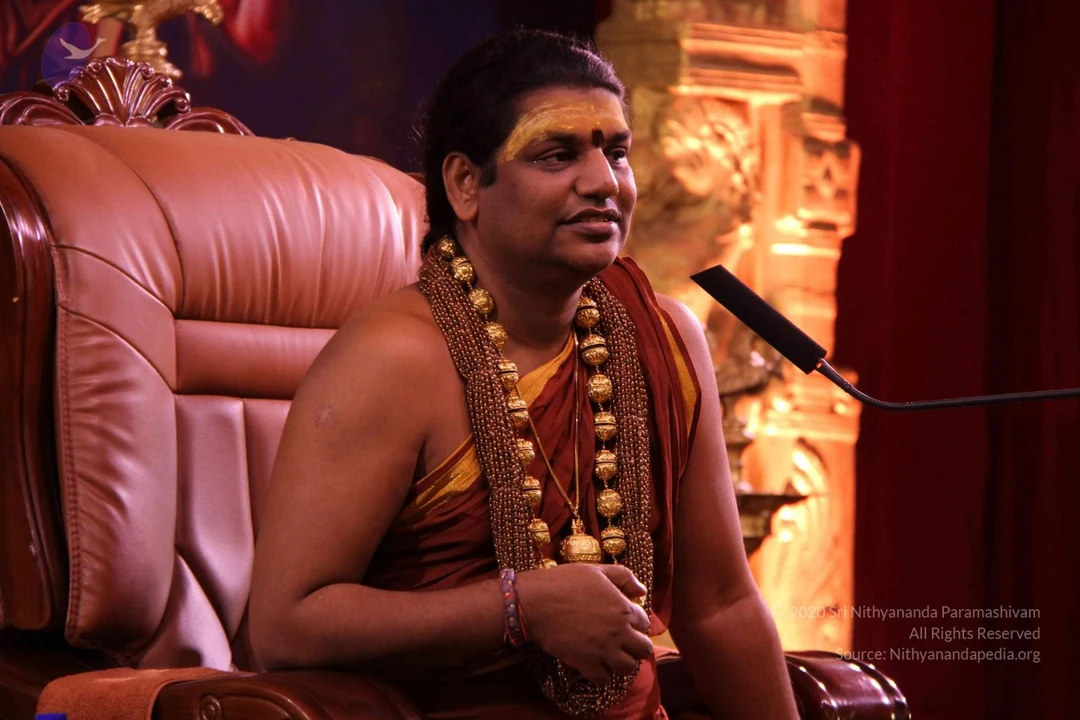
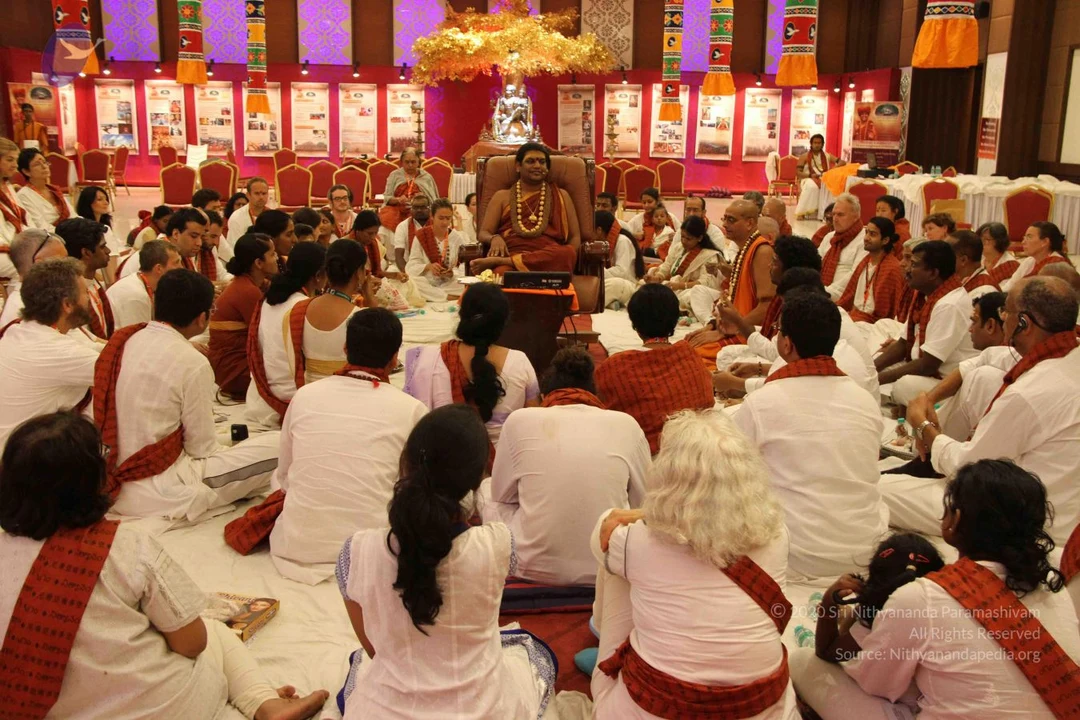
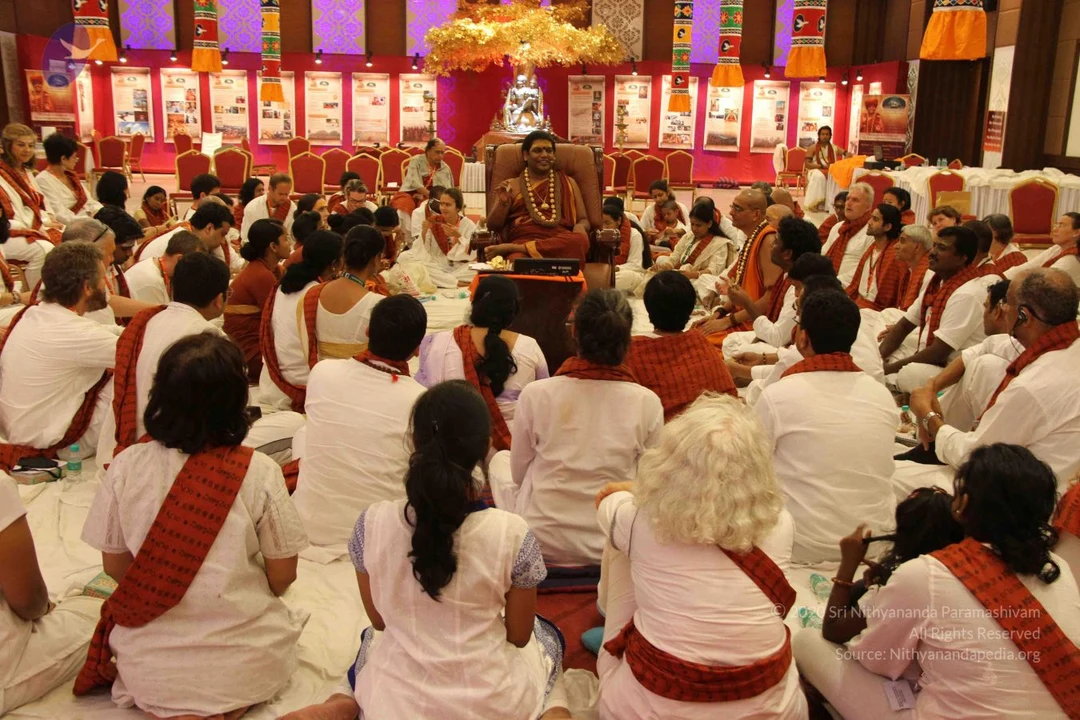
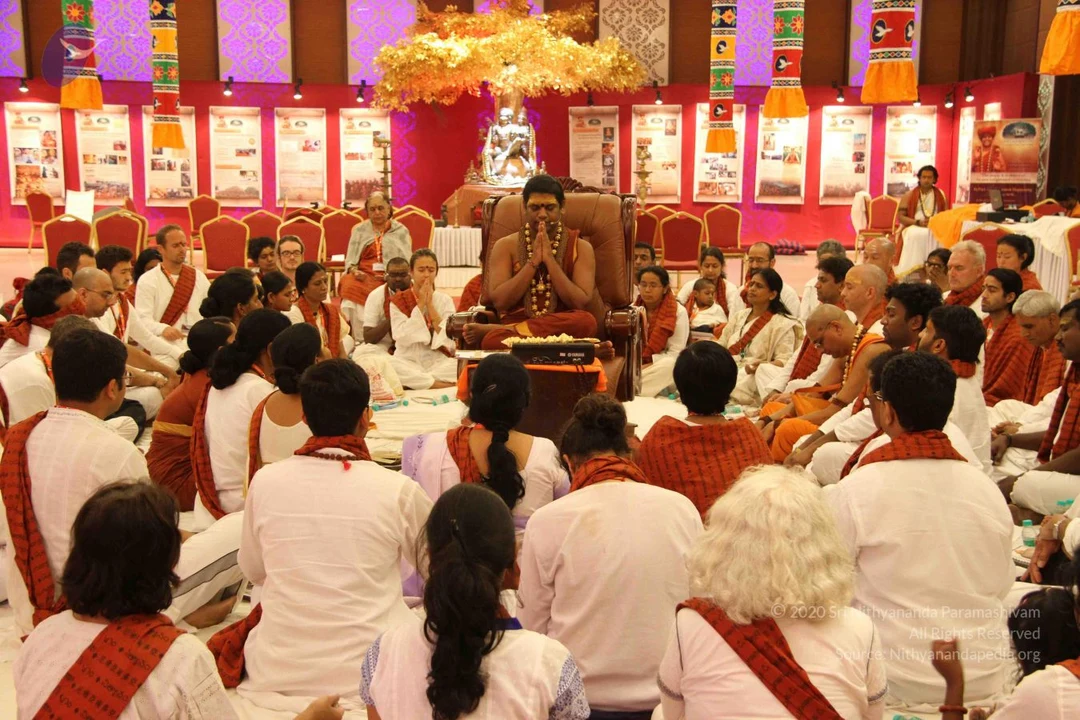
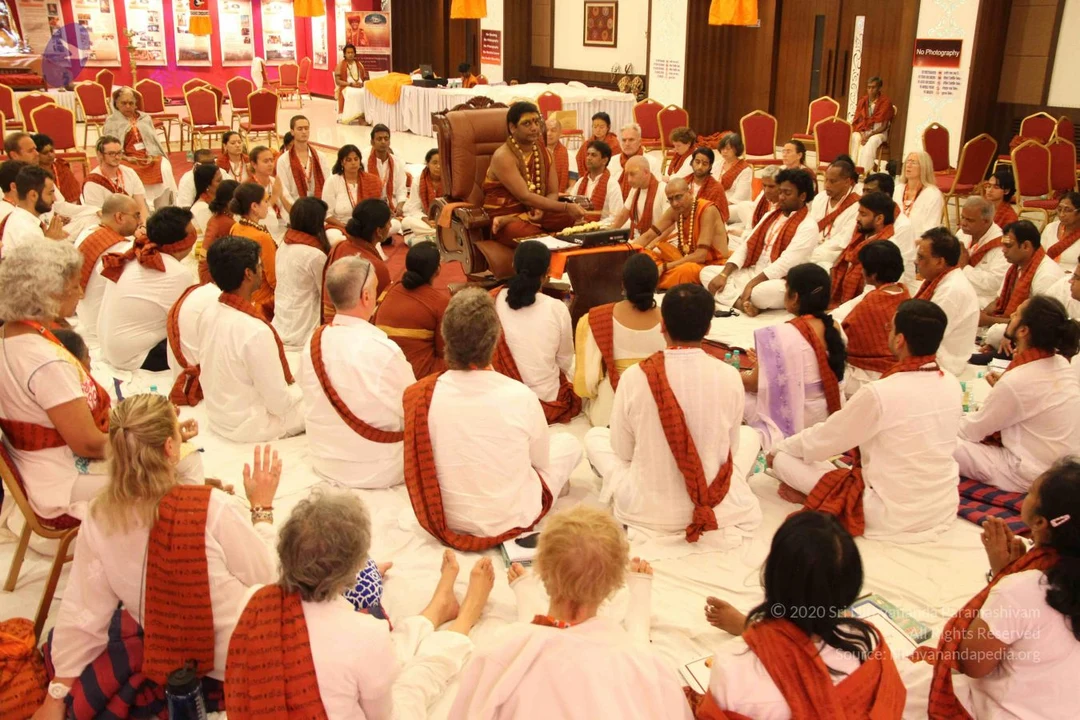
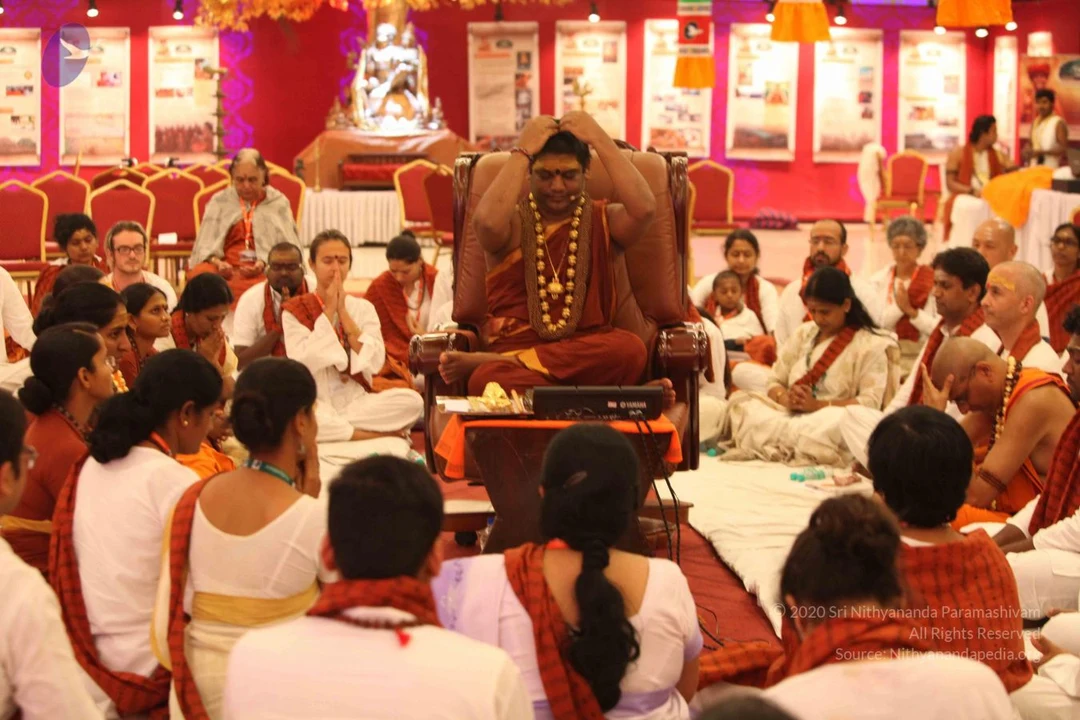
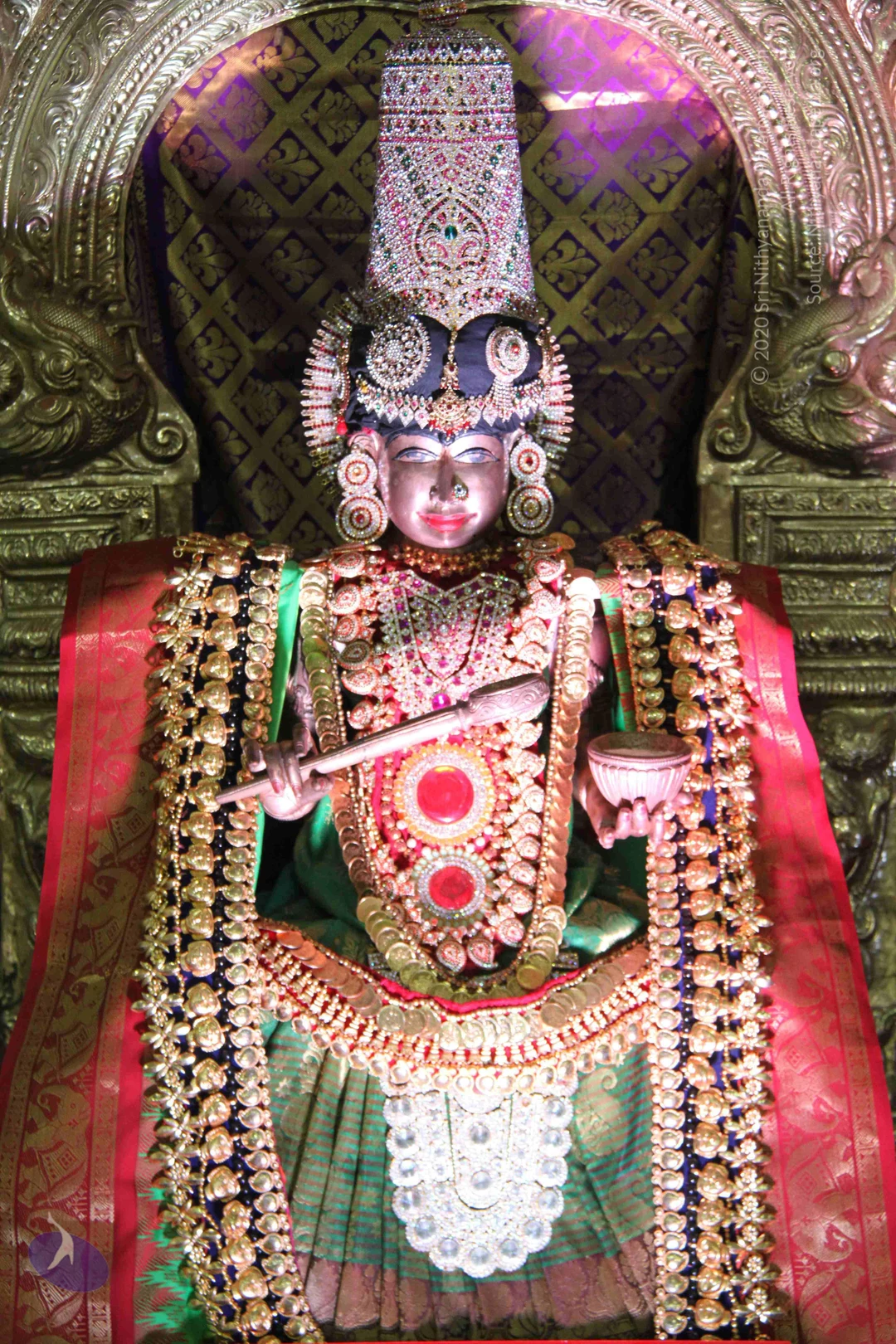
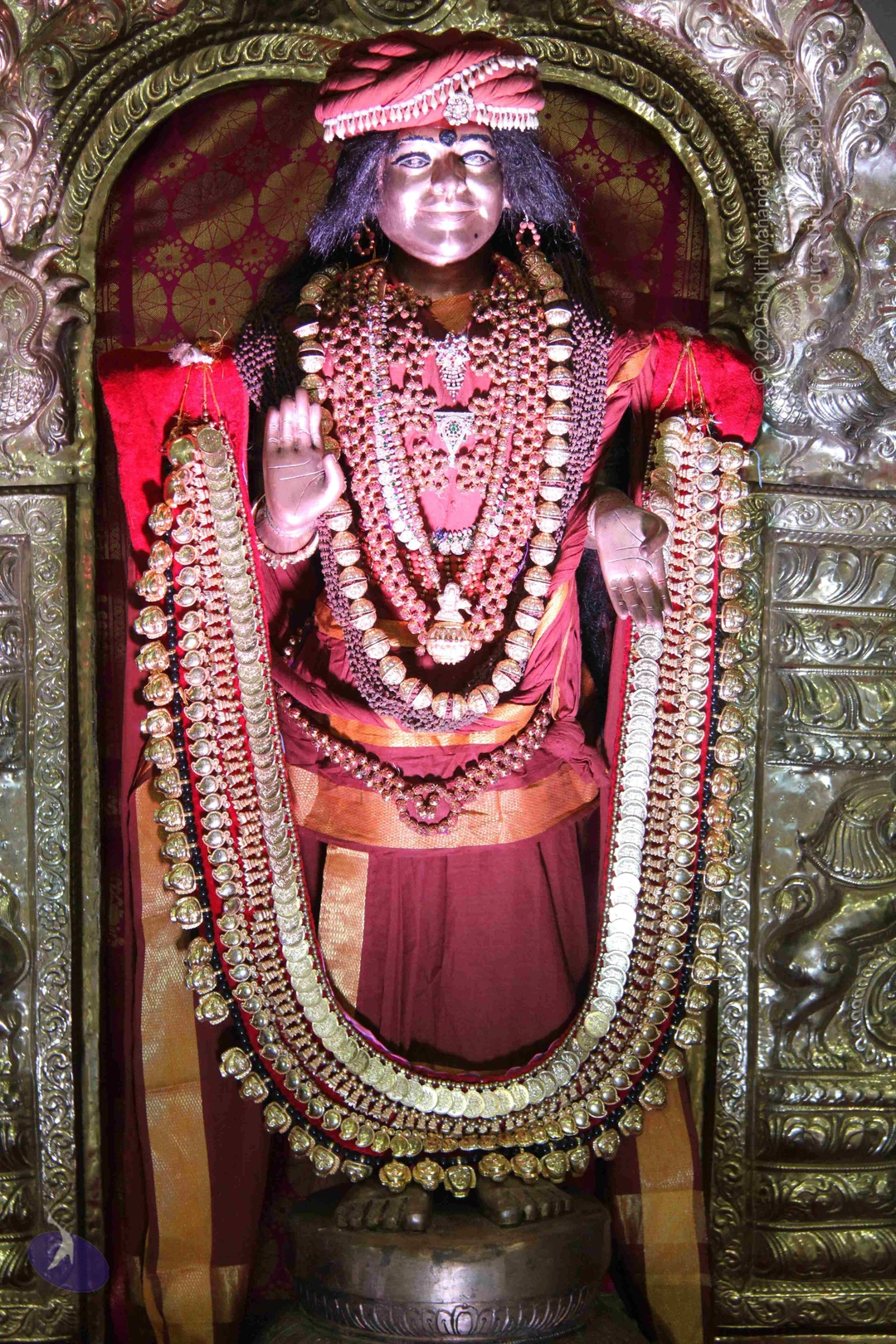
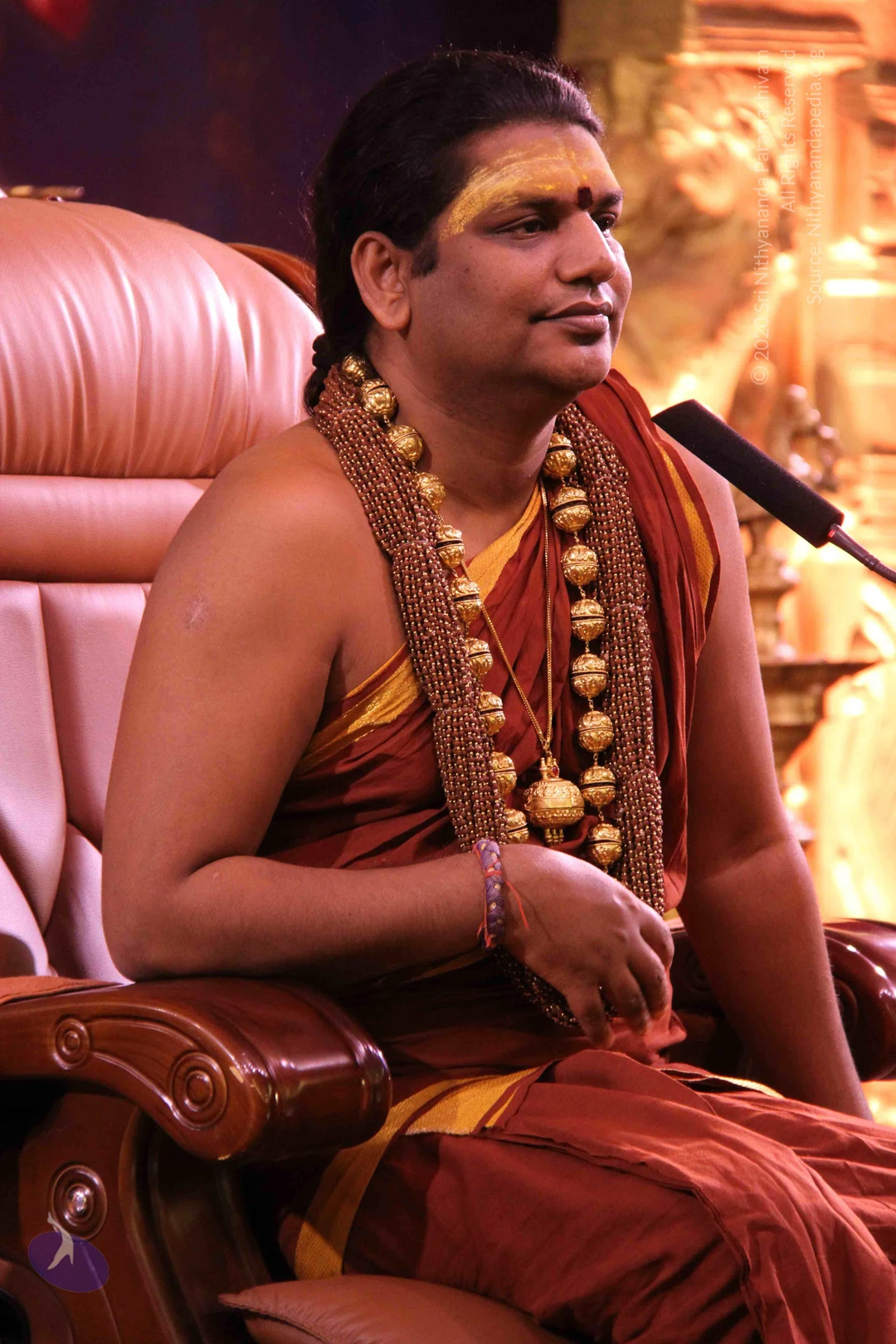
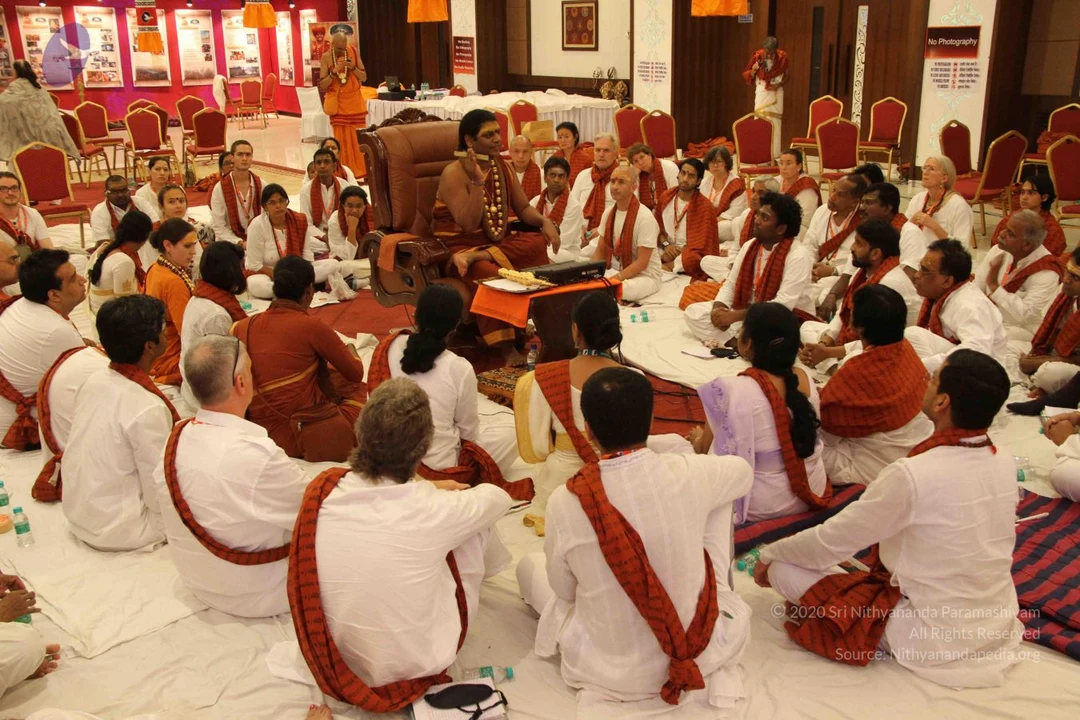
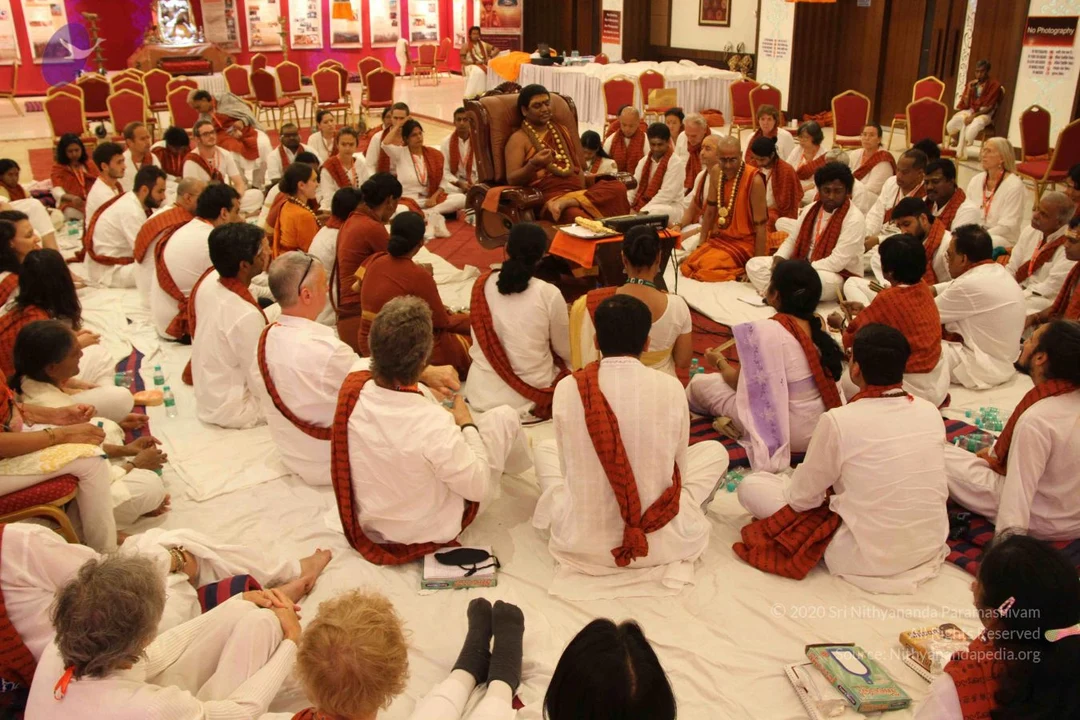
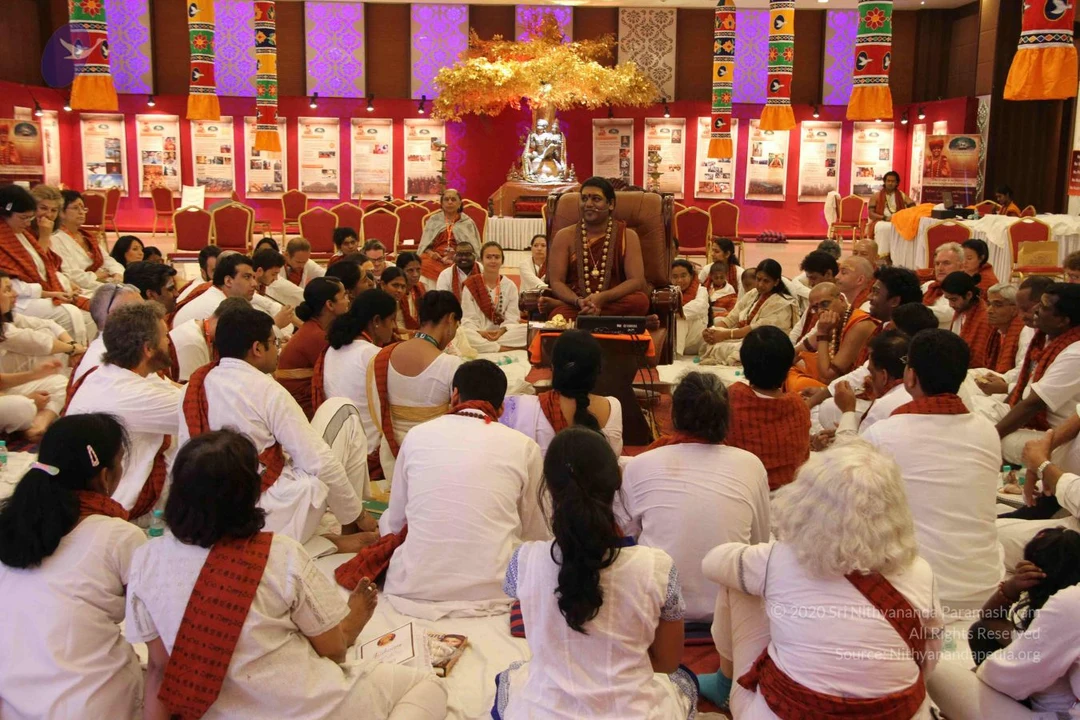
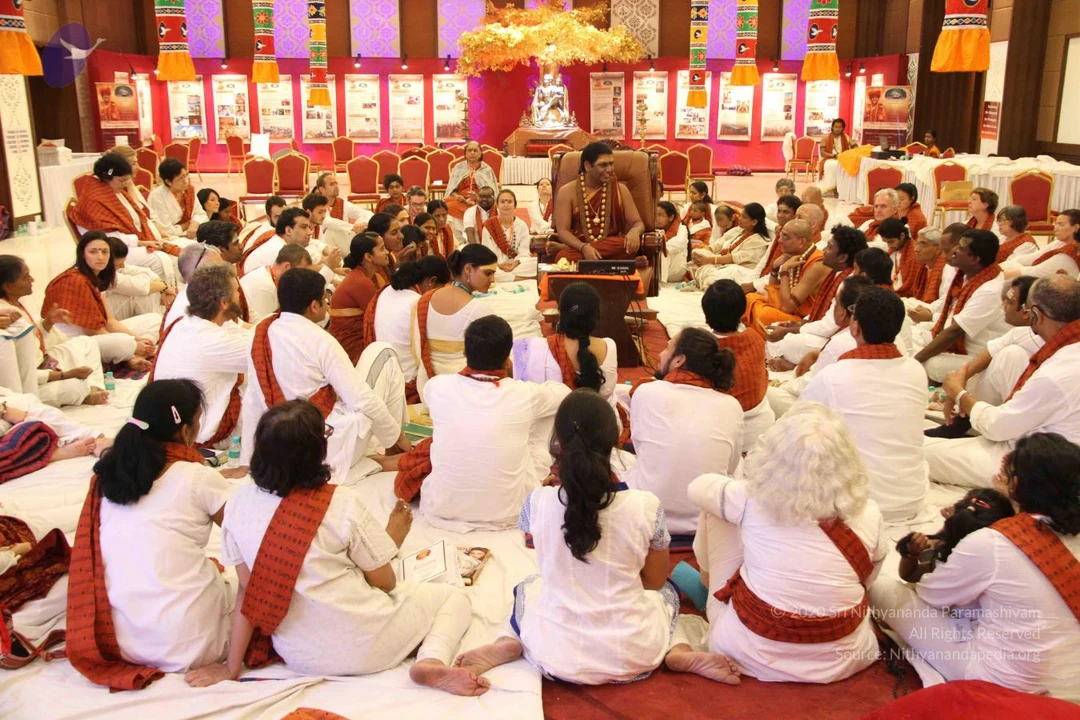
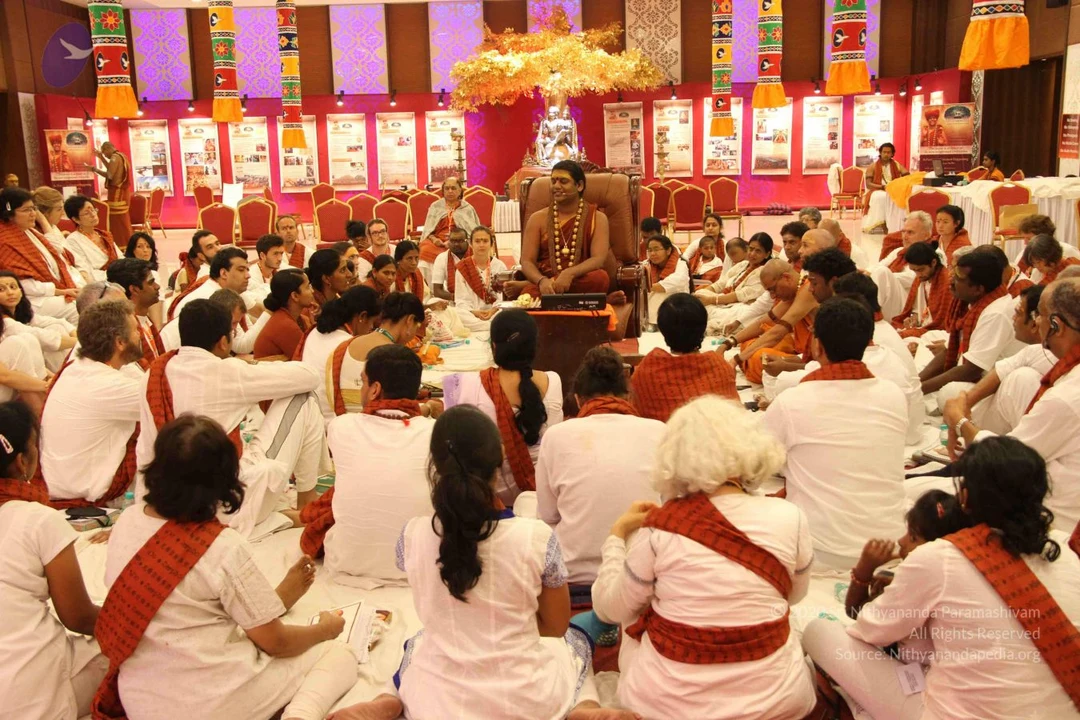
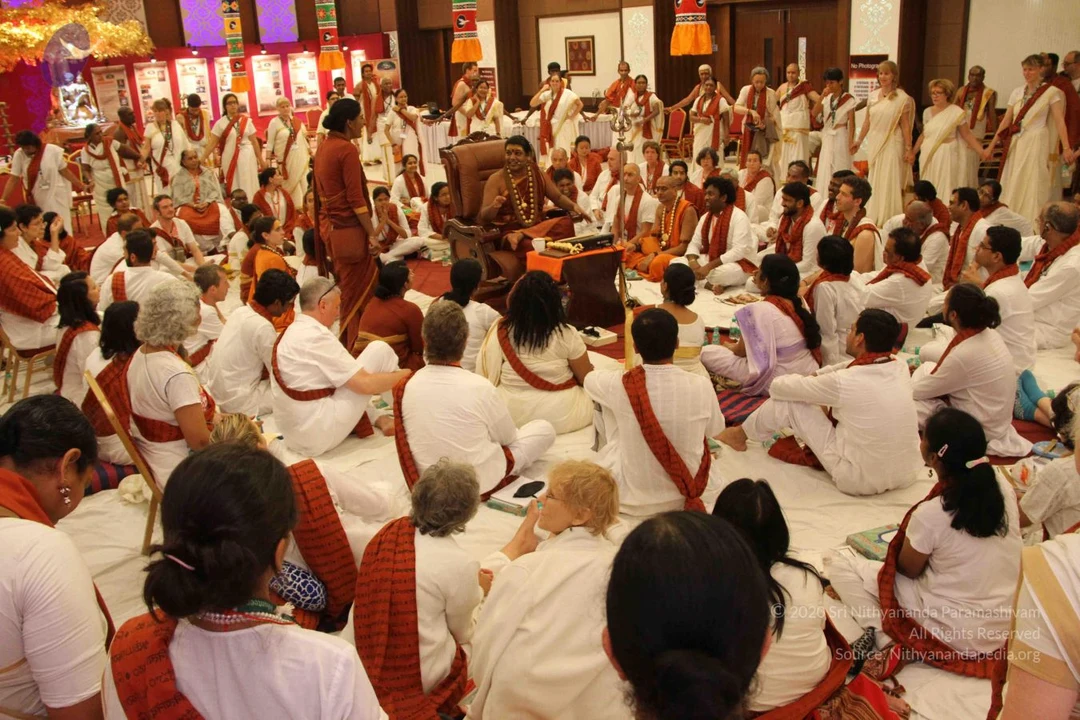
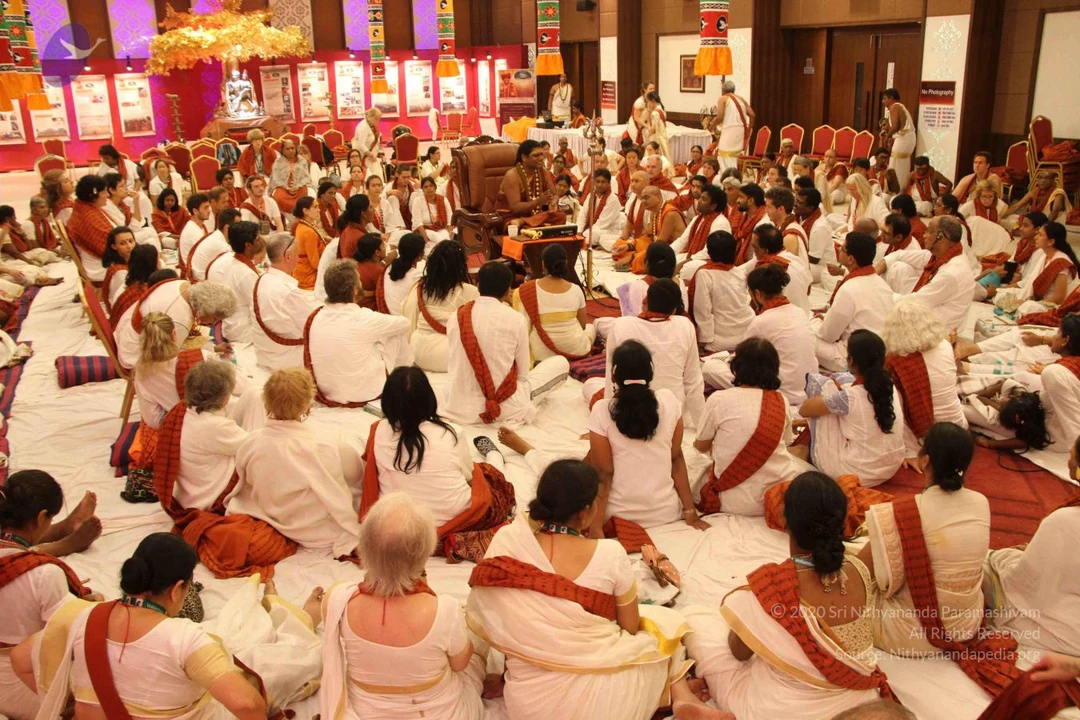
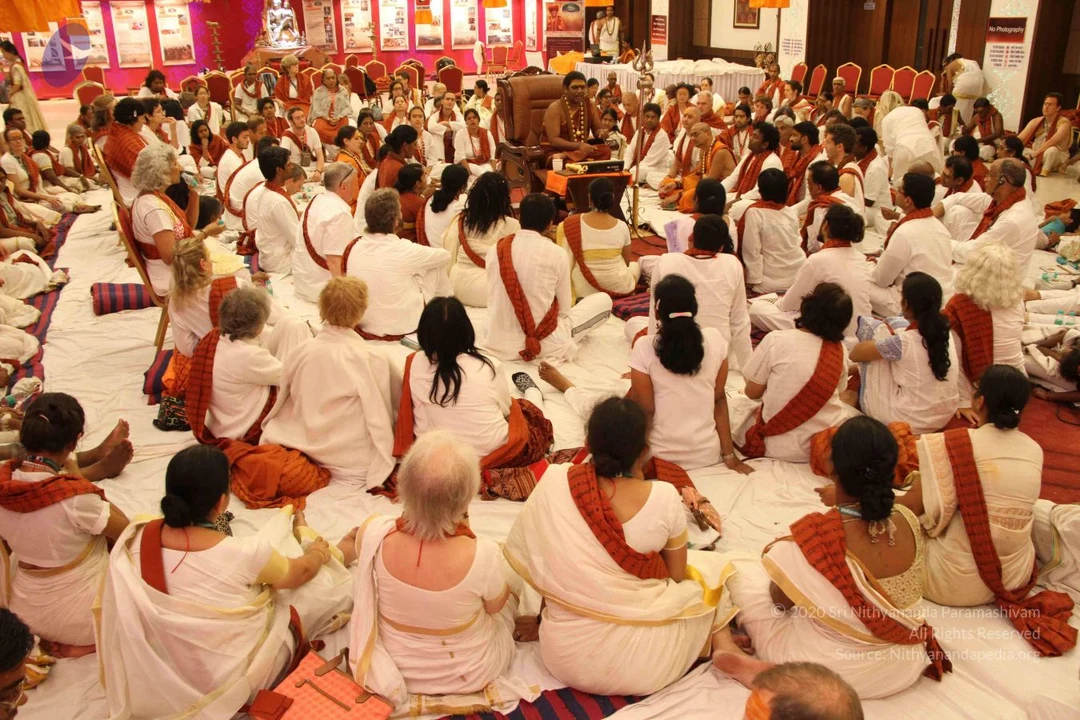
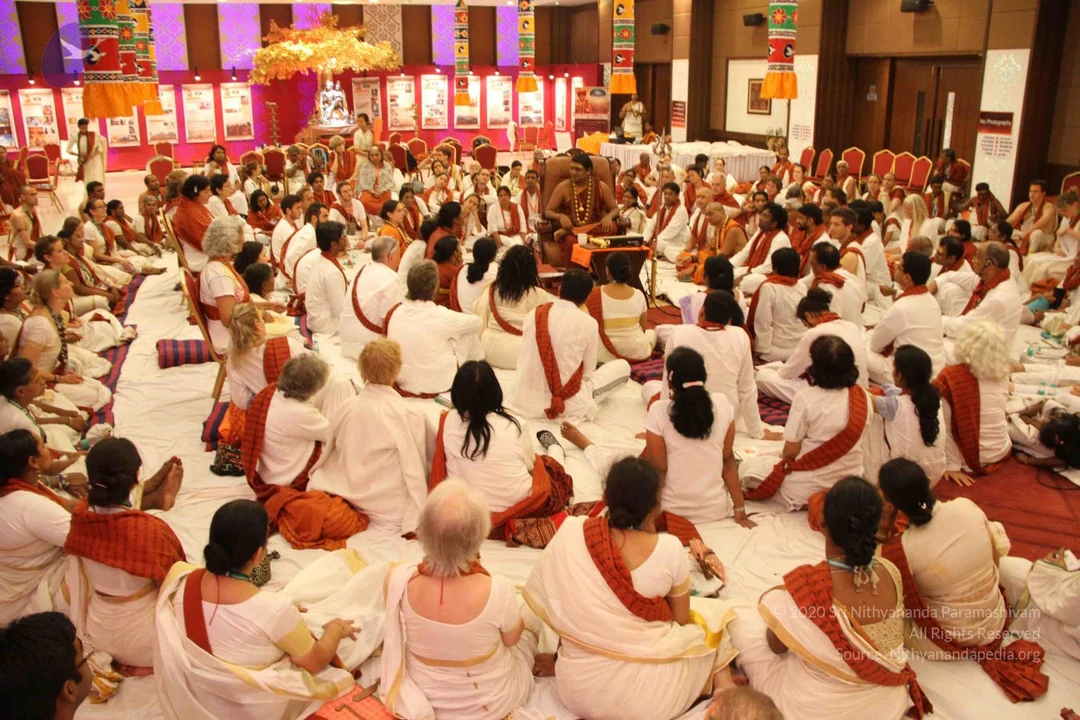
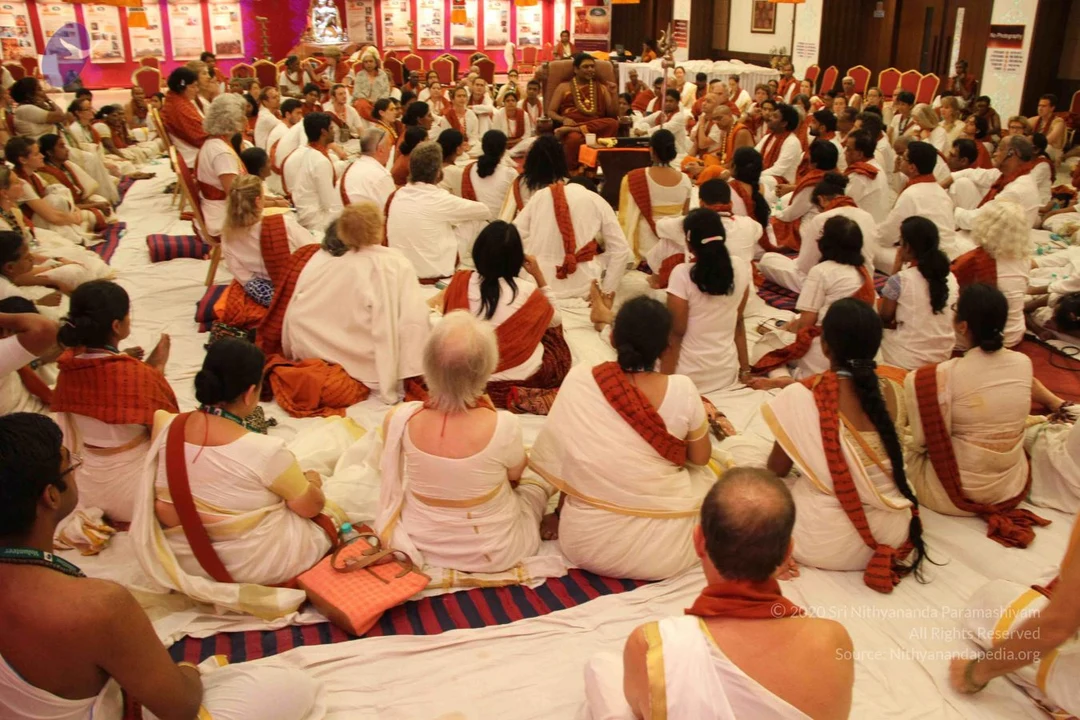
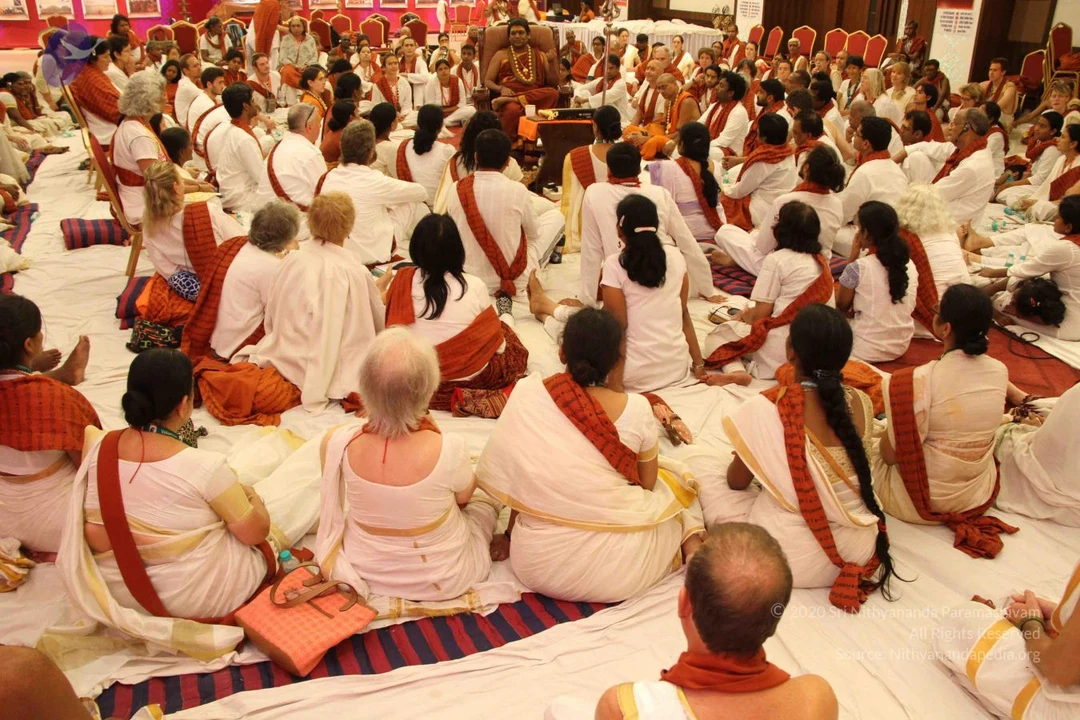
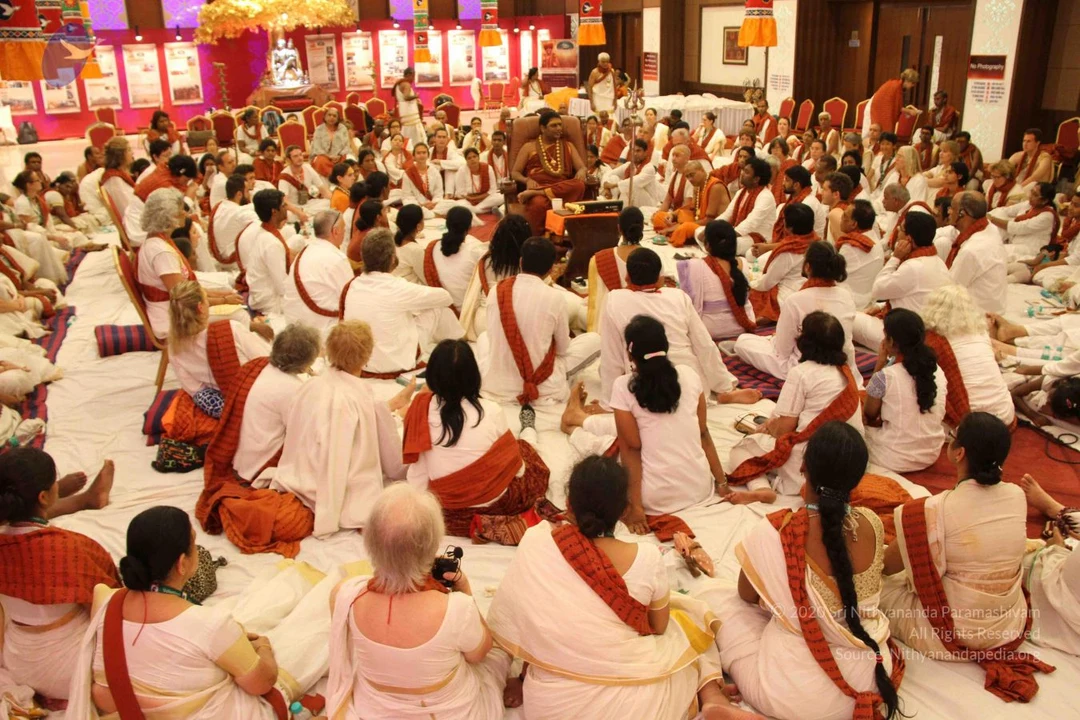
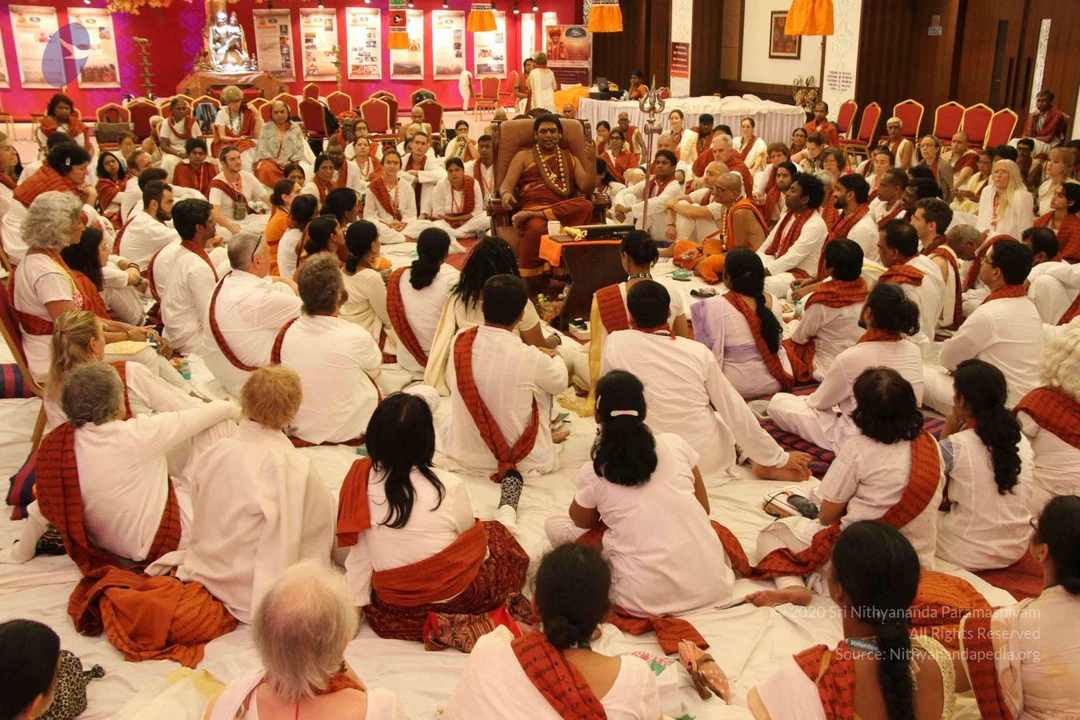
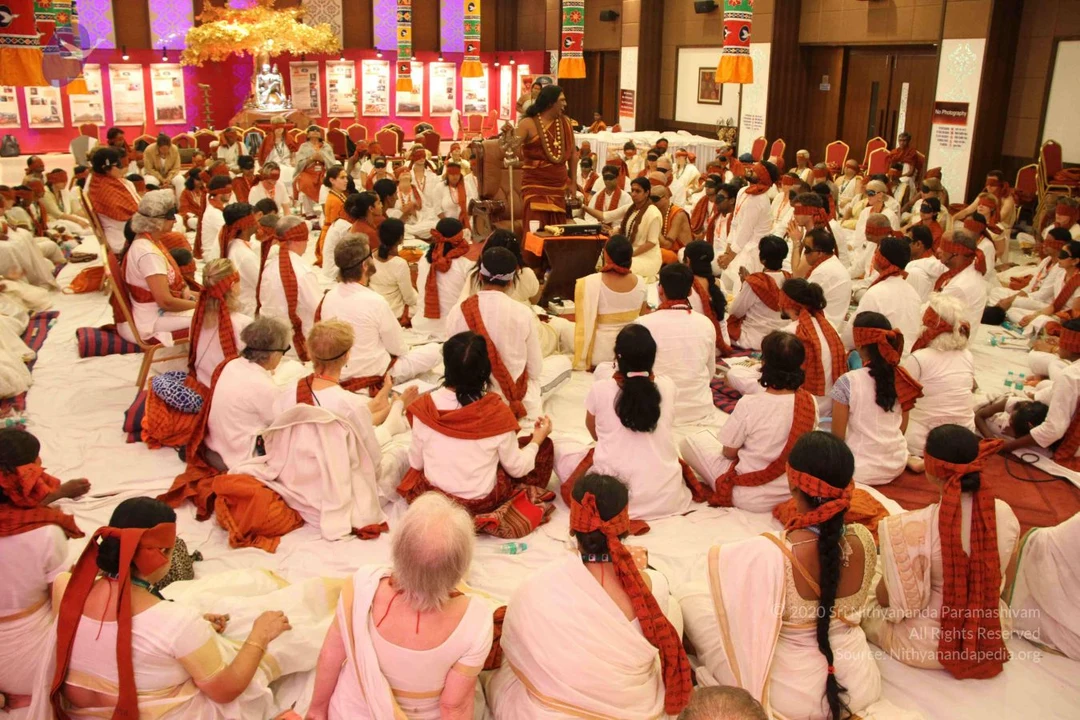
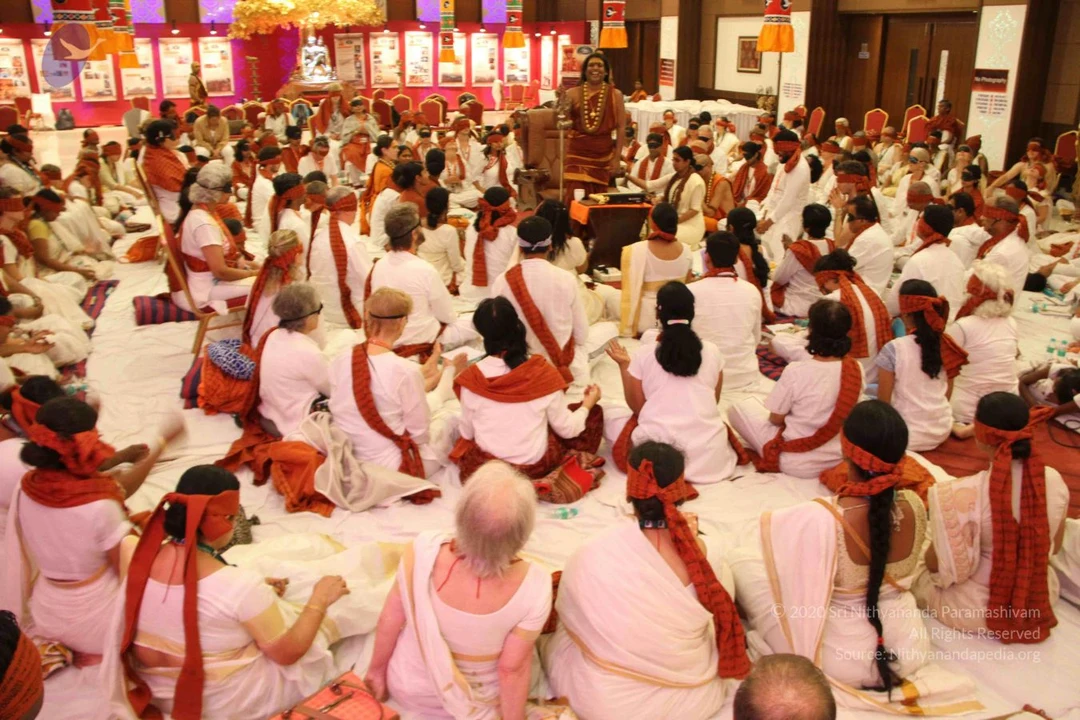
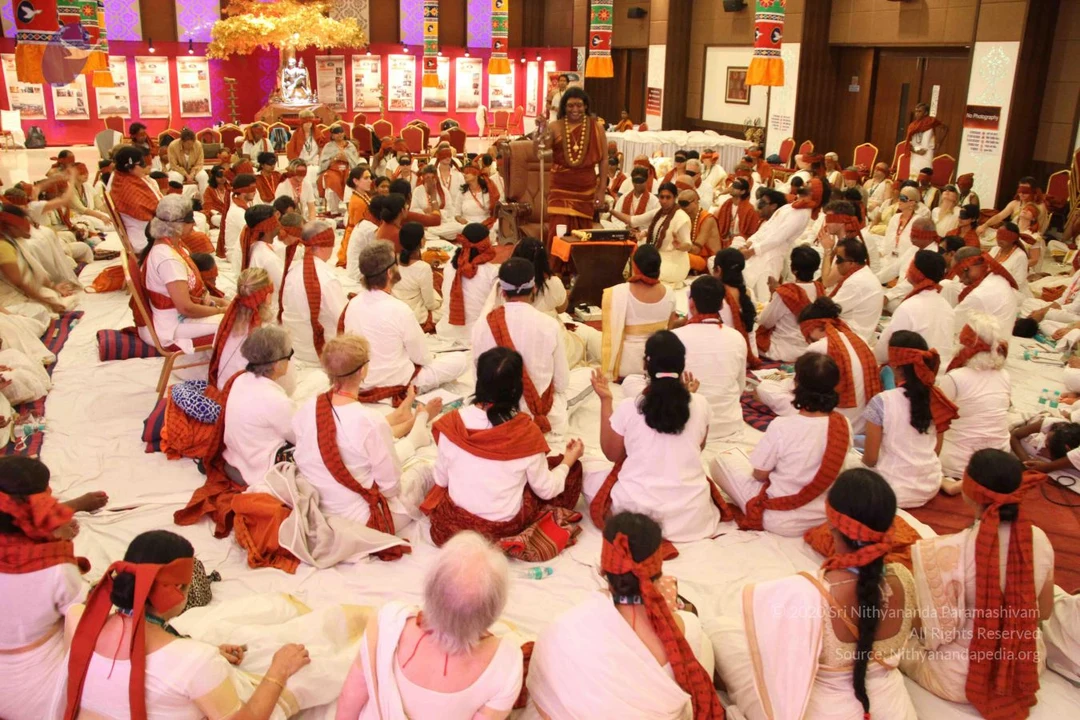
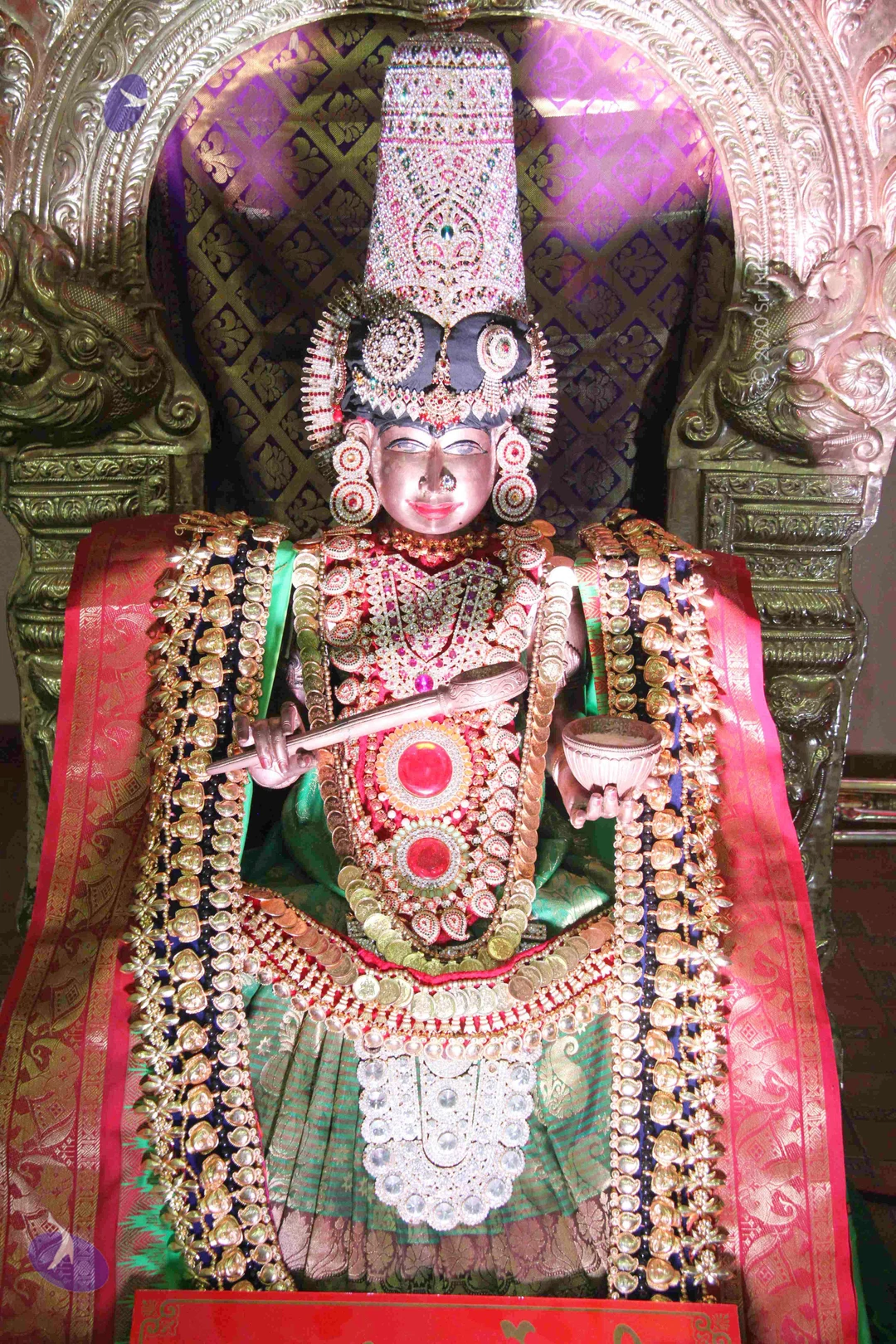
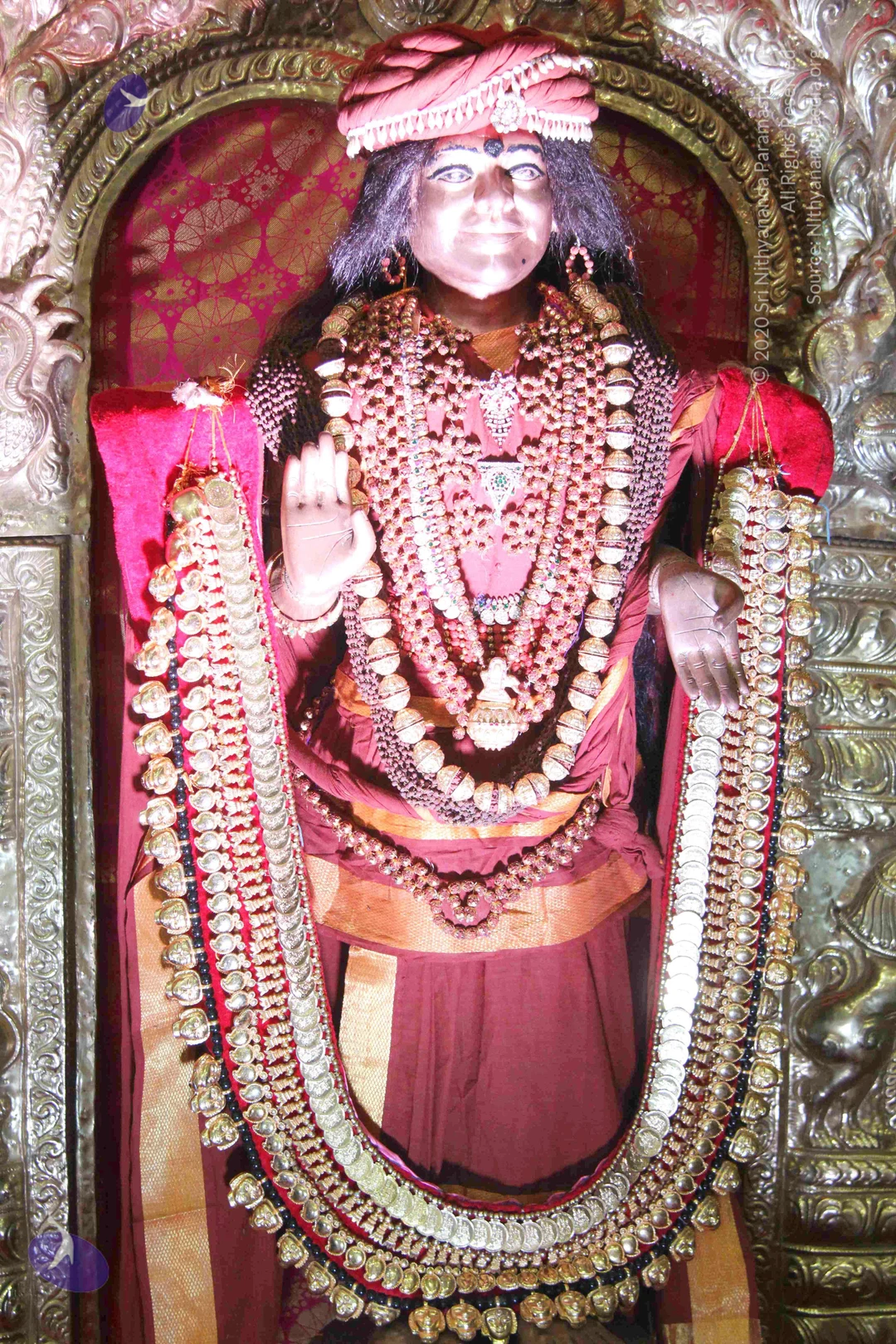
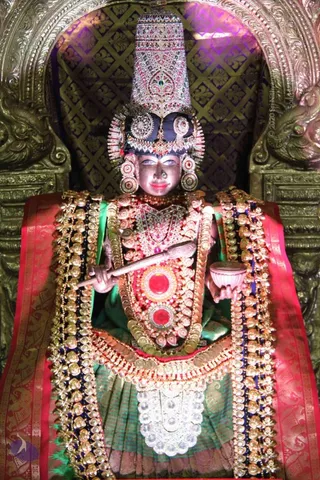
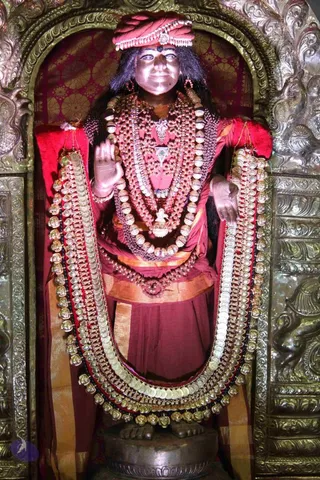
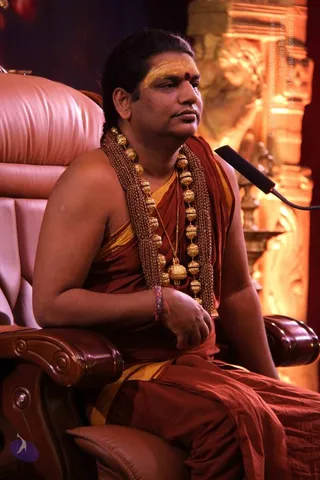
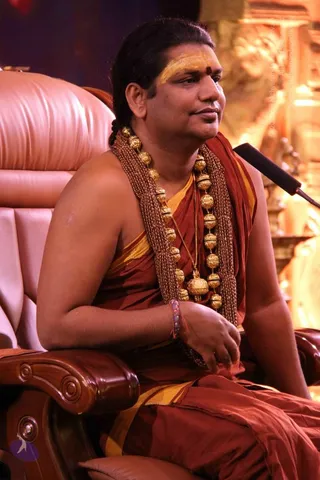
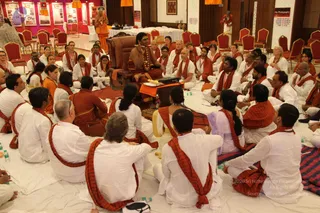
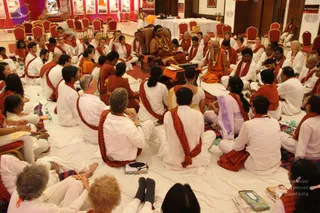
A richly adorned deity murti. The figure wears a tall jewelled crown, a green and red silk sari with gold border, layered gold coin necklaces and a red and white gemstone chest ornament. It holds a long rod-like staff in one hand and a small bowl in the other. Ornate gold repoussé frames surround the niche. No people are visible.A statue of a seated or standing sage figure in a silver-framed niche. The figure has a metallic copper-toned face, long dark hair, and a red-and-pink turban decorated with white beads and a jewel. It wears layered garlands of rudraksha-like beads, gold coin necklaces, and a maroon dhoti with gold border. The right hand is raised in blessing while the left hand rests open. Ornate silver repoussé panels surround the niche. This is a depiction in statue form, not a living person in the scene.A man sits in a large tan leather armchair with dark wooden armrests, wearing a rust-red saffron-toned garment with gold borders draped over his body. He wears multiple strands of heavy gold and beaded necklaces with a pendant, a colourful thread bracelet on one wrist, and yellow sandalwood paste with a red dot on his forehead. A black microphone on a stand is at right, and a warmly lit carved stone pillar stands behind him. The setting suggests a seated satsang or discourse, with a single person visible.A man seated on a tan leather throne-style chair with carved wooden armrests, speaking into a black microphone at right. He wears a rust-red garment with gold border draped over his bare shoulder, several strands of wooden beads with large gold bead ornaments, and a long gold chain. He has yellow sandalwood paste on his forehead with a red dot, hair swept back in a long braid, and a multicoloured thread bracelet on his wrist. Behind him, warm-lit ornate carved stone architecture. Appearance-based candidate for Swamiji (probable): long swept-back hair, saffron-rust clothing, rudraksha malas and ceremonial gold necklaces, seated as a speaker on a throne.A satsang hall with a large group of devotees seated on white sheets on the floor in a semicircle. Most wear white kurtas or white clothing with red-orange shawls draped over their shoulders. A man in the centre wears orange-red robes and a rudraksha mala, seated in a large carved wooden chair; he appears to be speaking with a hand raised. a person: a central figure seated on an ornate throne-like chair, in orange-red robes with rudraksha malas, addressing the gathering. Other figures include a woman in orange sari near the front, a standing person in orange at the back, and a bald man in white in the foreground. White tables with orange cloth, water bottles, and framed photographs line the wall; a sign reads No Photography.A large seated satsang in a hall with red and gold chairs and a white floor covering. A man with long dark hair and a beaded necklace sits on a brown throne-like chair at the front, speaking with his hand raised. Around him devotees sit cross-legged in white clothing with red-orange shawls draped over their shoulders. A few monks in orange robes sit near the front. Water bottles and tissue boxes are on the floor, and a tall banner stands along the wall, with a shrine and a 'No Photography' sign visible at the top right. a person (long swept-back hair, ceremonial beaded necklace, seated on throne) addresses the satsang.
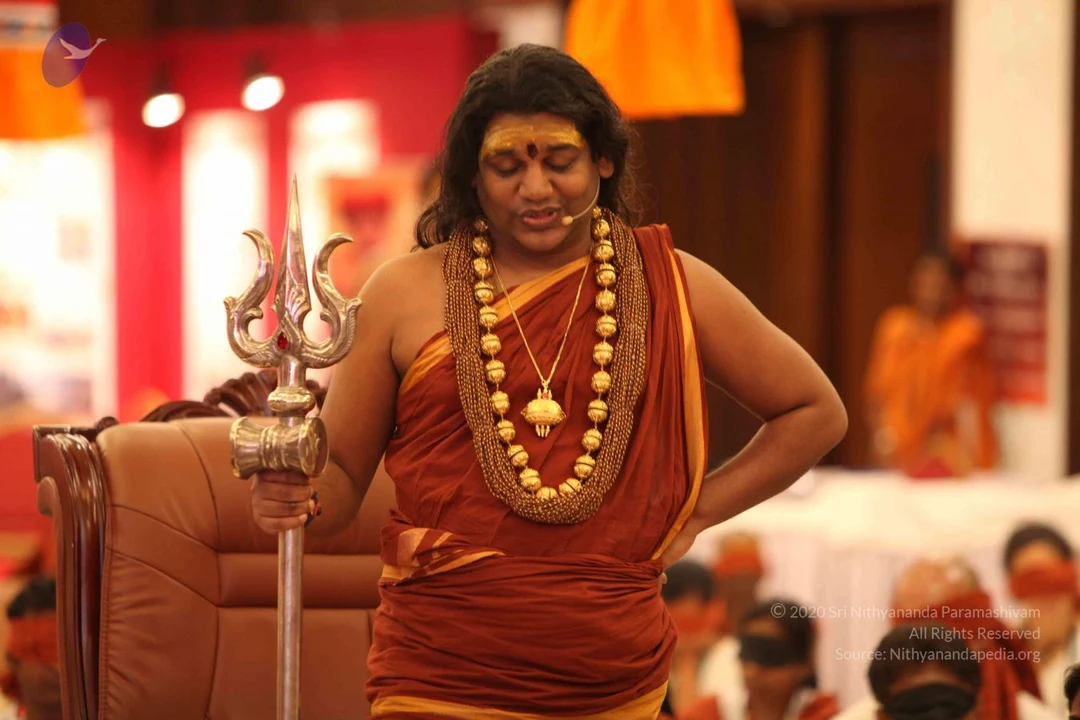
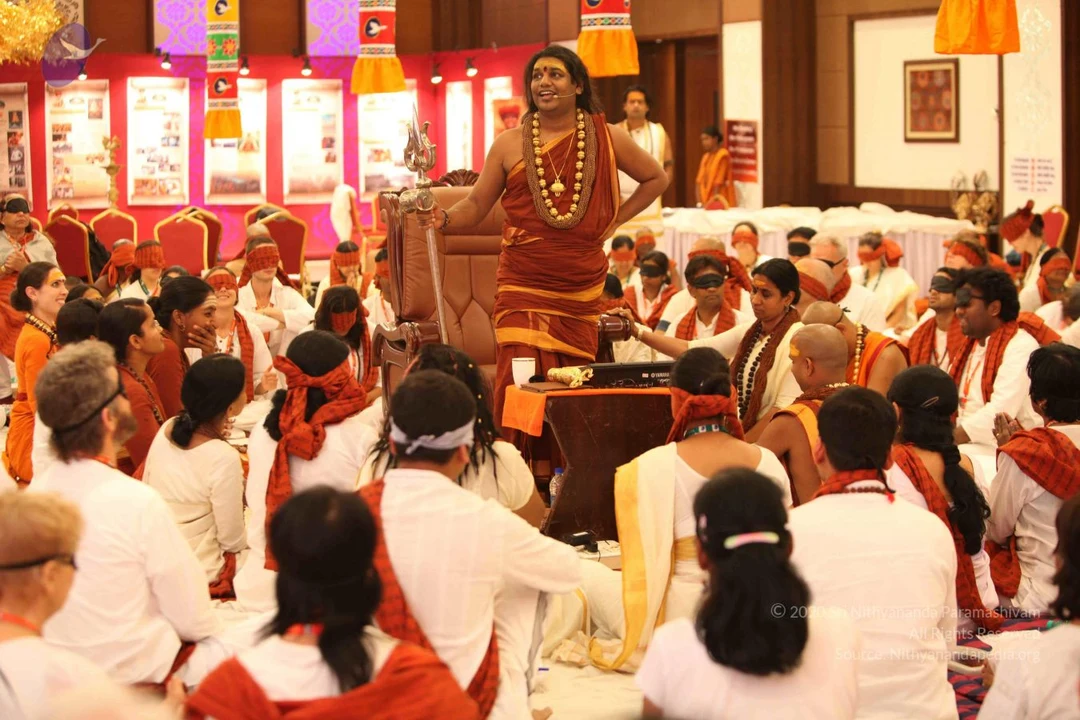
Kalabhairava Homa

111 photosSource gallery
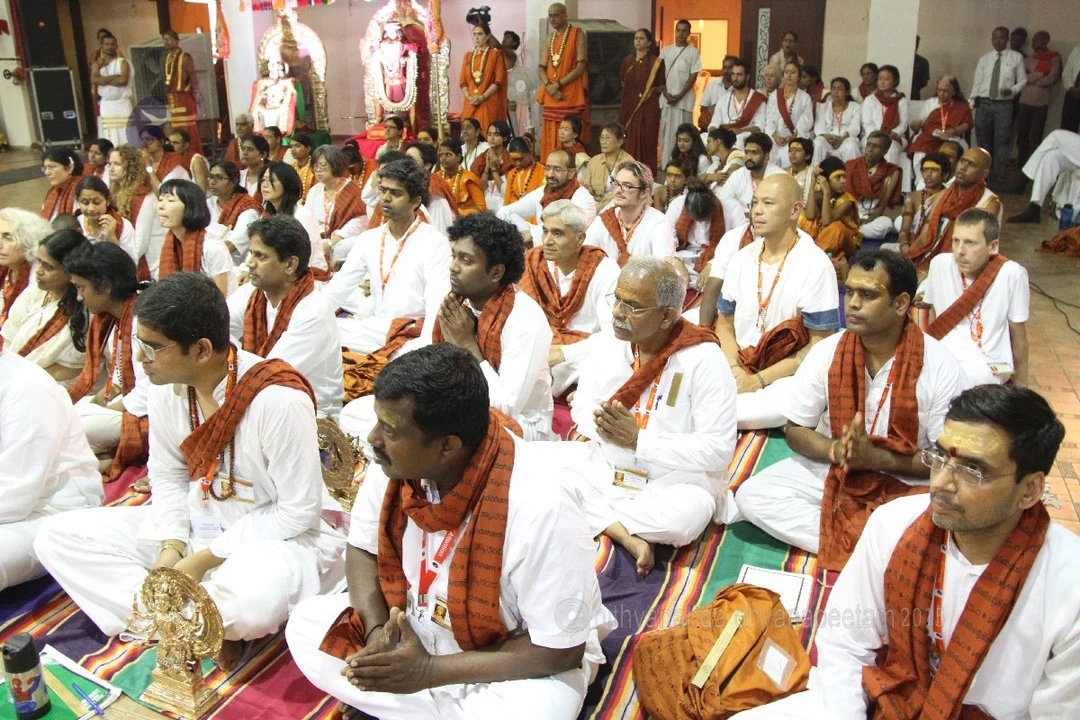
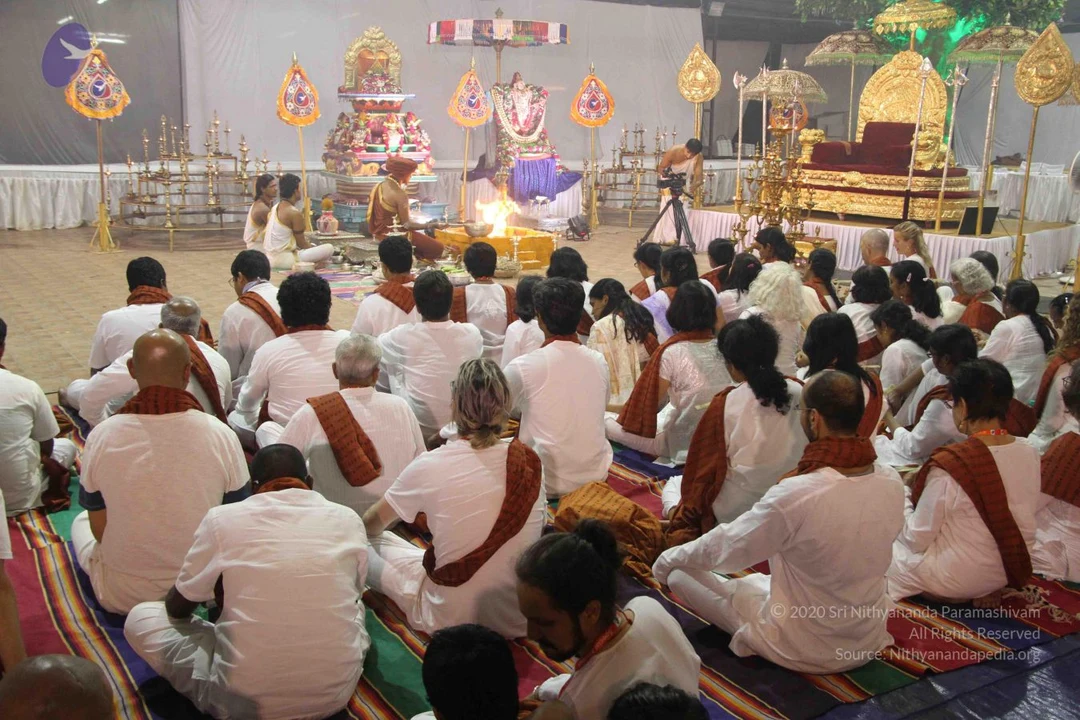
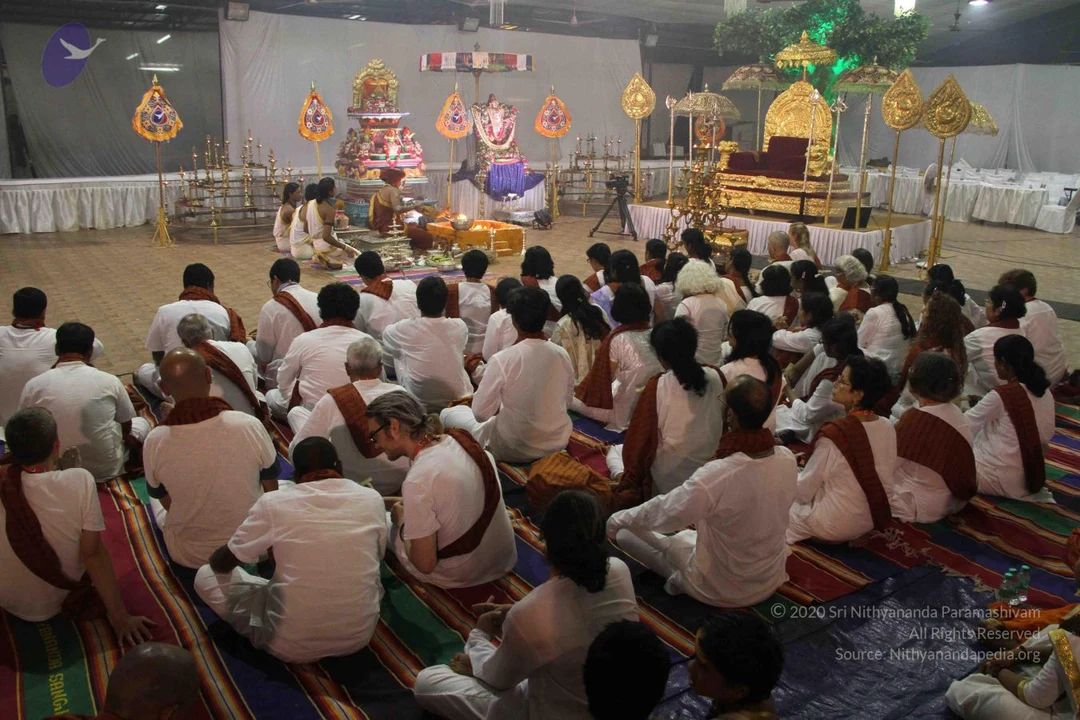
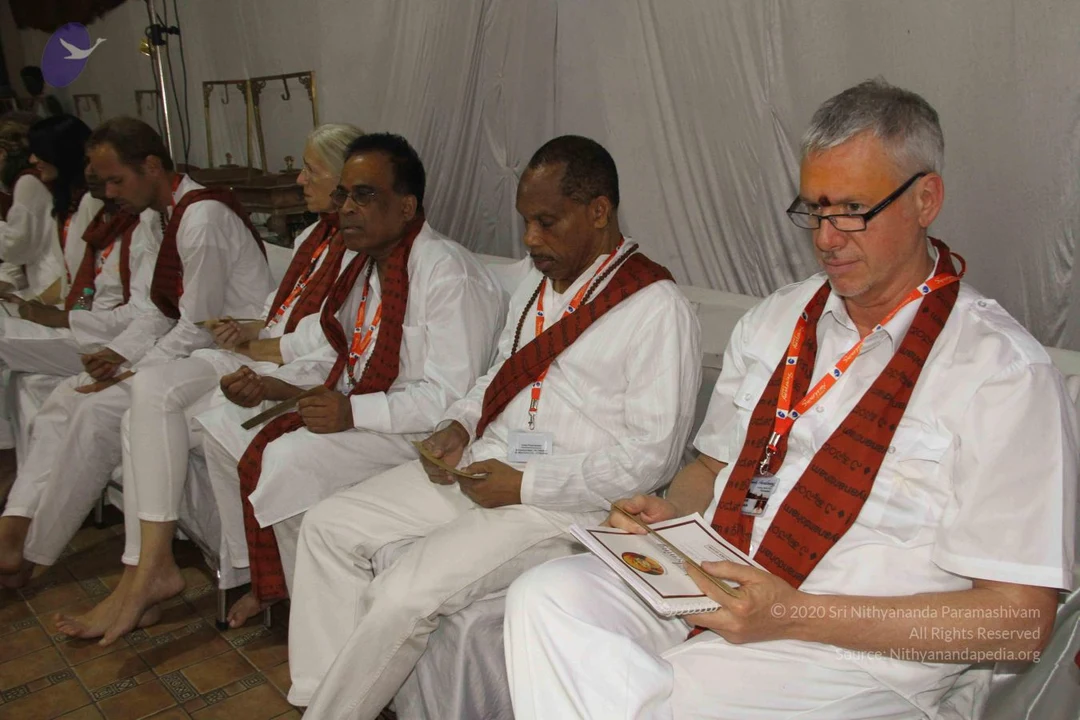
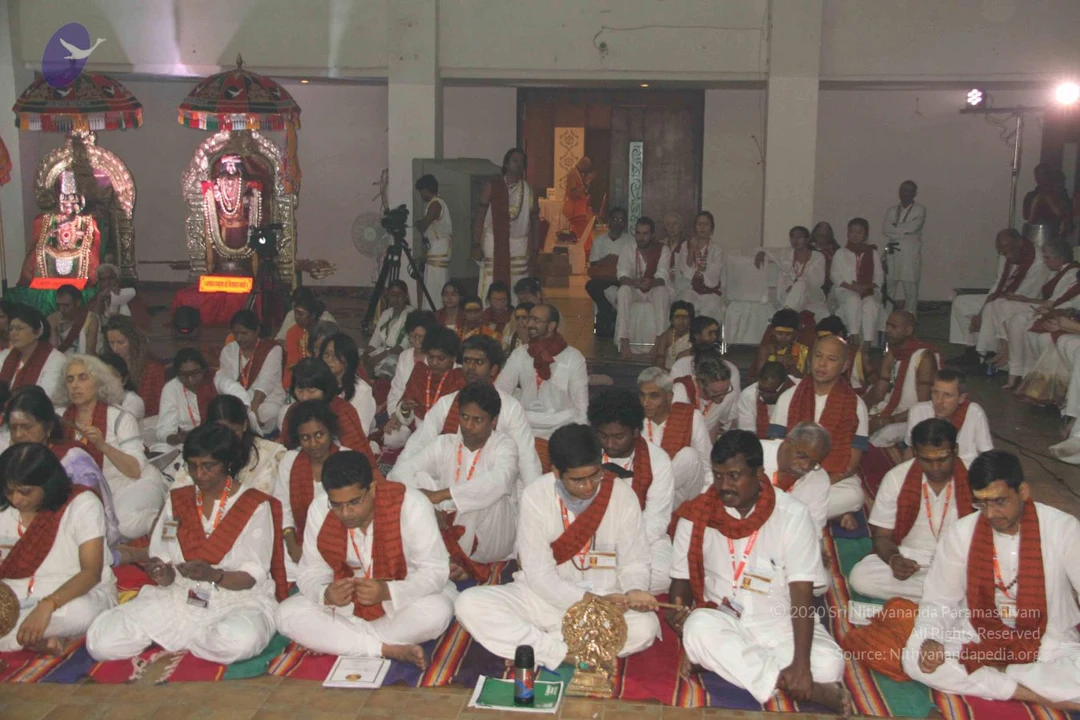
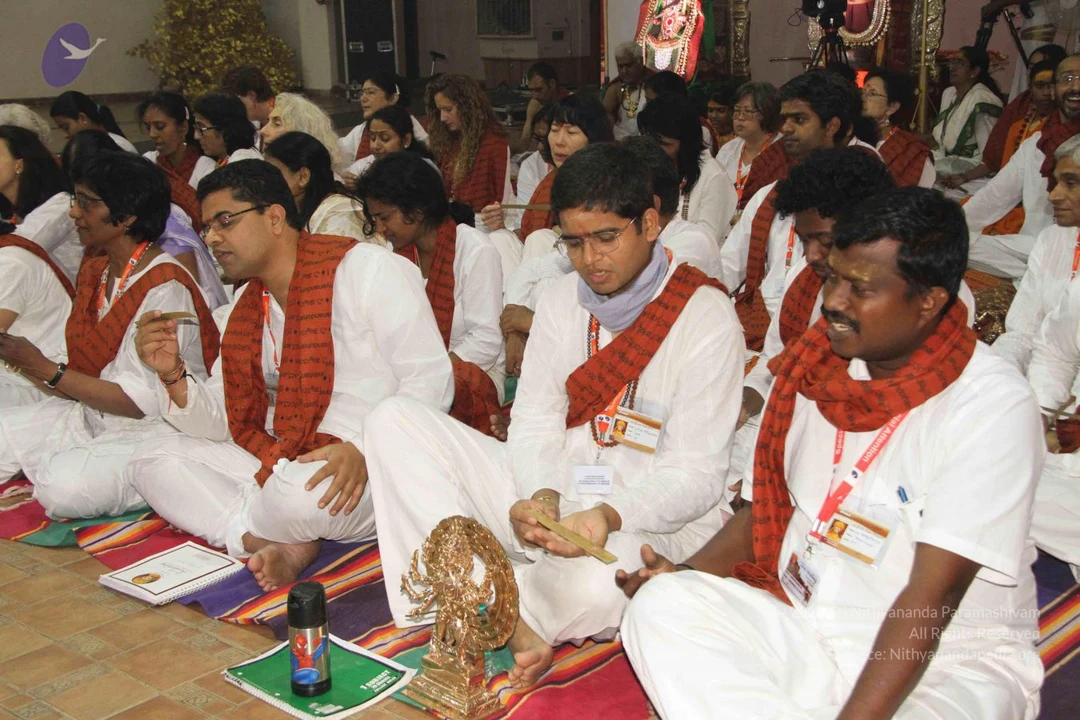
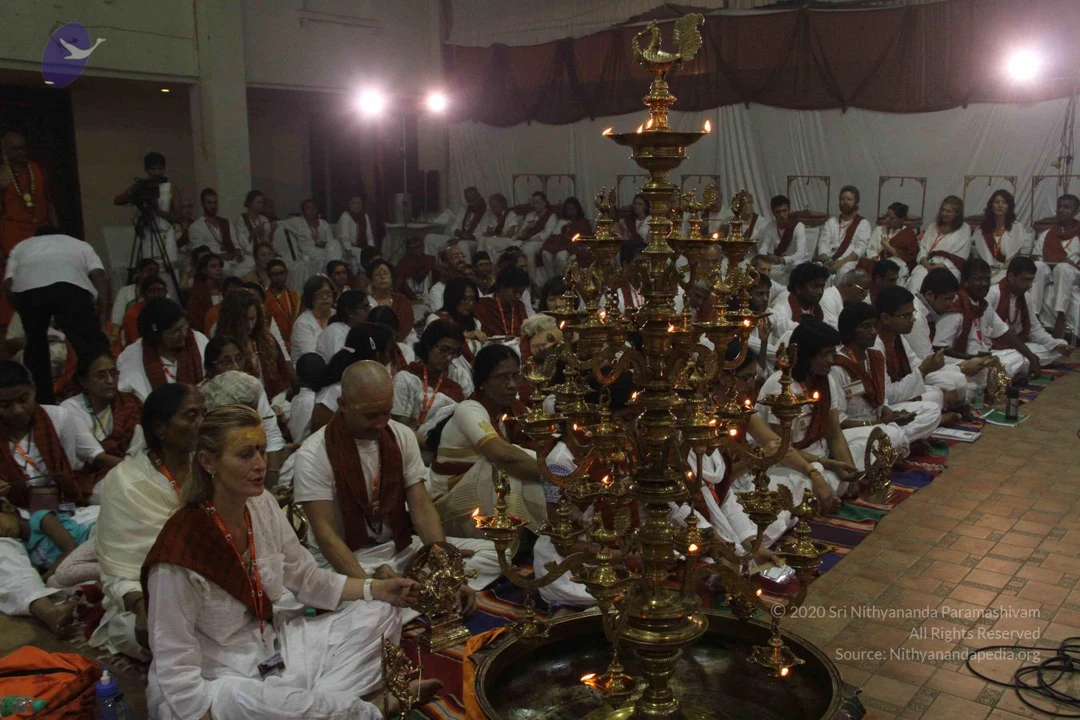
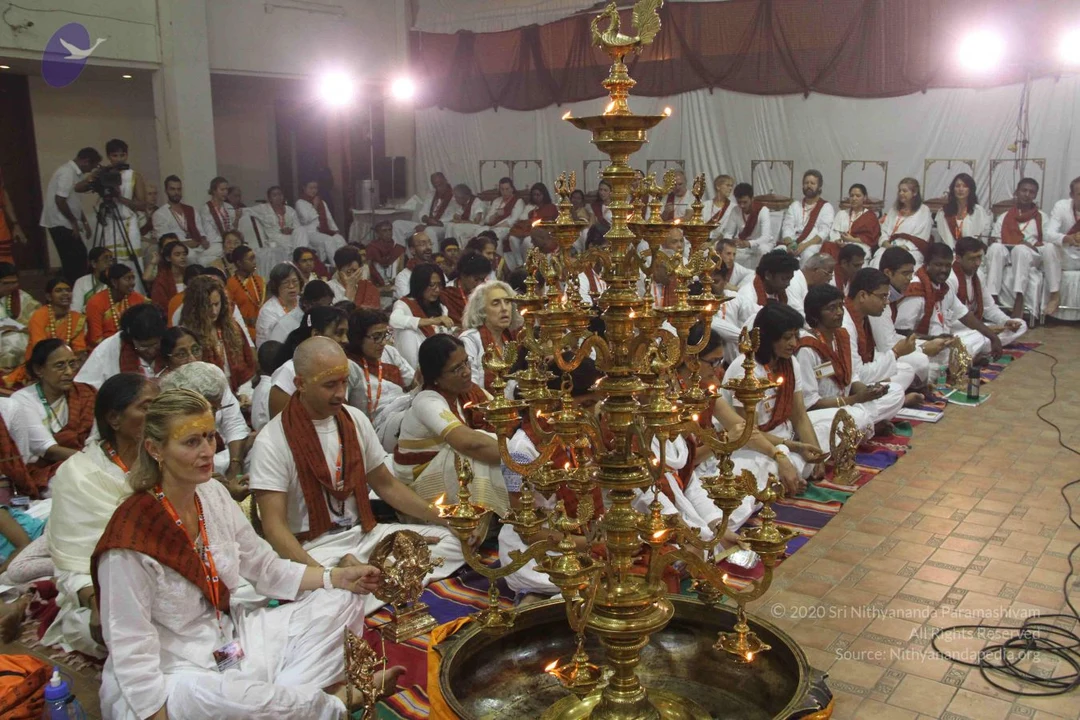
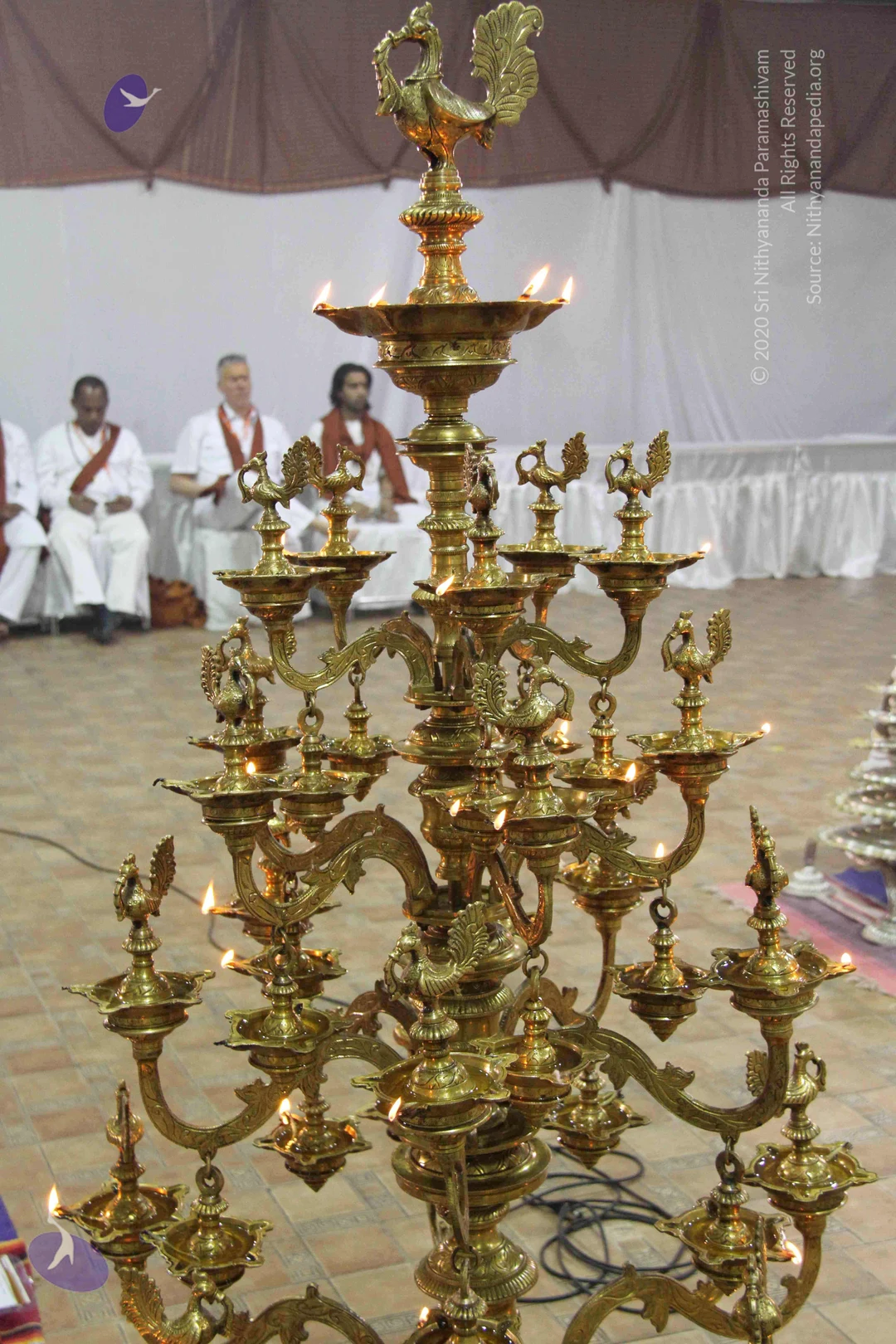
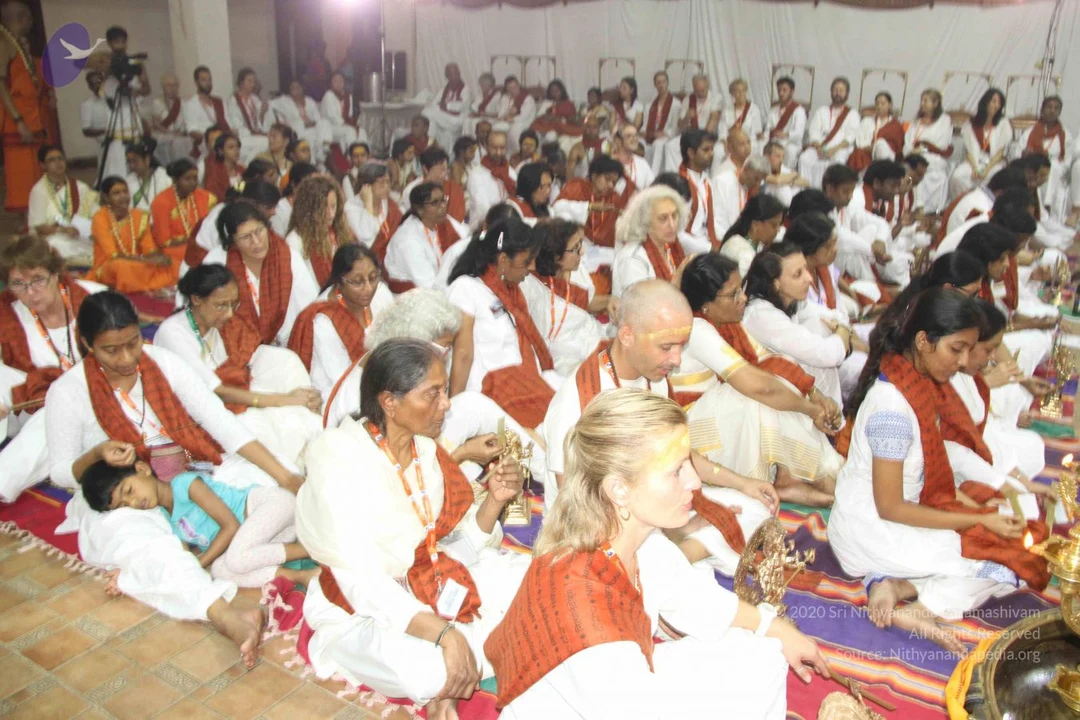
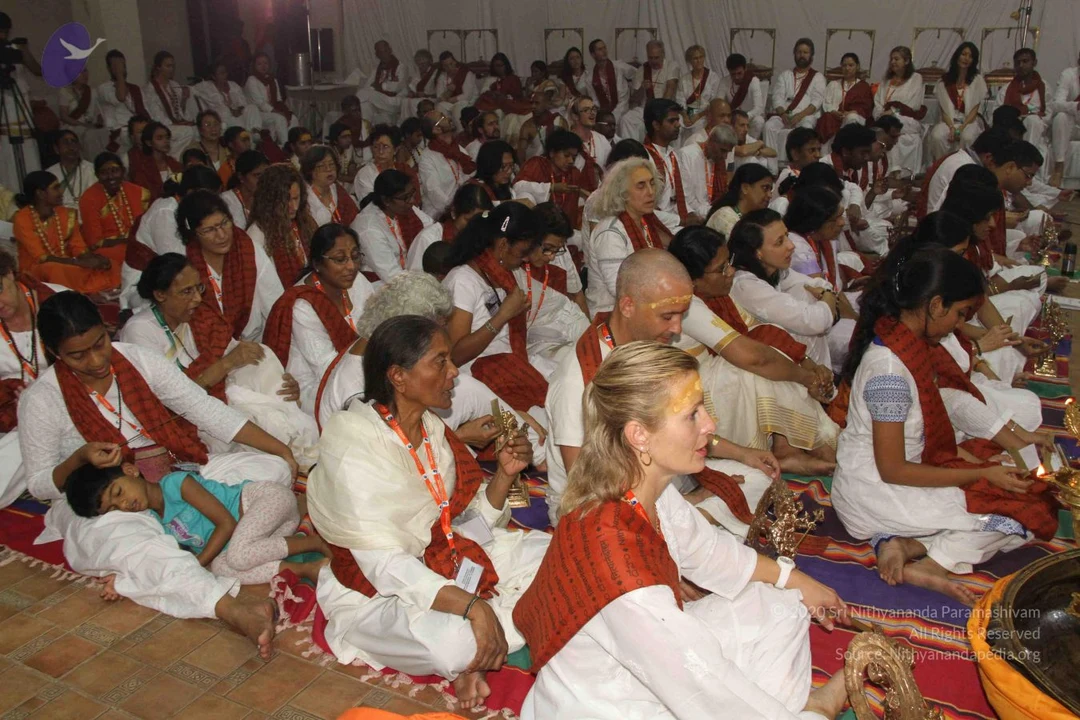
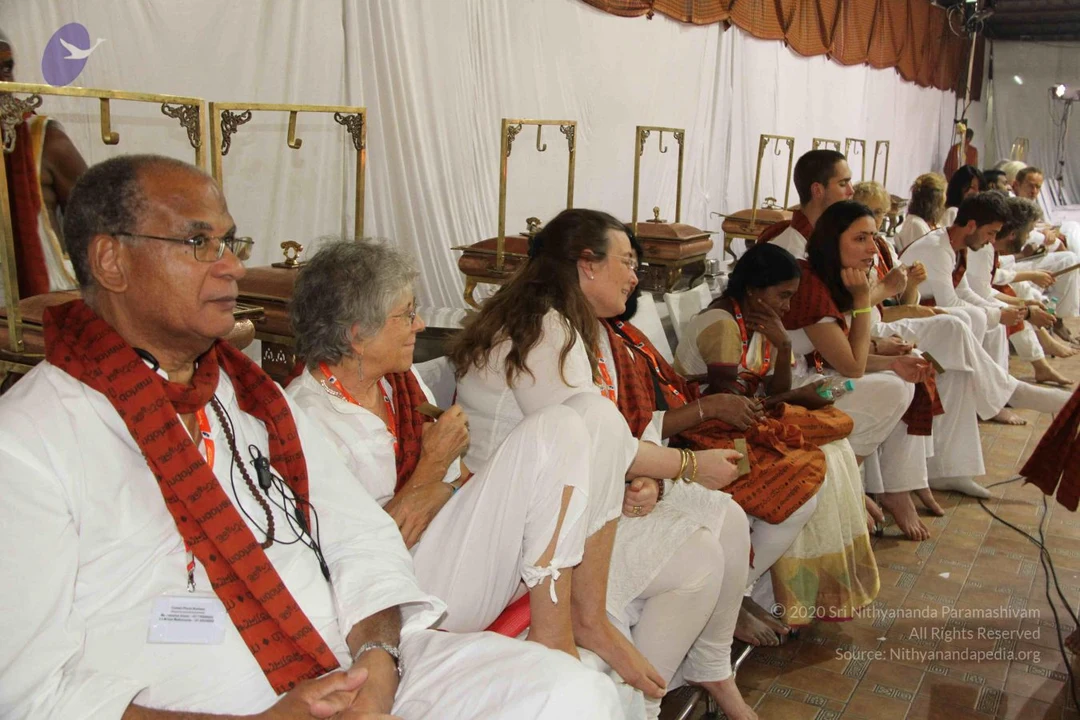
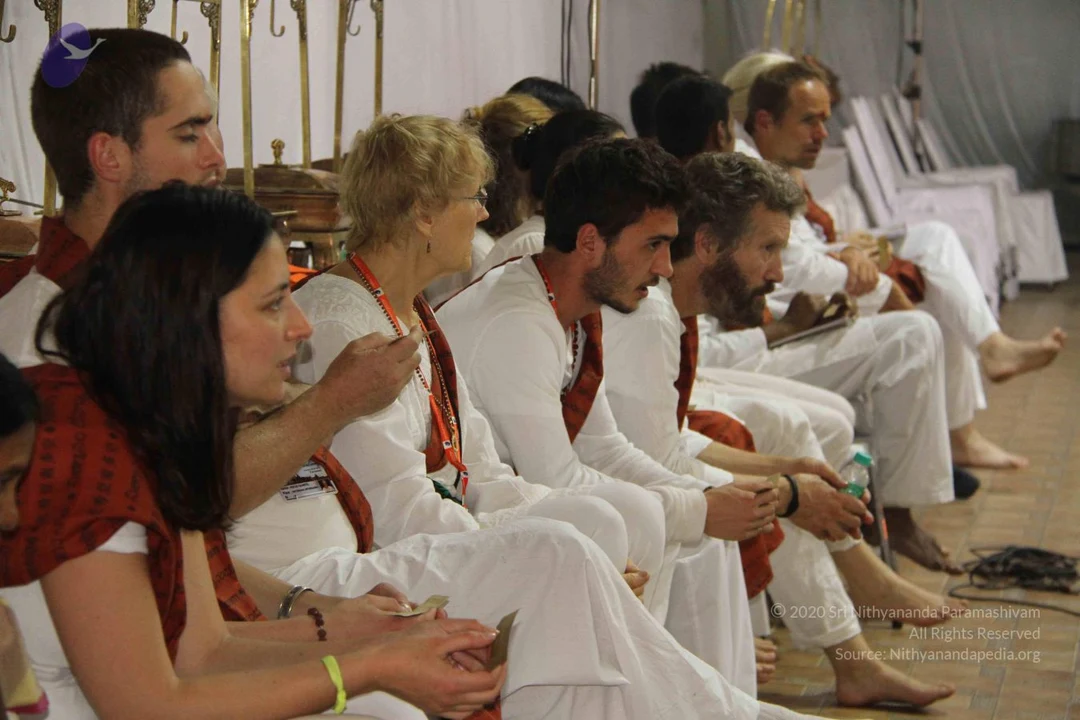
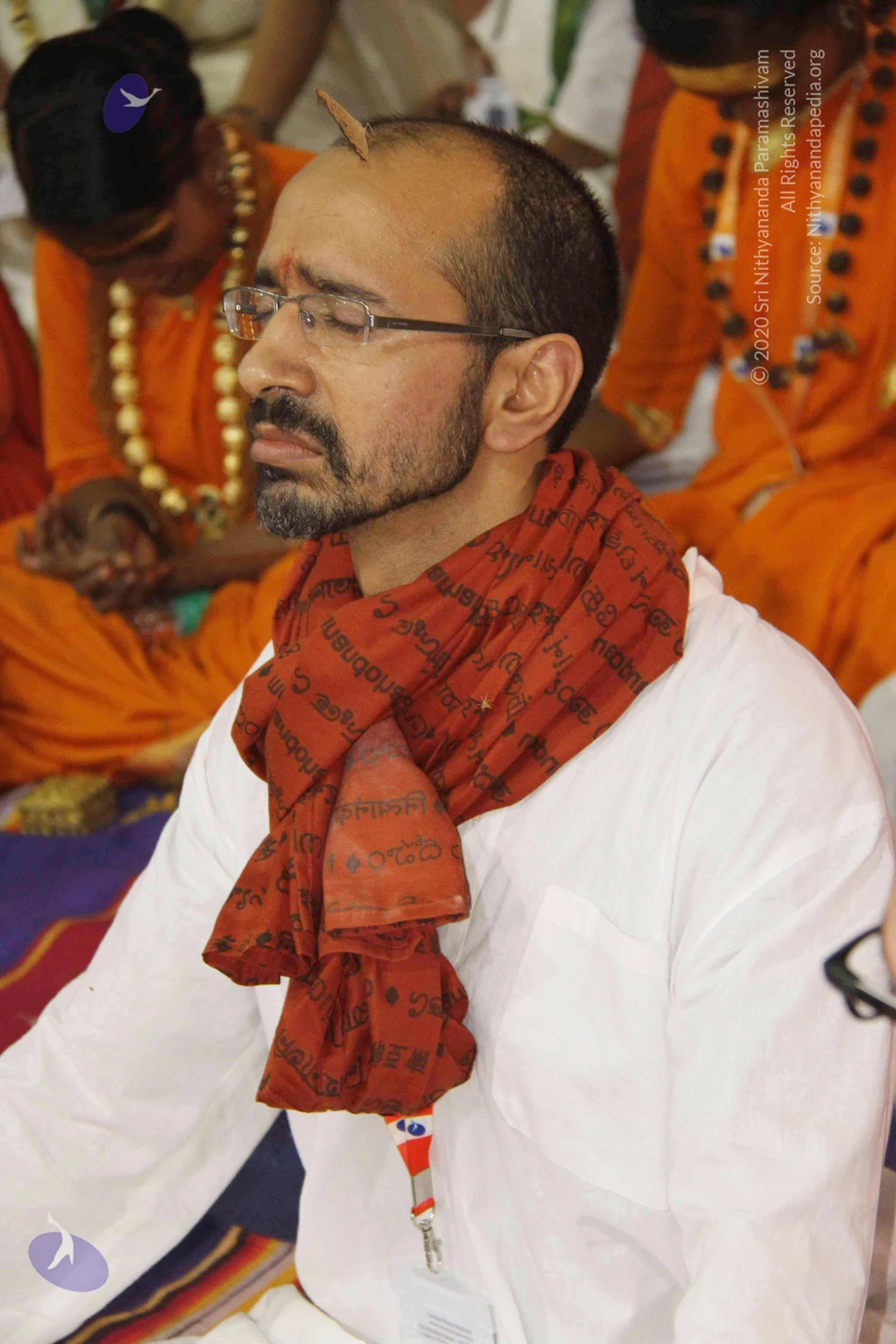
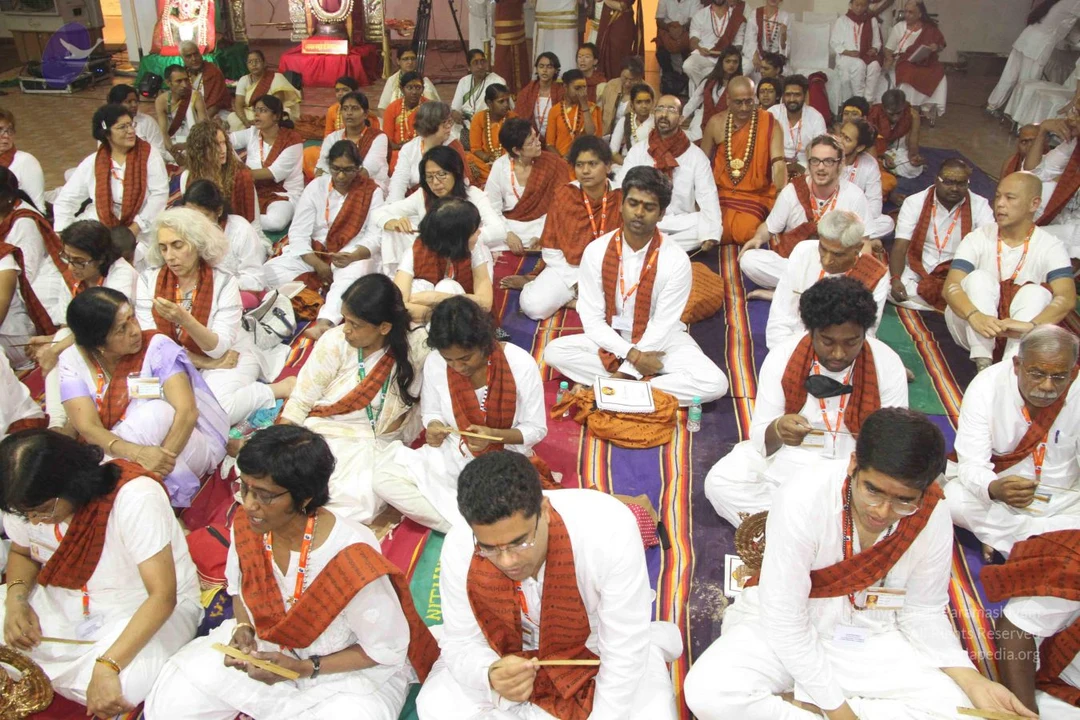
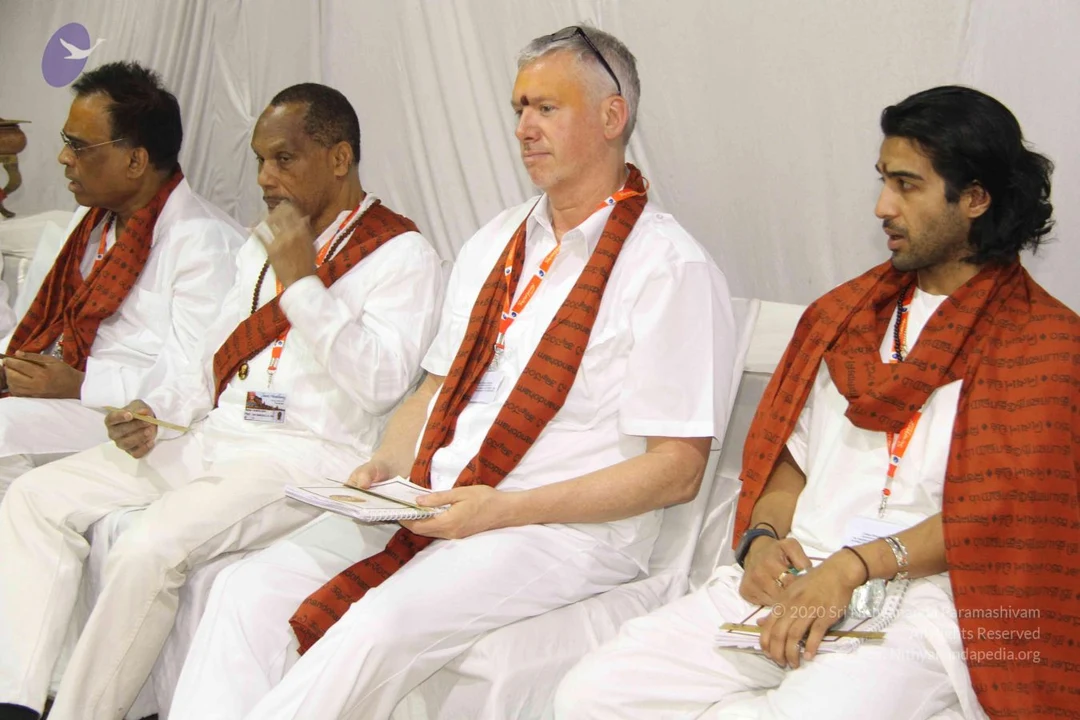
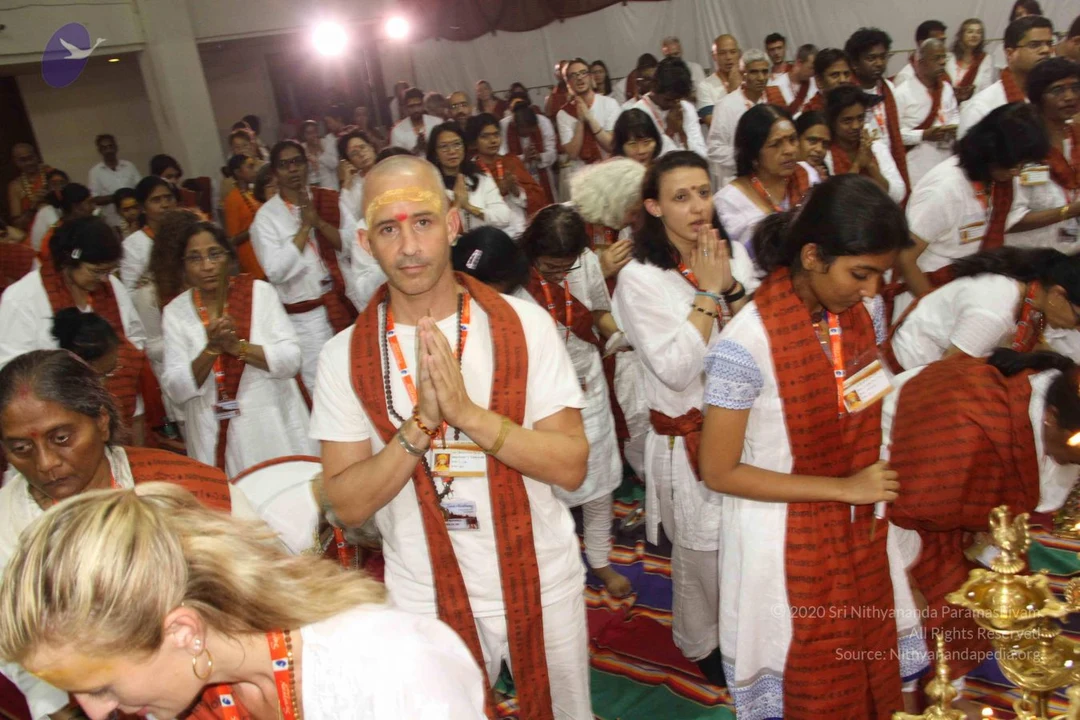
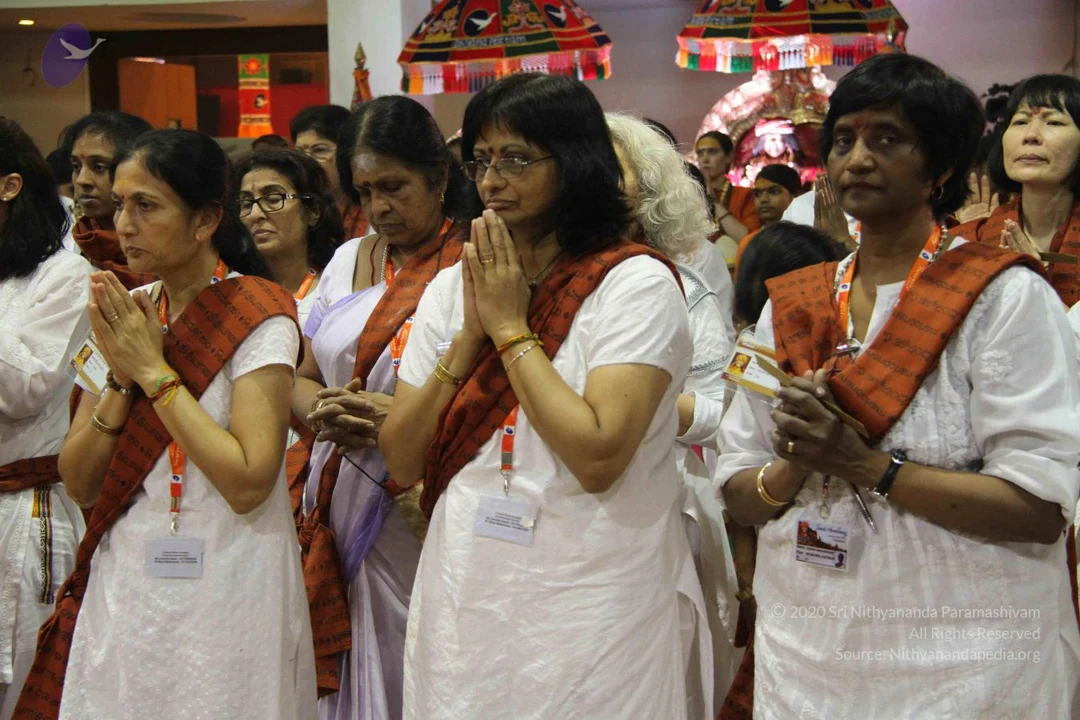
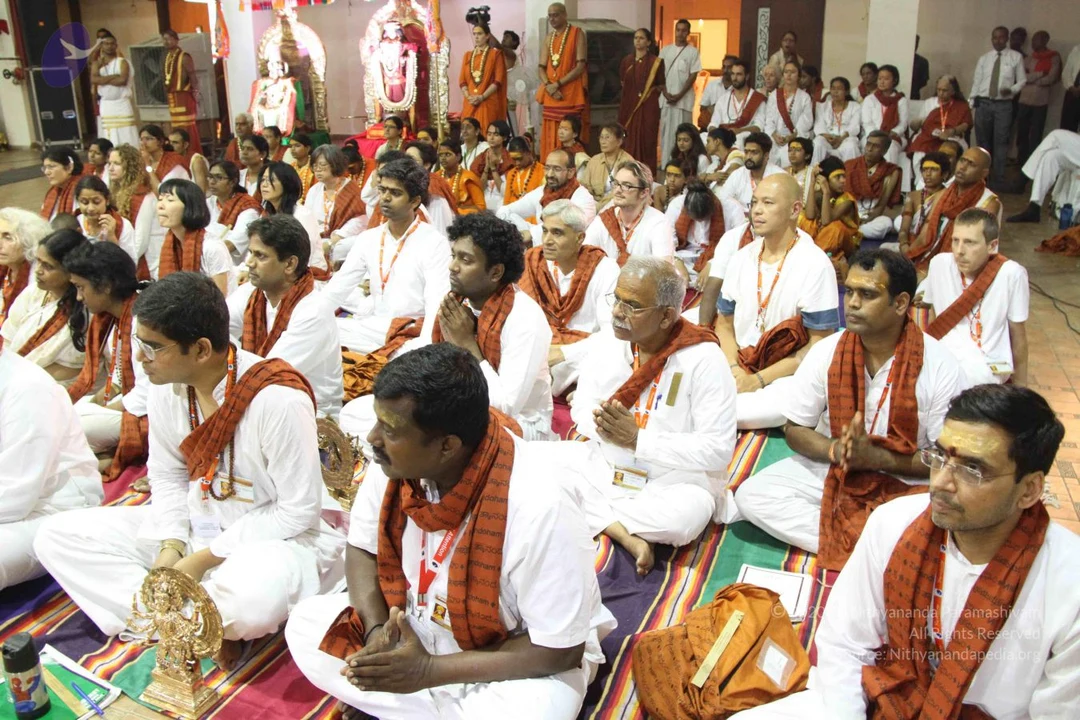
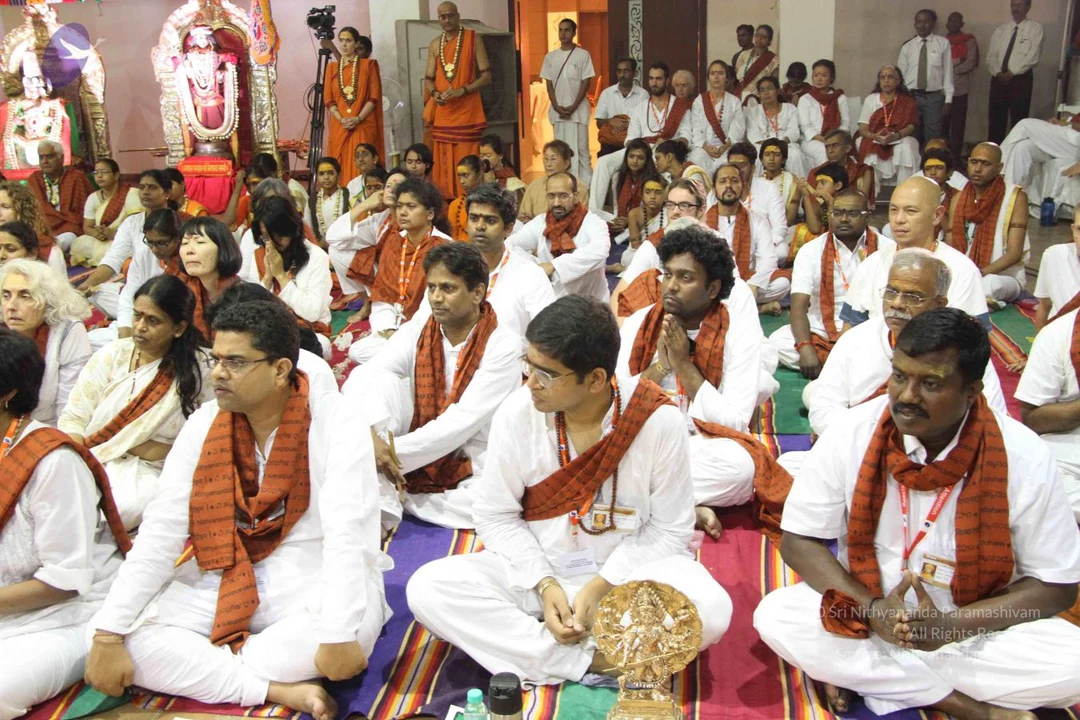
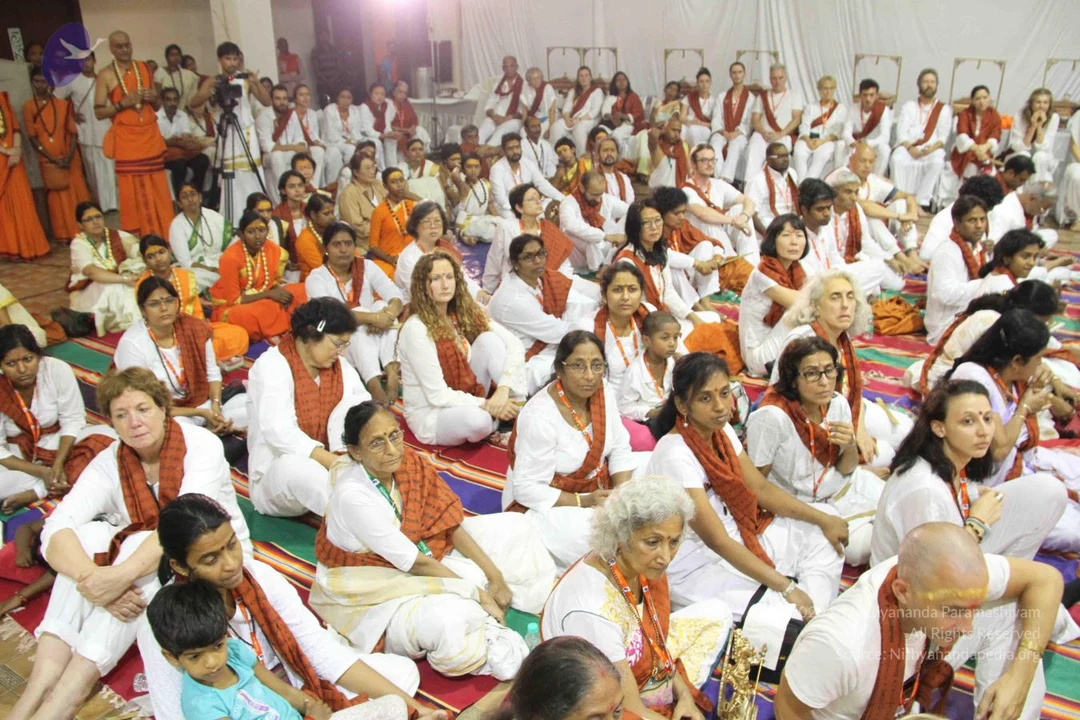
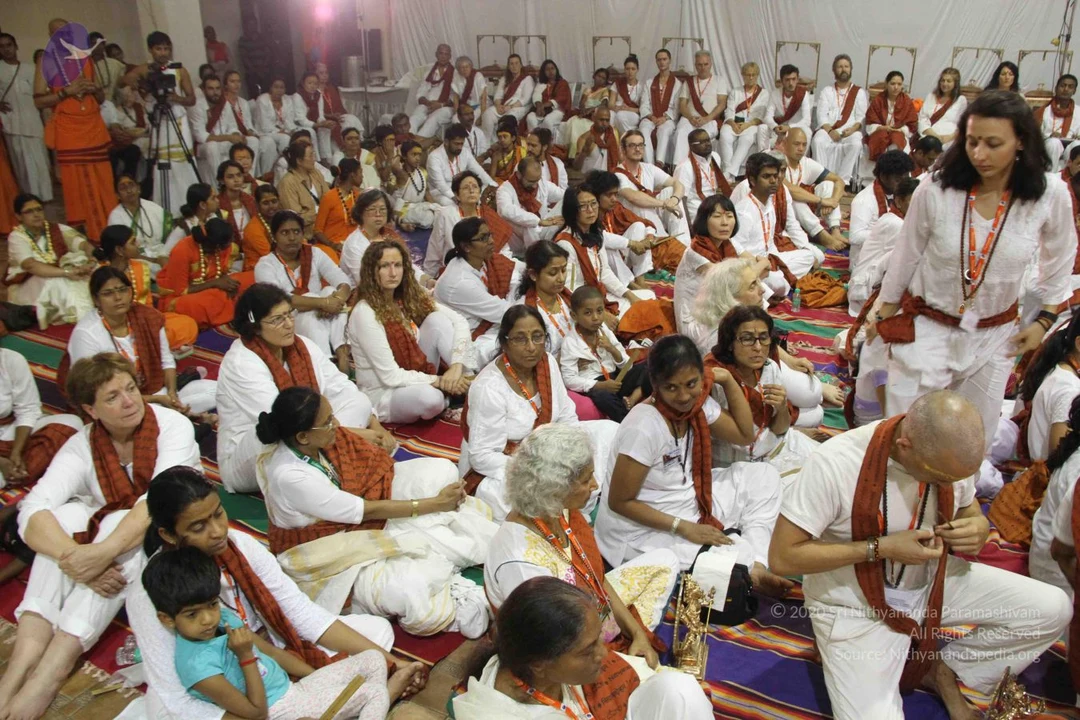
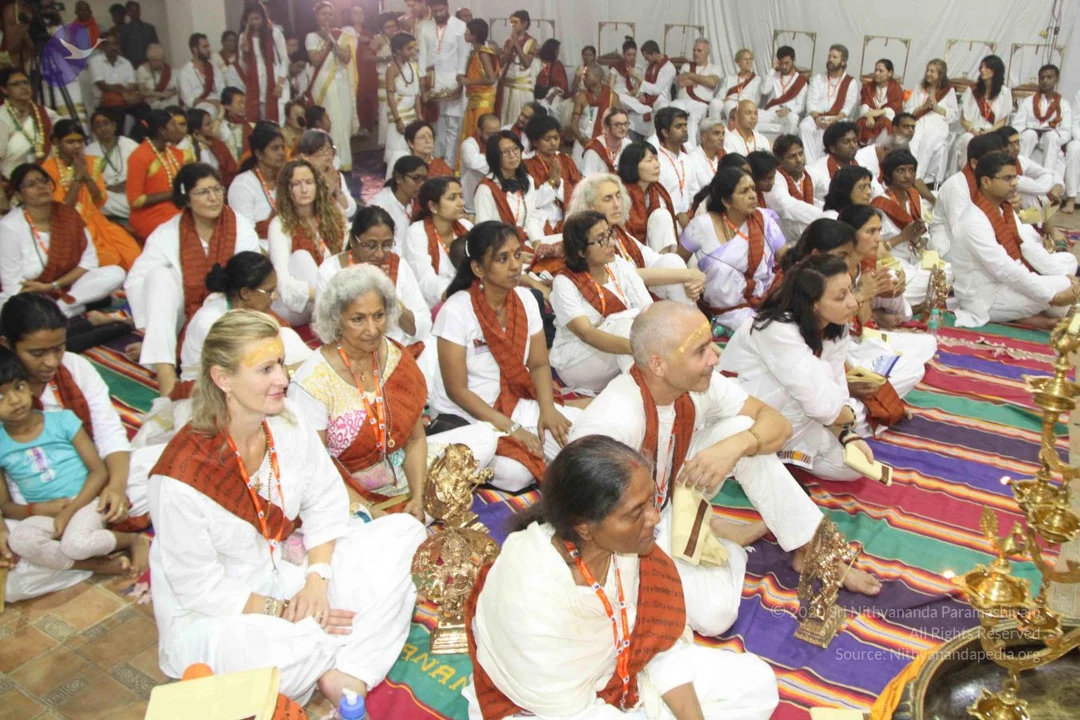
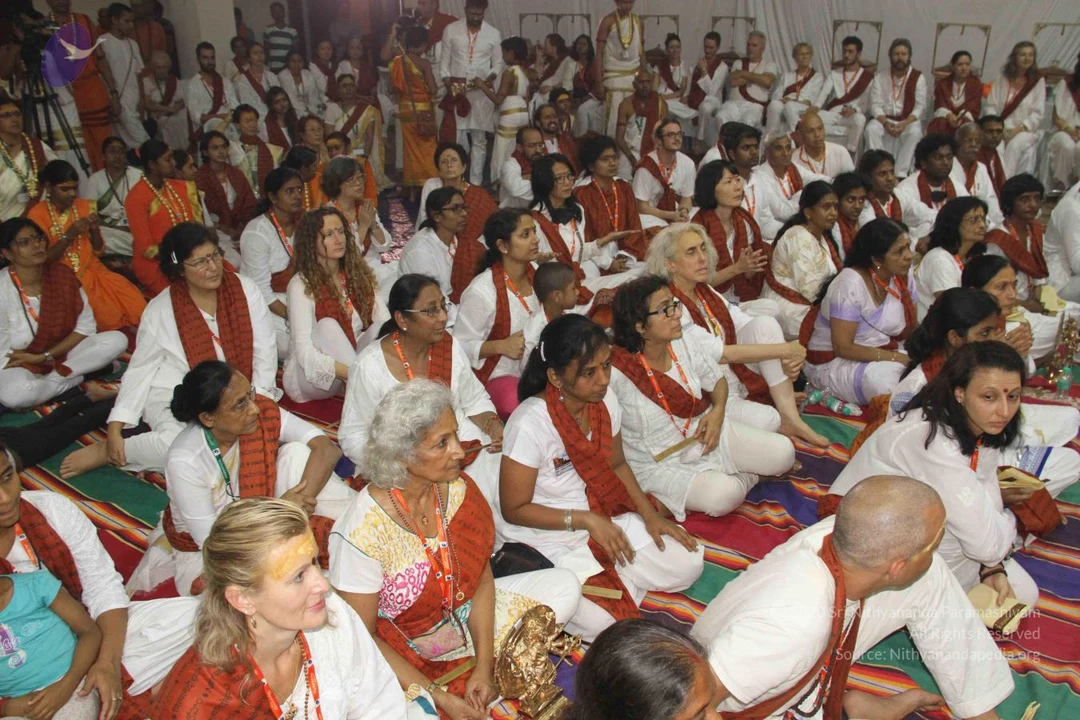
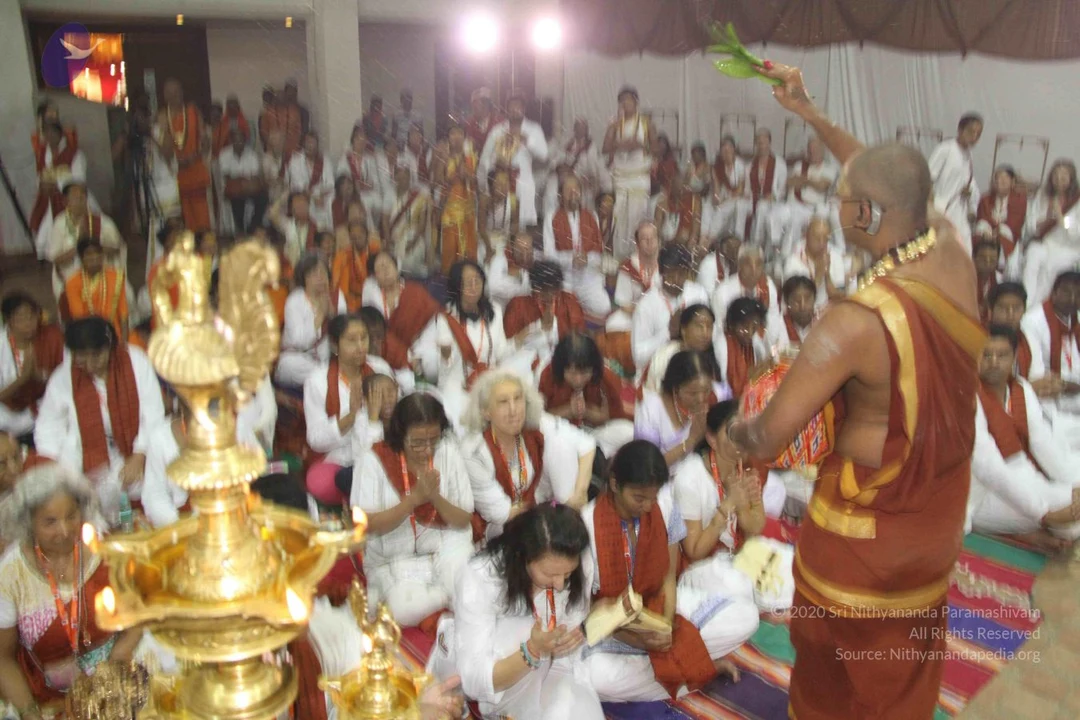
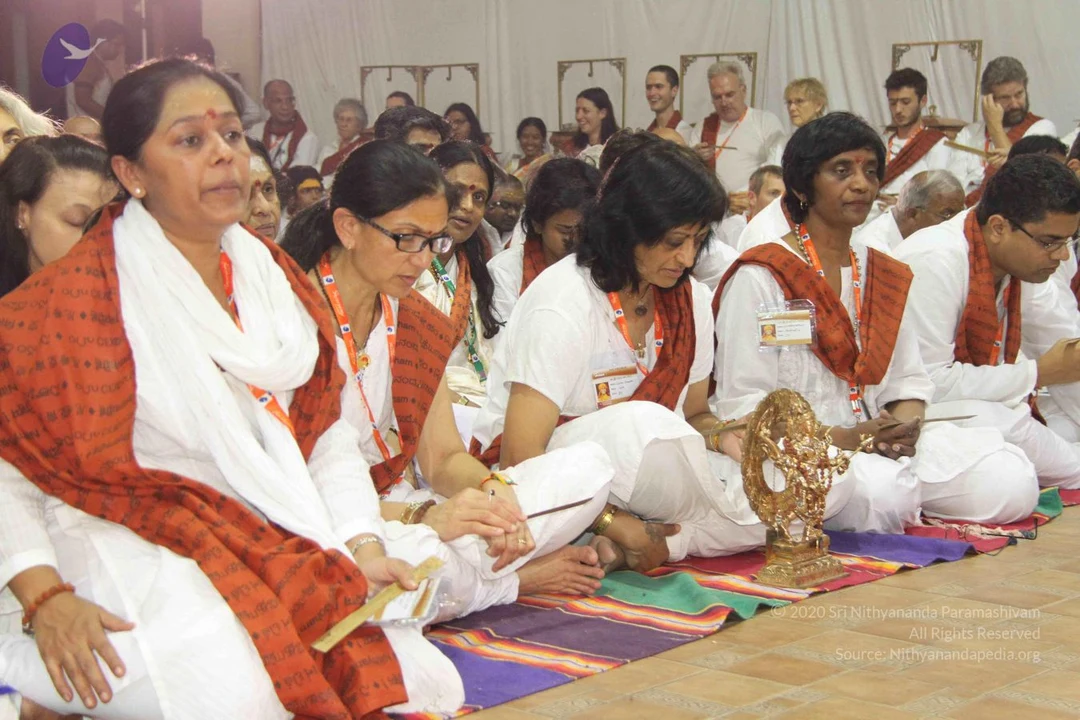
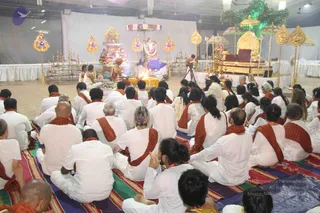
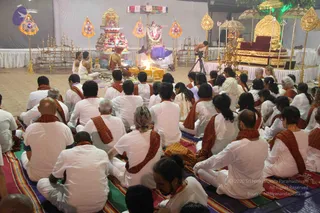
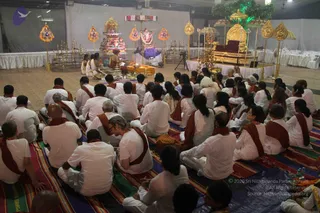
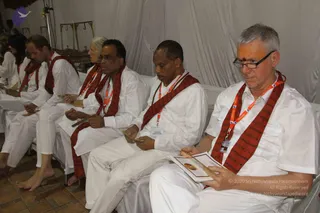
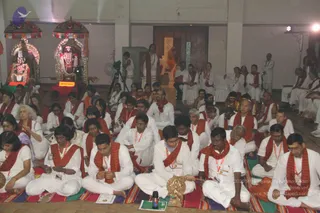
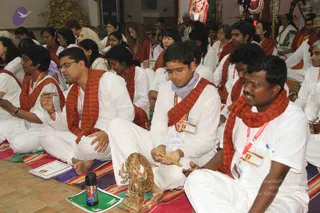
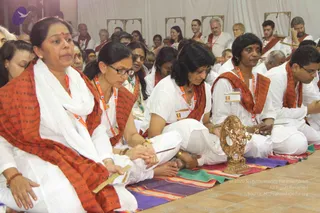
A large indoor satsang hall where a crowd of devotees in white clothing and orange-red shawls sits cross-legged on colourful striped mats facing a central fire pit with a flame. Behind the fire, a priest in saffron-orange robes sits beside a golden-framed ornate shrine with deity murti and garlands. To the right stands a golden ornate throne with red cushions beneath decorative gold parasols, and a cameraman films from a tripod at the side. Brass lamp stands and golden umbrellas surround the space.A seated congregation of devotees in white clothes with saffron-brown shawls faces a homa fire pit at the front of a tented hall. Behind the fire, a priest in a rust-orange cloth and a deity murti adorned with garlands and a decorated backdrop are visible. Oil lamps stand on tall brass stands on either side, and a golden throne with a red cushion and golden umbrellas is at the right. A cameraman with a tripod films the ceremony from the right side. Several people in the front rows have shaved heads or long hair, and the crowd is seated on colourful striped mats.A large indoor hall set for a puja or satsang, with a golden throne-like seat draped in red on a raised platform at right, flanked by golden parasols and kalasha-style finials. At left, a decorated altar with a deity murti and a garlanded image stands before a priest in orange-brown garments who sits at a ritual setup with brass items. Several white-robed attendees kneel nearby. Around 40 devotees in white clothes with brown-orange shawls sit cross-legged on striped woven mats facing the altar, many with their backs to the camera. Brass oil lamps line the side and a tripod camera stands near the throne. Overall a formal temple-style ceremony.A seated row of devotees in white clothing with red-and-orange printed shawls and orange lanyard badges, sitting on white-cushioned benches under white draped fabric. The man in front right wears wire-rimmed glasses and holds an open booklet and a small wooden stick. Next to him a man with a beaded mala reads from a card, and others in the row hold small booklets or wooden sticks and look downward, appearing to read or follow along. Brass stands and a wooden table are visible in the background, and the floor is tiled. No candidate a person is visible in this scene.A large hall filled with seated devotees in white clothes and red-orange shawls, many wearing lanyards and name badges, sitting on colourful striped mats in rows. In the foreground a man in white holds a small brass bell and a brass lamp is set on the floor. Behind them, two ornate silver-framed deity murti stand under red and gold canopies, one on a red-draped platform with a garland. A speaker in white and red shawl stands near a central stage area, and a video camera on a tripod records the gathering.Devotees in white clothing with orange-red shawls sit on colourful striped mats in a hall during a seated ritual session. Several men and women wear white kurta-style clothes, orange-red shawls and white lanyard badges. The foreground man on the right holds a small ritual object, and the man in the centre holds a wooden stick or spoon, while others sit with hands joined or in meditative postures. A small gold deity statue with a dancing figure sits on the floor in front, beside a green notebook and a water flask. Behind them an ornate red-and-gold decorated altar or deity canopy is visible, with a flowering yellow plant at left.
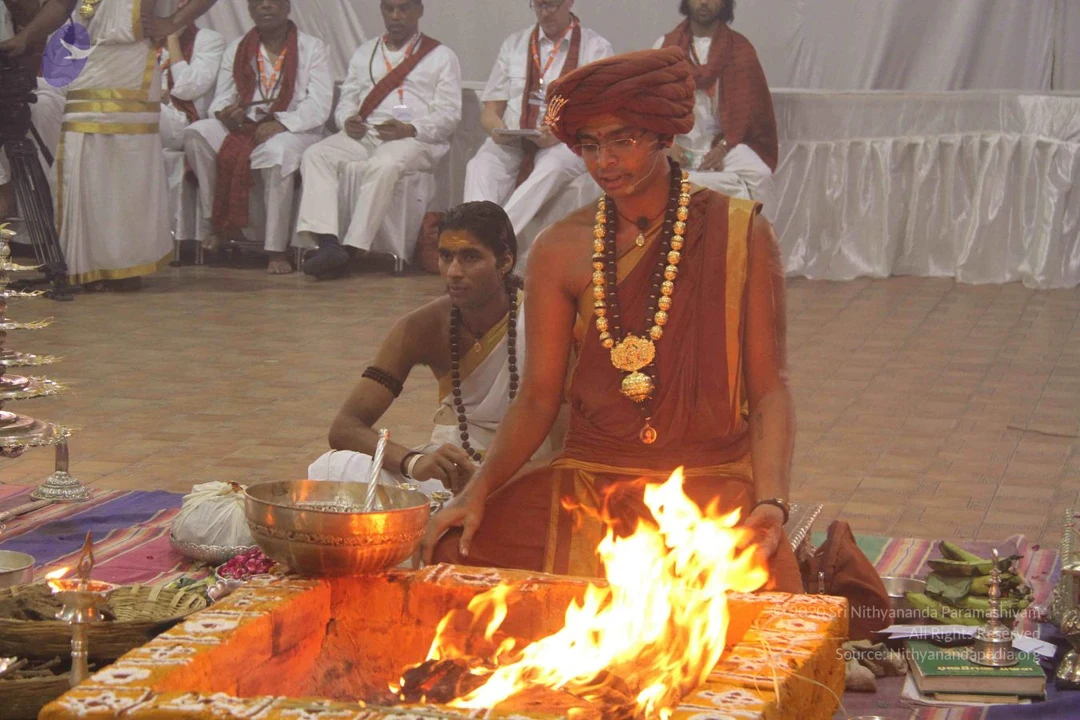
More Pictures Of The Kalabhairava Homa
37 photosSource gallery
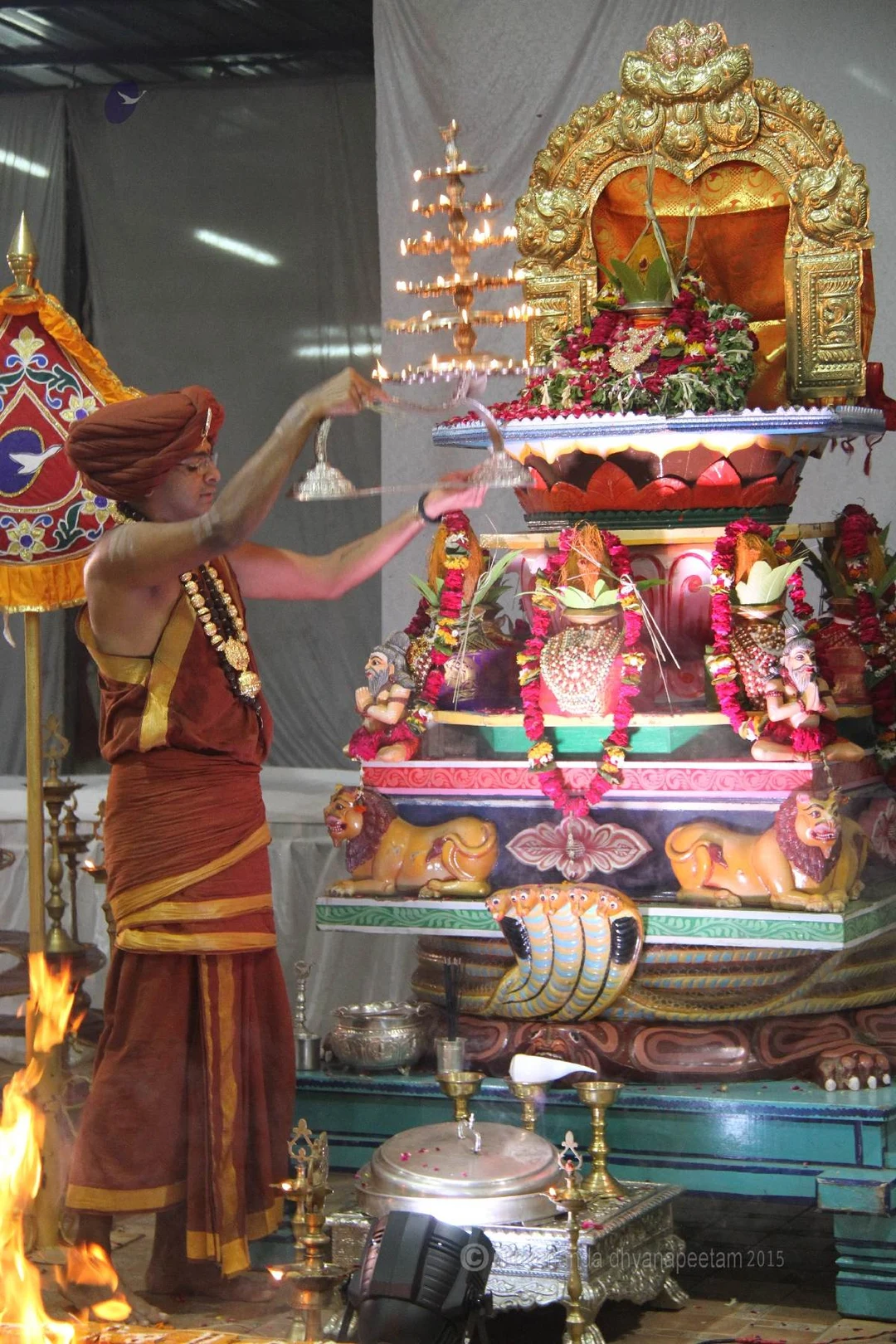
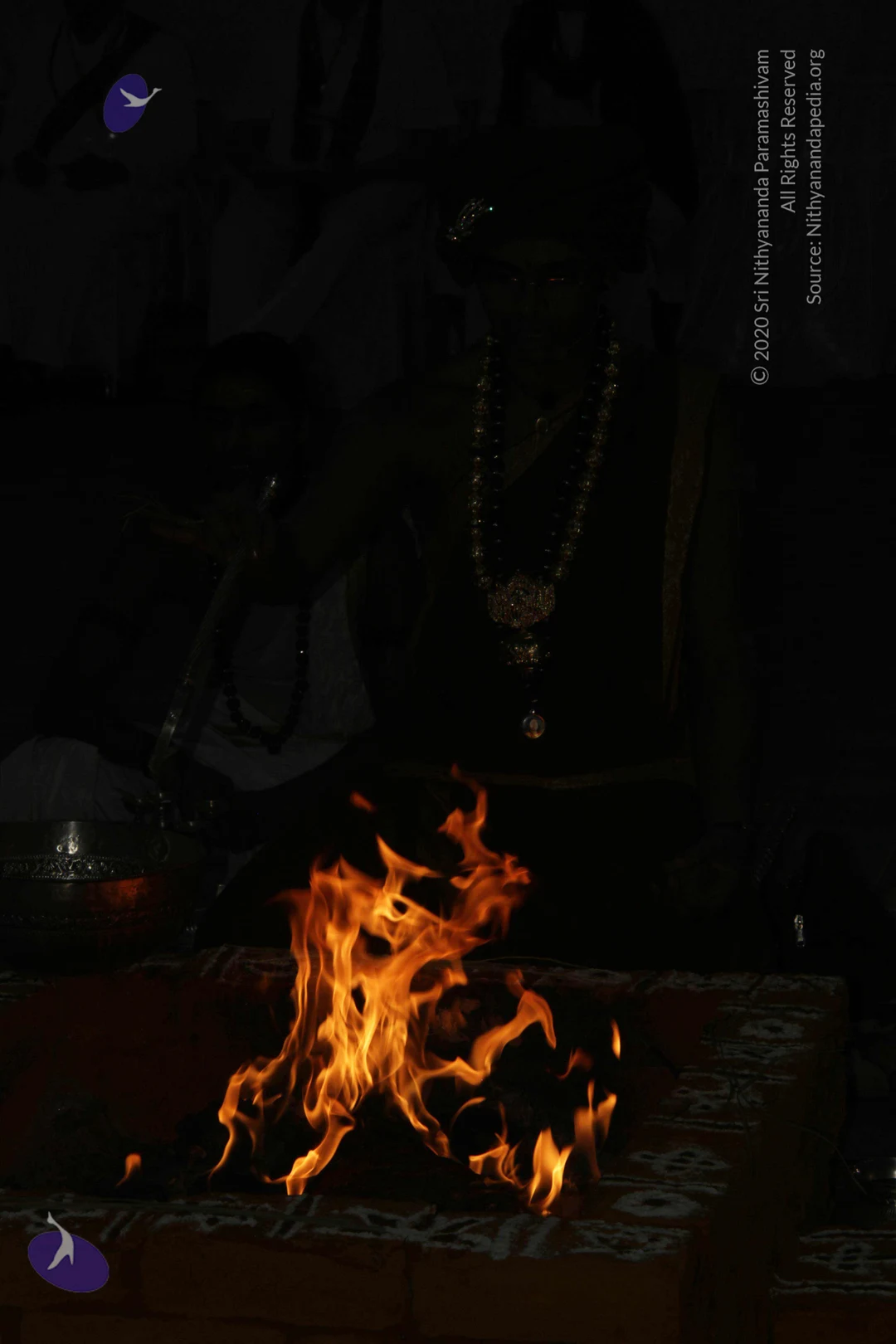
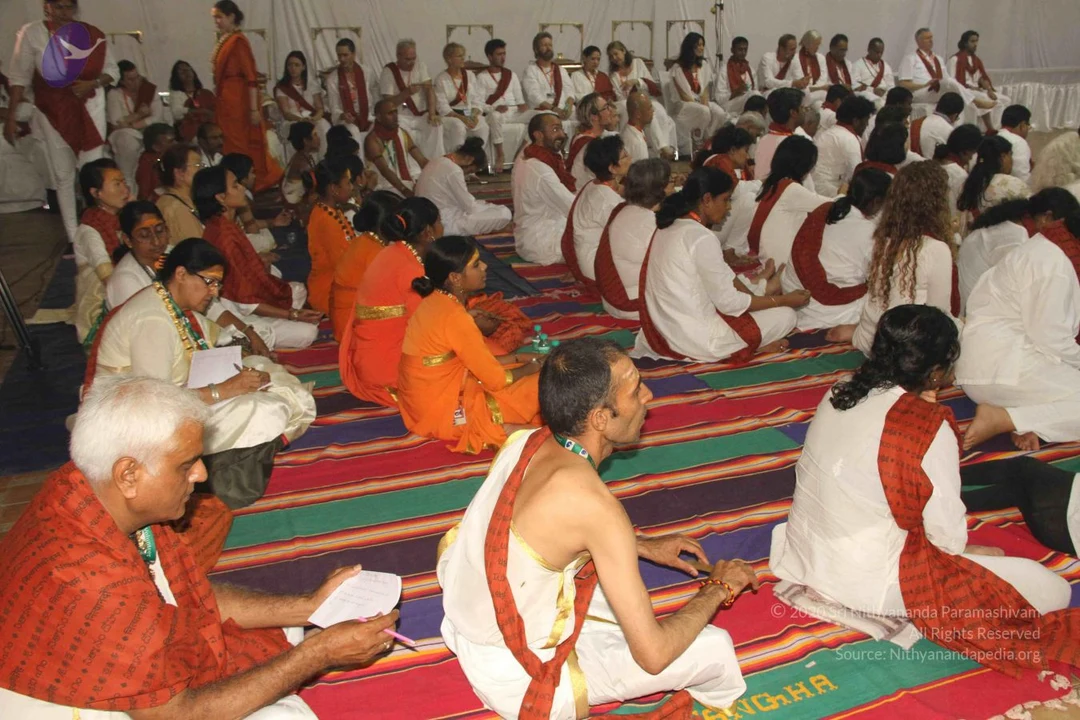
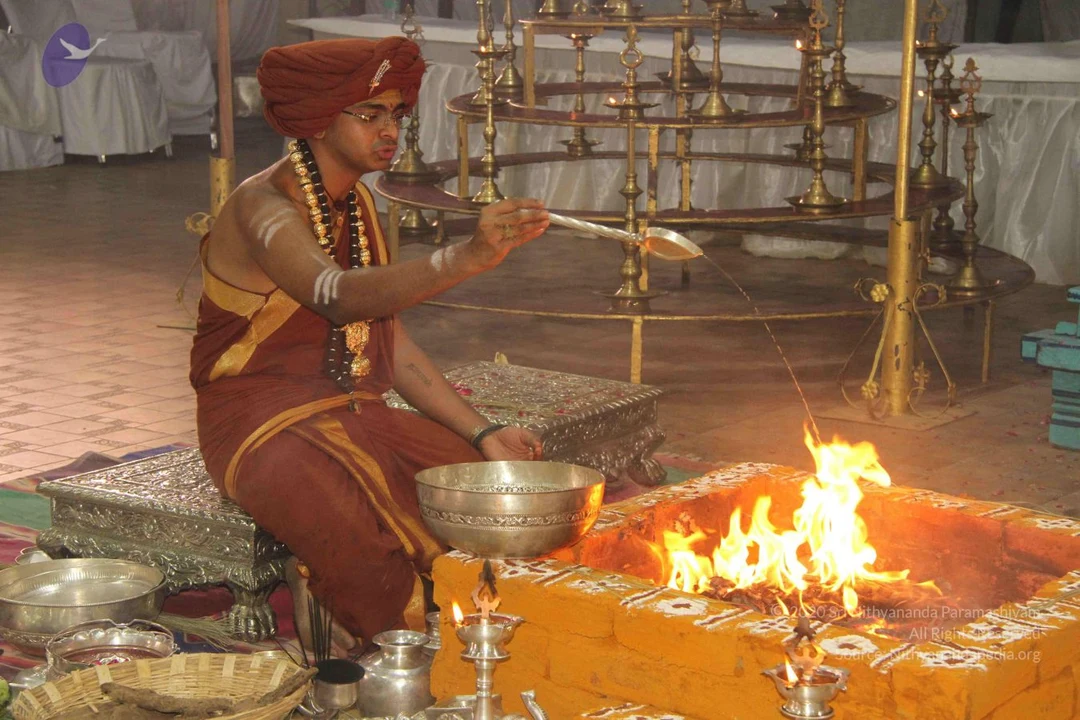
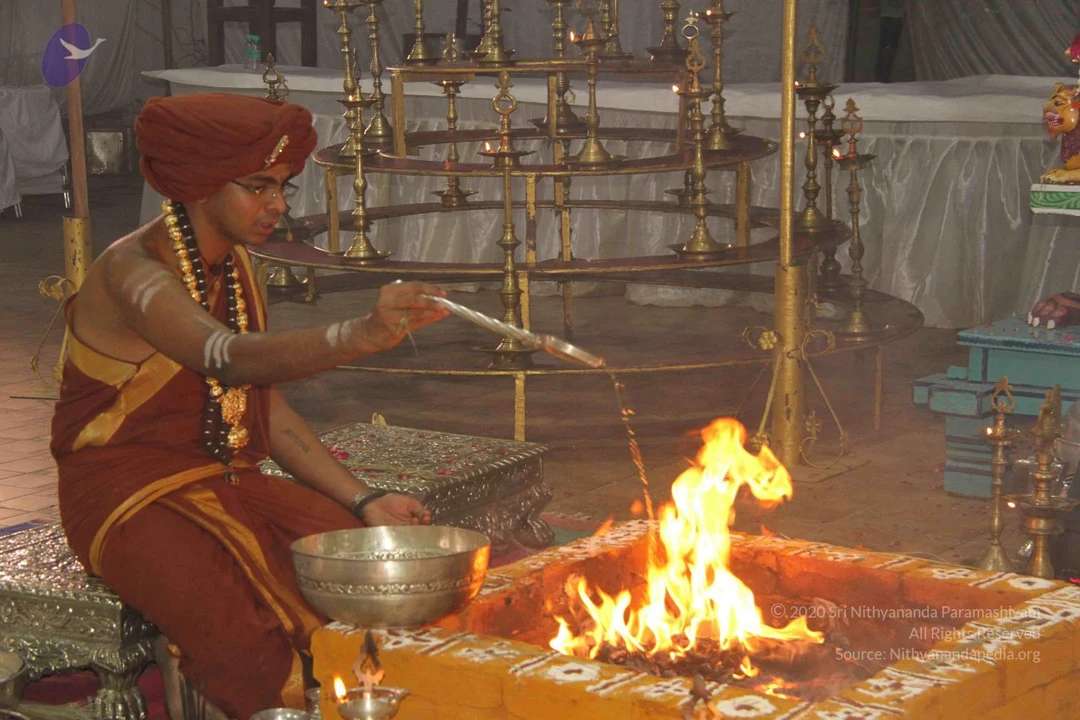
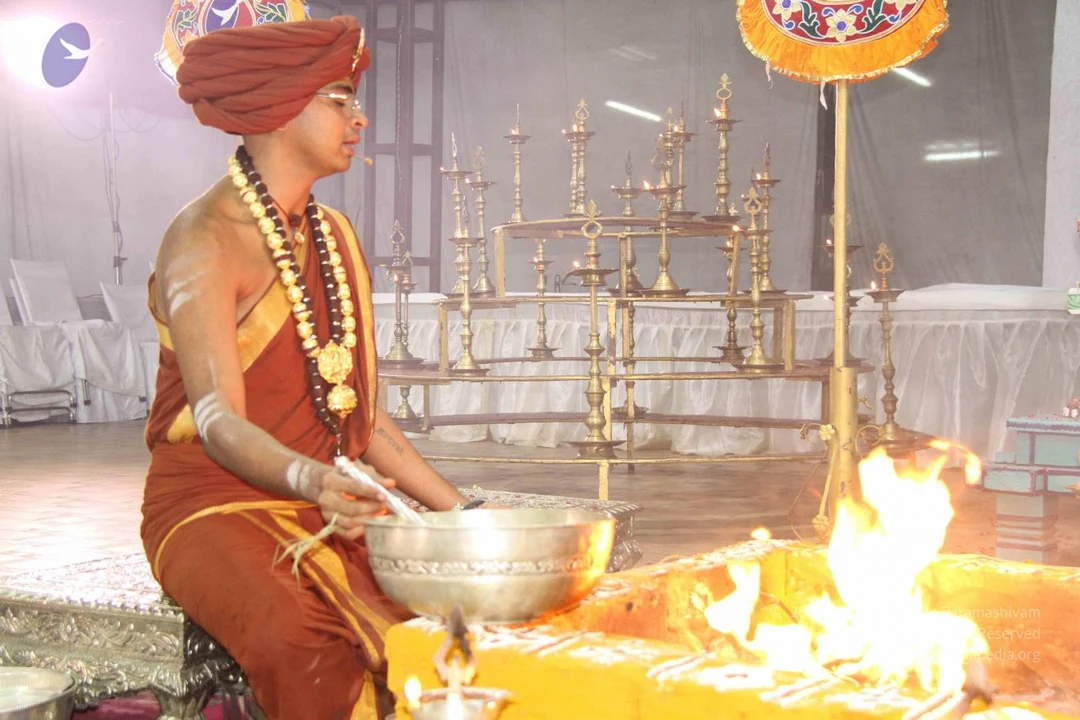
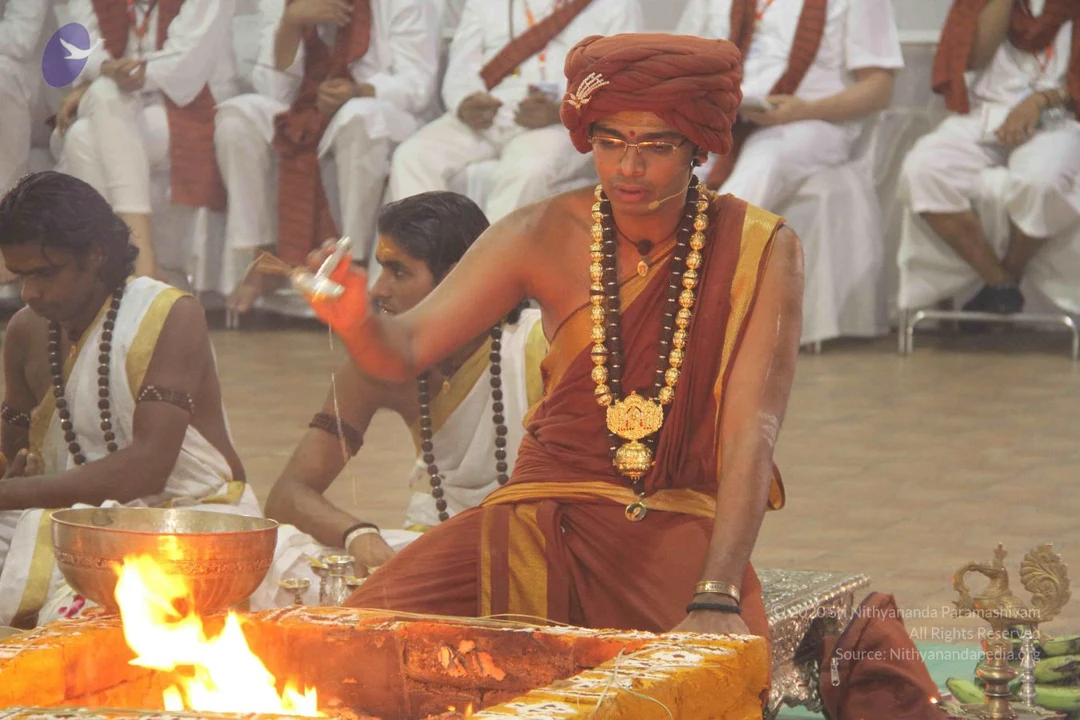
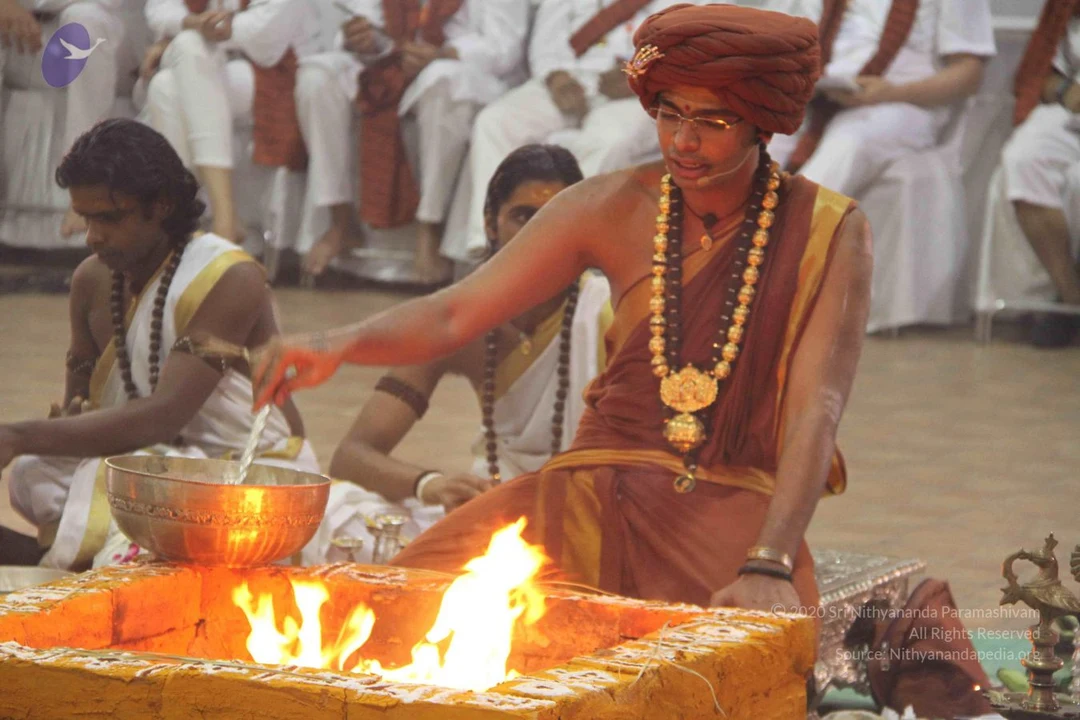
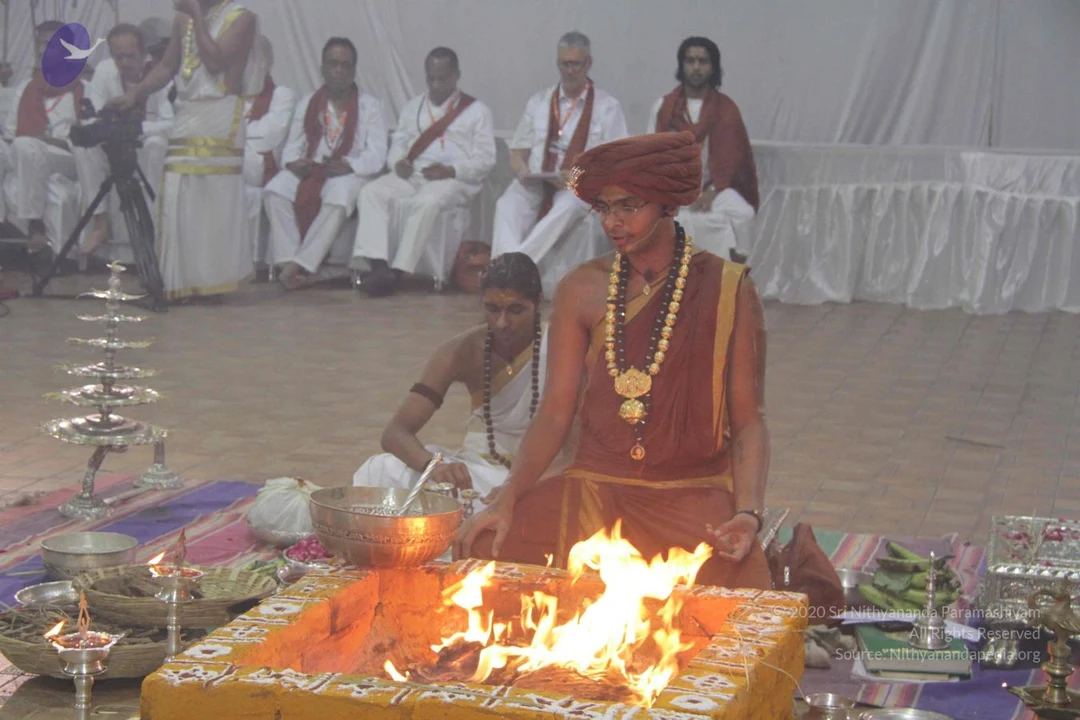
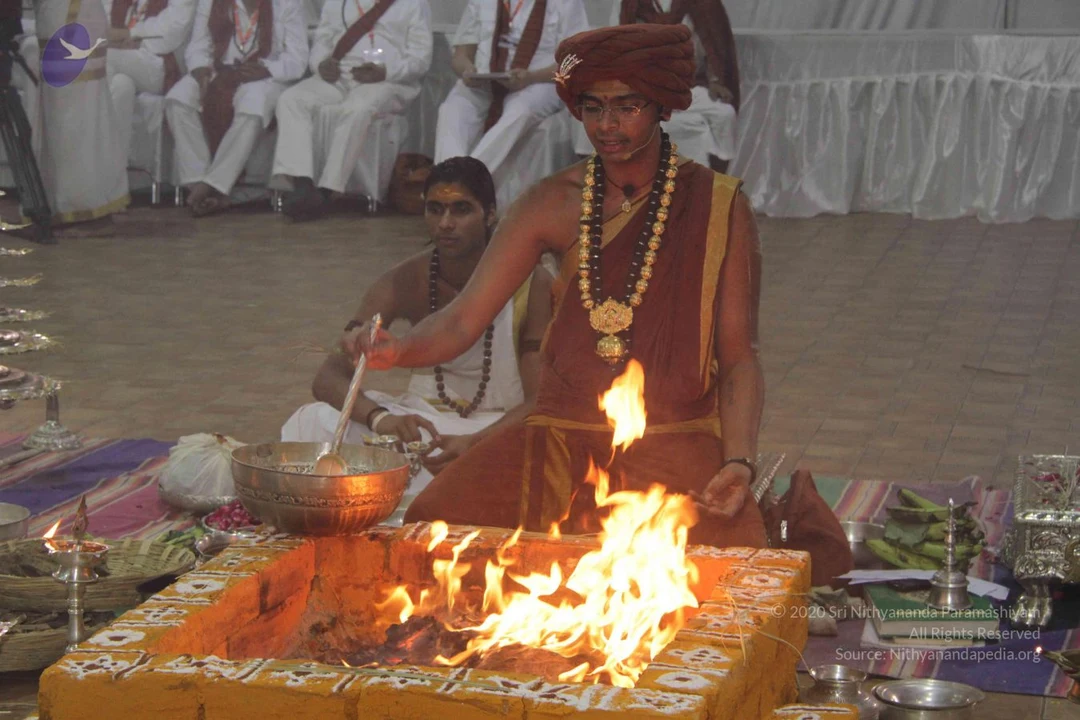
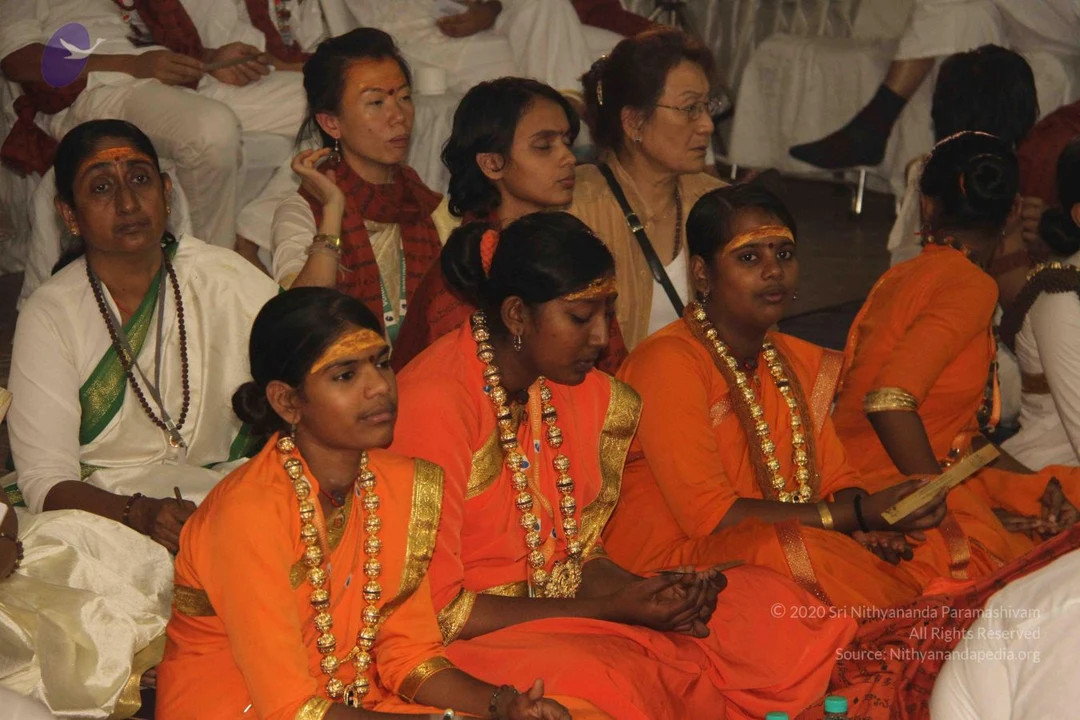
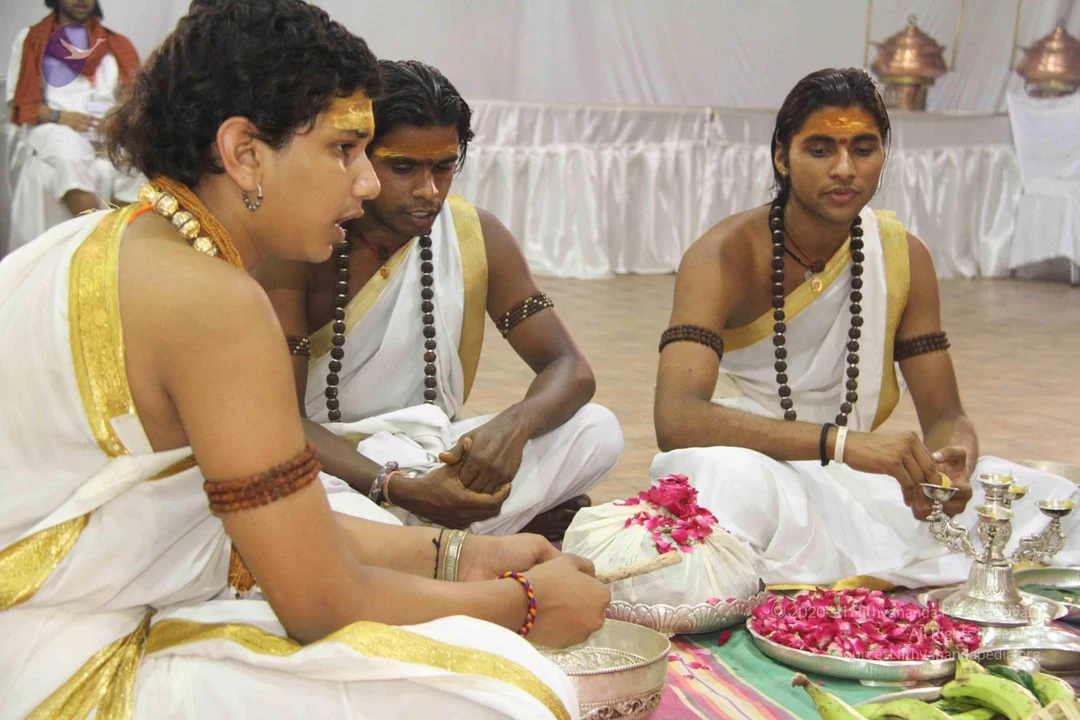
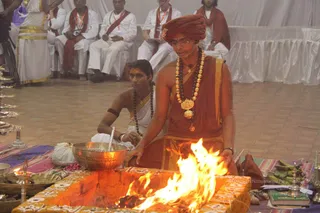
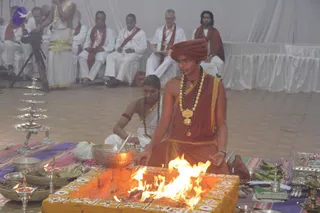
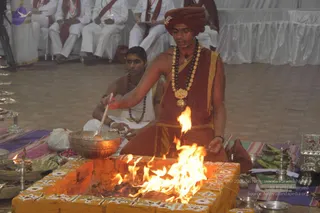
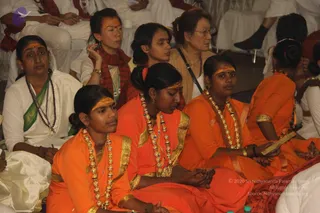
A photograph of a homa at a fire pit lined with orange tiles, with bright flames rising from the centre. In the foreground a man in an orange turban, orange wrap and layered gold and beaded necklaces, wearing glasses, tends the fire with his right hand resting near the blaze. Beside him a younger man in white dhoti with a dark beaded mala sits behind a brass bowl with a ladle. Oil lamps, a basket of flowers, folded cloth and banana leaves with offerings lie on striped mats. Behind, several seated men in white clothes and orange-red shawls sit on chairs under white draped stage fabric, some holding papers.A homa fire ceremony in a large hall. A man in an orange-red turban, orange-saffron dress and a long gold-and-rudraksha necklace sits behind a square fire pit covered in yellow tiles, with a bright flame rising from it. A second man in white ritual dress with a bare chest sits beside him, holding a ladle over a large brass bowl. Brass oil lamps stand on a cloth, and banana leaves and offerings are arranged nearby. Behind them, about seven men in white dress and red shawls sit on the floor, and a camera on a tripod is visible at left. The yellow-tiled fire pit with offerings marks this as a homa.A homa fire ritual at a square orange-brick fire pit with tall flames. A man in an orange-red turban, rudraksha mala and gold ceremonial necklace, wearing an orange-red shawl, leans over the fire and places an offering with his right hand. Behind him a younger man in white with a rudraksha mala and tilak sits holding a brass ladle over a brass bowl. Brass oil lamps, a basket, banana leaves and metal plates of offerings lie on mats around the pit. Seated people in white and orange robes with garlands are visible in the background.A photograph of a decorated deity murti standing against a grey draped backdrop, with an orange and blue cloth at the left edge. The murti wears a pink silk sari with gold border, layered gold and multicoloured bead necklaces, a gold crown and red bindi, and holds a trident (trishul) in one hand. It is heavily adorned with garlands of red roses, white flowers and green leaves, and a gold bell-and-coin garland encircles its base. No physical people are visible.A seated satsang audience at a person event. In the foreground, three young women in orange and saffron sarees with gold borders wear long gold-bead necklaces and orange forehead marks. The woman on the far left wears white with a green-and-gold border, a rudraksha mala, and a red-orange forehead mark. Behind them, a woman in a beige jacket wears glasses and a crossbody bag, and others in white and red shawls sit among the crowd. No a person candidate is visible in this frame.A seated group of devotees in white clothes with orange-red shawls, many with lanyards, sits on coloured woven mats in a white-draped tent hall. In the foreground a woman with a red bindi and an orange shawl holds a small wooden stick, and a woman beside her holds a brass or gold deity murti. Other devotees behind them sit or stand, and a wall of gilt frames is visible. No speaker is clearly identifiable among the foreground devotees.
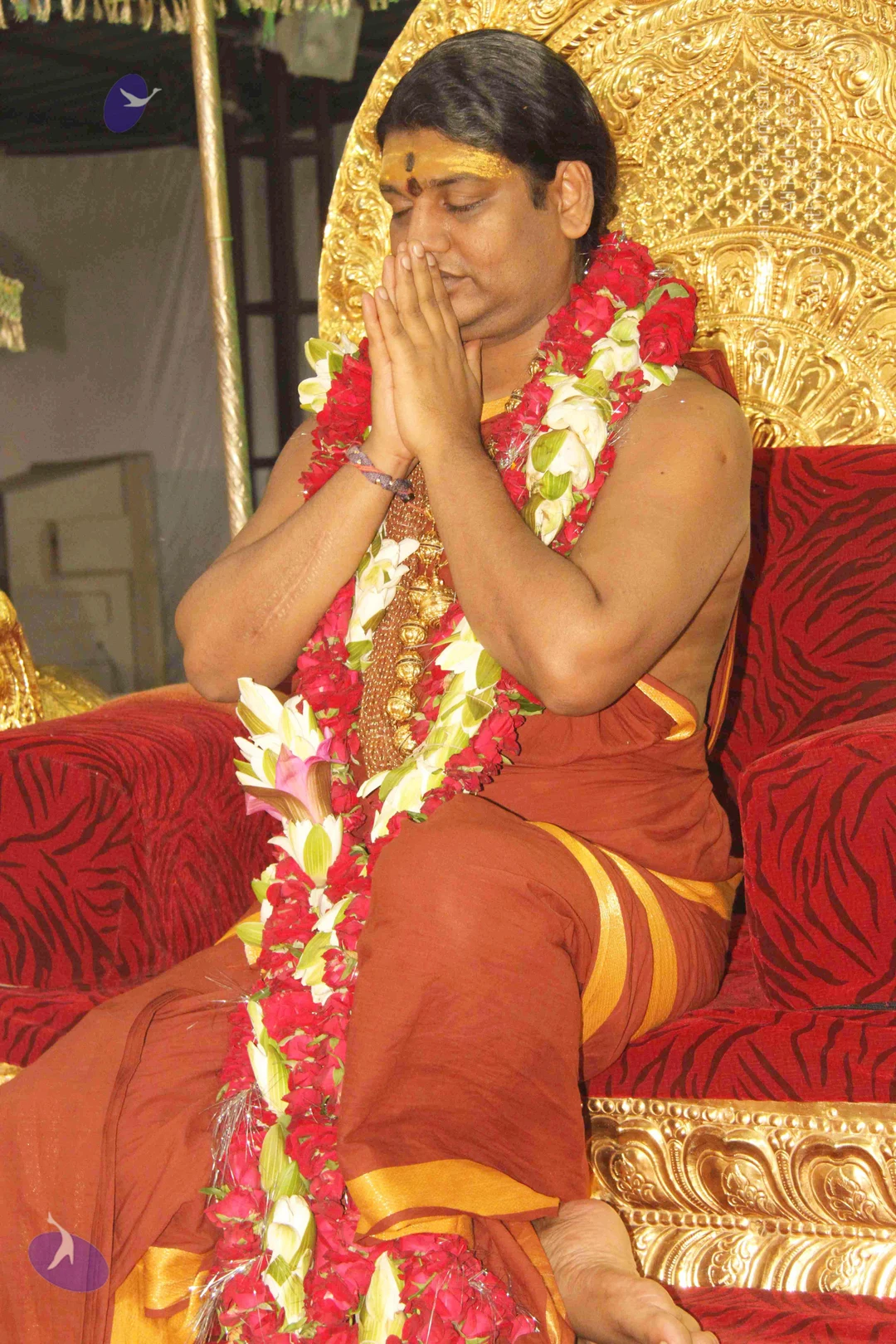
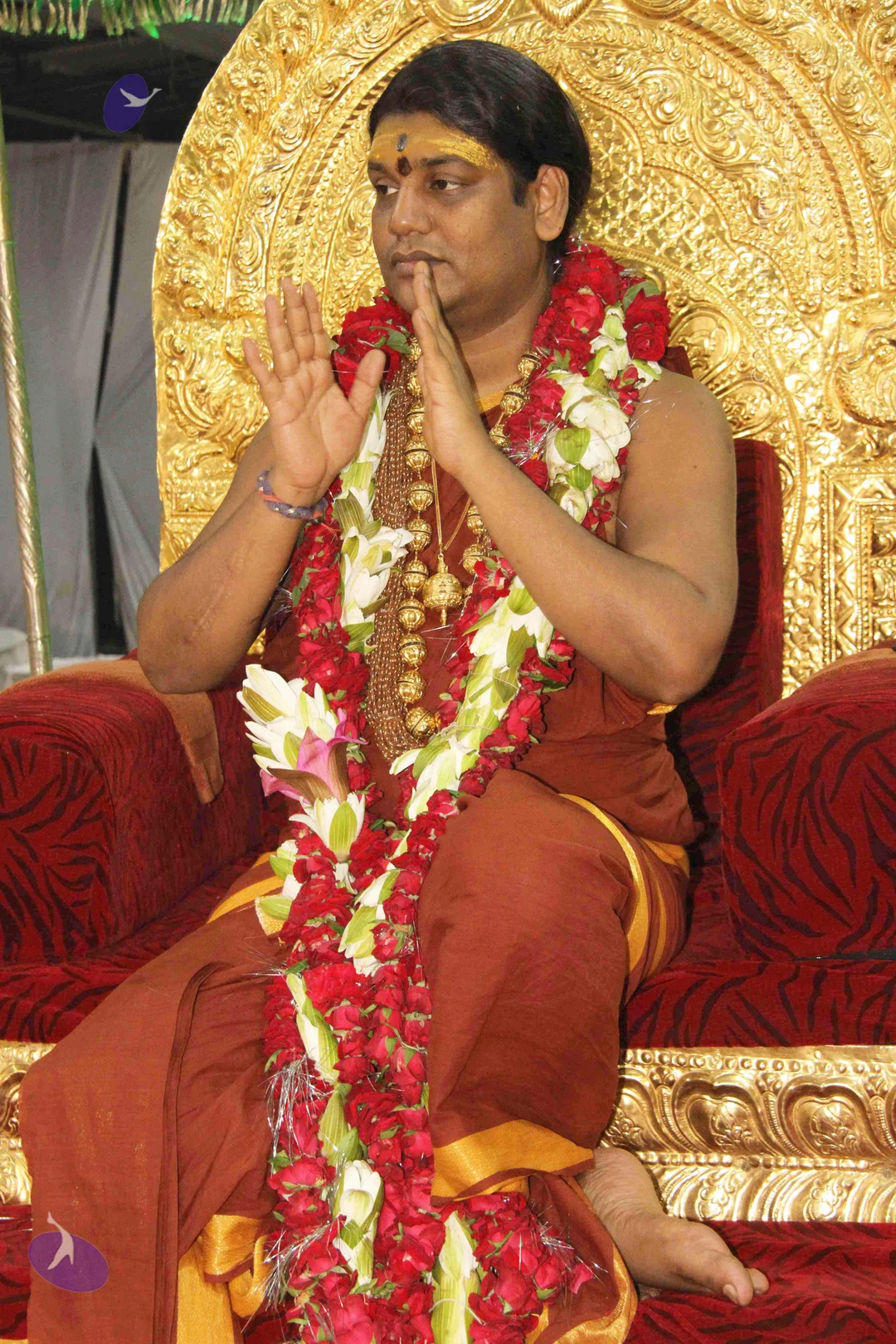
FB-photo-of-the-day
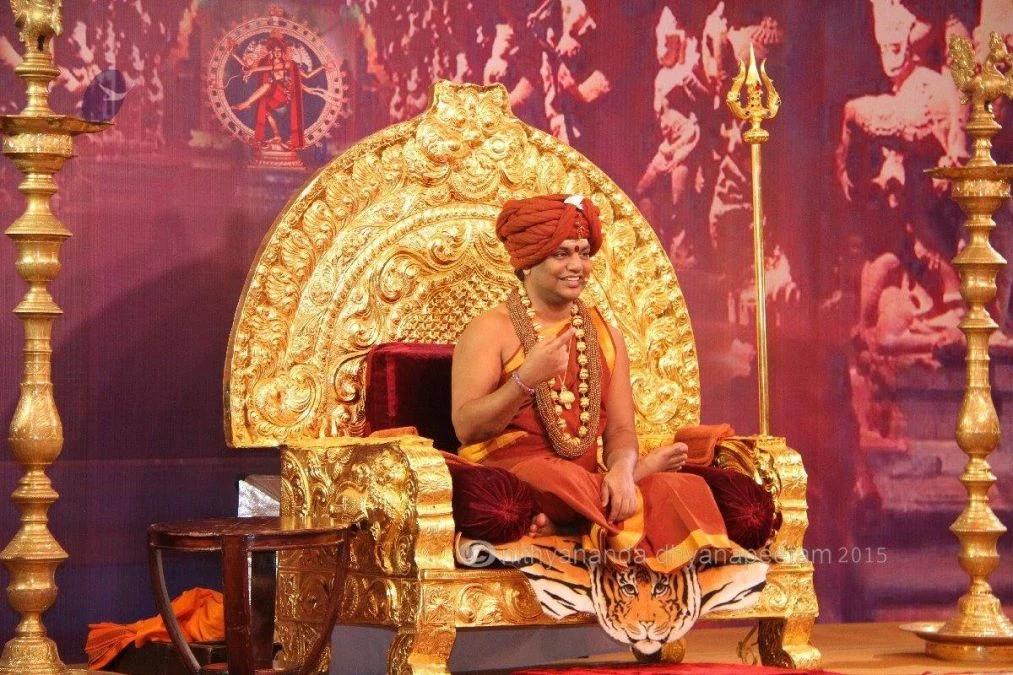
3 photosSource gallery