Skip to content
Saturday

12 October 2013

Dated photos
771
Source pages
1
Media
4
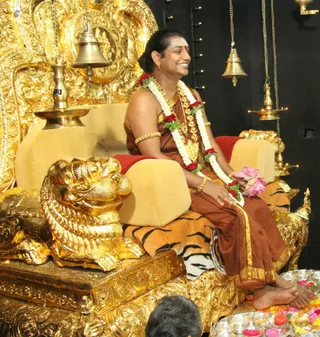
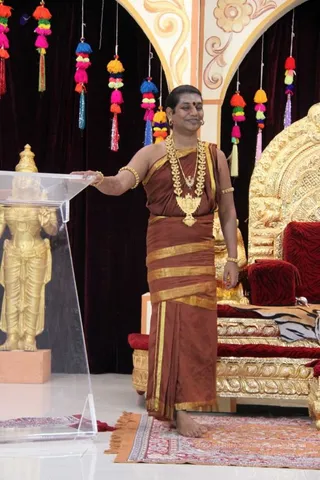
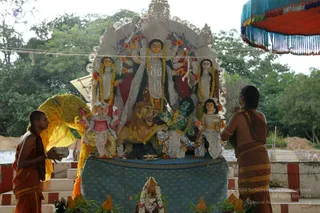
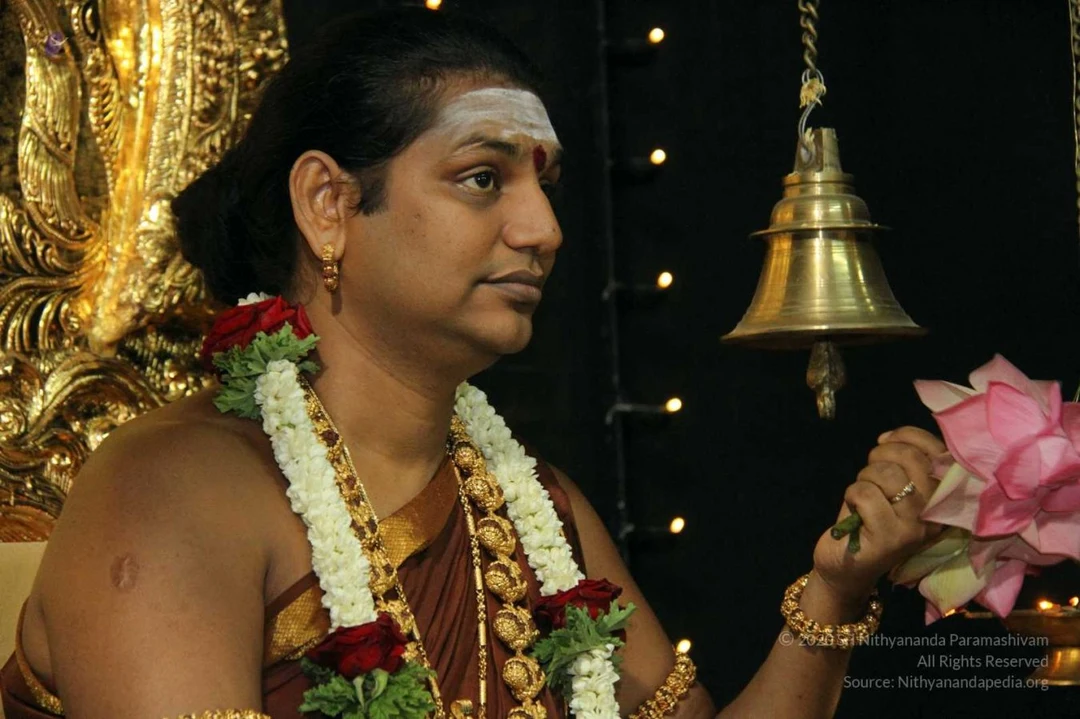
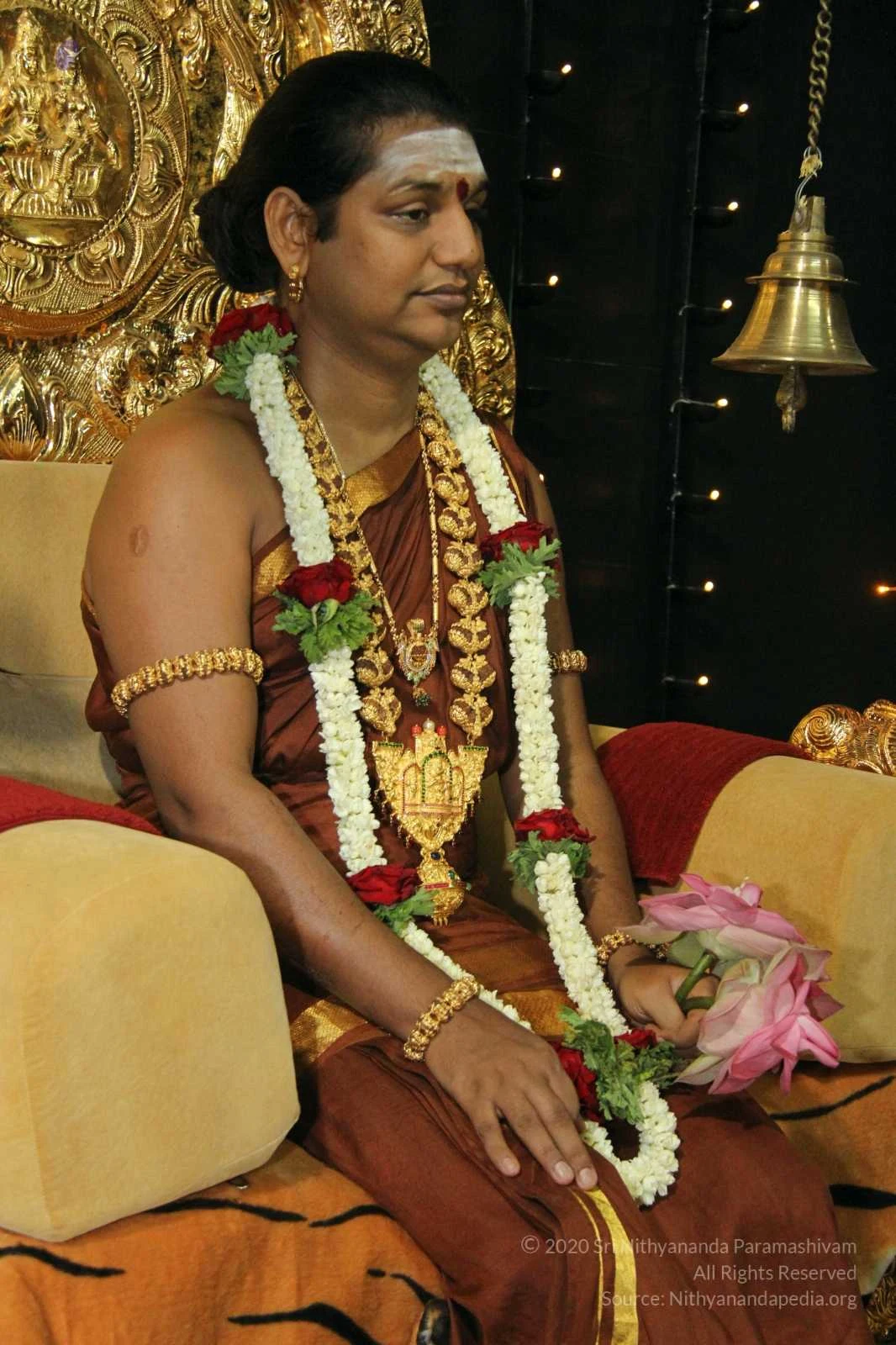
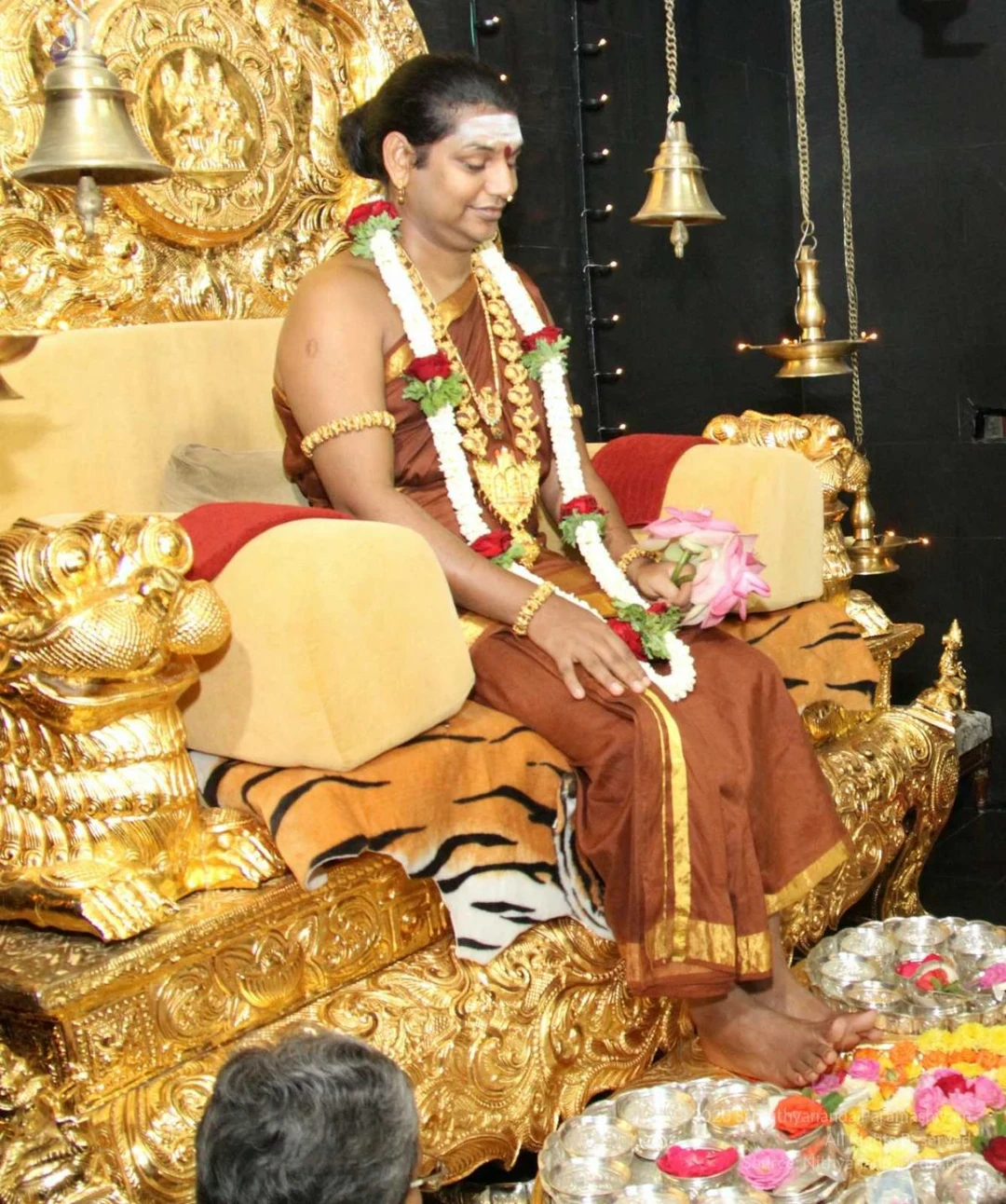
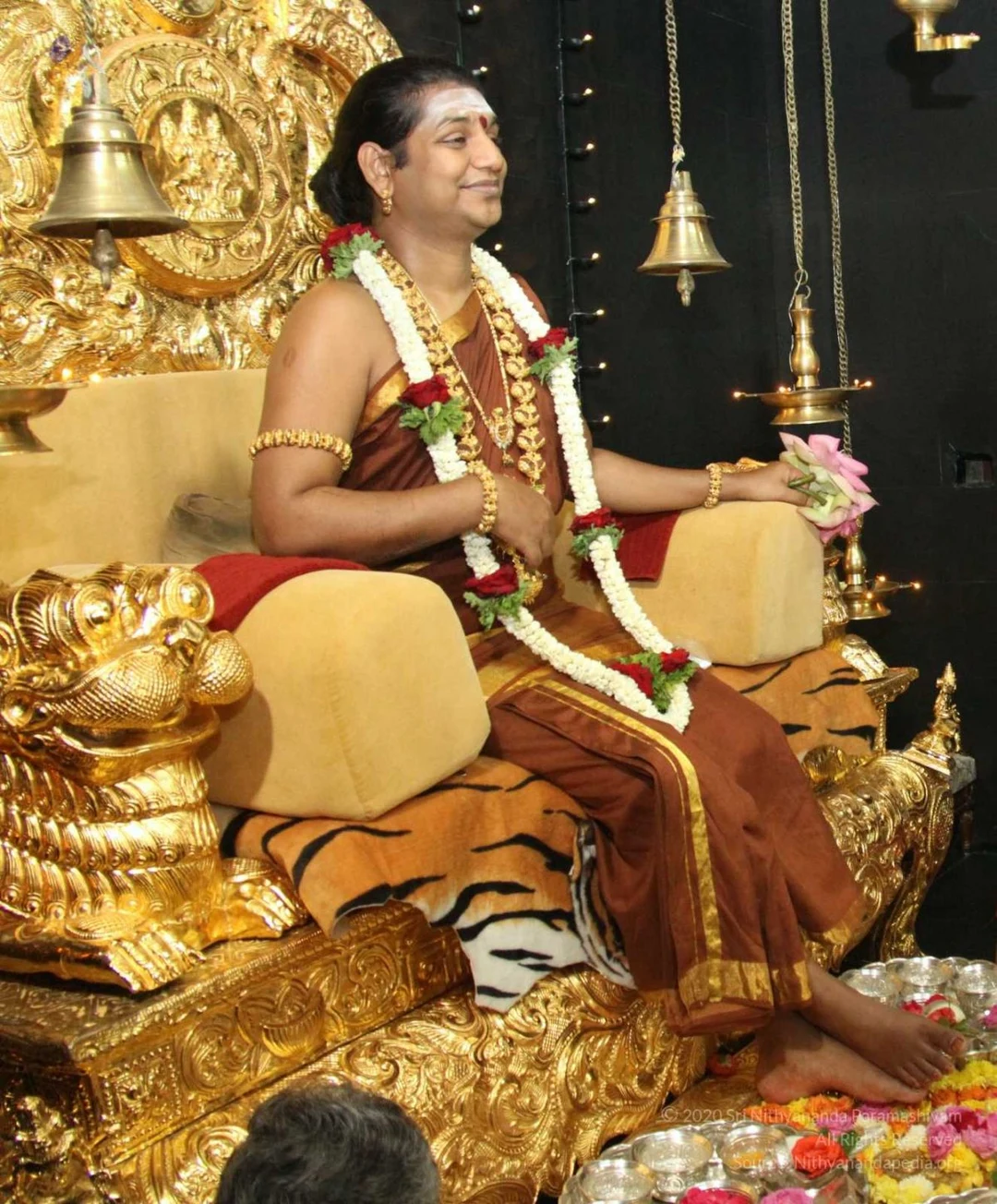
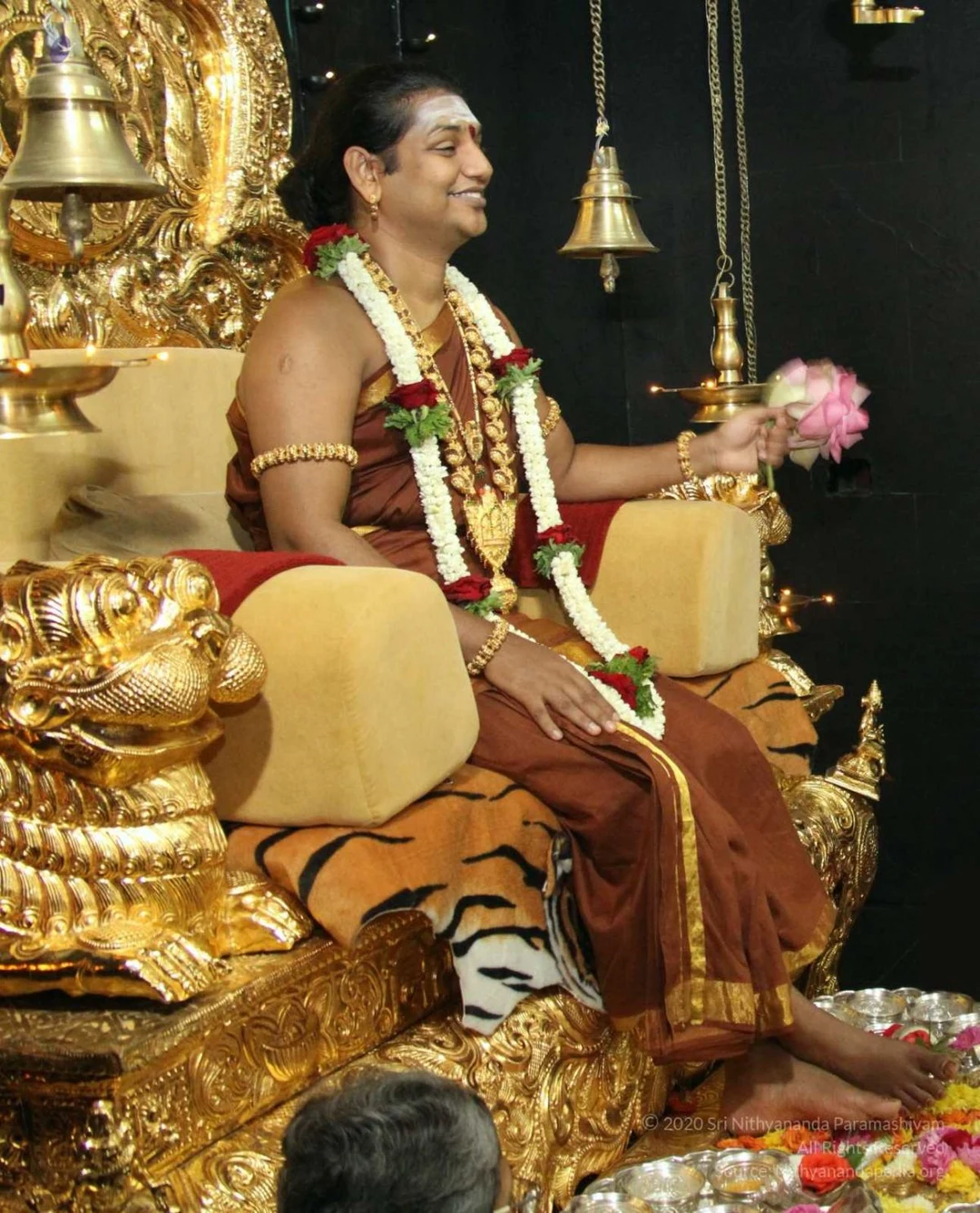
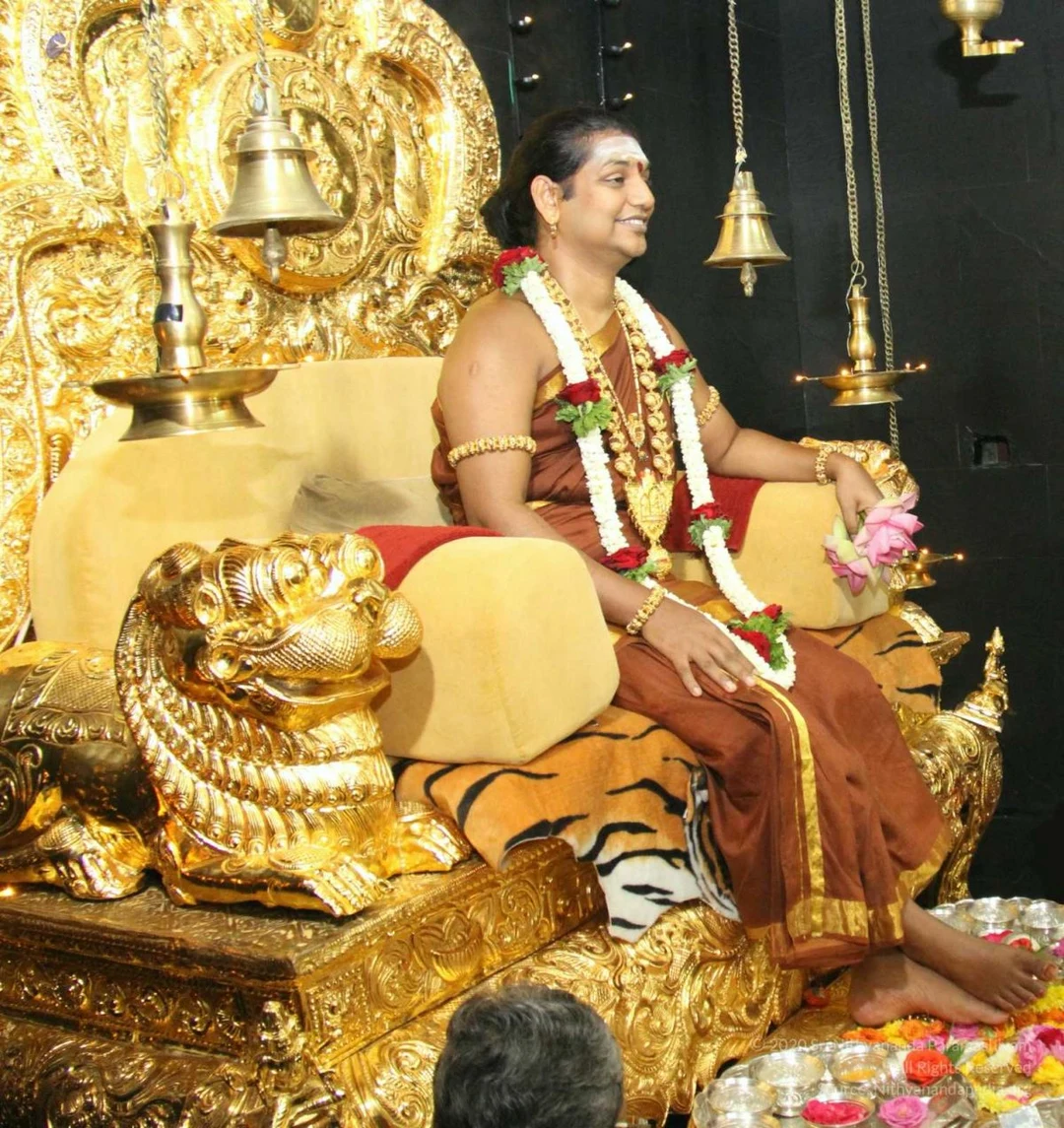
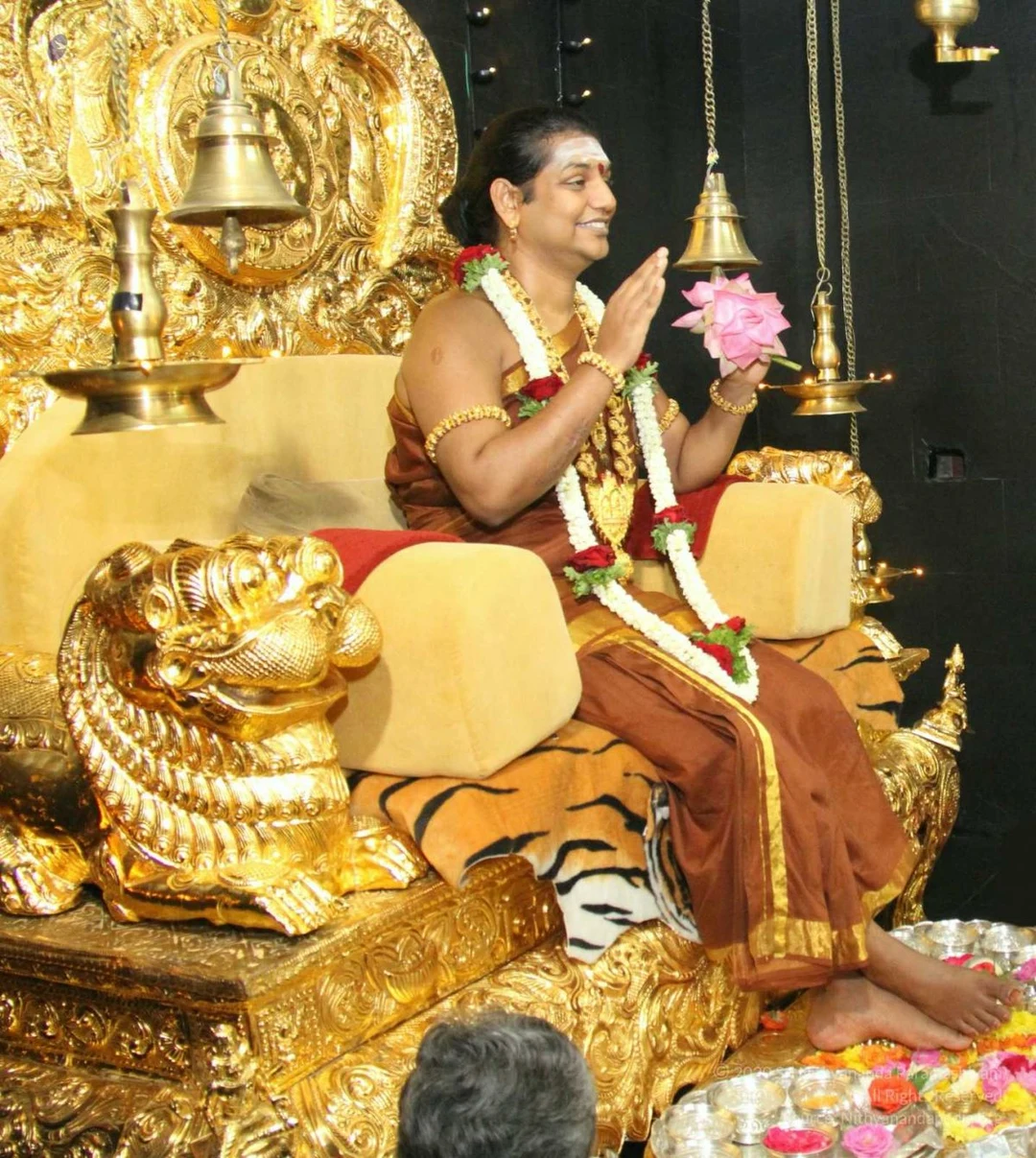
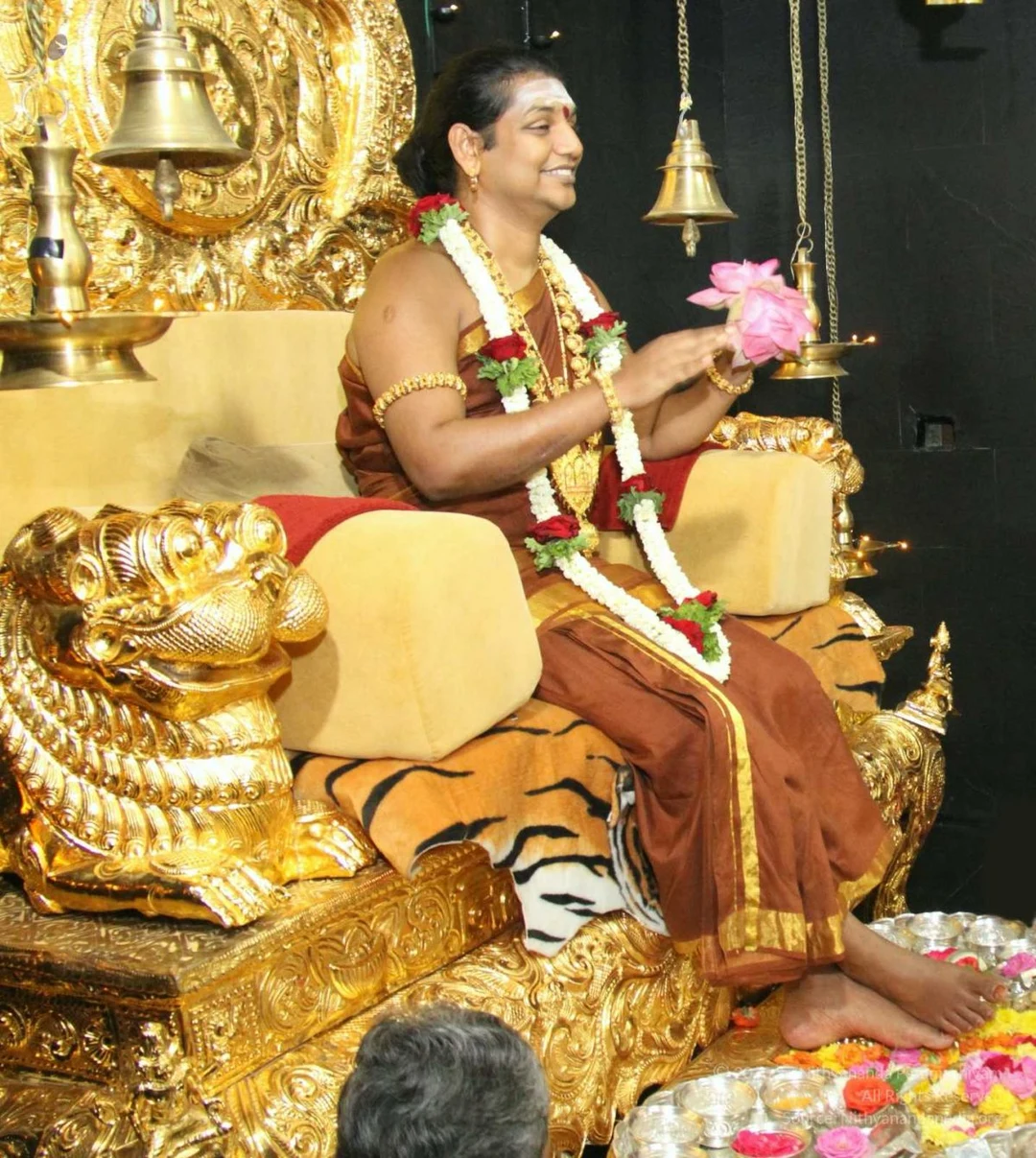
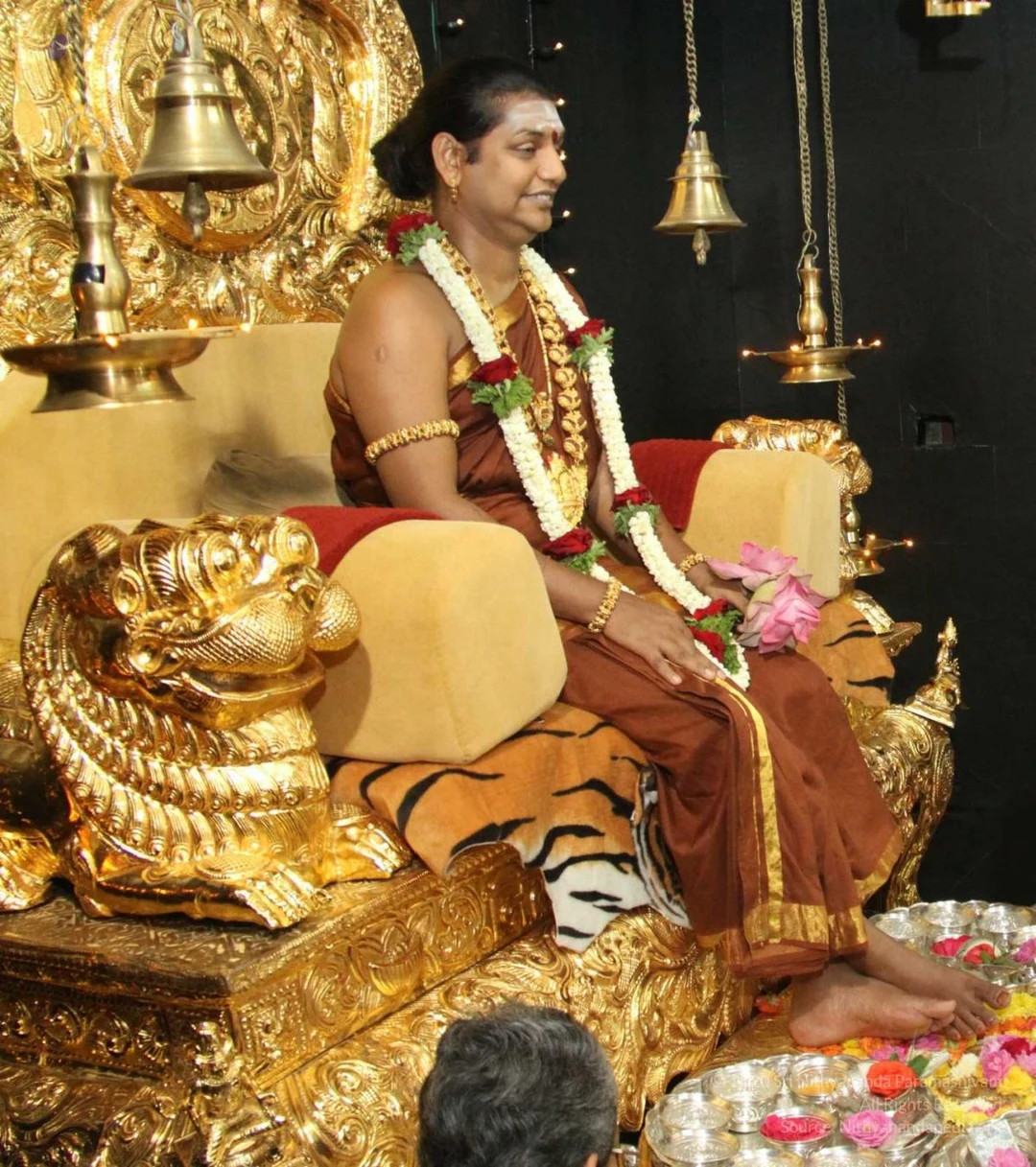
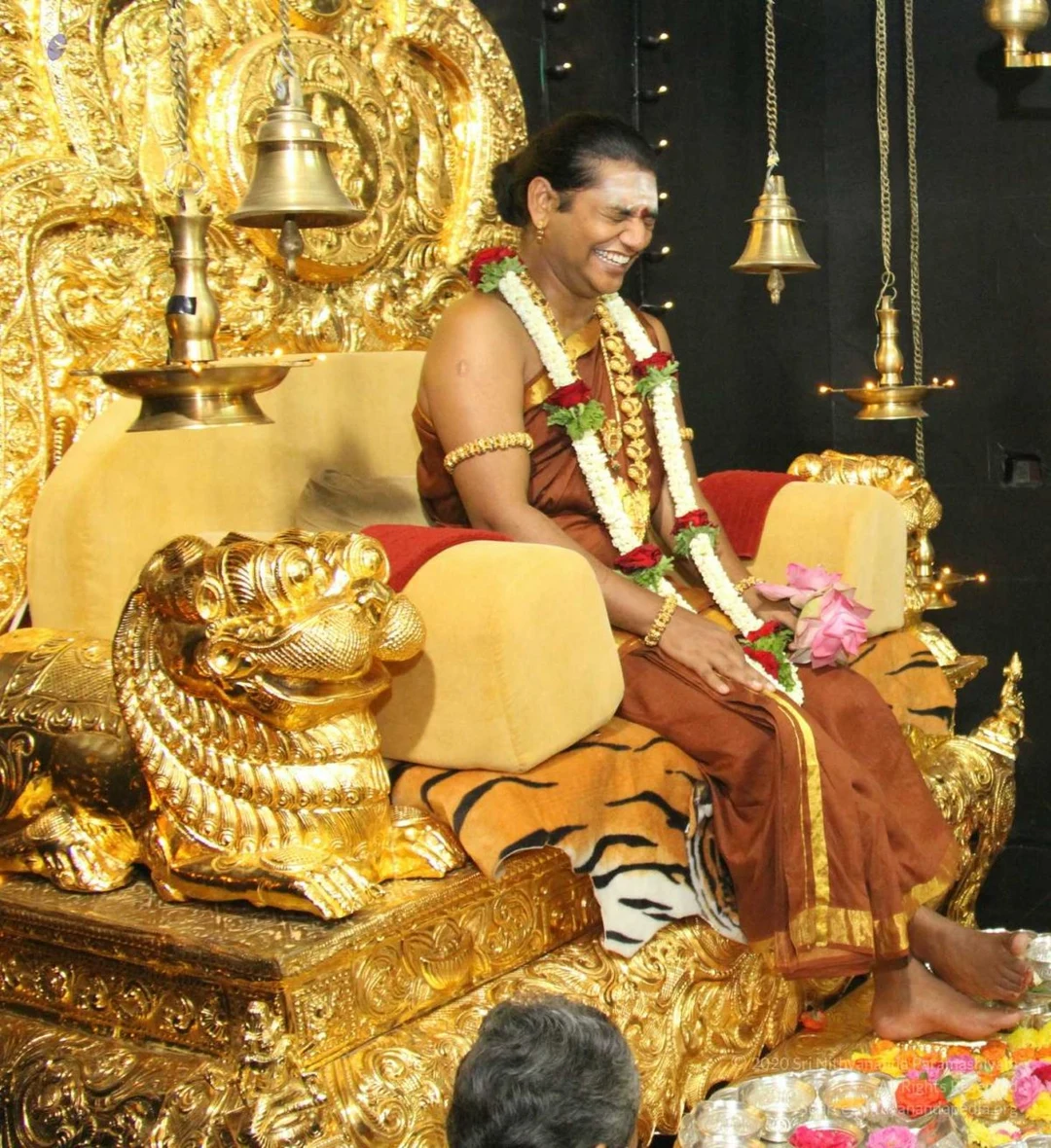
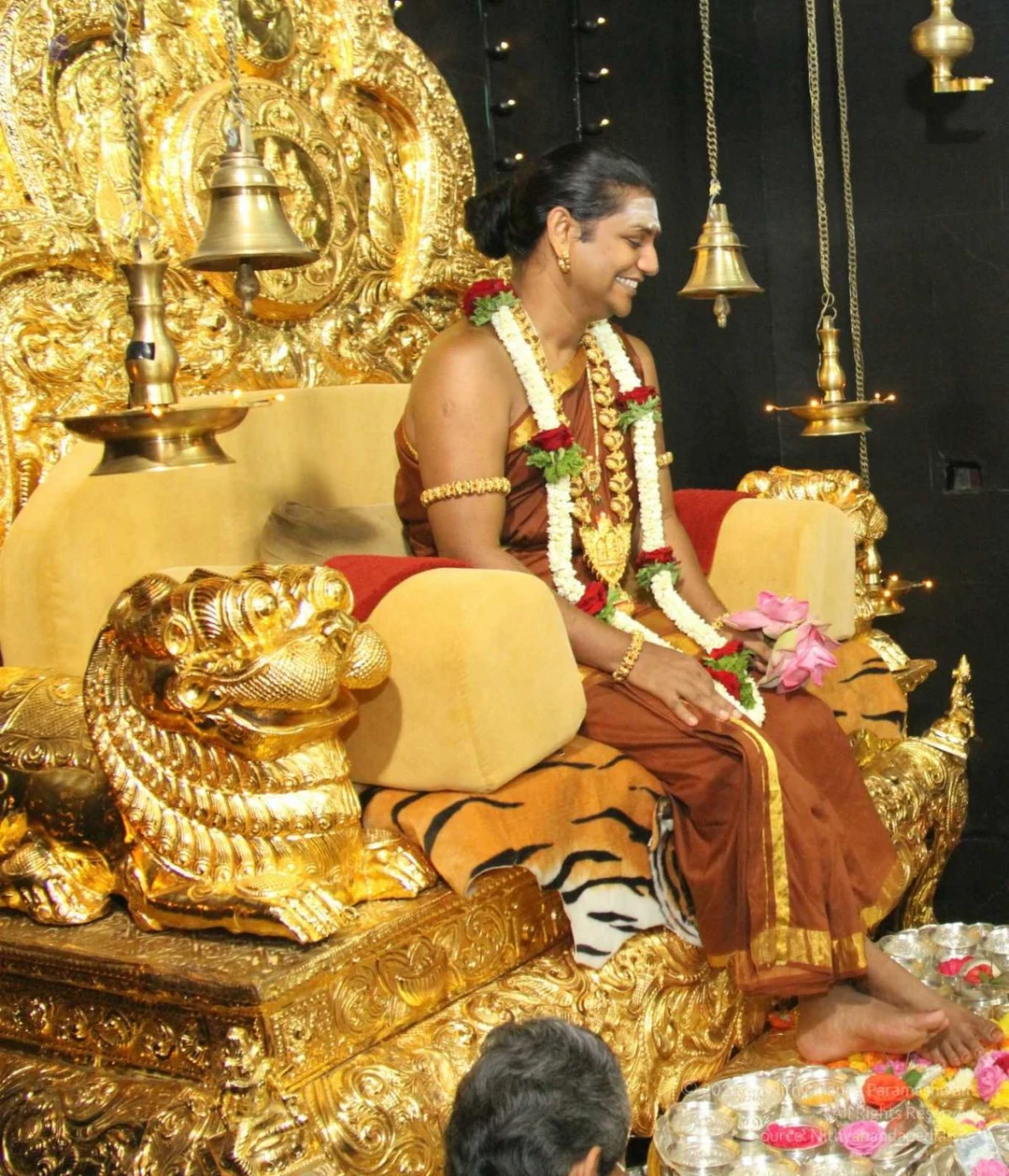
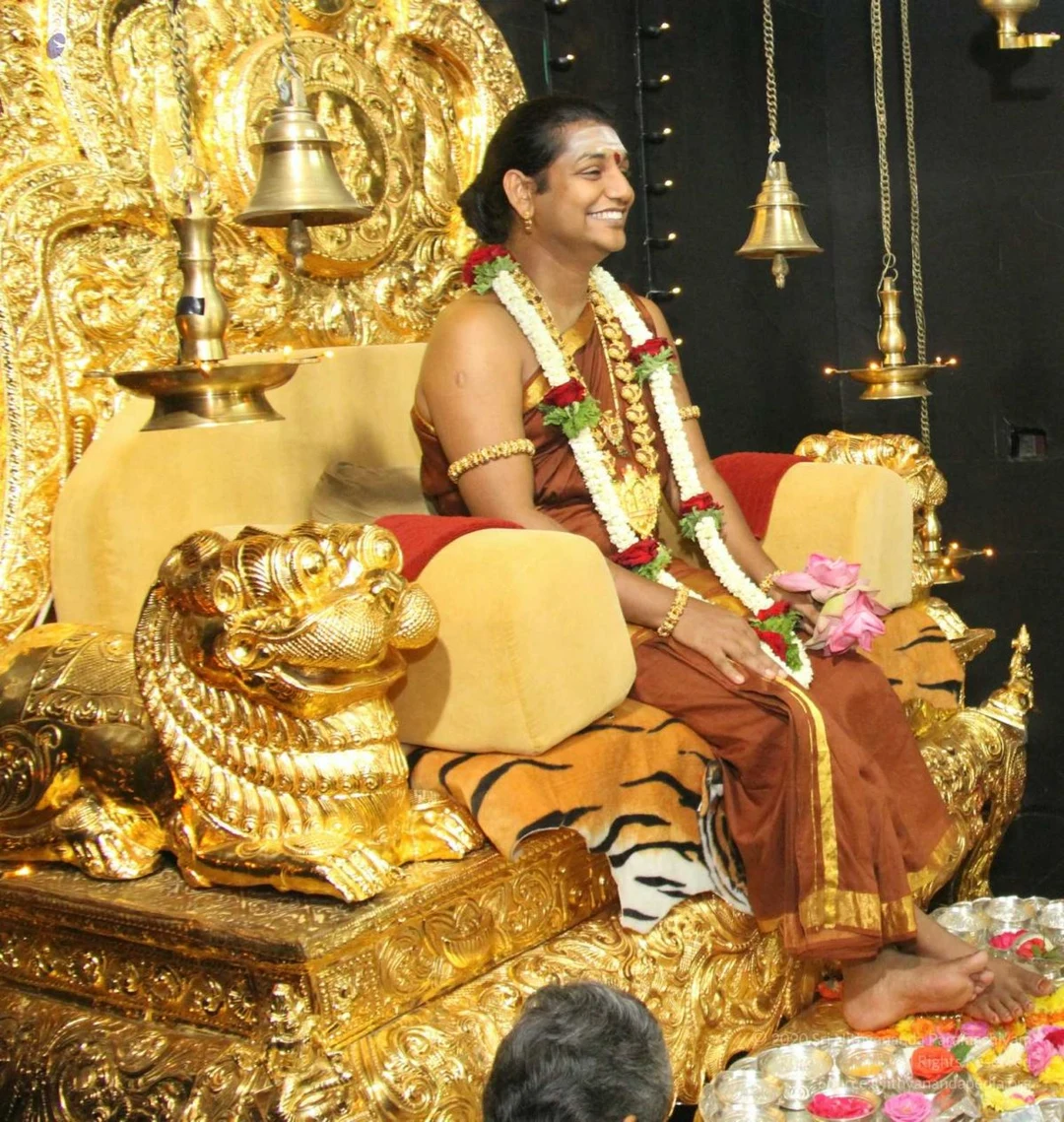
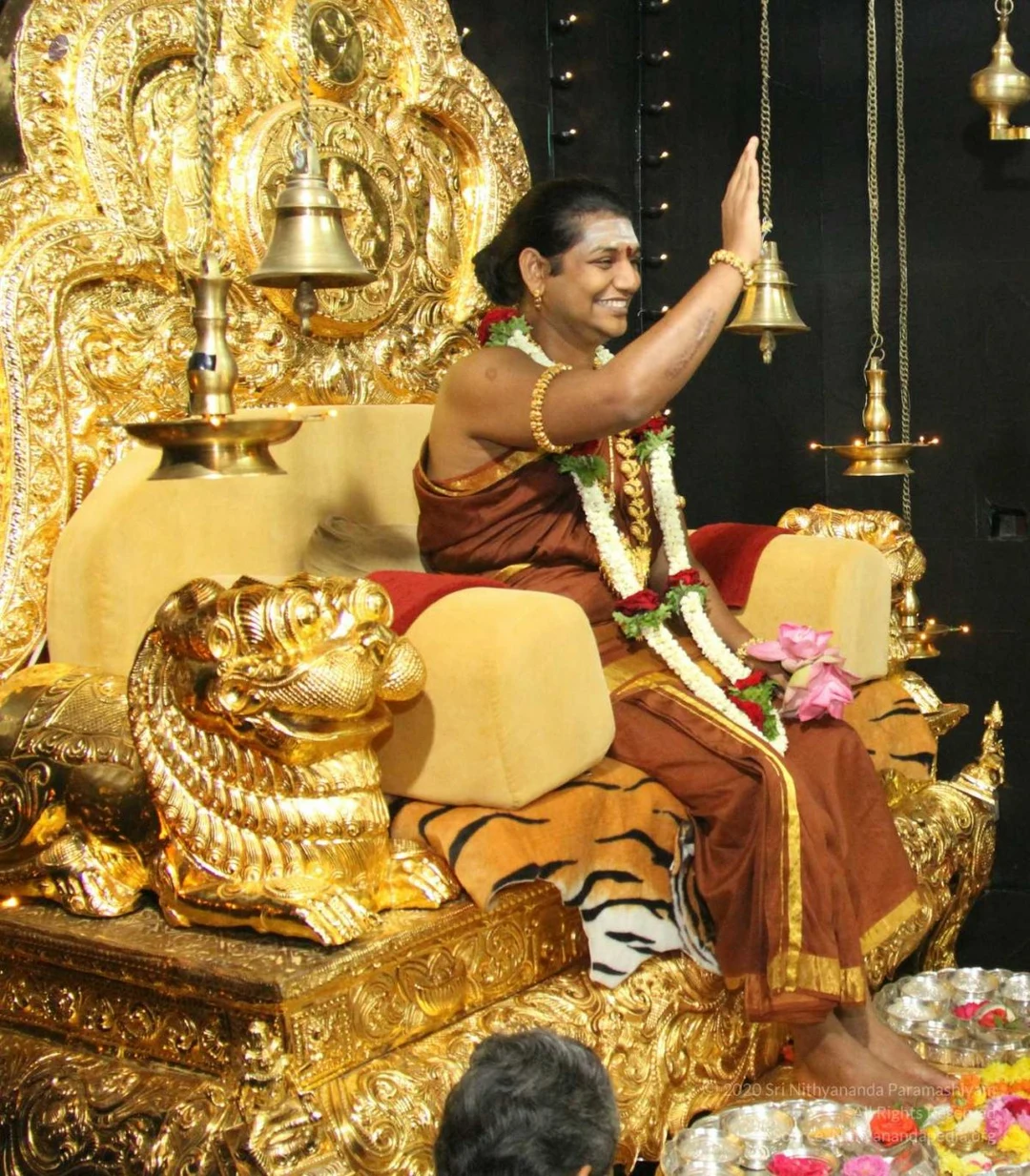
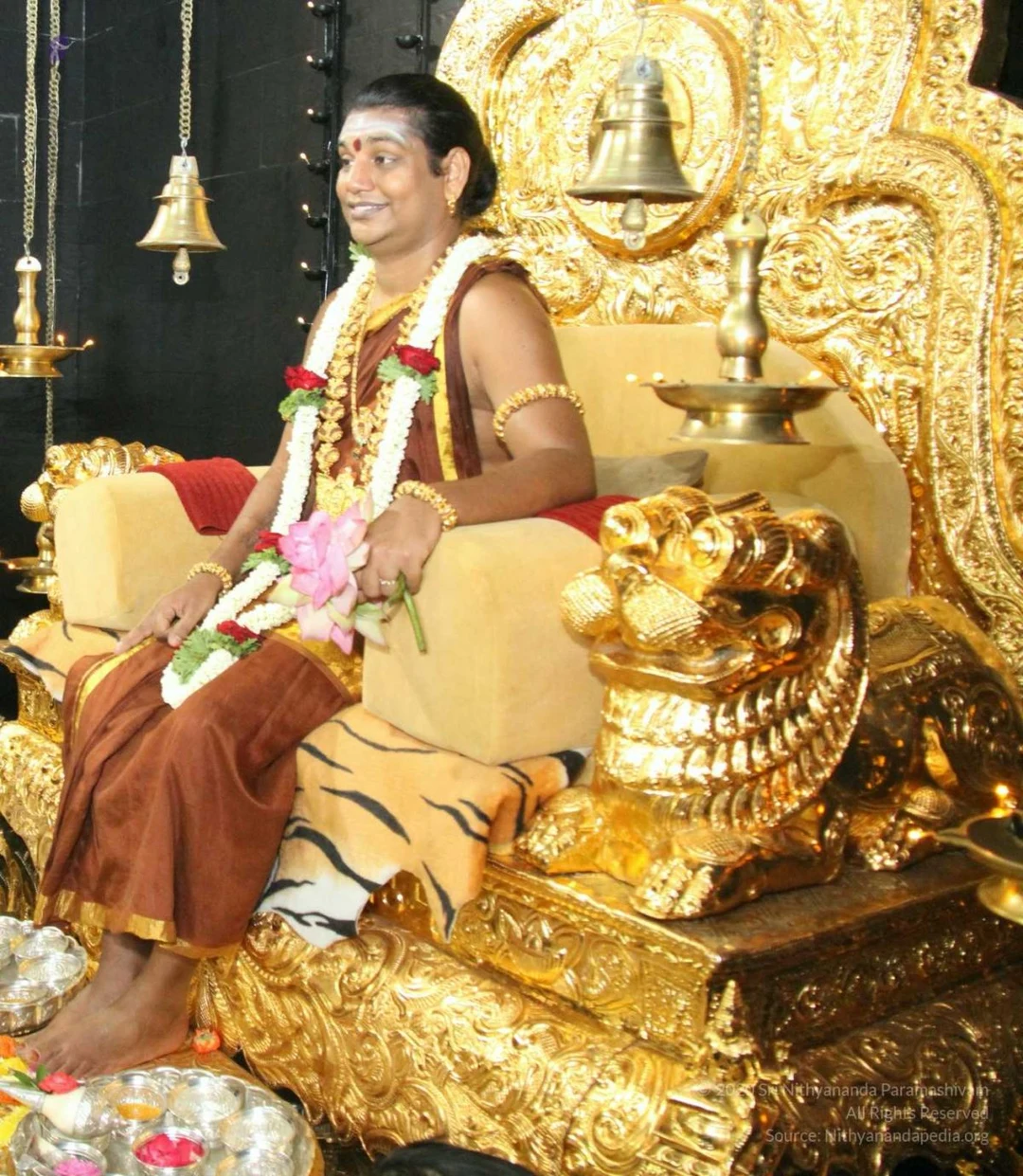
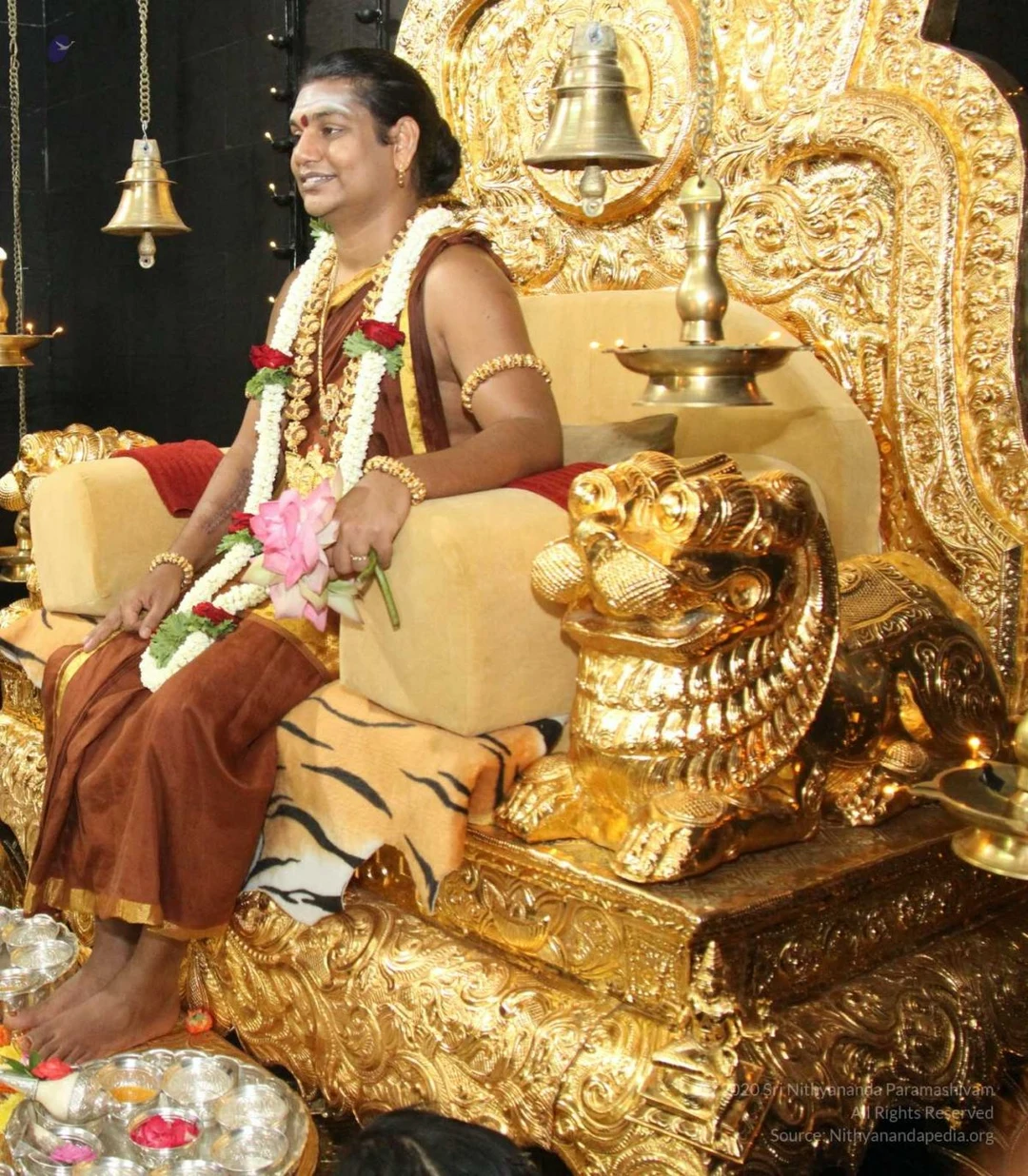
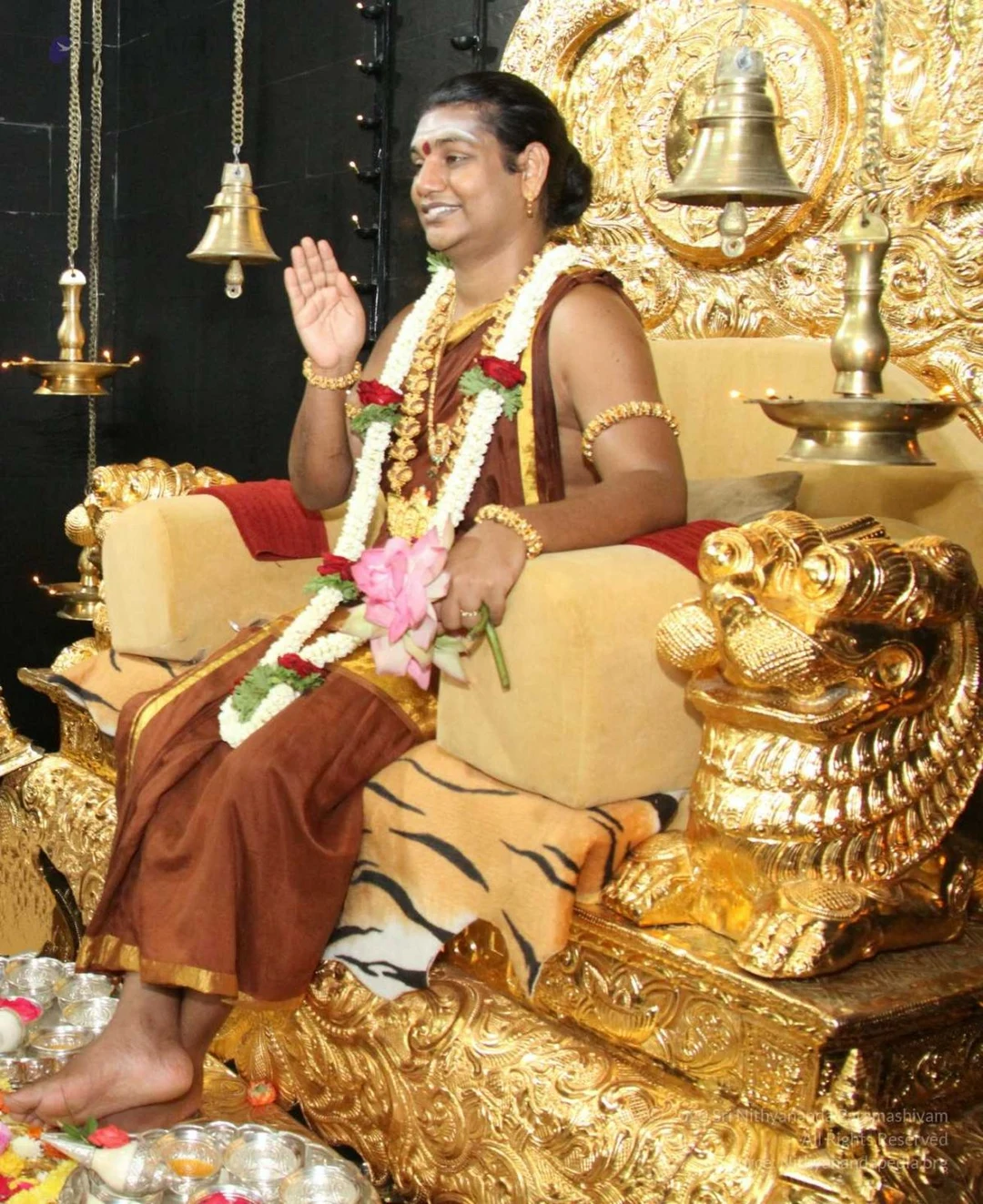
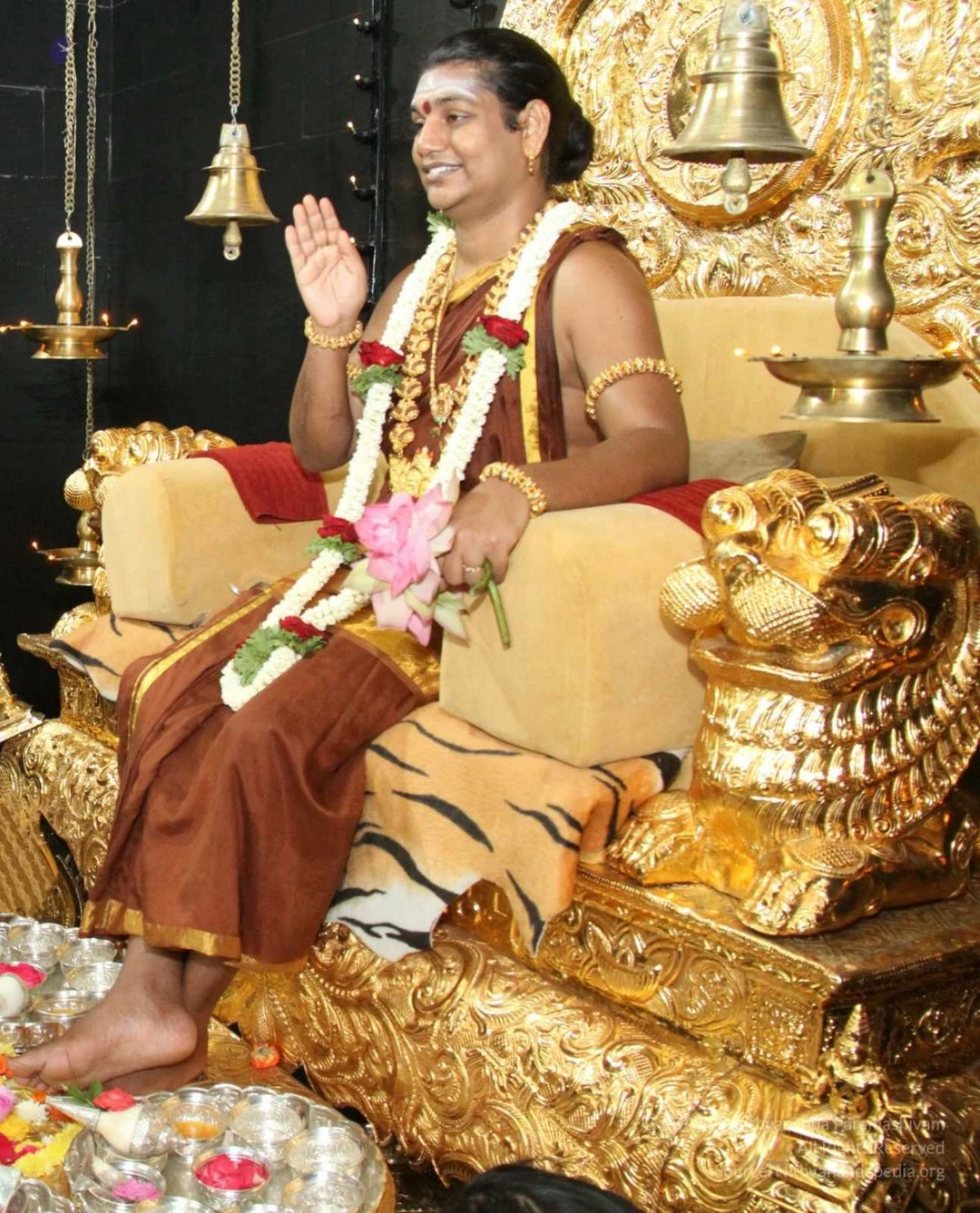
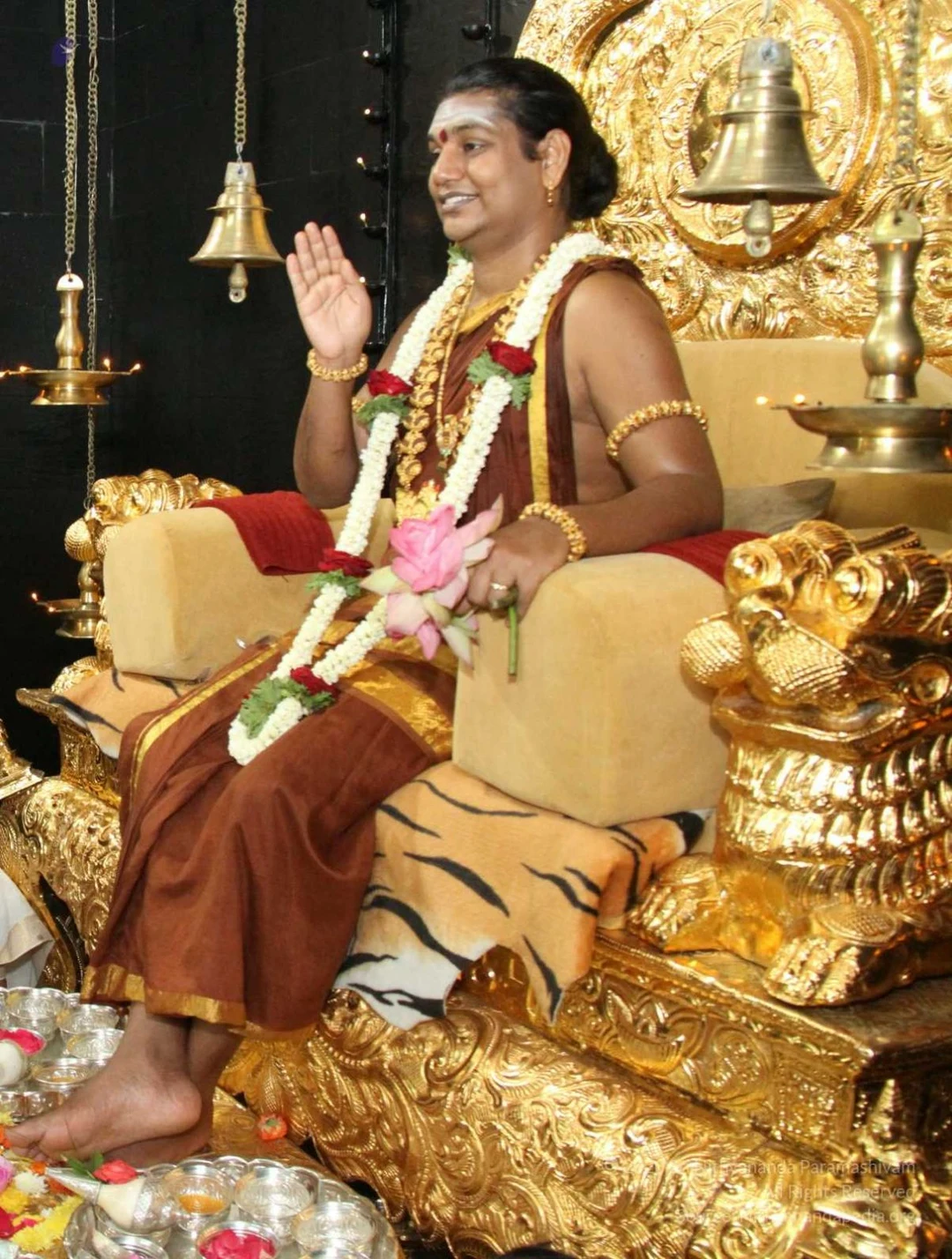
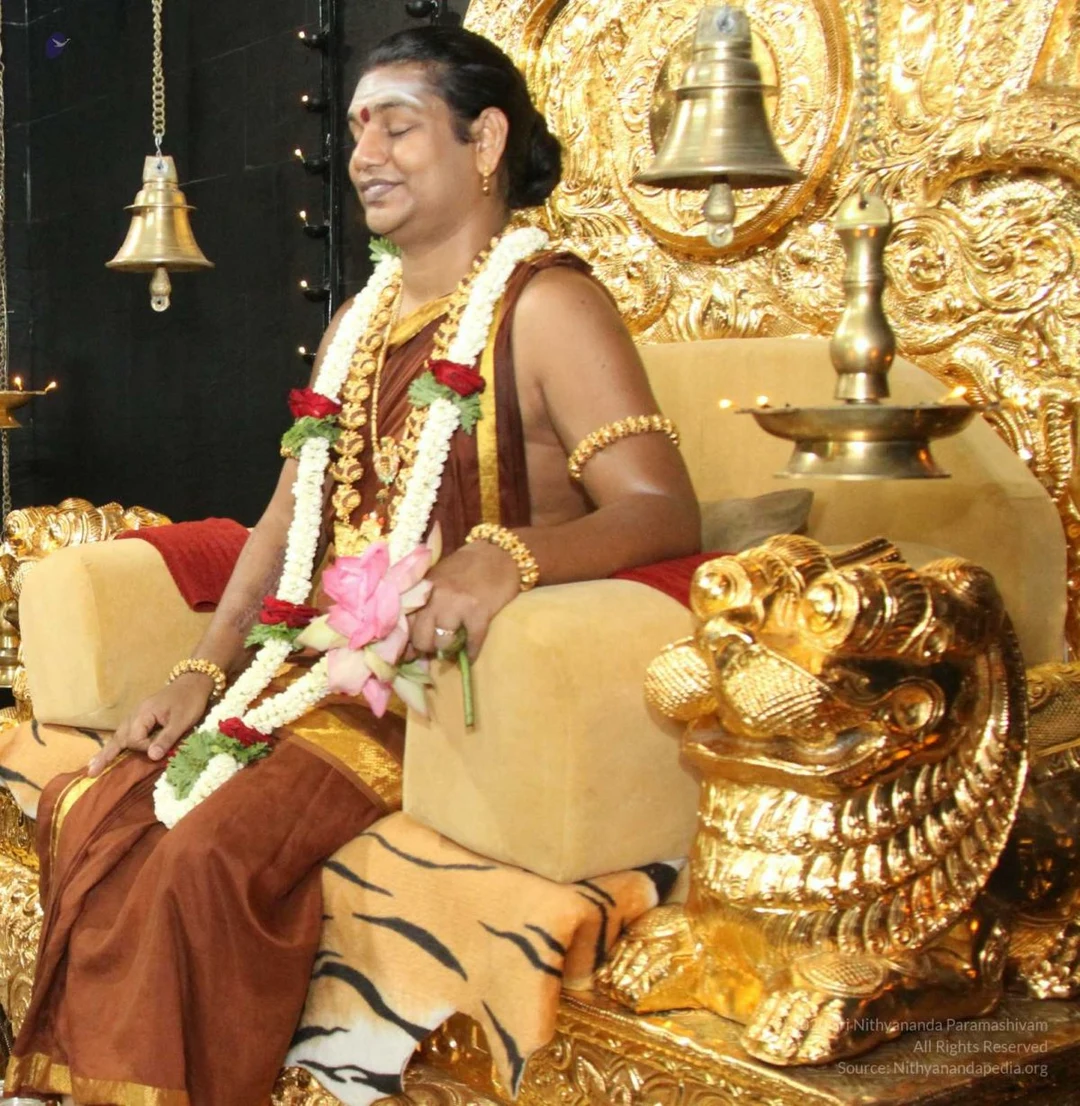
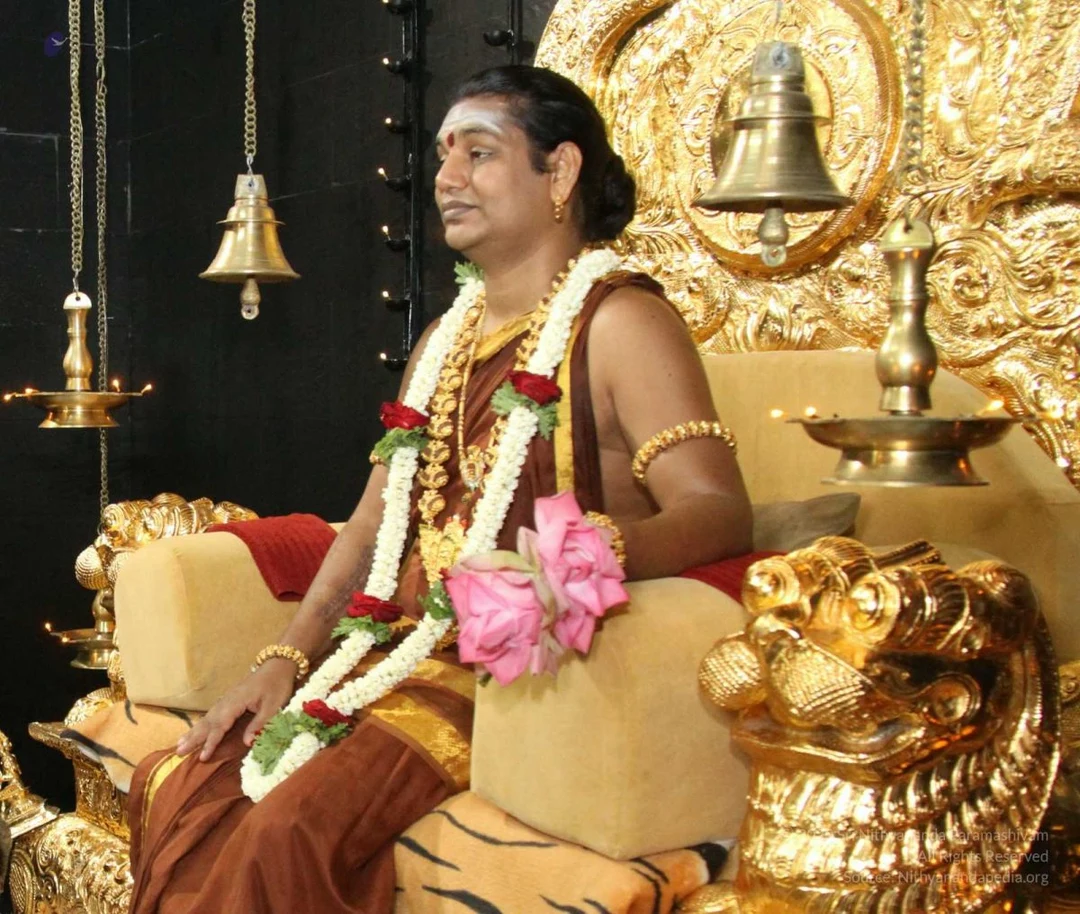
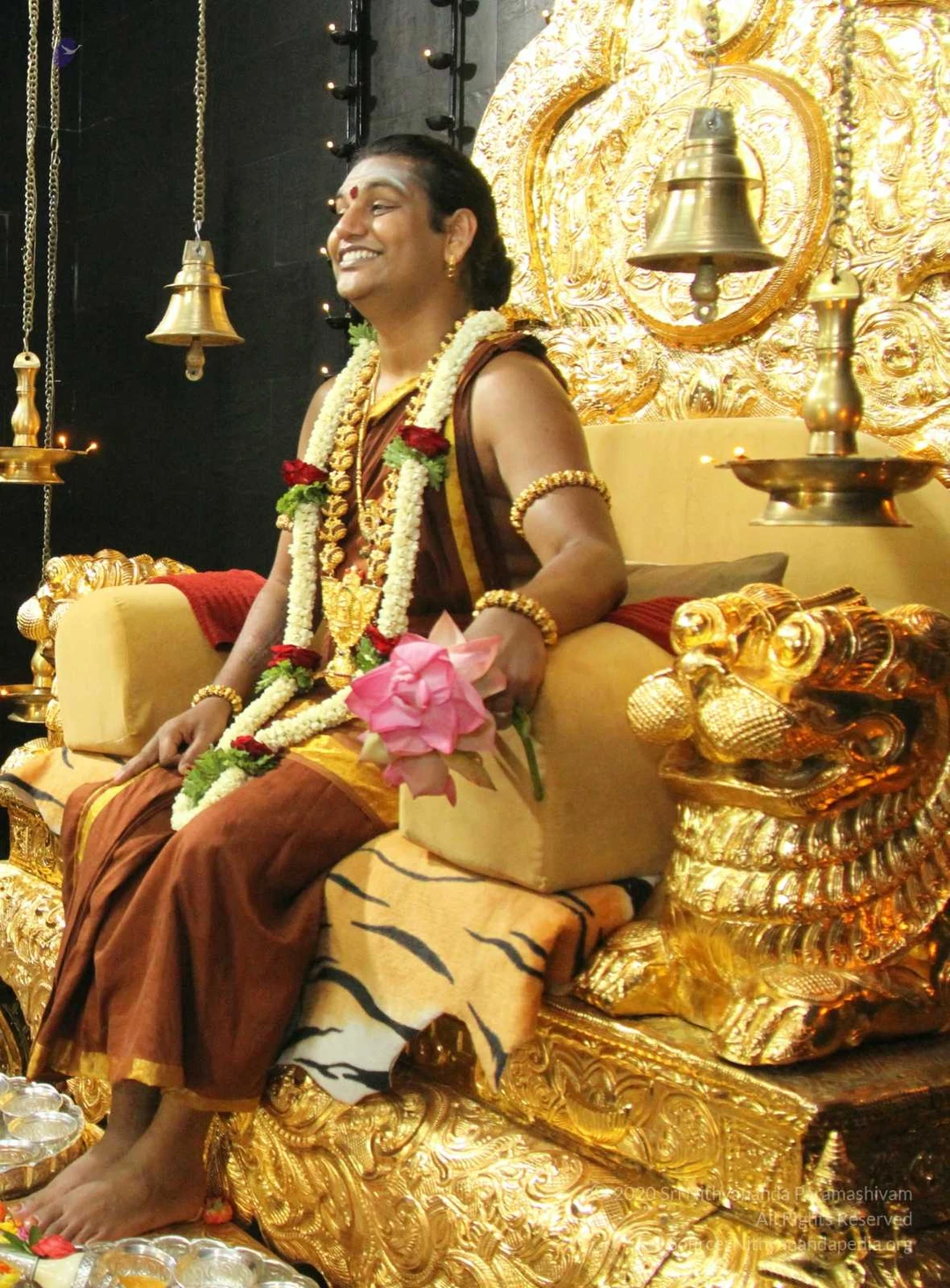
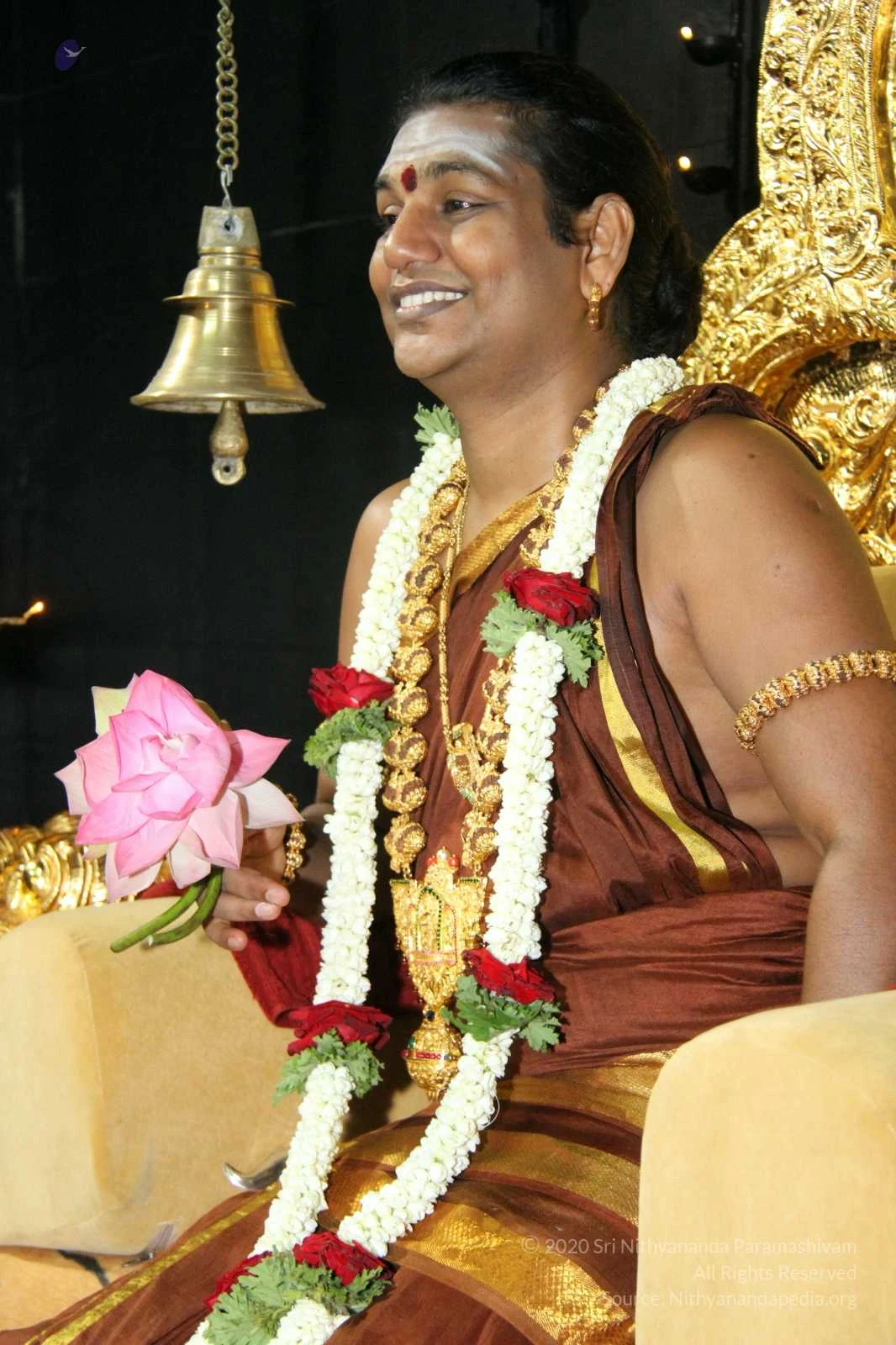
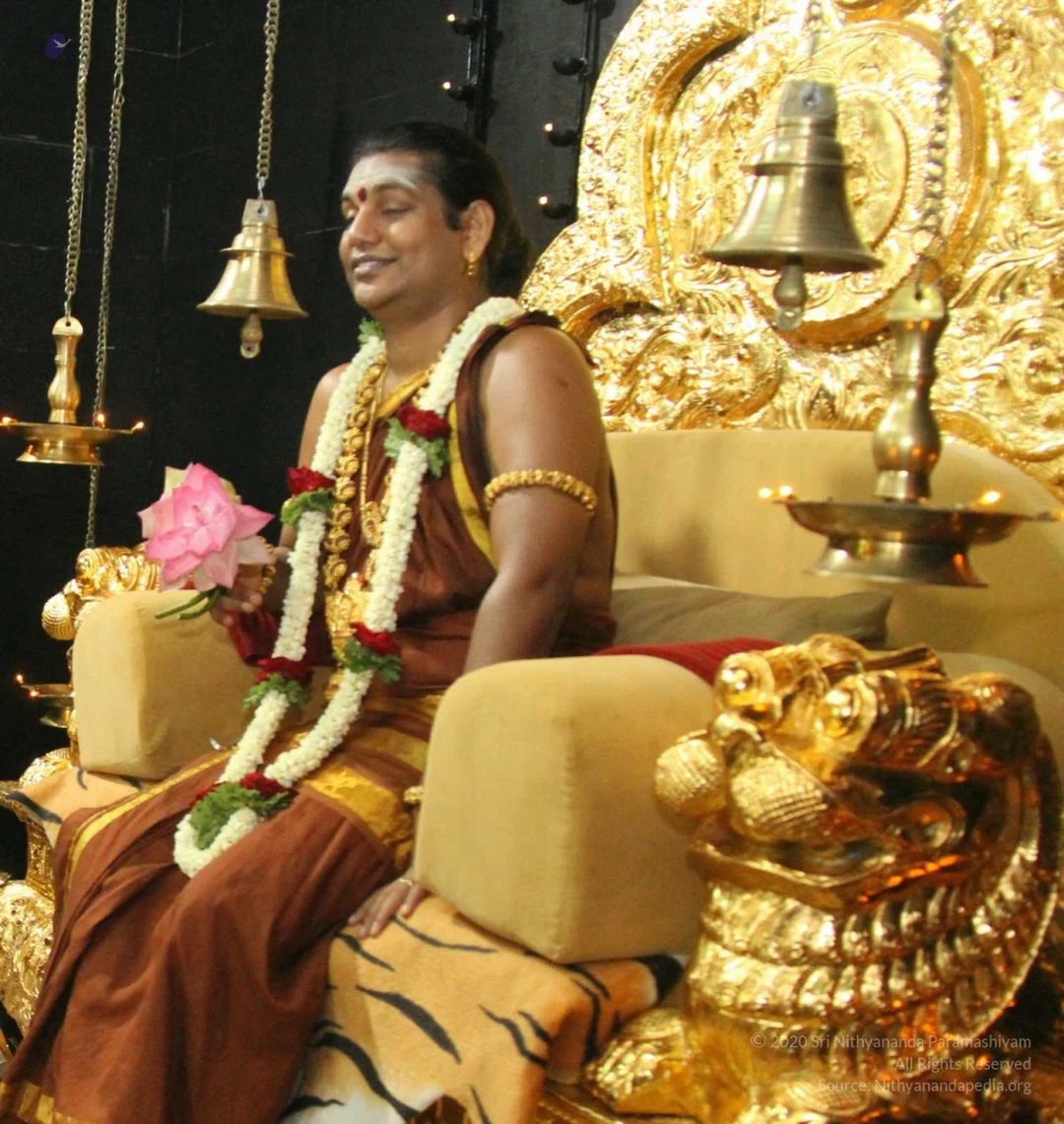
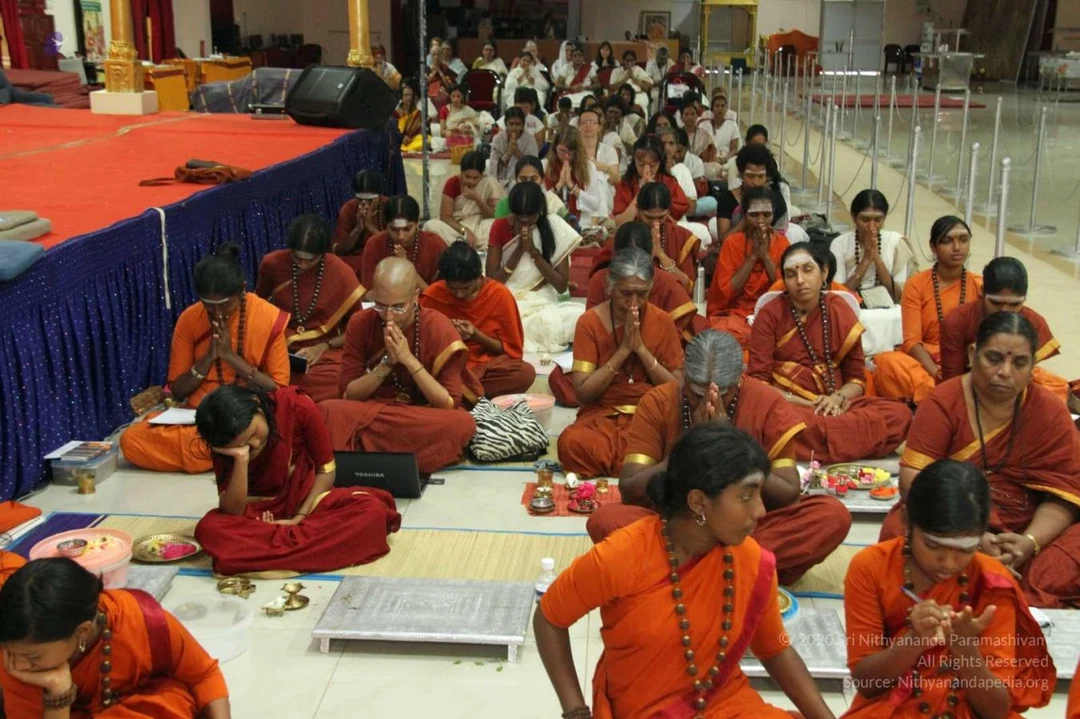
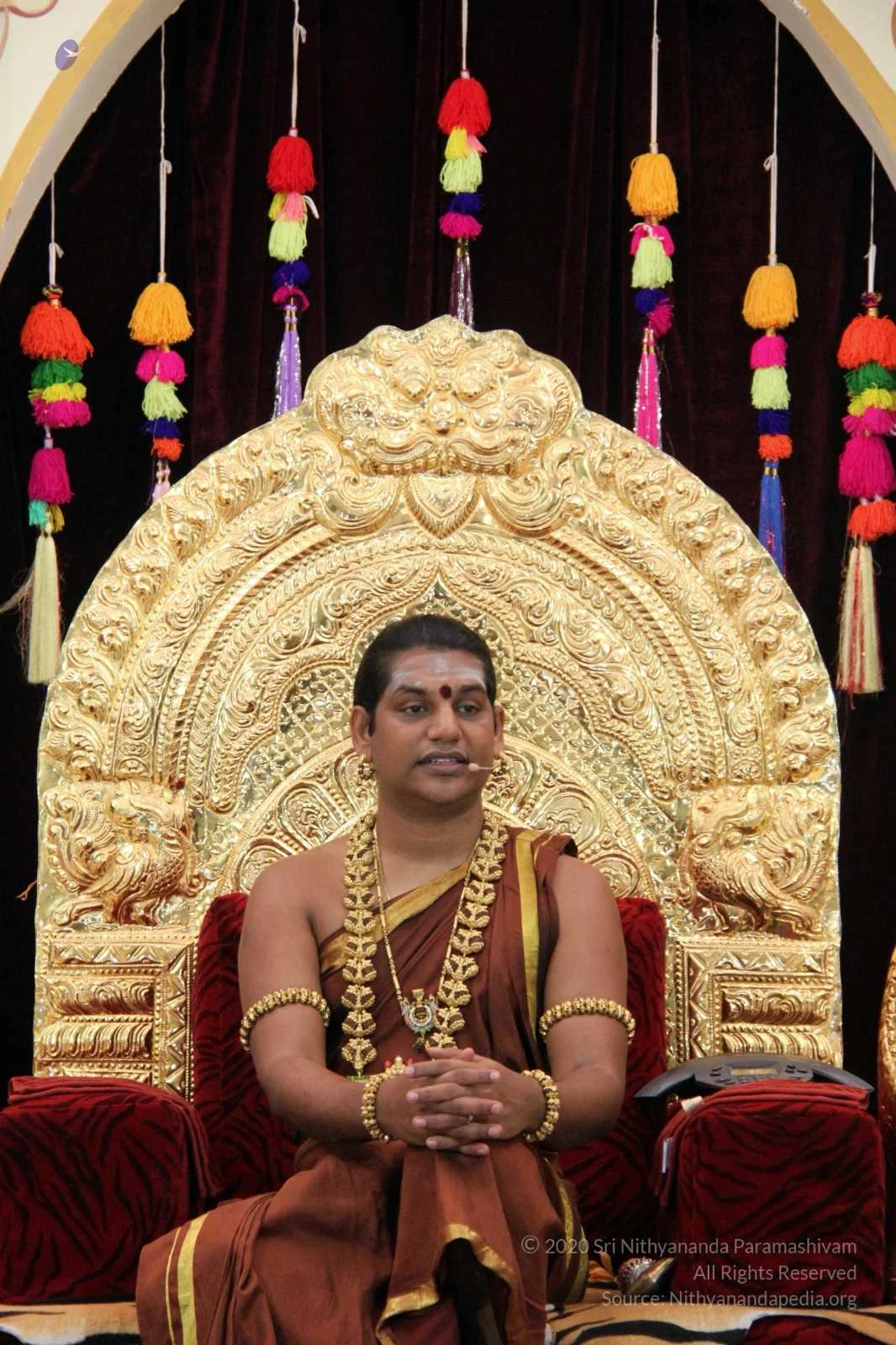
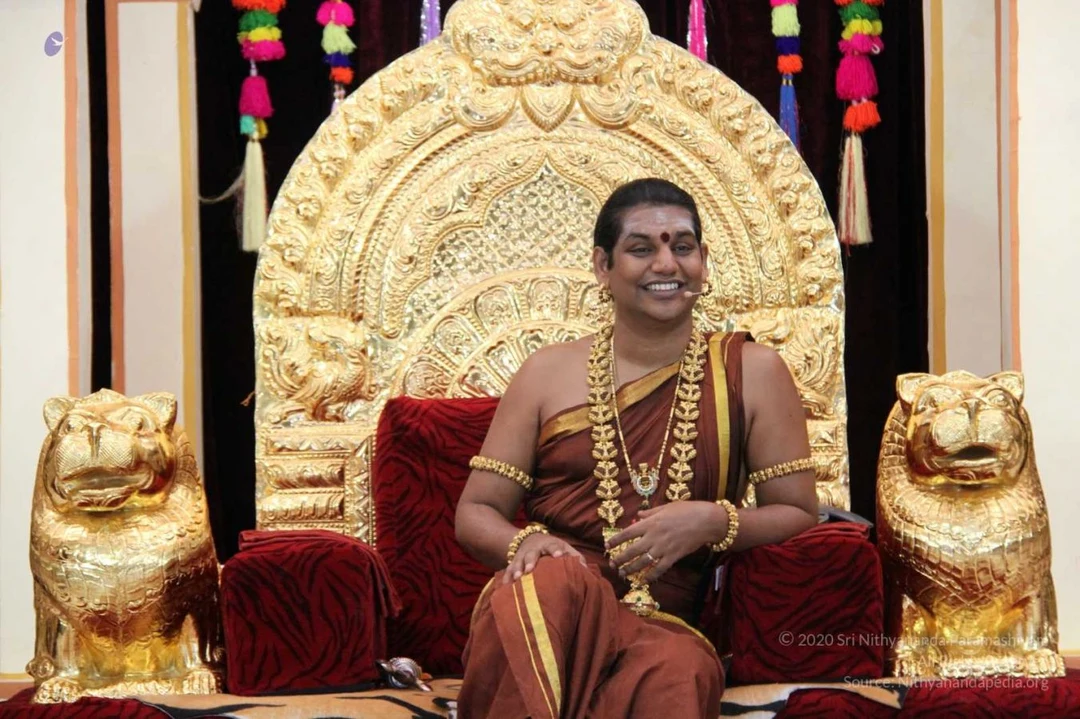
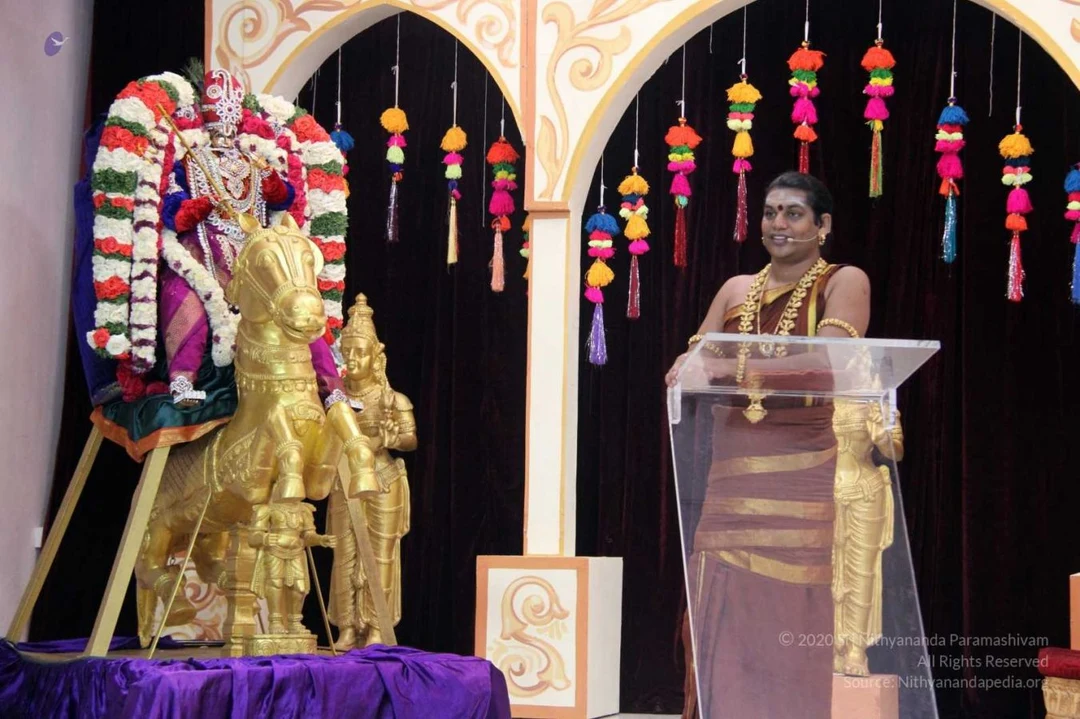
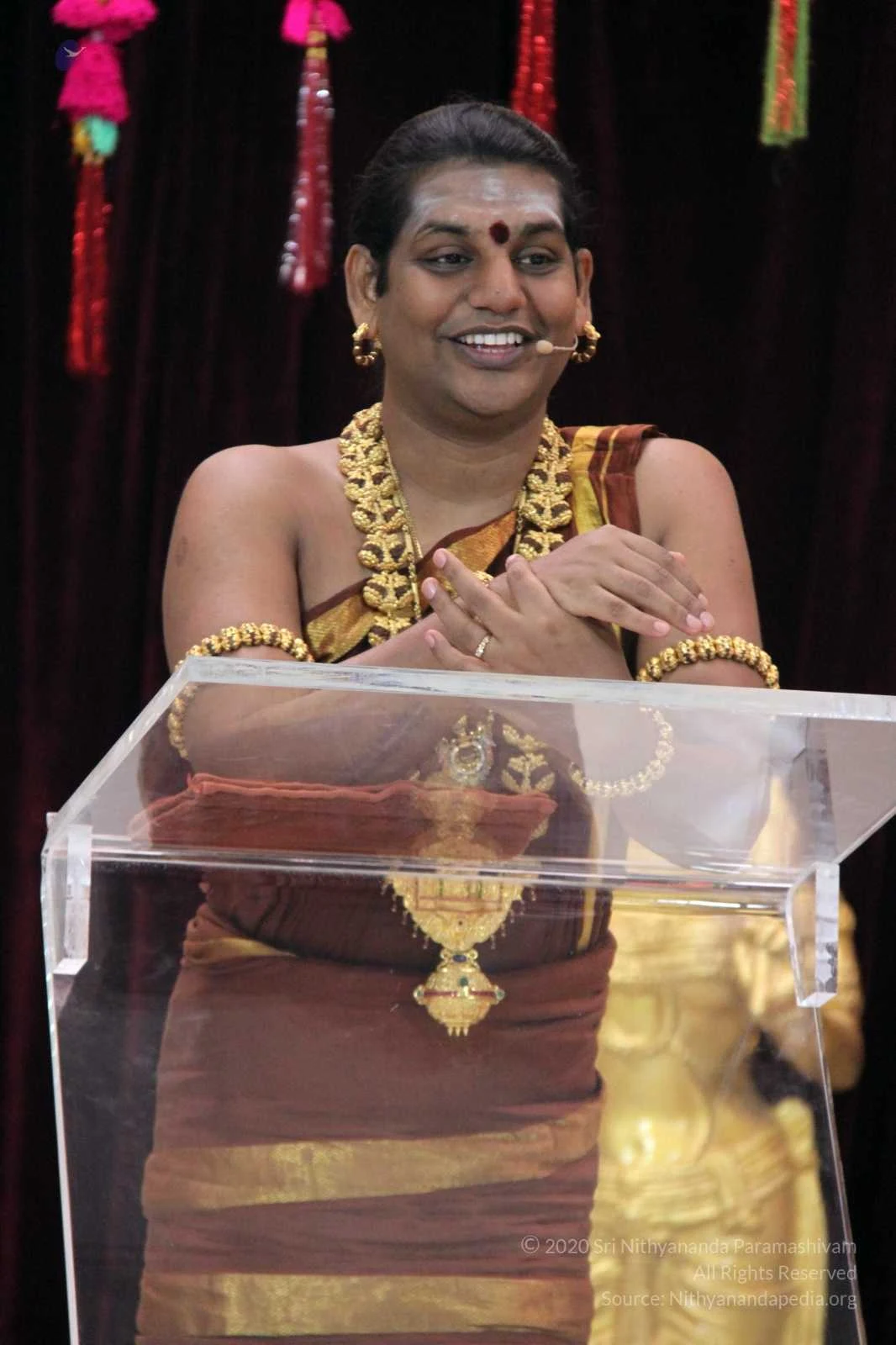
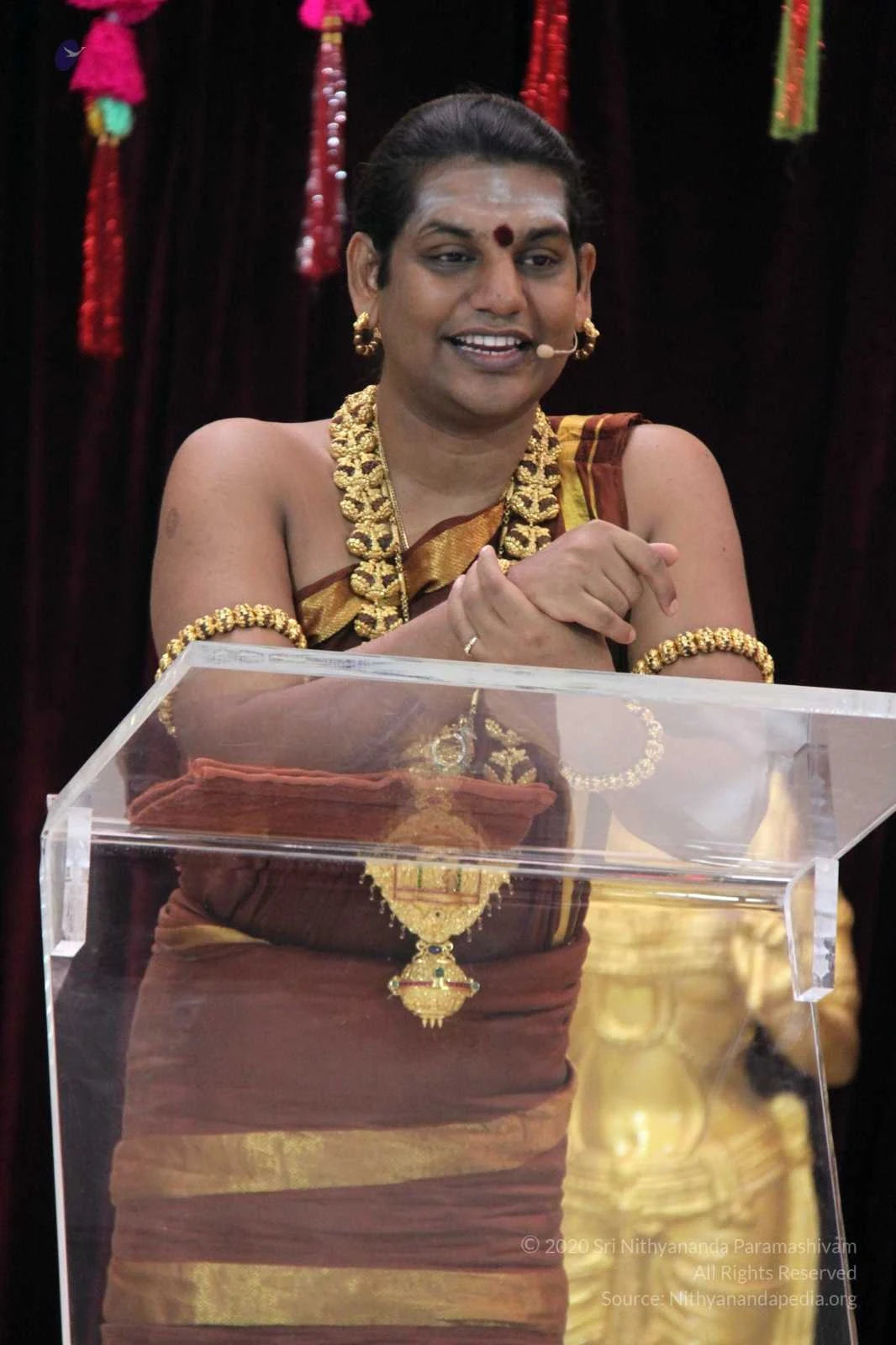
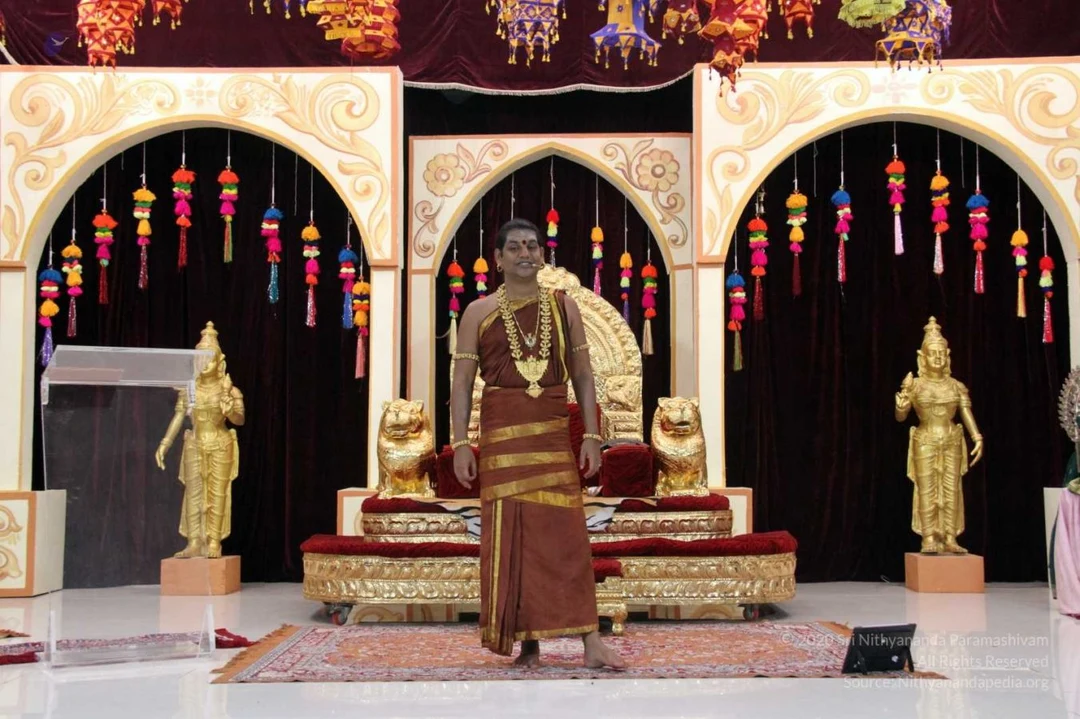
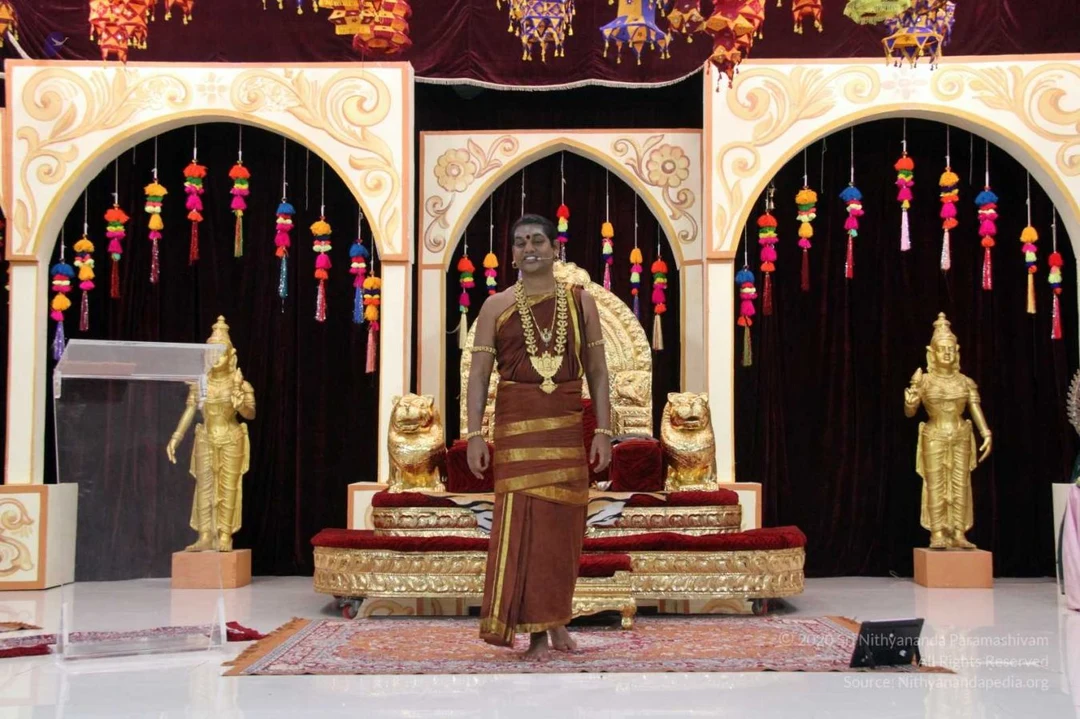
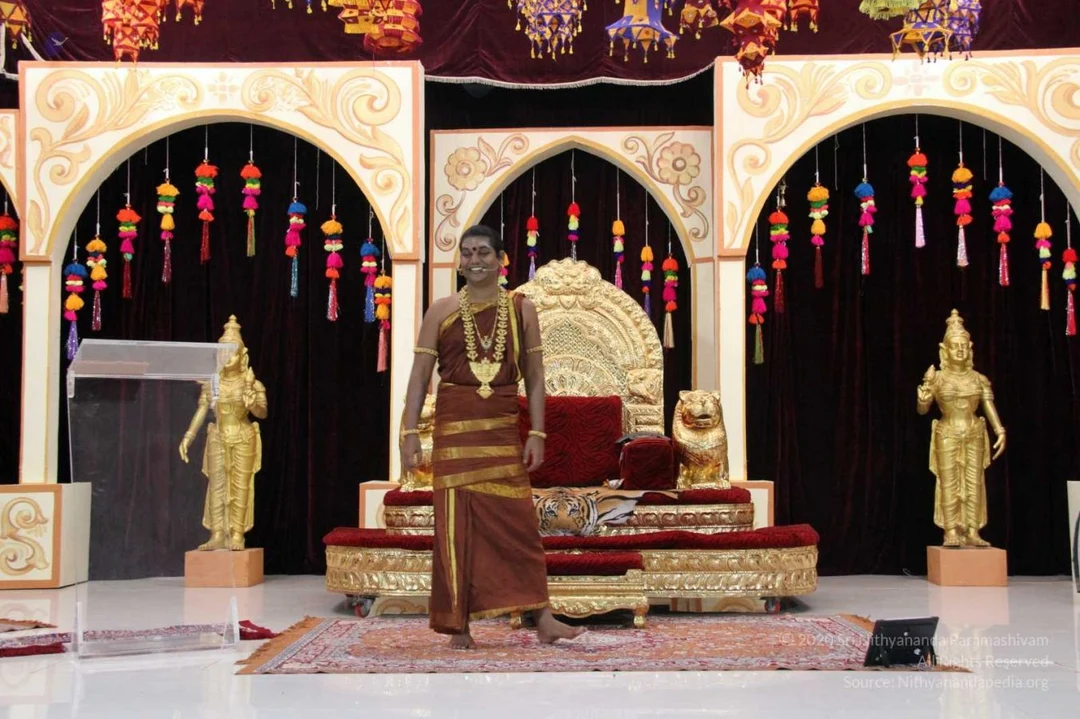
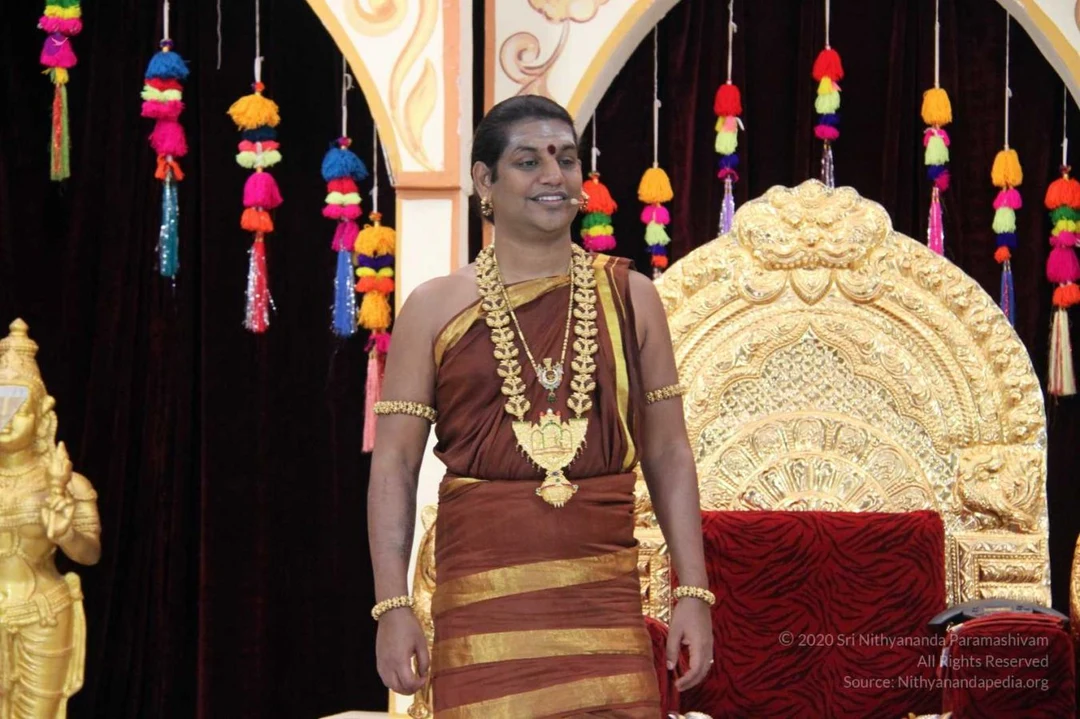
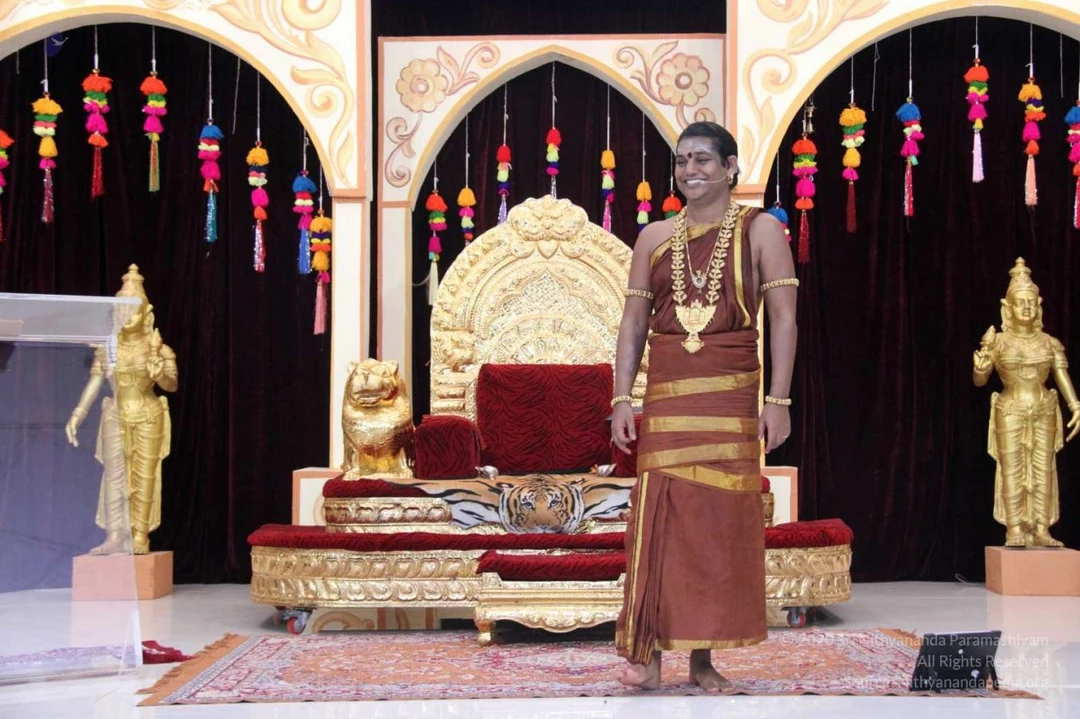
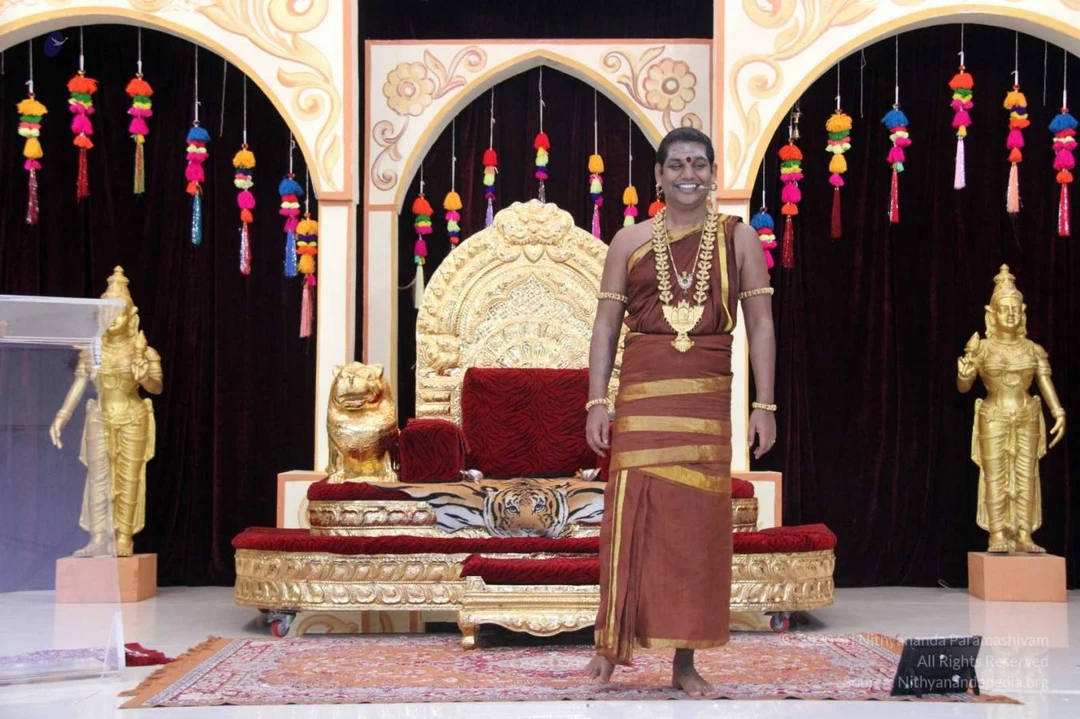
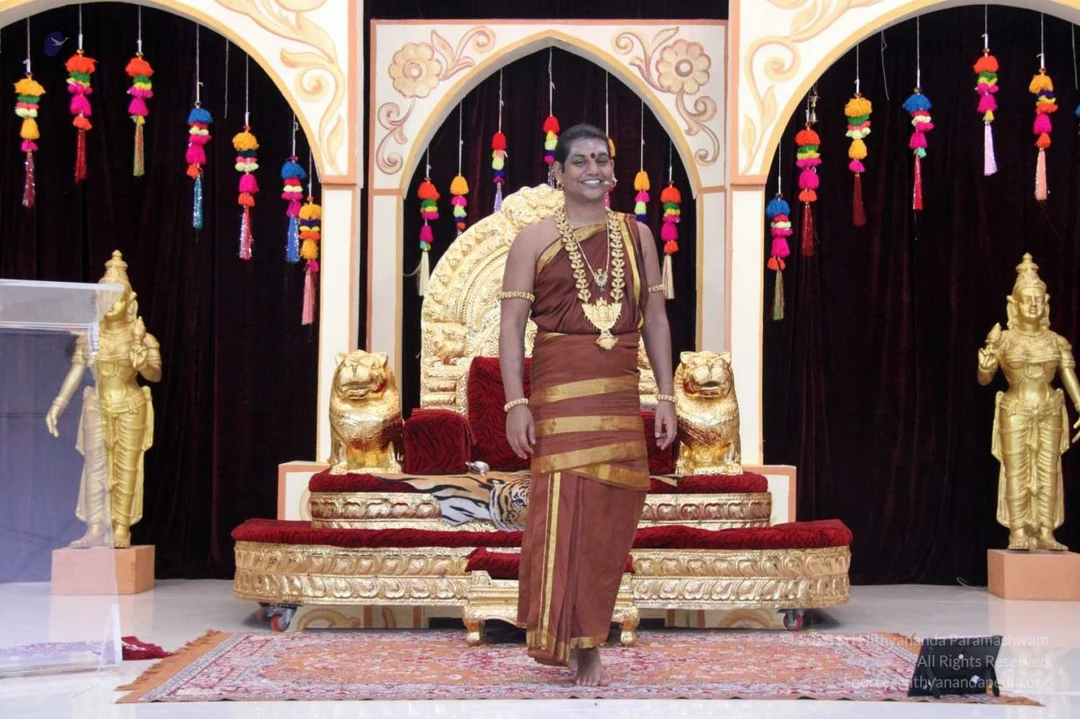
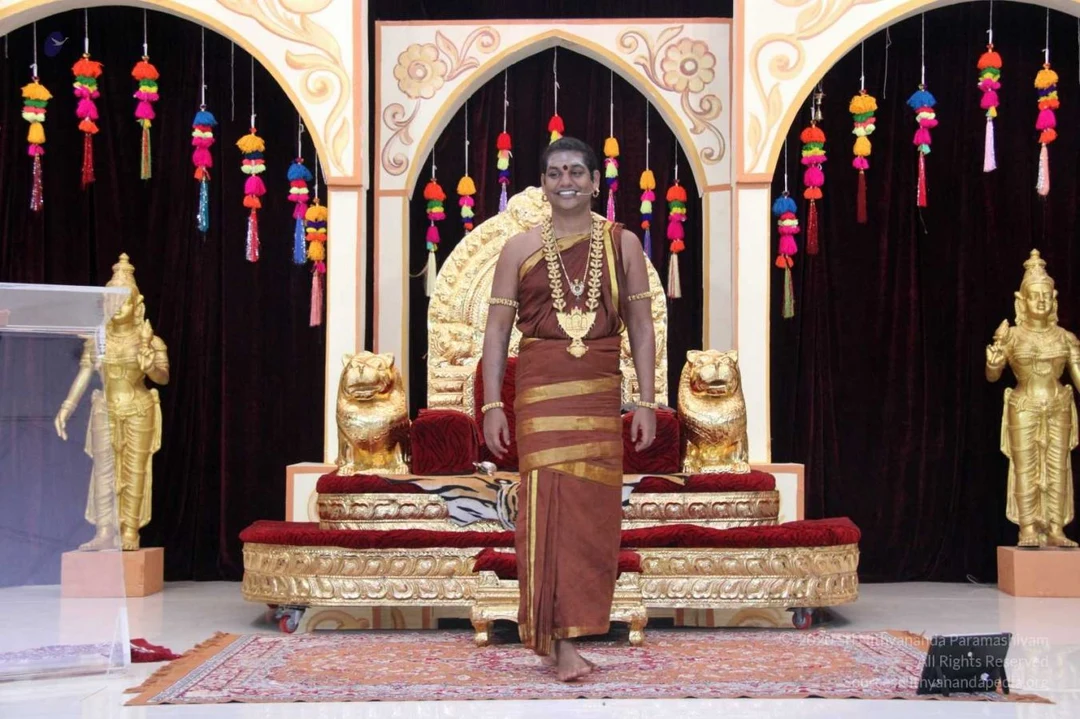
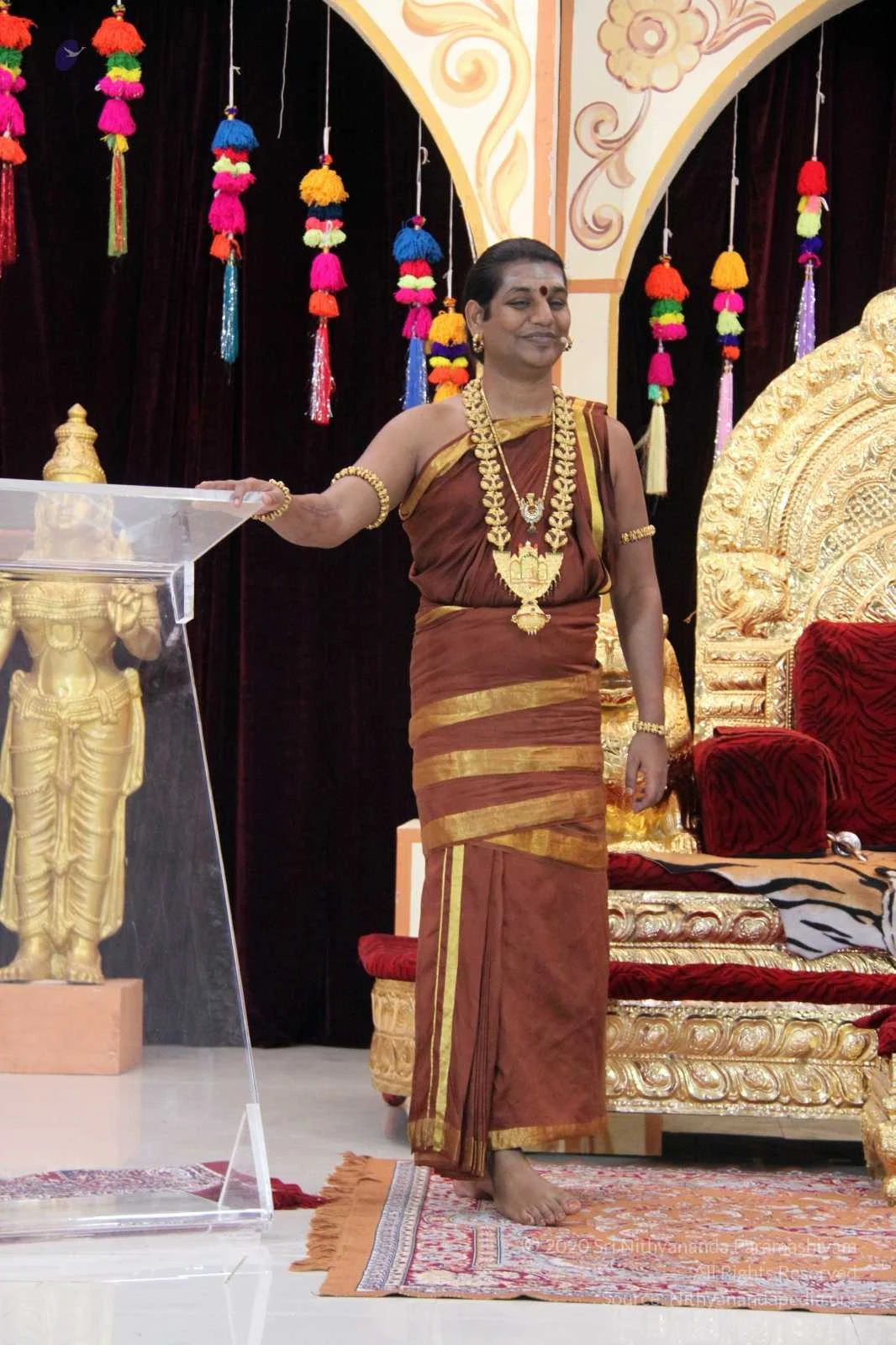
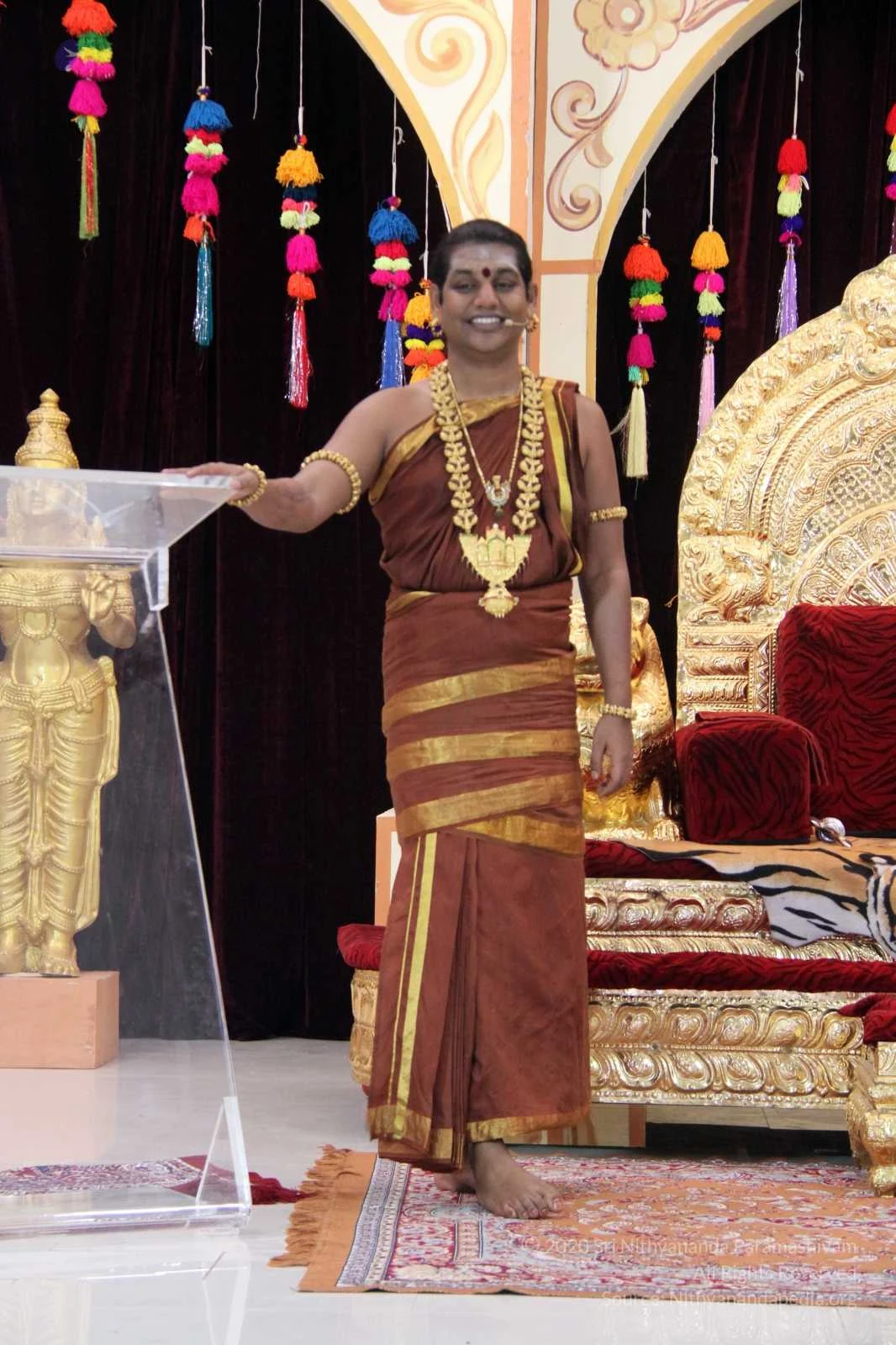
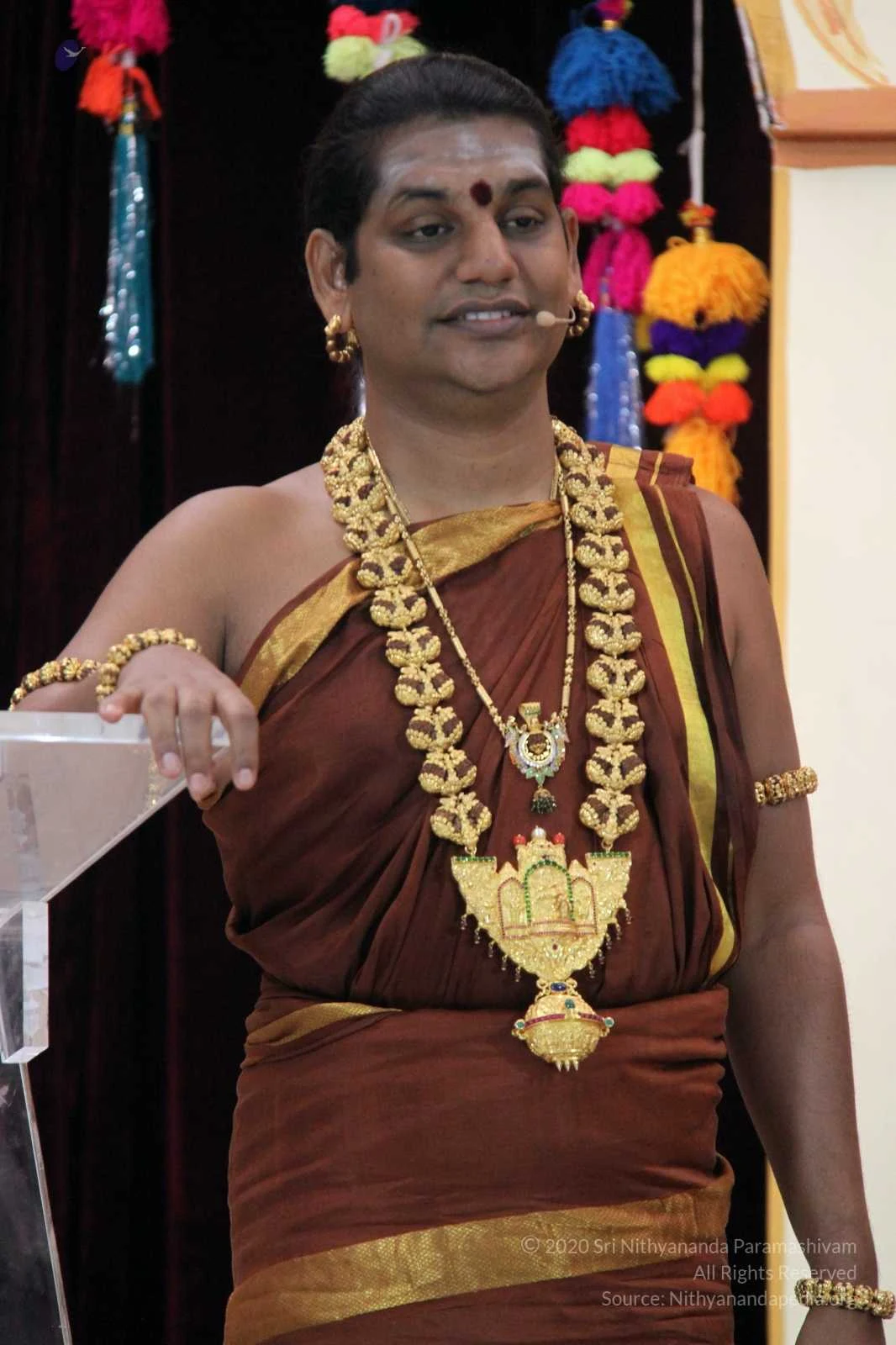
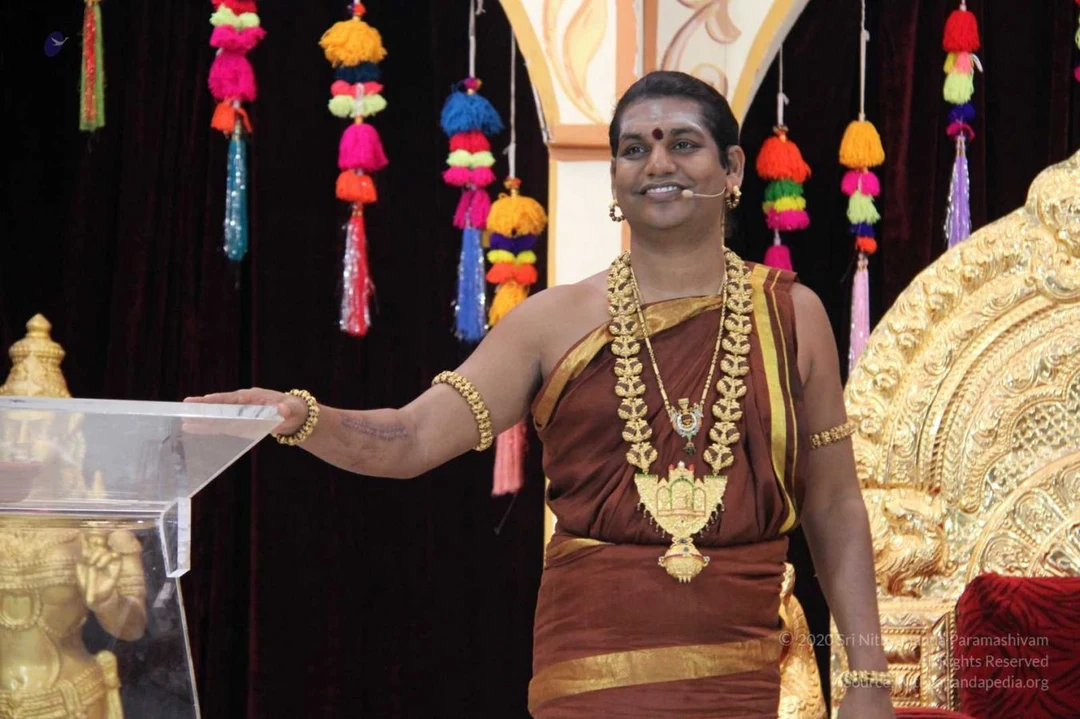
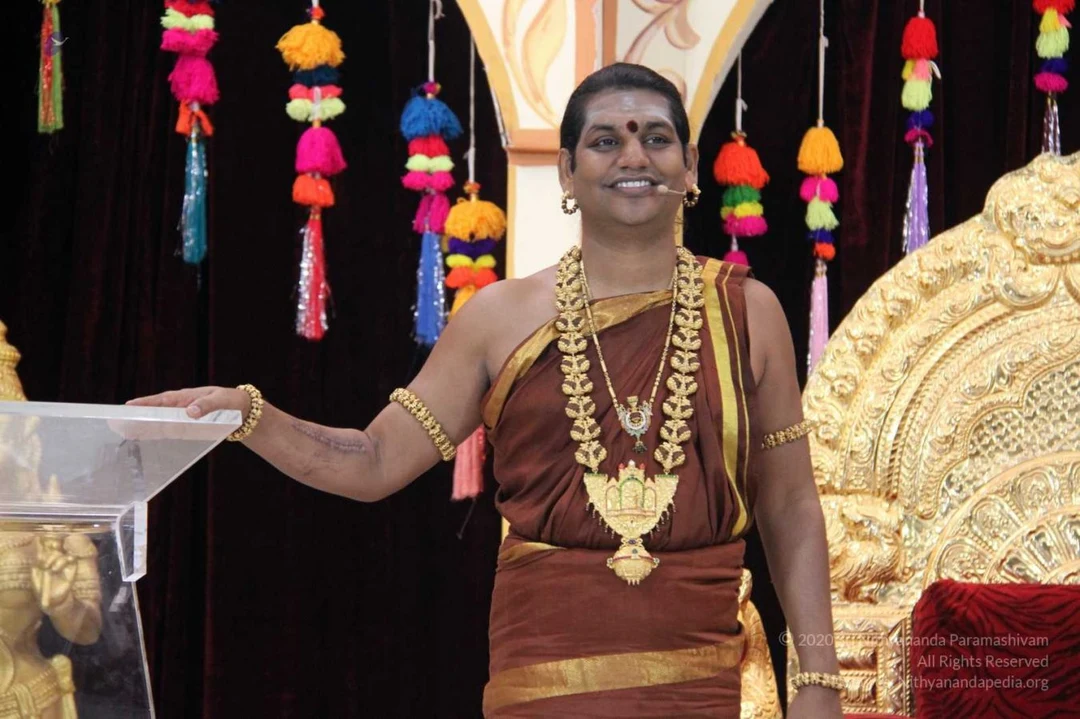
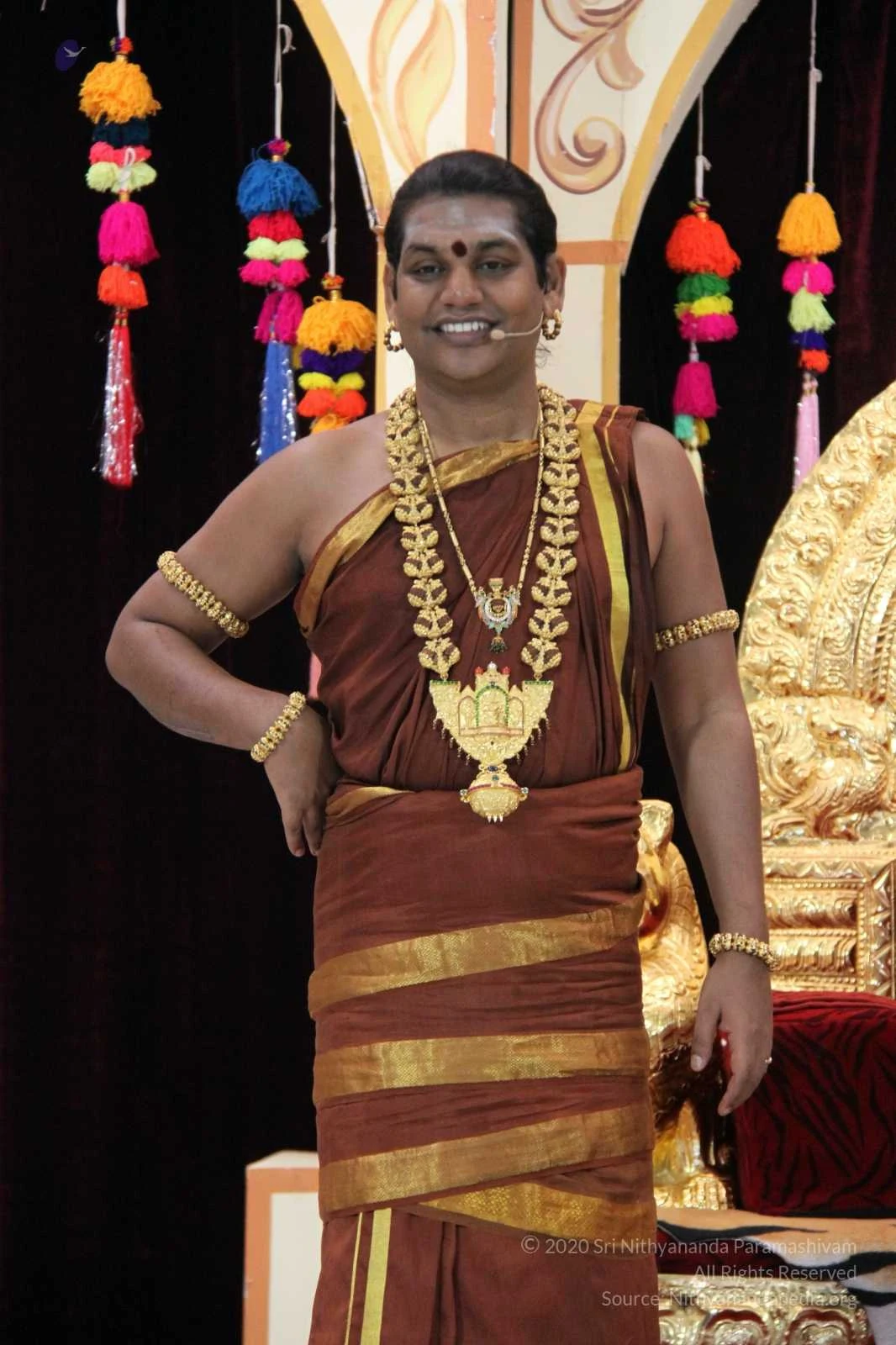
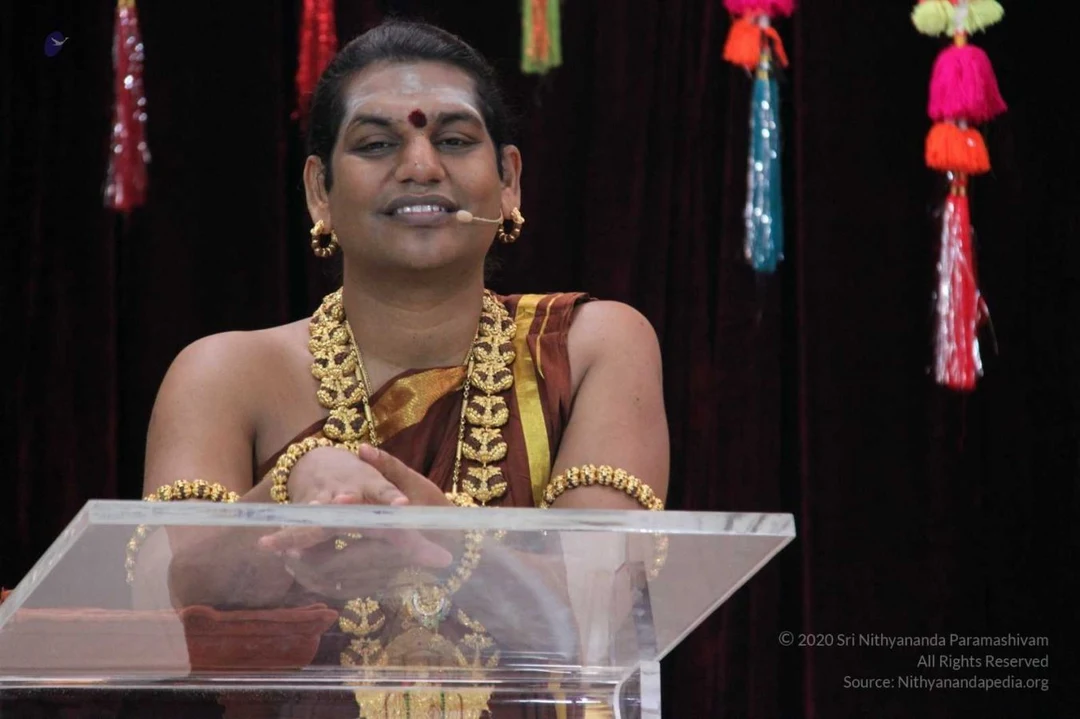
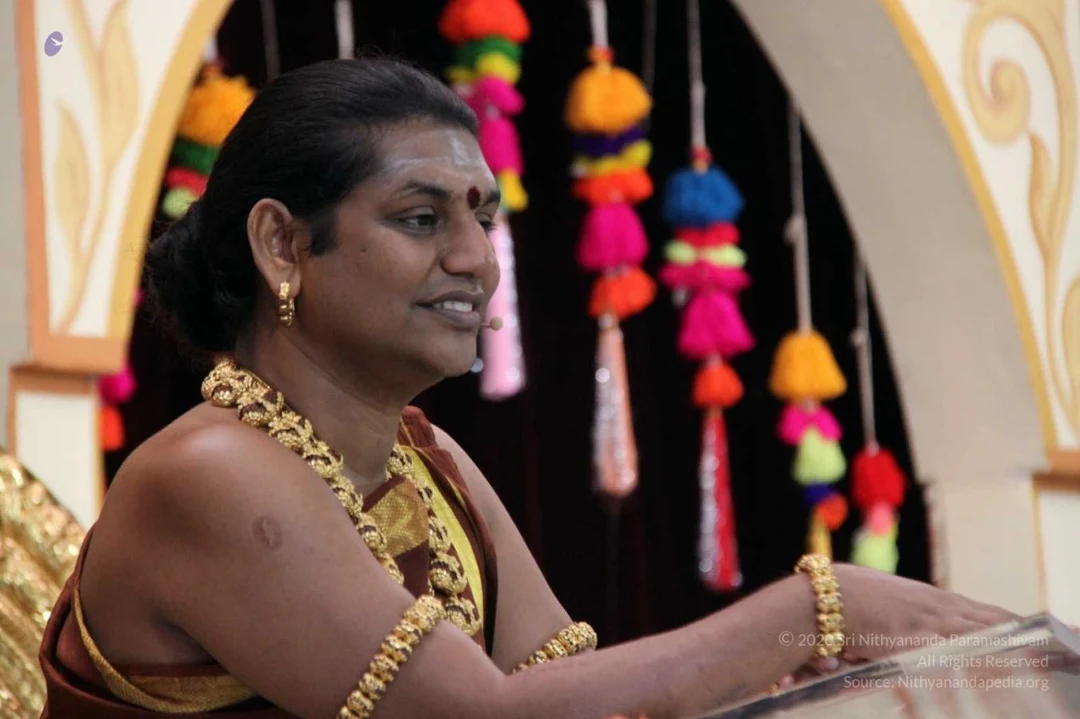
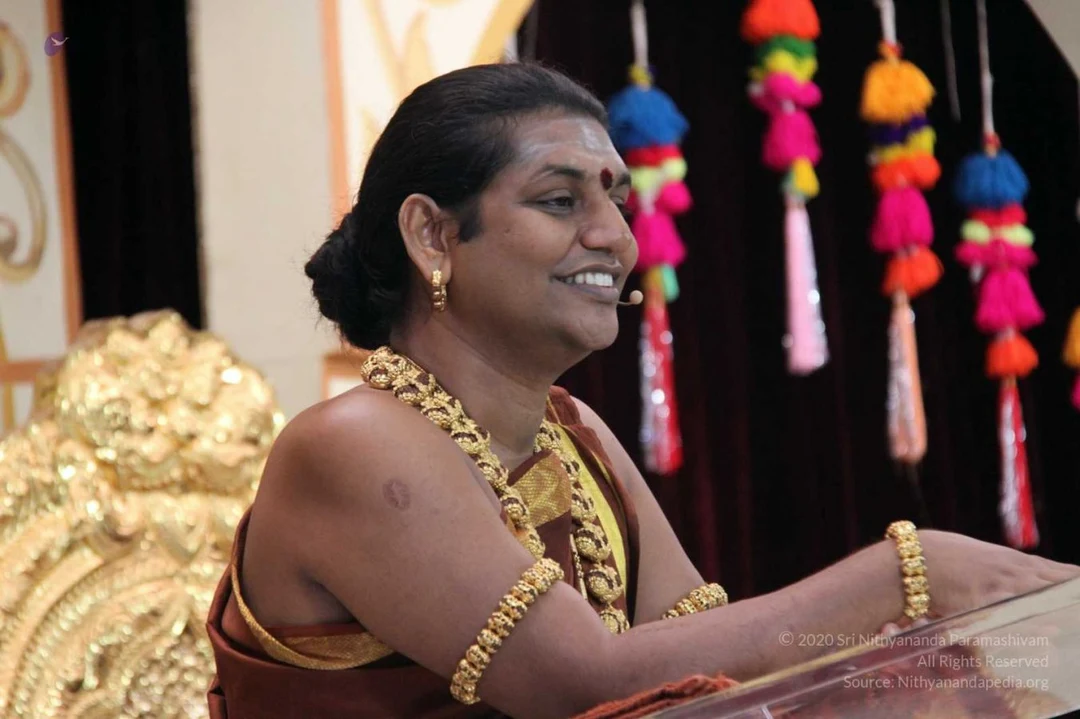
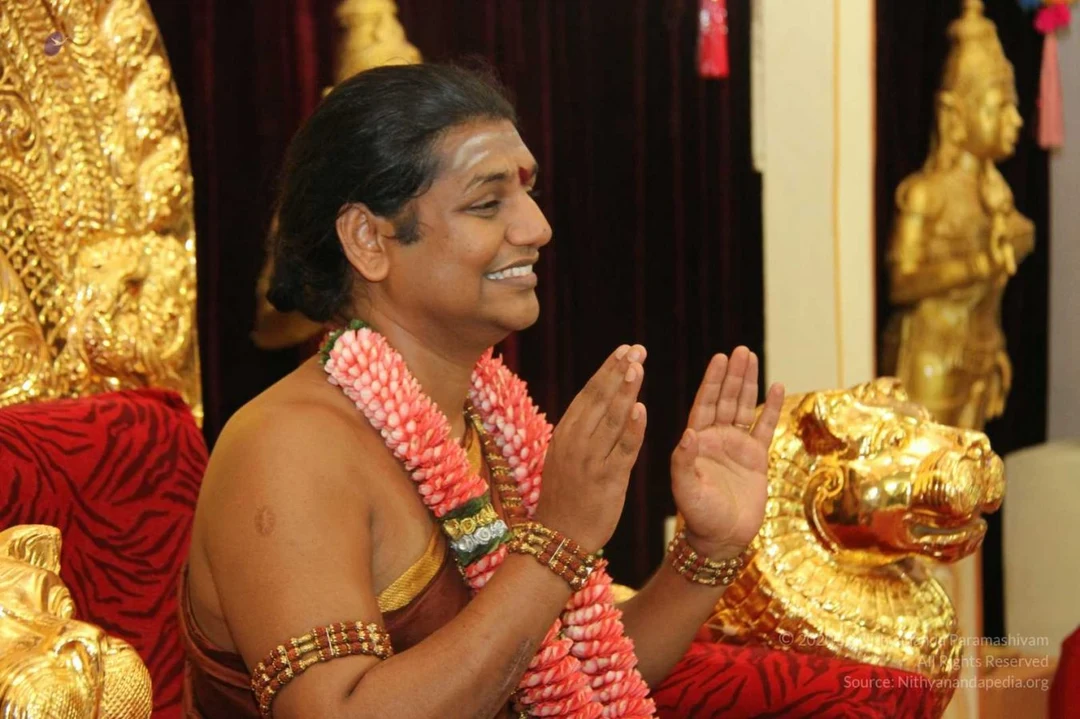
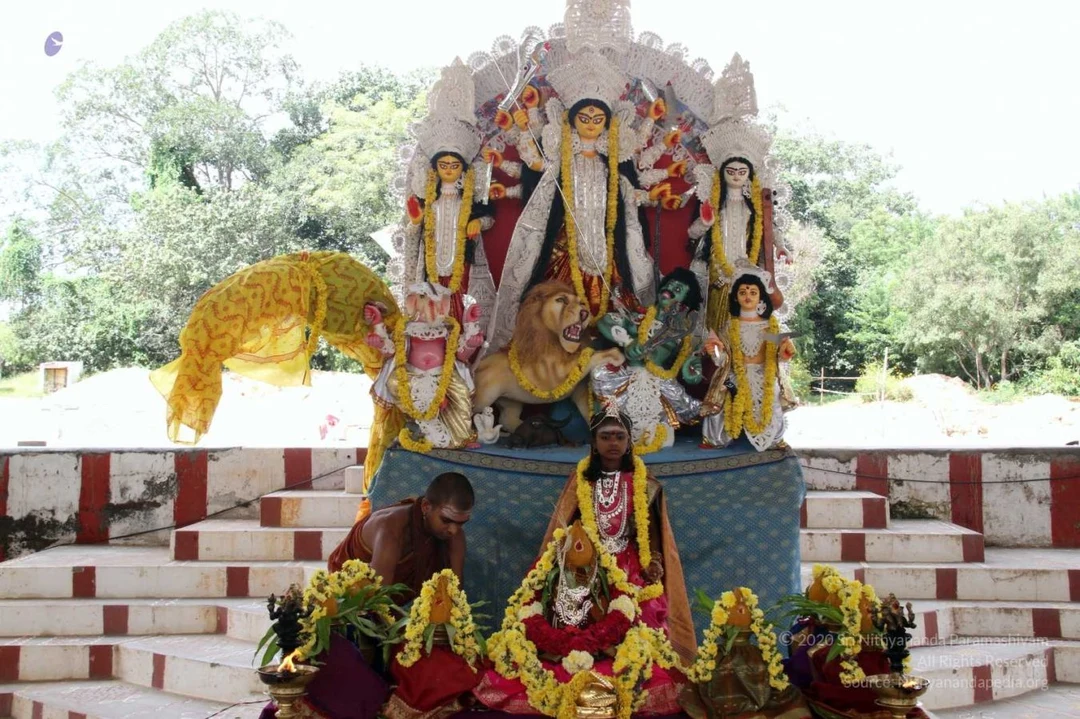
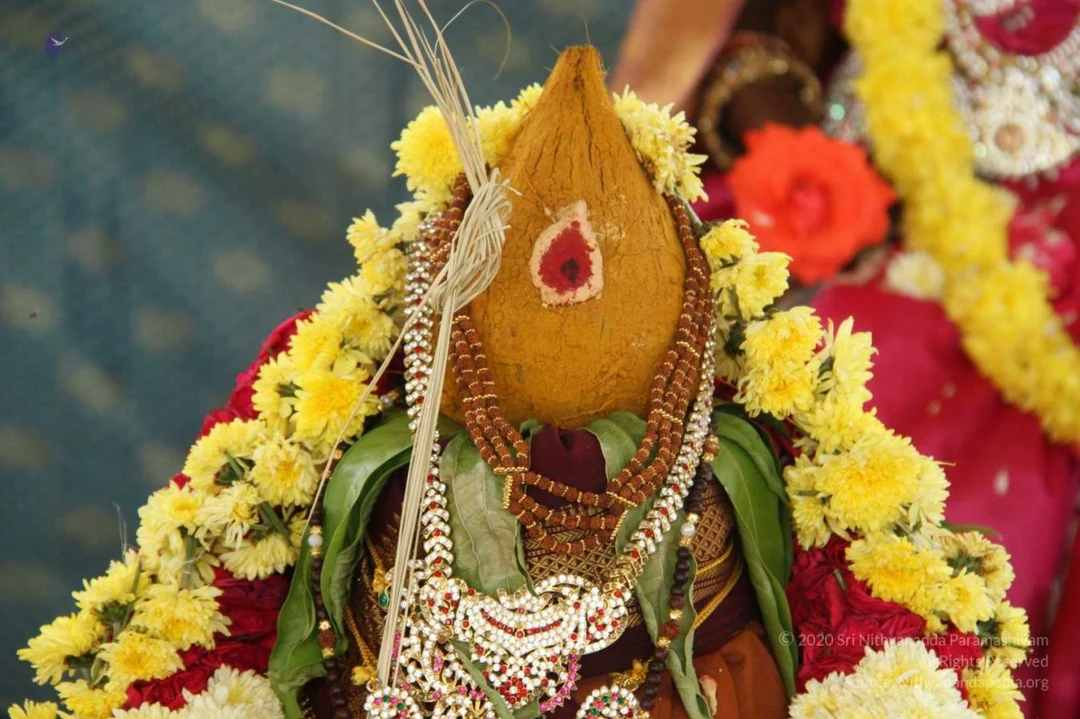
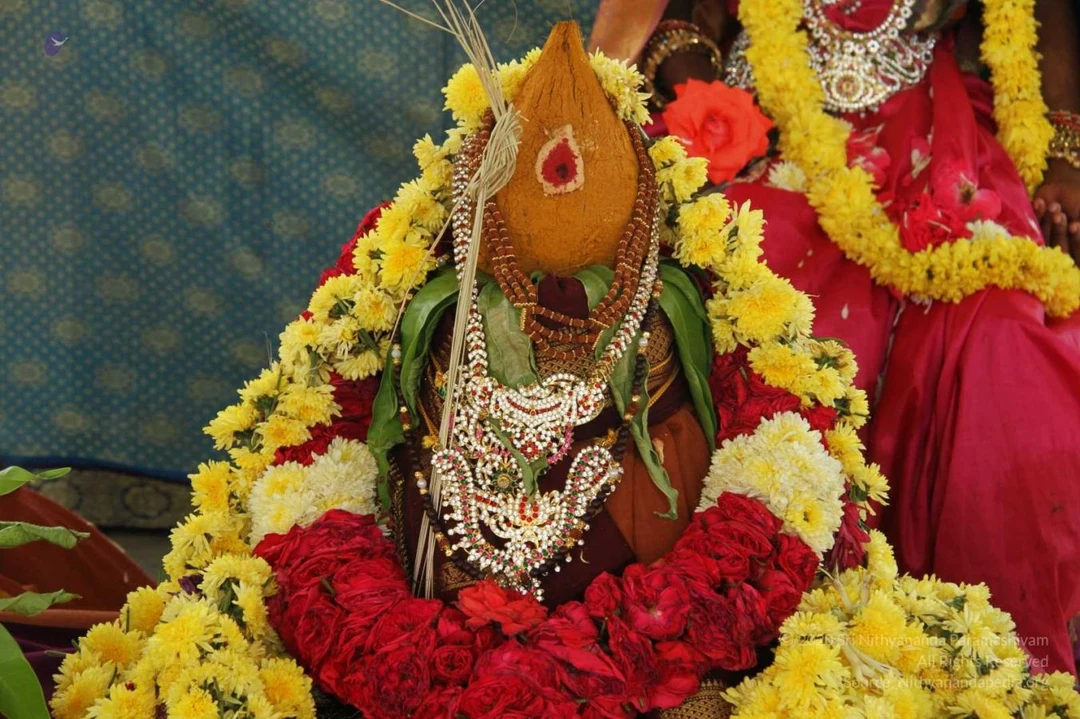
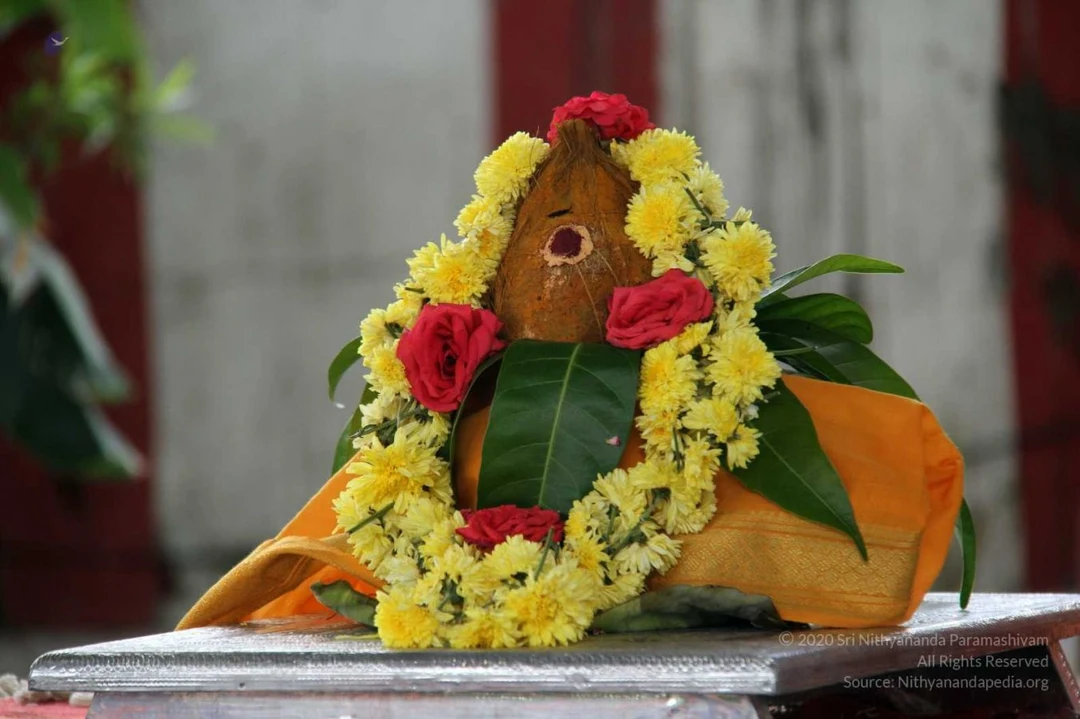
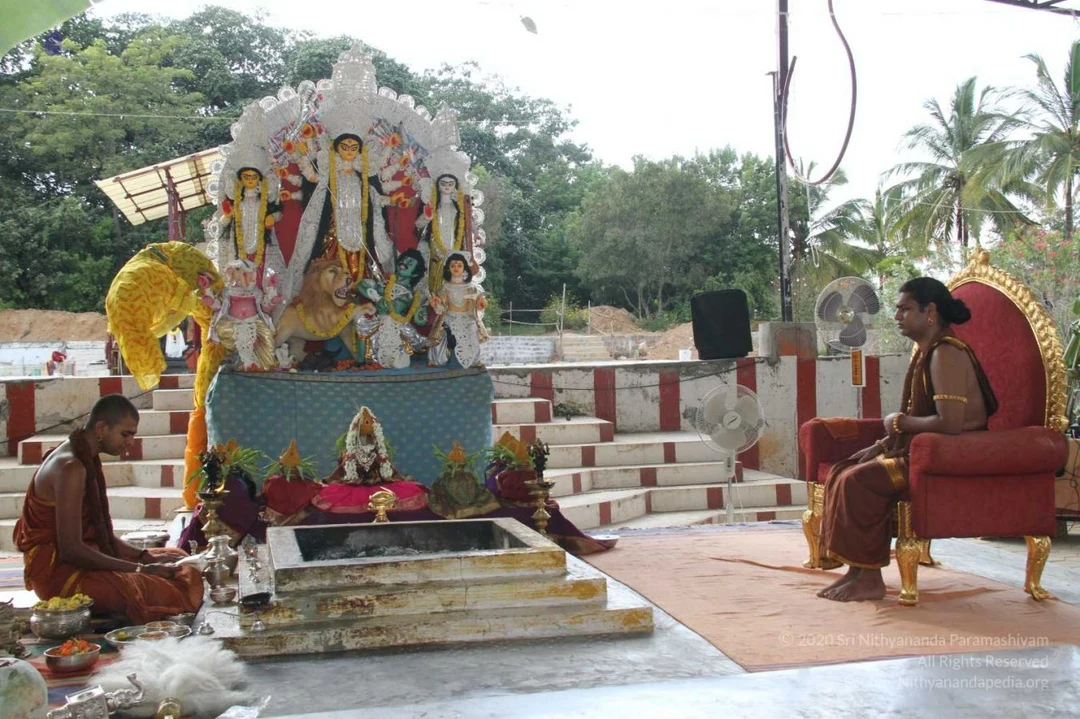
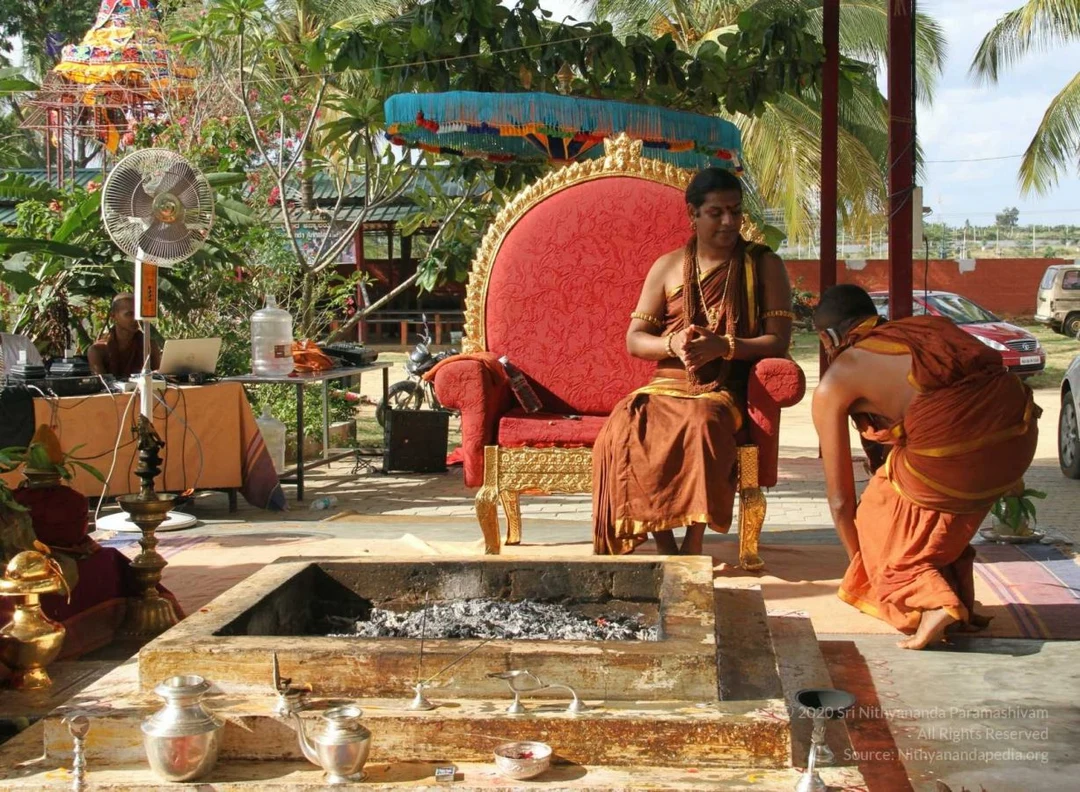
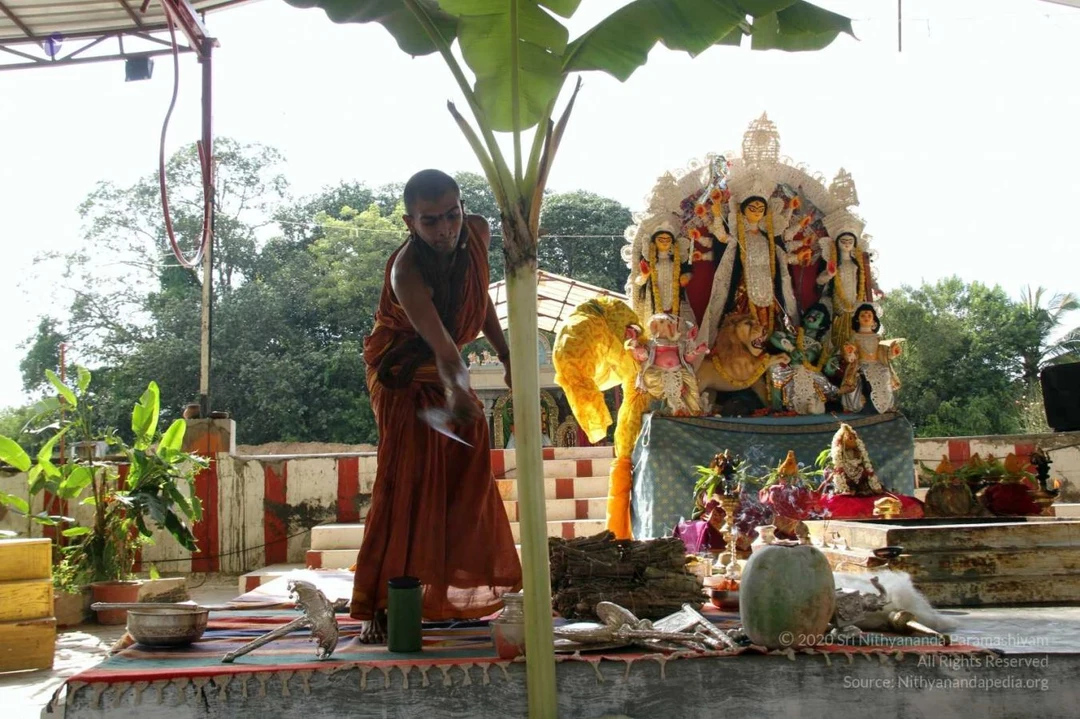
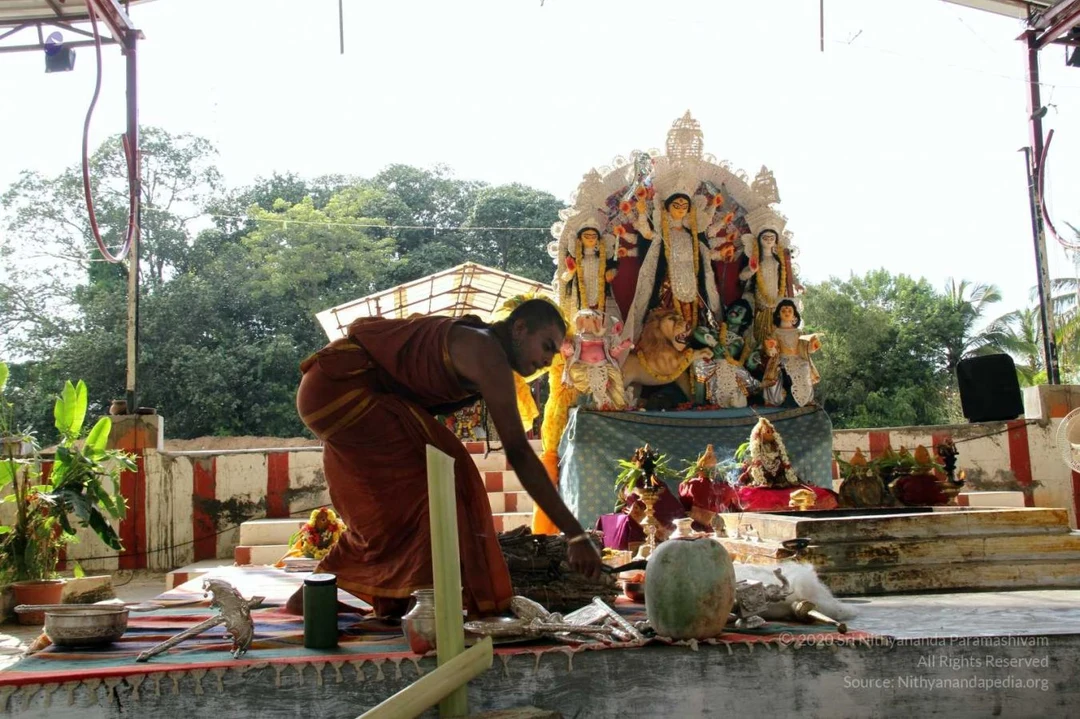
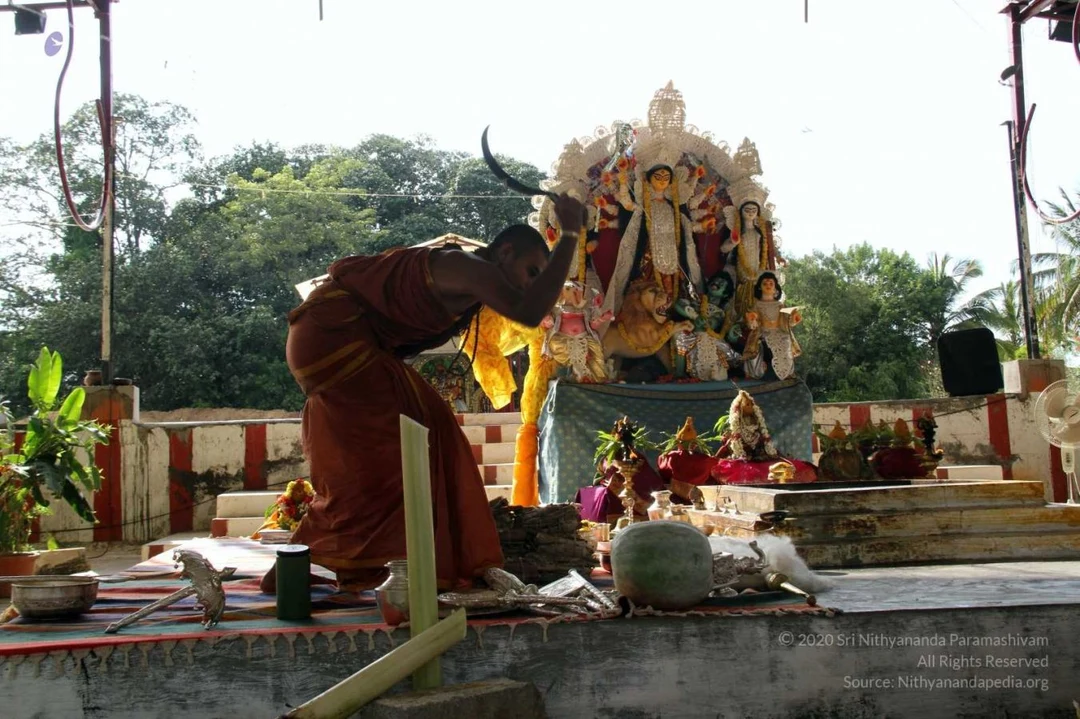
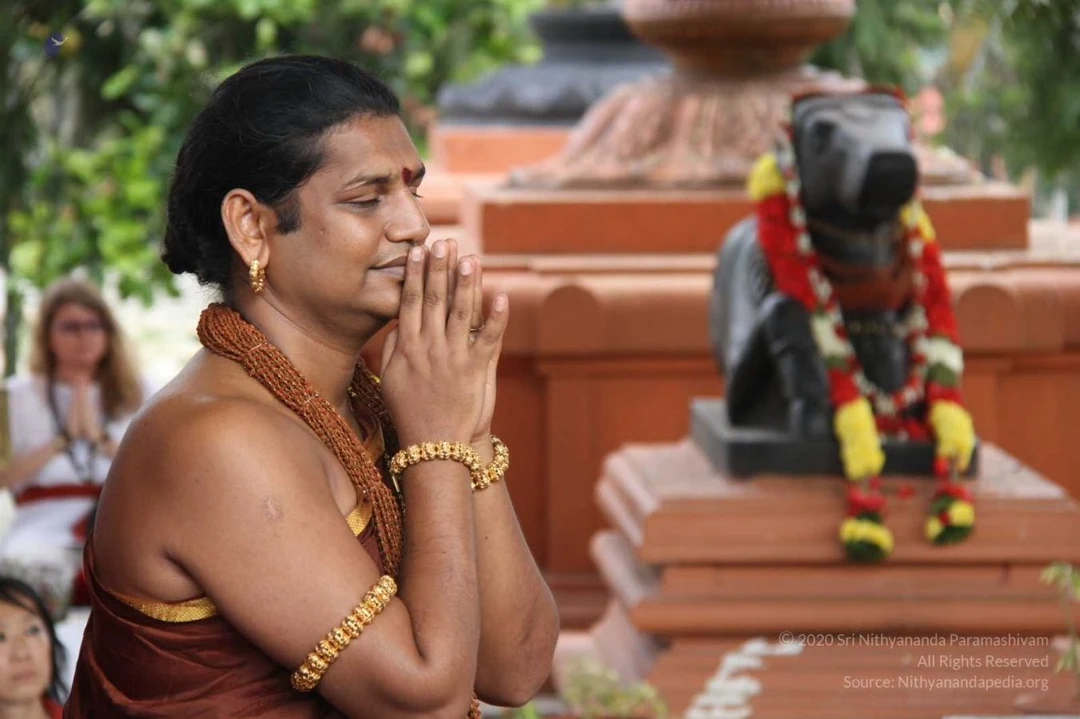
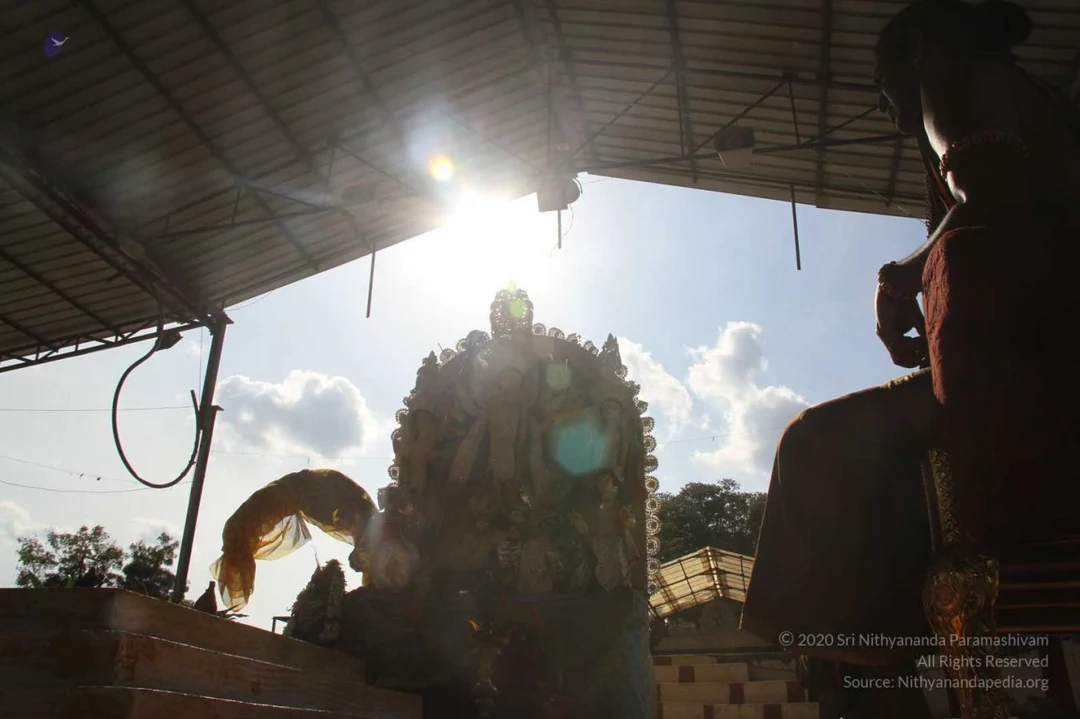
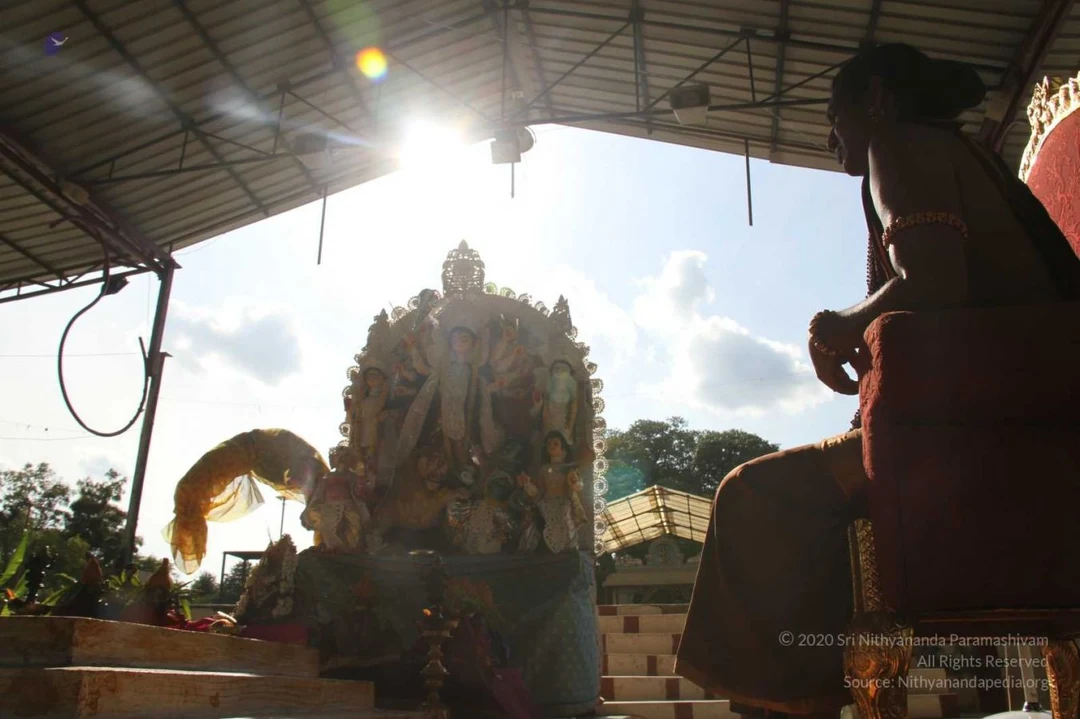
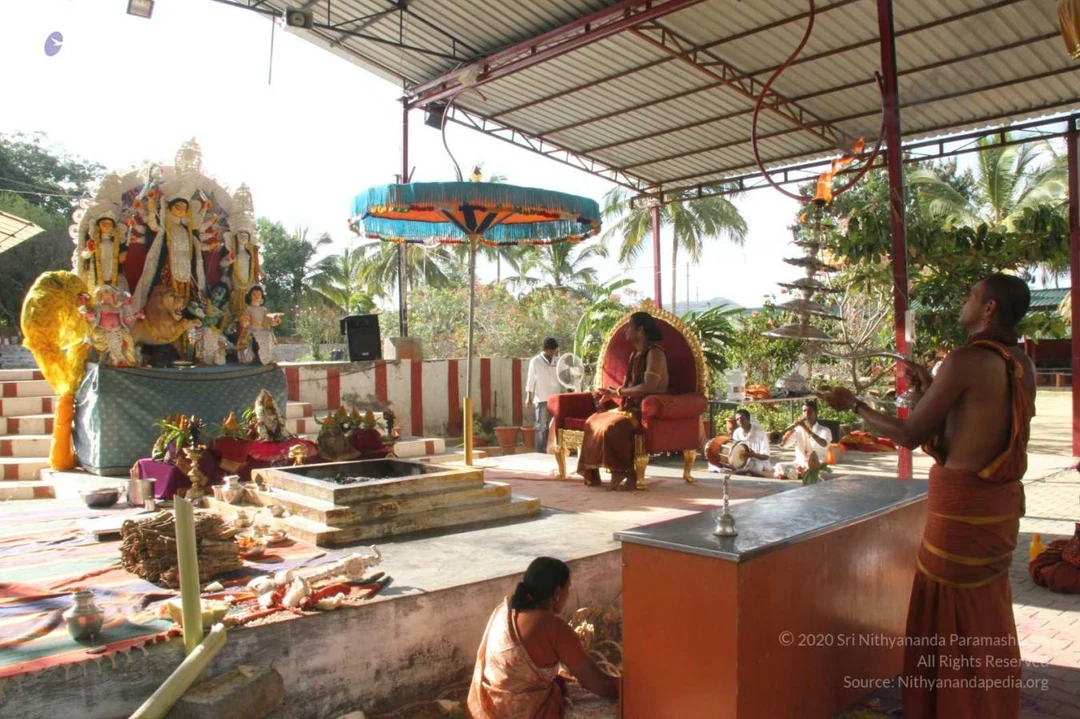
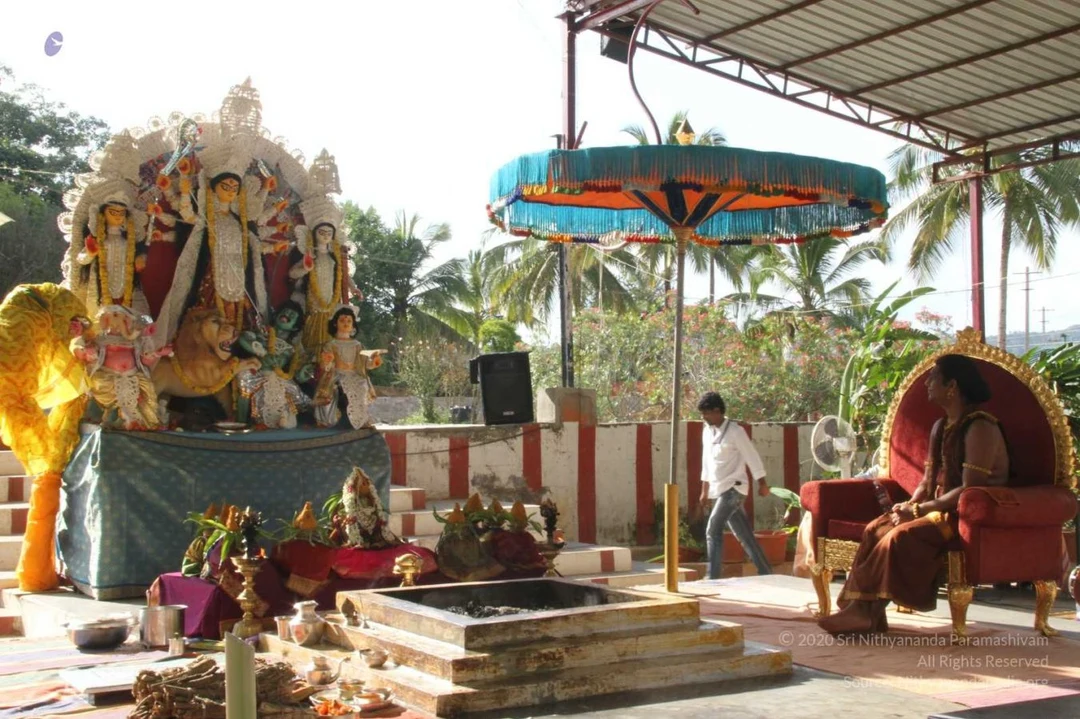
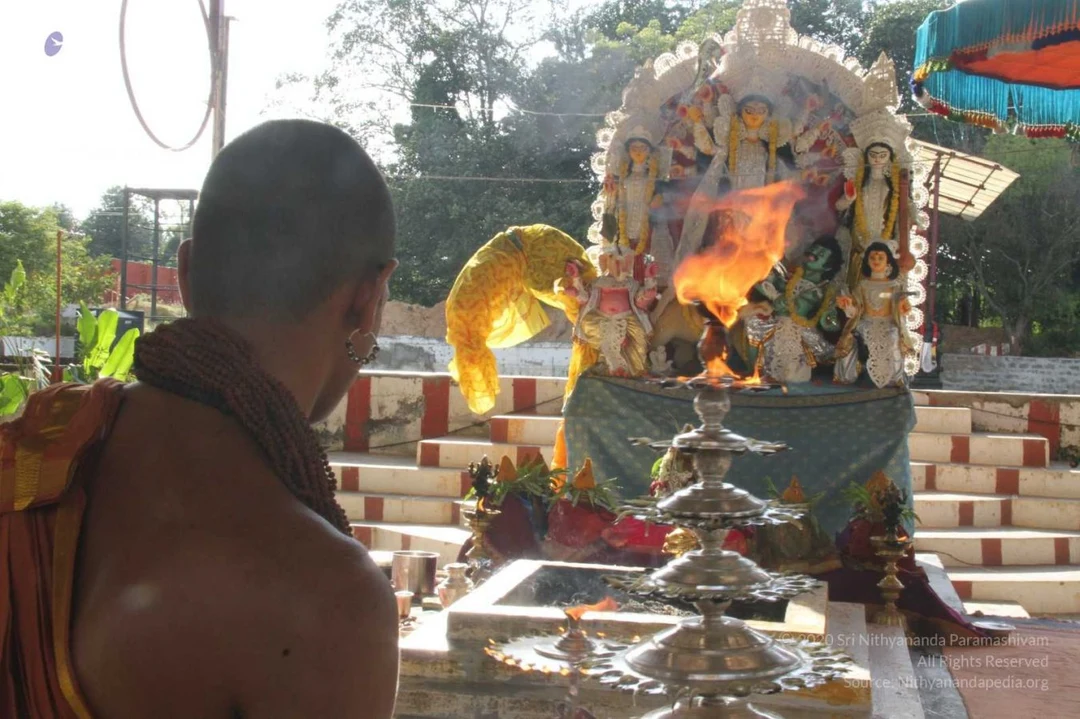
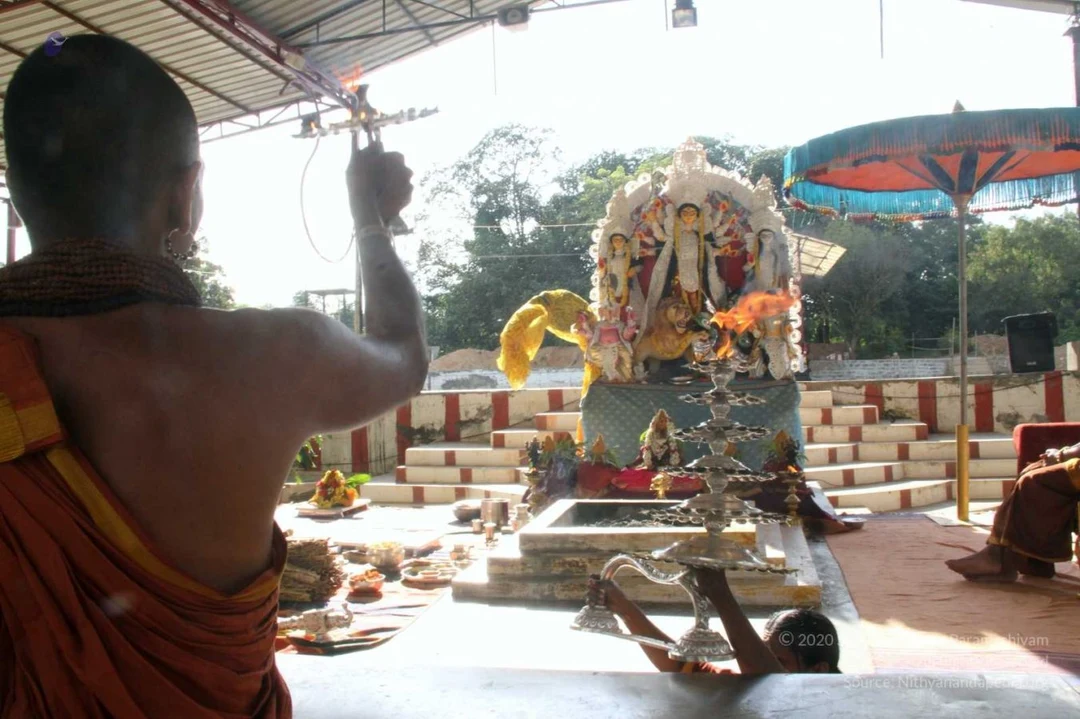
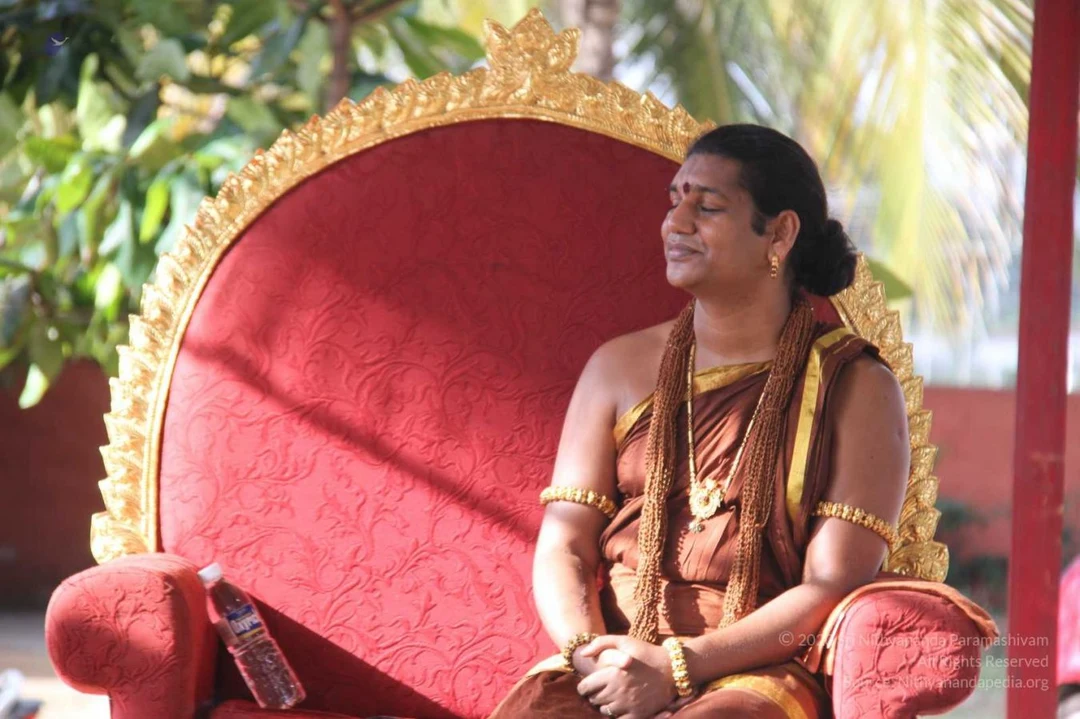
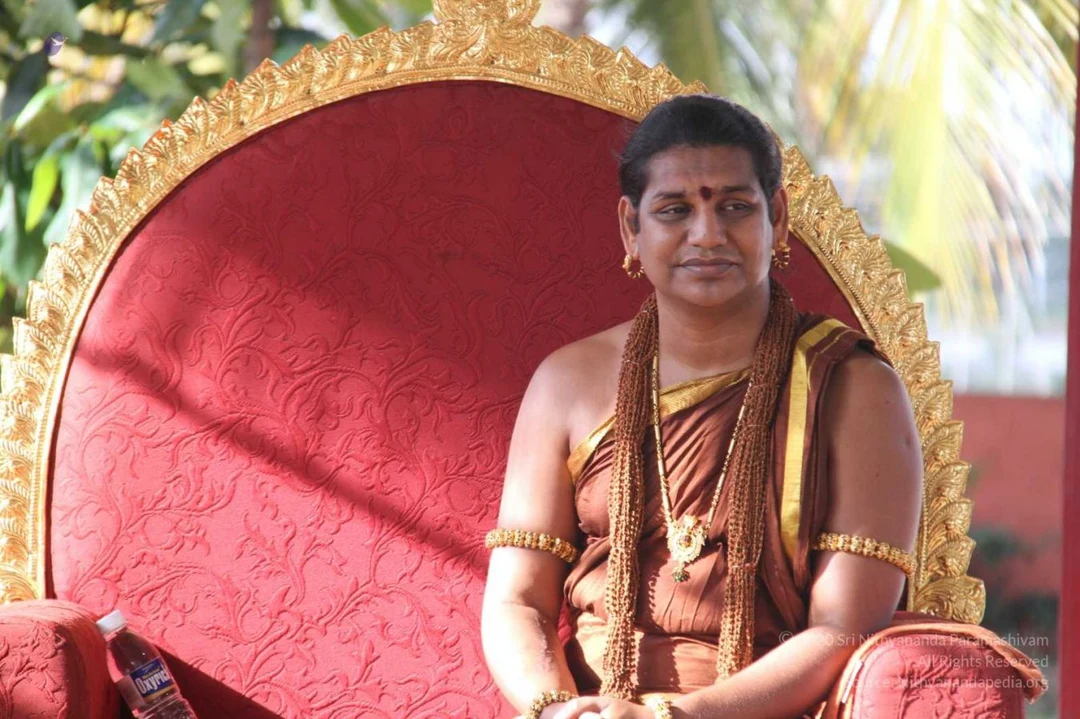
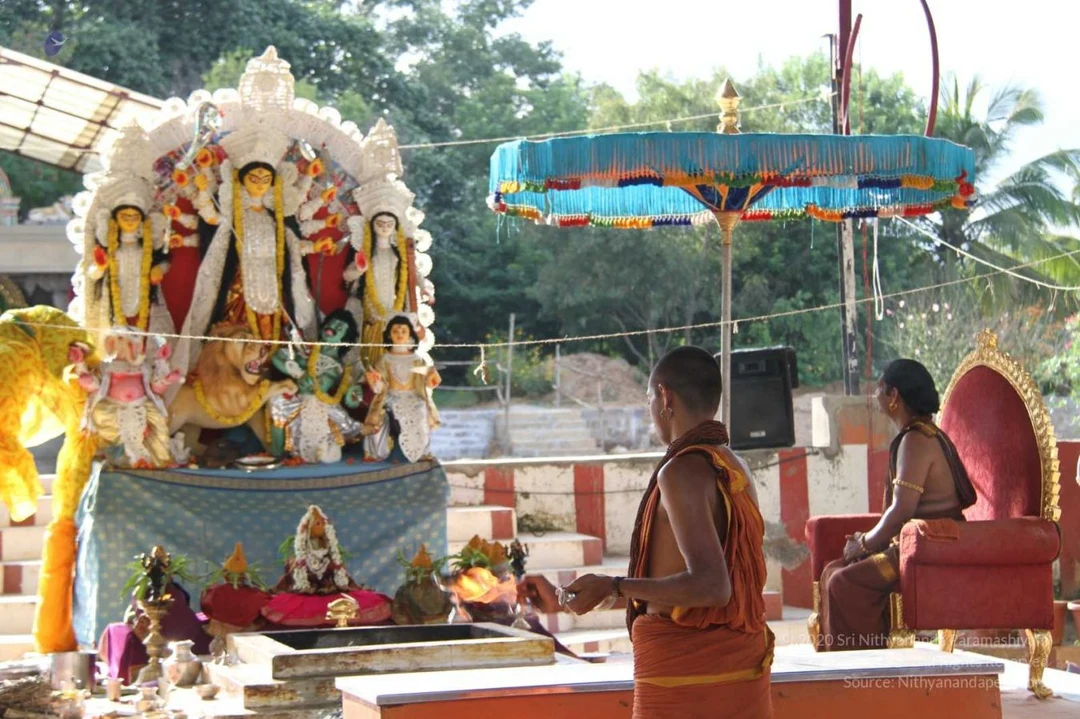
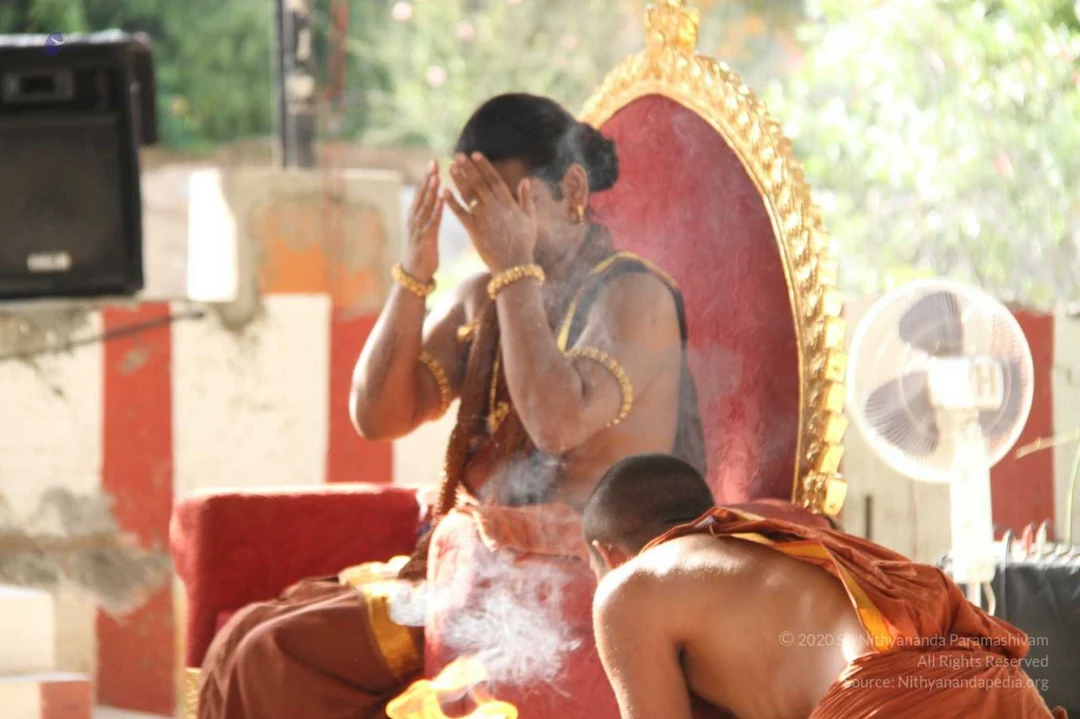
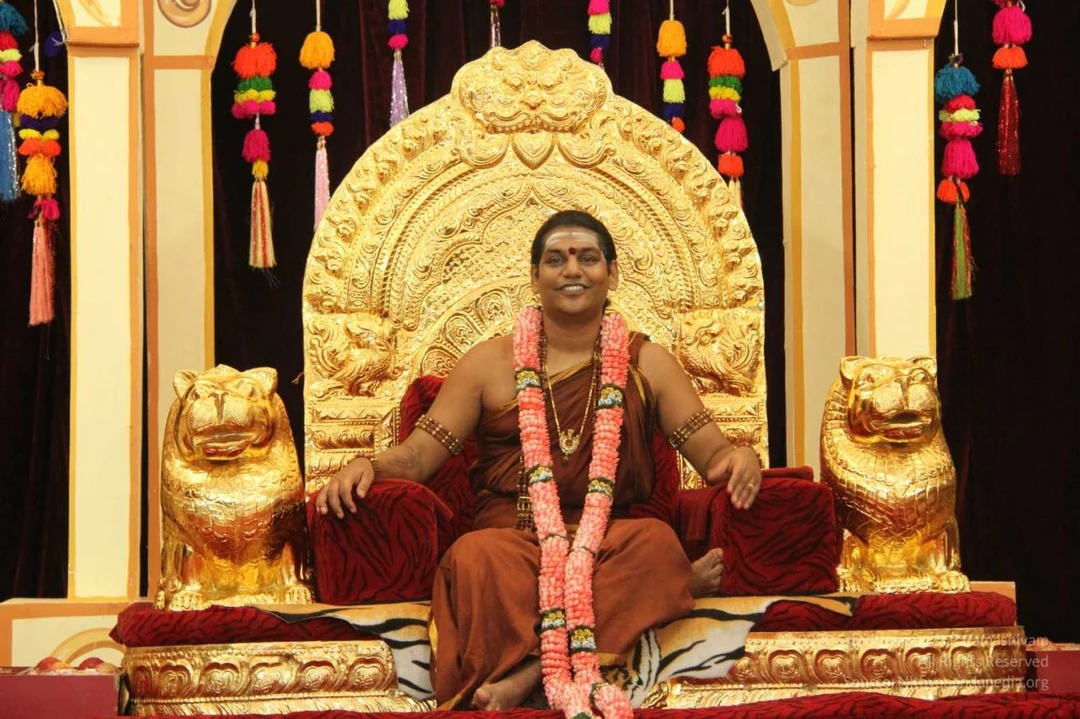
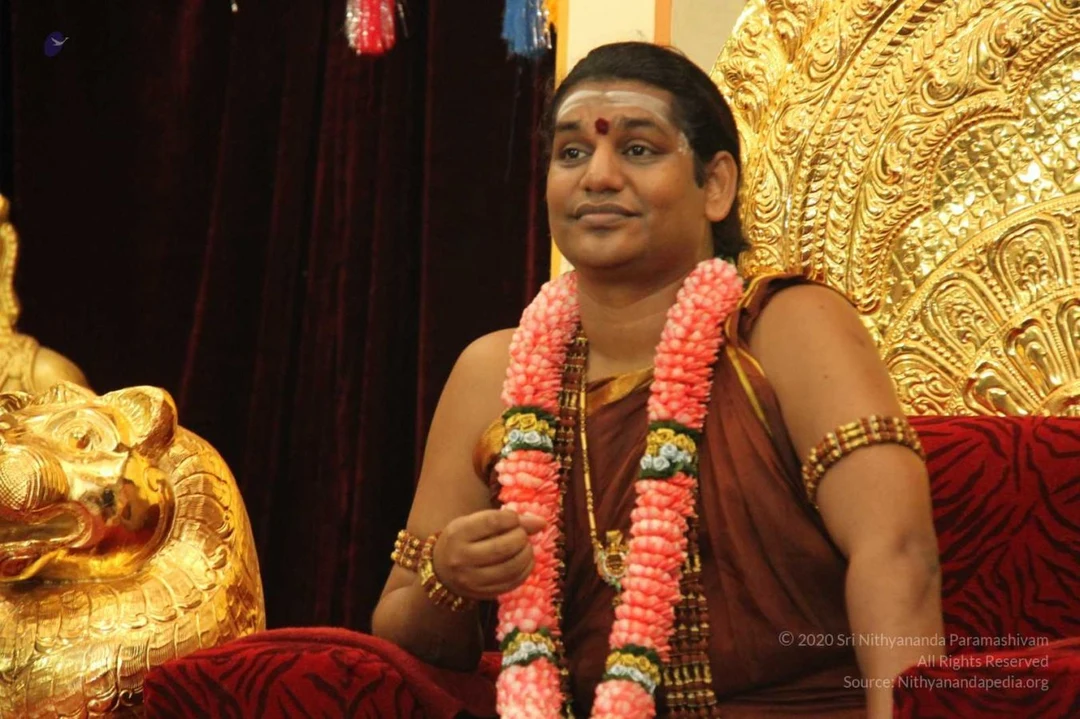
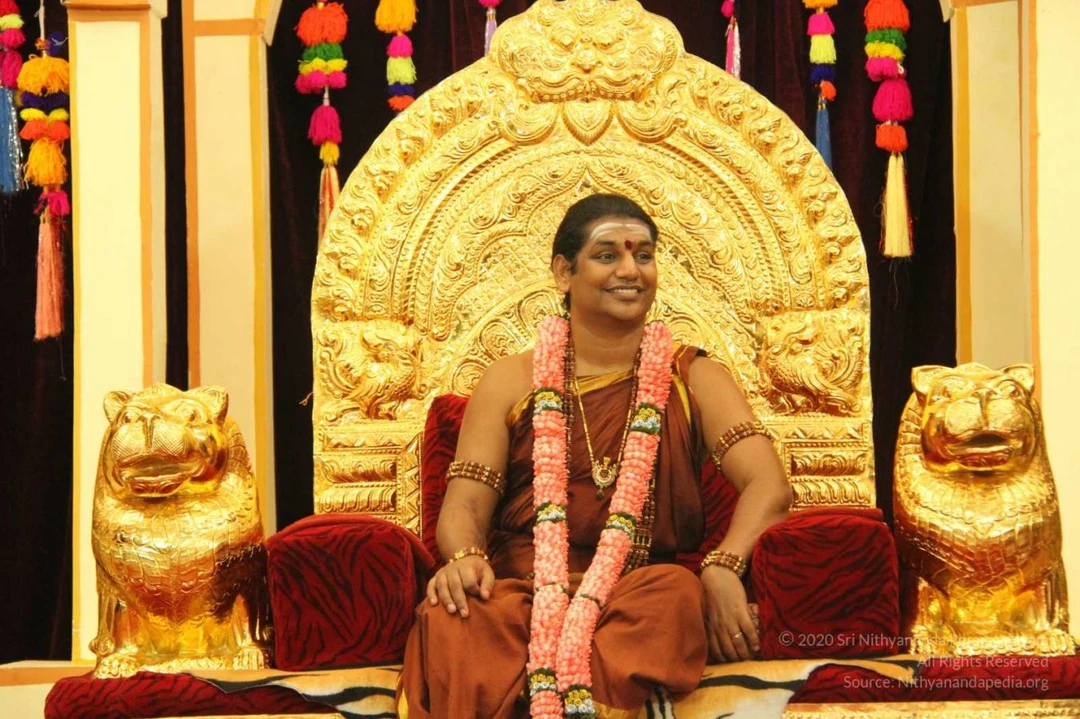
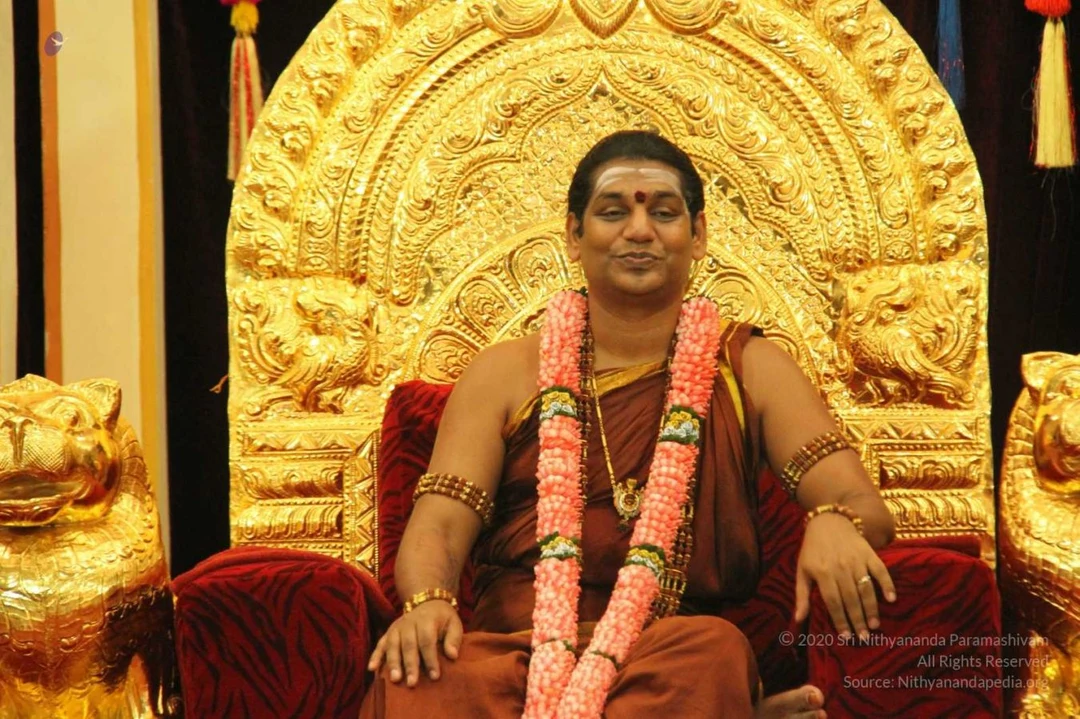
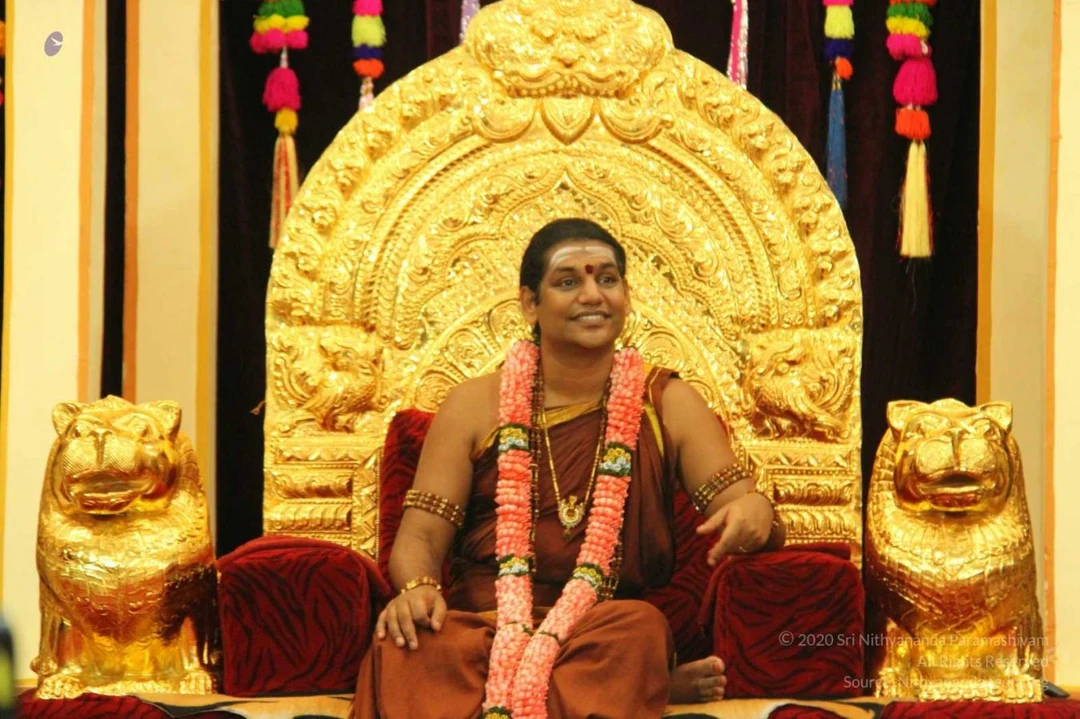
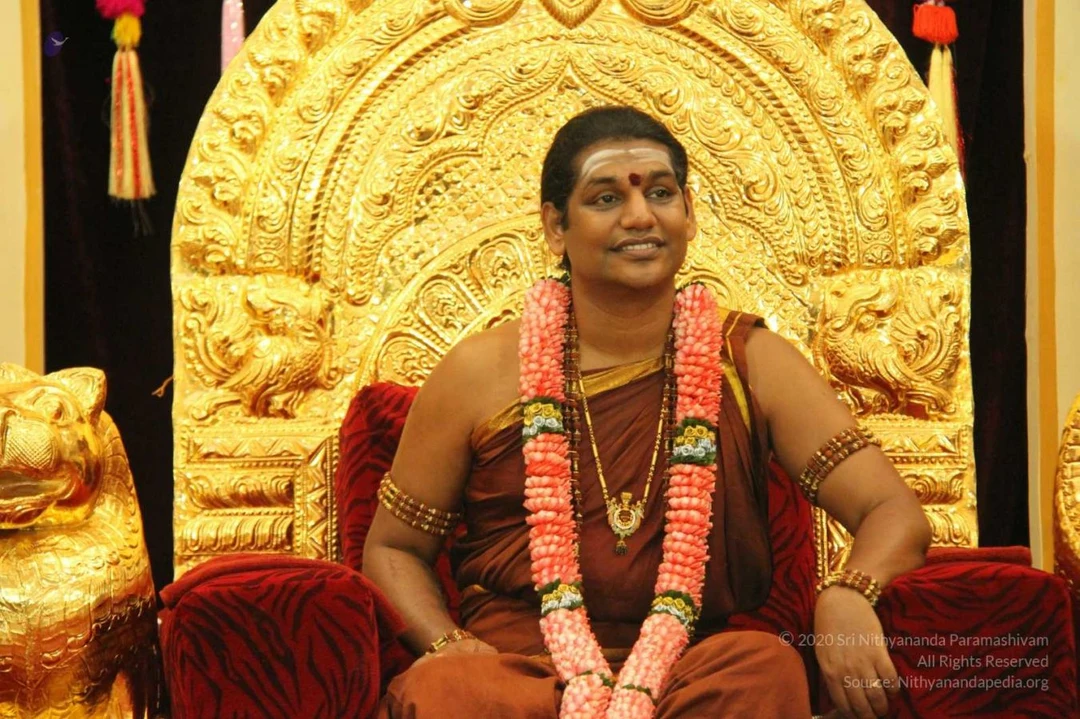
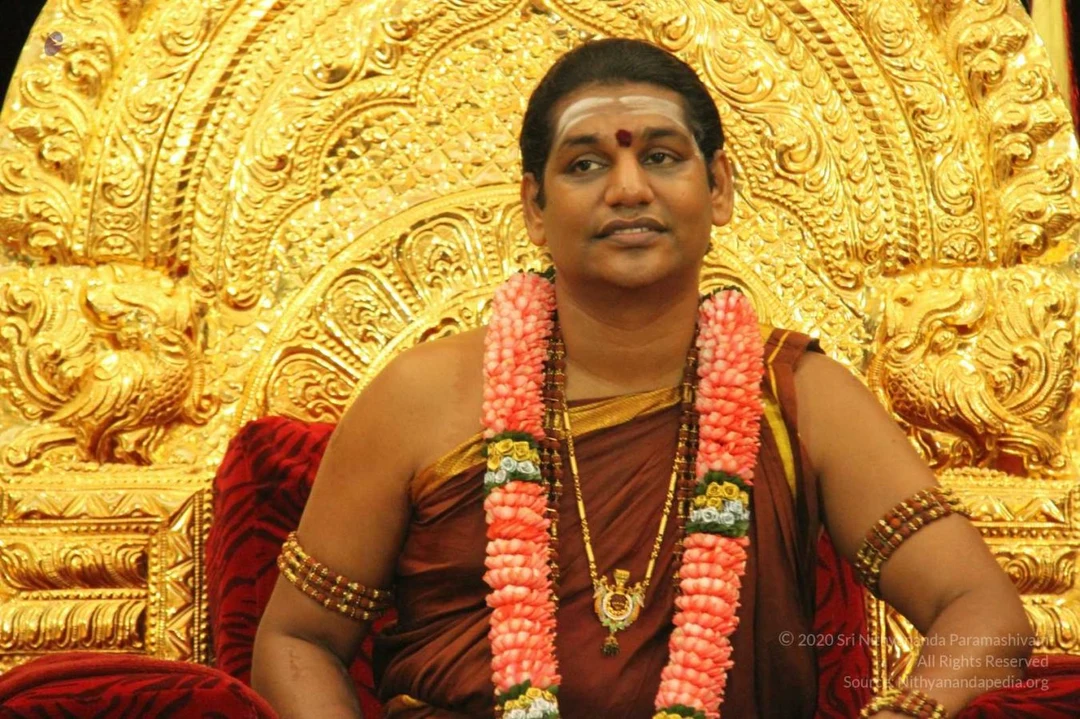
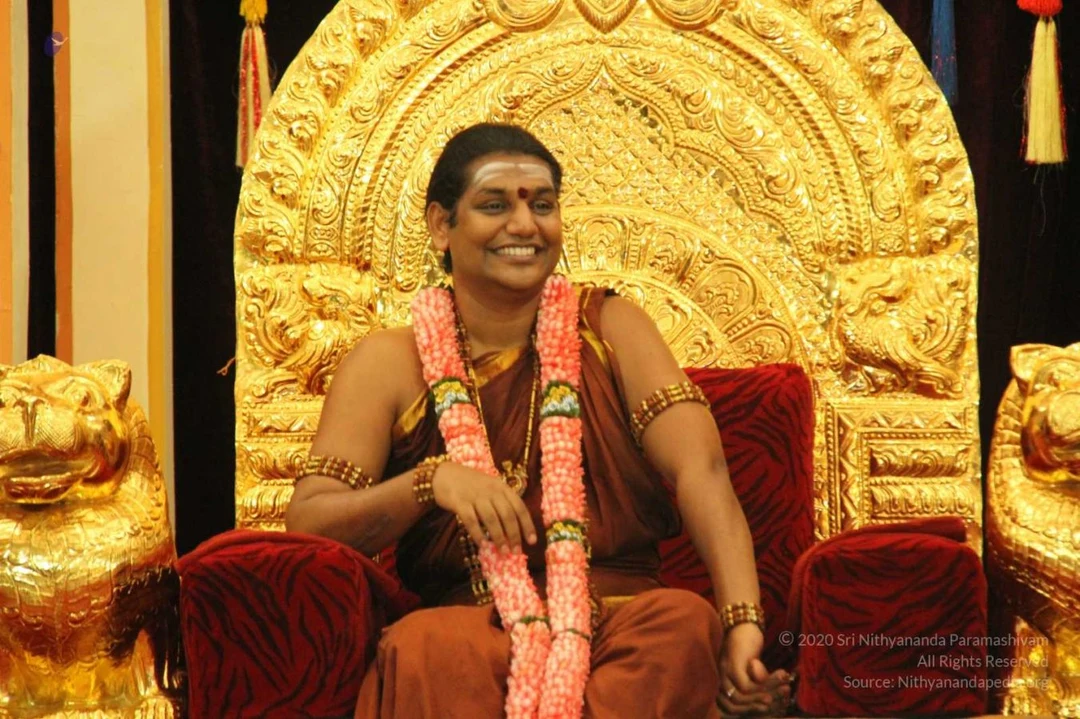
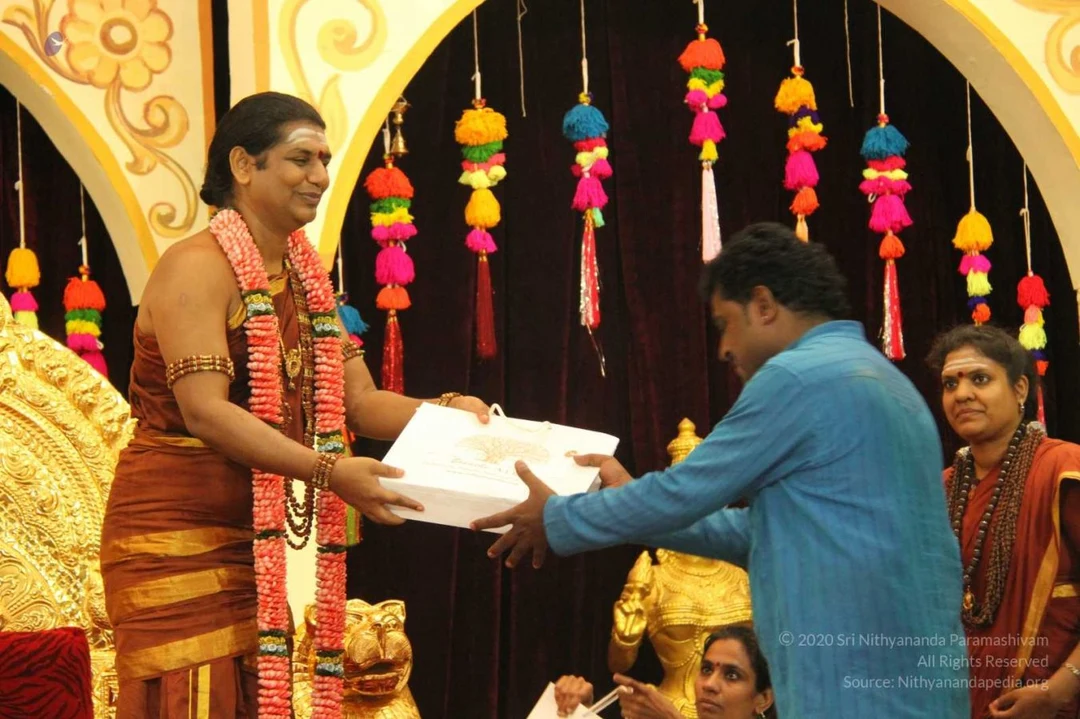
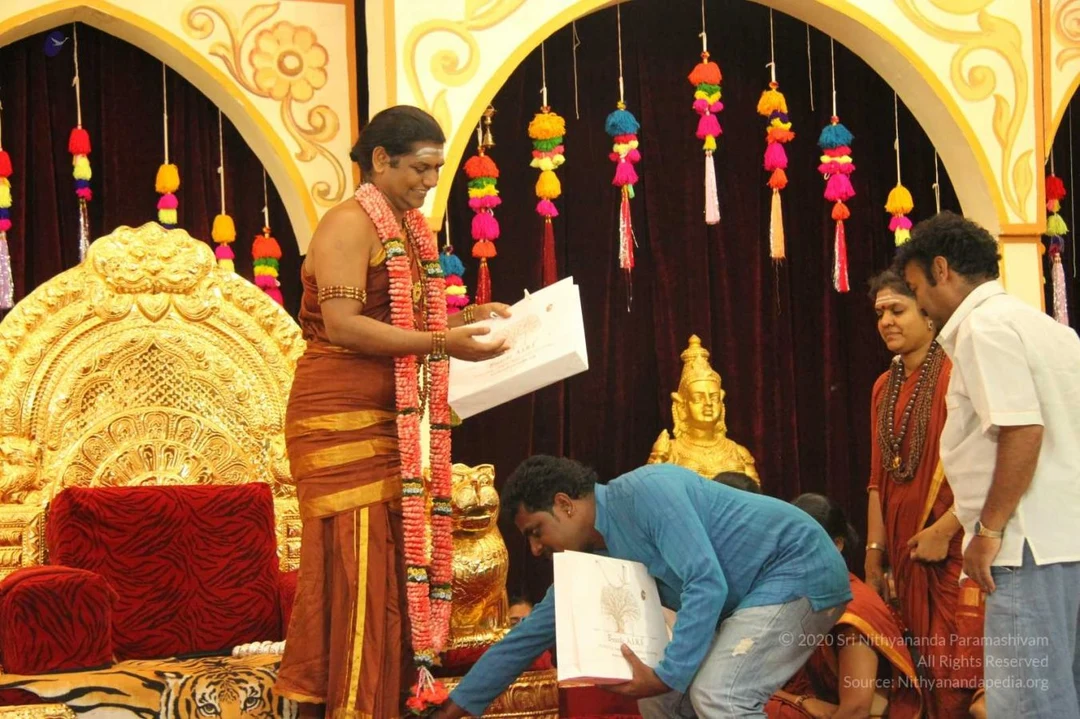
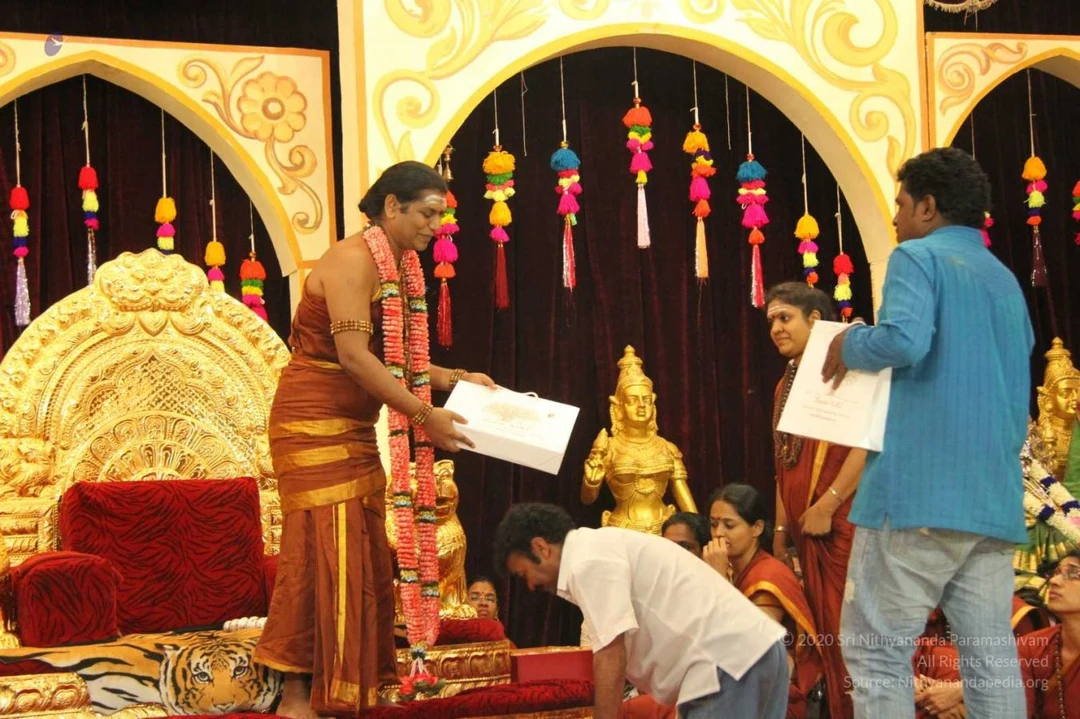
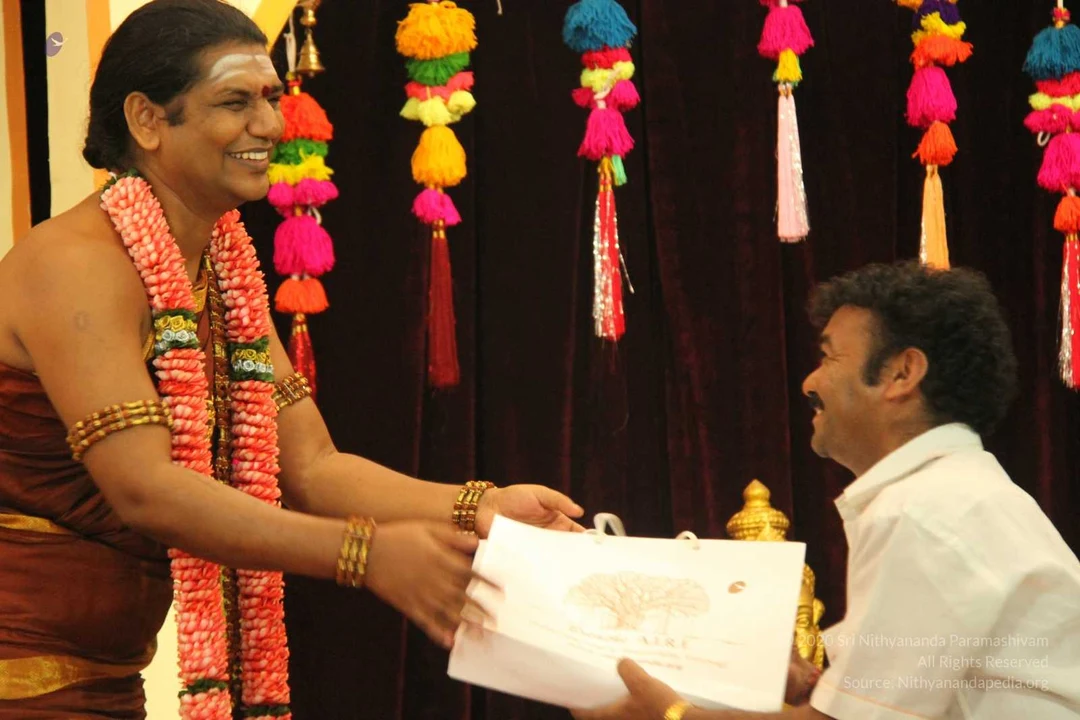
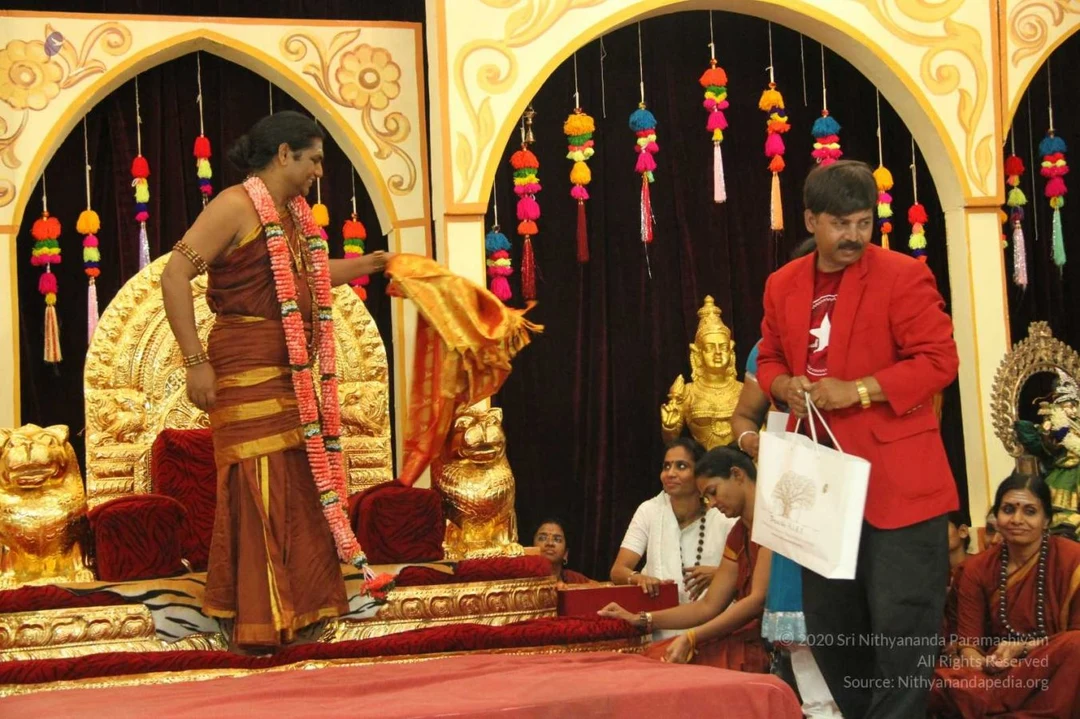
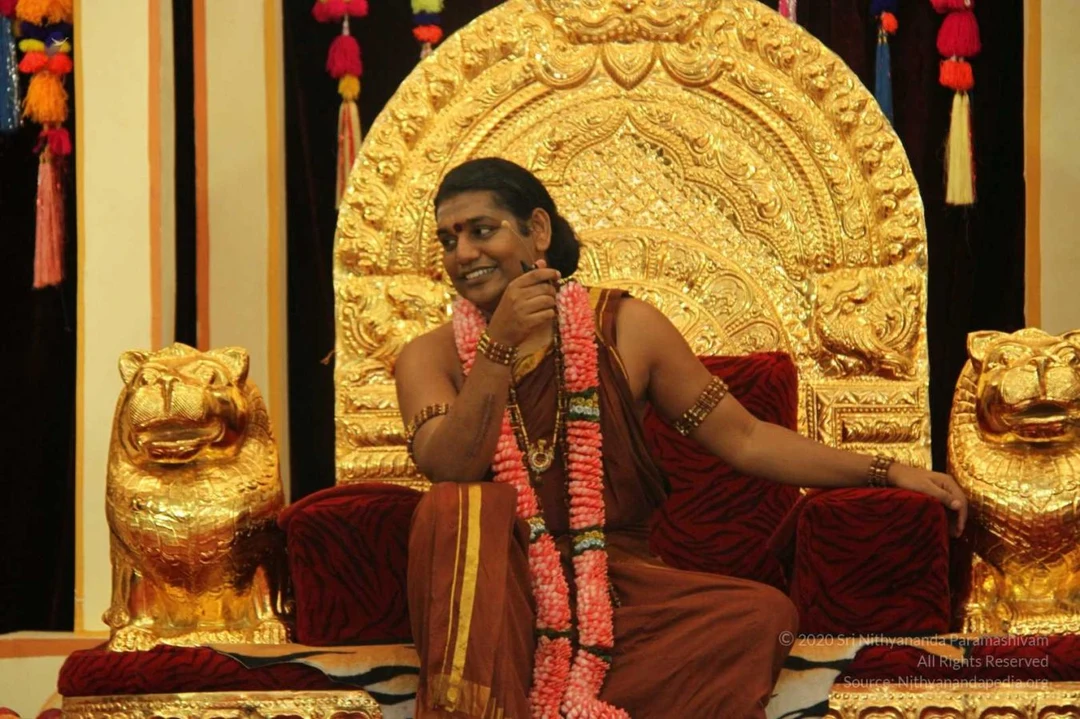
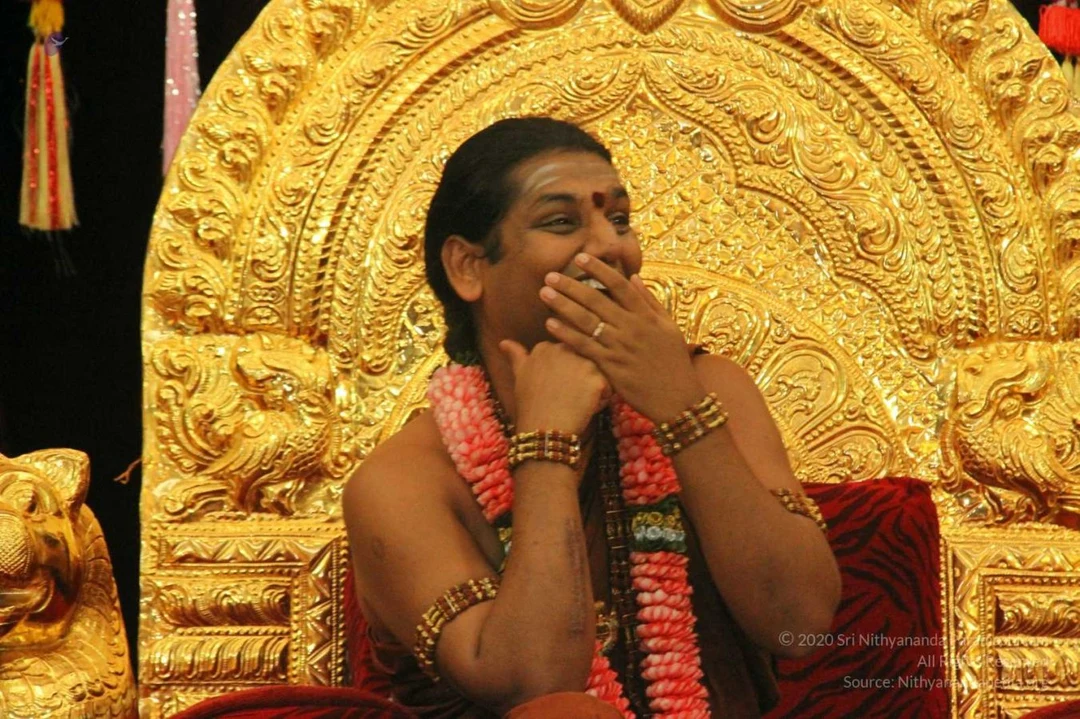
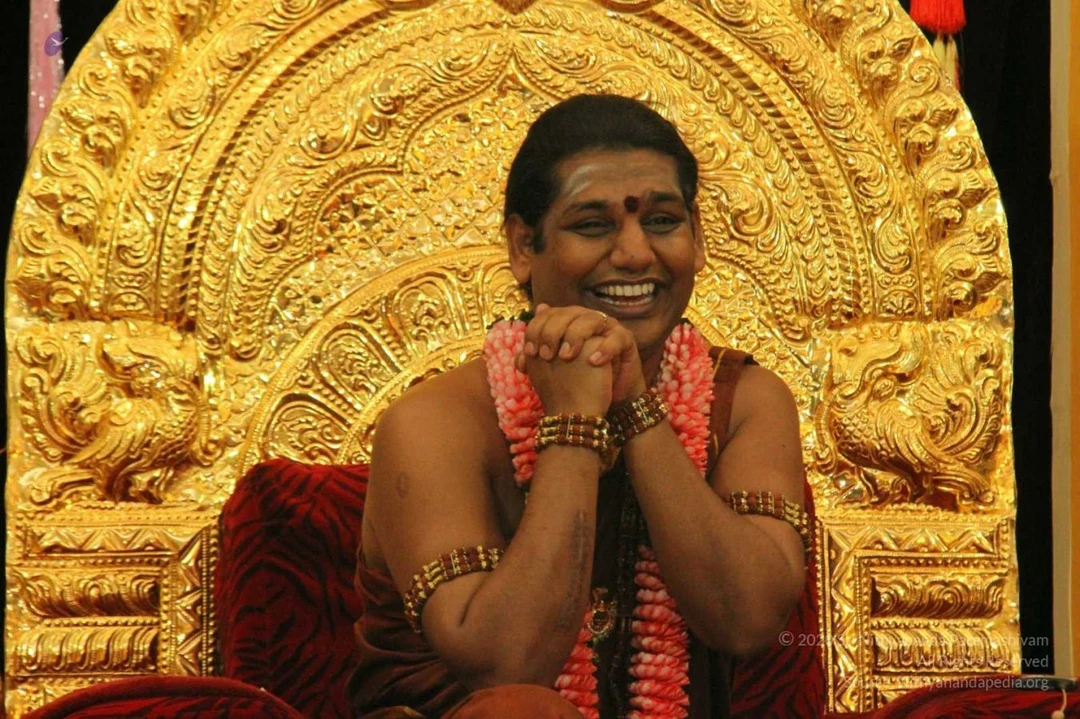
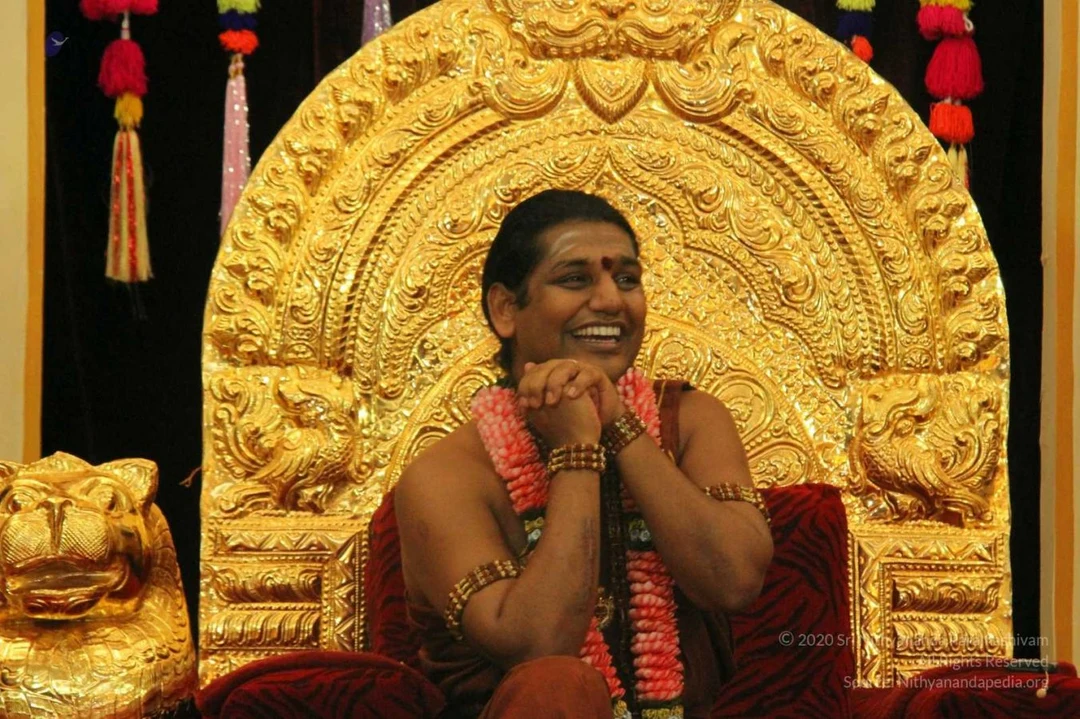
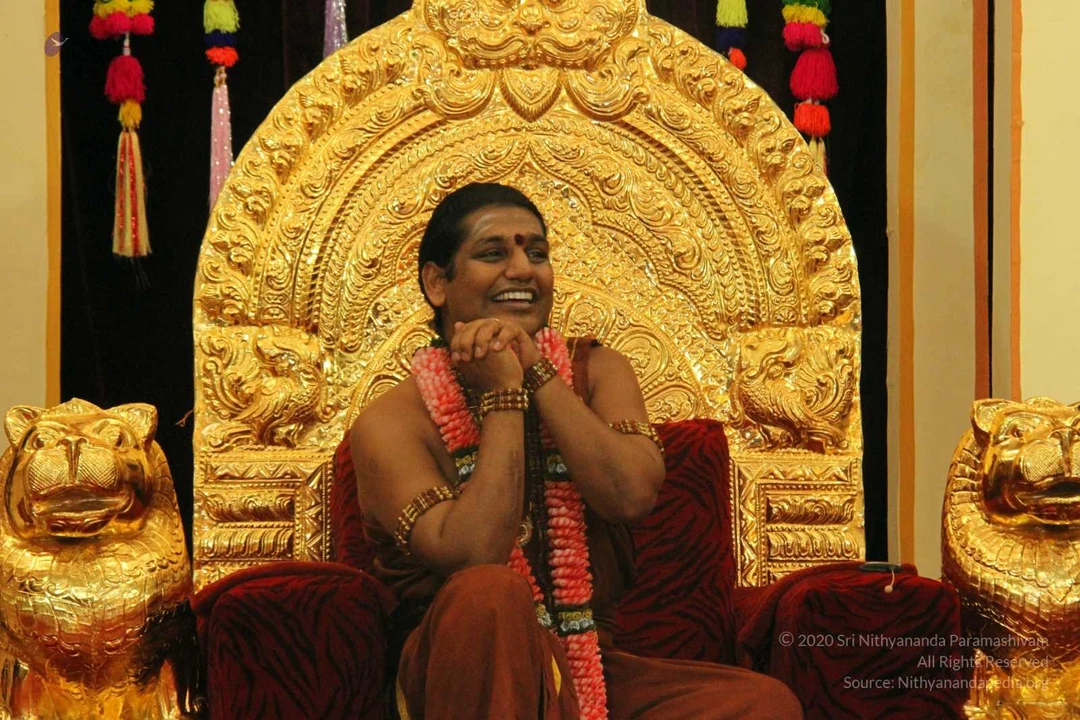
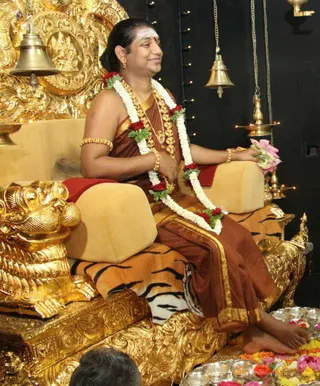
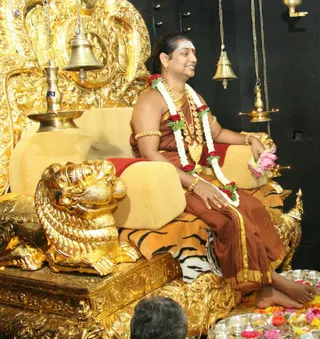
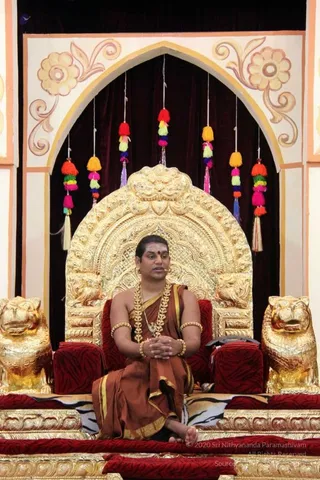
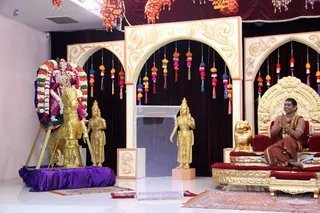
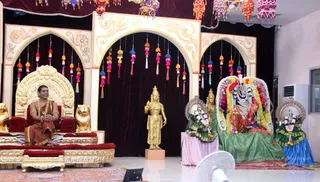
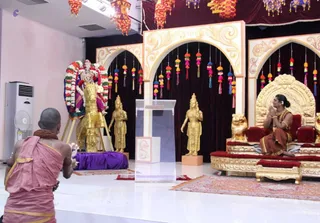
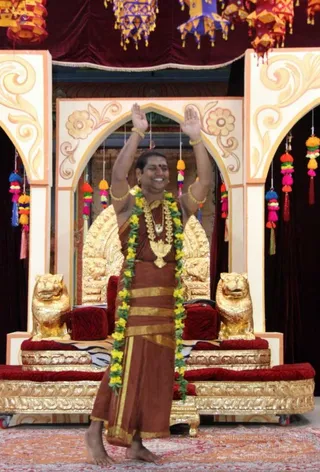
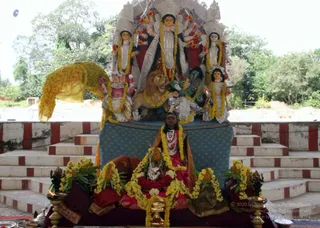
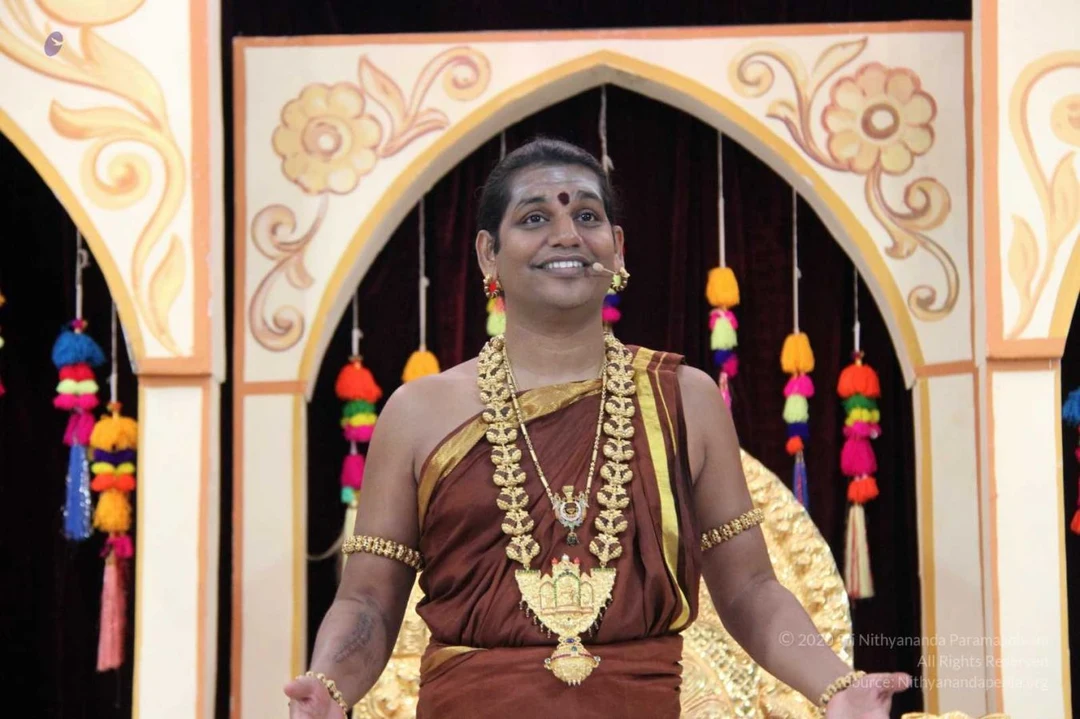
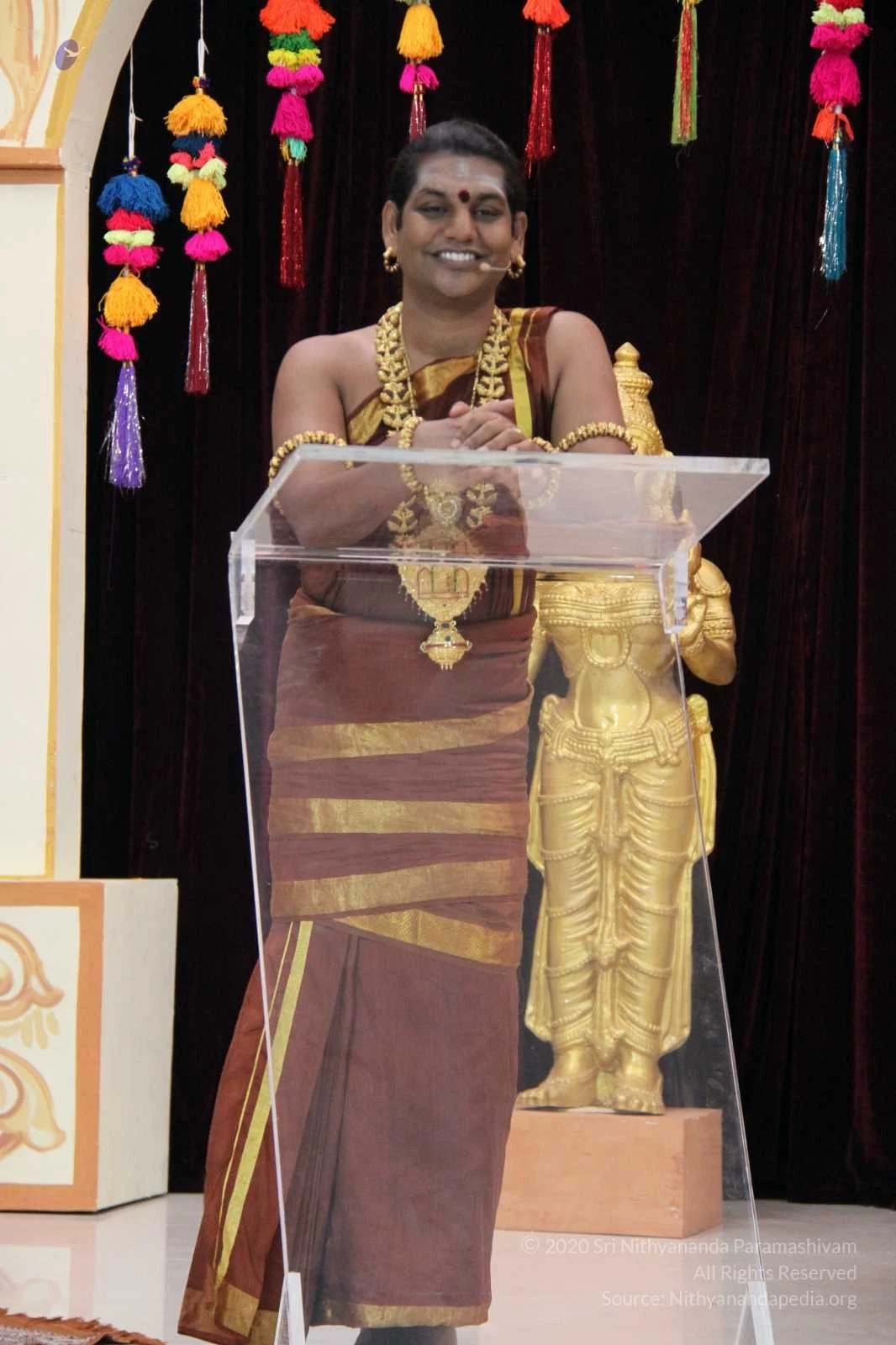
A smiling man with a white forehead marking and red dot sits on an ornate gold throne carved with lion heads and draped in a tiger-striped cloth. He wears a brown dhoti with a gold border, a gold necklace, gold armbands and bracelets, and a garland of white flowers with red roses and green leaves. He holds pink lotus flowers. Brass hanging bells and lamps surround the throne. In the foreground, a lower head is visible and metal bowls of flowers and lamps sit on the floor.A photograph of a single person standing on a patterned rug beside a clear acrylic lectern, one hand resting on it, speaking in front of a gold-carved throne with red velvet cushions and a tiger-stripe cloth. The person wears a rust-brown draped garment with gold borders, a heavy gold multi-strand necklace with a central gold pendant, gold bangles and an armlet, and a red dot on the forehead. Behind is a dark maroon velvet backdrop with colourful tassel hangings and ornate cream-and-gold arch paintwork. A golden figurine stands on the left beside the lectern.Outdoor temple scene with a large decorated deity murti of Devi on a blue cloth-covered platform, seated on a lion with multiple arms holding weapons, flanked by two smaller goddess figures in white and gold, adorned with marigold garlands. A young shaved-headed priest in orange-brown dhoti stands at left holding a silver bowl, while a woman in a brown sari with folded hands offers worship at right. Offerings of fruit and flowers sit in front of the platform, with a red-and-orange canopy with blue fringe overhead, steps and trees behind.

October 12 2013

Original wiki page
Contents

Description:

In today’s morning Satsang, Paramahamsa Nithyananda leads us into a very powerful strategy planning technique for our lives - have zero resistance! Even with a regular spiritual practice, we will struggle in life if we continue to think, life should not be this way. Internal resistance only propels us into suffering and the space of incompletion. Let us empower ourselves and take responsibility and instead ask, this is life now what do I want to do about it?

Link to Video:

VideoAudio
VideoAudio

Transcript:

Nithyanandeshwara Samaarambhaam Nithyanandeshwari Madhyamaam | Asmadaachaarya Paryanthaam Vande Guru Paramparaam ||

I welcome all of you with my love and respects!

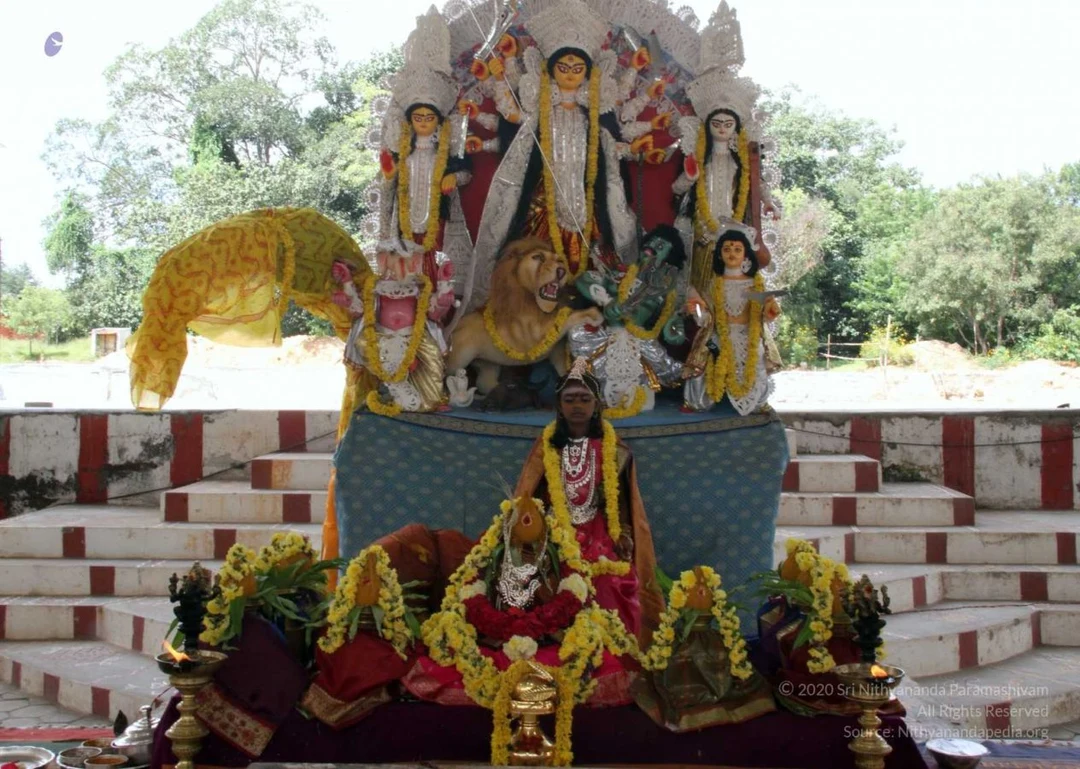
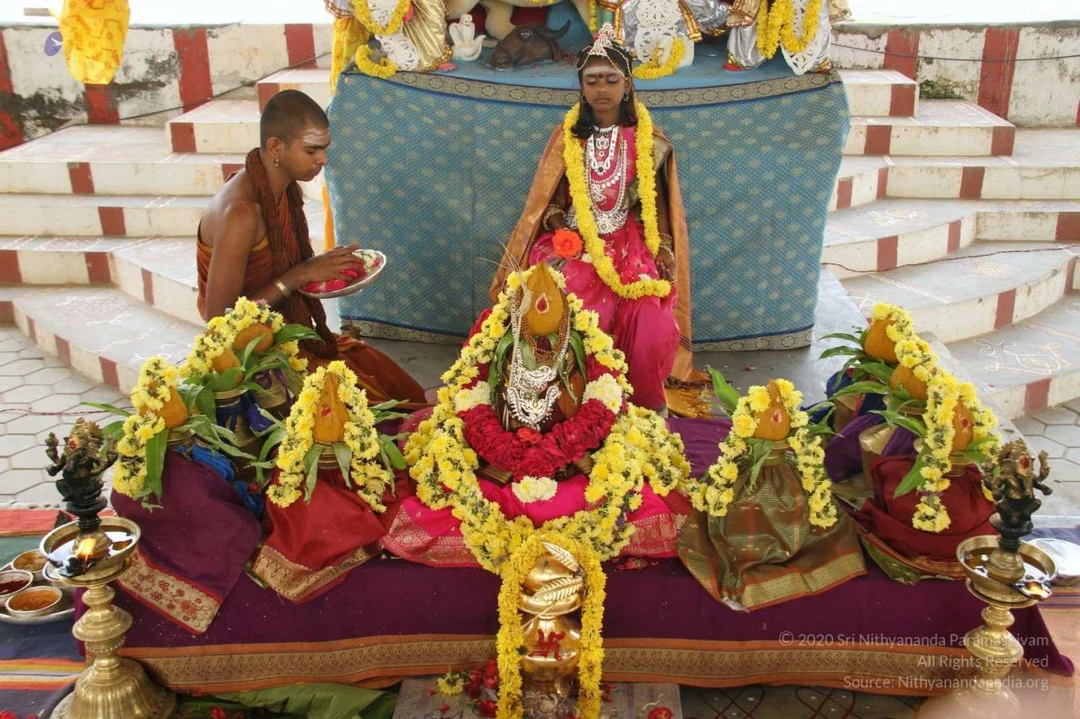
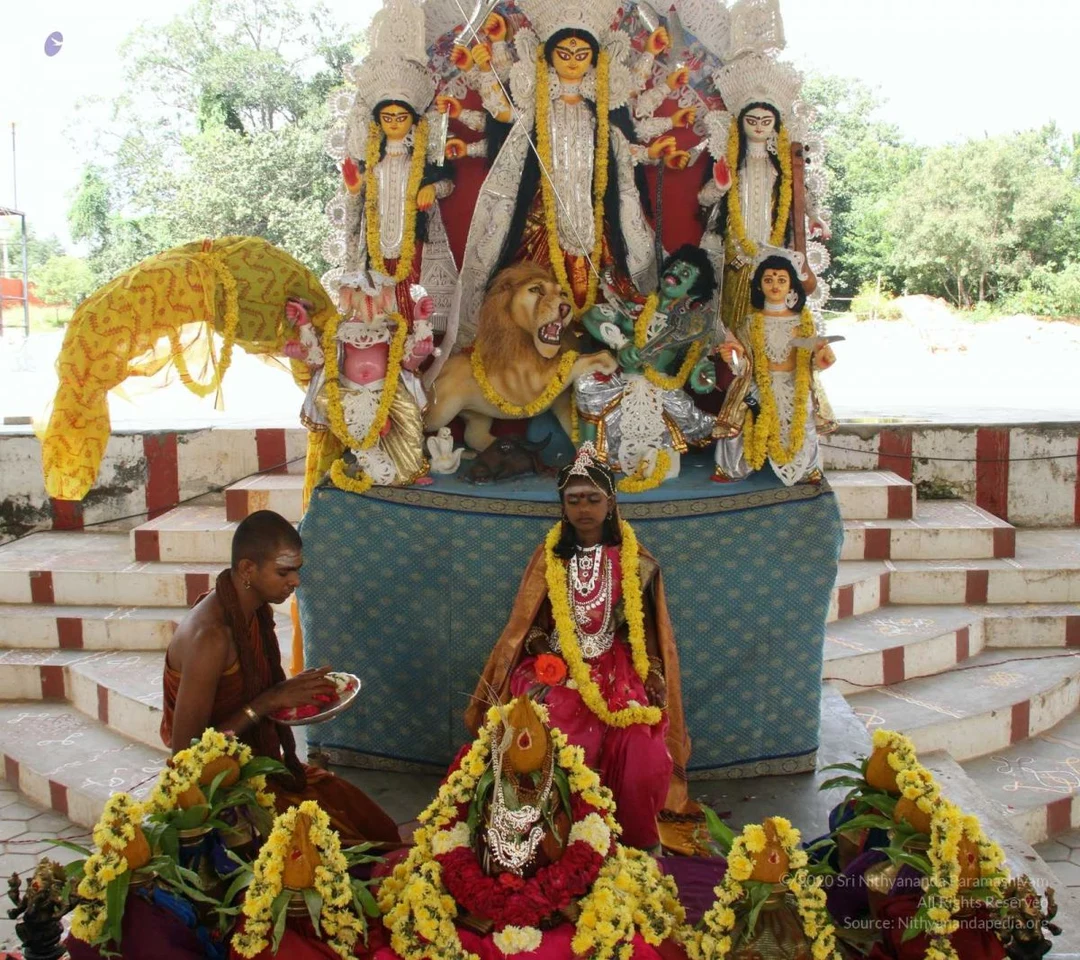
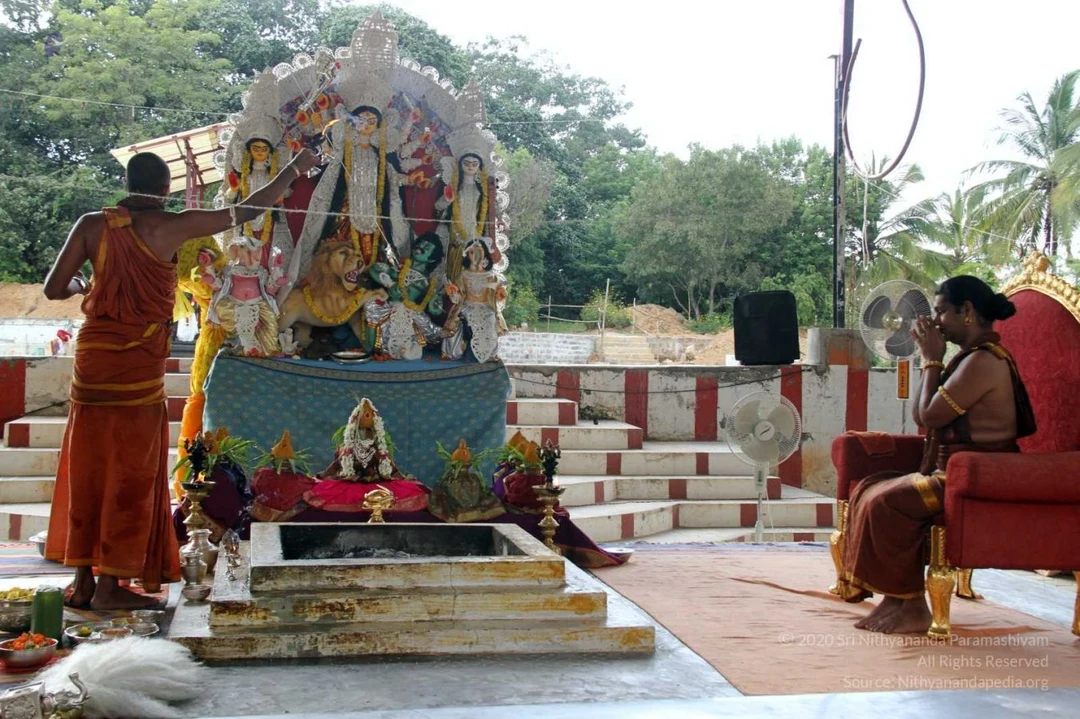
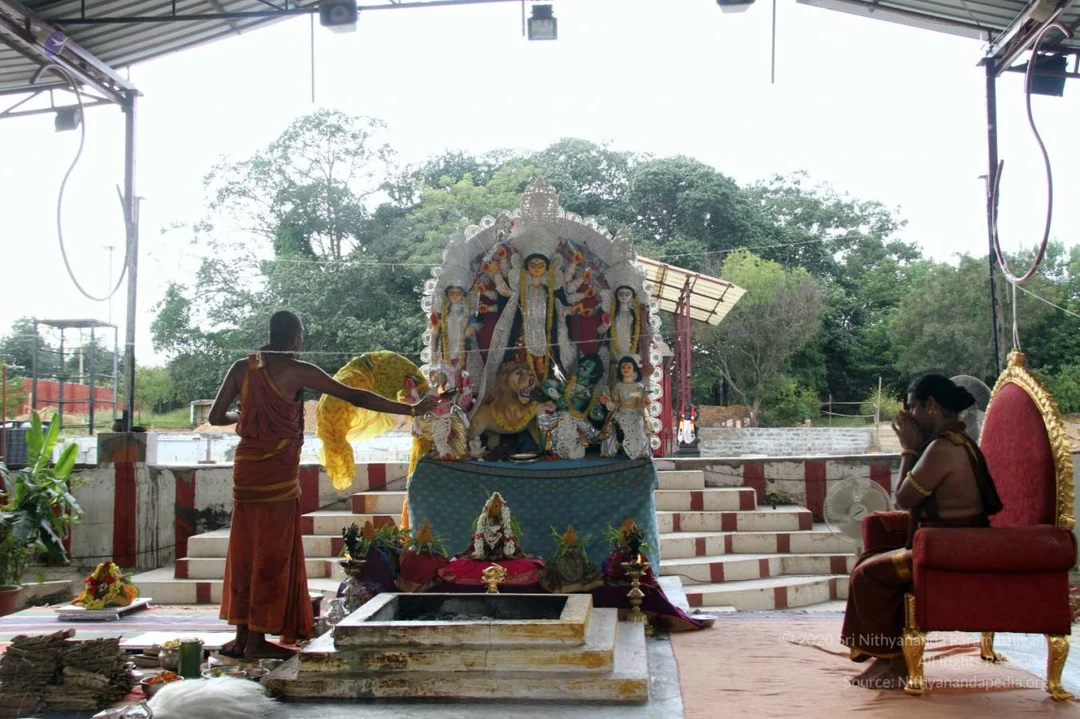
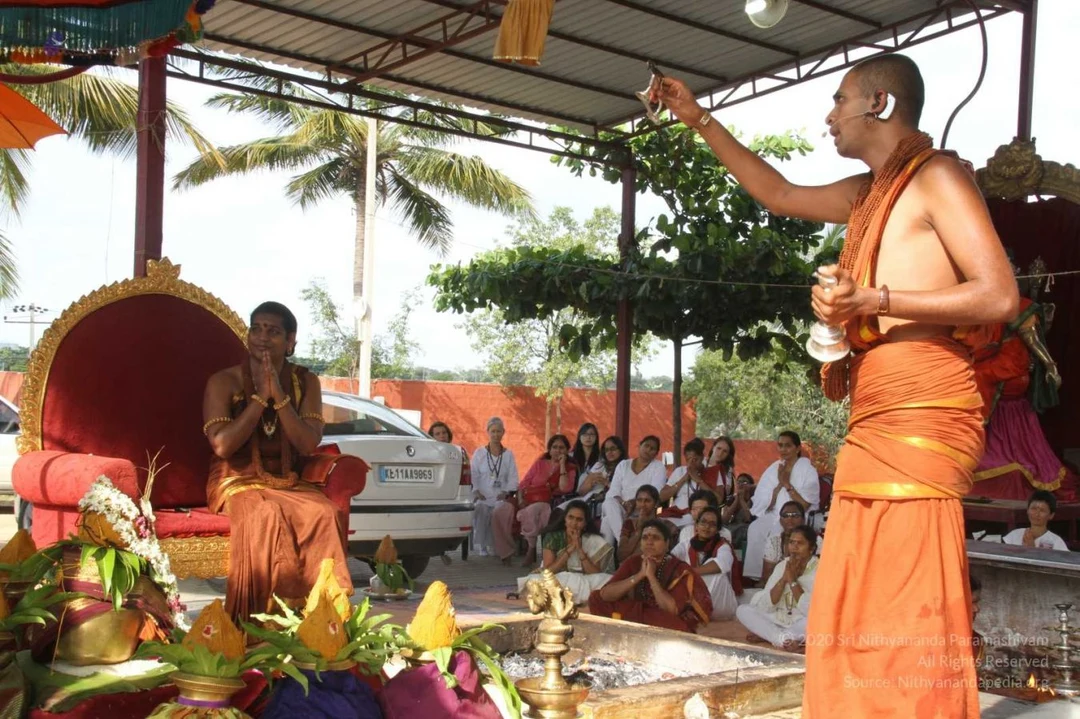
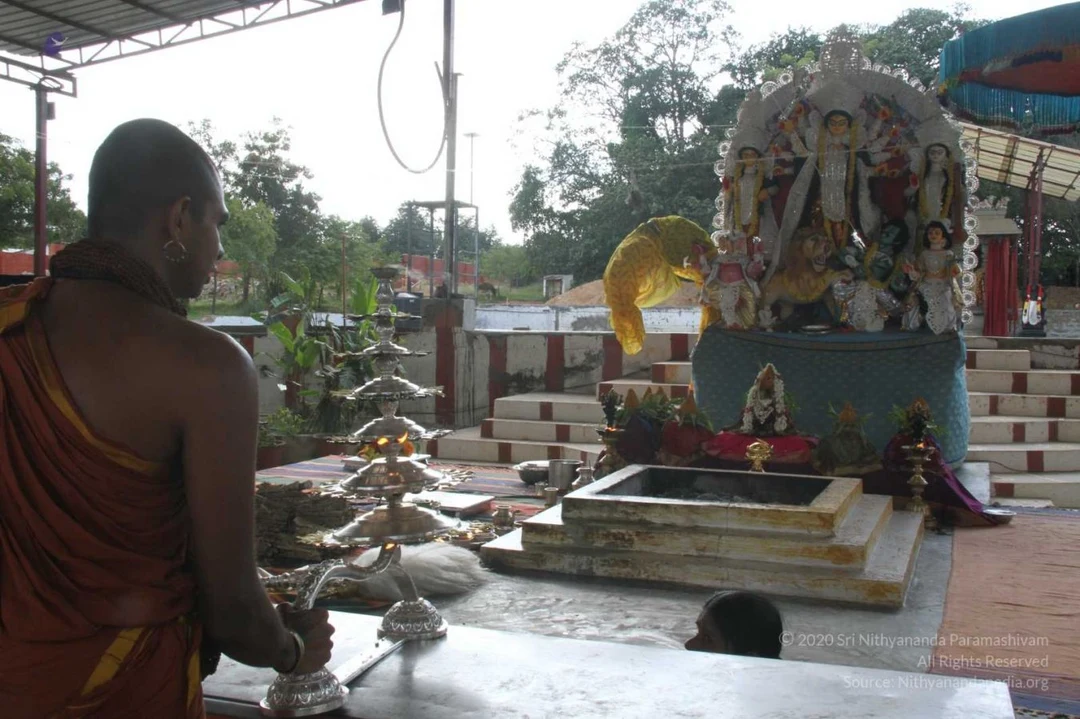
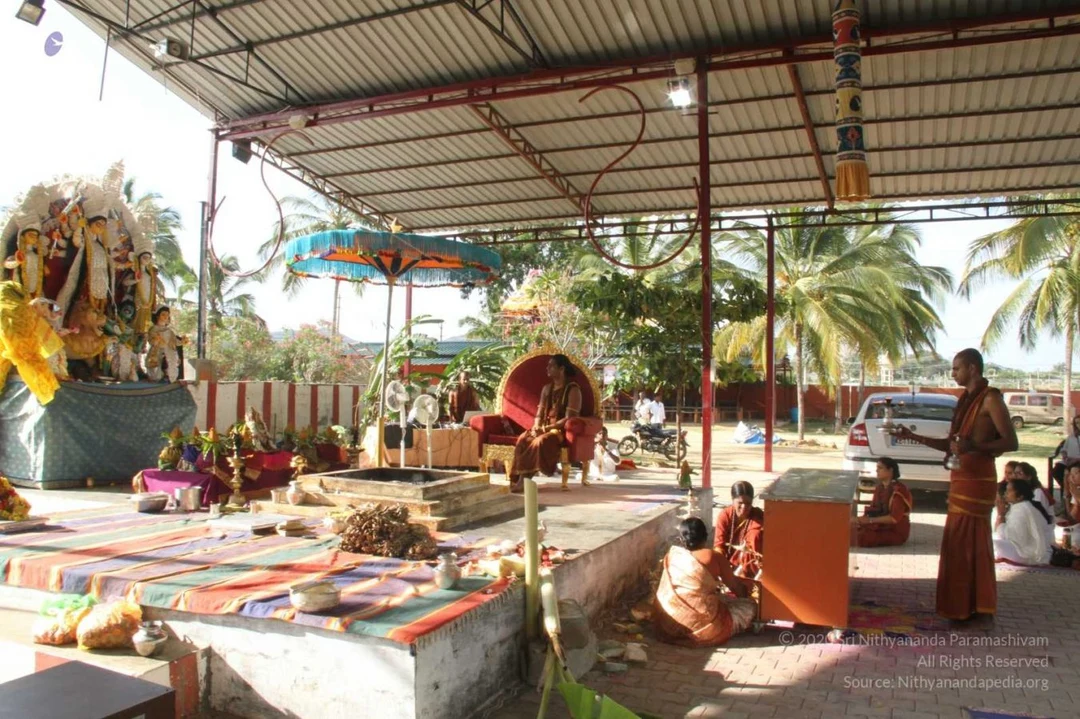
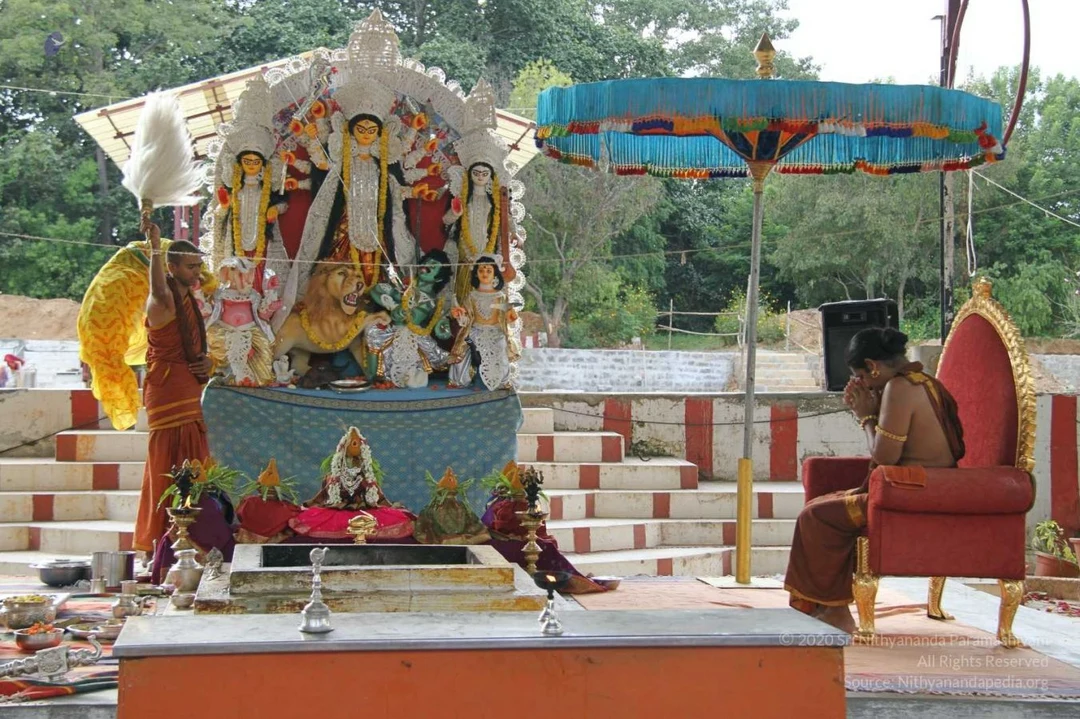
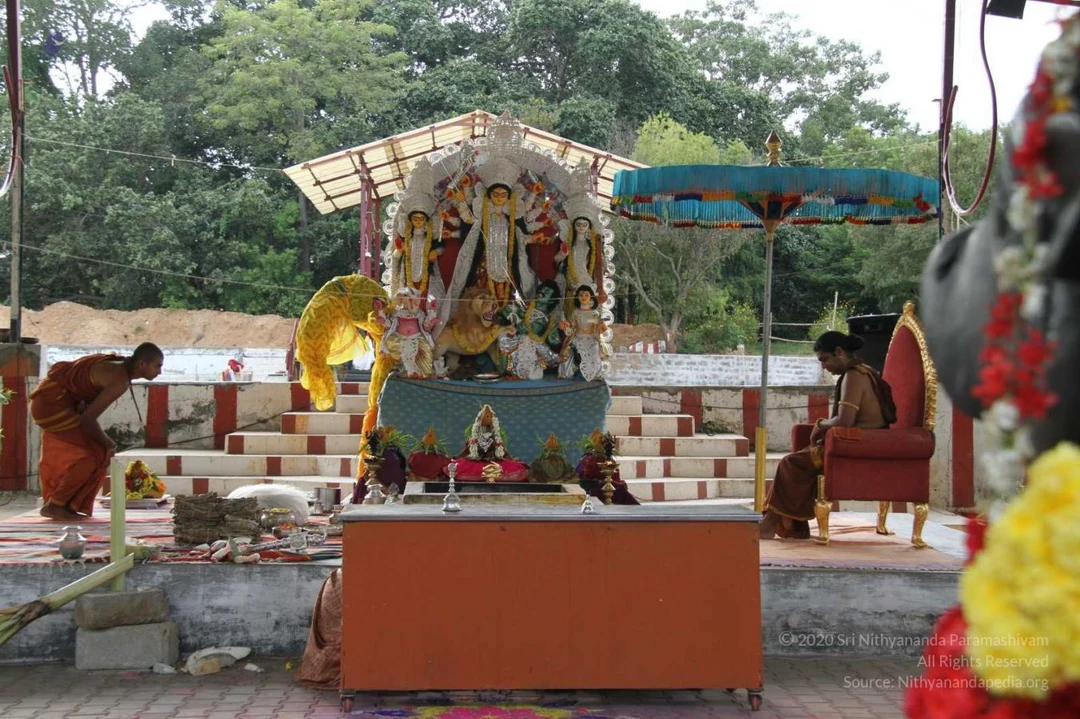
Today, Navarathri Celebrations eighth day – Ashtami Maha Utsava!

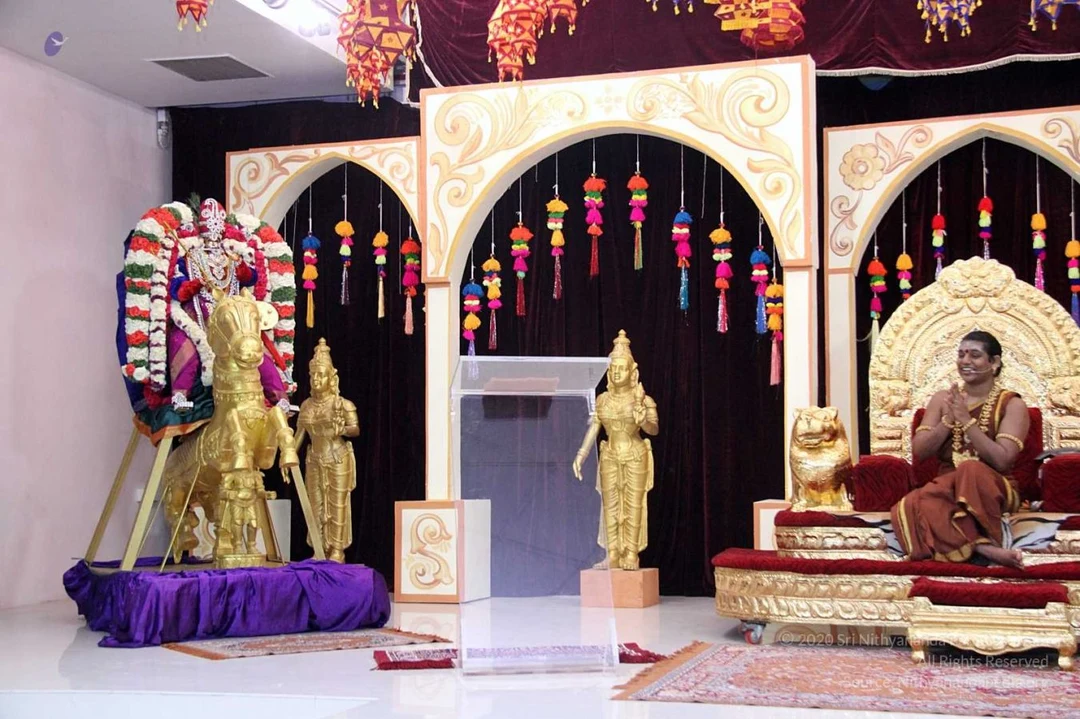
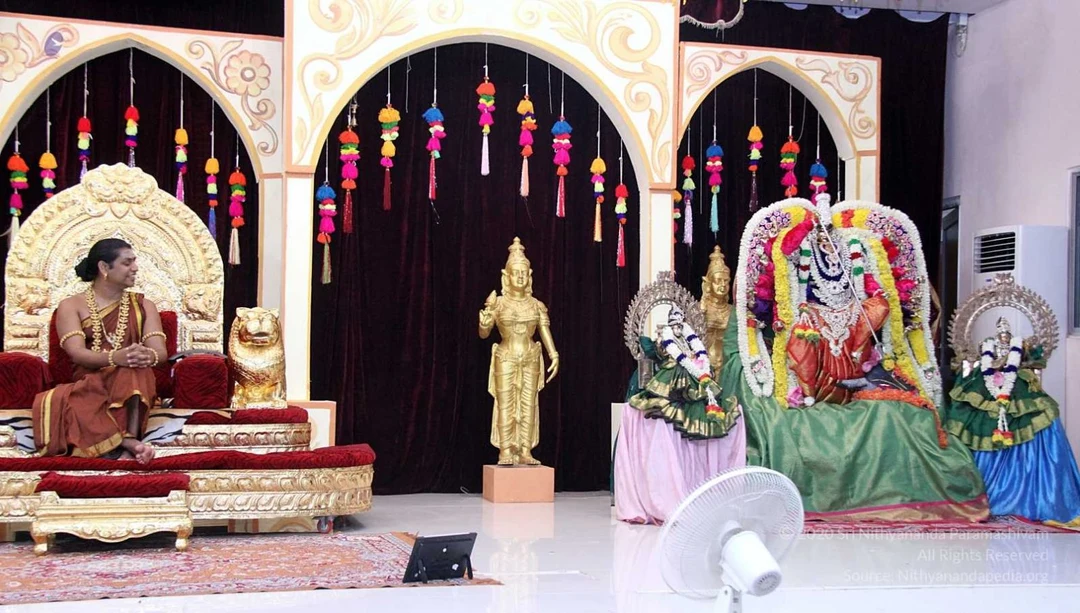
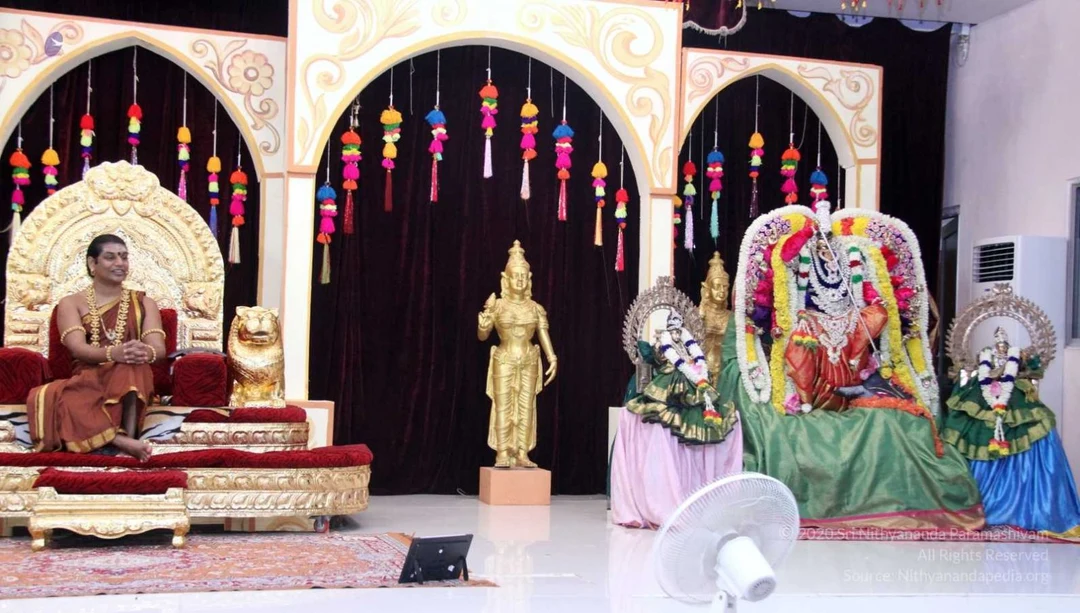
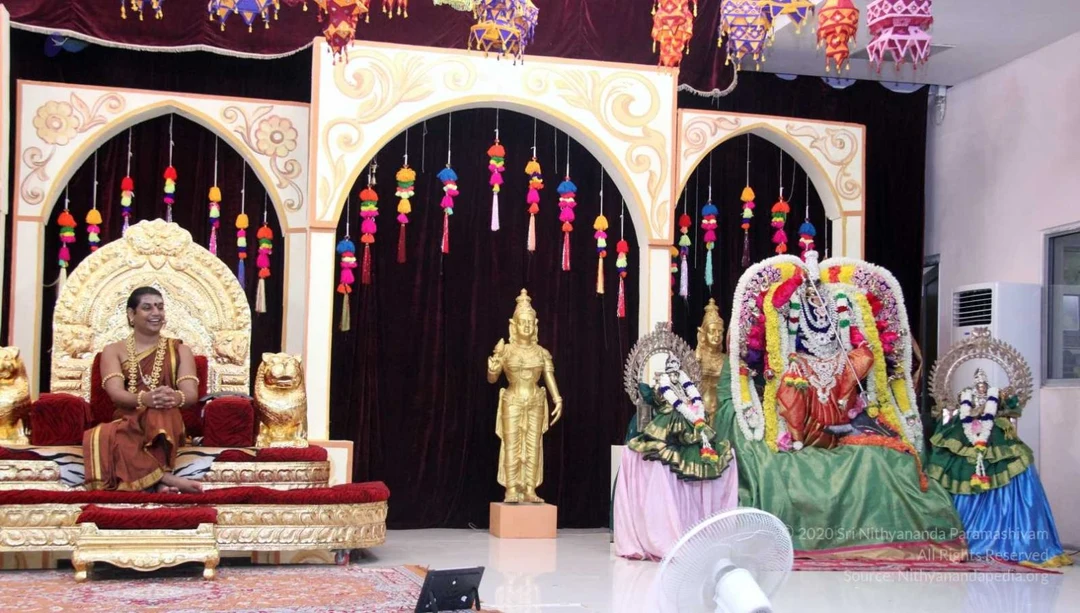
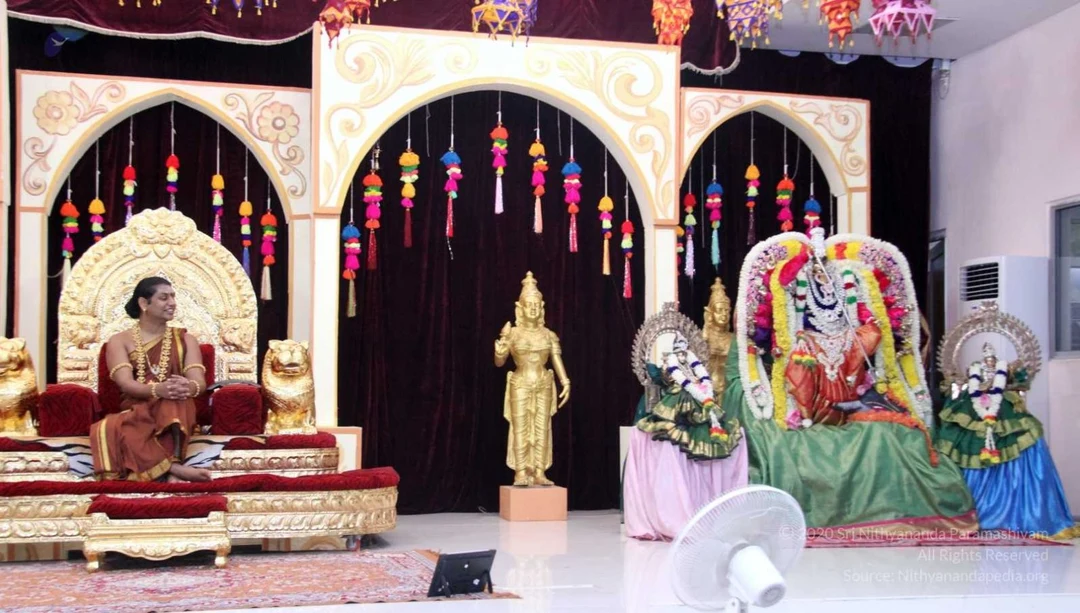
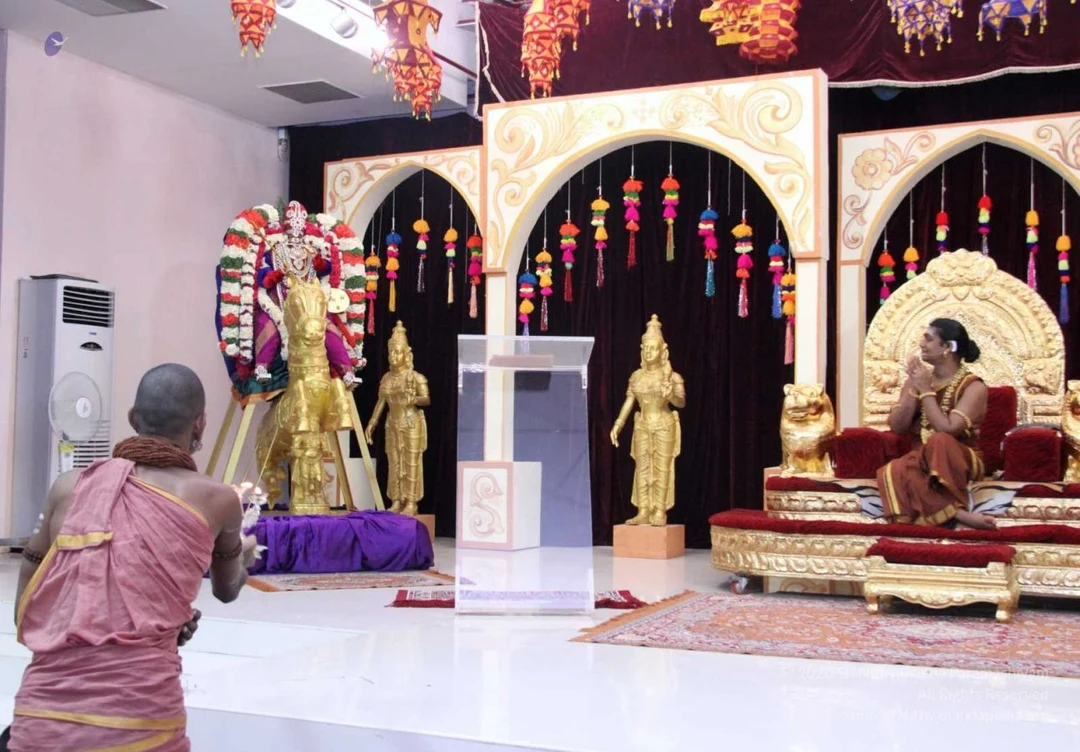
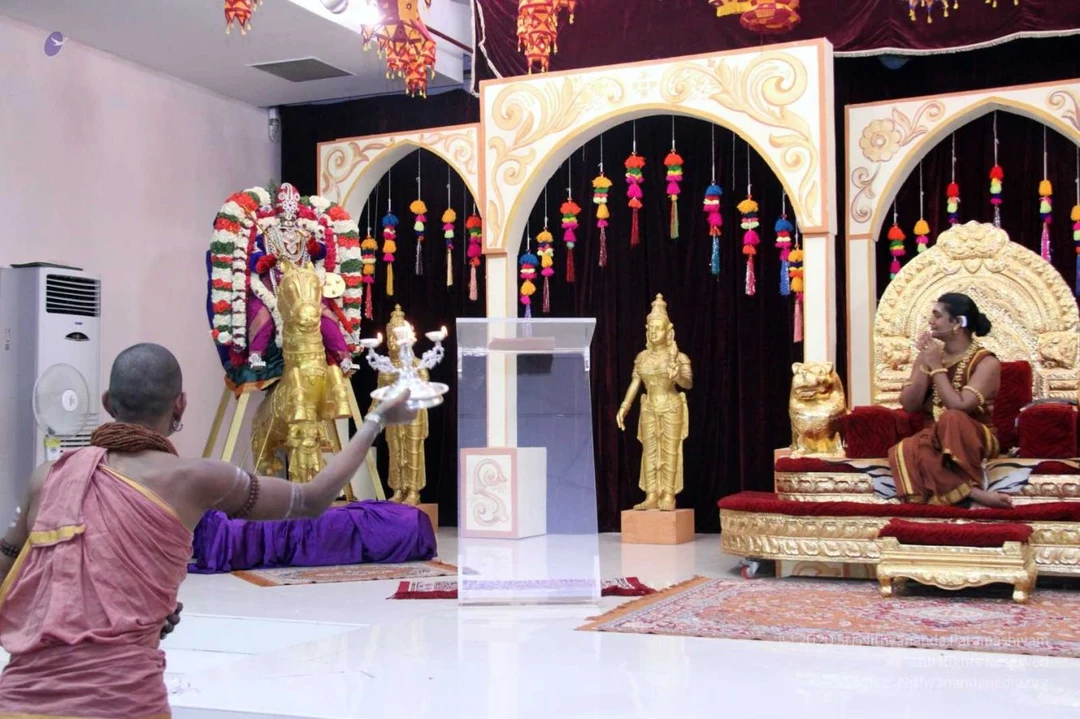
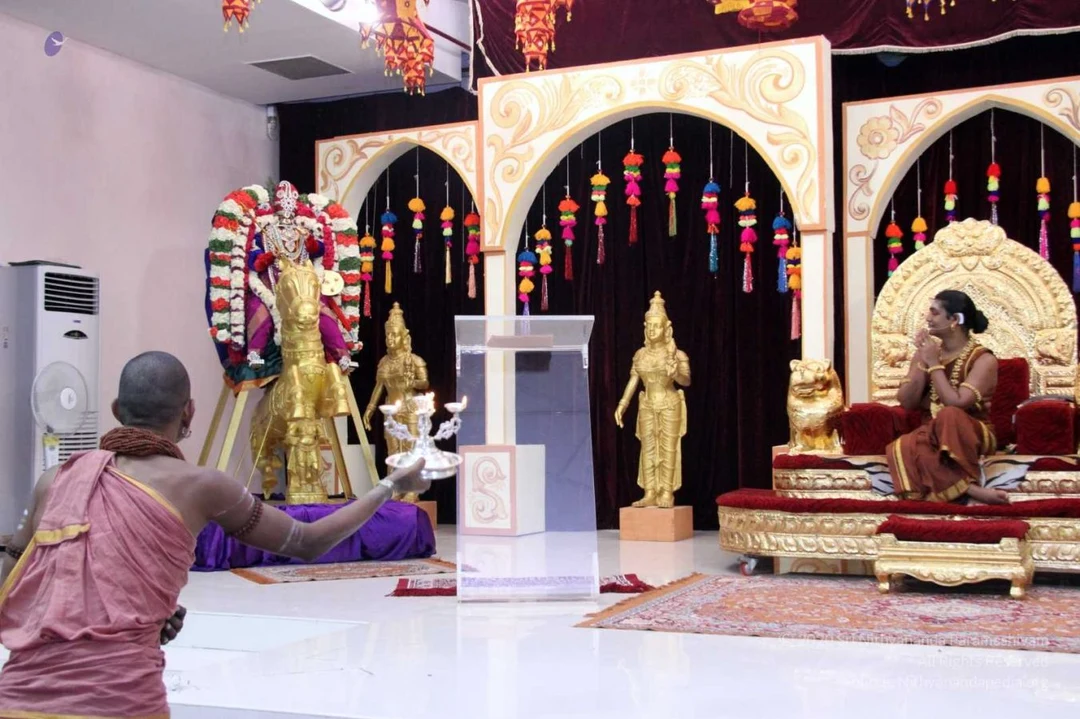
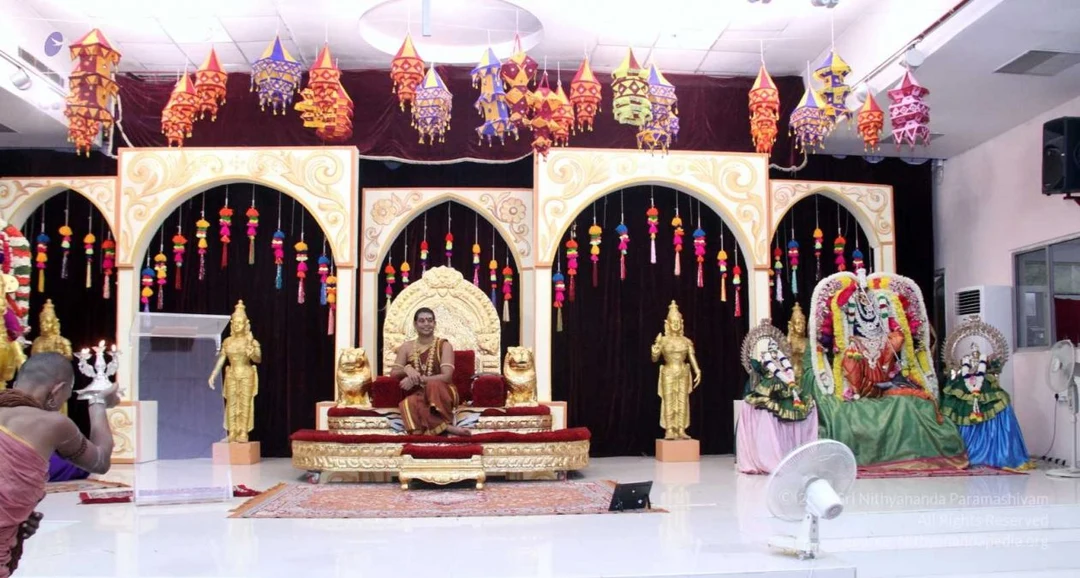
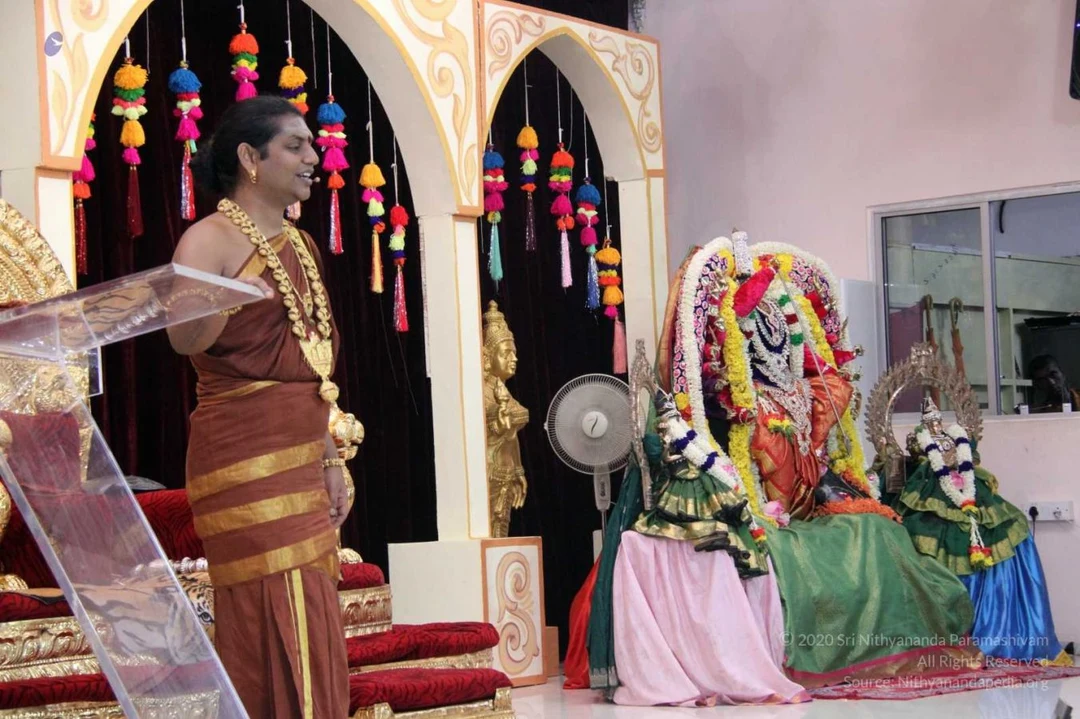
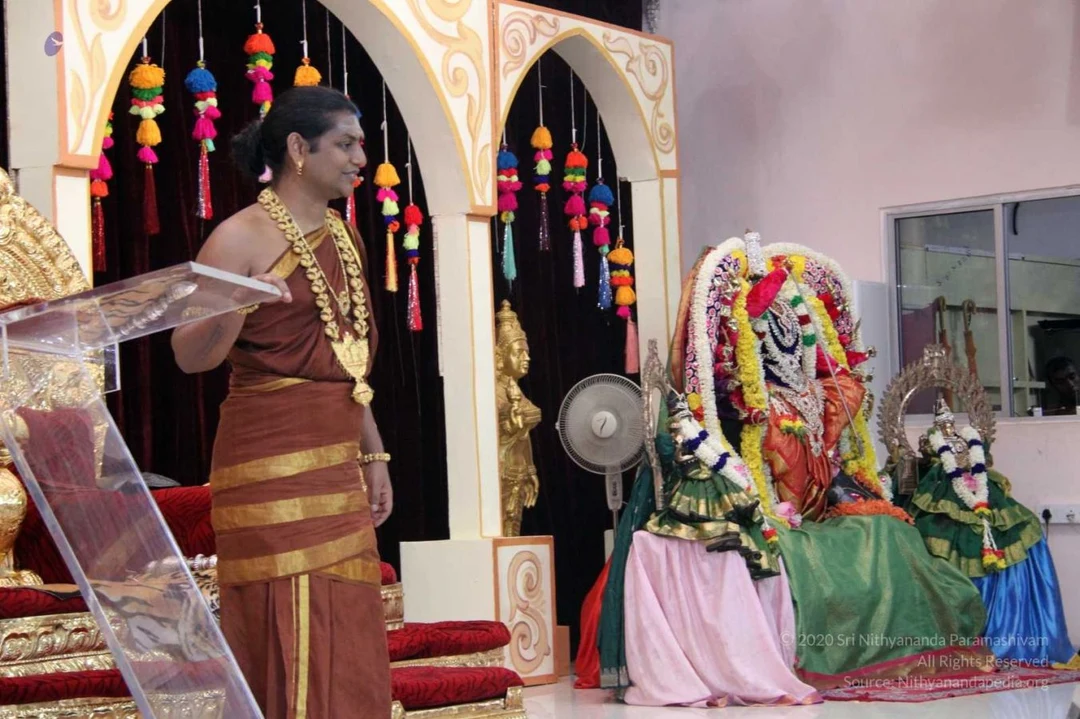
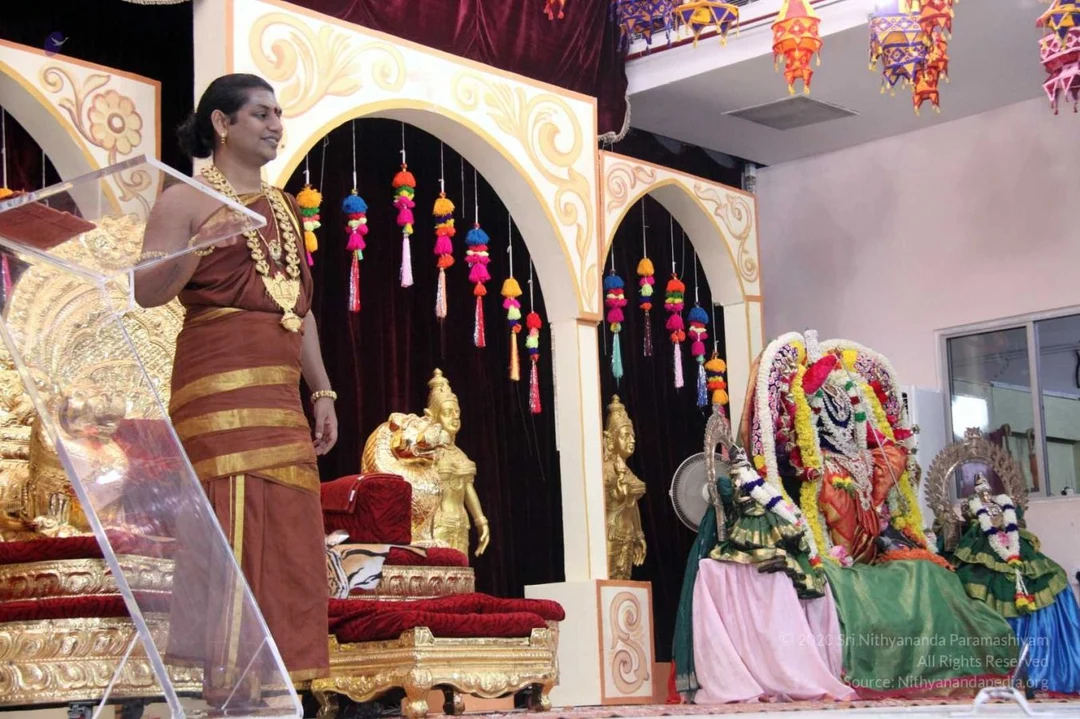
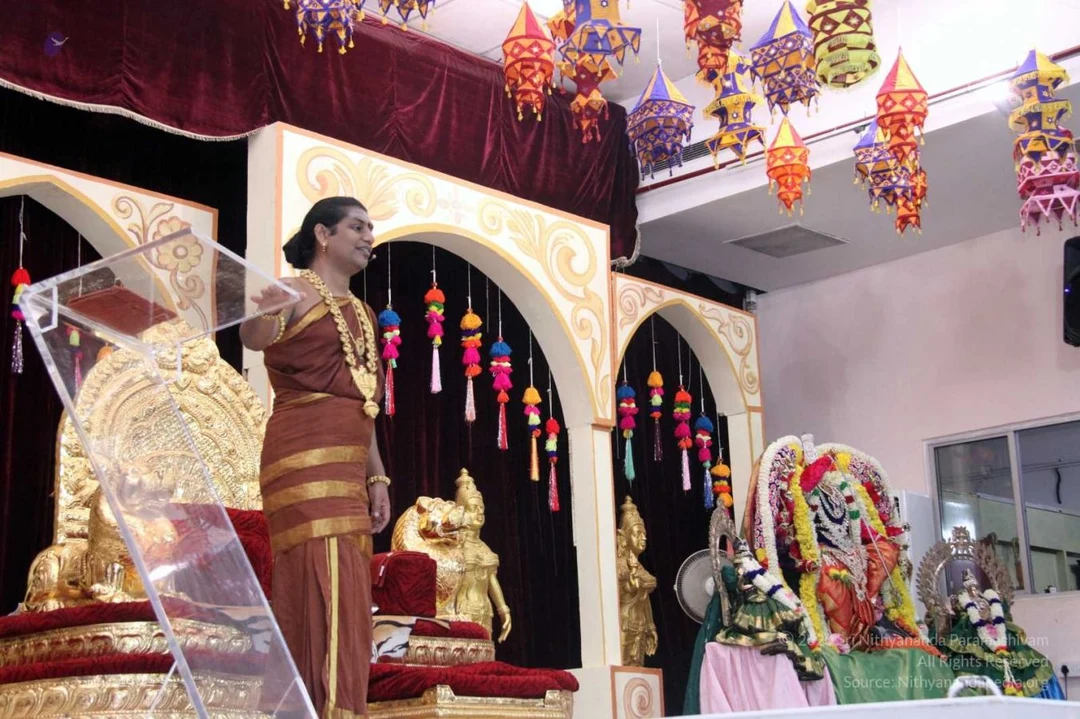
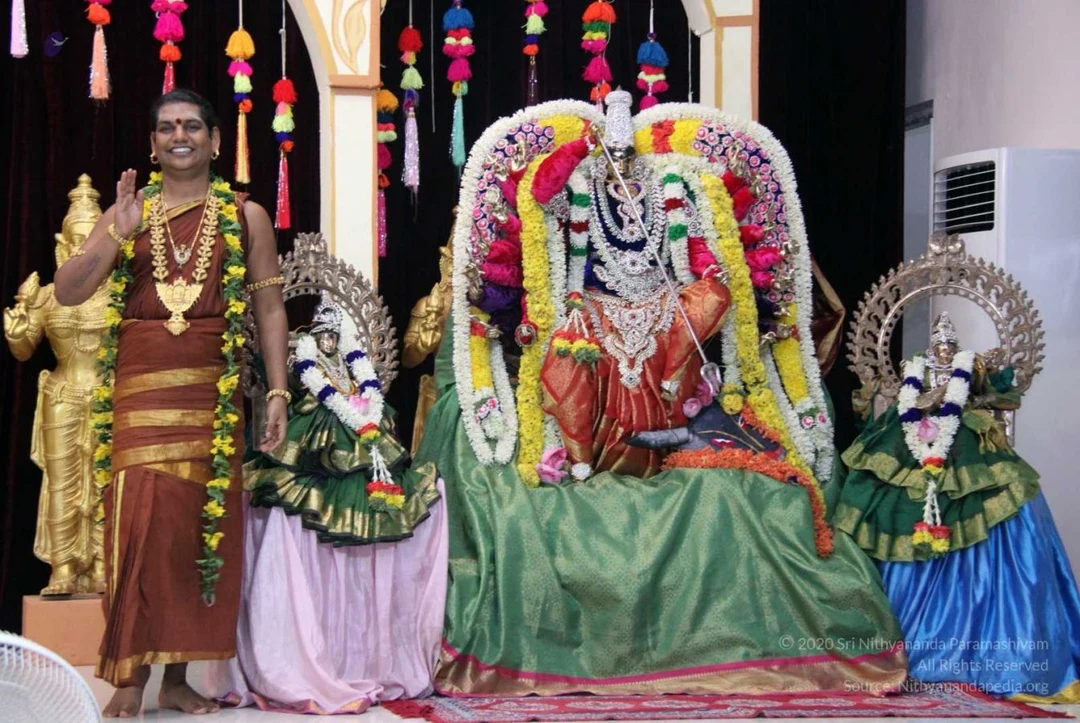
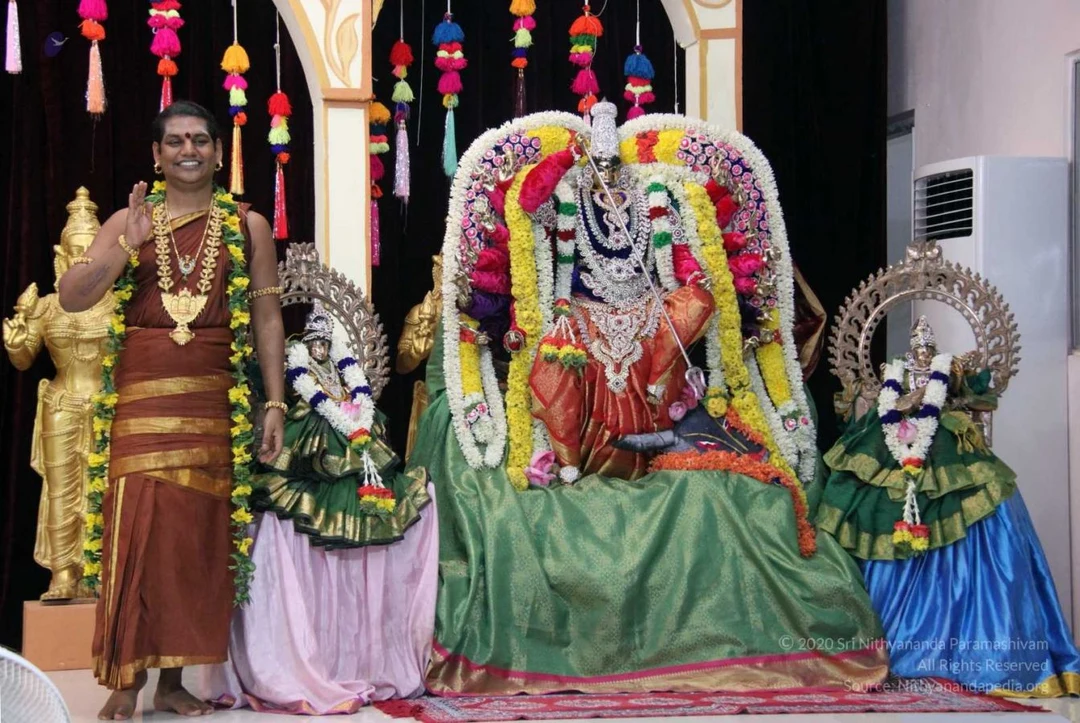
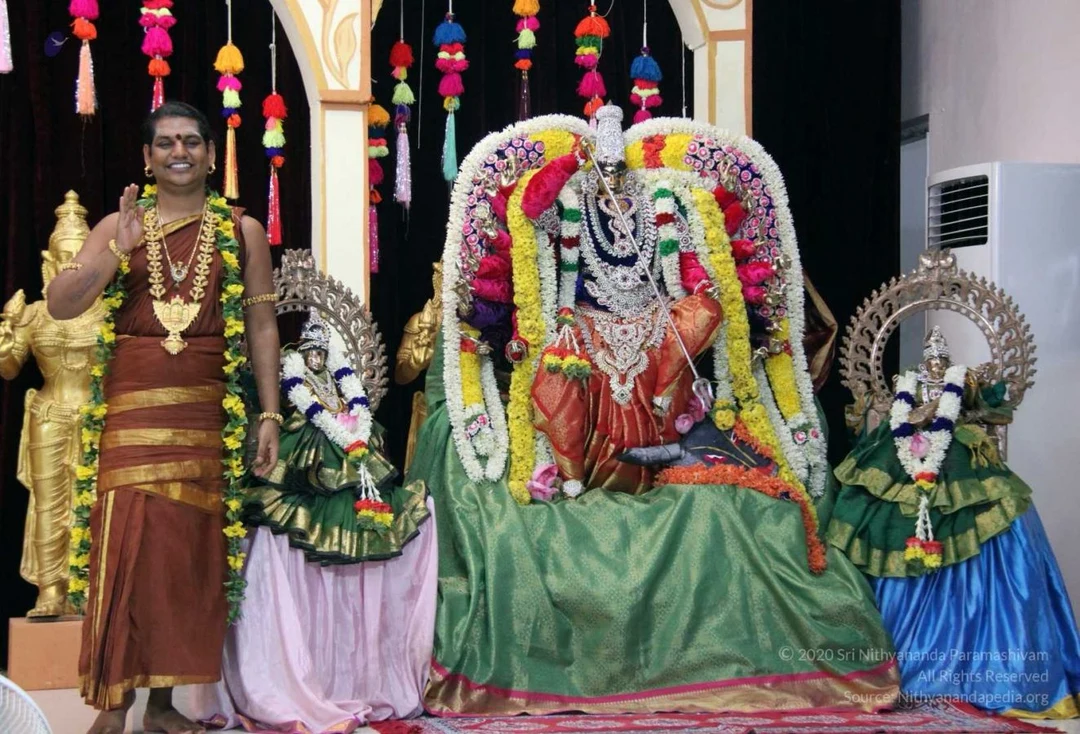
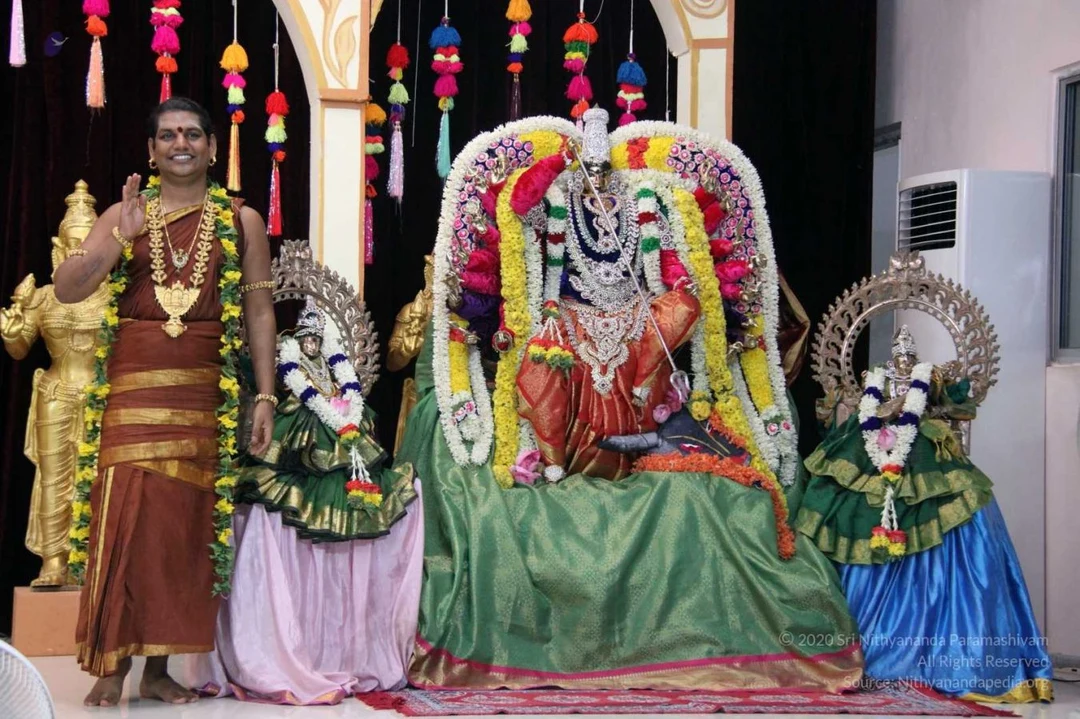
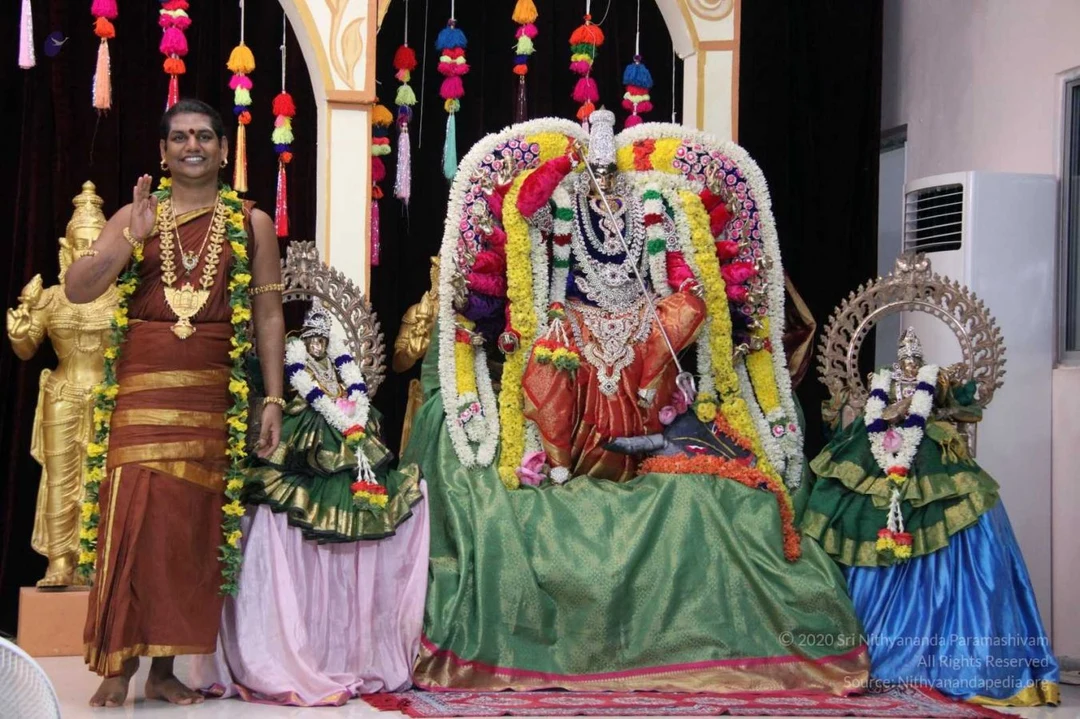
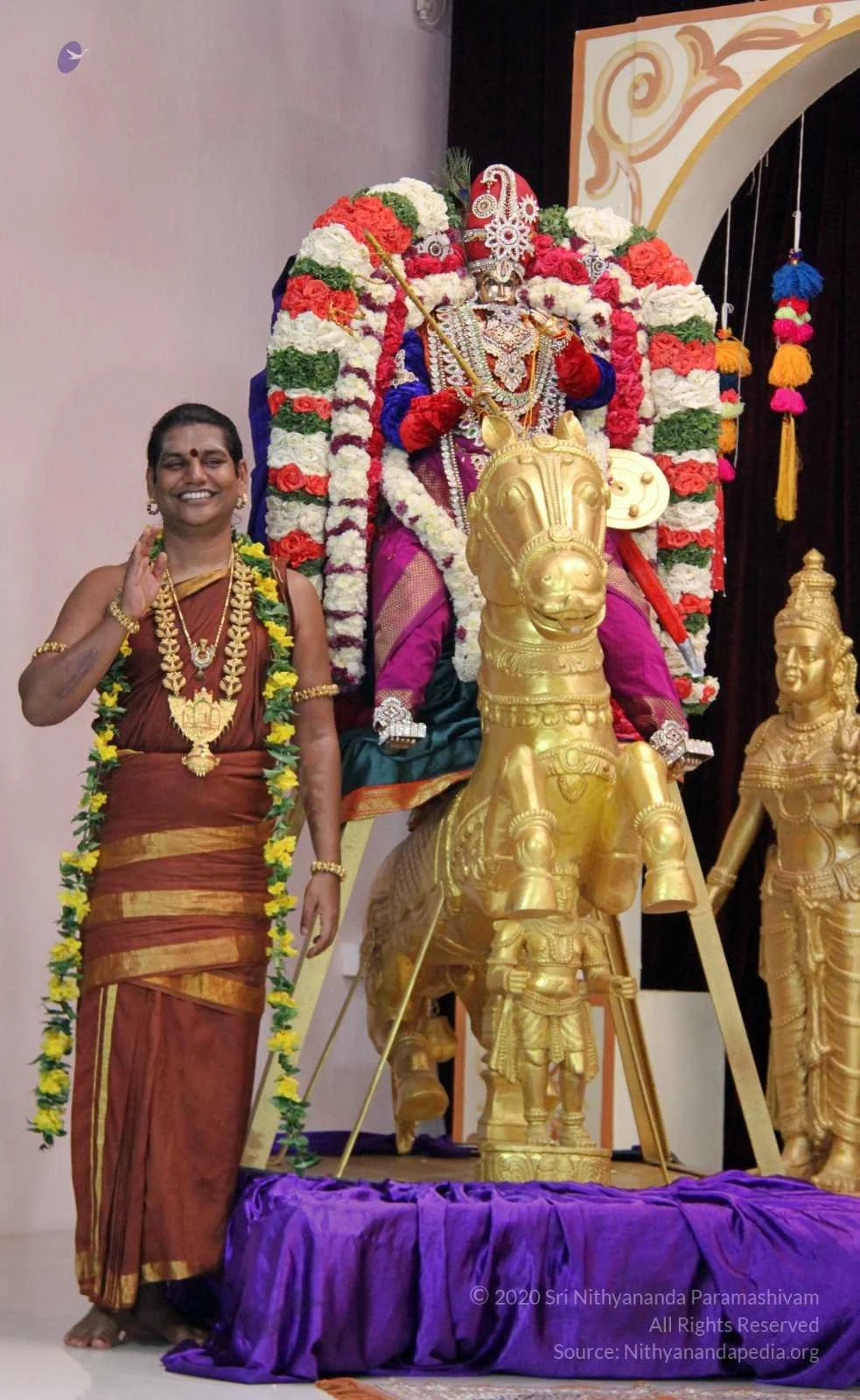
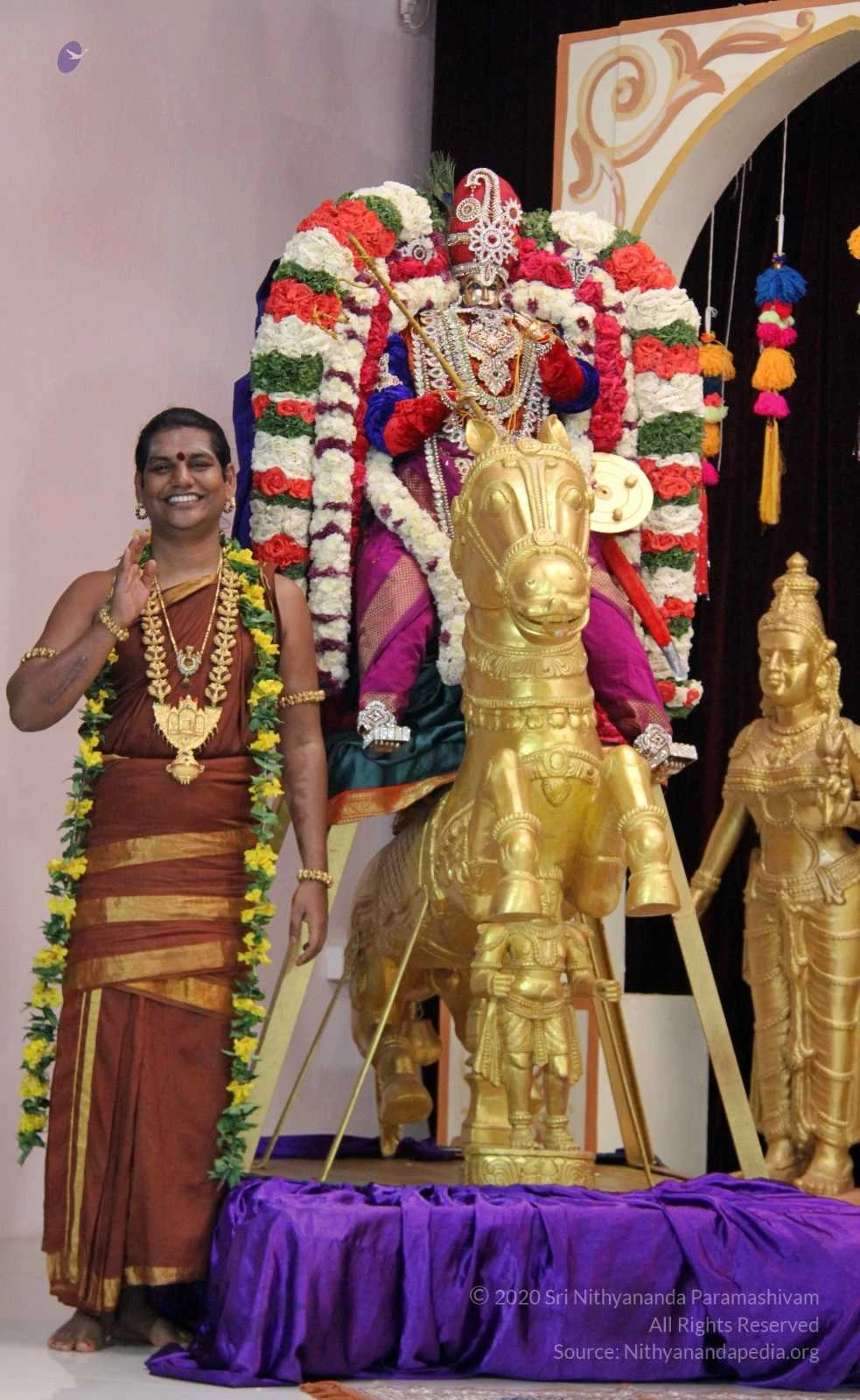
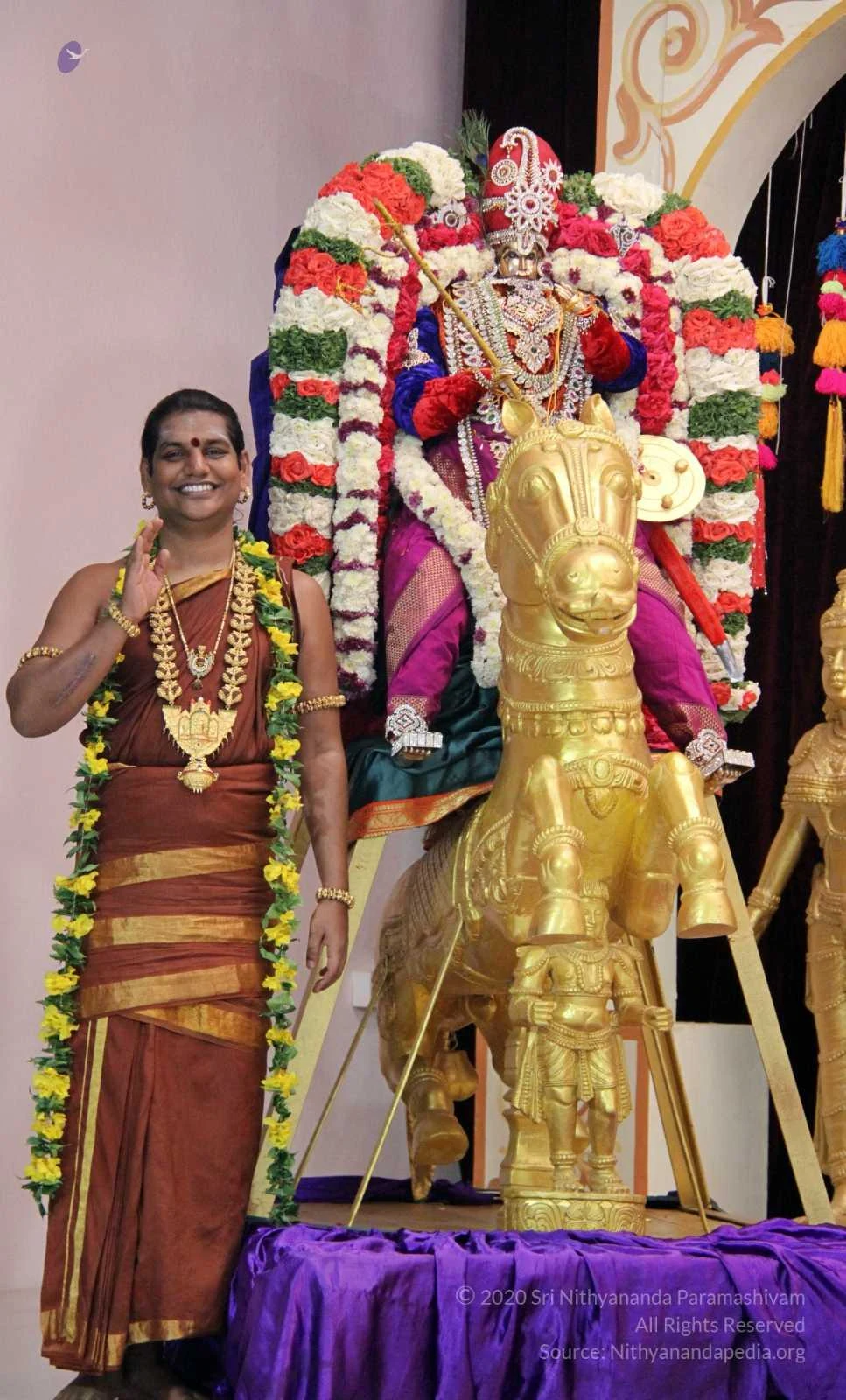
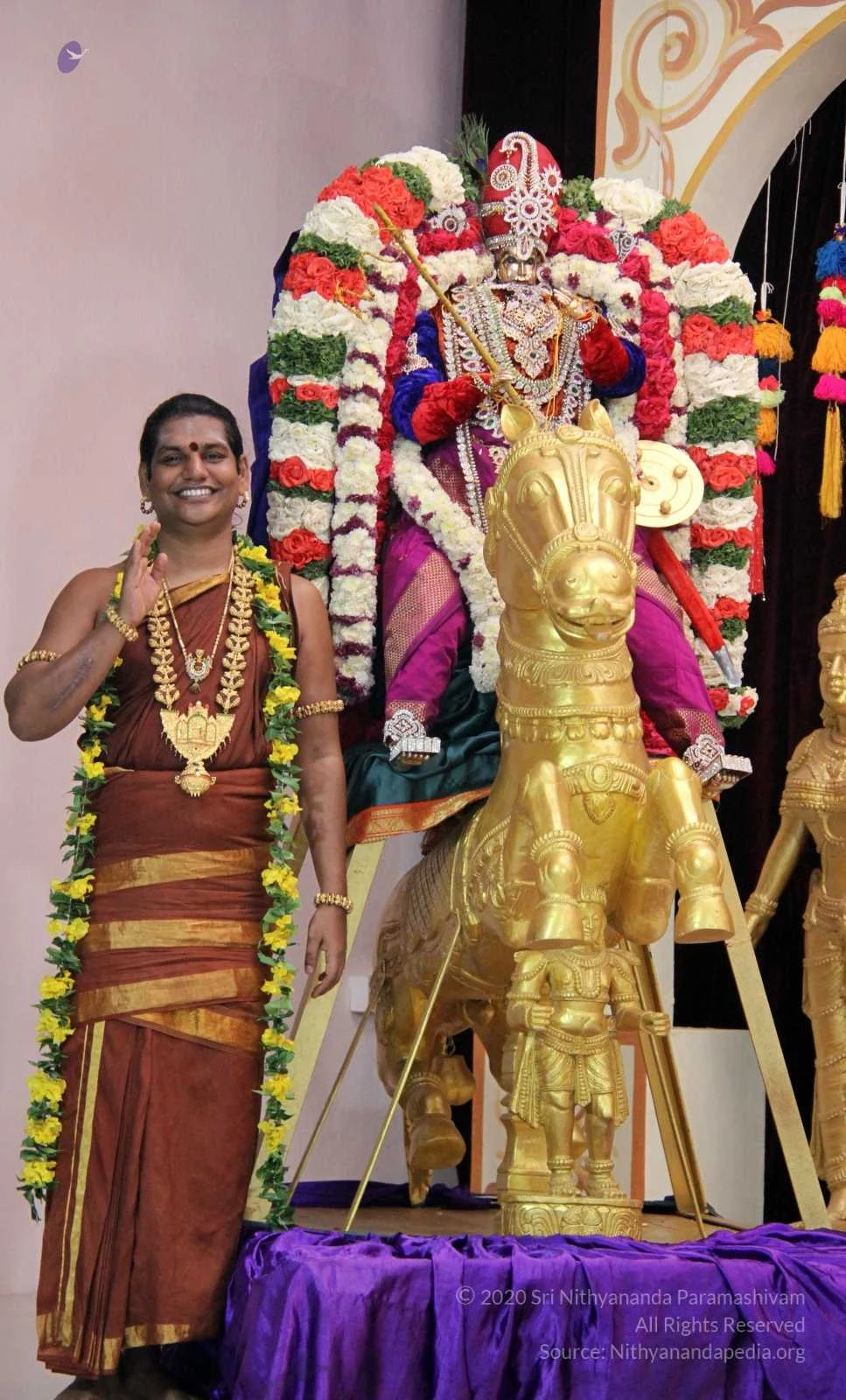
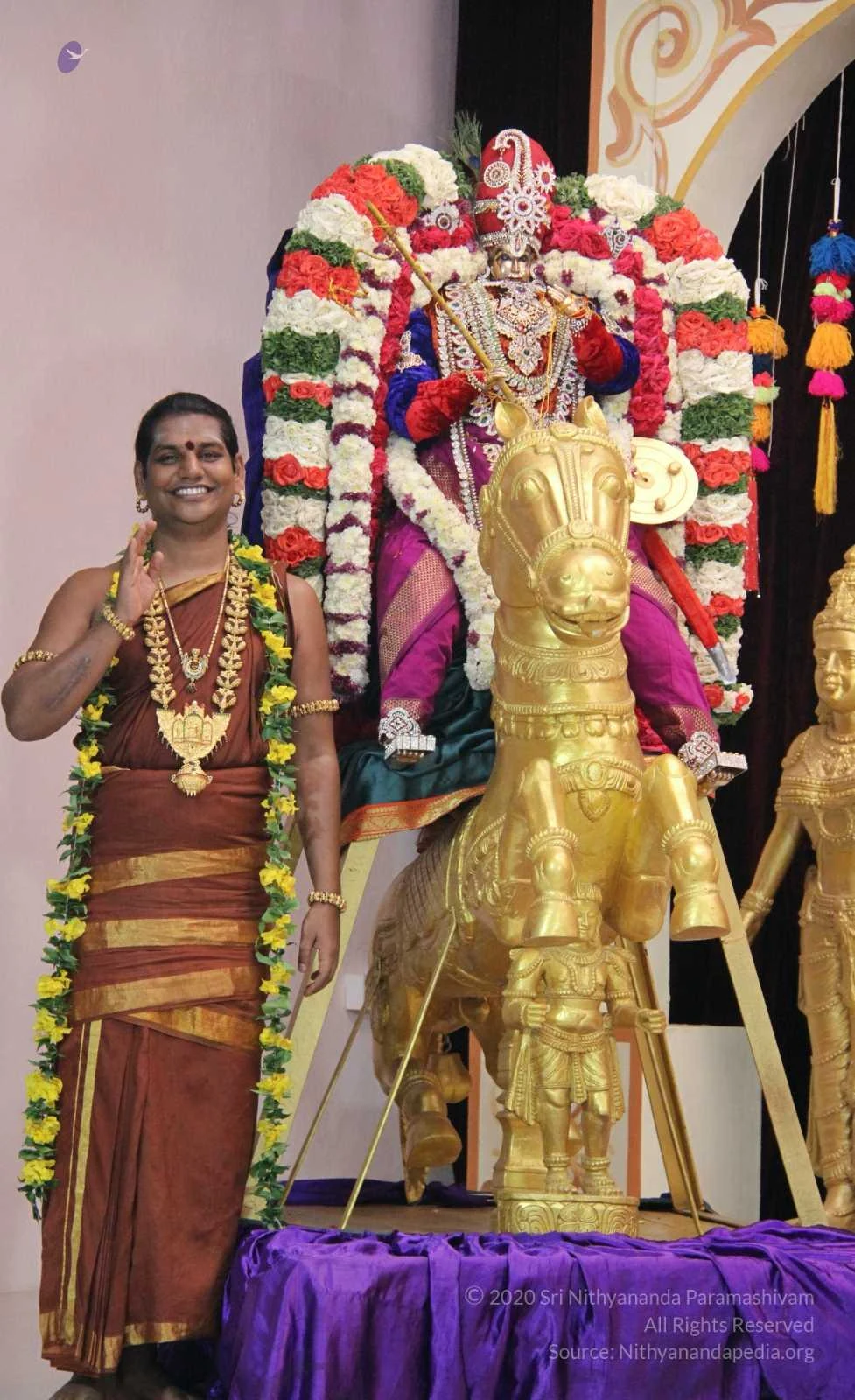
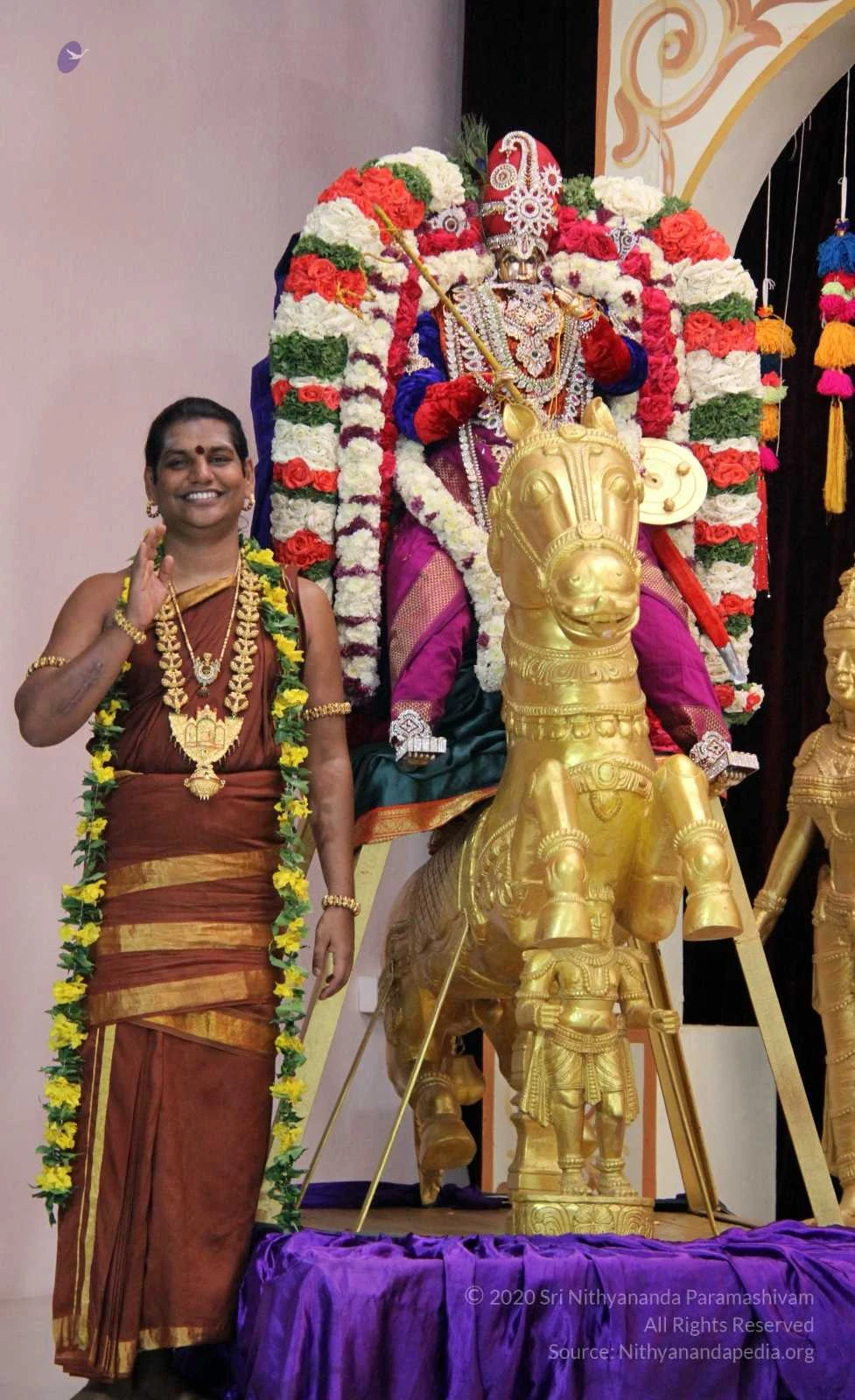
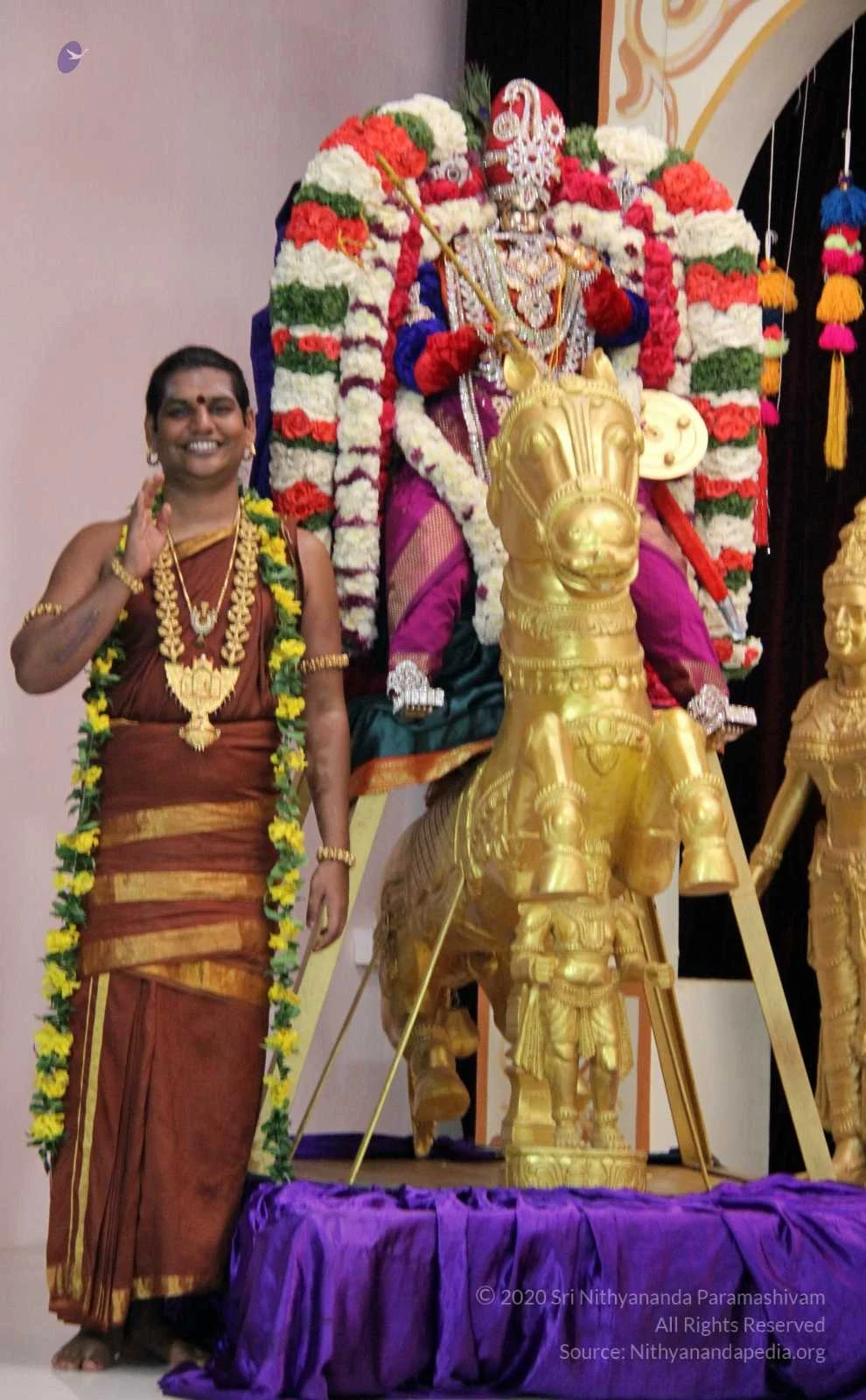
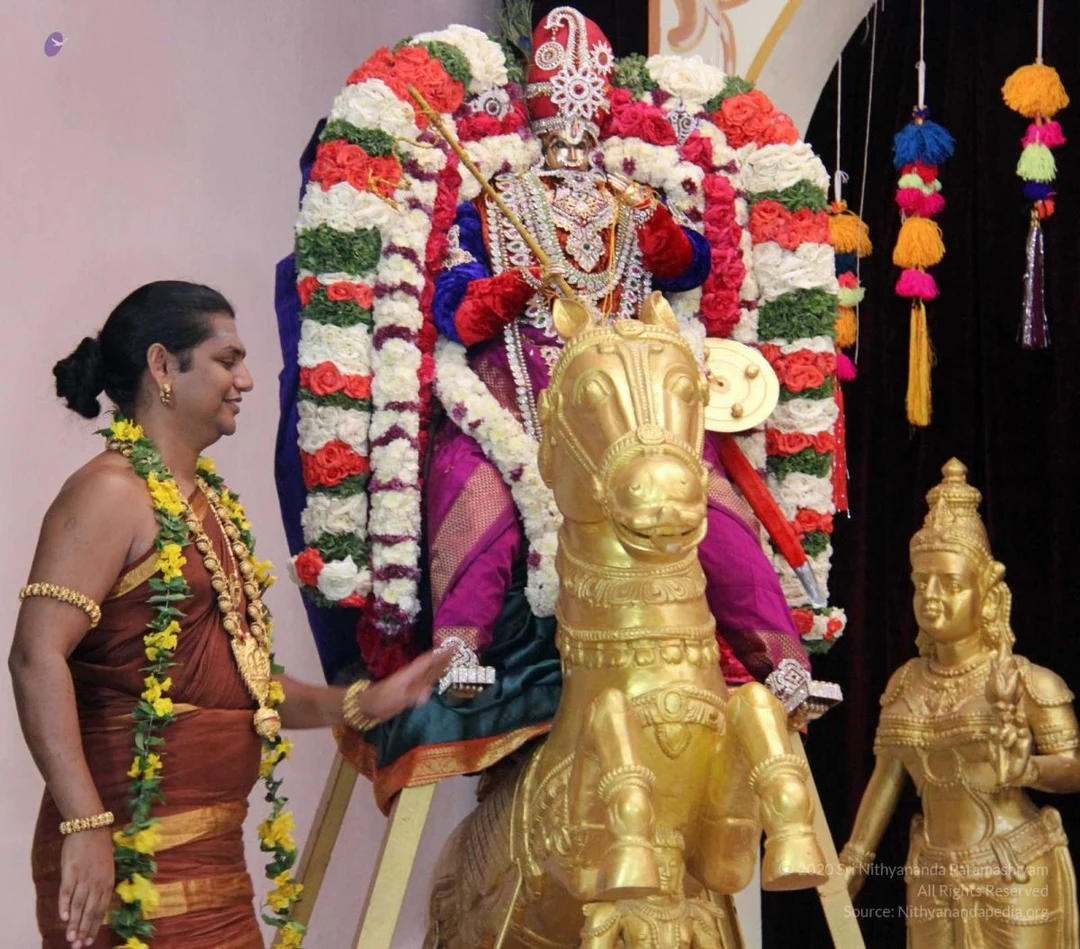
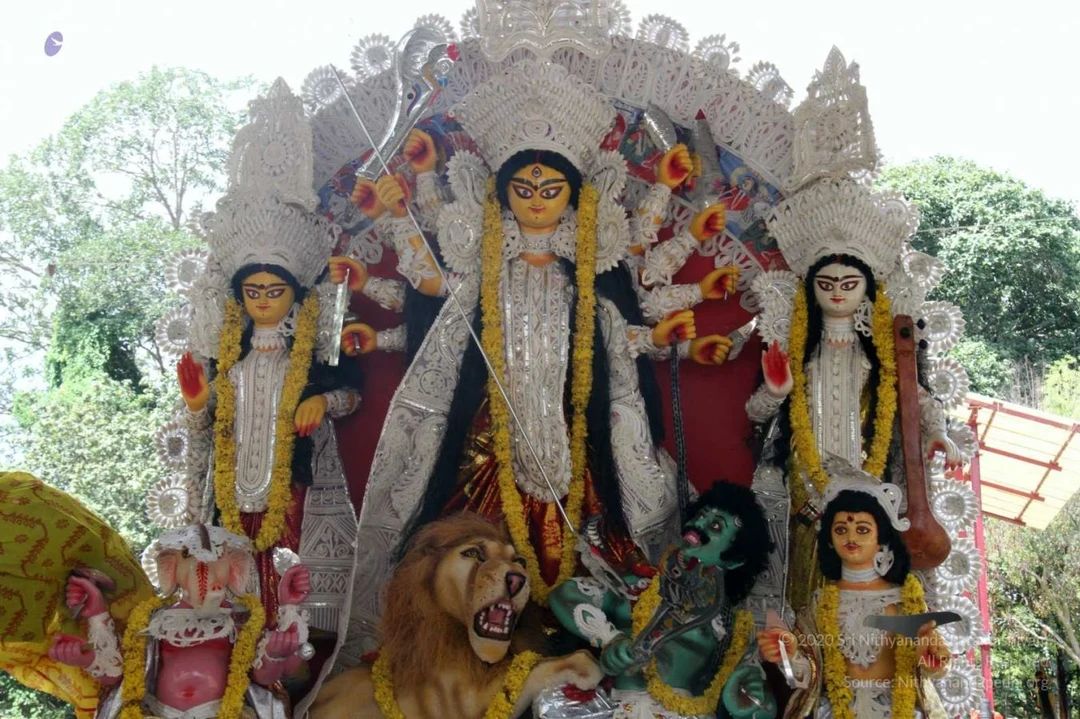
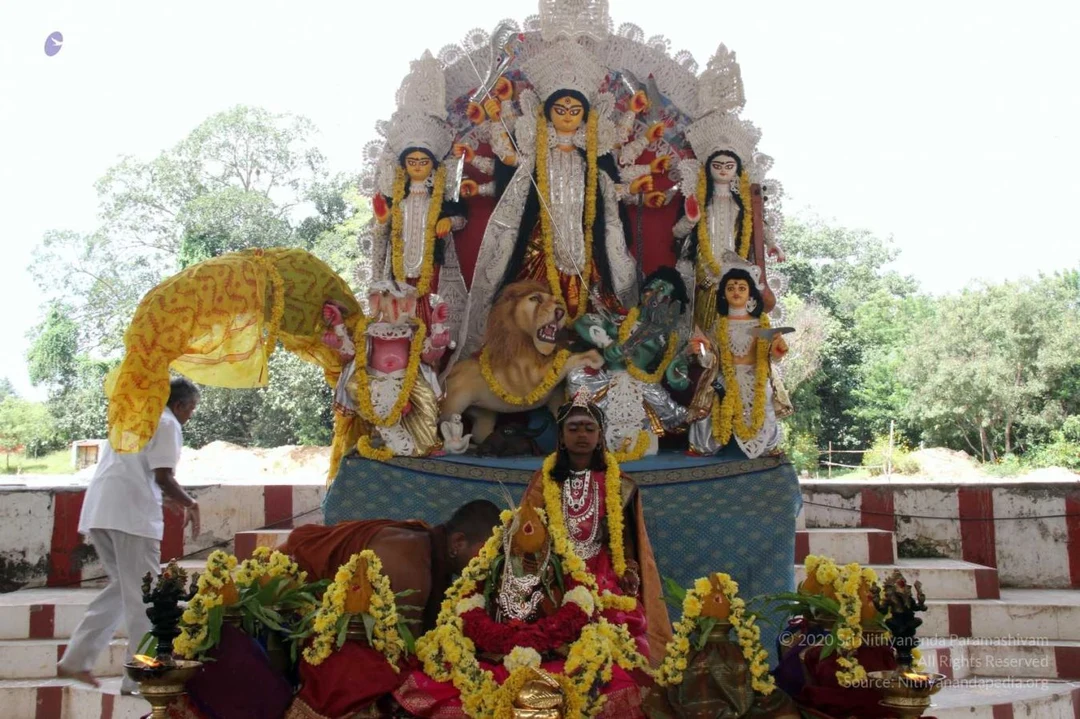
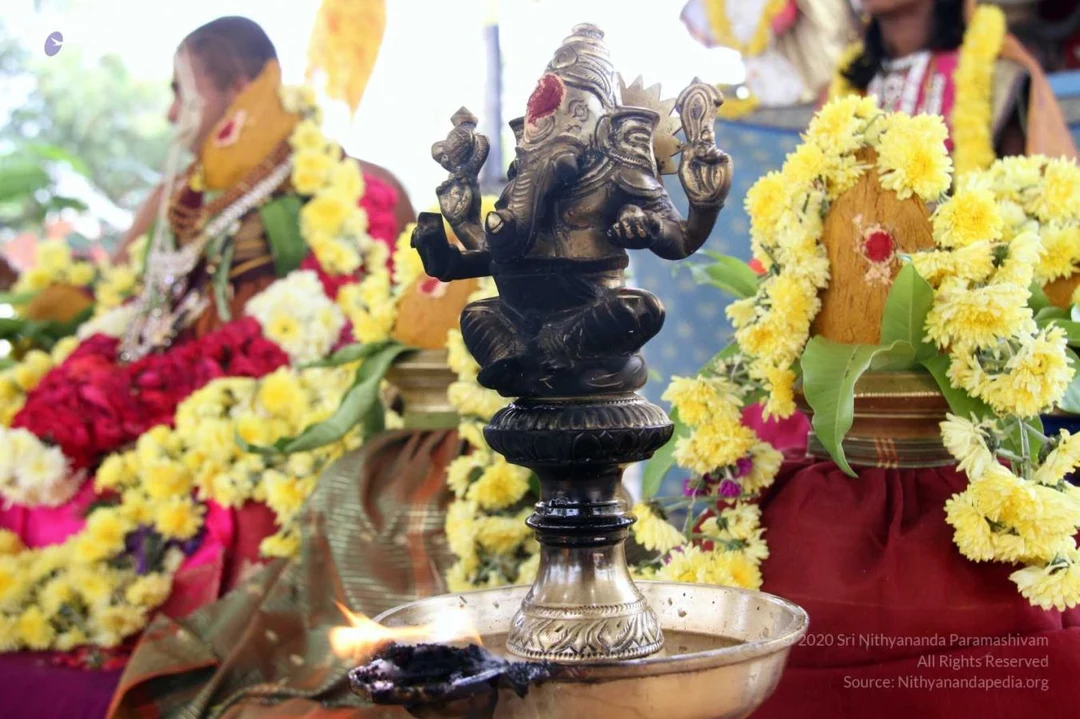
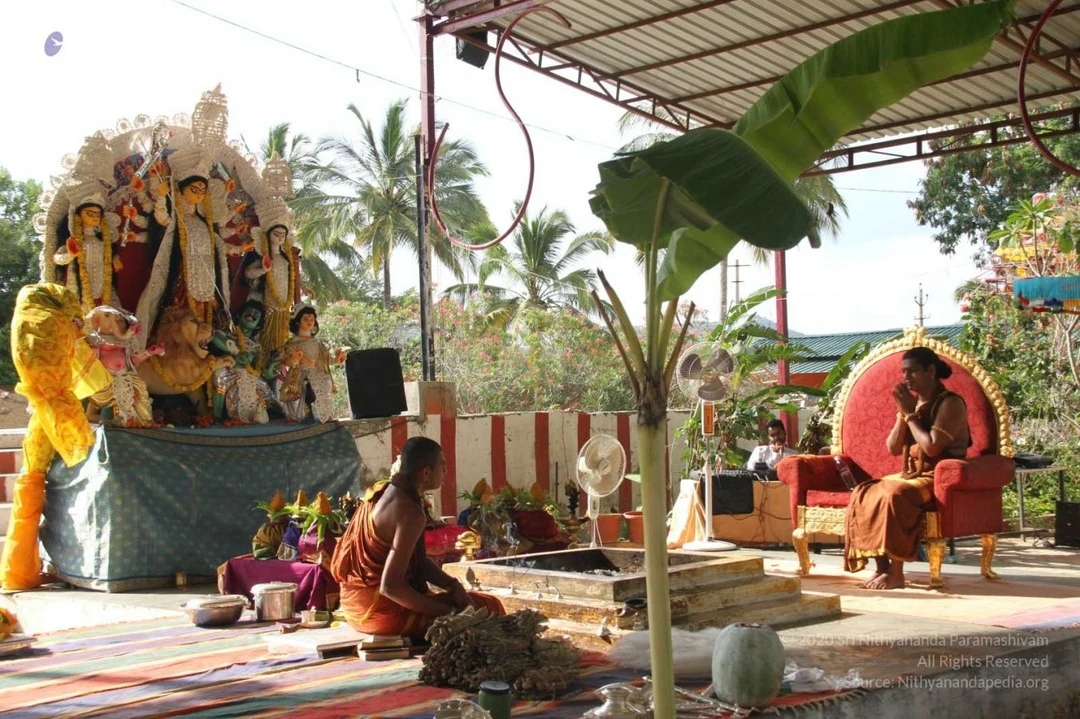
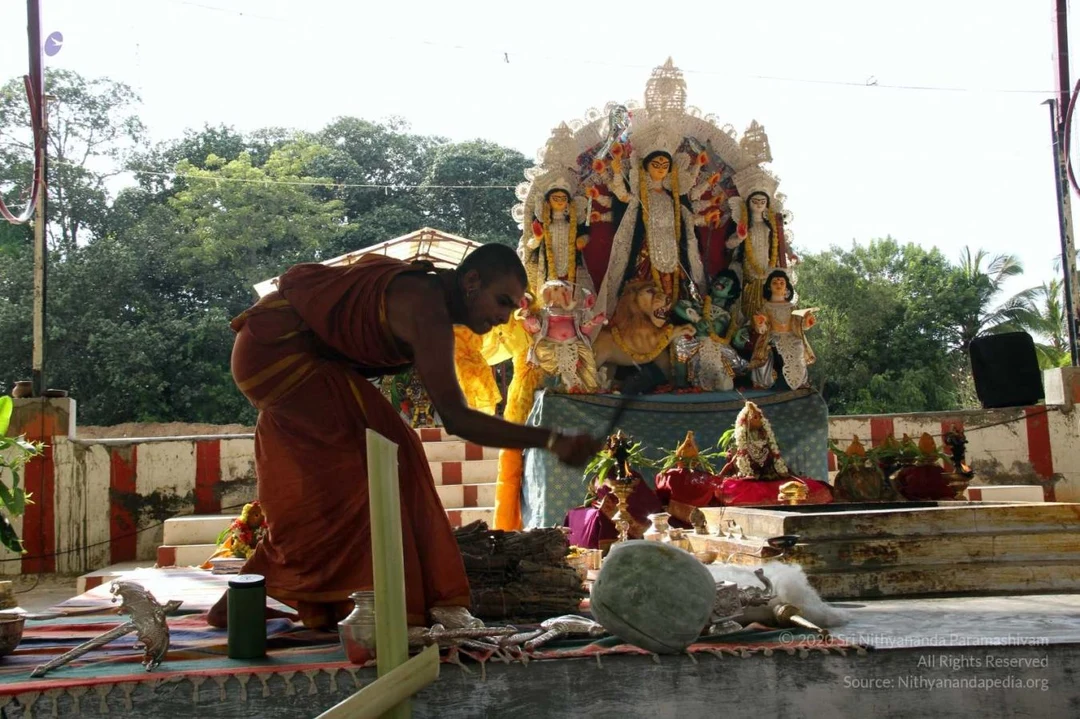
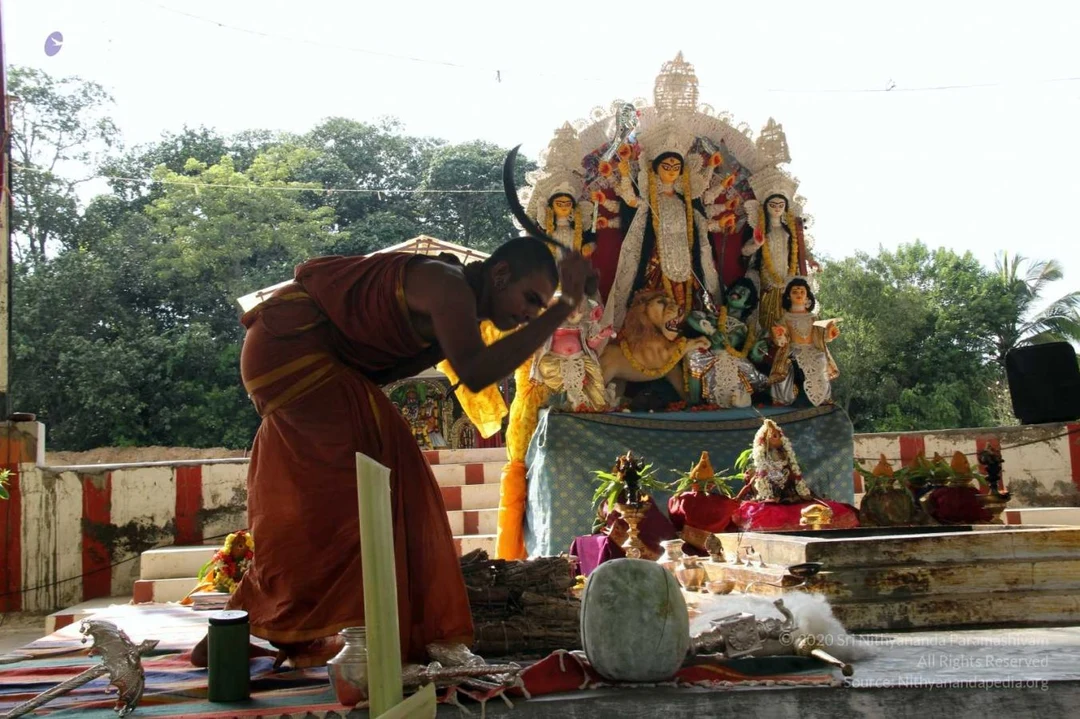
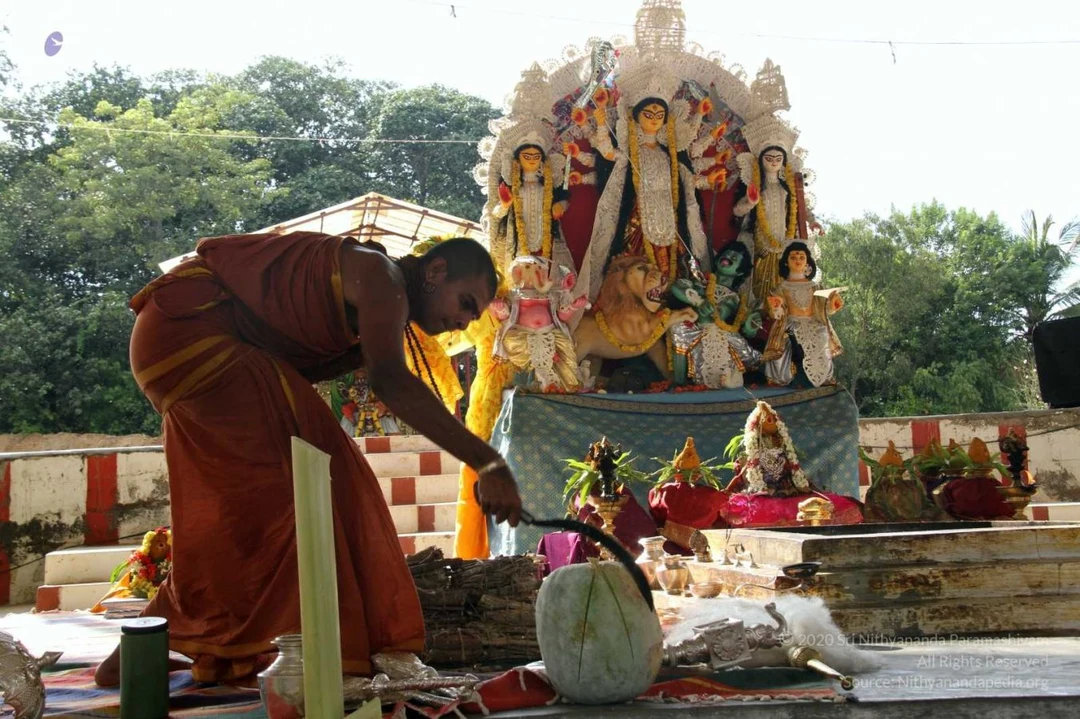
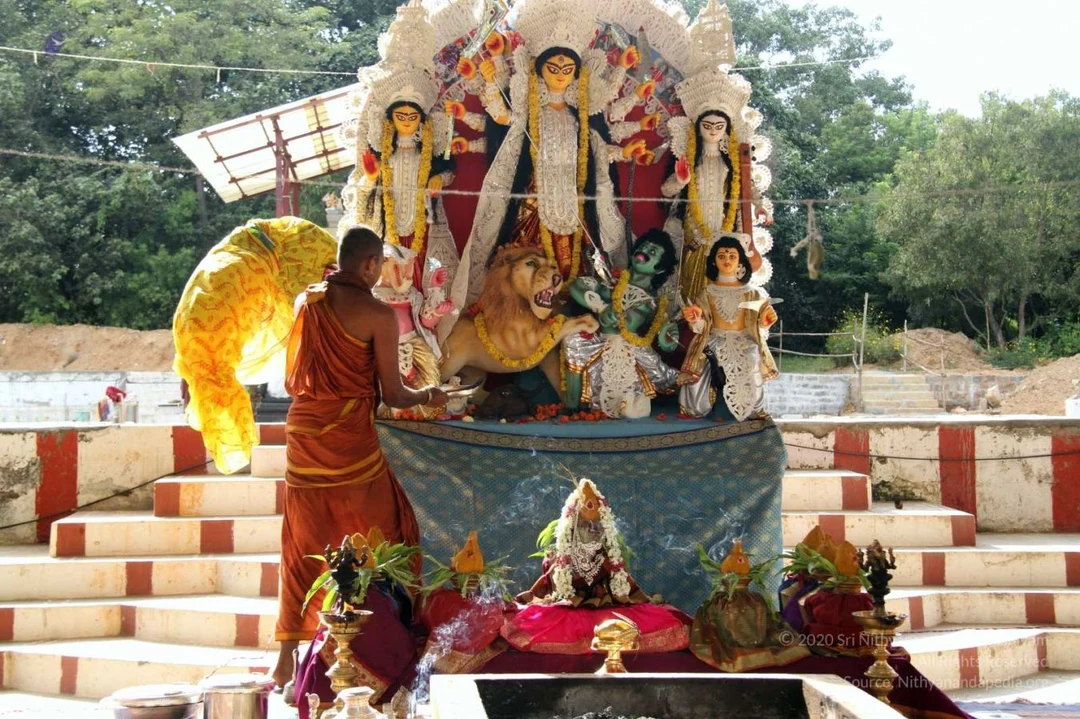
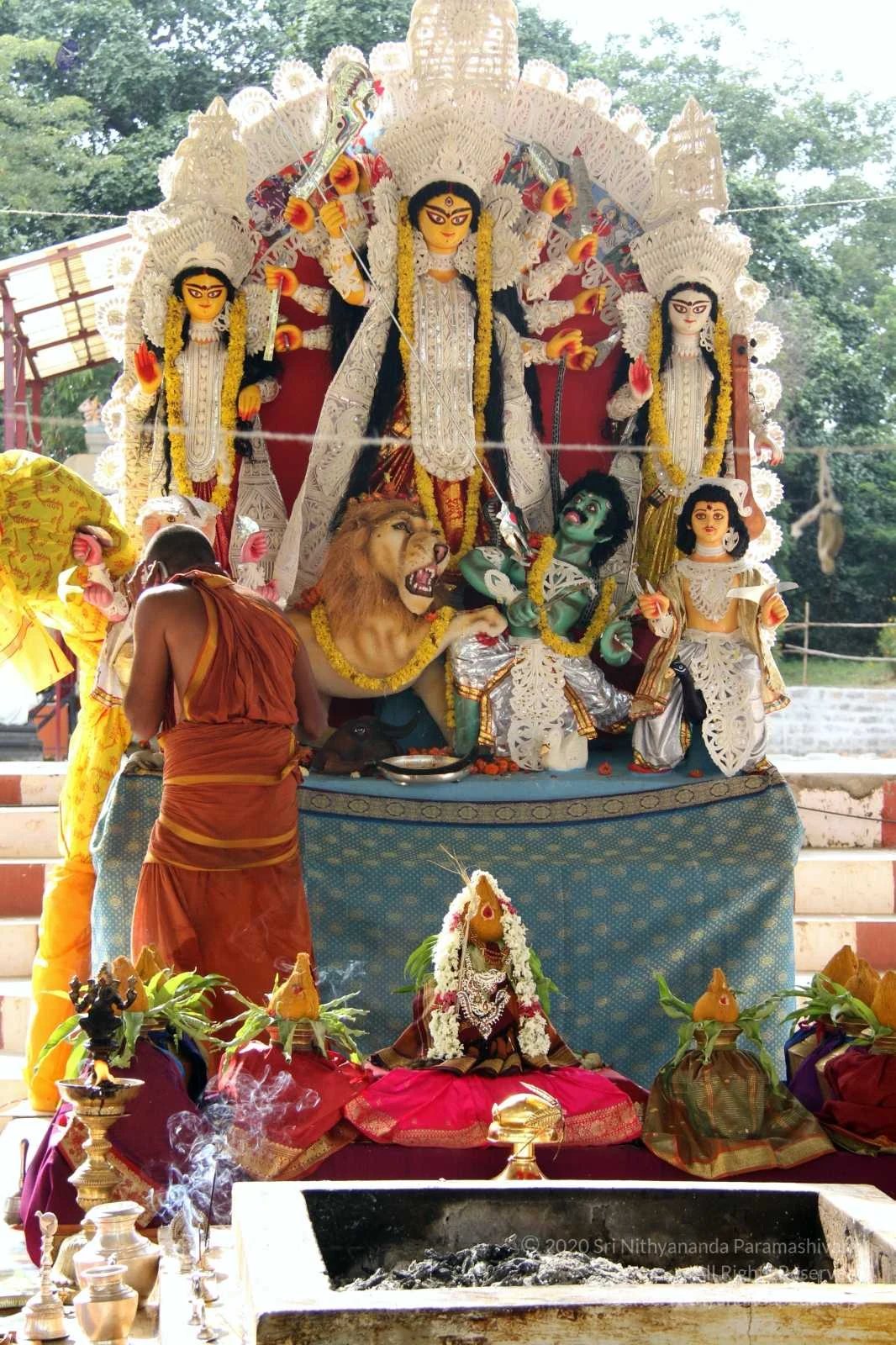
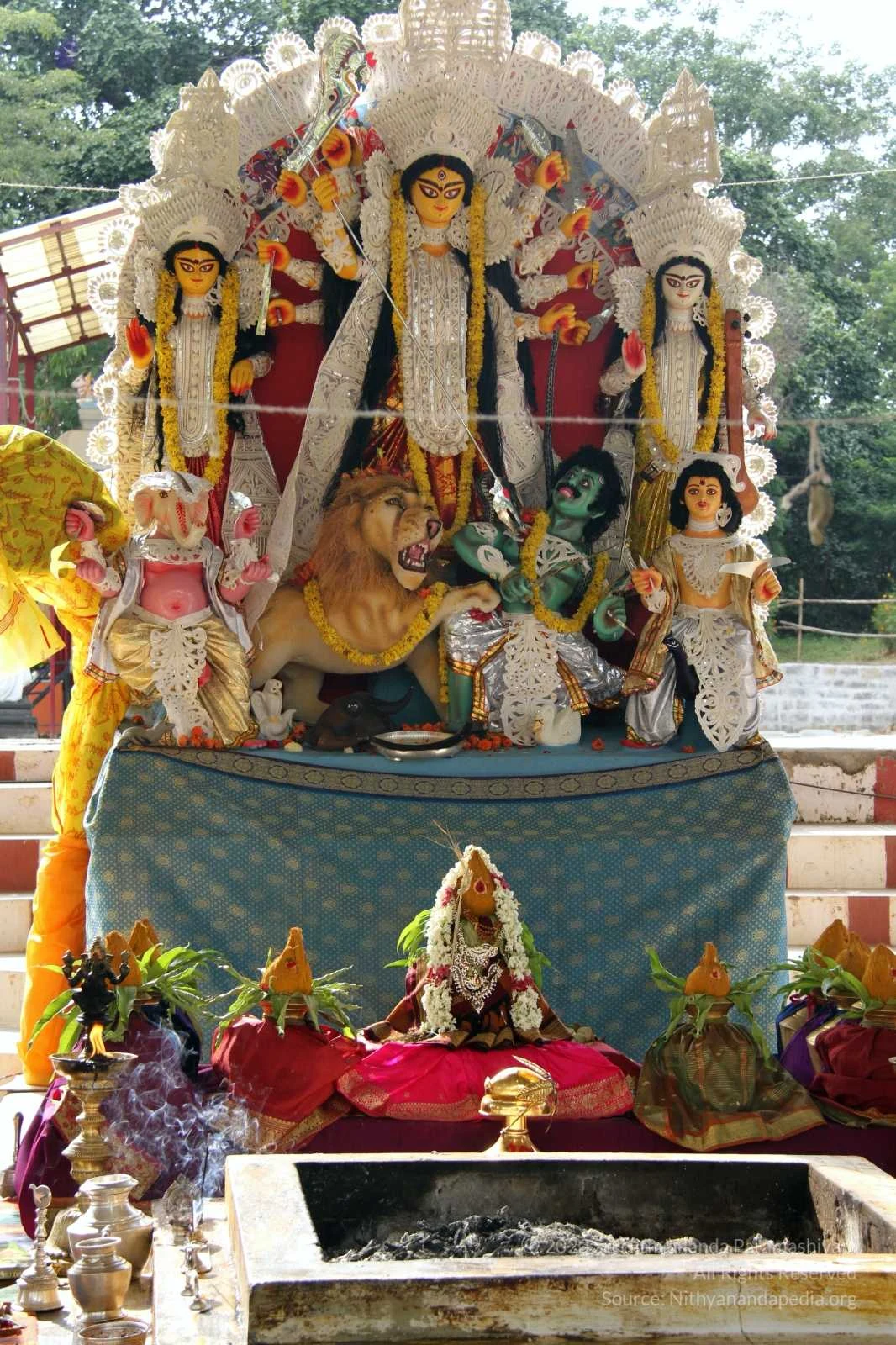
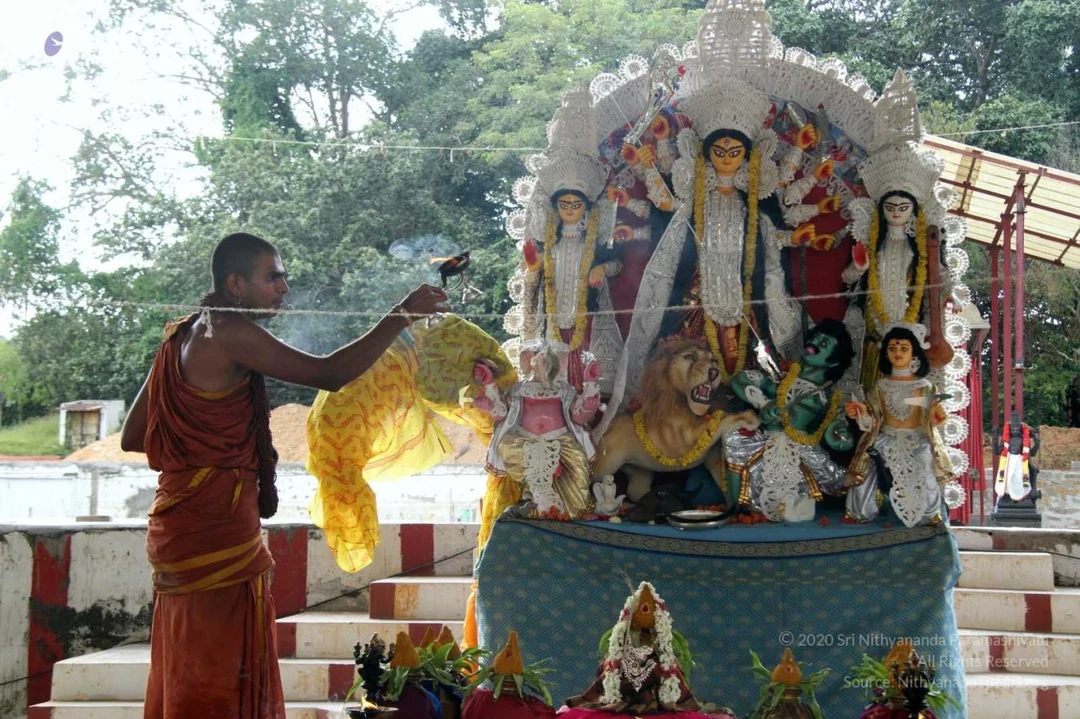
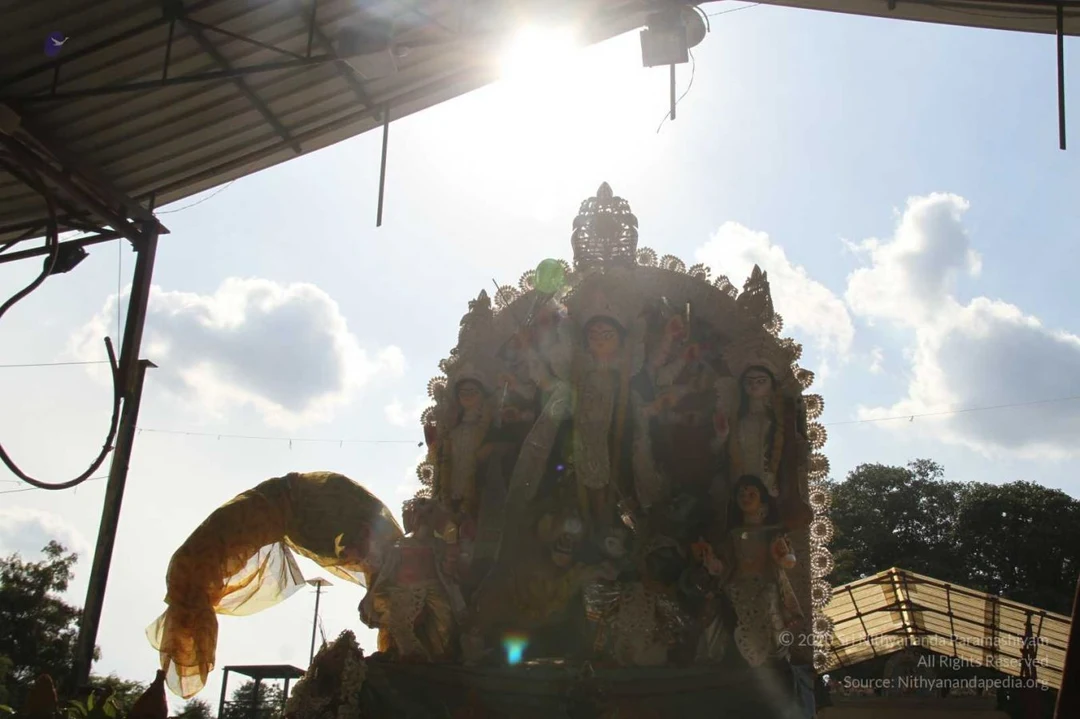
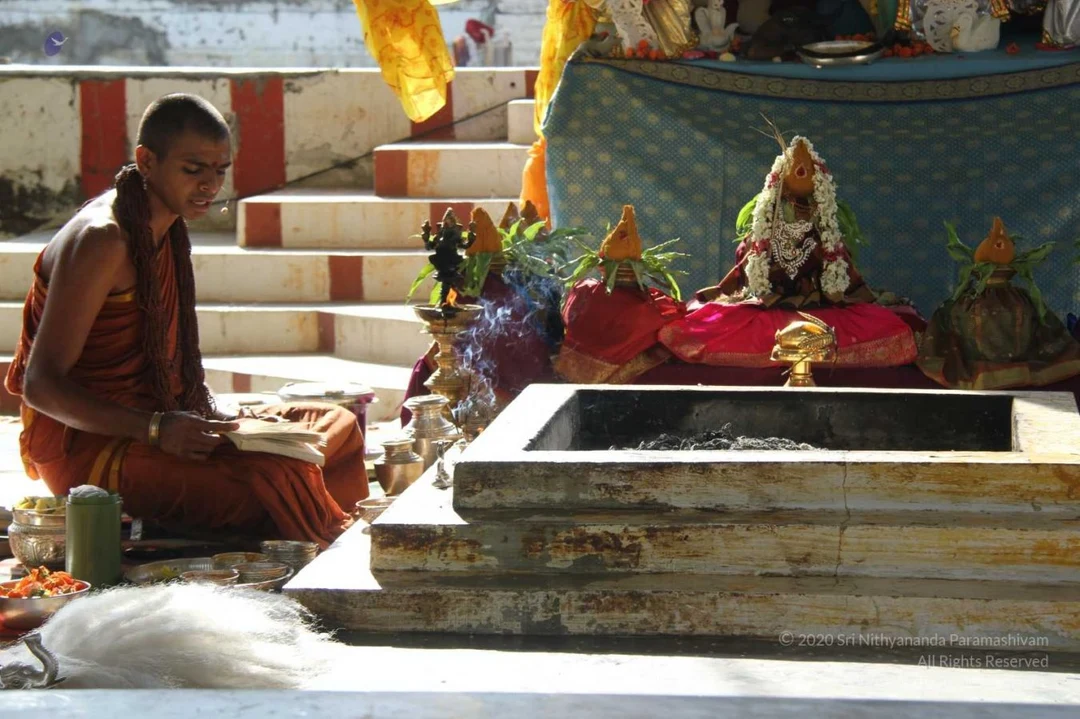
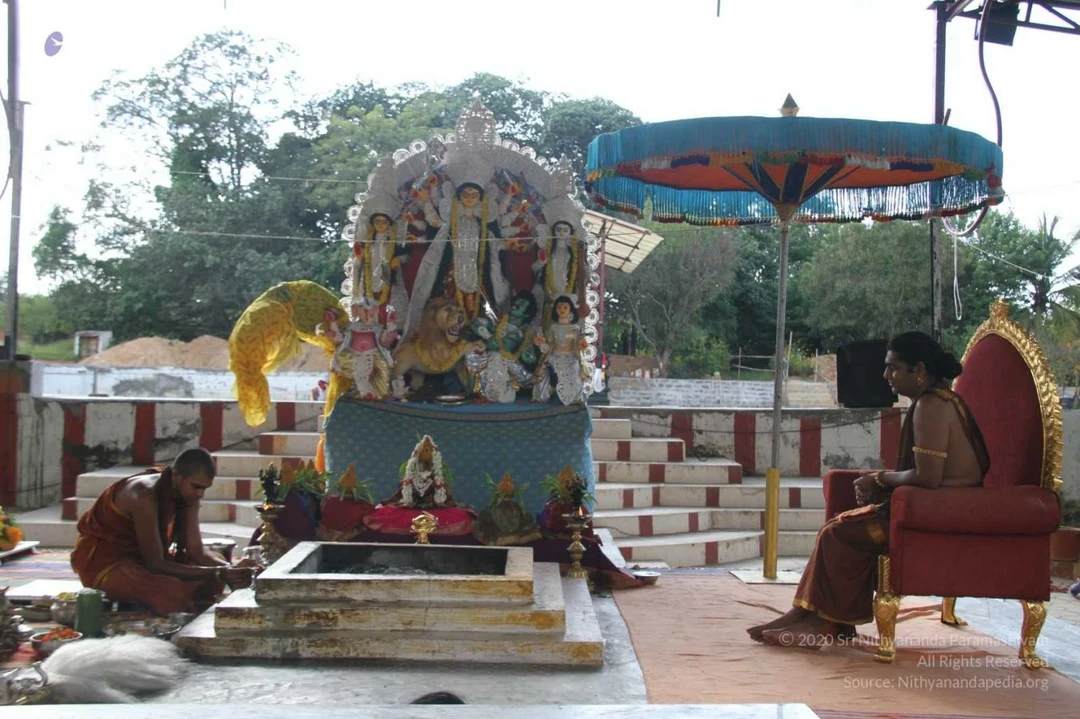
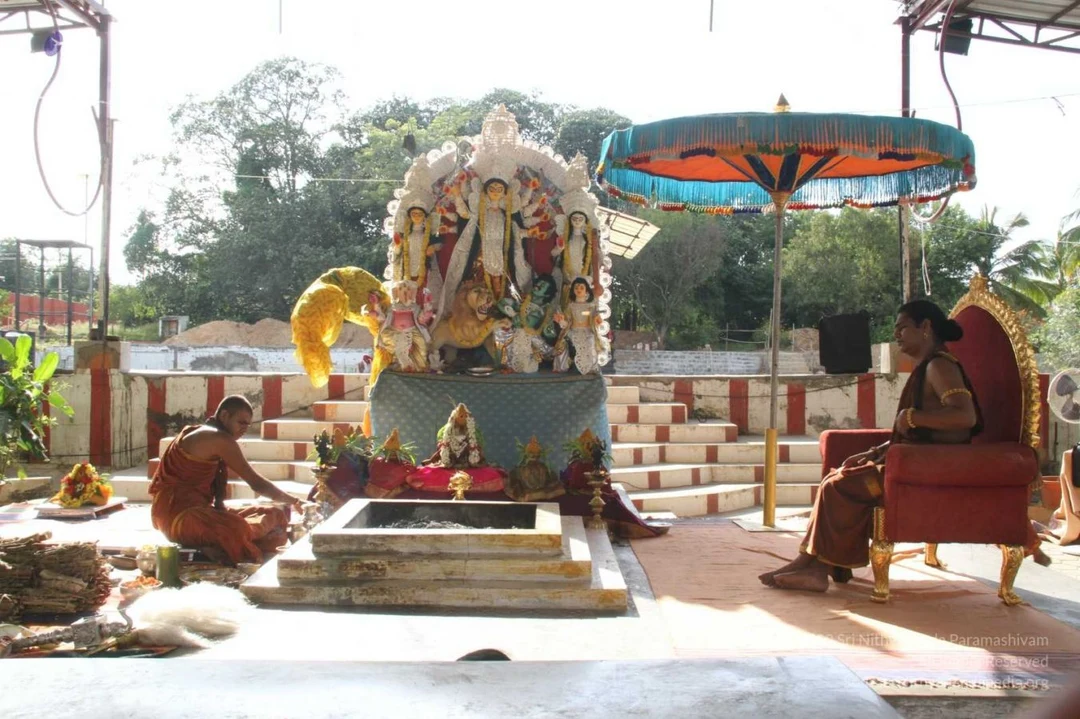
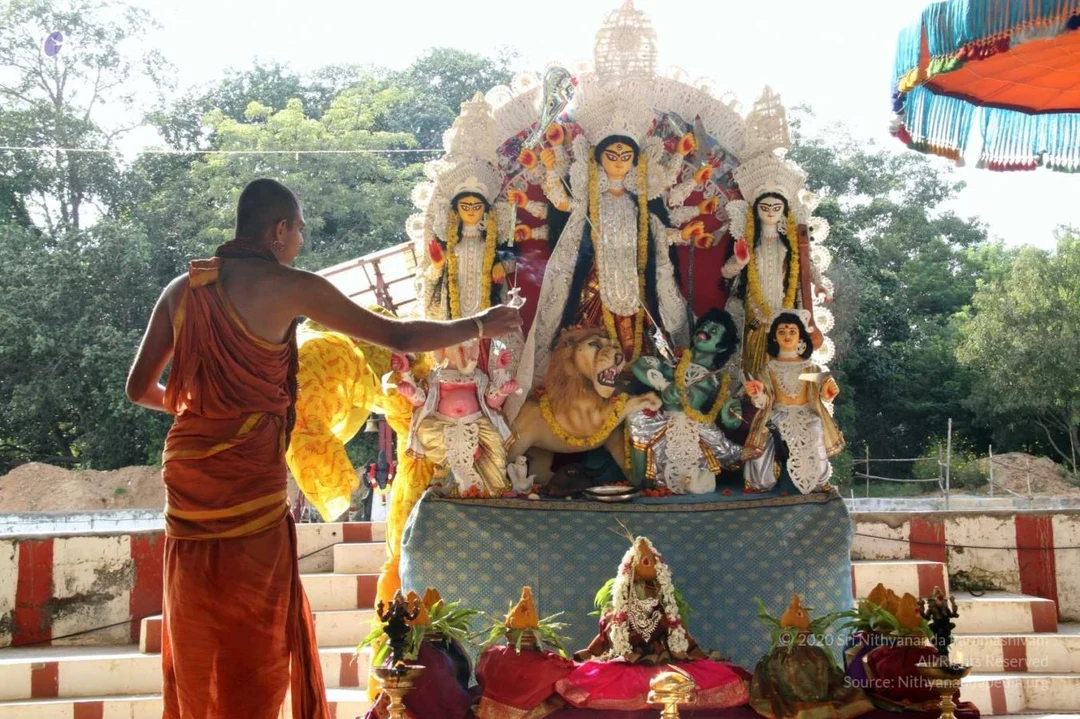
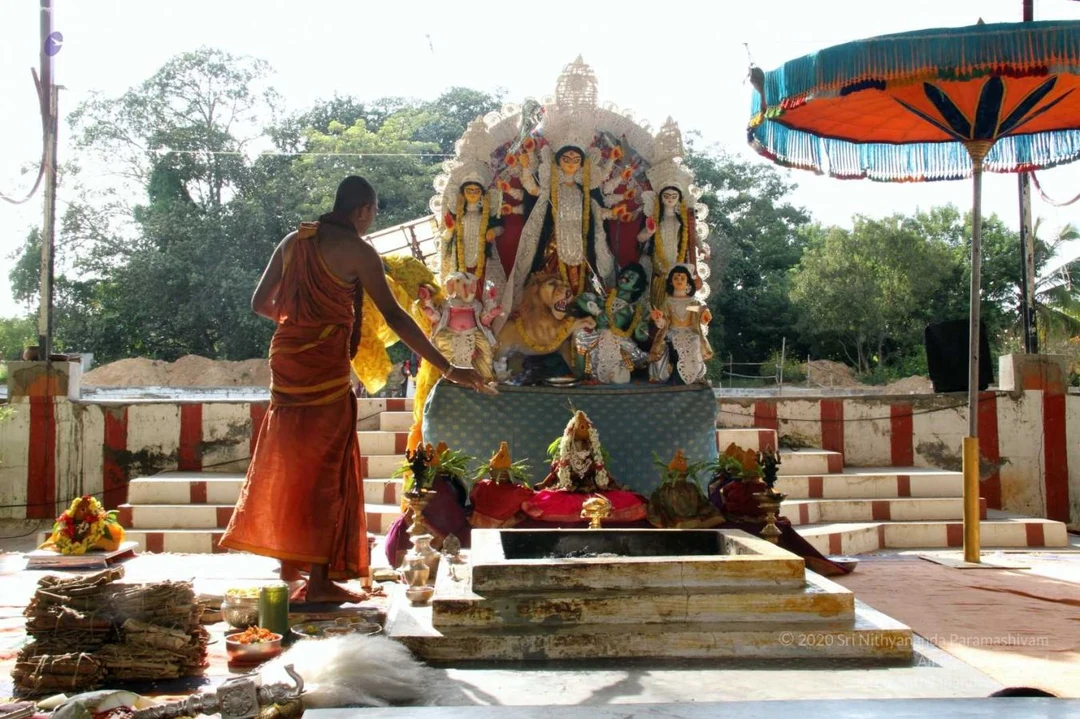
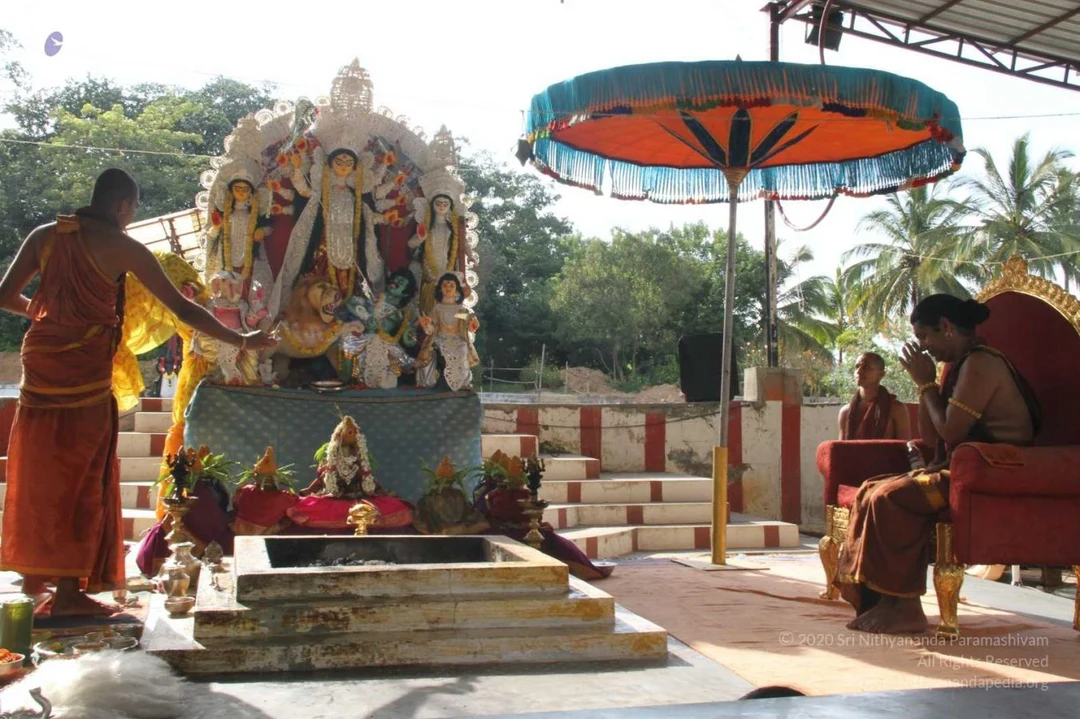
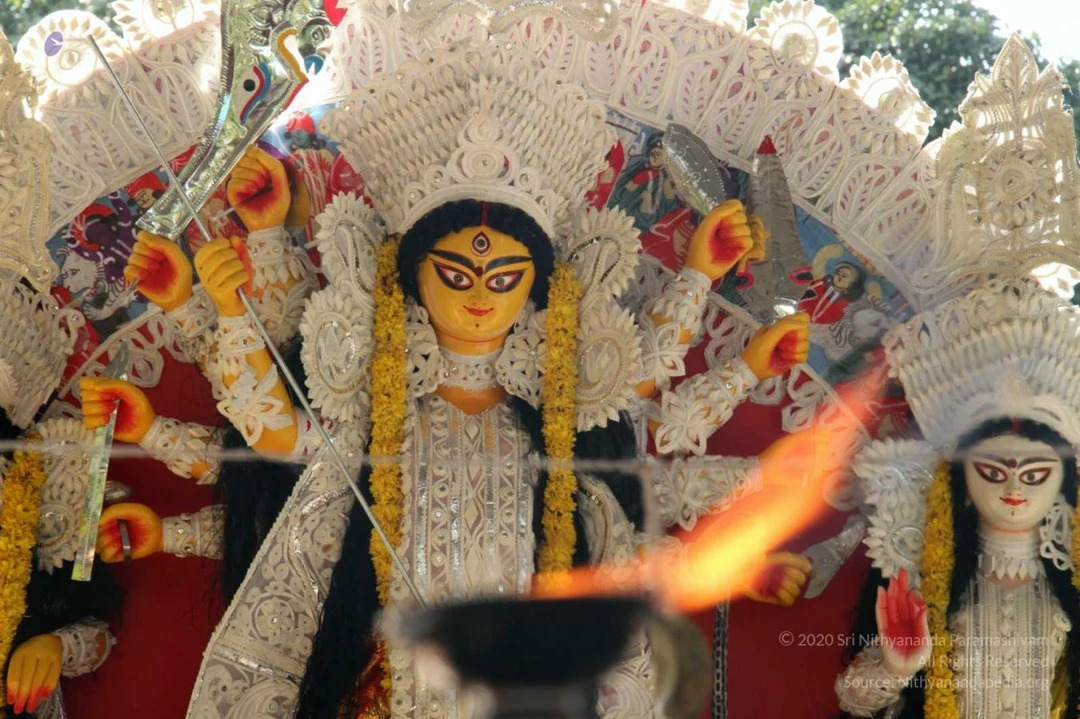
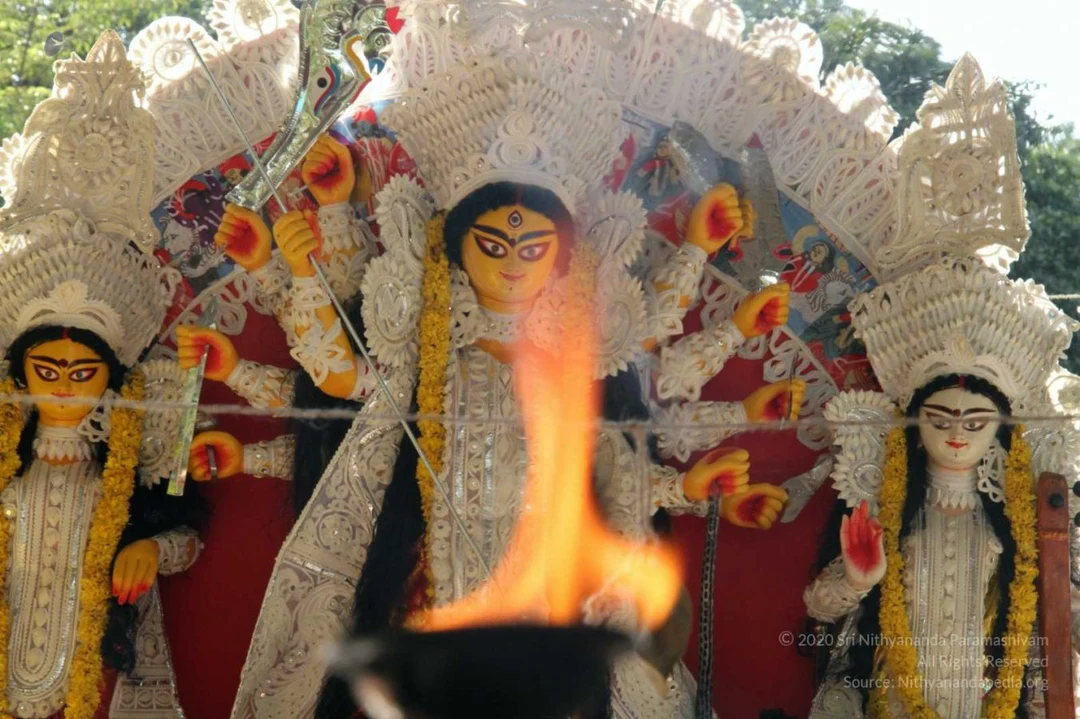
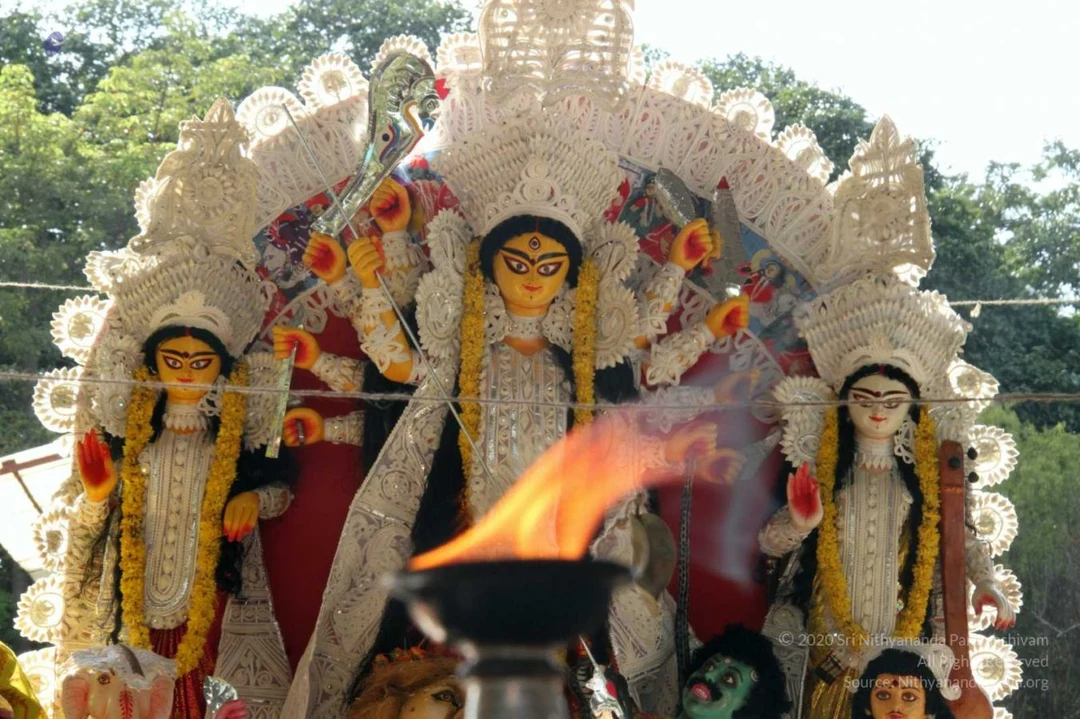
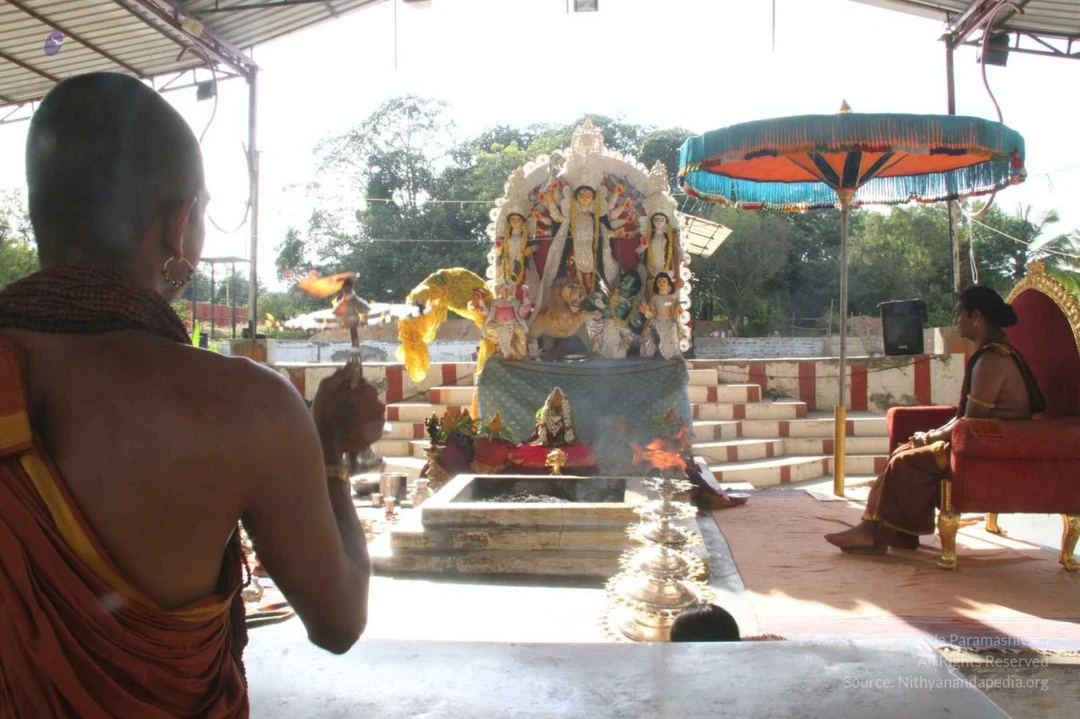
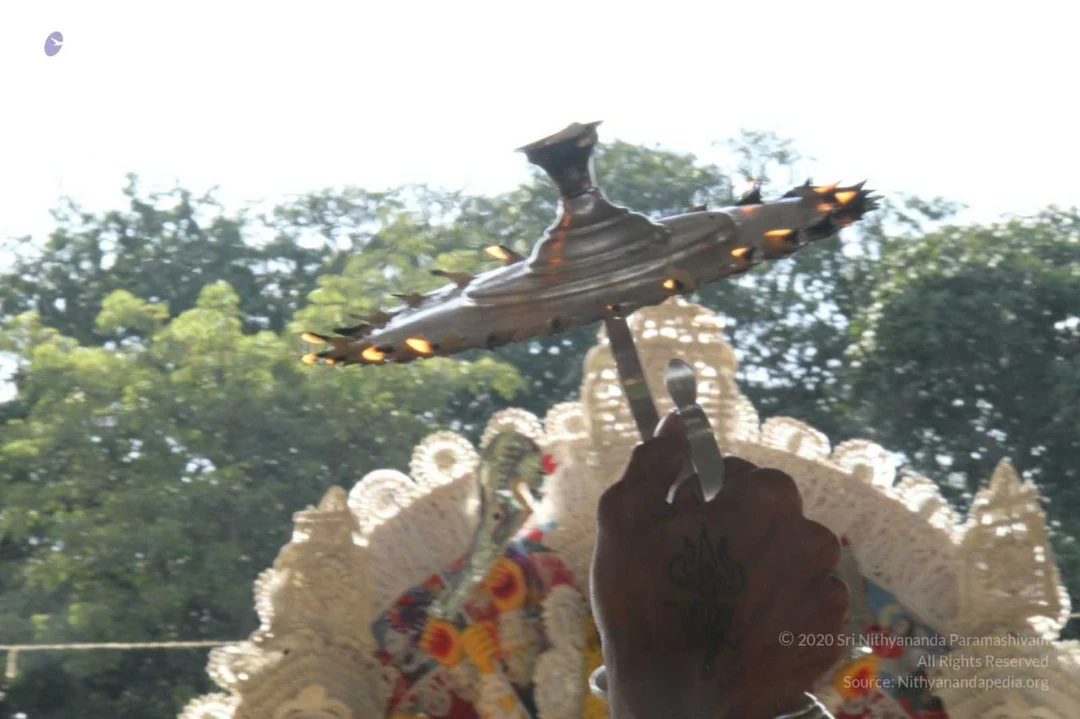
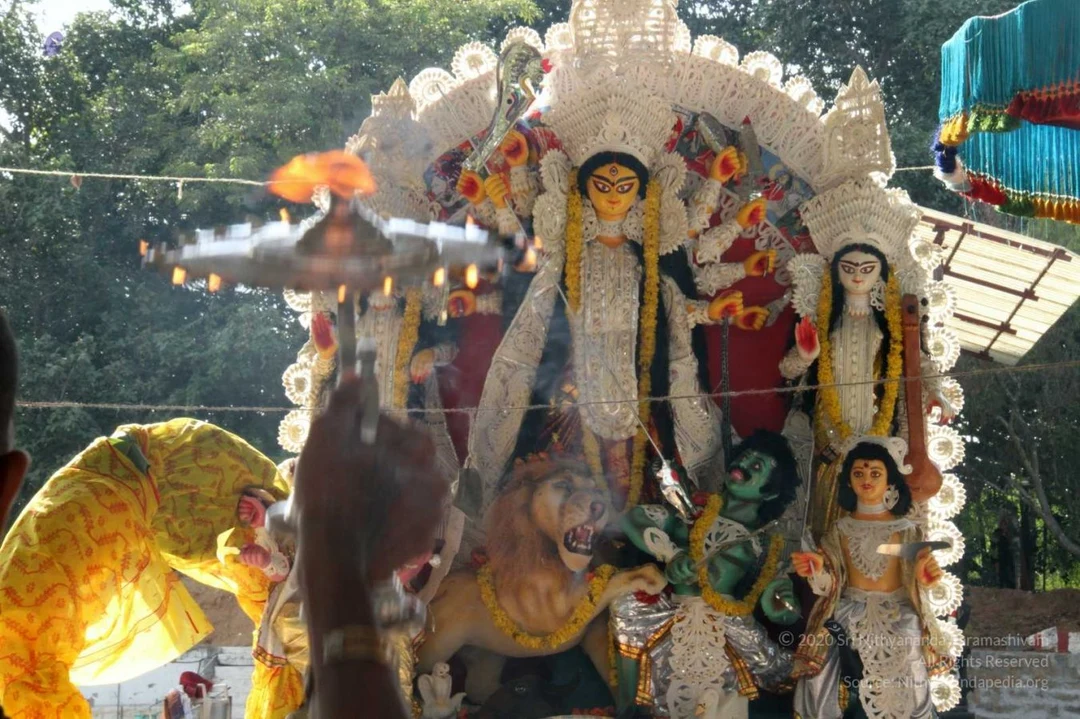
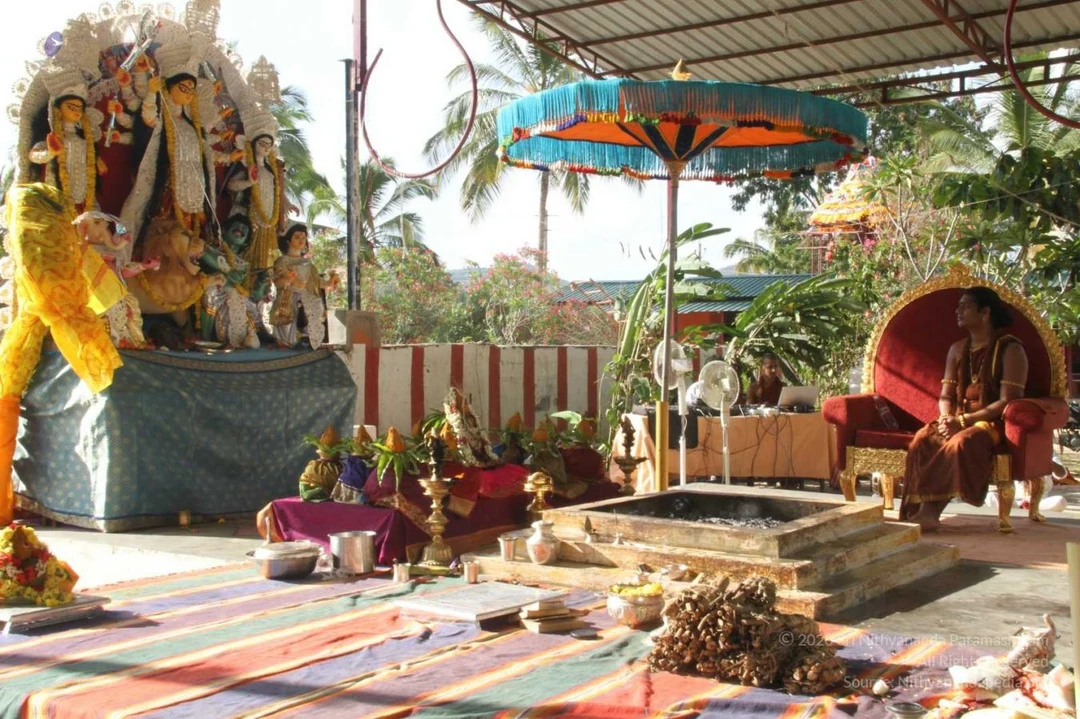
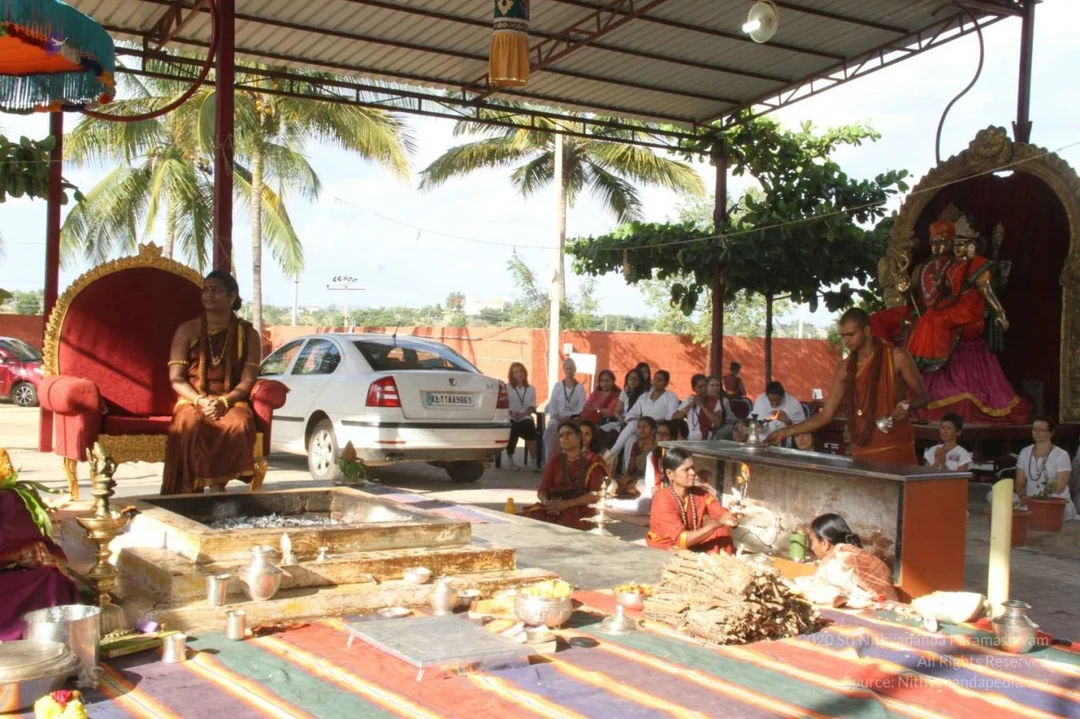
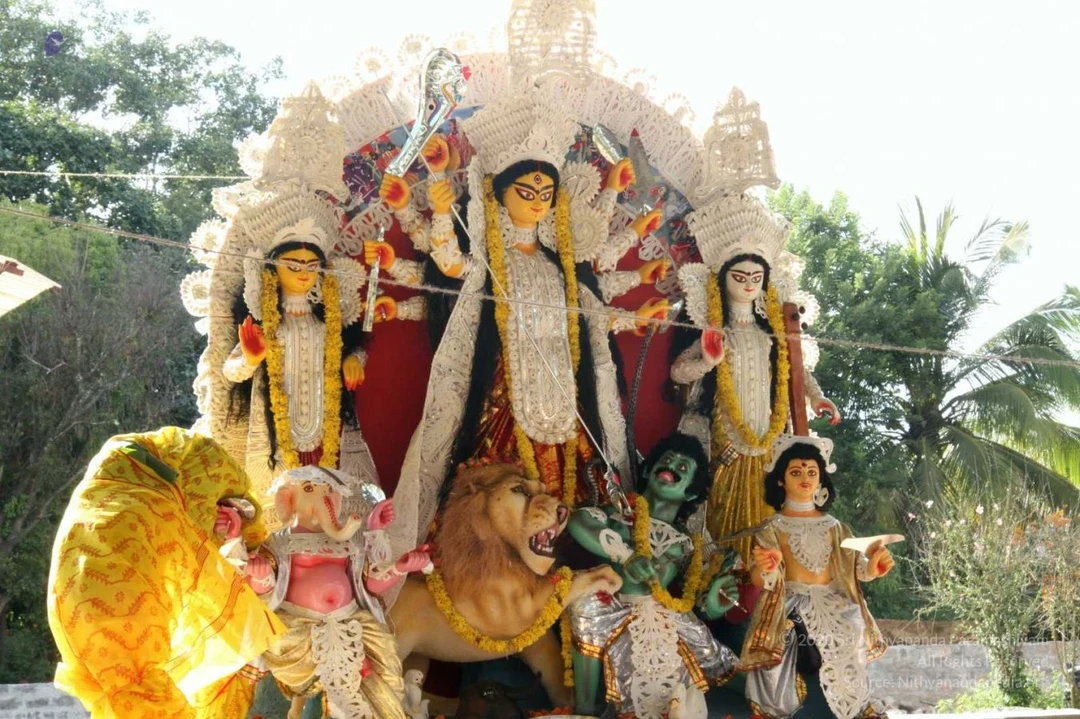
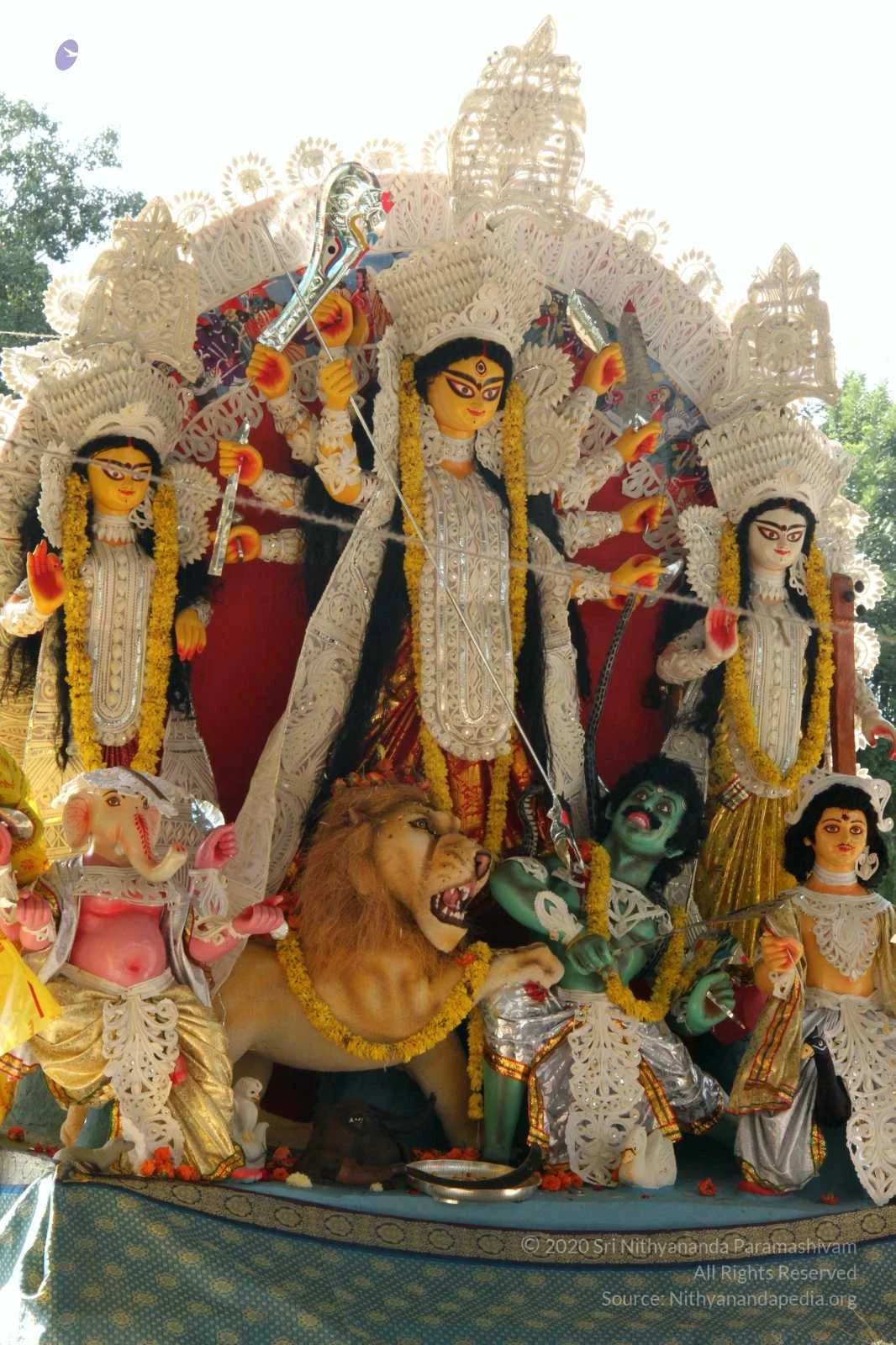
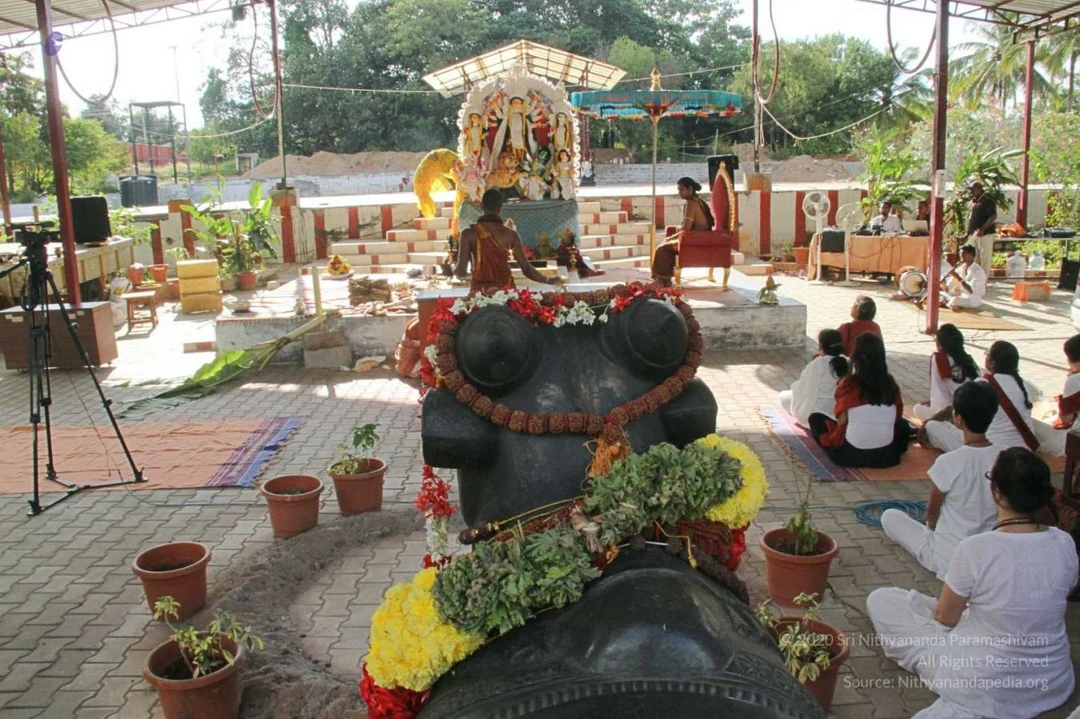
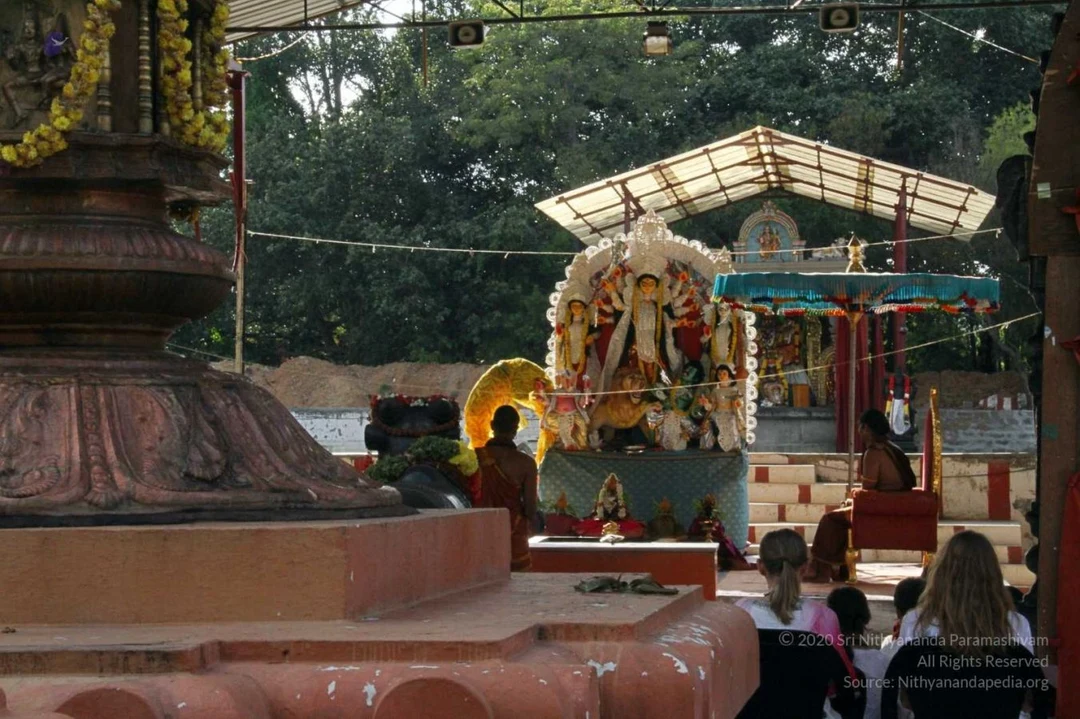
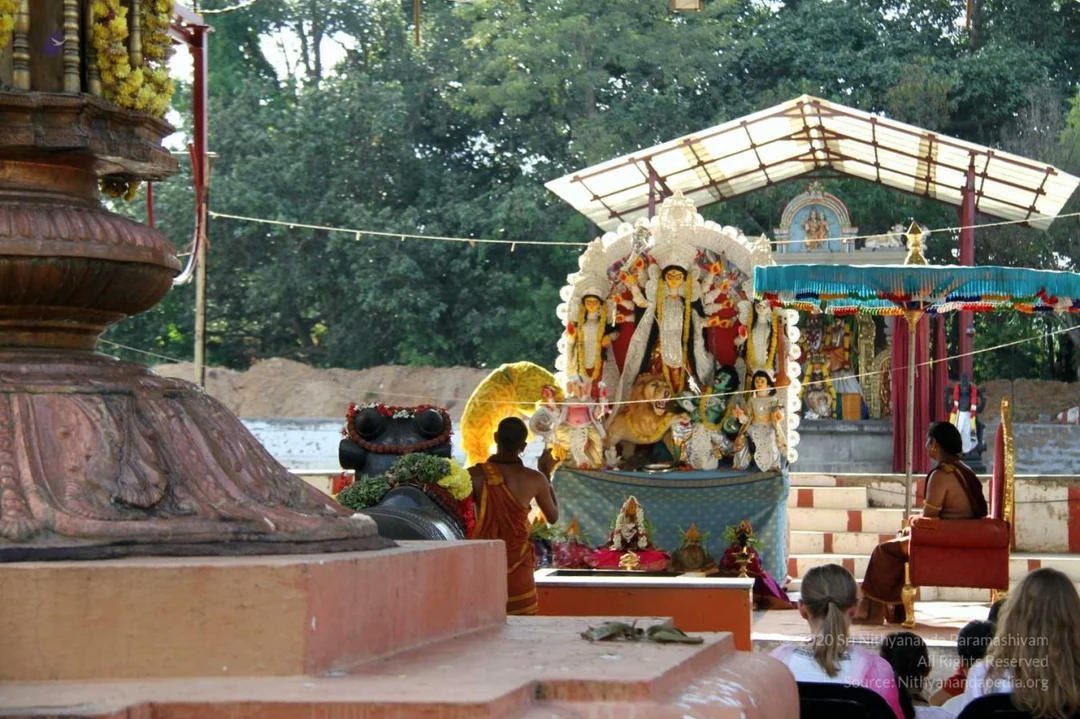
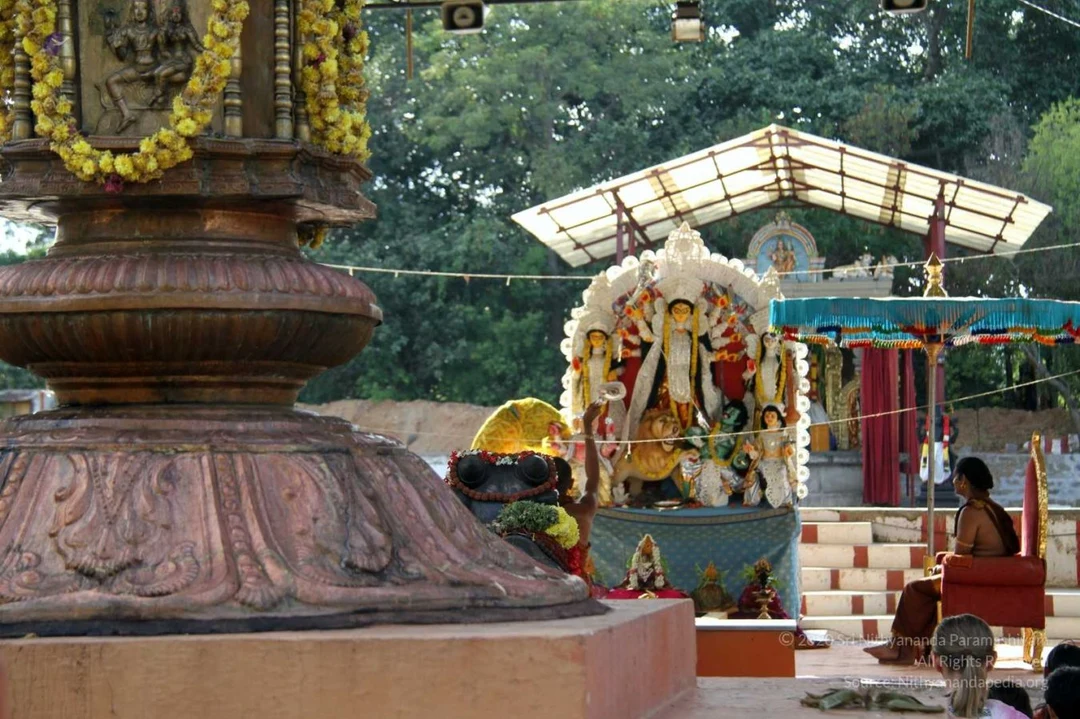
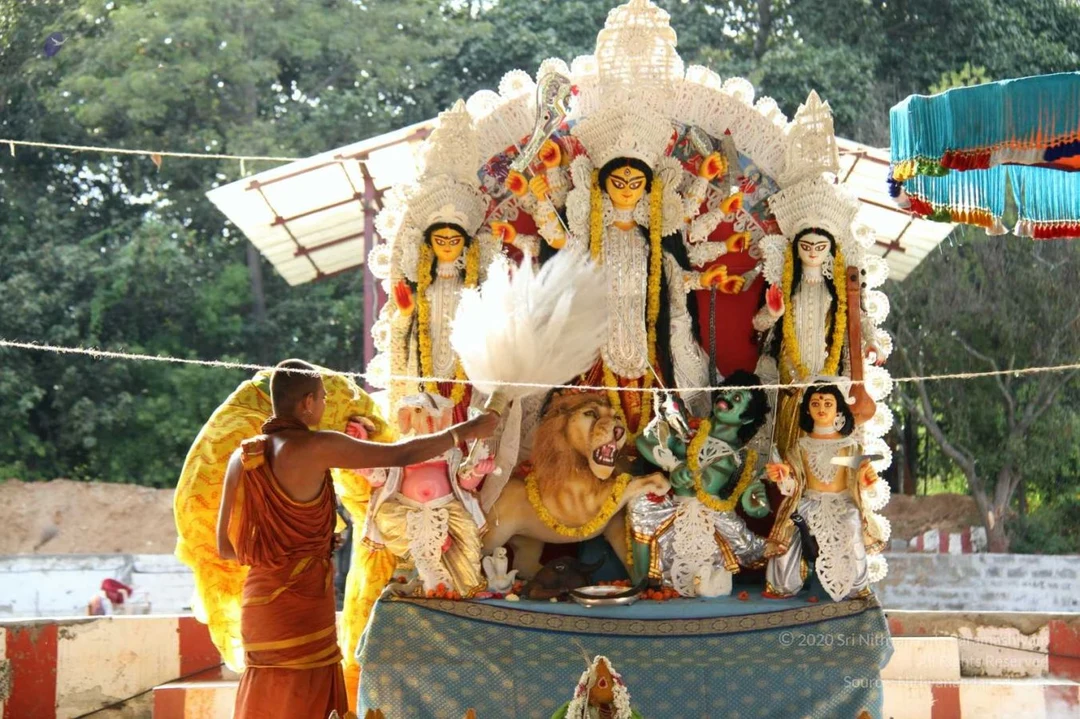
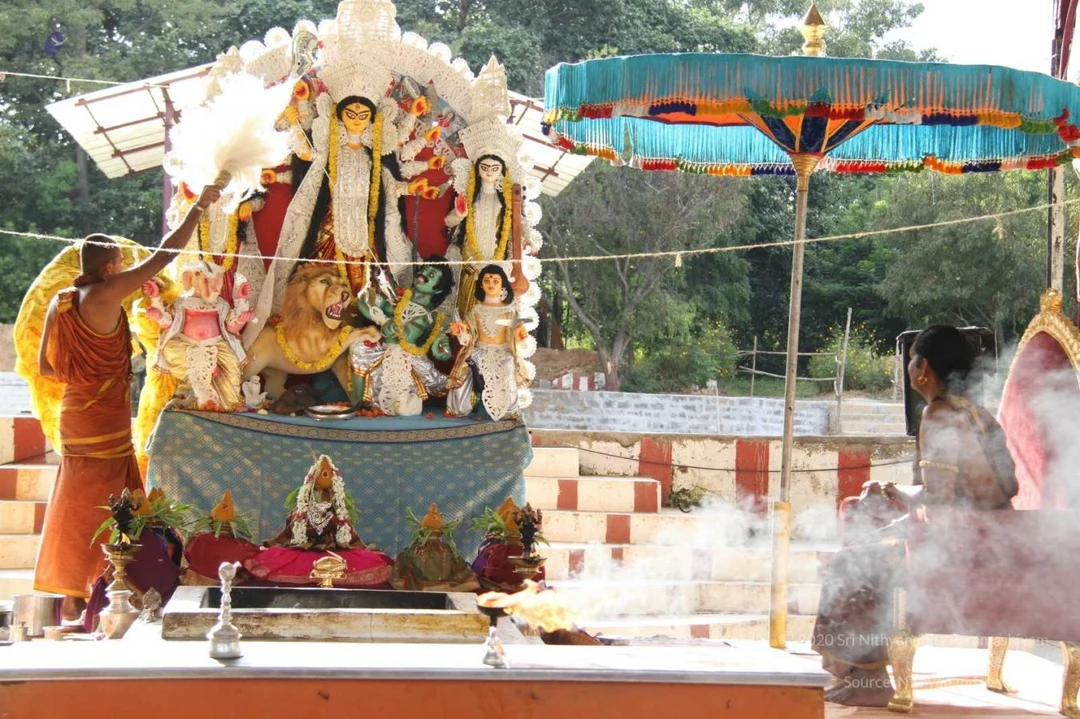
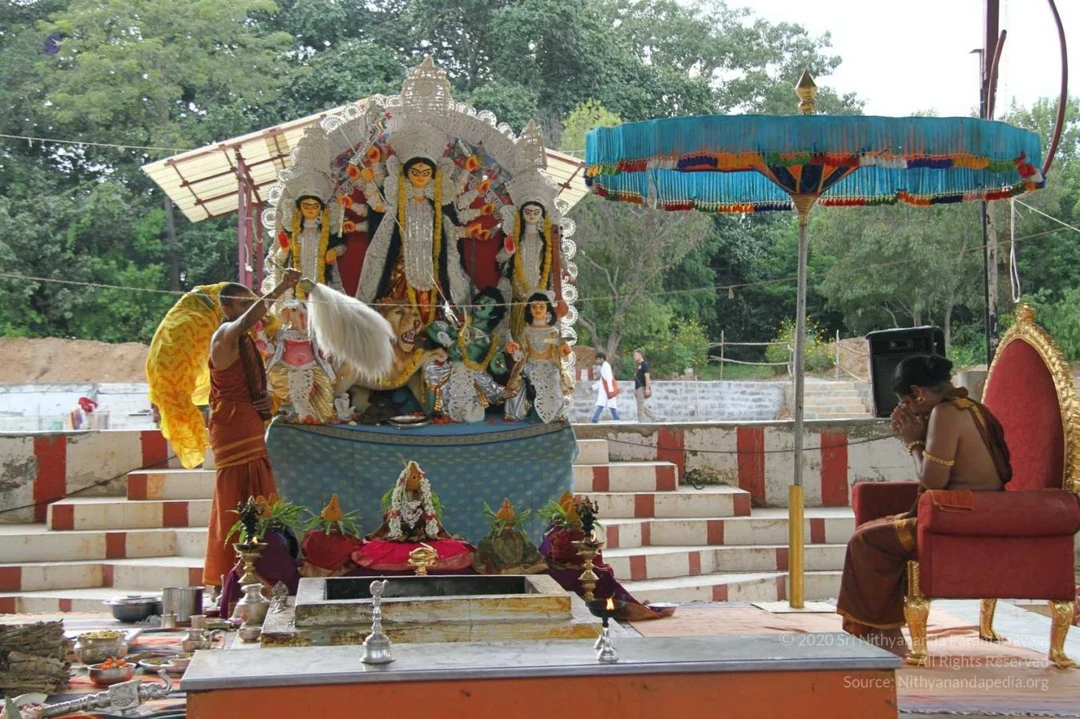
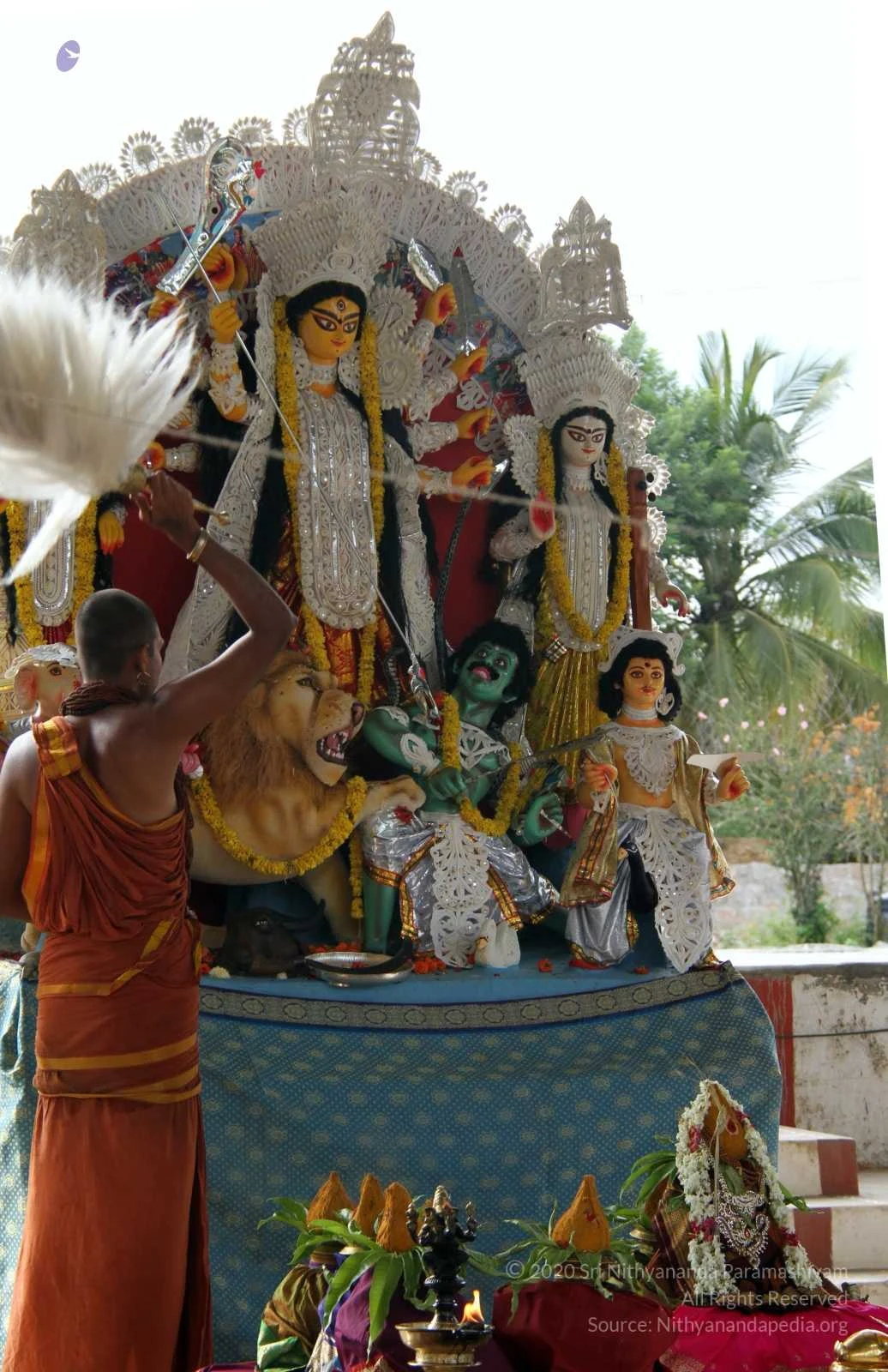
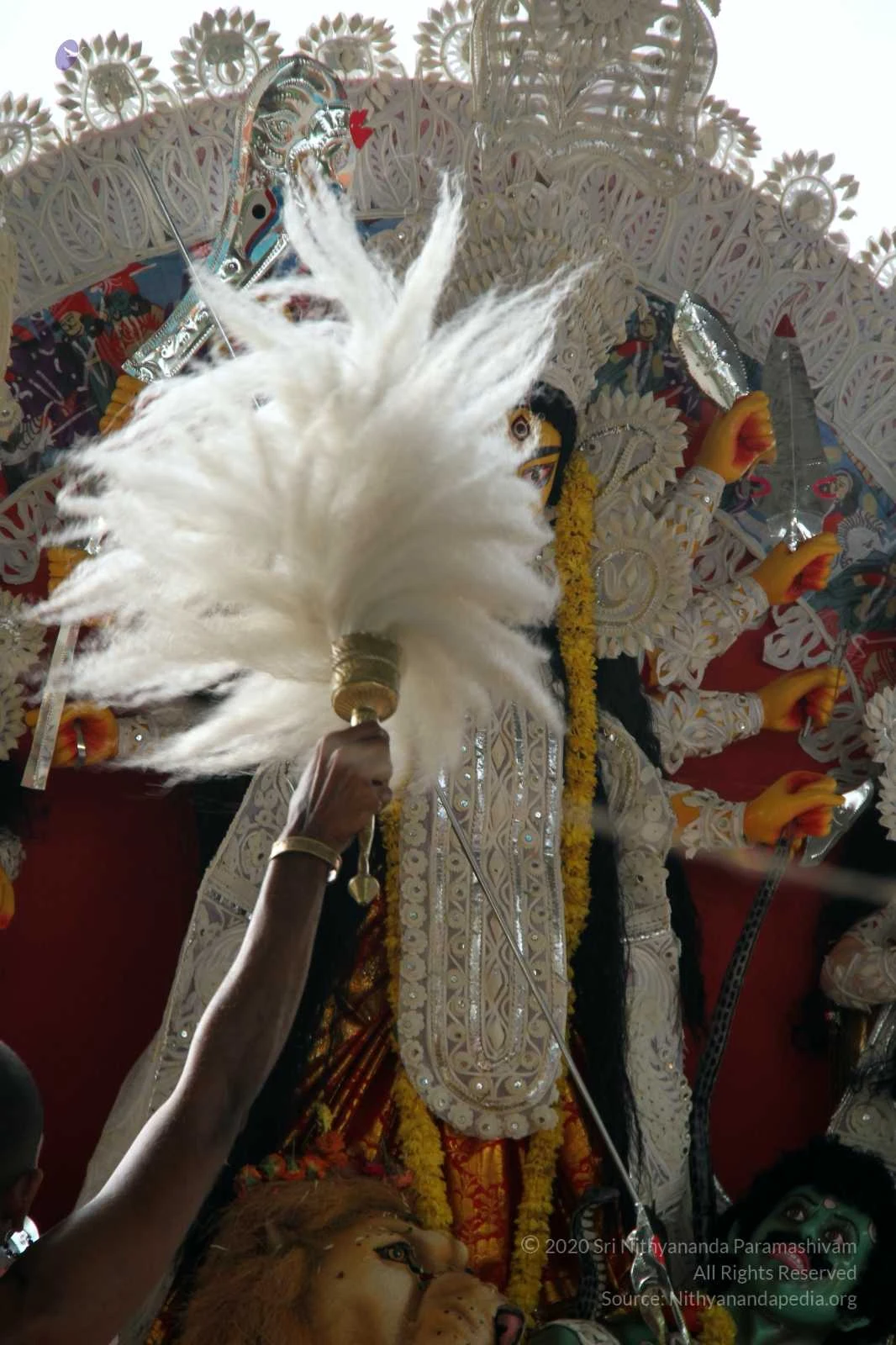
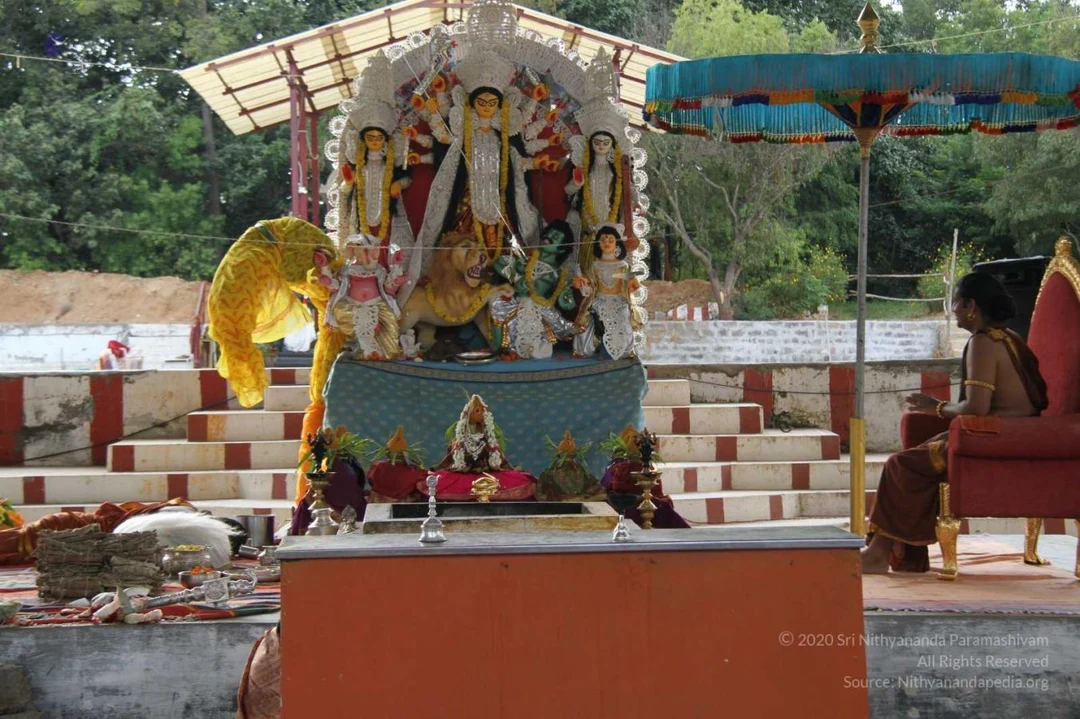
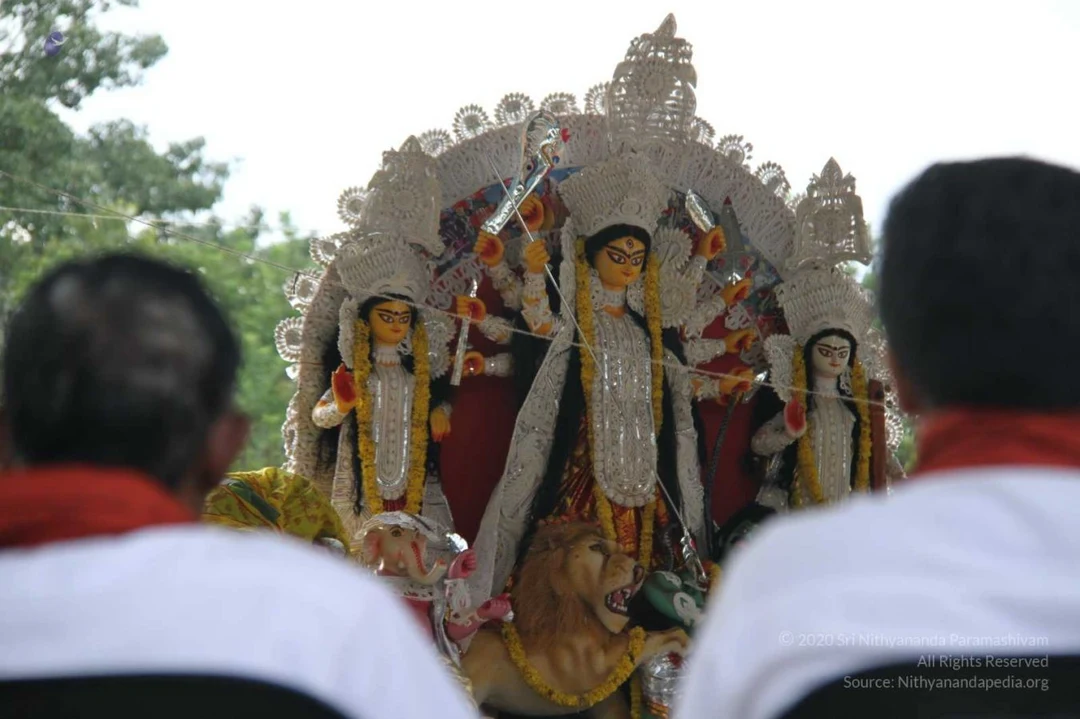
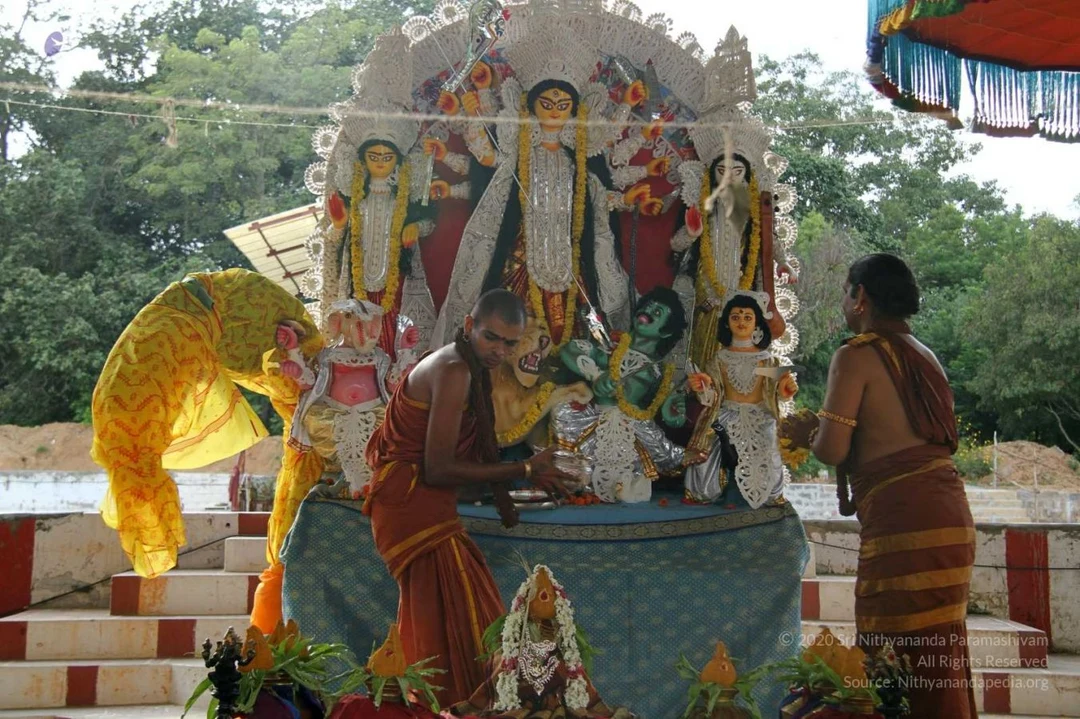
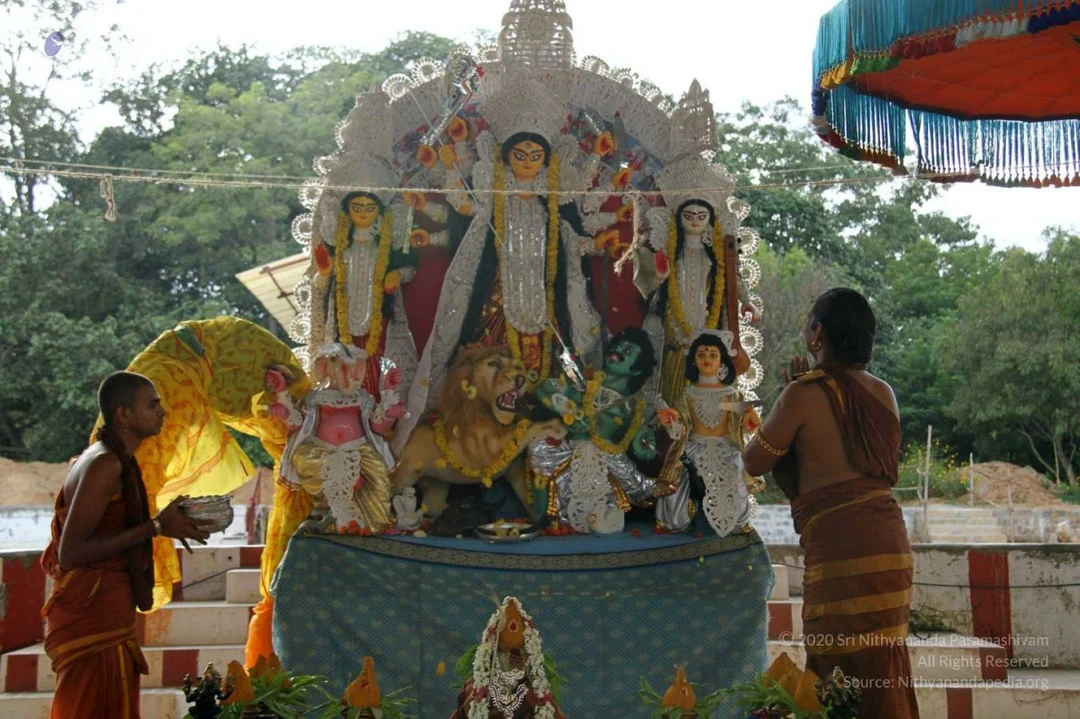
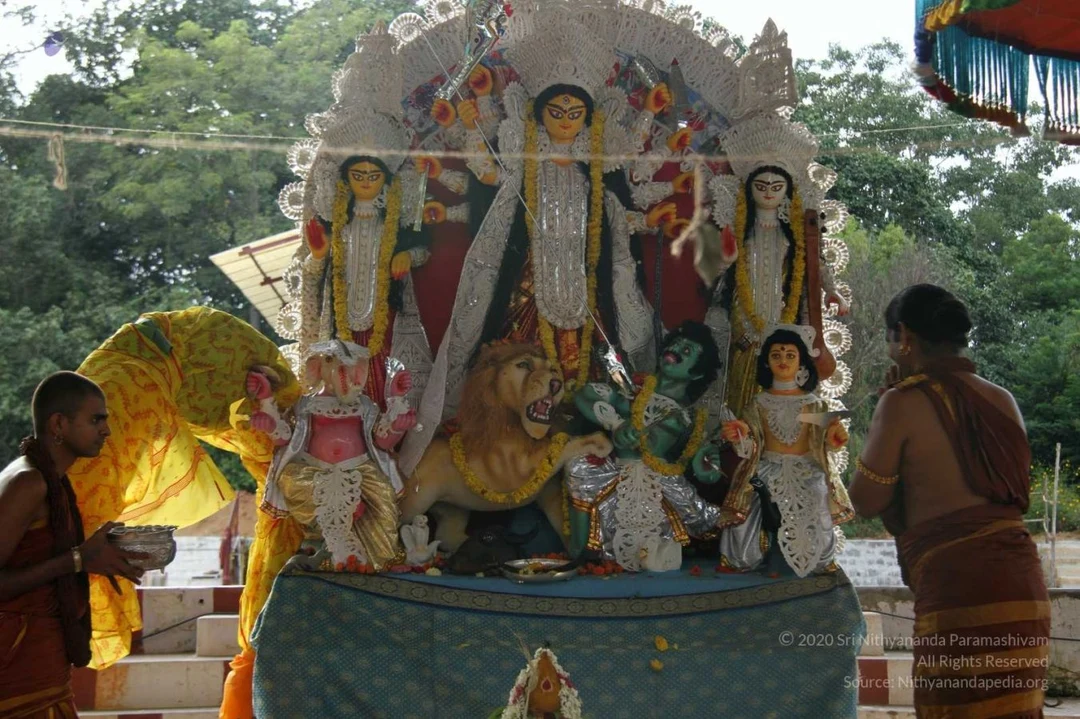
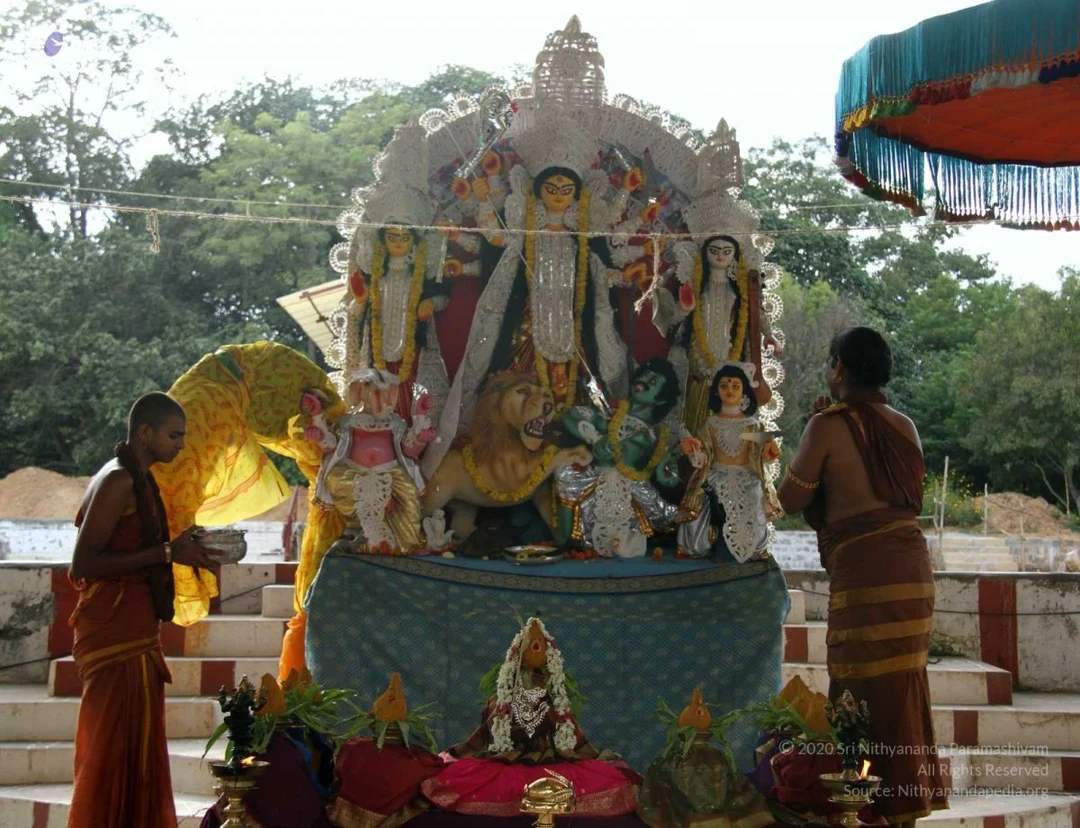
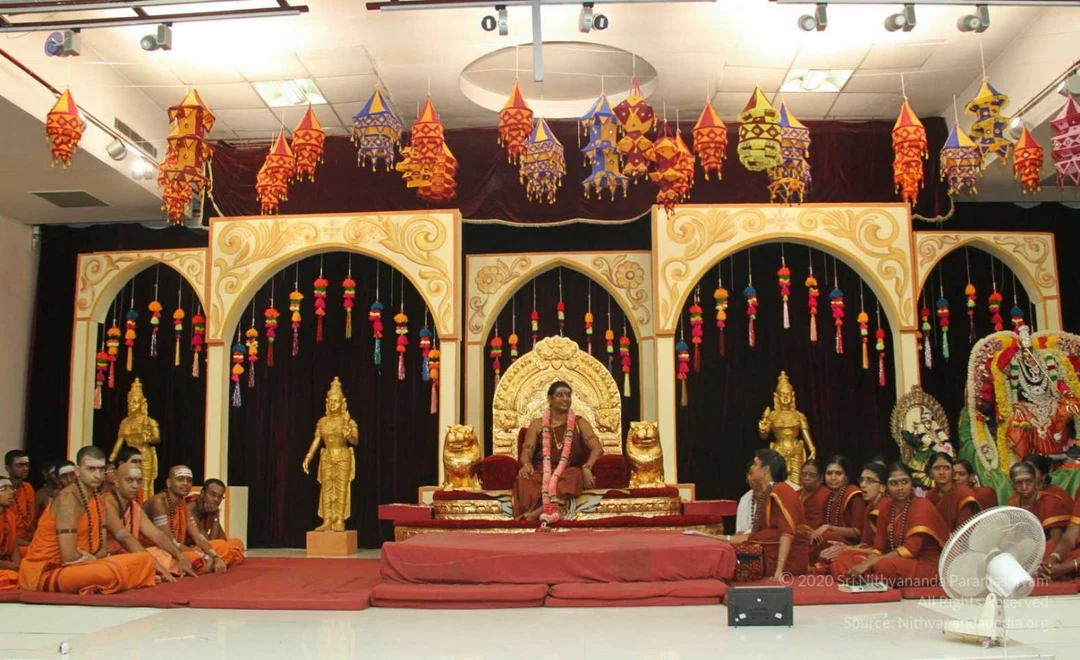
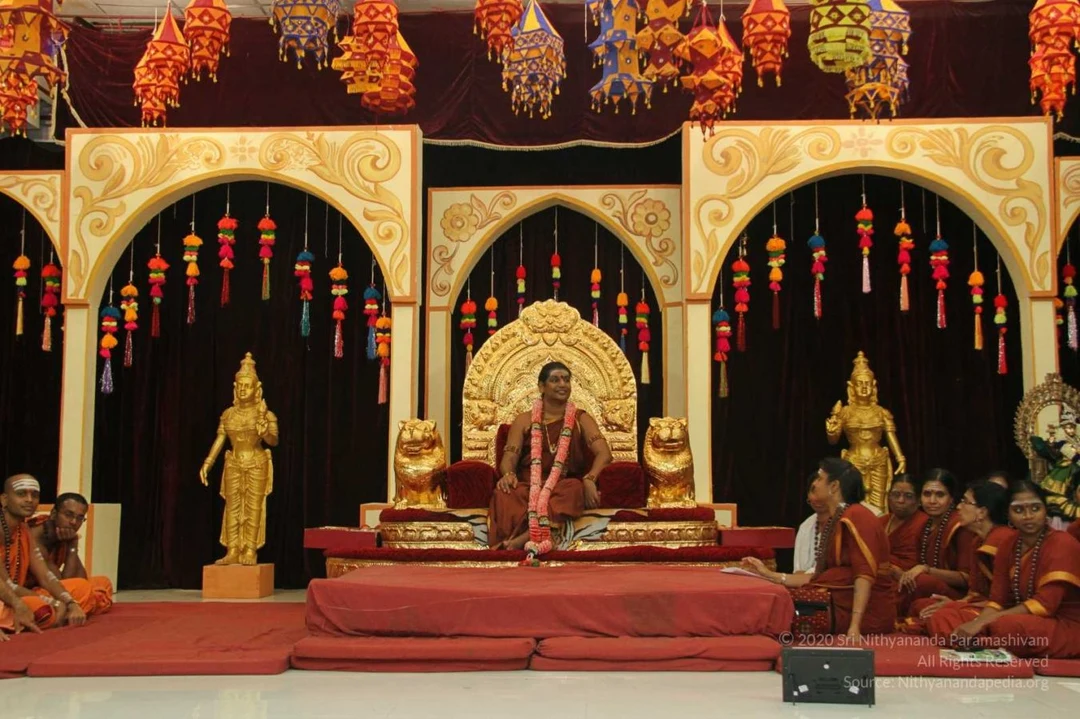
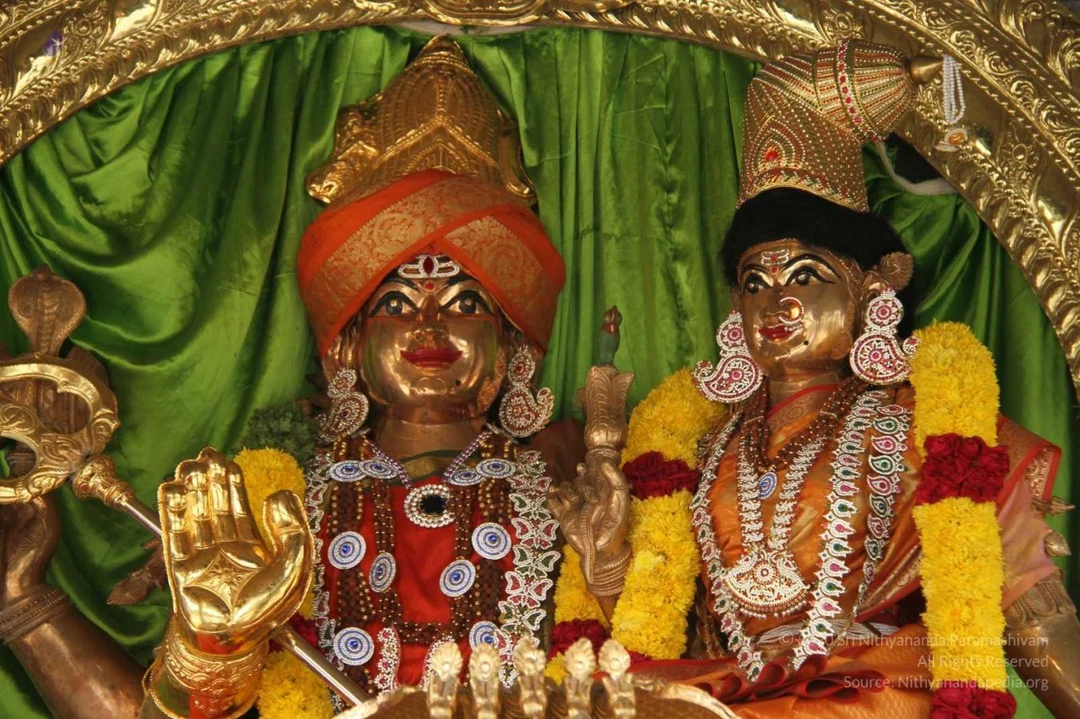
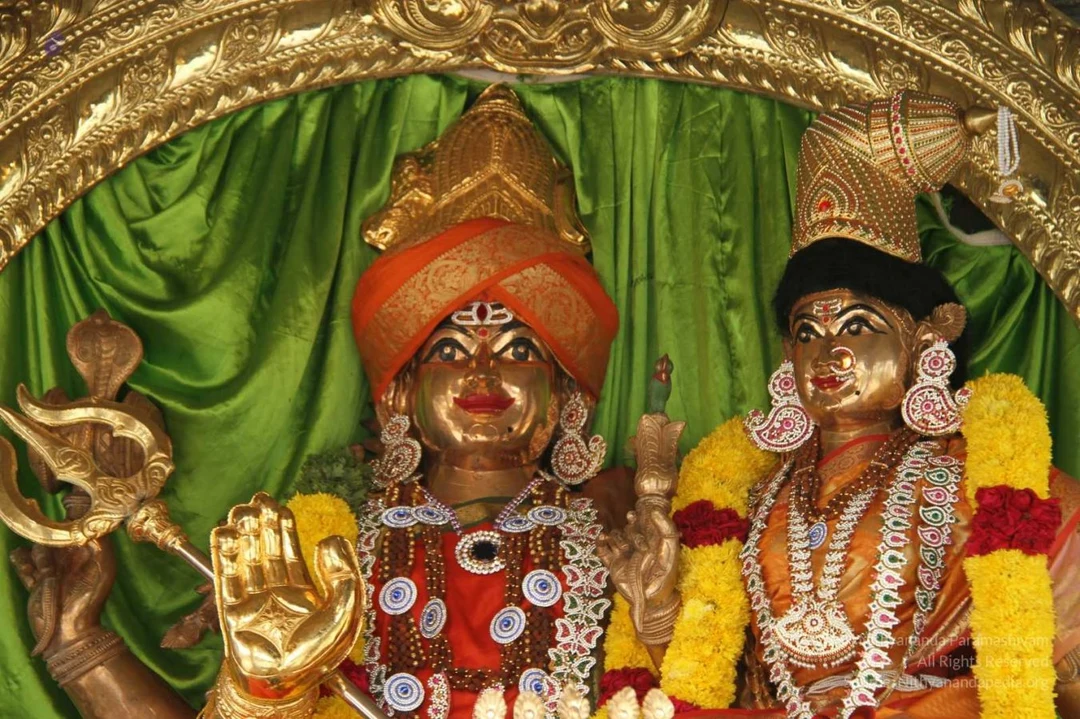
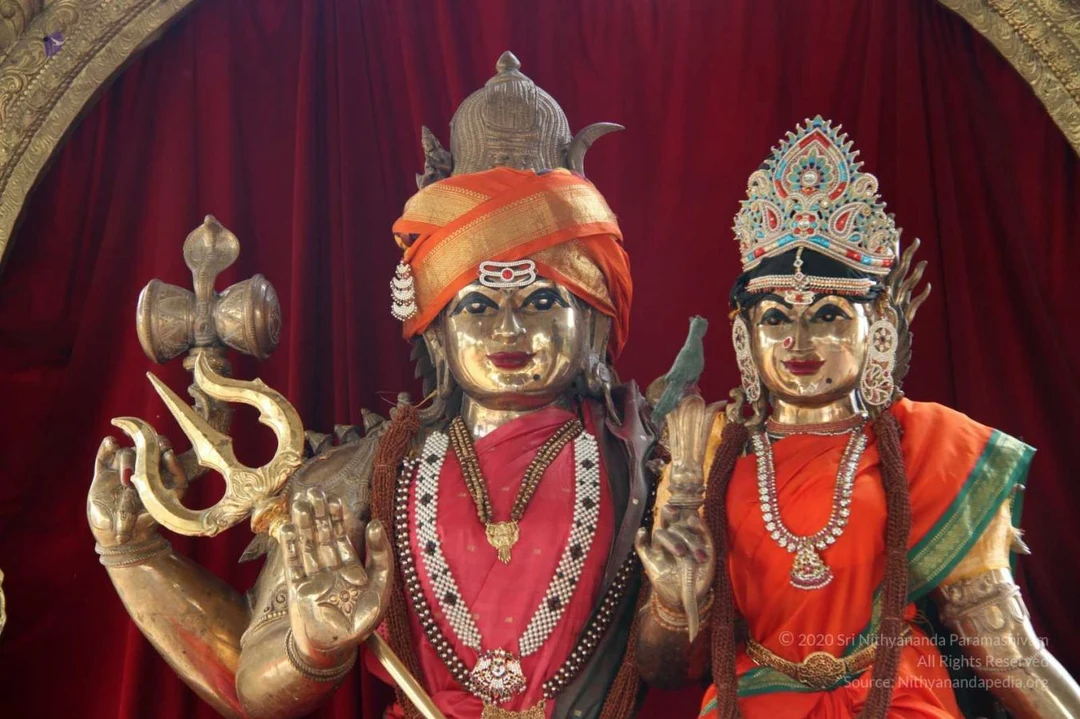
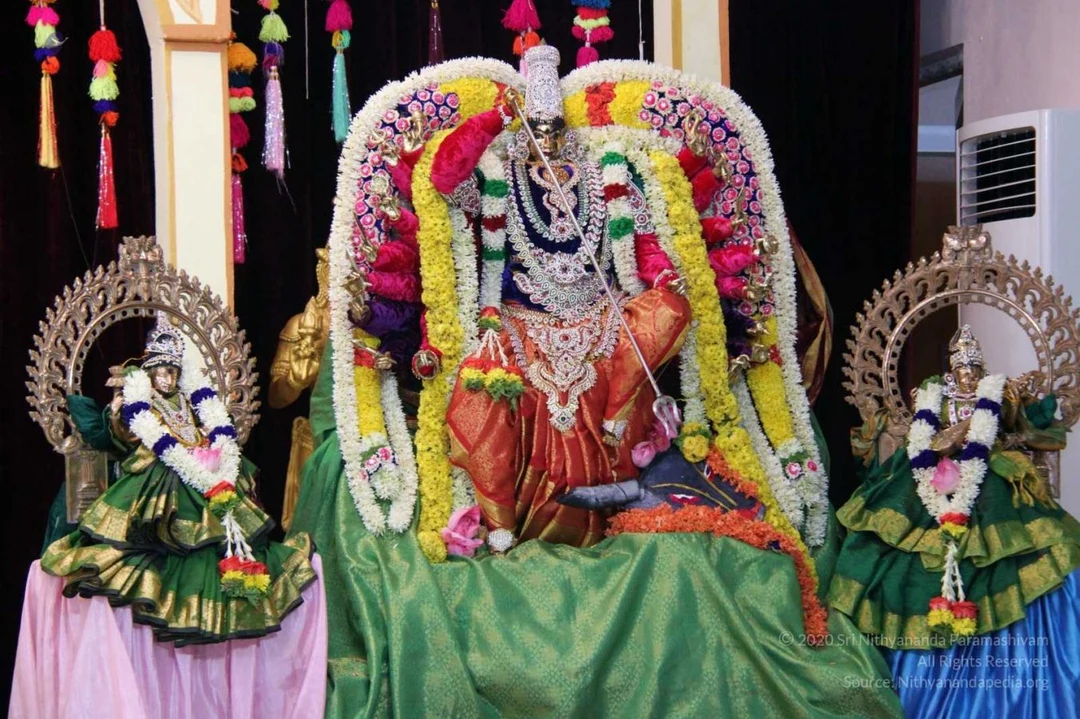
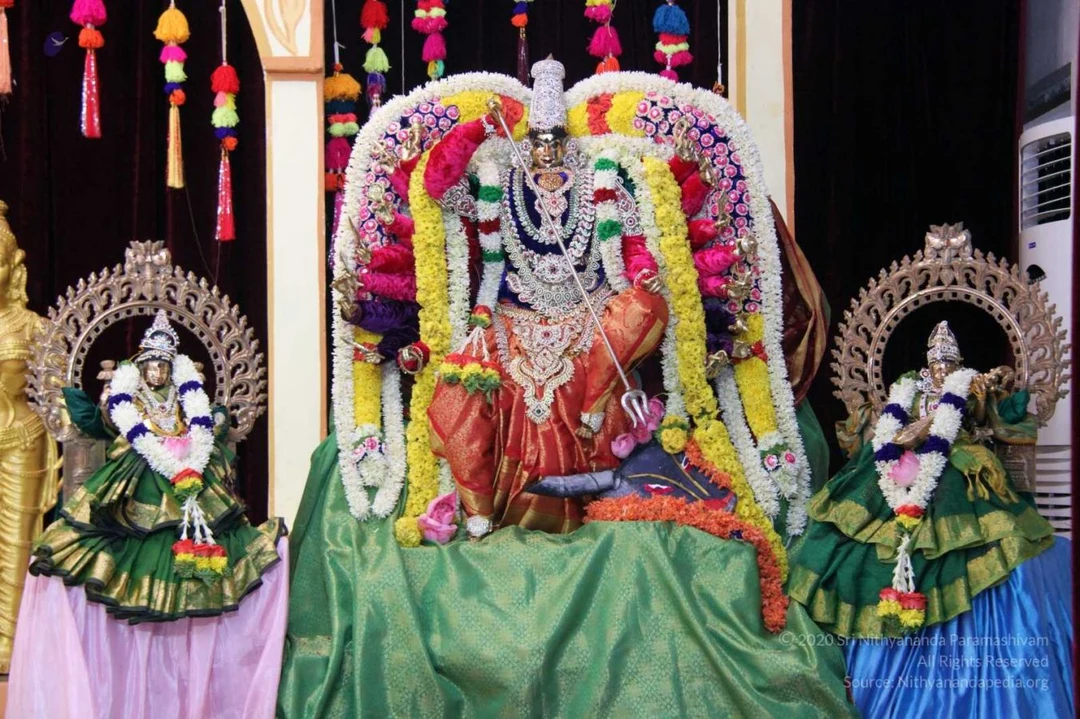
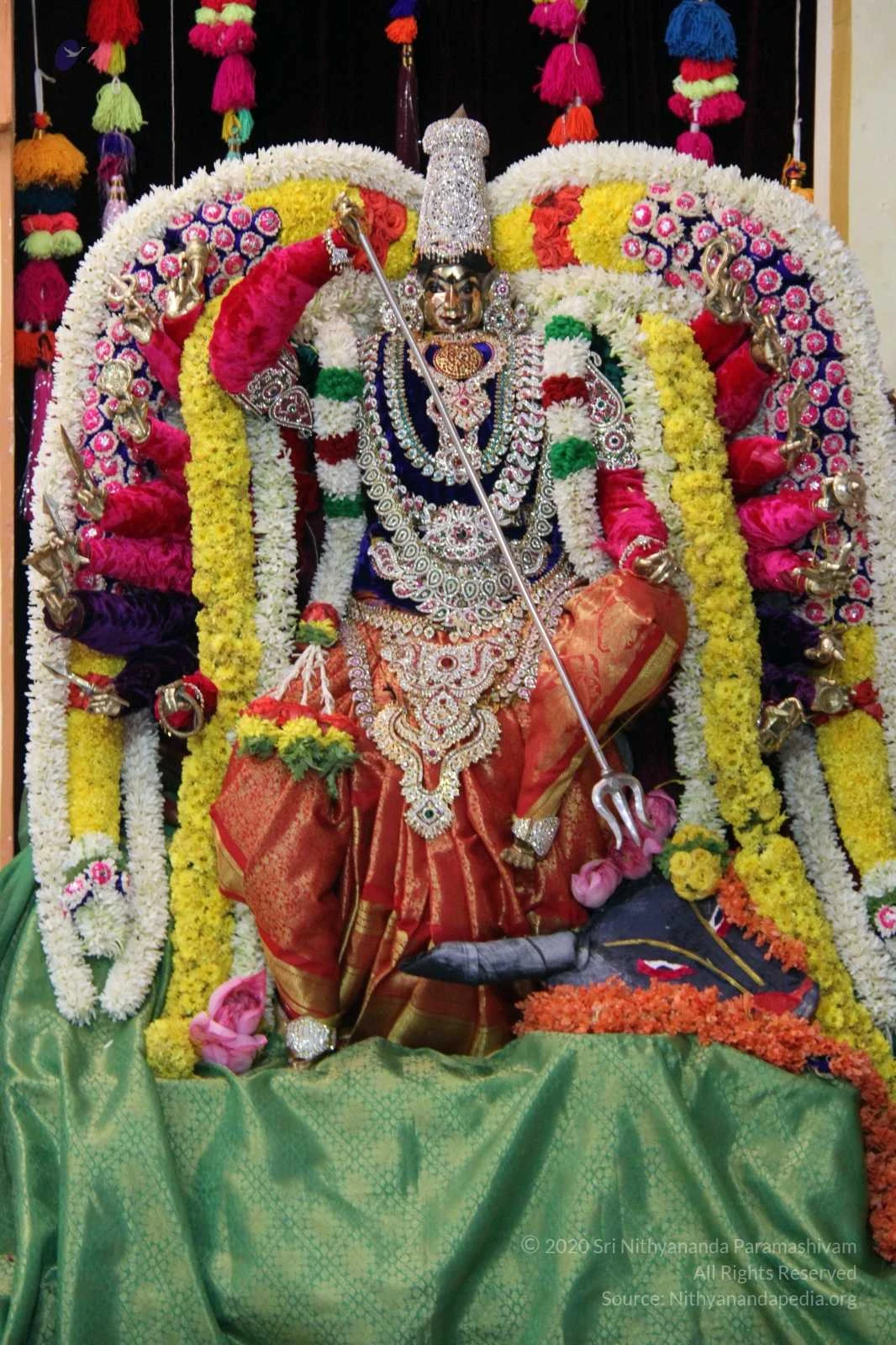
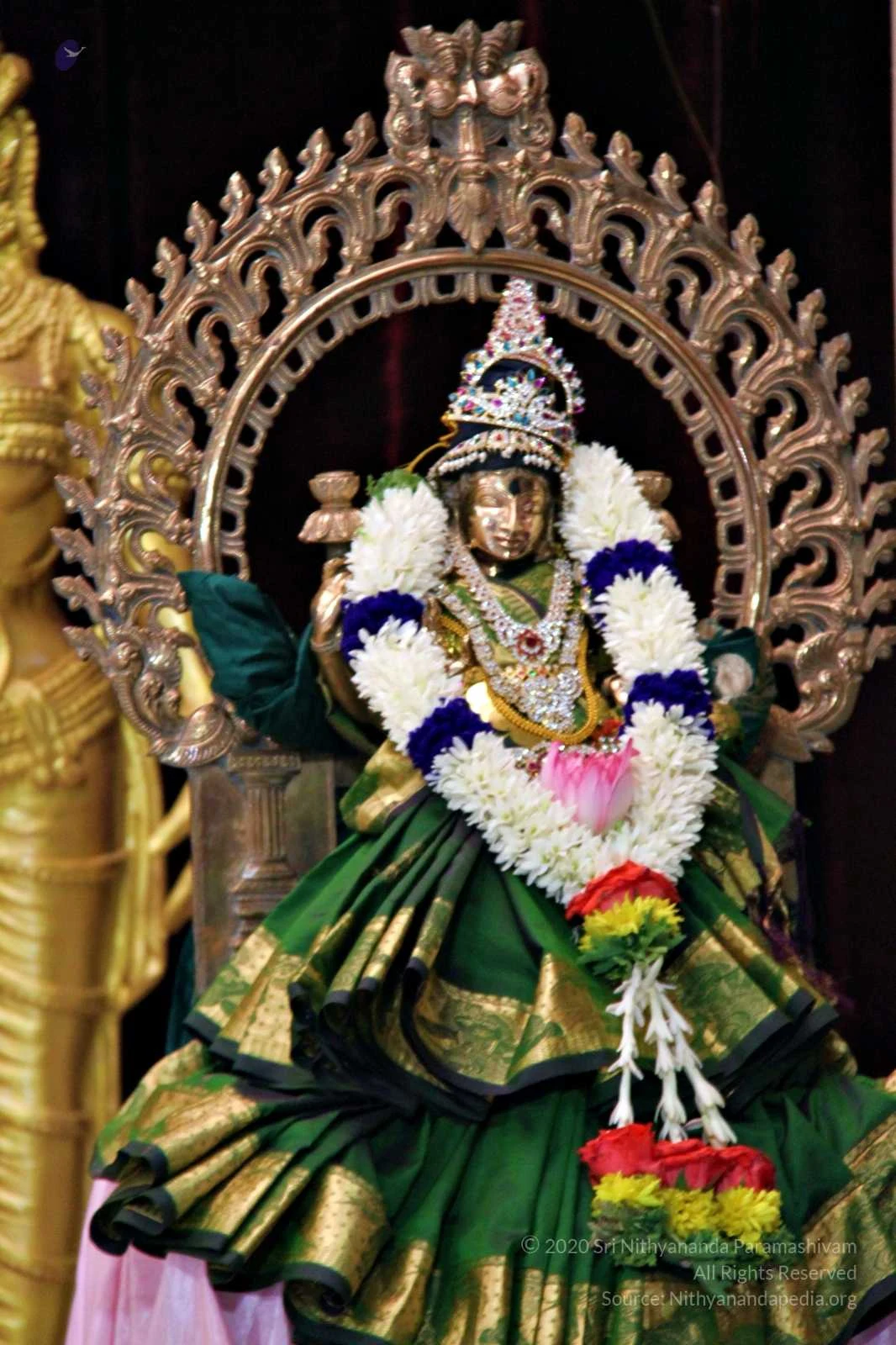
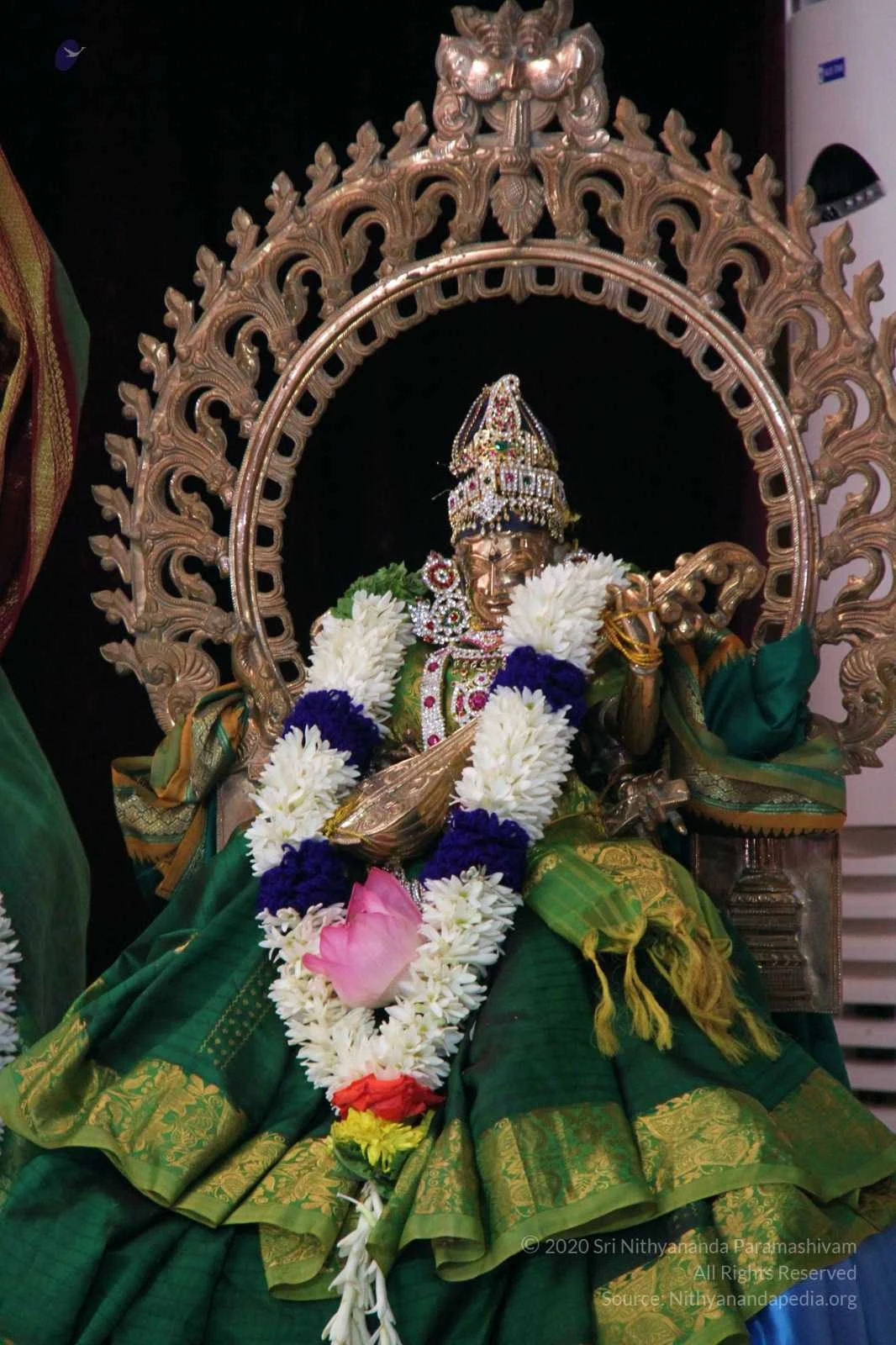
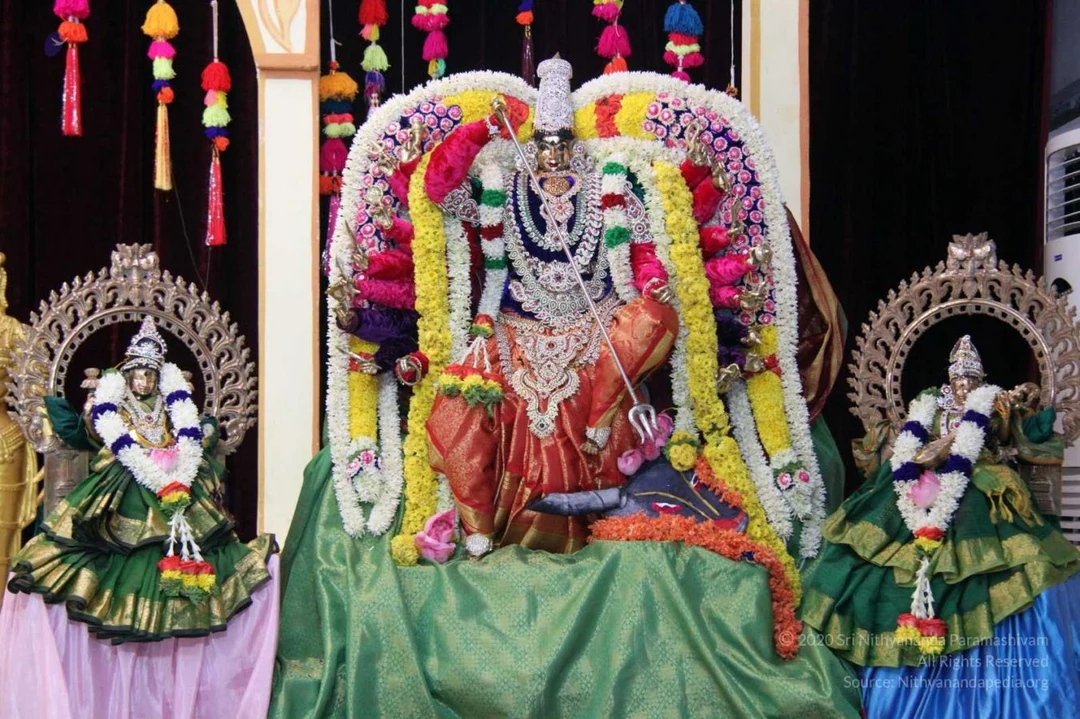
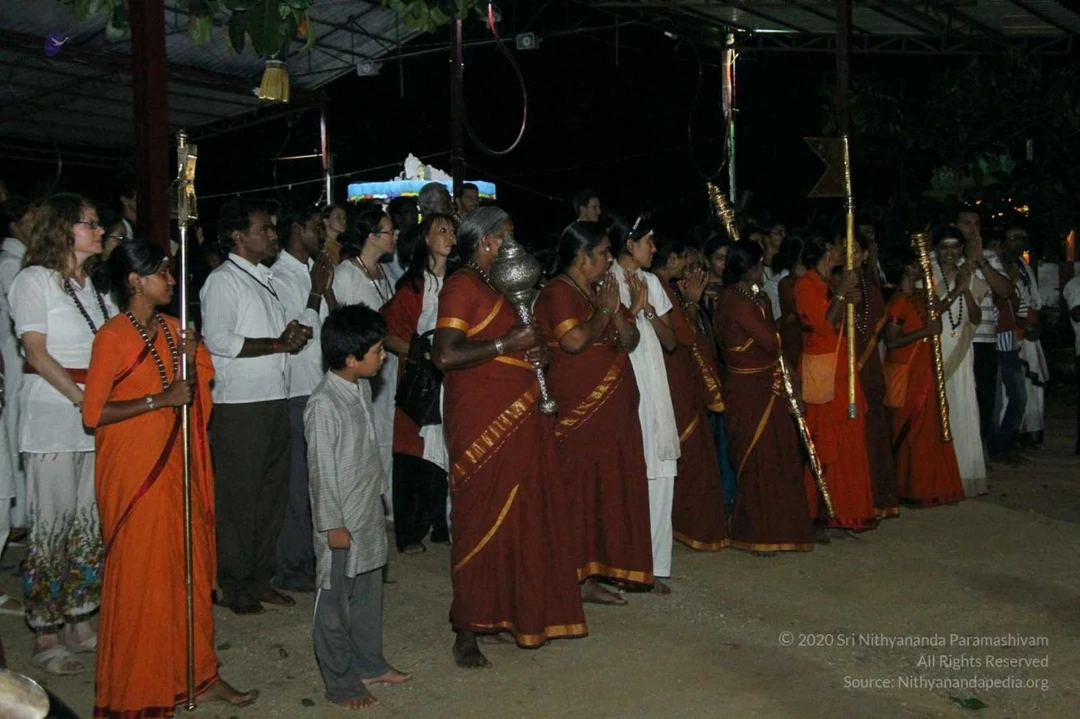
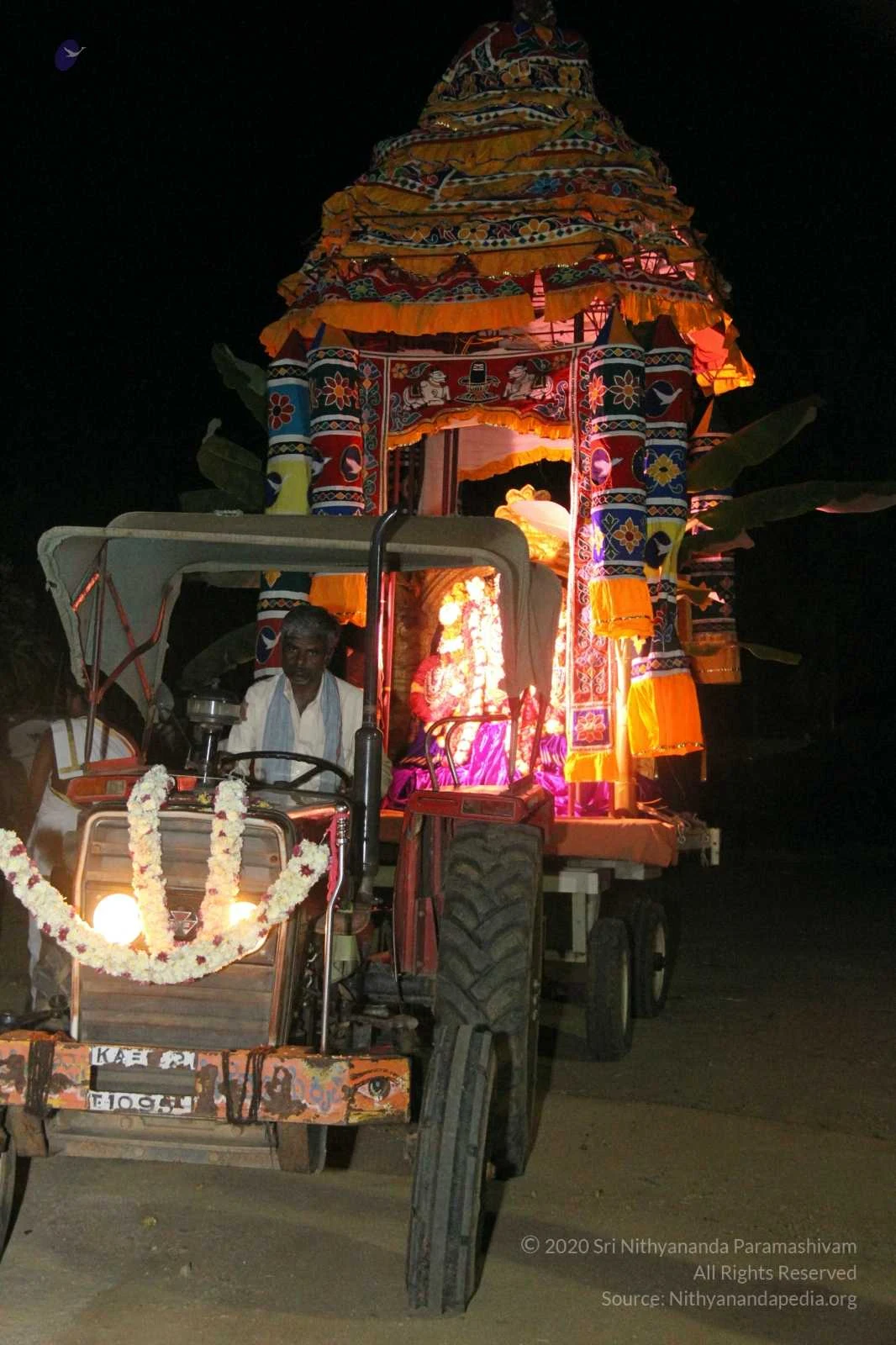
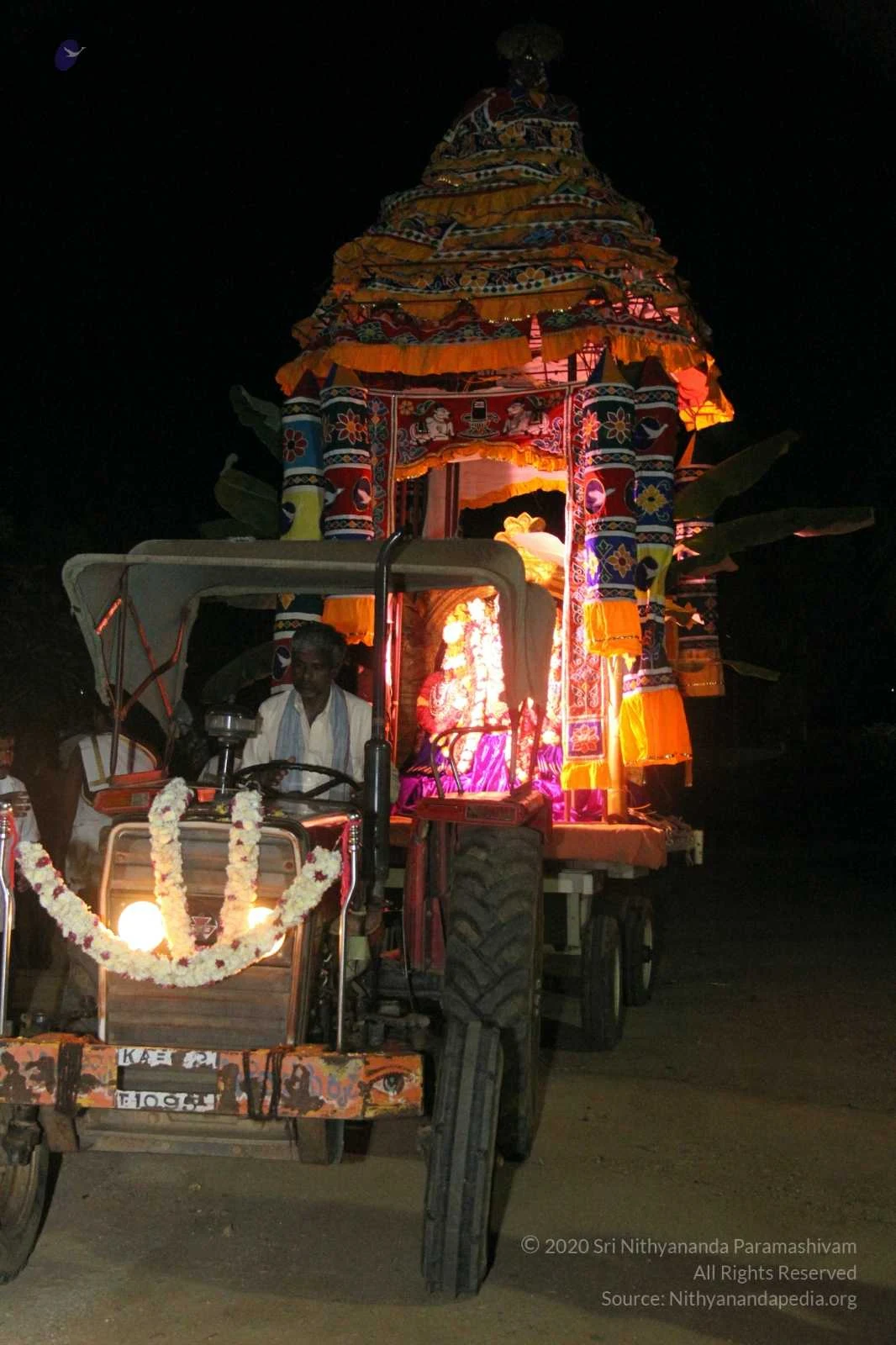
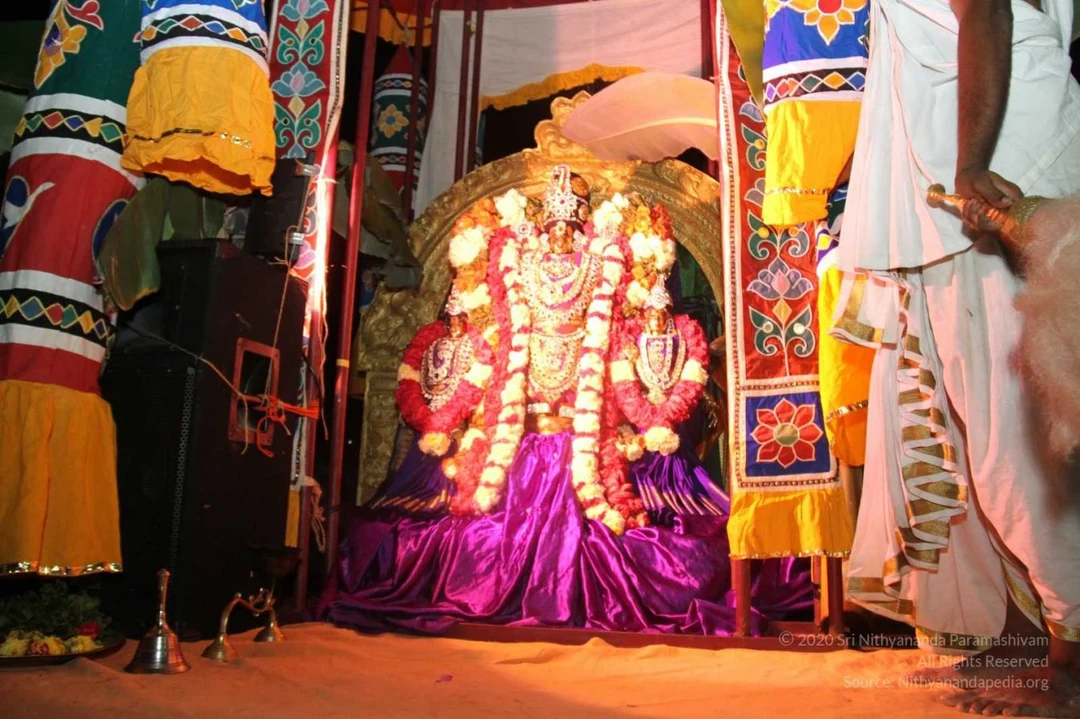
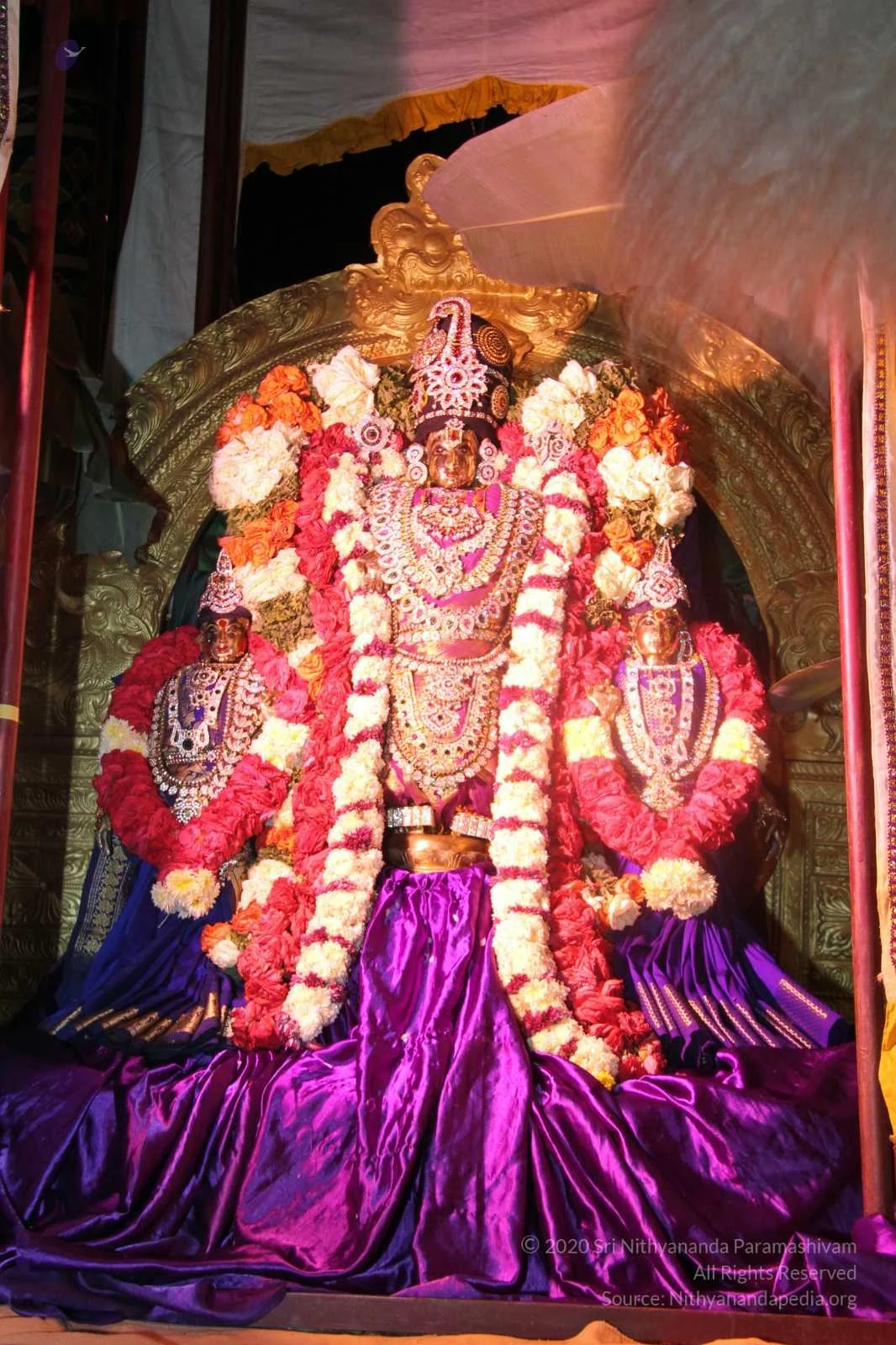
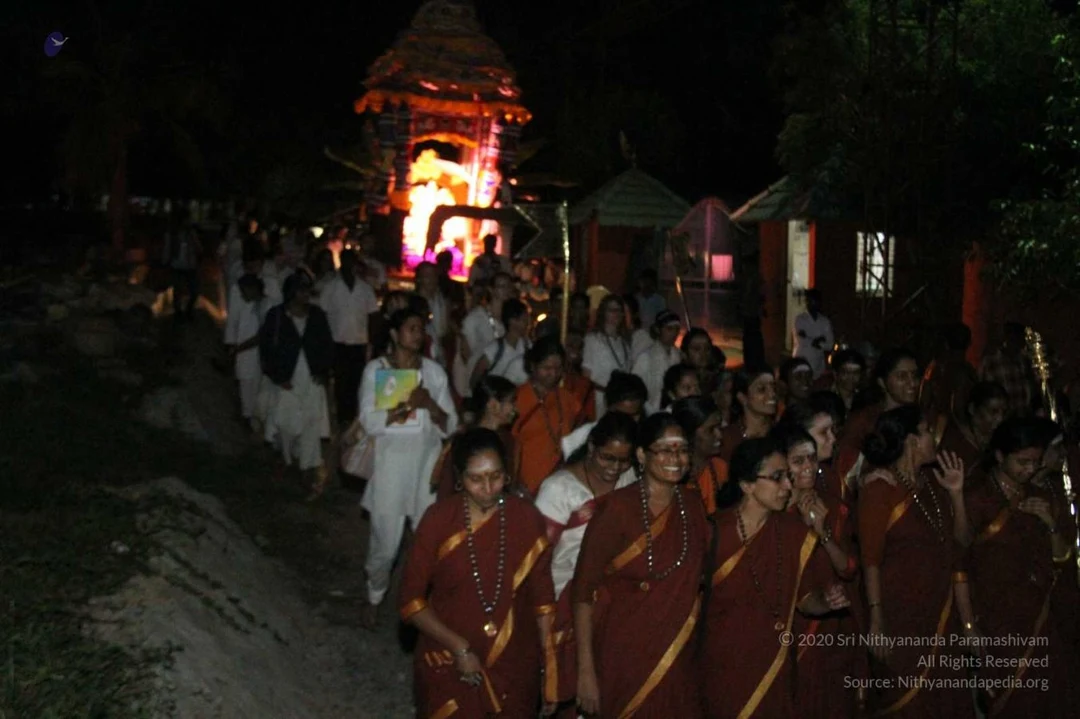
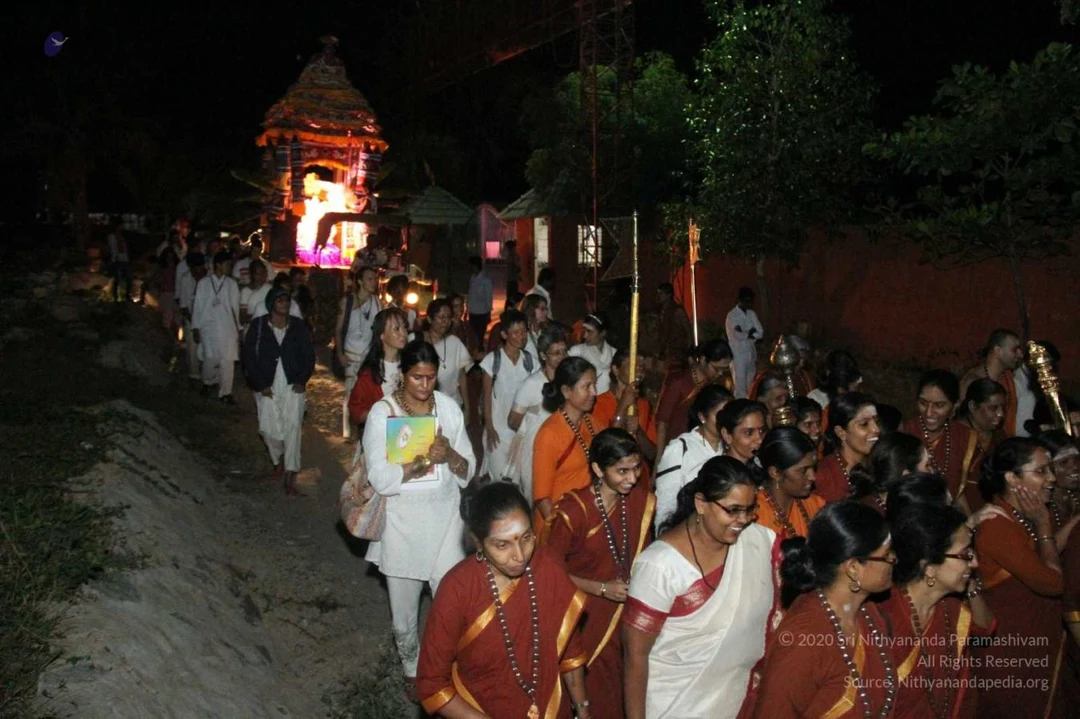
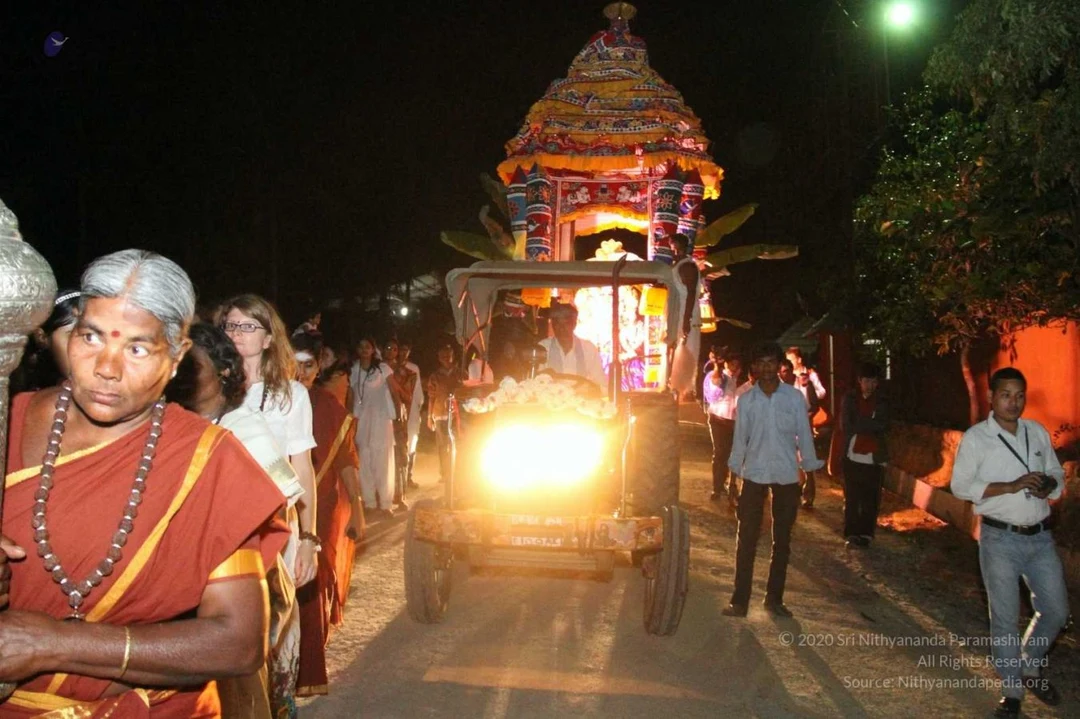
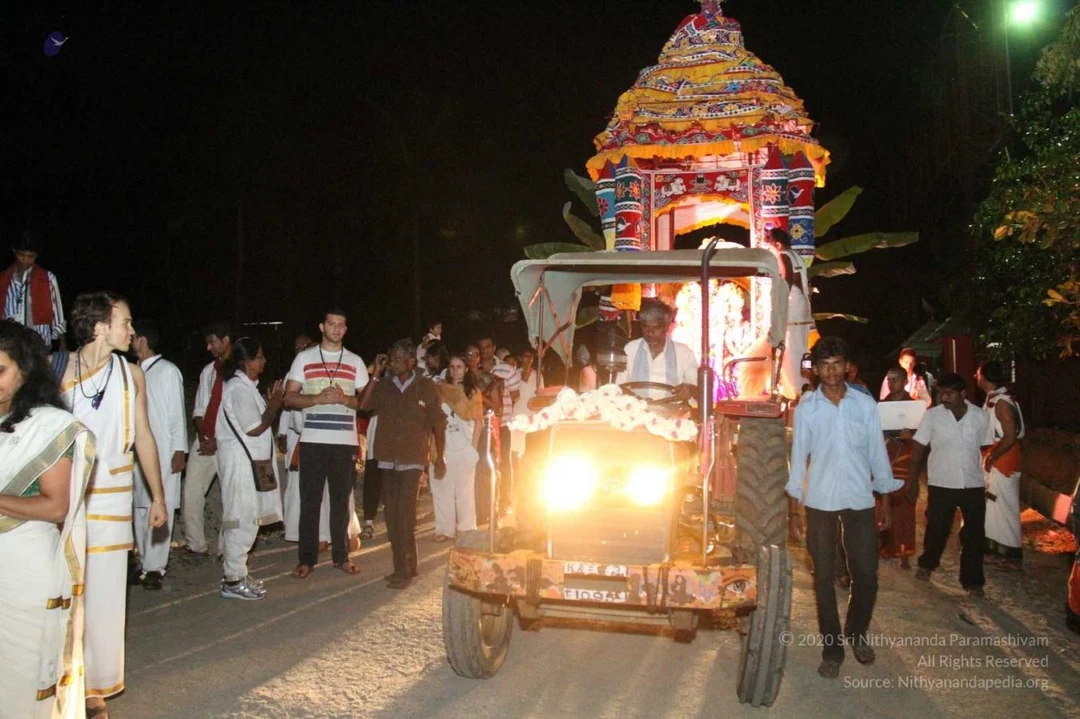
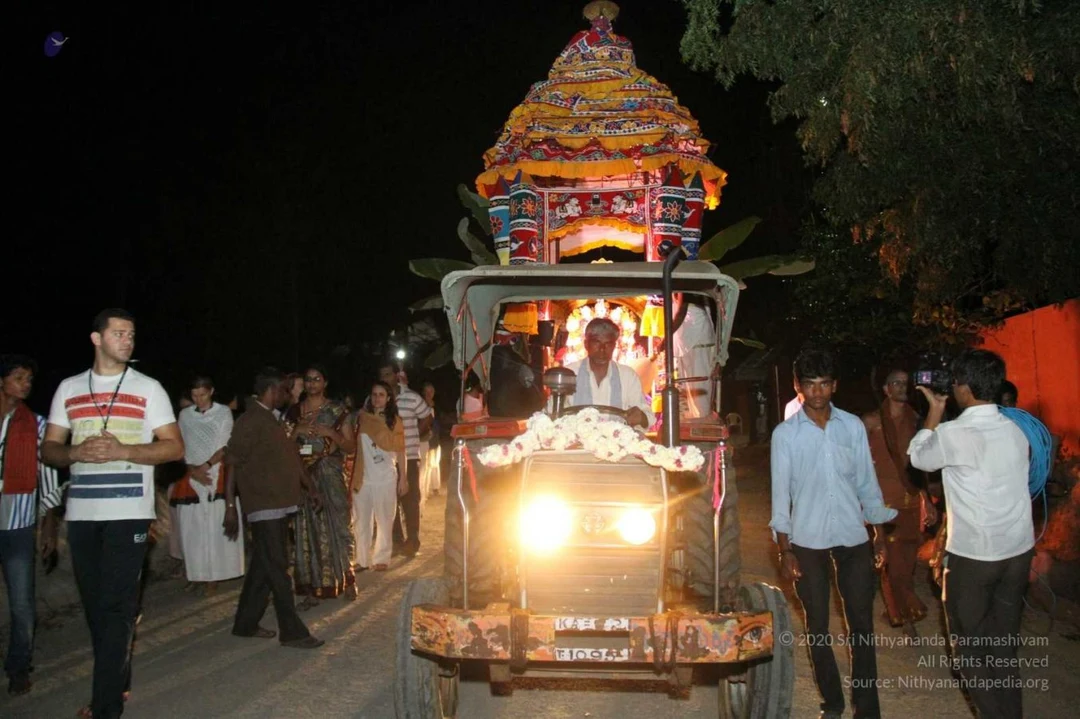
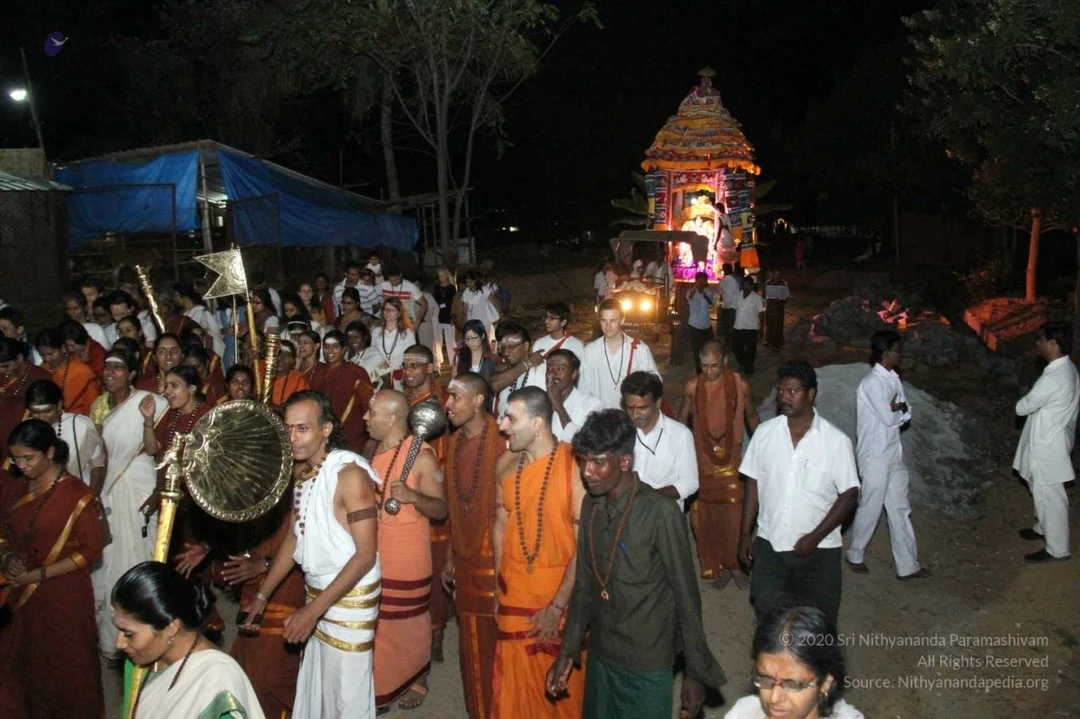
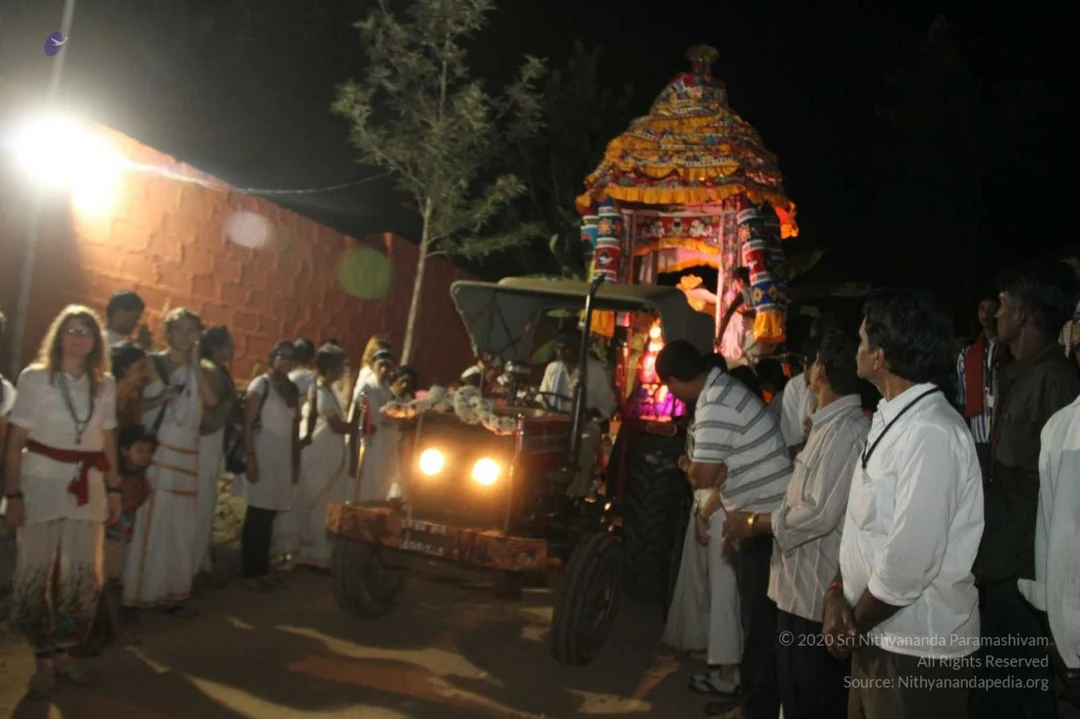
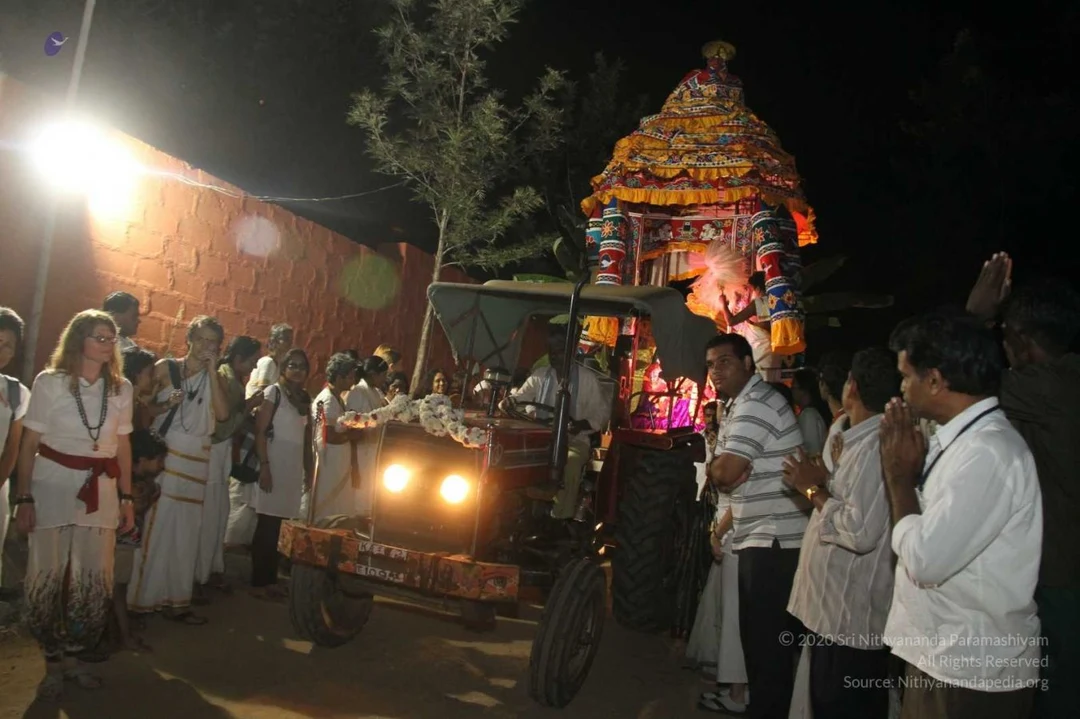
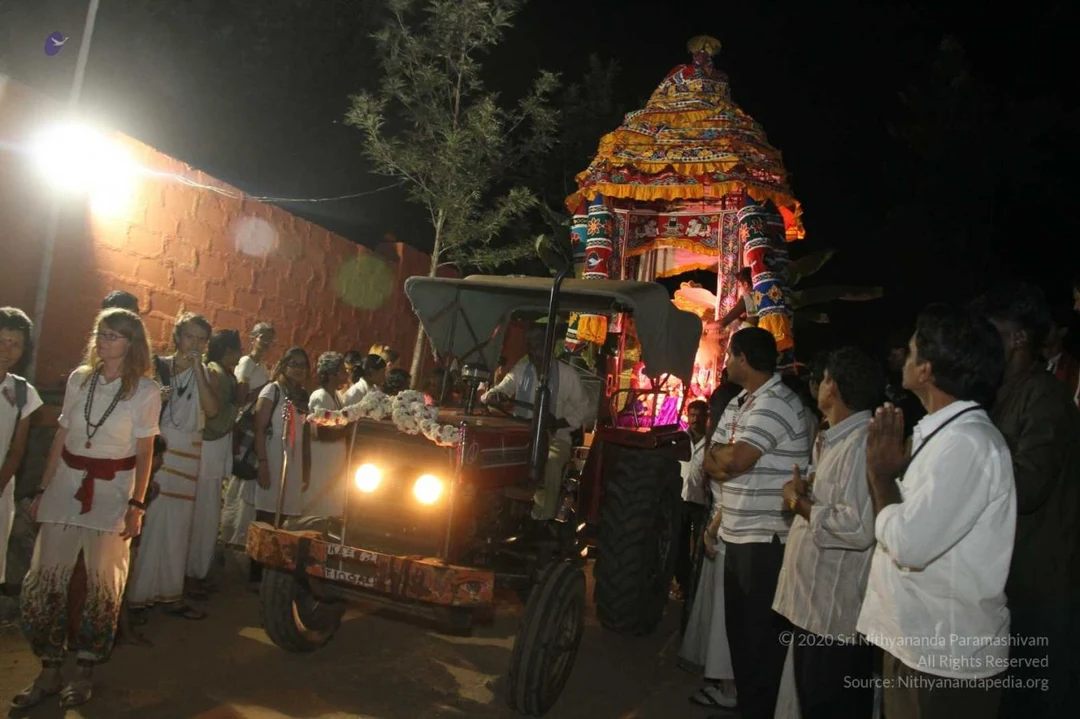
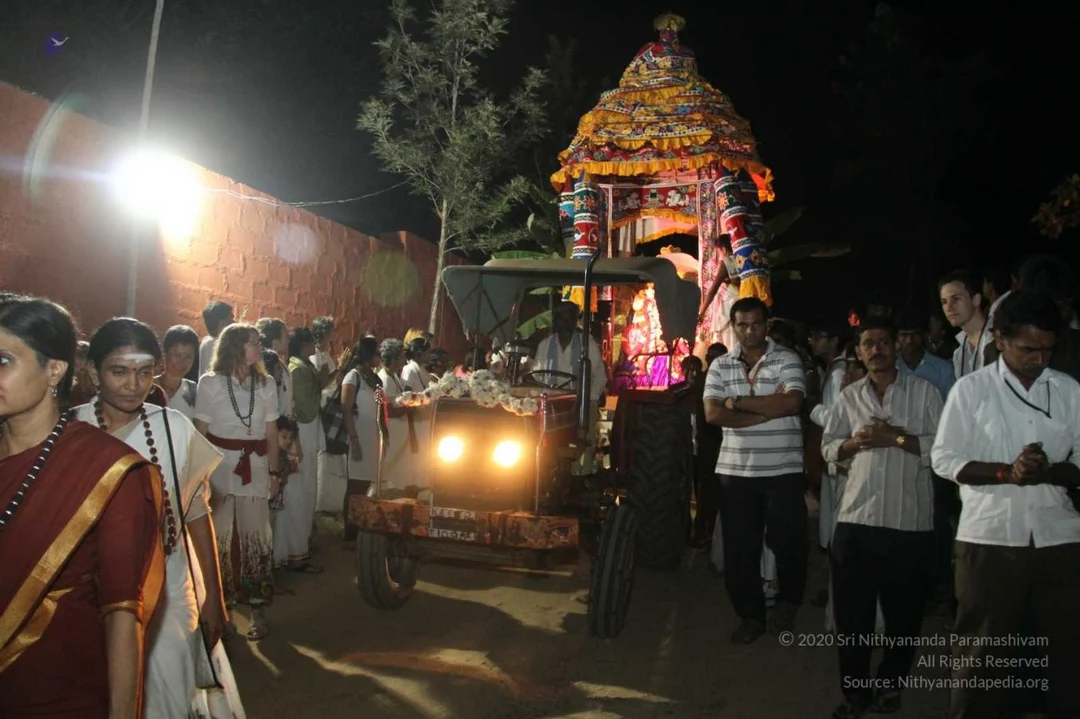
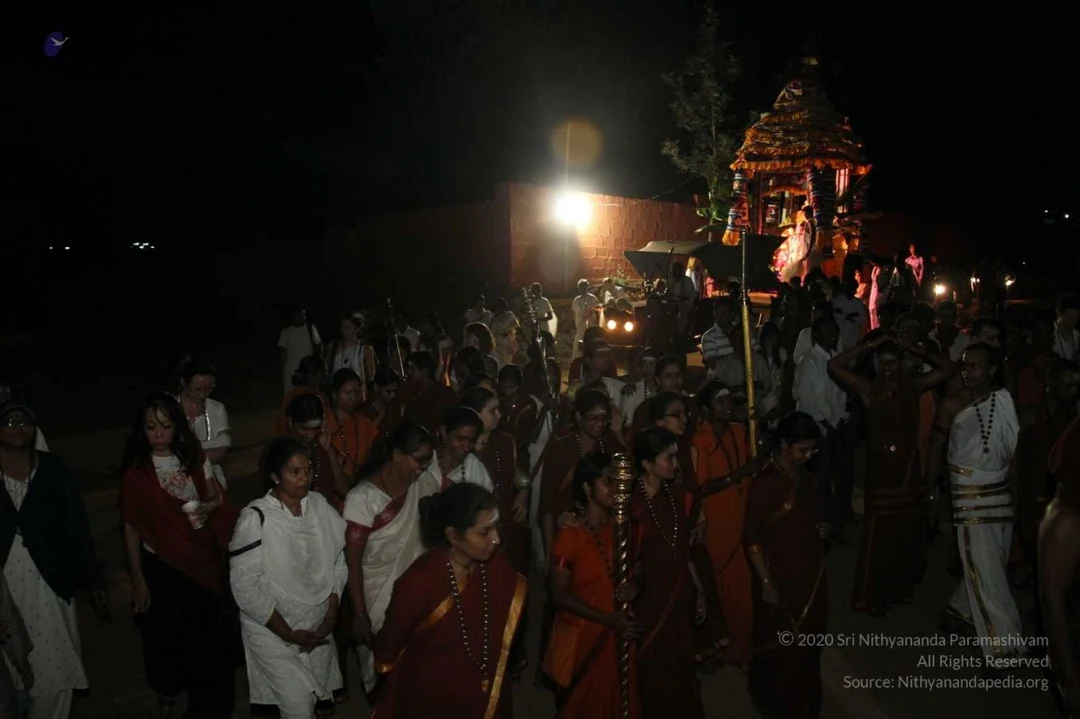
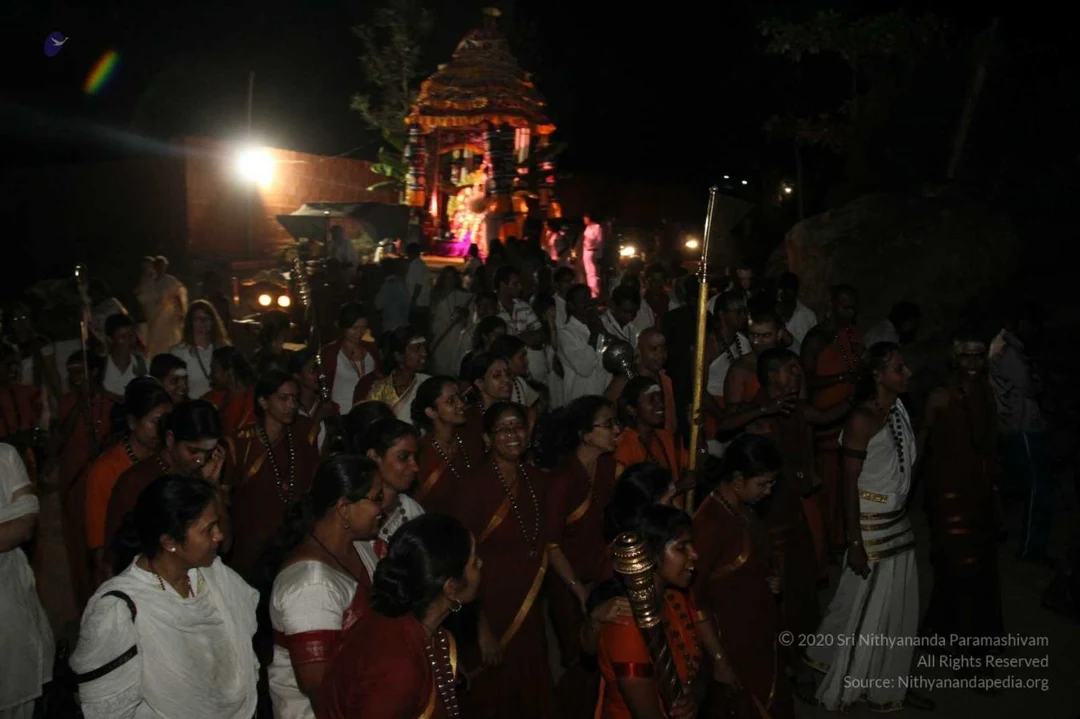
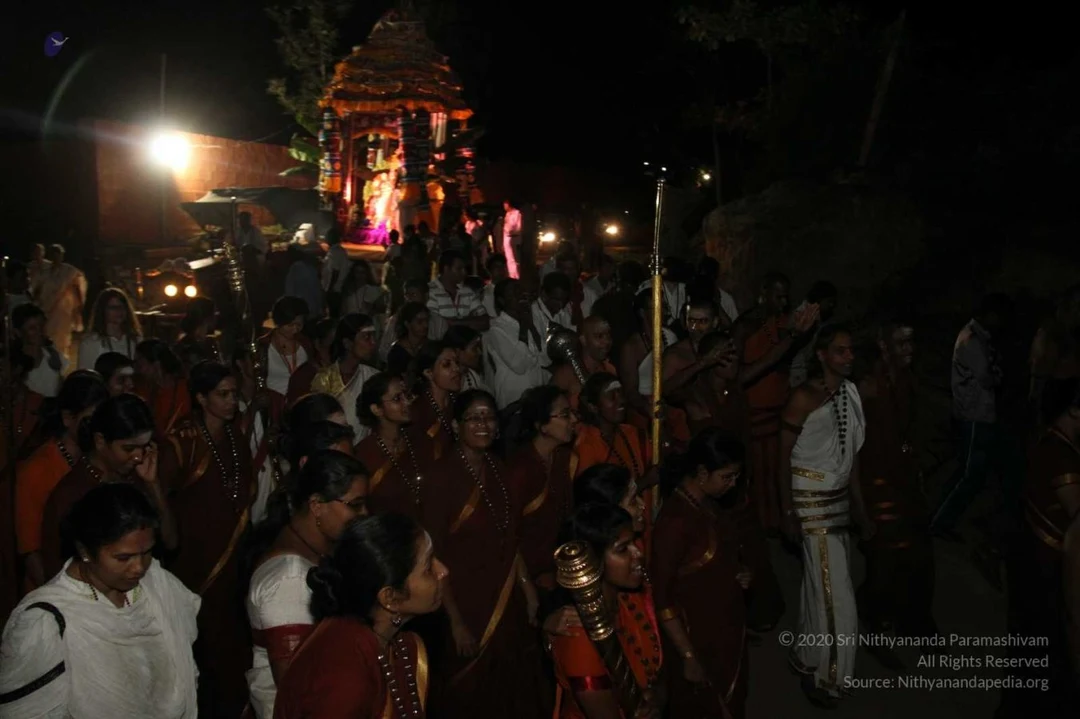
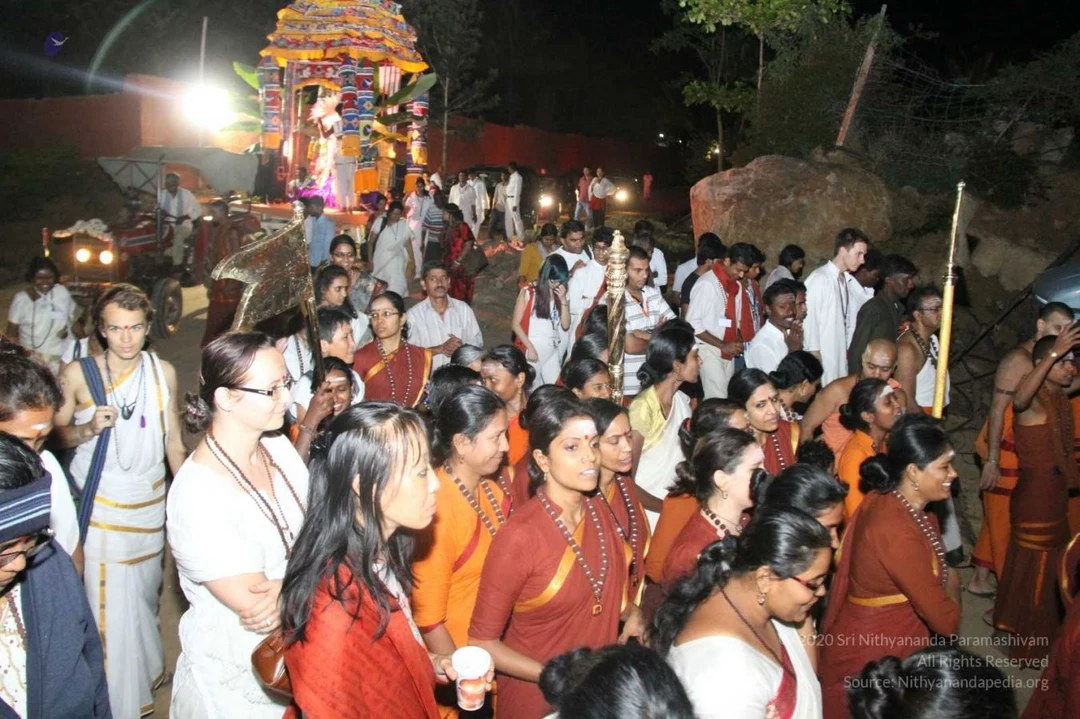
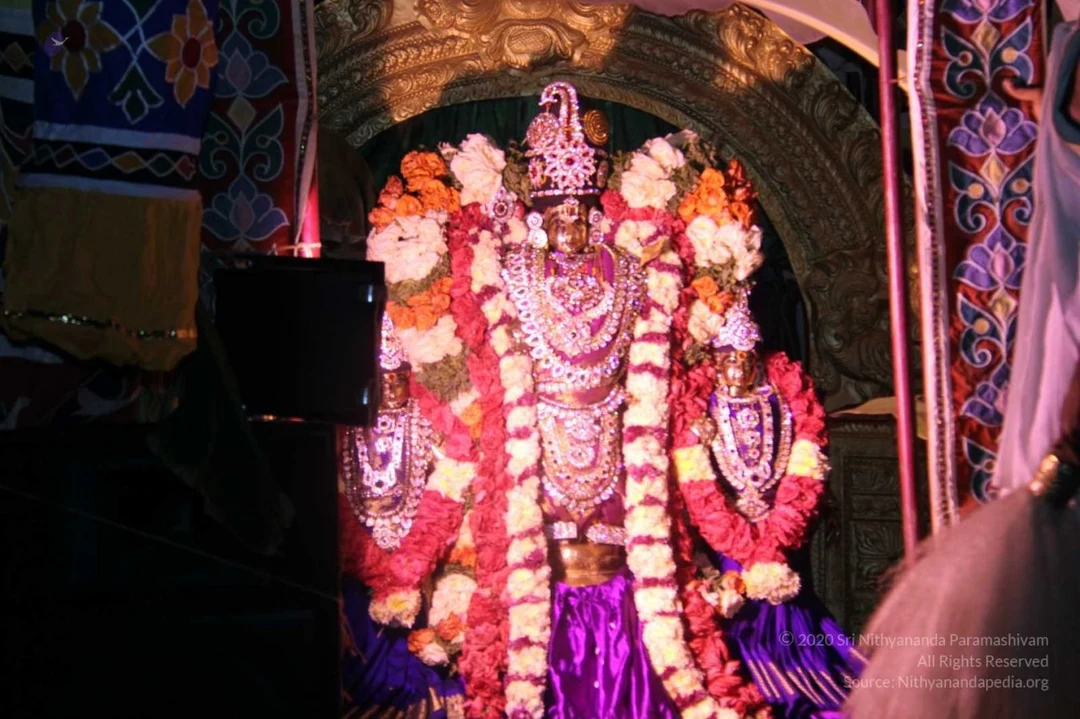
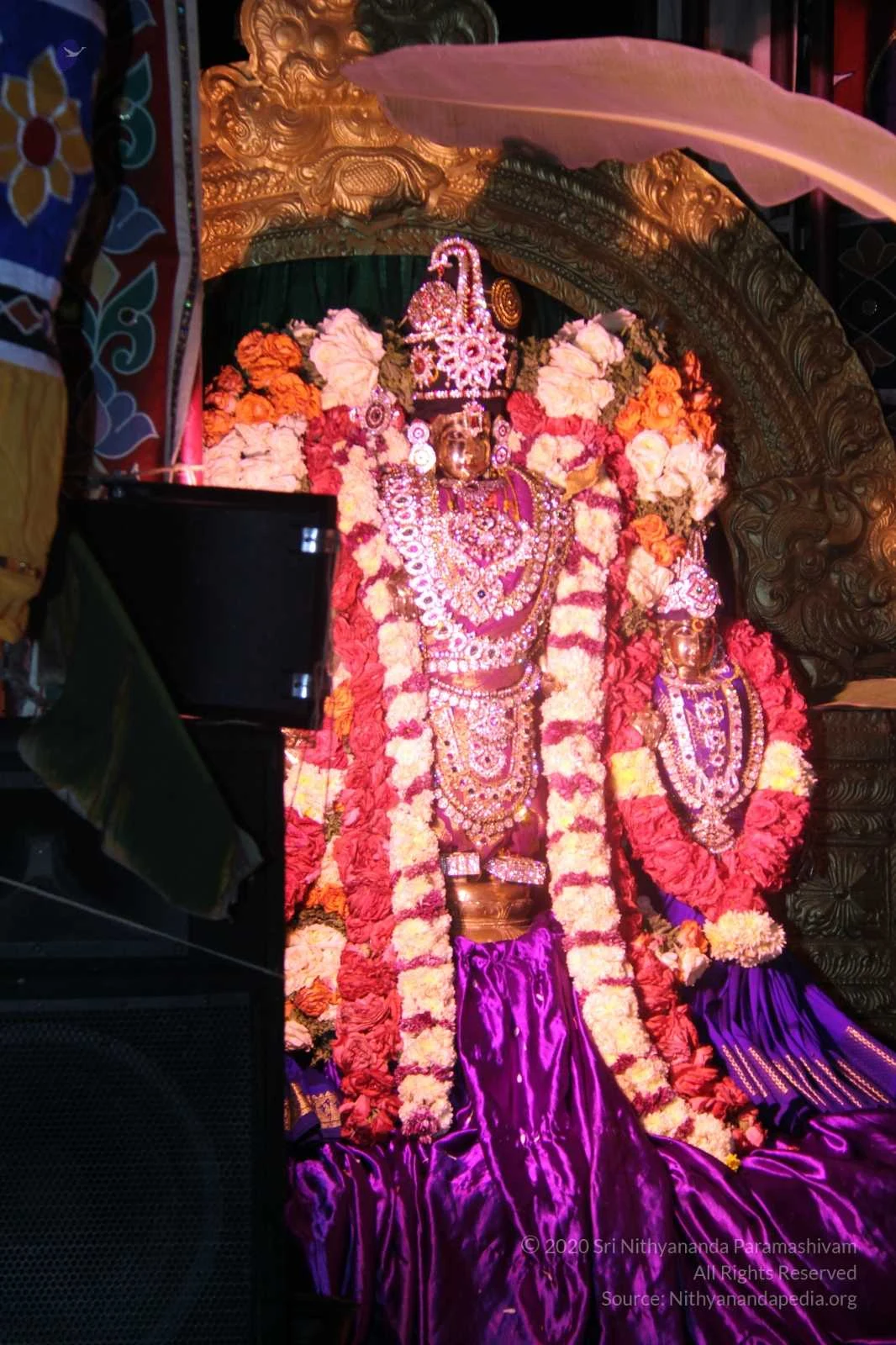
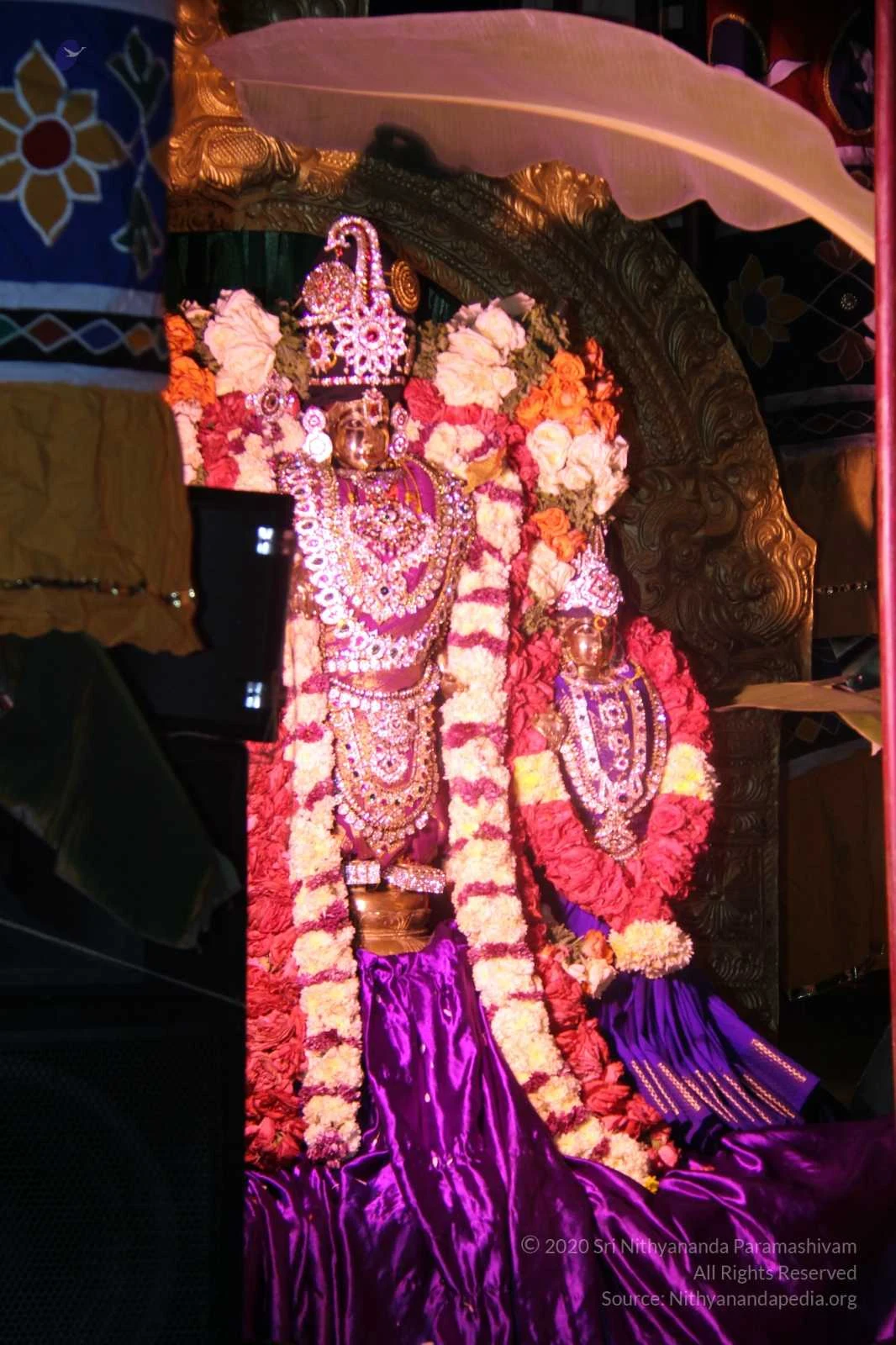
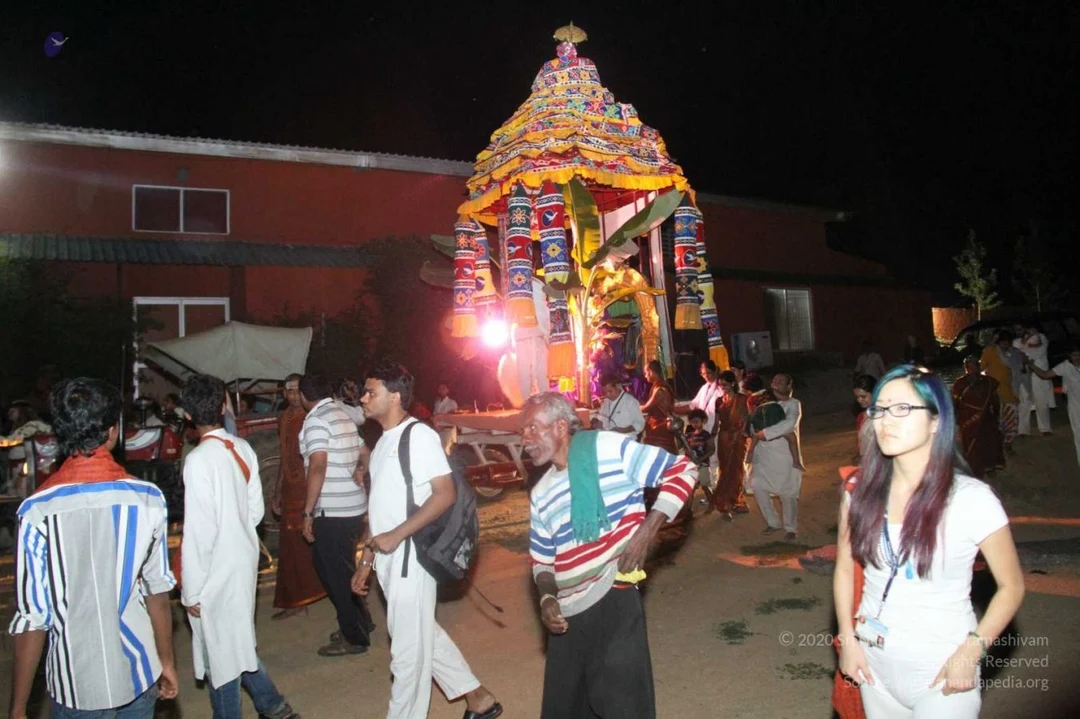
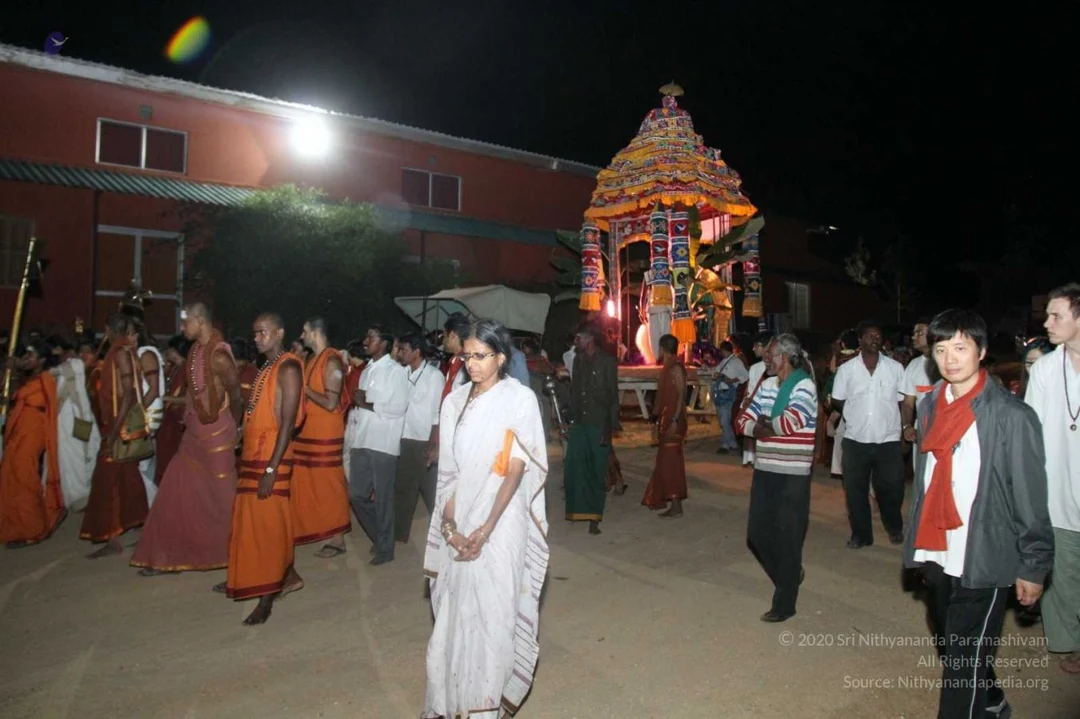
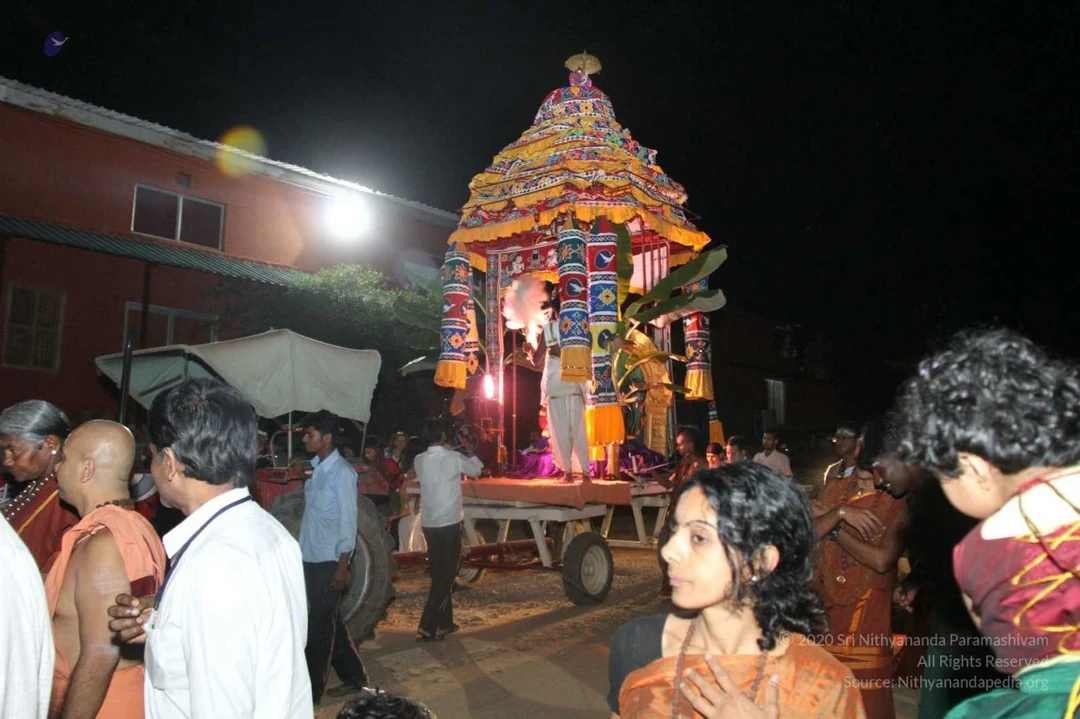
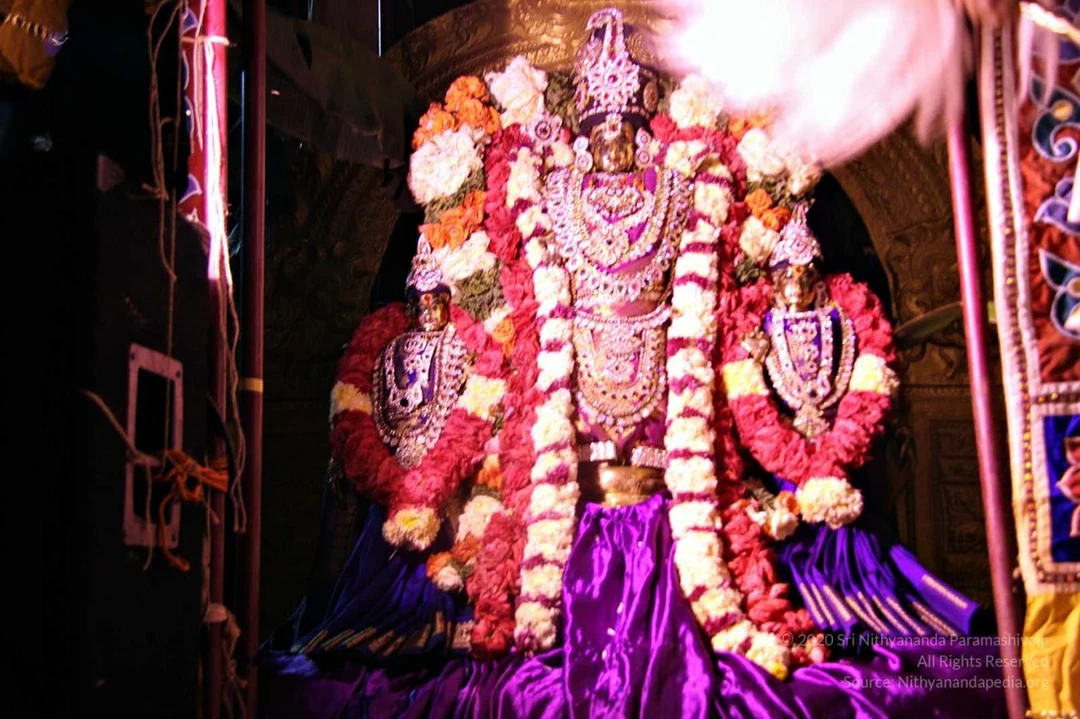
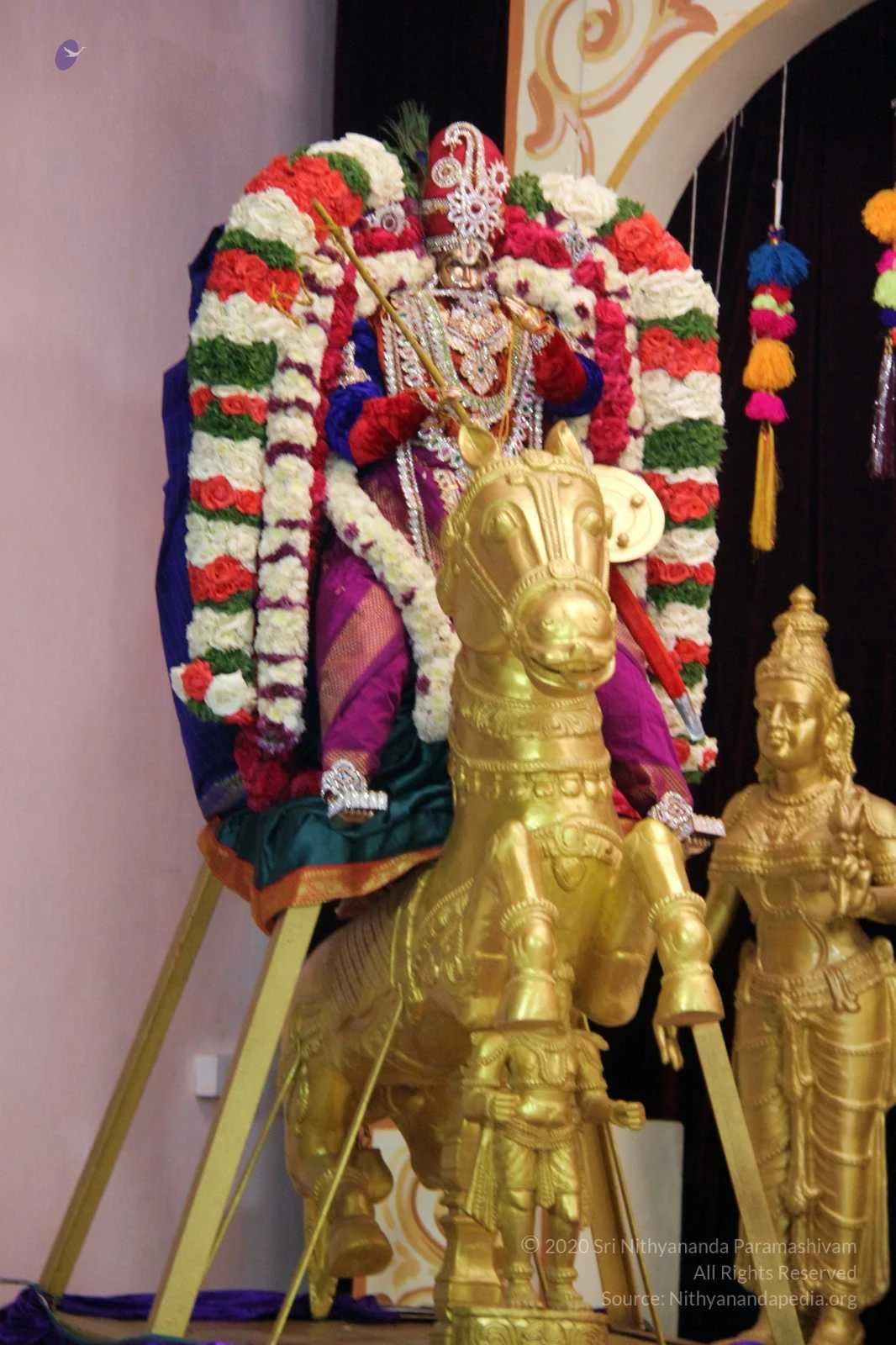
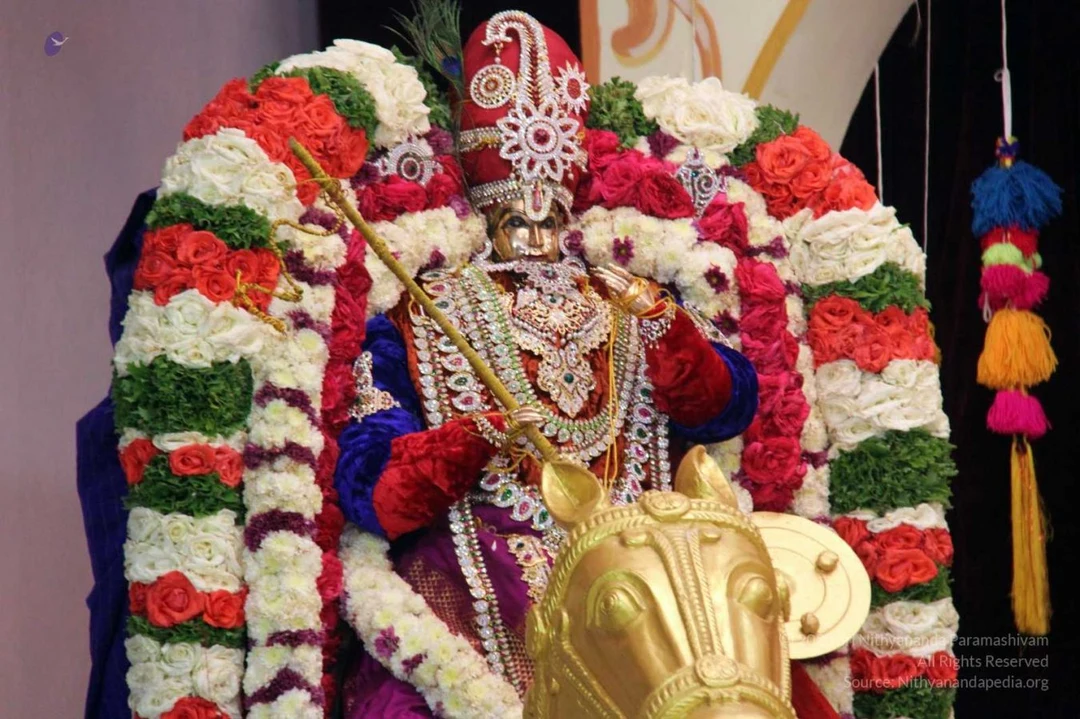
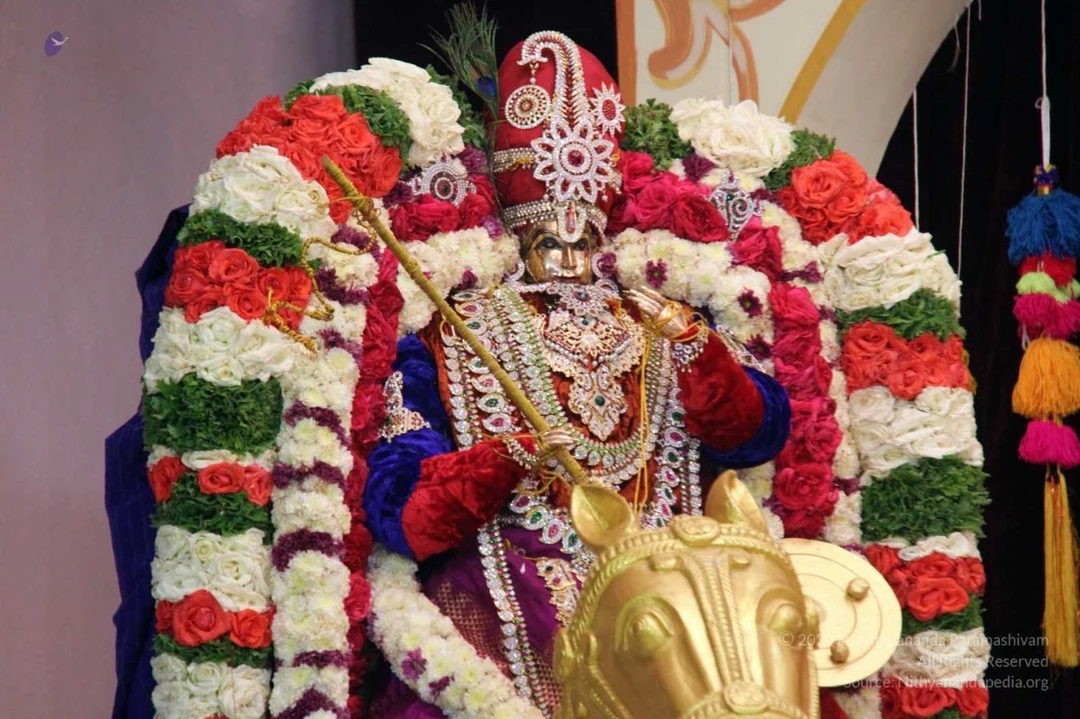
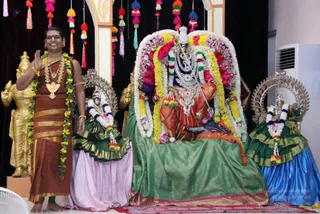
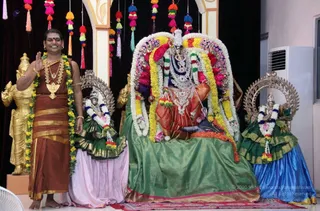
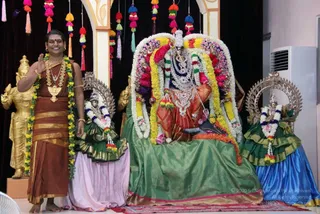
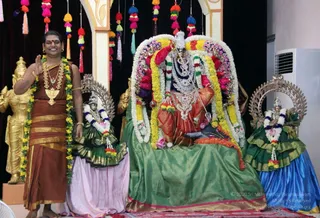
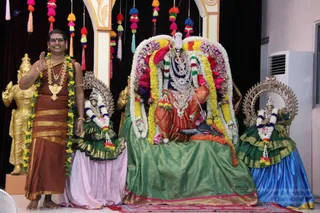
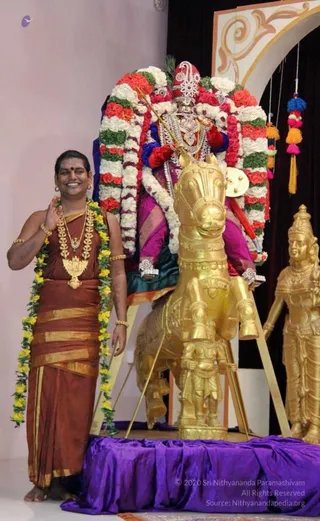
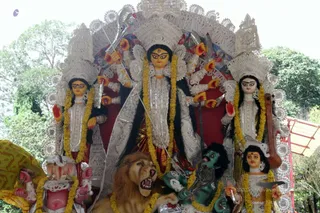
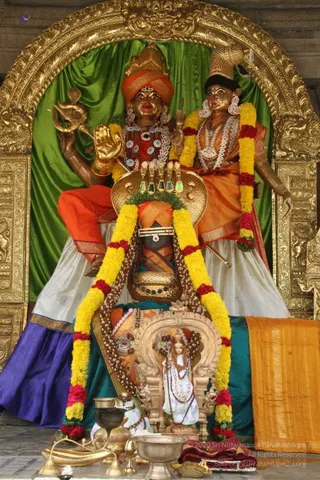
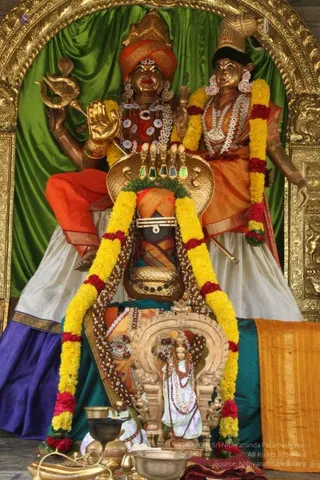
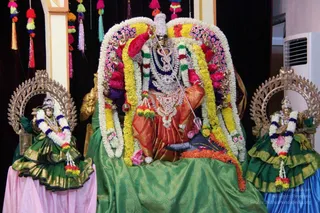
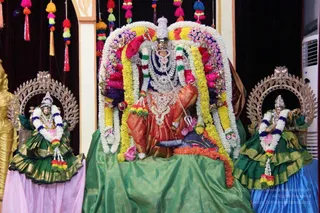
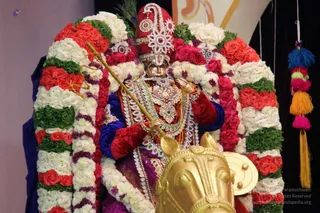
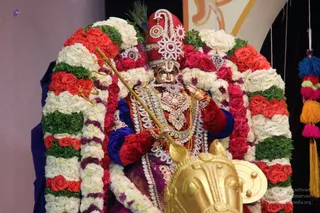
And Venkateshwara is gracing us on the horse, riding the horse, Venkateshwara is gracing us.And Devi is gracing us in the expression of Mahishasura Mardhini with eighteen hands, destroying the demon Mahishasura with Saraswathi and Lakshmi.You can see one side Devi gracing and the other side Venkateshwara gracing us on the Ashwa Vahana – on the horse!

I welcome all of you with my love and blessings.

Today:

• 20th batch Inner Awakening, 16th day;

• 17th batch eN-Genius, 16th day;

• 19th batch Nirahara Samyama, Level-3, 5th day;

• 20th batch Nirahara Samyama break. We will start tomorrow the 20th batch 3rd level;

• 9th batch The Samyama, 16th day;

And, today we have two important things:

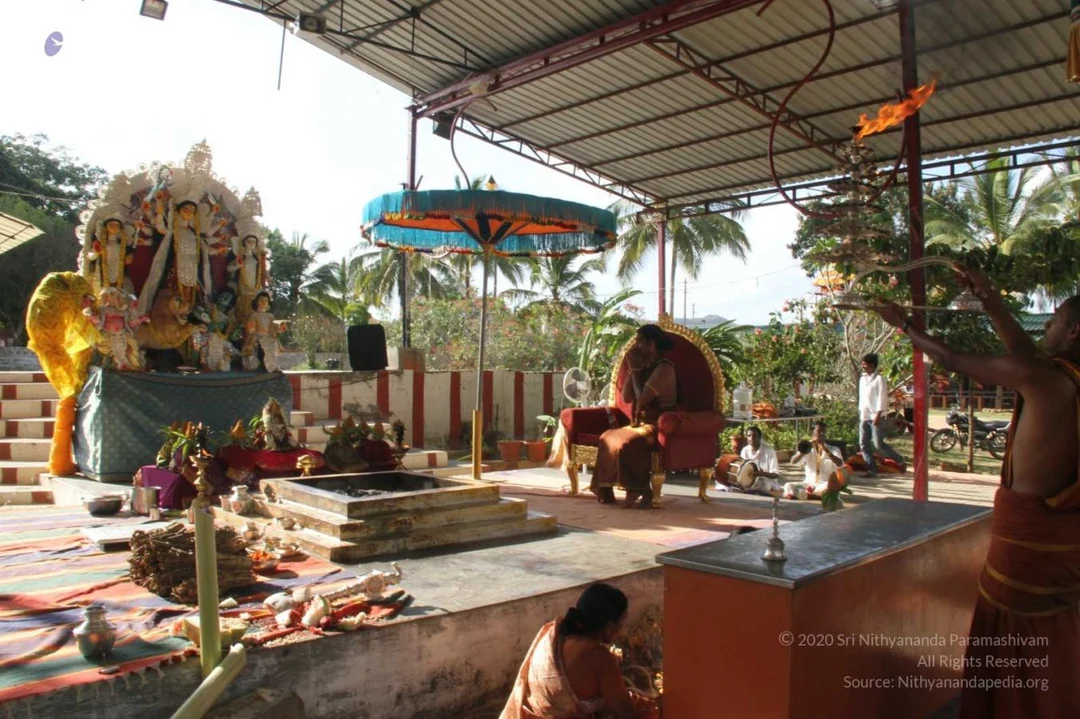
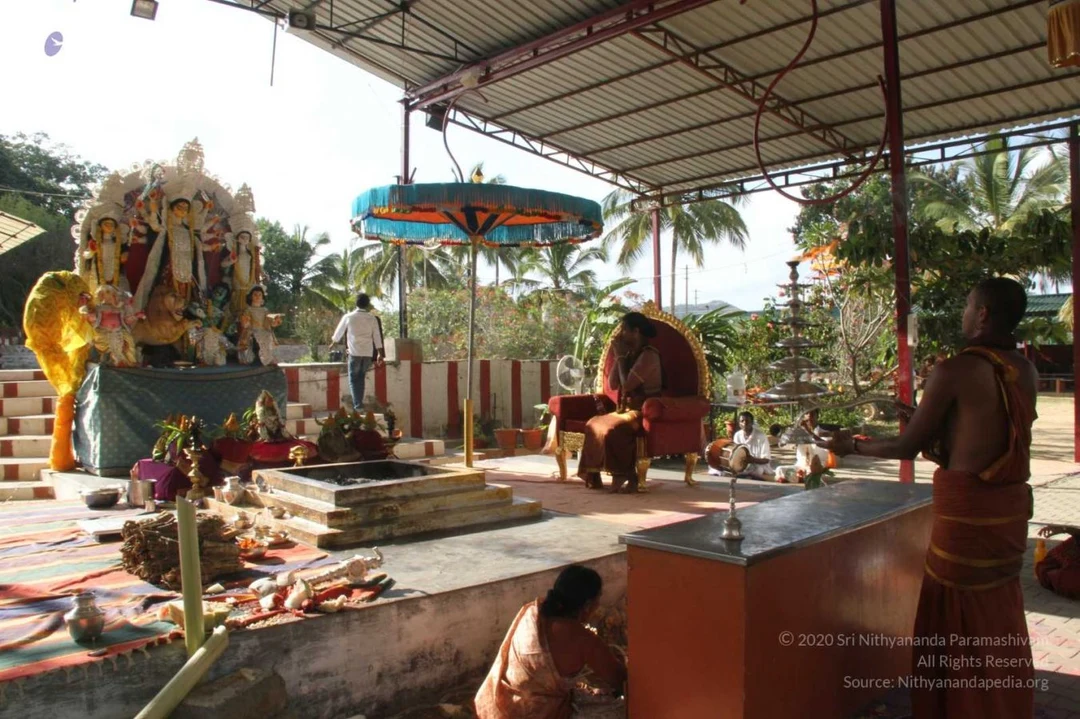
• One, the “Sandhya Puja”, at the time of Ashtami and Navami joining, when Mahishasura was killed by Durga; that Sandhya Puja, very important puja is there. I welcome all the devotees to join Nithyananda TV (http://nithyananda.tv/) for the puja. It will be relayed live at 3 pm Indian Standard Time.

• And two, today we have a very important session – eN-Reality. The whole Inner Awakening is about how to destroy the Mahishasura inside you.

I will answer your questions on the subject of Completion.

Ma Maneesha: We have the question today, ‘How do I practically apply the truth Completion is not about being in acceptance, but Completion is about being in the space of no resistance?’

Swamiji: The question is, ‘How do I practically apply the truth Completion is not about being in acceptance, but Completion is about being in the space of no resistance?’

The first point of contact where any external information gets integrated into you as an understanding or cognition, as part of you, which is your default cognition, means your usual way of understanding…..

See, your regular way of understanding, cognizing always tells you “Life should not be this way”. Please understand, it’s like when you order a pizza, who receives it before bringing it to your table is very important. If some worker who has come to clean your drainage system, cleaning your septic tank, if he receives with his bare hands and brings it to your table, will you be able to eat?

So, unfortunately, whenever life comes to your door, you receive it with a dirty hand of “Life should not be this way”. And,after that, whatever you do – you practice spiritual truths, teachings to change this cognition – whatever you do, it will only be a struggle. Listen, after your worker who is cleaning the drainage, with his bare hands if he handles the pizza, brings it to your table and serves, after that how much ever you clean the pizza, will you be able to eat it?

Understand, the first touch life receives from you, you give to life, is very important. If the first touch is transformed, after that whatever happens will be Completion. If the first touch is dirty – the resistance “Life should not be this way” – then whatever you do, whatever you do, please listen, whatever you do will only be a struggle, struggling practice, struggling spiritual practice.

So, all I am trying to tell you is, drop handling life, stop handling life with dirty hands. Drop this pattern of handling life with dirty hands. Understand, once you handle the food with dirty hands, how much ever you wash it, it will only be struggling to clean, you will never be able to eat it again. When your default cognition transforms from “This is not!” to “This is it! Now what?”, then you move to the space of “no resistance”. Listen, I am not saying accept. For example, if you are afraid of poverty, somebody steals all your wealth, I am not saying accept. No! All I am trying to tell you is, don’t start handling that information with “It should not be this way!” No! “This is it! Now what?” How many of you are understanding the difference? (People raise their hands). Start, then you will understand how it directly helps you! Start, then you will understand! This “no resistance” but does not mean “acceptance”. “No resistance” does not mean “acceptance”, because acceptance will always be a rejected theology if you logically analyze it. If you logically try to accept, and try, try, try, finally your inner space will only reject that theology, that theory. Acceptance is the most non-accepted theory! It is not practically possible. It is not practically possible!

The first point of contact where any external information gets integrated into your default cognition…..

For example, I‘ll give you one example. “Smoking is injurious to health.” This is one information. “Fire burns you.” This is another one information. This “Fire burns you”; the moment you experience once, immediately that becomes your default cognition. After that, anywhere you see fire, you move out, you keep your body out. So now, “The fire burns you” has become default cognition. But “Smoking is injurious to health”, after knowing this, after smoking once and coughing, or after smoking once and doctor says it is not good for your health, if it does not become your default cognition, what does it mean? It means you are struggling with that truth, with that information. How many of you are able to cognize what I am saying? This example will give you the understanding how the default cognitions are formed, how the information is integrated into you, how the information is digested, assimilated, made part of you.

Now, when you start handling any information with “Life should not be this way”, you have put the information in the wrong queue. It is like the temples usually have two queues, one for VIP darshan, and the other for Sarva darshan. Everyone gets darshan. VIPs get darshan. VIPs pay a little money and they go a little quickly and get darshan.

Continuously all Hindu organizations ask my opinion about this procedure. It may be surprising, but I stand for VIP queue darshan! And I support this idea of VIP Queue darshan. I have my own reasons and I will explain. See, I am dead against the system, in some temples the VIPs can go near the deity, but others cannot go near the deity. That I am dead against! I’m very clear about it! But, VIPs having shorter queue when everyone else has longer queue, but finally both of them reach the same place and have darshan, I am all for it, because, please understand, naturally they have taken some responsibility in their lives that is why they are VIPs. So, their time, if they save it, it will be useful to the society in some way. So they going a little early and having darshan, I am all for it and I support it. And even paying money and having VIP darshan, I am all for it and support it. Only in the quality of darshan, in the place where they stand if there is a difference that I oppose. But just if it is a question of time, I completely support it.

Please understand, naturally, a person with so much of commitments and responsibilities comes to the temple should be encouraged. It should be encouraged. People who are holding different positions, power, celebrities, power-centers, all of them coming to the temple should be encouraged. The temple authorities should facilitate their quick darshan and safety. It has to be done. I tell you, if you put a VIP in the long darshan queue, naturally you will not be able to expect them, practically you cannot expect them to visit that temple regularly. So, I strongly feel this VIP darshan should be accepted and supported. At least, in all our temples, I promote it. Of course, in all our temples, I make it very clear, you cannot charge any money for darshan. Darshan has to be free in all our temples. Naturally, when somebody who has taken some responsibility for society, when they come, give them a little attention, entertain them and take them around and give them a tour; that should be done.

Anyhow, now understand - the concept I am trying to explain through this example is, don’t put people in the wrong queue; don’t put information in the wrong queue; don’t put life in the wrong side. Let life be defending you, not prosecuting you! Please understand, put life in the right side. If you start the first introduction itself with life, if you start with the words “It should not be this way!”, already life becomes the Prosecution, and you are on the side of the Defense. Understand, do not start with the idea “Life should not be this way”. Start with the idea, “This is life! Now what?” Understand? “This is life! Now what?” Don’t start with the idea “Life should not be this way!” The moment you start with the idea “Life should not be this way!” you already put life as the Prosecution and you are on the side of the Defense.

I tell you, many times, the first word you utter to a person decides your relationship with that person, am I right? Because nobody in the world has the patience to listen to your second word. They pass judgment listening to your first word. How many of you understand this? Life also passes judgment based on the first word you utter towards it. The first word you utter towards life should not be “This should not be life!” Understand, the first word you utter towards life should be “This is it! Now what do I want to do about it?” When life comes in front of you, your first response should be shaking the hands, not closing the hands, preparing a fist. The moment you say “Life should not be this way!”, you have already closed your hands into a tight fist.

Understand, when life happens to you, the first word should be “This is it! Now what do I want to do about it? Do I want to accept it and move on? Do I want to reject it and move on? Or do I change it the way I want?” You will have all these three options only when you start with the decision “This is it!”

The moment you start with the decision “This way life should not be!”, then all three choices are not there for you!

I am again defining Leader: “Leader is a person who always makes decisions which continue to expand more and more choices and possibilities for him. Who has the cake, eats the cake, and learns how to make the cake reproduce itself!”

Understand, sometimes we say, “This fellow is intelligent. He has and eats, both!” See, either you can have cake, or eat the cake. But intelligent people have and eat, both! There are some even more intelligent people; they have, eat, and make sure that cake goes on reproducing itself!

20:08

Usually, your default cognition tells you that life should not be this way and, after you apply different, different, different theories, spiritual practices and try to change this cognition, it will all be nothing but the dirty pizza being washed. You can understand what I am saying. How much ever you wash the pizza, along with the dirt the topping also will go away. Then what are you going to eat? Just the bread.

No I tell you, many time when you try to apply the spiritual truths after the wrong cognition, the whole joy of the life goes away, the joy of life goes away, that blissful moments goes away in the struggles. When you resist life with “This is not how it should be. Why is he/she like this? Or why is this incident like this? Why is this place like this? He or she should not be this way. This place should not be this way. This incident should not be this way. Life should not have been this way.” Now you are stuck with internal enemy called resisting your own life. Like you are on the wrong side of life now. Life becomes now the Prosecution. Don’t make life Prosecution.

When I say “lose life”, I don’t mean they die. I mean the people who try to prosecute me, they lose their inspiration, energy, they become lifeless. Because I always stand with life, life always stands by my side.

Understand, if life stands by your side, that is what is “Krishna standing by you”, Krishna is being with you. Even if you have all the infrastructure, if Krishna is not with you, you lost the game. Even if you don’t have any infrastructure, just if Krishna is standing with you, you won the game. Understand, non-resistance, when you deal life with non-resistance, life is standing by you, Krishna is standing by you and no one can win you. The opposite fellows may have all the infrastructure, “morons”! They may be Duryodhana and Dusshasana, but I tell you, because life is standing by you, you will only win the game. Life is more intelligent, more powerful than any infrastructure possible, because every infrastructure is built by life.

Understand, every infrastructure is built by life. That is why I am telling you, life is larger, more powerful than any infrastructure. When you resist others, resist anything in your life, your real enemy is sitting inside you, because when you are stuck with the internal enemy called your resisting thoughts, feelings and cognition inside you, and not the external enemy or the other person. Because you are broken to pieces now, the enemy easily wins. If you’re integrated the enemy cannot win. You are now stuck between two enemies, the internal and external. That is why you suffer and lose. I tell you, let you not have internal enemy. I always give you assurance you will win the external enemy. A person who does not have internal violence will win any war he takes up. A person who has internal vengeance or violence will lose all the wars he takes up. I tell you, if you want to win any war, somehow agitate your enemy and see to it he has, he carries vengeance towards you; you won the game. Normally, you think, ‘If my enemy has a vengeance, how can I win?’ You don’t know. I tell you, you don’t know the Cosmic Law. If he is in that space be very clear you won the game. Because vengeance, anger, resistance will break your enemy into pieces. So, when the enemy is broken to pieces, know very clearly you have won the game. You will win the game very simply they will, the enemy he is broken into pieces, you don’t need to do anything, he himself will destroy himself.

I tell you, in any game of the life, if you want to win the game, win the life, just drop violence from inside you. Do not have violence. Zero violence, zero resistance. I tell you, what I am talking is not just spiritual truth, it is strategy planning to wage your life, to wage war, to wage war, any war in your life. If you are waging war for health, if you are waging war for wealth, if you are waging war for peace, if you are waging war for enlightenment, if you are waging war for anything in your life, zero violence, zero resistance, this is the strategy planning I am telling you. I won the game just with this strategy.

And I wanted all of you to know there is a beautiful book. Boldly I am going to prescribe this book for all of you – “Course in Miracles”. There is a book, “Course in Miracles “ I tell you, please listen, whoever has written this book, surely he is a pure channel for the higher truth. You can call whatever name with whatever name you want – Jesus, Shiva, Krishna Buddha – but author of this book was surely in the space of clairvoyance in the space of higher consciousness. And I very strongly recommend, prescribe all our devotees to read this book – “A Course in Miracles”. And I sincerely recommend this book, because this book gave me so many beautiful insights. This book gave me so many beautiful insights on how the non-violence and non-resistance becomes a powerful strategy for winning the game, winning the war.

Whether war is waged against you or – see, sometime you start war; sometimes you are pushed to wage the war; whatever may be the situation – whether it is war against your disease, war against your poverty, war against your broken relationships, war against your ignorance, war against your enemies, people who are trying to abuse you, destroy you, whatever may be the situation, I tell you, zero violence and zero resistance is the best strategy. See Krishna, a man who is in the space of romance and waging the war. Who can be in the space of romance amidst tons and tons of dead bodies. He’ in the space of romance with a flute in the hip, amidst tons of, millions of dead bodies for which he is responsible, and he wins the war. He won the game.

Please understand, a very important war strategy for your life is non-resistance and non-violence. I can tell you, Gandhi was actually complete in this one great truth. That was his strength, why he won the whole game. In this one truth of “No resistance does not mean acceptance” – please understand, I am making it very clear, “no resistance” does not mean “acceptance” – Gandhi was perfect. He perfected this one truth; he achieved Completion in this one truth of “No Resistance” and “Non-Violence”. That power he made the whole British shiver. The whole British Empire was shivering in front of a man who was half-naked, can’t walk without the “third leg”, stick. So, I wanted every one of you to understand this non-resistance is the most powerful success strategy.

See, the “A Course in Miracles”, the book “Course in Miracles” some places they use “acceptance”, because, unfortunately, the person who penned down is trained in English language but that can be forgiven, that can be just over looked because in many other words, the person is trying to explain very hard, non-resistance does not mean acceptance. And the book will really do good to all of you guys. And that book has given me such beautiful, deep insights, especially when I was in prison. And that book and some of these Hatha Yoga literatures were my companions, where I was sitting and planning the whole strategy. And I am really telling you and sincerely recommend,promote that book “ Course in Miracles” for all of you to understand this concept in a very deeper way – “No Resistance and Zero Violence, that does not mean acceptance”. And even this great truth revealed to me by Kalabhairava - “No Resistance, that does not mean I am asking you to accept” – this truth itself I am dedicating it to this author of book “A Course in Miracles”. Originally, the book claims that there is no author, only the person who penned down. But I am give my respects to all those people who have penned down this book, who were source, I can say were path for the higher source to reveal itself. I think, if I am allowed, I will surely give them the “Rishi” title. They are one of the modern-day rishis who allowed higher truths to get expressed and orated through them. All our rishis were not the authors of the Vedas and Upanishads. Please understand they were only the channels for the Vedas and Upanishads. They are not the authors. They are not authors.

35:07 Hindi - 36:54

With this......

Essence of today’s satsang:

Non-violence, non-resistance is the most powerful strategy for any success in life. If you want health, don’t resist disease. I am not saying accept disease. No, if I say accept disease, it will show that I don’t have sympathy or compassion towards your suffering. No I have a deep sympathy for your suffering and I have a deep compassion for your suffering. I am not an insensitive dash, dash! No. When I say “don’t resist”, I don’t mean “accept”. But when you stop resisting, the disease starts melting, the health simply blossoms. Whether it is poverty, don’t resist poverty. I am not saying accept poverty. I am saying don’t resist poverty. Zero Resistance, Non-Violence is the best strategy for your success.

Let you all achieve, experience, live, express, radiate, share and explode in eternal bliss, Nithyananda.

Photos

Pada Puja
Nithya Satsang

Sarva Darshan

Final Blessing

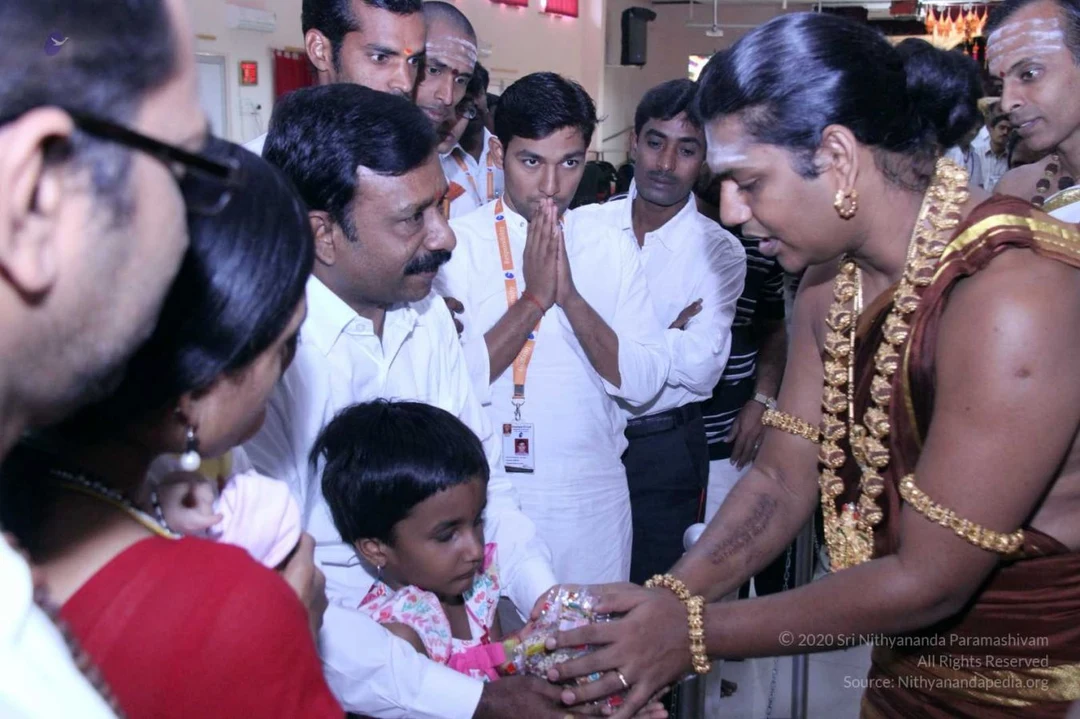
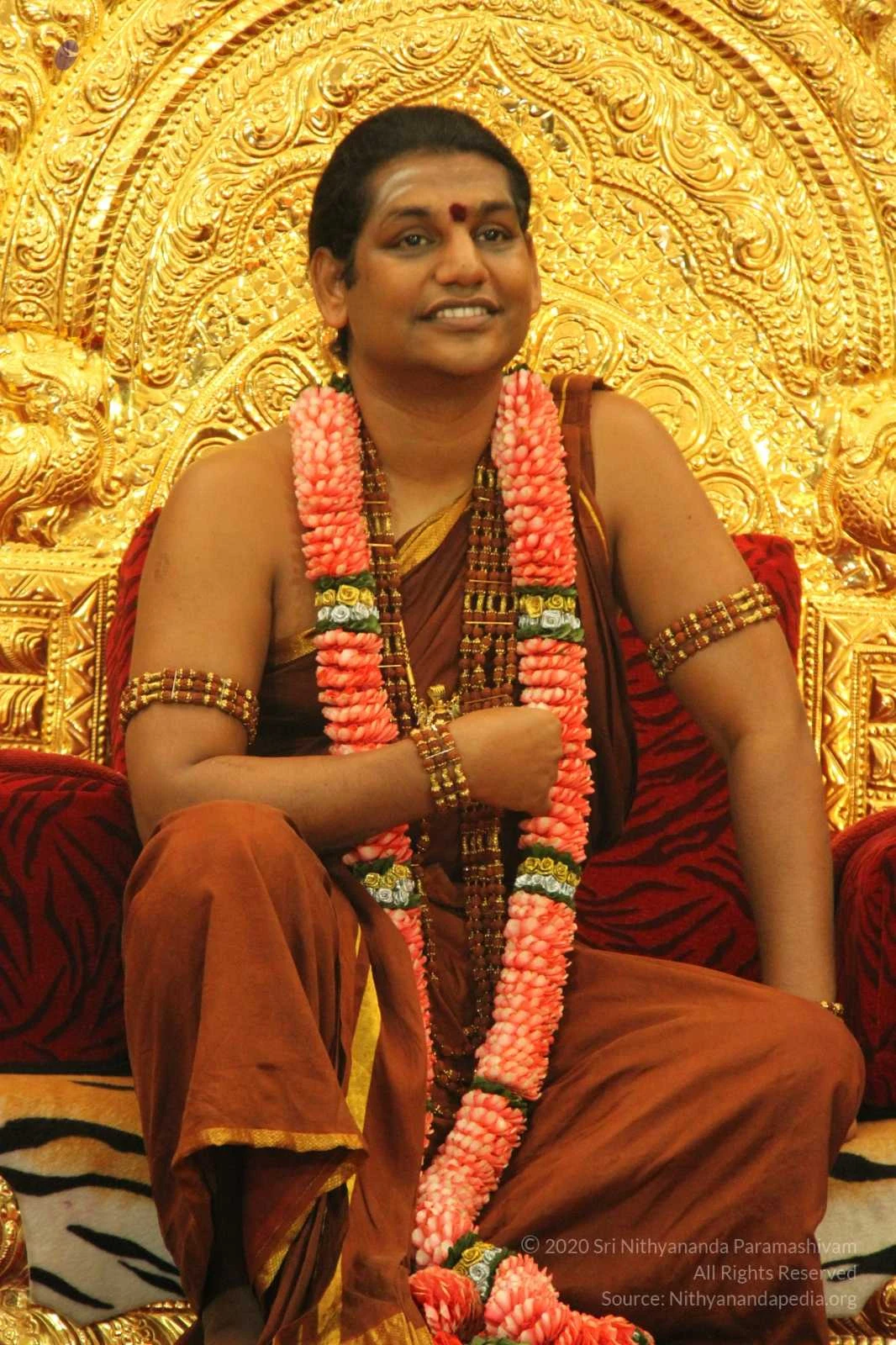
Swamiji and the Deities

Inner Awakening Darshan Day 16

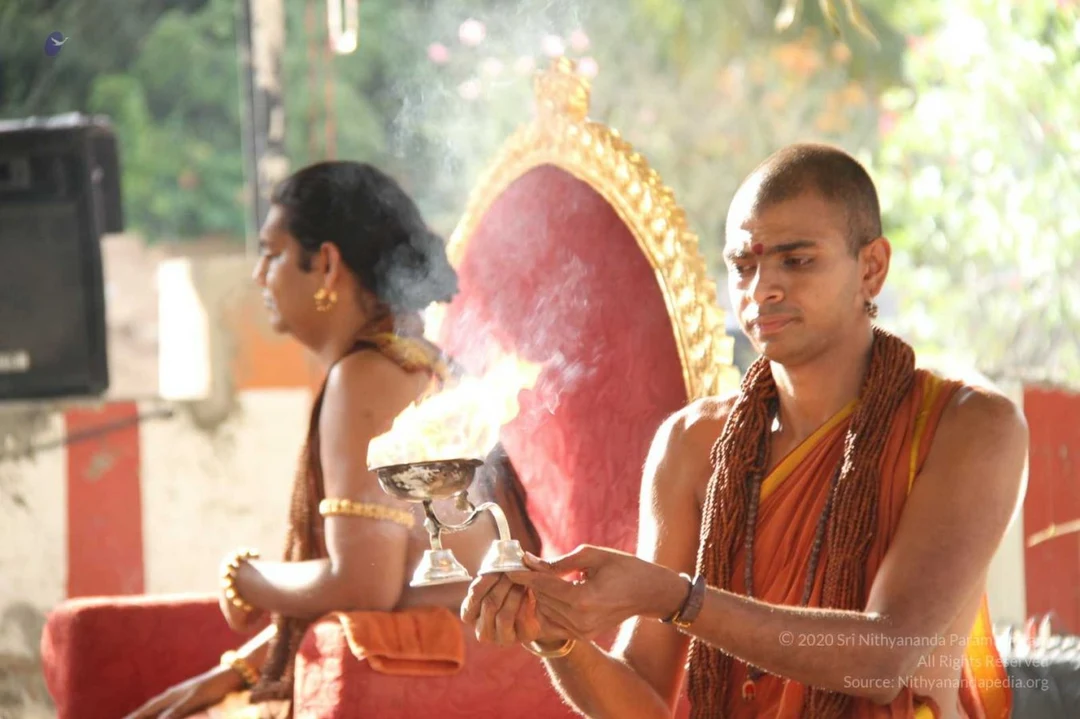
Navratri Devi Puja and Aarti

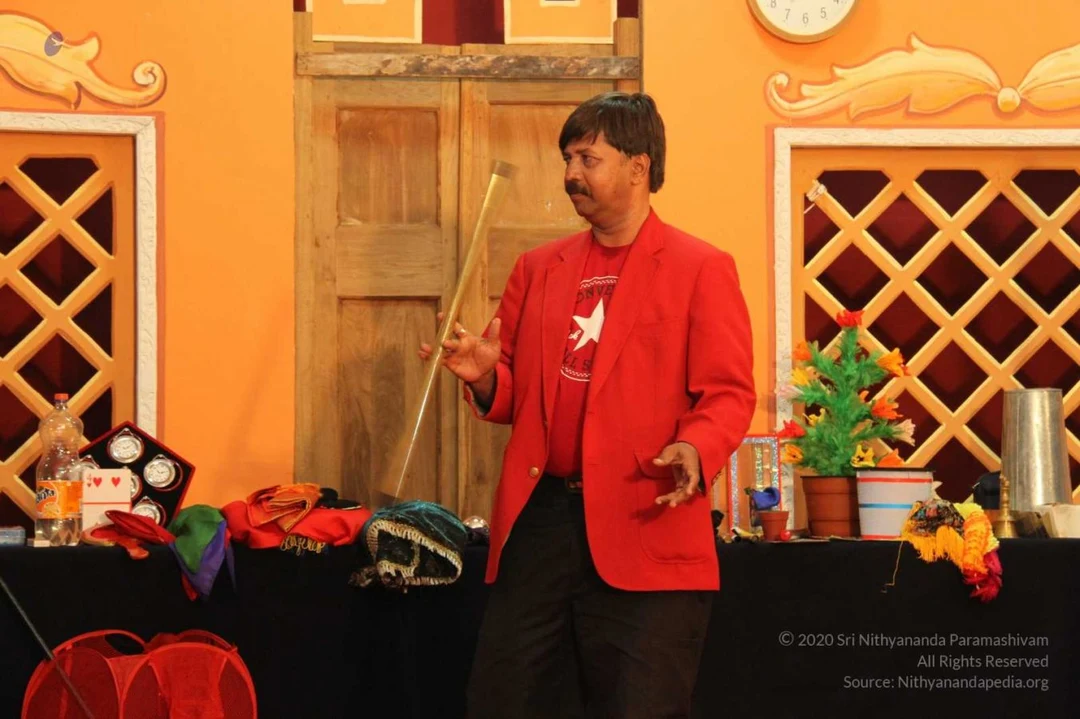
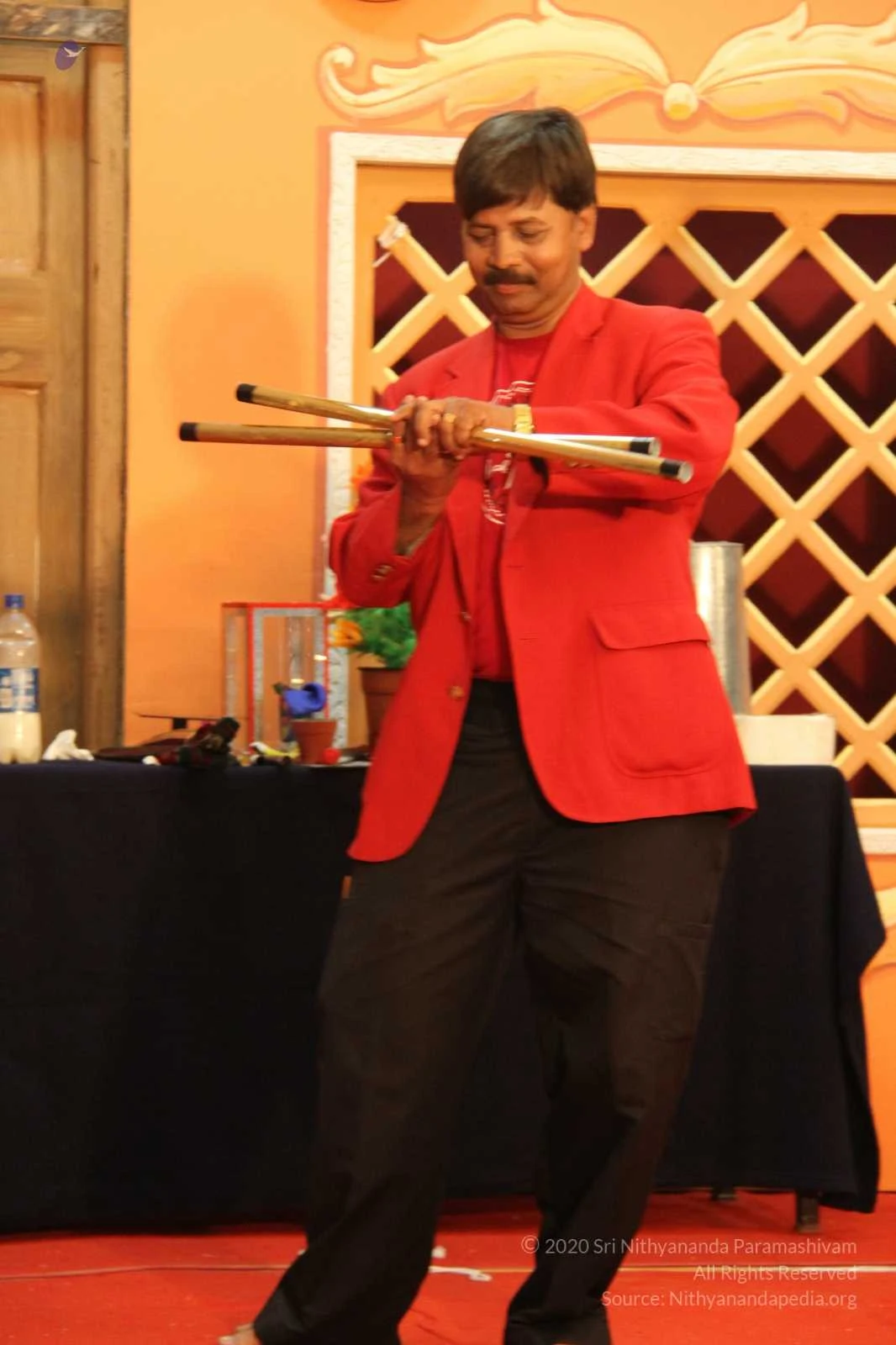
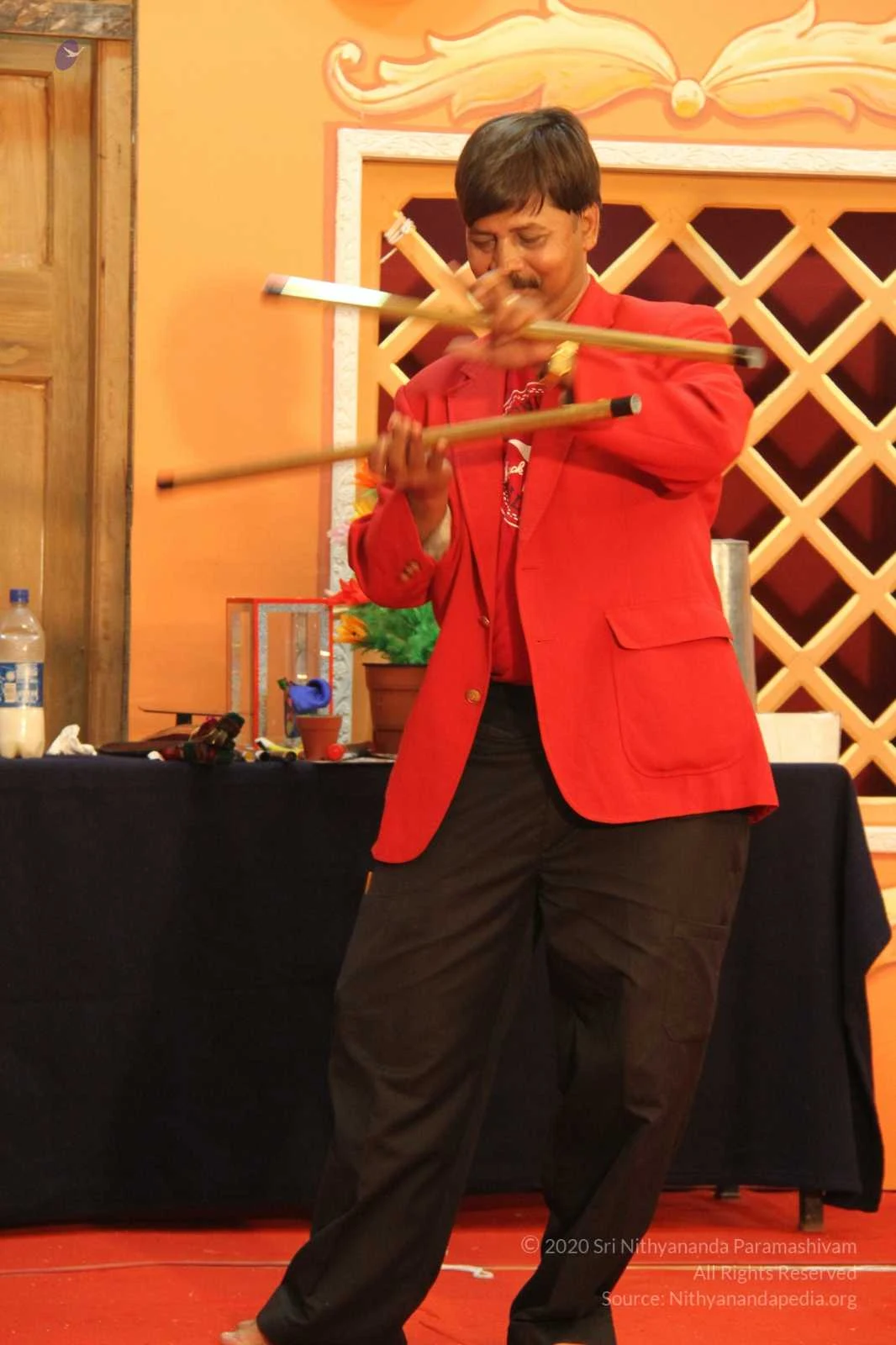
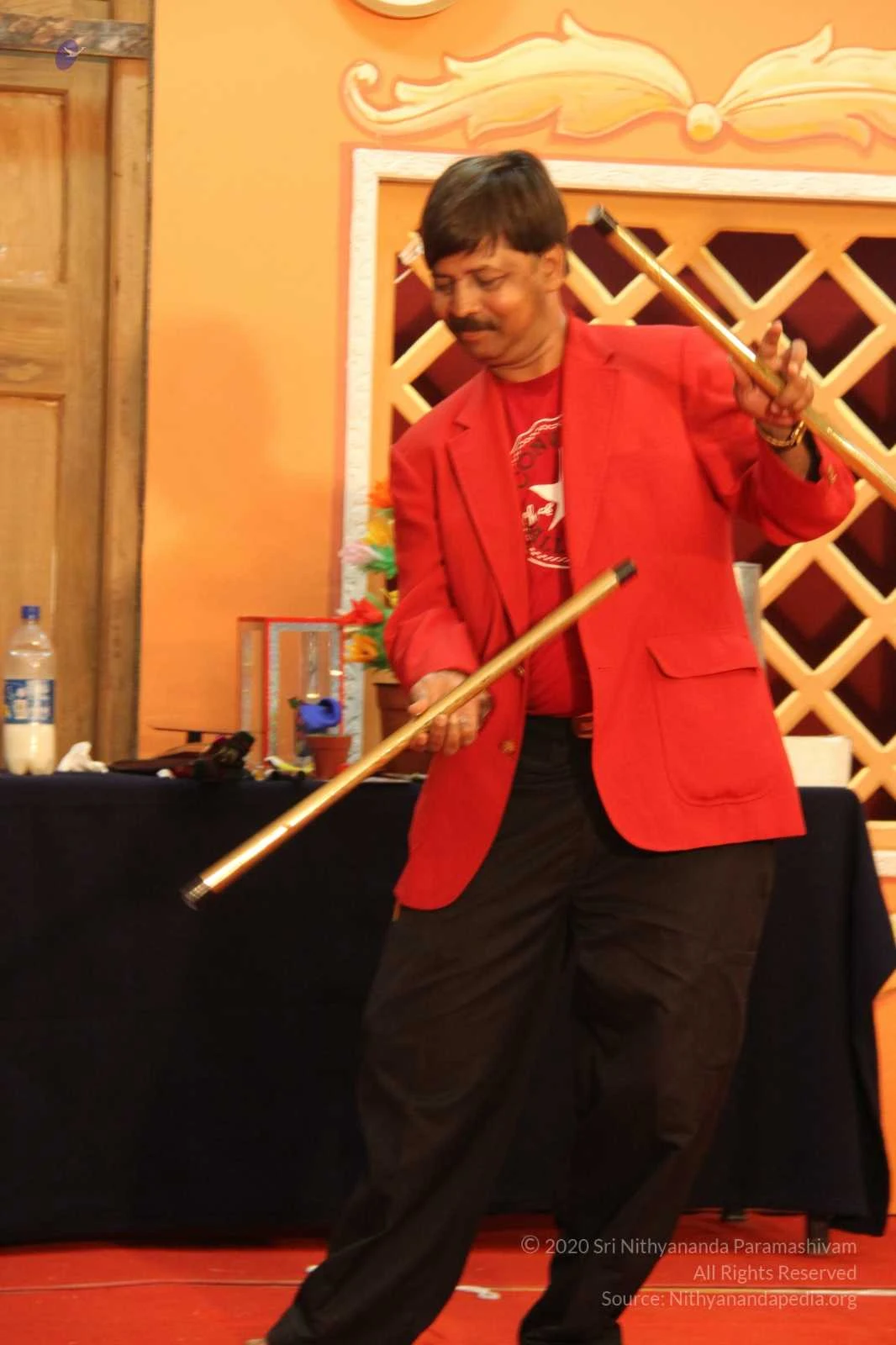
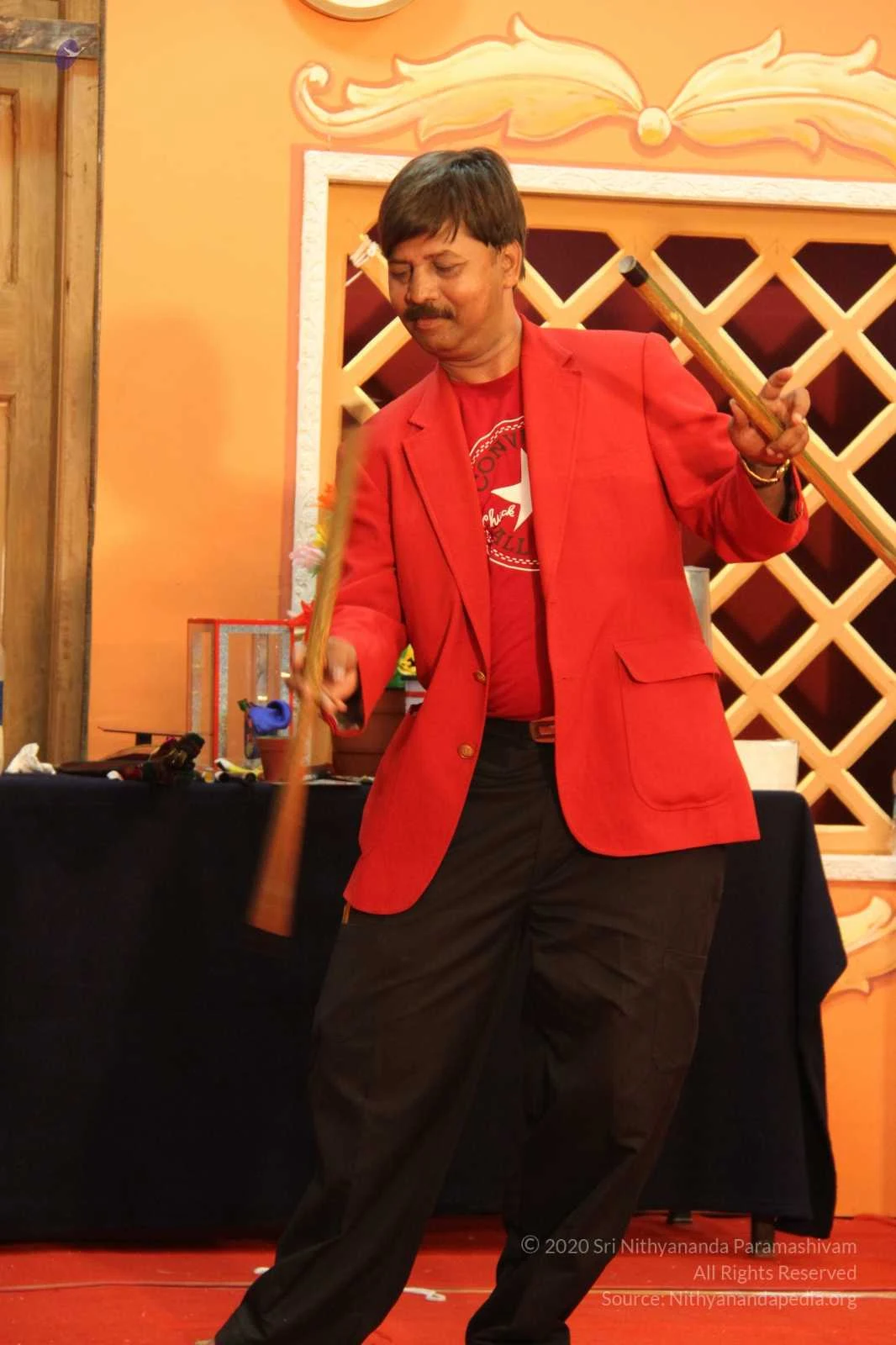
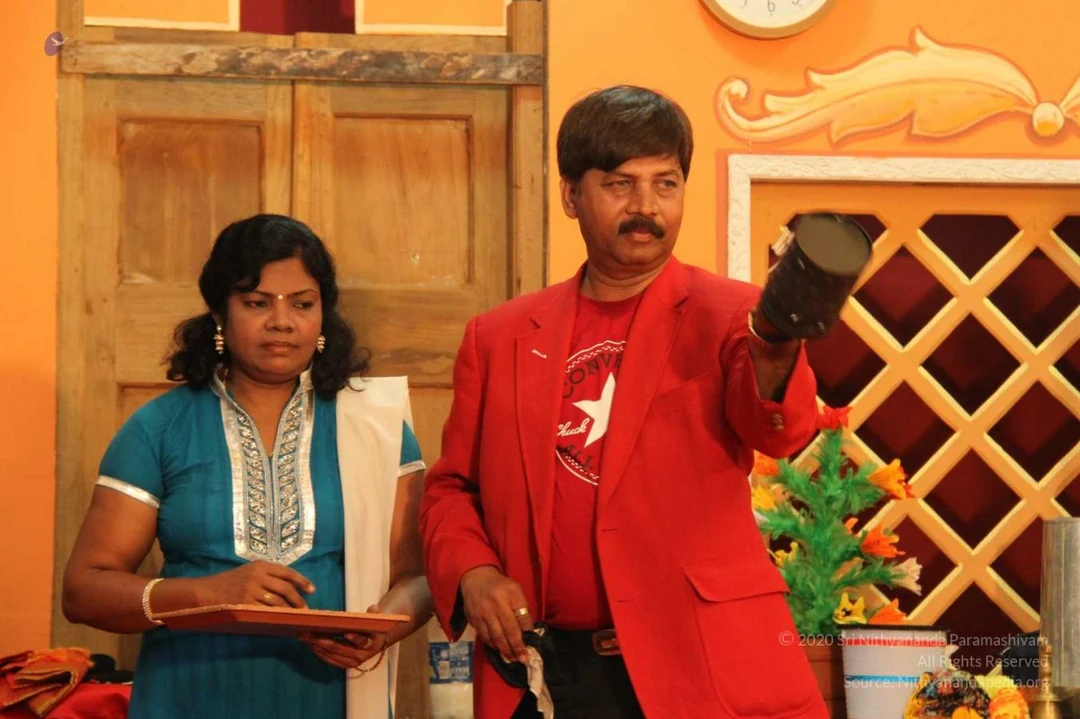
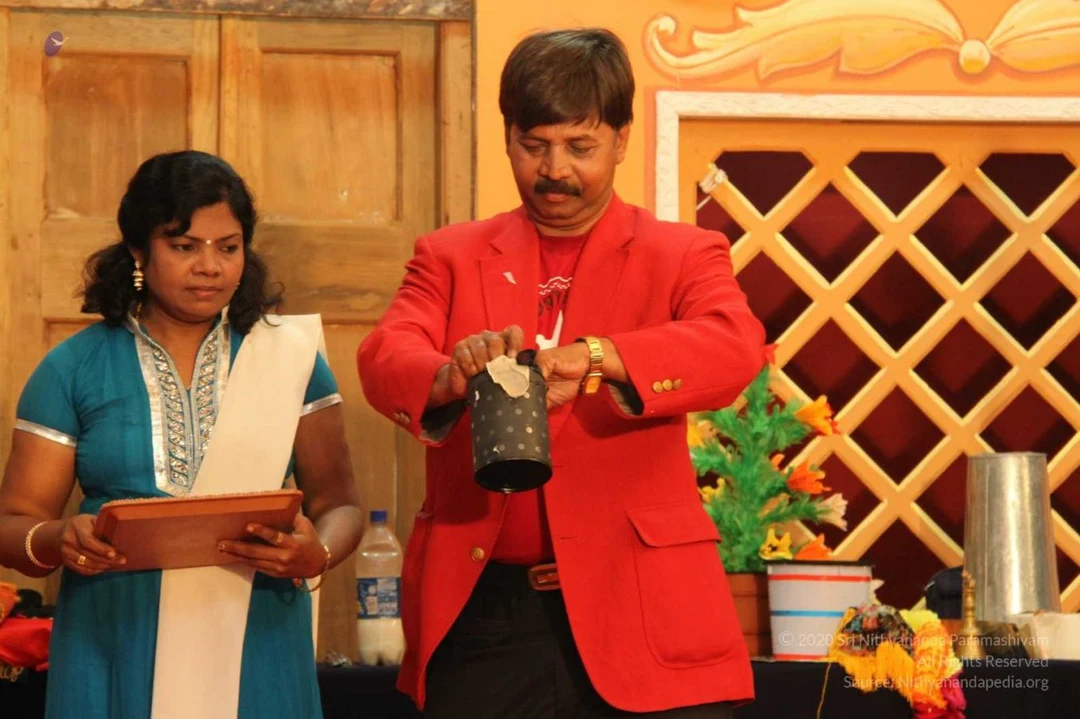
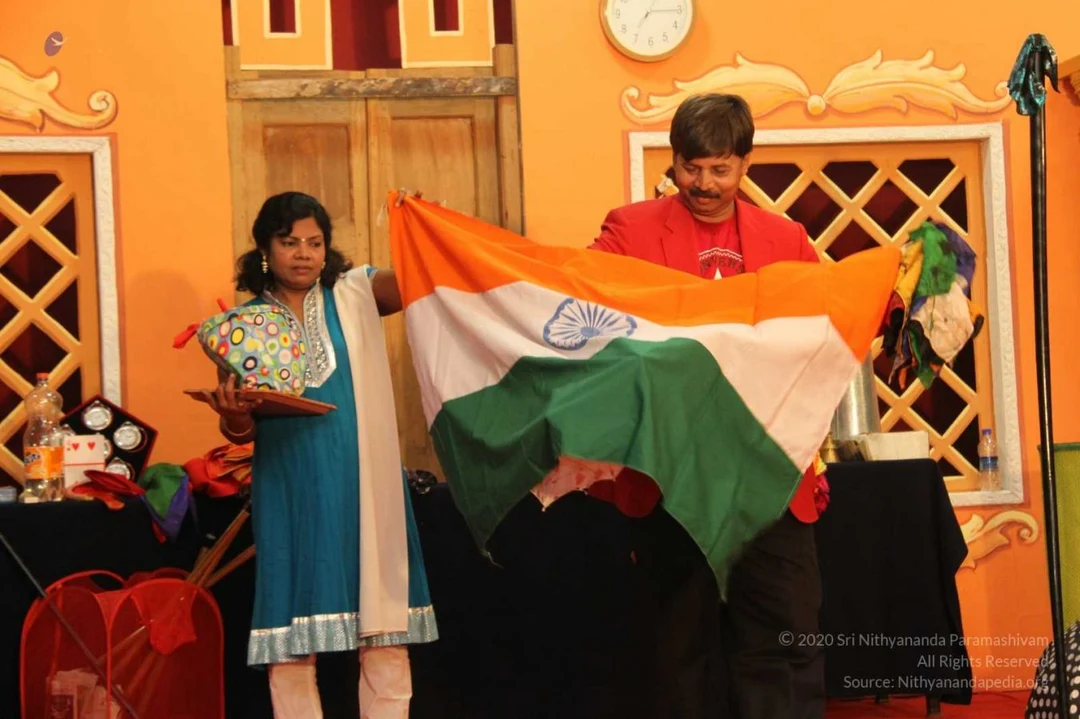
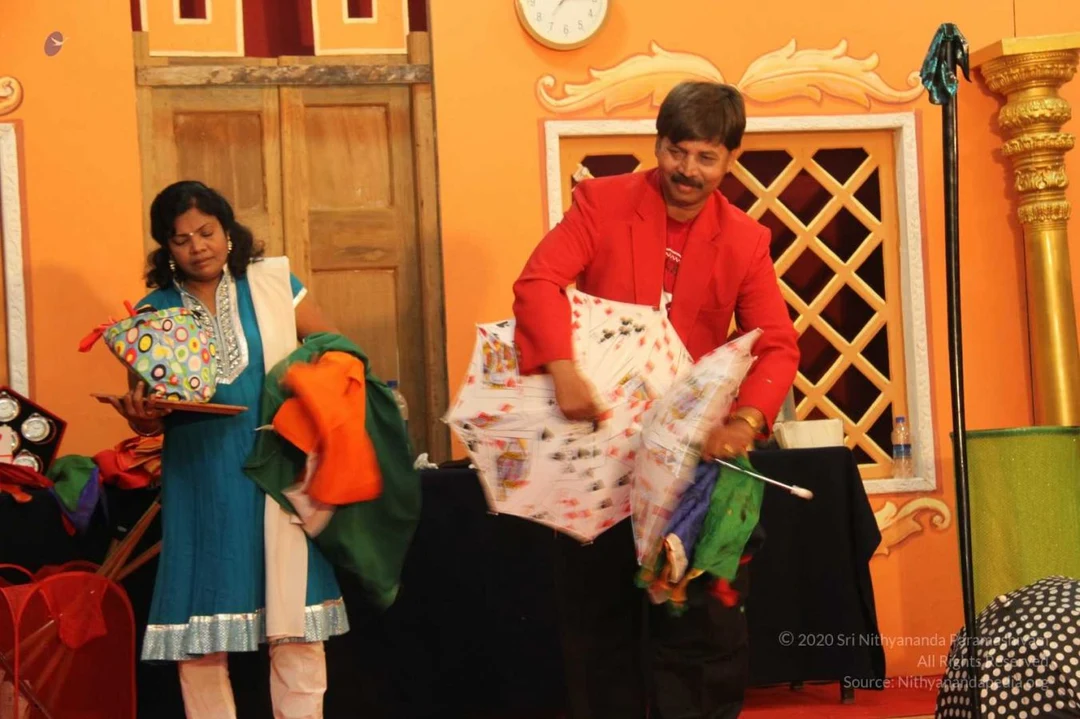
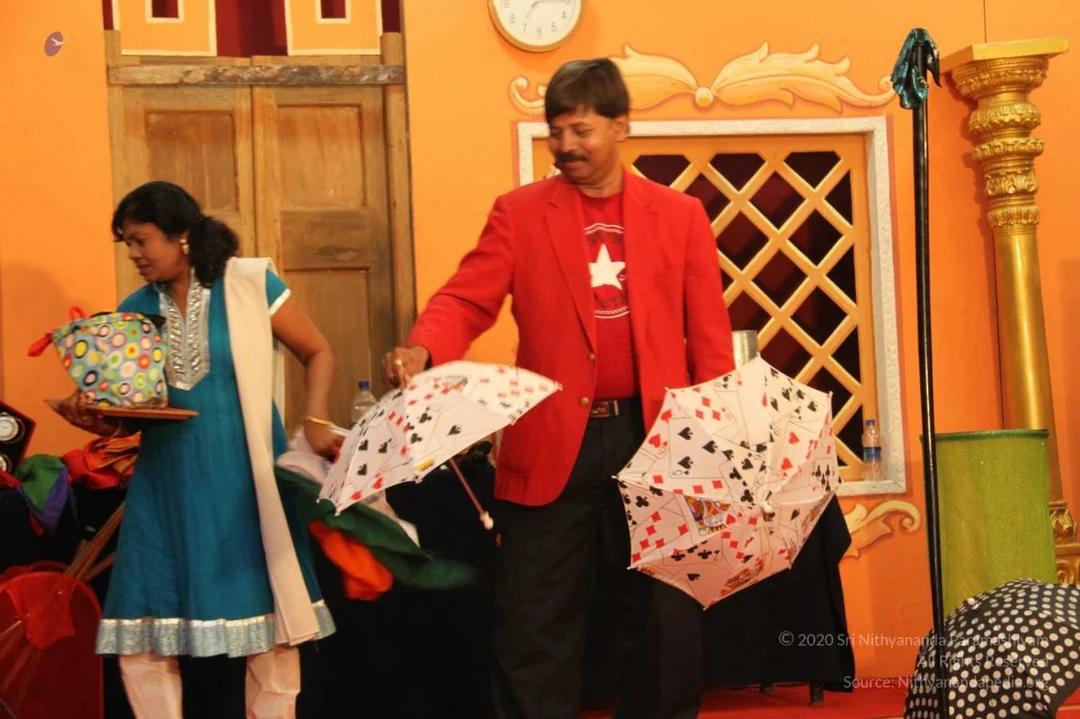
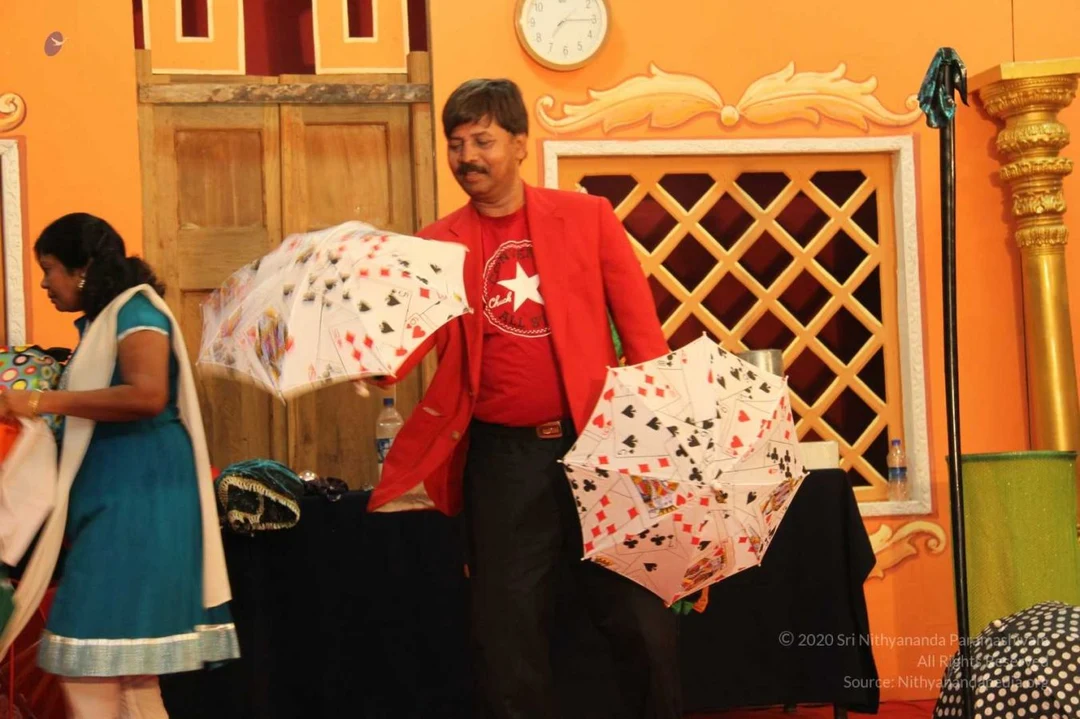
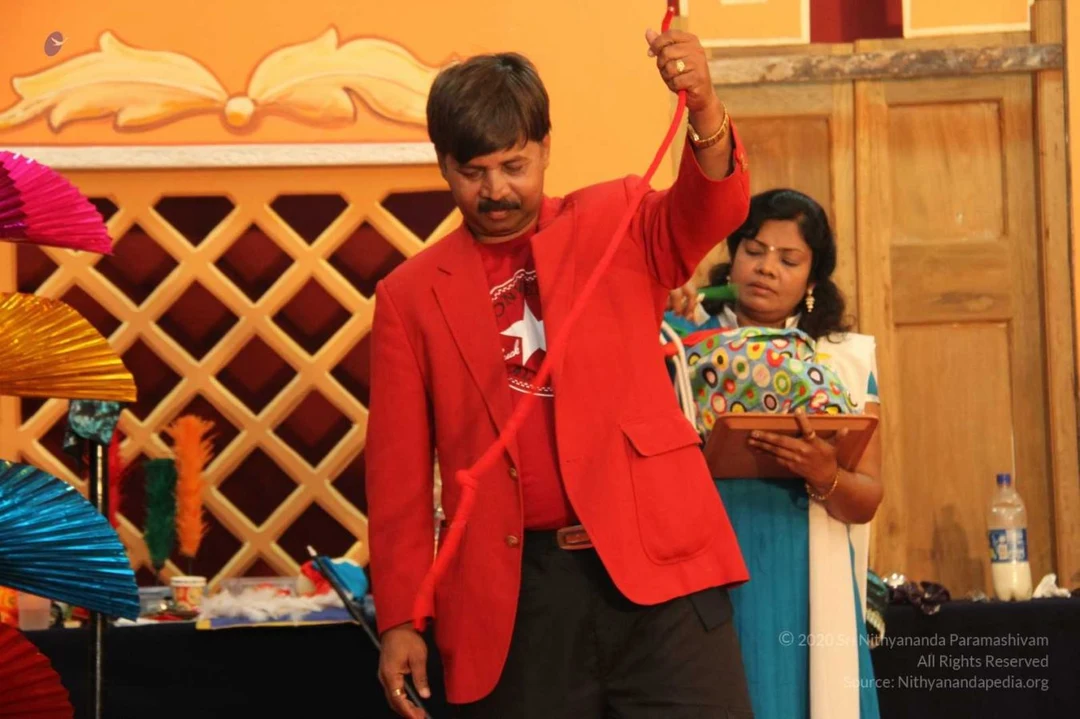
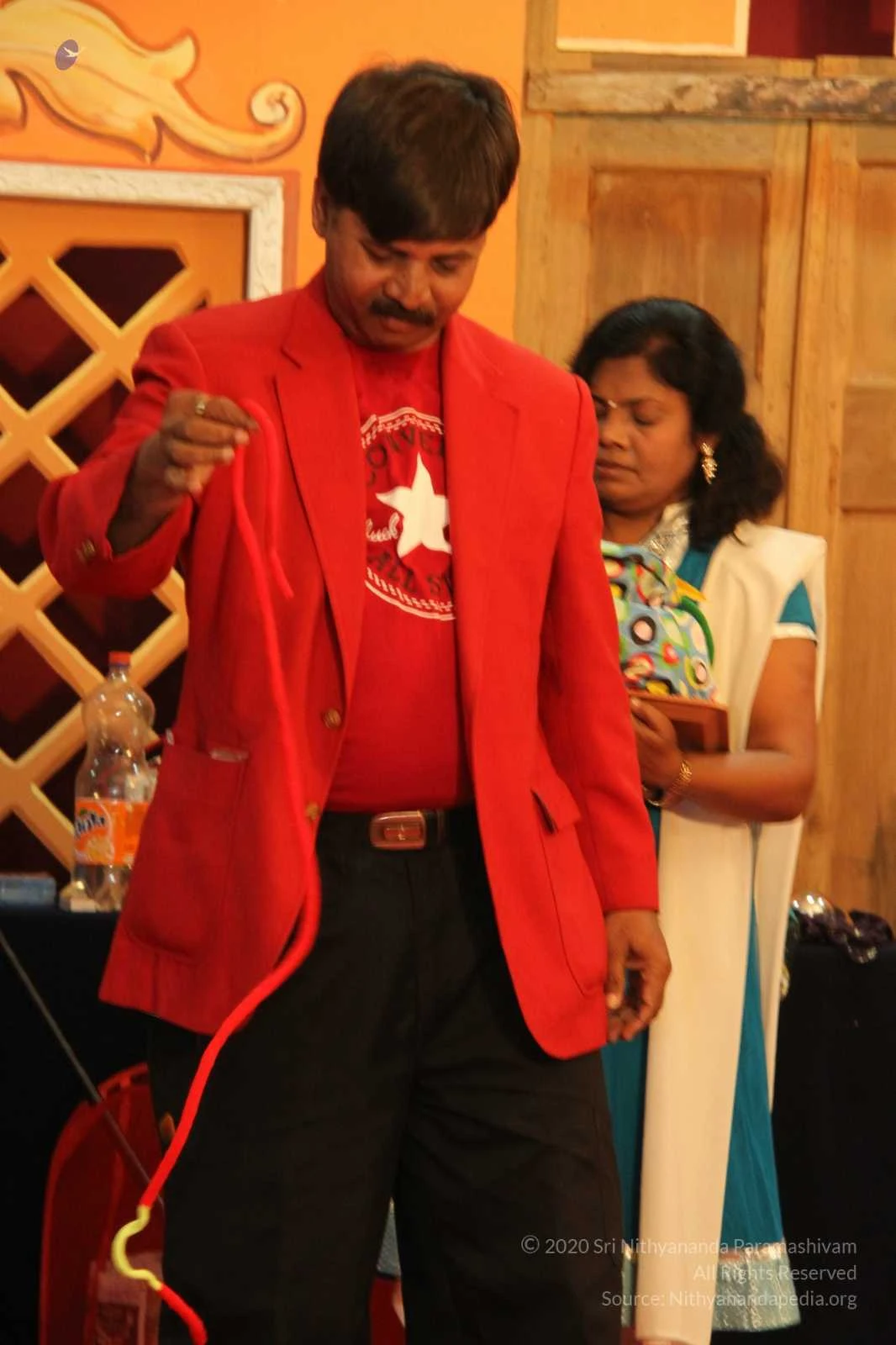
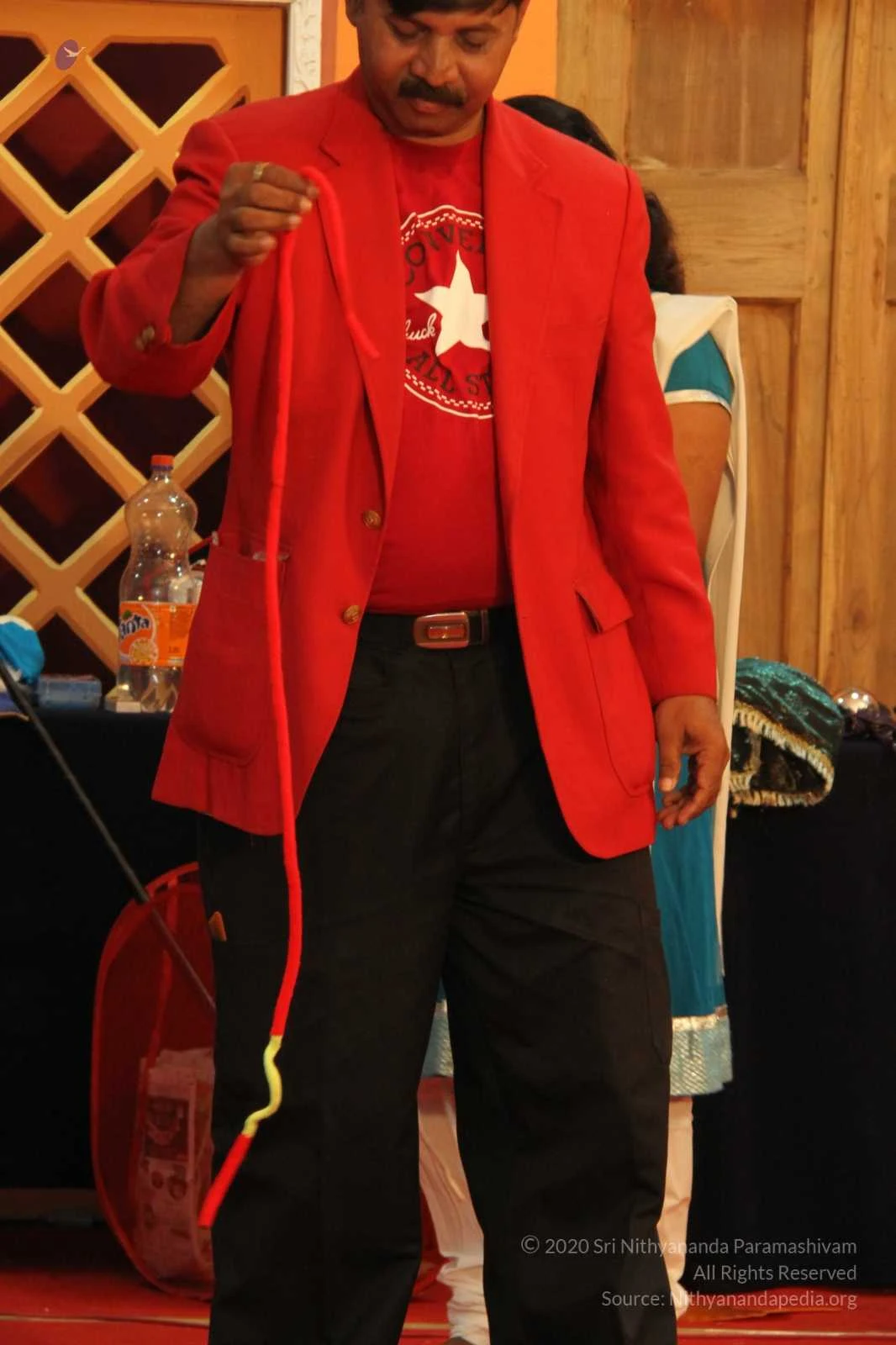
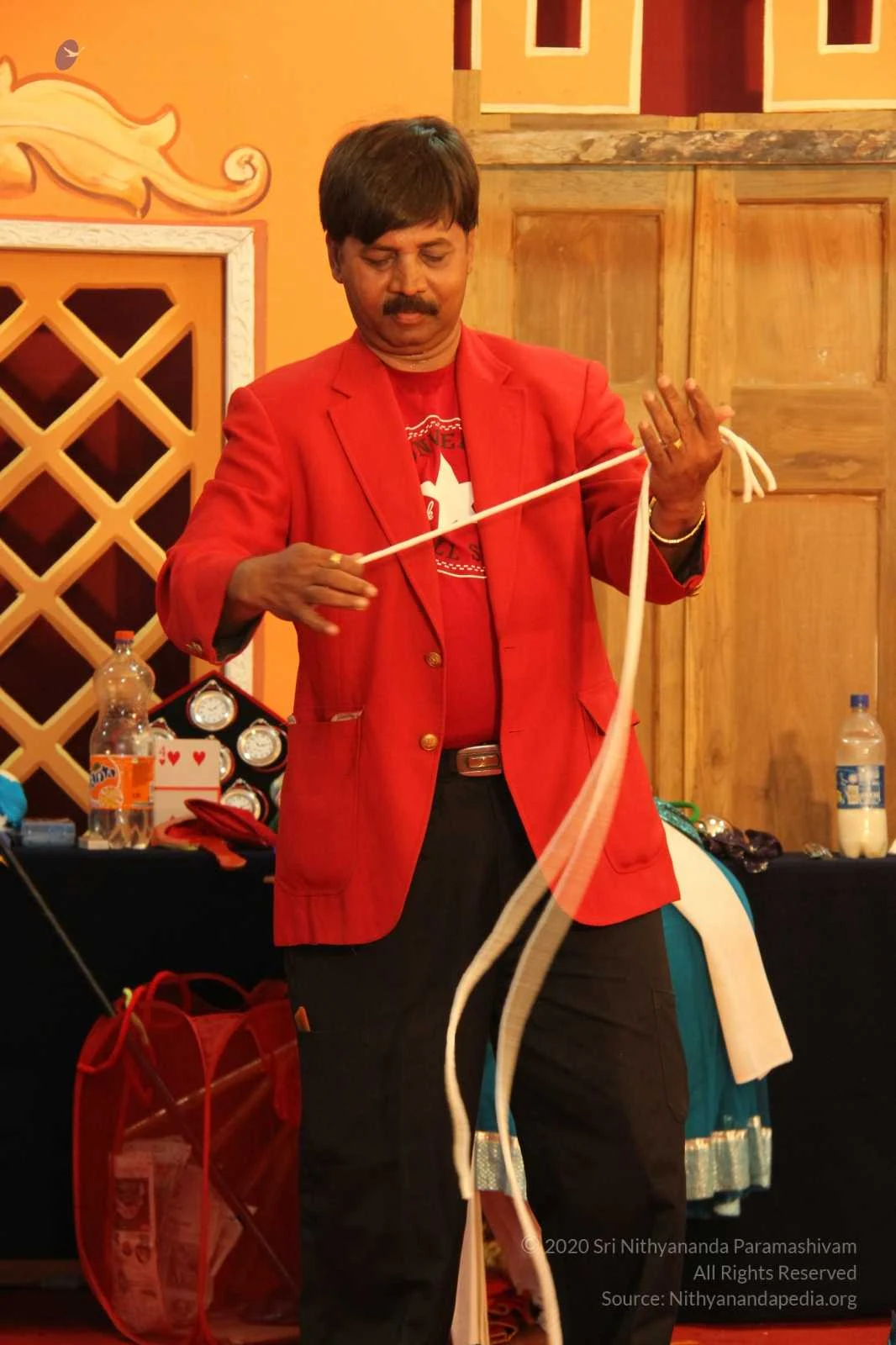
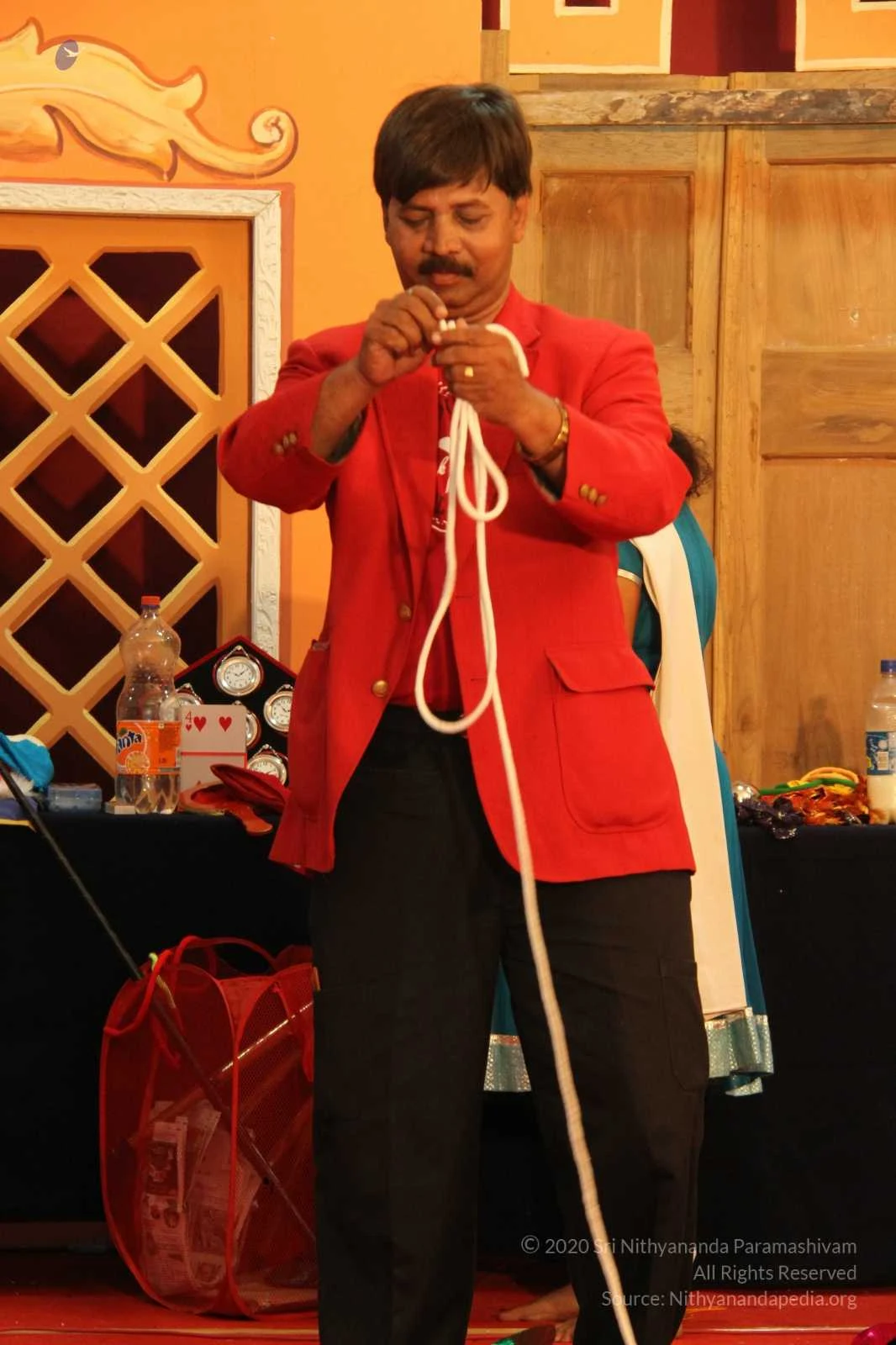
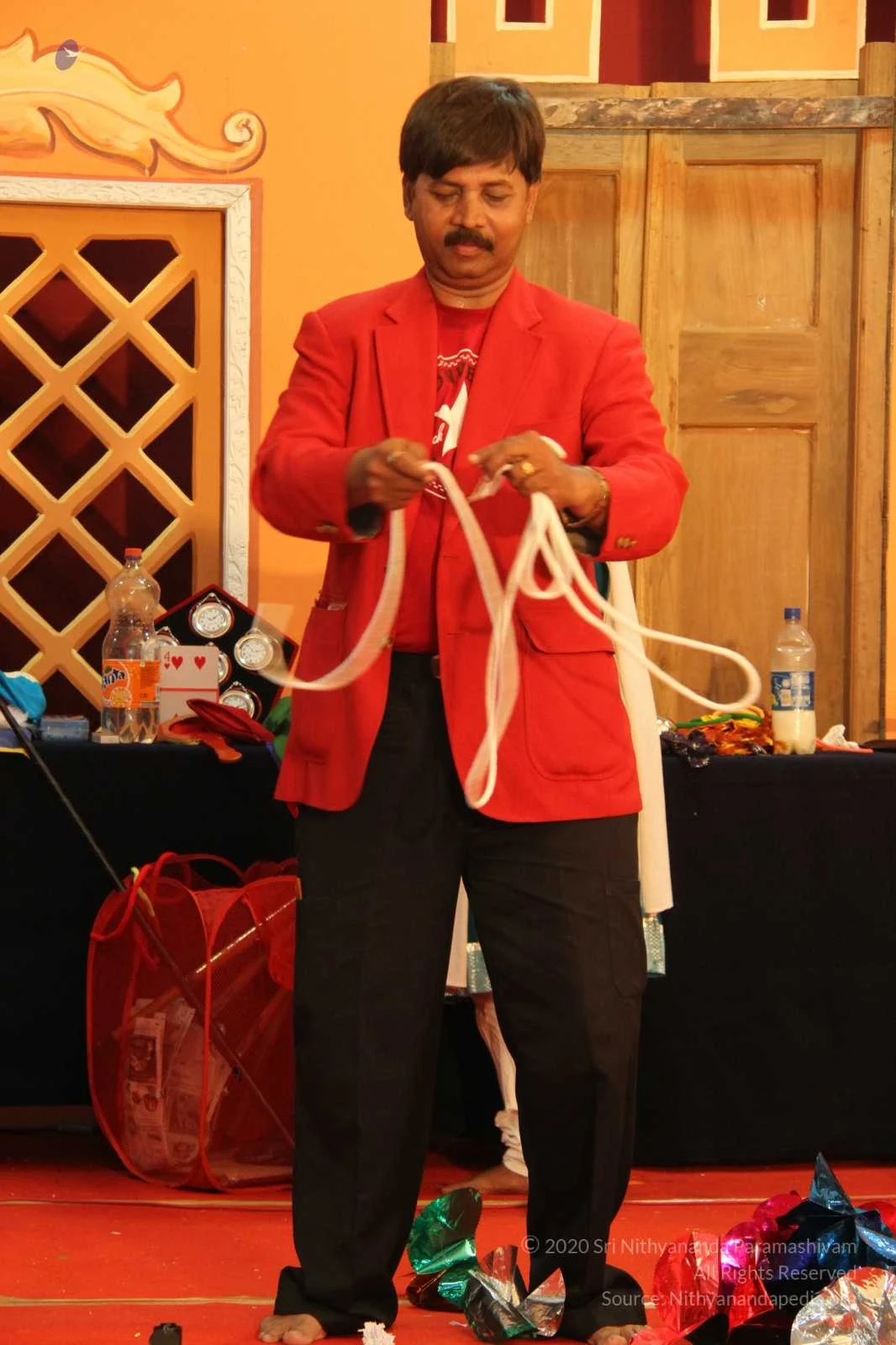
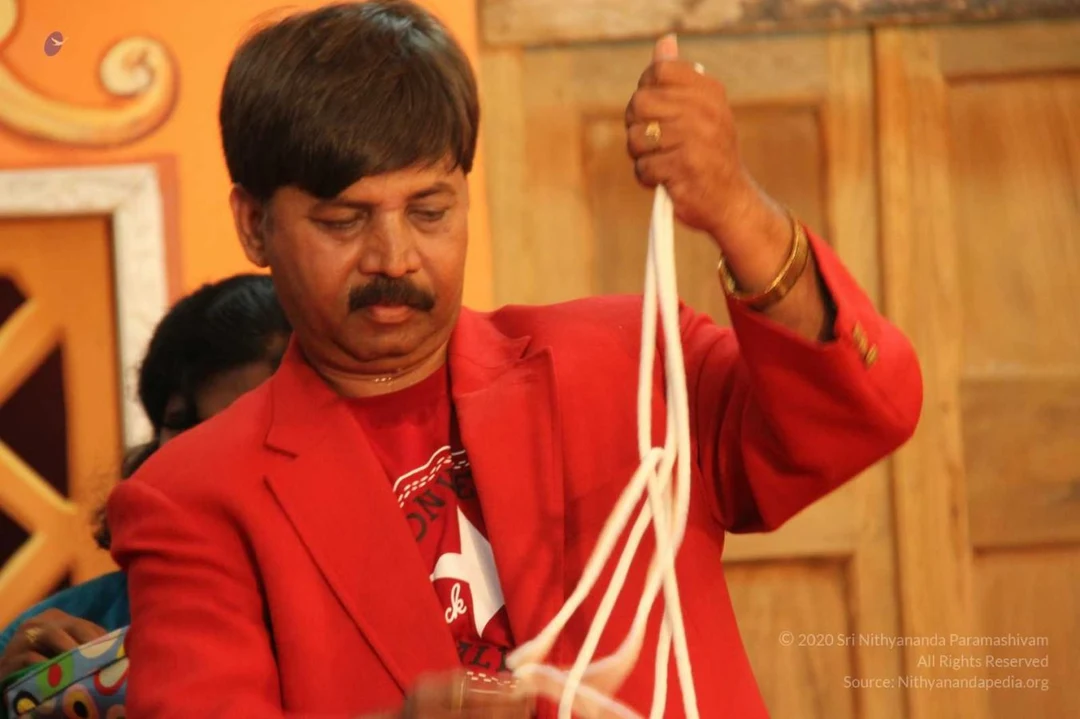
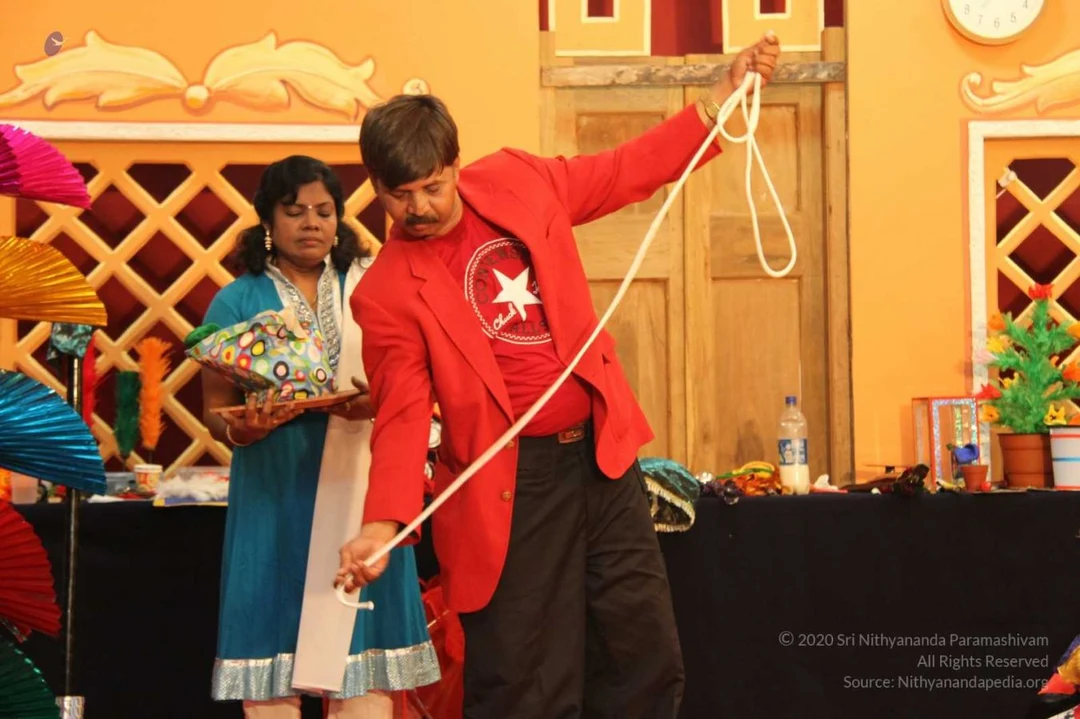
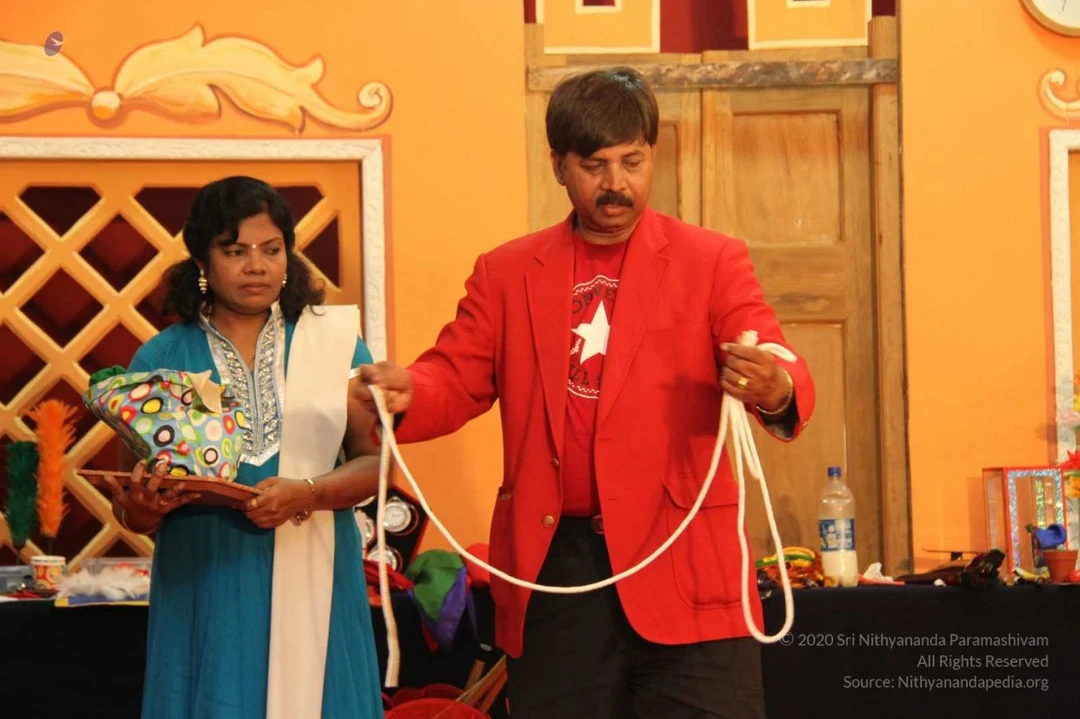
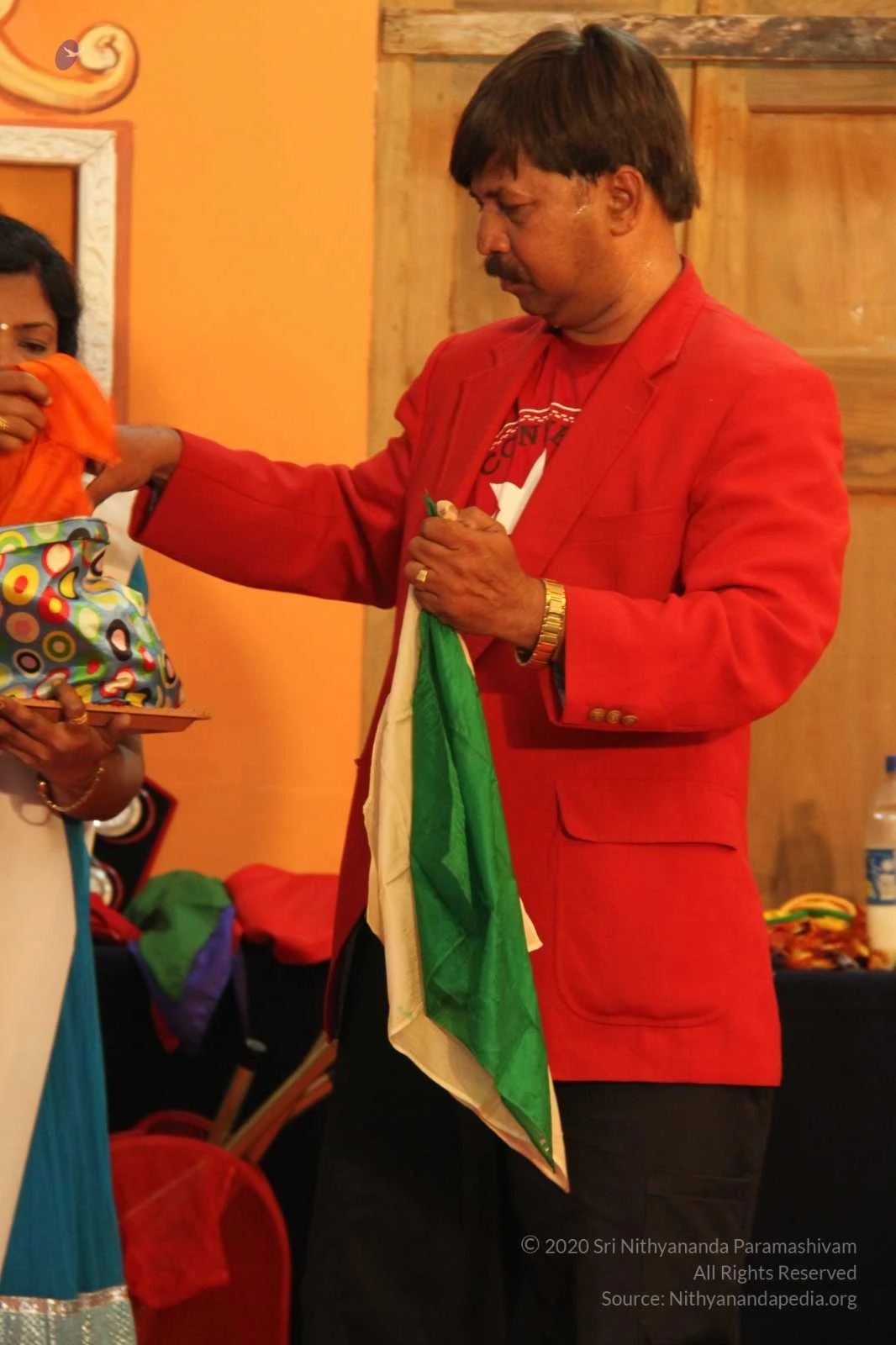
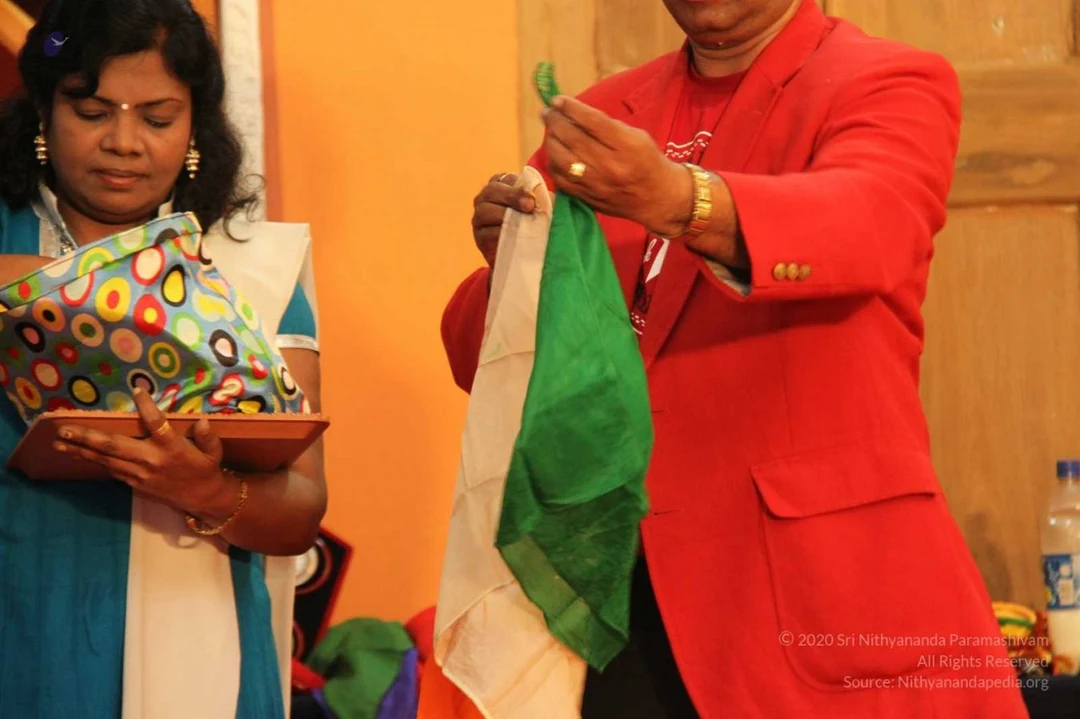
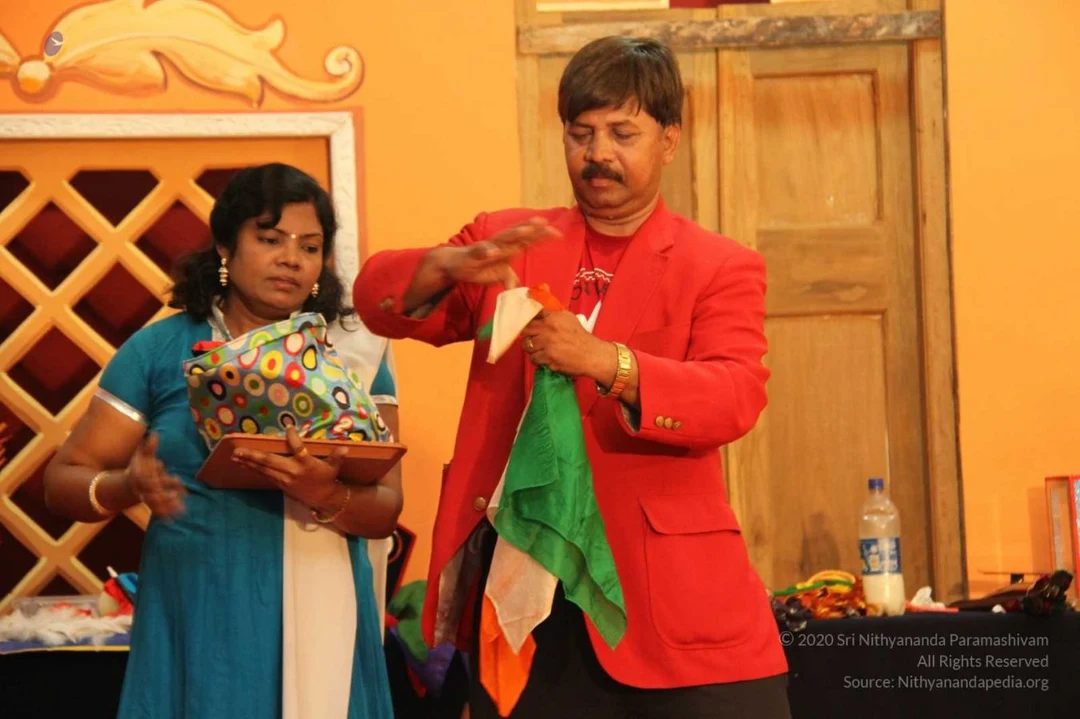
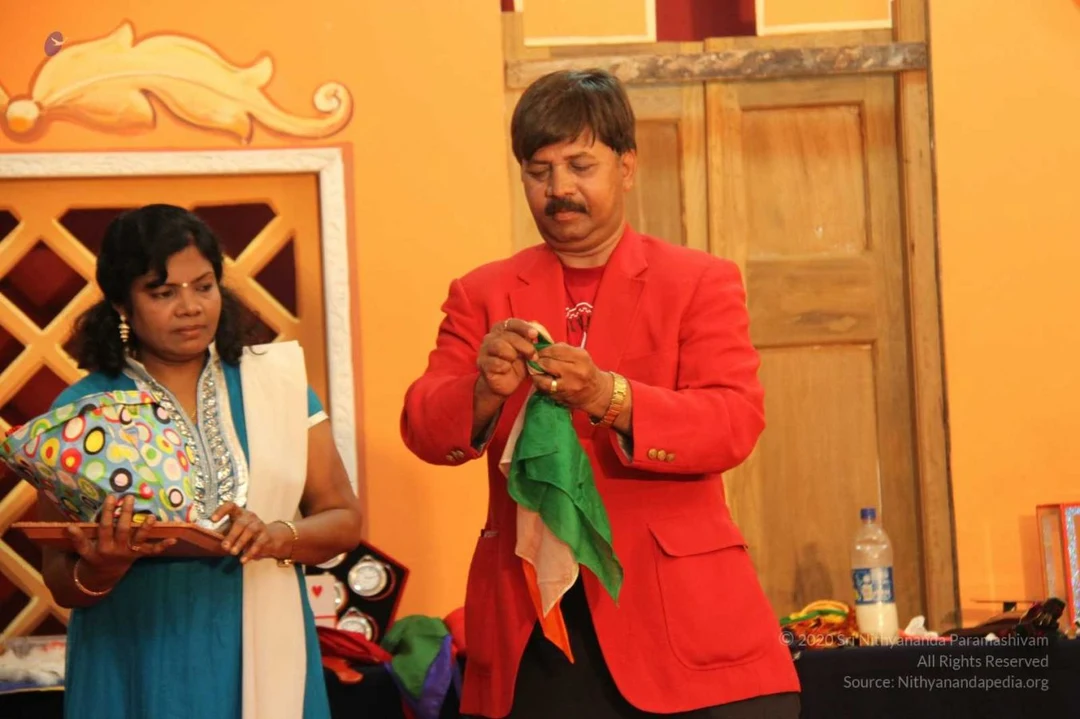
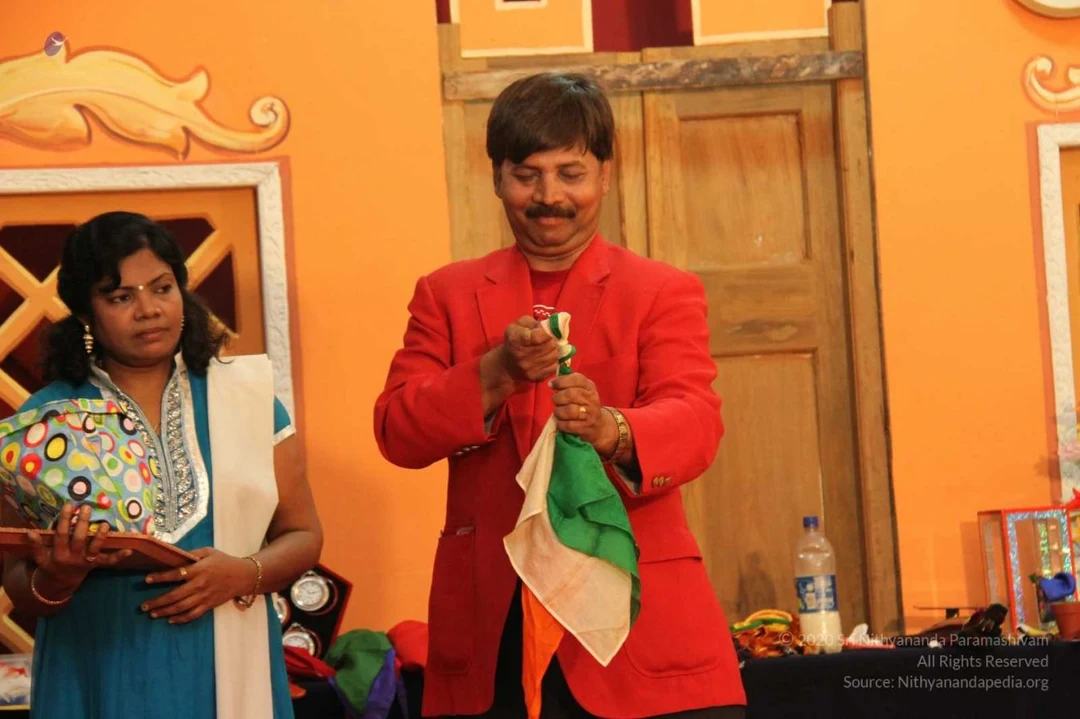
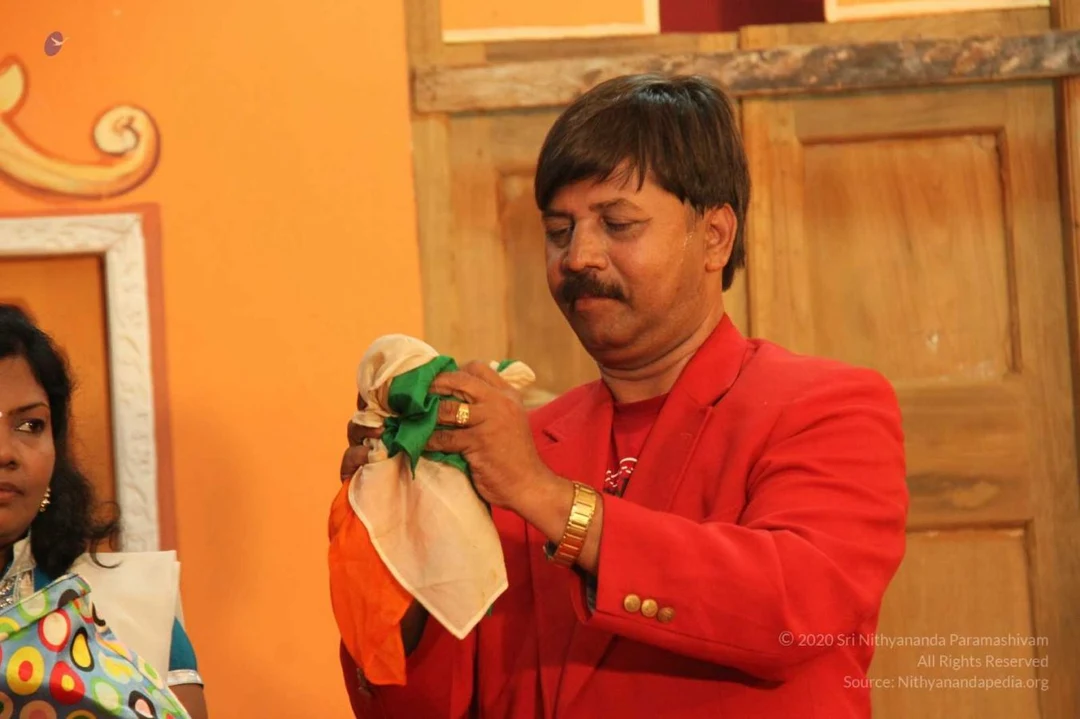
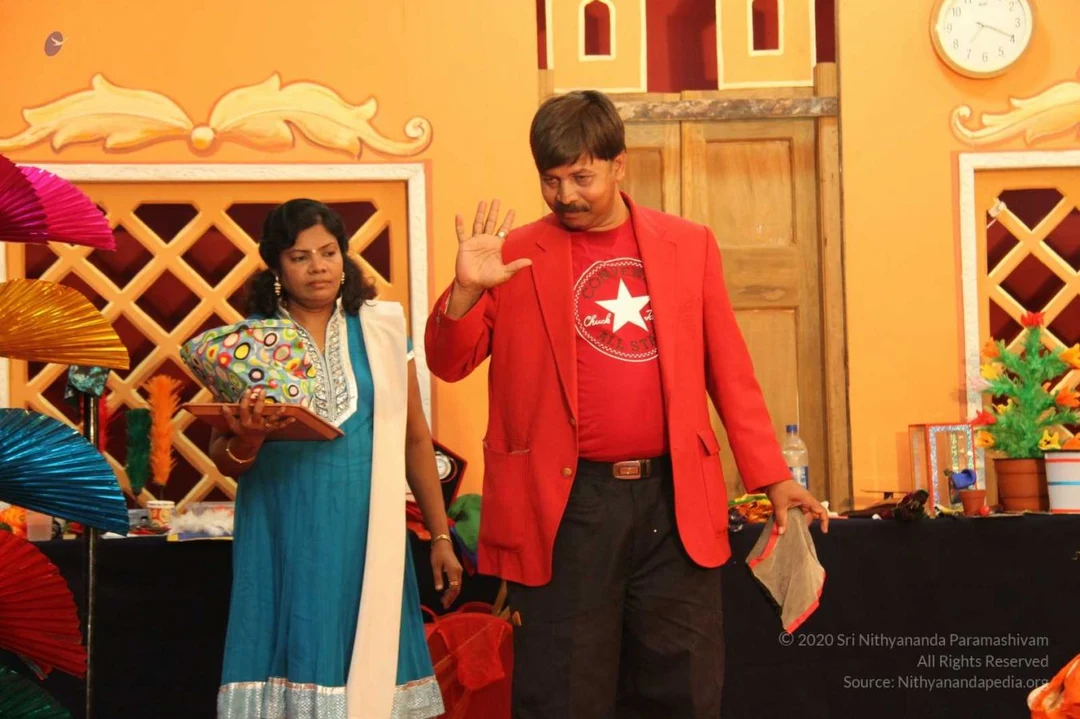
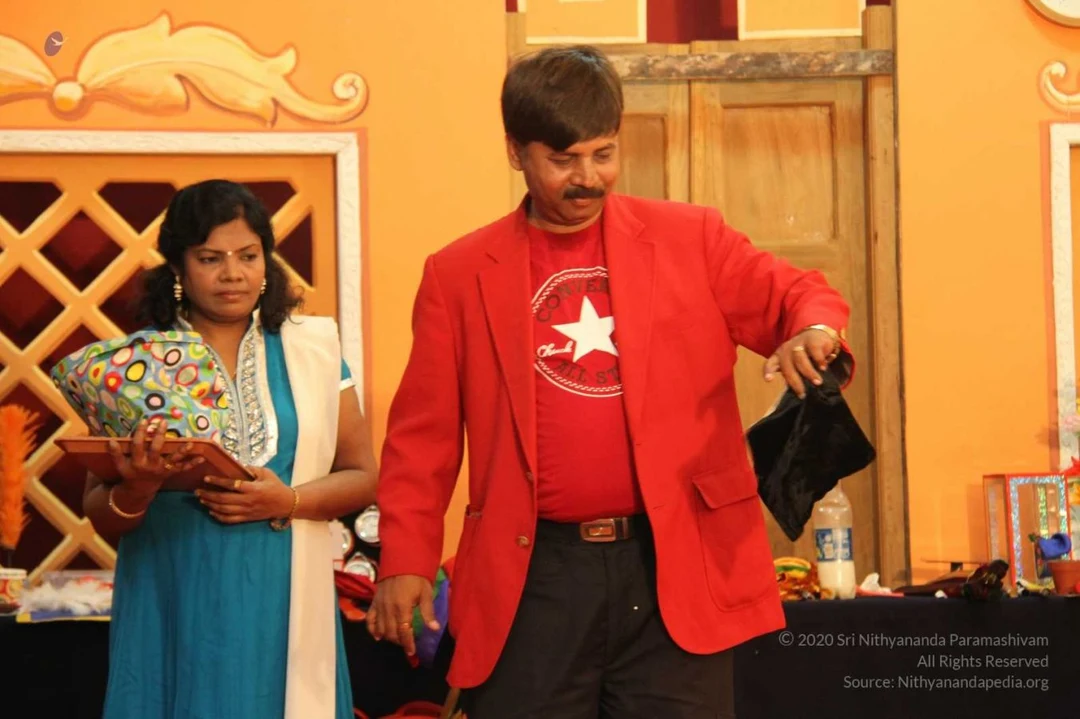
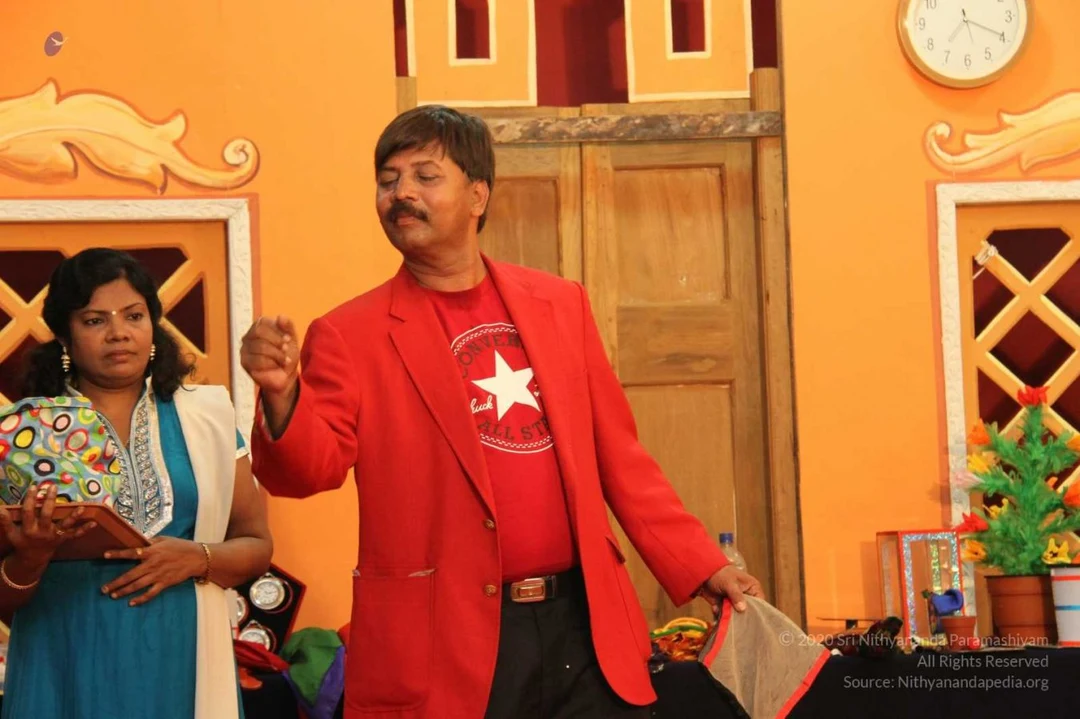
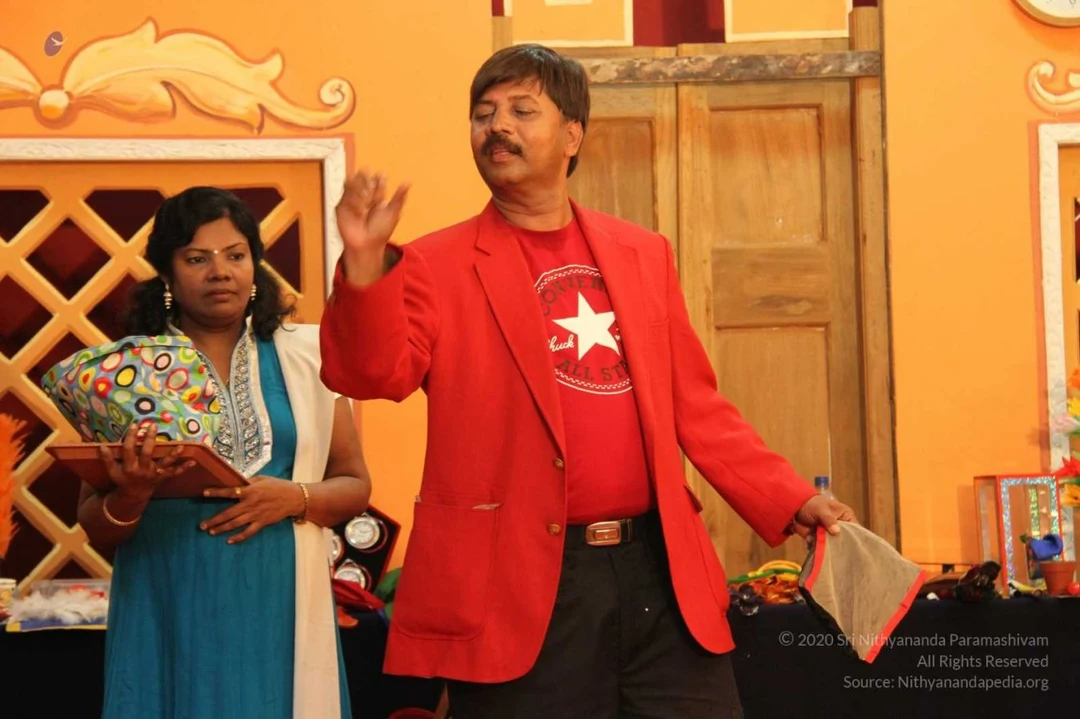
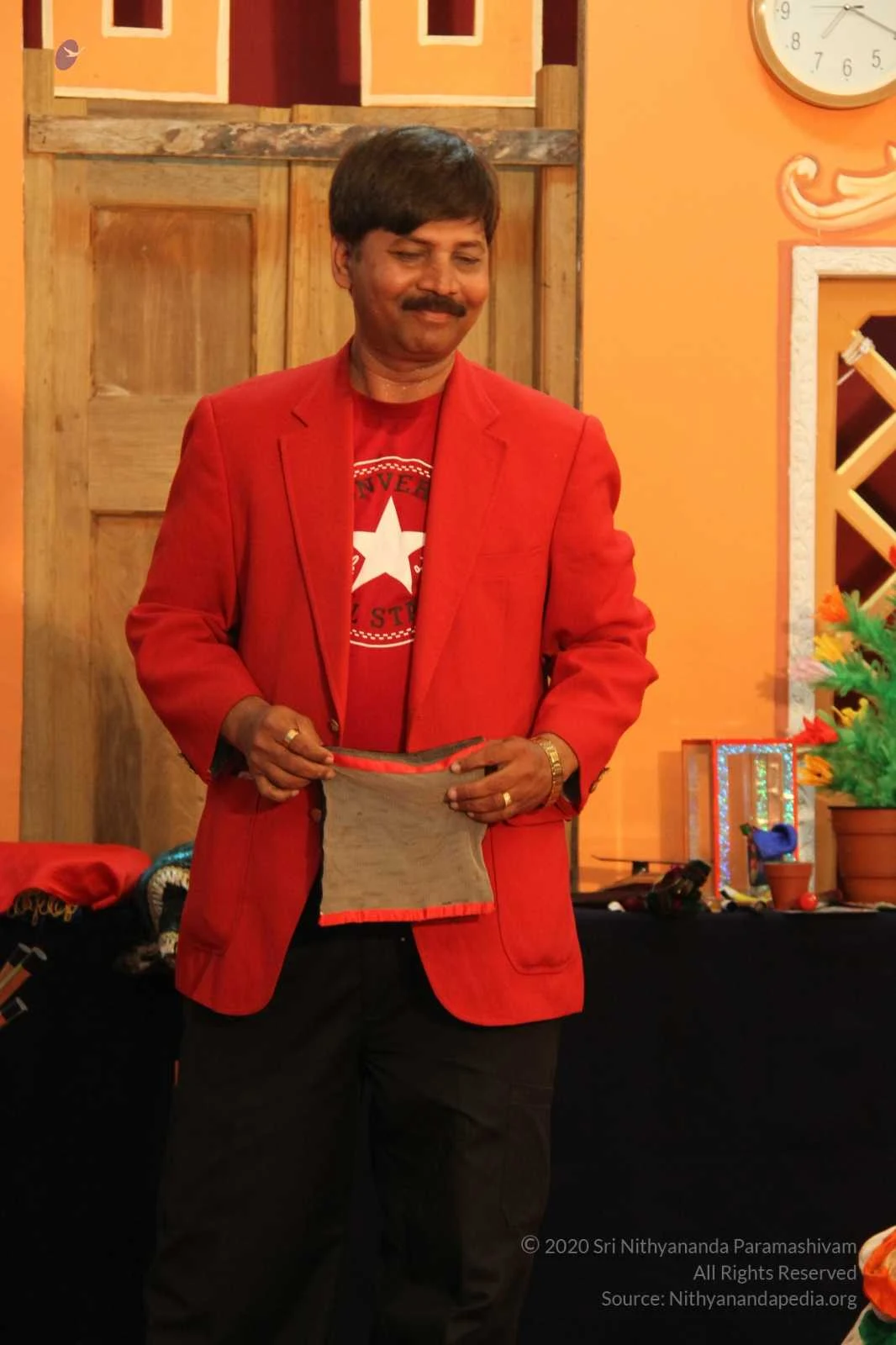
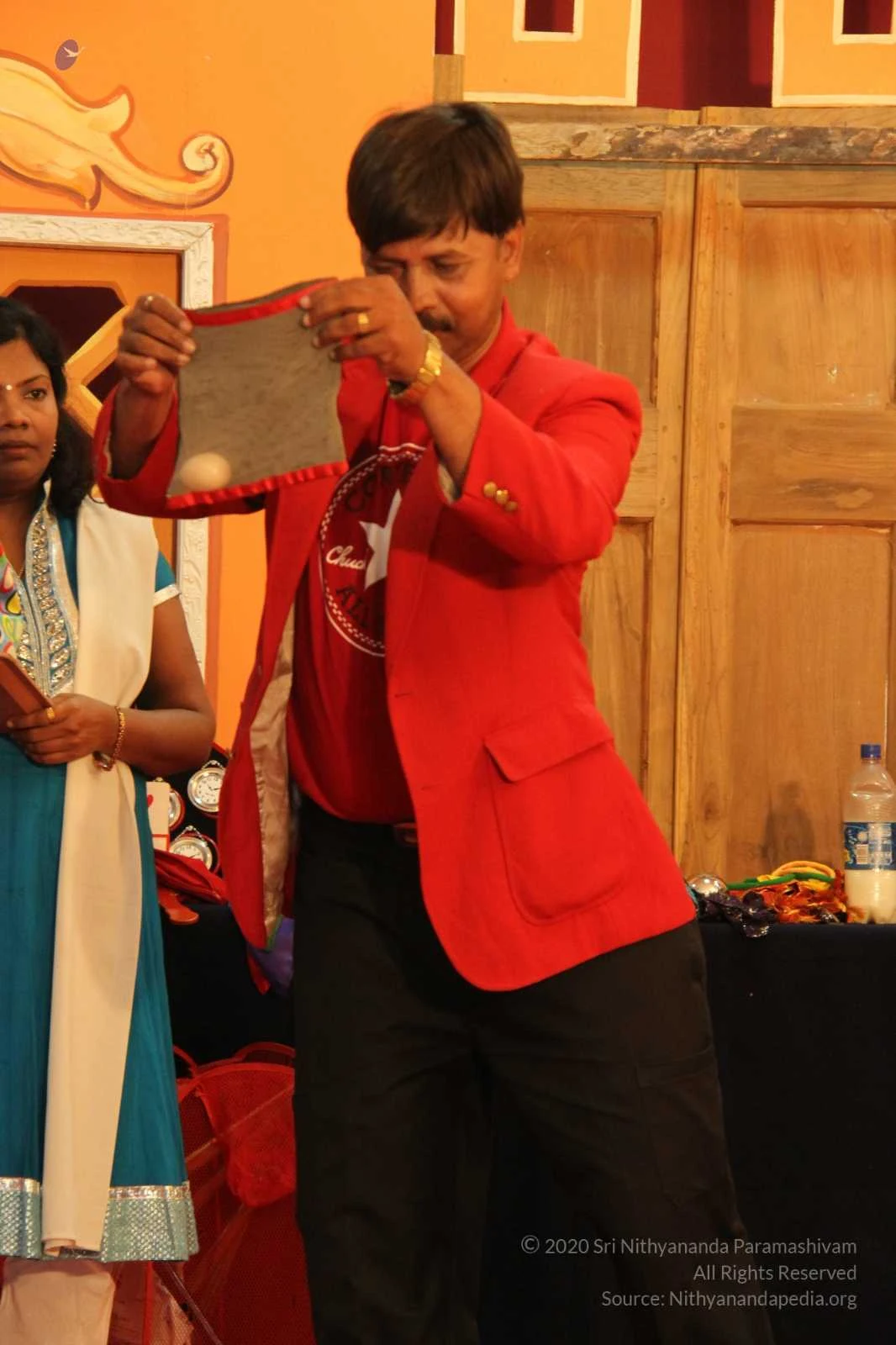
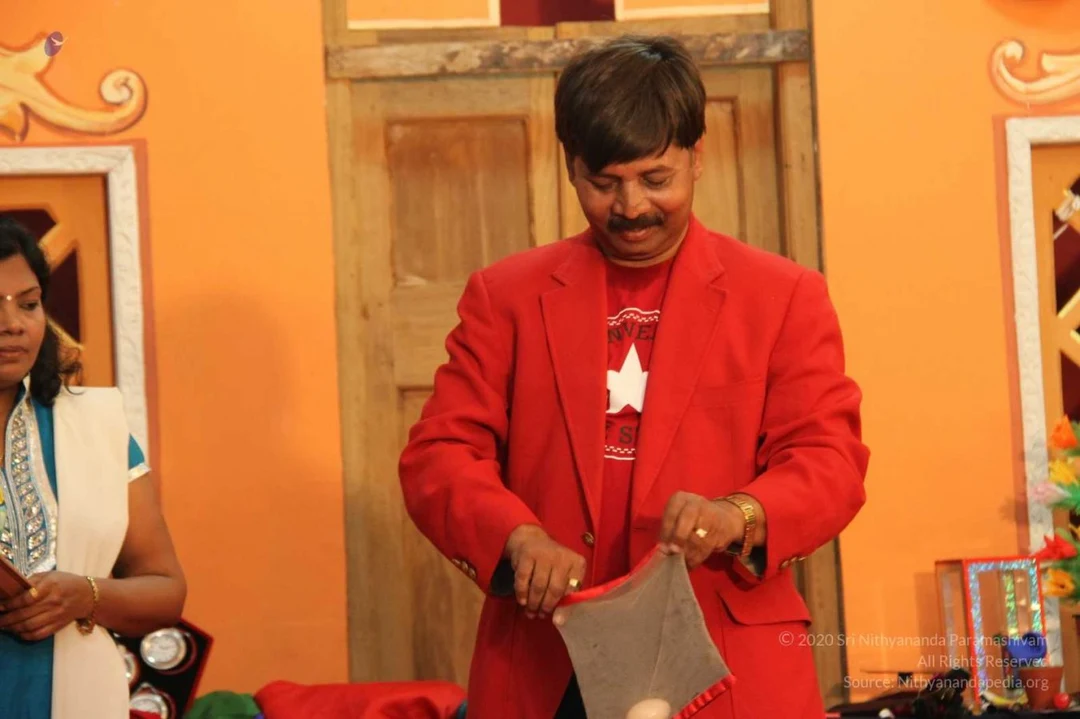
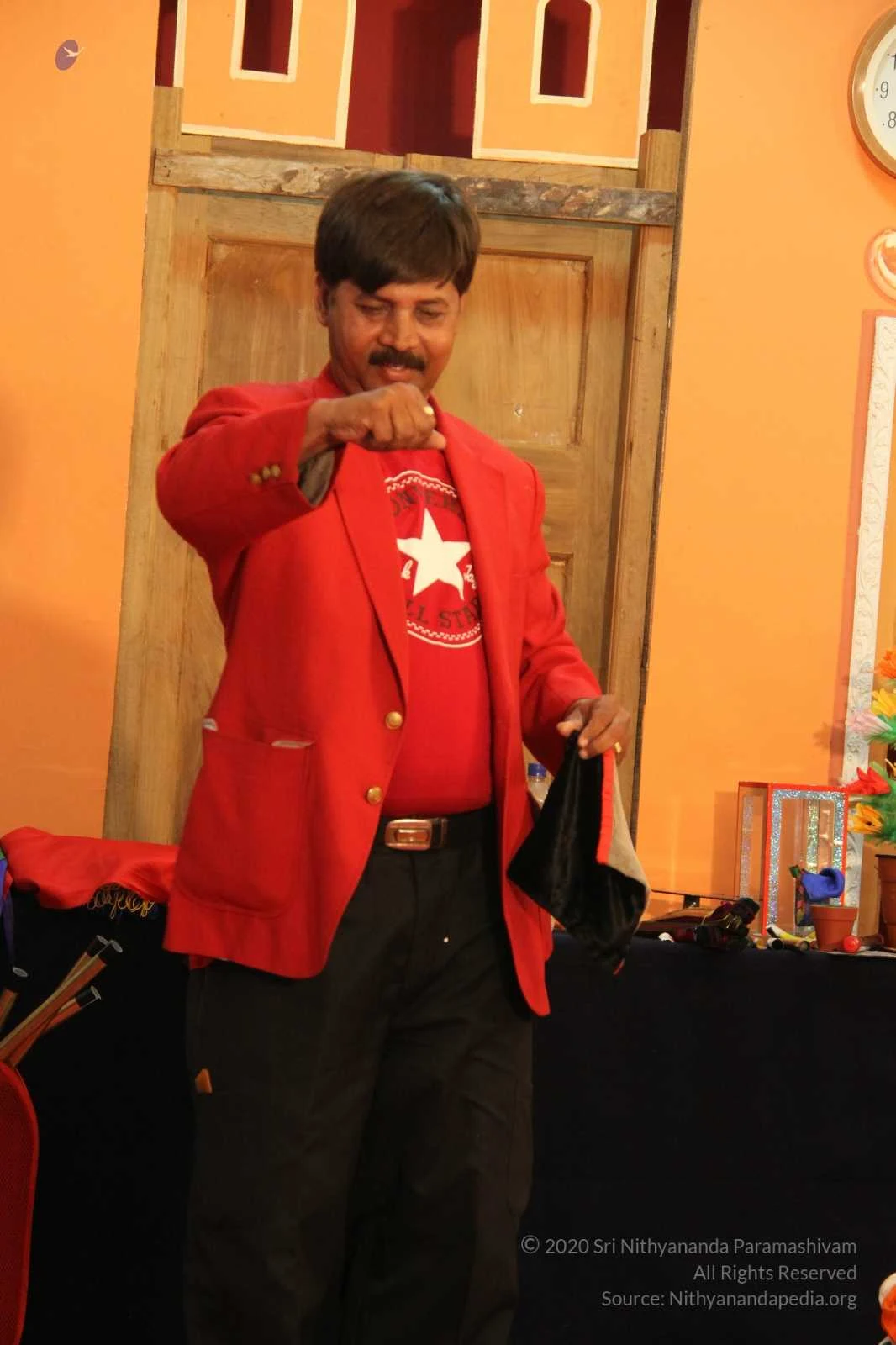
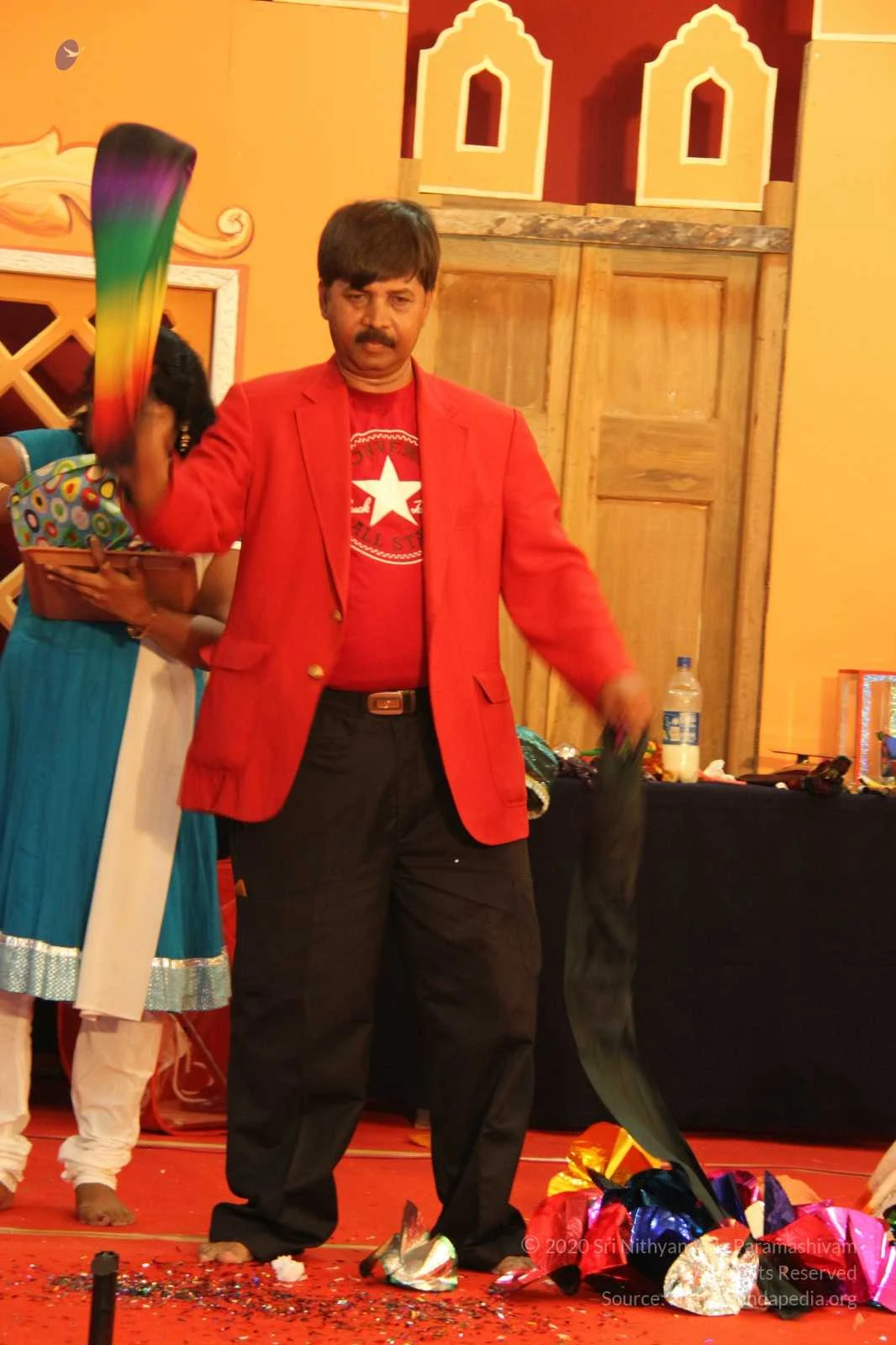
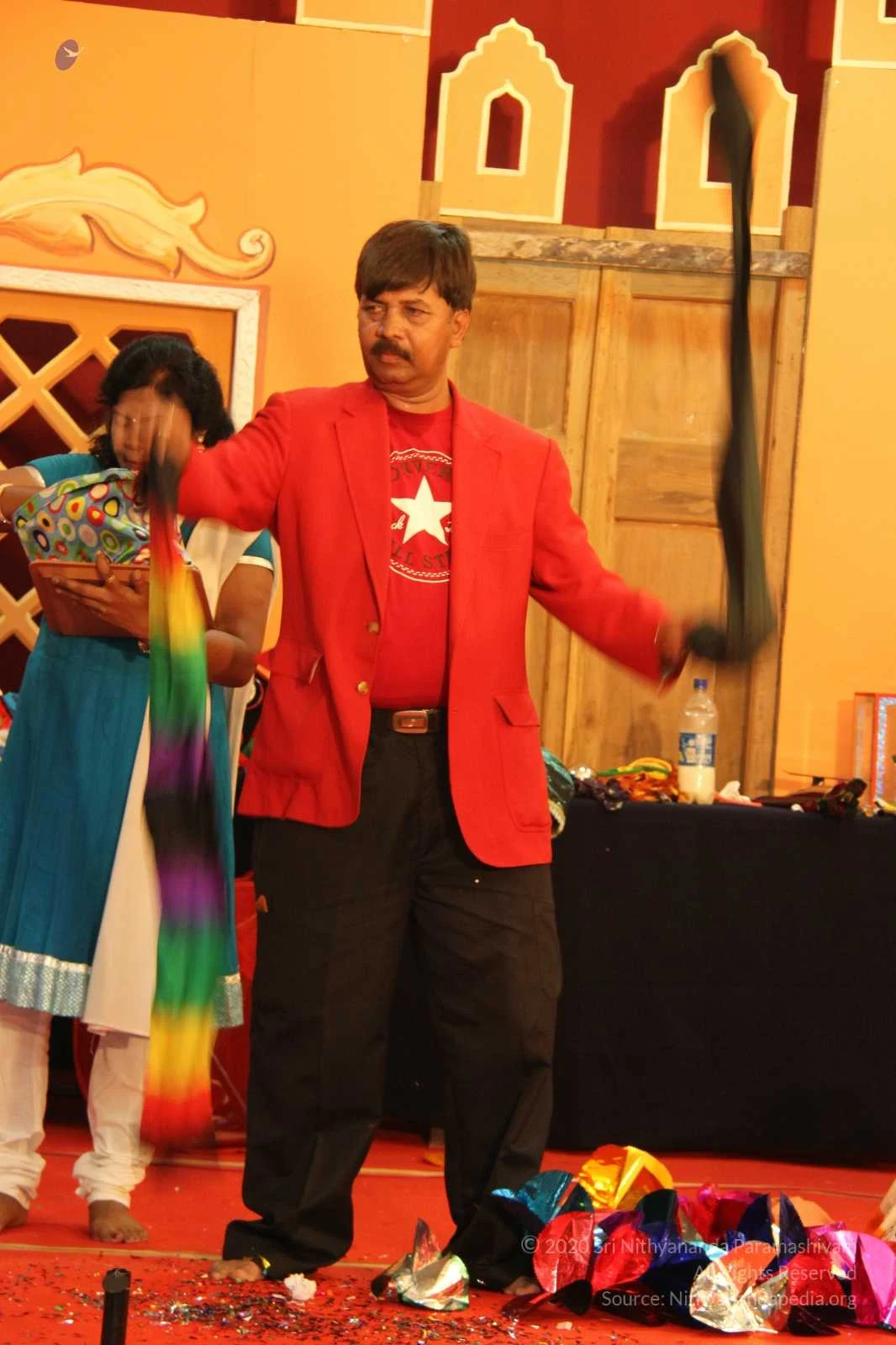
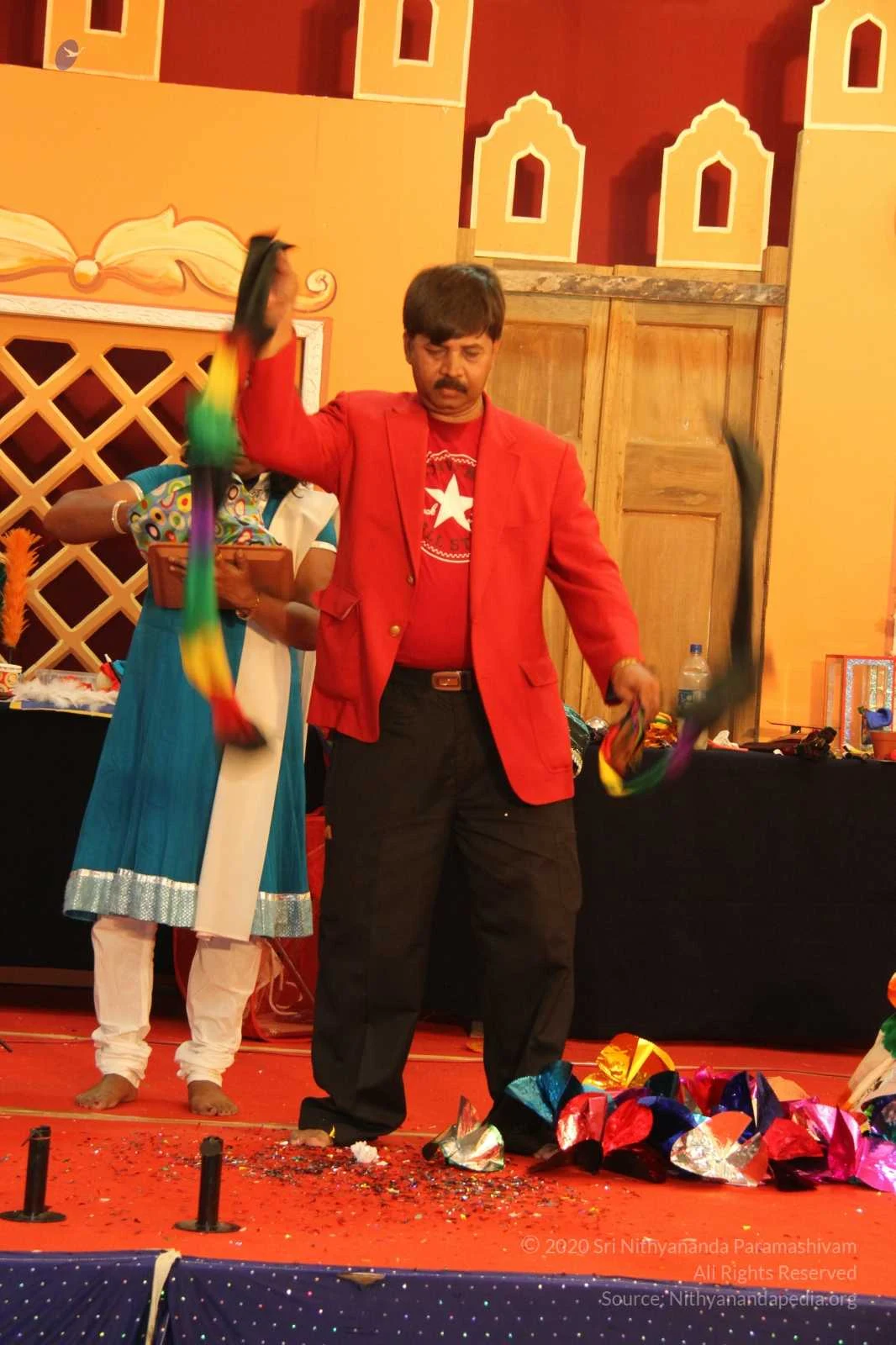
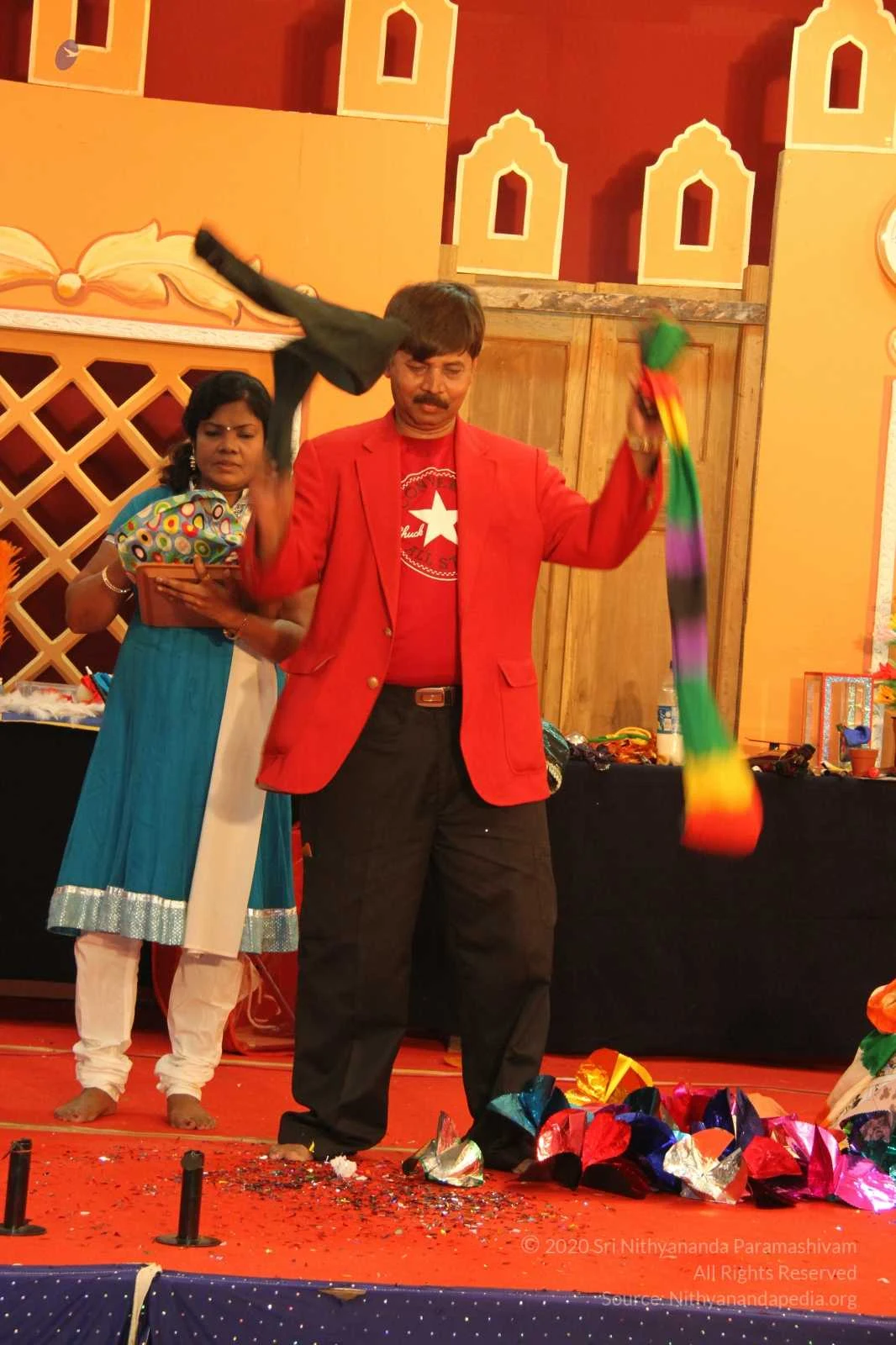
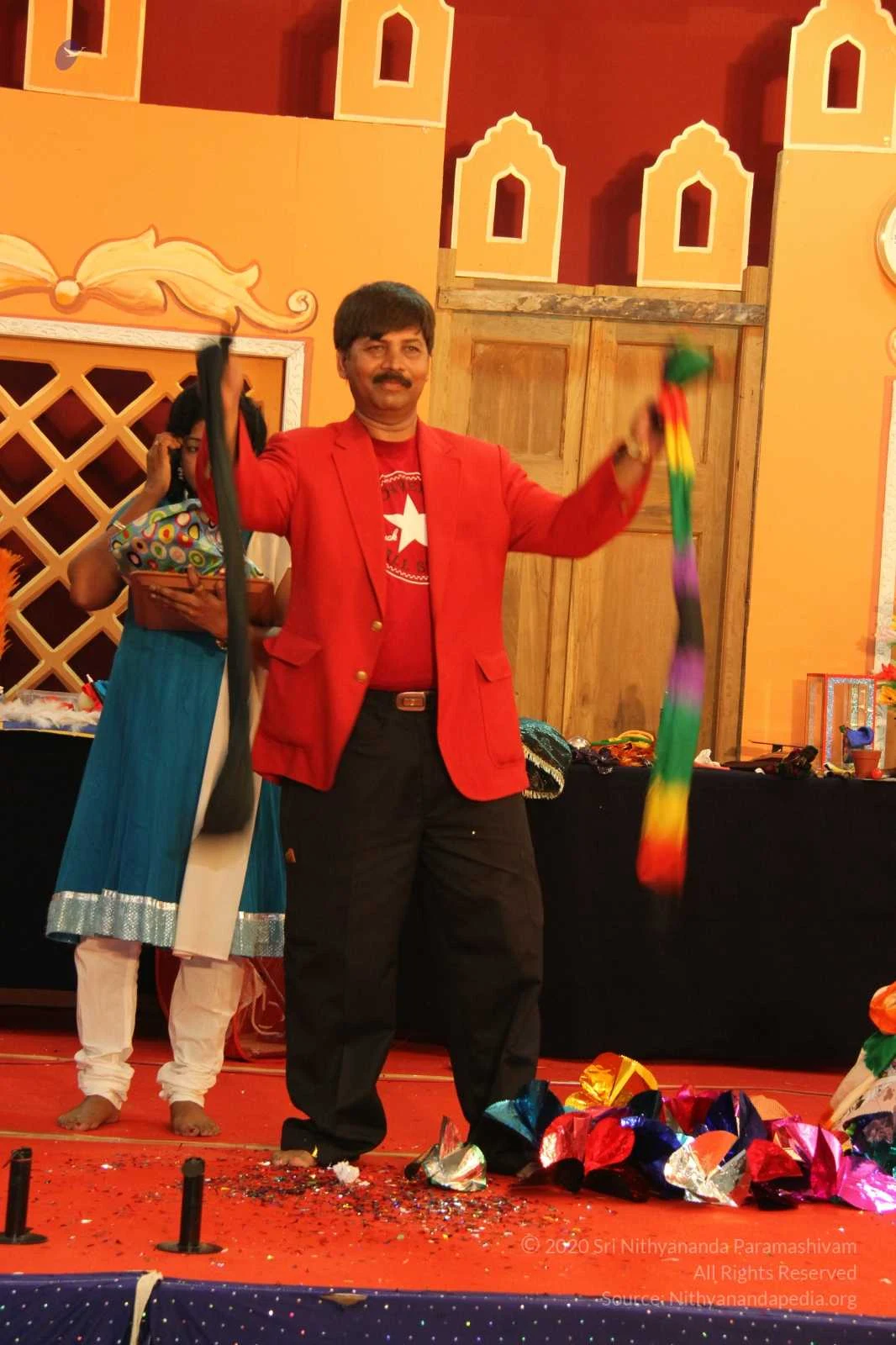
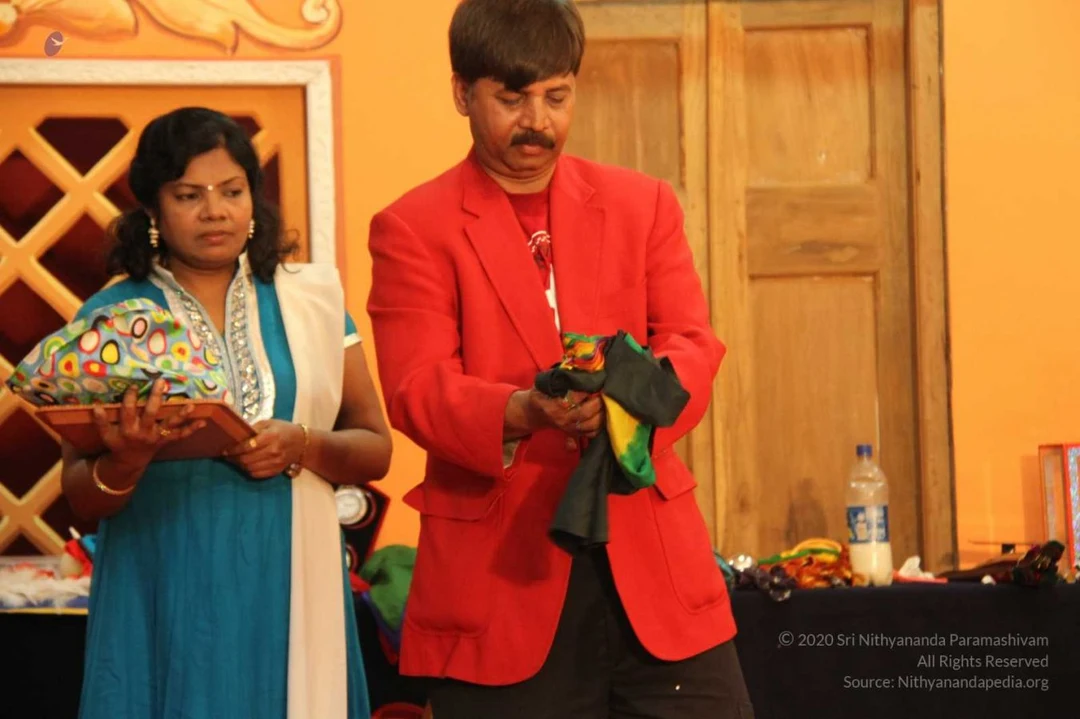
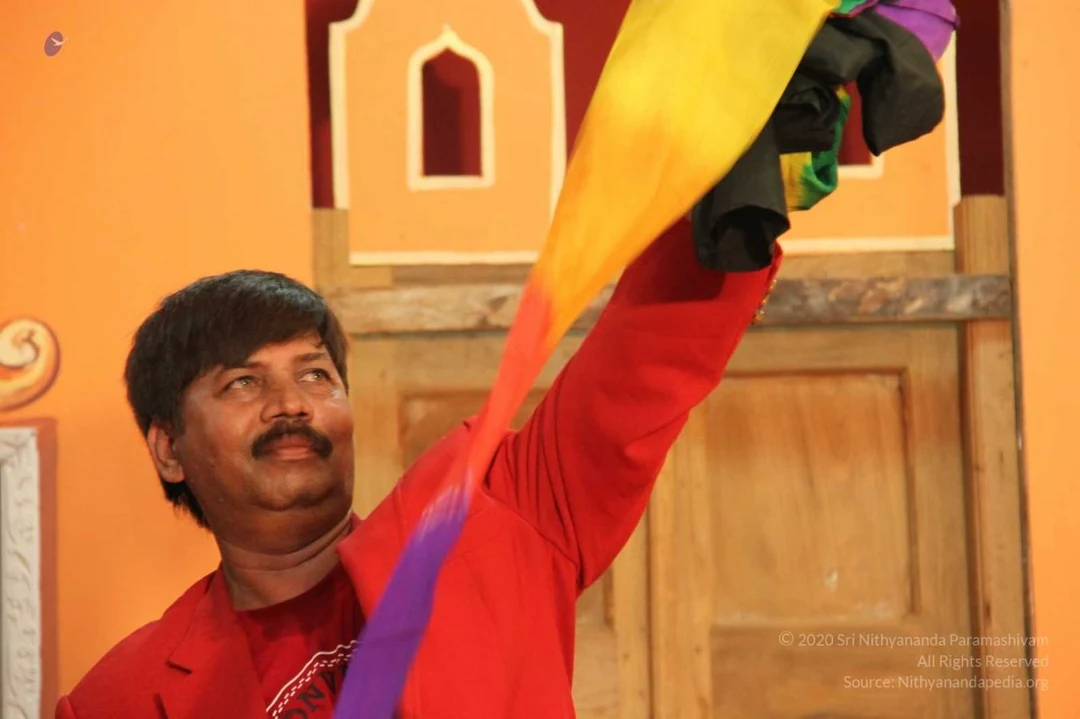
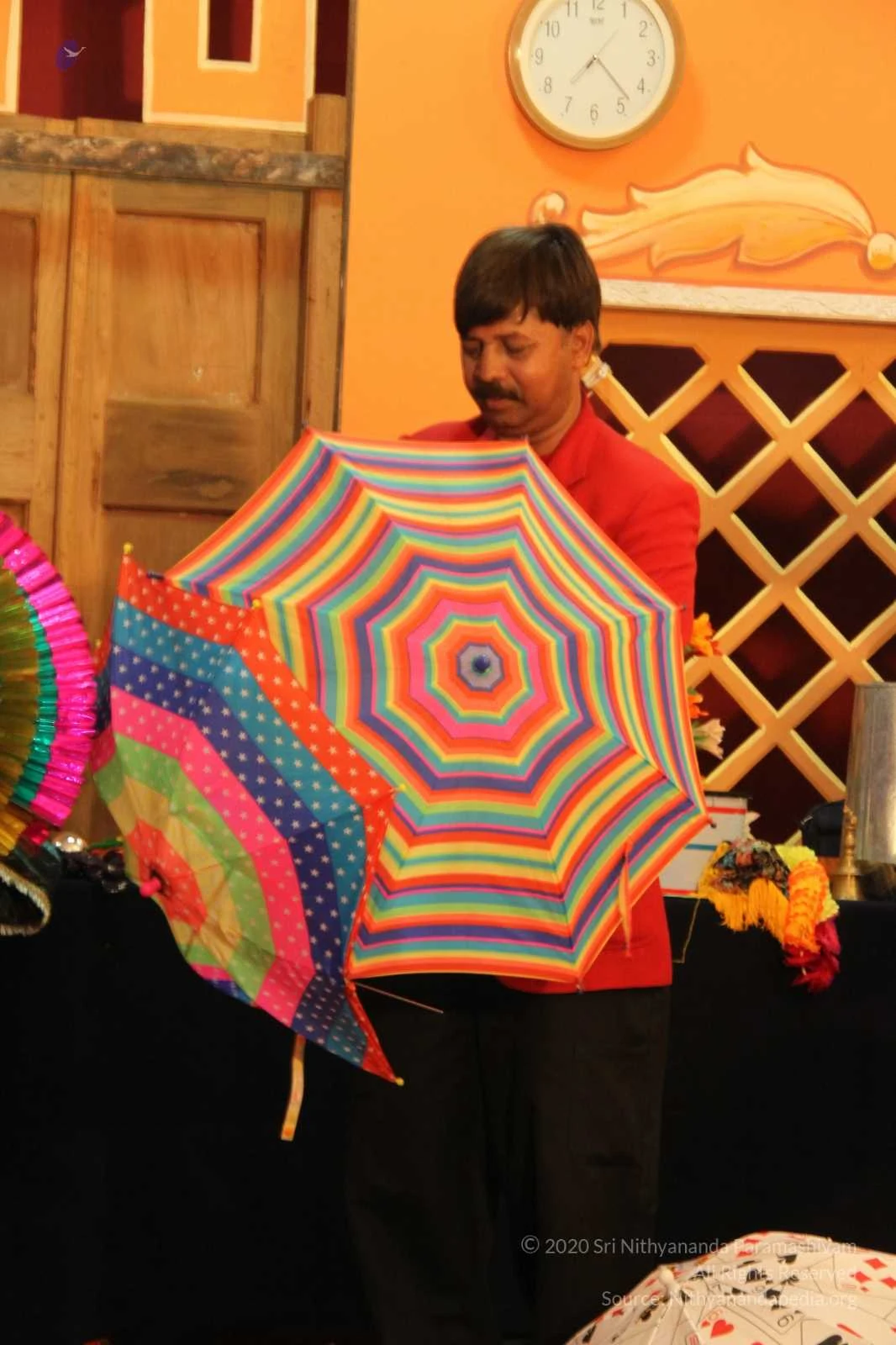
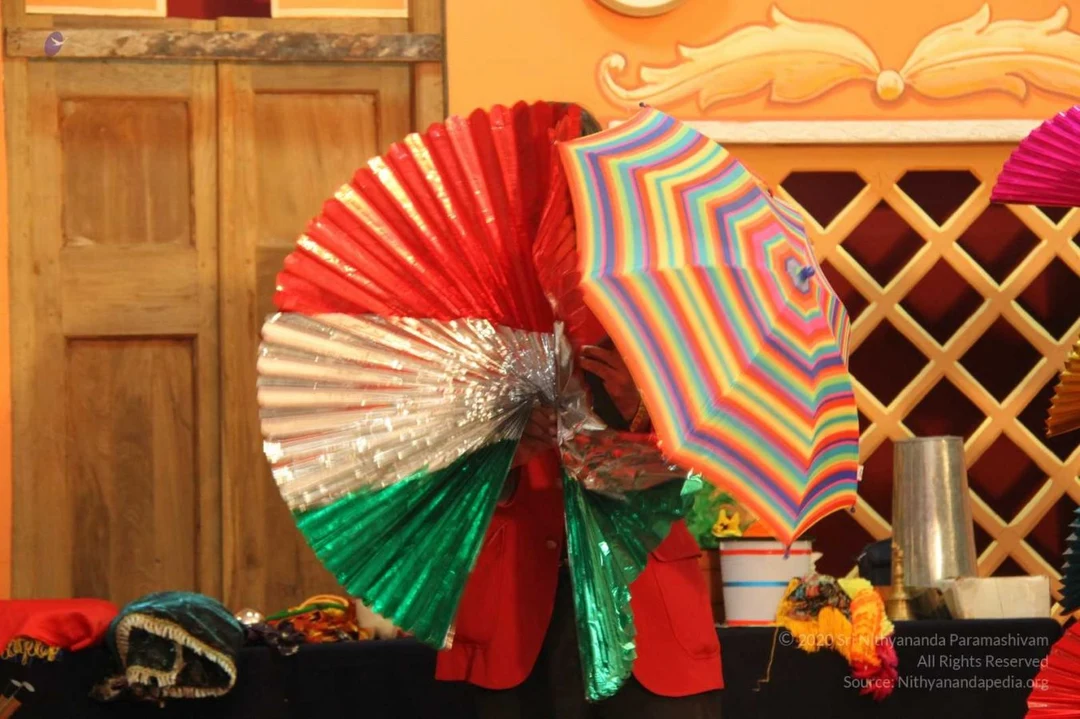
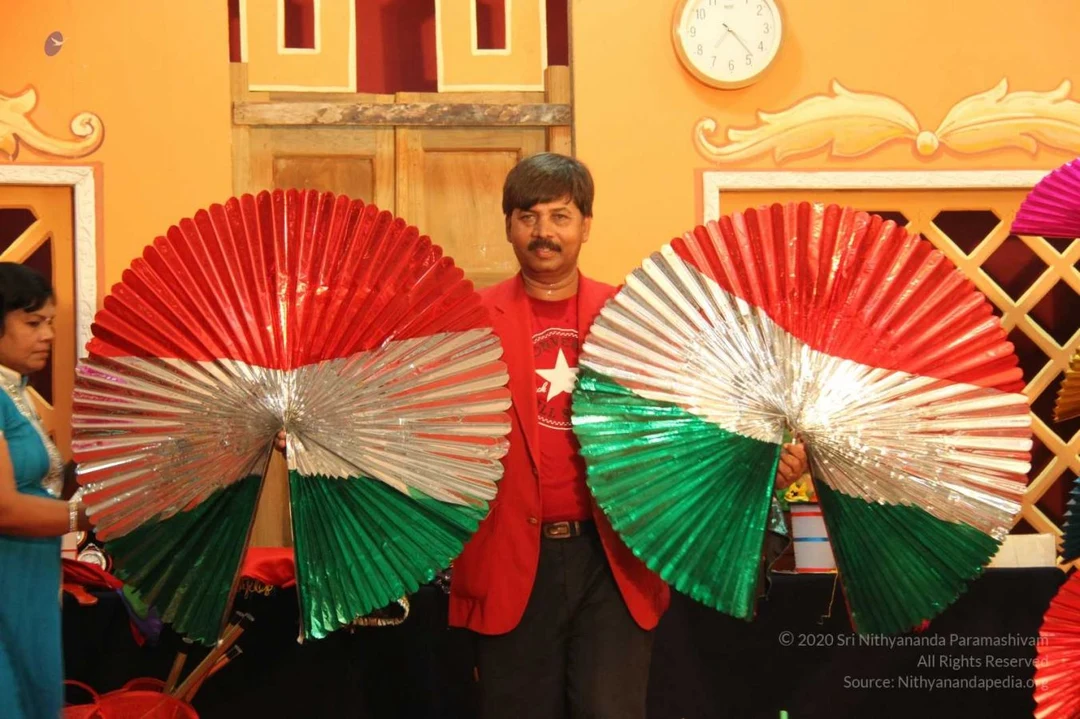
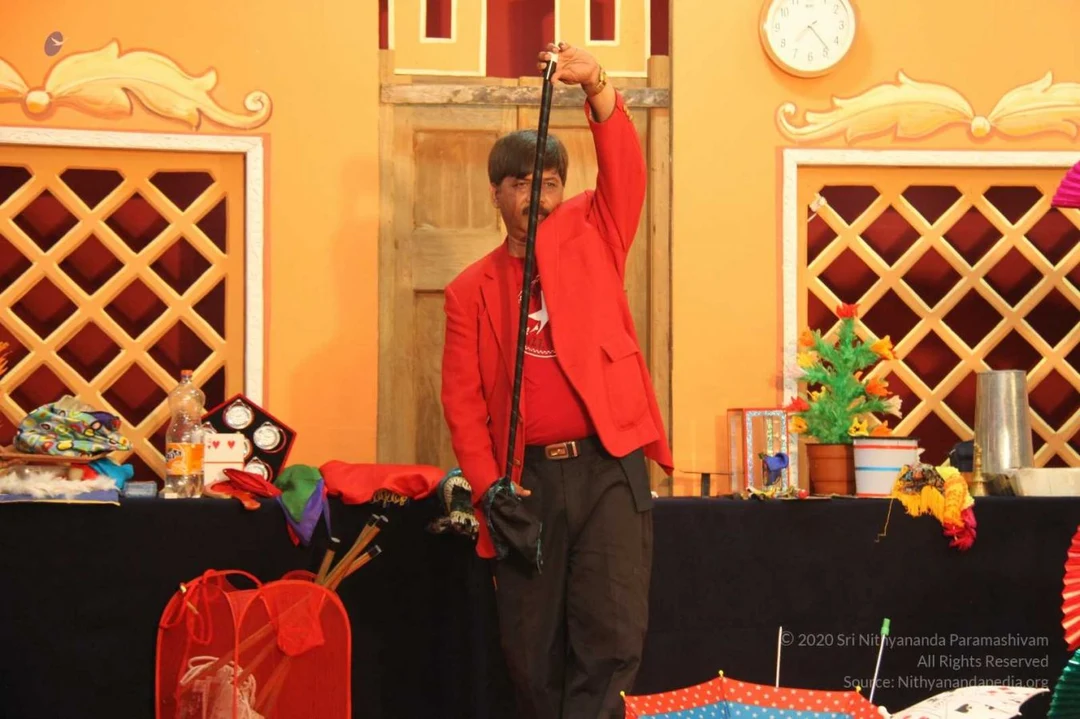
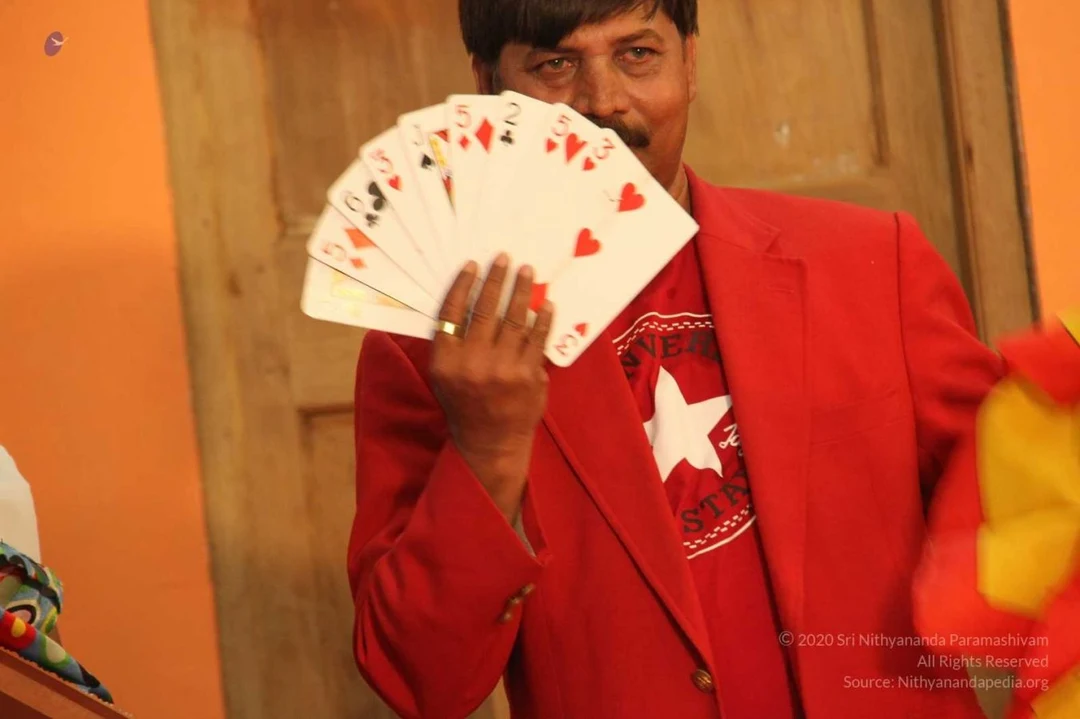
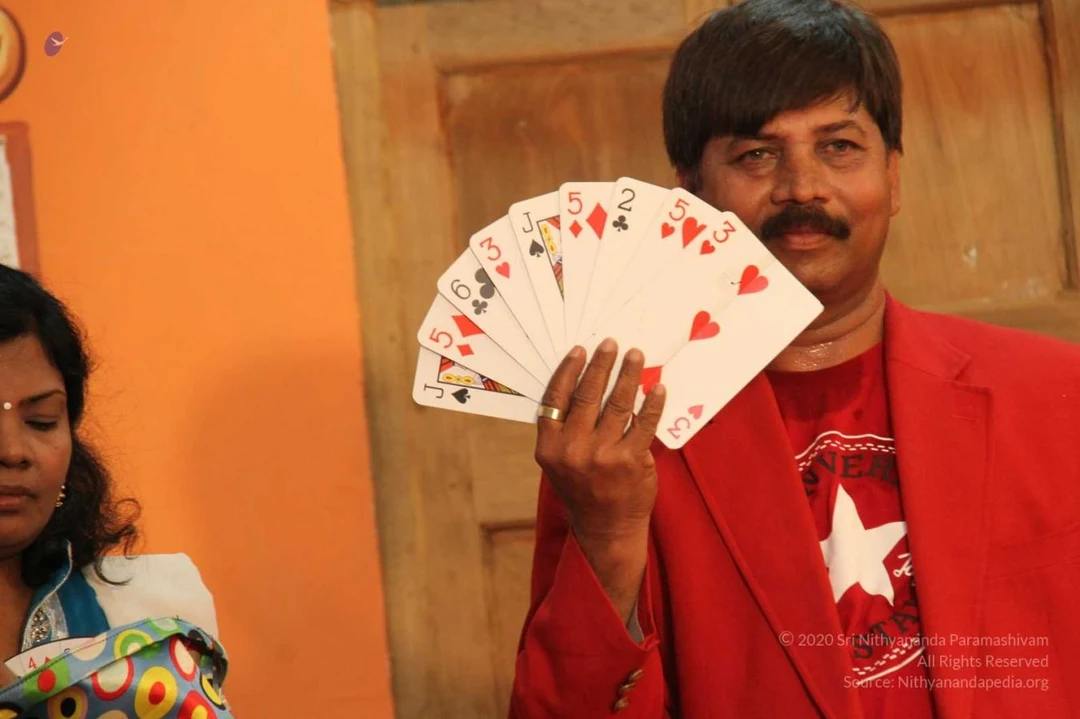
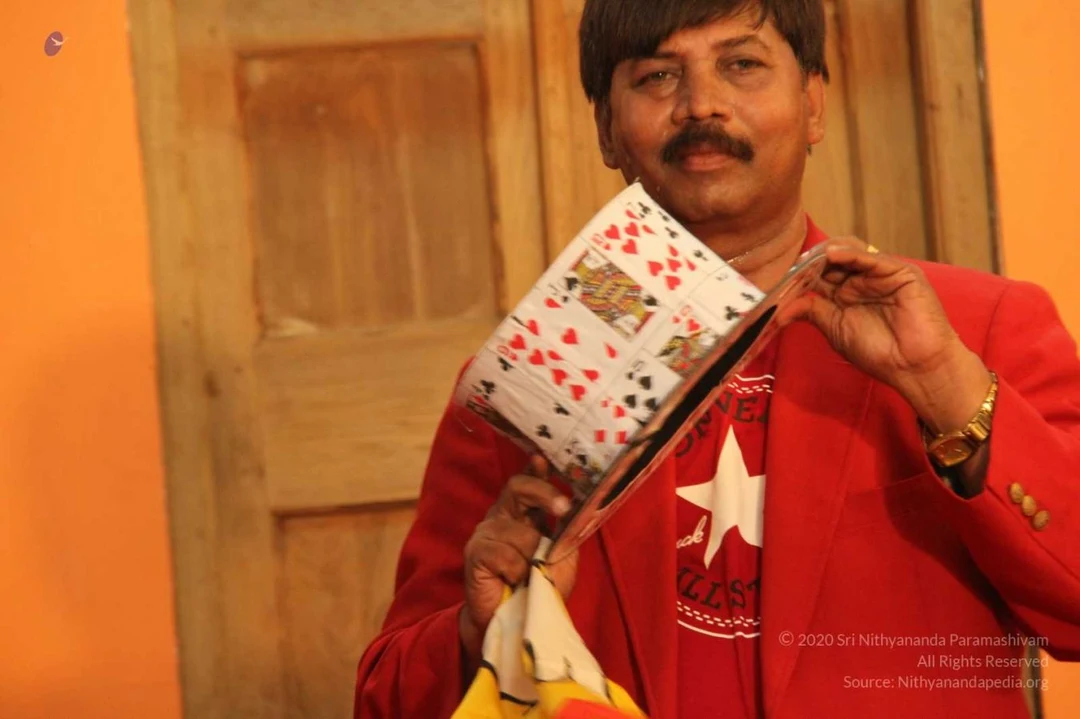
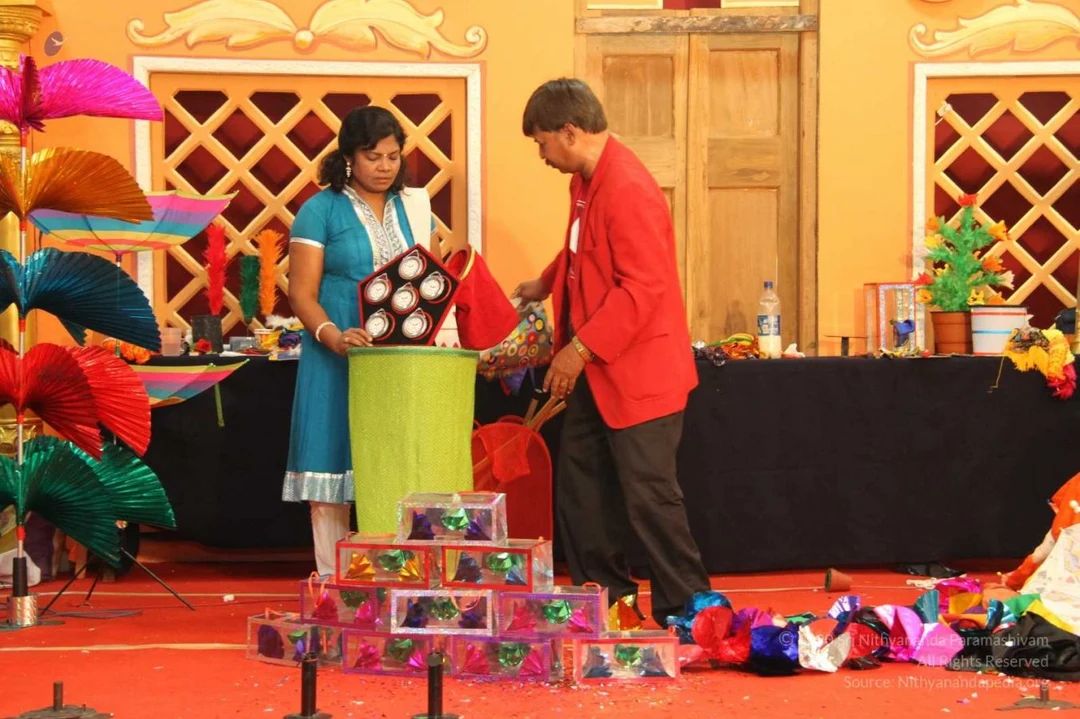
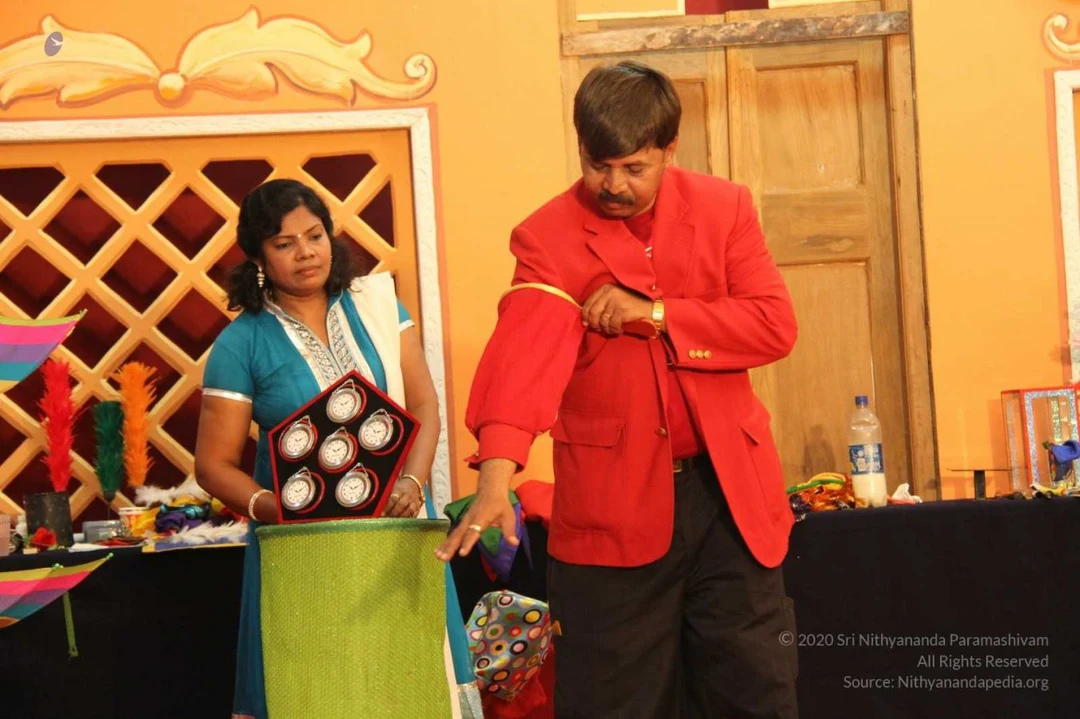
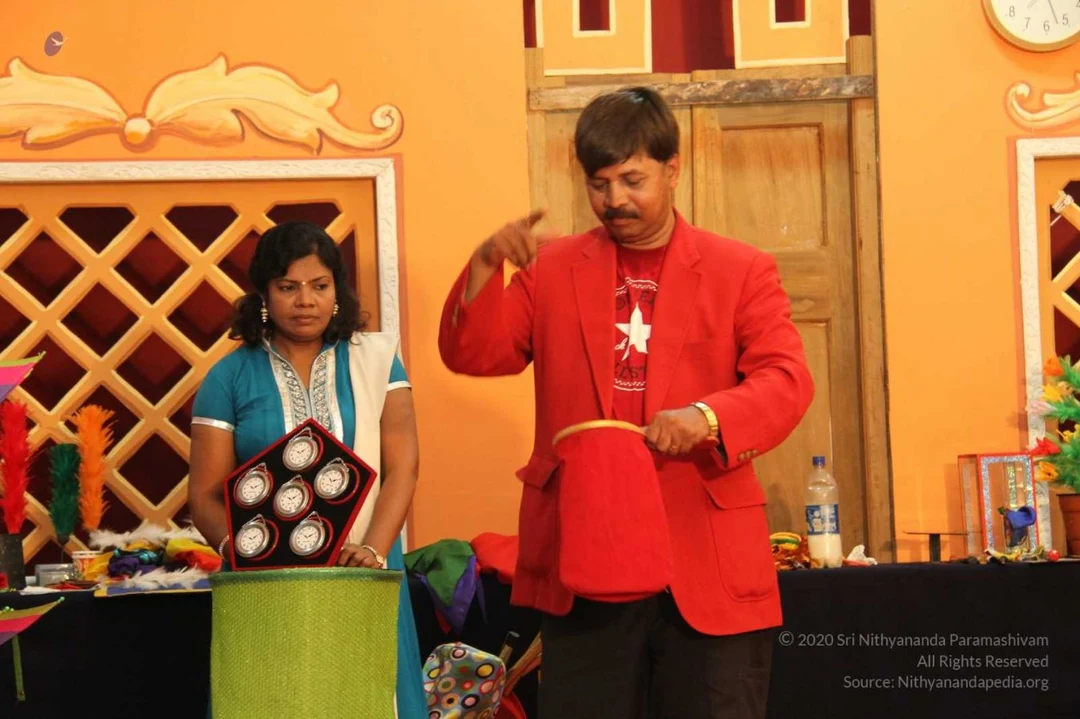
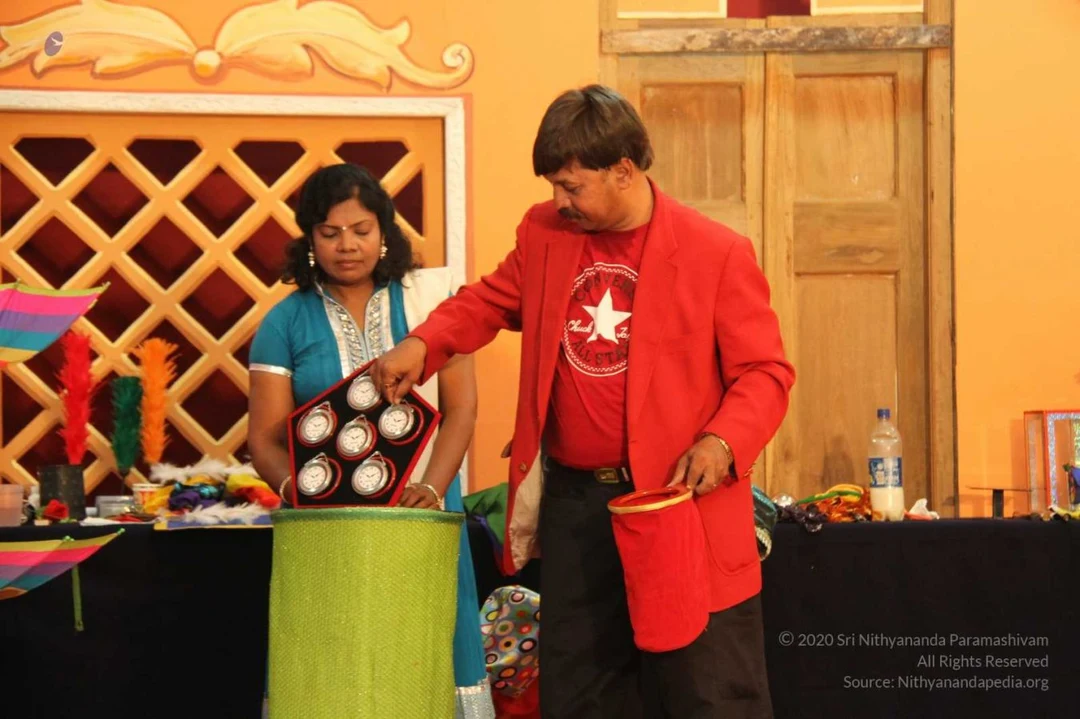
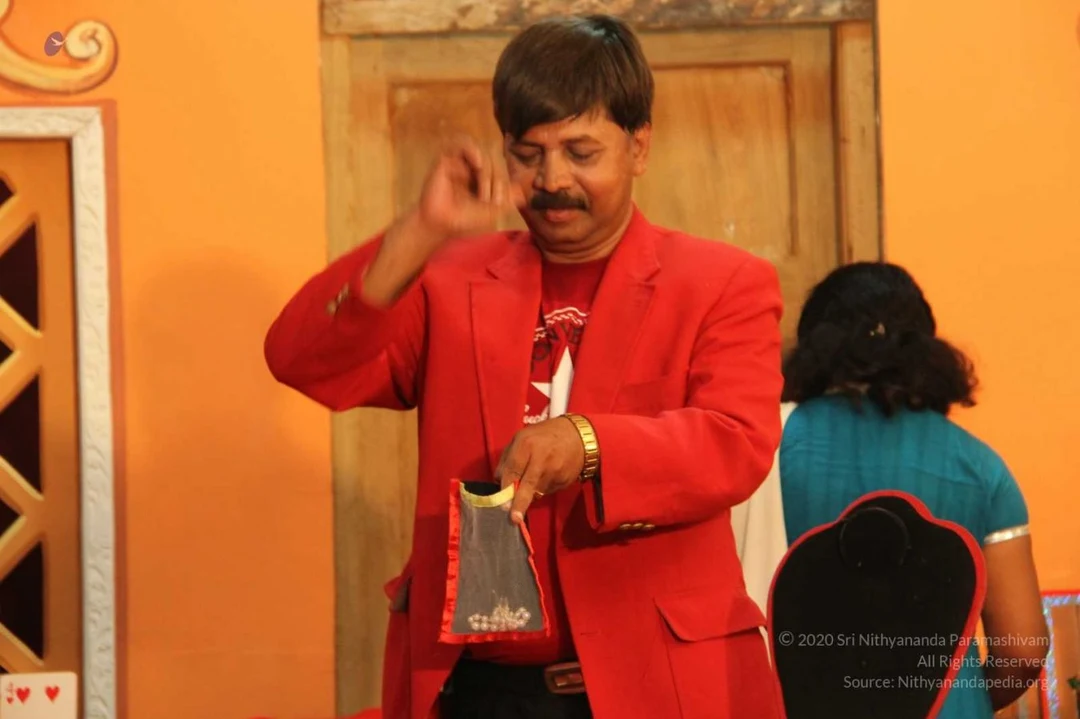
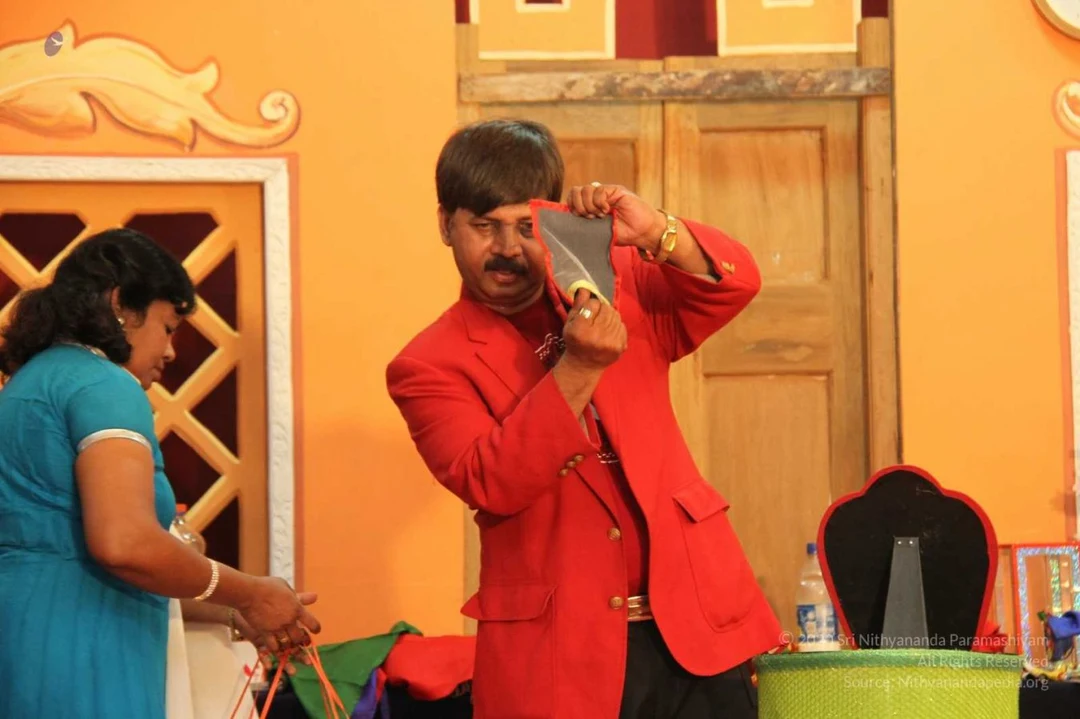
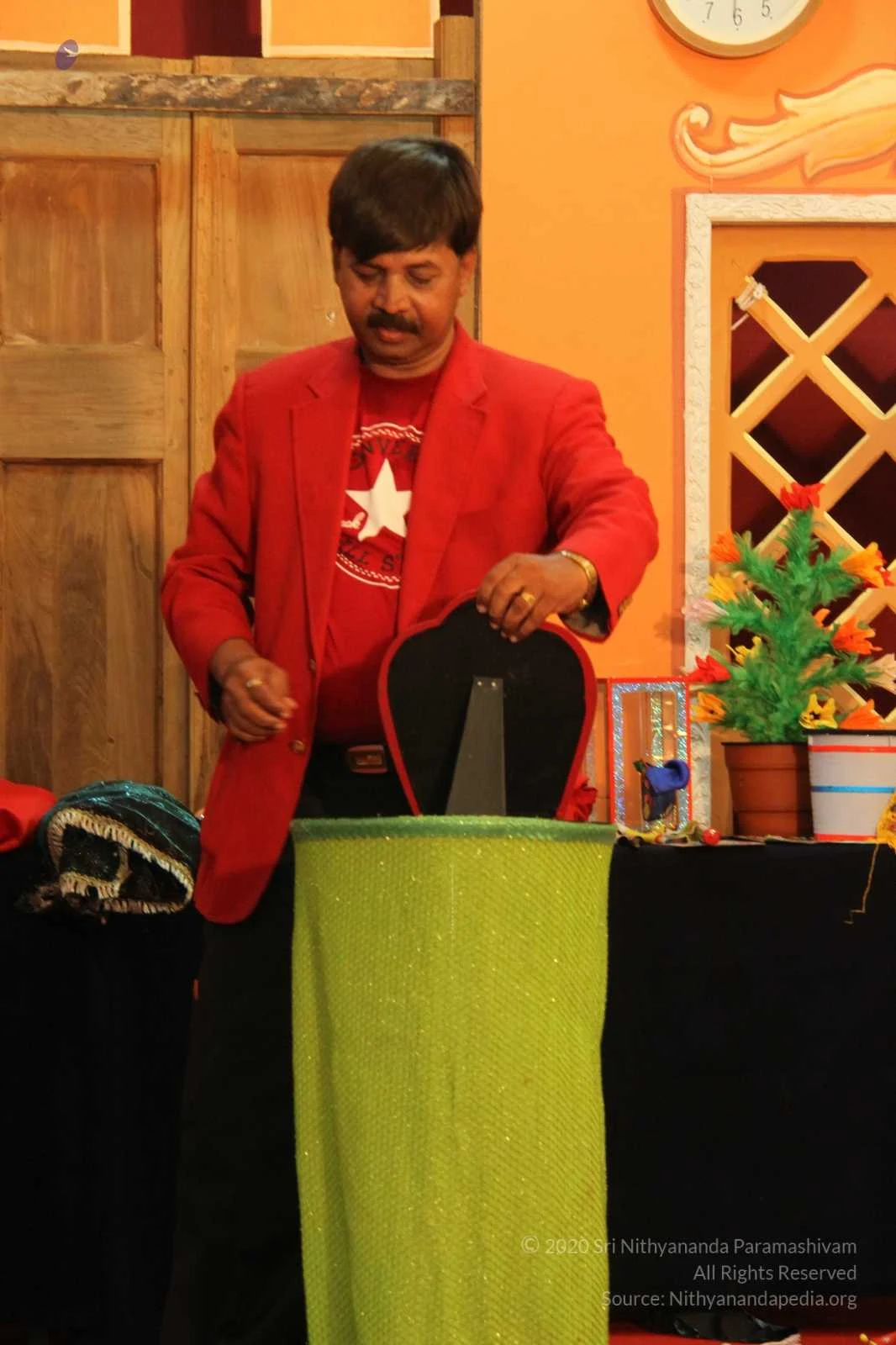
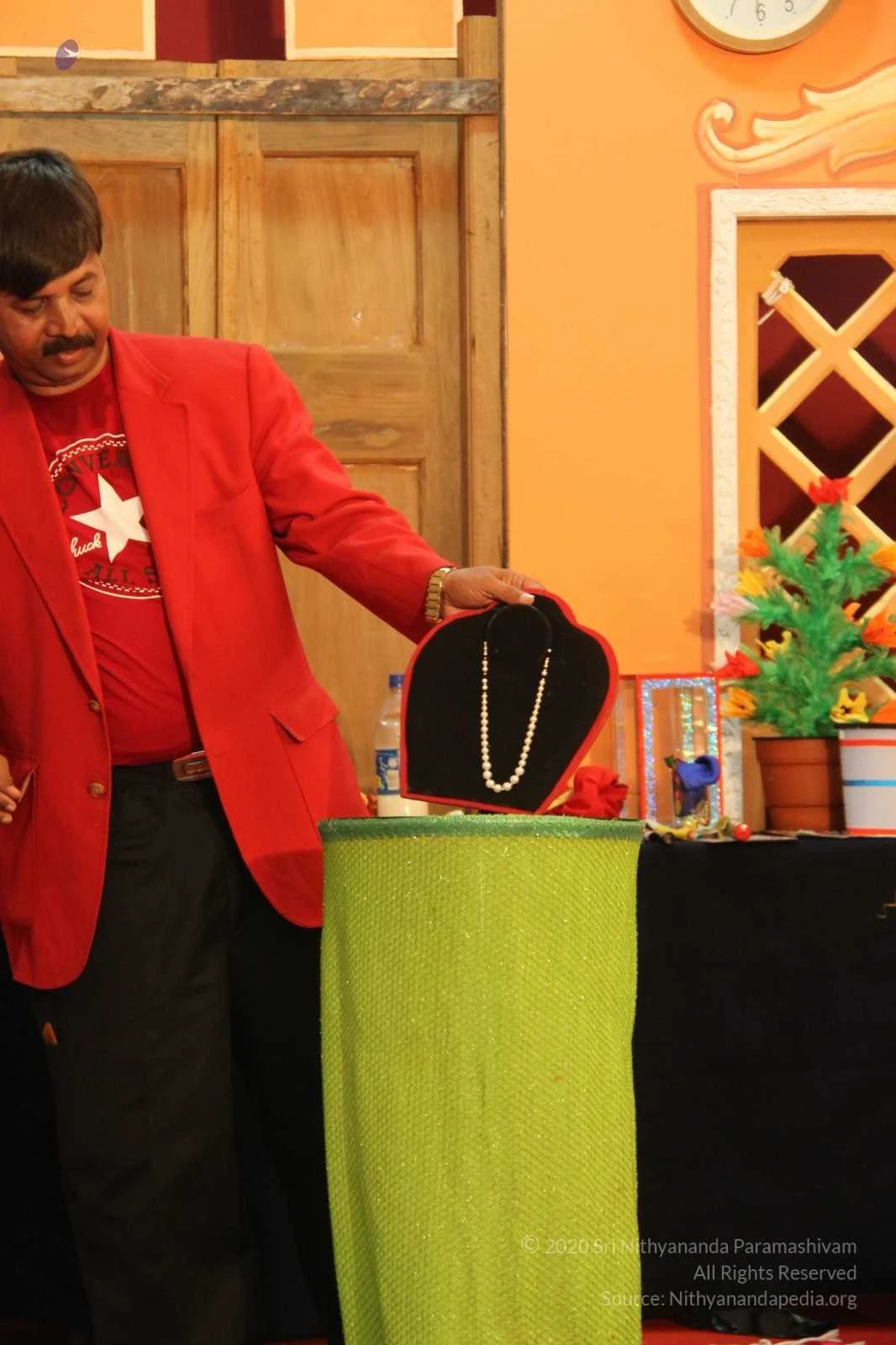
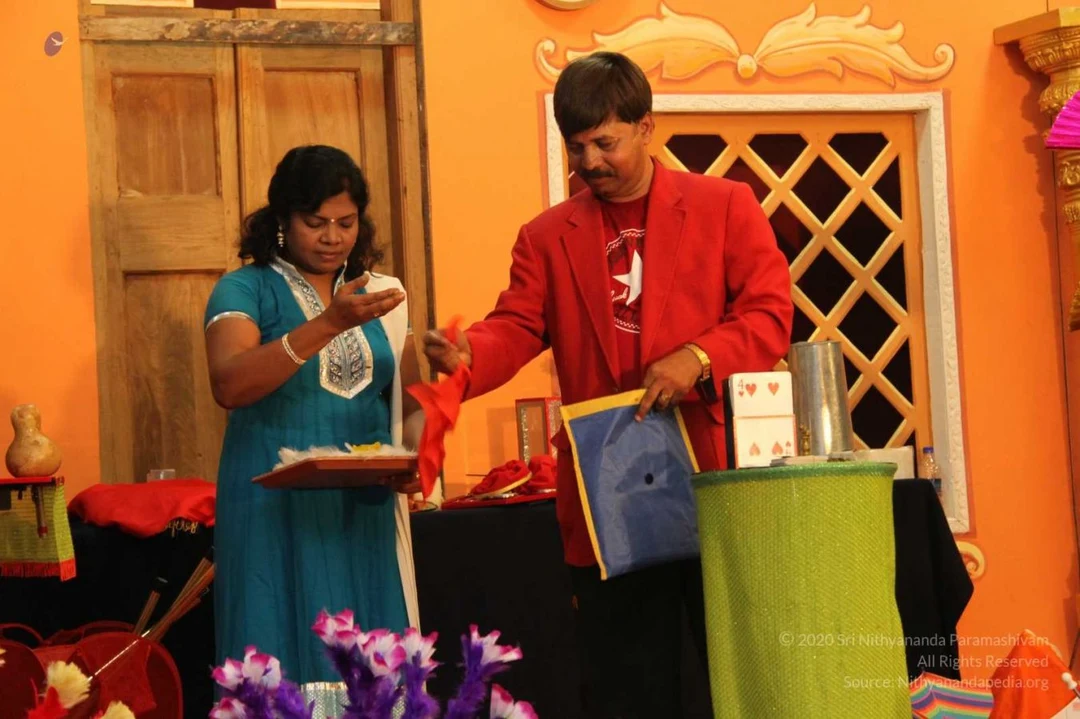
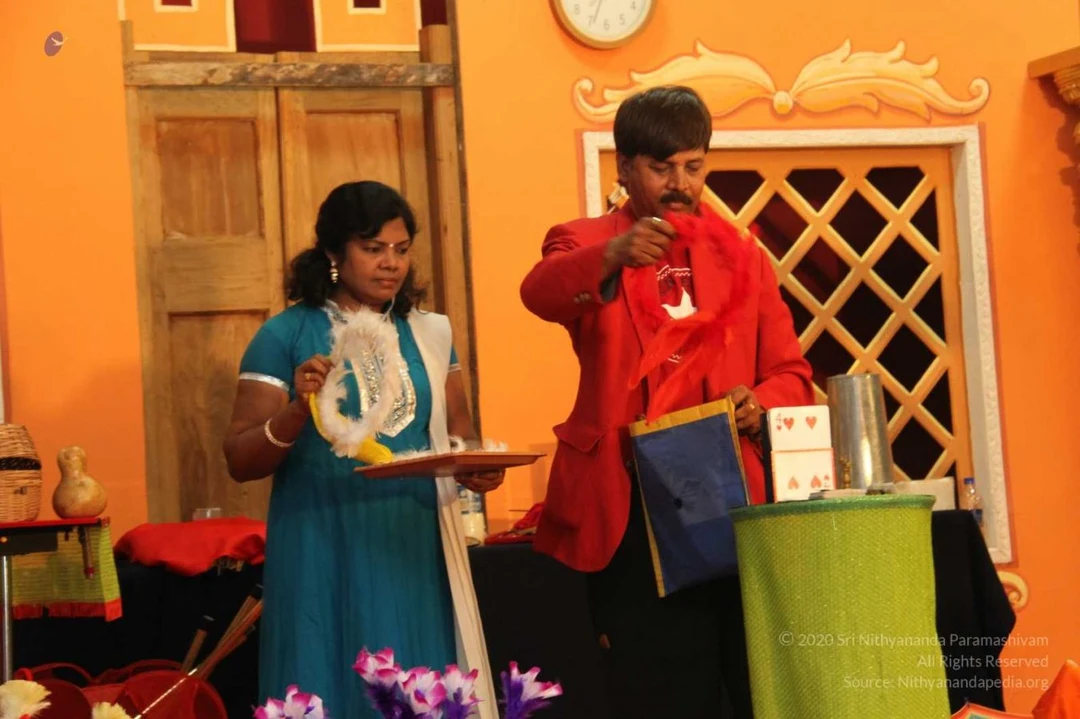
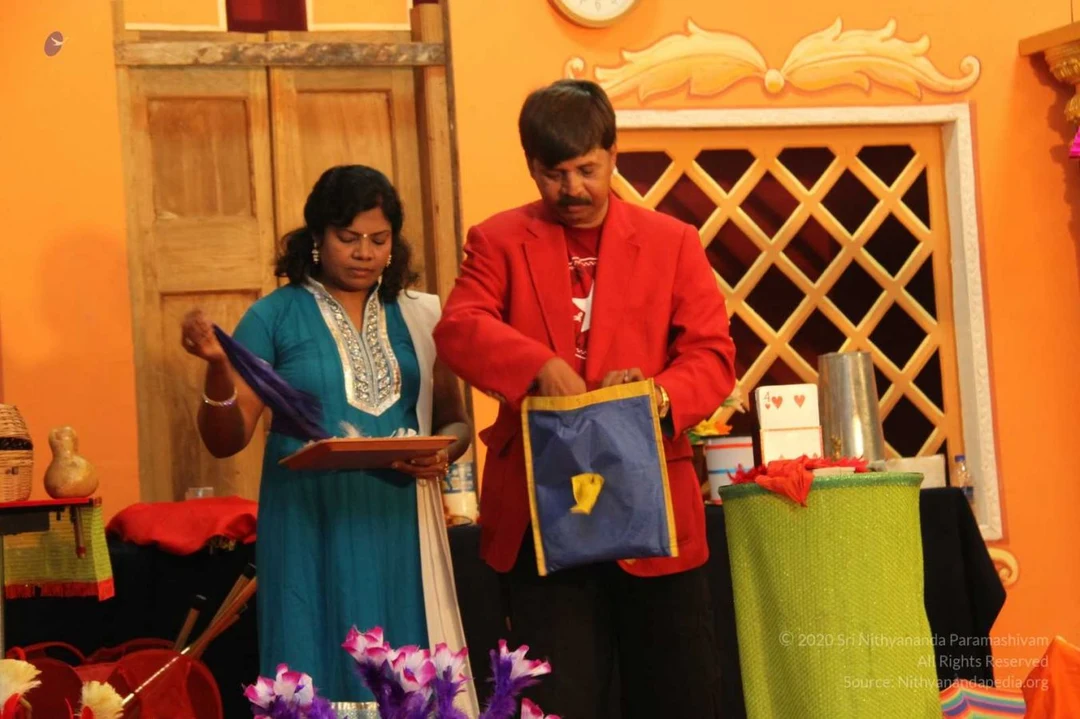
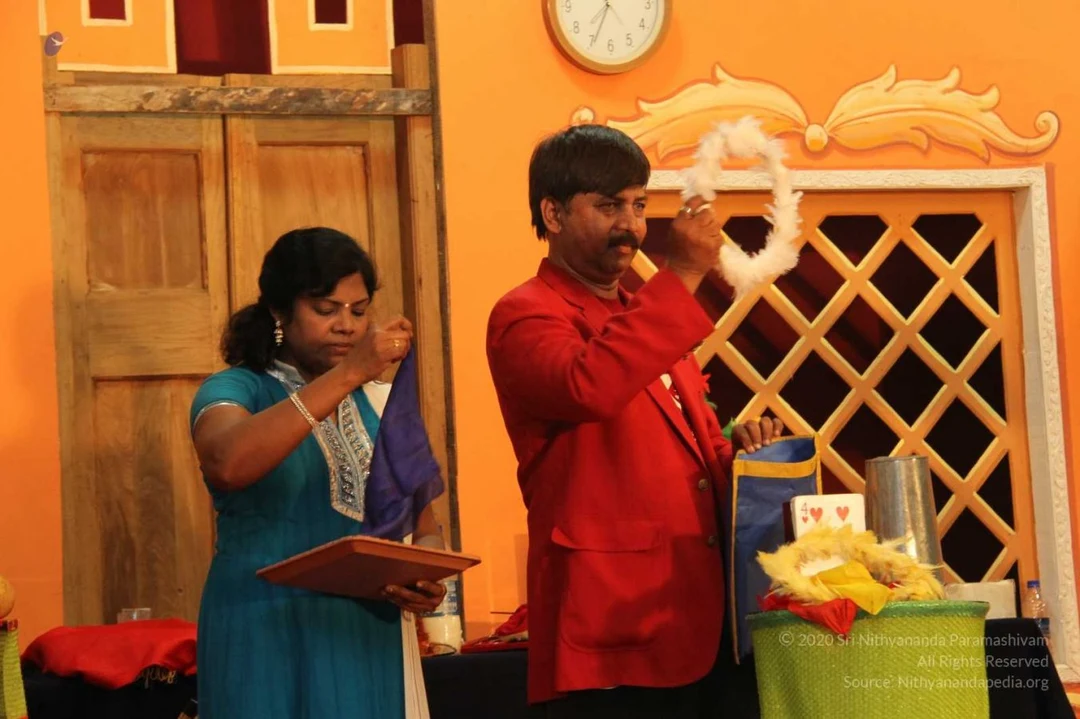
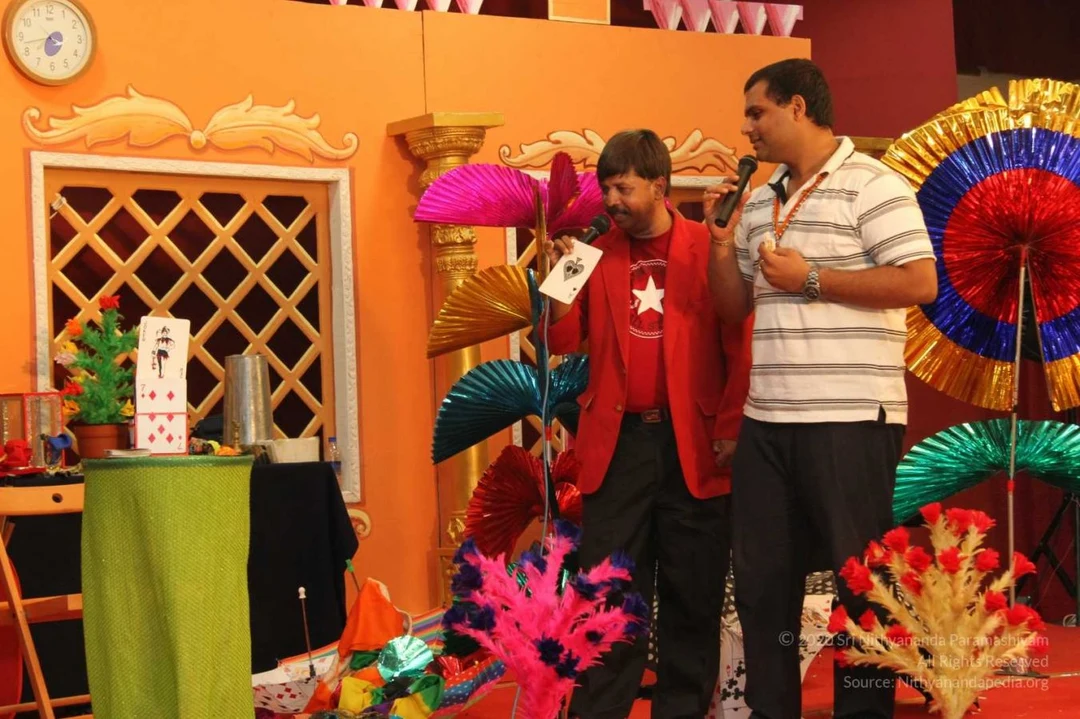
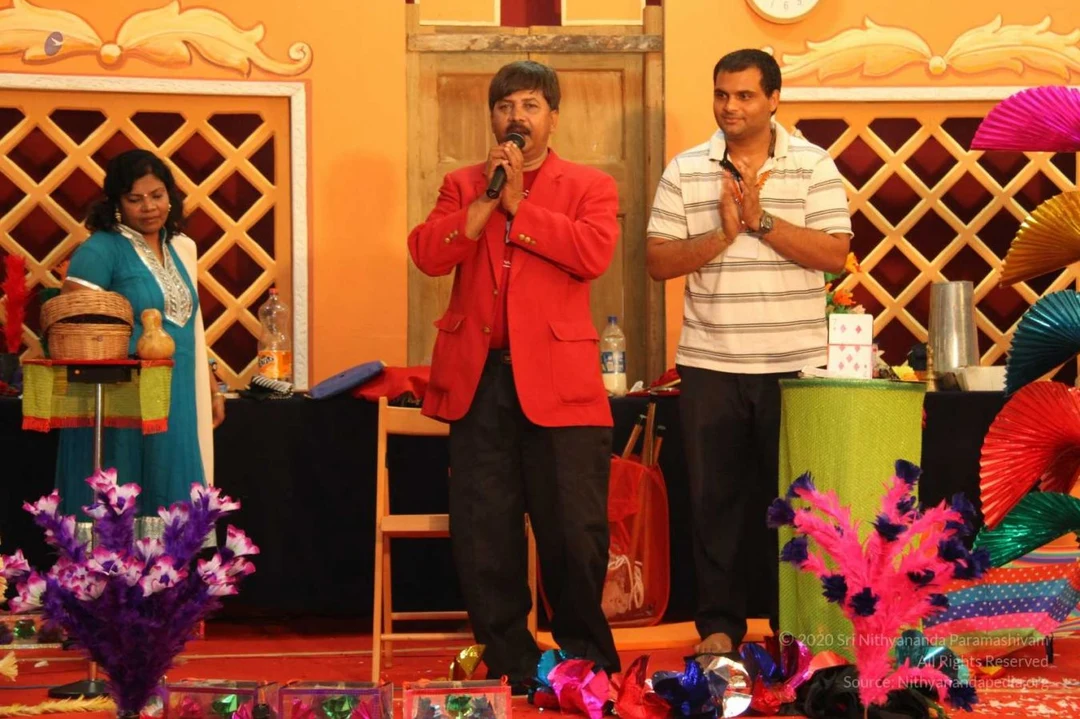
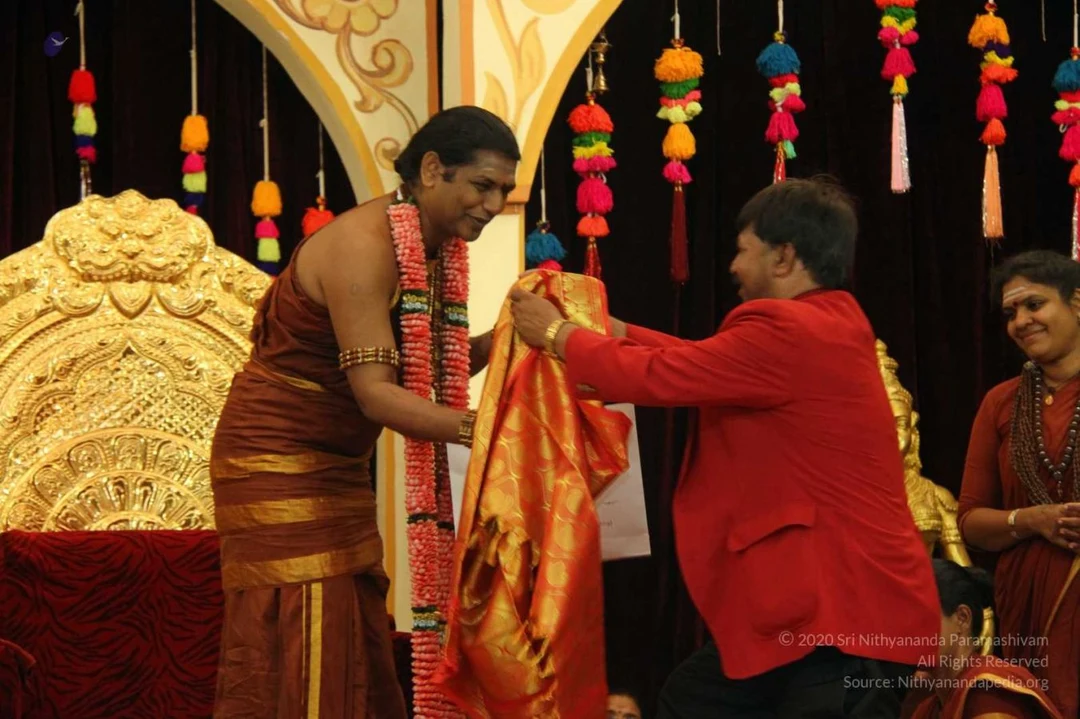
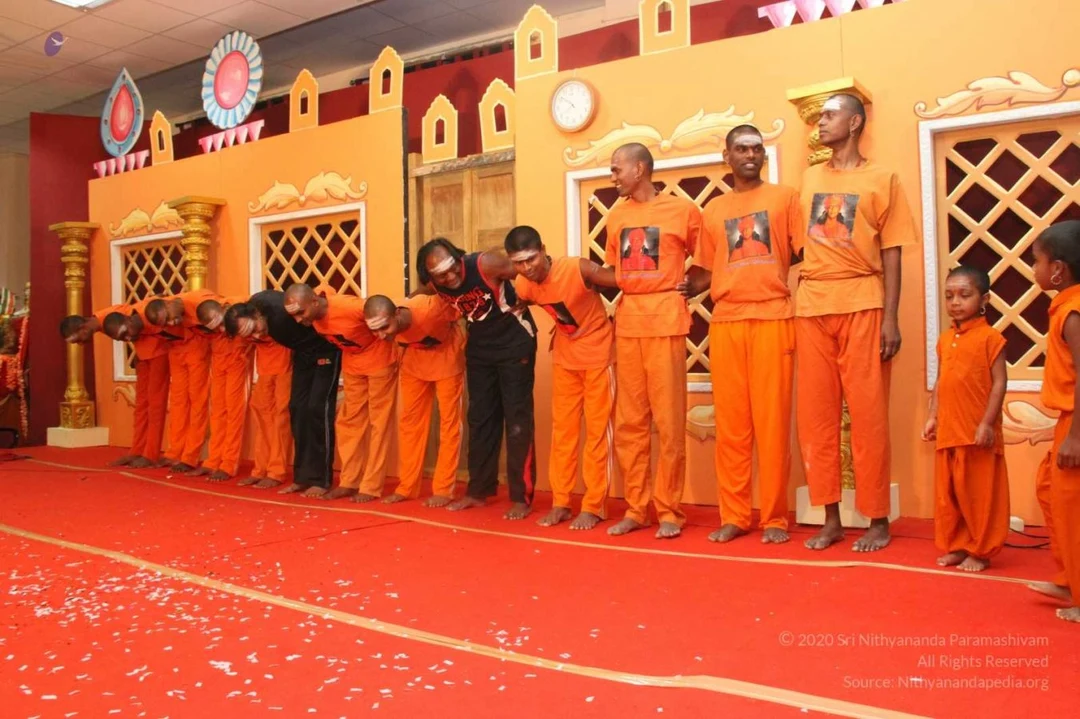
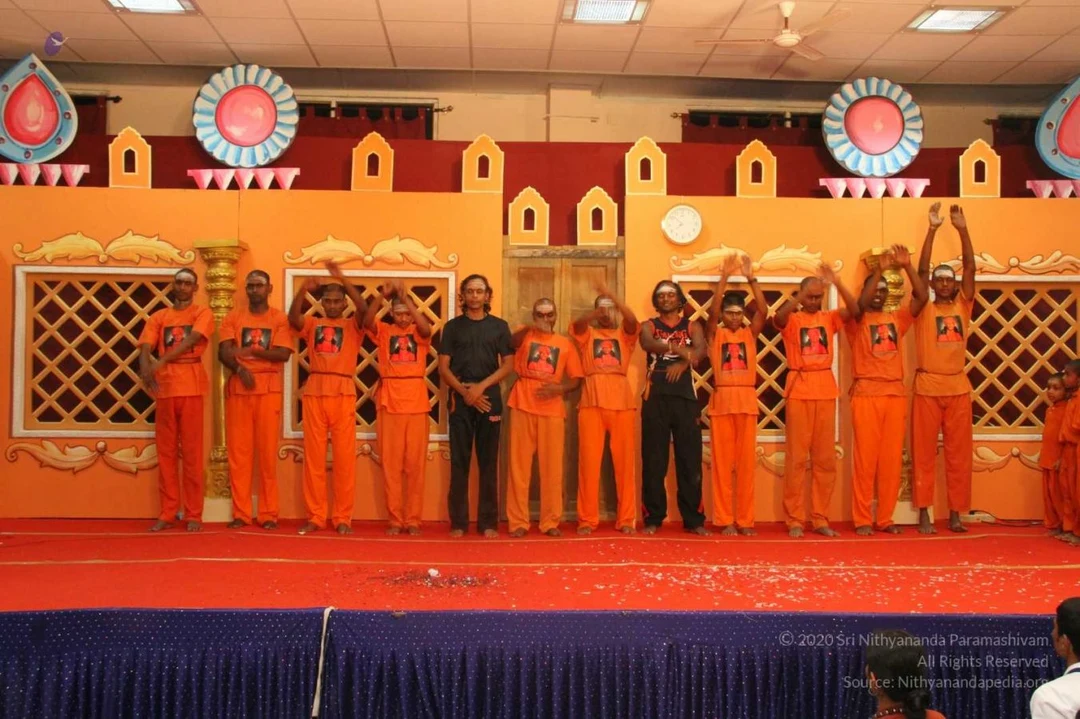
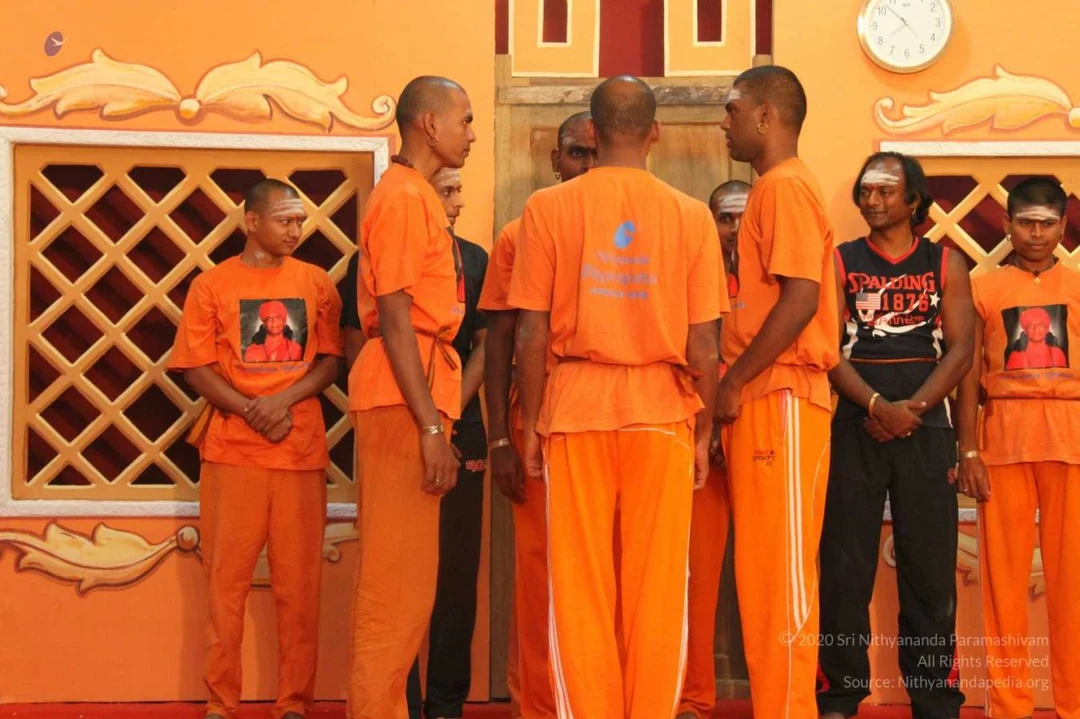
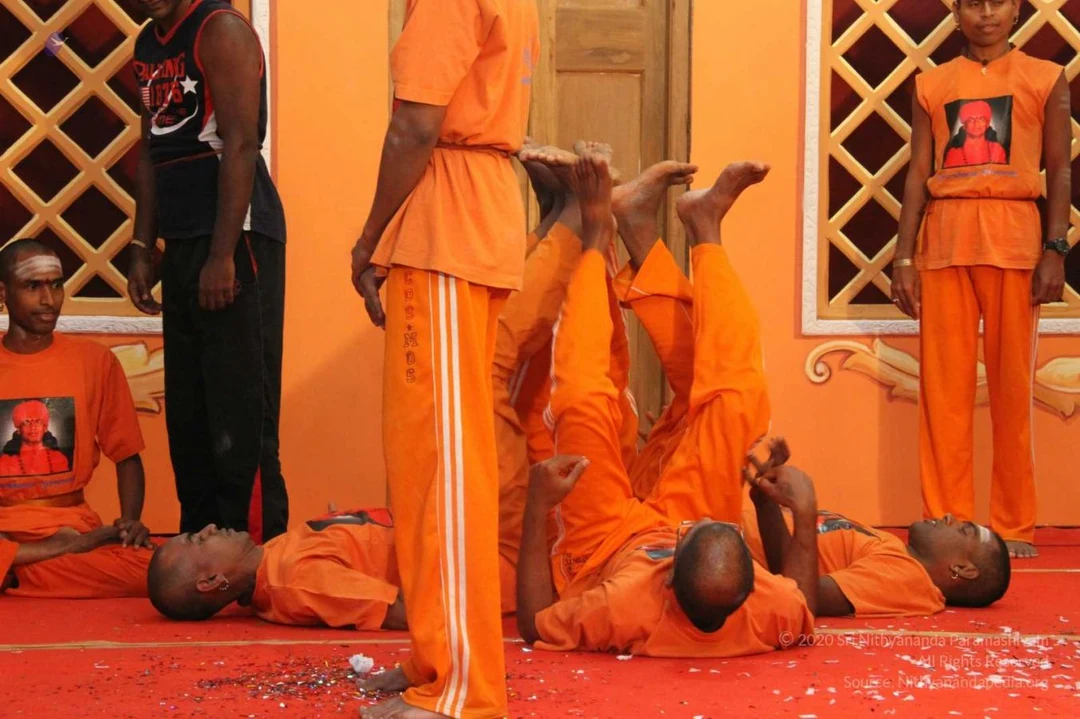
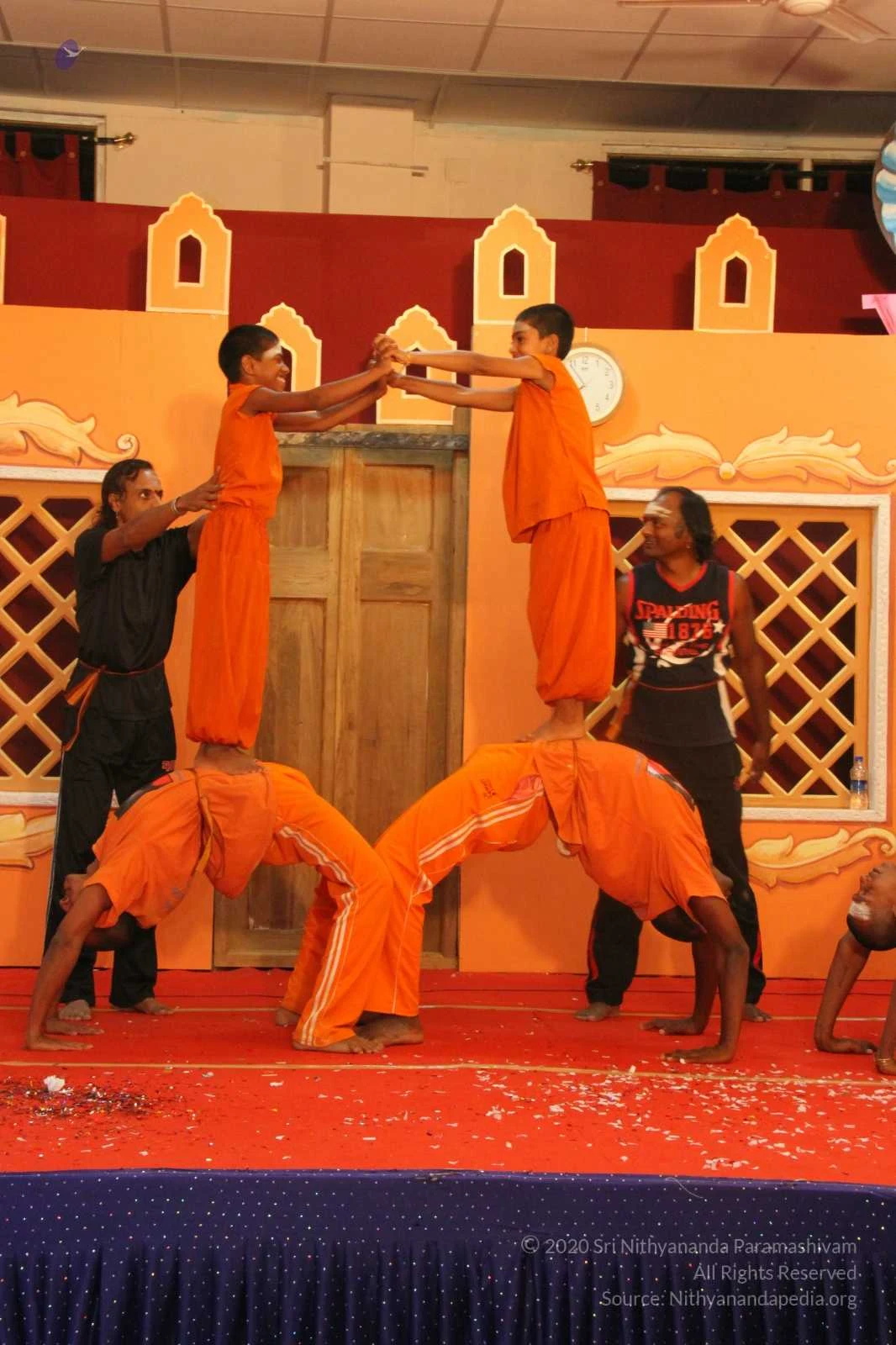
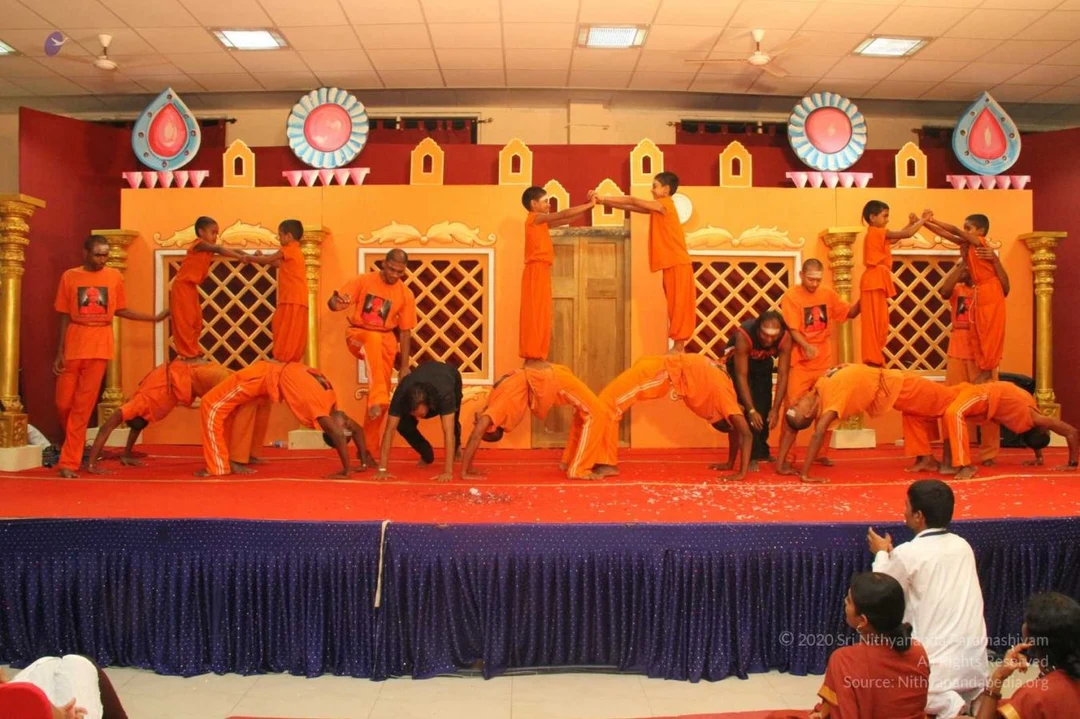
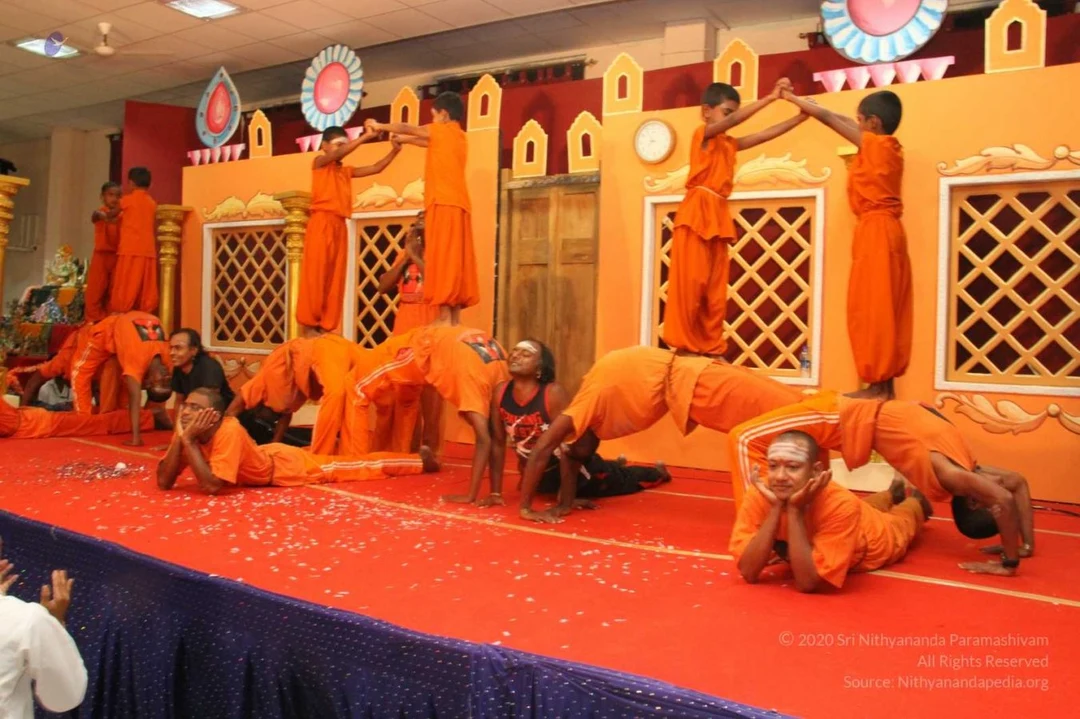
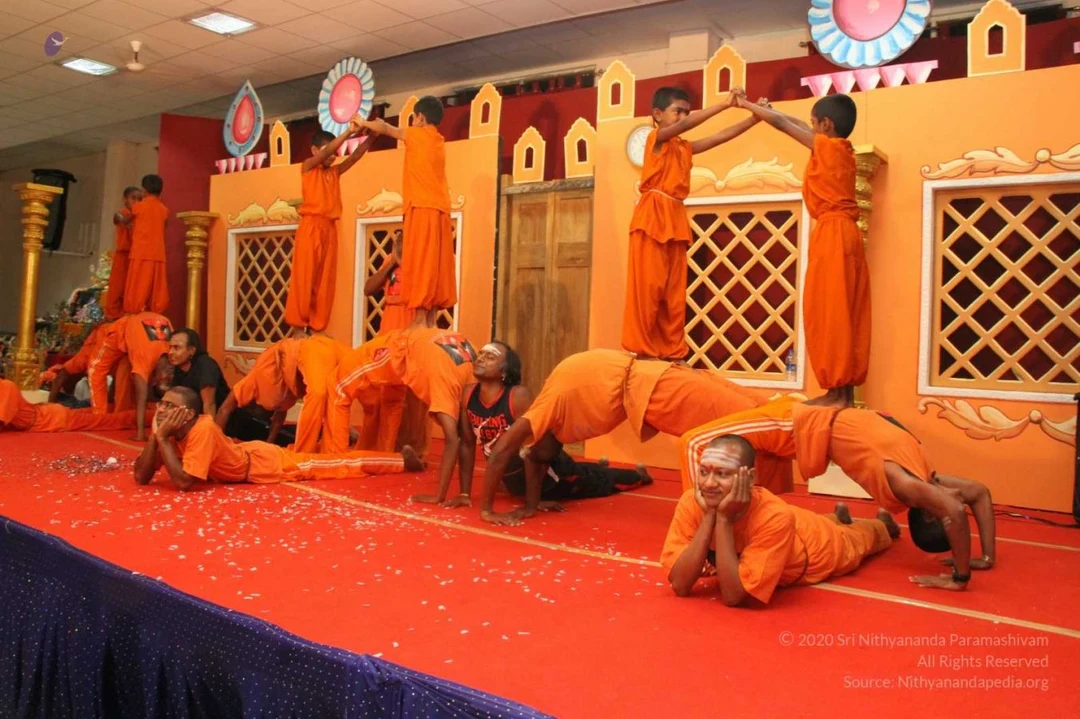
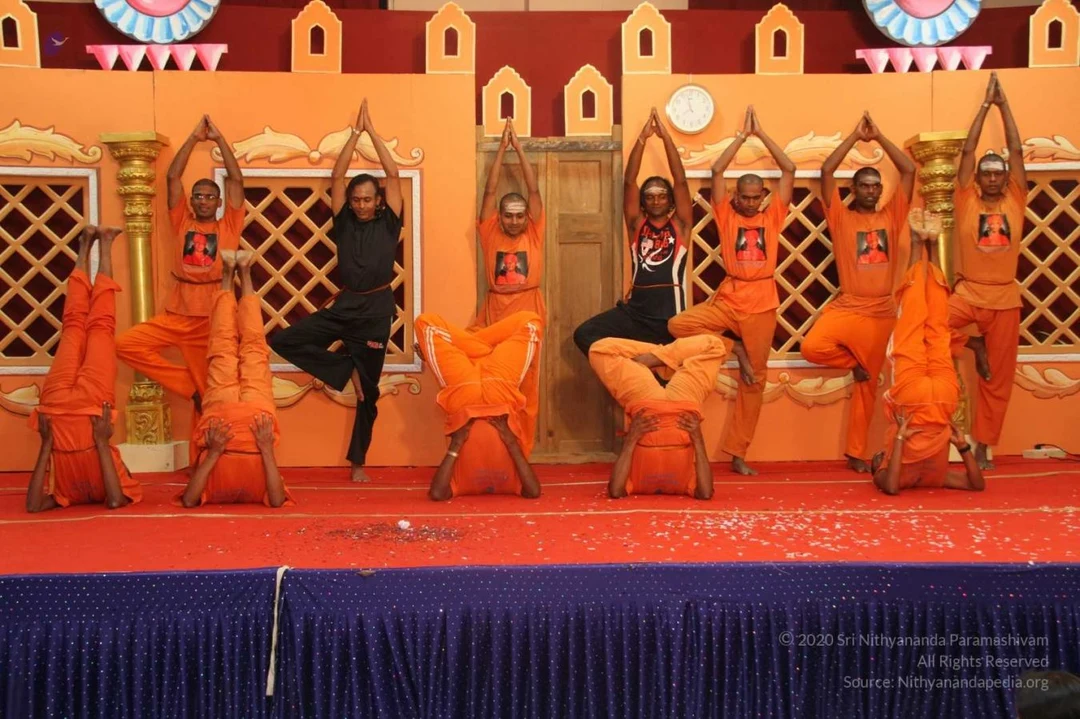
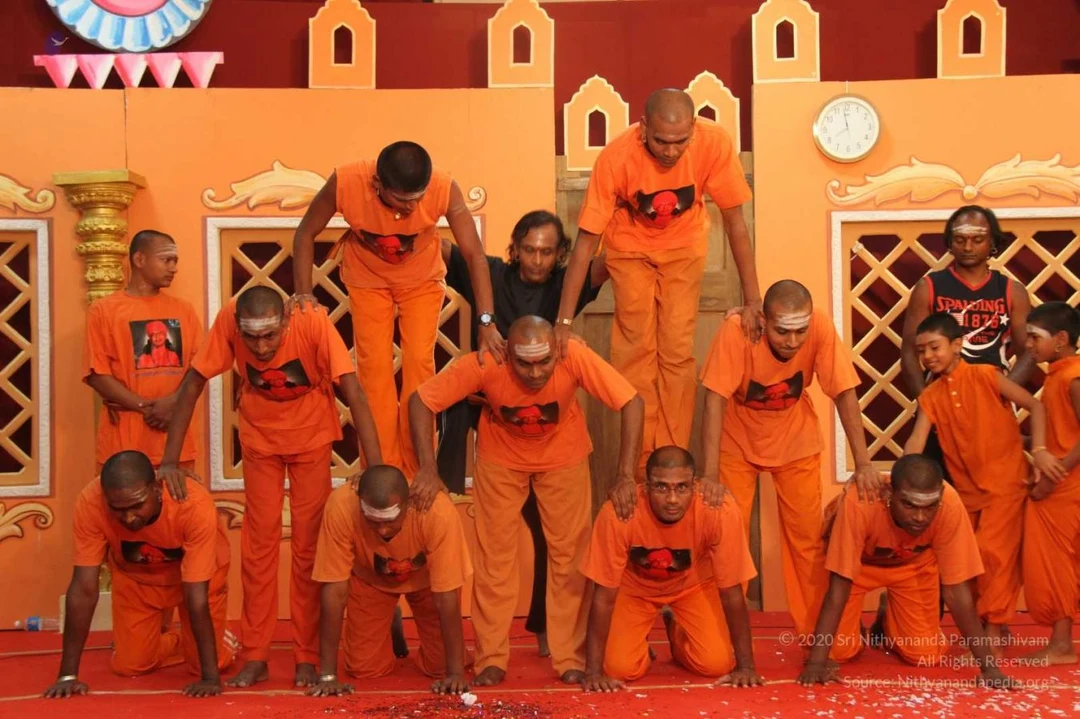
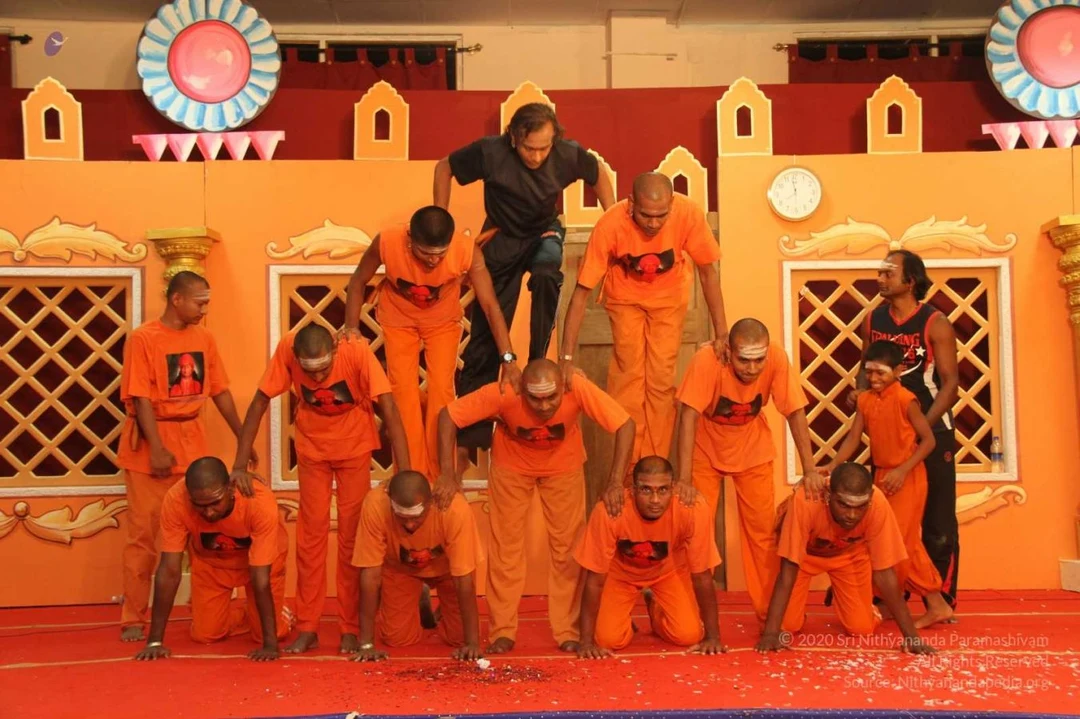
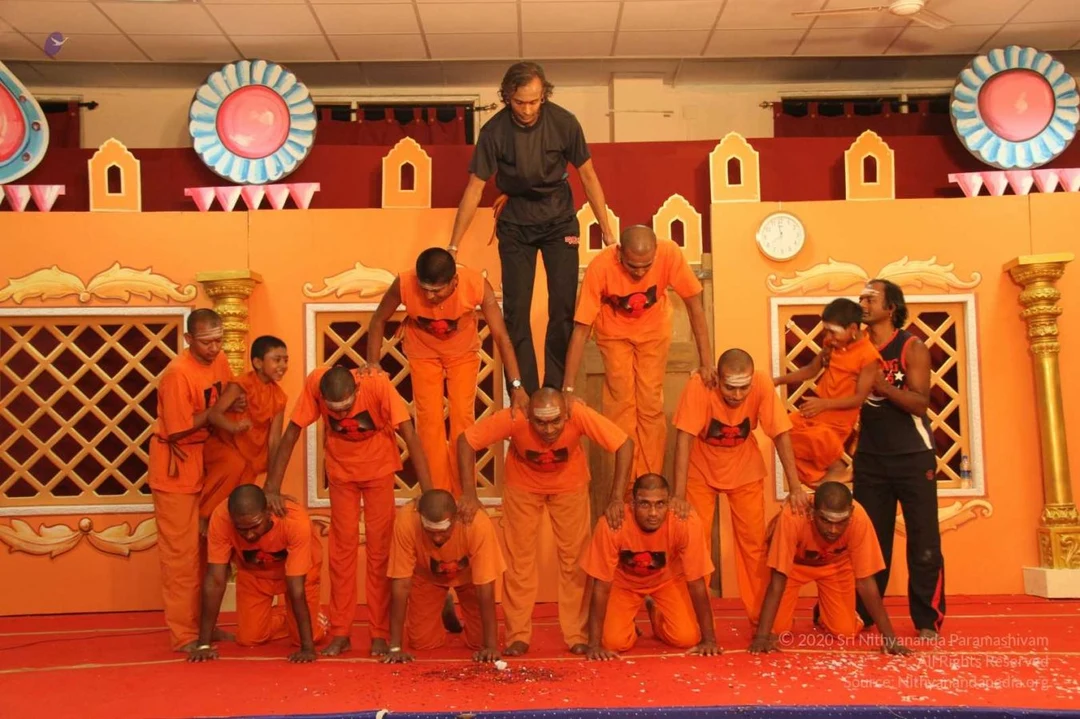
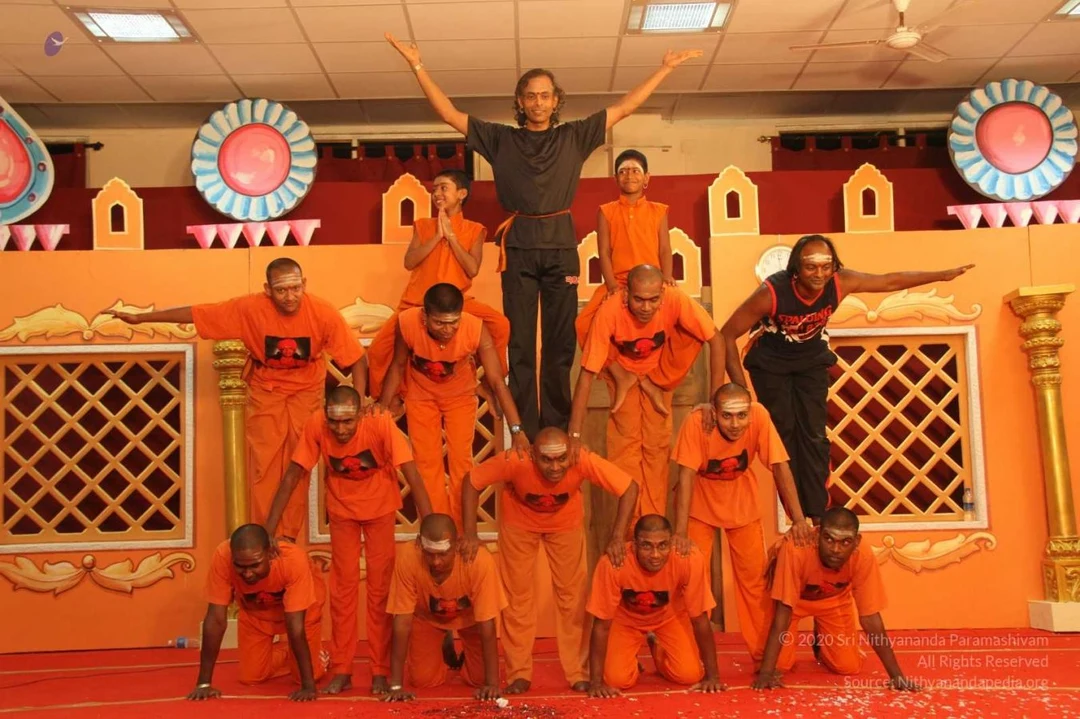
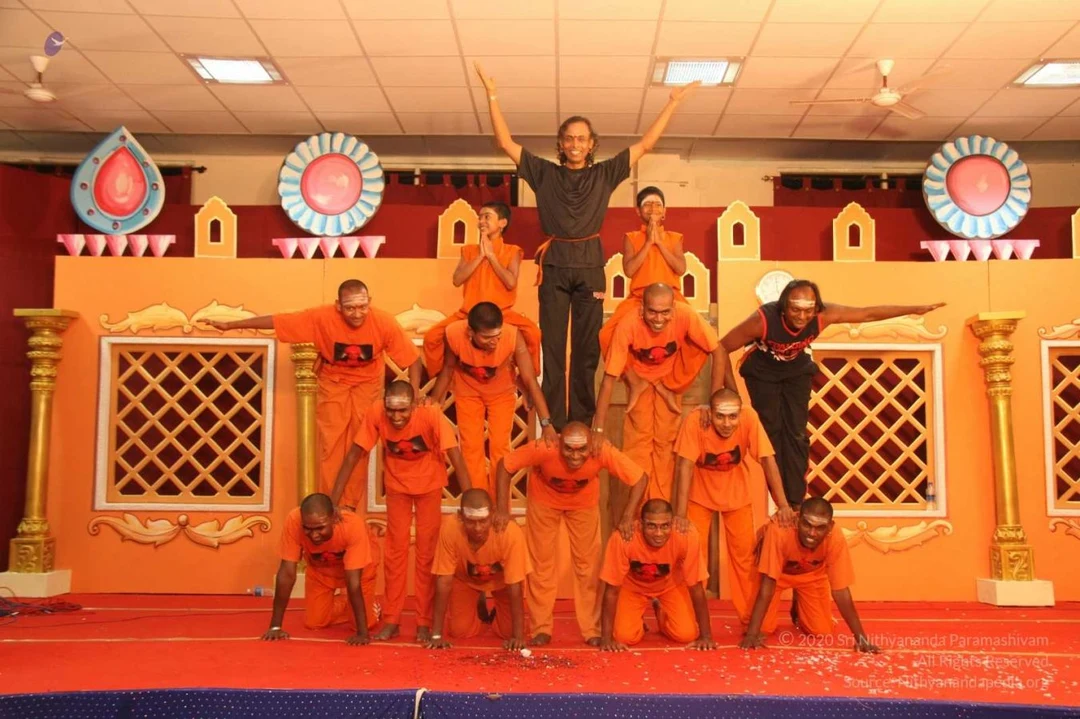
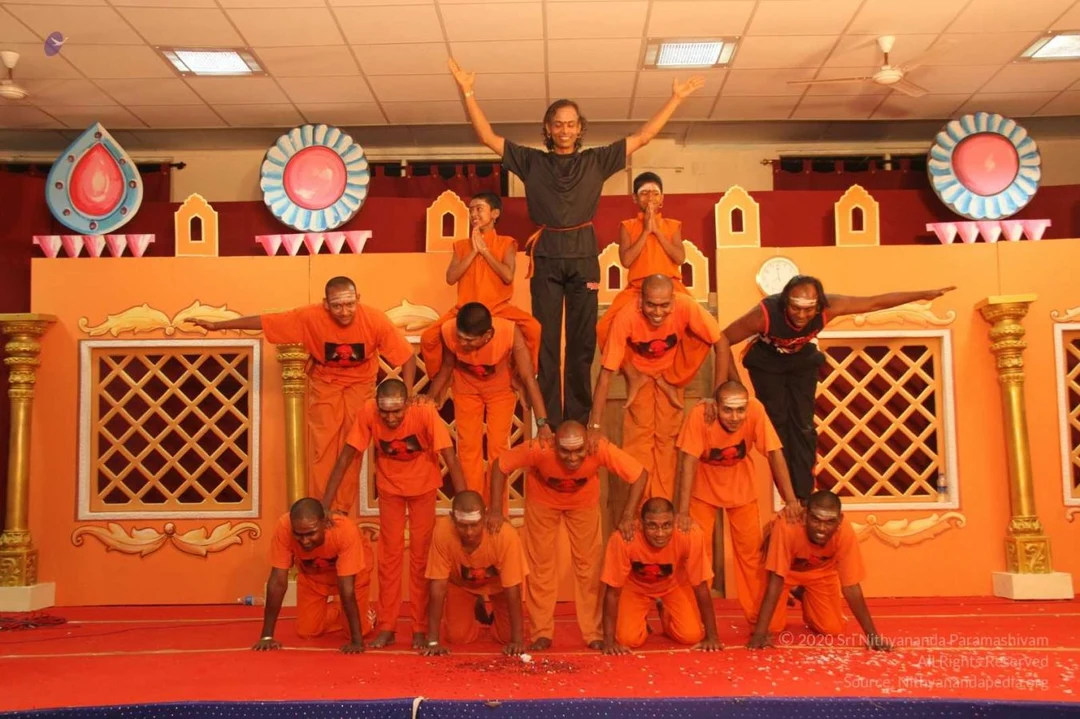
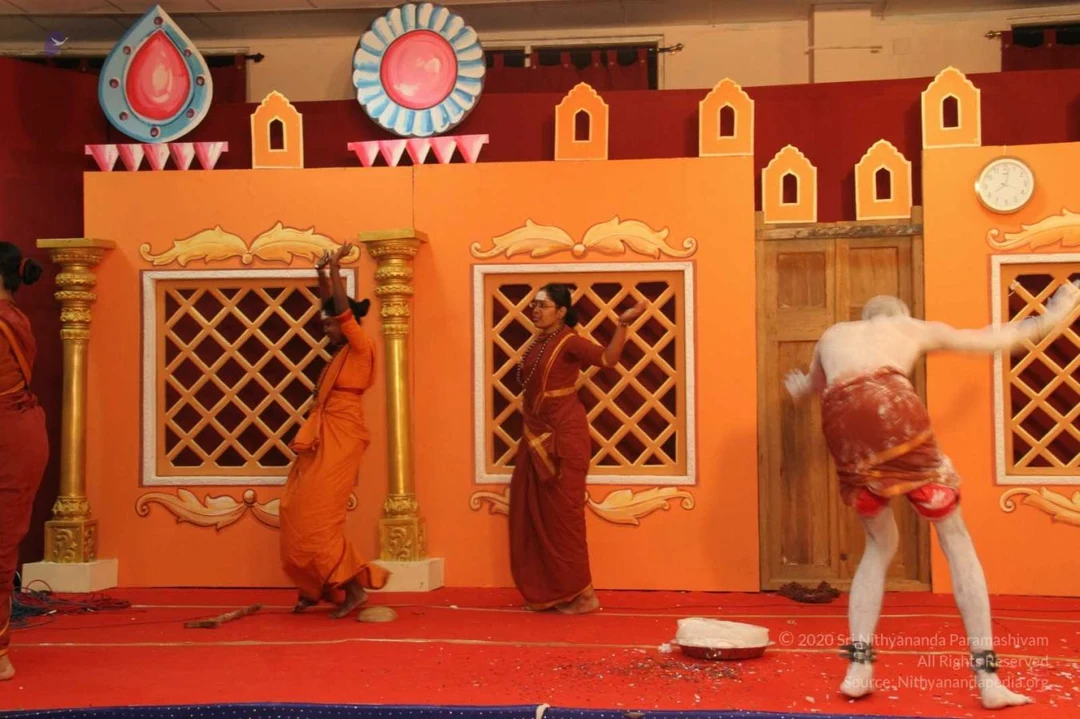
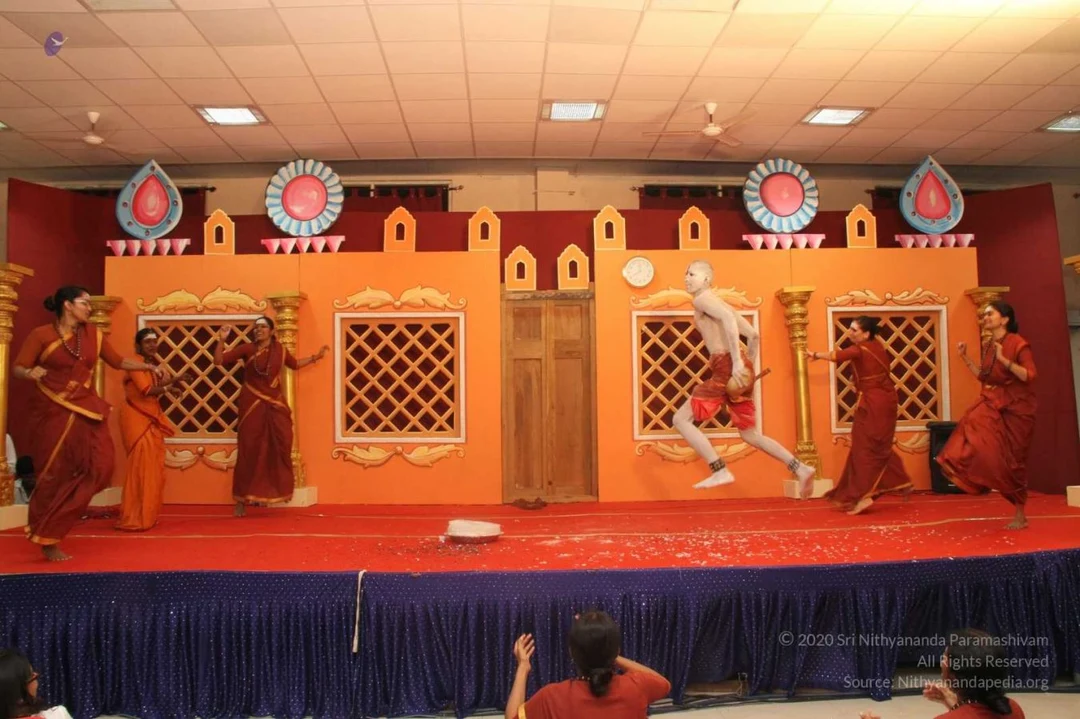
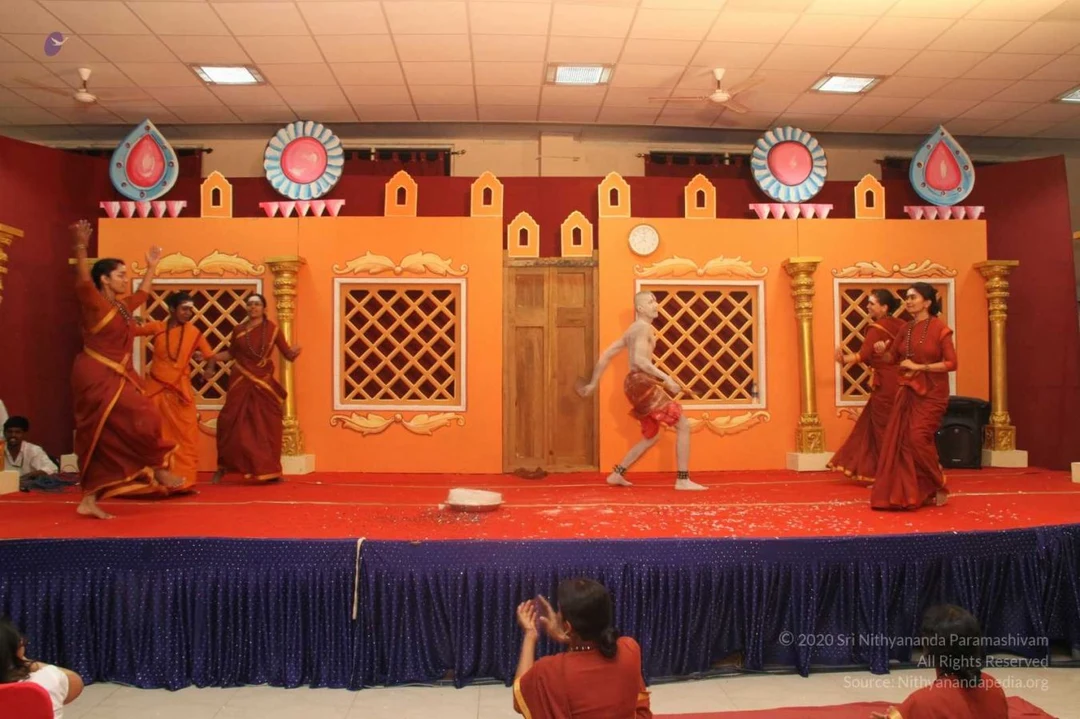
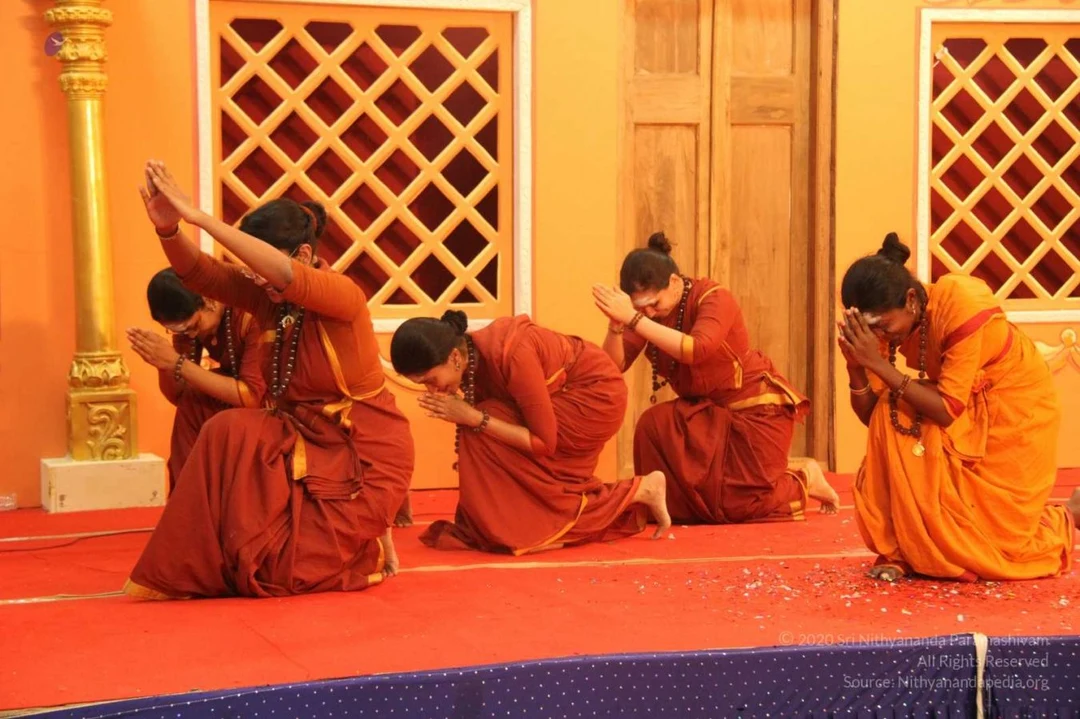
Navratri Ashramites Culturals and Magic Show

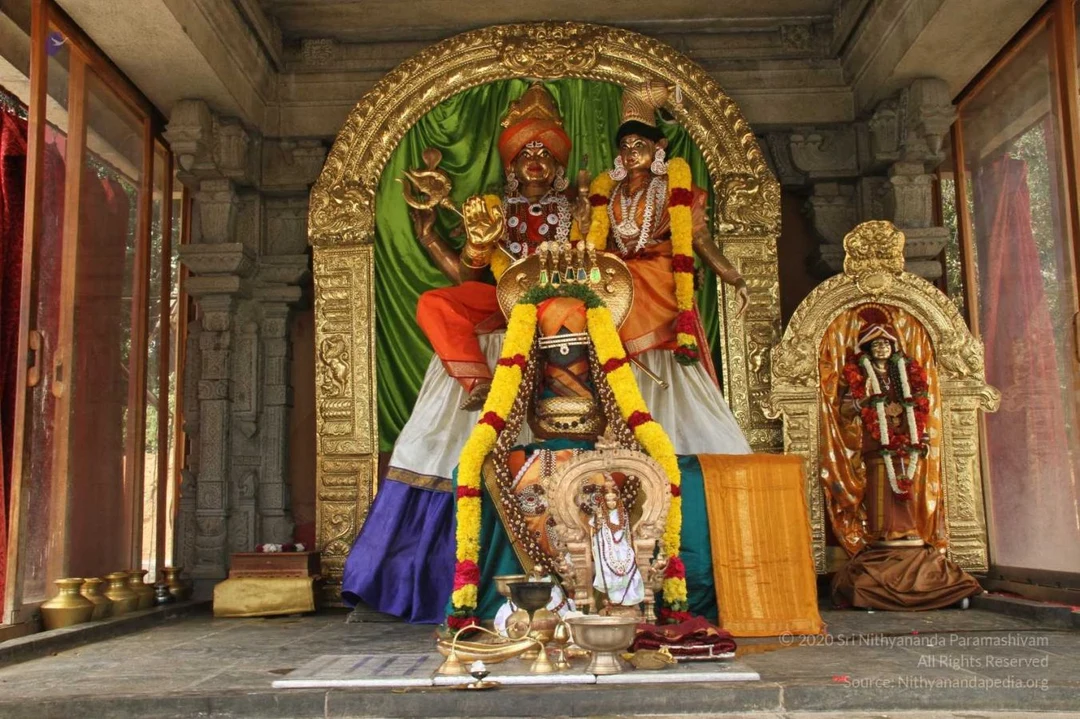
Temple

Devi Navratri Alankar

Venkateshwara Procession

Venkateshwara riding a horse

Tags:

Paramahamsa Nithyananda, strategy planning, spiritual, life, empower, responsibility.

Photos from this day

View all 771 photos

Pada Puja
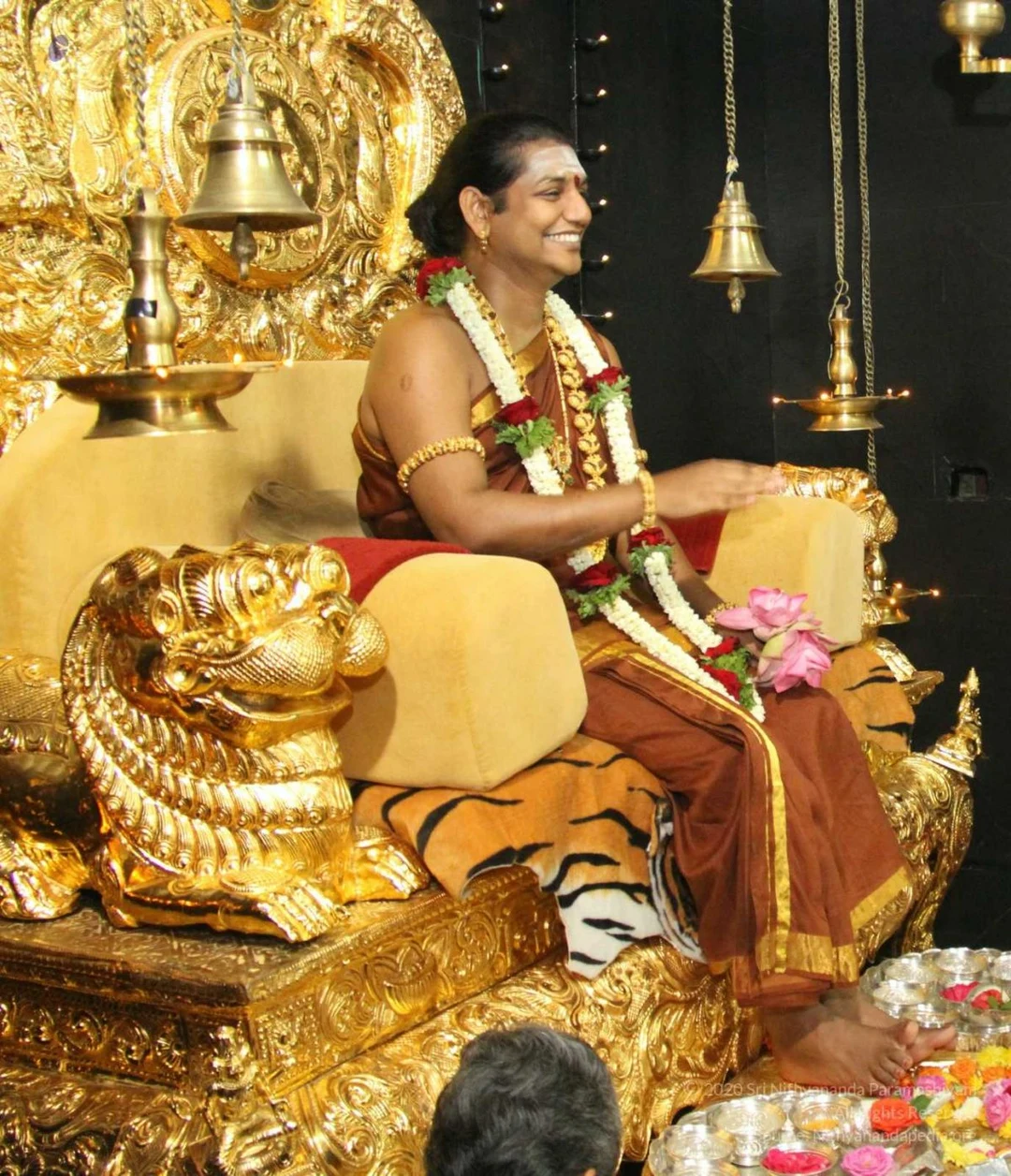
31 photosSource gallery
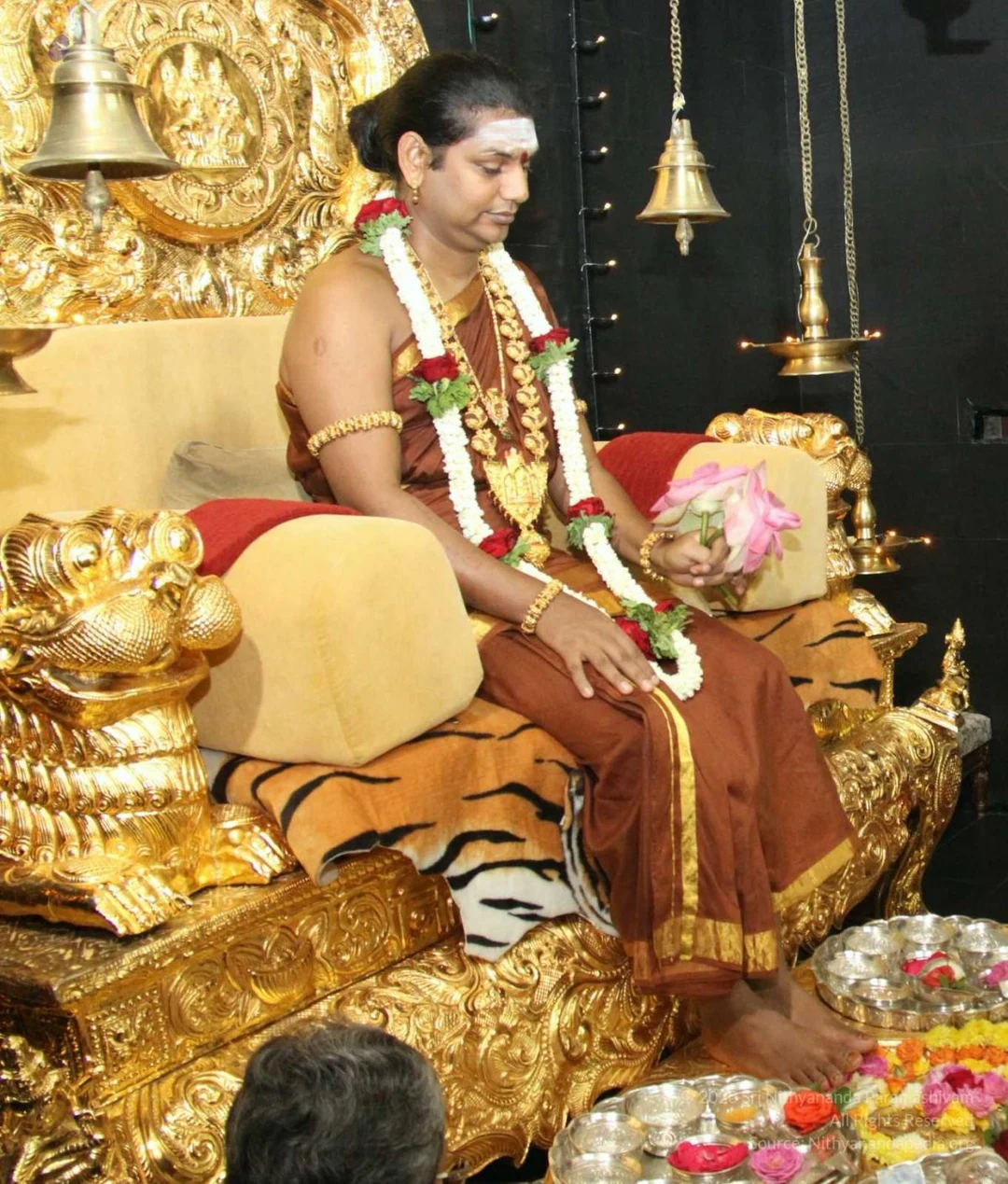
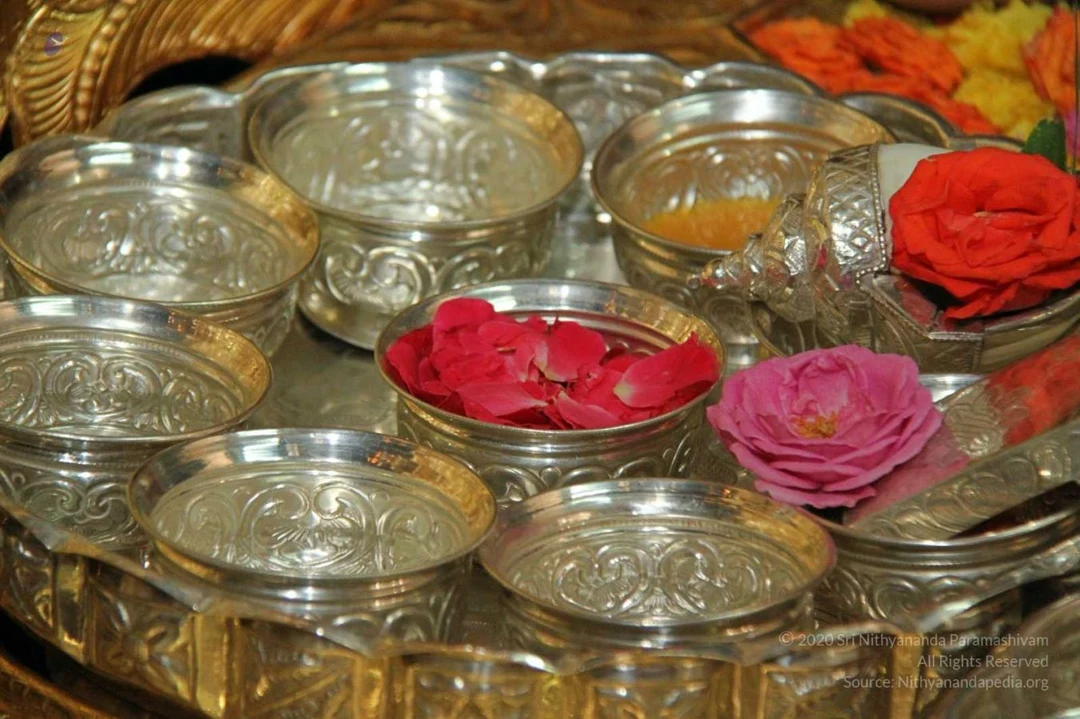
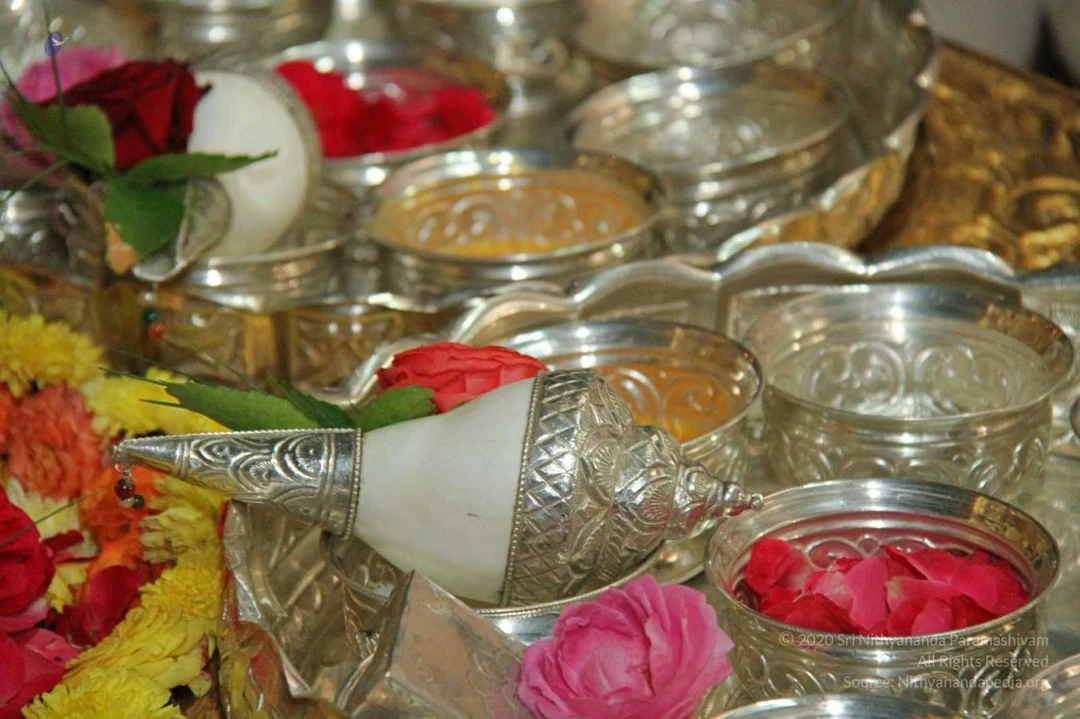
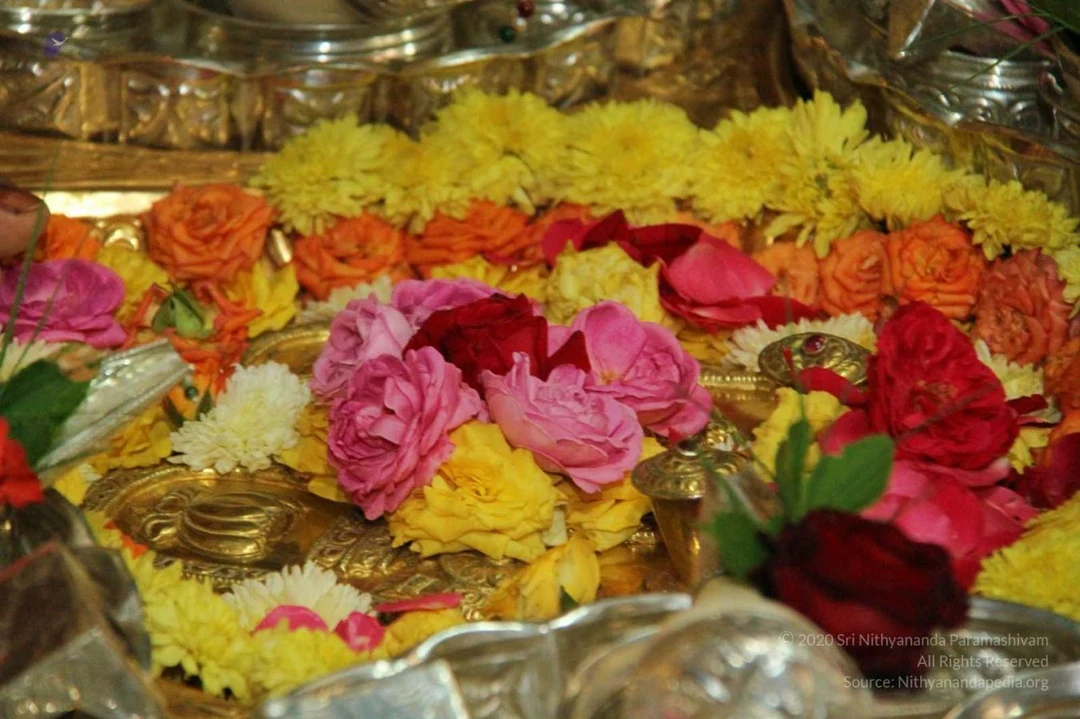
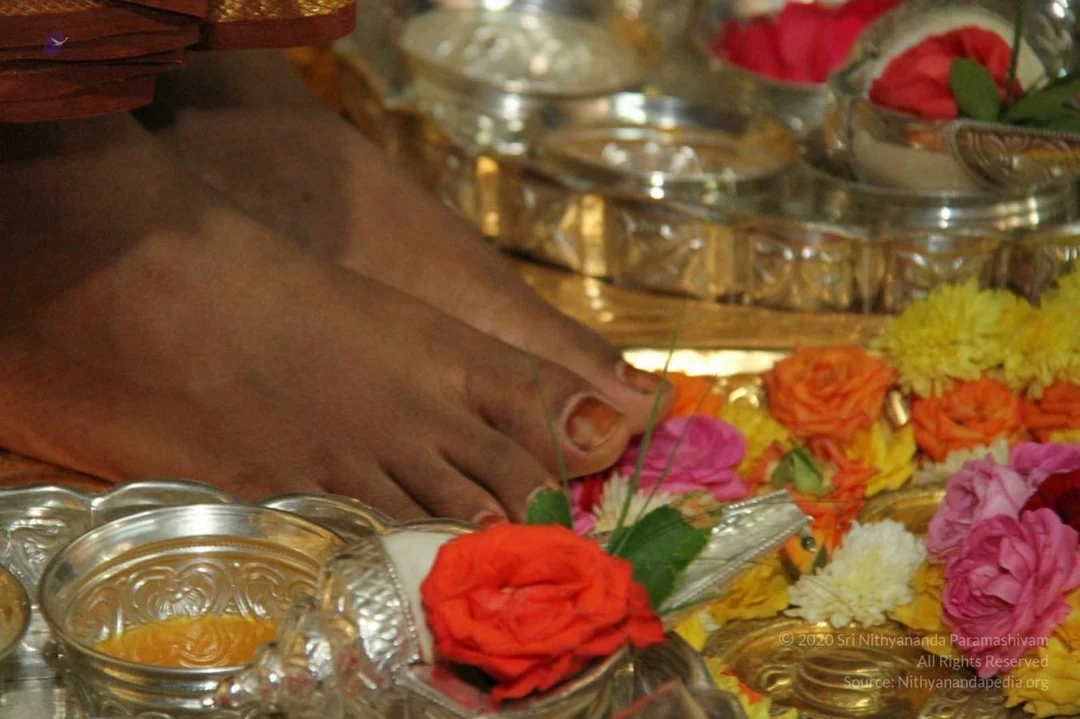
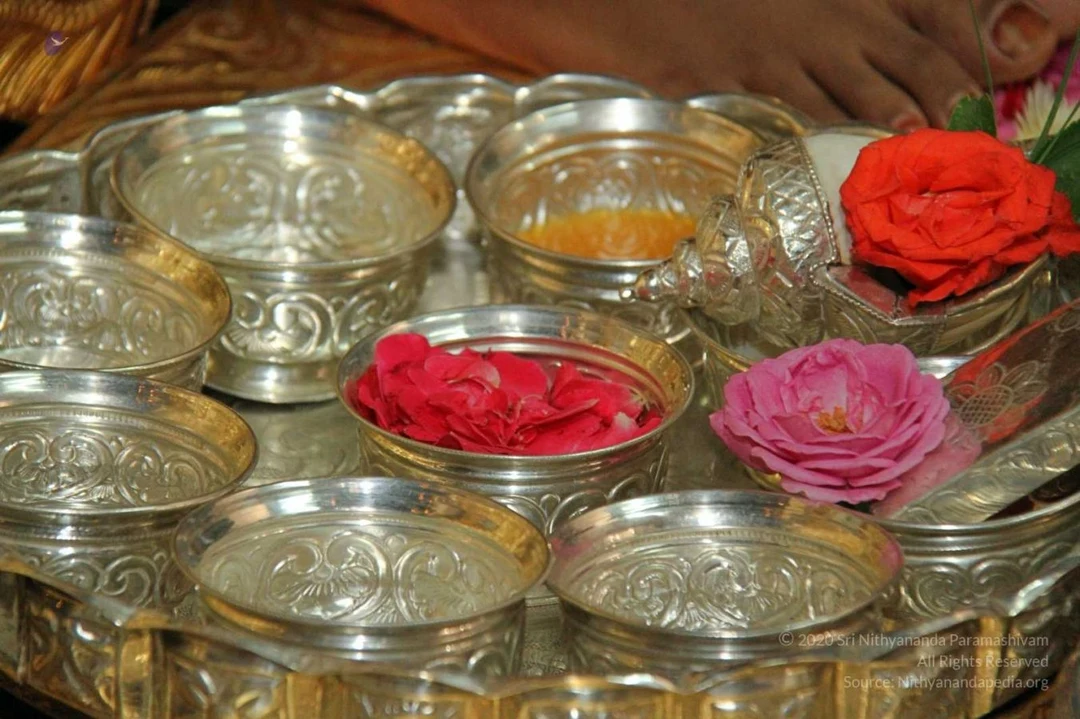
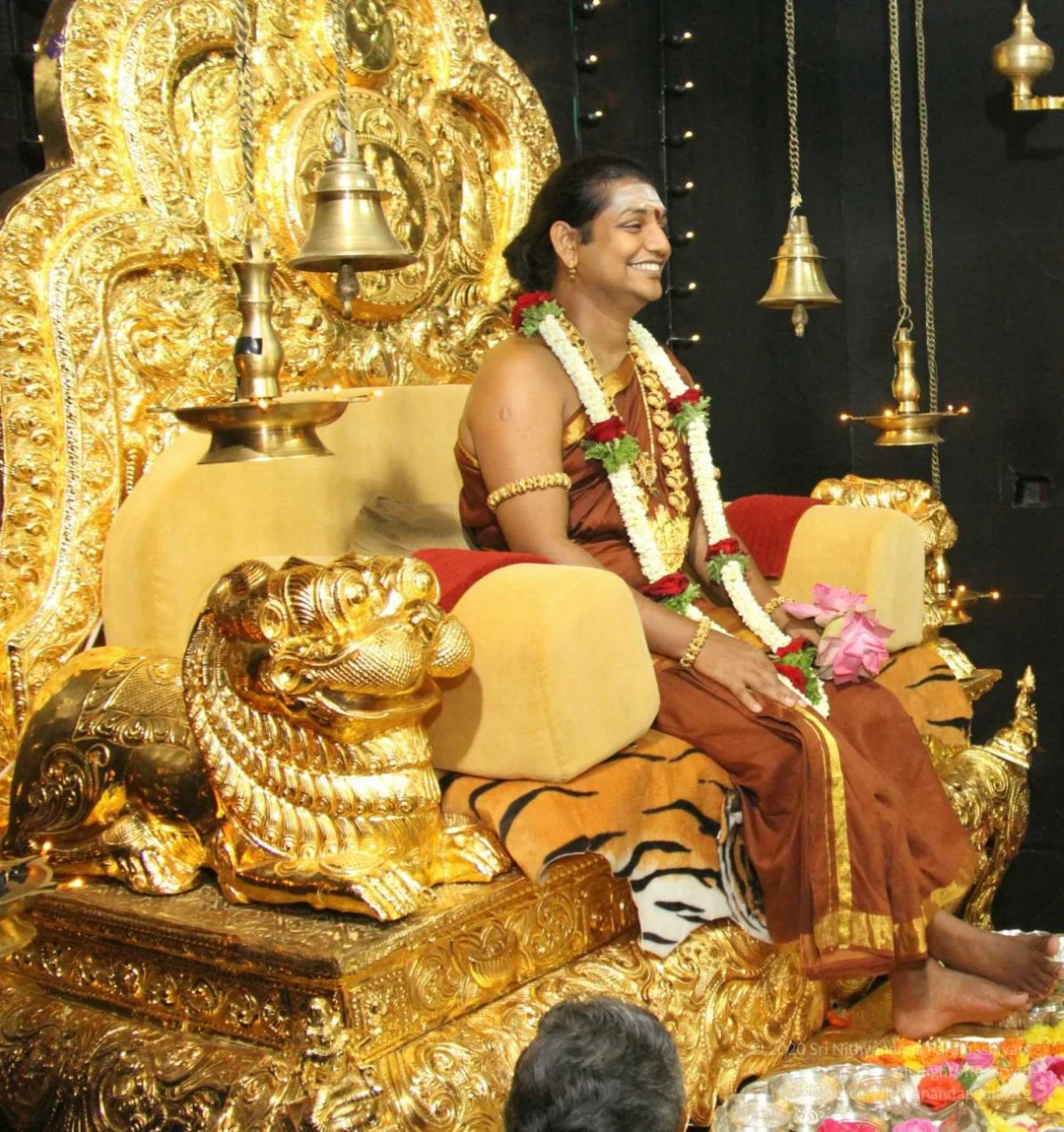
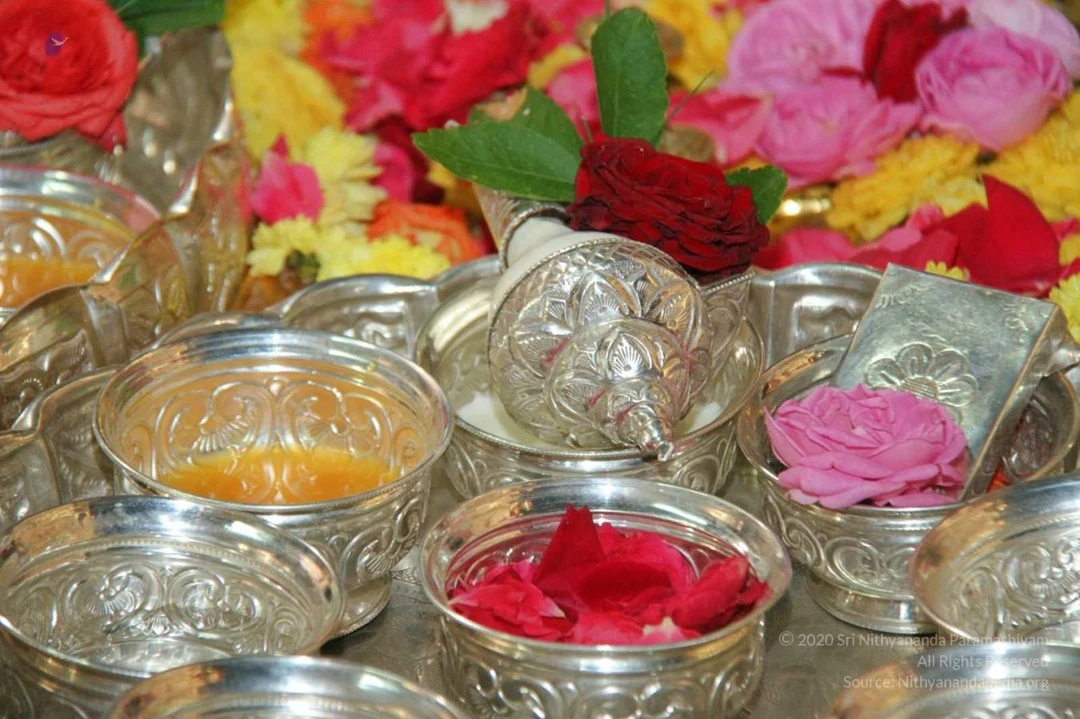
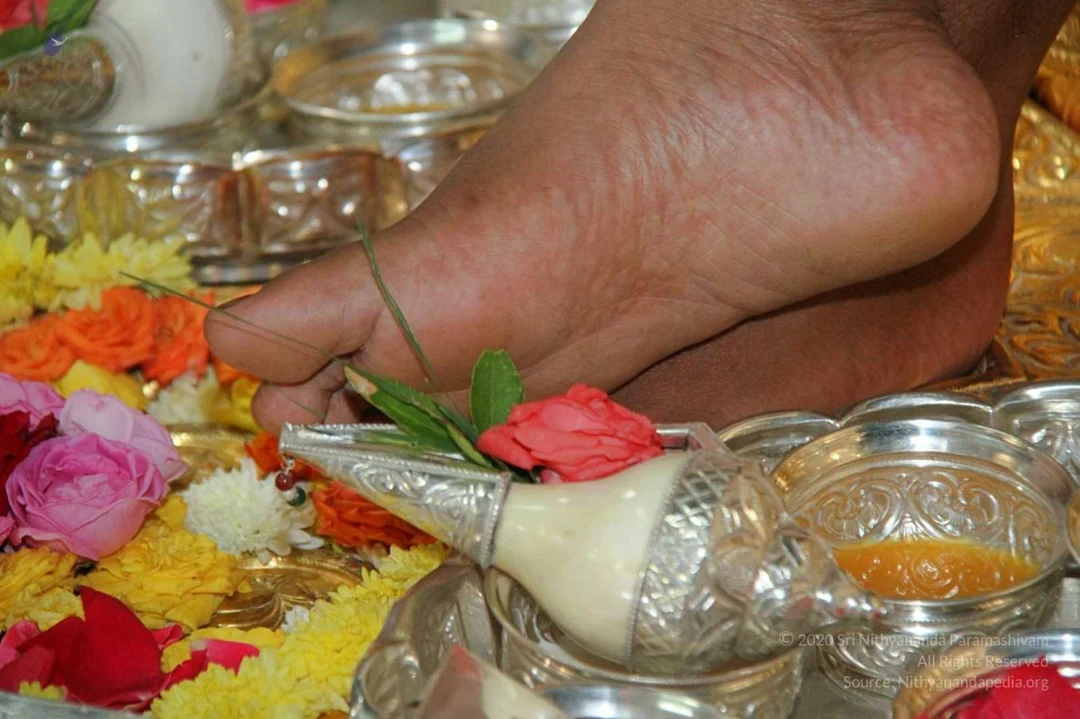
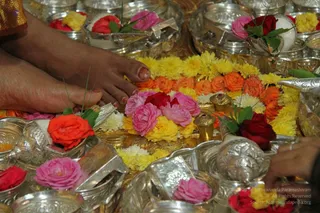
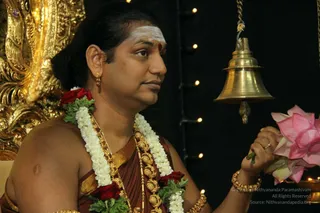
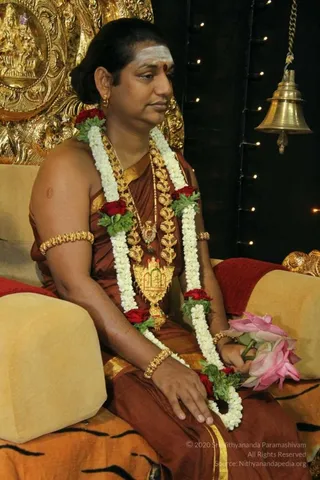
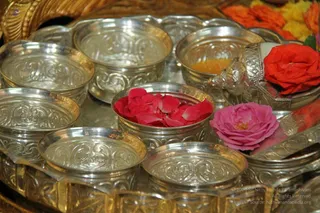
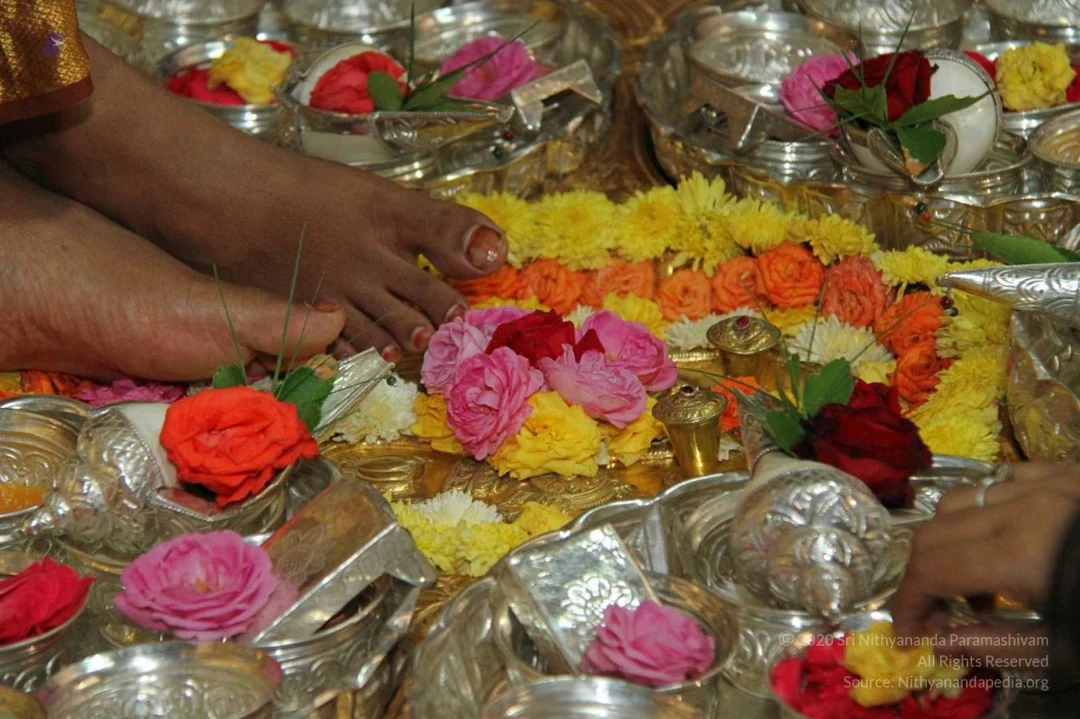
Close view of bare feet being worshipped in a padapuja, the feet resting on a bed of yellow, orange, pink and red roses and marigolds. Around them stand silver and brass puja vessels, a silver bowl with a red rose, small brass cups and a silver kalasha-style pot, with green leaves and blades of grass placed among the flowers. A hand at the lower right is arranging offerings. The scene is an intimate foot-worship ritual with fresh flower offerings arranged on silver trays.A man with swept-back hair, a white tilak with a red dot on his forehead, and a brown and gold shawl with gold border sits beside a golden carved throne. He wears red and white flower garlands, a gold chain of ornate beads, gold earrings and bangles, and holds a pink lotus in one hand while his other hand rests near a hanging brass bell. Small lit oil lamps glow in the dark background. The appearance is consistent with the page's Swamiji reference, with several cues: swept-back hair, ornate gold adornment and saffron-brown clothing, so the identity is stated as probable.A seated man in a brown-orange dhoti-style garment with gold border sits on a cushioned throne draped with a tiger-striped cloth. He wears long white flower garlands with red roses and leaves, heavy gold necklaces including a temple-shaped pendant, gold armlets and bangles, and holds pink lotus flowers. A white tilak and red bindi mark his forehead. Behind him is an ornate gold-embossed backdrop and a hanging brass bell against a dark wall with small lights.Close-up photograph of a polished silver ritual tray with embossed floral scrollwork holding several small silver bowls. One bowl contains red rose petals, another holds yellow turmeric or saffron powder, and a large pink rose and an orange-red rose lie among the bowls. A silver vessel with a spout rests at the right edge beside the flowers, and gold-toned ornamental metalwork frames the tray. No people are visible.A smiling man seated on an ornate gold throne with carved lion-head armrests and a tiger-striped cushion, wearing a brown and gold-bordered sari-style robe, a white garland with red roses, gold necklaces and bangles, and a white tilak with a red bindi. He holds a pink lotus flower in his right hand. Brass hanging bells and oil lamps hang behind him against a dark backdrop, and silver plates of flowers and offerings lie at his feet. A person's head is visible at the lower edge. a person's appearance cues include the ornate gold regalia, garland and throne presentation, consistent with the page's attribution. Ritual setting suggests a satsang or darshan.A man with a white tilak on his forehead sits on an ornate gold throne carved with lion-head armrests and a tiger-striped cushion, smiling and holding pink lotus flowers in one hand. He wears a brown dhoti-style garment with a gold border, a long garland of white flowers with red roses, a gold chain pendant, gold armlets and bangles. Hanging brass oil lamps and bells surround the throne against a black backdrop. In the lower foreground, a tray of silver bowls, pink petals and marigolds lies at his feet, and the back of another person's head is partly visible.

Nithya Satsang

35 photosSource gallery
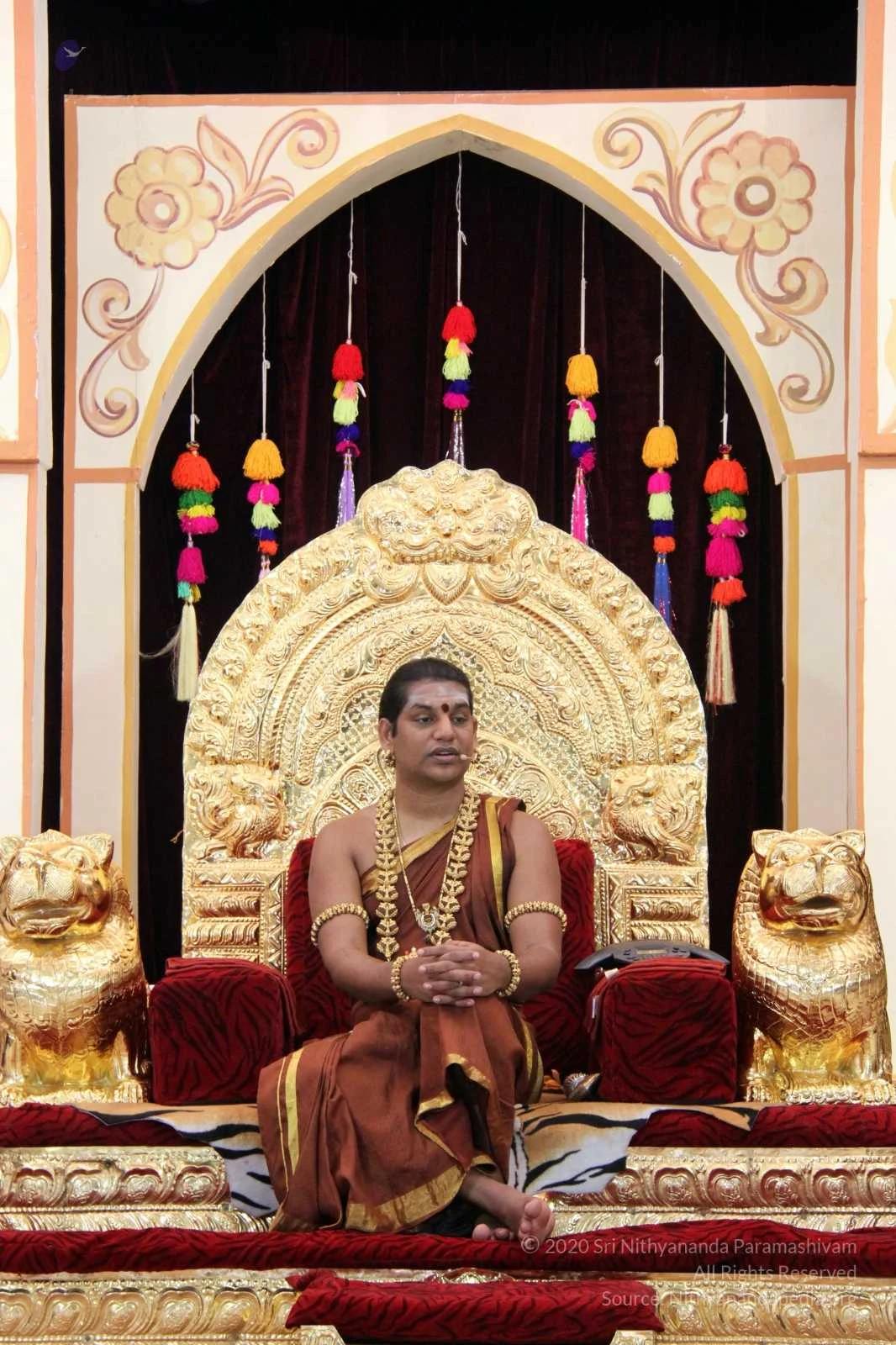
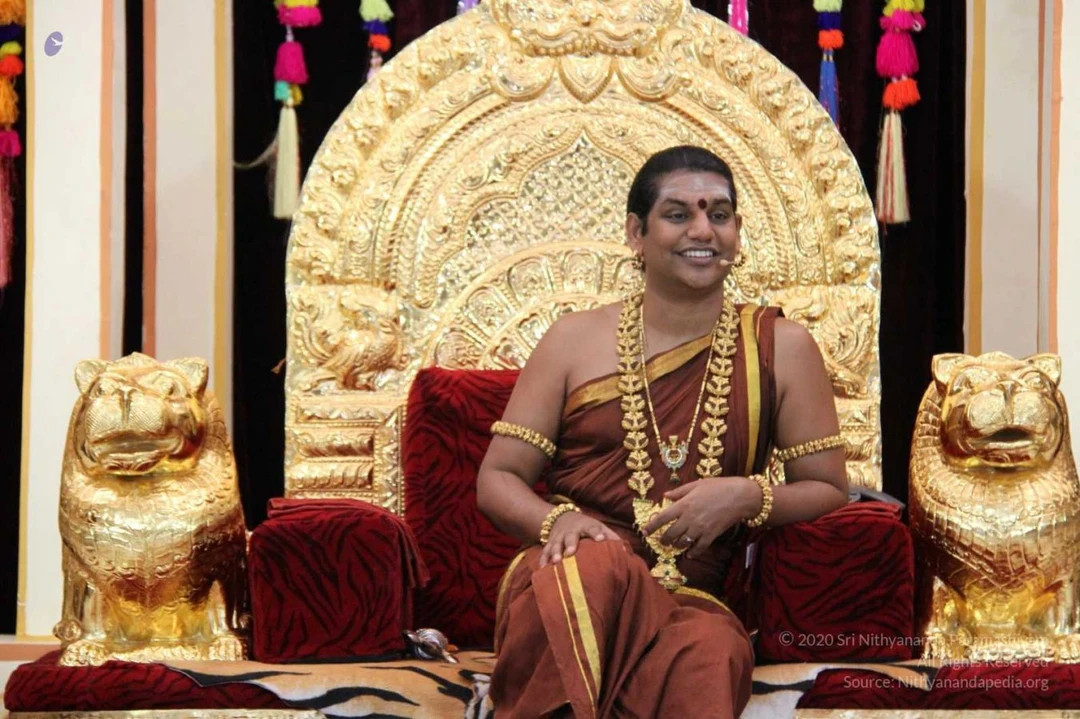
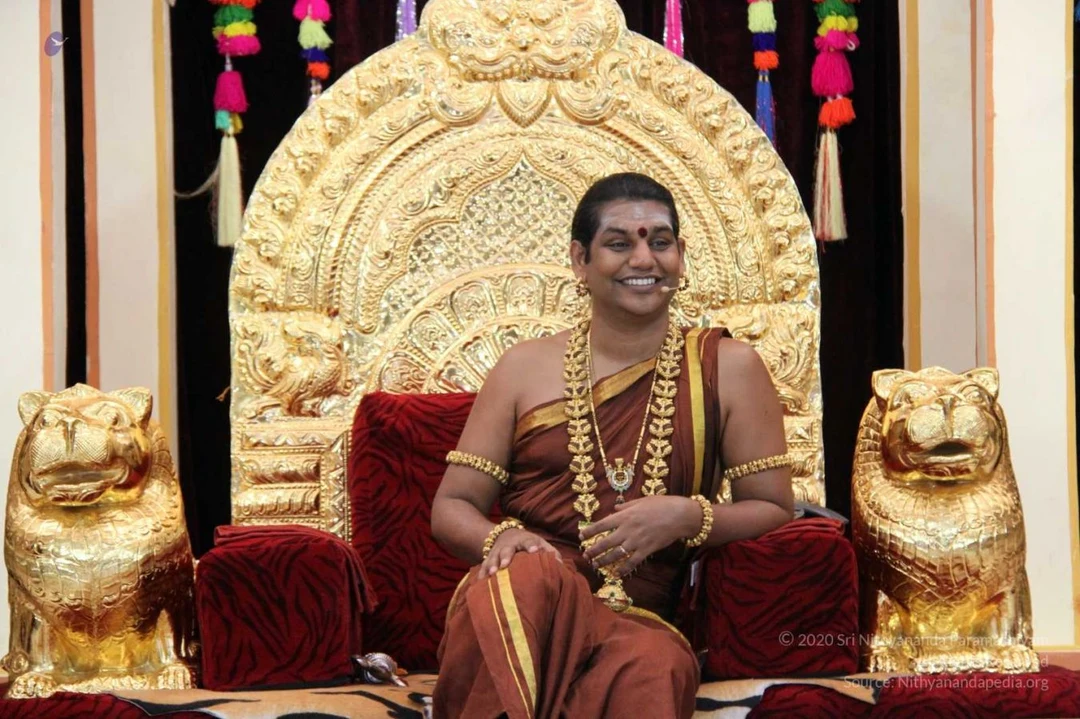
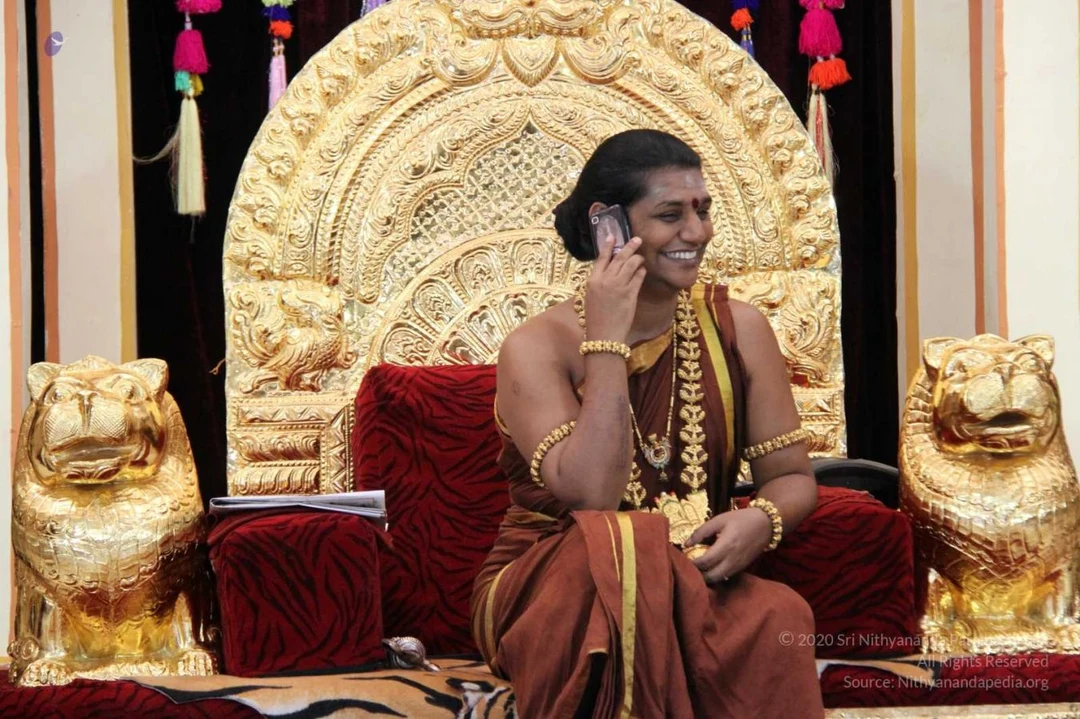
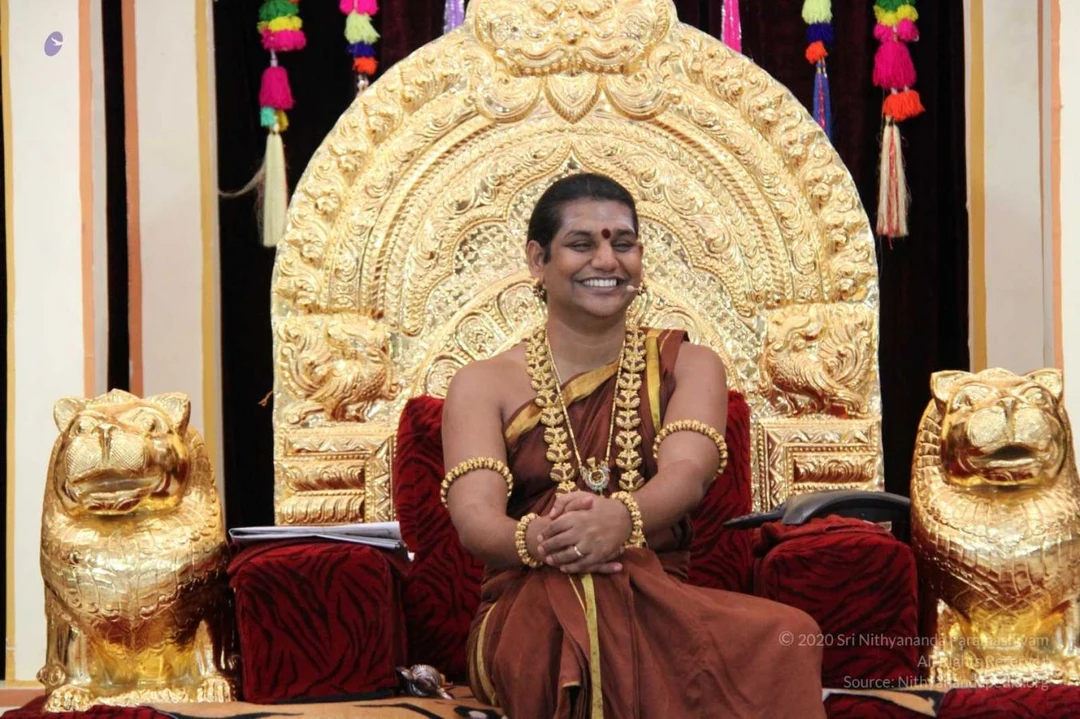
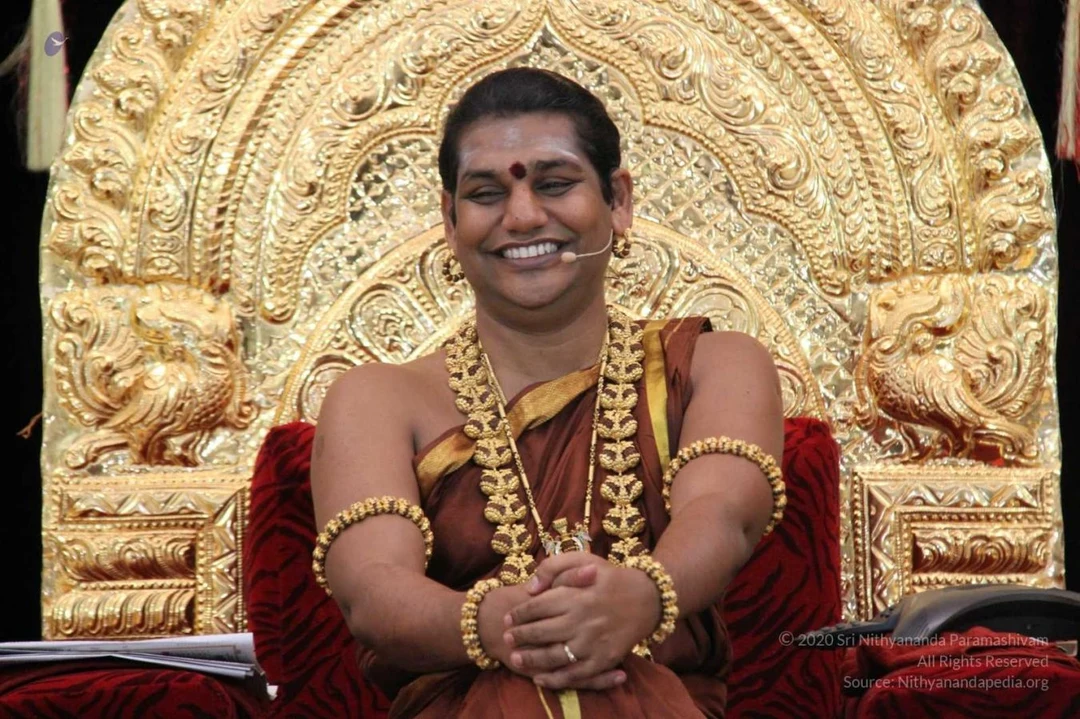
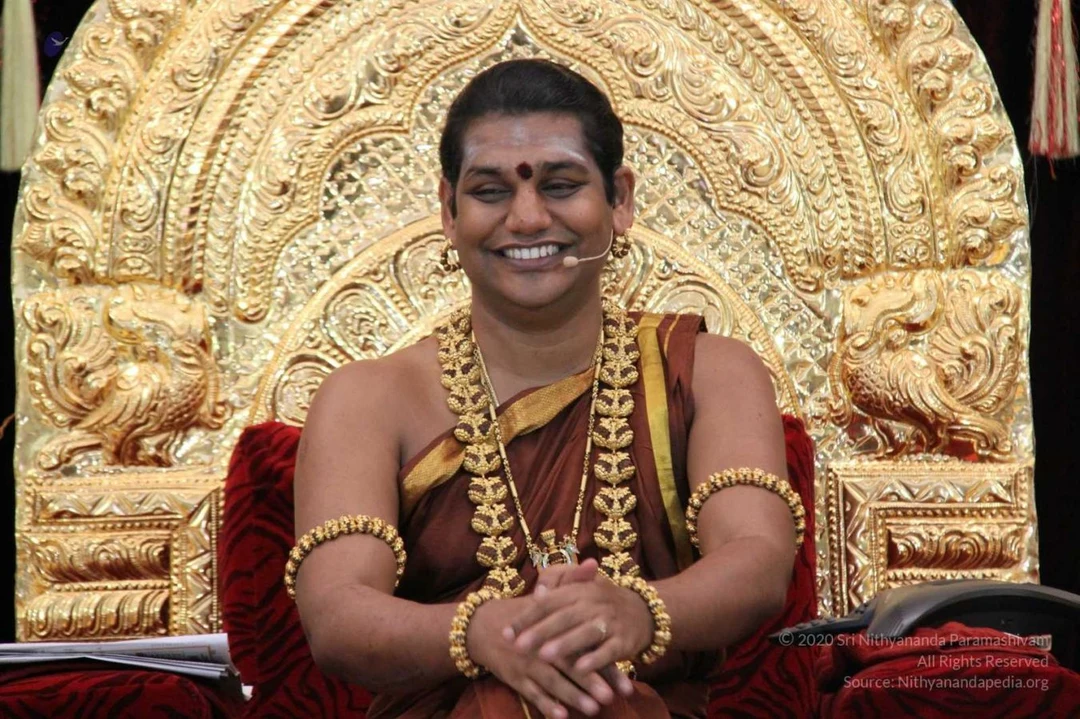
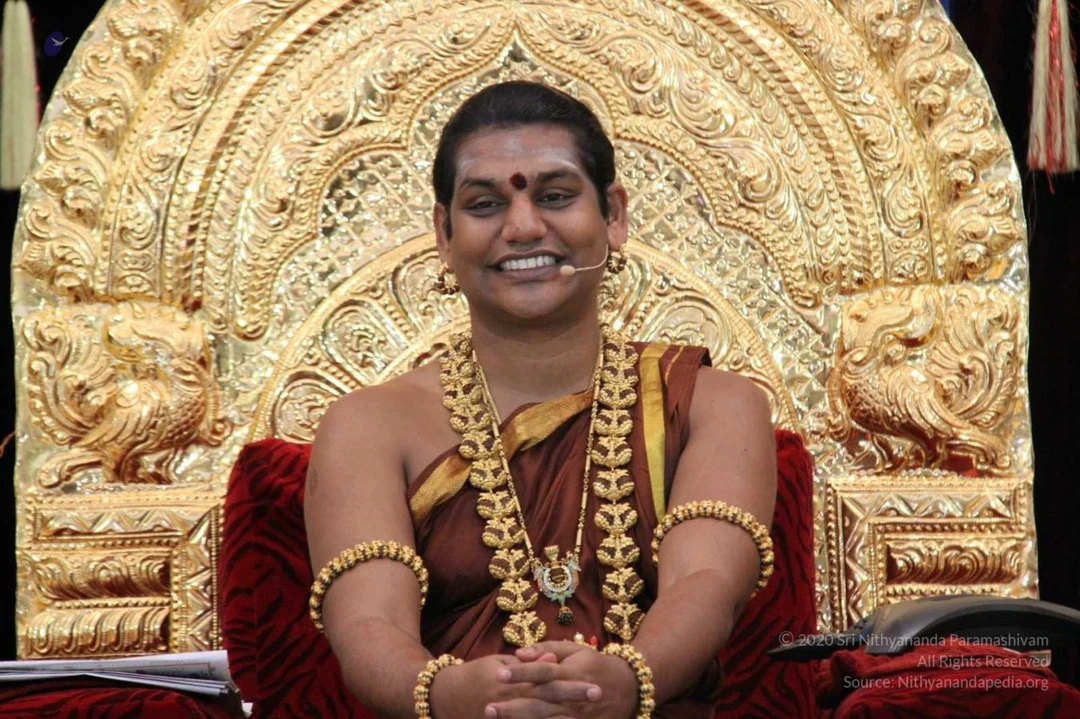
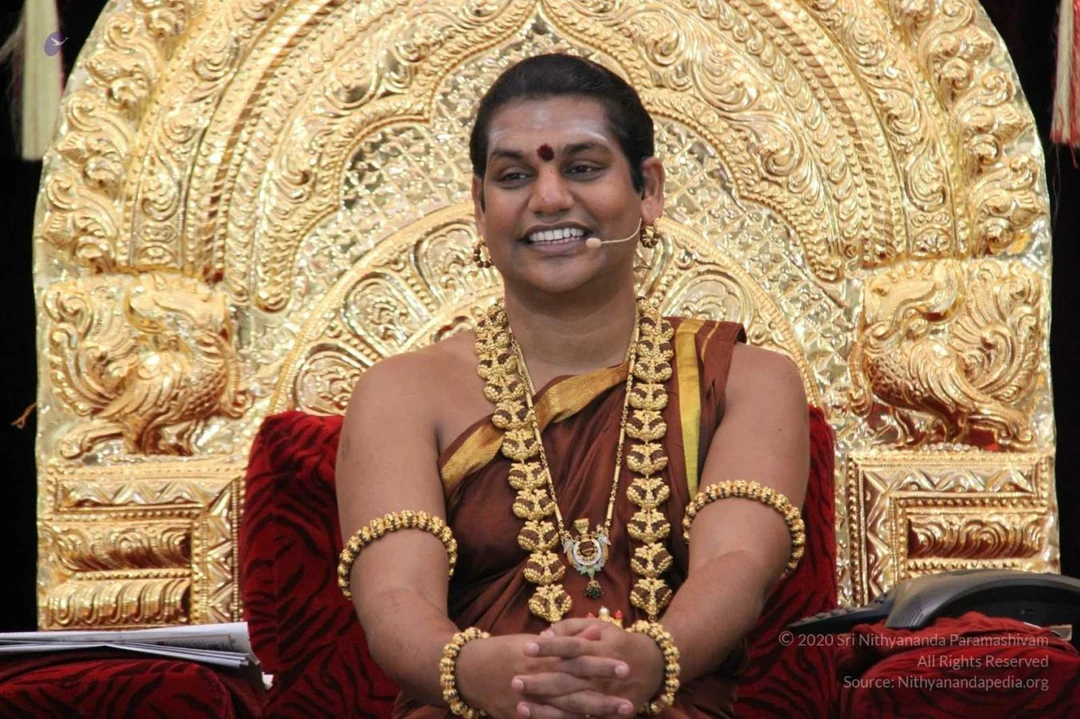
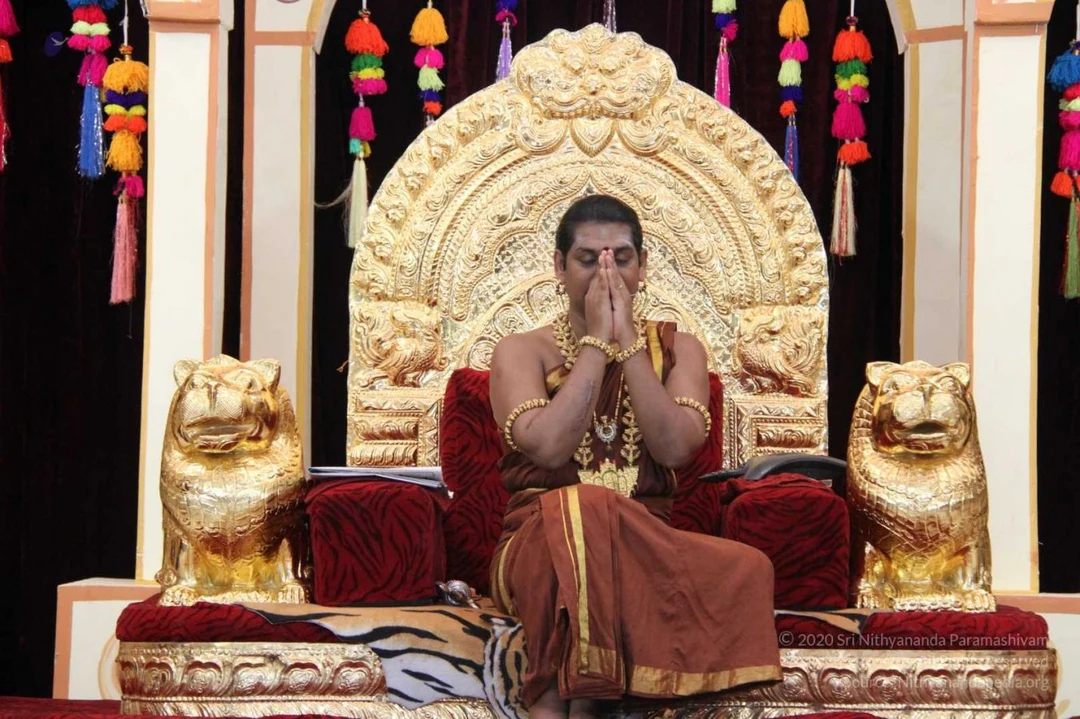
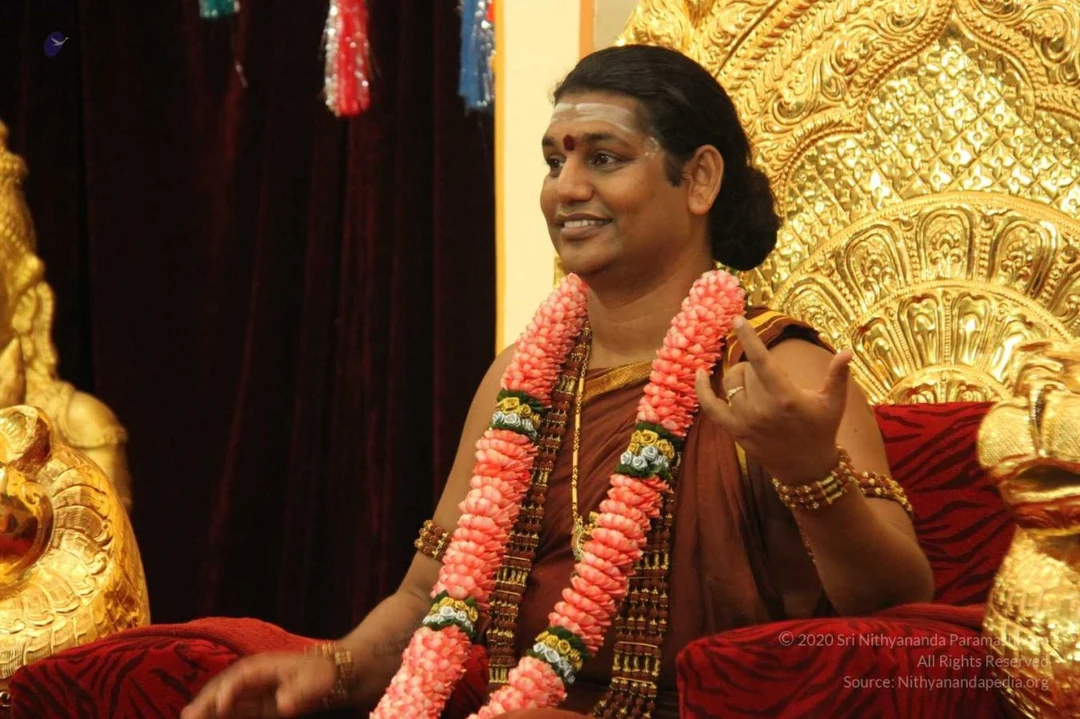
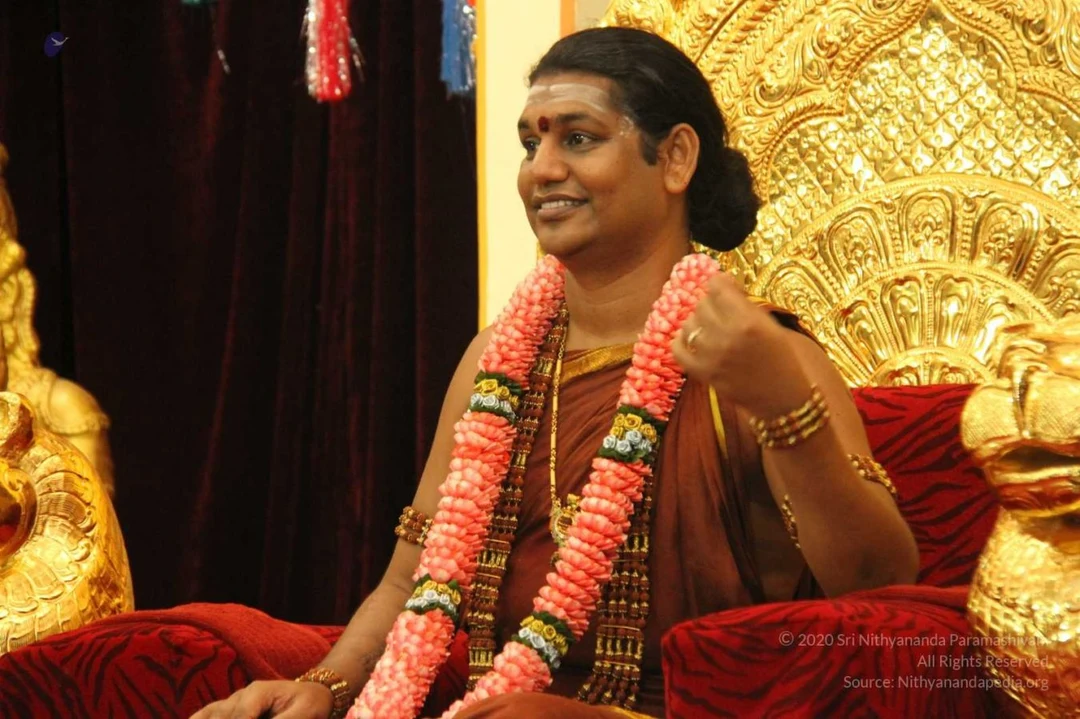
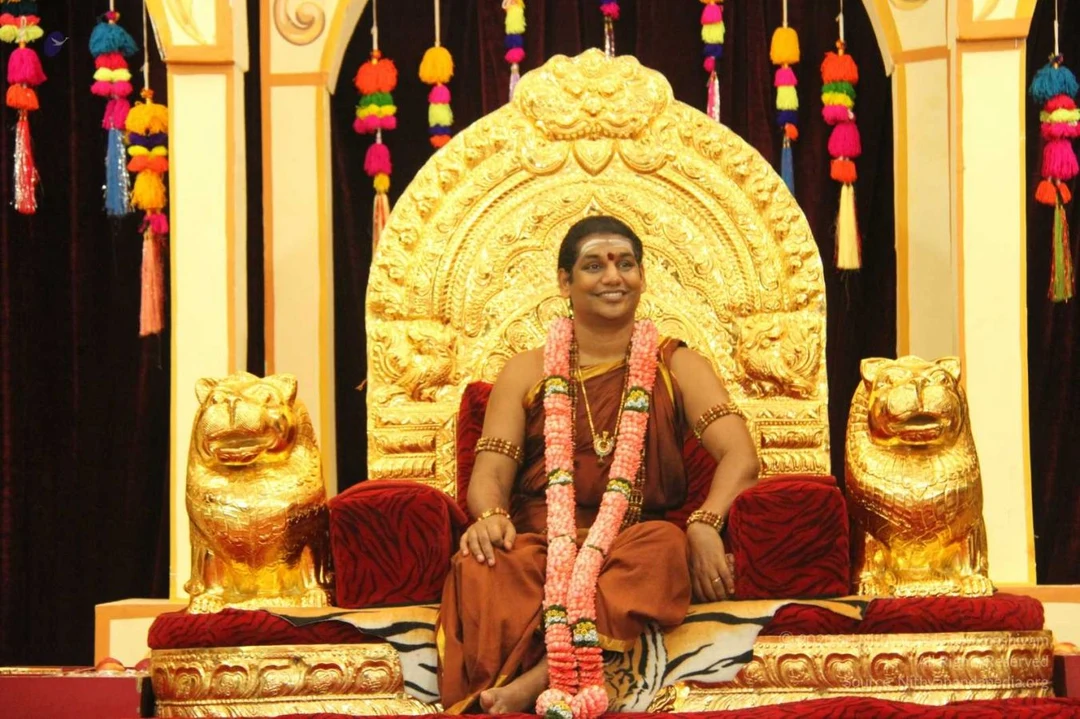
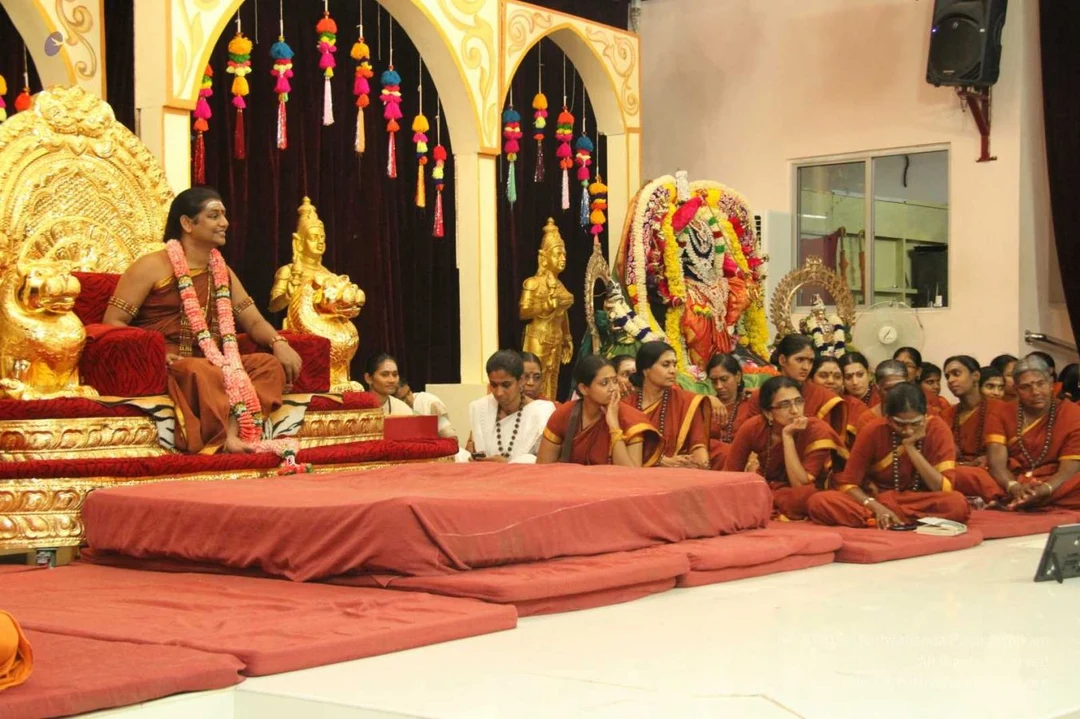
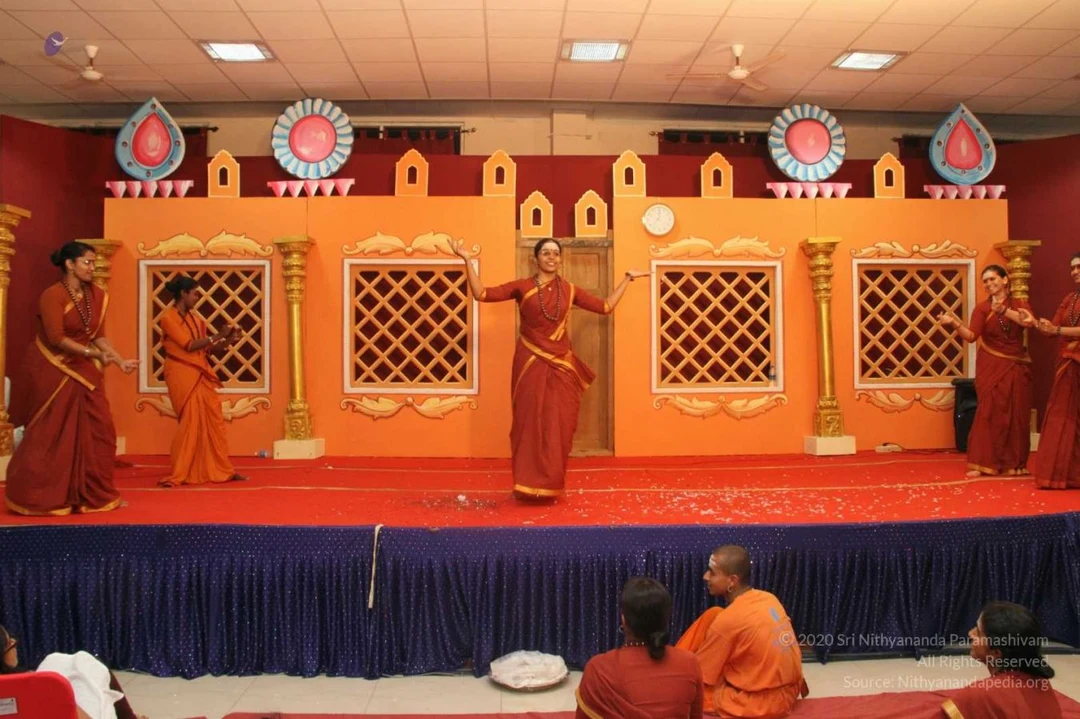
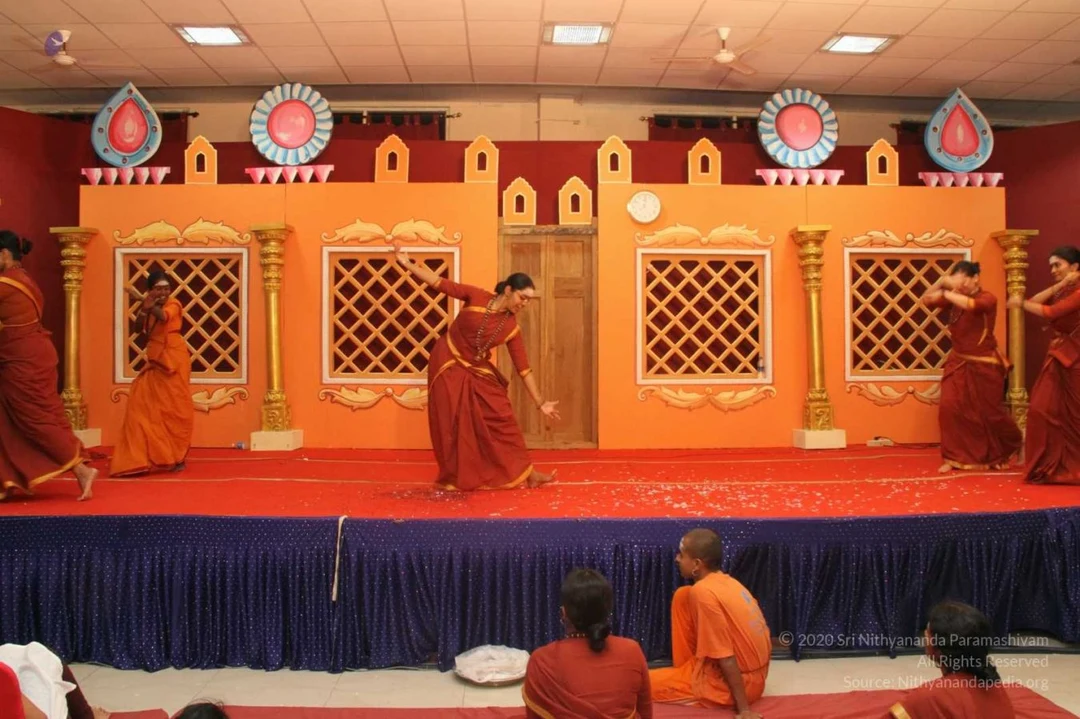
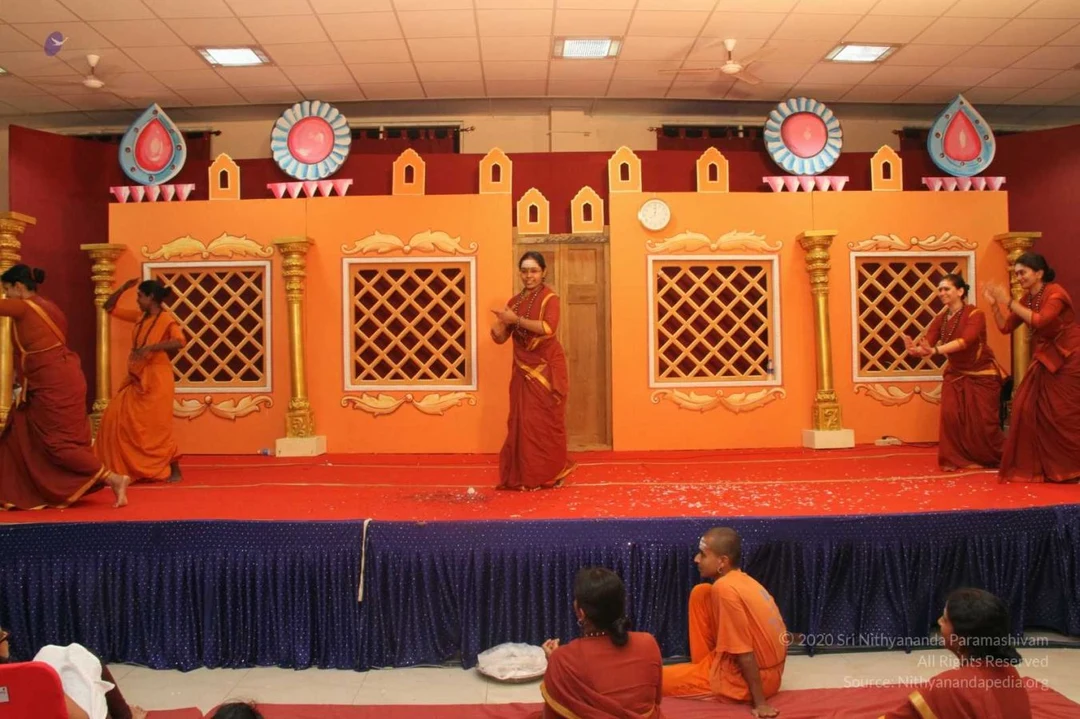
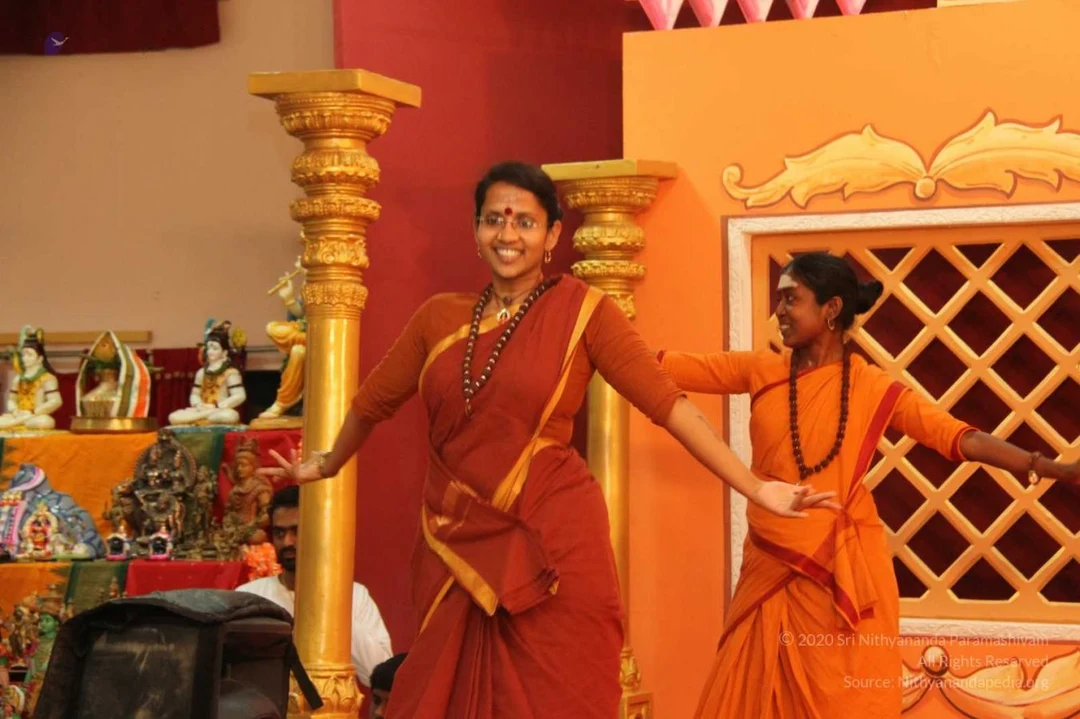
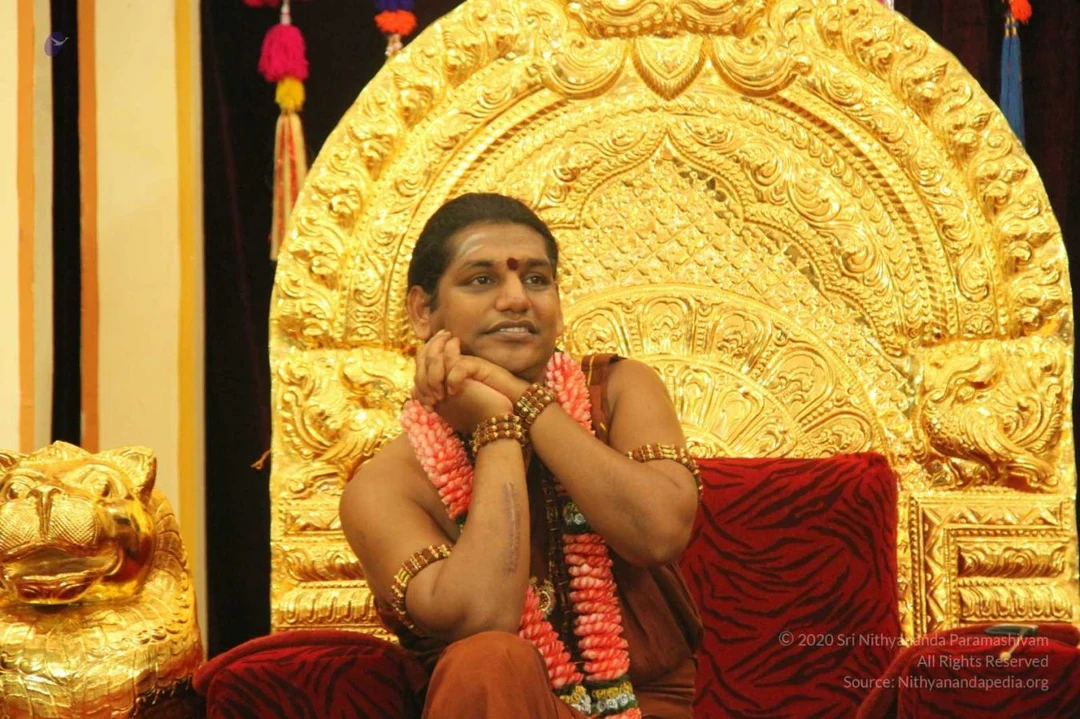
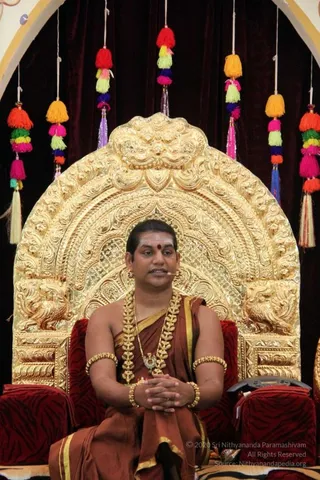
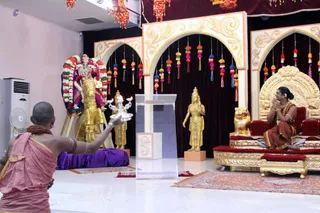
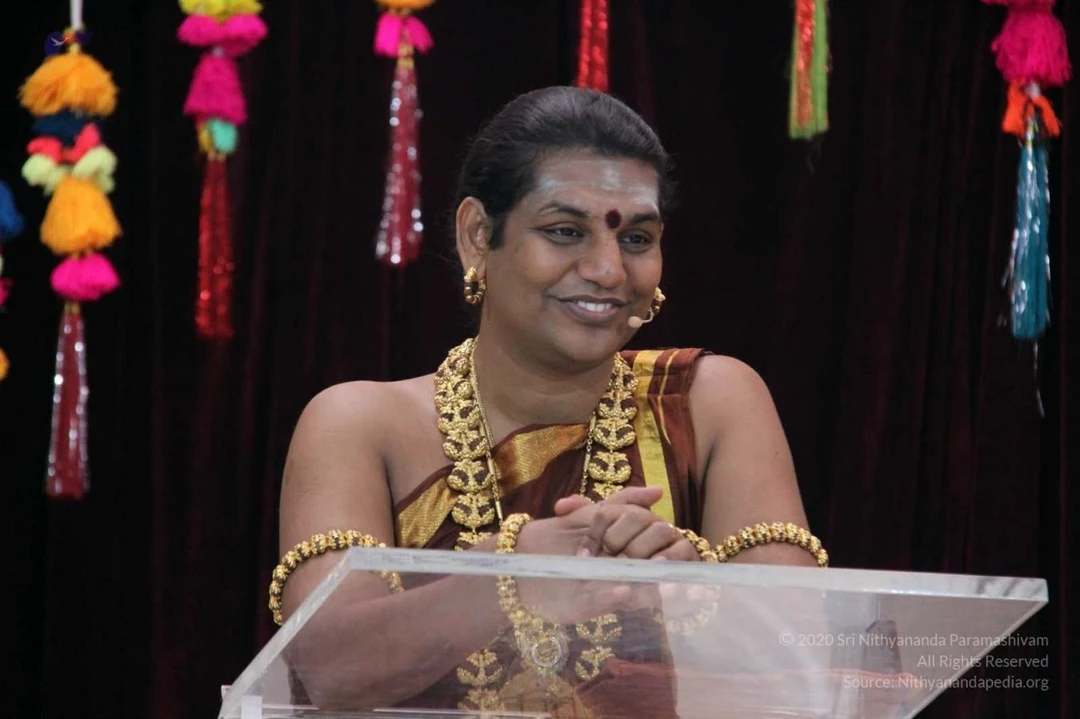
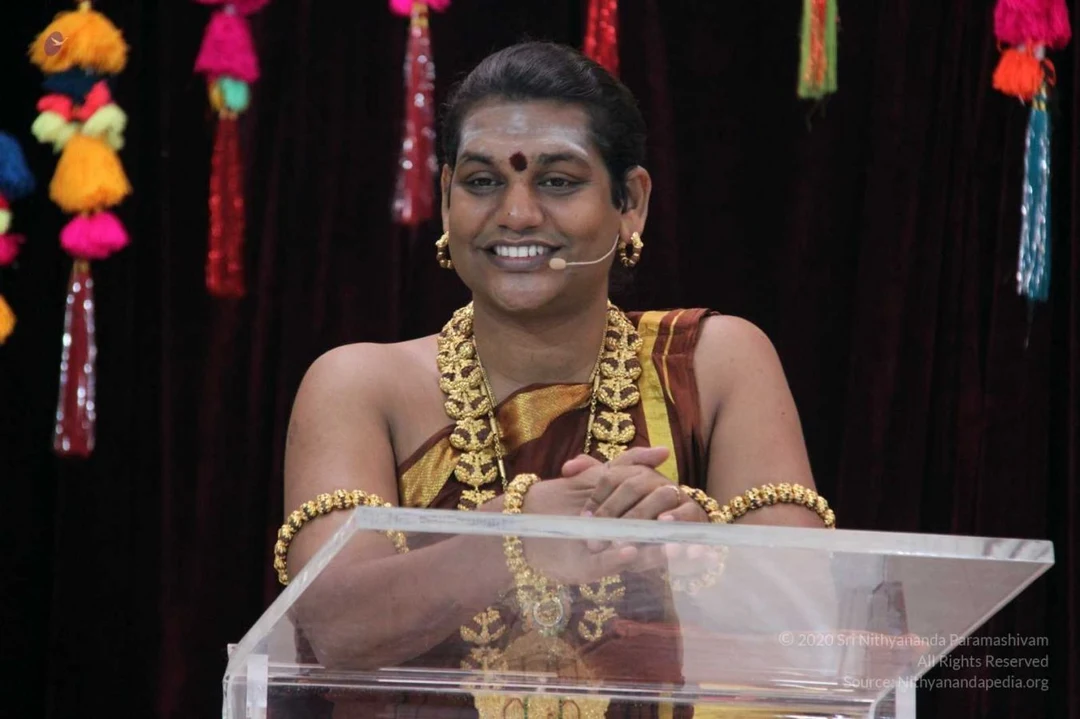
A seated man in a rust-brown robe with gold border sits on an ornate gilded throne with a carved arched back and lion-like carvings on the armrests, flanked by red velvet cushions. He wears a long gold ceremonial necklace, gold bangles on both arms, and a red bindi with white vertical markings on his forehead. His hands are clasped in his lap and he appears to be speaking into a head microphone. Behind him hang red, pink, orange, green and yellow tassels against a dark maroon velvet backdrop. The scene suggests a satsang discourse. a person: the seated man has a compatible presentation with a gold necklace, gold bangles, and ceremonial robes on a throne.A man sits cross-legged on an ornate gold throne carved with scrolls and flanked by two gold lion sculptures, with red velvet cushions and a tiger-striped rug. He wears a rust-brown dhoti-style garment with gold borders, a heavy gold necklace with a large pendant, gold armbands and bangles, and a red bindi. His hands are folded in his lap and he appears to be speaking, with a small microphone near his face. Behind the throne hang colourful tassels from a cream arch with painted floral motifs.A decorated indoor stage for a festival celebration. On the right, a seated man in an orange-brown dhoti and a gold necklace sits on an ornate gold-and-red throne with cushions, hands folded in greeting. Beside him a golden lion figure rests at the base of the throne. In the centre stands a clear acrylic lectern. On the left, a golden horse-mounted deity figure stands with a golden attendant figure, and a large garland of white and orange flowers drapes a dark-skinned deity statue in a purple cloth. A golden standing deity murti with raised hand stands in the centre-right. Cream arches with gold scrollwork frame the back, with hanging tassels in pink, orange, blue and green and paper lanterns above. Red and cream rugs cover the floor. No other people are visible.A decorated indoor hall set for Navaratri worship. On the left, a seated person in a saffron-orange robe with a gold necklace and bangles sits on an ornate gold throne with red cushions and carved lion-head armrests, smiling with hands folded. Behind, arches with hanging pink, yellow and green tassels frame the stage. In the centre stands a golden standing figure of a deity holding one hand raised, and to the right a richly garlanded deity murti in red and gold clothing sits on a green cloth-draped platform flanked by two smaller garlanded figures in green and blue. A small fan and a red-and-gold carpet sit in the foreground. The scene is a festive puja arrangement; the seated figure is an appearance-based candidate but the face and presentation are too uncertain to confirm identity.Stage set for a Navaratri puja in a hall with a white floor and pale walls. A shaved-headed priest in a pink-orange dhoti with a gold border, with a rudraksha mala, kneels at the left edge facing a golden deity murti of a figure seated on a horse, decorated with a large multicoloured flower garland. Beside it stand two golden standing deity figures. At the right, a person in a brown-orange sari with gold jewellery sits with palms joined on an ornate gold throne with red cushions, a lion-form armrest beside it. Hanging colourful tassels, paper lanterns and maroon drapes decorate the backdrop. A clear podium stands centre stage.A photograph of a Navaratri worship scene in a decorated hall. In the foreground a shaven-headed priest in a pink-orange garment and rudraksha mala faces away from the camera, raising a silver lamp with a multi-flame arati lamp toward the stage. On the right, a figure with long dark hair in an orange-brown dhoti and gold ornaments sits on an ornate gold-and-red throne with hands folded in prayer. Behind them stand gold-painted deity statues, including a horse-mounted figure draped in a garland and a standing goddess. Colourful tassel-hung arches and red-and-maroon drapes frame the stage. The page indicates the Navaratri Ashtami celebration with a person present, but the seated figure's appearance alone does not clearly confirm identity.

Sarva Darshan

9 photosSource gallery
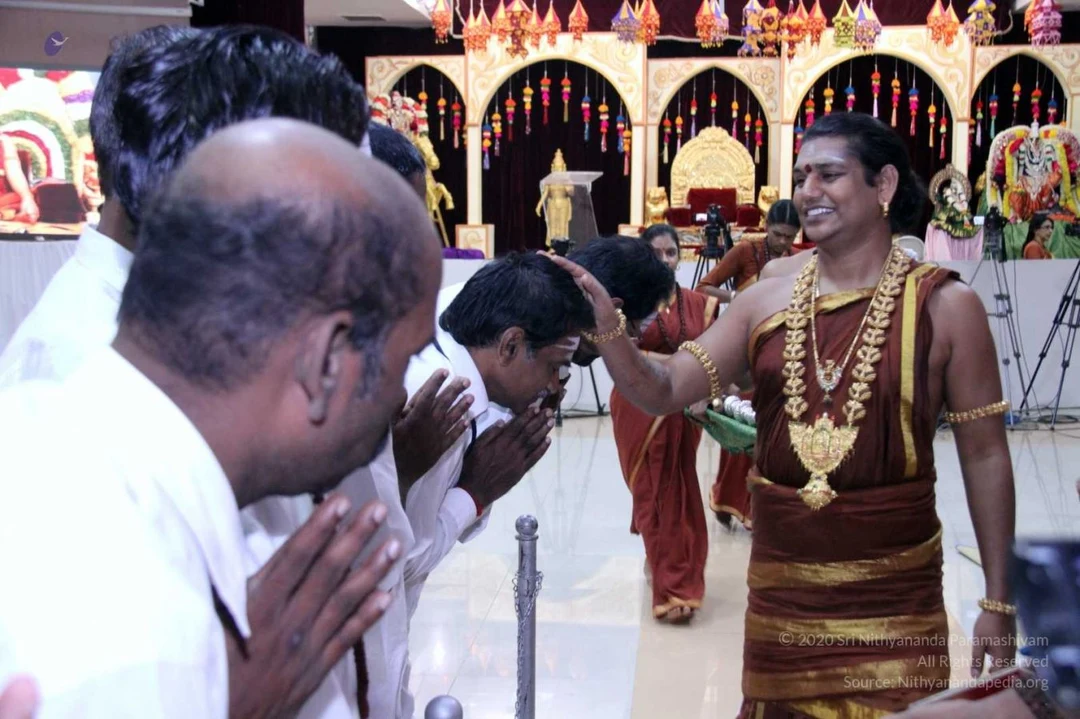
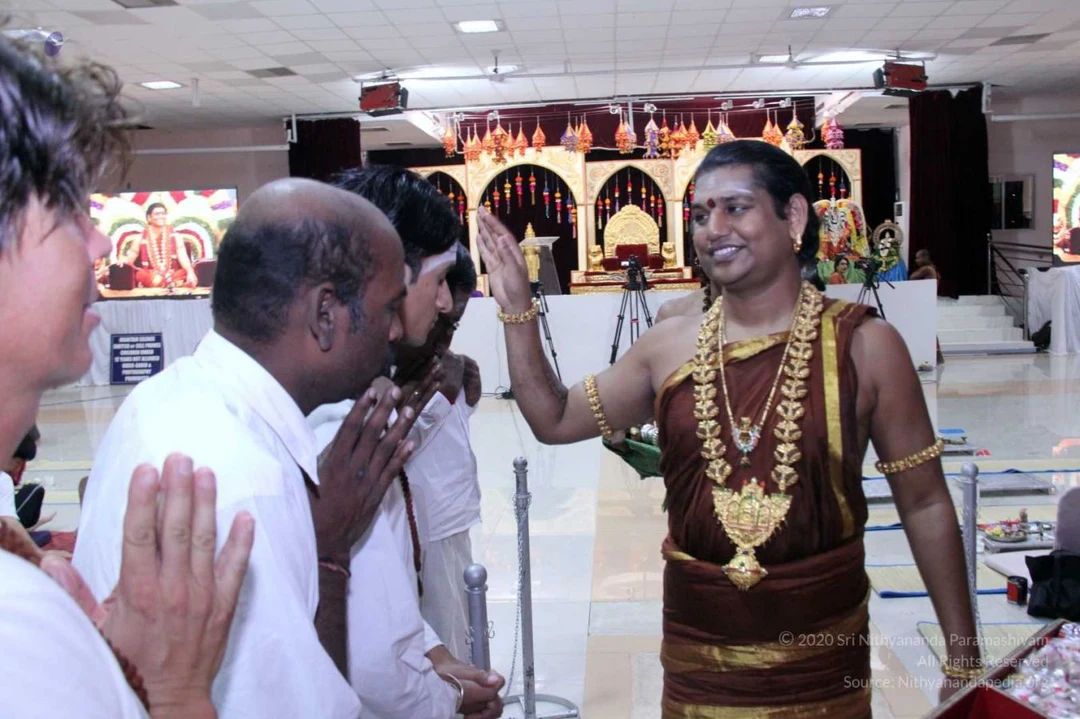
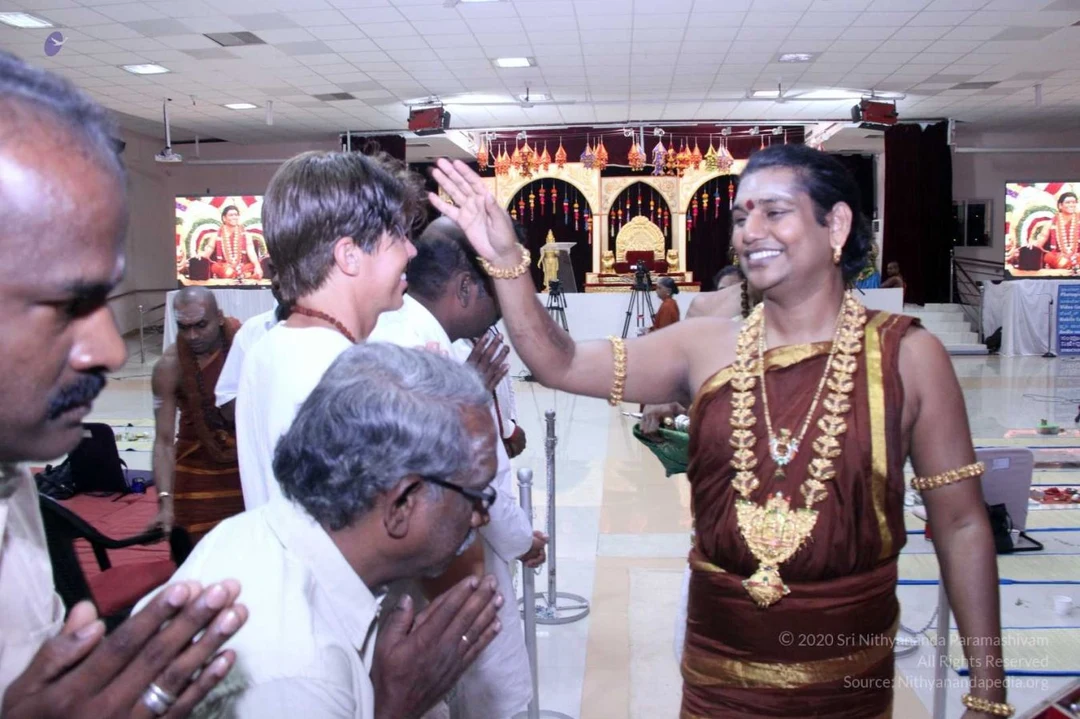
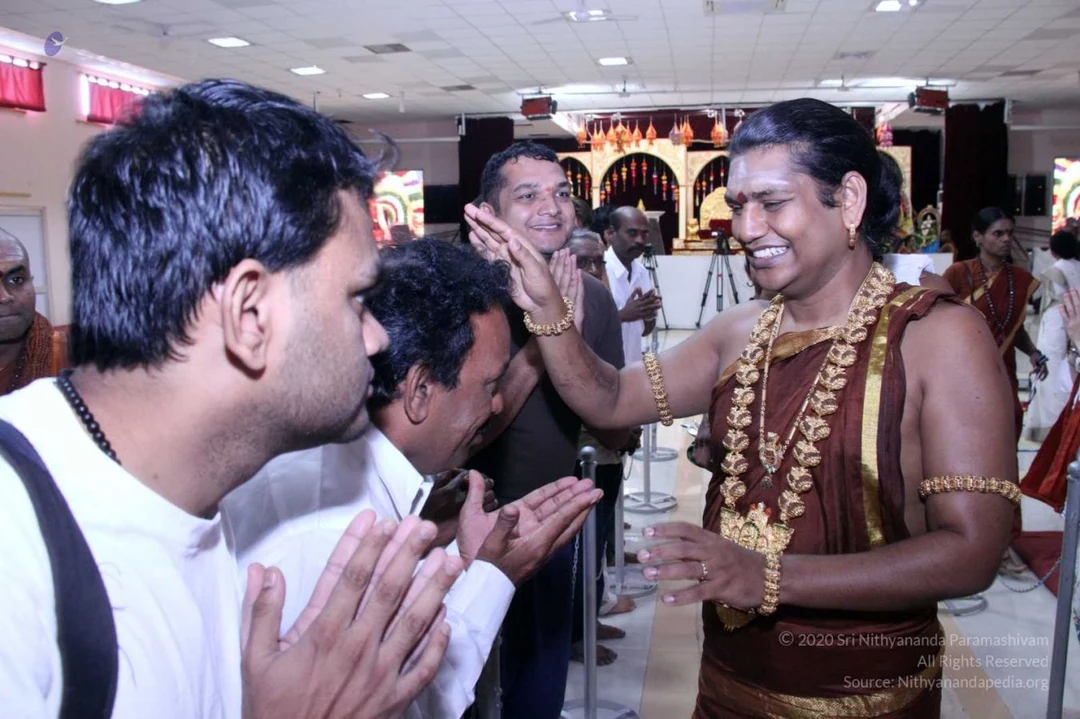
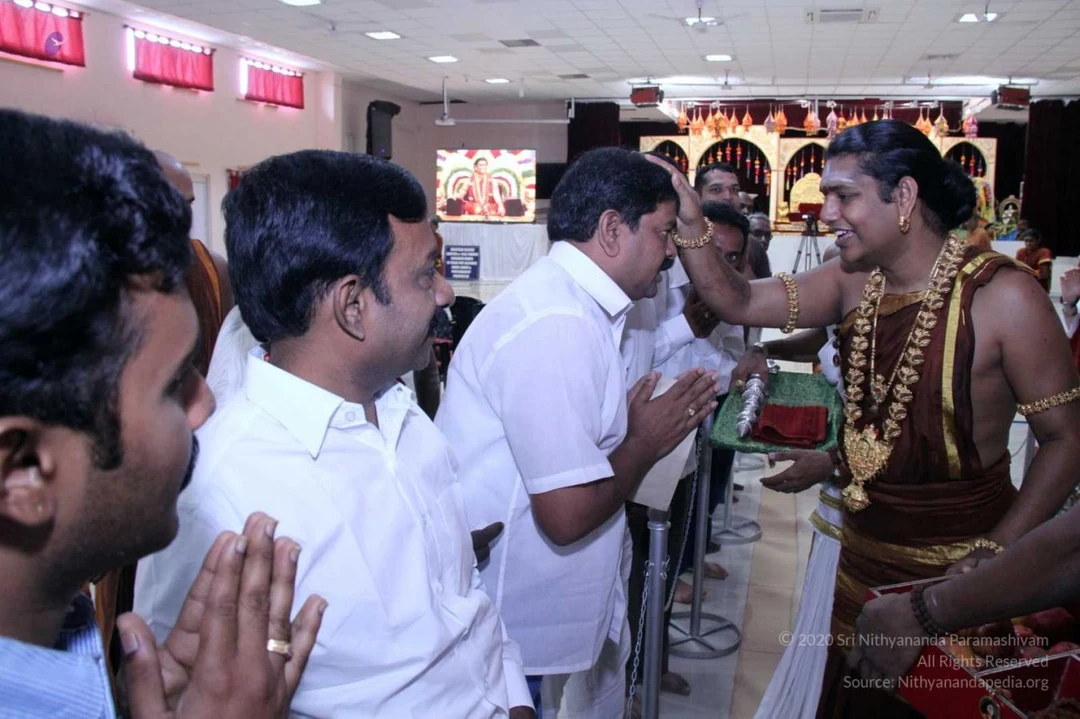
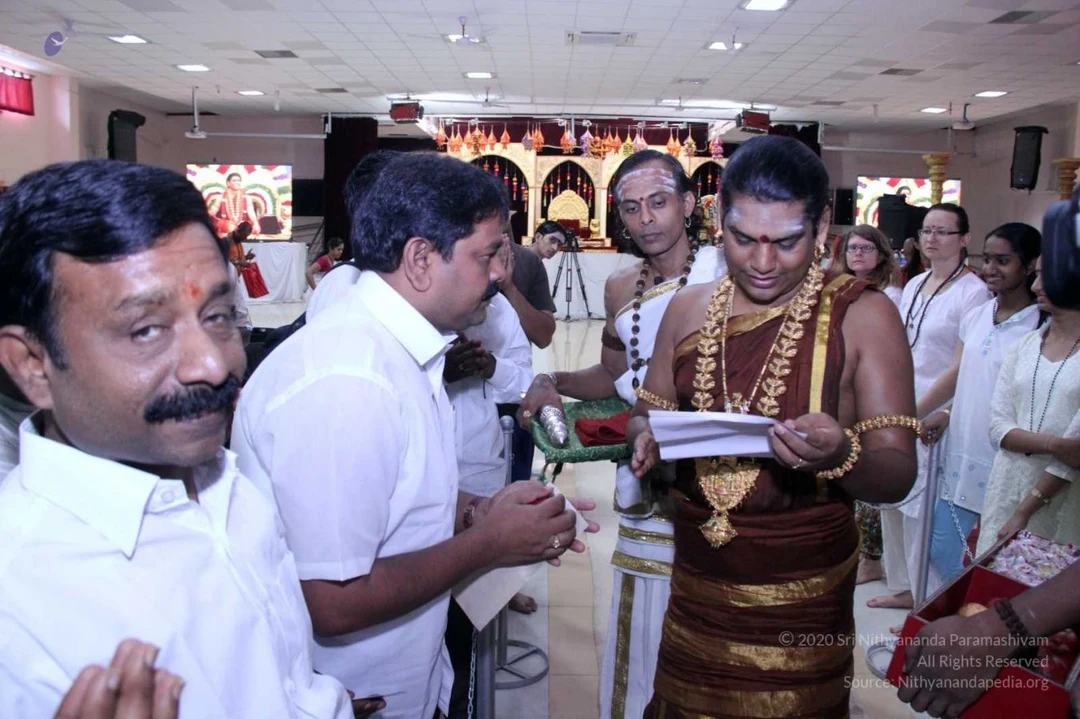
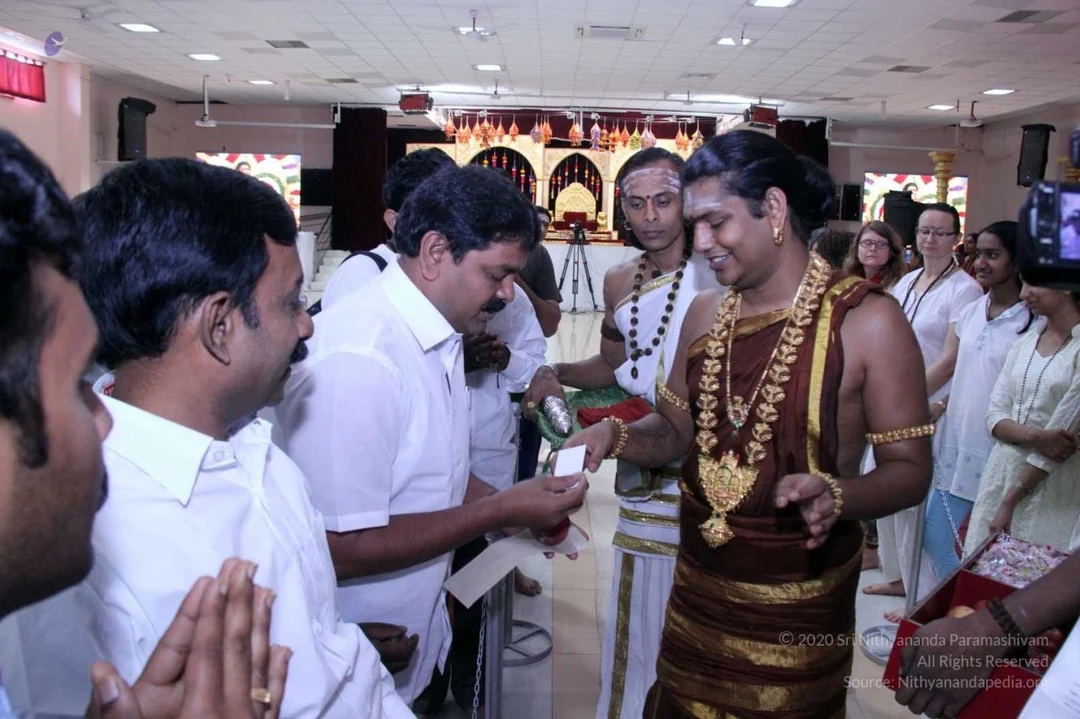
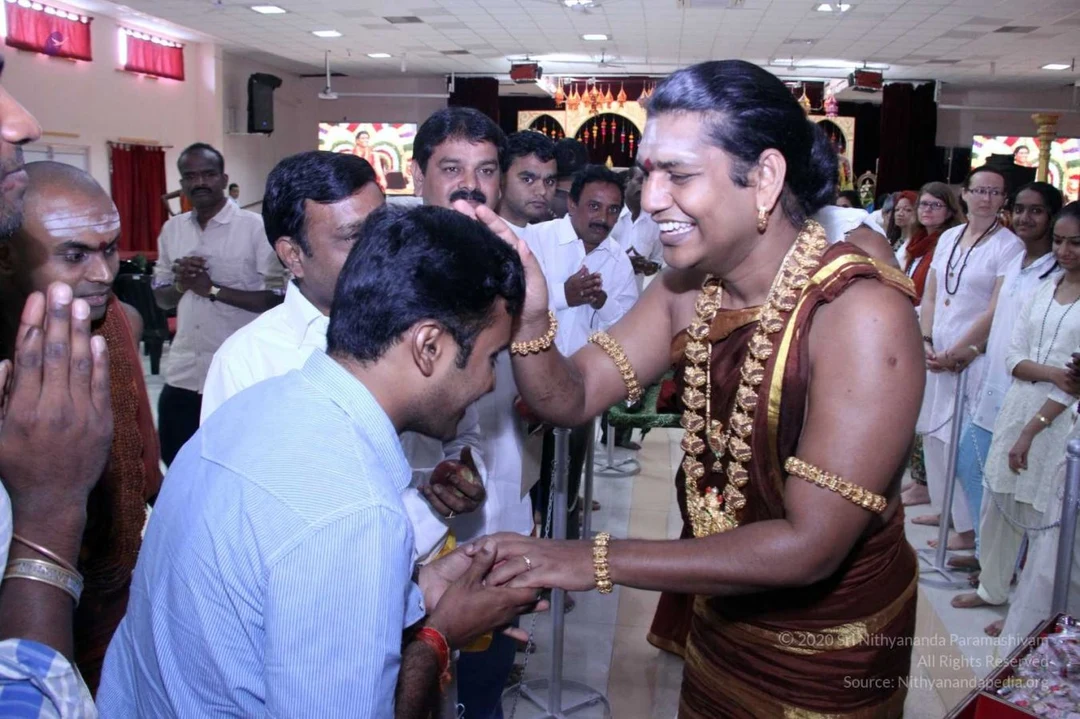
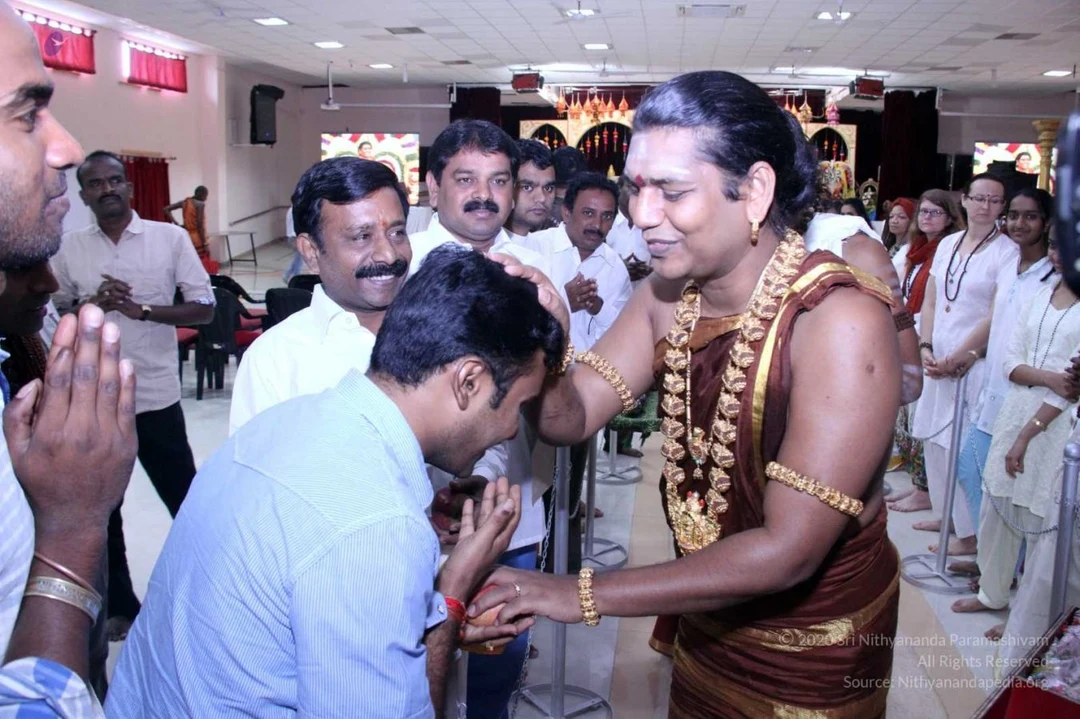
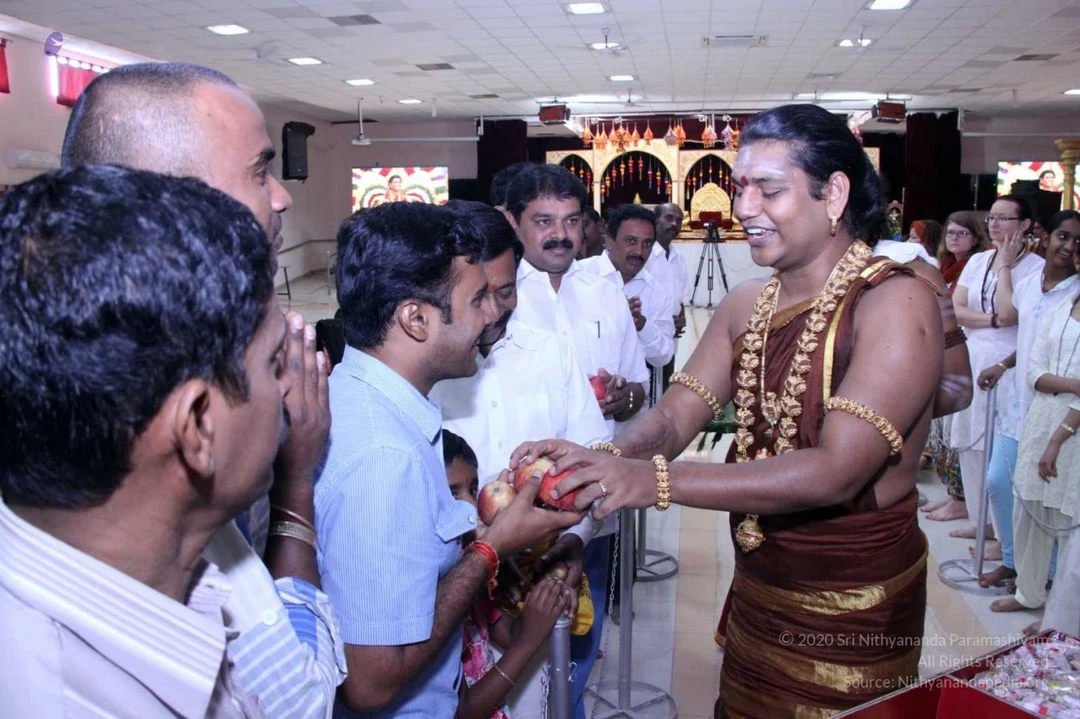
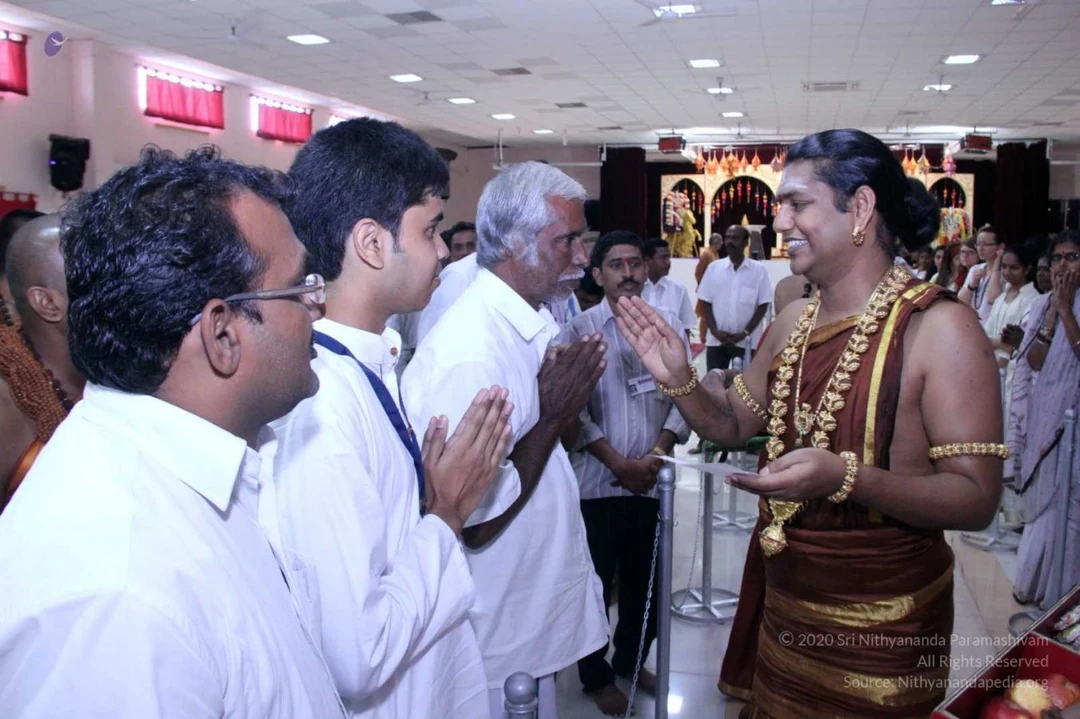
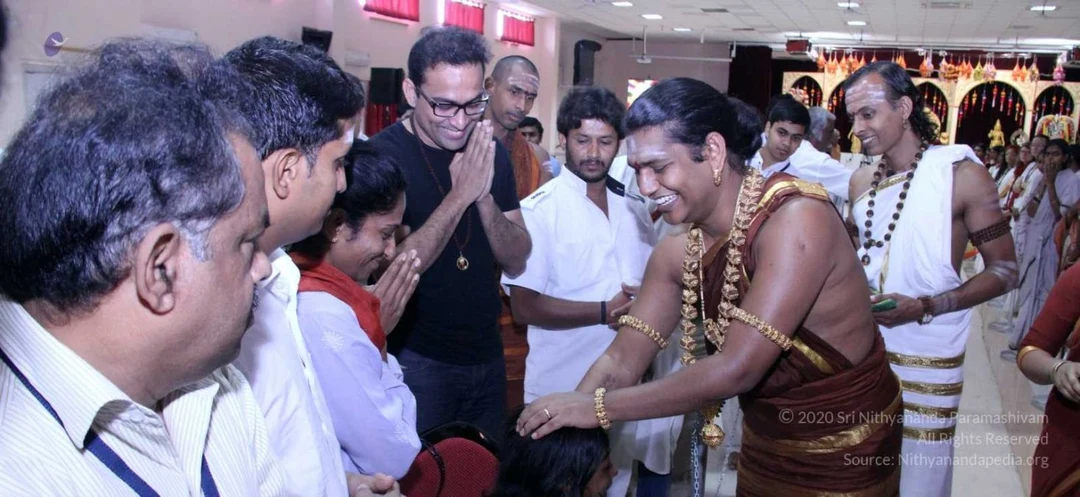
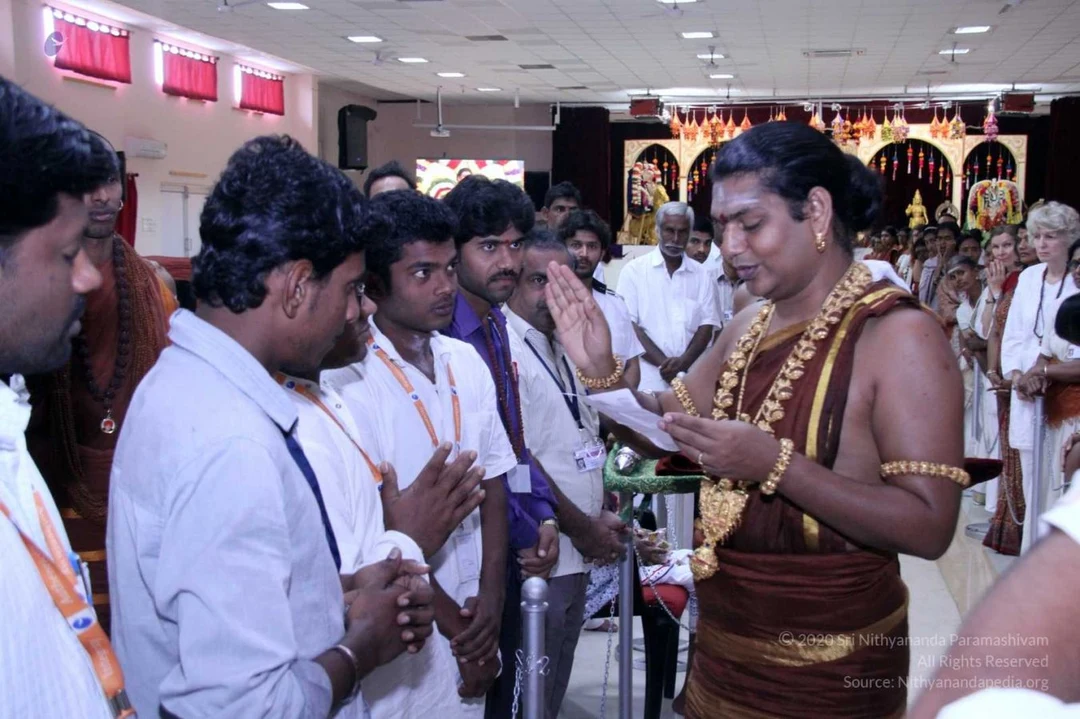
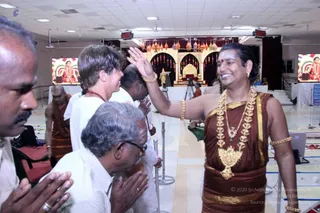
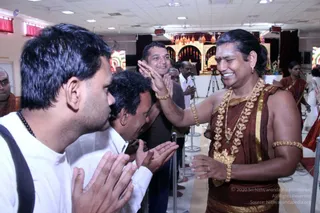
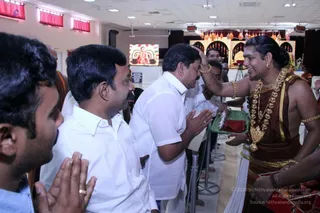
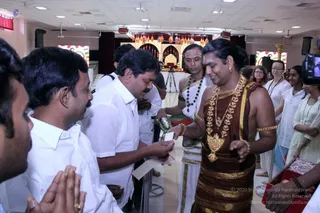
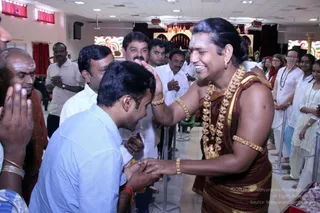
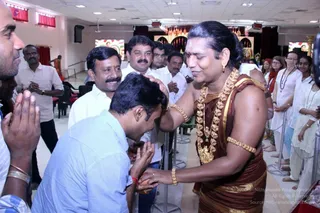
A photograph in a large hall with a stage backdrop of arches draped with red and gold lanterns, a golden throne-like seat, and two large screens showing a figure in red. In the foreground a person in a brown-and-gold draped robe with a long gold ornamental necklace, gold armlets and bangles smiles and raises a hand in greeting. Beside and before them, people in white clothes stand with palms pressed together in namaste, one older man with grey hair and glasses bowing forward. Several other people in brown and white robes stand in the background among floor mats and cushions. a person cues are the swept-back hair and the ornate gold necklaces and armlets on the foreground figure, who is greeting devotees.A photograph inside a hall with pale pink walls and a ceiling of fluorescent panels. On the right, a man with swept-back dark hair, a gold arm band, a heavy gold necklace of ornate pendants and a rudraksha-style mala, wears a rust-brown shawl over his bare chest and a brown dhoti with gold border. He smiles broadly and raises his right hand in blessing toward devotees. Two men on the left in white shirts stand with palms pressed together in anjali. A third man in a grey shirt smiles behind them. In the background, an ornate golden shrine with red-and-gold decorations and a deity murti is visible, with more people in white and saffron. a person: the blessing man wears distinctive gold ornaments, a swept-back hairstyle and a brown-gold shawl, and is receiving devotees' respect.A photograph inside a hall with cream walls, red valances and a golden ornamental shrine backdrop at right. A man with long swept-back dark hair, a gold necklace, a rudraksha-style gold chain and bangles, wearing a brown and gold-bordered wrap and bare-chested, stands at right with one hand raised and resting on the head of a man in a white shirt. That man bows with palms pressed together and a silver tray with red cloth nearby. Other men in white shirts stand to the left, one with palms joined. A small screen behind shows a figure in red and green. Probable Swamiji cues: long swept-back hair, ornate gold necklaces and a brown wrap, blessing a devotee in a ritual setting.Indoor photo of a ceremonial reception in a hall with a decorated golden shrine backdrop, hanging lamps and a red-curtained archway. A man in a long brown and gold dhoti-style garment with a gold necklace, ornate gold armbands and tilak on his forehead stands at the centre, smiling and receiving an offering from a man in a white shirt who holds a small envelope or card and a silver vessel. Beside him a priest-like attendant in white dhoti with a red-and-black beaded mala and bare chest holds a silver container. Several men in white shirts stand around with hands folded in greeting, and women in white and light outfits watch on the right. A red box of offerings sits in the lower right and a camera on a tripod is visible.A photograph of a festive indoor hall where a man in a brown and gold garment with a long gold ornate necklace and gold armlets places his hand on the forehead of a kneeling man in a light blue striped shirt. The standing figure has long hair pulled back and a broad smile. Around them, several men in white shirts and dhotis stand with palms pressed together, and women in white kurtas and beaded necklaces watch. Behind them are colourful framed images and a red curtain, with a glimpse of a decorated arch. The standing figure matches the presentation cues on the page (long swept-back hair, ornate gold necklace, saffron-toned garment), but the appearance is not distinctive enough to confirm identity, so this is labelled unsure.A photograph of an indoor hall where a man in brown and gold ceremonial attire, with long swept-back hair, a gold necklace of ornate pendants, a rudraksha-style mala and gold armlets, places his hand on the head of a kneeling man in a light blue striped shirt who has his palms pressed together. Several men in white shirts stand nearby, and a row of women in white and in red shawls watch with hands folded. Red banners and an ornate gold-trimmed backdrop frame the room, with screens showing images behind. The 'a person' cues here are the long swept-back hair, ornate gold necklace and brown-and-gold clothing of the central figure, who is blessing the kneeling devotee.

Final Blessing

2 photosSource gallery
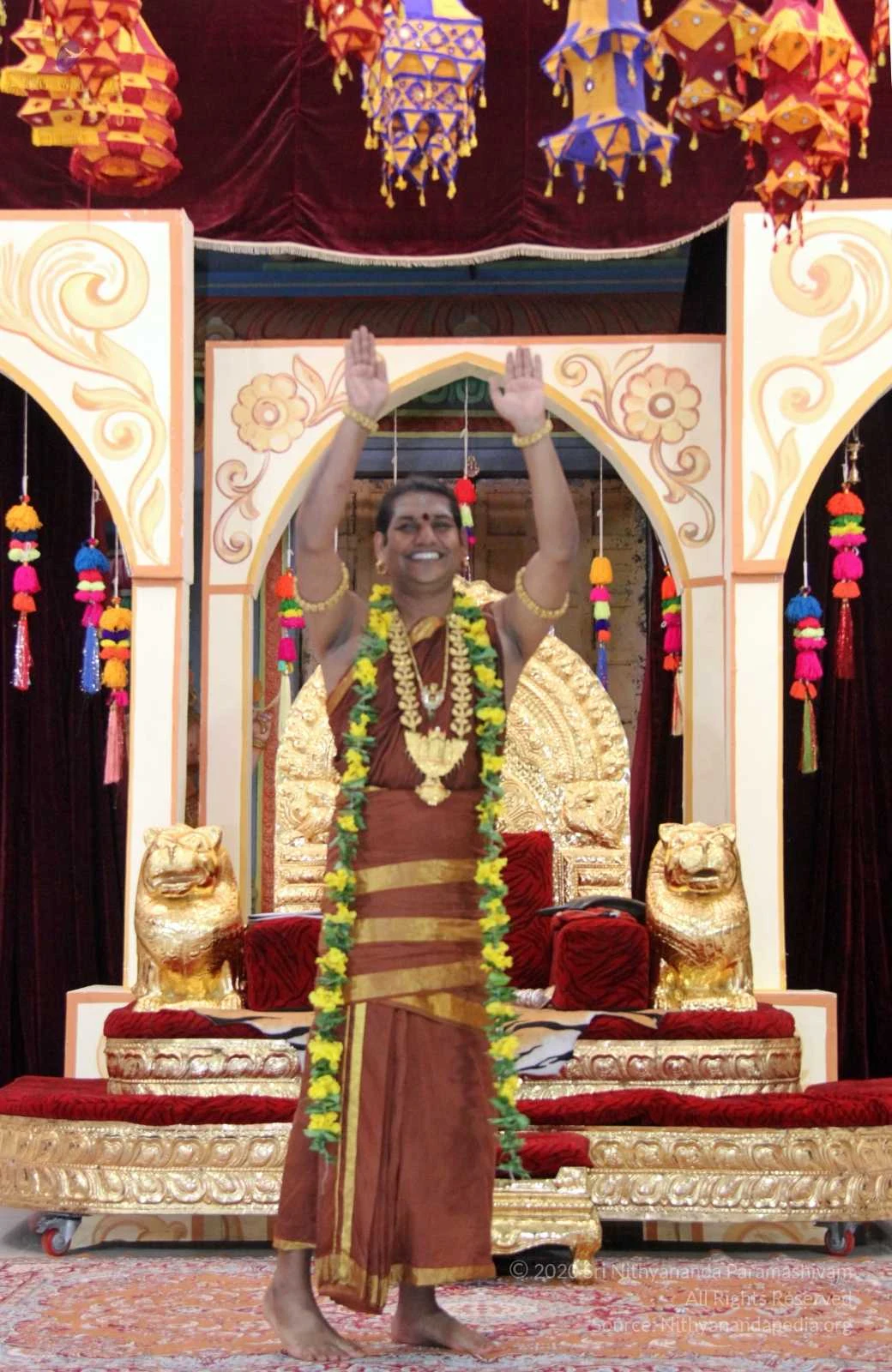
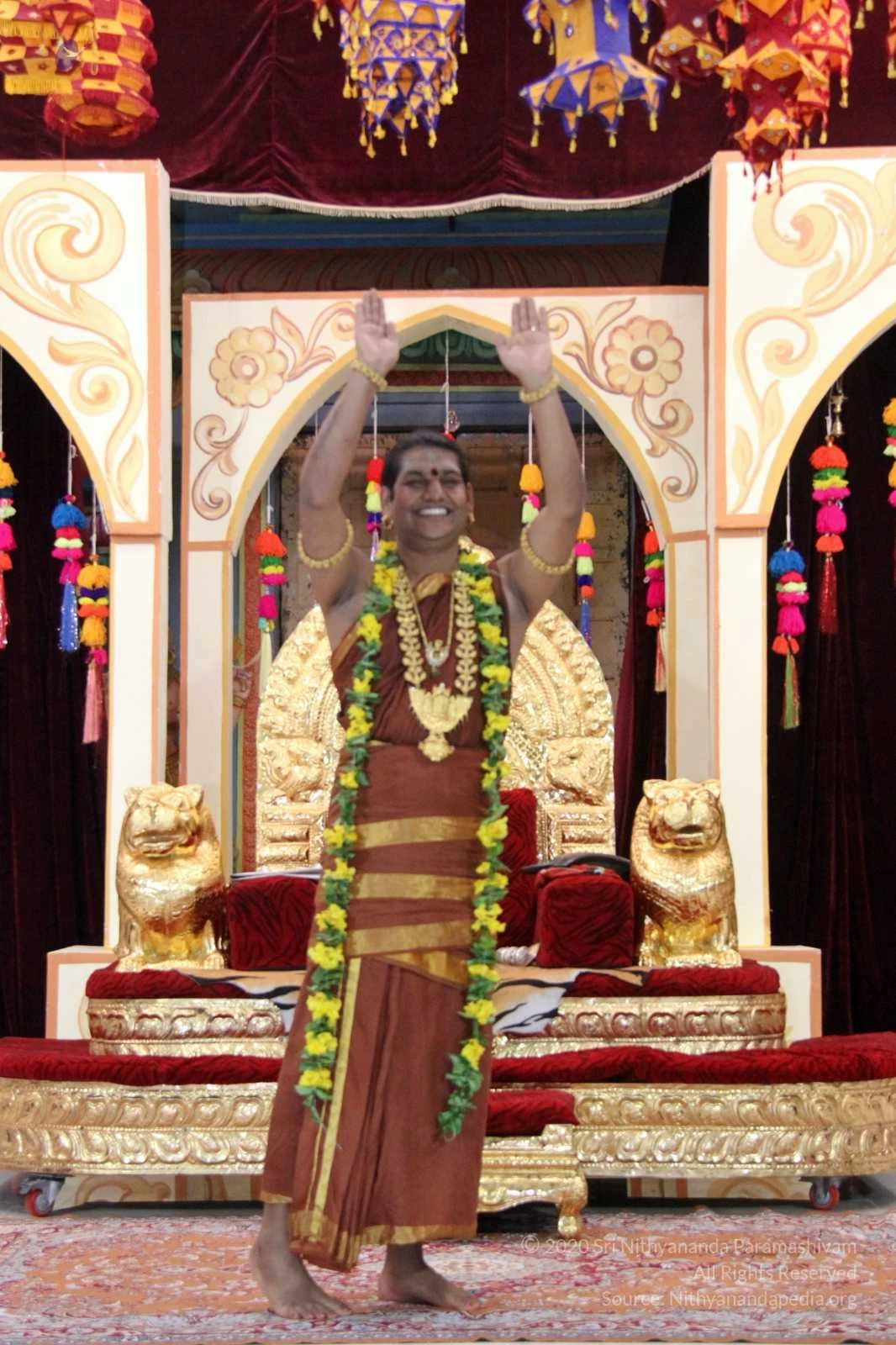
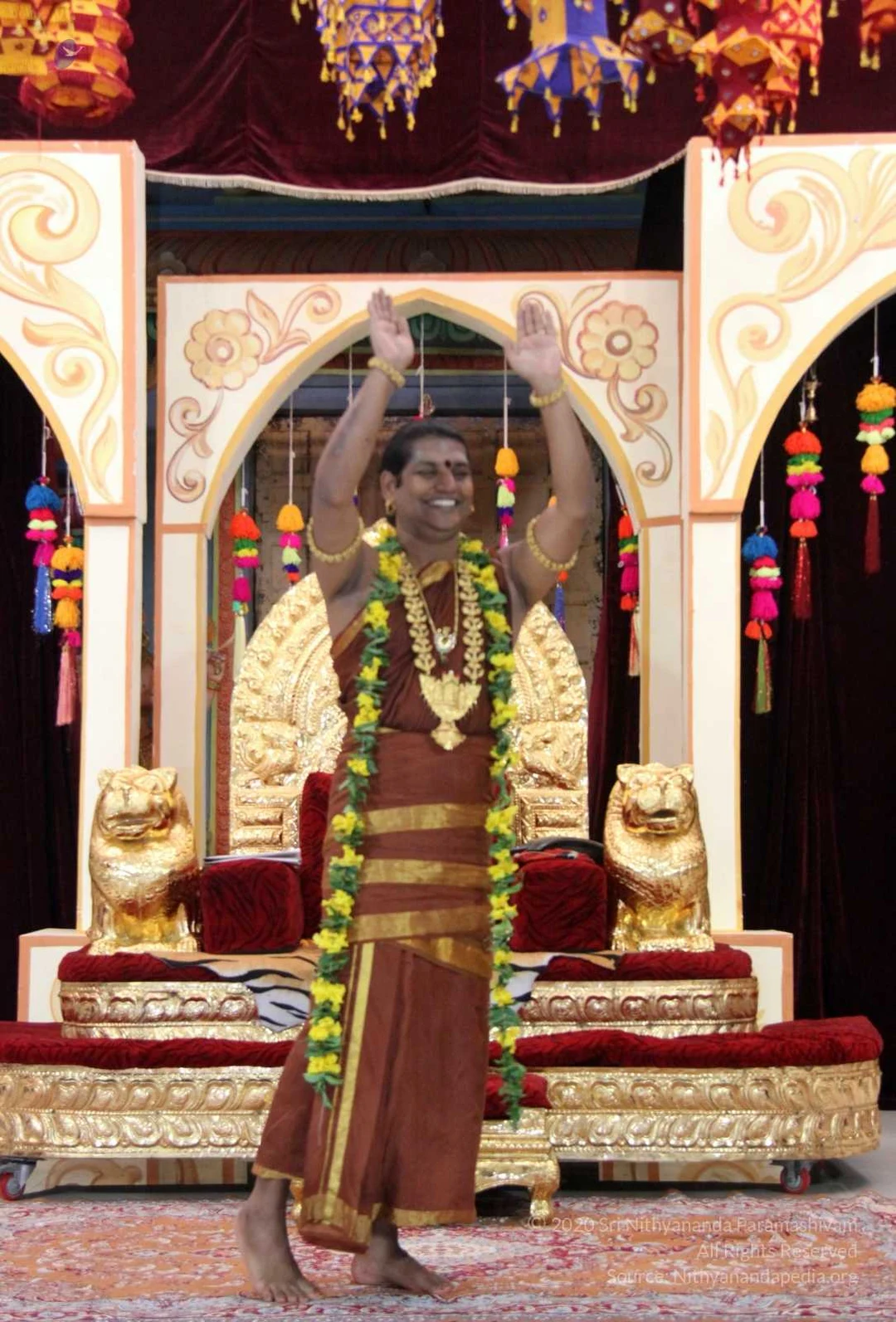
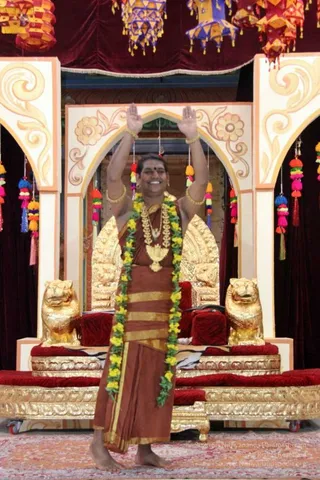
A man stands barefoot on a patterned rug before a golden throne flanked by two gilded lion sculptures and decorated with gold-accented red cushions. He wears a reddish-brown dhoti with gold borders, a yellow and green flower garland, a multi-strand gold necklace, gold armbands and a red bindi, arms raised with palms open and a broad smile. Above him hang colourful tasseled lanterns in red, gold, blue and purple, and tassels in pink, orange and green decorate the arches. The scene reads as a ceremonial welcome in an ashram-style hall, with a red velvet canopy overhead.A man in a rust-brown dhoti with gold borders and a matching shawl stands barefoot on a patterned rug, raising both arms in a joyful gesture and smiling. He wears a yellow and green marigold garland, a gold necklace with a large pendant, gold bangles and a red tilak on his forehead. Behind him is an ornate throne with golden lion-shaped armrests, red velvet cushions, a golden arched backdrop with floral motifs, and hanging pink, orange and yellow tassels. Colourful lanterns hang from the maroon draped ceiling. a person is shown in the centre of the scene, identified by his robes, garland and ceremonial throne setting.

Swamiji and the Deities

12 photosSource gallery
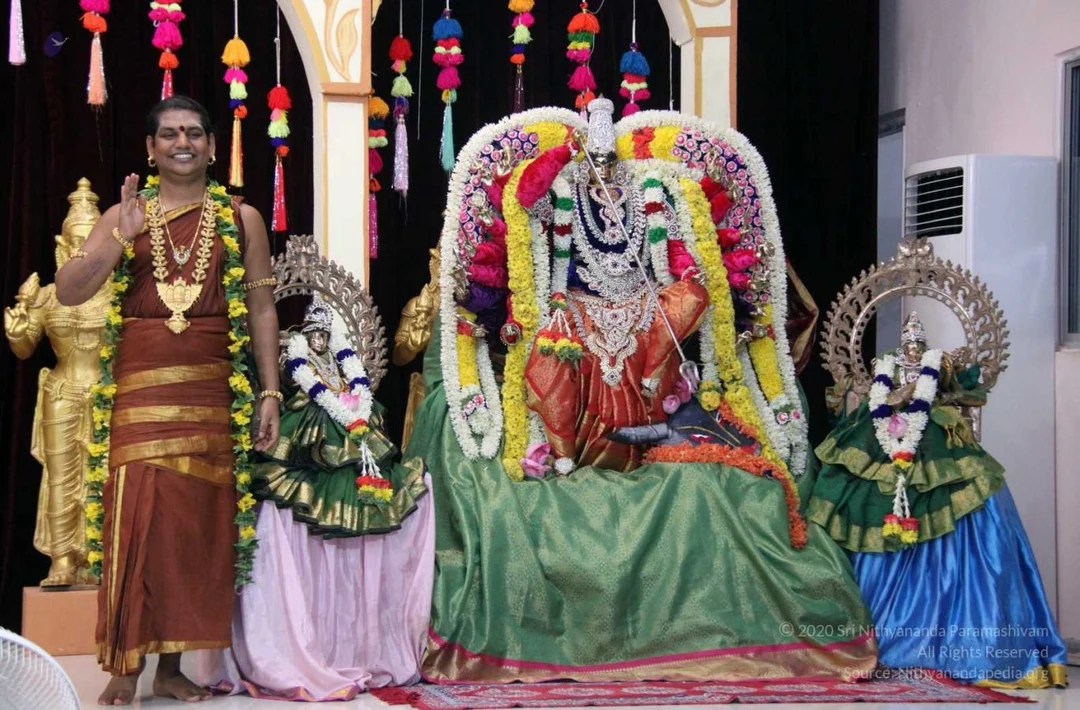
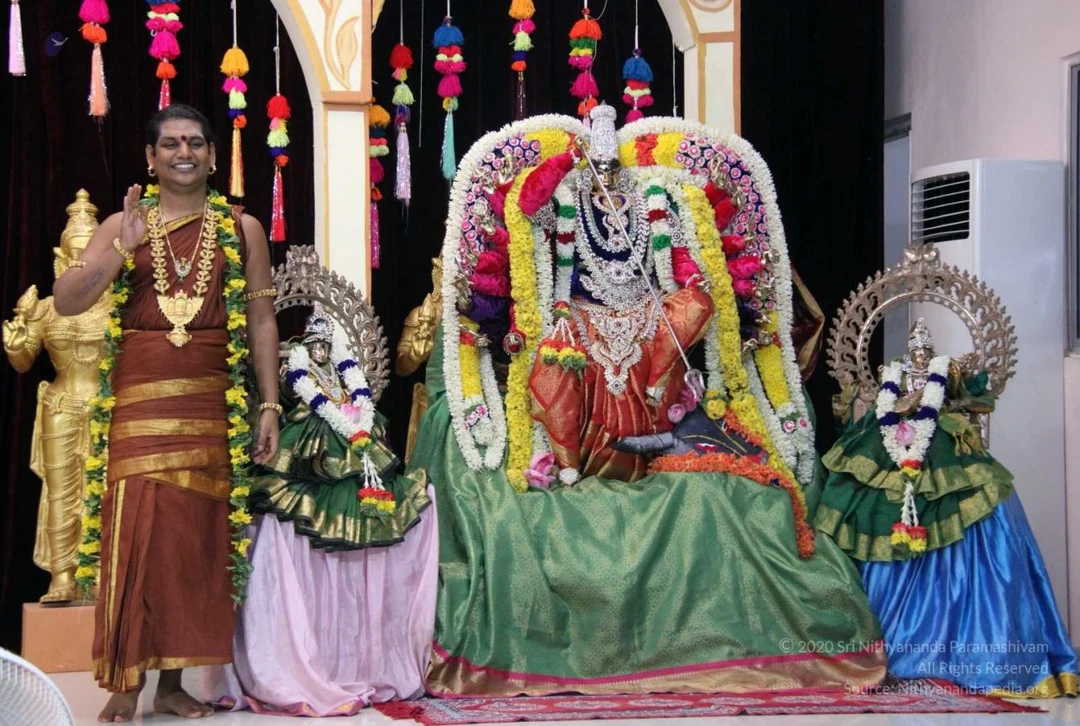
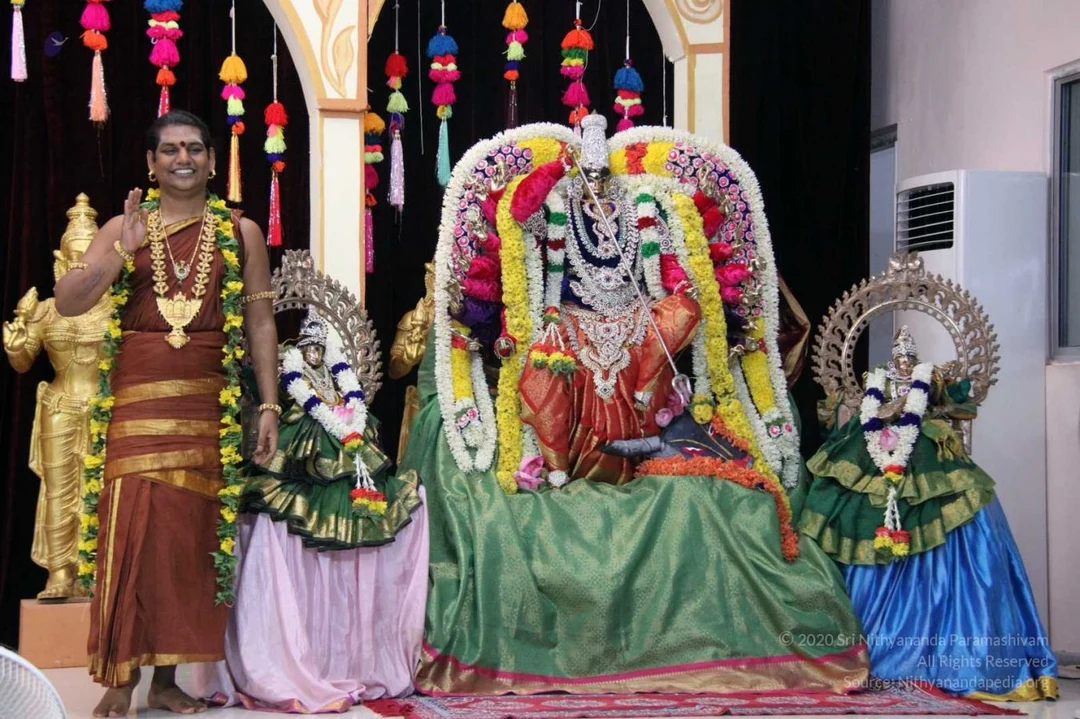
A standing man in a rust-red and maroon dhoti-style garment with a gold necklace, rudraksha-style beads and a garland of yellow and white flowers waves his right hand, smiling, in front of a decorated stage. Behind him sits a large deity murti in a green and red silk garment, heavily adorned with white flower garlands, jewelled necklaces and a crown, holding a staff. Two smaller seated figures in green and blue lehenga-style garments with flower garlands flank the central deity, with gold circular halos behind them. Colourful tassels hang from the arch above and a golden standing statue stands at the left edge. The scene looks like a festive puja display with a visible wind-style air conditioner unit at the right.A man in a rust-brown dhoti with gold borders stands at left, smiling and raising one hand in greeting, wearing a gold pendant necklace, a long garland of yellow and white flowers, and gold bangles. Behind him are golden standing figures and hanging tassels in red, orange, green and pink. At right, a richly decorated deity murti sits on a green silk-draped seat, adorned with a large white flower arch, jewelled silver ornaments and a raised trident-like weapon, with orange-red garments. Two smaller decorated female figures in green and blue sari-style dresses with garlands flank the central deity on their own seats. The scene resembles a festival alankaram display of goddess figures.A standing man in a rust-brown dhoti-style wrap and matching shawl smiles and raises his right hand in greeting beside a seated deity murti. He wears a gold pendant necklace, a long gold chain, gold bangles and a fresh garland of green and white flowers. Behind him stands a gold-coloured statue. The central murti is richly adorned with a white and gold crown, silver jewellery, a red and gold brocade garment, a sword-like staff, and an arch of yellow, red and white flower garlands. It sits on a green silk-covered seat, with two smaller seated murtis in green and blue draped garments on either side. Colourful tassels hang from the backdrop and a wall-mounted air conditioner is visible at right.A standing man in a rust-brown dhoti and shawl with gold borders smiles and raises one hand in greeting beside a large seated deity murti. He wears a gold chain with a pendant, gold armlets and a bindi, and a yellow and green garland hangs over his shoulders. The murti is seated on a green silk-draped throne, covered with white, yellow and red flower garlands, wearing a silver crown, silver jewellery and a red sari, and holding a staff. Two smaller deity figures in green and blue silk sit on either side, and gold figurines stand at the left edge. Colourful tassels hang from the arch above. The standing man is a visible person, so the count is one; the murti and figures are statues.A smiling person in a rust-brown dhoti and shawl with gold borders stands at left, waving, wearing a yellow marigold garland, gold necklaces with a pendant, and gold bangles. Behind and to the right stands a large deity murti of Venkateshwara seated on a gold horse, draped in a heavy floral garland of red roses and white flowers, wearing a red crown, jewelled ornaments and holding a sword and shield. Beside the horse is a golden standing female deity figure, and a purple cloth covers the stage base. A decorated arch and hanging tassels frame the background.

Navratri Devi Puja and Aarti
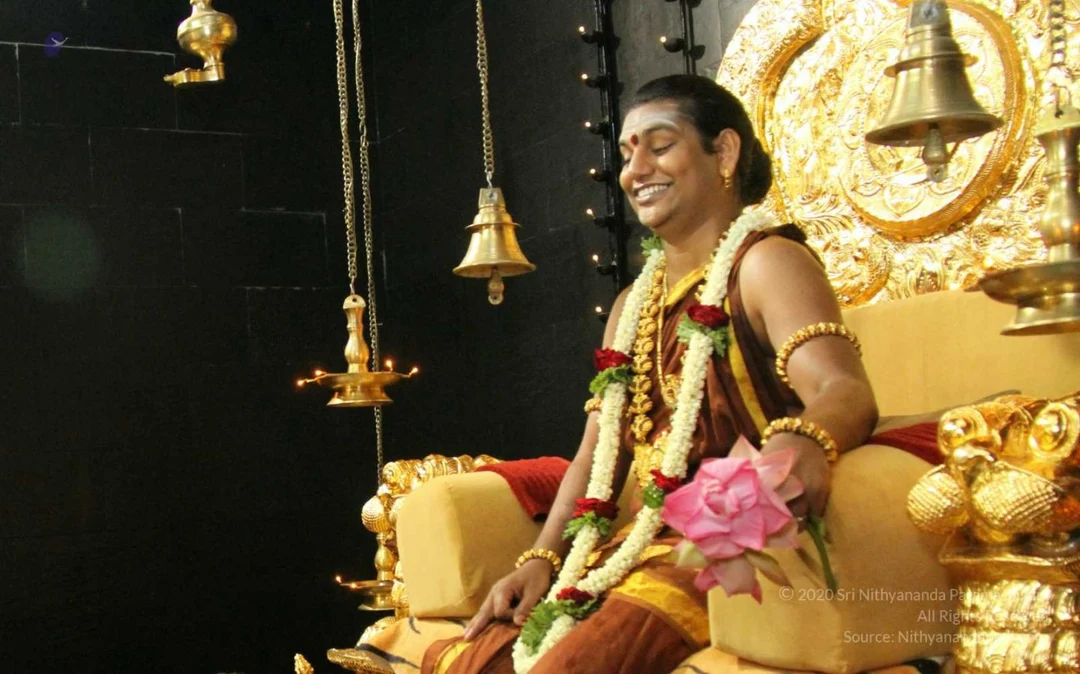
63 photosSource gallery
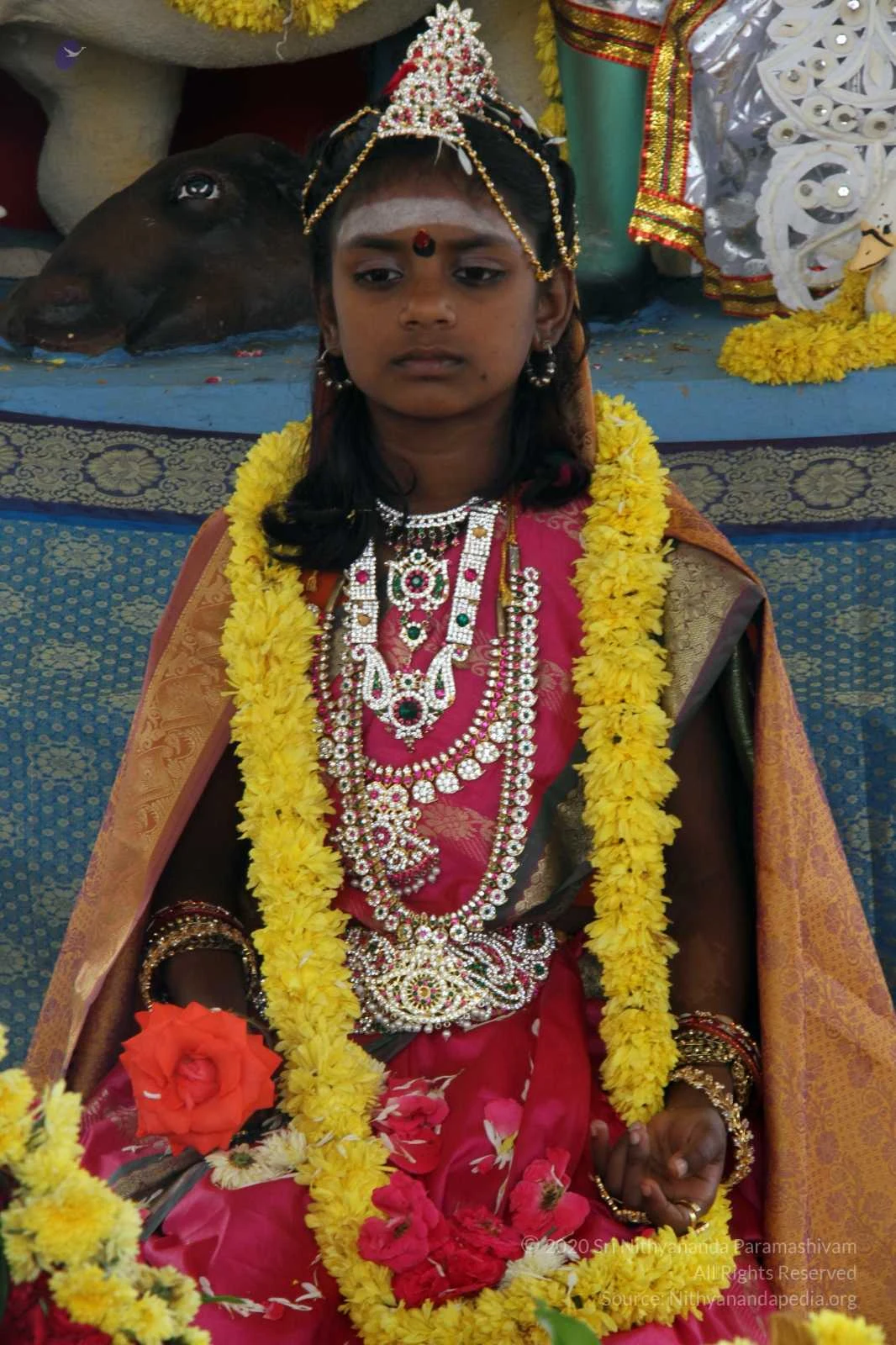
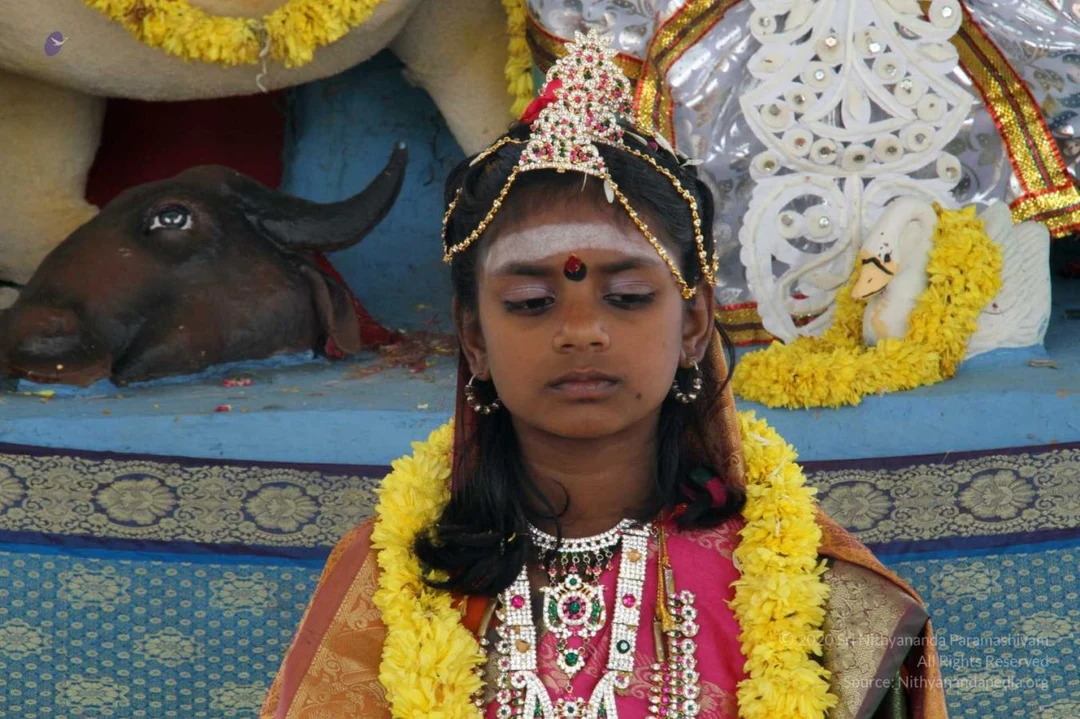
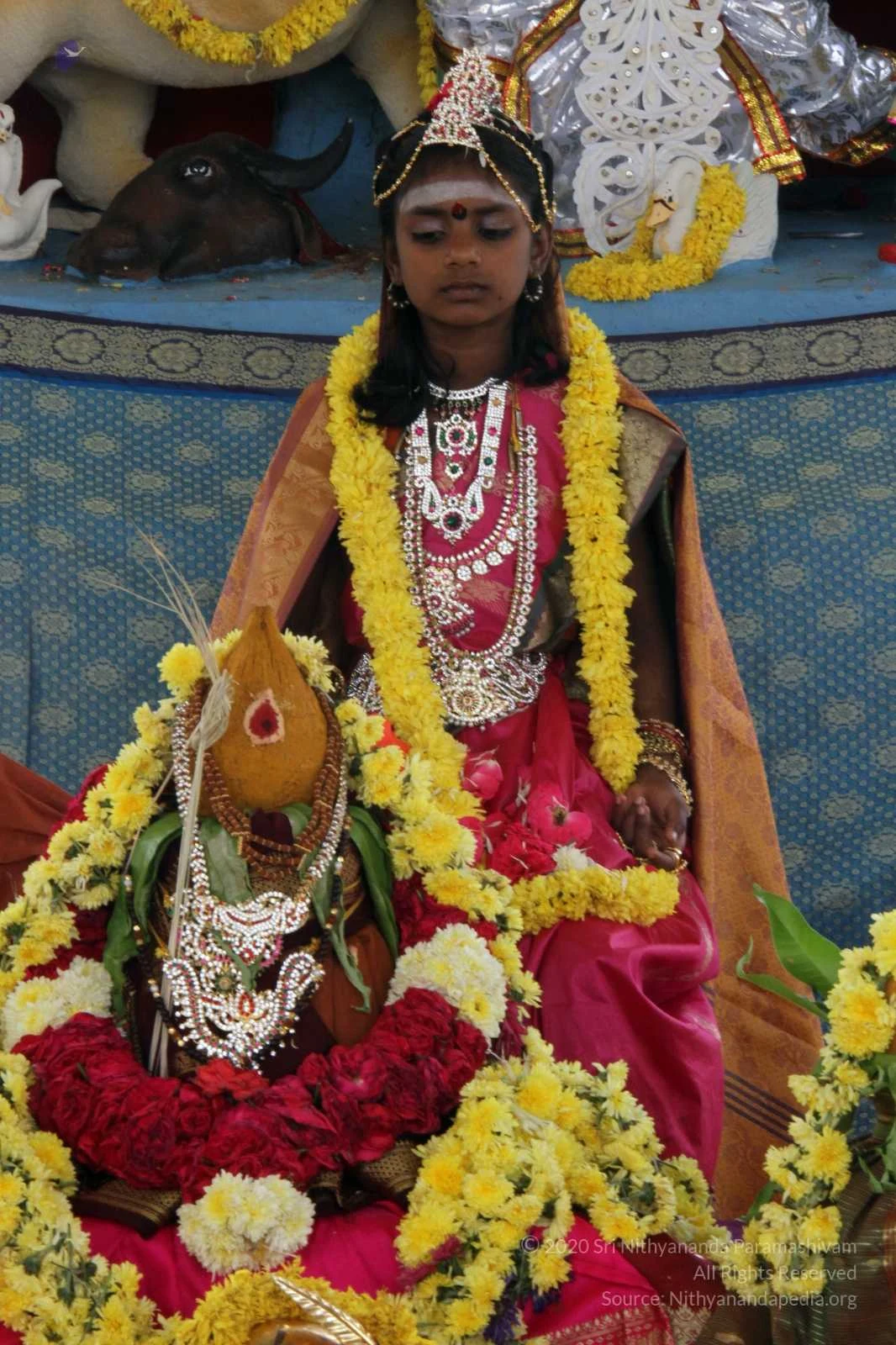
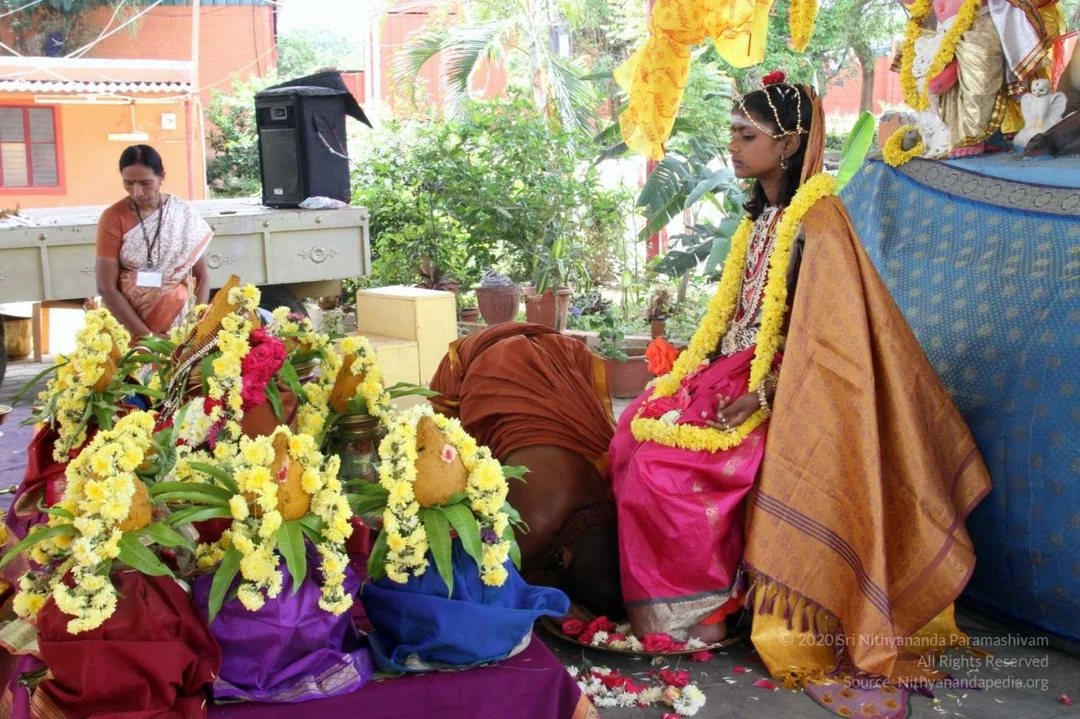
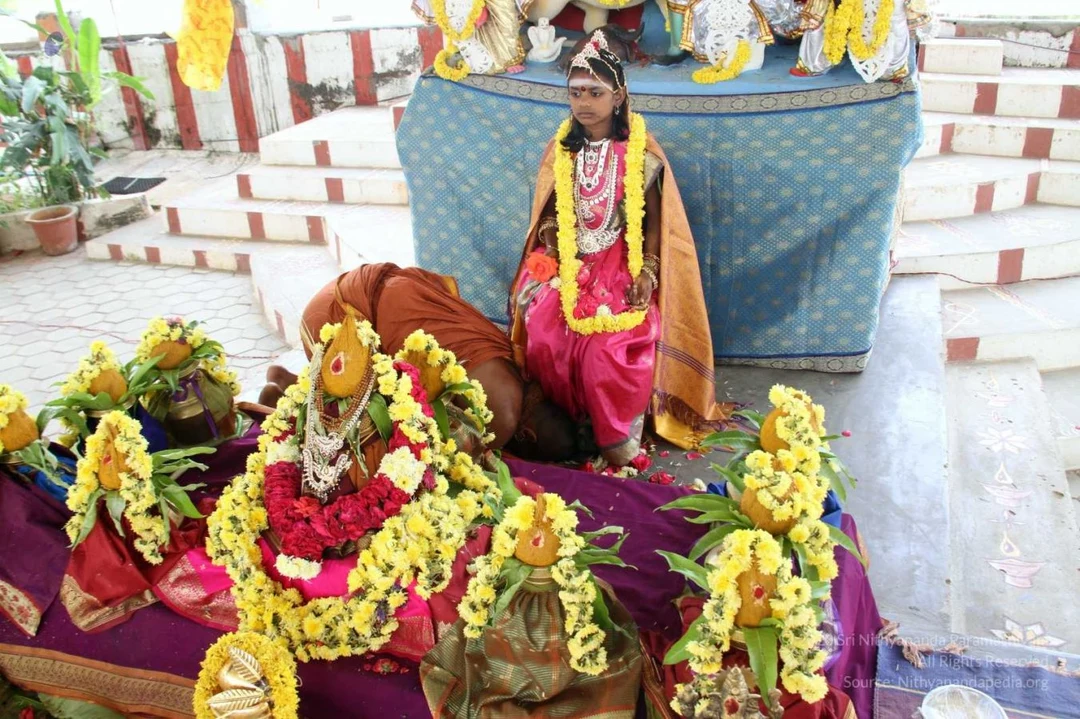
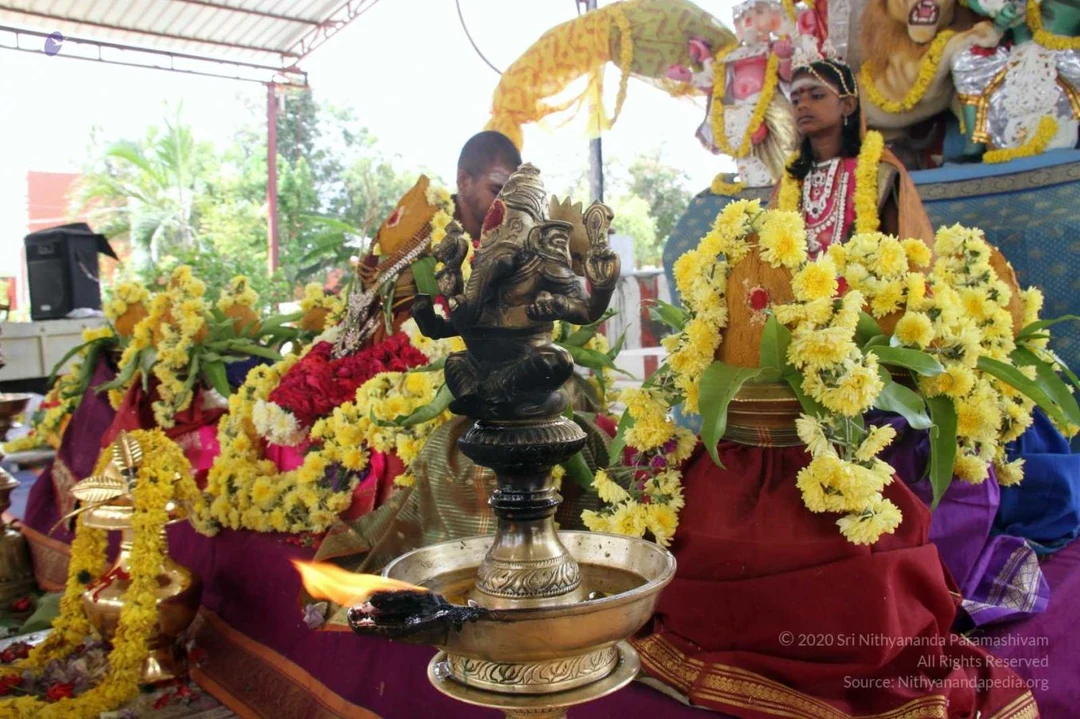
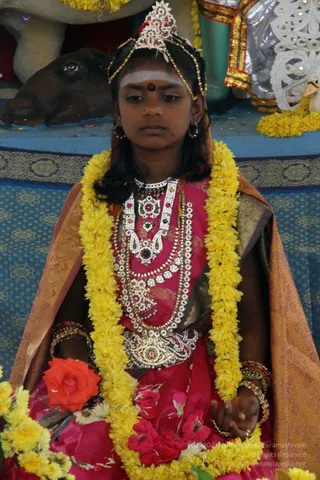
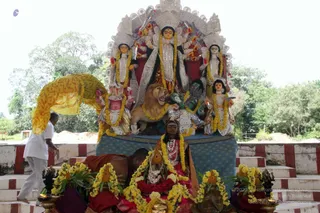
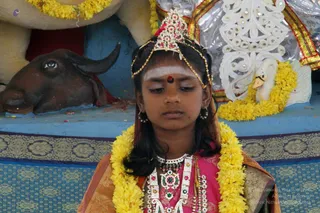
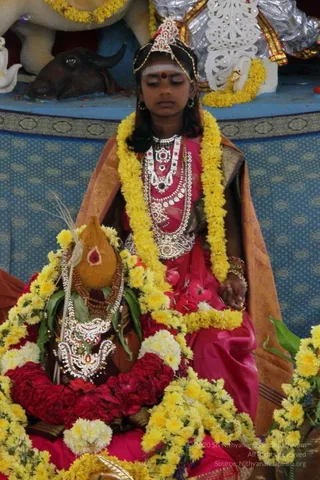
A young girl sits centred in front of a blue draped backdrop, dressed as a deity figure. She wears an ornate silver-and-gold crown with red and green stones, a red bindi and white vertical forehead markings, and layered jewelled necklaces with red, green and white stones. Her pink silk garment is draped with a gold-bordered orange shawl, and she wears multiple red and gold bangles. A yellow marigold garland hangs around her shoulders and she holds a red rose. A brown animal-head statue and a white sculpture stand behind her.A large festival deity murti of Devi as Mahishasura Mardhini, shown with many arms holding weapons, dressed in white and silver ornamented fabric with yellow marigold garlands. A fierce lion sits at her feet and a green-skinned figure lies beneath. Smaller figures flank her on each side, one holding a veena, and a small deity with an elephant-like head sits at lower left. Elaborate silver-white arches and a red backdrop frame the statues outdoors among trees. No living people are visible.Outdoor photograph of a large decorated Devi murti with eighteen arms on a tiered platform, flanked by two smaller goddess figures and a carved lion, all garlanded with yellow and orange marigolds. A man in white clothing stands at left, holding a yellow cloth draped over the shrine. In the foreground, a seated figure in an orange-brown robe bows low before a priest seated on the steps in red and white. Brass lamps and marigold-decorated pots sit on the steps. Trees and open sky form the background.A young girl dressed as a deity sits on a blue and gold-bordered dais in front of a buffalo head sculpture, a decorated white swan and a yellow flower garland. She wears a jewelled silver crown with red and green stones, a red bindi, white and red tilak marks on her forehead, pink silk blouse with a gold-and-orange sari, layered gold and gemstone necklaces, and a yellow marigold garland. Her eyes are lowered in a calm, focused expression. The setting suggests a festival tableau or procession display.A young girl sits in a festive temple-style setting, dressed in a deep pink silk sari with a gold-brocaded orange shawl draped over her shoulders. She wears a silver-and-gem crown, layered silver necklaces, bangles and earrings, with a white vibhuti line and red kumkum on her forehead. Yellow marigold garlands drape her shoulders and lap. Beside her sits a large brown coconut-like vessel with a red pointed mark, adorned with a silver face, red roses and yellow flowers, with a stalk of grass stuck into it. Behind her, a blue-and-gold draped platform holds a carved buffalo head and a silver-clad figure with garlands, and the scene resembles a festival tableau. Her hands rest calmly in her lap with a ring visible on one finger.A photograph of a large Durga-style deity murti on a stepped white and red-striped platform outdoors, with trees behind. The goddess, with multiple arms and a lion beside her, is adorned with yellow and orange marigold garlands and a silver-embroidered backdrop. In front, a seated child-sized figure in a red and gold dress wears a crown, a red-and-white beaded necklace and garlands, seated before a kalasha-like offering, brass oil lamps and banana-leaf or floral offerings on a maroon cloth. A yellow draped cloth hangs at the left. No adult worshippers are visible.
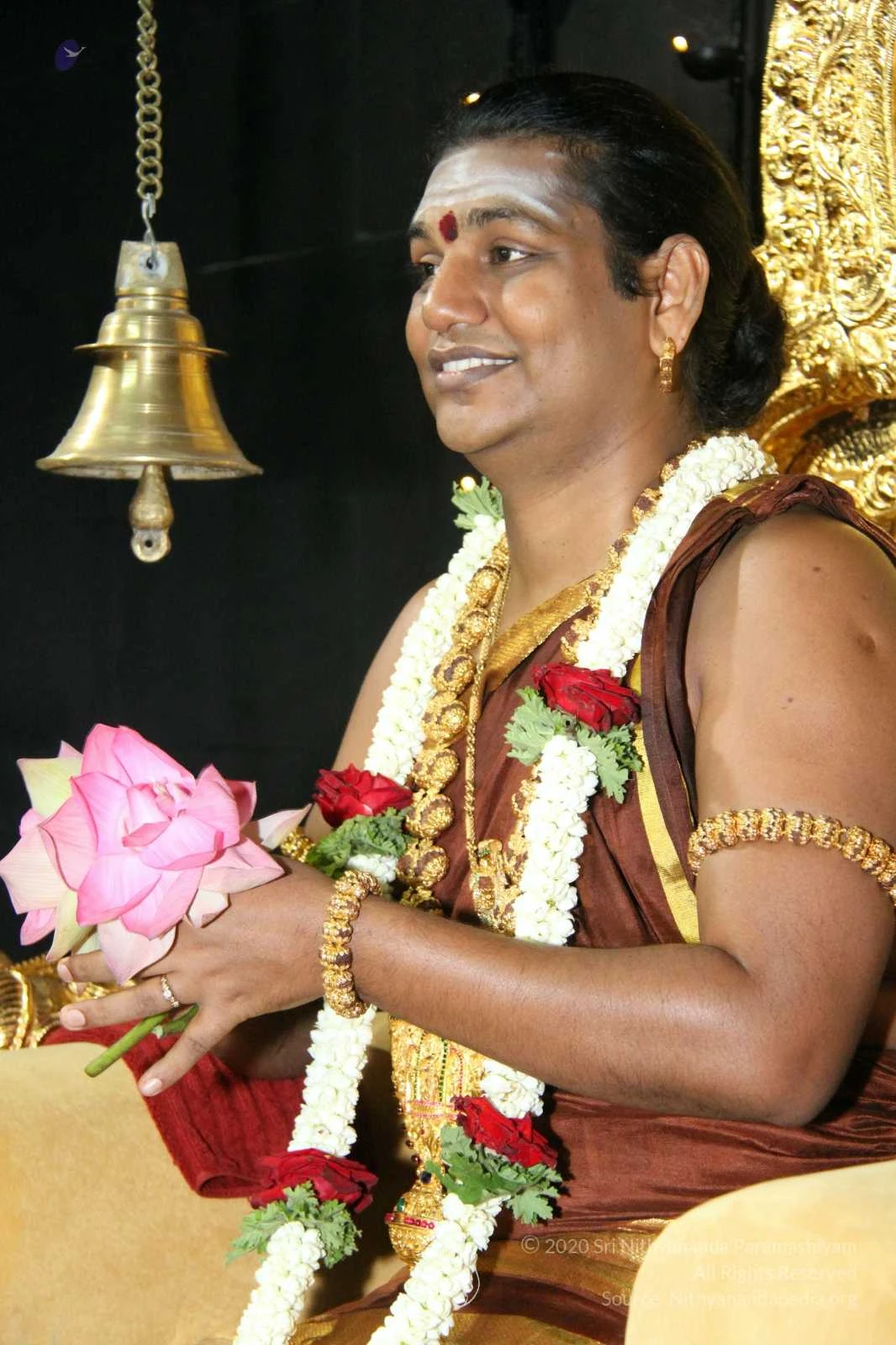
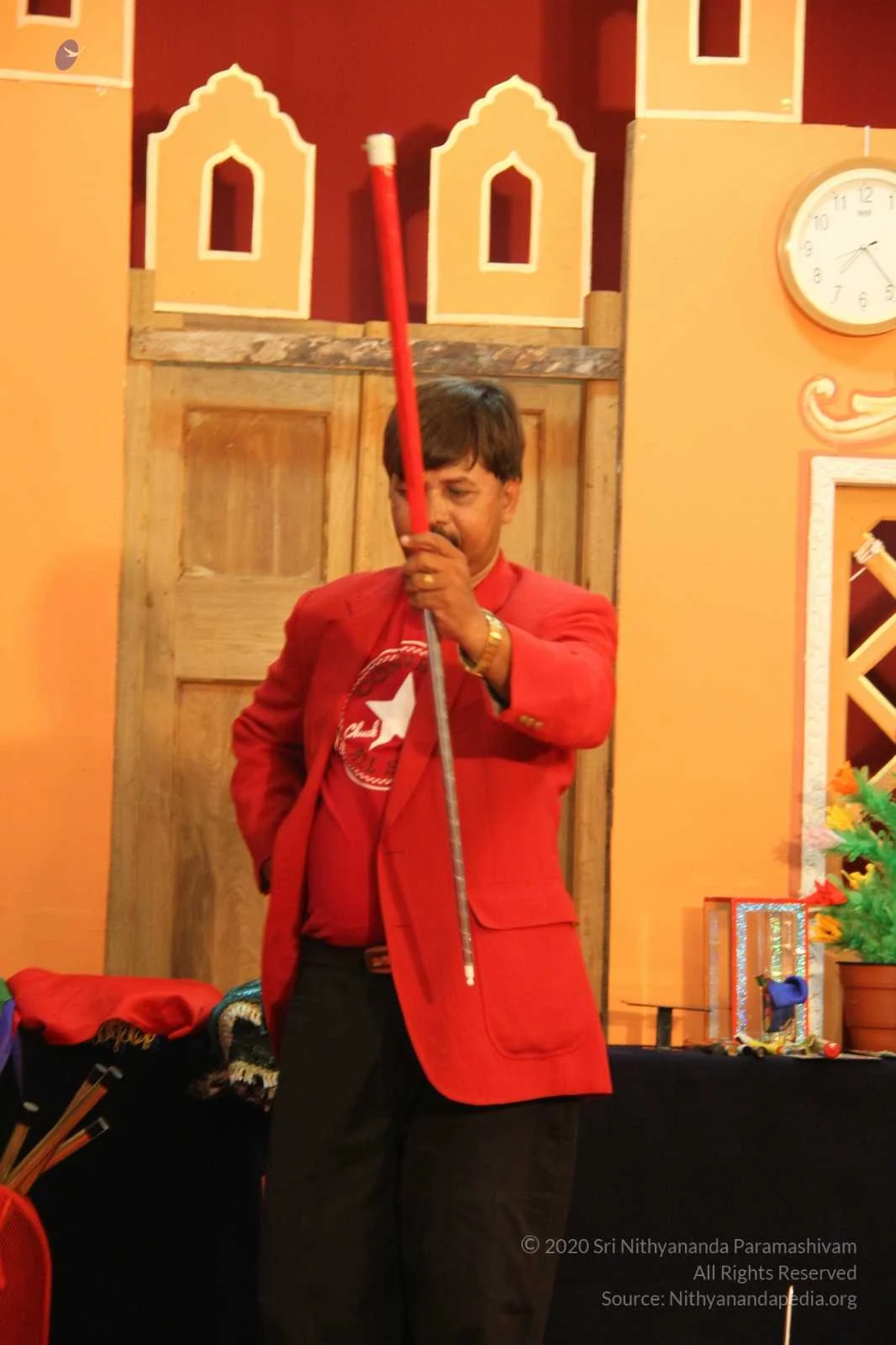
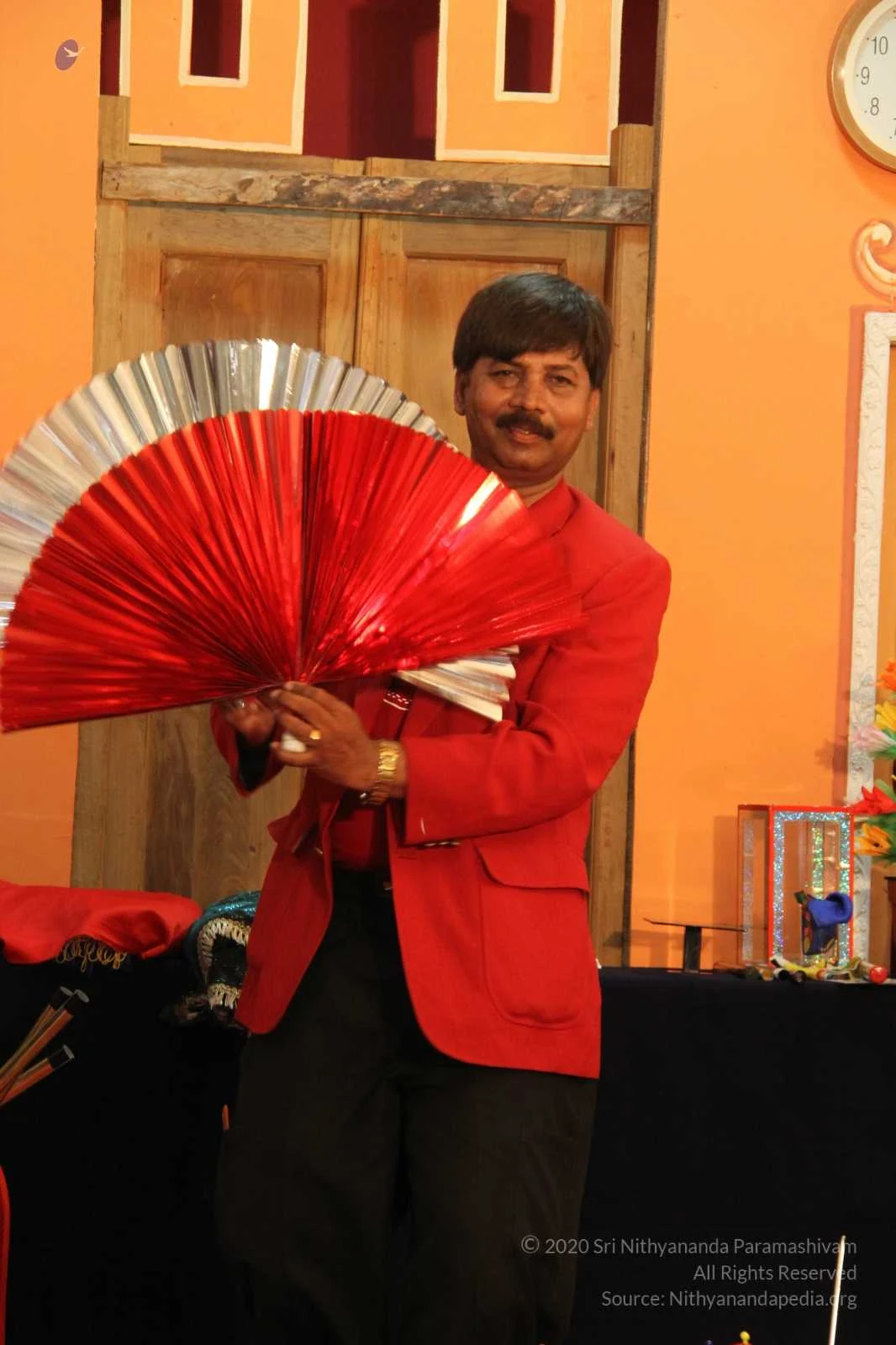
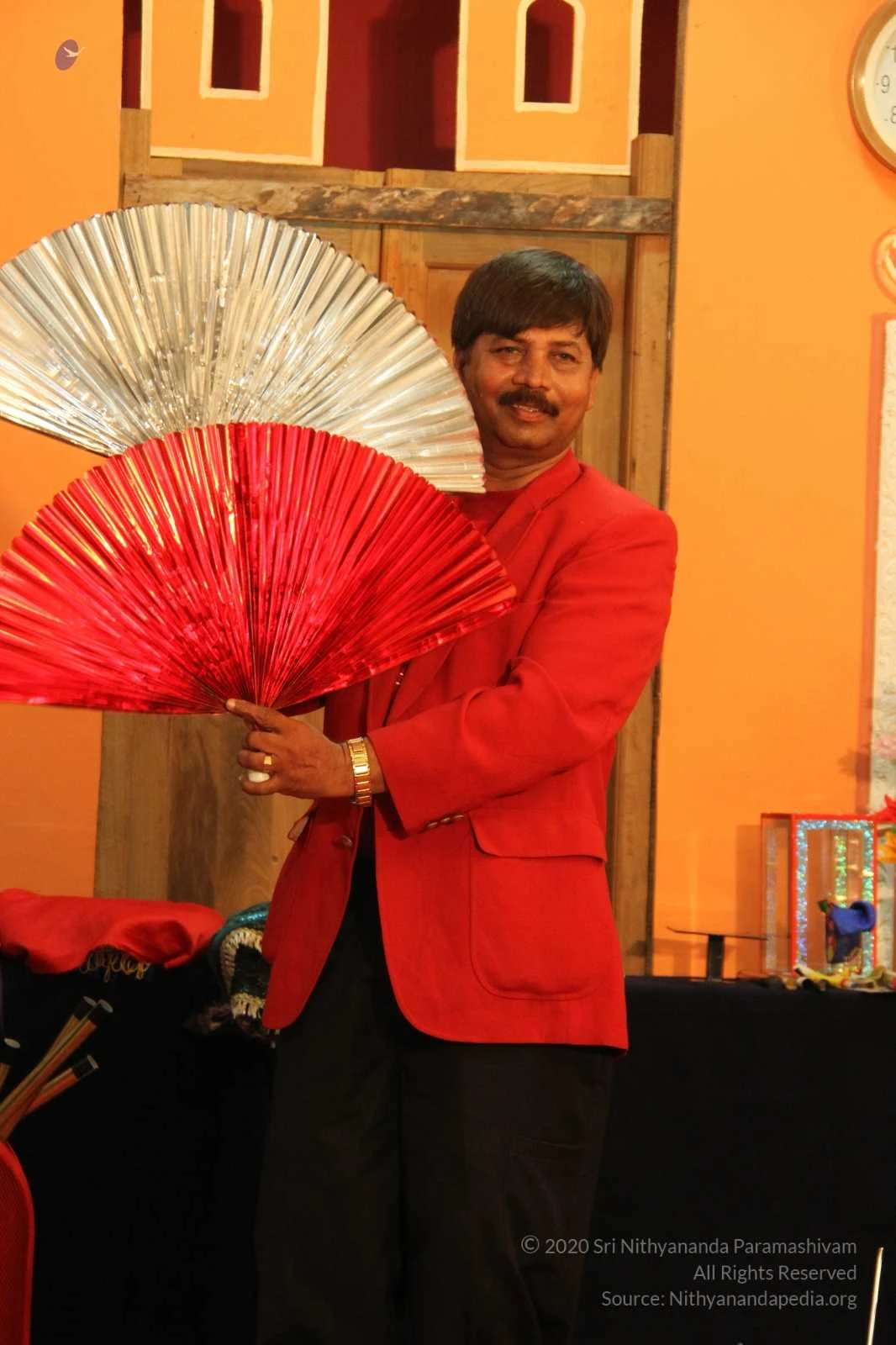
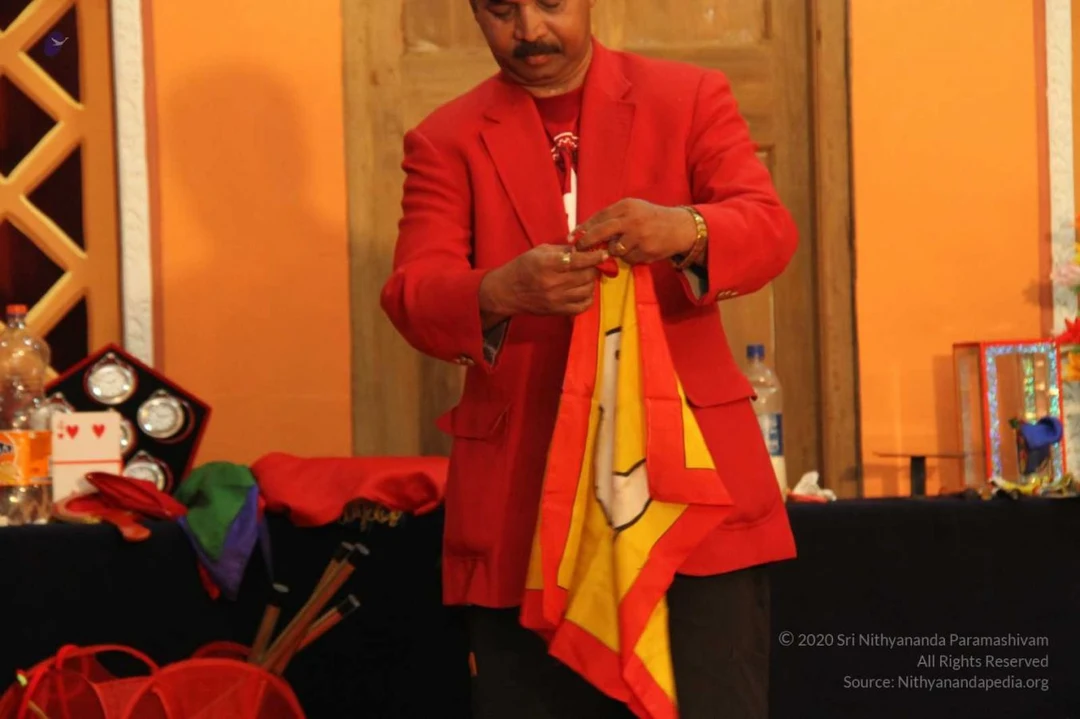
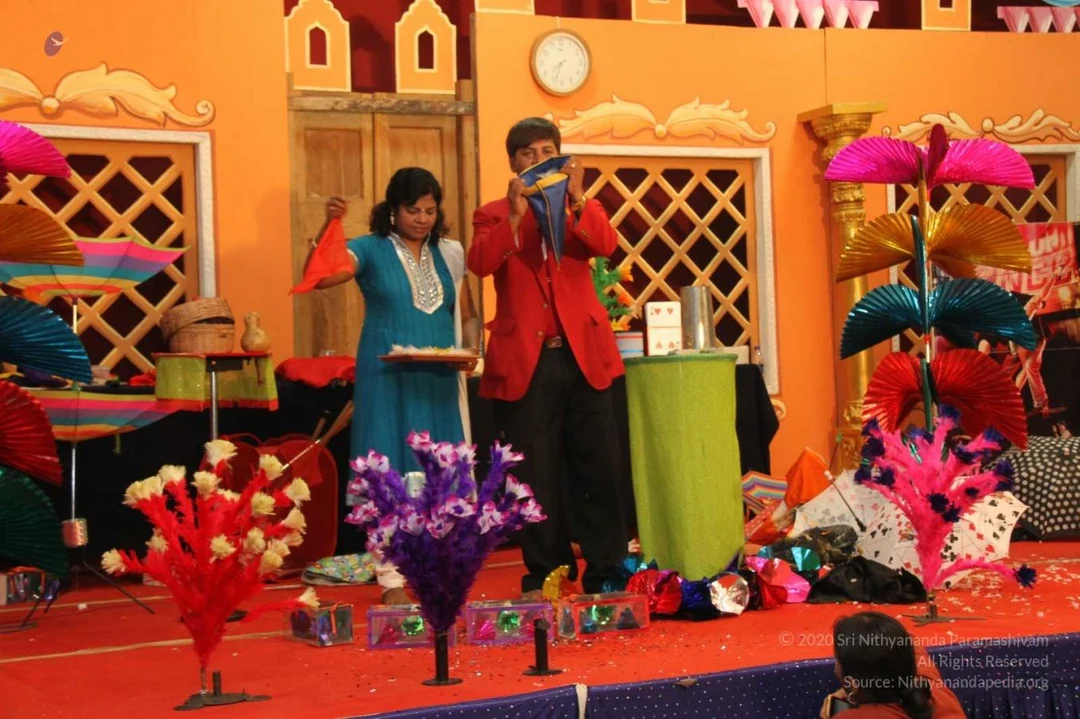
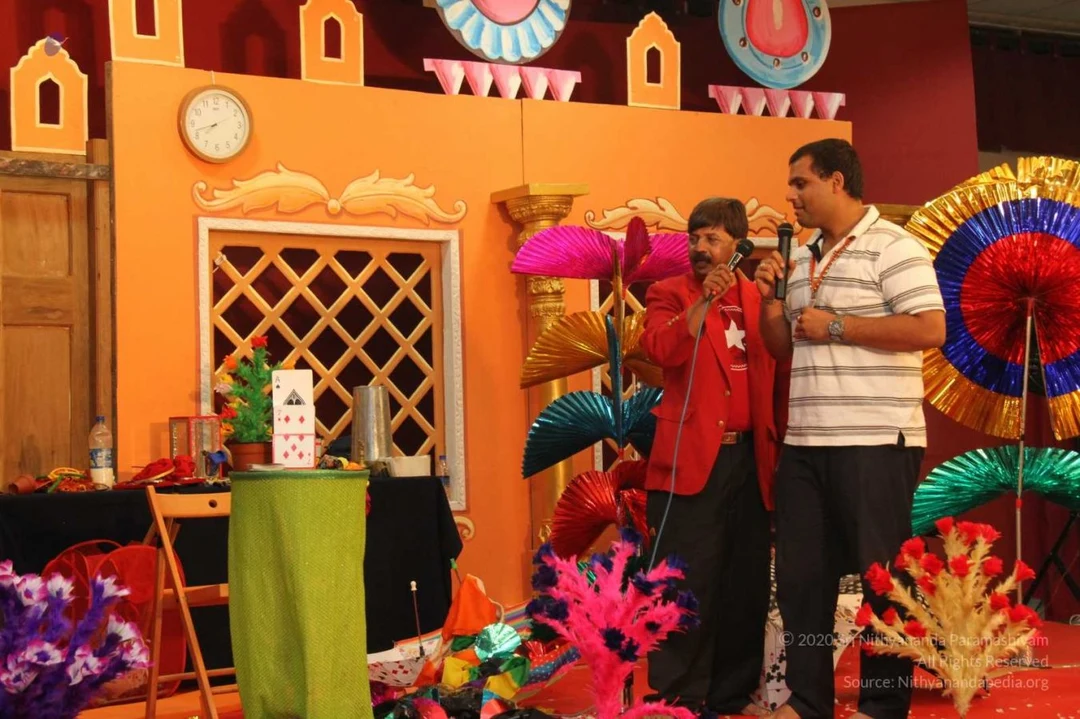
Navratri Ashramites Culturals and Magic Show

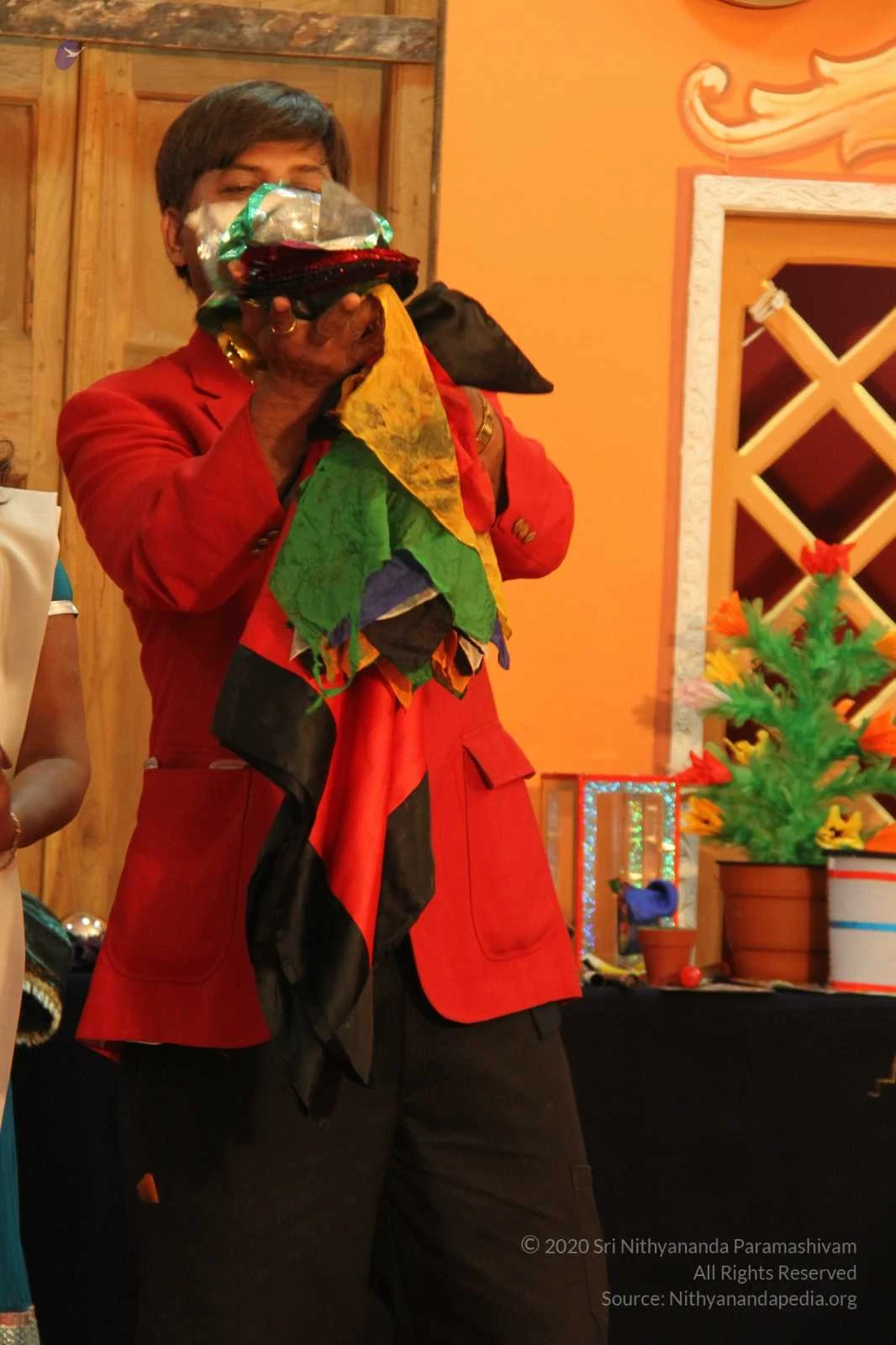
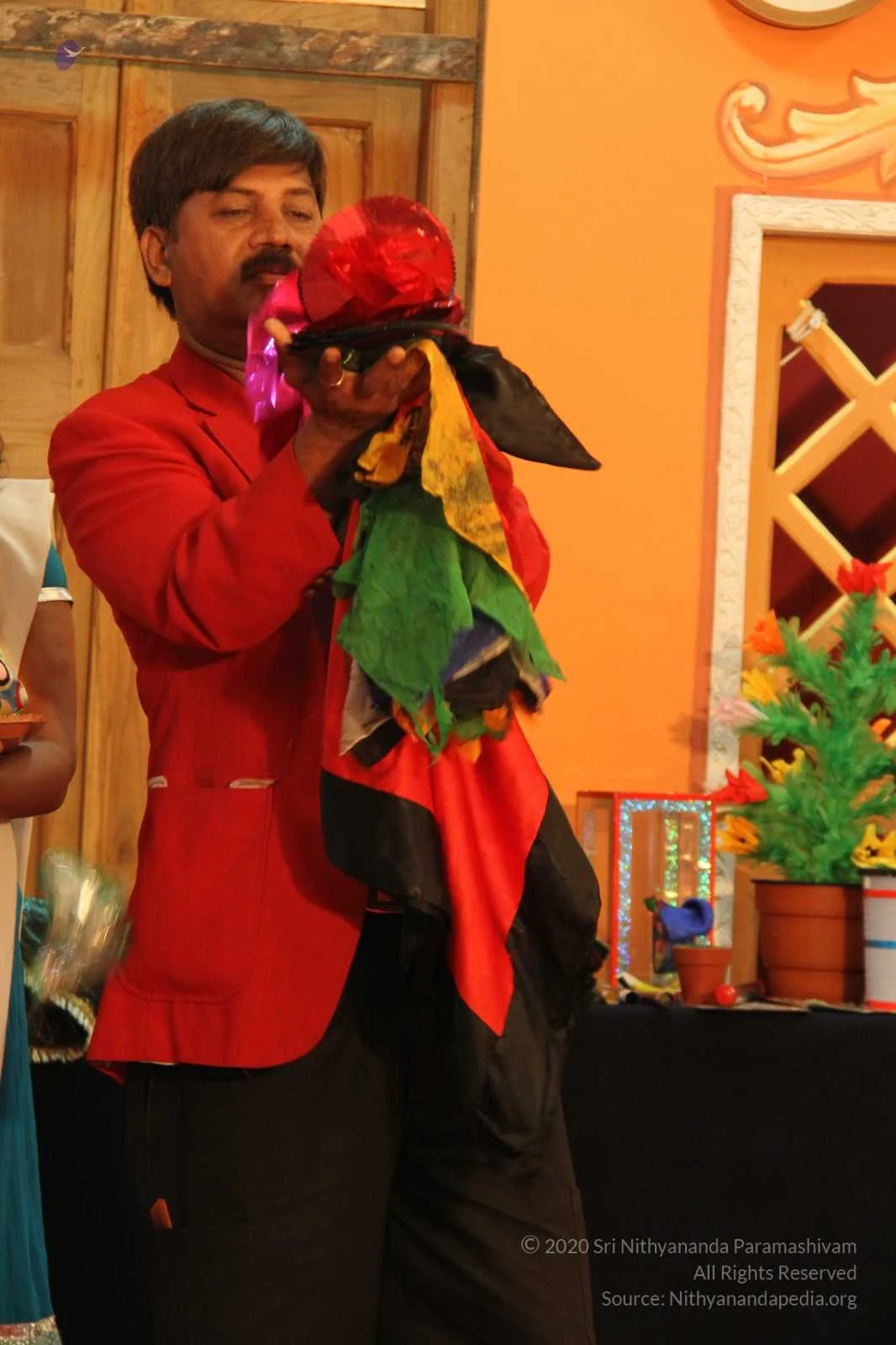
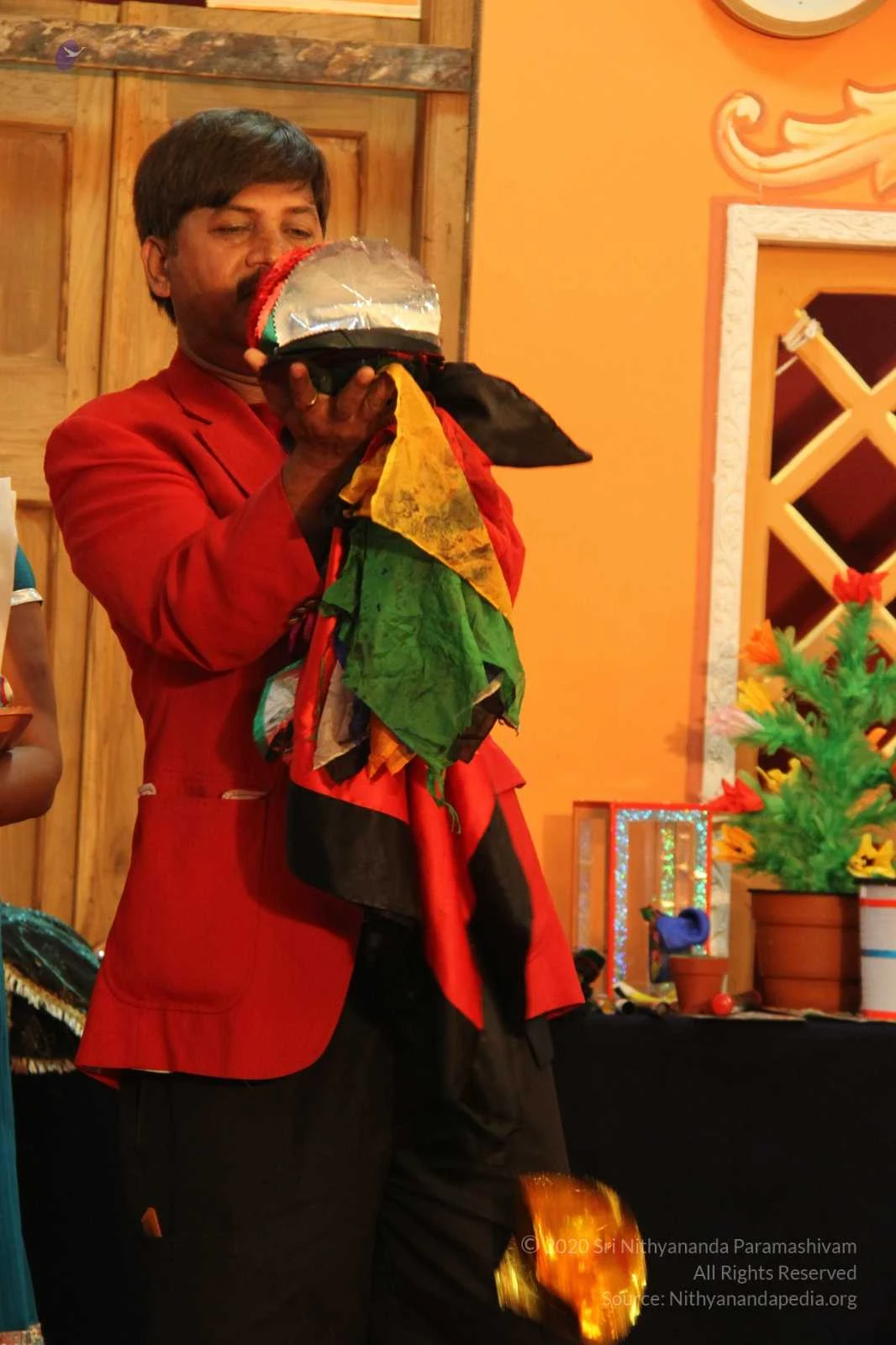
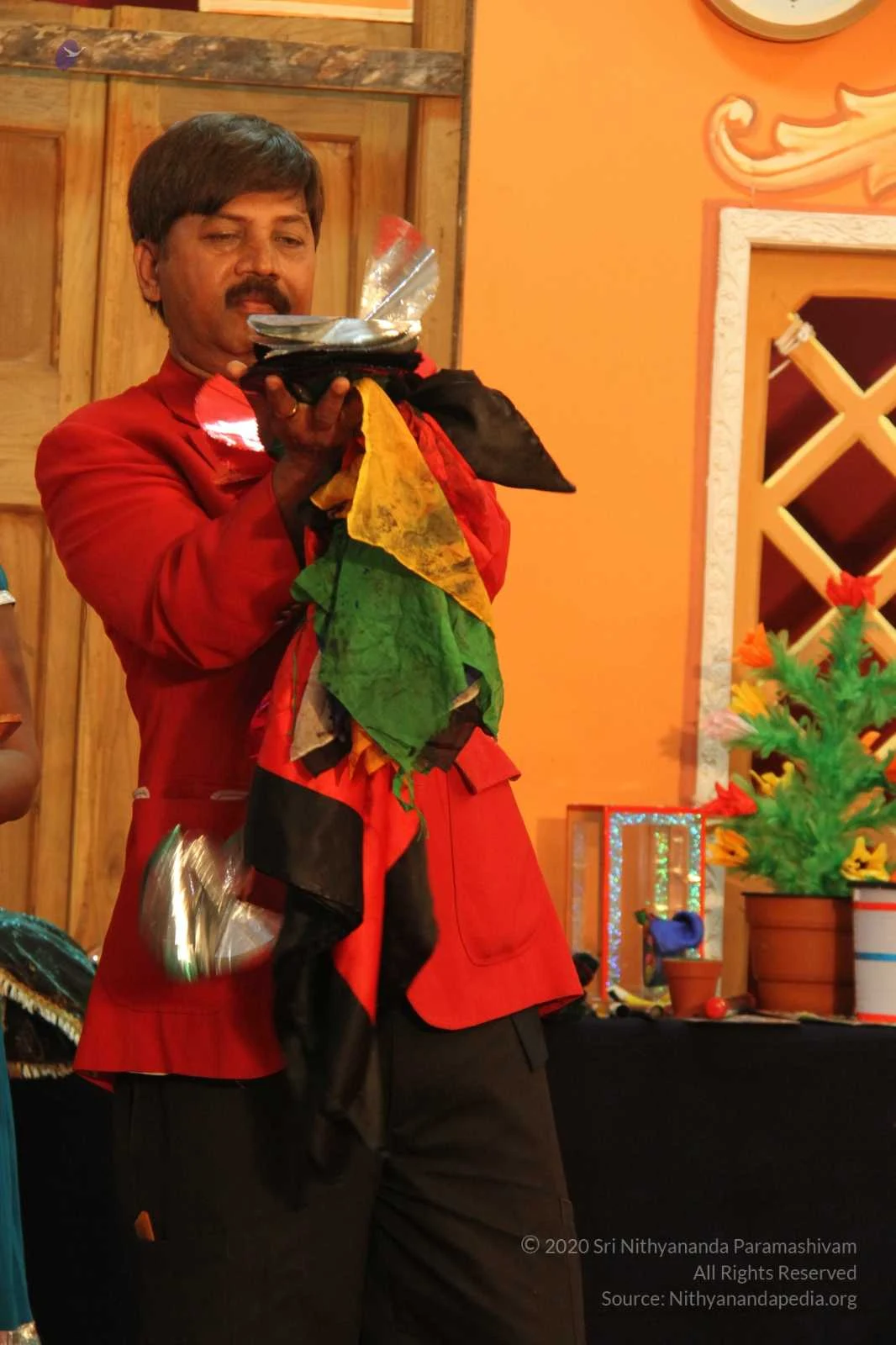
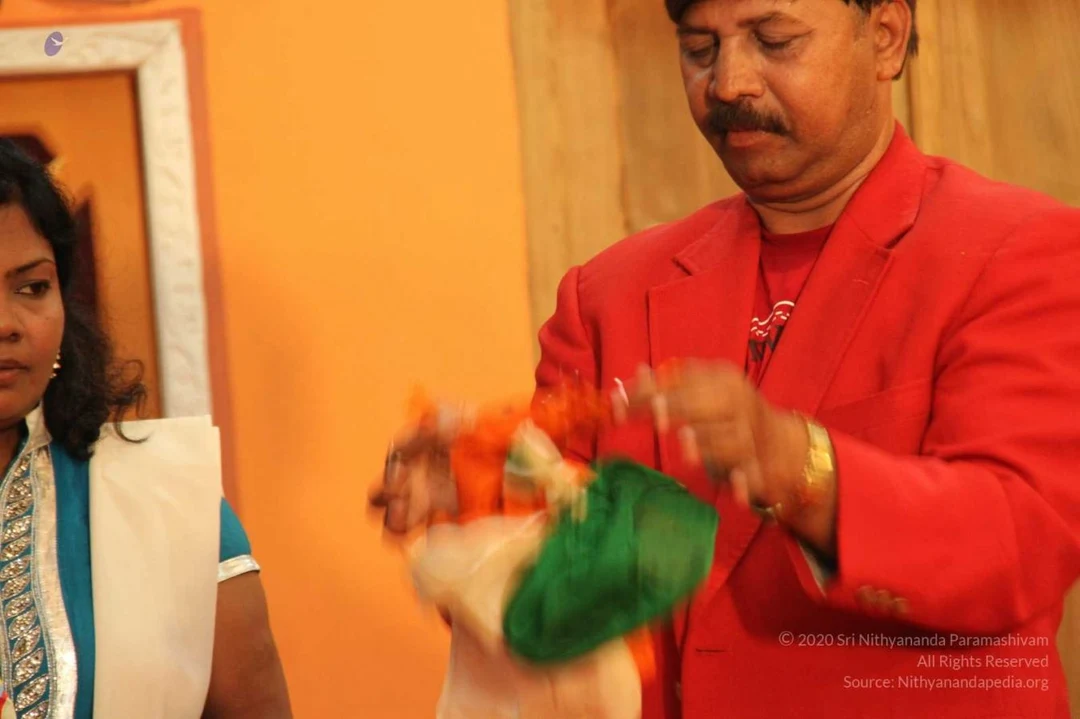
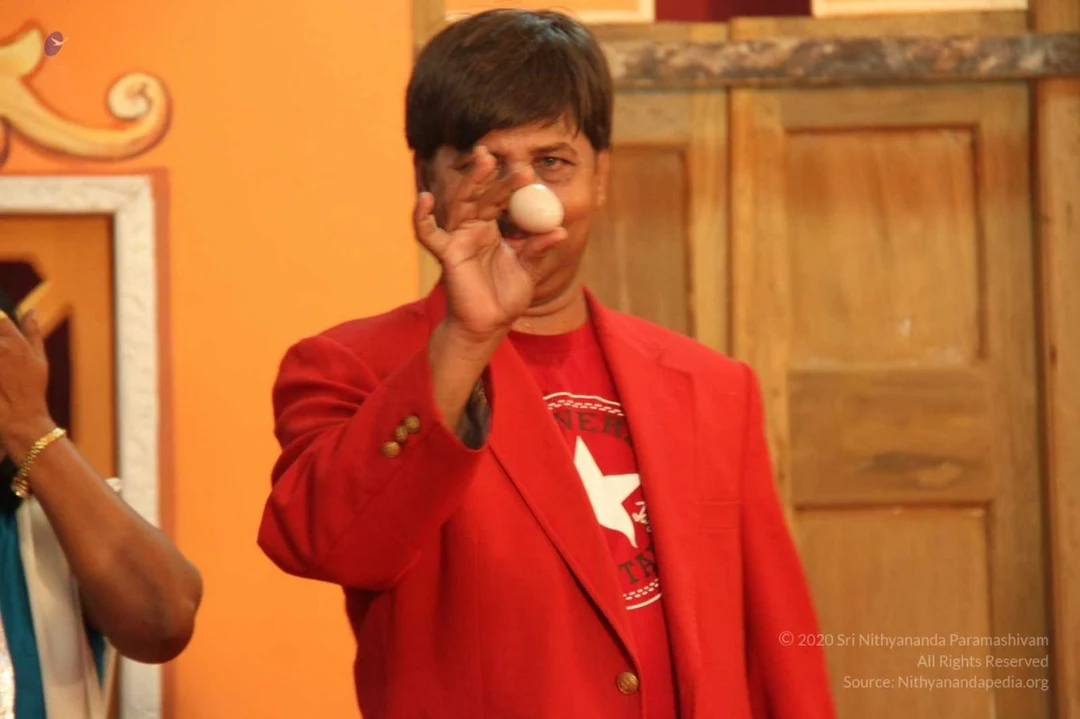
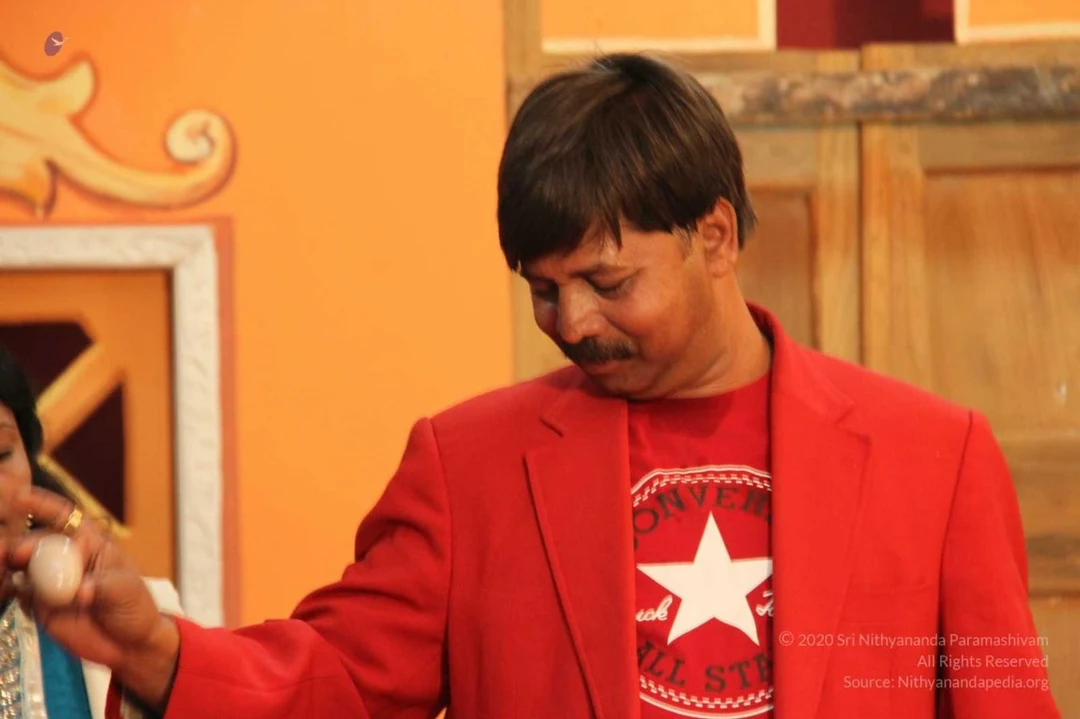
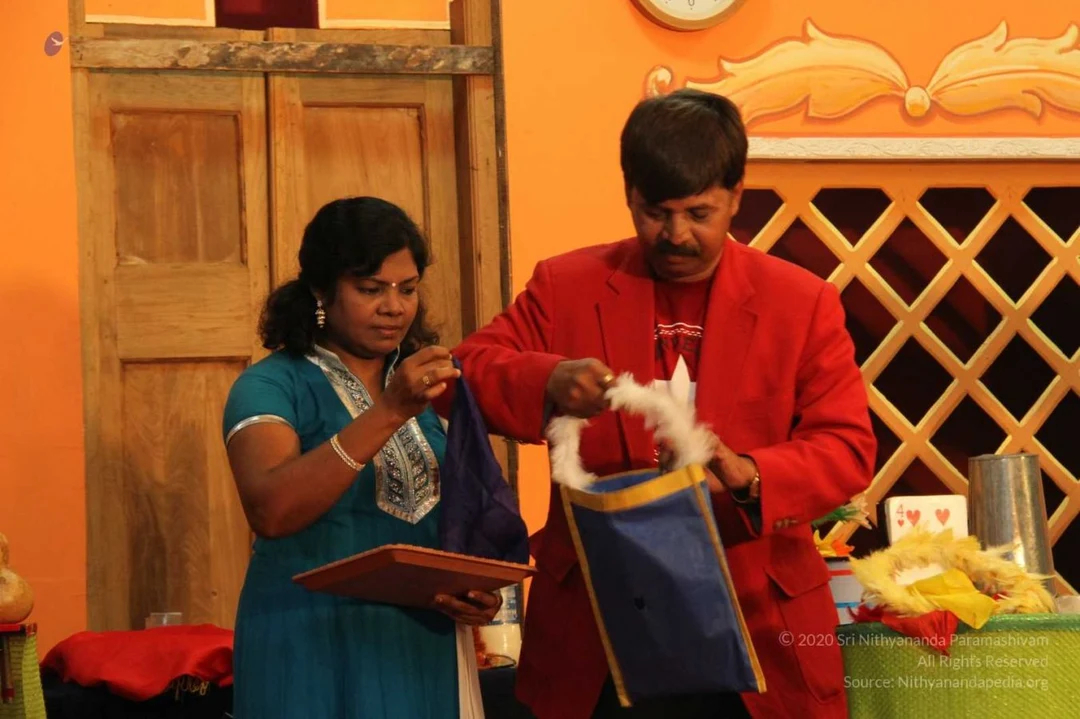
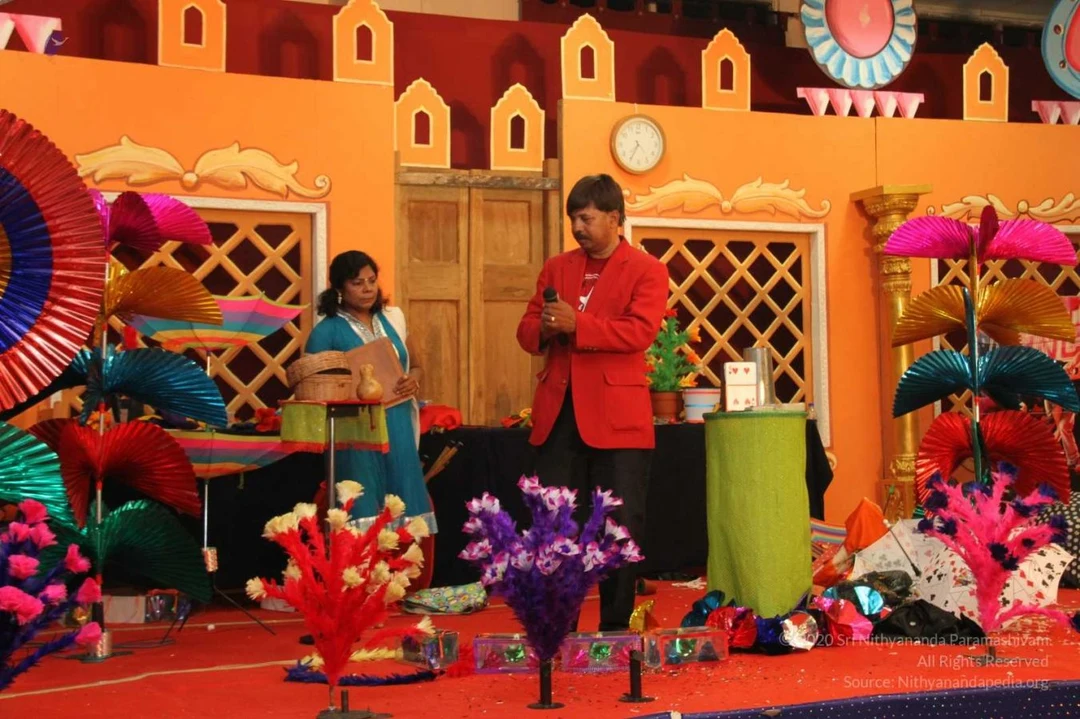
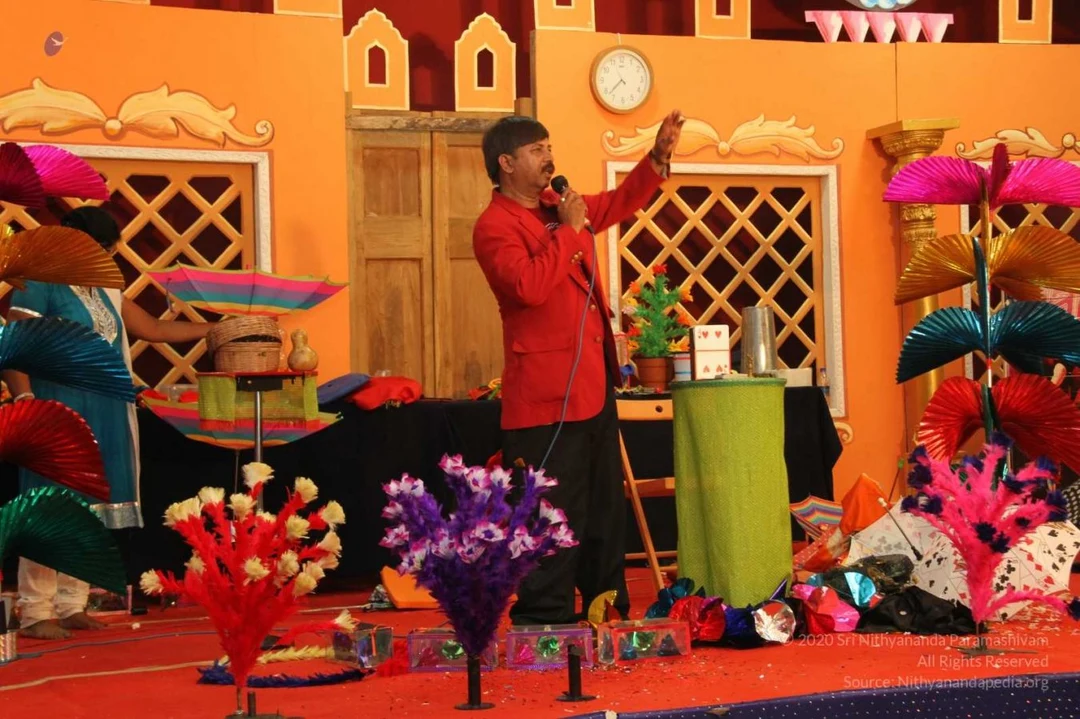
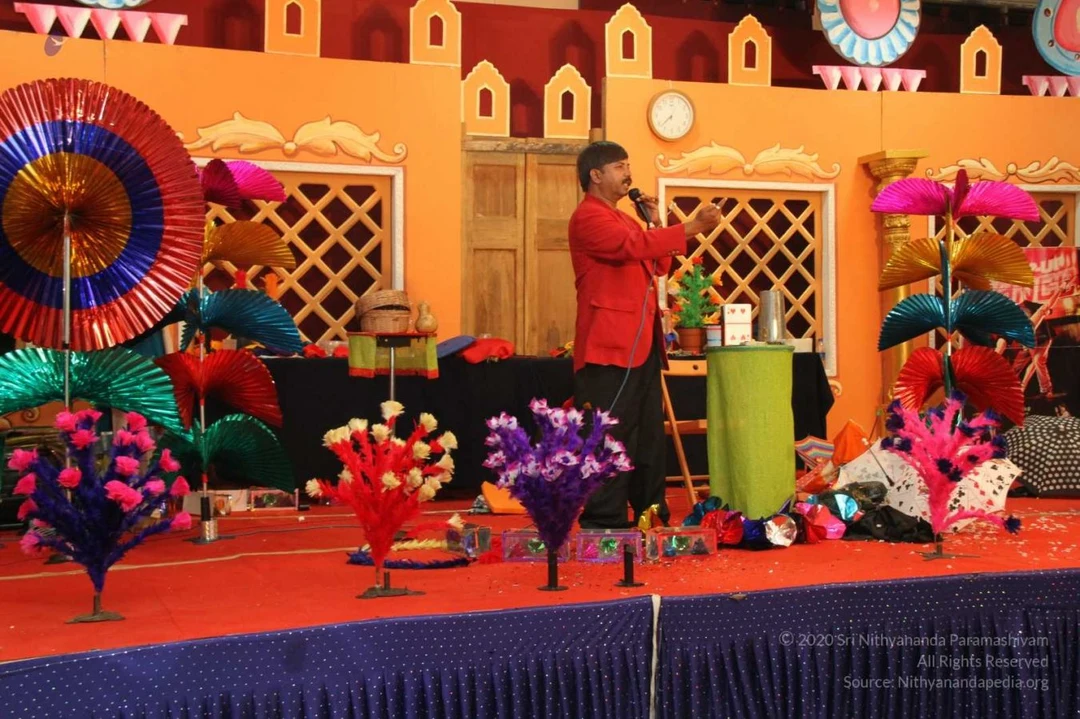
281 photosSource gallery
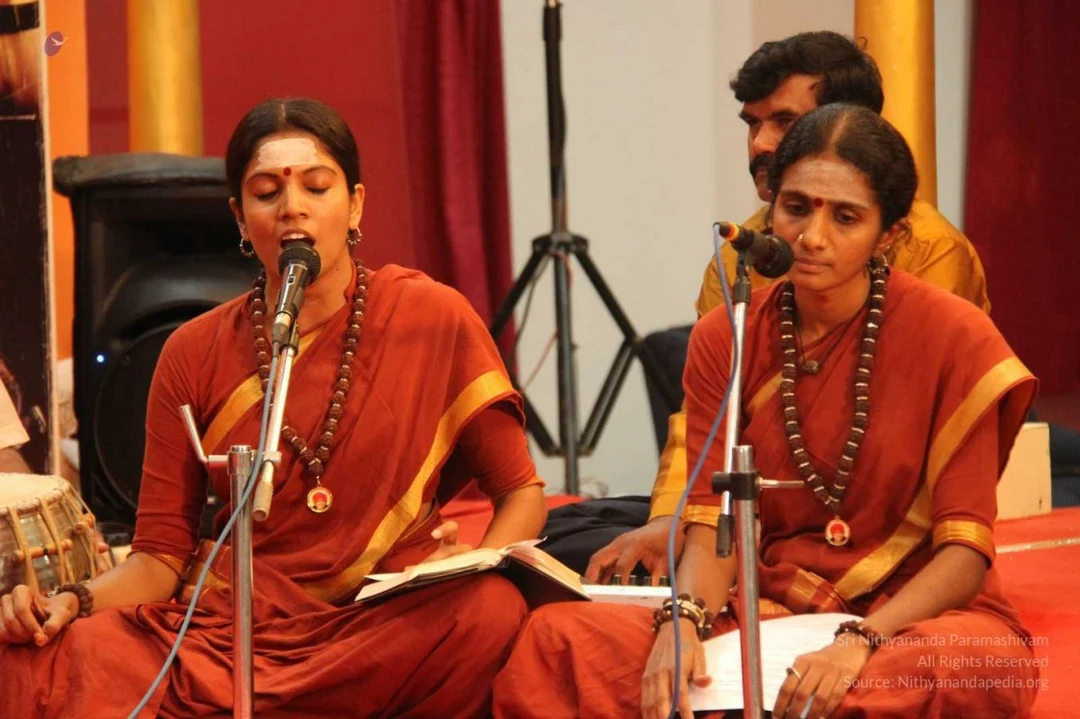
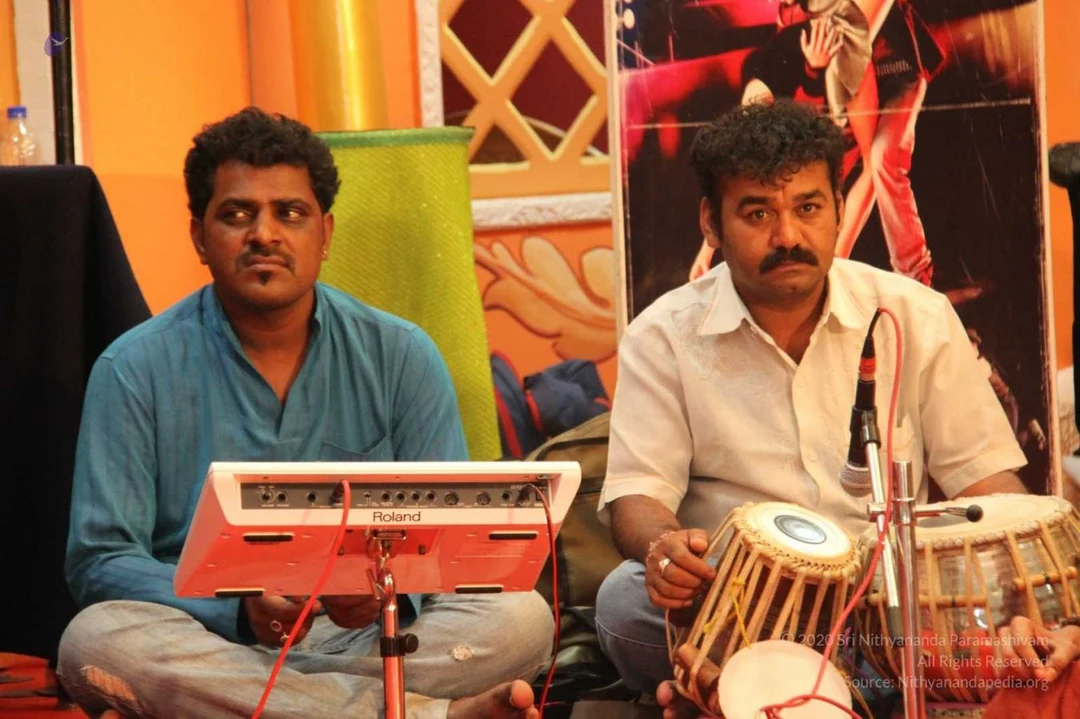
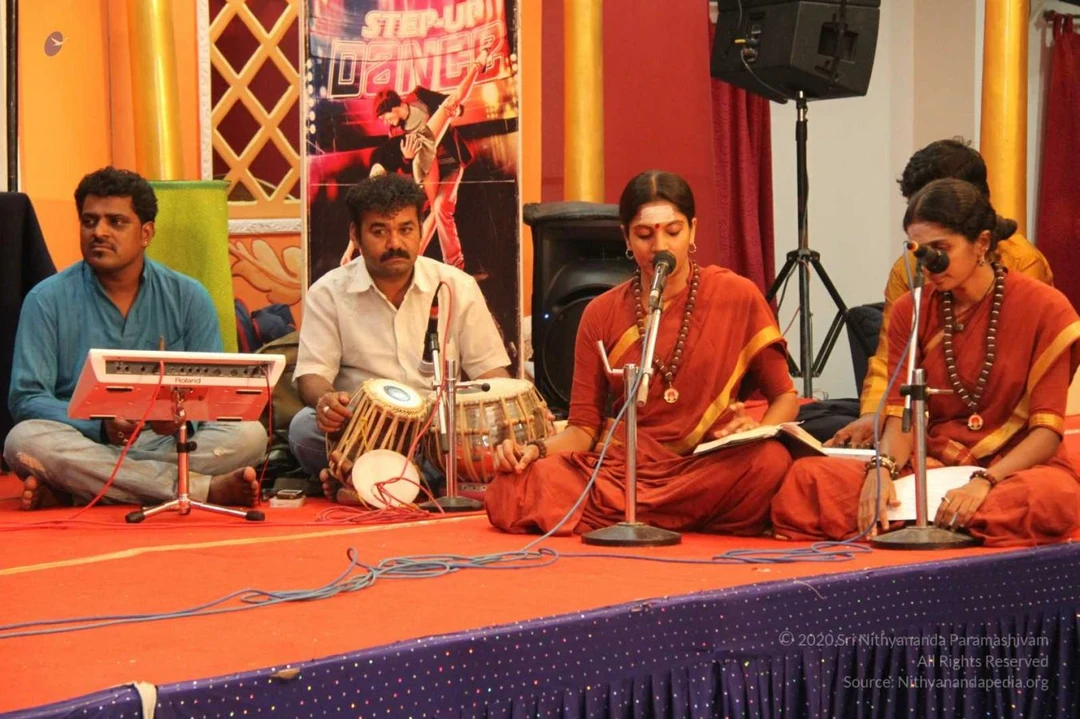
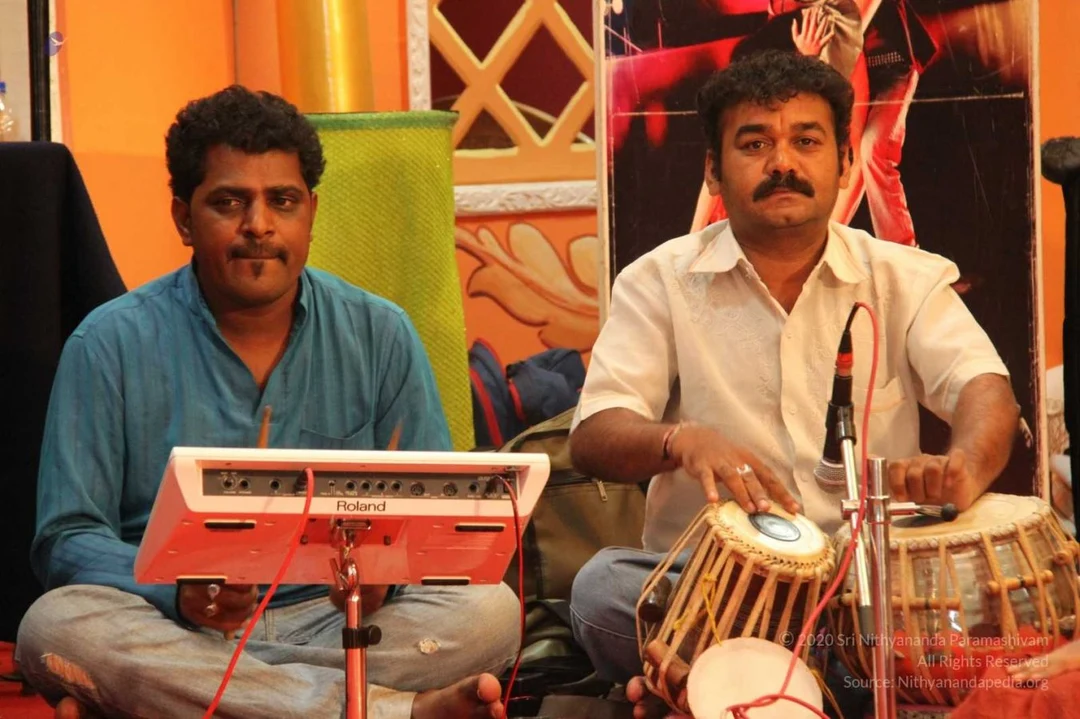
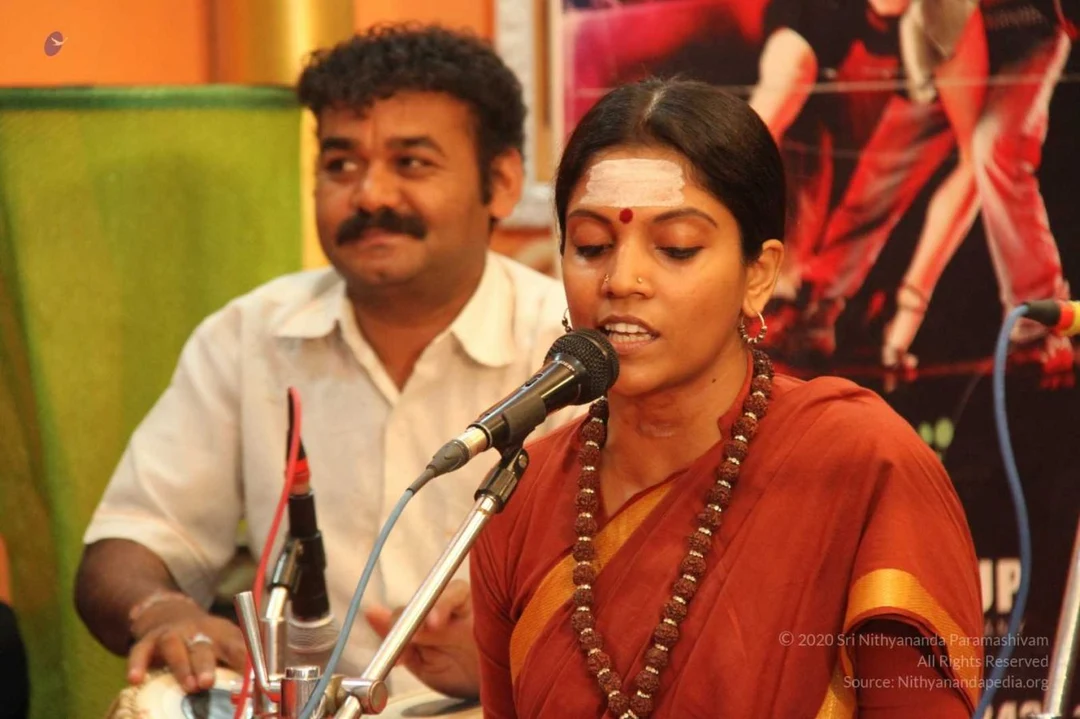
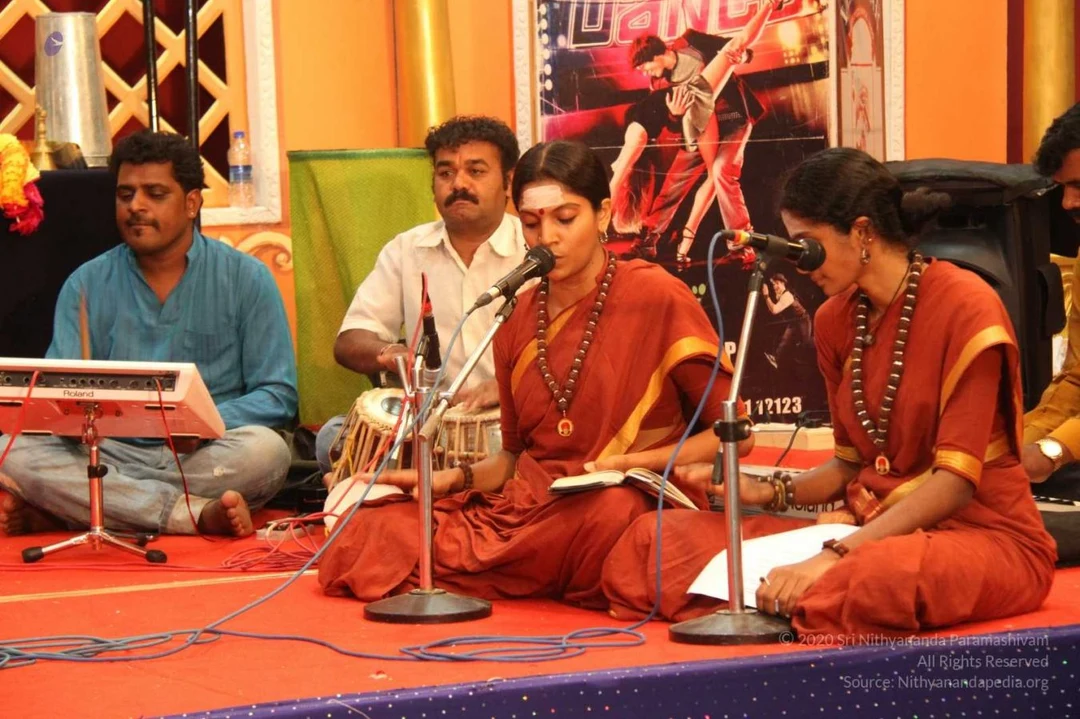
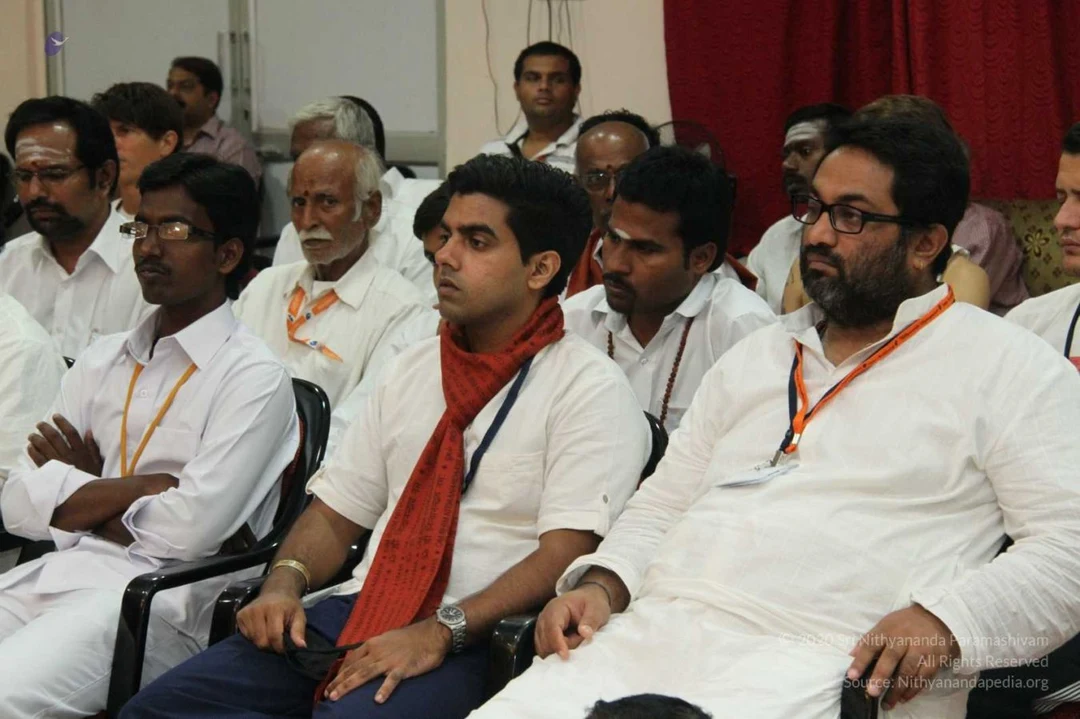
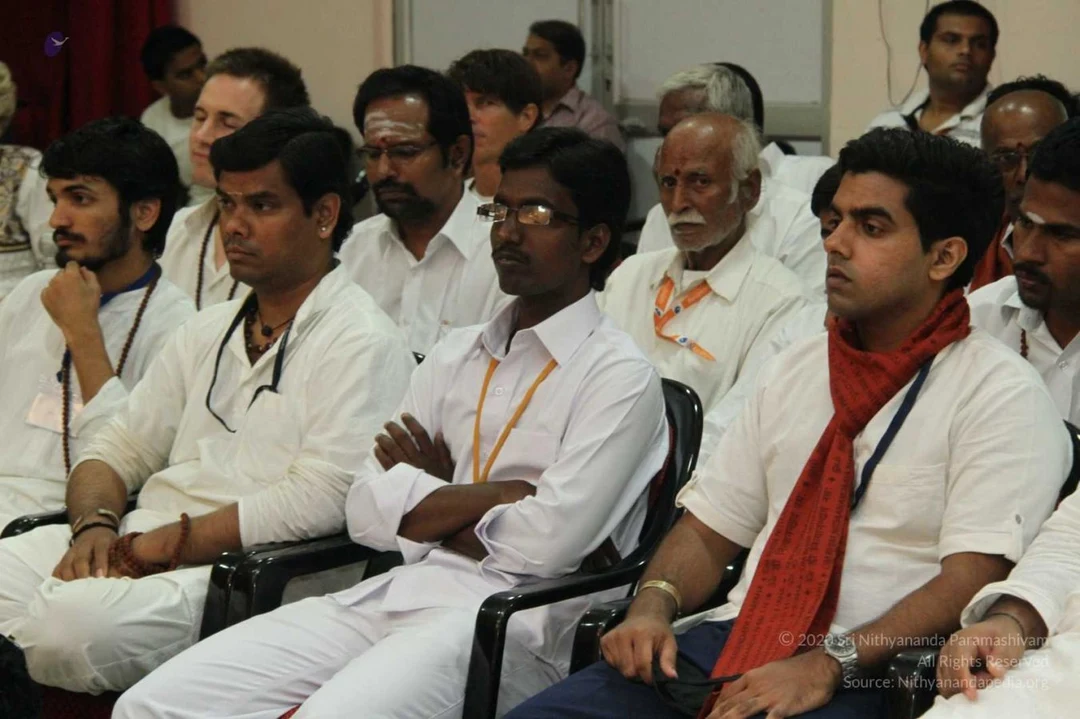
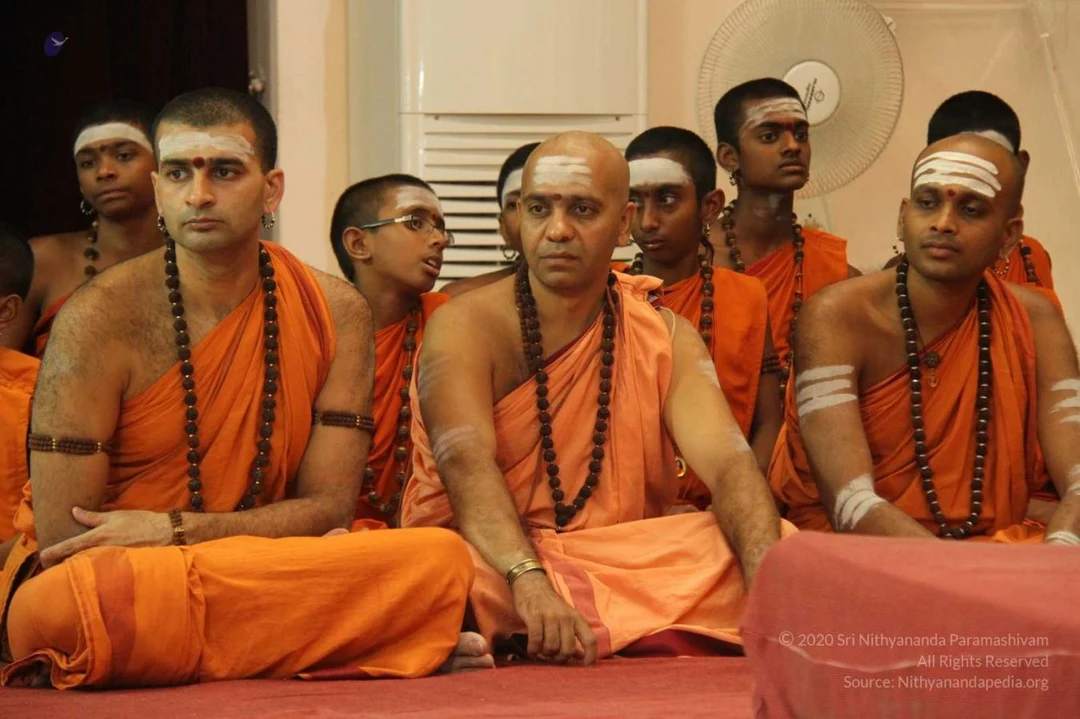
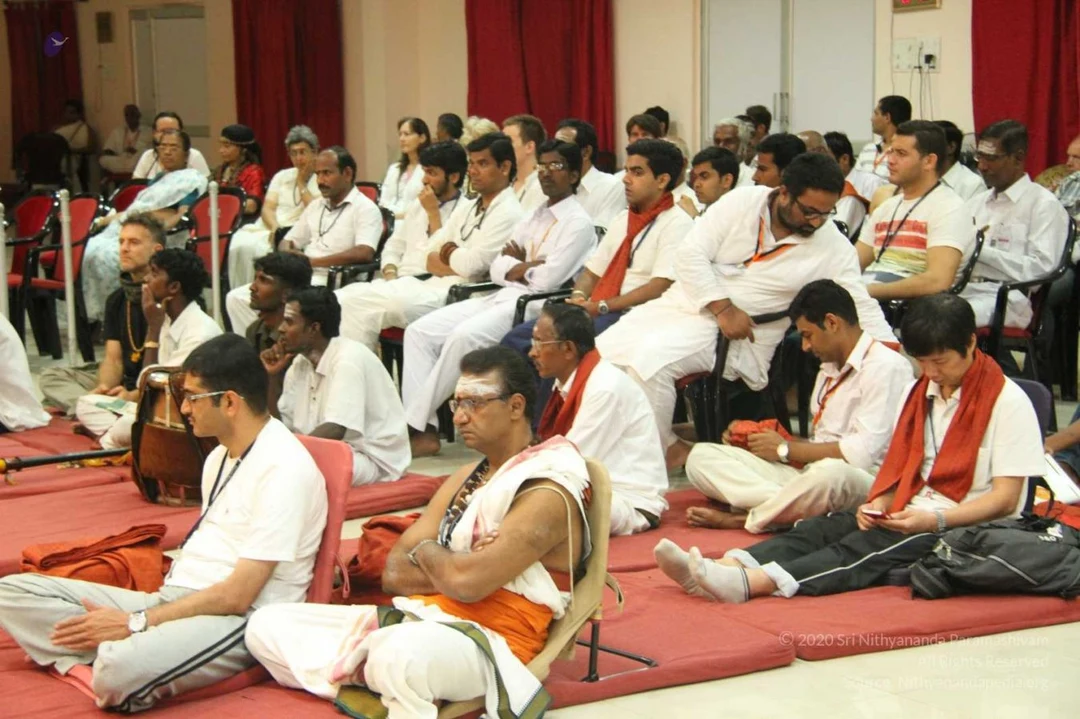
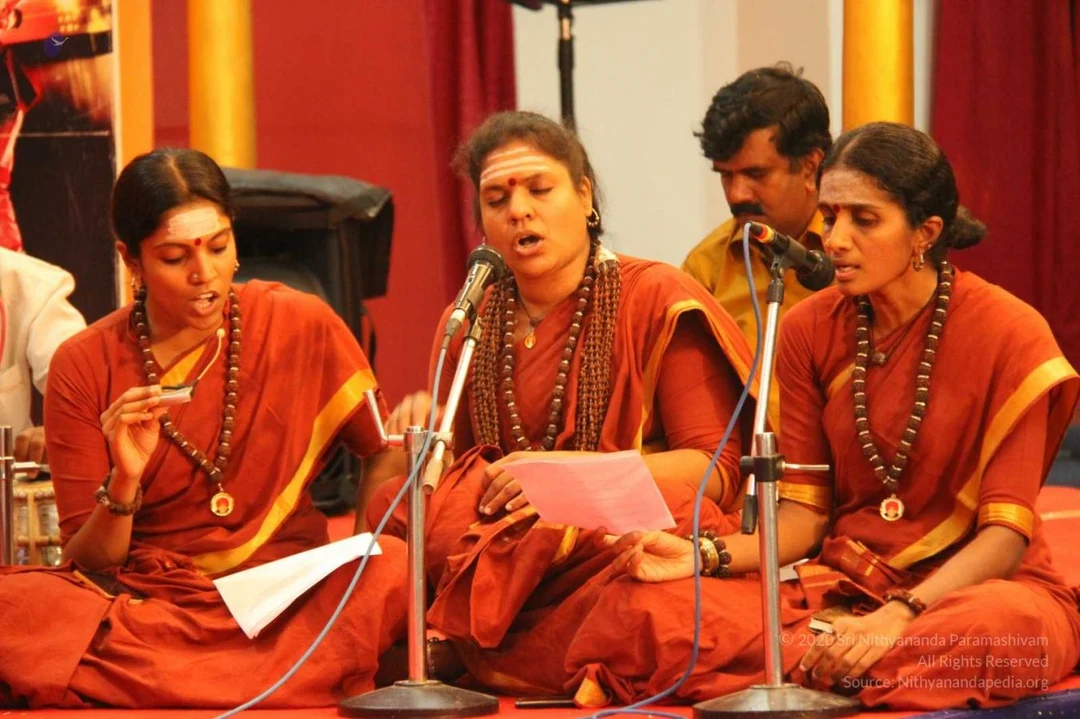
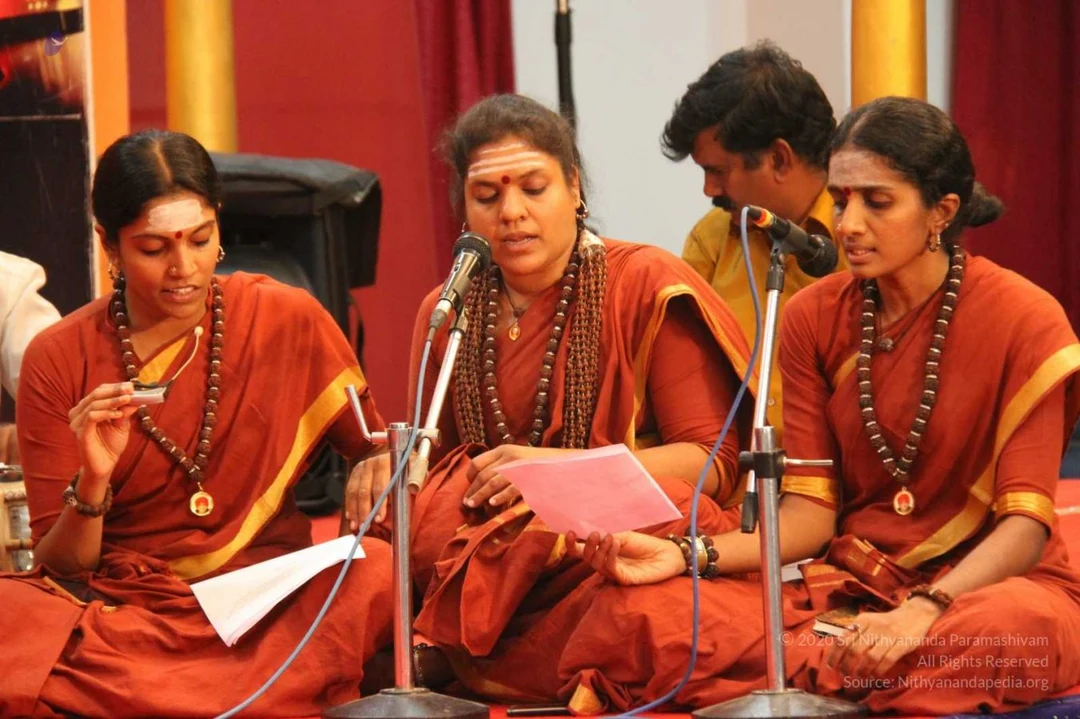
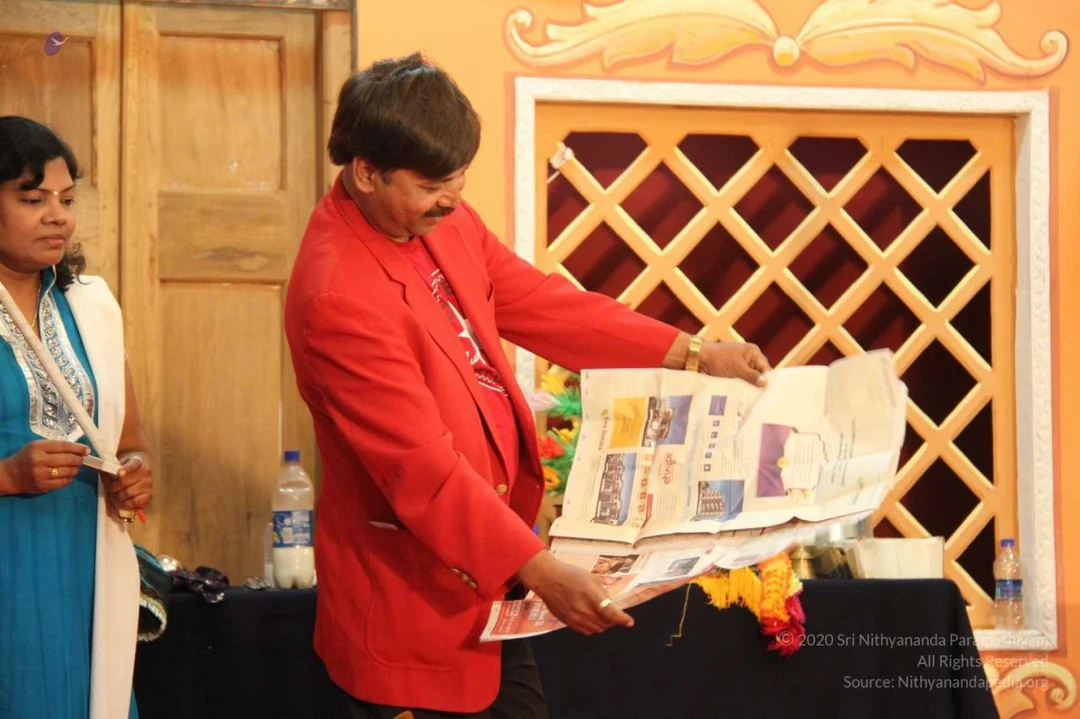
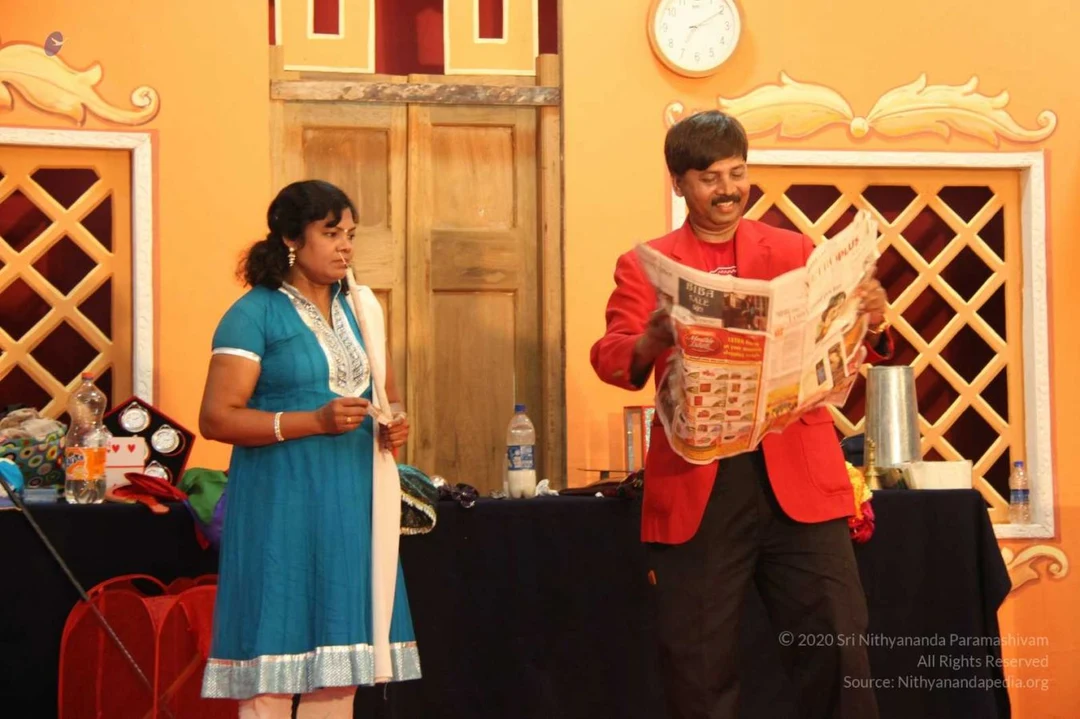
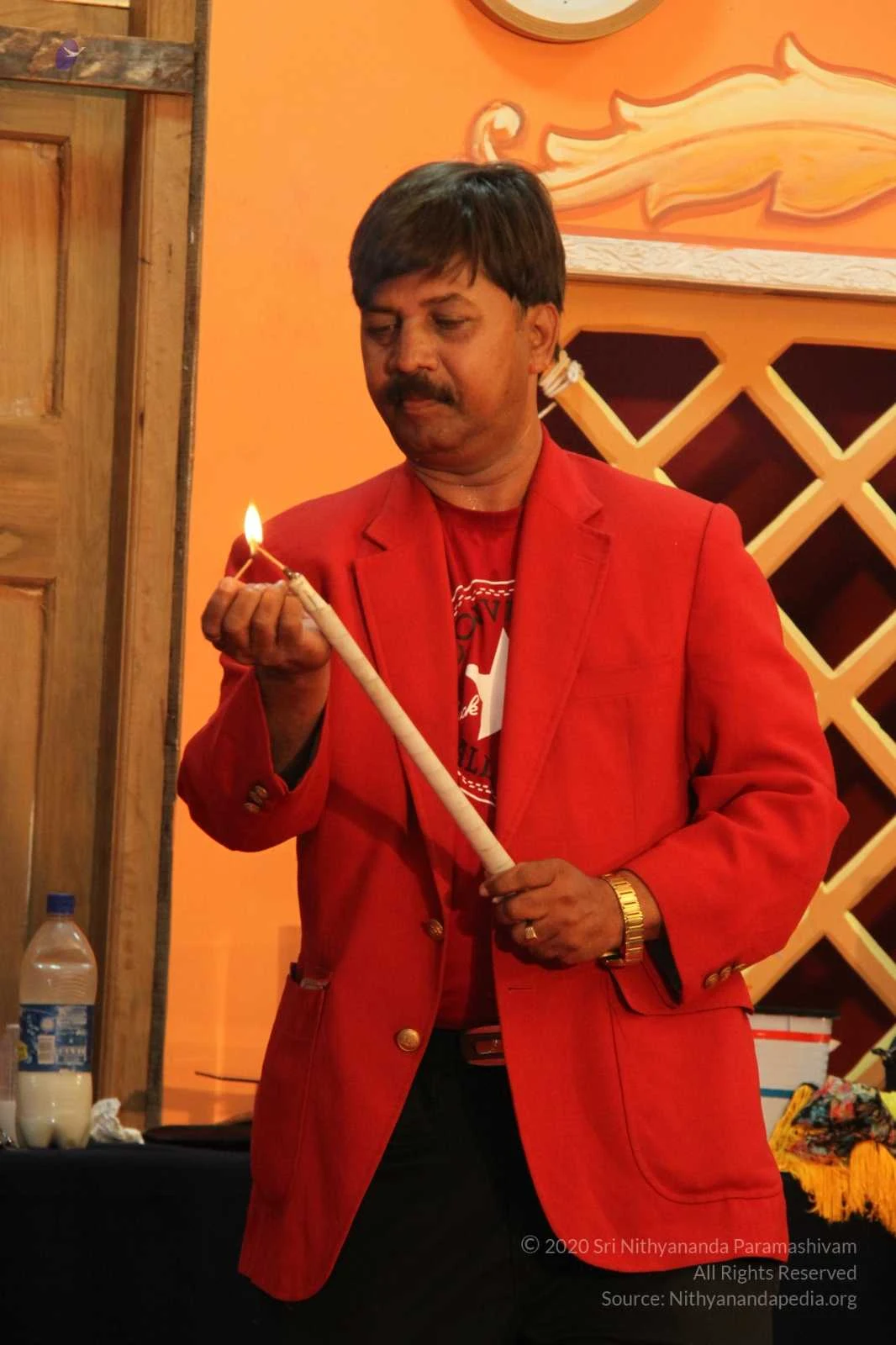
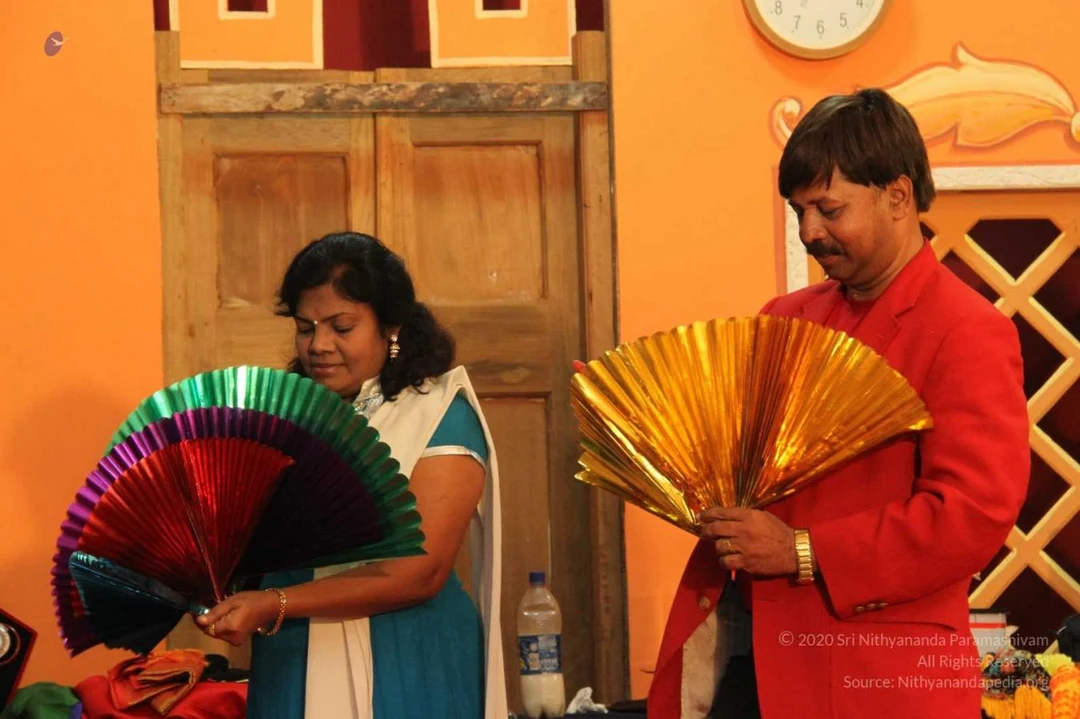
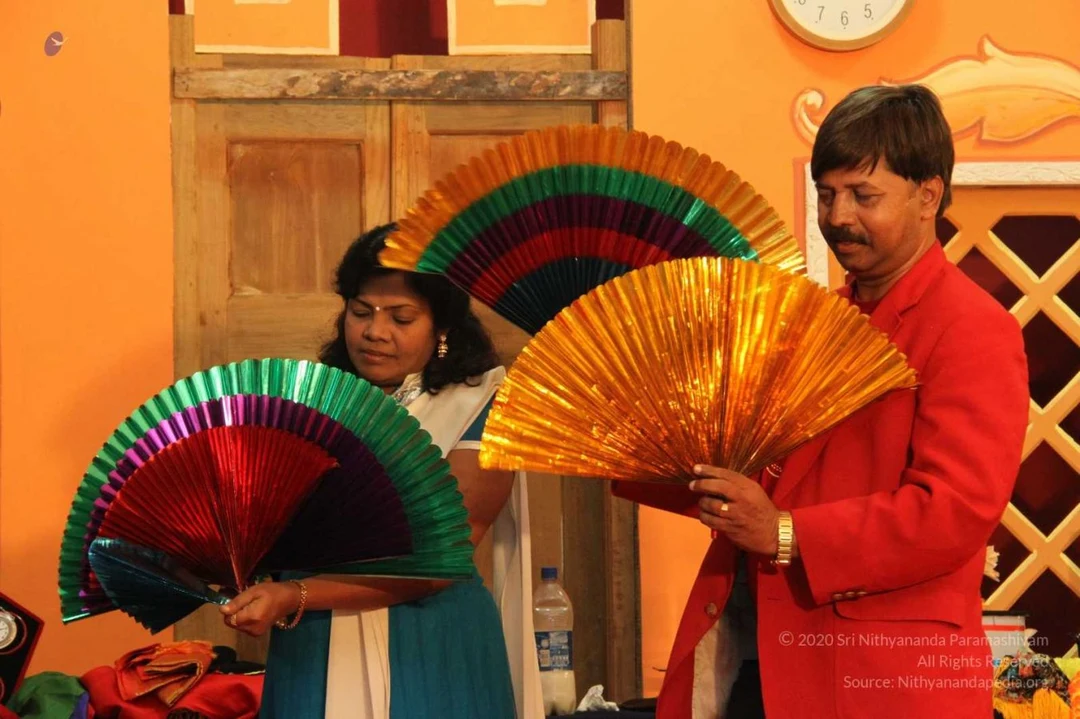
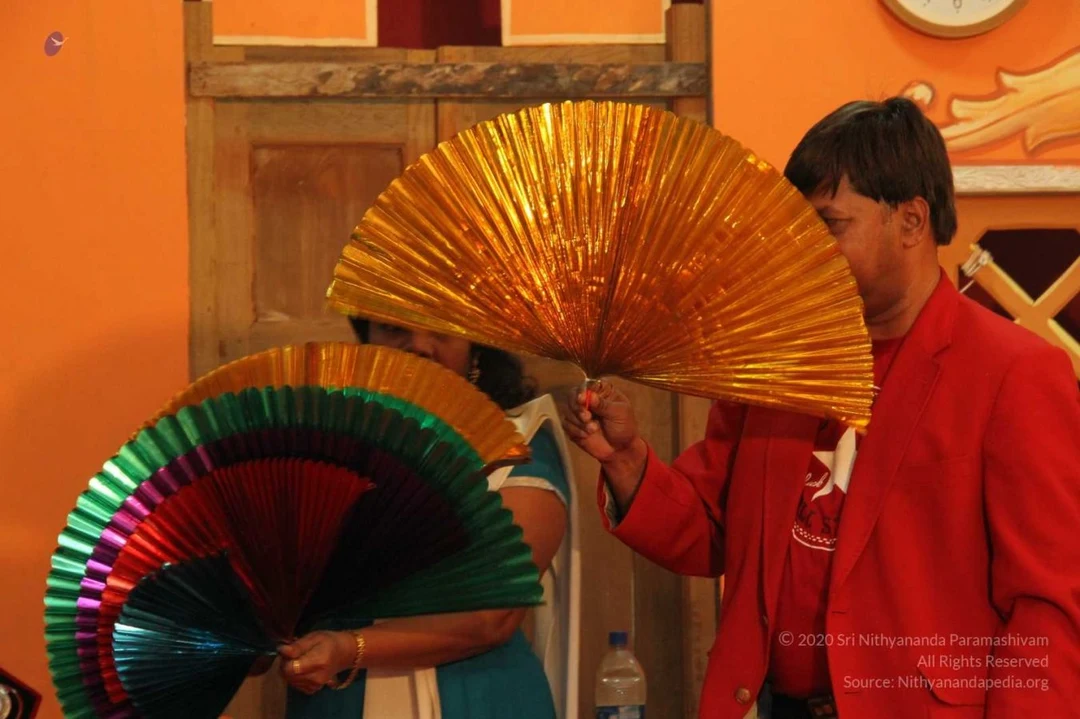
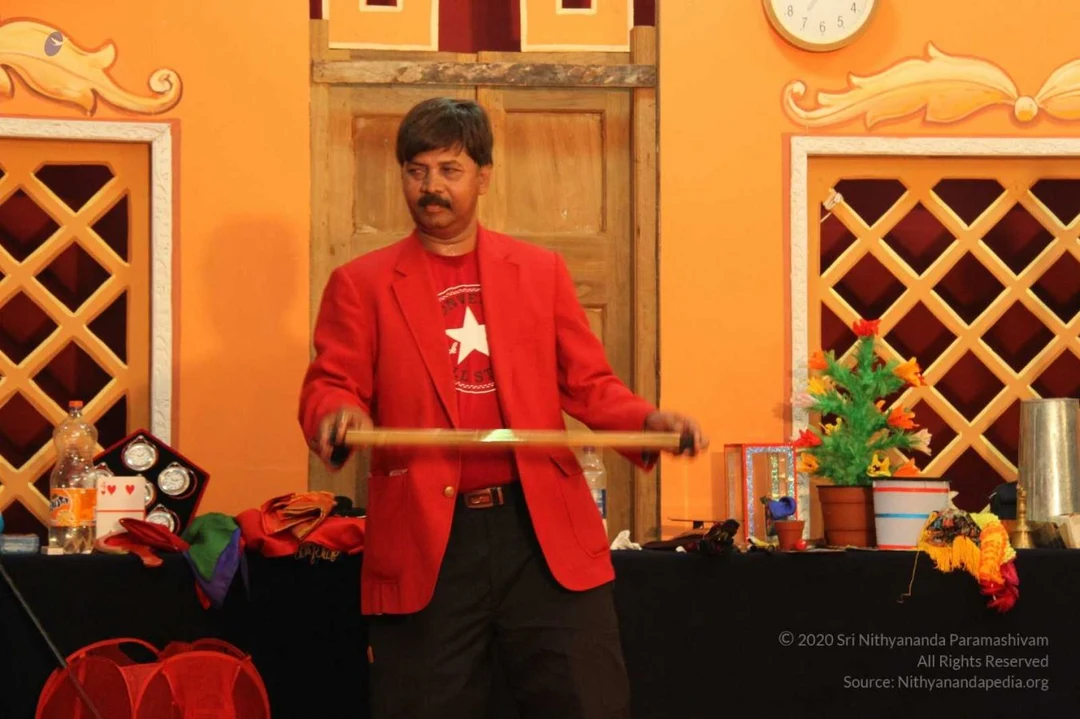
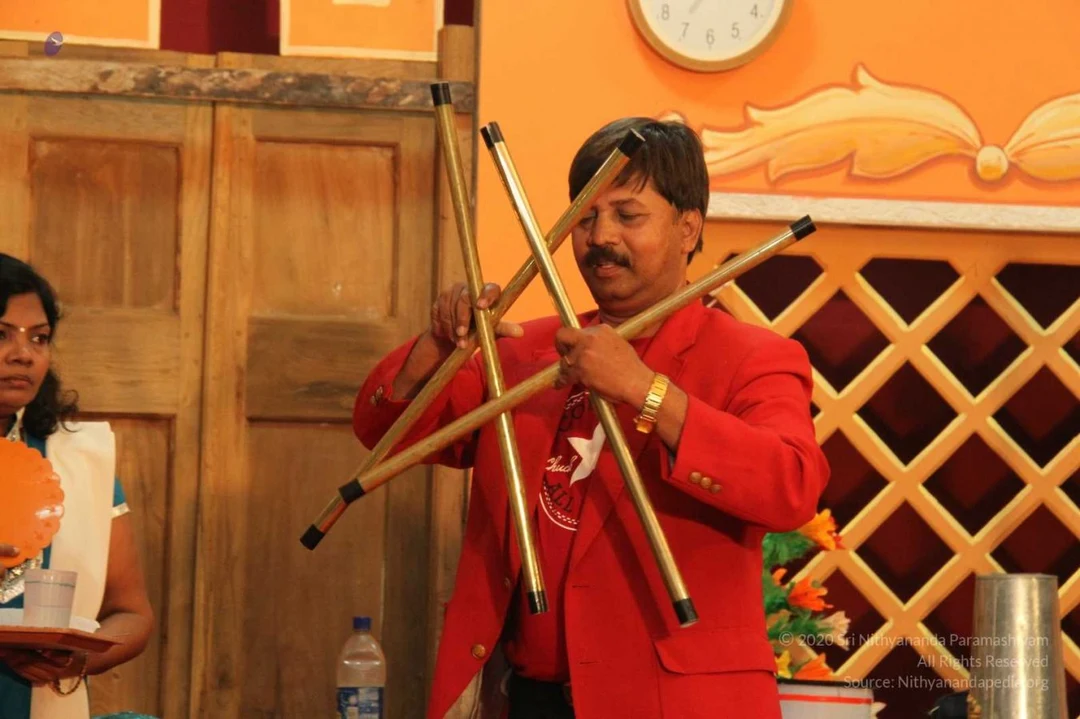
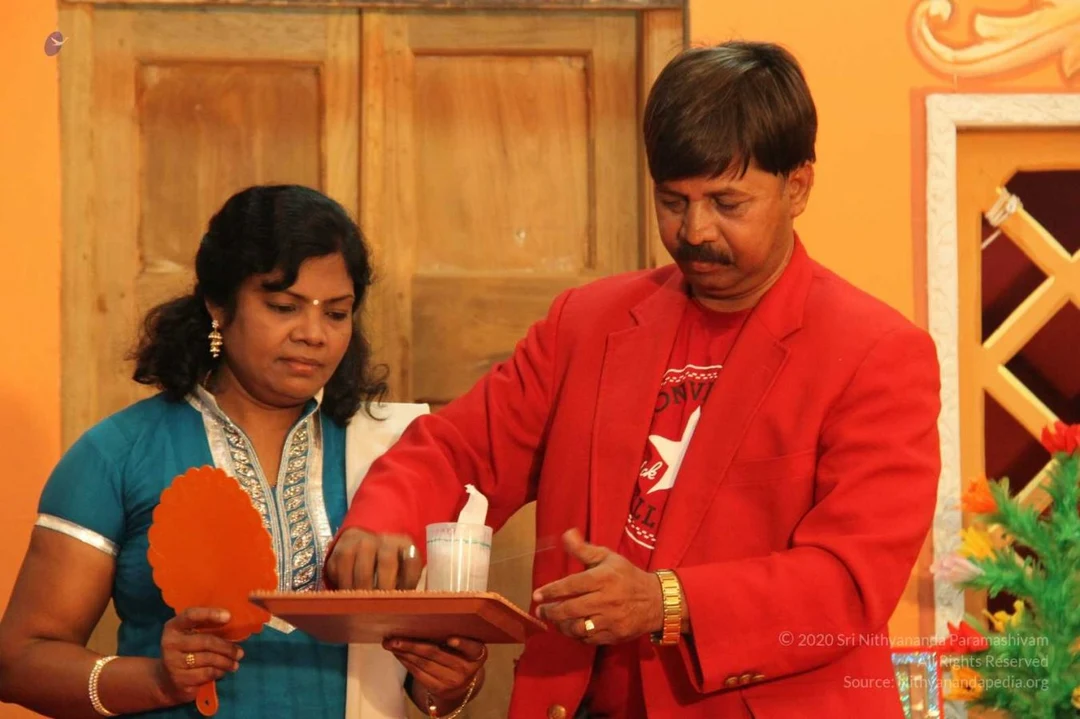
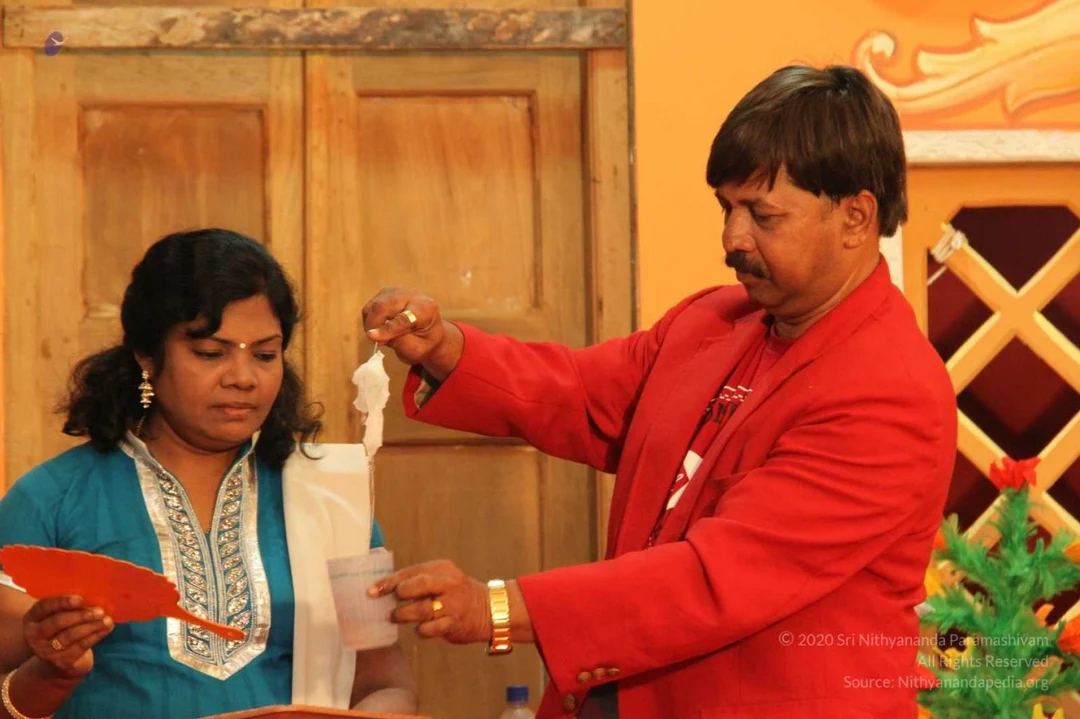
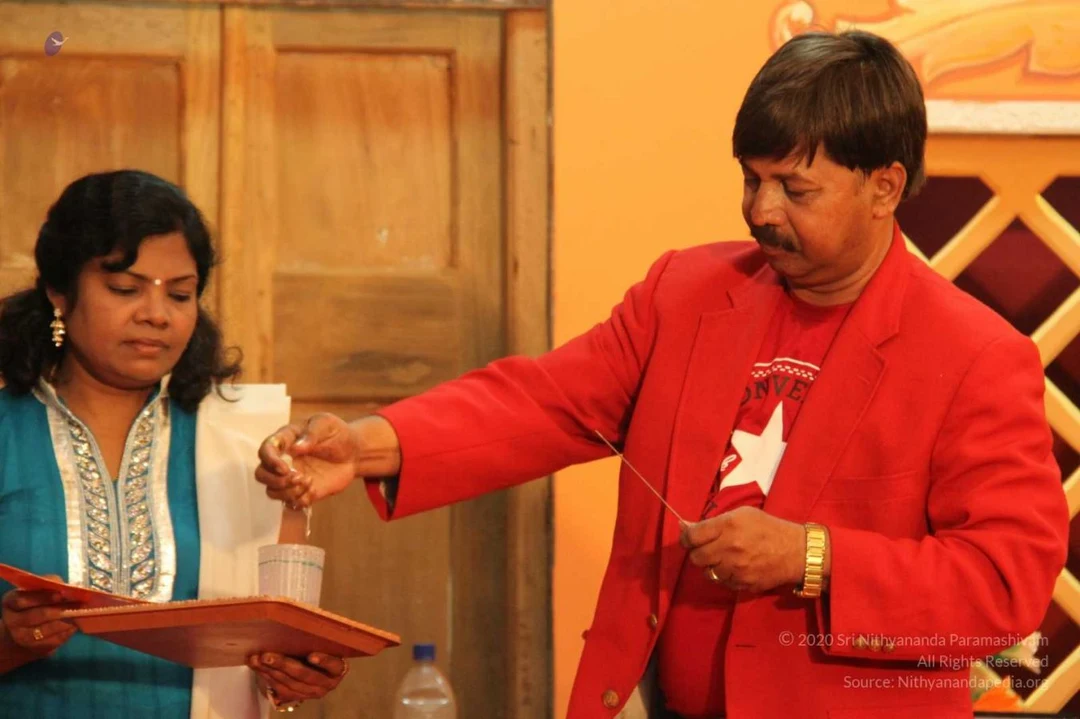
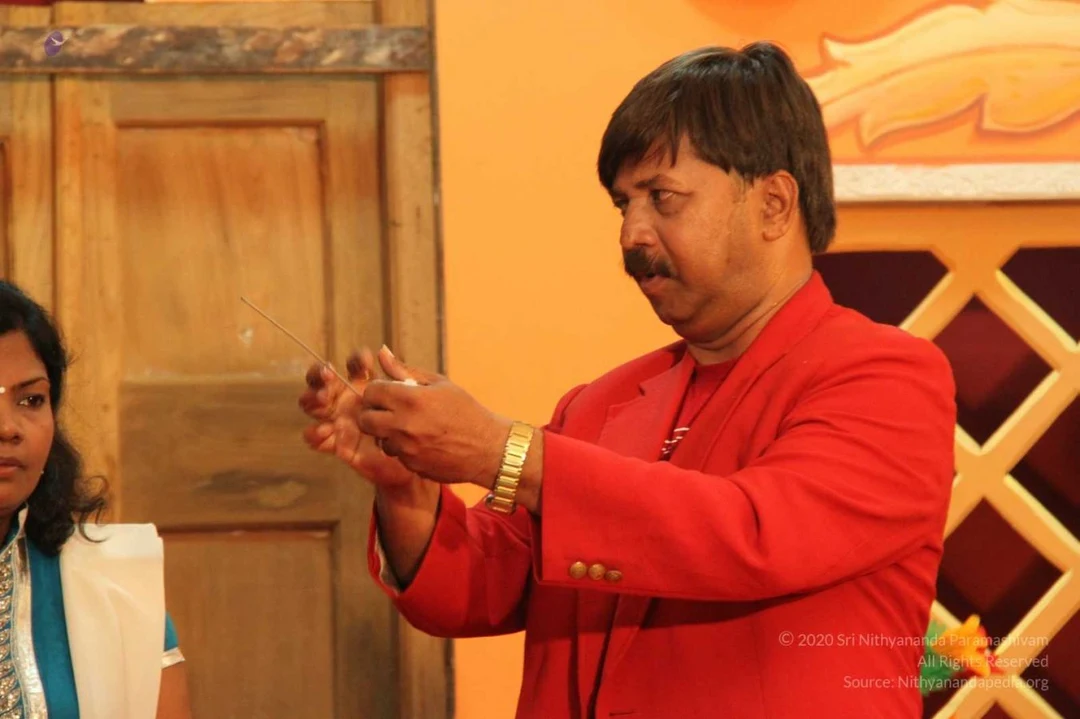
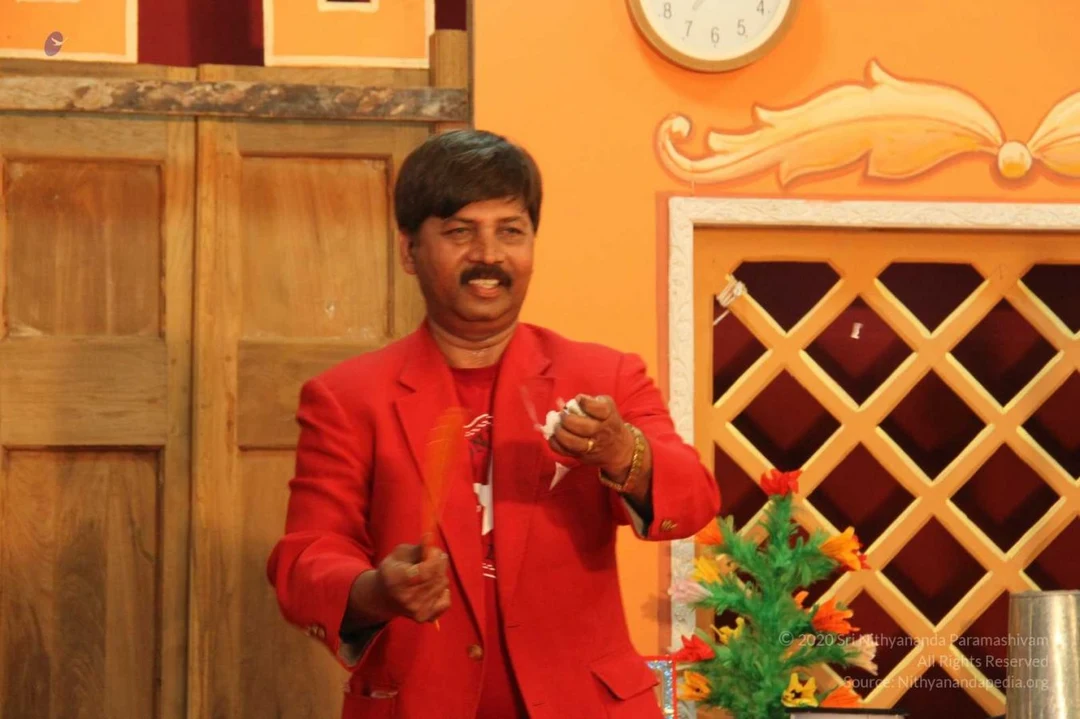
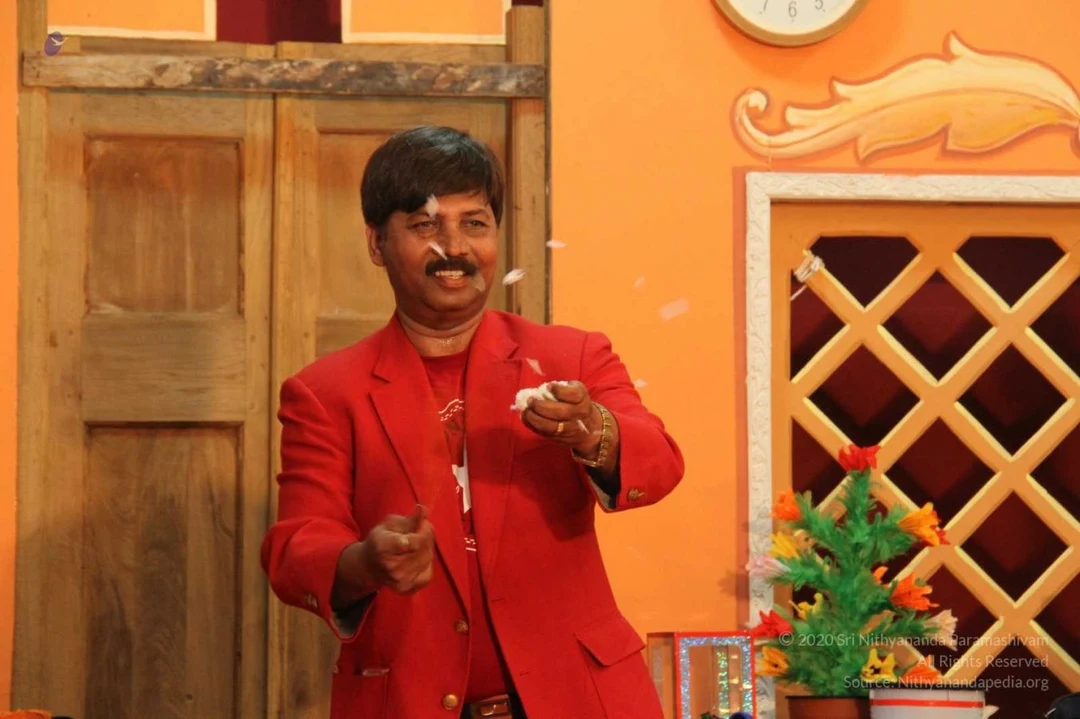
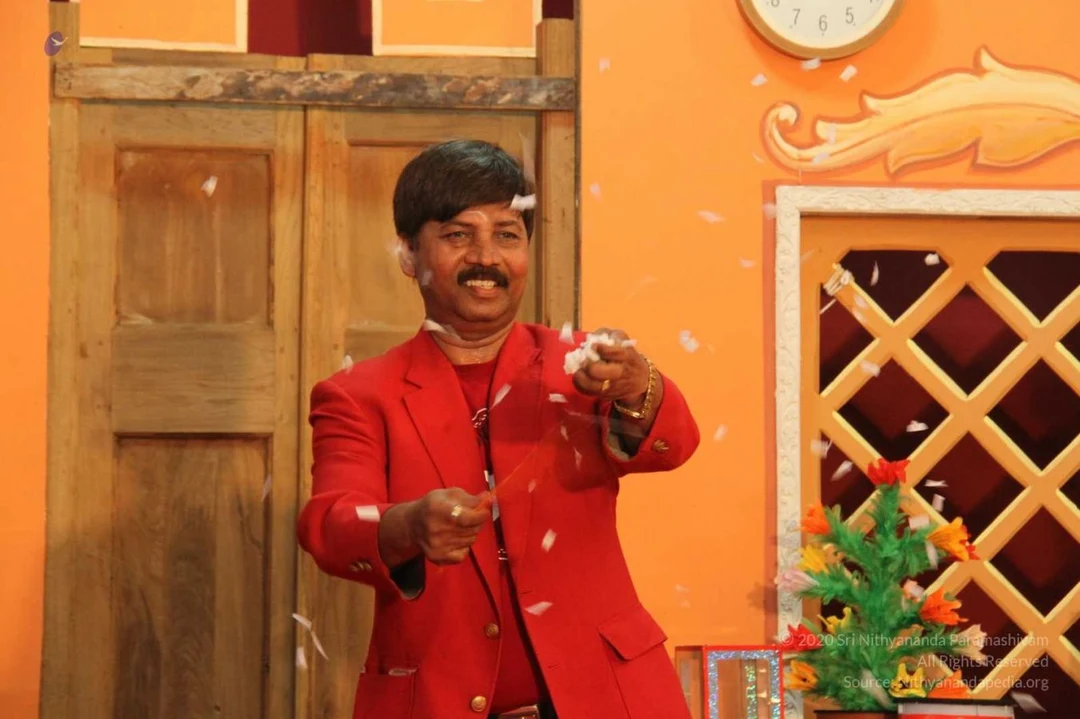
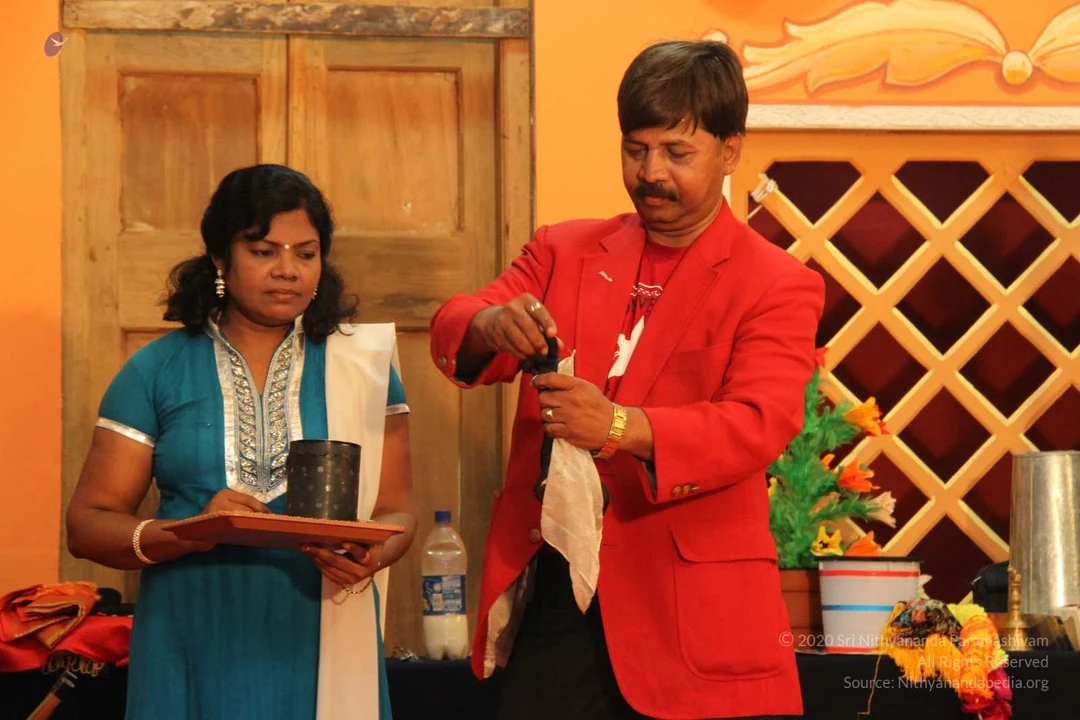
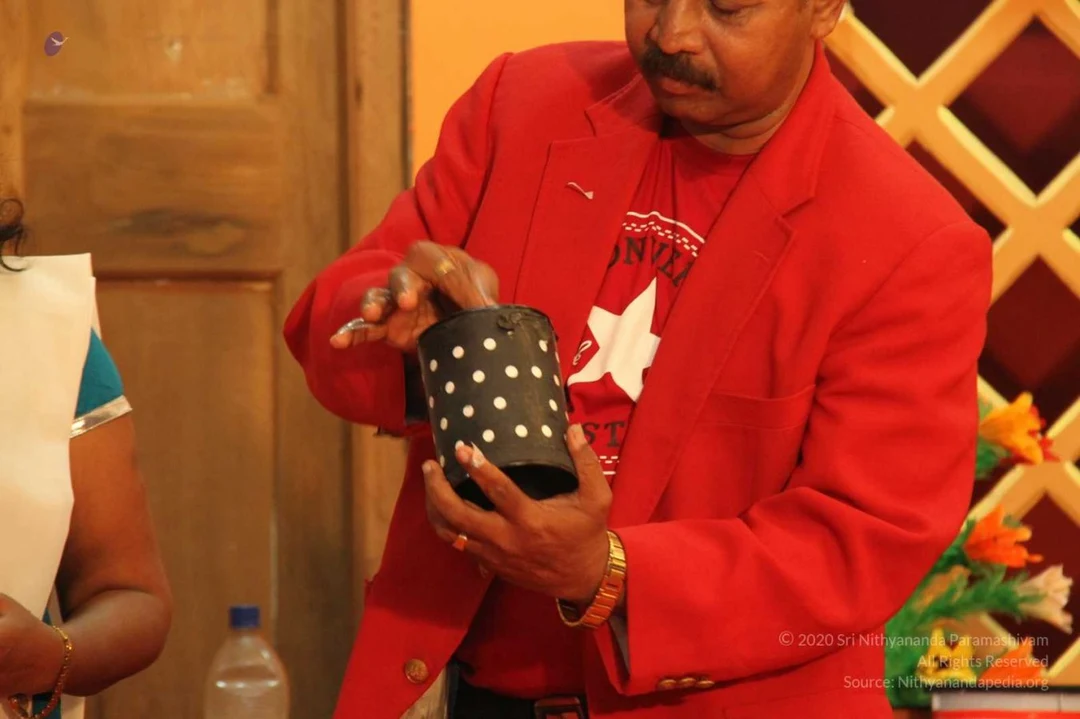
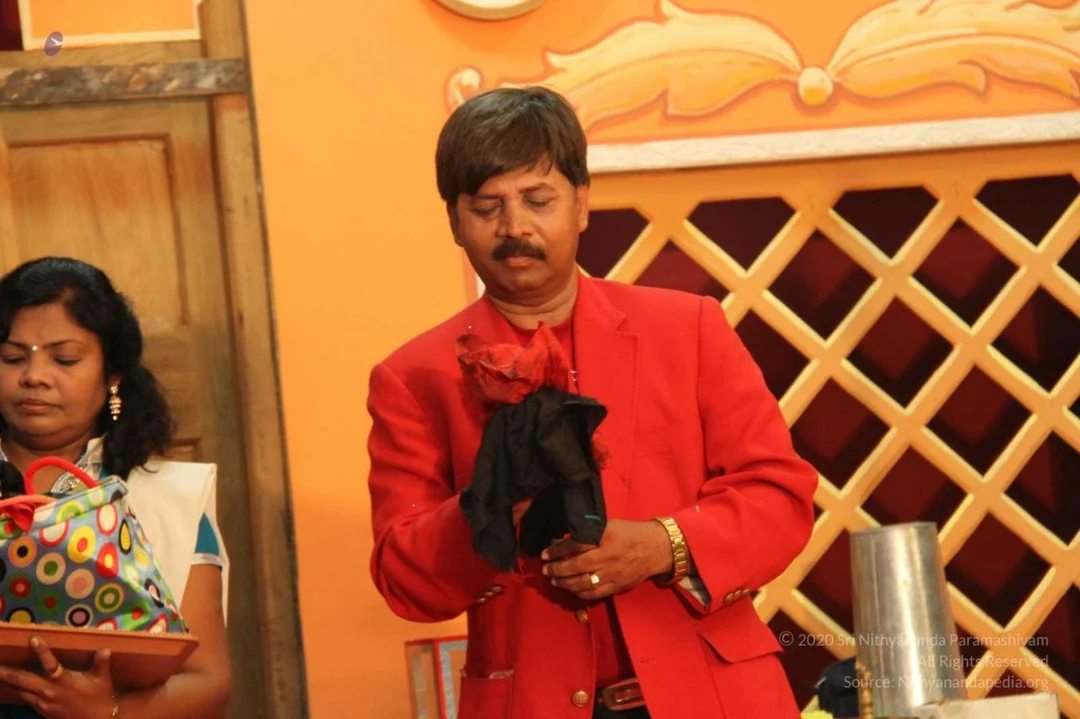
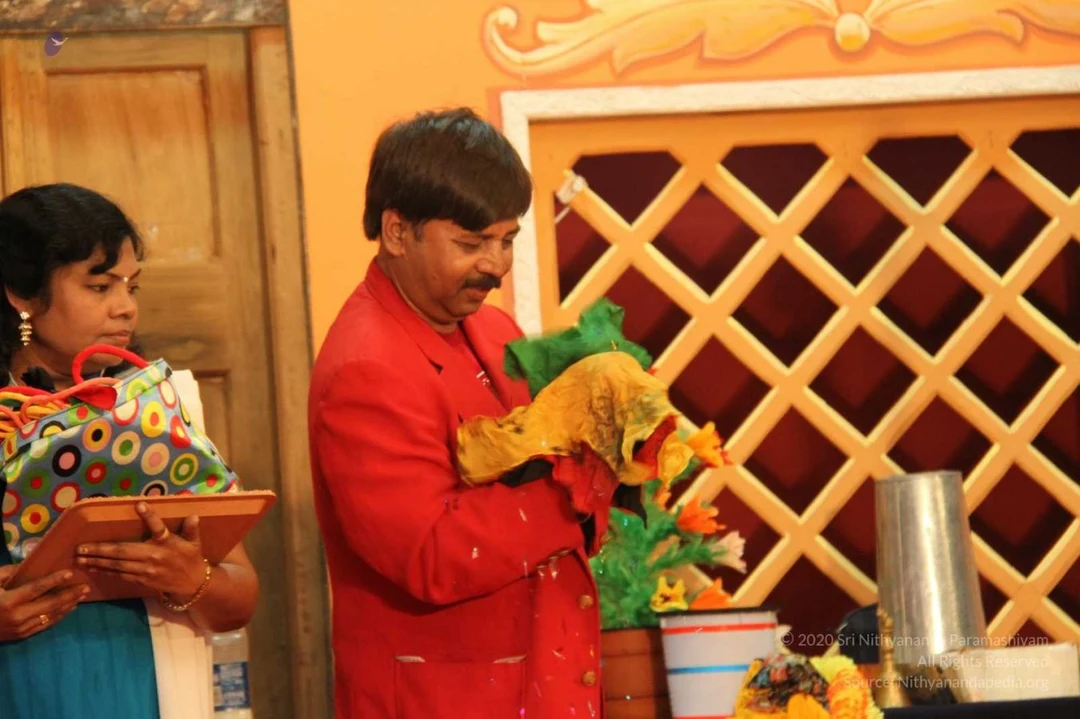
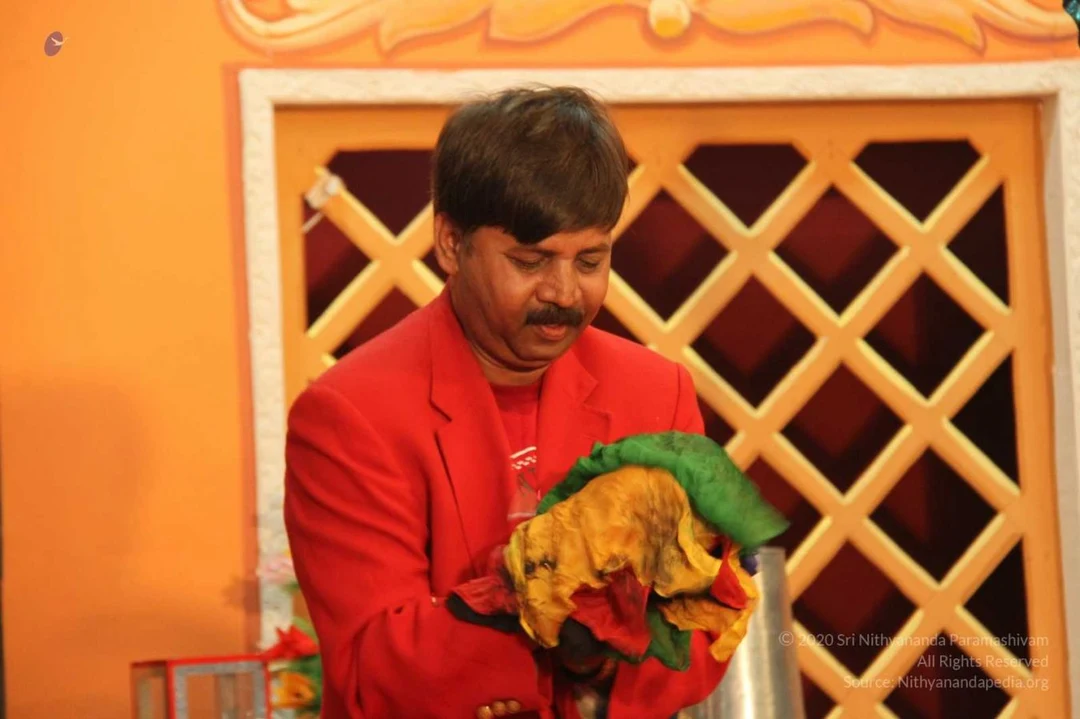
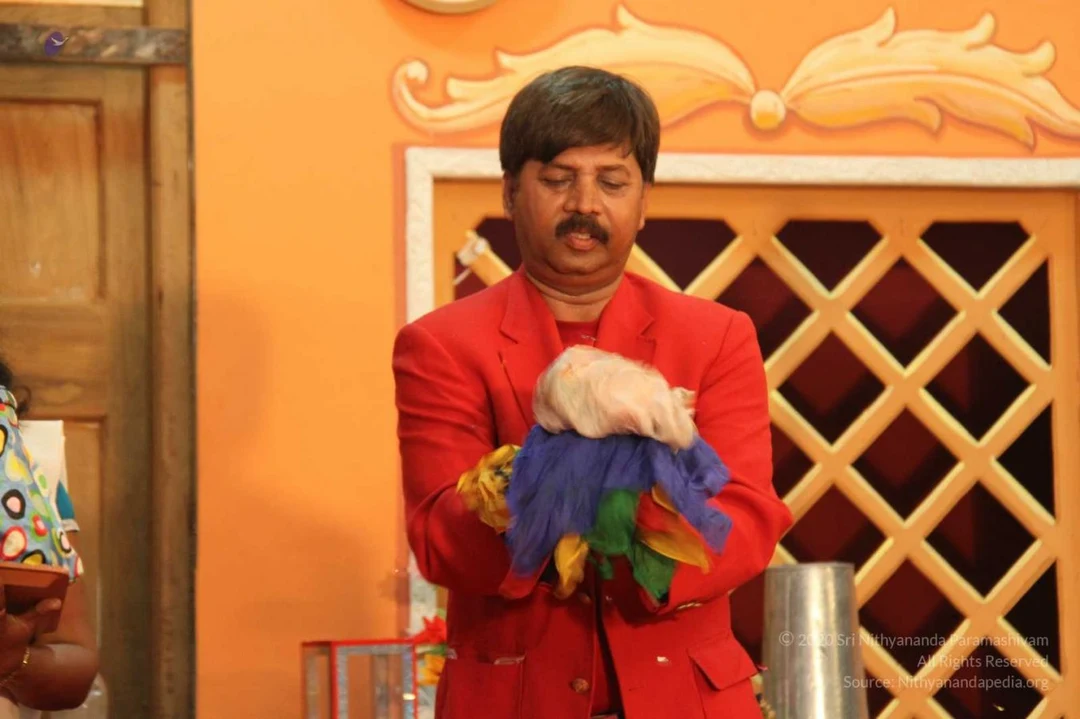
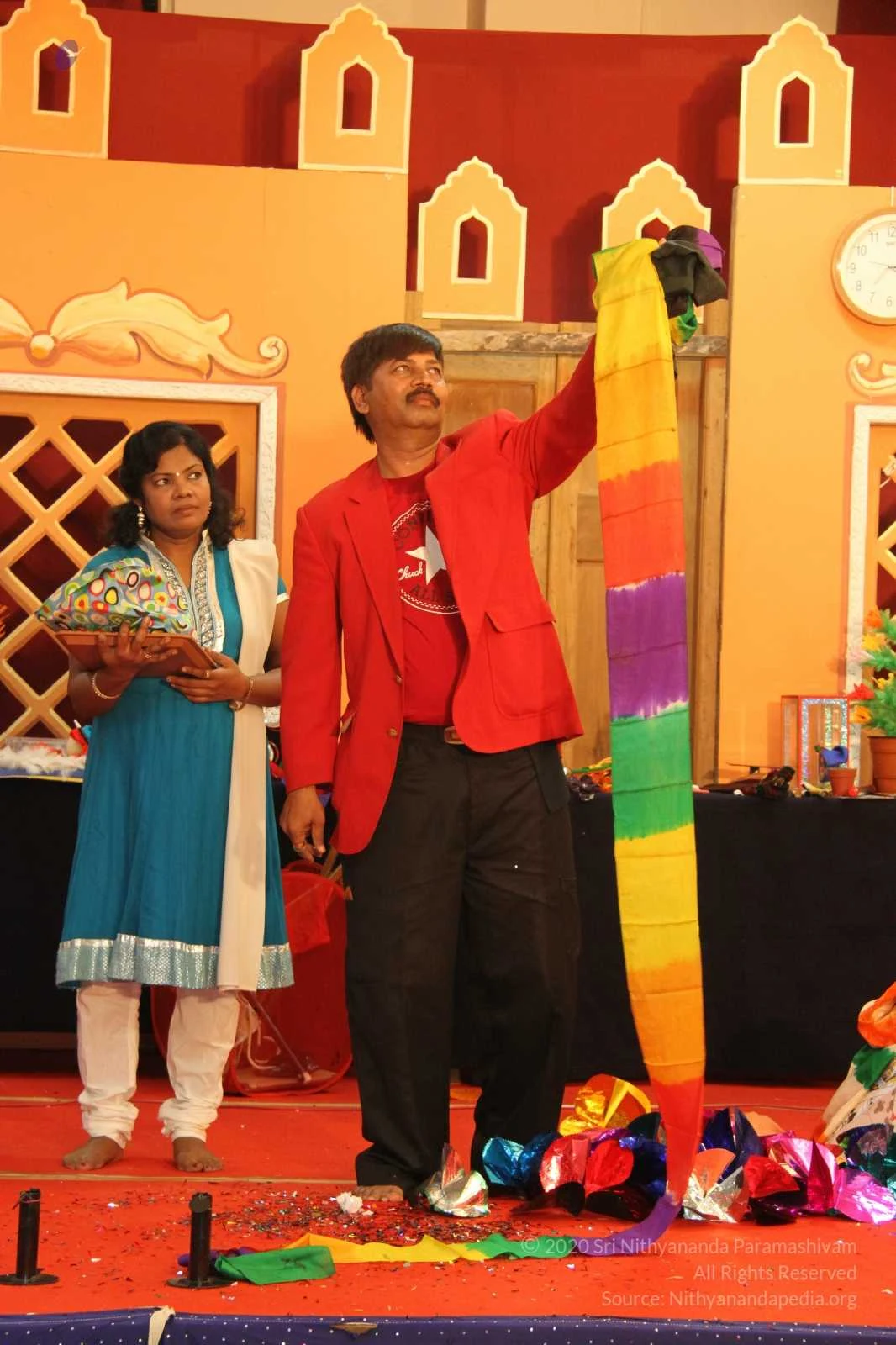
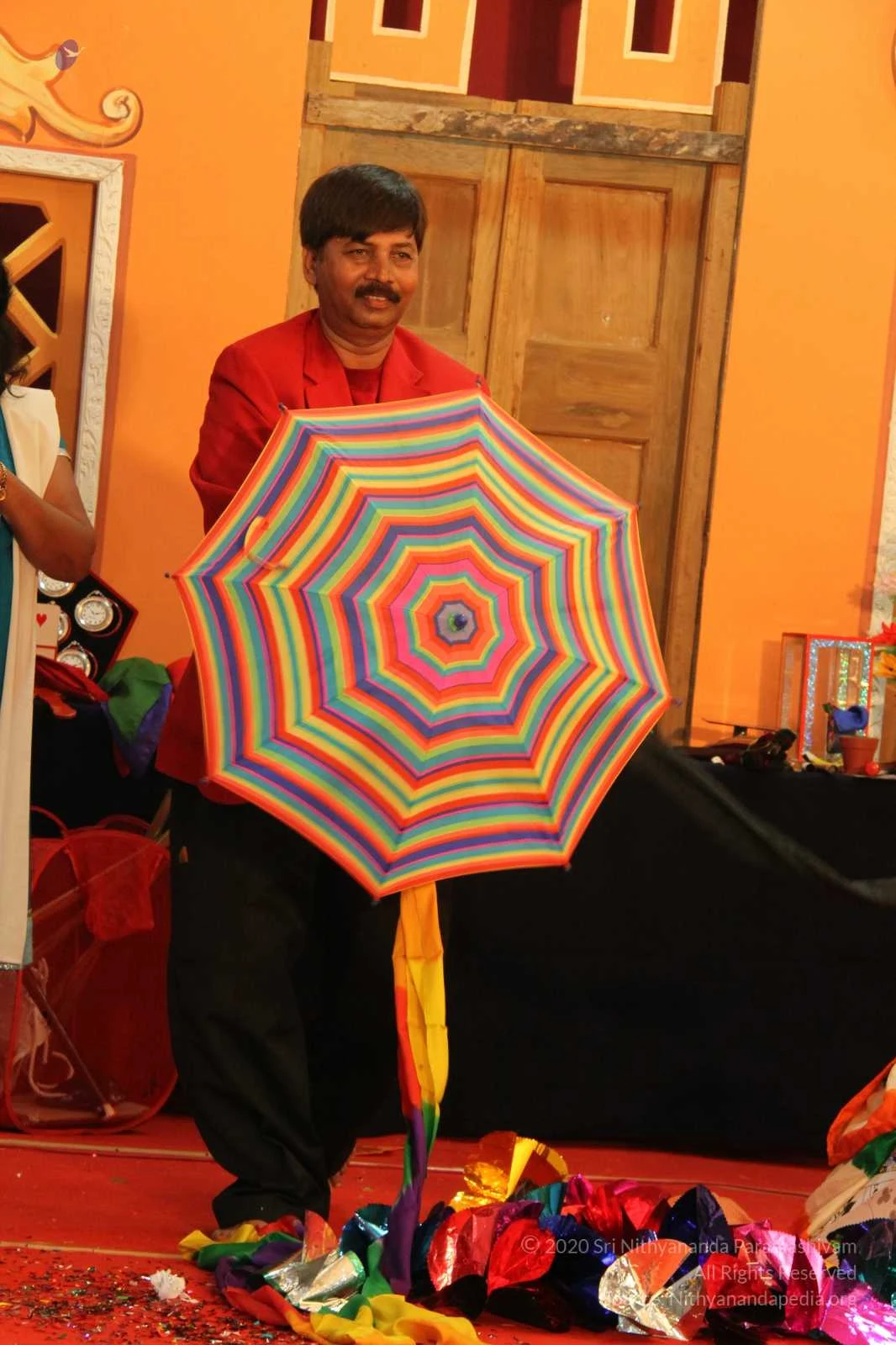
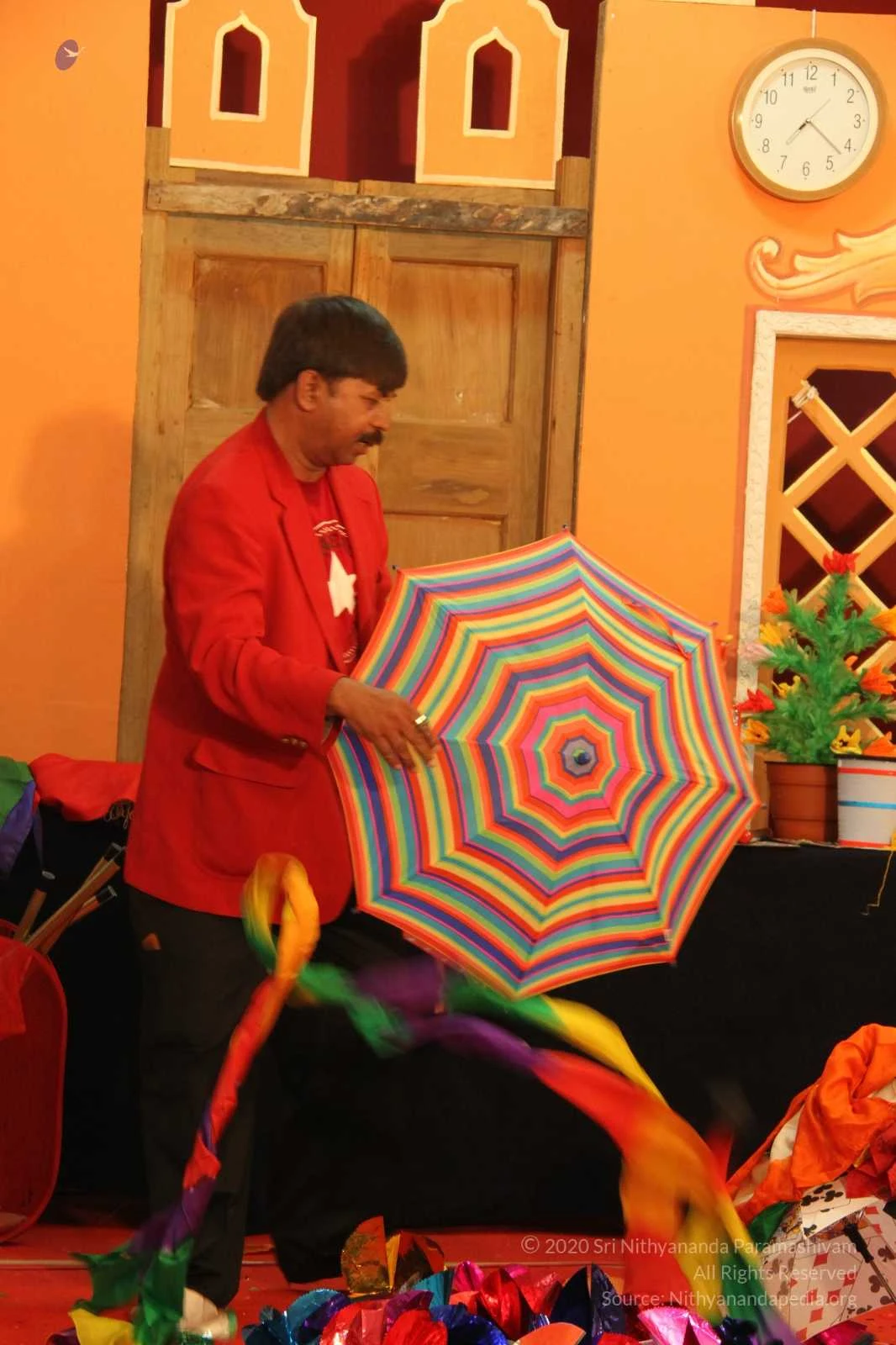
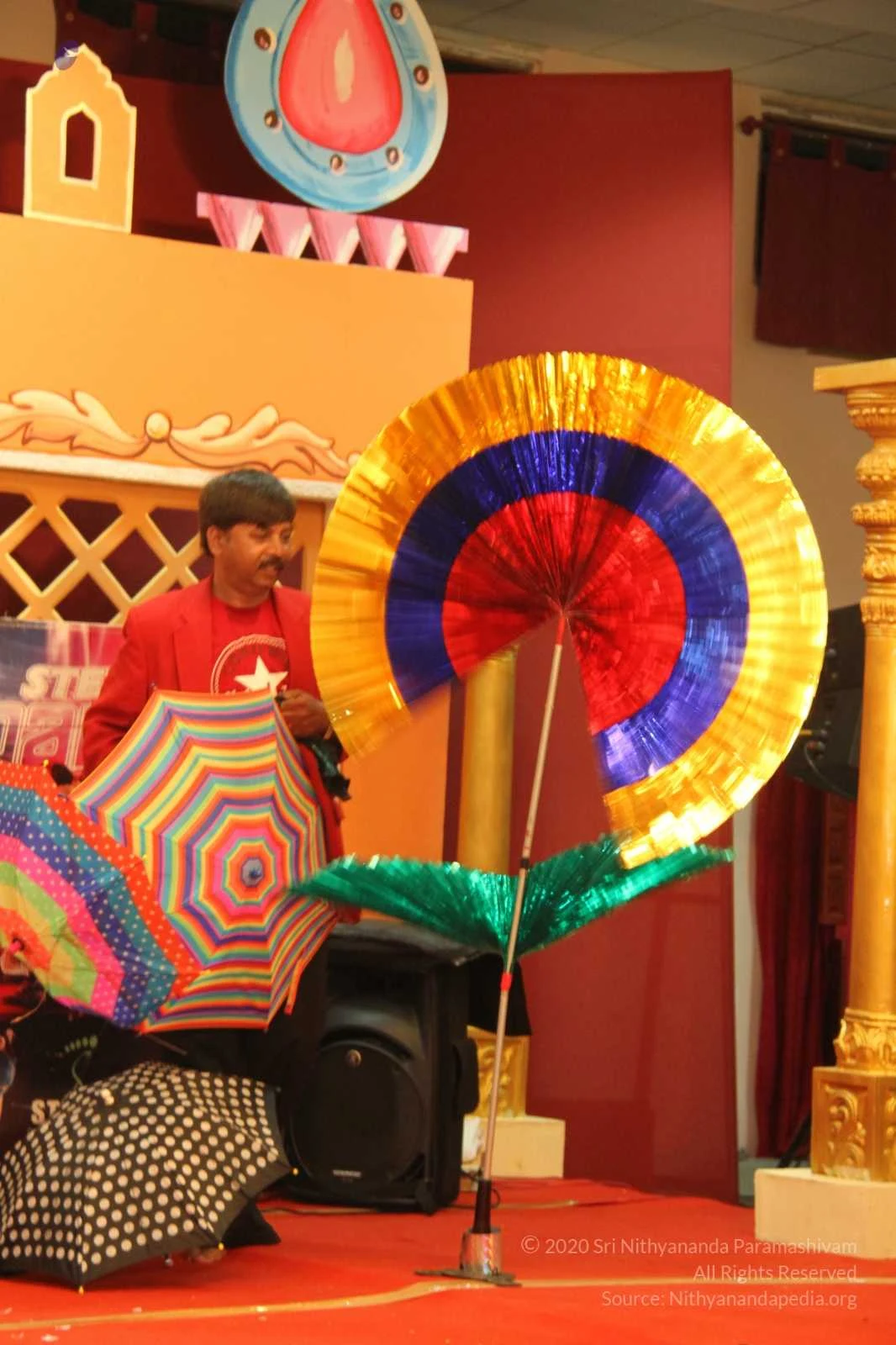
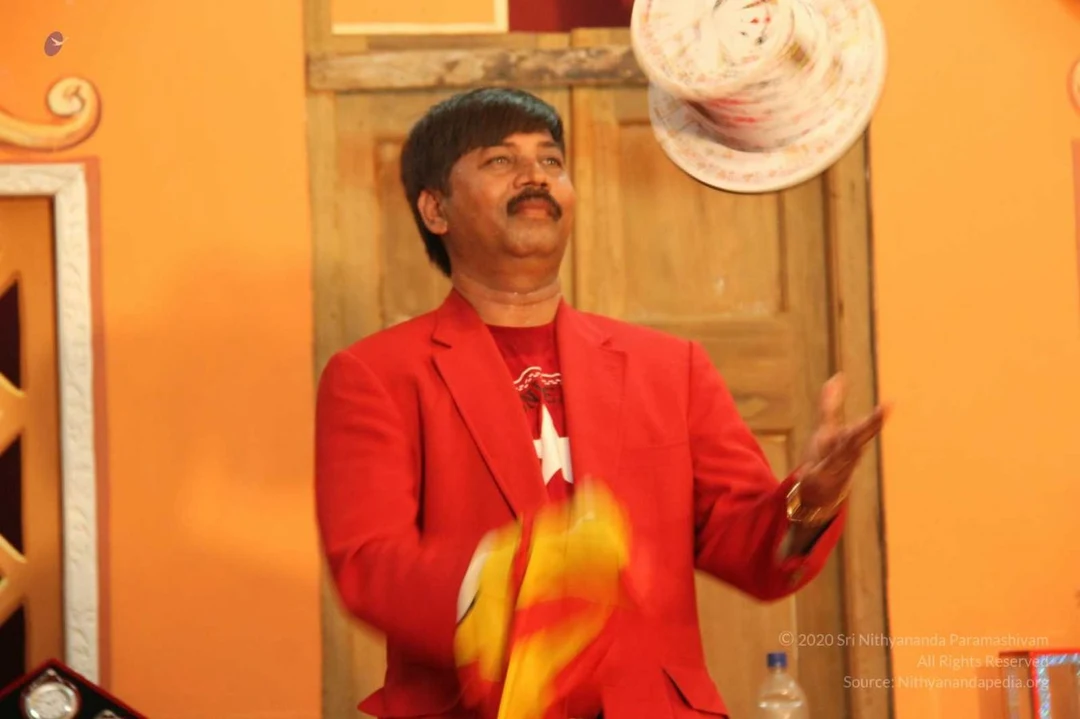
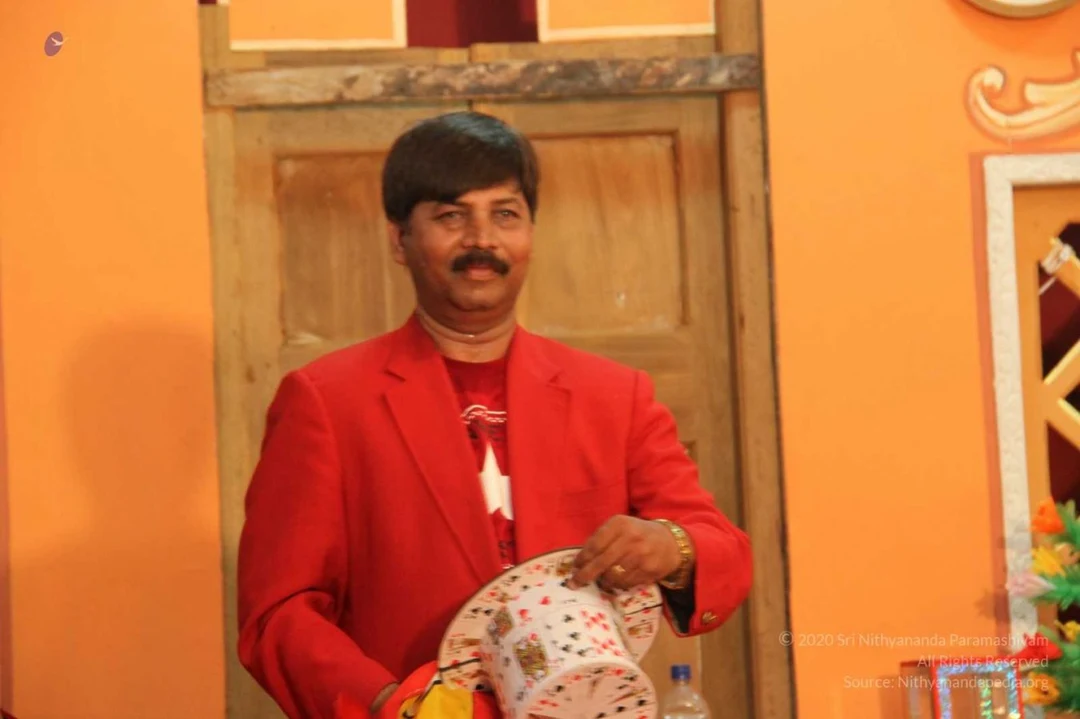
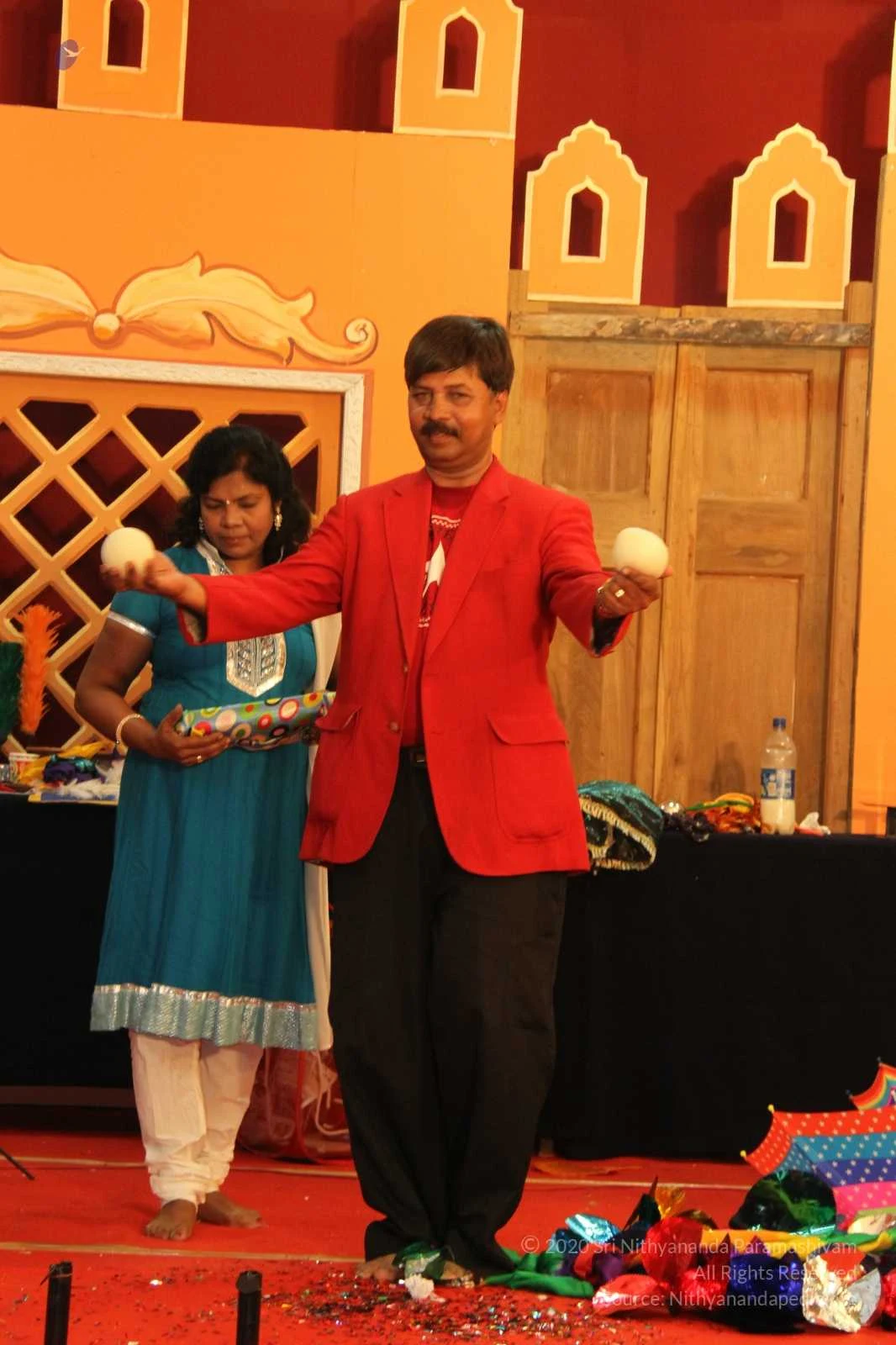
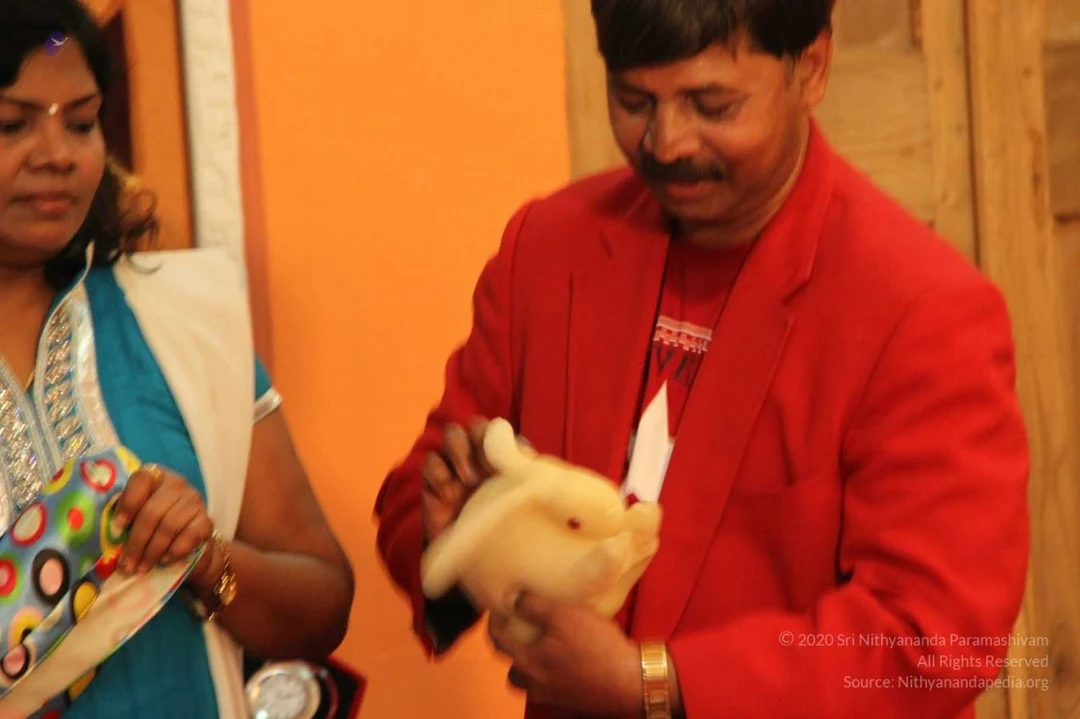
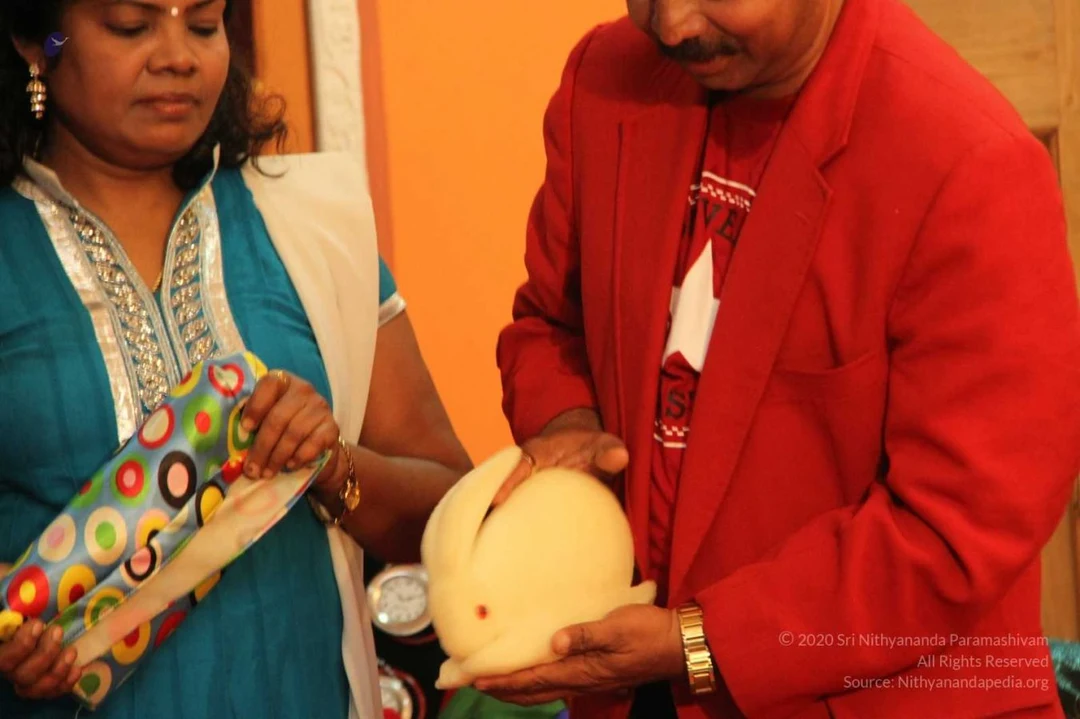
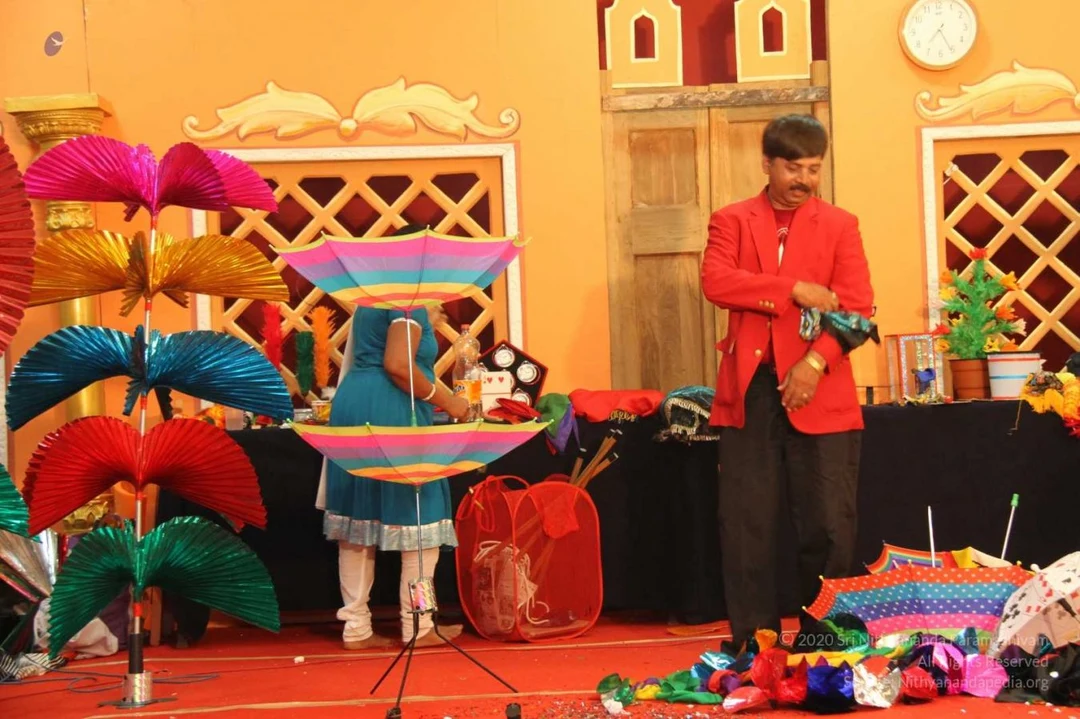
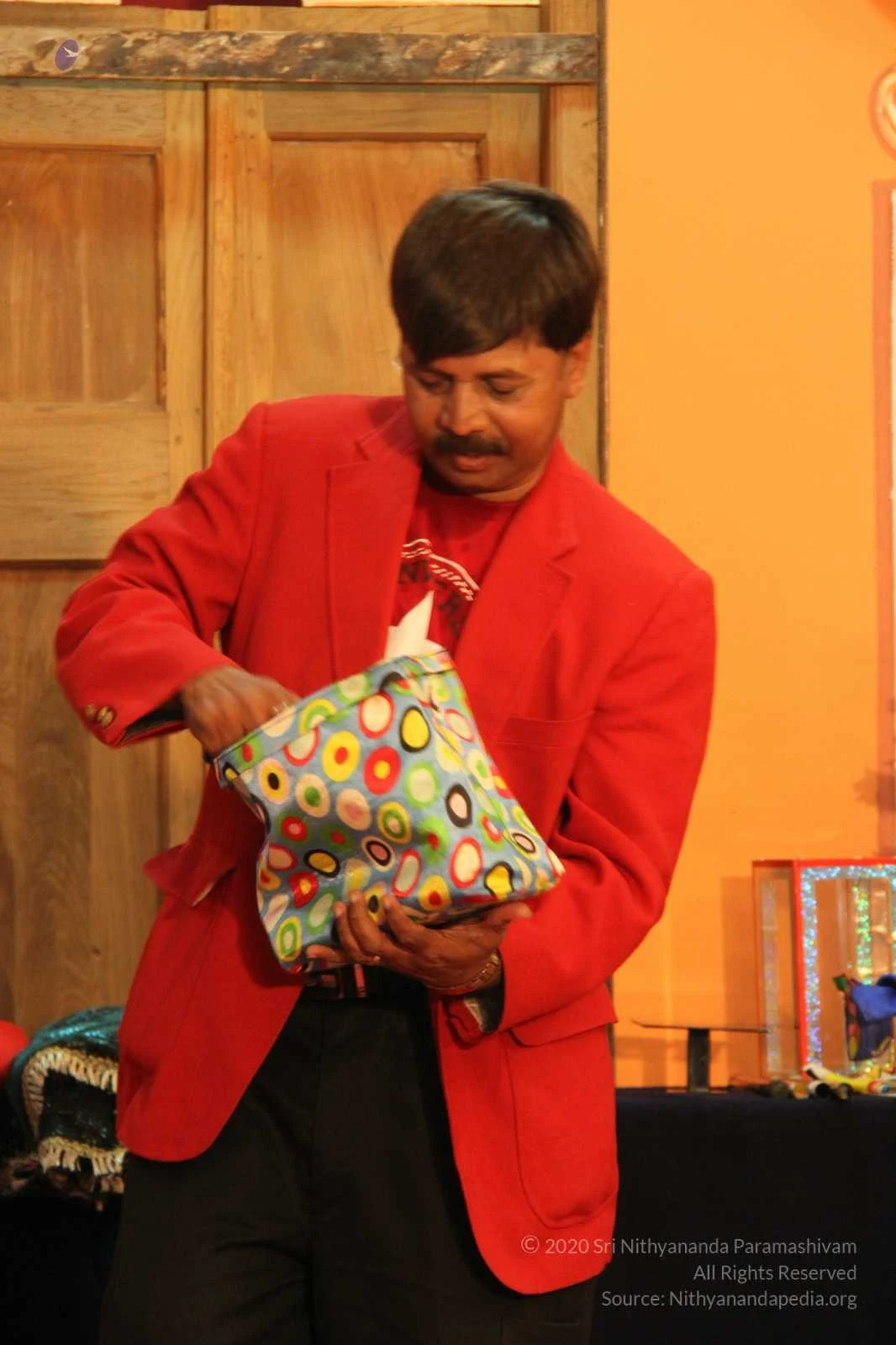
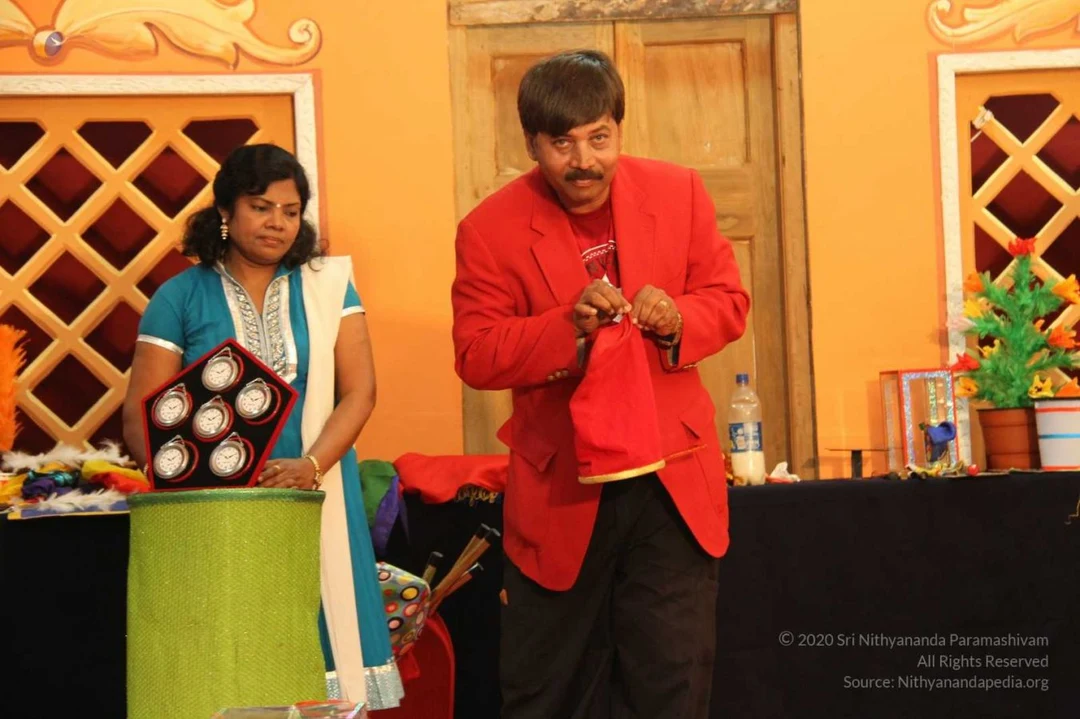
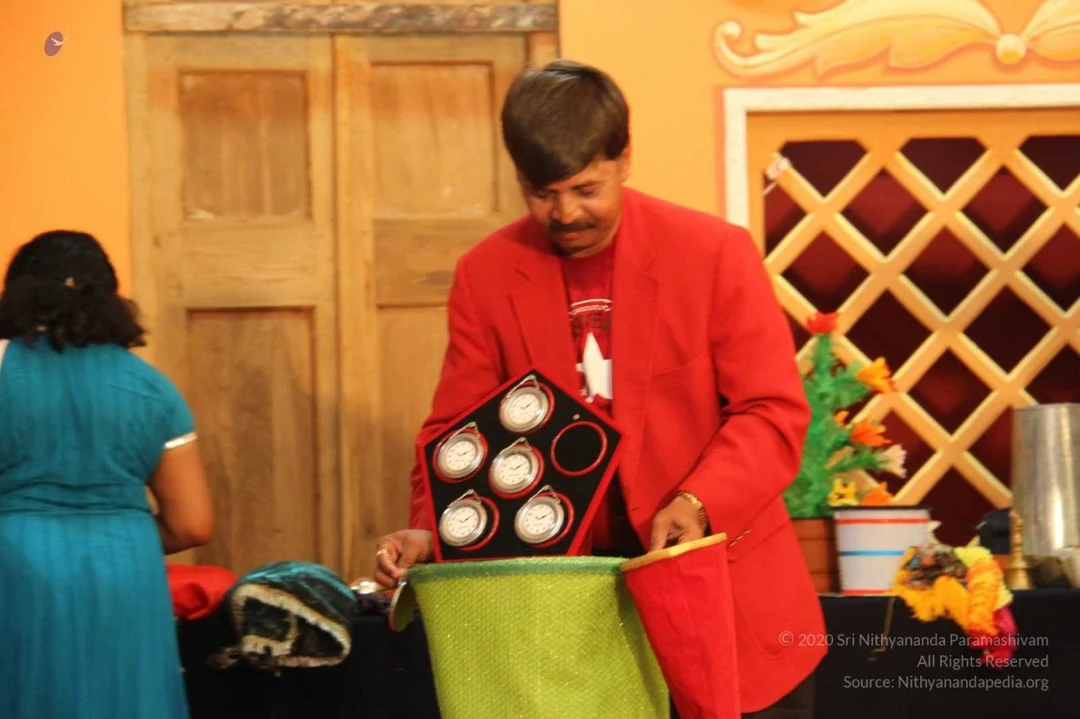
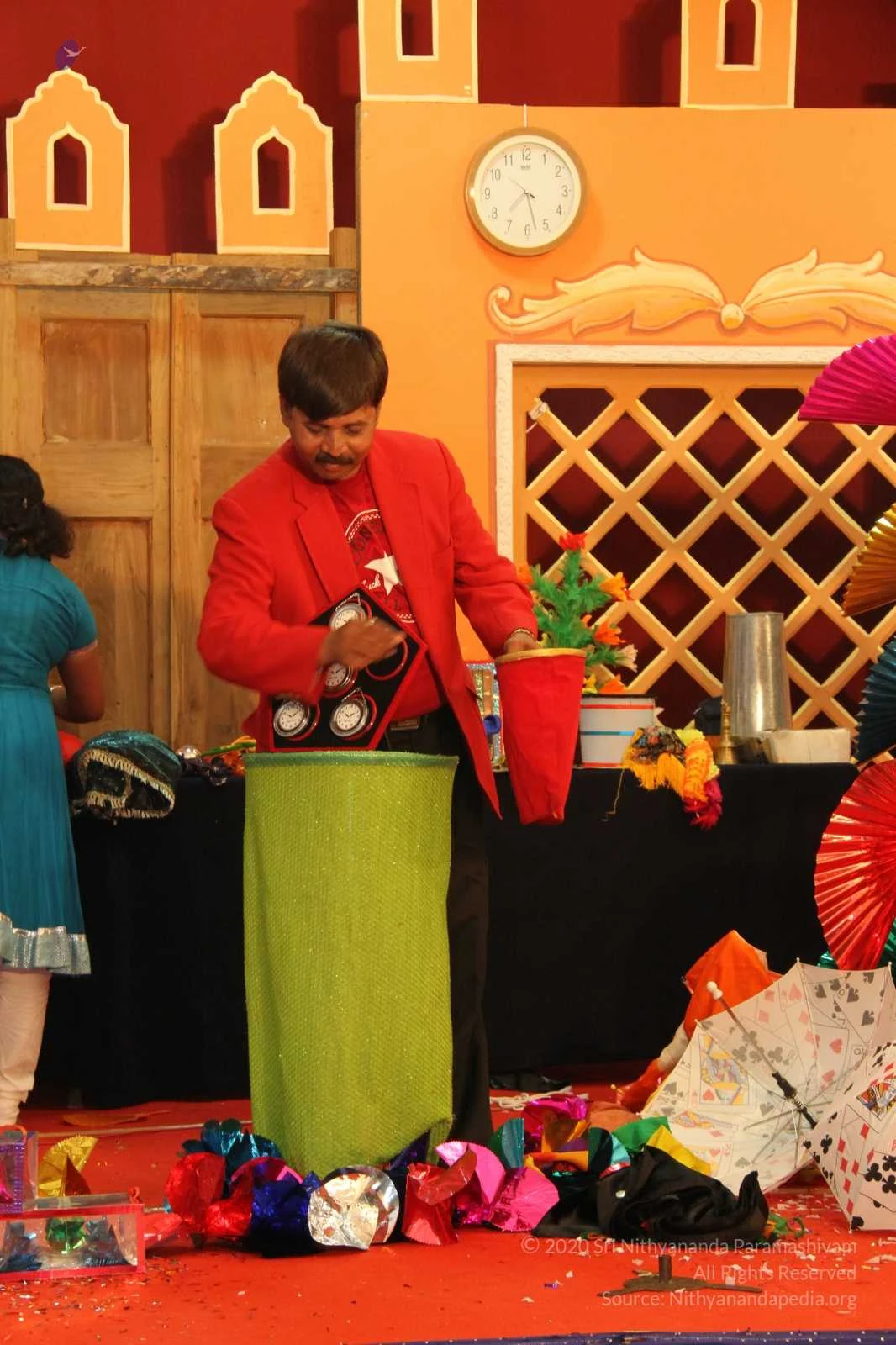
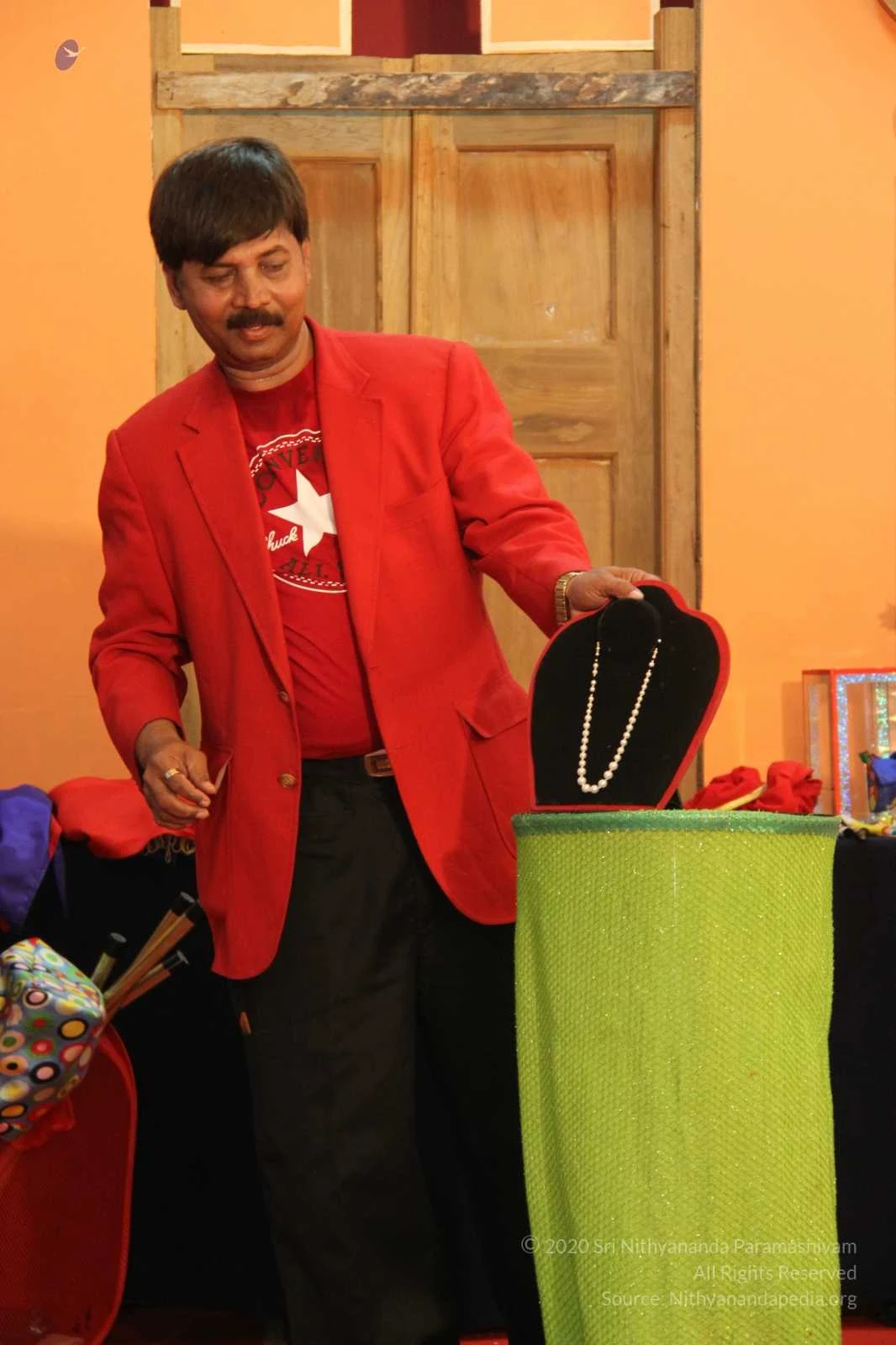
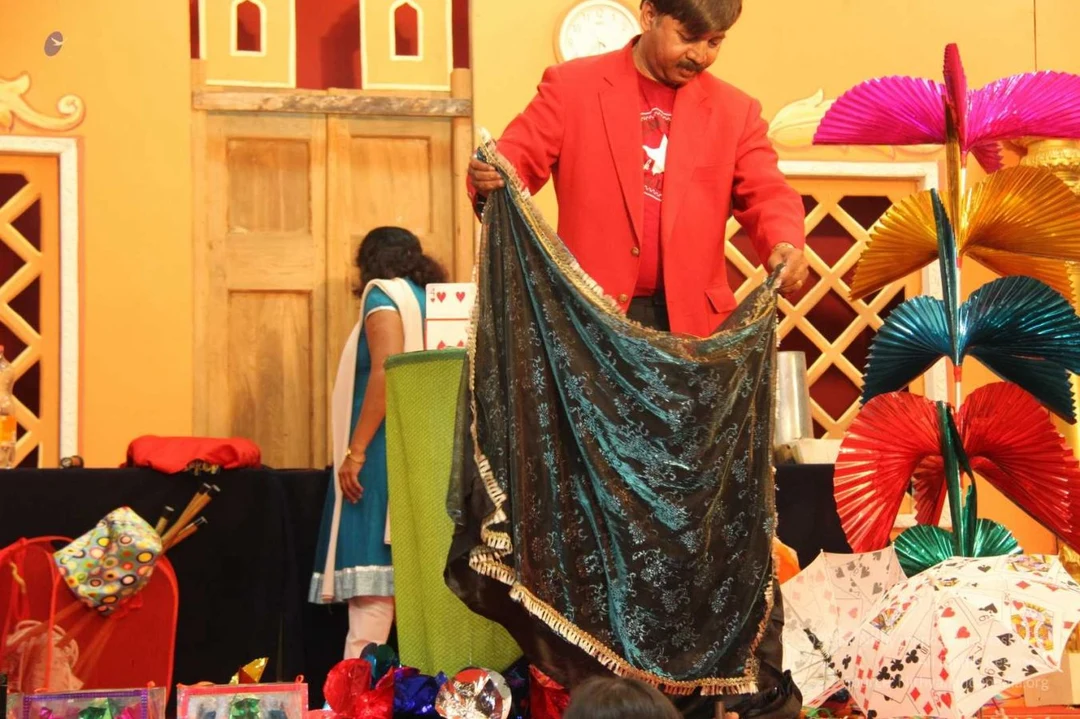
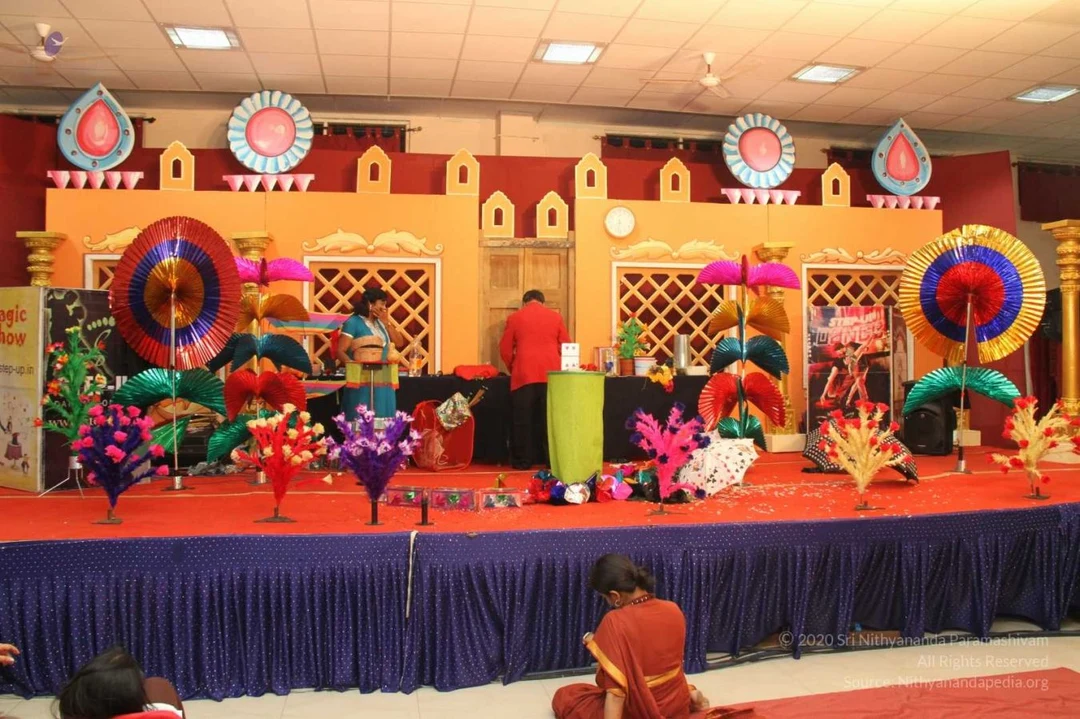
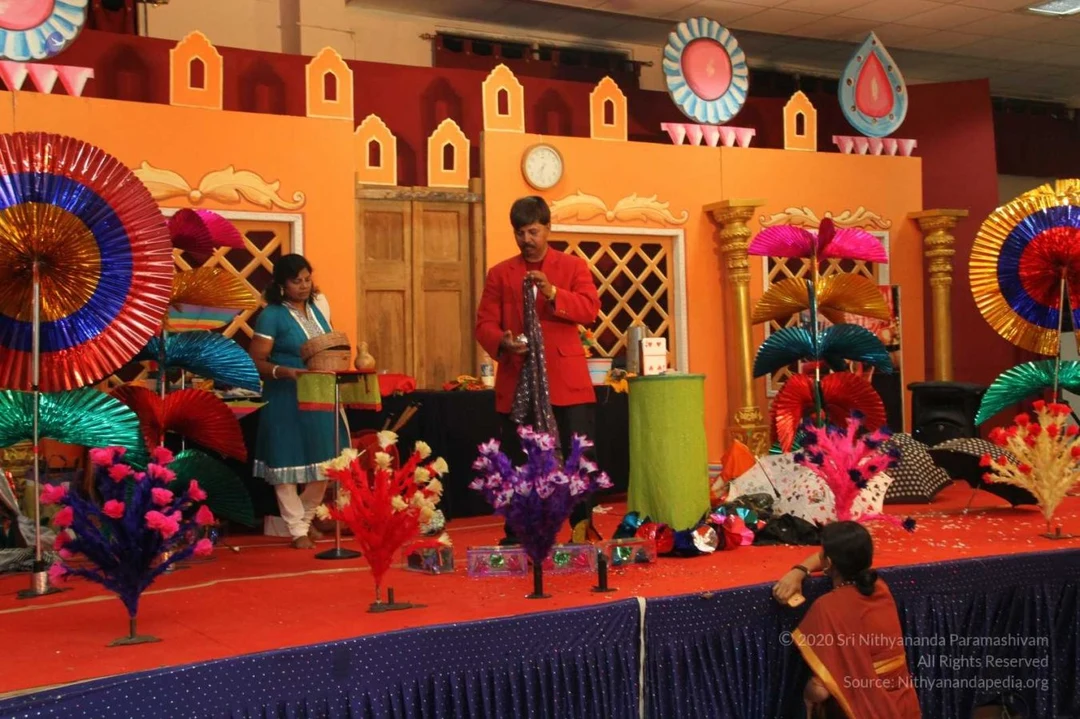
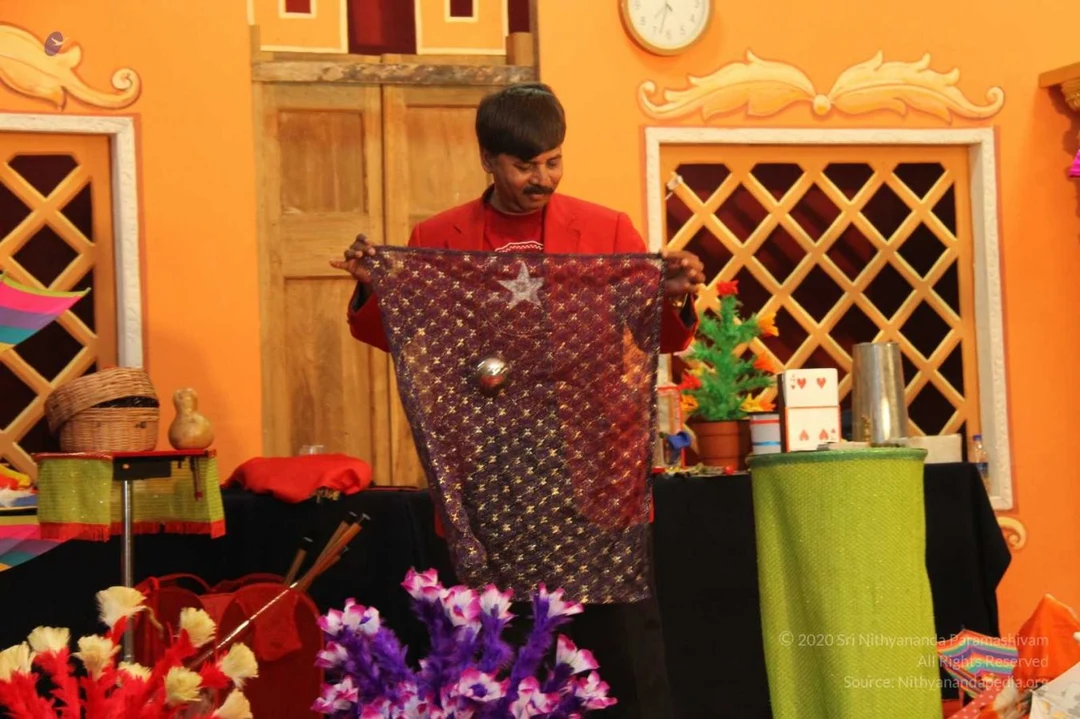
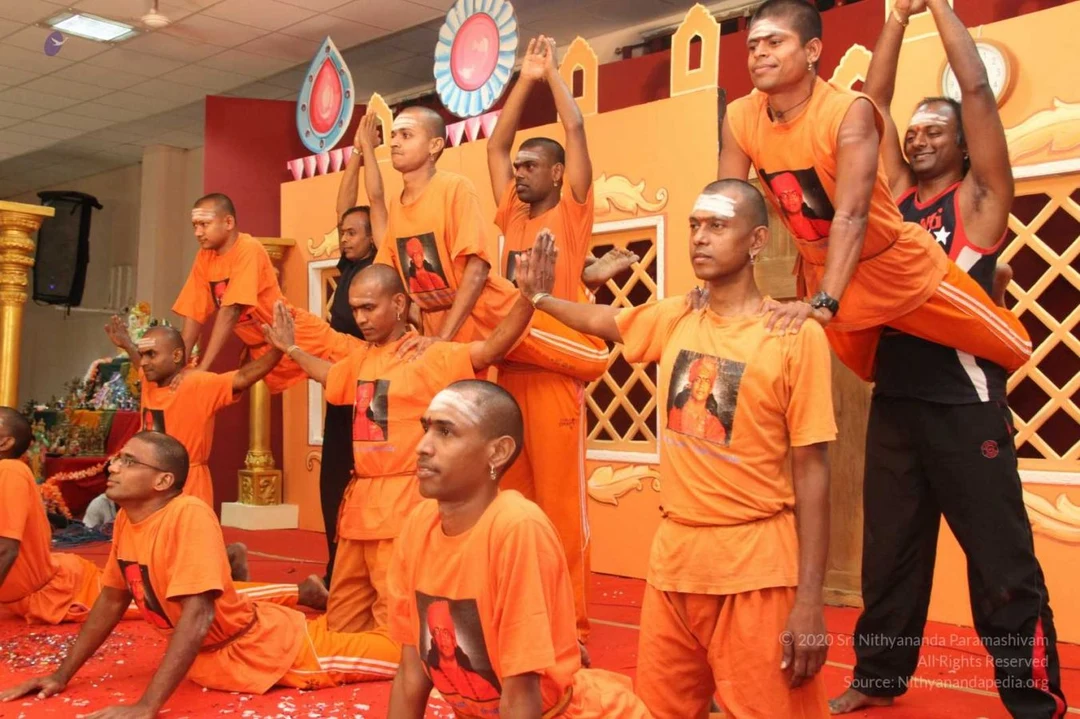
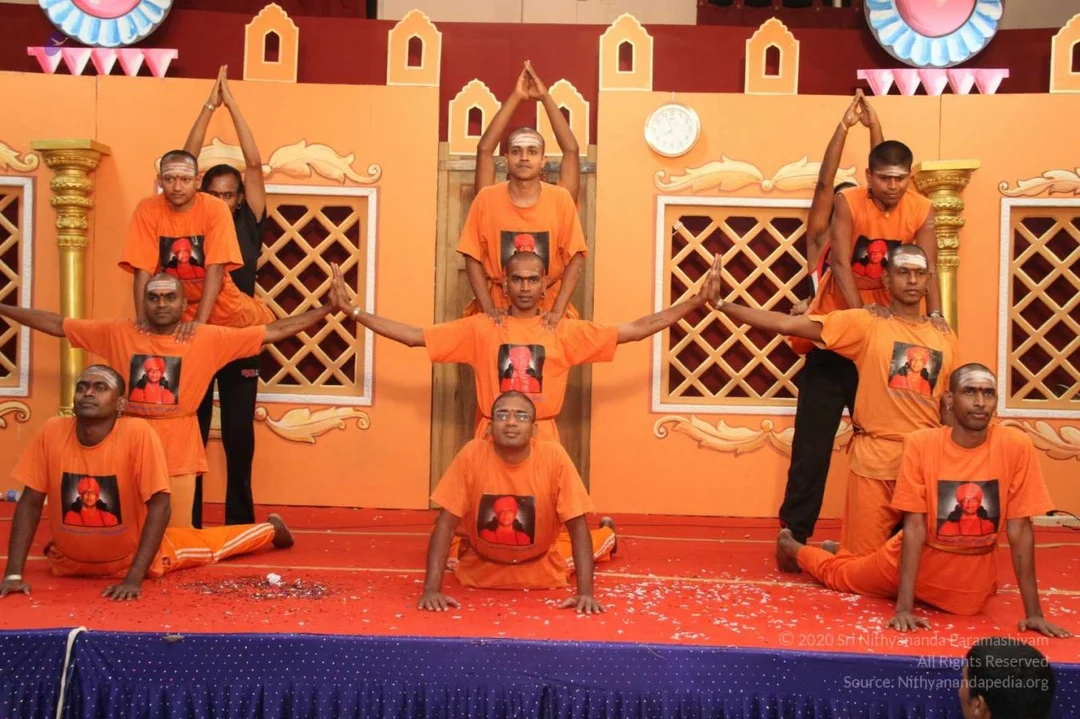
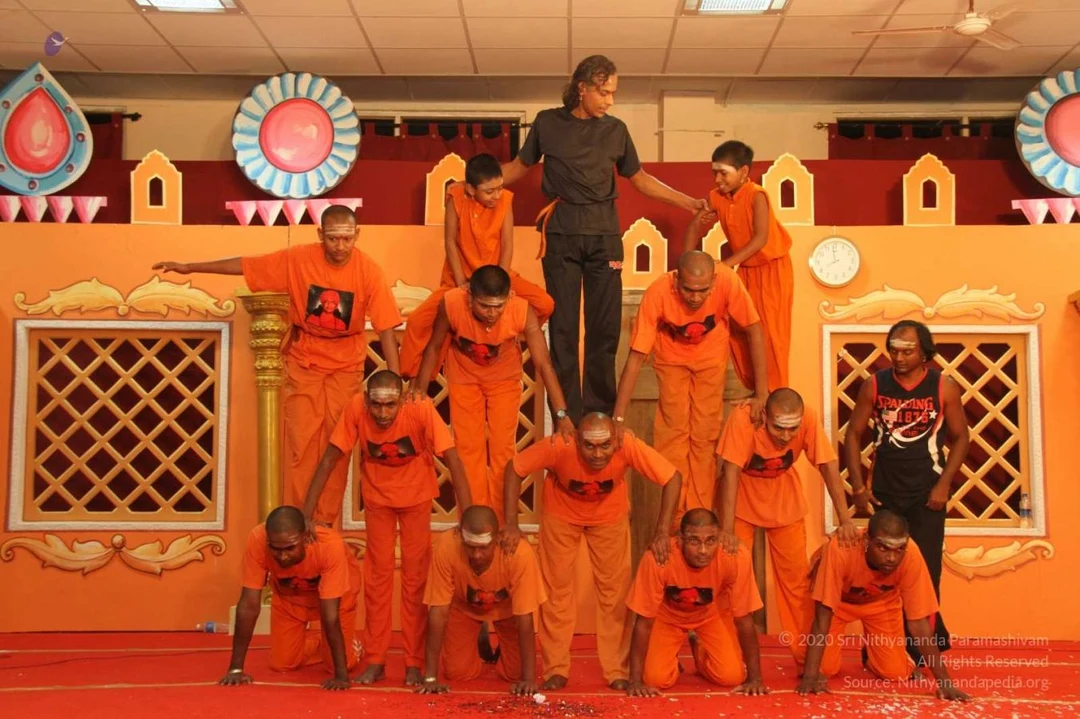
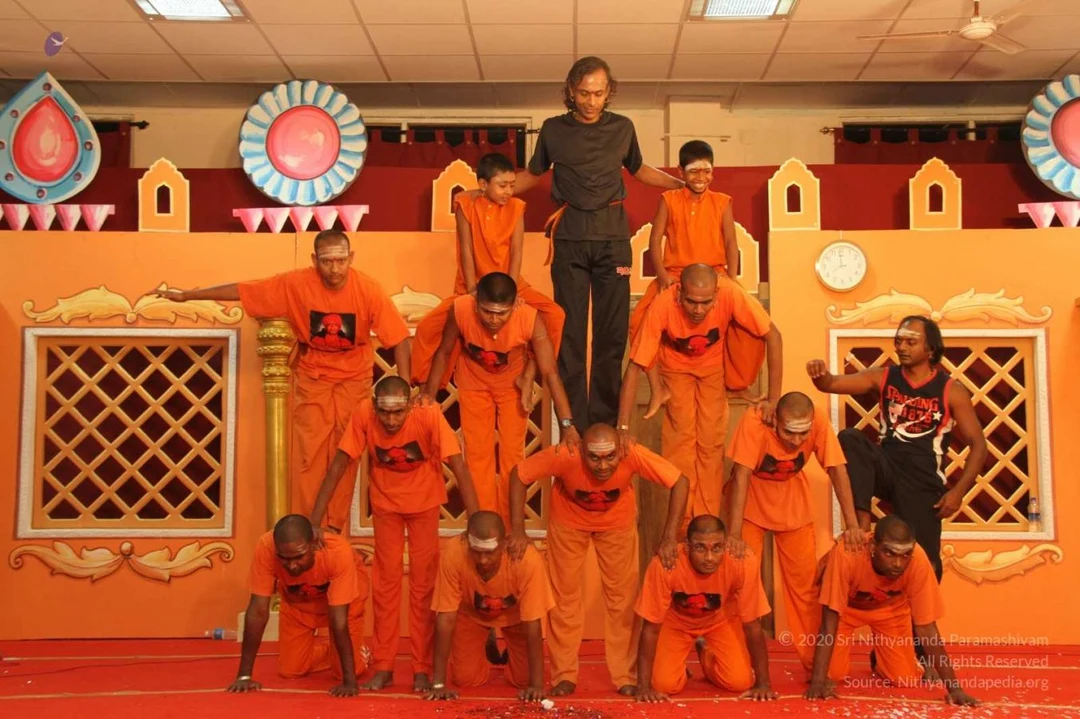
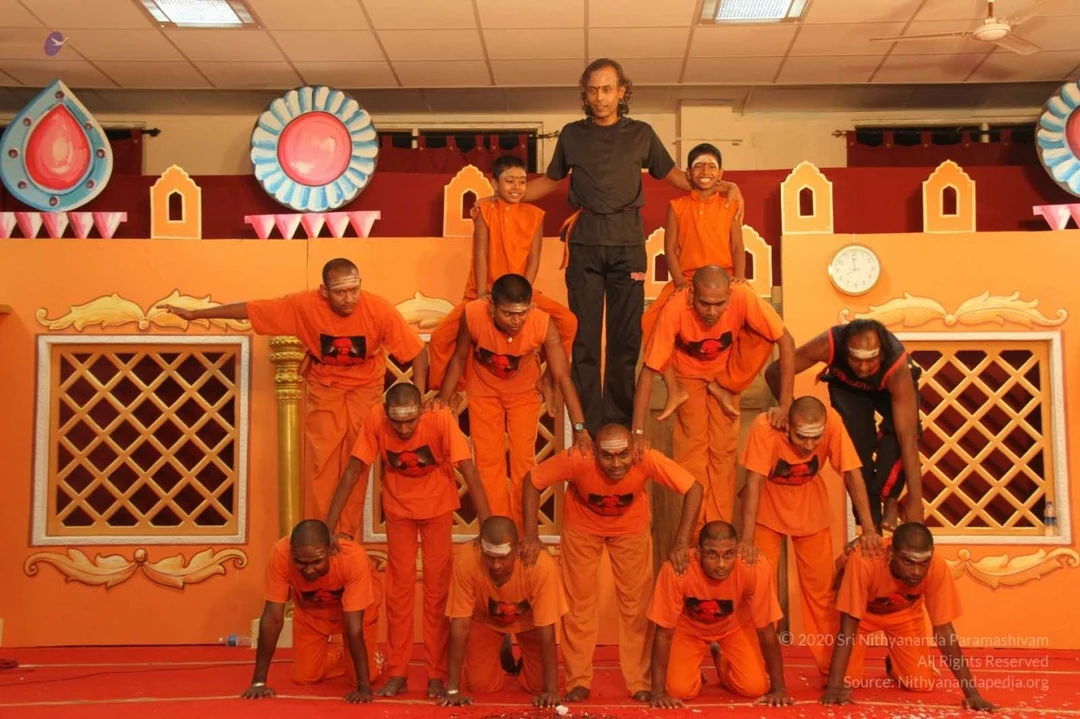
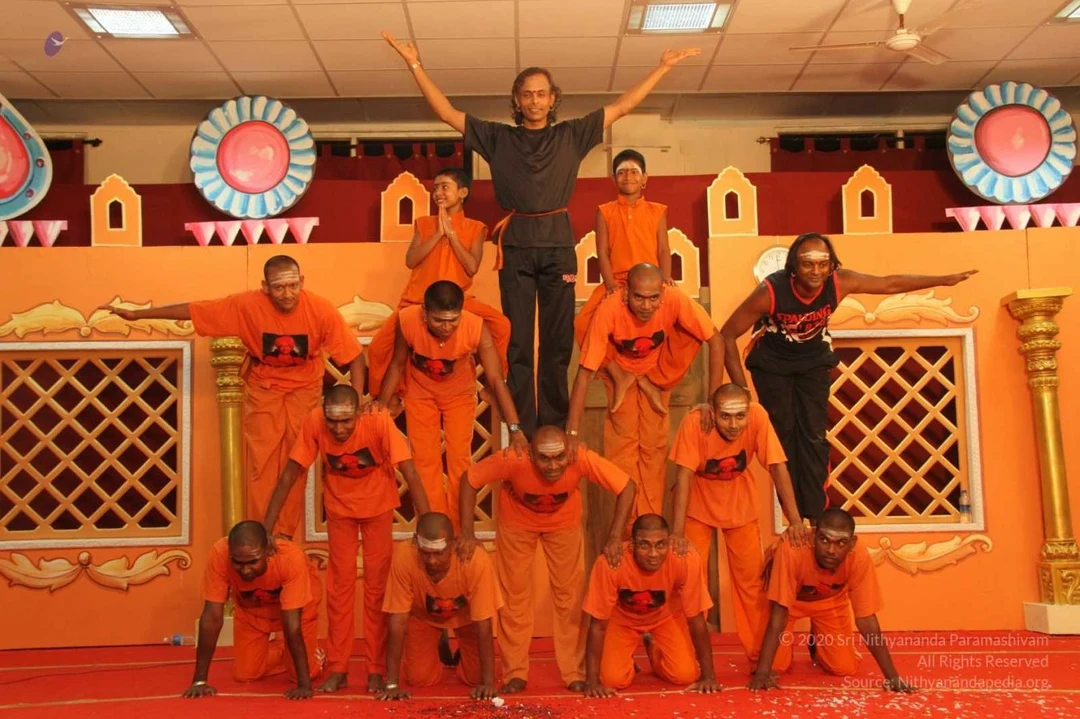
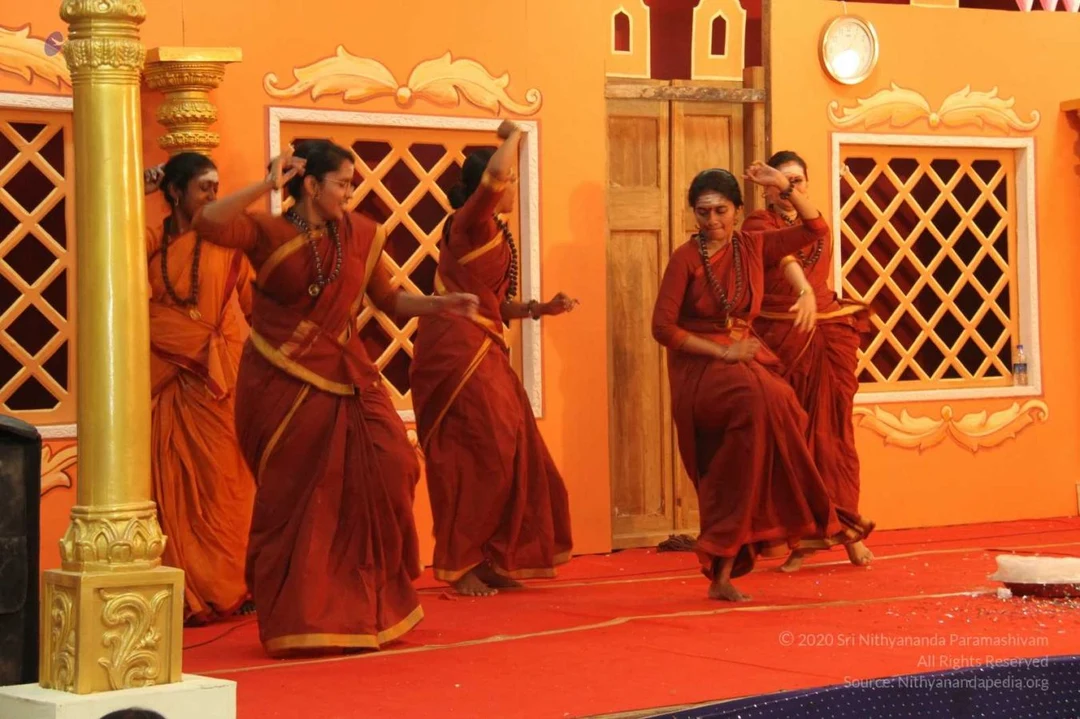
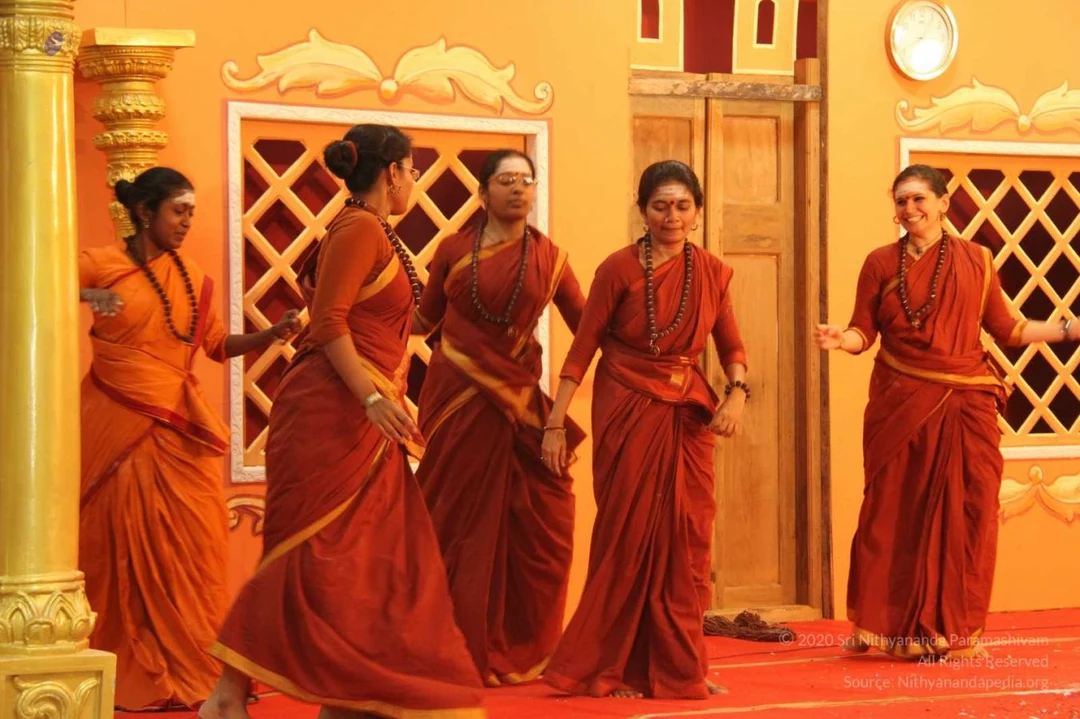
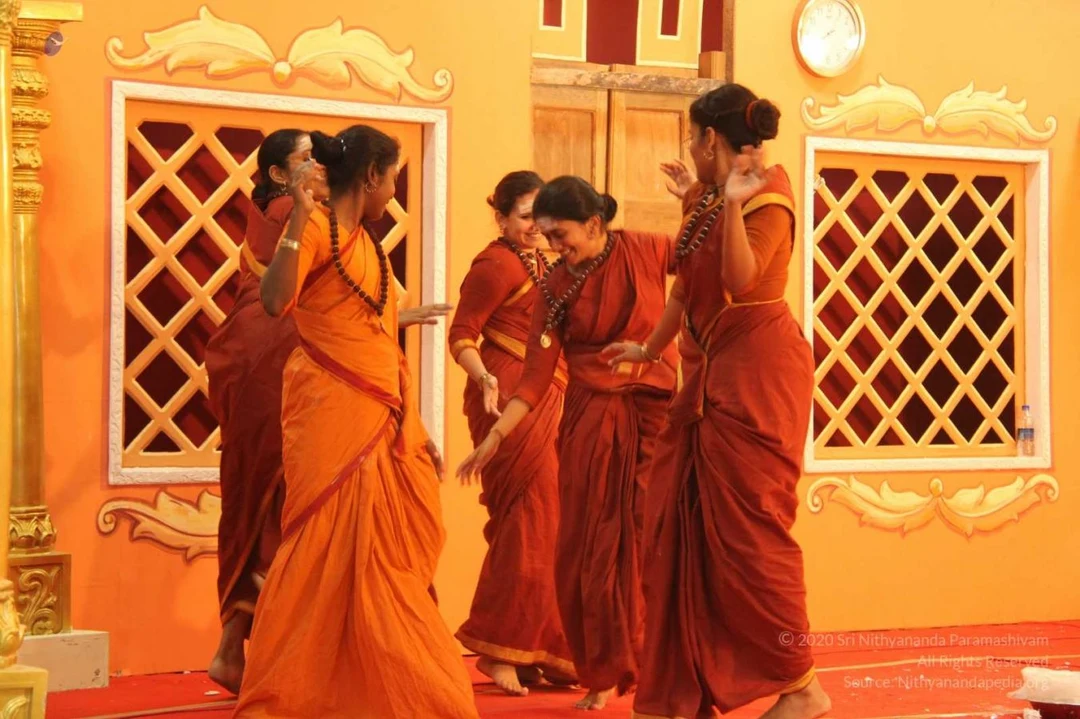
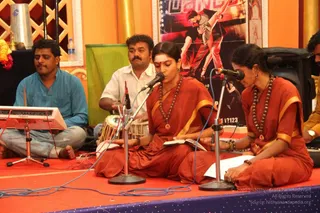
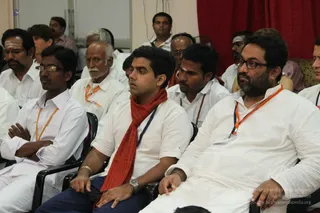
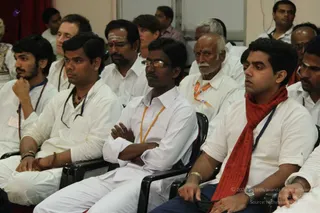
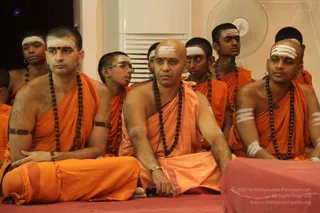
Two seated male musicians perform during an event with an orange and yellow backdrop. The man on the left wears a teal-blue collarless kurta and sits cross-legged behind a red and white Roland keyboard on a stand, one hand on the instrument. The man on the right wears a white short-sleeved shirt and plays a pair of tabla drums, with a microphone on a stand beside him. A large poster of a dancing figure in red and black hangs behind them, and a water bottle sits at the left edge.Two men sit cross-legged on a red floor in front of an orange-painted backdrop, performing music. The man on the left wears a teal-blue kurta and sits behind a red Roland keyboard stand with a small electronic unit mounted on it. The man on the right wears a white short-sleeved shirt and plays a pair of tabla drums, with a microphone positioned beside them. A large red-and-white poster showing a dancing figure stands behind them, and a green cushion rests at left. Ornate painted orange panels and a lamp-like gold pillar frame the scene.A devotional music performance on a red-carpeted stage with an orange and yellow backdrop. Two women in matching rust-orange saris with gold borders and rudraksha malas sing into microphones, the woman on the left with a vermilion dot on her forehead and reading from a small book. A man in a white shirt plays a tabla and a man in a blue kurta sits behind a Roland keyboard. Behind them a poster shows a dancing couple, and a flower garland hangs at the left edge.A seated audience in a hall during a satsang session, with rows of men in white clothing. In the foreground, a bearded man in a white kurta wears an orange lanyard and a dark-rimmed pair of glasses, looking forward. Beside him, a younger man in a white shirt wears a red patterned shawl and a wristwatch. To the left, a man in white with glasses sits with arms crossed, and an older man with white hair and a white moustache wears an orange lanyard. Behind them, others in white clothing and a man with a tilak on his forehead are seated, with a red curtain and a whiteboard in the background. No one is clearly identified as a person in this image.A photograph of an audience seated in rows of black chairs during a satsang. Most attendees wear white kurtas or shirts; several wear lanyards, including orange and blue ones. A man on the right wears a red scarf printed with text and a dark-blue lanyard, with a steel wristwatch. An older white-bearded man in a white shirt sits centre with an orange lanyard. A man at left wears rudraksha beads and a lanyard, and a man near the back has a vertical tilak on his forehead. Red curtains and a white wall form the backdrop. No a person candidate is clearly visible.A photograph of a group of men and boys seated on a red cloth-covered floor in an indoor hall, all wearing saffron-orange robes and rudraksha malas. Several have white and tripundra-style forehead markings and white arm bands. A white wall-mounted air conditioning unit and a fan are visible behind them. The central seated man, with a shaved head and a wide-set gaze, wears a saffron robe and a gold bracelet, and sits beside a red-draped table edge. Others around him, including a young boy in glasses, look attentive toward the front. The scene resembles a satsang or teaching session.
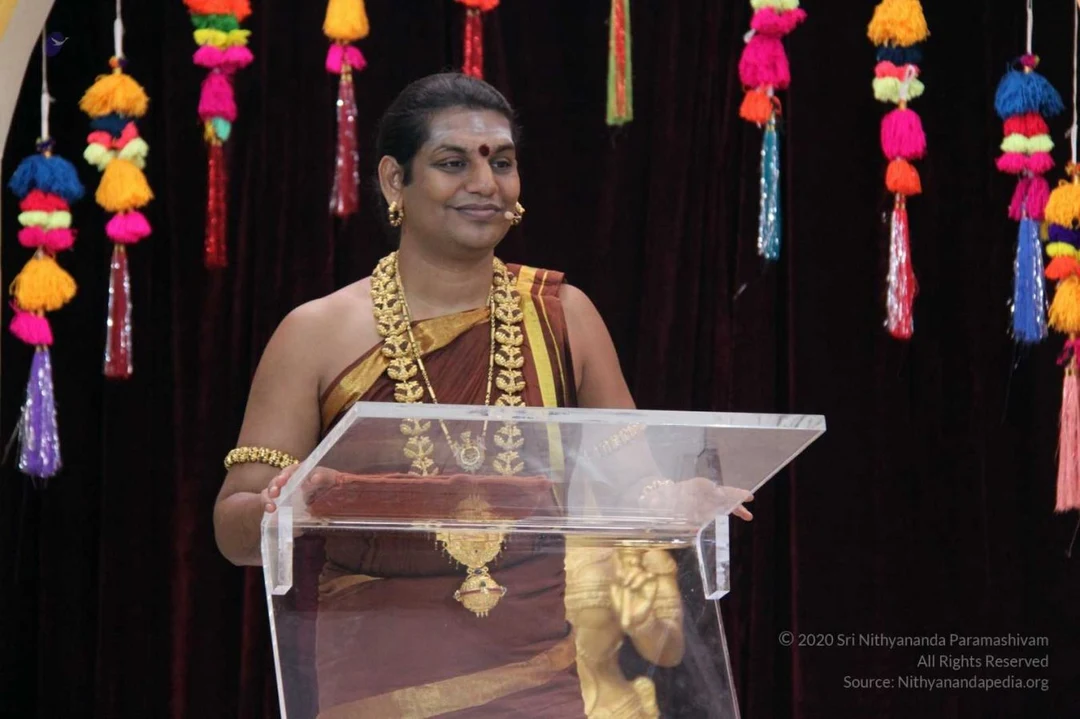
Temple

26 photosSource gallery
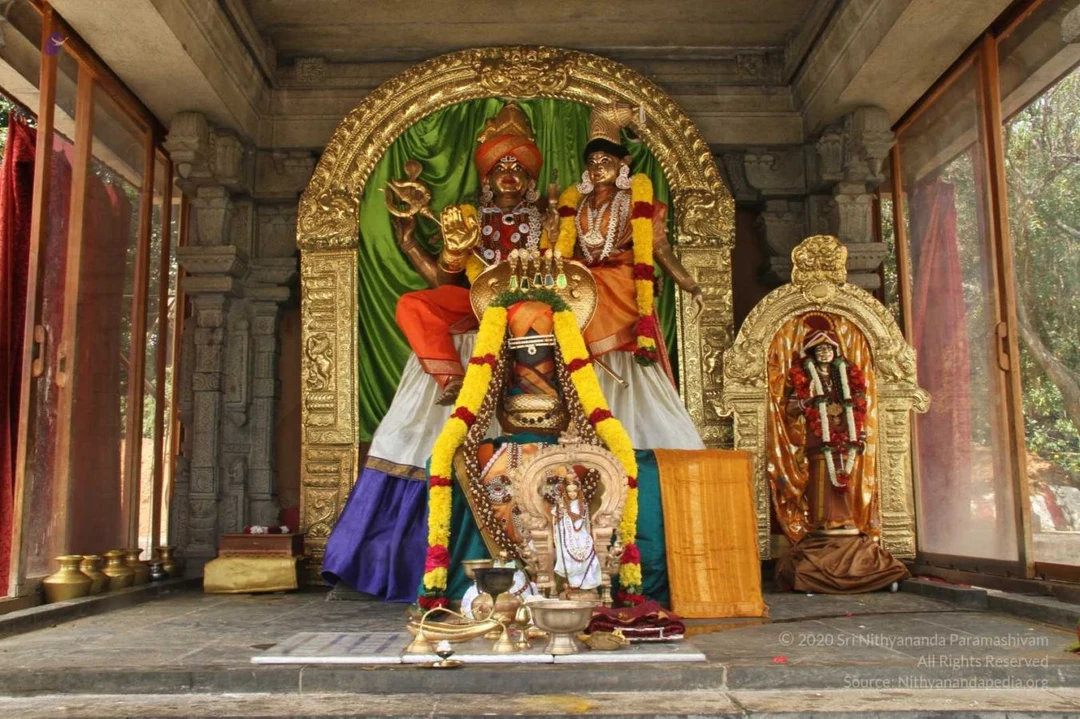
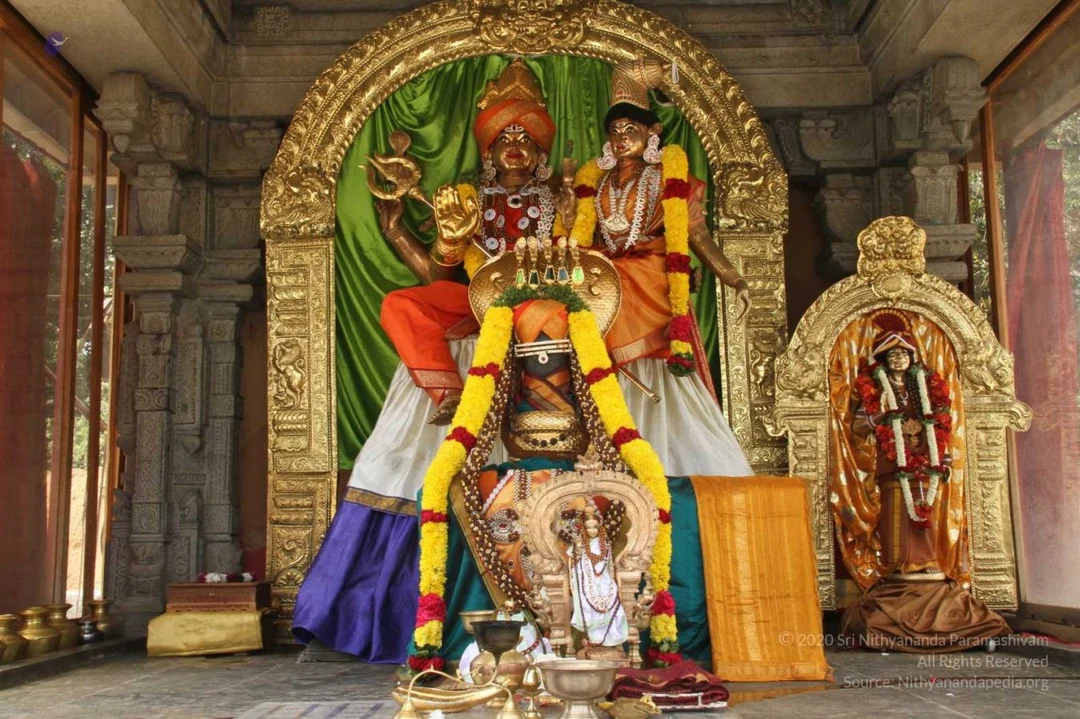
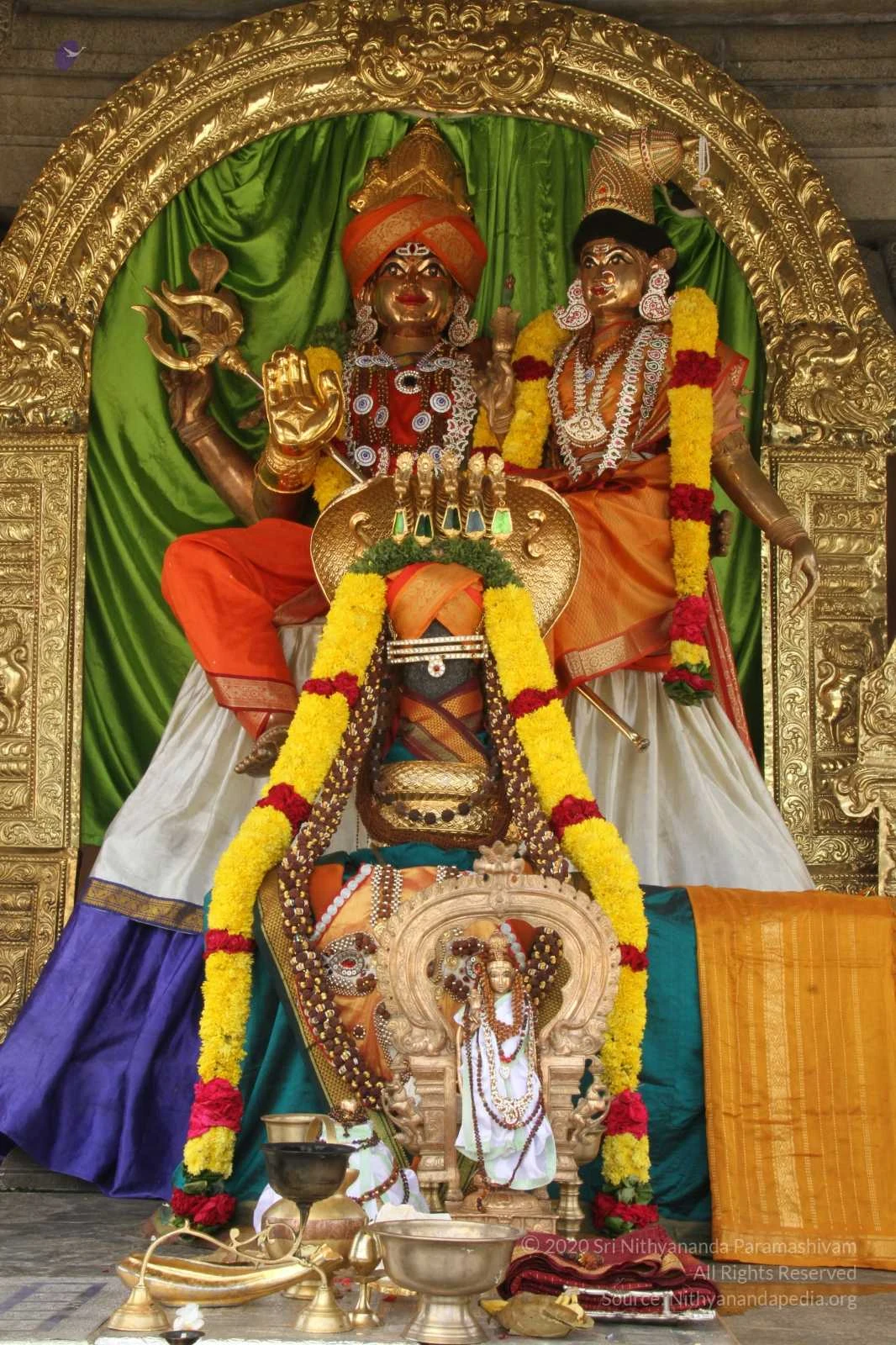
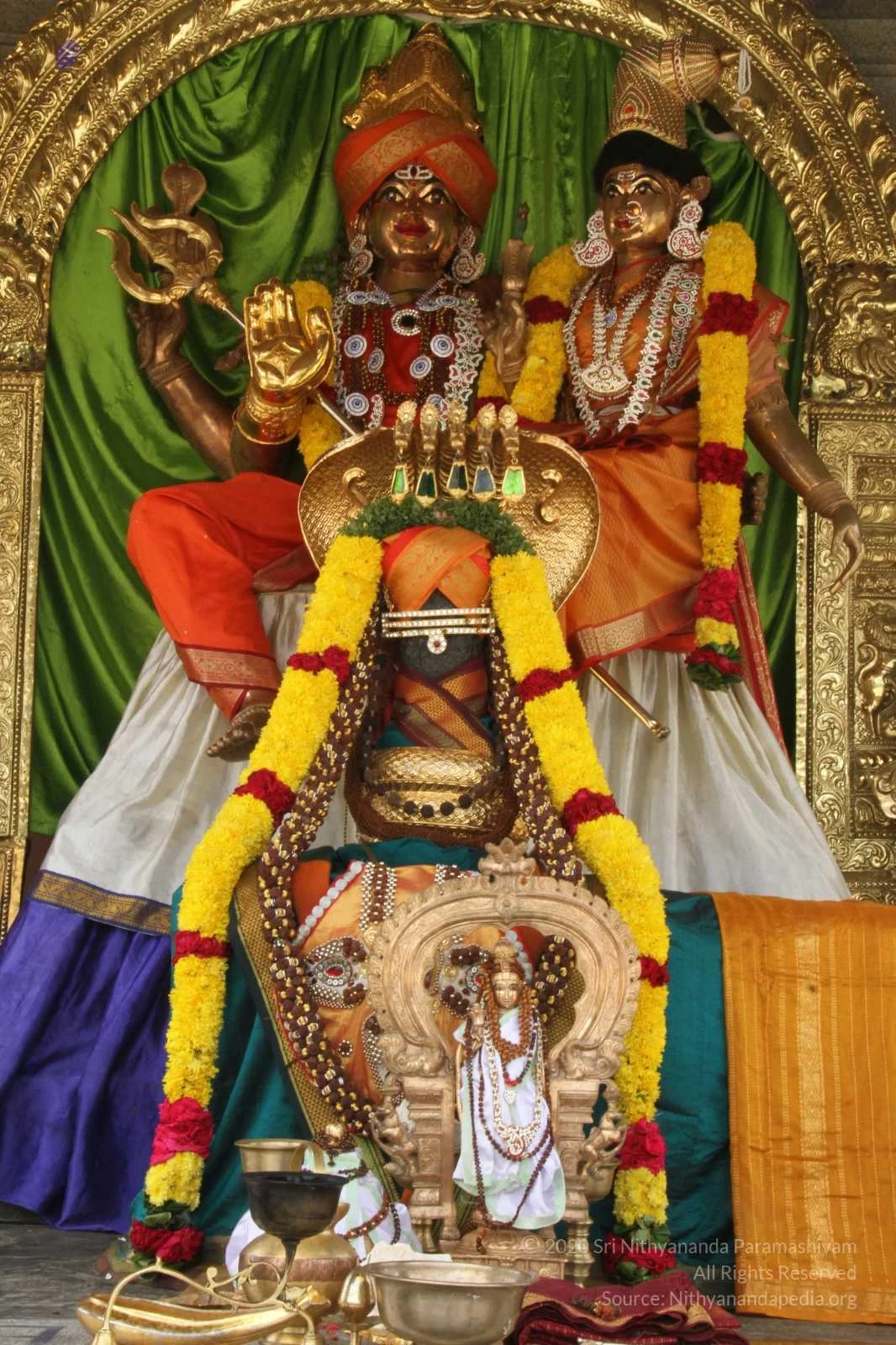
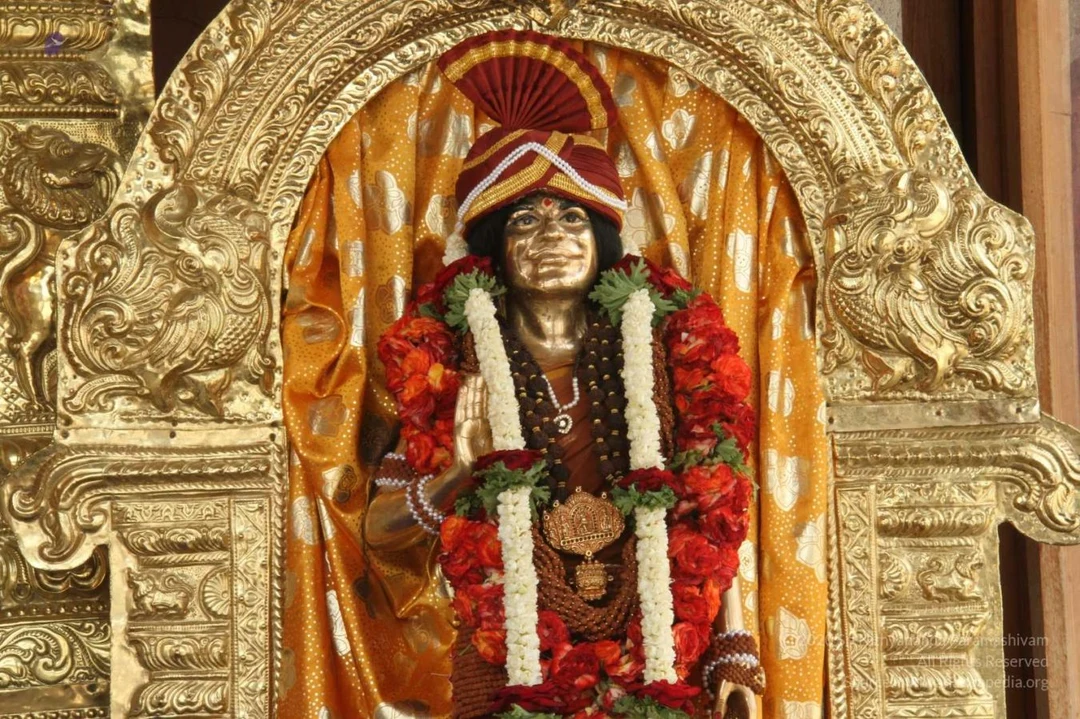
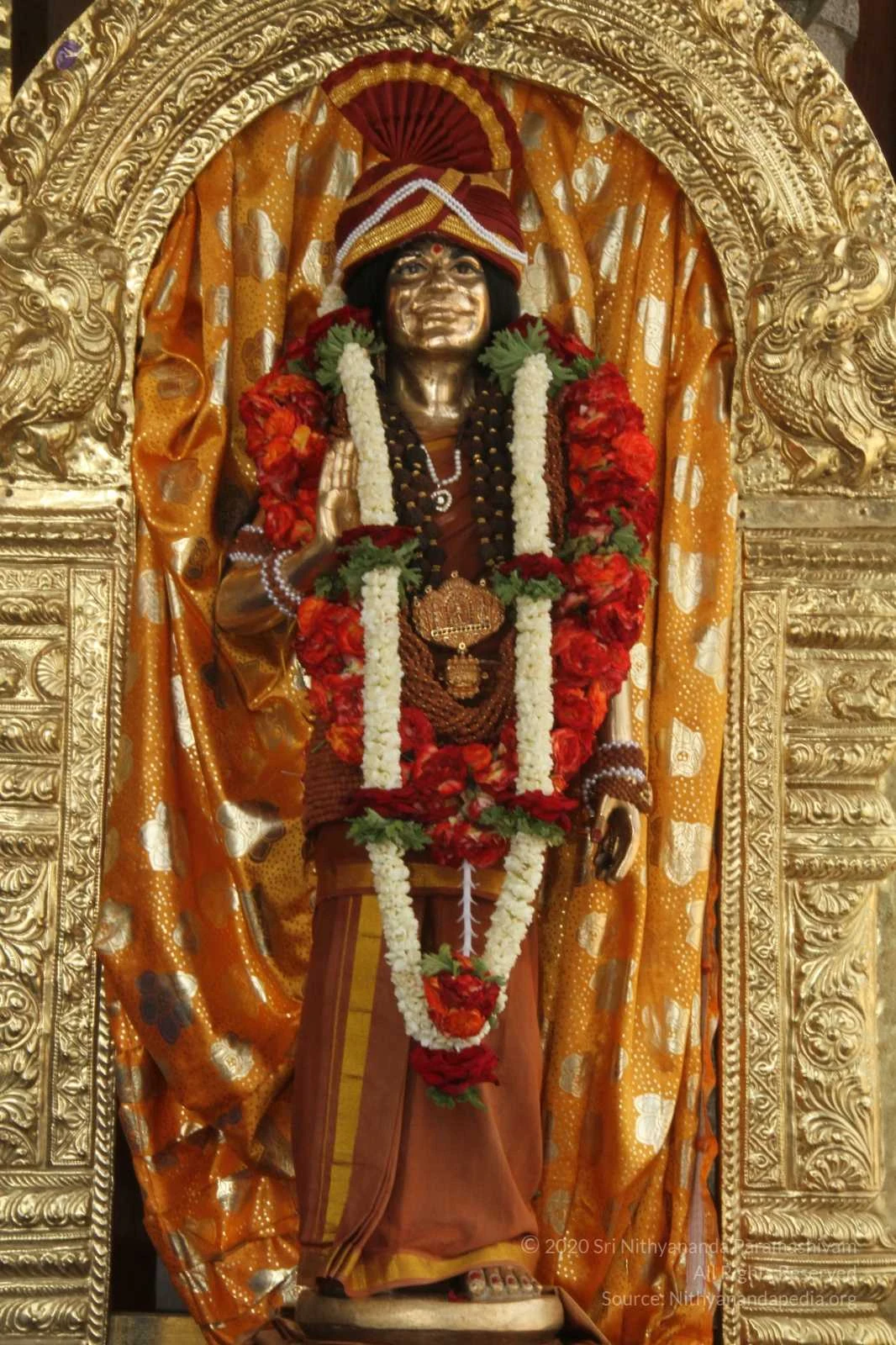
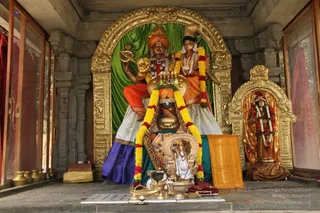
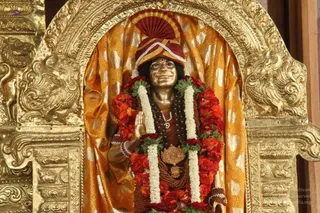
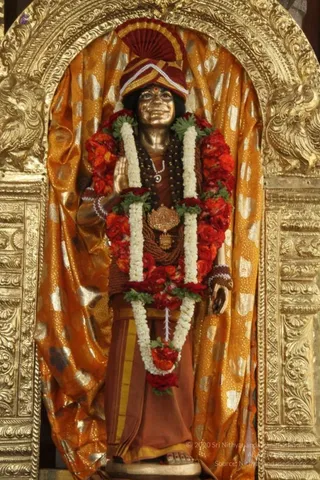
A shrine photograph showing a gilded arch framing a large sculpted deity murti of a goddess with multiple arms, holding weapons, with a green backdrop behind. Beside her is a smaller statue of a male deity in a red and orange turban with a garland of yellow and red flowers. In front sits a black-stone figure draped with garlands of yellow and red marigolds, a silver-framed peetha or throne-like base, and brass oil lamps and offering vessels, along with a red cloth on a stone platform. A smaller gilded alcove on the right holds a figure in orange robes wearing a garland. No physical people are visible.A temple shrine photographed with no people present, featuring a large deity murti of a goddess with multiple arms, seated or mounted above a horse-like figure, flanked by a second deity figure in orange and white. The main figure wears a red and orange turban-like crown, a red-and-white garland, and holds a trident and other implements. Yellow and red marigold garlands drape the statues. Brass kalasha pots, a brass lamp and offering vessels sit on the stone floor before the shrine. A green backdrop and an arched gold frame surround the altar, and a smaller shrine with a golden-robed figure stands at right.A decorated shrine with a large golden arch frames two golden deity statues above a central black stone form draped in an orange and gold cloth and garlanded with yellow and red marigold strands. The taller statue wears an orange turban, holds a trident and a raised hand, and has red and white beaded ornaments; the other wears an orange saree and silver necklaces, with a green curtain behind them. A small golden figure sits within an arched frame at the base. Brass oil lamps, a bowl, and offering trays sit in front on the floor, with a folded orange cloth to the right. This is a deity murti display, with no physical people visible.A photograph of a temple shrine with a golden arch and green silk backdrop, showing a large golden-faced deity statue in orange turban and red-orange dhoti holding a trident, beside a female deity statue with white and red garlands and a crown. In front, a dark stone linga or murti is draped with an orange cloth and wrapped in a gold band, garlanded with yellow flowers and red roses and rudraksha strands, with a small white-robed figure on a golden peetha before it. No living people are present.A gilded bronze statue of a seated guru figure is enshrined inside an ornate gold-leaf arch with carved lion-like and floral motifs. The figure wears a red and cream turban, a rudraksha mala, a pearl necklace and a gold pendant, and has a red tilak on the forehead. Heaps of red and orange flowers with white jasmine garlands drape its neck and chest, and the statue sits before a golden silk backdrop with a white floral pattern.A gilded statue of a standing figure in a golden arched niche draped with orange and gold brocade. The statue wears a red and gold turban with a white pearl band, a dark rudraksha mala and pearl necklaces, and a gold pendant. Its hands are raised in blessing. Large garlands of red roses and white jasmine hang from the shoulders to the feet, with green leaves. The figure wears a rust-red dhoti with a gold border and is set against an ornate gold frame with carved floral and scrollwork. Only a statue is shown, with no physical people present.
Devi Navratri Alankar

3 photosSource gallery
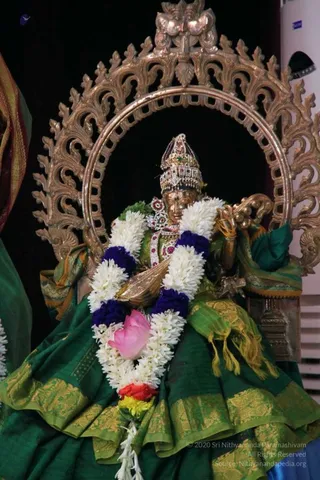
A decorated deity murti of Devi Mahishasura Mardhini seated at the centre on a green silk-draped platform, with multiple arms and a weapon raised. The figure wears a red and gold sari, heavy silver necklaces and a silver crown, and is framed by a white and yellow flower garland arch. Flanking her are two smaller decorated murtis in green and gold dresses with garlands, set before ornate golden halo backdrops. Hanging tassels and a black curtain form the background, with a wall-mounted air conditioner at right. No physical people are visible.A decorated deity murti of Devi as Mahishasura Mardhini is the central subject, seated on a green silk-draped platform before a dark backdrop. The multi-armed goddess wears a red and gold saree, a heavy silver crown, layered gold and jewelled necklaces, and is framed by a large arch of white, yellow, red and purple flower garlands. Her weapon, a trident-like staff, rises beside her. Two smaller female murtis flank her in green and blue skirts with white jasmine garlands and ornate golden halos. Hanging tassels in pink, red and yellow decorate the top of the frame, and a gold statue stands at the left edge. No living people are visible.A bronze or gilded metal murti of a deity seated within an ornate arched prabhavali halo, adorned in a jewelled crown and gold ornaments, with a green silk sari-style cloth draped over the figure. A long garland of white jasmine strands interspersed with dark blue flowers hangs across its chest, with a pink rose and a red and yellow flower tucked into the garland. The figure holds a gold-toned object in one hand near its shoulder. The scene is a temple-style decorated altar with no visible living people; the page indicates an event context but no physical person is shown here.
Venkateshwara Procession

36 photosSource gallery
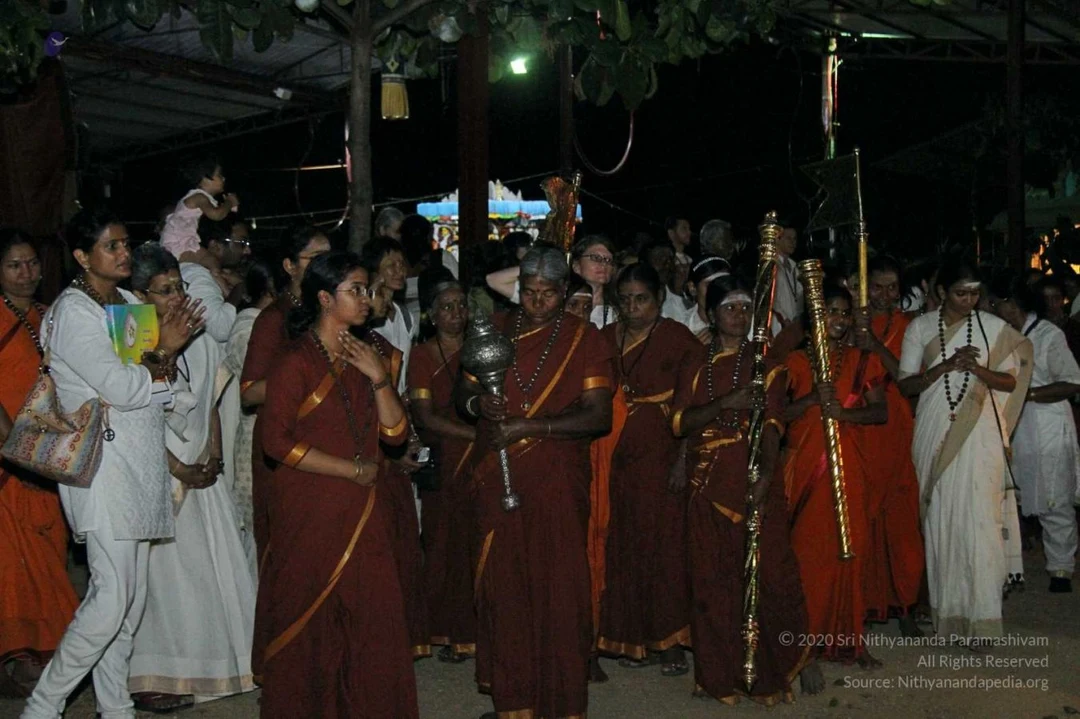
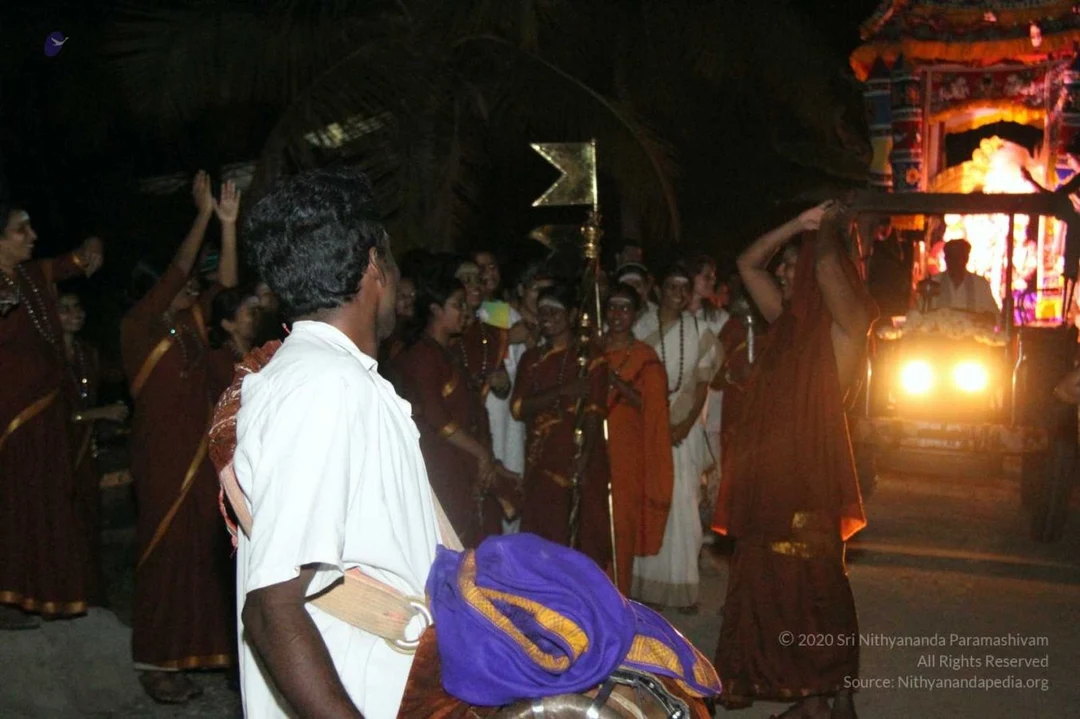
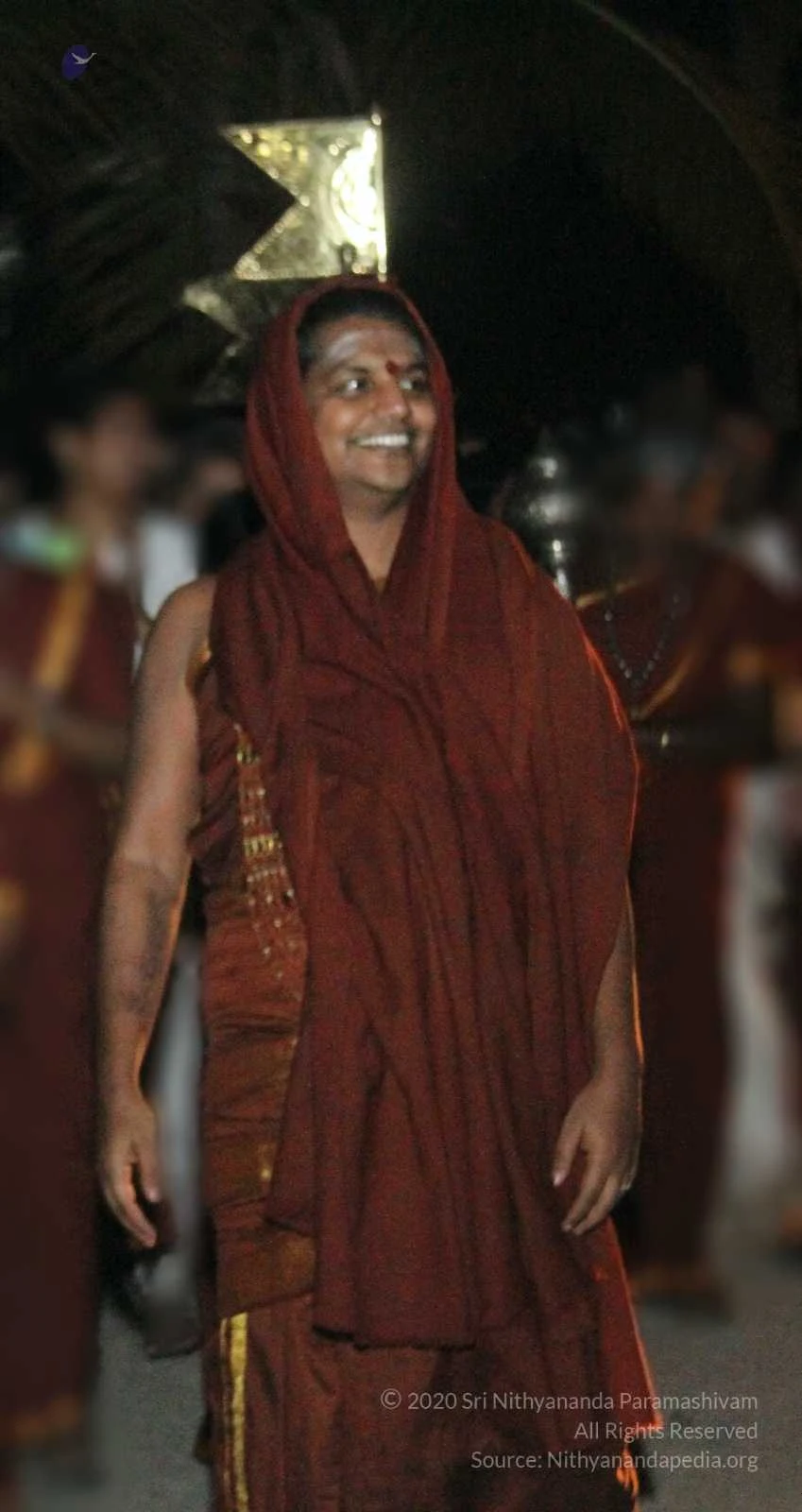
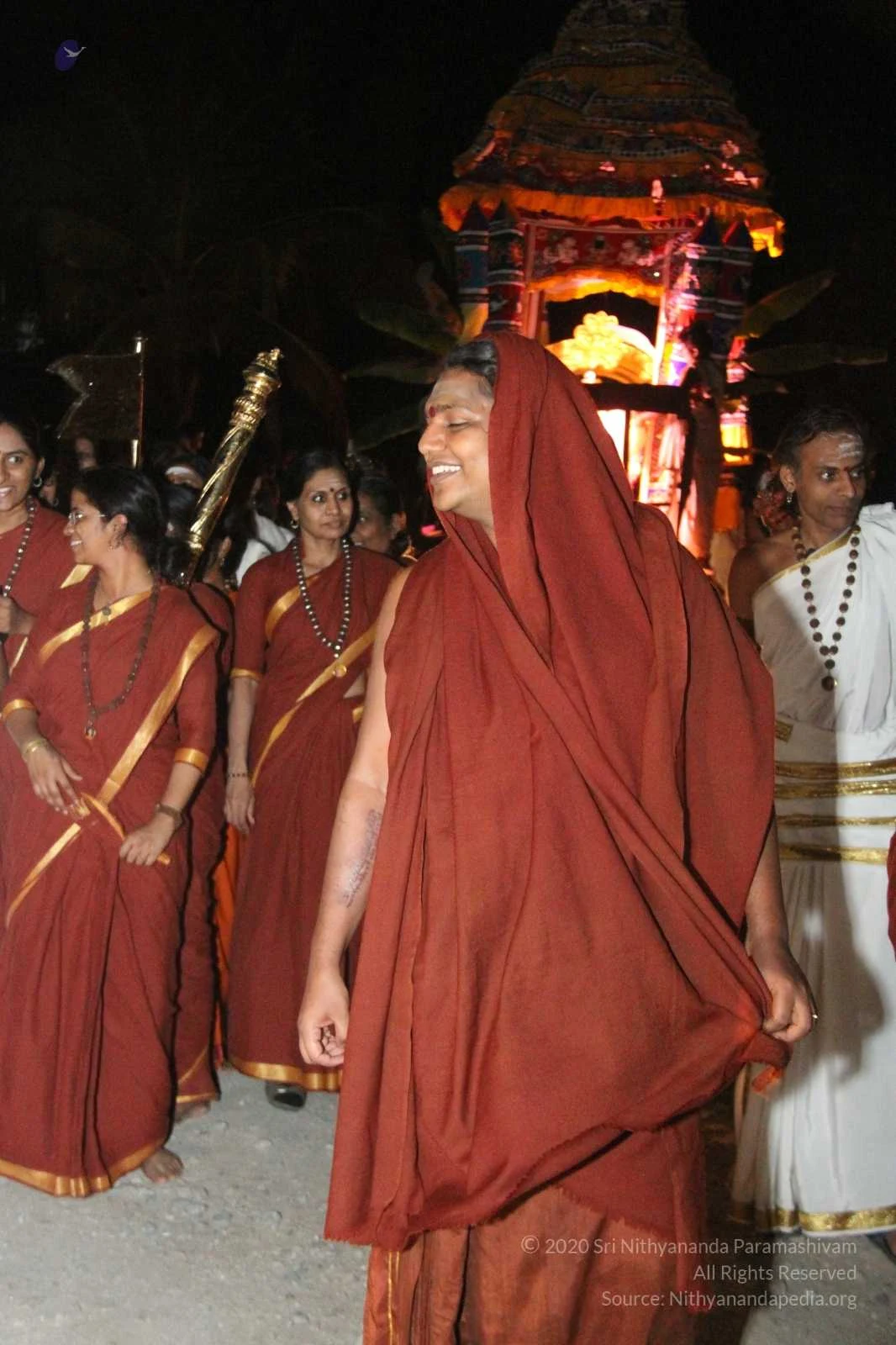
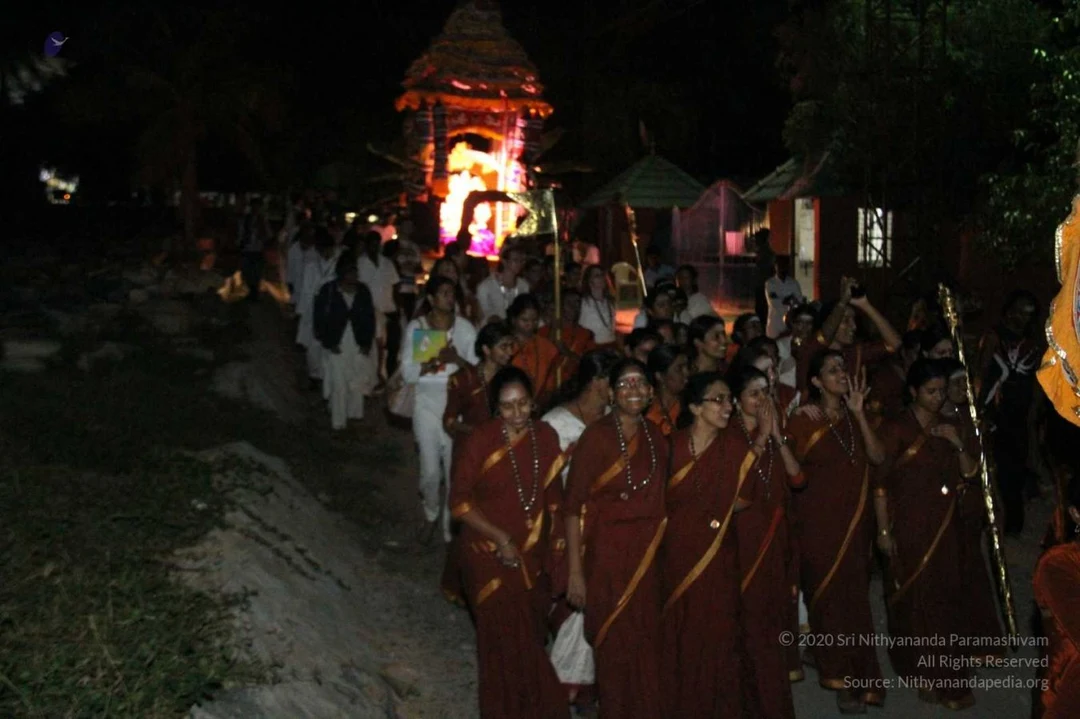
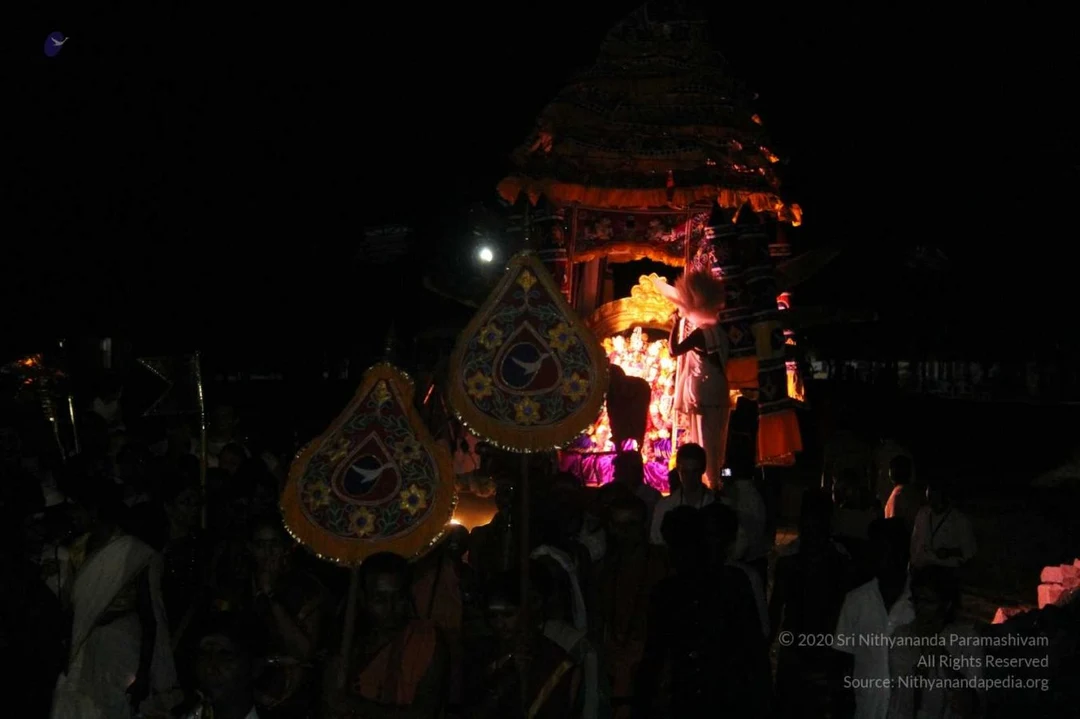
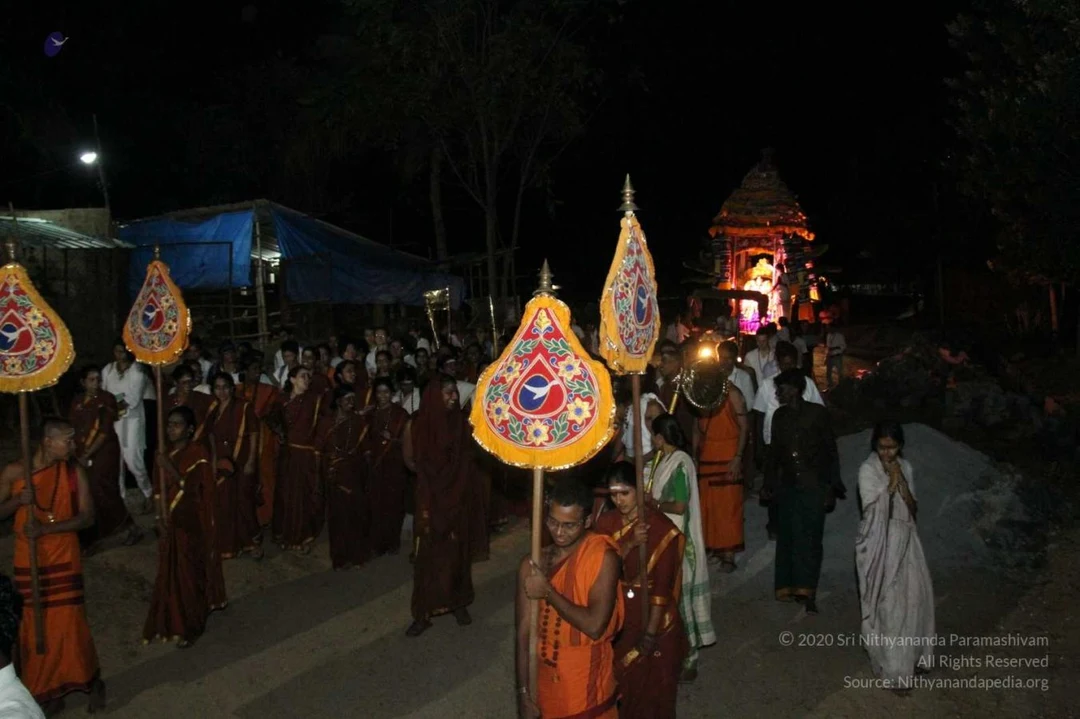
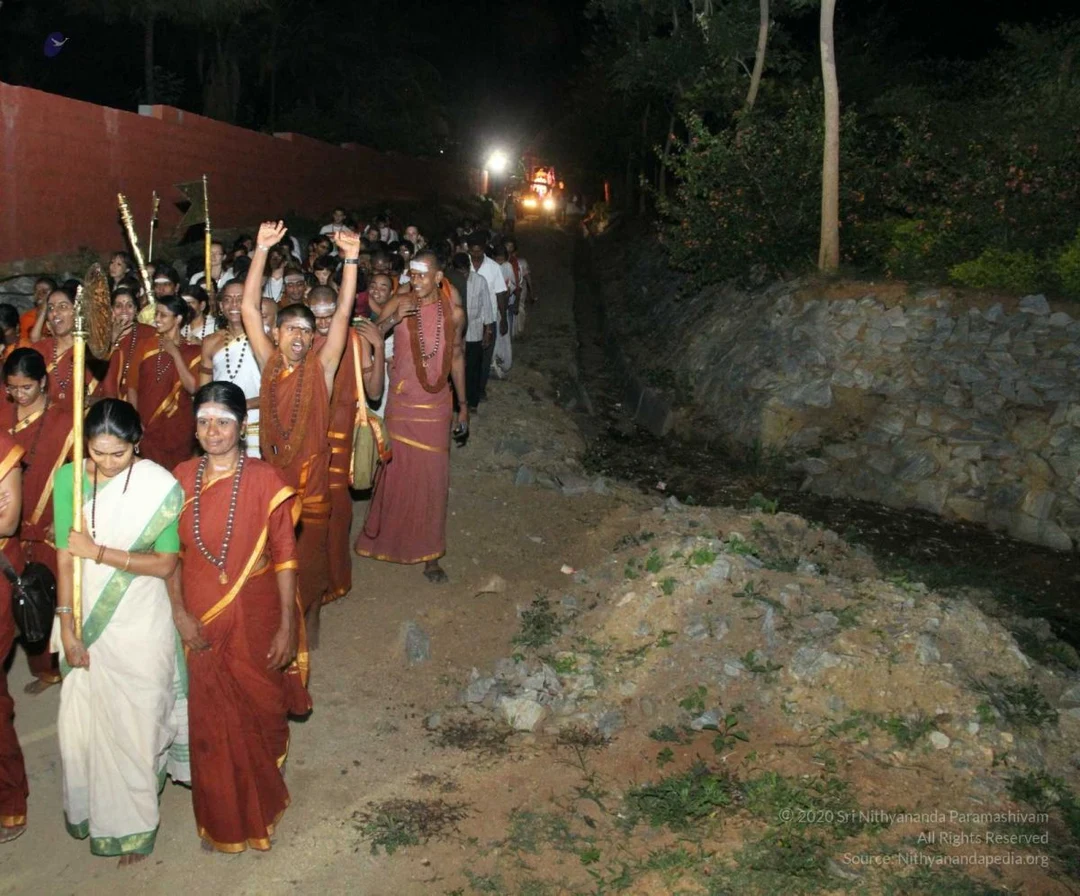
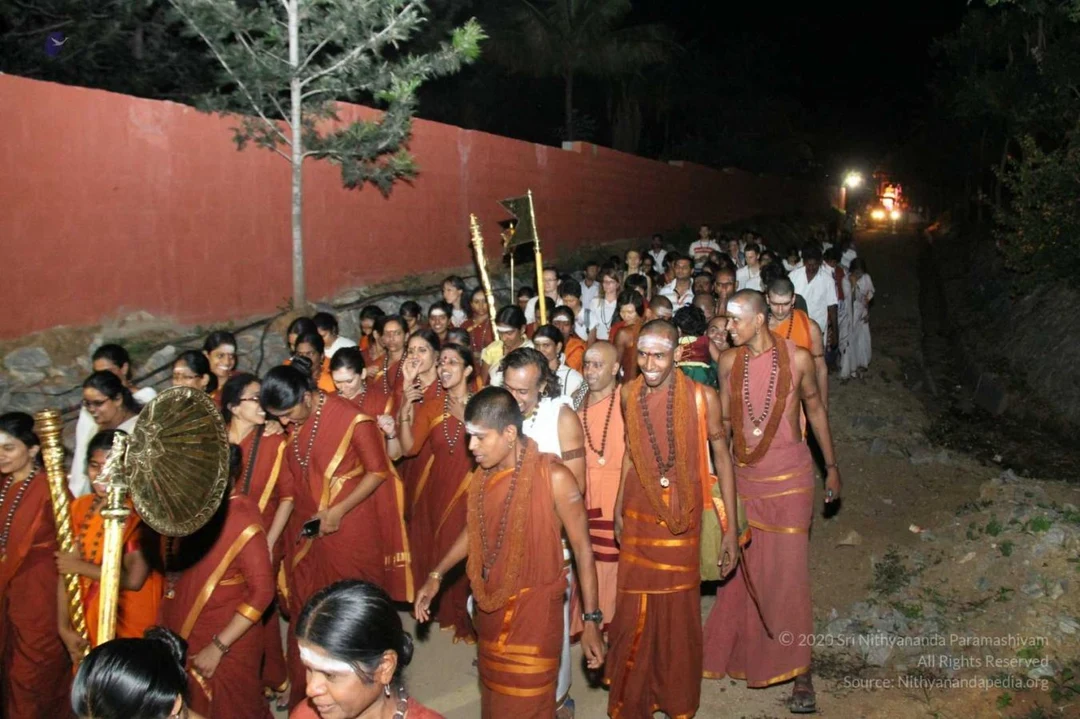
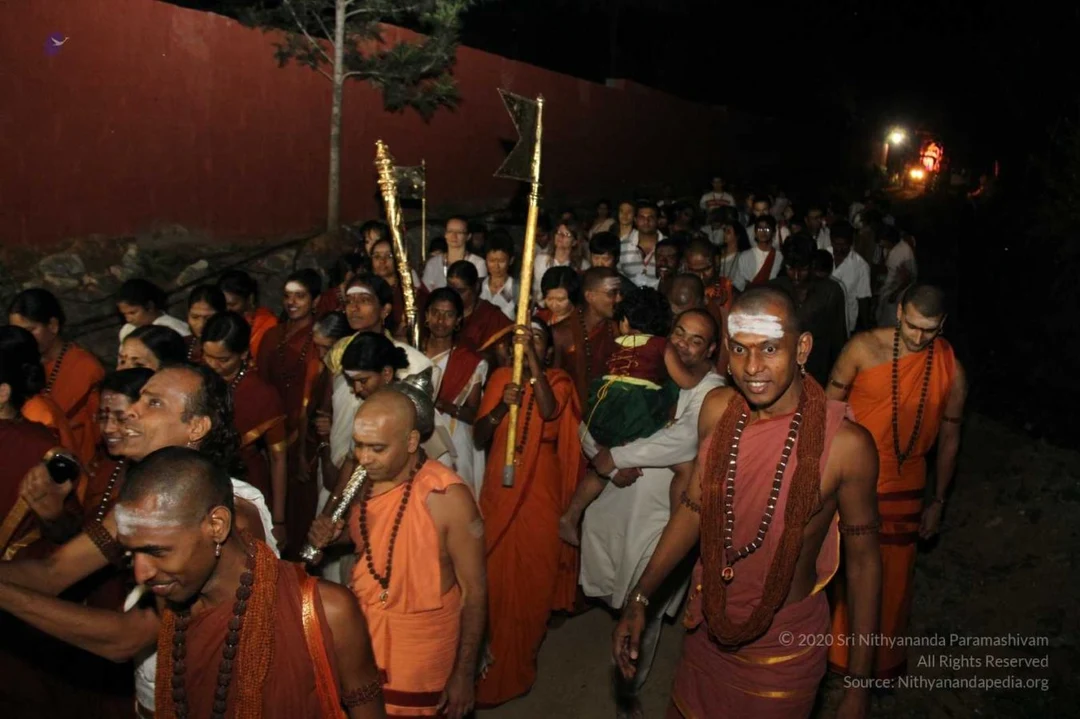
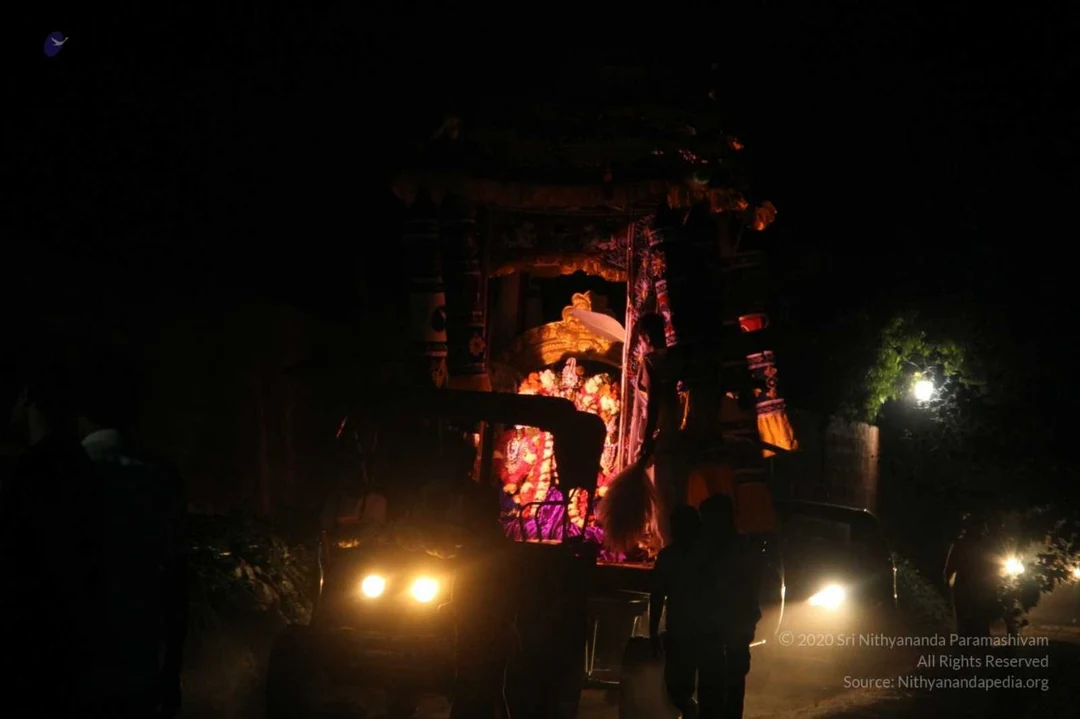
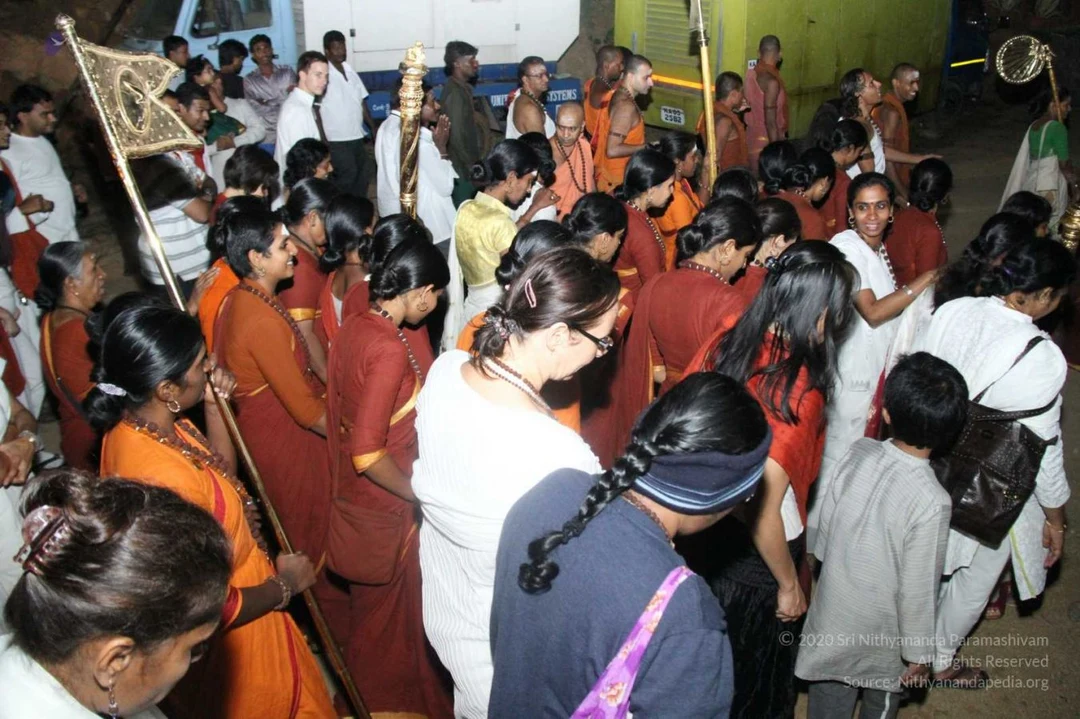
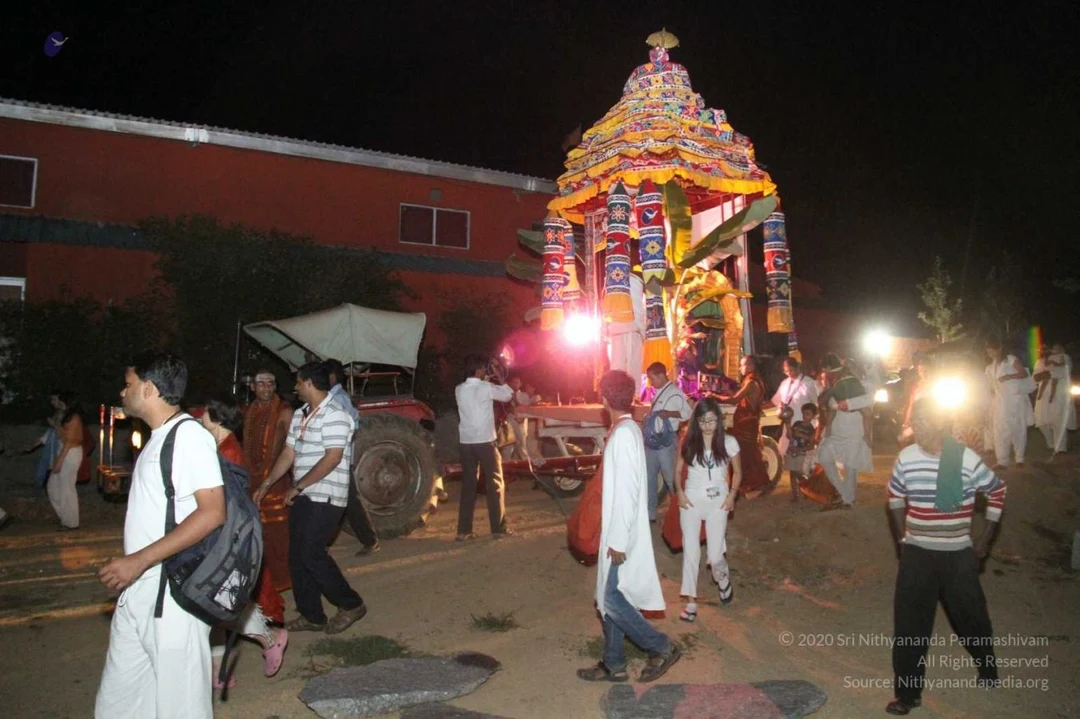
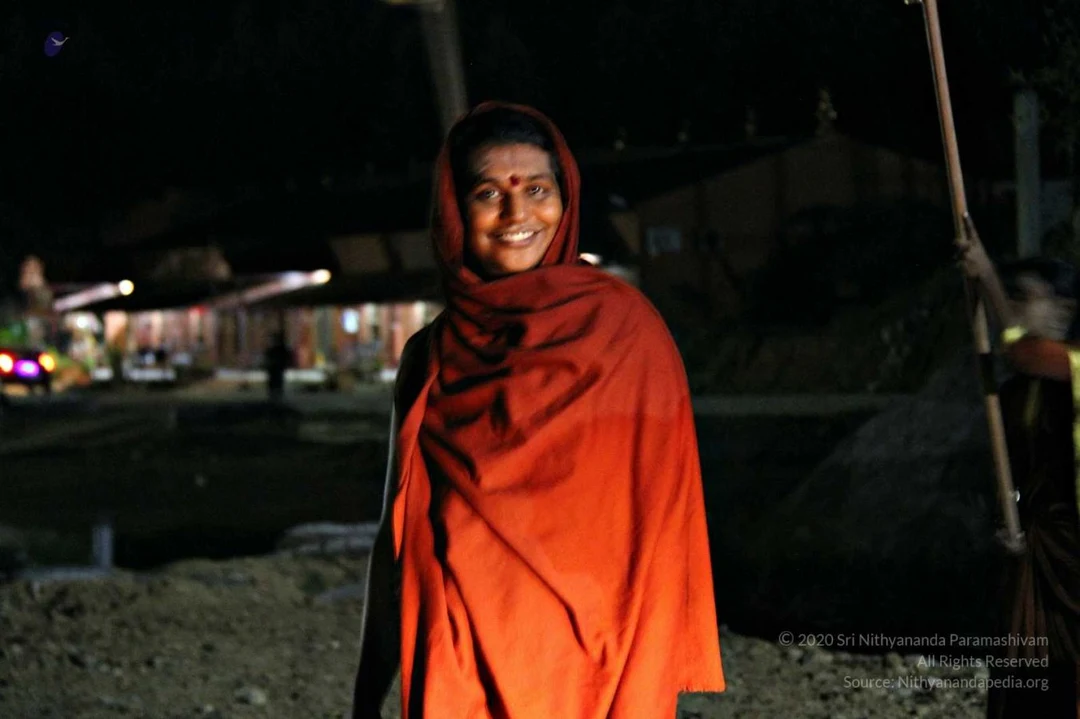
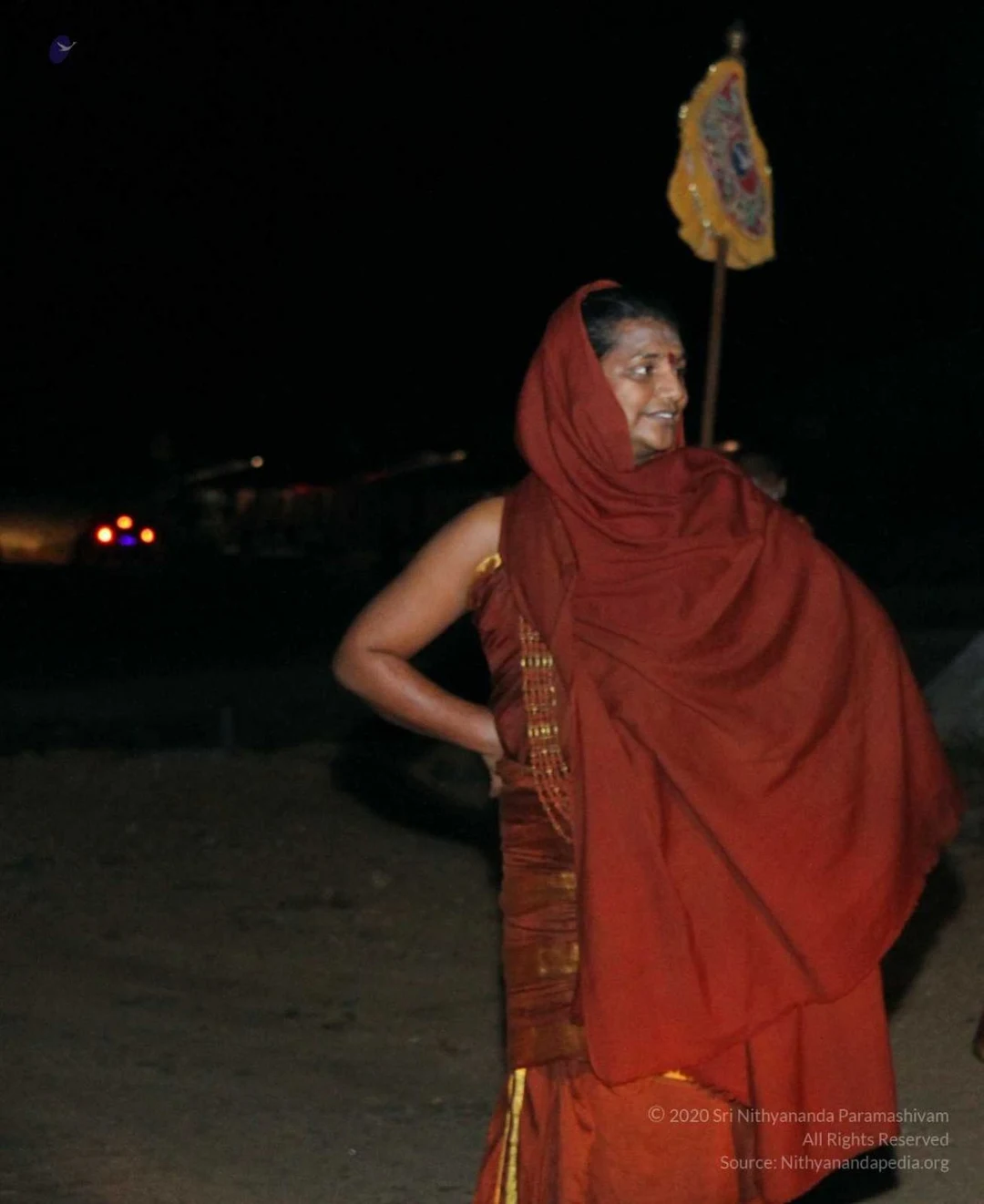
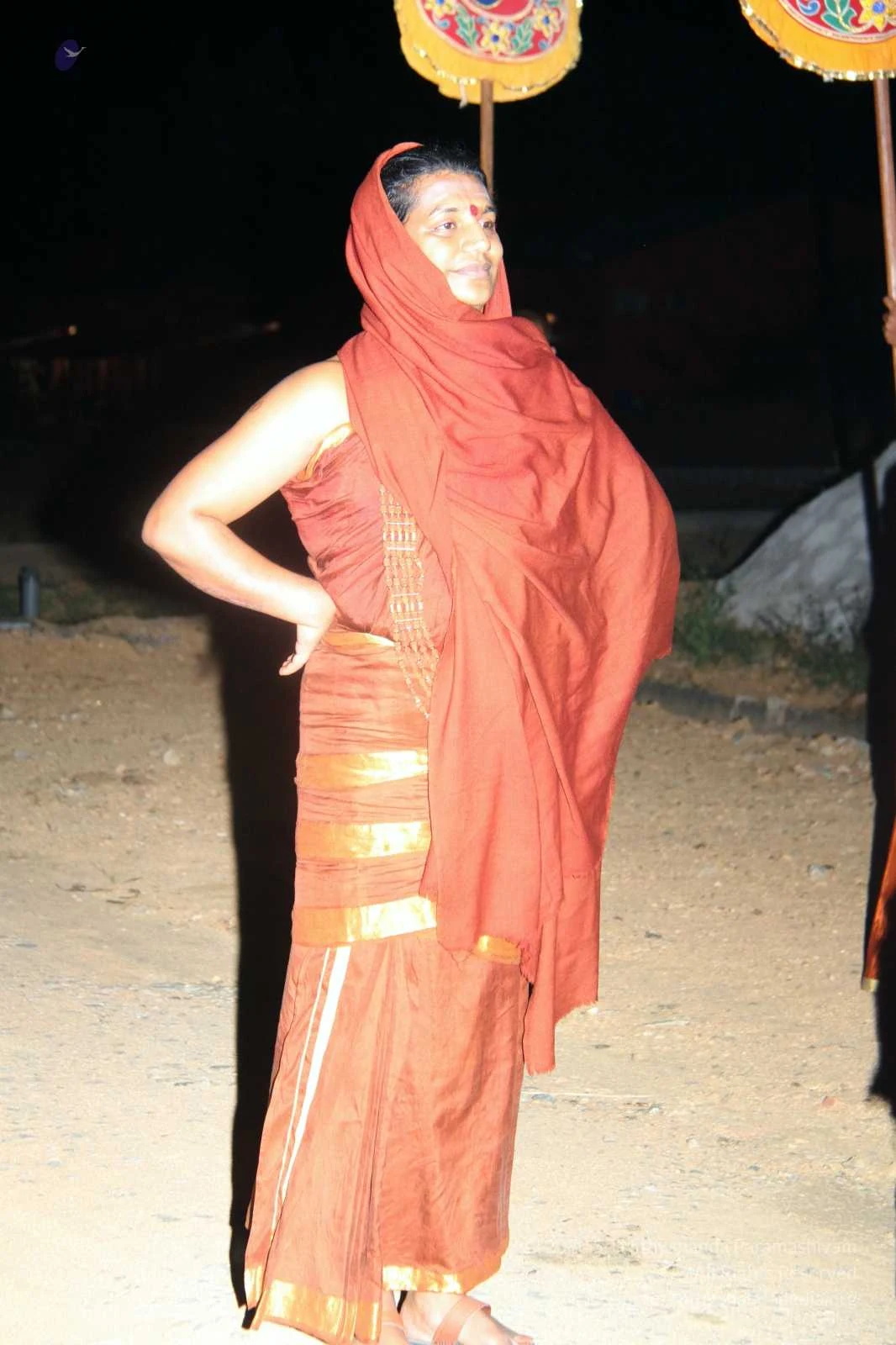
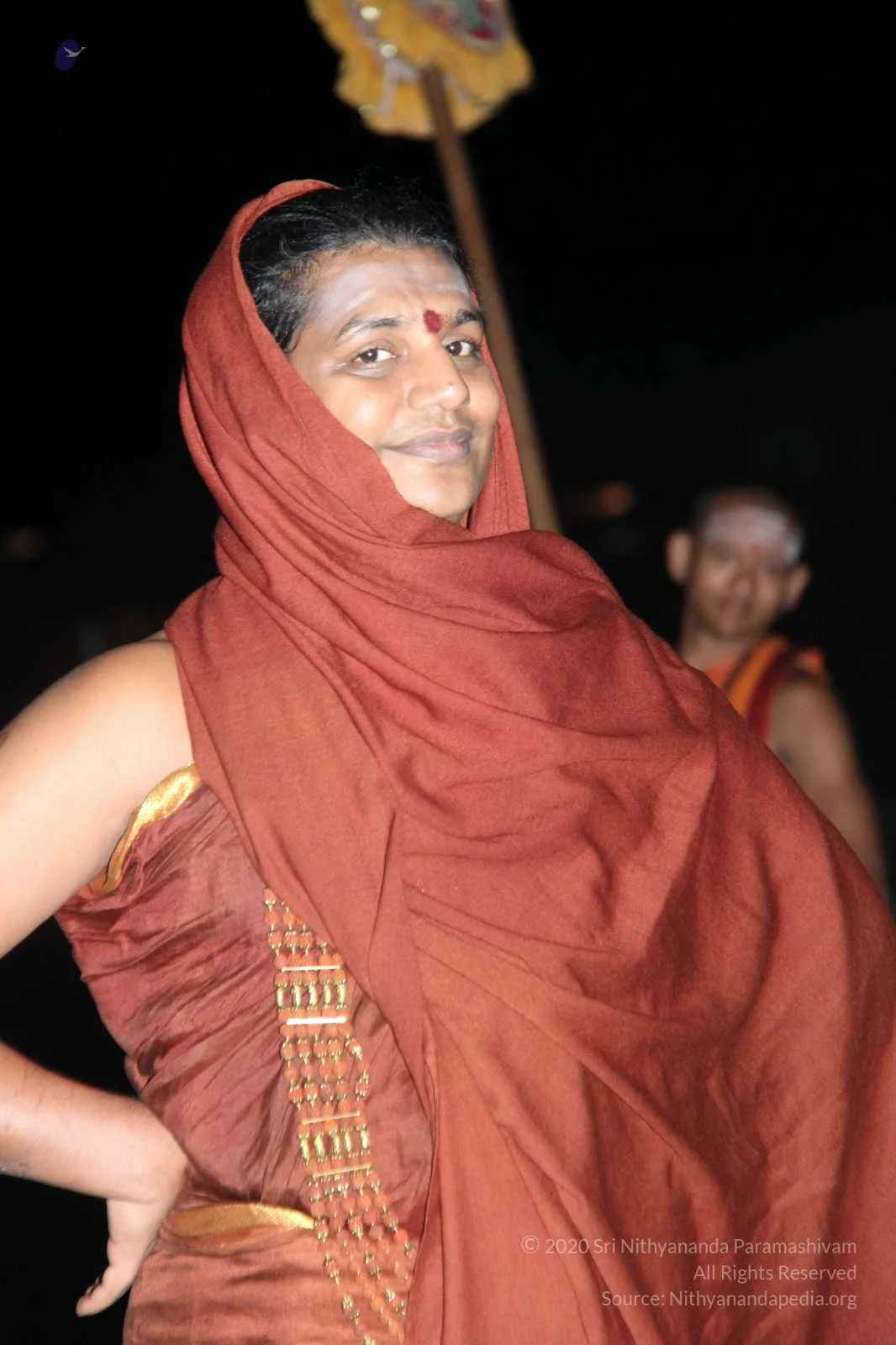
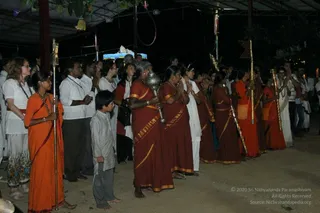
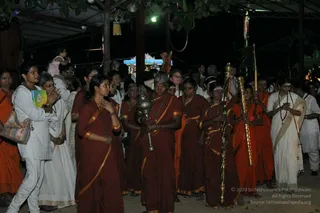
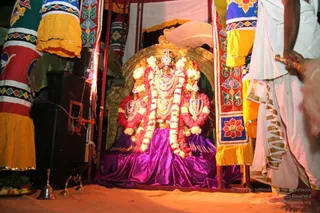
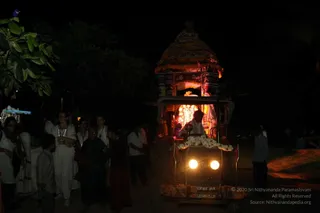
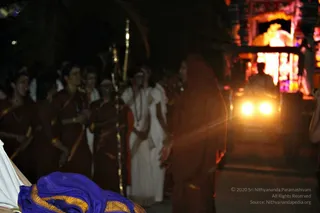
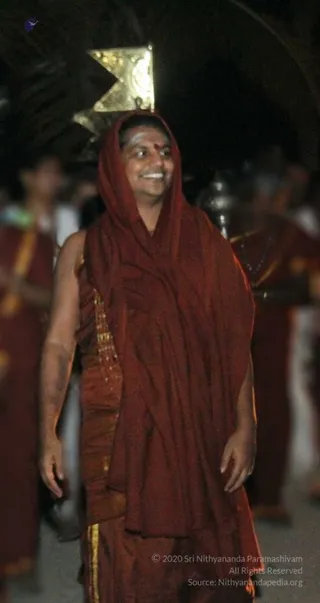
Night outdoor procession or ceremony under a open-sided pavilion. Several women in rust-red and deep orange saris with gold borders stand in a line, palms pressed together in namaste, several holding tall gold-and-silver staves and a large silver kalasha-style vessel. Beside them stand men in white shirts and dark trousers, women in white salwar and white tops, and a young boy in a grey shirt in the foreground. A lit blue-and-white structure.Night procession under open-sided pavilion roofs strung with lanterns. Women in maroon and deep red saris with orange borders walk in the foreground, several carrying ceremonial items: a silver-coloured ritual vessel held by a woman in the centre, and tall gold-toned staffs and standards carried by others on the right. A woman in a white sari with a red-and-gold border and a white dhoti-clad man stand at right with hands folded. On the left a woman in white churidar holds a booklet and another woman in white carries a small child on her shoulder. Devotees in white and saffron crowd the background under hanging decorations and a lit display in the distance.A deity murti of Devi, dressed in a purple satin cloth and adorned with layered gold and jewelled ornaments, a crown, and white and orange flower garlands, is seated on a gold-framed throne within a tent. Decorative red, yellow and green hanging banners with floral motifs frame the shrine. At the lower left sit a brass bell and a brass lamp stand with a plate of offerings. At the right edge, a man in white dhoti and shawl with gold borders stands beside the shrine holding a ceremonial object. The scene appears to be a festival decoration of the murti, with the printed page noting a Navarathri celebration.Night procession at an ashram. A small ornate canopied palanquin-style vehicle with a pointed, multi-tiered roof, painted pillars and warm lamp-lit interior glows at the centre, carrying a decorated deity murti garlanded with white flowers. Two headlamps are lit on the front of the vehicle, and white flower garlands are draped along its front rail. A seated figure in white sits within the shrine cart near the murti. Around it, devotees in white and light clothing walk along a dark path, including a woman in white with a beaded necklace, a woman in a dark green sari, and children. Tall dark trees frame the scene.A night procession on a dark road. On the left, a line of people in maroon and rust-brown robes walk holding tall golden staffs, with several rudraksha-style strands visible. Behind them, people in white dhoti-style clothing stand near the roadside. In the foreground right, a figure in a dark maroon hooded robe stands facing the procession. Ahead, a brightly lit ornate chariot or float glows with warm orange lights, with a deity murti visible on its platform. A vehicle's headlights shine toward the scene, and a purple cloth with gold border sits at the lower left corner.A smiling man walks at night in a procession, wrapped in a dark red-maroon shawl drawn over his head and shoulders, with a red bindi and white tilak on his forehead and a sash-like cloth over his shoulder. Behind him, a golden ornamental structure is raised on a pole, and blurred figures in matching maroon garments and white dhotis move along in the background.

Venkateshwara riding a horse

2 photosSource gallery
A deity murti of a horse-riding form. The murti wears a red and gold crown, heavy jeweled gold necklaces and a blue-and-maroon garment, and holds a long golden staff. In front is a gold horse head, a golden vahana.A deity murti of Venkateshwara seated on a golden horse vahana, dressed in an elaborate purple and red garment with heavy jewelled gold necklaces and a red crown with white ornaments. The figure holds a golden staff in one hand, and the murti is framed by a large arch of red and white roses, white flowers and green foliage garlands. Colourful tassels hang at the right edge against a dark backdrop. The scene is a stage or temple decoration with no visible physical people.