Skip to content
Tuesday

13 October 2015

Nithyananda Times, 13th October, 2015

Dated photos
232
Source pages
1
Media
3
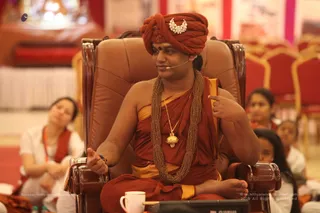
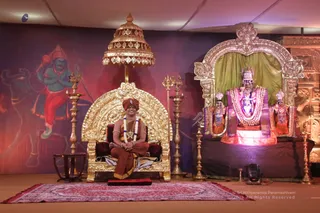
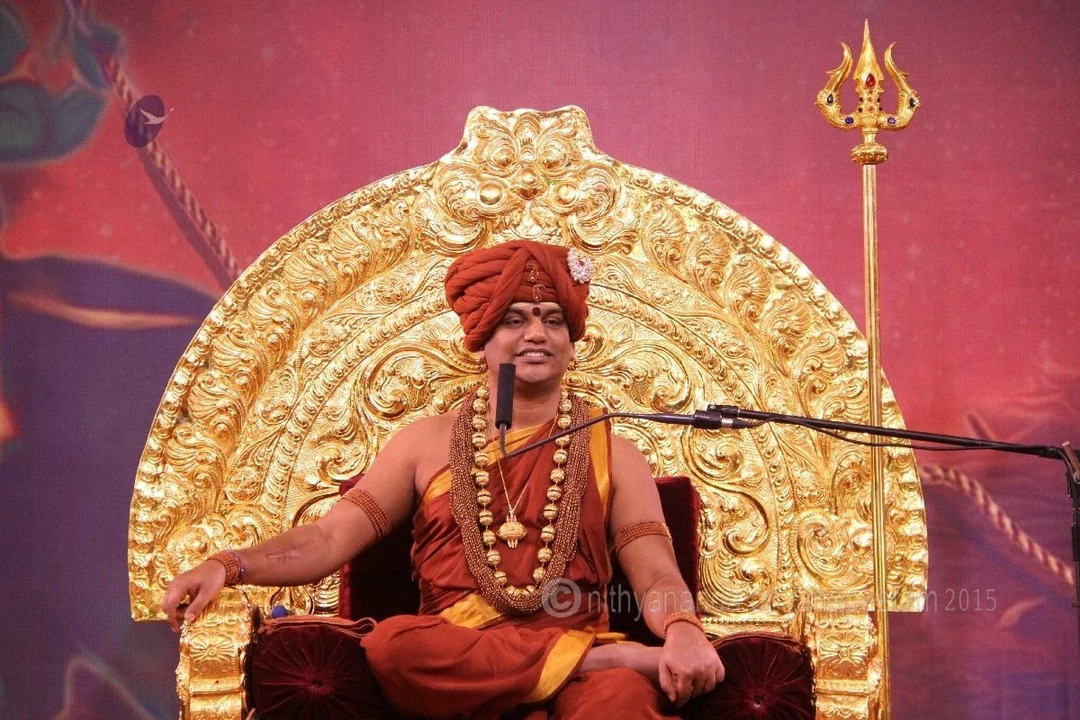
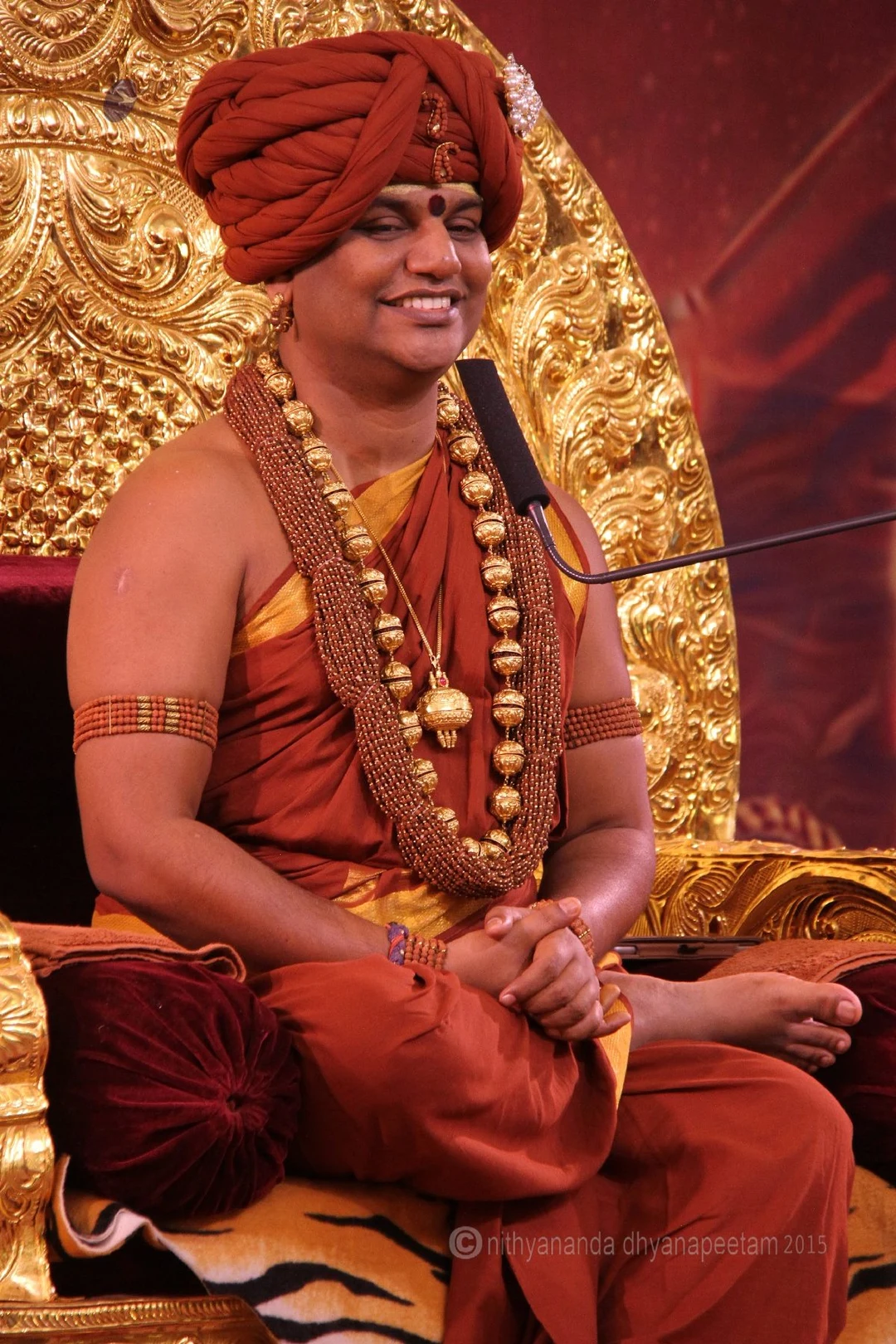
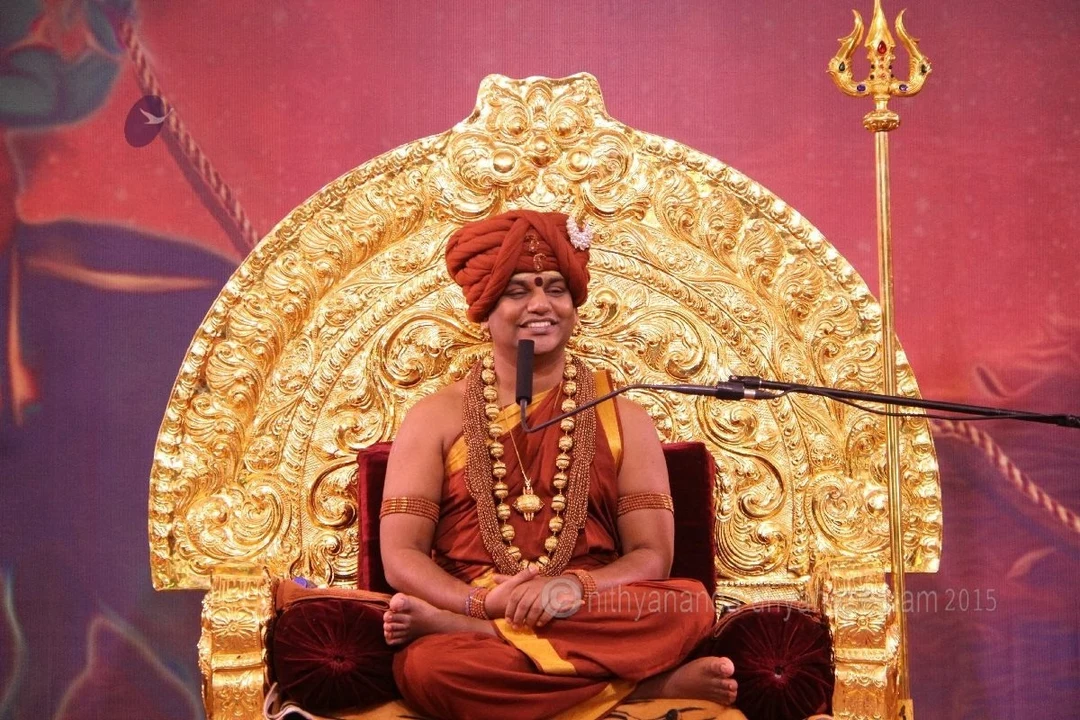
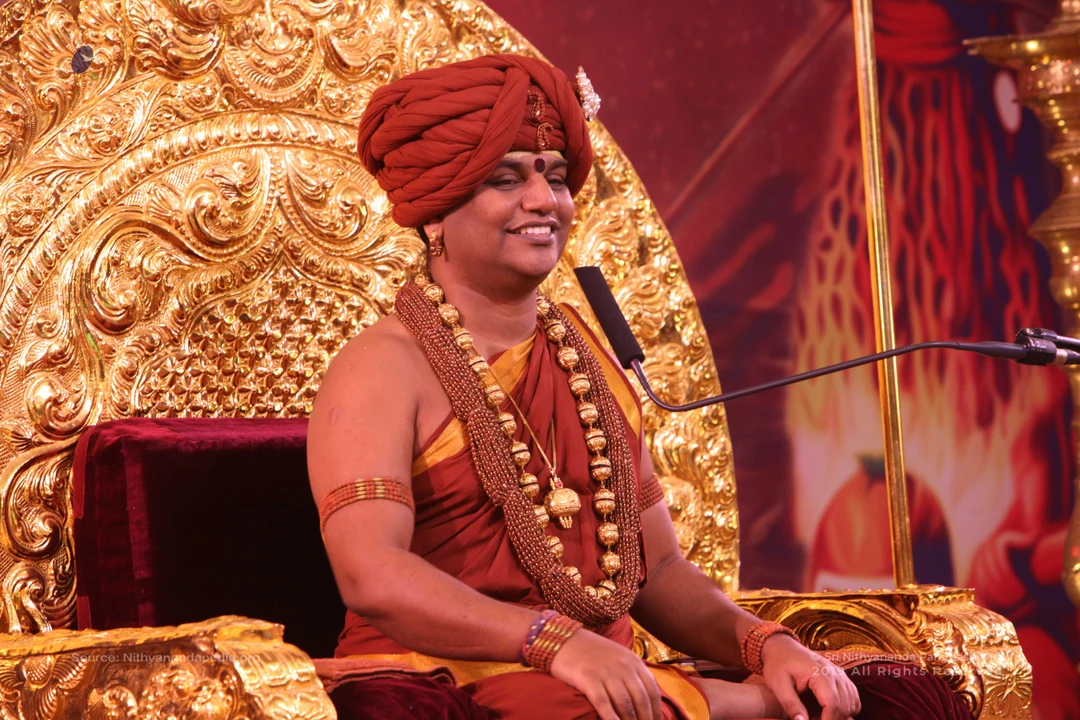
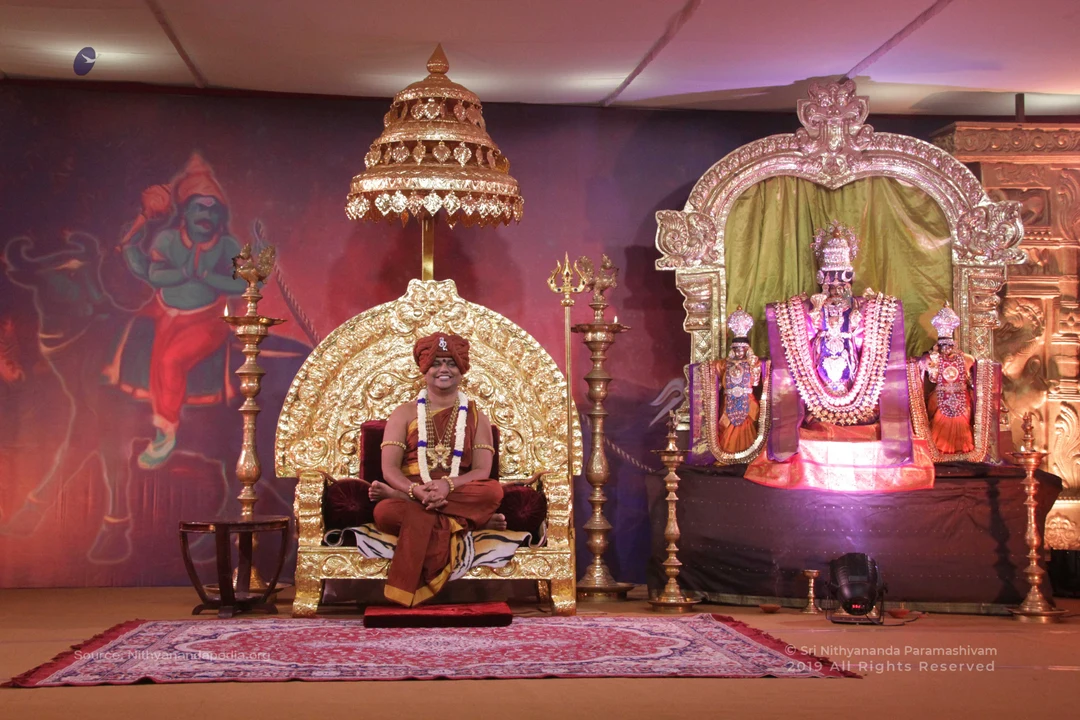
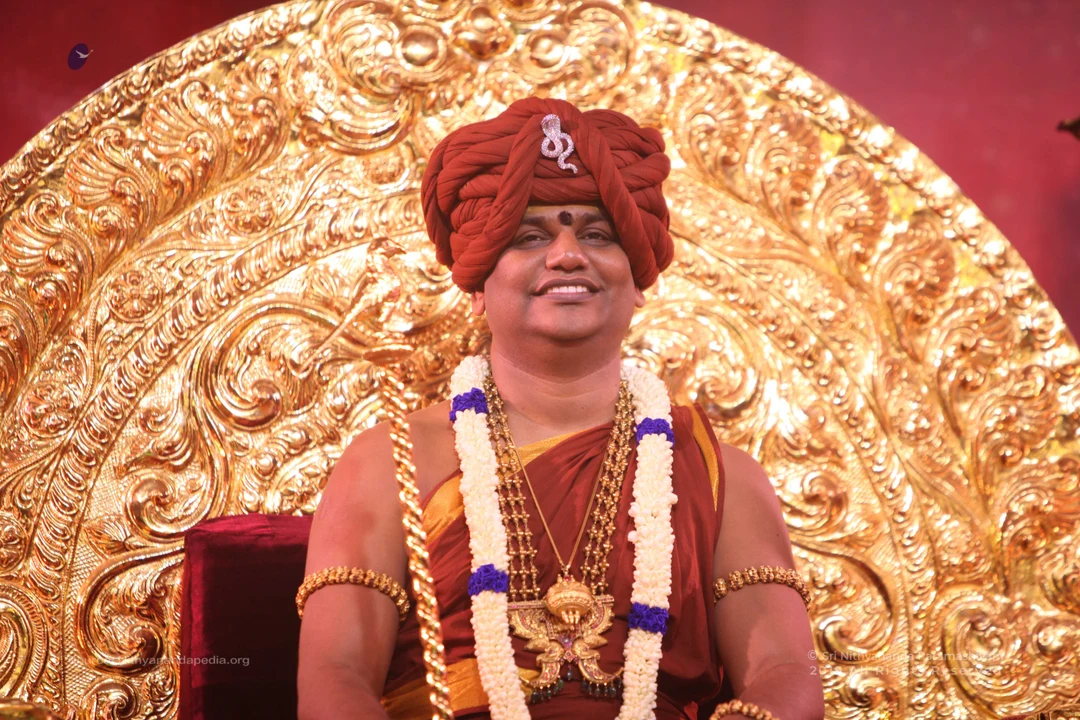
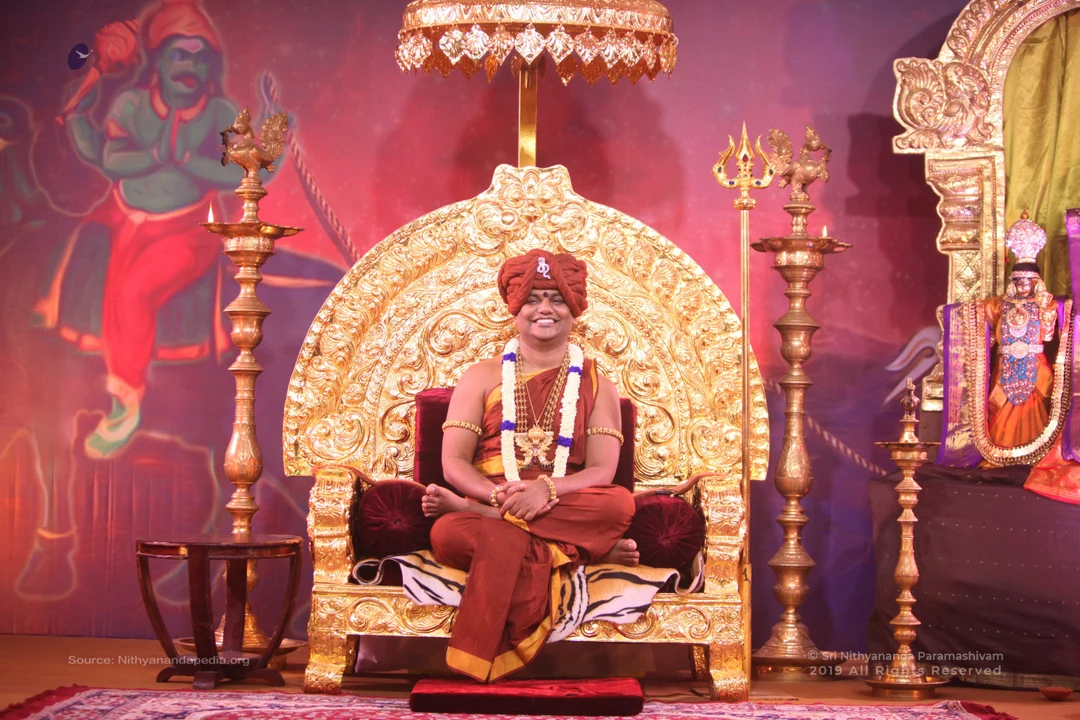
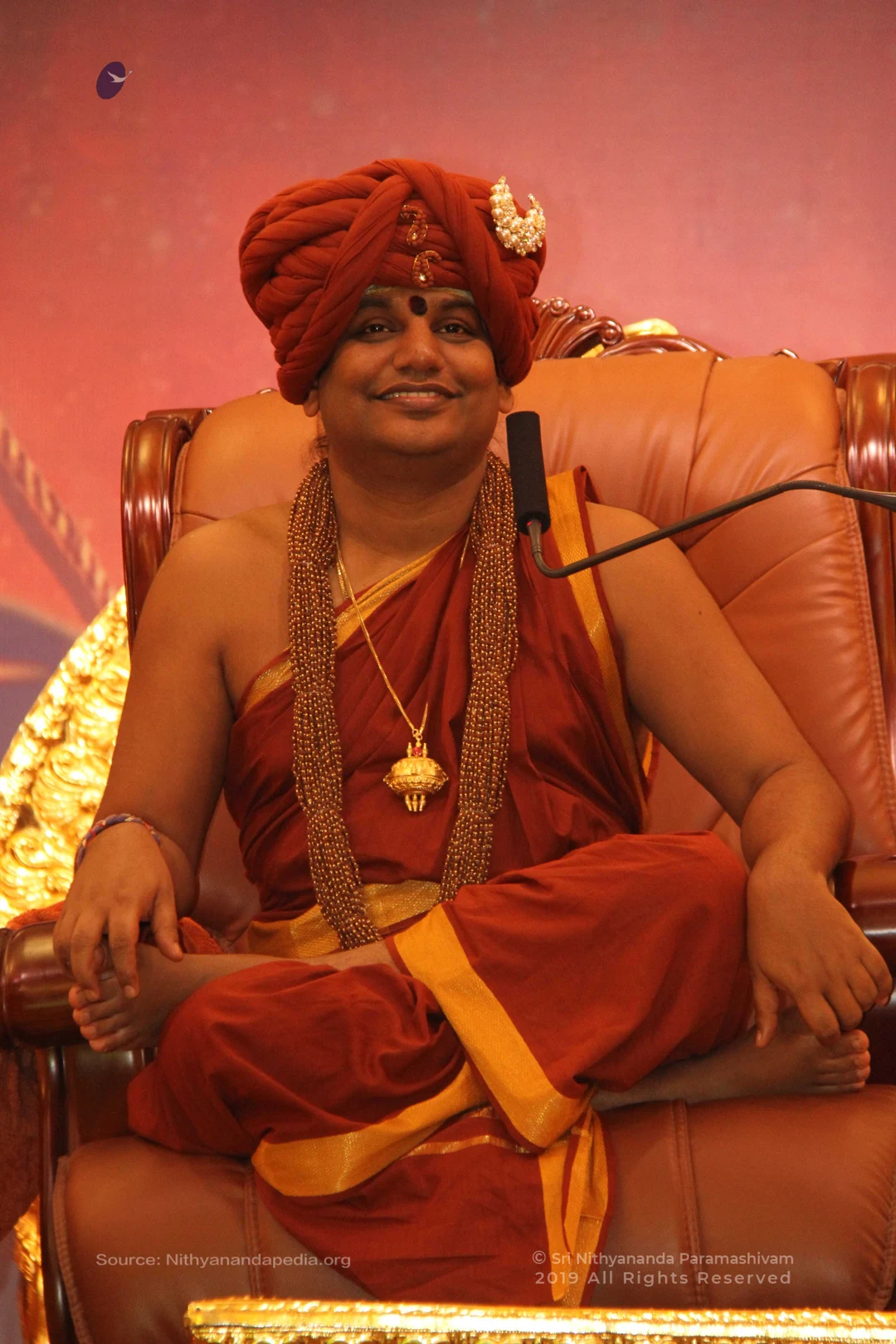
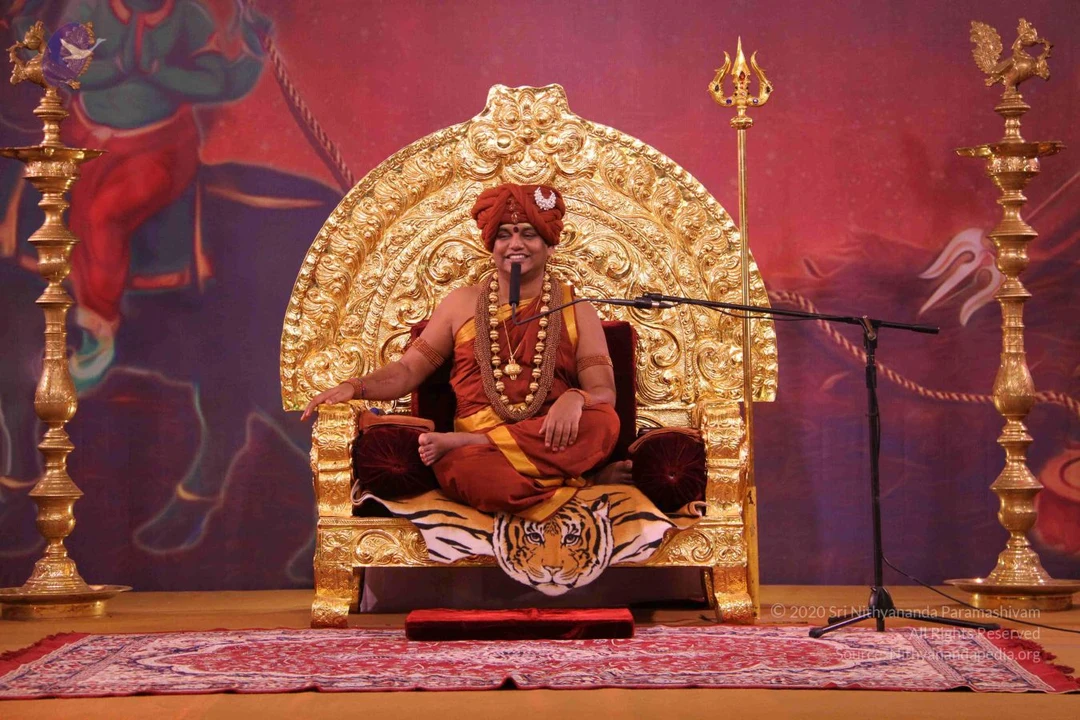
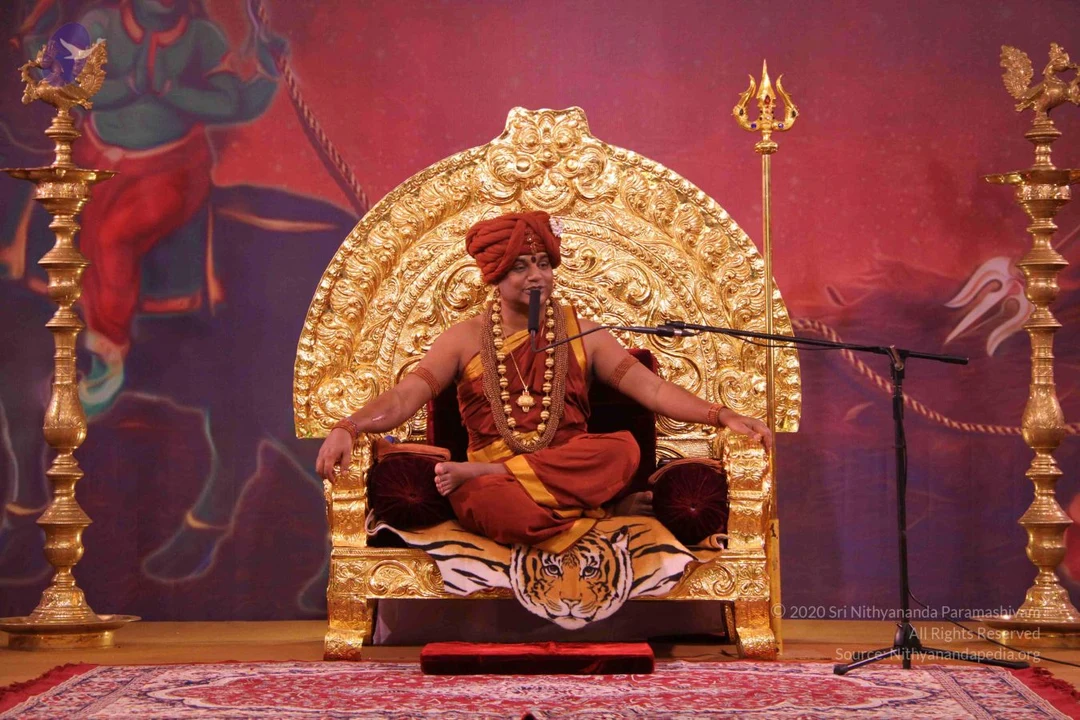
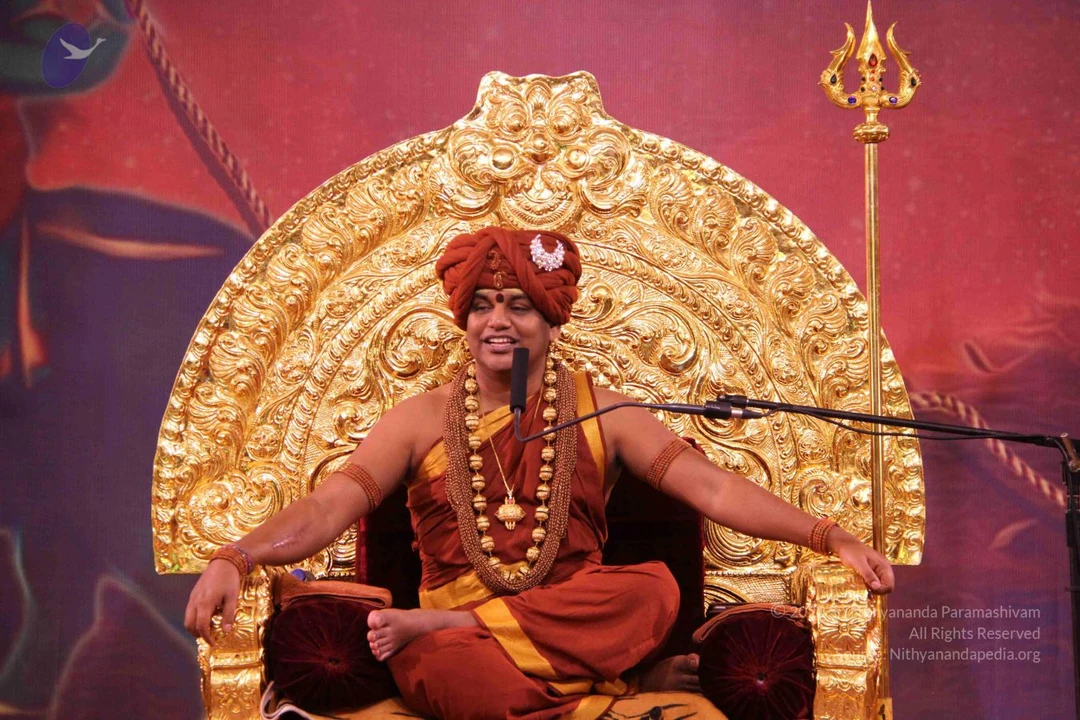
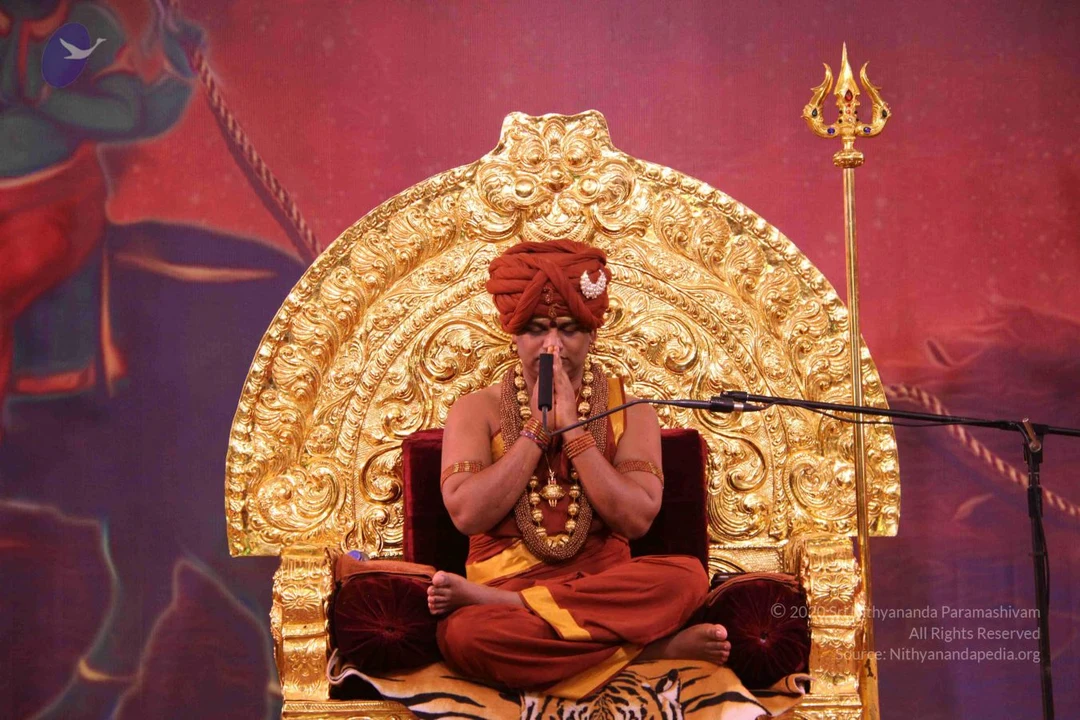
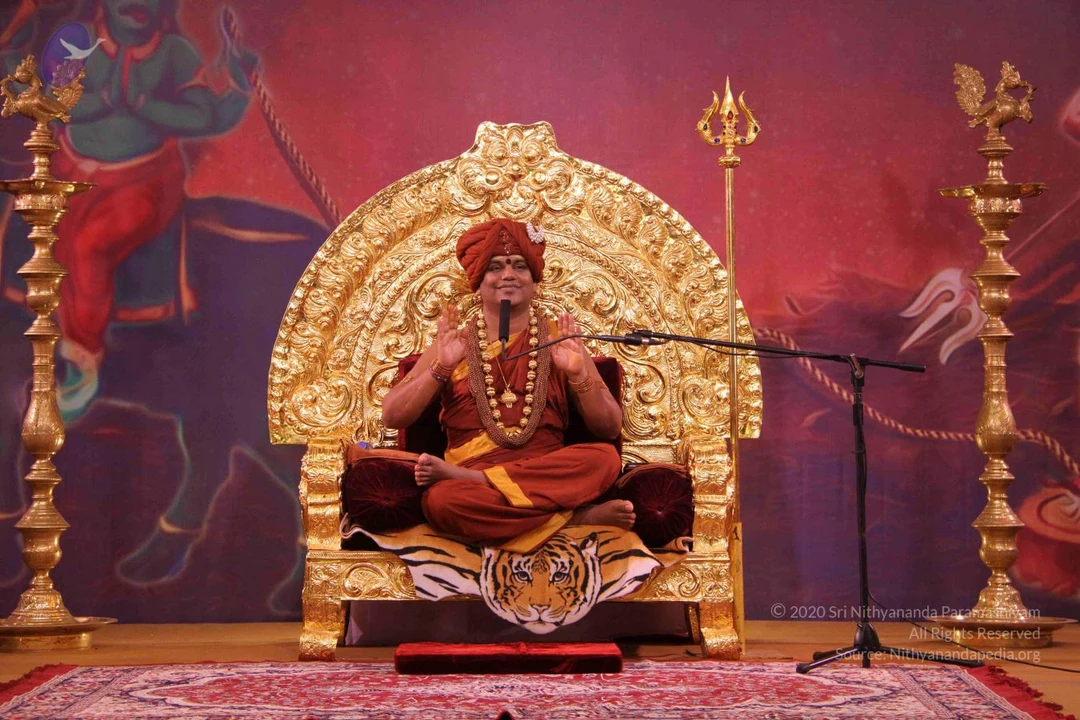
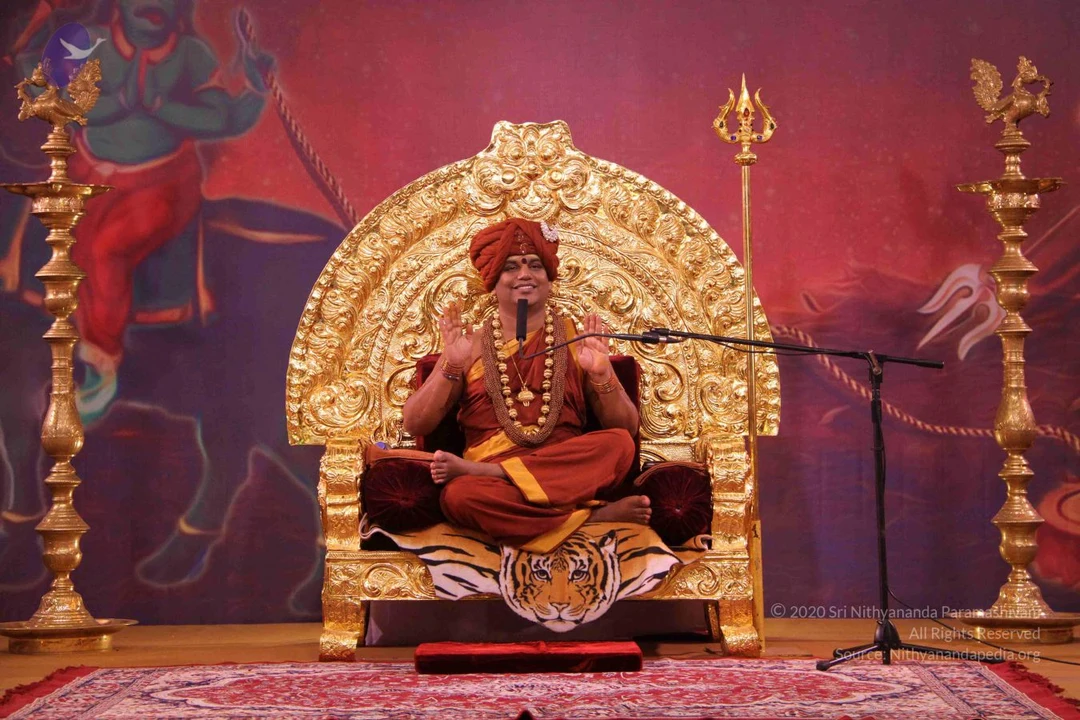
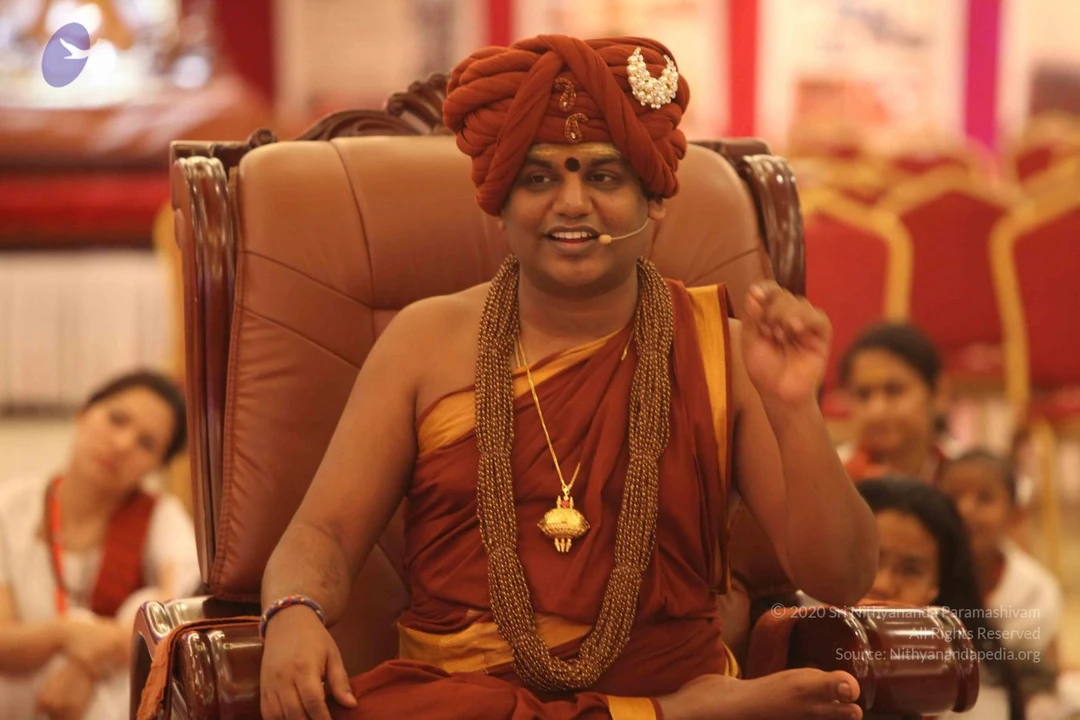
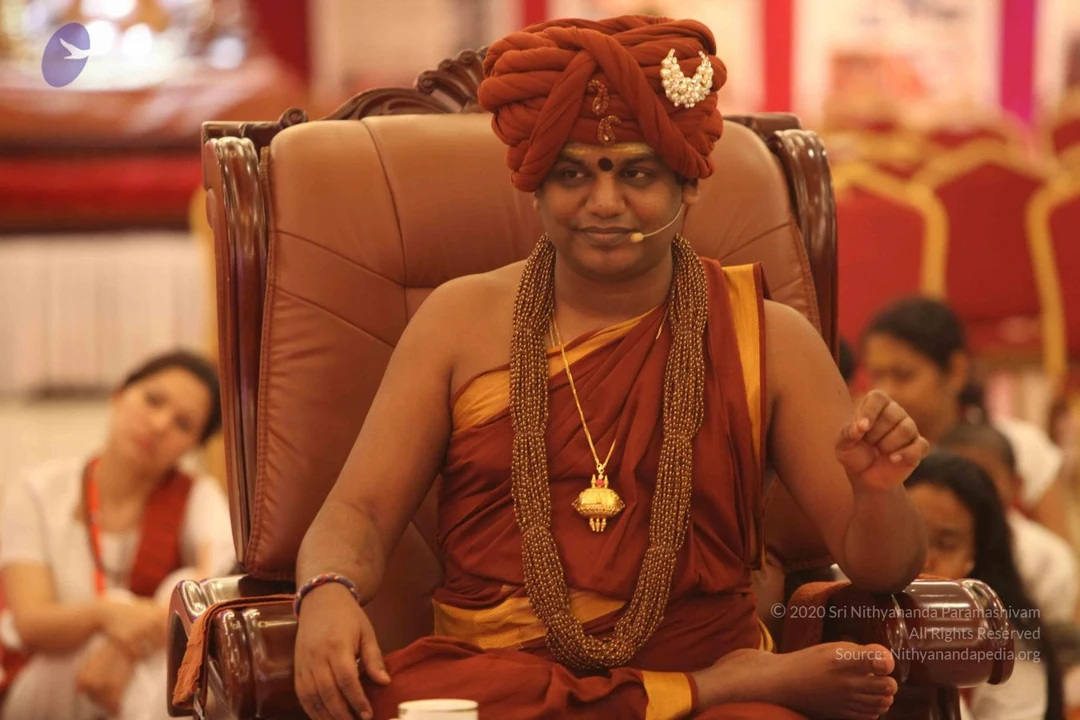
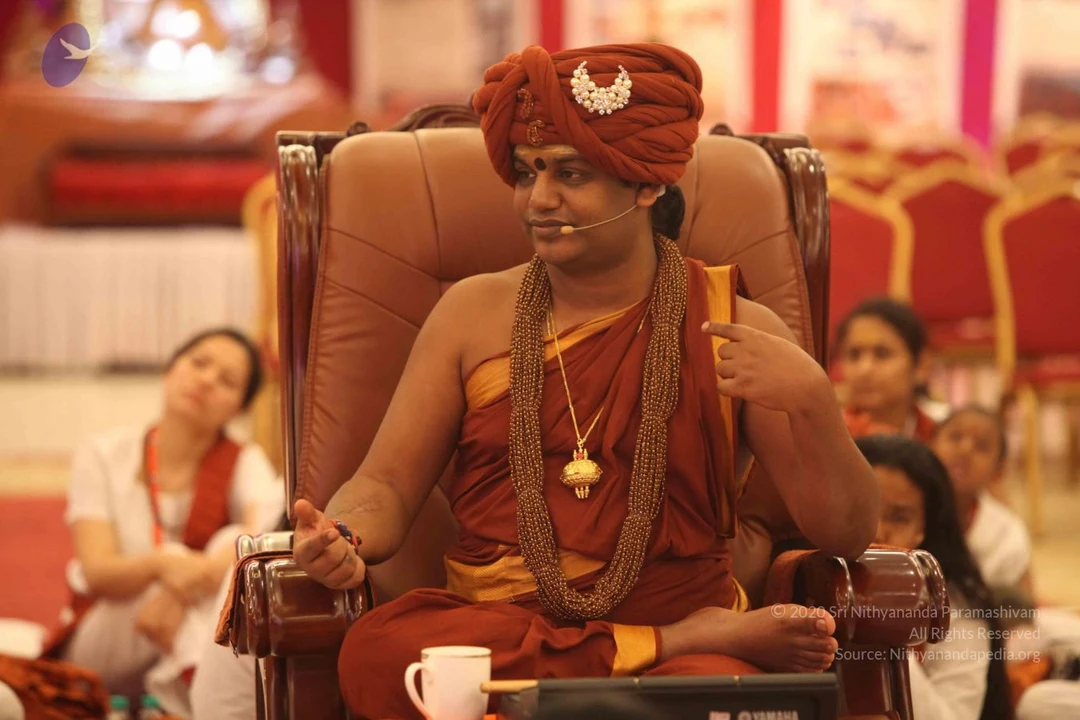
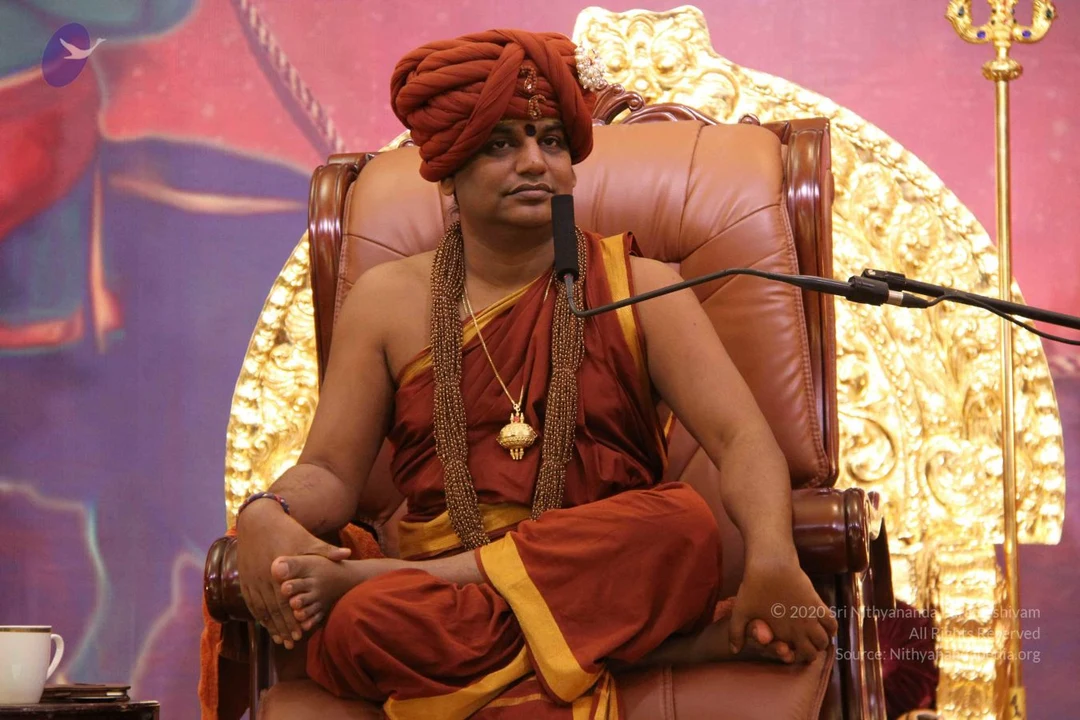
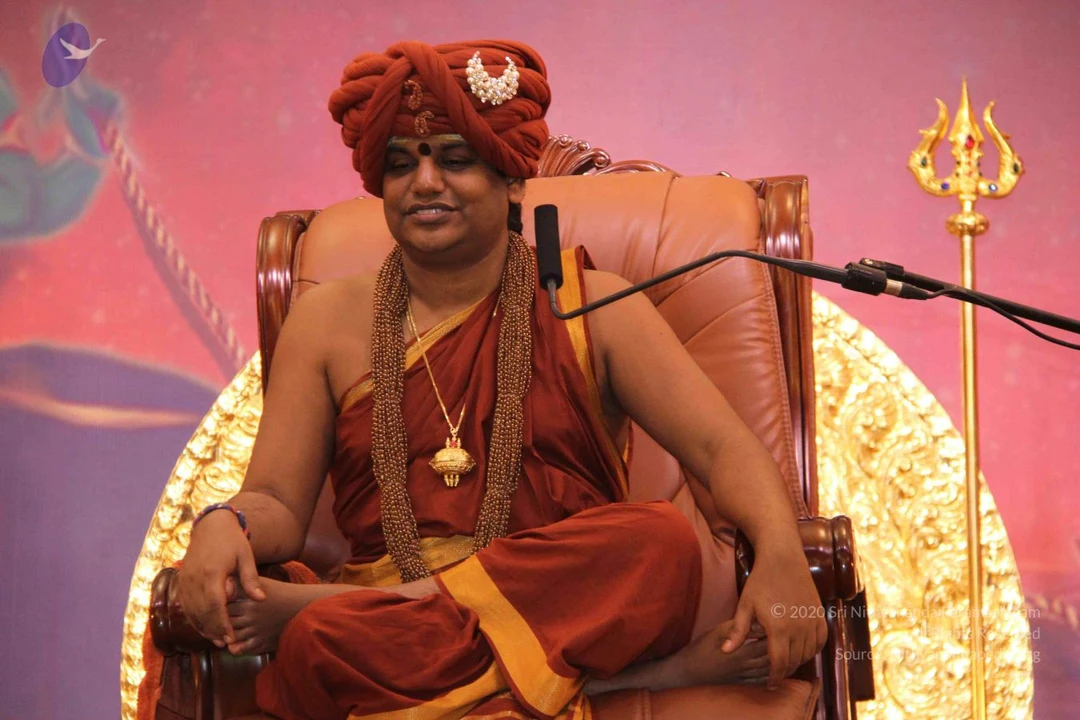
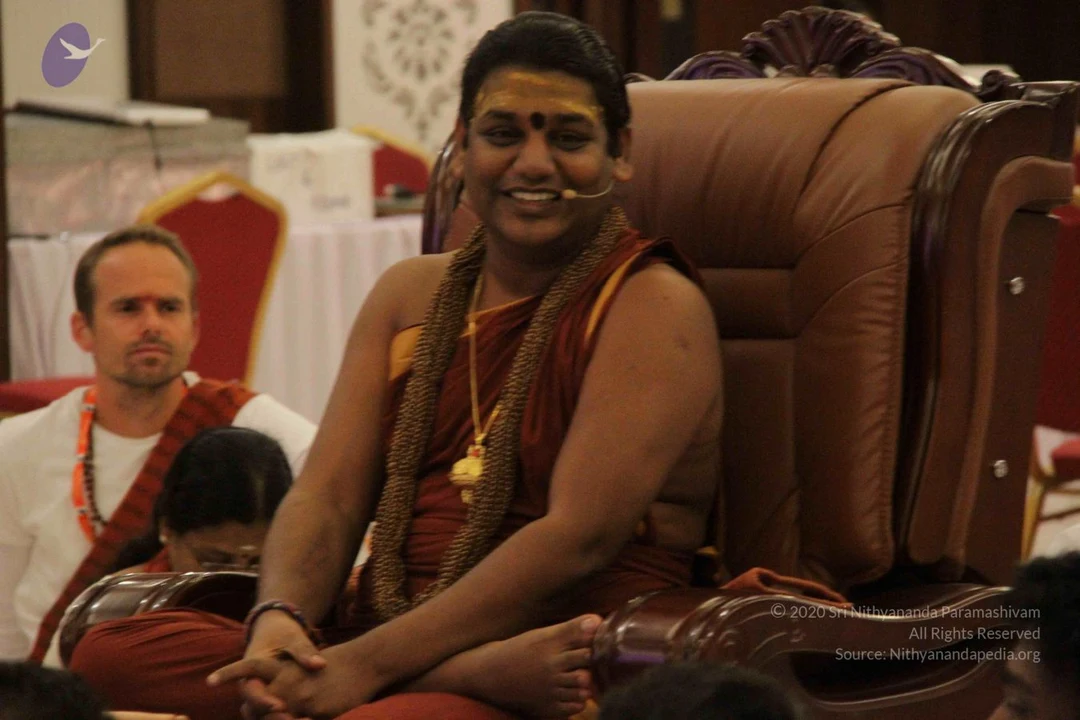
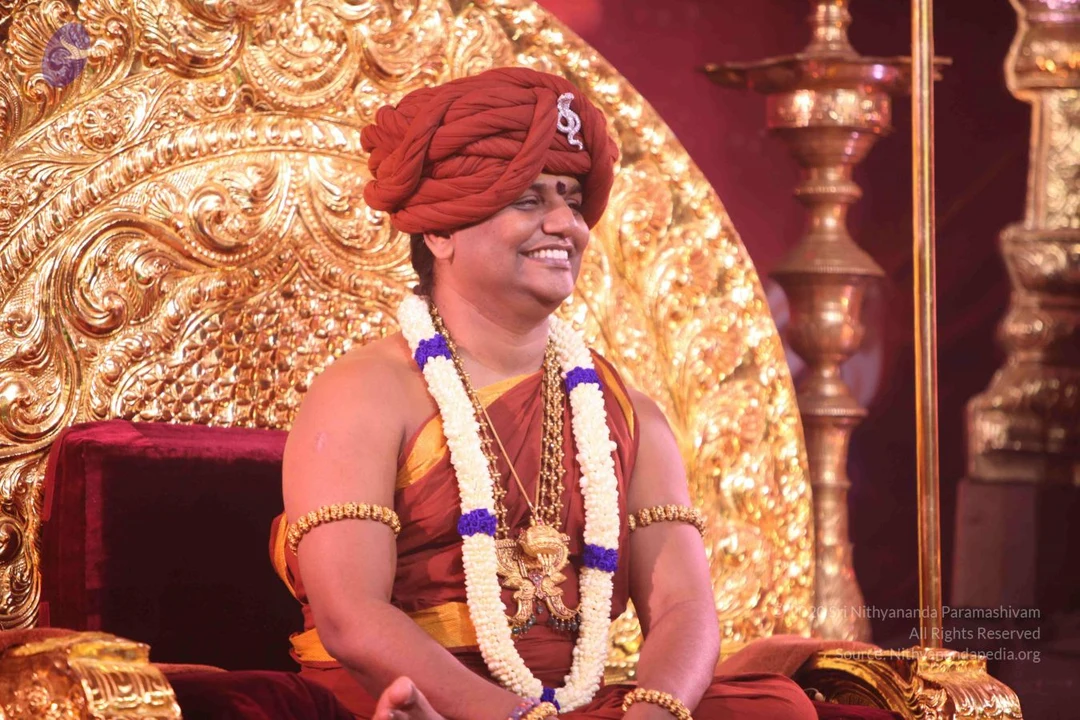
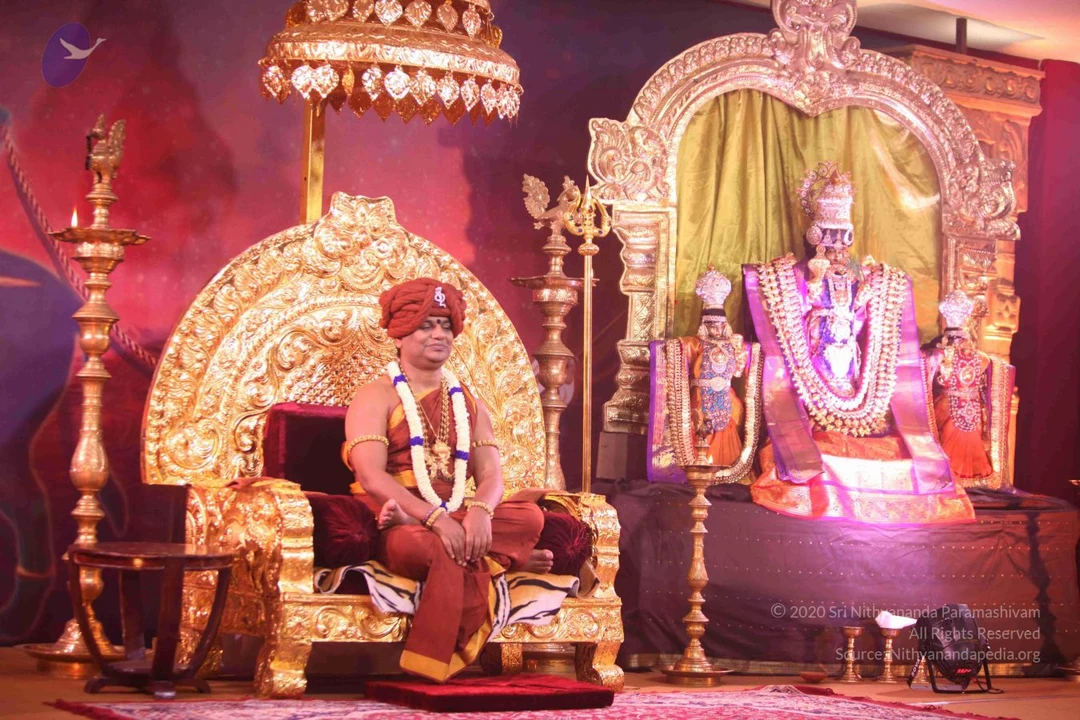
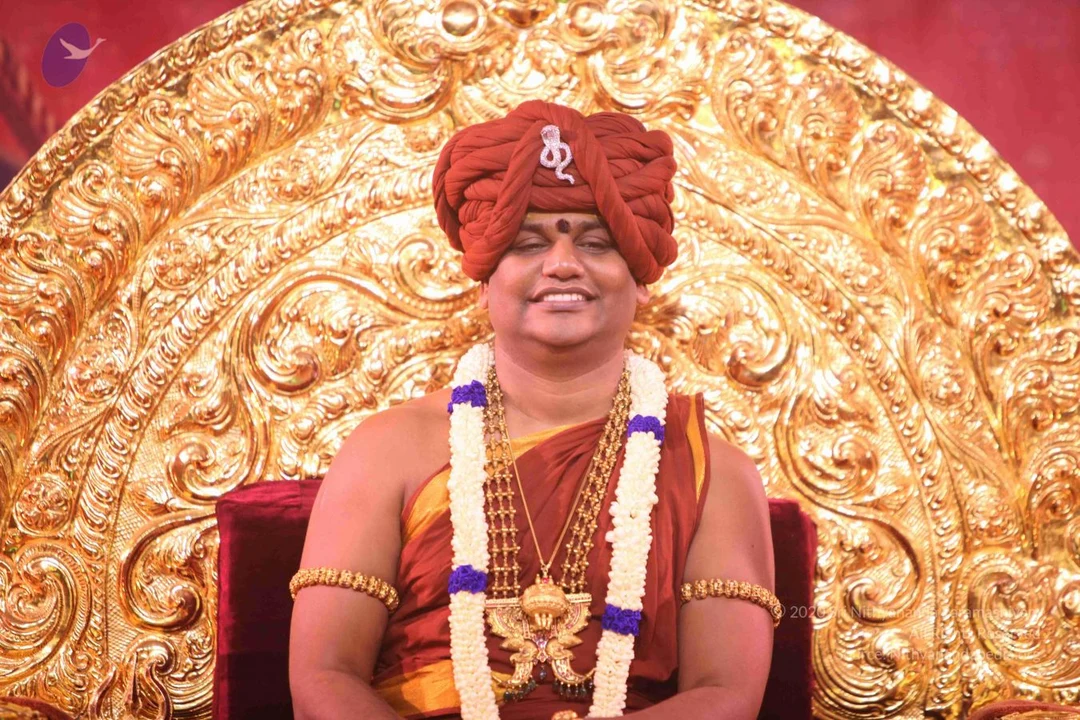
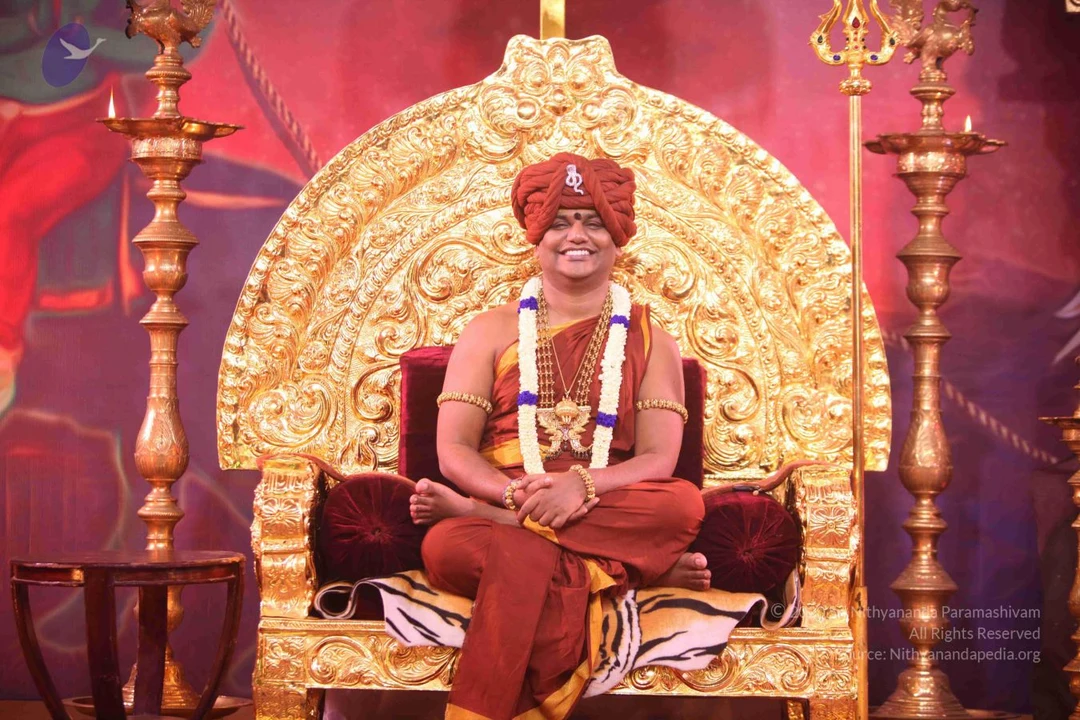
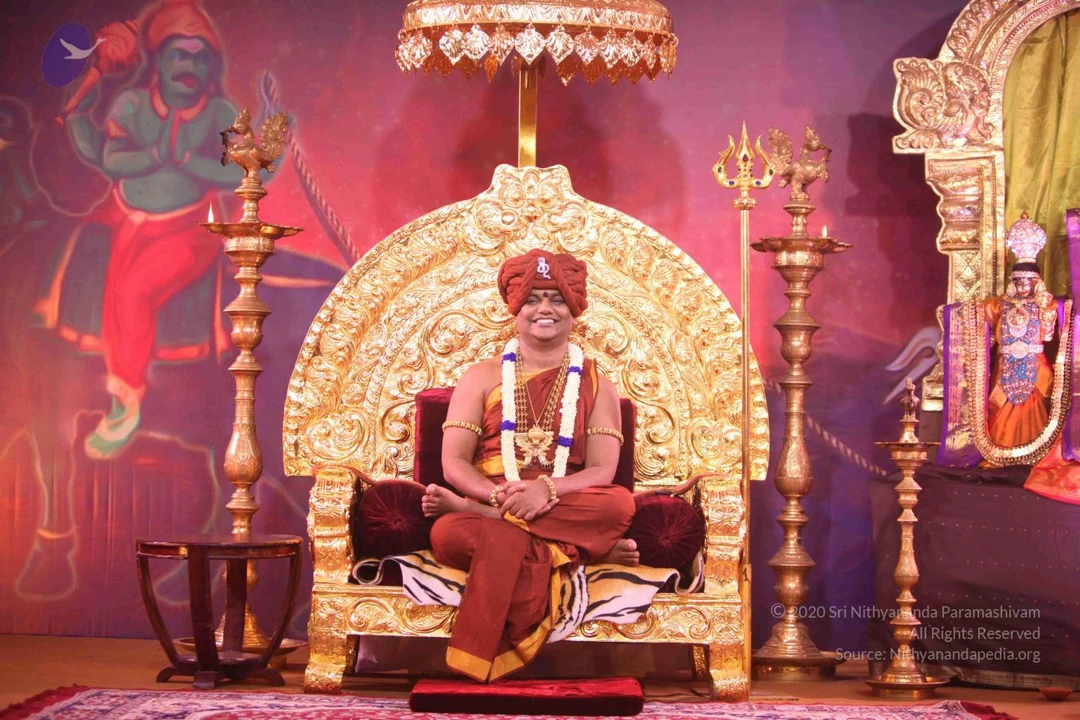
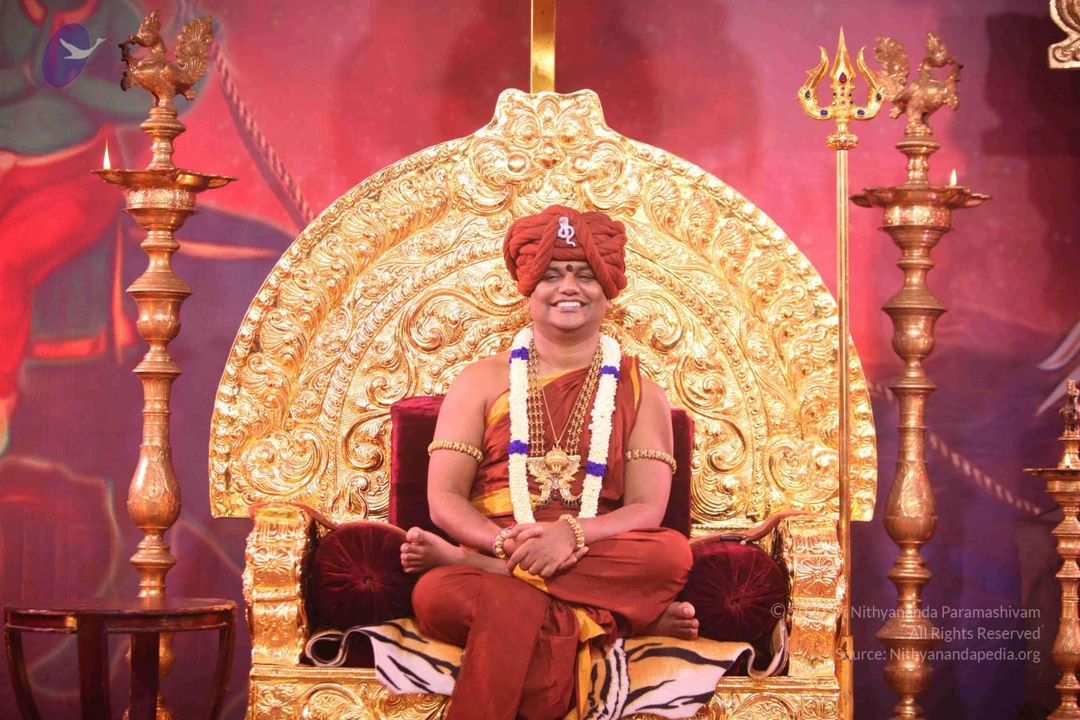
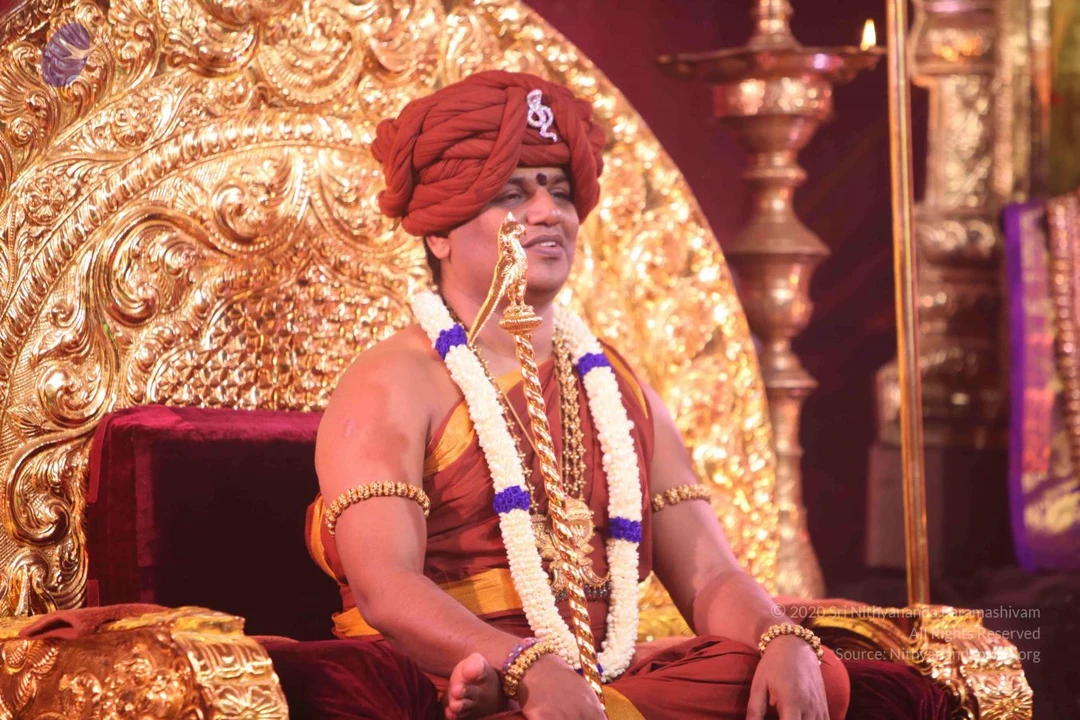
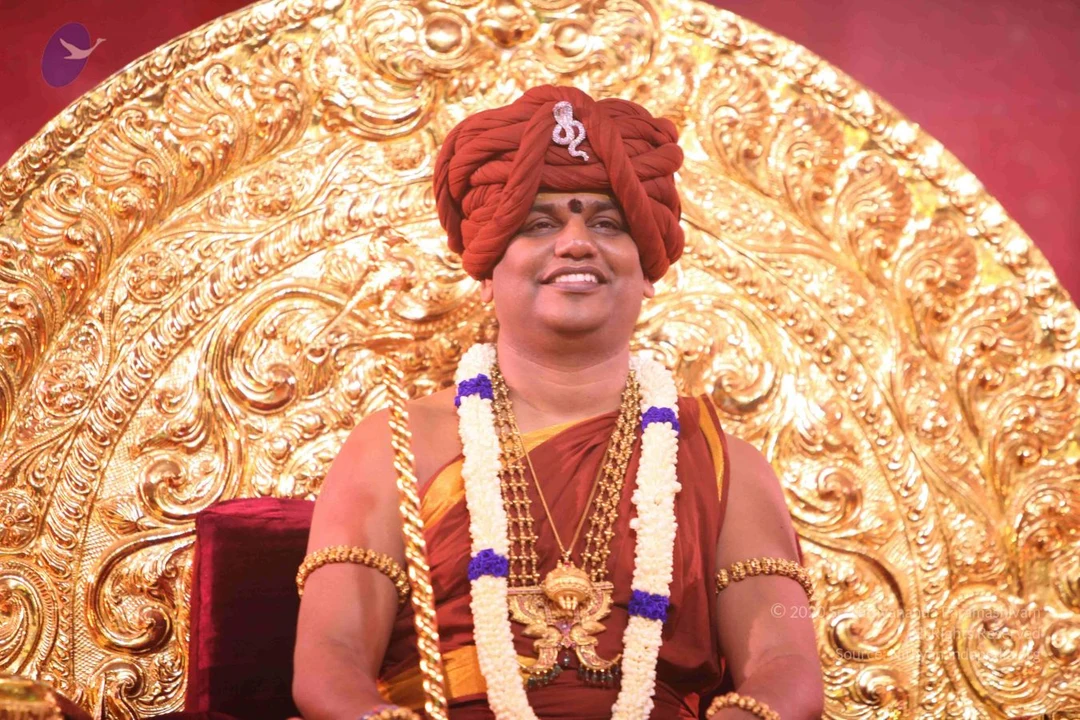
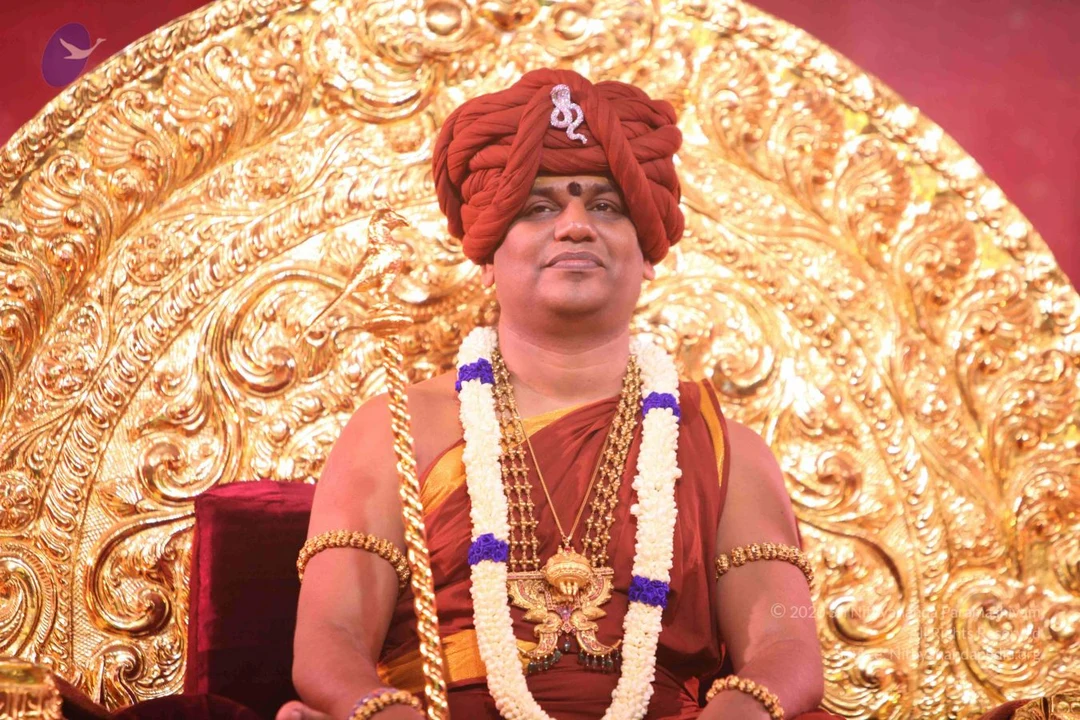
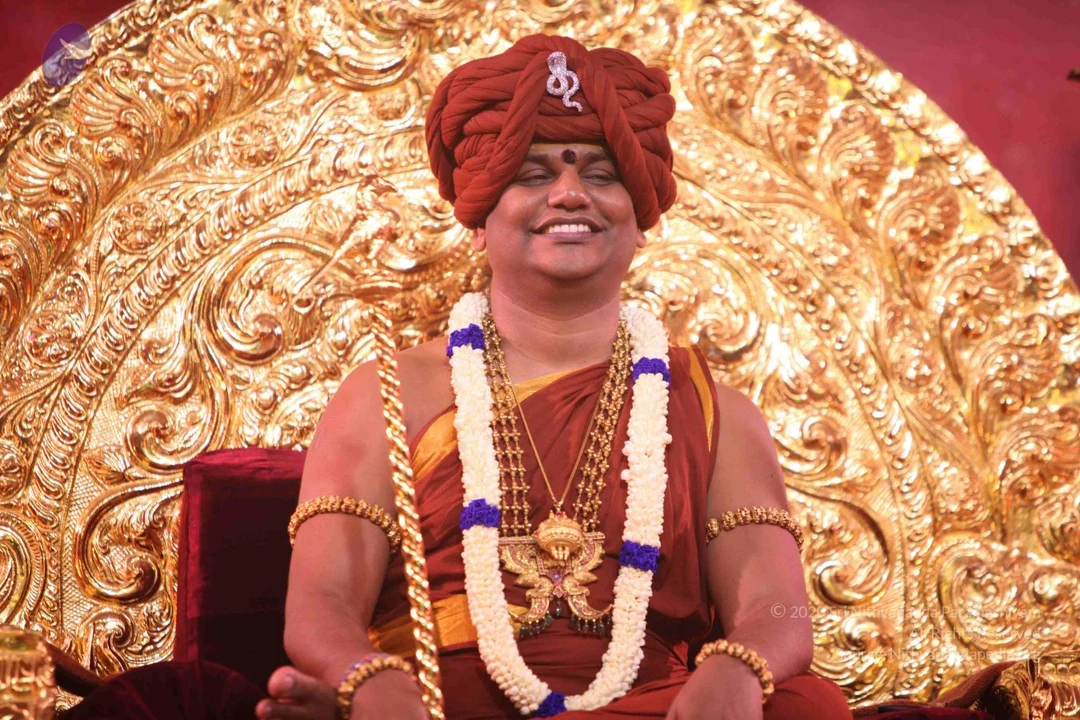
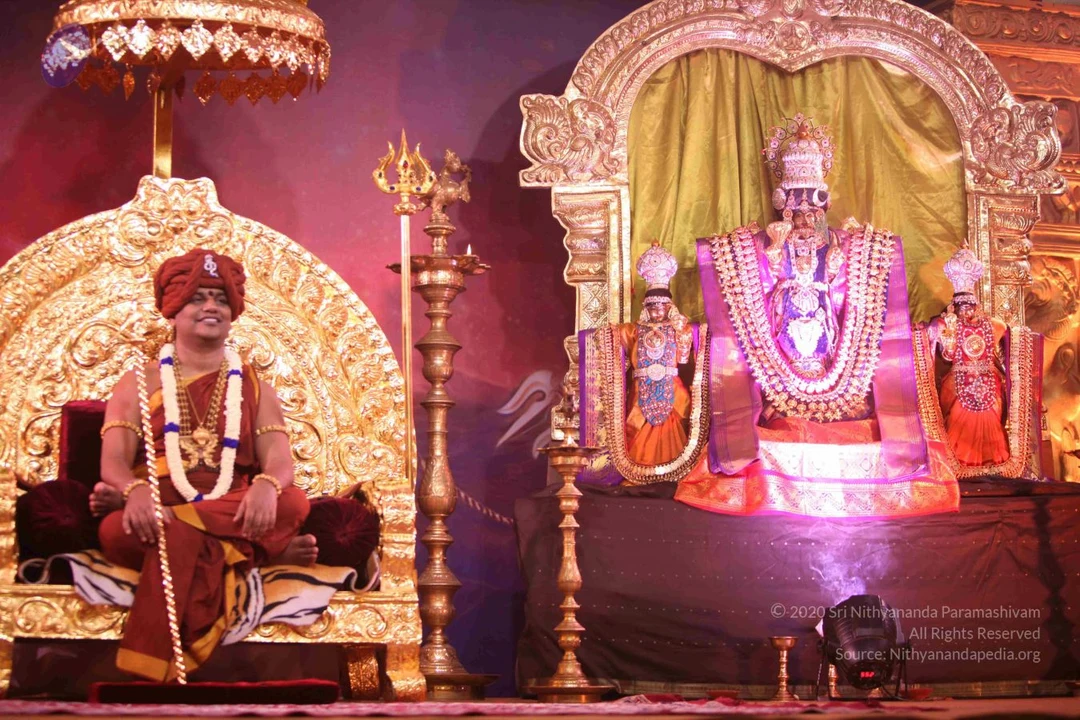
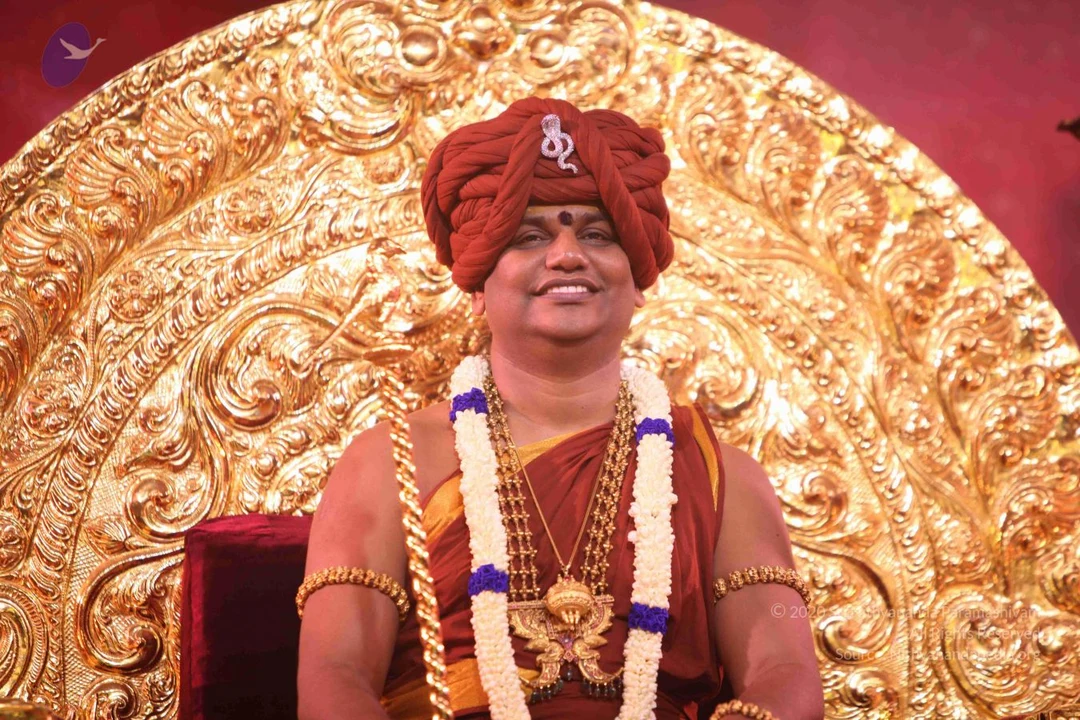
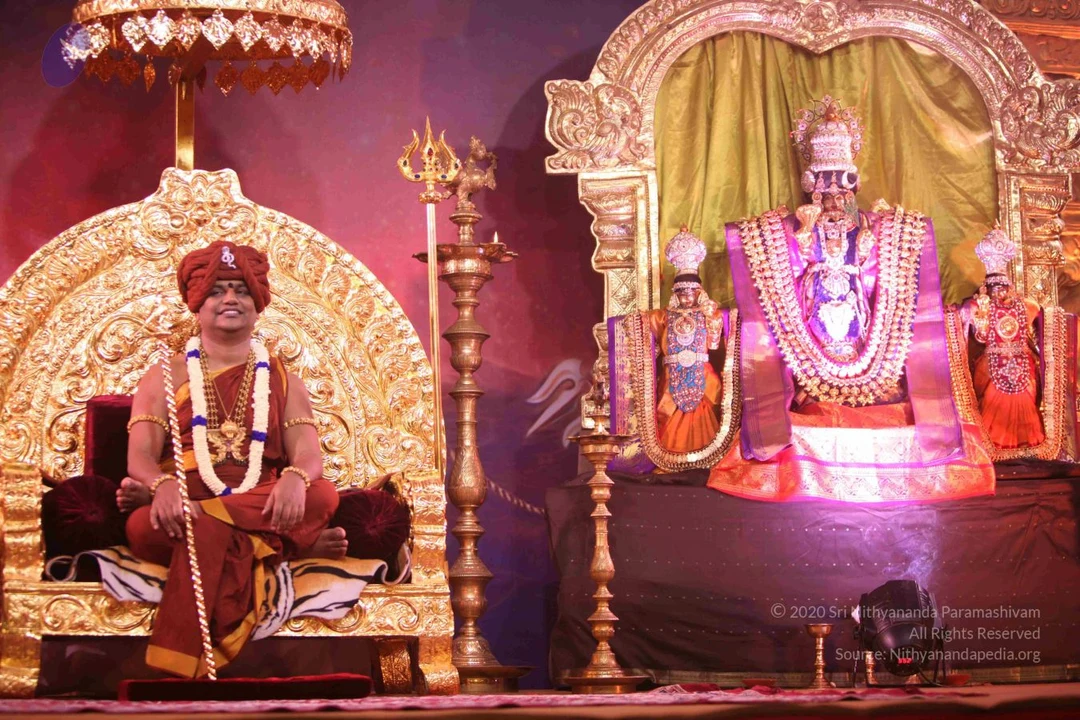
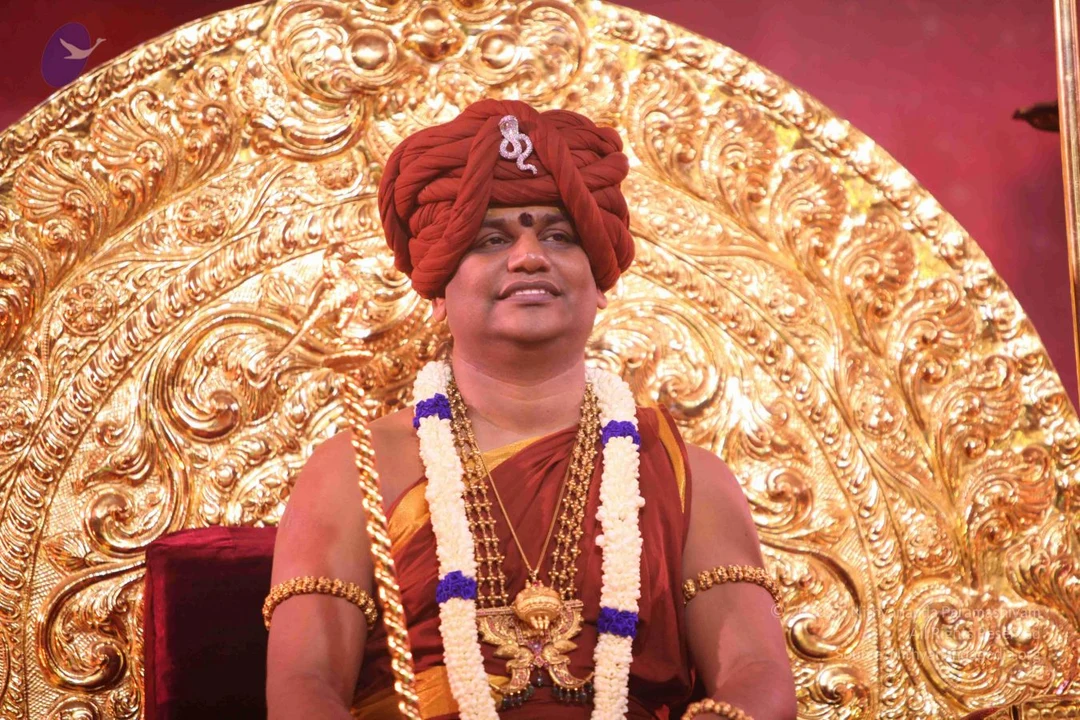
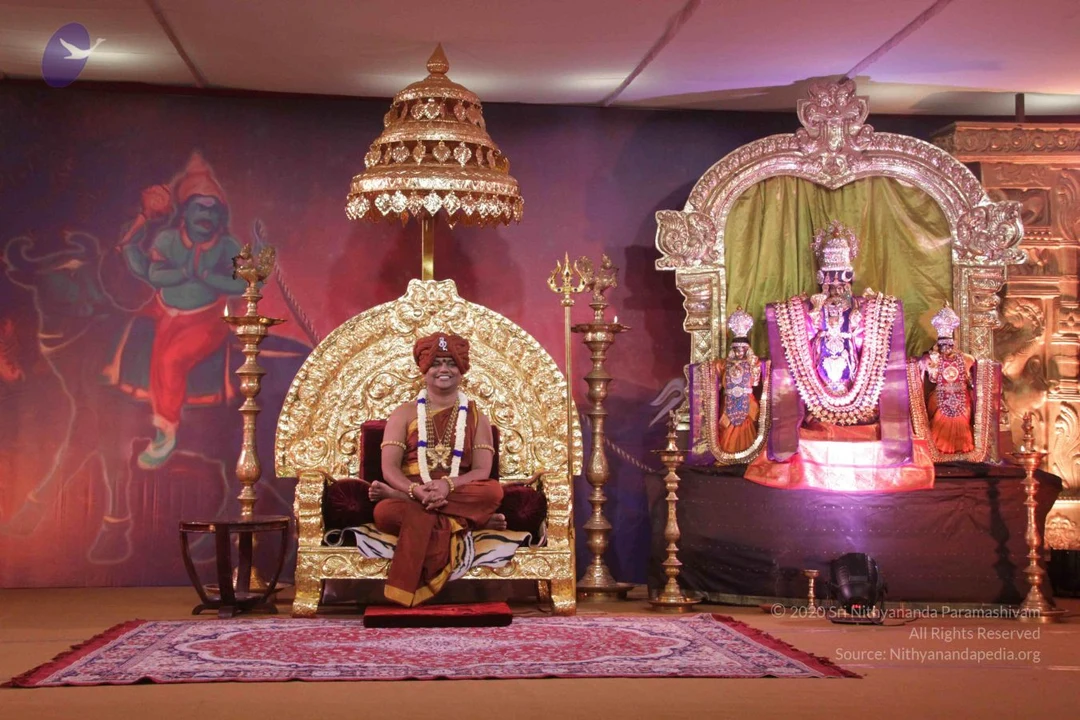
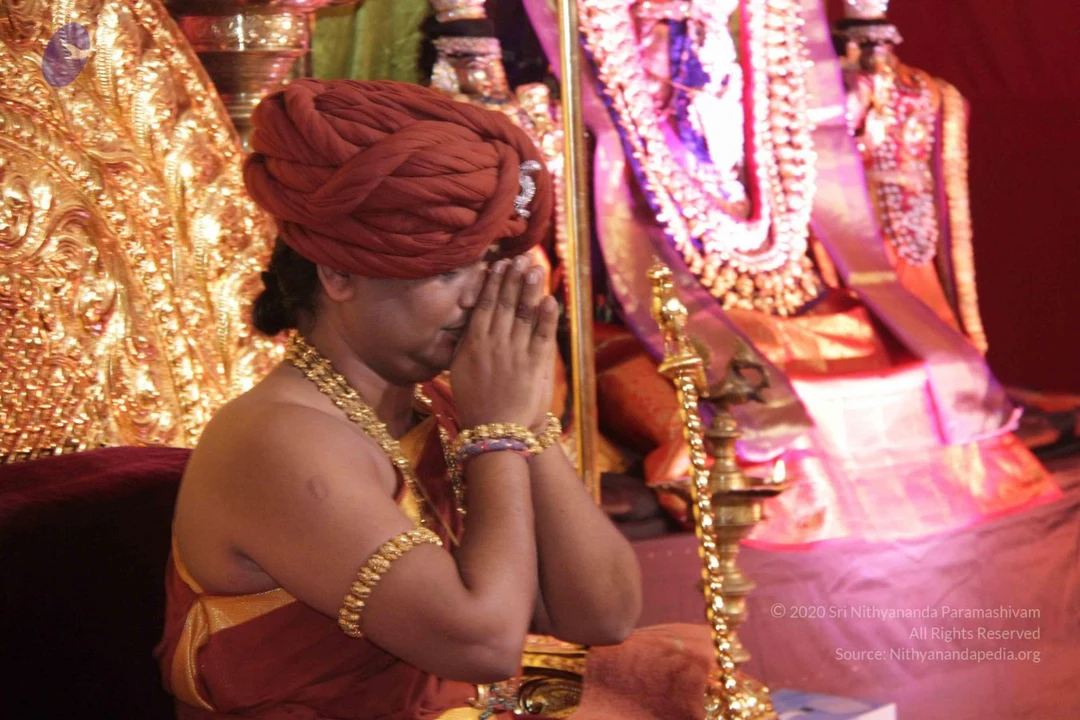
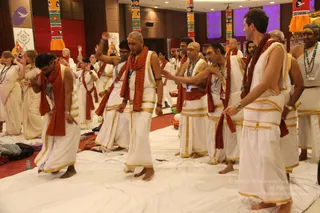
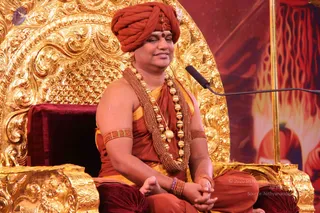
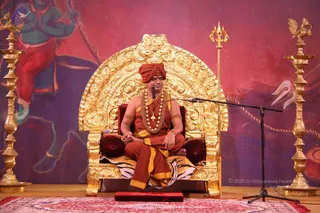
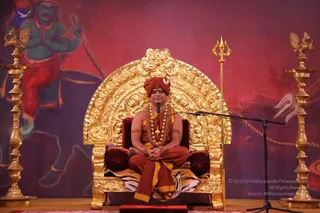
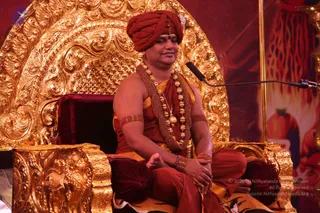
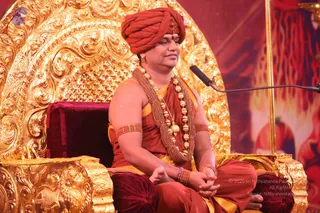
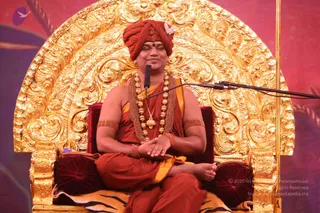
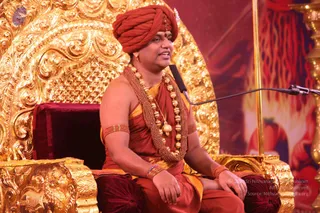
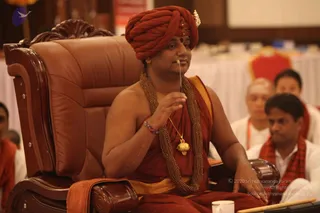
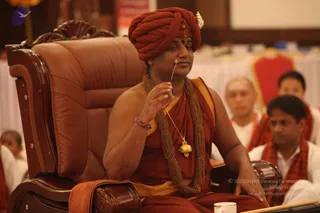
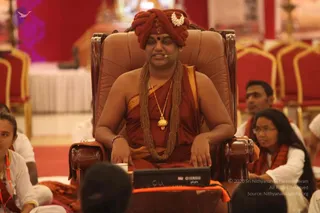
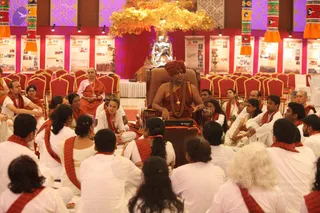
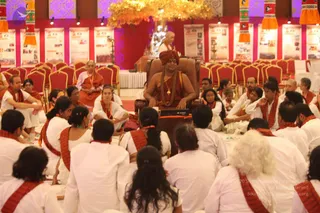
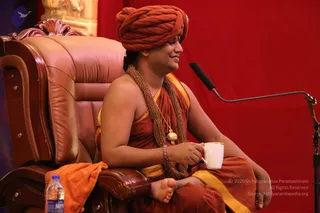
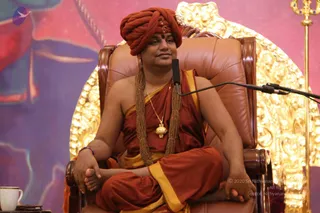
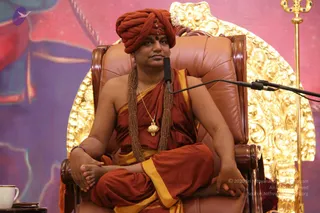
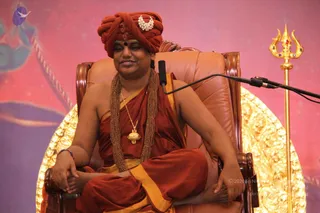
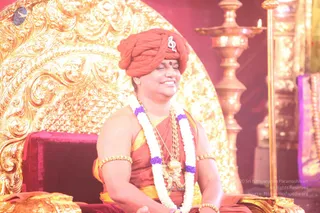
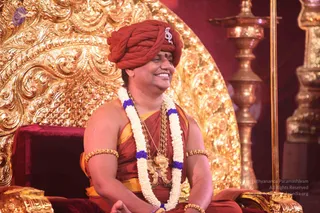
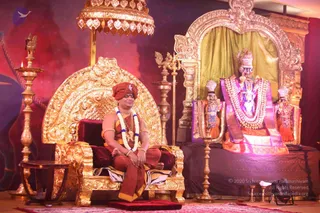
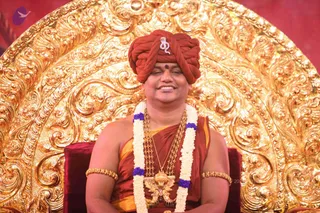
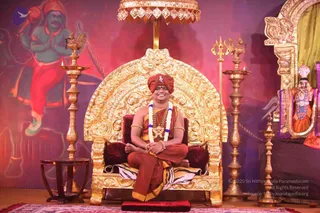
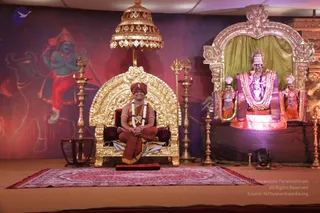
A photograph of a seated man in a brown leather throne-style chair at a satsang, wearing an orange-red turban with a white floral ornament and a small red bindi, orange-red robes with gold trim, a thick brown rudraksha-style mala and a gold pendant. He wears a headset microphone, gestures with one raised index finger and one open hand, and is barefoot. Behind him, a woman in white with an orange lanyard sits with eyes closed, and other seated attendees in white and red are visible along rows of red-and-gold chairs. A white mug and a black tablet sit on a table in front.A seated man in a golden ornate throne sits centrally in a temple-style stage, wearing a rust-orange turban, orange-red robe with yellow-and-white striped cloth, a white and blue flower garland, and a gold necklace, with hands folded in his lap. A tall golden umbrella-shaped canopy rises above the throne, with brass lamps and a trident beside him. To the right, a deity murti in a silver arch is draped with a green cloth, garlanded with white flowers and adorned with a crown, flanked by two smaller attendant figures. A red-and-cream carpet lies in front and a painted backdrop of a figure with a club beside a bull fills the left side. Two classical ceremonial lamps are visible. Swamiji (probable): the seated man has a turban, saffron-orange robes, ceremonial gold necklace and garland, consistent with the page's claim that Swamiji attended this satsang.A seated man in a red-orange turban with a small silver snake-shaped ornament at the front, smiling at the camera. He wears an orange-red garment over one shoulder, gold armbands, a gold ceremonial pendant on a multi-strand gold chain, and a white flower garland with blue accents. A red cushioned seat sits at his side in front of an ornate gold repoussé backdrop shaped like a large arch on a red background. Swamiji (probable) is seated in a ceremonial setting, with orange-red turban and clothing, rudraksha-style gold ornamentation, and a garland, in the role of a seated teacher on a golden throne-style backdrop.

October 13 2015

Original wiki page
Contents

Title:

Drop Your Irrational Rational Logic

Description:

In today’s Nithya Satsang (13 Oct 2015) from Varanasi on Isavasya Upanishad, Paramahamsa Nithyananda first blesses all on the start of the grand Navratri festival, the 9 sacred days and nights of worship of cosmic mother. Only the Mother worship traditions are non-violent on planet earth. He then expands on keyword of the 16th verse, which is ‘Soham – I am He’. If we realize ‘Soham’, life is bliss, otherwise, shokam, life is sadness. This verse signifies that the Rishis, who are operating out of reality not the irrational rational logic, not only look-up beyond the sun, in the cosmos, but also look-in, asking, “Oh Lord, reveal your gracious beautiful form, which is ME, indeed, I am He, Soham-asmi! pūṣann ekarṣe yama sūrya prājāpatya vyūha raśmīn samūha tejaḥ | yat te rūpaṁ kalyāṇatamaṁ tat te paśyāmi yo sāv asau puruṣaḥ, so’ham asmi ||16||

VideoAudio

Transcript:

nithyānandeśvara samārambhām

nithyānandeśvari madhyamām |

asmat āchārya paryantām

vande Guru paramparām ||

I welcome all of you with my love and respects.

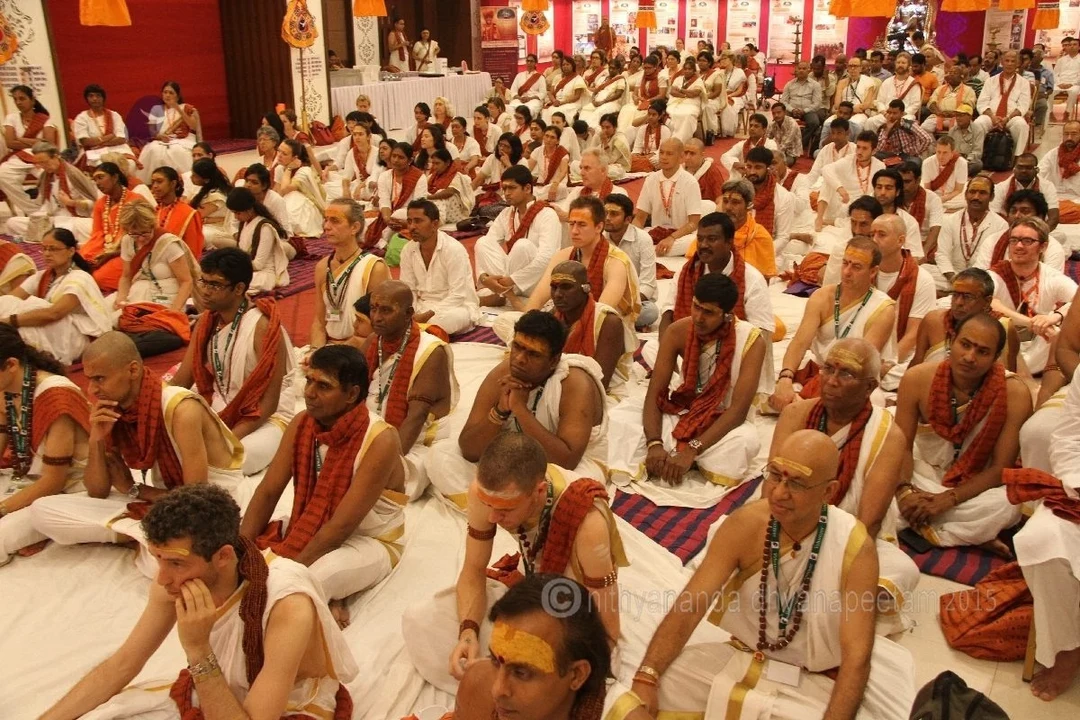
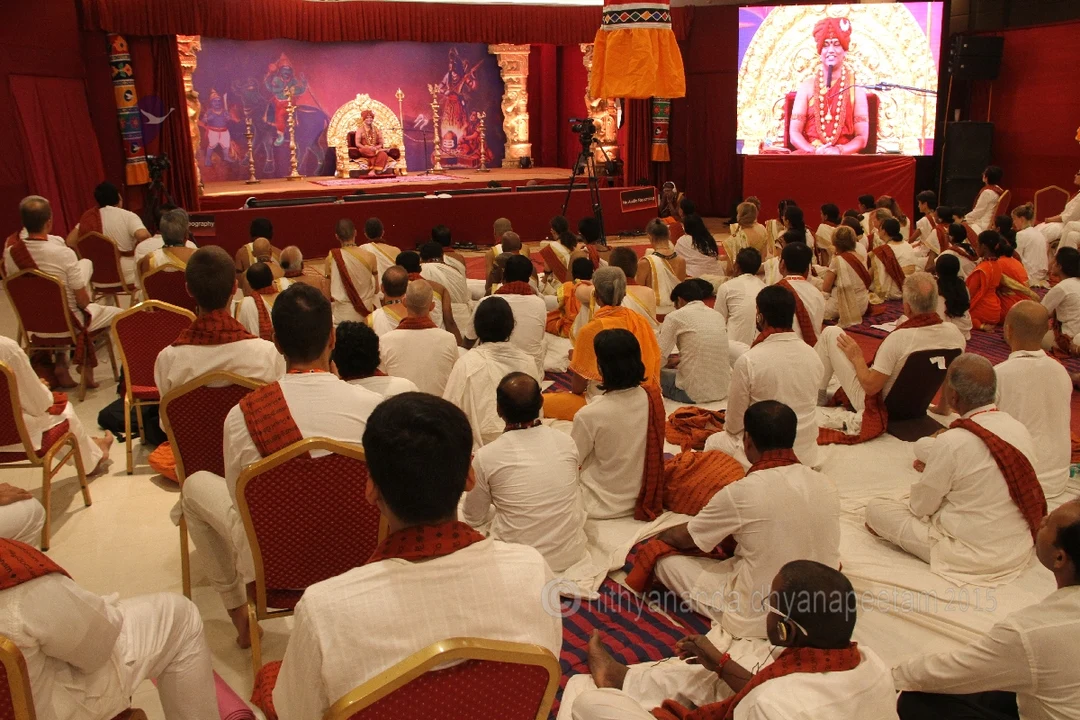
I welcome all the devotees, disciples, samajis, satsangees, sri mahants, mahants, thanedars, kotharis, owners of Sarvajnapeetha, visitors, viewers, everyone sitting with us all over the world through Nithyananda TV, Sadhna TV, Arra TV, Nakshatra TV and two-way video-conferencing having Nayana Deeksha all over the world.

The city sitting with us having Nayana Deeksha. Singapore Adeenam, Houston Adeenam, St Louis Manchester, Trinadad Tobago, Hong Kong, Anjany New Jersey, Hyderabad Uttarkashi, Hyderabad Adeenam, Uttarahalli Adeenam, Puderayi Adeenam, Bangalore Unat, Casta Croatia, Omkar city Oklahoma, Nithayanda Nagar Bidadi, Rajapalayam Adeenam, Dubai Adeenam, Kulum Lupur Adeenam, Toronto Adeenam, Los Angeles Adeenam, Mill Valley, Seattle Adeenam, Ohio Adeenam, Oklahoma Adeenam, San Jose Adeenam, Vancouver Canada, China, Guadaloupe Adeenam, Philadelphia, New Zealand Adeenam, Oman Adeenam, China Dubin and Some more cities are joining. I welcome all over you with my love and respects.

So today starts the grand Navratri festival. With the Ganesha Caturti. The festival season starts in Hindu Tradition. Actually for Hindus, whole life is festival. We go on, in my native place I have seen, we go on 365 days, 300 days there will be some festival. We gather in temple only to celebrate. Our worship centers are more celebration center, colorful joyful constantly celebrating. I feel so blessed I am born in a religion where celebration is a lifestyle.

With Ganesha Caturti, festival season starts and Navratri to Diwali, it’s a peak, literally everyday is festival all over the Bharat. Now of course, wherever Hindus are living all over the world, Sanatana Hindu lifestyle is festival.

This 9 days, we worship mother, mother worship is something unique to Sanatana Hindu Dharma, which is our very own. Worshipping the feminine, divine feminine. Worshiping the cosmos as mother connecting with the cosmic mother. I tell you, only the mother worship traditions are non violent on the planet earth.

Please understand, because with mother worship so much healing happens in your heart. So much completion is experienced in your bio memory, so much joy is evoked in your system. Tradition which honors mother worship are only non-violent. I have analyzed various religions, around 330 religions are still alive, practiced in world. When I say 330 recognized, unique religion. Of course, there are many indigenous religion and tribal traditions. I am not counting that. A recognized with a clear belief system and philosophy, lifestyle and dos’ and don’ts with all that. Around 330 religions exist. I have analyzed almost every one of them, I tell you, whichever religion that has mother worship, encourages mother worship; whichever tradition has mother worship, connecting with the cosmos as mother, those traditions are all non-violent. They are so non violent. So peace centered, Ahimsa centered, non-violent centered. Whether it is Buddhist traditions, or Jain traditions, or Shakta Sampradya, in whichever tradition, mother worship, connecting with the god in the mother form exists. I have seen, they become non-violent. They are so healing, comforting, soothing.

All over India, the mother worship tradition is very popular because one of the very powerful, very important, highly practice tradition in India is mother worship tradition. Seeing god as mother. Every village in India, you will find one Devi temple. You may, may not find Shiva temple. Around 6 Lakh villages exist in India, in all 6 lakh villages. Ganesha temple you may find in 2 Lakh, Shiva temple you may find 4 Lakh, but Devi temple, almost 6 lakh you will find.

Whether it is North or South, or East or West in India, connecting with god as mother is very strong way of life. Every village will have the village deity. Gramina Devata, which will be usually mother. Usually it will be in the form of mother. Basically, Sanatana Hindu Dharma is mother worshiping tradition.

The first Upanishad, Isavasya Upanishad, second is Keno Upanishad. Keno Upanishad introduces Mother worship. In Keno Upanishad mother worship starts and it is a very strong living tradition in India, in Bharat, in Sanatana Hindu Dharma.

Today the mother worship starts. Today starts Navratri and all the ashrams, Spiritual Embassies, mandir of Nithyananda Sangha should start celebrating Navratri from today. Because basically I myself is Shākta, mother worshipper. My spiritual practice started only as Shākta, mother worshipping and the former initiation I had is of Srividya tradition, Srividya Parampara.

So, there is so much to tell about mother worship. Only with mother worship, your bio memory becomes complete and your whole being is awakened with energy, Shakti. Connecting with the ultimate is much more easy in the way of mother worship than any other method, any other technique, any other process.

Even devotion is very easy in the tradition of mother worship. It will be so natural. It will be such a natural flow to connect with mother and experience mother worship. These 9 days we will be worshipping various forms of mother, divine mother and of course, the Venkateshwara Brahmotsavam also.

The Brahmotsavam for Vishnu. Actually Vishnu is also considered as one of the Shakti of Shiva because He took Mohini incarnation gave birth to Shasta, He is also considered as one of the Shakti of Shiva. Vishnu, Venkateshwara Brahmotsavam also happens during the Navratri, Bidadi Nithyananda Nagar will be celebrating both the Brahmotsavam.

So let’s start the auspicious Navratri from today. With this announcement, formally I inaugurate the auspicious Navratri Brahmotsavam and Venkateshwara Brahmotsavam officially and formally. I will continue to expand on the 16th verse of Isavasya Upanishad.

pūṣann-ekarṣe yama sūrya prājāptya। vyūha raśmin samūha। tejo yat te rūpaṁ kalyāṇa-tamaṁ tat te paśyāmi yo’sāvasau puruṣaḥ so’ ham asmi ॥ 16॥

All of you may be aware, I am commenting on Isavasya Upanishad in everyday morning satsangs, I will continue to expand. The translation of the 16th verse.

O Puṣan, Consciousness, who is the nourisher, sustainer of all, the primeval solitary traveller, the disciplining principle of all, is like the bright, effulgent Sun, and is the Lord of entire creation, which is His subject. Please remove all Your rays of this radiating, brilliant golden light, which had blinded me, so that by Your grace, I can have the Divine vision of that most auspicious, graceful, beautiful form of Yours. That which is there, the glorious Sun, is the mirror of the Supreme Being, who is all-pervading, pure Consciousness of the Cosmos. Indeed, I am He, Soham Asmi.

The key word in this, I am He, Soham Asmi. If you realized Soham Asmi, if you realize SOHAM, life is bliss; otherwise SHOKAM, life is sadness.

Understand, the key word in this verse, first few lines it looks like he prays to something which is far away, but last word gives the punch, that far away is within ‘me’.

Understand, Hindus not only look up, they look in, both. That can only happen only by third eye, understand. Ordinary eyes can only look in one direction. Only third eye can look into both, height and depth, looking up and looking in.

The first few lines, the verse says very clearly. It literally prays to God up, above, beyond the Sun in the cosmos. He is asking, “Oh God, remove this rays of sun which is covering my eyes, blinding my eyes, allow me to see you which is beyond this radiating light. Suddenly it gives a twist, which is inside me, Me.” Not only they look up, they look in, understand.

Somebody asked me a question on Hindu cosmology, actually this guy who came to me, he is studying Hindu cosmology from Bhagavata and Garuda Purana. He asked me, “Swamiji, can you give a precise difference between the Devaloka and Bhuloka. one clear precise difference”.

Understand this one difference, you will understand this Upanishad this verse perfectly. See, there is two-logic. Understand this two logic. This hall has two door, first statement. The second statement is, one door is open. The third statement automatically you assume the other door is closed. This is what is human logic which has flaw, unless you check you can’t say other door is open, but 99% of the time, you assume it. The fact is other door may be open, maybe close. Only after checking you can say, but your logic is such, the moment you hear the first statement, this hall has two doors. Second statement, one door is open, the third statement you assume. You assume the third statement. The other door is closed. No! It is irrational rational logic, irrationally rational logic. What you call as rational, but irrational.

Please understand, same way, this is the same logic with which you operate your body. If your eyes can see out, you automatically come to the conclusion they can’t see in. In Agama, Mahadeva says very clearly, yours eyes have the capacity to roll 360 degree this side, this side, can see anything inside your body, and outside, any way. That is going to be the next powers I am going to release. You will just be able to scan your body, and you can see anything in the sky, any distance, it is possible.

Listen, when you believe you can see any distance in the sky, out, you automatically shut down the possibility you can see in. The irrational rational logic. If one door is open, automatically you come to the conclusion the other door is closed. You don’t even go there and see and then decide.

Listen, please understand the logic you believe in your normal life that is the same logic with which you handle your body, and your body’s capability and abilities are developed. If you believe, you can see up and in, from the beginning your body will develop that capabilities.

If you believe you can only see up and not in, you will only have that power, this power will be forgotten. Understand, your beliefs about life will naturally impact, in a very strong way, your beliefs about your body. Your beliefs about your body will impact abilities and capabilities your body can experience and express.

The power and experiences you can experience and express. If you believe you can only see out, you will be praying, “Oh God, where are you? Show me” Only if you understand, you can see there and here you will declare: “Yes, Oh Lord, where are you reveal who is in me.” Fortunately, the Upanishad Rishis are not functioning out of irrational logic. They are functioning out of Reality. They are very clear they can see there and here.

This verse is a solid proof, it says. “Oh Lord, reveal your auspicious, graceful, beautiful form which is ‘me’. Indeed I am He, Soham Asmi.” Yet irrational rational logical man can never understand this Truth.

A man who decides if the first door is open, second door will be closed is atheist. A man who thinks, let’s check and then tell, whether the second is open or closed is a Seeker. A man who has realized not only second door is open, even the first door will open the moment you touch is Enlightened. The man who can see whether the door is closed or open is Incarnation.

Understand, what you call as rational logic is not reality. That is why I insist, please understand, I insist again and again, anything which limits your belief about life is stupid theory, out of incompletion.

The definition of money by materialists. Definition of health by pharmacists, definition of law abiding citizen by lawyers. I can go on giving the example. All that will be naturally with vested interest. A lawyer can never declare – ‘you are a law abiding citizen, go!’ No, a pharmacist company can never declare – ‘you are healthy, go.’

A cured patient is a customer lost for a pharmacist company, pharmaceutical industry. I very strongly object and I want this on record. The so called diagnostic and healing methods of drug addiction practiced in all this so called developed countries. I tell you, it is just for profit industry.

The country where prisons, and rehabilitation center are for profit industry, how do you expect justice from that system, how do you expect cure from that system. Whether it is about addiction or psychiatric problems. Please understand, just like some religion invented hell to control you, and terrorize you.

Psychiatrist and psychoanalysis are invented subconscious mind and unconscious mind to terrorize you and keep you under control as slaves. Most of the addictions are not addictions.

There are not harmful to your body and mind, other than the belief which gets inserted into you. They are harmful to your body and mind. And many of the addictions you can walk out simply, causally if you are given the method and alternative way of thinking.

I tell you, almost all cancer researches are hoax. Real breakthroughs, cures were never allowed. Actually these so-called researchers just suppress the real solutions cure. Same way, all these solutions discovered for addictions, psychiatric problems everything is just to suppress the real problems or the real solutions.

The real solution tradition and thought currents are forcibly suppressed by these “so-called research industry”. Because cured patient is a customer lost. Which industry will spend money to lose customers? Who will do the research to lose customers. Most of this de addiction therapy, psychiatric, psychoanalysis solutions, psychiatric drugs are all only trying to maintain you in the border line. Trying to maintain you in the borderline.

That is the right word I use. Maintain you in border line. Simply if your beliefs about life and you can be recognize, you can just like walk out of tons of problem and you will start expressing extraordinary powers and capabilities. I will demonstrate what I am talking through my Gurukuls and show it to the world. Through my Gurukuls and monasteries, I will demonstrate and show it to the world. I will demonstrate, I will prove.

The solutions lie in the re-cognitions, not in anything else. Solution is re-organizing your beliefs and re-strategizing your understandings. Re-strategizing your life based on new understandings and reinventing yourself.

I will make this science as experience in Nithyanandoham. I will really make it! With this Third Eye Awakening, many of you have broken the ice that “I can’t”. When this “I can’t” is broken, half of the work is done. When you say, “I can?”, I just should say, “this also” “this also”, and “this also”. That is easy for me. When ‘I can’t’ is broken and ‘I can’ is open, I can open everything in you.

That is why even I am also wondering, what all is going to express in Nithyanandoham even I am not able to grasp, I think it is not going to be just your wildest imagination; the Nithyanandoham is going to be My wildest imagination. First of all, I am going to break the limiting logic with which you are functioning. Limiting rationality in which you are moving. I will do it. The multiple doors, possibilities will open up.

So I bless you all. Let you all radiate with Integrity, authenticity, responsibility, enriching, causing Living Advaita, the Eternal Bliss, Nithyananda. Thank You. Be blissful!

Title

Nithyananda Times, 13th October, 2015

Description

Morning Satsang of Paramahamsa Nithyananda

Link to Video:

Photos From The Day:
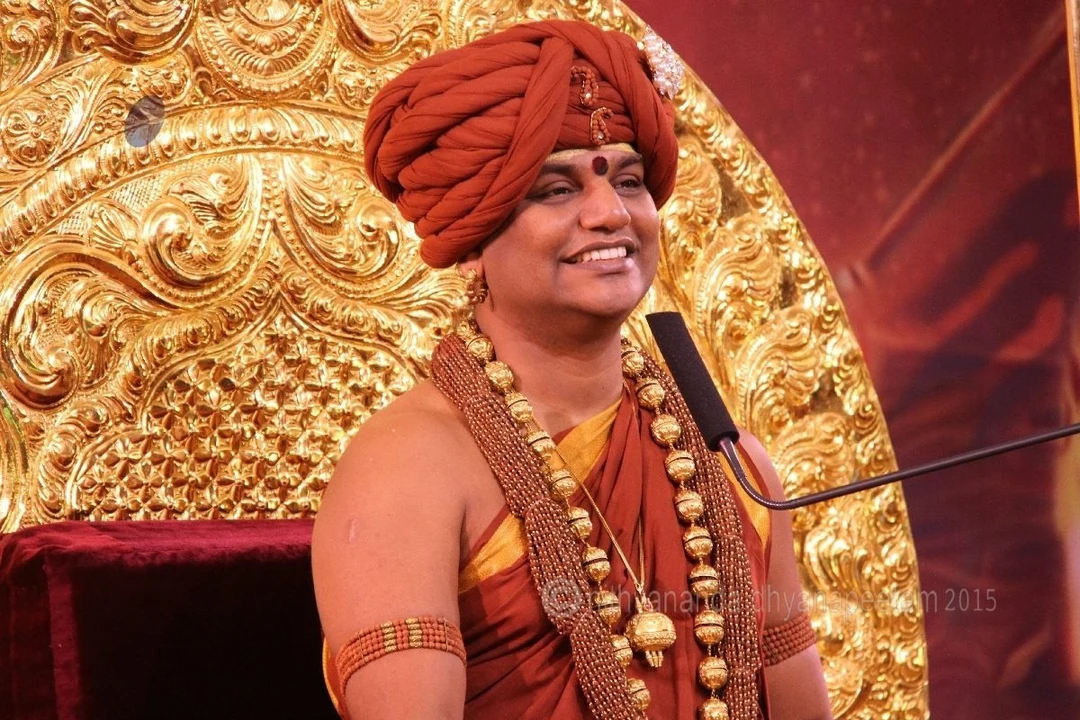
Link To Facebook Page:

https://www.facebook.com/ParamahamsaNithyananda/photos/a.321615927926264/907060082715176/?type=3

Photos Of The Day:

Morning-Satsang

Morning-Satsang

Mandala-Process

Mandala-process

Navarathri-Darbar

Navarathiri-Darbar

Photos Of The Day:

FB-photo-of-the-day

Photos from this day

View all 232 photos

Photos From The Day:
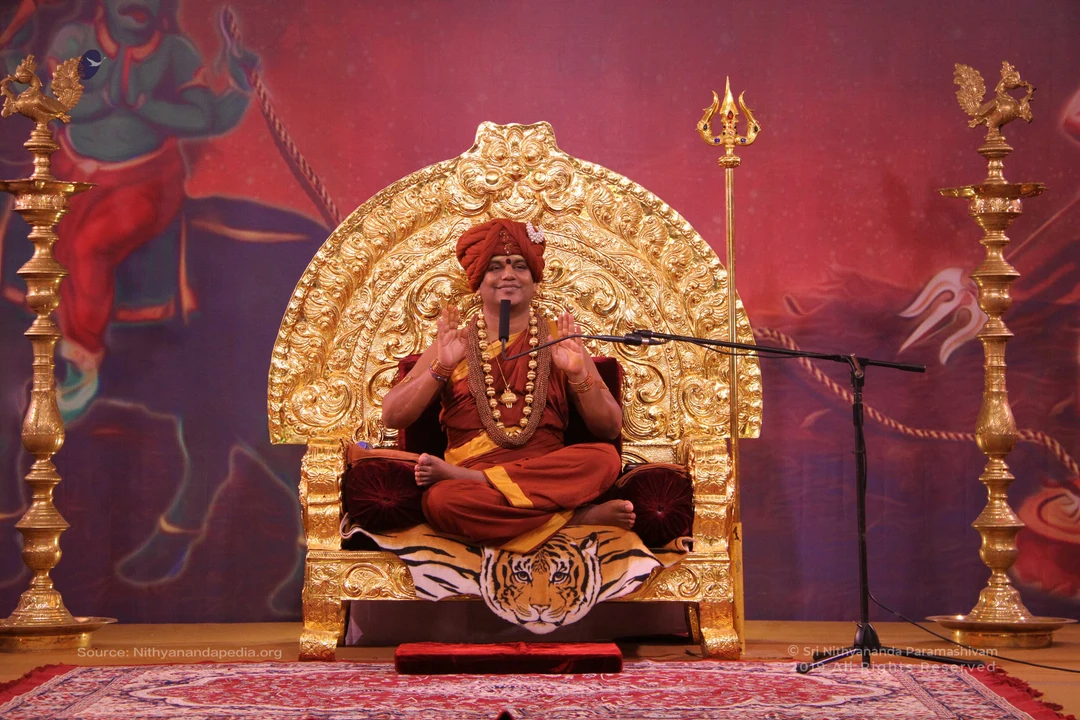
18 photosSource gallery
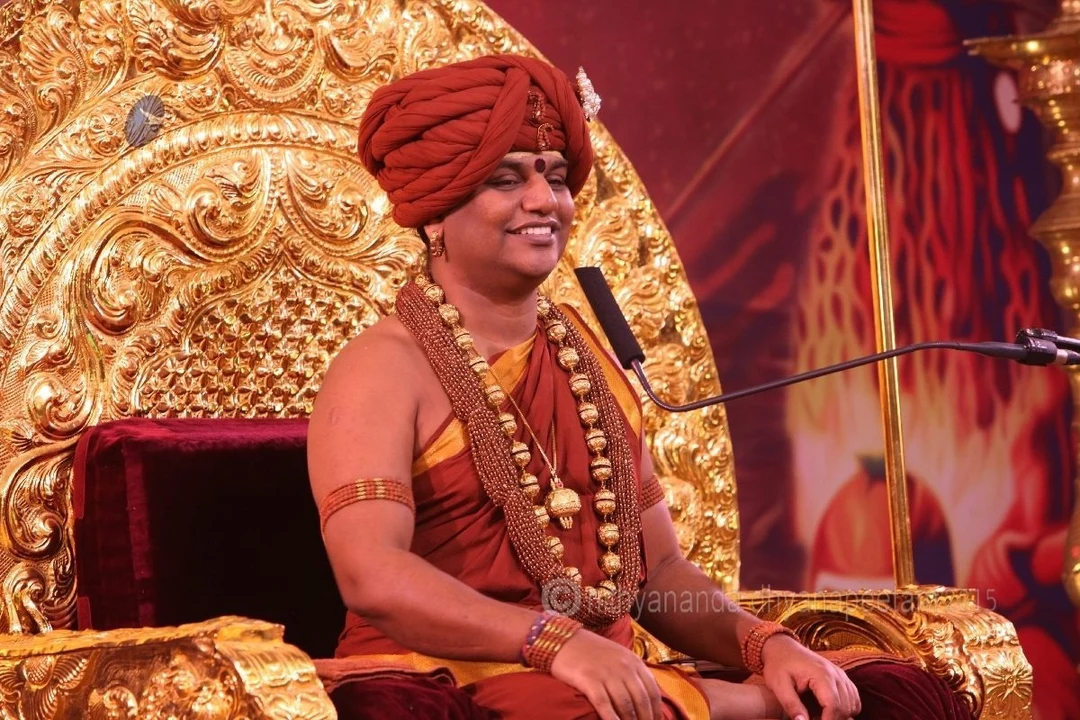
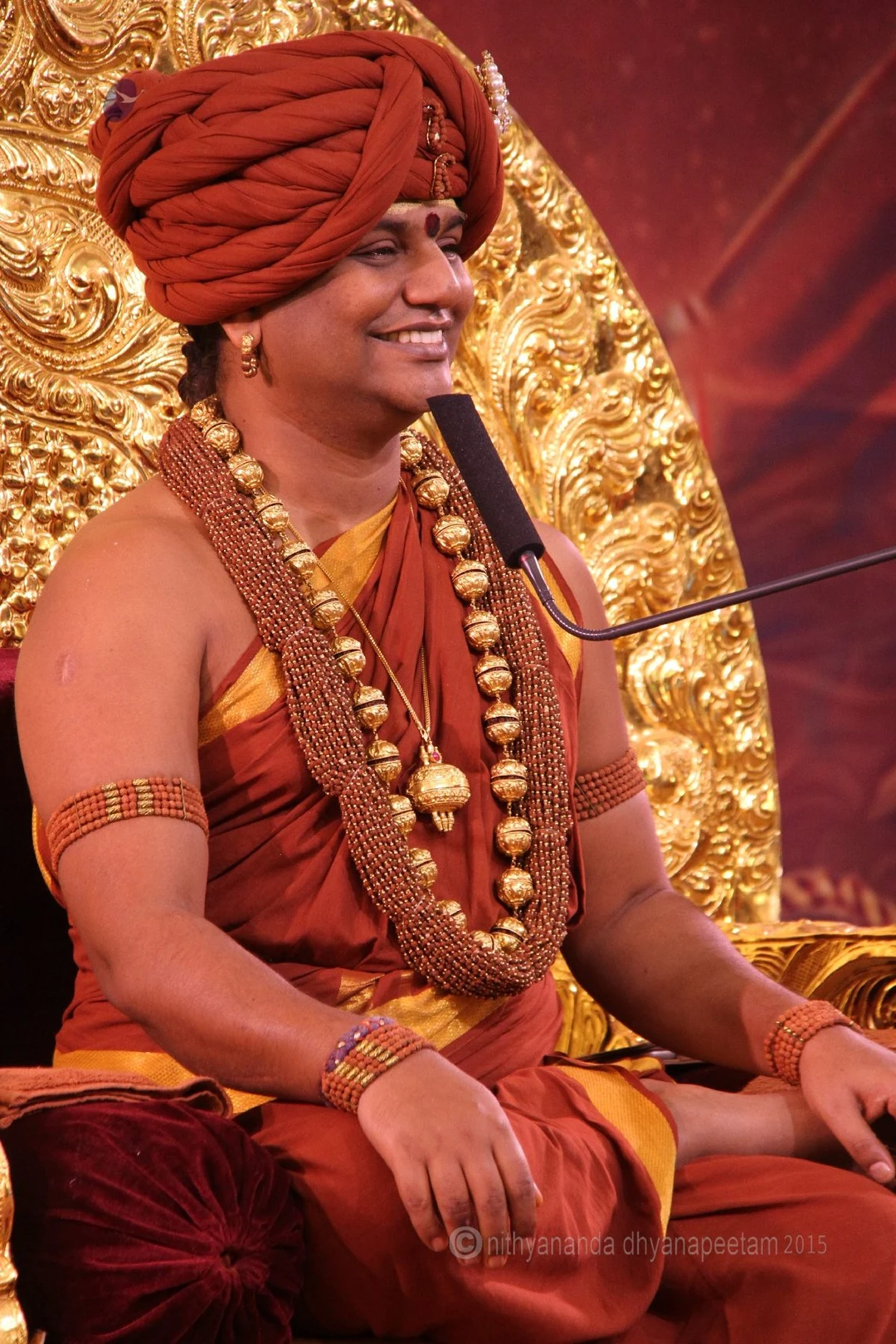
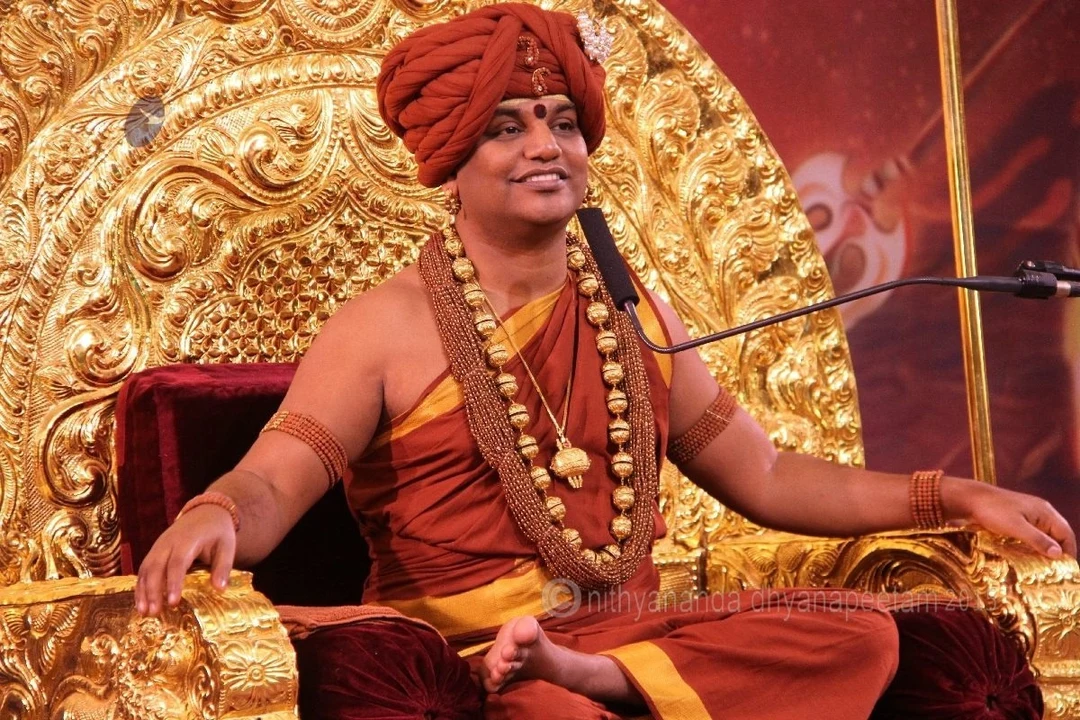
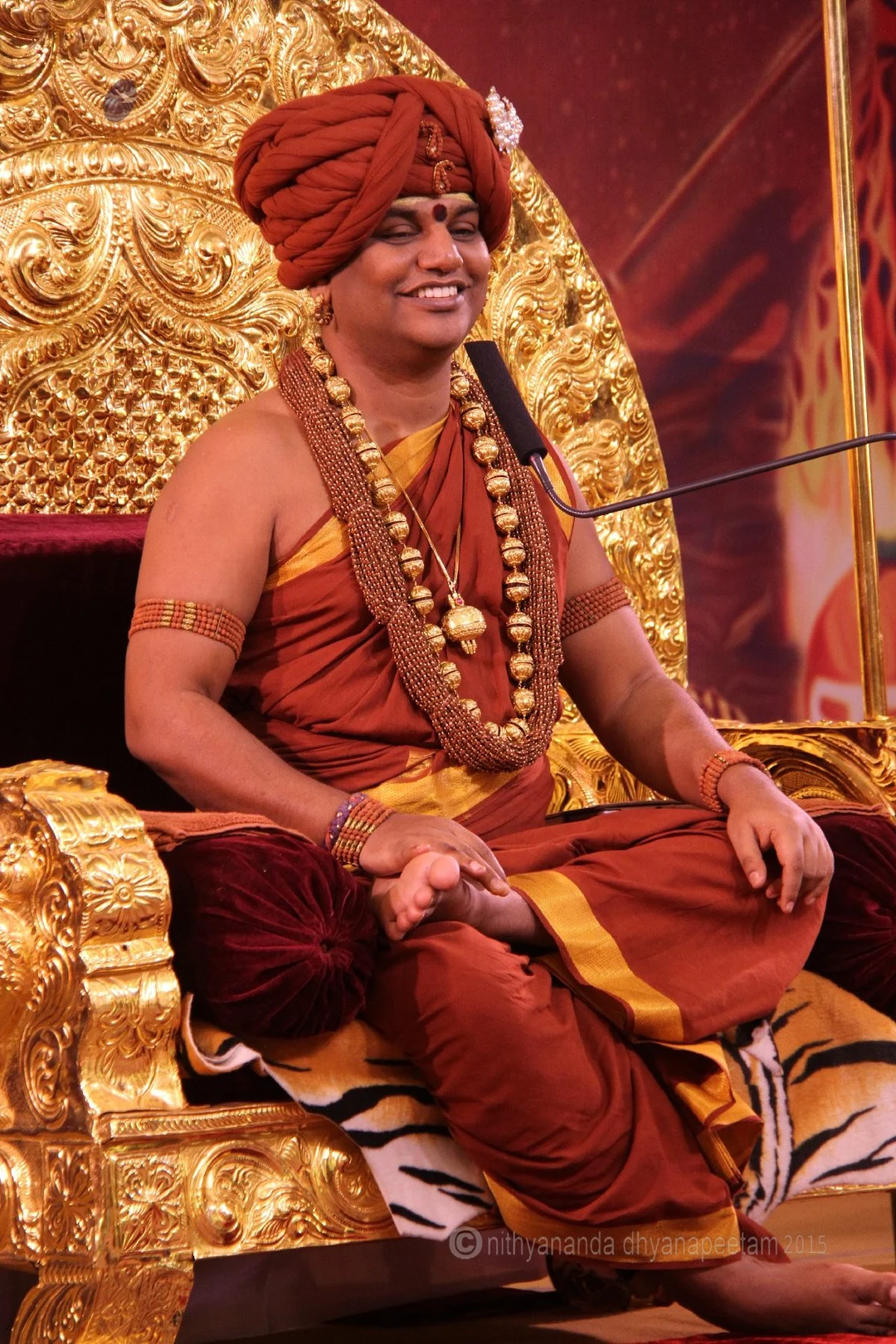
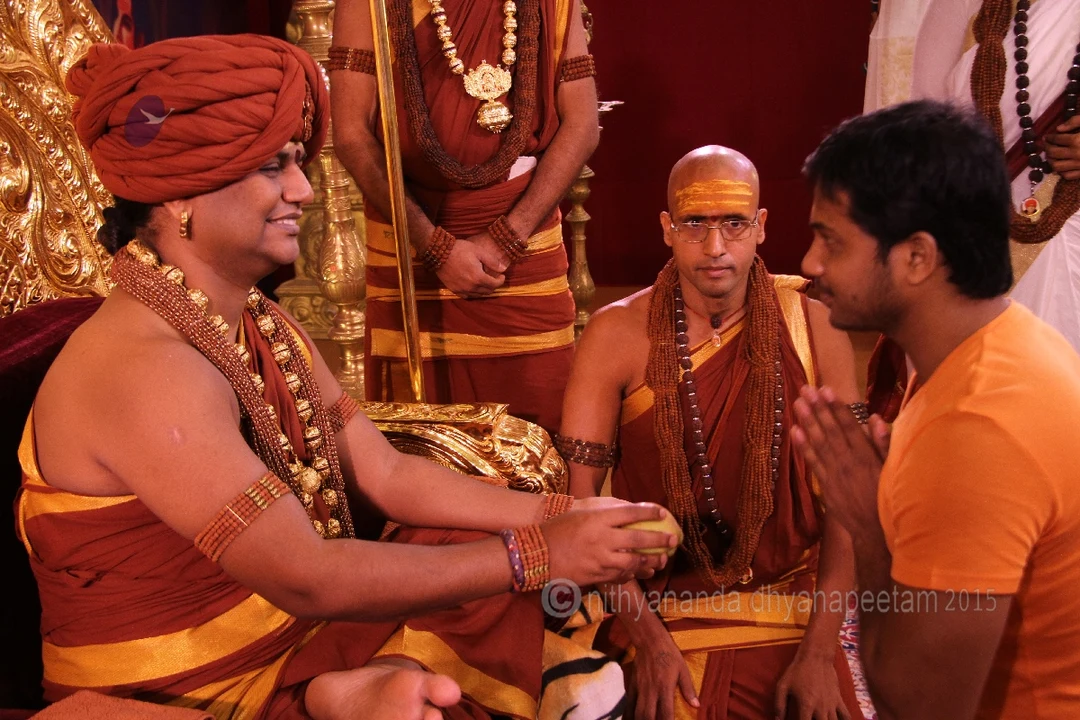
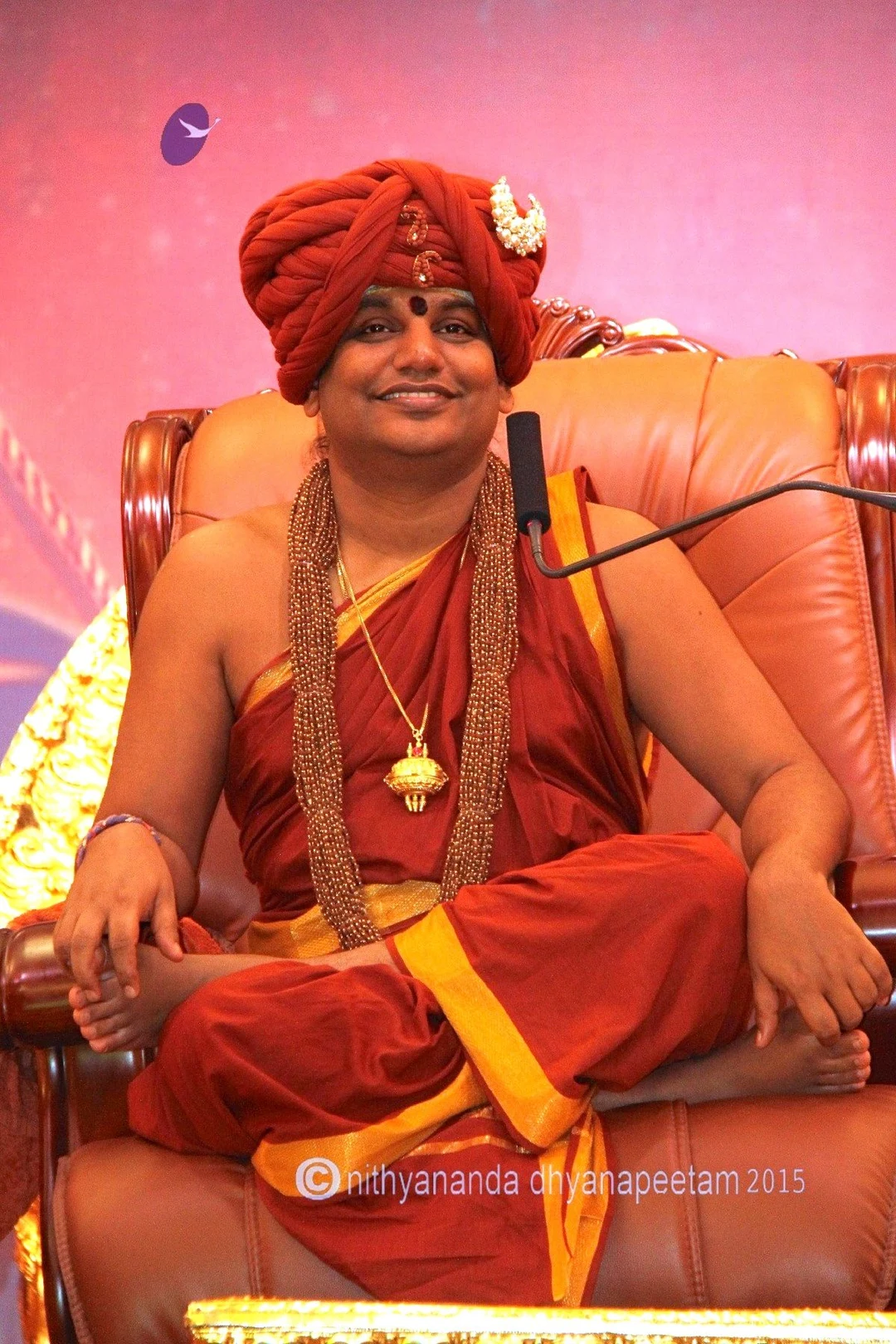
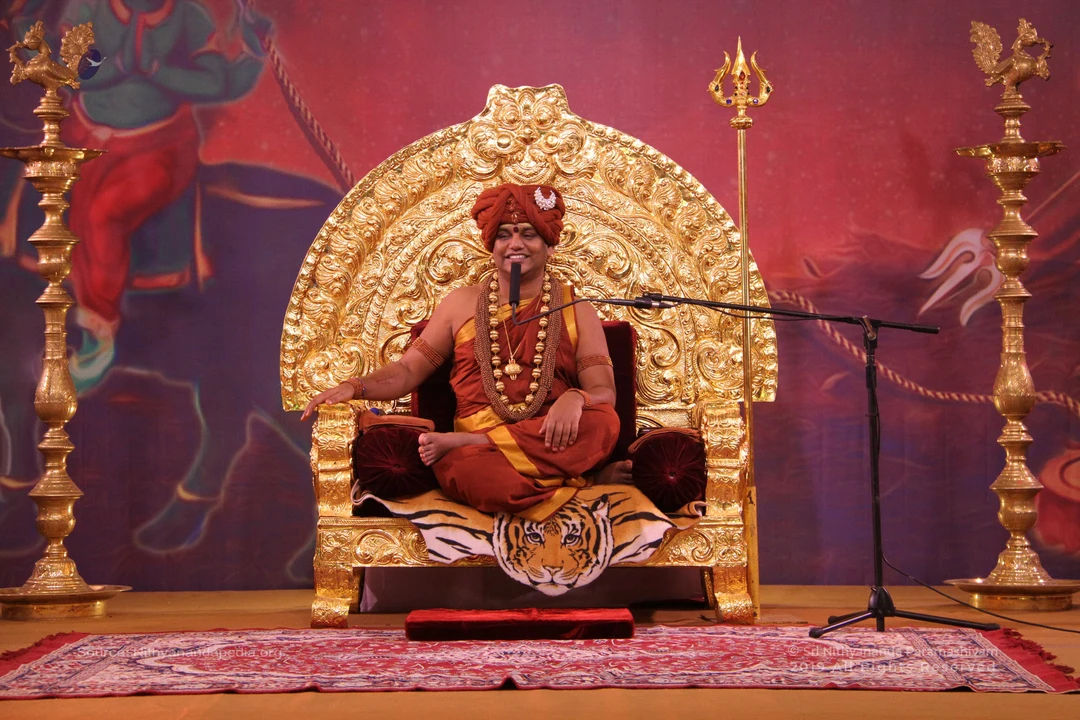
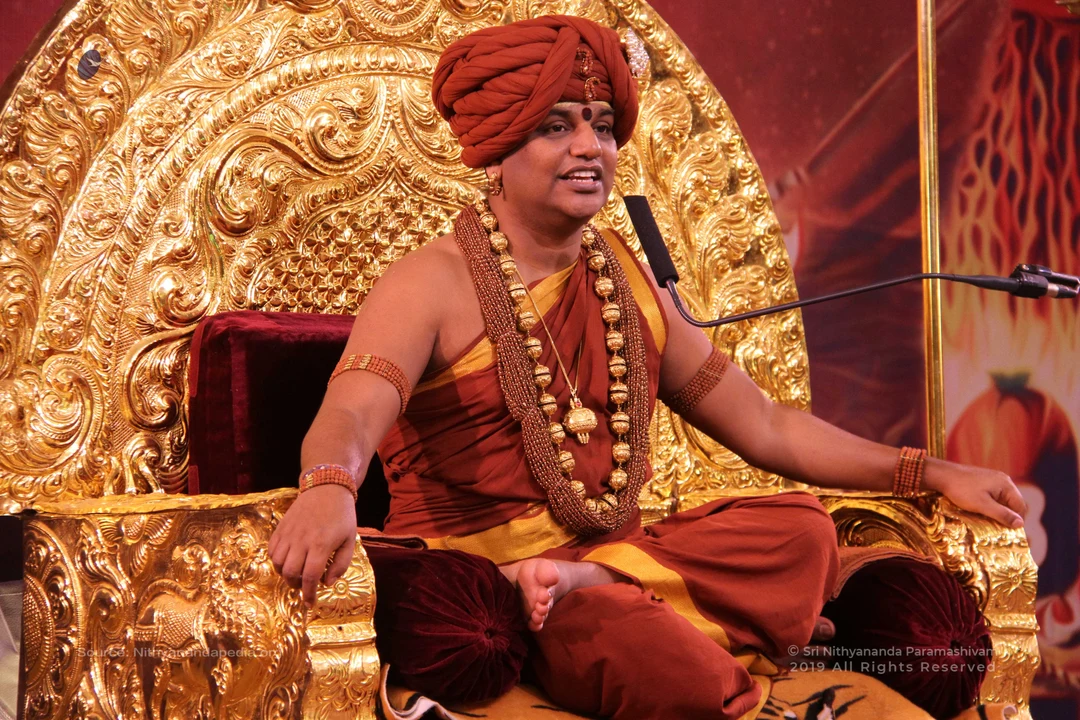
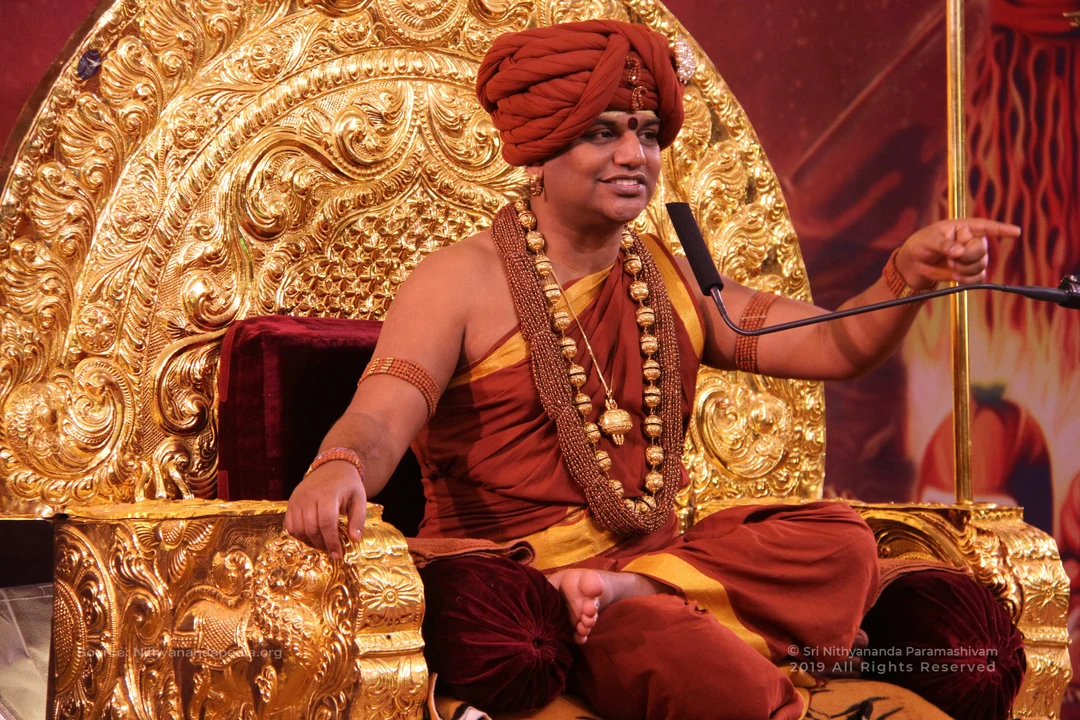
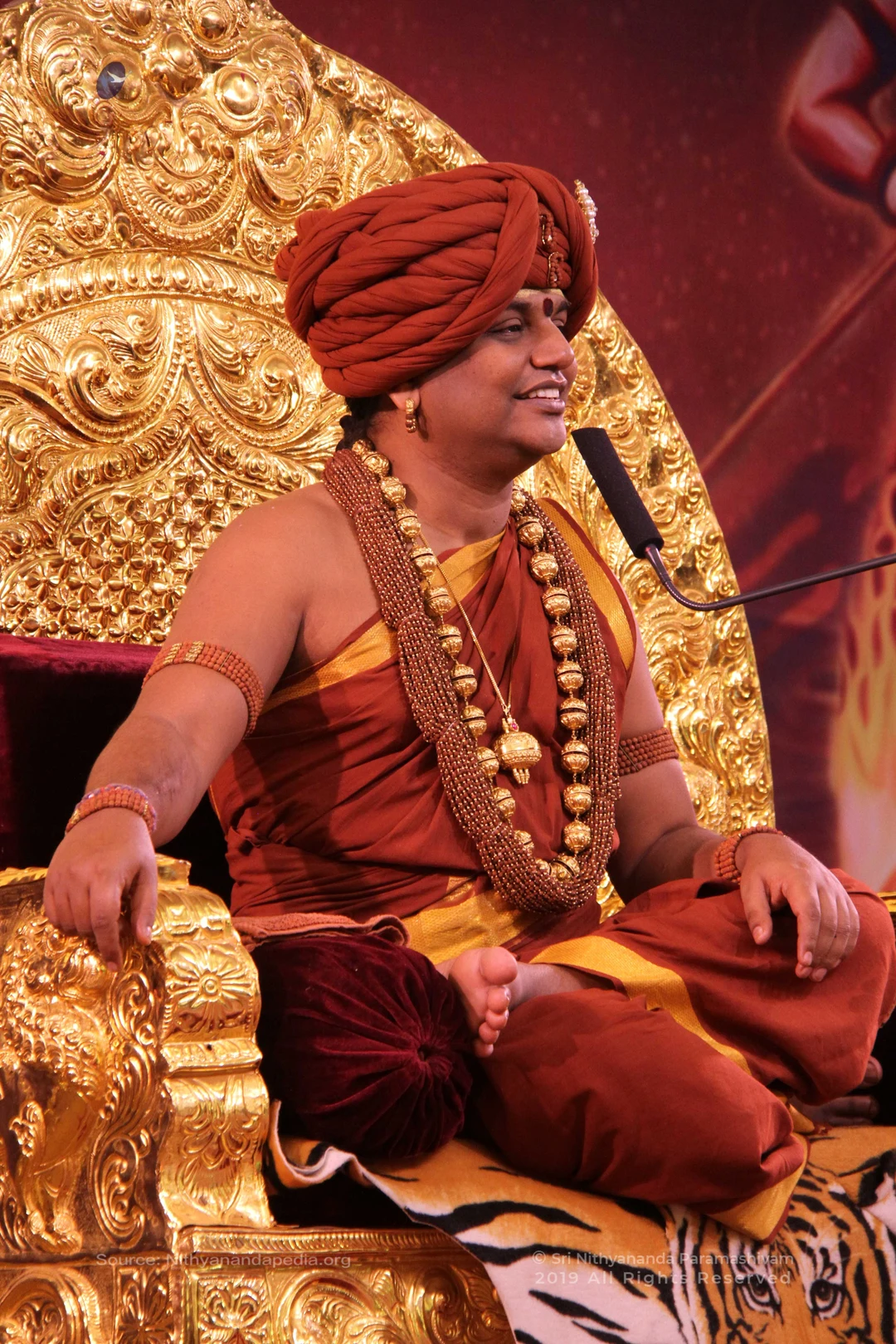
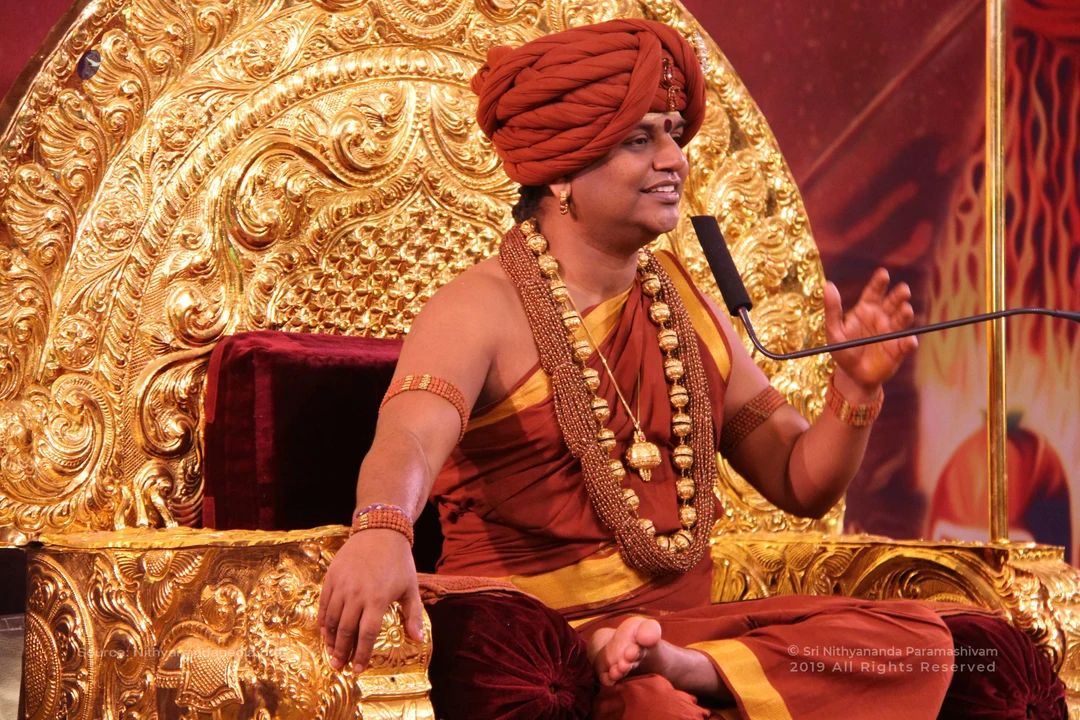
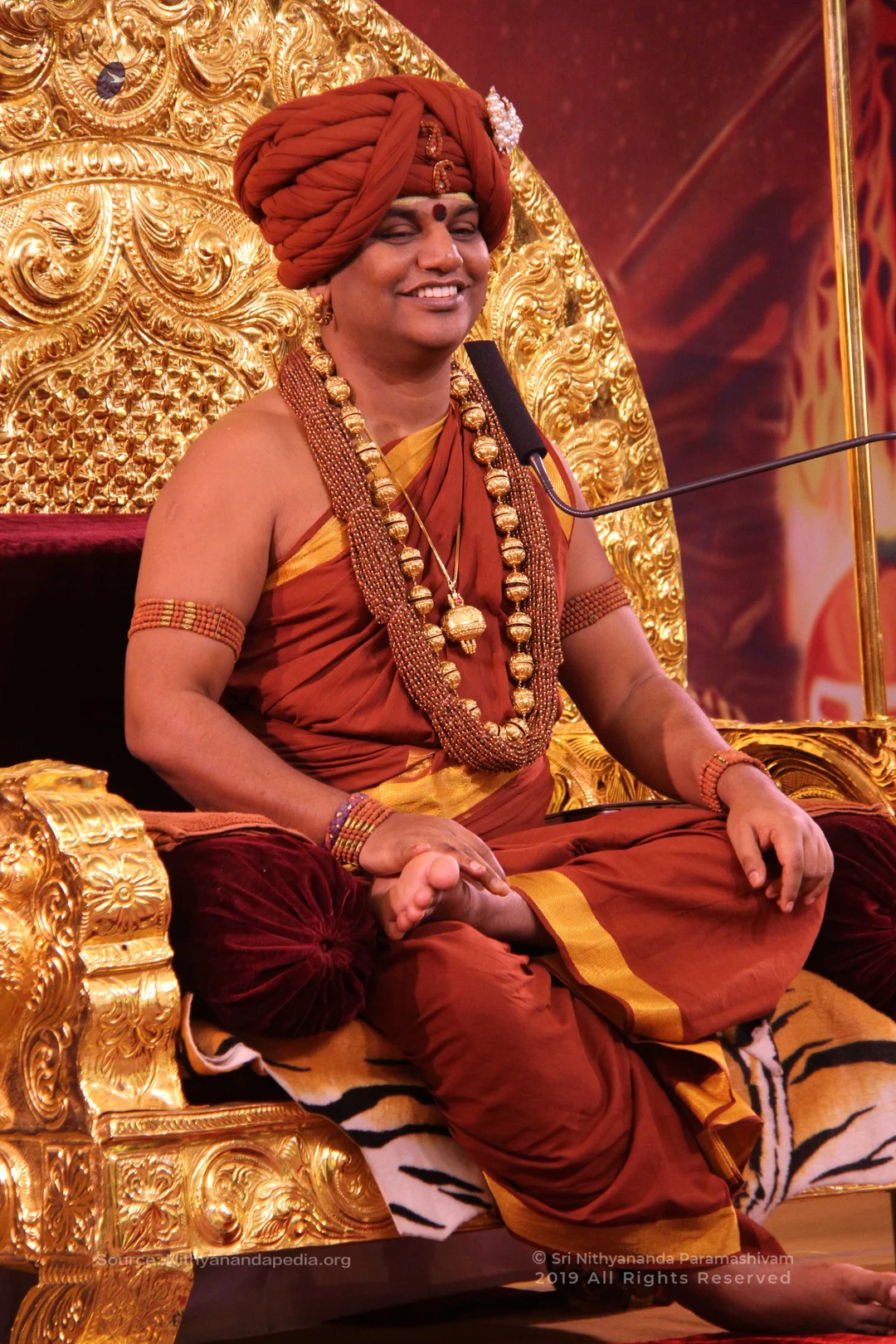
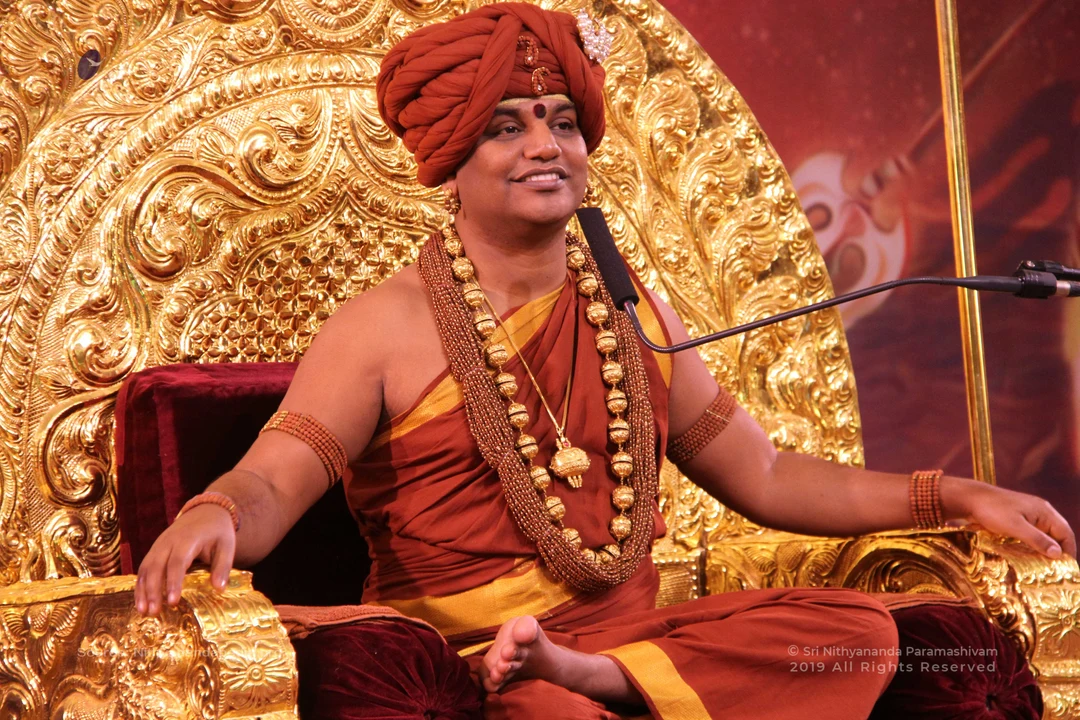
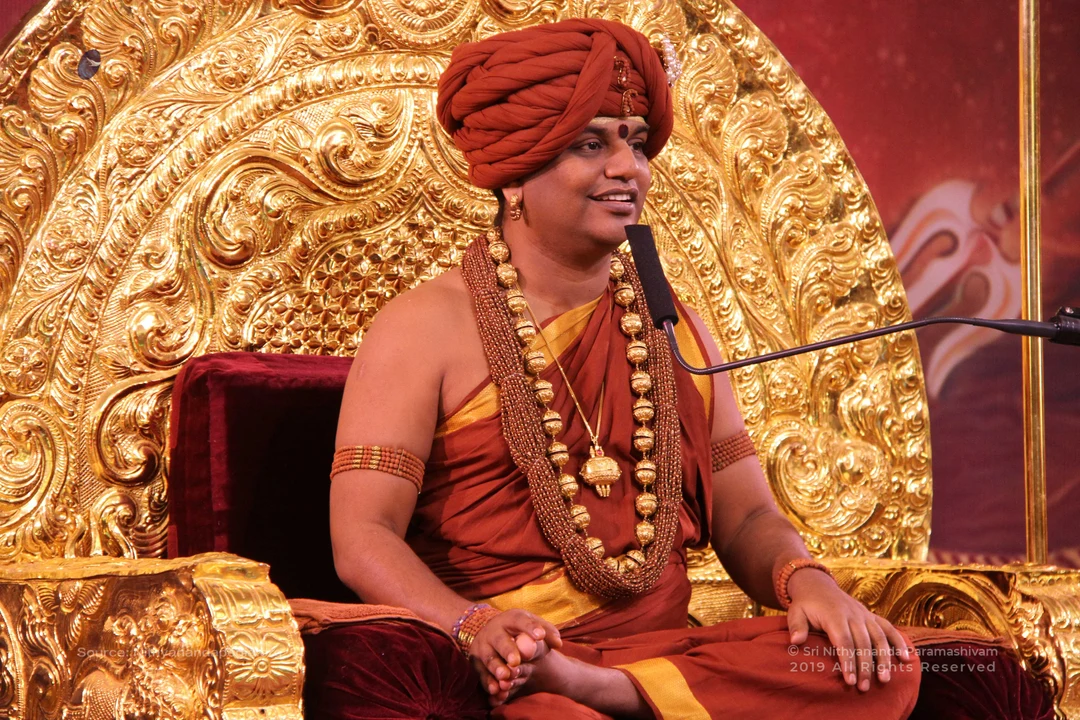
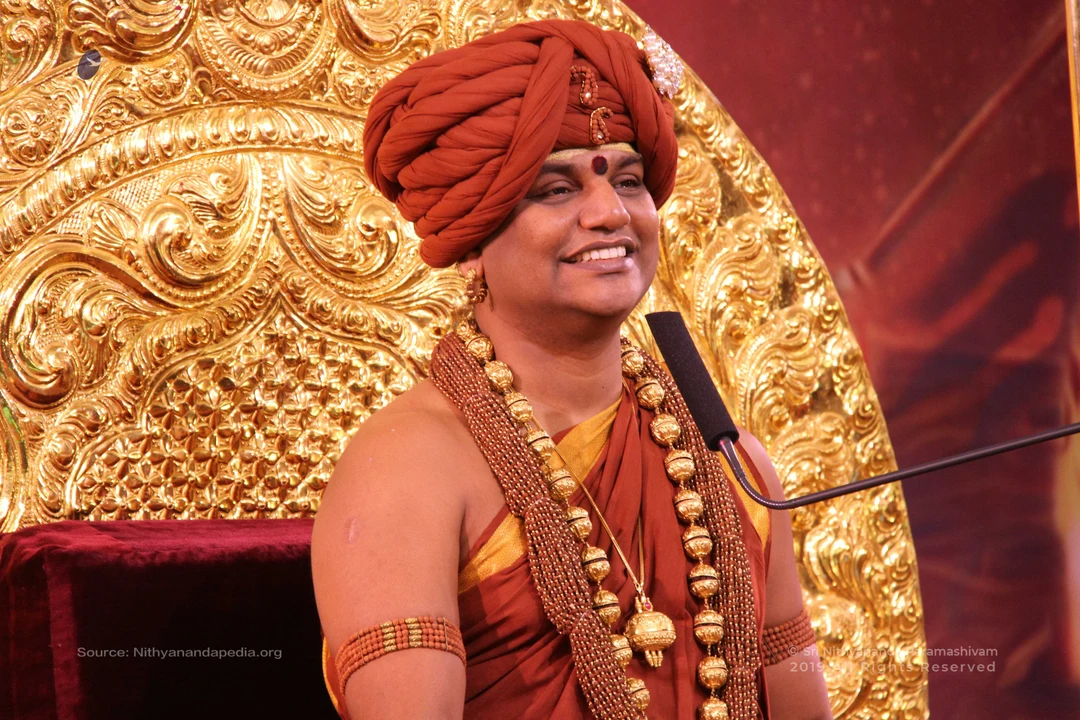
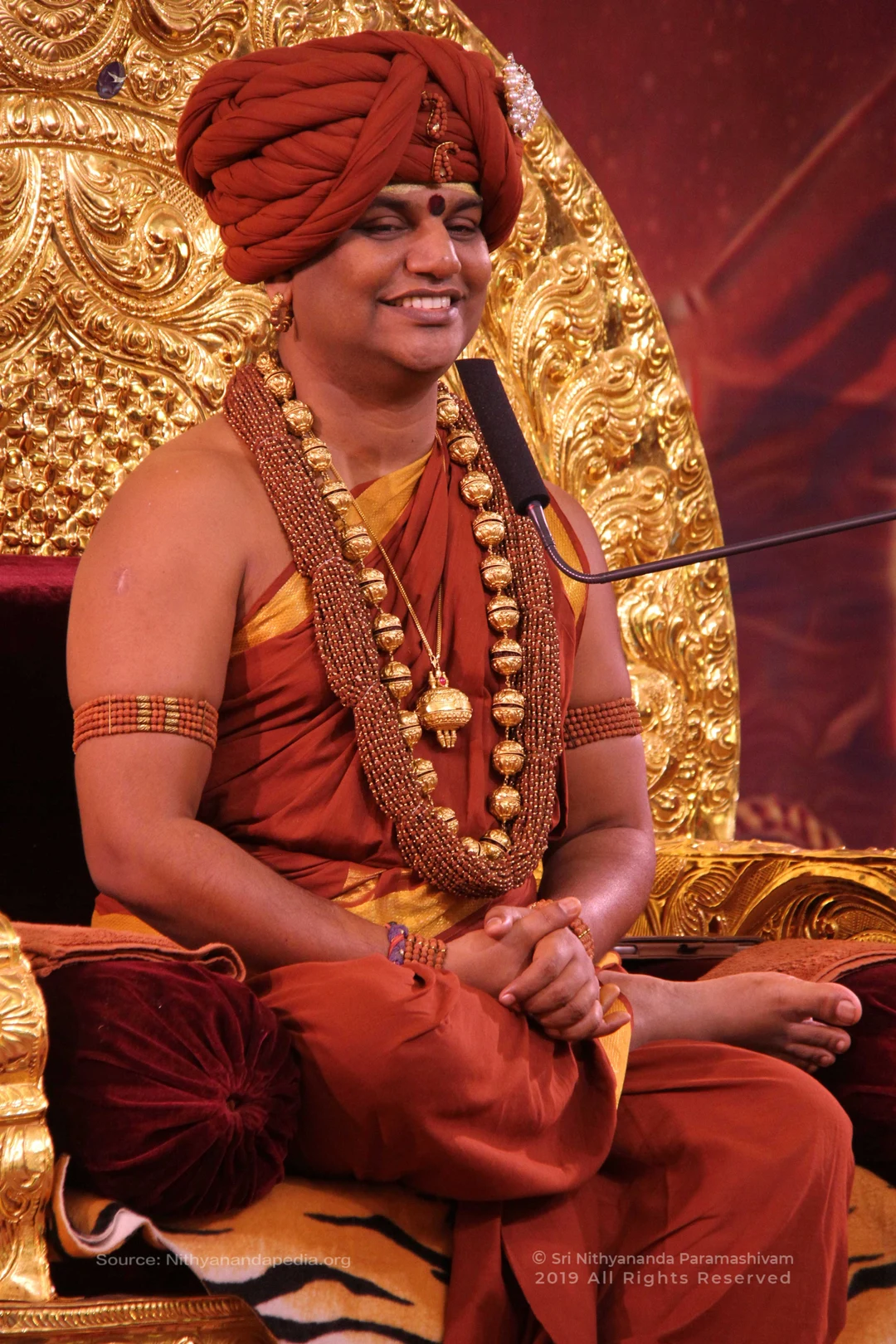
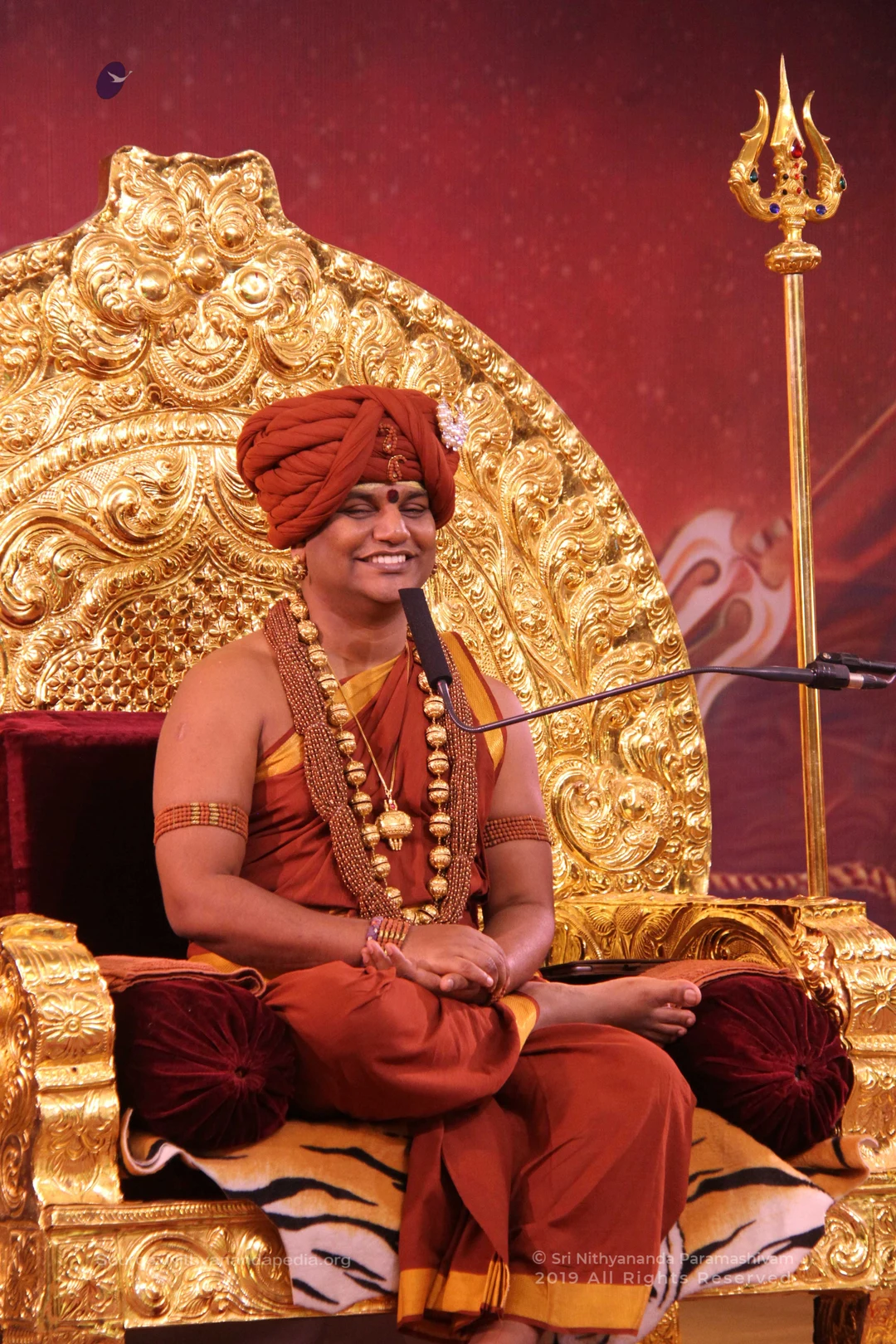
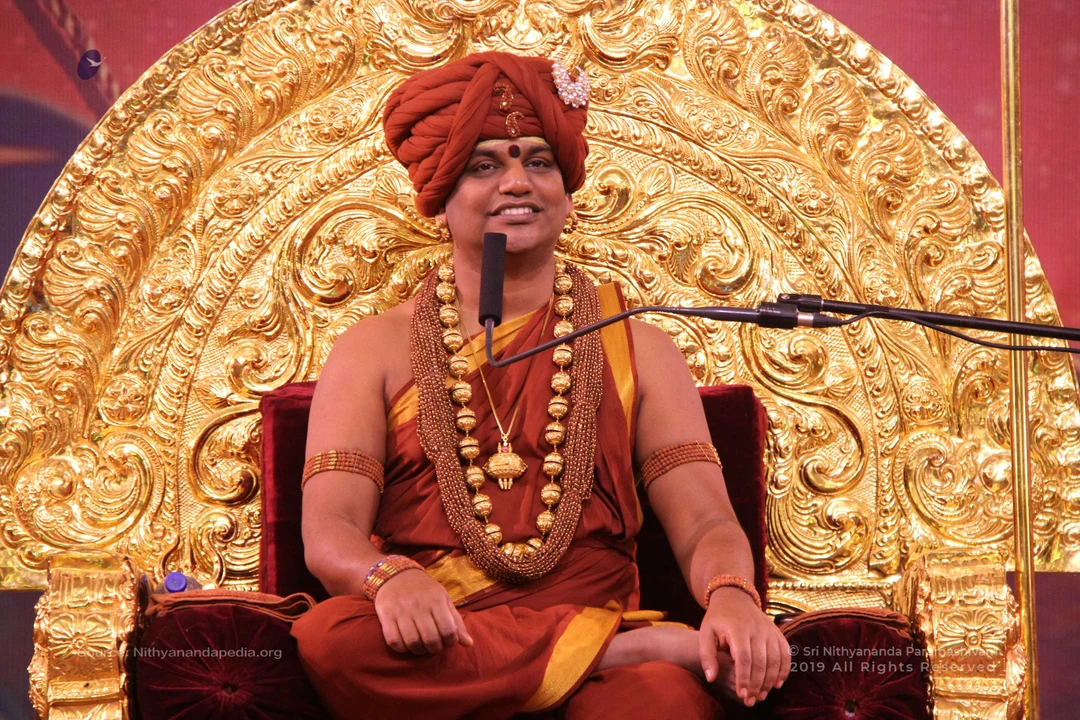
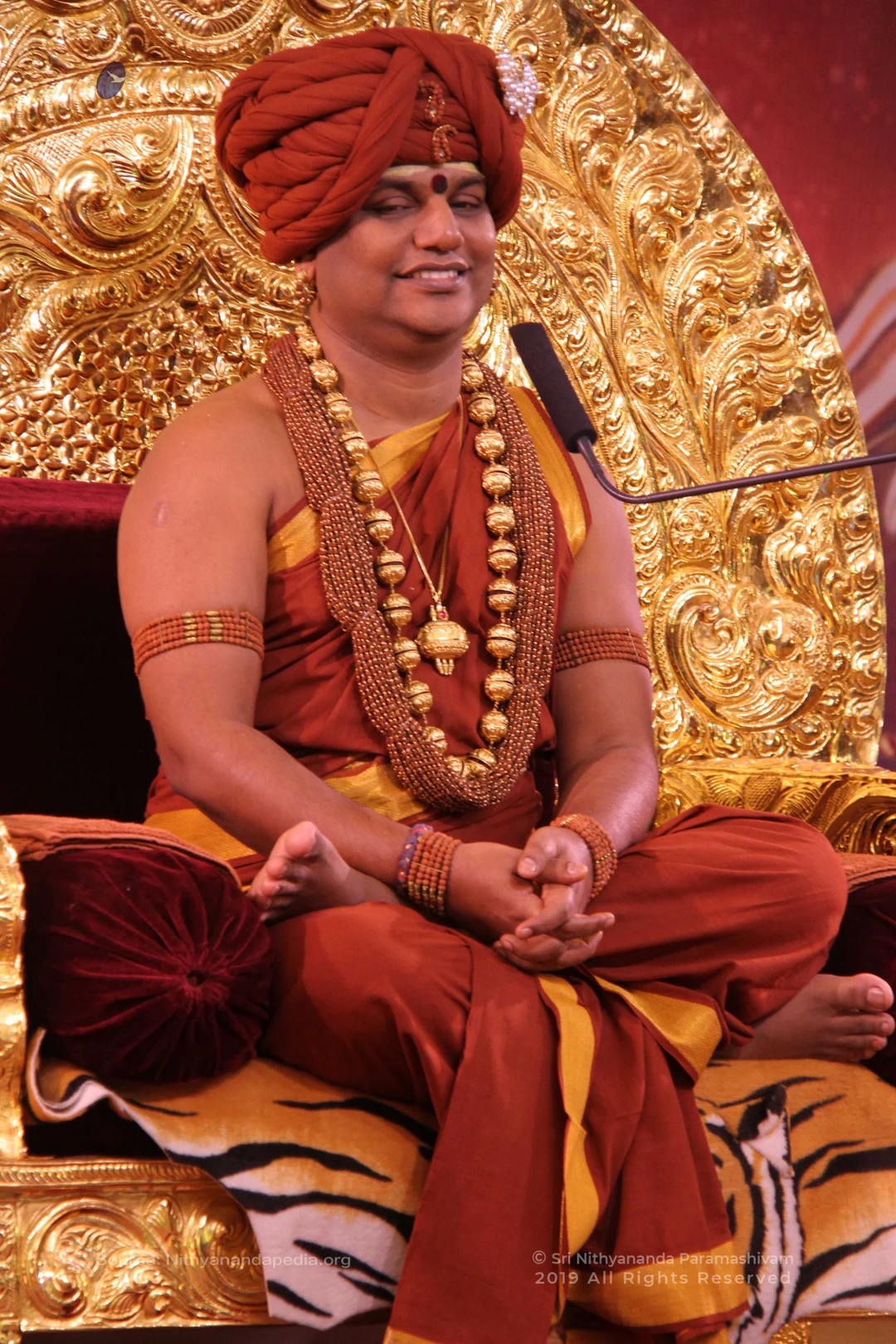
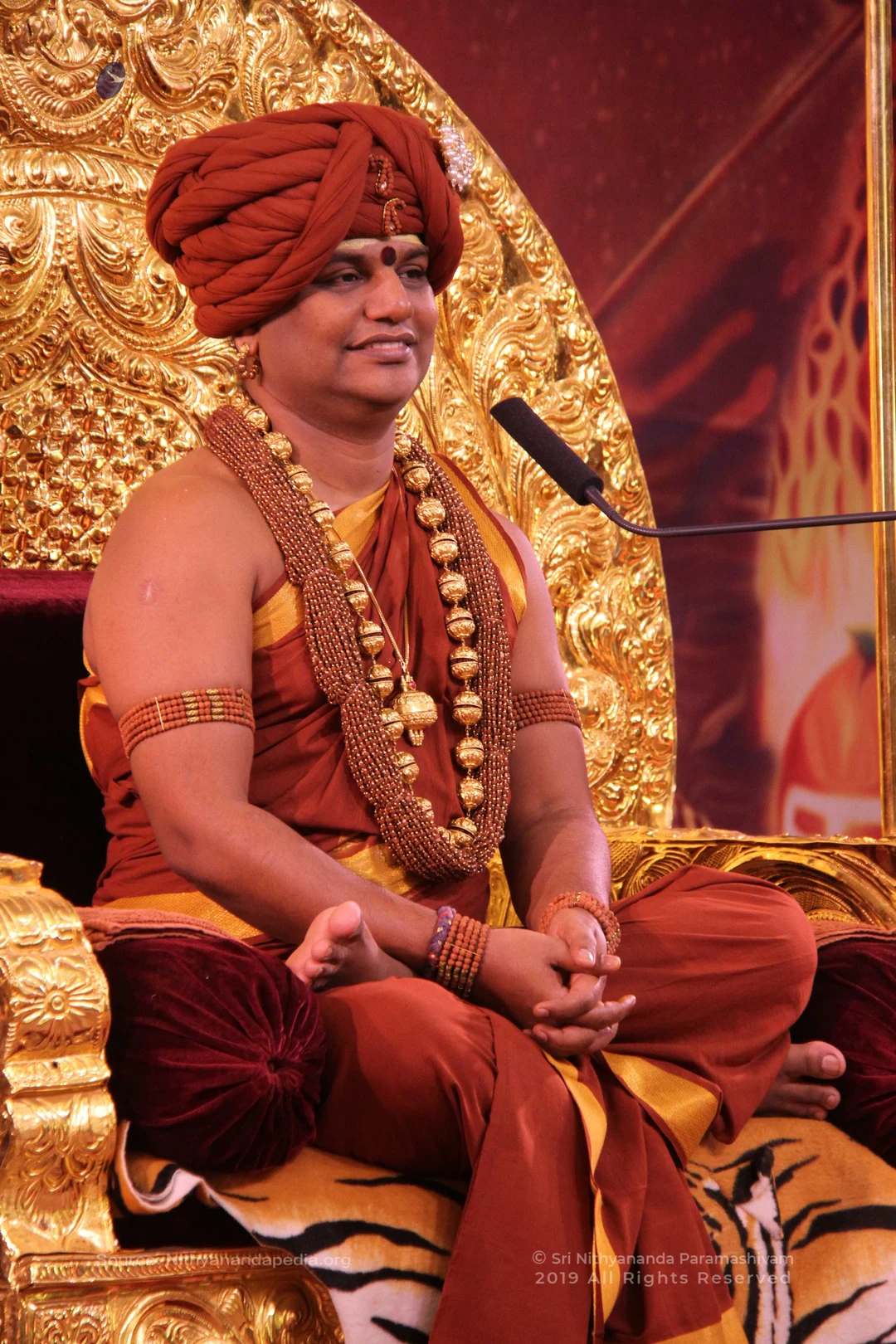
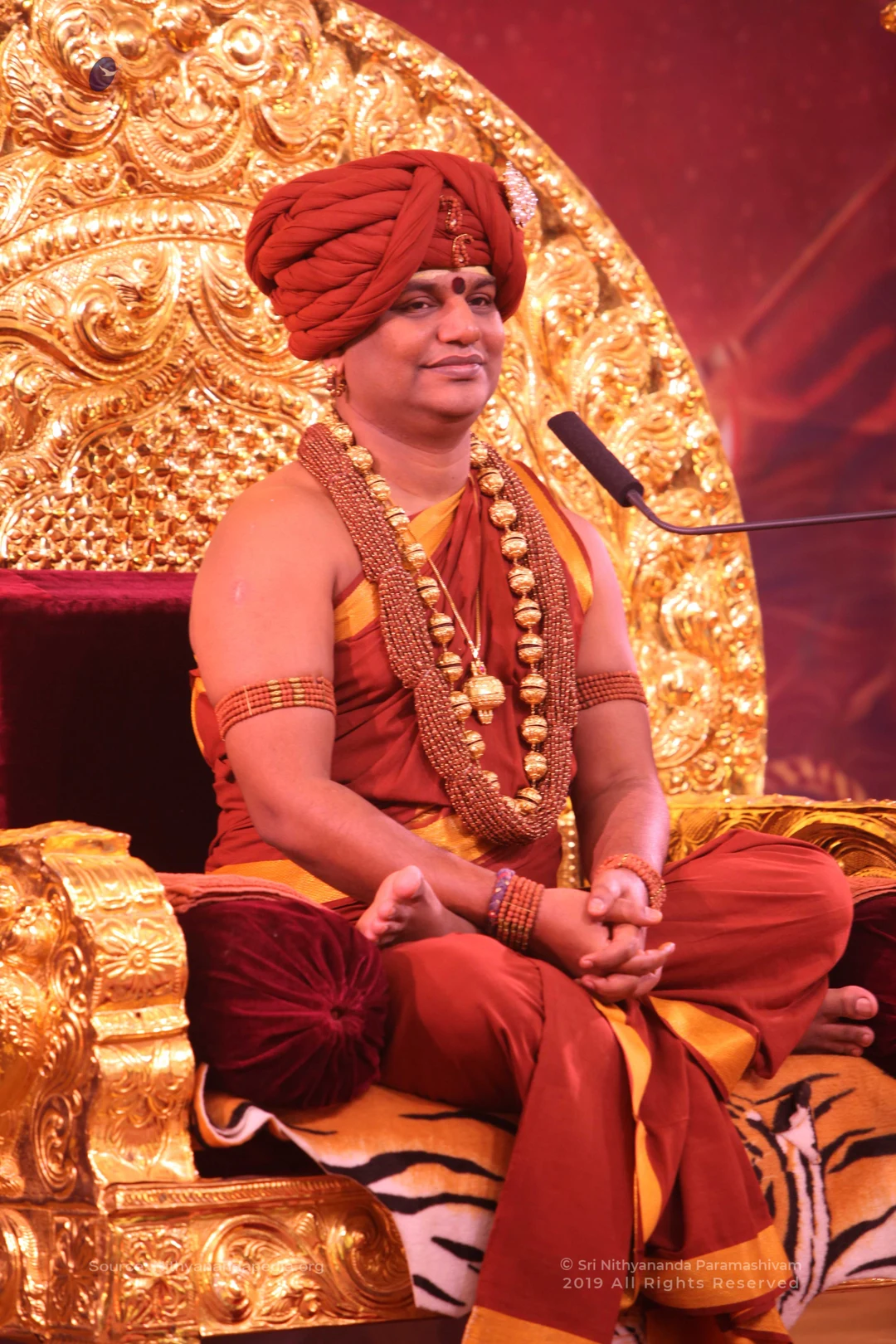
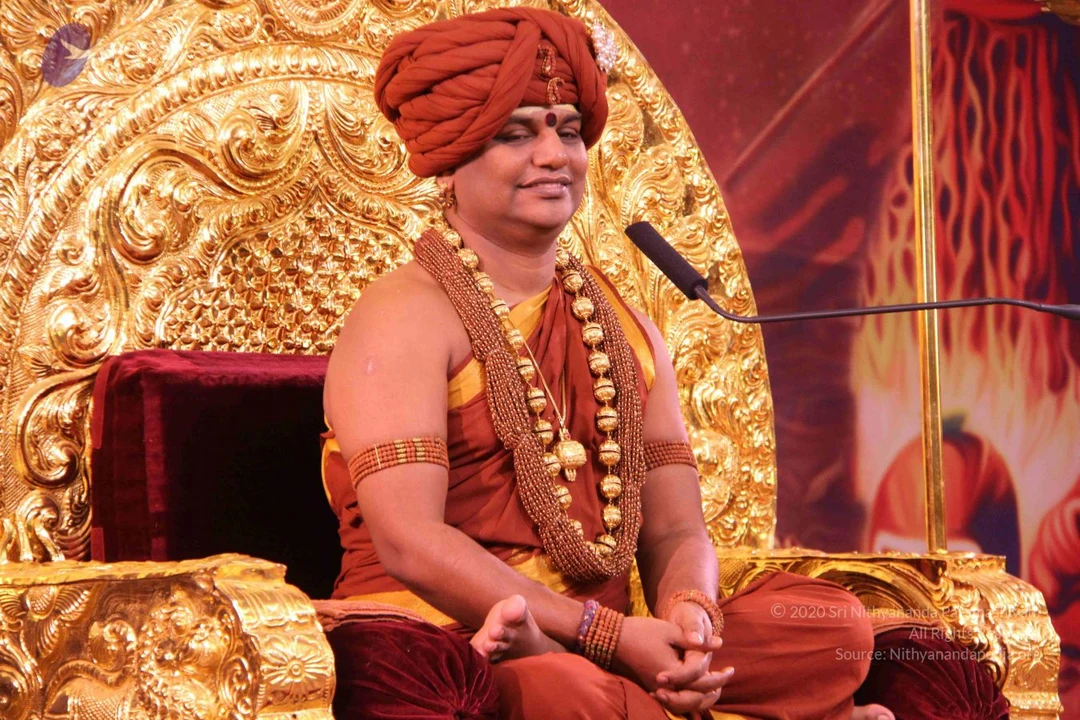
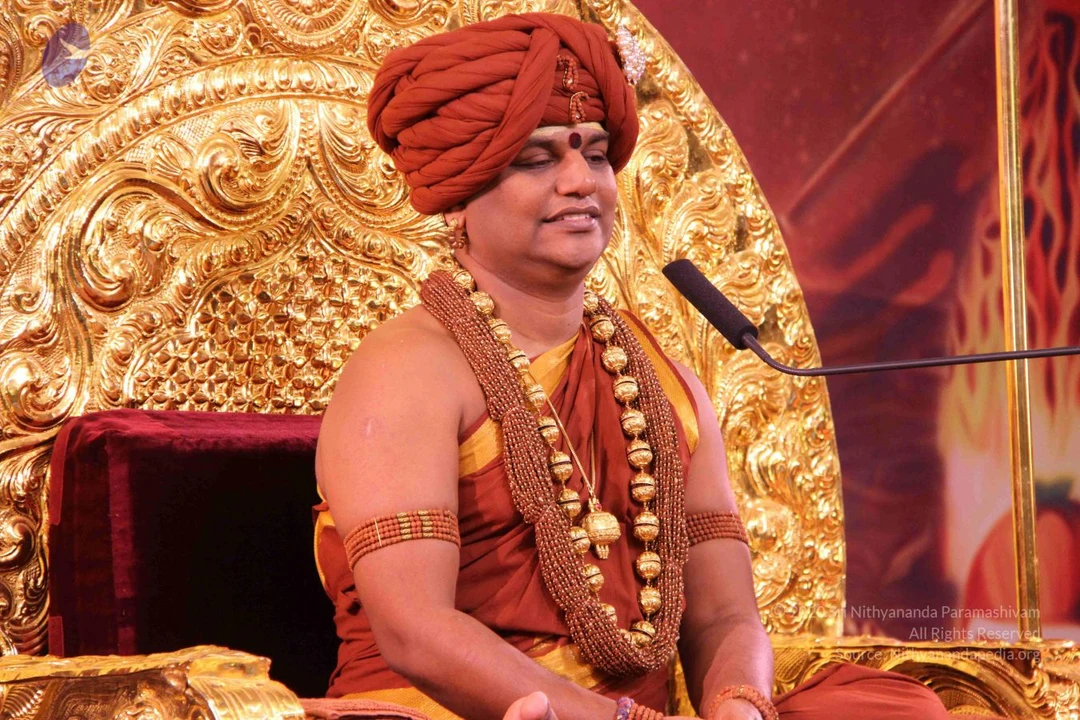
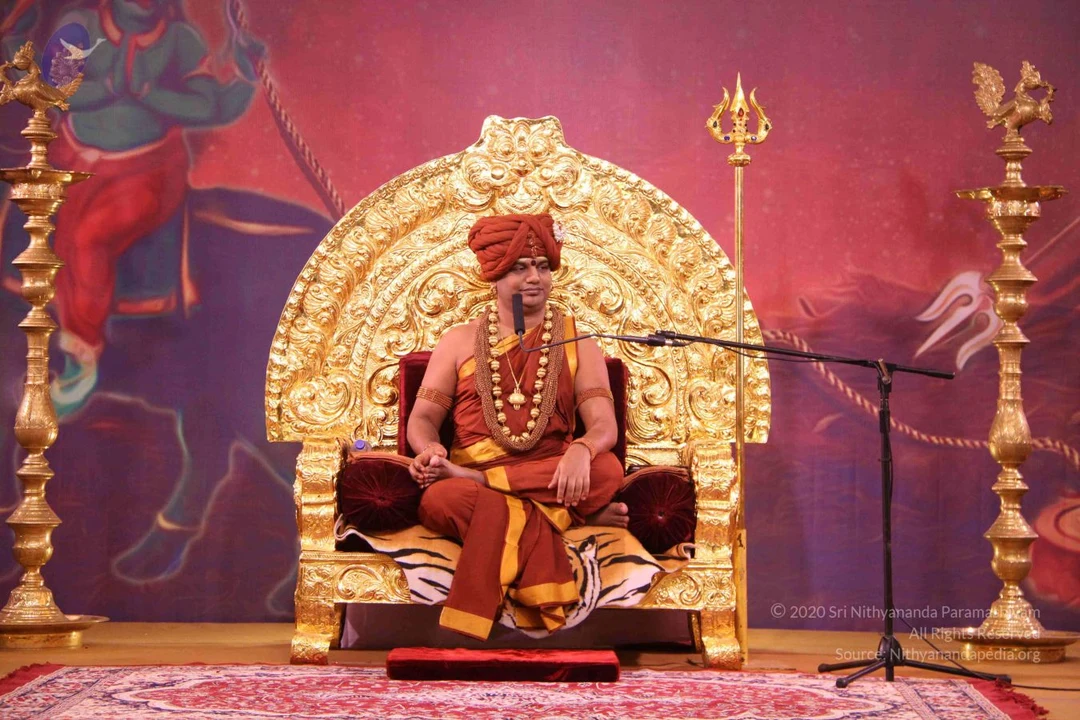
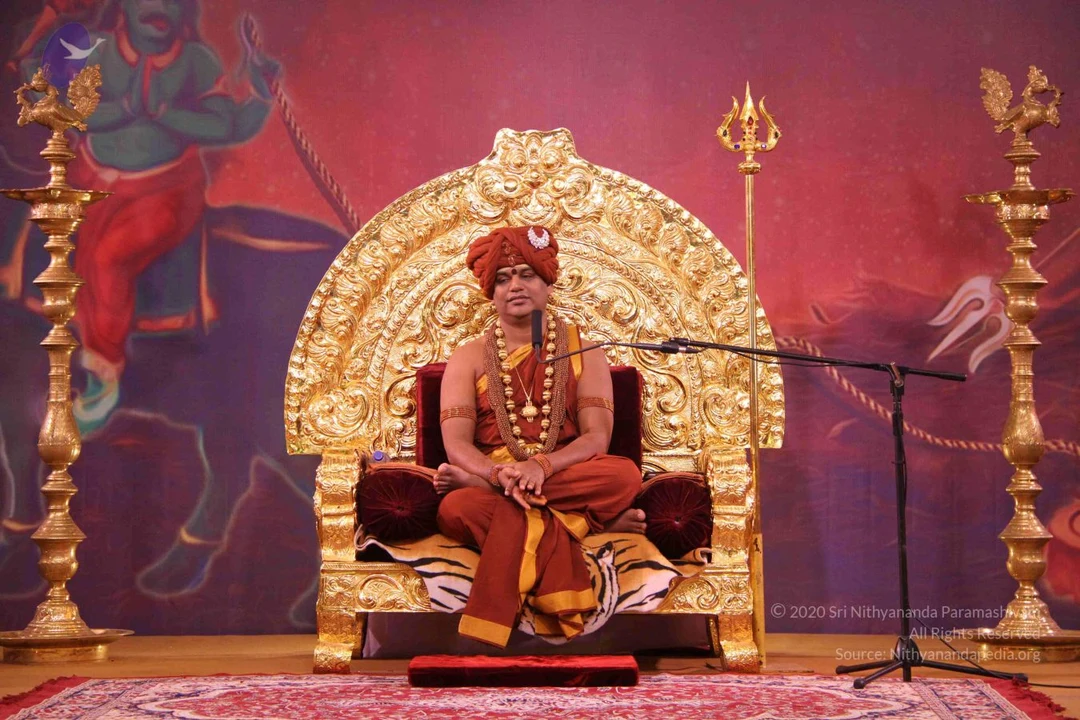
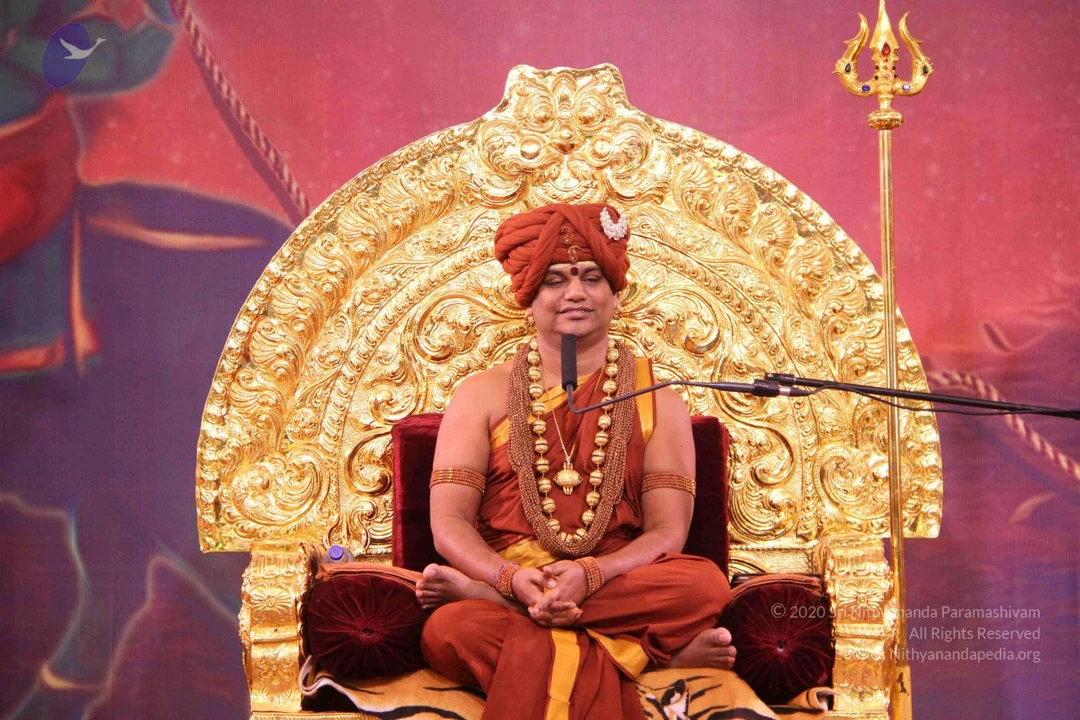
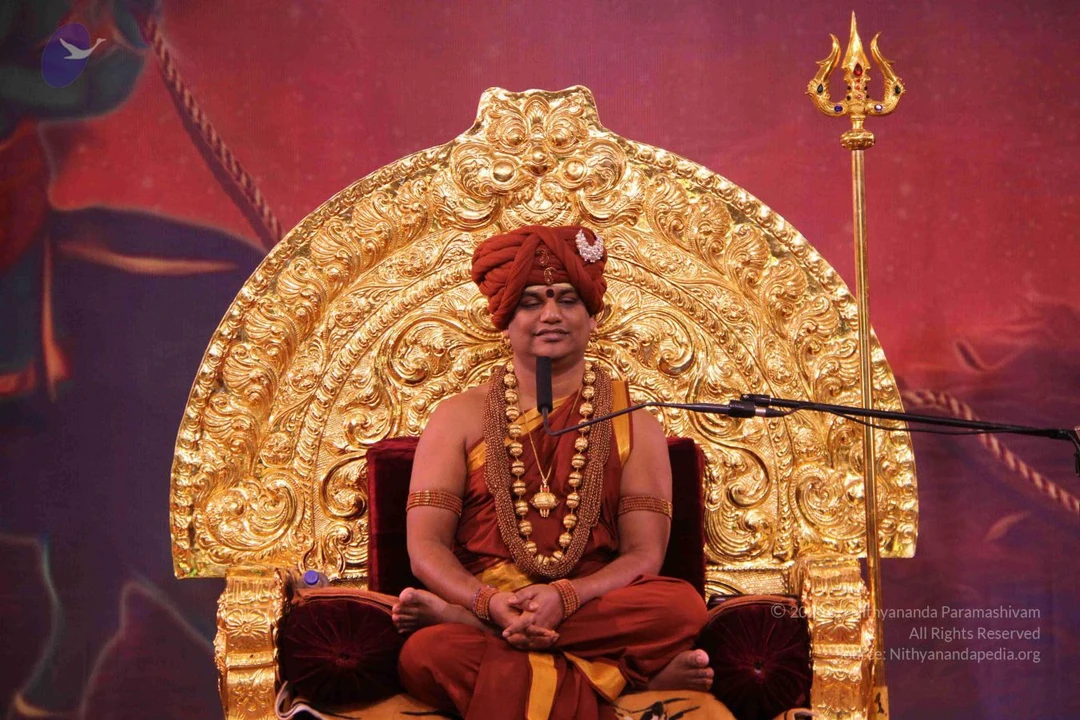
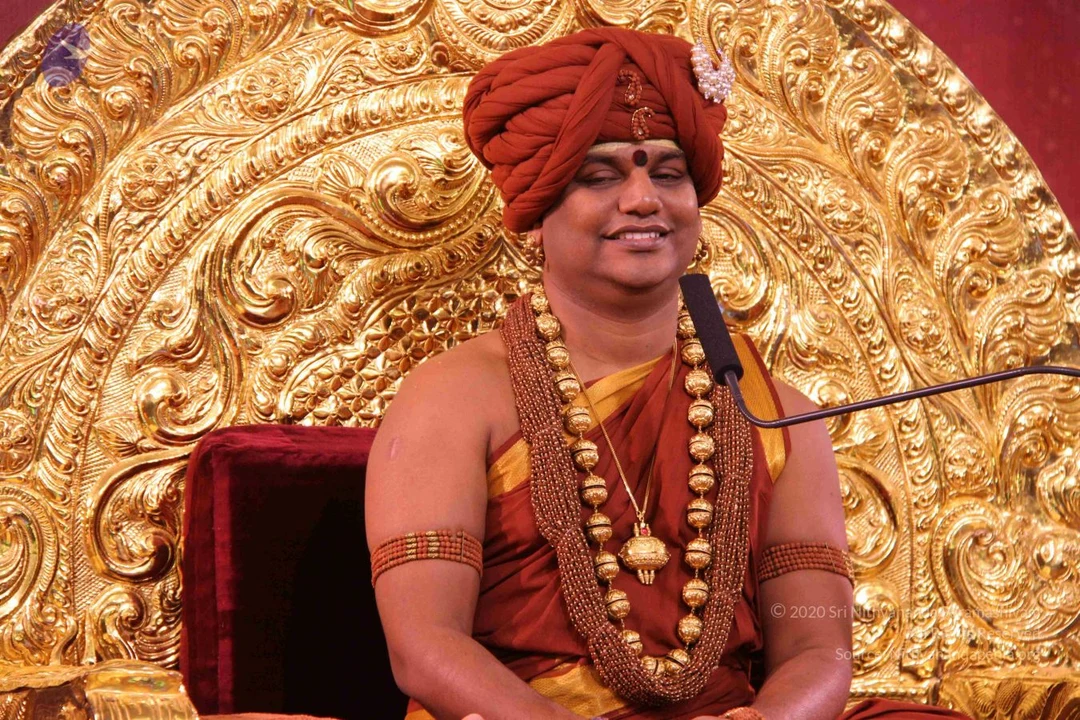
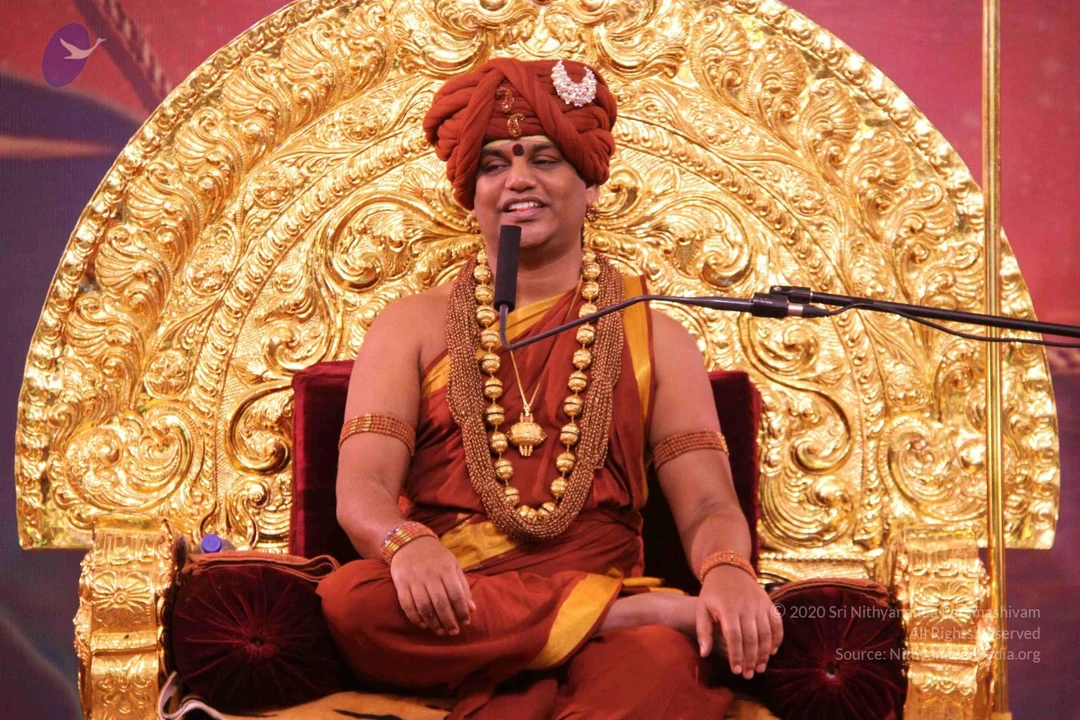
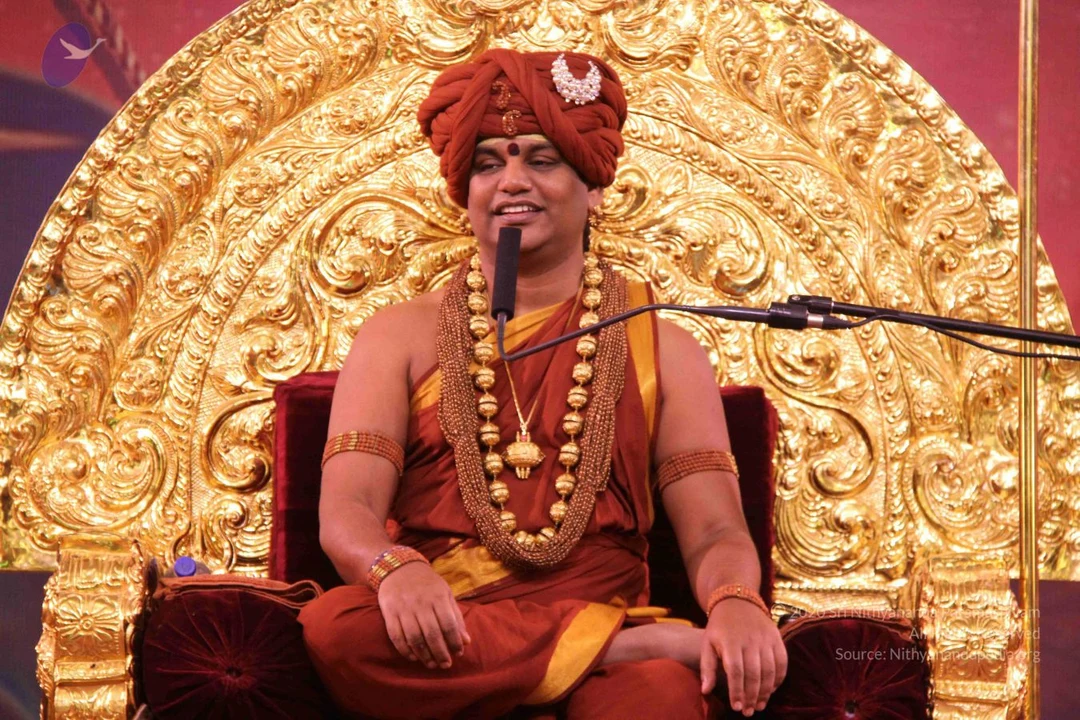
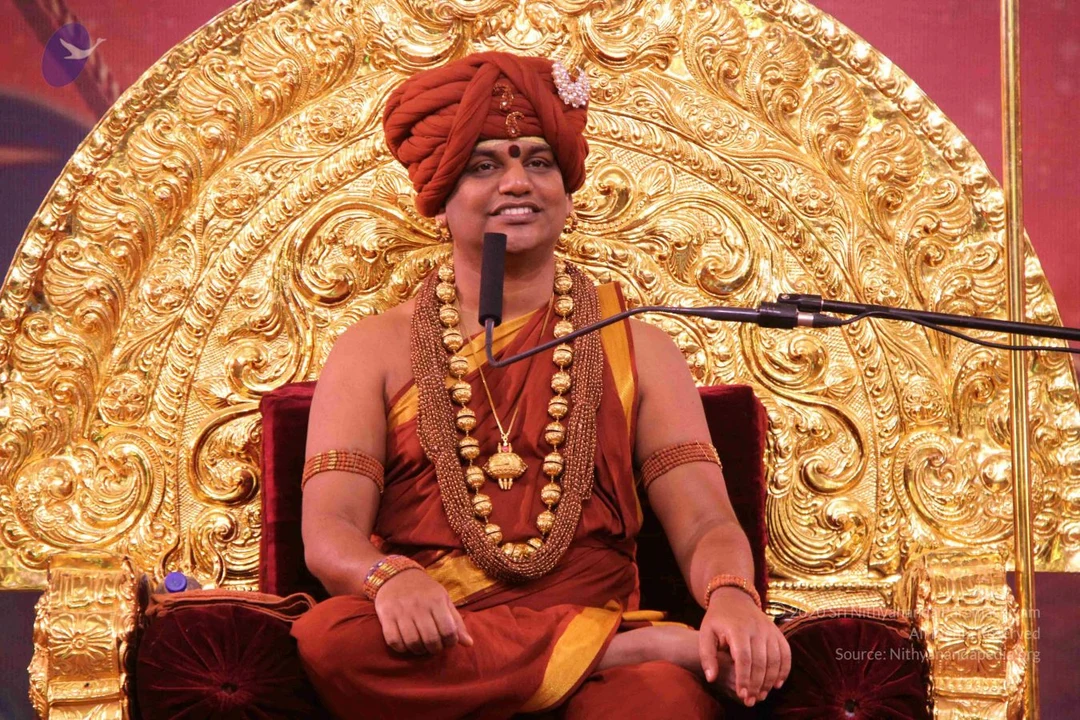
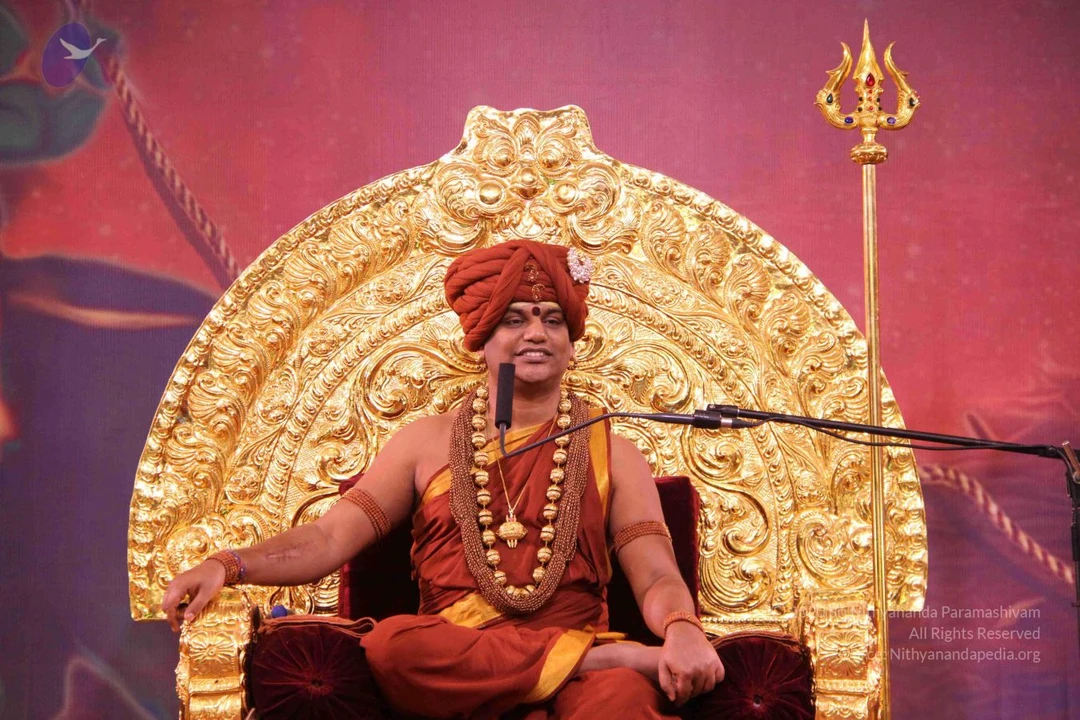
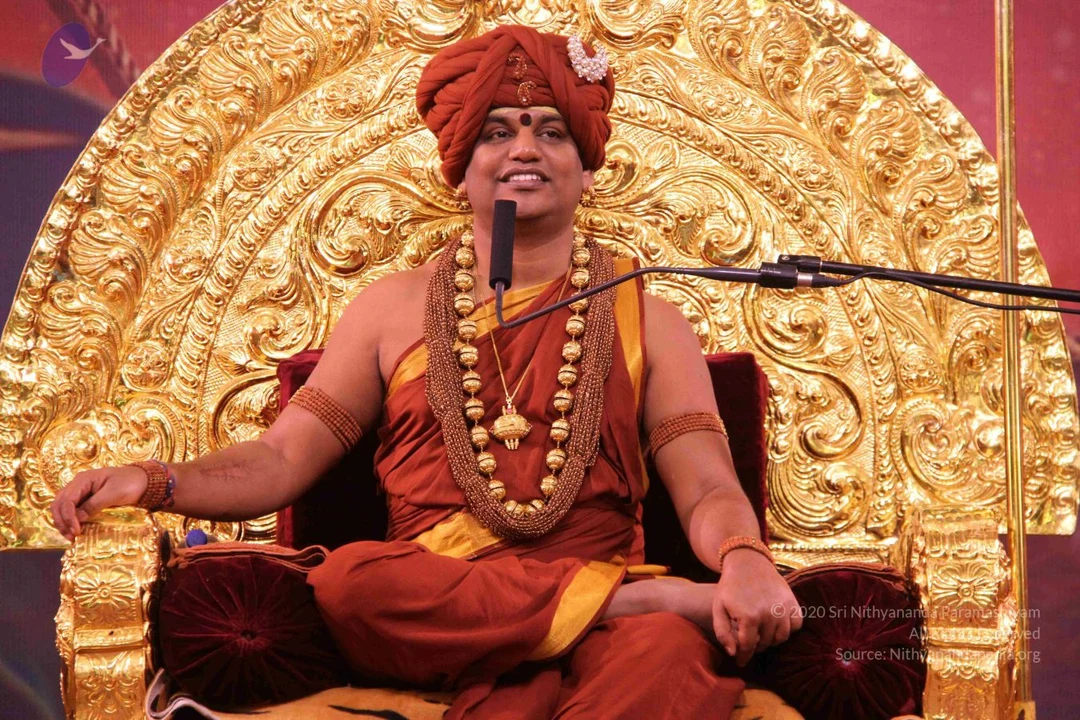
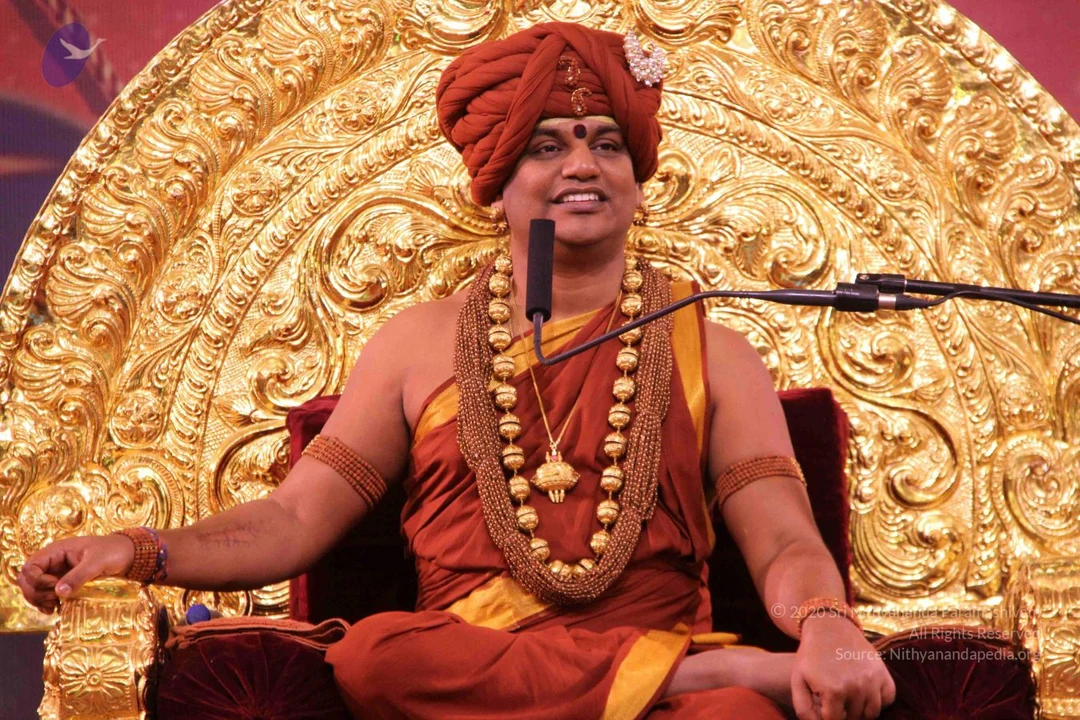
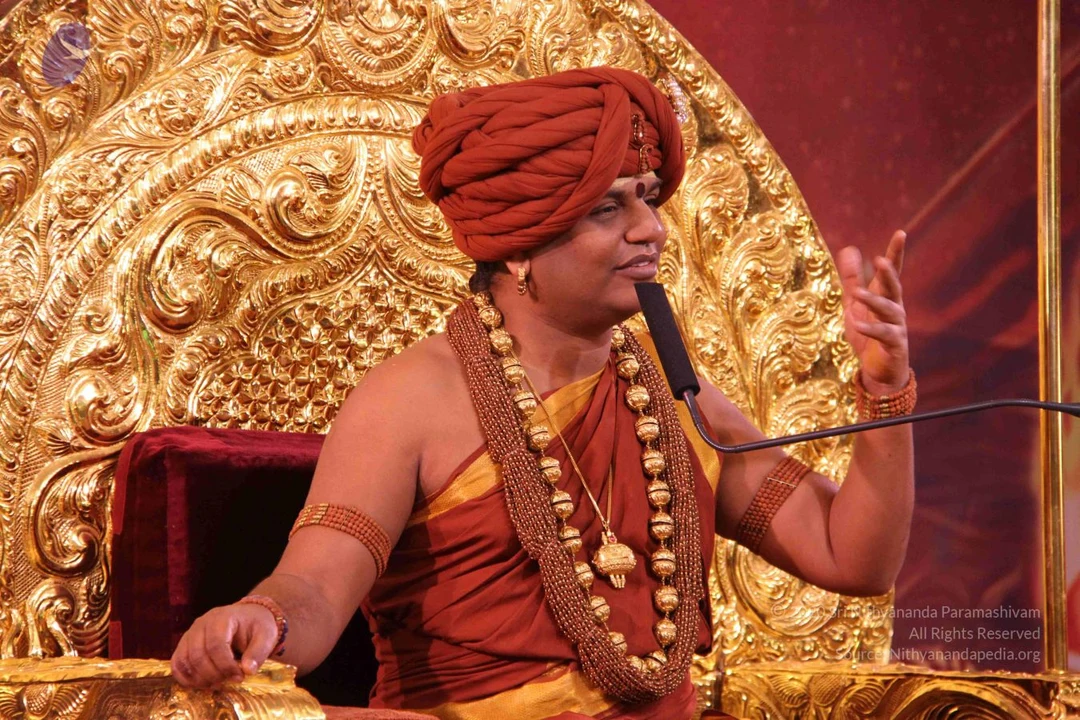
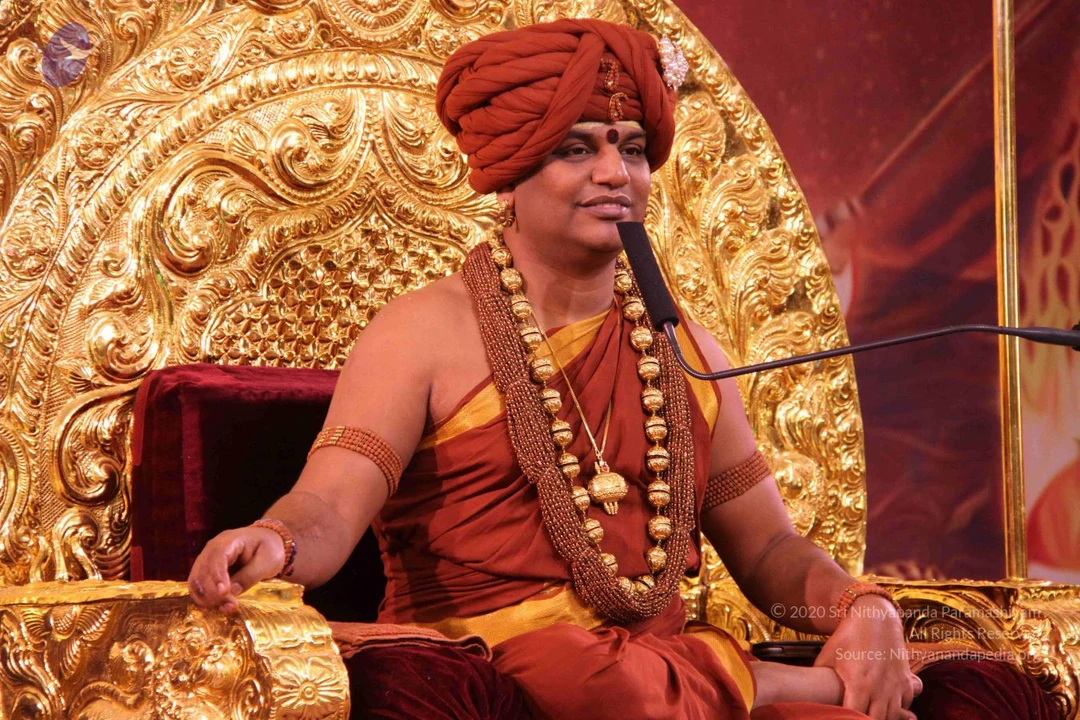
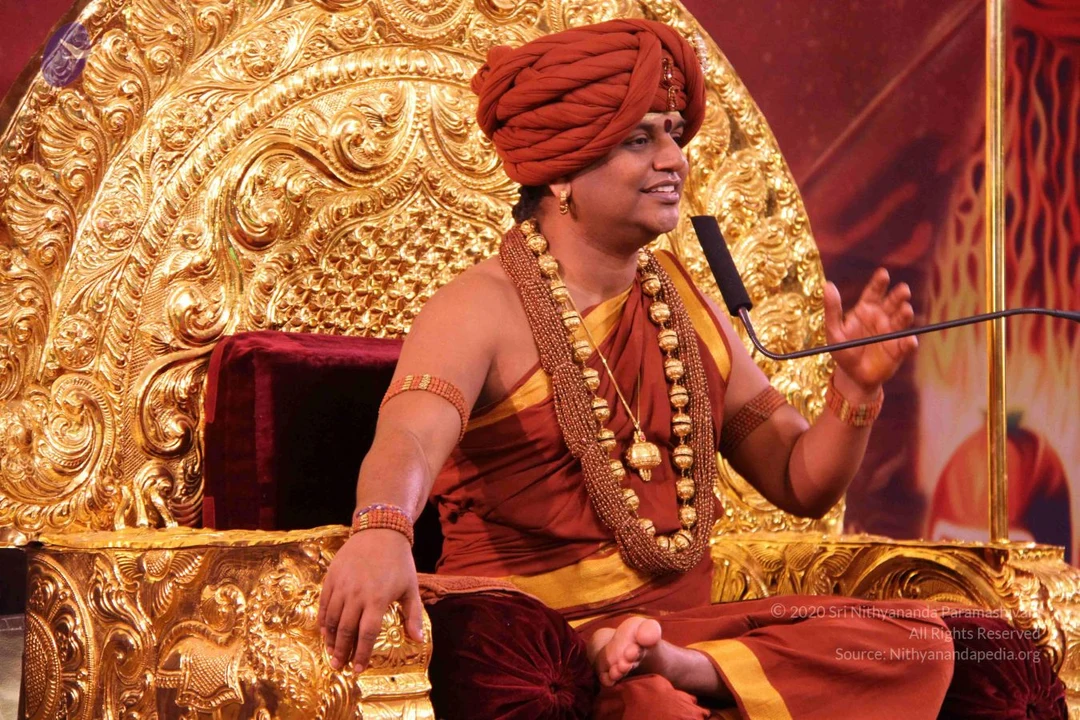
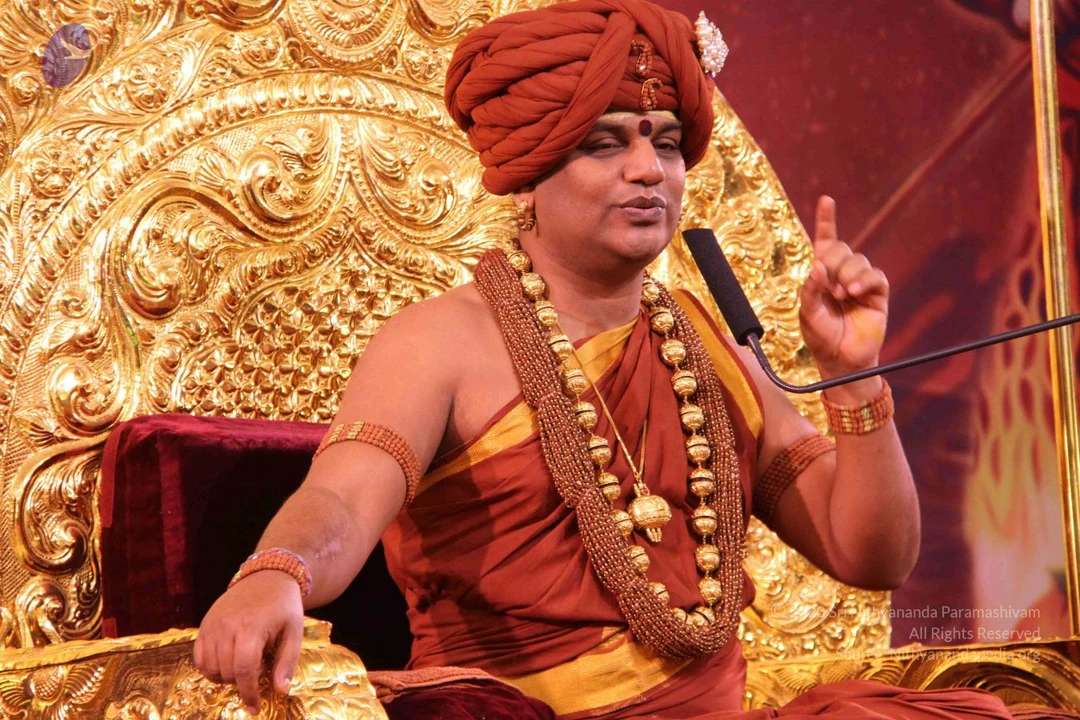
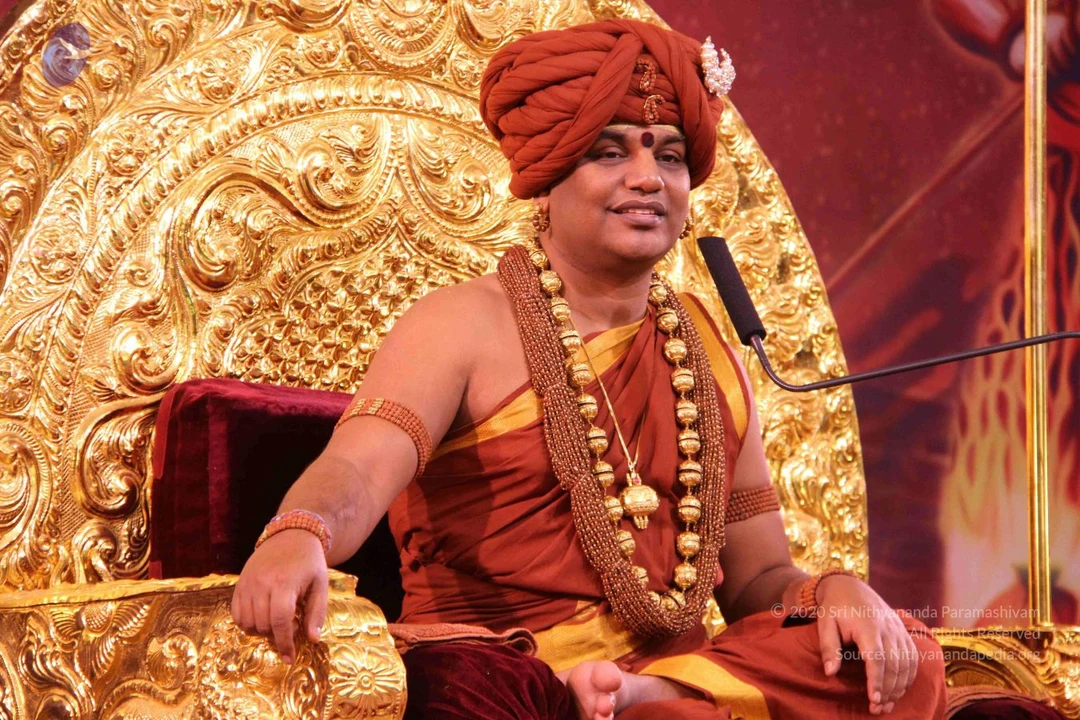
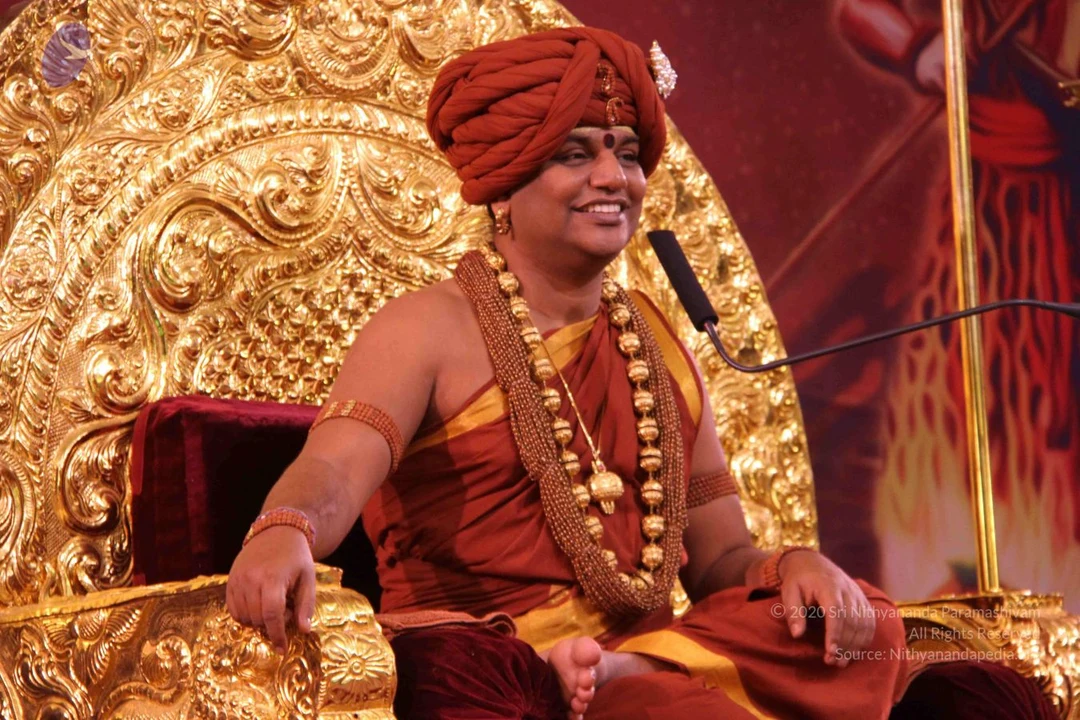
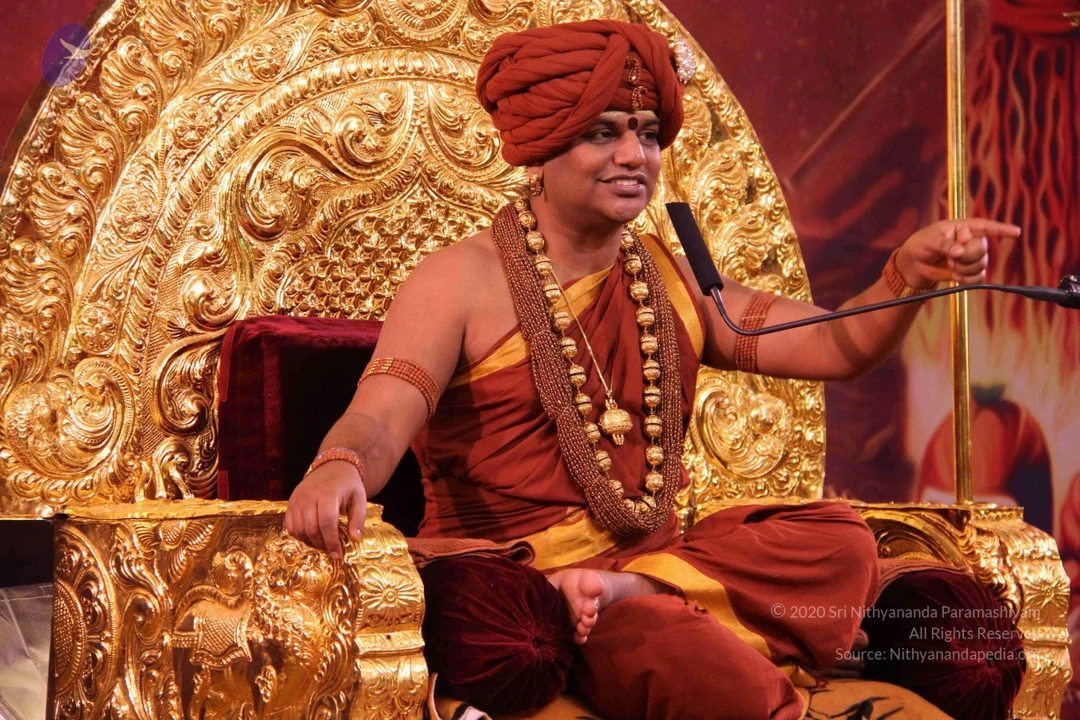
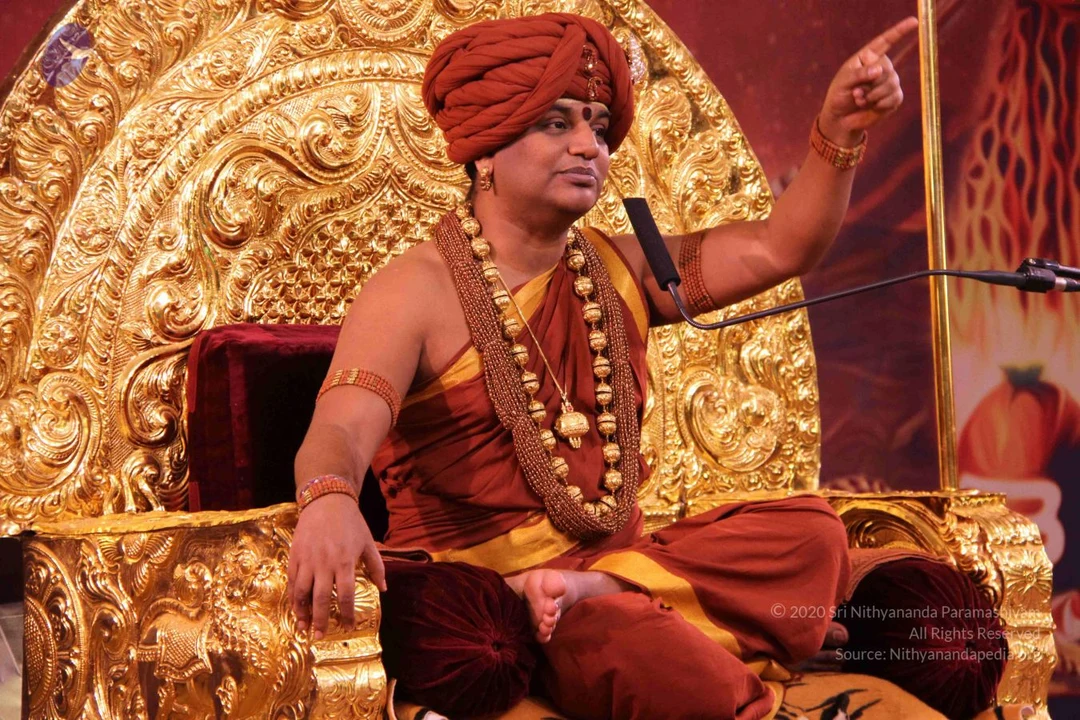
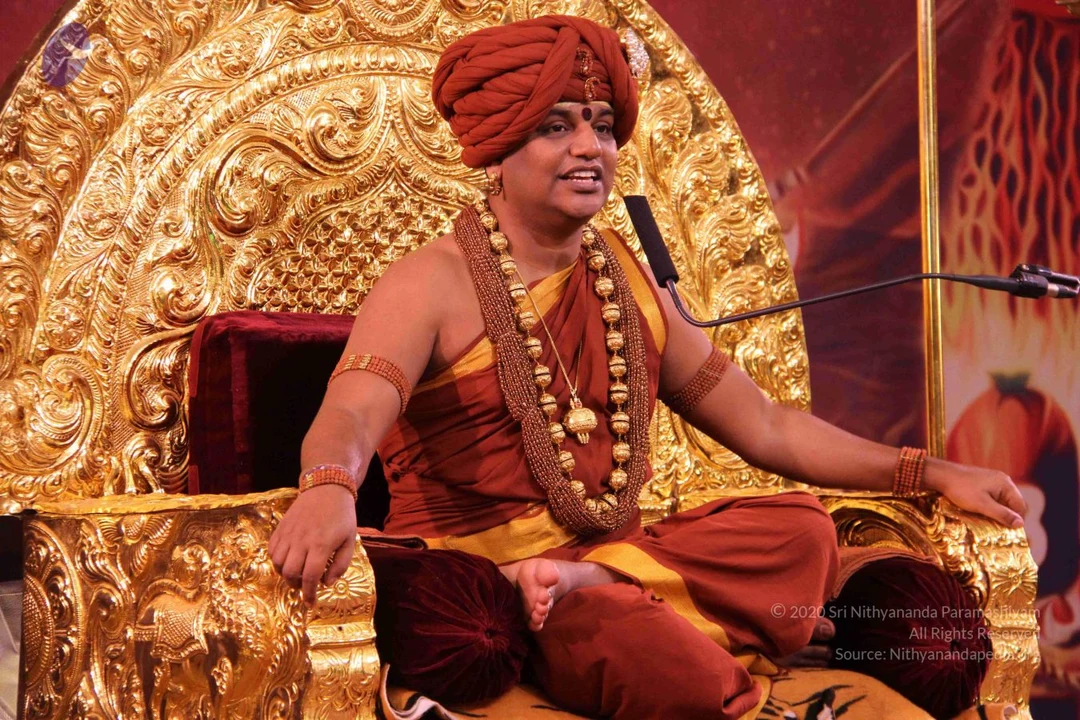
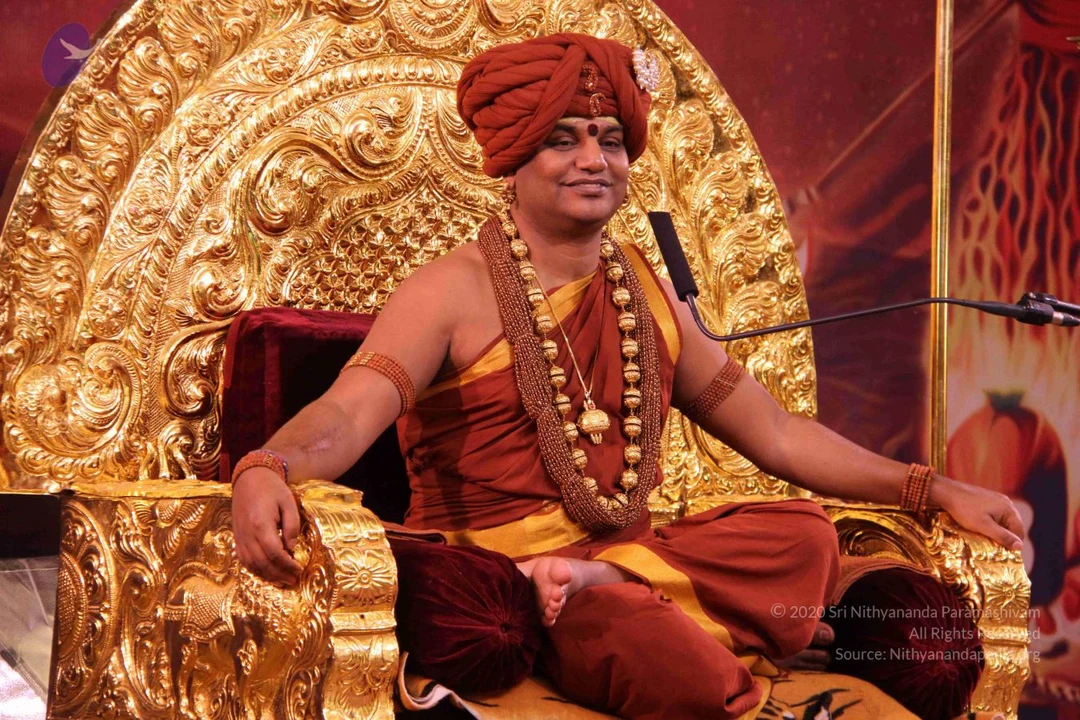
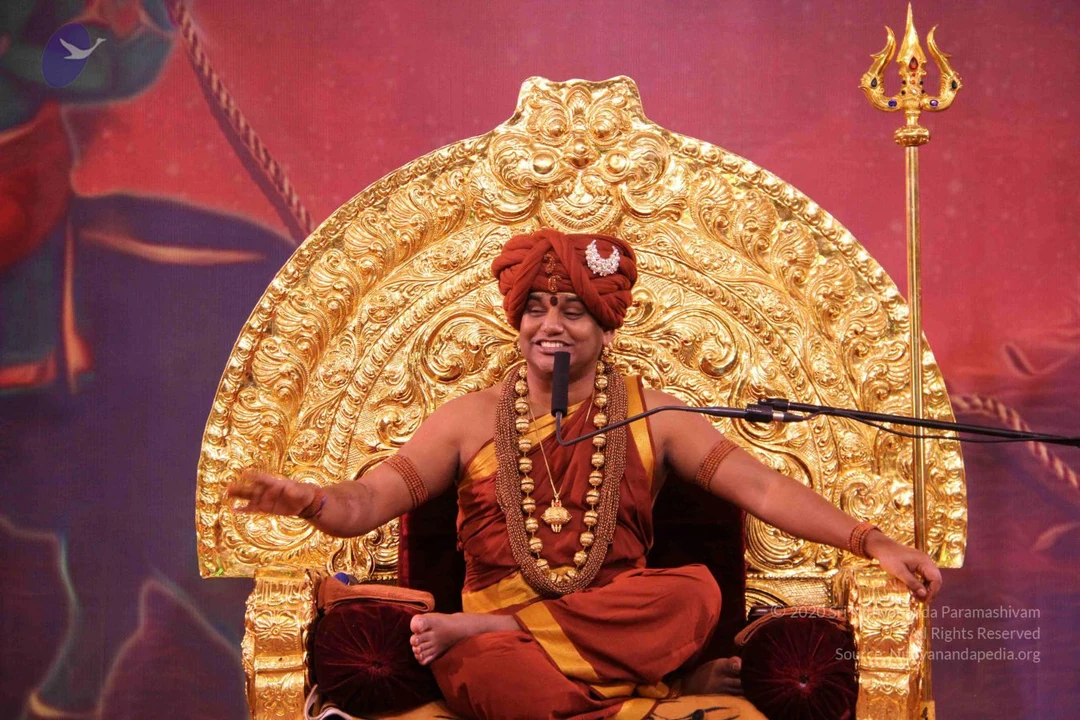
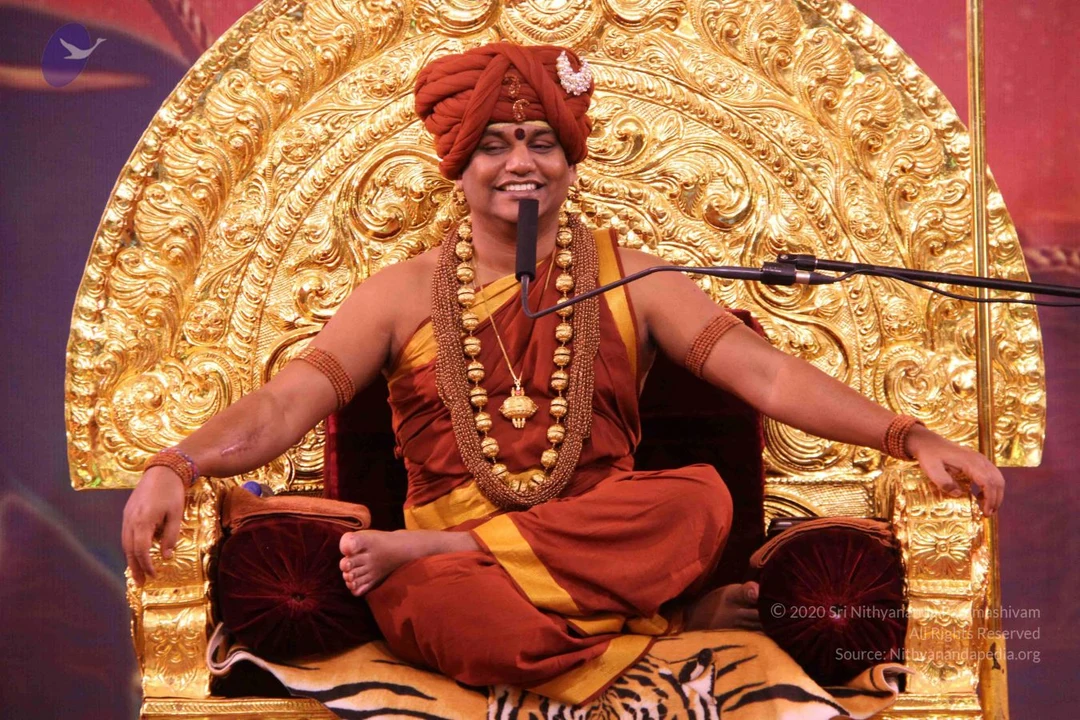
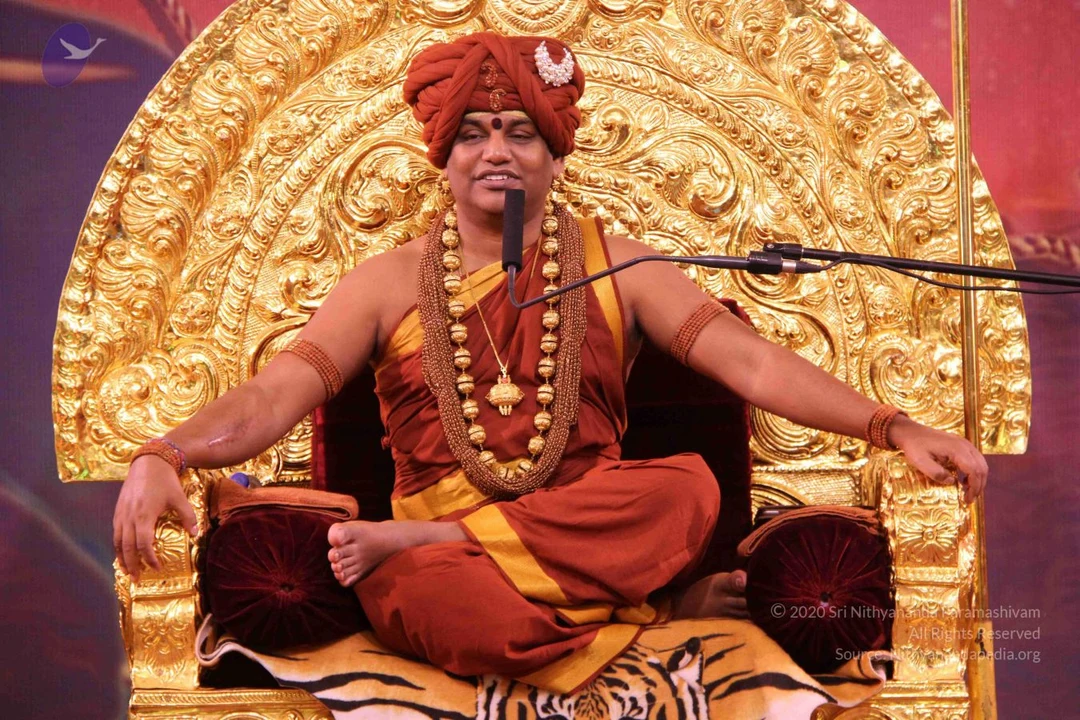
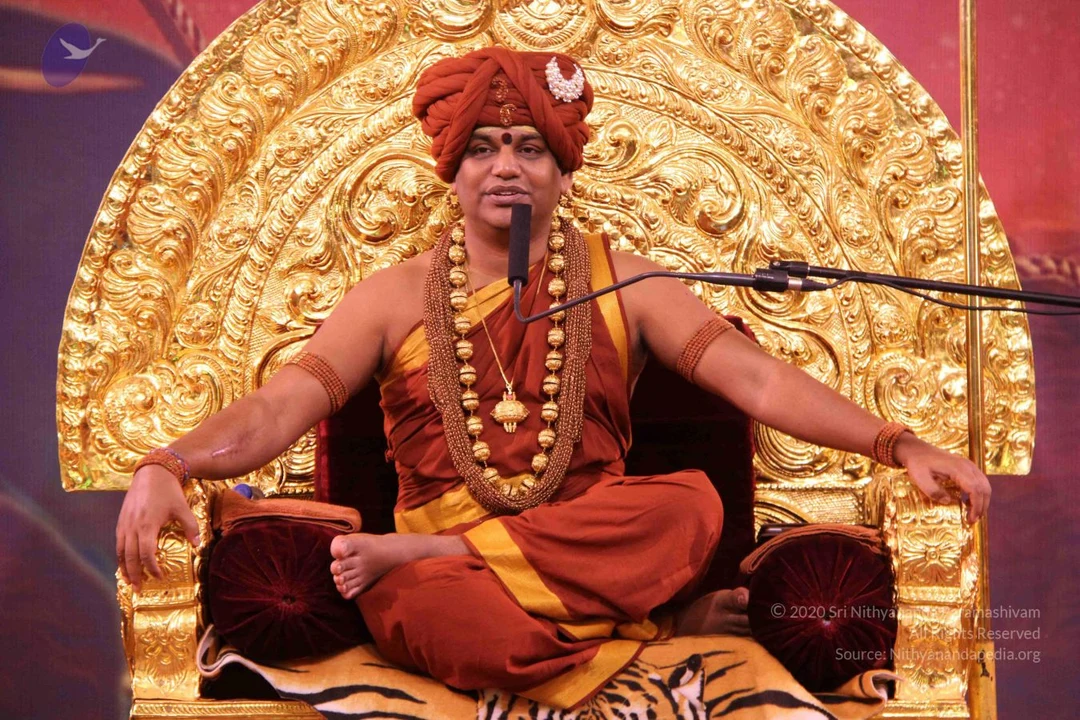
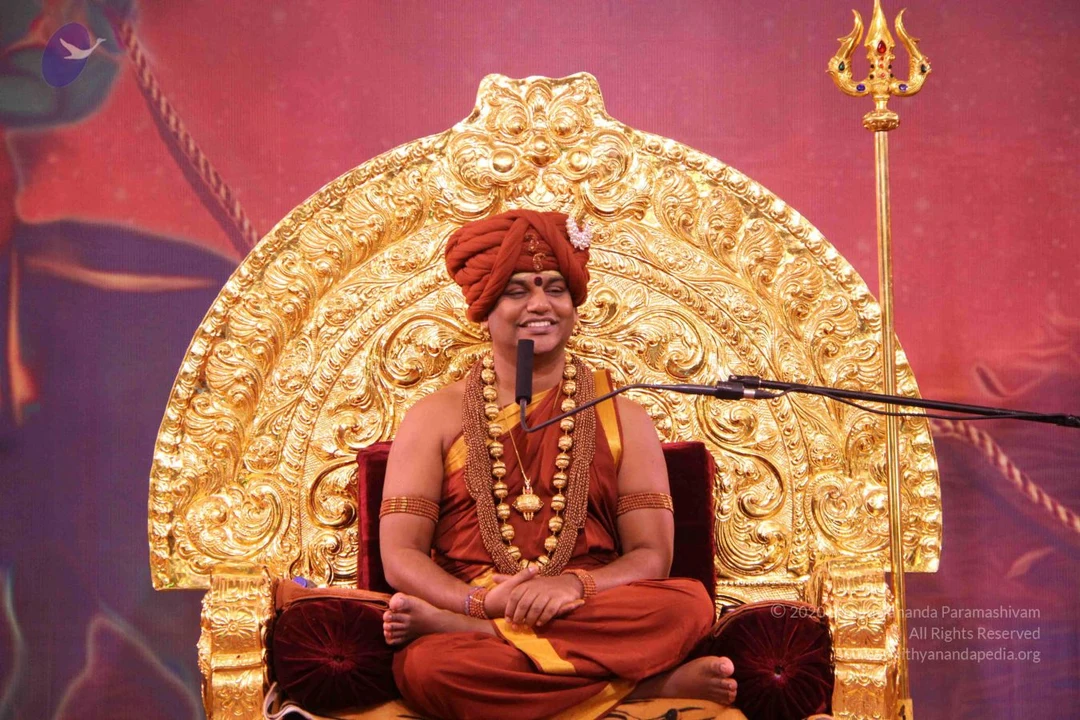
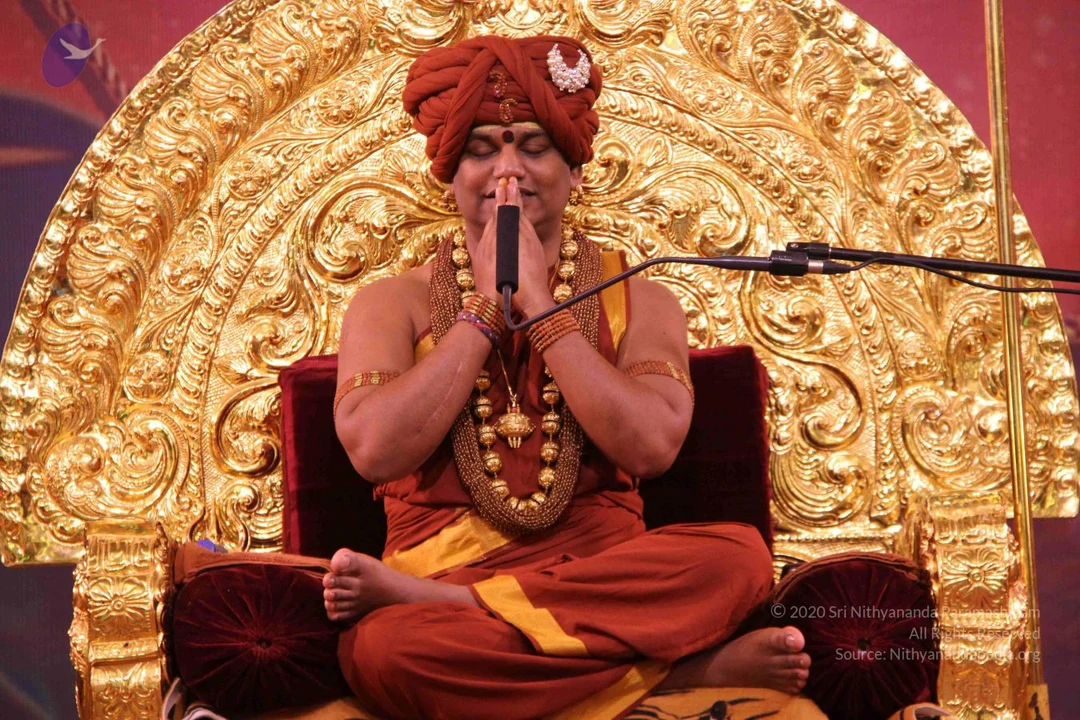
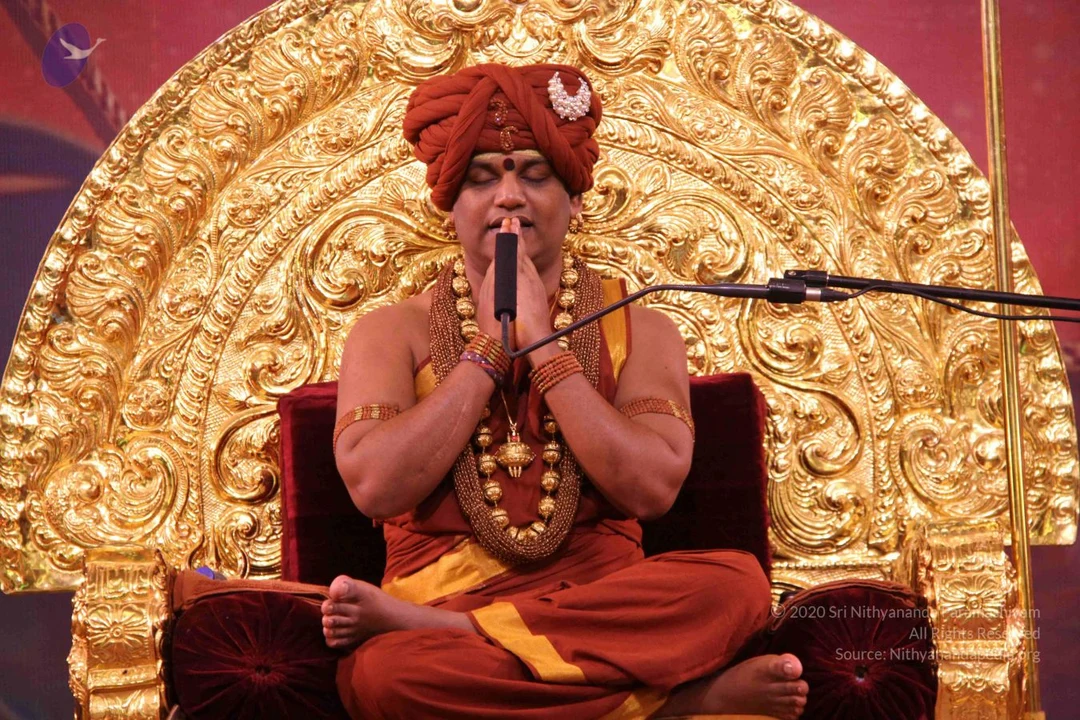
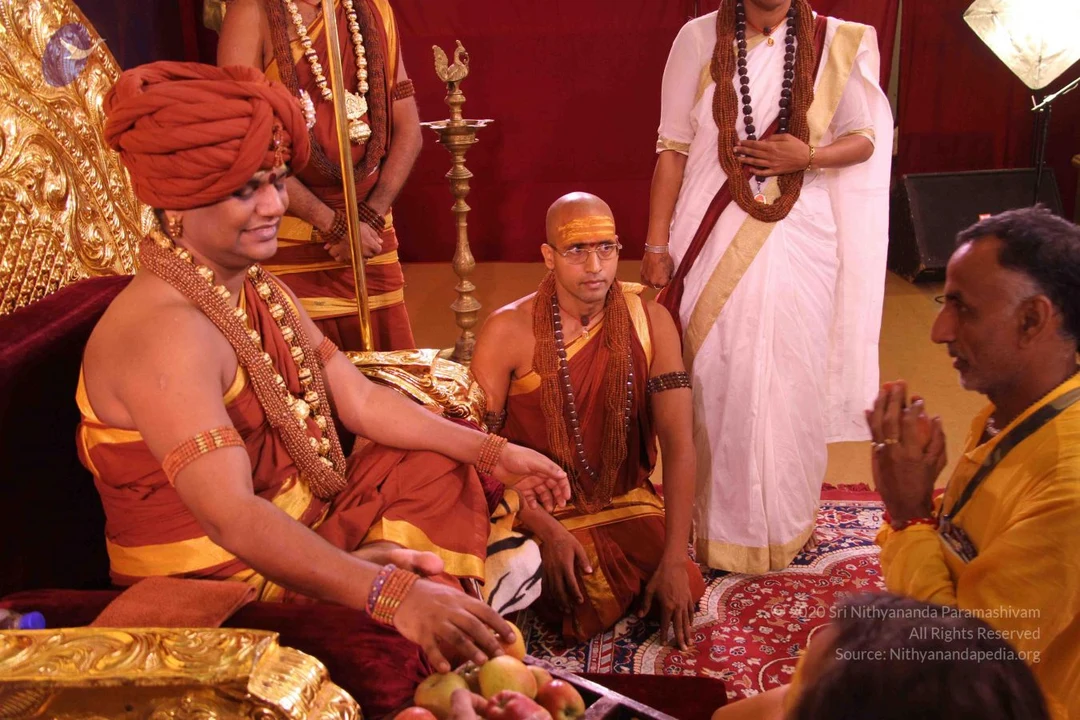
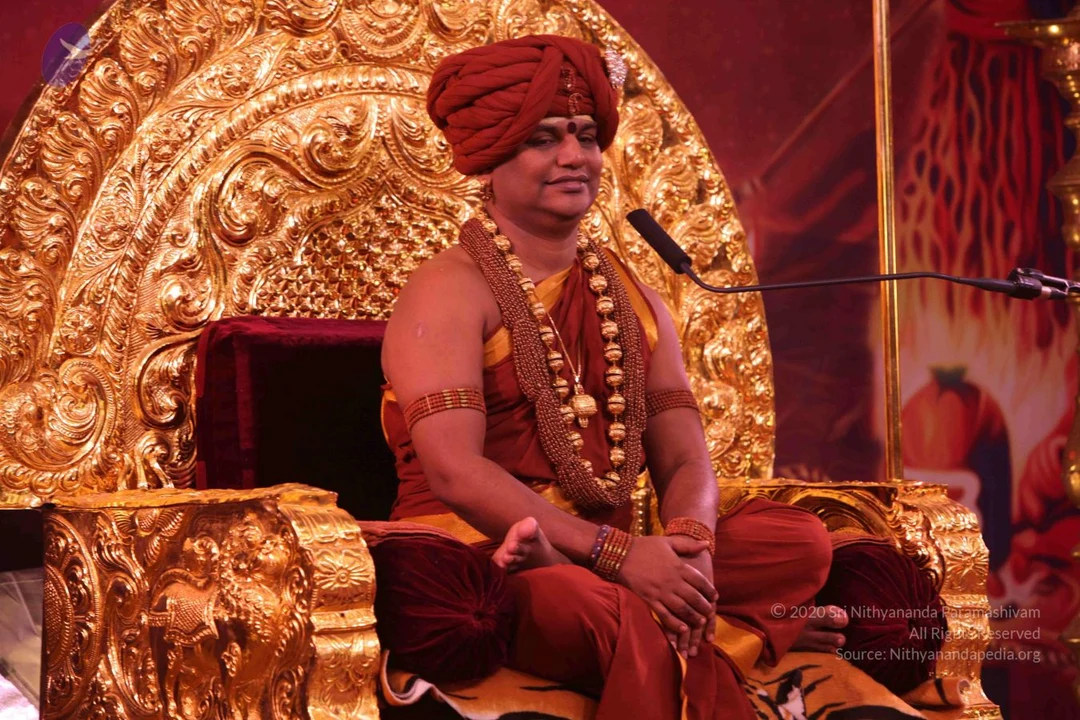
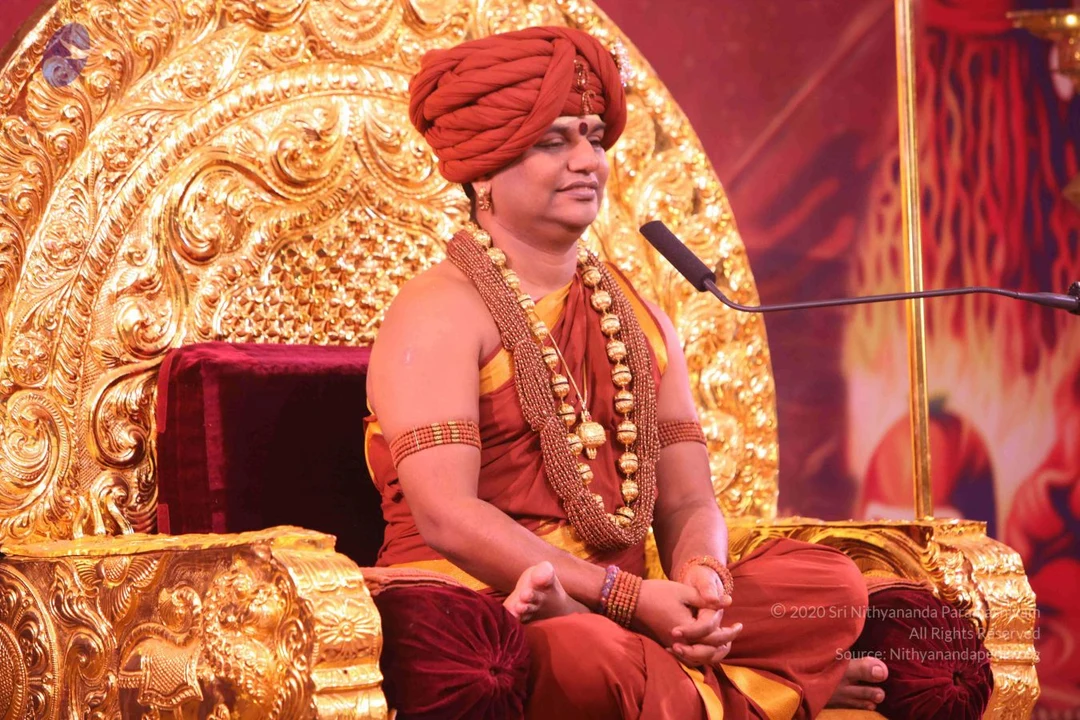
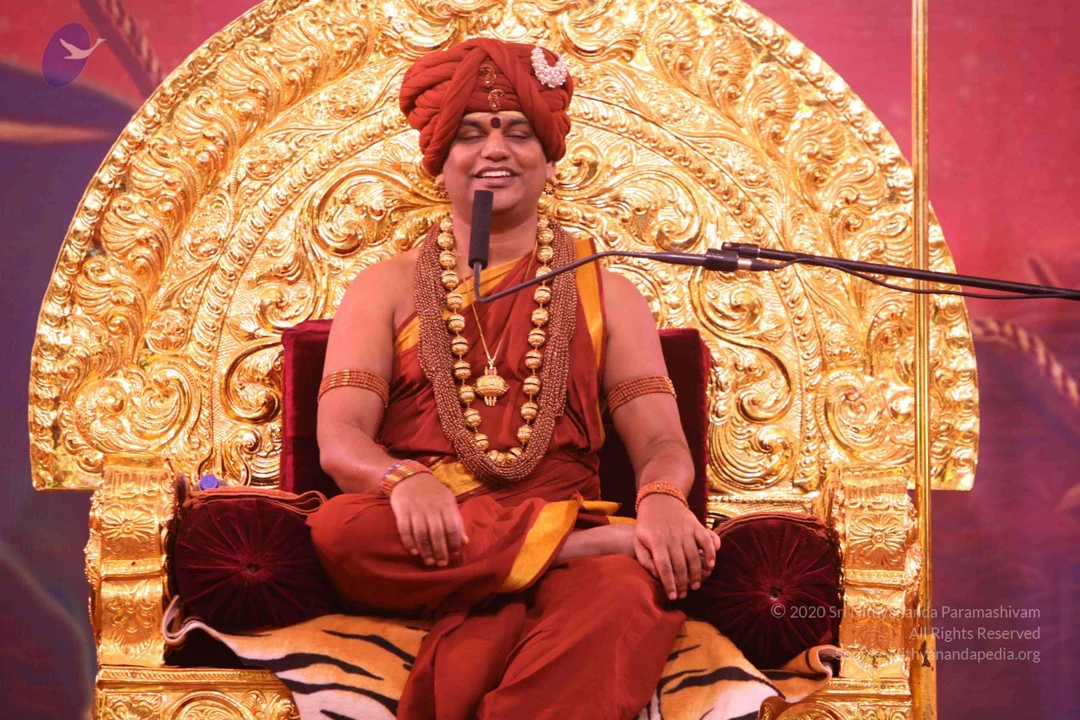
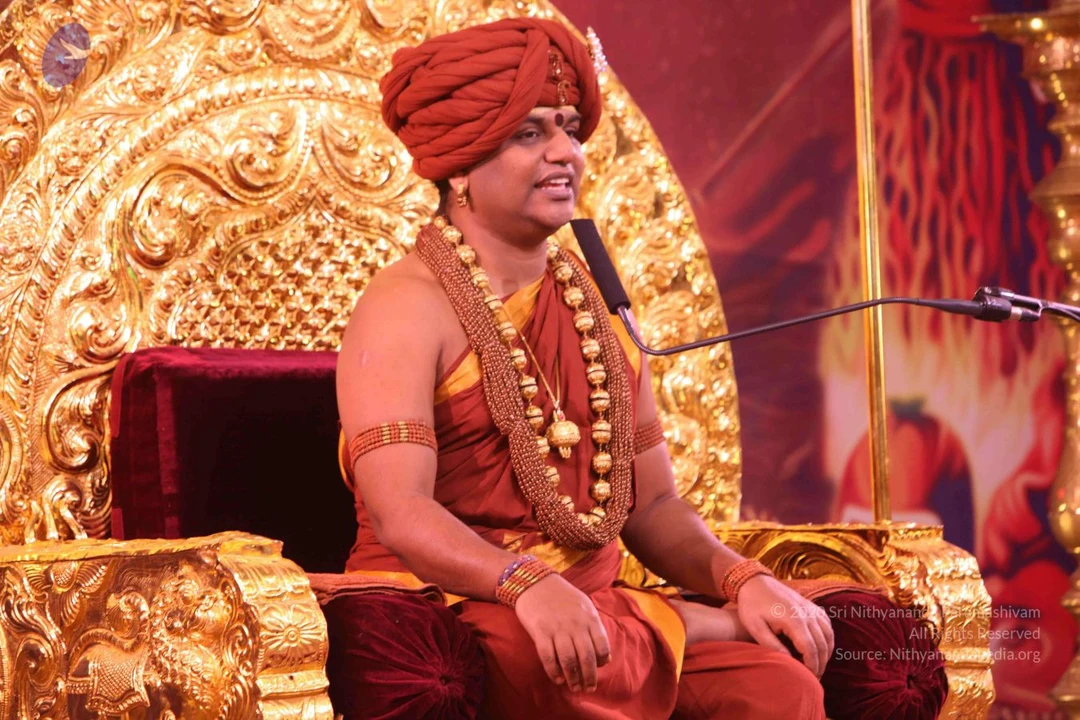
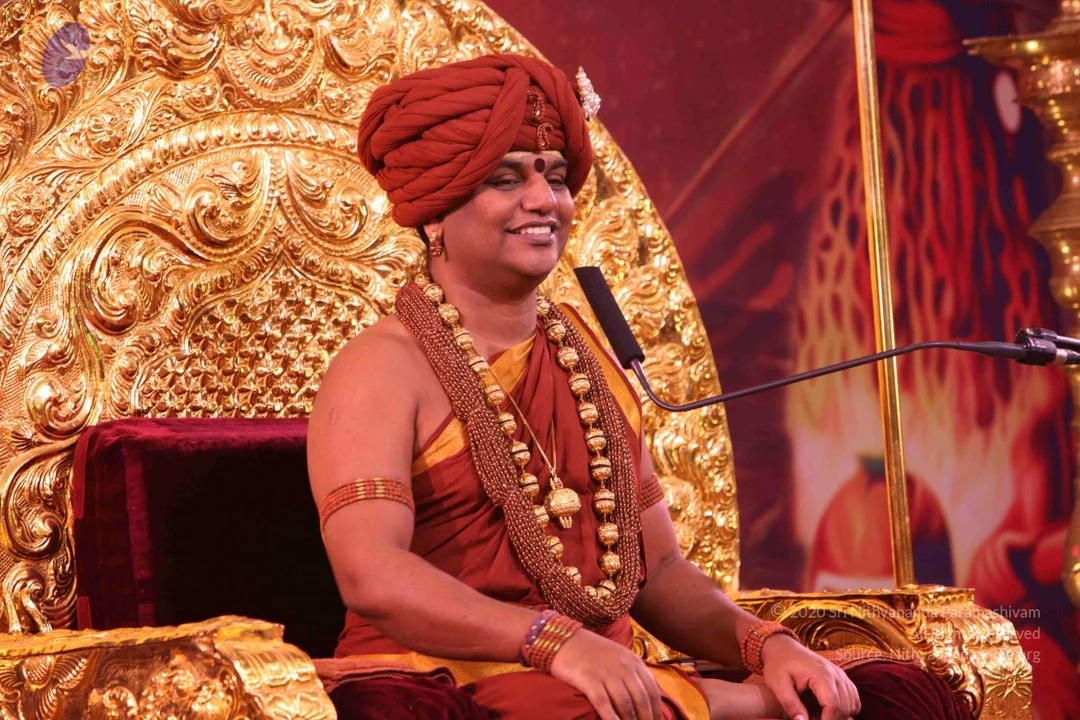
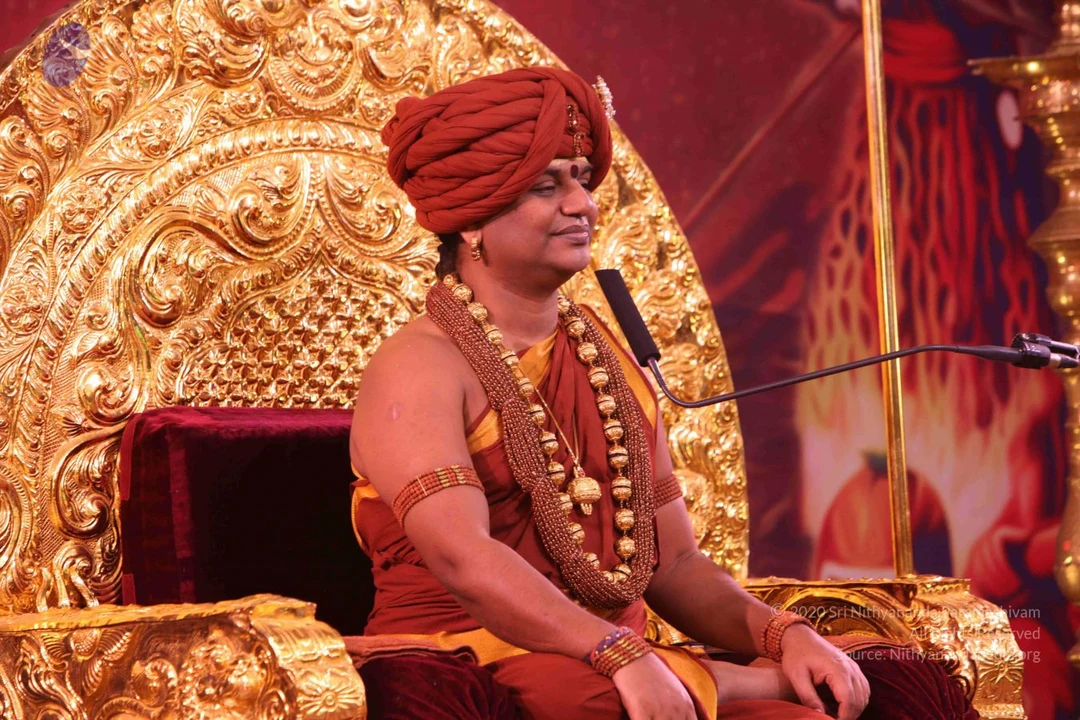
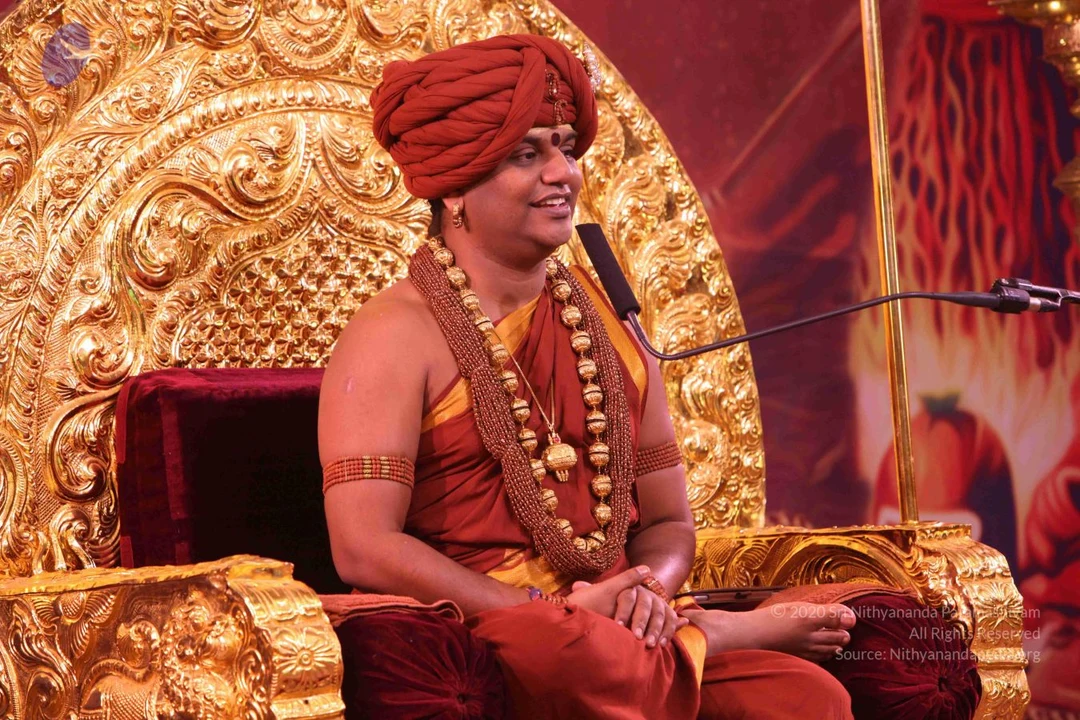
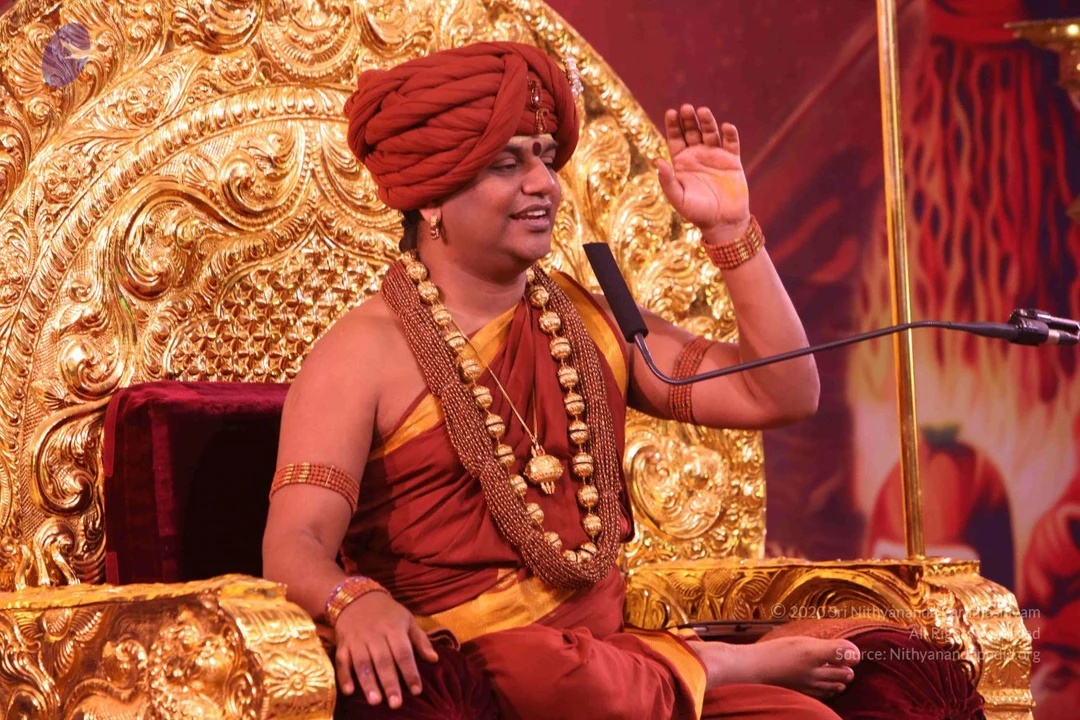
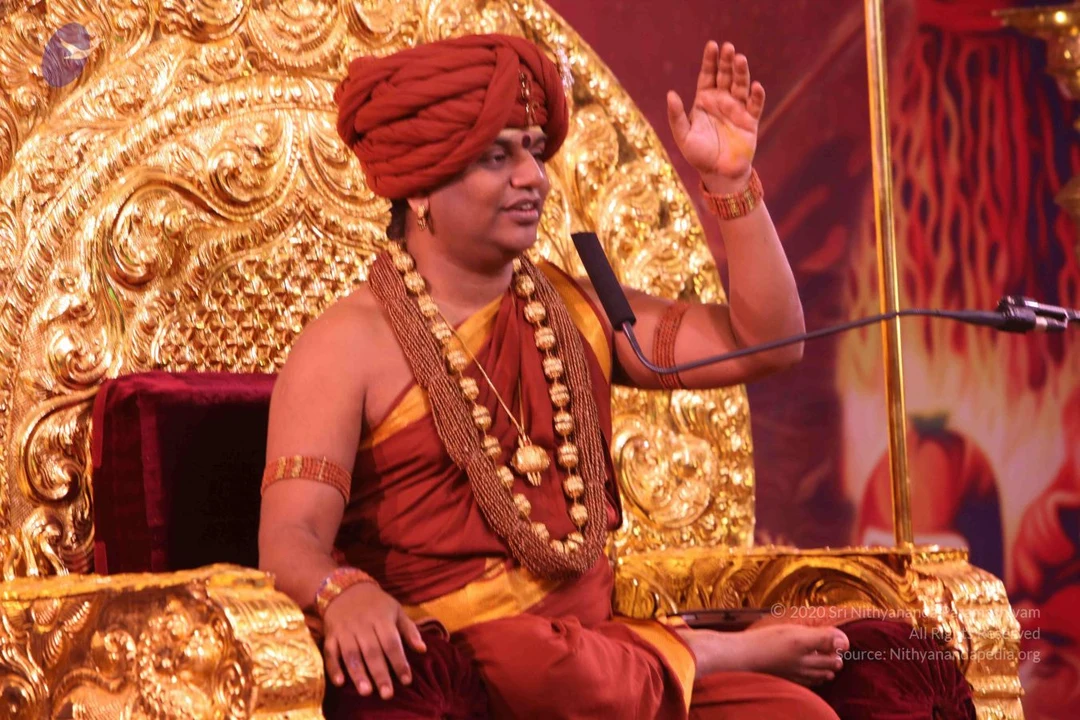
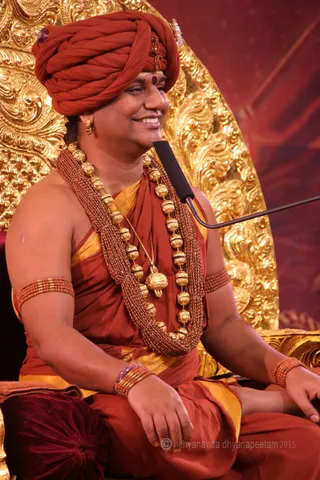
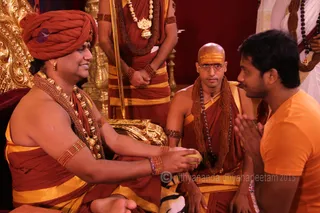
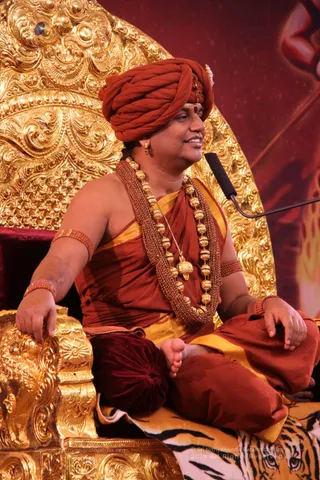
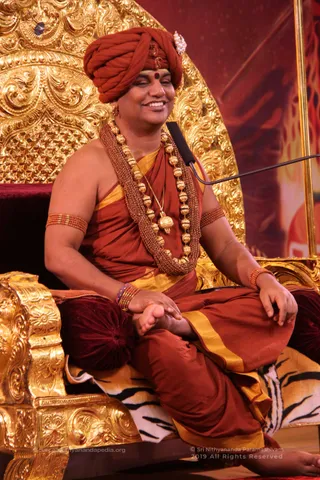
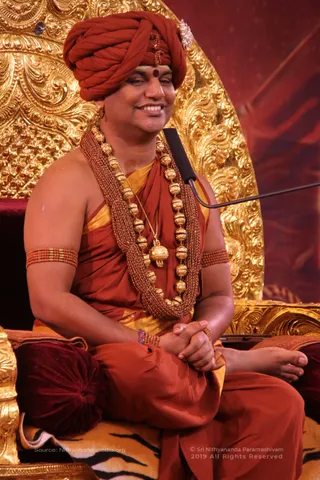
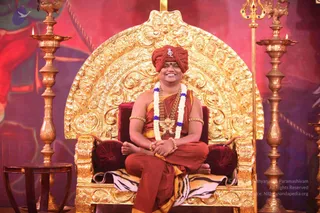
A smiling man in a saffron-red turban sits on an ornate gold throne carved with scrolling patterns, against a red backdrop. He wears a red-orange draped garment with gold border, a heavy beaded rudraksha-style mala with gold bead spacers and a gold pendant, and red-orange beaded armlets and bracelets. A black microphone on a bent stand is in front of him, and a small red bindi is on his forehead. Appearance cues fit the Swamiji (probable) label: distinctive turban, ornate gold ceremonial necklace and rudraksha mala, seated as a speaker at satsang.Photograph of a seated figure on a gilded throne receiving a fruit from a folded-hands devotee. The seated man wears an orange-red turban, a bare-shouldered saffron-gold wrap, layered rudraksha and beaded necklaces, and gold bangles. A second man in a saffron-red robe with a shaved head, yellow tilak and glasses sits beside him holding a rudraksha mala. A standing attendant in red garments and beaded mala stands behind, and a devotee in an orange t-shirt presses palms together at right. Gold-carved throne and red draped backdrop.A man seated on an ornate gilded throne with carved floral and scroll patterns, draped over a tiger-striped cloth, speaks into a microphone on a stand. He wears a rust-red turban with a small ornament, a red-orange robe with gold borders, a red-brown beaded necklace with large gold bead ornaments, and a gold pendant, with red beaded bracelets on both wrists. A red vibhuti or kumkum mark is on his forehead. His bare feet rest on a dark maroon velvet cushion. The background is deep red with a partly visible painted figure. Swamiji (probable): long-established cues here are the rust-red turban, saffron-orange robe and ornate gold necklaces seated on a throne, consistent with a Nithyananda Paramashivam discourse.A smiling man in a rust-orange turban with a small pearl ornament sits on an ornate gold throne with a red velvet cushion, wearing an orange-red wrap with gold border, layered gold-beaded rudraksha-style necklaces, and beaded bangles on his arms. He sits cross-legged with one bare foot raised, a microphone on a stand beside him, and a tiger-striped cloth under him. Behind him is a red backdrop. The page identifies this as a Swamiji satsang, and the appearance is consistent with that candidate: Swamiji (probable), seated in a teaching posture with a turban, saffron-orange wrap and ornate gold beaded necklaces, speaking to an audience.A photograph of a man seated on an ornate gold throne with carved floral relief and a red velvet cushion. He wears a red-orange turban with a jewelled ornament, a red-orange robe with a gold-bordered cloth, a multi-strand bead mala and a gold pendant necklace, and orange bangles on both wrists. A red bindi marks his forehead. He sits cross-legged with bare feet, gesturing with his right hand while a microphone stand is positioned beside him. The background shows a red backdrop with a partial painted design. Swamiji (probable): the appearance cues are a red-orange turban, orange robes, rudraksha-style beads and a gold pendant, seated in the manner of a discourse speaker, though this is an appearance-based label only.A smiling man seated on an ornate gold throne with carved floral relief, wearing a rust-red turban with a pearl-and-jewel ornament, a red-orange robe with gold border, a red bindi, and layered reddish-brown beaded necklaces with gold bead strands and a gold pendant. He wears matching beaded armlets and rests his hands clasped in his lap, with a microphone stand beside him. A tiger-striped cloth covers part of the seat. Appearance-based label: Swamiji (probable), seated and speaking as a discourse presenter, with distinctive ceremonial adornments and rust-red turban and robes. Photo credit overlays read and a 2019 copyright notice
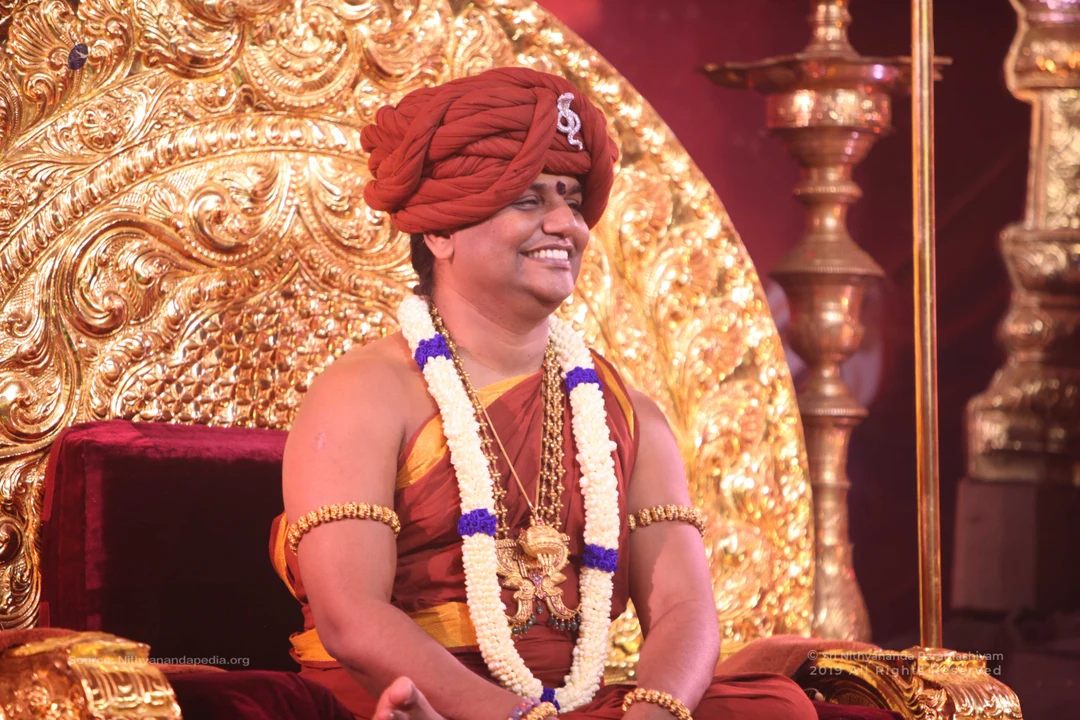
Morning-Satsang
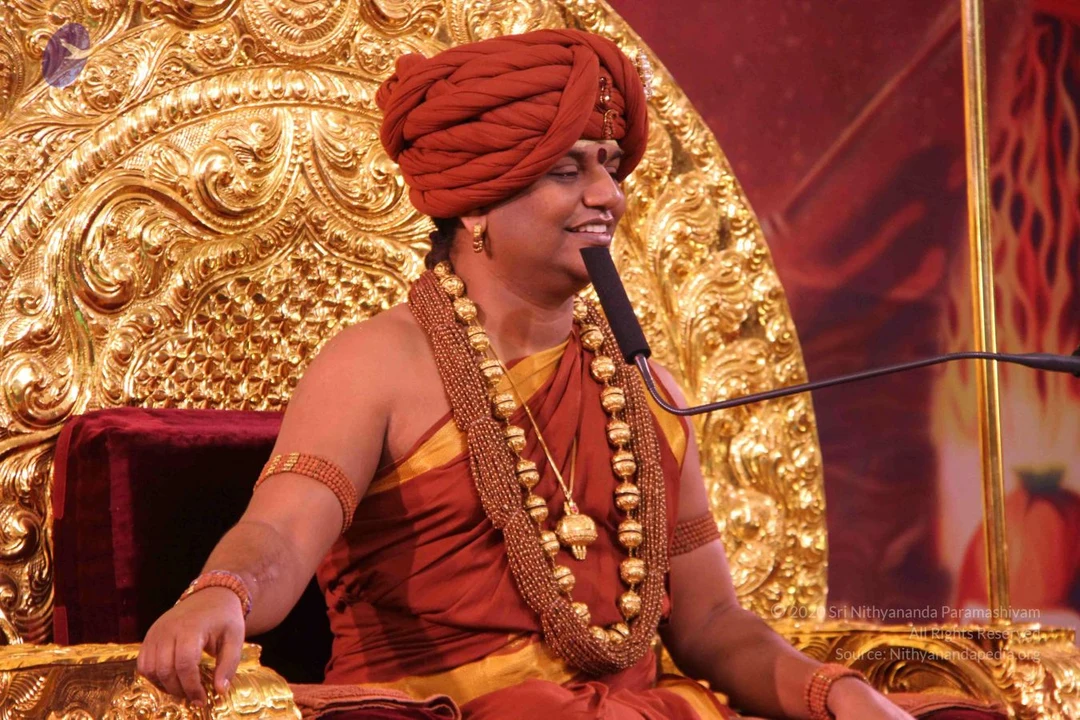
88 photosSource gallery
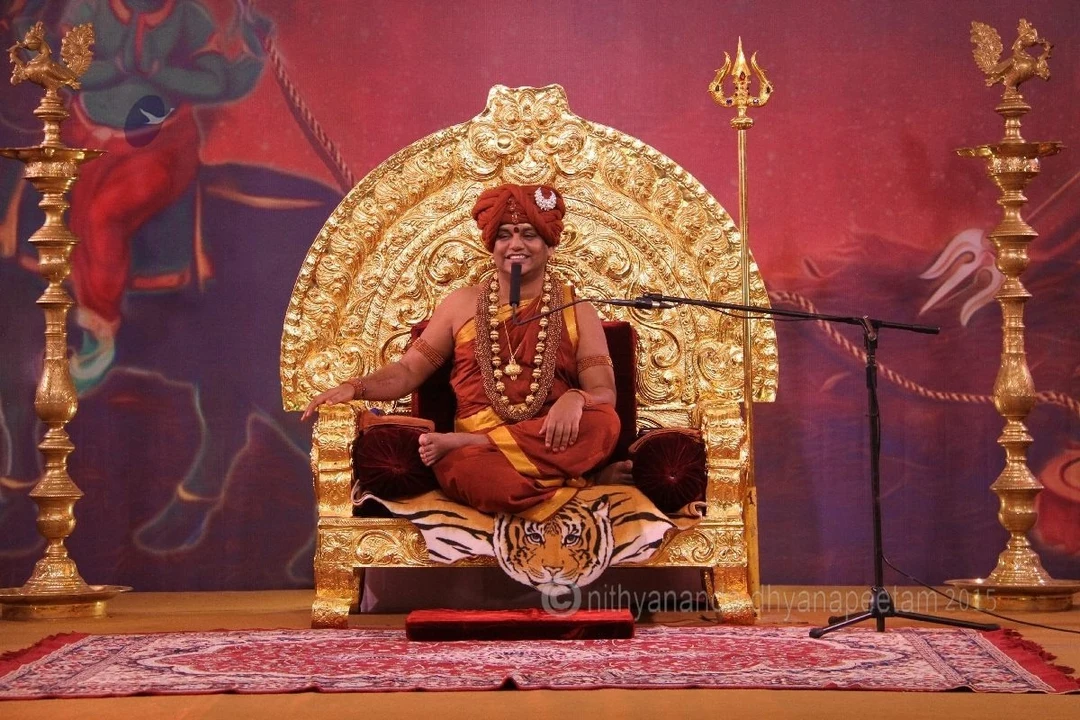
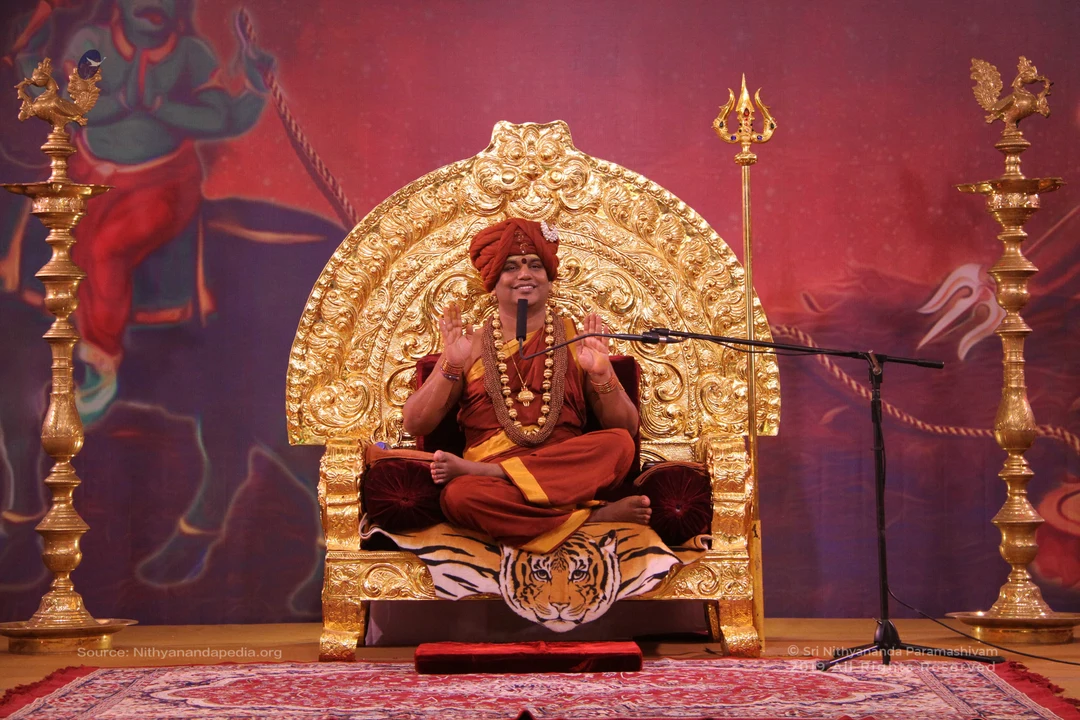
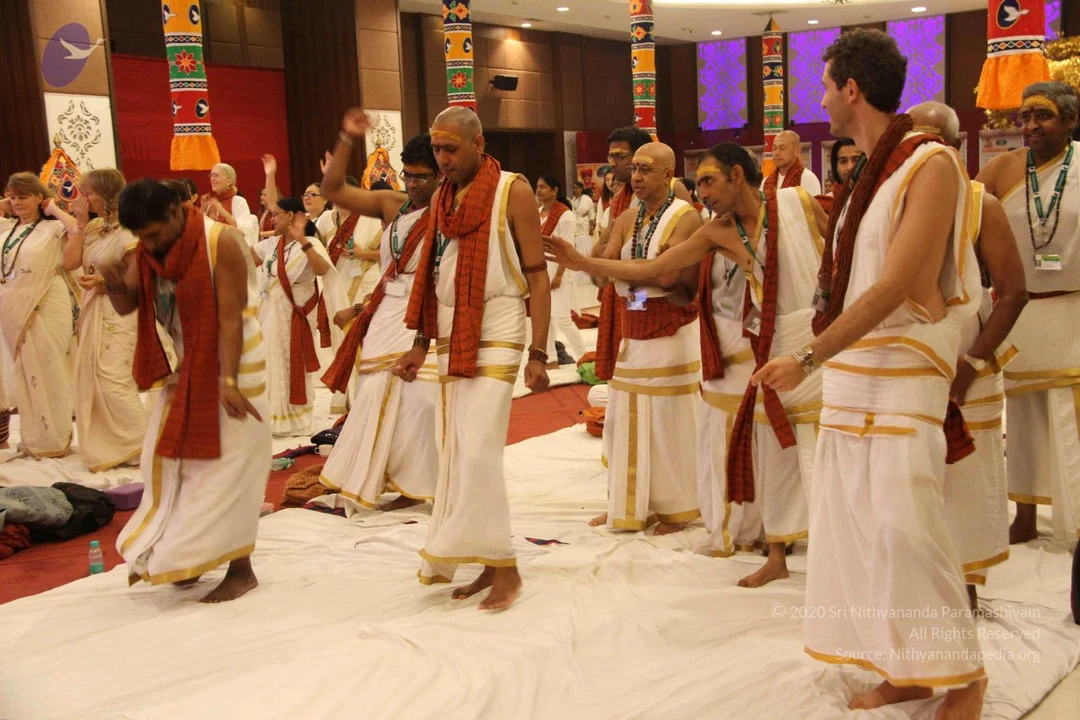
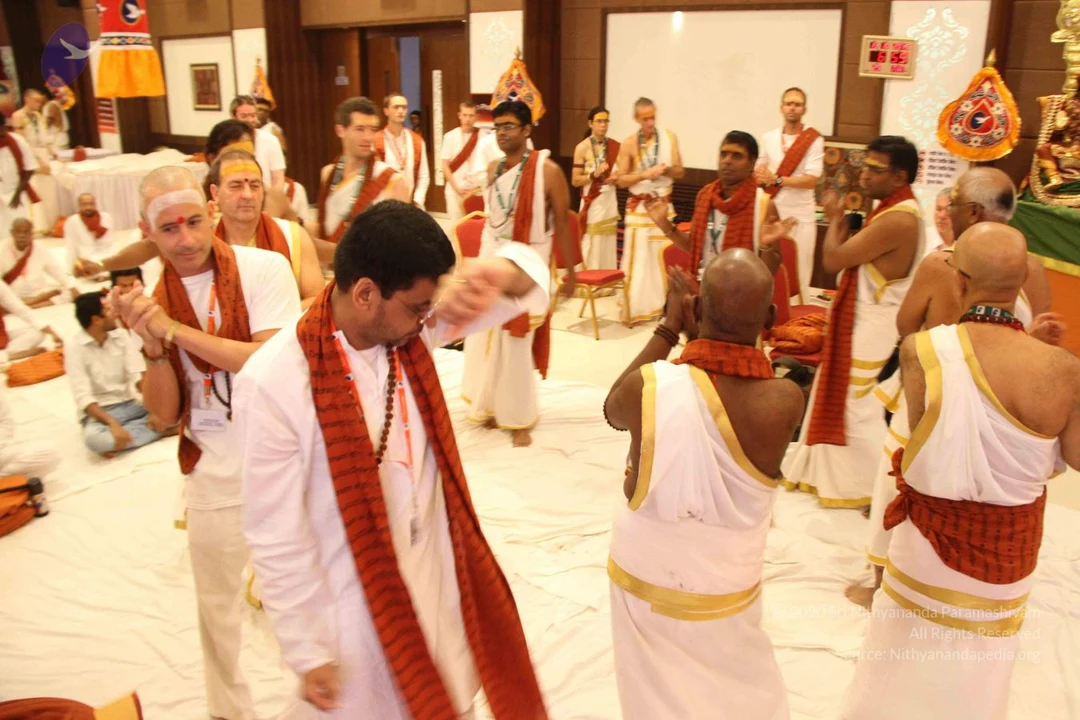
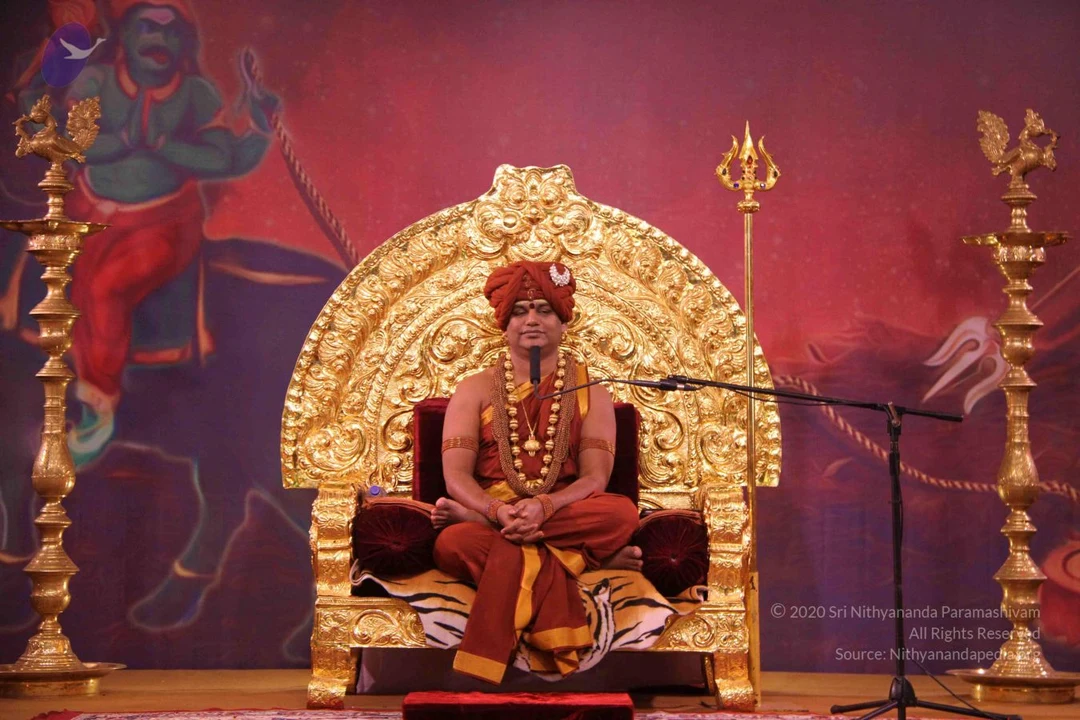
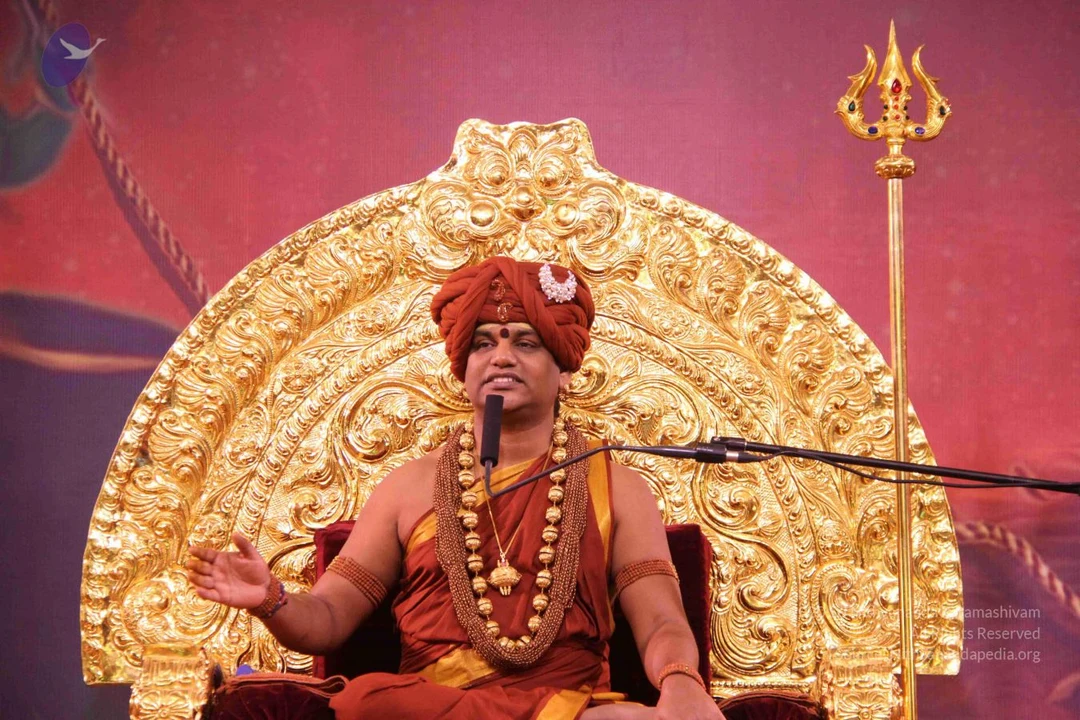
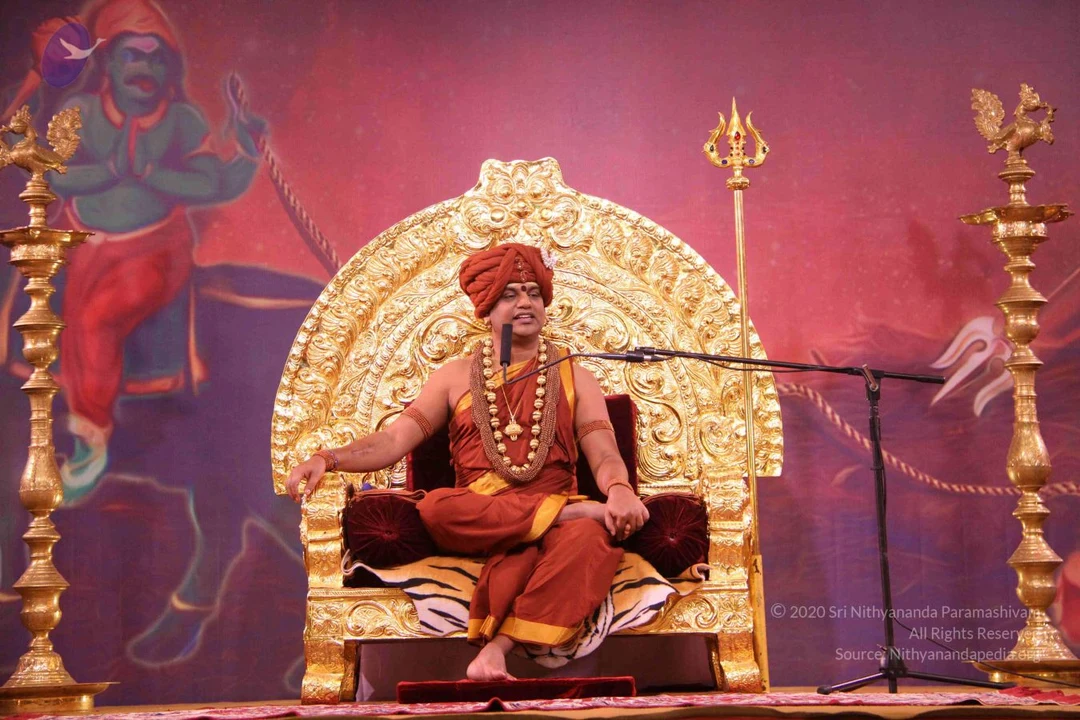
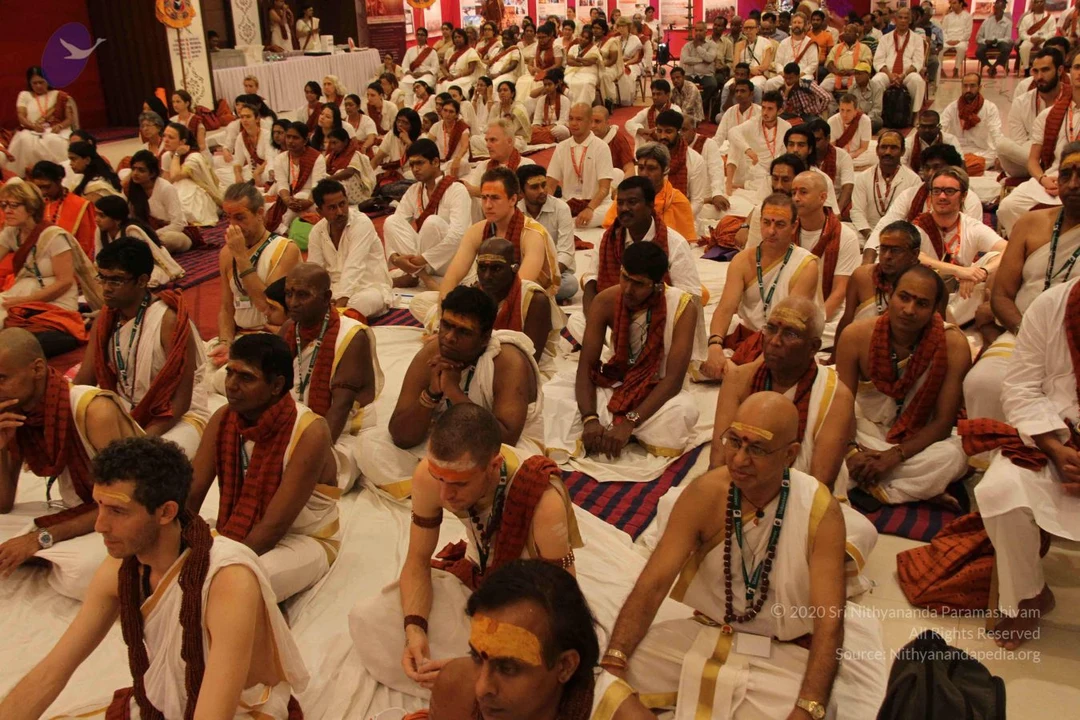
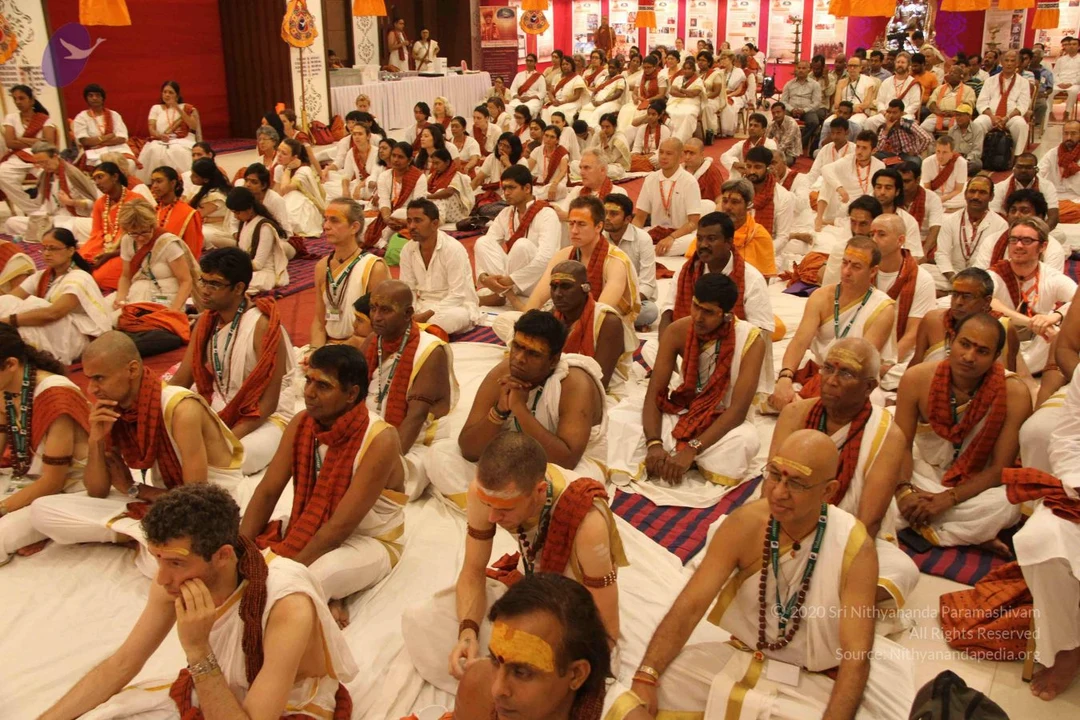
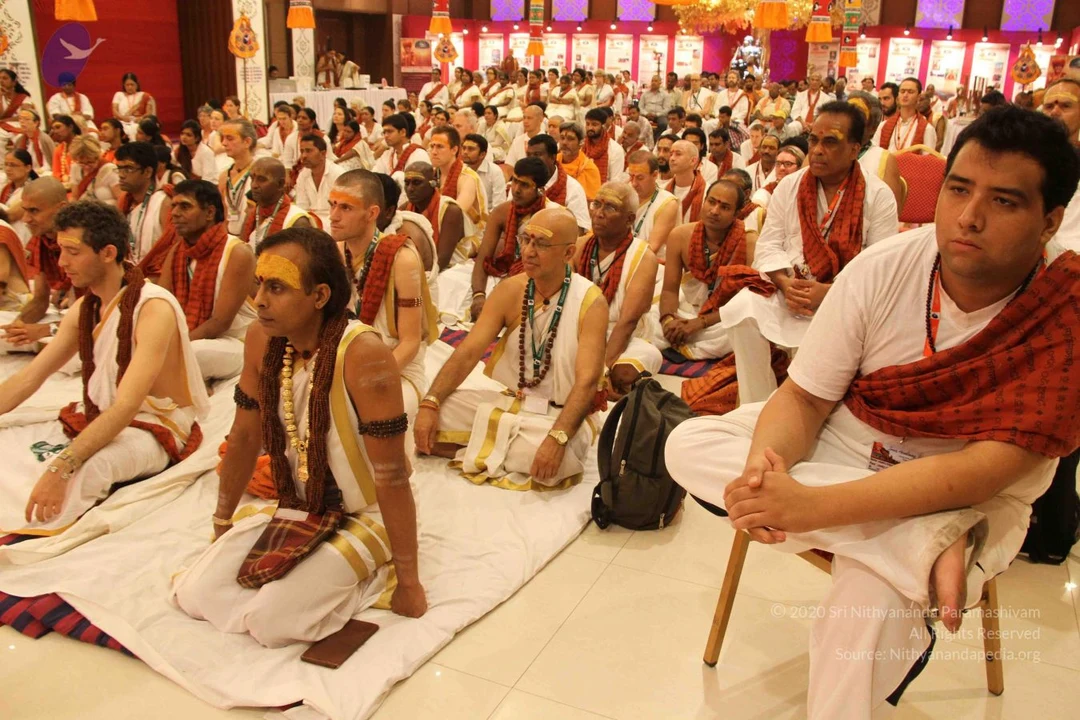
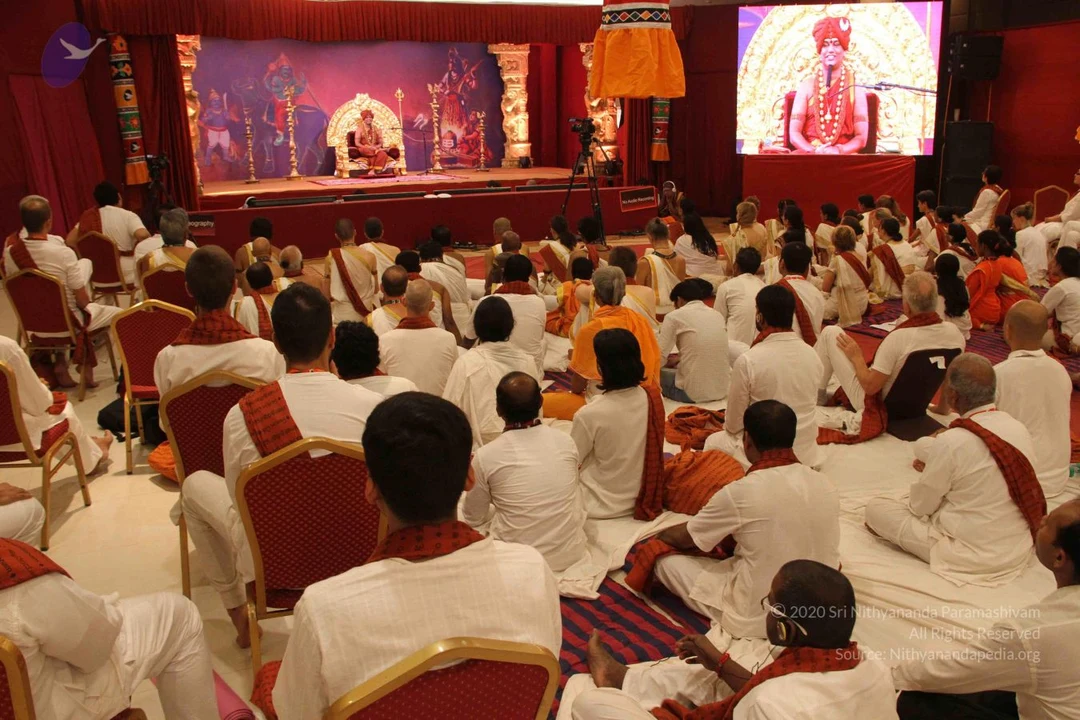
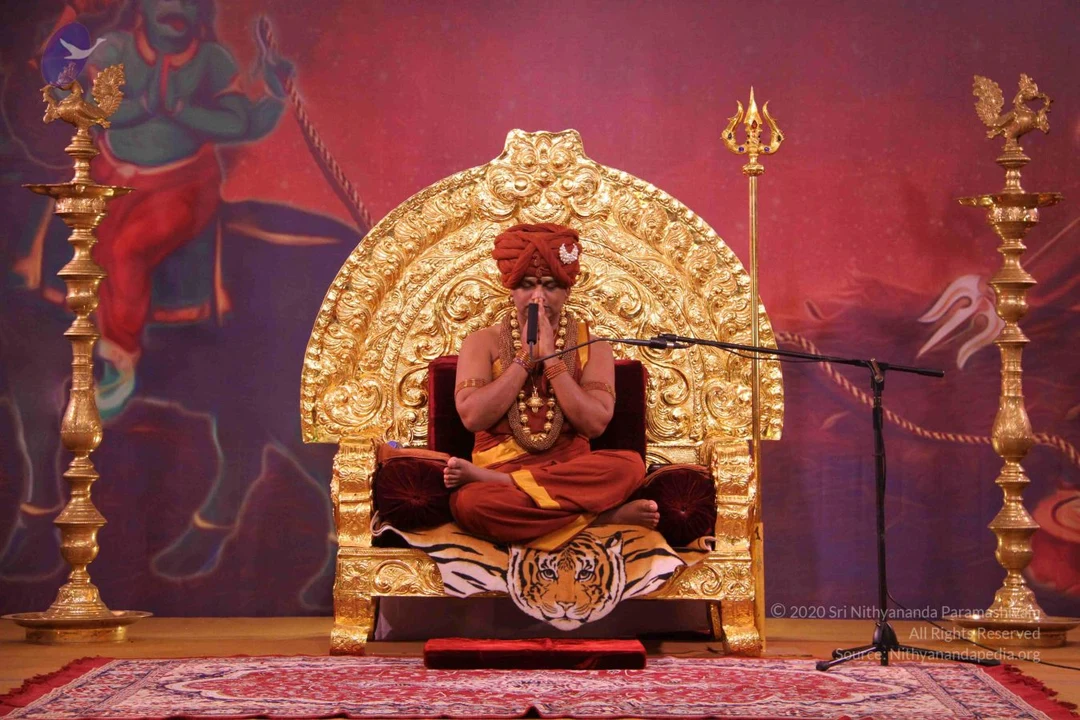
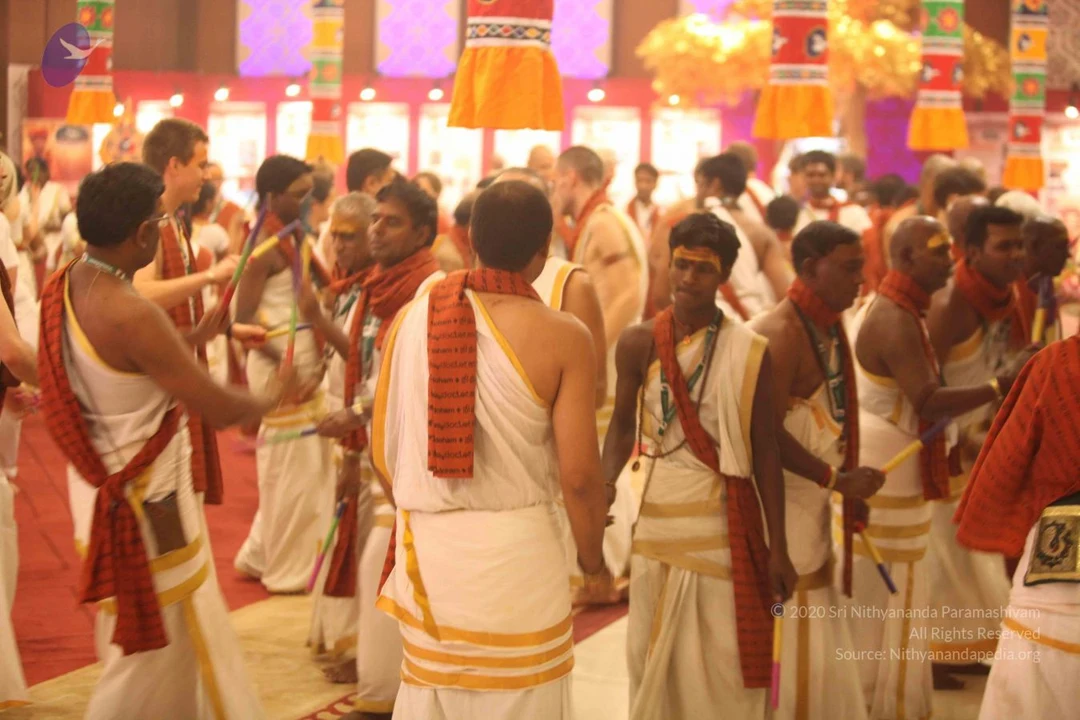
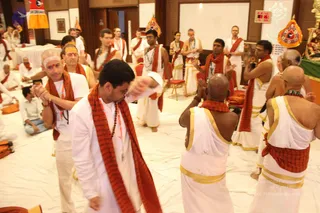
A group of men and women in white dhotis and saris with gold borders and red-and-gold shawls performs a standing ritual on a white cloth in a hall with colourful banners. Several men in front, one bald with a yellow forehead mark, raise hands and step rhythmically while others around them bow, clap or sway. Participants wear green beaded necklaces with name badges. Bright patterned pillars and purple panels decorate the background, with a few seated devotees and water bottles on the floor. Setting suggests a satsang or sadhana gathering.A seated man on an ornate gold throne with red velvet cushions, wearing a red-orange turban with a small red bindi, saffron-orange robes, a thick multi-strand rudraksha-style bead mala with golden beads, and red-orange beaded armlets and bracelets. He sits cross-legged with hands folded, smiling, beside a microphone on a stand. Behind him is a red backdrop with fiery imagery.A seated man in a deep orange-red turban and matching saffron-red robe sits on an ornate gold throne carved with floral scrollwork. He wears a long gold-bead mala necklace with a large pendant and beaded armlets, with a red bindi on his forehead. A microphone on a stand is at right, and a red-and-flame backdrop fills the background.A seated man in orange-red ochre robes and a matching turban sits on an ornate gold throne with a tiger-striped cushion, speaking into a microphone on a stand. He wears layered beaded rudraksha-style necklaces and gold armbands. Gold oil lamps flank the throne, a gold trident stands behind it, and a red and pink painted backdrop with a figure and a hanging rope fills the stage over a red patterned carpet. Appearance cues are a turban, ochre robes and ornate beaded necklaces, consistent with Swamiji (probable) seated for a satsang discourse.A crowded hall with a white floor sheet where several men in white dhotis and orange-red shawls stand in a loose group, some with hands folded in namaskar and others clapping or gesturing. A bald man in white dhoti with gold-bordered cloth and a red shawl stands in the foreground with palms together, while a man with a white forehead band and orange shawl stands to the left. Some participants wear orange lanyards and beaded malas. On the right edge, an ornate golden deity murti with a green draped cloth is visible. Behind them a white screen and wall decorations hang, and a row of red chairs stands near the back. No individual is clearly identifiable as a person from appearance cues, so no candidate is marked.A seated man in a saffron-orange turban with a small white ornament and matching saffron-orange robes with yellow borders sits cross-legged on an ornate gold throne with a red velvet back and cushions, draped with a striped tiger-skin cloth. He wears layered rudraksha malas, a gold chain, gold armbands and gold bangles, with his hands clasped in his lap. A microphone on a stand is in front of him. Gold oil lamps flank the throne, a gold trident stands to the right, and a painted backdrop of red and blue figures and a dancing deity is behind. One person is visible.

Morning-Satsang
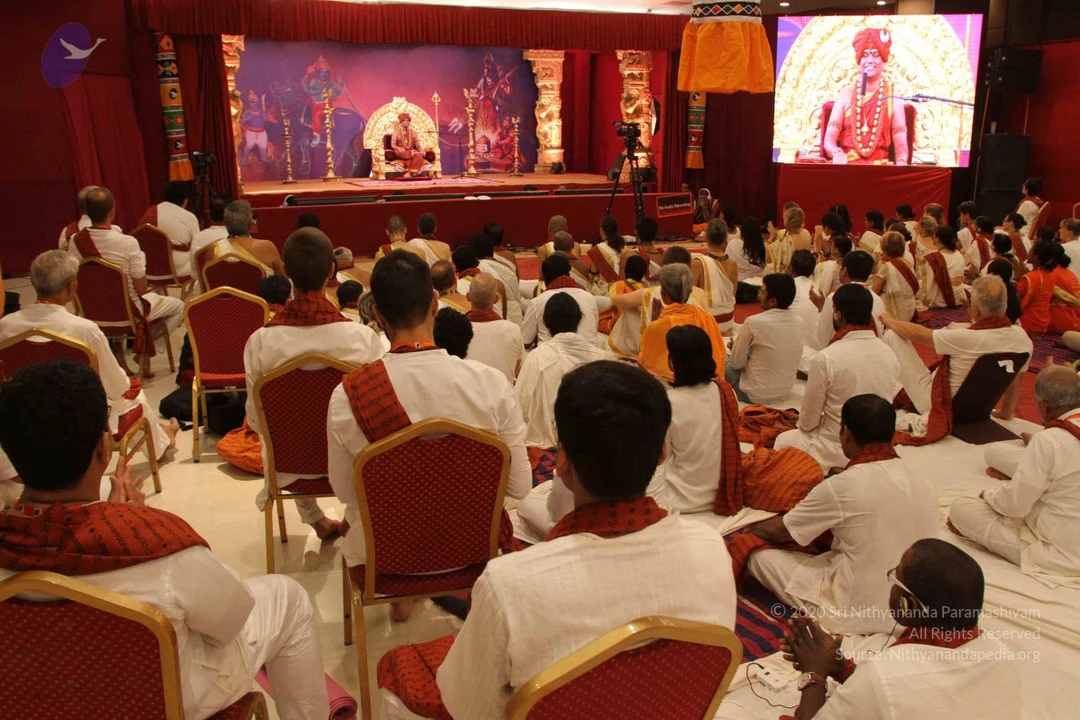
11 photosSource gallery
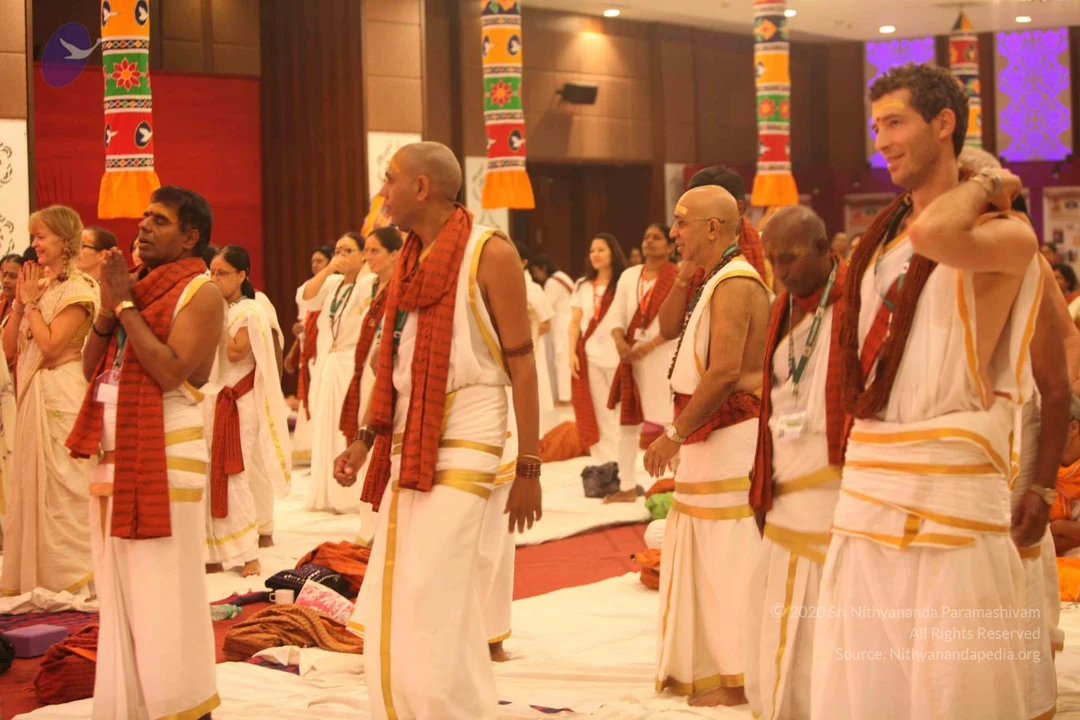
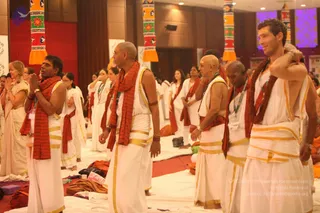
A photograph of devotees standing in a large hall during a satsang, many with palms pressed together in prayer. Men wear white dhotis with gold borders and red-orange shawls draped over their shoulders; a few women in white saris with gold borders stand nearby. Several participants wear lanyard badges around their necks. Behind them, tall decorative pillars in red, yellow and green patterns hang from the ceiling, and the floor is covered with white cloth and red mats. No central figure is clearly identifiable as a person in this frame.A seated man in red and orange sannyasi-style clothing sits cross-legged on an ornate gold throne with carved floral and scrollwork, a red velvet cushion behind him. He wears a red-orange turban with a small gold ornament, a long rudraksha mala with a gold pendant, a gold bangle on his upper arm, and beaded bracelets. A microphone stands before him, and a golden pole and red backdrop with flame-like patterns fill the background. Because the page indicates he is present and his appearance shows a turban, saffron-red clothing, rudraksha mala and ceremonial gold, this is a probable Swamiji seated in a discourse setting.A man seated cross-legged on an ornate gold throne with carved floral and scrollwork patterns, at a microphone stand. He wears a deep red turban, red and saffron robes draped over one shoulder, a rudraksha-style mala of brown and gold beads, and a red armband and bangles. His hands rest together in his lap and his eyes are lowered in a calm, meditative expression. Behind him are red and orange stage backdrops with a fire-like motif. Appearance-based a person (long dark hair not visible; turban, saffron-red robes and beaded mala as cues) seated as the speaker.A seated man in red-saffron clothing sits on an ornate gold throne with a richly carved golden backrest, resting on a tiger-striped cloth with maroon cushions. He wears a red-orange turban with a white flower ornament, a long layered necklace of gold-toned beads, a pendant, and gold bangles on his upper arms and wrists, with a saffron robe and yellow-edged shawl. He sits cross-legged with hands resting on his lap, eyes closed, smiling as he speaks into a microphone on a stand. A red backdrop fills the background. Swamiji (probable): the turban, saffron robe, ornate gold beads and throne cues match, and the figure is physically present, marked as the speaker at a satsang-style setting.A man seated cross-legged on an ornate gold throne with a carved, arched backrest and red velvet cushions, draped with a striped tiger-skin cloth. He wears a red-orange turban with a small decorative ornament, a saffron-orange robe with a gold-coloured border, multiple gold beaded necklaces, a gold pendant, and gold bangles on his upper arms and wrists. His hands rest together in his lap and he is smiling with eyes closed. A microphone on a stand is in front of him against a red backdrop. The clothing and seating suggest a satsang or discourse setting.A man sits on an ornate gold throne with carved floral and scrollwork, speaking into a microphone on a stand. He wears a red-orange turban, a red-orange shawl over the shoulder and torso, a long multi-strand gold-bead necklace with a central gold pendant, and gold armbands. A red vermilion dot marks his forehead. Red and gold drapery and a gold pillar form the backdrop.
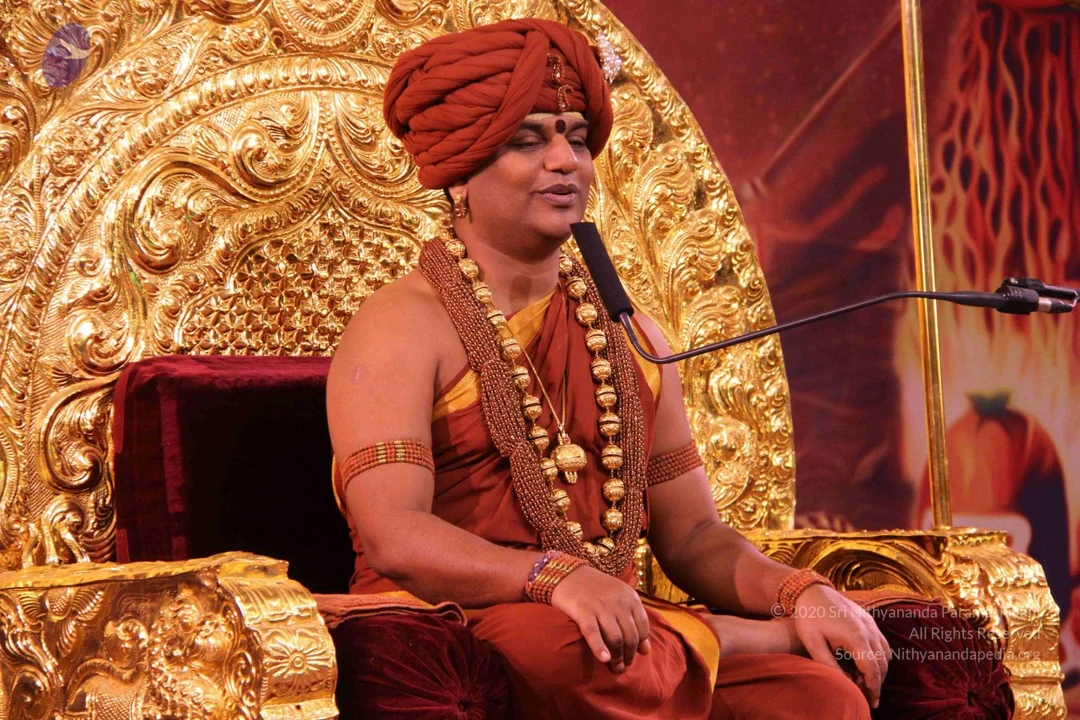
Mandala-Process

75 photosSource gallery
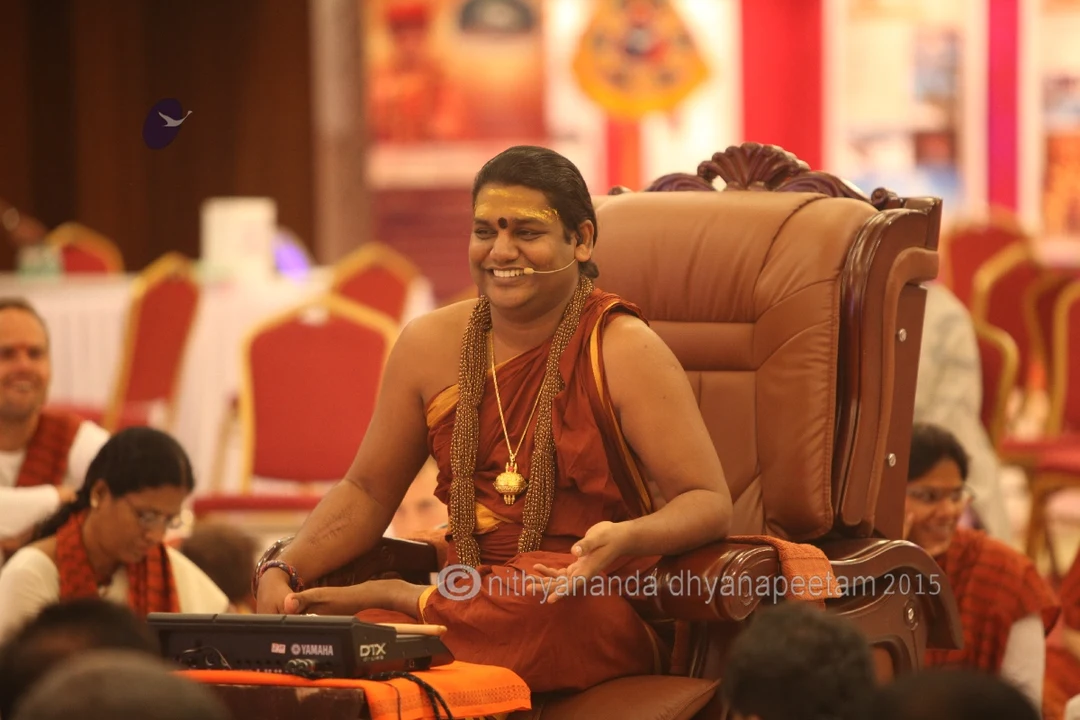
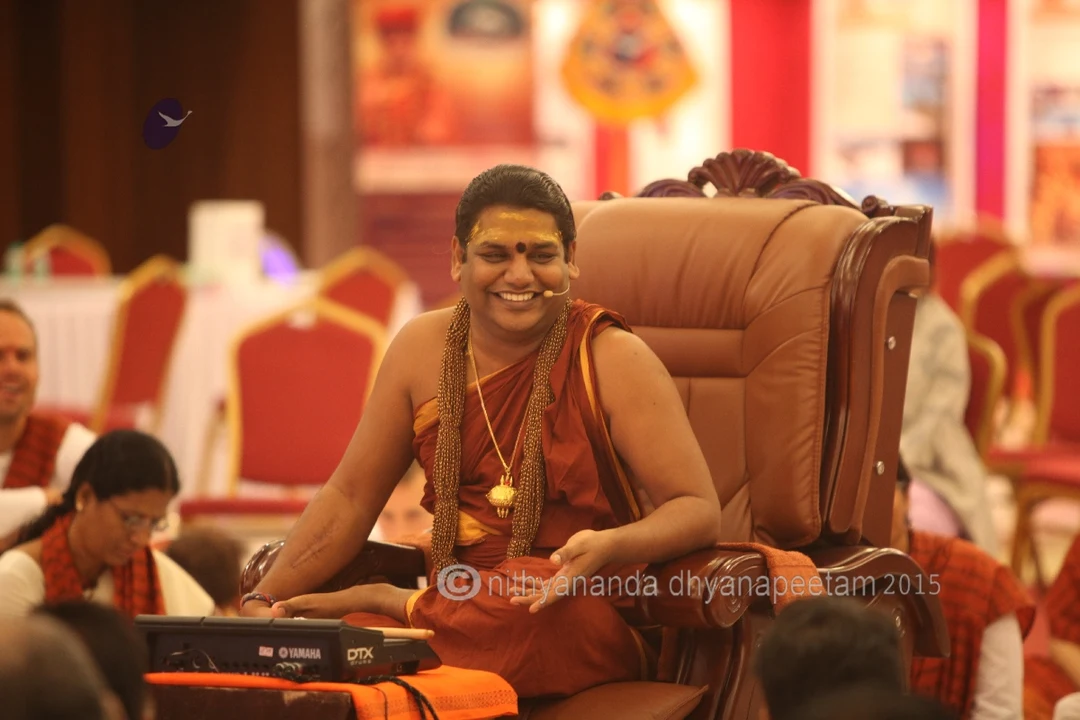
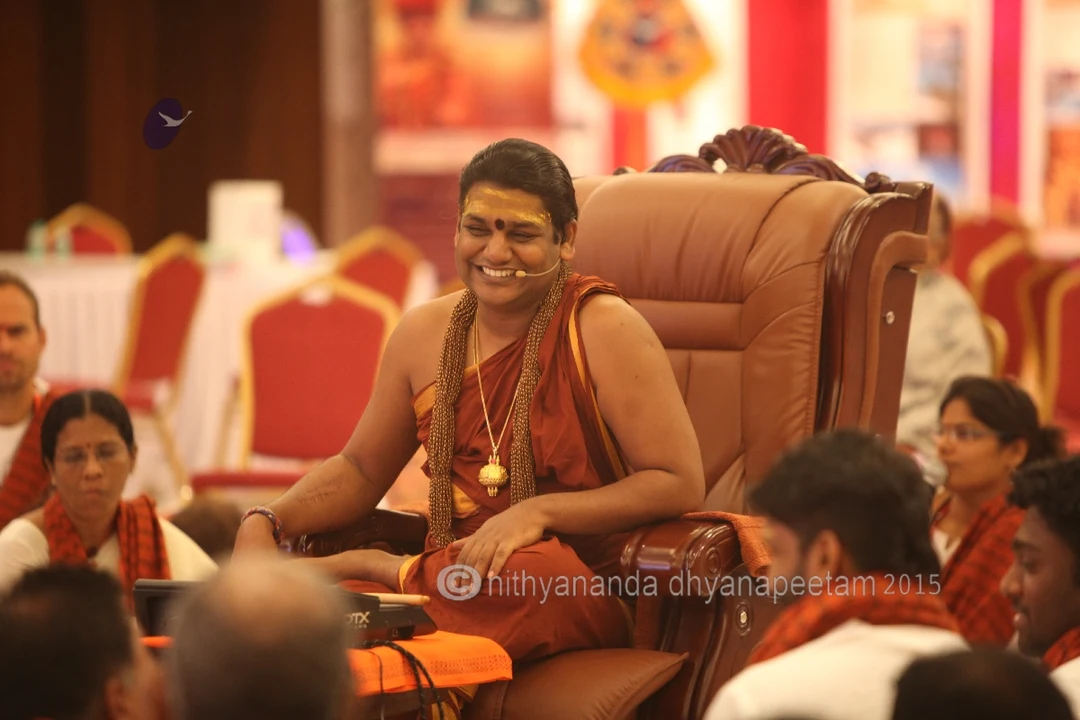
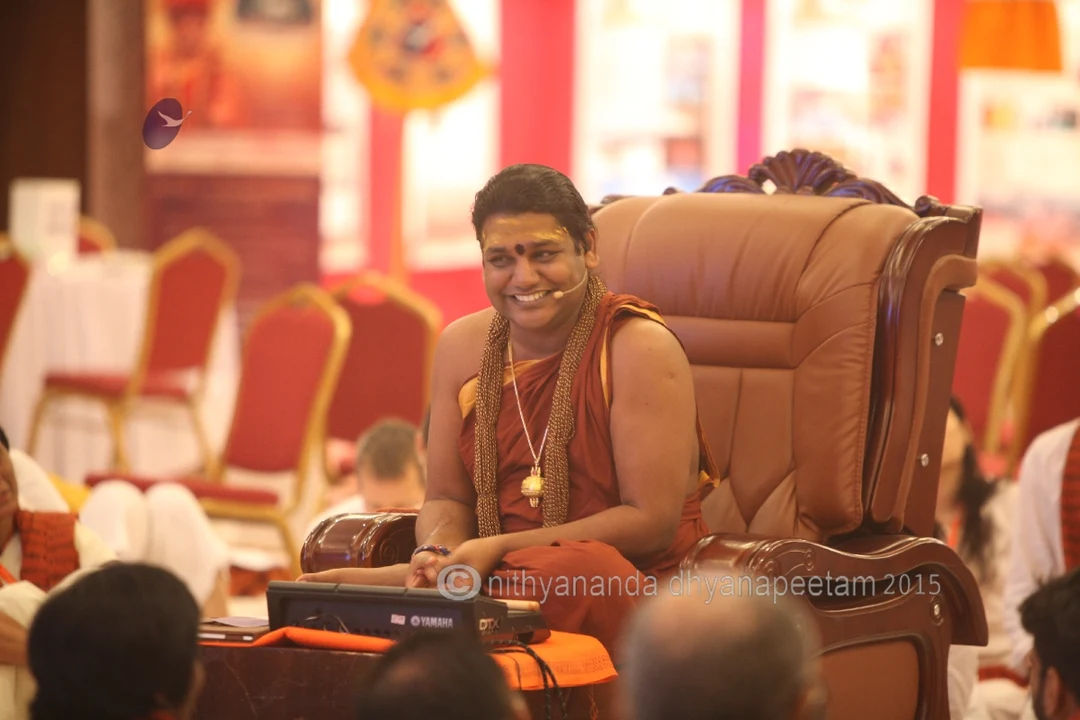
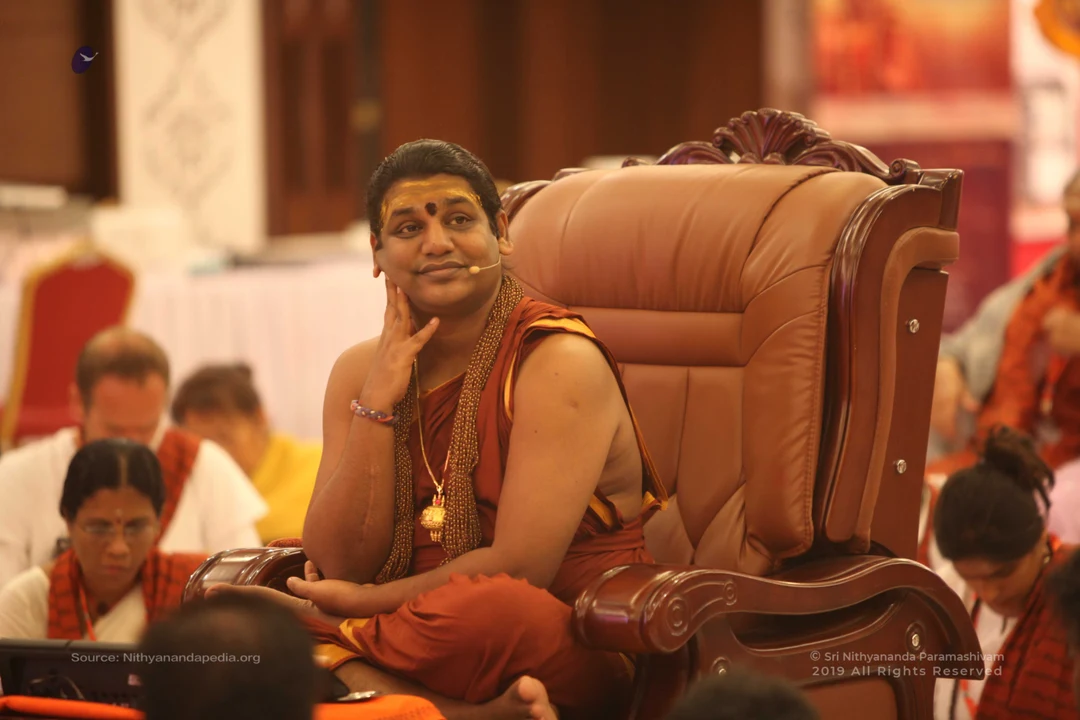
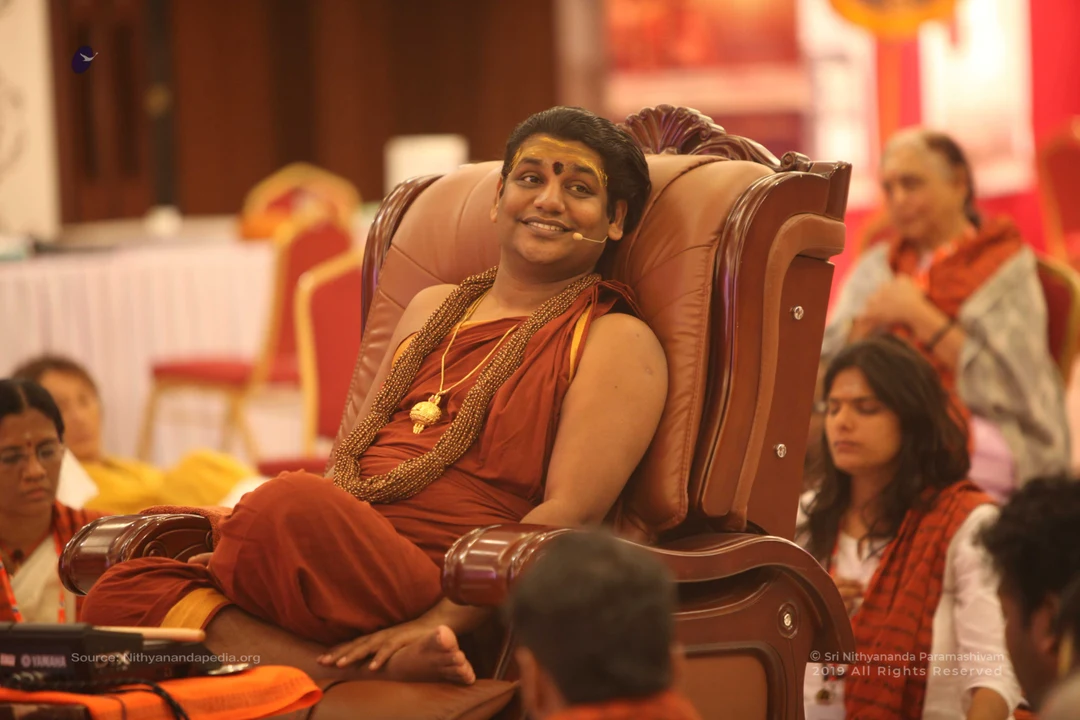
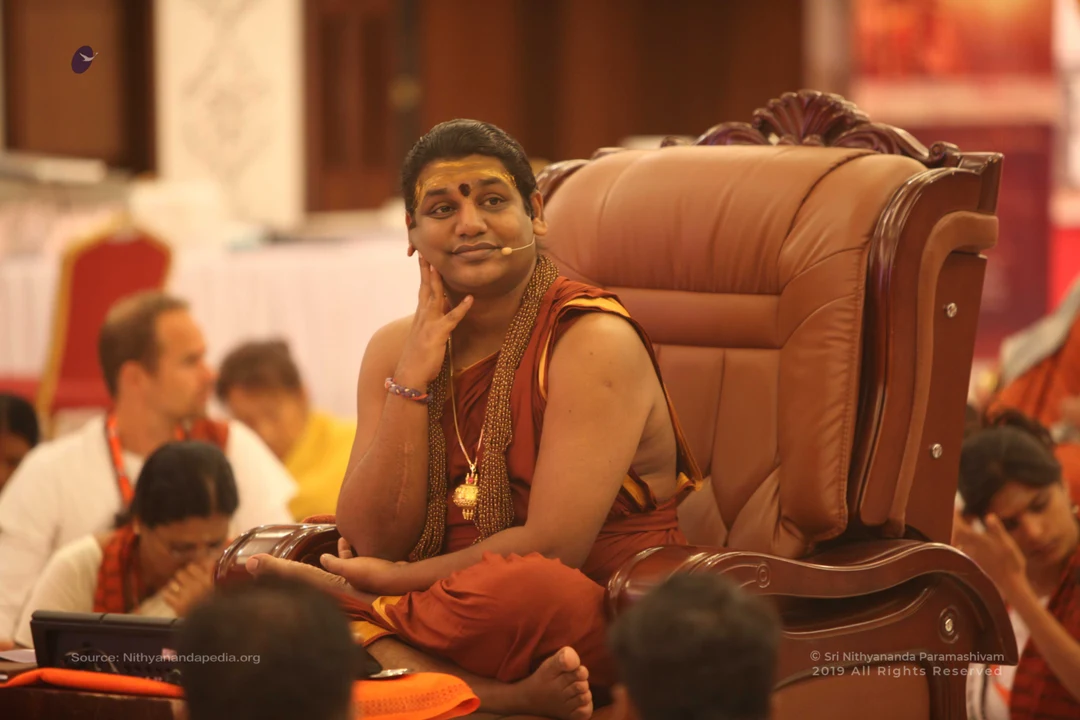
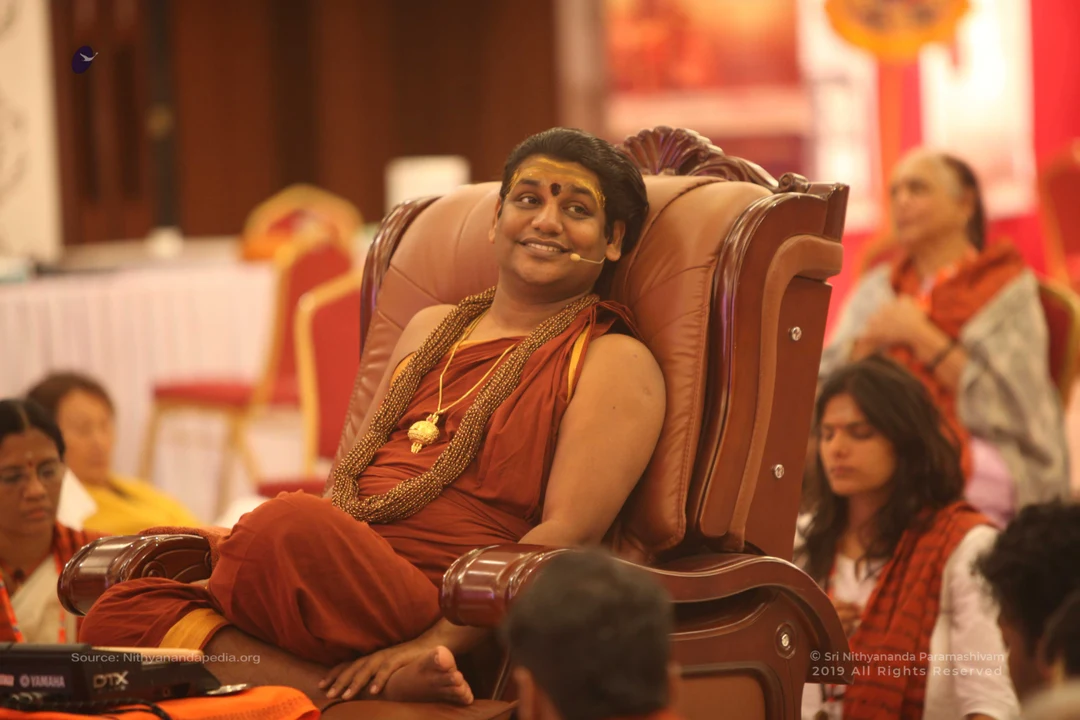
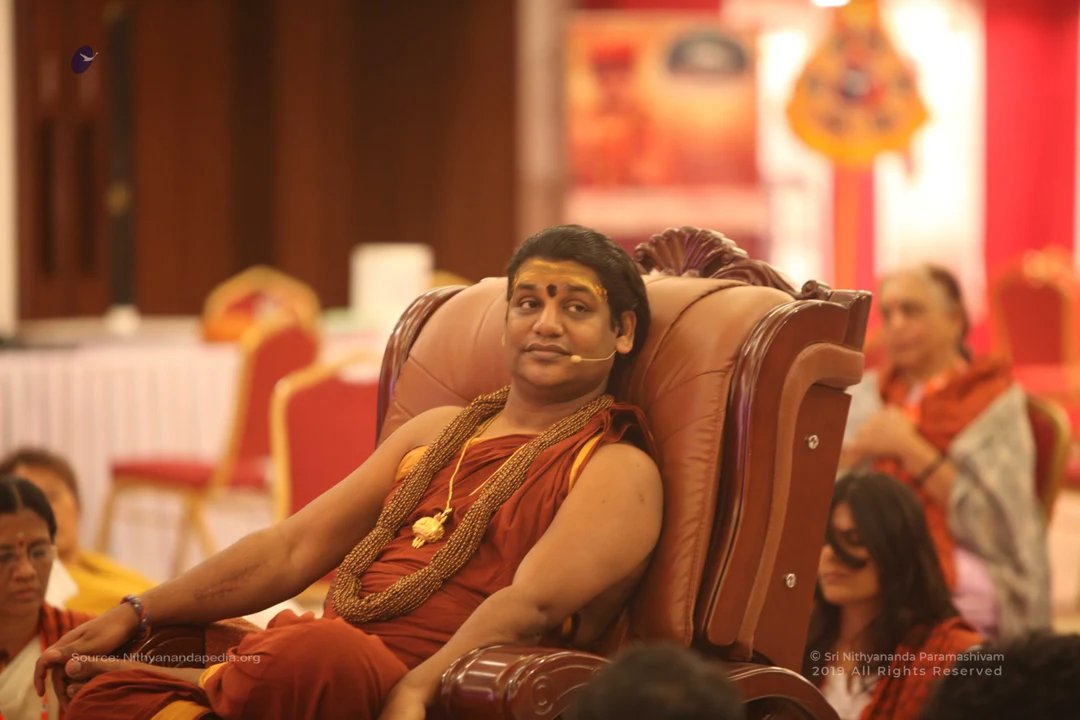
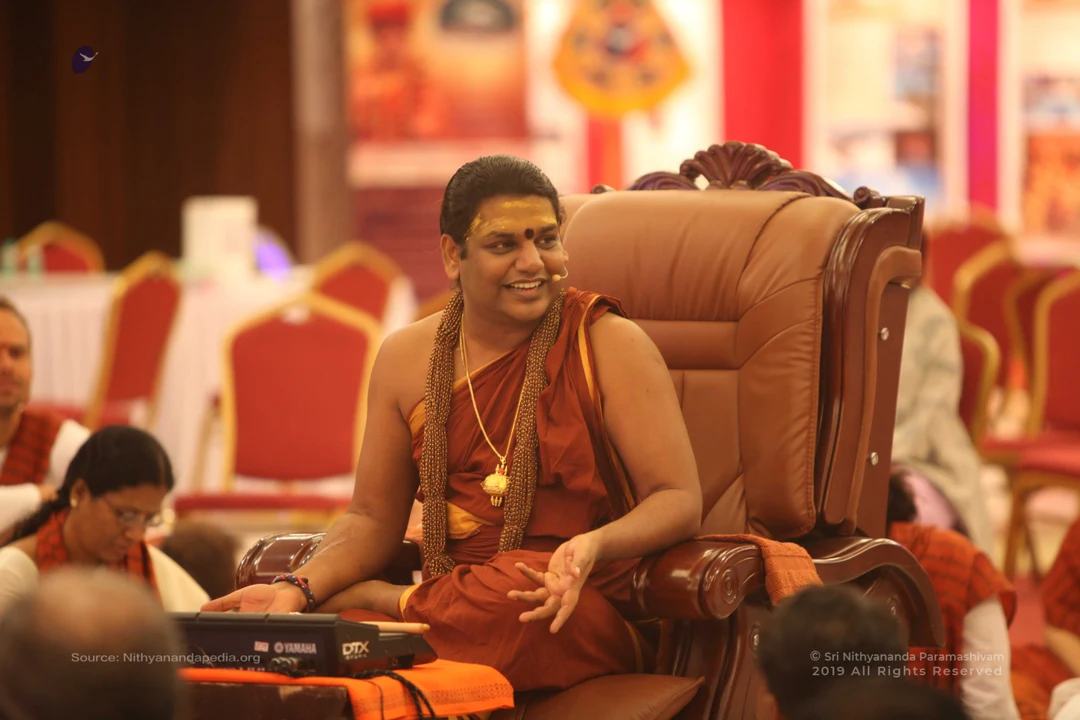
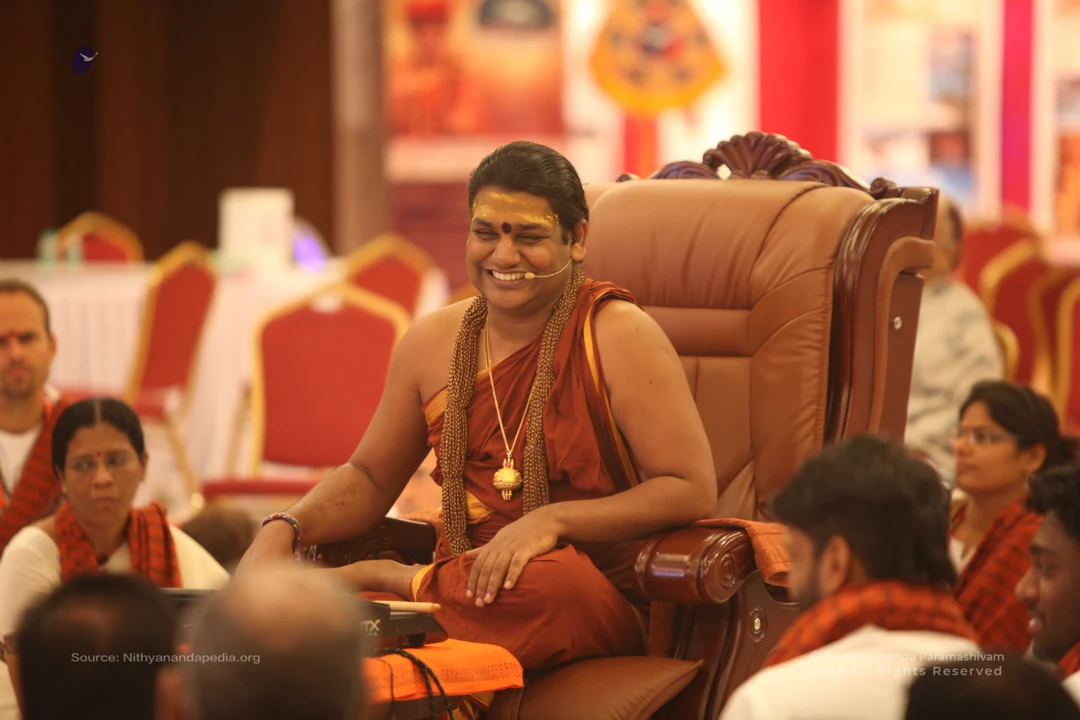
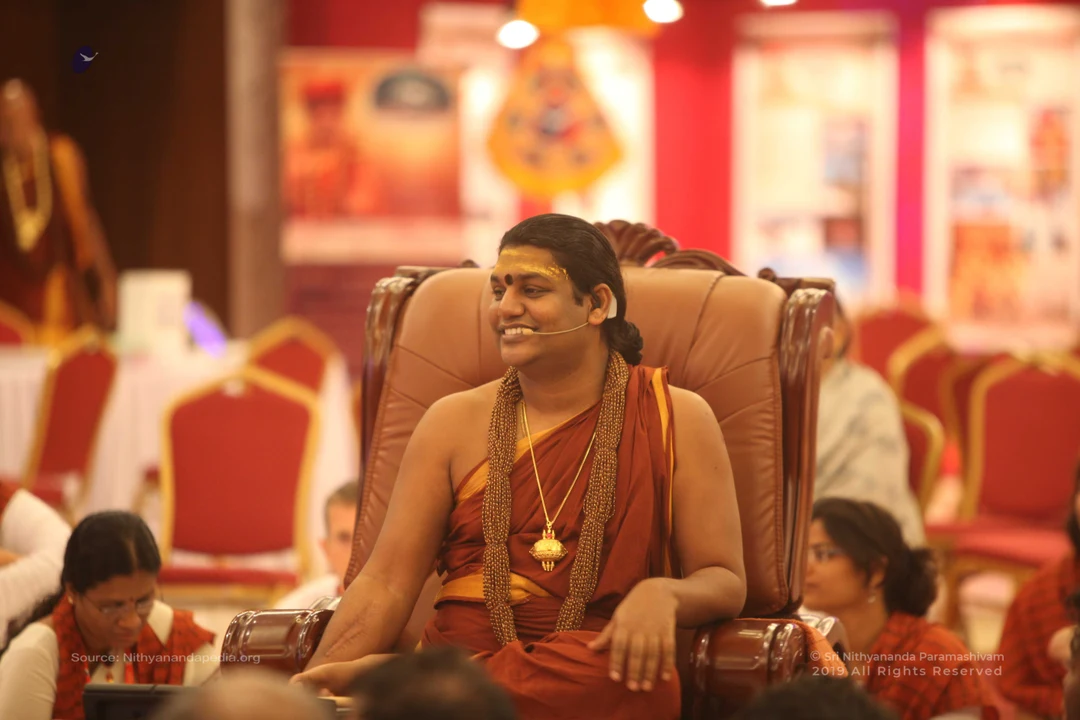
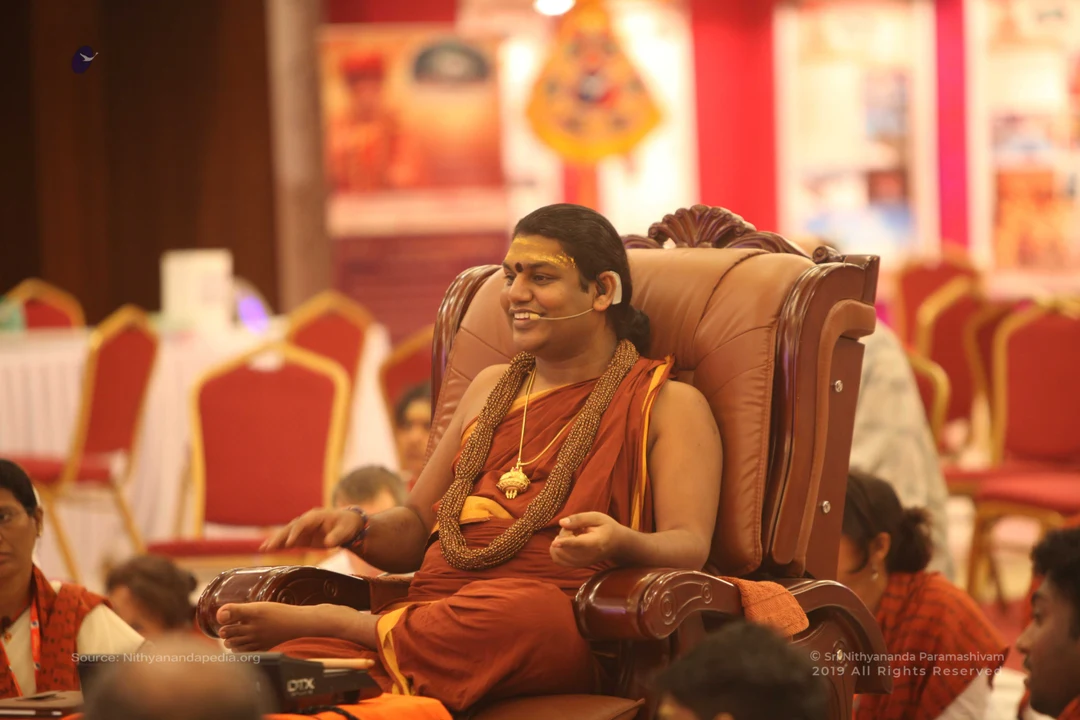
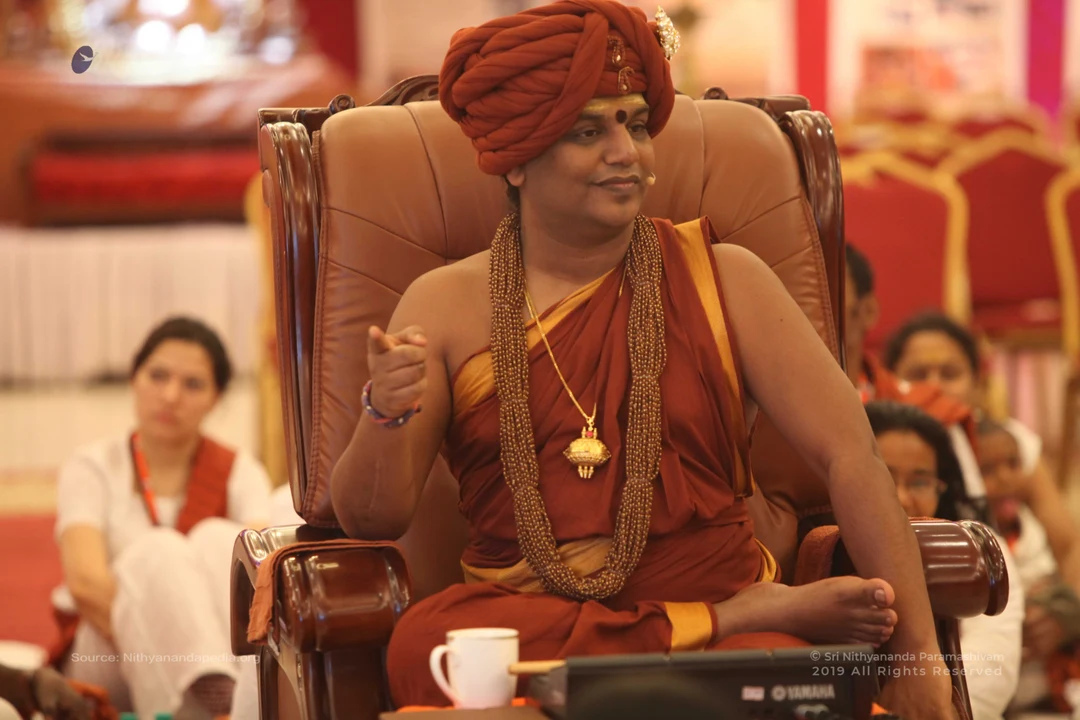
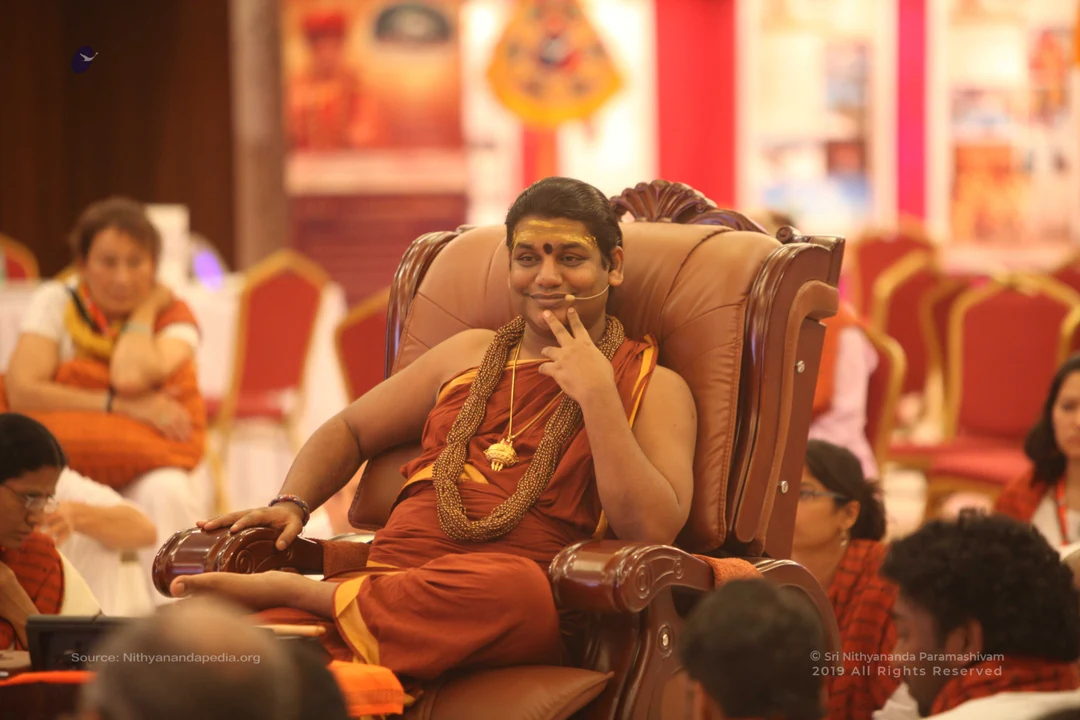
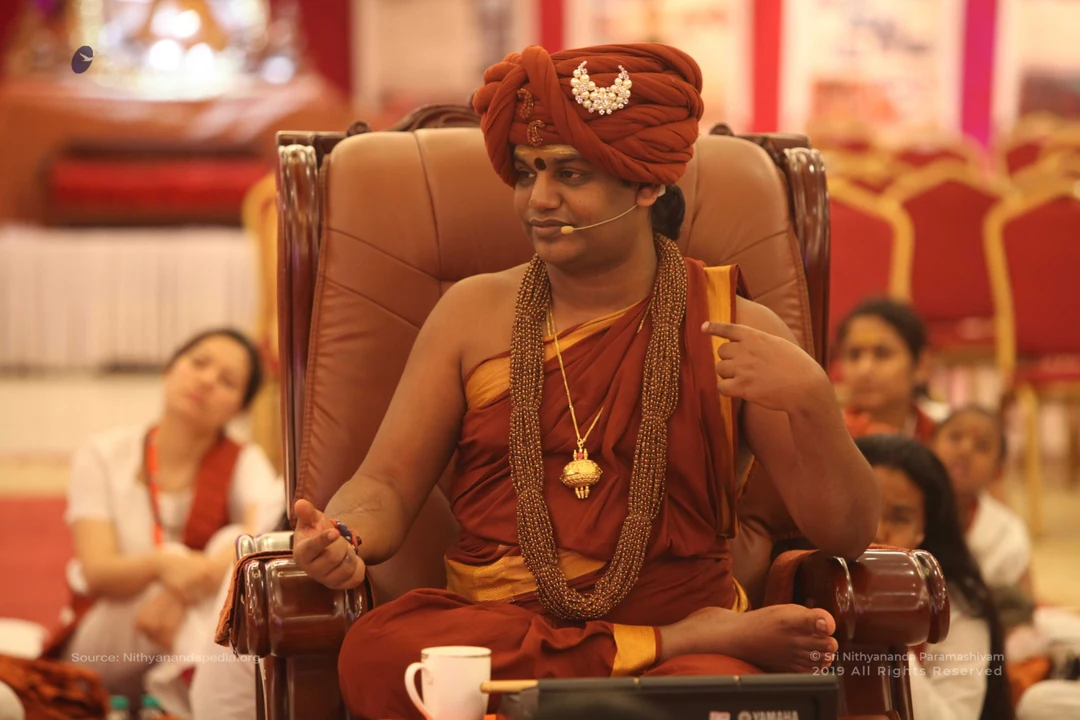
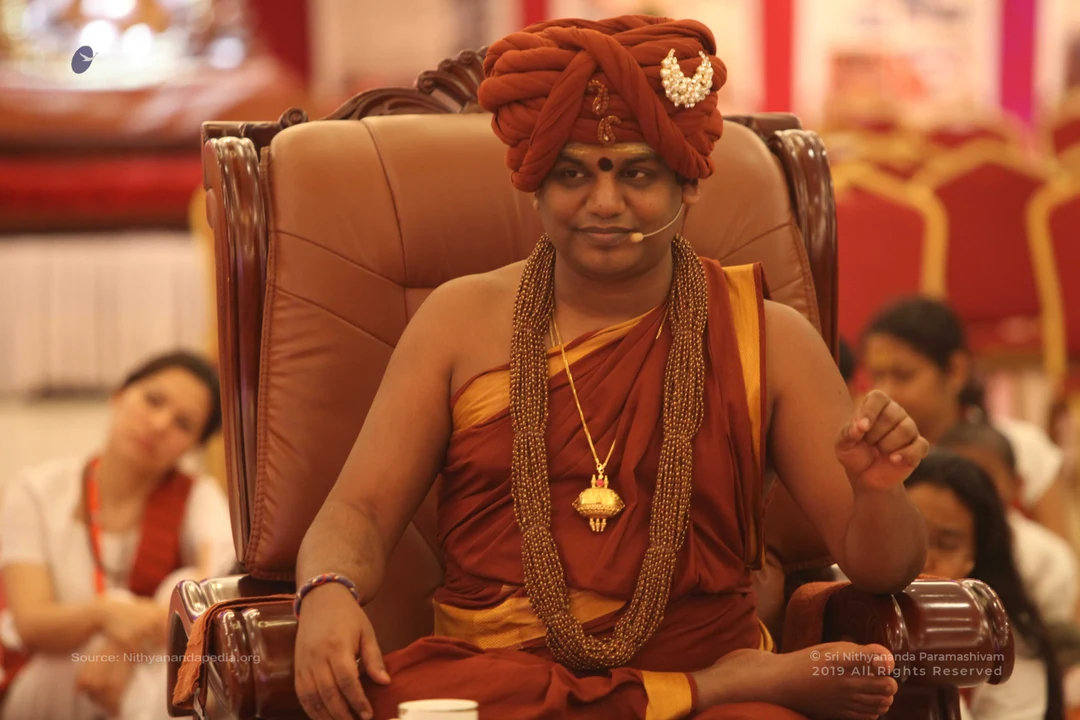
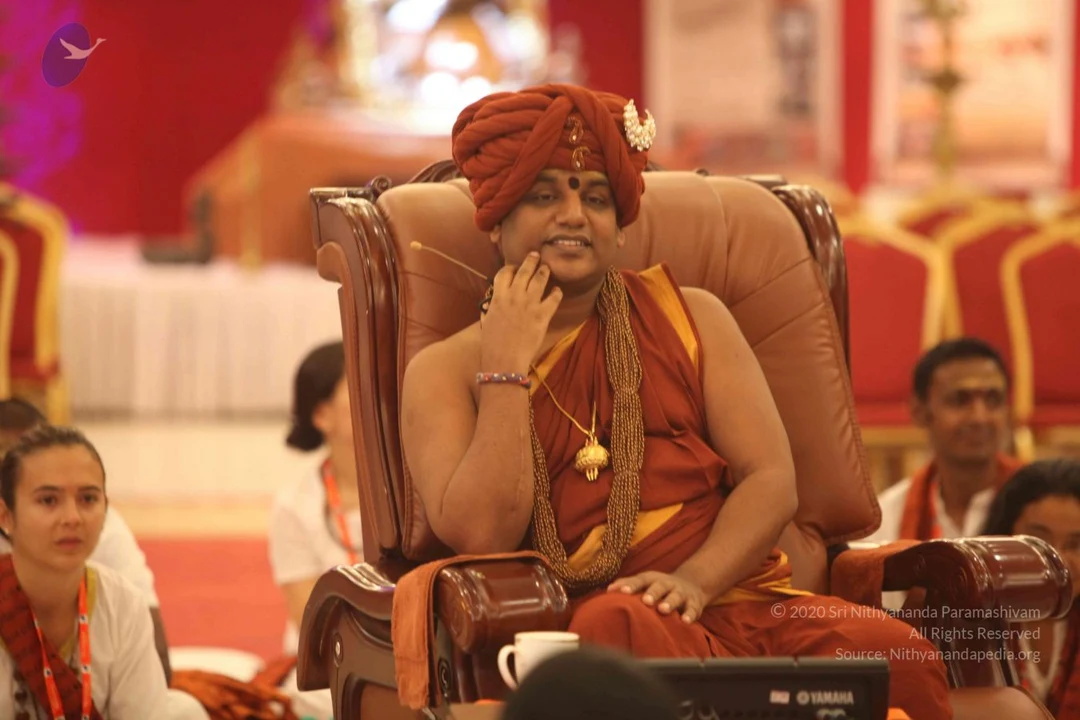
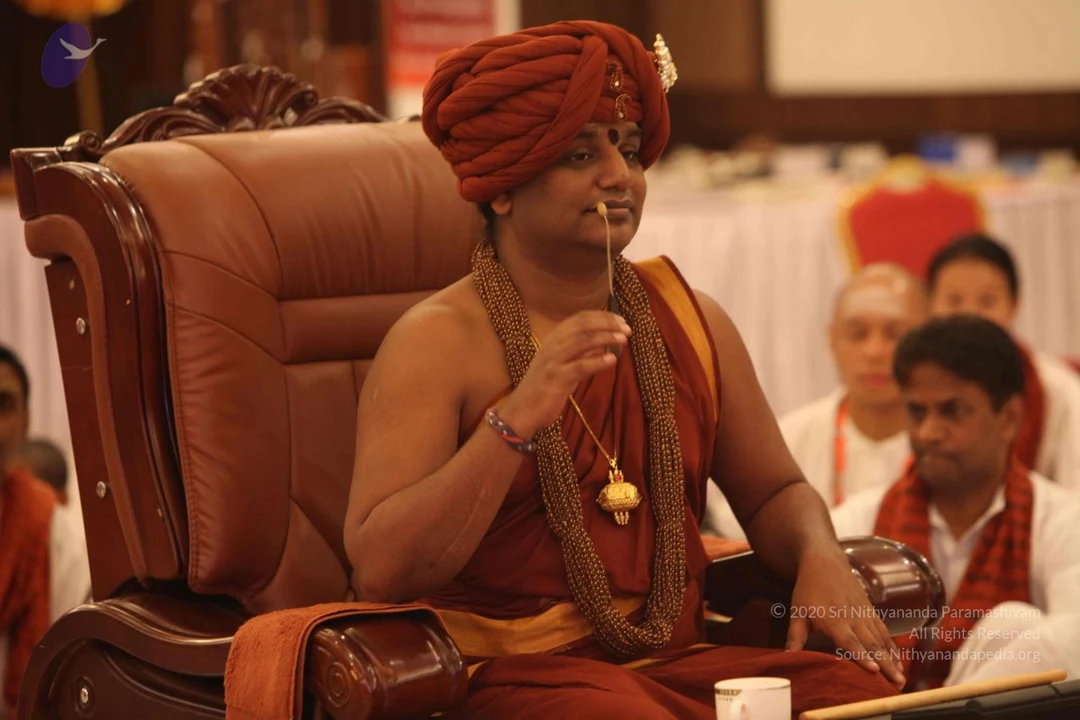
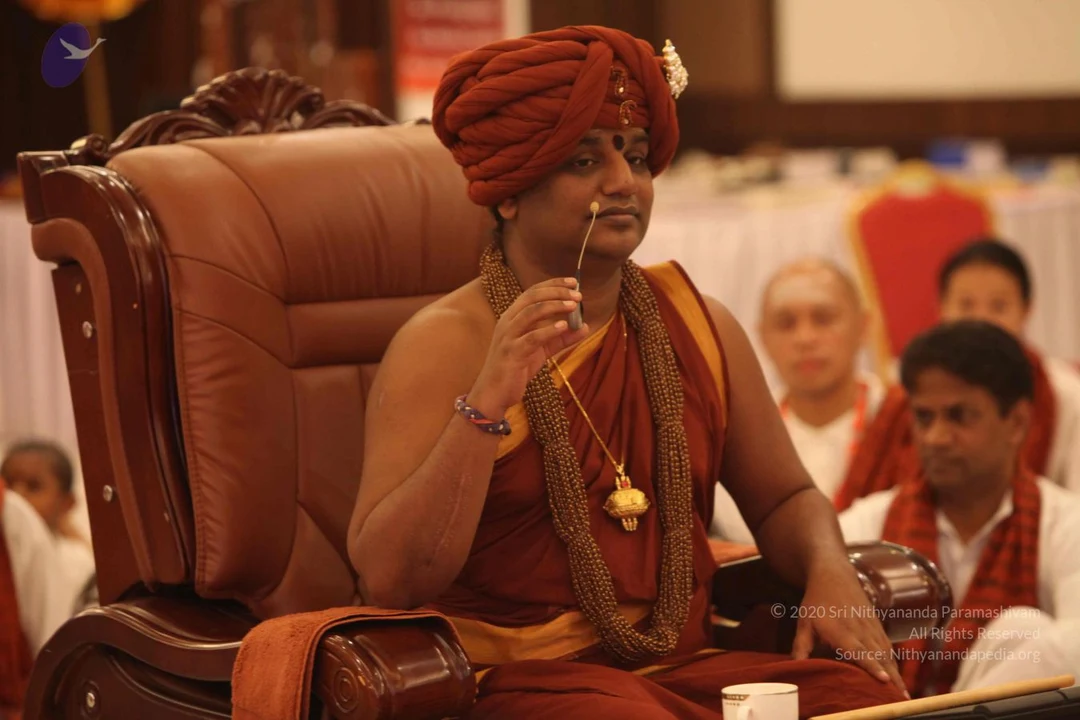
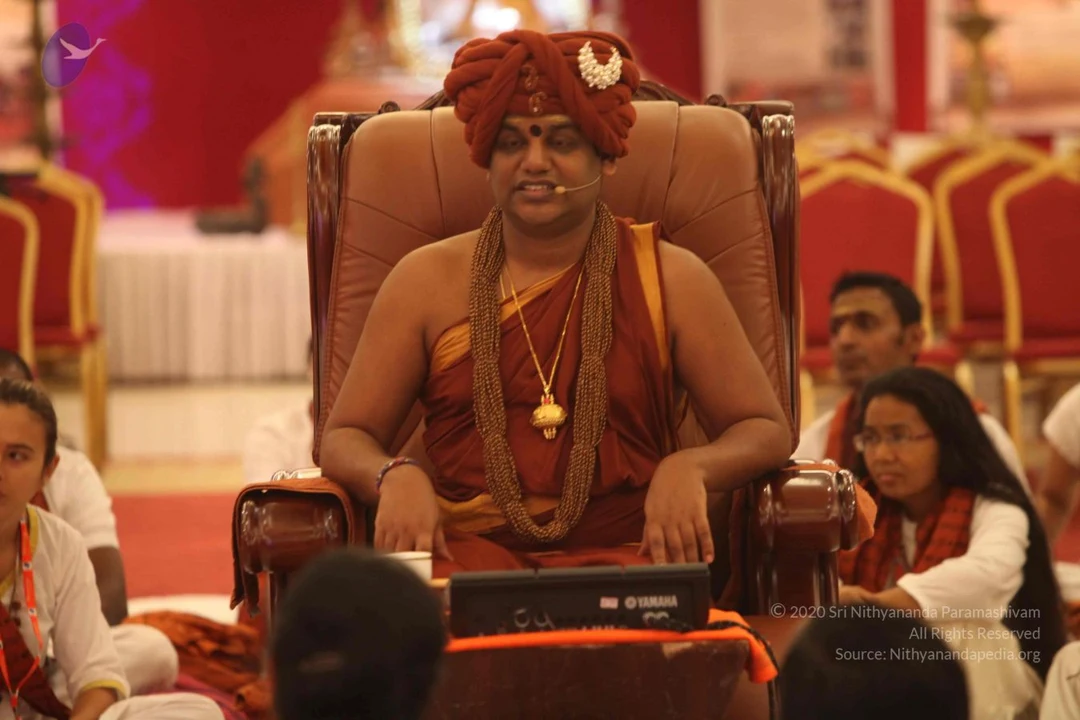
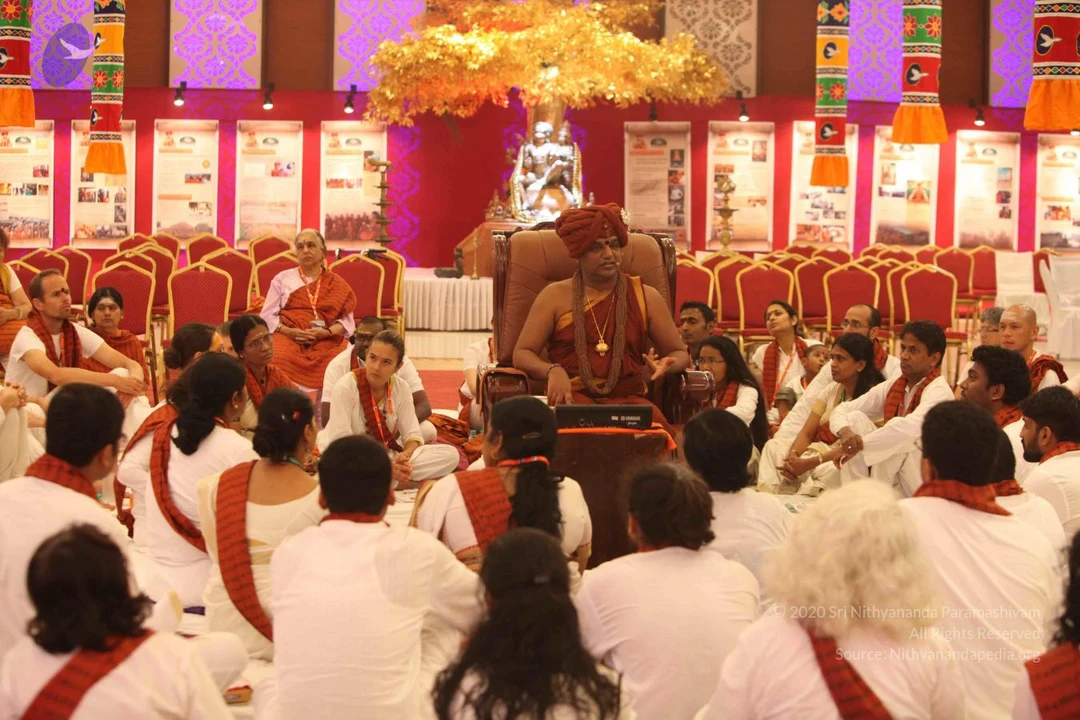
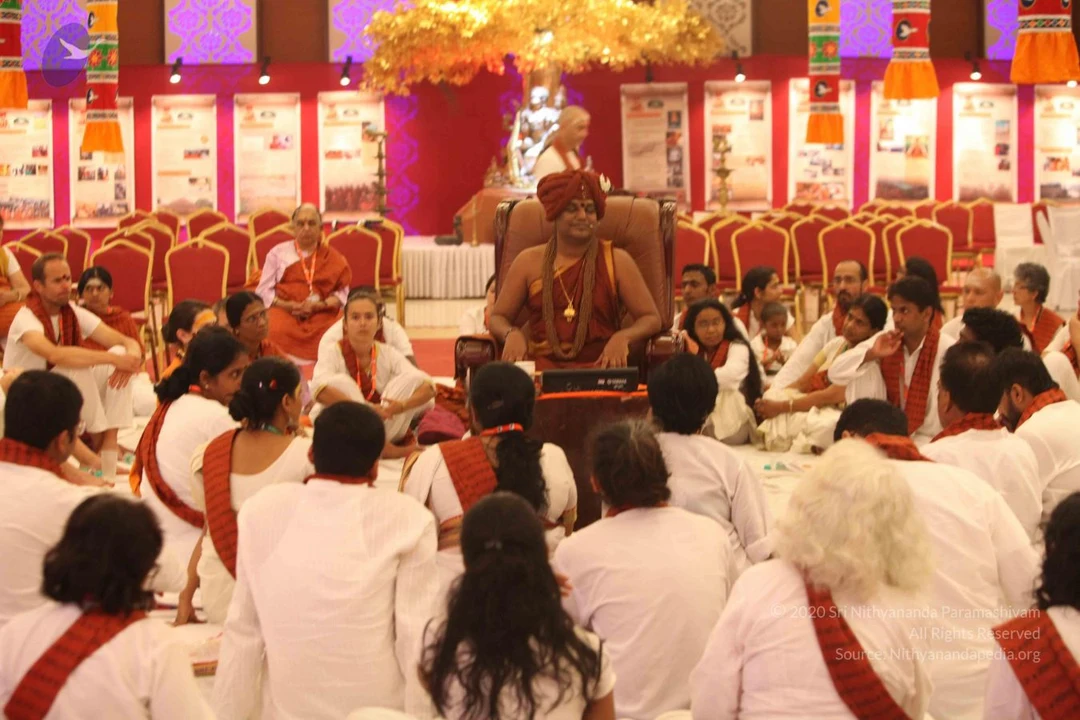
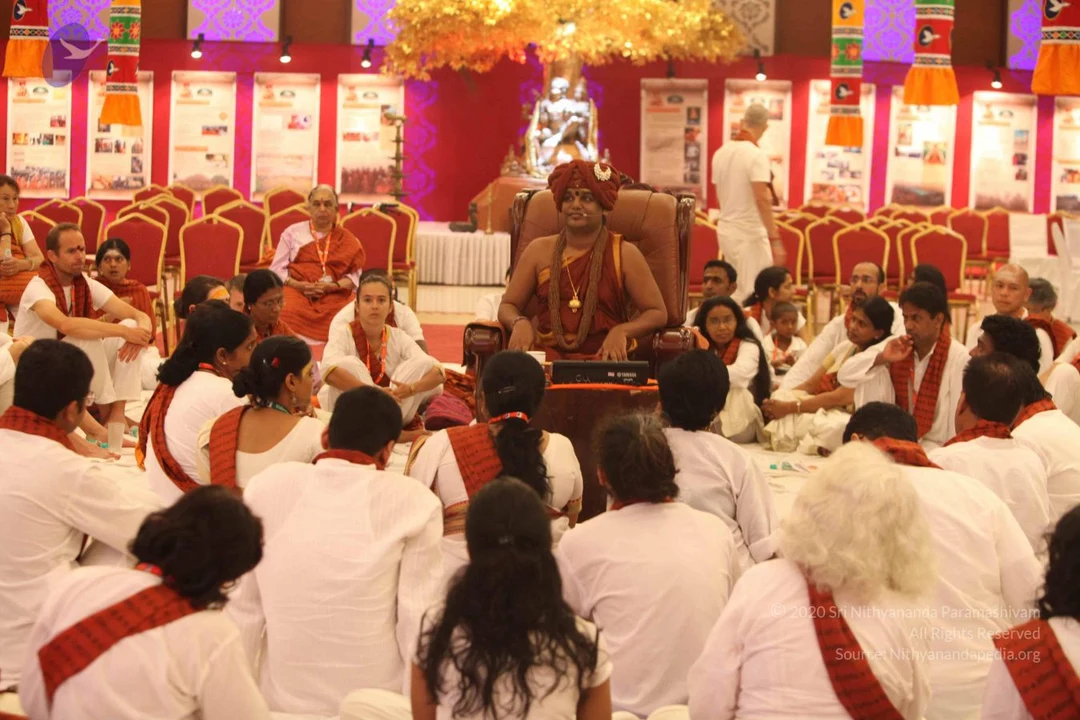
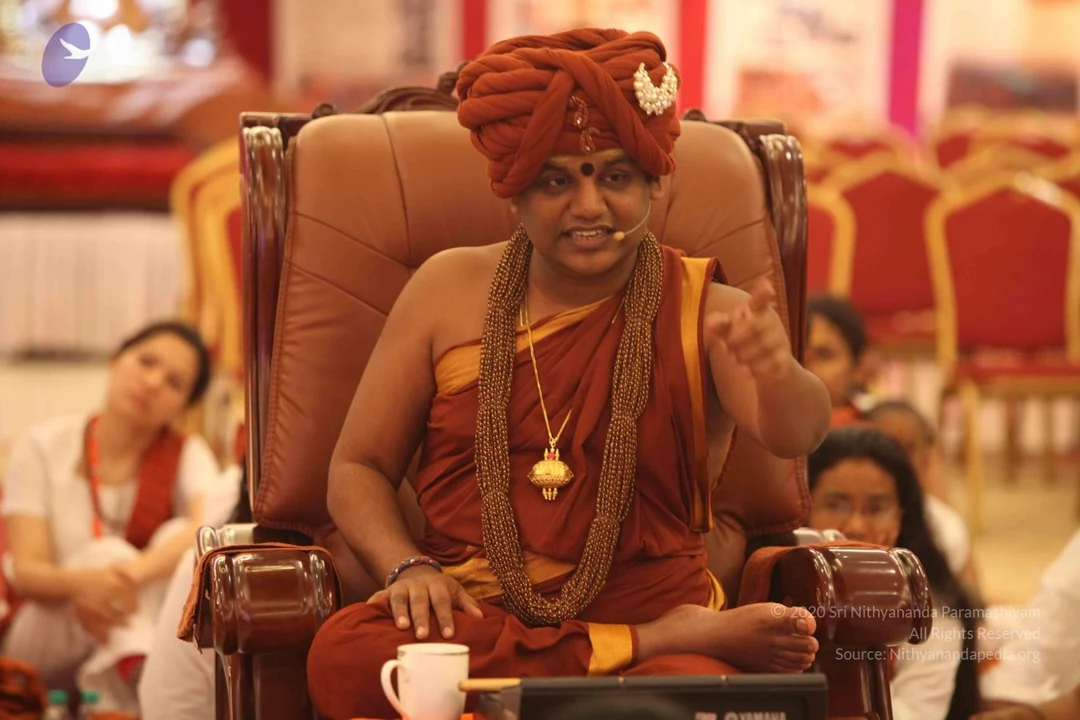
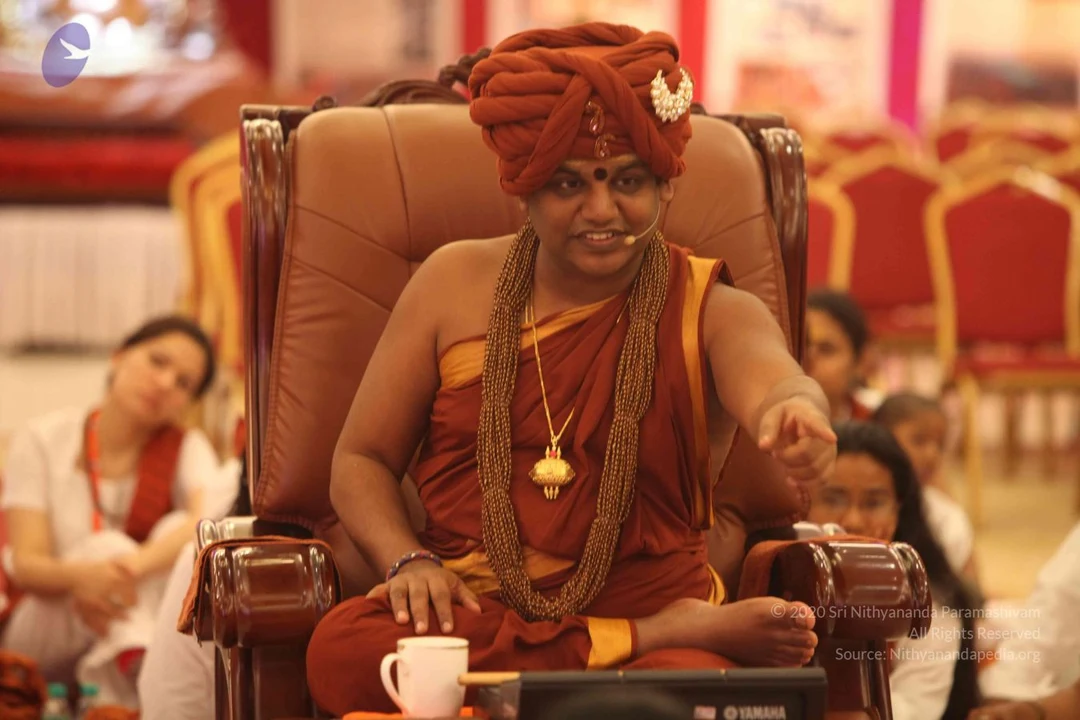
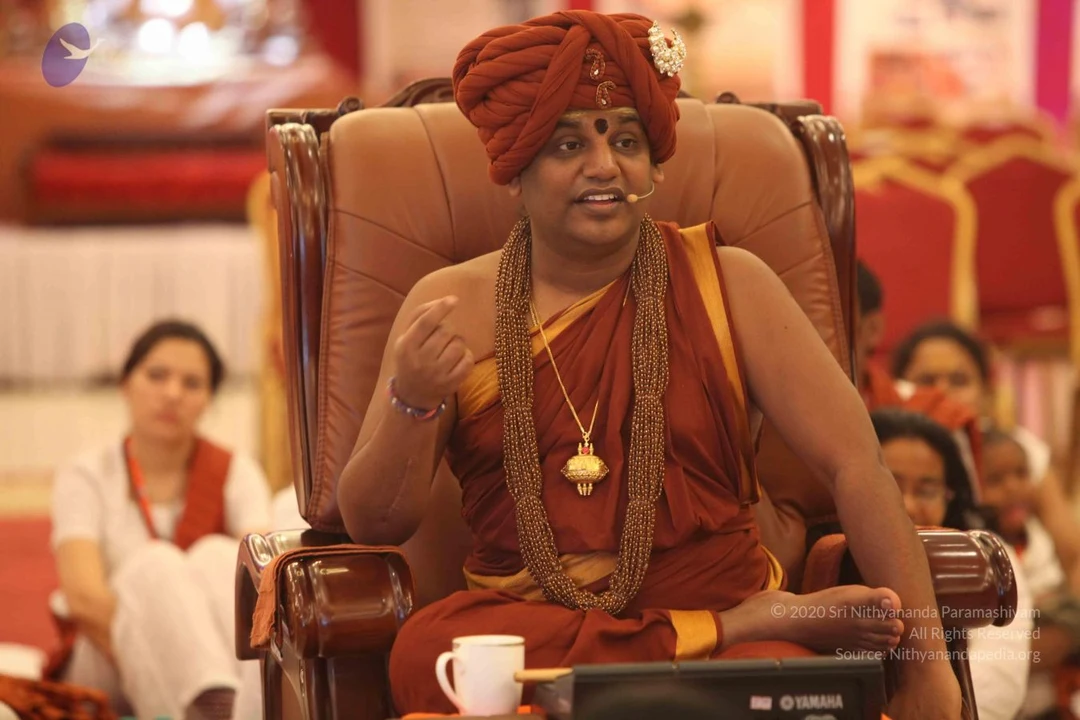
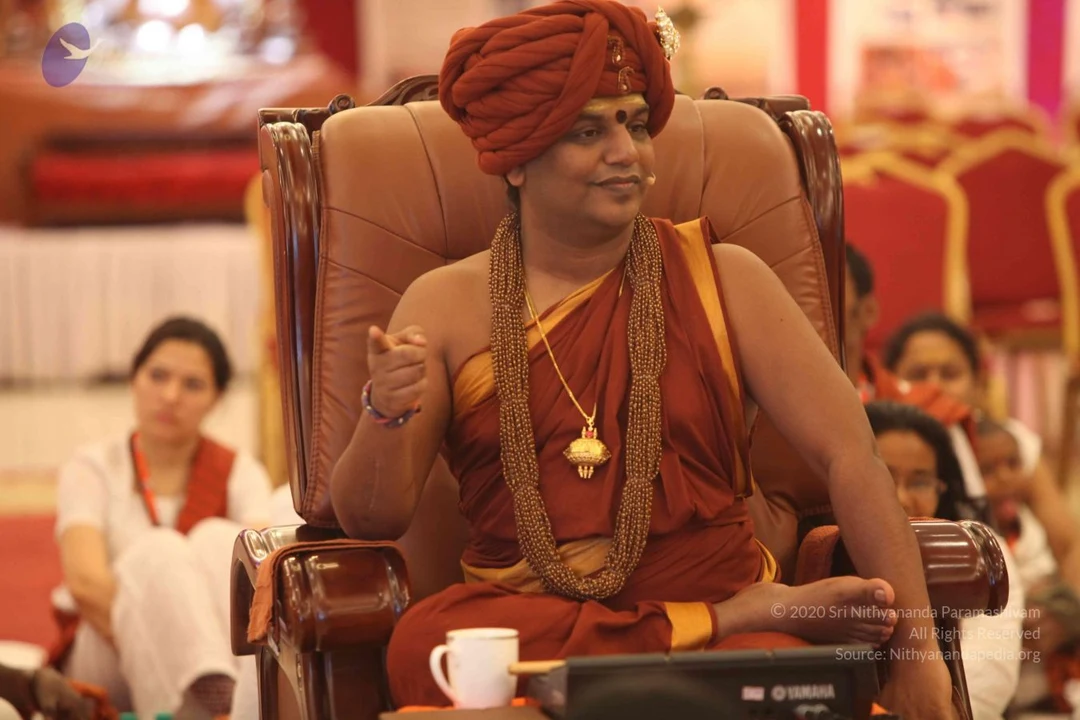
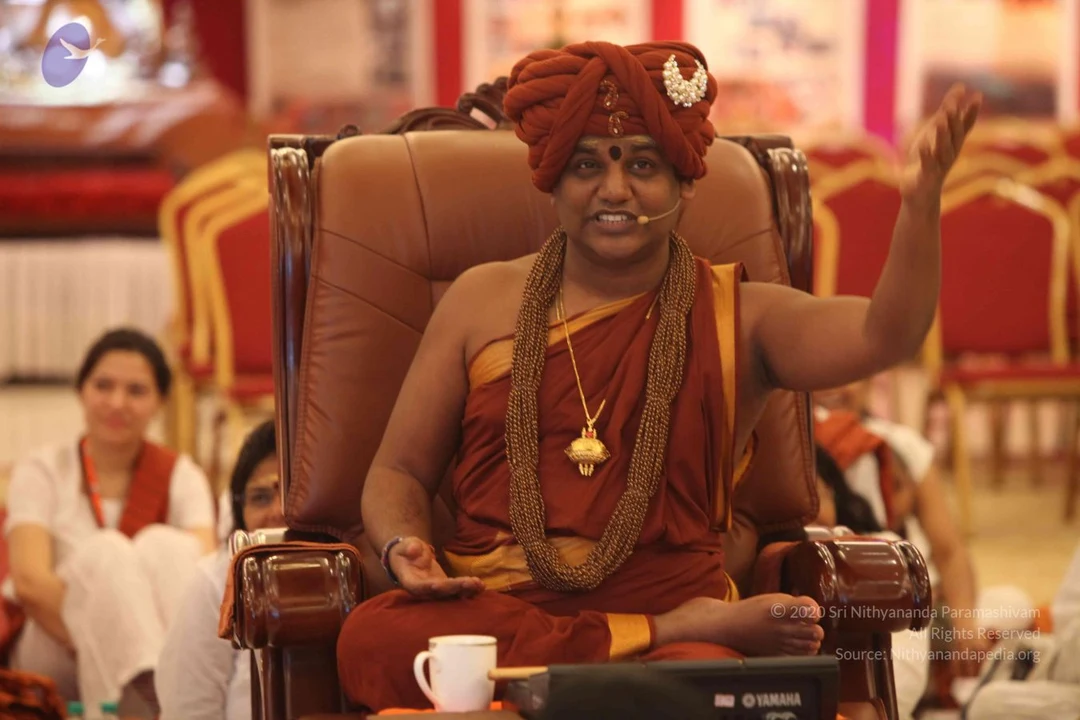
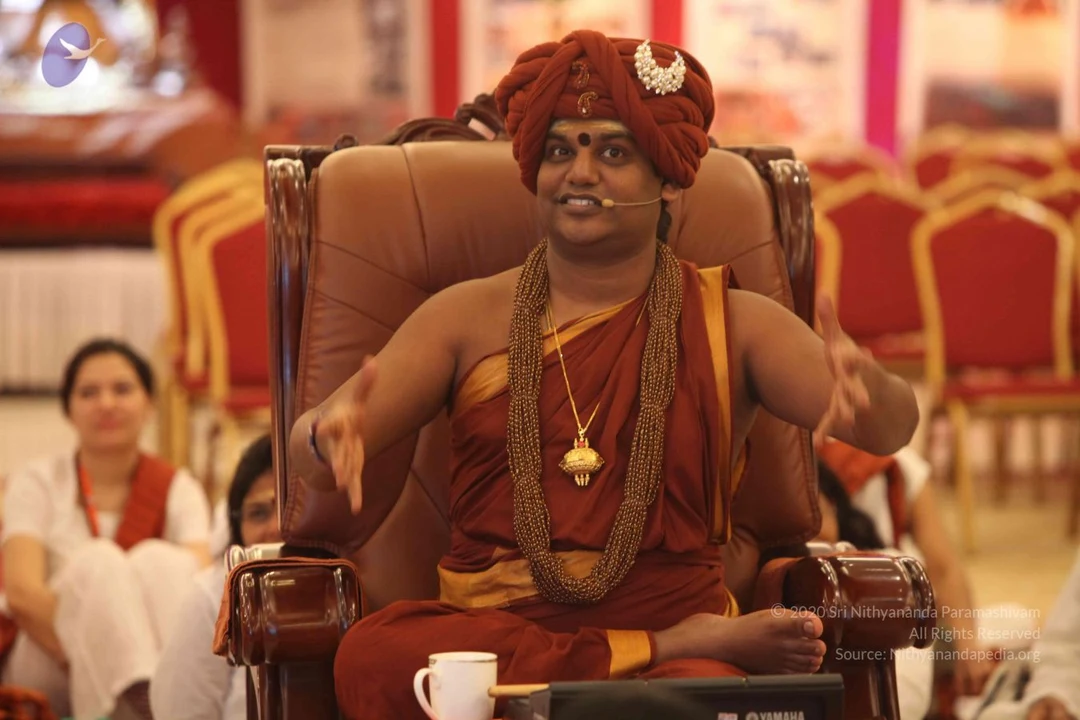
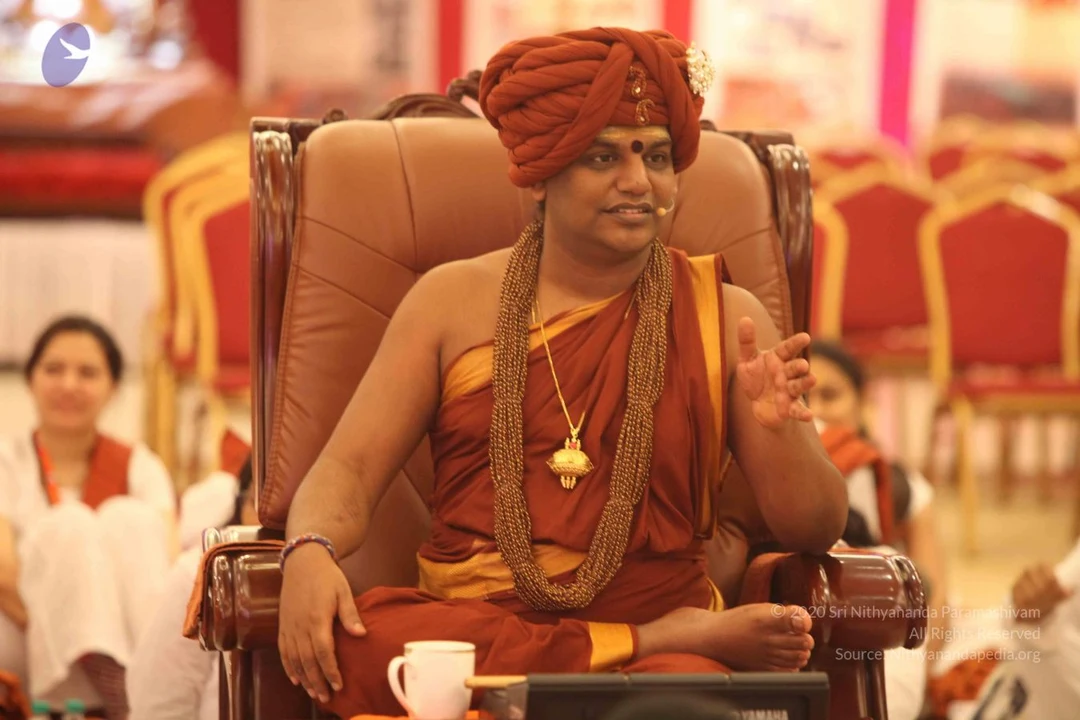
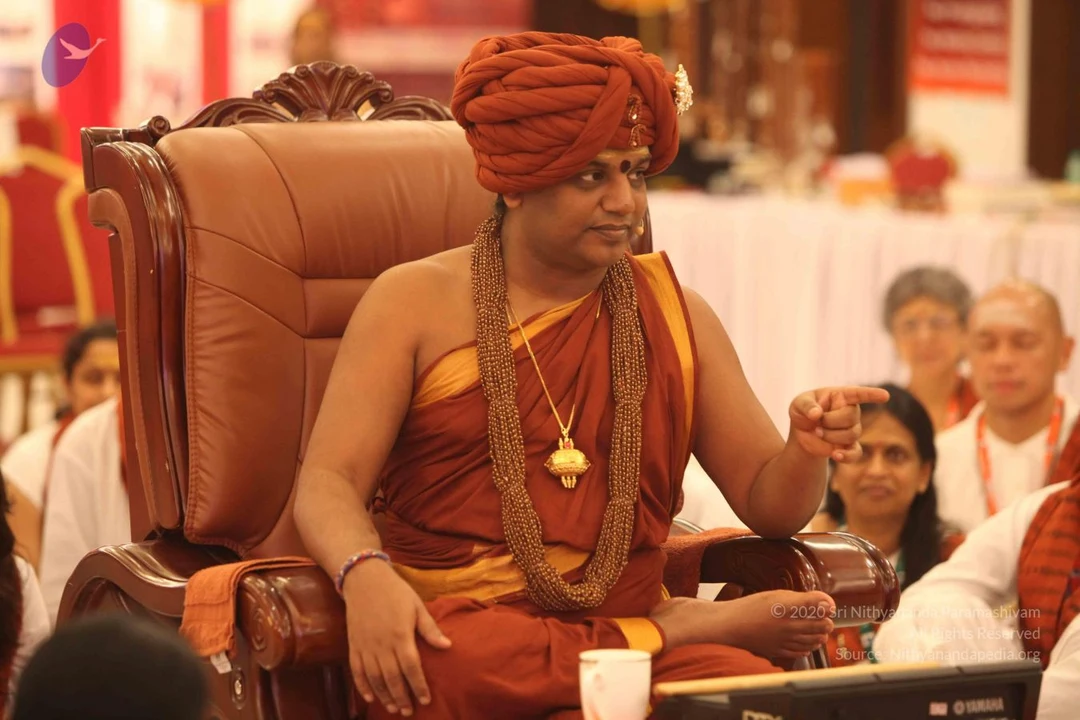
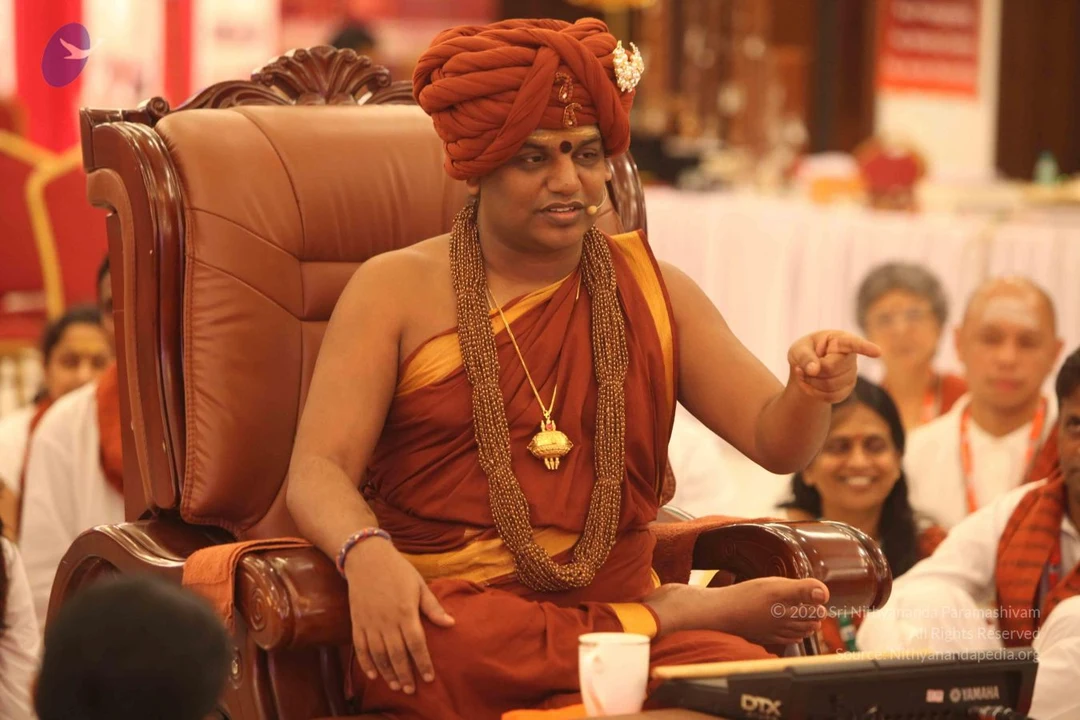
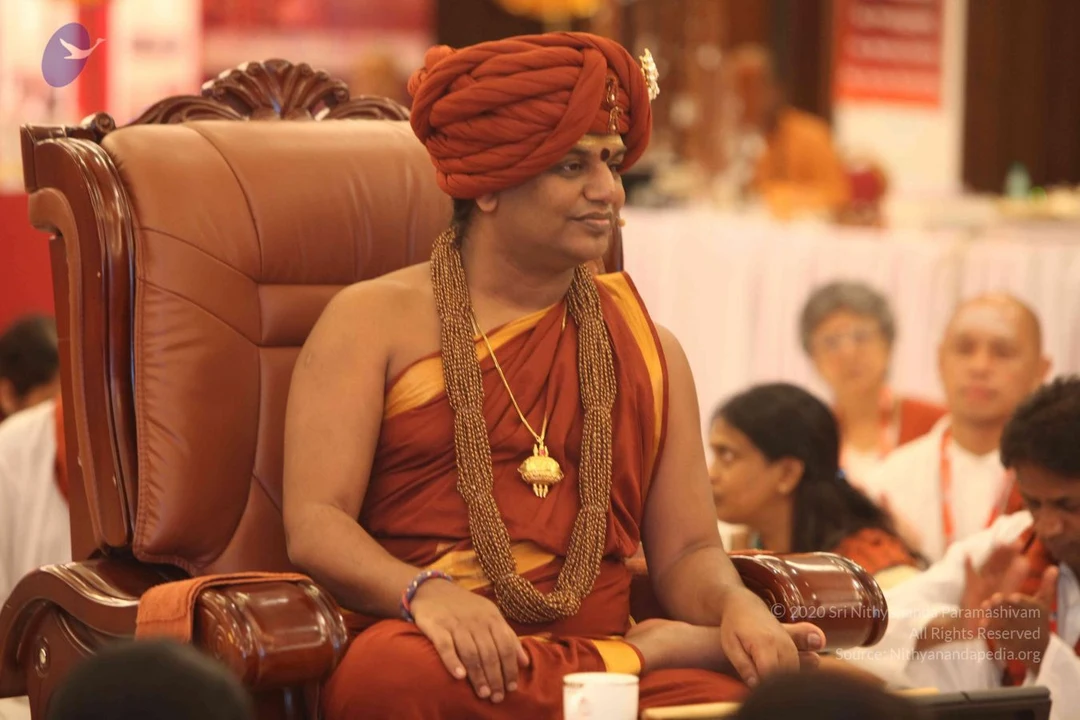
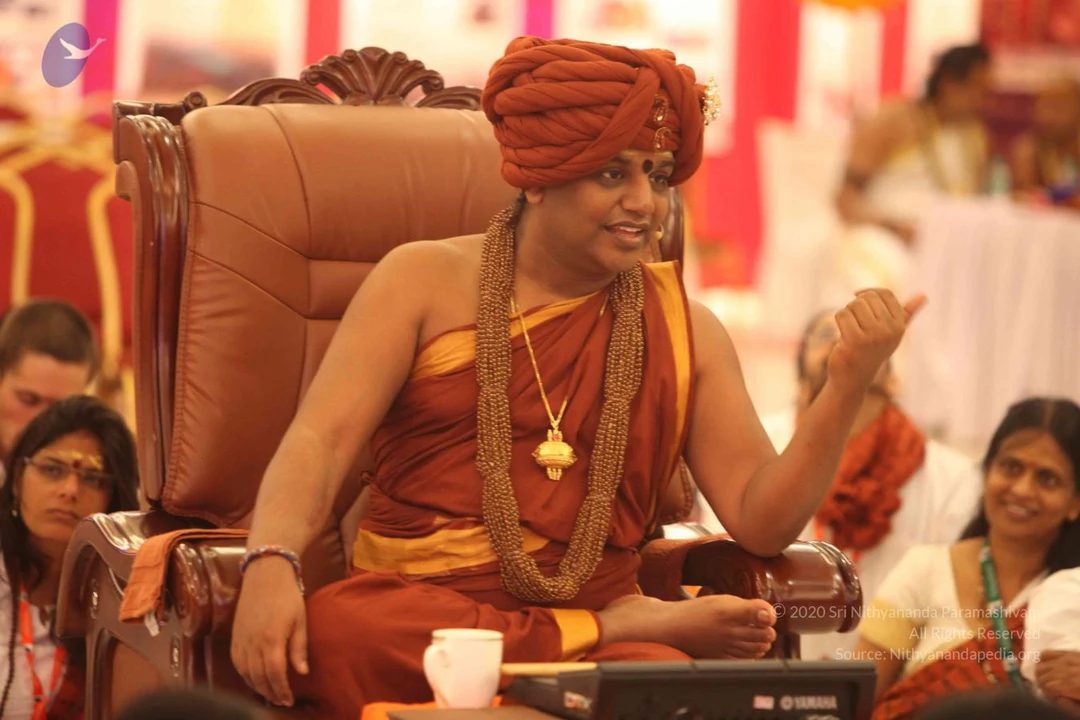
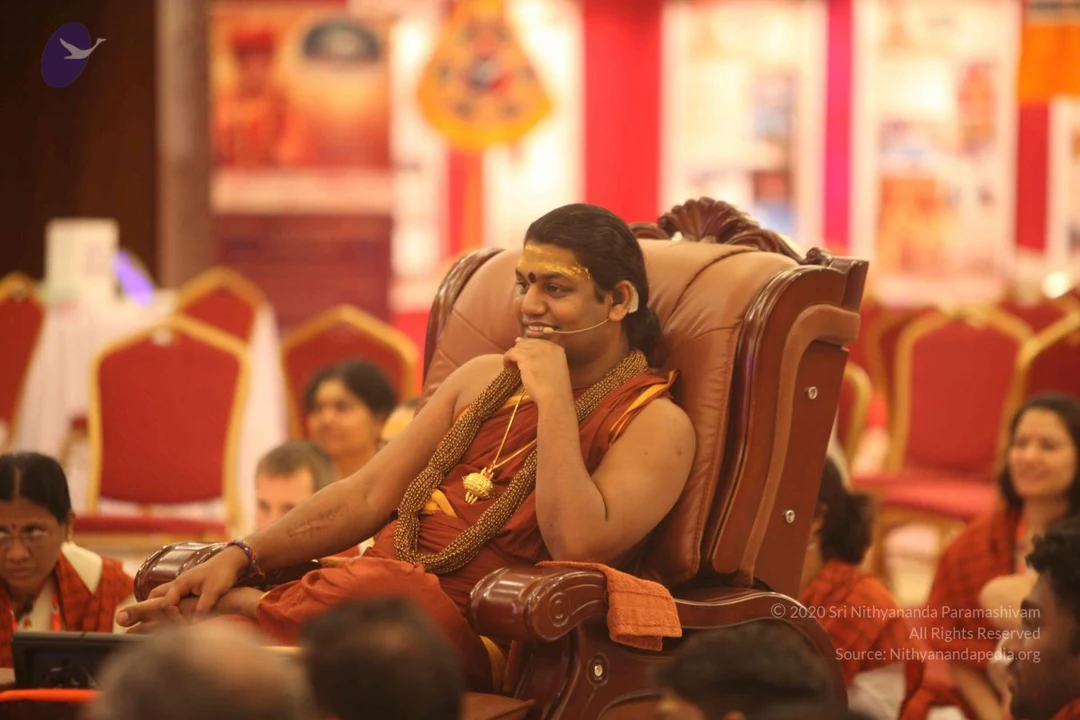
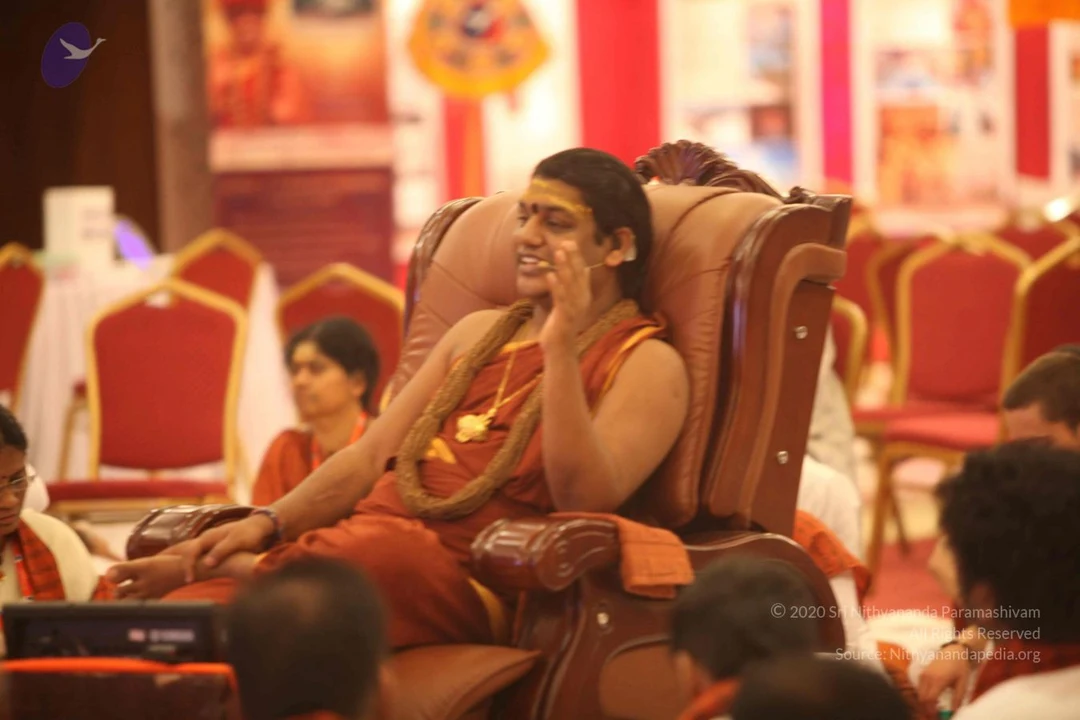
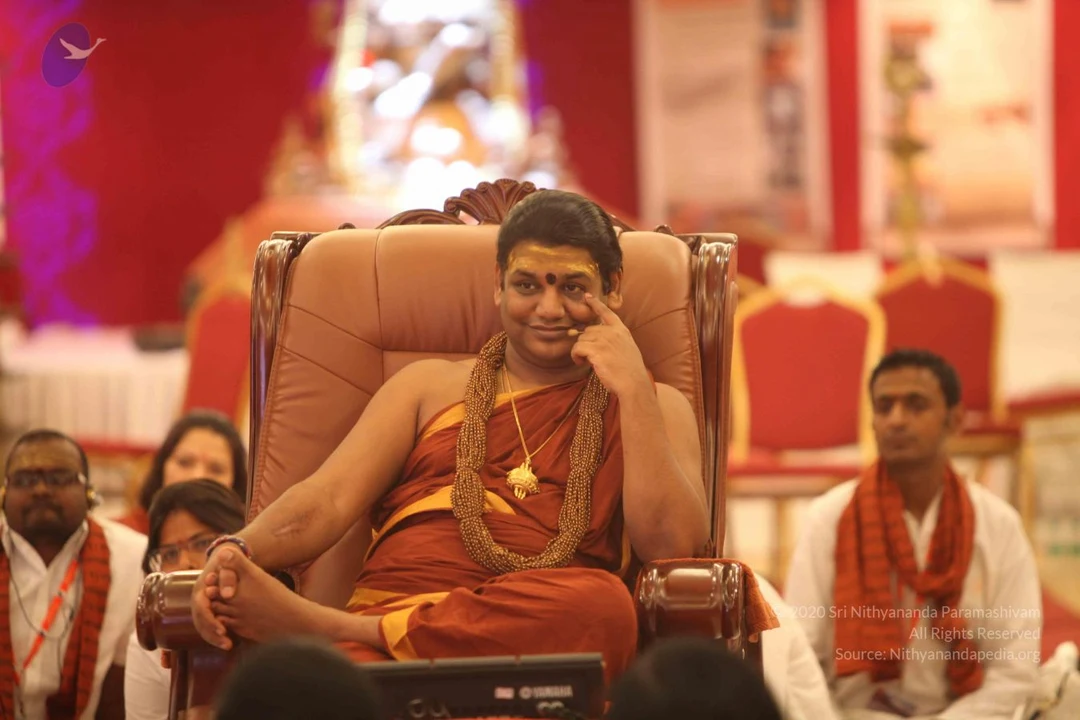
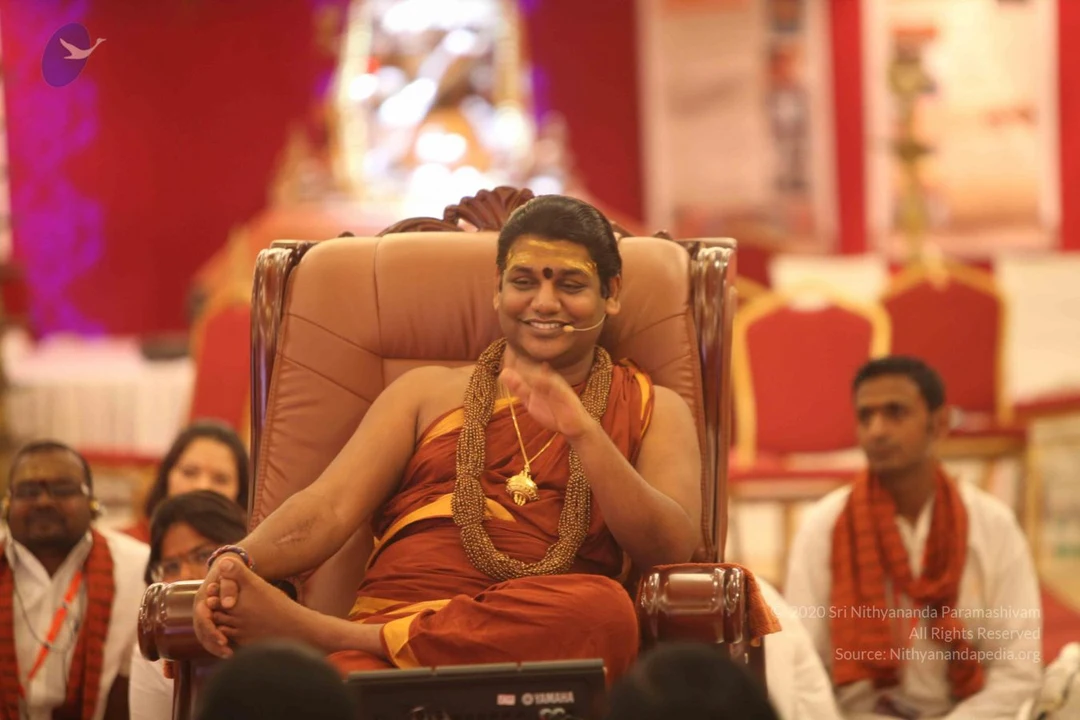
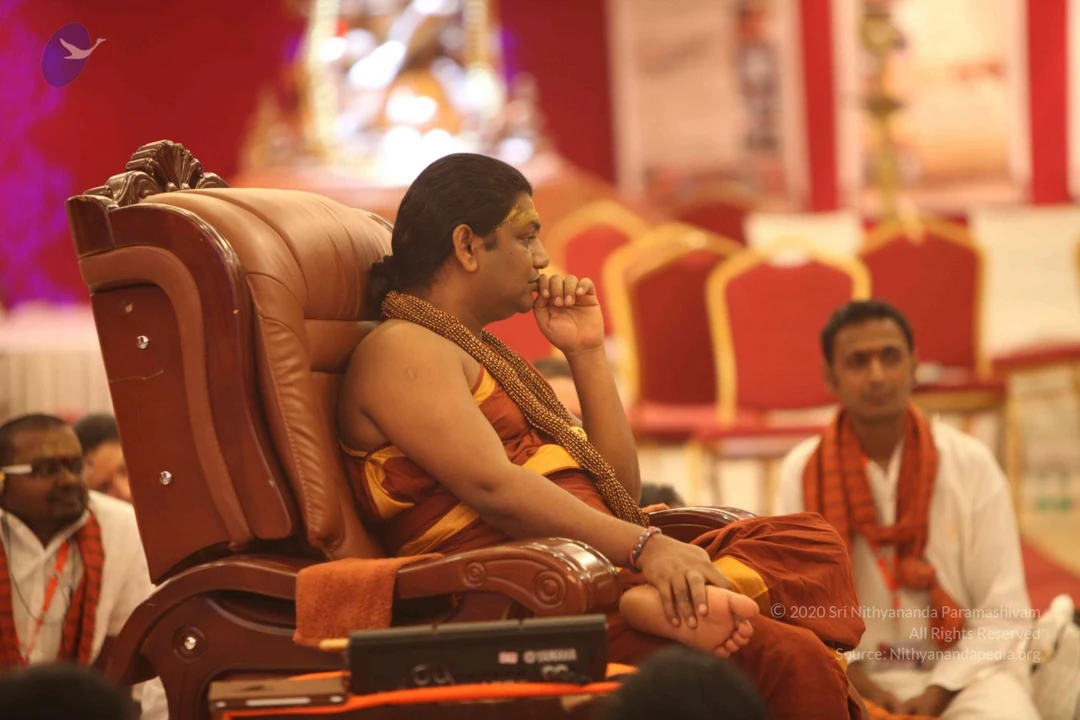
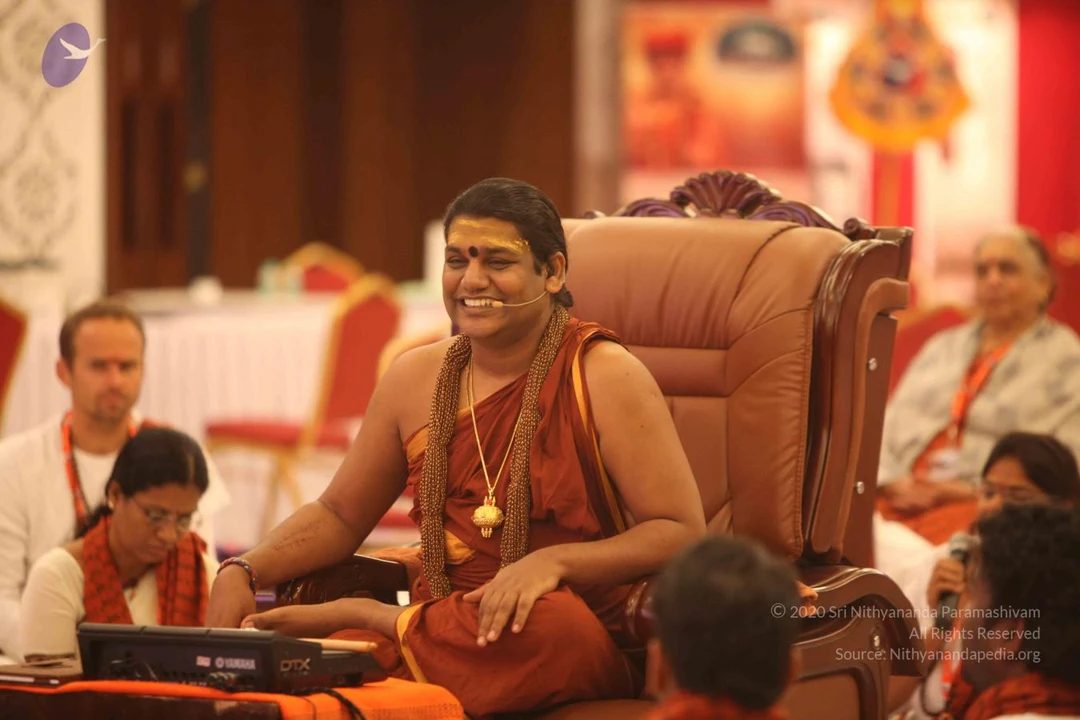
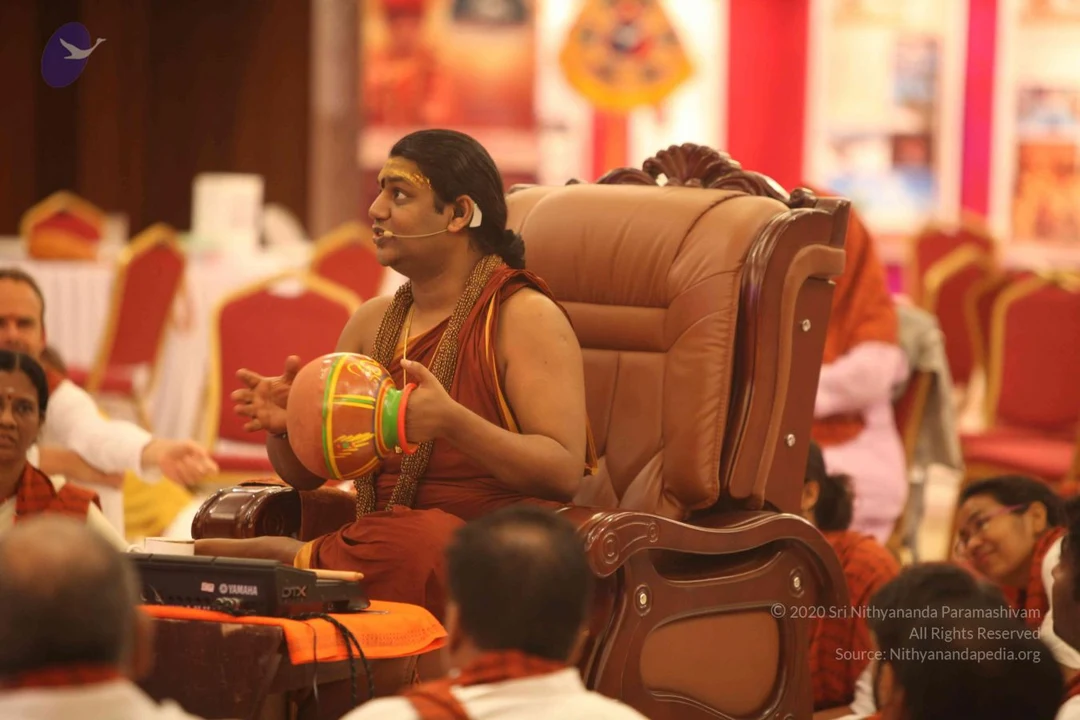
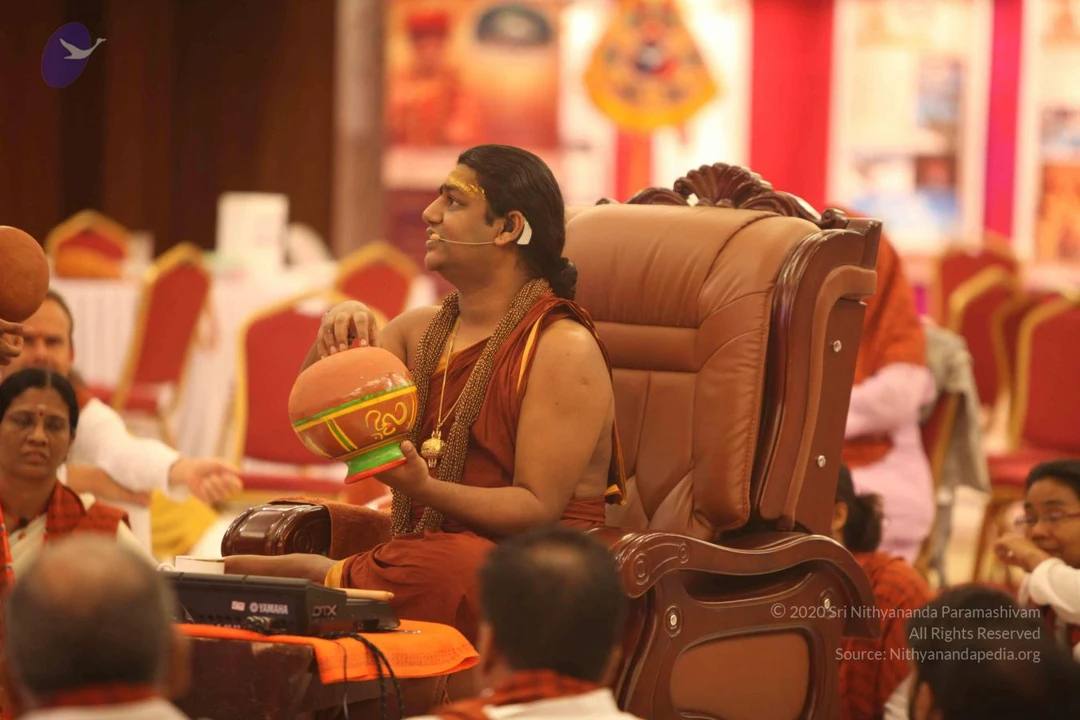
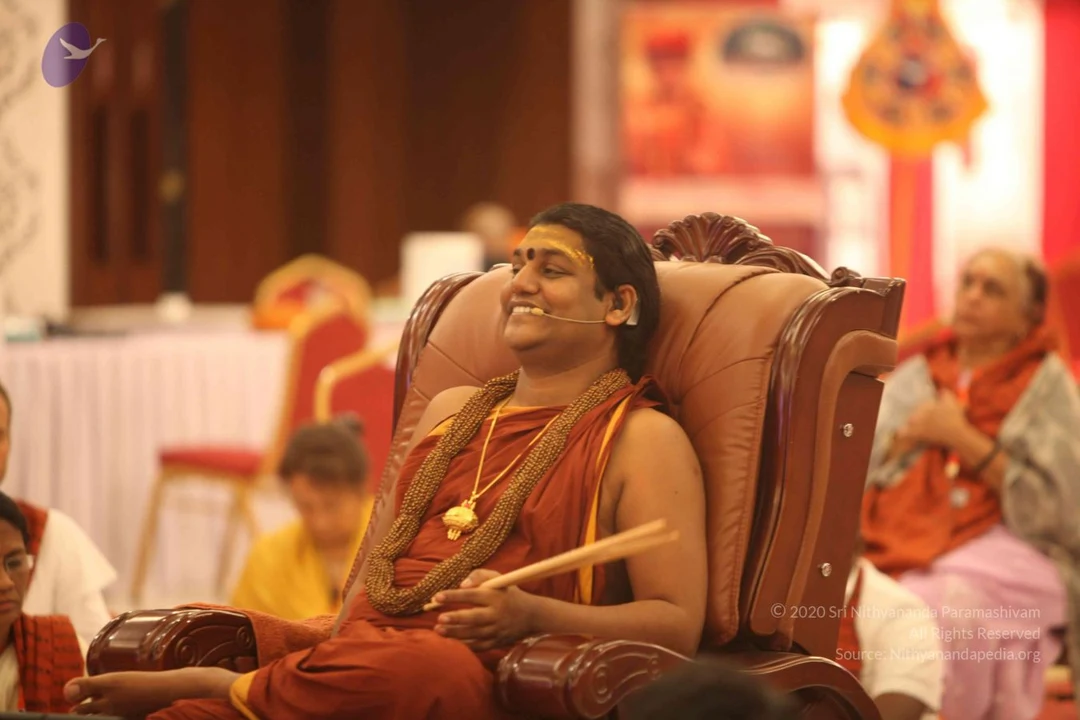
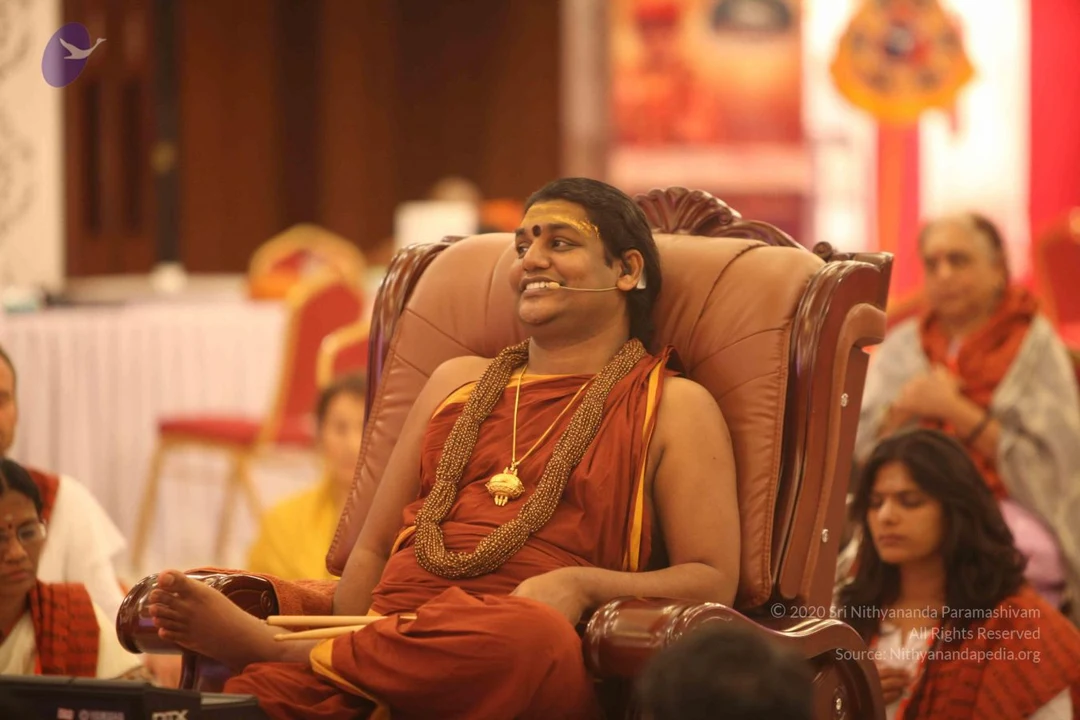
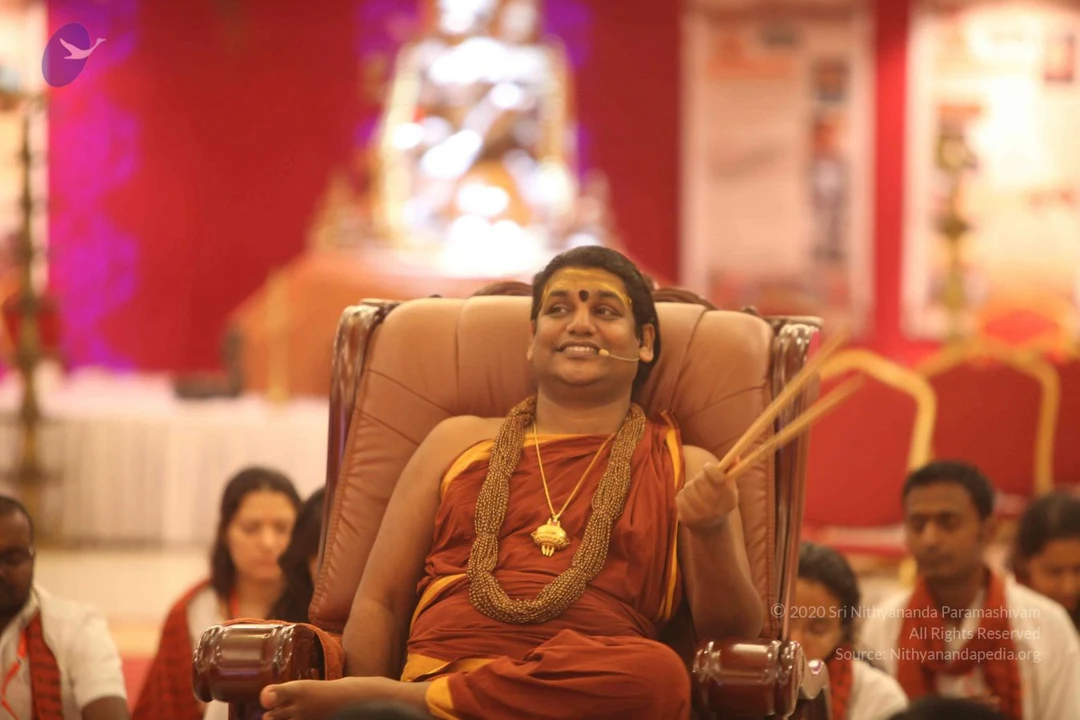
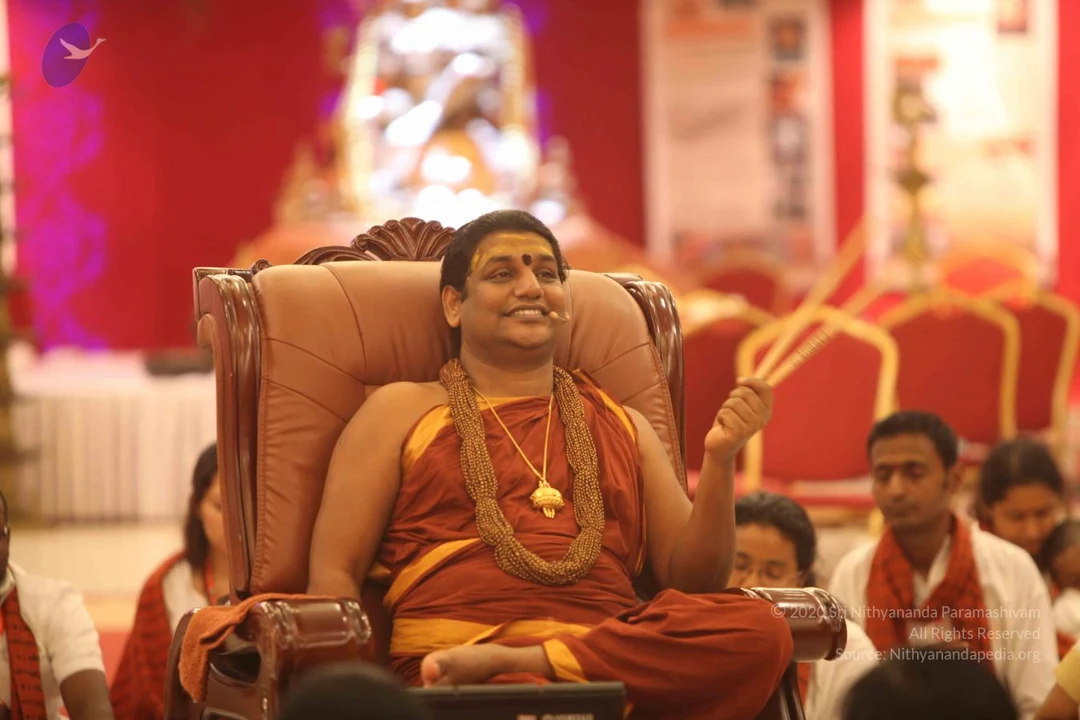
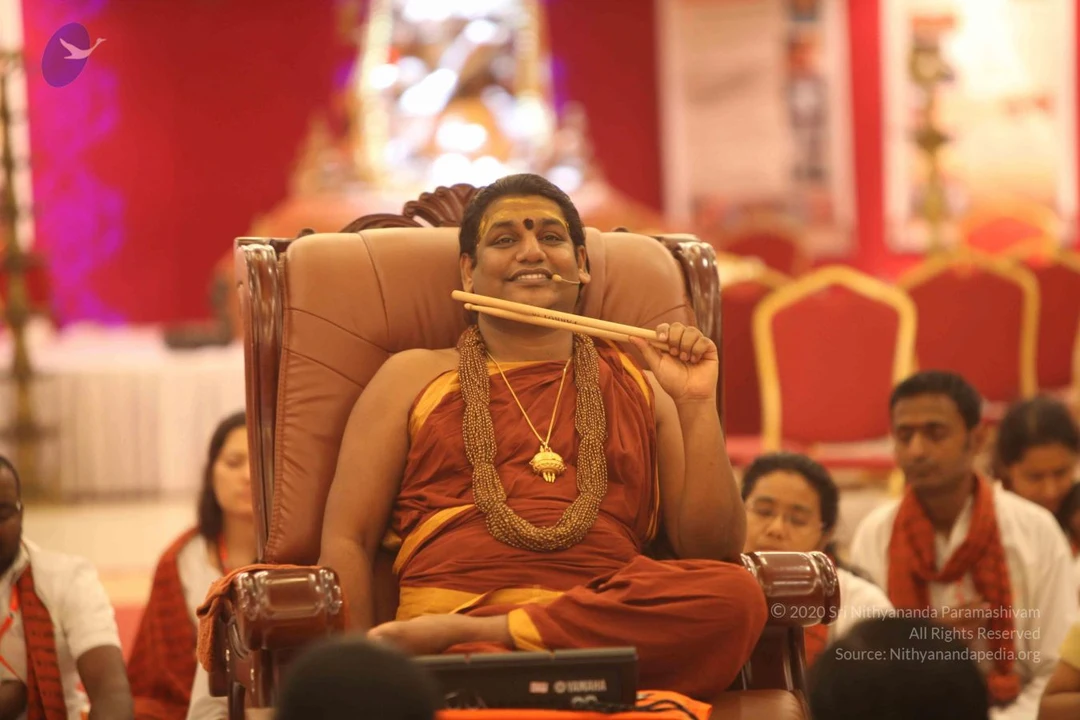
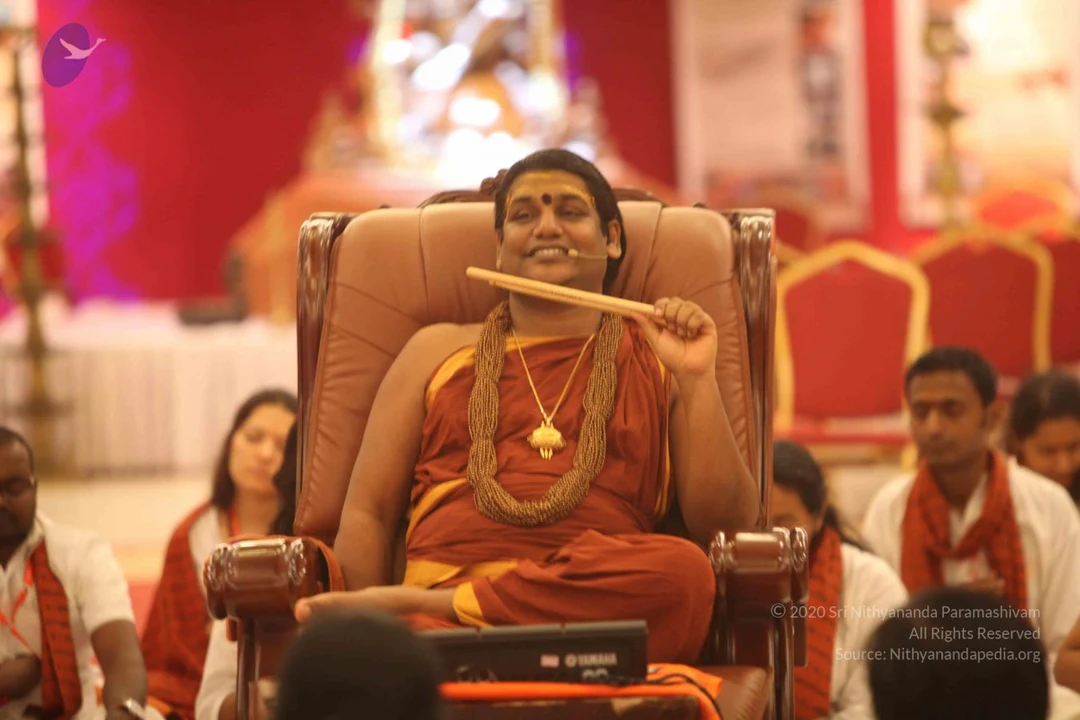
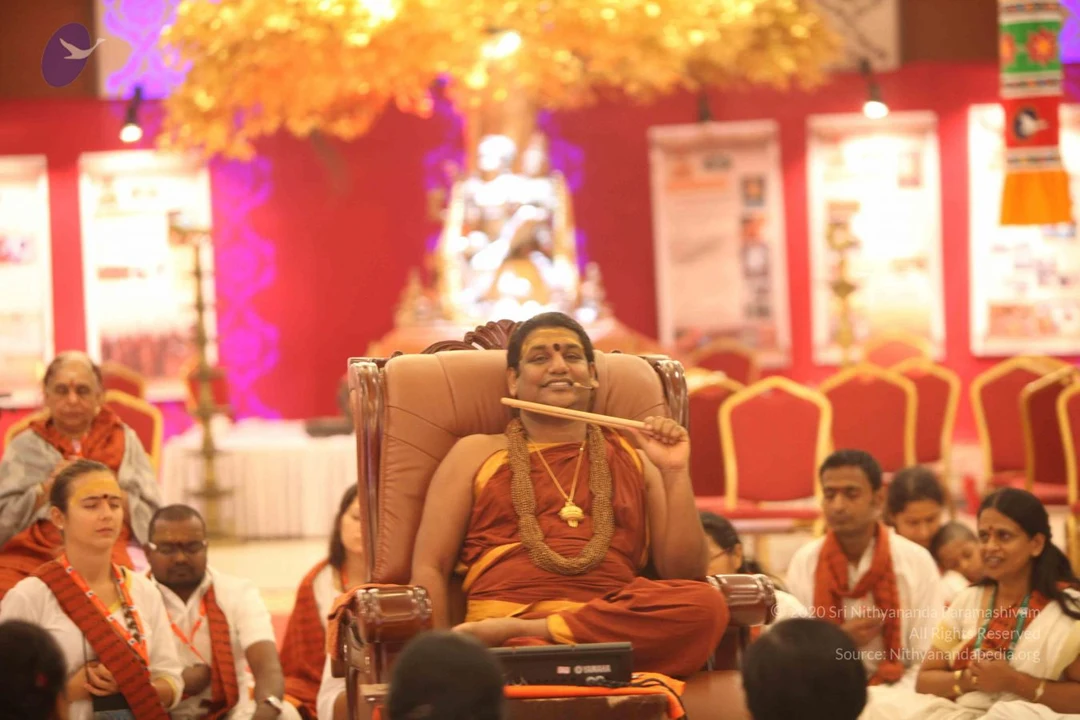
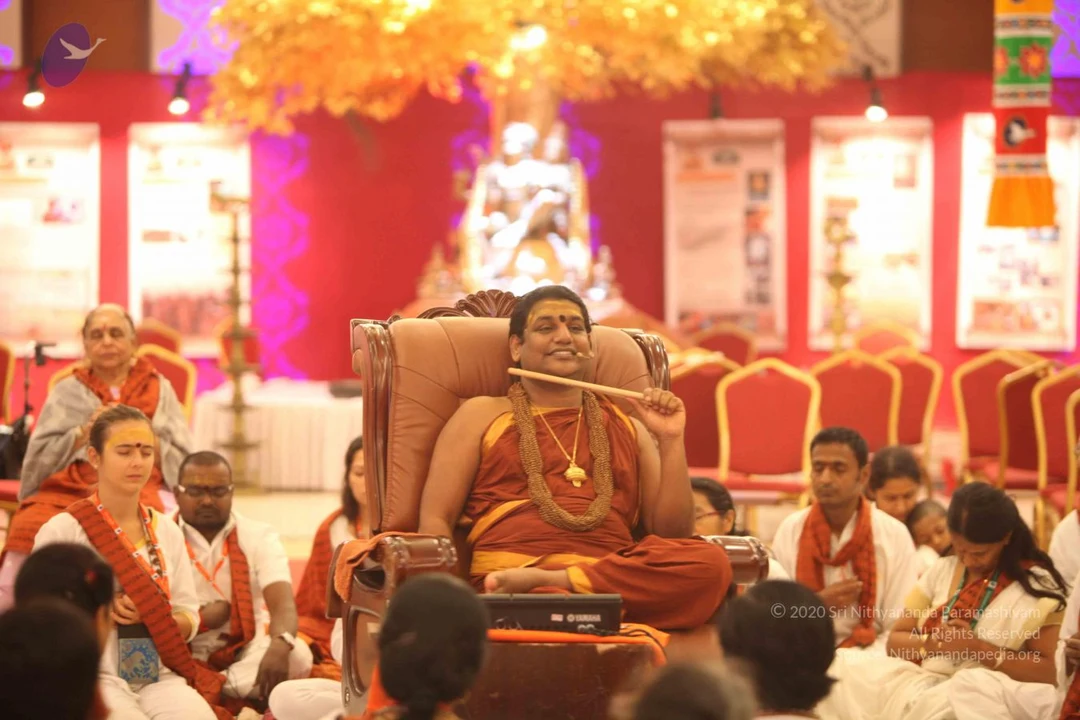
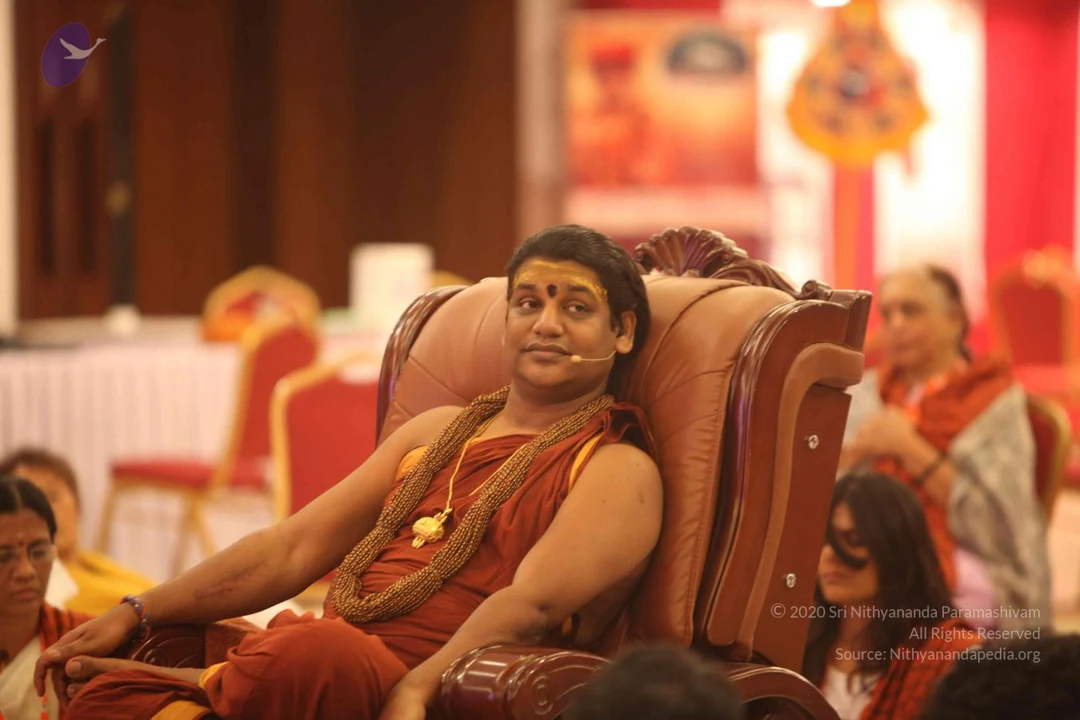
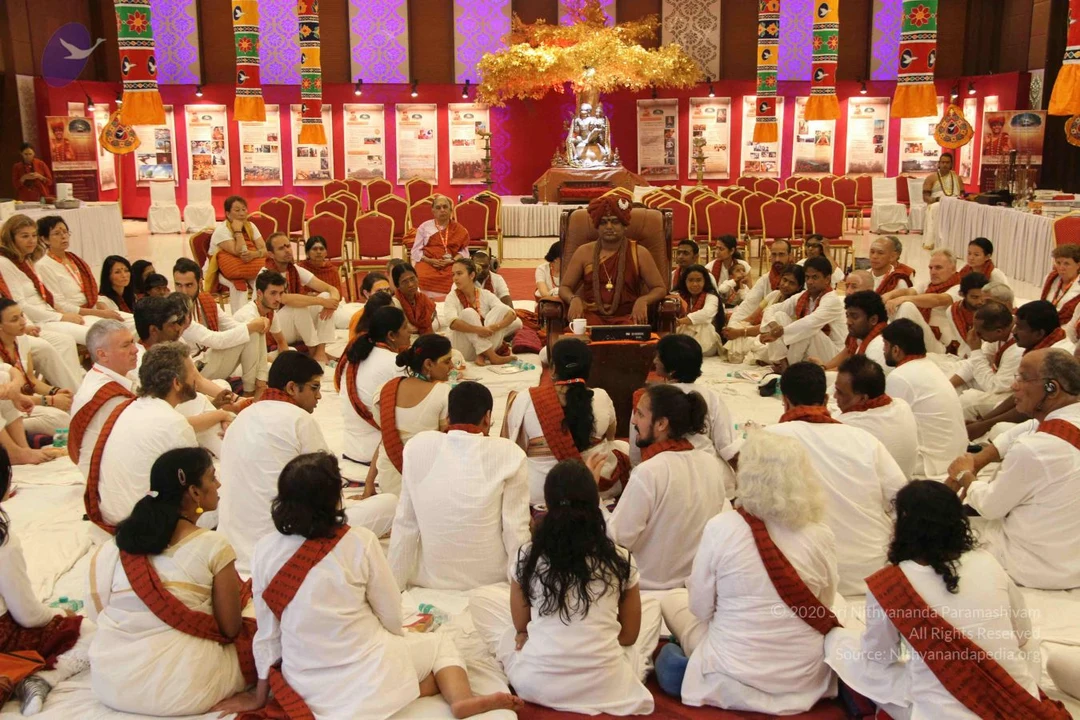
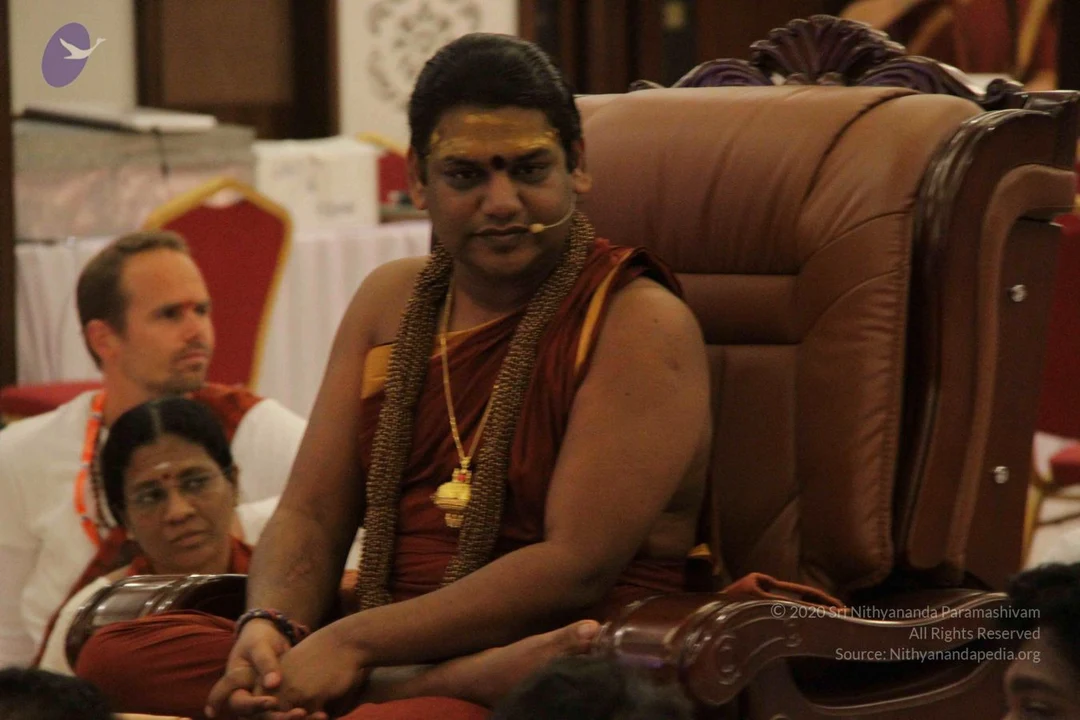
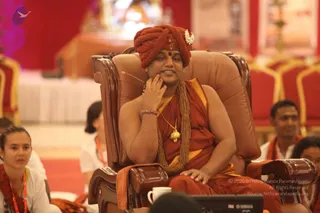
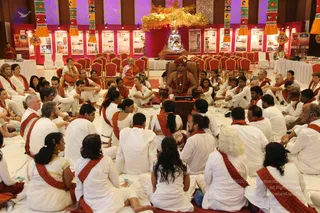
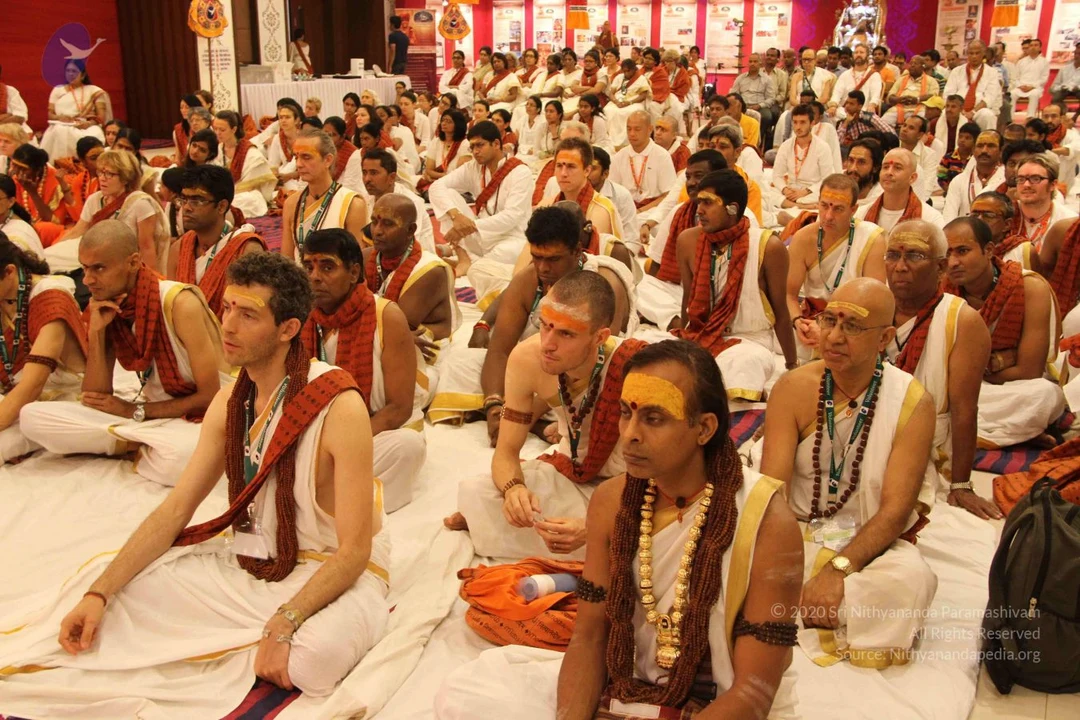
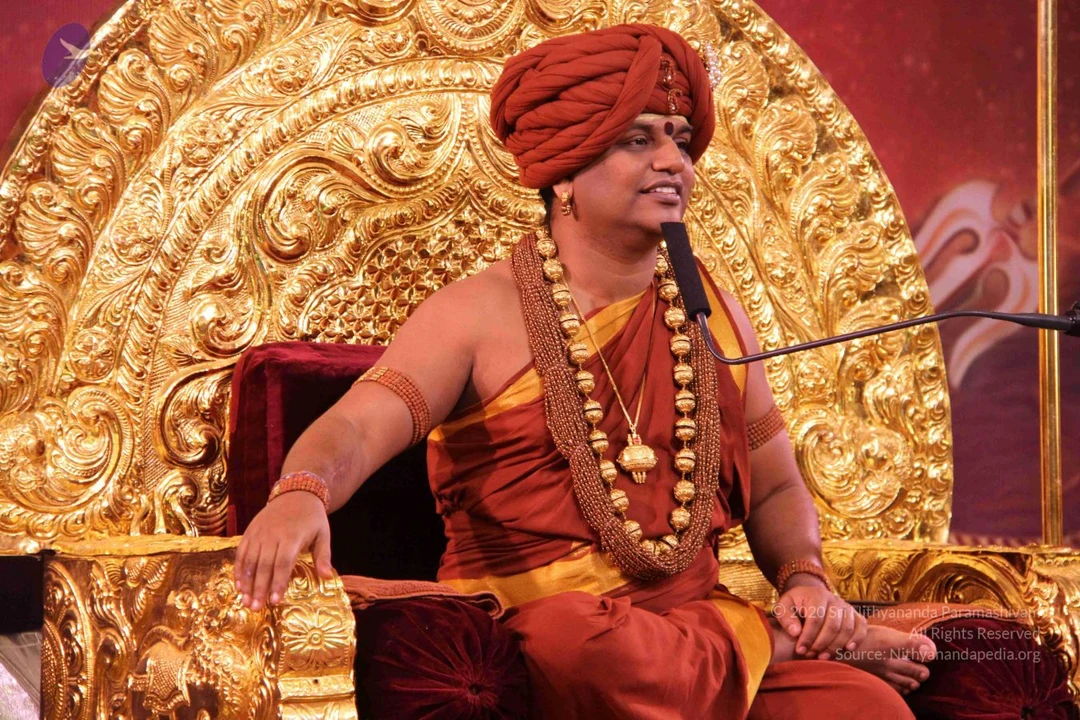
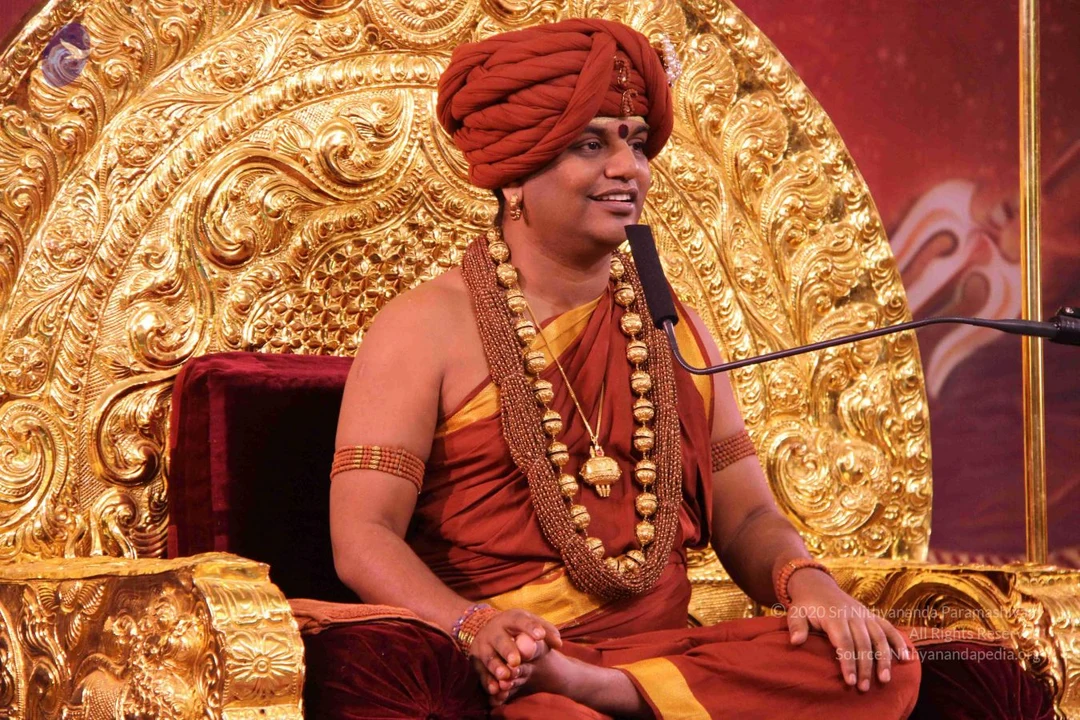
A man in a seated position on a large brown leather throne-style armchair with carved wooden arms, wearing a red-orange turban with a small white floral ornament and a red-orange robe with yellow trim. He wears a thick gold beaded necklace with a gold pendant and a red-and-purple beaded bracelet, and has a red bindi on his forehead. His right hand rests near his face while he speaks. Around him, seated devotees in orange and white clothing sit on the floor, including a young woman in a white top with an orange lanyard at the left edge and a man in orange clothing at the right. Behind them are red chairs with gold trim, a red wall, and a gold-framed altar. A white cup sits on a table and a black laptop with a Yamaha logo is at the bottom of the frame. The image carries a person copyright overlay.A seated man in a red-orange turban with a decorative gold ornament at the front sits in a large brown leather throne-style chair. He wears an orange-saffron shawl over a bare upper body, a long multi-strand rudraksha-style mala, and a gold pendant. He holds a thin stick to his lips with one hand while the other rests on the armrest. Behind him, men in white clothes with saffron-red shawls are seated, and a white-draped table and red decorations fill the background. A small white cup sits in the foreground. Appearance suggests a person given the turban, saffron clothing, and mala, but identity is uncertain.A seated man in a deep red-orange turban and matching saffron-orange robe with a gold-edged yellow shawl sits in a large brown leather armchair with carved wooden armrests. He wears multiple rows of brown rudraksha beads, a gold pendant, a red-and-blue beaded bracelet and a small white flower pinned at the turban. He holds a thin gold stick near his mouth with his right hand while his left hand rests on the armrest. Behind him, two people in white clothes with red shawls sit attentively, and a white-draped table and red backdrop fill the blurred background. A white cup sits on the floor at right. This appears to be a satsang gathering. Swamiji (probable): the seated figure wears a red-orange turban, rudraksha mala and ceremonial gold necklace, seated on a throne-like chair in a satsang setting.A man in saffron-orange robes and a red-orange turban with a white floral ornament sits on a large brown leather throne-style chair, speaking with a headset microphone. He wears a long gold-toned bead mala and a gold pendant necklace, and his hands rest on the chair arms. In front of him is a black Yamaha laptop on an orange cloth-covered table. Behind and beside him, seated devotees wear white and orange-red shawls, and a woman in glasses wears a red-orange scarf over white. Red and gold chairs and a red carpet fill the hall, with a golden shrine-like structure in the background.A photograph of a satsang in a red and gold hall where a seated speaker in orange robes and an orange turban sits on a brown leather chair before a crowd of devotees wearing white clothes and orange-red shoulder shawls. The speaker wears a rudraksha mala and a gold pendant and gestures while speaking, with a laptop on a stool in front. Devotees sit on the floor and in red chairs, some wearing white with red shawls. Behind the speaker stands a golden tree and a deity murti, and framed display boards line the red walls. Probable Swamiji is seated in the centre with long-cut orange robes, orange turban, rudraksha mala and gold necklace, as the speaker of the discourse.A seated man in an orange turban and orange robe with a large rudraksha mala and ceremonial gold necklace sits on a brown wooden throne at the front of a satsang hall. Around him, a large seated audience in white clothes with red-orange shawls sits on the floor, listening attentively. Some people wear orange garments and a few sit on red-cushioned chairs in the background. Behind the throne stands a golden tree-shaped decoration, a silver statue and a lit oil lamp against a red and magenta wall. Display panels with printed photographs line the walls, and a microphone stands near the throne.
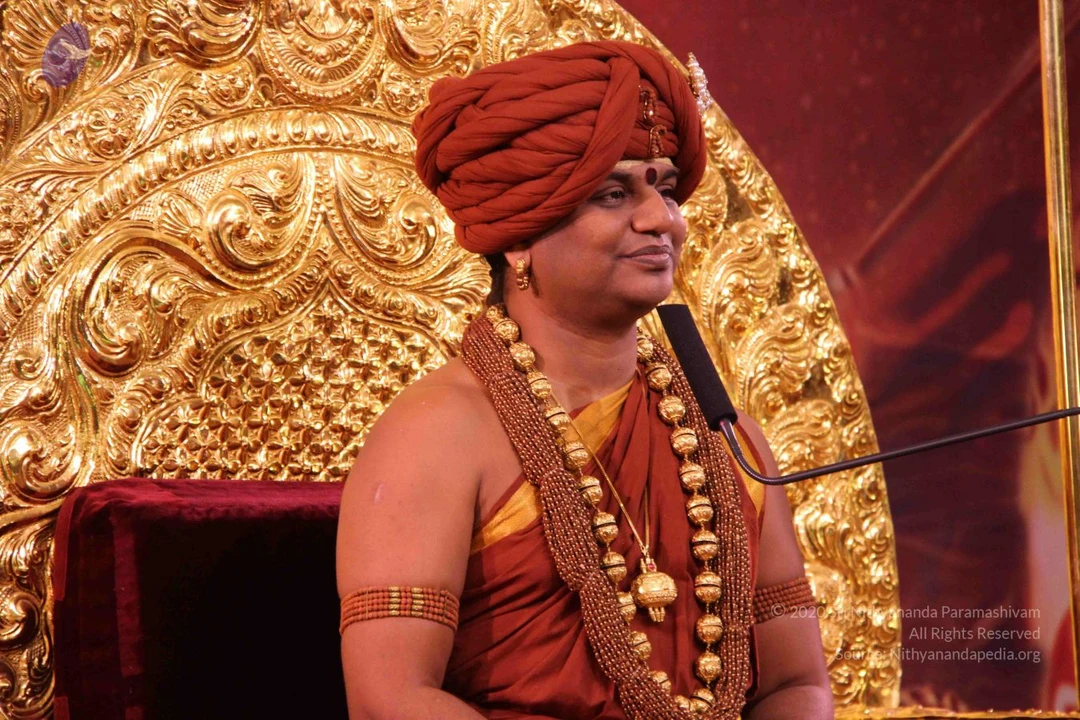
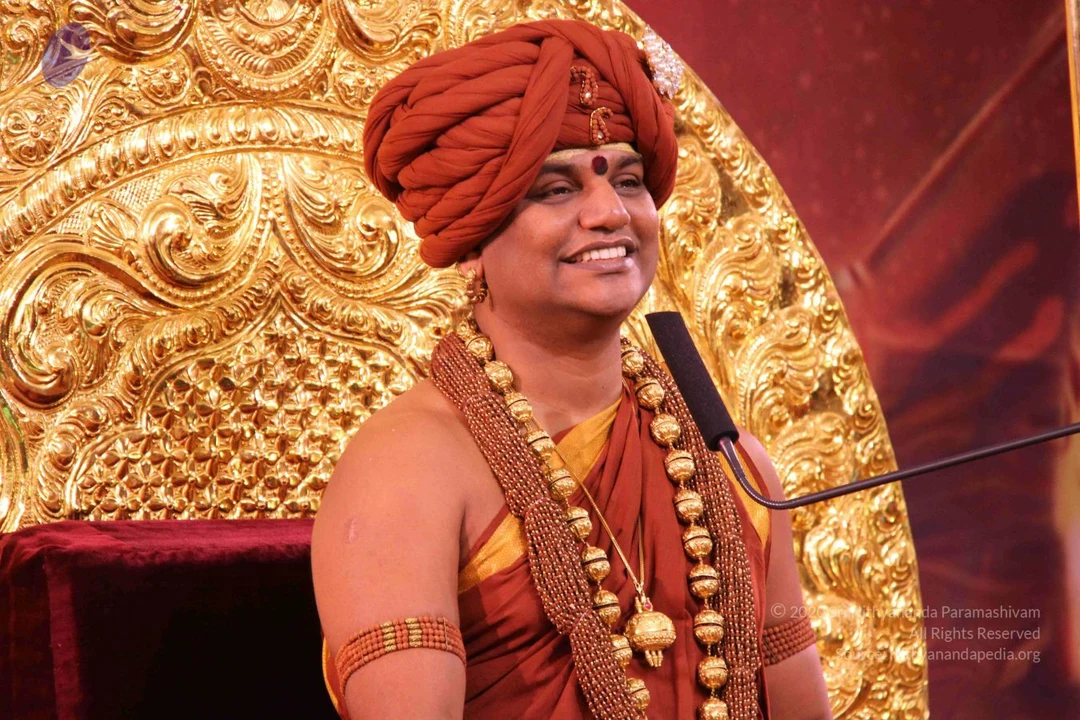
Mandala-process
10 photosSource gallery
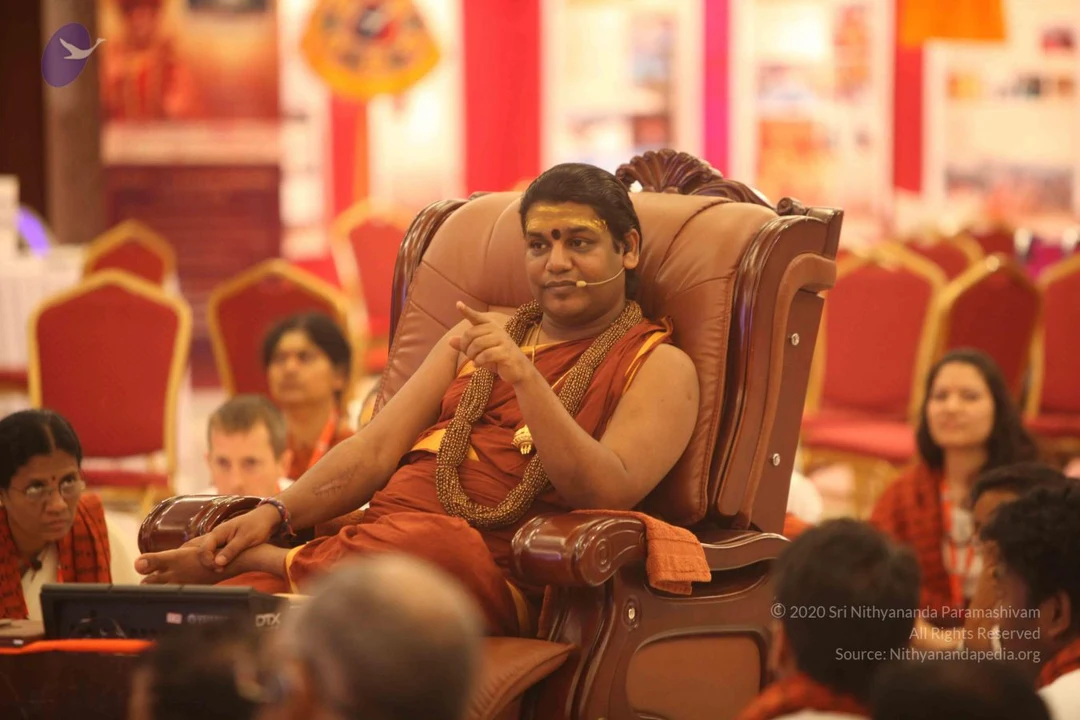
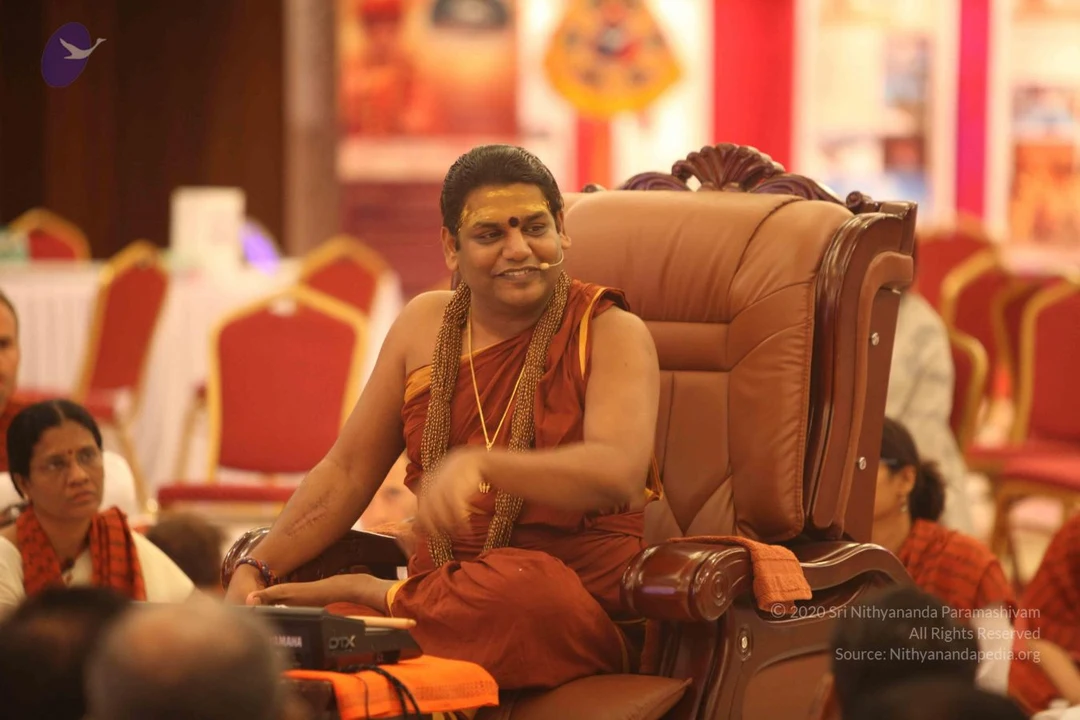
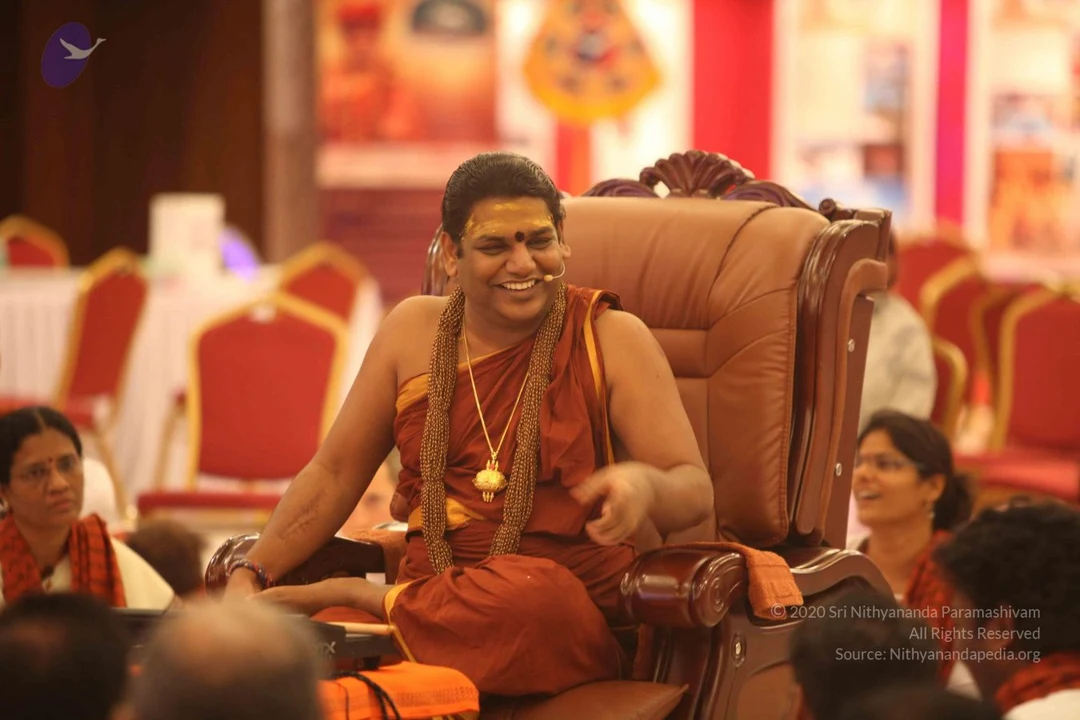
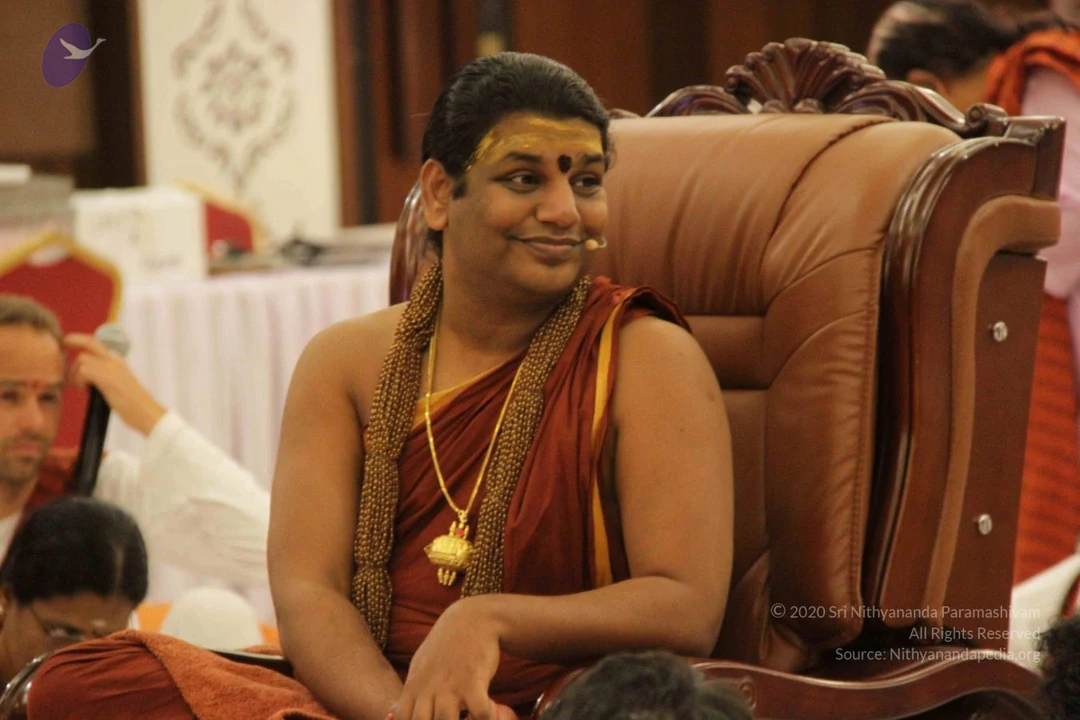
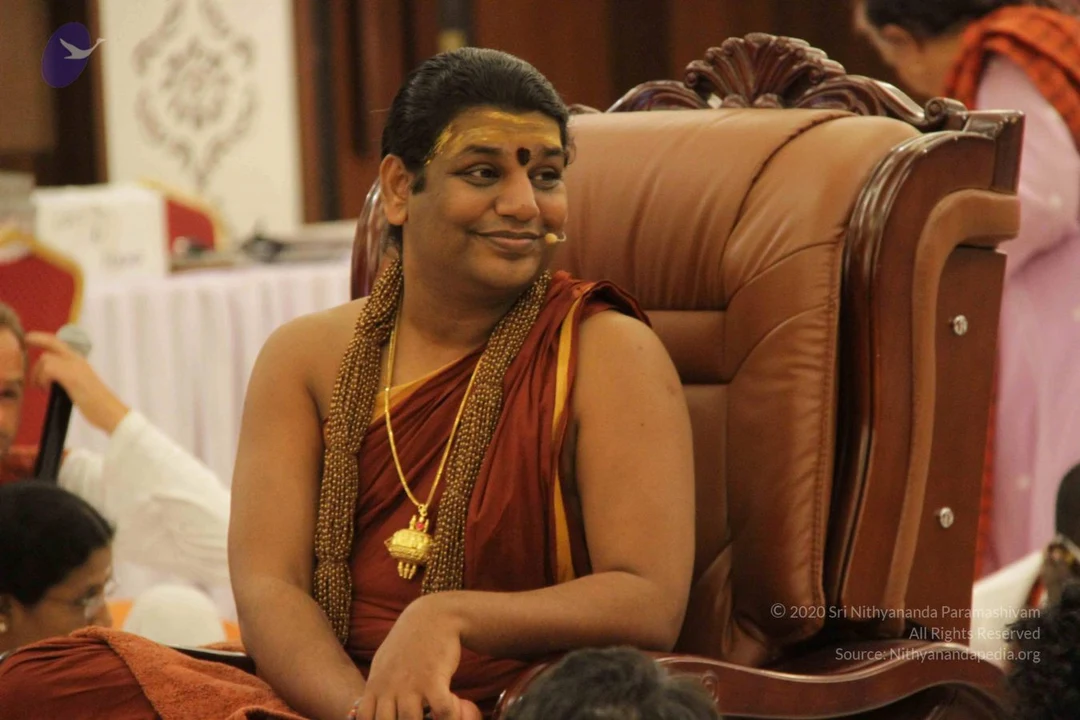
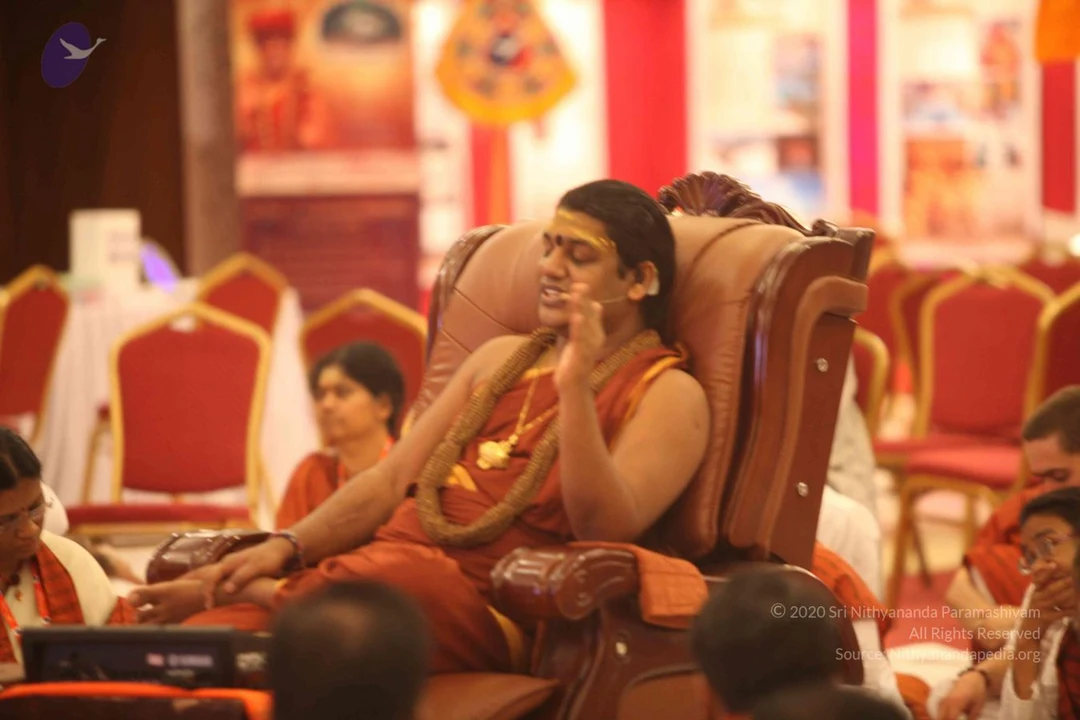
A photograph of a man seated in a large brown leather throne-style chair before a red backdrop and a boom microphone. He wears a rust-orange turban, an orange-red robe with a gold border, and a long multi-strand beaded necklace with a gold pendant. He holds a white cup in one hand and smiles toward the side. A water bottle and folded orange cloth rest on the armrest. Appearance-based label: a person, seated and speaking as a discourse host.A man seated cross-legged on a brown leather armchair in front of a gilded backdrop, speaking at a microphone on a stand. He wears a rust-orange turban with a small ornament at the front, a rust-orange robe with mustard-yellow edging, and a multi-strand gold-toned beaded mala with a gold pendant. A gold trident stands at the right edge, and a white teacup sits on a table at lower left. Painted panels in pink and blue form the background. Swamiji (probable): the seated man in orange robes, turban and layered beaded mala is an appearance-based candidate, seated in the central teaching chair during a satsang-style setting.A man seated cross-legged on a brown leather armchair with carved wooden arms, in front of a gold ornate backdrop and a golden staff. He wears a rust-orange turban with a small gold ornament, a bindi, and rust-orange and gold-bordered robes draped over his shoulder. Multiple strands of beaded rudraksha-style mala hang around his neck, with a large gold pendant. A microphone on a stand is positioned before him, and a white cup sits at the lower left. The appearance of the seated person with the turban, saffron robes and ornate ceremonial cues is consistent with Swamiji (probable), though this is an appearance-based label only.A man seated cross-legged on a brown leather armchair with carved wooden arms, in front of a pink backdrop with gold-trimmed decorative panels. He wears an orange-red turban with a pearl crescent ornament and a red bindi, an orange-red robe with gold border, a long brown rudraksha mala and a gold pendant necklace, and smiles while looking to his side. A black microphone on a stand is nearby and a gold trident stands at the right. Swamiji (probable) based on the turban, saffron-orange clothing, rudraksha mala and ceremonial gold necklace while seated on a throne in a satsang setting.A large indoor satsang hall with a red backdrop and a row of framed printed panels on the wall. A bearded man with long swept-back hair and an orange-red turban sits on a dark wooden throne draped with a red cloth, wearing orange-saffron robes and a gold necklace, with a laptop on a small stand in front of him. Around him, dozens of devotees sit on white cloth on the floor in white clothing with red-orange shawls, many with hands folded or listening attentively, while others sit on red chairs at the back. A gold ornamental tree stands above a silver deity murti on an altar behind the throne, with colourful woven banners hanging from the ceiling. Thirty-plus people are visible in the scene.A man with long swept-back dark hair sits in a large brown leather throne-style chair, wearing a saffron-orange robe and a heavy beaded rudraksha-style mala with a gold pendant at the chest. He has yellow-orange sacred markings on his forehead and a small head microphone, and his hands are raised in front of him as he speaks. Around him, a few seated people are visible at the edges, one in white with orange garments and others partially in frame, in a hotel-style hall with red-cushioned chairs and white draped tables. Probable Swamiji (in_person) given the throne, saffron robe, long hair and rudraksha-style mala cues.

Navarathri-Darbar

20 photosSource gallery
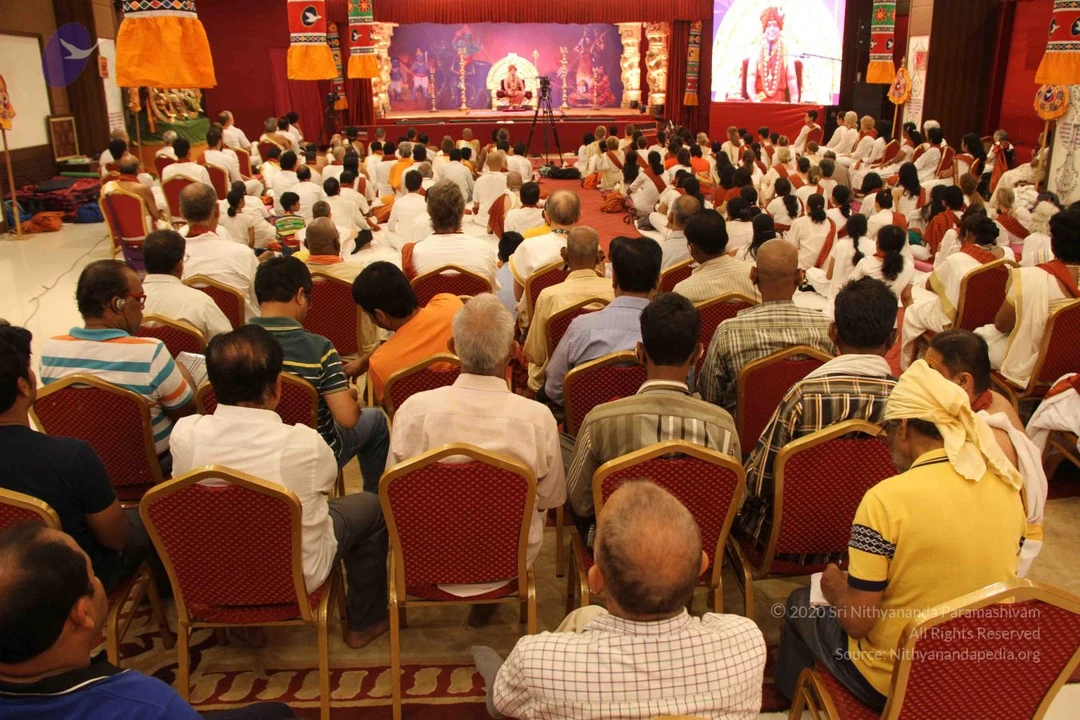
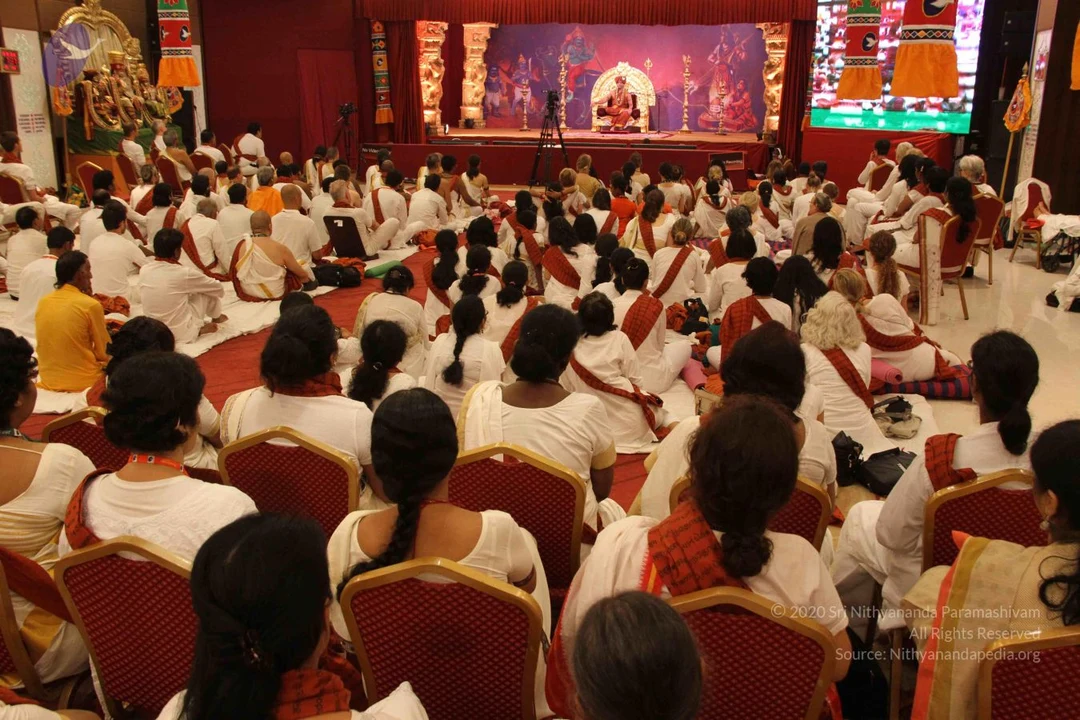
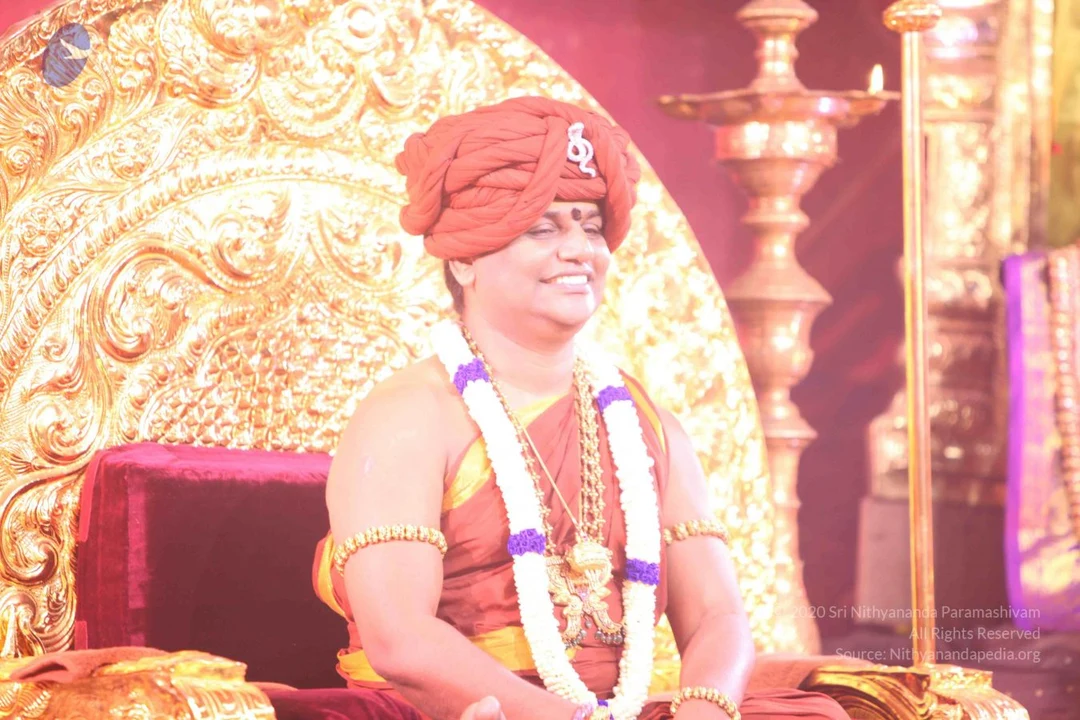
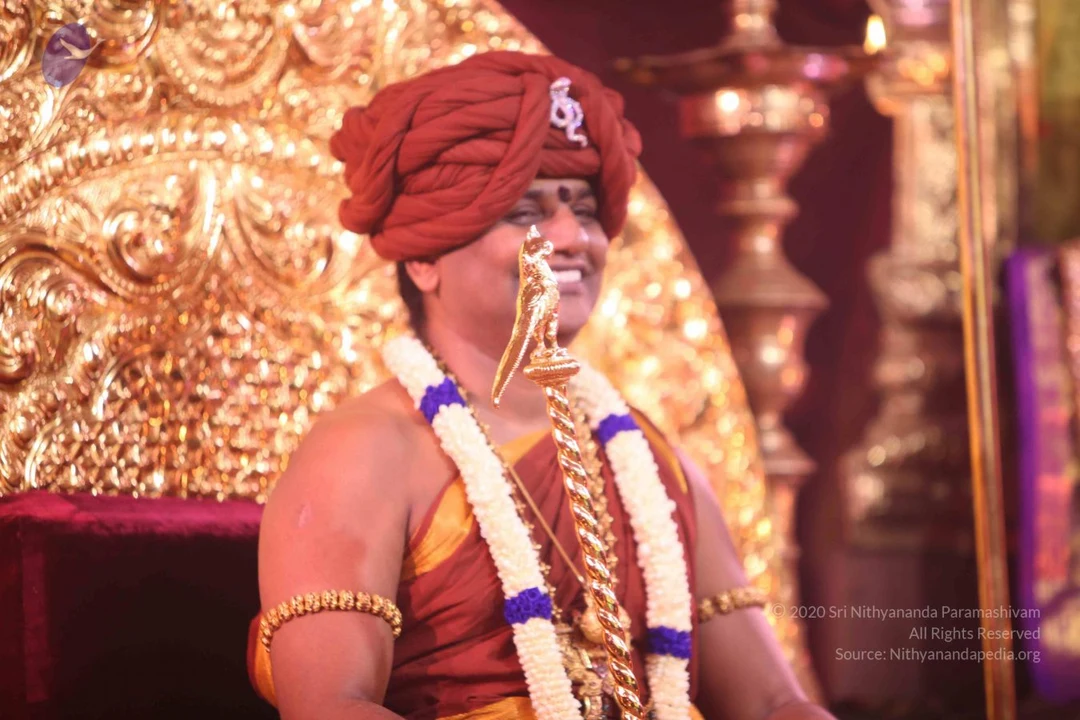
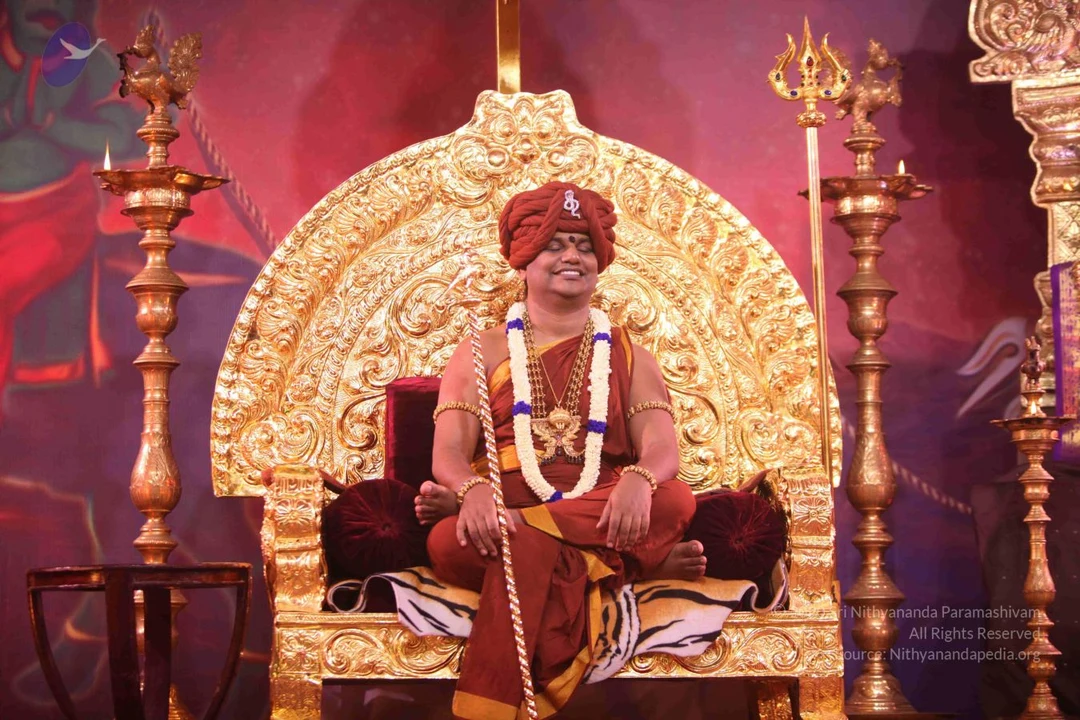
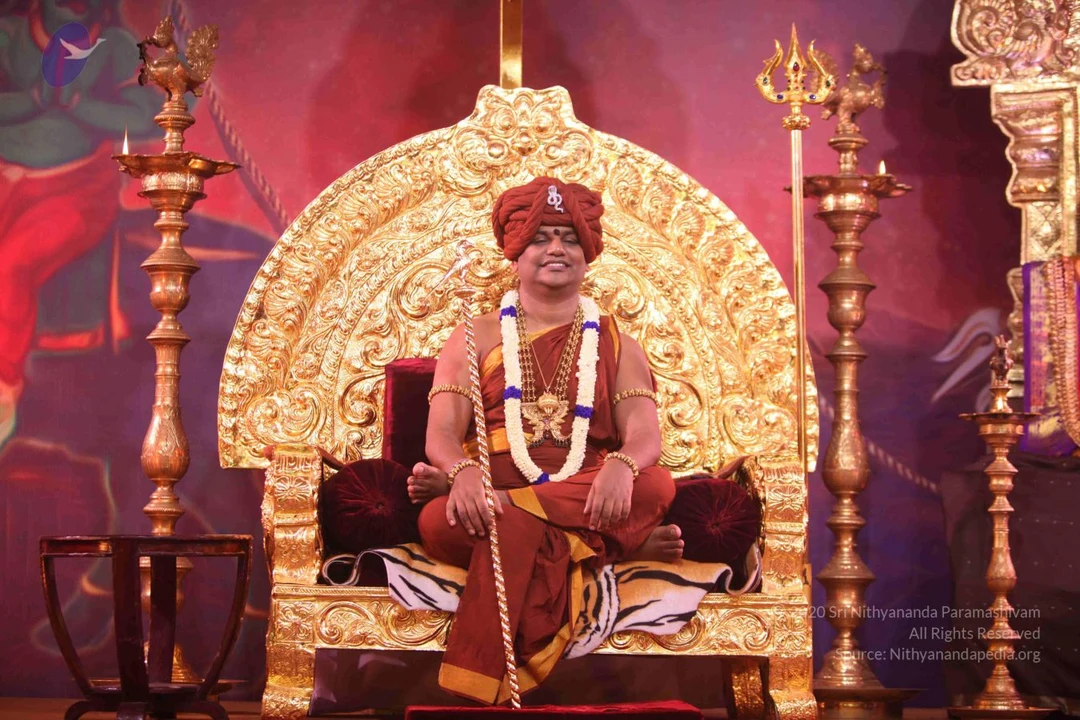
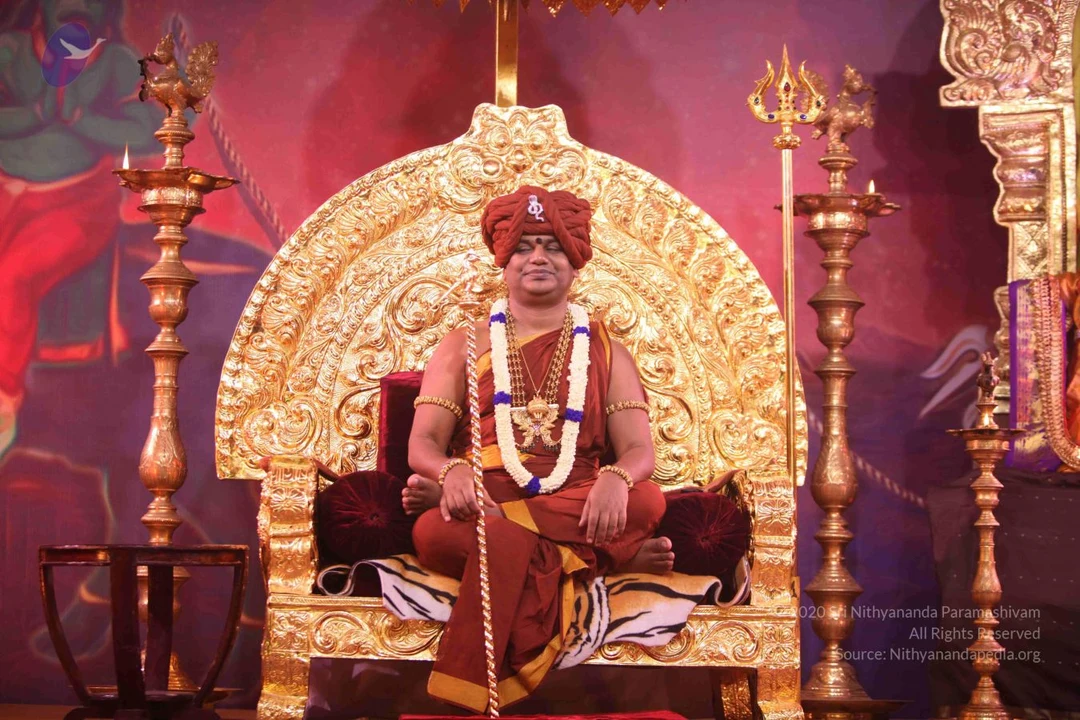
A smiling man seated on an ornate gold throne with a red velvet cushion, eyes closed in serene expression. He wears a red-orange turban with a white ash-marked emblem, a red-orange robe with a yellow inner garment, a white and purple flower garland, gold necklaces with a pendant, and gold armlets. A brass oil lamp with a lit flame stands behind him beside a gold pole and a purple draped fabric. Overall atmosphere is a formal satsang setting. Swamiji (probable) is seated, appearing as the presiding teacher given the throne, distinctive turban and rudraksha-style garlands, though the face is not otherwise confirmed.A smiling man sits on an ornate gold throne with intricate repoussé carvings and a plush red cushion. He wears a deep red-orange turban with a silver serpent-shaped emblem, a red-orange dhoti-style wrap with a golden border, a white and blue flower garland, a gold chain with a large pendant, and gold armbands and bangles. A vermilion mark is on his forehead. Gold lamp stands with a brass-coloured pillar stand behind him against a red backdrop. A large interior event setting. a person: the red-orange turban, gold ornaments, rudraksha-style garland and ceremonial throne match the page's claim, but the appearance cues are not conclusive enough to confirm identity.A photo of a seated man in a gold ornate throne with a red-orange turban and saffron-red robe, a white and blue flower garland across his chest, gold bangles on his wrists, and a tiger-striped cloth over the throne. Beside him, a gilded throne with a green silk backdrop holds a decorated deity murti draped in purple cloth and marigold garlands, flanked by two smaller figures. Brass oil lamps with flames and a trident stand nearby on a red-carpeted stage with a purple-red backdrop. Swamiji (probable): the seated man wears a red-orange turban, saffron-red robe and garland, and sits on a throne in a sannyasi setting.A smiling man sits on an ornate gold throne with intricate scrollwork and a red backdrop. He wears a rust-red turban with a small white snake emblem pinned at the front, a red and saffron wrap, and a white and purple-blue flower garland. A heavy gold necklace with a pendant and gold armlets complete his attire. a person: the figure has a turban, saffron-toned ceremonial clothing, a rudraksha-style gold necklace and an ornate throne presentation, consistent with the page's reference to a person.A seated man sits cross-legged on an ornate gold throne carved with scrollwork and a tiger-striped cloth draped over the seat. He wears a red-orange turban with a white emblem, a red-orange wrap, a white and blue garland, gold chains with a large pendant, and gold armbands and bangles. Gold ritual lamp stands with lit flames flank the throne, a gold trident-topped staff rises behind him, and a red painted backdrop completes the setting.A smiling man seated on an ornate gold throne with a carved arched back and red cushions, draped with a tiger-striped cloth. He wears a saffron-red turban with a small emblem, a red-orange garment, a white and blue flower garland, a gold necklace and gold armbands, with bare feet crossed. Gold oil lamps with trident-topped finials flank the throne against a red backdrop painted with a figure in red and a deity image garlanded in the right corner. A small red cushion rests on the floor before him.

Navarathiri-Darbar

9 photosSource gallery
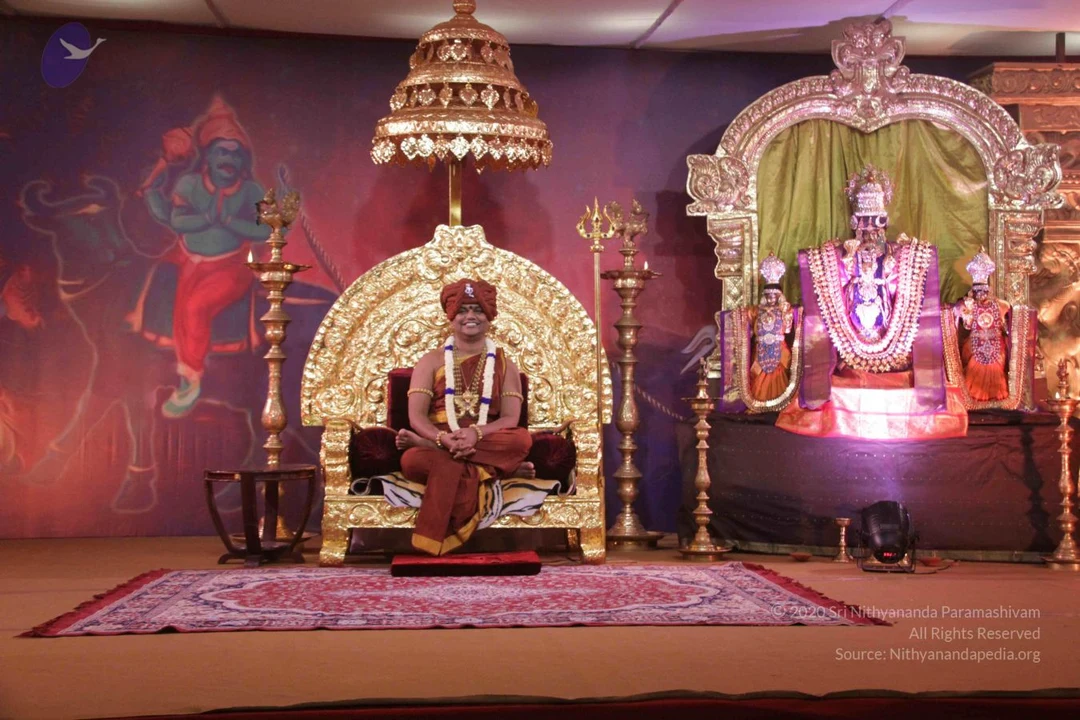
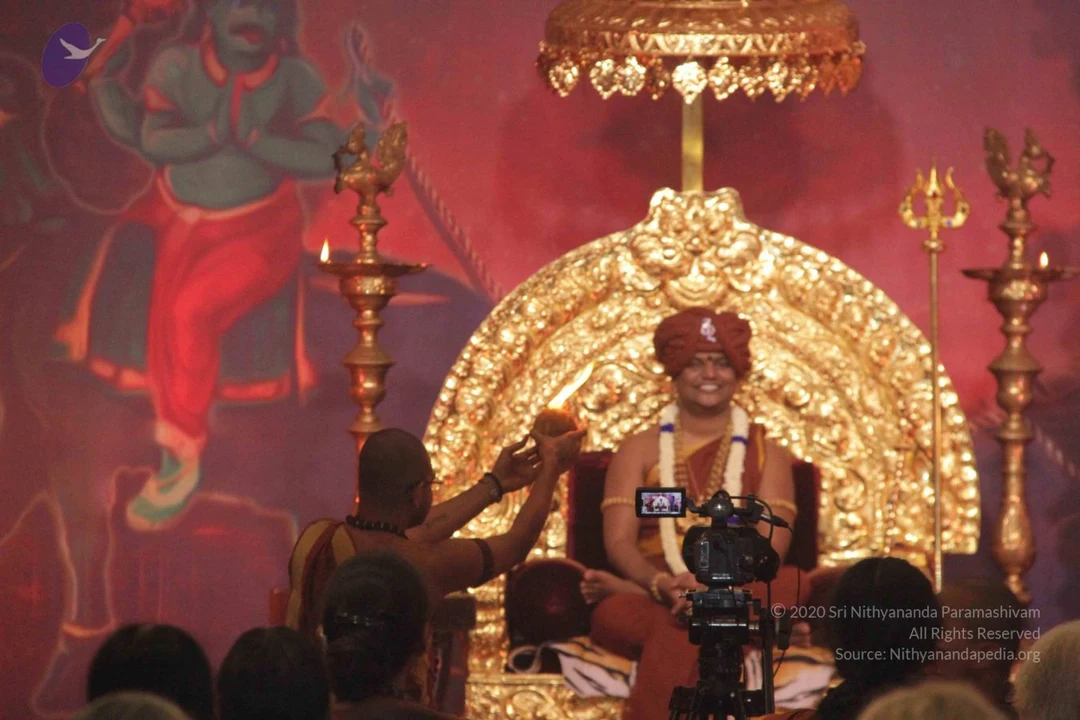
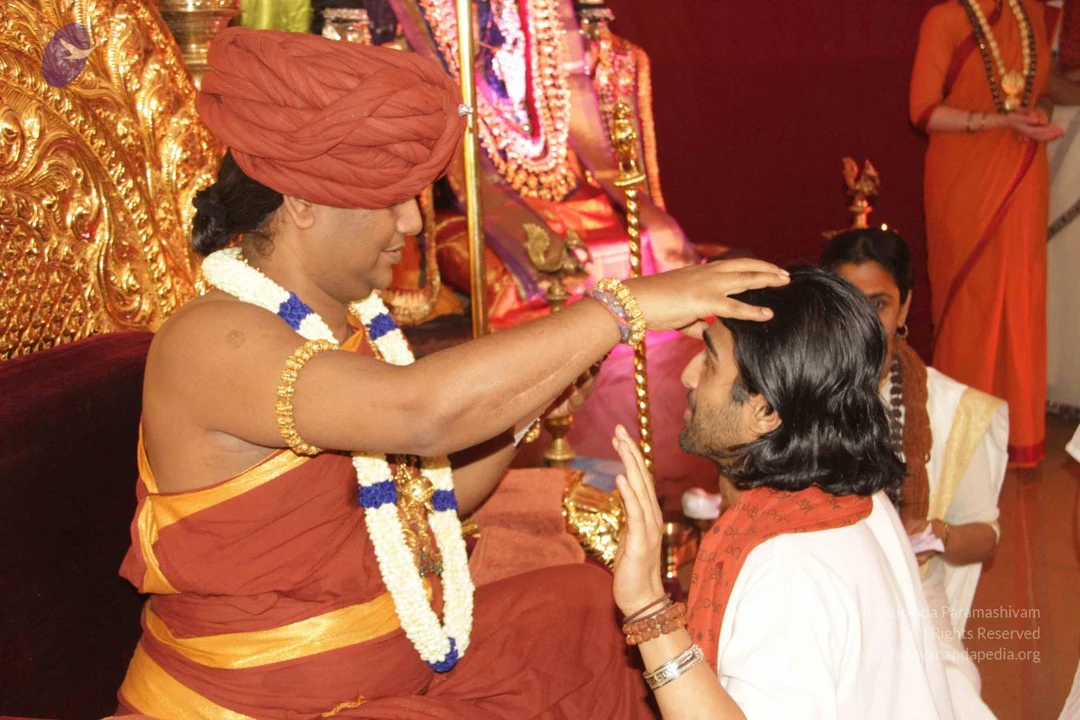
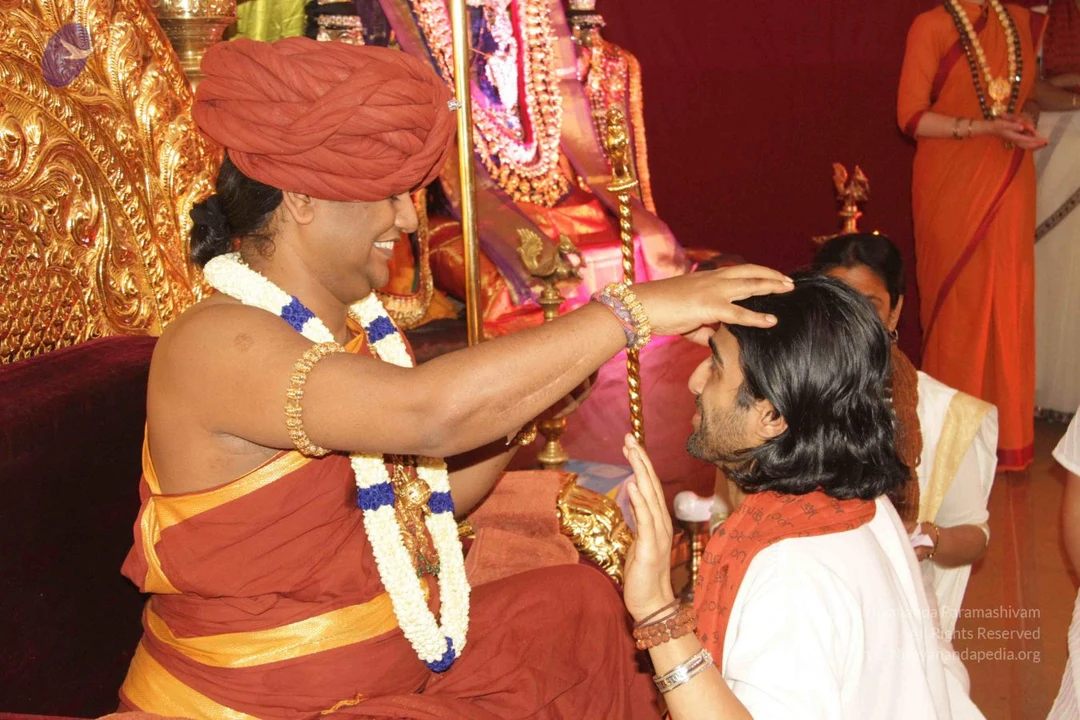
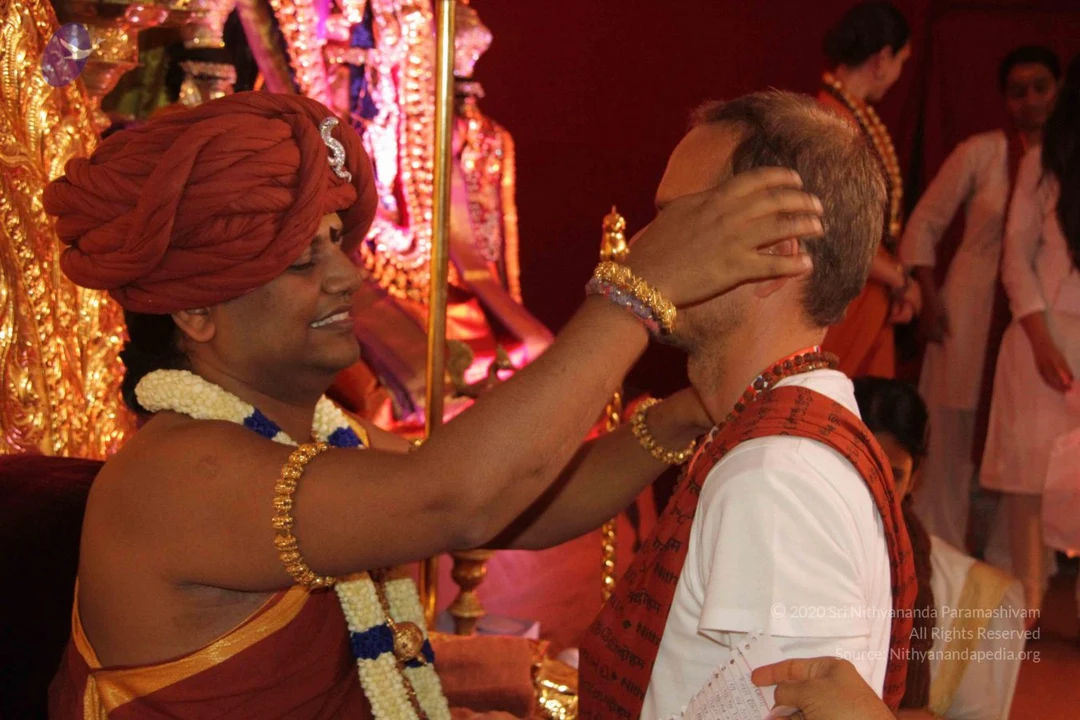
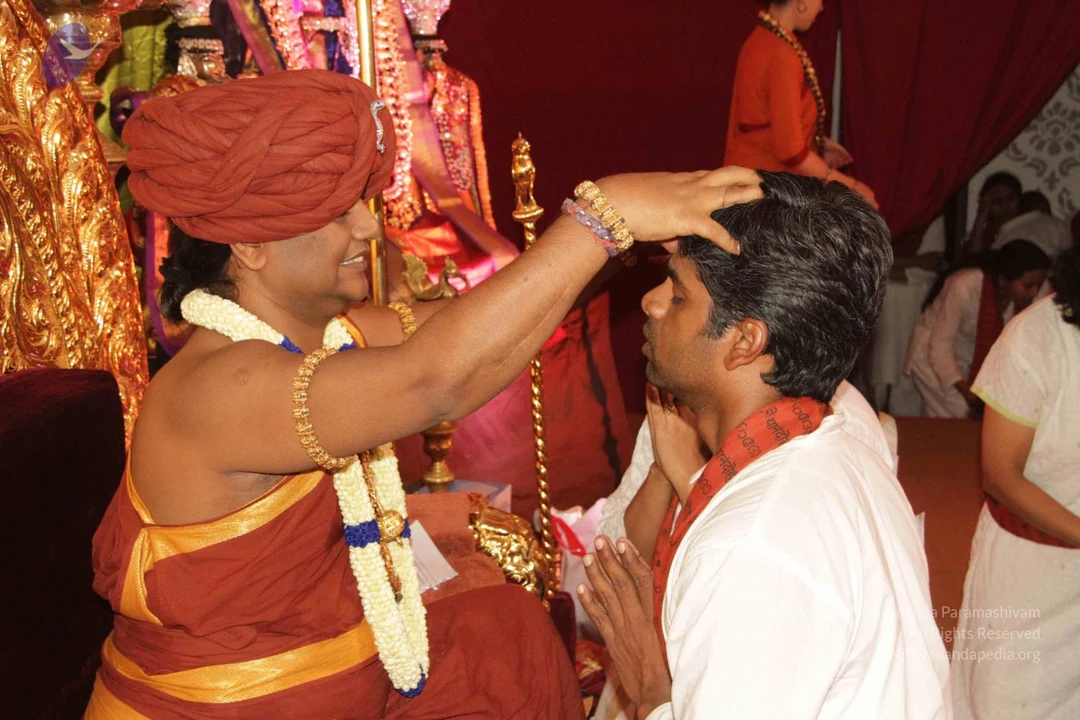
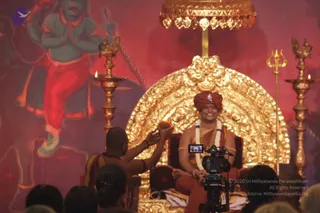
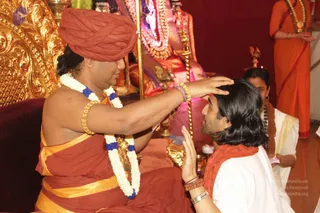
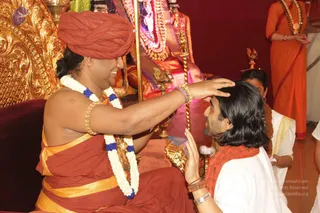
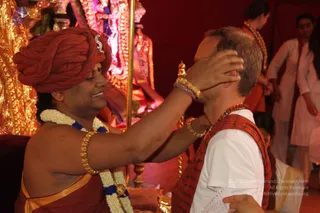
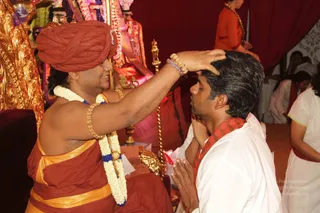
A seated man in saffron-orange robes and an orange turban sits on an ornate gold throne with a red cushion on a stage, hands folded in his lap and wearing a white floral garland. Behind him is a painted backdrop of a blue-skinned deity figure with a club on a red-and-blue scene. To the right, a gilded arch frames a decorated deity murti draped in a pink-and-purple garland, flanked by two smaller standing figures in green and red garments. Brass oil lamps, a trident-topped stand and a gold canopy surround the throne on a red patterned carpet. Swamiji (probable) is seated on the throne, identified by the orange turban, saffron robes, and rudraksha-style necklace cues.A satsang stage with a red painted backdrop showing a blue-skinned figure in red dhoti and folded hands. A seated person on an ornate gold throne wears an orange-red turban, orange-saffron robe, white flower garland and gold necklace, smiling. Hinting at a Swamiji candidate with turban, saffron clothing and ceremonial gold necklace, the appearance-based label is probable. A man in a saffron-toned shawl and rudraksha mala holds a coconut and a lit flame toward him in a ritual offering. Gold oil lamps with flames flank the throne, a gold trident stands at right, and a video camera on a tripod films the scene. Audience heads are visible in the foreground, and a gold canopy hangs above.A seated figure in a rust-red turban and rust-red robe with a gold waistband and a white-and-blue flower garland places one hand on the head of a long-haired man kneeling before him in a white kurta with a red-orange shawl and beaded bracelets, a blessing gesture in a temple setting. Behind them is an ornate gold-carved throne with a red cushion, draped with pink and gold fabric, and a second garlanded figure in orange stands at right. Gold lamps, a gold kalasha-style stand and a dark red backdrop surround the scene. The seated figure wears a blessing garland and gold armband; the kneeling man's ornamentation is a red shawl and wrist beads. Appearance cues for the seated figure are a turban and a ceremonial gold necklace with a saffron robe, but identity remains uncertain.A seated figure in a rust-red turban and rust-red and gold-bordered draped cloth, wearing a white and blue flower garland and gold bangles, extends a hand to rest on the head of a kneeling young man with long dark hair and a stubble beard. The young man wears a white kurta and a red-orange shawl, with a red beaded bracelet on his wrist, and presses his palms together in reverence. Behind them is an ornate gold throne with a golden staff, and a woman in orange attire with a rudraksha-style necklace stands in the background beside a red cloth backdrop and floral garlands. This appears to be a blessing ritual, with the seated figure bestowing blessings on the devotee.A photograph of a seated figure in a rust-red turban, white and blue flower garland, and gold bangles placing both hands on the head of a man in a white t-shirt with a red-orange printed shawl and a red bead necklace. Behind them, gold and pink decorated shrine elements and a deity murti are visible, and two people in white clothing stand in the background. The figure in the turban appears to be a candidate for the a person depiction, based on turban, garland and bangles, though the appearance is uncertain.A seated figure in a rust-red turban and rust-red wrap with a gold border, wearing a white flower garland with blue beads, places his right hand on the head of a kneeling man in a white kurta with a red-patterned shawl, whose hands are pressed together in namaste. The seated figure wears gold bangles and smiles. Behind them is a golden throne with red and pink cloth and garlands, and a woman in orange stands near the back. This is a blessing gesture. The visible cues are a turban, red-orange robes and a garland, consistent with a Swamiji (probable) in a blessing role, while the kneeling man is a devotee receiving blessing.

FB-photo-of-the-day

1 photoSource gallery
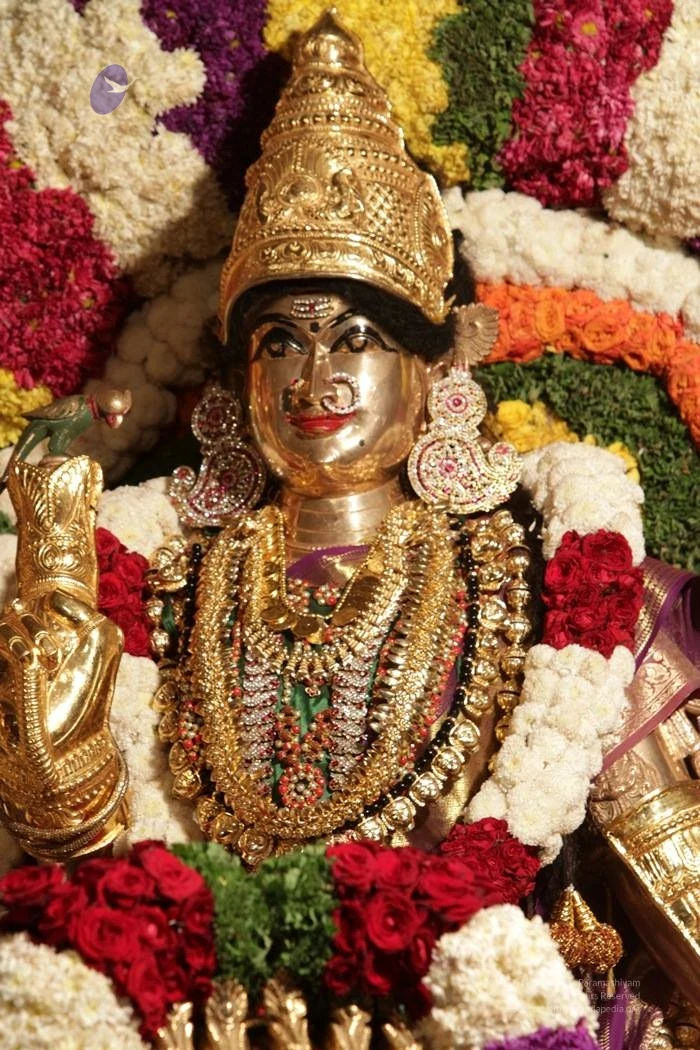
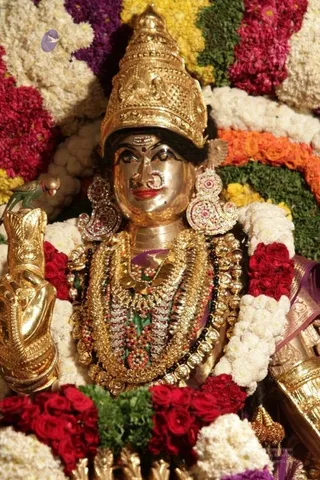
A golden deity murti, a goddess figure, is adorned with a tall ornate gold crown, large pink-and-gold earrings, a nose ring, and layered gold necklaces studded with red and green stones. Dense garlands of white, red, orange, yellow and purple flowers surround the figure, and it holds a golden hand gesture with a small green bird-like ornament. No people are visible; the subject is a decorated statue.