Skip to content
Sunday

17 May 2015

The Great Indian Way Of Education

Dated photos
233
Source pages
1
Media
3
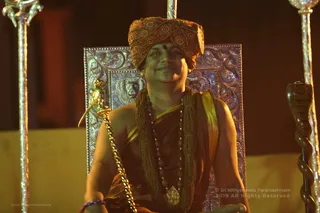
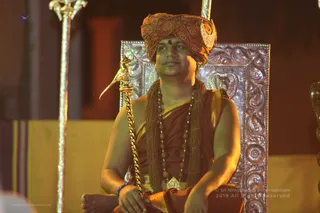
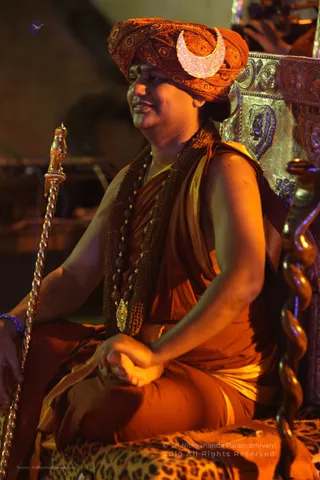
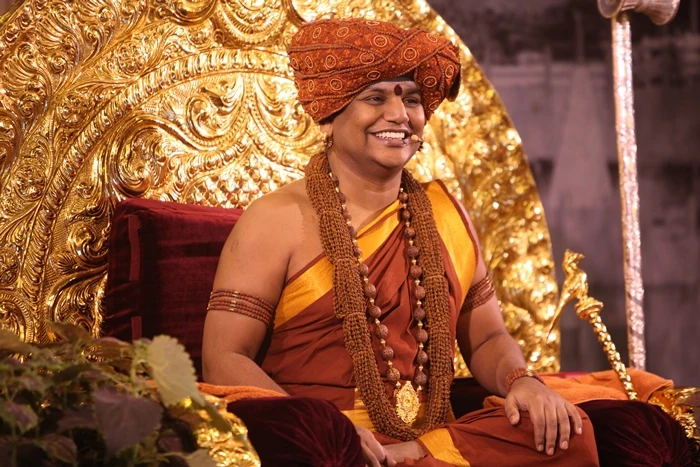
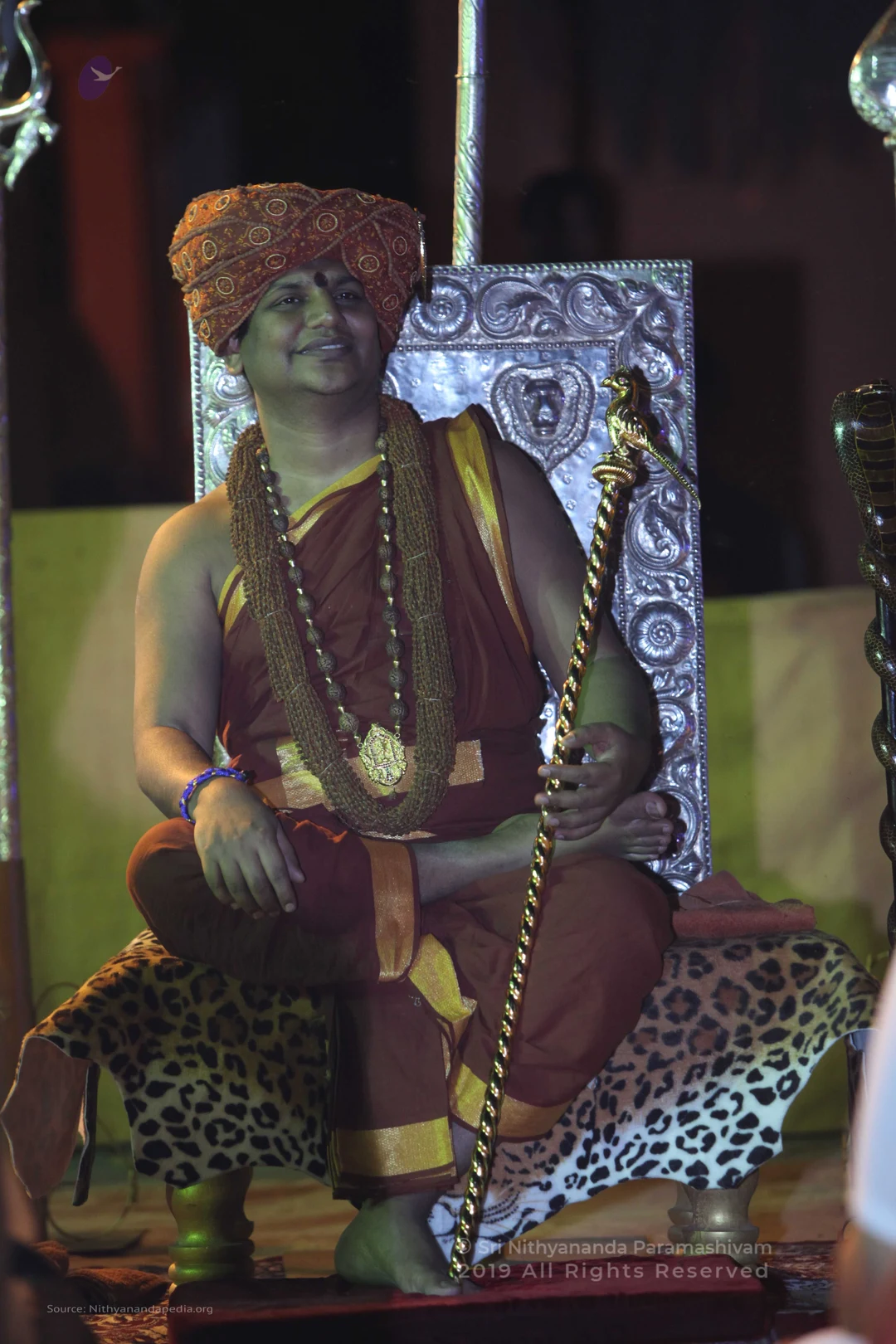
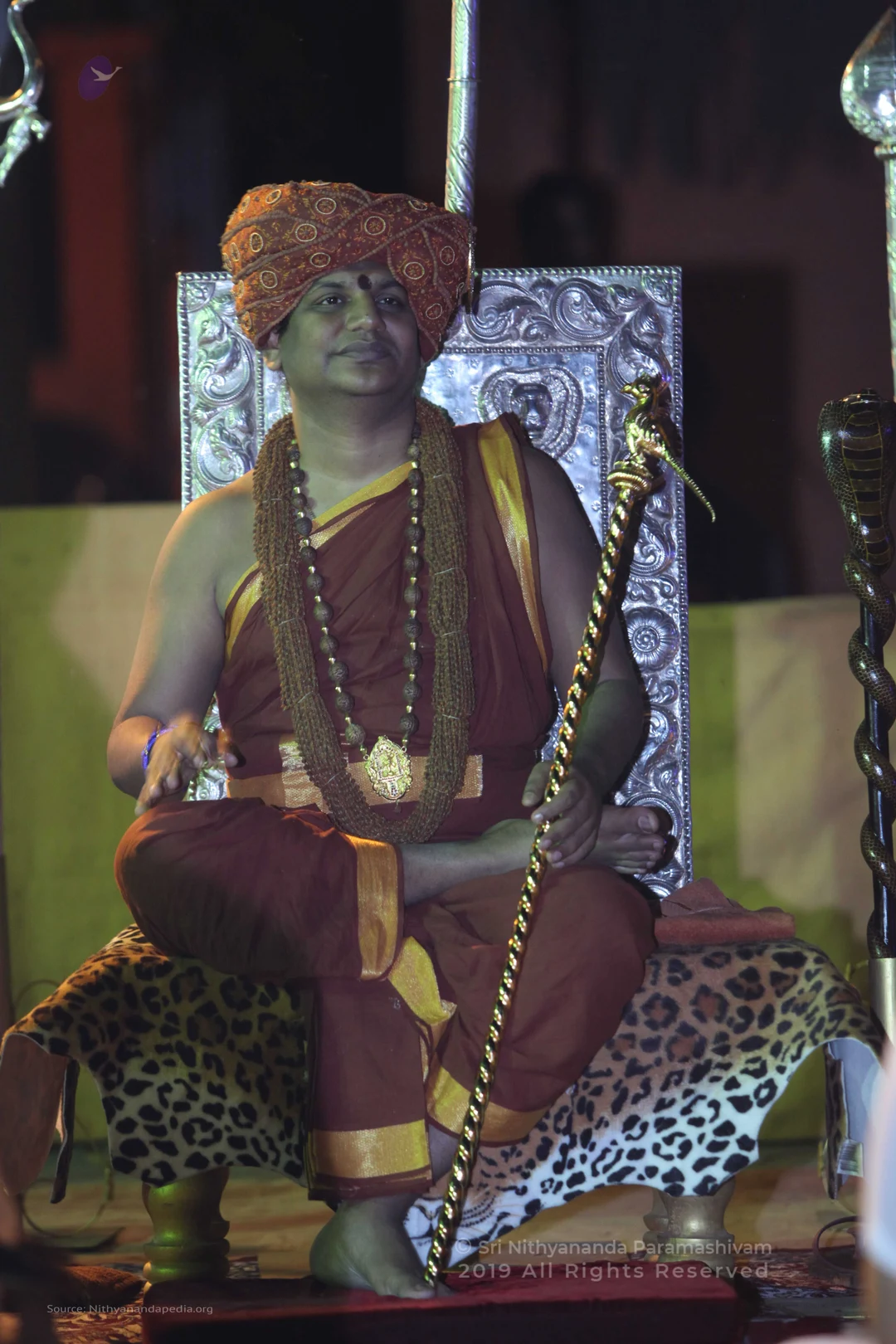
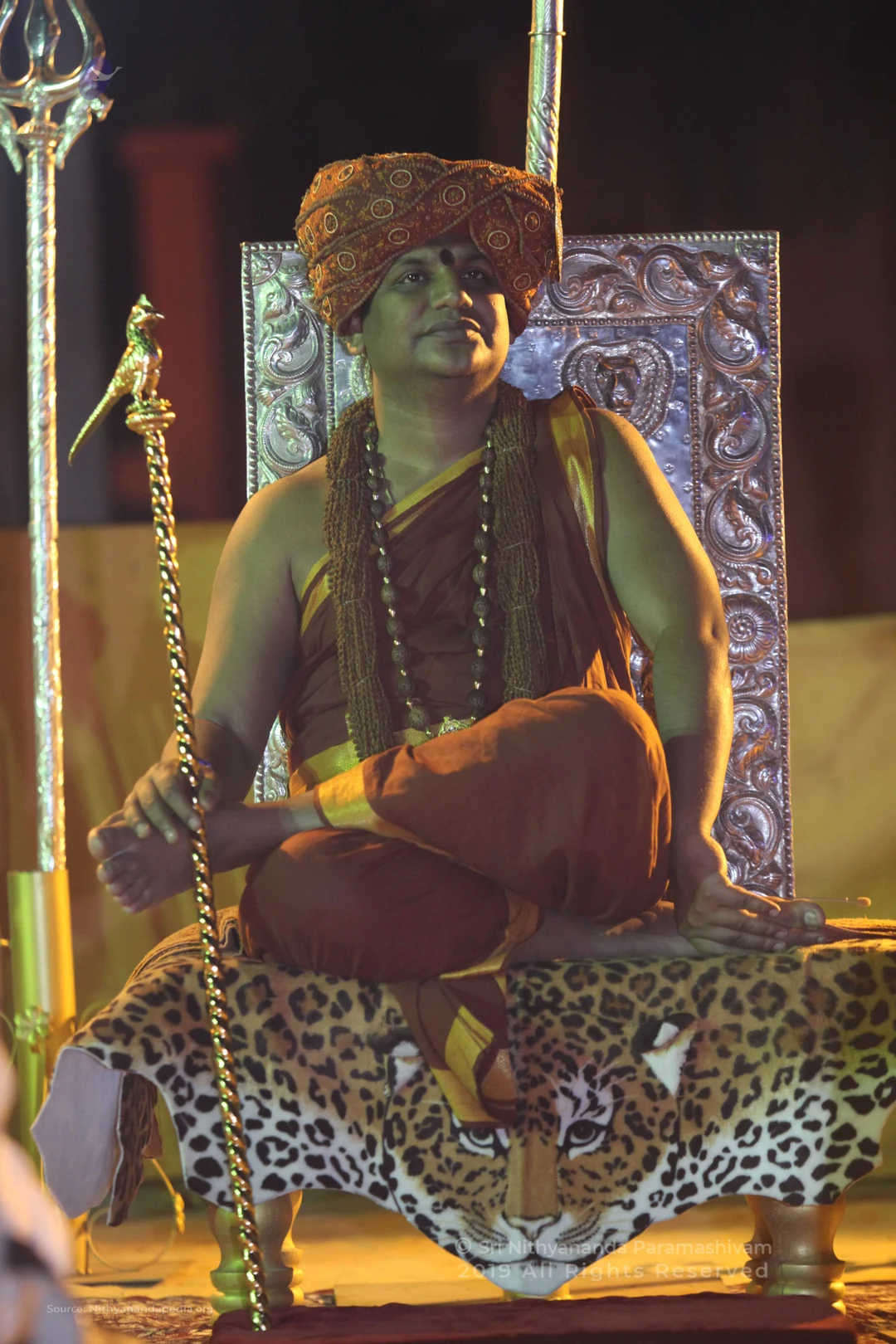
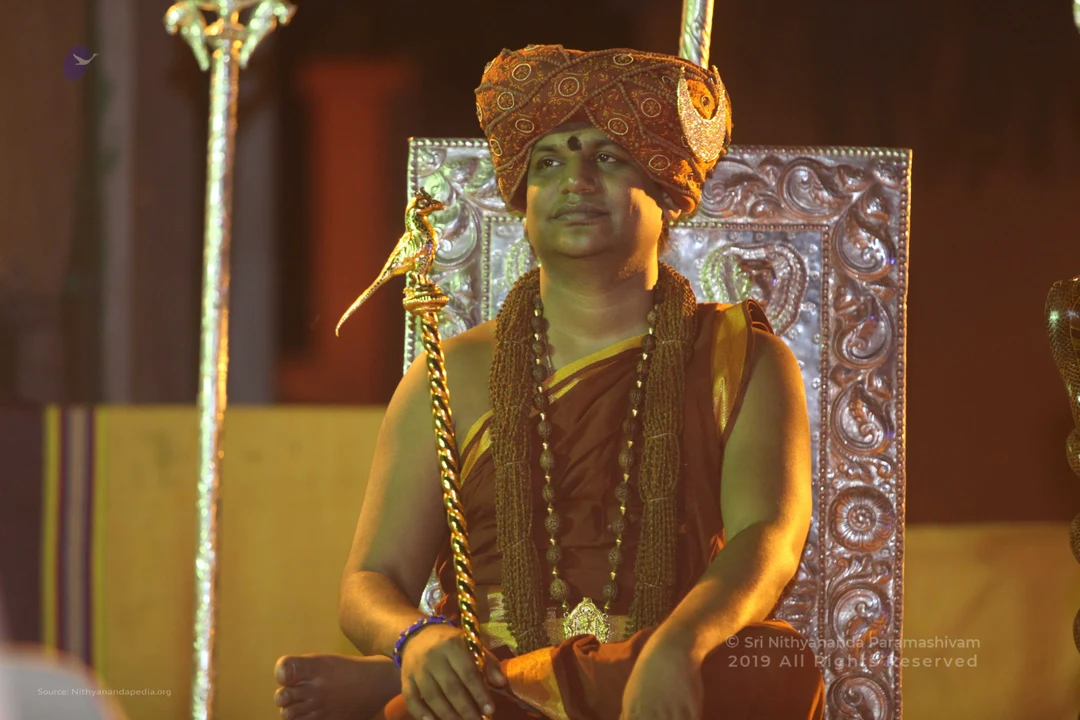
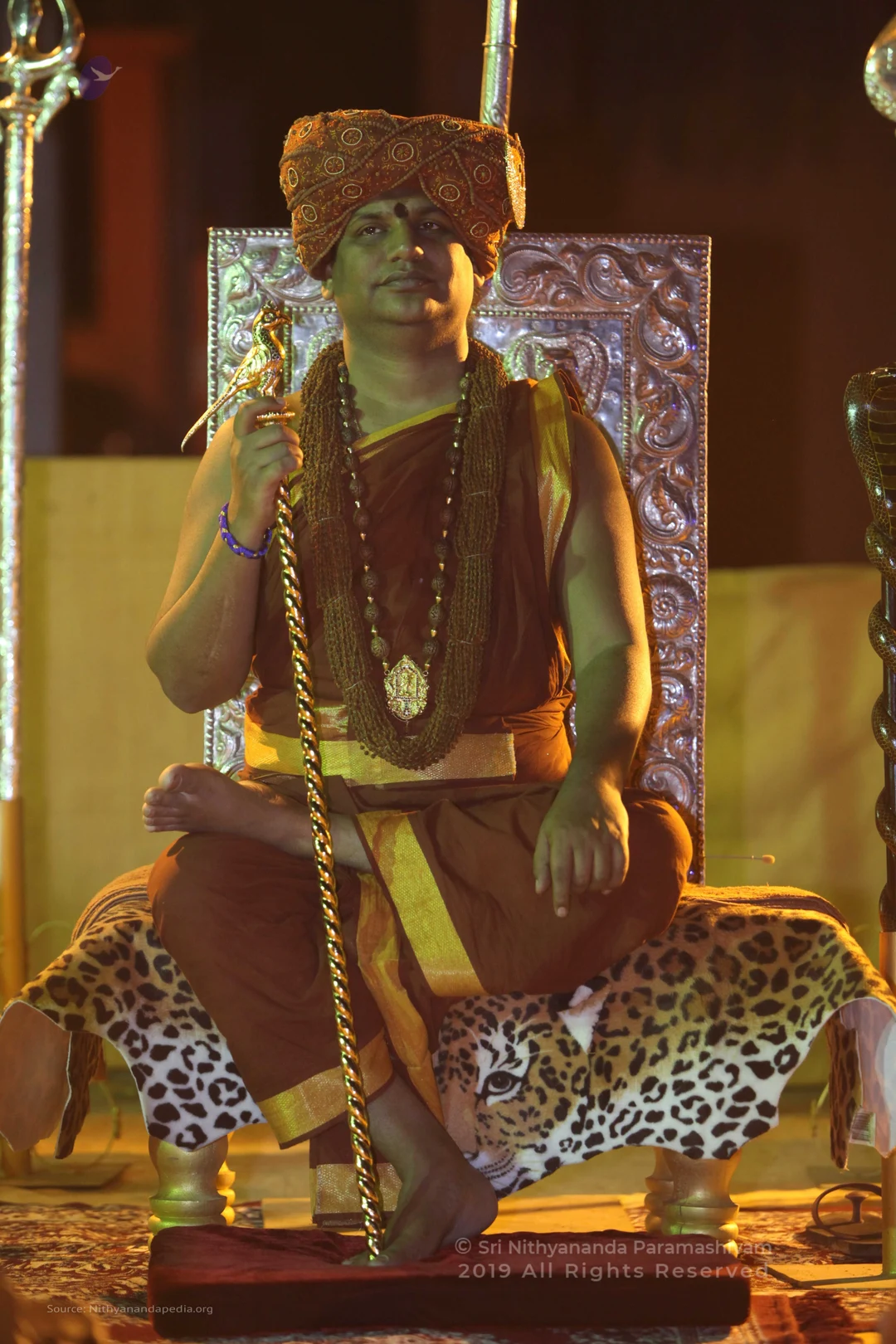
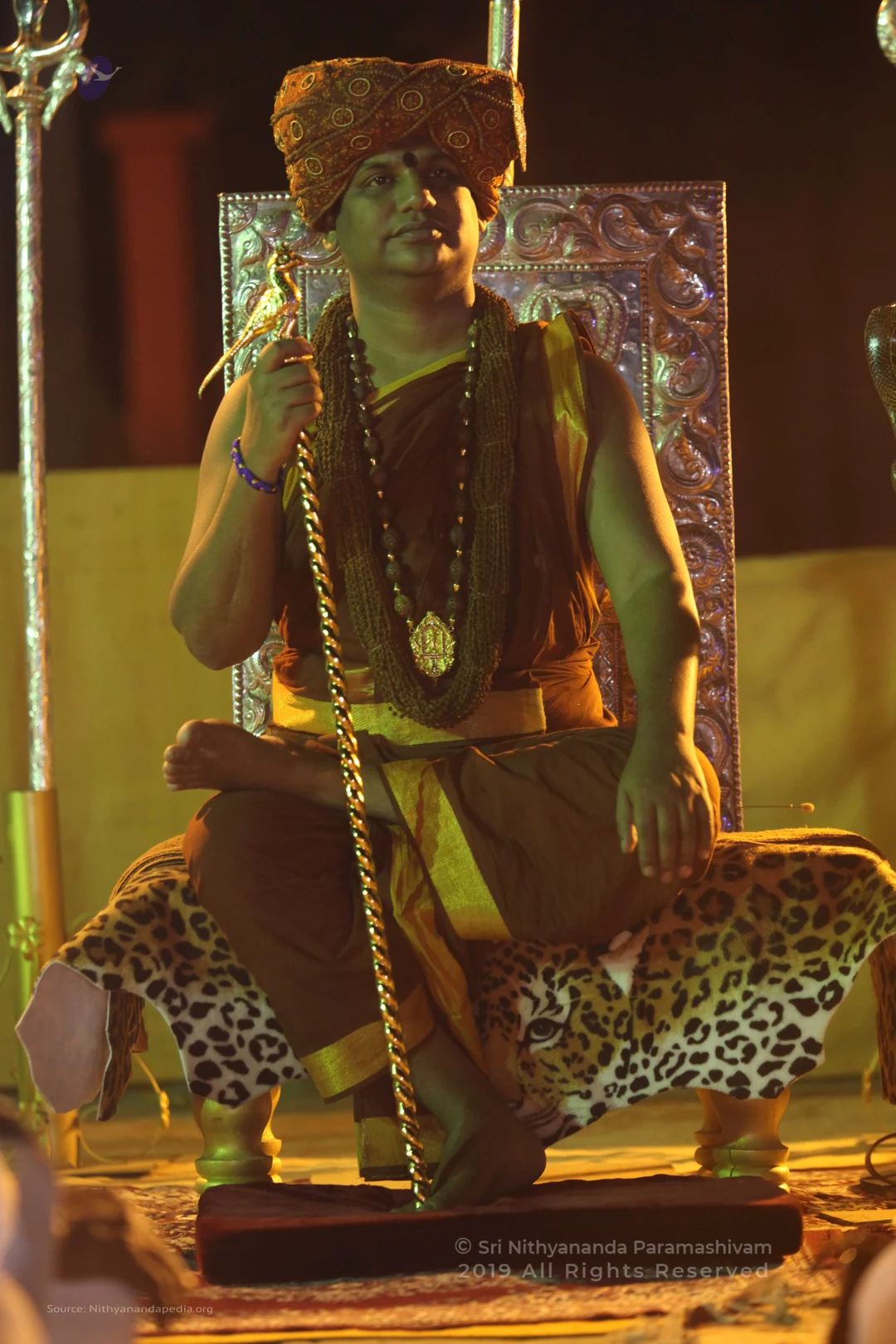
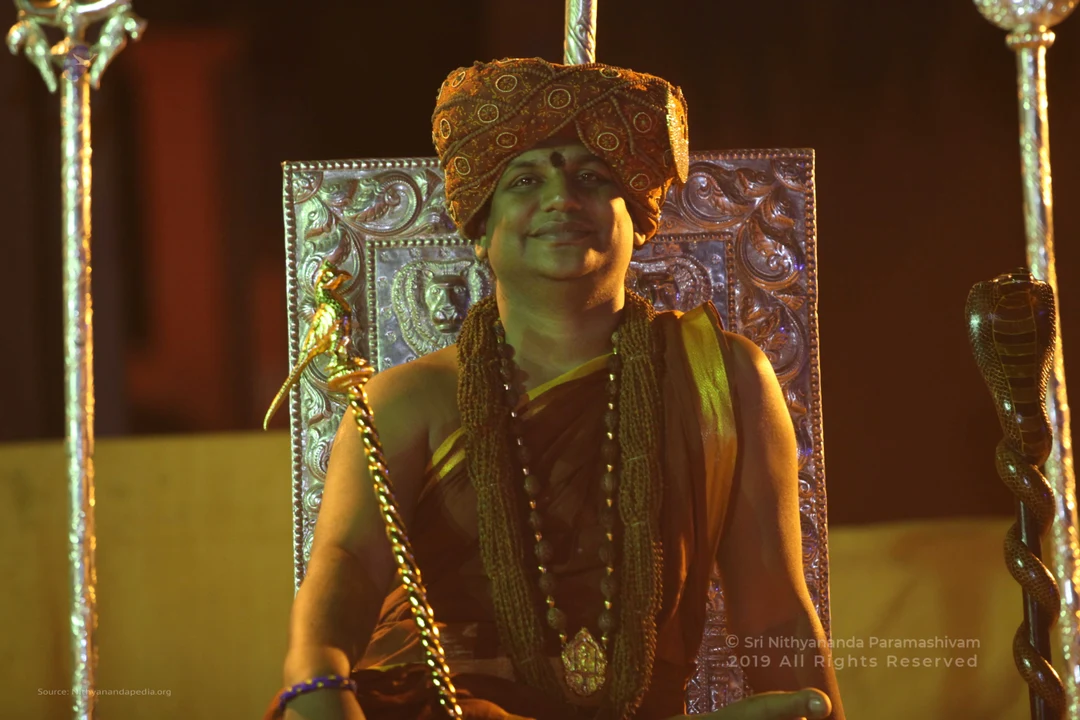
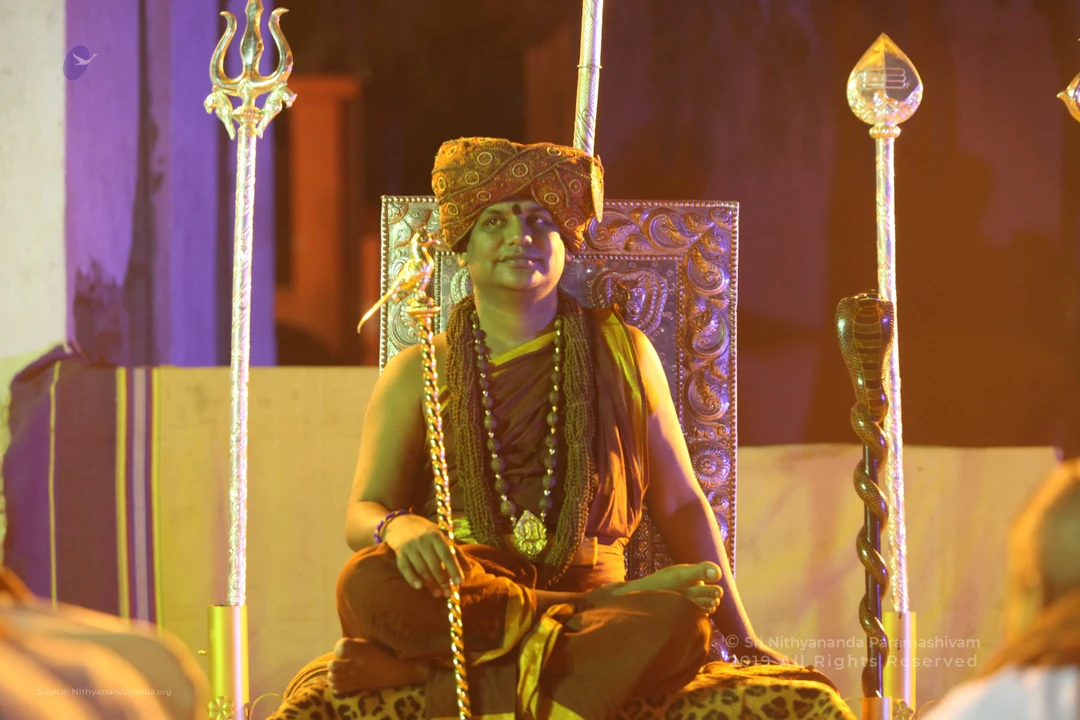
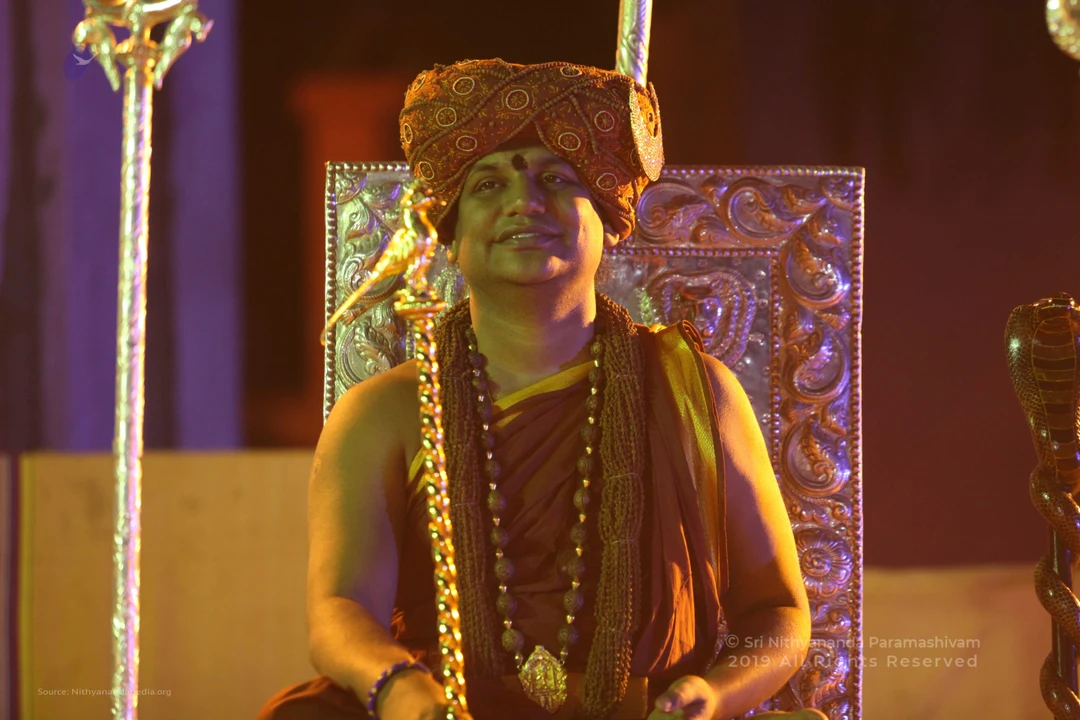
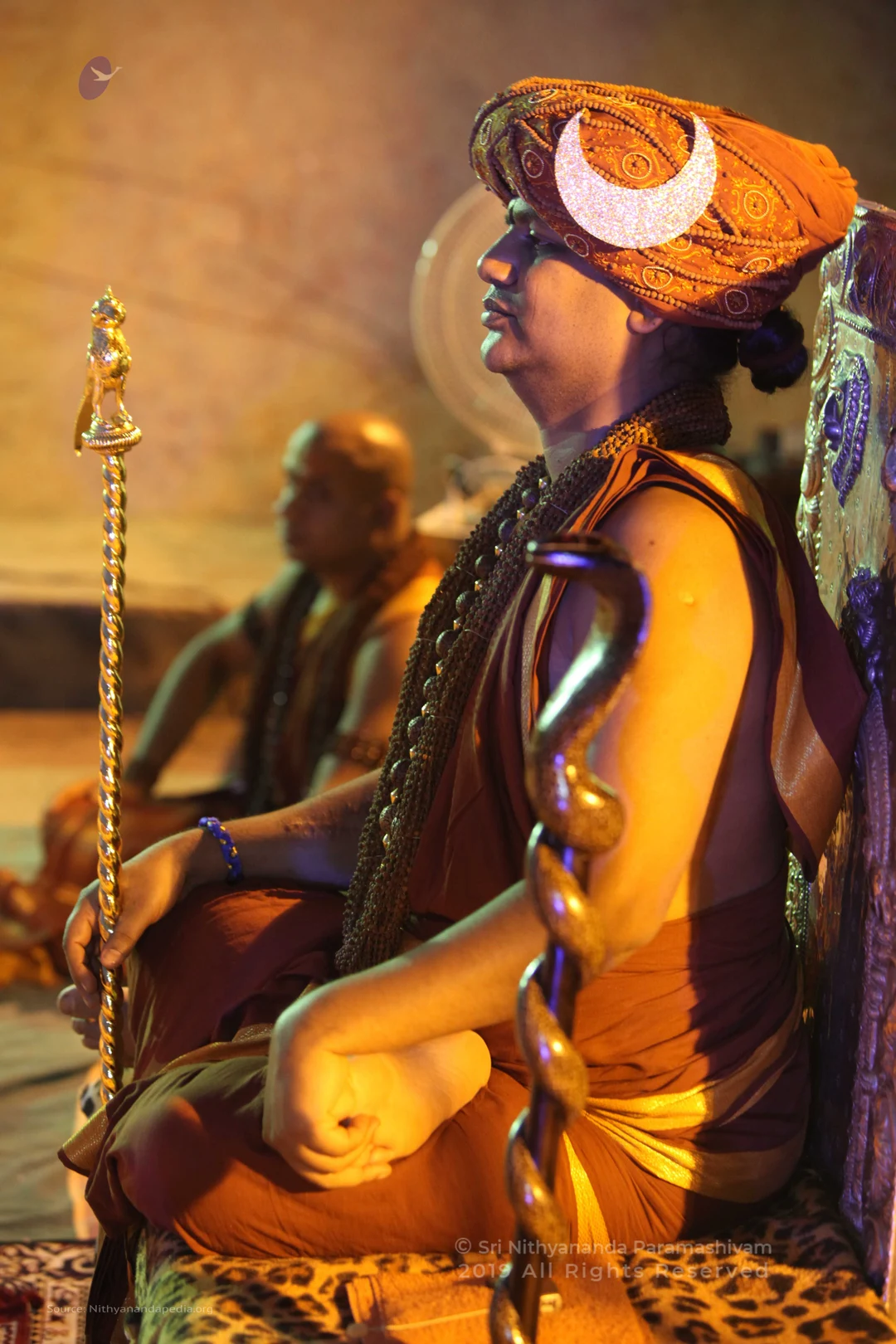
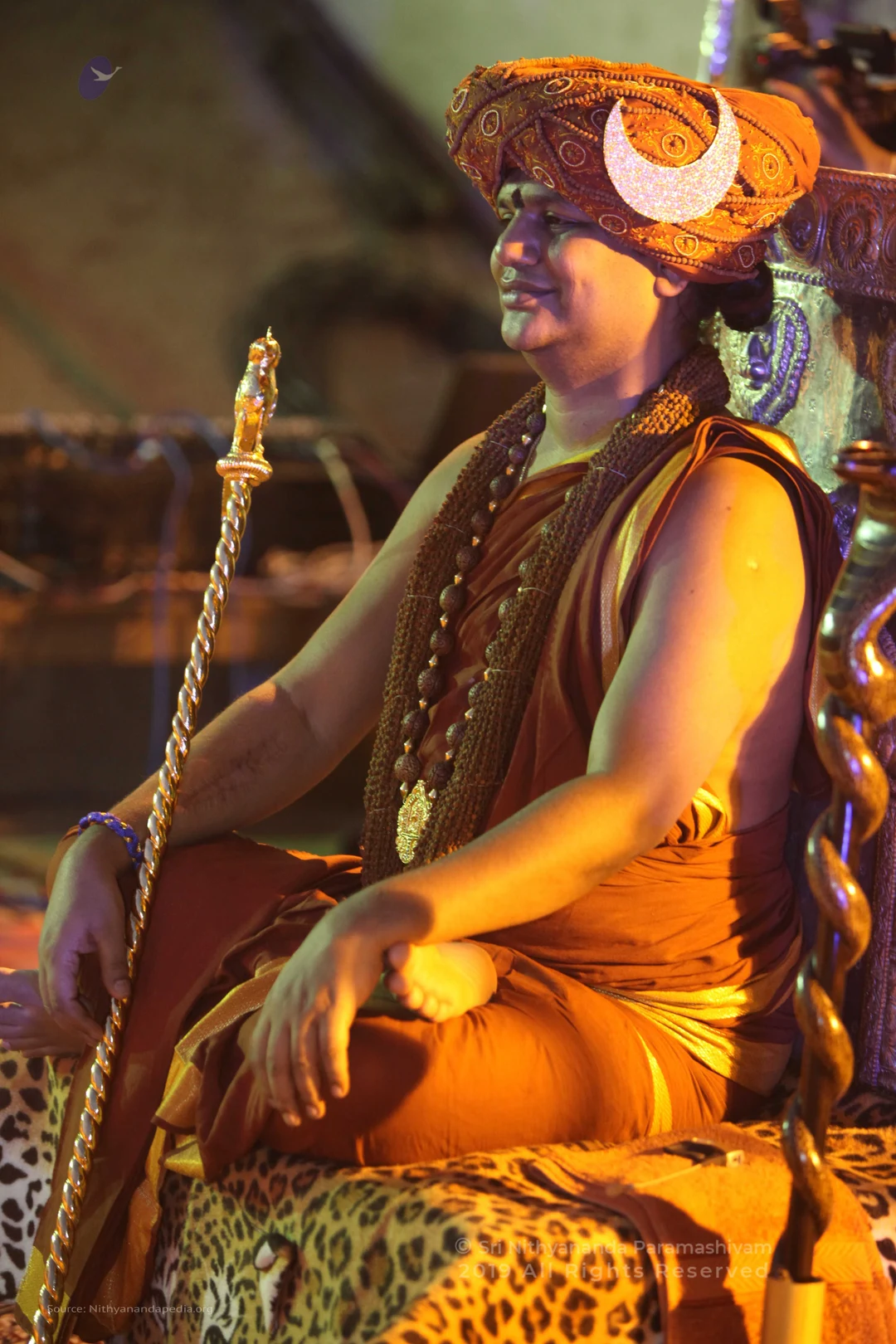
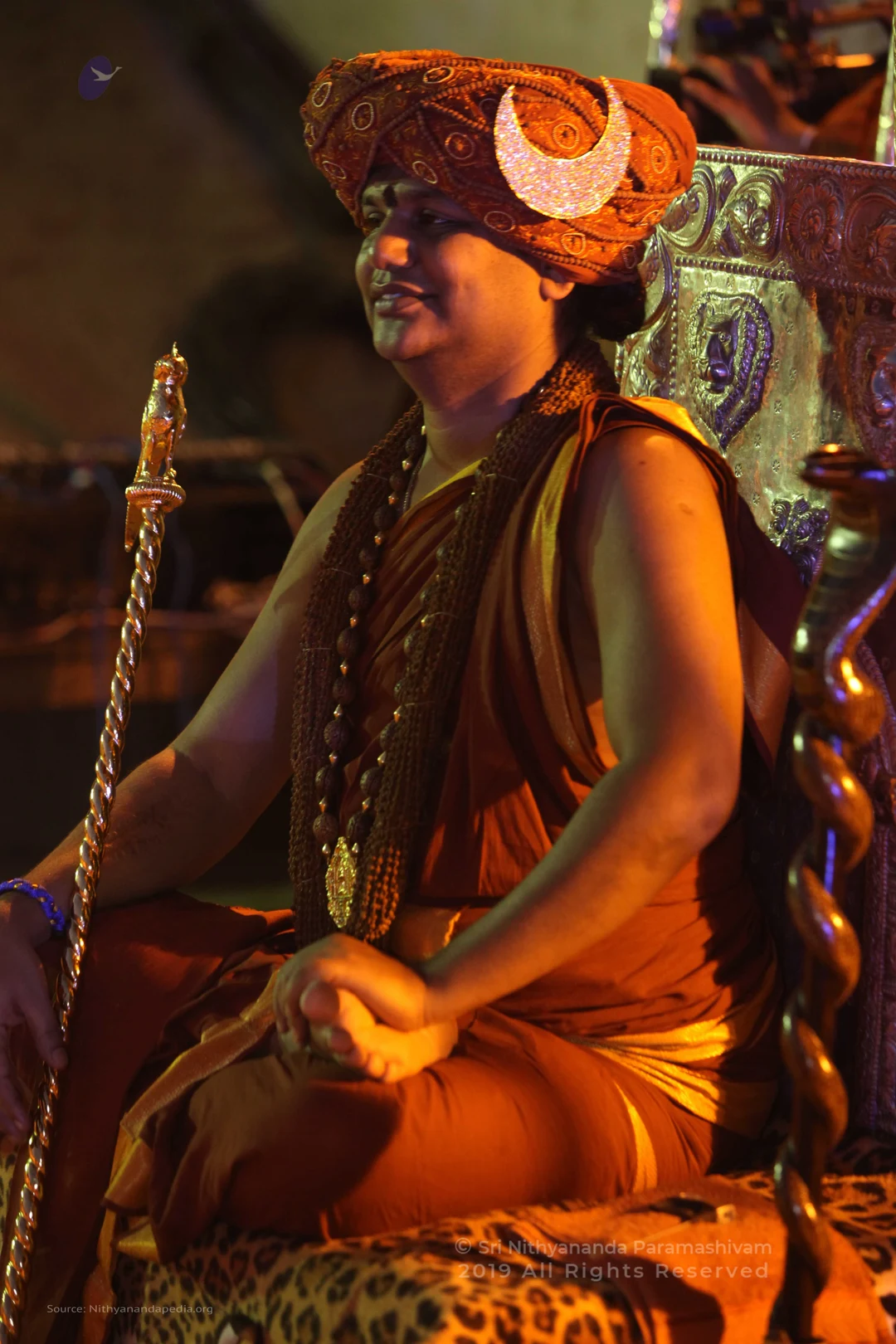
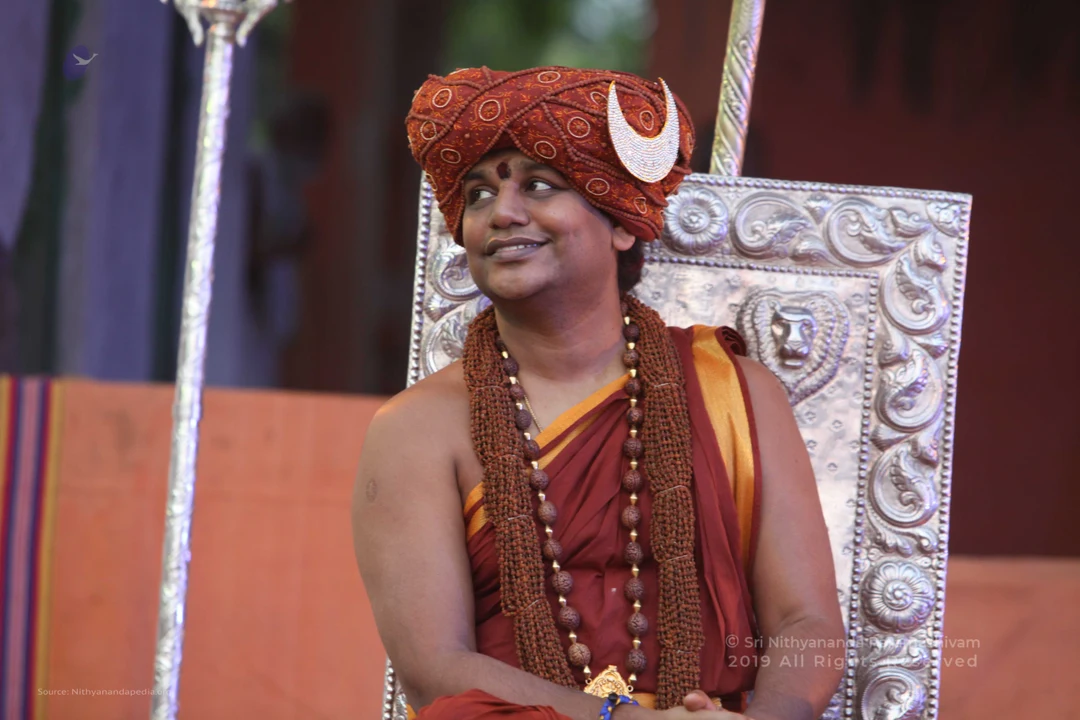
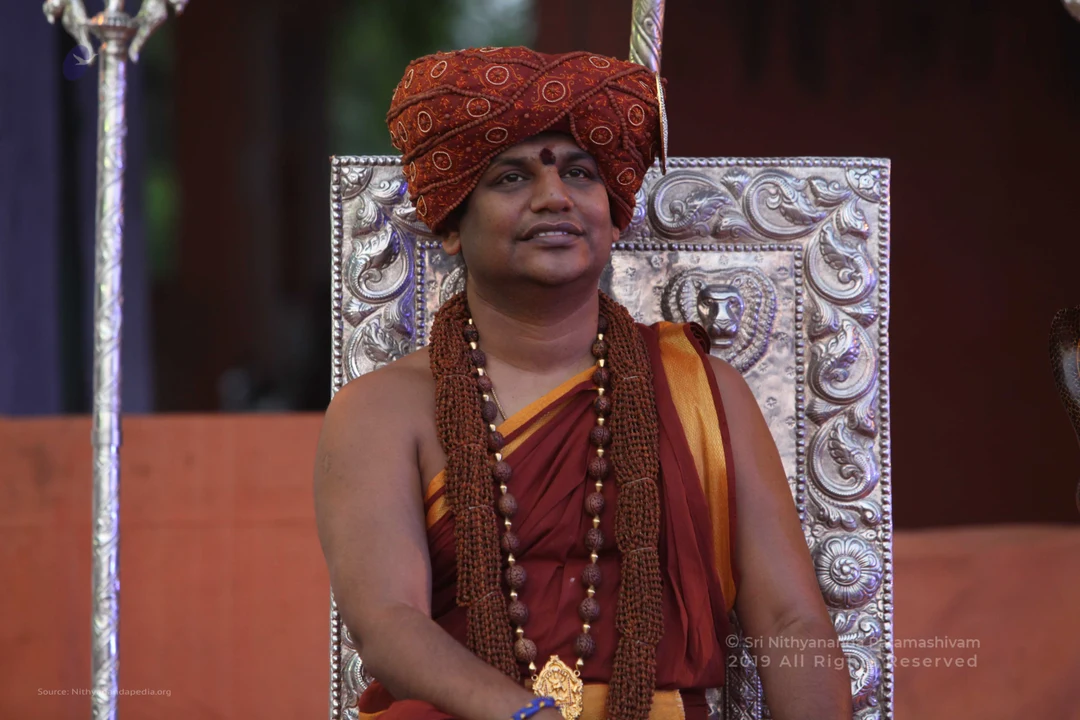
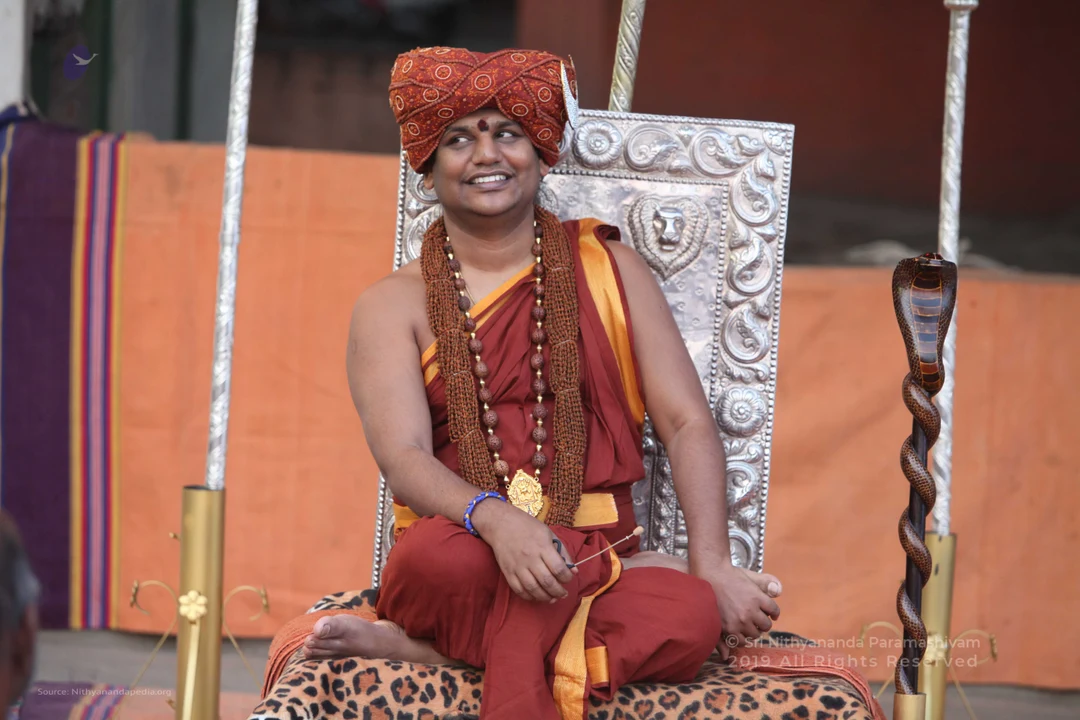
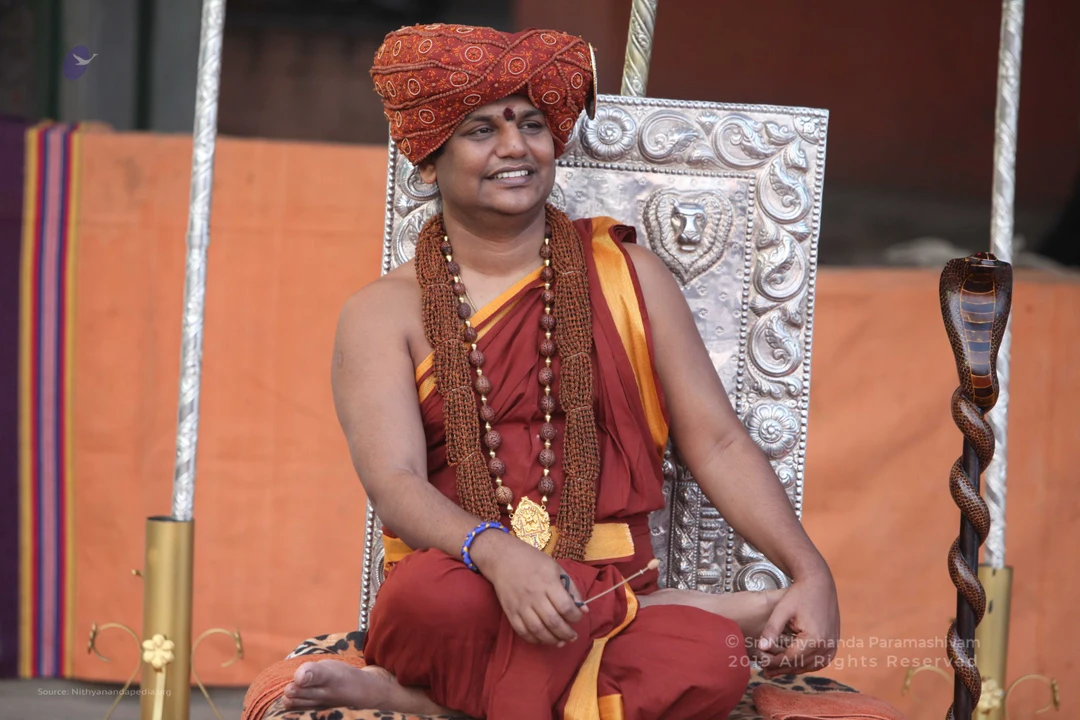
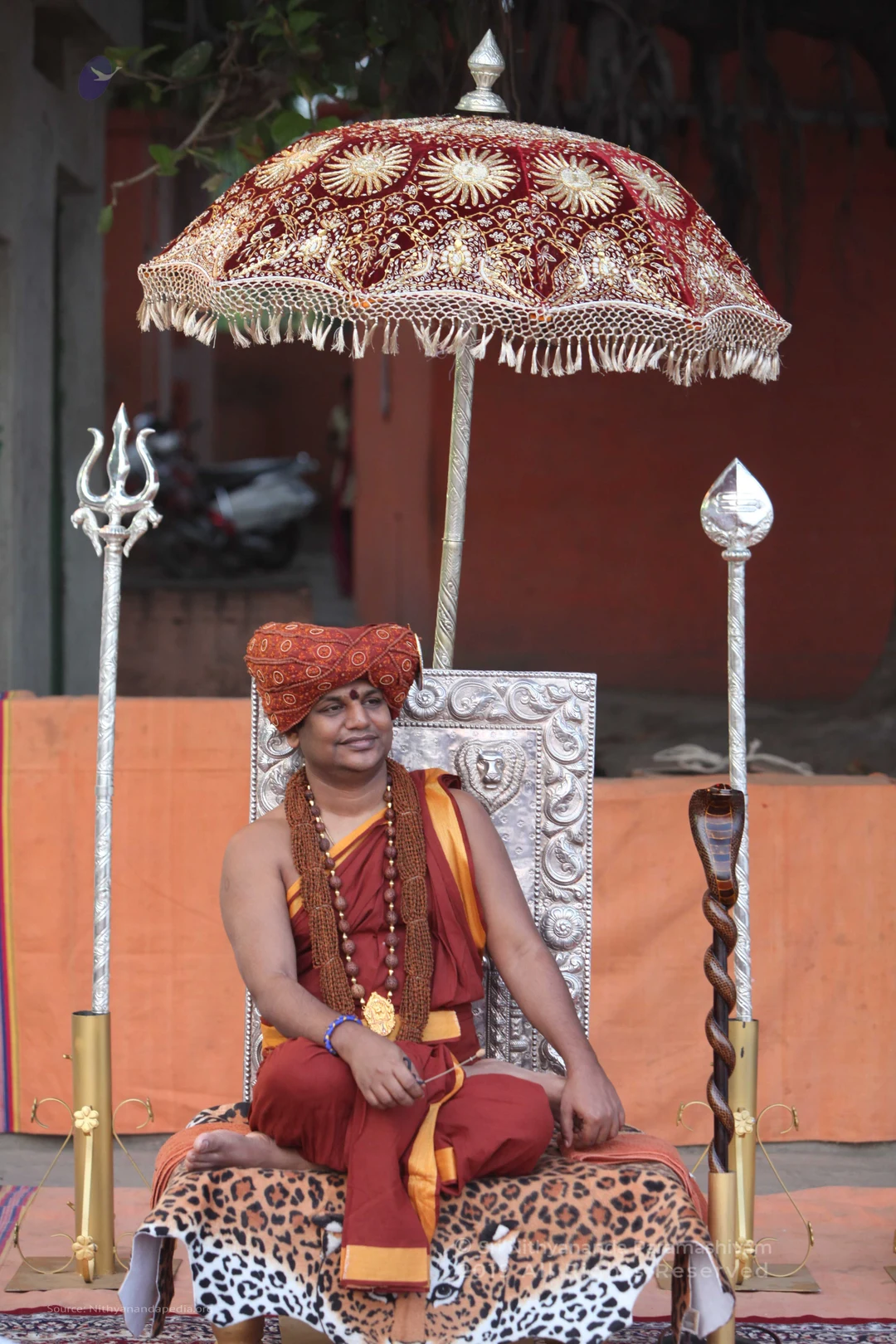
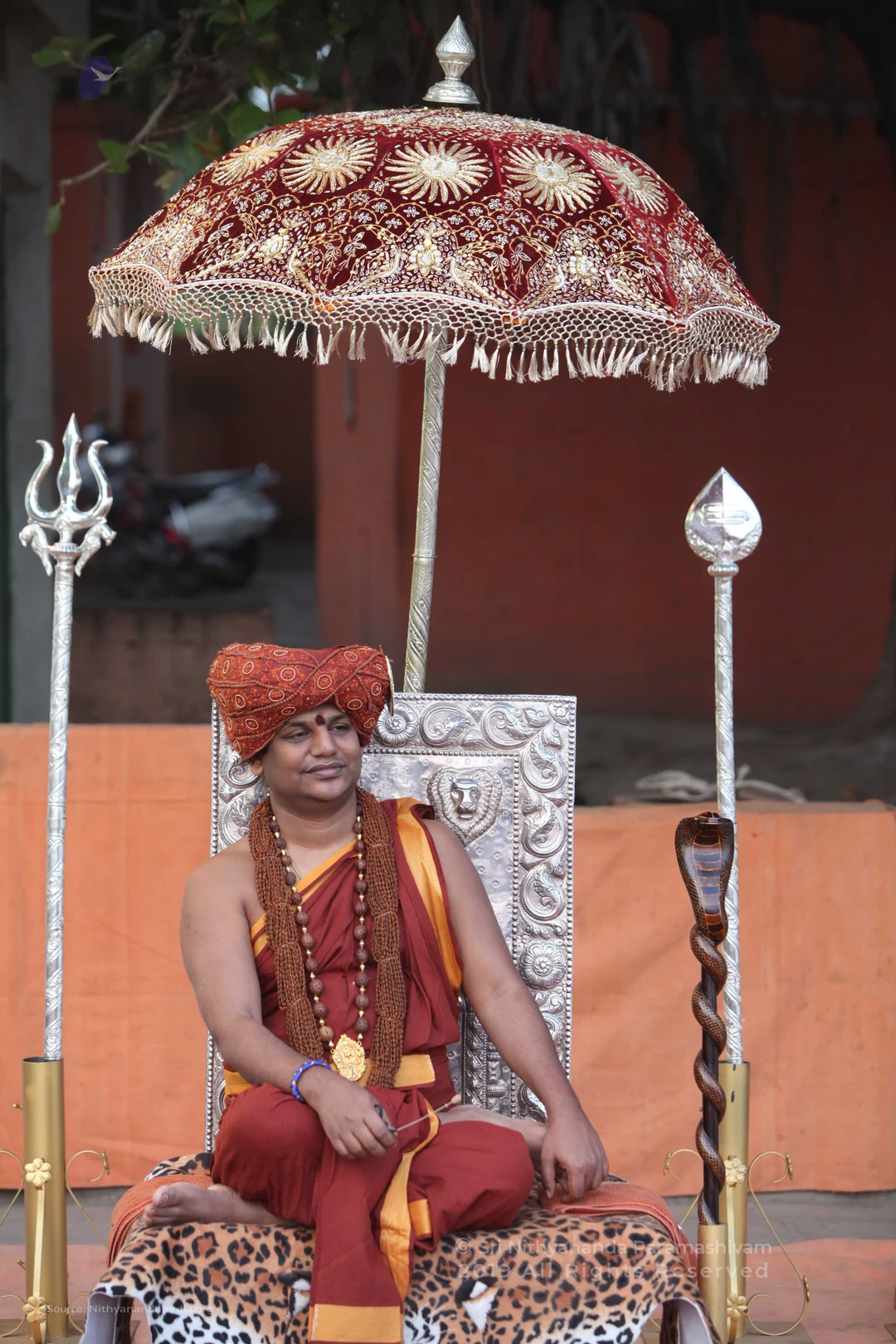
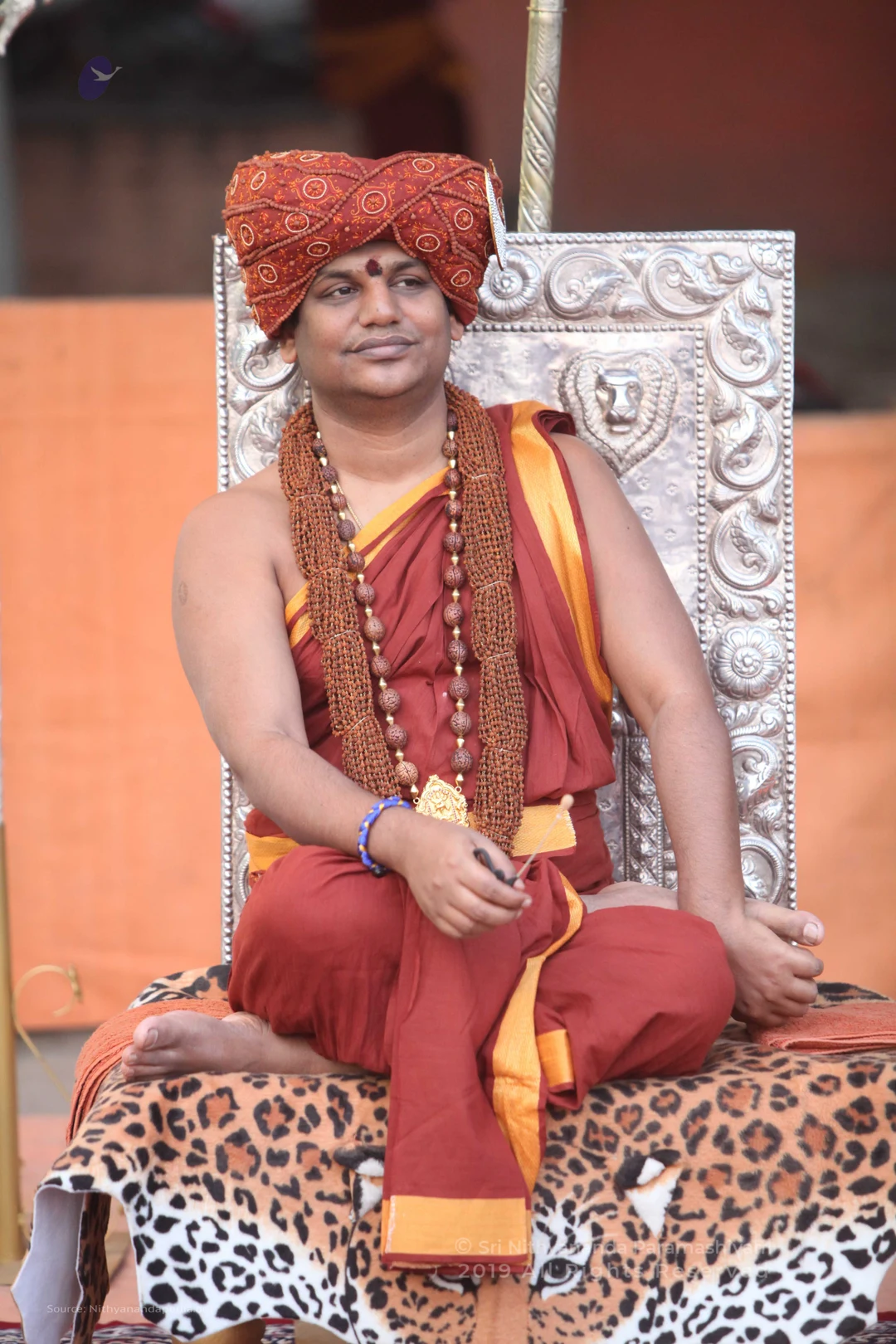
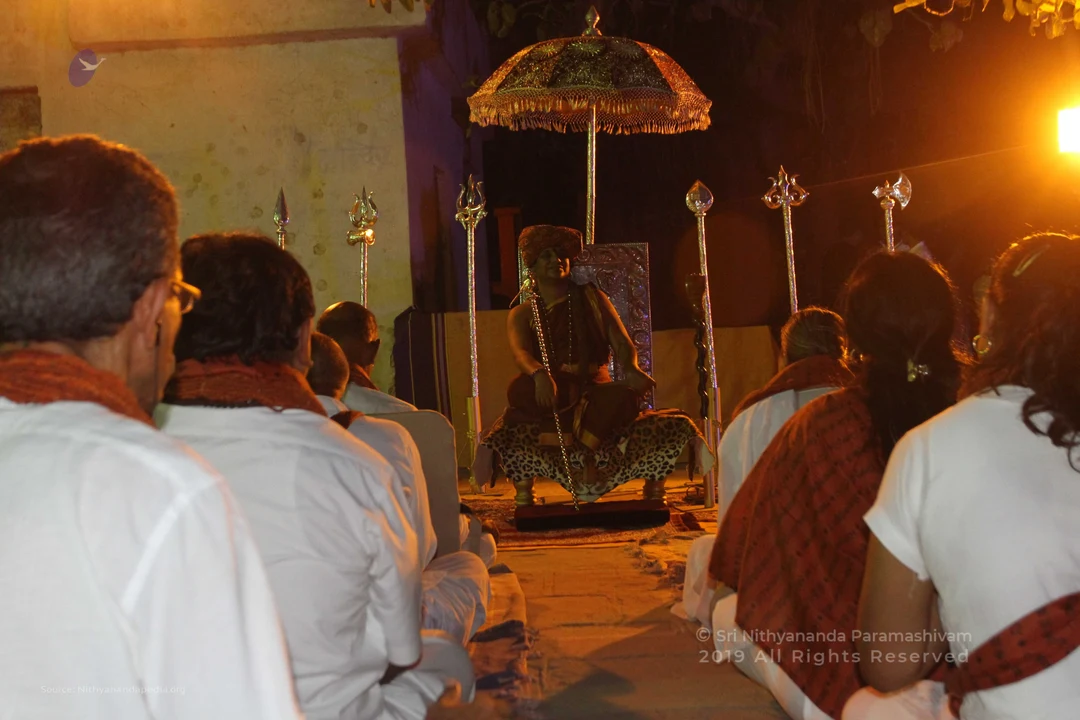
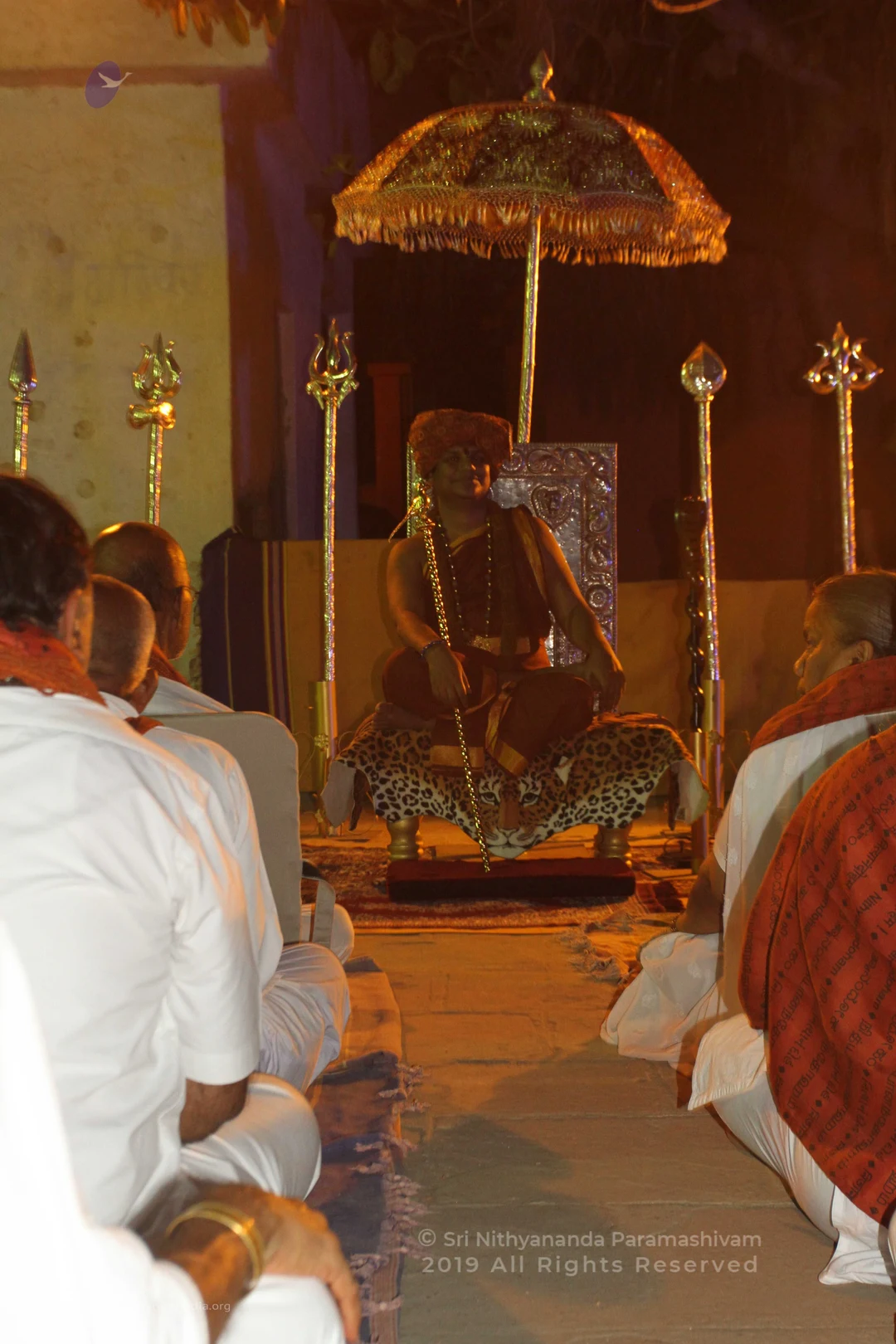
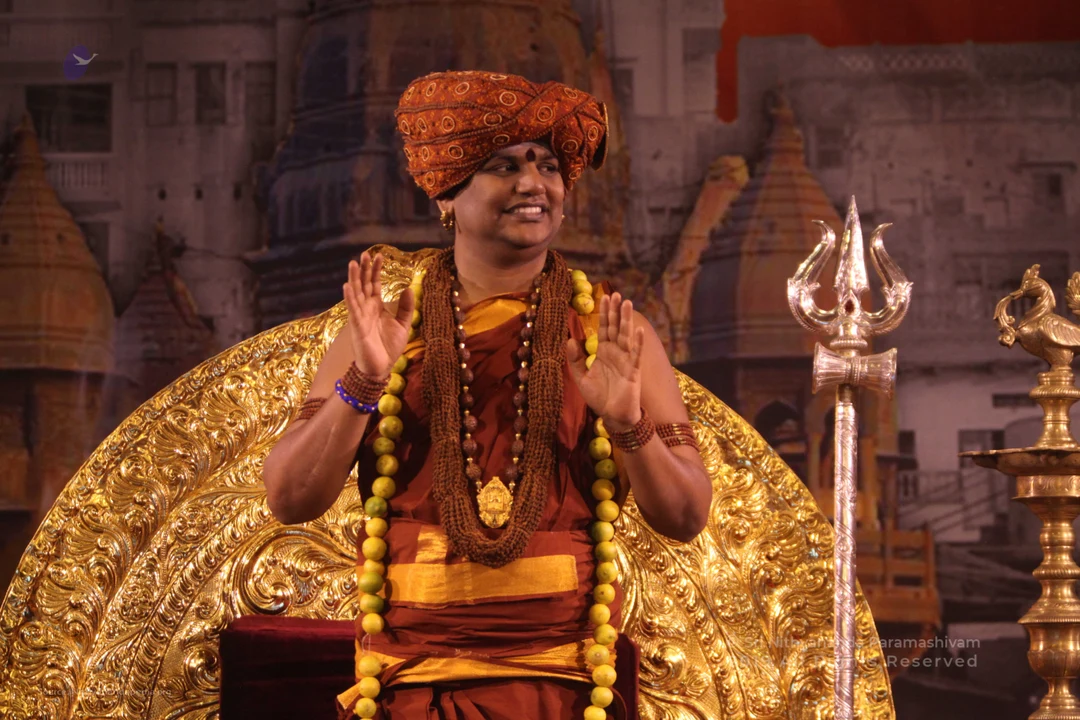
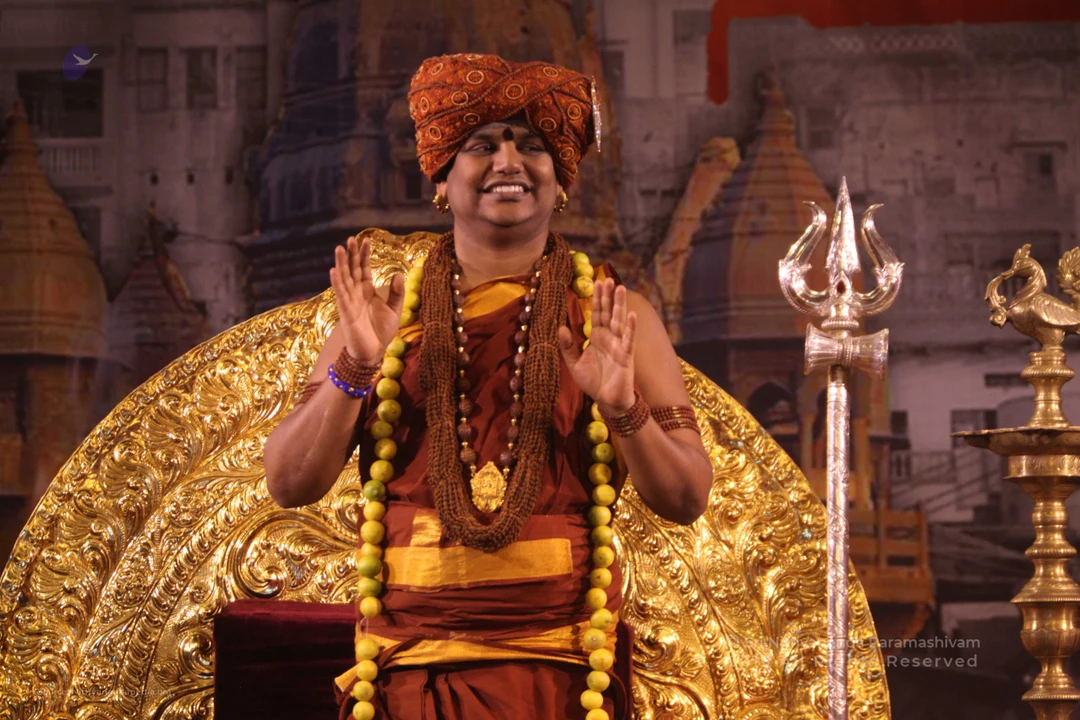
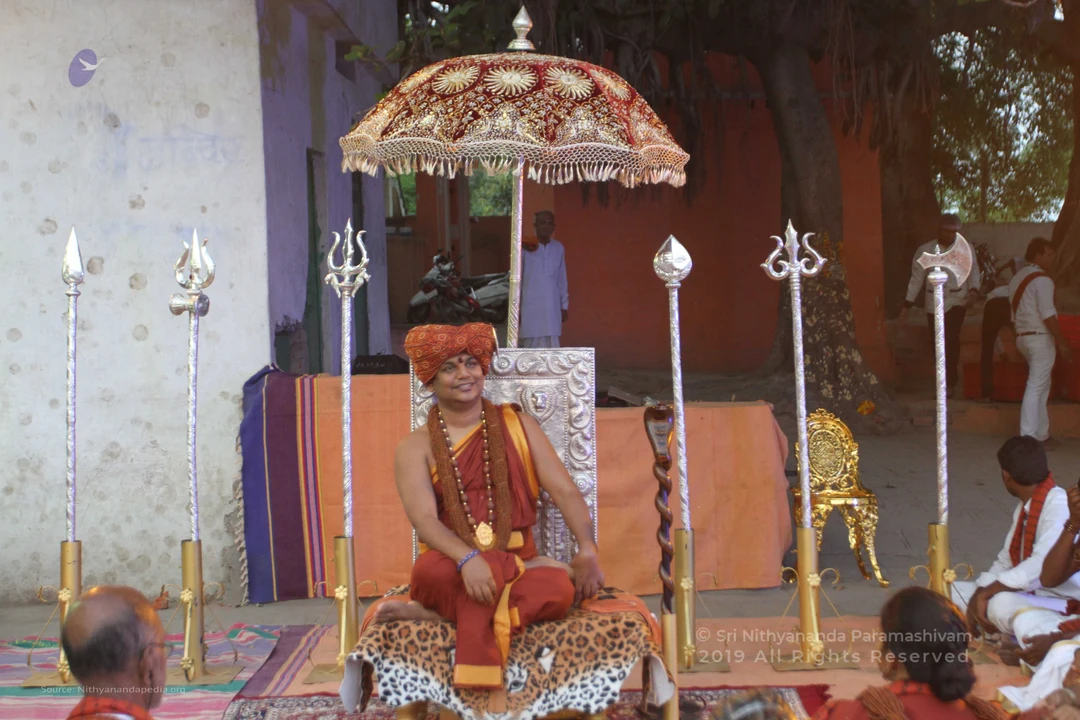
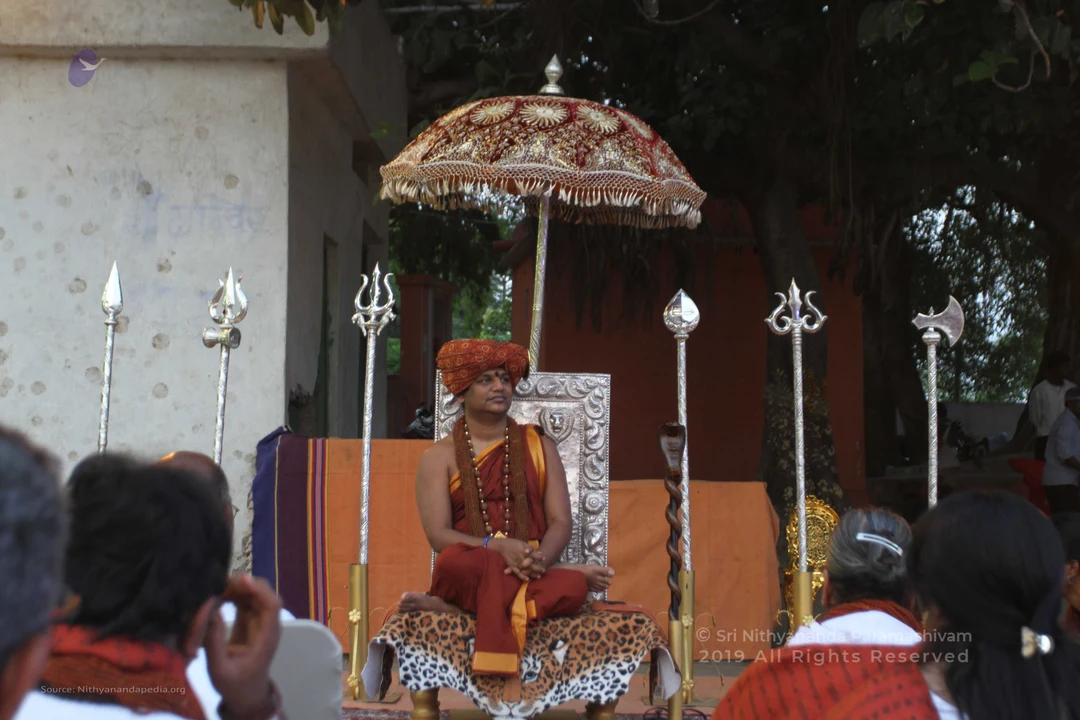
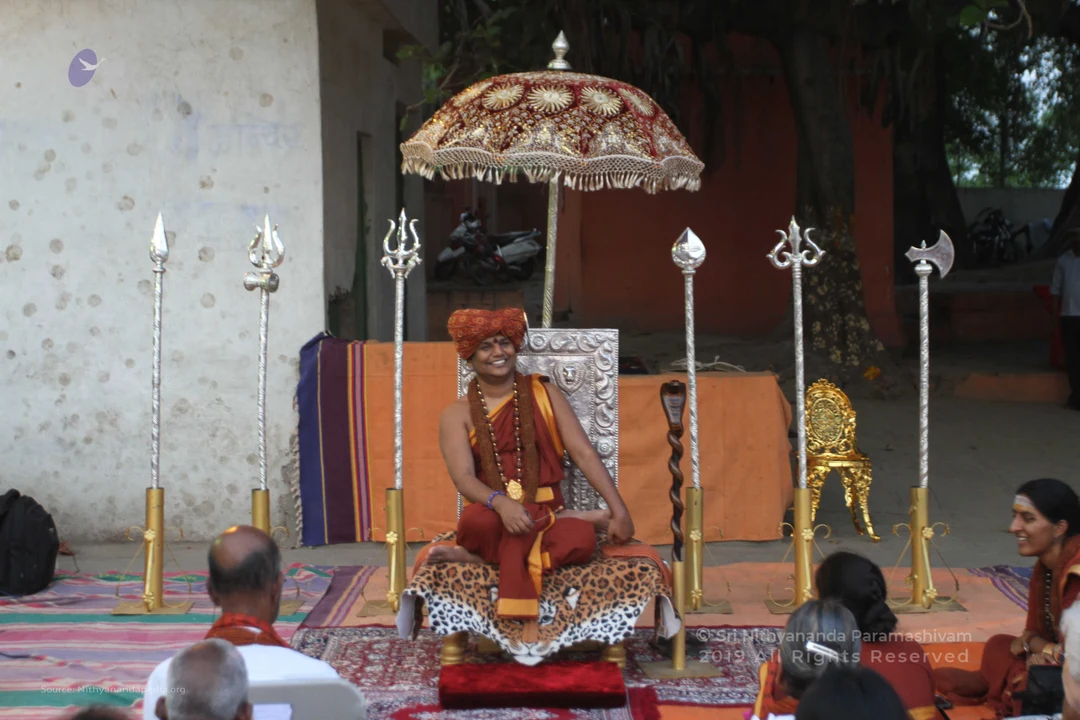
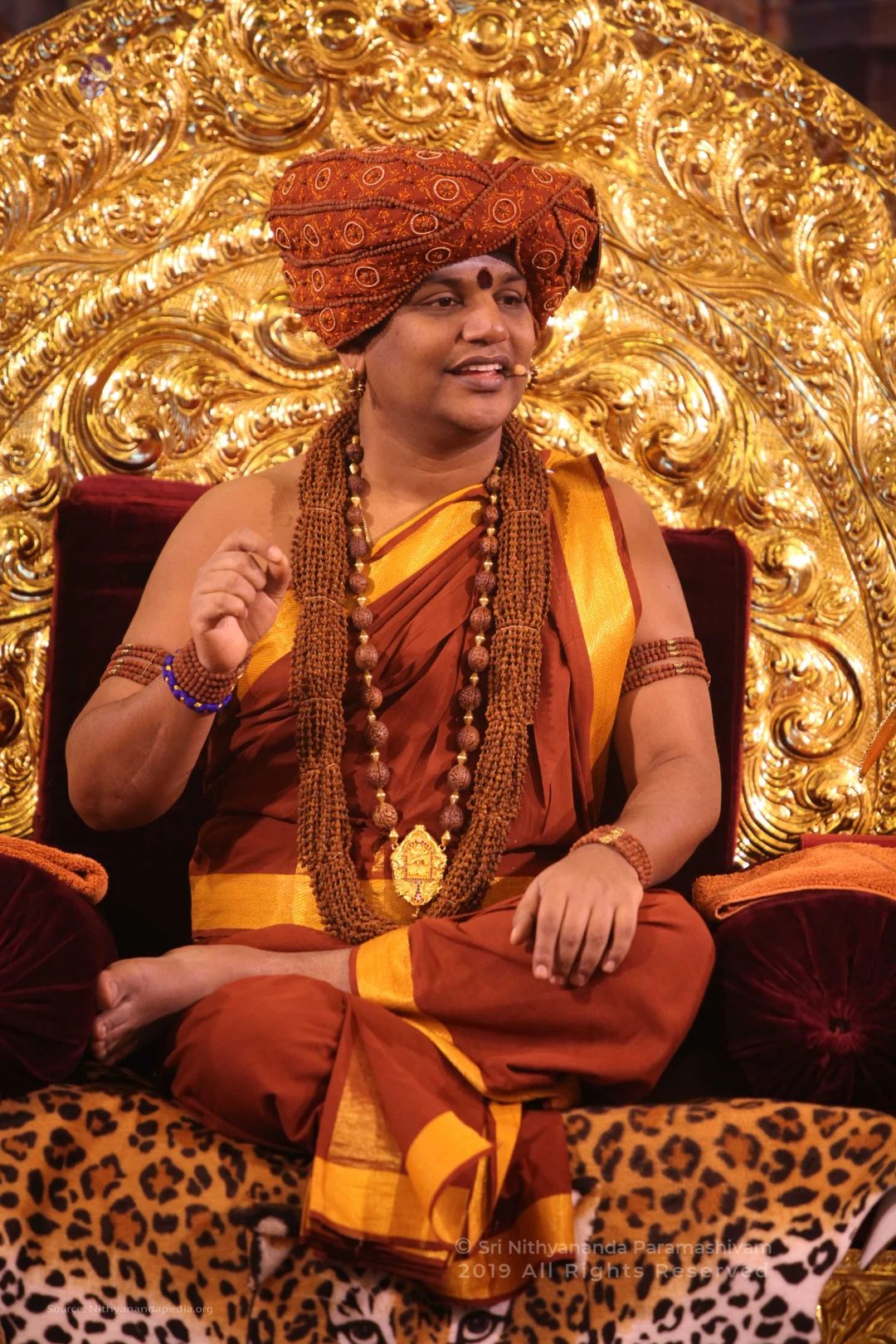
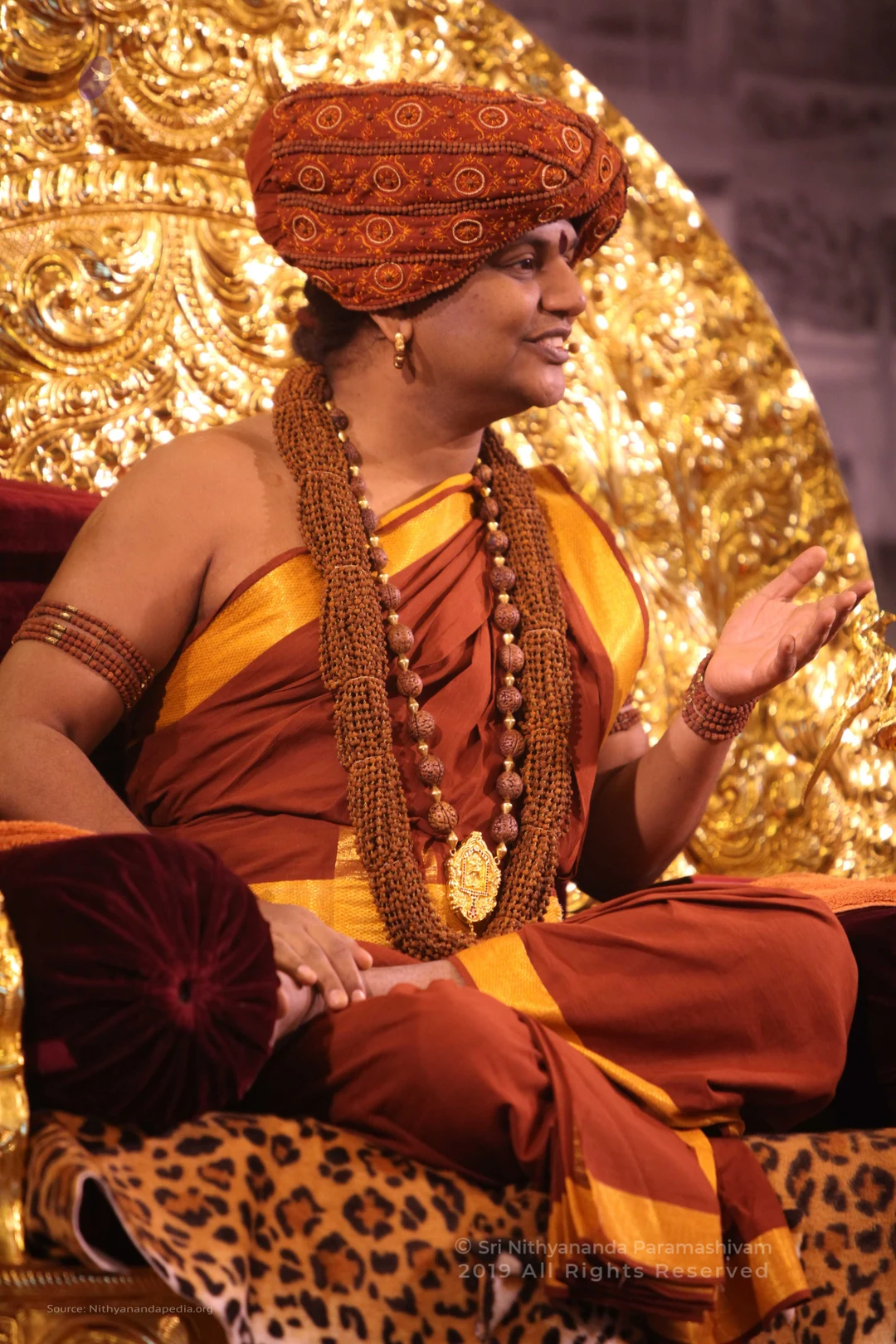
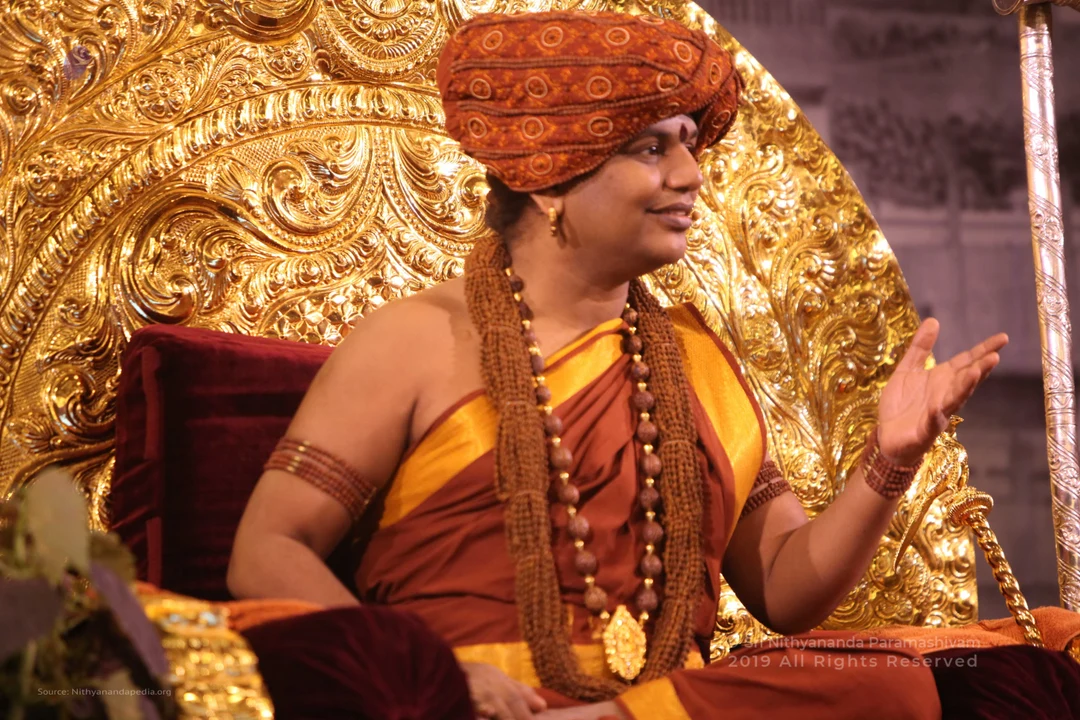
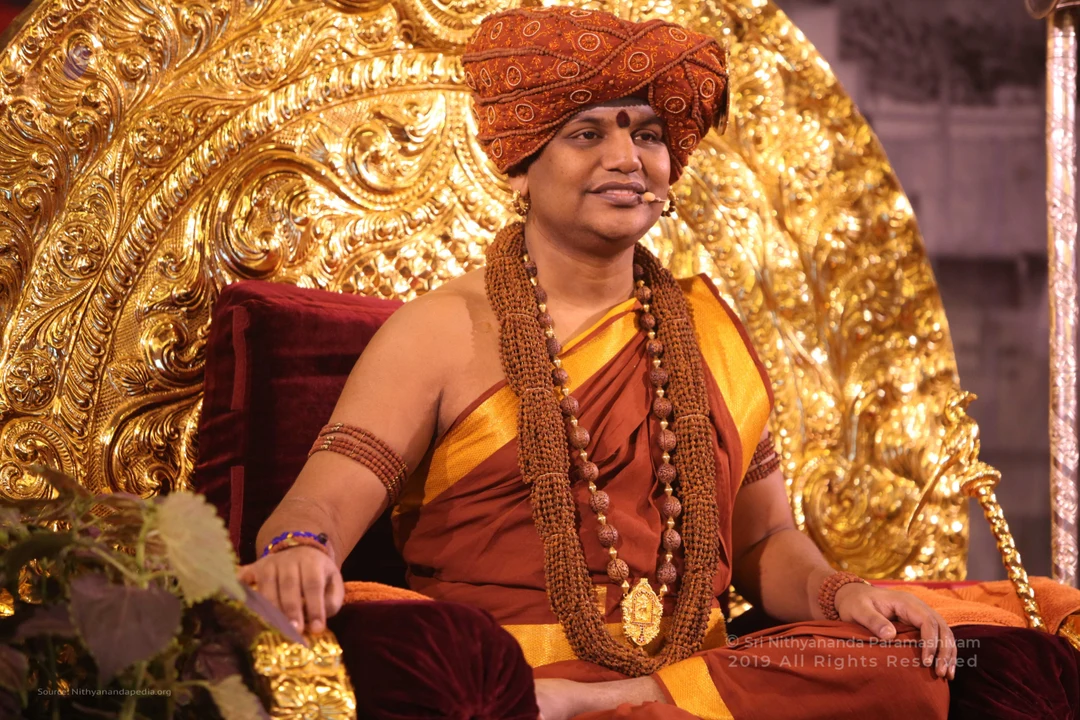
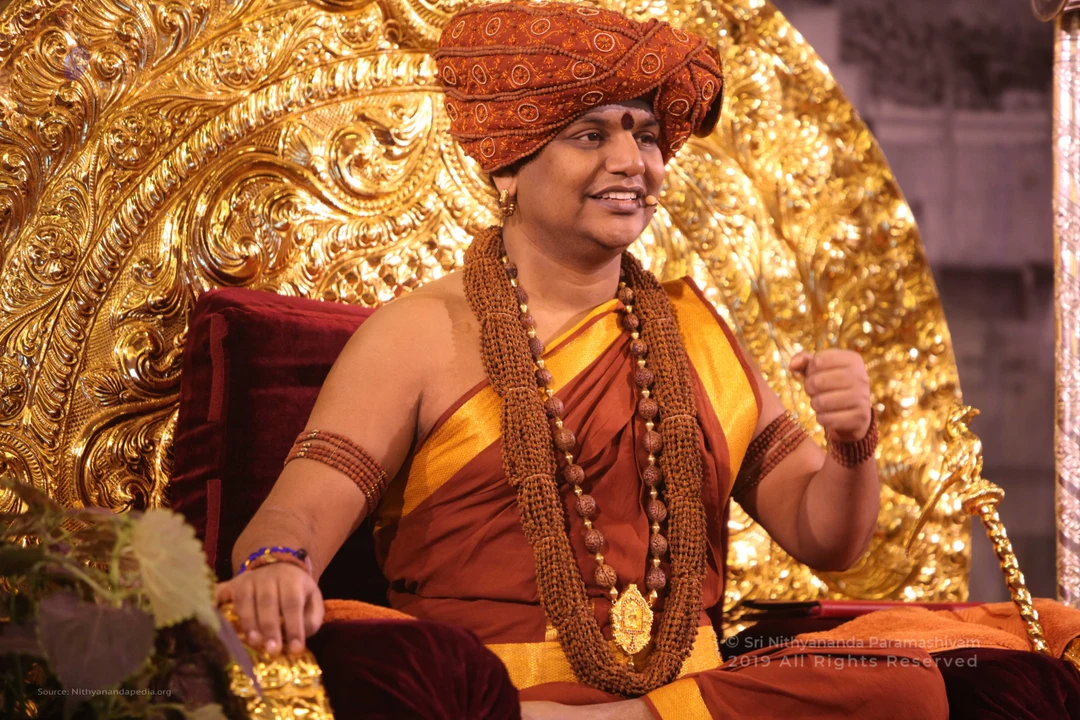
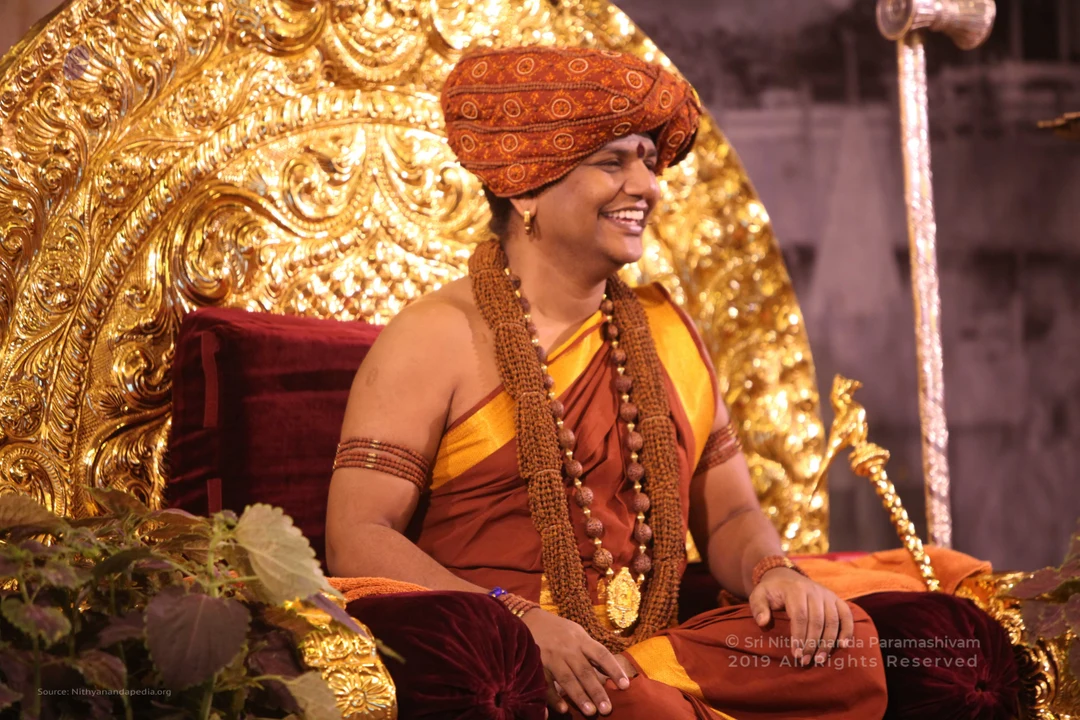
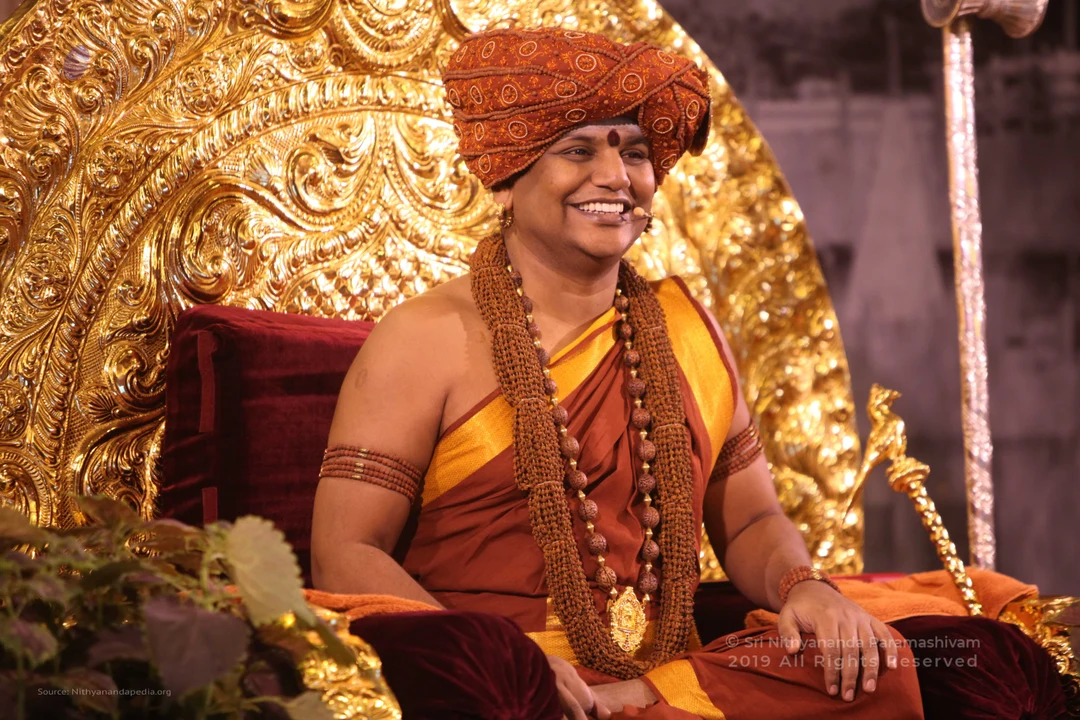
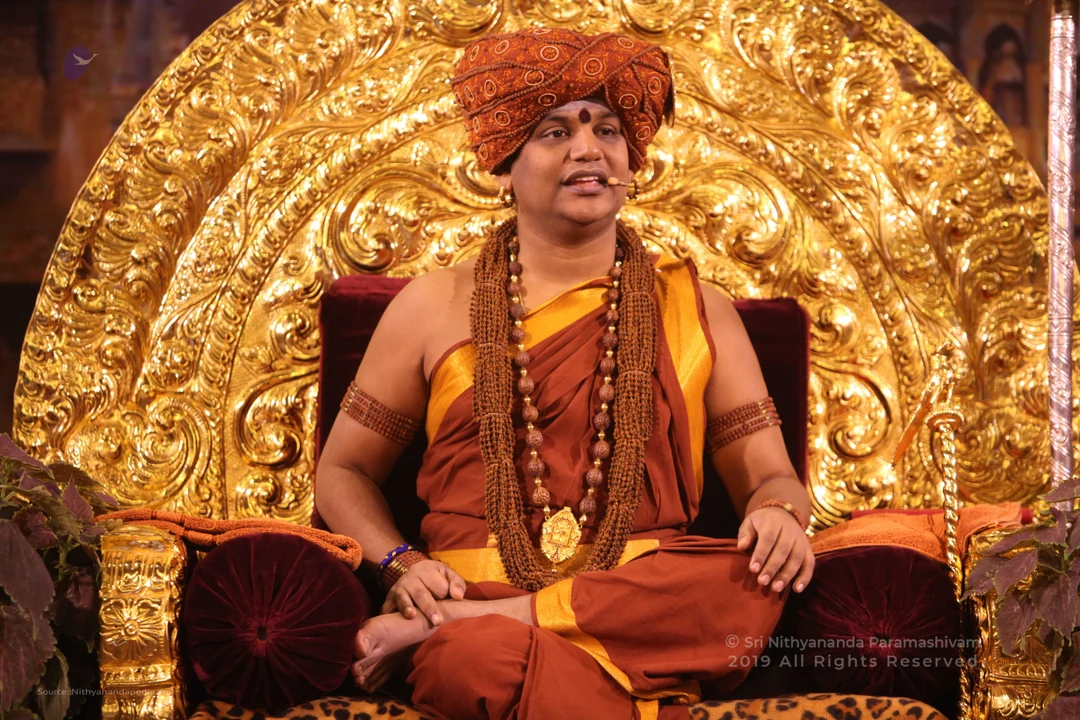
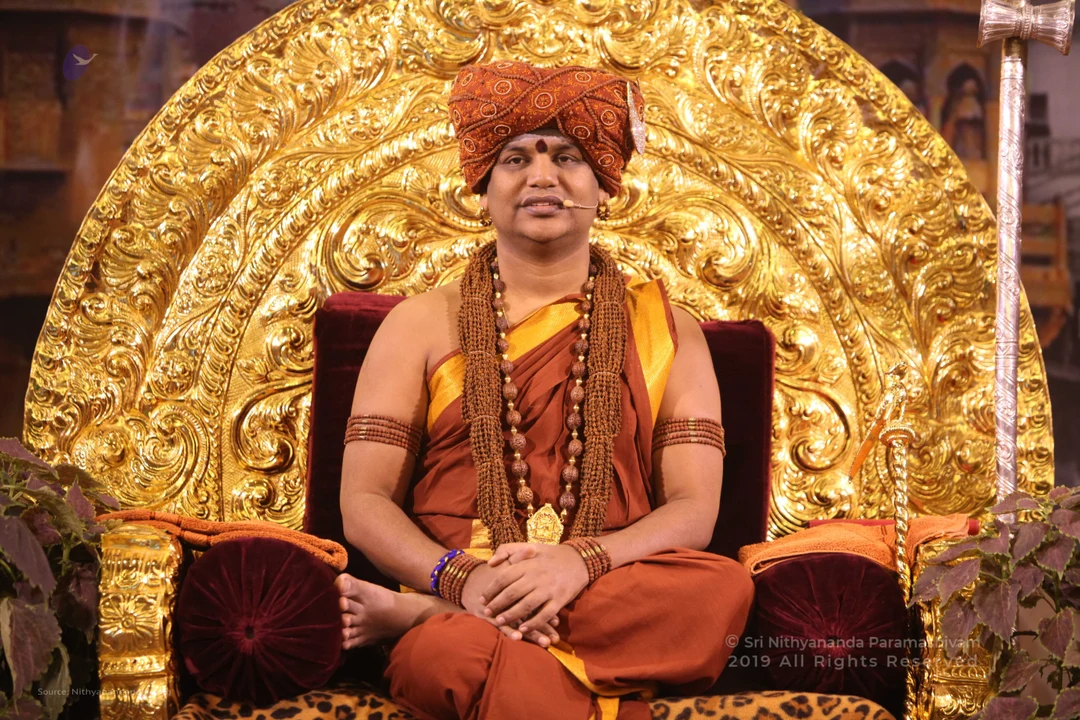
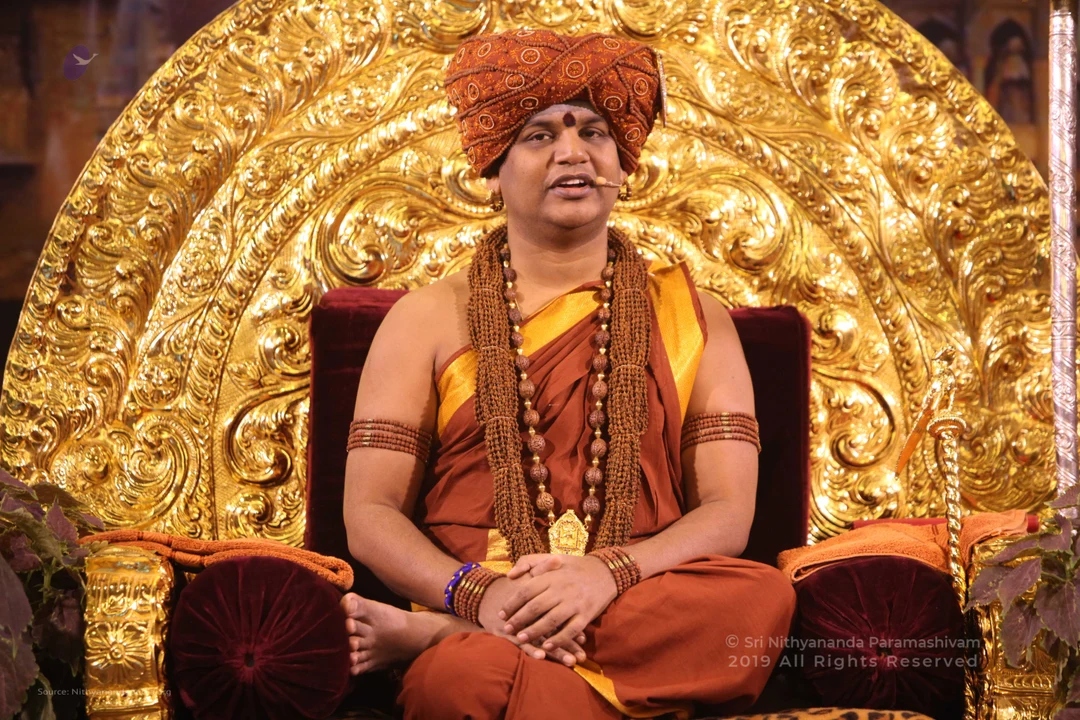
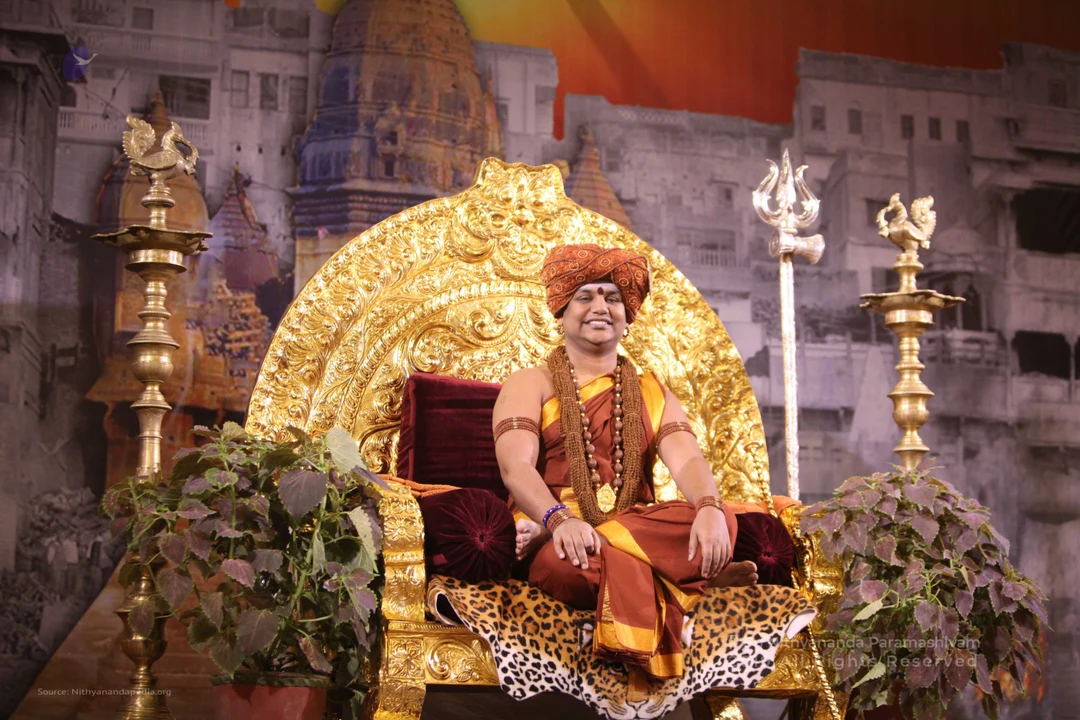
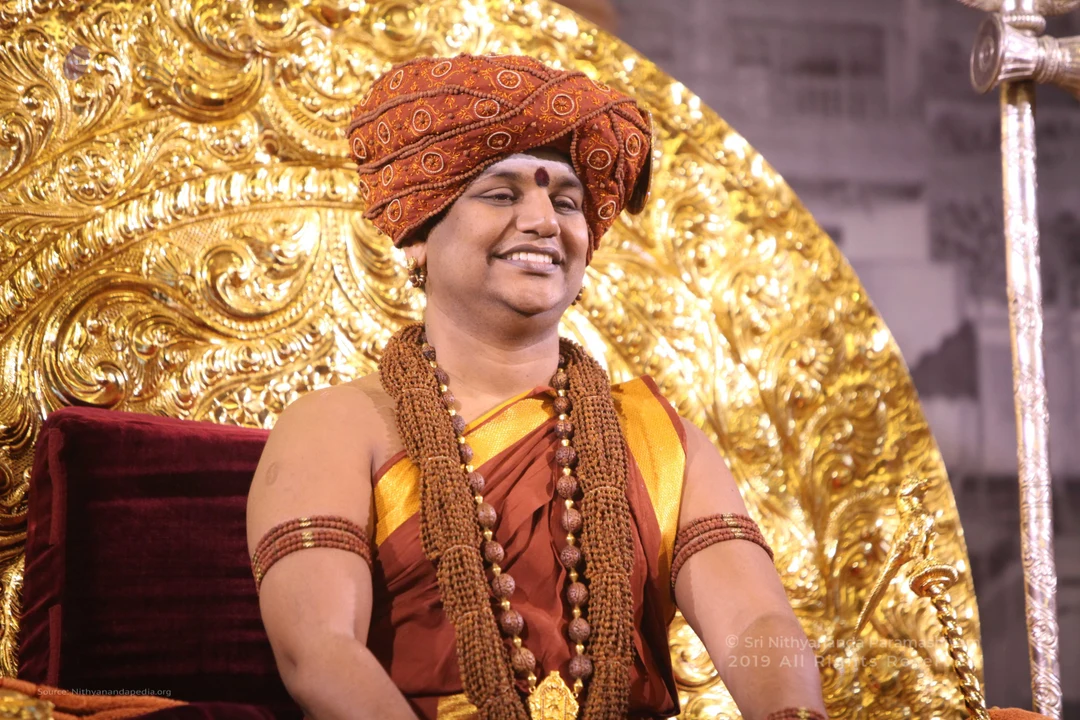
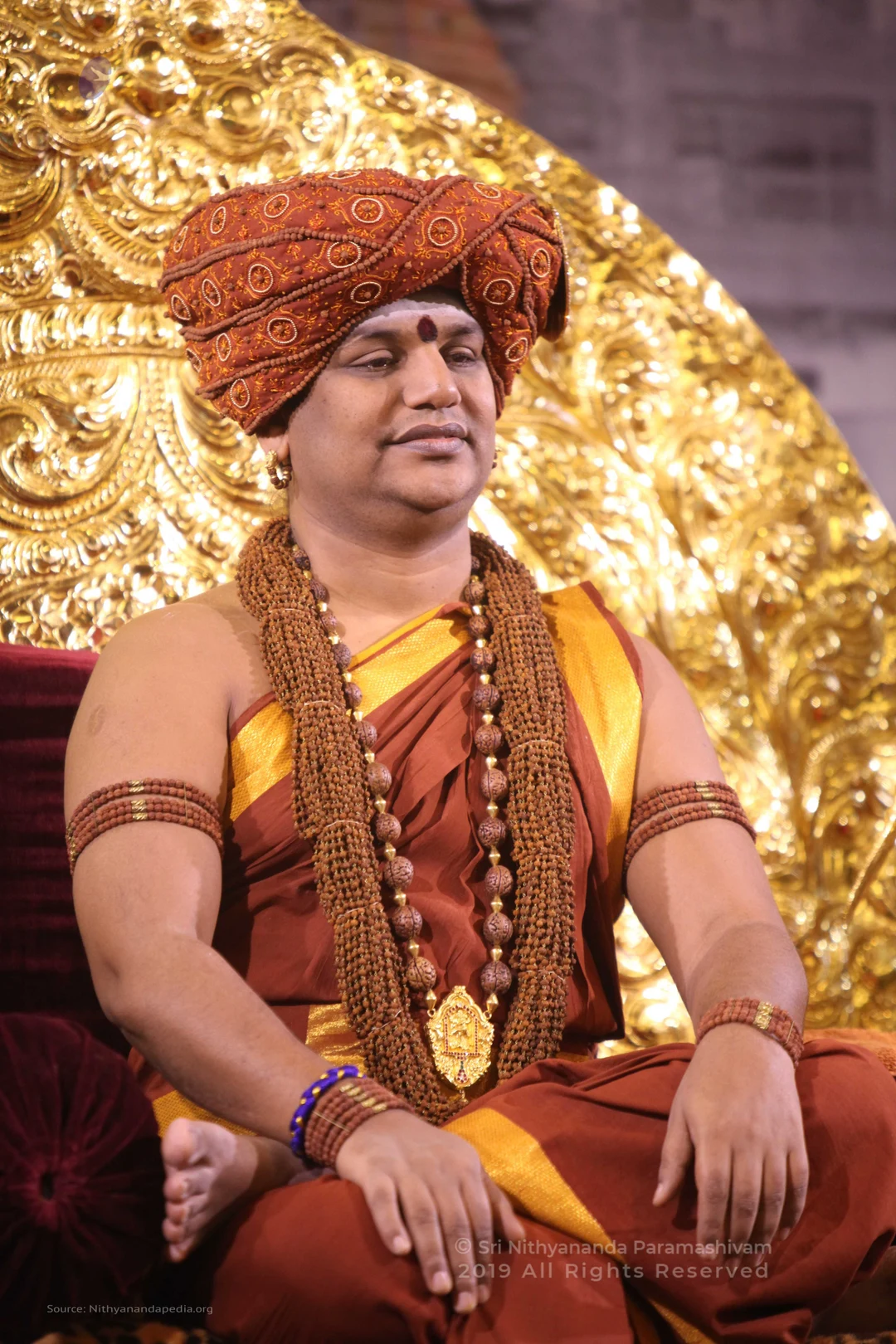
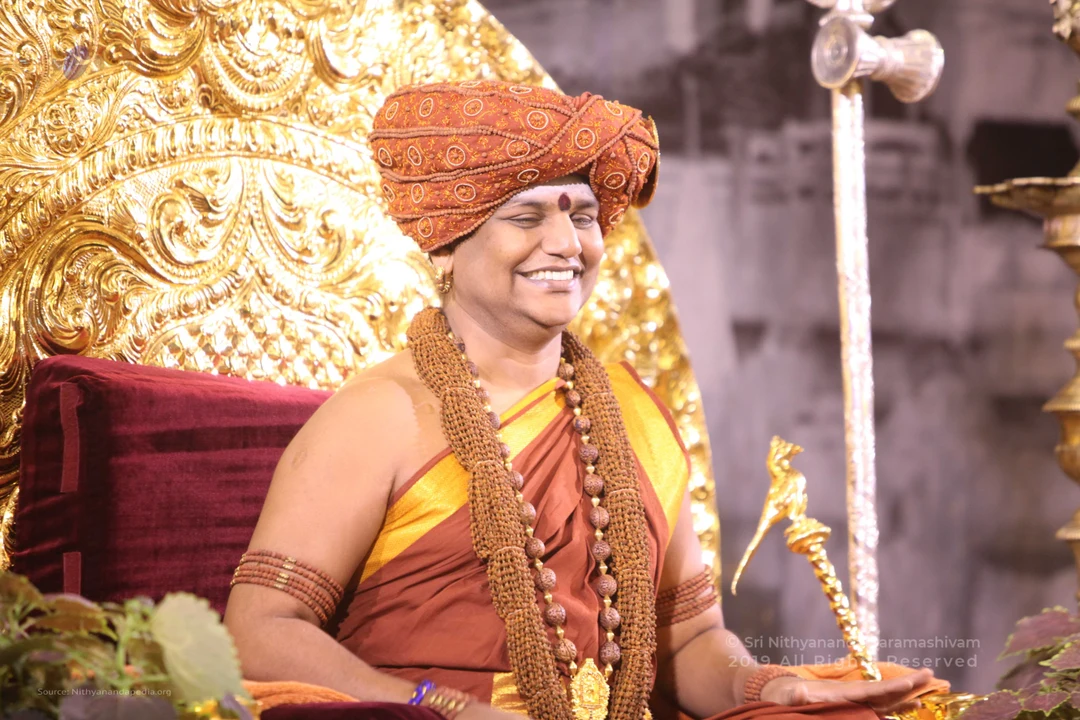
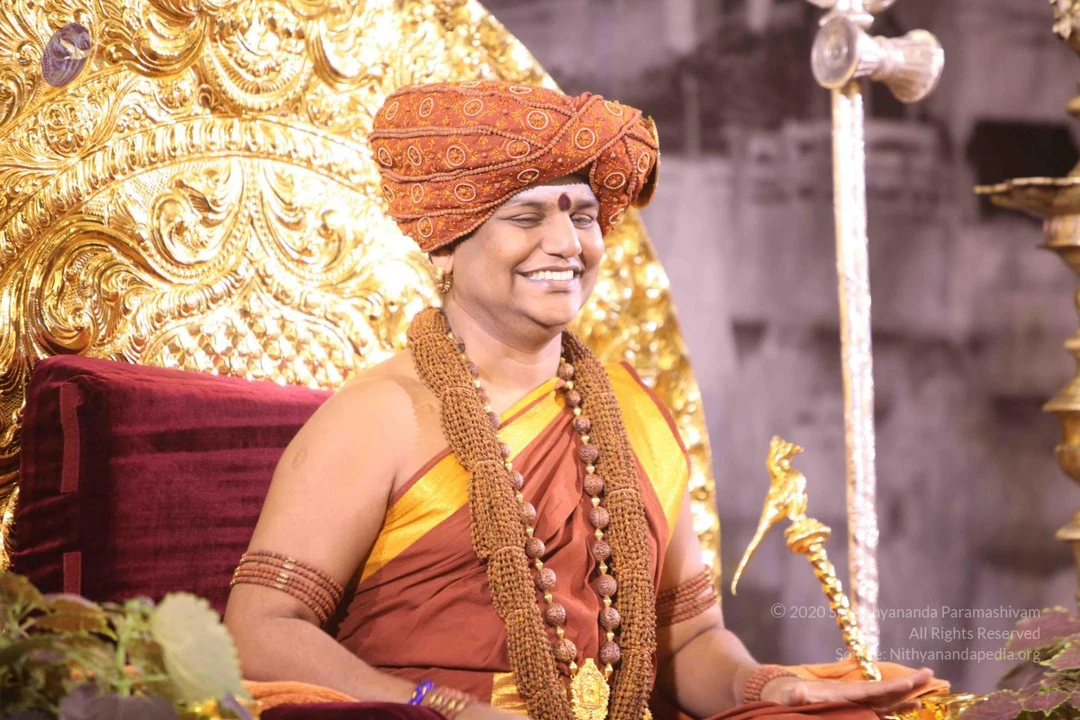
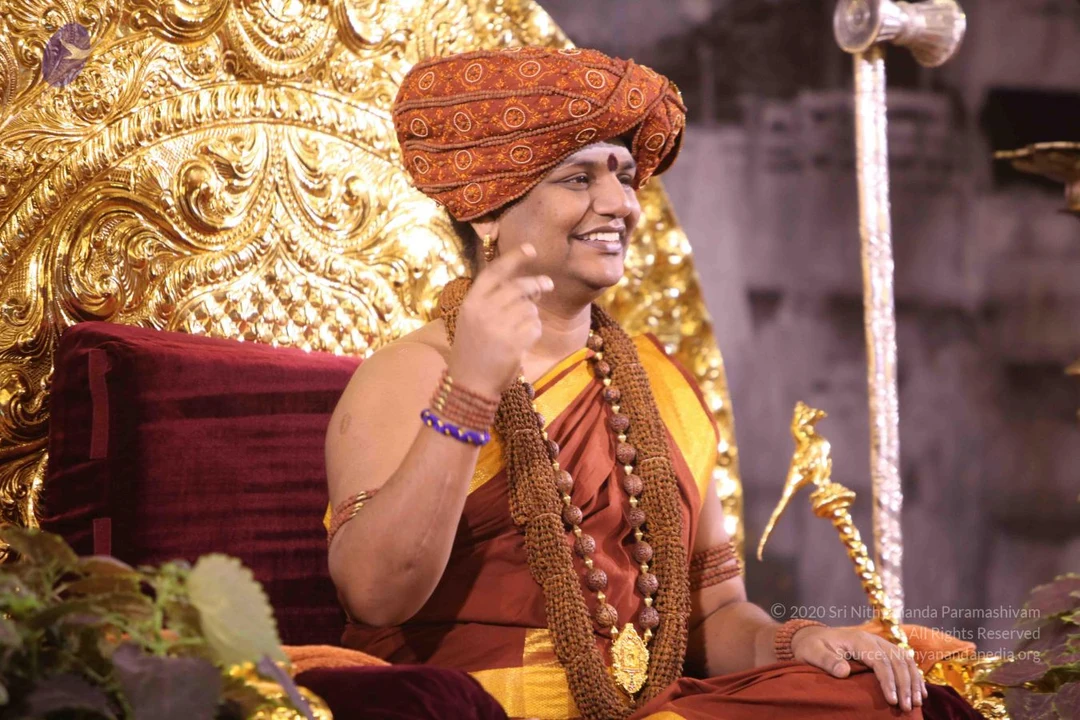
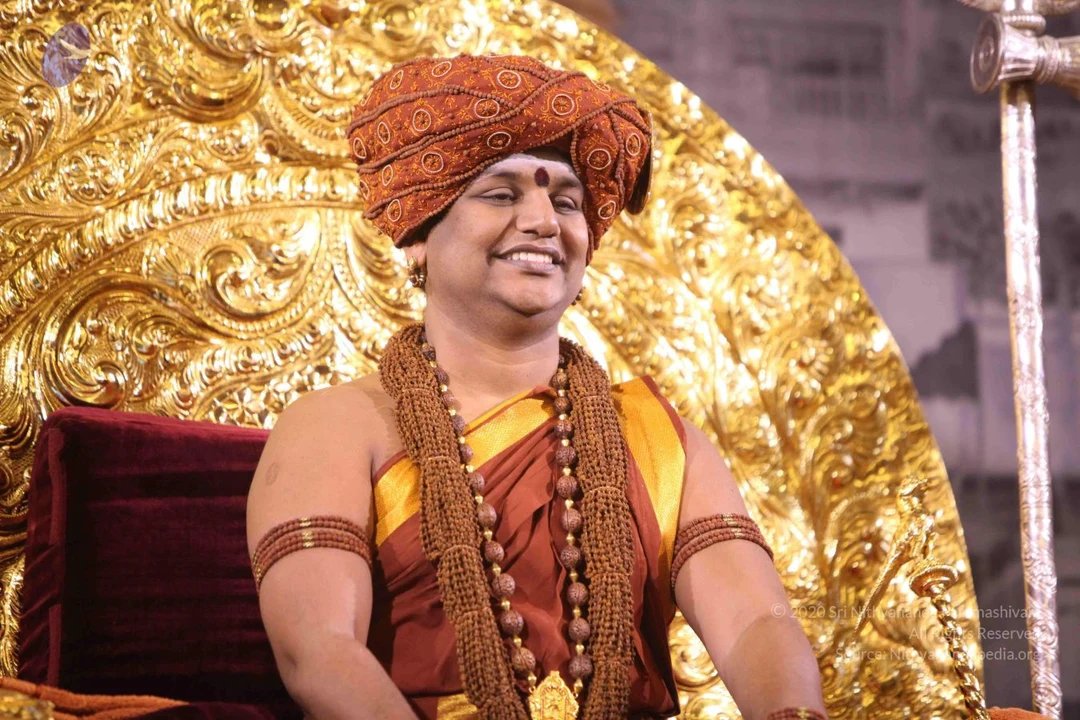
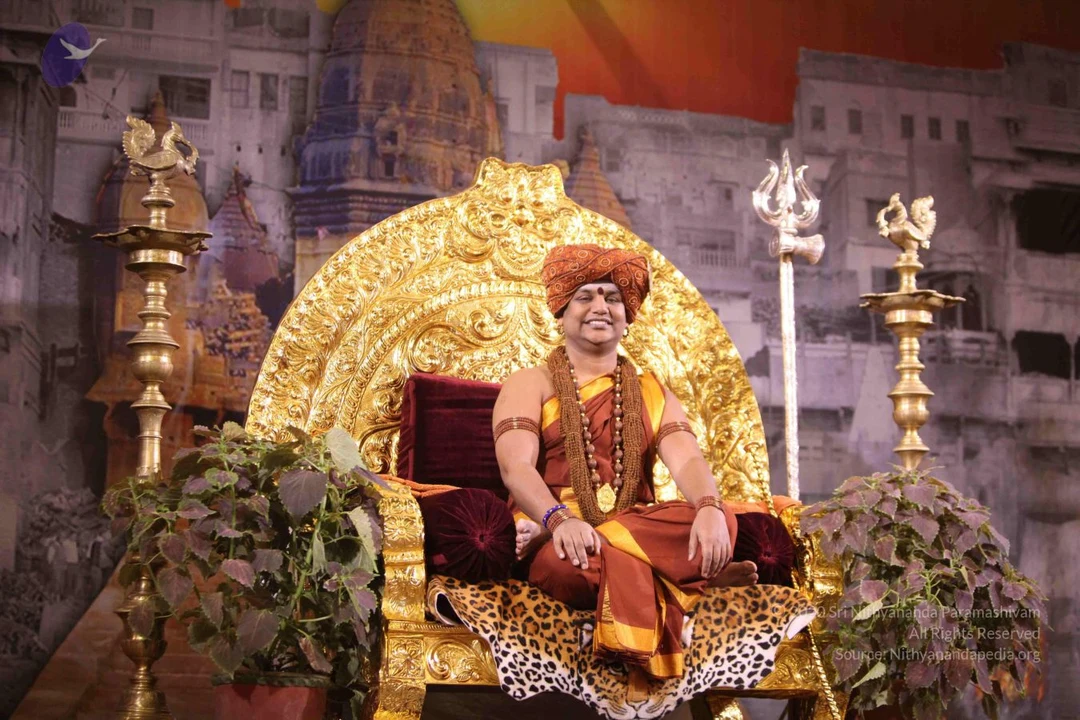
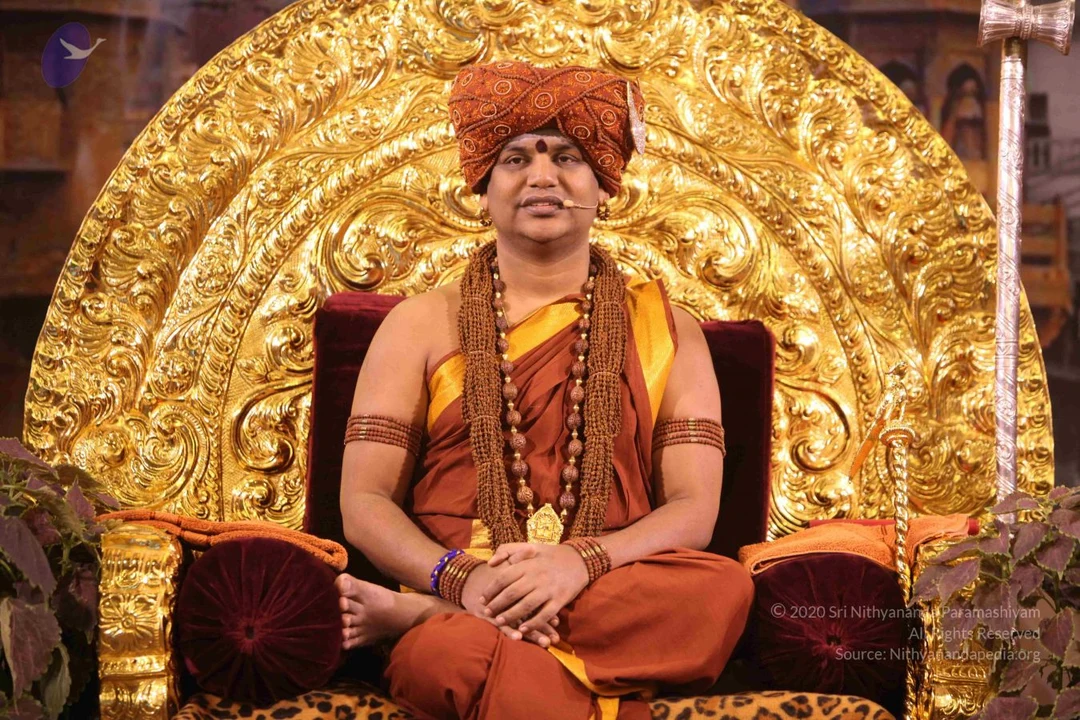
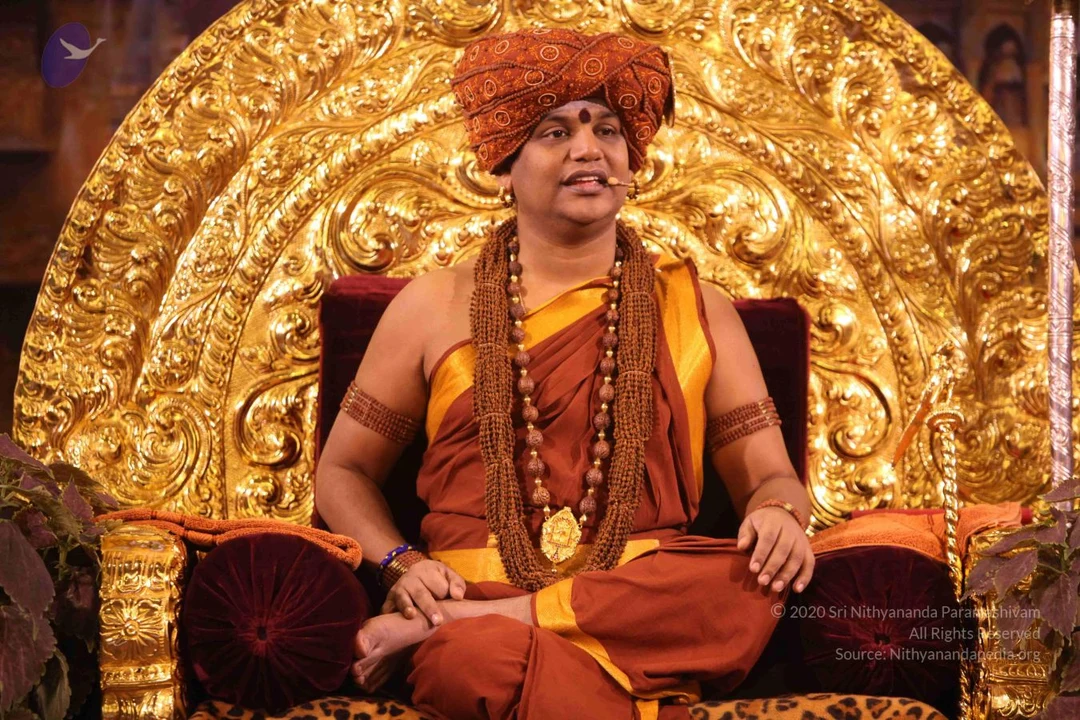
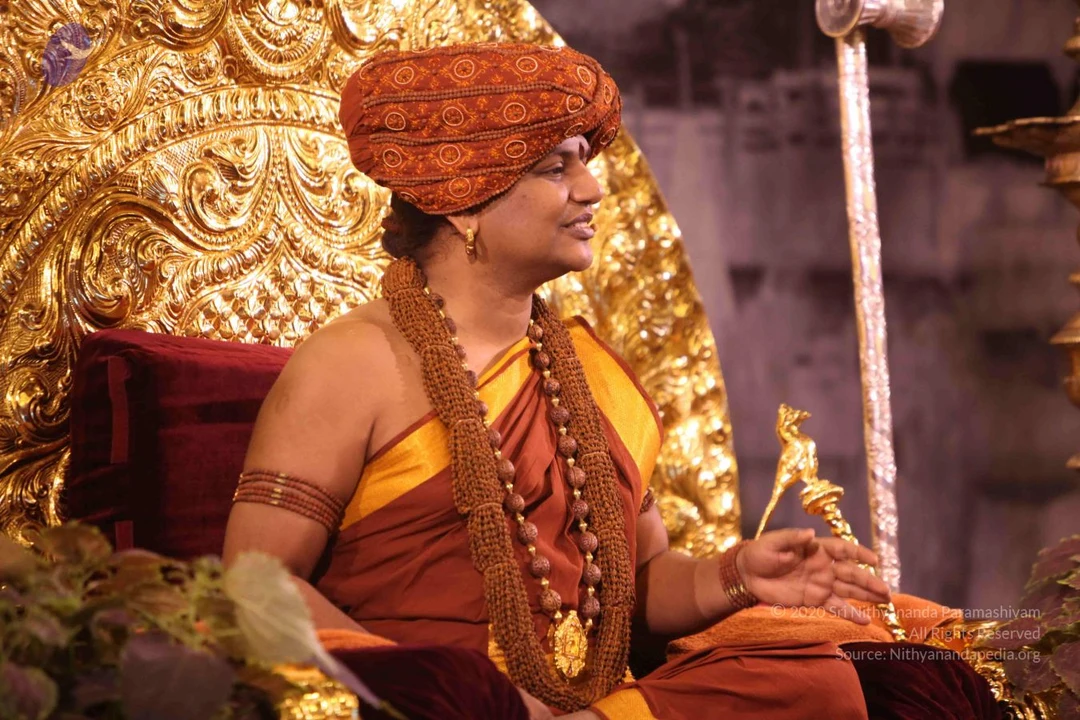
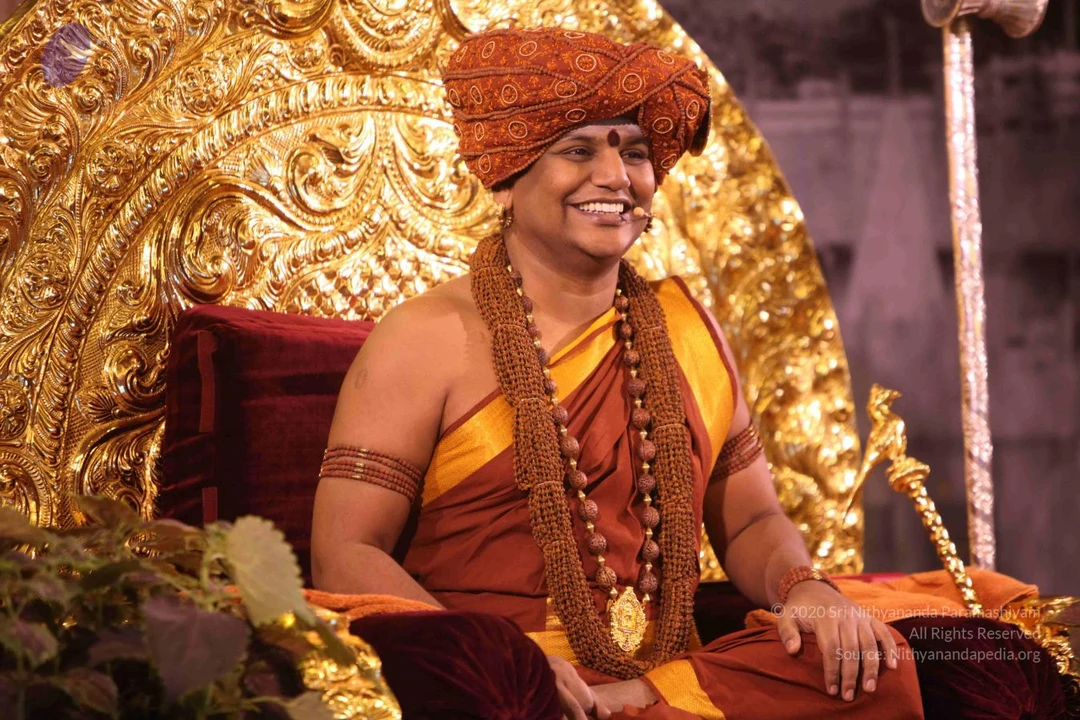
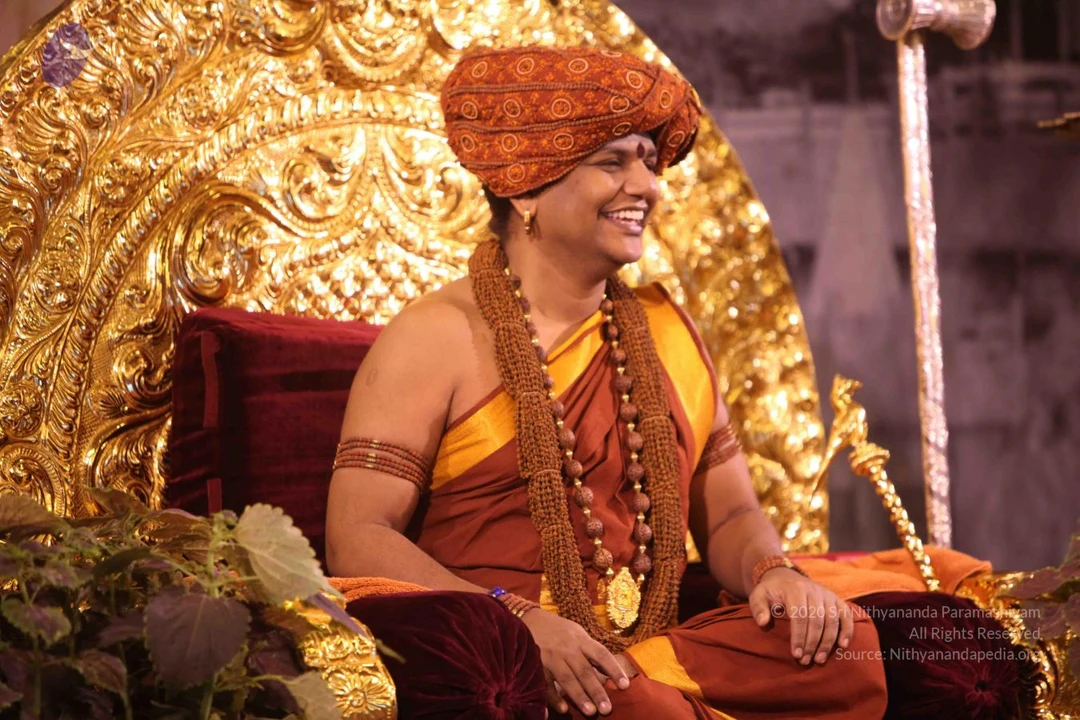
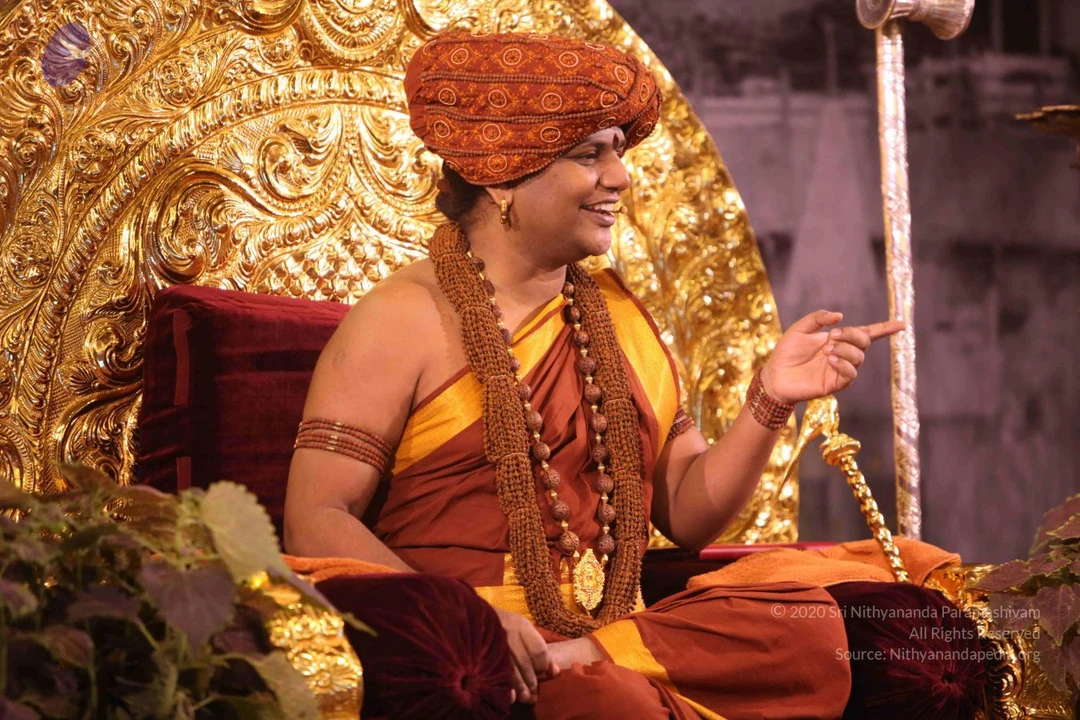
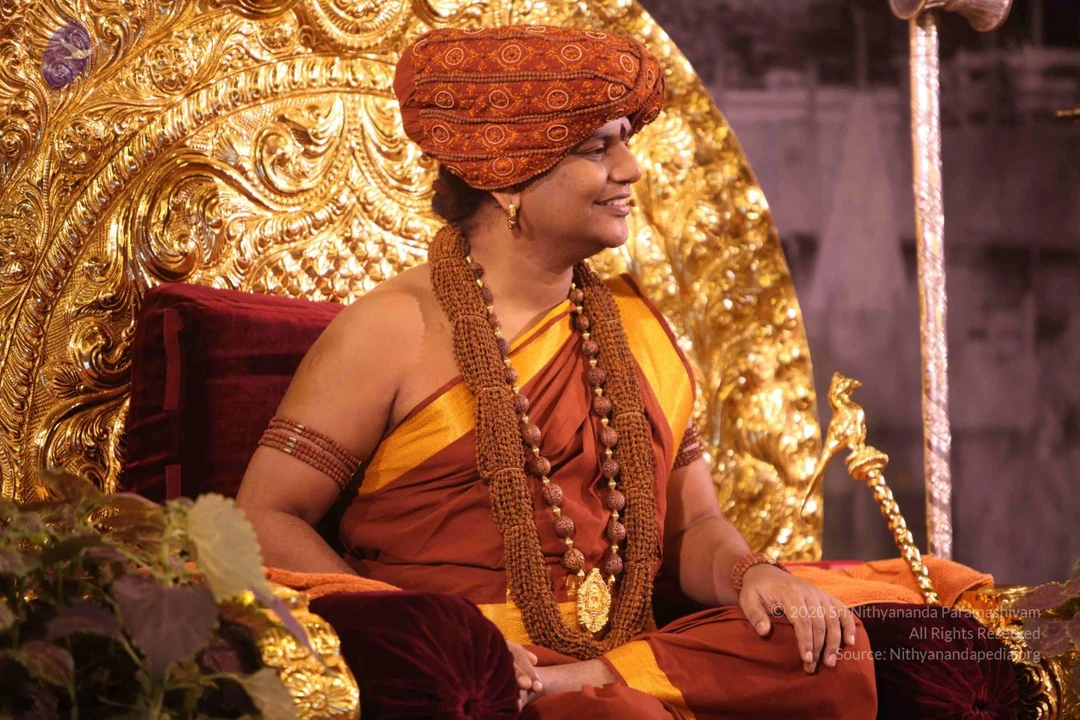
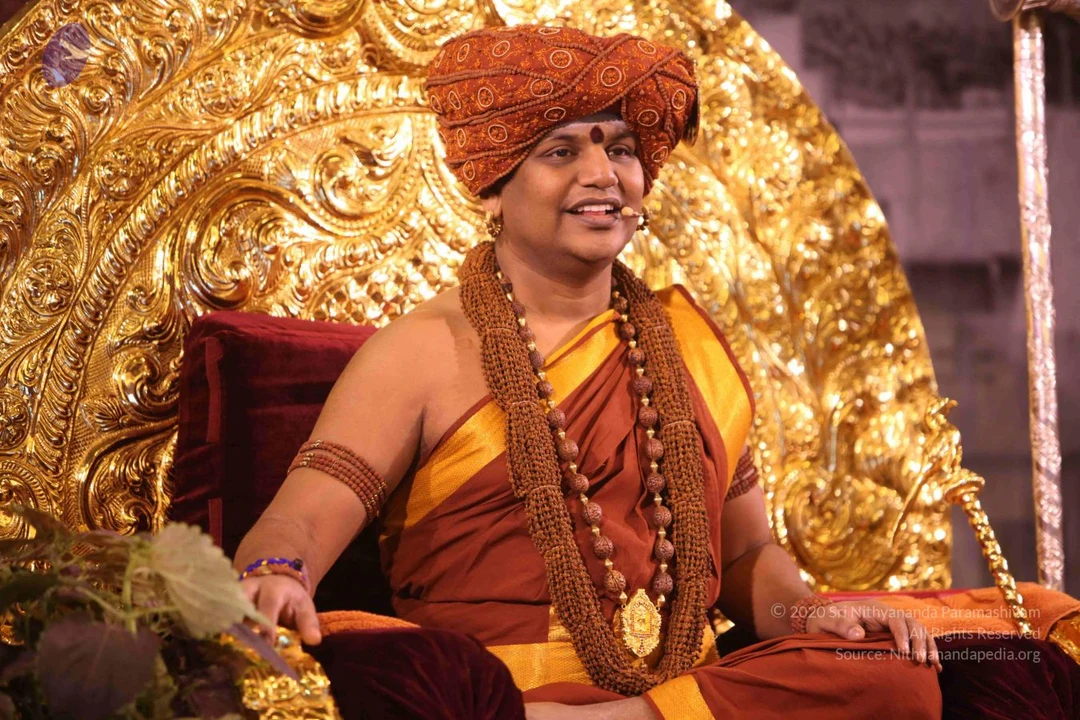
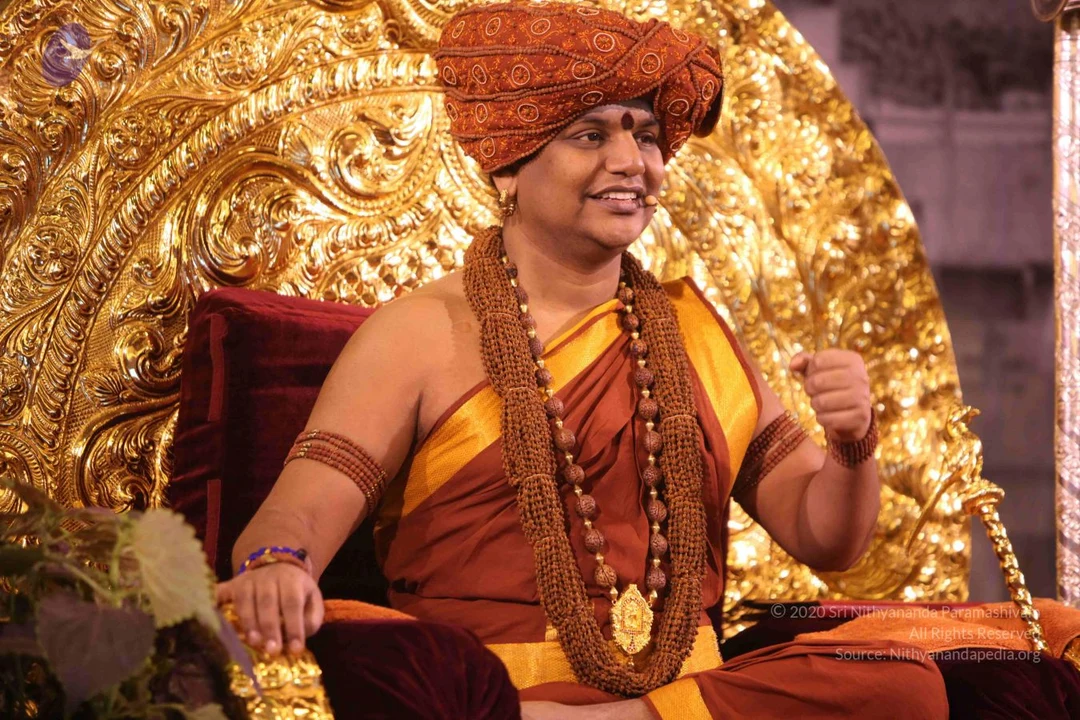
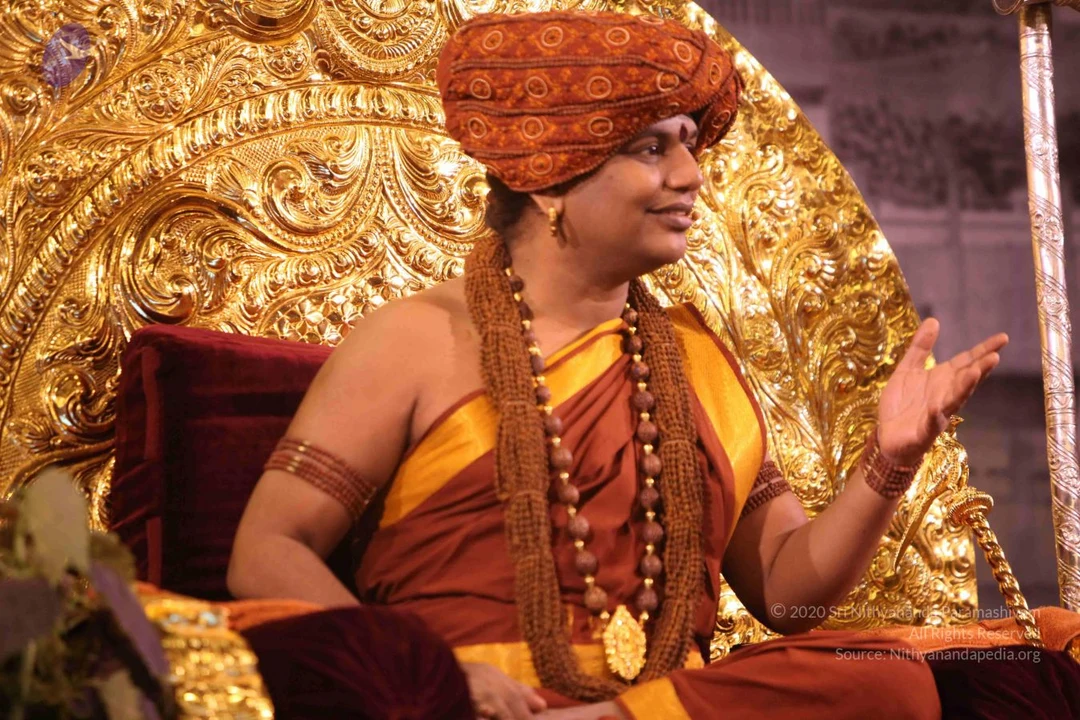
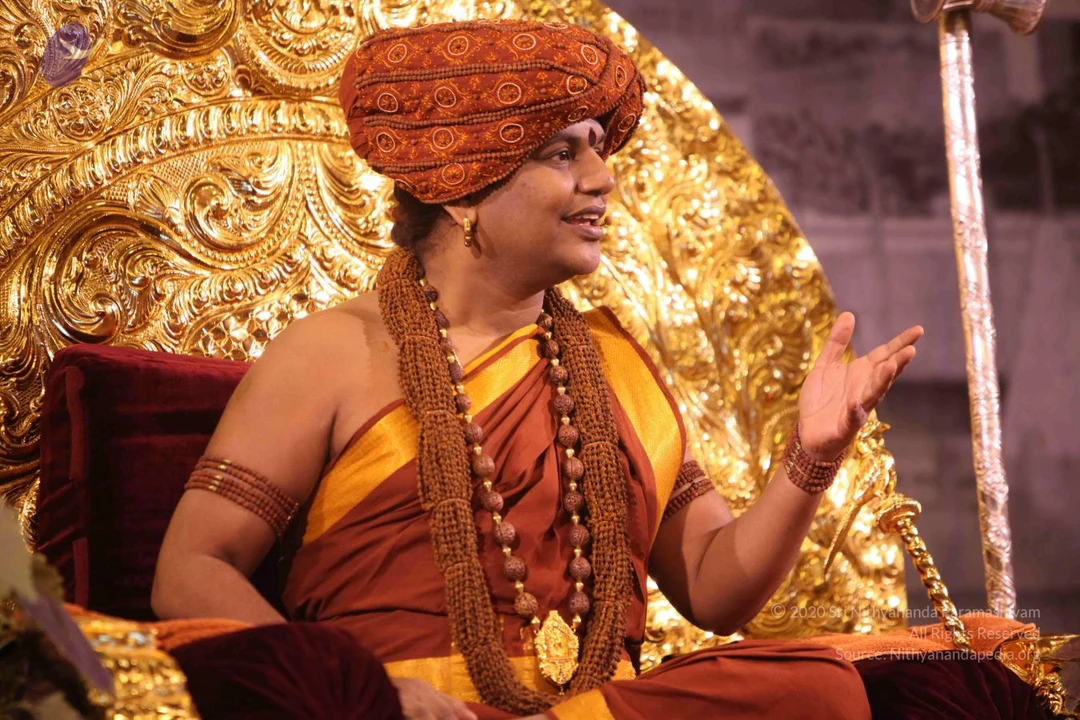
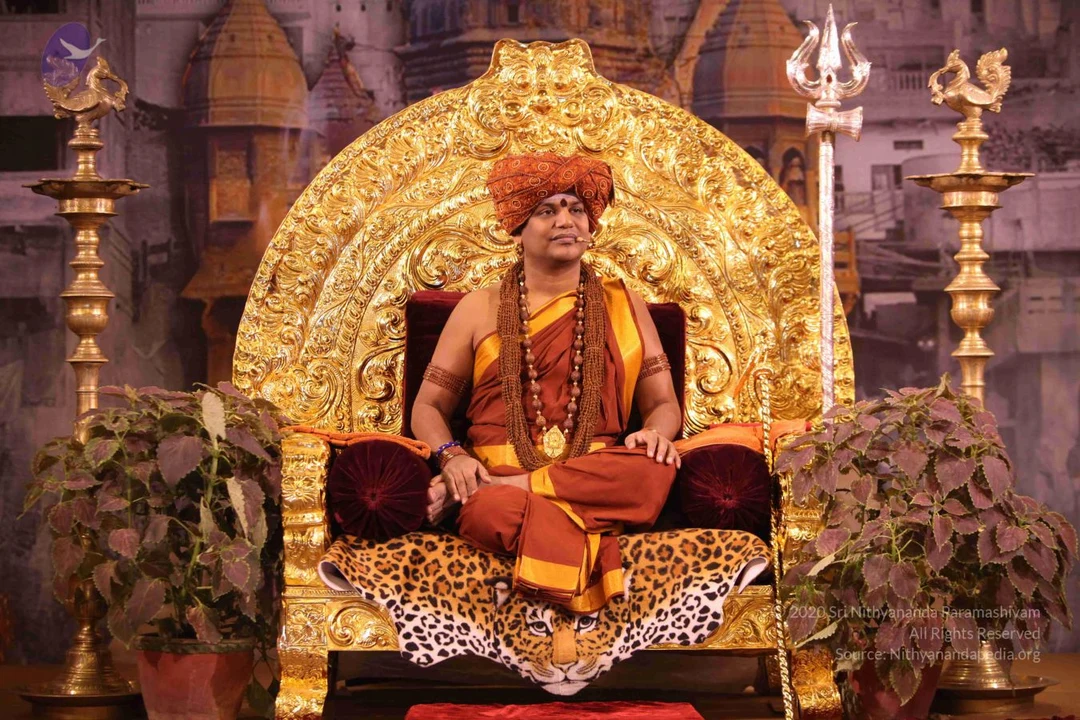
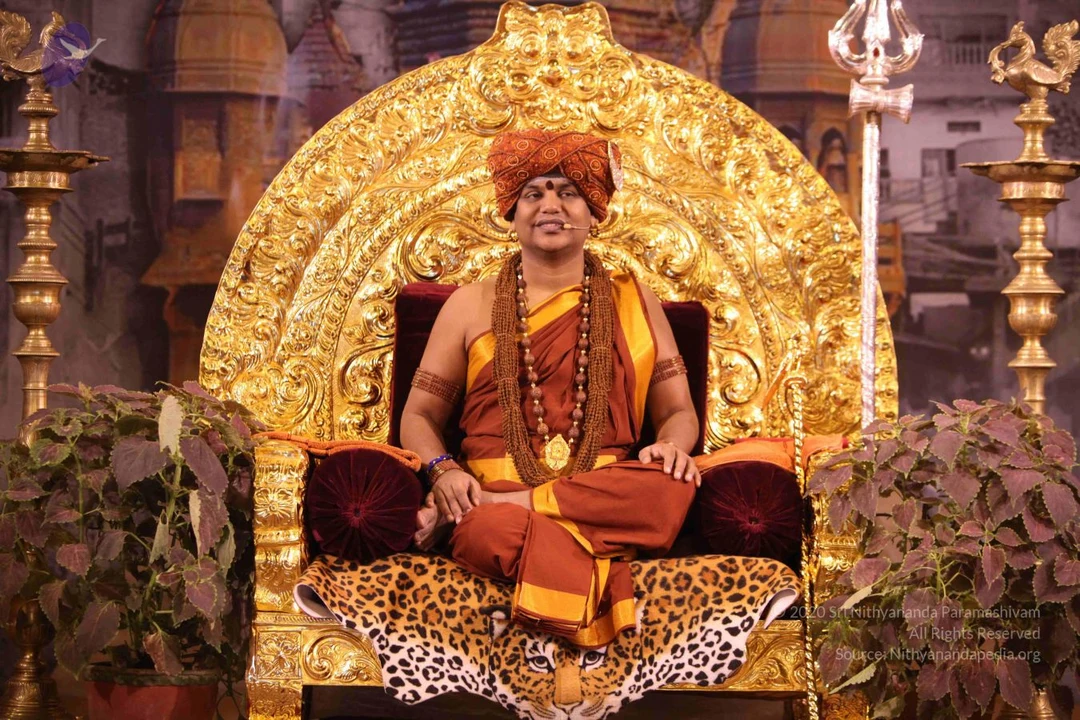
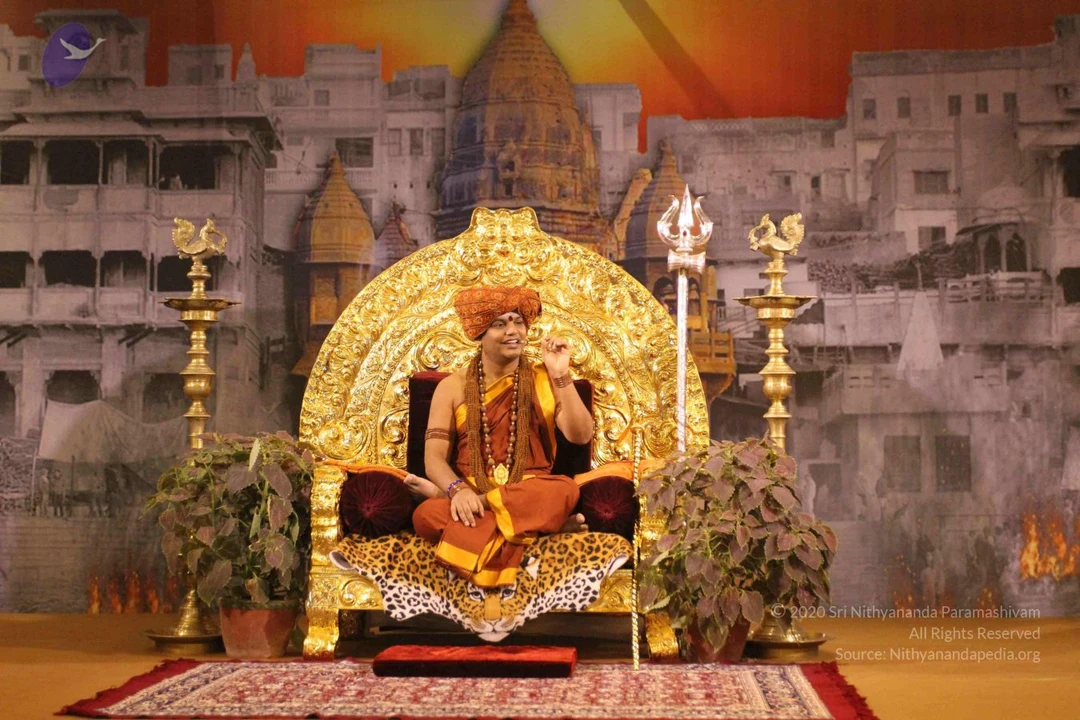
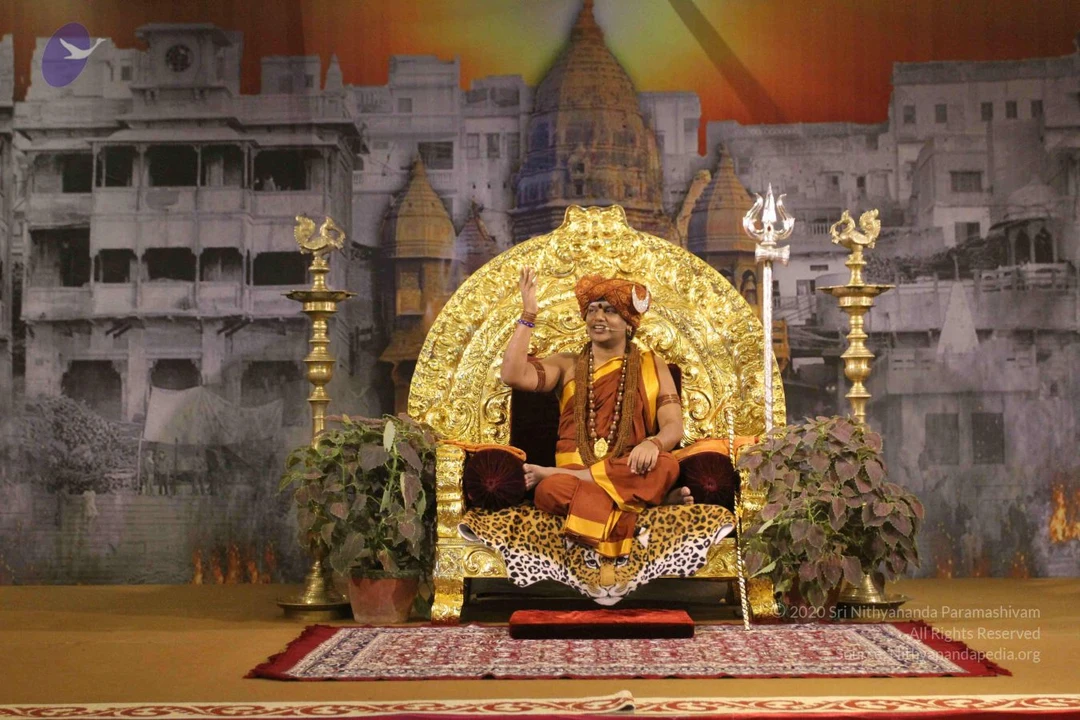
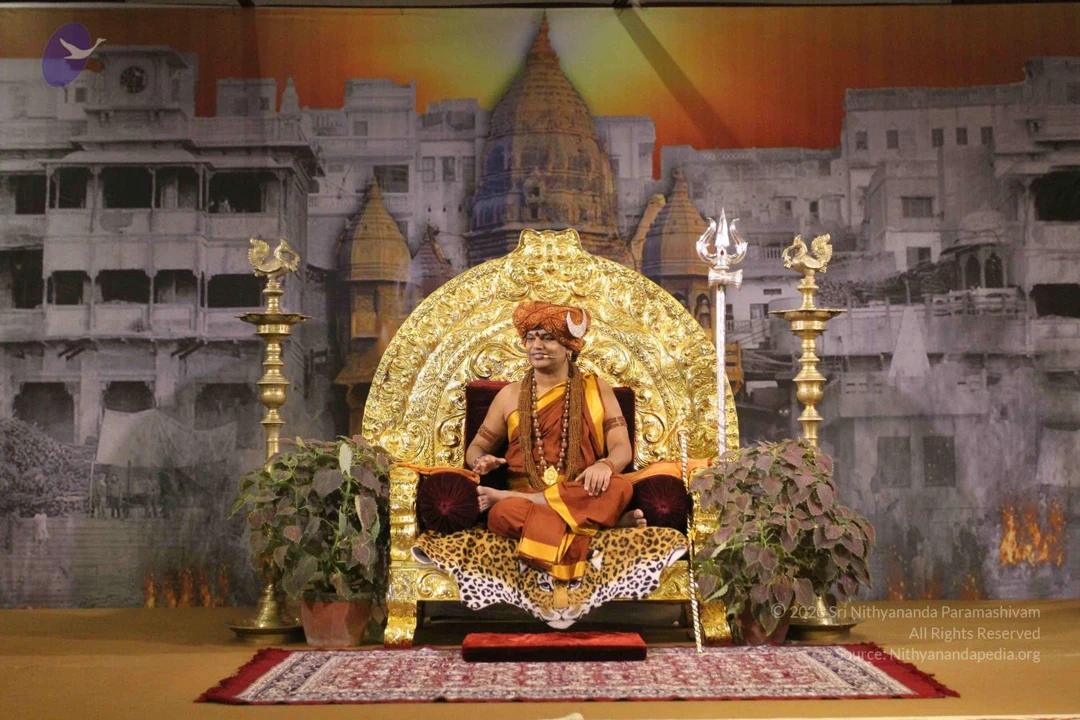
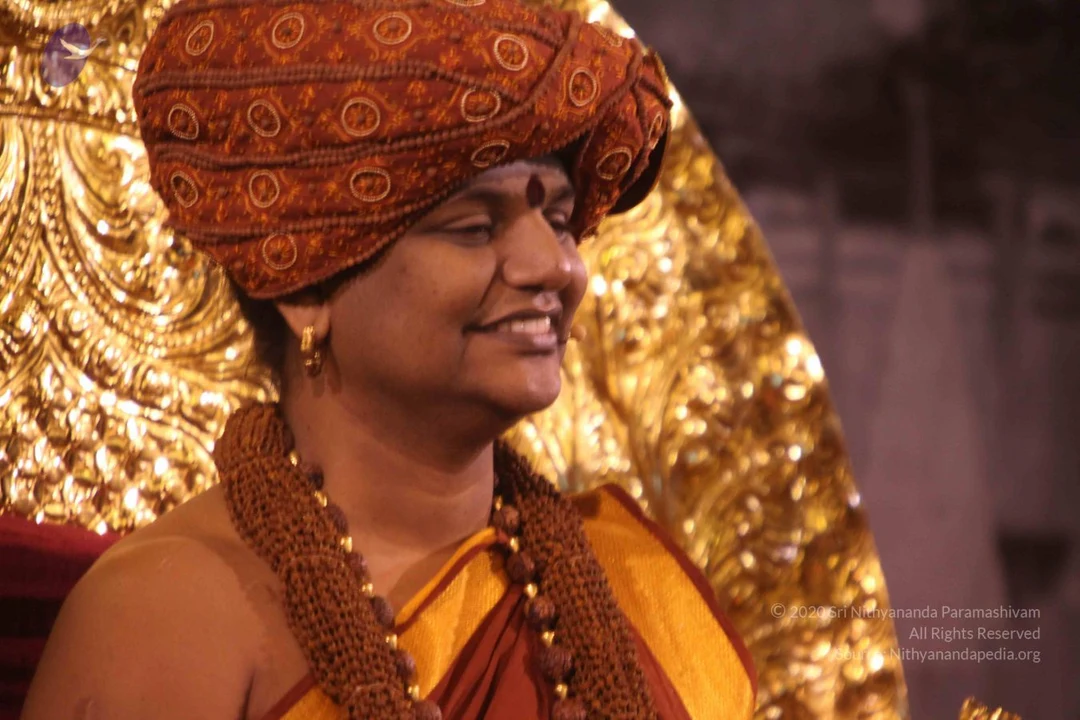
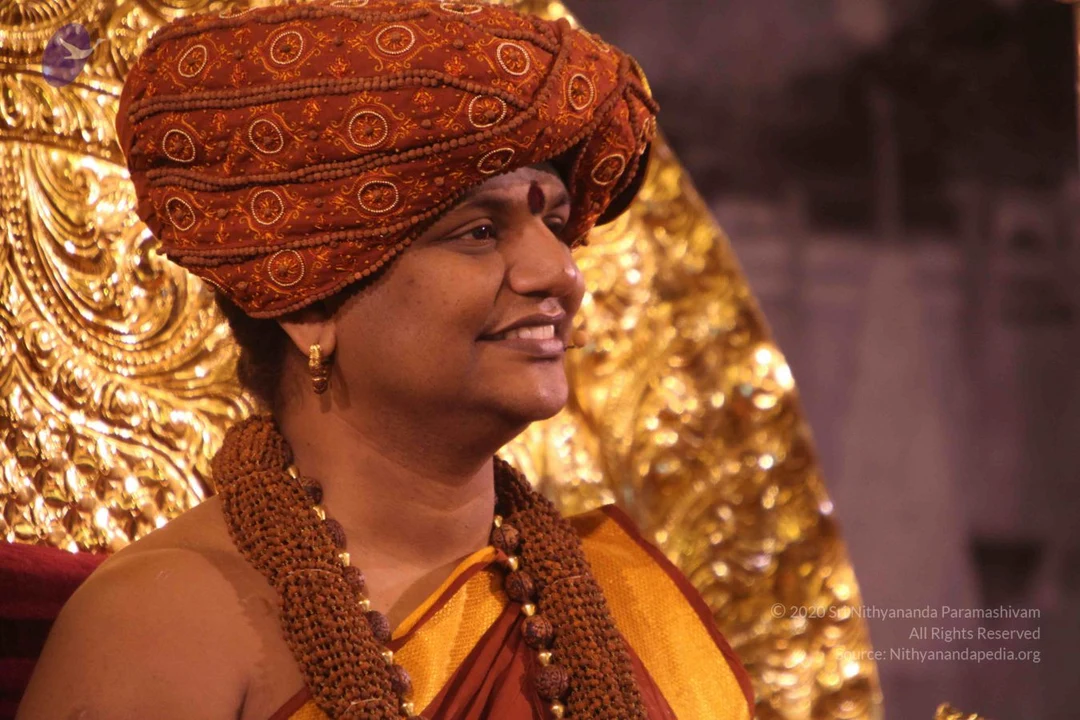
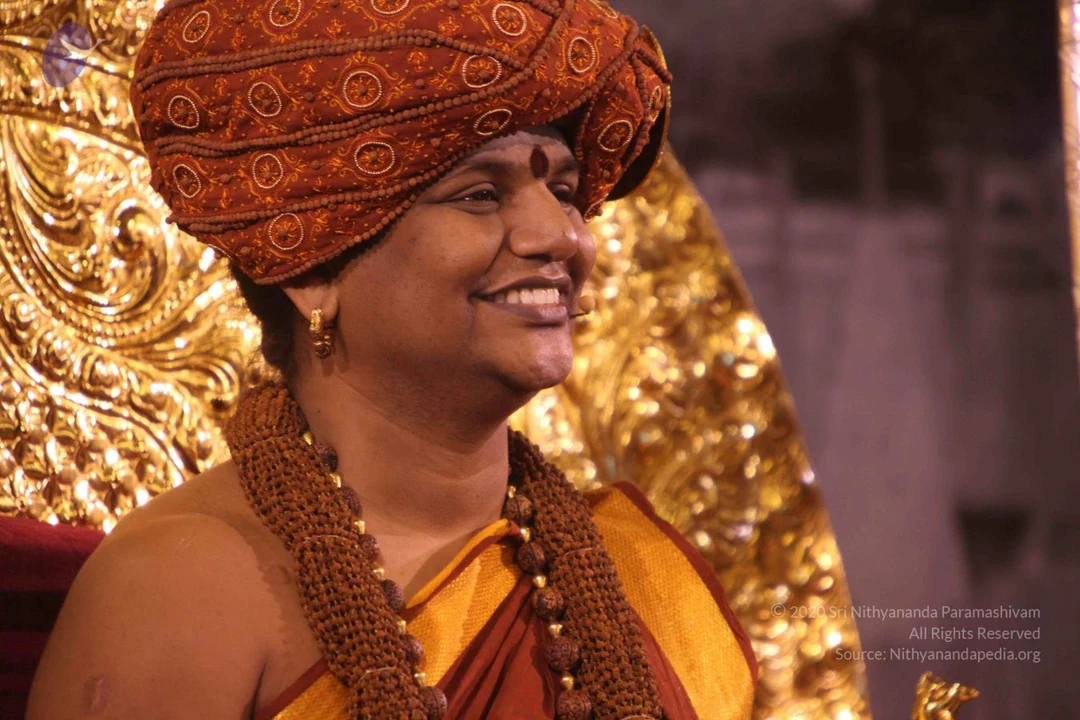
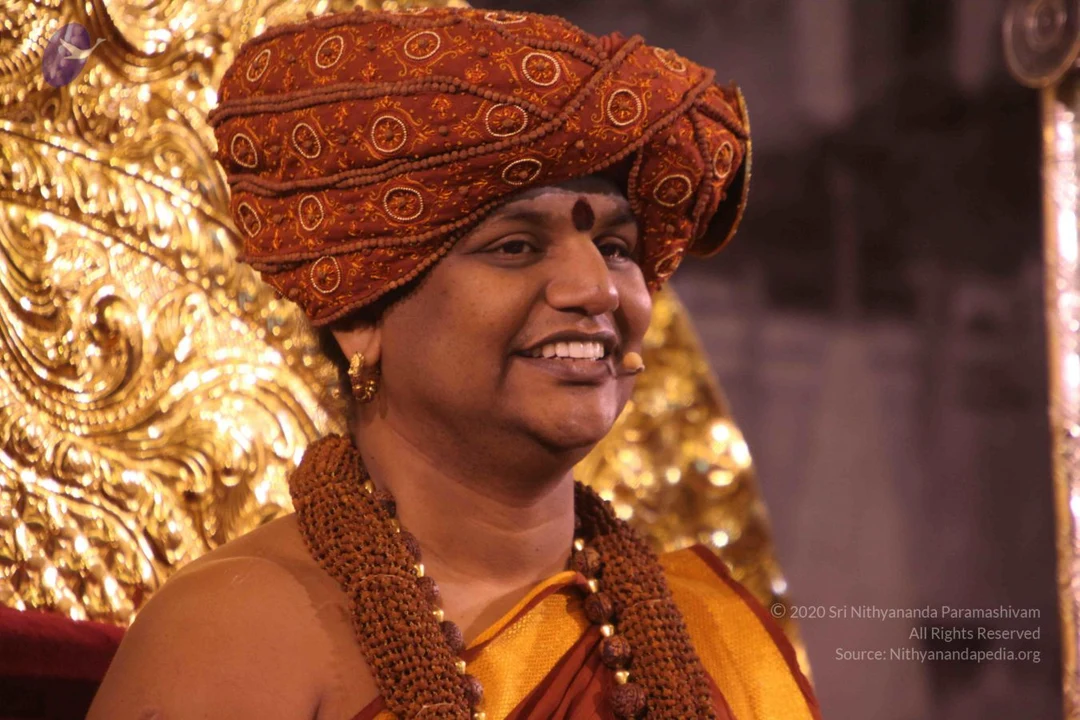
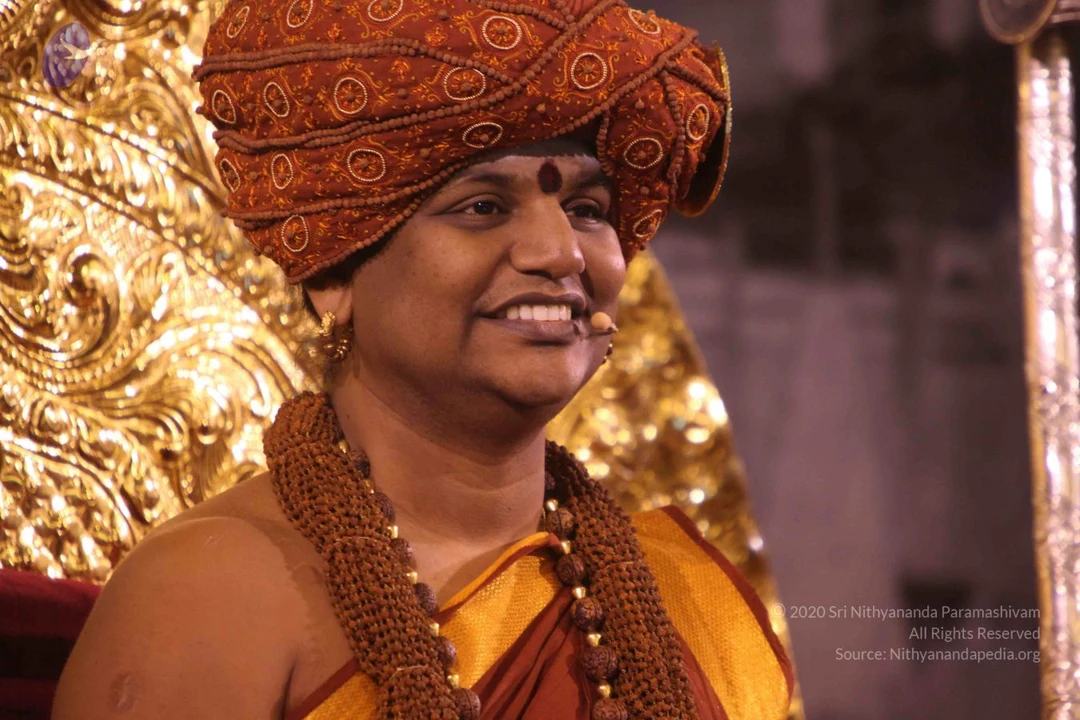
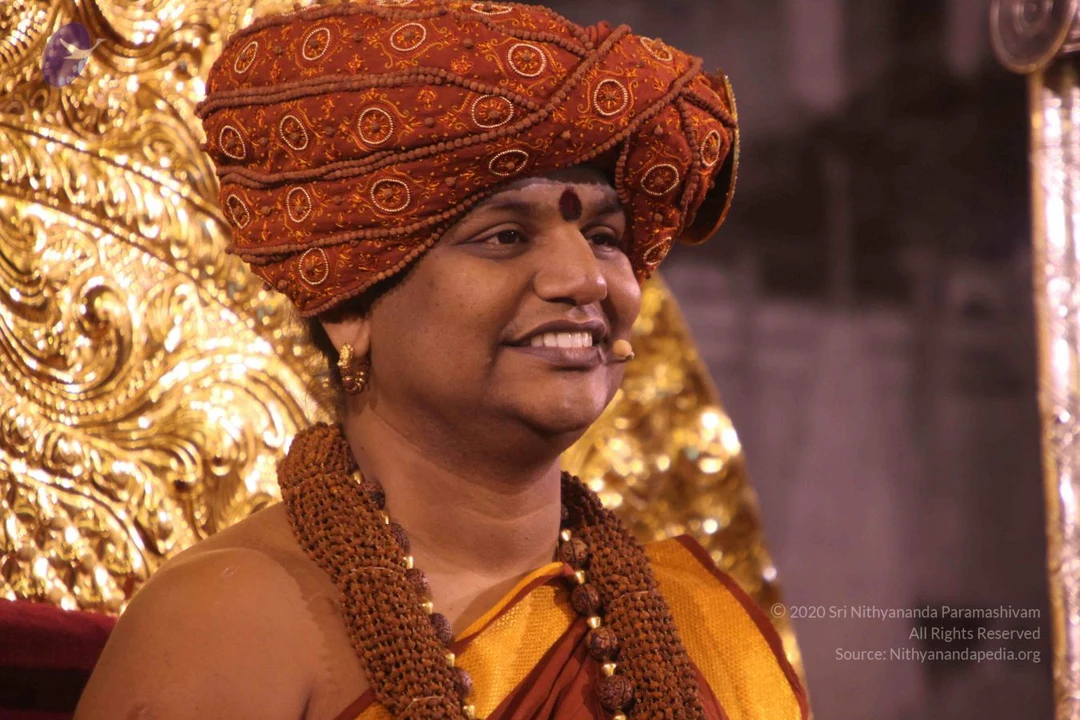
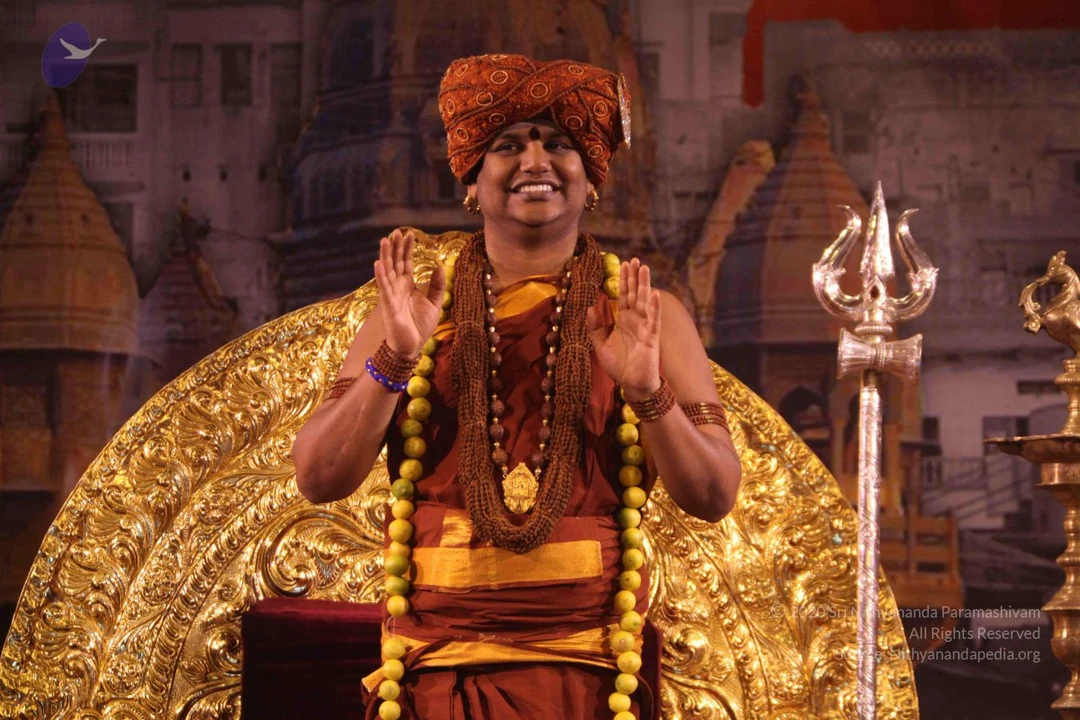
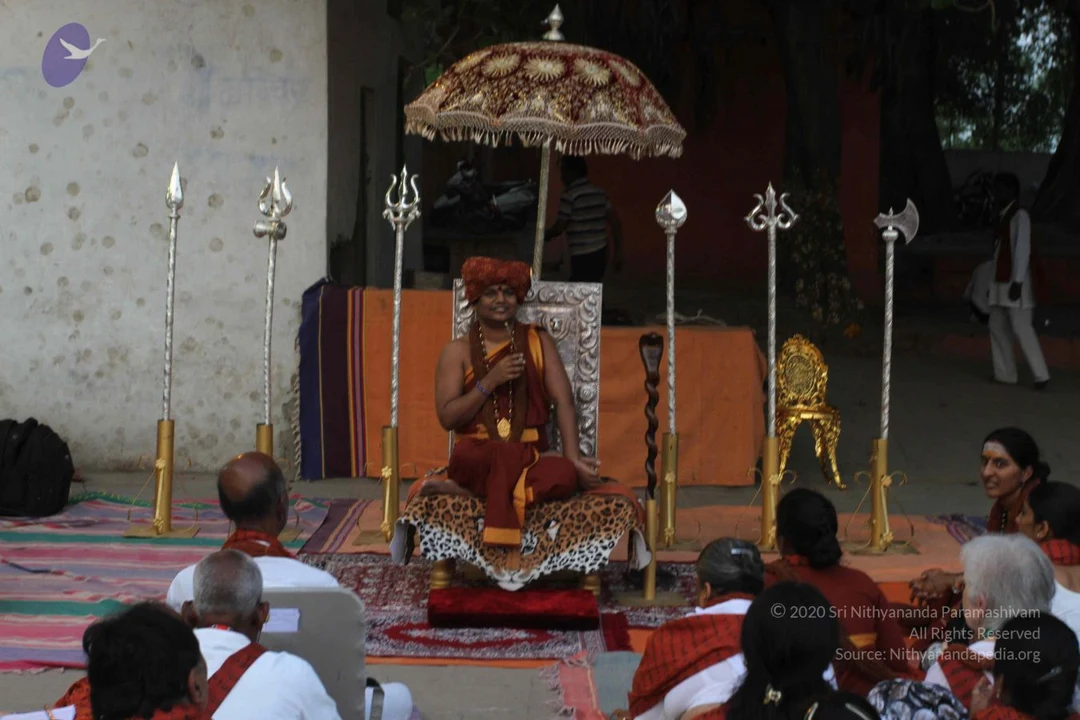
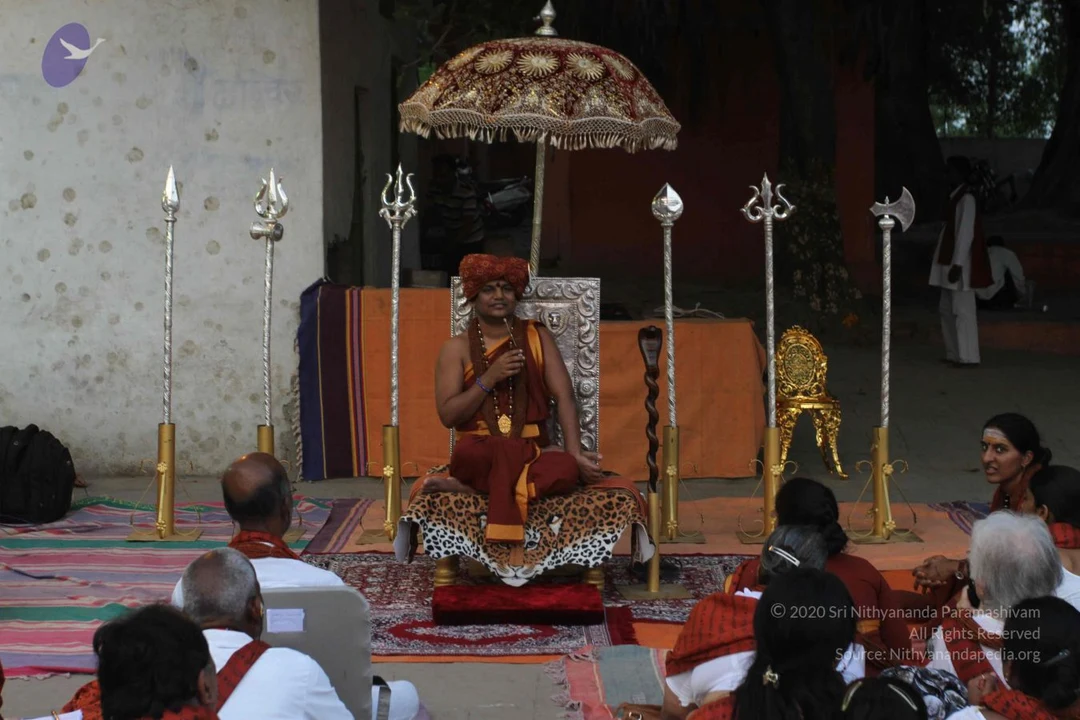
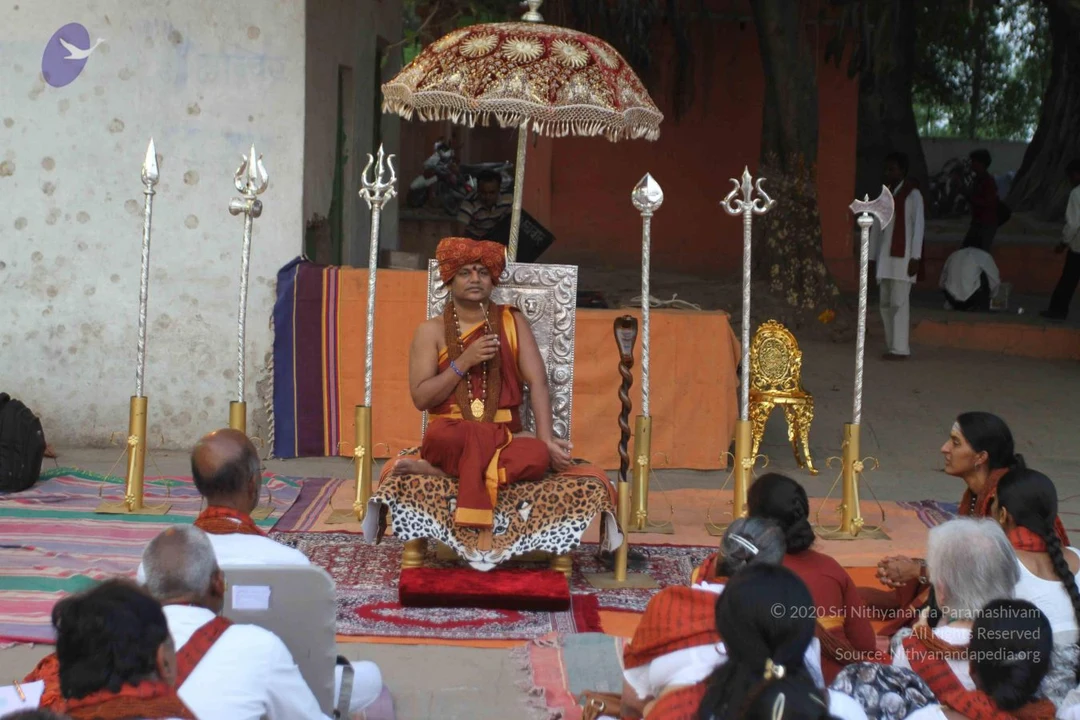
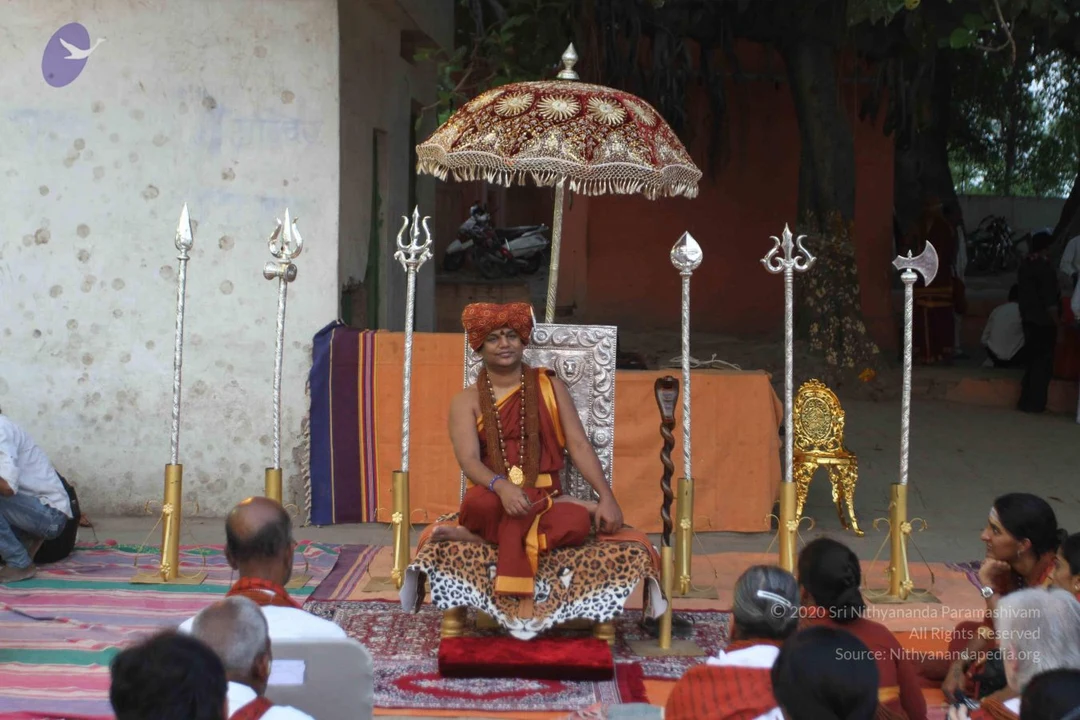
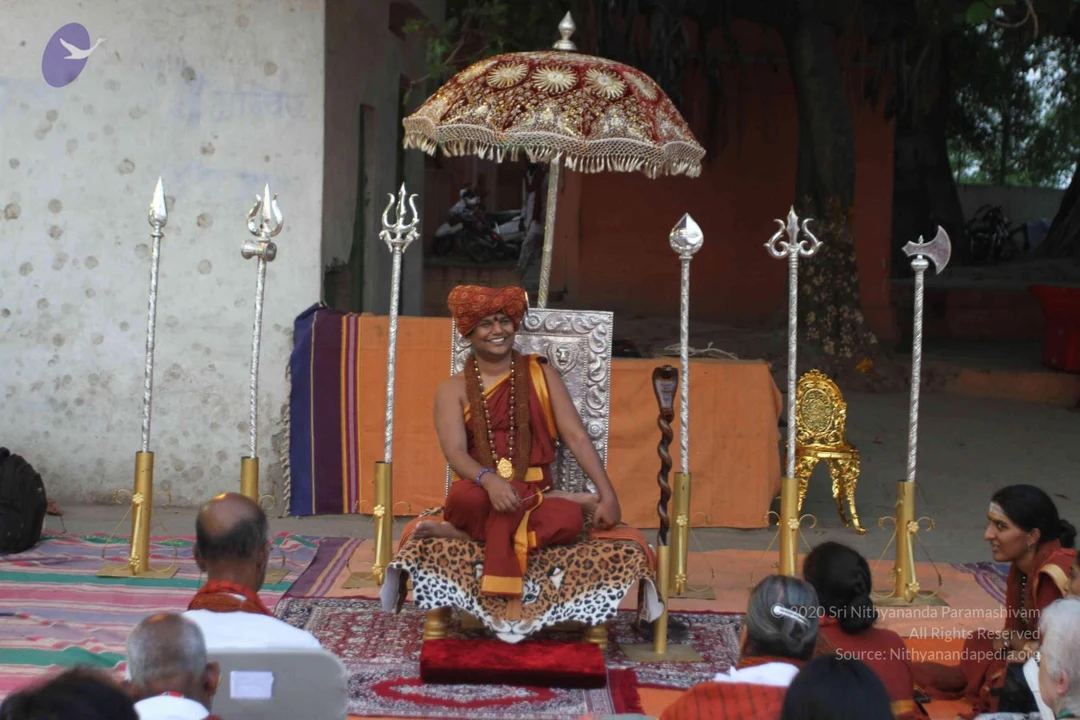
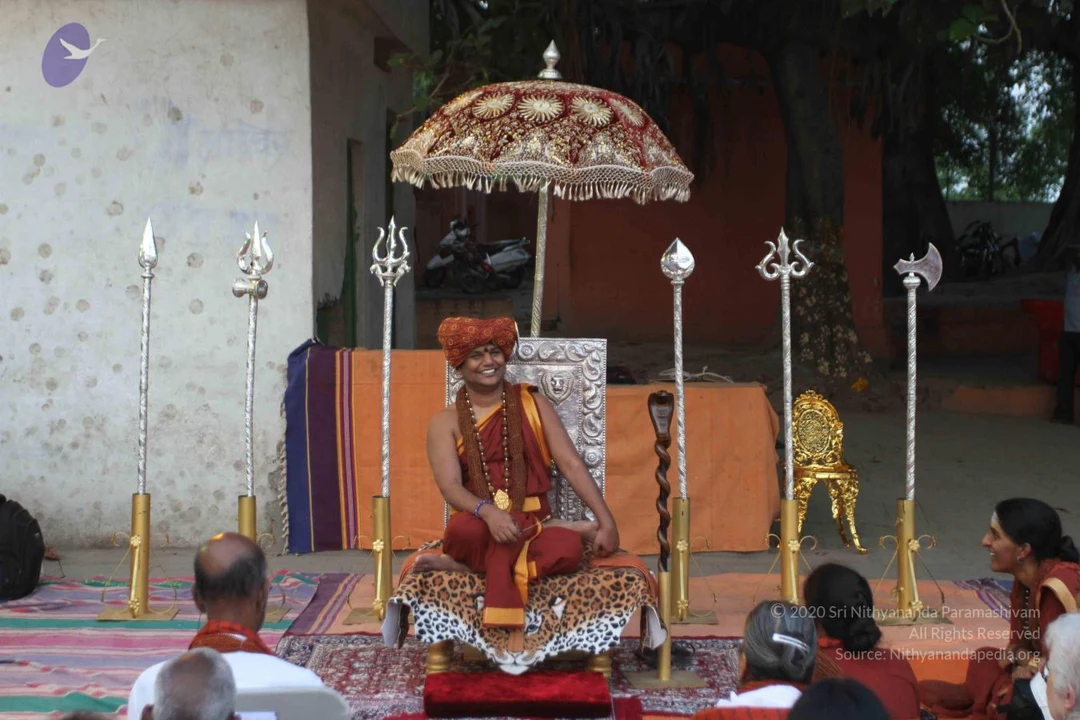
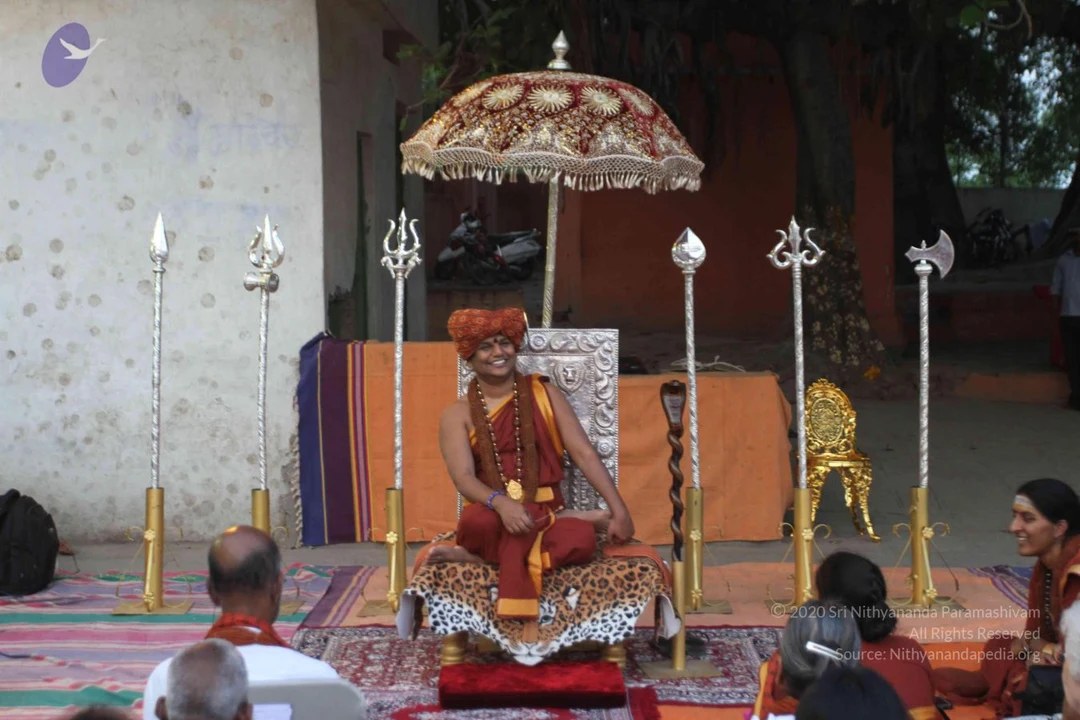
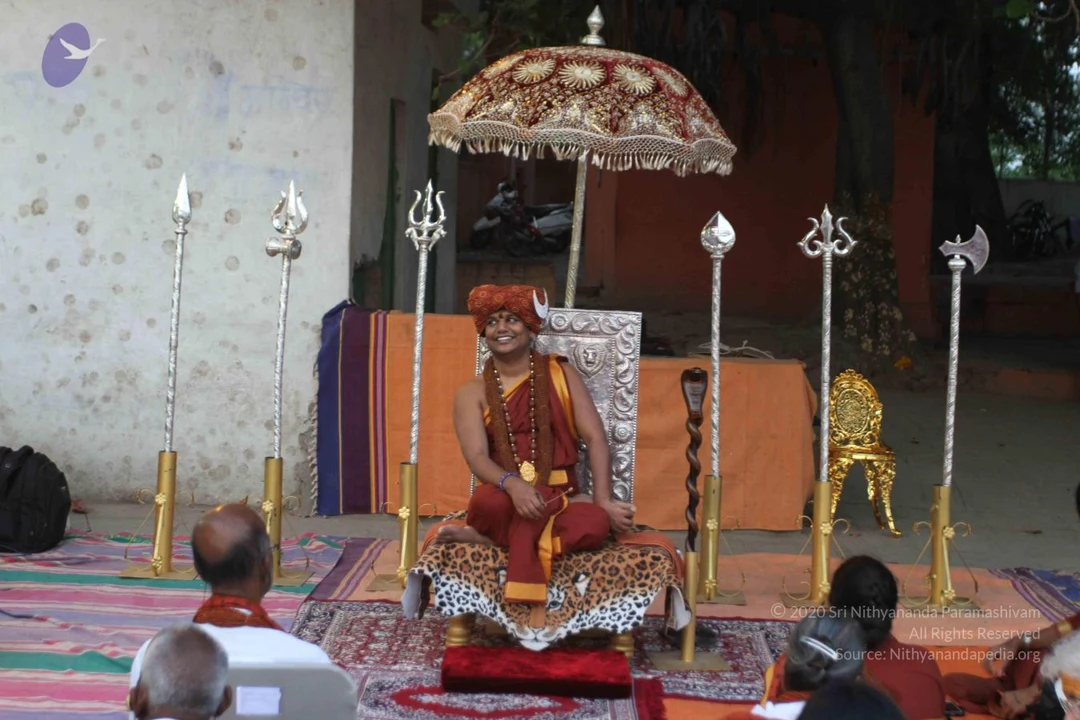
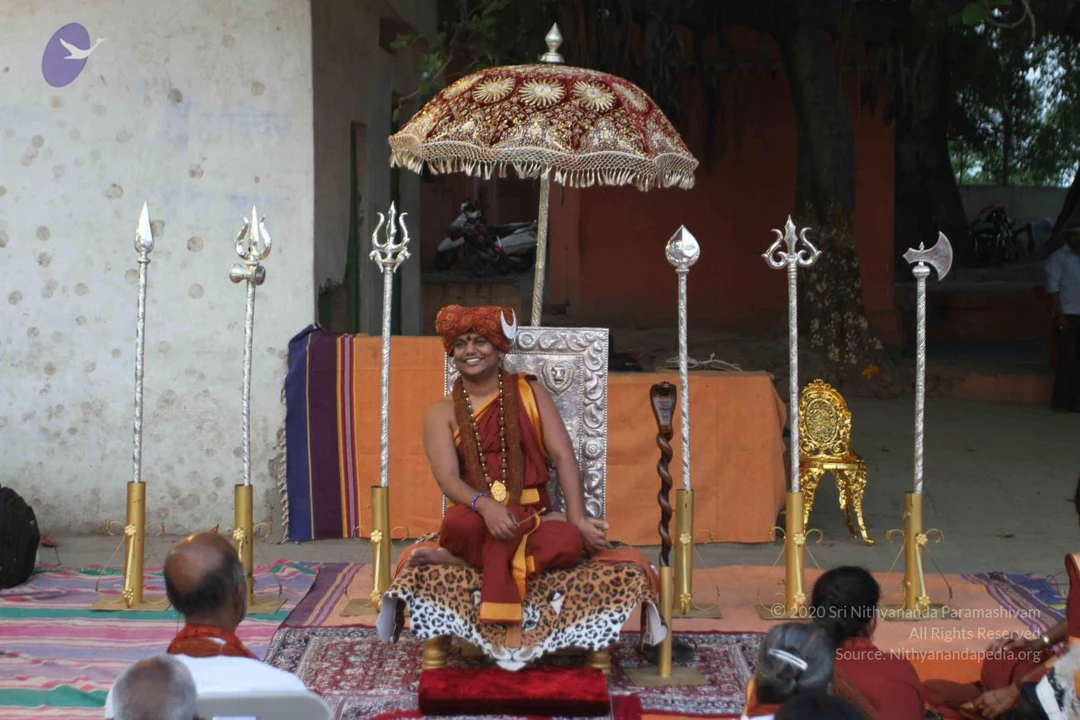
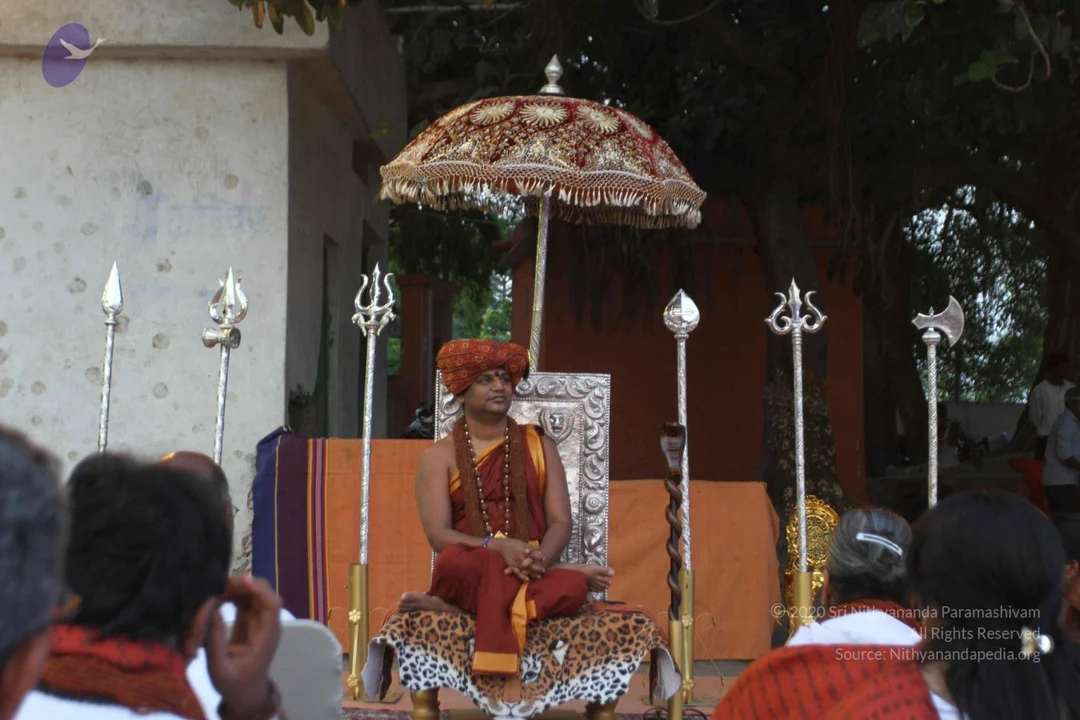
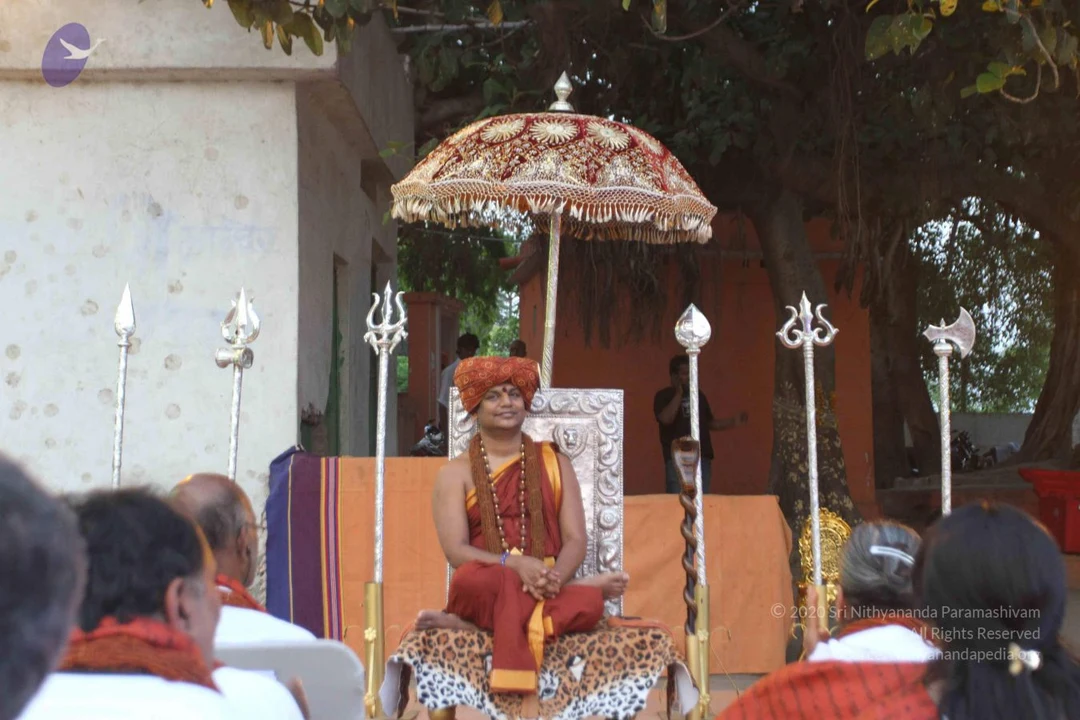
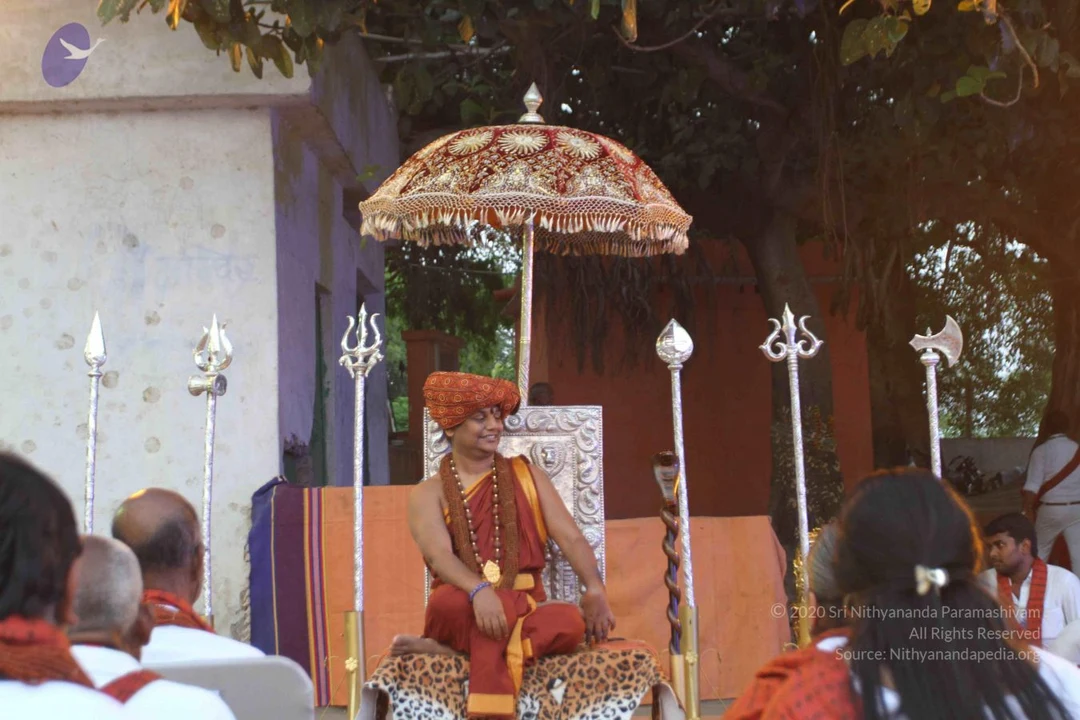
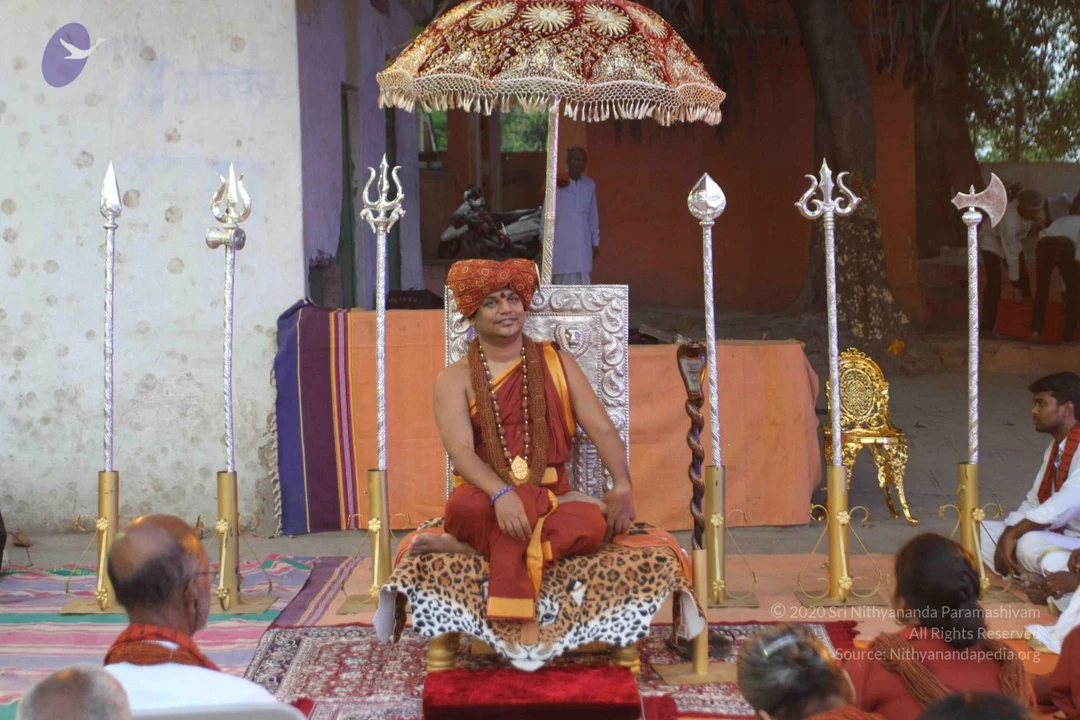
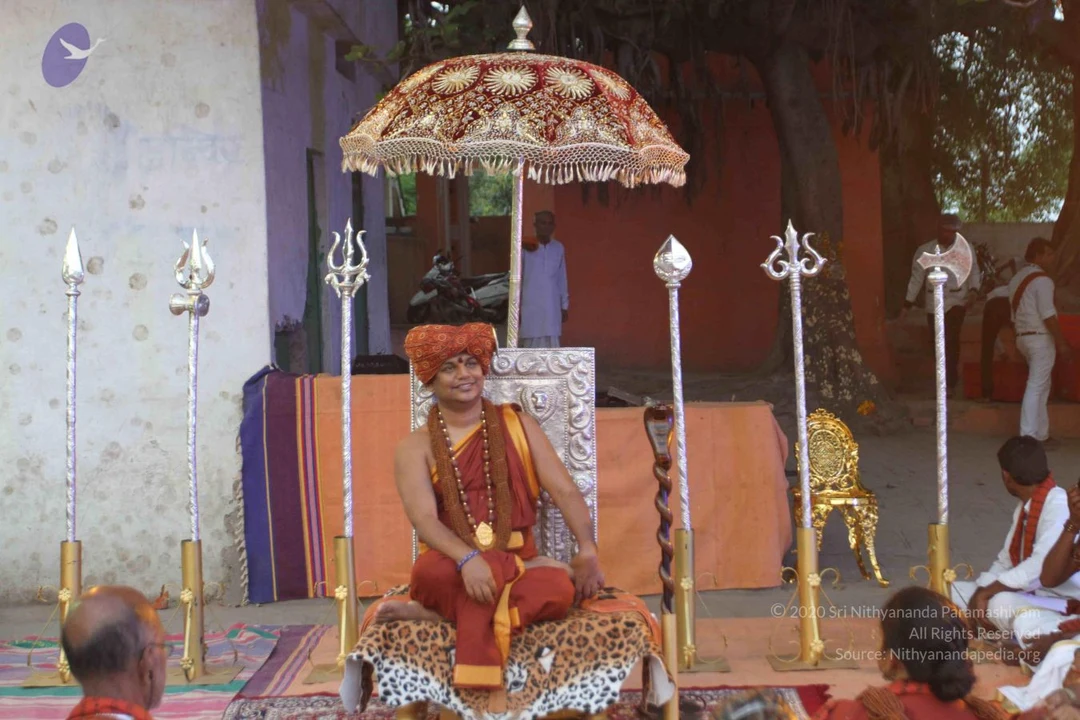
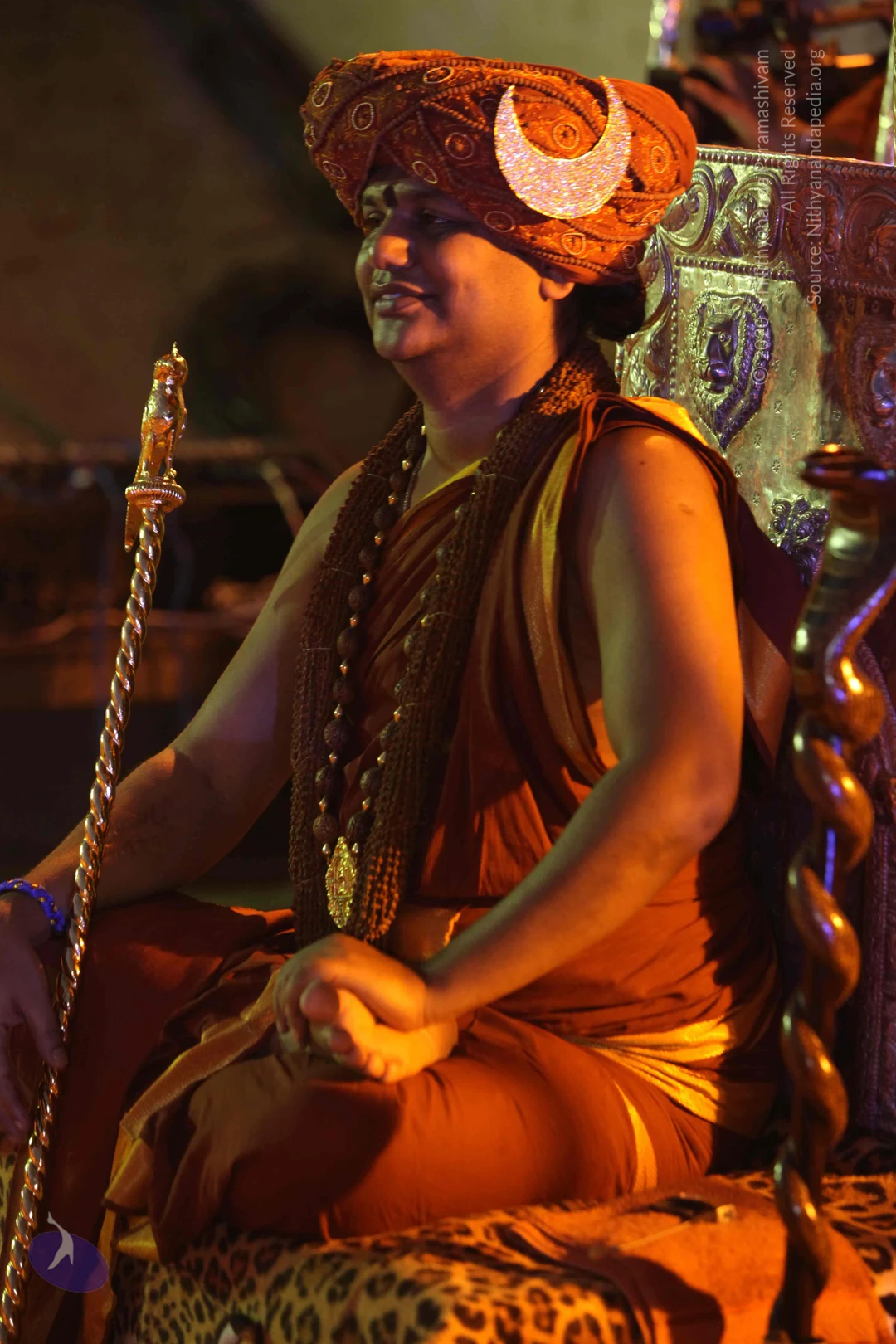
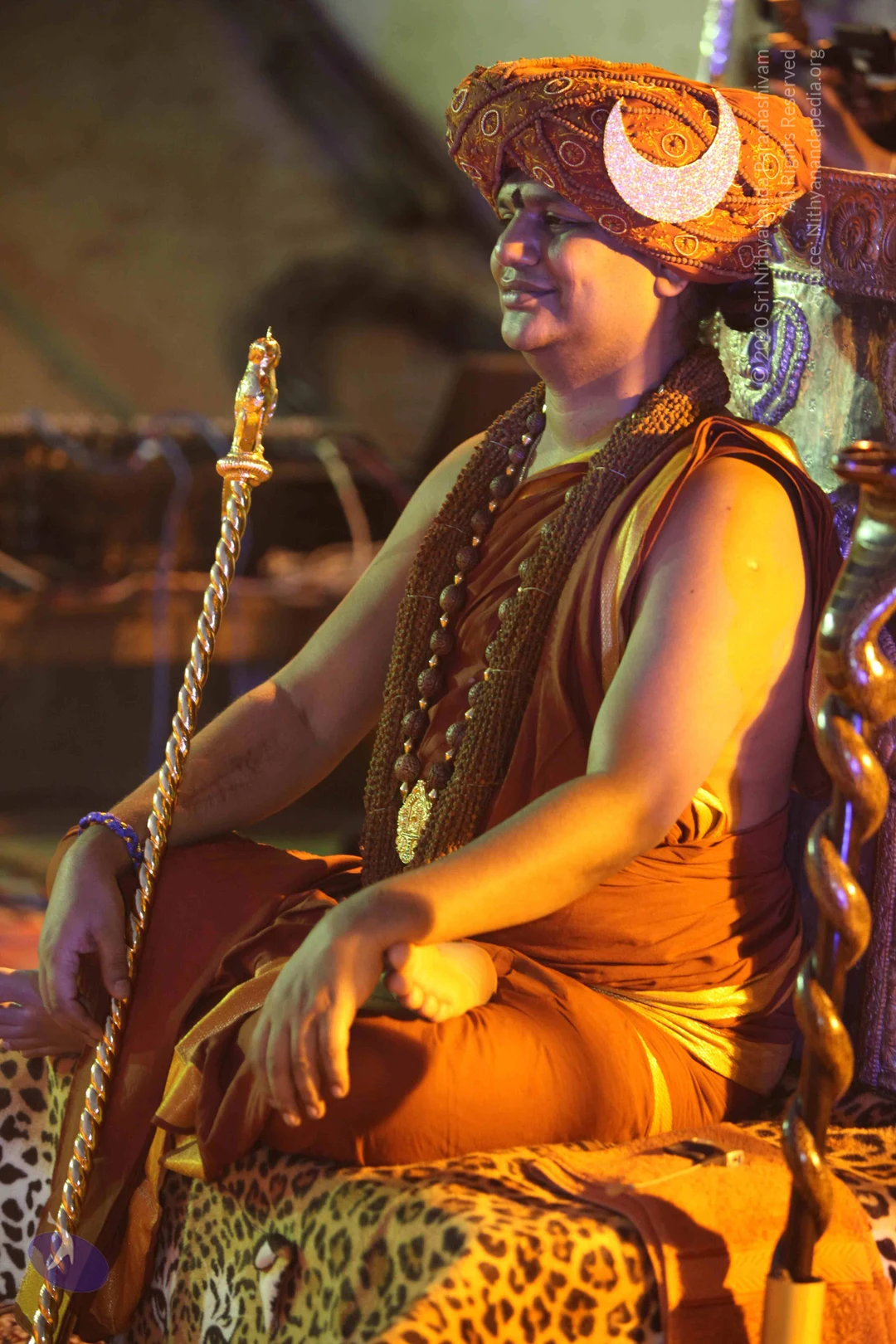
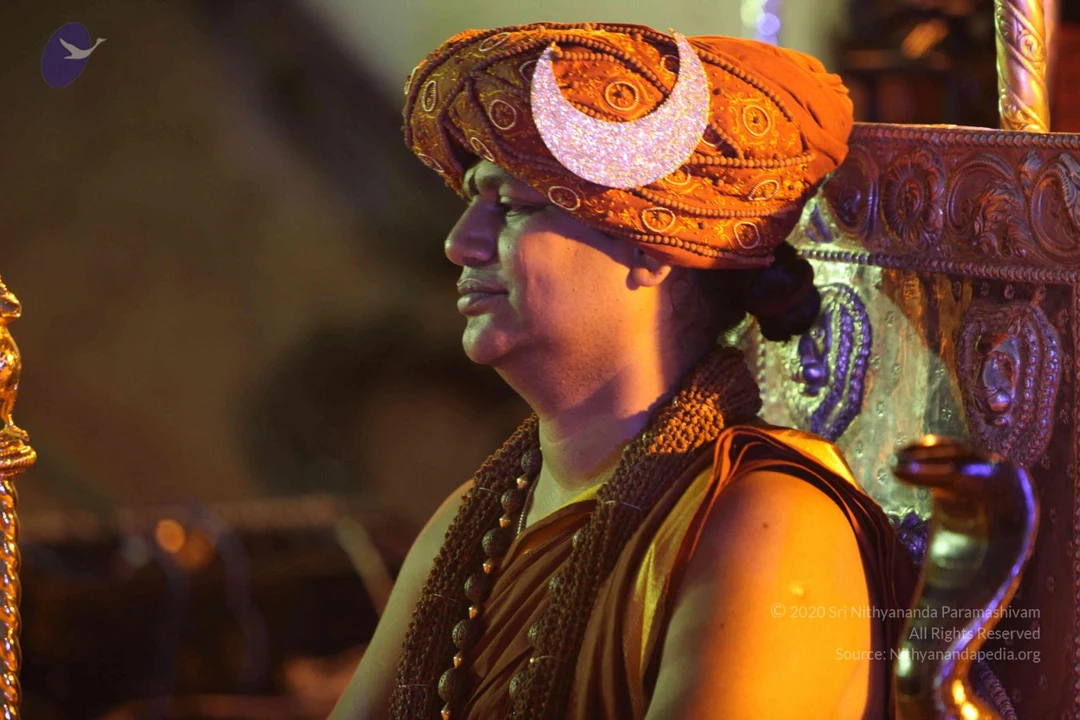
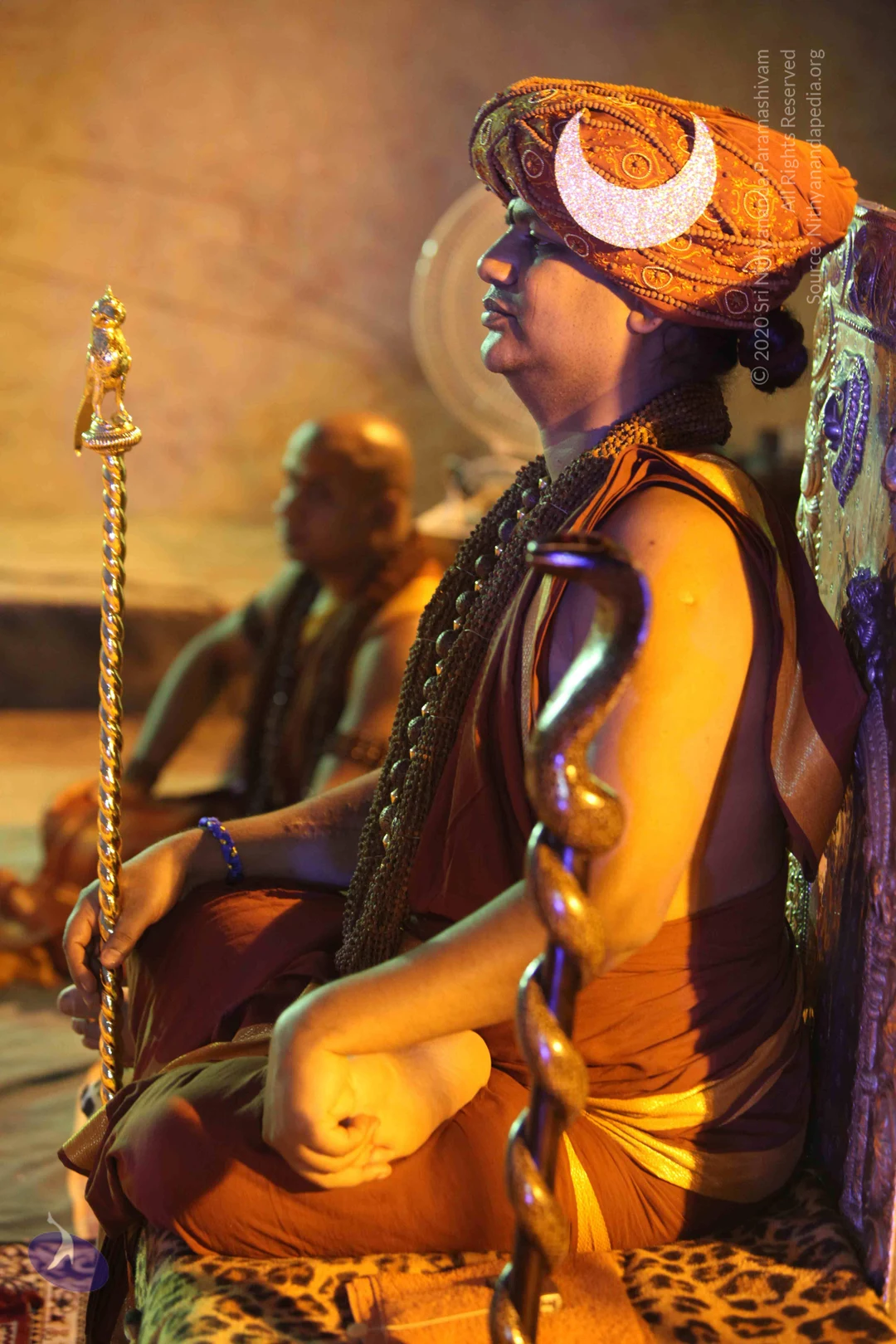
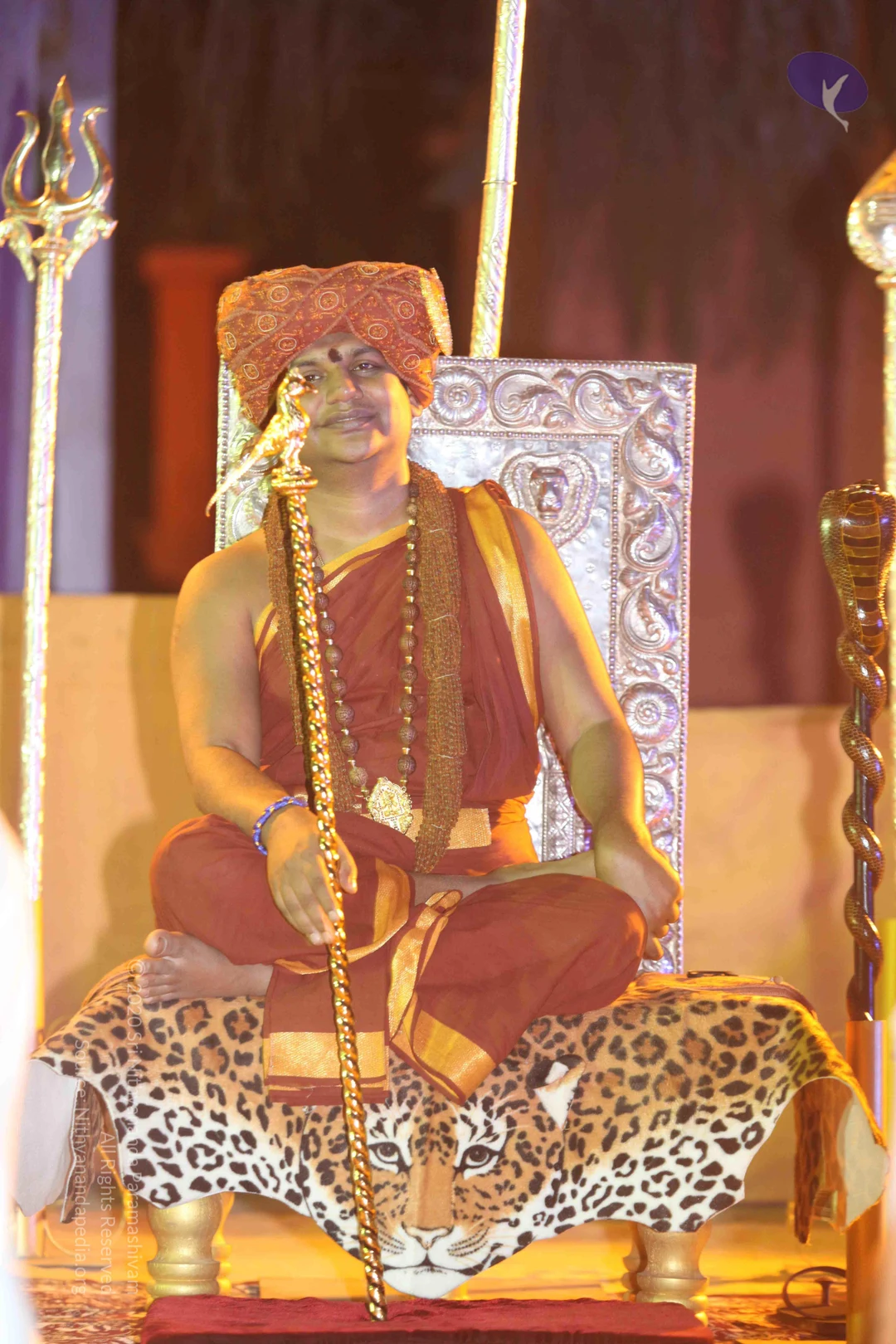
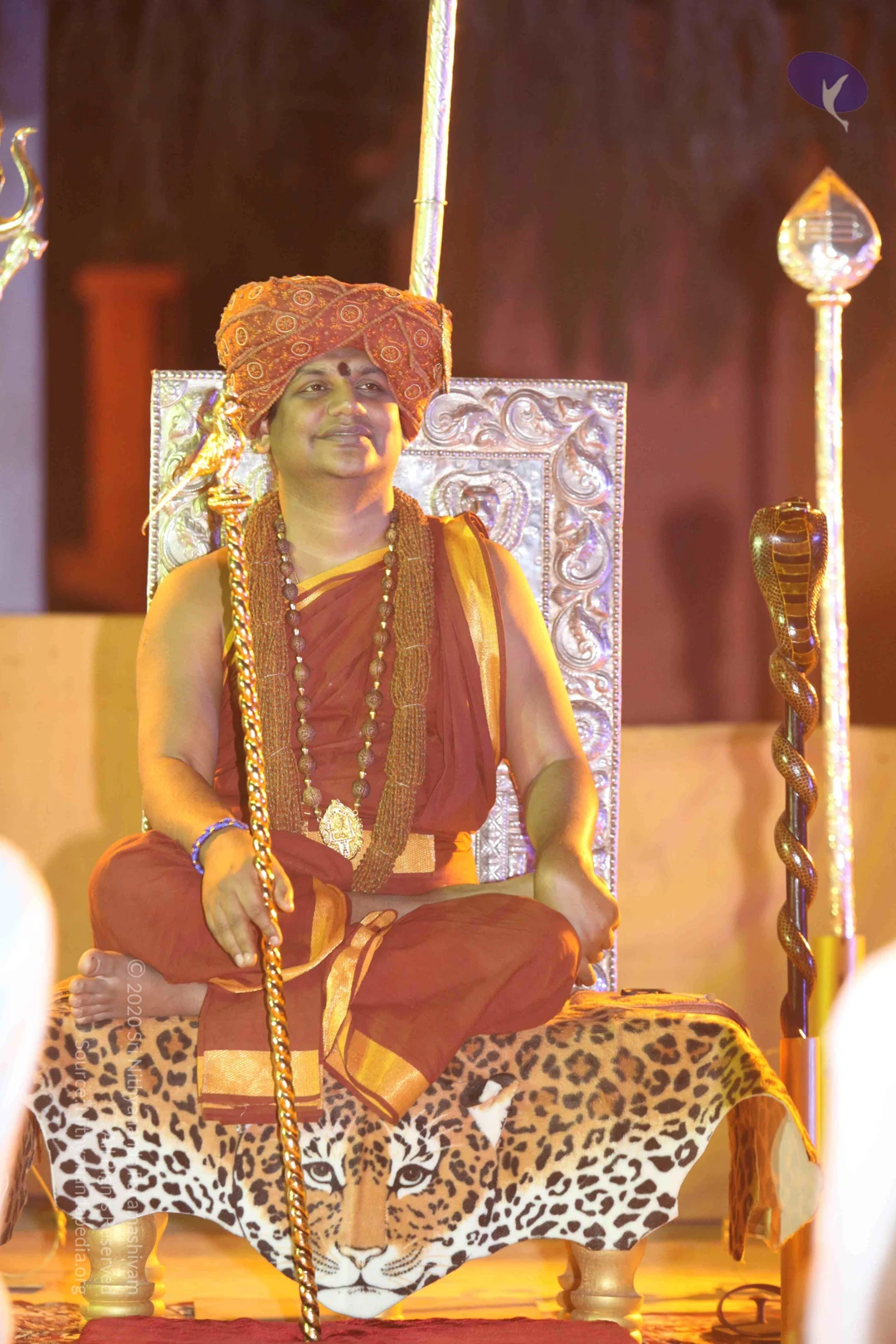
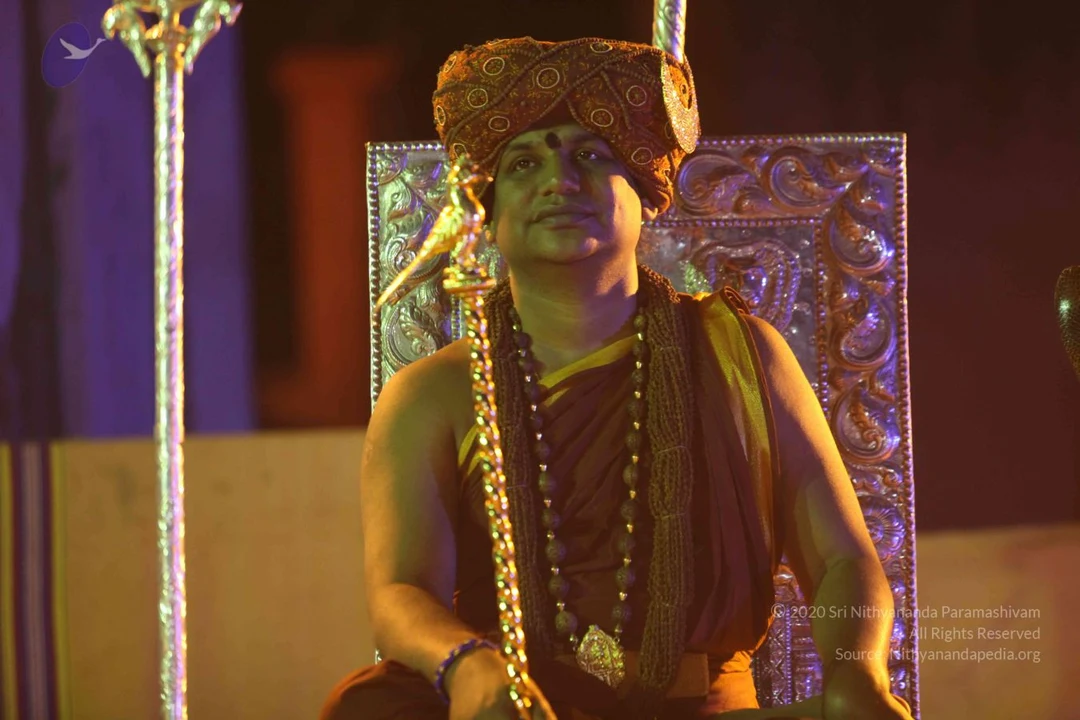
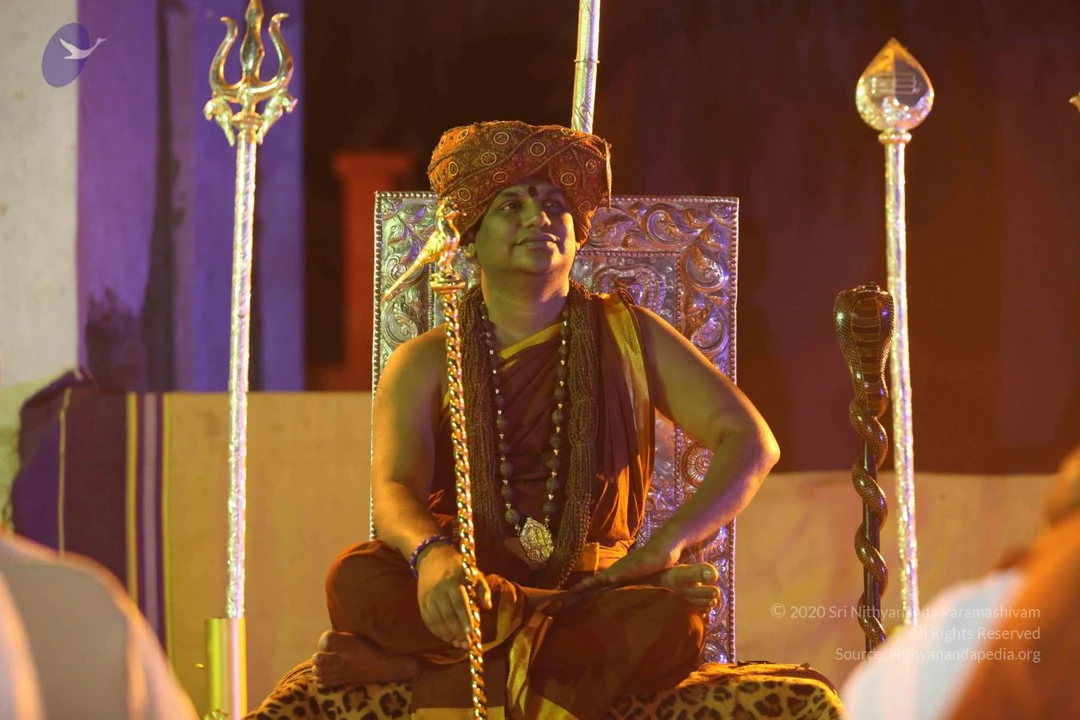
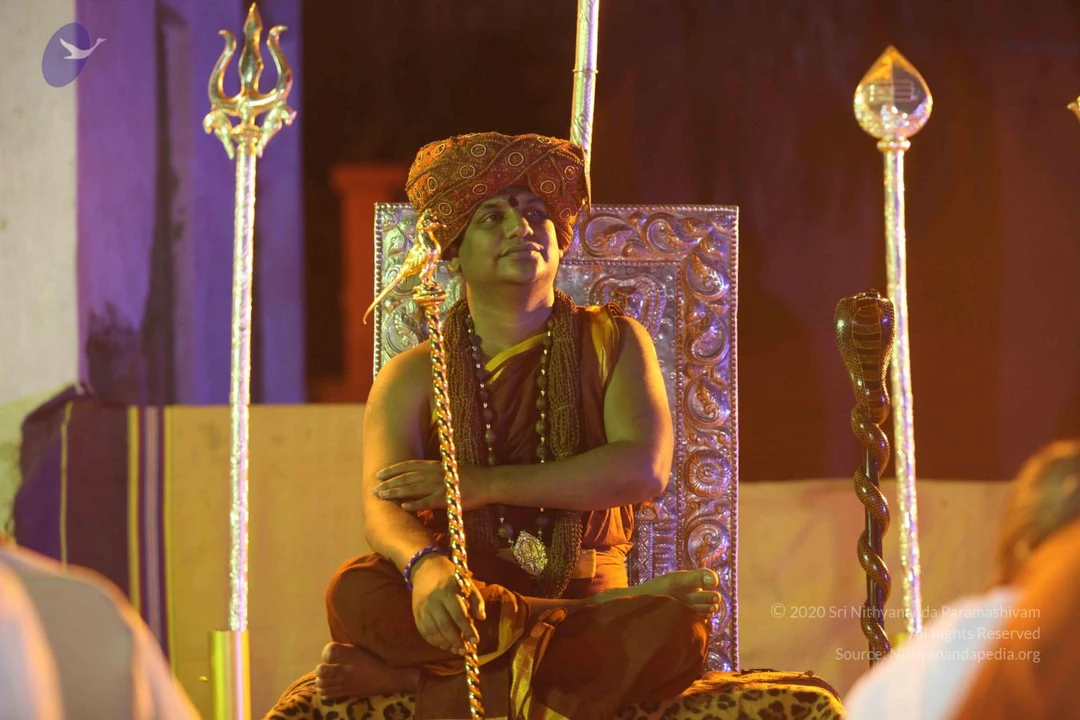
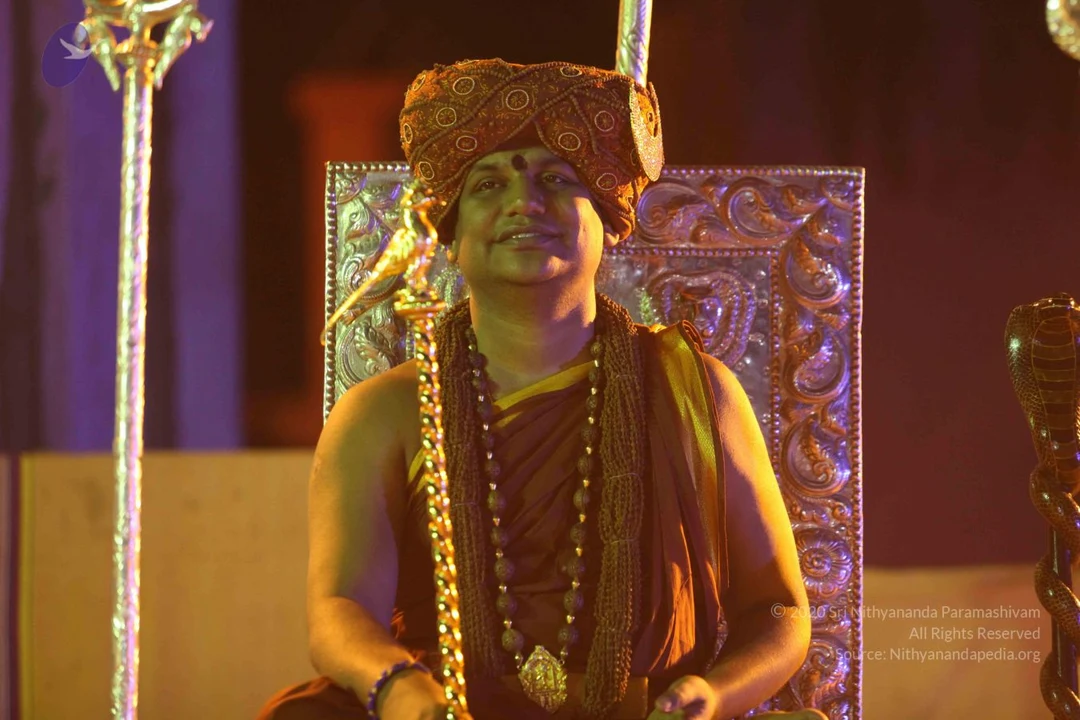
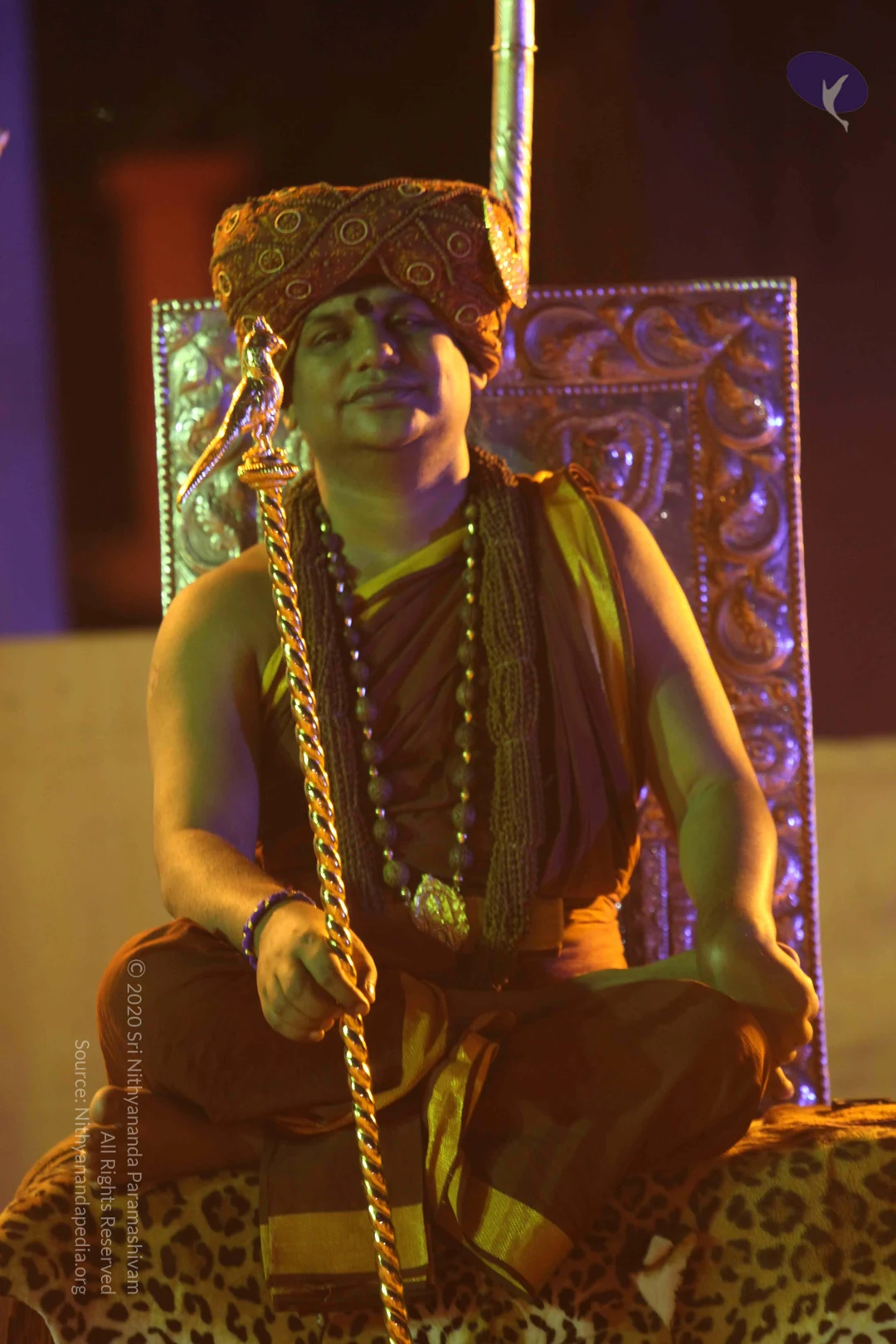
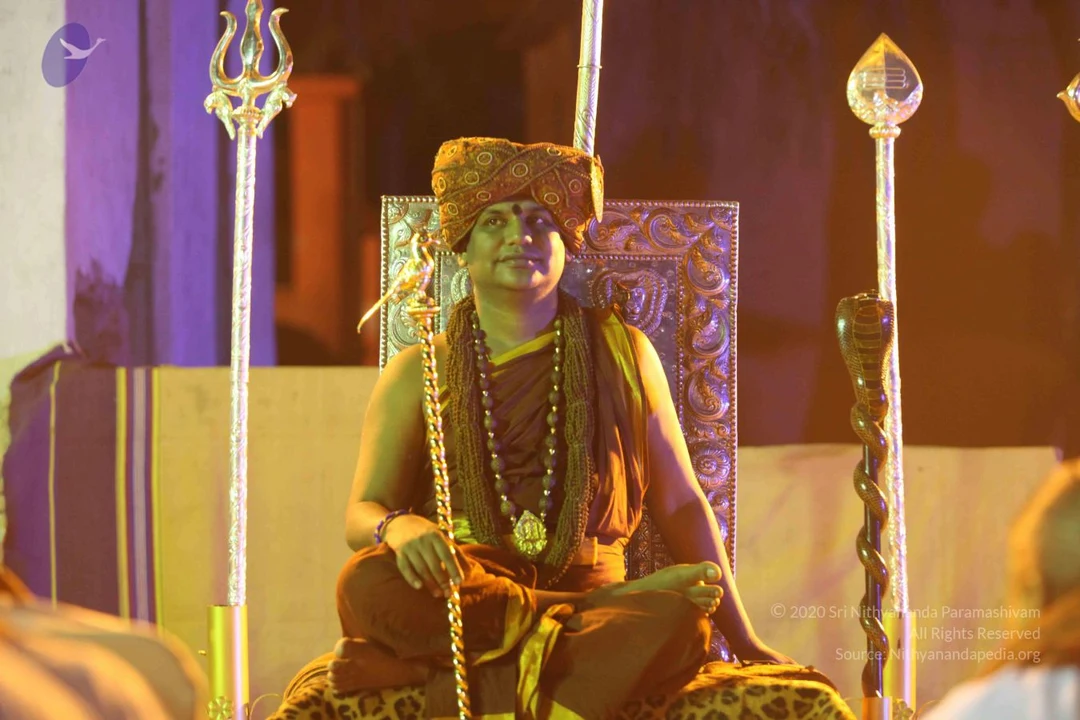
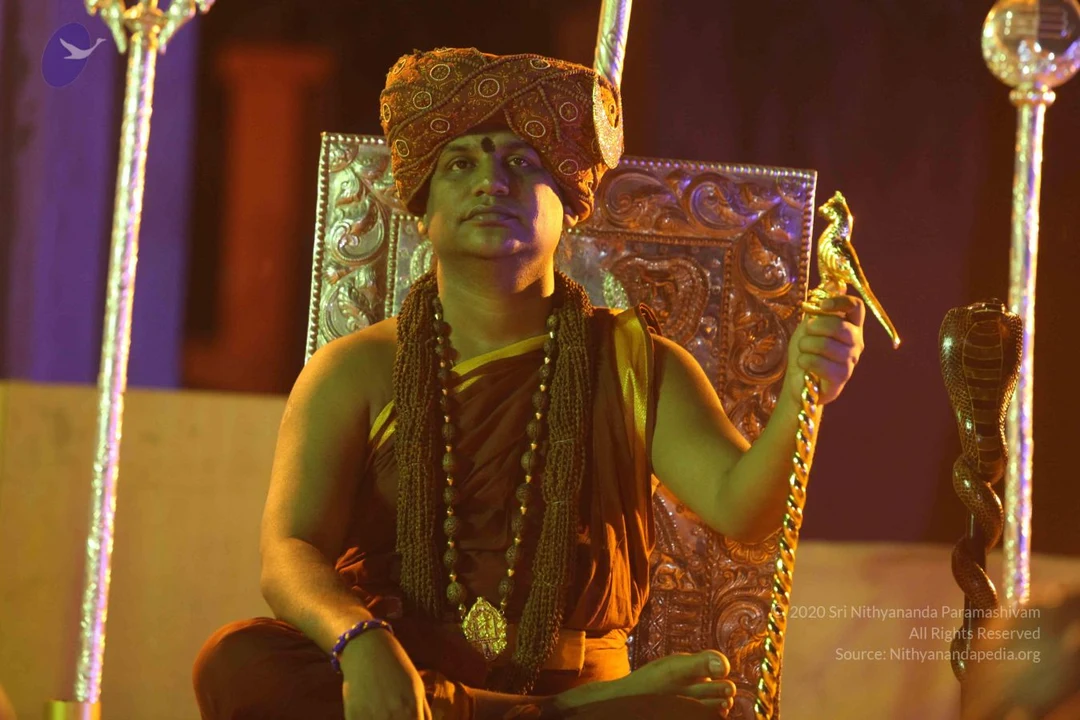
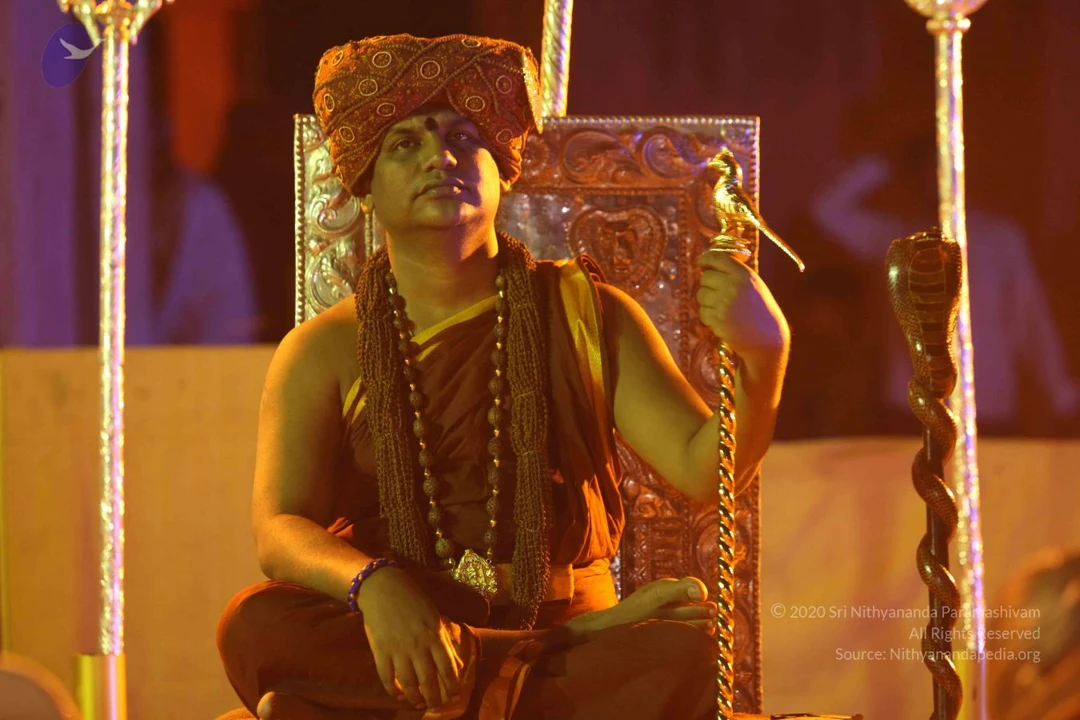
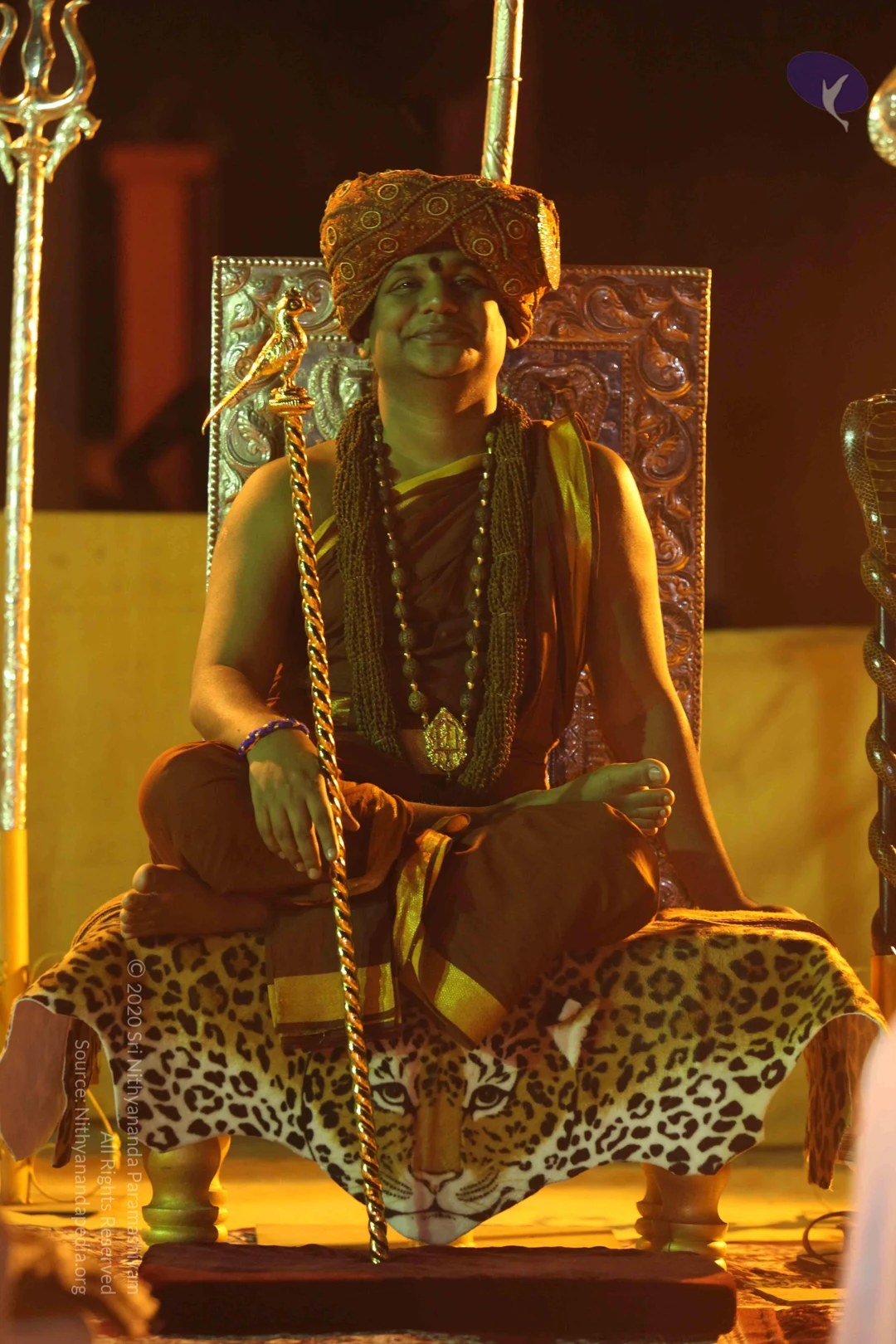
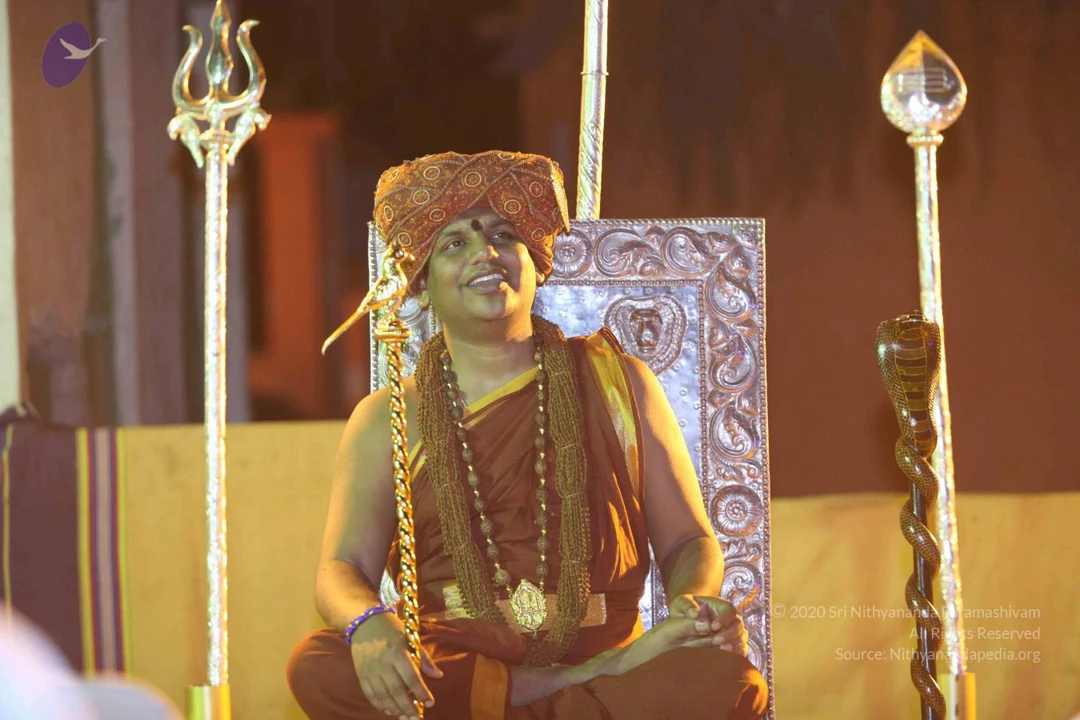
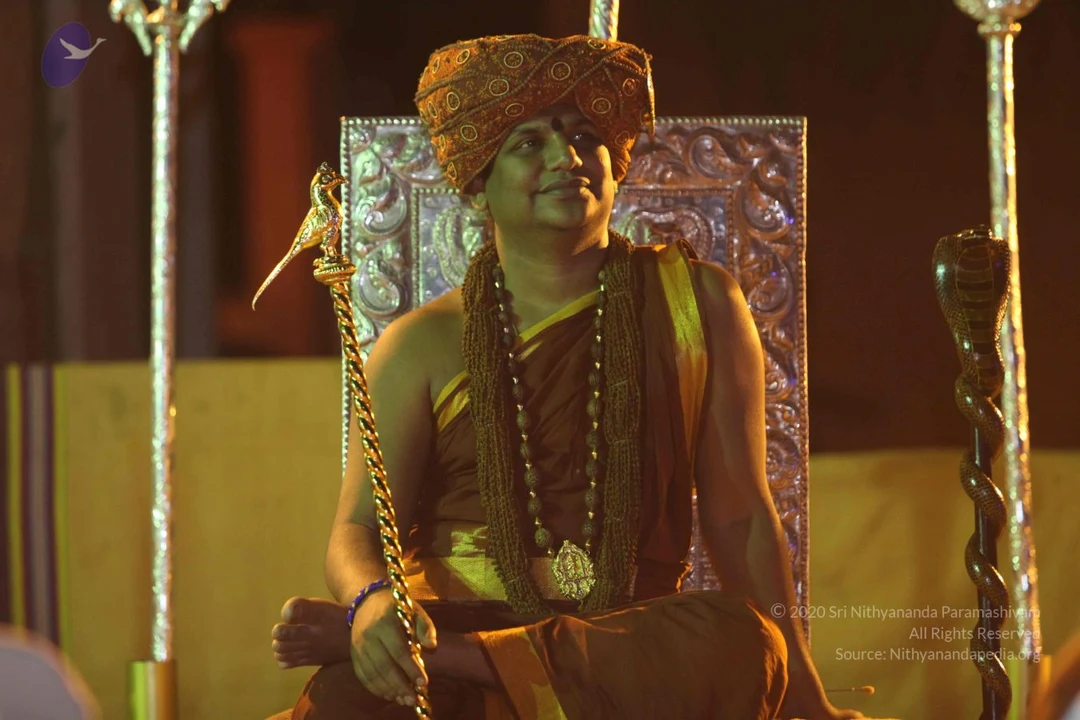
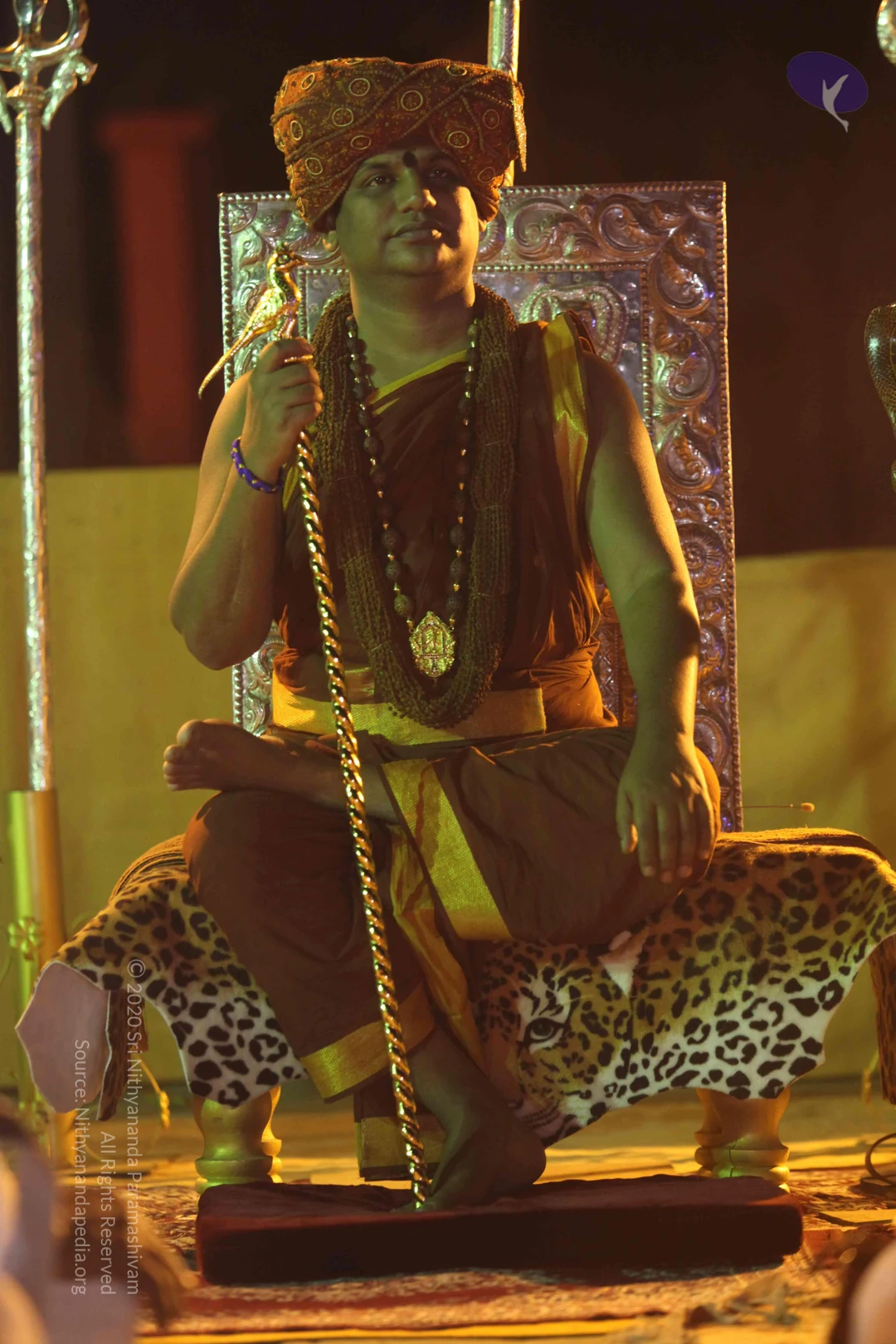
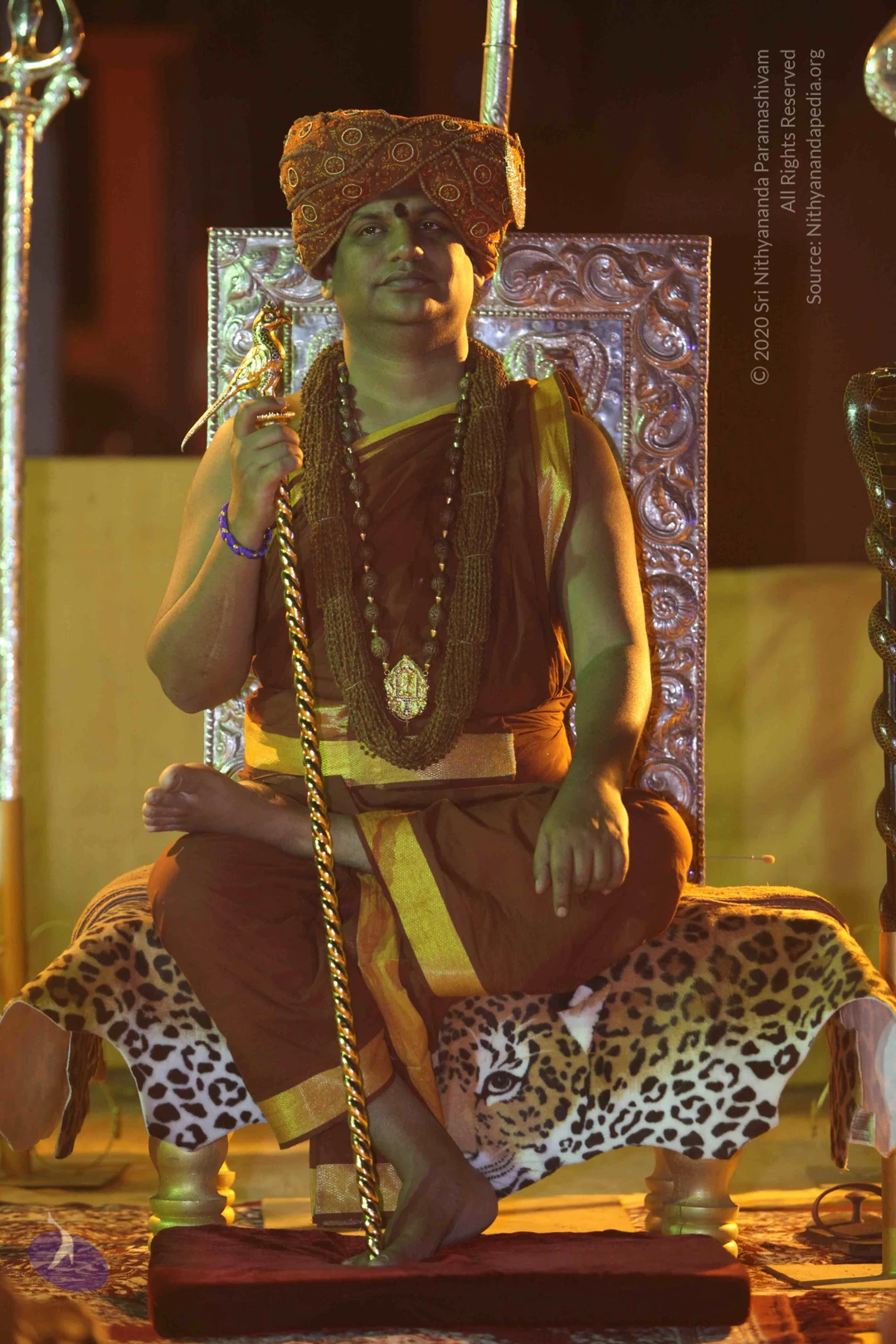
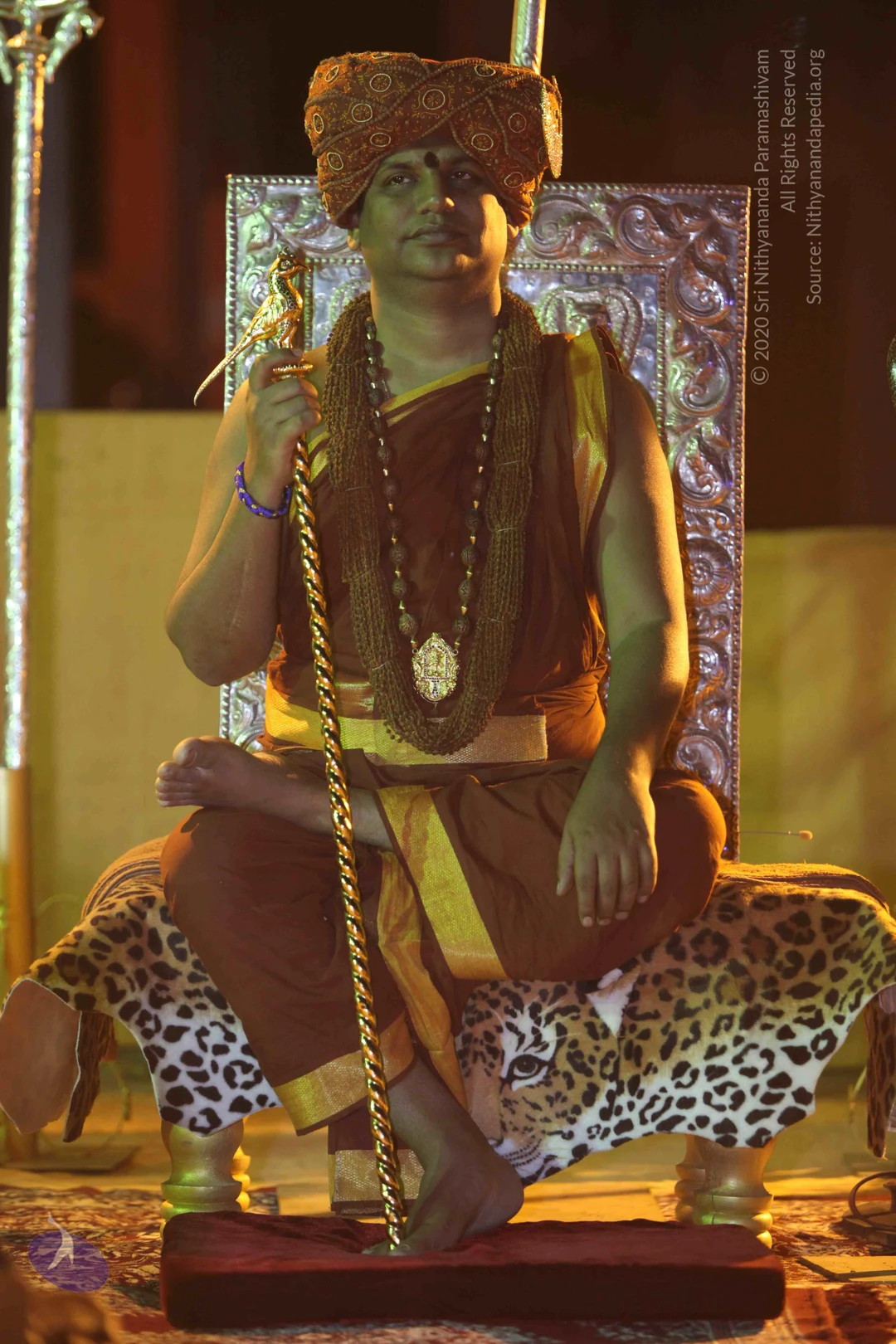
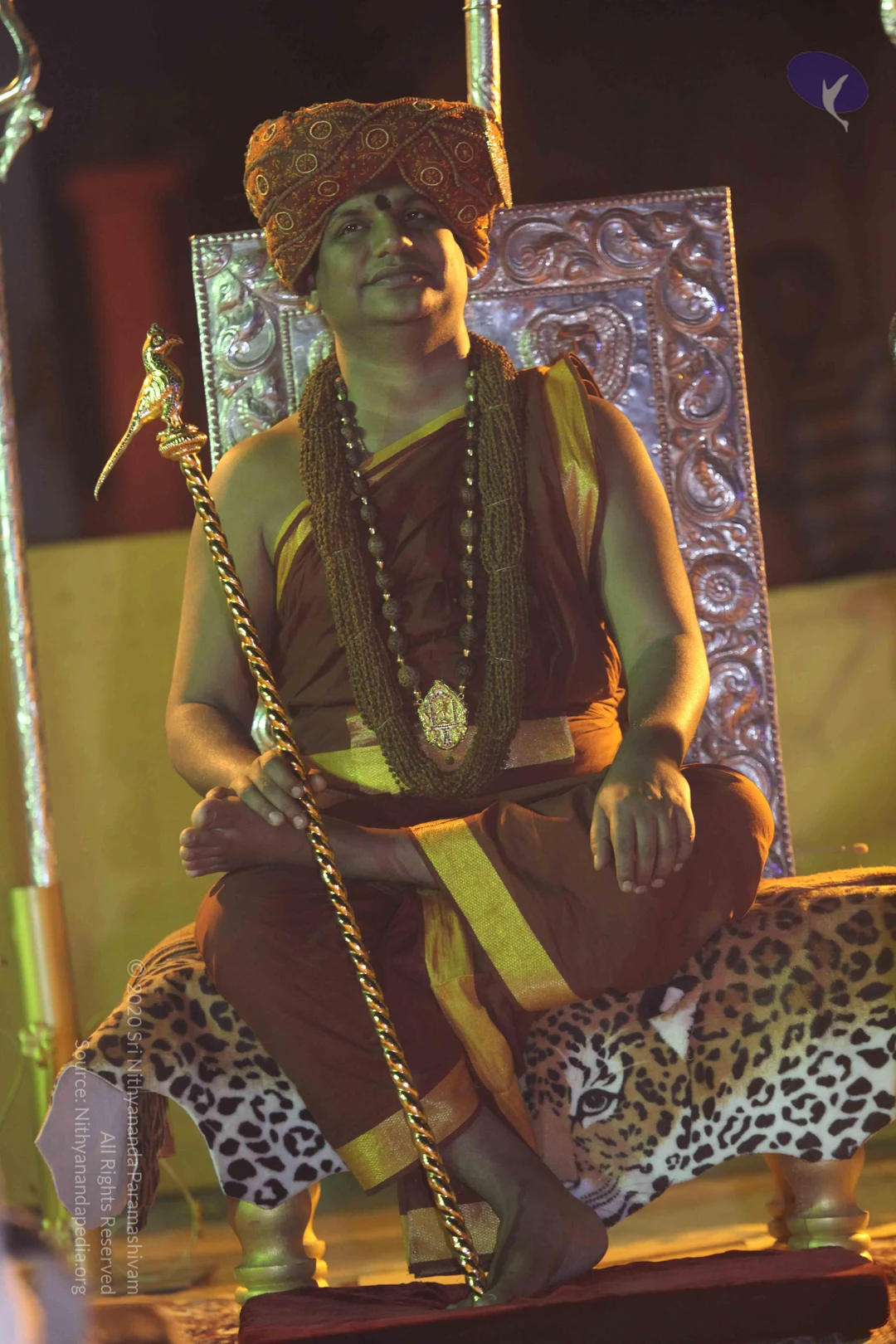
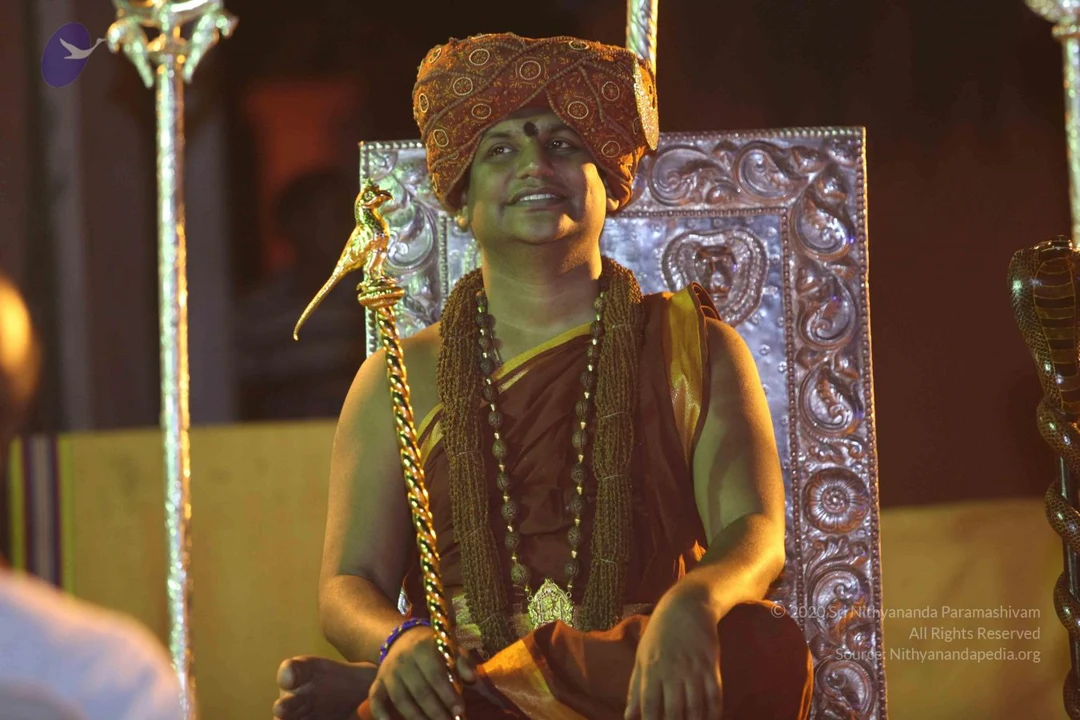
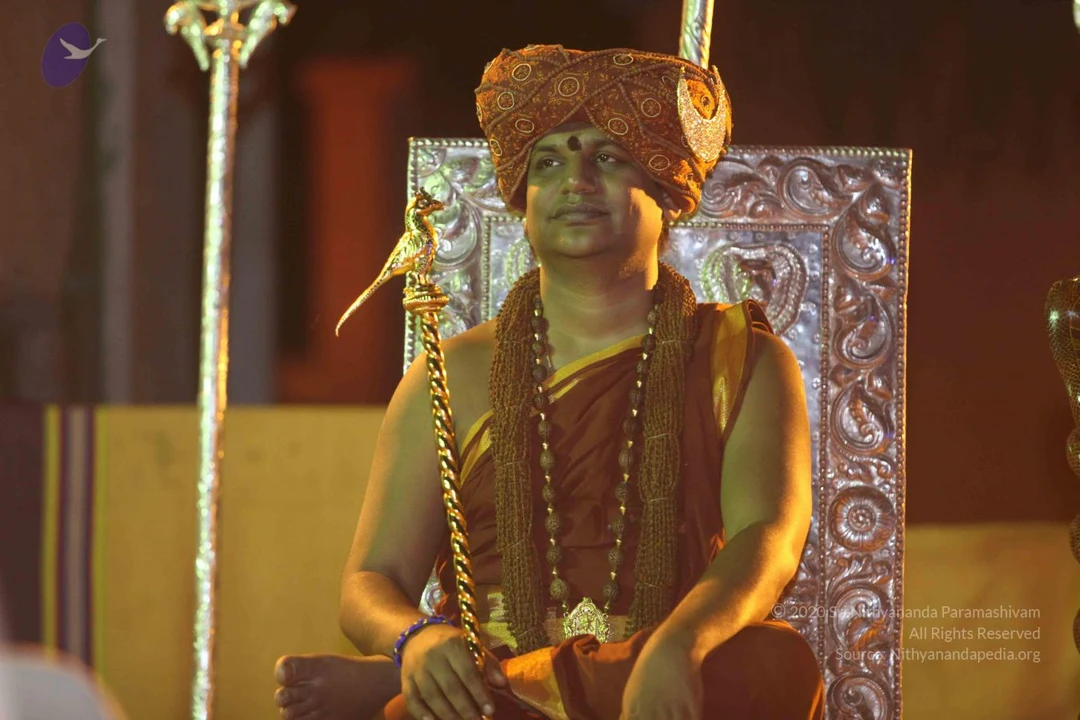
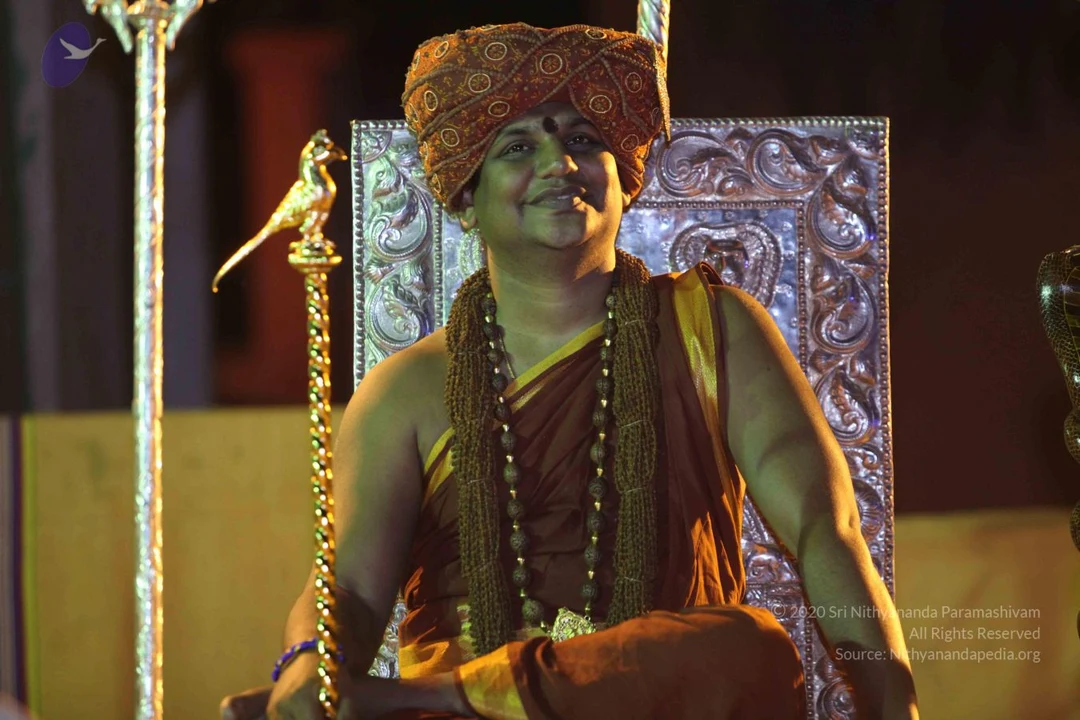
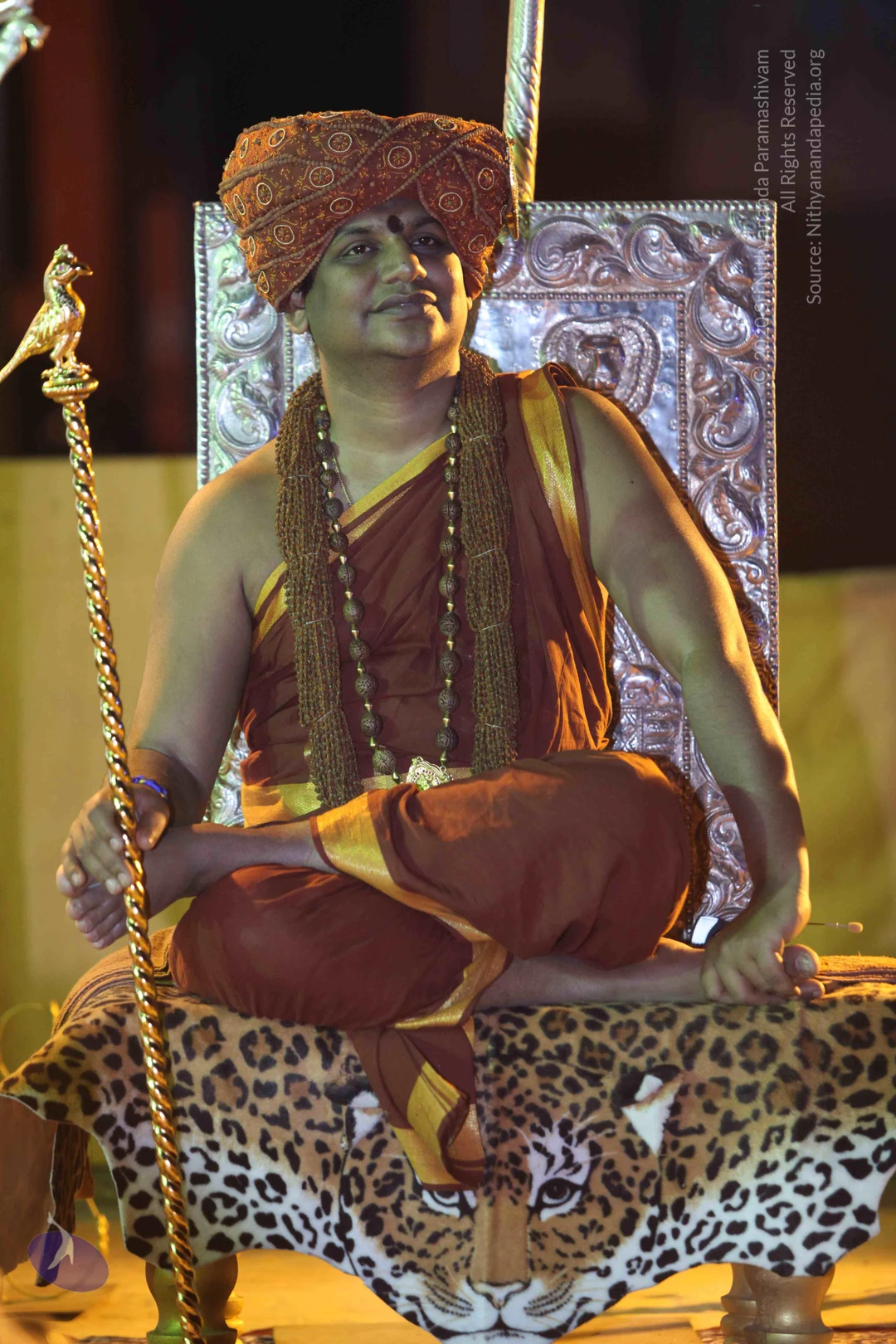
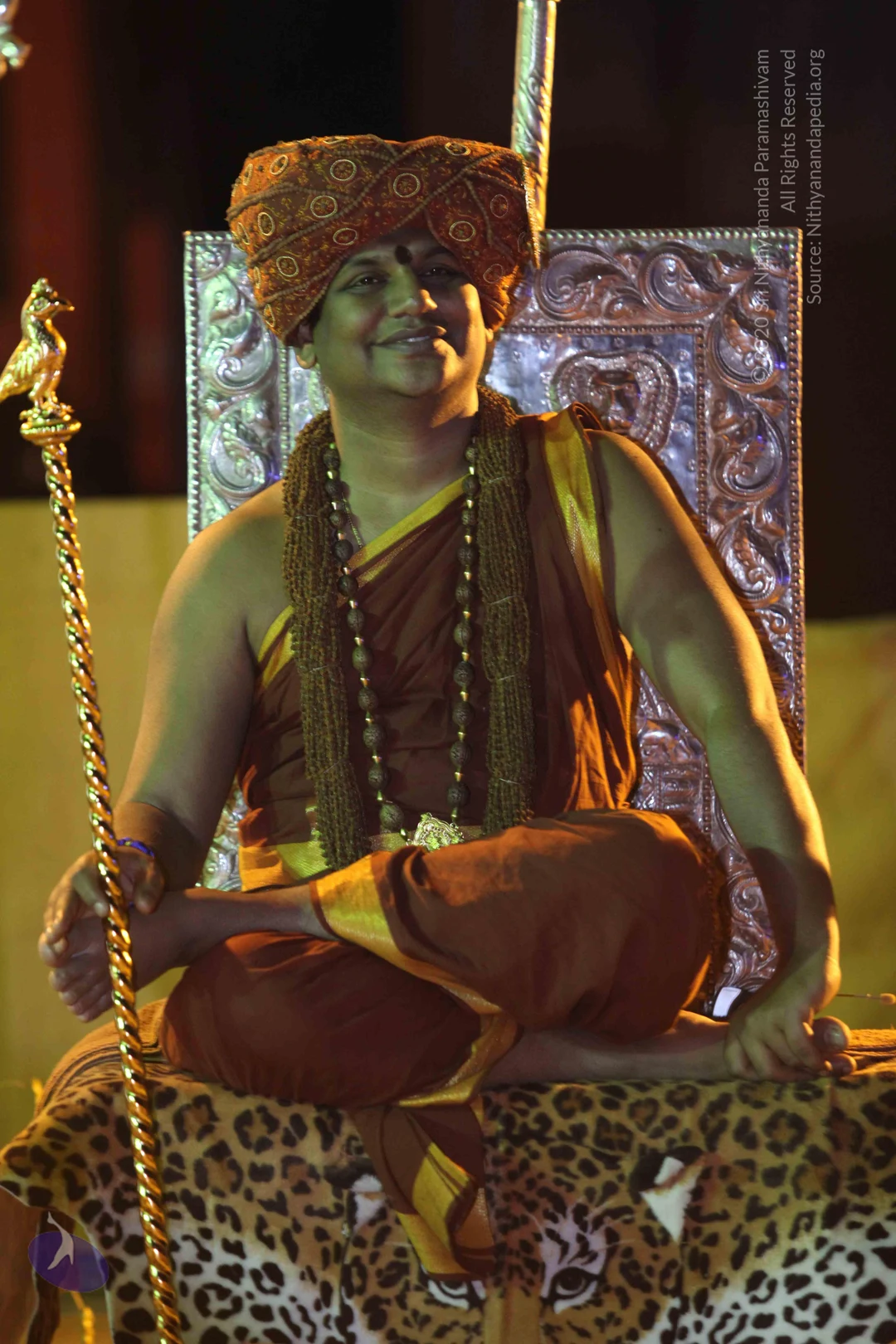
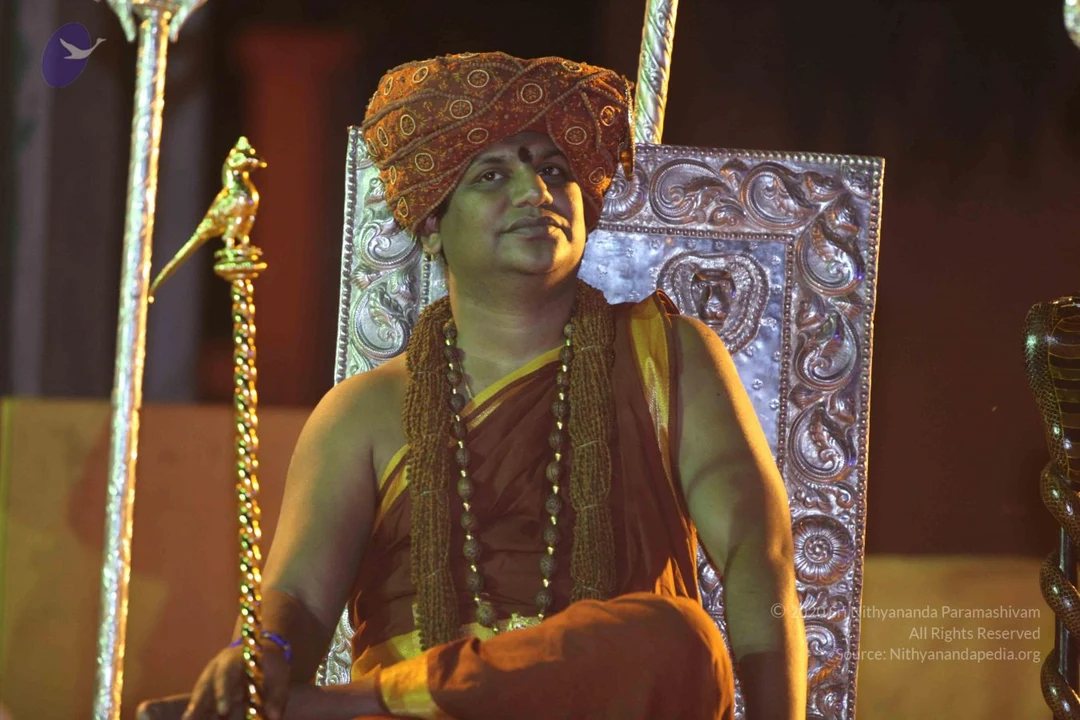
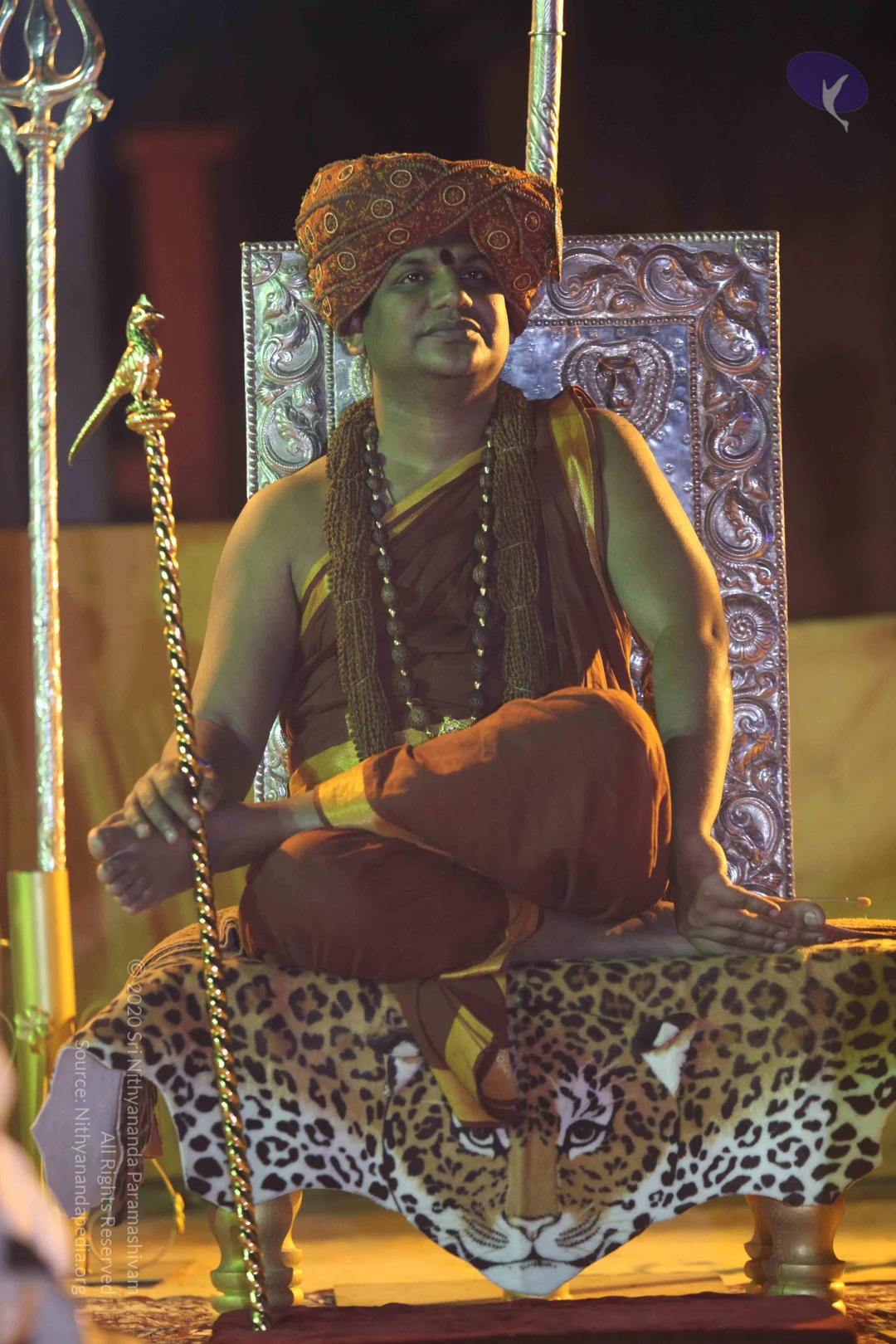
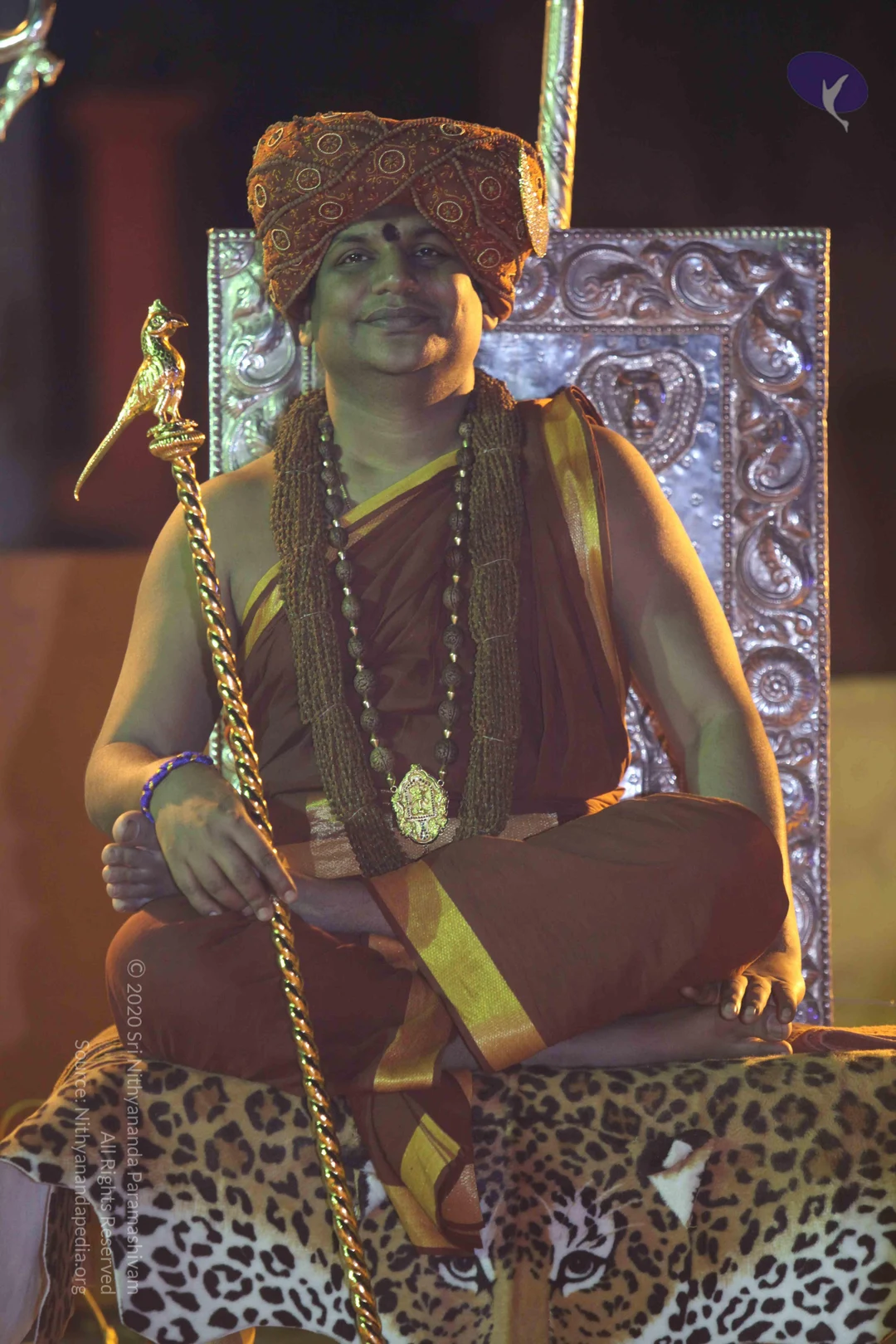
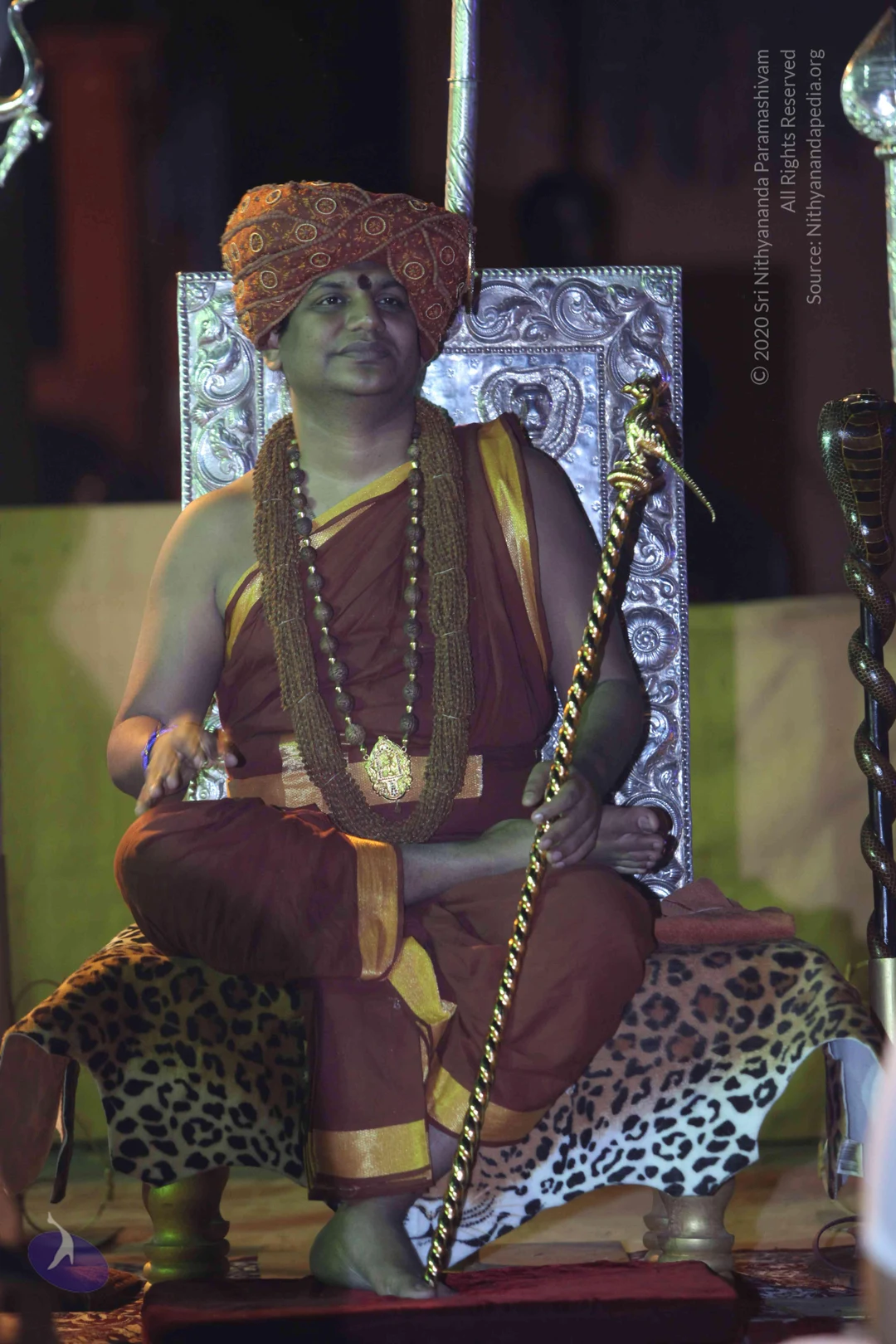
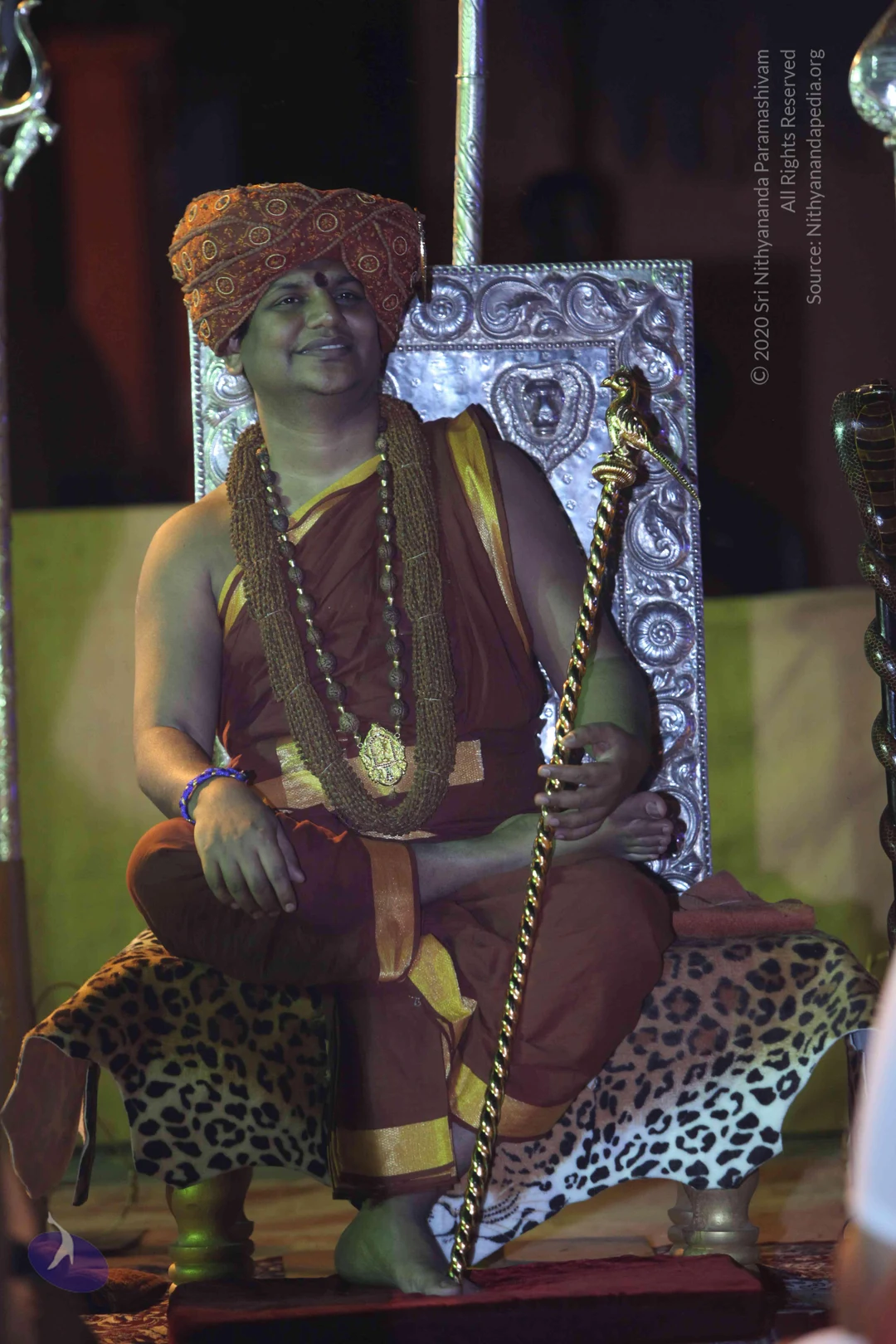
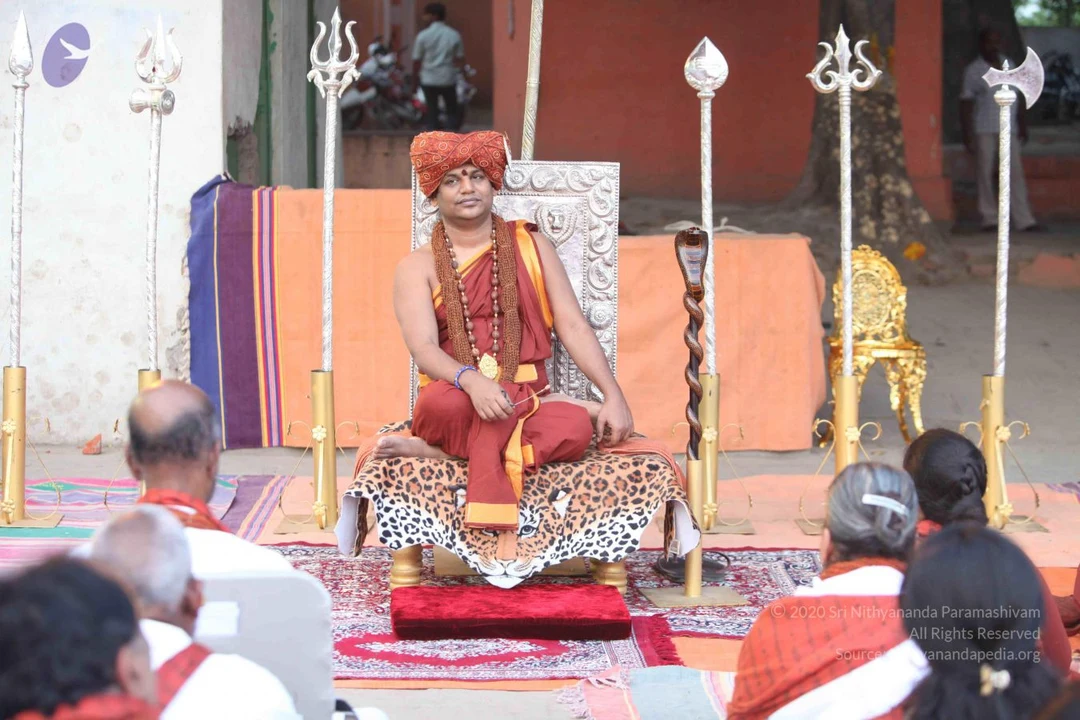
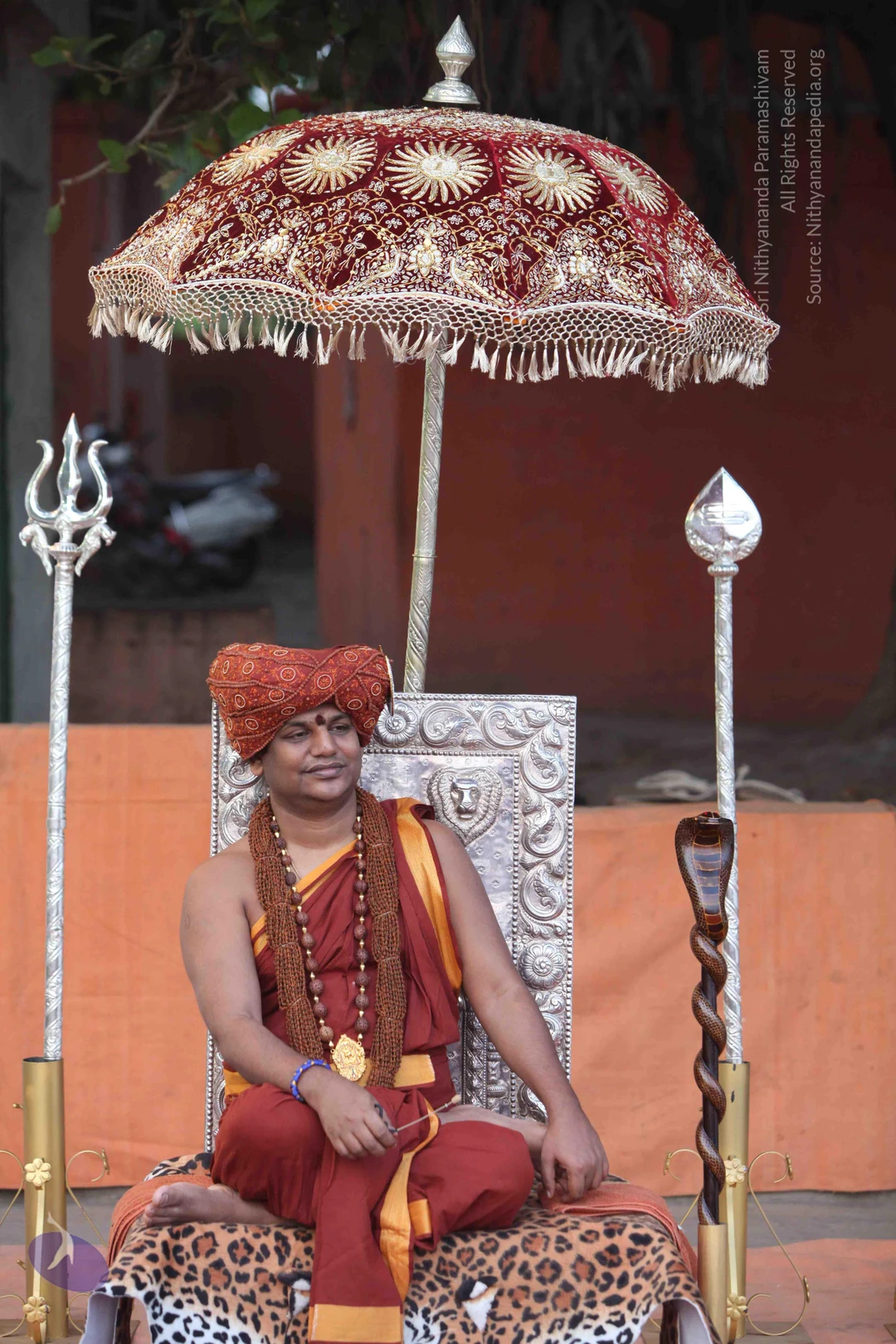
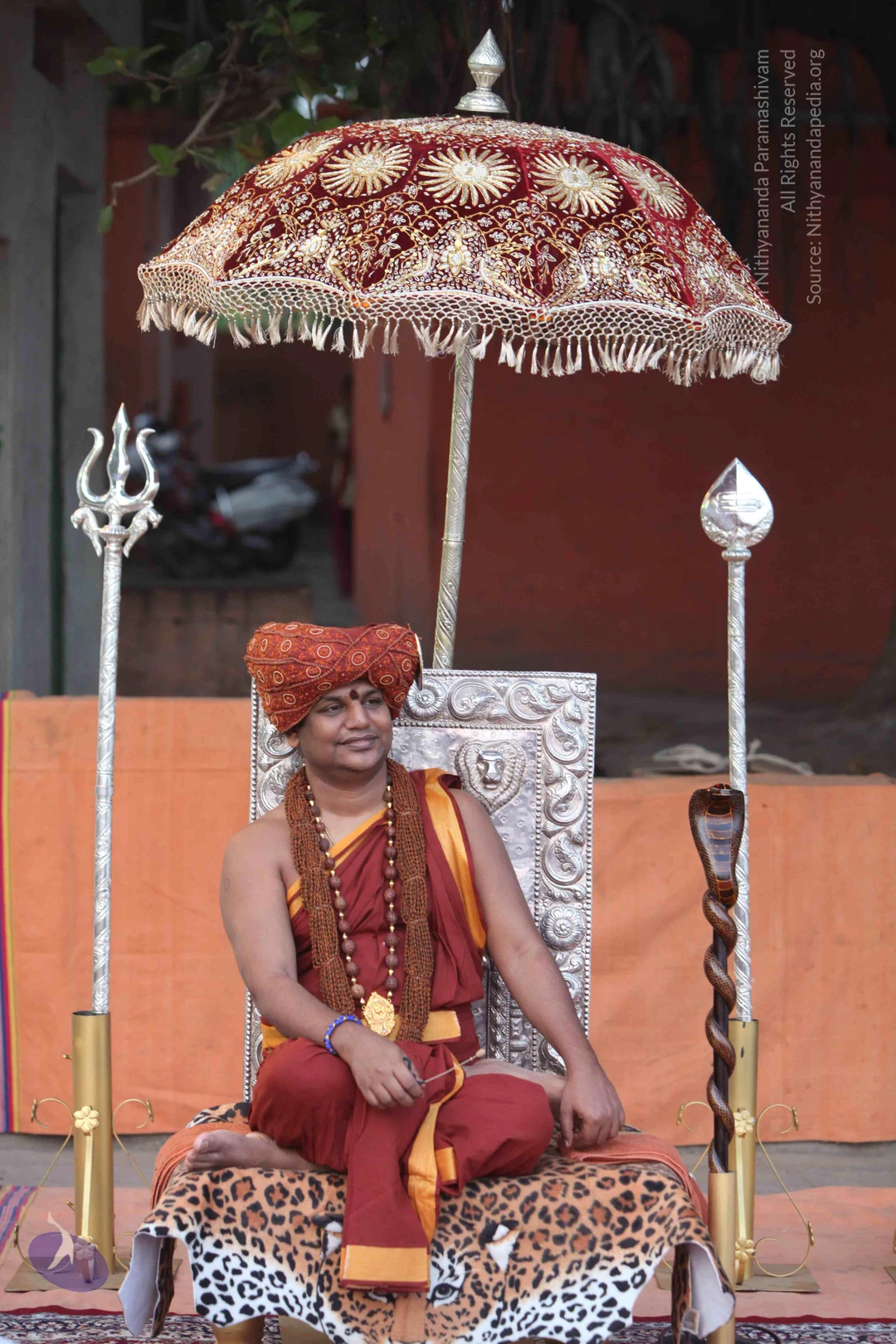
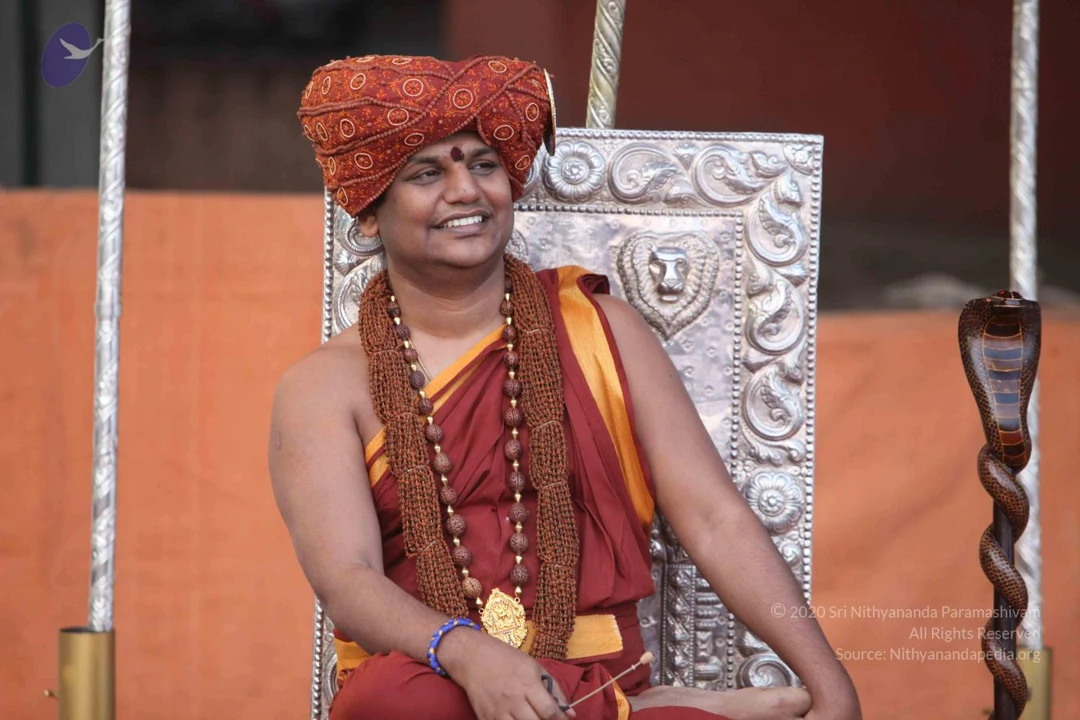
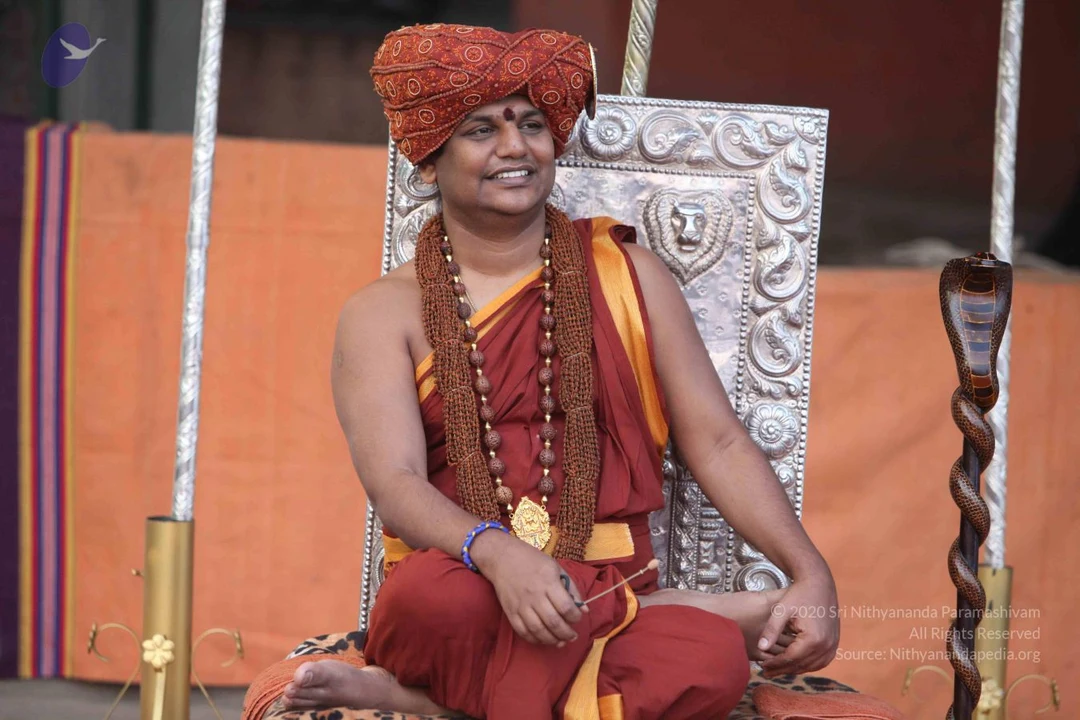
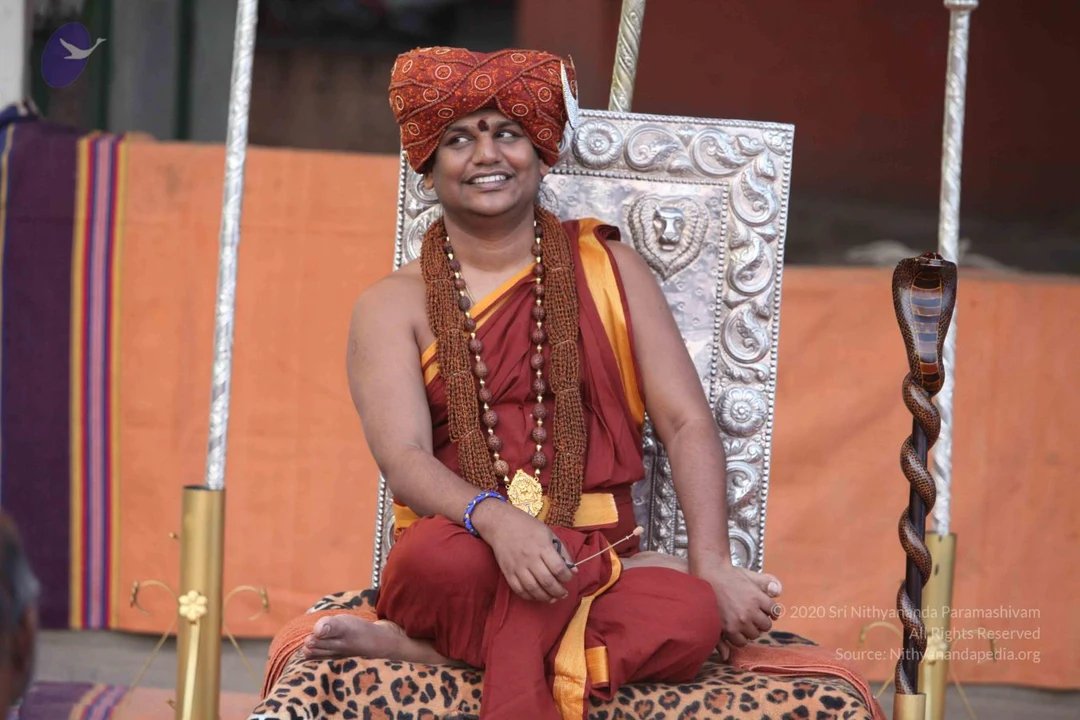
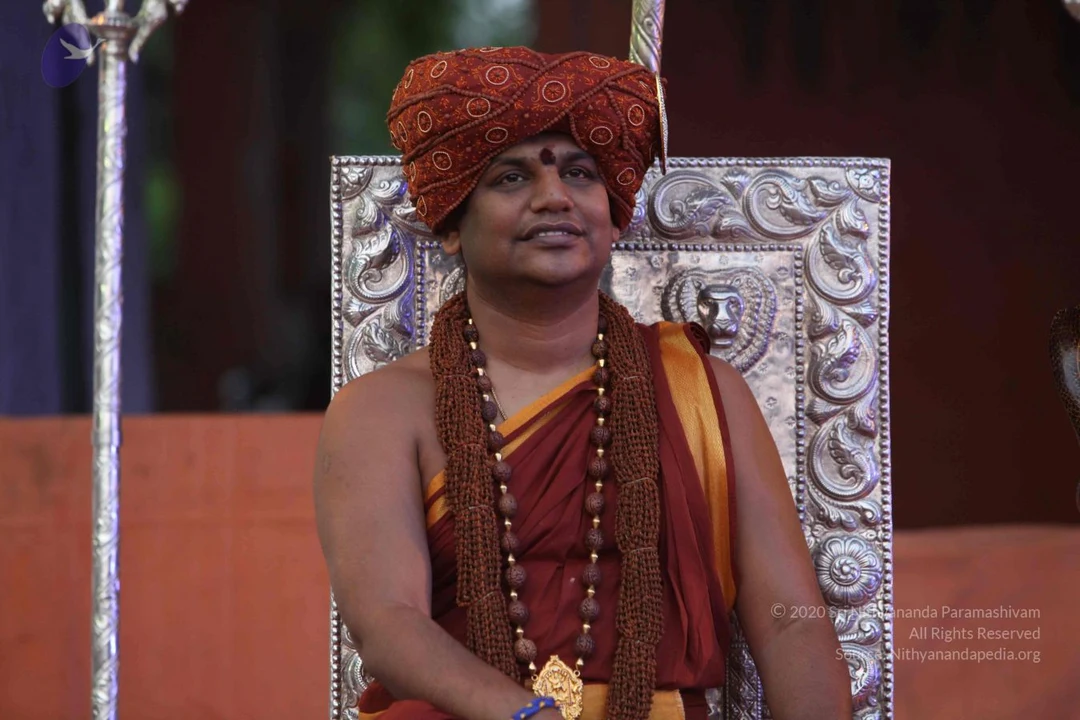
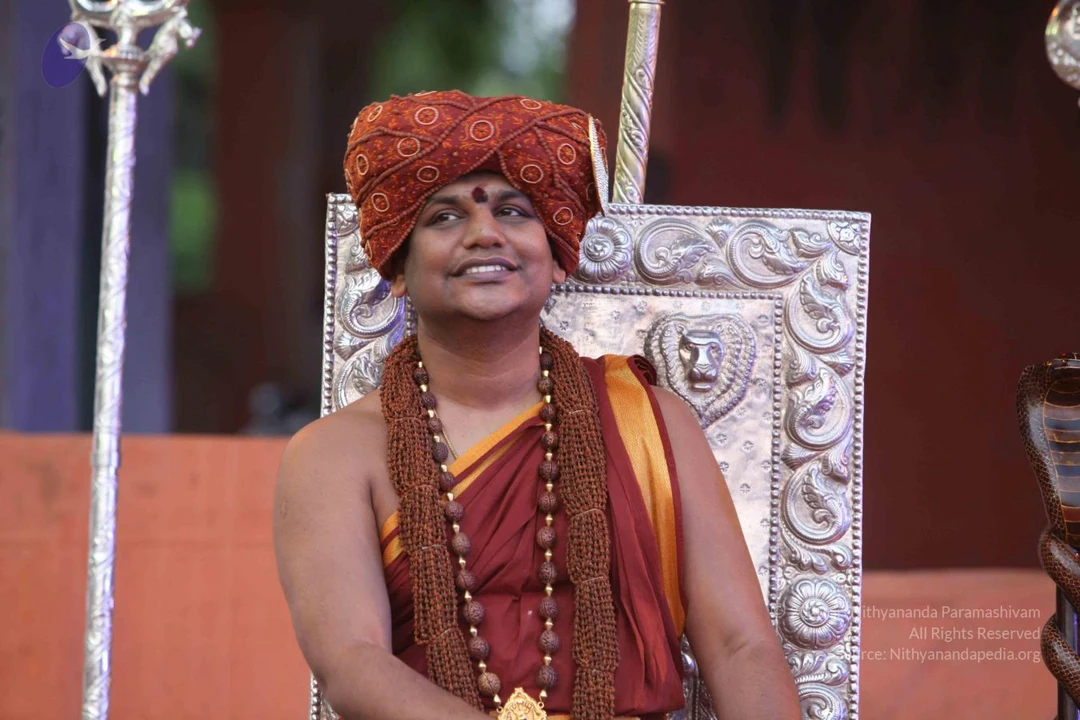
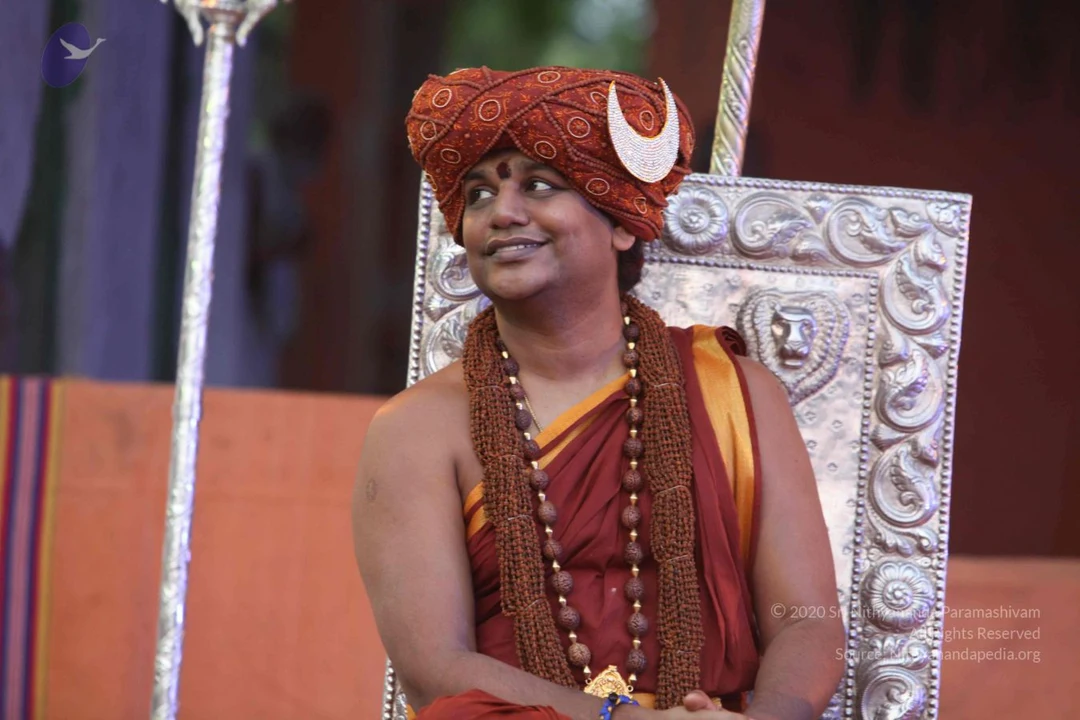
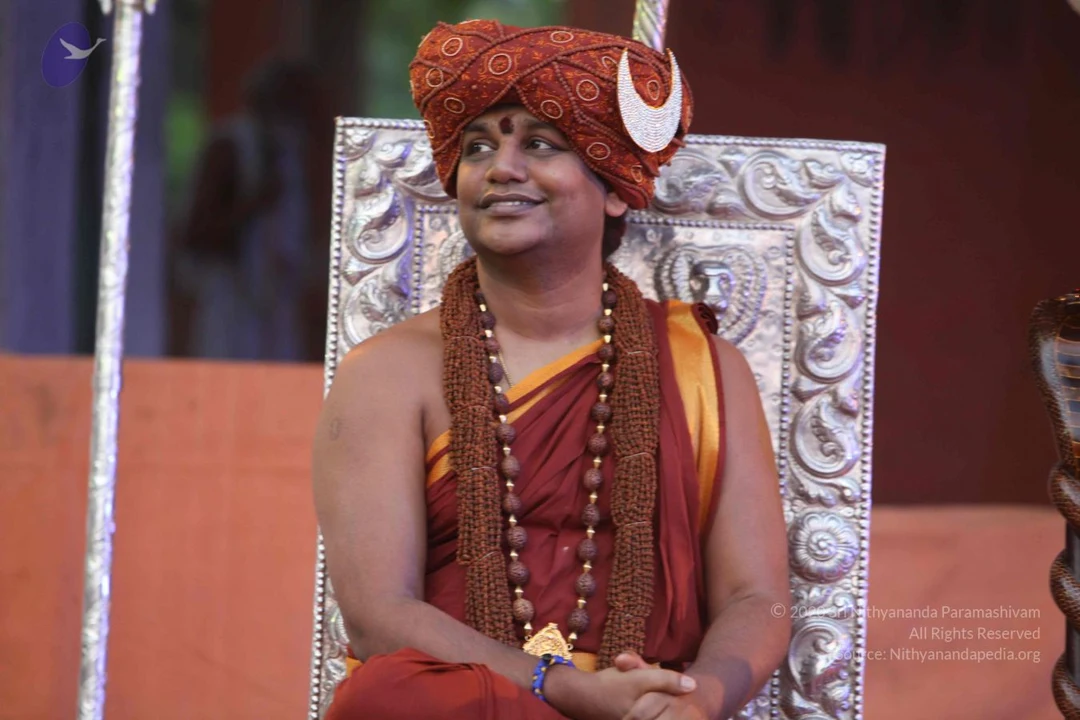
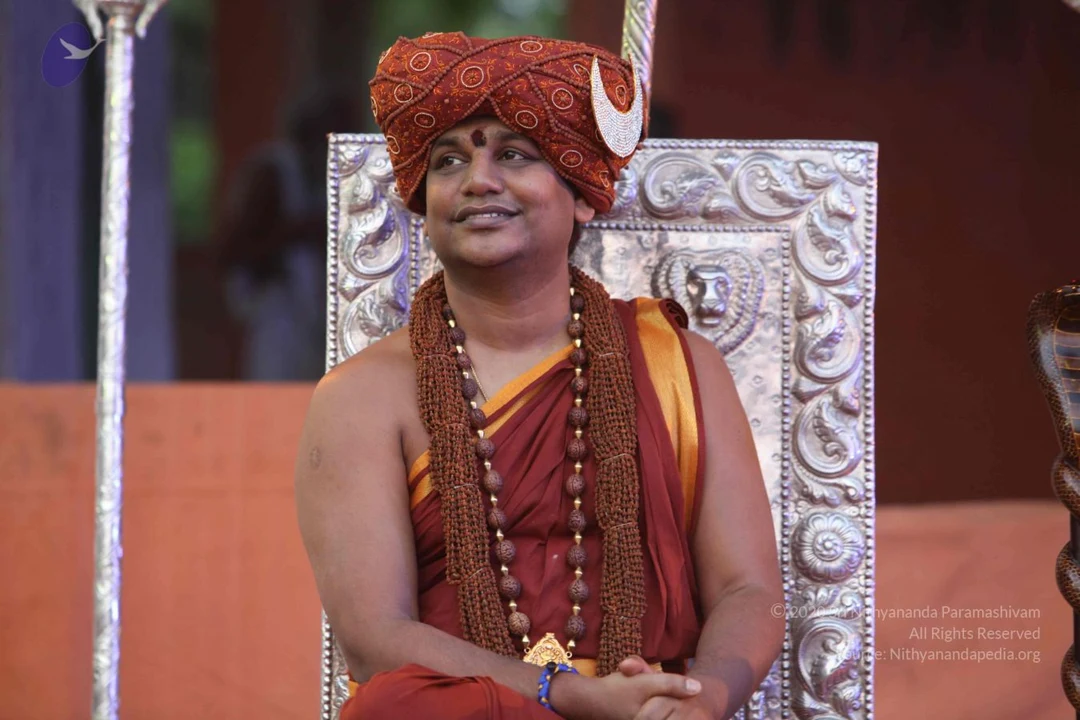
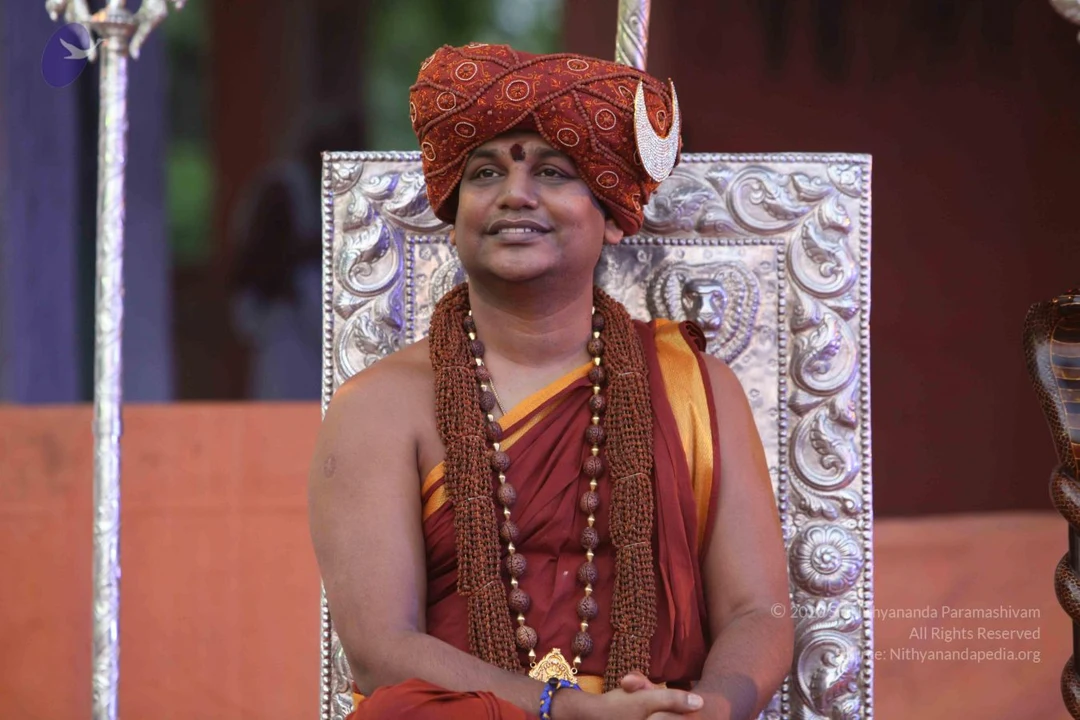
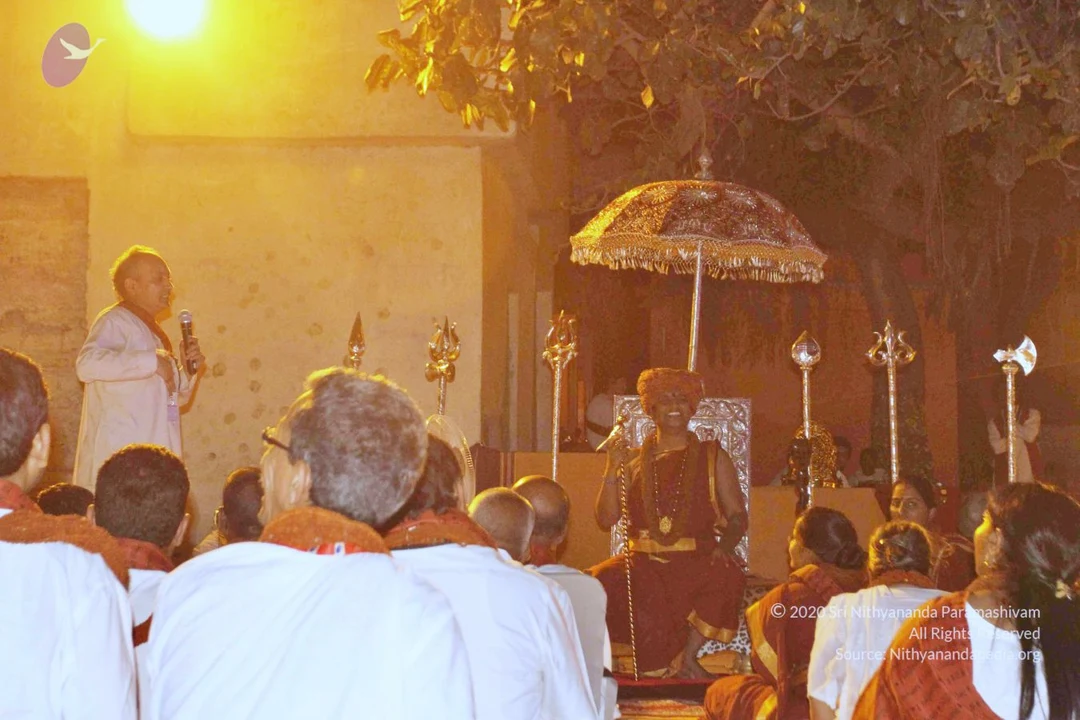
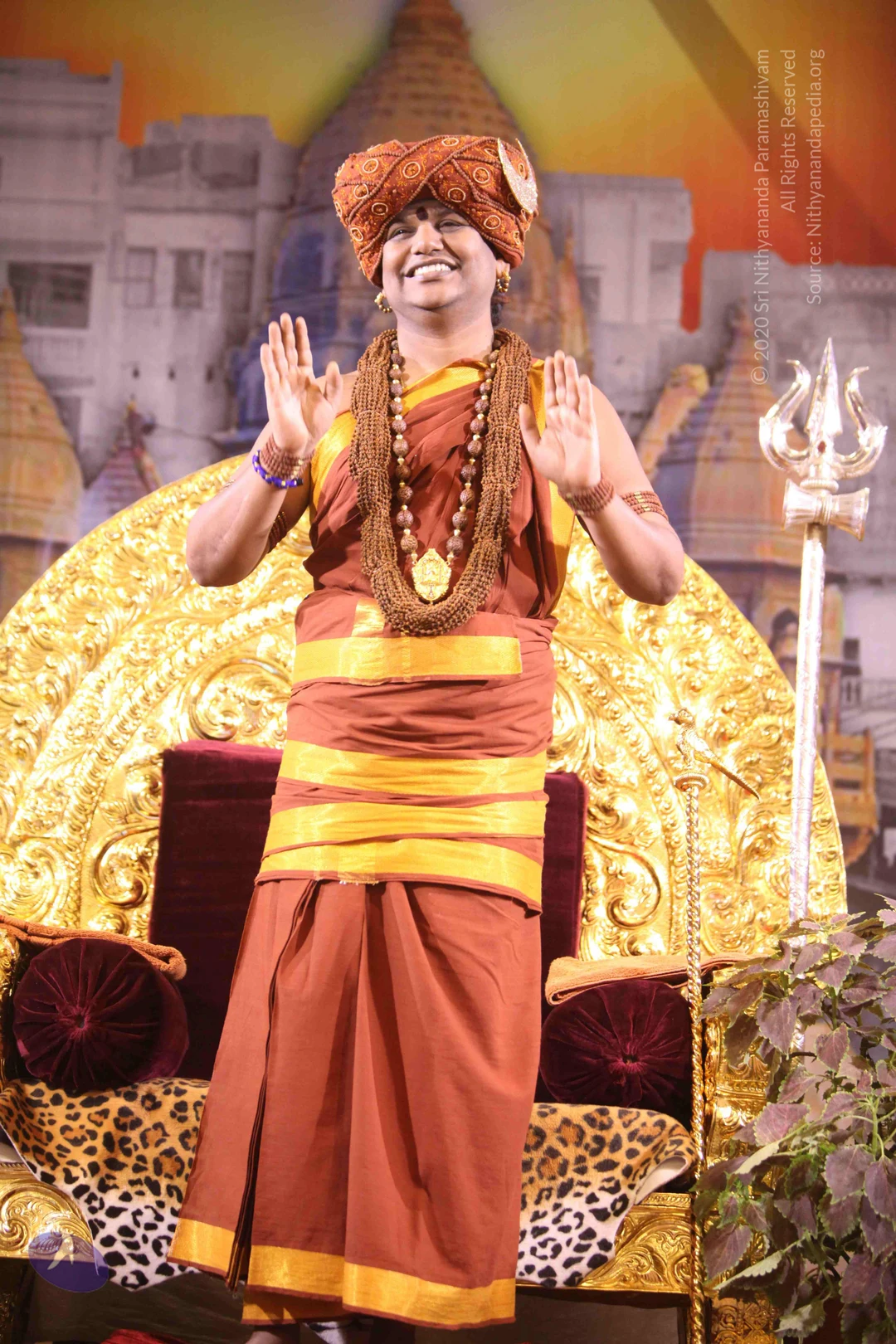
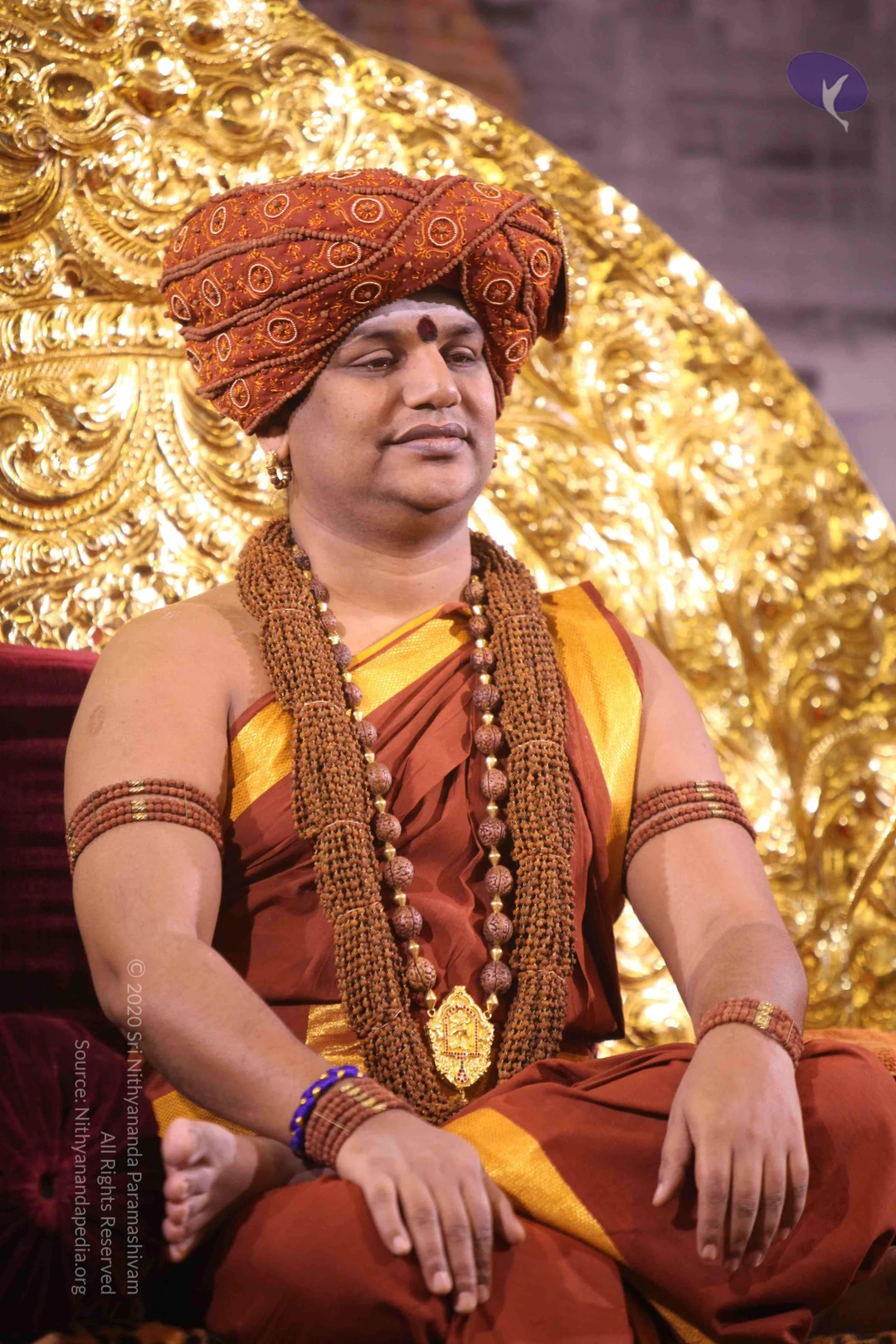
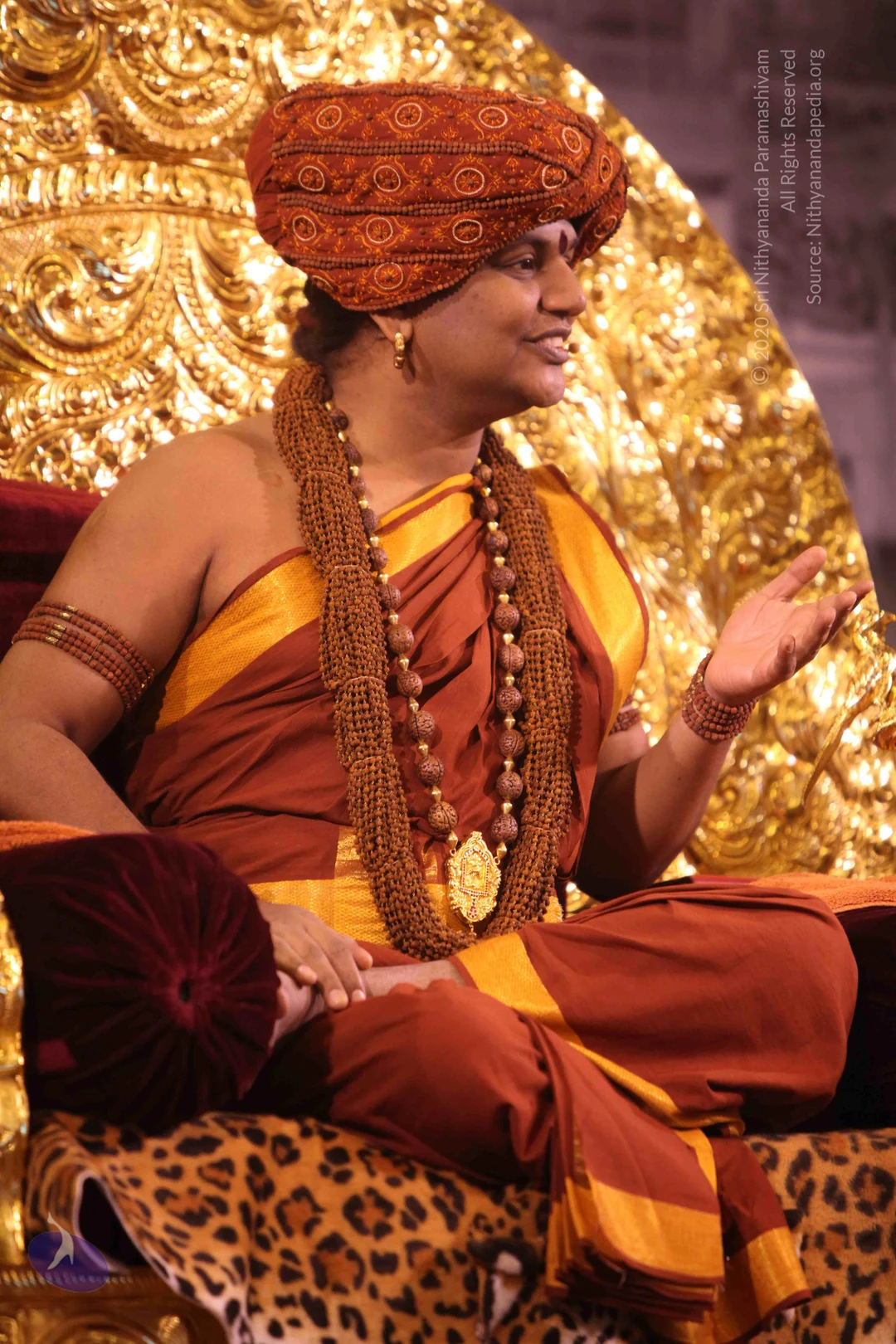
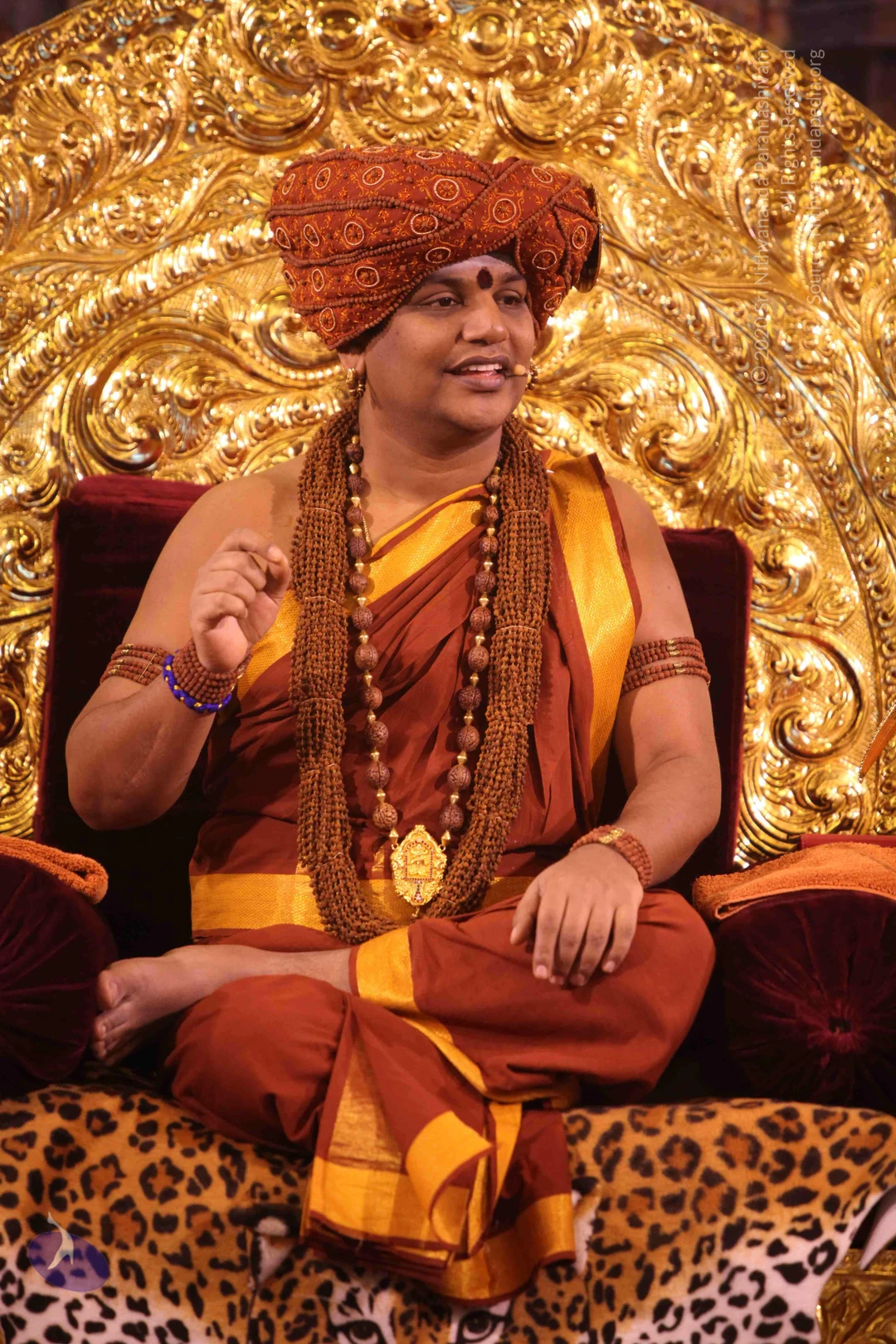
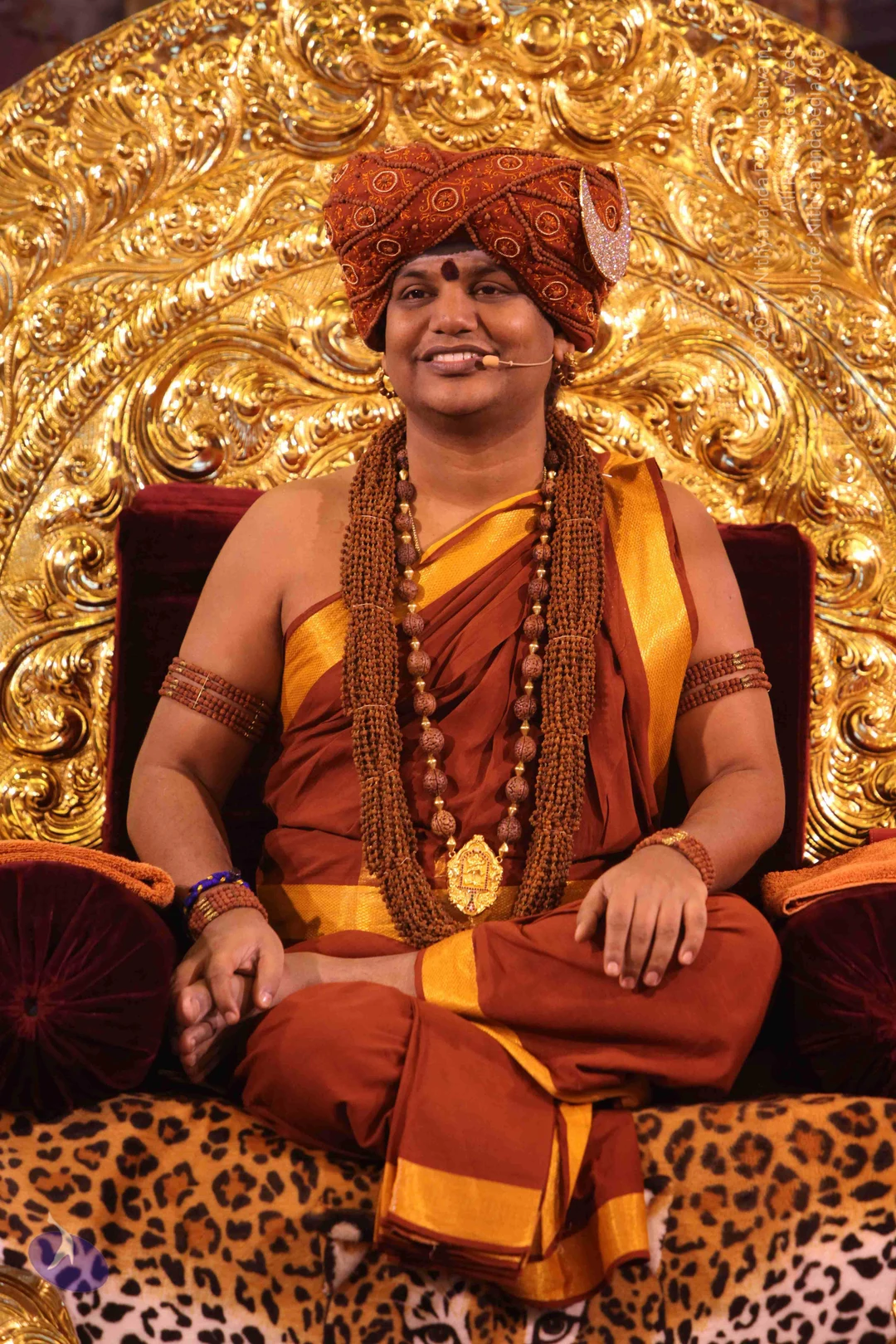
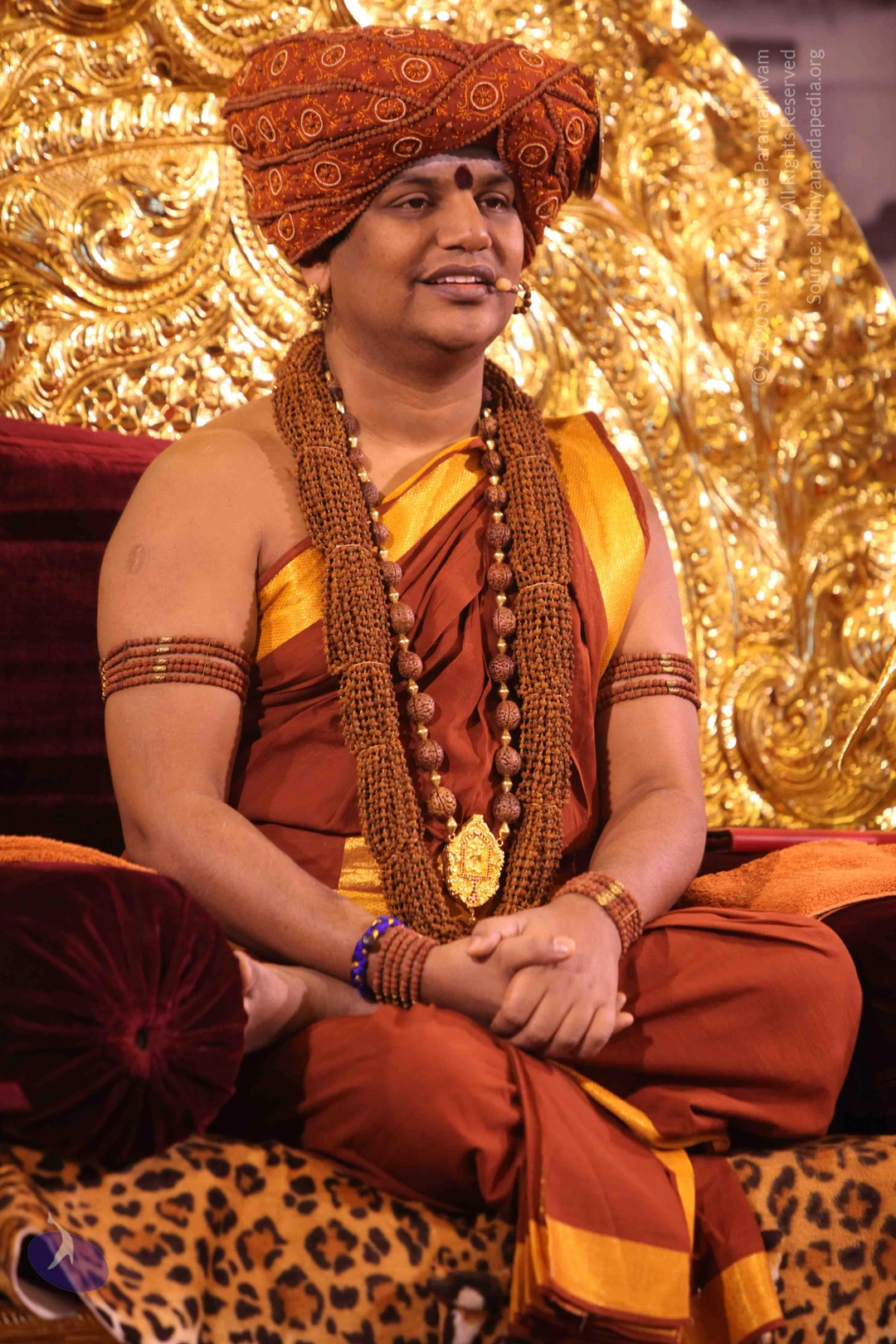
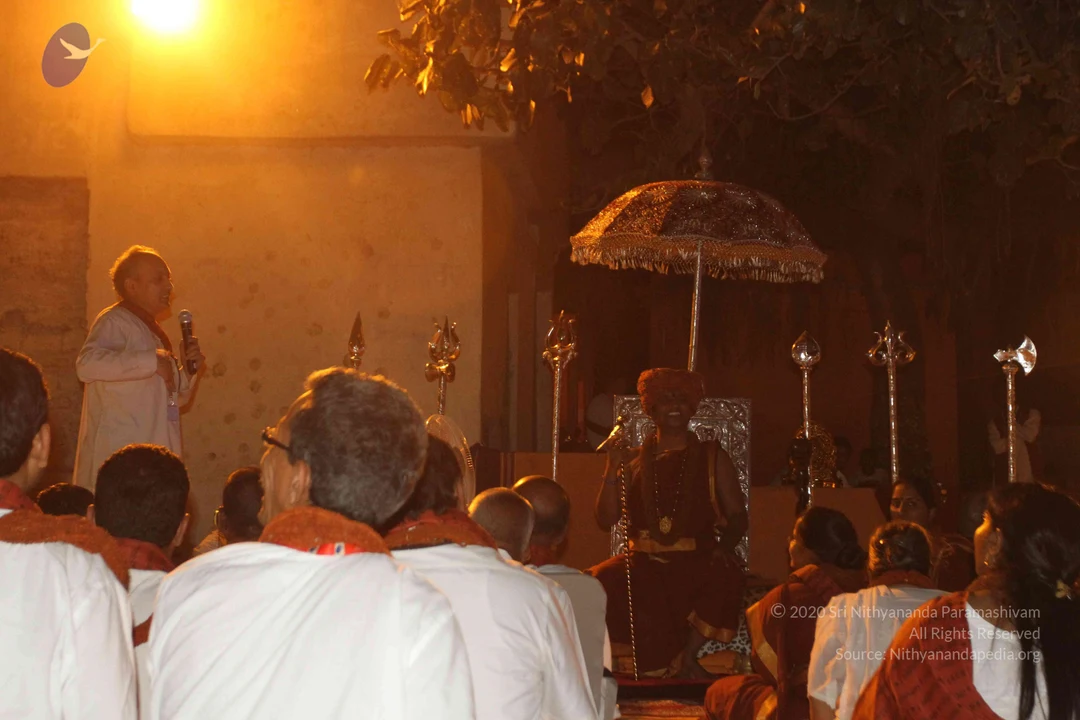
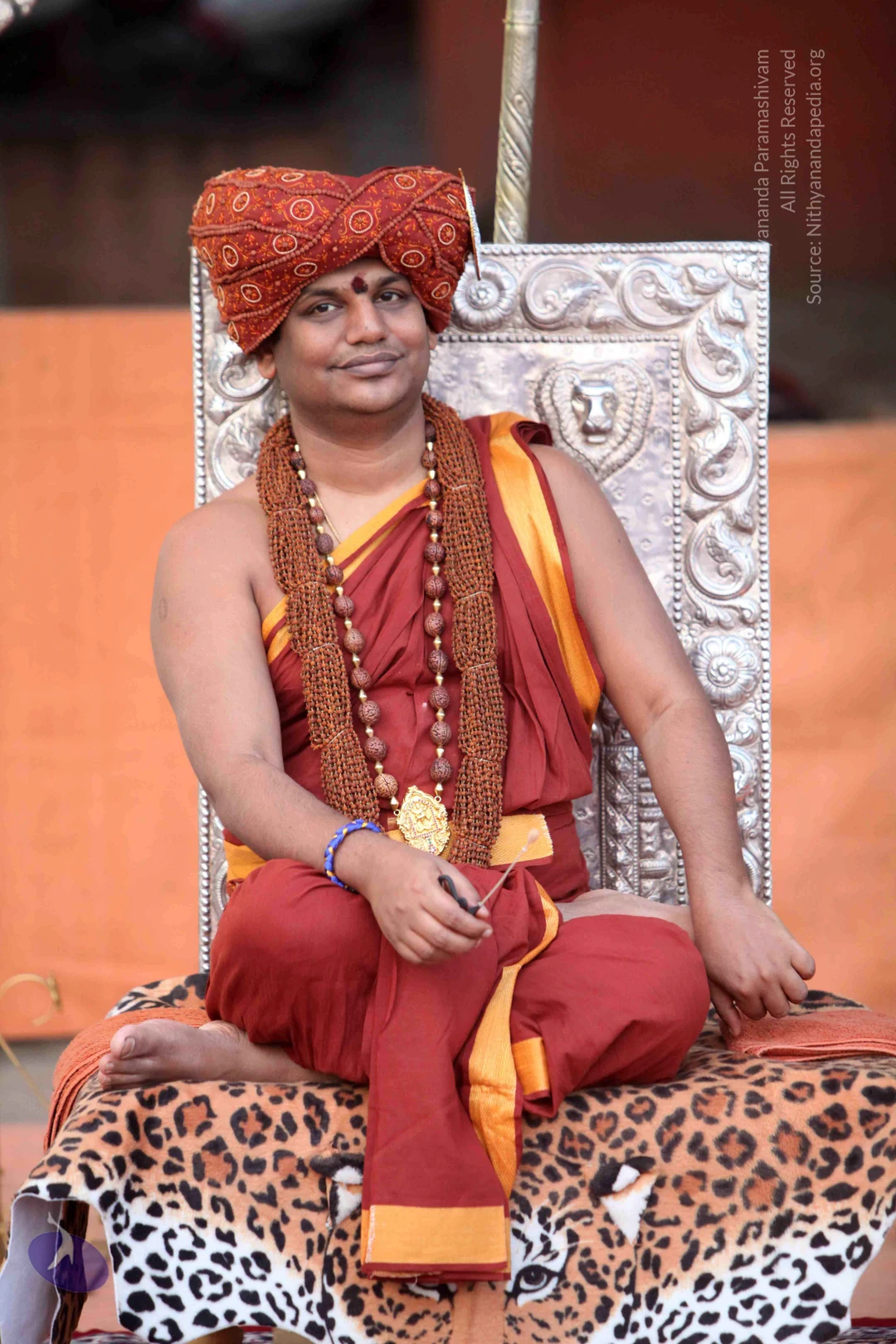
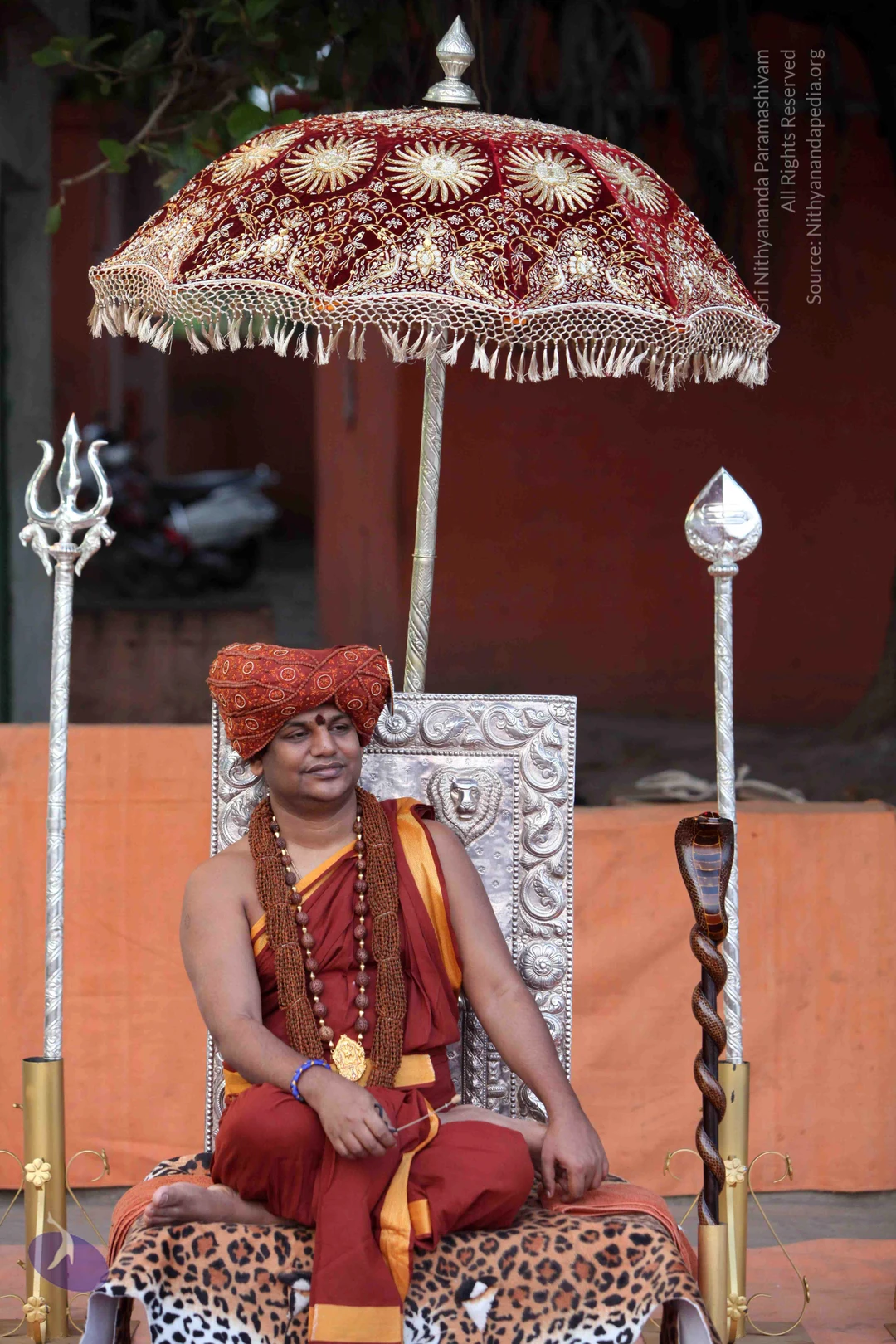
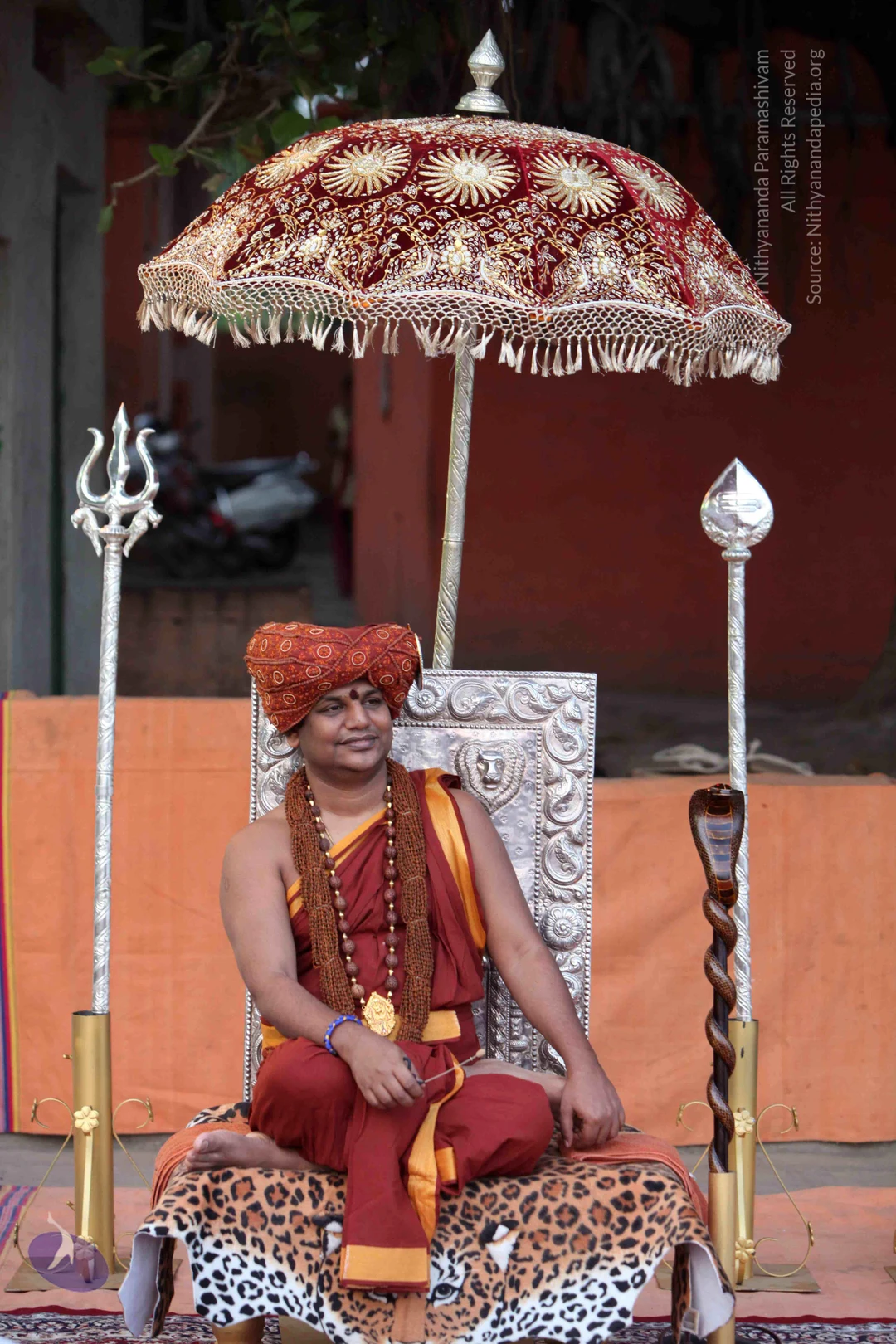
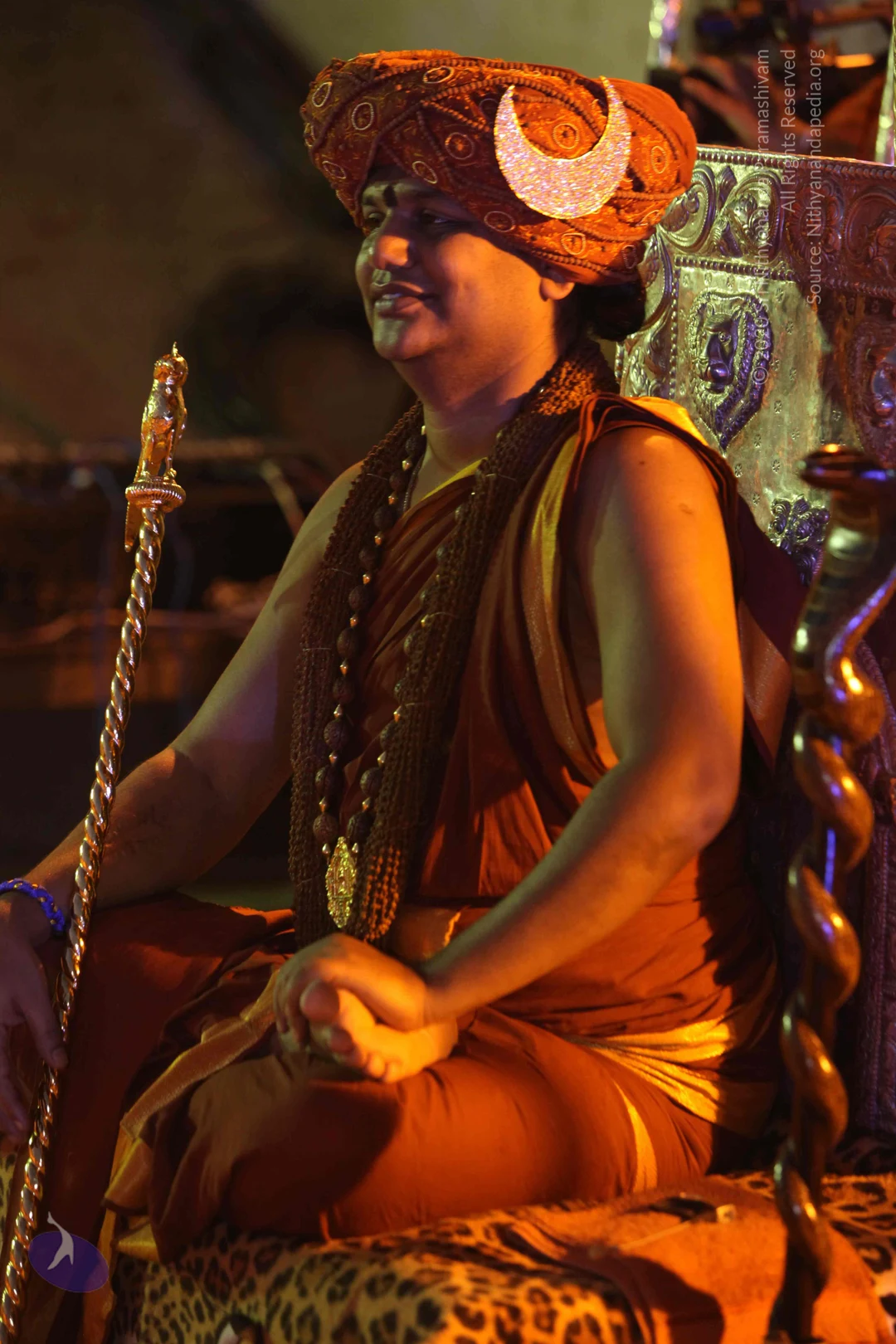
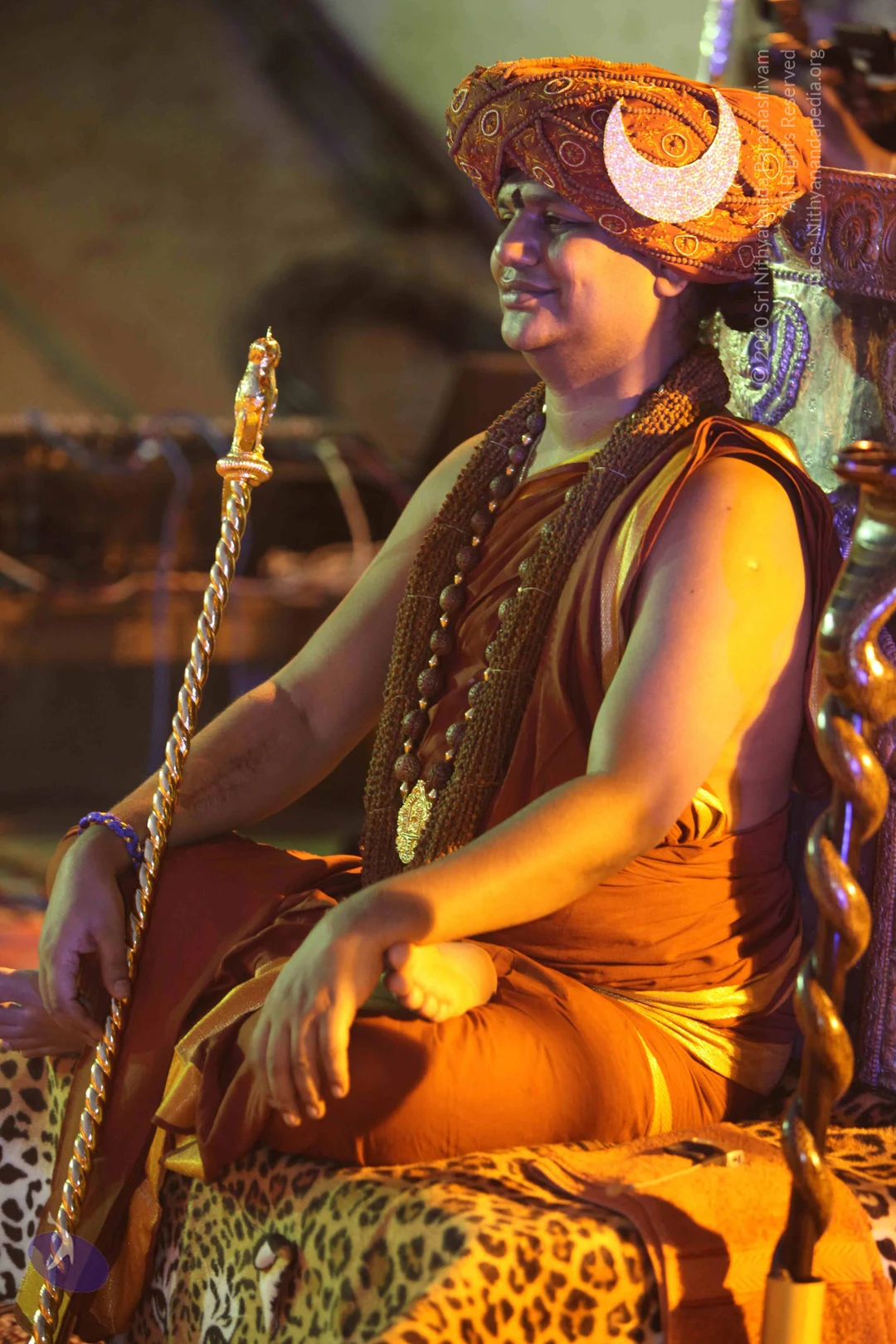
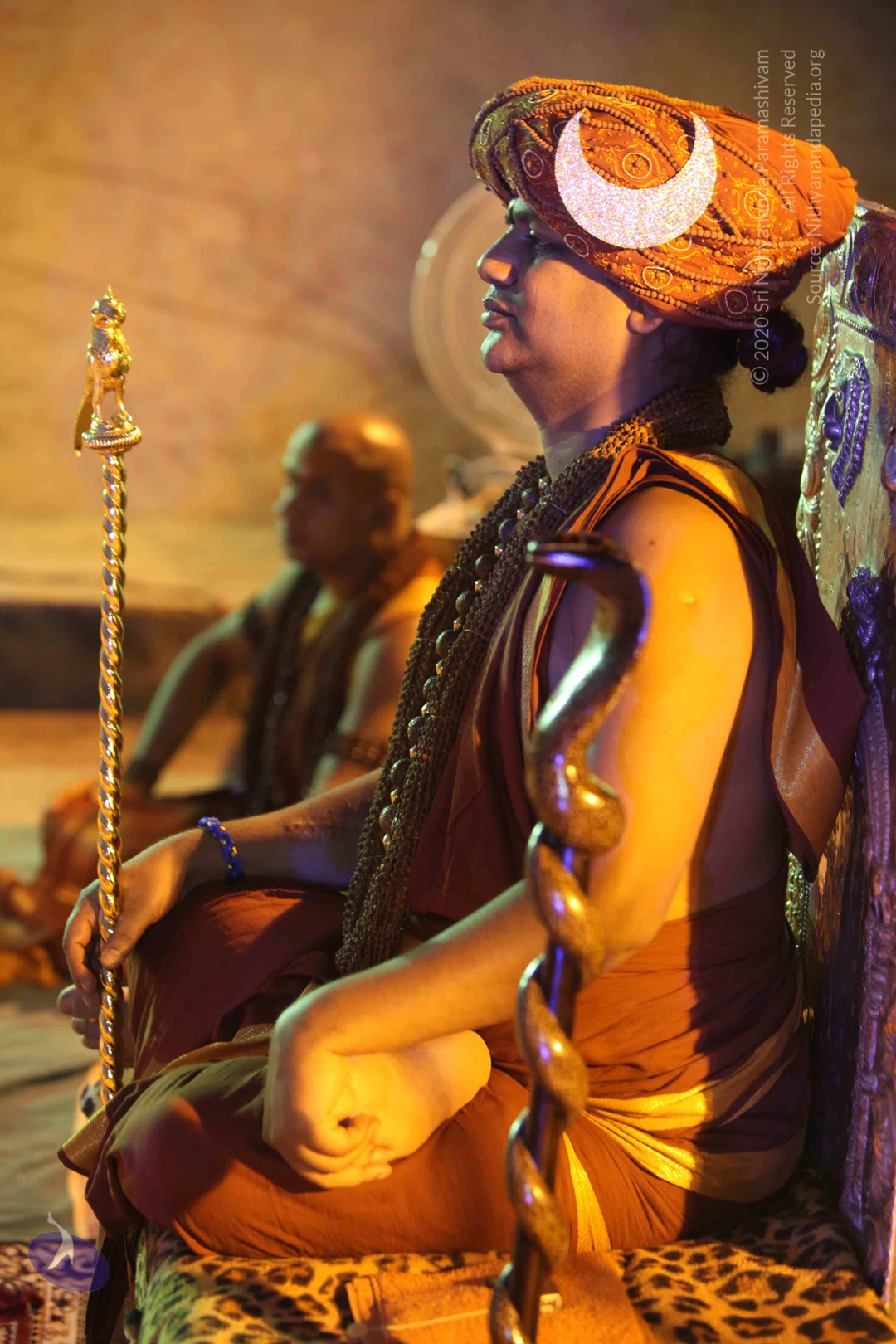
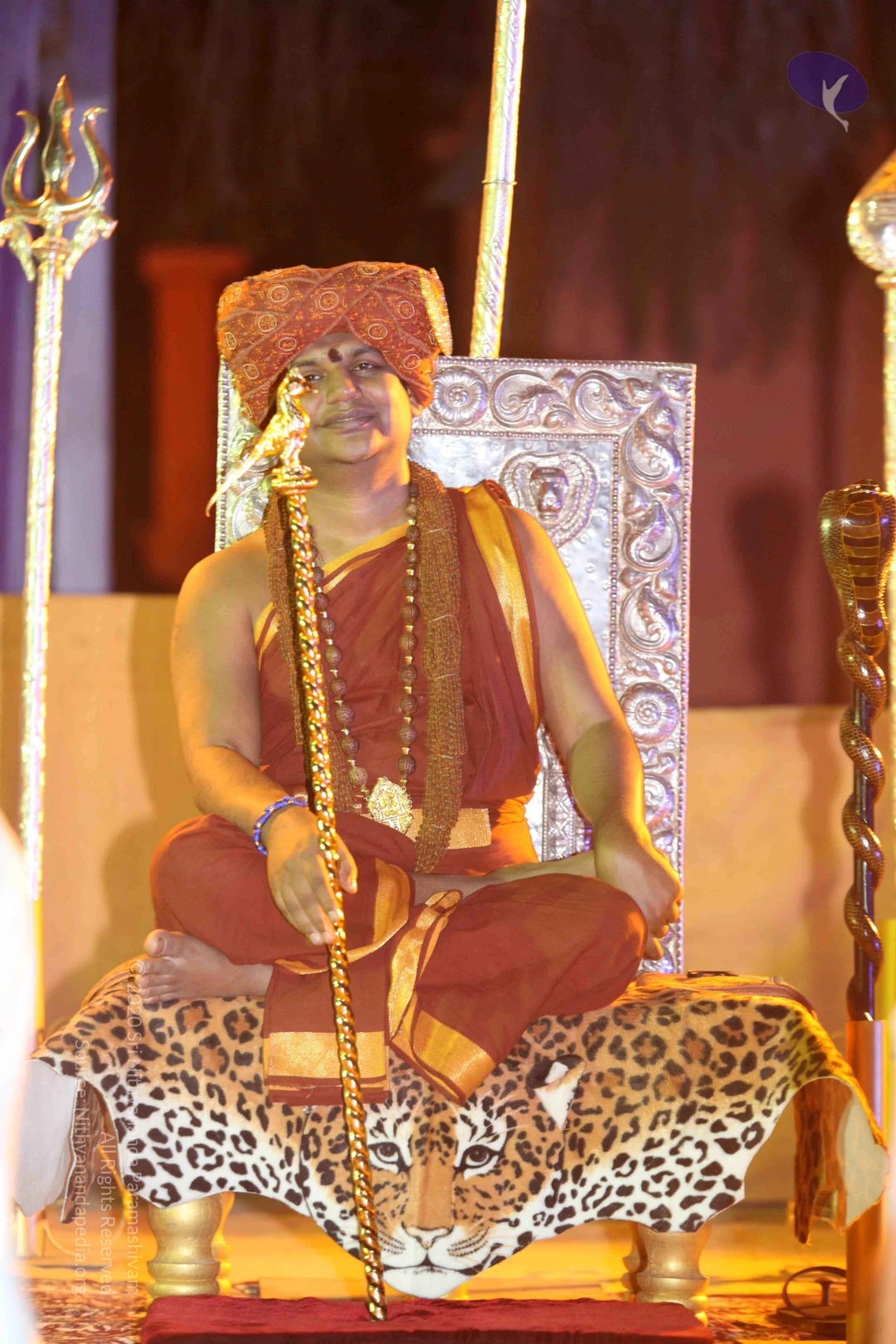
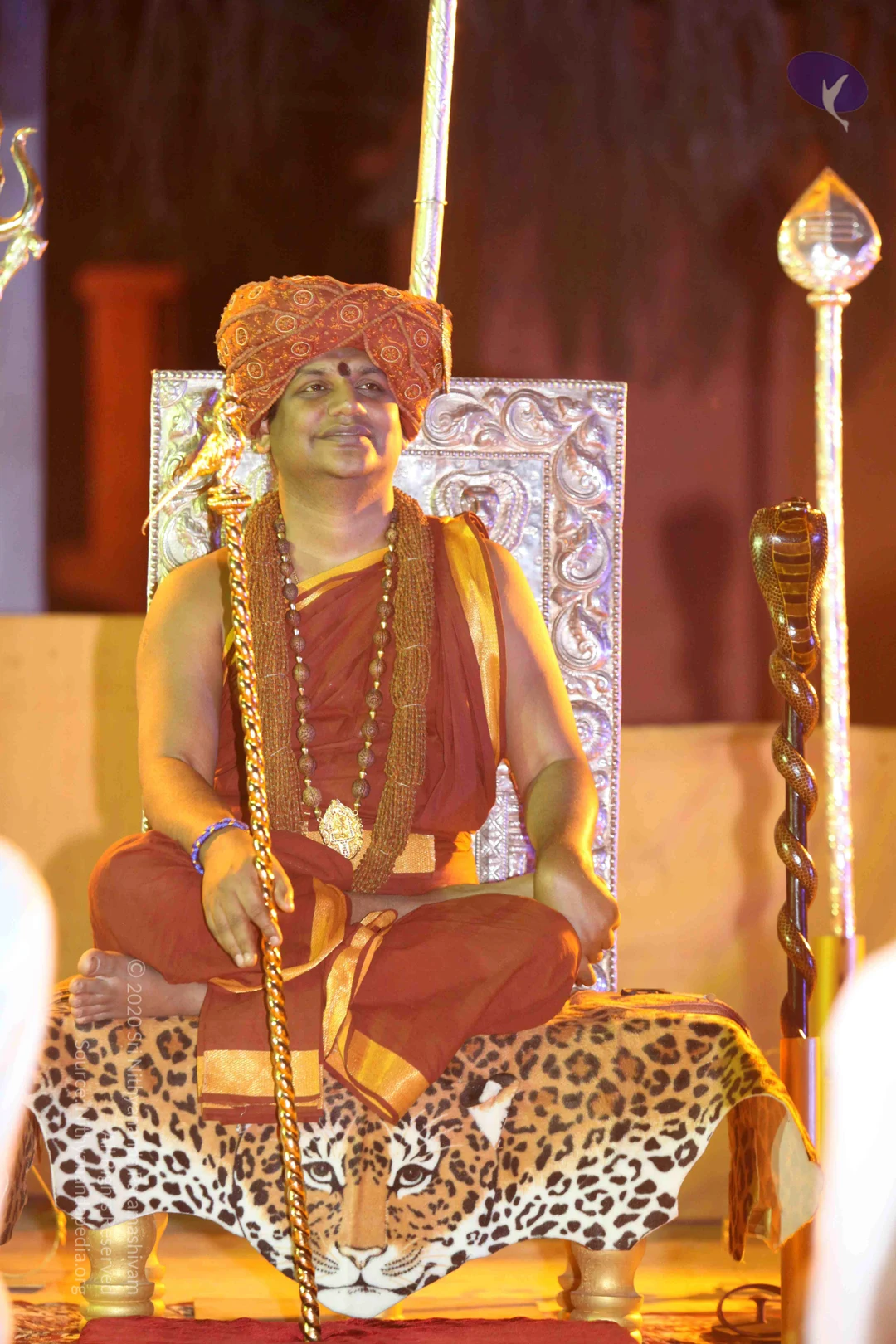
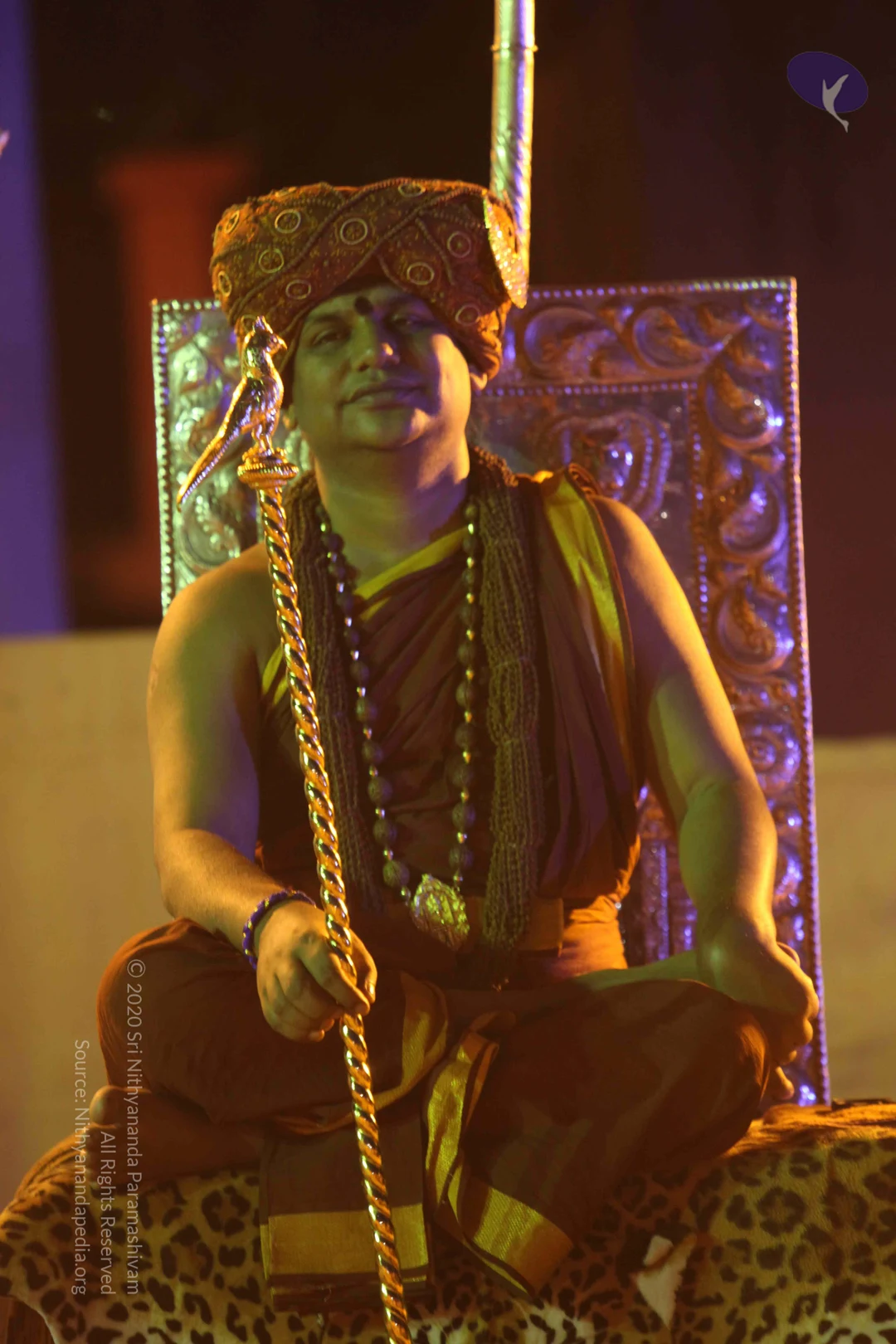
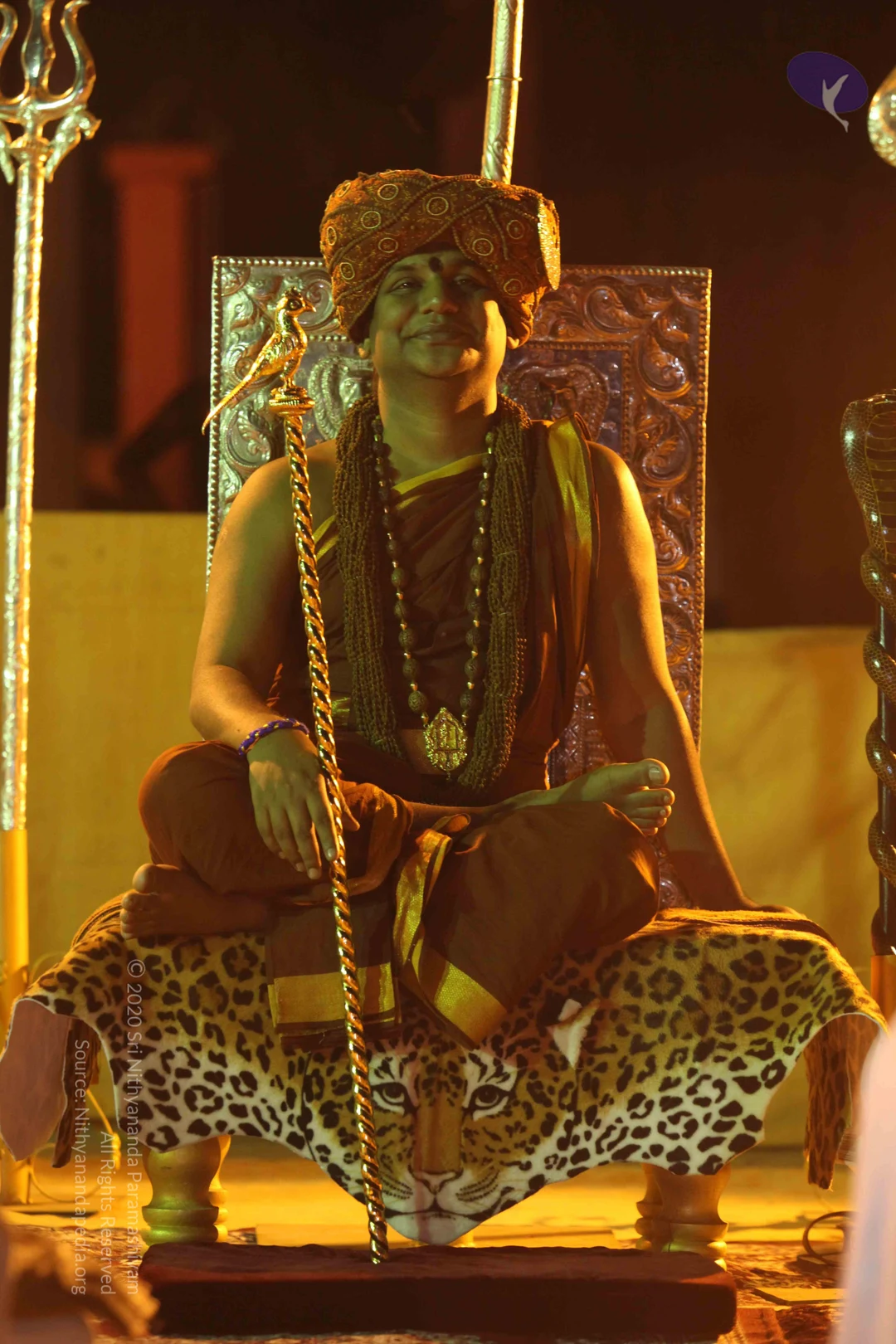
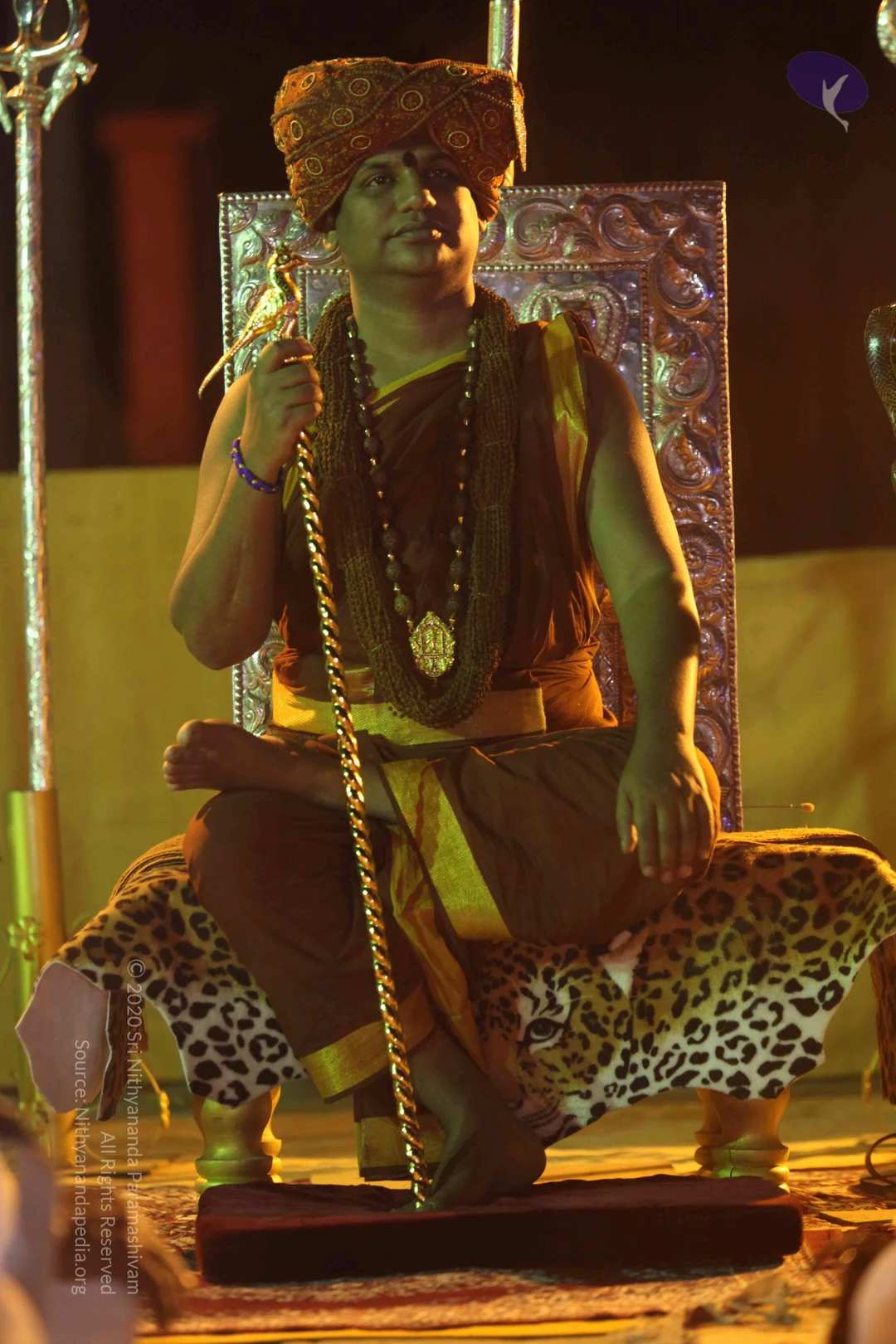
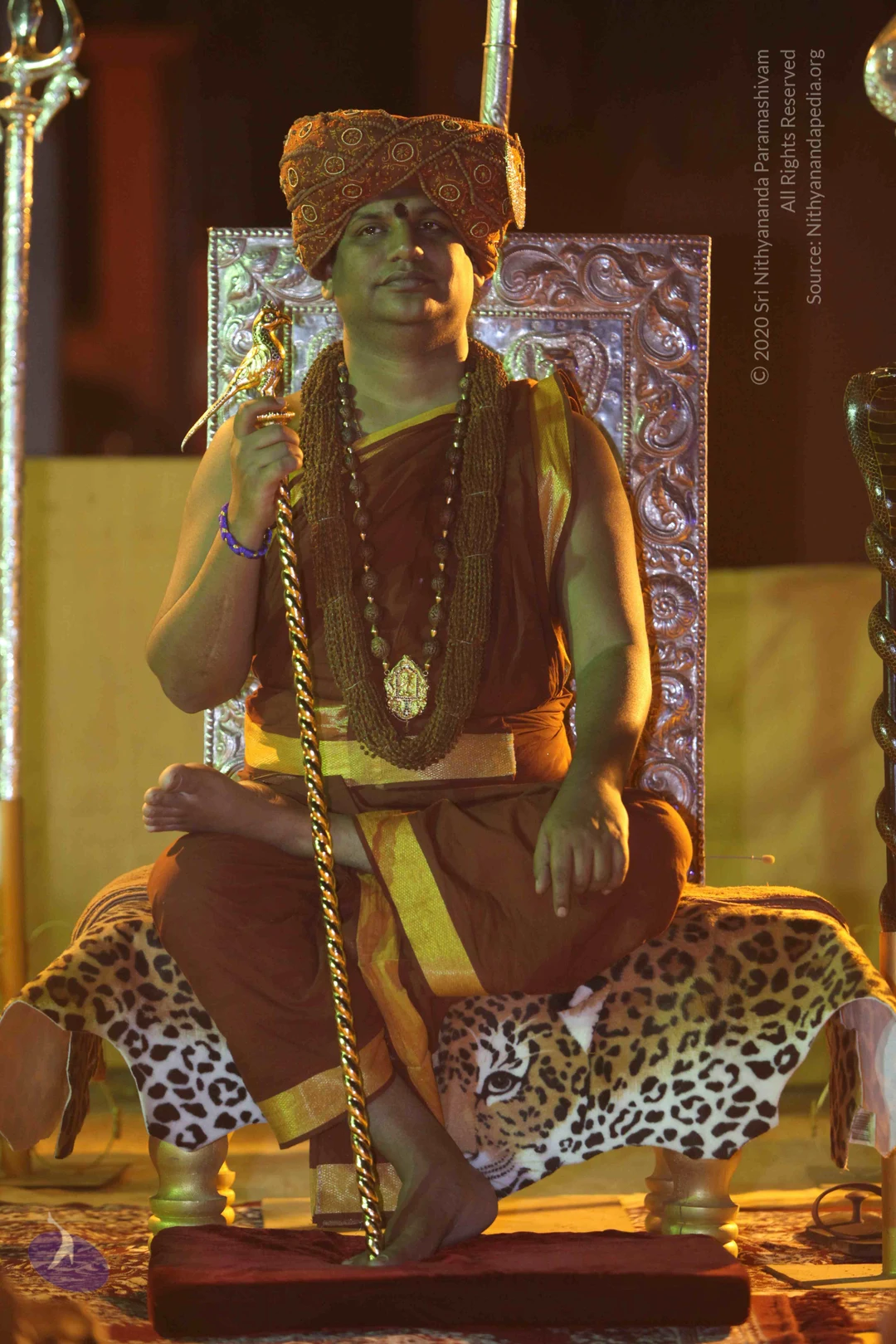
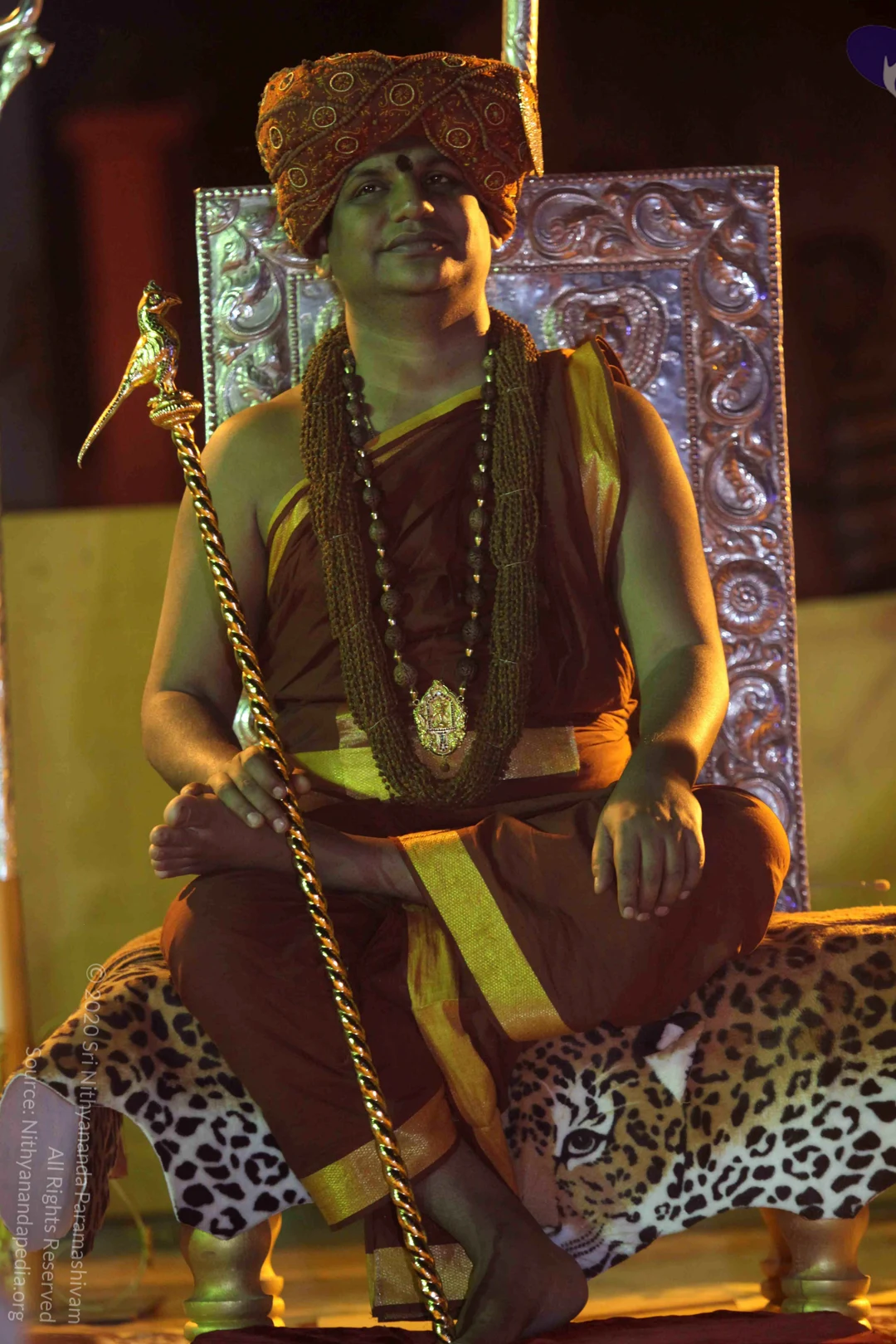
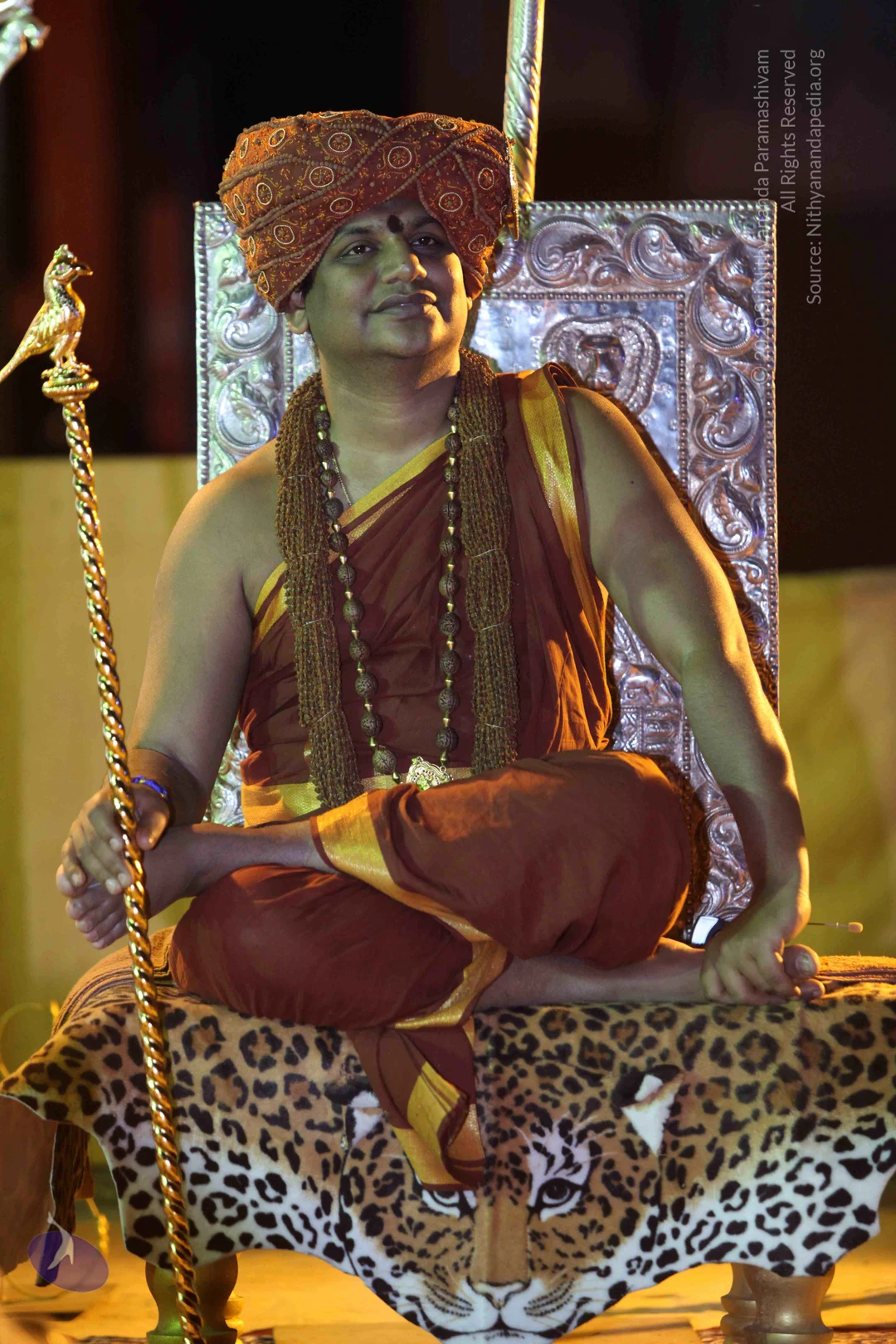
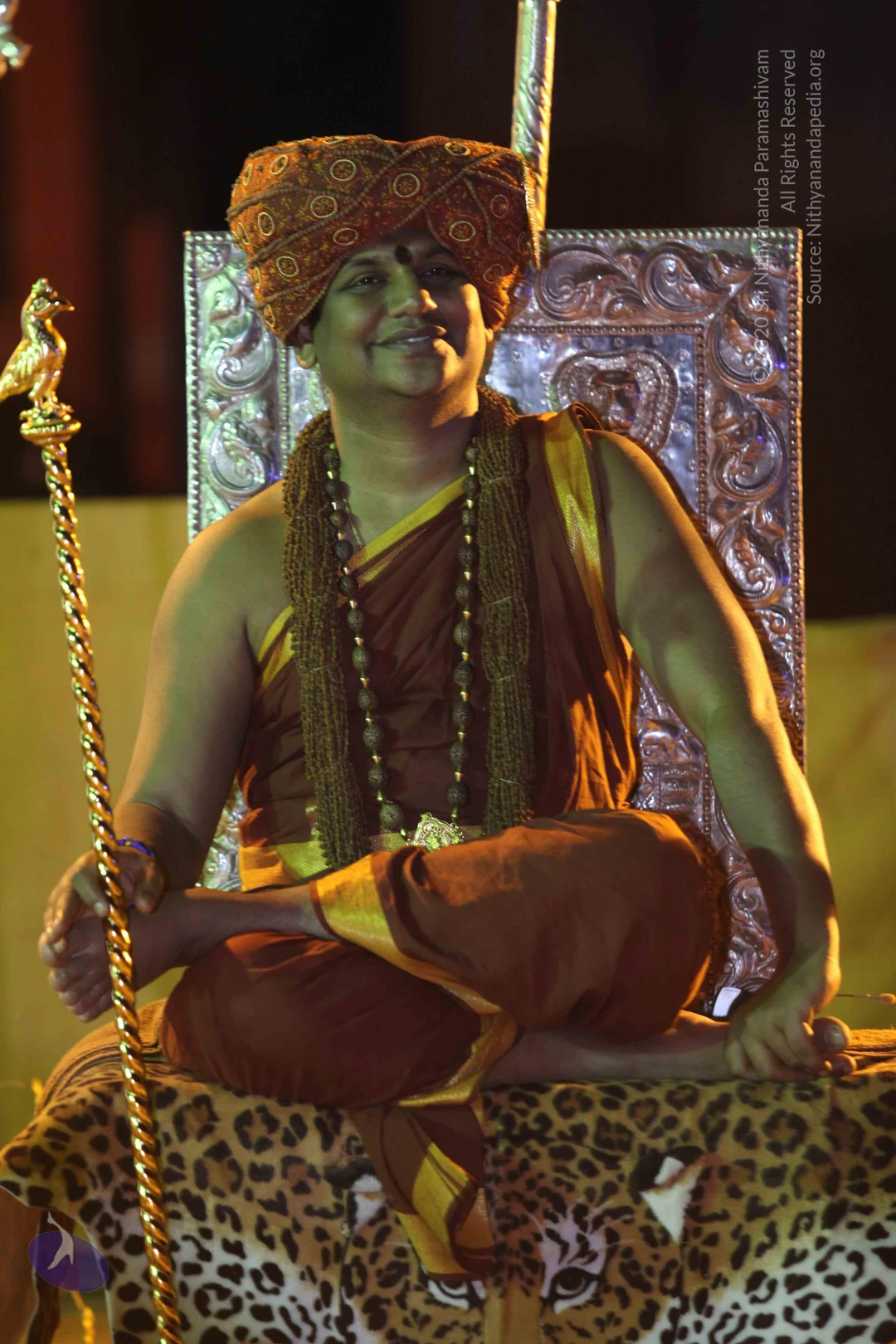
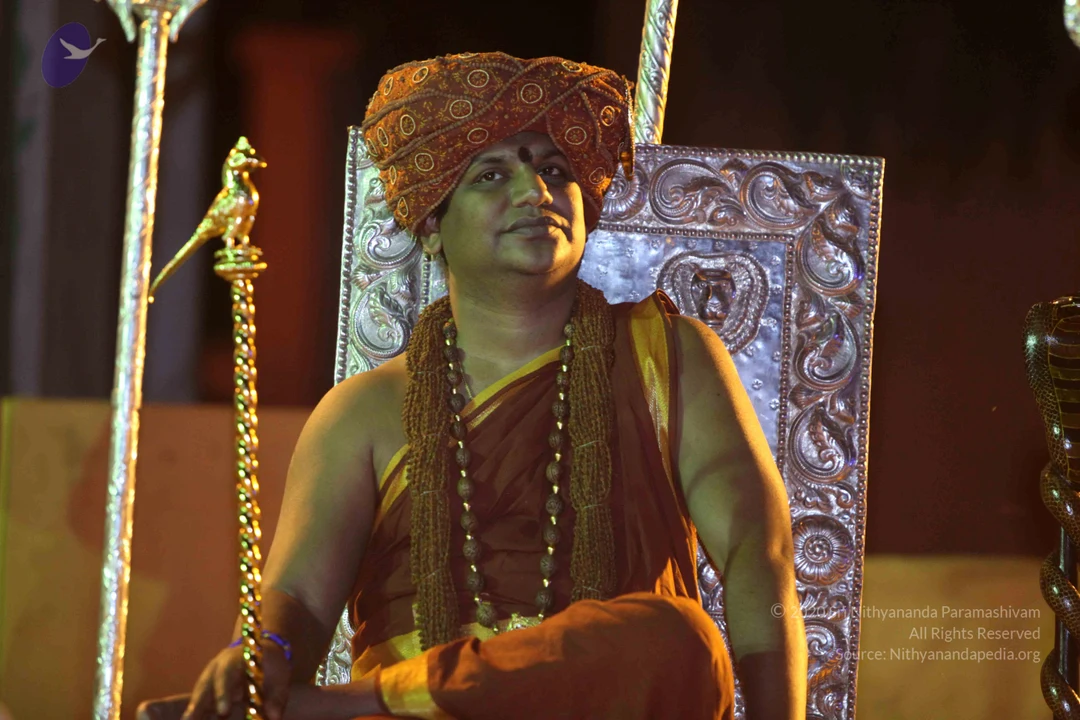
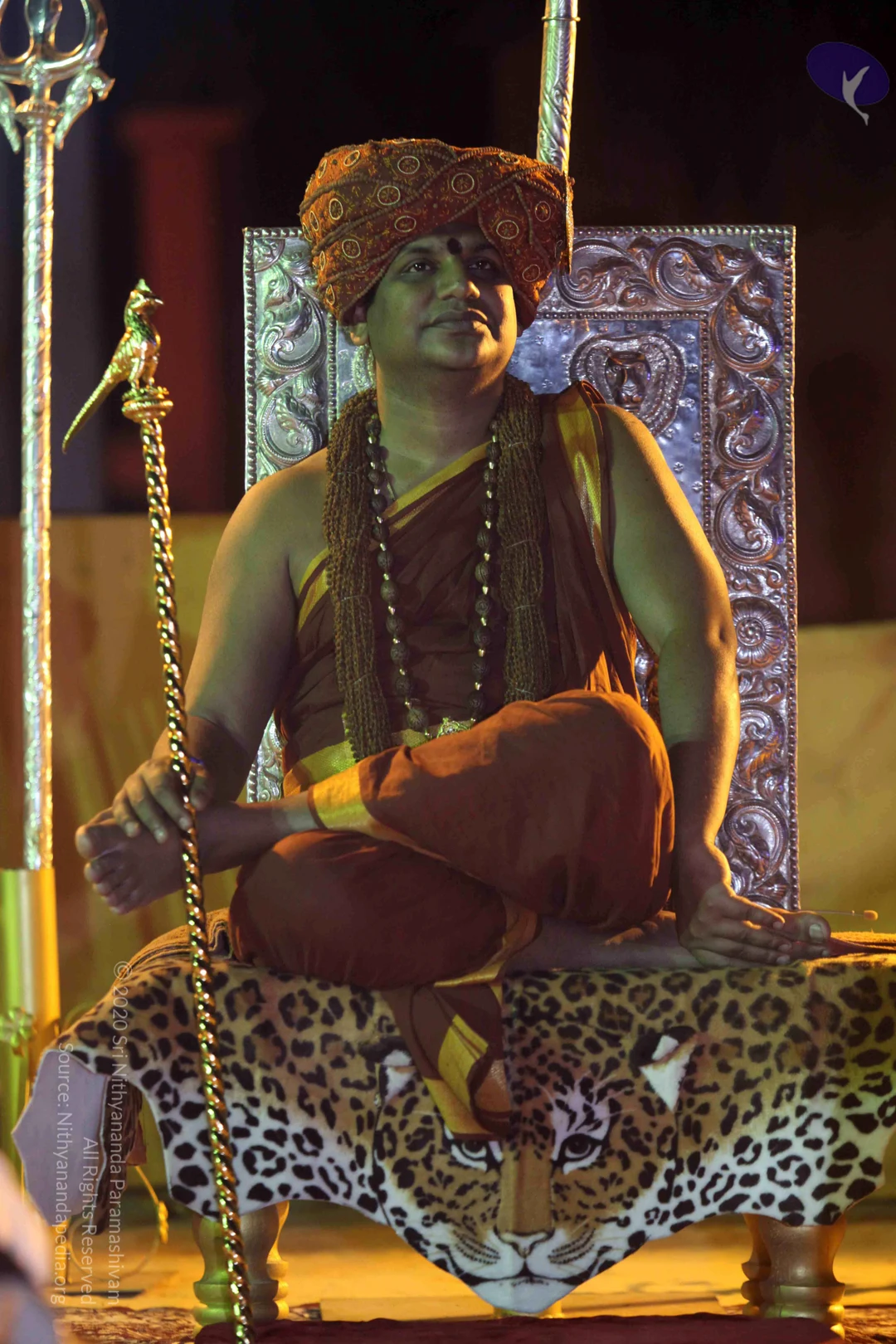
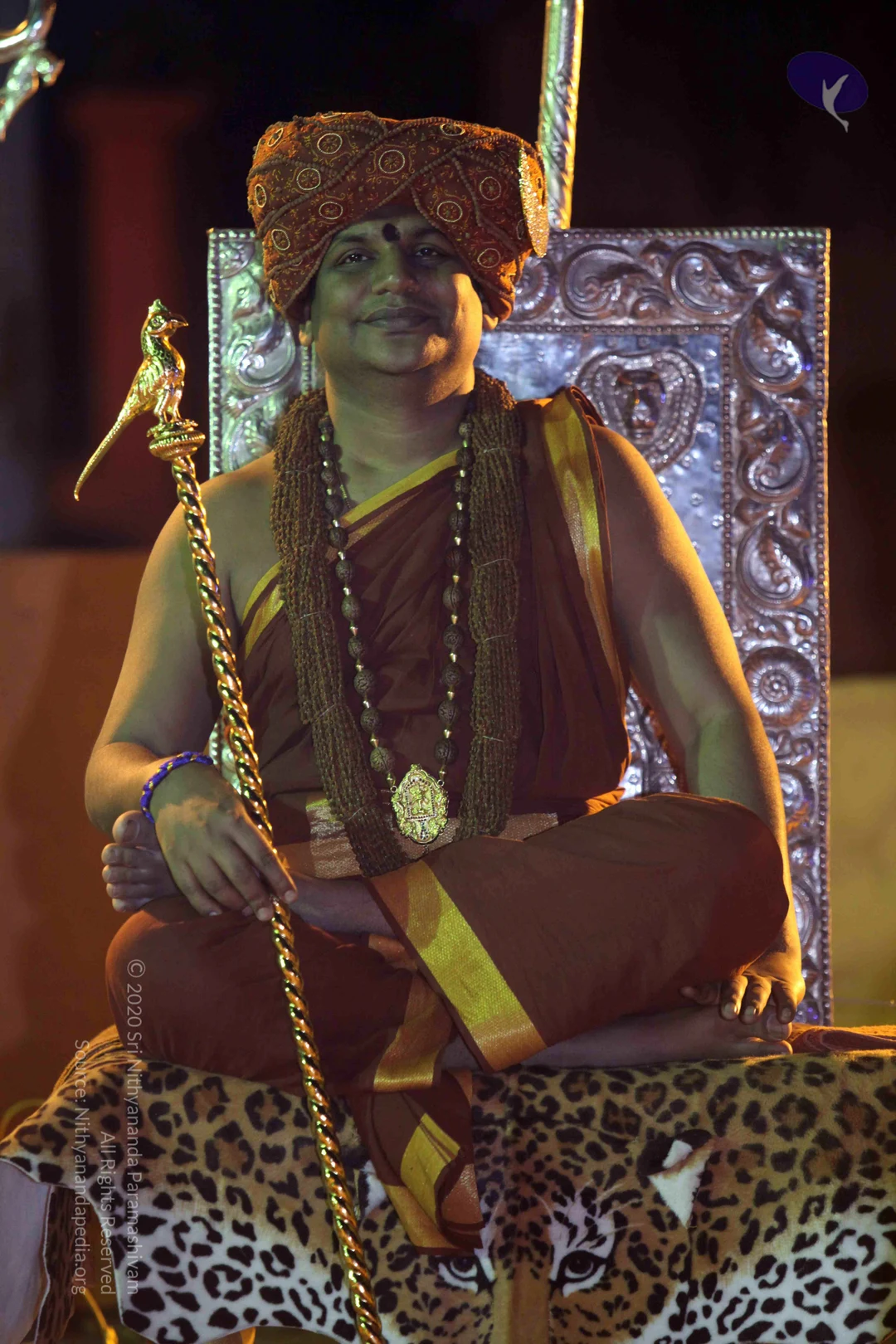
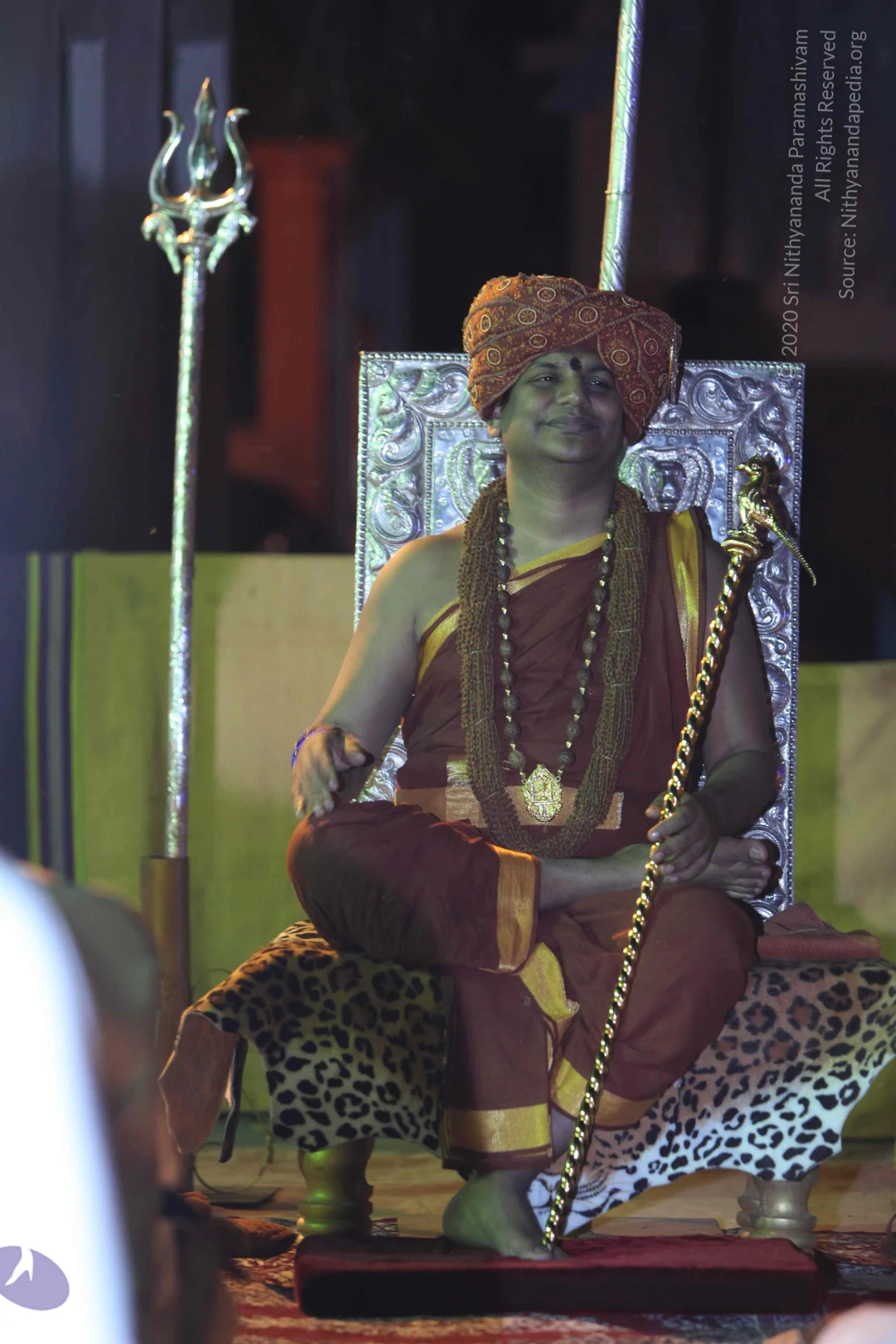
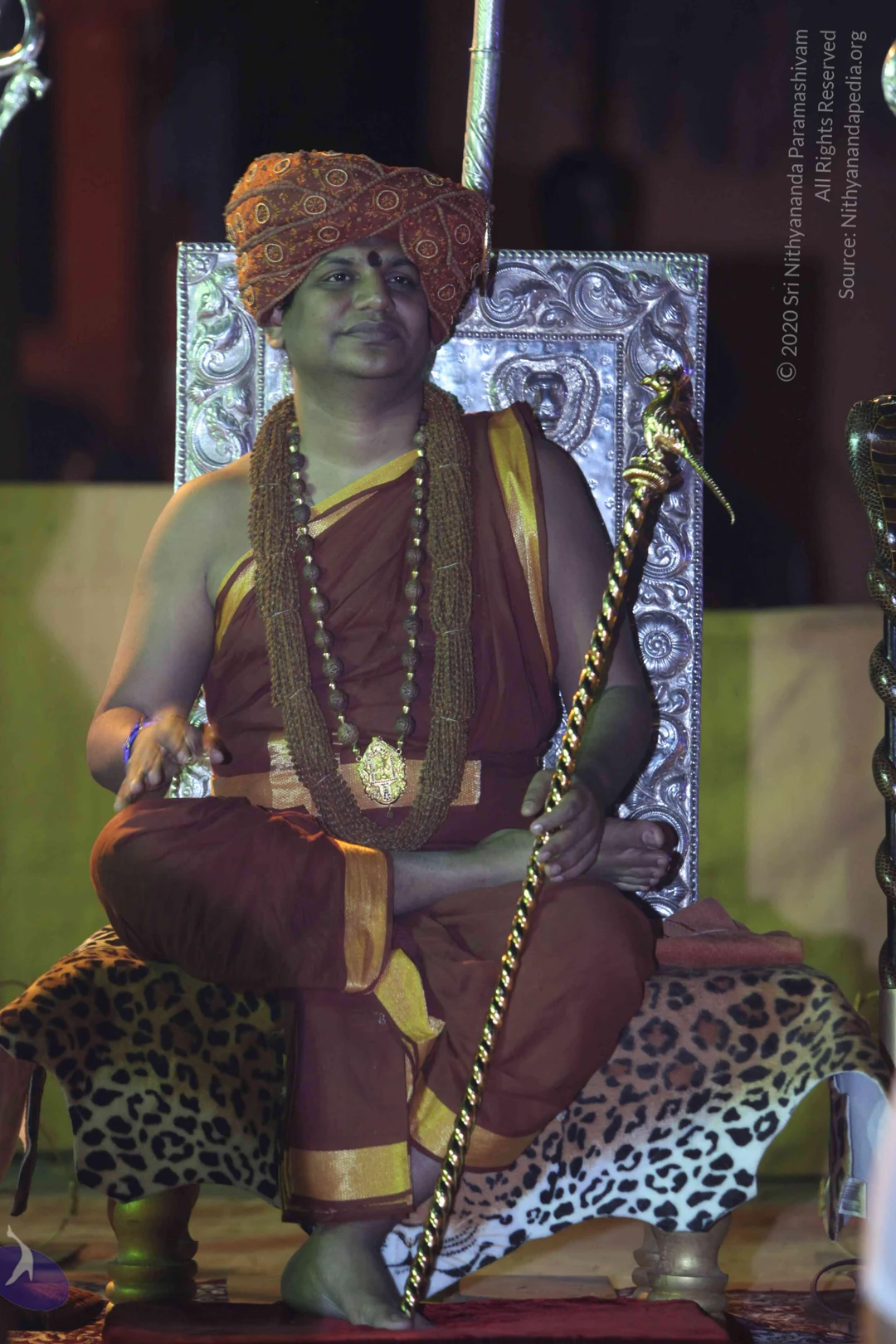
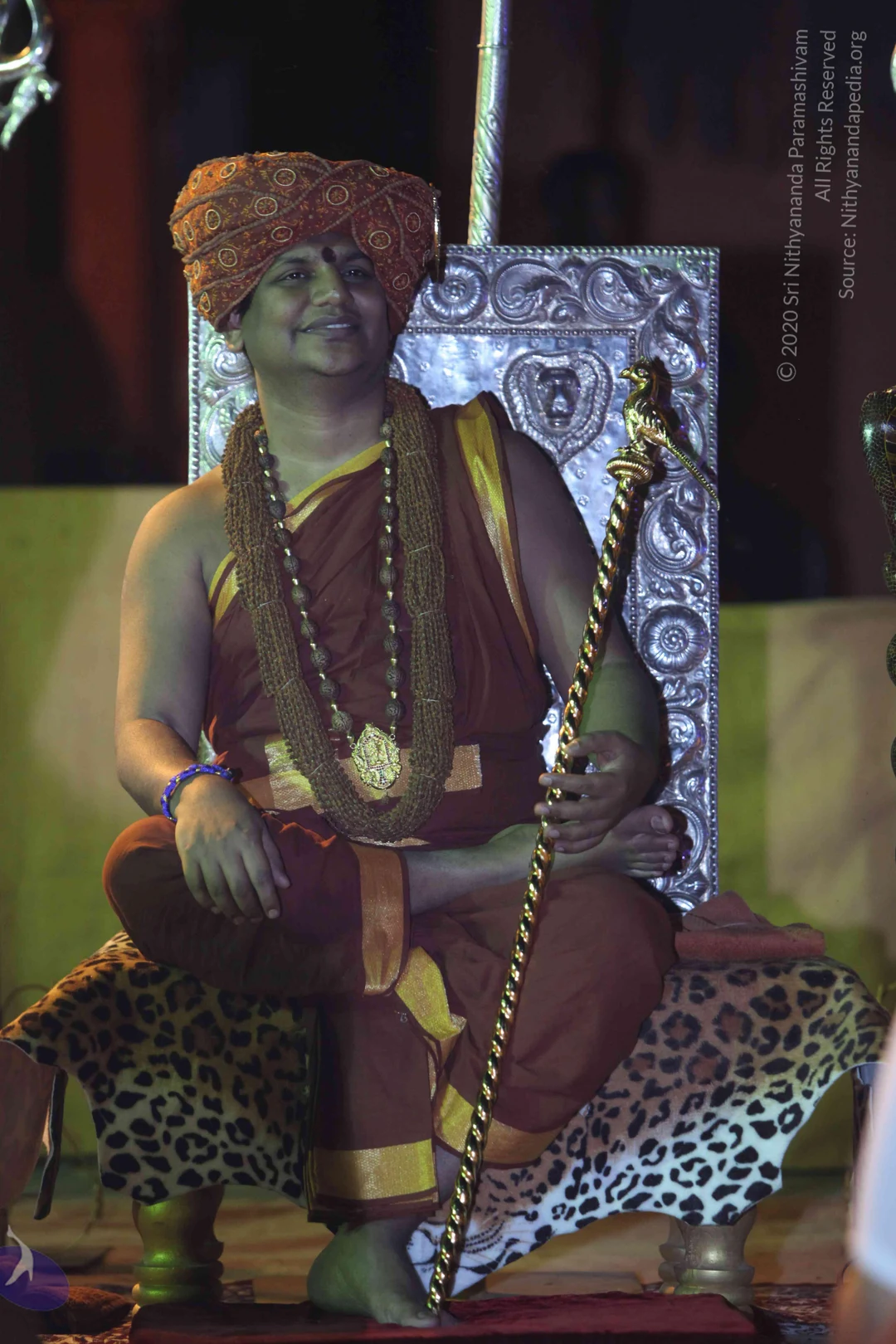
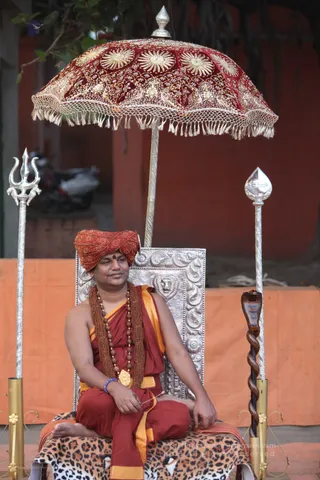
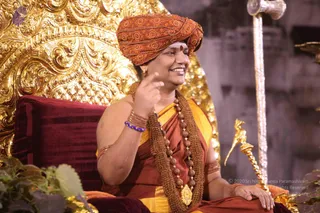
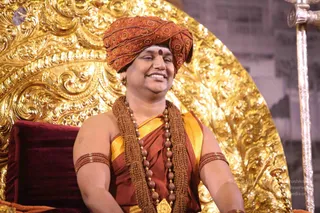
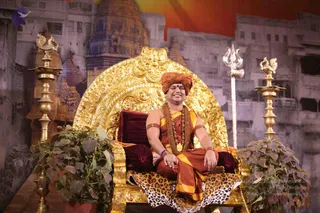
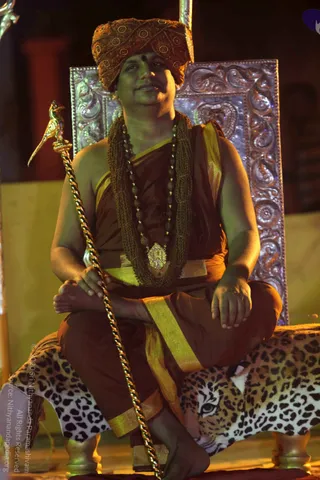
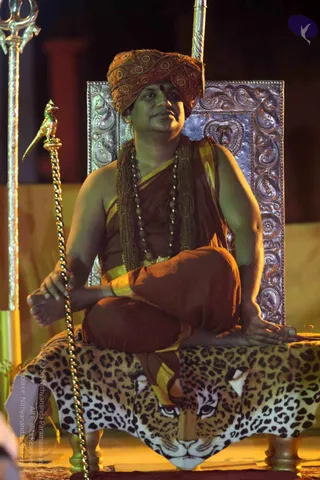
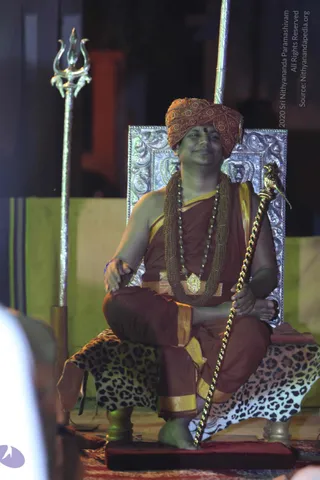
A seated man in a saffron-orange turban with a small red bindi, wearing a rust-orange shawl over the shoulder, long rudraksha malas and a gold pendant necklace, sits on an ornate silver throne with repoussé floral and lion relief panels. Silver ceremonial staffs flank him, one topped with a gold cobra-shaped crest and another with a gilded ornament, and he rests his hand on the armrest in a warmly lit, dim hall. Swamiji (probable): long hair swept under the turban, orange-saffron attire, rudraksha malas and gold pendant cues shown with a seated throne presence, consistent with a discourse setting.A seated man in an ornate orange-red turban with gold embroidery and a bindi sits on a silver-embossed throne with floral and scroll relief. He wears a maroon and gold-bordered cloth, layered rudraksha-style beaded necklaces and a gold pendant, with a blue bead bracelet on his wrist. He rests a gold staff topped with a bird figure beside him, while gold poles and a dark stage backdrop frame the scene under warm stage lighting. Appearance-based label: Swamiji (probable), based on the distinctive turban, rudraksha malas and ornate saffron-toned clothing.A seated man in an orange-red turban with a glittering silver crescent ornament and a tilak on his forehead sits on an ornate silver-embossed throne decorated with lion-face motifs. He wears an orange-red robe, a dark beaded rudraksha-style mala with a gold pendant, and holds a tall twisted gold staff topped with a small figure. A leopard-print cloth covers the seat. The scene is lit with warm amber light, and a brass lamp stand is visible on the right. Swamiji (probable) is identified by the turban with crescent, orange robes, rudraksha mala and ceremonial gold staff, seated on a throne.

May 17 2015

Original wiki page
Contents

Title

The Great Indian Way Of Education

Description

"Today’s (17 May15) Nithya Satsang on Kathopanishad from Varanasi, Paramahamsa Nithyananda expands on Shanti Mantra, the peace invocation of Kathopanishad, which sets the context of vedic education system. The real meaning of ‘Education’ is awakening your possibility into reality. He clearly draws lines between the western non-involvement narrative education, where only words, actions are given from teacher to student, devoid of teacher living the teachings 24/7 – causing students to have insecurity, problems with life; and the great Indian vedic way of education or Gurukul that transmits knowledge from bio-memory of teacher to student, where the Master and student live together, such an education becomes Life Science, just like Lord Rama and Arjuna absorbed the knowledge in just 10-11 years in Gurukul. Announcing his vision for Education System, he declares reviving the Gurukul, original education system, which is about demonstration, experientially living the knowledge, like erstwhile Vedic Universities-Takshila, Sarada Peetha, Nalanda, Naimisaranya, where millions of students studied under one-roof from the illumined teachers. On behalf of Veda Mata (mother of knowledge), He gives a clarion call inviting the teachers who want to revive the education system to join Nithyananda Gurukul. Shanti Mantra, Kathopanishad auṁ saha nāvavatu | saha nau bhunaktu | saha vīryam karvāvahai | tejasvi nāvadhītamastu mā vidviṣāvahai || auṁ śāntiḥ śāntiḥ śāntiḥ || "

Link to Video

VideoAudio

Transcript

Nithyanandeshwara Samaarambhaam

Nithyanandeshwari Madhyamaam |

Asmath Aachaarya Paryanthaam

Vandhey Guru Paramparaam ||

I welcome all of you. All the devotees, disciples, visitors, viewers, sri mahants, mahants, thanedar, kotari, everyone sitting with us through Nithyananda TV, Sadhna TV, two-way video-conferencing having Nayana Deeksha and in Anandavana, Varanasi.

Cities sitting with us in two-way video-conferencing having Nayana Deeksha: Singapore Adeenam, Bidadi-Nithyanandanagaram, Manhattan-New York, Houston Adeenam, Netherlands, Charlotte Adeenam, Morris Plains New York-Varanasi, Hyderabad-Gupta Kashi, Hyderabad Adeenam, Onecar City-Oklahoma, London-Southwest, Dubai Adeenam, Temple City-California, Sanjose Adeenam, Selang-Malaysia, Ohio Adeenam, Los Angeles Adeenam, Johns Creek-Georgia, New York Adeenam, Poornananda, China, Seattle Adeenam, Phoenix-Arizona, Toronto Adeenam, New York Adeenam, Sedona-Arizona, New Zealand-Adhi Arunachalam, Vancouver-Bhubaneshwar, Surrey-Canada and lot more cities. St Louis Adeenam, some more cities joining, Oman Adeenam, Torrance-California.

I welcome all of you with my love and respects.

02.46

I will continue to expand on the Shanti Mantra of Kathopanishad. Please recite along with me.

auṁ saha nāvavatu | saha nau bhunaktu | saha vīryam karvāvahai | tejasvi nāvadhītamastu mā vidviṣāvahai || auṁ śāntiḥ śāntiḥ śāntiḥ ||

Please listen, and repeat once more:

auṁ saha nāvavatu | saha nau bhunaktu | saha vīryam karvāvahai | tejasvi nāvadhītamastu mā vidviṣāvahai || auṁ śāntiḥ śāntiḥ śāntiḥ ||

05.01

This Shanti Mantra introduces the context of Vedic education system. Education, is nothing but awakening your possibility into reality. Please listen, making your possibility into reality is education. I am defining Education. Awakening your possibility into reality, making your possibility into reality is education. All education should be making your possibility into reality. The Indian way of education is not non-involvement narrative style where the student and the teacher don’t get involved more than the few hours of narration where the teacher narrates – 2 + 2 = 4; you have to live boldly and courageously. After 4:30, school is over, this fellow will be shivering like a rat, so students don’t get to see the example of teachers.

I tell you, the most hypocritical, superficial education system is what we are having now where there is no involvement between the student and a teacher. No! Most of the time students can just see through the ignorance of the teacher. Some student asked me and I did not have the answer for this question. He said, “If same teacher cannot teach all the subjects, how do you expect the same student to study all the subjects?” Its true! The mathematics teacher will be stupid in his personal bank accounts, the electronics-engineering professor will not be able to screw a bulb, and the great civil engineering teacher cannot build even one hut. No, people see through, students see through the ignorance of the teachers. I tell you, the most superficial education method is what we are practicing in the modern day. Non-involving narrative method where teacher comes and narrates some stupid theories, which he has not digested nor applied, limited to only some things of outer world. He leaves the students and they stay separately.

09.05

I tell you, this non-involvement narrative method is responsible for students developing so many phobias, psychological disorders, problems and deep insecurity about life. I am telling you because teachers also did not have the maturity to be with the students 24 hours to demonstrate what they are teaching. They will not be able to be hero 24-hours in front of the students because they don’t have that kind of a stamina and energy, intelligence. This non-involvement narrative method was invented.

The original Indian education system was living under the same roof. Living under the same roof. Vashistha (Guru of Lord Rama) cannot take morning 6 to evening 4 class about archery and when the elephant or a demon attacks his hermitage, he can go hide himself in a hut. No!! In the midnight, if a demon or a wild animal attacks, he will be the first one standing with bow and arrow. That gives courage to Rama and all the other students studying under him. Understand, that is why whenever a student and teacher live together, the knowledge taught, the education that happens becomes life science. It becomes life science because when they stay together, they know the practical problems of life and the teacher will be given a pressure to find solutions for practical problems of life.

11.25

Teacher cannot say, ‘I don’t know about this’, in front of students. That is why Indian Education System – Gurukul was providing almost everything needed for life. The basic Ayurveda knowledge, basic archery to protect yourself, basic business to run the business or administer, a basic critical-thinking and decision-making and basic truths required about Enlightenment and Life. So everything at the basic level is provided at the Gurukul. If somebody wants to master or specialize in some subject, they can do it. I am very serious, I wanted to revive the Indian education system – the Vedic education system. I will be able to do it.

Non-involving narrative style is stupidity, is really stupidity. We need teachers who themselves are living in a state of completion and 24-hours kids should see them living in the space of completion. Please understand, we need teachers, that is what actually I am doing now. I am on the job of producing more and more parent-teachers, who themselves live in the space of completion where the kids see the parents-teachers living in the space of completion, living enlightenment. So the kids are constantly supported, encouraged, made to experientially open up their possibilities.

13.54

Understand, just last year I declared in our Gurukul that all the kids age of 10 will start writing 10th standard examination. Now I am seeing more than 40% kids are doing it. It is just 1 year effort and many kids have joined the Gurukul very late. I have developed now new vision for Gurukul where the parents themselves will be teachers participating in the Gurukul activity, living in the Gurukul, where they will be encouraged to experience the science of completion and real education.

Listen. Listen to this commandment – Uneducated are those who are educated only in schools. Uneducated are those who are educated only in schools.

Listen! Listen to this declaration – Uneducated are those who are educated only in schools. If somebody is educated only in the school hours, that kid is truly uneducated. Education means only the tool to awaken your possibility should be given to you and you should go on exploring and awakening multiple possibilities of you without any special teachers for those possibilities. That is education. I teach my Gurukul kids any one instrument properly – either Tiru Kailaya Vadyam or something. Then, once the tool of tuning yourself to the sound is given to you, then we provide all the musical instruments and they start playing, picking up. Same way, the Malla Kamba yoga, the yoga on the pillar which is considered as Hanuman in Indian tradition. We teach only the Malla Kamba yoga, from that they pick up the science of manipulating, using their body in multiple, ways, multiple things they start picking up. Just one tool when it is given, using it and awakening all the different possibilities.

17.21

Same way, I only taught the science of completion, they started playing with it and taking it to the next, next level. There was a mango tree outside the Gurukul. I heard too many kids were fighting and jumping for that mango. When I was walking there, they told me. I said, “Hey, you guys are not beggars. You are kings. Just tell the tree to get more mangoes and whoever wants go and eat”. And please understand, I really want to tell you, I did not tell the tree. If I tell, it is my power. No! I just told the kids, you guys go and talk to the tree. Now, I am really telling you-the tree is now giving at least 4 times more mangoes. And when they want to climb the tree, they go and stand there and talk to the red ants-see we want to have mangoes, please move out. And they move out, they give way! And these kids climb and enjoy the mangoes. It is just one tool, completion I gave them. They are using it to as simple as need of a mango to as difficult as need for enlightenment, whether it is mango or enlightenment mango.

I tell you, still I have not revived completely the Indian education system. I really wanted to provide a laboratory where the kids will take out the science of flying machines and assemble, create the miniatures and demonstrate few thousands of years before, we had flying machines. Few thousands of years before, we had batteries. Just with Ayurvedic herbs, Agasthya created batteries. We have all these references, all this knowledge. I wanted a laboratory and I will do it. I will do it where all this knowledge and tools required for the research and development to play with-all this will be provided. Kids can playfully do research on all this, assemble, and demonstrate to the world. Only when I have done this, I will feel I have revived Vedic tradition. I wanted a large laboratory where all this knowledge is available by one touch to all the kids and all this technical assistance is provided for them to explore, think, analyse, assemble, demonstrate-all this should become research projects for my Gurukul kids.

21.13

Actually this is the way, I wanted the Indian education system to be revived. Not just awakening the science of enlightenment. That is one part. Not just awakening the science of completion. That is only one part. They demonstrating blindfold reading, talking to the plants and making the rose plant to drop the thorn, or talking to the mango tree and getting 4 times more mangoes-all these only one part of Indian education.

Our Masters used inner powers and outer technology and achieved tons and tons of comforts and luxuries for human beings. I want all that, from the original technology to be revived. I want our kids to learn how to use the sound to send the Astra, arrows like Nagastra, Agneyastra, Varunastra. When I say I want, I mean I will do it. I wanted the whole Indian education system to be revived because it has some of the unique things.

23.00

Understand, the real education is done from bio memory to bio memory, not from muscle memory to muscle memory. No! Real education is done from the basic beliefs of the teacher to the basic beliefs of the student, not from the actions and words of the teacher to the actions and words of the students. That is too superficial! That is too superficial! From words and actions of the teacher to the words and actions of the student-easily teacher can cheat the student. Most of the teachers are cheaters. It is not coincidence that the sounds are very close and matching because just from words and action to words and action, you can easily manipulate. That is not real education. It is from bio memory to bio memory. See actually only this understanding solves our thousands of questions. How did Arjuna stay with Drona not more than 10 years and could catch everything Drona gathered spending his whole life? Understand by 18, Rama’s coronation was organized, only by 7 he was sent to Gurukul, so between 7 to 18-11 years, how did Rama master everything Vashistha had? Even Arjuna was not in Gurukul for more than 10 years. How did Arjuna master everything Drona had? It was not just word action to word action. No! It was from bio-memory to bio-memory. The education level itself was totally different. That can be revived only by the way of teachers and students staying together and teachers themselves are living what they are teaching.

In the modern day it is not coincidence that teacher and cheater are anagrams. Exactly the same letters. No, it is time we create a Gurukul, we create a space where like Sarvajnapeetha, Sharadapeetha, Nalanda, Takshashila, Naimisharanya, where students and teachers live together and the knowledge is transferred not just from words and acts of a teacher to the words and acts of the student, it should be transferred from the bio-memory of a teacher to the bio-memory of the student.

27.08

In our Sarvajnapeetha, I will demonstrate all this by reviving Indian education system. I am not interested in marketing and commercializing; I am interested in reviving it. Let any big school chains take this knowledge and market it or commercialize it, but I am going to revive it and demonstrate it. I am really going to revive it and demonstrate it-offer it to the world free, take this. Everything, our science of building homes, Vaasthu, establishing our villages and towns, making deities, consecrating the space and doing Pranapratistha to deities. Please understand, consecration is not equivalent word for Pranapratistha. It is too poor word. May be for something very low, consecration word is okay, but not for Pranapratistha.

Astrology, Vaasthu, all the upangas of Vedas, Jyostisha, Ayurveda, everything will be studied, made user friendly, and demonstrated to the world. We will experientially demonstrate the formulas and methodologies to the world. The real Indian education system is all about demonstration, experientially living, breathing life into matter is Pranapratistha. It can never be reduced to a small word called consecration. No! Breathing life into matter, putting matter into life is pattern, breathing life into matter is Pranapratistha. When you reduce the matter into life, it is pattern, engram, incompletion. When you breathe life into matter it is Pranapratistha. When you make stone into God, it is called Pranapratistha. When you make God (which is you) into stone, it is called incompletion. When you turn God (which is you) into stone, it is incompletion. When you turn a stone into God, it is Pranapratistha.

30.52

The great Indian way of educating should be revived. Only then this Shanti mantra will become reality for all of us. I will read out the meaning of the Shanti mantra.

Translation

Aum may we both (the Guru and disciples) together be protected. May we both be nourished and enriched. May we both bring our hands together and work with great energy, strength and enthusiasm from the space of powerfulness. May our study and learning together illuminate both with a sharp, absolute light of higher intelligence. So be it.

May we both not have enmity or incompletion with each other – that is mā vidviṣāvahai. May we both not have enmity or incompletion with each other.

32.16

This shows the kind of a space the student was given by a teacher. It means, once the education is done, the teacher is not going to retain anything with him, he is going to give everything to the student. So he is requesting now itself, don’t turn your arrows towards me because I am going to teach you everything. I am not going to keep anything reserved for me.

India has seen some of the greatest teachers, greatest teachers, amazing teachers who demonstrated teaching altogether in a different level. Now my first and foremost work is produce that kind of a teacher. Today I give the clarion call to the whole world through this satsang. Whoever wants to revive the Indian way of education-I call all of you on behalf of Veda Mata. Come, my Gurukul is open for you to get trained as teachers and teach the thousands and thousands of students who are going to come there.

34.02

It is not 8-hours job, it is life. It is not 8-hours job, it is life. People who have passion about knowledge. Knowledge is a powerful pleasure than money and sex. Understand very few, blessed are those few who understand knowledge is more powerful pleasure than any physical pleasure or money. It is a higher power and higher pleasure than money or sex. Blessed are those who understand that and I have decided to take the responsibility and I am committed to making this Sarvajnapeetha or Gurukul. Teachers alone will be at least 1000, that is my vision, at least 50,000 residential students and 10,000 floating population students. We will do it, we will do it. It is possible, that is the only way we will revive all the different branches of Vedic knowledge and Vedic tradition.

All the different branches of Vedic tradition can be revived only in this way. I am not going to put my attention on creating universities based on this stupid Macaulay’s education system. No! I am not going to make institution in that lines. I will put all my intelligence and energy and time and attention to create real, true Vedic universities like Nalanda, Takshashila, Naimisharanya, Sharadapeetha, Sarvajnapeetha Reviving the real Indian education, reviving the real Indian education.

37.01

Actually, I have to introduce the real Indian education to all of you, much more, much more. Only if I introduce Indian education system, you can understand this Shanti mantra. Only if you understand this Shanti mantra and understand the context of Kathopanishad, we can even enter into the Upanishad. Where the student is demanding the teacher….Understand, because I am possessed with authenticity, I have a right to have your knowledge, teach me. To whom? To Death – the most frightening, terrorizing figure in the world!

Student says, “I don’t care who you are! I am a student so you have to be a teacher.” See the authority of the authenticity – “I am a student so you have to be a teacher.” It is literally forcing Yama Dharma to be a teacher. Naciketa is successful. “I trust my authenticity, my ability, my inspiration, my Shraddha of being a student. So I demand and command you be my teacher.” That is the language with which Naciketa is demanding and Yama Dharma is doing it.

You will understand this only if you understand the context of Indian education. Only then you will get it. I will continue to expand on Kathopanishad, introducing Indian education system and this Shanti mantra which sets the context for Indian education system. See again and again, here the teacher is talking-Let both of us be illumined. It does not mean teacher doesn’t know or teacher is not already illumined. No! Illumination is not final, it is ultimate. Teacher has become enlightened. Enlightenment is ultimate but not final. Enlightenment goes on expanding.

40.06

When you open up your enlightenment with a disciple and try to transmit, it gets more polished, more polished, more bright, more sharp. How? I will explain further satsangs.

I bless you all. Let you all radiate with integrity, authenticity, responsibility and enriching causing Living Advaita, the Eternal Bliss, Nithyananda. Thank you! Be blissful!

Title

Nithyananda Times - 17 May, 2015

Description

The Daily Video Magazine of the Nithyananda Sangha

Link to Video

Nithyananda Times - 17 May, 2015

Photos
Link to Facebook Post

https://www.facebook.com/ParamahamsaNithyananda/photos/a.321615927926264/836218143132704

Tags

Paramahamsa Nithyananda, Varanasi, Shiva, Inner Awakening, Shivoham, Katha Upanishad, Kathopanishad, Indian Education System, Shanti Mantra, Gurukul, Future Of Education, Peace Chant, Naimisarayna, Nalanda, Sarada Peetha, Nalanda, Naciketa, Yama Dharma, Takshila, Rama, Arjuna, Vasistha, Drona

Photos Of The Day:
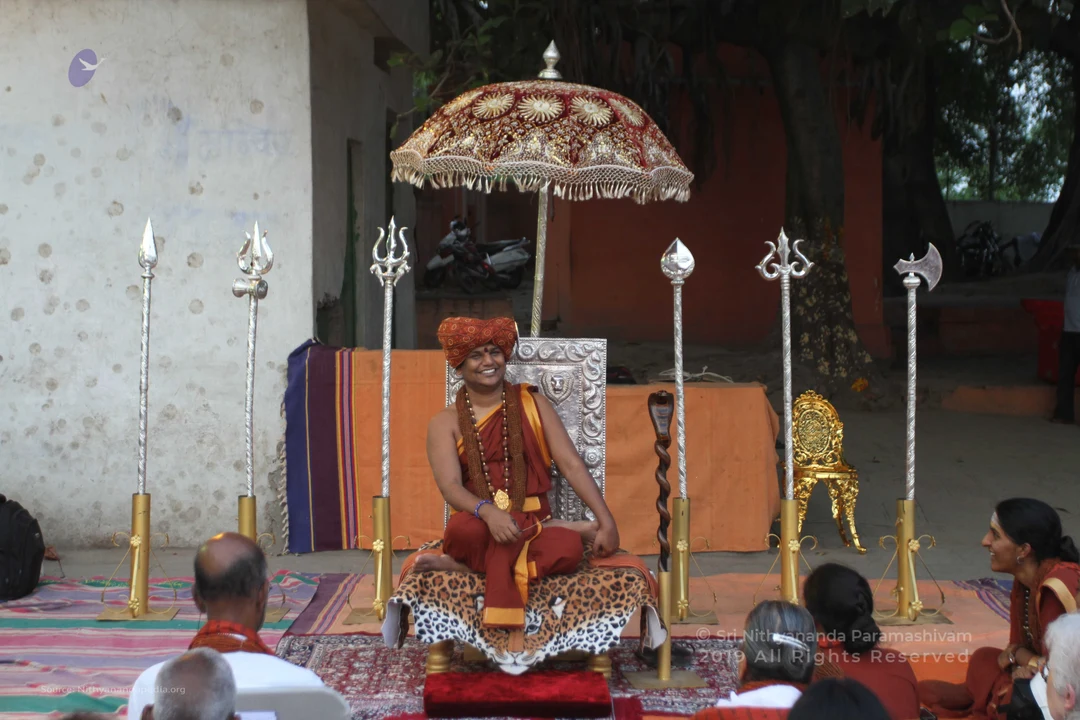
NITHYA SATSANG

Photos Of The Day:
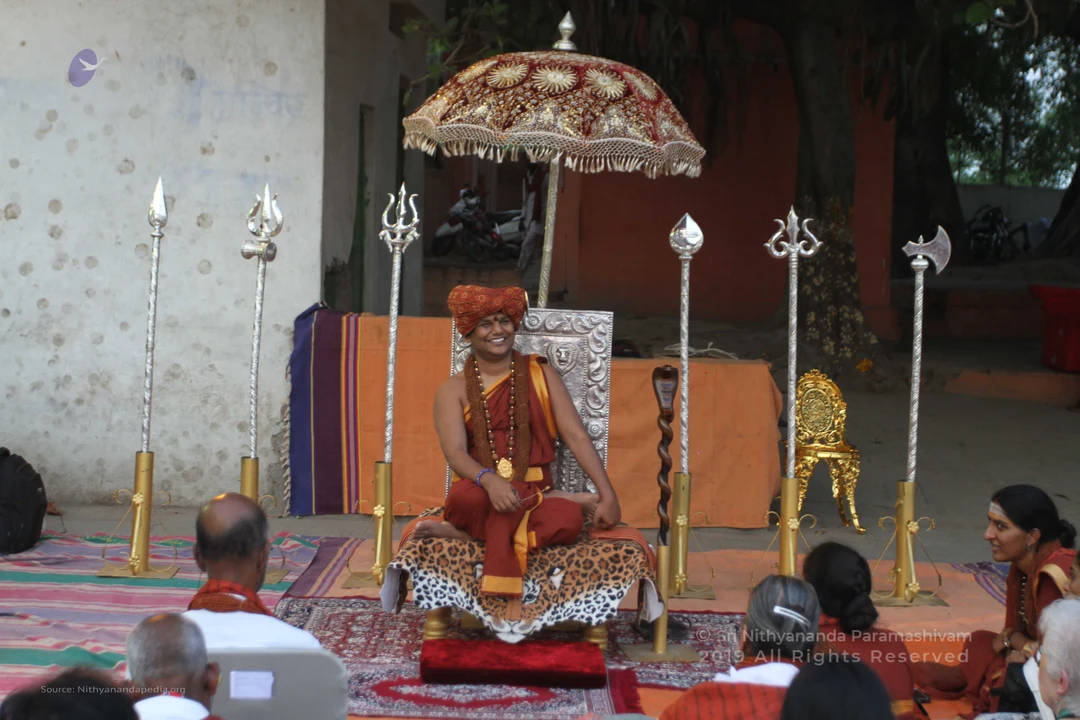
FB photos
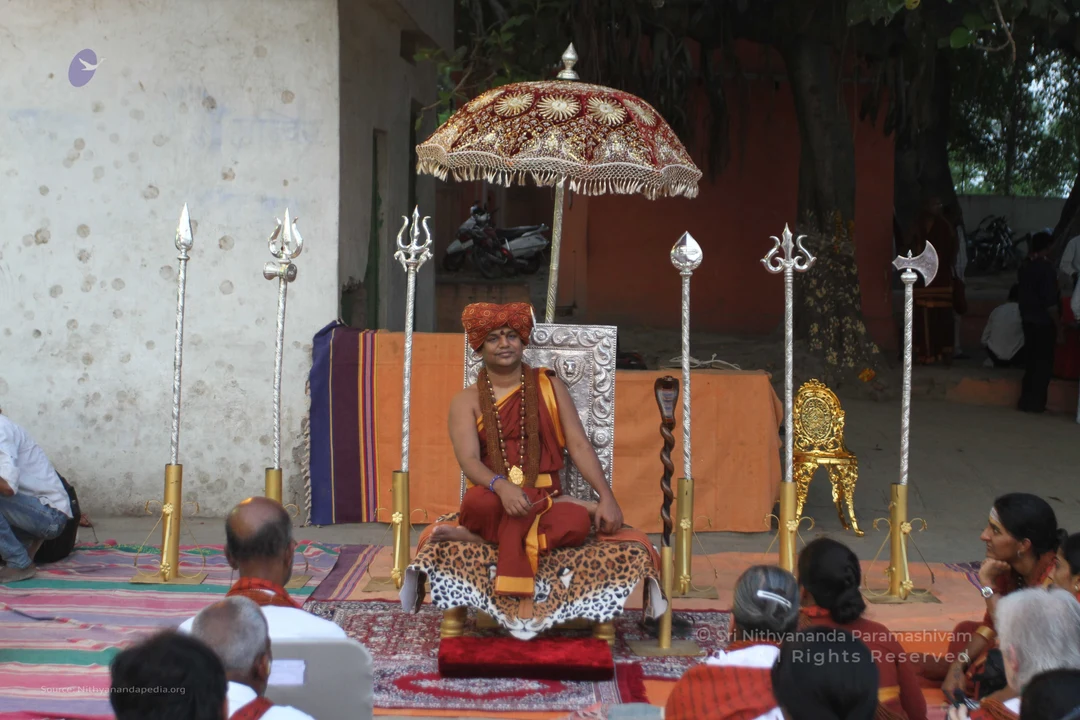
Photos Of The Day:
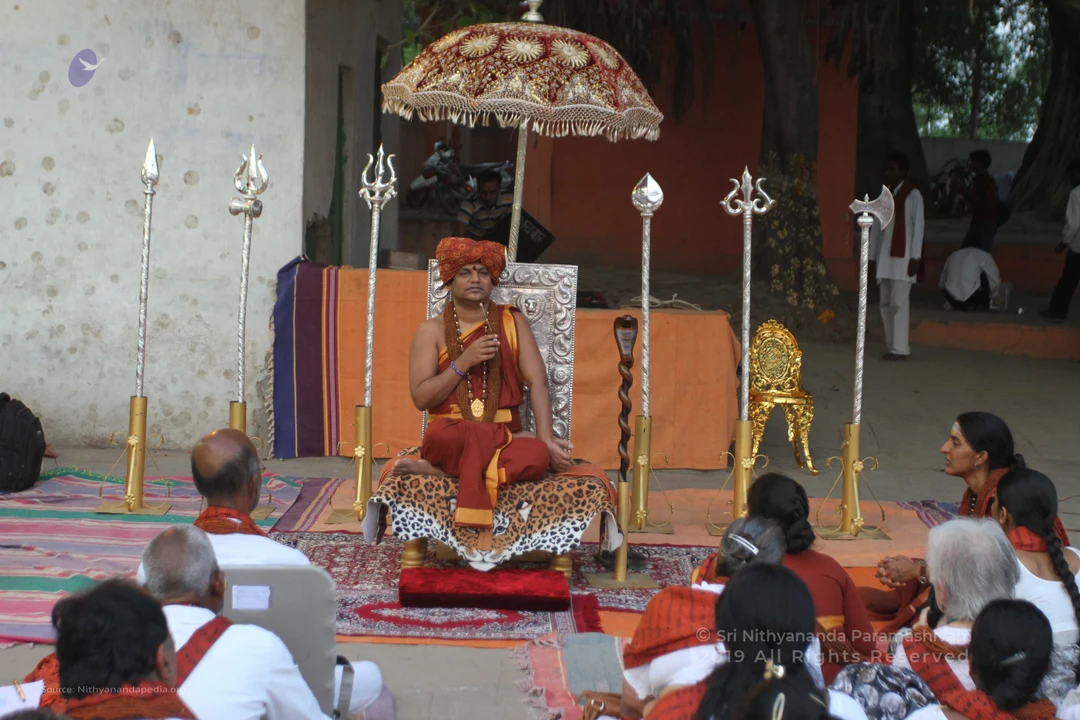
health and wealth completion

dieties

Photos Of The Day:
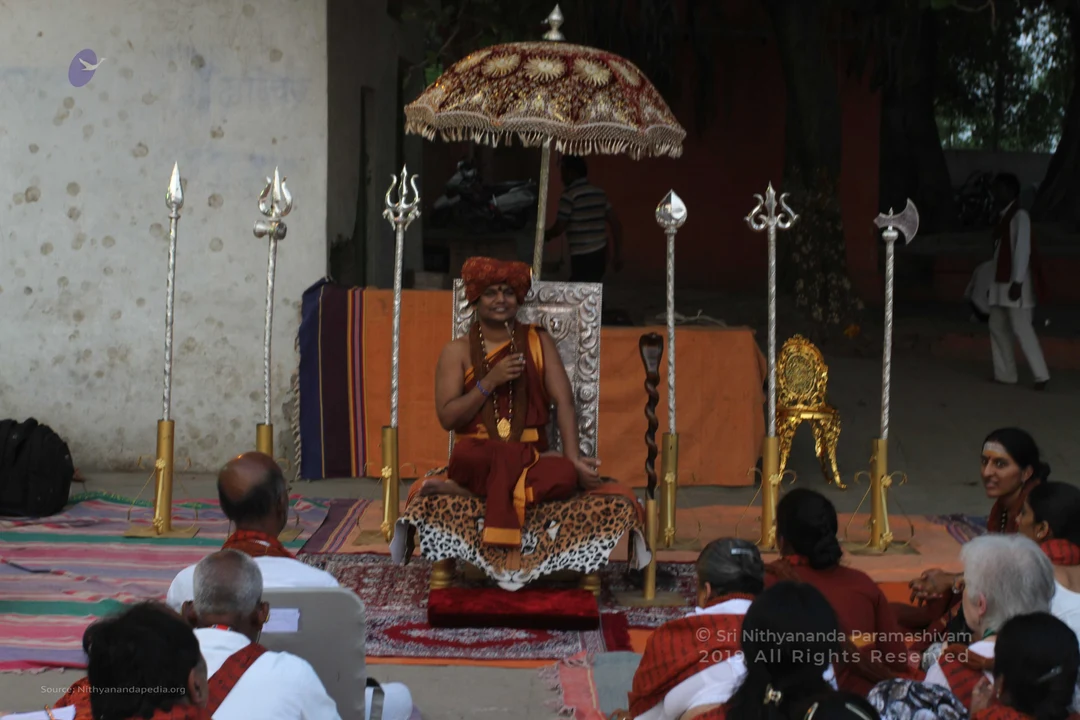
Satsang

Photos Of The Day:
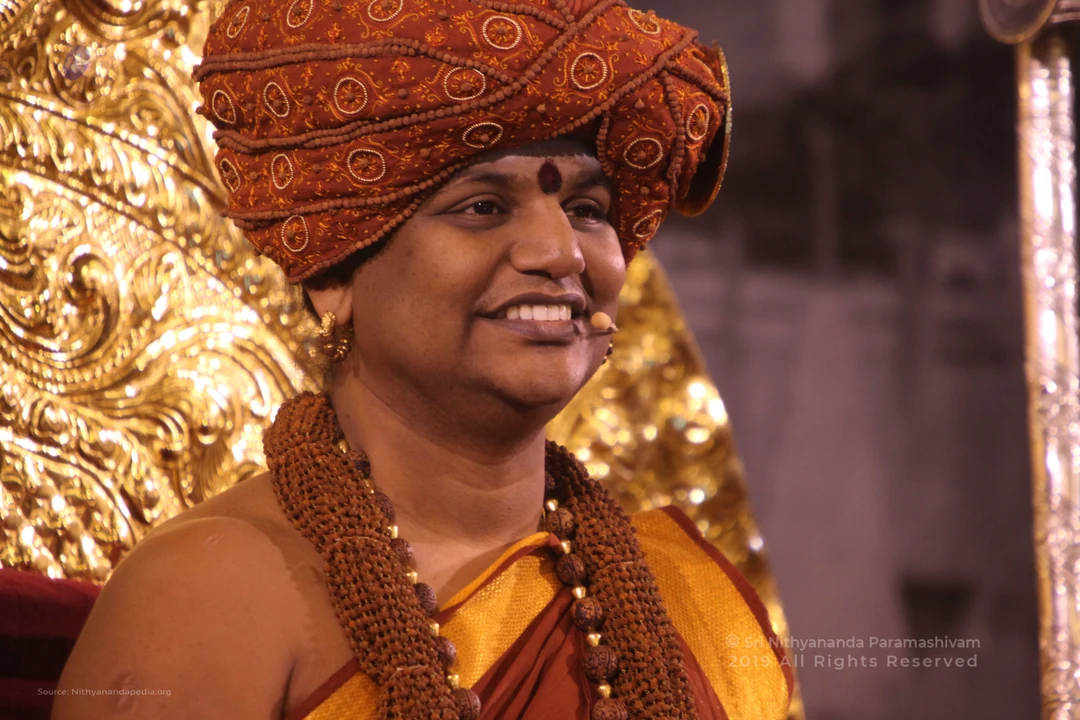
Ganga Ghat

Photos Of The Day:
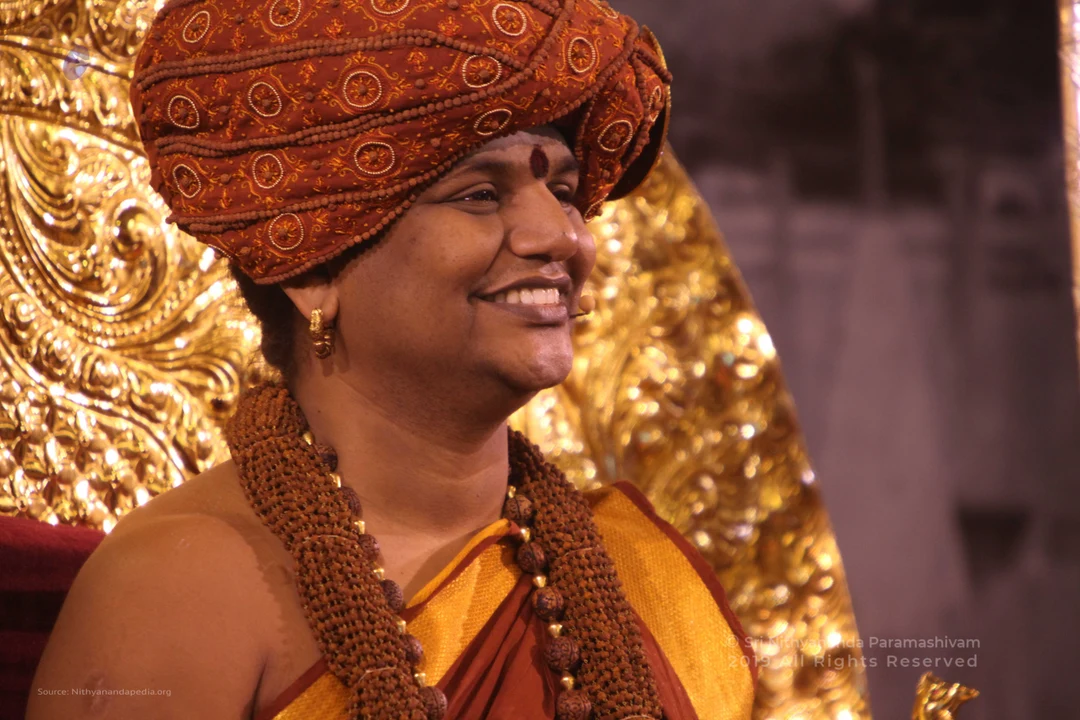
Ganga-Ghat

Photos Of The Day:

Ganga-Ghat

Photos Of The Day:

Satsang

Ganga Ghat

Photos from this day

View all 233 photos

Photos

16 photosSource gallery
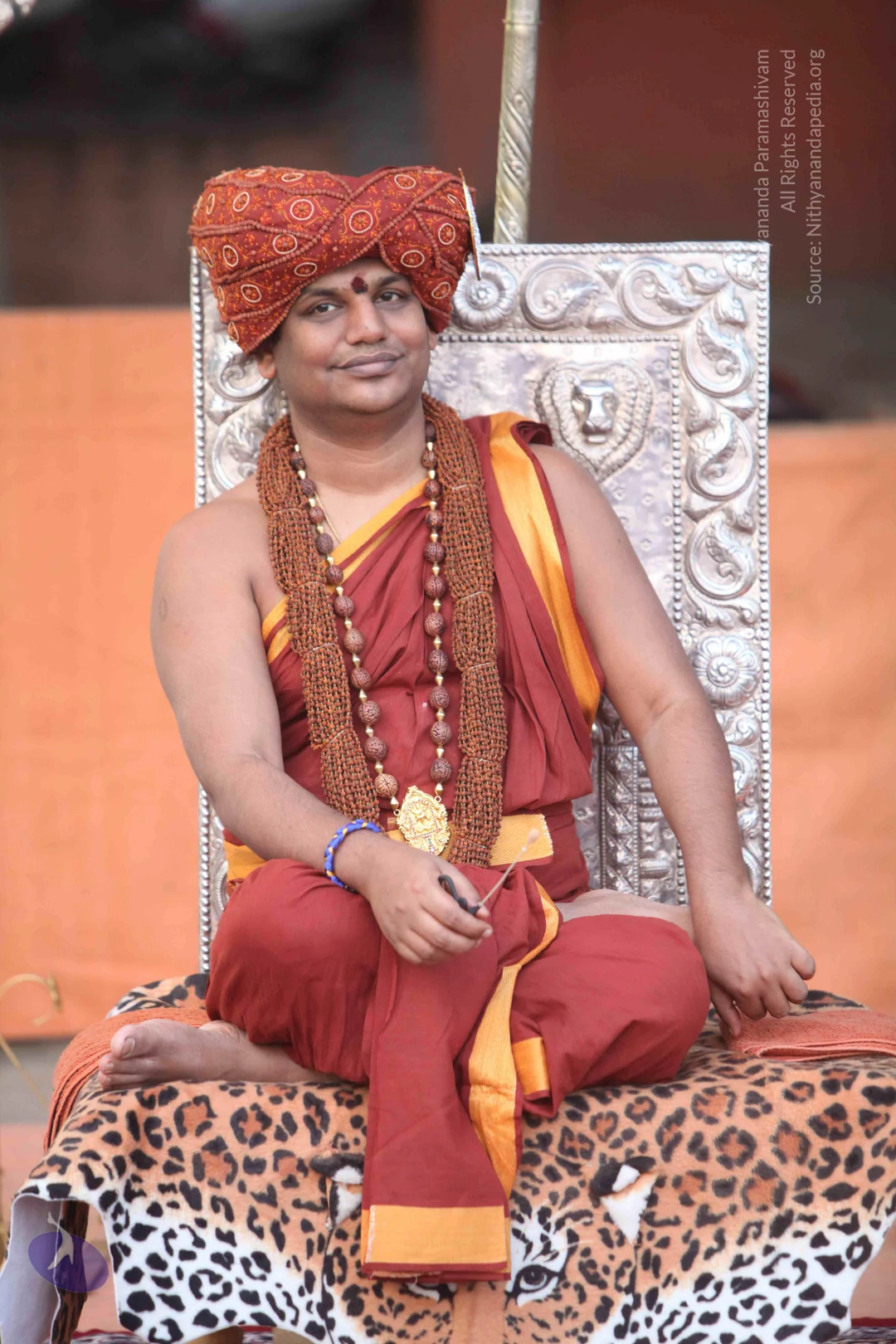
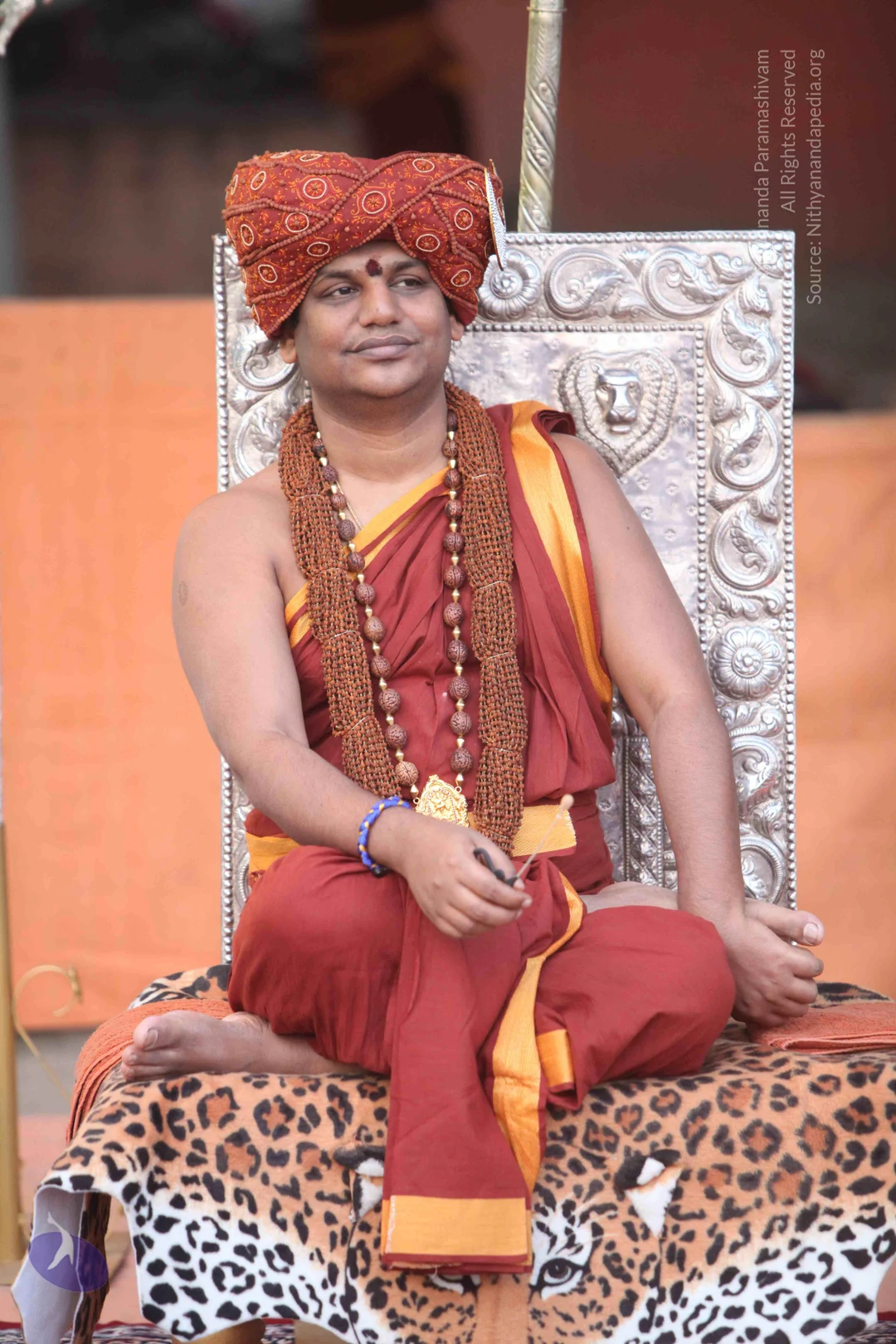
A seated man in an ornate orange-red turban with gold embroidery and a bindi sits on a silver-embossed throne with floral and scroll relief. He wears a maroon and gold-bordered cloth, layered rudraksha-style beaded necklaces and a gold pendant, with a blue bead bracelet on his wrist. He rests a gold staff topped with a bird figure beside him, while gold poles and a dark stage backdrop frame the scene under warm stage lighting. Appearance-based label: Swamiji (probable), based on the distinctive turban, rudraksha malas and ornate saffron-toned clothing.A seated man in an ornate orange-and-gold turban with a red bindi sits cross-legged on a silver-embossed throne draped with a leopard-print cover. He wears a saffron-brown robe with gold borders, a dense green-beaded necklace, a large gold pendant and rudraksha-style beads, and holds a tall gold-twisted staff topped with a golden bird finial. Silver ceremonial staves stand beside the throne on a red-and-gold carpet under warm yellow stage lighting. A single person is present in the scene.A seated man in a saffron-orange turban with a small red bindi, wearing a rust-orange shawl over the shoulder, long rudraksha malas and a gold pendant necklace, sits on an ornate silver throne with repoussé floral and lion relief panels. Silver ceremonial staffs flank him, one topped with a gold cobra-shaped crest and another with a gilded ornament, and he rests his hand on the armrest in a warmly lit, dim hall. Swamiji (probable): long hair swept under the turban, orange-saffron attire, rudraksha malas and gold pendant cues shown with a seated throne presence, consistent with a discourse setting.Side profile photograph of a man seated on an ornate carved throne with a leopard-print cloth beneath him, warmly lit. He wears an orange-gold turban decorated with a sparkling white crescent moon motif, a dark beaded rudraksha-style mala necklace, and a rust-orange draped garment. He holds a tall gold staff topped with a small figure, and a second gold rod entwined with a serpent-like design rests against his arm. A blurred seated figure in orange sits behind him. The turban, crescent and staff suggest a sannyasi or ceremonial role, and the appearance is consistent with the page's a person reference, so this is labelled a probable identification based on these visible cues.A seated man in an orange-red turban with a glittering silver crescent ornament and a tilak on his forehead sits on an ornate silver-embossed throne decorated with lion-face motifs. He wears an orange-red robe, a dark beaded rudraksha-style mala with a gold pendant, and holds a tall twisted gold staff topped with a small figure. A leopard-print cloth covers the seat. The scene is lit with warm amber light, and a brass lamp stand is visible on the right. Swamiji (probable) is identified by the turban with crescent, orange robes, rudraksha mala and ceremonial gold staff, seated on a throne.A seated man in a red and orange-yellow sannyasi-style robe wears a red patterned turban with a small red bindi, a brown rudraksha mala with a large gold pendant, and a blue beaded bracelet. He sits cross-legged on a silver-embossed throne with a lion-face motif, draped with a leopard-print cloth. Above him a red velvet umbrella with gold embroidery and fringe shelters the seat. Silver trident and a silver staff with a serpent-coiled wooden shaft flank the throne. Behind is a red wall and an orange cloth backdrop. The appearance is consistent with Swamiji (probable), wearing a turban, rudraksha mala and ornate gold pendant, seated on a throne under a ceremonial umbrella.

NITHYA SATSANG
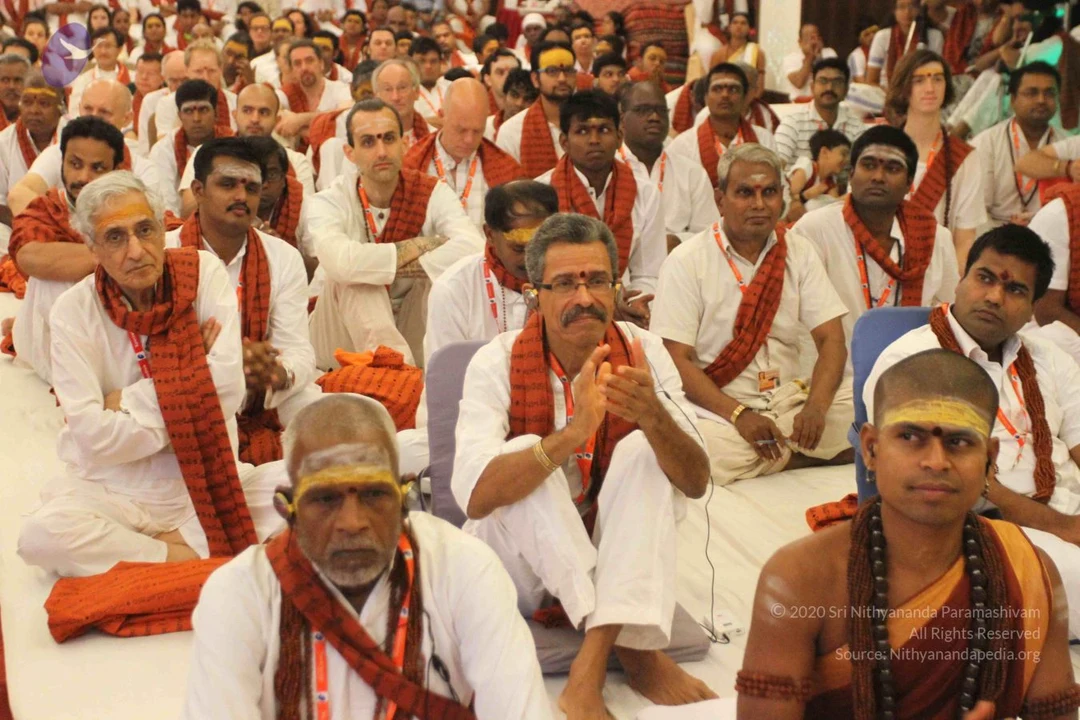
44 photosSource gallery
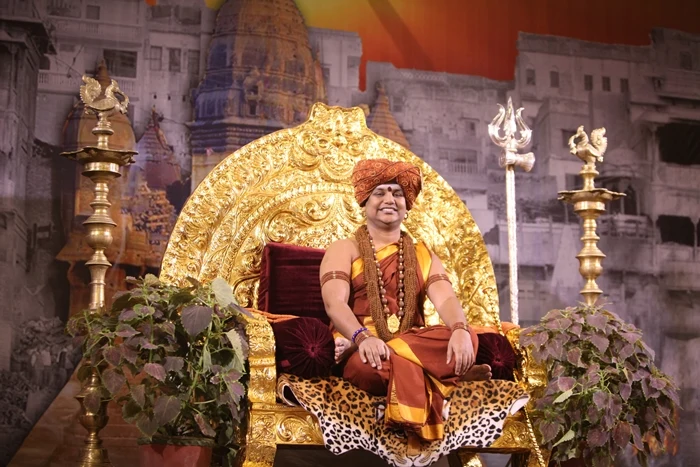
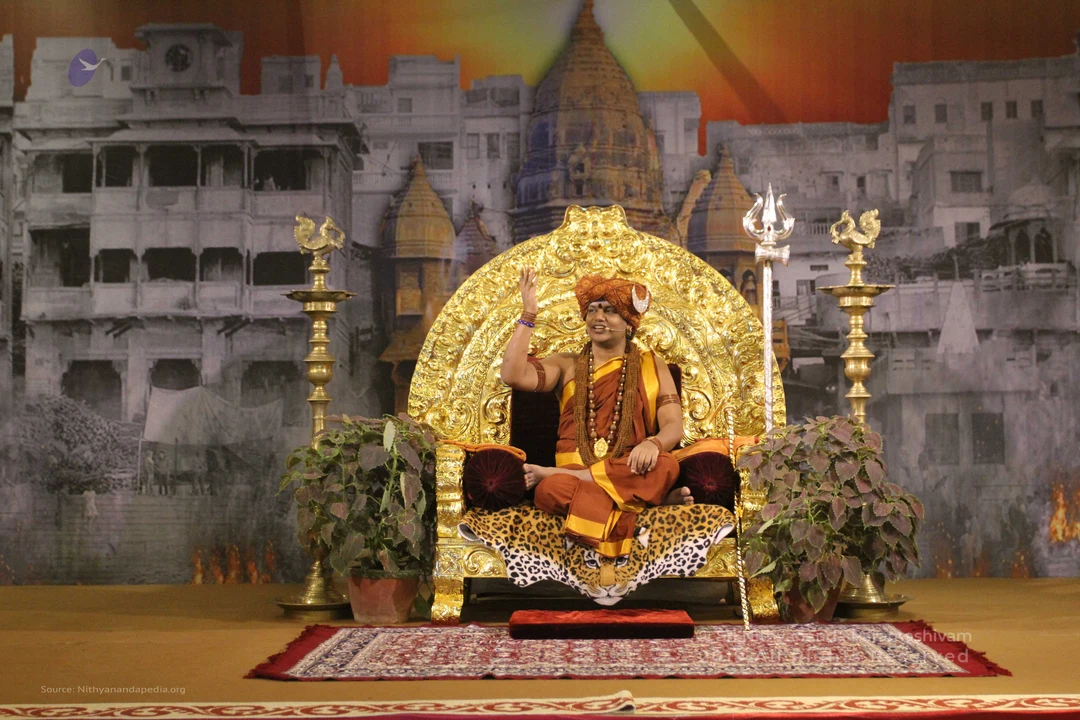
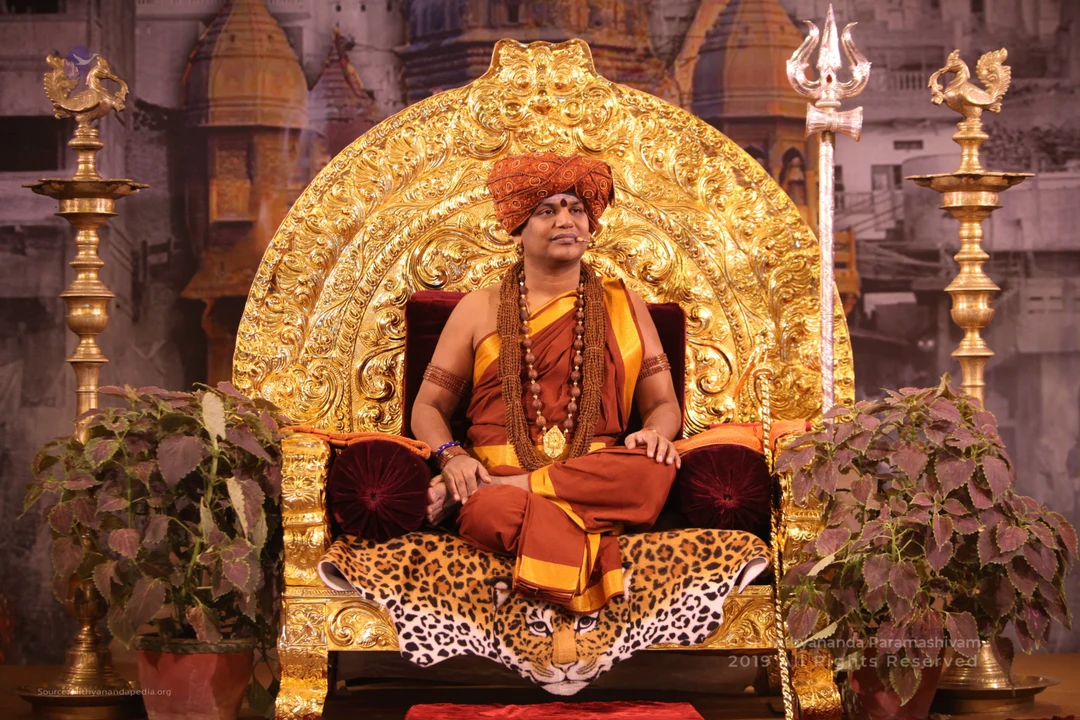
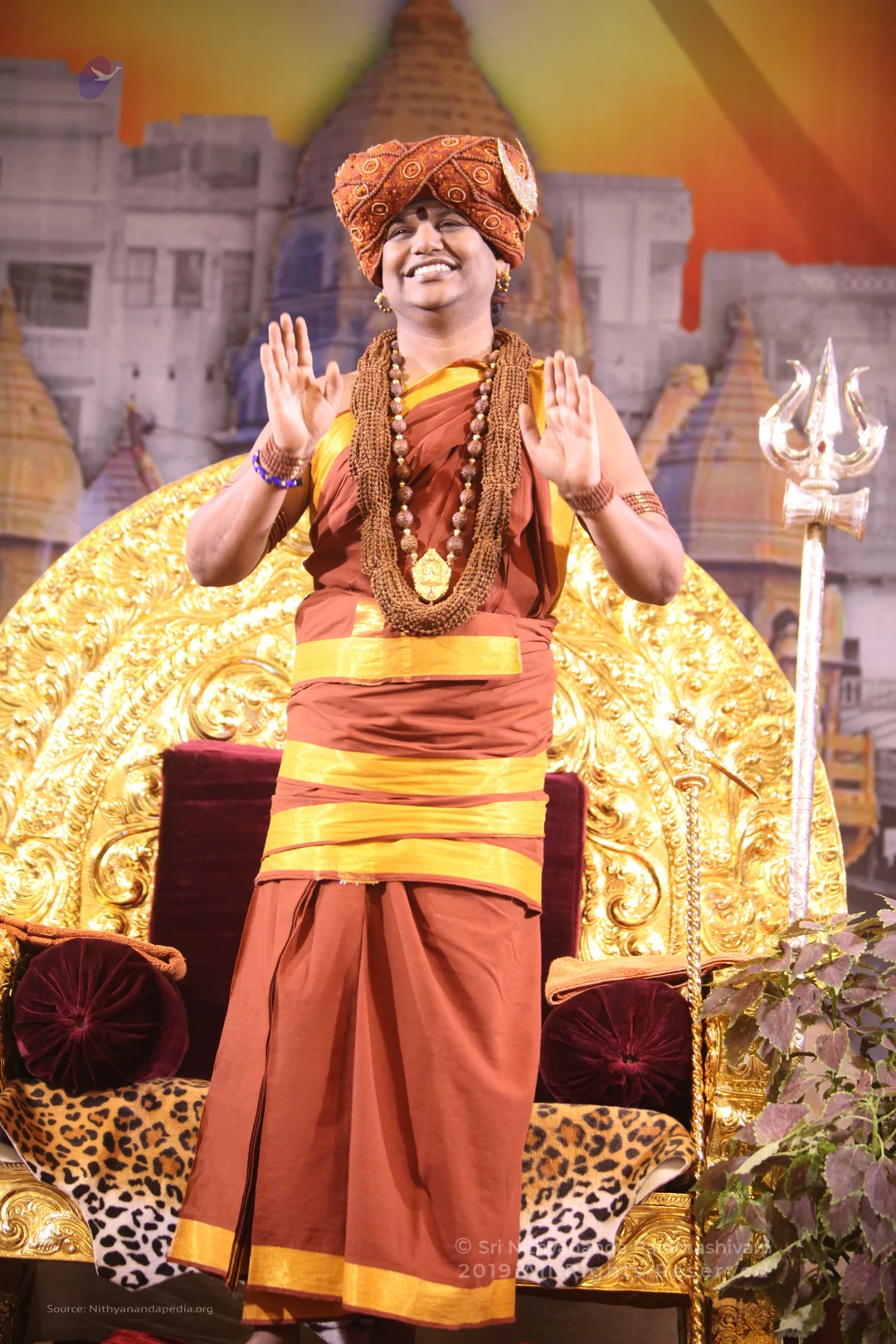
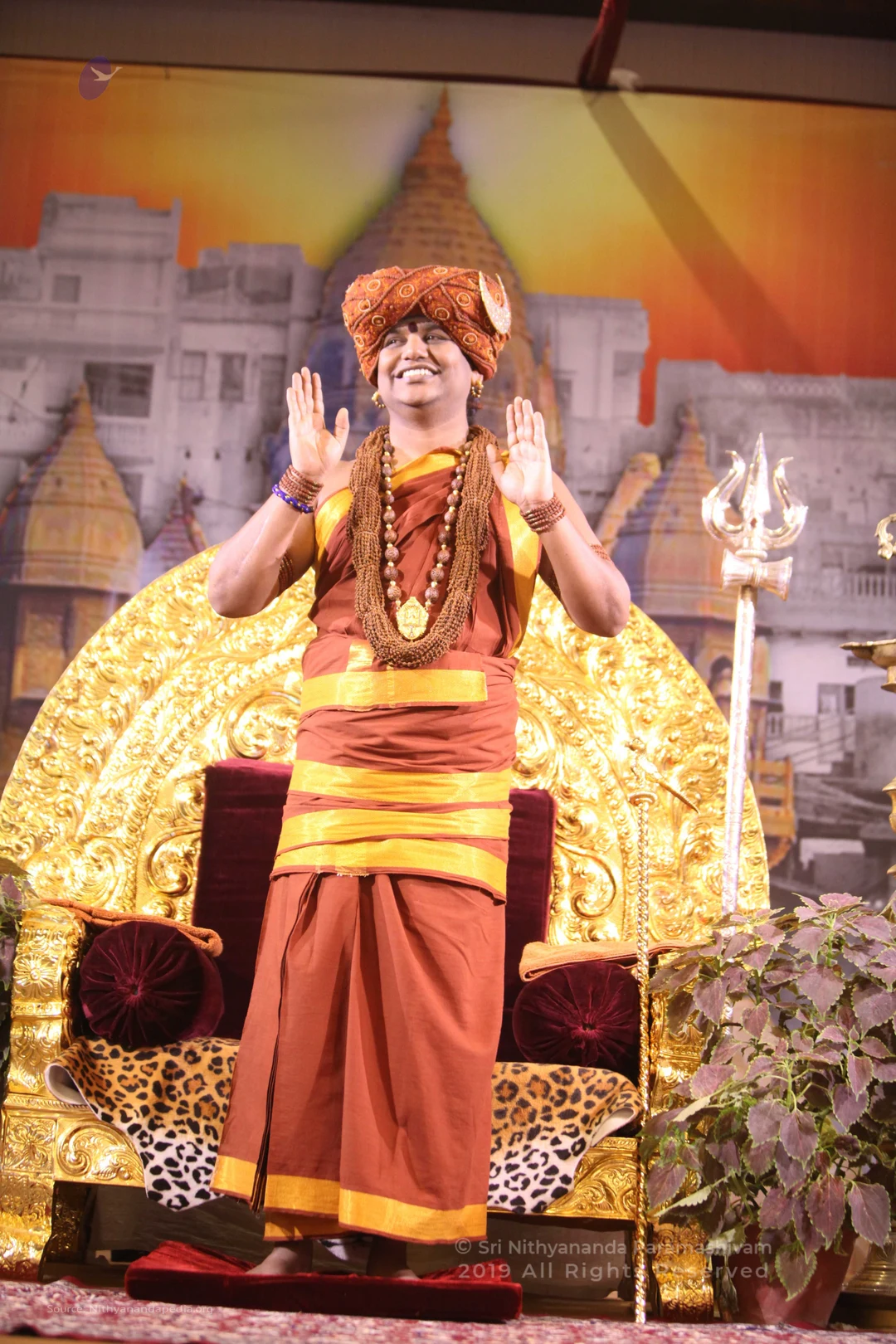
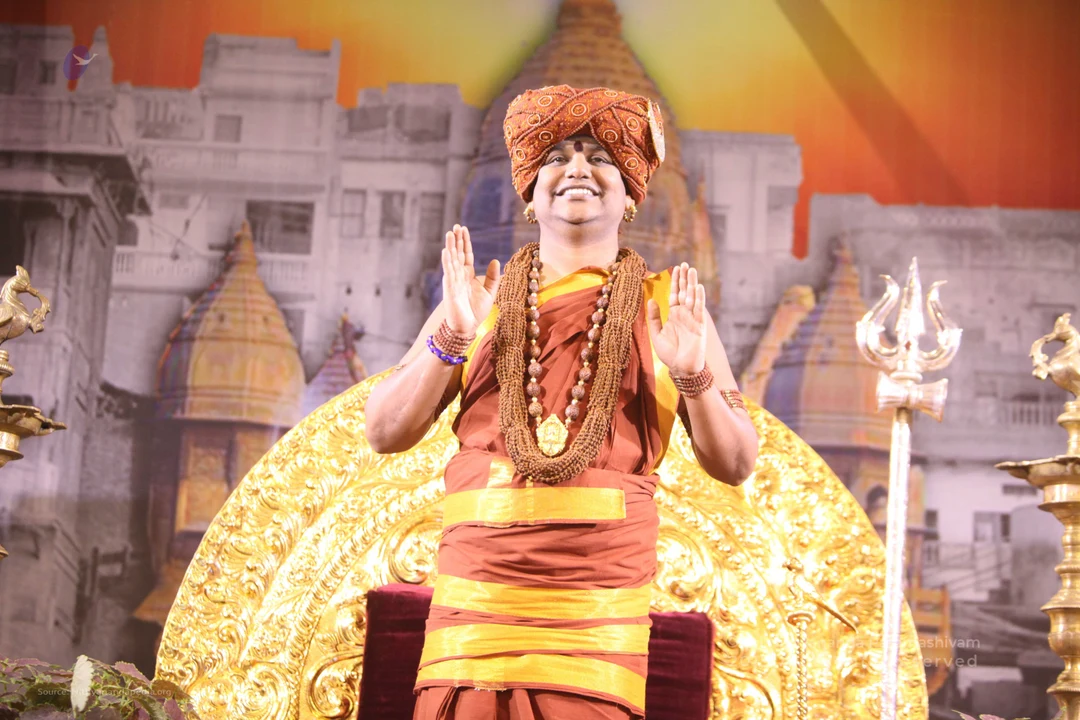
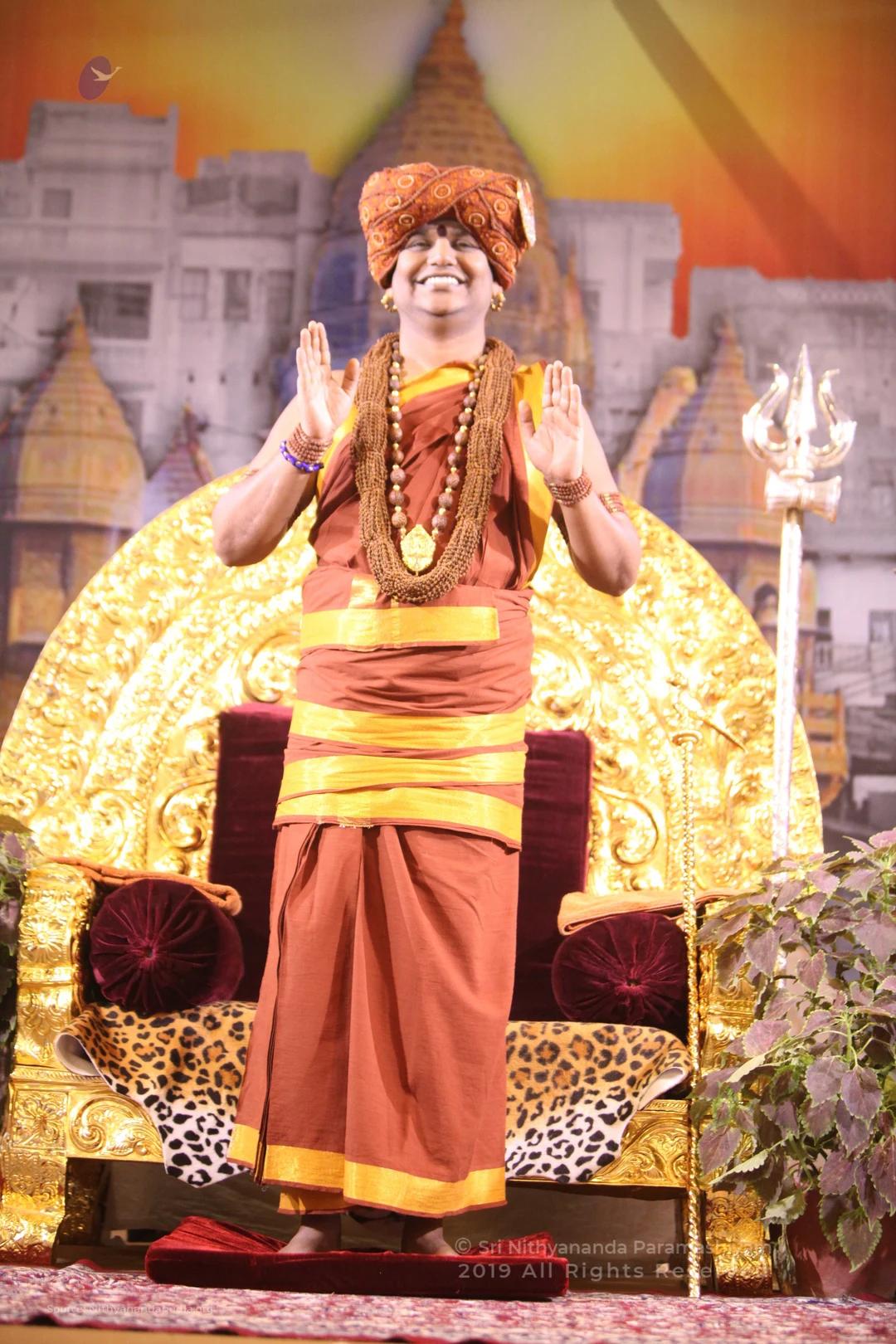
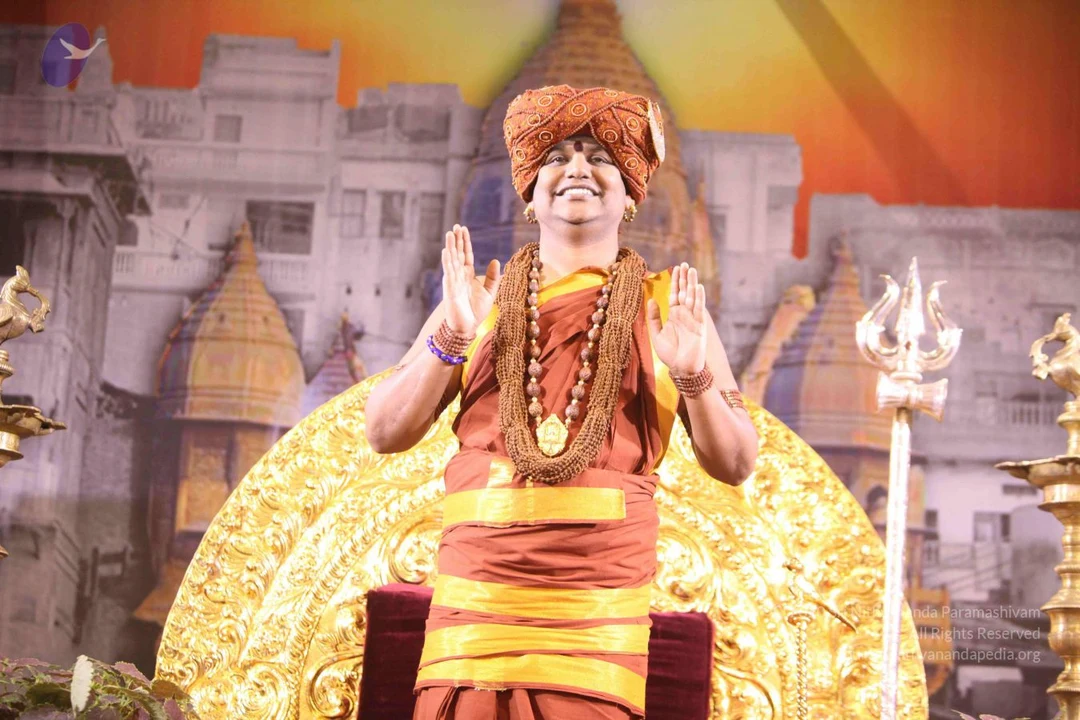
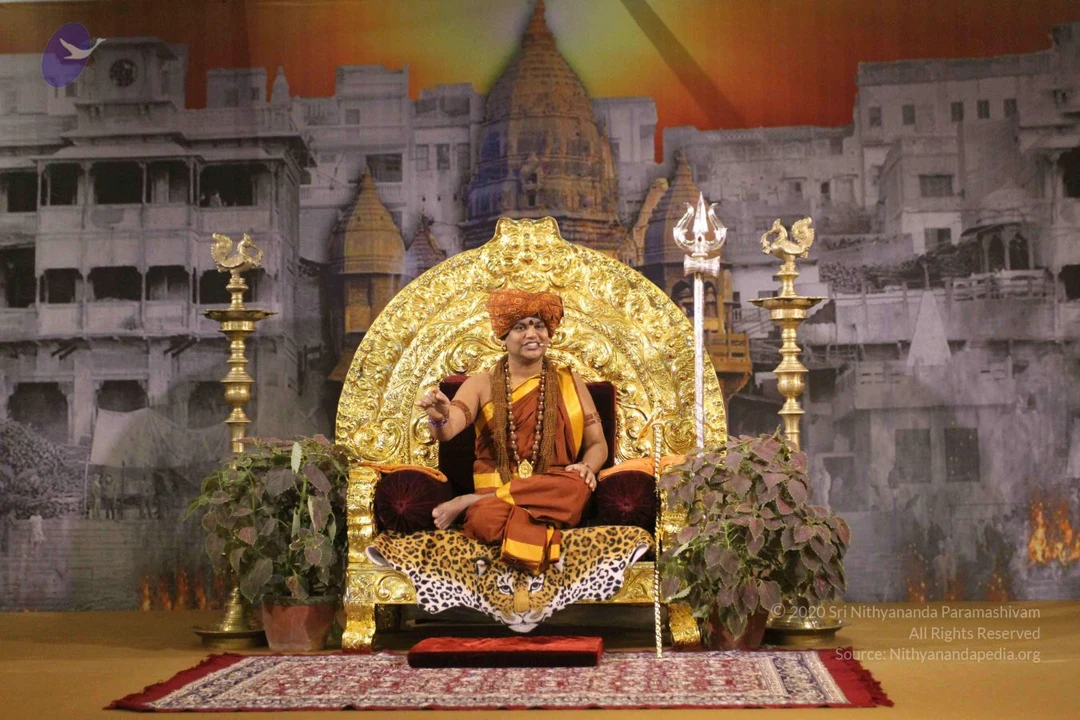
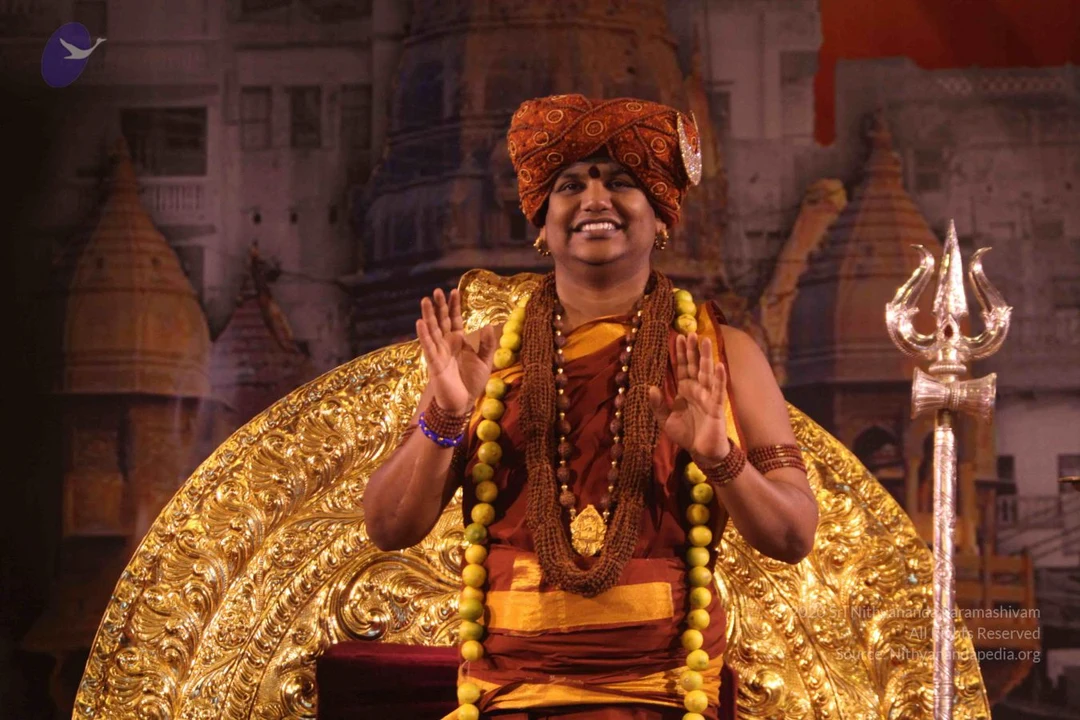
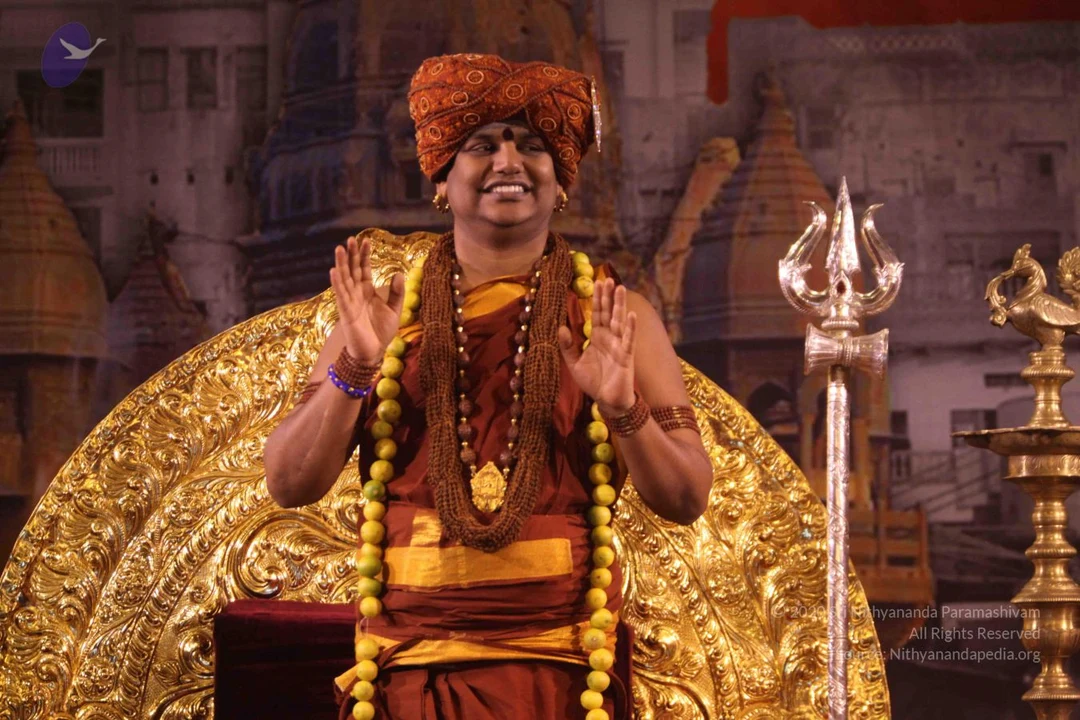
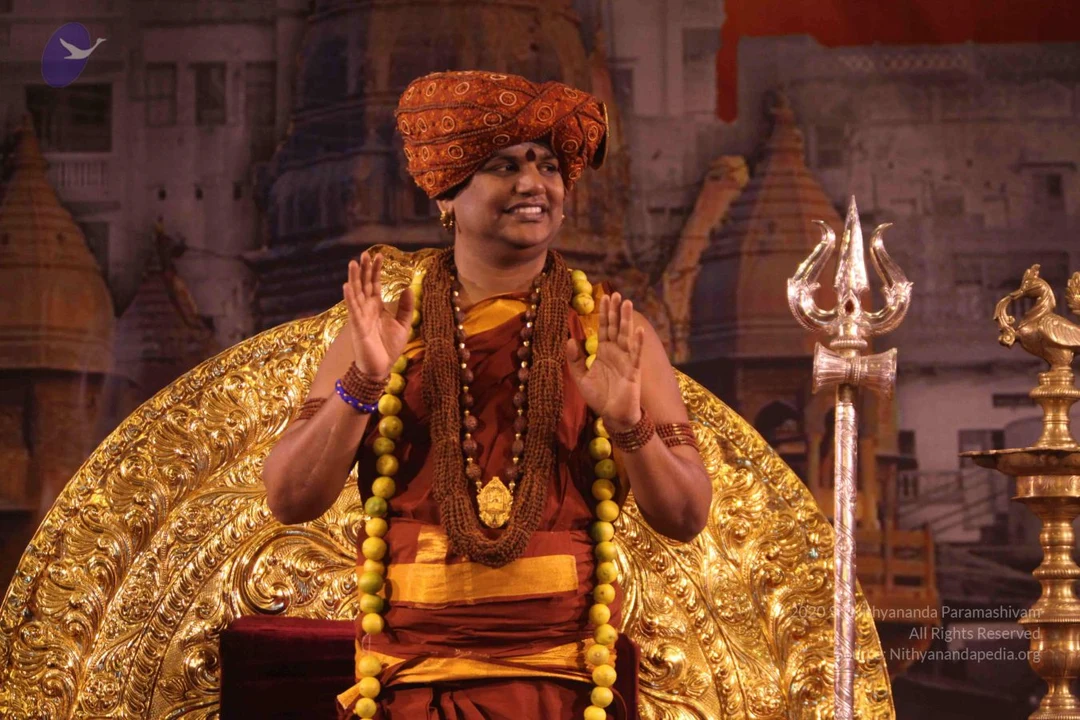
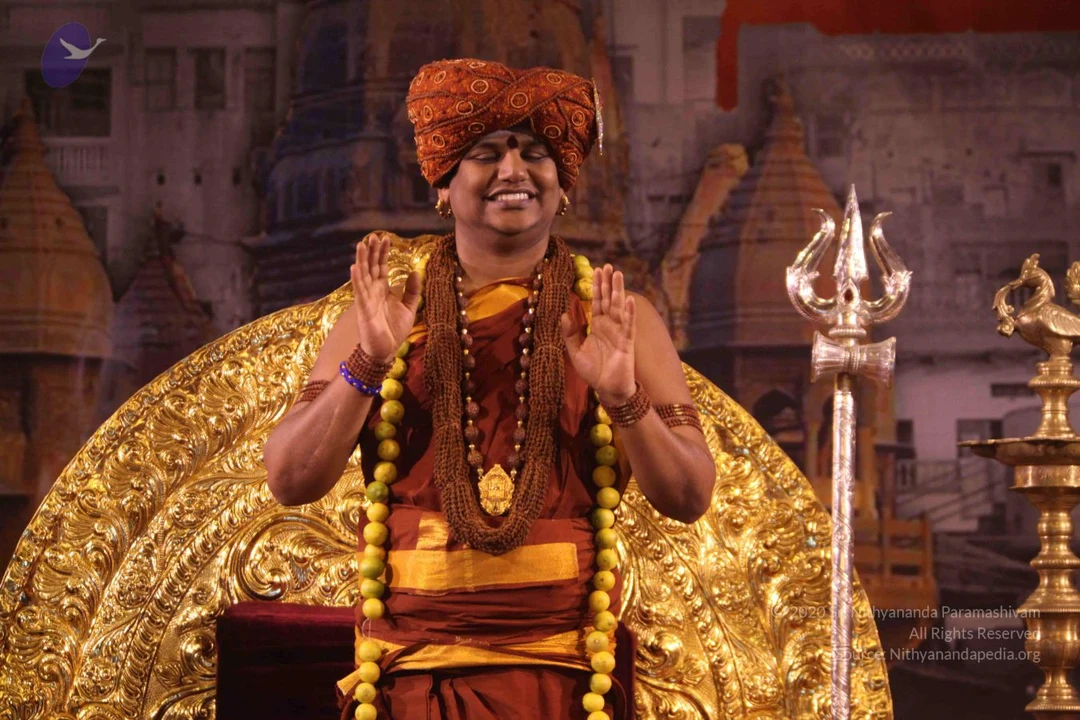
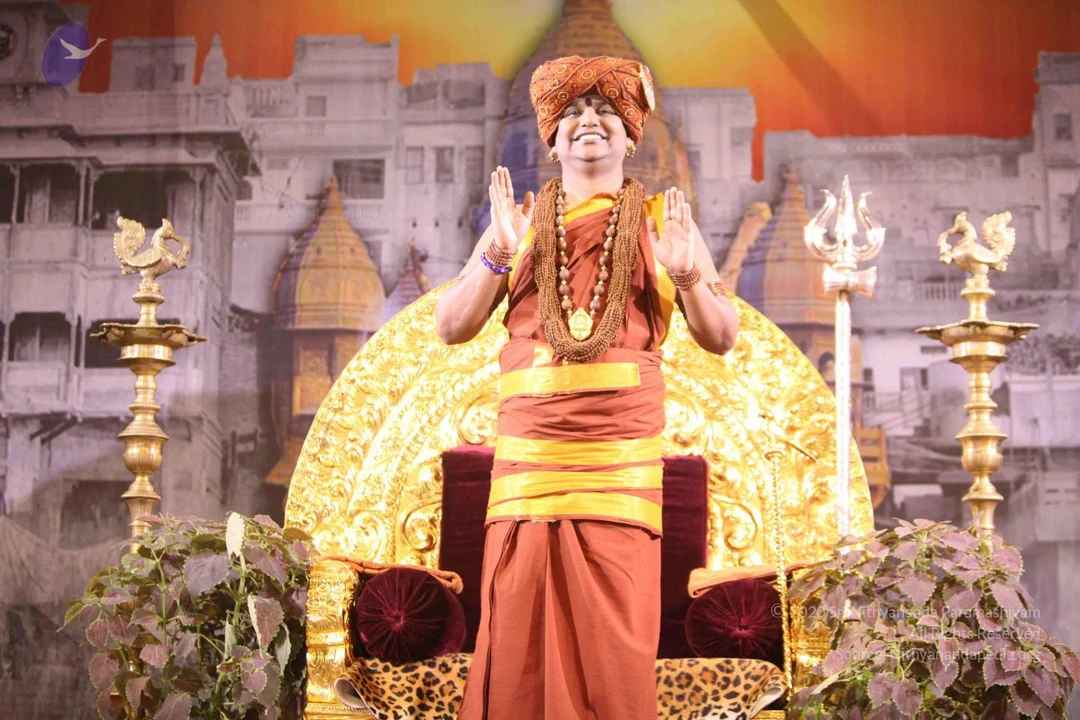
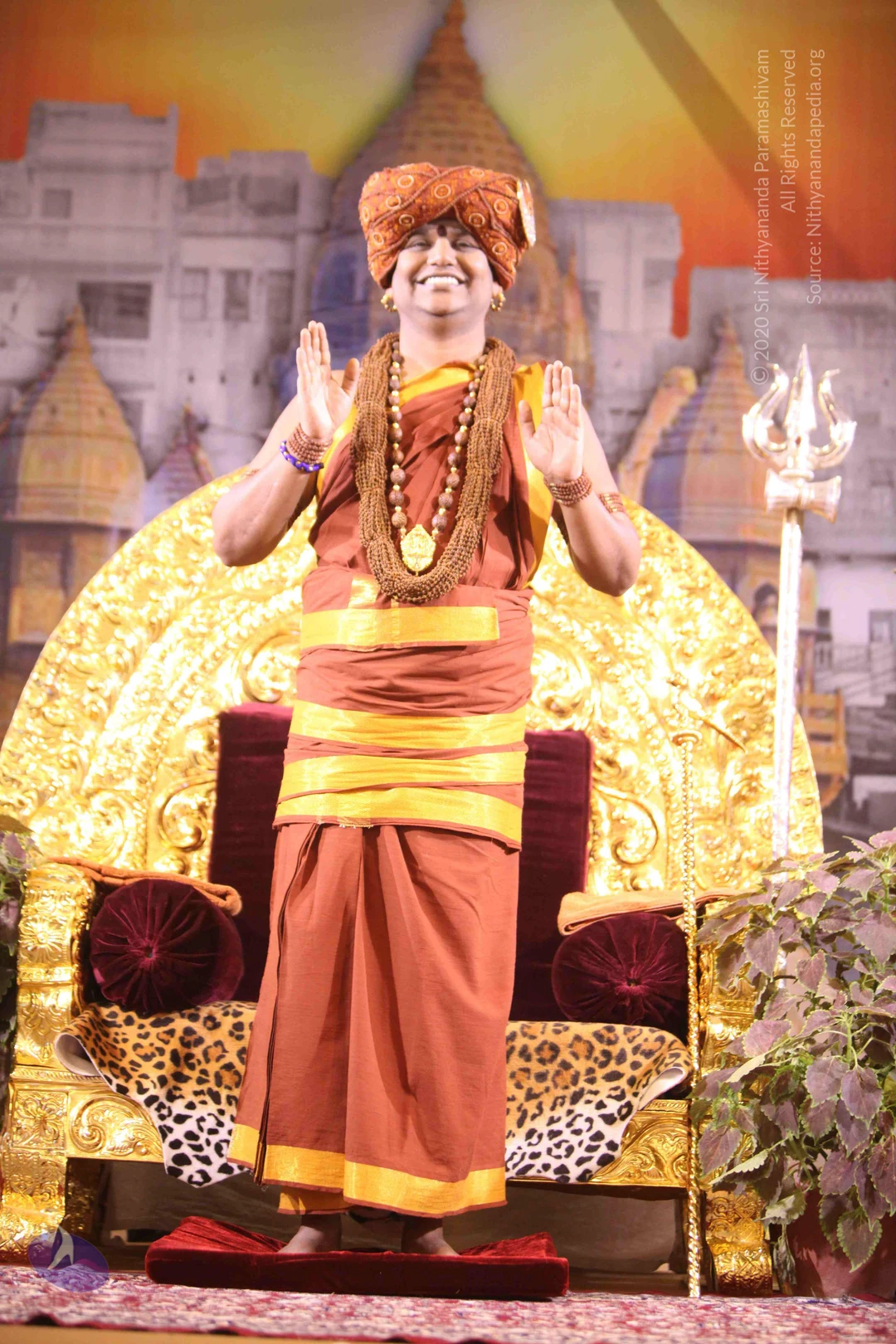
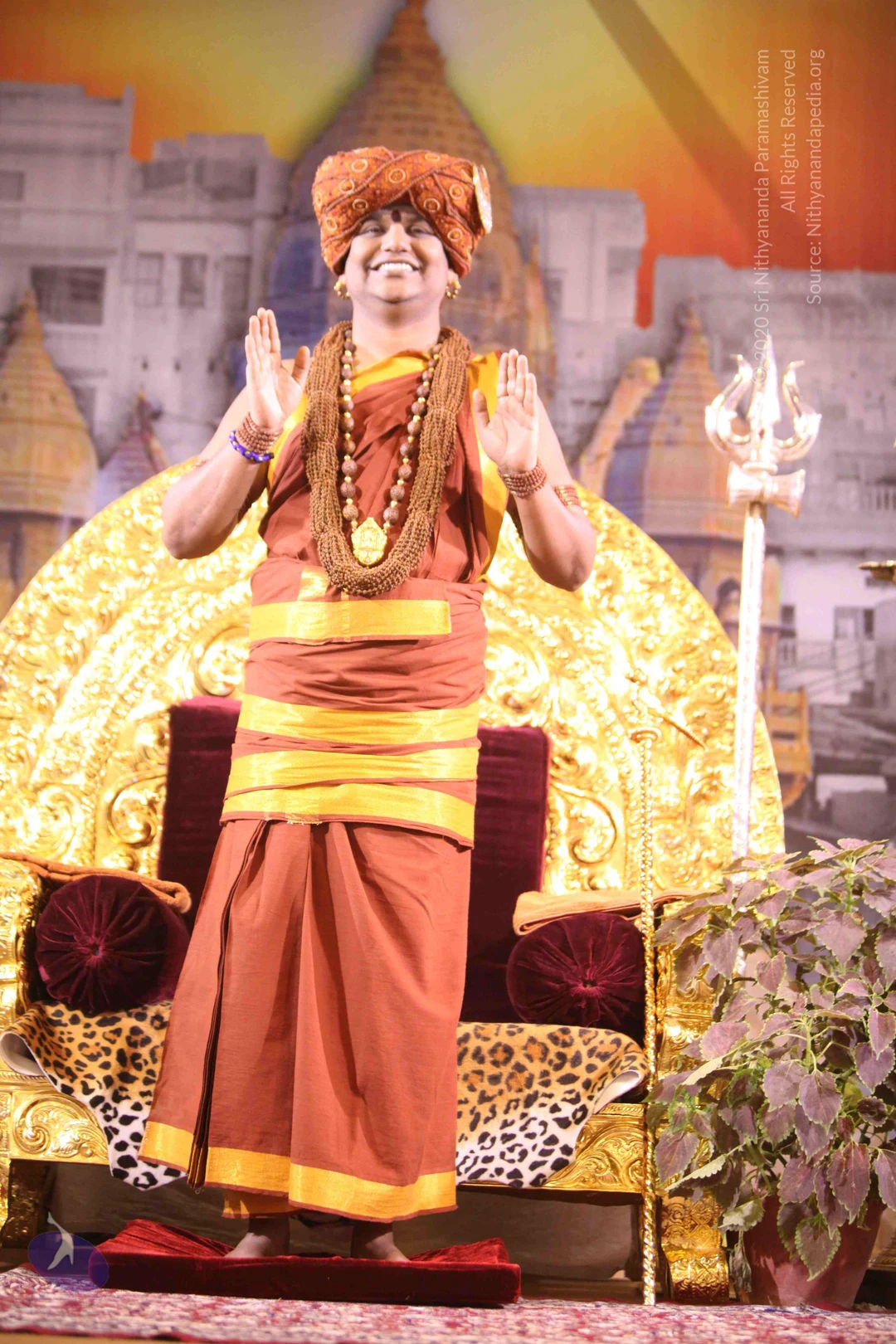
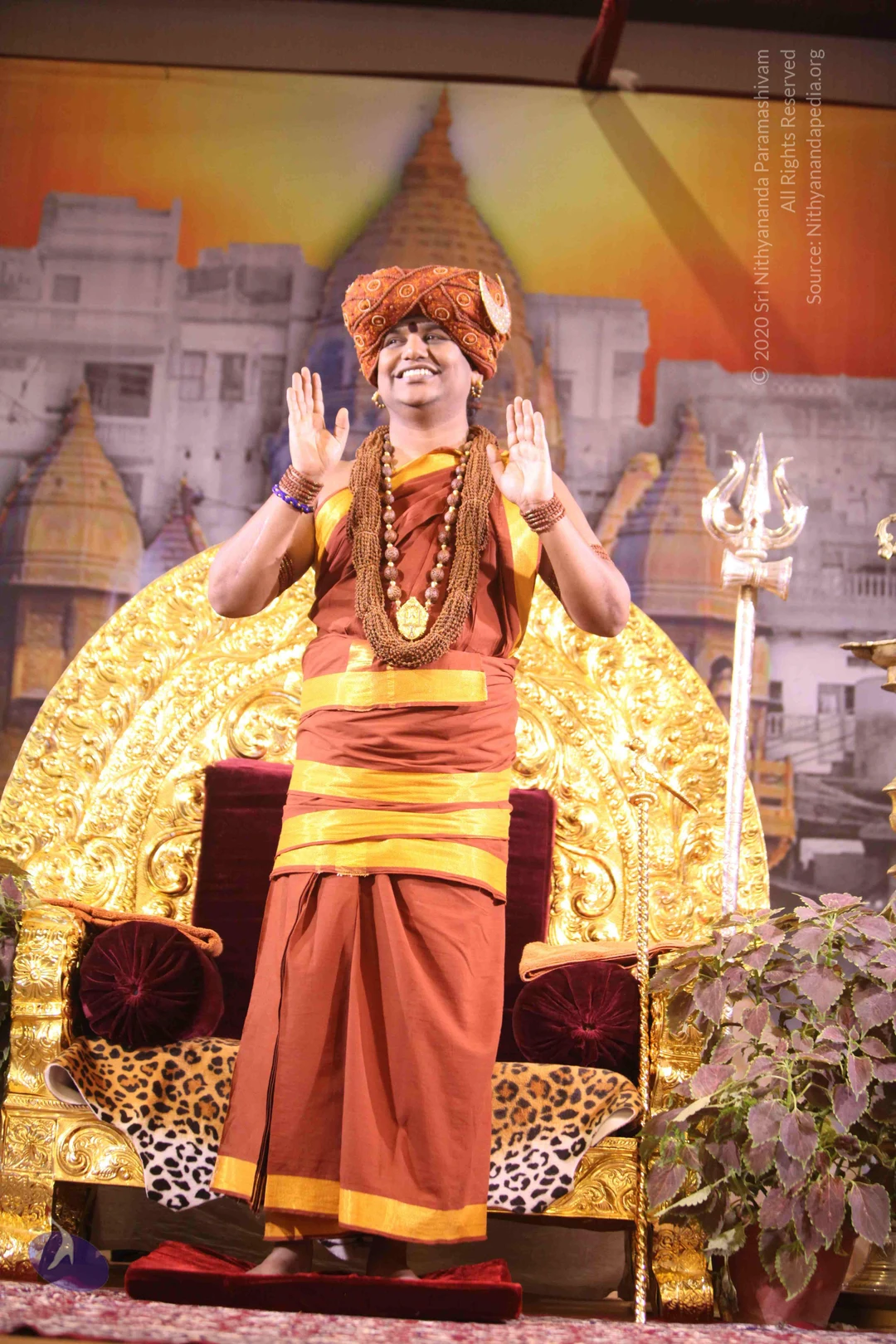
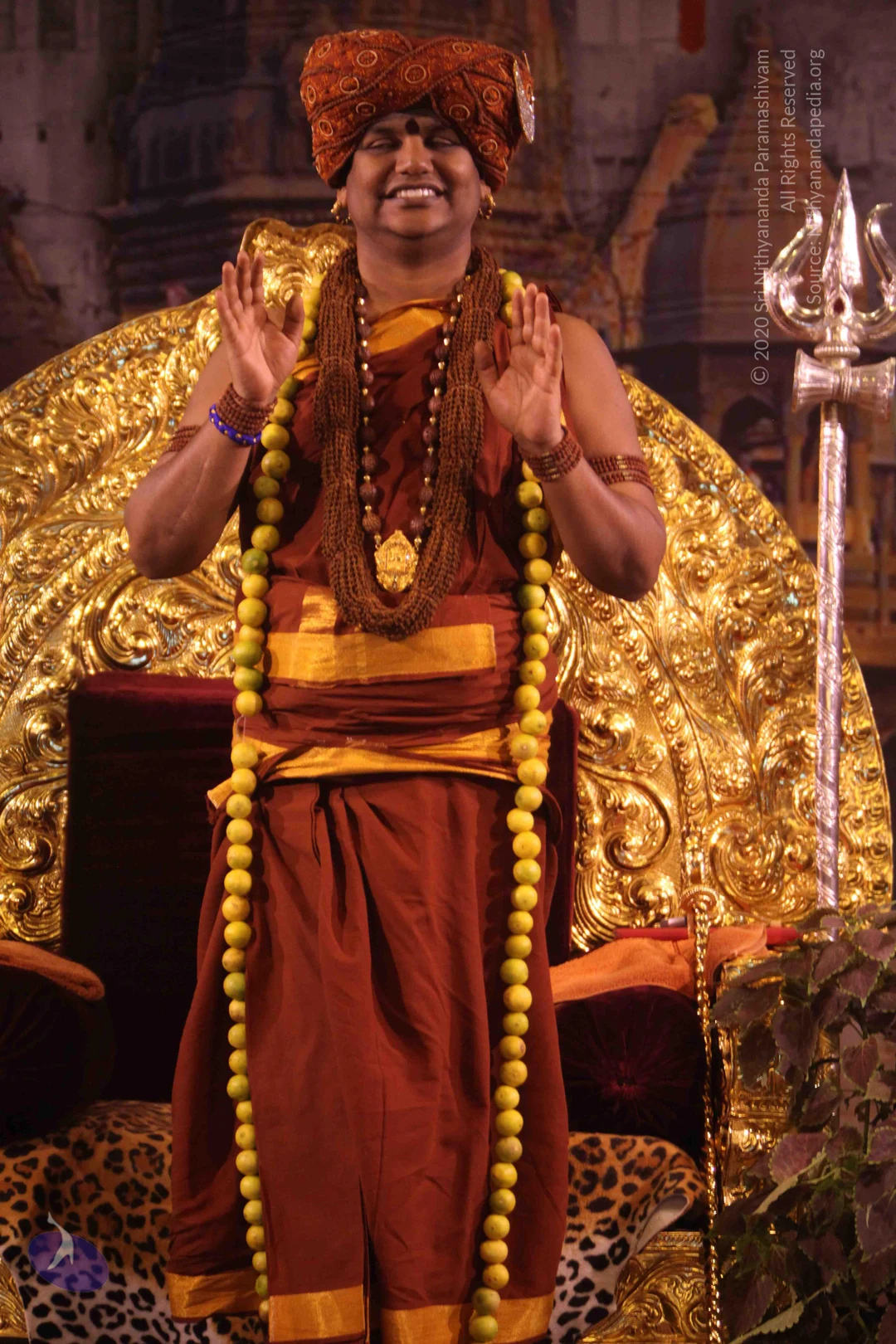
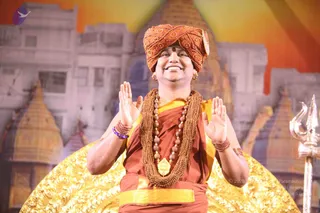
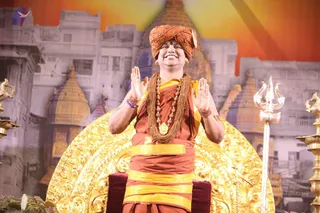
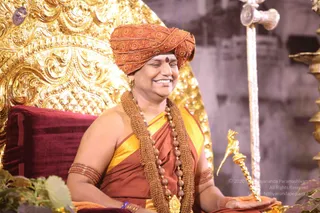
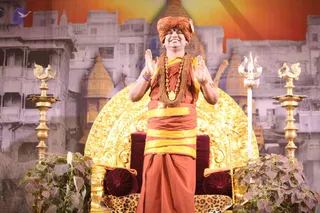
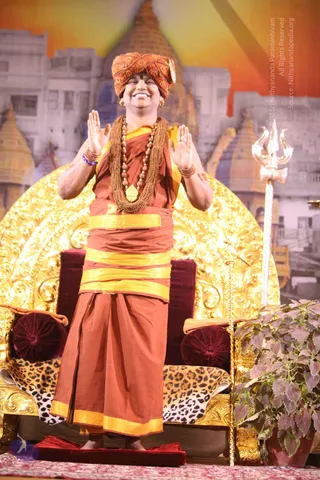
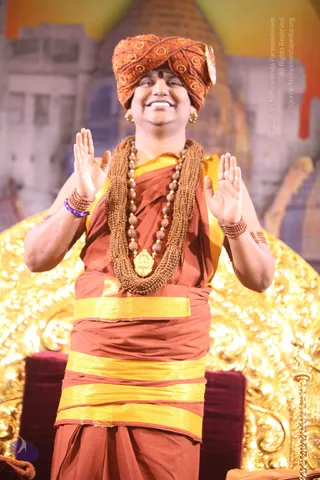
A smiling man seated on a golden throne stands centre stage with palms pressed together in greeting. He wears an orange-red patterned turban with a small red bindi on the forehead, a rust-brown robe with a gold-yellow sash, and layered brown rudraksha beads with a gold pendant. Silver bangles and a blue beaded bracelet are visible. A silver trident stands at the right edge. The backdrop shows painted temple spires and old stone buildings in orange and grey tones. Swamiji (probable) is the central figure, identified by a turban, rudraksha malas and ceremonial gold ornaments, and the page attributes this event to him.A smiling figure in an orange-and-gold turban and saffron-brown robe with gold borders stands with palms pressed together in greeting before a large gold ornate throne. Around the neck hang long rudraksha malas and a gold pendant. A gold trident stands at right beside a brass lamp, and the backdrop shows painted temple spires and buildings in grey and orange.A smiling man with closed eyes sits on an ornate gold throne with a deep red velvet cushion. He wears an orange-red patterned turban, a red-orange shawl with a gold border, and a thick rudraksha mala with a large gold pendant around his neck, plus gold bangles. A red dot marks his forehead. A tall silver ceremonial staff stands at right beside a brass oil lamp, and a gold-handled ritual implement rests in his hand. Leafy plants frame the lower left. Probable Swamiji seated on his throne, identified by the turban, rudraksha mala and ornate gold setting. No other people are visible.A man seated on an ornate gilded throne with a deep red velvet cushion, smiling and gesturing with his right hand during a talk. He wears an orange-red turban with a small red bindi, an orange-red and gold-bordered cloth over his shoulders, a long rudraksha mala with a gold pendant, and a purple beaded bracelet. A golden staff topped with a decorative figure rests beside him, with green leaves in the lower left. The setting suggests a satsang or discourse. Swamiji (probable) appears in person, identified by the saffron and gold ceremonial dress, rudraksha mala, turban and throne cues; he is the seated speaker.A photograph of a smiling man seated on an ornate gold throne with intricate repoussé carving. He wears an orange-red patterned turban with a small red bindi, a saffron-and-gold garment, multiple rudraksha malas and a ceremonial gold pendant, and gold armbands with beads. A silver staff or rod stands at the right edge. Probable Swamiji by appearance cues: ornate turban, rudraksha malas and gold ornaments on a throne.A man seated on an ornate golden throne with a red velvet cushion and leopard-print cloth draped over the seat, set against a painted backdrop of Varanasi ghats and temple spires. He wears a rust-red turban, an orange-and-gold draped garment, a rudraksha mala with a large pendant, and bangles on his arms, and sits with hands resting on his knees, smiling. Flanking him are brass oil lamps on stands, a silver trident leaning against the right side, and potted green plants at the base. The printed caption reads 'Sri Nithyananda Paramashivam, , '

FB photos

2 photosSource gallery

health and wealth completion

5 photosSource gallery
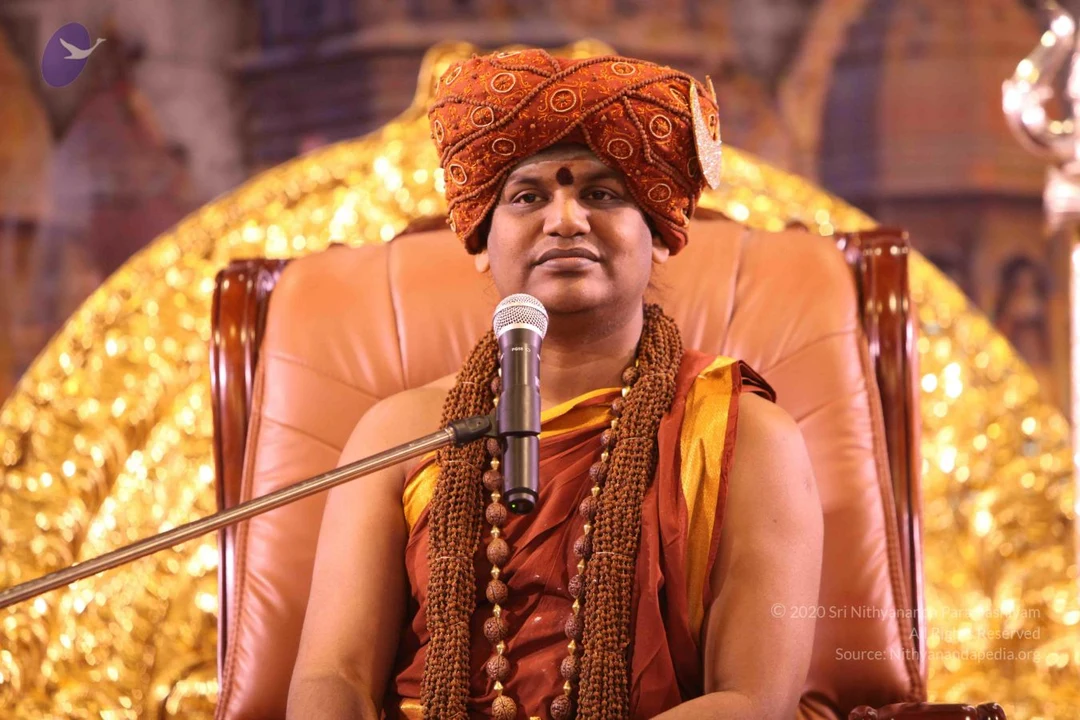
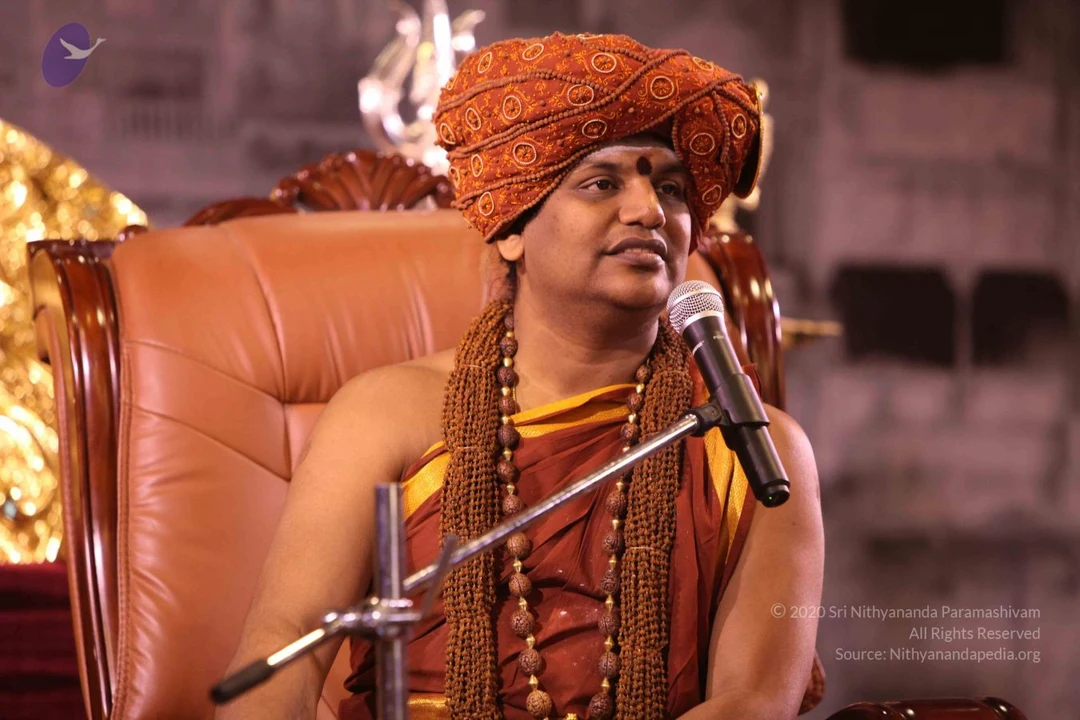
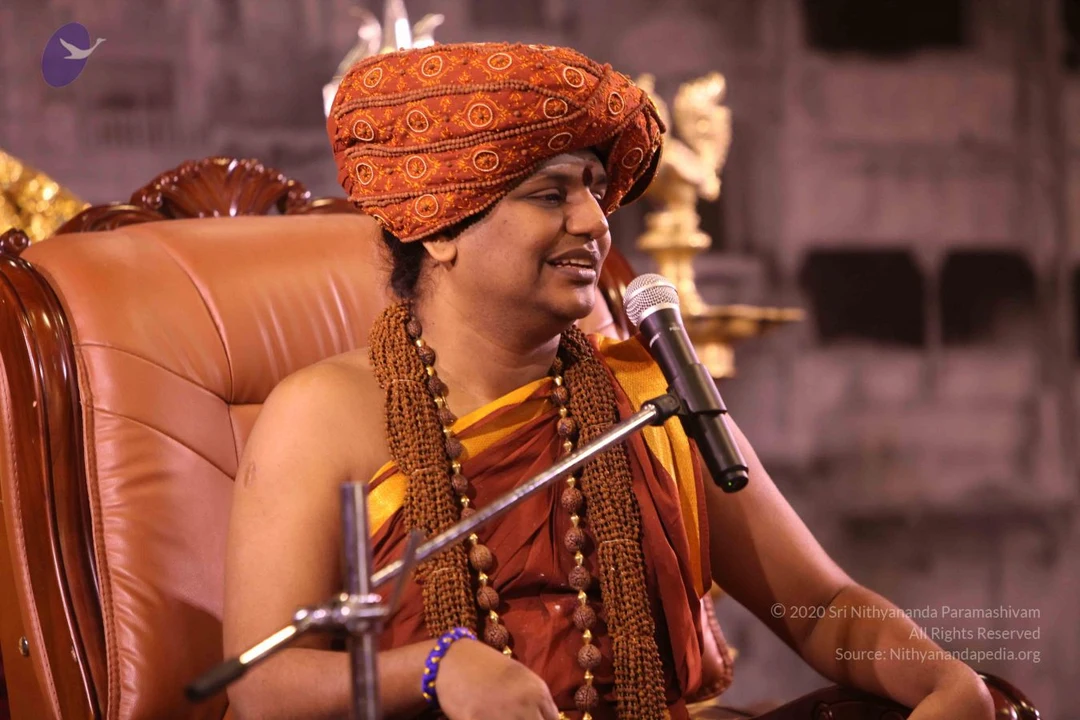
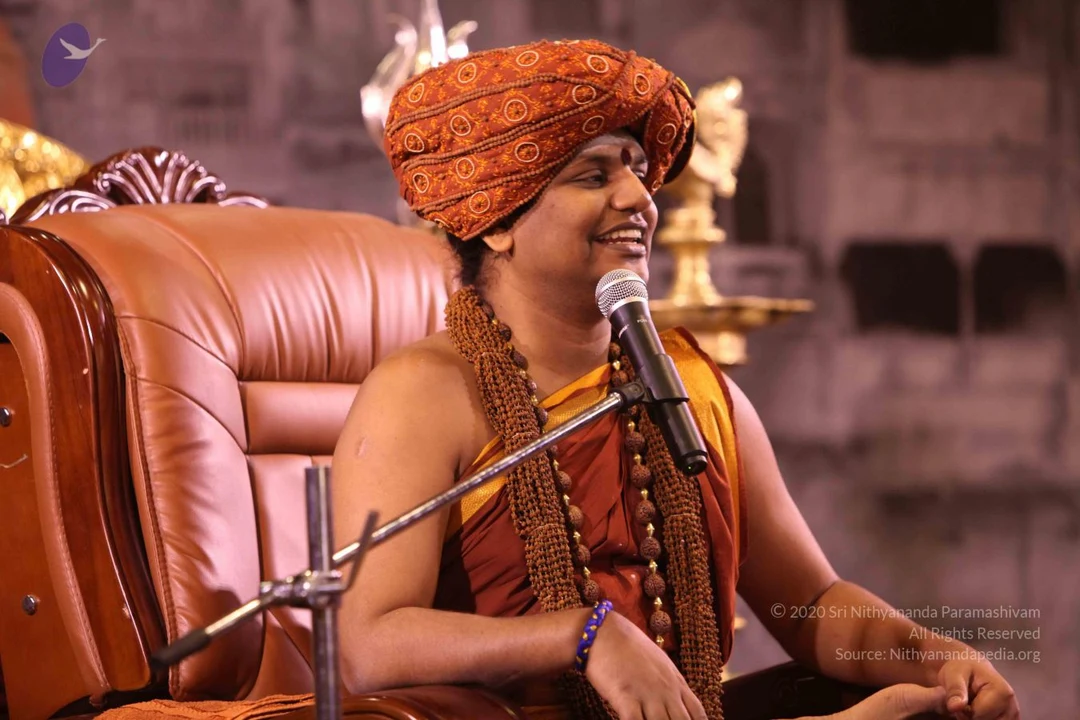
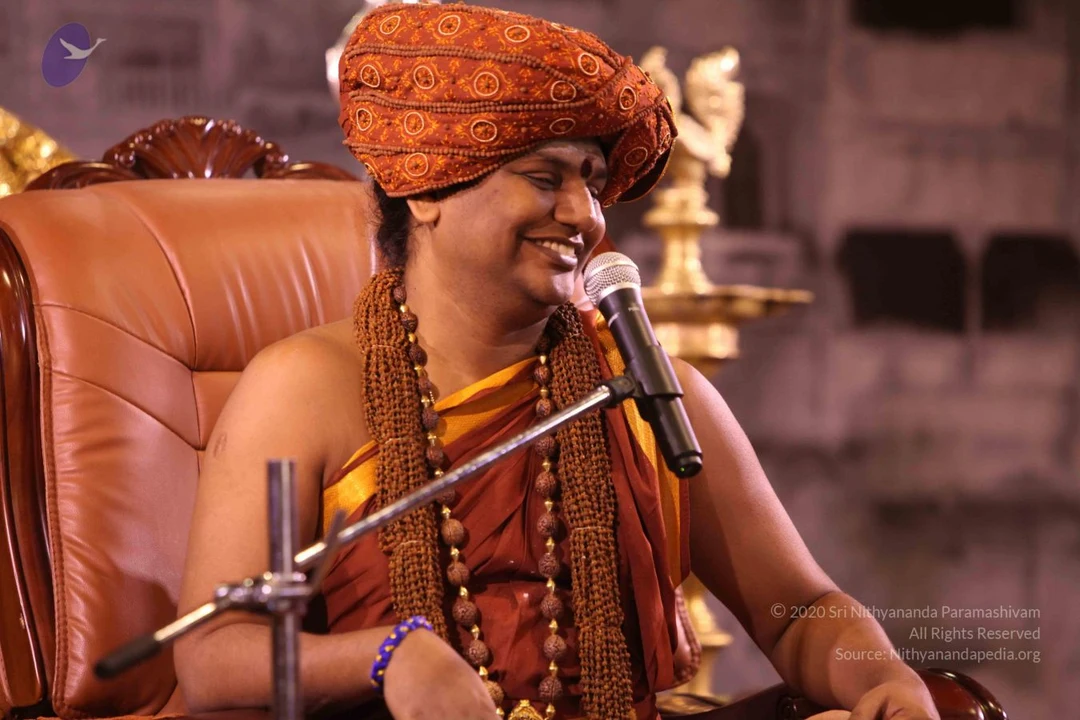
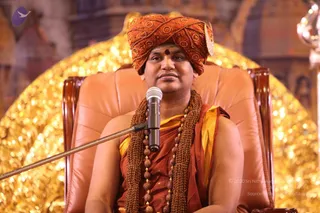
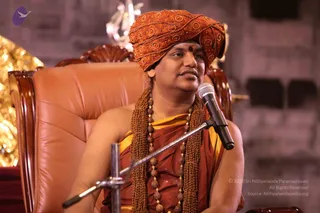
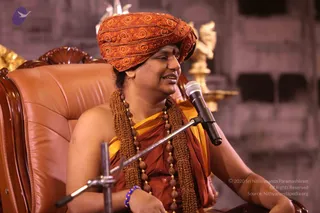
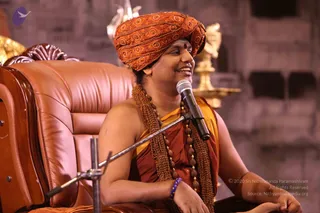
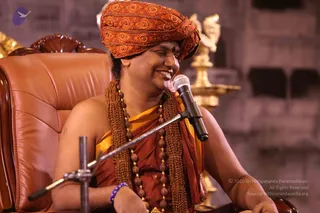
A photograph of a man seated on a tan leather throne-style chair before a large golden backdrop, speaking into a microphone on a boom stand. He wears an ornate orange and gold embroidered turban with a small red bindi and vibhuti mark on his forehead, a saffron-orange and gold-edged shawl, and long multi-strand rudraksha mala necklaces. He looks toward the camera with a calm expression. Behind the golden canopy, painted temple-style imagery is partly visible.A man seated in a brown leather throne-style armchair with carved wooden arms speaks into a microphone on a stand at the lower left. He wears an orange and gold patterned turban with a small red tilak on his forehead, an orange-red robe with gold border, and long rudraksha mala necklaces with multiple strands. Behind him a golden ornamental backdrop and a grey stone wall are visible.A man seated in a brown leather armchair speaks into a microphone on a stand during a satsang. He wears an orange-red patterned turban with gold motifs, a red-orange robe over a saffron-yellow shawl, and multiple long rudraksha mala strands with brown beads. A blue beaded bracelet is on his wrist and a vertical tilak mark is on his forehead. Behind him are blurred gold ornaments and a stone-textured backdrop. Swamiji (probable) appears to be the speaker, based on the turban, rudraksha malas and saffron clothing.A smiling man in an orange-red patterned turban with a small red tilak on his forehead sits in a brown leather armchair, speaking into a silver microphone on a stand. He wears a rust-orange cloth over one shoulder with a golden-yellow inner wrap and a long necklace of brown rudraksha beads. His right hand rests on his knee with a blue beaded bracelet. Behind him stand a brass lamp and a gilded ornament against a grey stone wall.A man seated in a brown leather armchair speaks into a microphone on a stand, smiling with eyes lowered. He wears an orange-red patterned turban with a small red mark on the forehead, a red-orange cloth draped over his body with a gold-yellow edge, and a long multi-strand rudraksha mala with gold beads. A lit brass oil lamp stands in the background beside a grey stone wall. Swamiji (probable): the turban, saffron clothing and rudraksha mala suggest the Swamiji candidate, seated and teaching at a satsang.

dieties

9 photosSource gallery
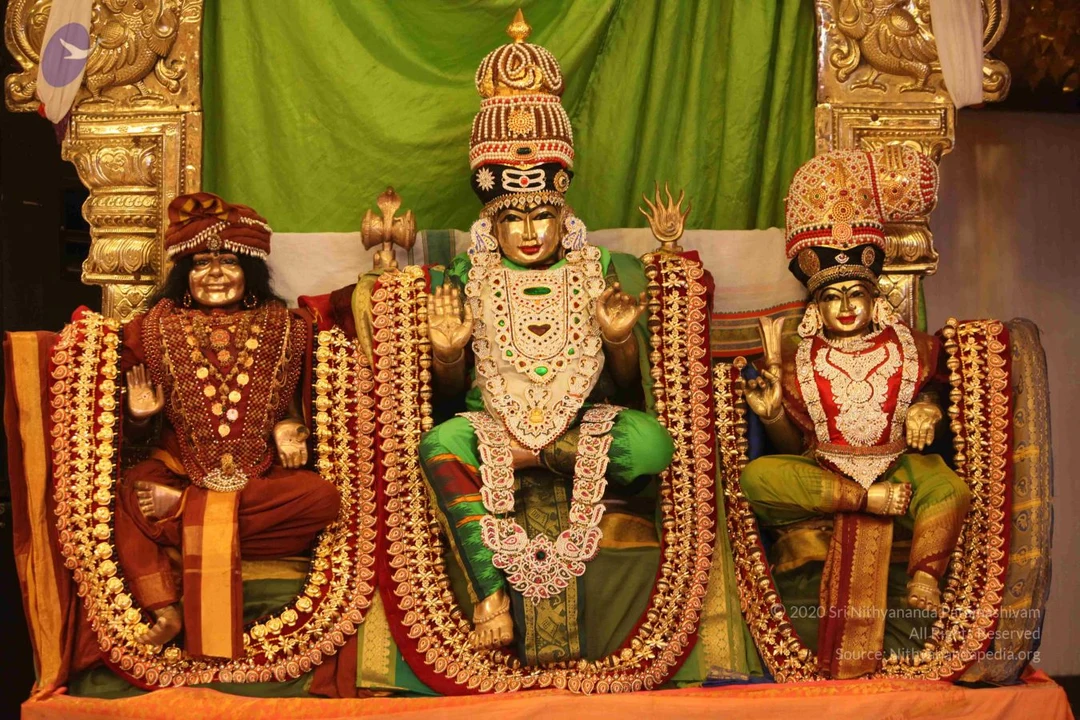
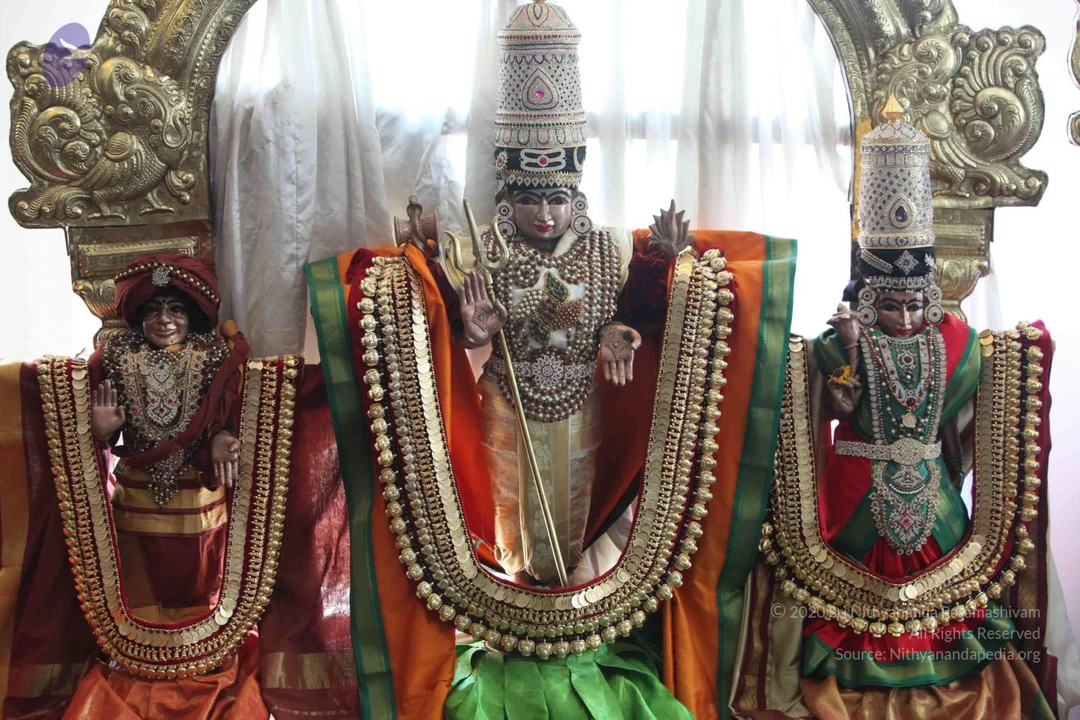
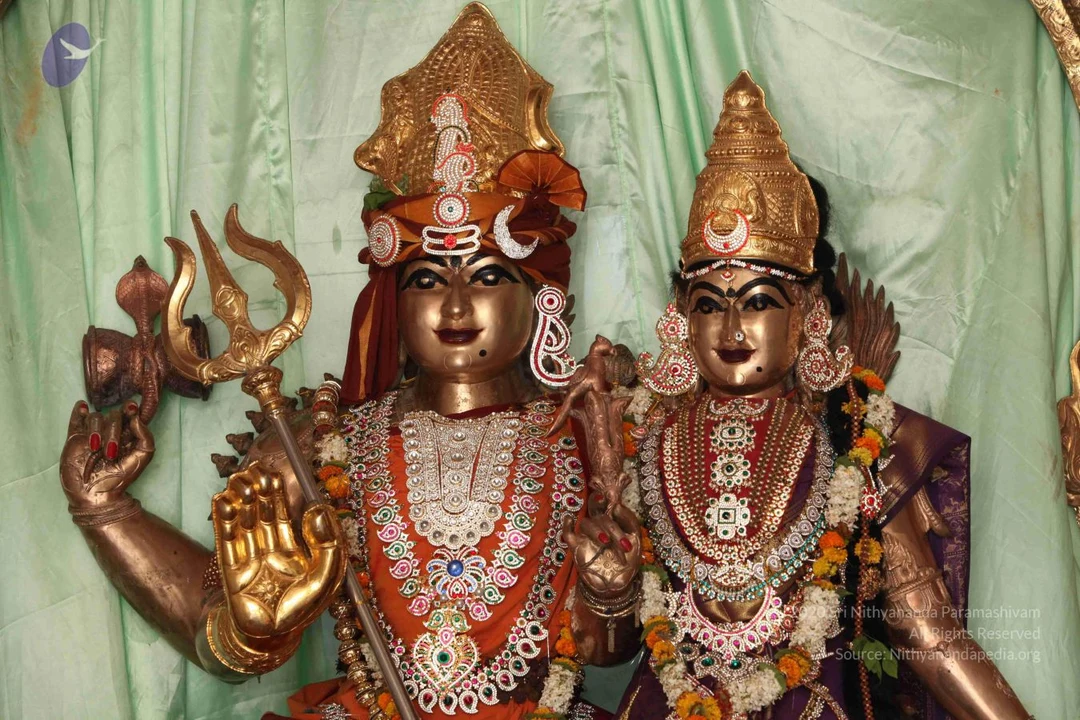
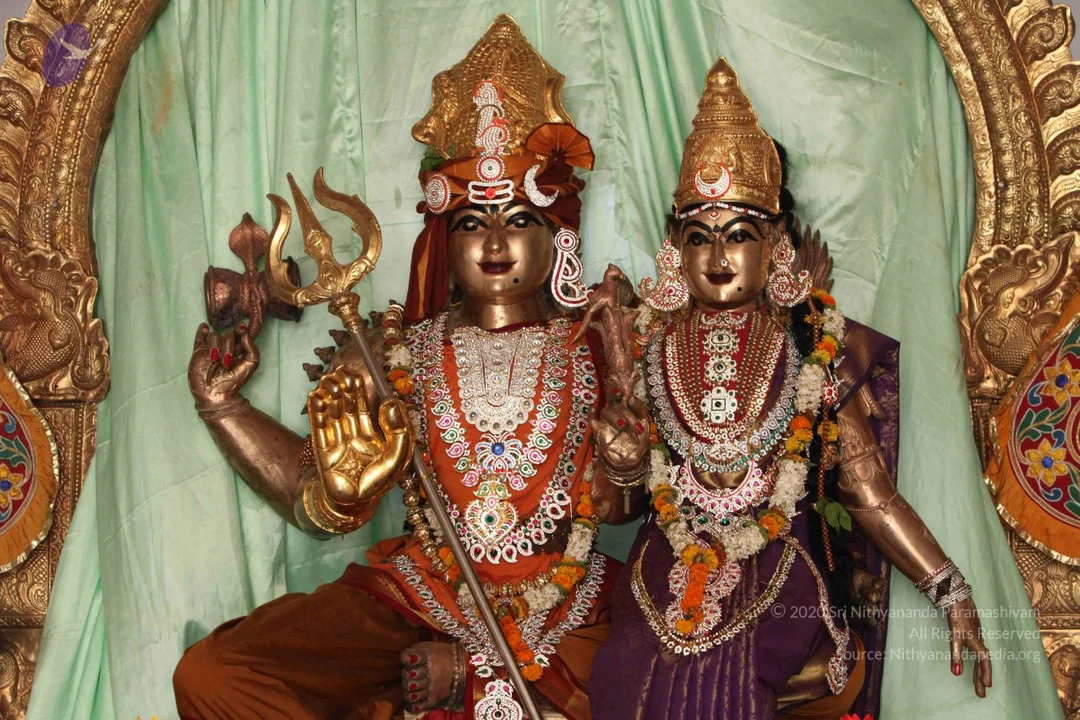
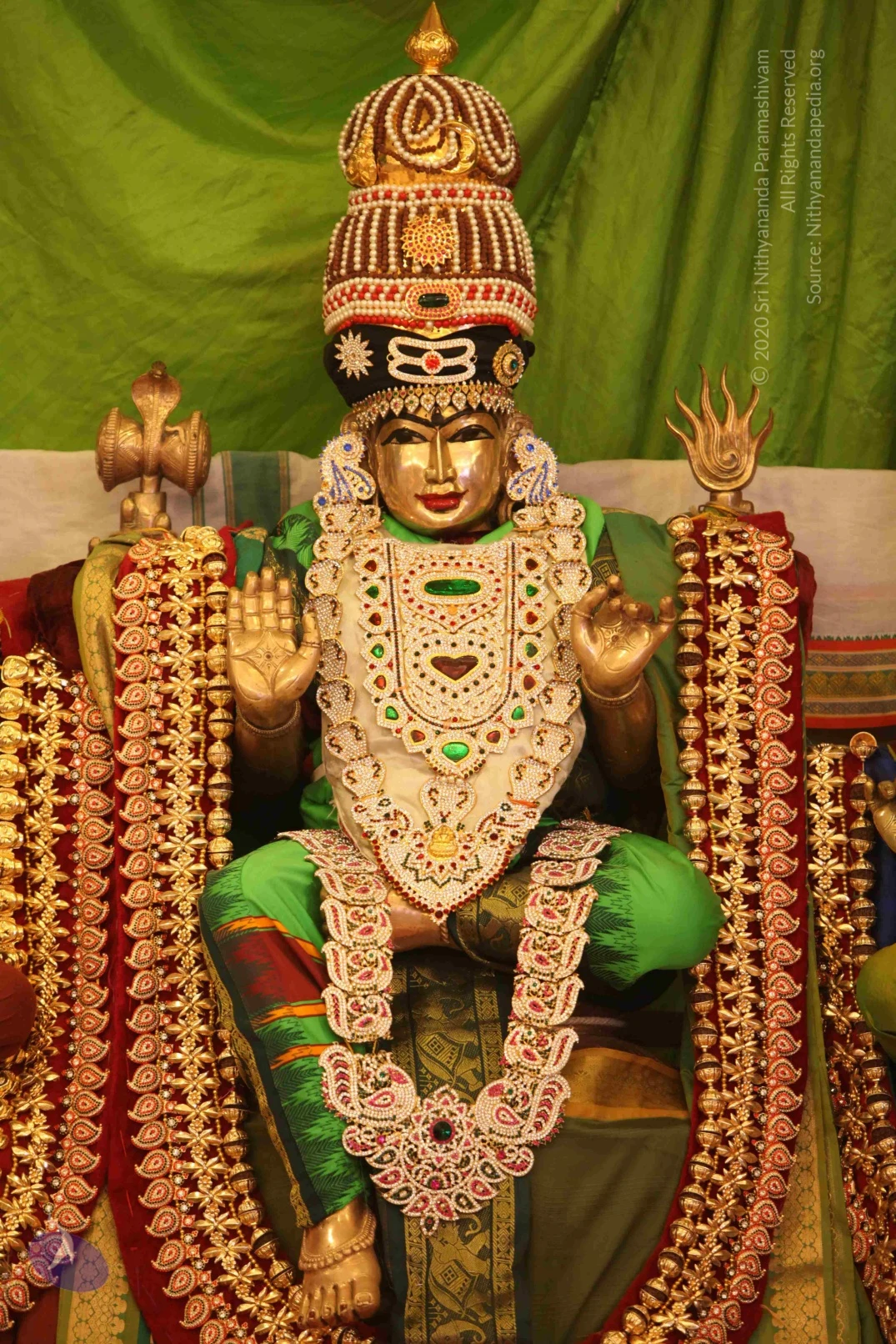
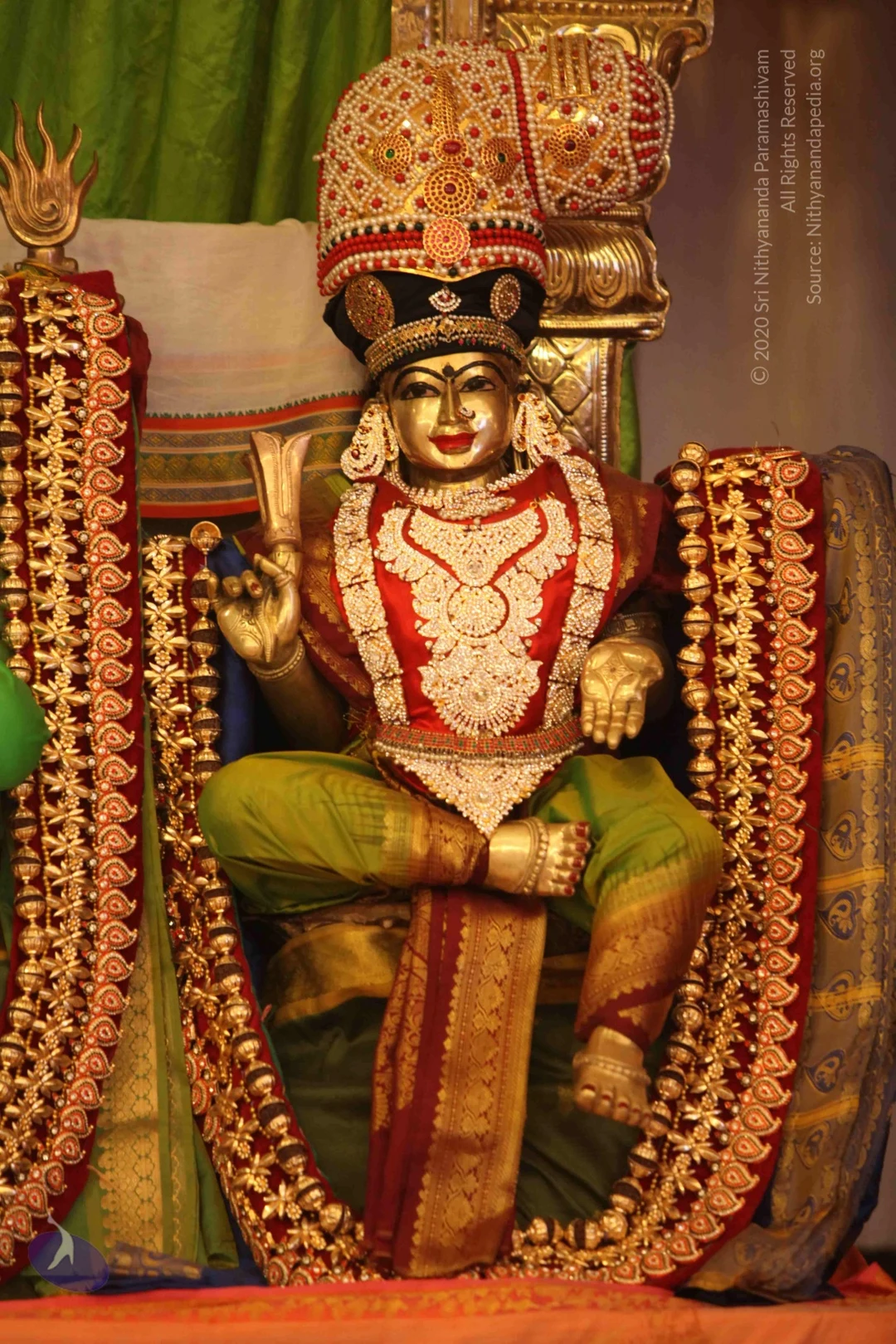
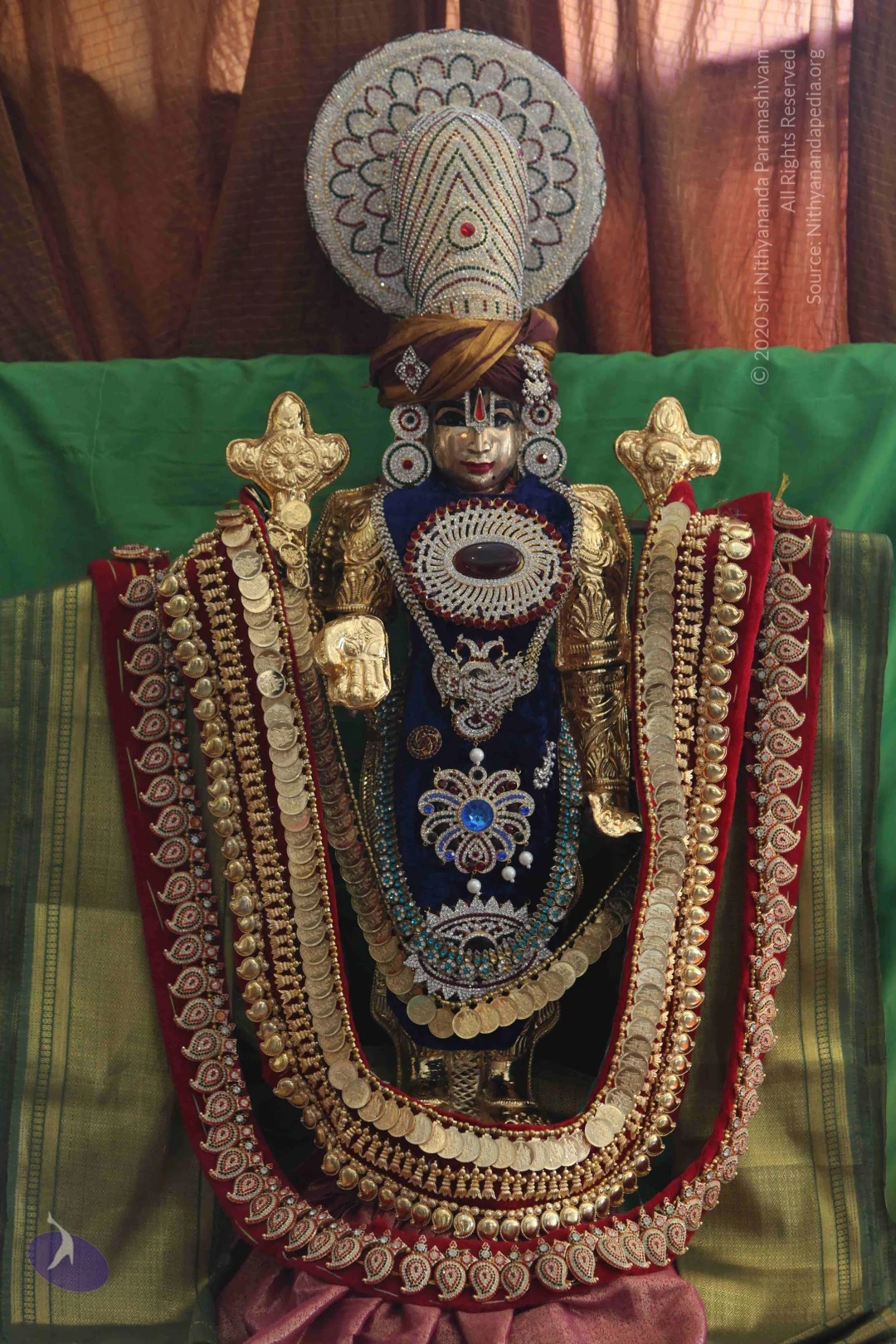
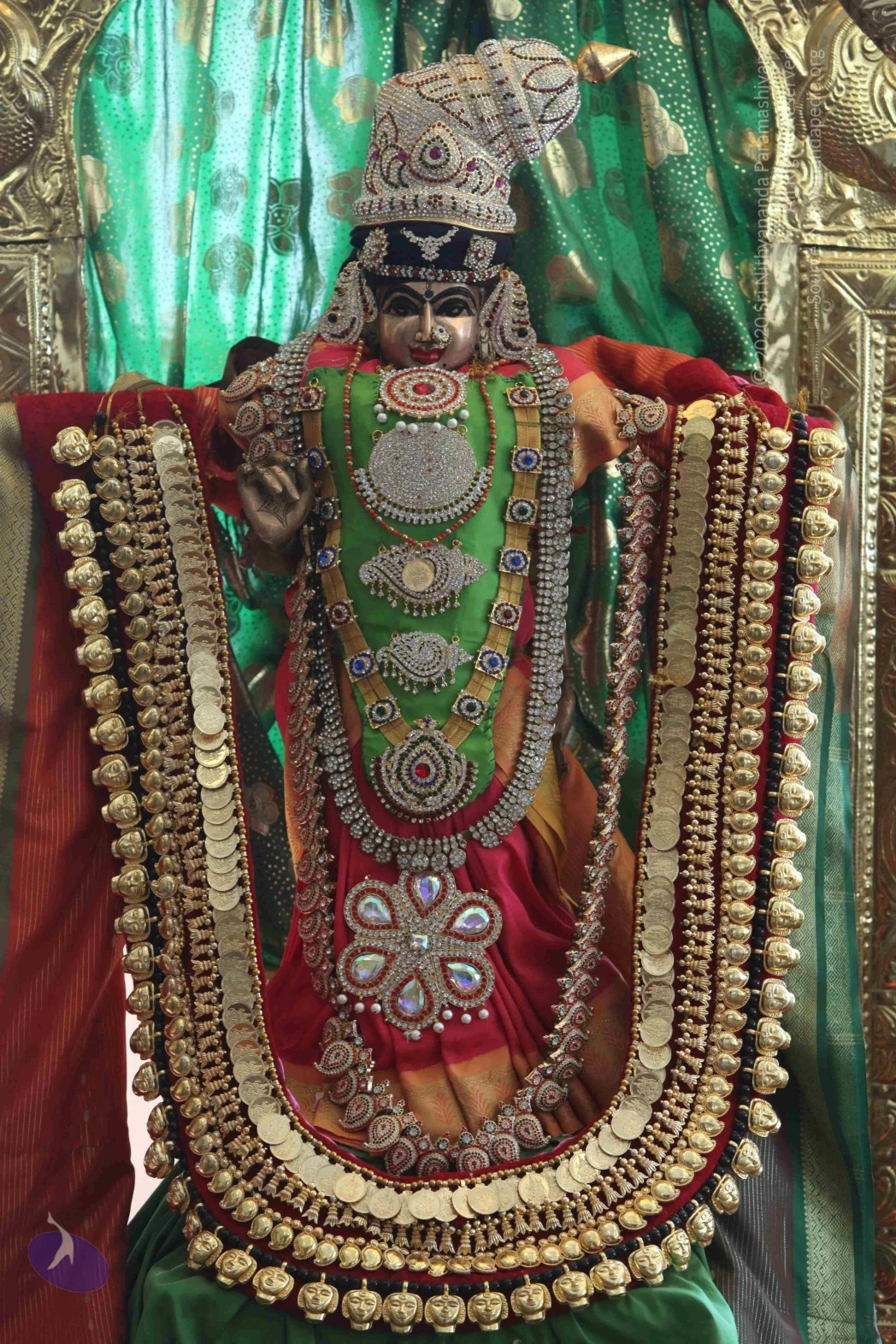
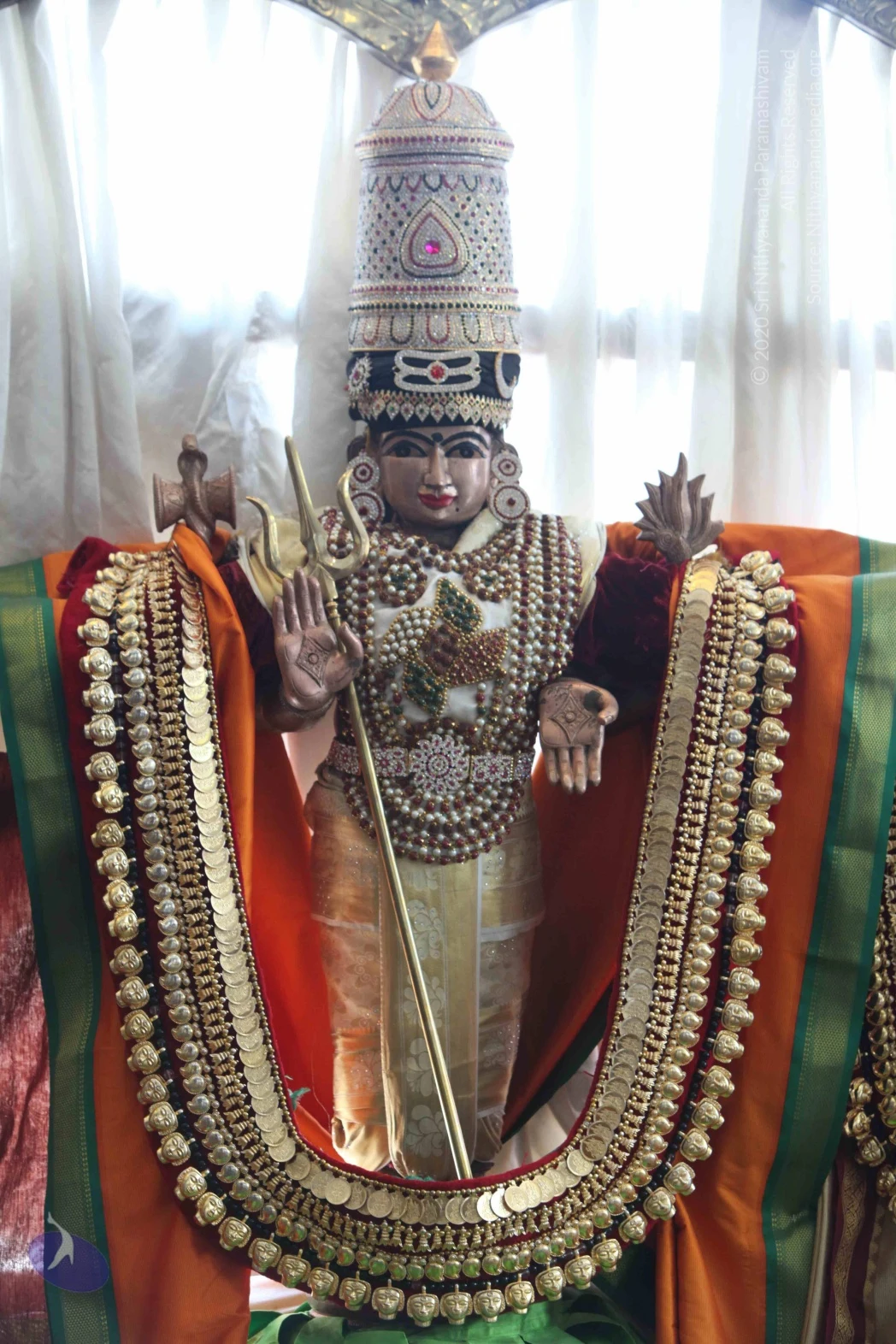
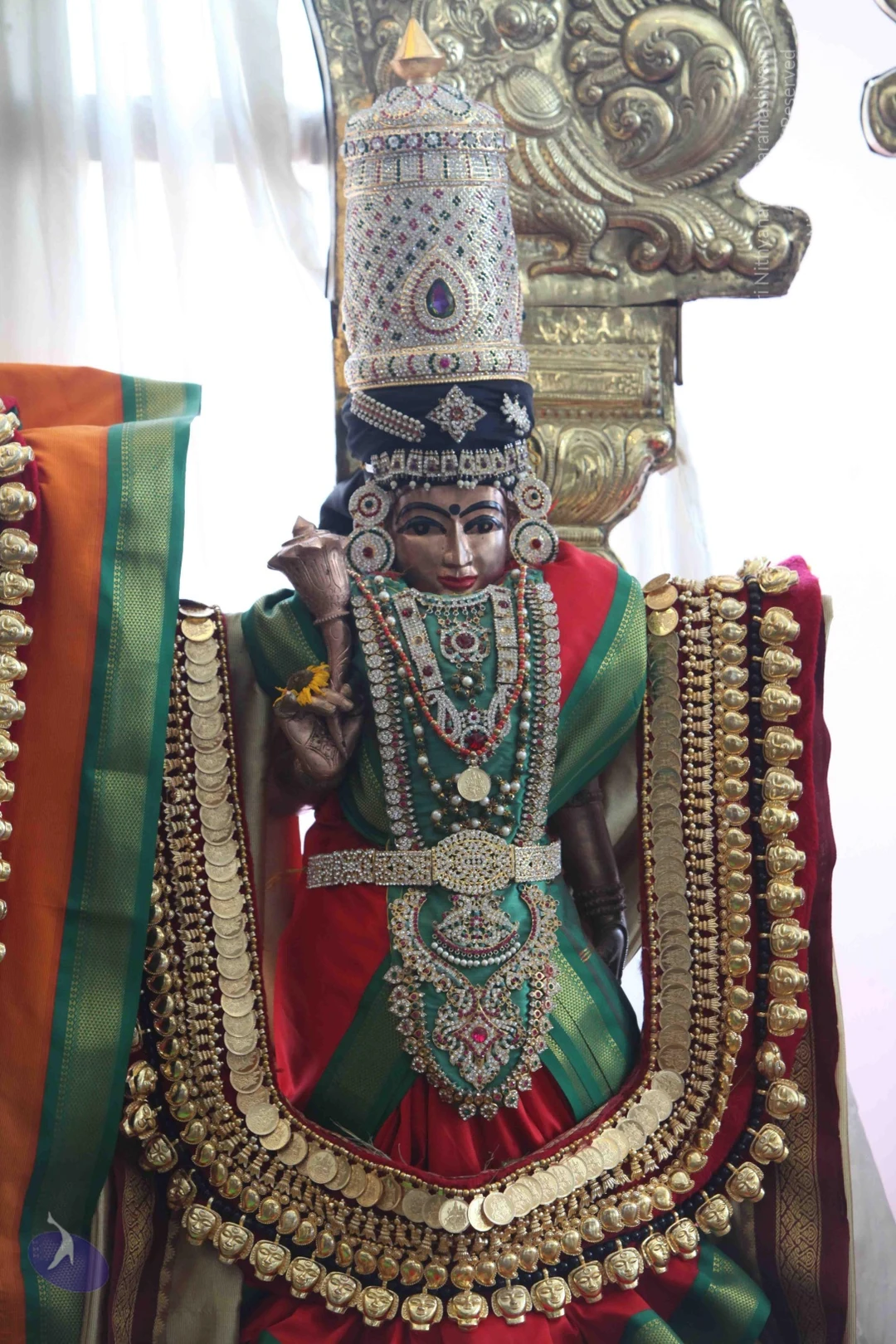
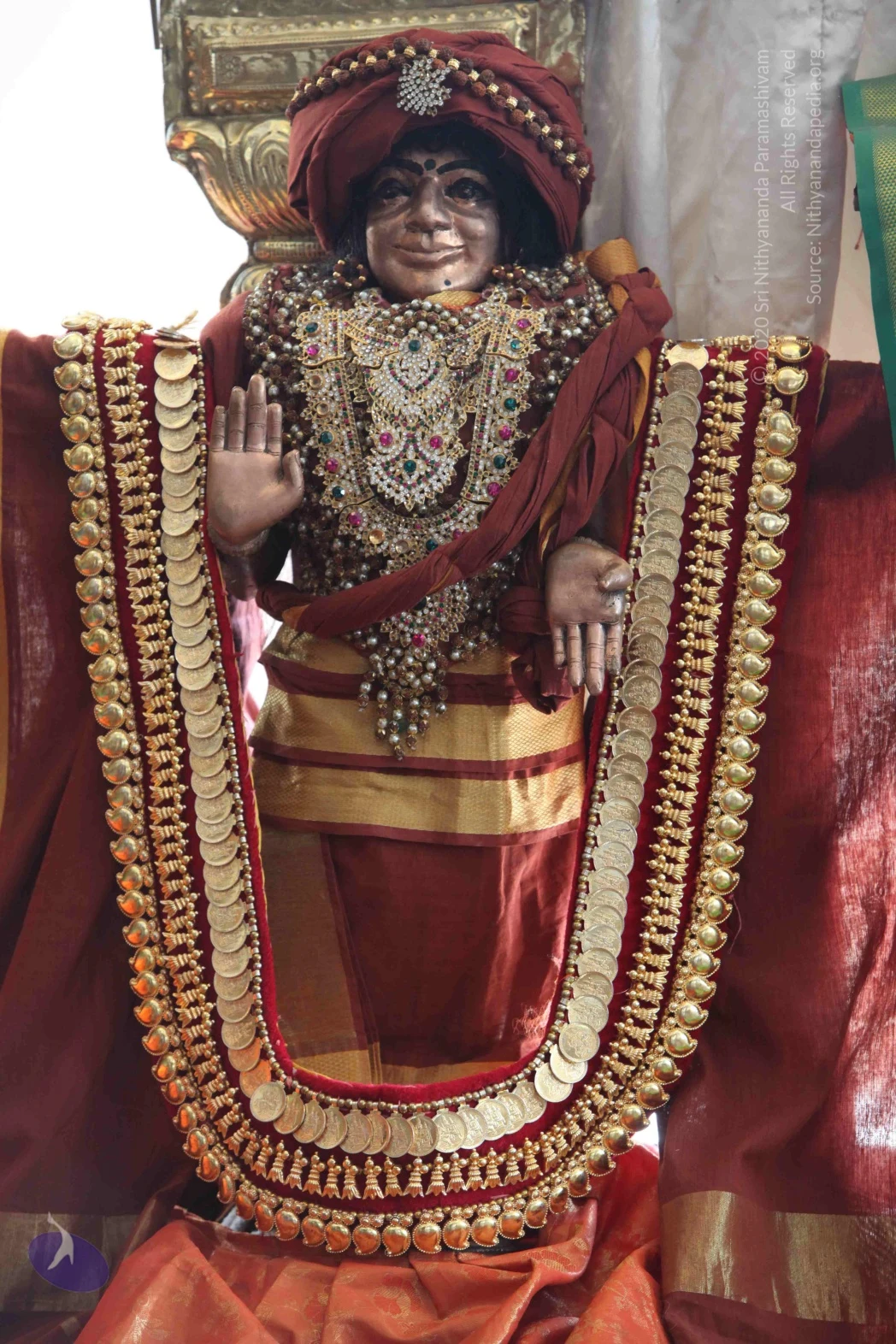
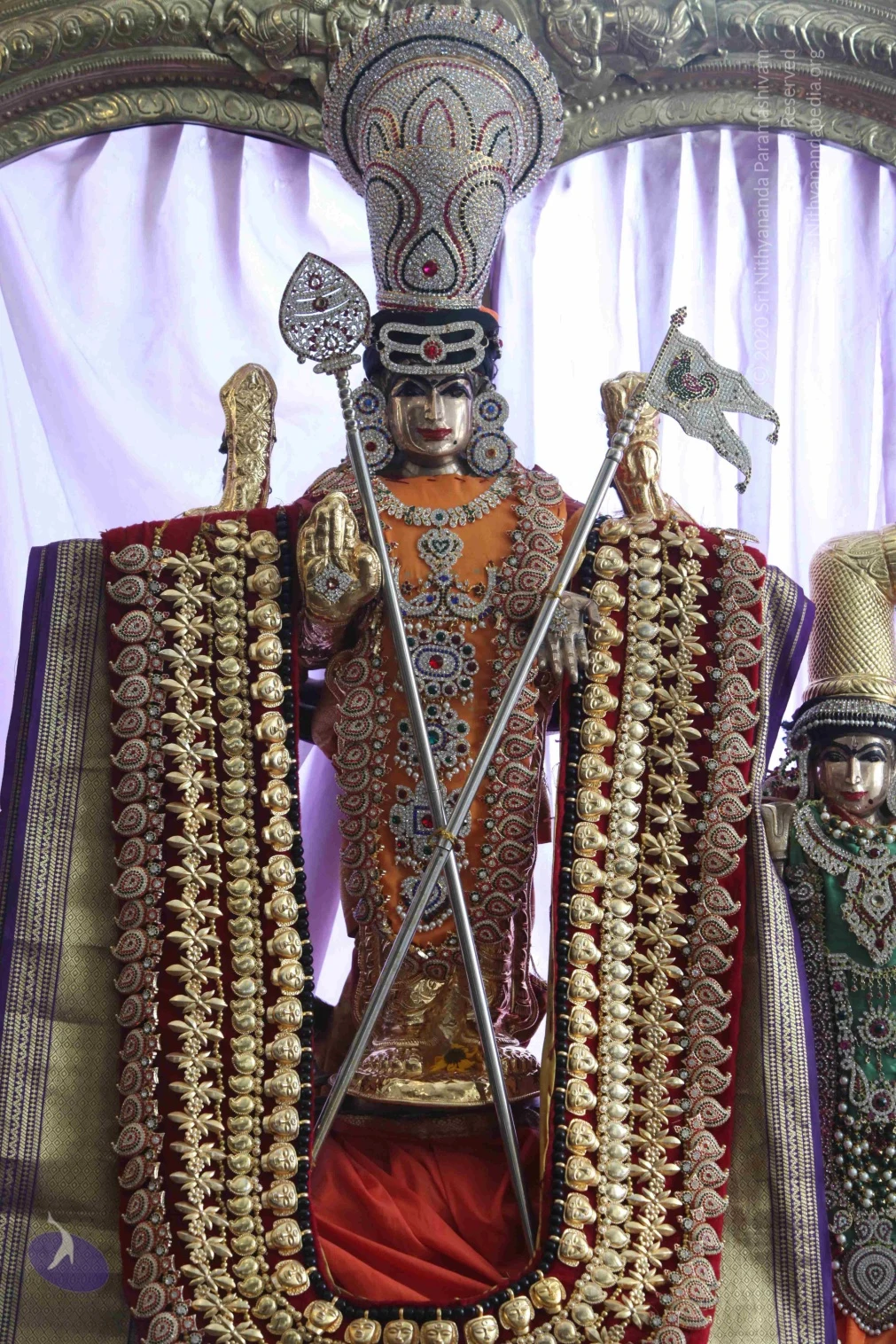
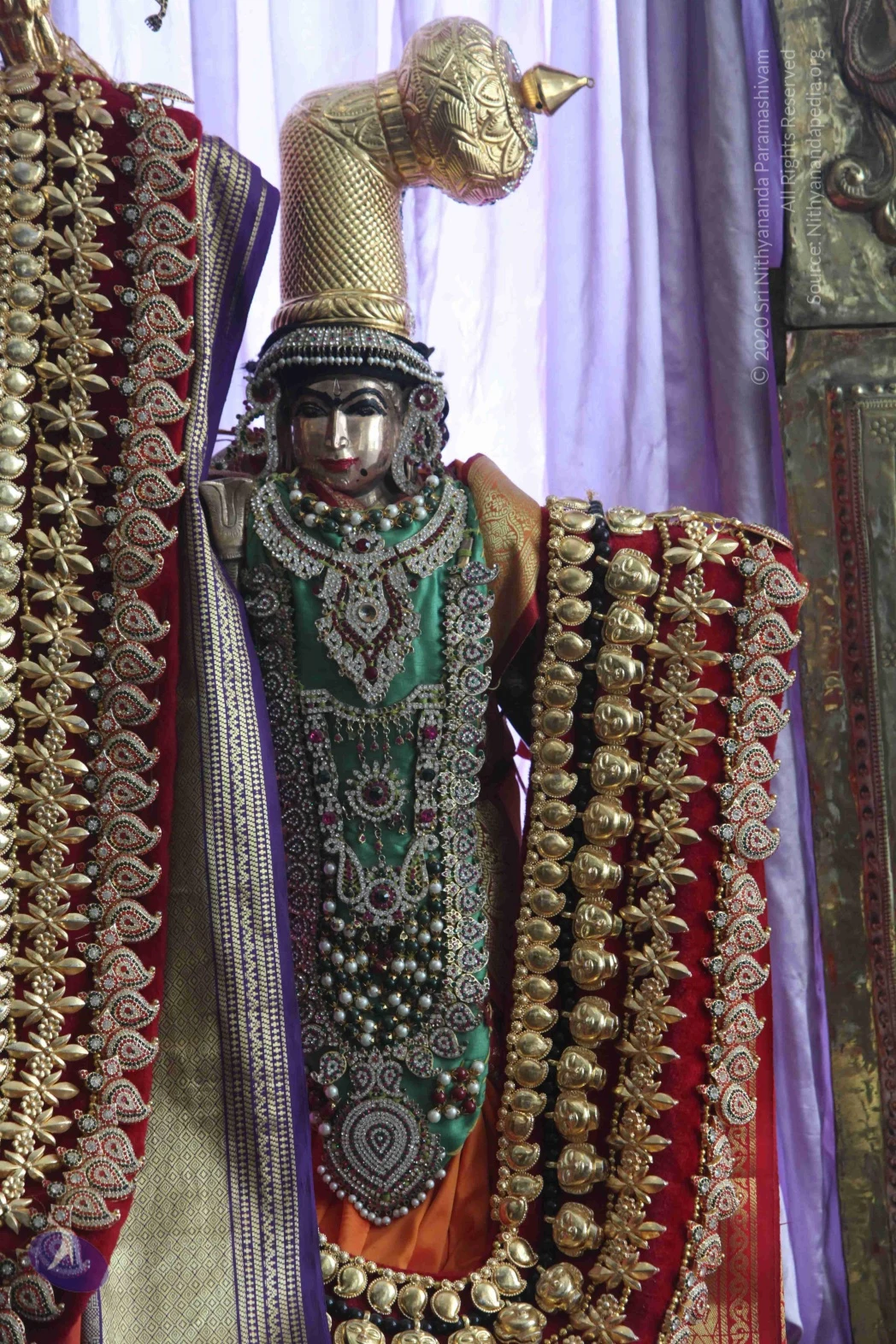
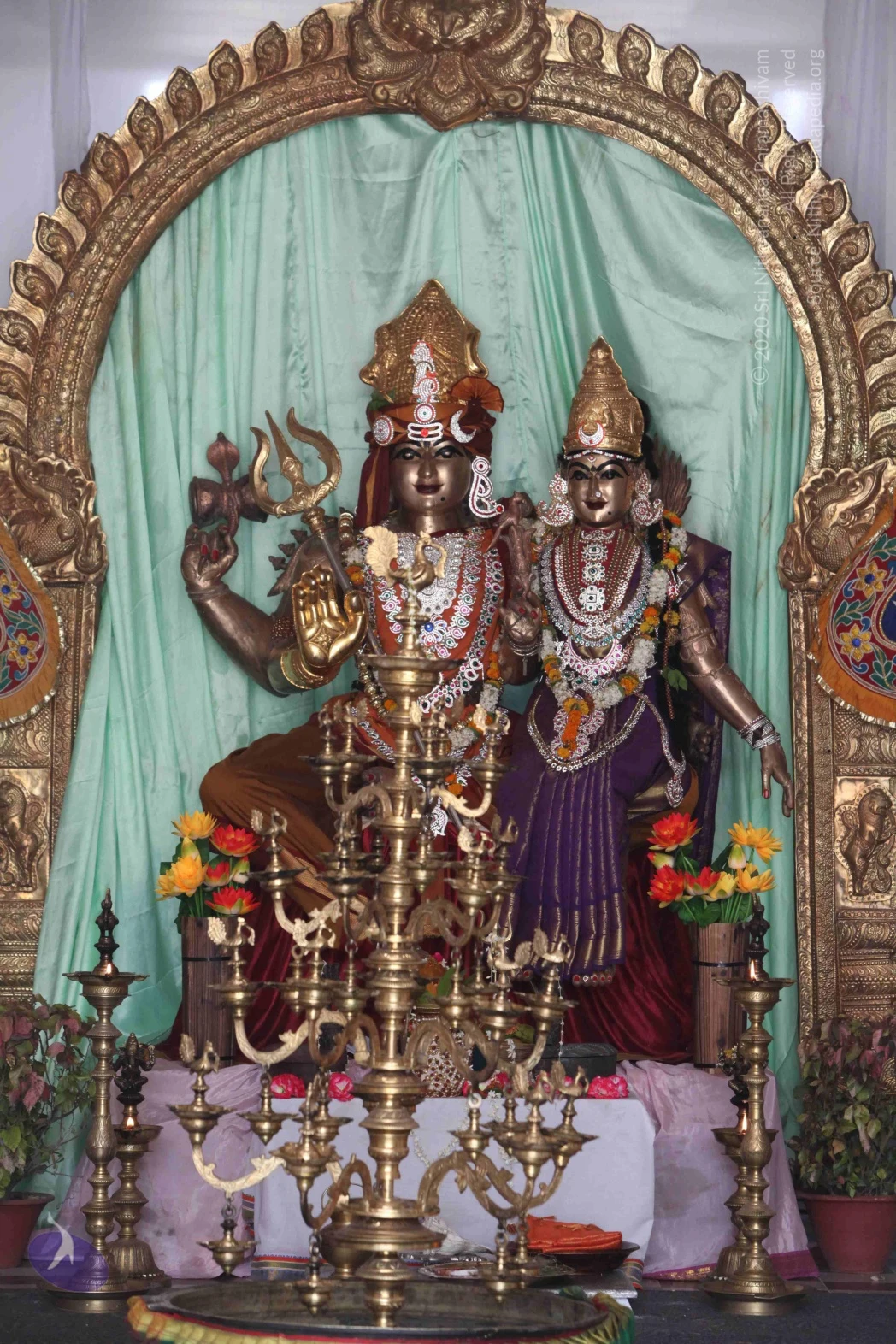
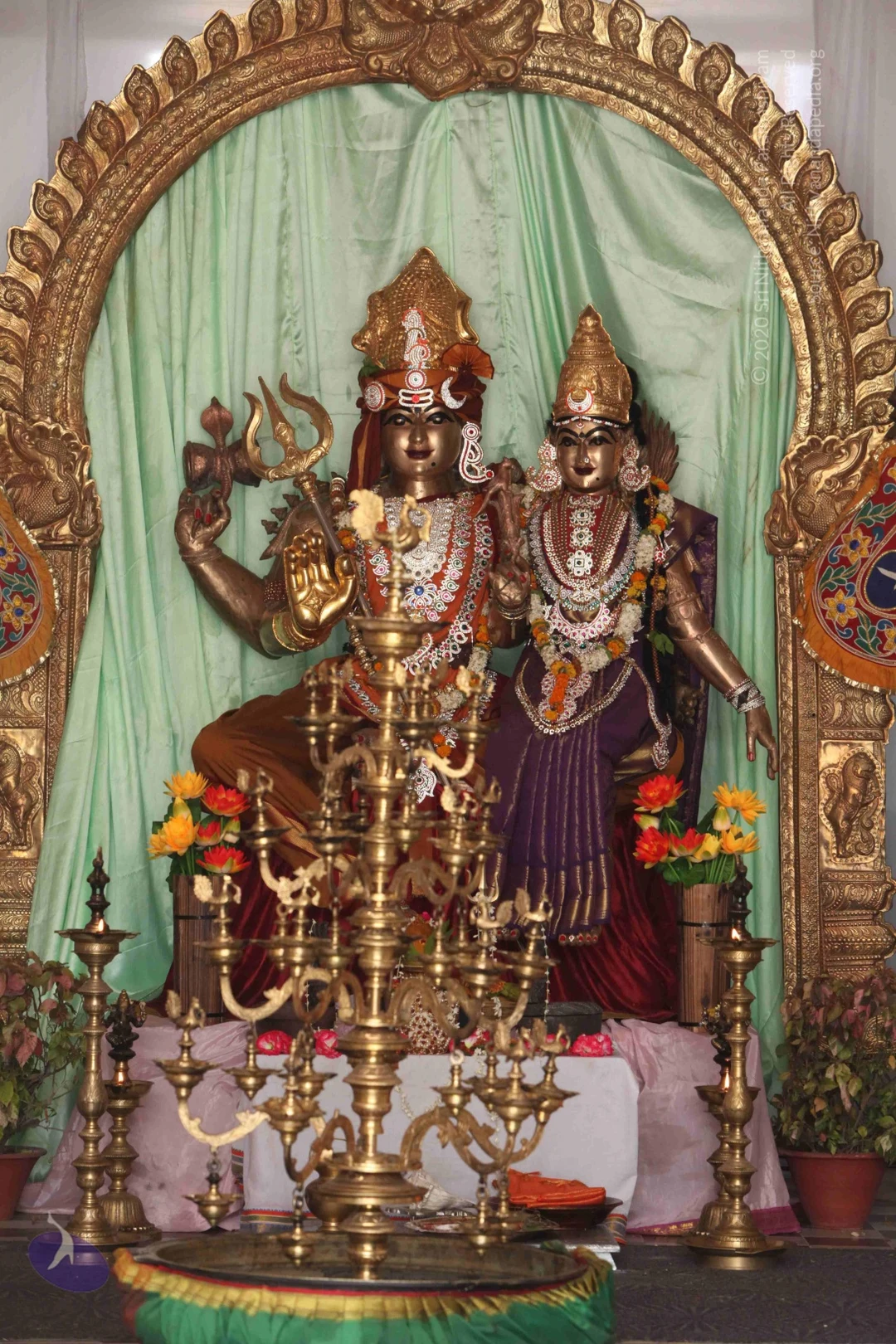
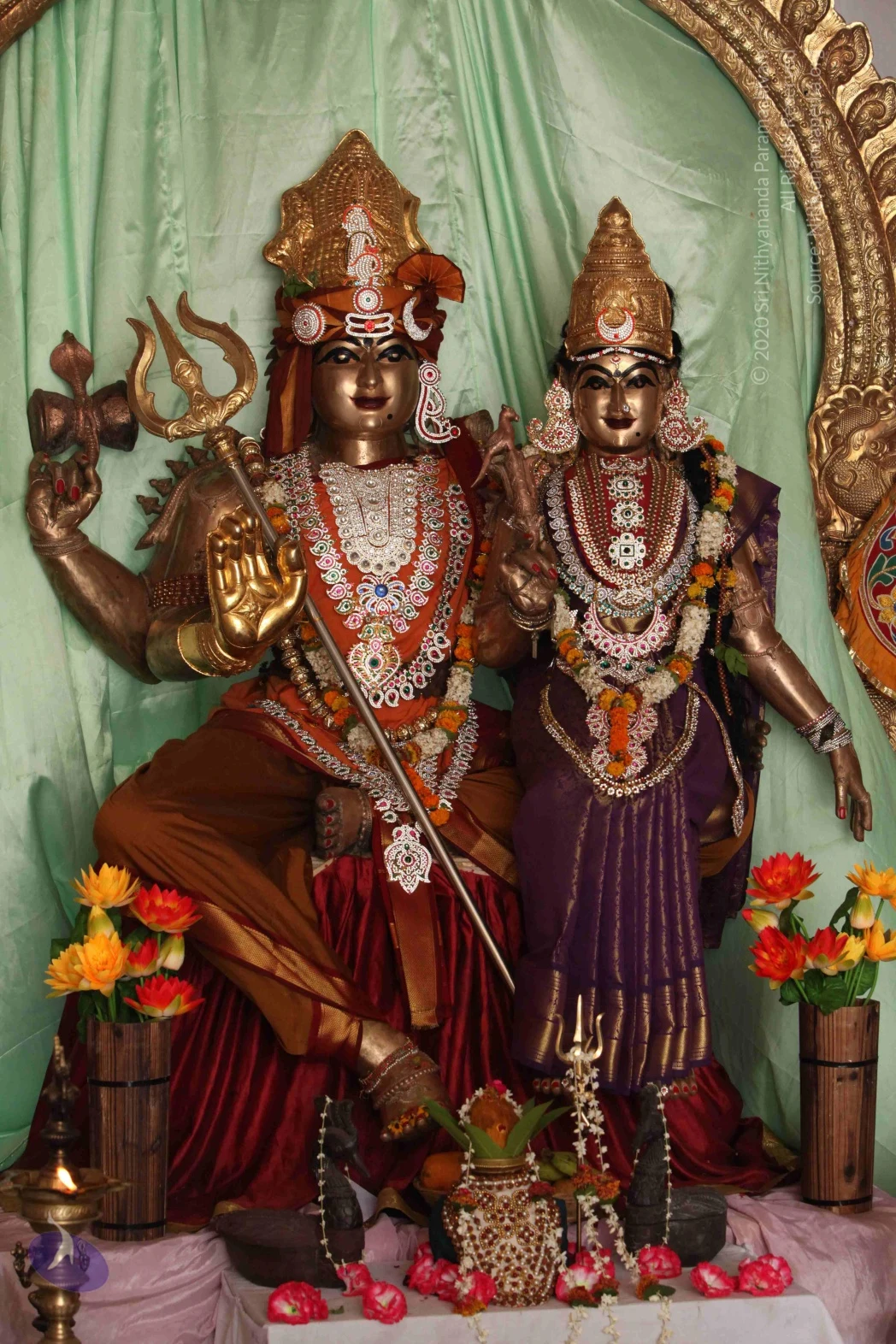
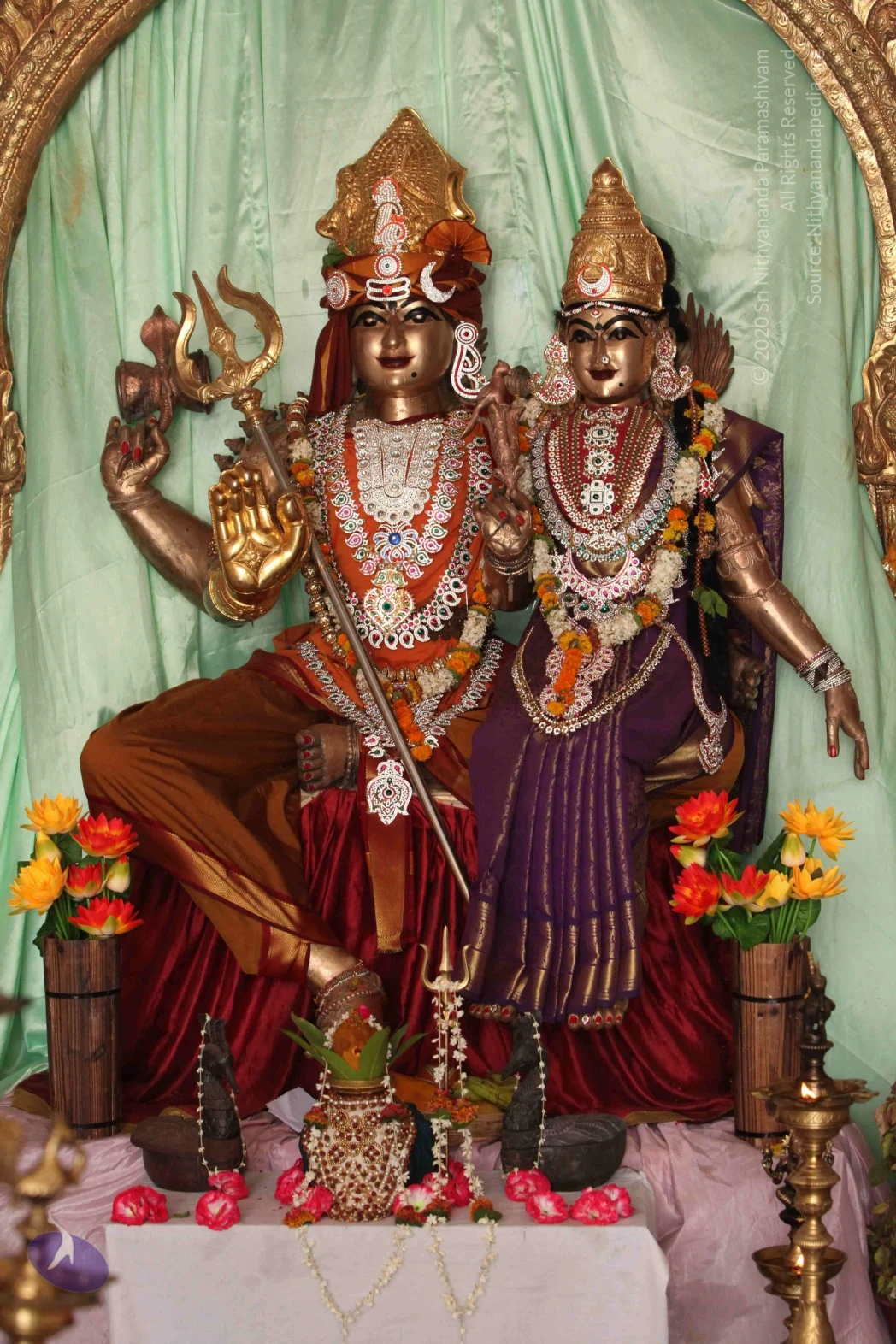
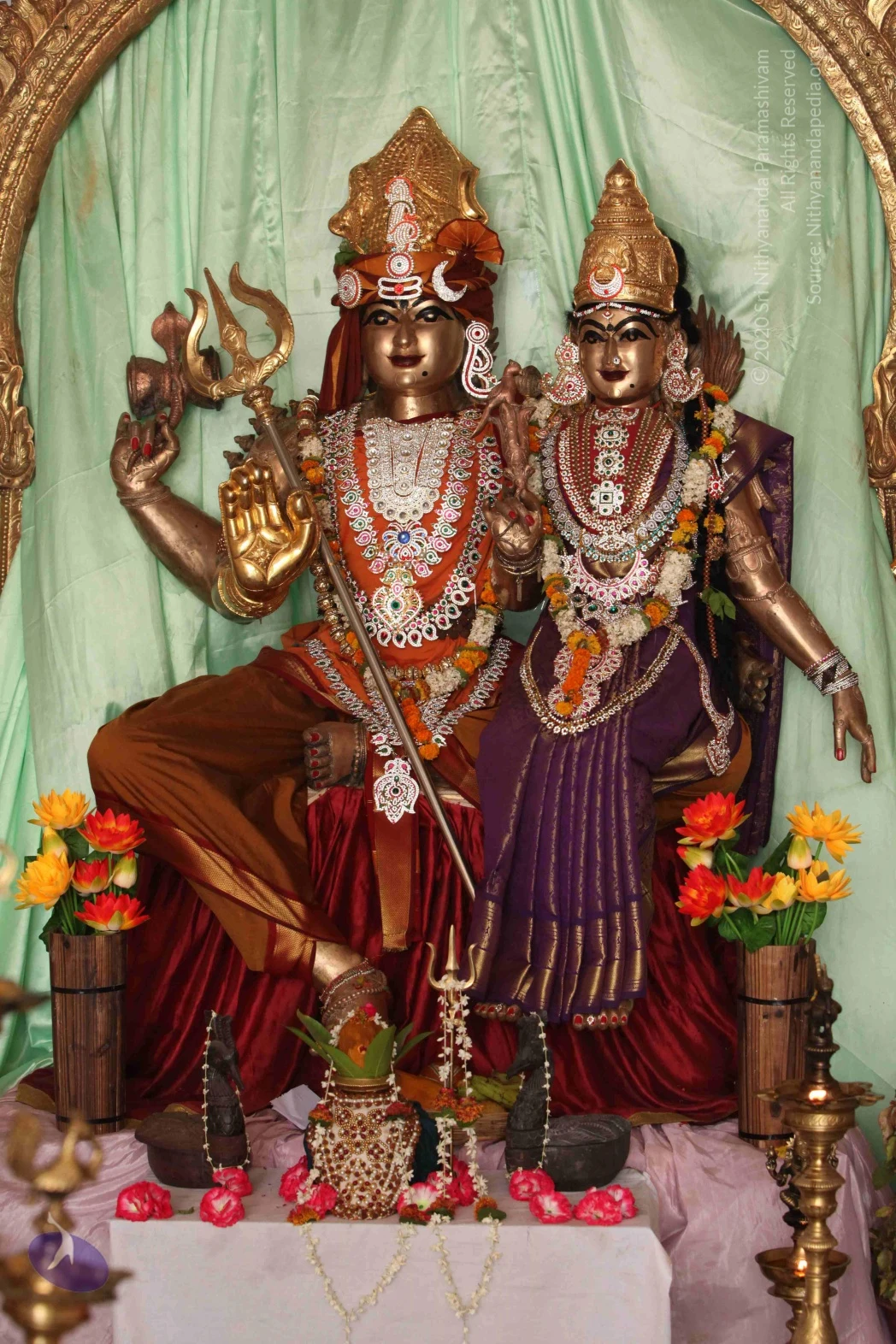
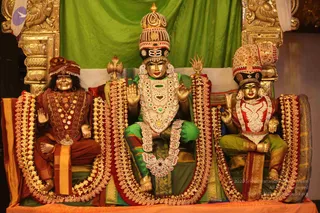
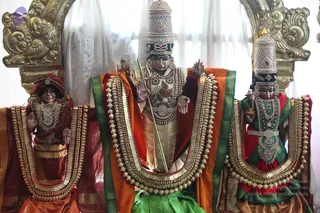
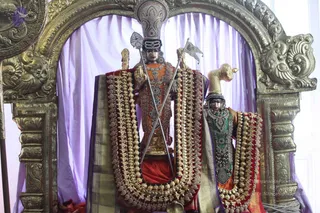
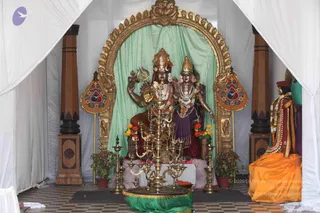
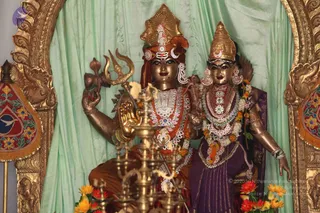
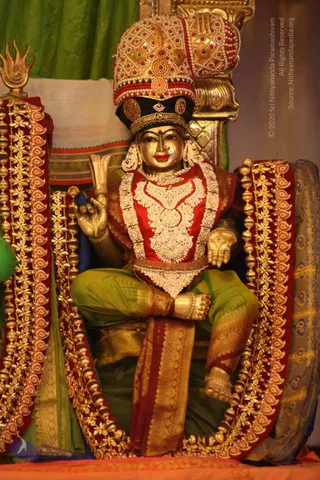
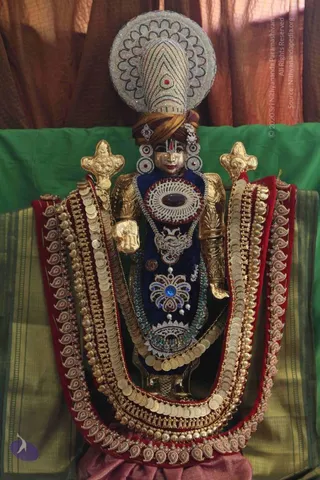
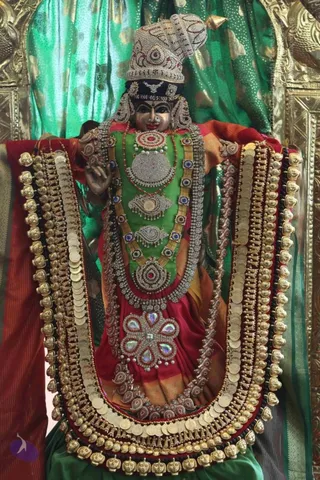
A photograph of three life-size golden-faced statues seated on a raised platform draped with an orange cloth, in front of a green backdrop and ornate gilt pillars. The central figure, a deity murti, wears a tall crown with a white tripundra, a white and green beaded necklace, a green dhoti and a long garland. The statue on the left wears a red and gold turban, a rudraksha mala and a red robe, while the statue on the right wears a red and gold crown, a red choli-style blouse with white jewellery and a green sari. Hands are in mudra poses and a trident stands behind the central figure. These are statues, not living people.Three large murti statues are seated together in front of a window with sheer white curtains and an ornate gold-painted frame. The central figure wears a tall silver crown studded with jewels, a rudraksha-style bead necklace, and an orange and green silk drape, and holds a trident. The two flanking figures wear red and green garments, layered gold and jewelled necklaces, and gold coin garlands draped across their bodies. These are statues, not living people, and no physical people are present.A photograph of a decorated deity murti standing in a gilded arched shrine with lilac draped cloth behind it. The central figure wears a tall ornate crown, a tilak marking and a long mala of gold beads that spreads down a red and gold silk garment. He holds a trident-like staff and a small flag-topped rod. Beside him stands a smaller female murti in green and gold silk with a red-and-gold mala, a crown-like headpiece and a bent arm raised. The shrine has elaborate golden carved borders with floral and peacock-like motifs. No physical people are visible.A temple shrine with a gilded arched frame and a mint-green curtain behind a pair of standing deity murtis. The taller figure, painted dark, holds a trident and has a crown and marigold garlands, while the consort figure wears a purple skirt, a crown and a long garland. A brass multi-tiered oil lamp stands before them, with flowers, potted plants and offerings below. To the right sits a seated statue in a saffron-orange shawl, a red head cloth and a flower garland, beside wooden pillars and white draping. These are statues, not living people.Photograph of a pair of metal deity murtis in a shrine against a mint-green silk backdrop framed by gilded arches. The taller figure, with four arms, holds a golden trident and a drum, wears a red-orange turban with crescent and tilak ornaments, a multi-coloured beaded collar and a rudraksha-style garland. The companion figure beside him wears a gold crown, purple draped garment, layered pearl and red beaded necklaces and orange marigold garlands. Brass oil lamps and a cluster of yellow and orange flowers sit in the foreground. Painted red and blue decorative panels flank the sides.A photograph of a shrine with a dark bronze-toned statue pair of a deity with a trident and a consort, both adorned with white and red garlands, set beneath a gold arched frame over a mint-green drape. Brass oil lamps stand in tiers in the foreground, with marigold garlands and flower pots around the base. To the right, a seated statue in a red turban, orange-yellow cloth and garland sits by a wooden pillar. Only statues are present; no physical people are visible.

Satsang

41 photosSource gallery
A smiling man seated on a golden throne stands centre stage with palms pressed together in greeting. He wears an orange-red patterned turban with a small red bindi on the forehead, a rust-brown robe with a gold-yellow sash, and layered brown rudraksha beads with a gold pendant. Silver bangles and a blue beaded bracelet are visible. A silver trident stands at the right edge. The backdrop shows painted temple spires and old stone buildings in orange and grey tones. Swamiji (probable) is the central figure, identified by a turban, rudraksha malas and ceremonial gold ornaments, and the page attributes this event to him.A smiling figure in an orange-and-gold turban and saffron-brown robe with gold borders stands with palms pressed together in greeting before a large gold ornate throne. Around the neck hang long rudraksha malas and a gold pendant. A gold trident stands at right beside a brass lamp, and the backdrop shows painted temple spires and buildings in grey and orange.A smiling person stands before a gold ornate throne with palms pressed together in anjali mudra. They wear a rust-orange turban, an orange-and-gold draped robe with a gold sash, and a long brown rudraksha mala with a gold pendant. Flanking the throne are gold oil lamps topped with birds and a silver trident. Behind is a painted backdrop of Varanasi ghats and temple spires, and leopard-print fabric covers the throne base. Green coleus plants sit at the sides.A smiling man with closed eyes sits on an ornate gold throne with a deep red velvet cushion. He wears an orange-red patterned turban, a red-orange shawl with a gold border, and a thick rudraksha mala with a large gold pendant around his neck, plus gold bangles. A red dot marks his forehead. A tall silver ceremonial staff stands at right beside a brass oil lamp, and a gold-handled ritual implement rests in his hand. Leafy plants frame the lower left. Probable Swamiji seated on his throne, identified by the turban, rudraksha mala and ornate gold setting. No other people are visible.A man seated on an ornate gilded throne with a deep red velvet cushion, smiling and gesturing with his right hand during a talk. He wears an orange-red turban with a small red bindi, an orange-red and gold-bordered cloth over his shoulders, a long rudraksha mala with a gold pendant, and a purple beaded bracelet. A golden staff topped with a decorative figure rests beside him, with green leaves in the lower left. The setting suggests a satsang or discourse. Swamiji (probable) appears in person, identified by the saffron and gold ceremonial dress, rudraksha mala, turban and throne cues; he is the seated speaker.A photograph of a smiling man seated on an ornate gold throne with intricate repoussé carving. He wears an orange-red patterned turban with a small red bindi, a saffron-and-gold garment, multiple rudraksha malas and a ceremonial gold pendant, and gold armbands with beads. A silver staff or rod stands at the right edge. Probable Swamiji by appearance cues: ornate turban, rudraksha malas and gold ornaments on a throne.

Ganga Ghat
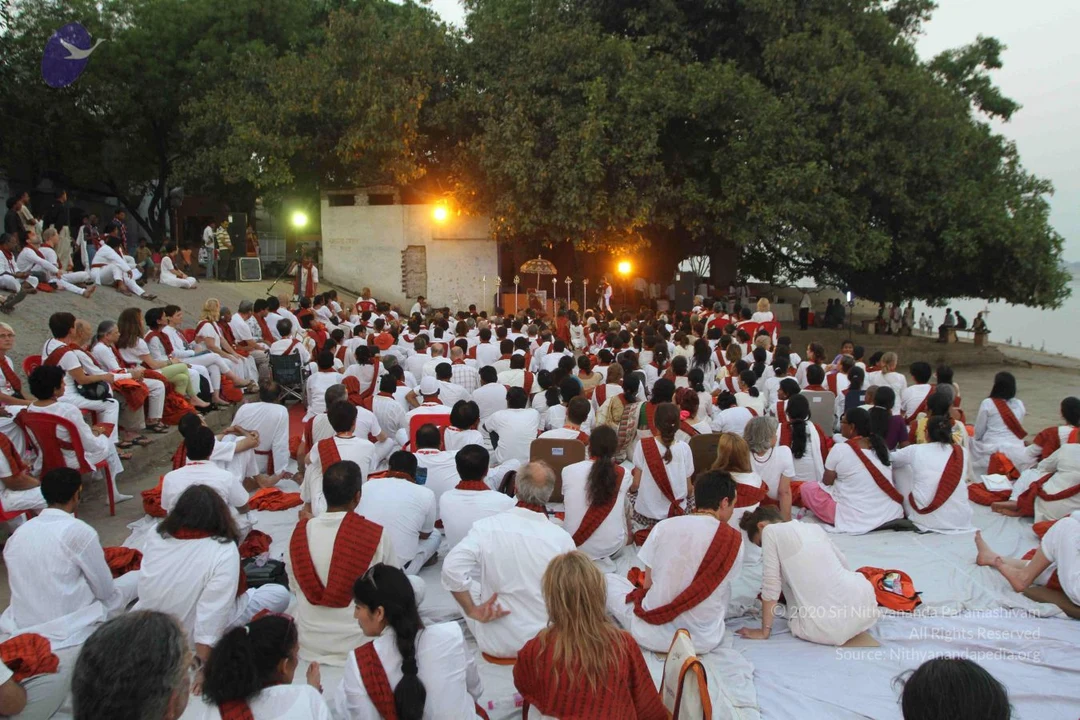
92 photosSource gallery
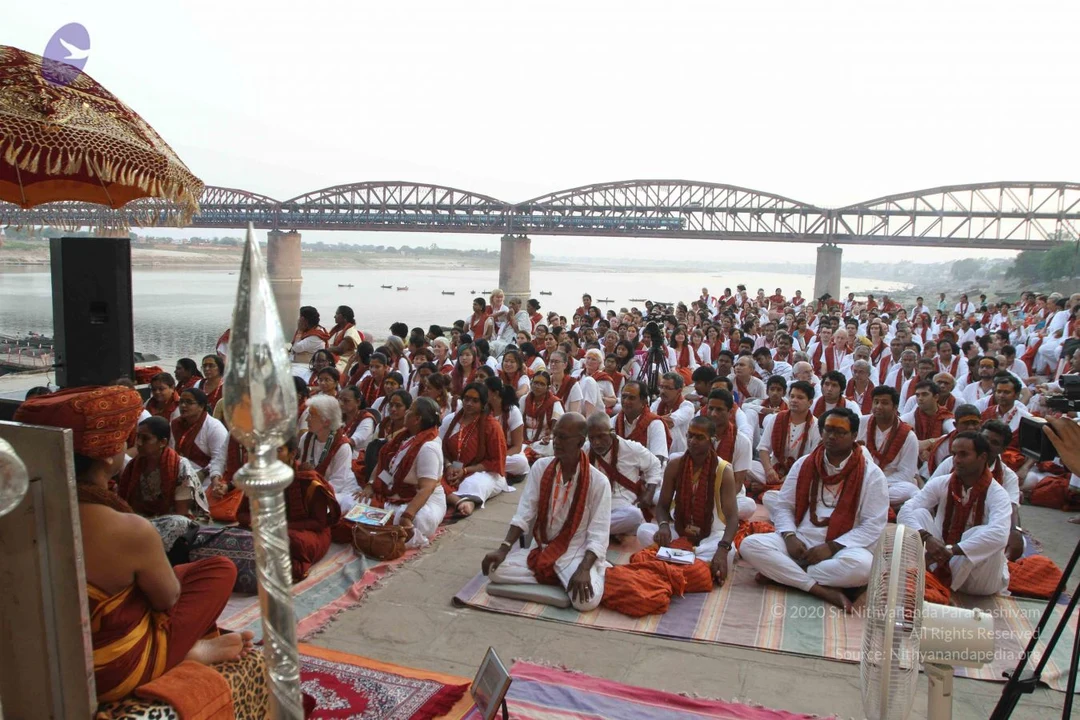
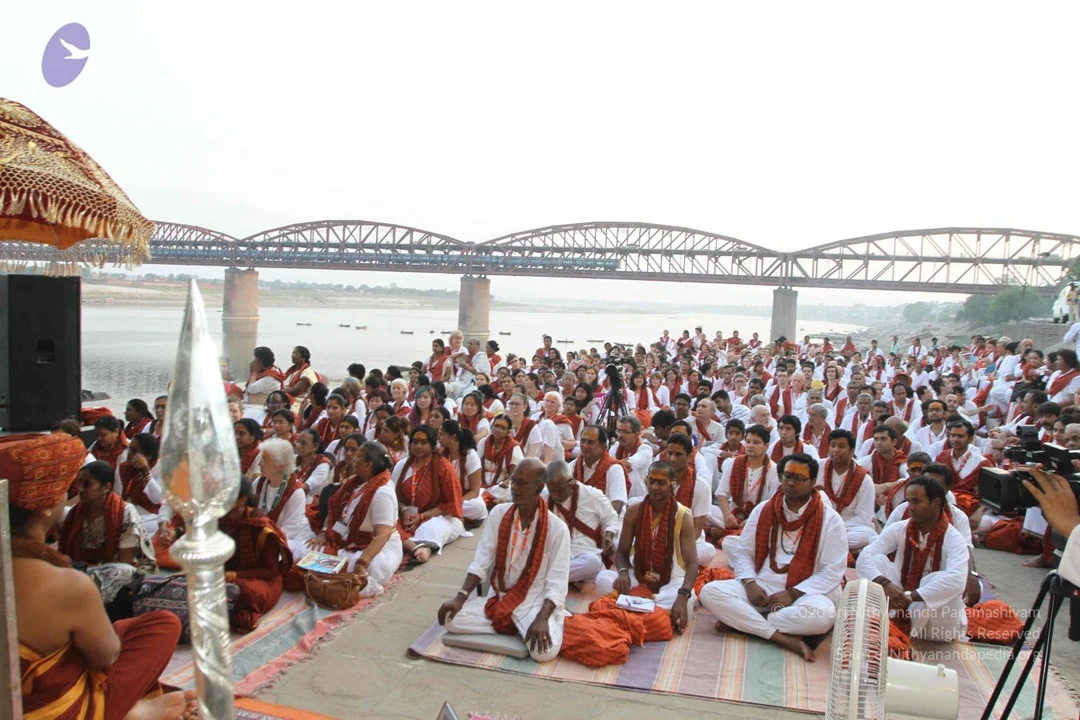
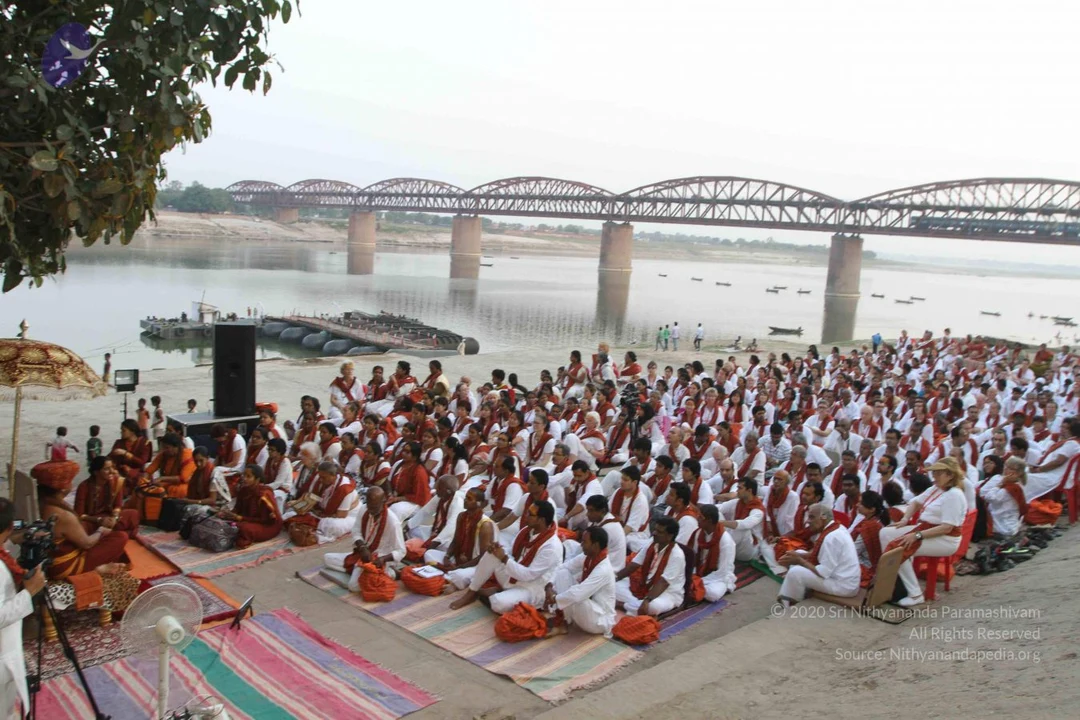
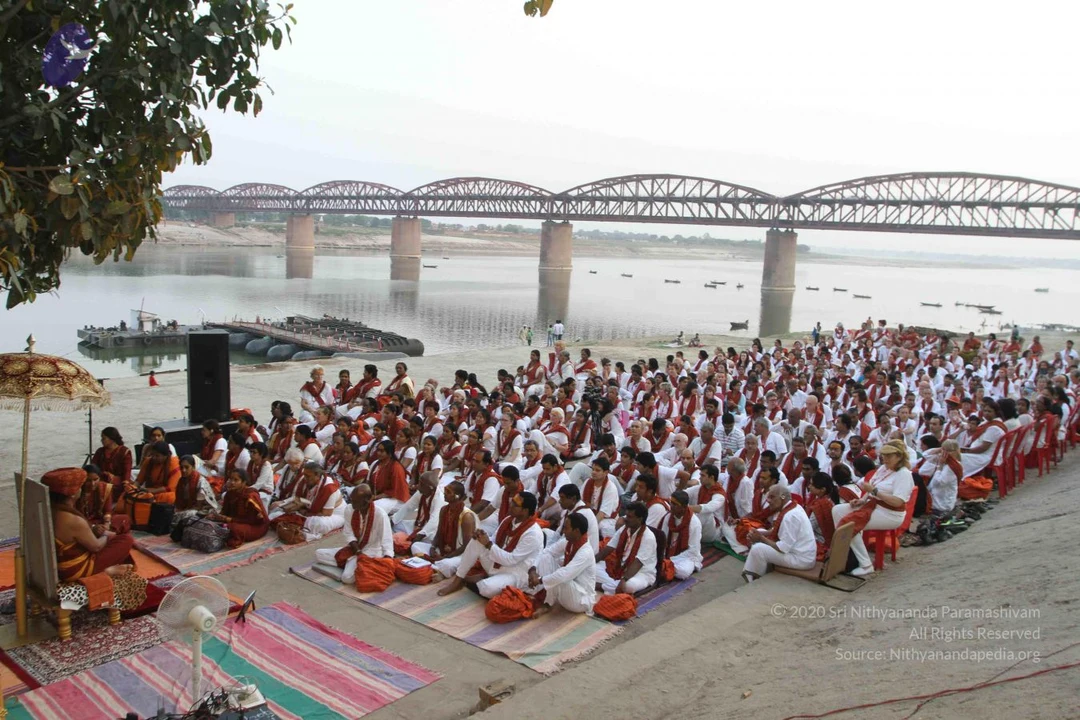
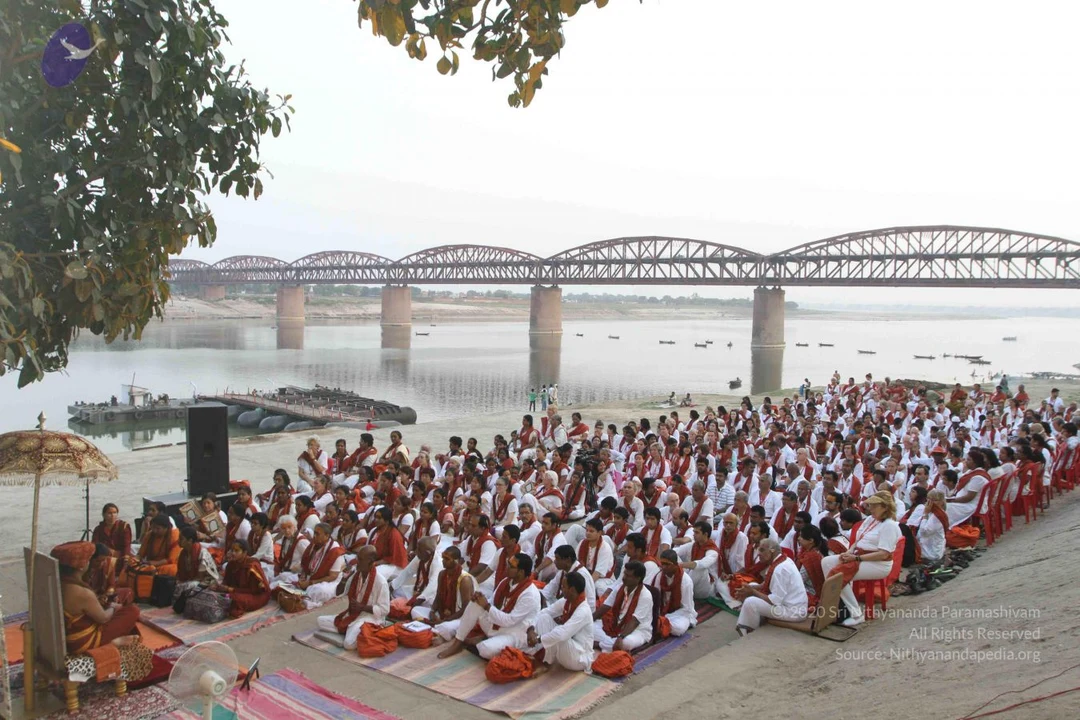
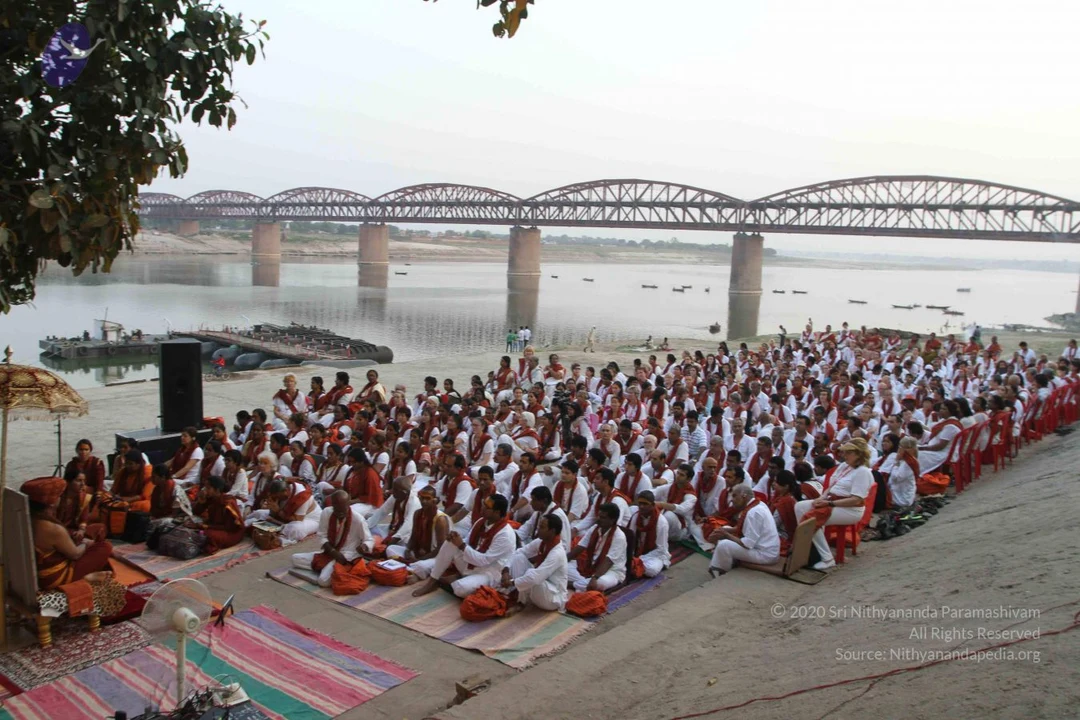
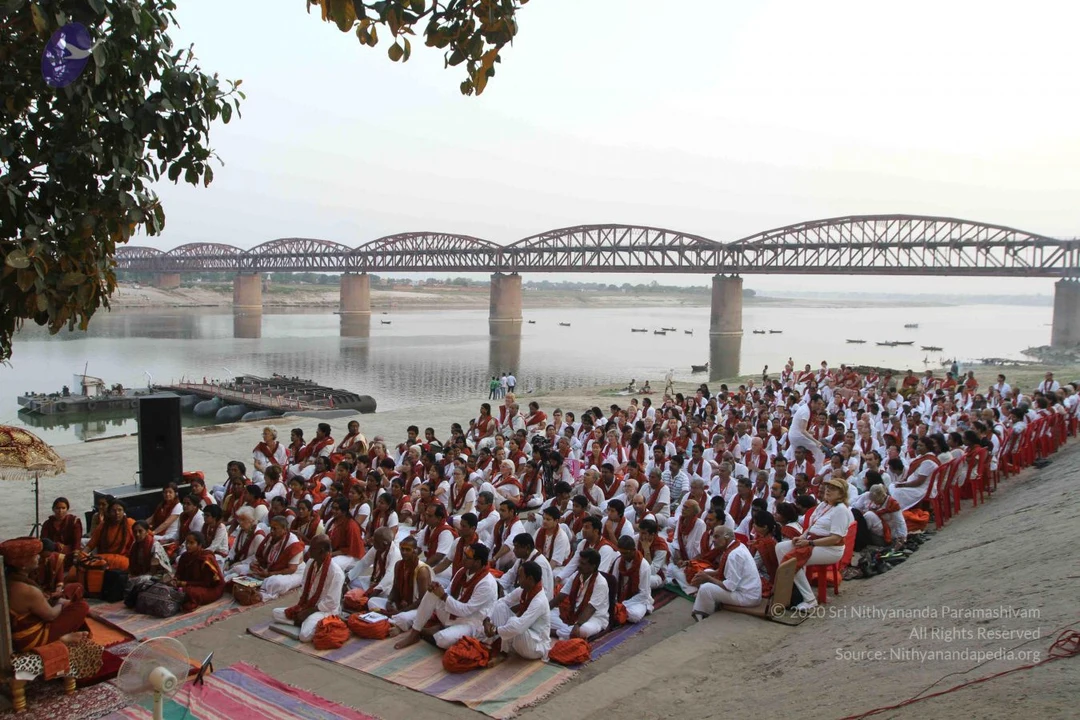
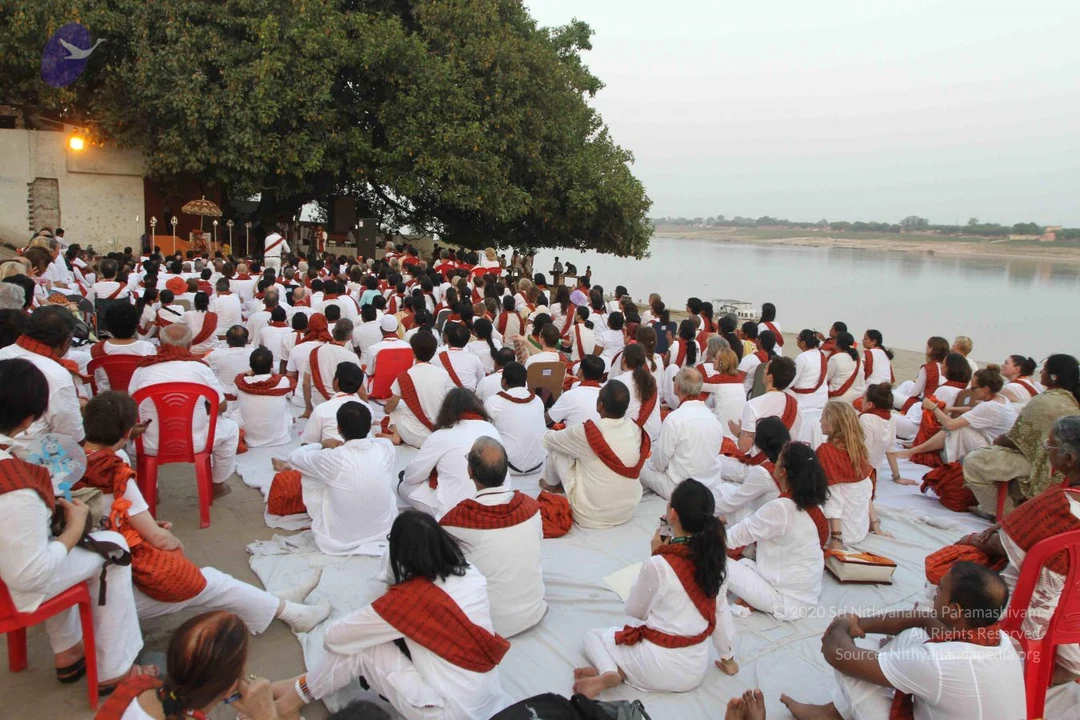
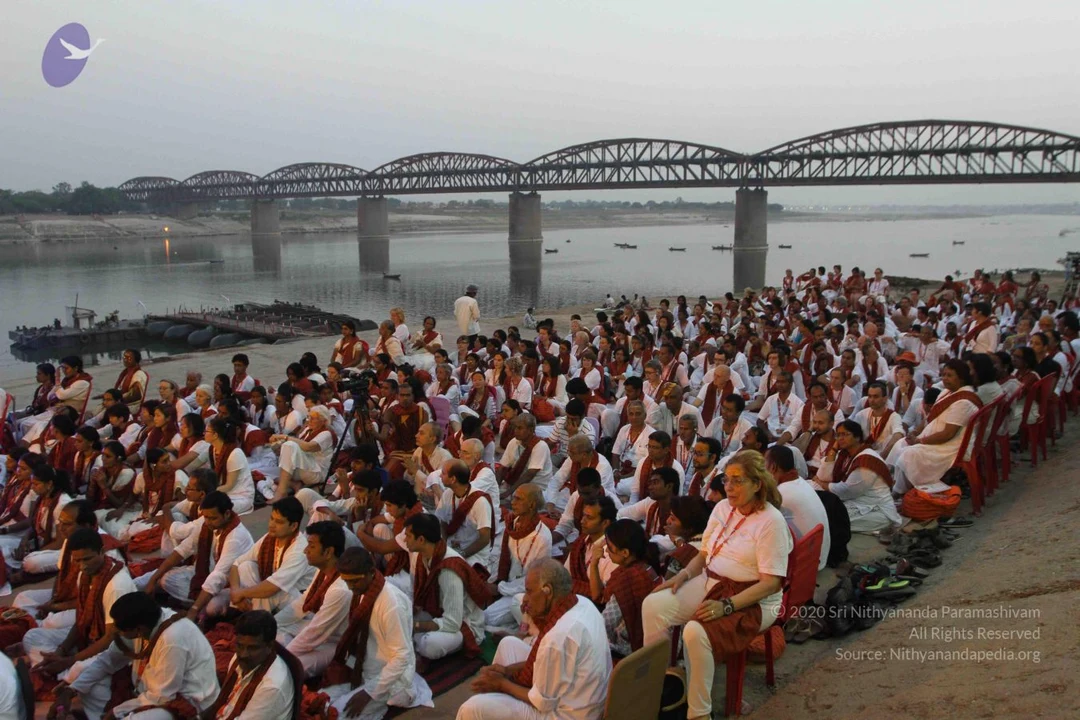
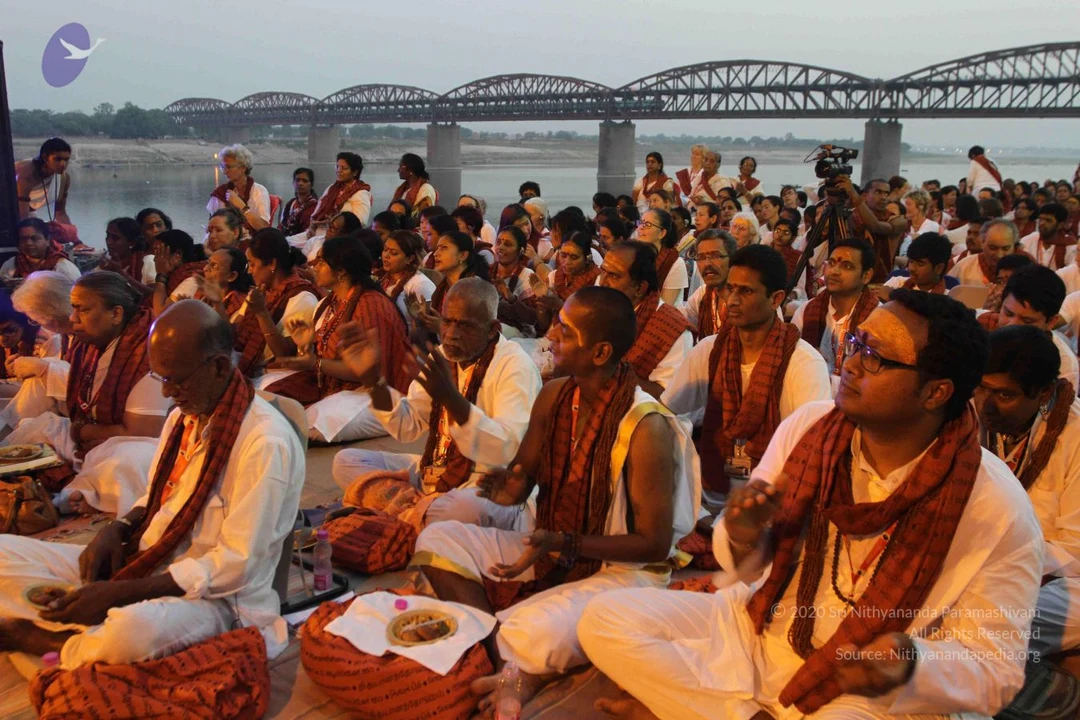
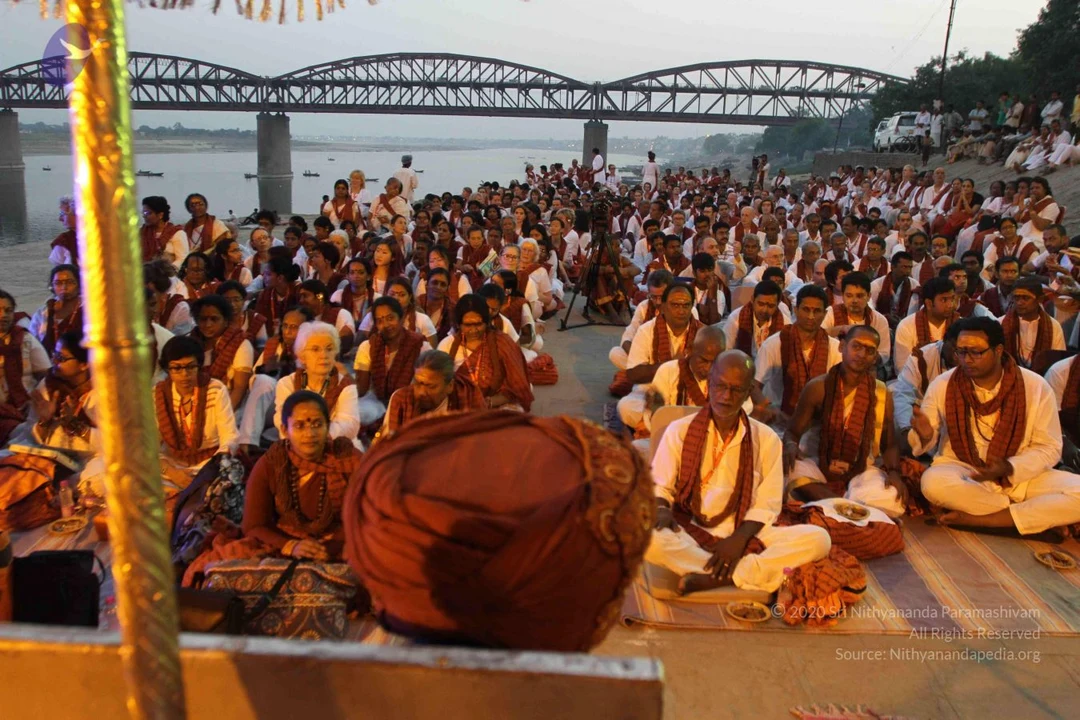
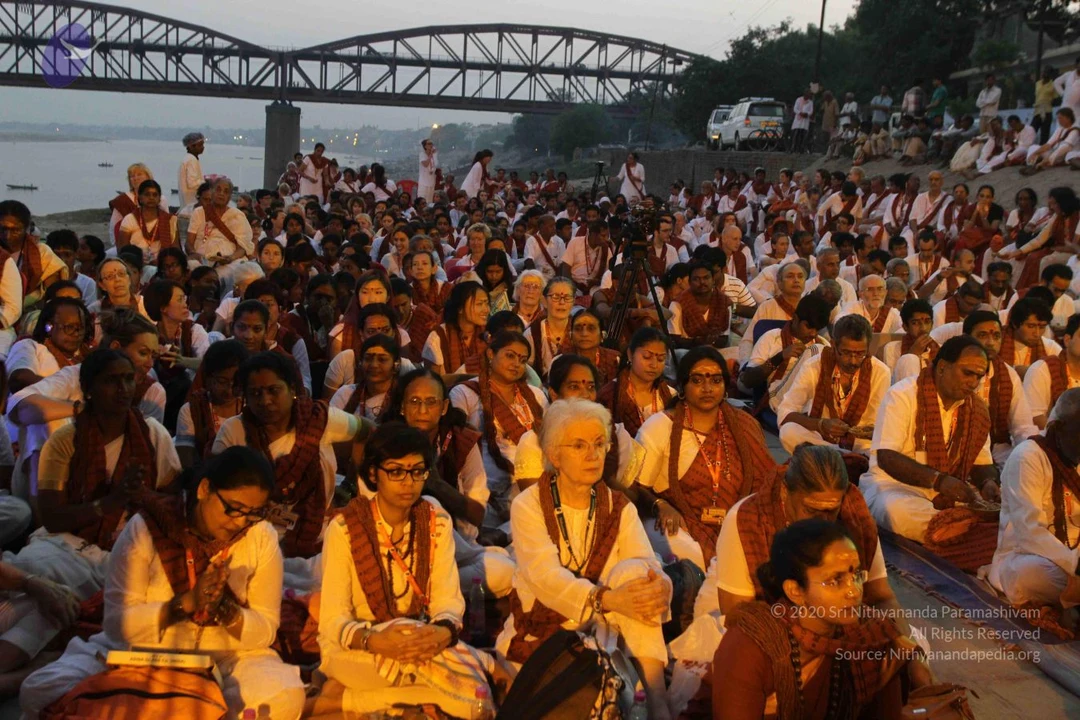
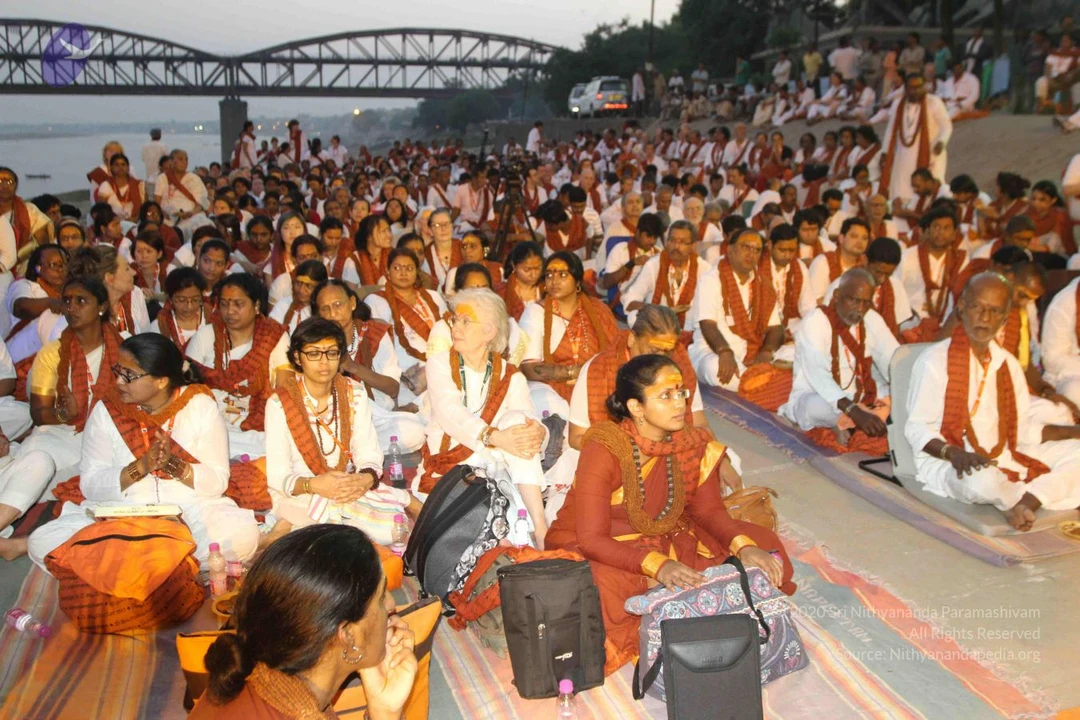
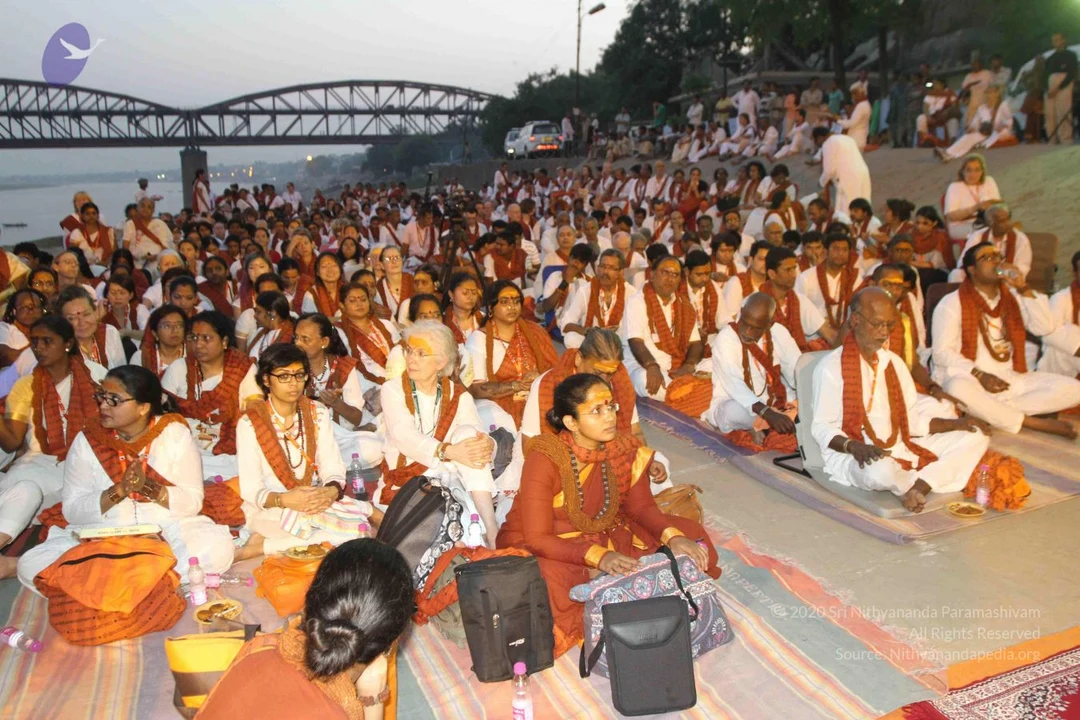
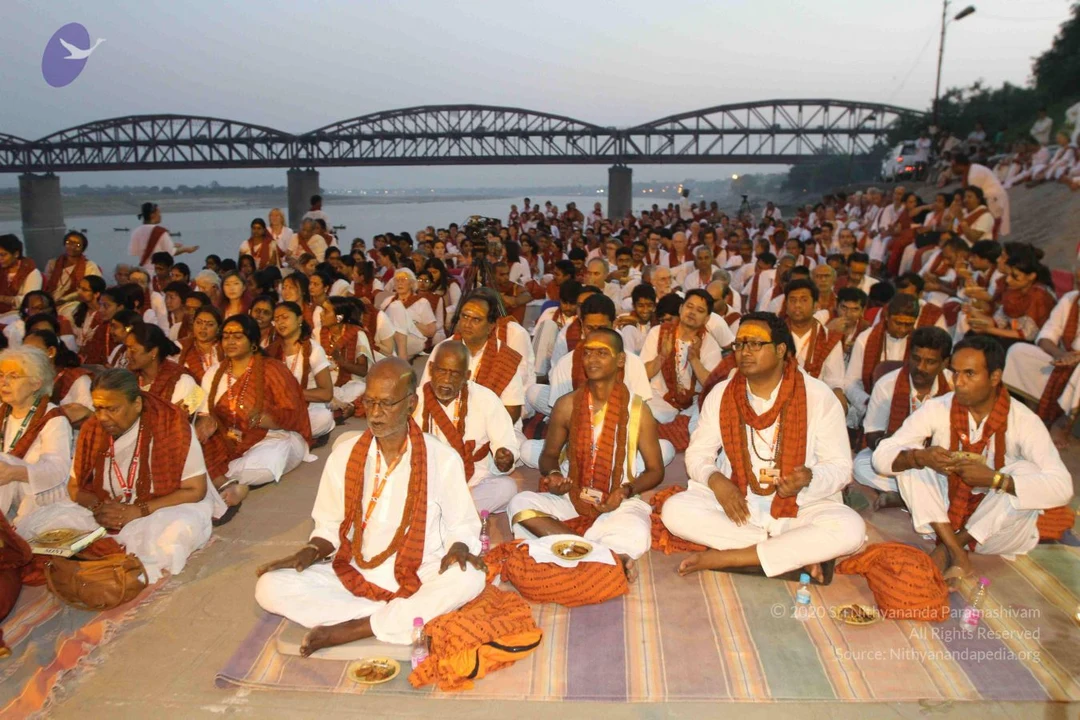
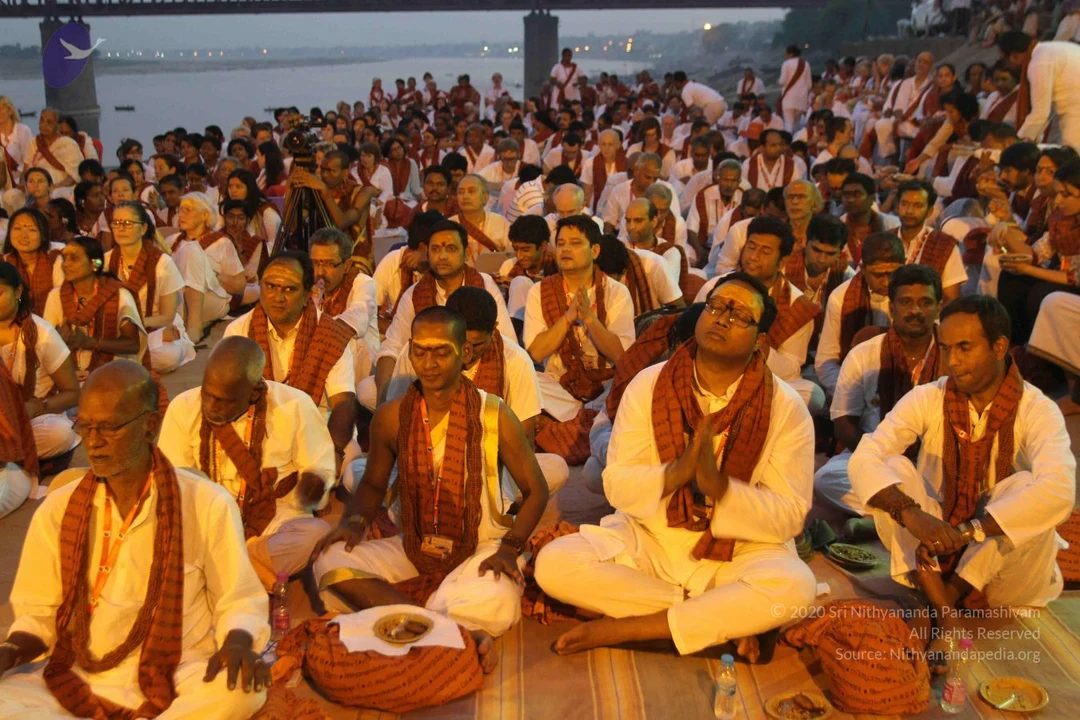
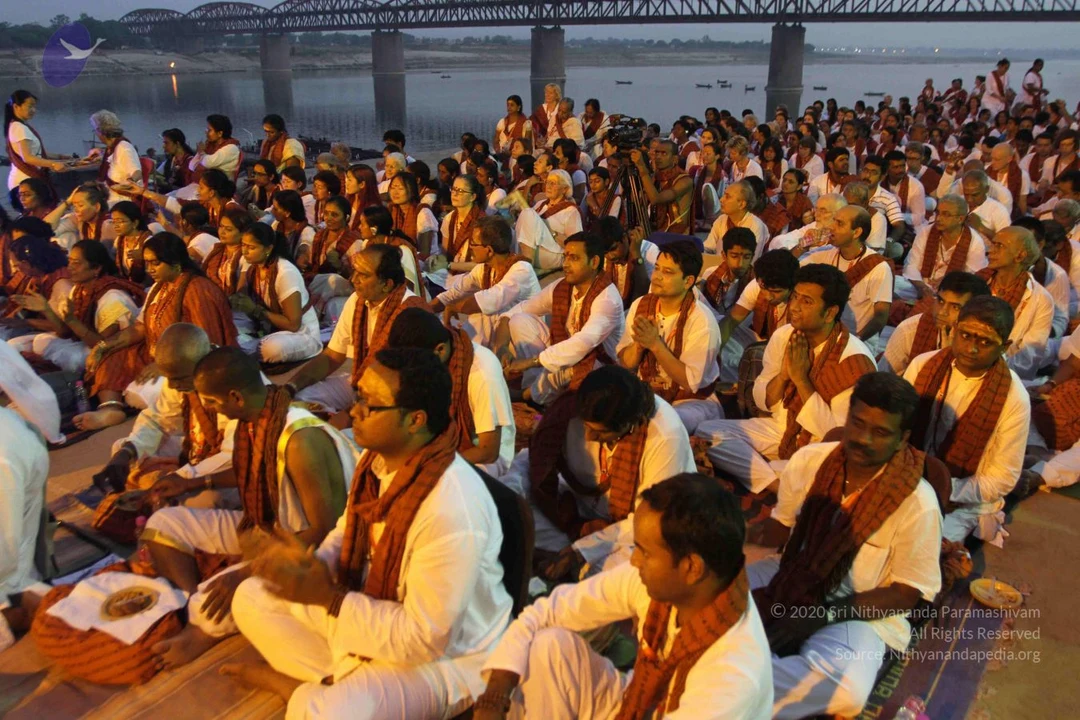
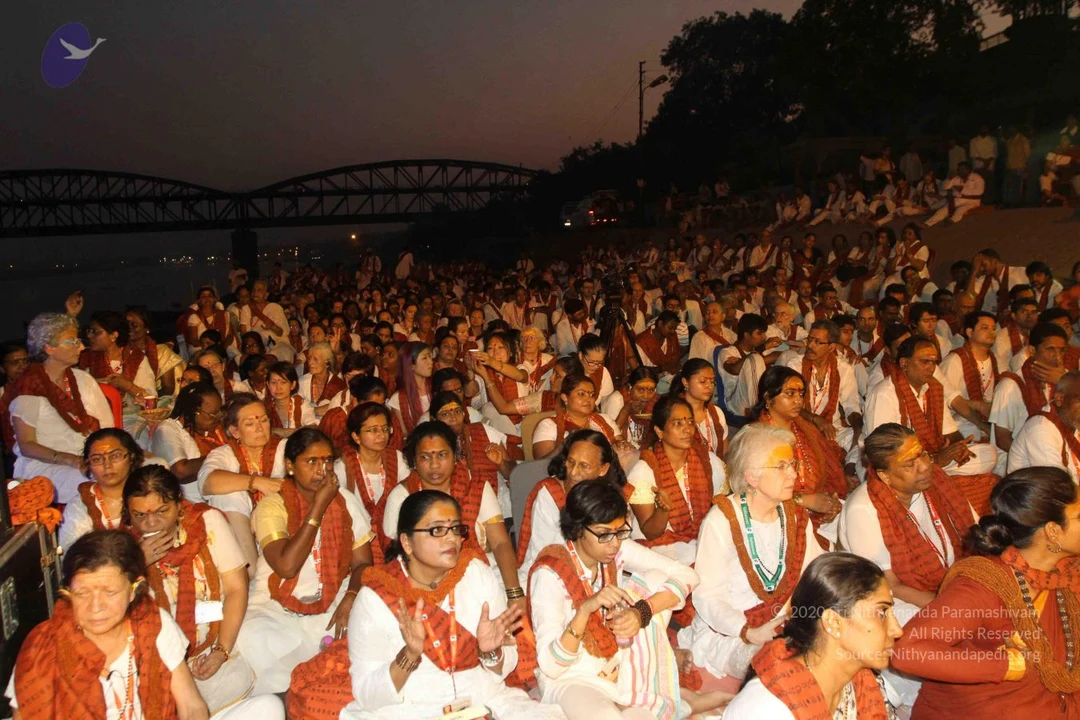
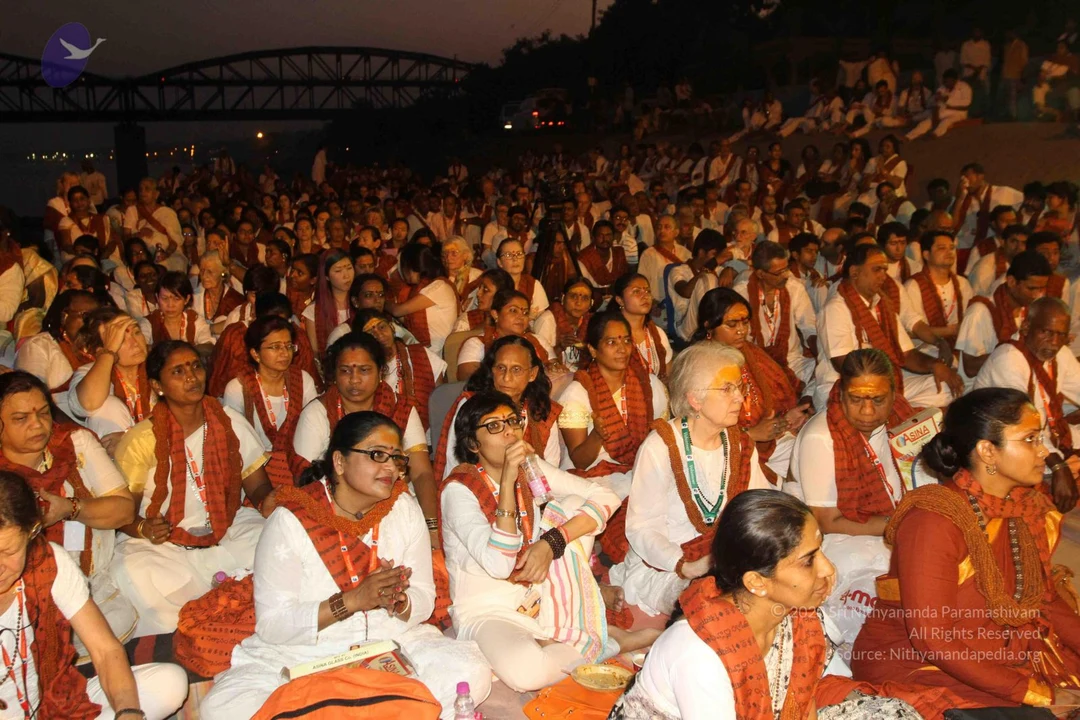
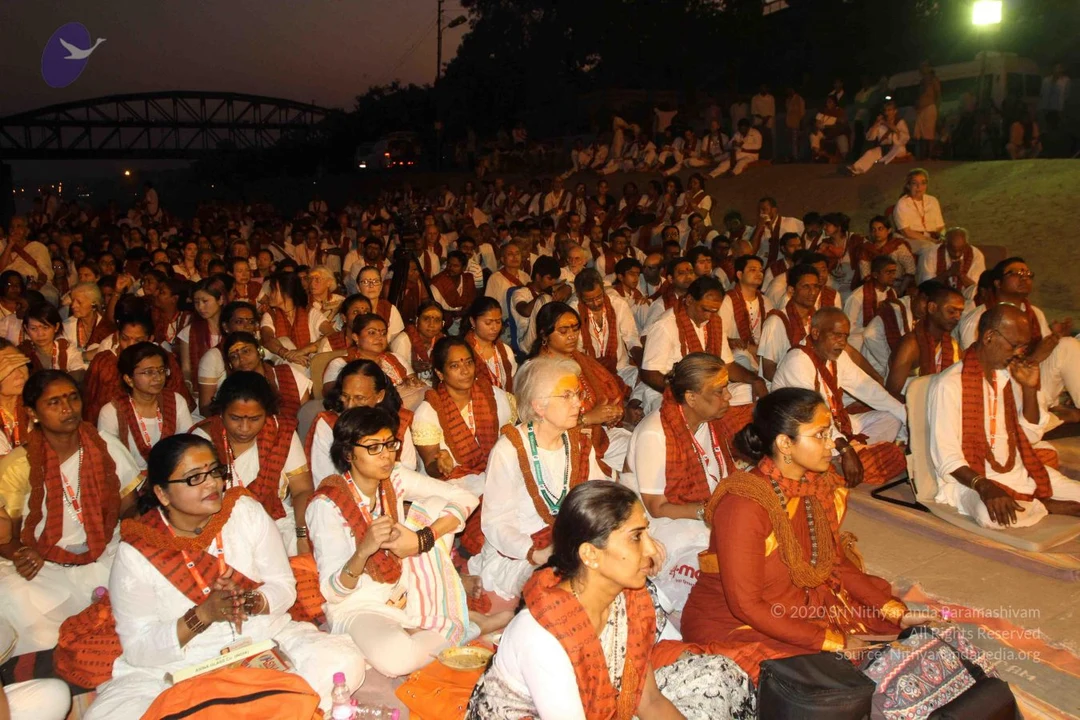
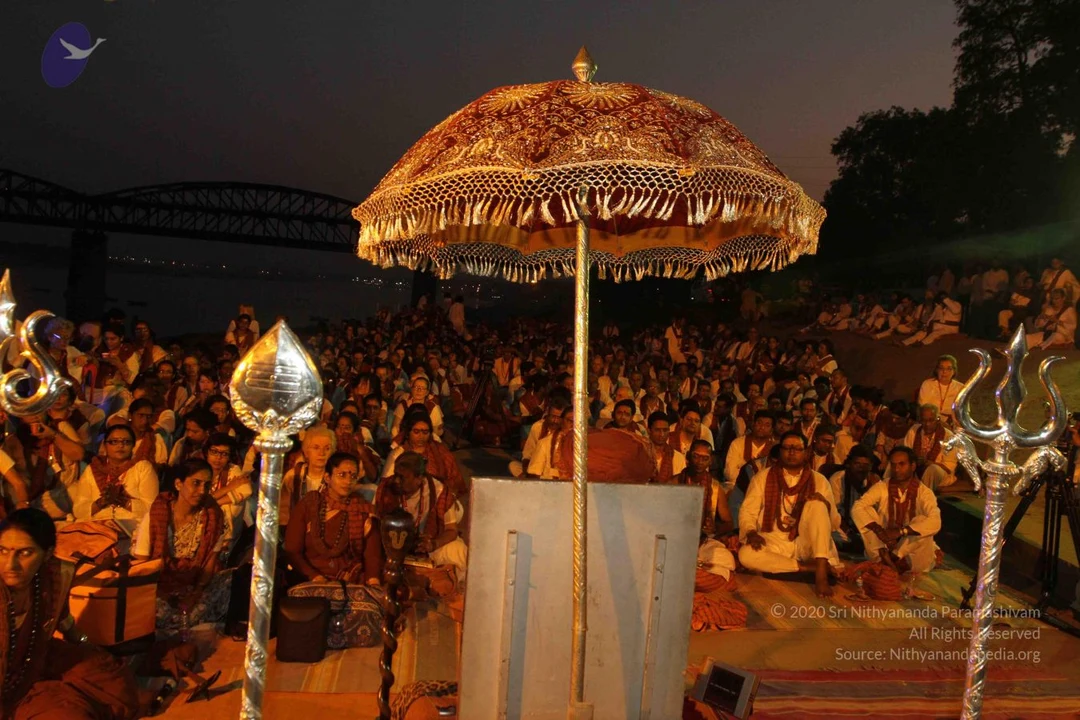
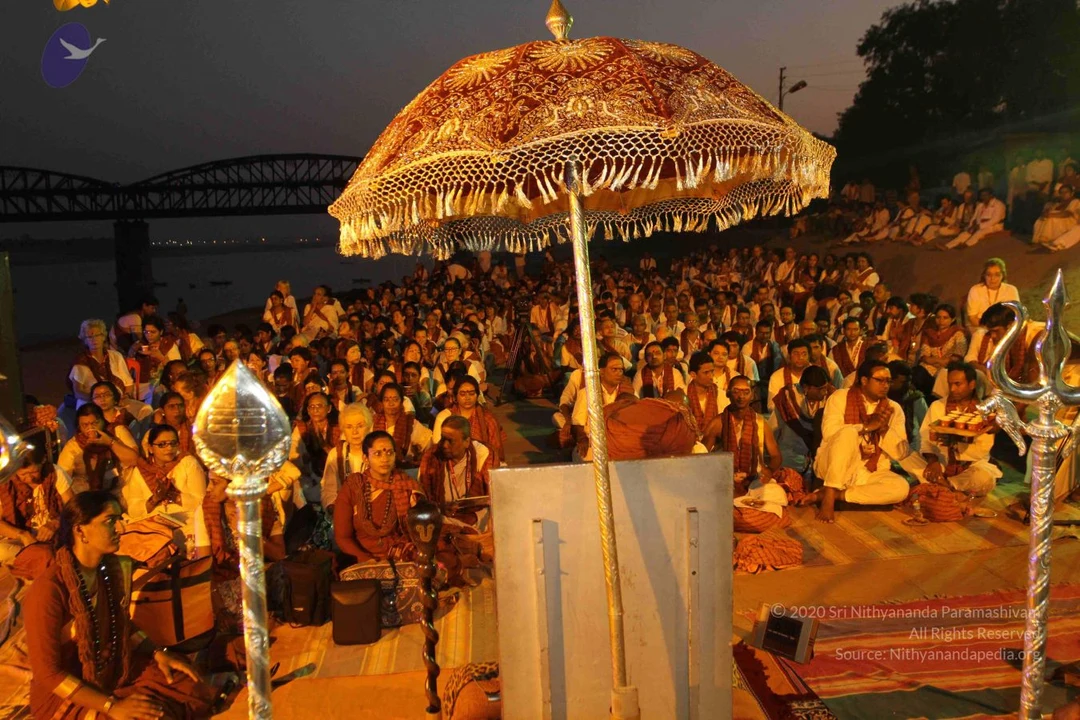
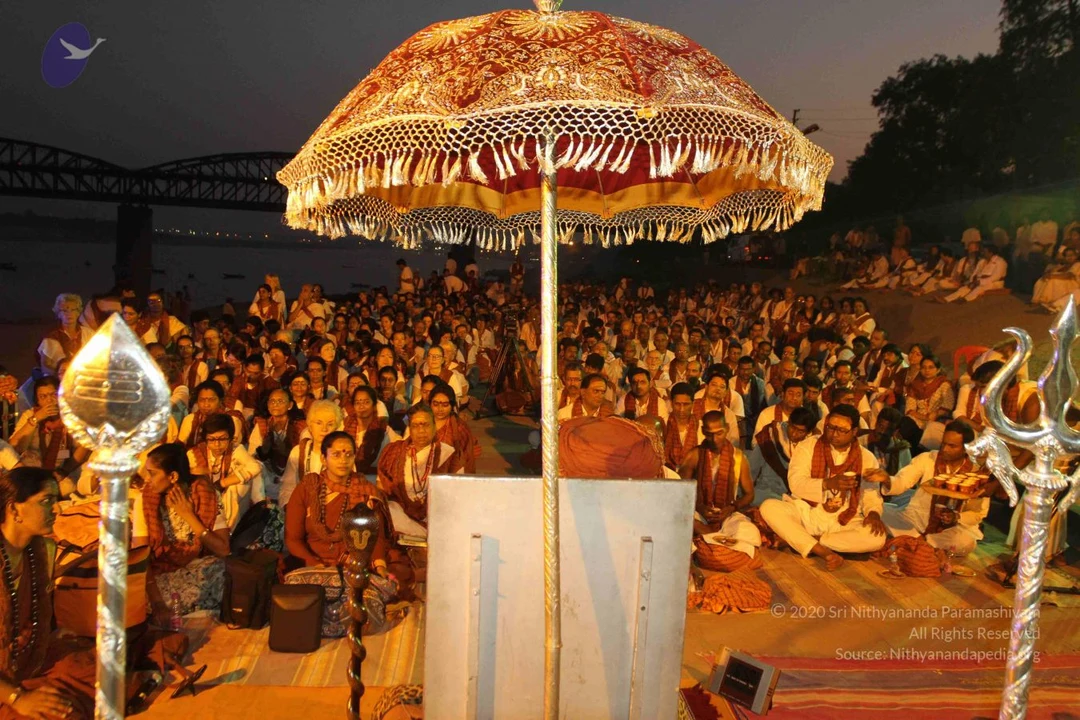
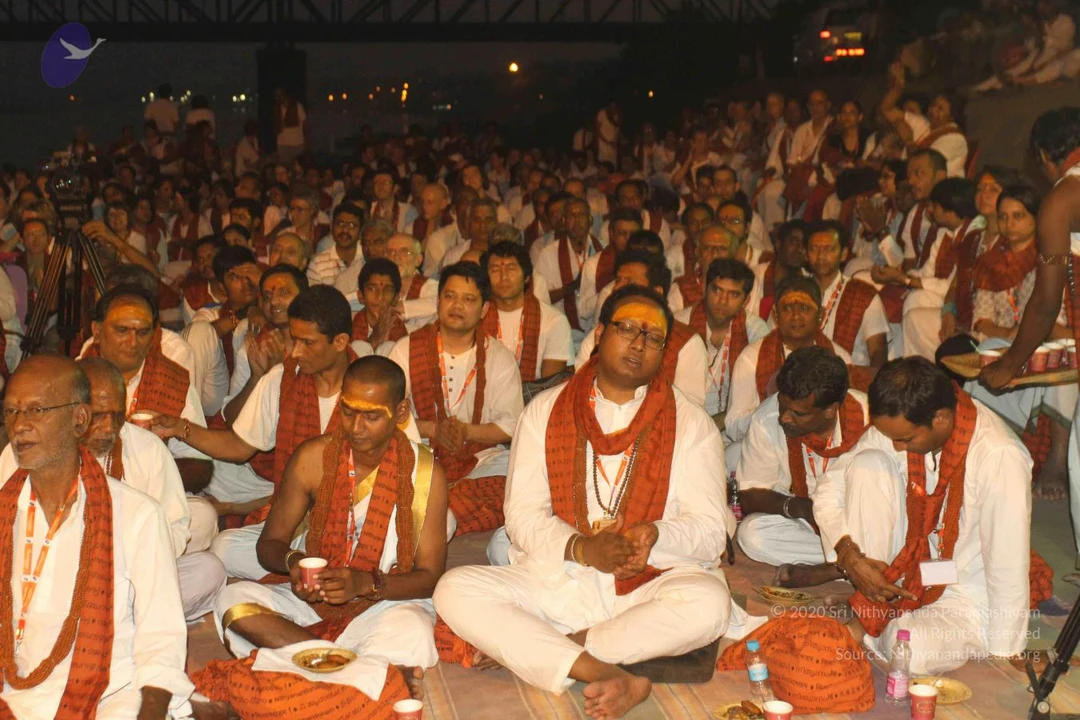
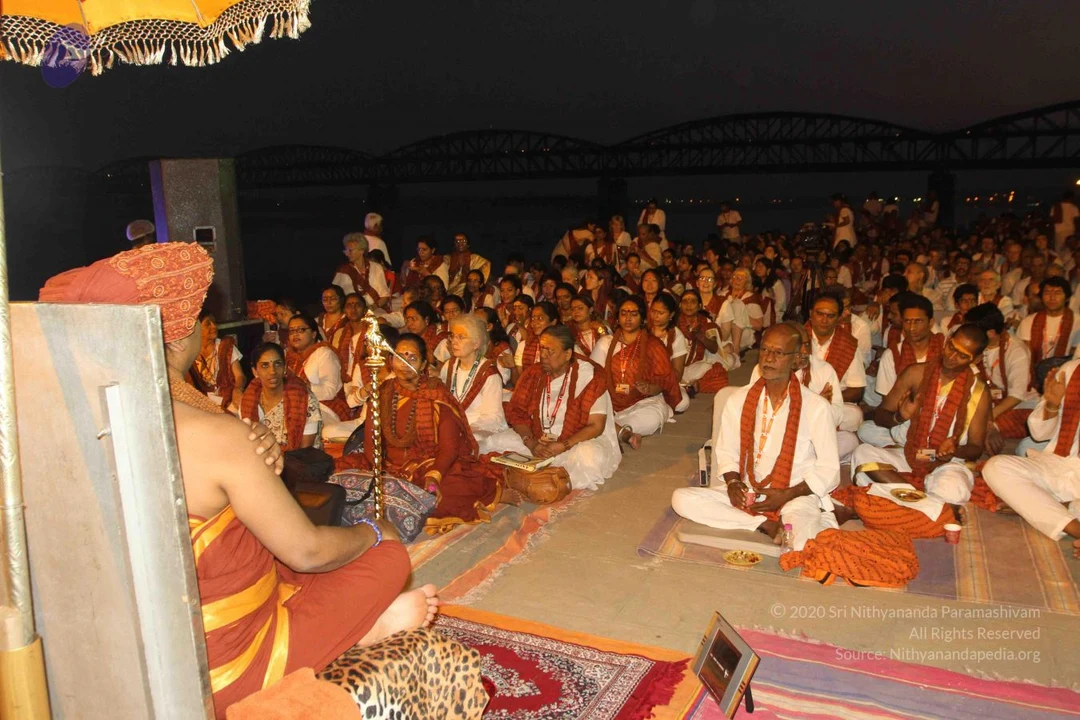
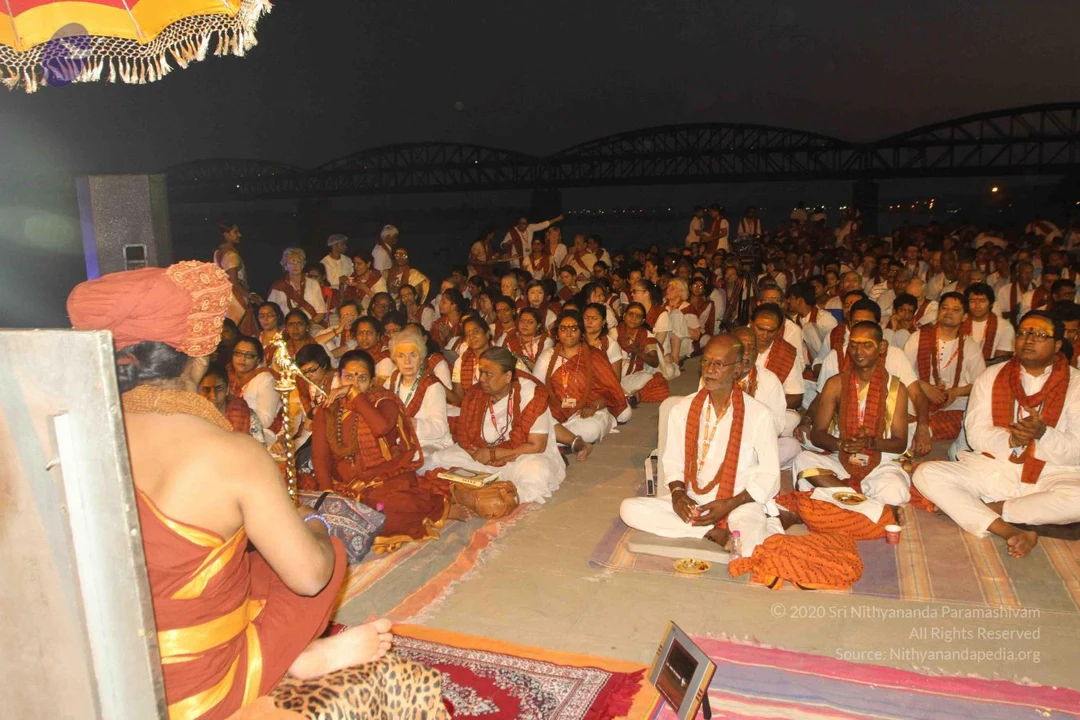
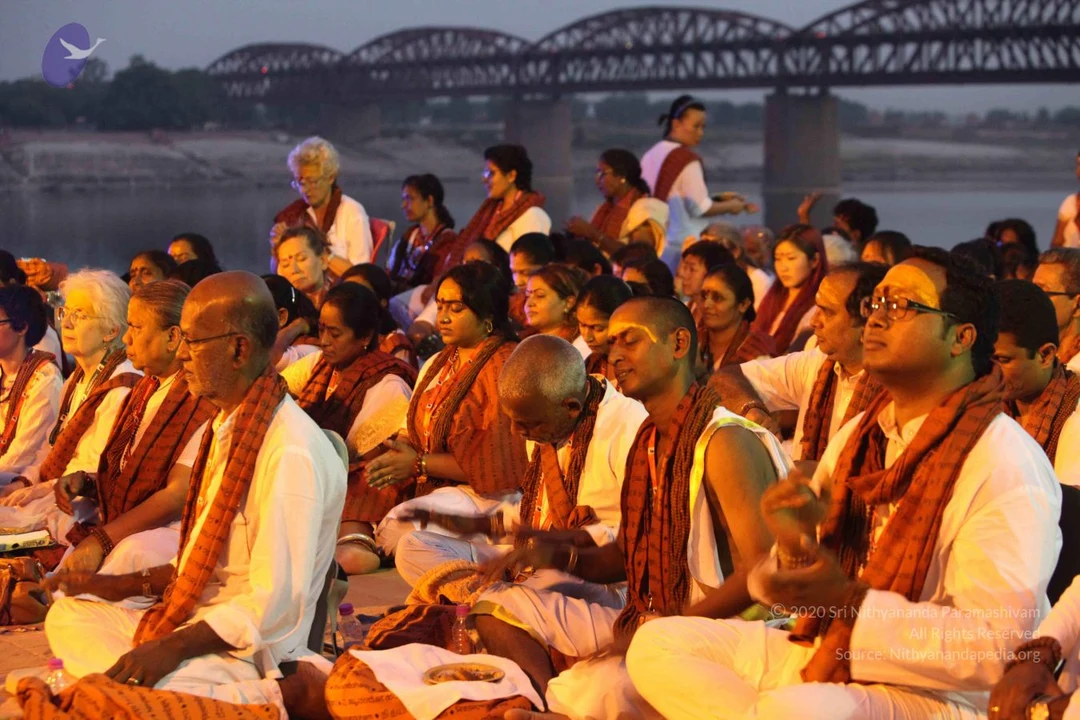
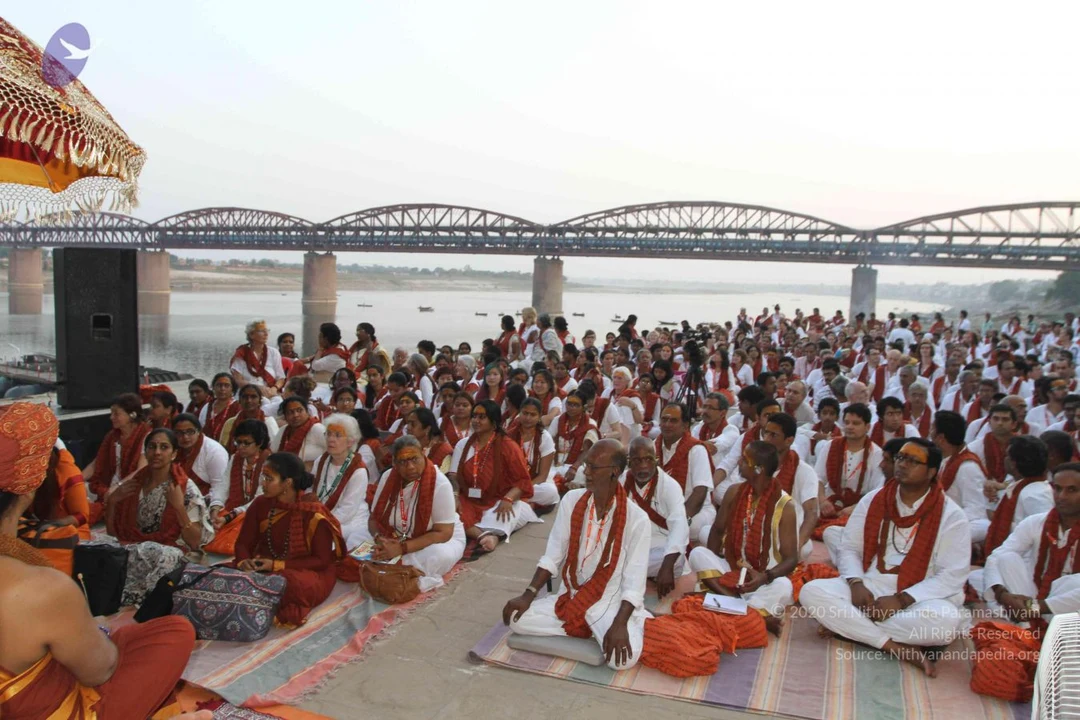
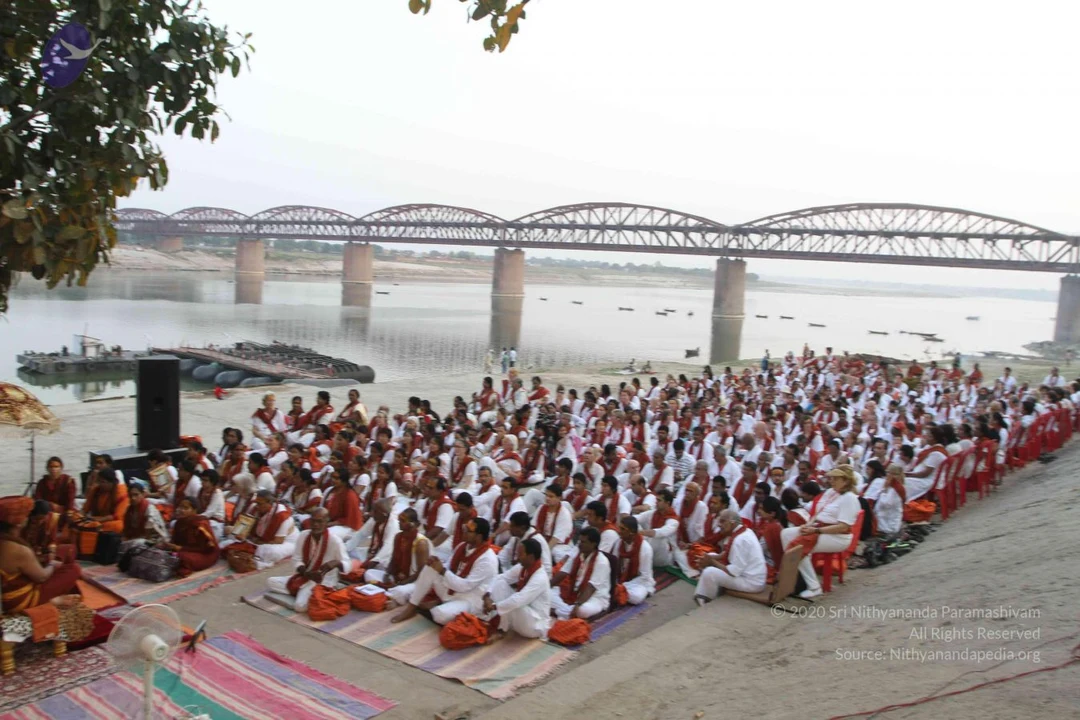
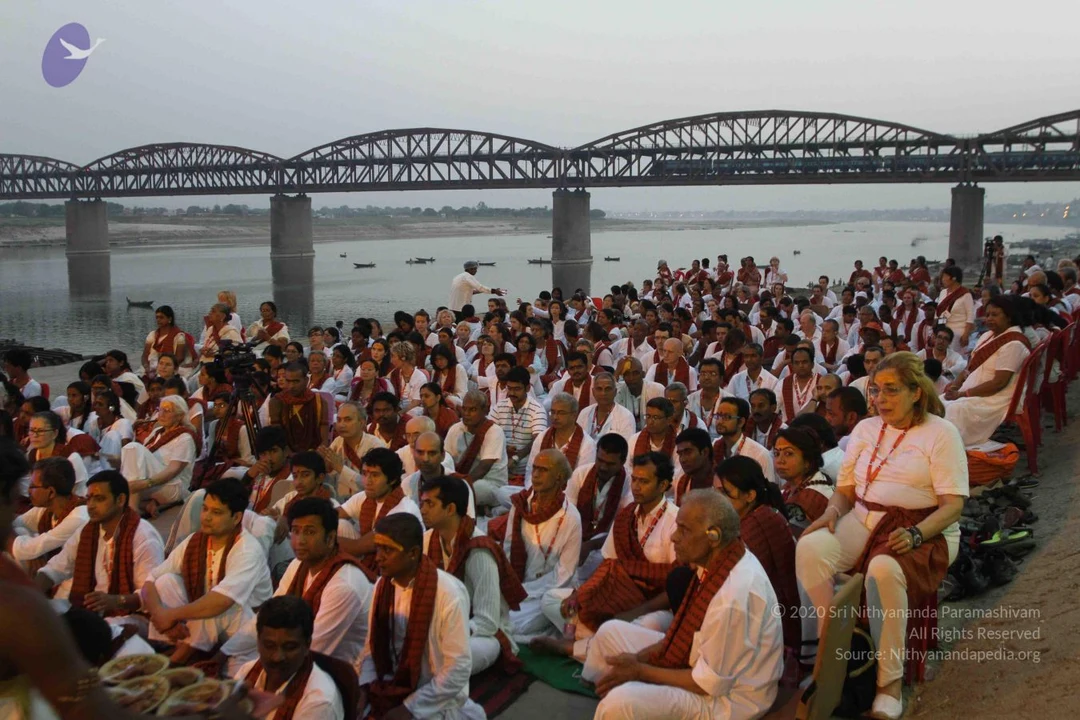
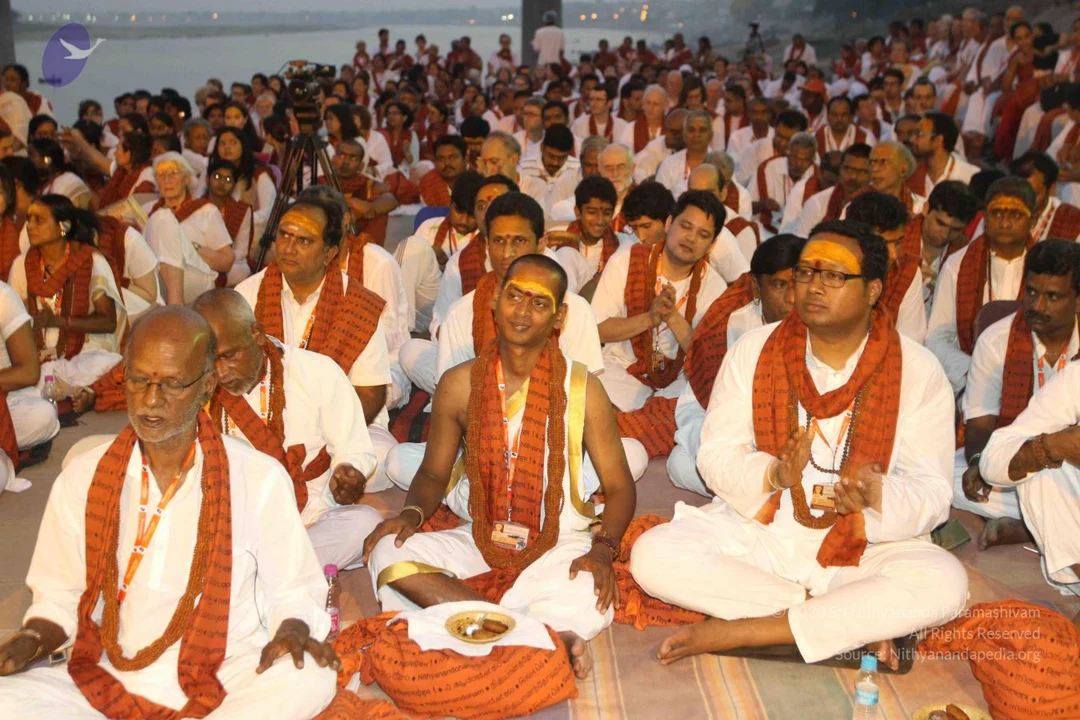
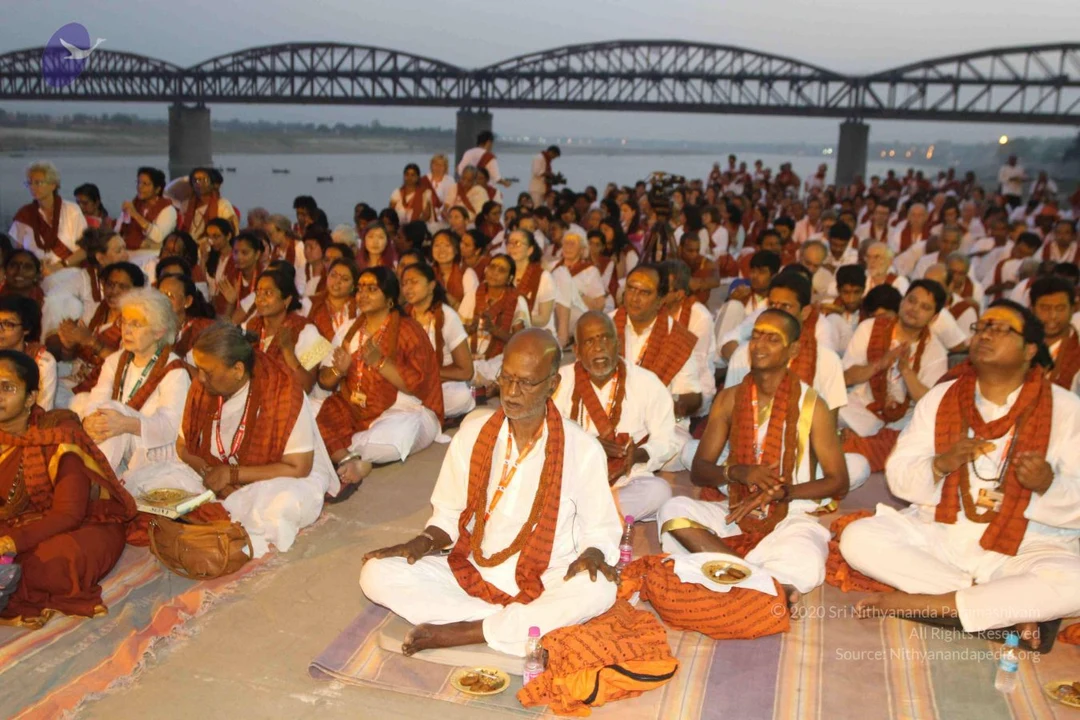
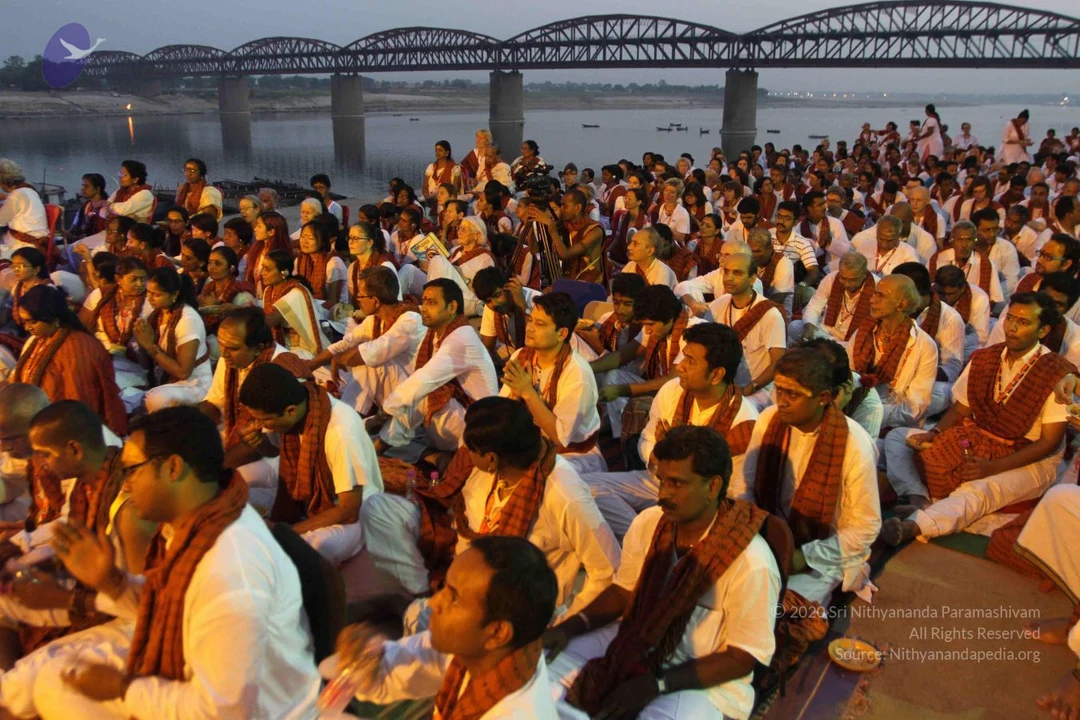
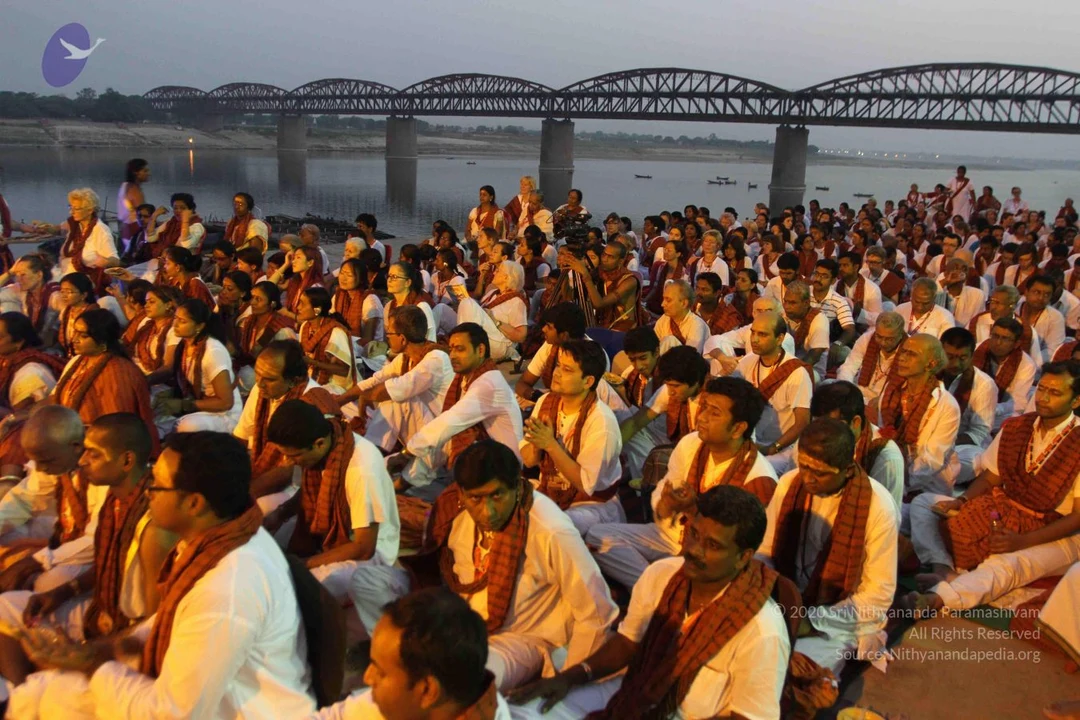
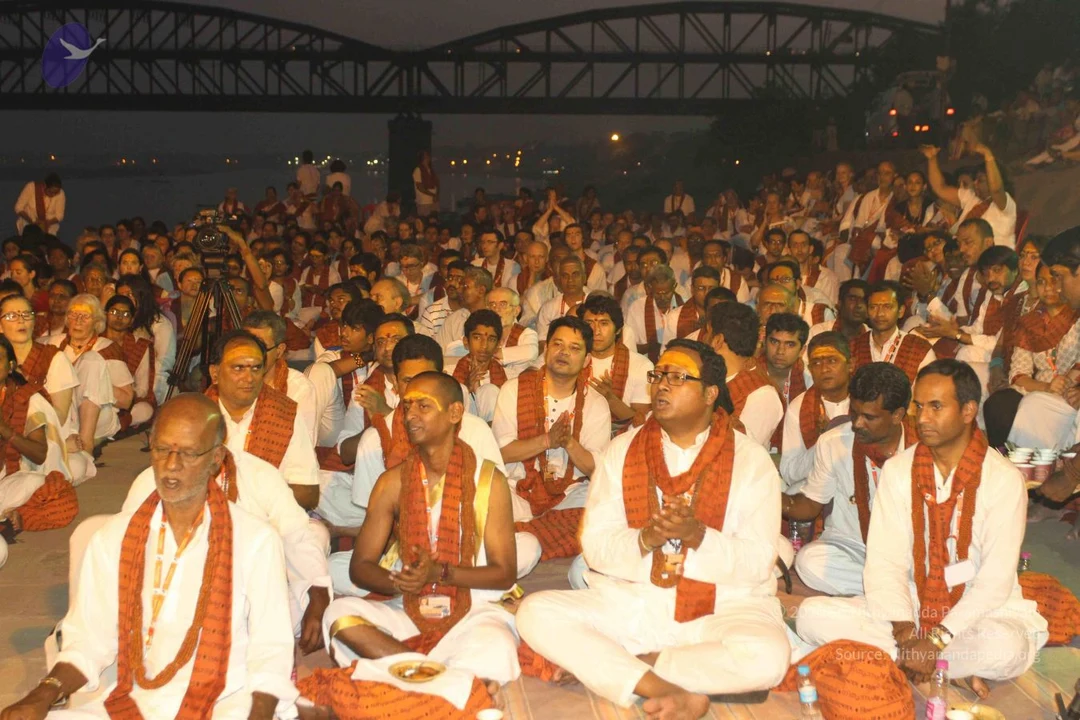
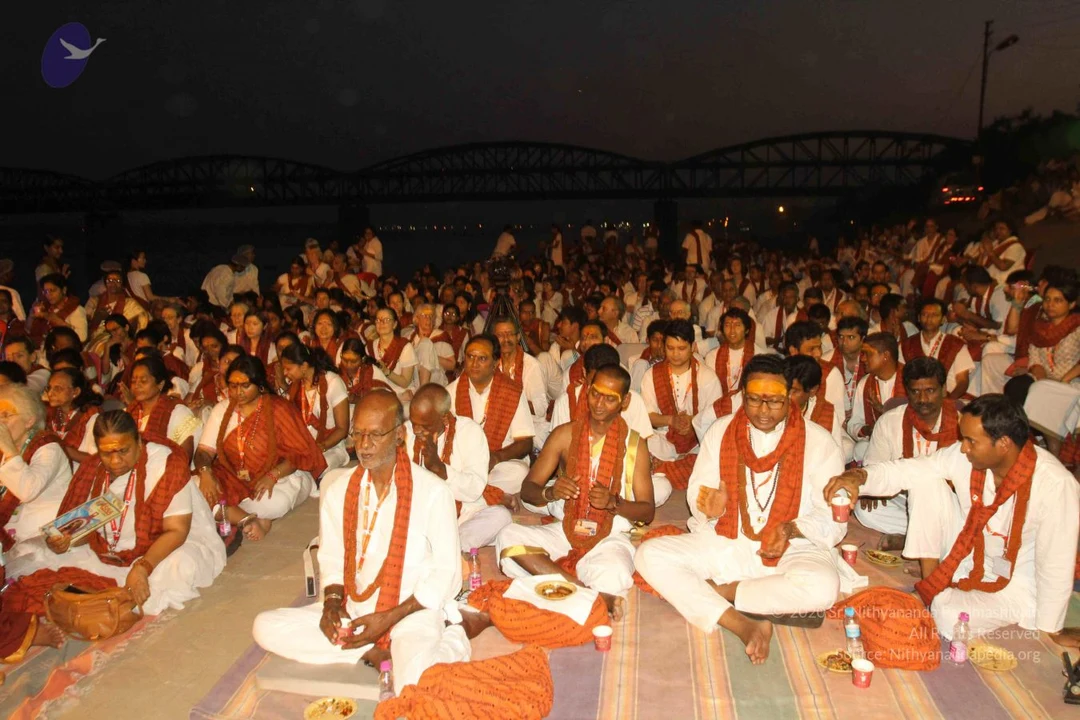
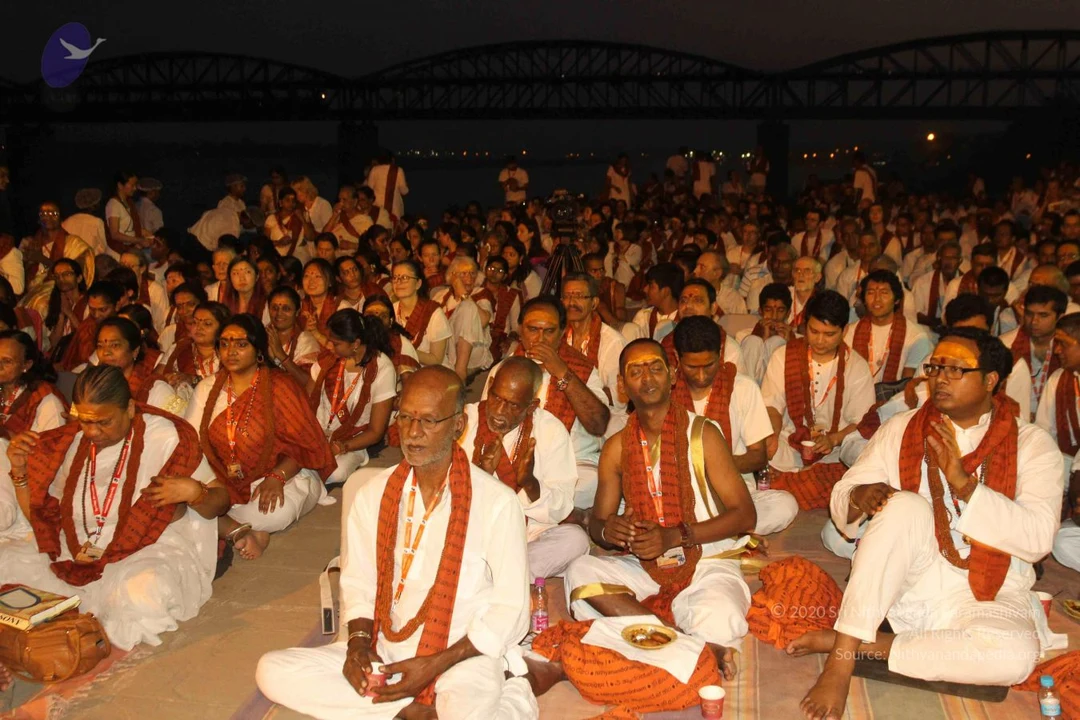
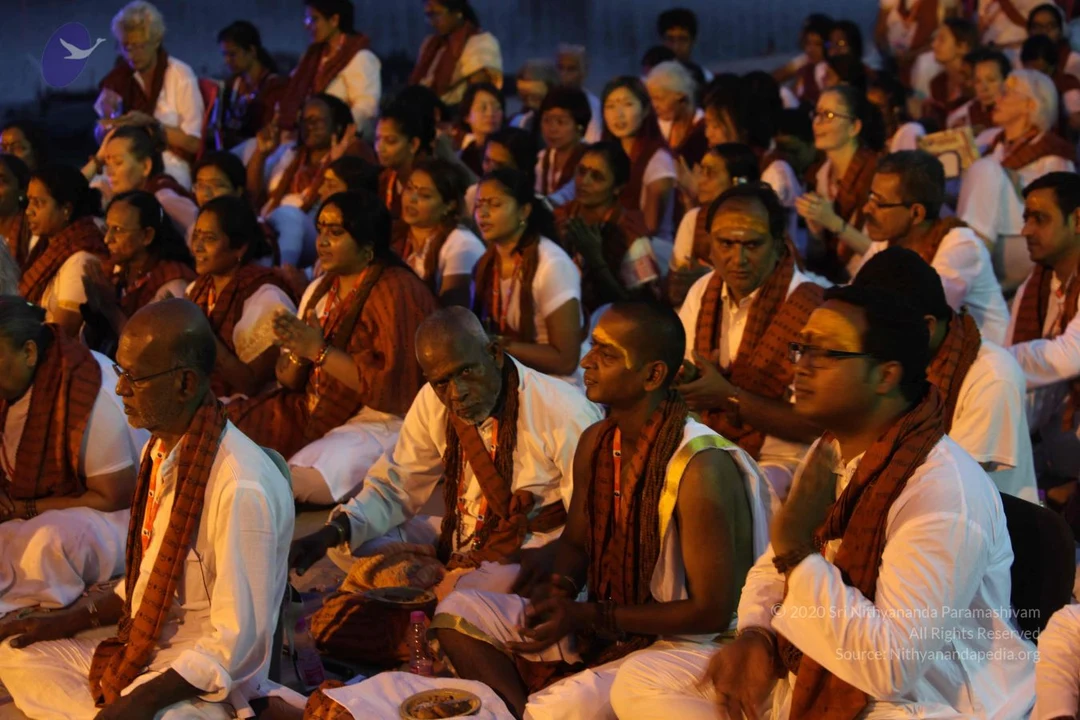
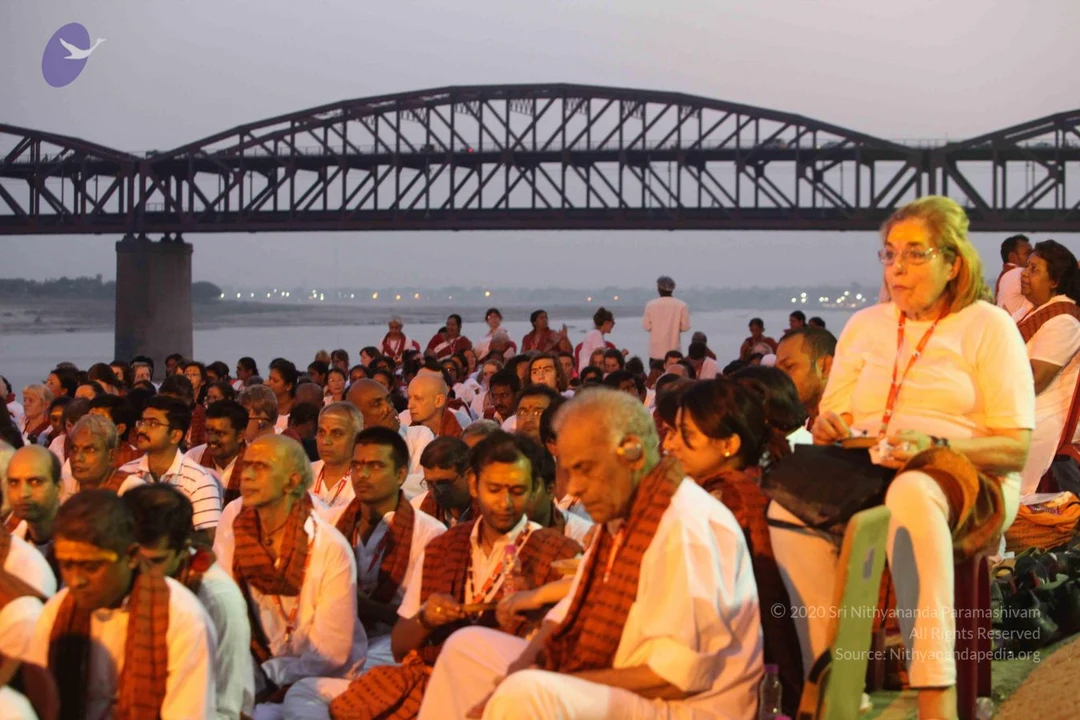
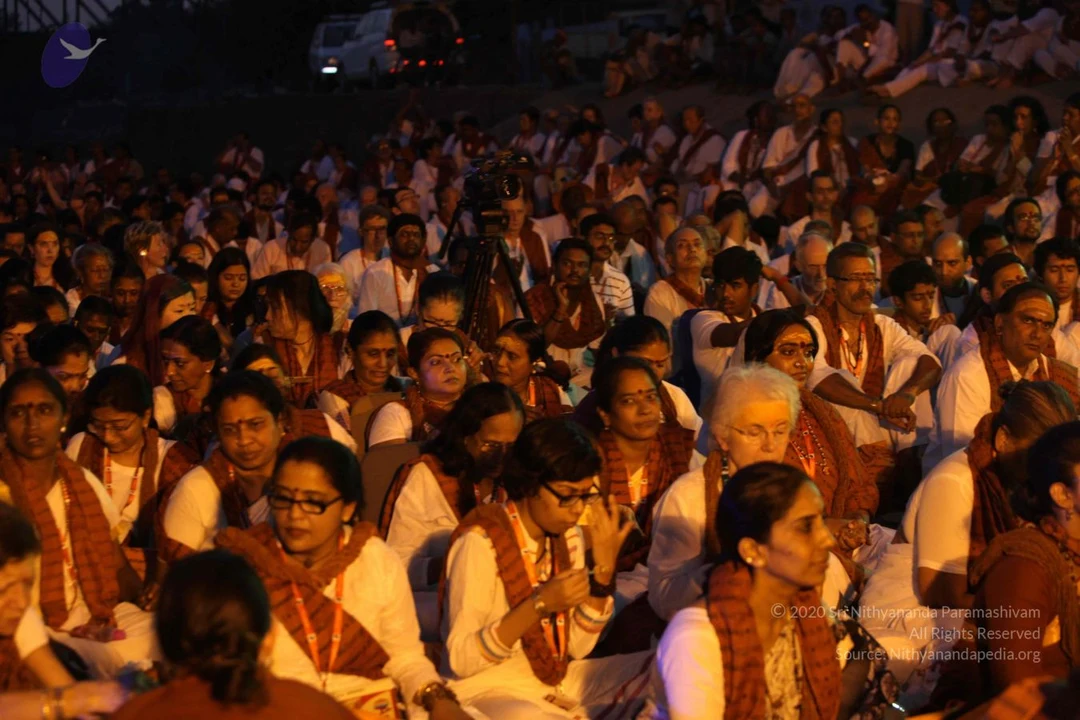
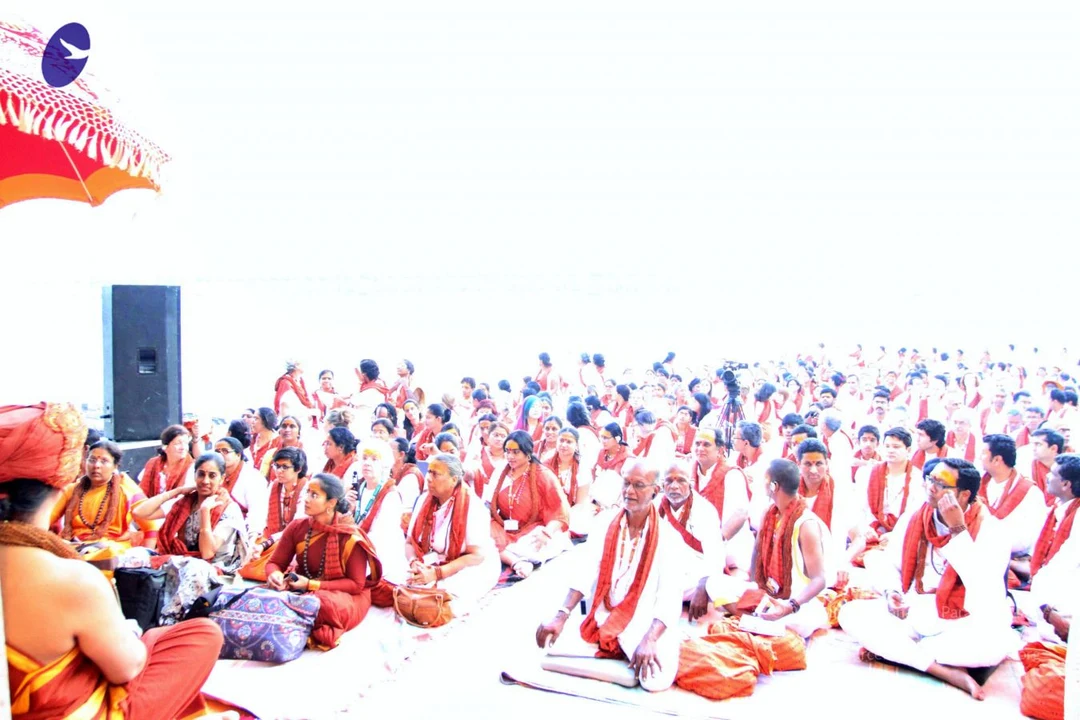
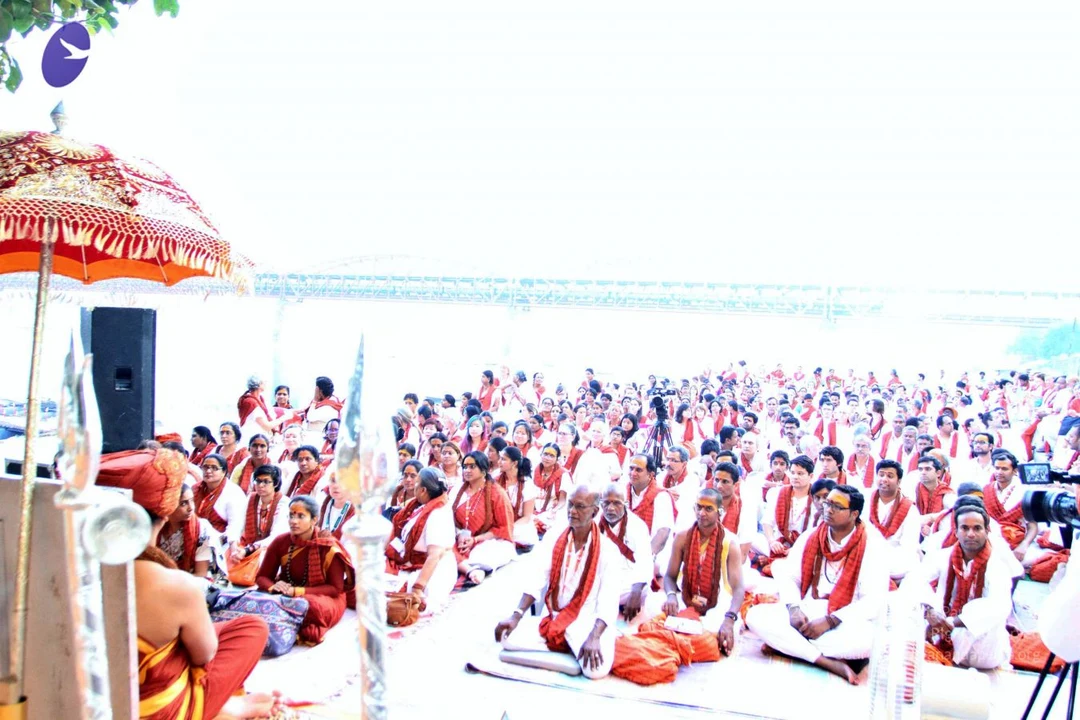
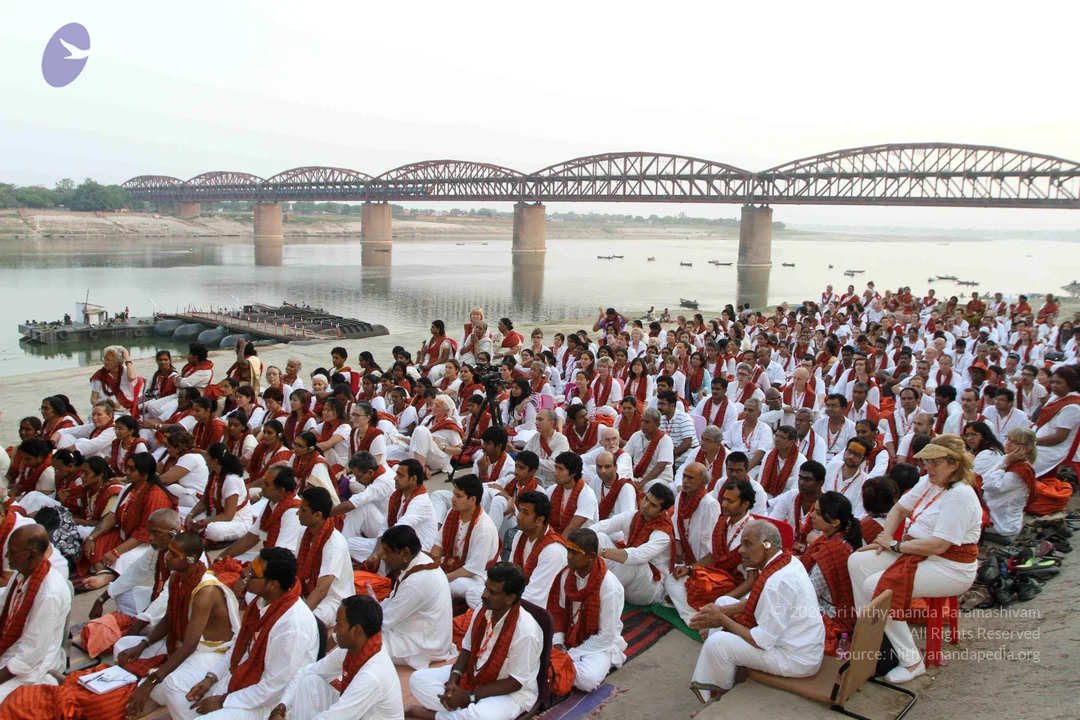
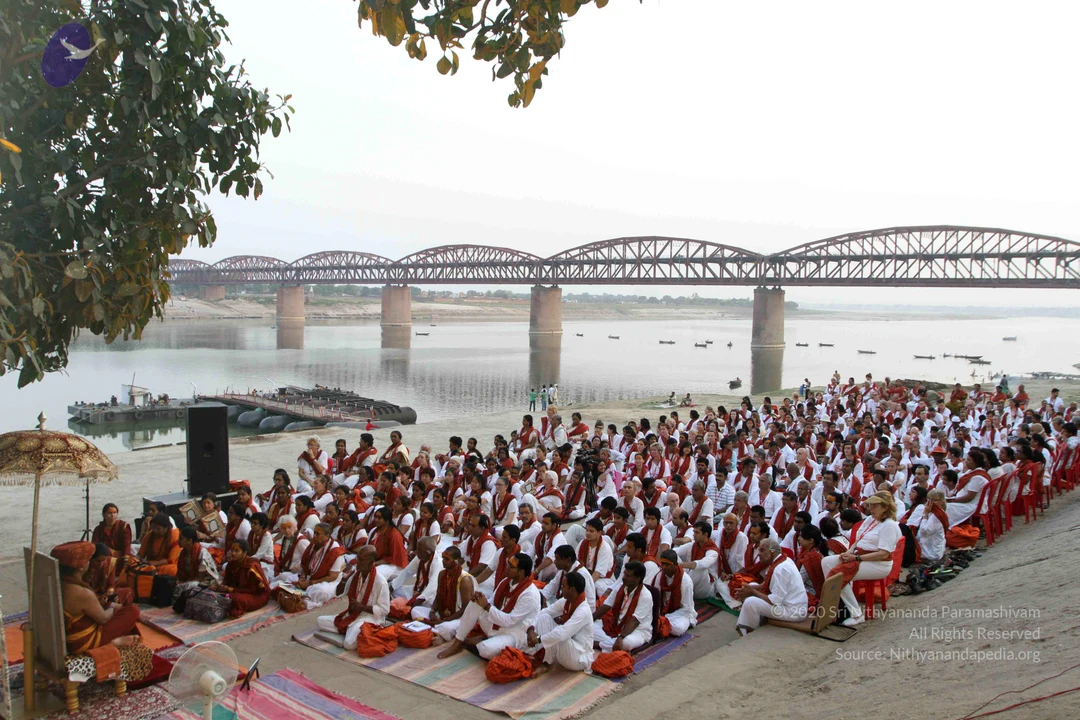
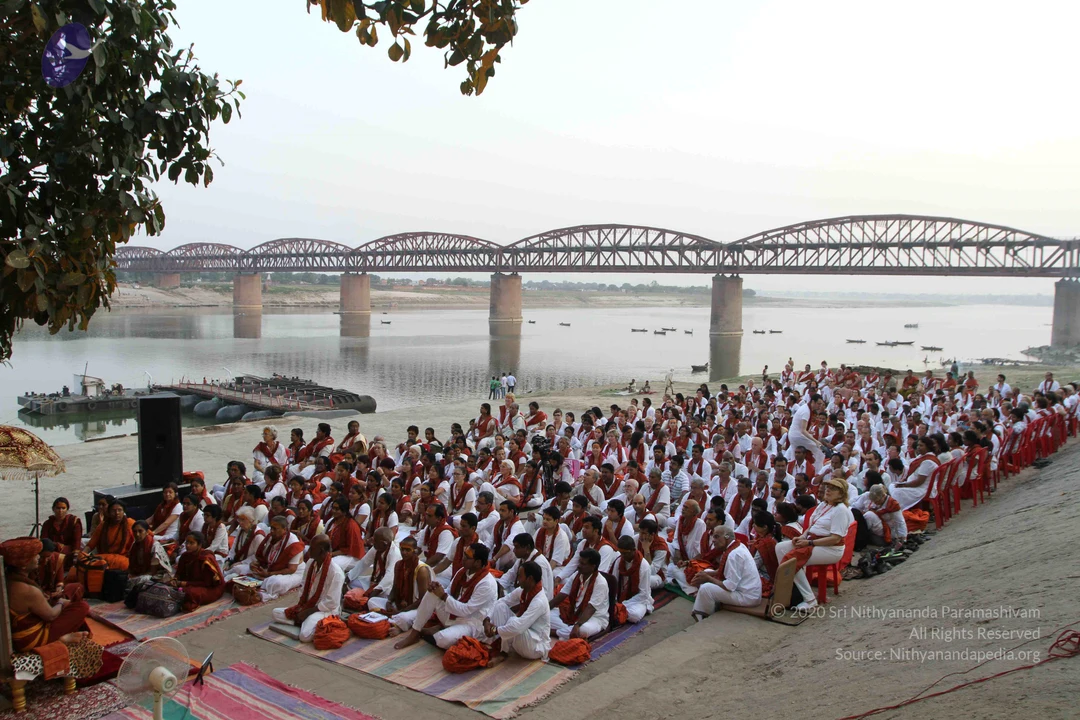
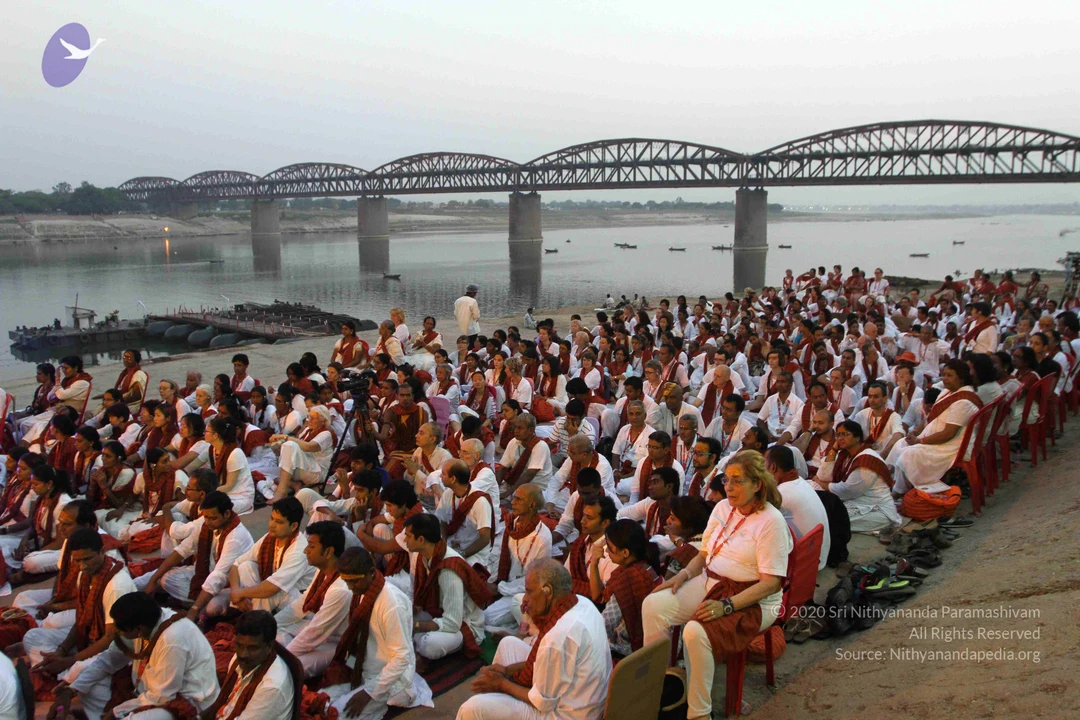
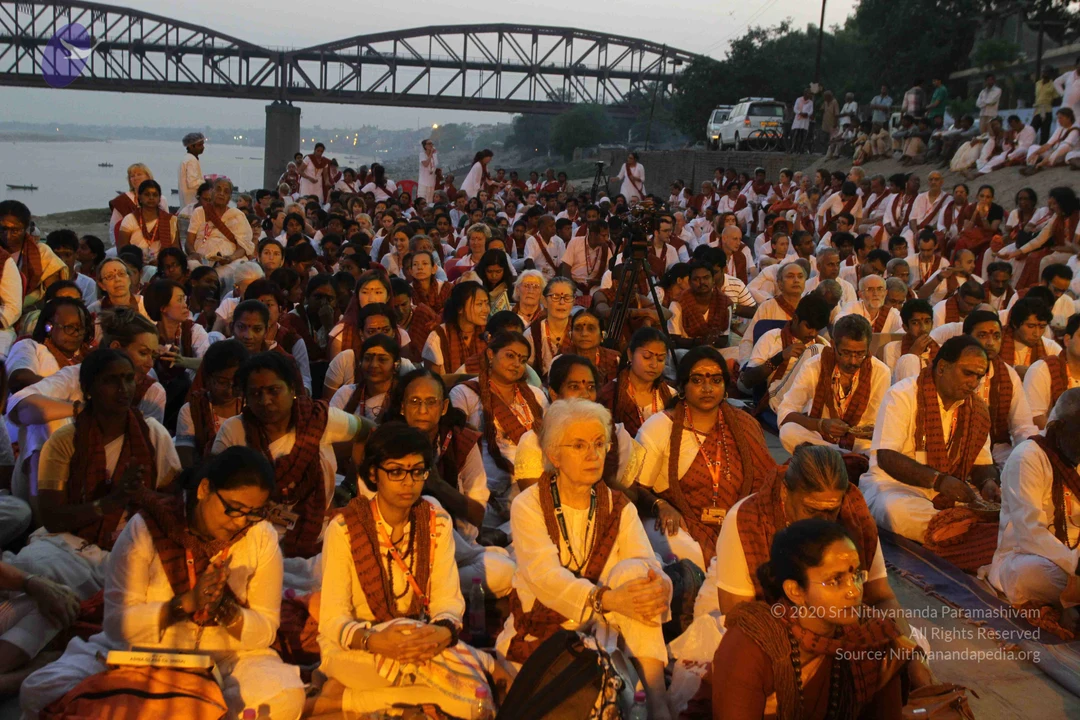
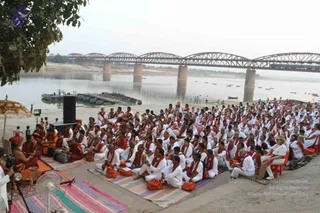
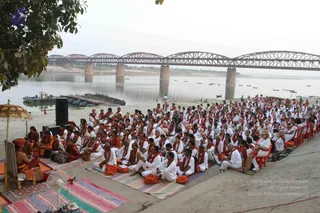
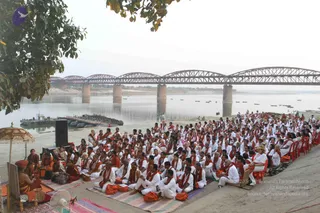
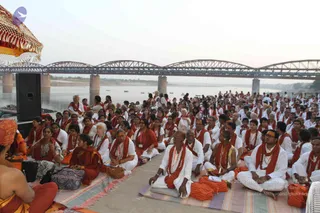
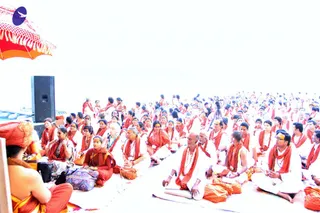
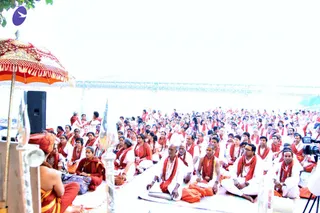
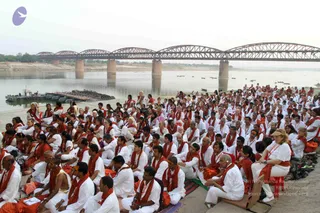
Outdoor satsang on a riverside ghat with a steel bridge spanning the river behind. A seated speaker on the left wears an orange-red shawl and sits on a red mat, with a tall silver staff and a red-and-gold canopy at the edge of frame. Rows of devotees sit on striped mats in white kurtas and dhotis and orange-red shawls, many with vibhuti or kumkum marks. Several elderly women wear white saris, and a shaved-headed man in front wears orange cloth. A camera on a tripod and a small table fan appear among the crowd. No identifiable a person is clearly visible in the scene; the speaker's appearance is too uncertain to name.Large outdoor satsang on a riverbank with a steel bridge spanning the river behind the crowd. Hundreds of seated devotees fill the ghat in white clothes with red-orange shawls, many sitting on striped mats. At left, a silver ceremonial staff and a red-and-gold canopy frame the scene, and a person in orange sits at the far left. Camera operators with tripods and cameras film from the right edge, and a small fan stands near the front row. Boats float on the river in the distance.Outdoor satsang on a riverbank with a long steel arch bridge spanning the water behind. Hundreds of devotees in white clothes with red-orange shawls sit in rows on striped rugs and mats on the sand and steps, many holding orange cloth bags. A figure in orange robes with a rolled orange-red turban sits at the left edge near a decorative parasol and a PA speaker, while a cameraman in white stands at the far left filming. A few people in orange and white sit on the mats near the front, and a standing fan is set among them. Boats float on the river beneath the bridge. The crowd numbers well over a hundred.Large outdoor satsang on a riverbank with a long steel-arched railway bridge spanning the river behind. Hundreds of seated devotees, mostly in white clothing with red and saffron shawls, sit on colourful striped mats on sand. Some hold orange cloth bundles. At the left, a figure in orange and a red turban sits under a golden parasol near a black speaker stand and a camera on a tripod. Small boats and a jetty are visible on the water.Outdoor satsang on a riverbank, with a large seated congregation facing a raised seat at the left edge under a golden parasol. The central figure at the left wears an orange-and-gold turban and orange garments and sits on a seat covered with a cloth. Around him are seated devotees in white clothes with orange and red shawls, some sitting on striped rugs and others on red plastic chairs. A red steel bridge with stone piers crosses the river in the background, with small boats on the water and a pontoon jetty at left. A black speaker stands on the sand.Large outdoor satsang on a sandy riverbank with hundreds of people seated on mats and red plastic chairs, many in white clothes with orange-red shawls. In the foreground at left, a figure with an orange turban and saffron robe sits on a raised seat under a small umbrella, with a speaker nearby. A long steel railway bridge with arches spans a wide river behind them, with small boats on the water and a tree branch framing the top of the frame.

Ganga-Ghat

68 photosSource gallery
A large outdoor satsang on a riverside ghat in Varanasi, with hundreds of devotees seated on mats and cushions in rows facing the water. Most wear white kurtas or robes with orange-red shawls and rudraksha malas. A steel truss bridge with stone piers spans the river behind them, and a yellow and red fringed canopy stands at the left edge. A speaker sits near the front, and a camera on a tripod is visible. The crowd is far too large to count precisely.Outdoor satsang on a riverside ghat with a steel bridge spanning the river behind. A seated speaker on the left wears an orange-red shawl and sits on a red mat, with a tall silver staff and a red-and-gold canopy at the edge of frame. Rows of devotees sit on striped mats in white kurtas and dhotis and orange-red shawls, many with vibhuti or kumkum marks. Several elderly women wear white saris, and a shaved-headed man in front wears orange cloth. A camera on a tripod and a small table fan appear among the crowd. No identifiable a person is clearly visible in the scene; the speaker's appearance is too uncertain to name.Large outdoor satsang on a riverbank with a steel bridge spanning the river behind the crowd. Hundreds of seated devotees fill the ghat in white clothes with red-orange shawls, many sitting on striped mats. At left, a silver ceremonial staff and a red-and-gold canopy frame the scene, and a person in orange sits at the far left. Camera operators with tripods and cameras film from the right edge, and a small fan stands near the front row. Boats float on the river in the distance.Outdoor satsang on a riverbank with a long steel arch bridge spanning the water behind. Hundreds of devotees in white clothes with red-orange shawls sit in rows on striped rugs and mats on the sand and steps, many holding orange cloth bags. A figure in orange robes with a rolled orange-red turban sits at the left edge near a decorative parasol and a PA speaker, while a cameraman in white stands at the far left filming. A few people in orange and white sit on the mats near the front, and a standing fan is set among them. Boats float on the river beneath the bridge. The crowd numbers well over a hundred.Large outdoor satsang on a riverbank with a long steel-arched railway bridge spanning the river behind. Hundreds of seated devotees, mostly in white clothing with red and saffron shawls, sit on colourful striped mats on sand. Some hold orange cloth bundles. At the left, a figure in orange and a red turban sits under a golden parasol near a black speaker stand and a camera on a tripod. Small boats and a jetty are visible on the water.Outdoor satsang on a riverbank, with a large seated congregation facing a raised seat at the left edge under a golden parasol. The central figure at the left wears an orange-and-gold turban and orange garments and sits on a seat covered with a cloth. Around him are seated devotees in white clothes with orange and red shawls, some sitting on striped rugs and others on red plastic chairs. A red steel bridge with stone piers crosses the river in the background, with small boats on the water and a pontoon jetty at left. A black speaker stands on the sand.

Ganga-Ghat

7 photosSource gallery
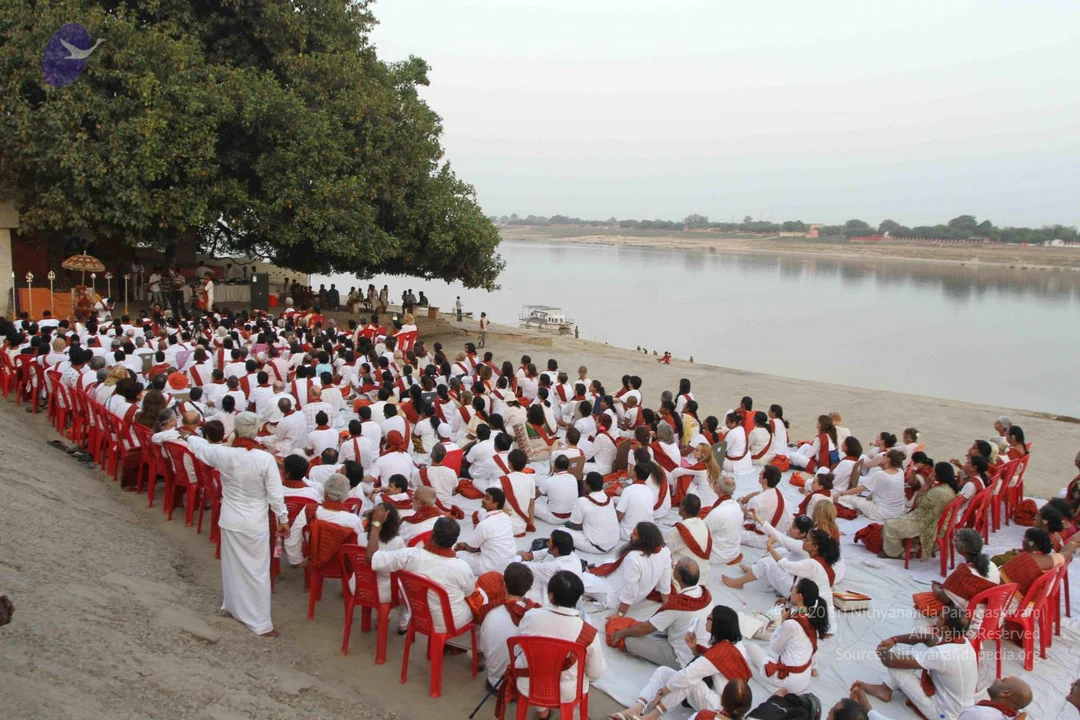
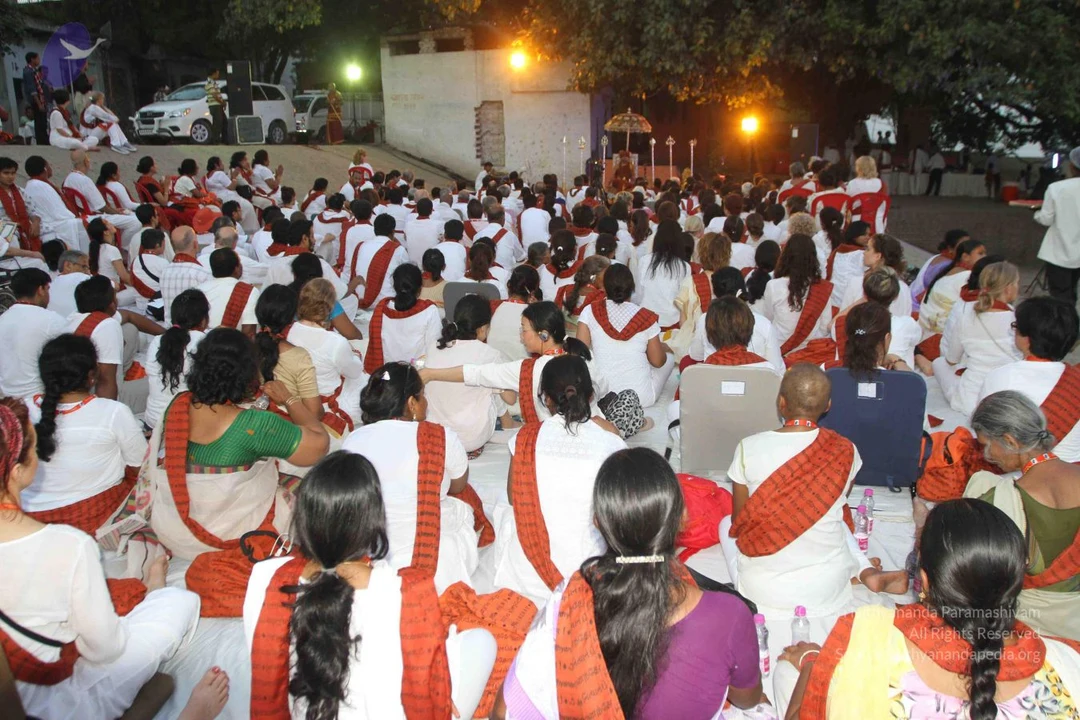
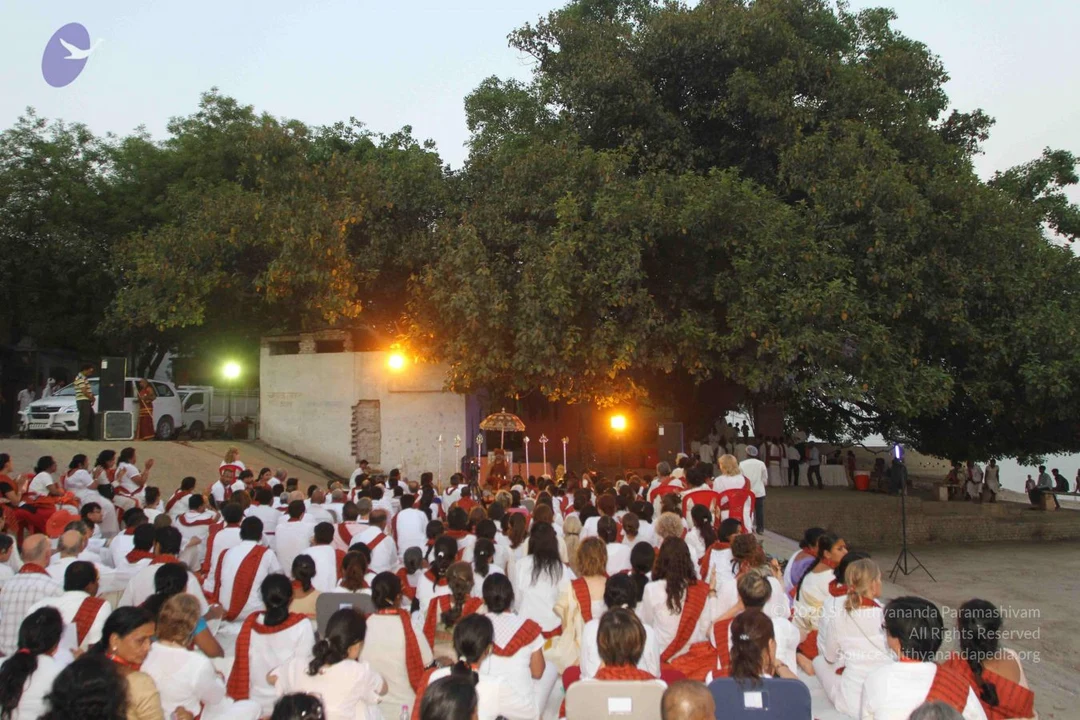
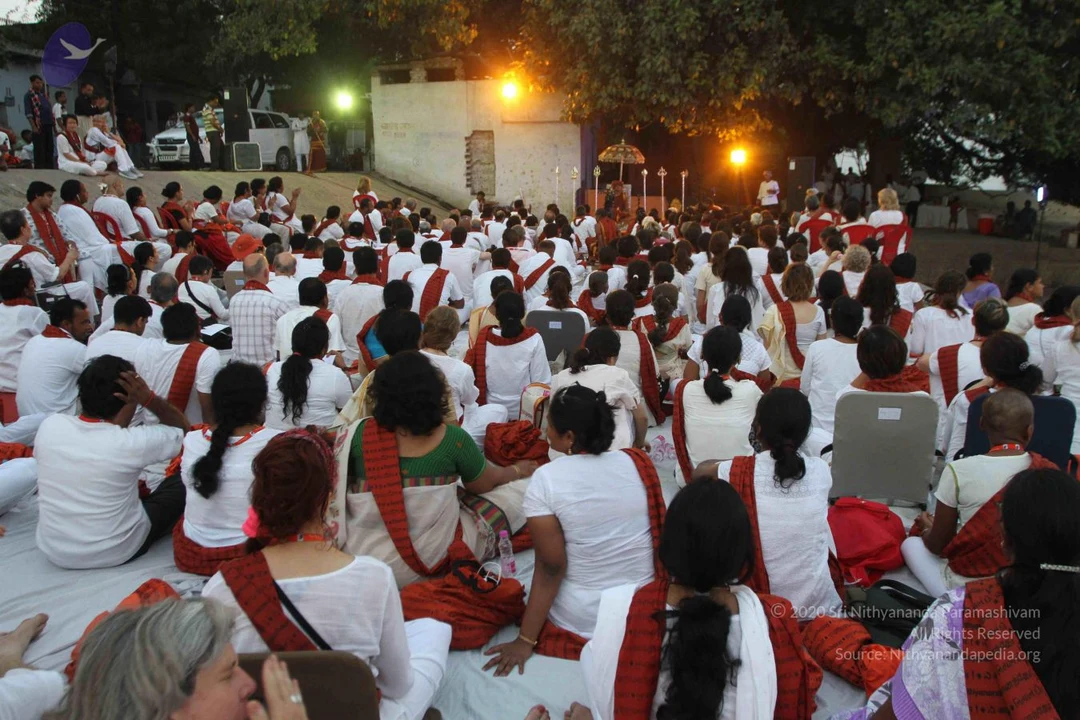
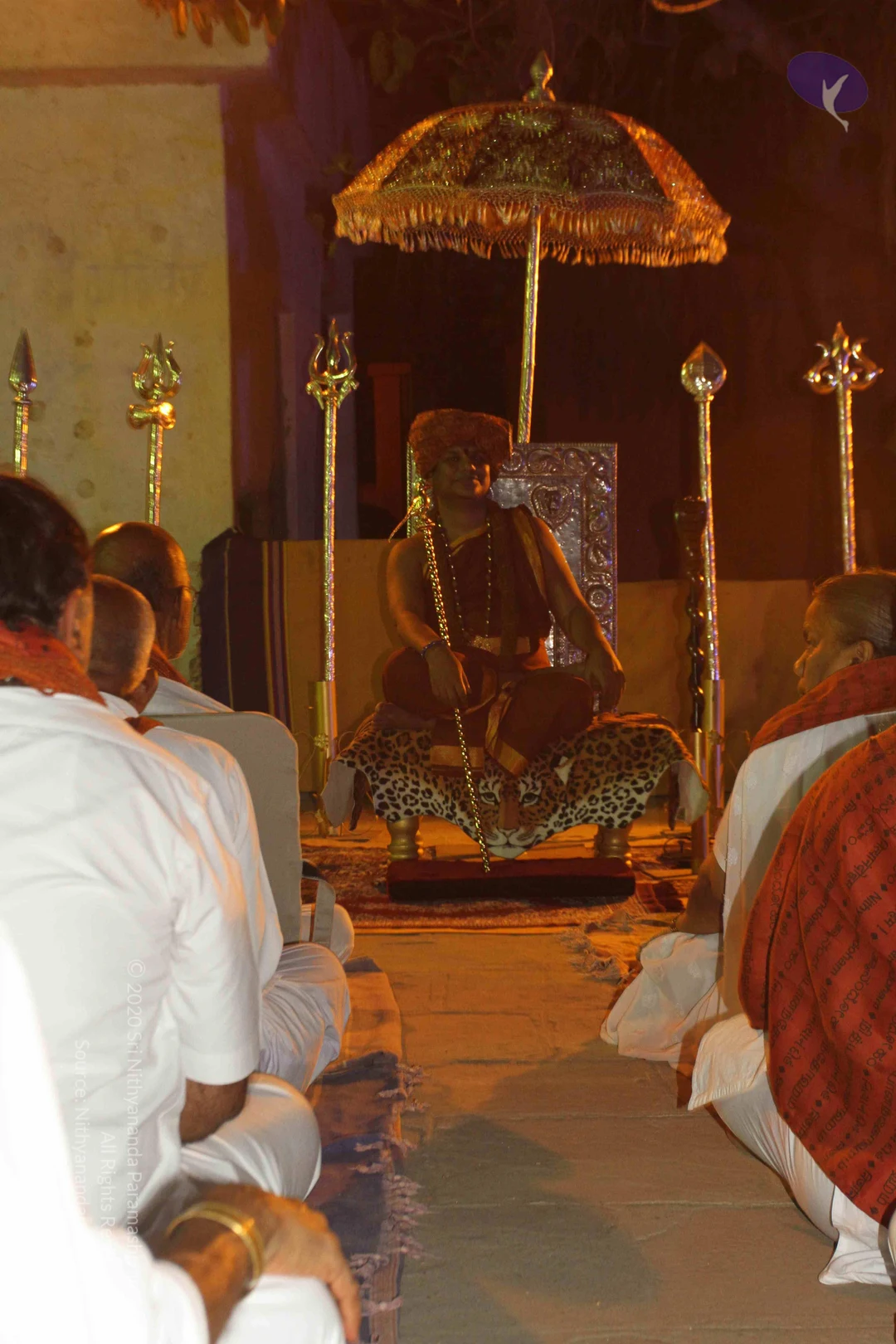
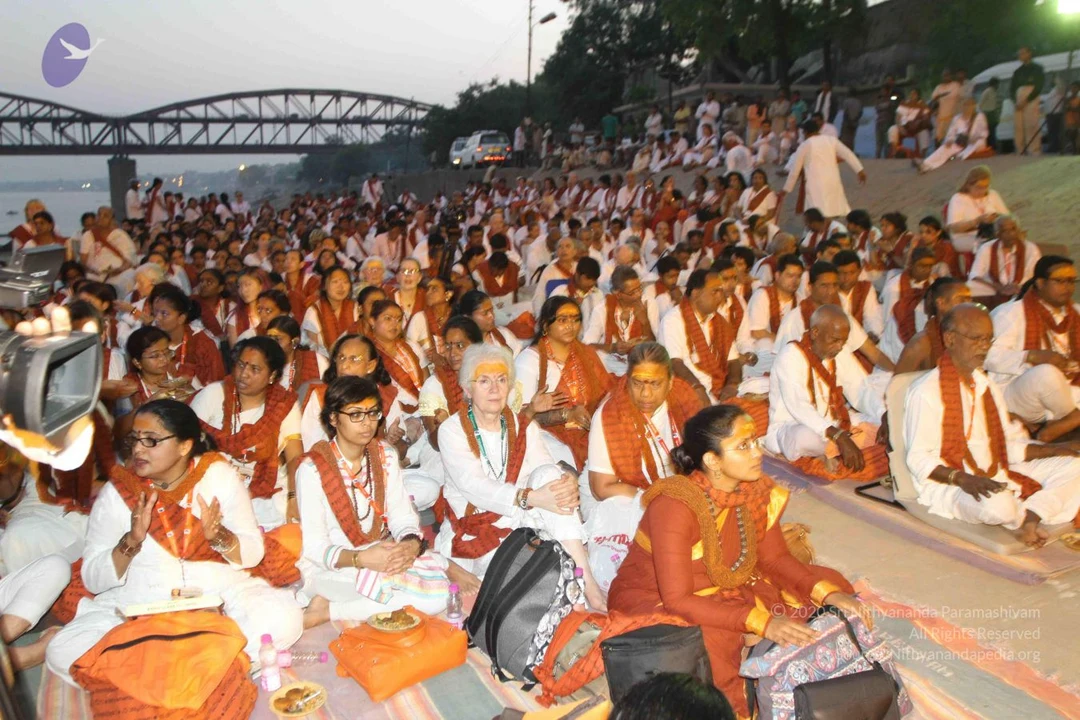
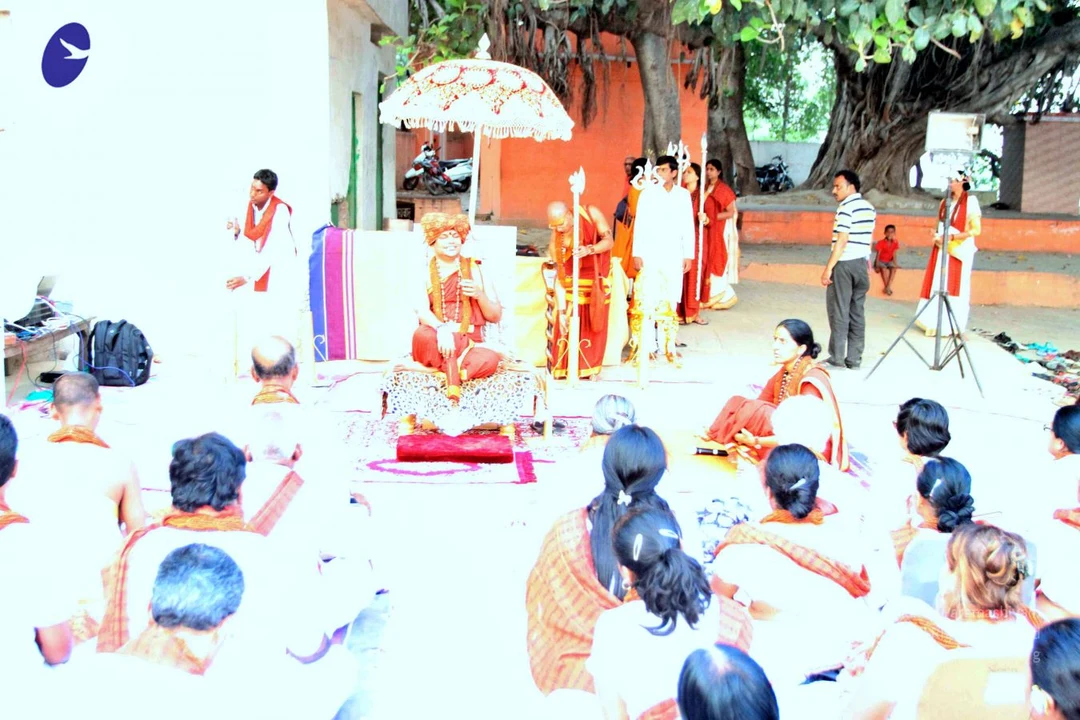
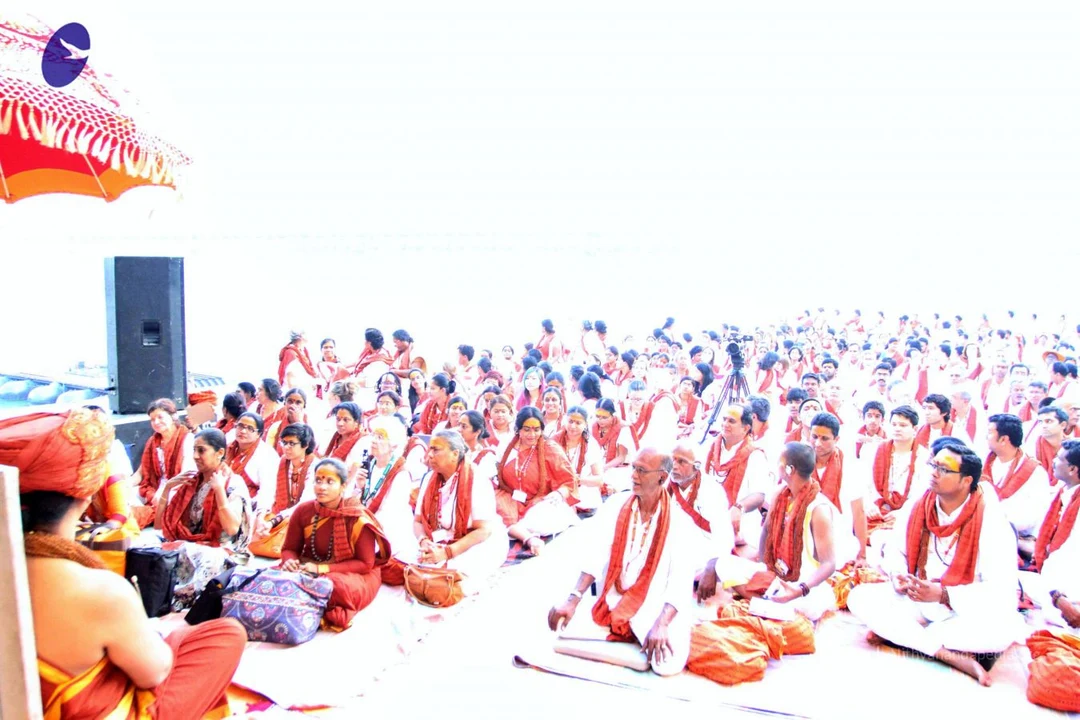
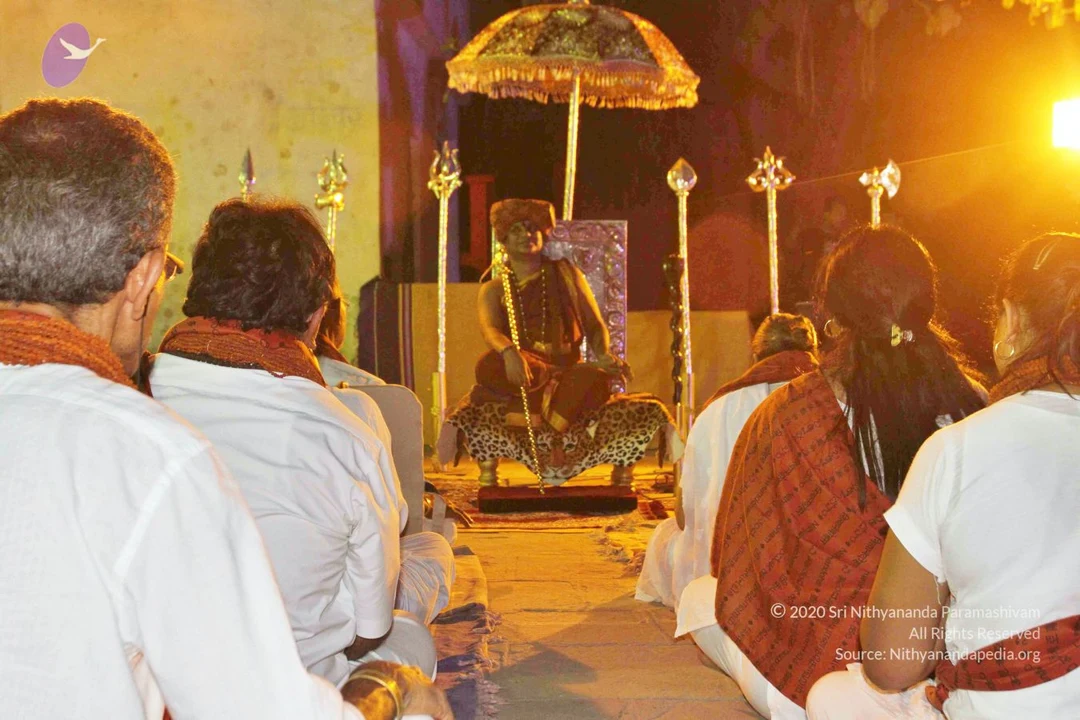
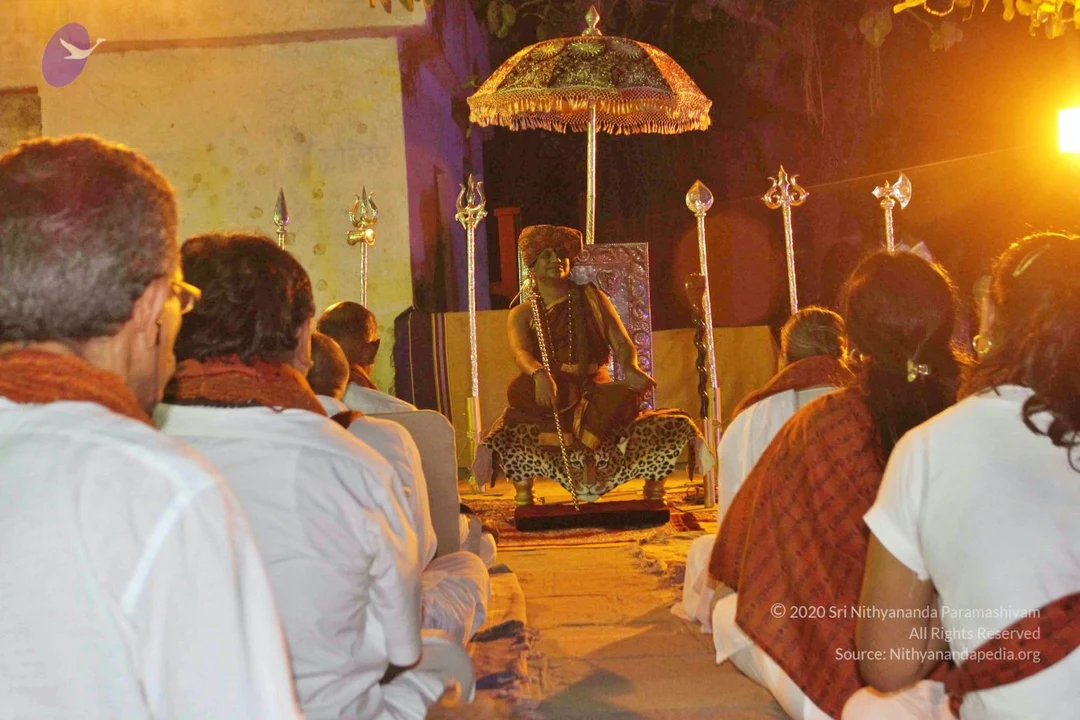
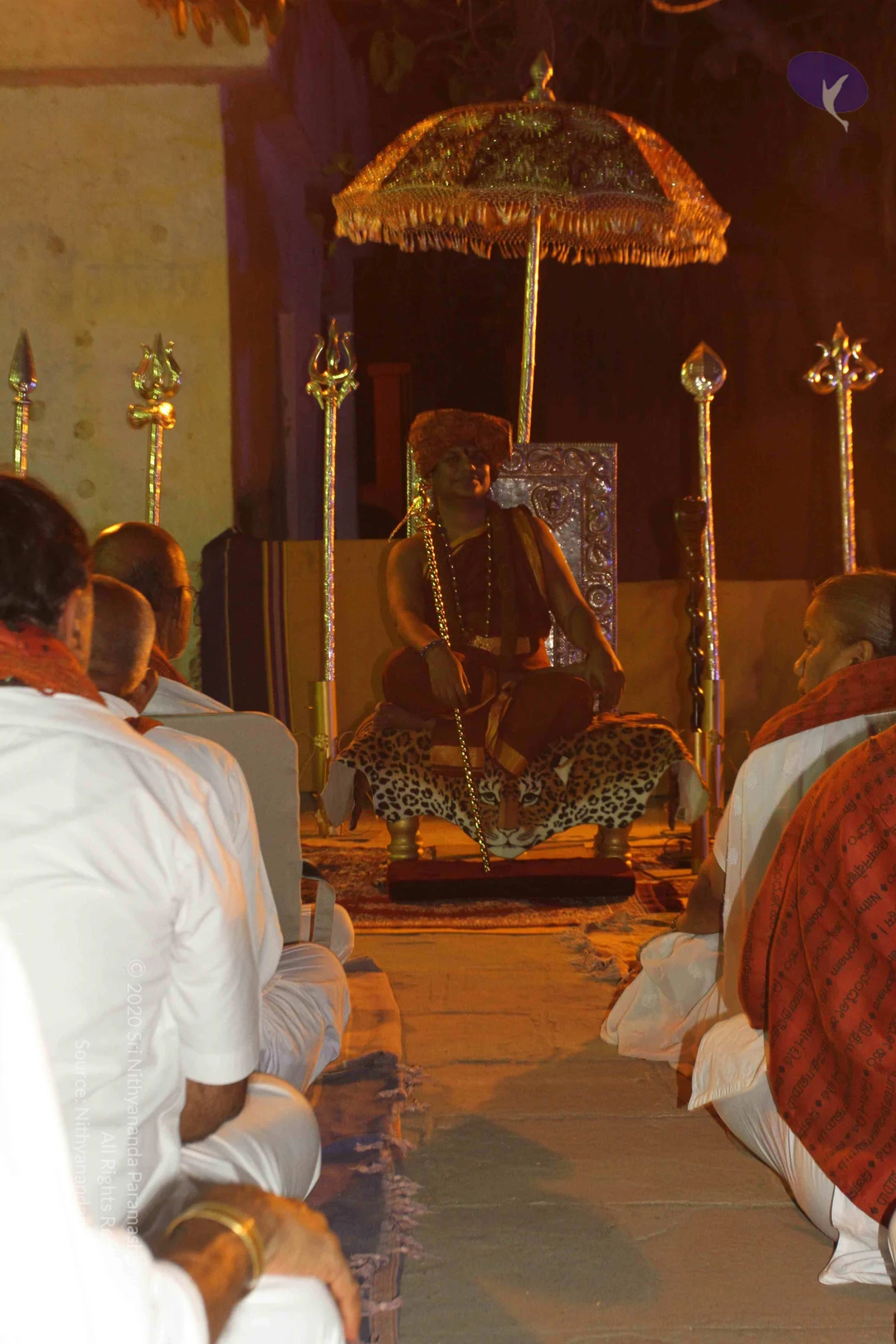
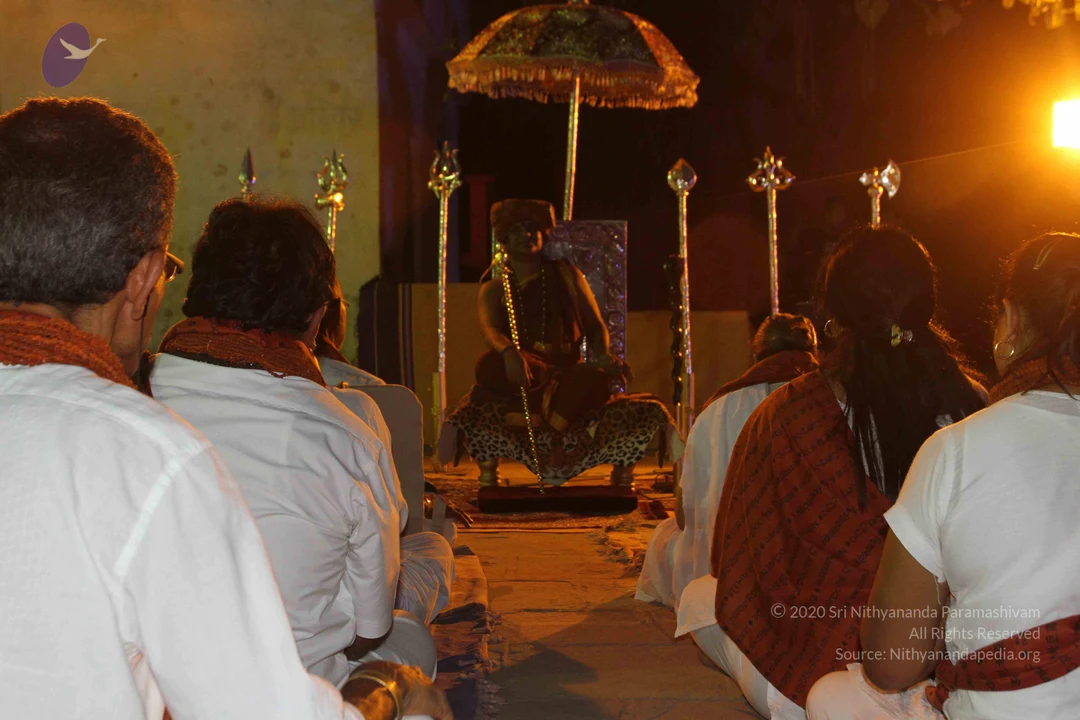
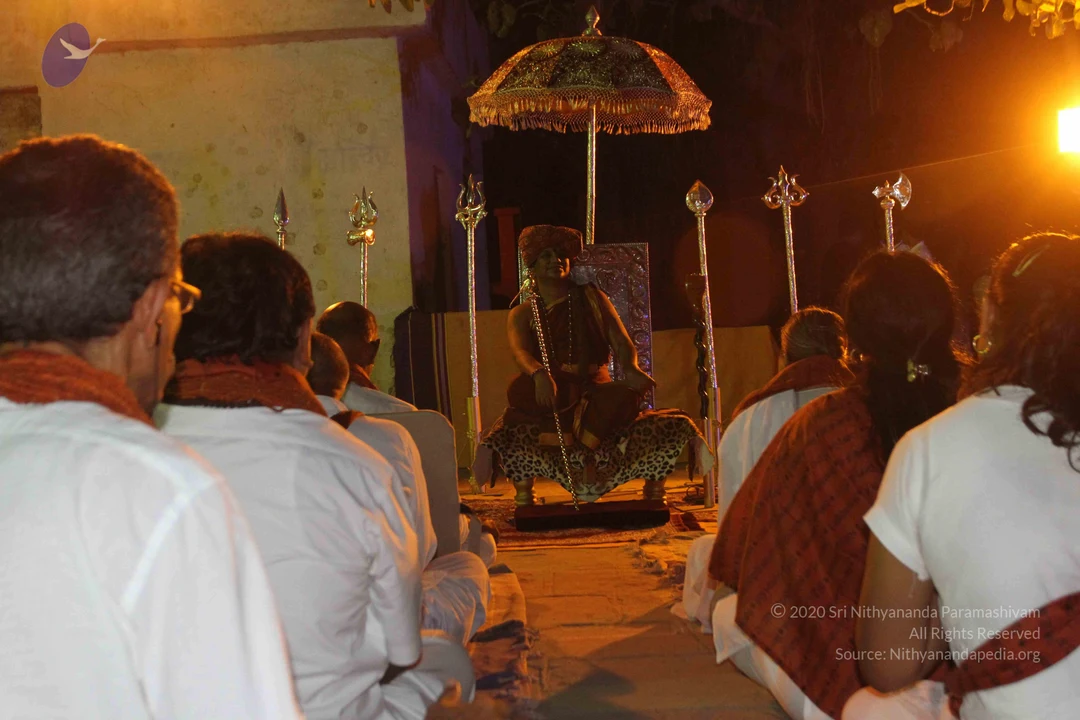
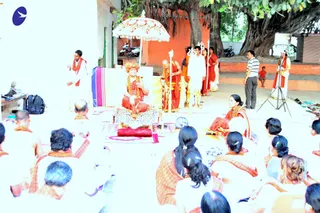
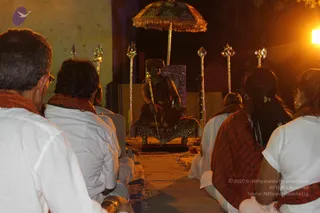
Outdoor satsang on a paved courtyard beneath a large banyan tree, with a white ceremonial umbrella overhead. A central figure in an orange-and-saffron robe with a rudraksha mala and an orange turban sits cross-legged on a raised white seat with a red cushion. Two saffron-robed attendants and a figure in white stand near a line of ornate staffs or tridents. Seated devotees in orange and saffron clothing, many with their backs to the camera, face the dais. A man in a striped shirt stands to the right beside a camera on a tripod, and a woman in red sits on the floor to the right. Orange-washed walls and parked motorbikes frame the scene.A large outdoor satsang gathering of many devotees seated on white mats on the ground, most wearing white clothes with orange-red shawls or stoles. Some hold rudraksha malas and wear white garlands. At the left edge, a figure with a bare back and an orange-and-gold turban sits facing the crowd, near a black speaker stand. A large red and orange ceremonial umbrella with fringe is at the upper left, and a camera on a tripod is visible at the right, with the audience stretching into the background.Large outdoor satsang gathering with a crowd of many devotees seated on a white cloth-covered floor. Most wear red and white or orange robes with red shawls and rudraksha-style beads. In the foreground at left, a person with a tall orange turban and orange-red garment sits facing the crowd, with a red and orange fringed parasol above. In the right foreground, a bald elderly man in white robes with a red shawl sits cross-legged holding a book, beside a younger man in white with an orange shawl. Speakers stand at left and a camera is visible among the seated audience. Many people are visible in the crowd, a large group.Outdoor satsang on a white cloth-covered ground with a large crowd of devotees seated in rows, most in white clothes with red-orange shawls. A red and gold ornate umbrella stands at left, and a figure in orange robes sits with back partly turned near a silver-topped staff and a brass lamp. Several cameras and a tripod are at the right edge, and a steel bridge spans the hazy background.Evening satsang scene in warm lamplight. A figure with a dark head covering and bare upper body, wearing a leopard-print cloth and a long beaded necklace, sits cross-legged on a raised silver throne beneath a gold fringed parasol, flanked by silver ceremonial staffs with trident-like finials. Seated devotees in white clothes, several wearing red-and-orange printed shawls, face the throne from the foreground, their backs to the camera.Night satsang photograph. A seated figure in a brown robe and a brown turban-like head covering sits on a leopard-print cushion before an ornate high seat under a gold fringed parasol. Silver trident-topped staffs stand on either side. Several devotees in white clothes and red-and-maroon shawls sit cross-legged in rows facing the seated figure, seen from behind. Warm lamplight and a dim courtyard surround the scene. a person: long hair, a bare-chested figure wearing a rudraksha-style chain and a turban-like head covering on a throne with a parasol.

Photos Of The Day:

20 photosSource gallery

Satsang

9 photosSource gallery
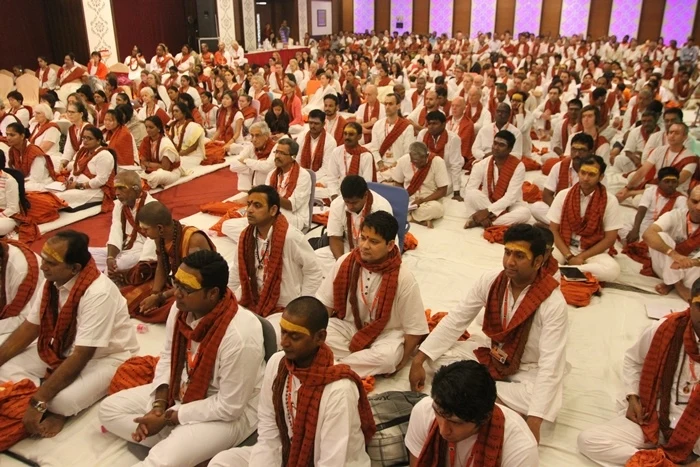
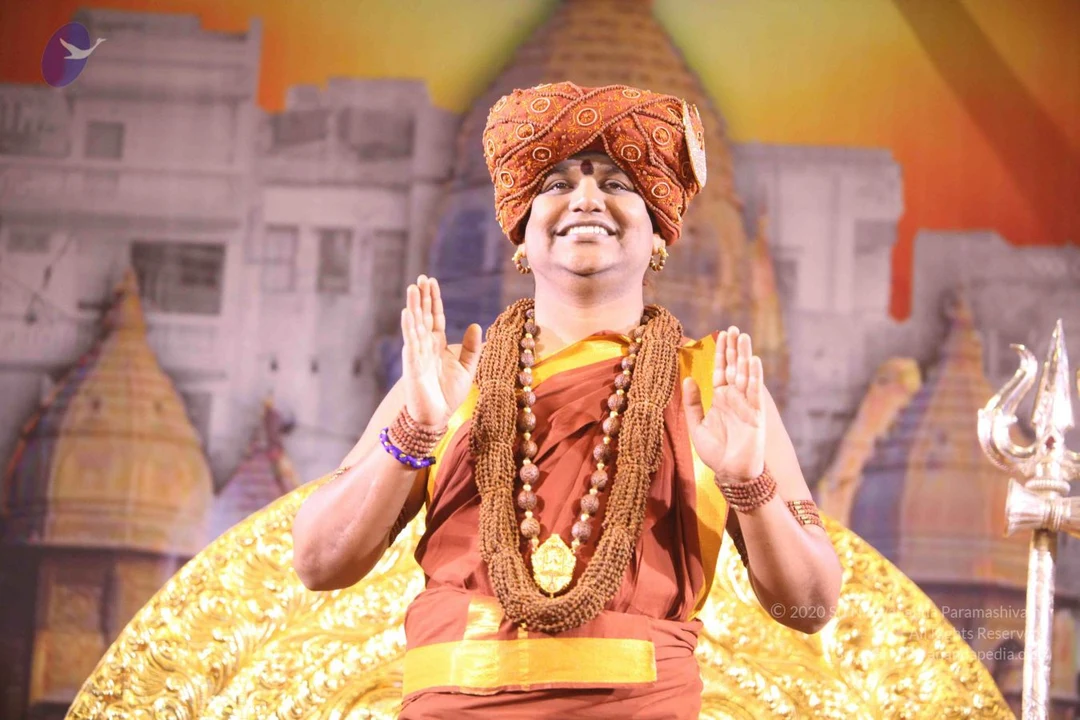
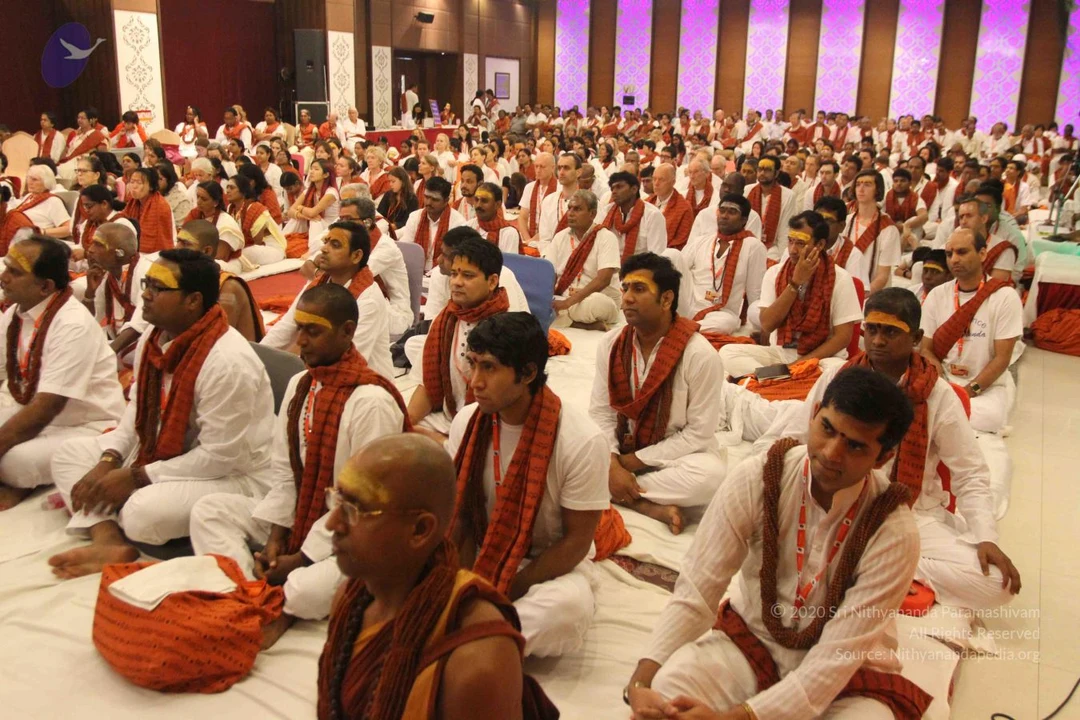
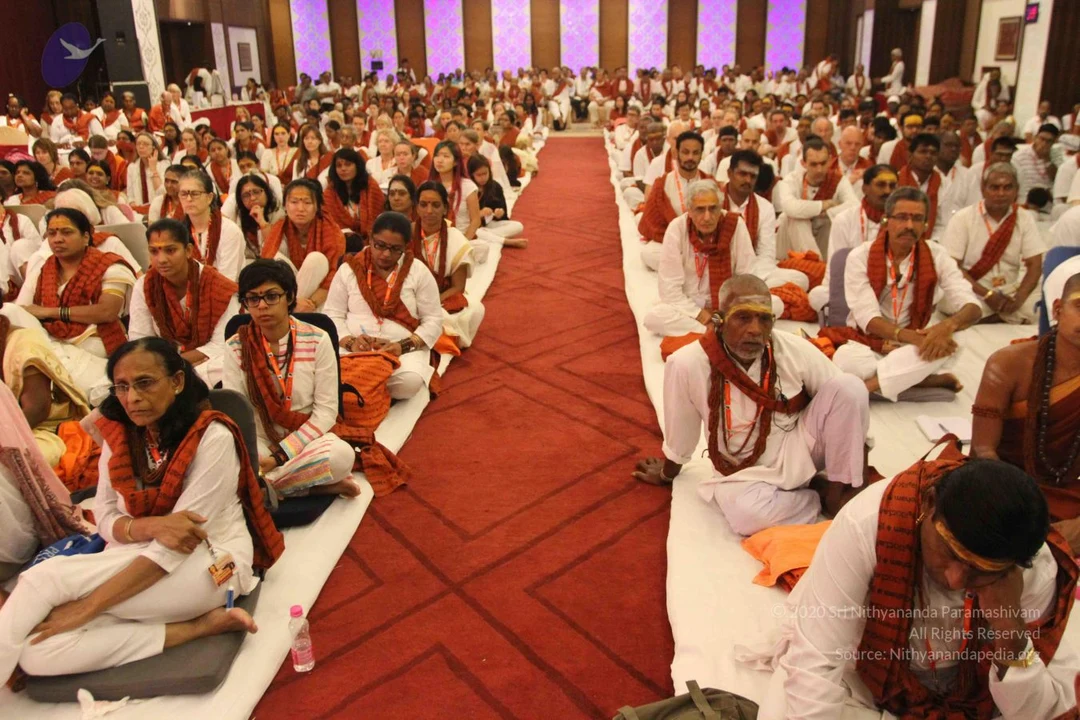
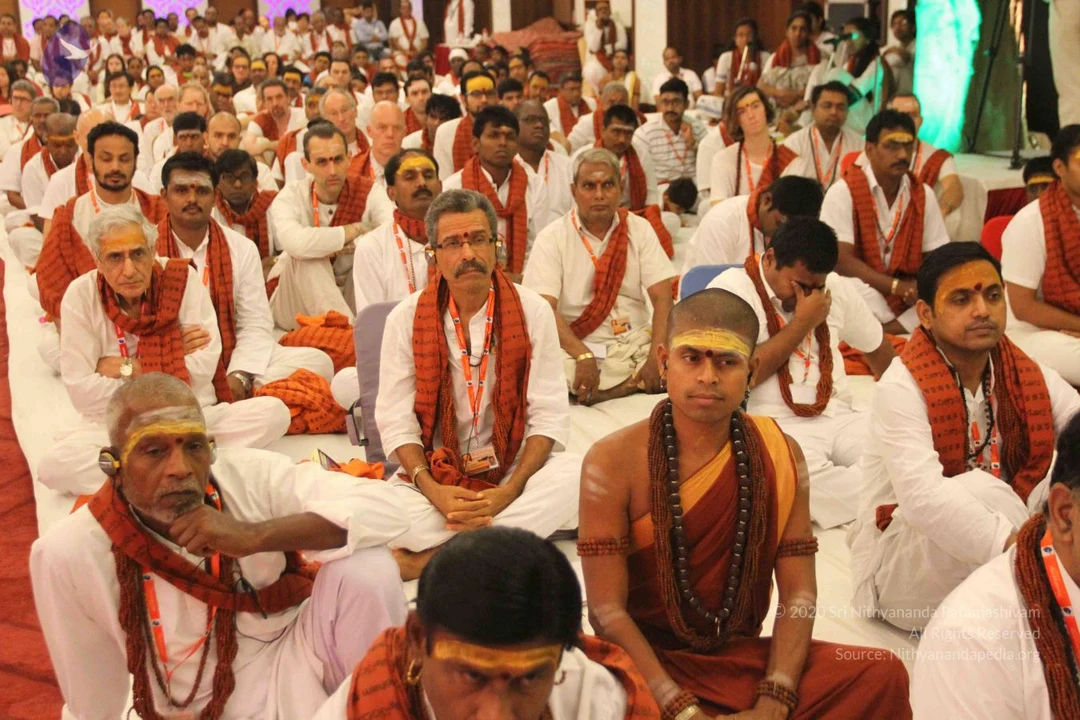
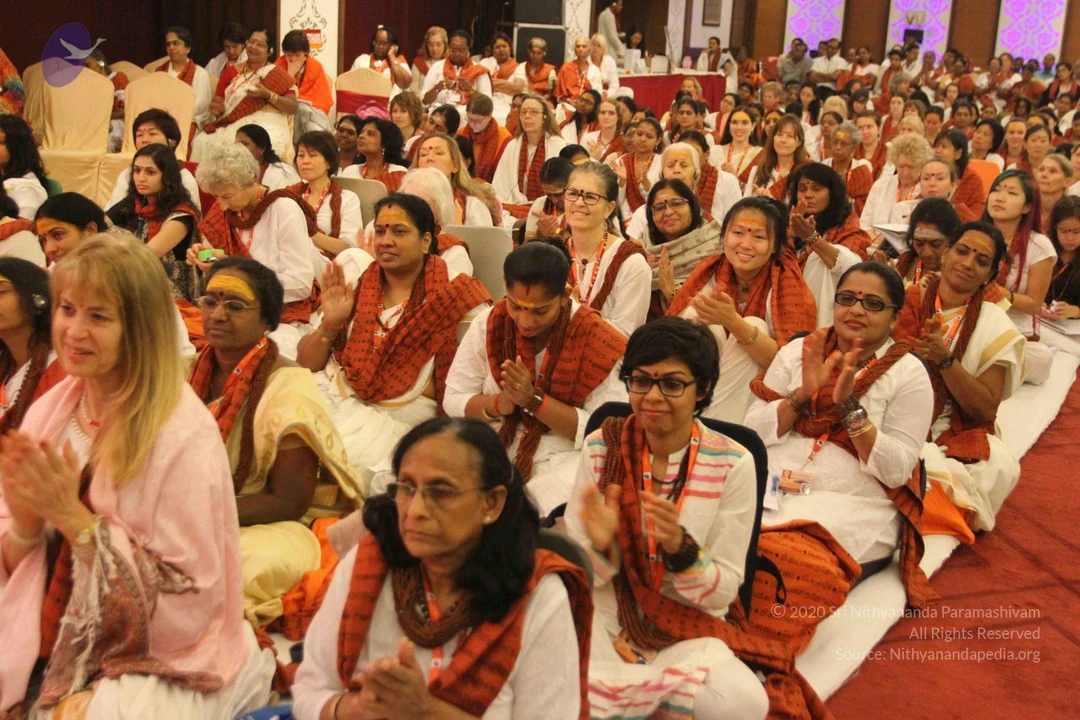
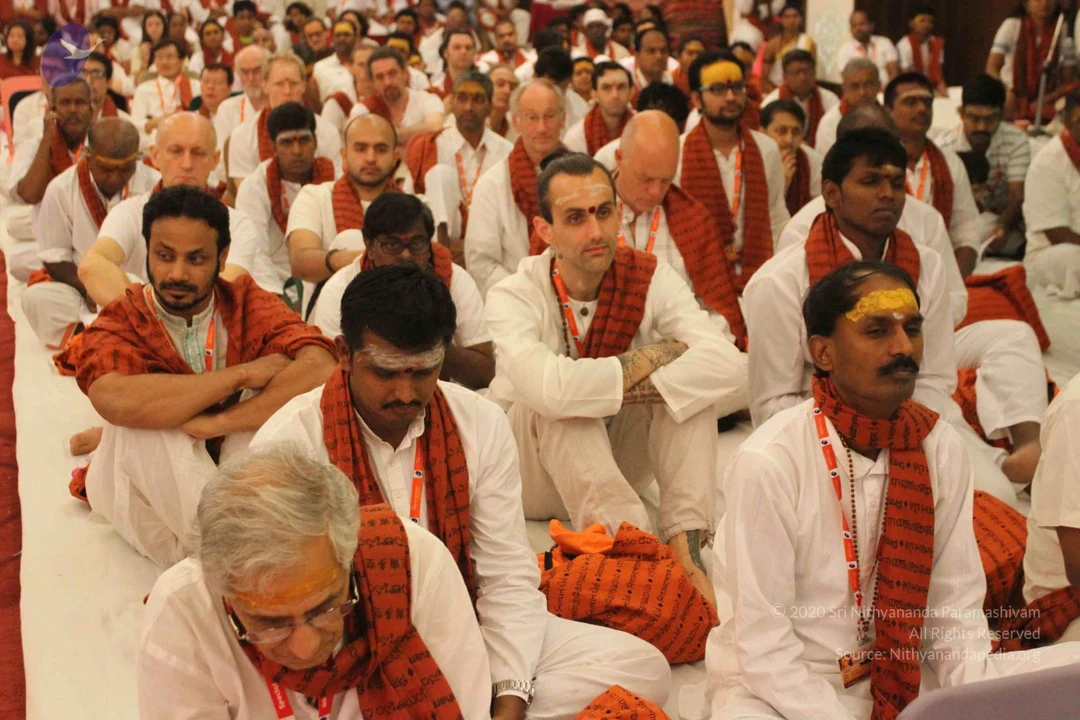
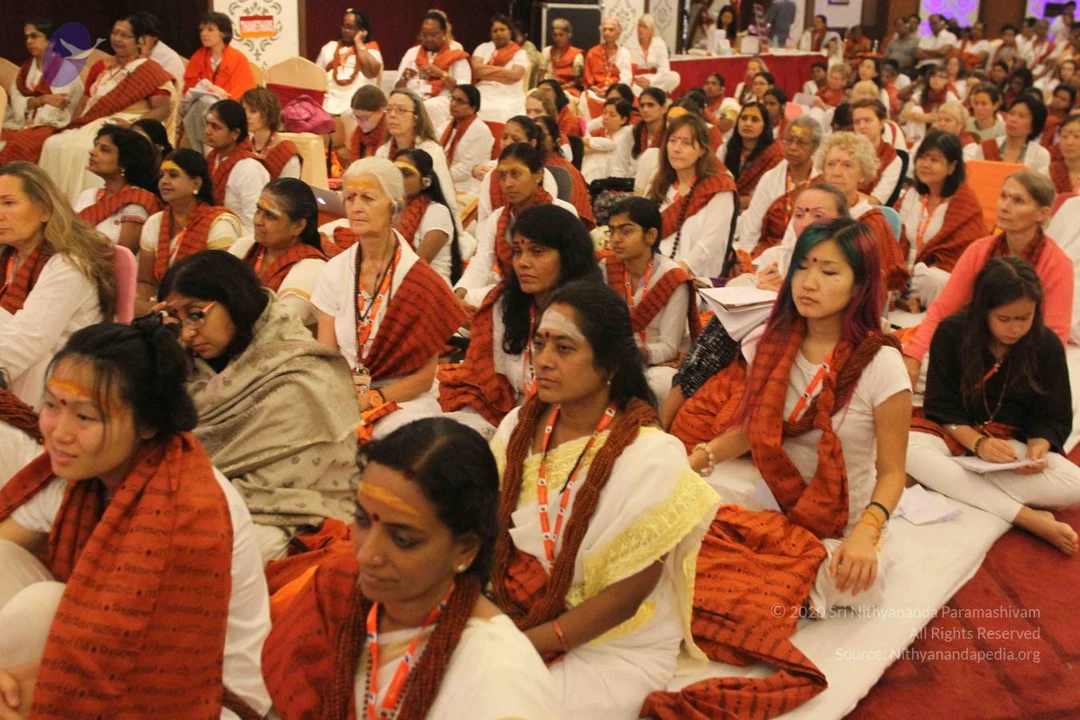
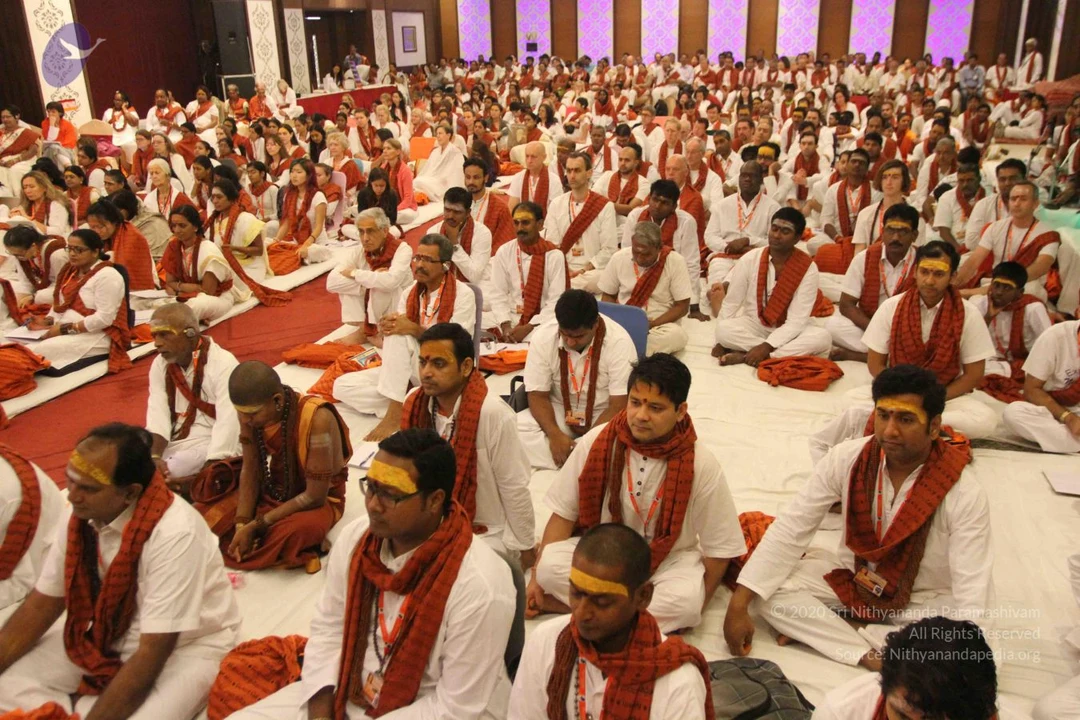
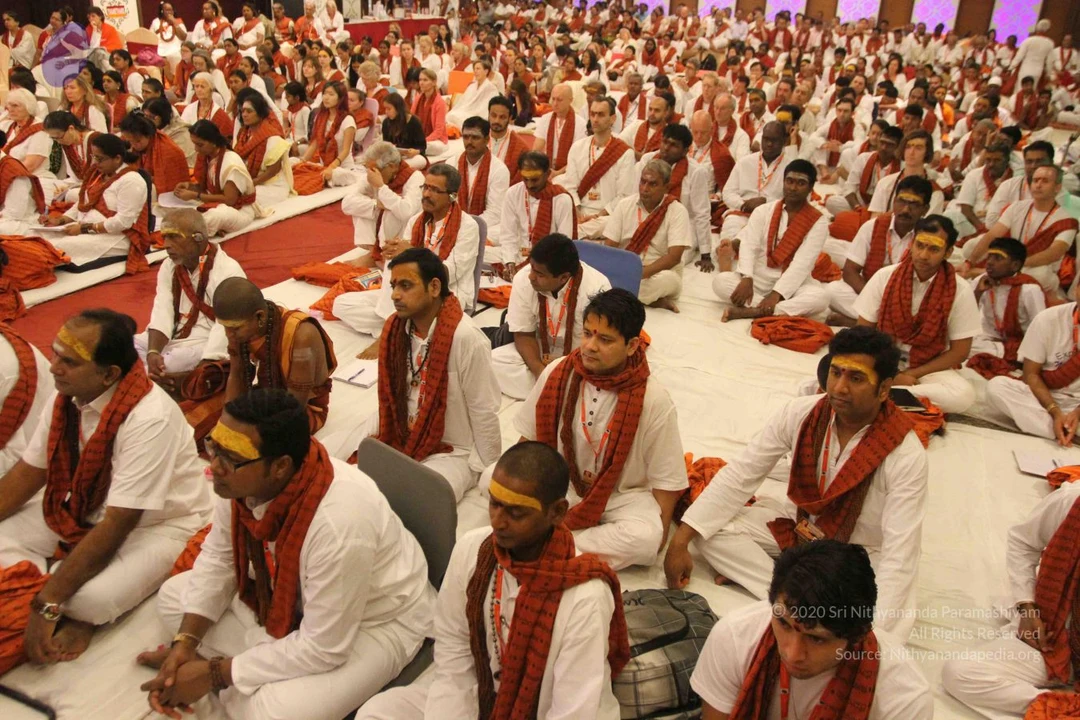
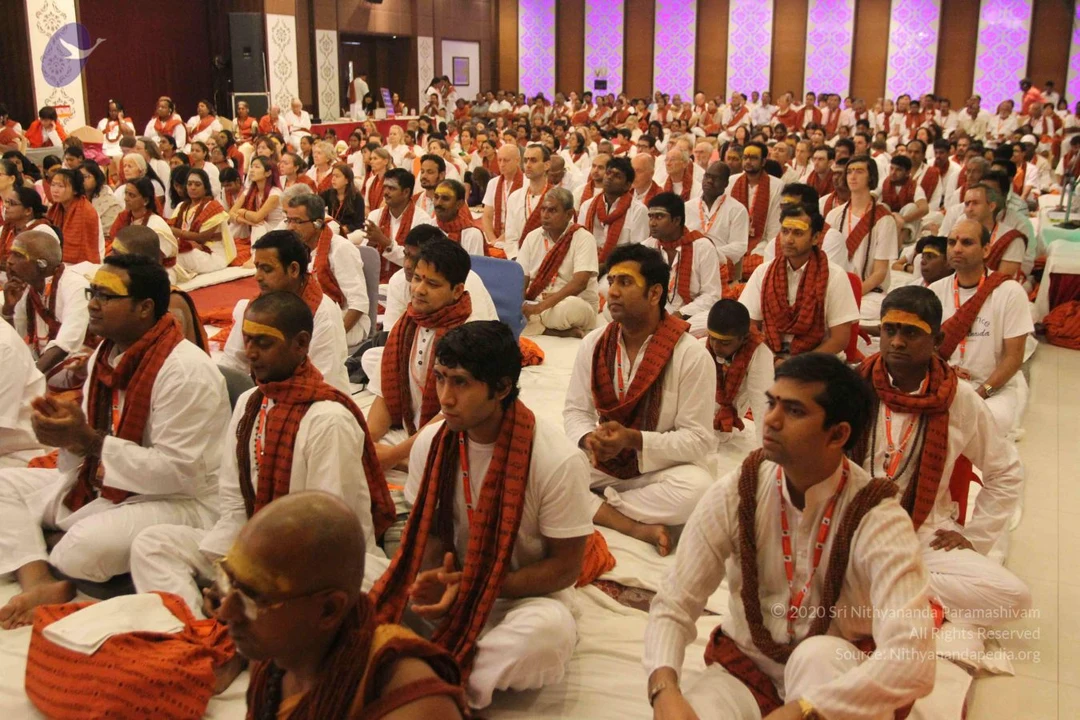
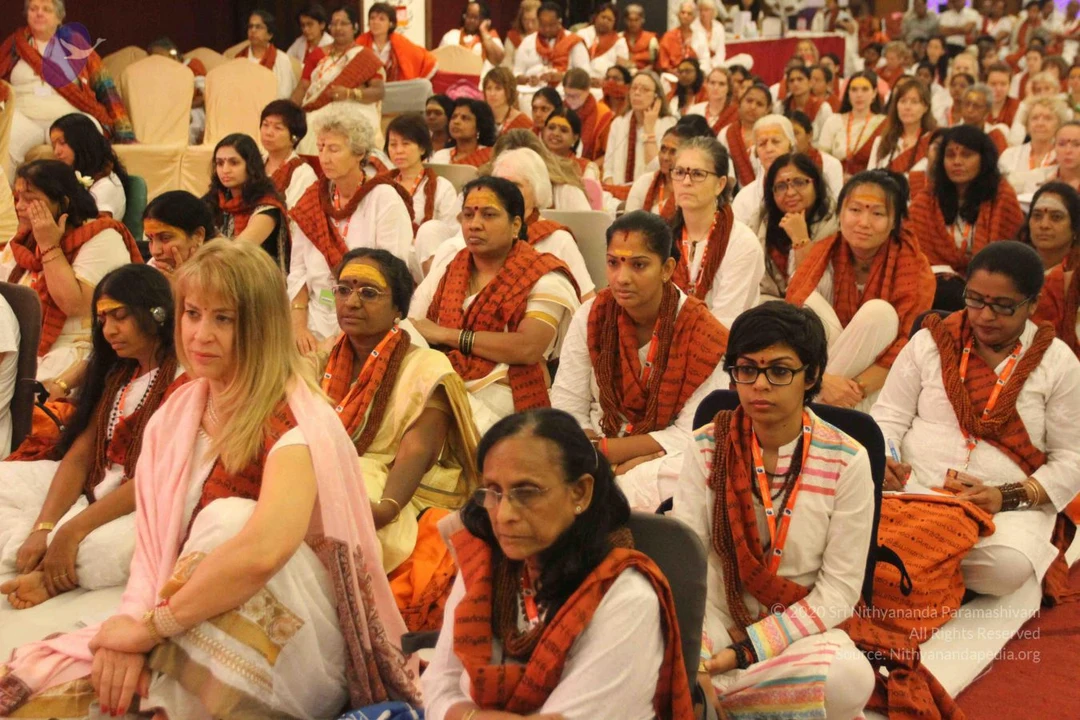
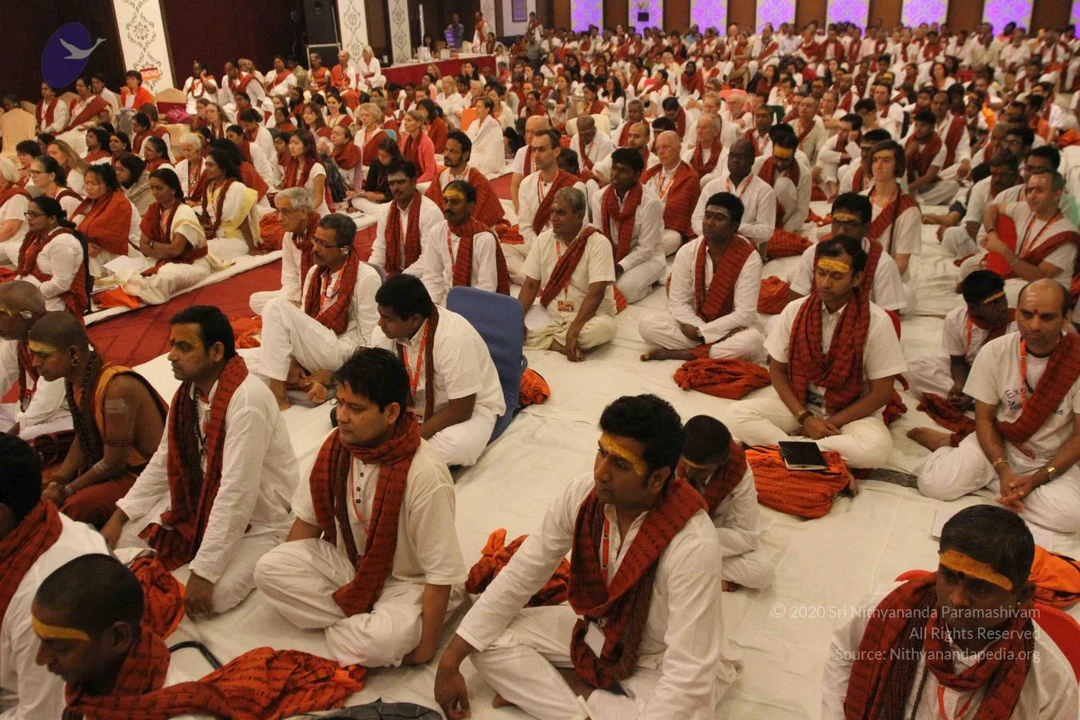
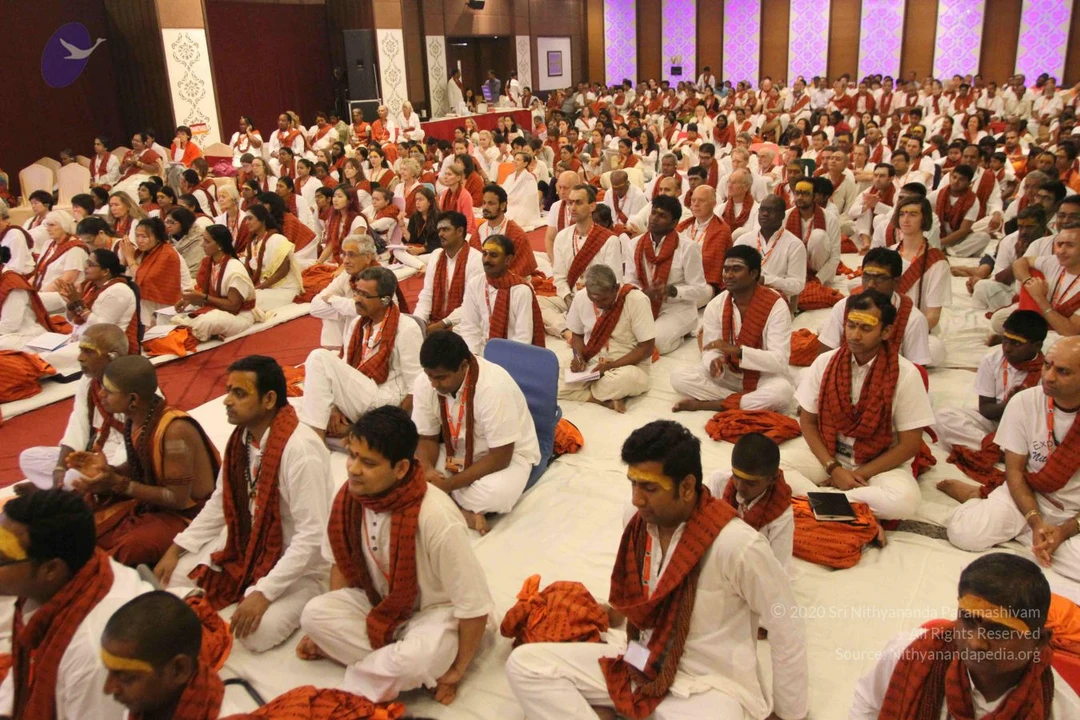
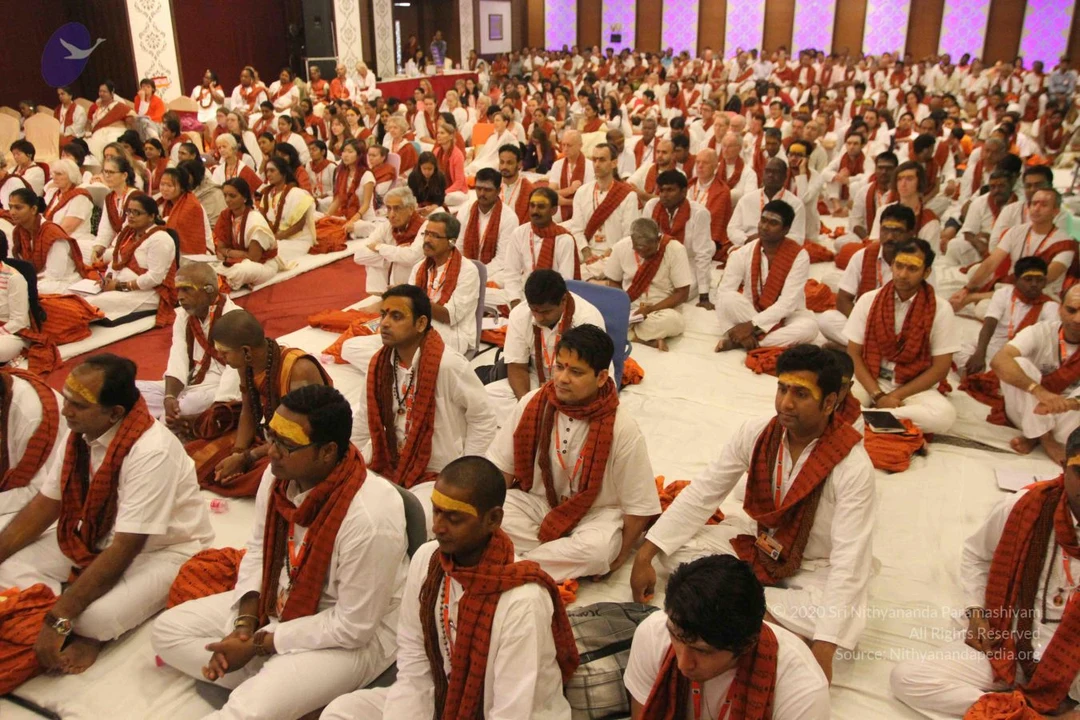
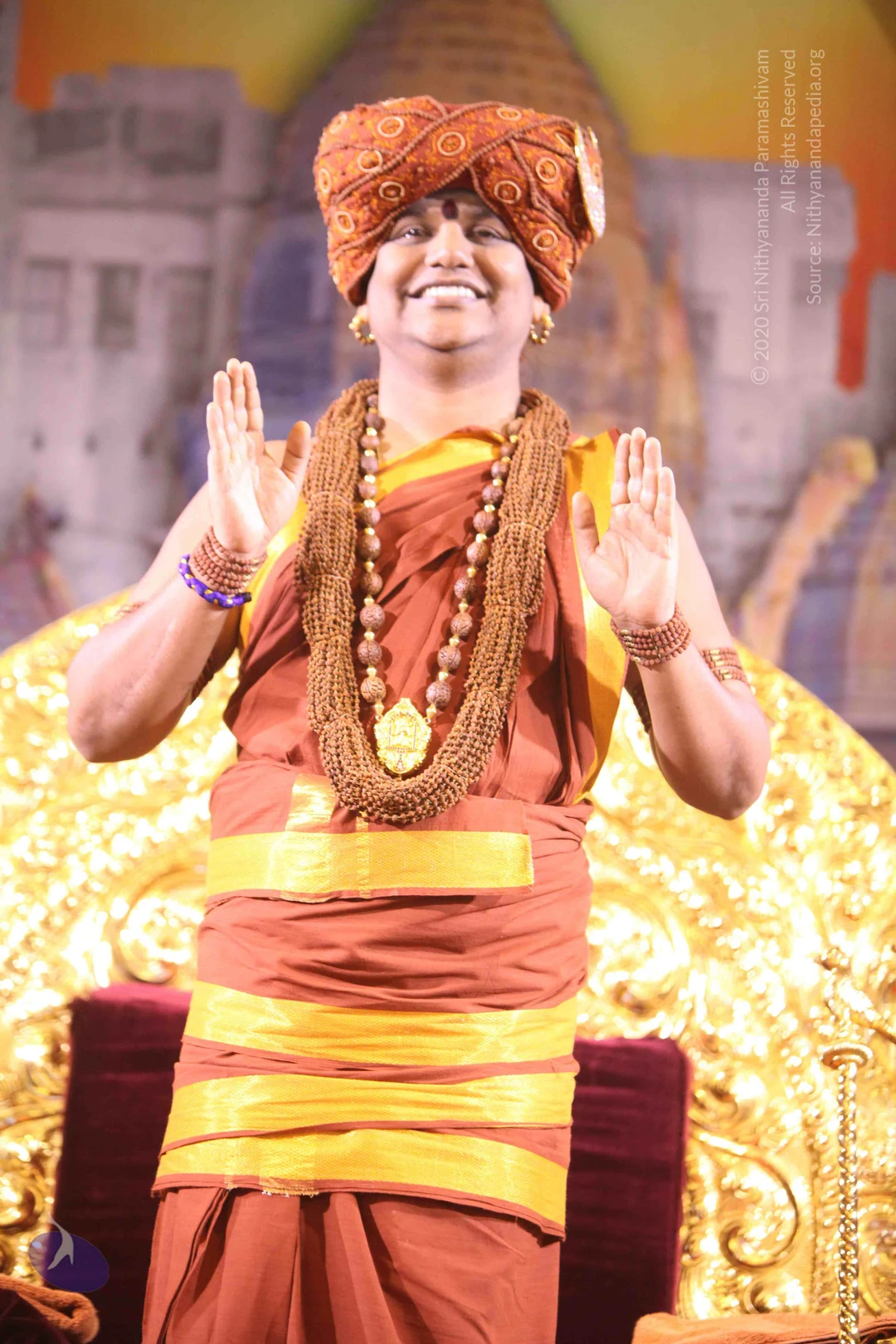
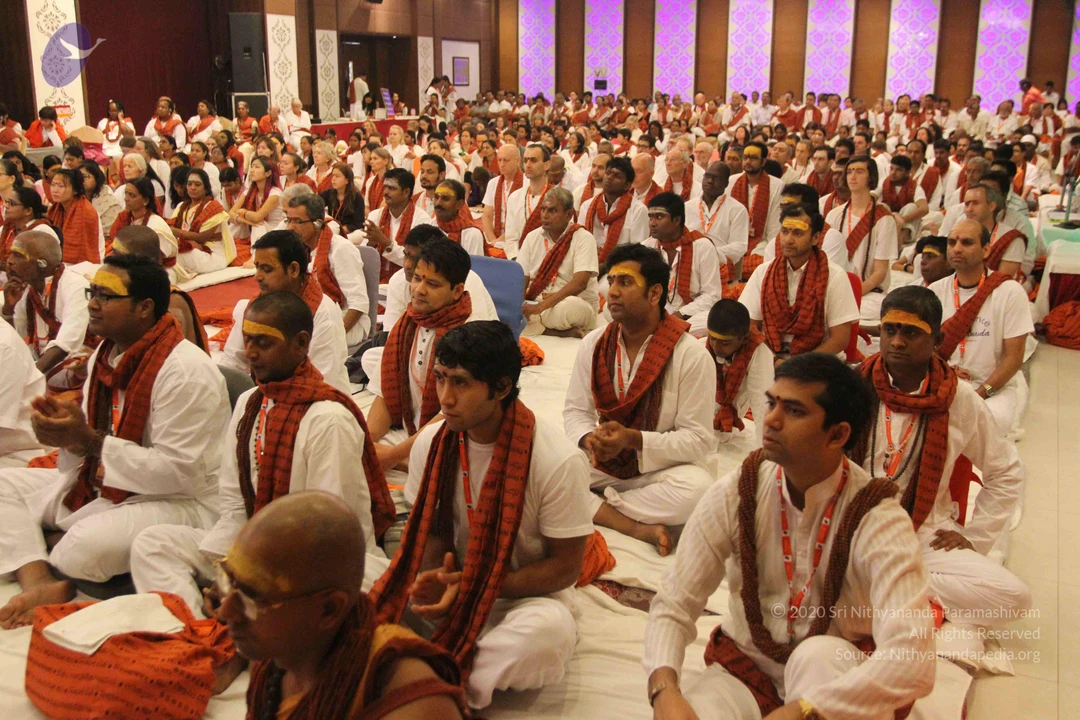
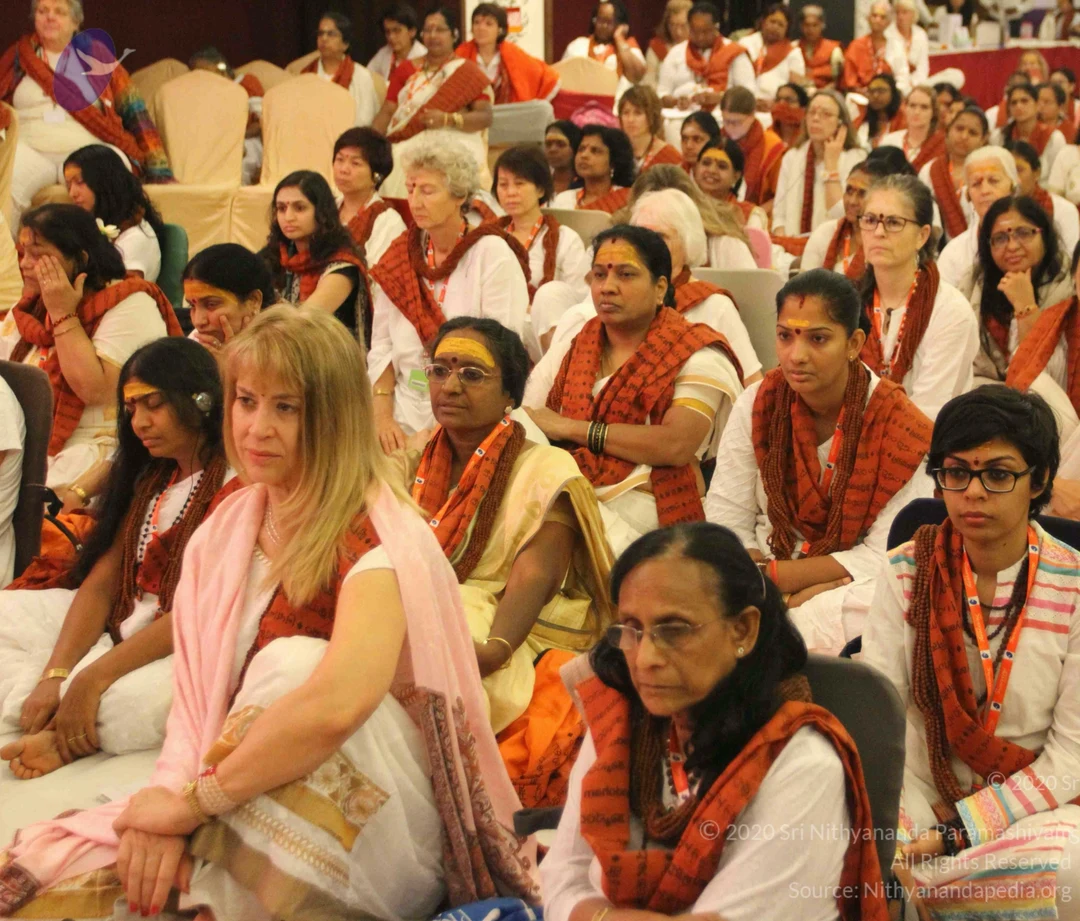
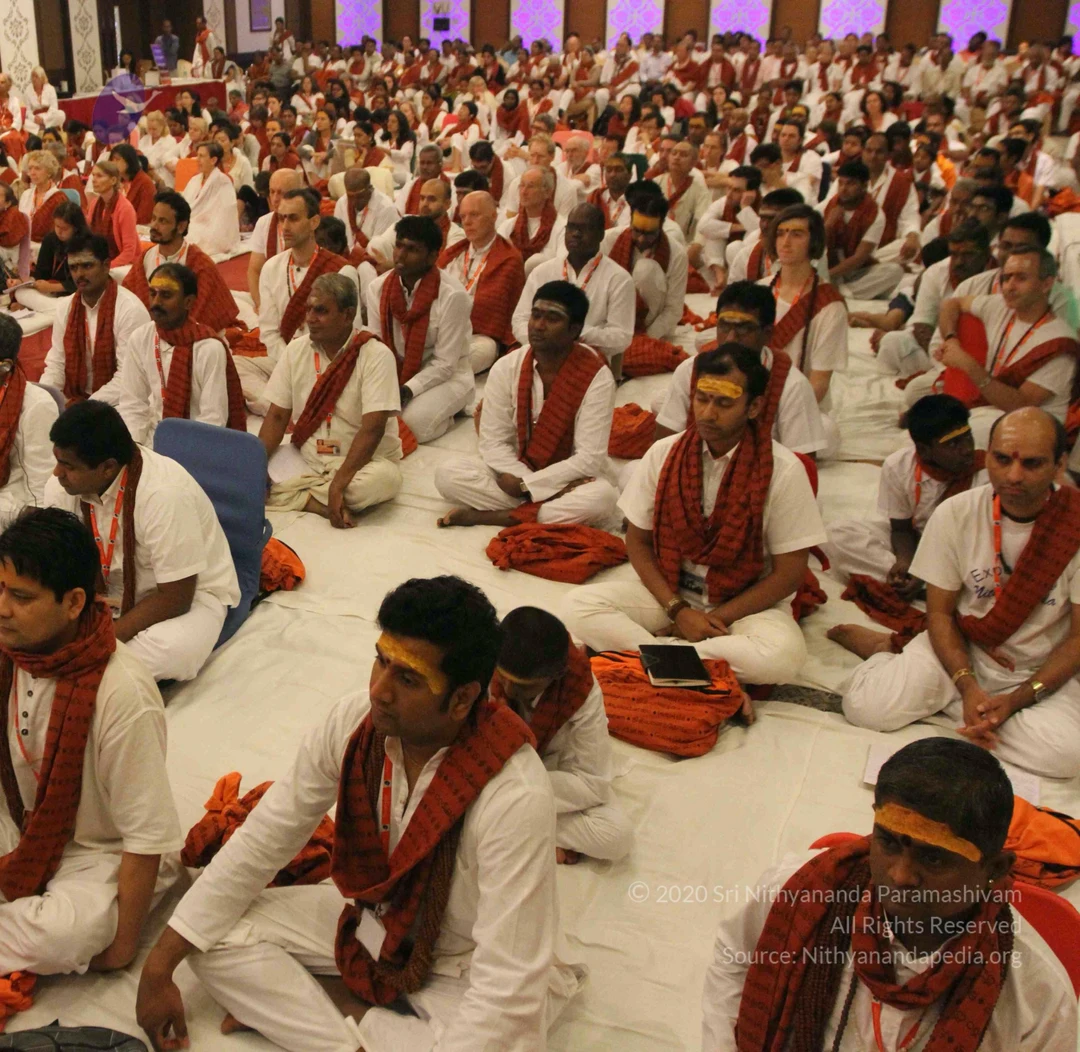
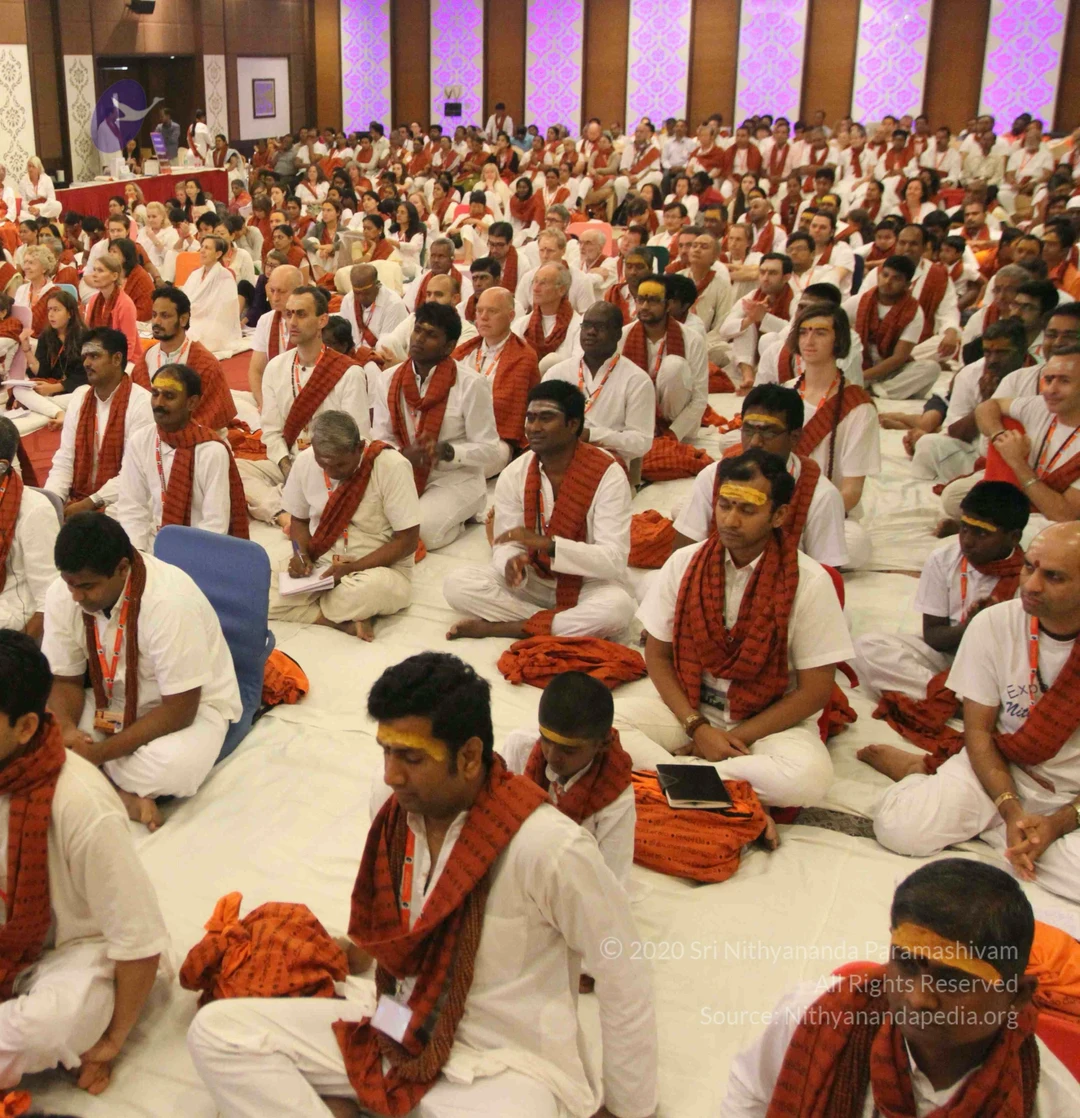
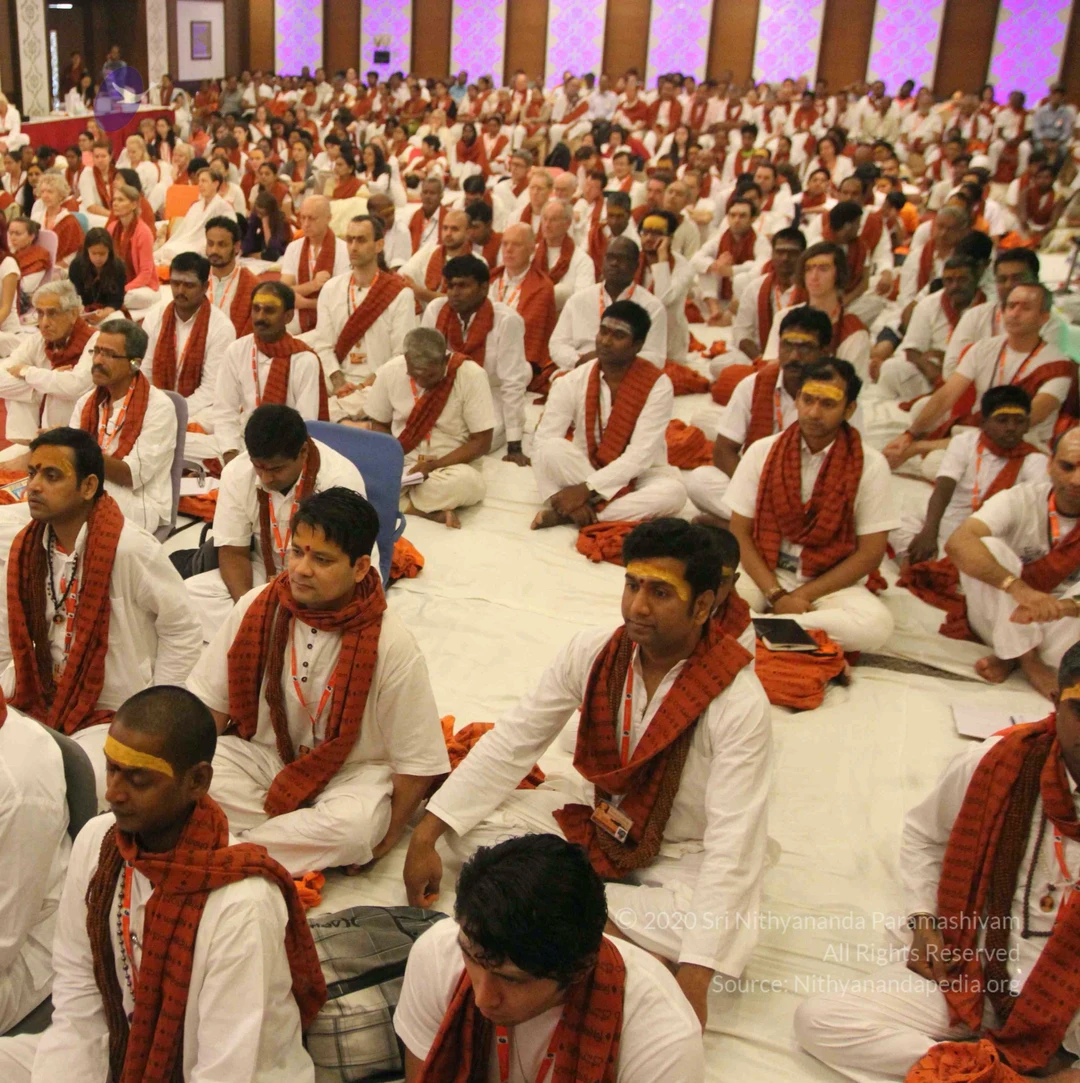
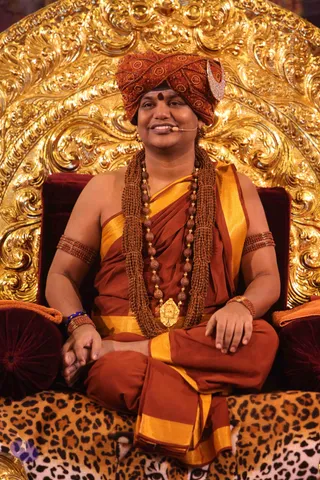
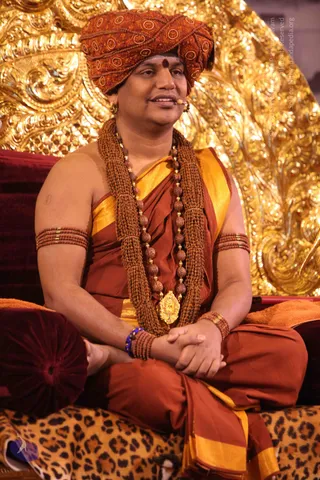
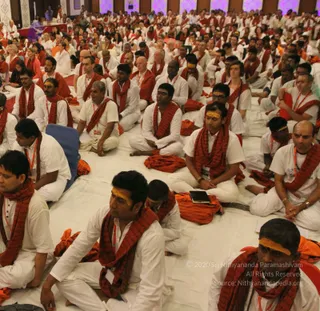
A smiling man stands on a red carpeted dais before an ornate gold throne with maroon cushions and a leopard-print cloth. He wears an orange-and-gold patterned turban, a rust-brown dhoti and shawl with broad gold borders, and multiple strands of rudraksha beads with a gold pendant. His palms are pressed together in front of his chest in greeting. A silver trident stands to the right beside a flowering plant, and a backdrop shows Varanasi temple spires. Swamiji (probable): the figure wears saffron-toned ceremonial clothing, a turban and rudraksha malas on a gold throne, matching the page's satsang context.A smiling man stands before an ornate gold throne-backdrop, raising both palms in a blessing gesture. He wears an orange-and-red patterned turban with a small forehead marking, a rust-coloured robe with broad gold borders, and a heavy rudraksha mala with a gold pendant. Red-brown rudraksha bracelets and a blue beaded wristband are visible. Behind him is a painted temple backdrop with a shikhara tower. Swamiji (probable) appearance cues: ornate turban, rudraksha malas and ceremonial gold ornamentation, identified as the speaker in an event photo from a satsang.A seated man in a rust-orange patterned turban with a crescent ornament and a red bindi sits on an ornate gold throne with a leopard-print cloth draped over the seat. He wears rust and saffron-orange robes with gold borders, multiple strands of rudraksha beads and a gold pendant, and rudraksha armbands. He wears a small headset microphone and smiles while seated cross-legged. Swamiji (probable) is seated on the golden throne, with cues of an orange turban, saffron-orange robes and rudraksha malas.A man seated cross-legged on a leopard-print cushion before an ornate gold-leaf backdrop, wearing a red-orange turban with gold embroidery and a red bindi. He is dressed in a rust-red and gold-bordered cloth, with rudraksha malas across his chest and arms, a gold pendant, gold earrings and beaded bracelets. His hands rest clasped in his lap and he smiles while speaking, with a small headset microphone at his mouth. Swamiji (probable): the turban, rudraksha malas, ceremonial gold ornaments and rust-and-gold clothing are consistent with the page's reference to a satsang discourse. A velvet bolster sits beside him.A photograph of a large seated audience at a satsang hall, mostly women in white clothing with orange-red shawls embroidered in dark script and tilak marks on their foreheads. In the foreground, a woman with blonde hair wears a pink shawl over white clothes, and beside her a woman in a yellow sari sits with a yellow tilak. Rows of chairs and seated attendees fill the background, with a red table and other attendees at the rear. Lanyards hang from some necks. No a person candidate is clearly visible in this crowd shot.A large indoor satsang hall filled with hundreds of seated participants in white kurtas and white trousers, wearing red-and-brown woven shawls and orange-yellow tilak marks on their foreheads, with lanyards around their necks. They sit on white floor cloths with orange cloth bundles and a small phone beside them, facing forward toward the stage. Purple-lit decorative panels line the back wall. The crowd is too numerous to count precisely and is well above a hundred people.

Ganga Ghat
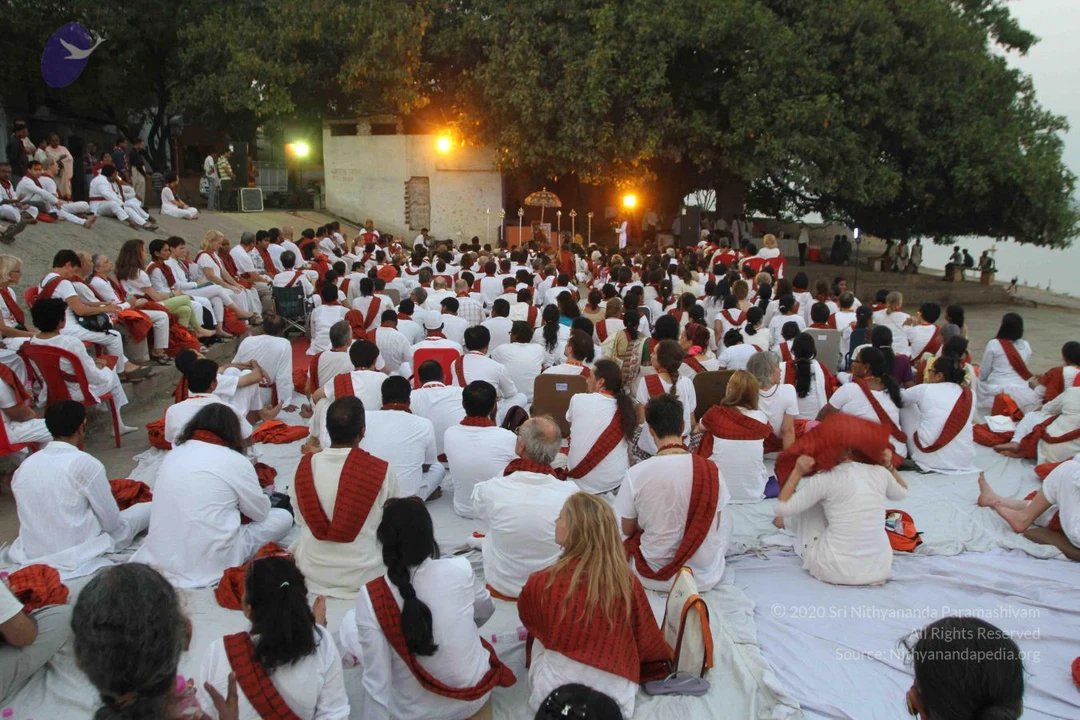
8 photosSource gallery
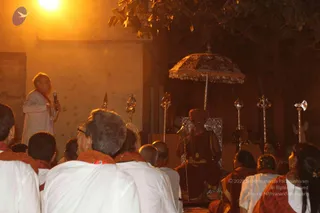
A large crowd of several hundred devotees sits in rows on a sandy riverbank in front of a long steel truss bridge spanning a wide river at hazy daylight. Most wear white ritual clothing with red or orange shawls, and many have red and white garlands or lanyards. Some sit on mats and others on folding chairs, and small boats are visible on the water. A cameraman stands at the front-left edge of the crowd. The gathering appears to be a satsang session on the riverbank. No individual can be clearly identified as a person from this image.Night photograph of a satsang on a stone-paved ghat. Seated devotees in white and rust-red shawls face a raised seat under a fringed golden umbrella; a figure sits cross-legged on a low platform in a leopard-print cloth with a long beaded necklace. Tall silver trishul staves stand on either side, and warm lamplight glows at the right edge. Several devotees are visible from behind, with sindoor-like red shawls and white kurtas.Night satsang held outdoors under a tree, lit by warm orange light. A man in white kurta stands at left holding a microphone and speaking to the gathered devotees. At centre, a seated figure in a dark red-brown robe with a long beaded necklace and a reddish head covering sits on a silver throne beneath a golden fringed parasol. Silver trident-topped staffs stand around the throne. Devotees in white and saffron-red shawls sit on the ground in front, several with shaved heads, and a woman in a dark sari sits at right. A microphone stands before the central figure. The ceremony appears to be a Gurukul-themed talk.A man seated on a leopard-print cushioned seat in front of an ornate silver-embossed throne back. He wears an orange-red patterned turban with gold motifs, a dark red-brown robe with gold borders, and a long multi-strand beaded necklace with rudraksha beads and a gold pendant. He holds a tall twisted gold staff topped with a bird figure in his left hand, with his right hand resting on his knee. The setting is dim with warm, orange-tinted lighting. Swamiji (probable): the long rudraksha mala, ornate turban, saffron-toned robe, gold ceremonial staff and ceremonial throne setting match the presentation of the candidate in the satsang photograph. A single seated person is visible.A seated man in an ornate orange-and-gold turban with a red bindi sits cross-legged on a silver-embossed throne draped with a leopard-print cloth. He wears a rust-brown dhoti and shawl with gold borders, long rudraksha-style beaded malas, and holds a silver staff topped with a golden bird. A silver trident stands at the left edge, and the scene is lit warmly against a dark background. Appearance-based a person cues: a crown-like turban, saffron-toned ornate clothing and rudraksha malas, seated on a throne.A seated man on an ornate silver throne with carved repoussé panels, wearing a red-orange embroidered turban with a small red bindi, a rust-brown garment with gold borders, and multiple strands of beaded rudraksha malas with a gold pendant. He holds a long gold-chained staff topped with a bird figure, and a leopard-print cloth covers the throne's base. A tall silver trident stands to the left and a green backdrop fills the stage. a person is seated centrally, smiling. Other people appear only partially at the lower left edge.