Skip to content
Friday

17 May 2013

May 17, 2013

Dated photos
478
Source pages
1
Media
3
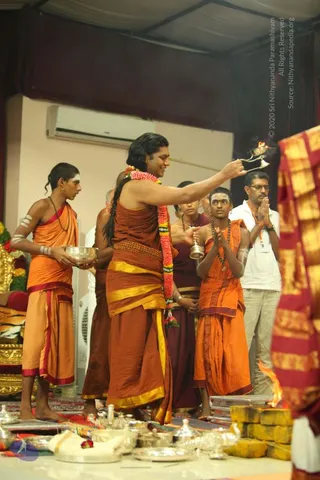
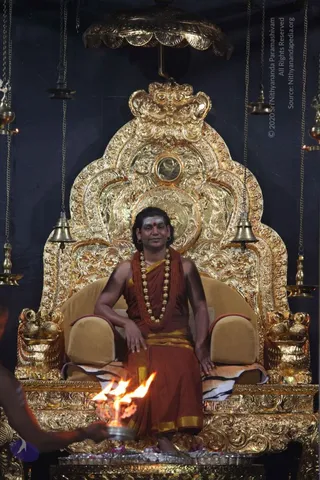
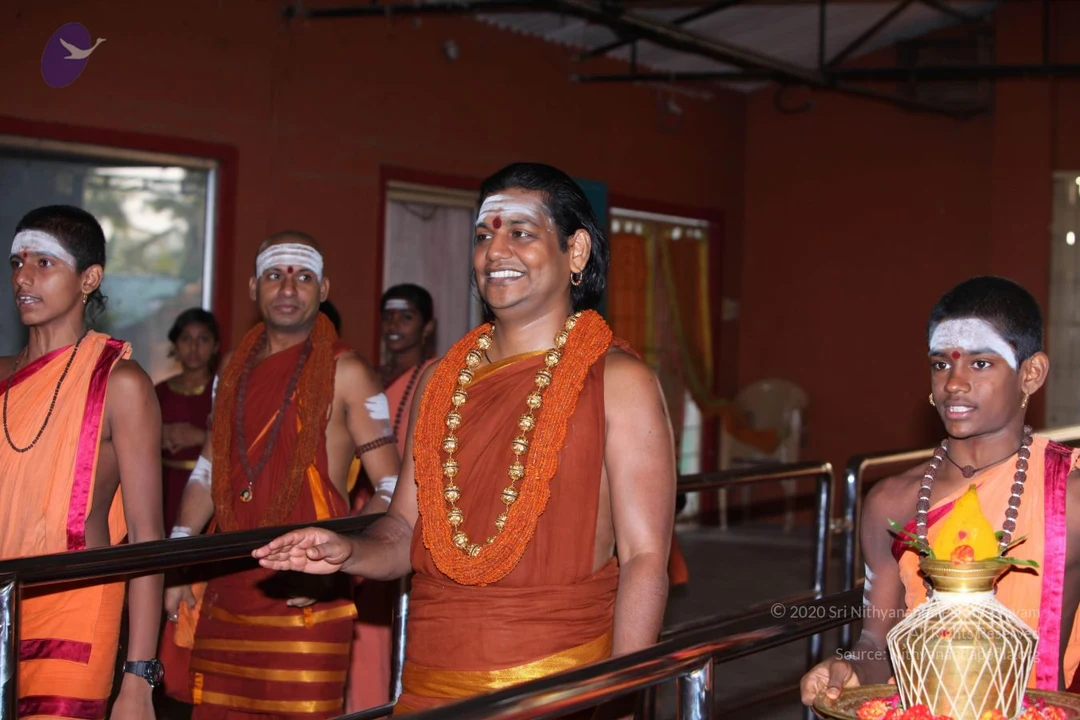
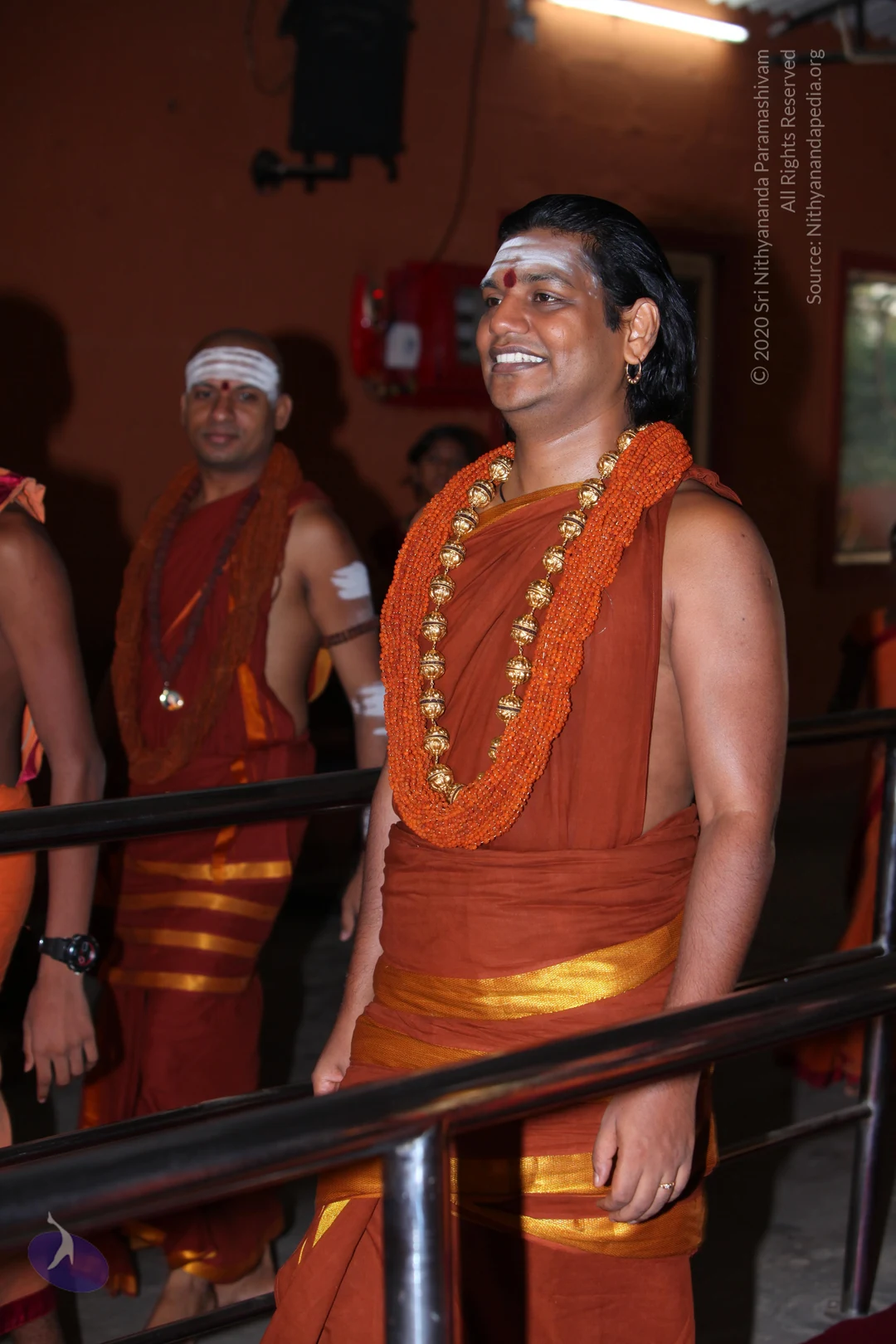
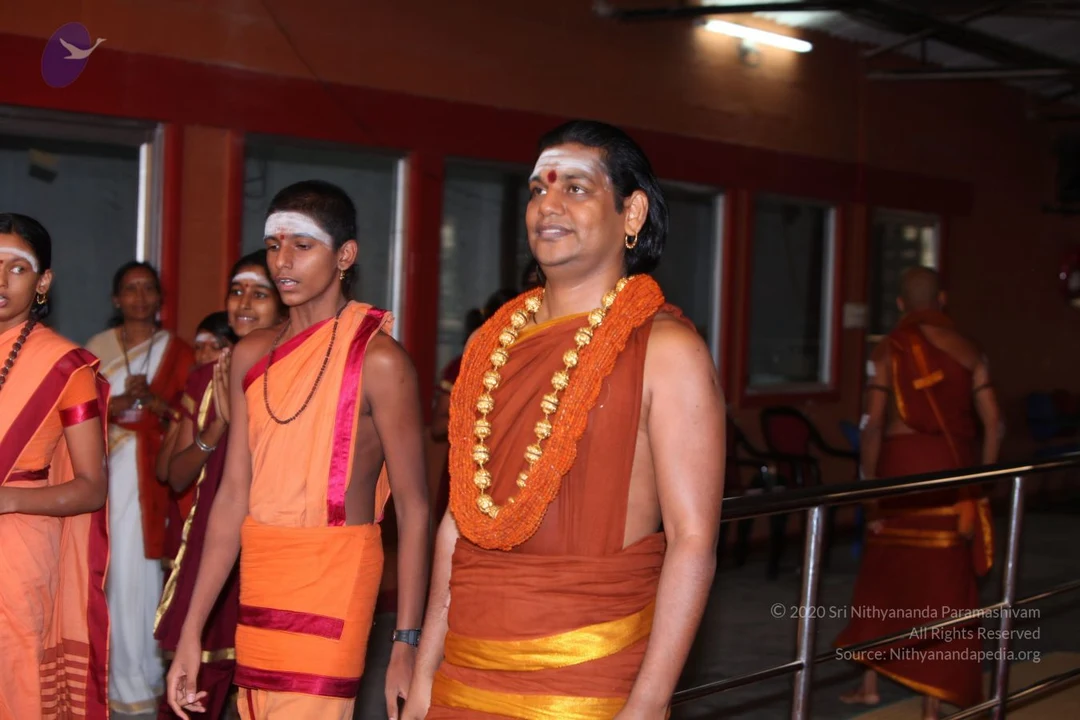
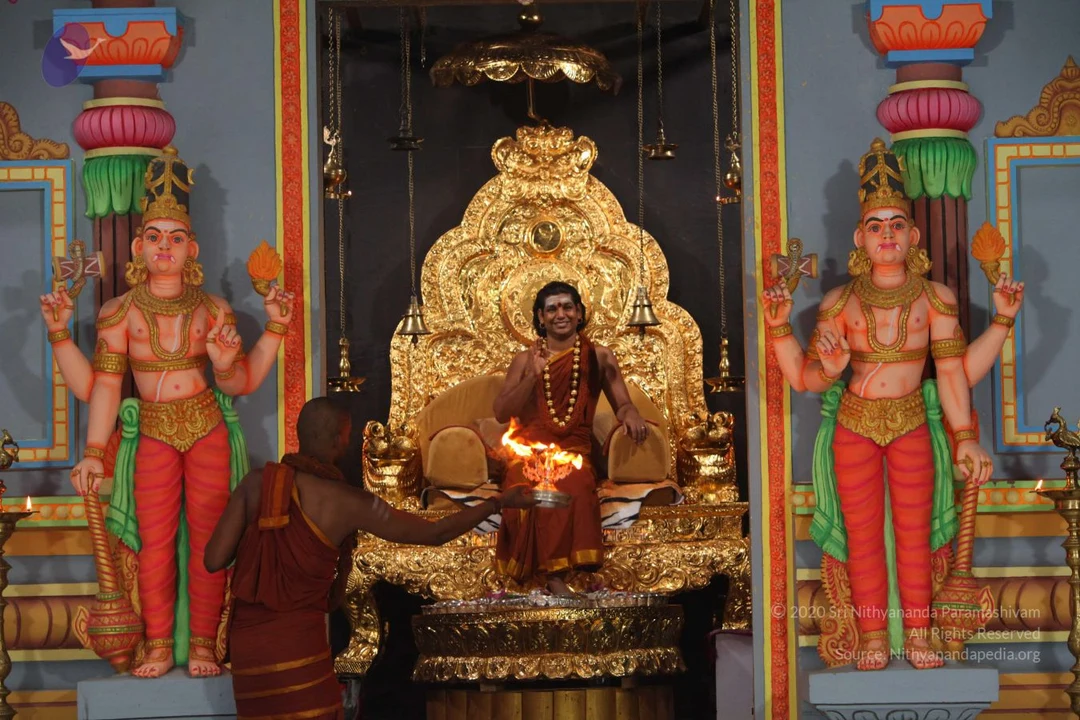
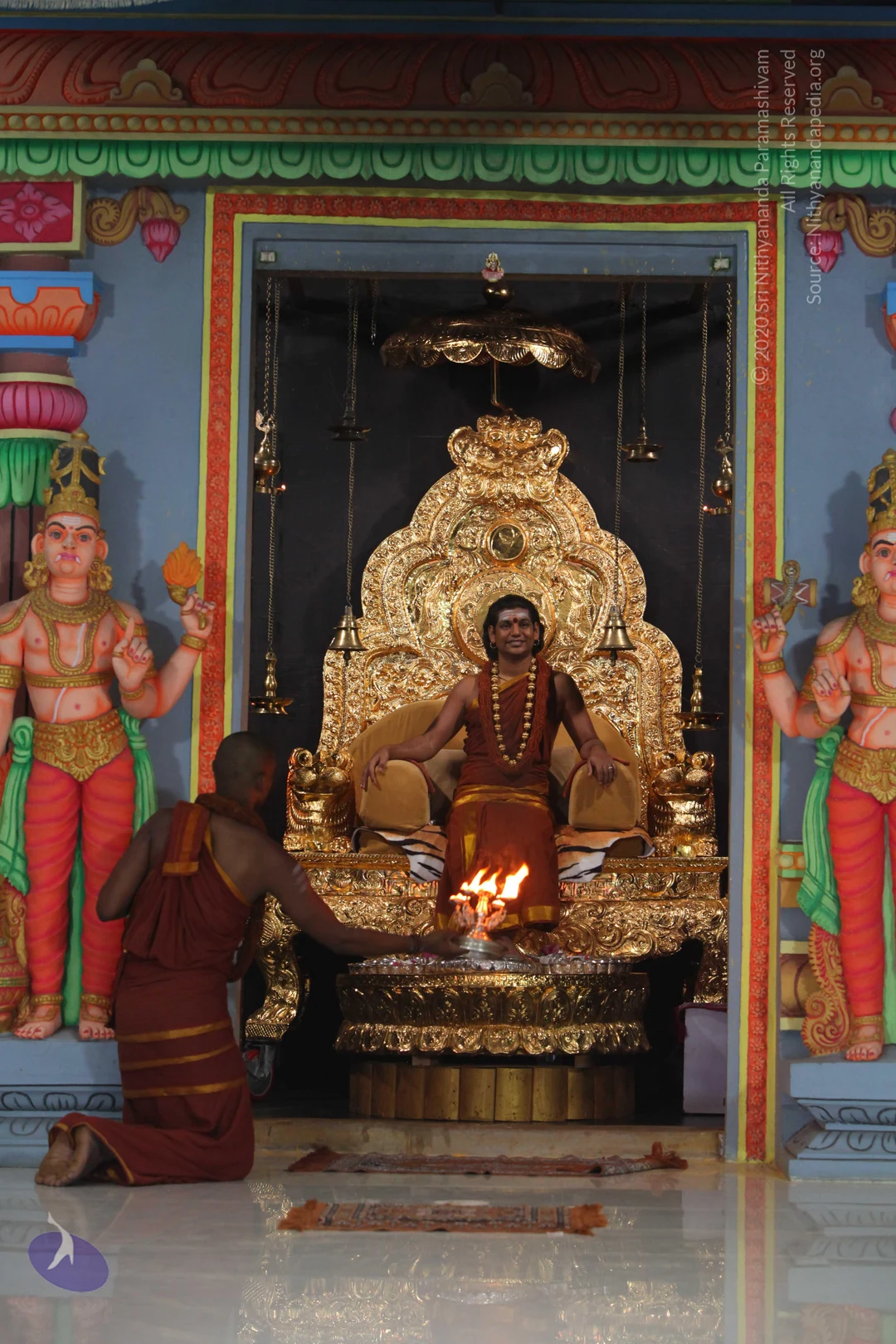
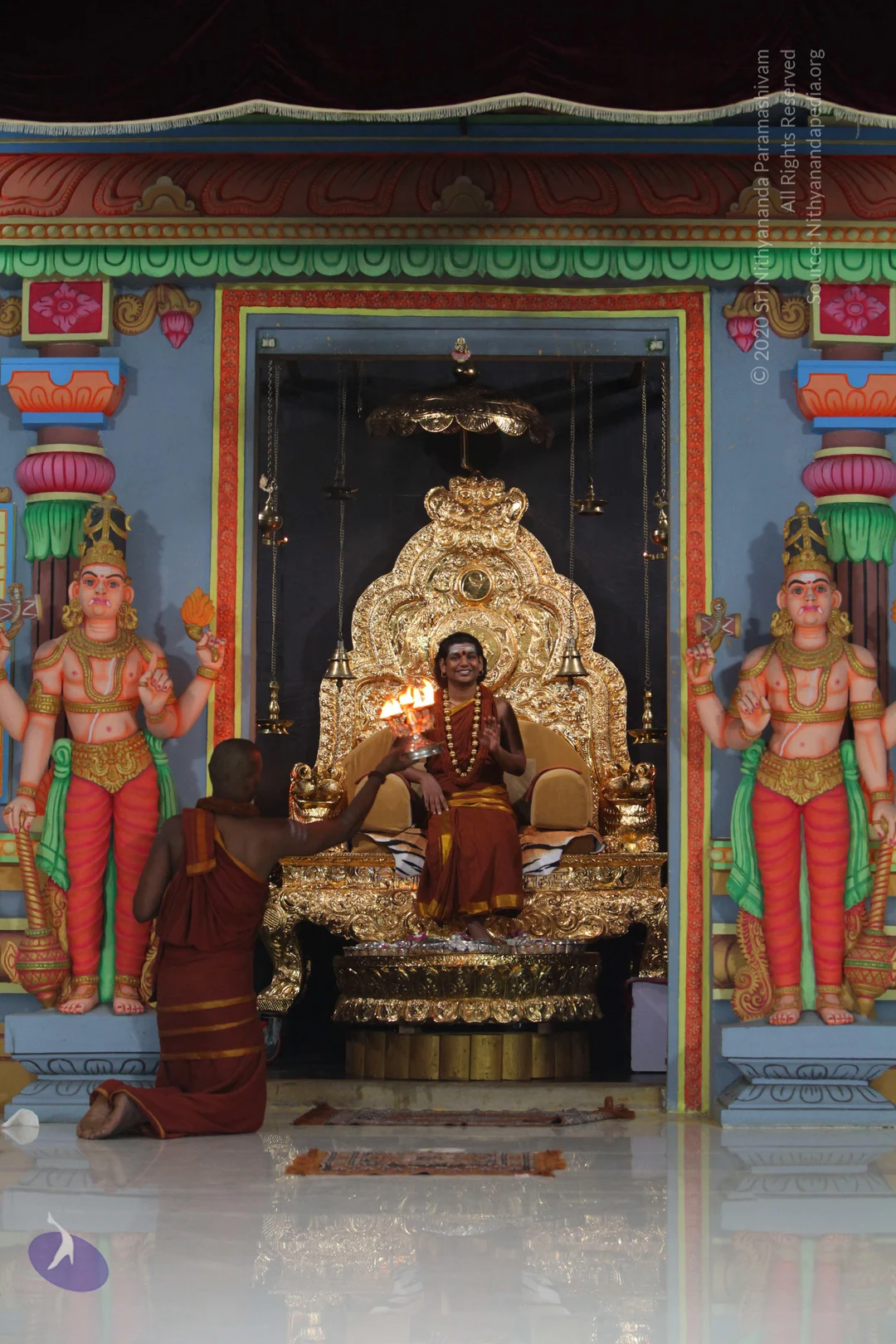
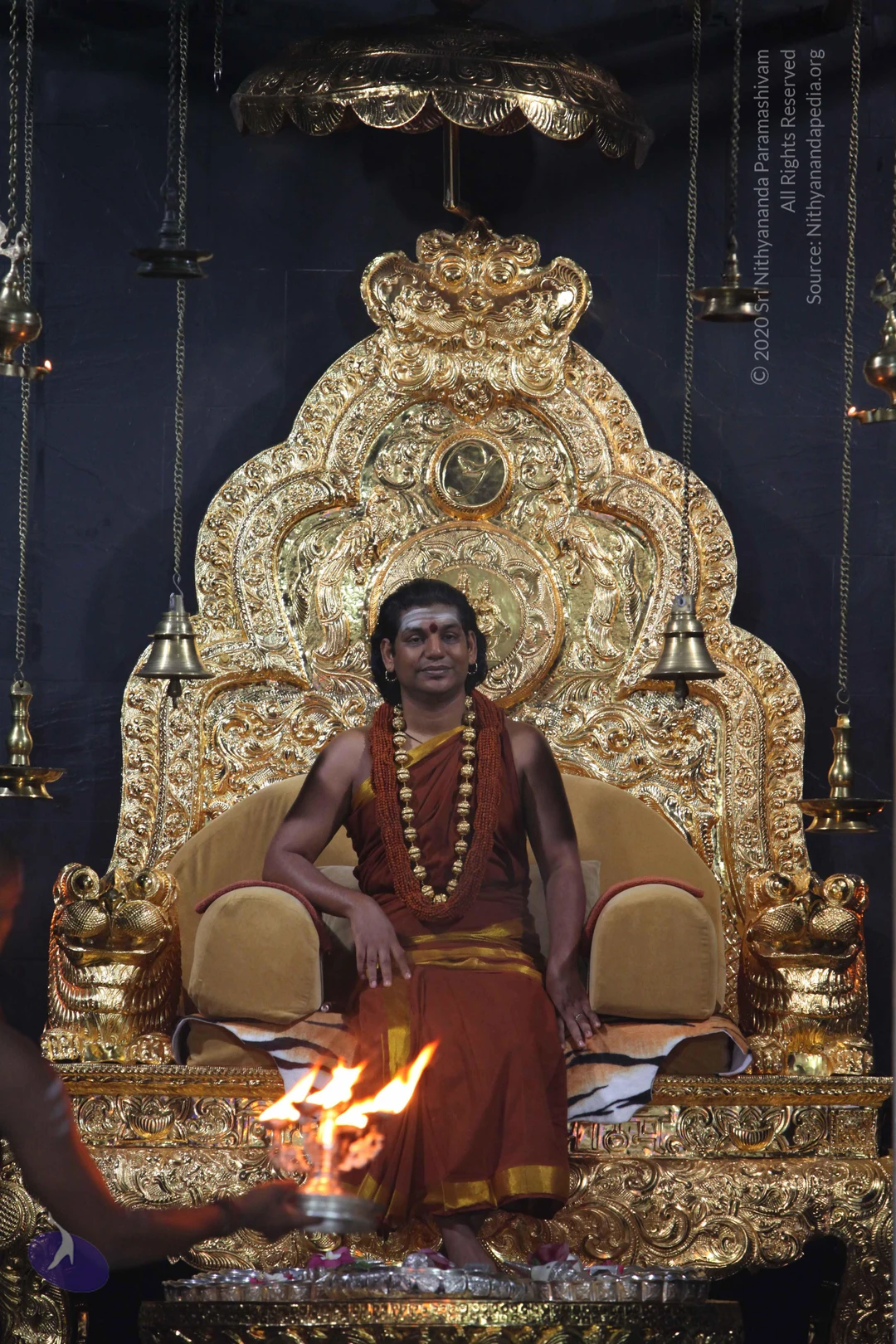
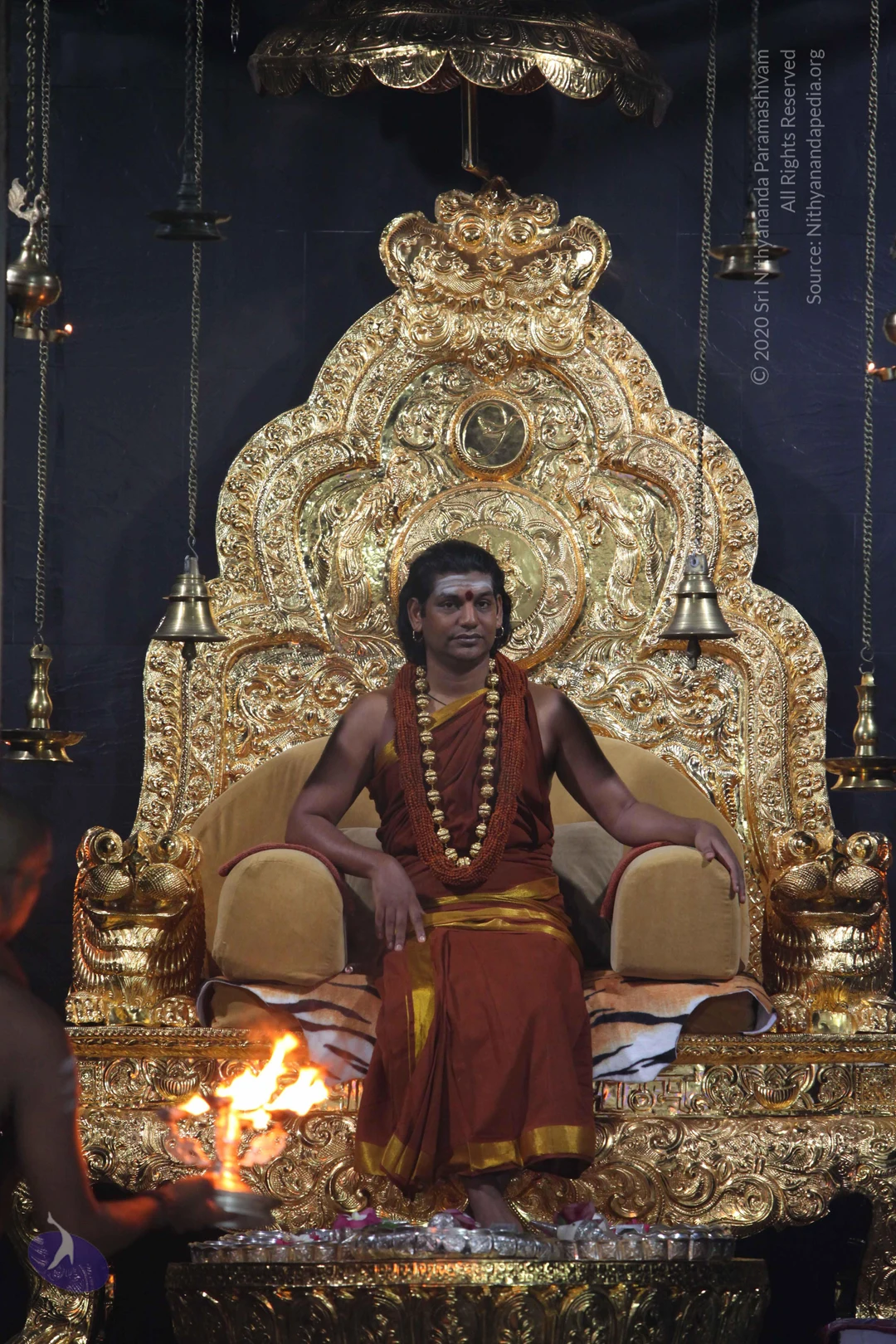
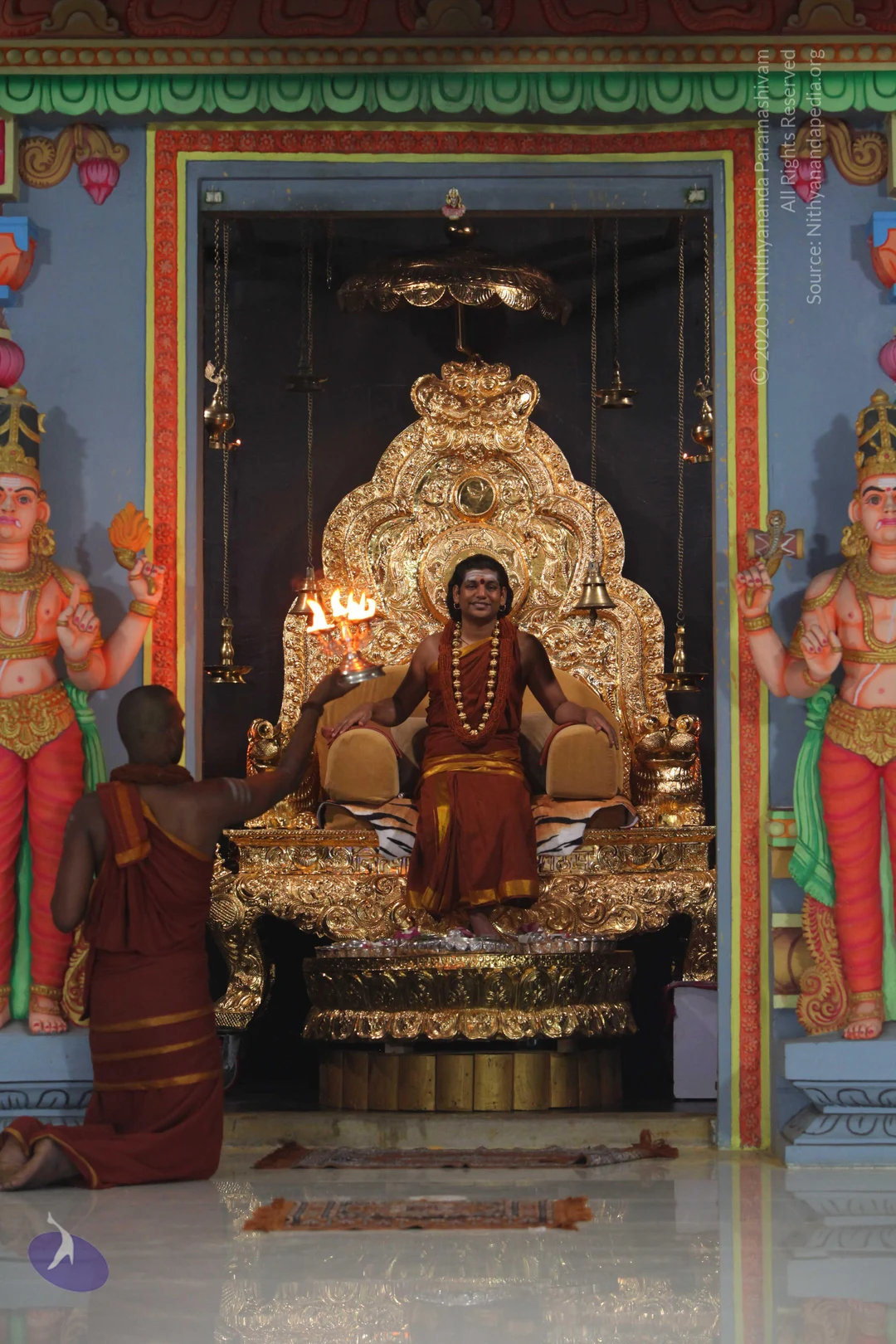
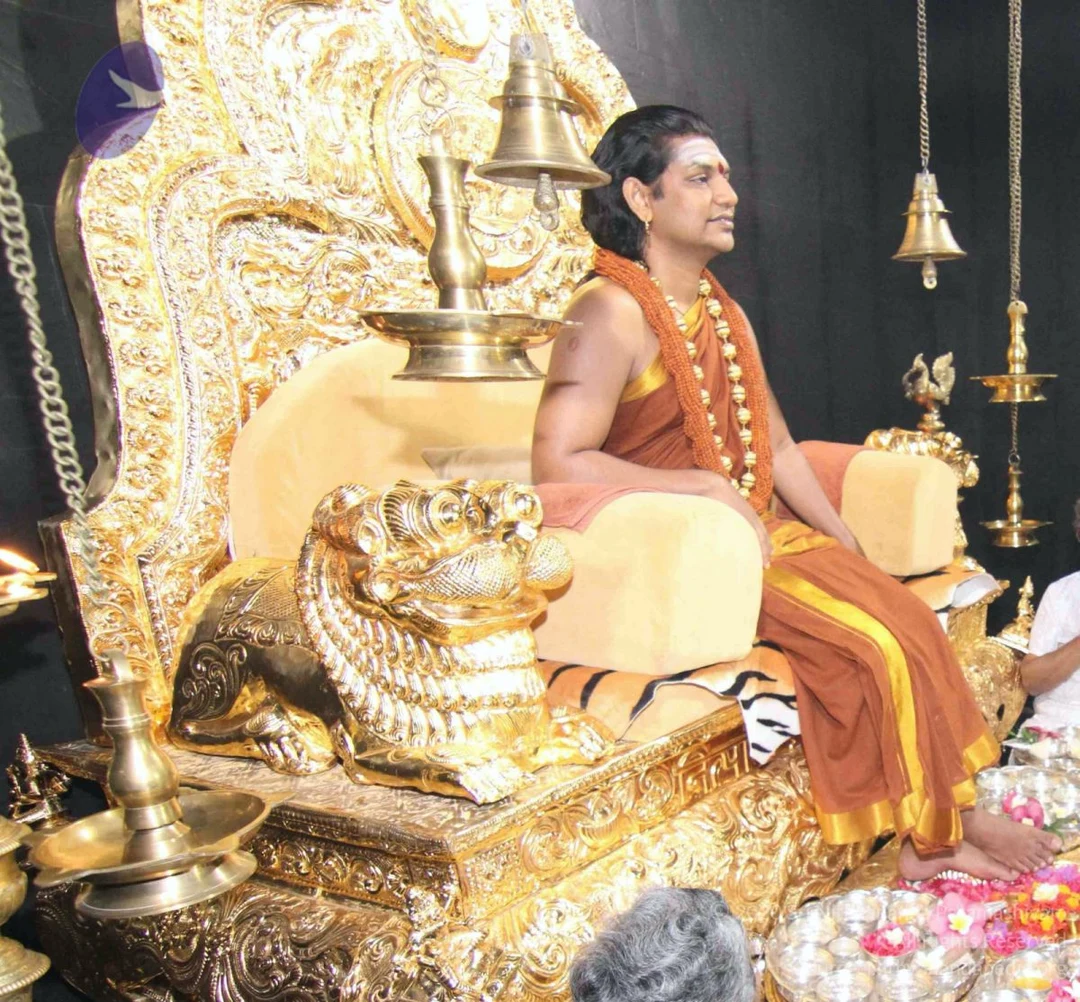
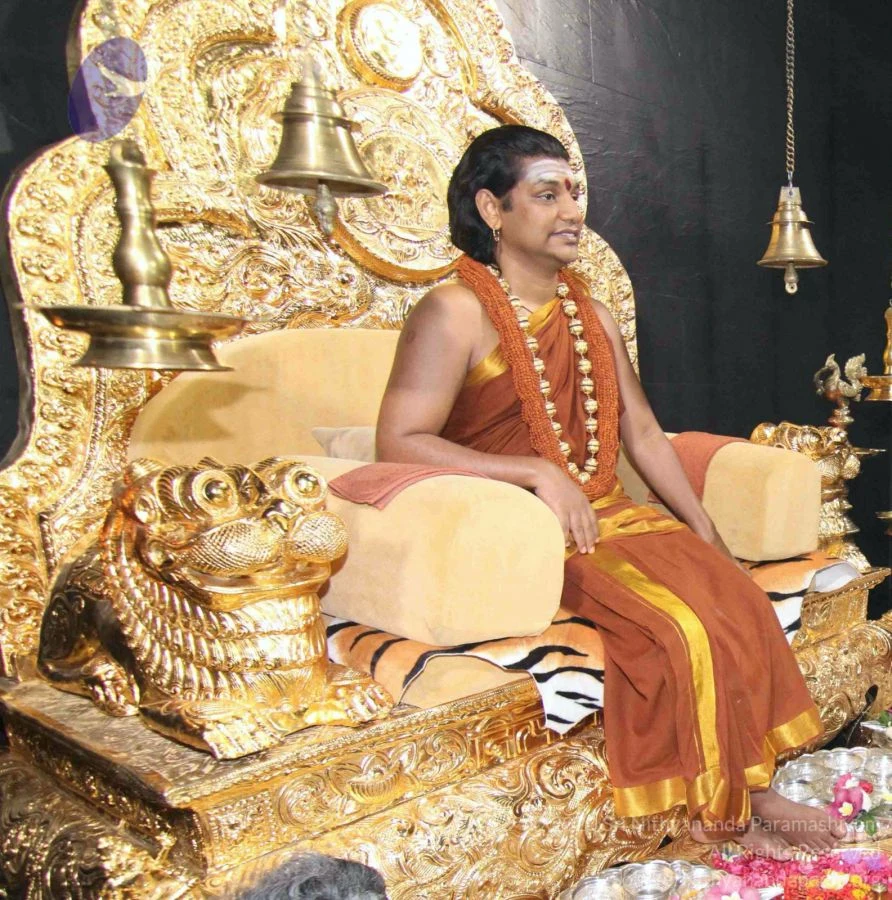
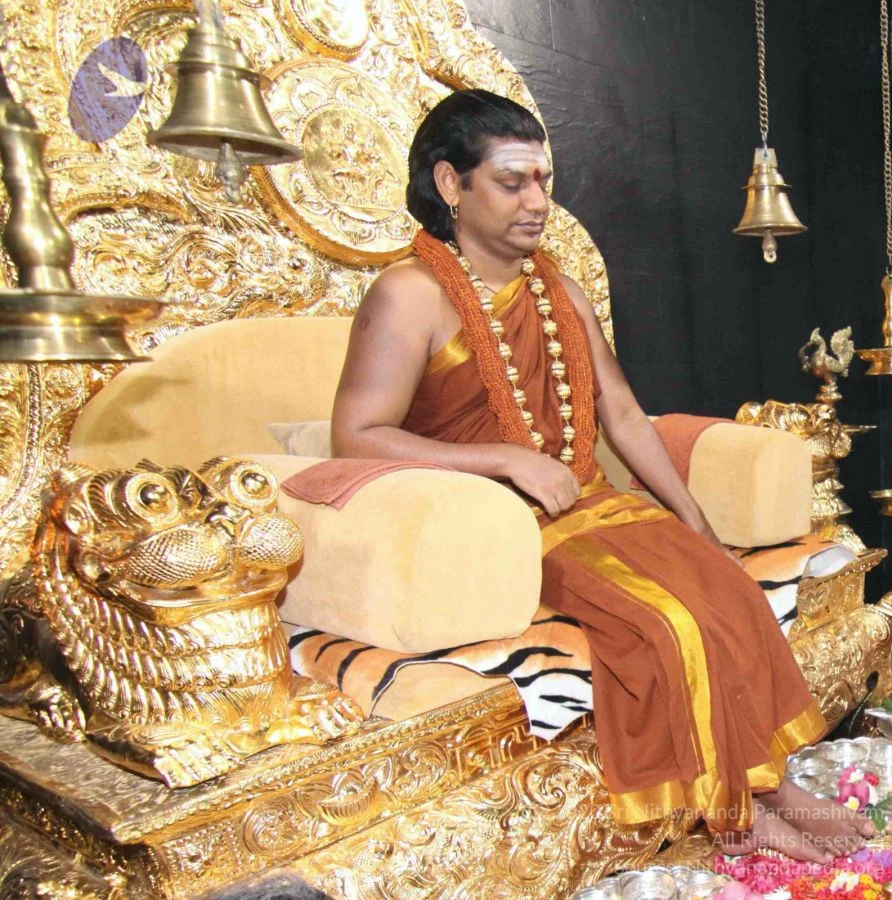
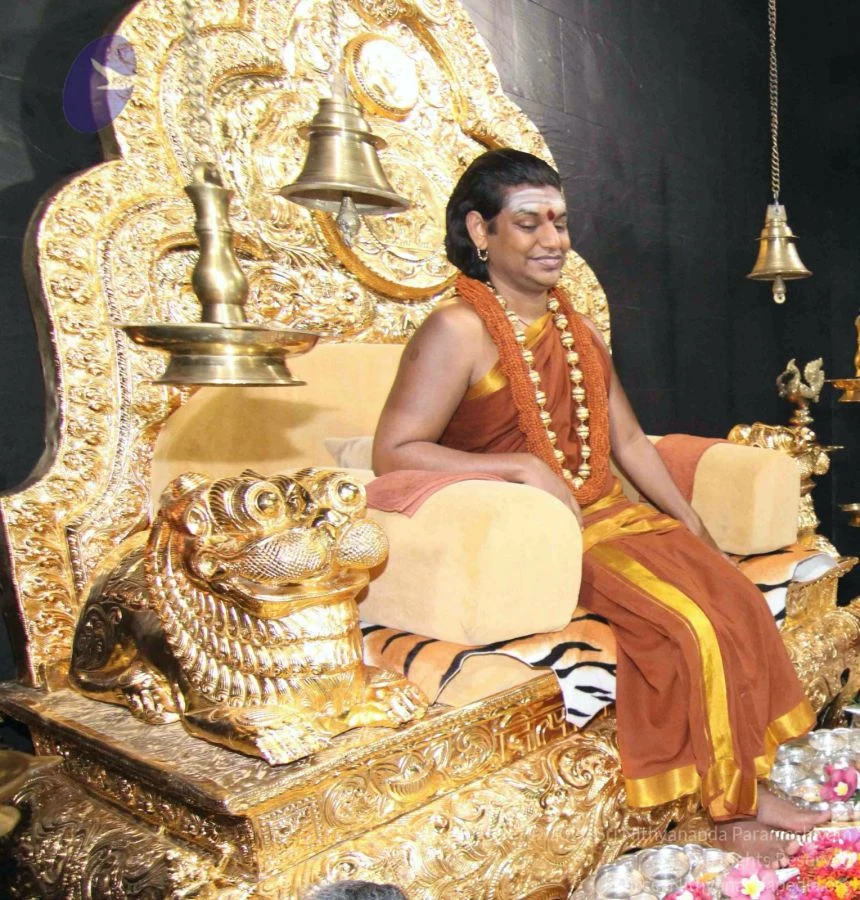
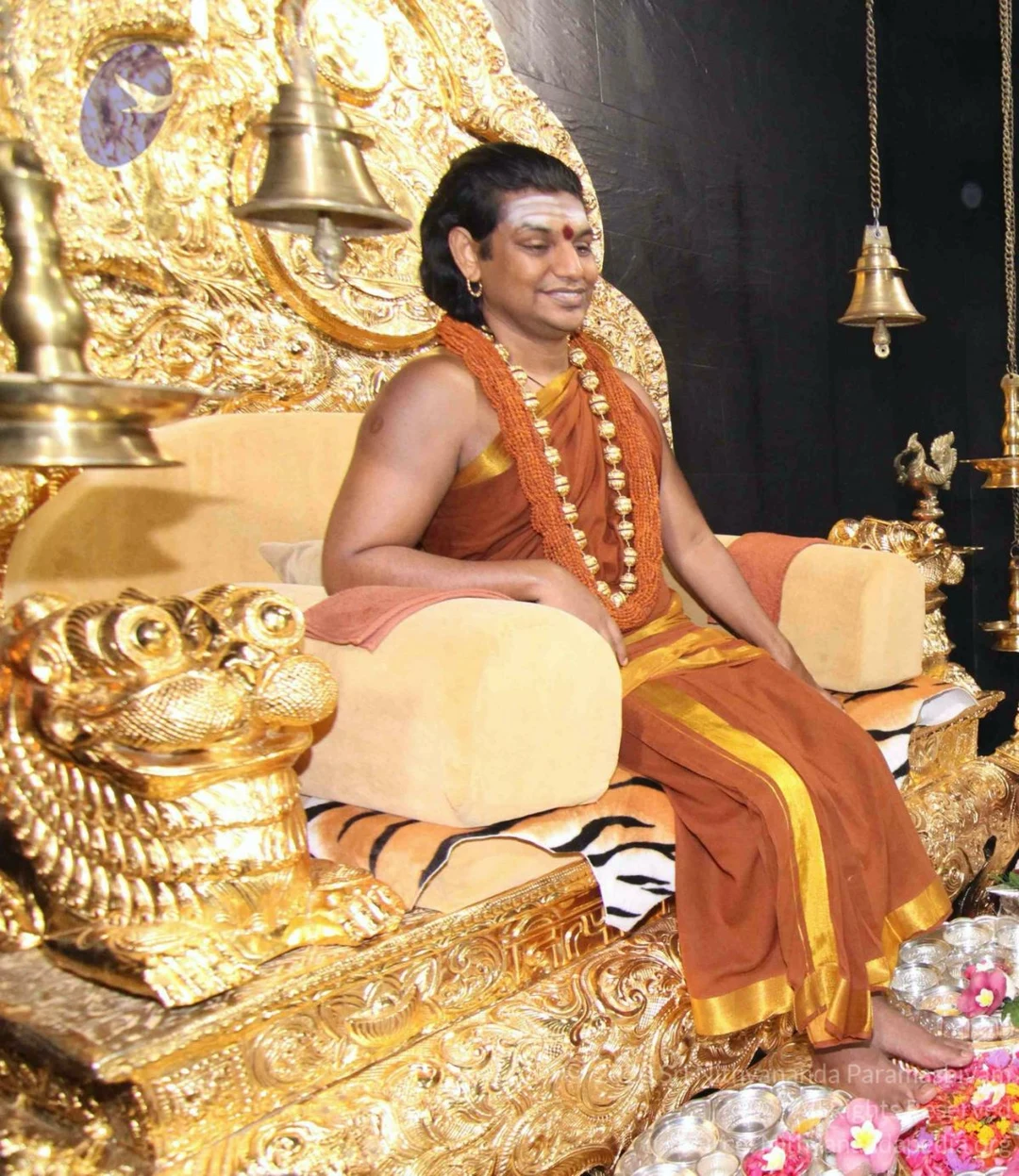
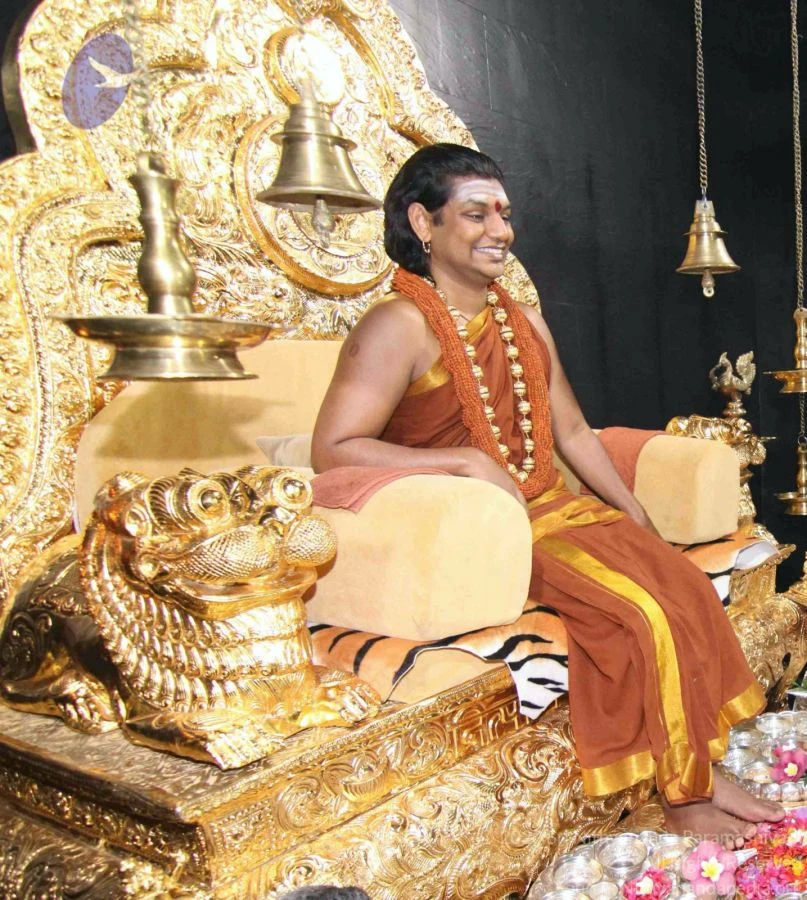
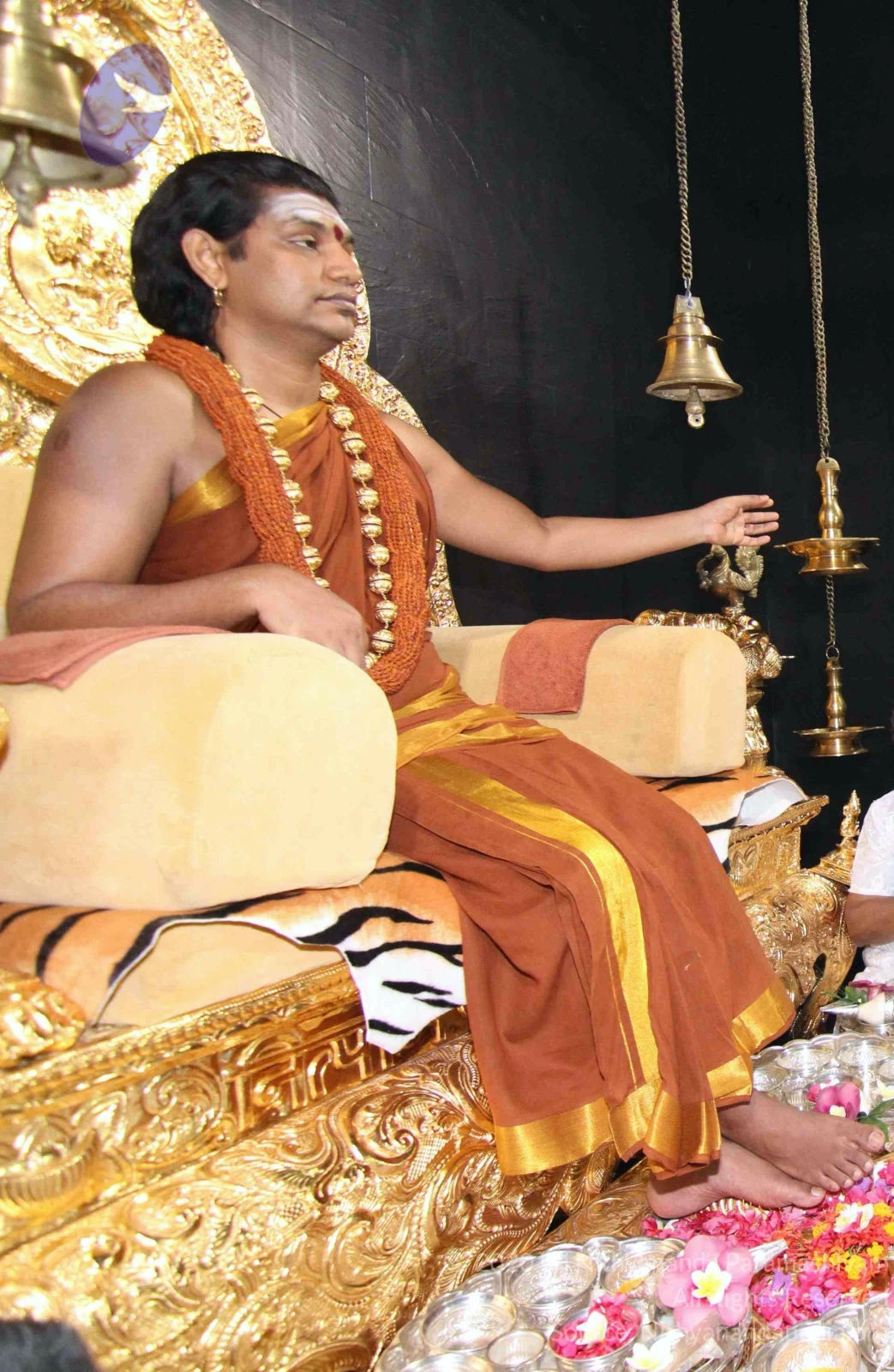
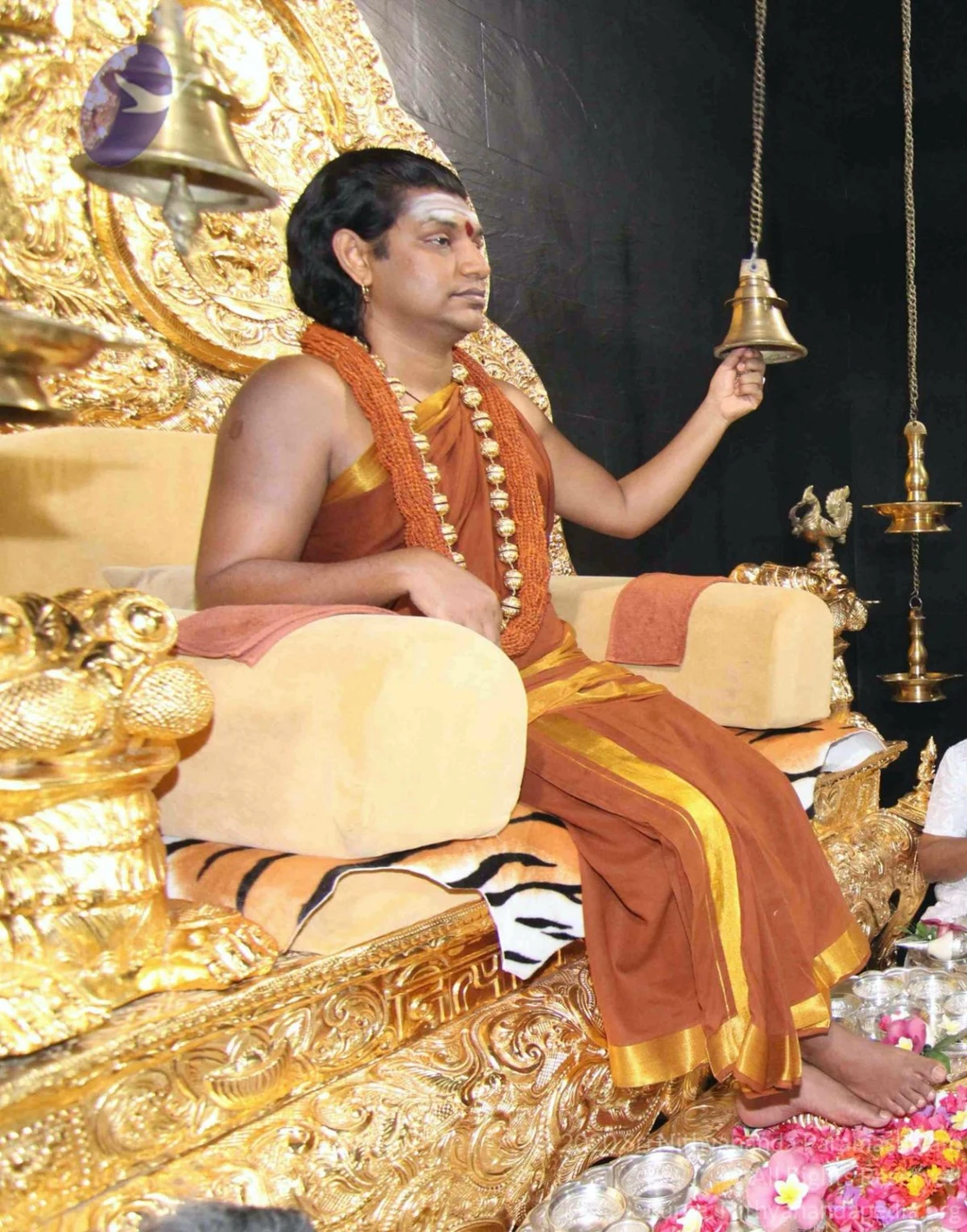
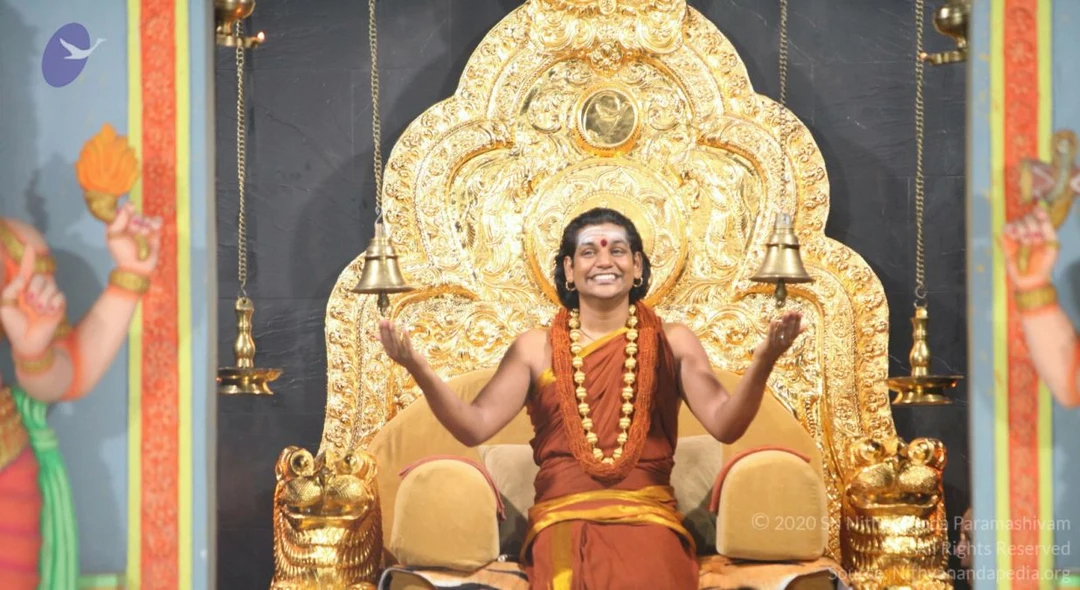
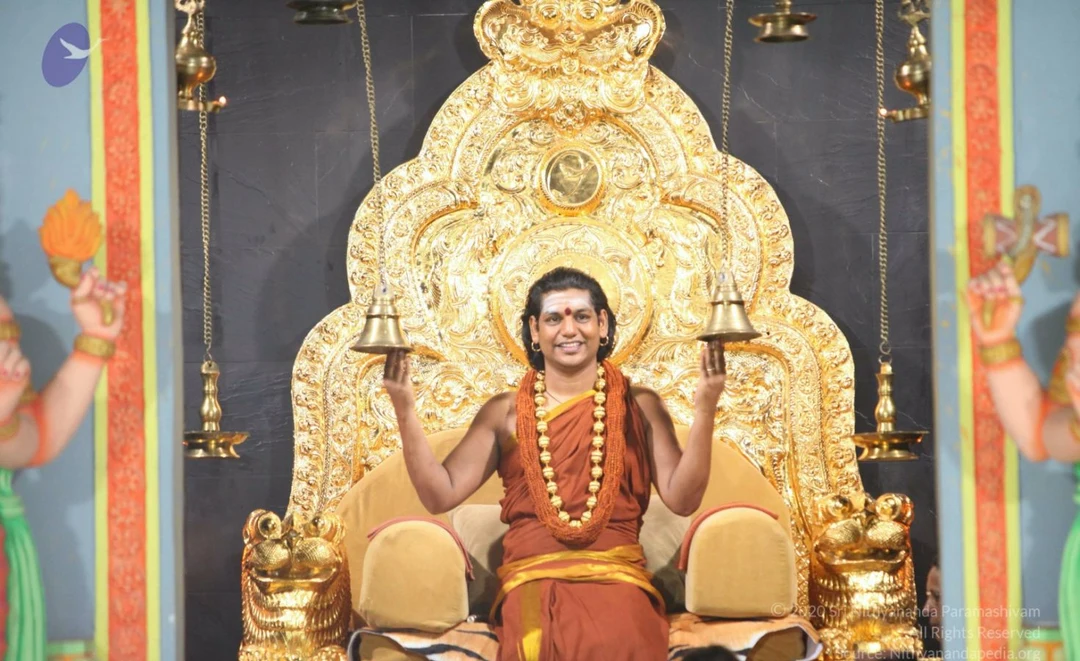
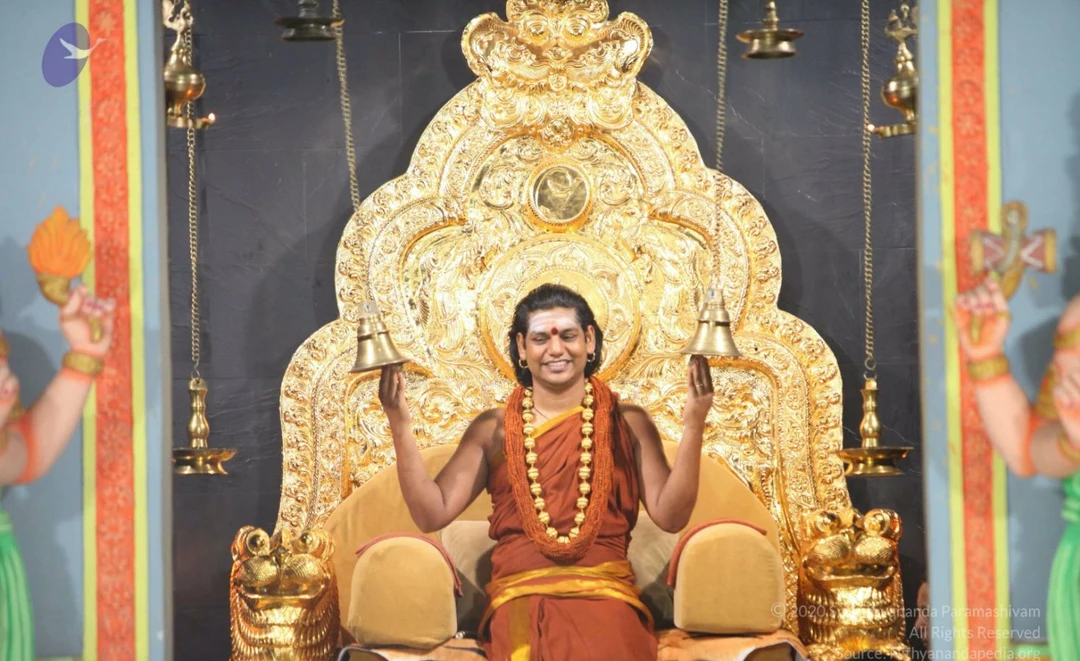
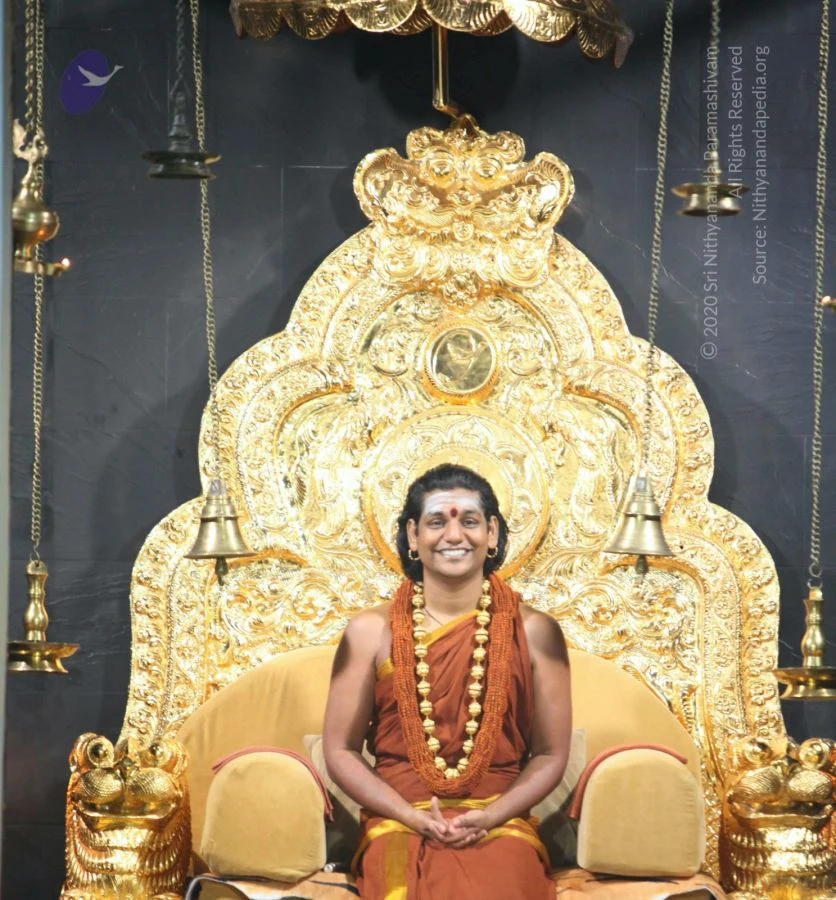
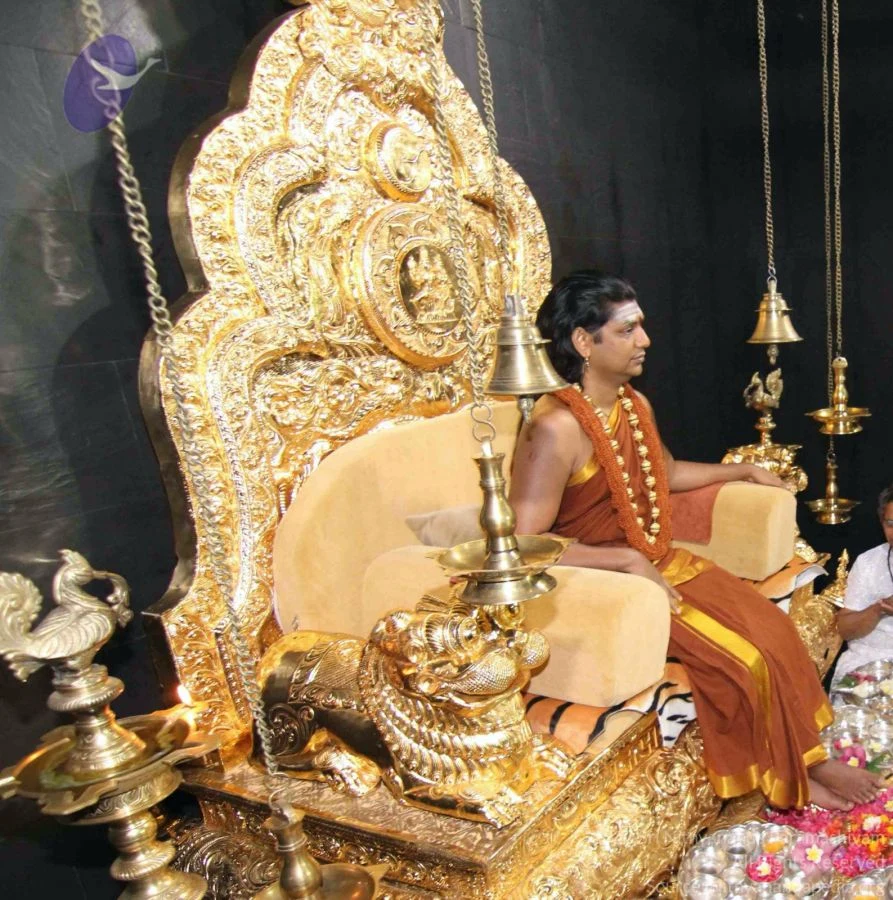
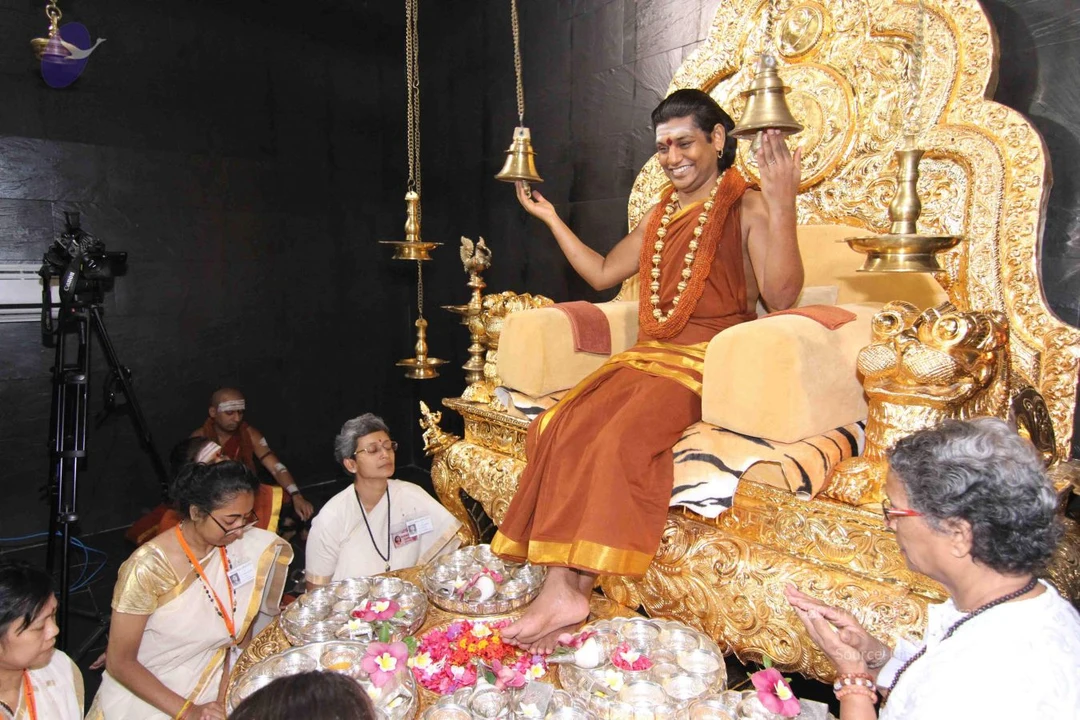
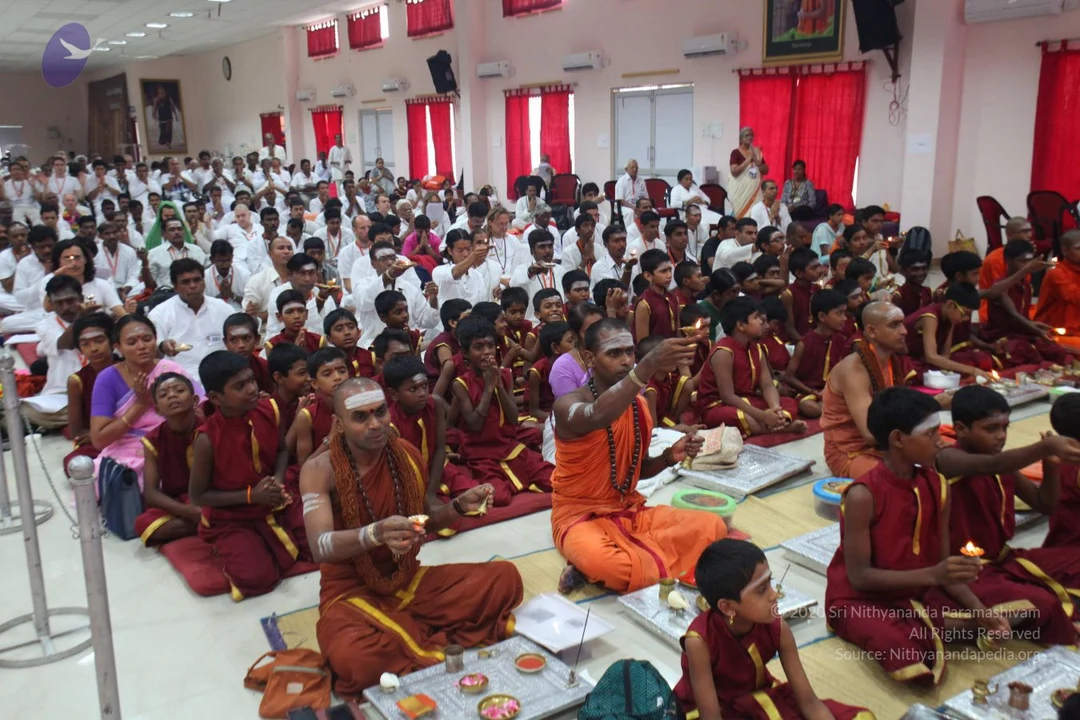
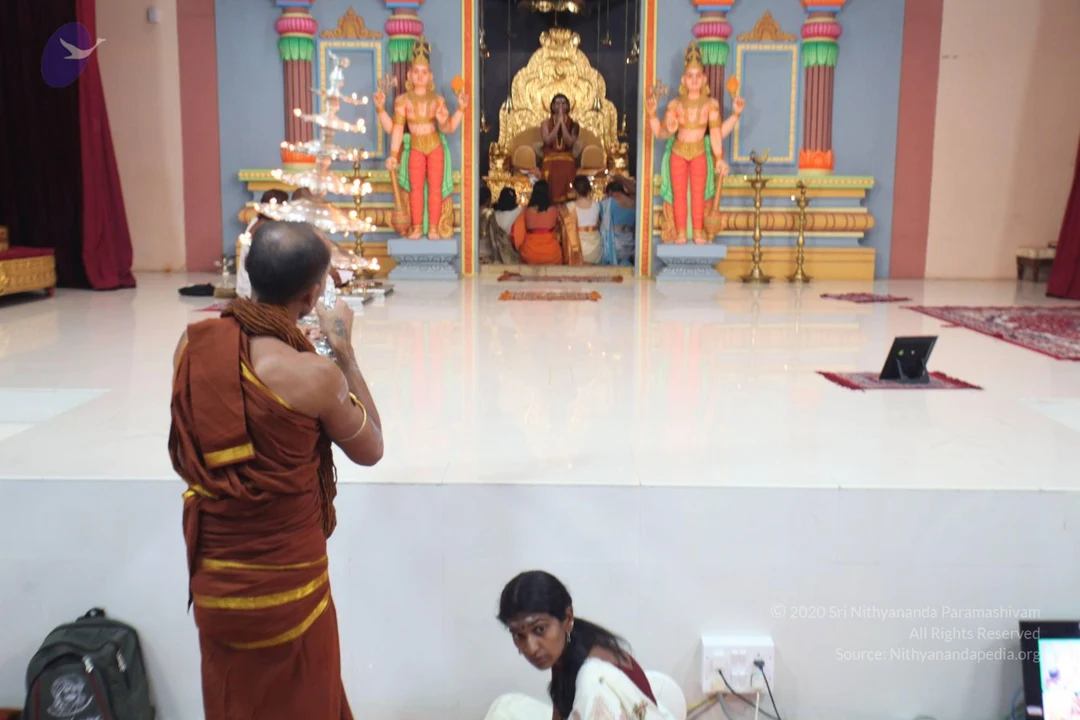
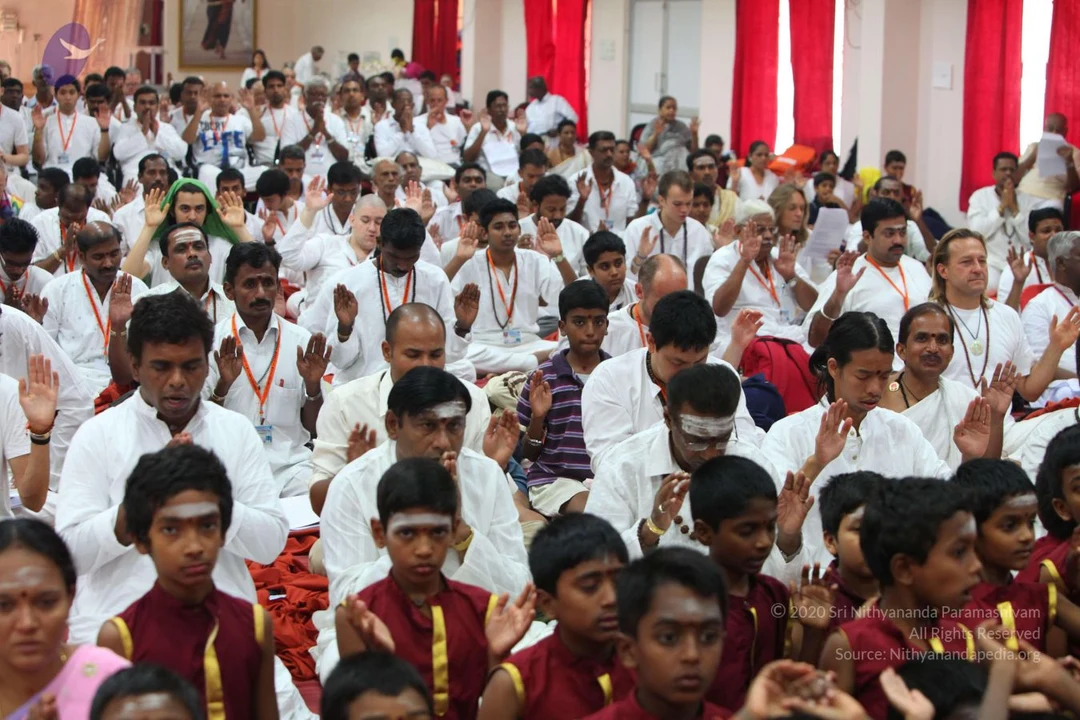
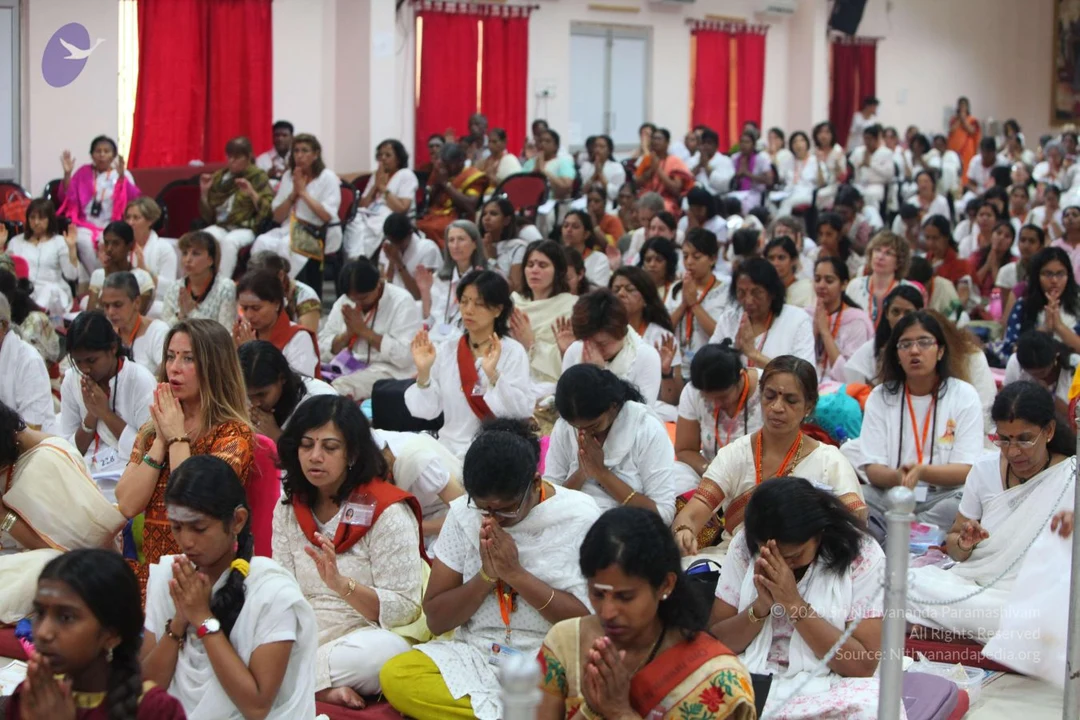
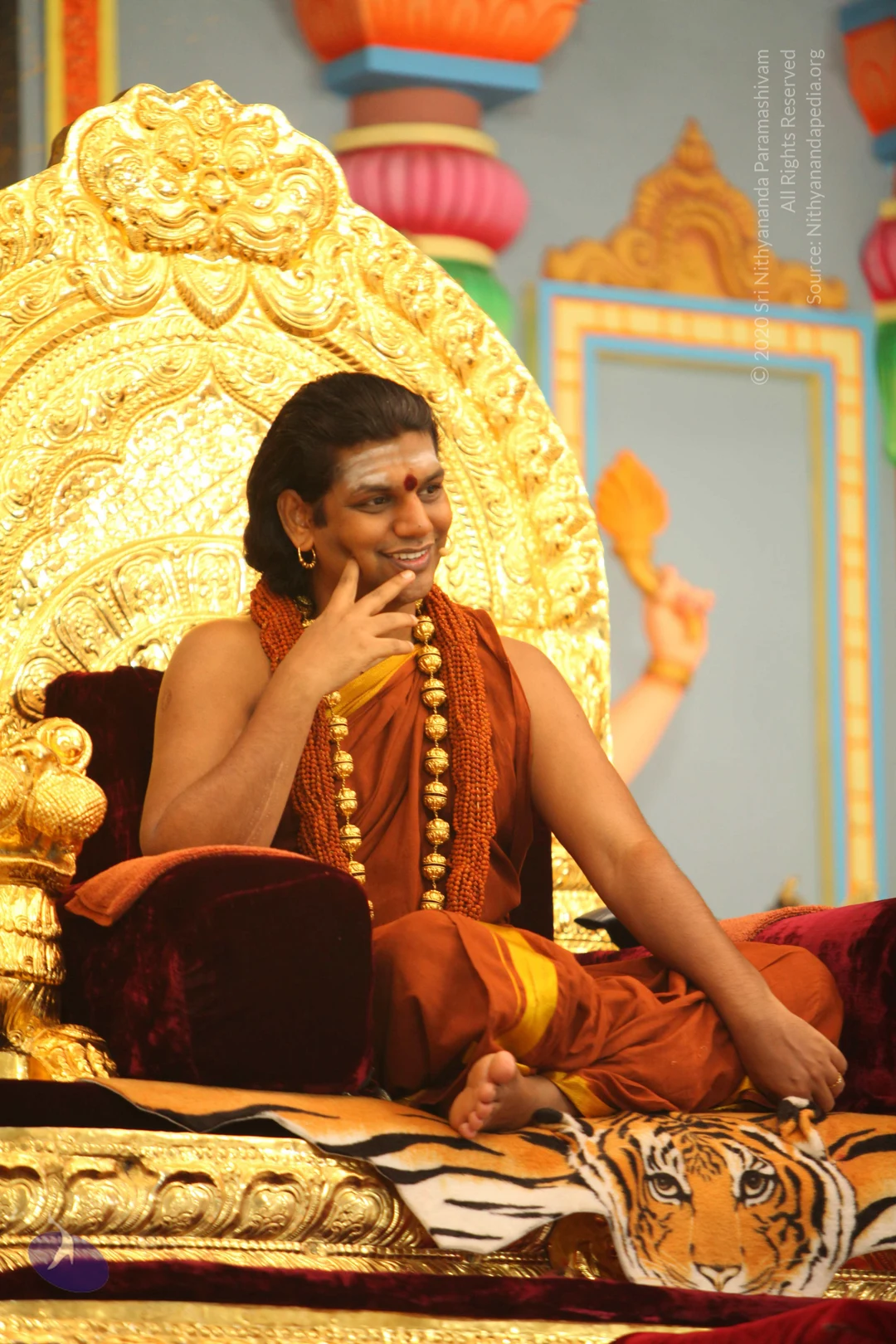
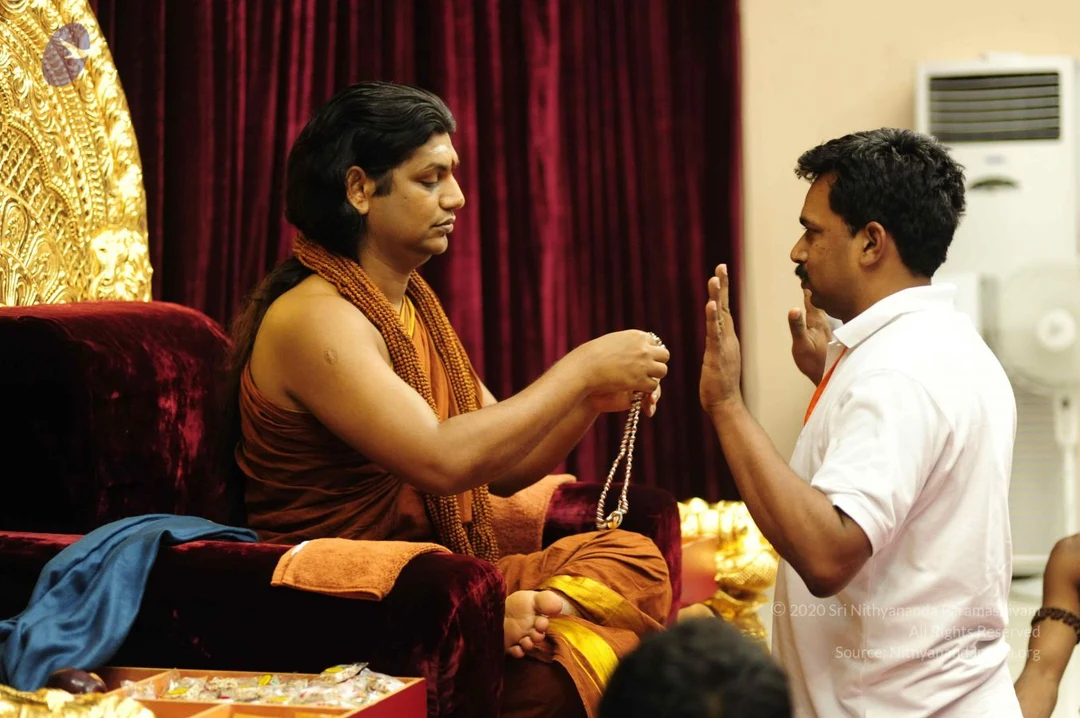
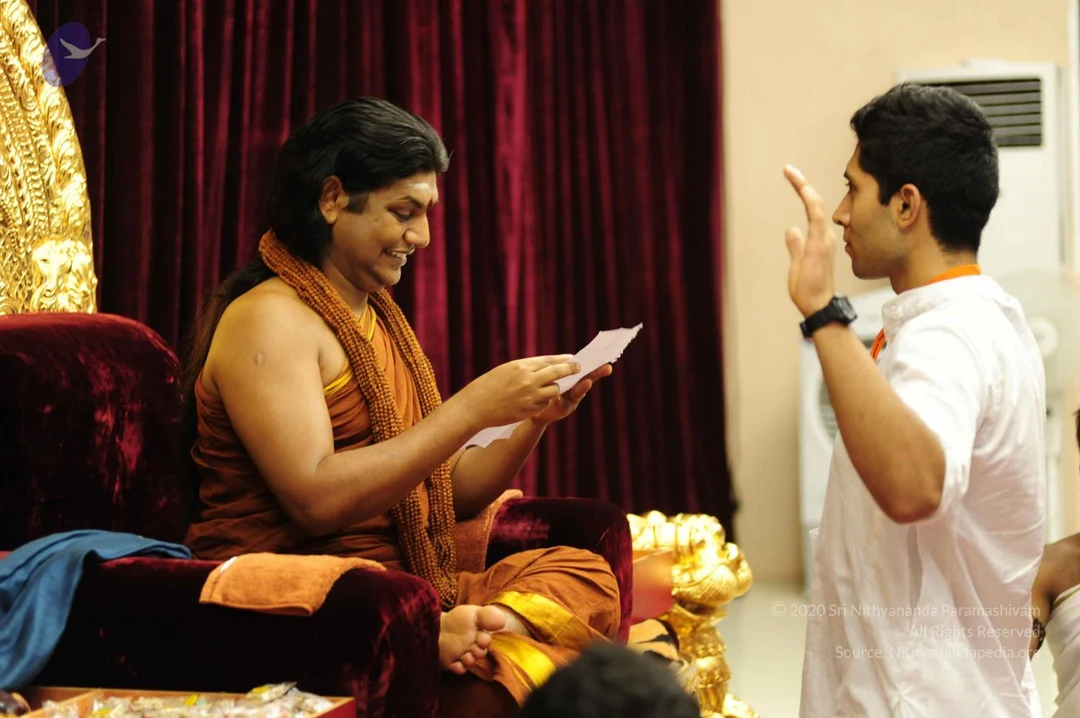
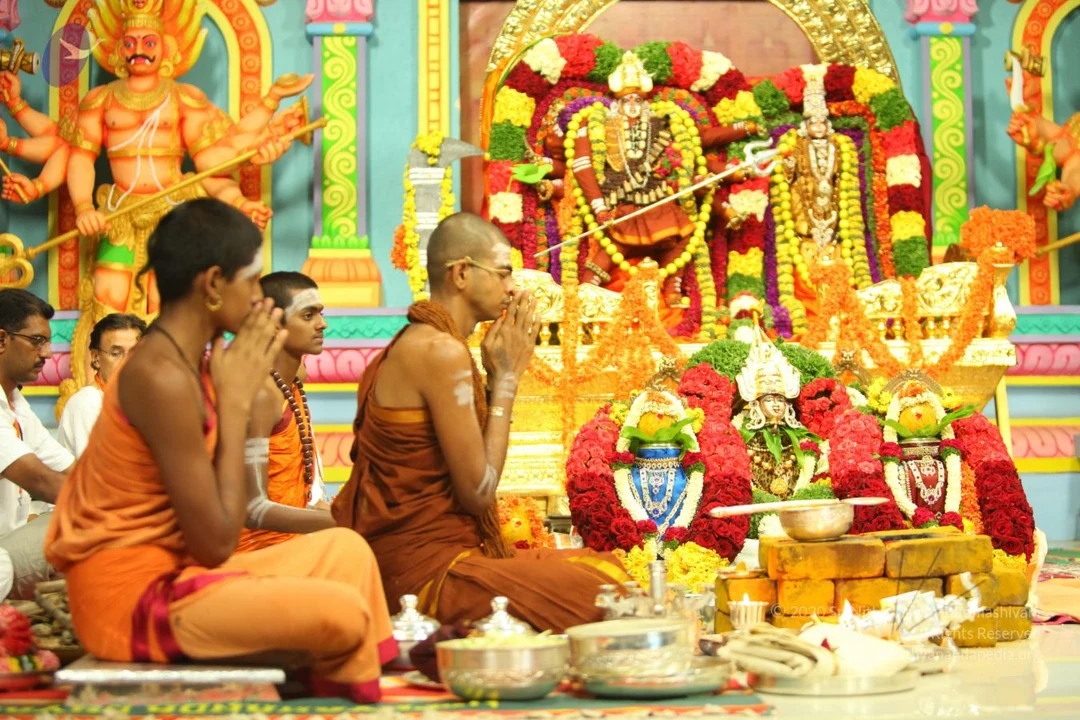
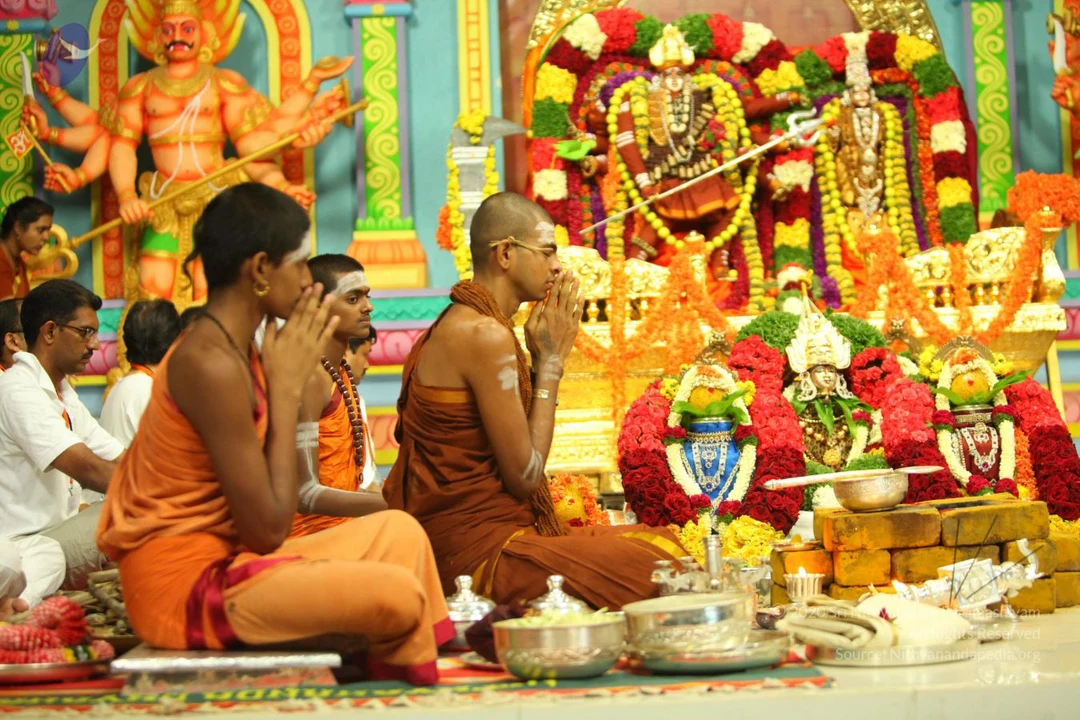
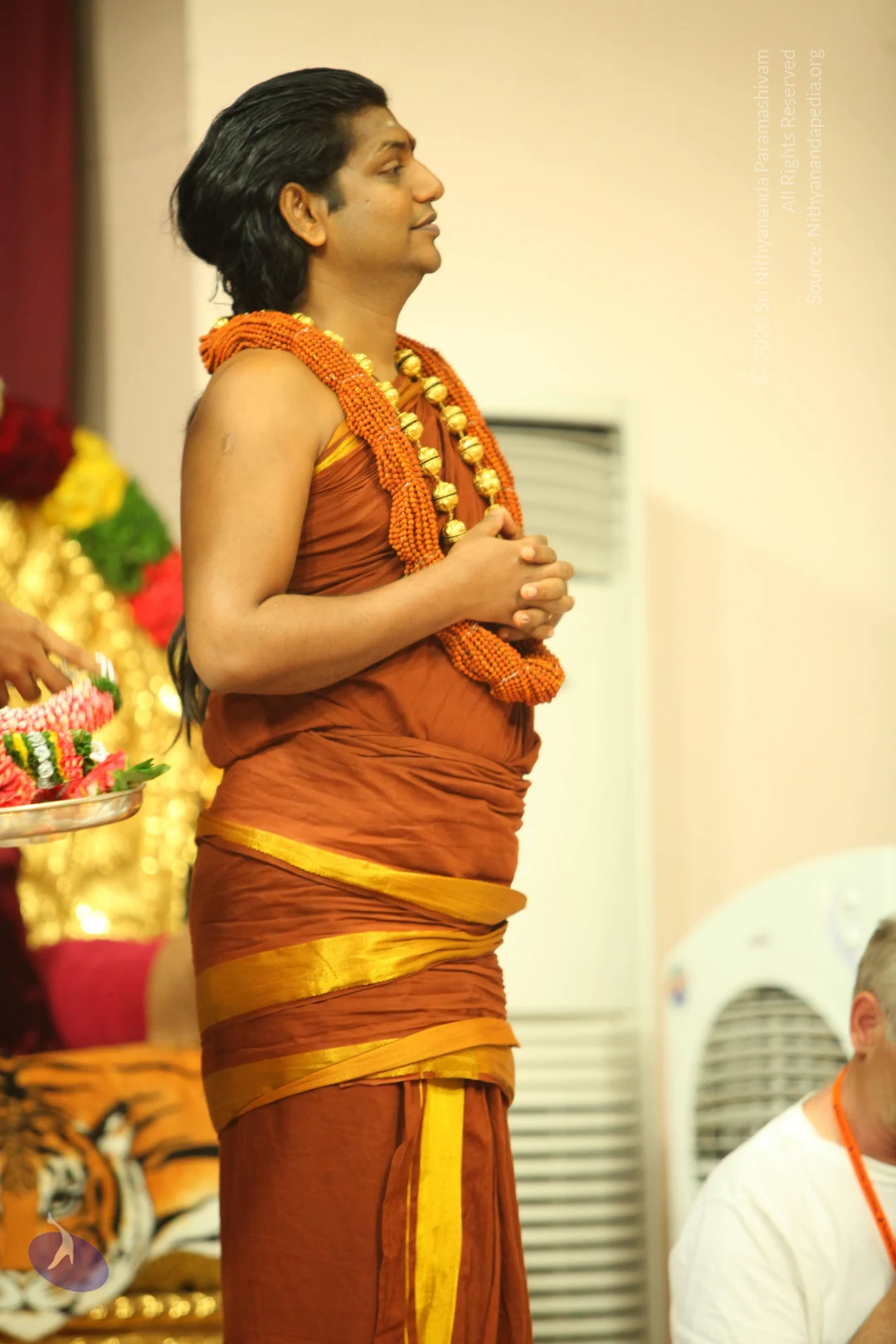
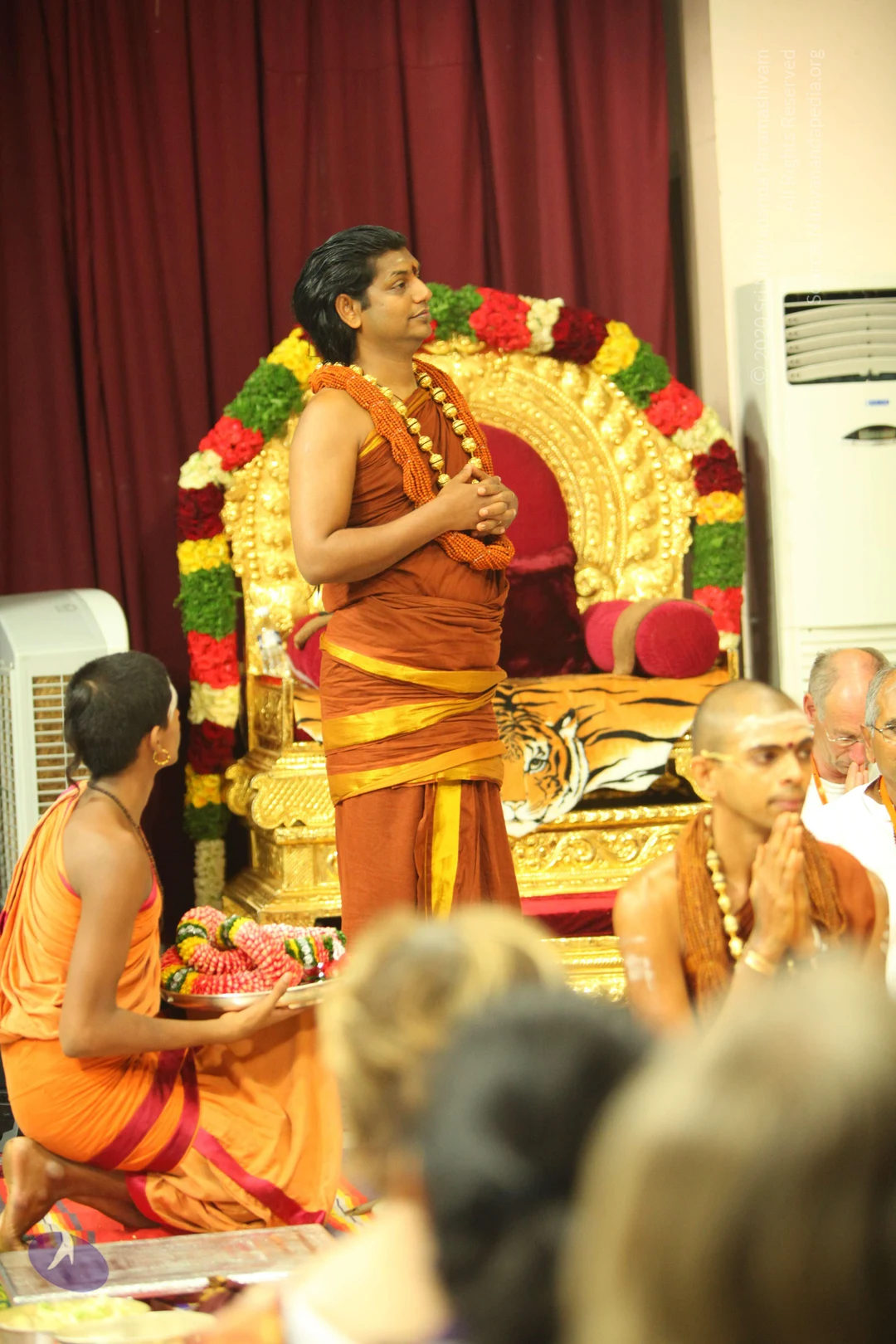
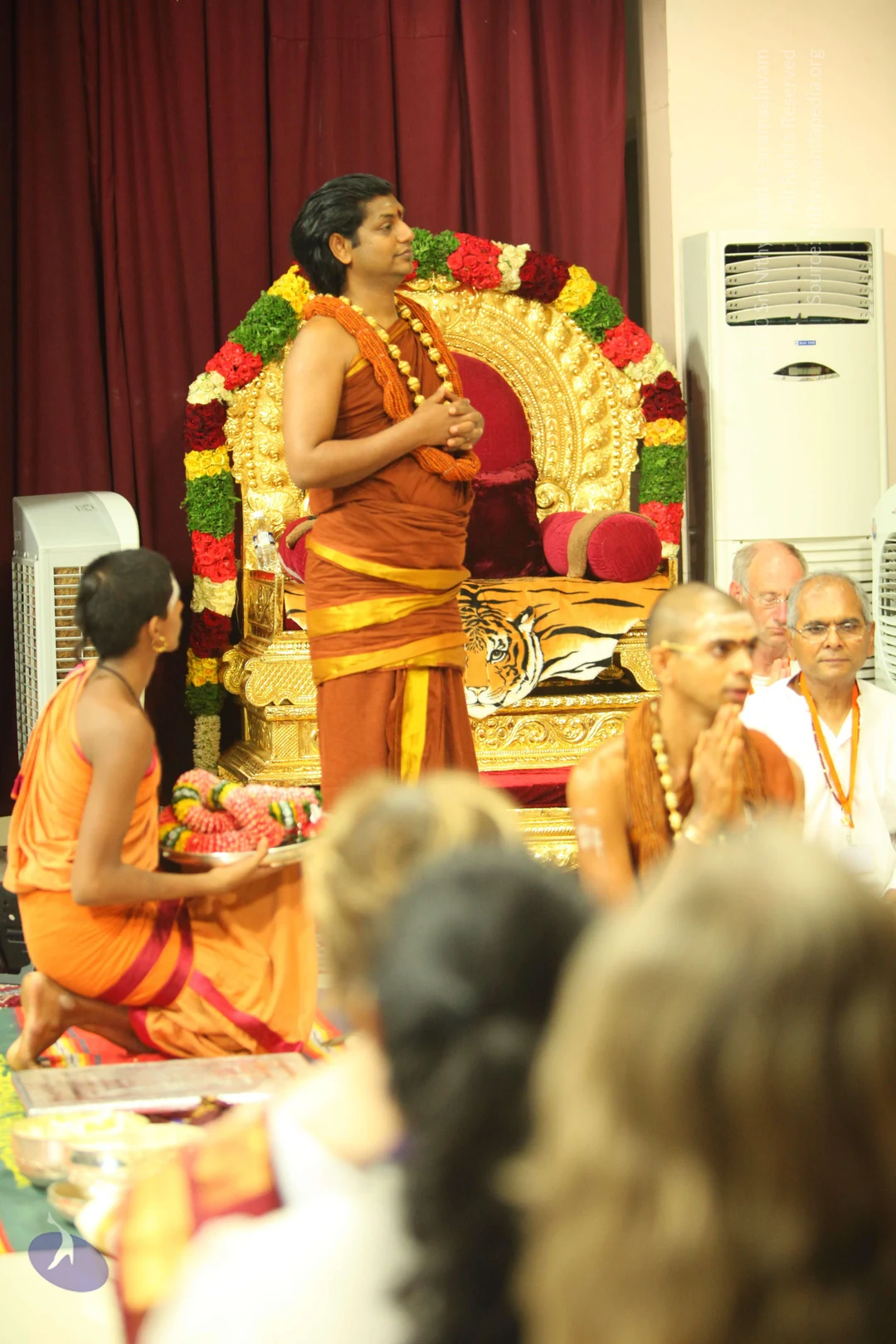
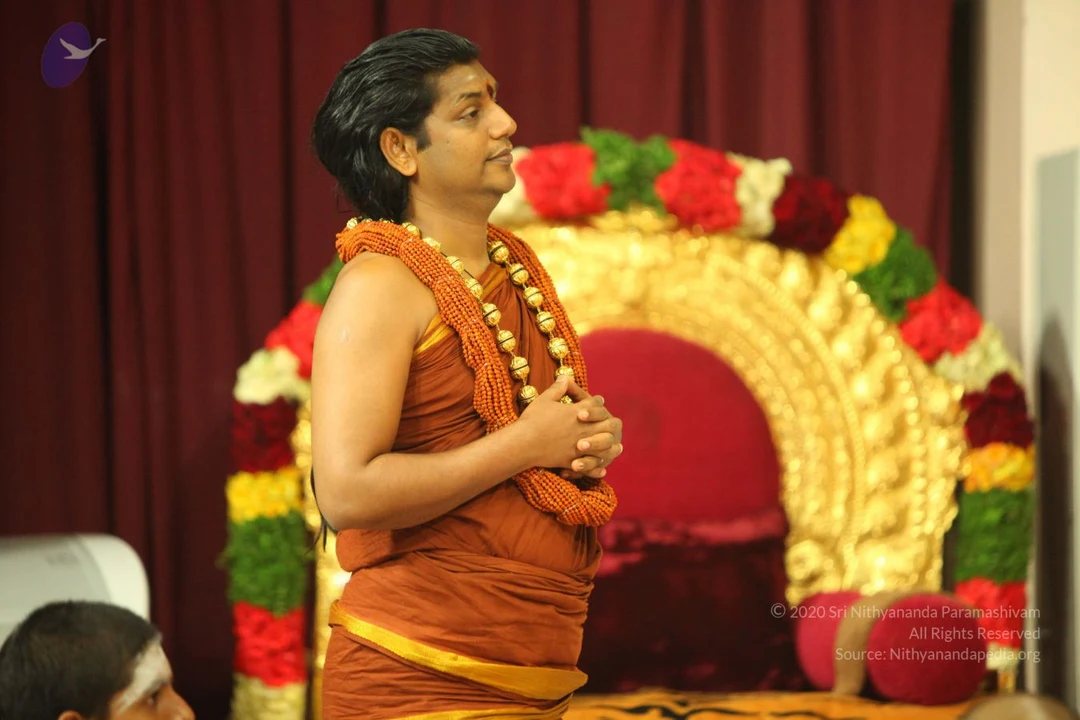
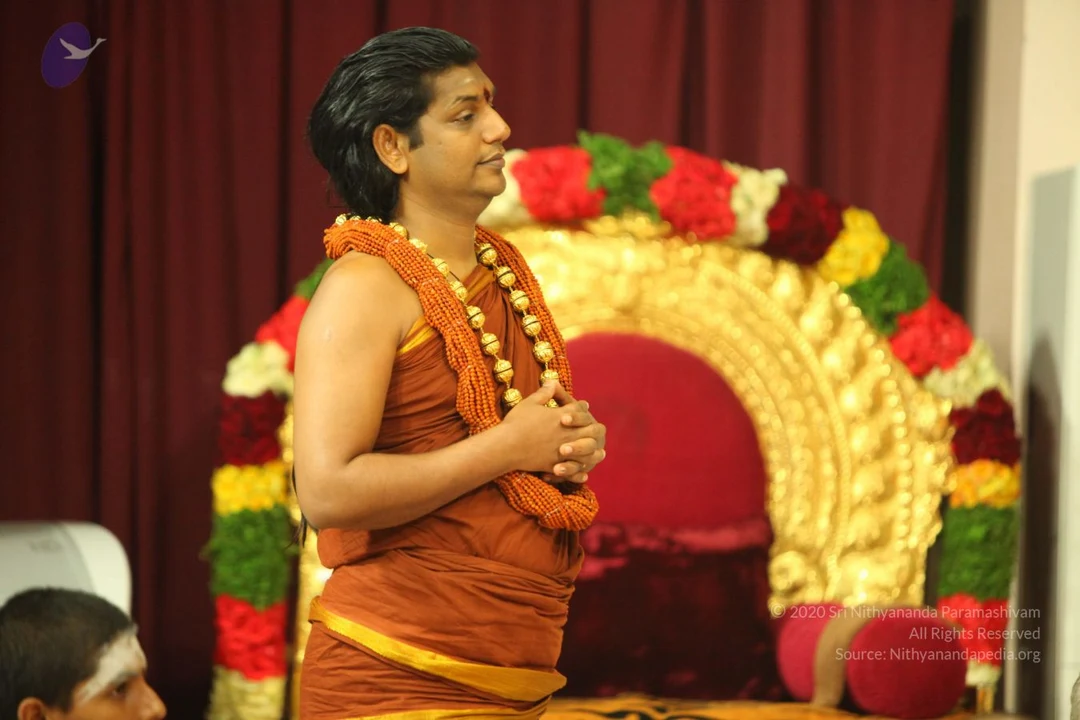
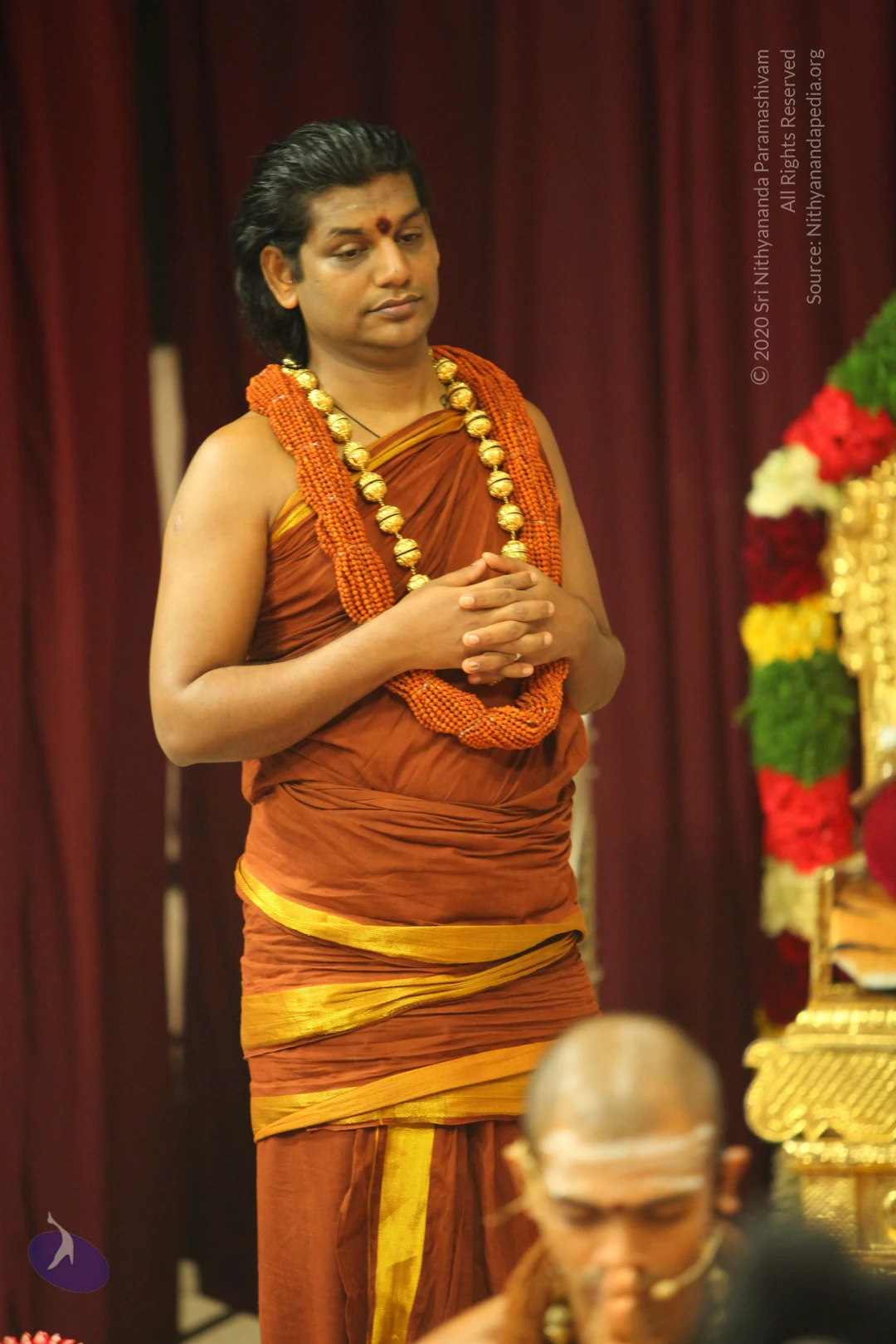
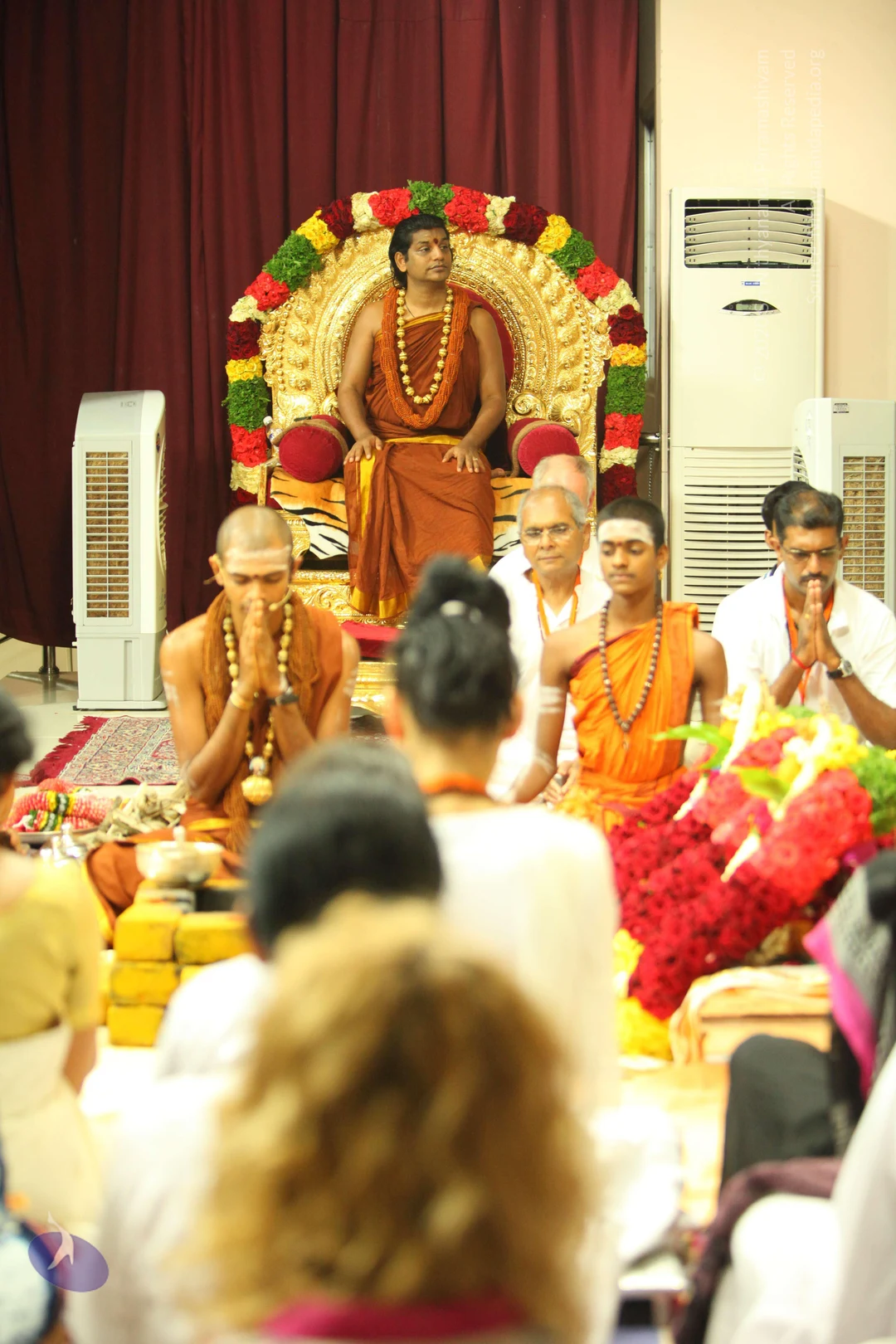
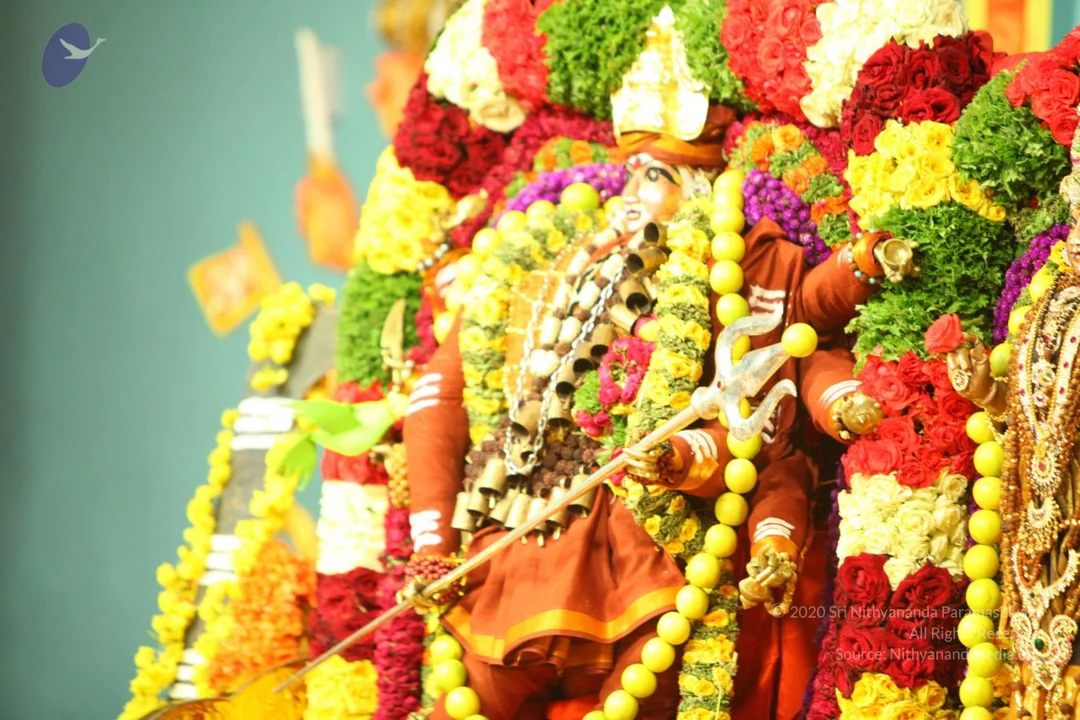
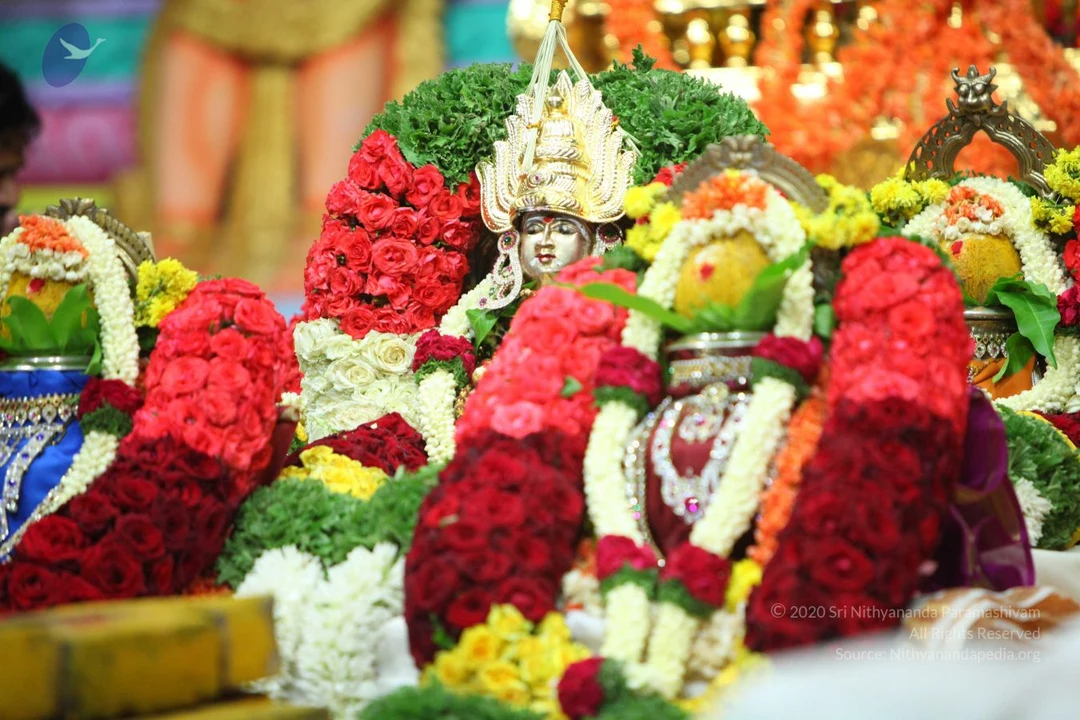
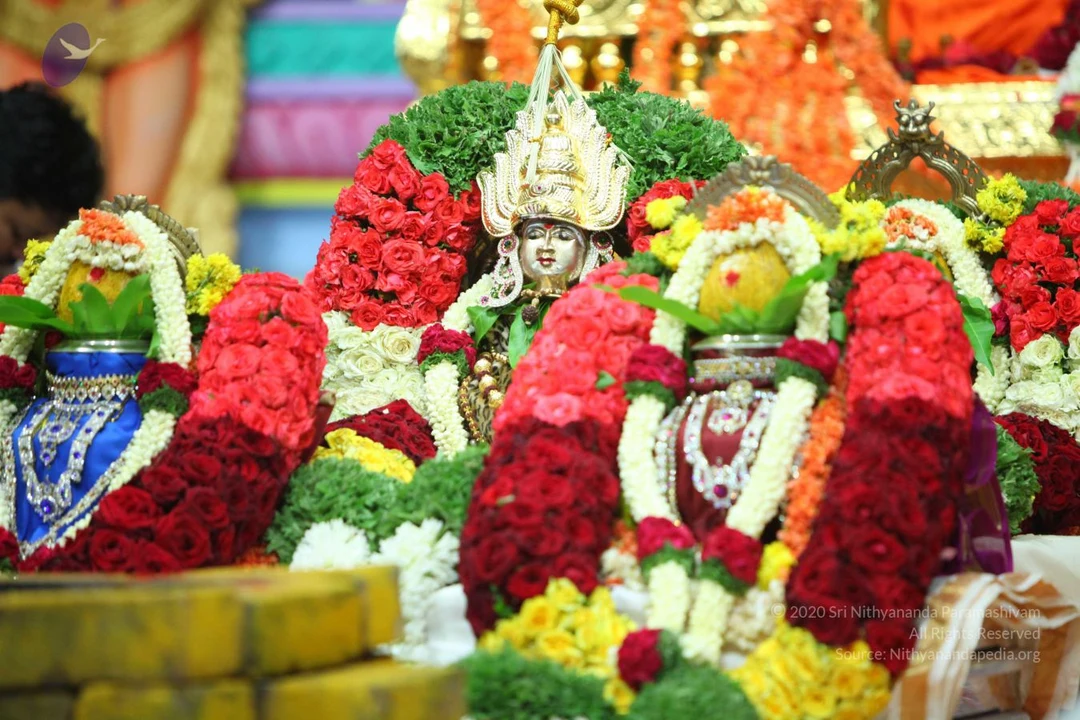
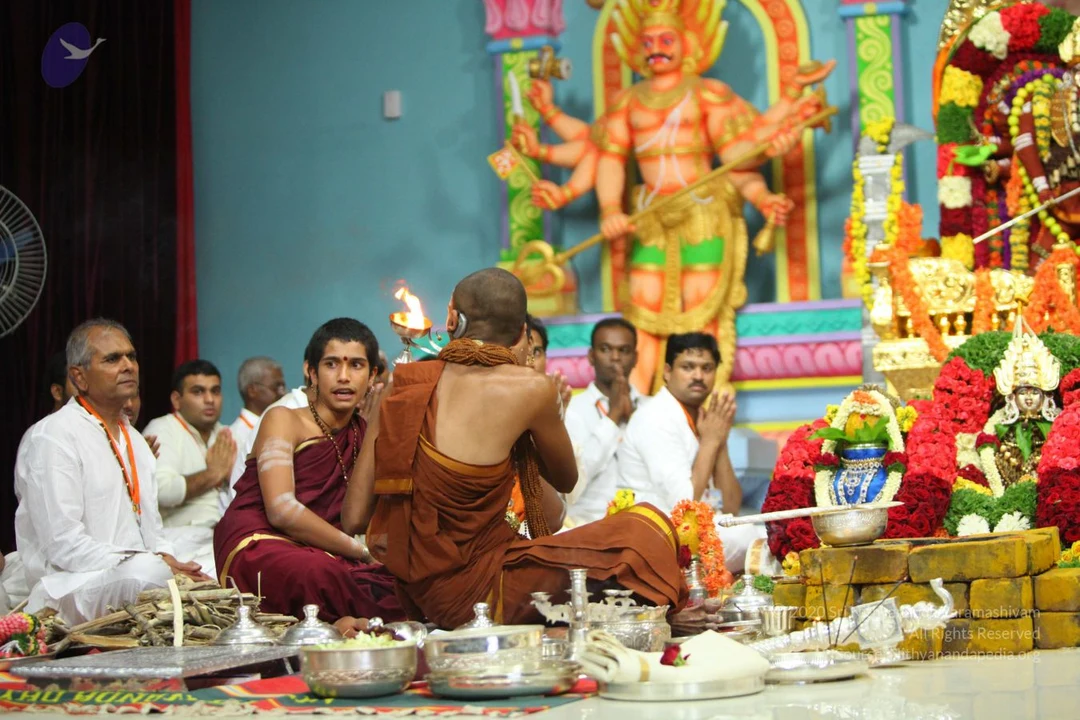
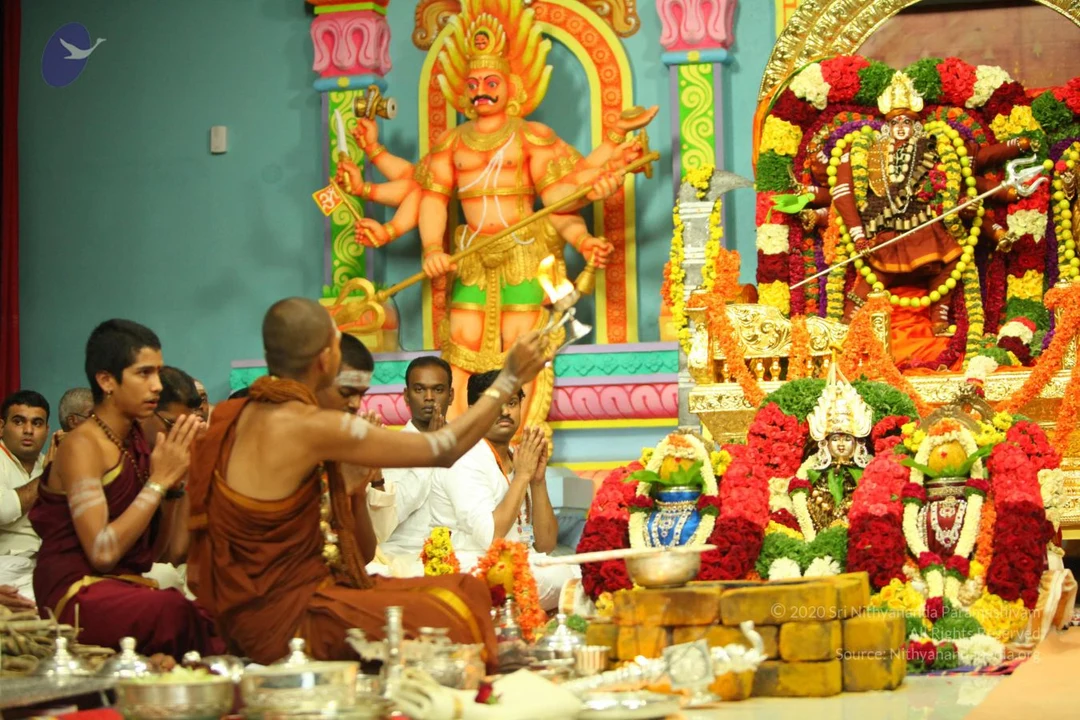
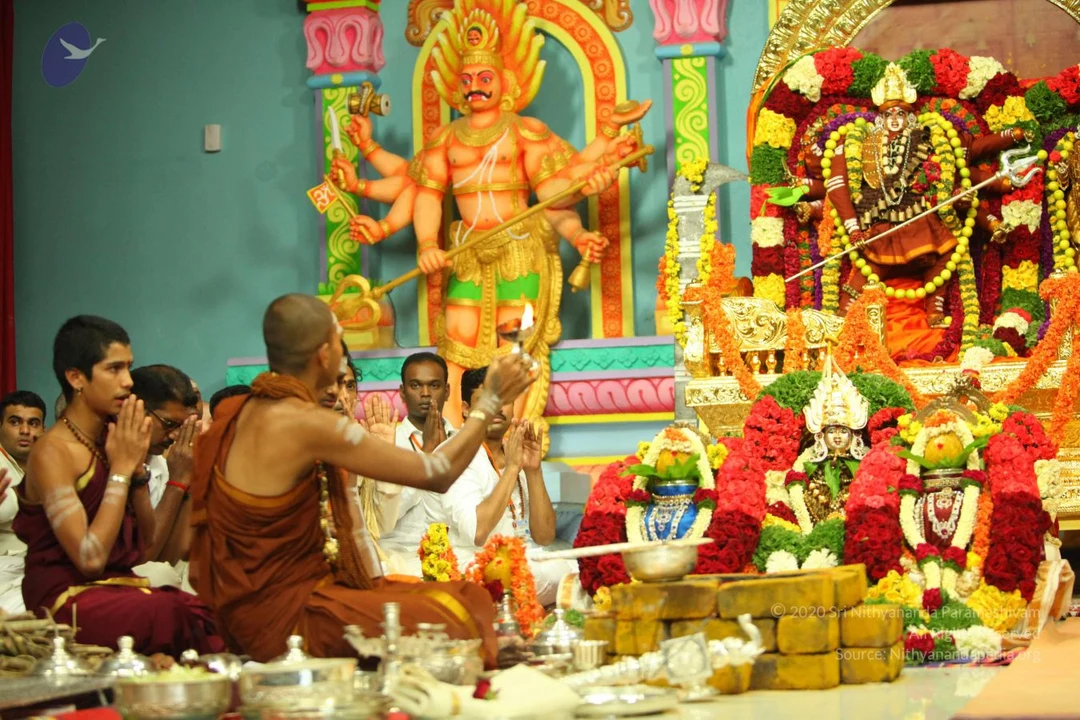
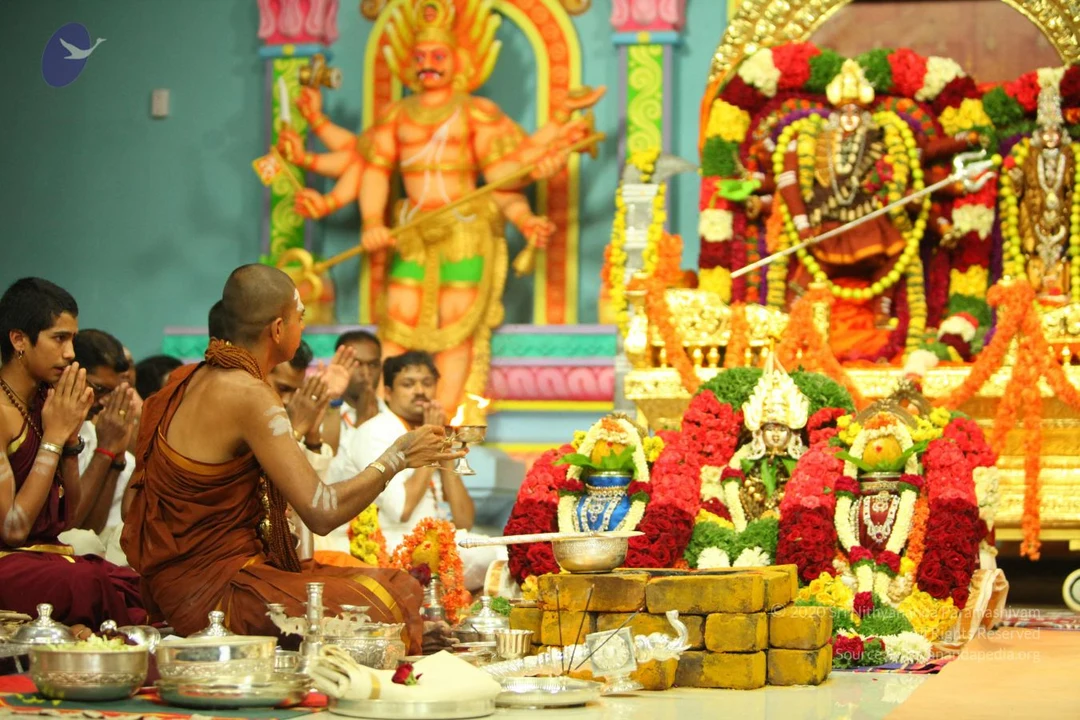
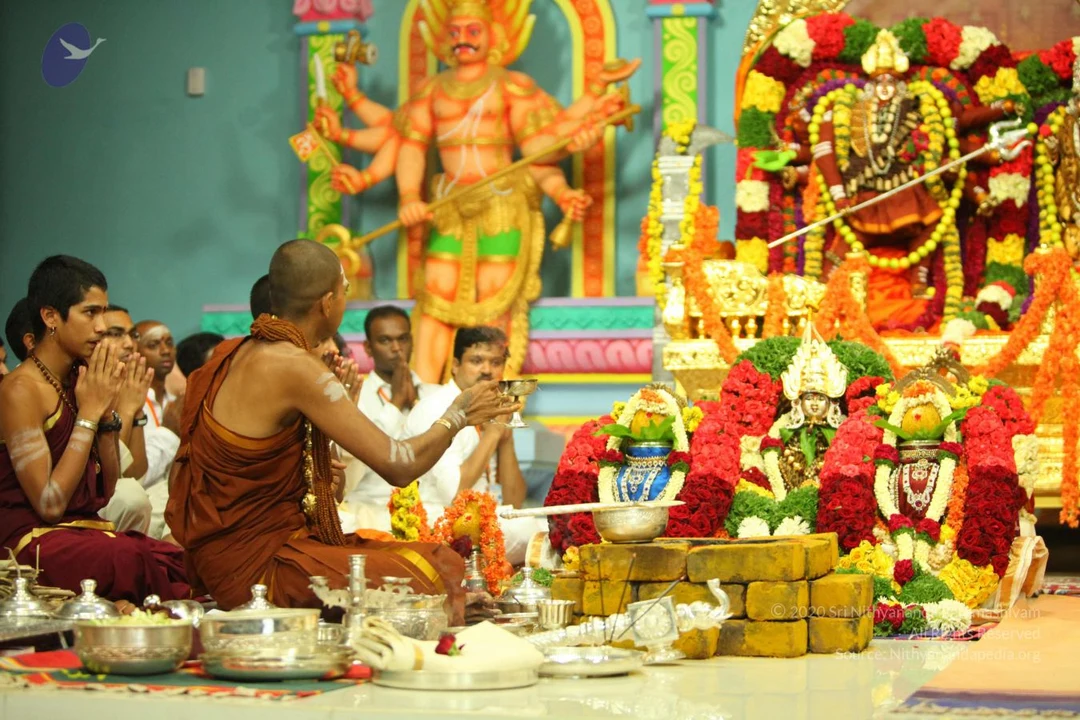
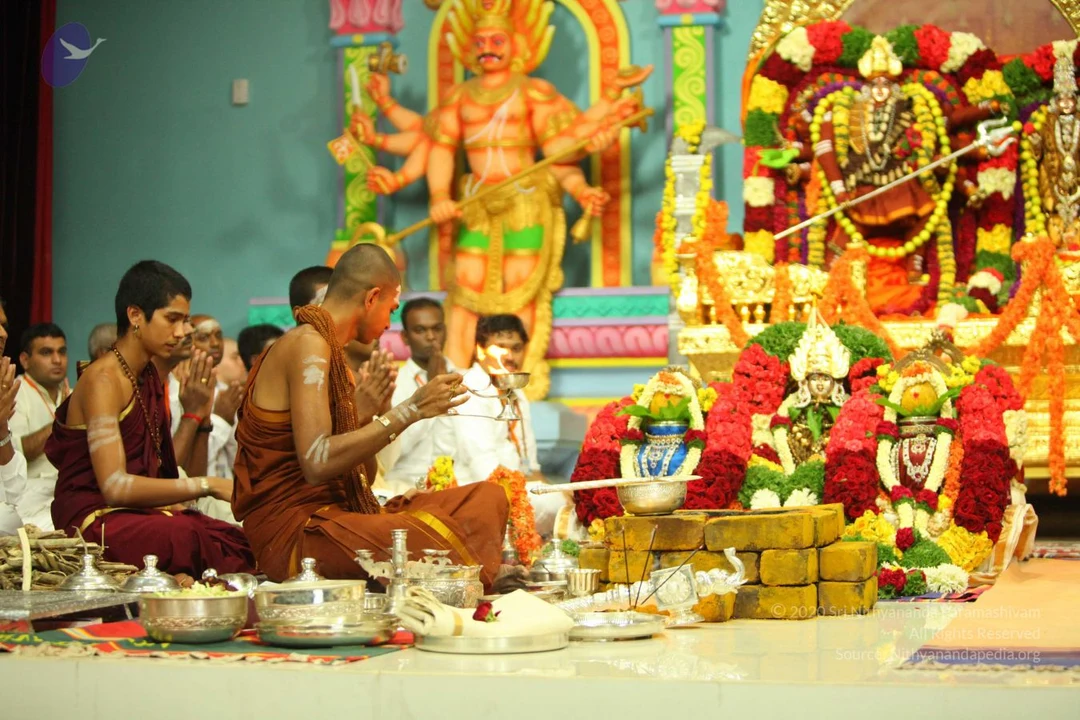
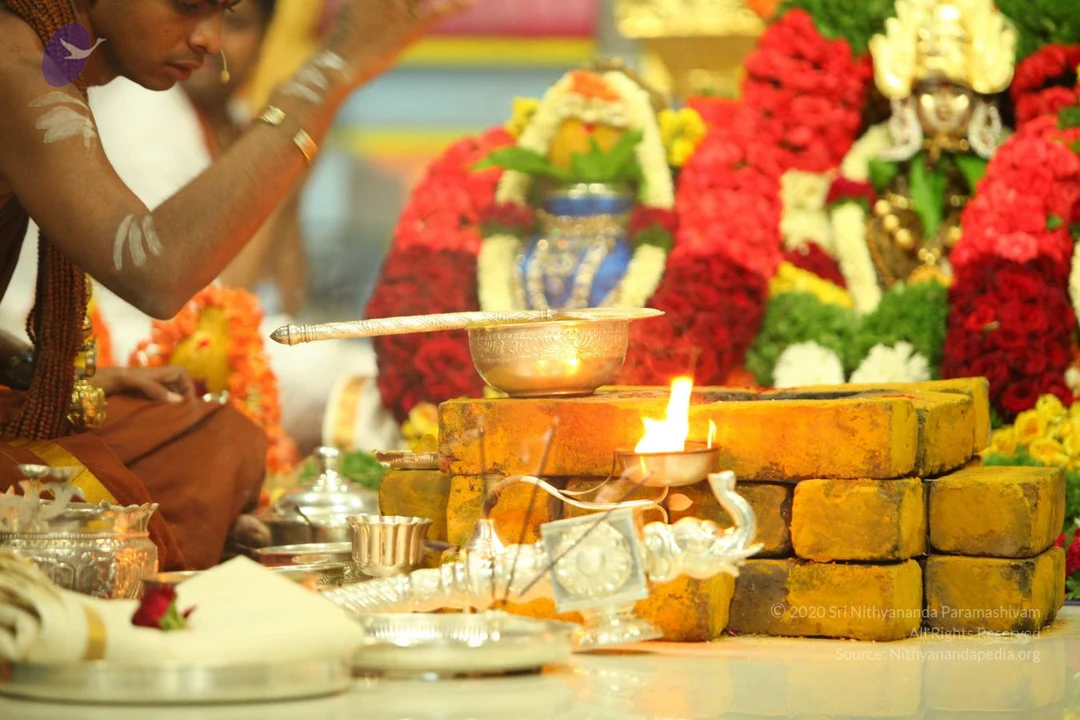
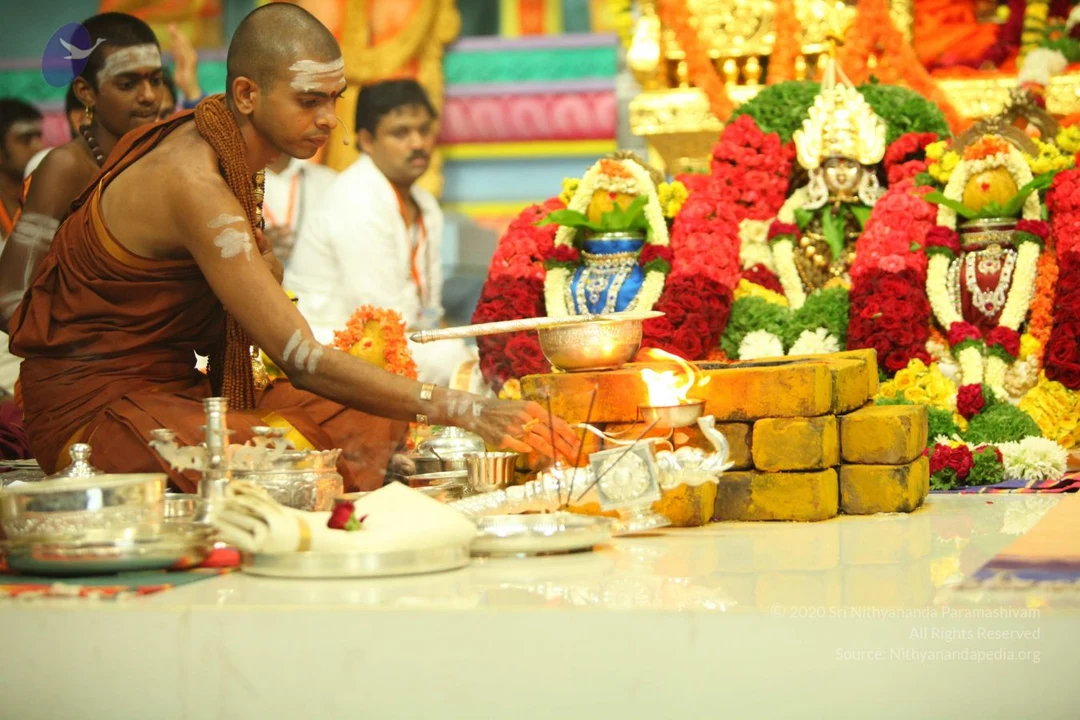
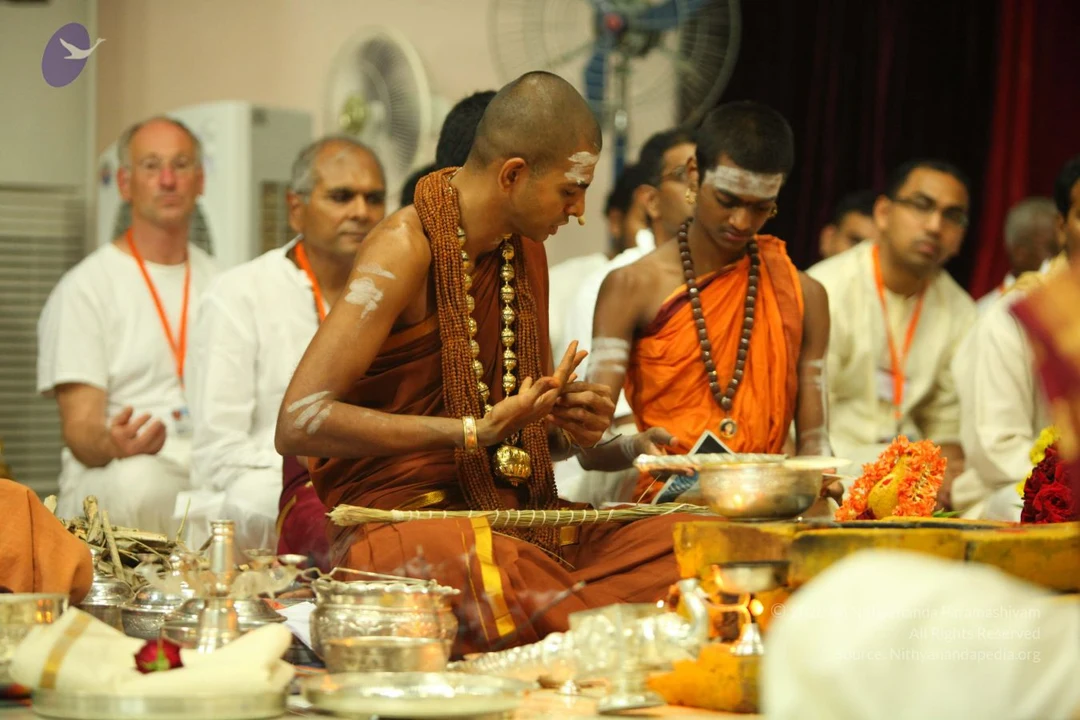
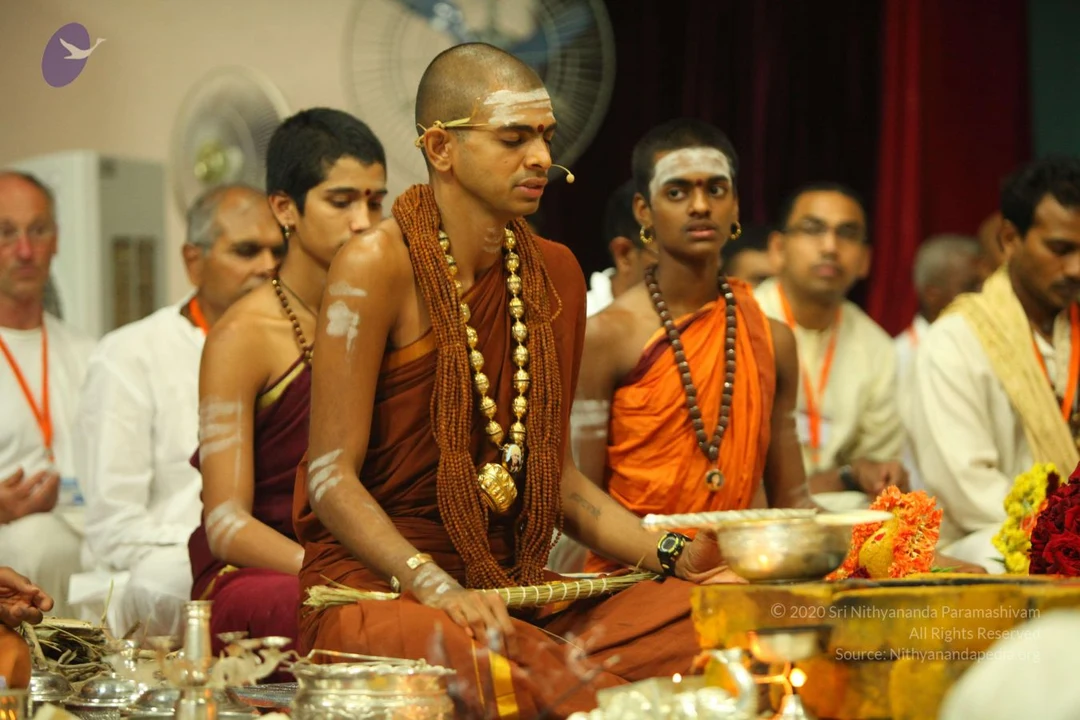
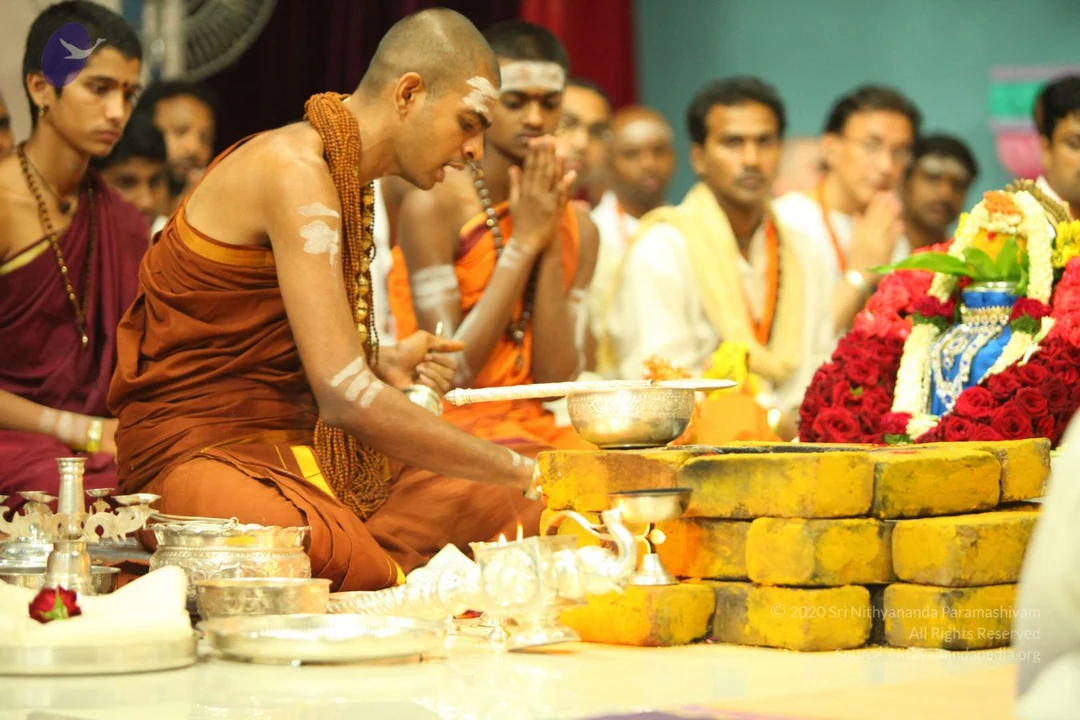
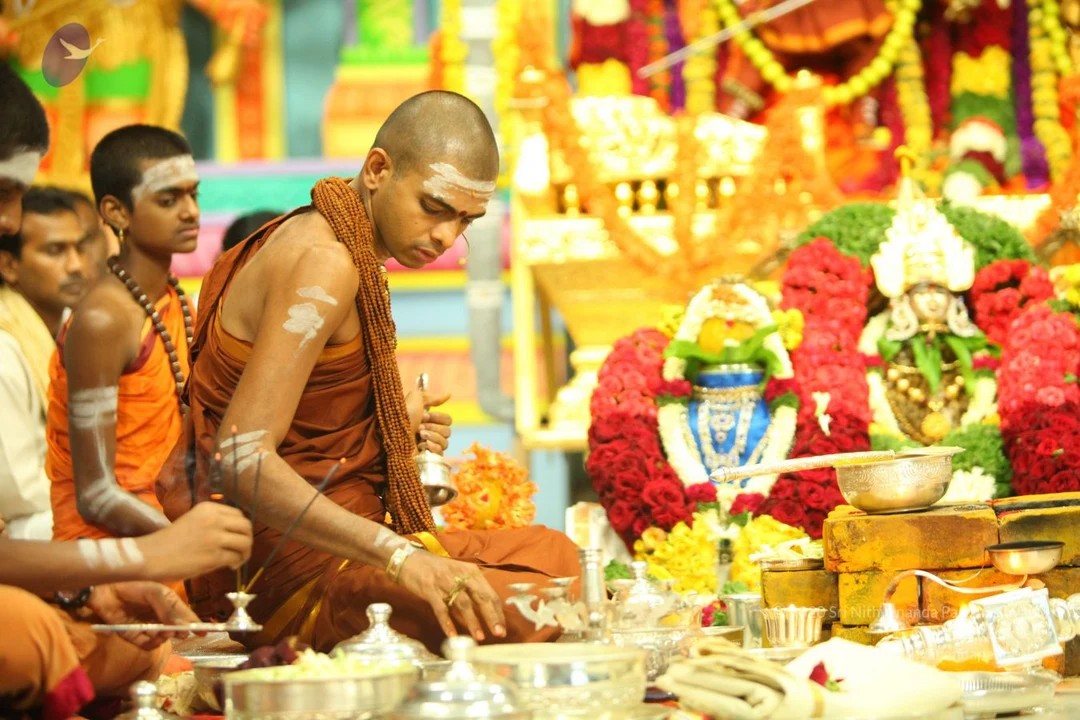
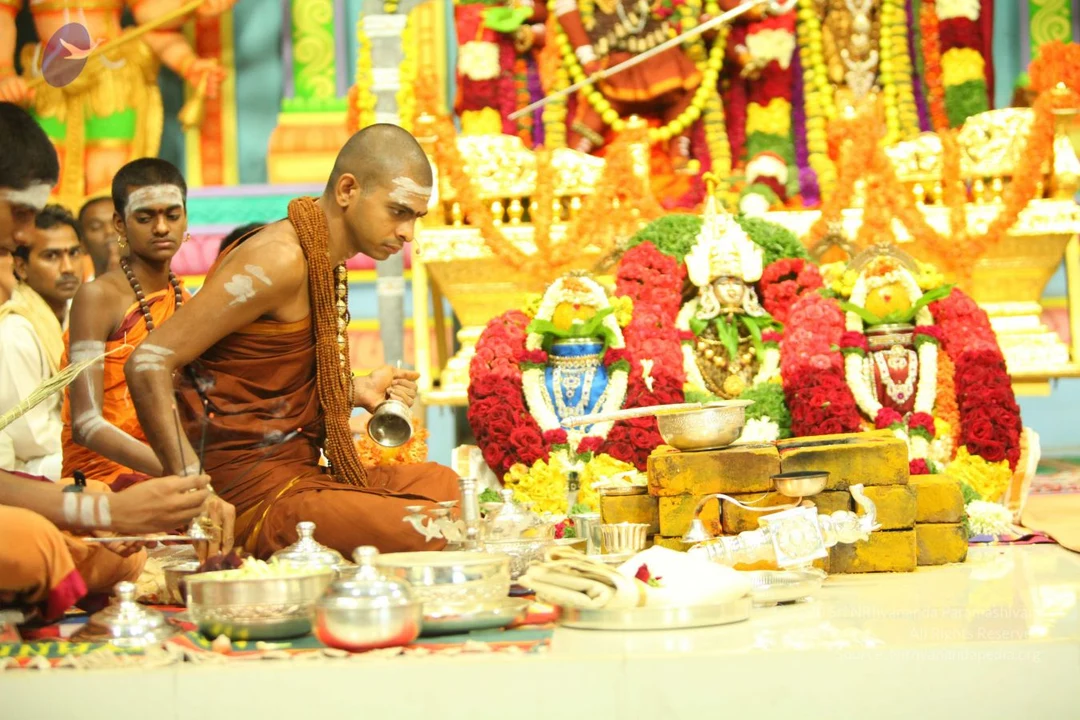
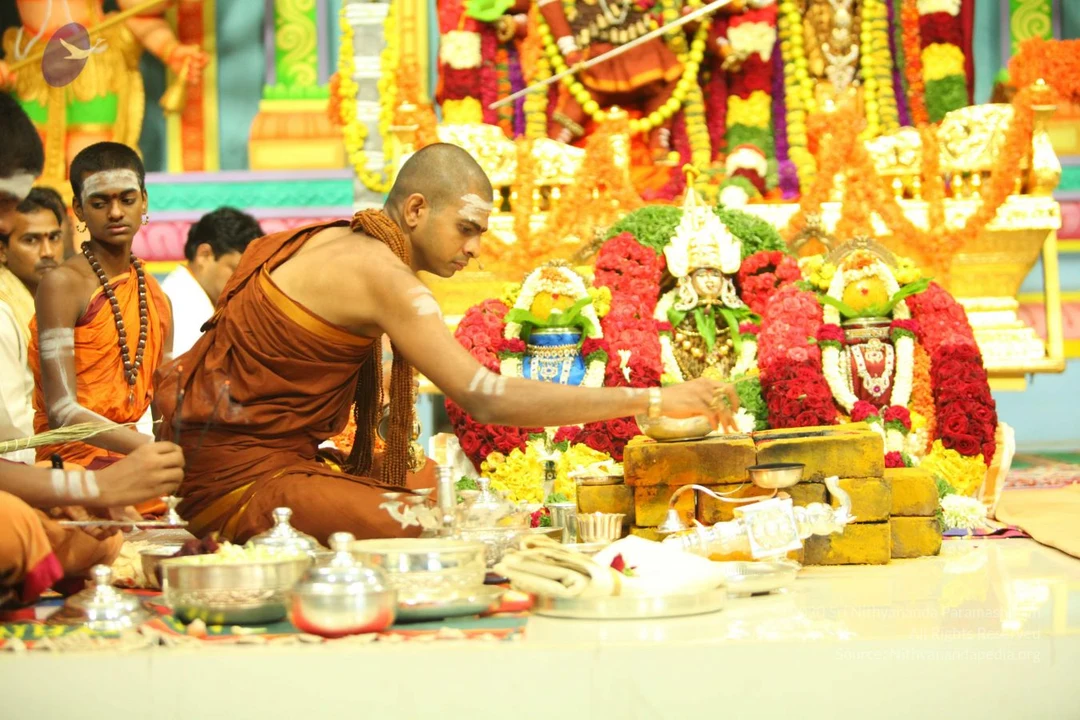
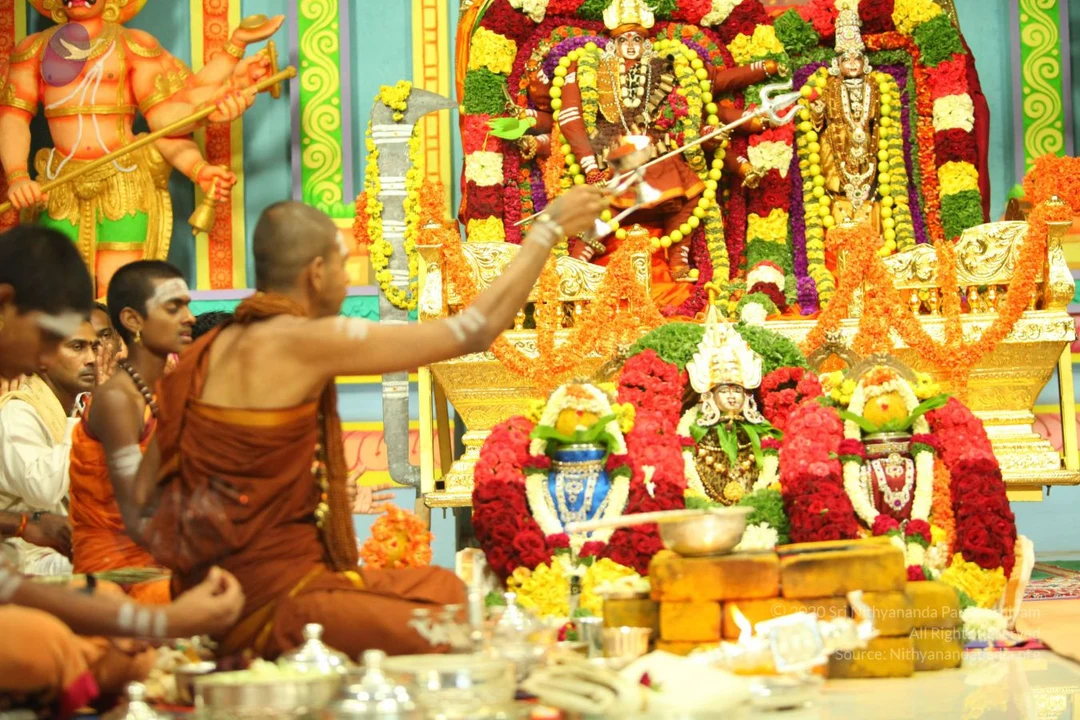
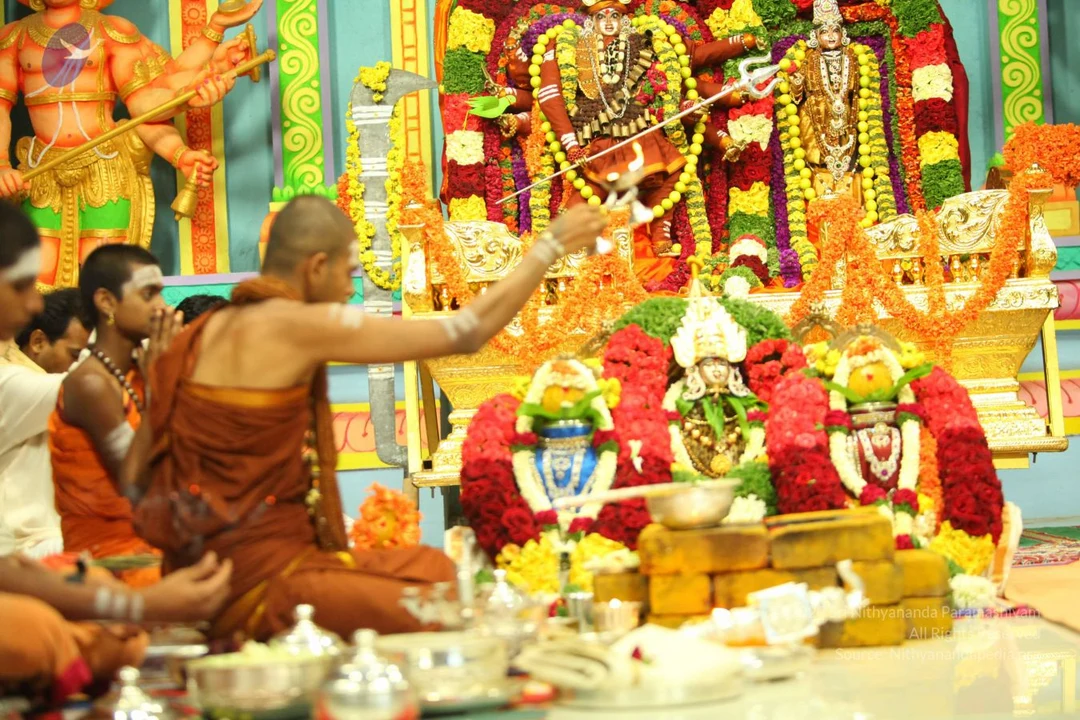
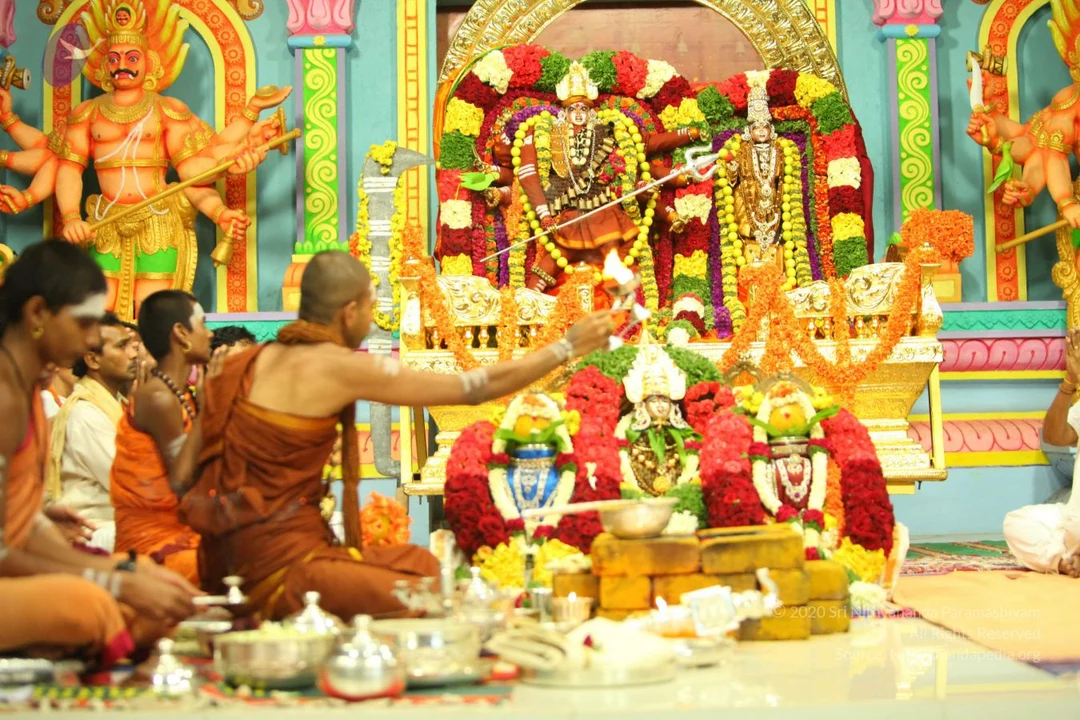
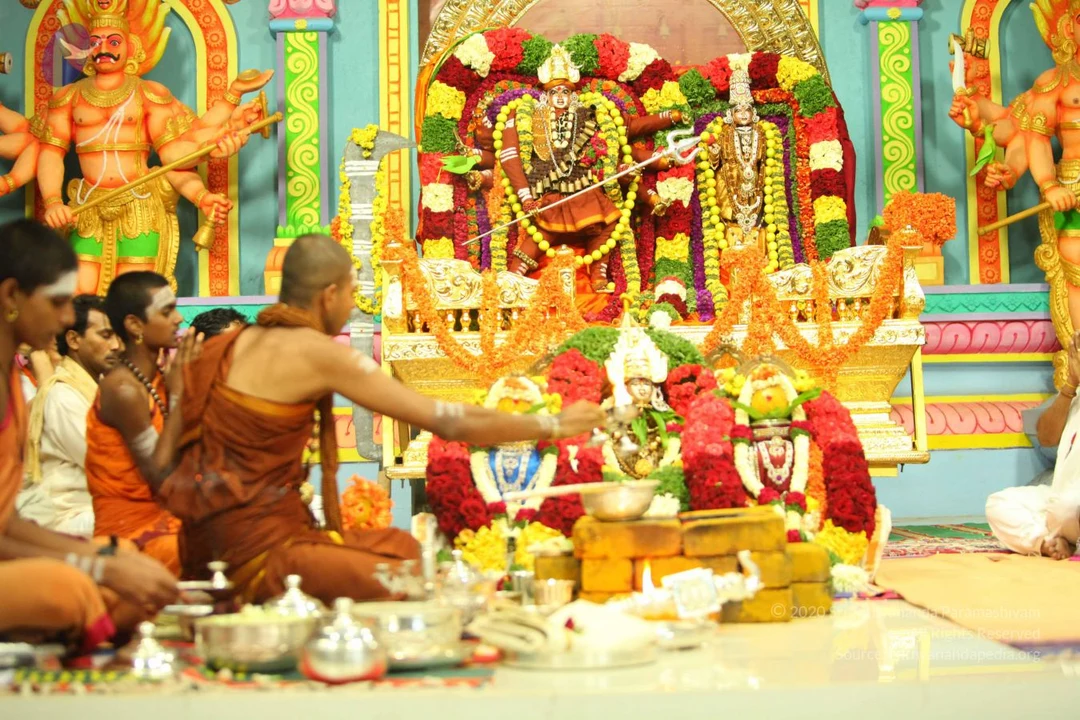
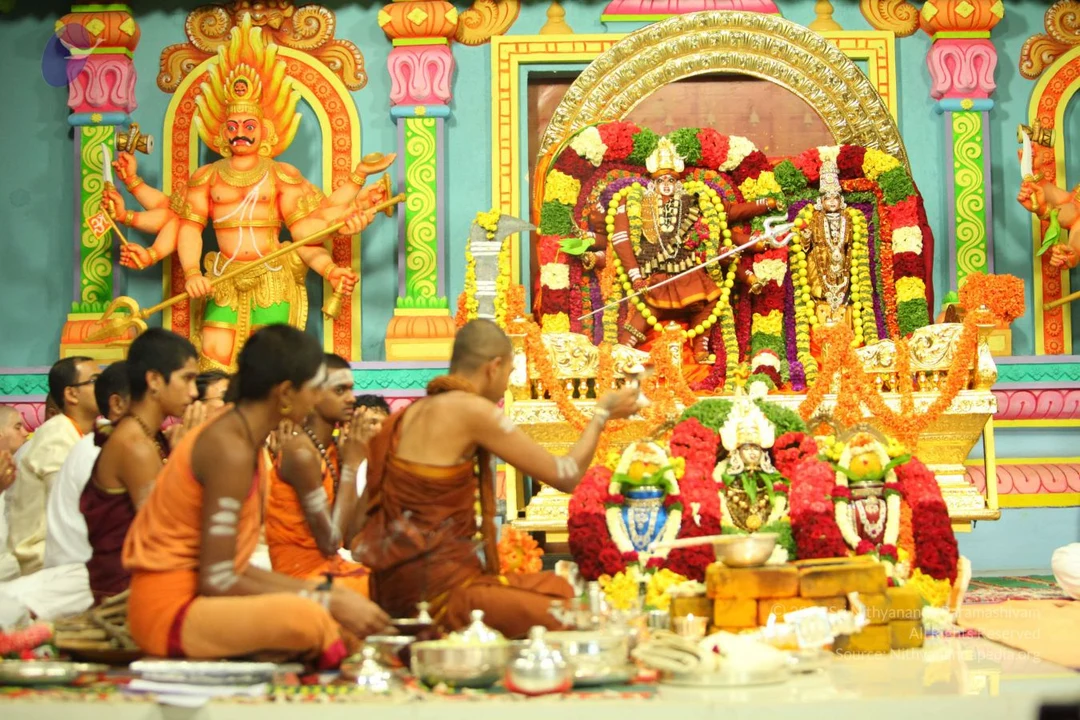
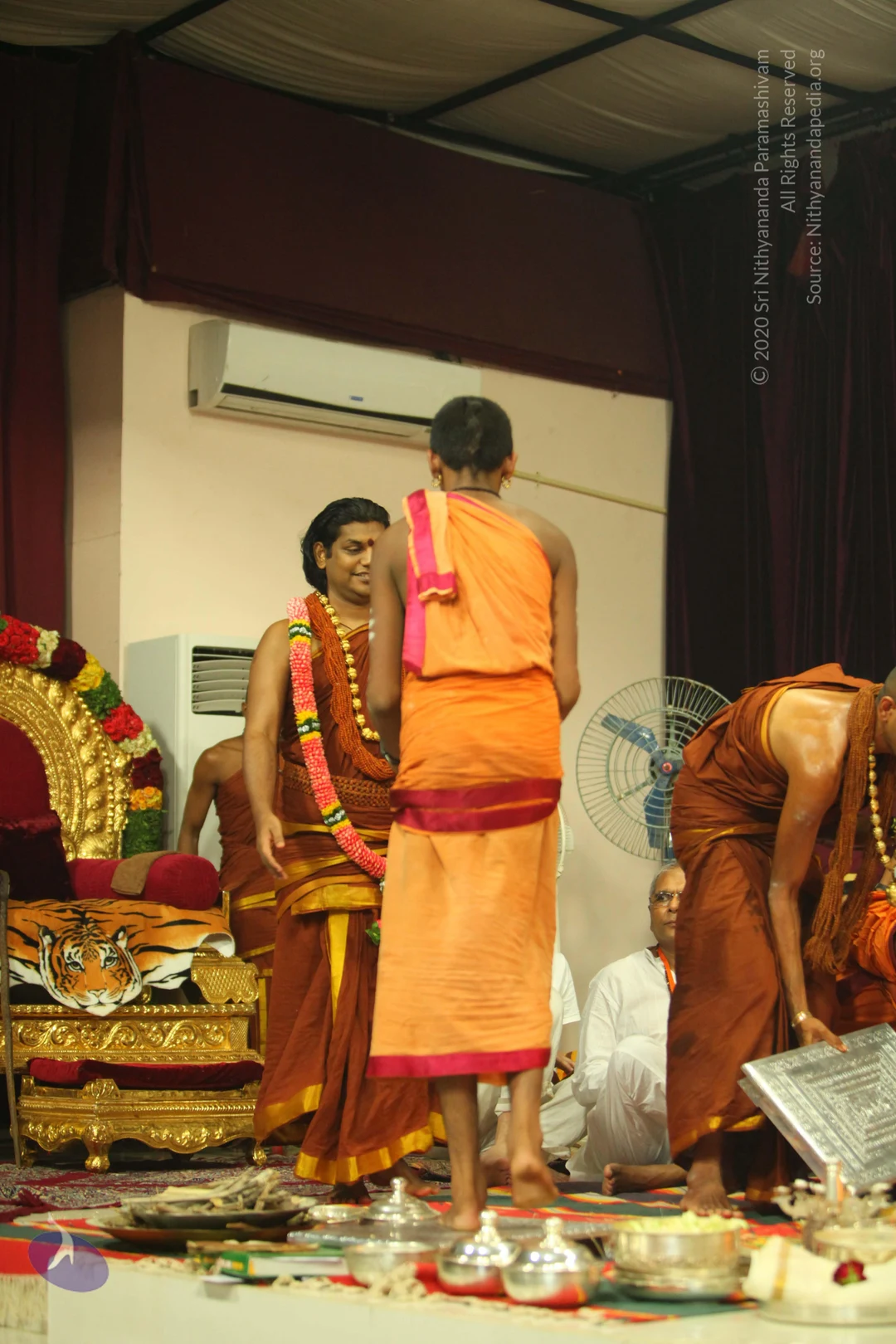
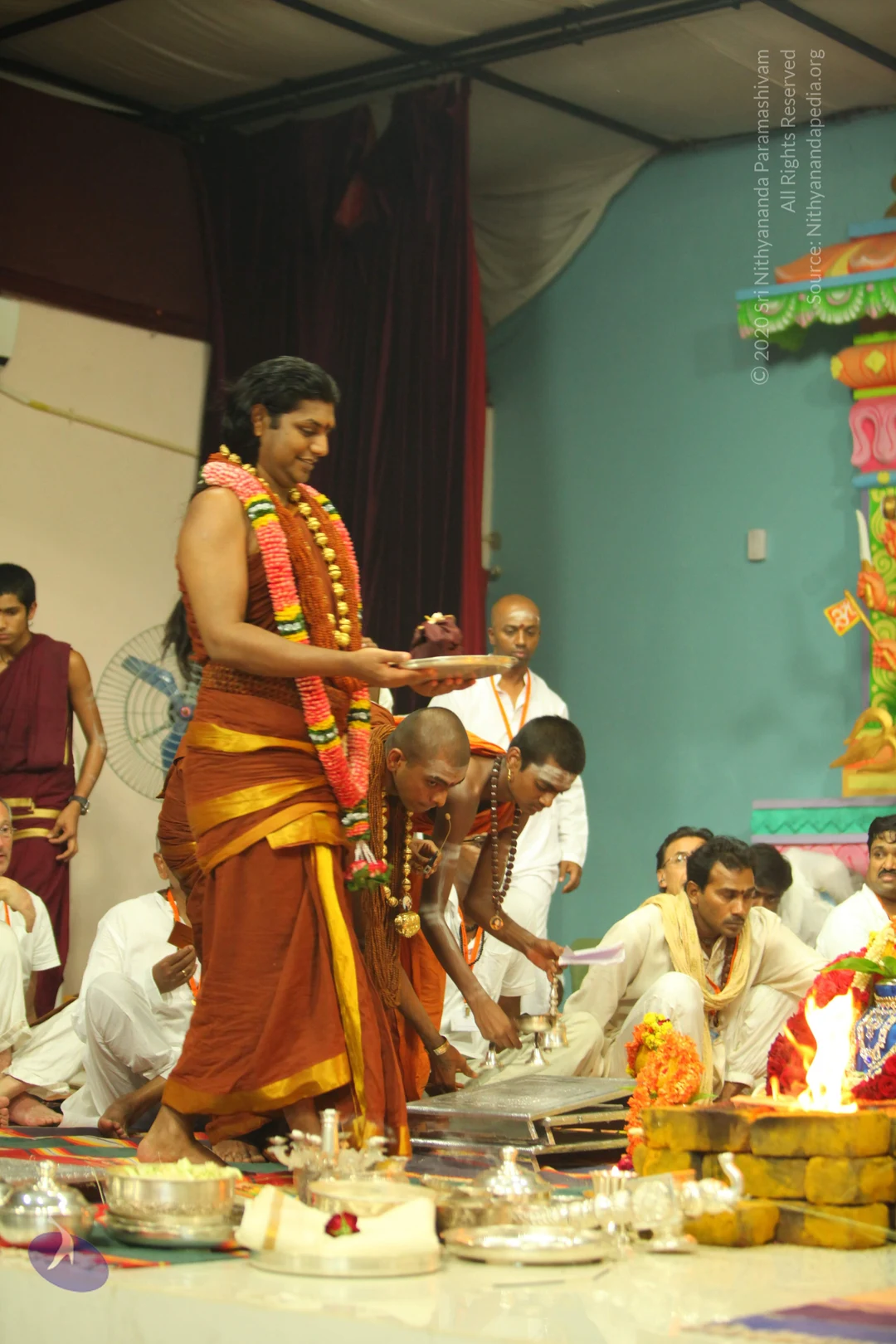
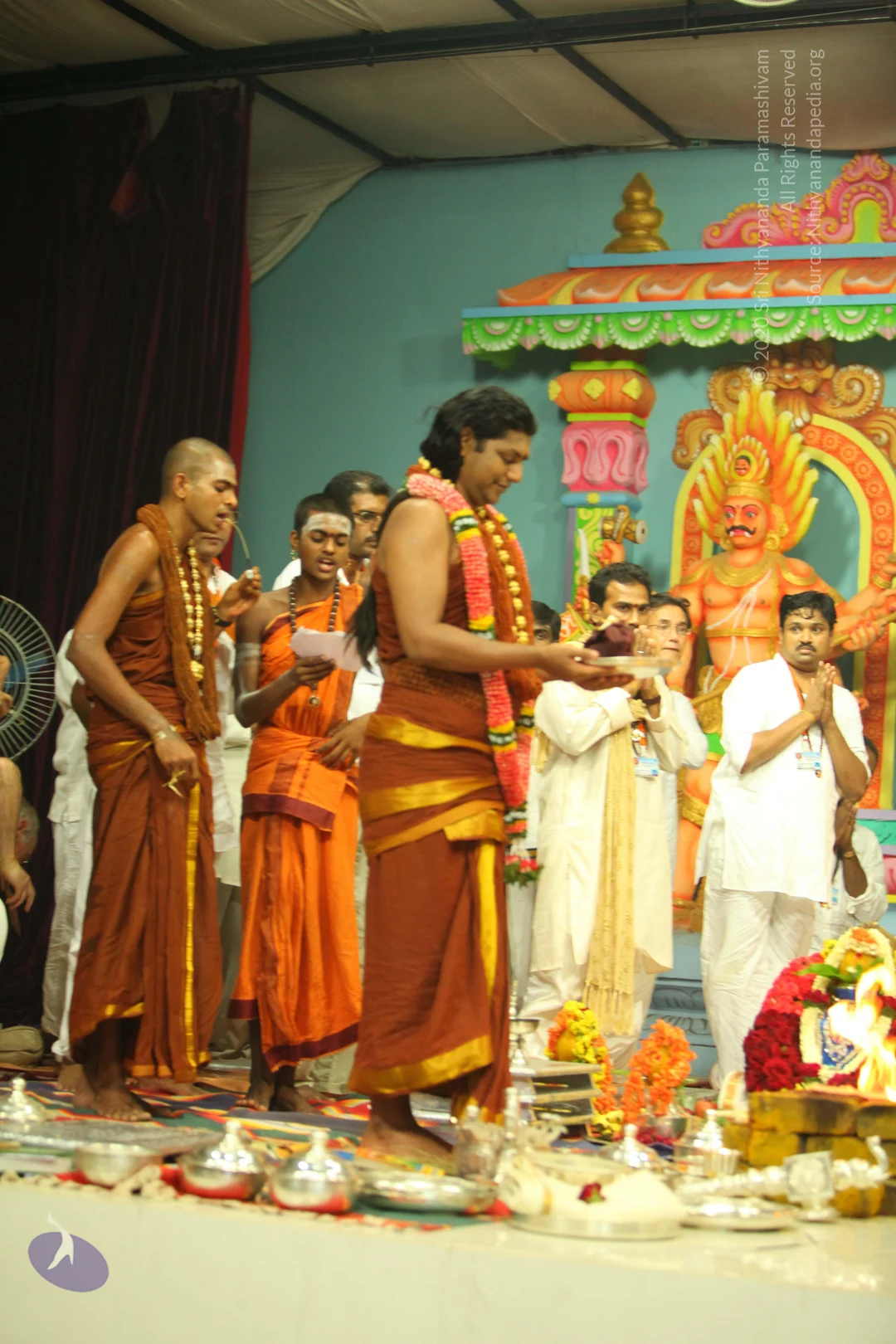
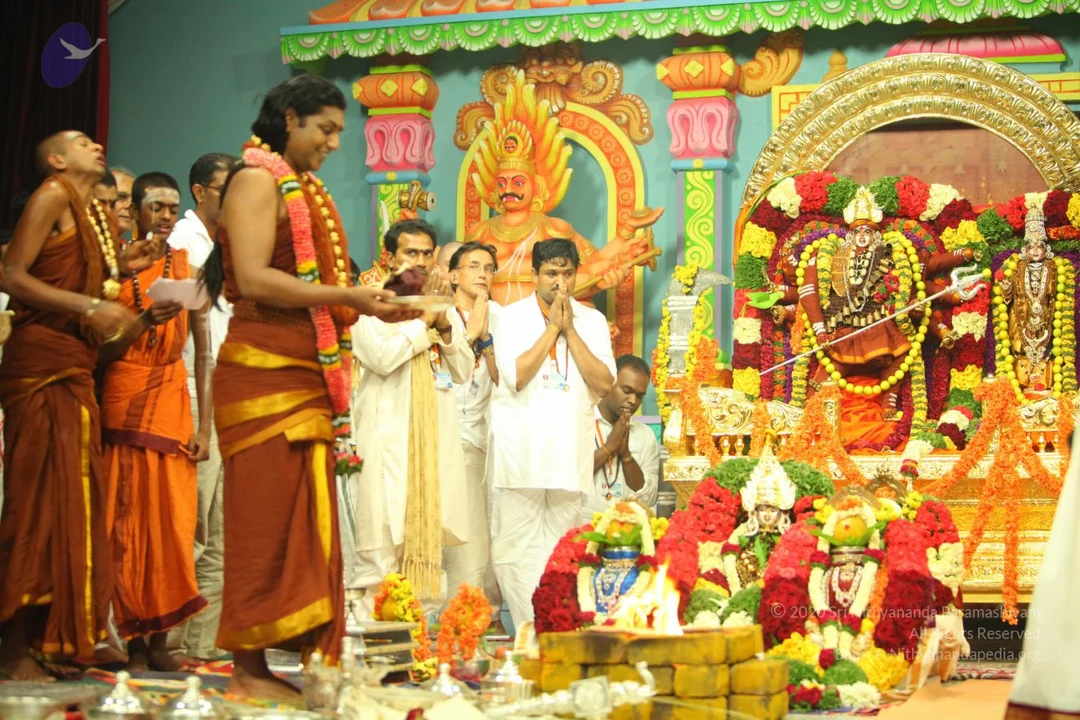
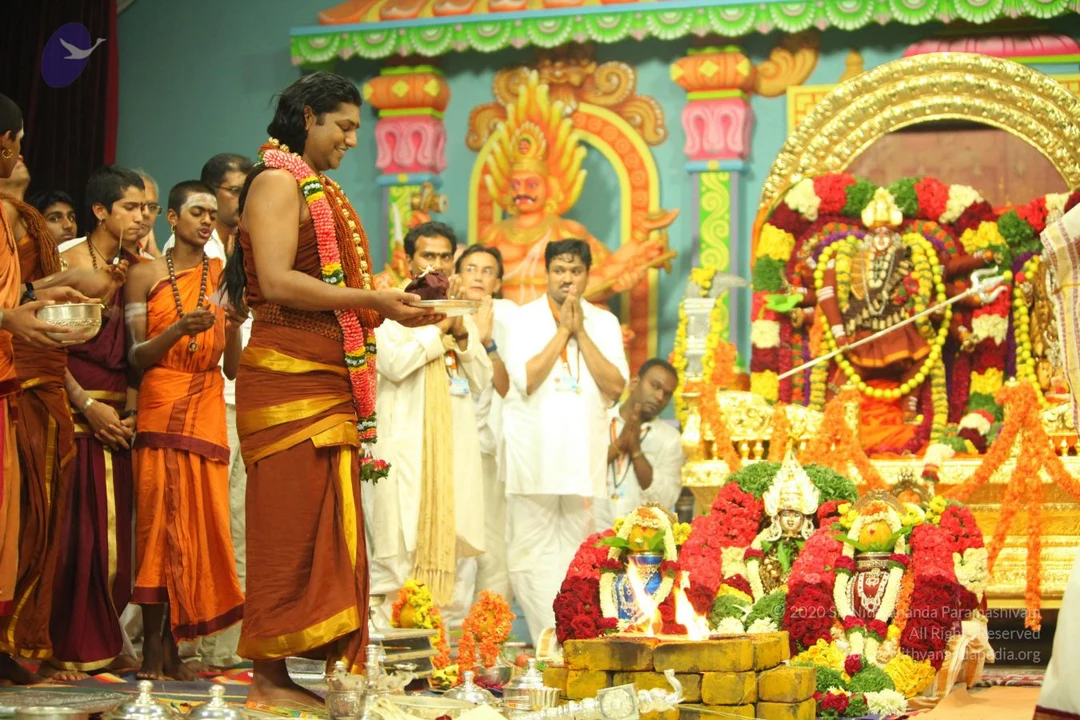
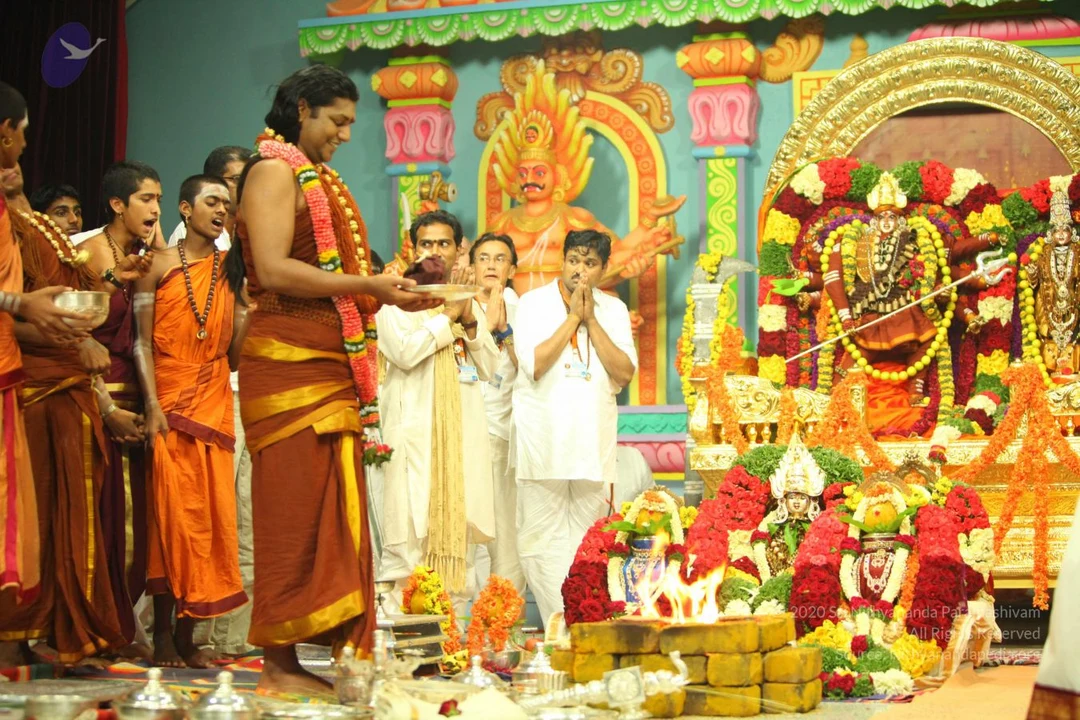
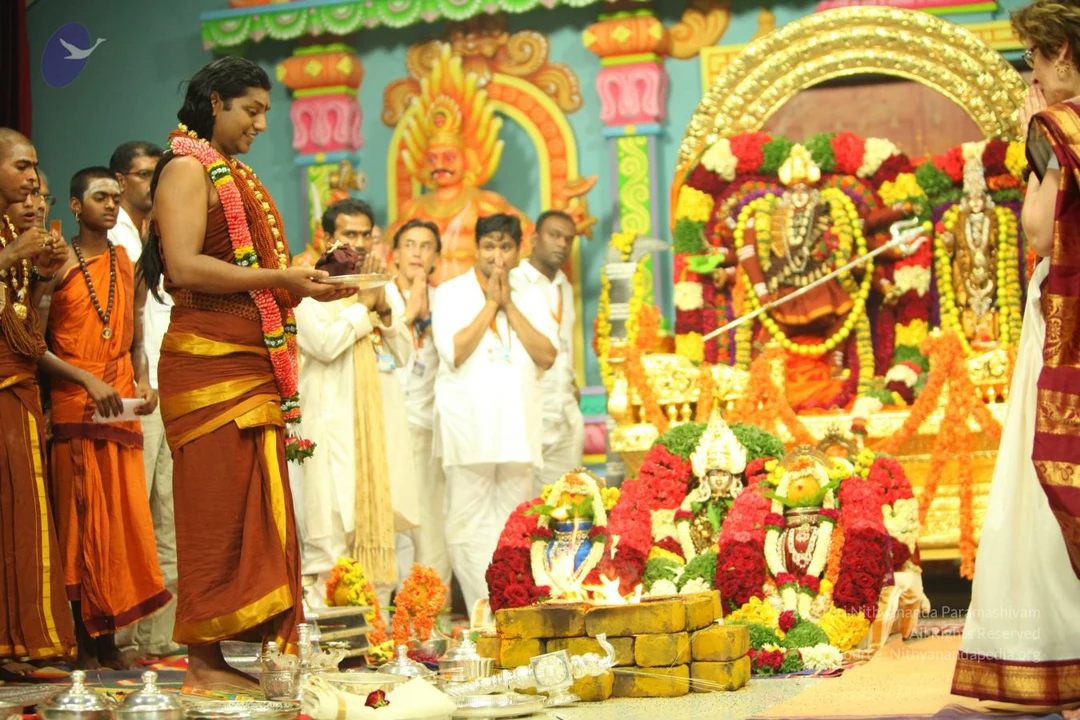
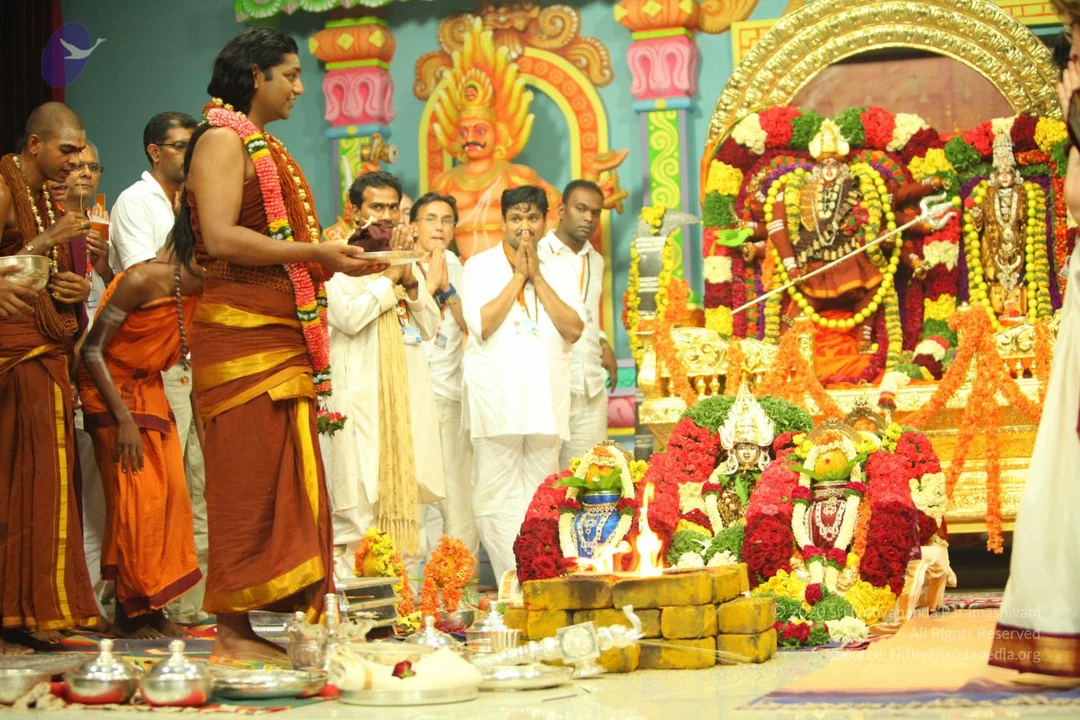
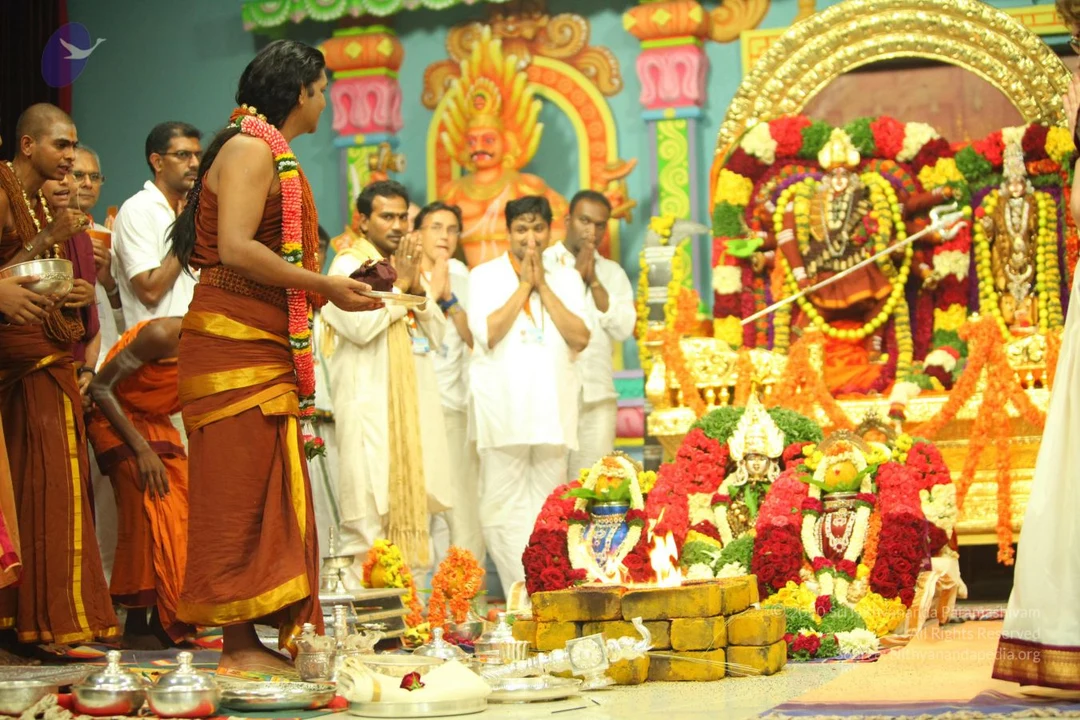
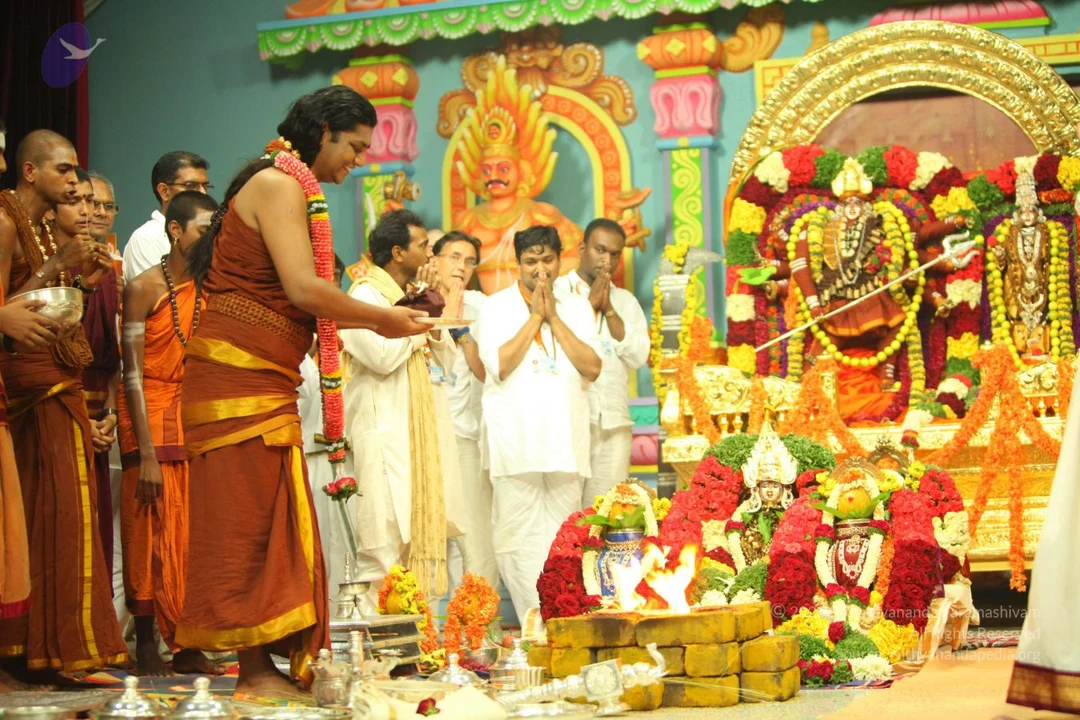
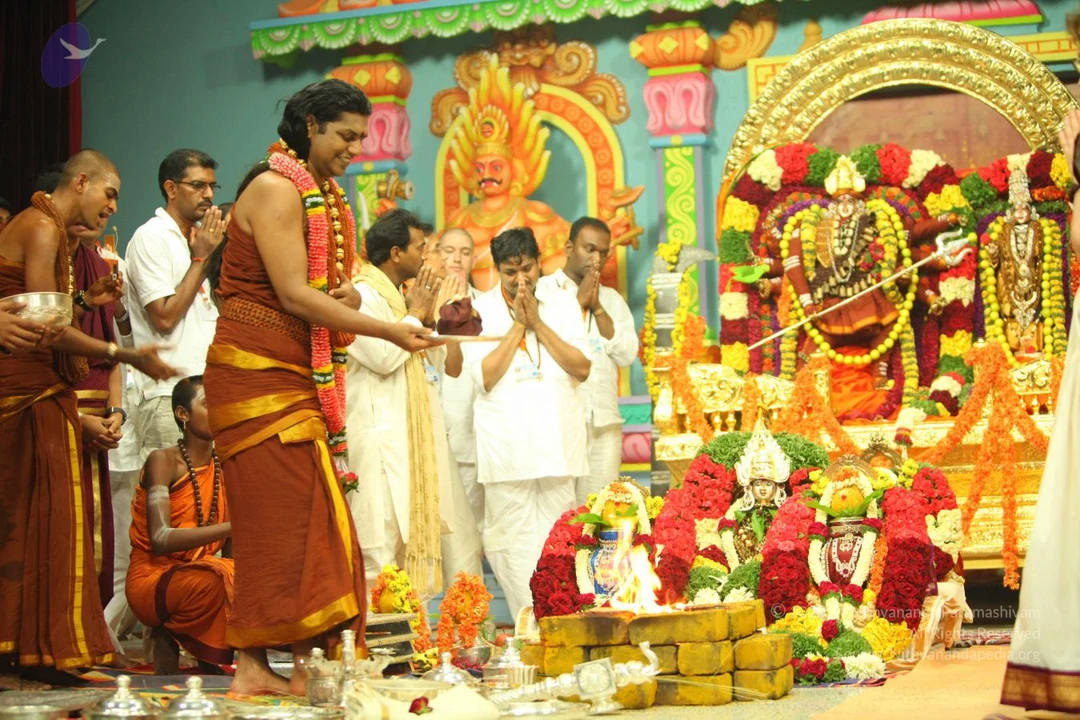
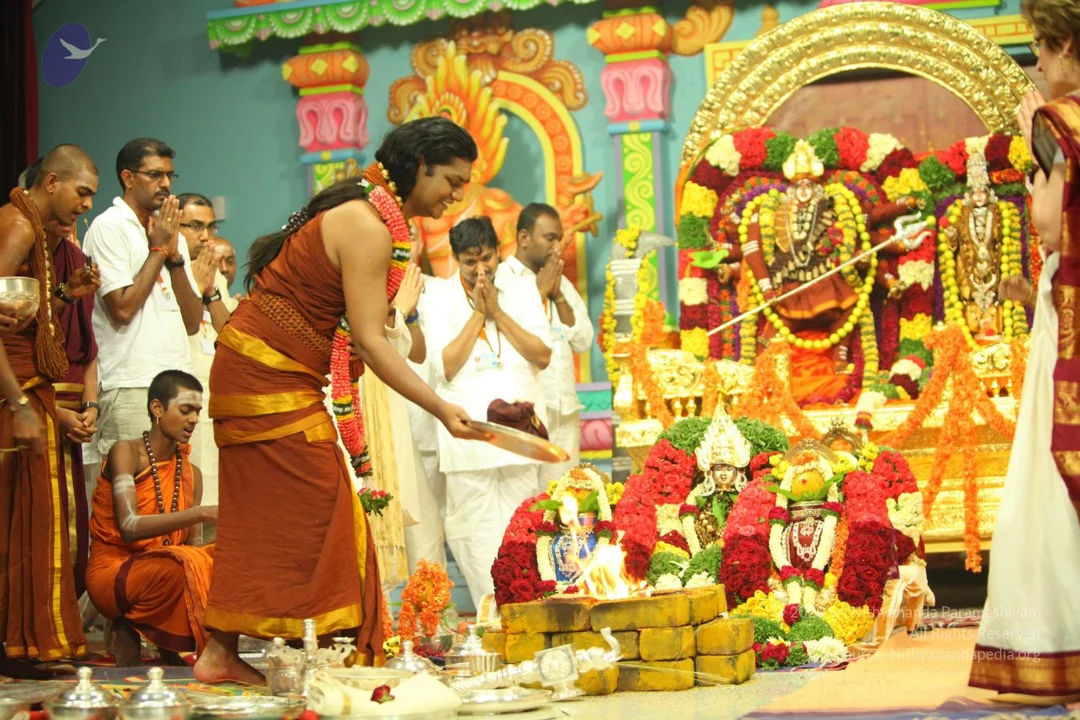
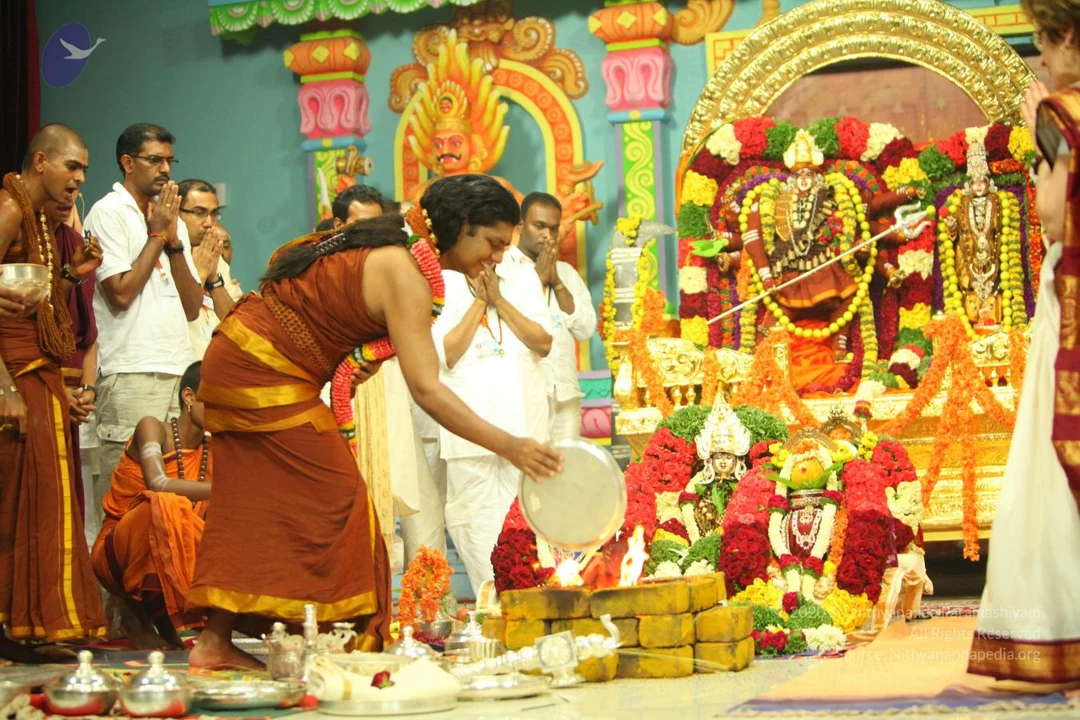
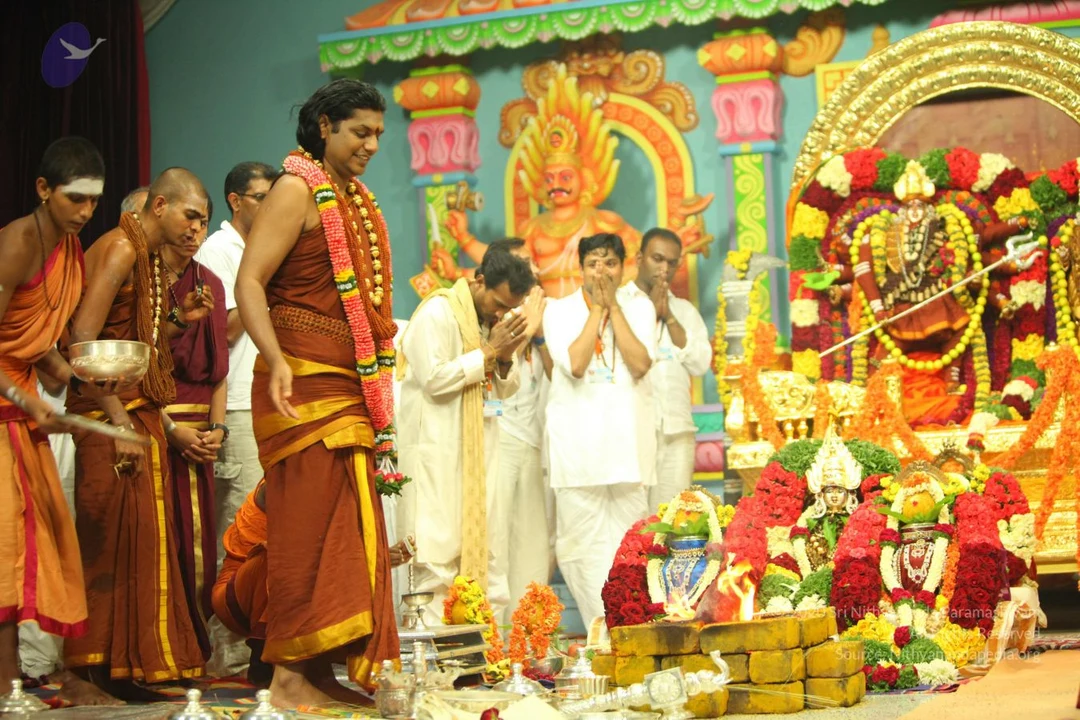
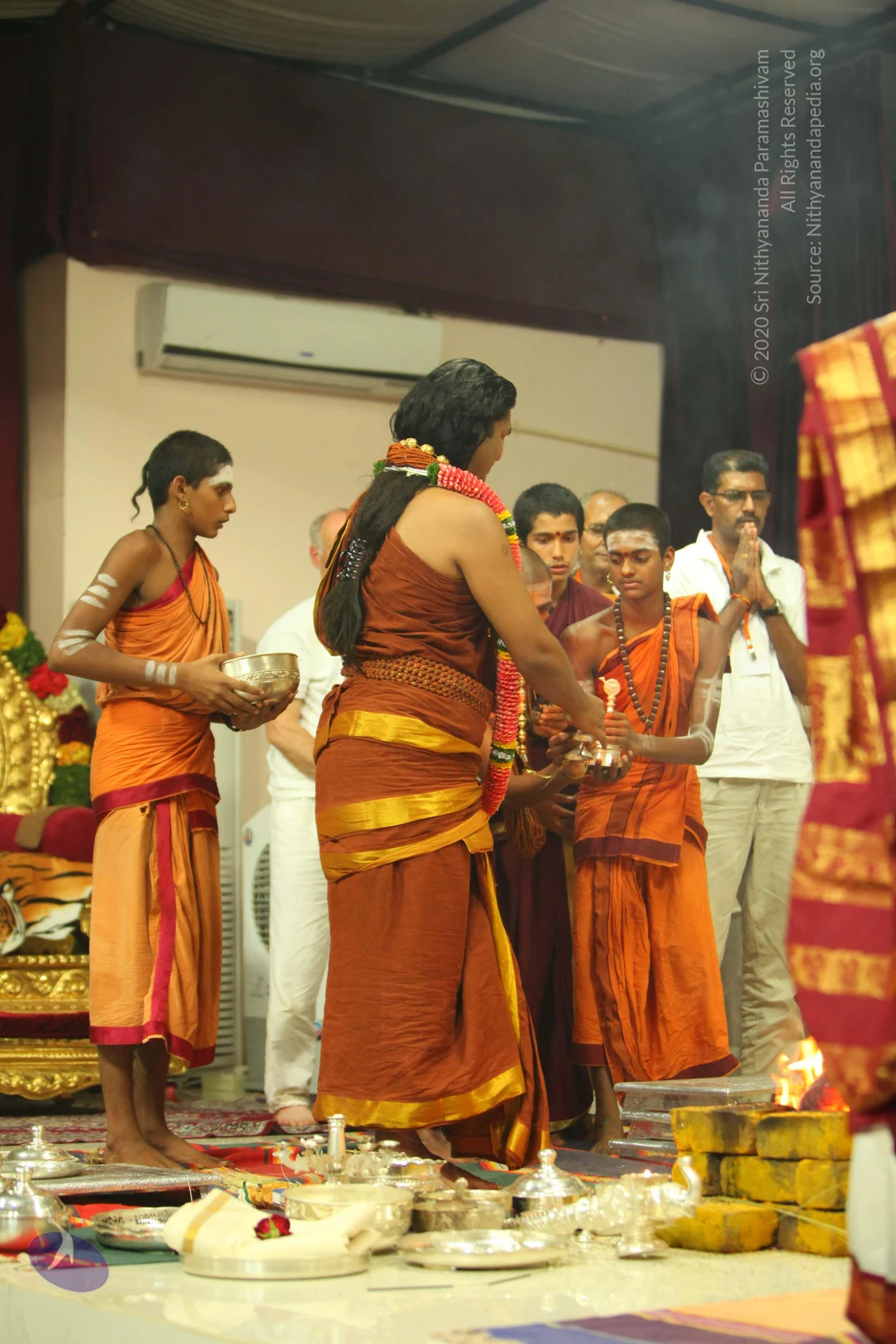
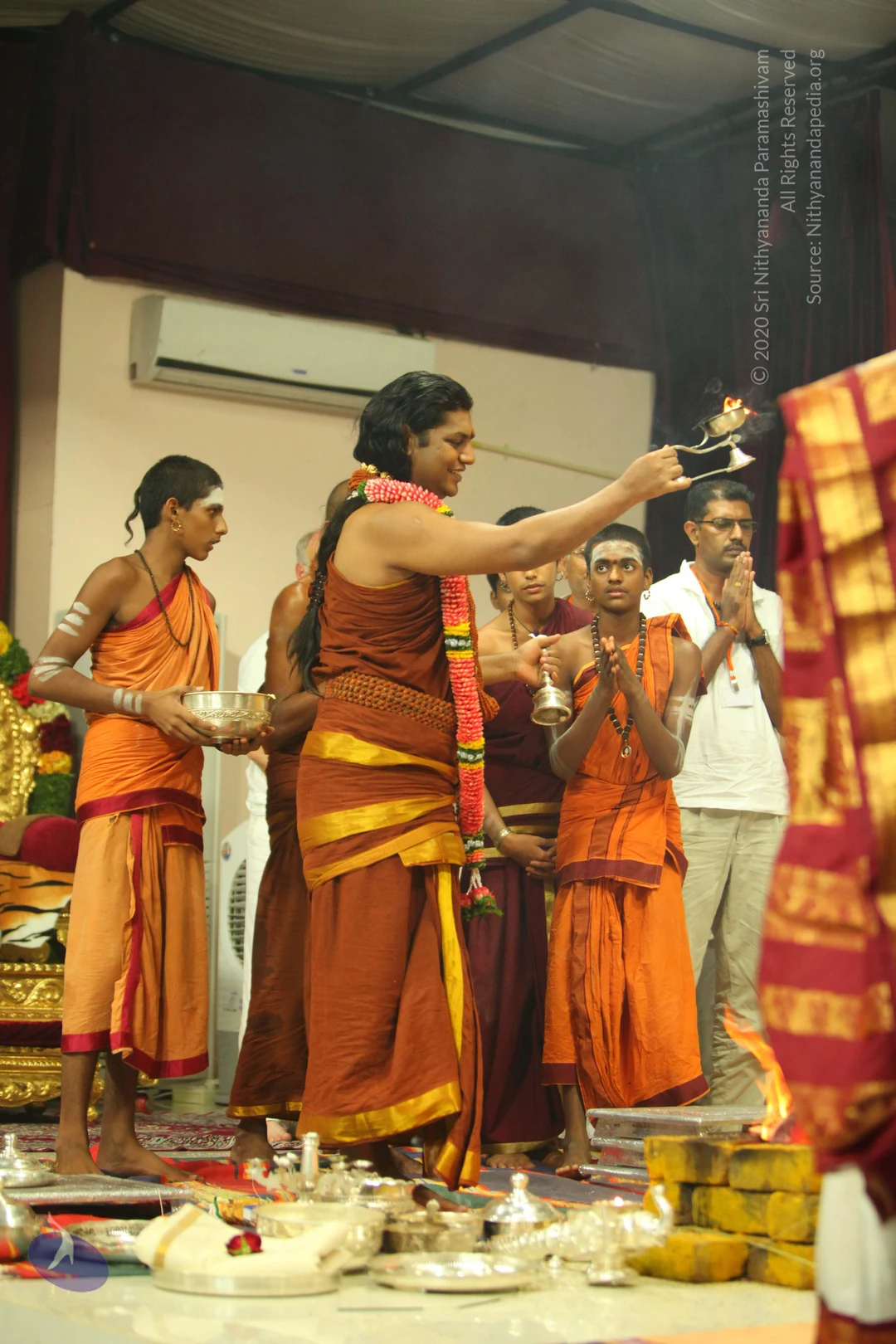
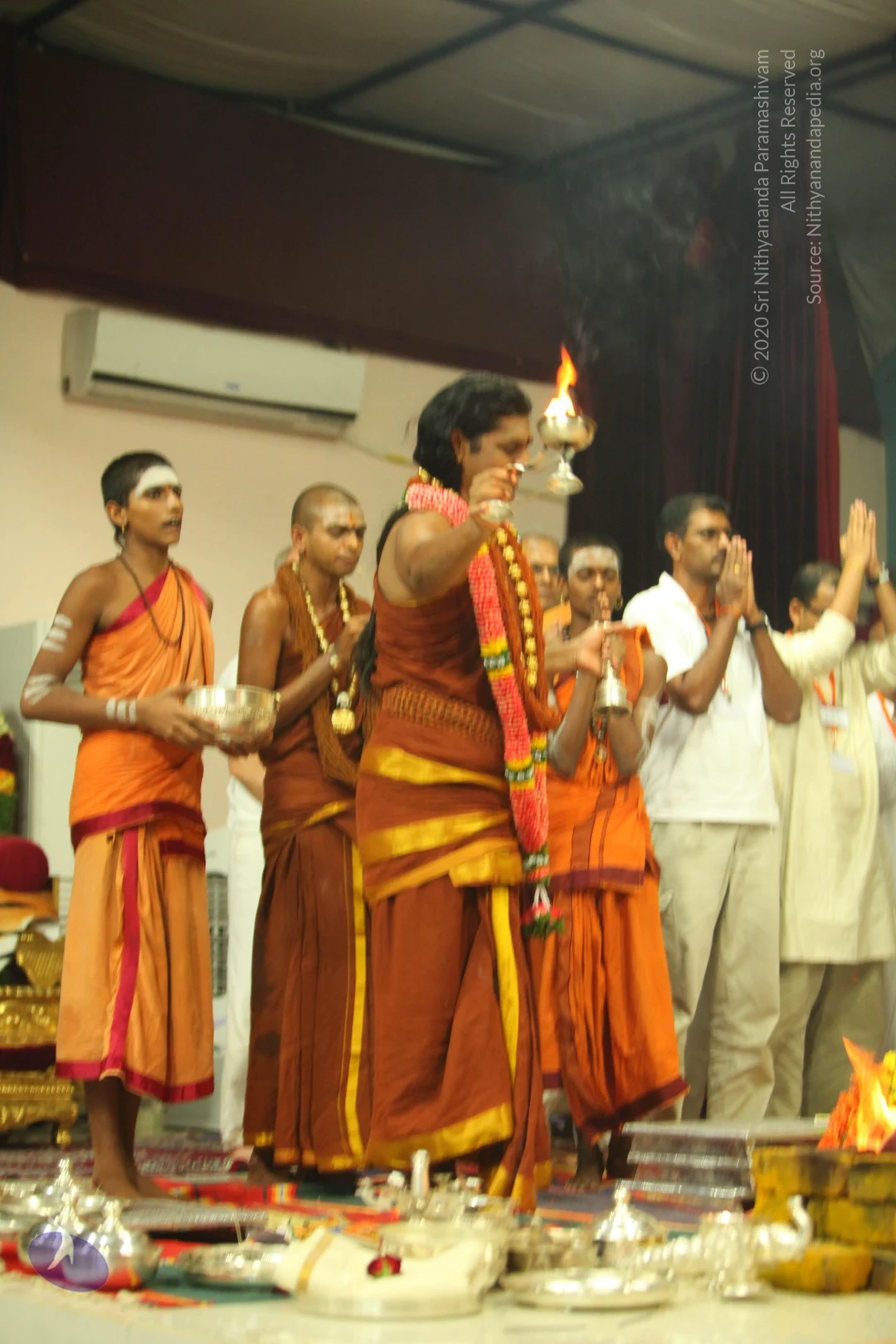
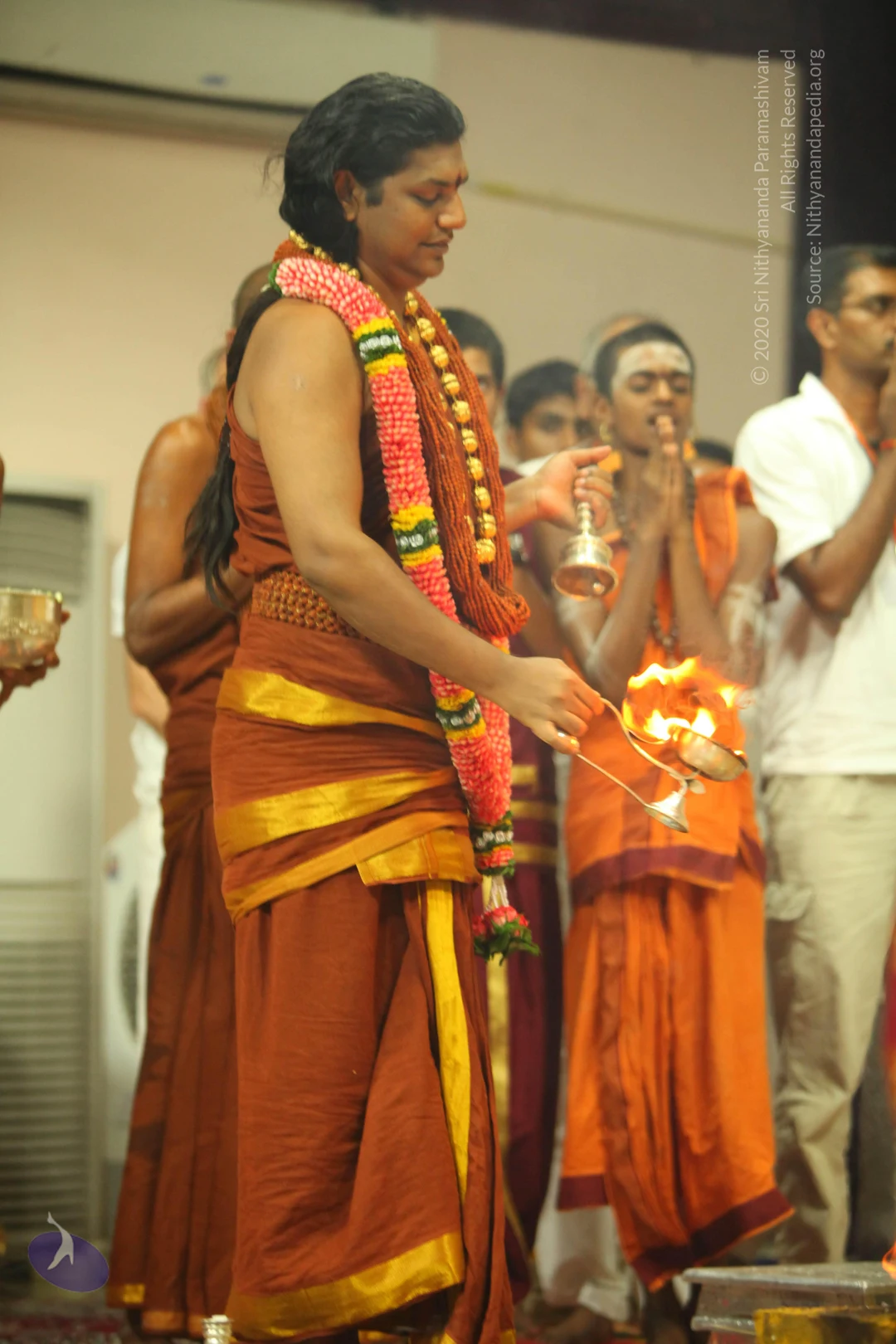
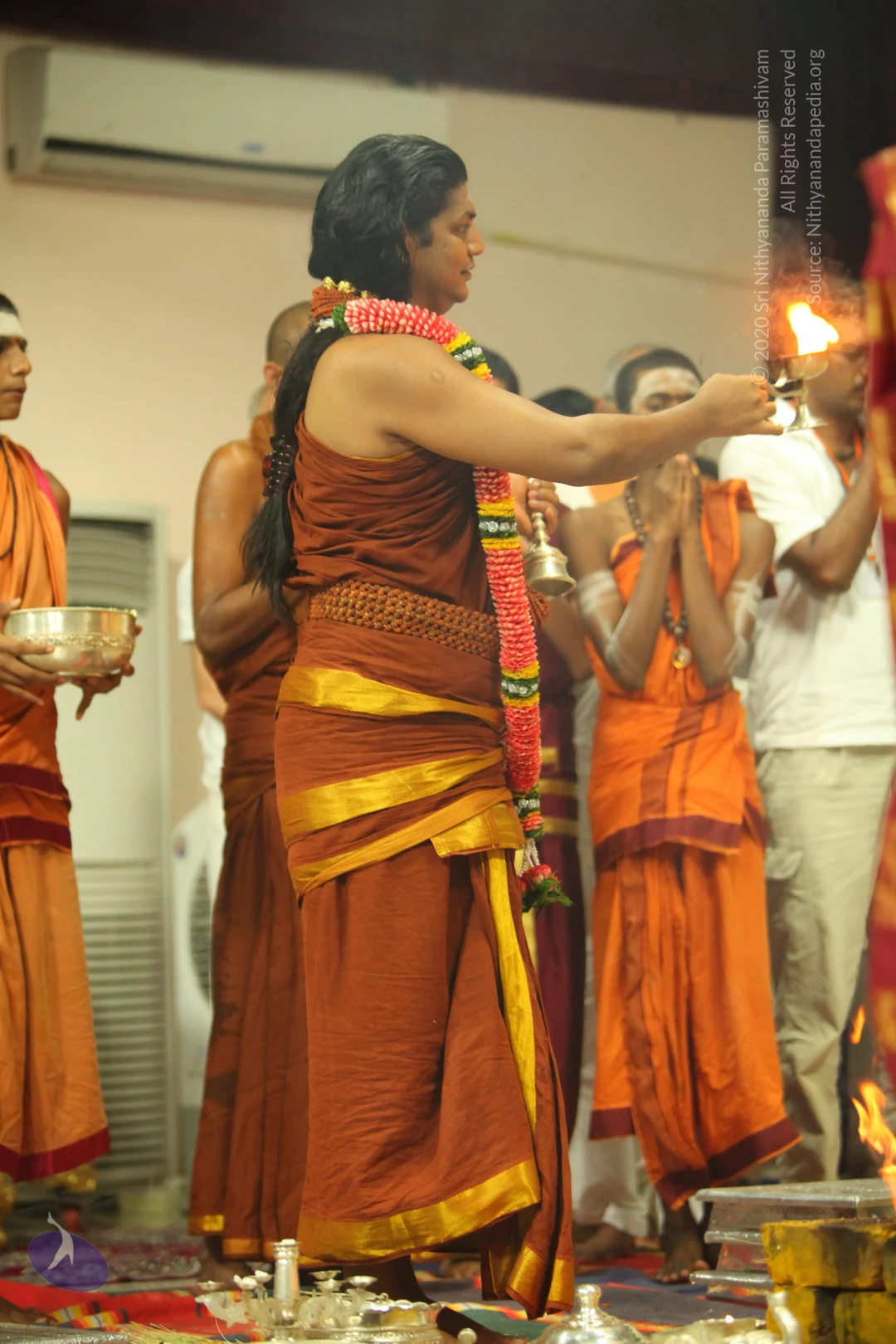
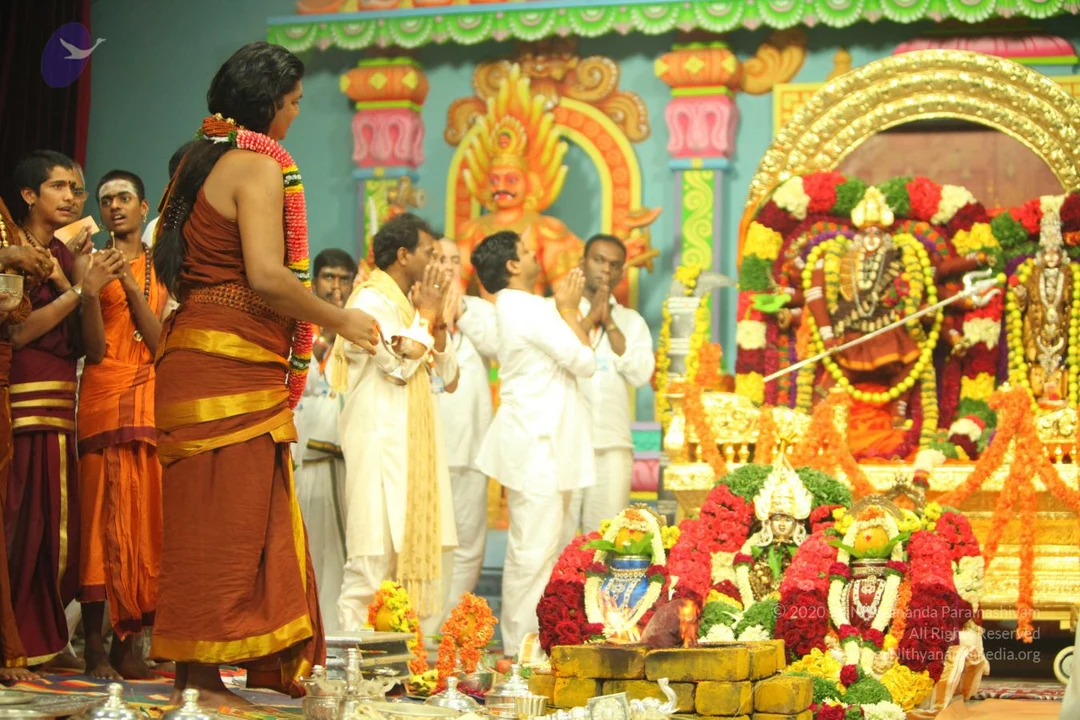
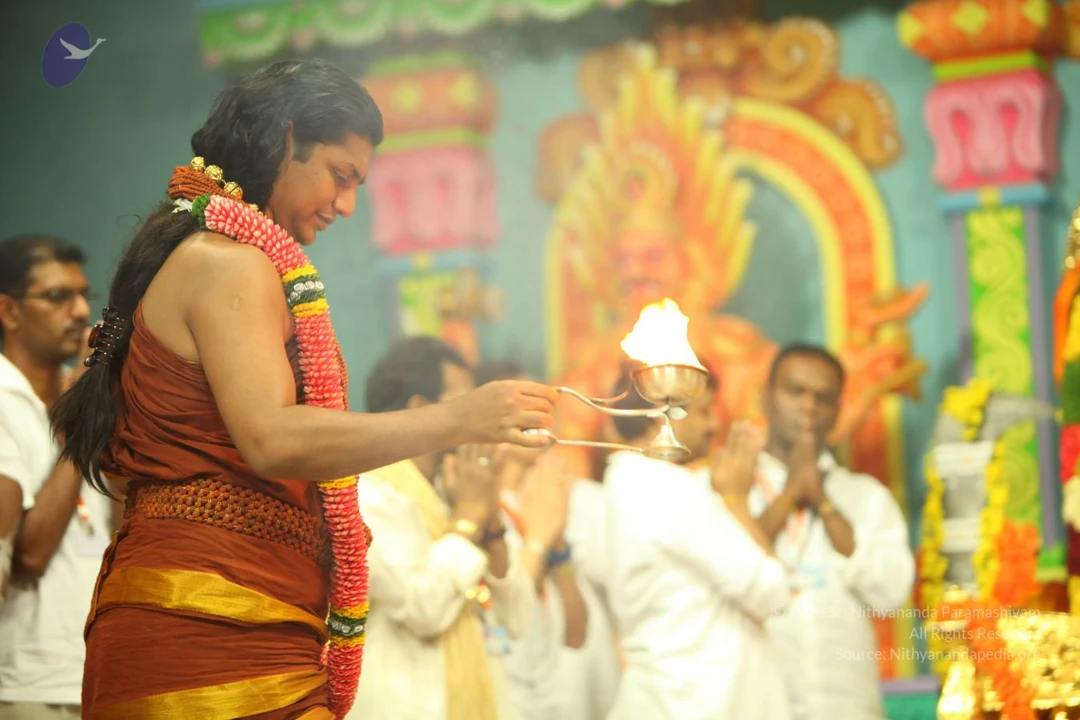
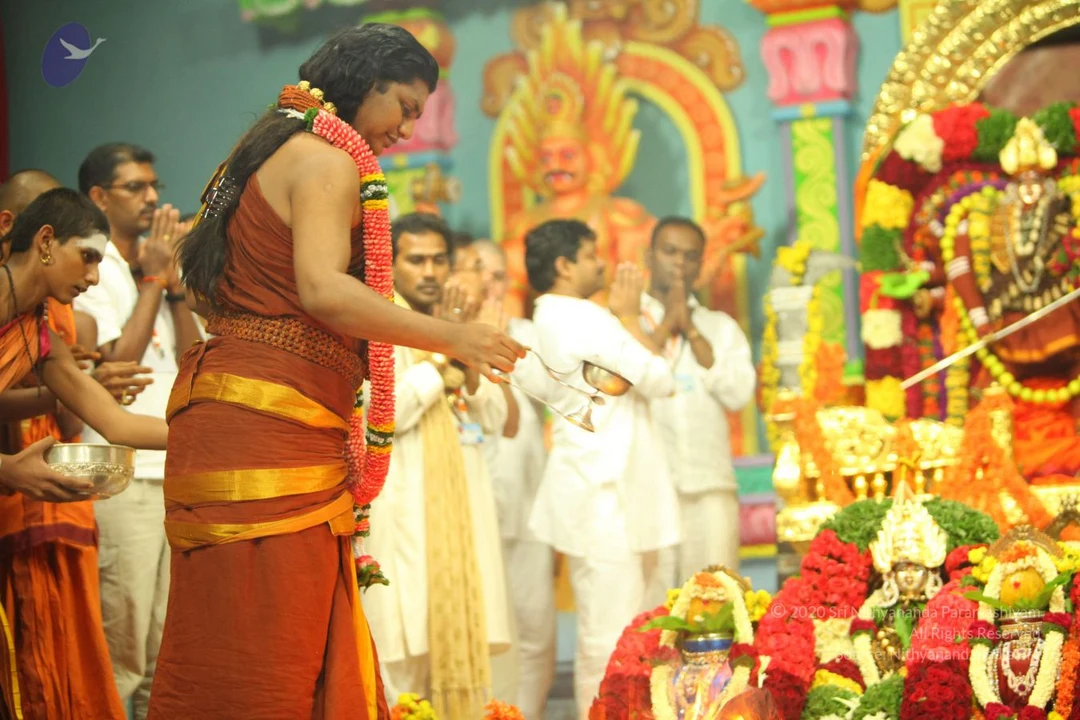
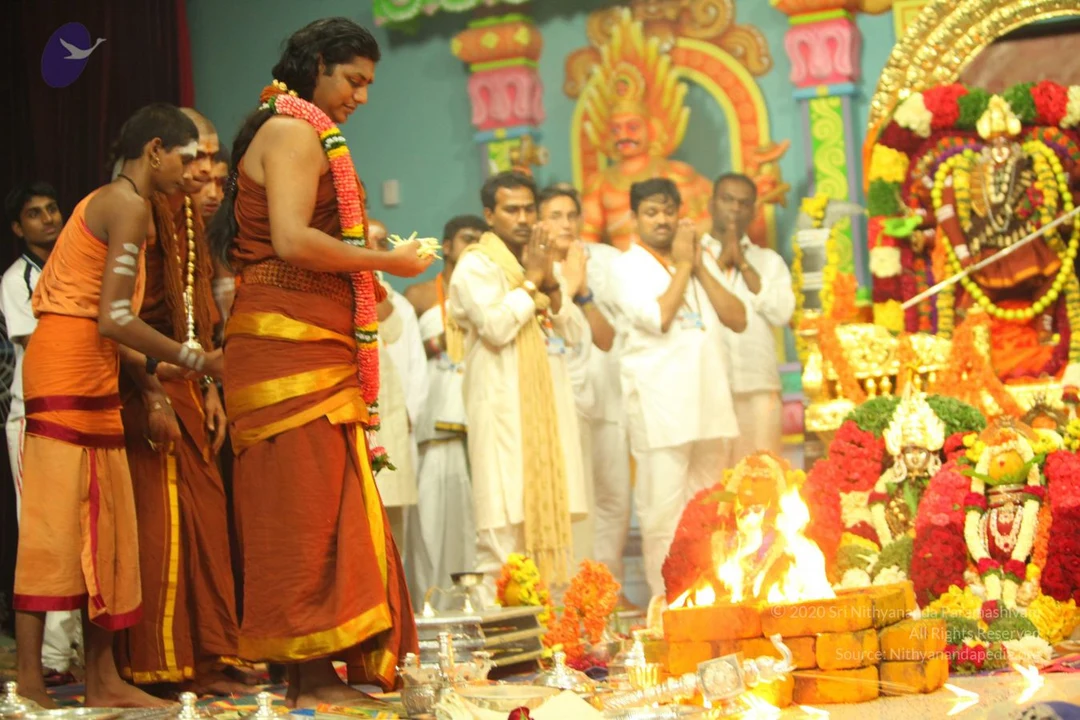
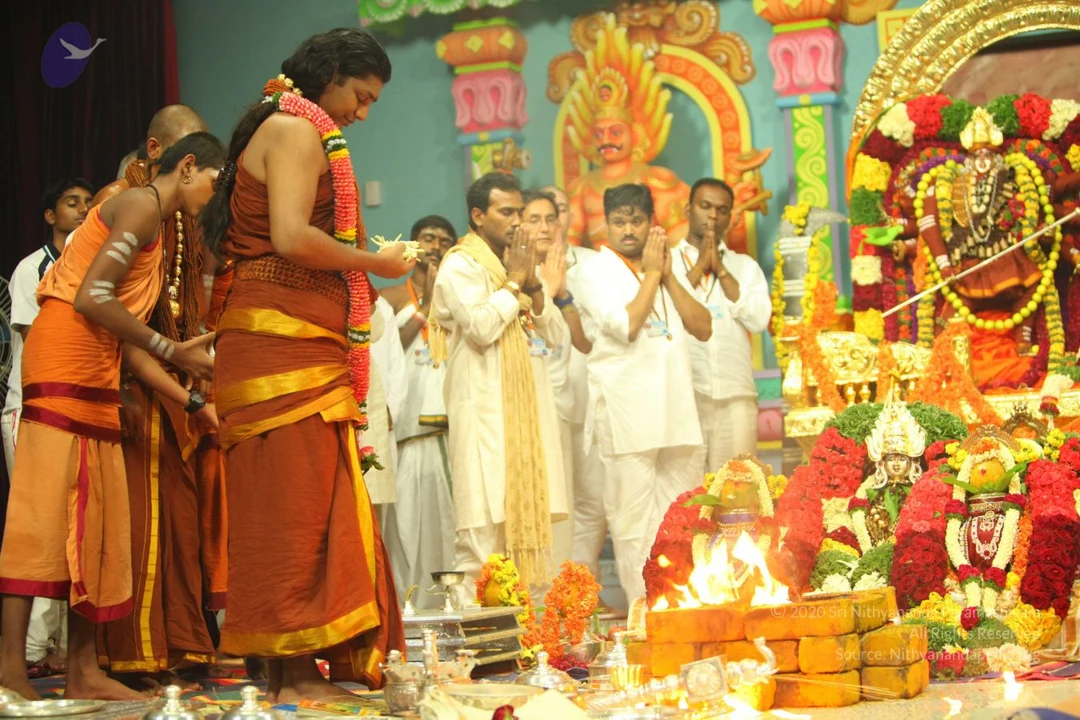
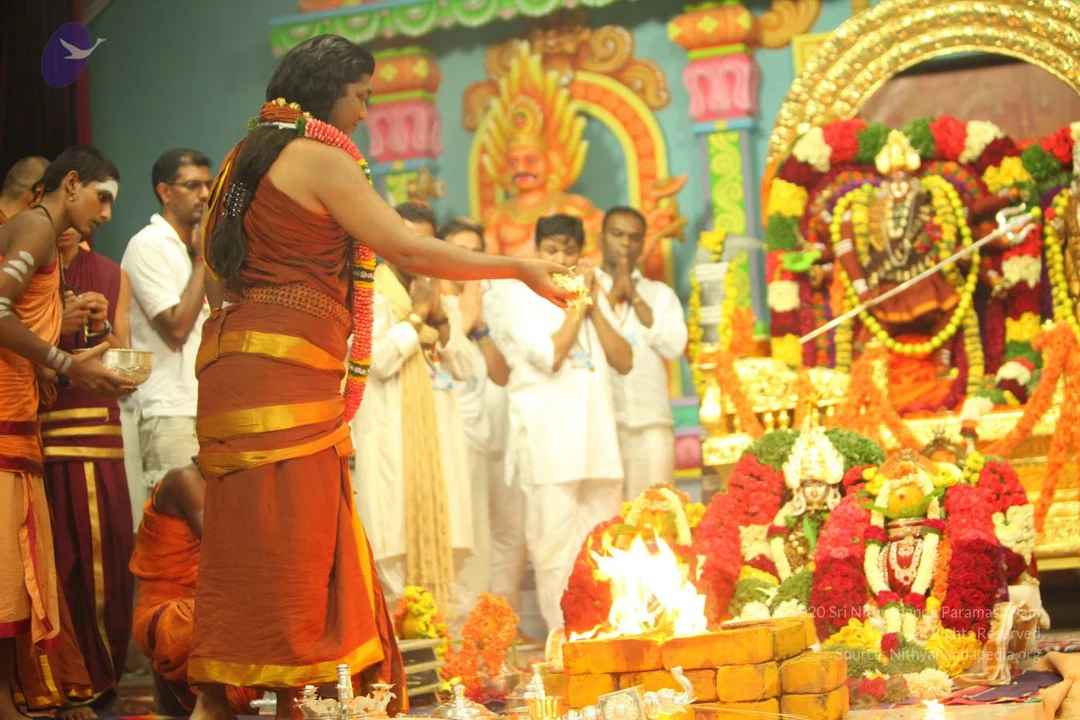
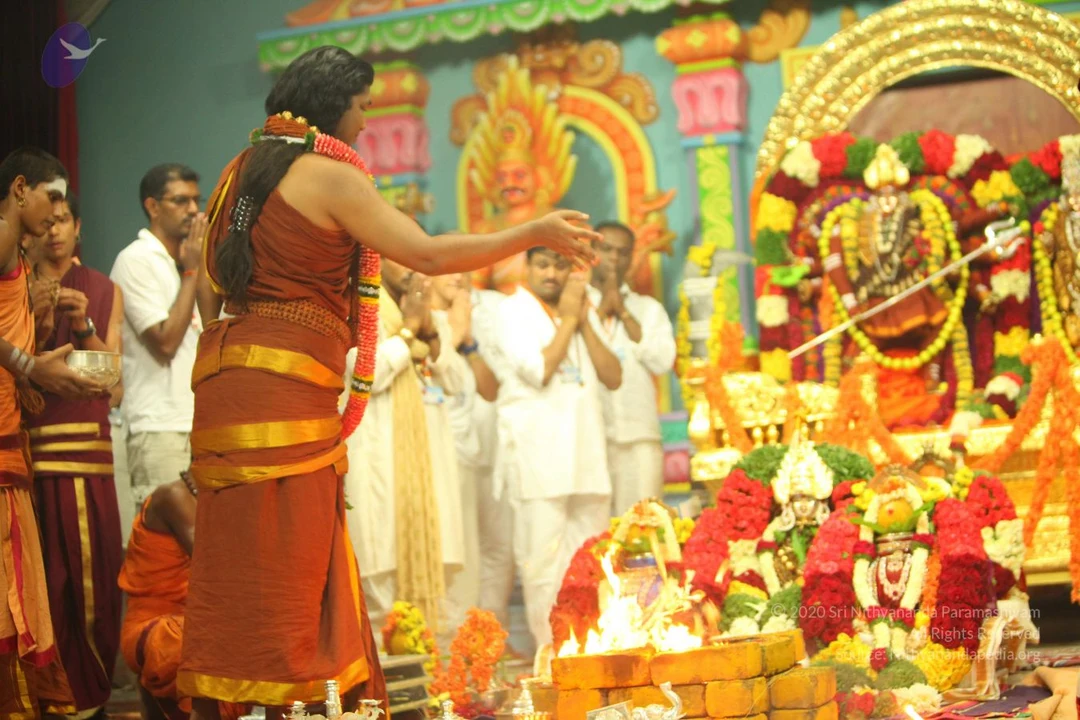
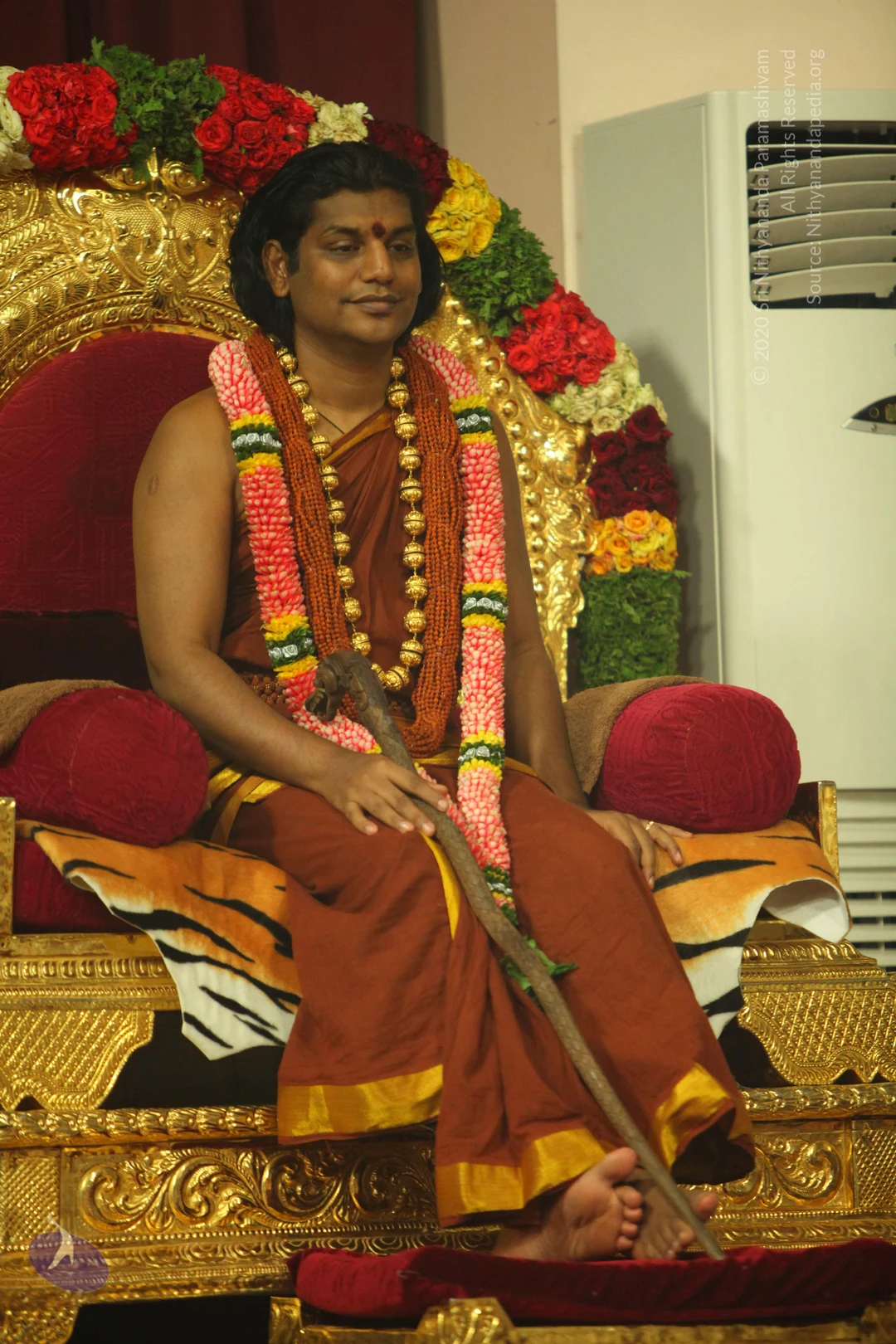
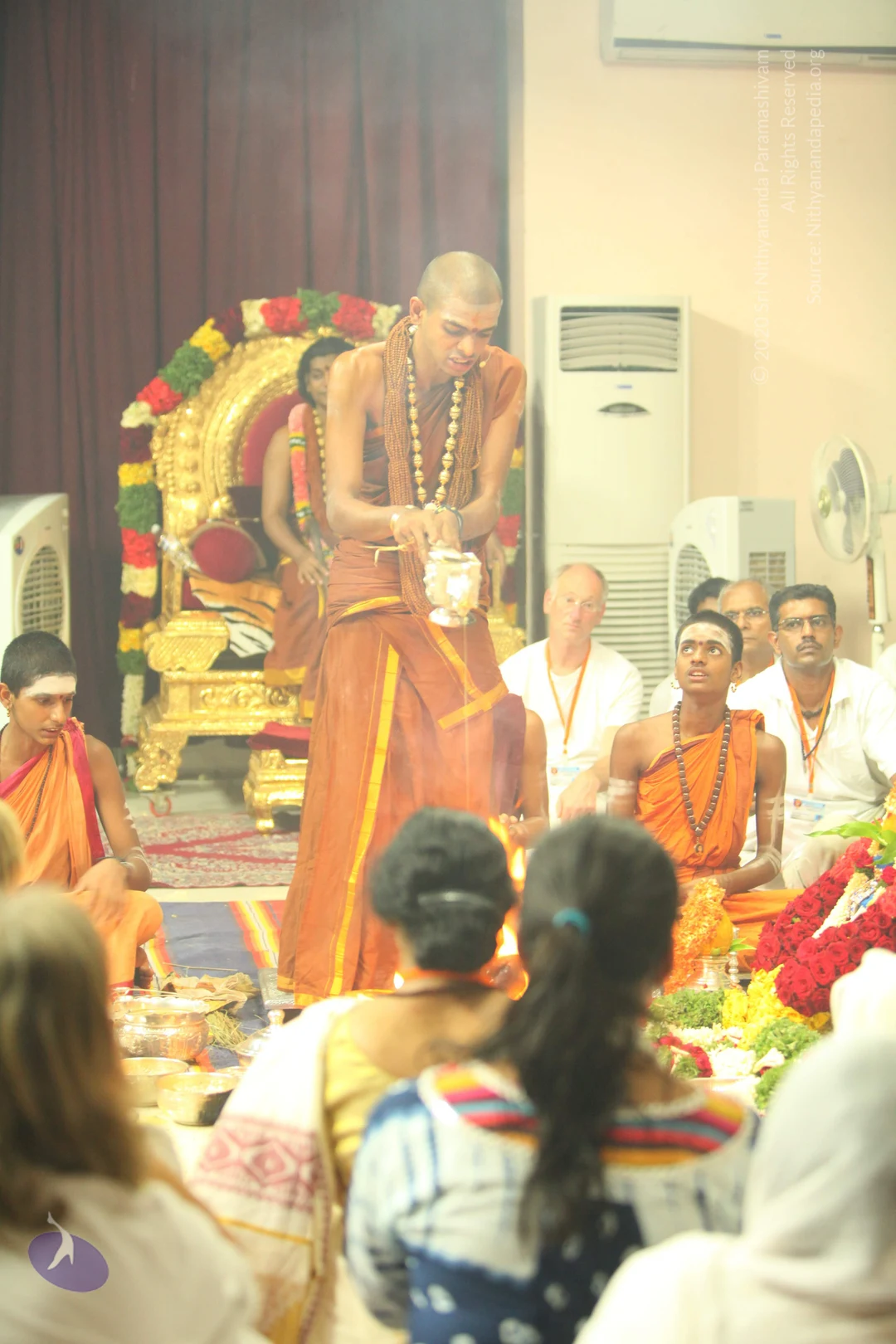
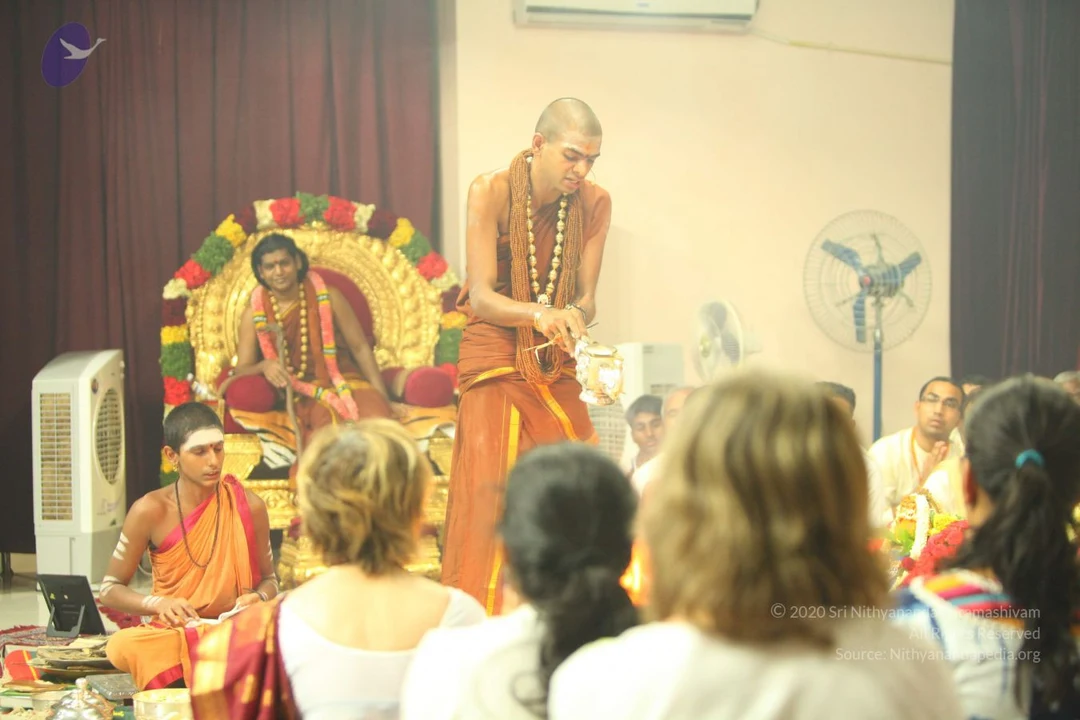
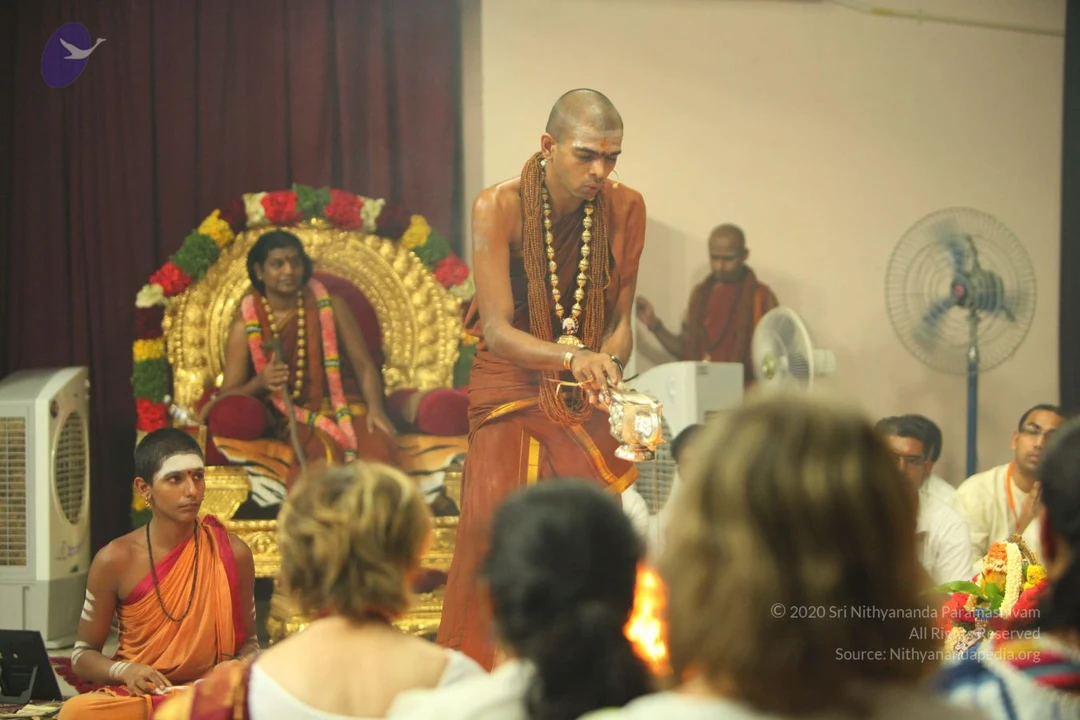
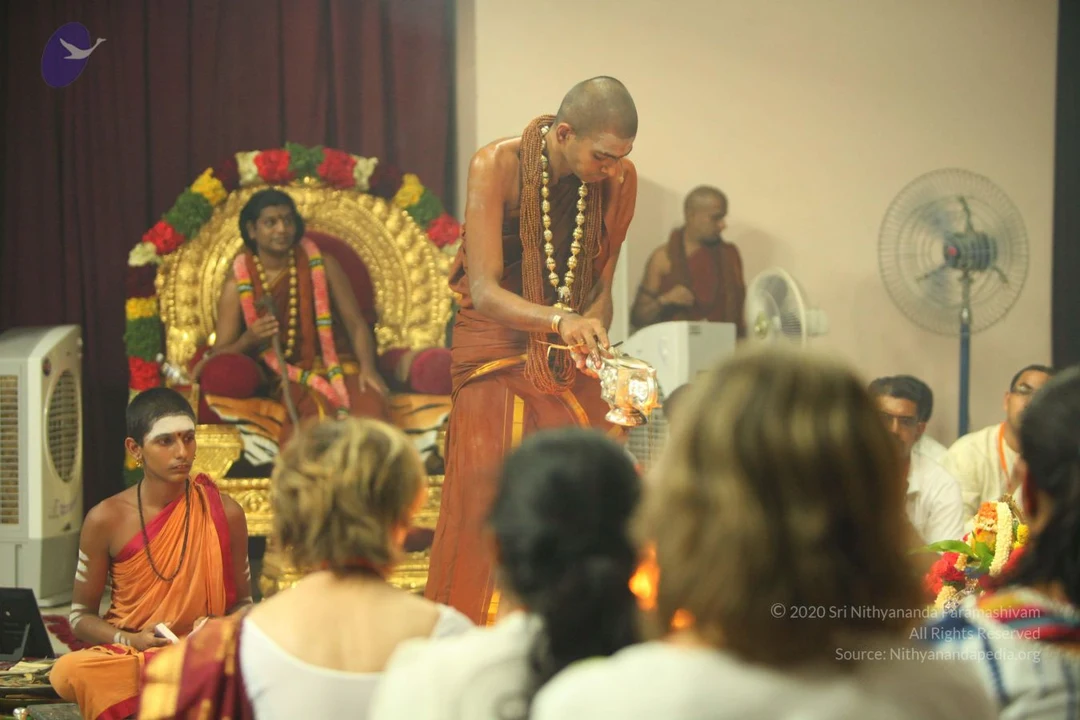
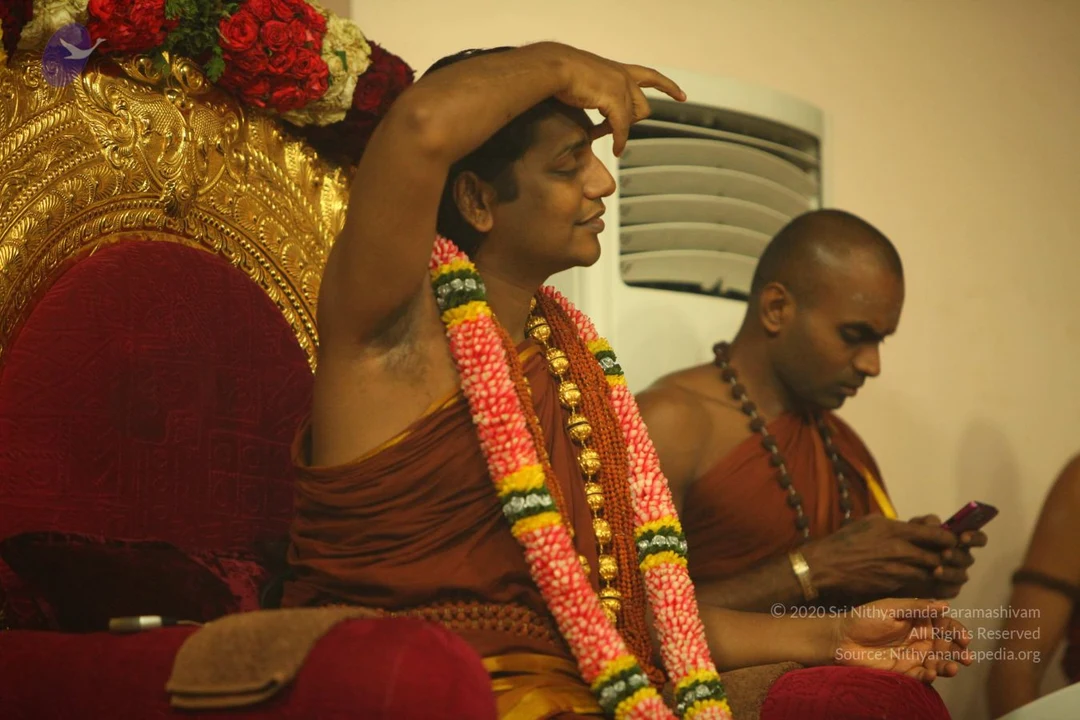
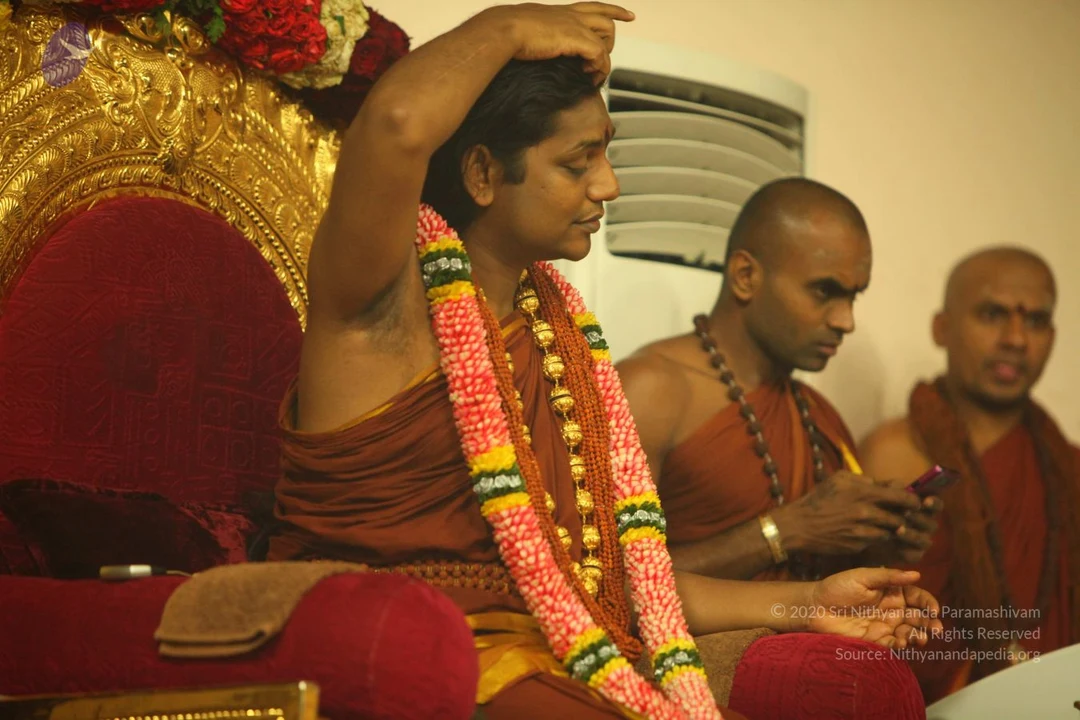
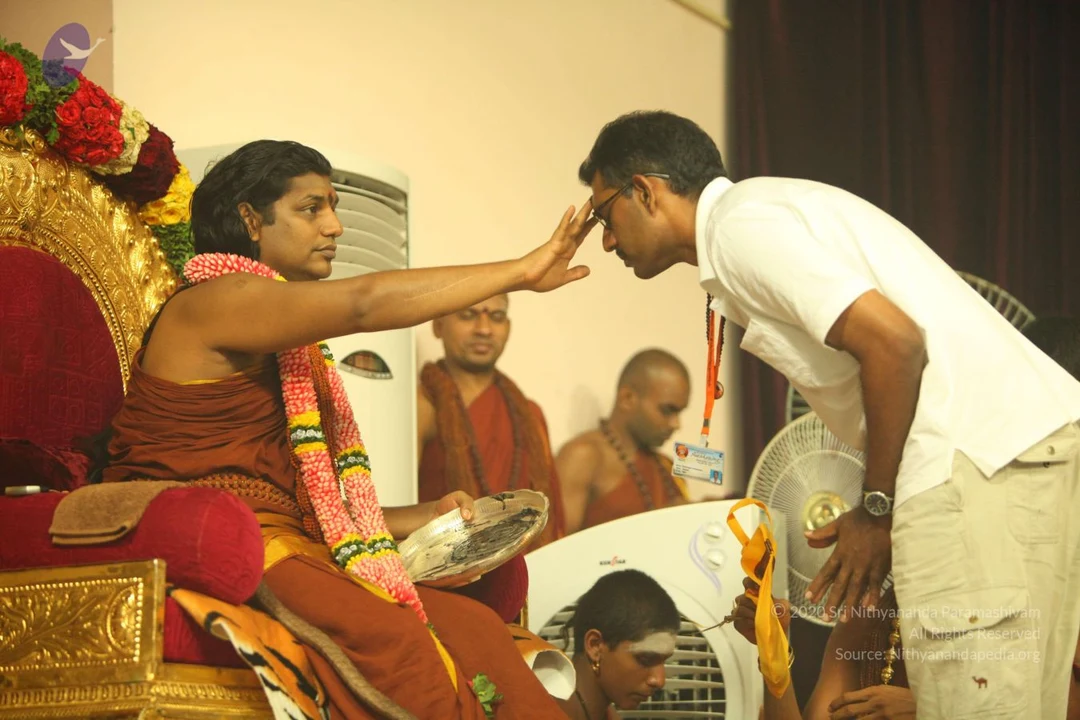
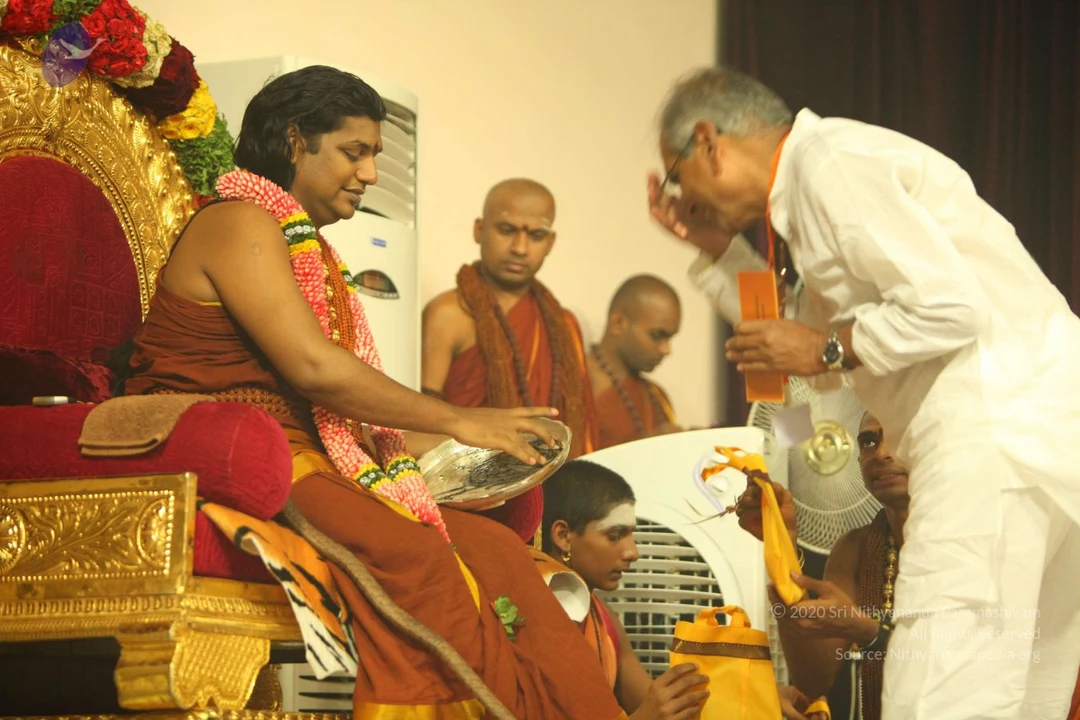
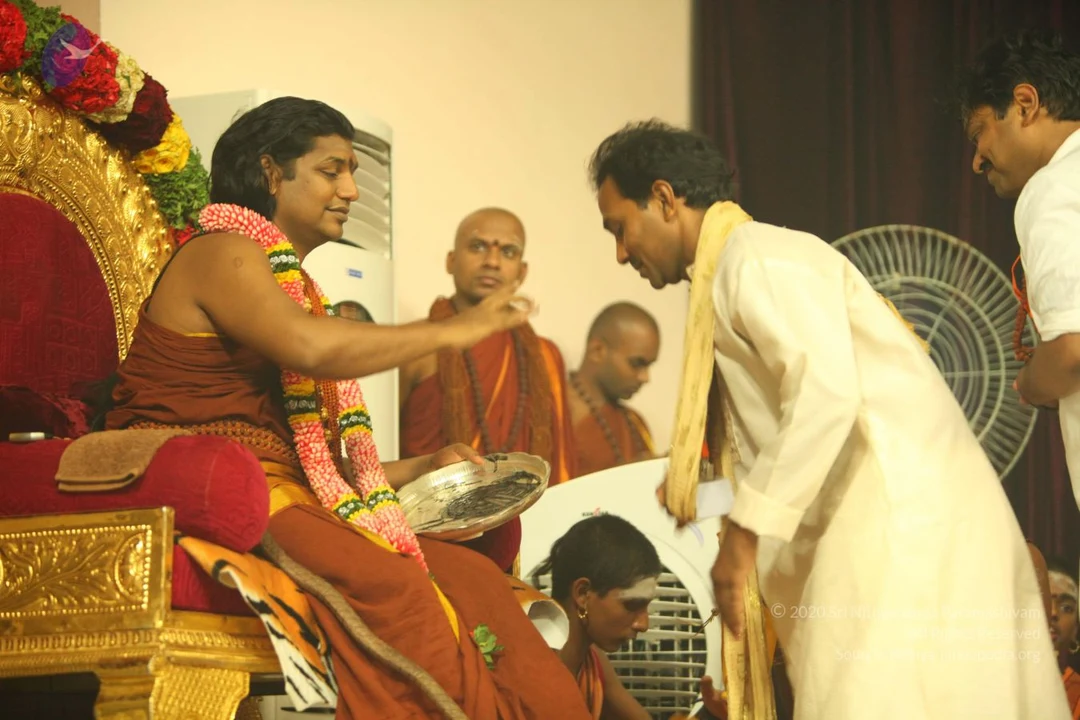
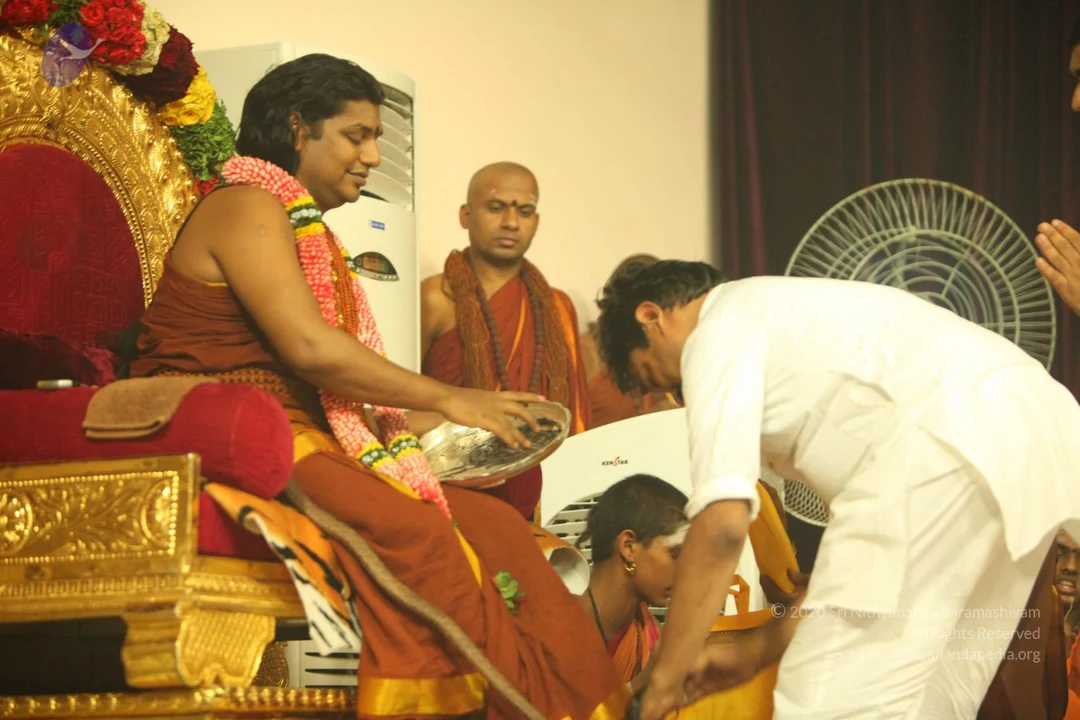
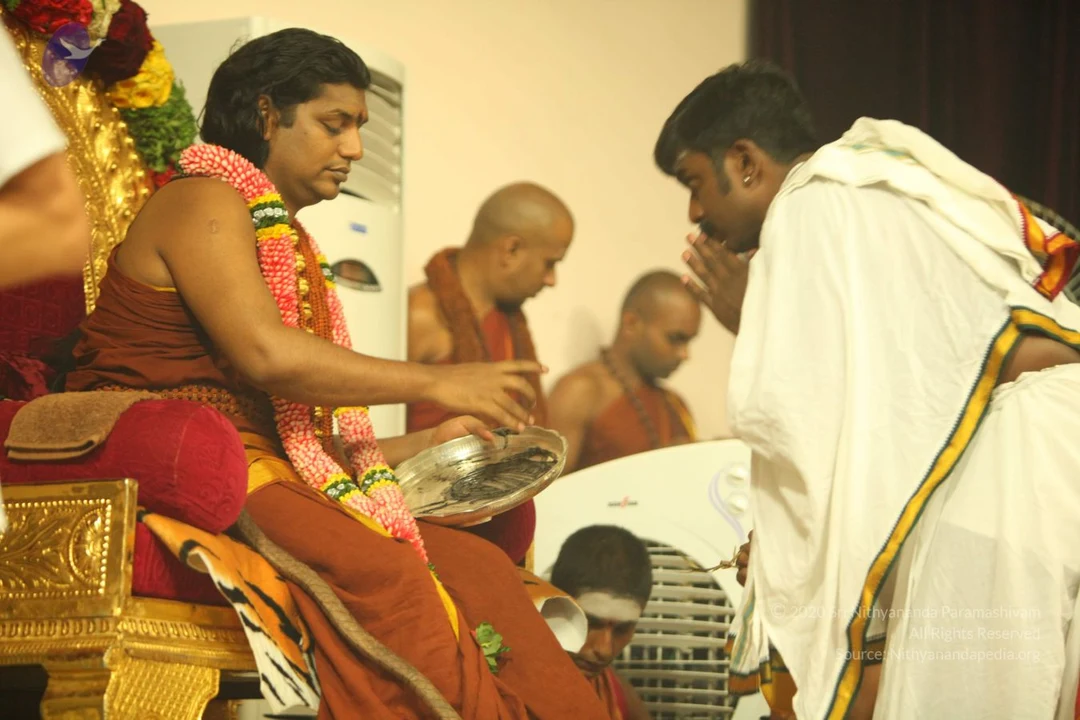
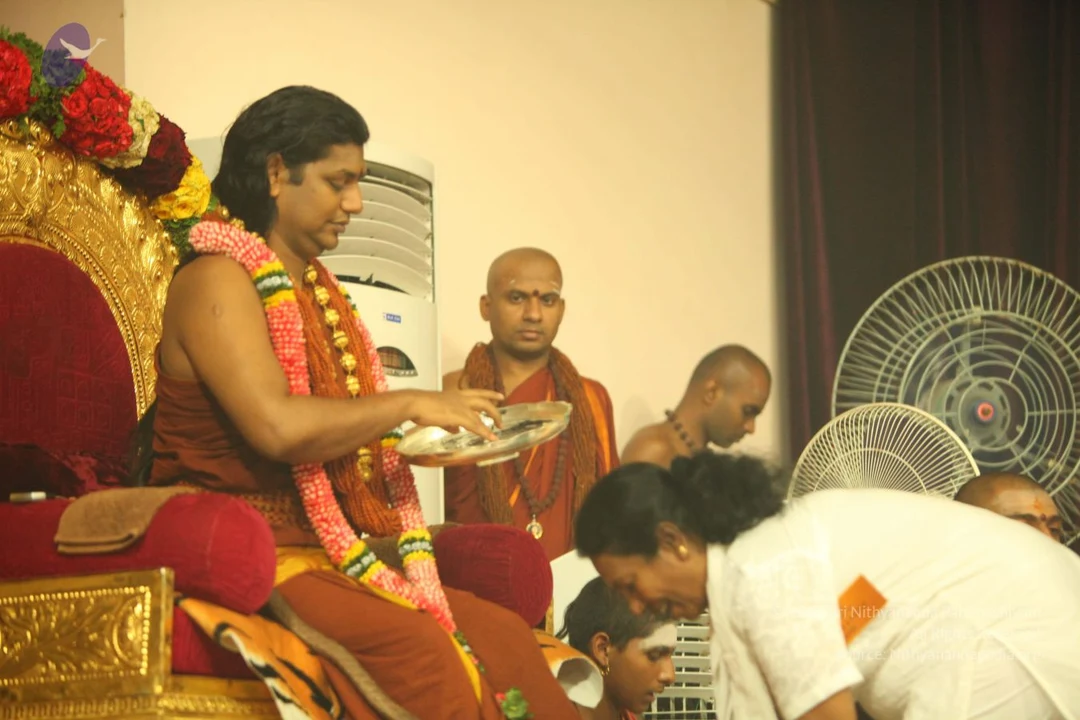
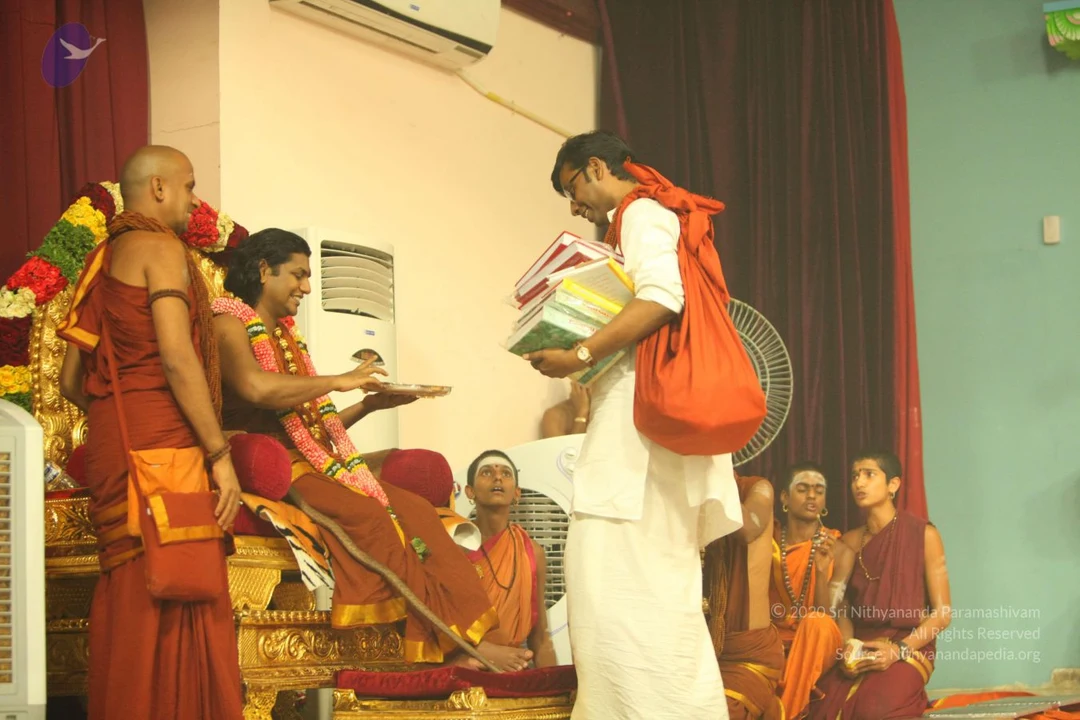
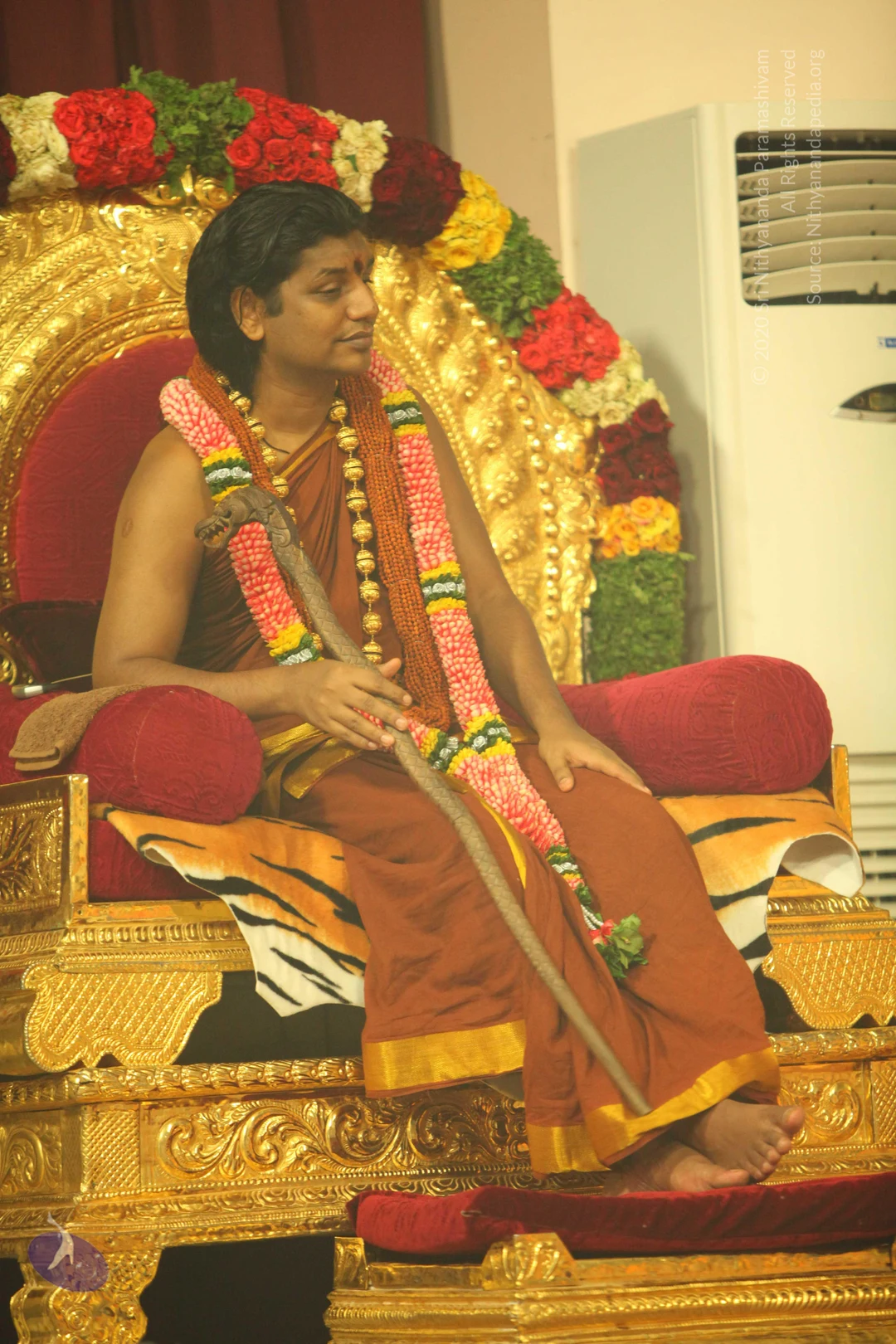
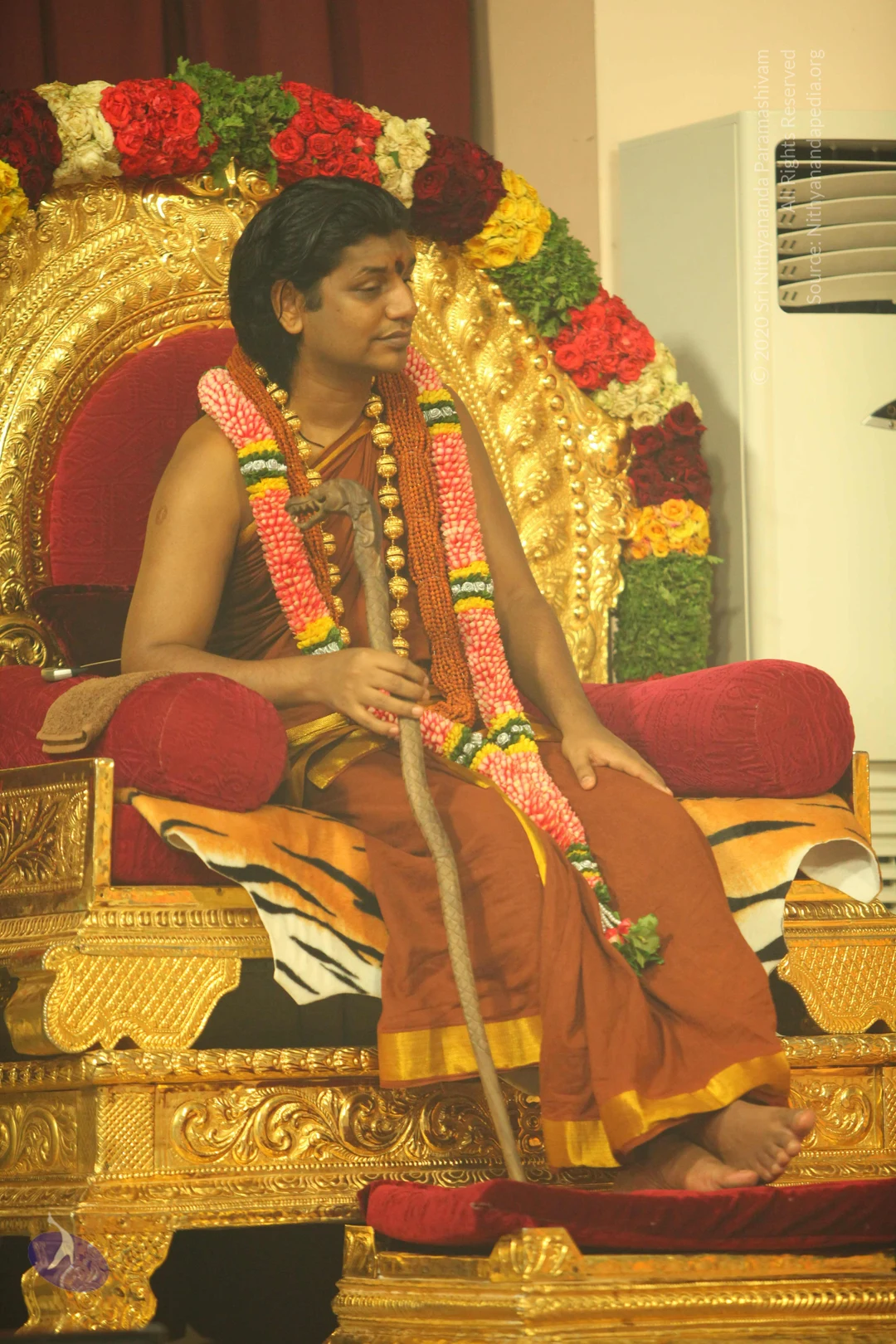
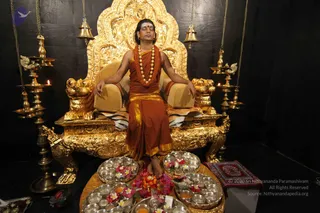
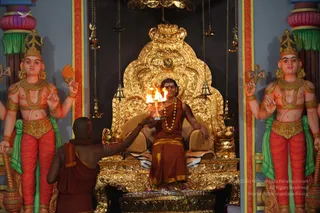
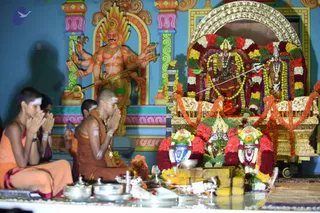
A ritual scene inside a hall with a fabric-draped ceiling and wall air conditioner. In the centre, a man with long dark hair and a multicoloured flower garland, wearing a rust-brown dhoti with gold borders and a rudraksha belt, lifts a small lit lamp toward a fire pit at the right. A young assistant in orange robes with white forehead marks stands beside him holding a small bell. Another young man in orange, with rudraksha beads, holds his hands folded in prayer. A bare-headed attendant in orange and a man in white with folded hands stand behind, and a silver bowl and vessels sit on the floor, consistent with a homa or puja.A seated man in a rust-red and gold-bordered dhoti and shawl sits on an ornate gilded throne with lion-head armrests and a golden canopy above. A thick rudraksha mala with gold beads hangs around his neck, and he has a red bindi and horizontal white marks on his forehead. Beside the throne a brass lamp flame burns on a tray in the foreground, held by a person whose arm is partly visible at left. Hanging brass oil lamps and bells decorate the dark backdrop. Swamiji (probable): the long swept-back hair, saffron-red garments, rudraksha mala and ceremonial gold ornaments match the page's claim that he is present, so the appearance-based label applies.A photograph of a Hindu puja at a temple-style hall. Two priests sit cross-legged on a raised platform in front of a large orange-painted deity statue holding weapons and a dark floral-garlanded altar with flower-decked deity figures. The priest in front has a shaved head, wears an orange-brown cloth and a long rudraksha-style mala, and has white marks on his arms and chest; he holds a lit lamp and performs aarti with folded hands. The second priest beside him wears a maroon cloth with a bare upper body and white marks. Brass plates, bowls, a kalasha-style vessel and flower garlands in red, orange and yellow surround the altar. Several standing and seated devotees in white are visible in the background. The pictured priest's identity cannot be confirmed from appearance, so he is described by role only.

May 17 2013

Original wiki page
Contents

Title

May 17, 2013

Description:

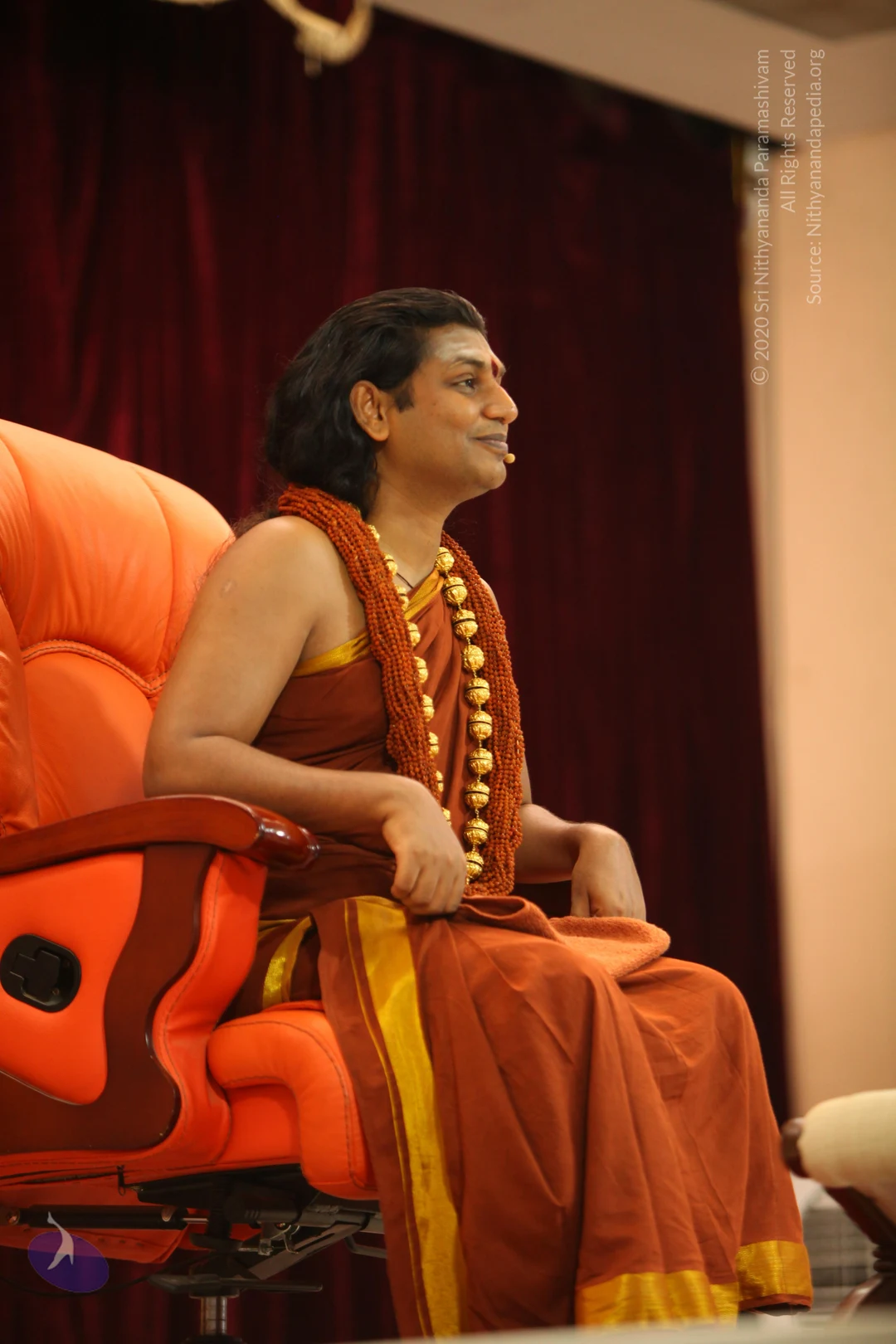
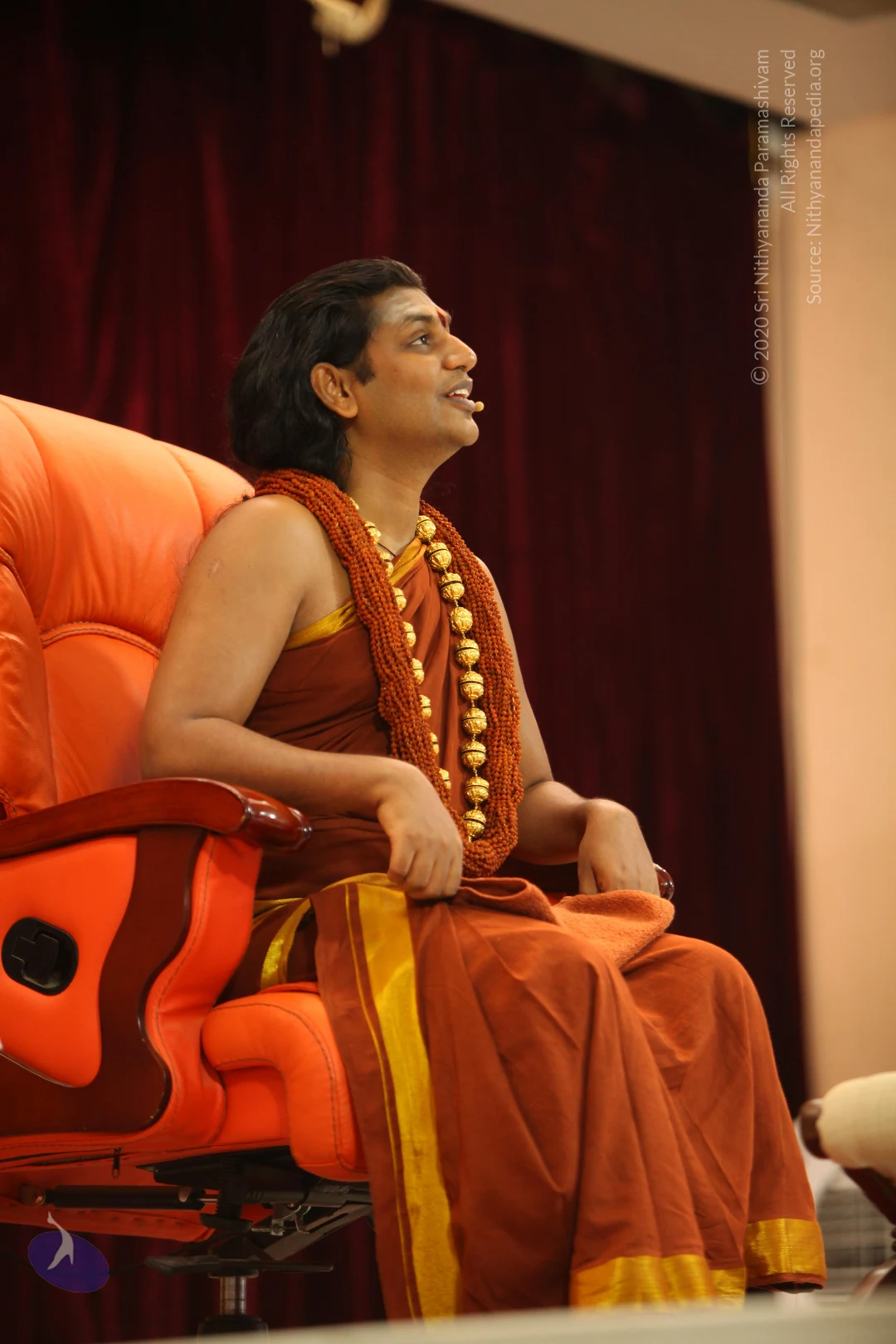
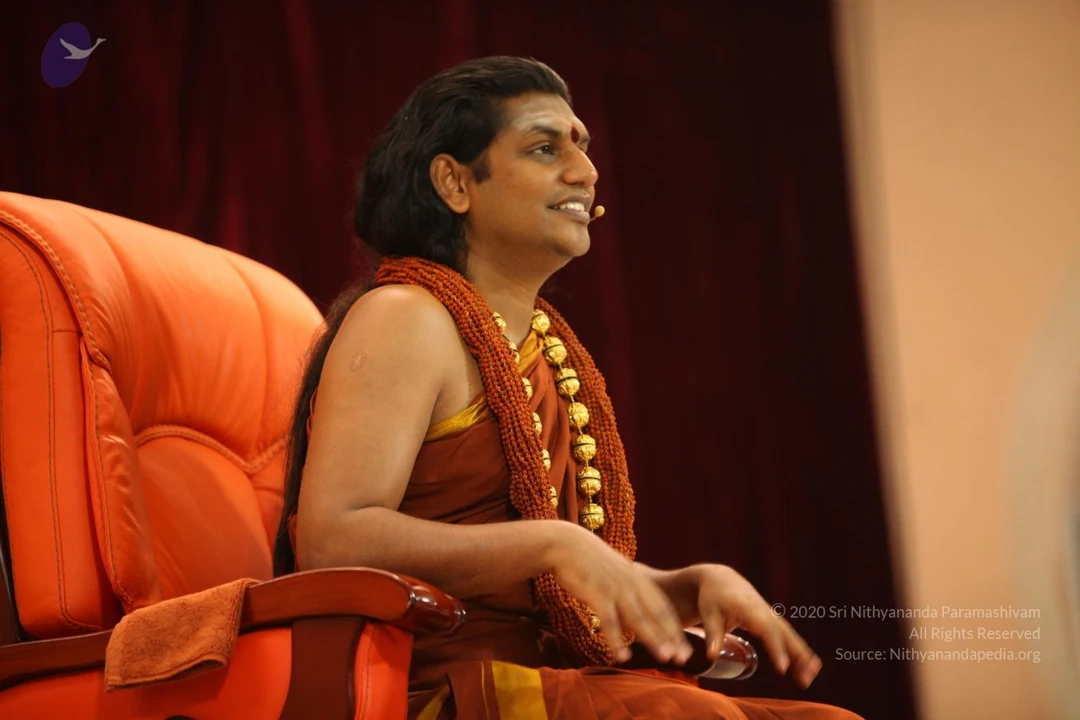
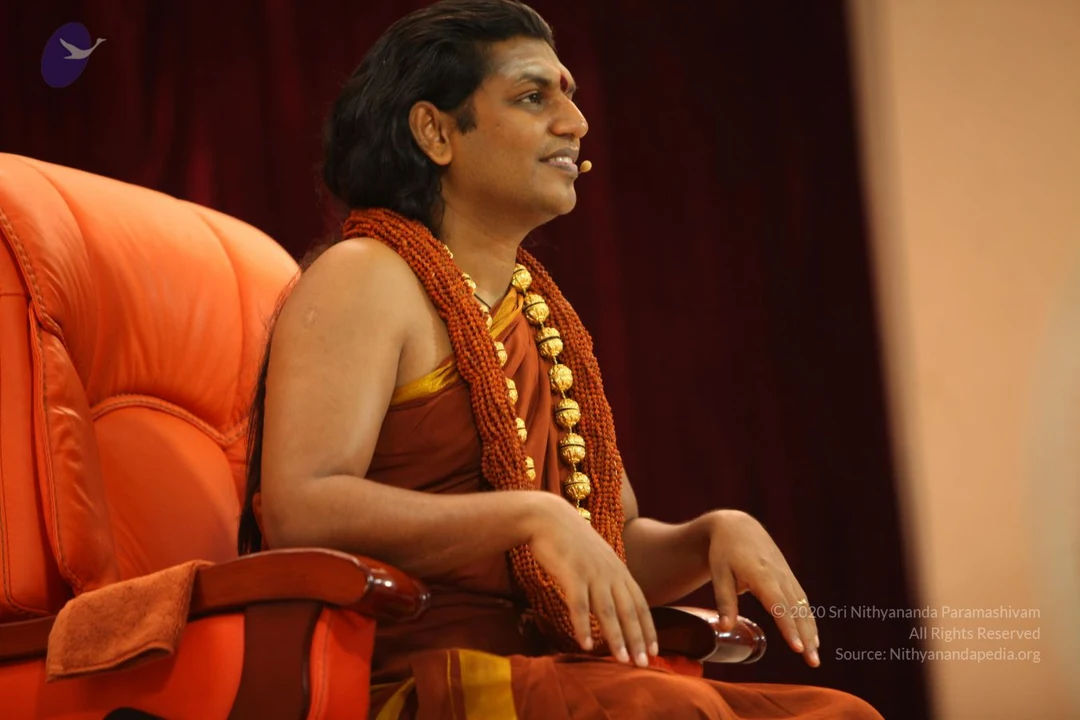
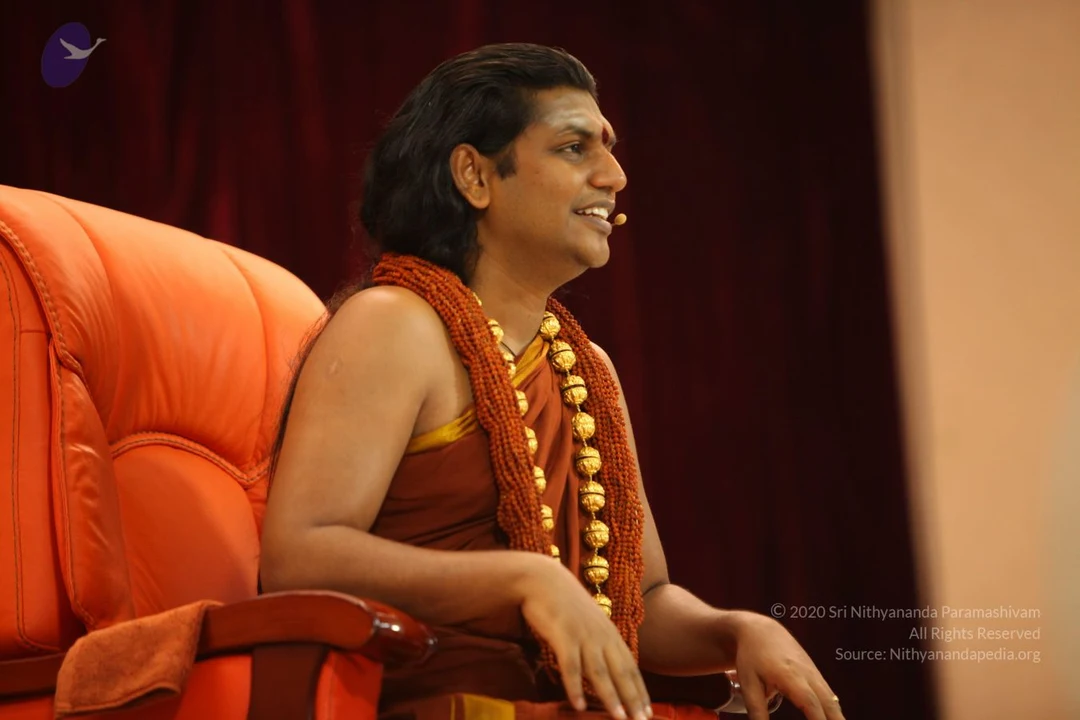
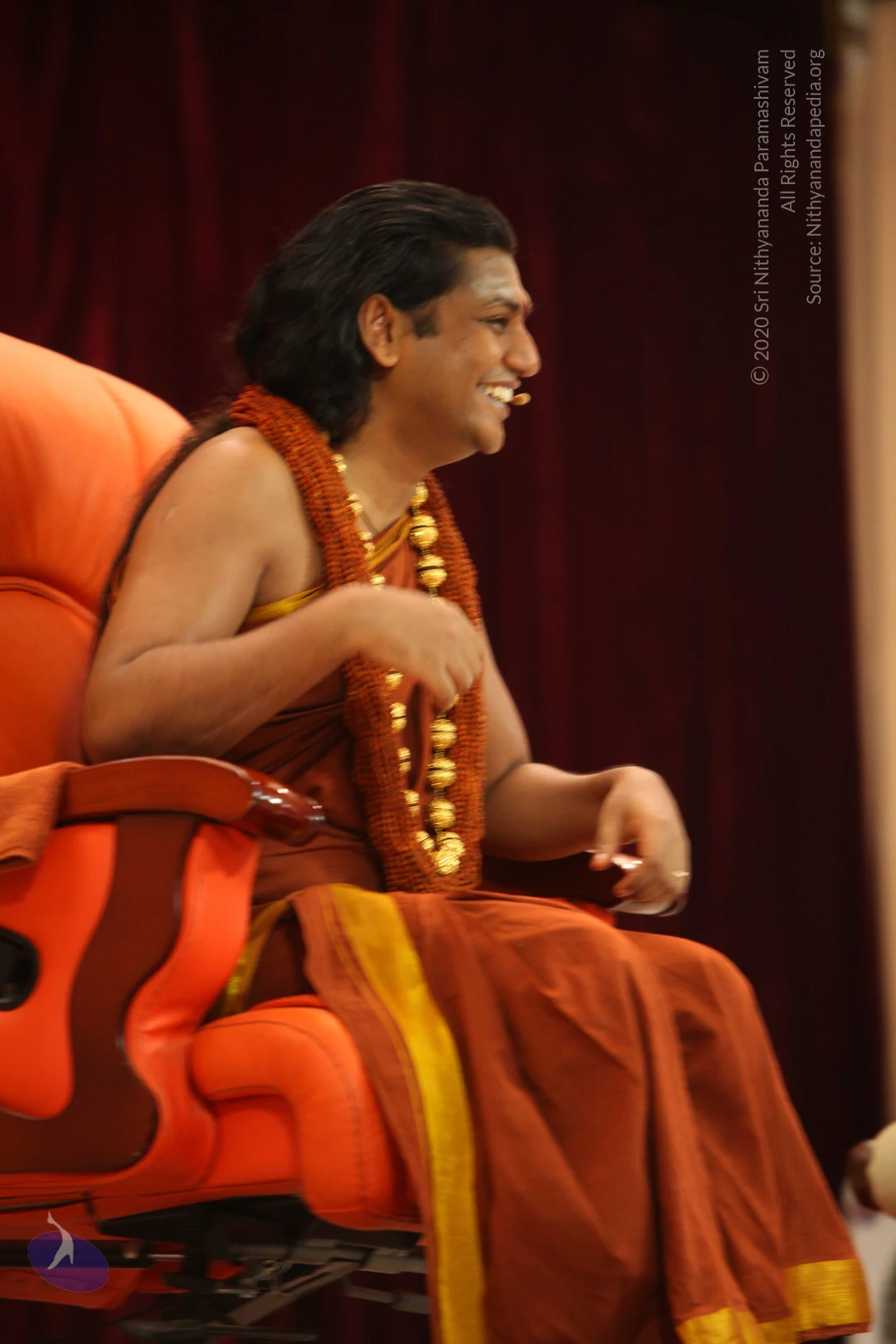
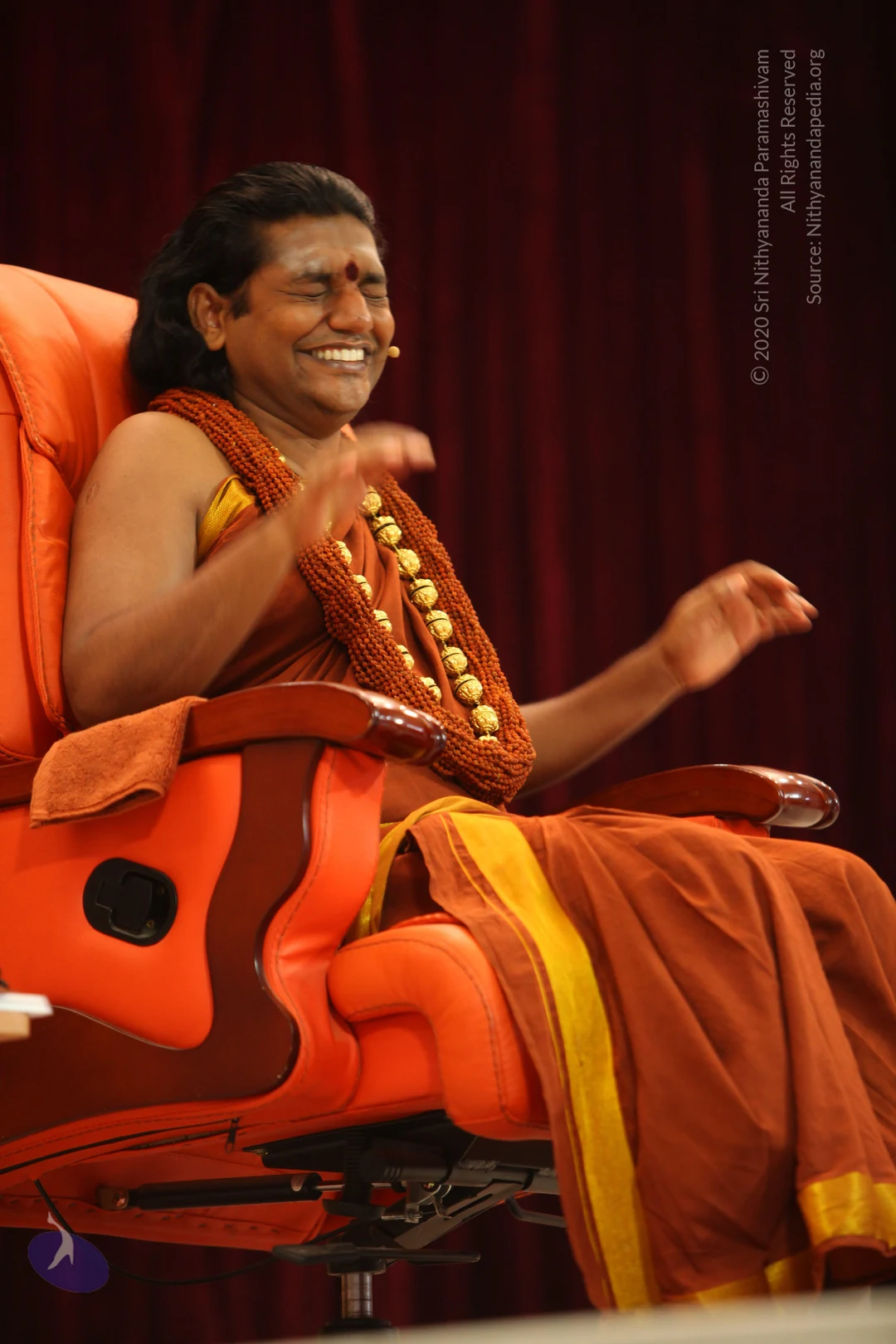
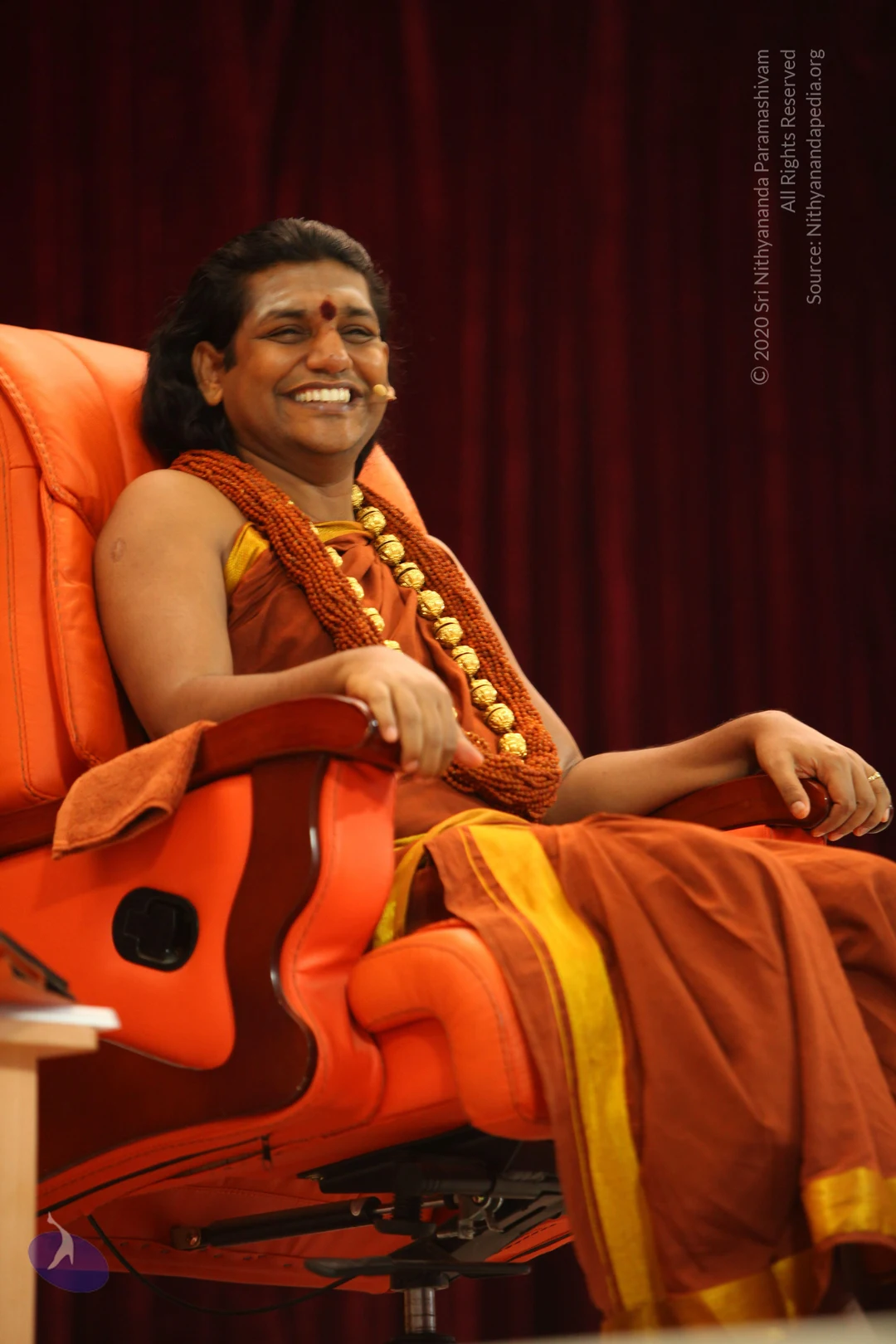
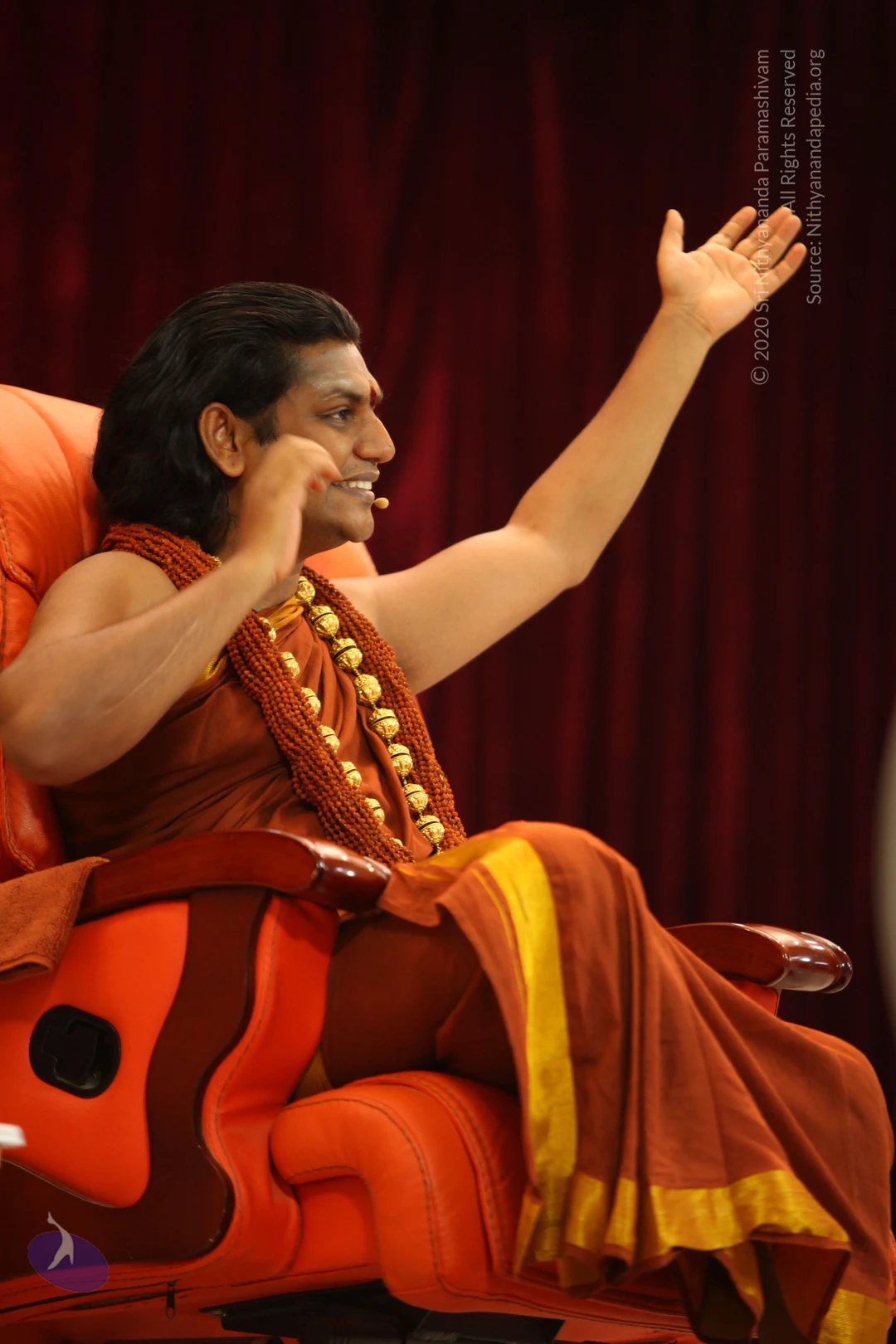
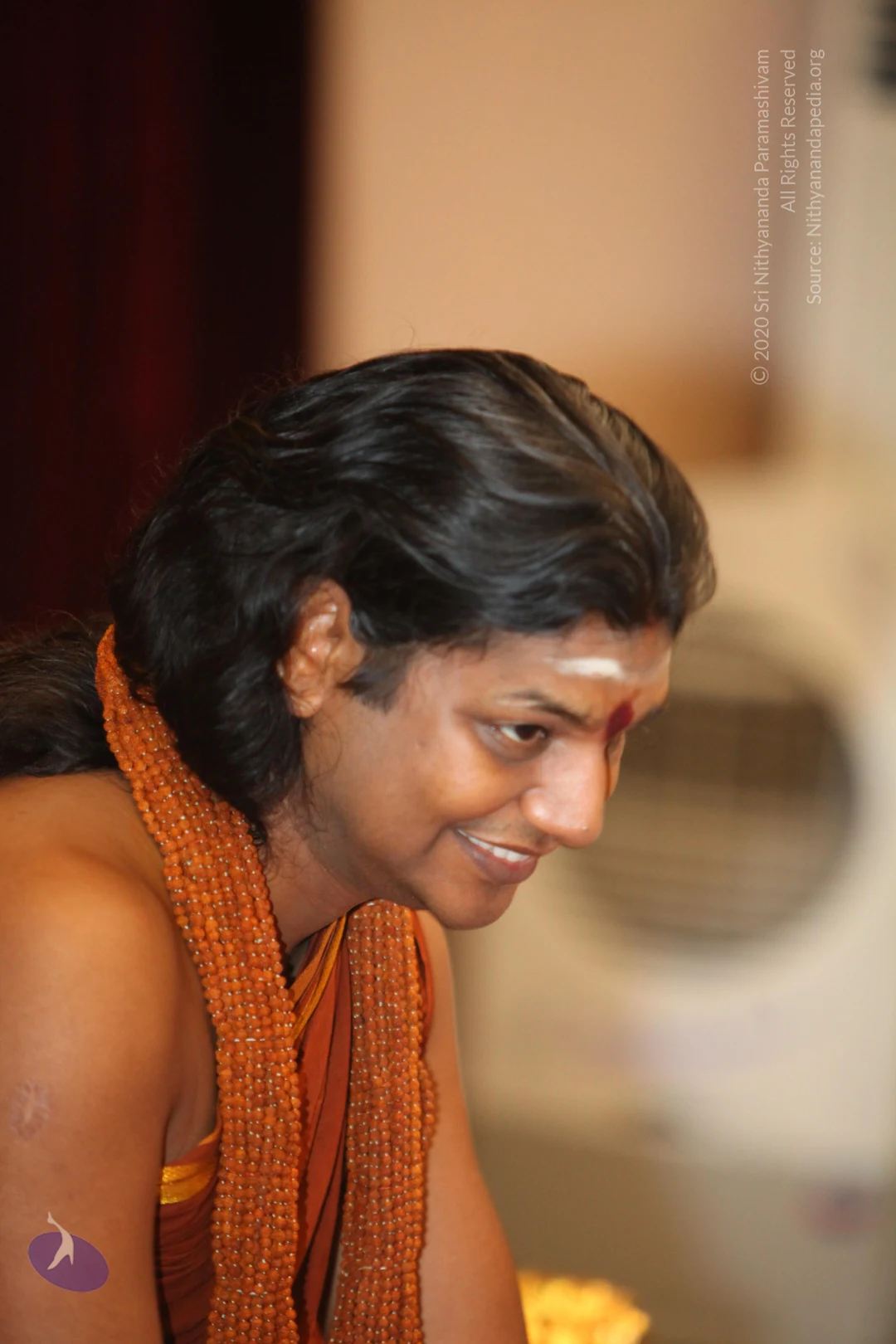
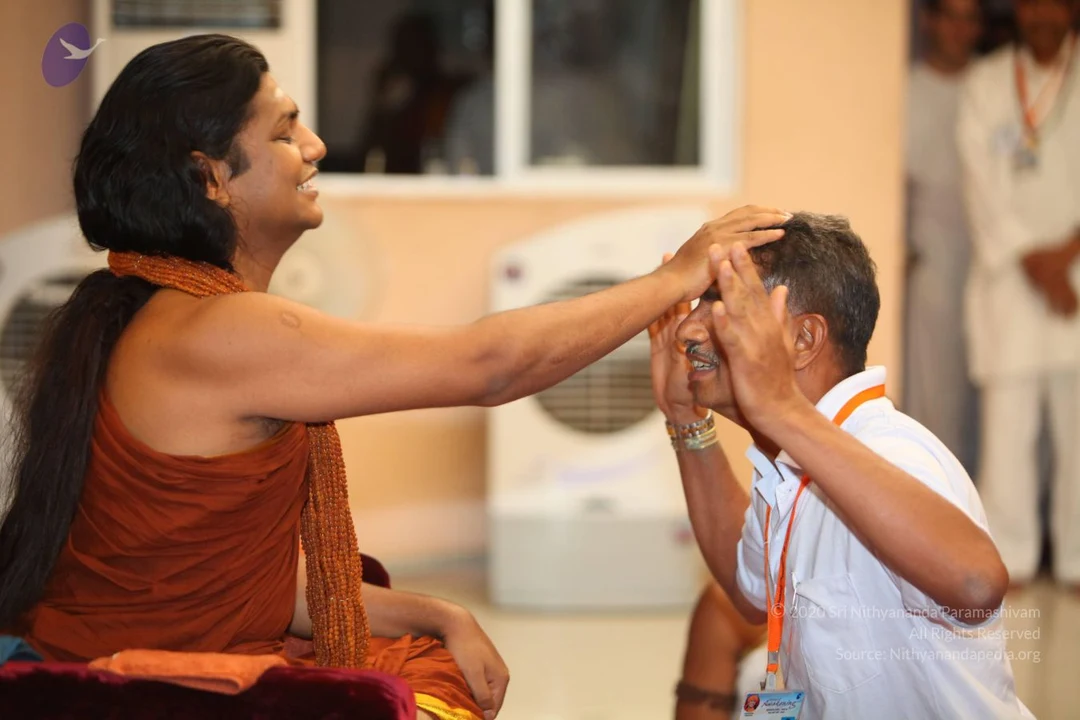
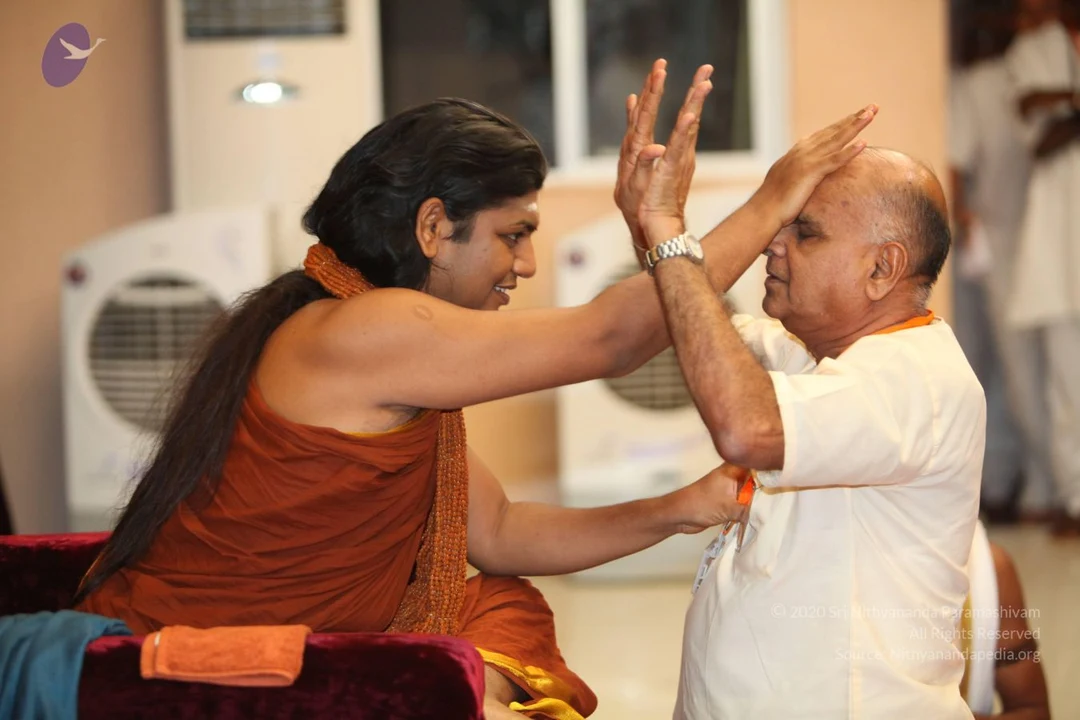
In today’s morning satsang, Paramahamsa Nithyananda answers questions from devotees. He points out that sanyas -- monastic lifestyle -- is the source of all cultural benefits. Ayurveda, engineering, even weaving, were all revealed to the world by sanyasis. Sanyas, He declares, is the backbone of Bharat, of historic India. Nithyananda also speaks on the problem of pain. When we look at any pain we have with integrity and authenticity, we discover that we can move beyond it. They are the immediate cure for suffering. Nithyananda replies to the question of how to come out of selfishness in the Guru-disciple relationship. He instructs us to show our gratitude by sharing with others whatever He has taught to us. When we enrich the world, we are thanking our Guru.

Link to Video:

VideoAudio

Transcript:

17 MAY 2013 – Enrich! Enrich! Enrich!

Nithyanandeshwara Samaarambhaam Nithyanandeshwari Madhyamaam | Asmath Aachaarya Paryanthaam Vandhey Guru Paramparaam ||

I welcome you all with my love and respects. I welcome all the devotees, disciples sitting with us all over the world at this moment attending the live satsang through Nithyananda TV, Lotus News and Sadhana TV, Ishwar and Disha. Today also I will continue to answer your questions to make this tattvas practical as part of you, your life. Start the Questions:

Ma Maneesha: The first question today is from Inner Awakening ID No.198 Akshay. Swamiji, please speak on why a Sannyasis life is better than that of a Gruhasta and why parents object their children taking Sannyas? In what way a Sannyasi who does not make money and serves everybody always following master’s words for everything is better than somebody who creates his own resources?

May I know the questioner? Do you know in how many parents now are having high blood pressure? But whether you are afraid to face your authenticity or inauthenticity whatever it is, Life is Life. You understand. There are some people who think their son or daughter should get married inside their community and they try their best to keep the children away from the Facebook, Internet, Twitter, whatever and but they are not able to stop. Life is multiple choices are available now. In the modern days, you can’t do anything. Same way, how much ever you try to hide the ears of your kids or stop, don’t look at them, don’t look at that site, you can try how much ever you want. Just like how you are not able to stop kids getting married in other community, other religion. Same way, you can’t stop if they take the decision of Sannyas also. But however there is a webinar already organized. I cannot do anything about it. Tomorrow evening 8PM to 10PM. No, one funny thing. I just wanted to look into the society’s hypocrisy. These fellows want all the benefits created by the Sannyasis, see it’s like you want all the benefits created by doctors, but you don’t want somebody from your family to become doctor, then how will the doctor tradition be alive?

All the best things you guys are enjoying, whether it is architecture or dress or the medicine. Who created this Ayurveda? Sushruta, Sharaga, Rishis, enlightened beings, all the best things you have is from these great Sannyasis, great enlightened beings, great rishis. We want all the benefit from them but we will not strengthen and keep that knowledge tradition alive. Aryabhata – father of Mathematics, Sharaga, Sushruta, even the way you dress is designed and delivered to the world by the Sannyasis. A rishi called Devala Rishi, he created first the science of weaving, weaving was invented by Devala Rishi that is why that community, weaver’s community is called Devangas. The civilization is itself is built by enlightened beings. It is like you want all the benefits of architects and engineers but nobody from society should become architects and engineers anymore. How is that science going to be available for the next generation? No, No, No, let somebody else become. Let somebody else’s family become Sannyasis. I will have only the benefits. Hypocritical fellows. So my mother is a fool for letting to become Sannyasi and serve the society. You guys are all very intelligent, is it not? And people tell me, no, no, see even in your life how much of problems you faced? Come on! Without any problem, only one place you can live beautifully in the planet earth, peacefully cremation ground. Dig 10 feet and sit inside and put mud on yourself by yourself. Yes, I faced the problem. True. But that is the way anything great is done to the society. That is the way anything big is done to the society. That is the way so much of contribution is done to society.

So understand I may not speak about Sannyas now, but the tradition will flourish. Anybody received any good thing from the society directly indirectly, from the Sannyas traditions they are all indebted. If you stop your son or daughter becoming Sannyasi, don’t worry you will come back one more birth and you will become Sannyasi and live and pay the debt. See when you are supported by the help of doctors, society also should decide more and more people should become doctor, so that the tradition is kept alive. When you are helped by engineers, society should create engineering colleges so more and more people will become engineers, and the tradition is kept alive, that knowledge is kept alive. But when you guys are enriched by Sannyasis, why don’t you think of creating Sannyaas training centers and keep that tradition alive. We have enough of engineering colleges, enough of arts colleges, enough of laws colleges, enough of medical colleges, it is time now we create Sannyas Training Institutes. I commit with the humanity – I will take the responsibility of creating the Sannyas tradition, Sannyas Training Institutes. Ok. What to do? These guys are afraid their kids will become Sannyasis. I will tell you, there is so much of incompletion inside, that’s all, nothing else. They will be afraid of everything in life, they will be afraid of everything in life. People come and tell me. No, No, I am Ok Swamiji, I don’t have any problem, my husband, my father-in-law, my-mother-in-law, my father, mother they will all question me, they will all kill me. What to do? Life is like this only.

See that is one of the blind spot society is carrying. They enrich even a thief’s feel their tradition should not be disconnected so picks up few guys, trains as a next generation thief. And the politicians, robbers, even they feel their robbing style should be kept alive and they pick up people and train to rob the country. But it is so unfortunate, this one tradition suffers so much and society does not care about it and nobody wants. All the parents who does not want their kids to become Sannyasis, in the young age they themselves would have contemplated about this life and forcibly got married. So much of that idea of that insecurity. What to do? Hmm.

Society needs to wake up! It is time society wakes up! You should enrich the tradition from which you benefited. India is still together as India because of Sannyasis and Sannyas tradition India carries. Sannyasis are the back bone of India – Bharat’s Culture.

Next Question.

Ma Maneesha: The next question is from Inner Awakening ID No.206 Monika Gupta who is asking If pain is an illusion, how can we go beyond pain? Do we need to go to a no-mind state to experience no pain? How can the four principles help go beyond pain? I tried the technique given by you to observe the area where the pain is and it will dissolve with awareness. It does work, but for a common man it is difficult to understand. Can you please explain?

Monika Gupta, you need to know you are a common man. When it can work for you, it can work for everyone. We always have this problem, I know all these great truths work for me. Will it work for common man, then what are you? You are aam aadmi. When it can work for you, it will work for any aam aadmi, common man. Understand, what do you mean by the word common man – the villagers, the farmers, uneducated? I tell you, four tattvas work for them more quickly, more powerfully than you because their incompletions are lot less than you. Their incompletion, root patterns are very less than you. So I tell you, even for the simple pain you can apply these four tattvas, the experience of no-mind can be solution even for your simple pain. Enlightenment can be a solution even for your headache. All these days I had a cough, but that did not stop my life. Of course, somebody asked me in the energy darshan, you are god, why are you not healing your cough, you are healing so many diseases. You are not healing your cough. I laughed and said, I may be an incarnation but I made my body also out of bone, flesh, blood. So when I make my body out of bone, flesh, blood and muscles, it will it has to function inside the law of the muscles and the law of physical realm. And if you have seen the amount of work I gave it to this throat, almost 15 hours a day continuously speaking for last 10 years. Even if I am not taking the classes, I am talking to the Ashramites on other group to whom I have to instruct to get money to build this building I only put my sweat. But to make that money into this building I have to put my blood. So, there is so much of work, the load on the throat. I tell you, if any other throat long before it would have retired. But this throat is still giving me only little cough, it is a great thing, great achievement. For the number of hours it works, its only giving little cough. That is okay. Even then it is not stopping my life style, my routine. So understand, even for a simple headache, knee pain, enlightenment can be a powerful solution, enlightenment can be a powerful process, enlightenment can be invoked immediately.

Now, I will explain how these four principles can help you to go beyond pain.

20:00

When you are with integrity, you will not even allow the word ‘pain’ to be repeated by your muscle memory. Understand, even the muscle memory will repeat the words you repeat inside you. It’s a repetition of the word, ‘pain, pain, pain’, by your muscle memory is the reason why you experience pain. If you repeat the word, ‘crucial pain, crucial pain, crucial pain’, you will experience crucial pain. How many of you have pain, raise your hands? (People raise their hands). Today decide, for the next two days, you repeat the word, ‘crucial pain, crucial pain’ (Swamiji laughs), you may be asking, ‘what is this Swamiji, we asked you for solution to getting out of pain and you are asking us to get into more pain?’ No, if you repeat this word, ‘crucial pain, crucial pain’, and get into more pain, you will also suddenly realize the truth. Your mind has a capacity to create the pain, then you’ll understand your mind has the capacity to heal the pain, over! If your mind can create, your mind can heal. So understand, if your mind can create, it can heal.

Integrity, even your muscles will stop repeating the word ‘pain’. Automatically from your core, the being starts getting strengthened. I can see even in my cough, with authenticity, there is so much of development in the body, even though, still every day I go for construction rounds, in the dust, and continue to take the Inner Awakening classes, sessions. Listen, same way, when you take the responsibility for your pain, simply body grows, body expands to be beyond the pain. The very Integrity itself can destroy the pain you carry. The Authenticity itself can destroy the pain you carry. Responsibility makes your body to grow beyond the pain! So understand, when you live these four tattvas, you will be out of suffering, and there is no such thing as common man who can’t understand these four tattvas. Even a beggar in the street or a rickshaw wala or dabba wala or any guy, aam aadmi in the street can understand these tattvas much better than you, can apply this in his life to be out of pain or suffering because they have less layer of incompletions; they have less root patterns; they can be healed and completed more easily than you!

Next Question:

Ma Maneesha: The next question is from IA ID # 271 Akhila, who is asking, ‘what if we have a conflict between two words we gave, how to decide which one to drop and complete and which one to fulfill and complete? Why should there be a conflict between the words if both are rising out of responsibility?’

Swamiji: Akhila, the question seems to be completely intellectual, the question says, ‘what if we have a conflict between the two words we gave?’. There is no solution for “if”. Understand, there is only solution for the problems which are “is”. There is no solution for the problems which can be ‘if’. Tell me whether the problem is “lf” or “Is”. Only for IS I can give solution. If I give solution for this ‘if’, immediately you will say, ‘if there is a hill and if there is a cave in that hill and if there is a secret parrot in that cave in the hill, and if my life is stored in the neck of that parrot in the cave, and if a snake appears in that cave, and if that snake bites the parrot’s neck, what will happen to my life? Please give me solutions Swami!’

There are no ifs and buts in life; life is just Absolute! Life IS! Life just is, it is the way it is! It is not the way it is not! It is a simple truth! Why I am sitting on the throne? Why are you sitting there in the chair? Life is simple, you complicate it! When you make the IS into IF you complicate everything. That is why again and again I tell you don’t use ‘f’ word! “If” is the worst word on the planet earth. If you put ‘S’ with ‘I’, life IS. “I” is the existence and when you add “S” to “I”, life “IS”. But, instead you only want ‘f’ word with ‘I’, then life ‘IF’! When you add the ‘f’ word with ‘I’, everything is now ‘f’d’. Now life is completely complicated! Nobody can answer, nobody can solve! I don’t know why will you bring the ‘f’ word into life? Don’t add ‘f’ word into ‘I’, that’s all I’m saying! And, your question also further continues with a lot of ‘f’ words, ‘if we have a conflict between two words we gave, how to decide which one to drop and complete and which to fulfill and complete?’ First thing you need to know, when you live with ‘isness’, if at all you come upon this situation, you will simply know which you should complete and drop, which you should honor and fulfill. You are also asking, ‘why should there be a conflict between the words if both are arising out of responsibility?’ It is like you already build enough if, now you are putting a question, it’s like, ‘why should there be a fight at all between that snake in the cave and the parrot in which my life is kept?’ Is there any answer? Because that situation is built on millions of ‘ifs’.

It has no relevance when you ask, ‘why should there be a conflict between the words if both words are arising out of responsibility?’ I tell you, when you are responsible, you will utter only one word! You will not be giving two, and there will not be conflict! You should be very clear, ‘is your responsibility ‘is’ or ‘if’? The whole life is nothing but the fight between ‘is’ and ‘if’. All ‘IS’ is divine, Gods, Devatas, all ‘IFs’ are devil, demons. It is nothing but the long churning between ‘if’ and ‘is’. Getting it? Life is nothing but the fight between ‘if’ and ‘is’. So, in this question, if you remove all the ‘if’, ‘what if we have a conflict between two words we gave’, if you remove the ‘If’, ‘what we have conflict between two words we gave?’ we don’t have first of all. How to decide which one to drop and which one to complete? When you don’t have conflict, where is the question of dropping and completing or fulfilling? ‘Why should there be conflict if both are arising out of responsibility?’ As I said, out of responsibility, both cannot arise. One will always be inauthentic and one will be out of authentic responsibility!

Link to Video:

Tags:

Paramahamsa Nithyananda, cultural, Bharat, India, pain, discover, suffering, question, selfishness, relationship, gratitude, world, Guru

Photos Of The Day:

TEMPLE
PADA-POOJA

NITHYA-SATSANG

SARVA-DARSHAN

HDH-CONDUCTING-INNER-AWAKENING-SESSION

HDH-CONDUCTING-THE-PROCESS-OF-CLEANSING-THE-CAUSAL-LAYER

DARSHAN

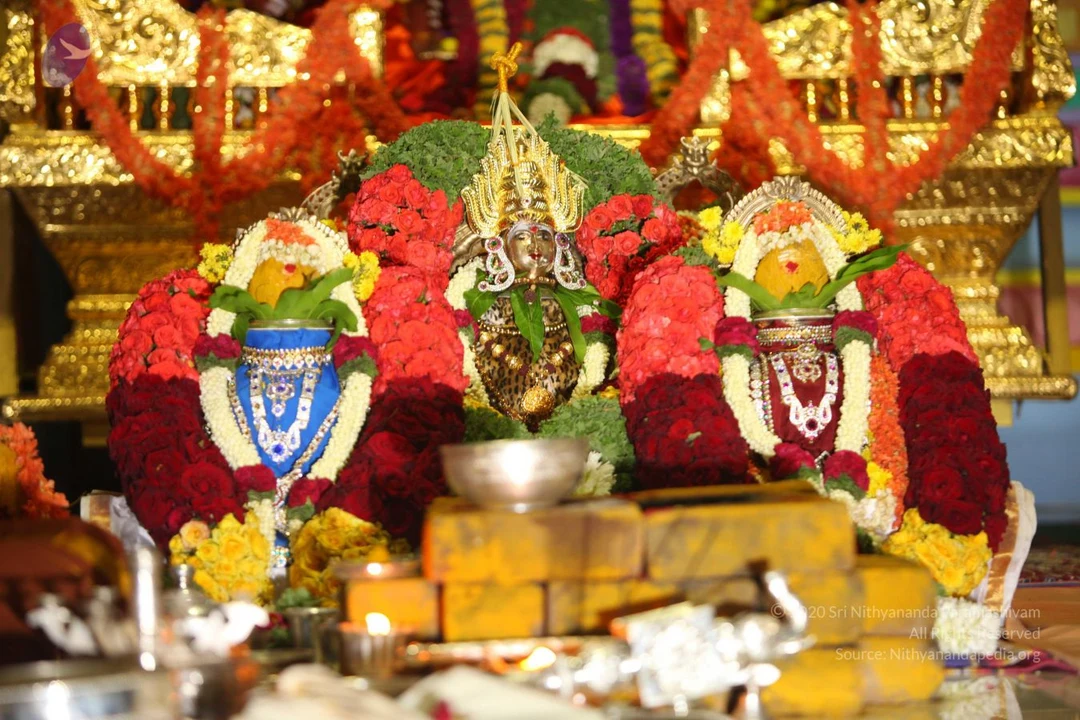
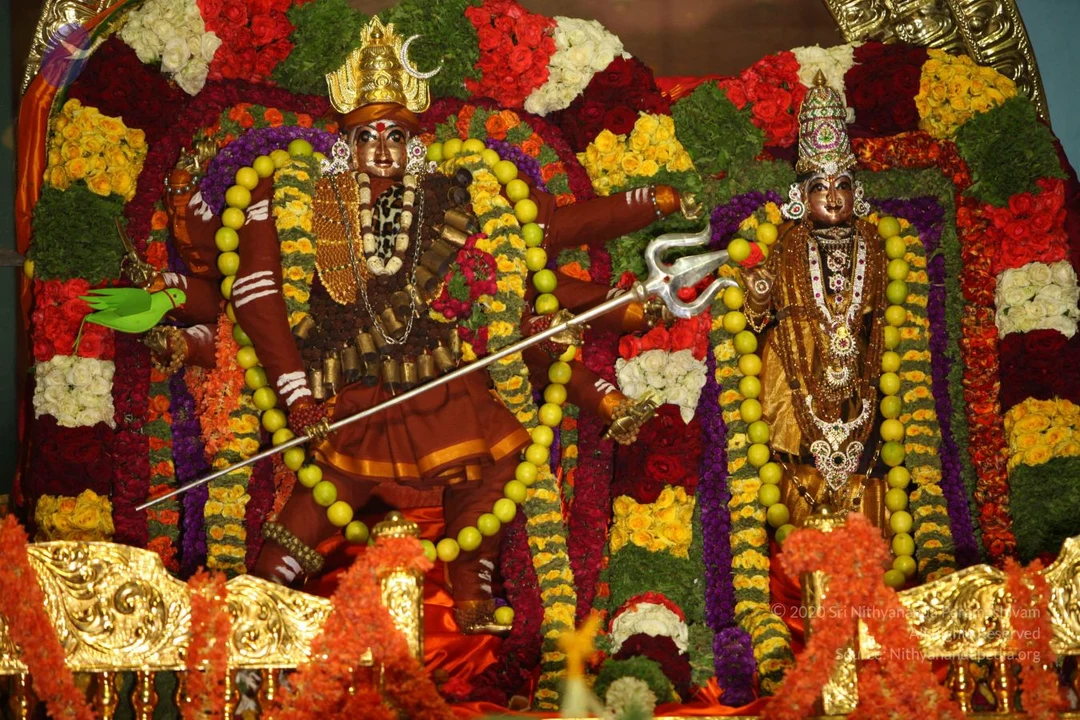
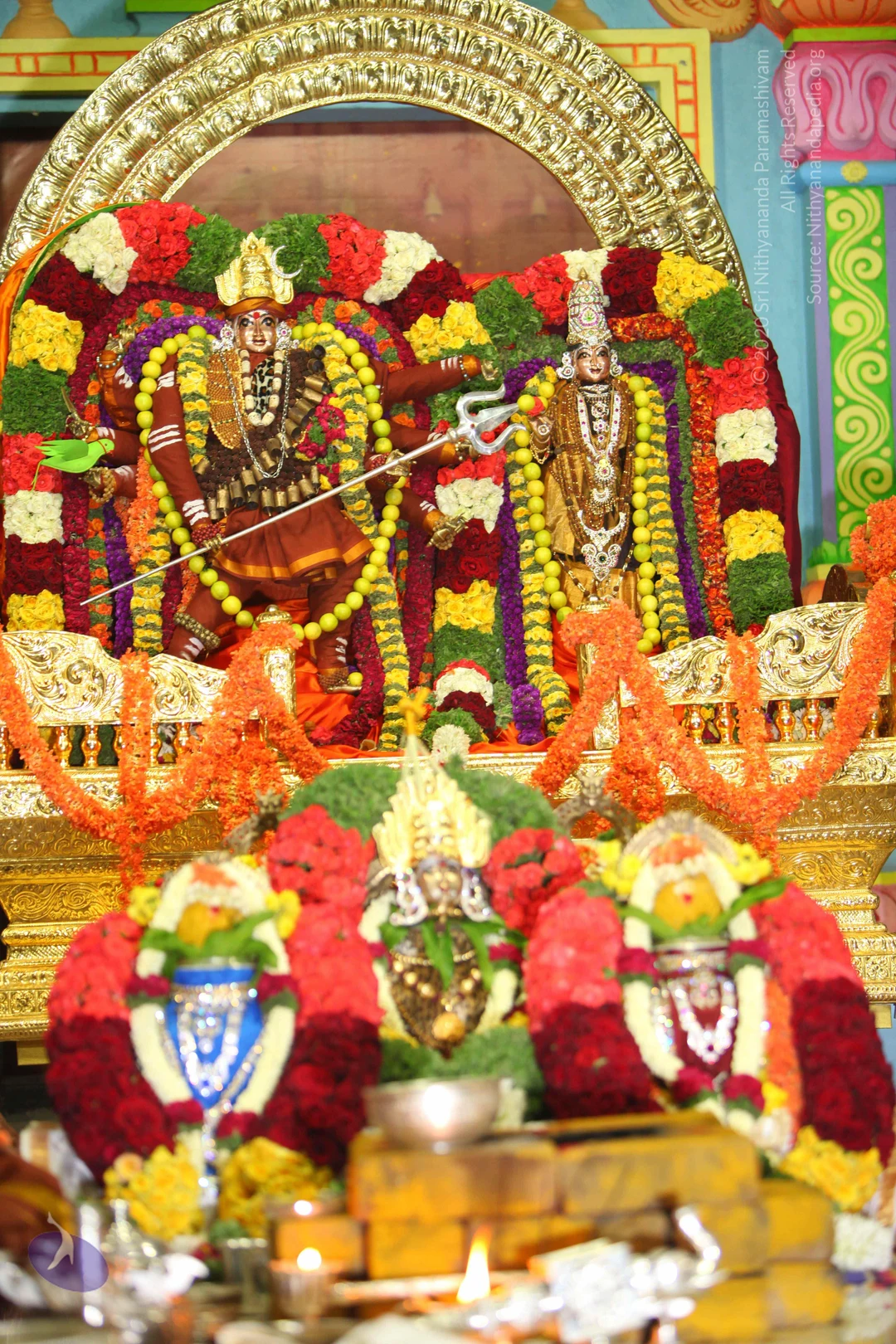
KALABHAIRAVA-HOMA

Photos from this day

View all 478 photos

TEMPLE
81 photosSource gallery
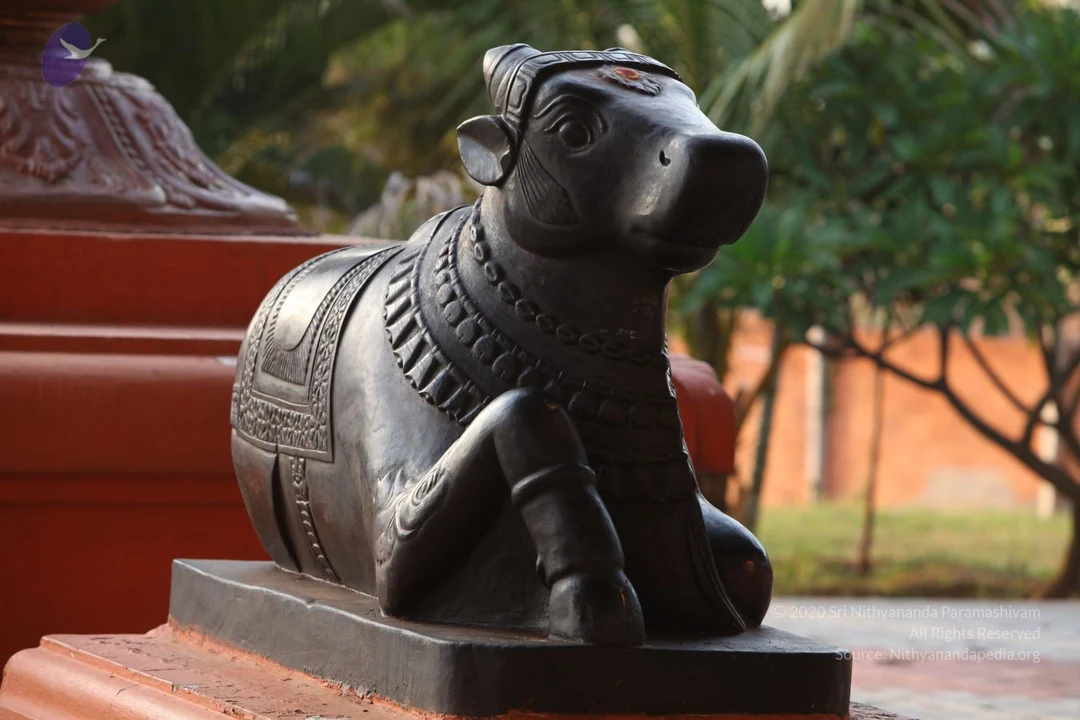
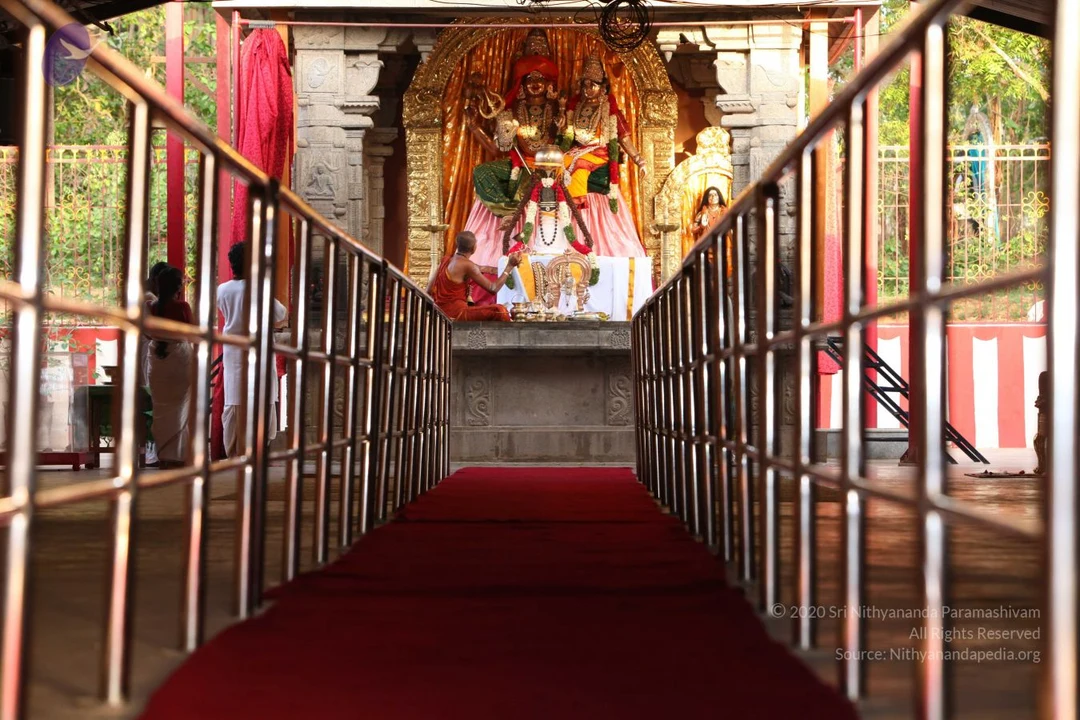
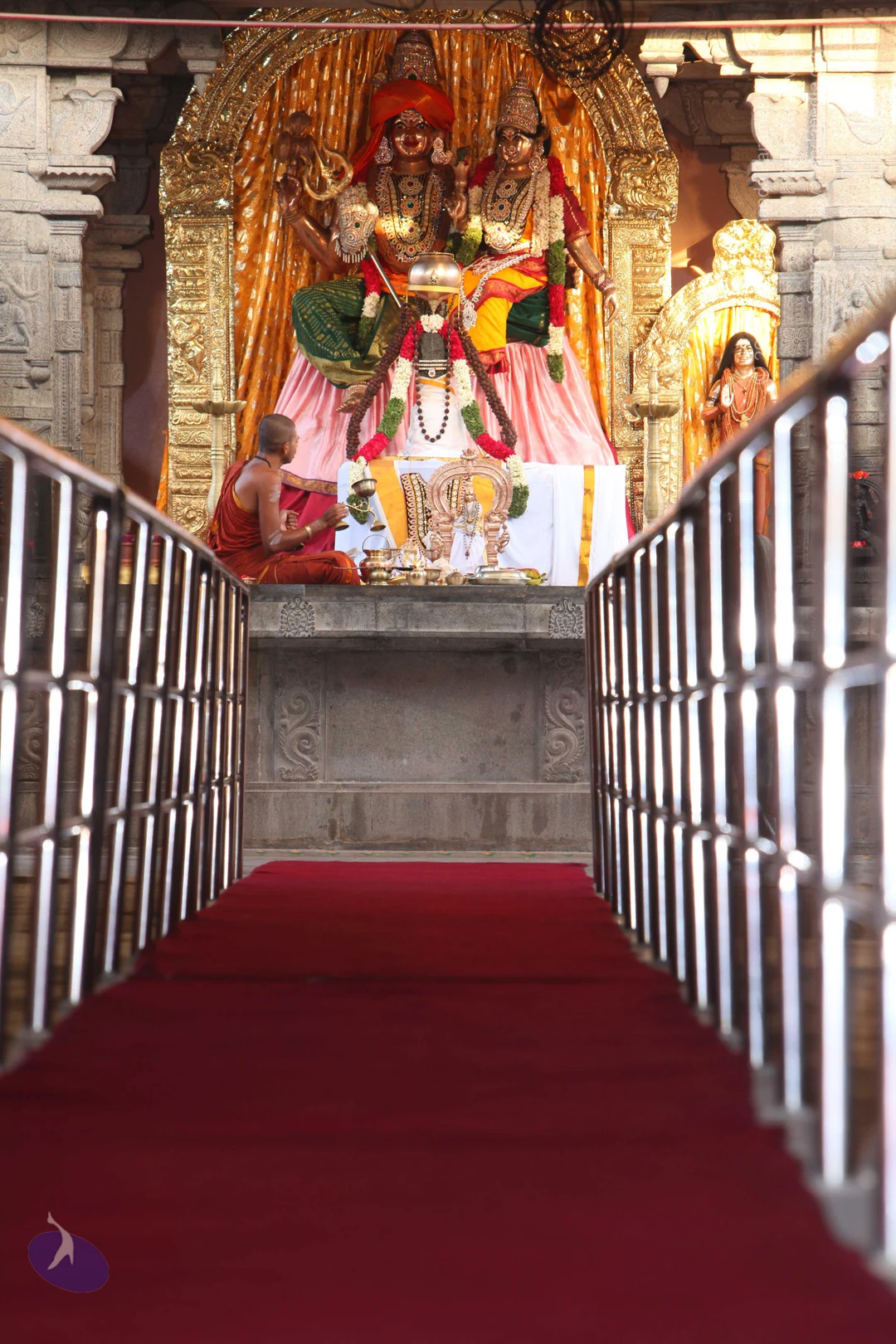
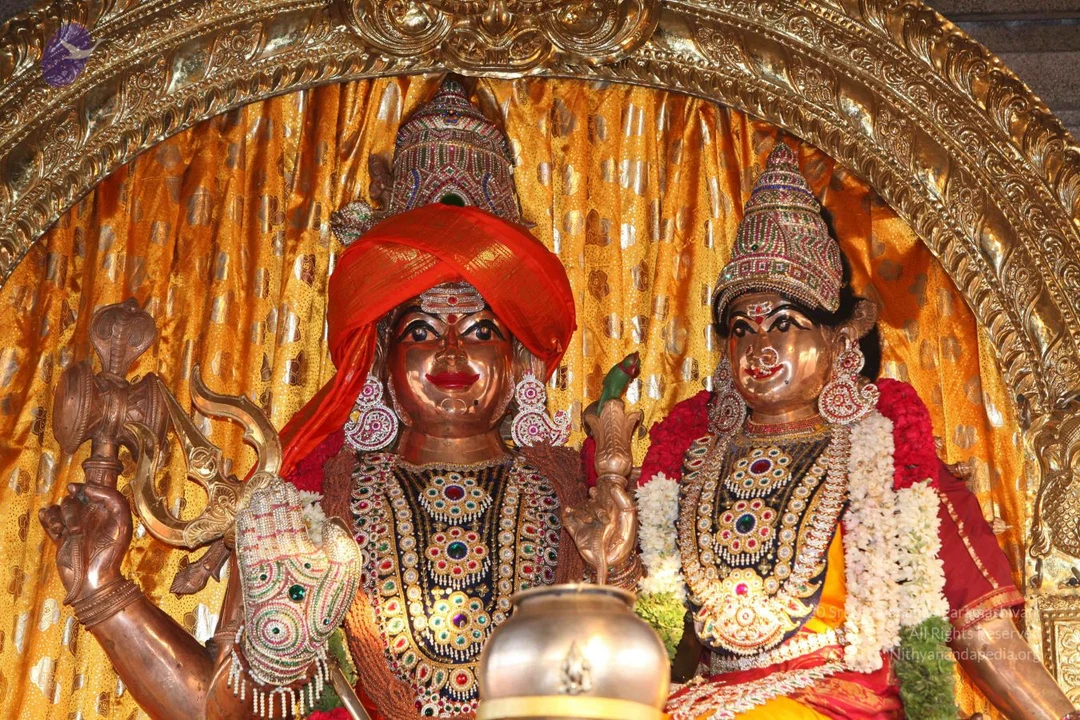
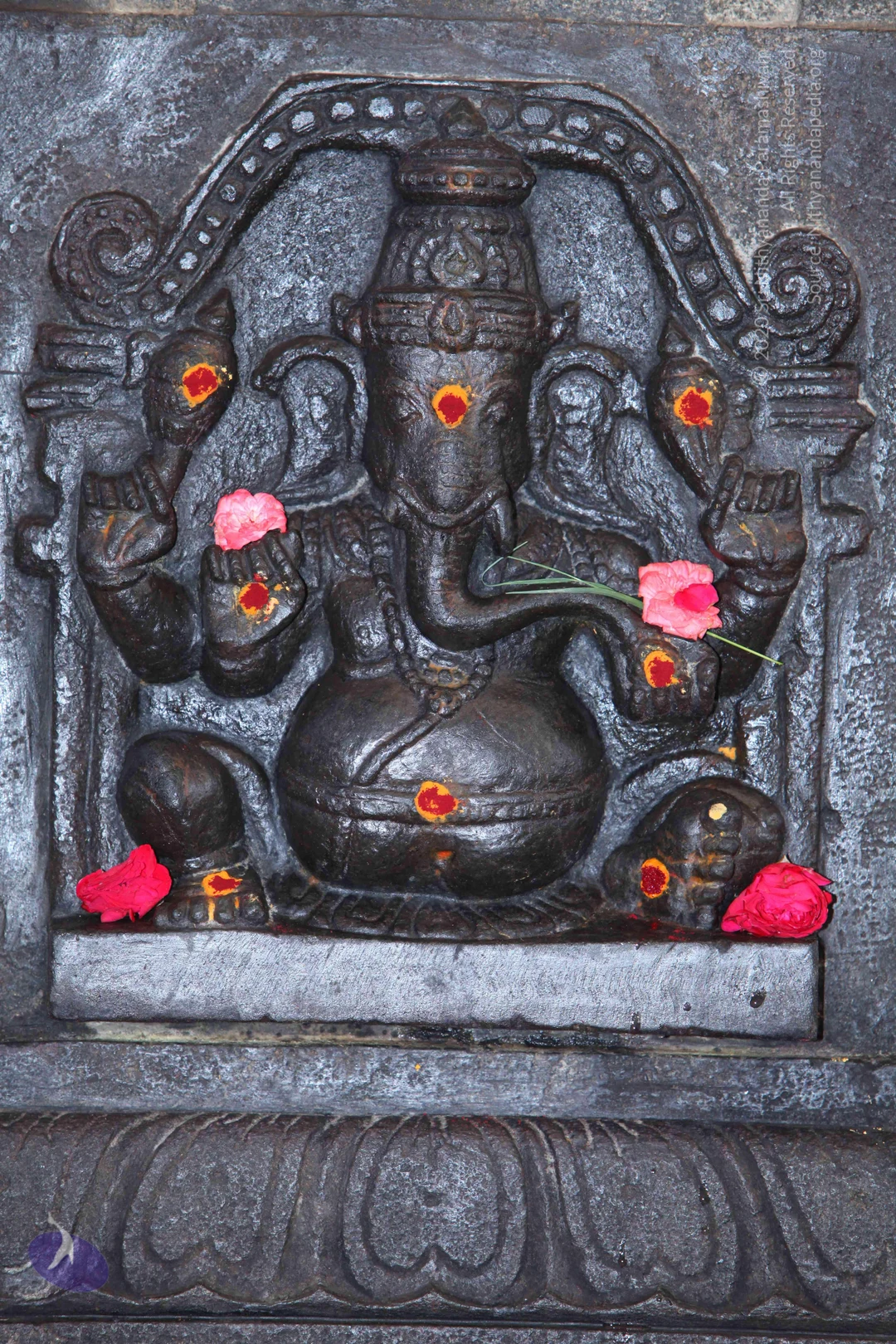
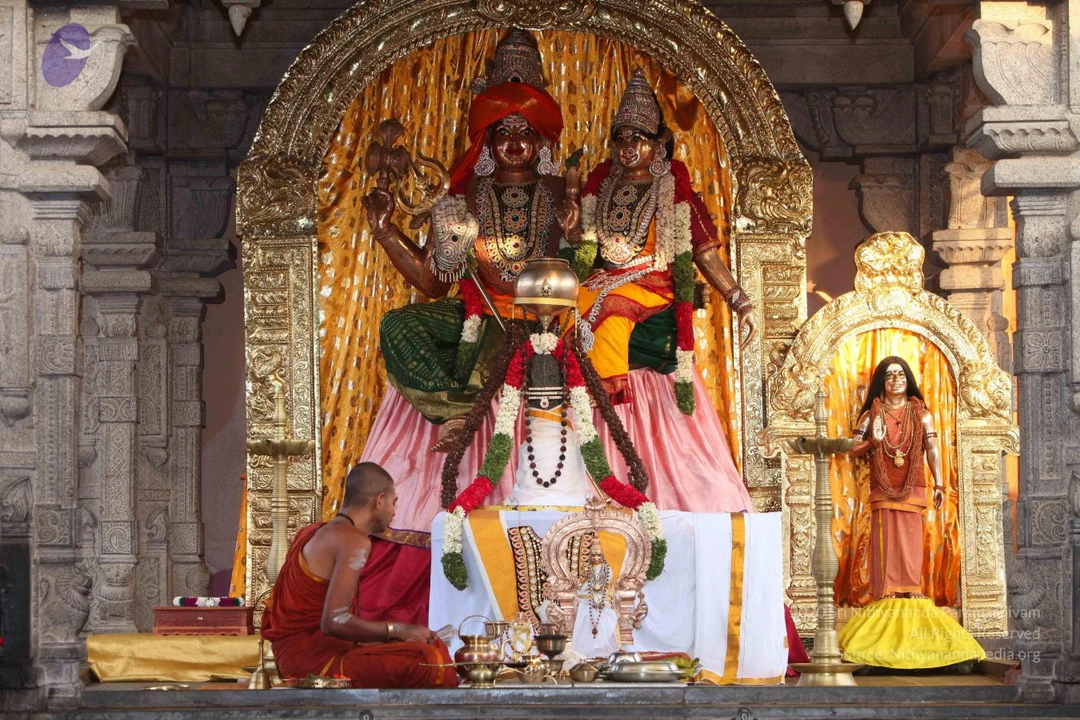
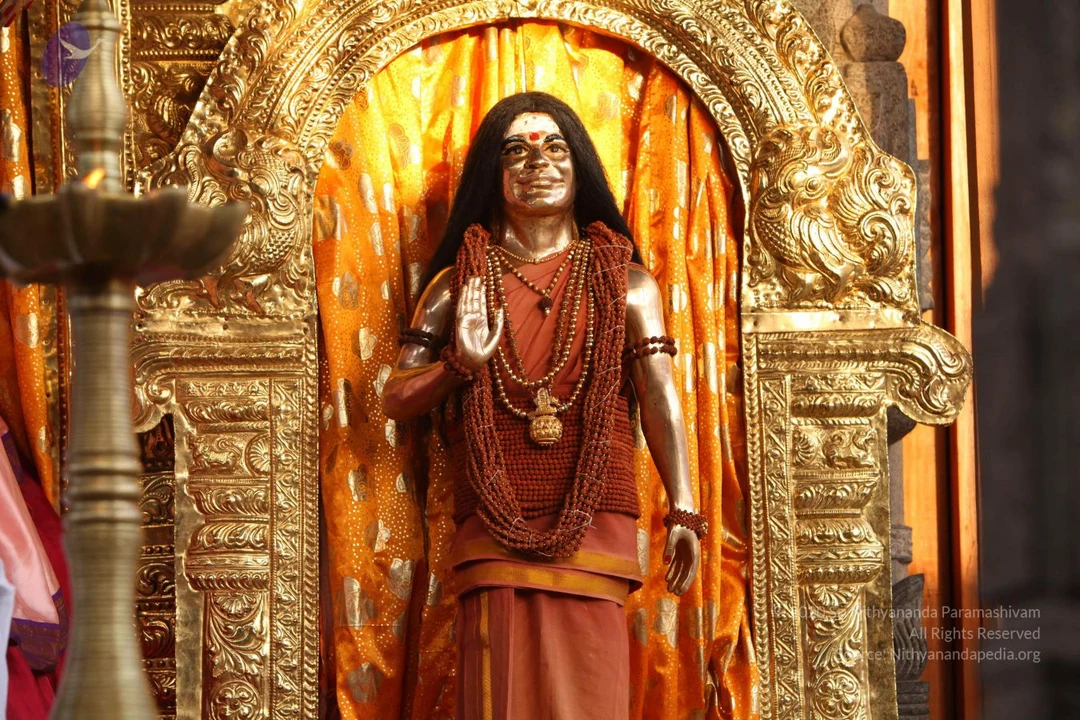
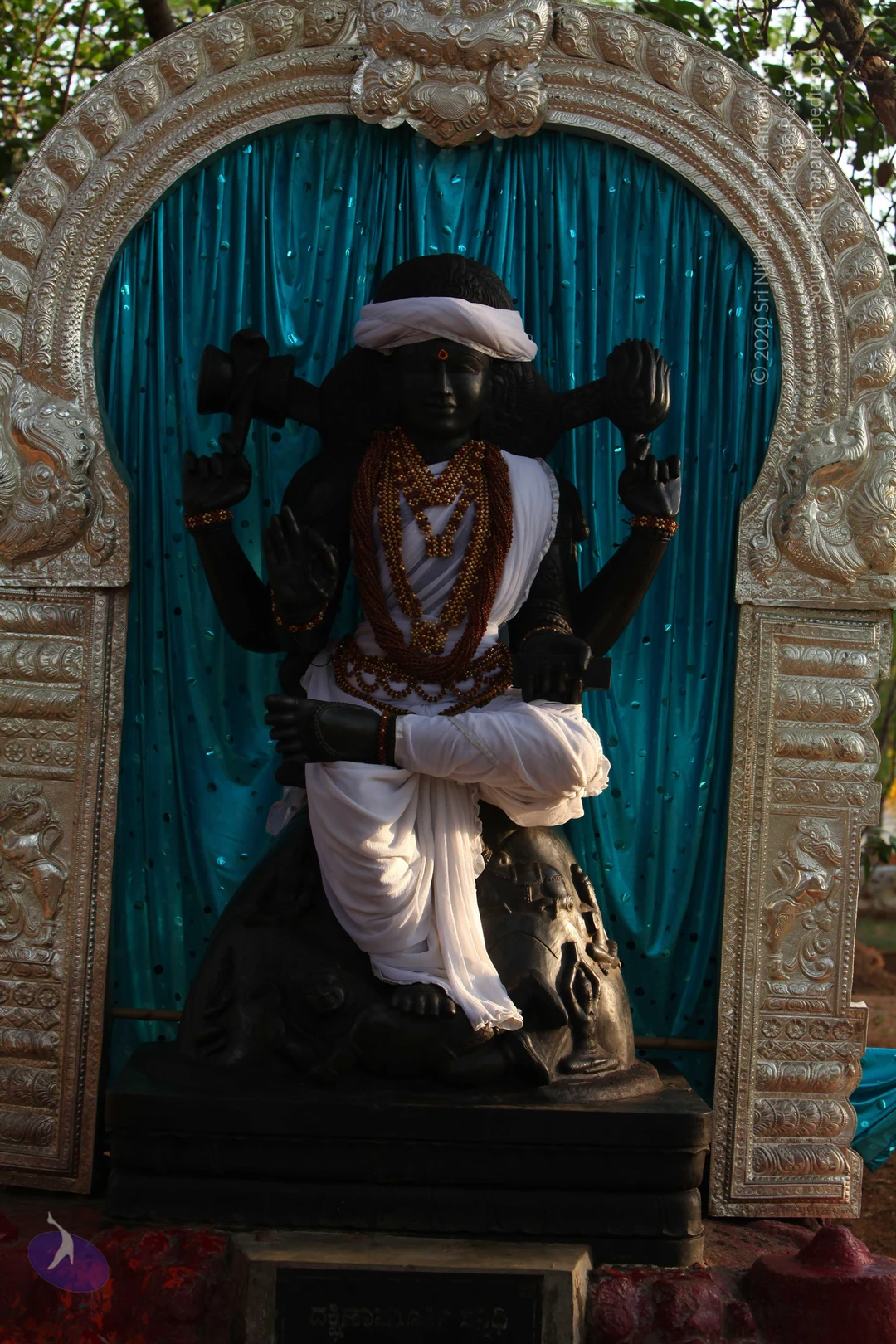
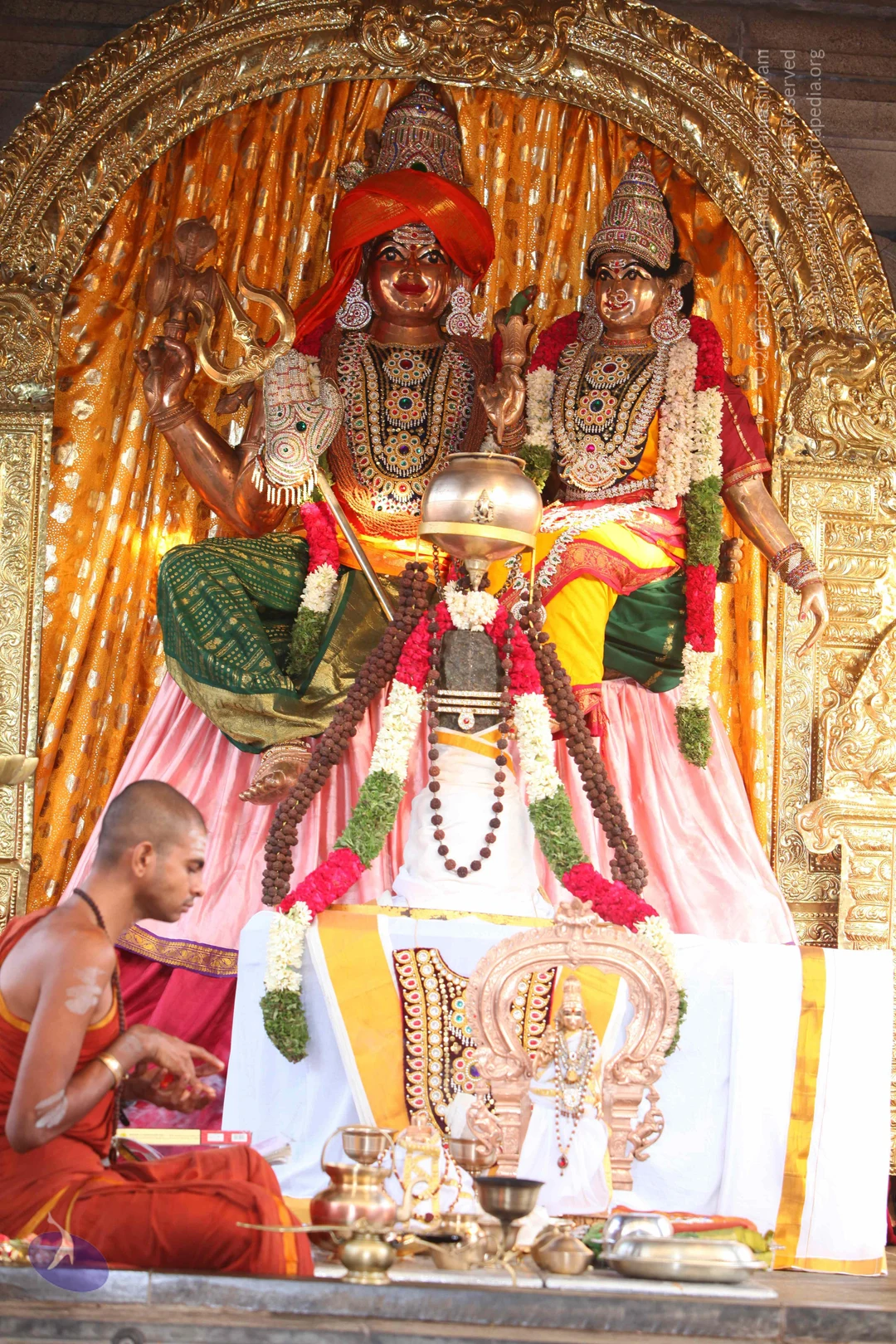
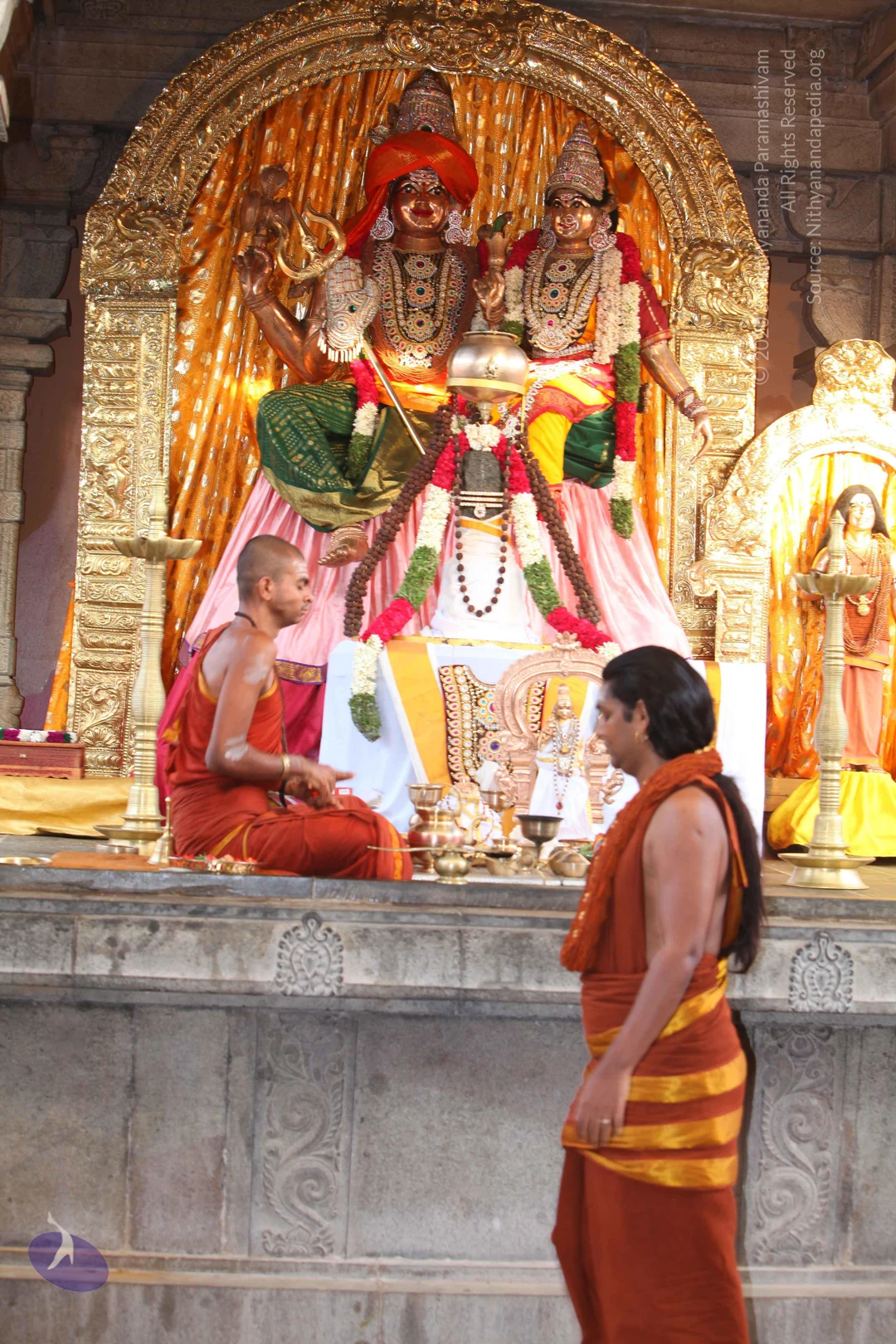
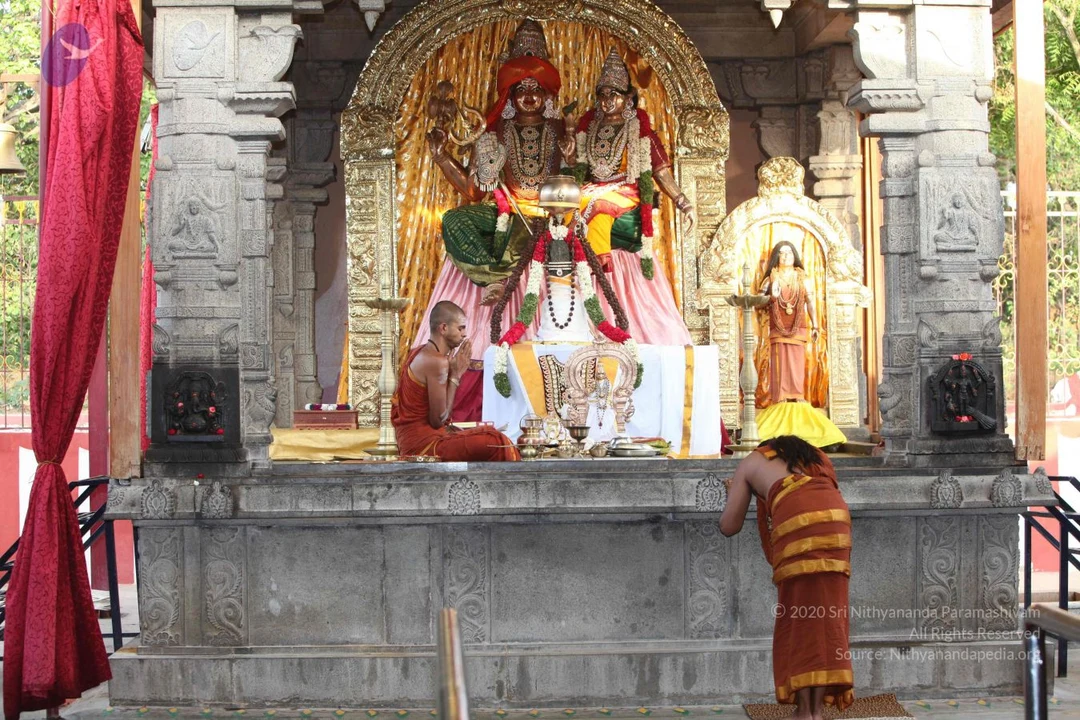
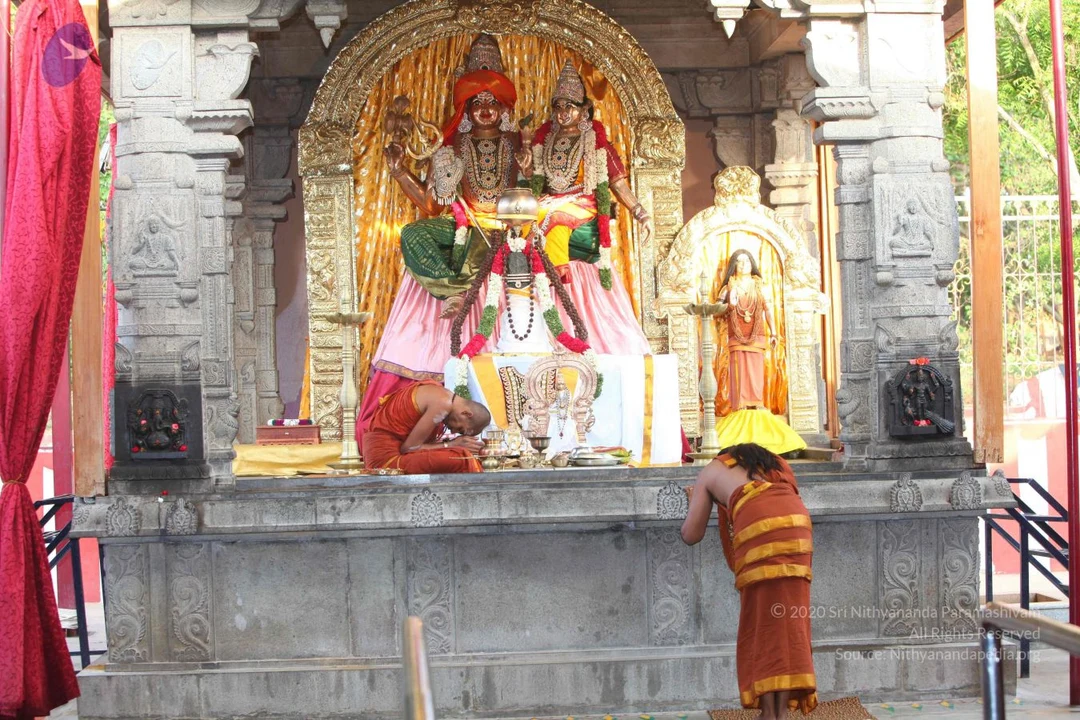
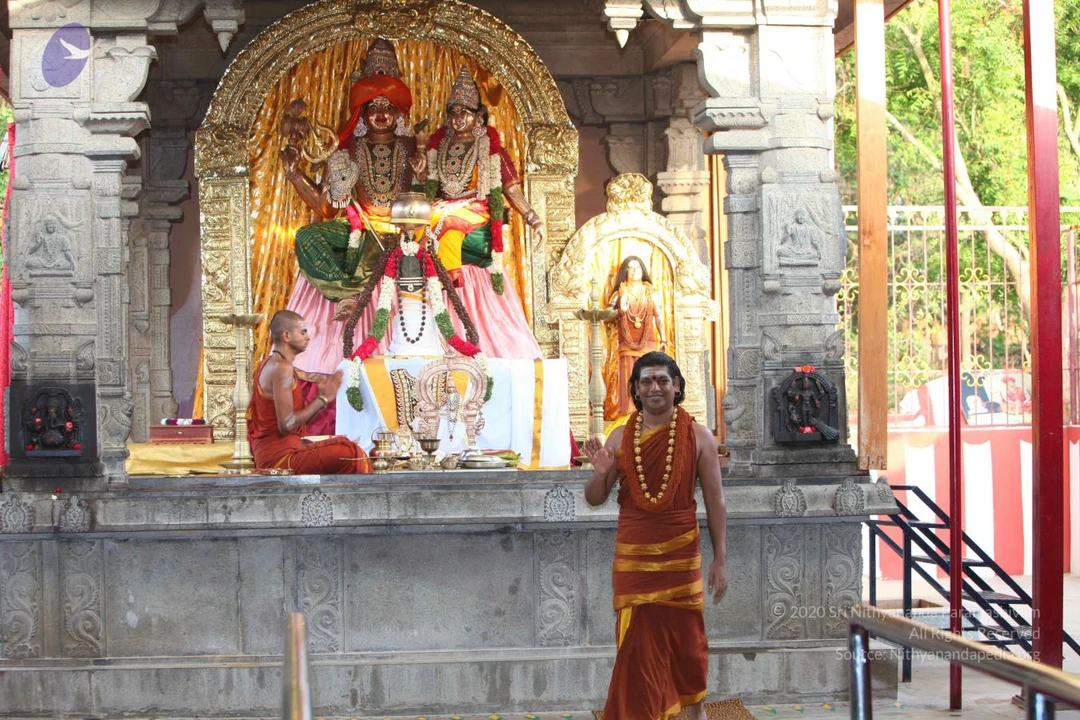
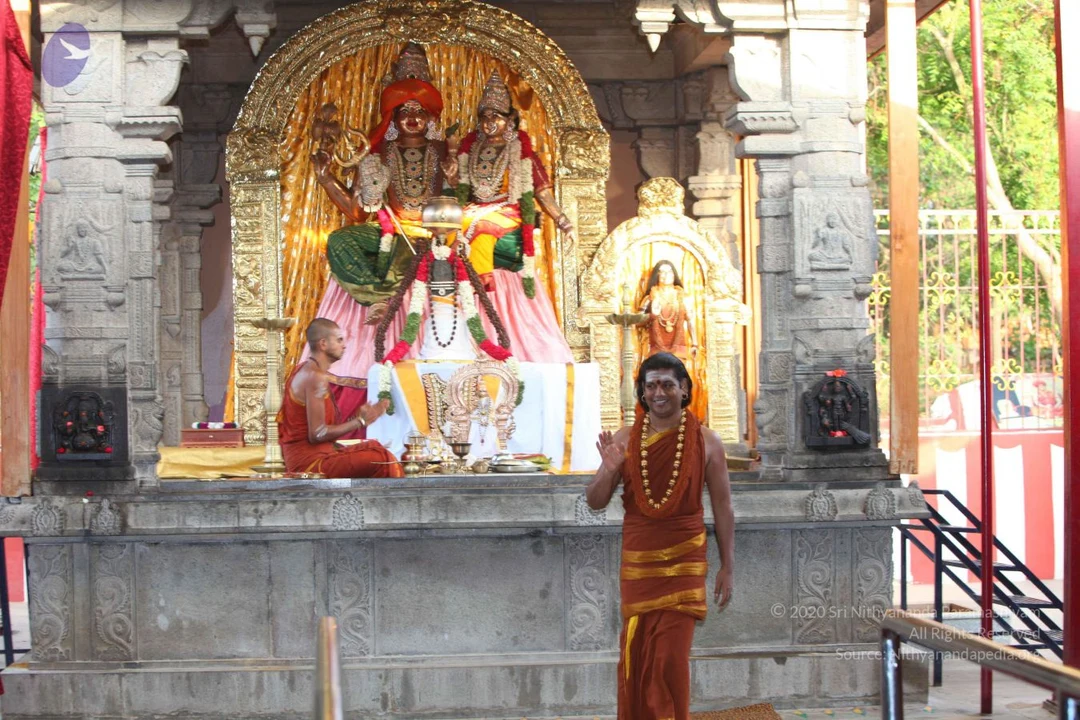
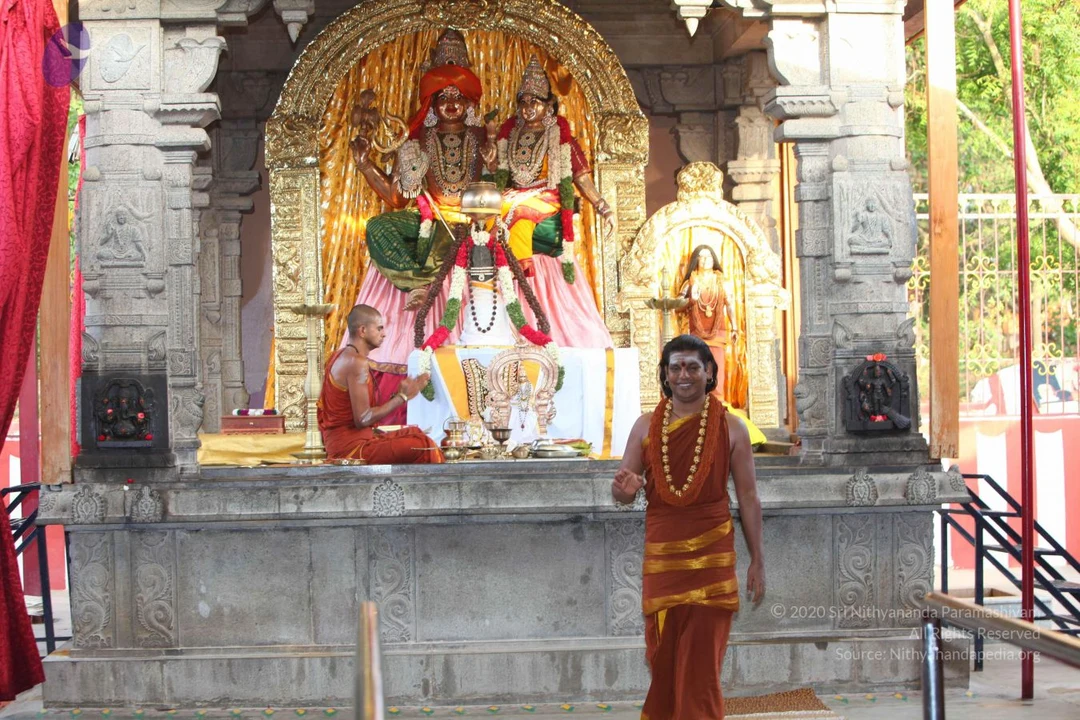
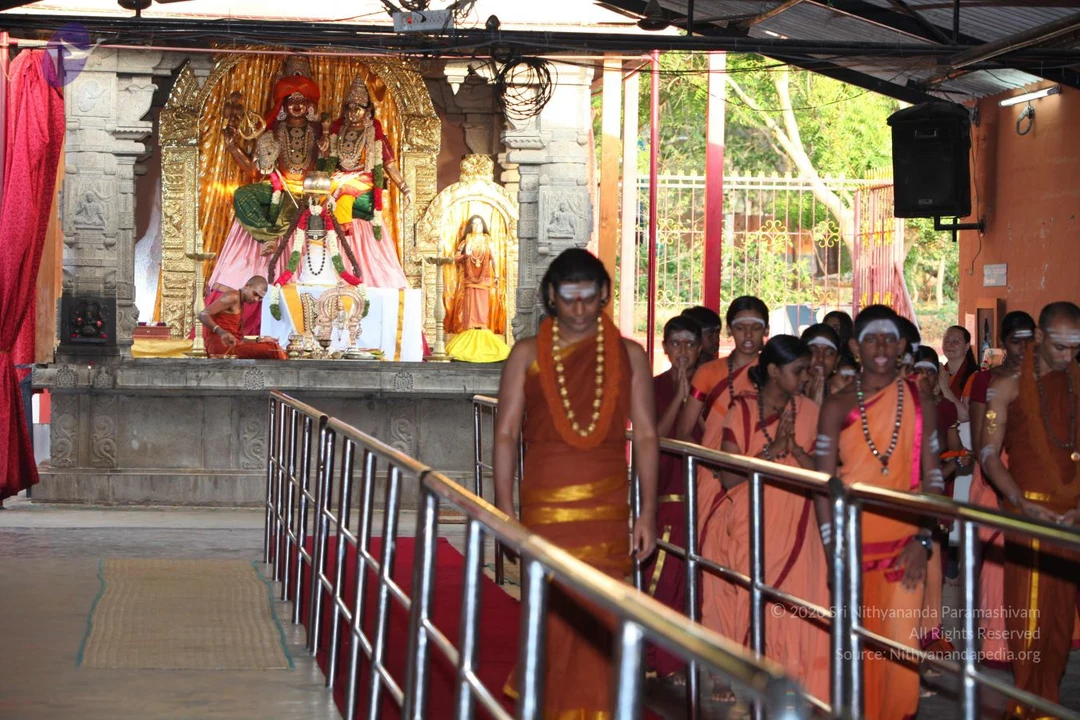
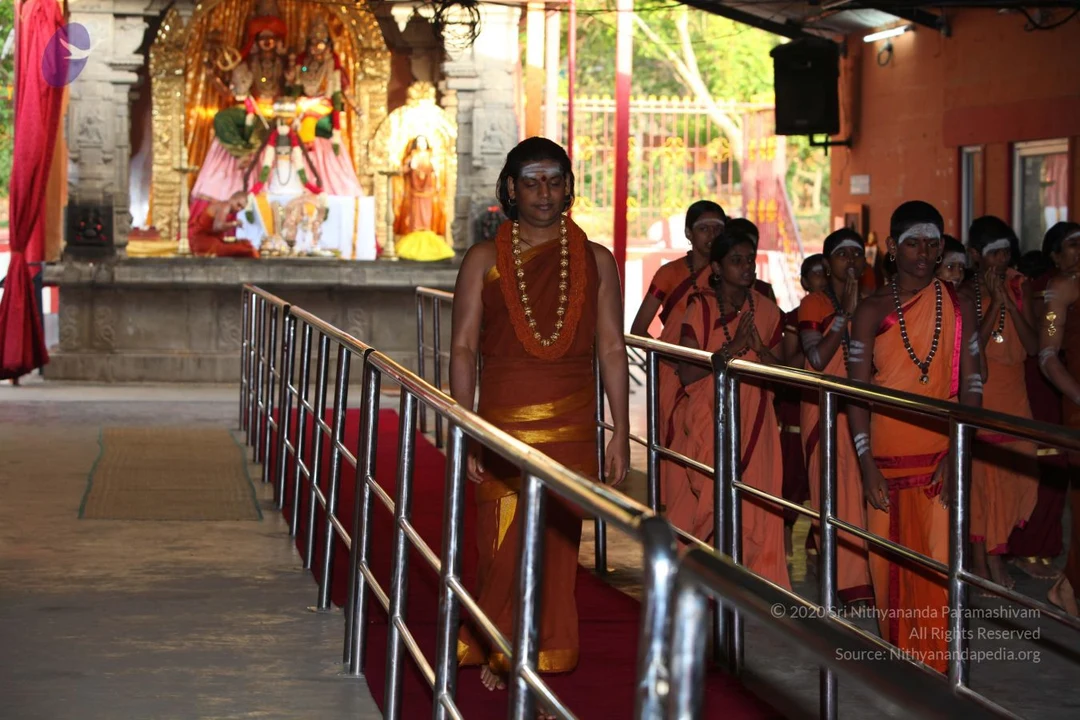
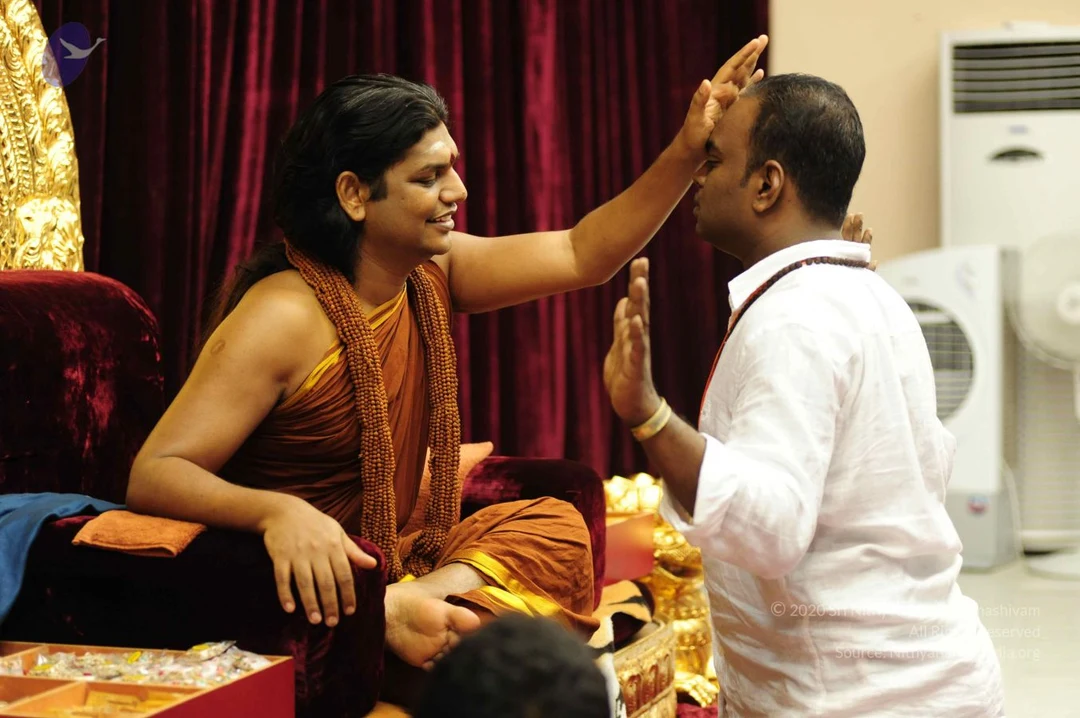
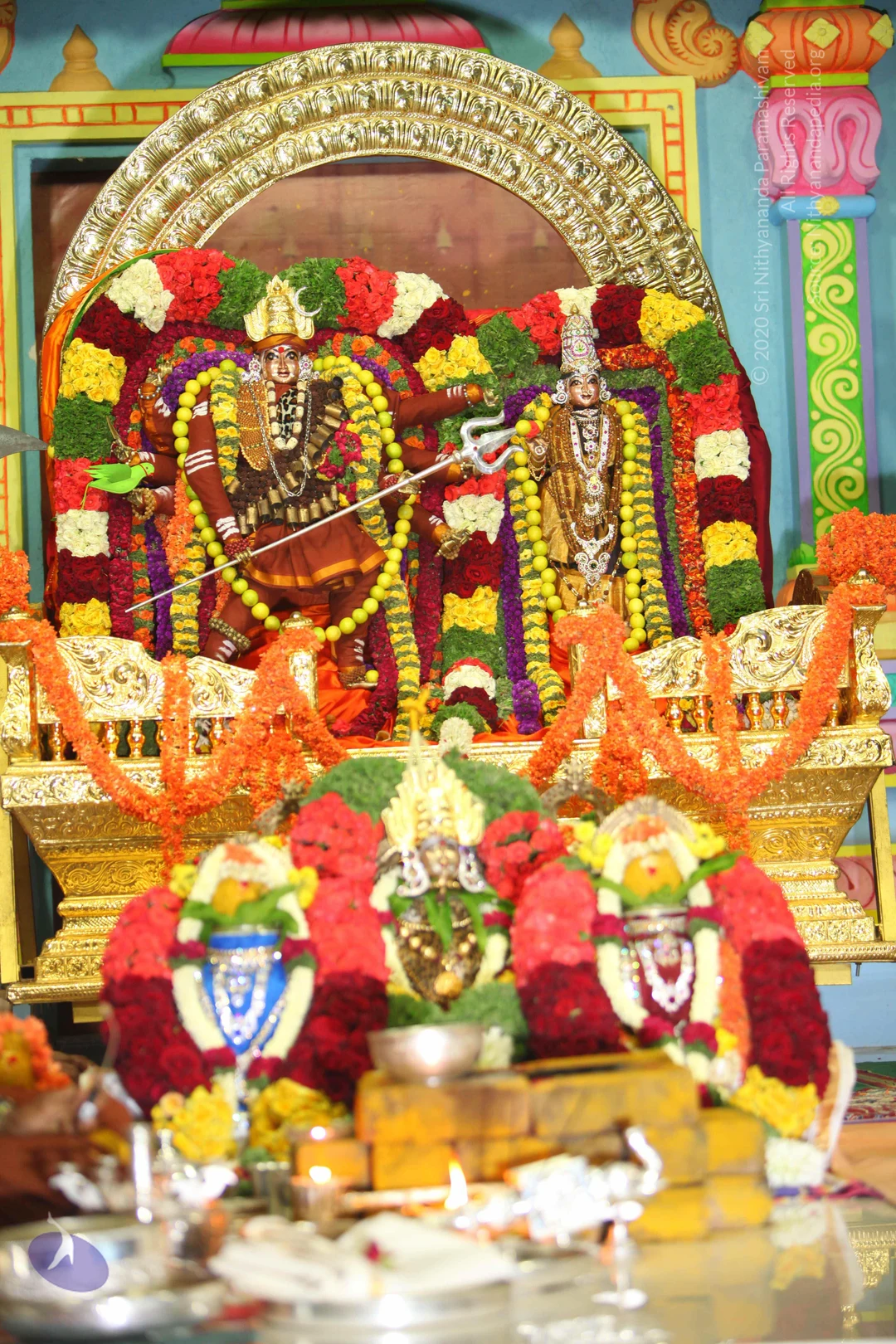
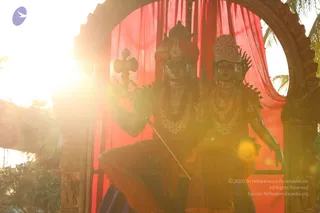
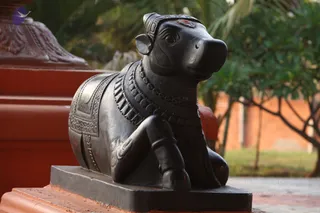
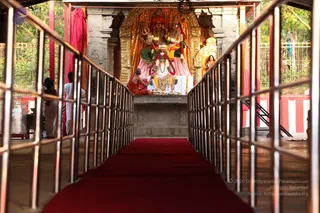
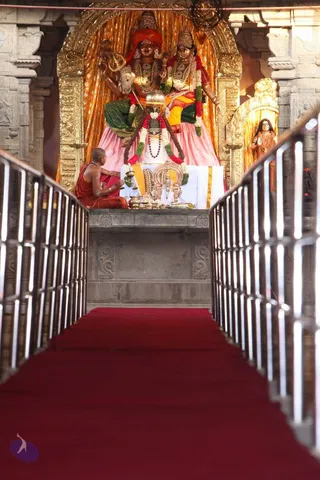
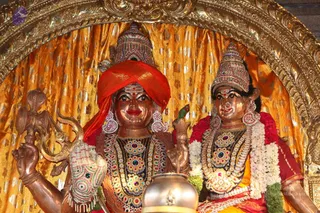
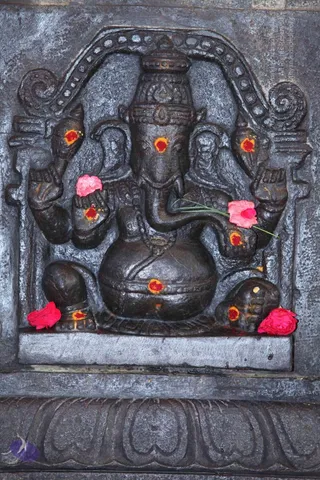
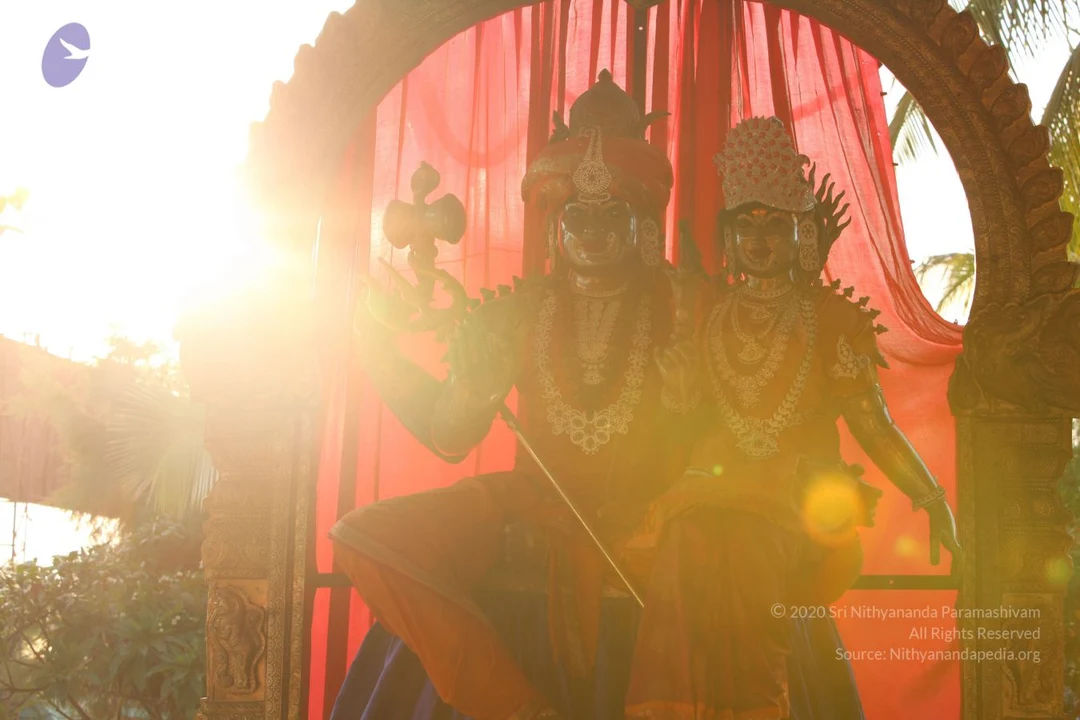
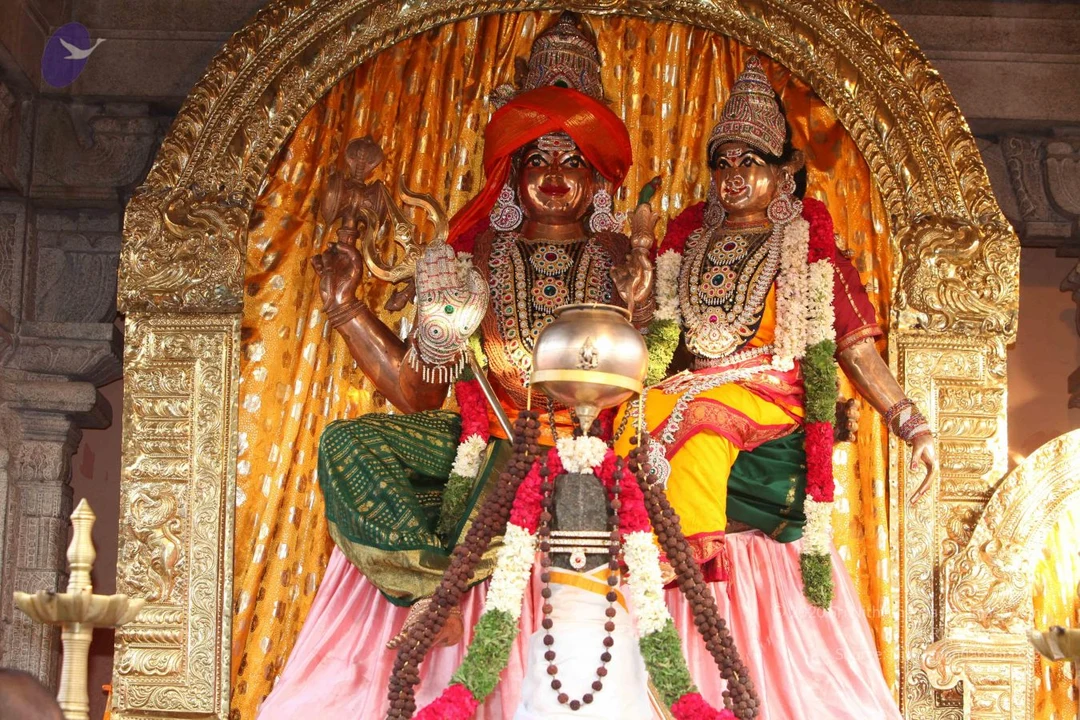
A photograph of two large metallic statues seated side by side on a raised seat under a golden arch, with a red draped cloth behind them and bright sunlight flaring through from the left. The statue on the left holds a trident-like staff and wears a crown, a heavy layered necklace and a dhoti; the figure on the right wears a tall ornate crown and layered gold necklaces. Both are sculpted deity murti with palm fronds visible at the edge of the frame, and no living people are present.A dark polished stone nandi bull sculpture sits on a grey plinth in front of a red-painted temple wall. The bull is seated with its forelegs folded, wearing a carved collar of beads and a decorated saddle cloth, with a red tilak mark on its forehead. Green plants and a flowering tree stand behind it in an outdoor courtyard. No people are visible.A photo down a red-carpeted aisle lined by metal railings toward a shrine. A figure in orange robes stands at a stone altar before a deity murti with a red crown and garlands, flanked by gold-framed decorations and a golden arch with orange drapery. Two people in white stand to the left, and a red-and-white striped wall and green foliage frame the scene. Offering vessels sit on the altar.A red-carpeted aisle between polished metal railings leads to a shrine dominated by a large pair of seated deity murtis, a male figure with a trident and a female figure with a crown, both in gold and red garments and draped in garlands of white and red flowers. Golden drapery frames the shrine arch. In front, a single seated priest in orange robes with a bare head performs worship, holding a small vessel near brass puja implements, a kalasha-like pot and a lamp on a white cloth. A standing devotee-like figure in red stands at the right edge beside the shrine, next to a small lamp. The scene is a temple sanctum rather than a satsang audience. No printed text is visible.Two metal murti figures of a deity couple sit on a throne against a gold brocade backdrop with an ornate gilded arch. The male figure wears a red turban, rudraksha-style beaded ornaments and a jewelled necklace, holding a trident and a small decorated hand implement. The female figure wears a conical jewelled crown, red and gold garments, white jasmine garlands and large earrings. A brass kalasha stands in the foreground. No physical people are visible; the figures are statues.A dark stone relief carving of the elephant-headed deity Ganesha, seated on a pot-like base within an arched frame, with four arms and a crown-like headdress. Pink flowers rest in several hands and on the pedestal, and red and yellow kumkum marks dot the forehead, belly and arms. A carved lotus-petal panel lies below. No people are visible.

PADA-POOJA
67 photosSource gallery
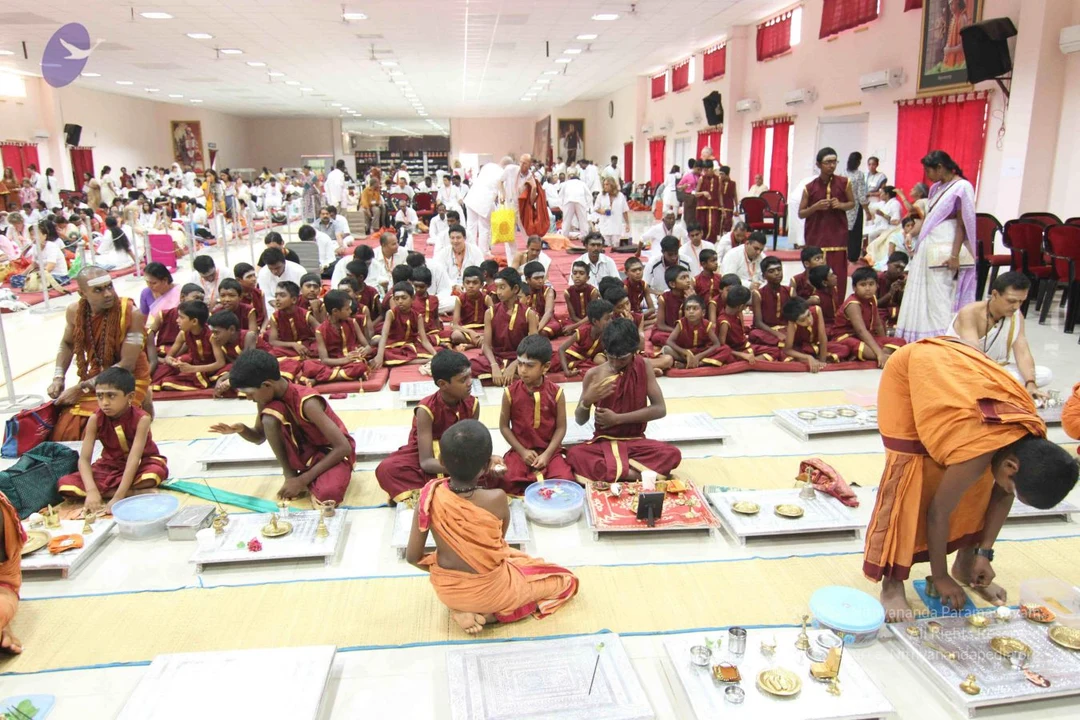
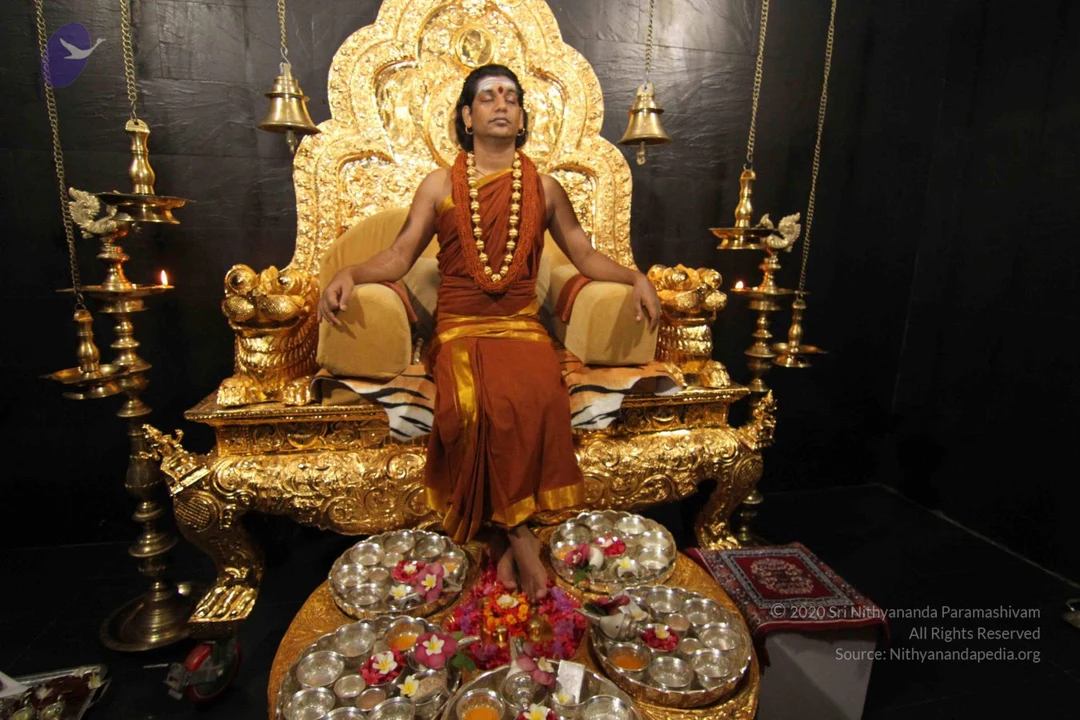
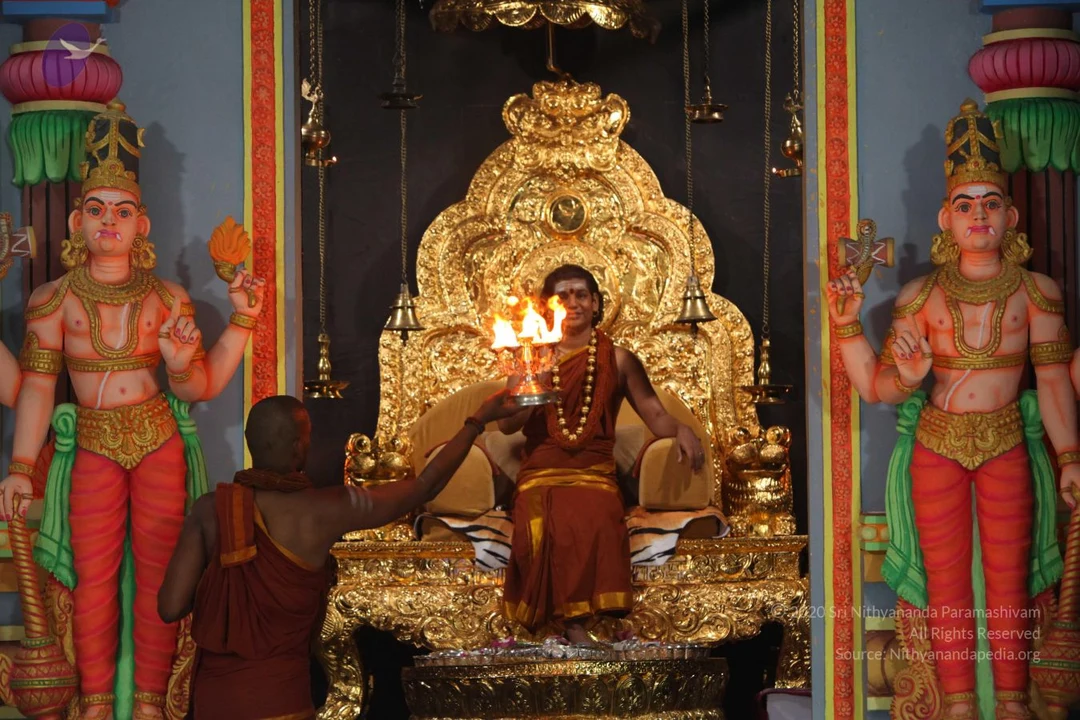
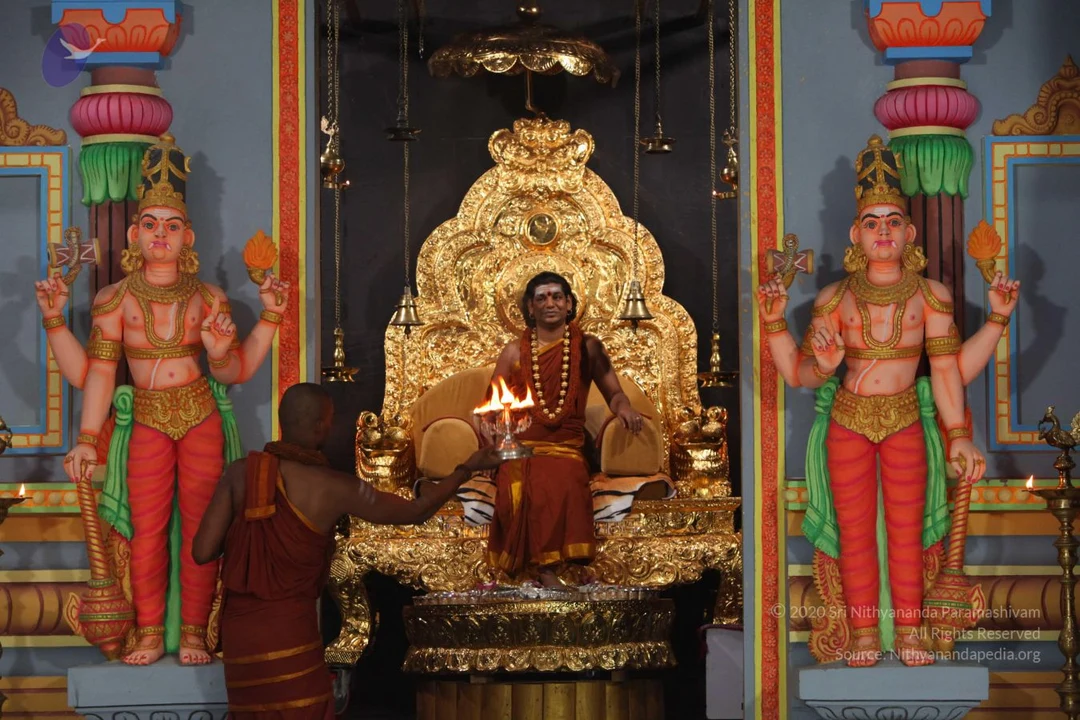
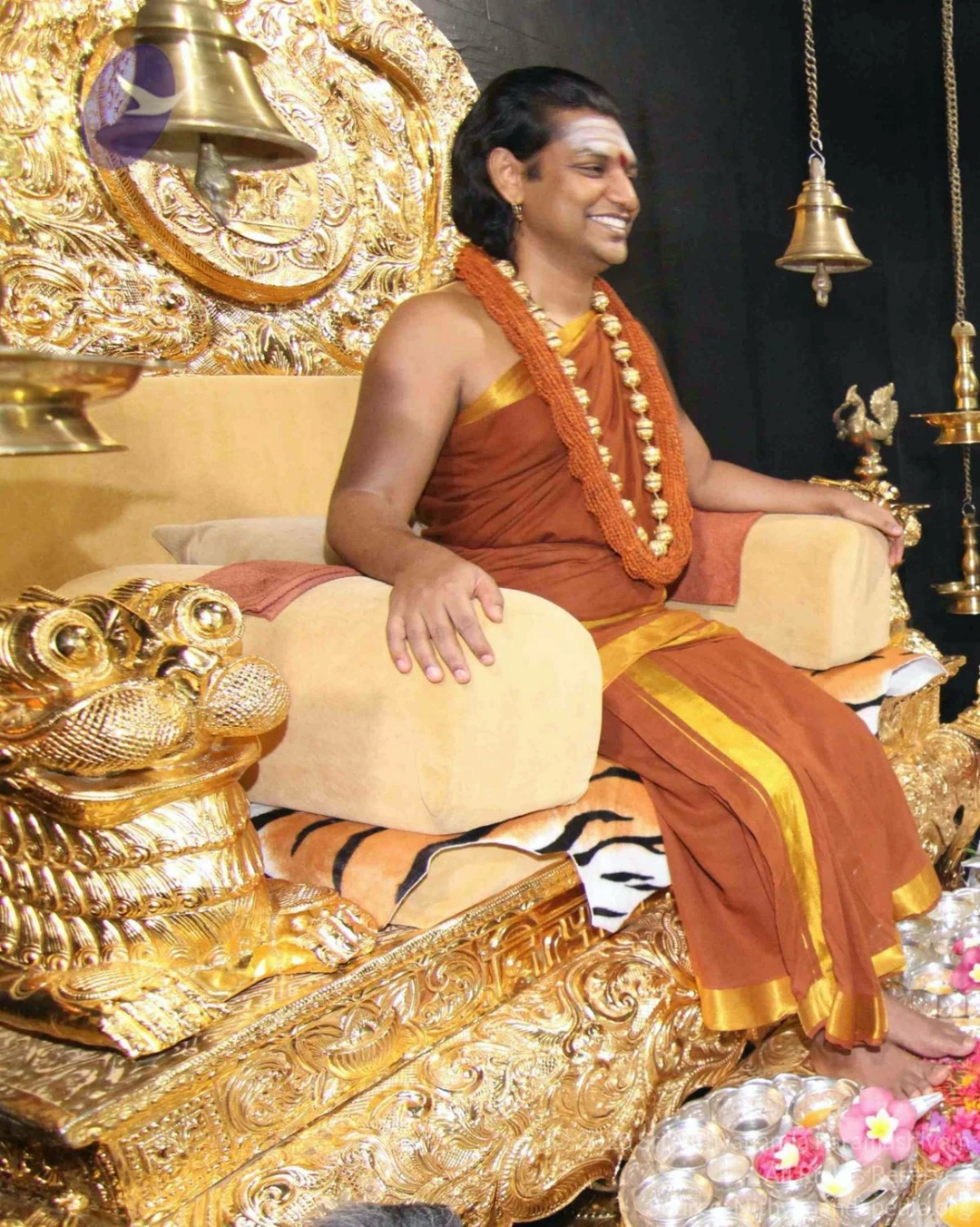
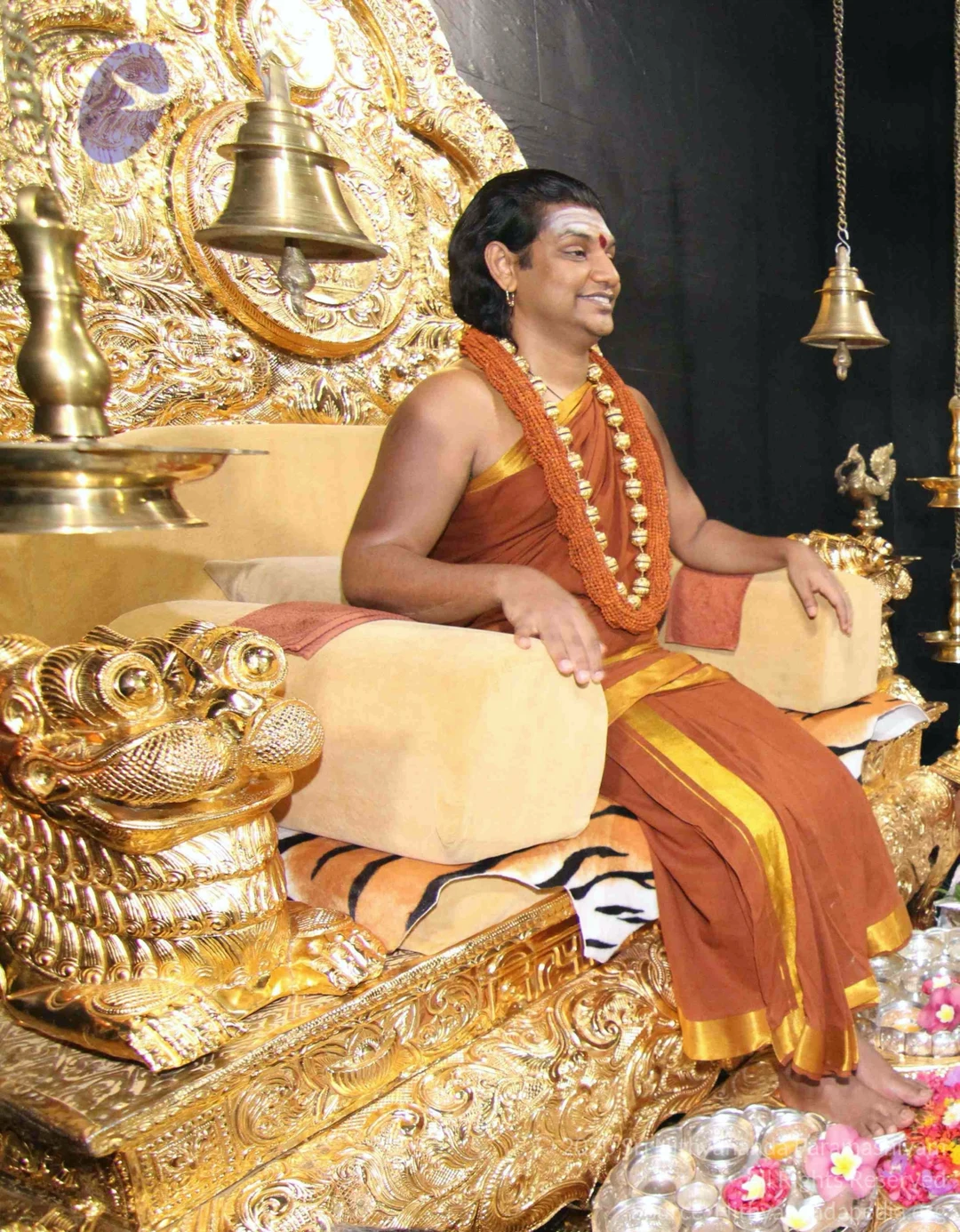
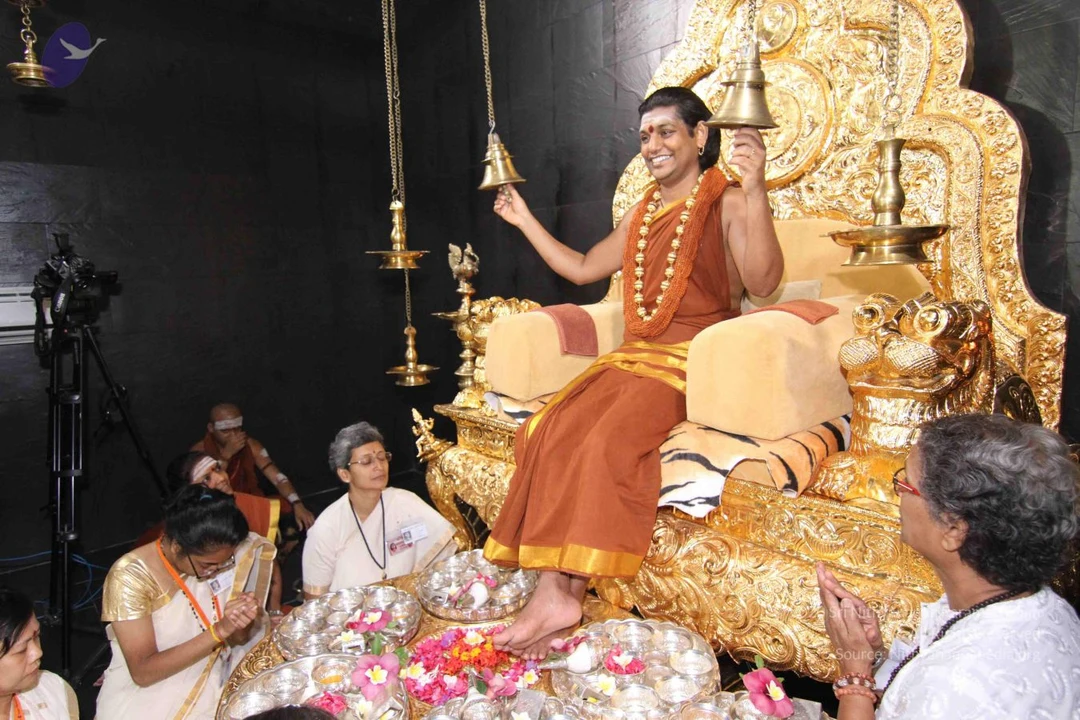
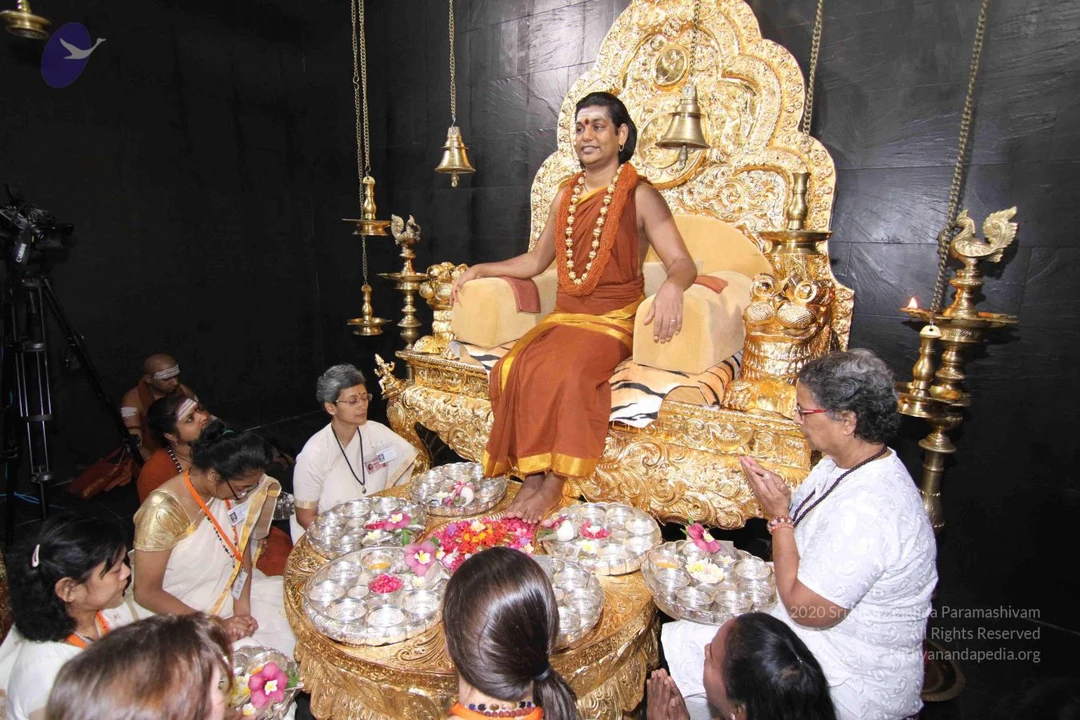
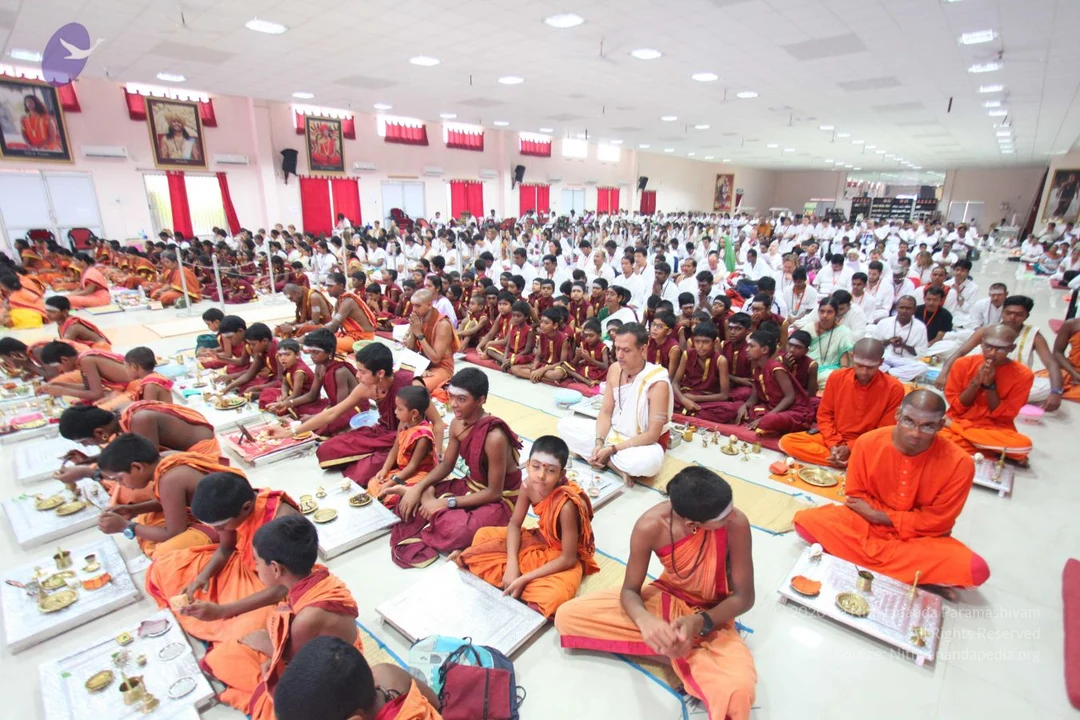
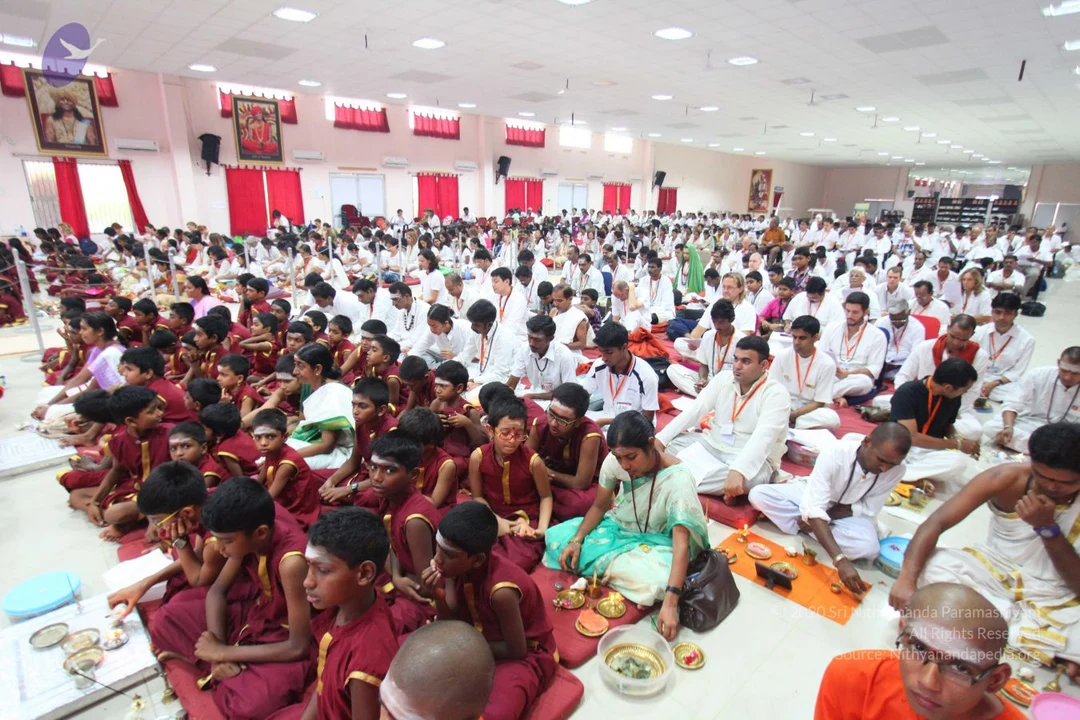
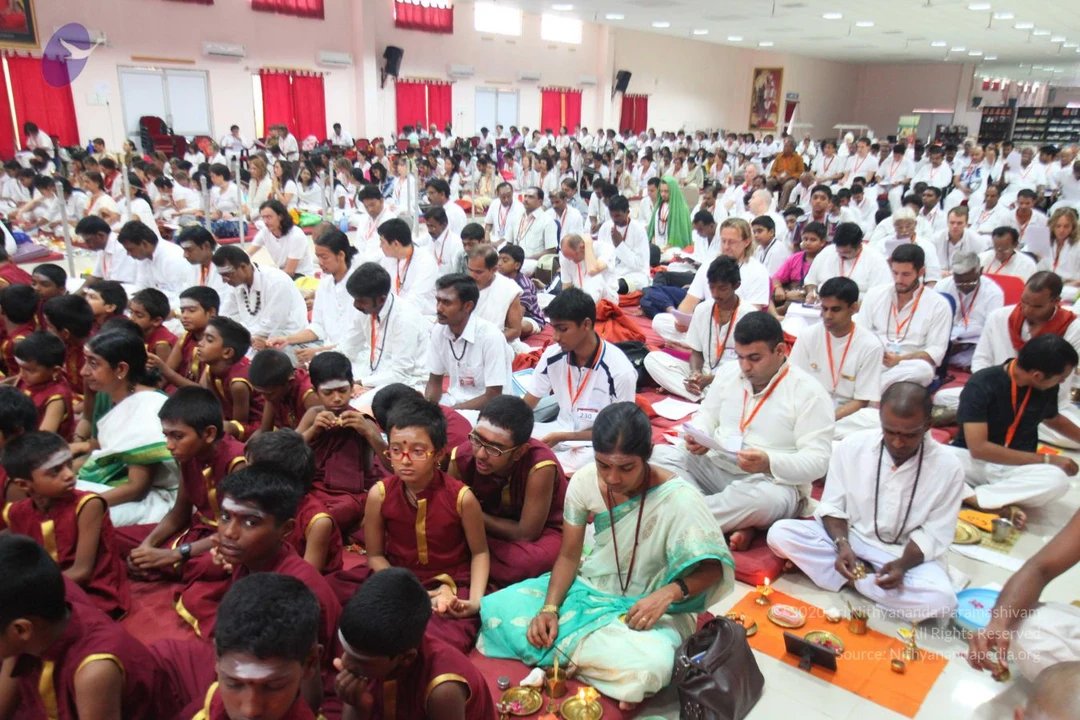
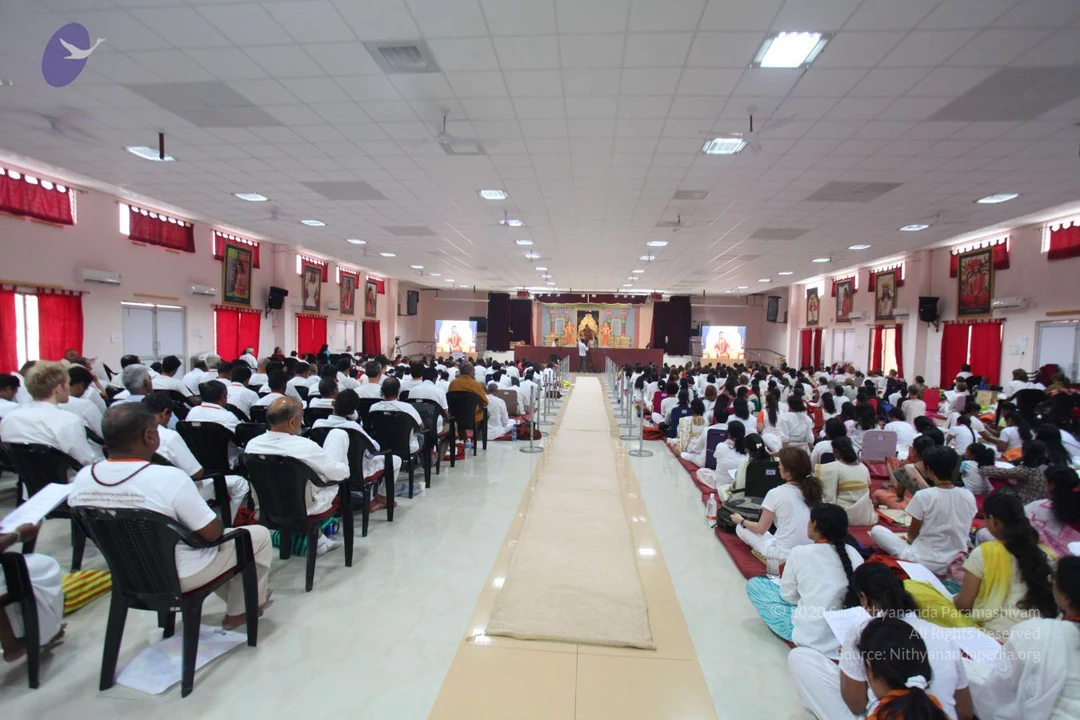
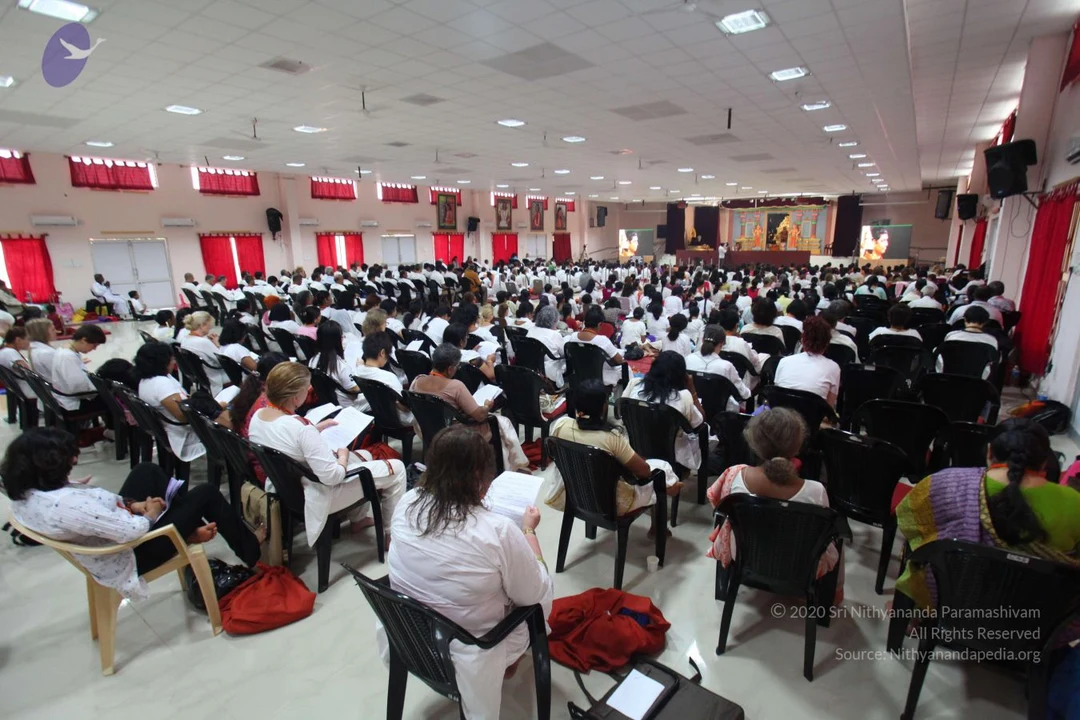
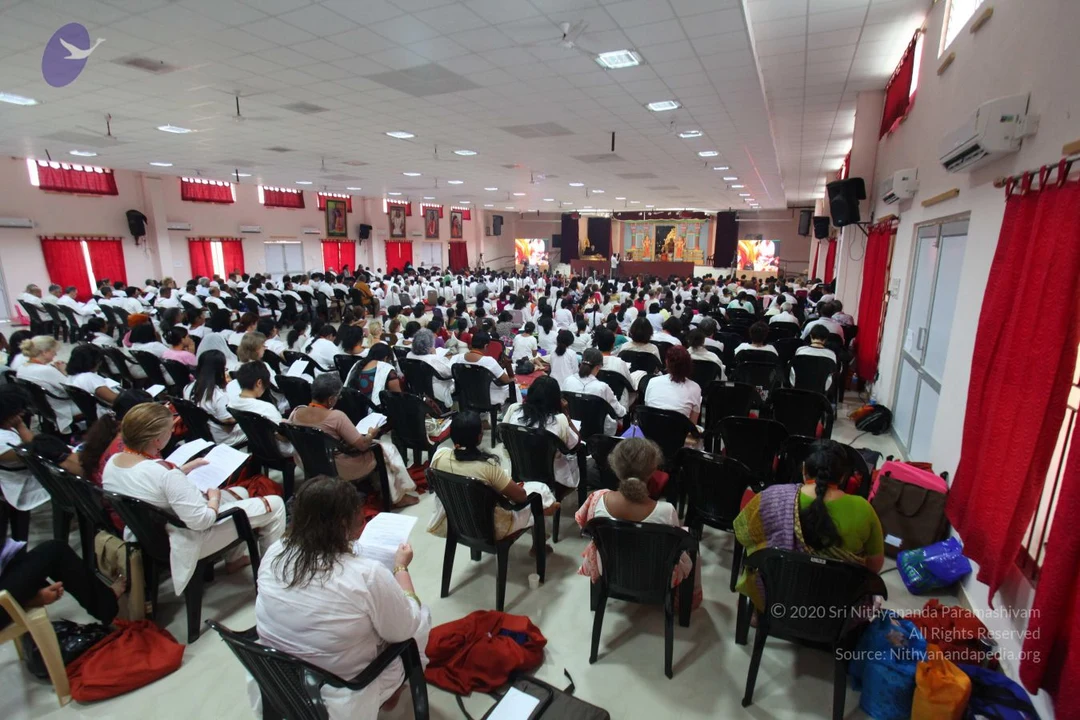
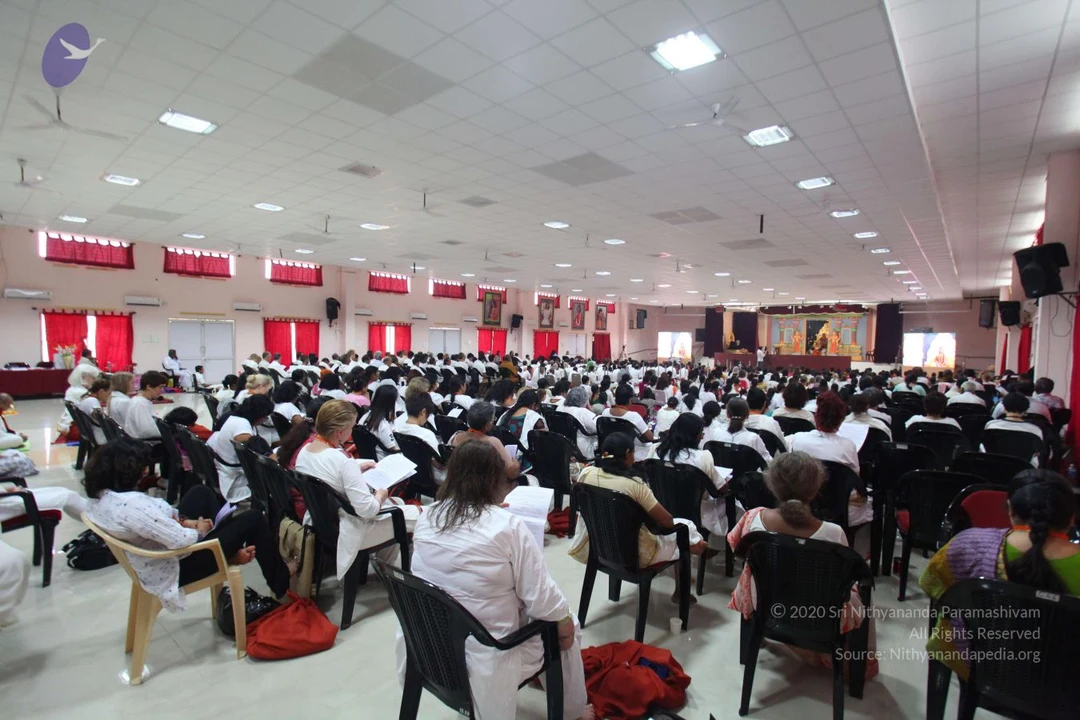
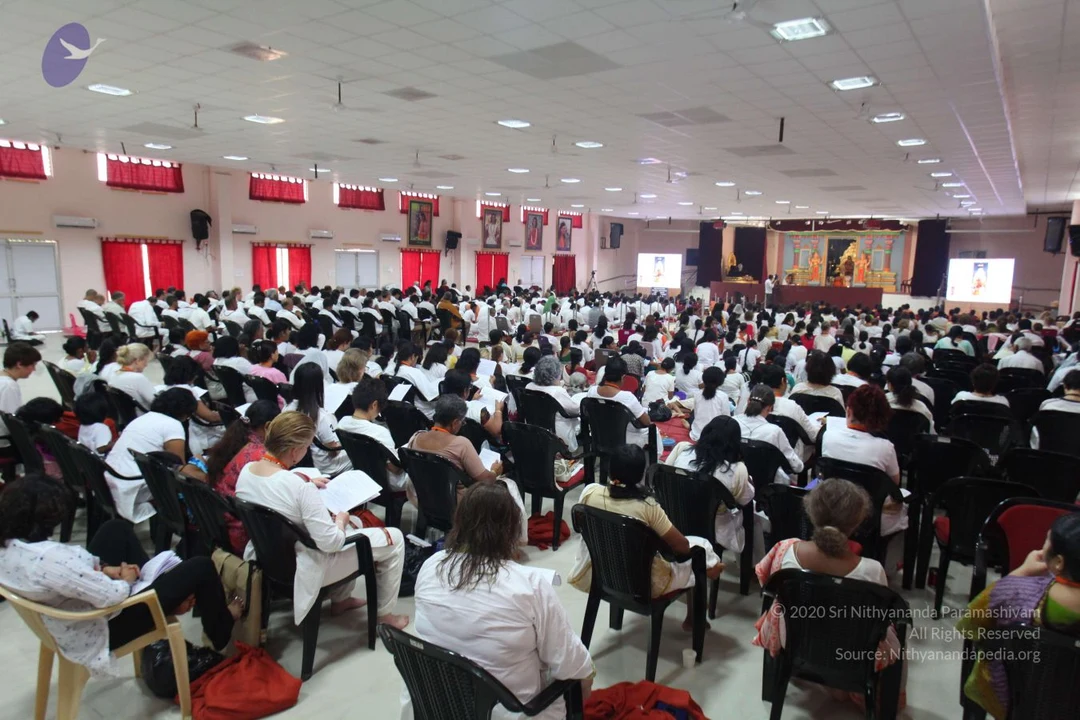
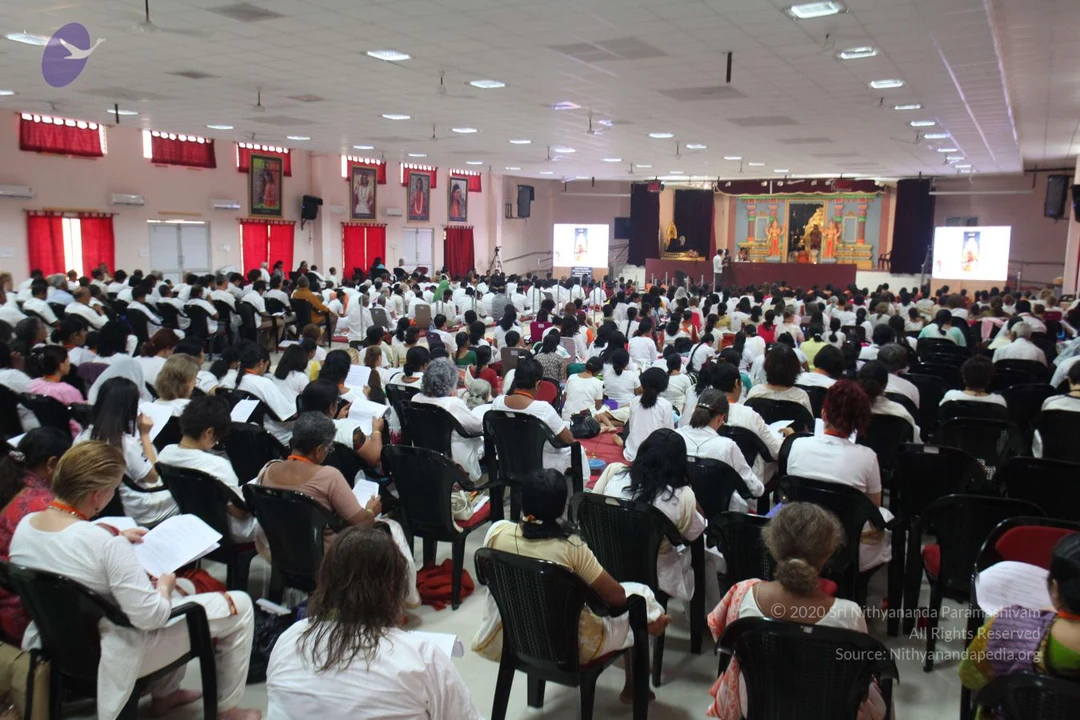
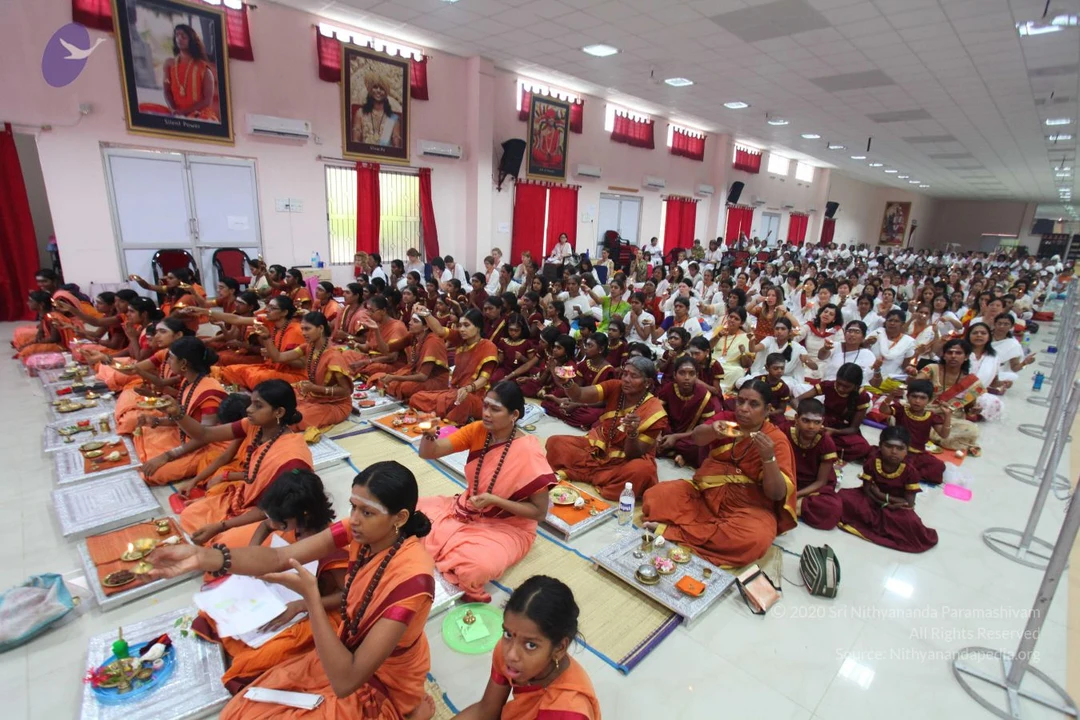
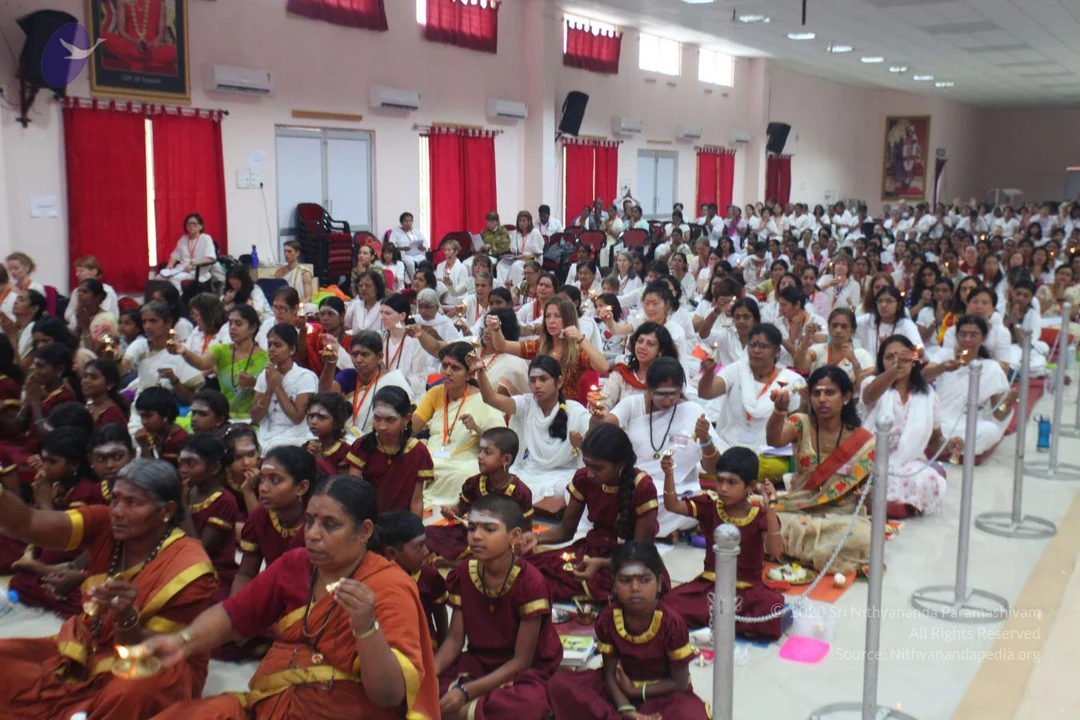
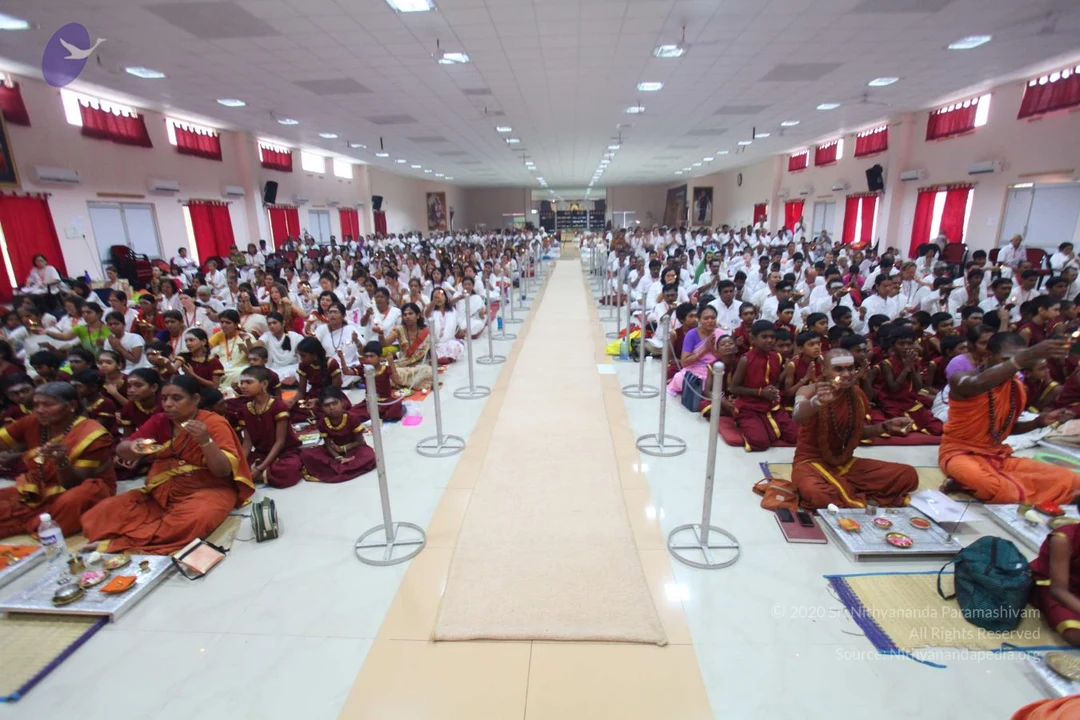
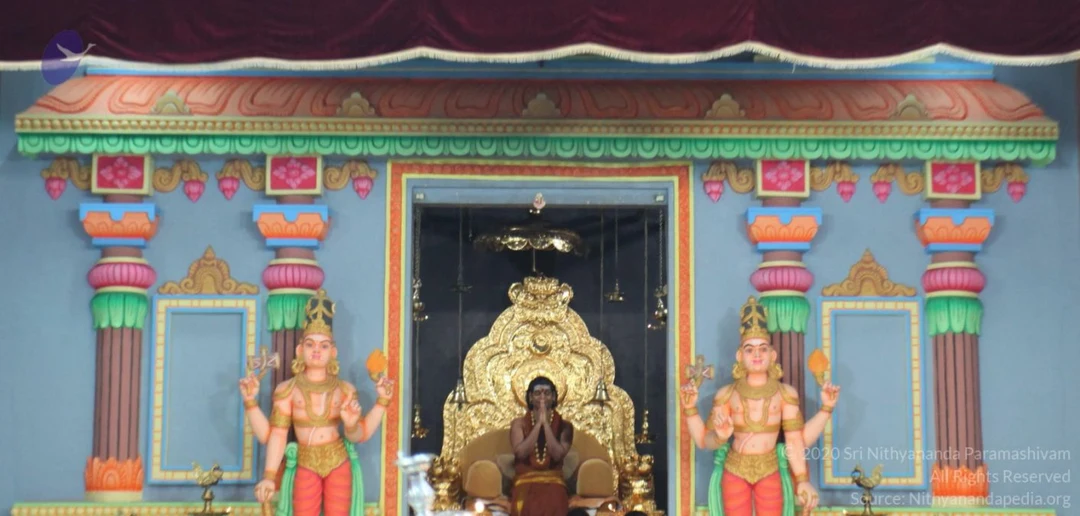
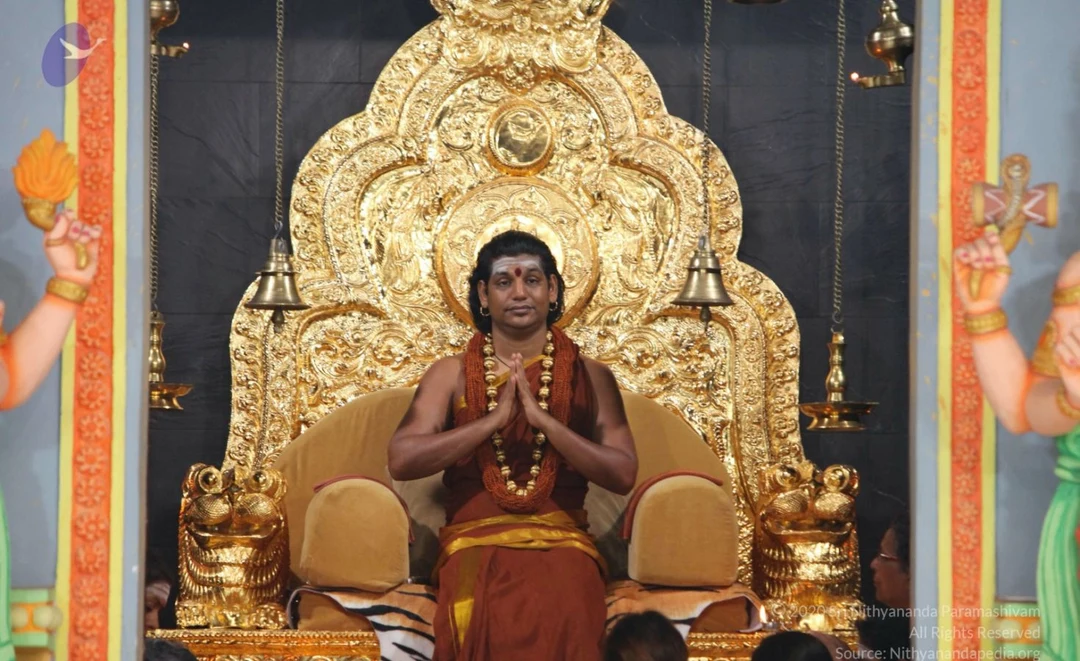
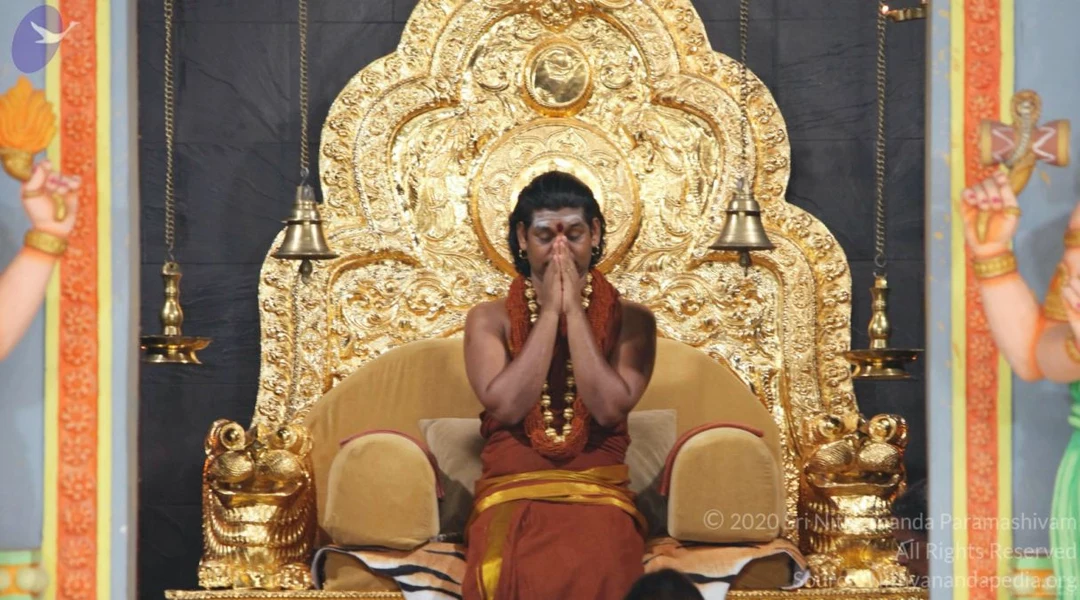
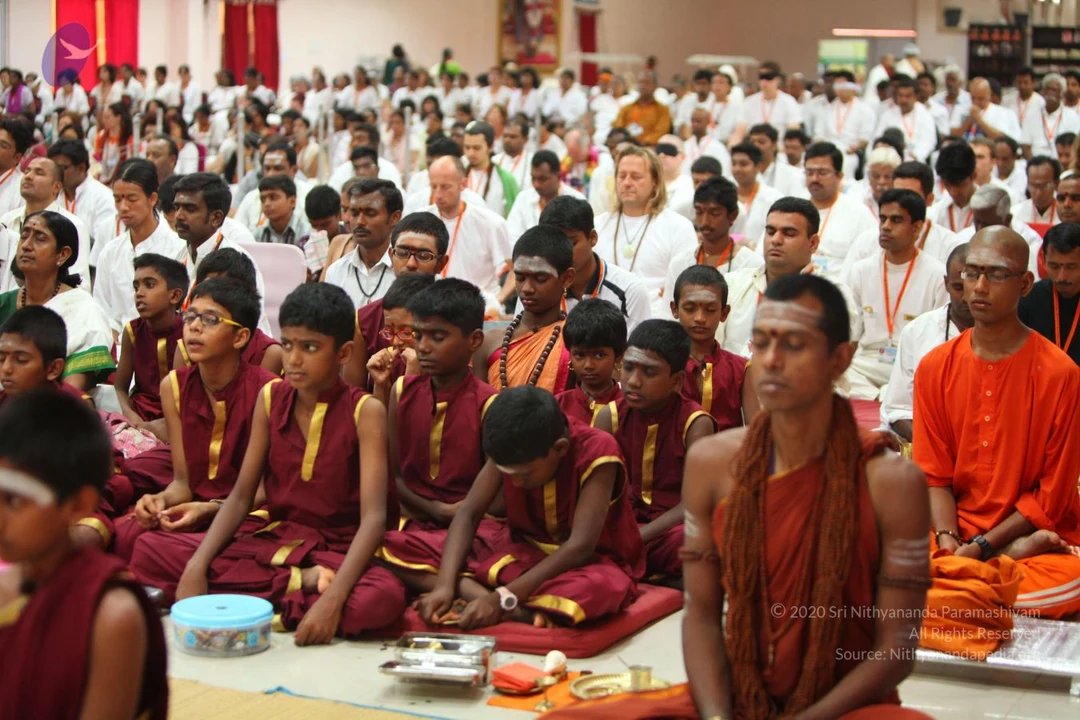
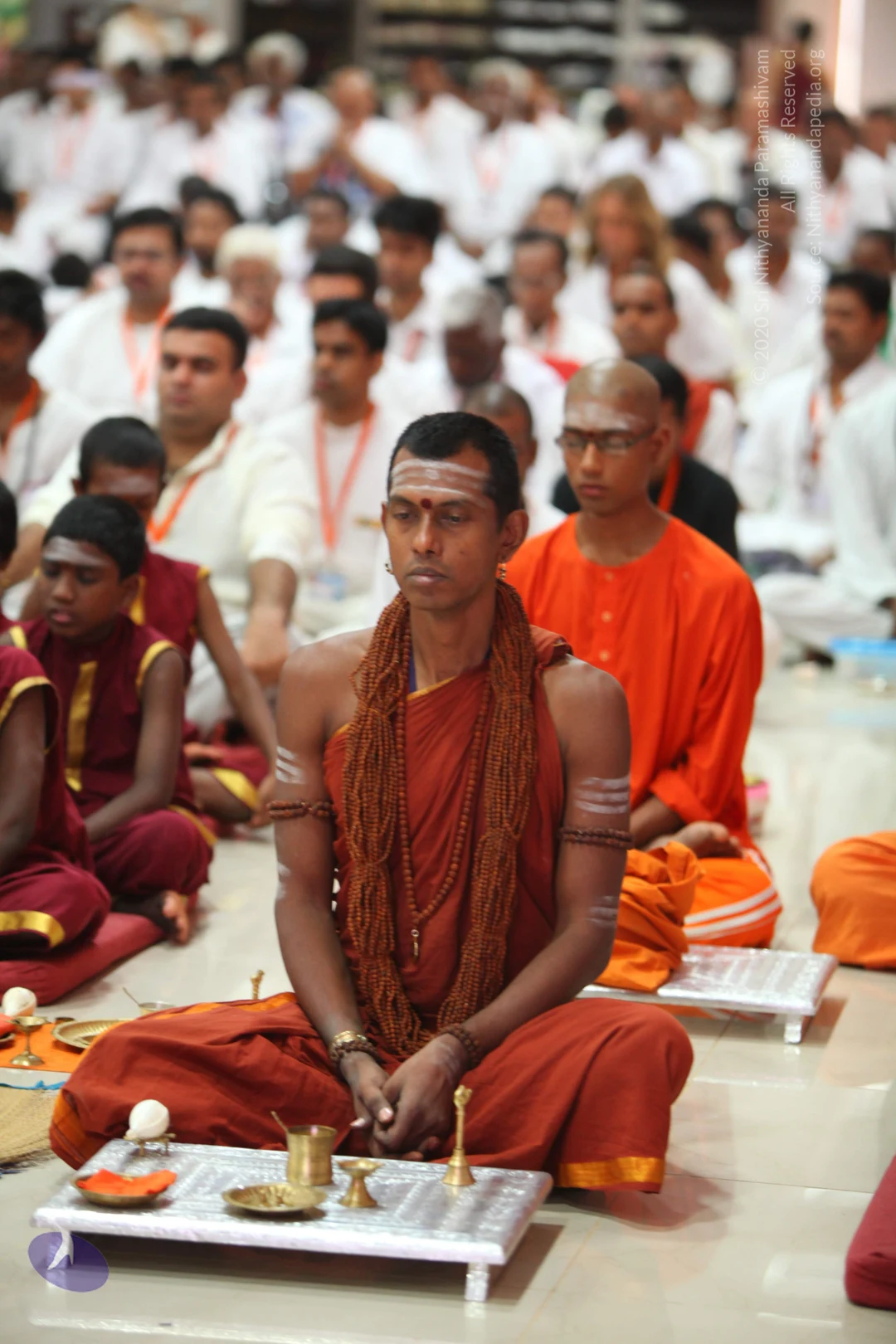
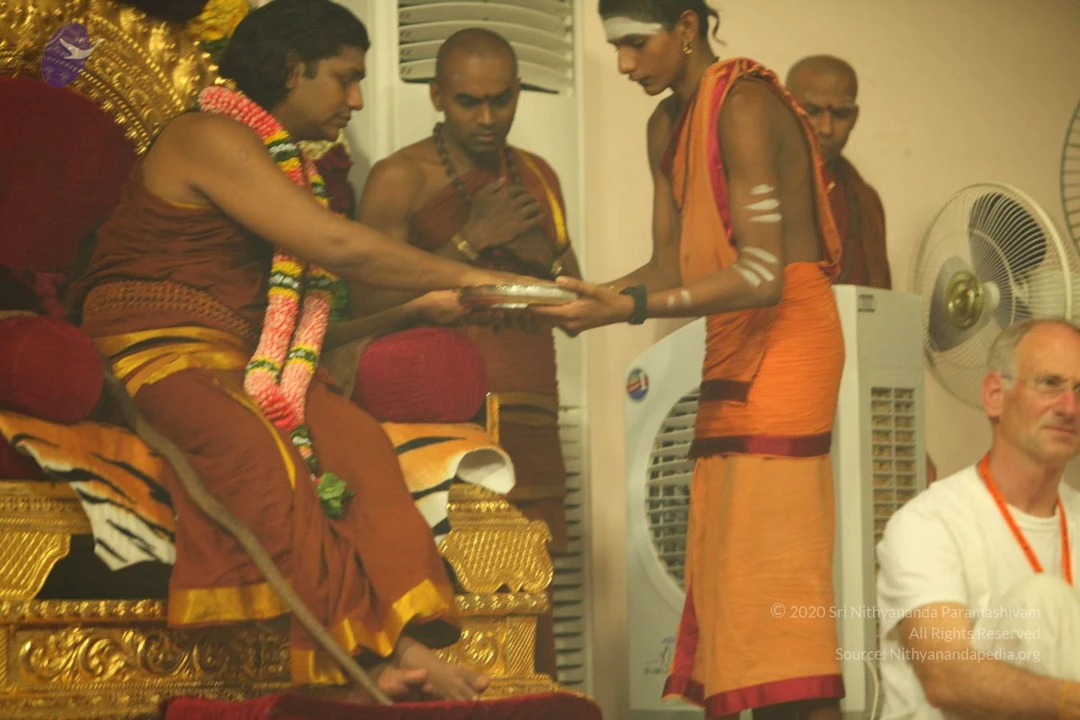
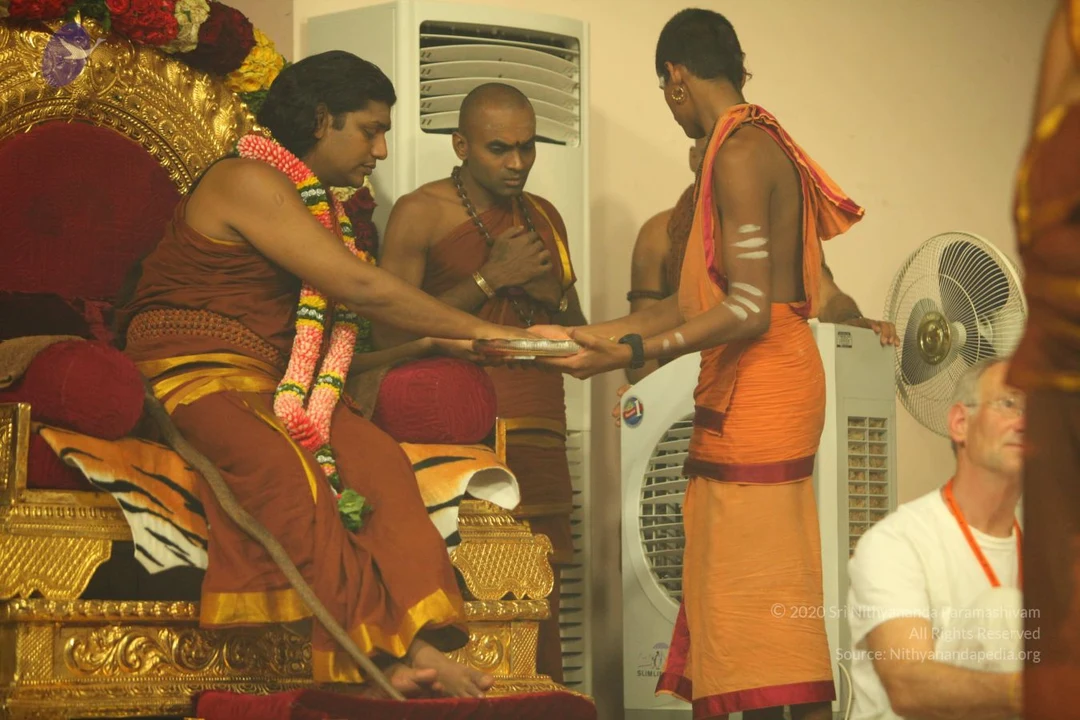
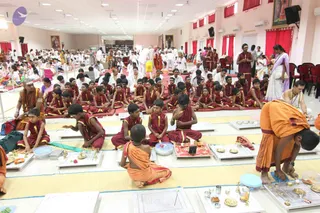
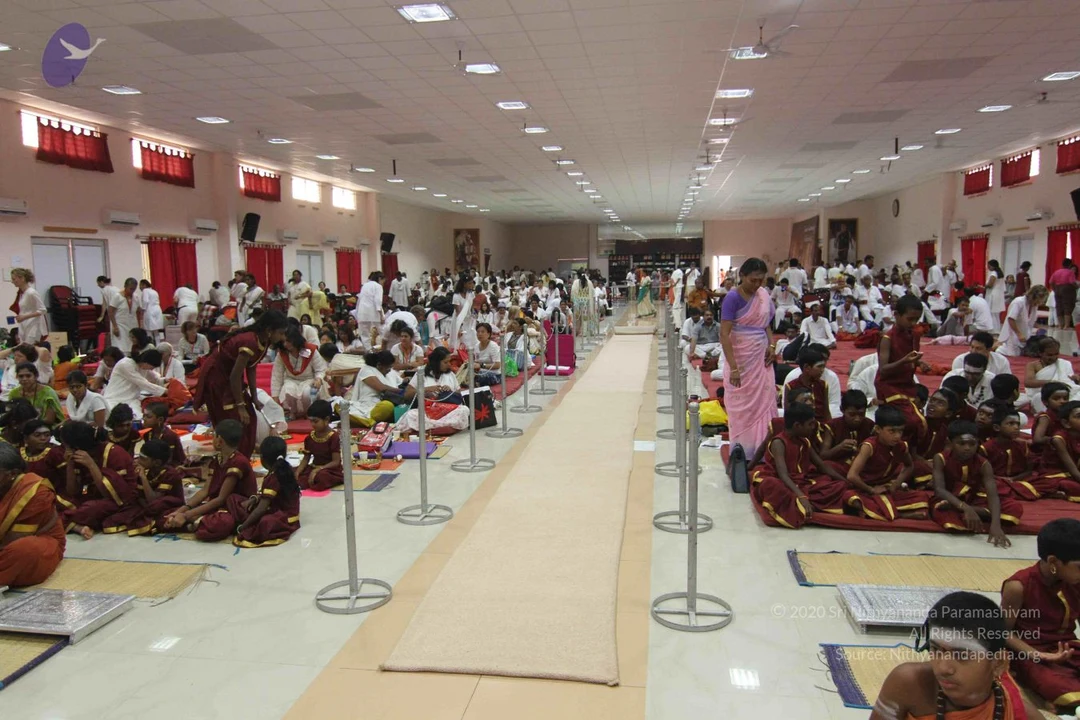
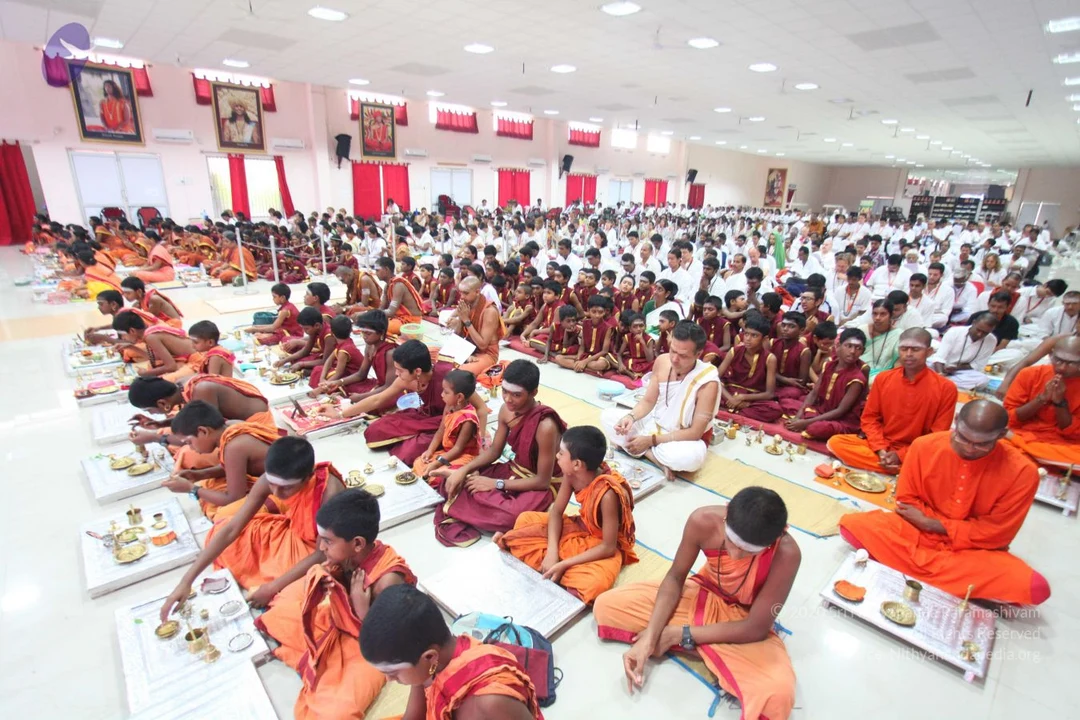
A large indoor hall filled with seated devotees on mats and carpets, many dressed in white, while a group of boys and young men in maroon-red robes sits in rows on the right. A woman in a pink sari walks along a cream carpet aisle lined with silver stanchions. White walls, red curtained windows, and ceiling lights frame the crowded satsang-style gathering, with a distant altar area visible at the far end. No figure is clearly identifiable as a person from appearance in this view.Large hall full of seated devotees performing a group puja. Dozens of boys in maroon and red dhotis and sleeveless vests sit cross-legged on mats in rows, each before a small white square tray holding brass plates, oil lamps, flowers and small vessels. Several adult men wear saffron and orange dhotis, one bending low over a silver tray at right; others in white clothing move among the rows. A woman in a lavender sari stands at right near red chairs.A seated man with closed eyes sits on an ornate gold throne with carved lion-like arms and a tiger-skin cushion. He wears an orange-red dhoti and wrap with gold border, a red-orange rudraksha mala and a gold necklace, and a red tilak on his forehead. Brass oil lamps with lit flames and hanging bells stand on both sides, and silver-rimmed plates of flowers, fruit and offerings surround his bare feet on a gold platform. a person: the seated figure's saffron-orange robes, rudraksha mala and ceremonial gold adornments match the page's a person claim, and the throne and ritual setting fit a satsang or puja. Background is black drapery.A photograph of a temple-like hall with two tall painted guardian statues flanking a large golden throne. Seated on the ornate gold throne is a man in saffron-orange robes with a gold-and-bead necklace, holding a lit camphor flame in a brass lamp. Standing at the lower left, facing the seated figure, is a bald man in orange robes presenting the flame. Hanging brass bells and lamps hang above the throne. The seated man has a long-wrapped orange cloth and a rudraksha-style mala; the statues wear gold jewellery, crowns and green sashes. a person seated in a ceremonial aarti setting, with the flame offered by an attendant priest.A photograph inside a richly decorated shrine hall. A seated figure in saffron-orange robes and a long rudraksha mala sits on an ornate gold throne with a gold back panel and cushions. Behind him, tall painted guardian figures with multiple arms, red dhotis, green sashes and gold jewellery flank the throne. A shaven-headed attendant in orange robes stands at left, holding a lit oil lamp toward the seated figure during a puja or aarti. Hanging bells and a gold canopy are above, with small lamps on the sides. The seated figure's appearance matches the page's a person reference with cues including the saffron robe and rudraksha mala, so this is a person in person.Photo of a temple-like hall with two painted dvarapala guardian statues in red dhotis and green sashes, each holding ritual implements and wearing gold crowns and jewelry. In the centre, a figure in saffron-orange robes and rudraksha mala sits on an ornate gilded throne beneath a small umbrella and hanging bells, smiling and raising a hand. A devotee in orange robes stands at the lower left holding a flaming oil lamp or aarti tray toward the seated figure. Brass lamps flank the scene and a gold-coloured pedestal sits below the throne. The seated figure's identity is an appearance-based candidate only: a person, with saffron robes, a rudraksha mala and a gilded throne as cues.
NITHYA-SATSANG
33 photosSource gallery
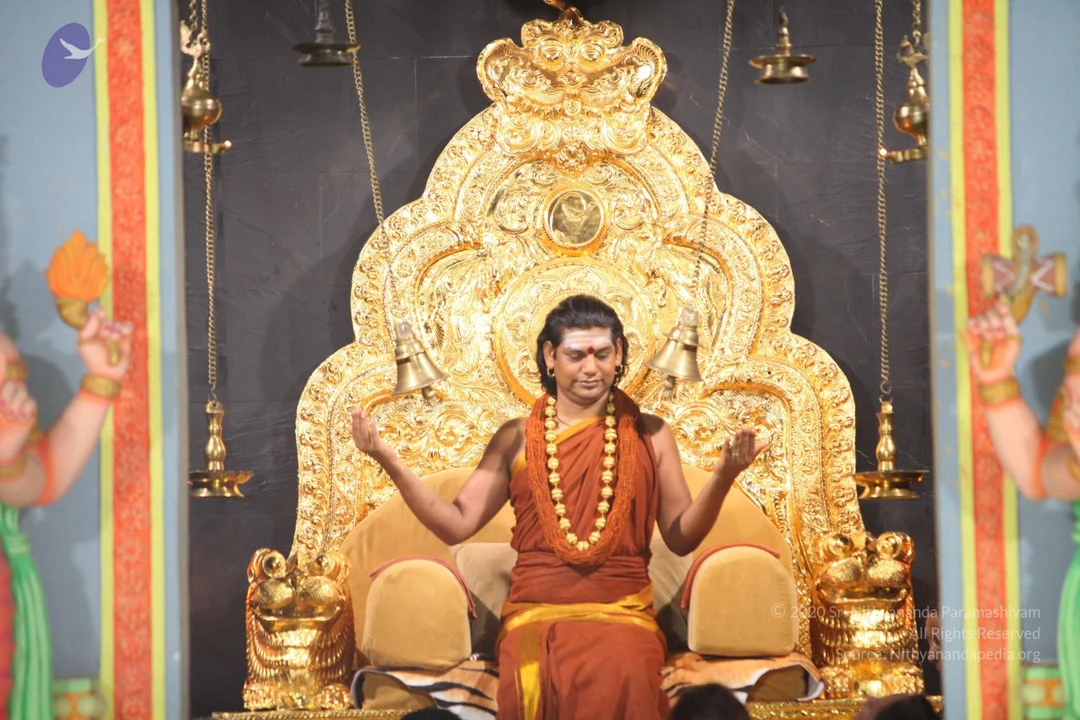
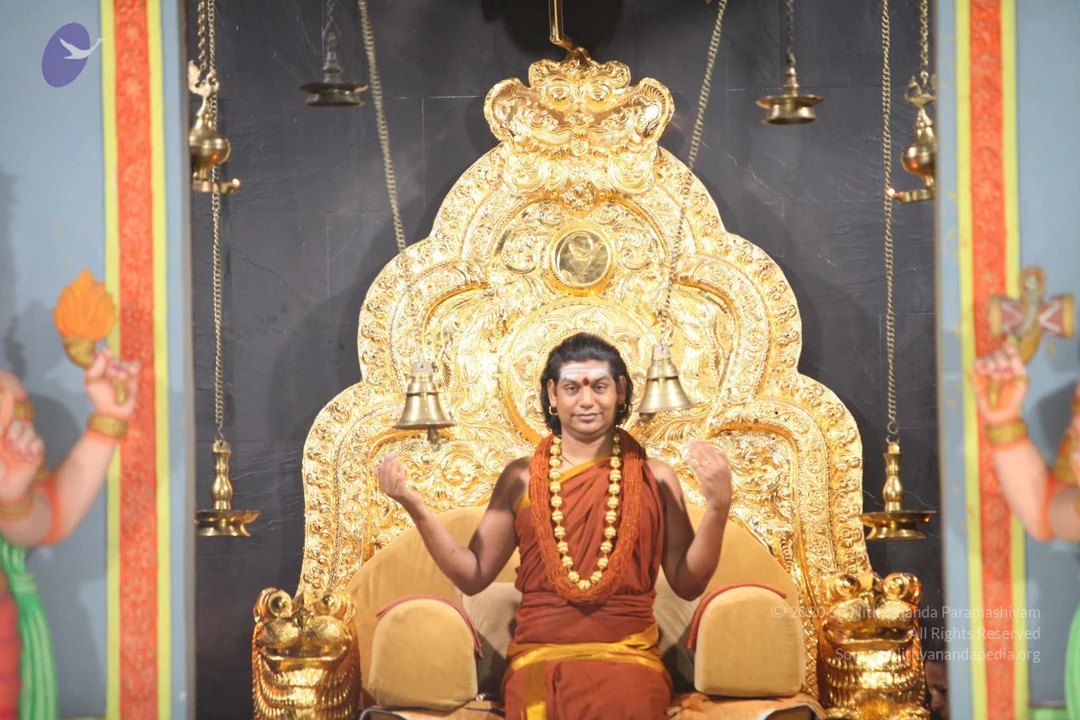
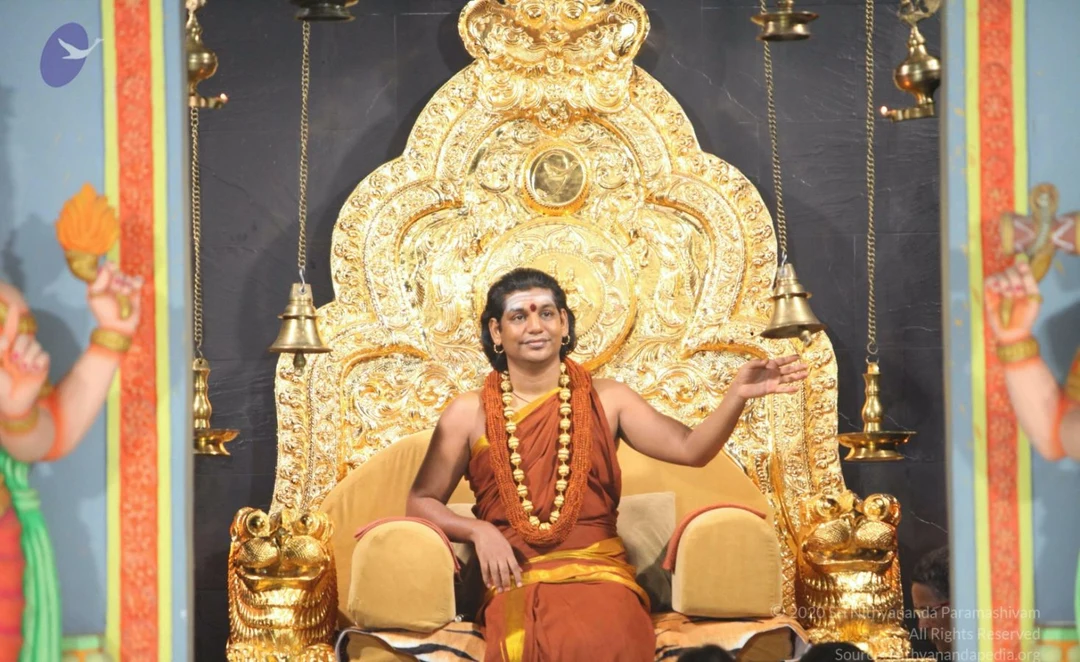
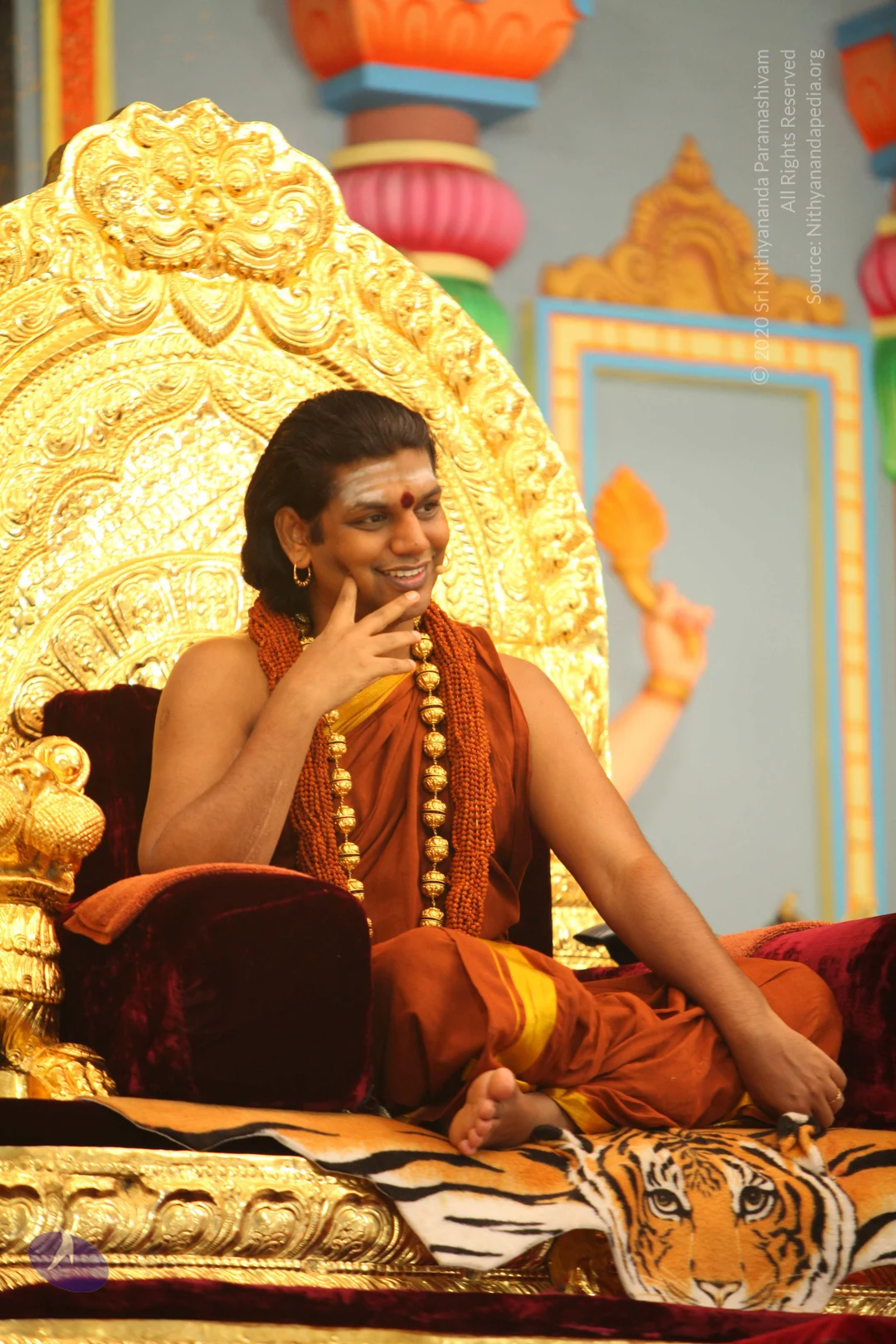
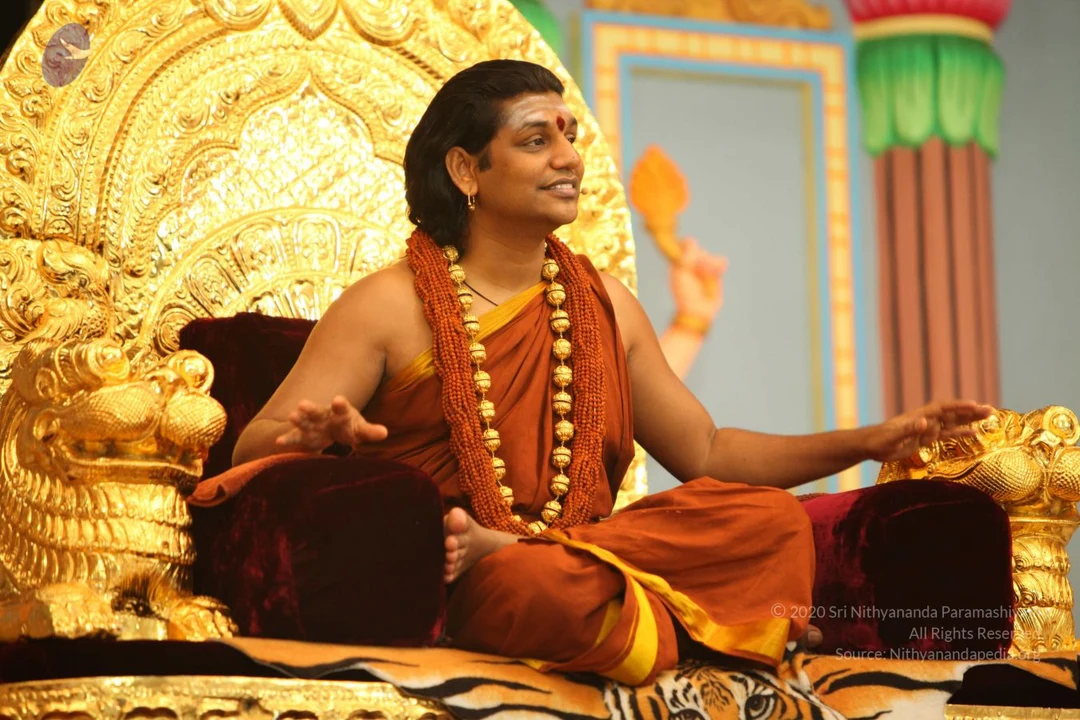
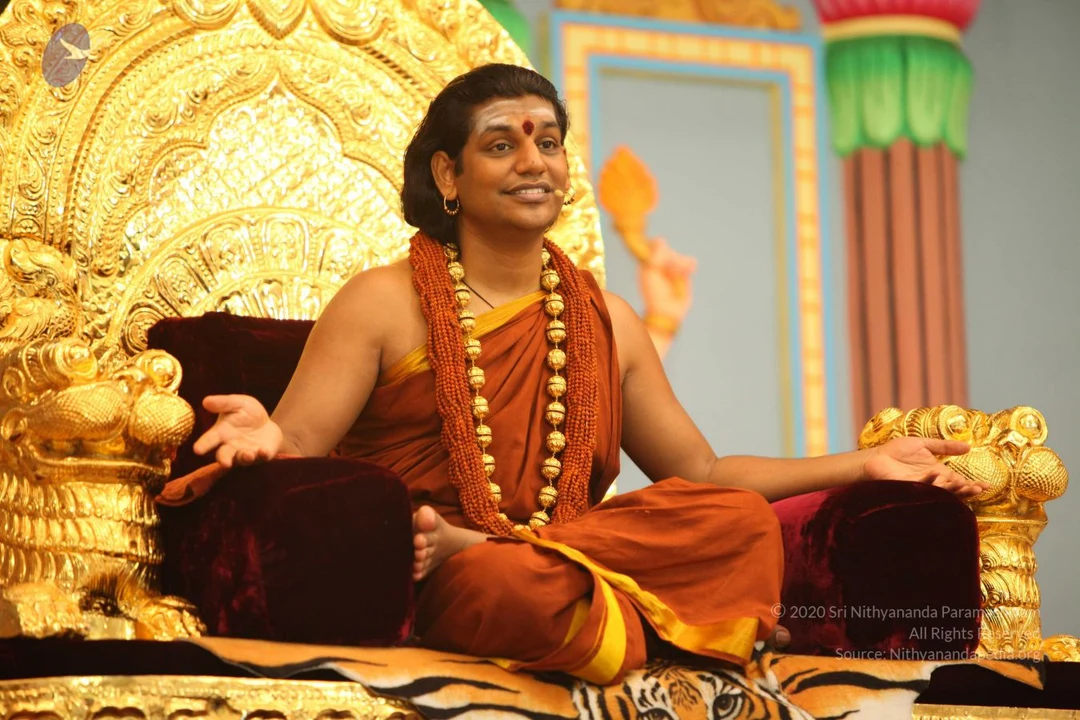
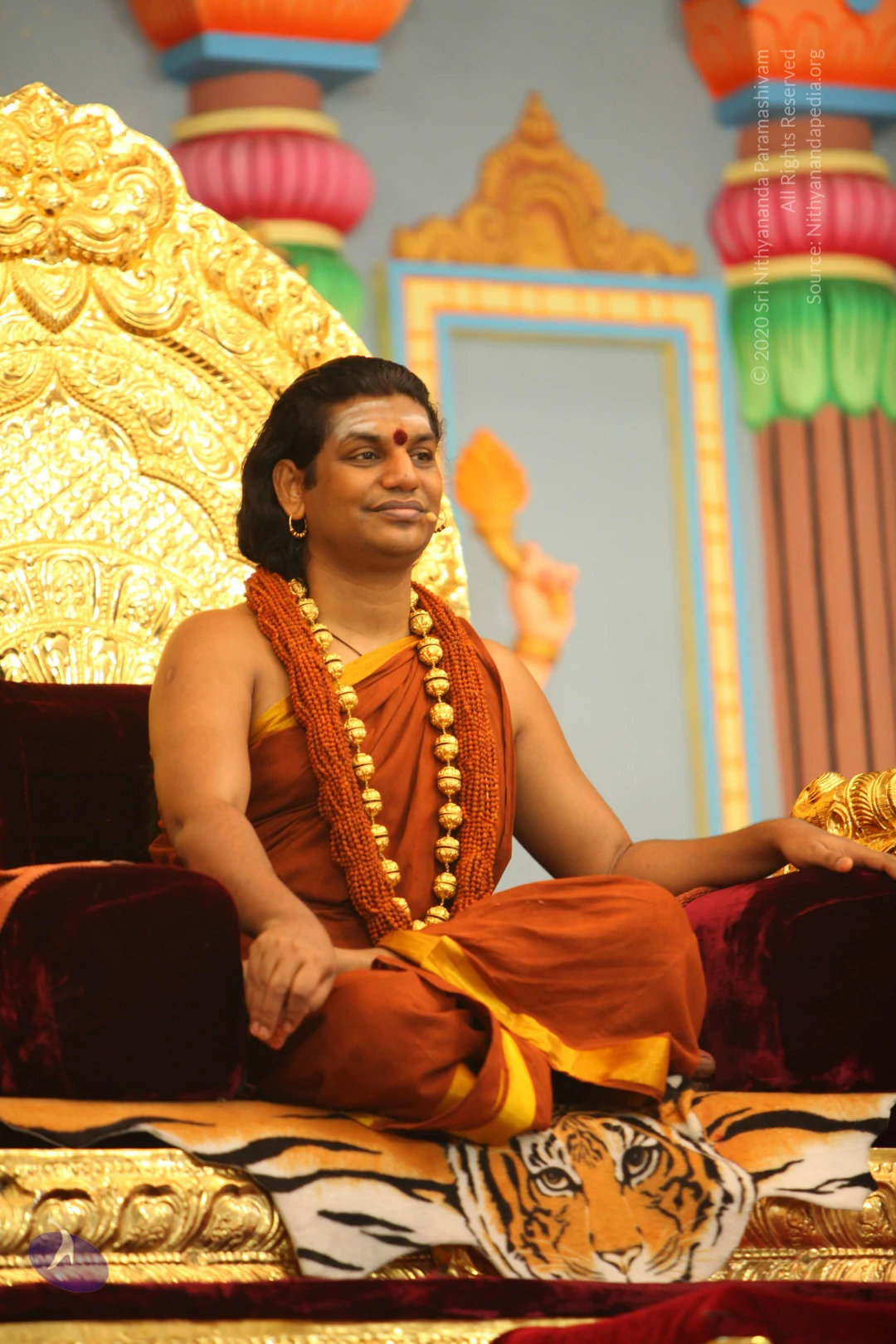
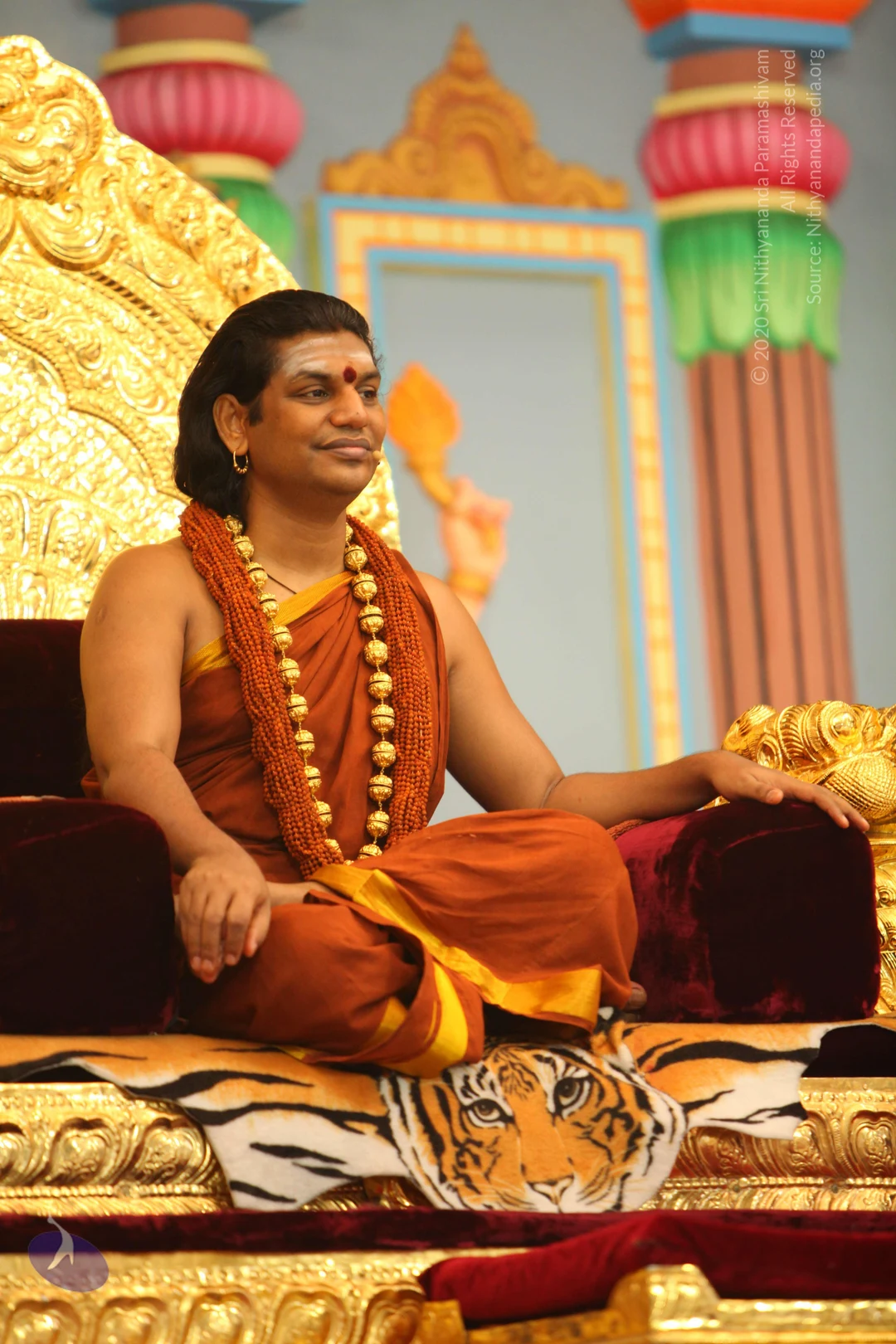
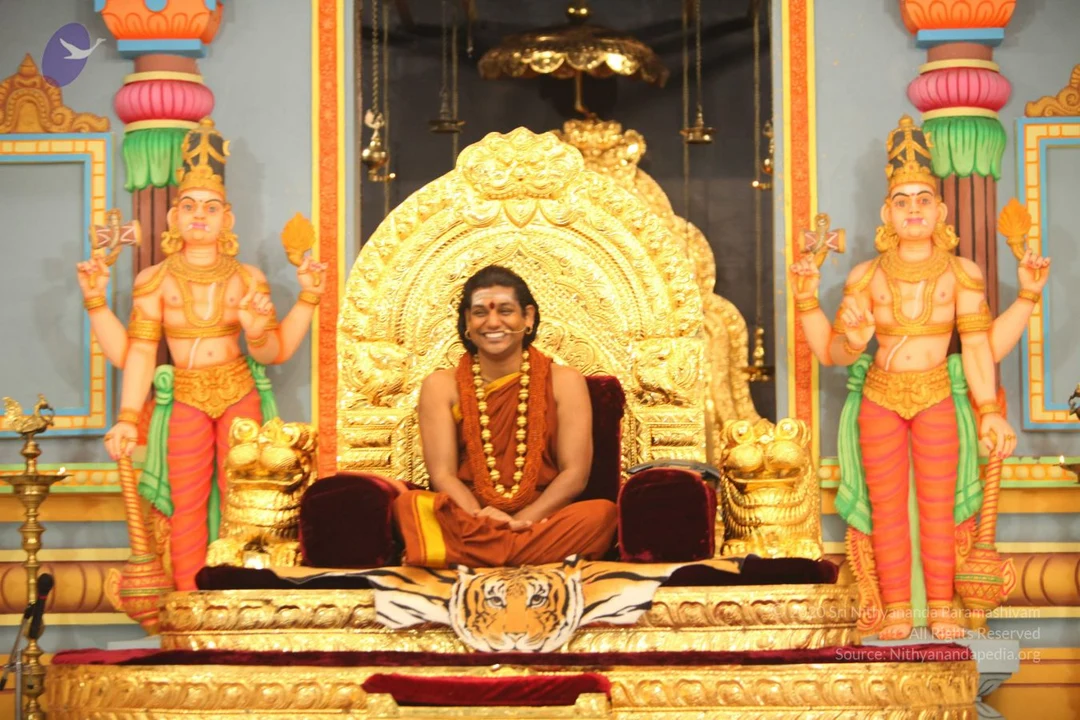
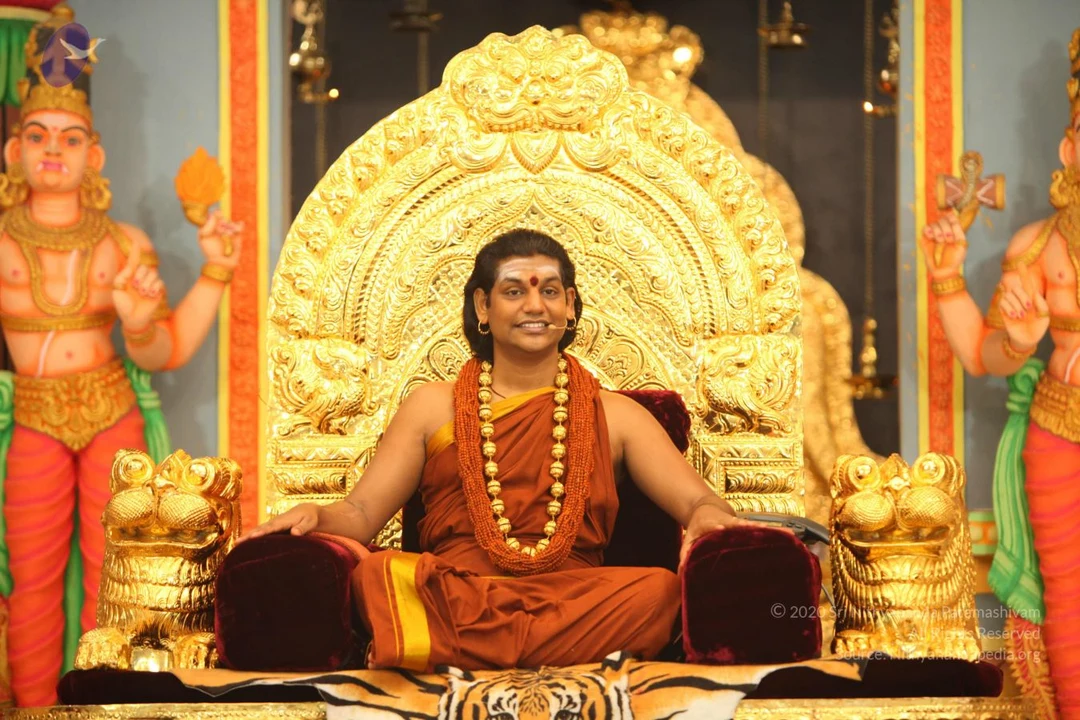
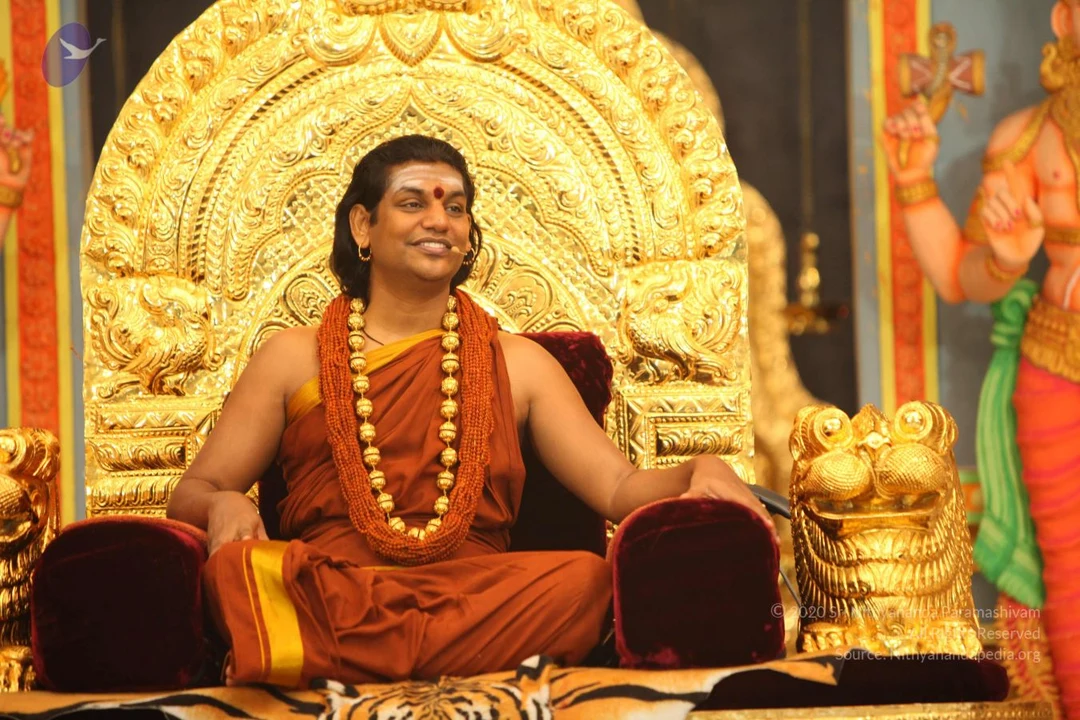
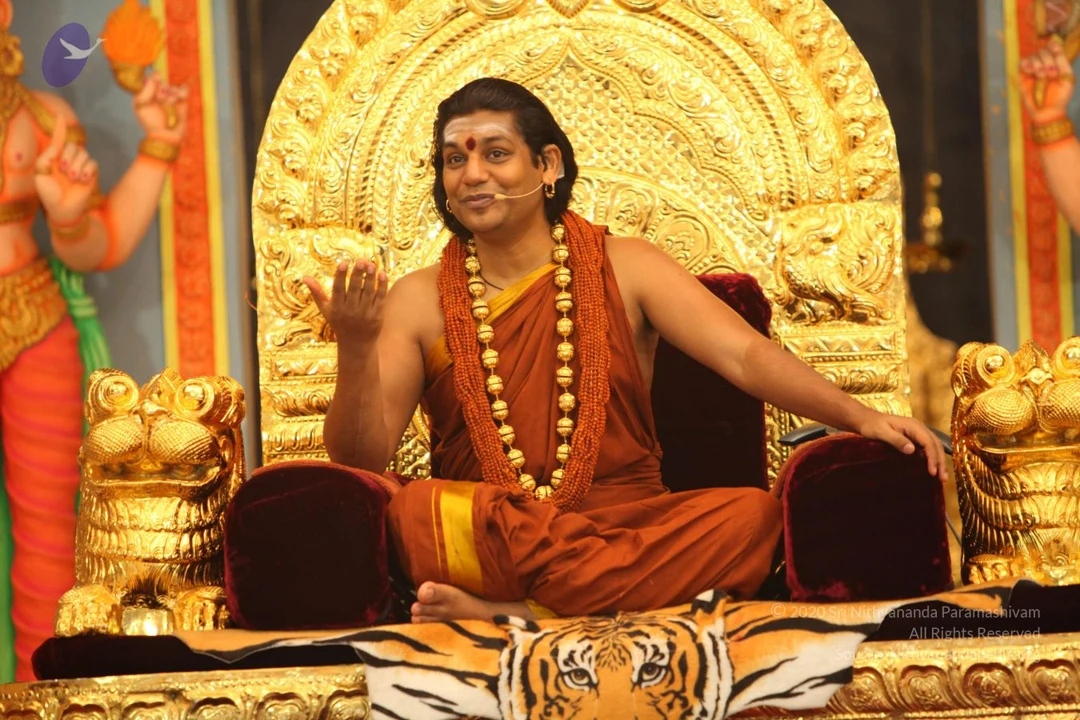
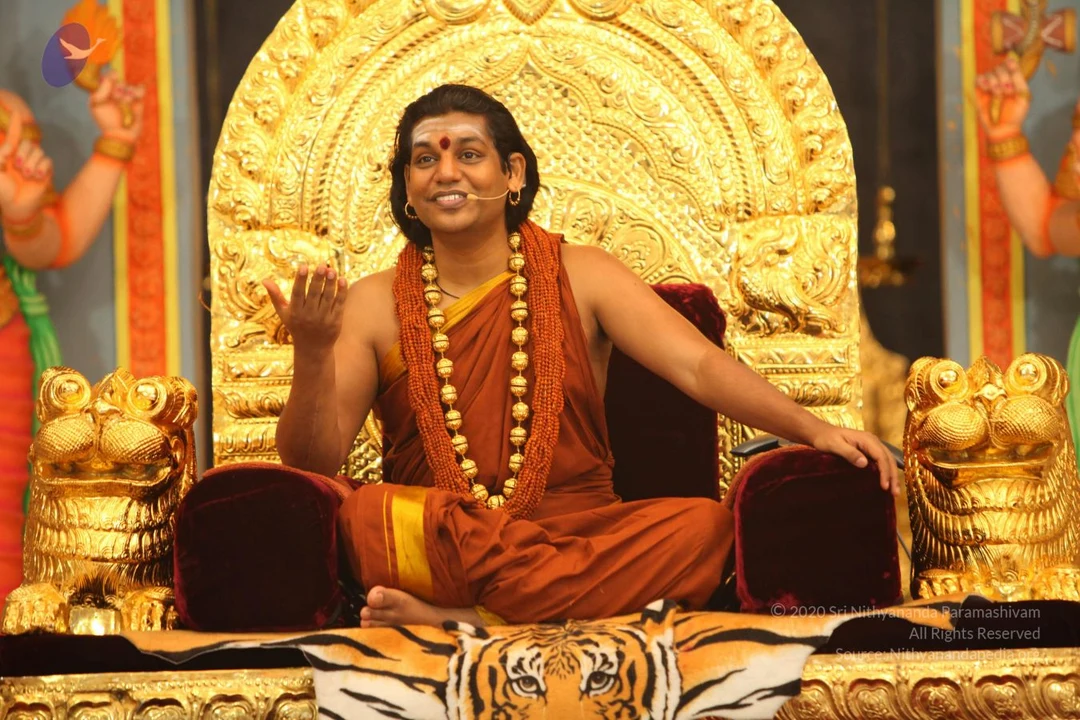
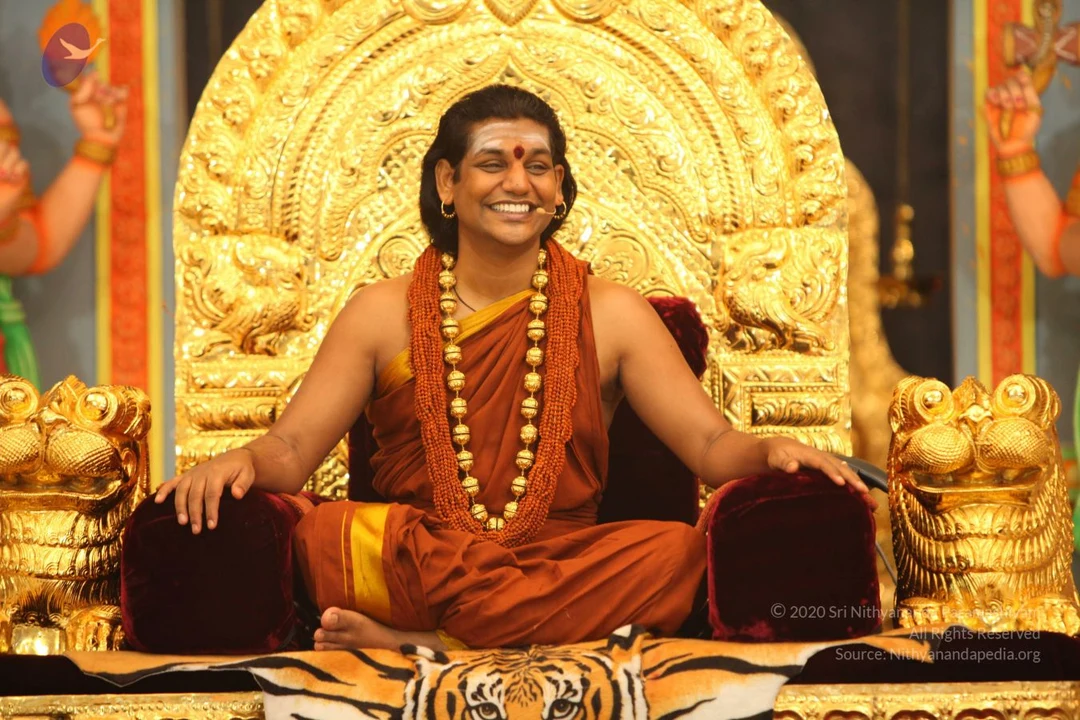
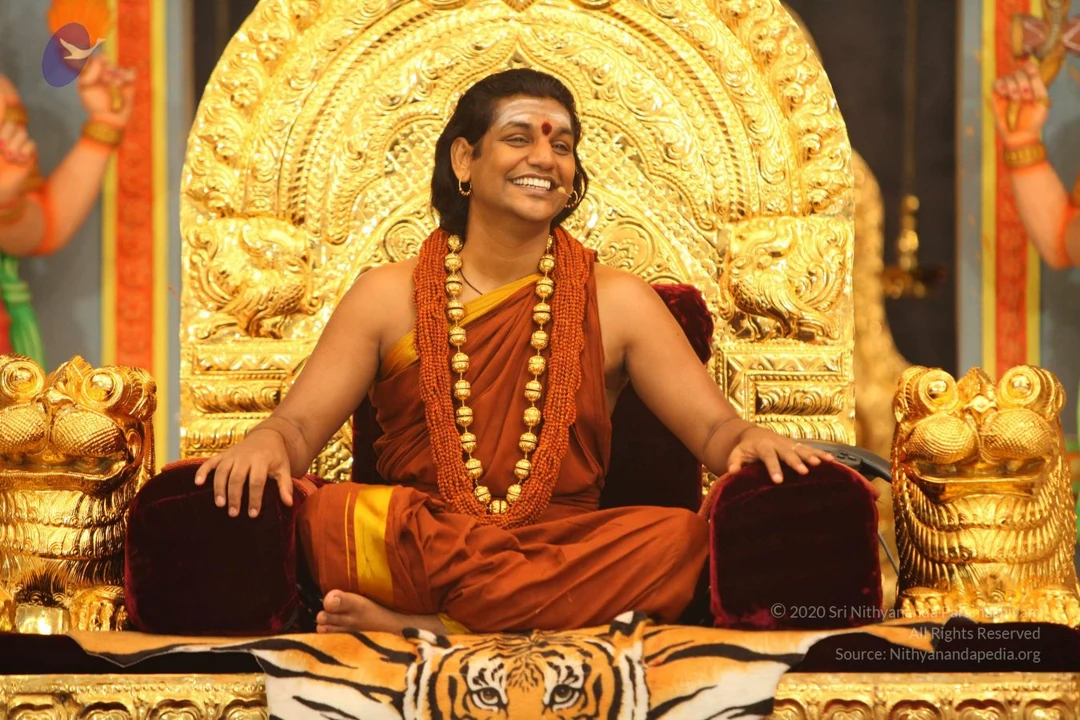
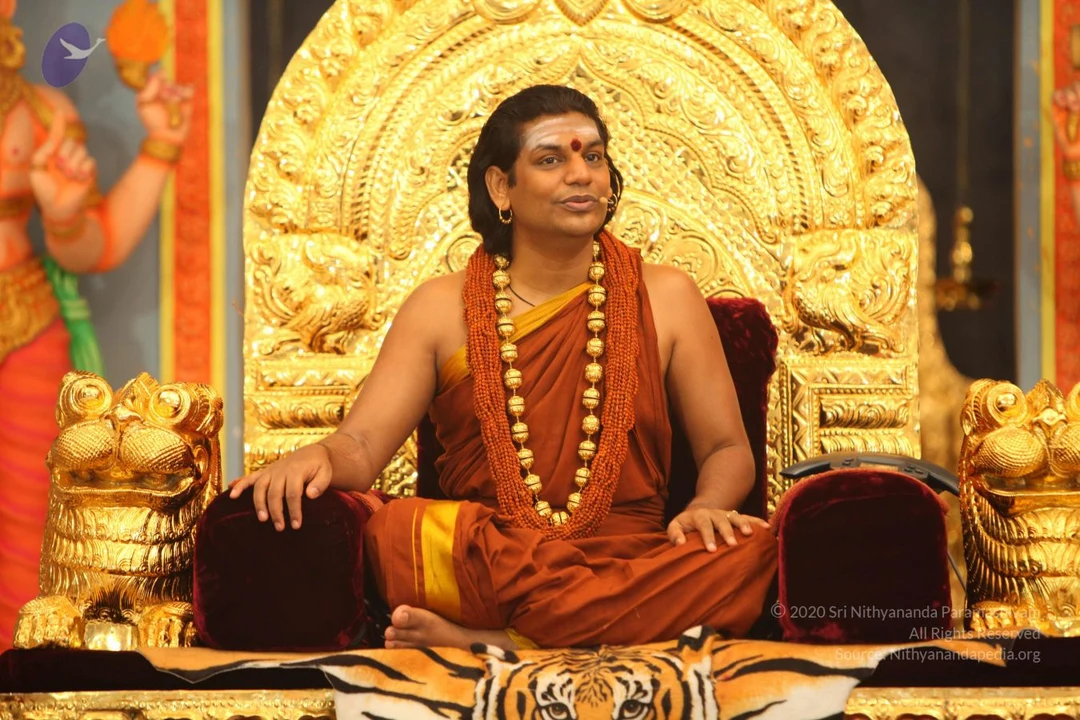
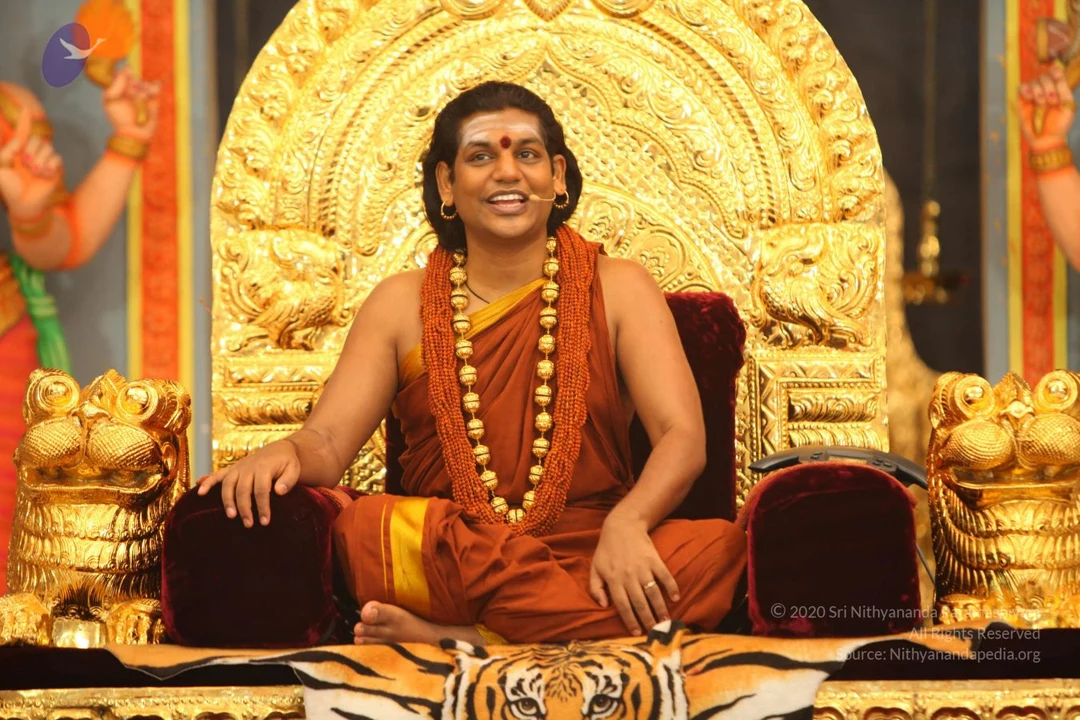
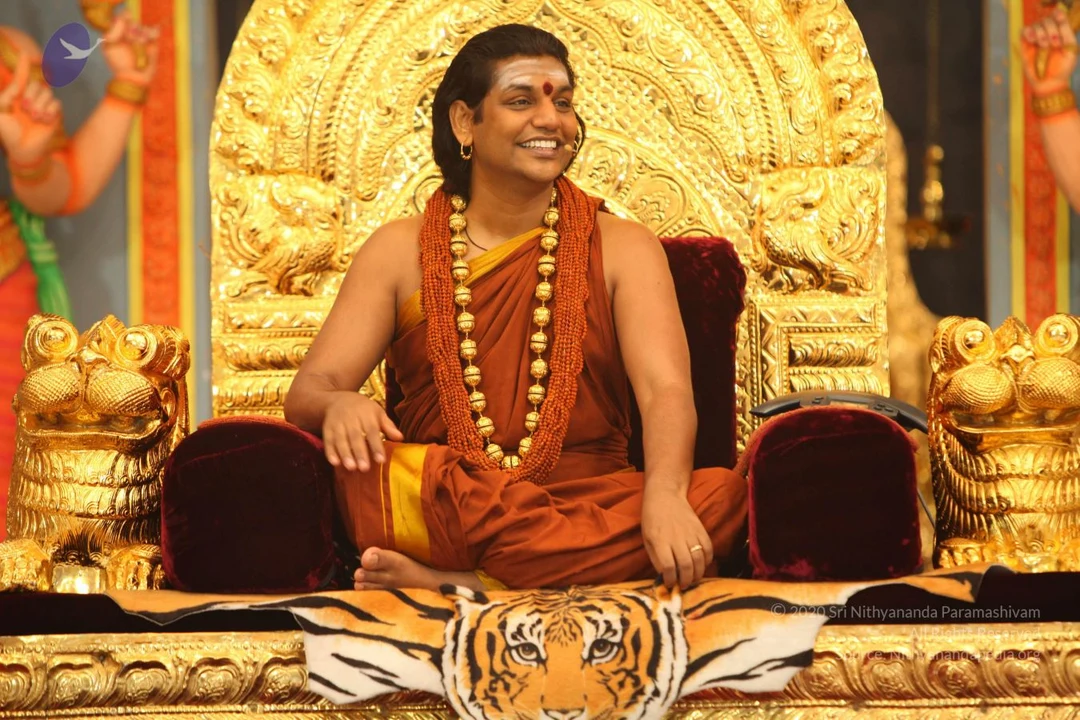
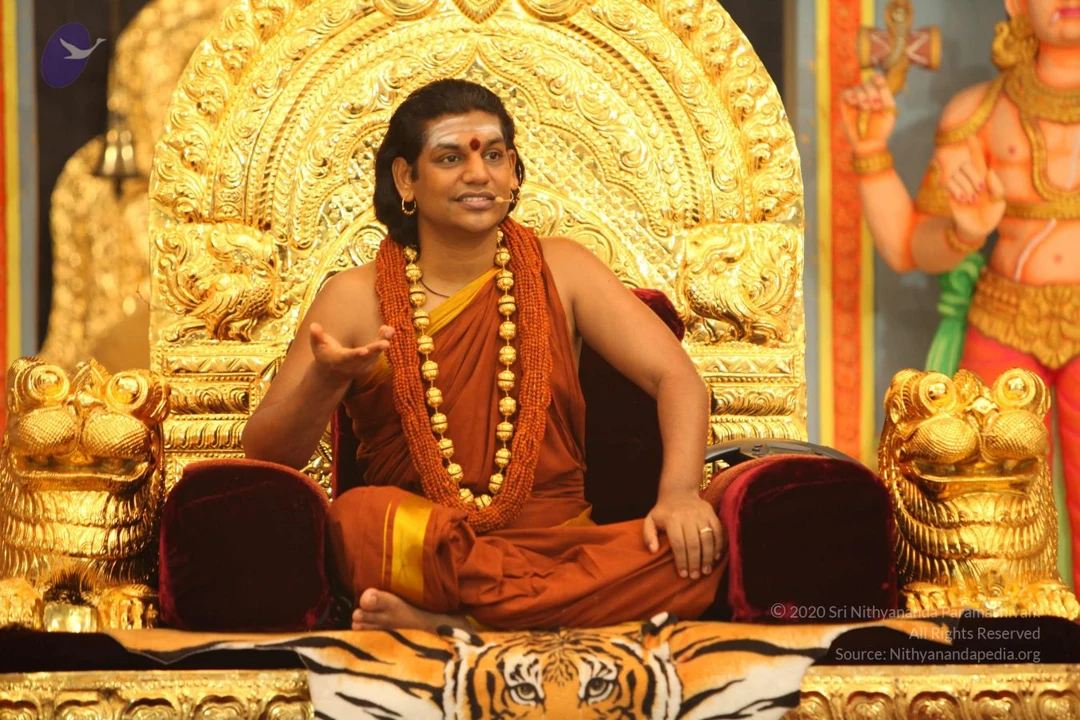
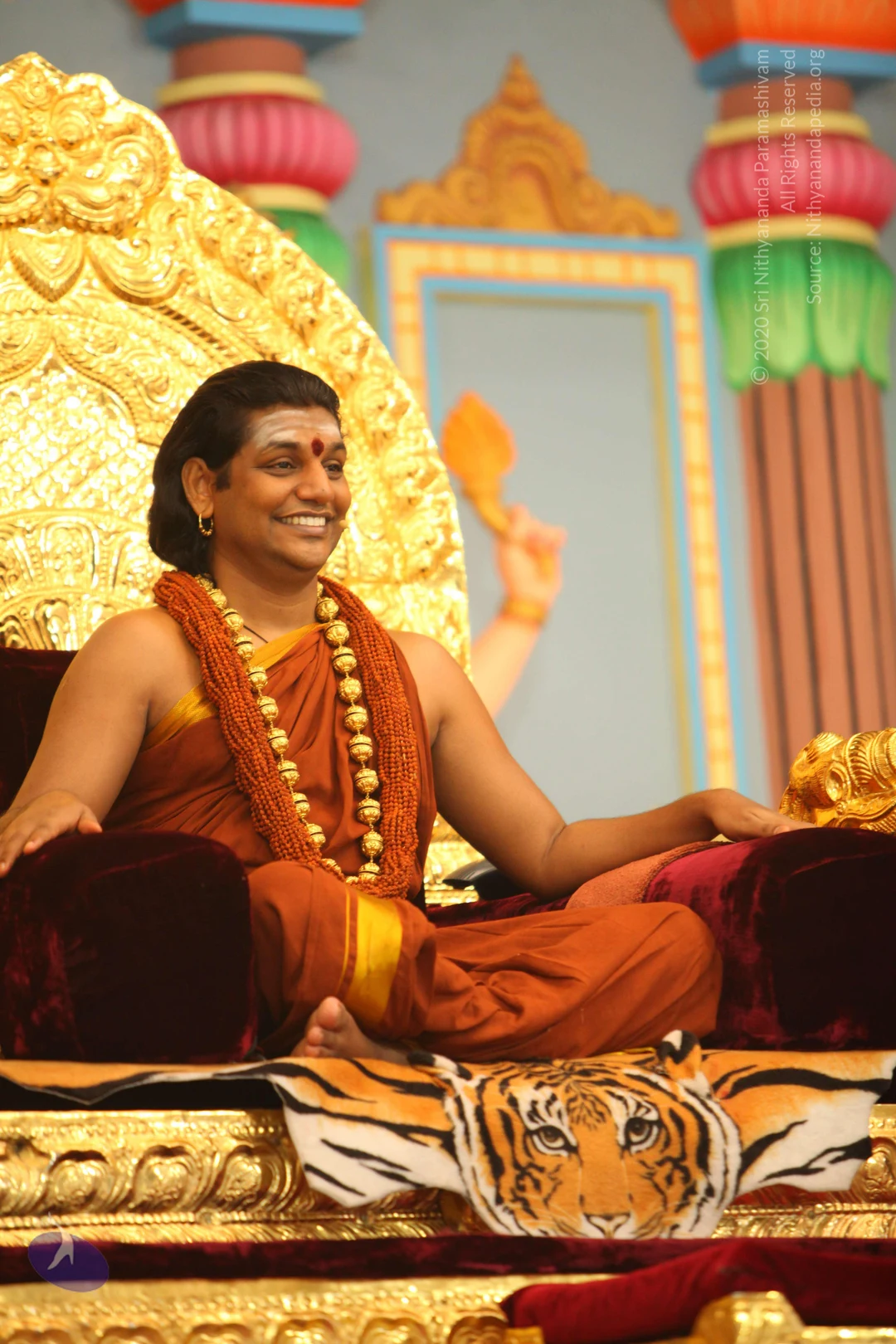
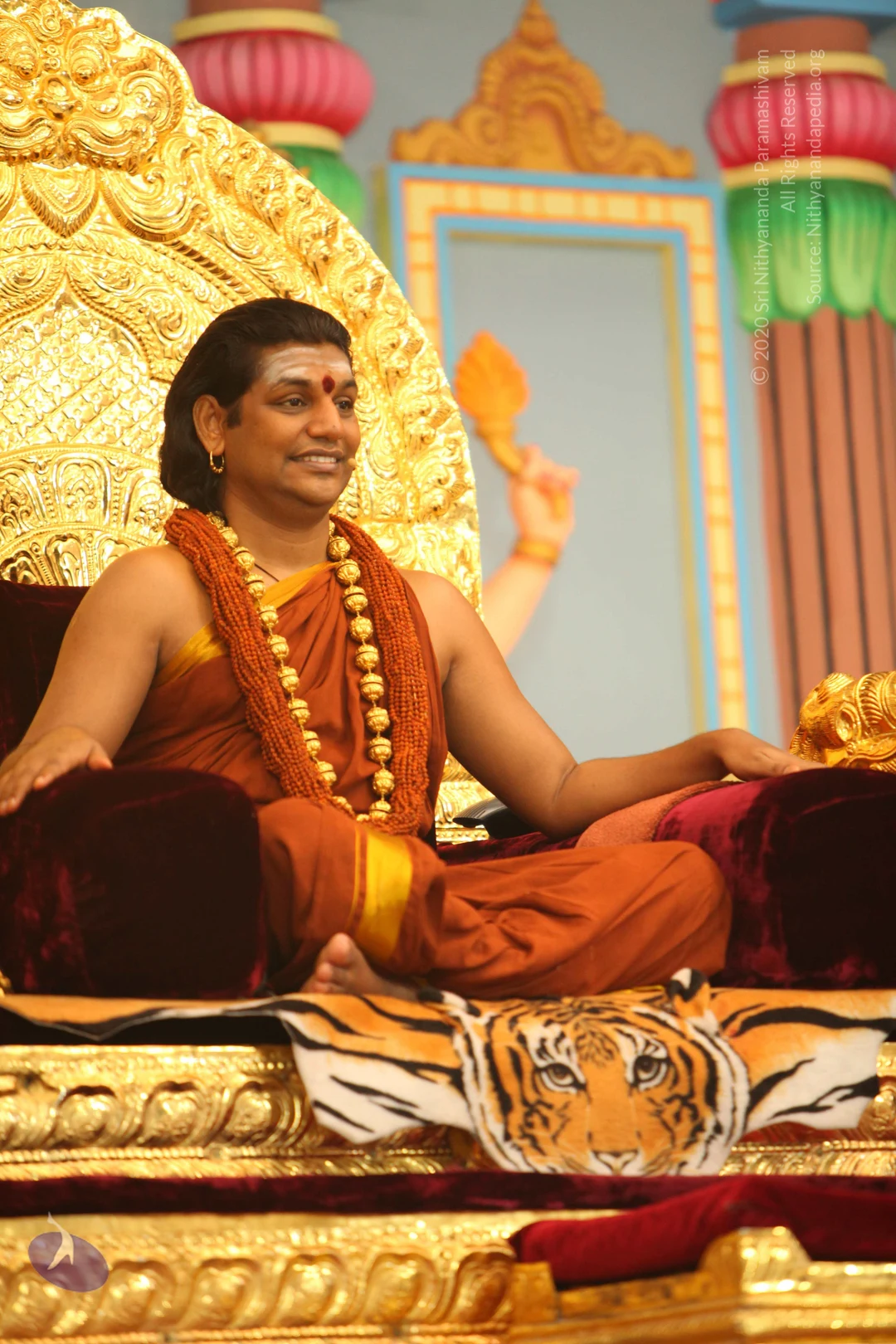
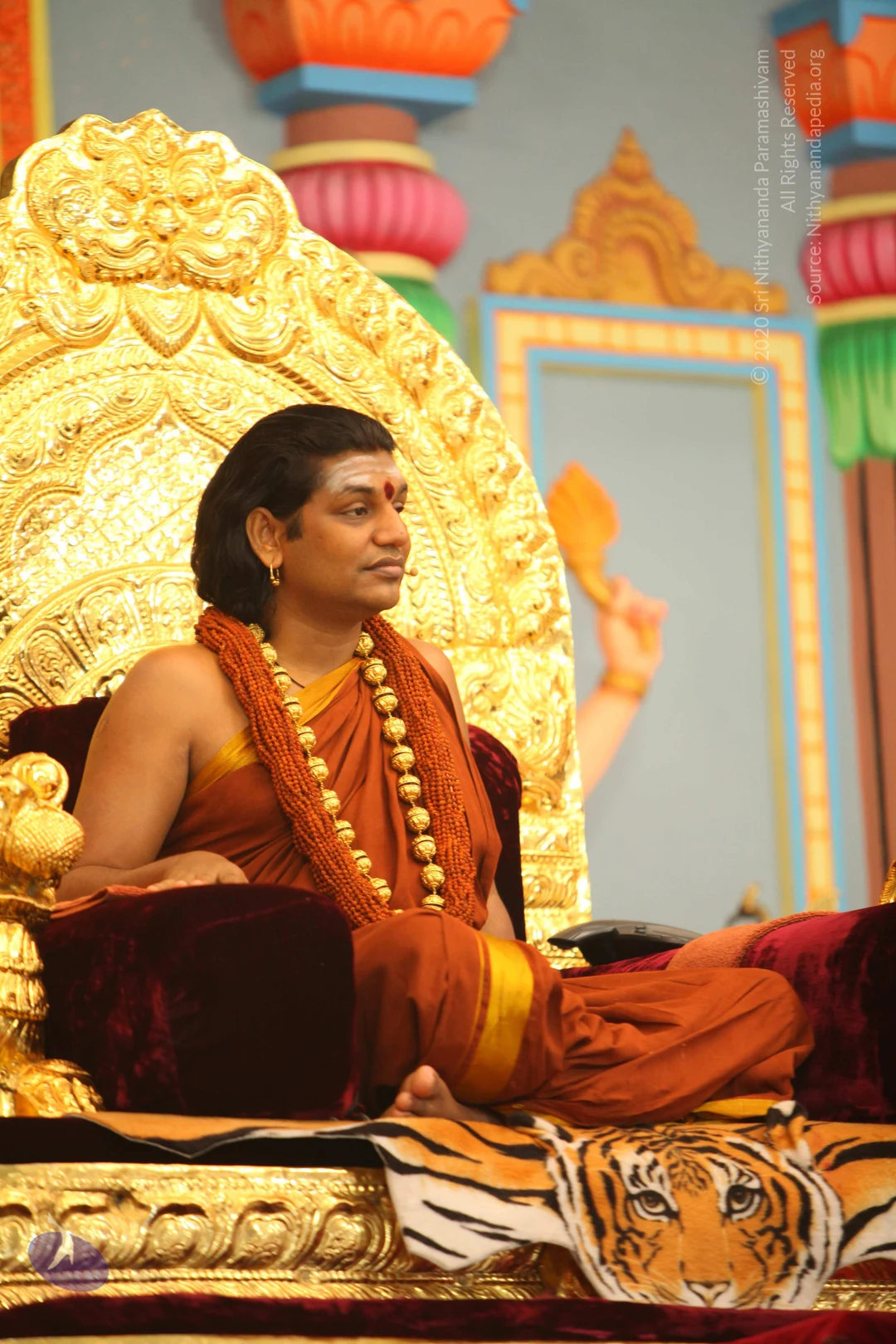
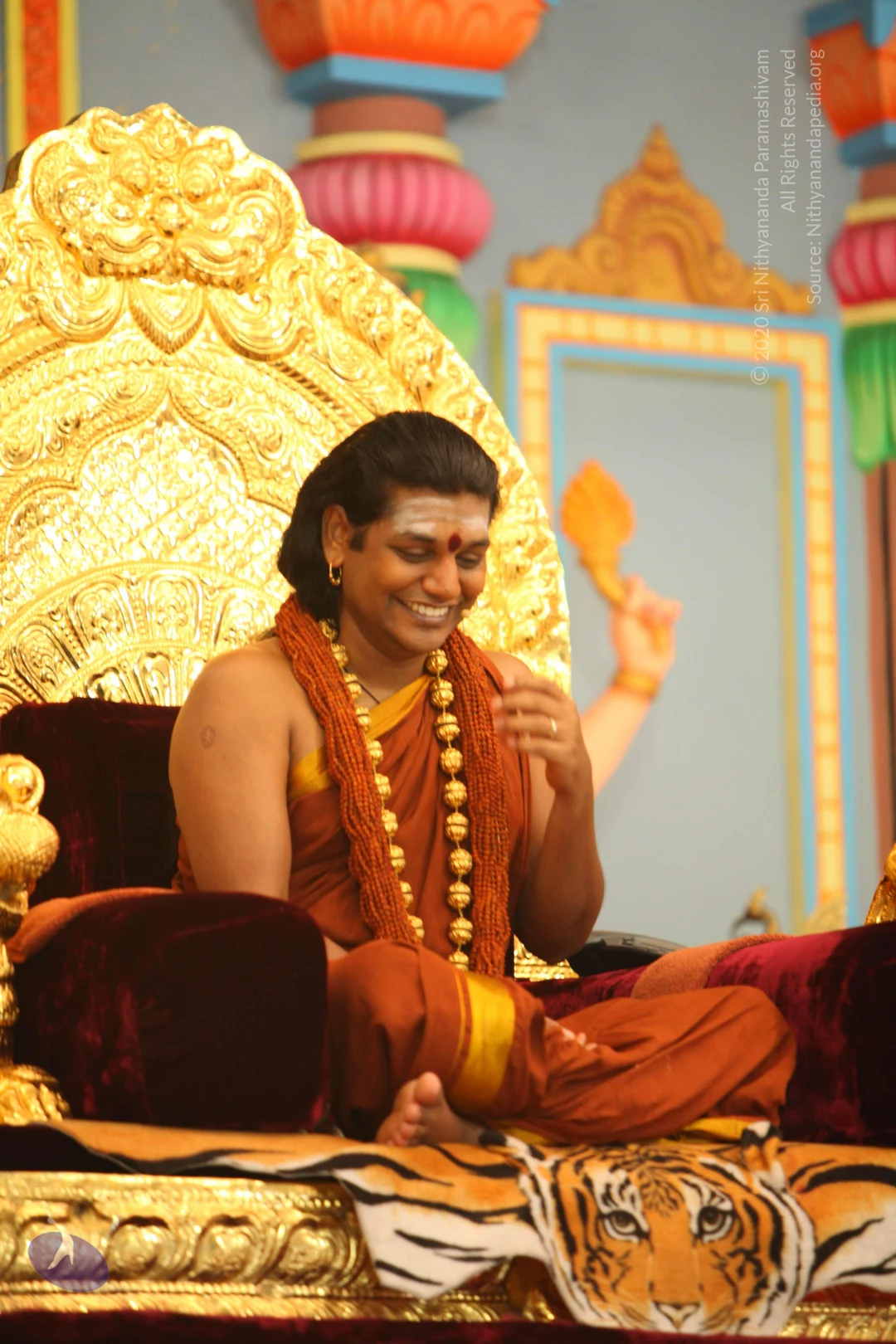
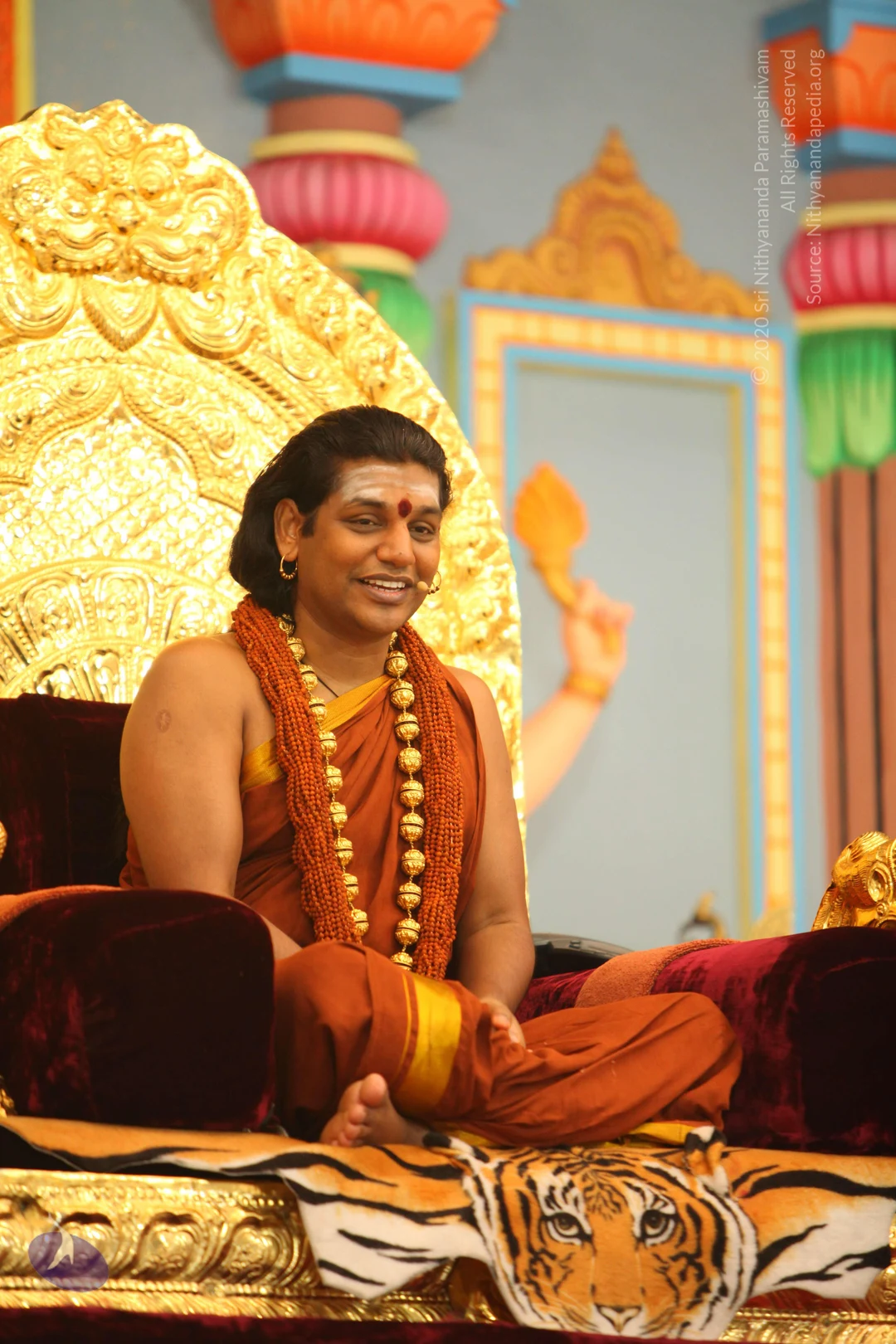
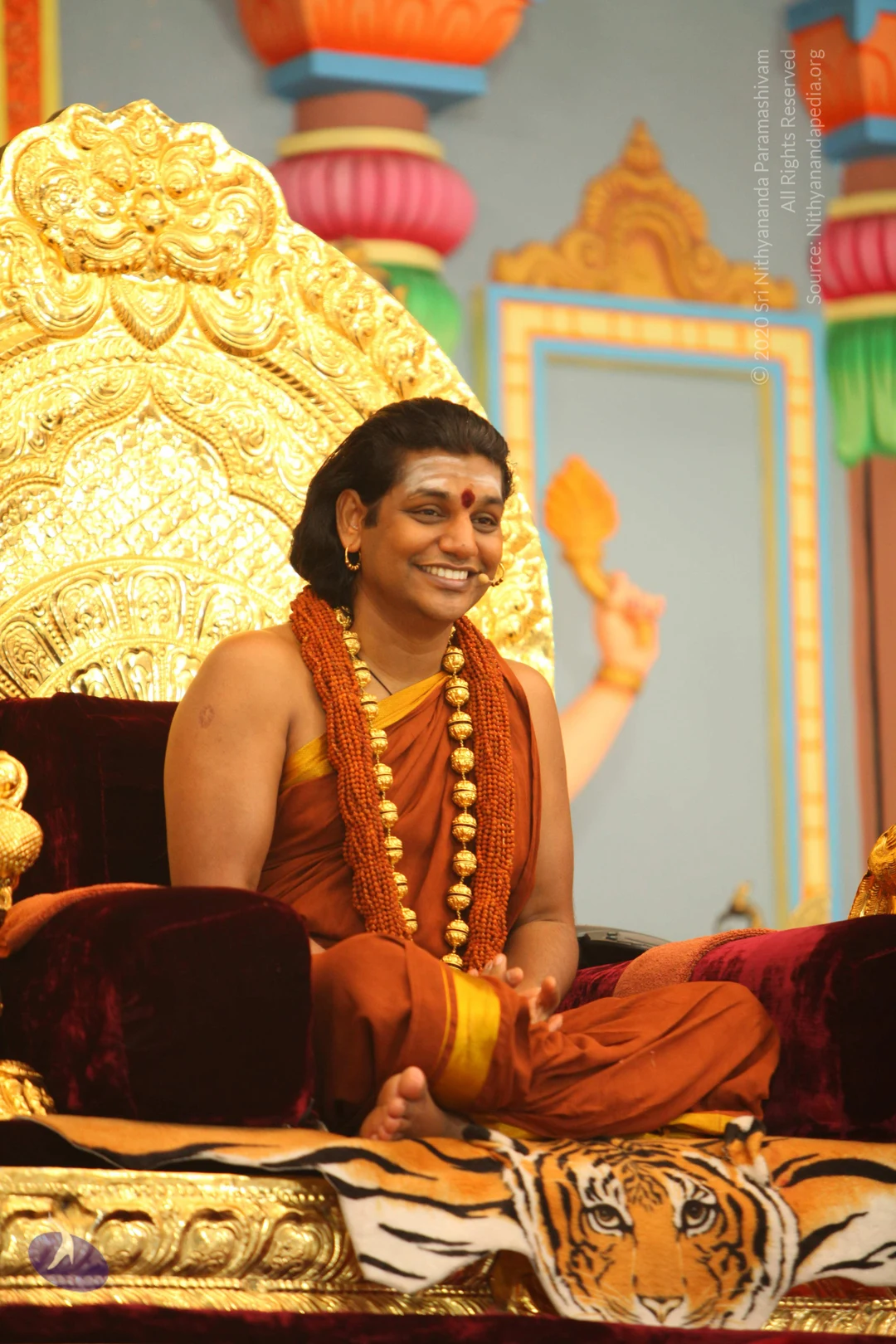
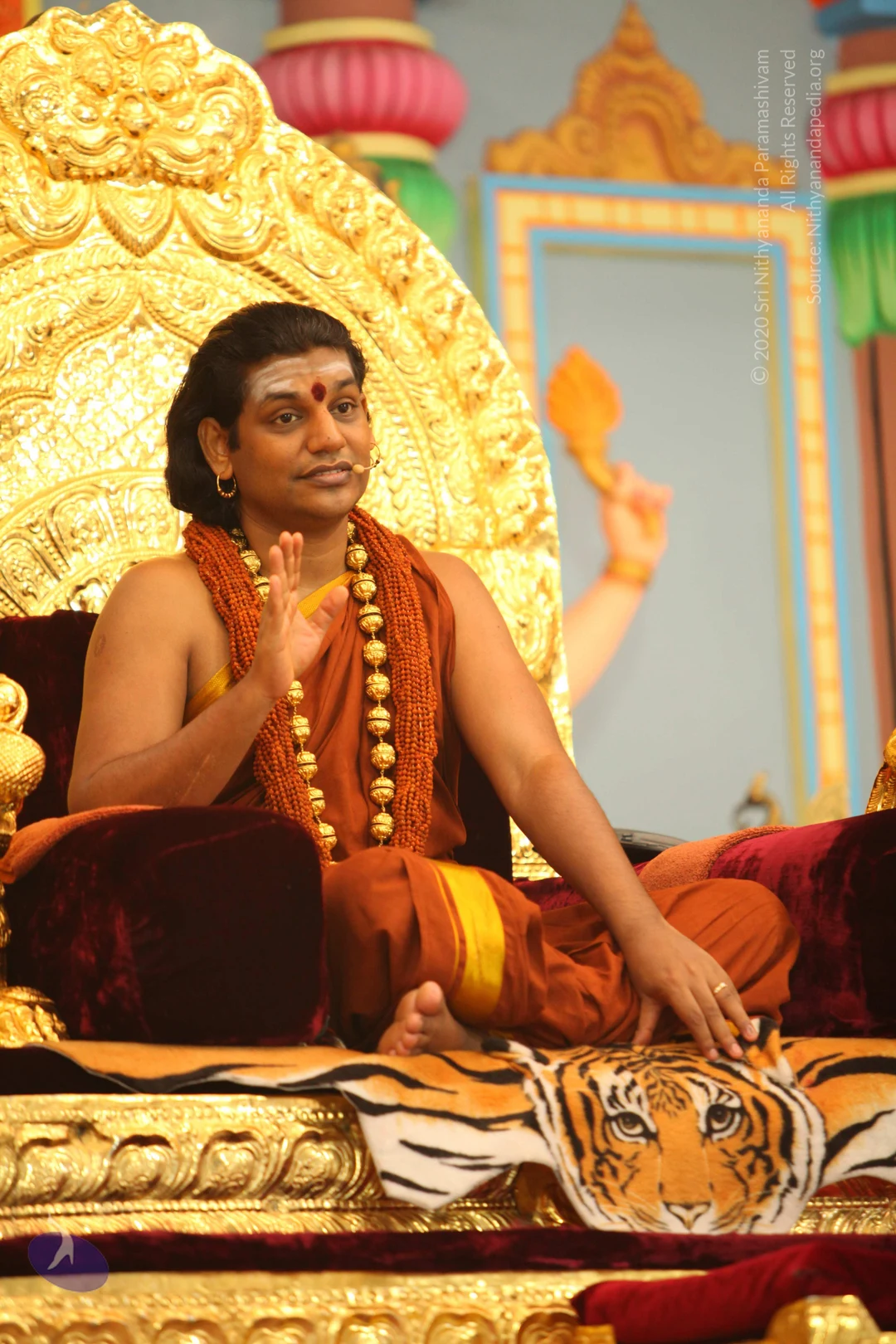
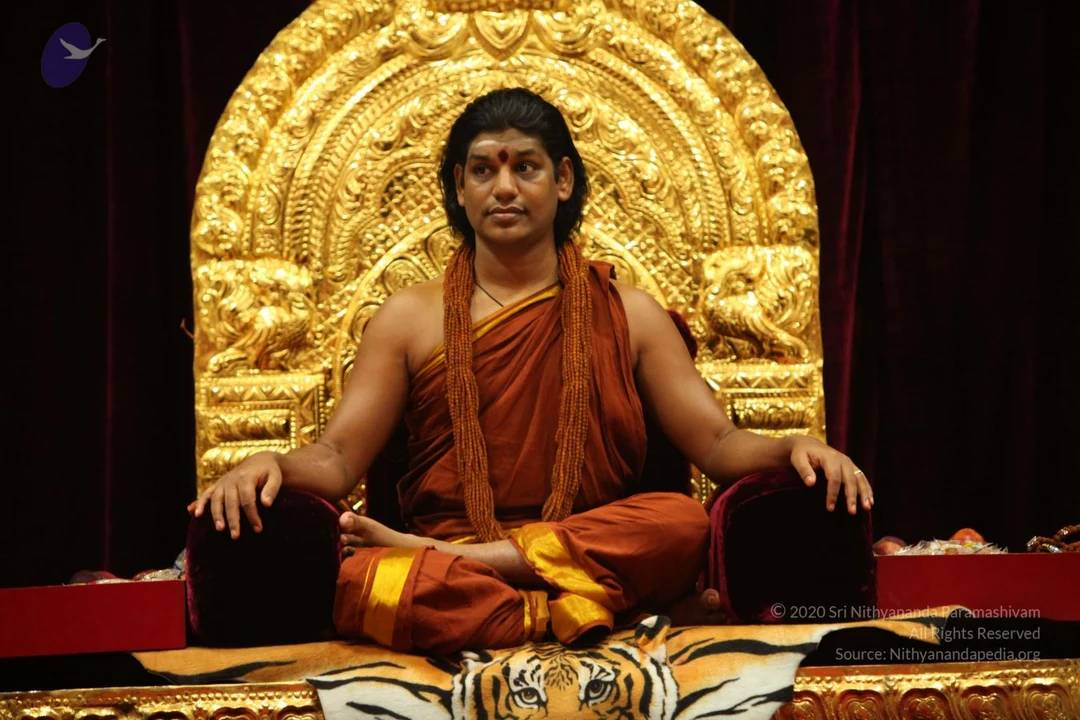
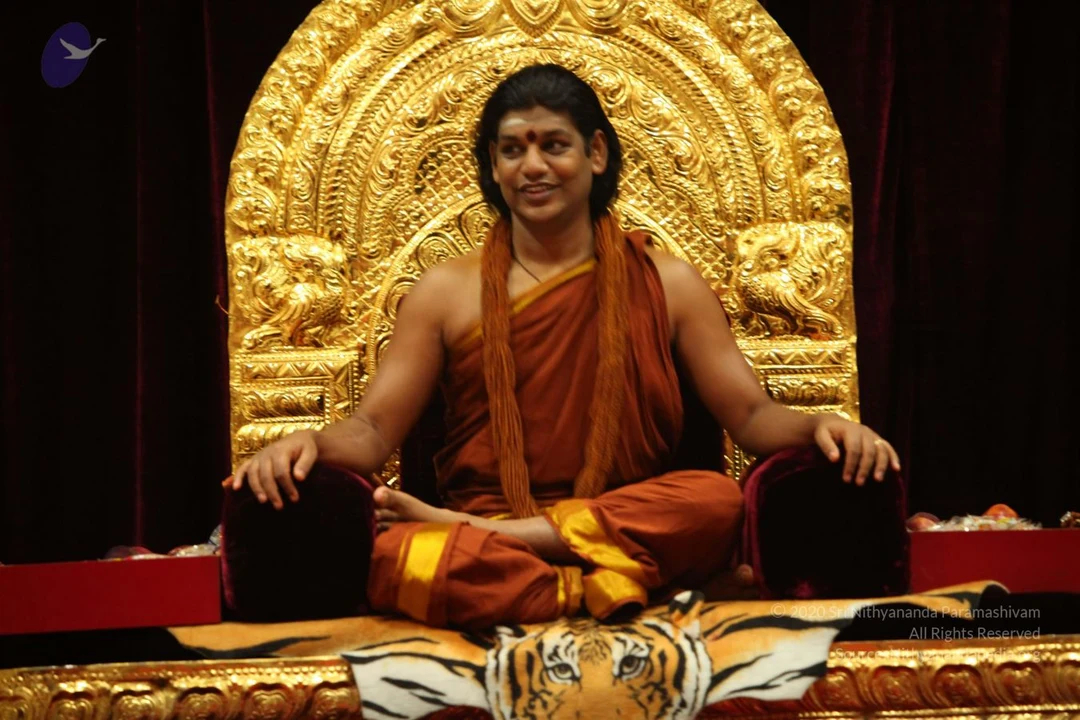
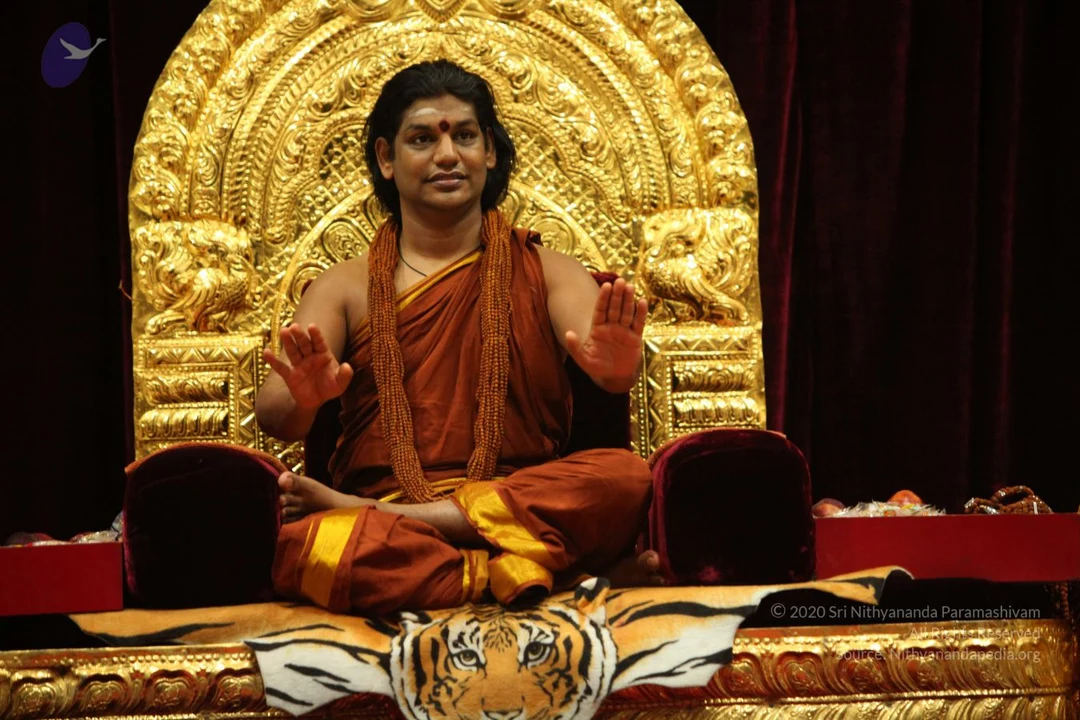
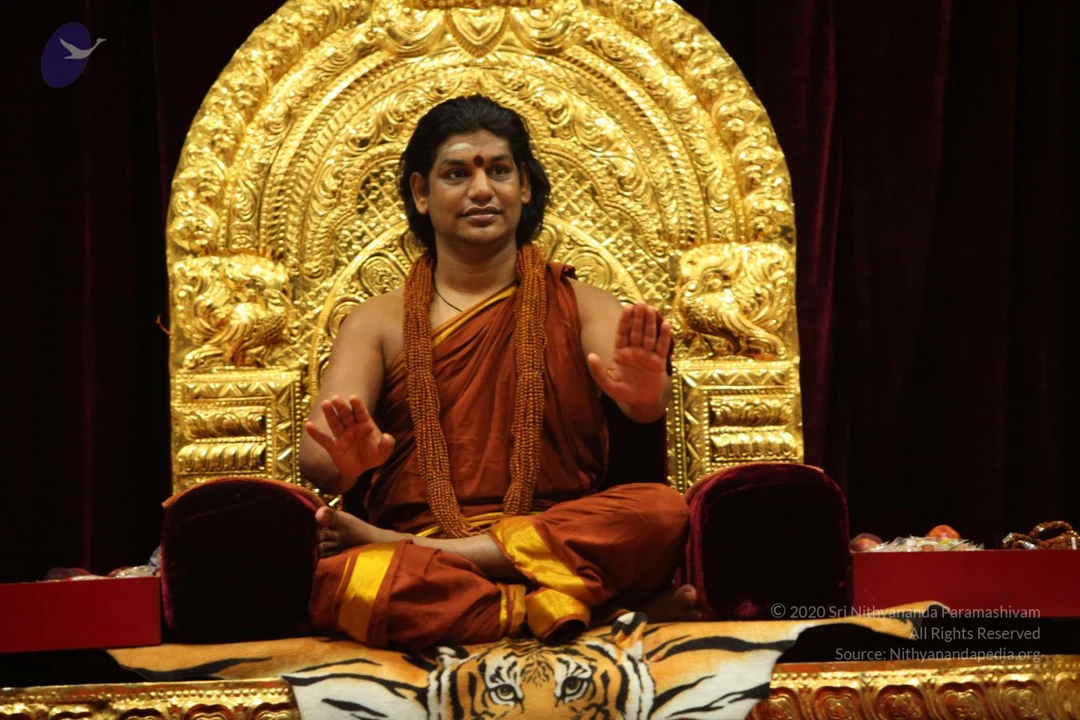
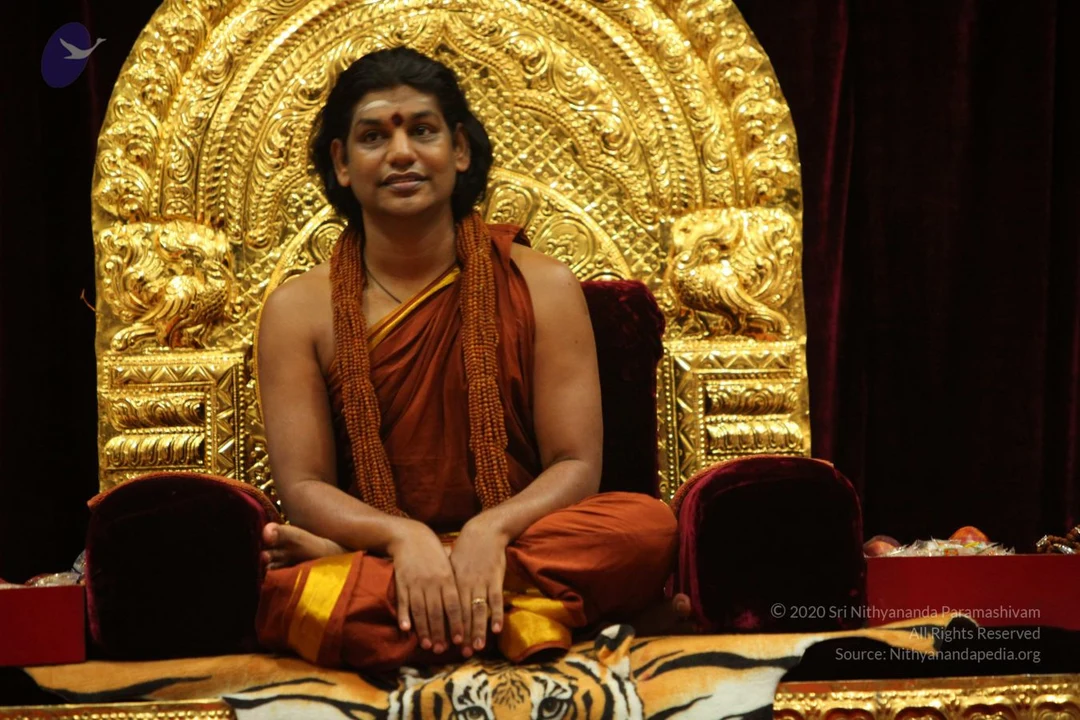
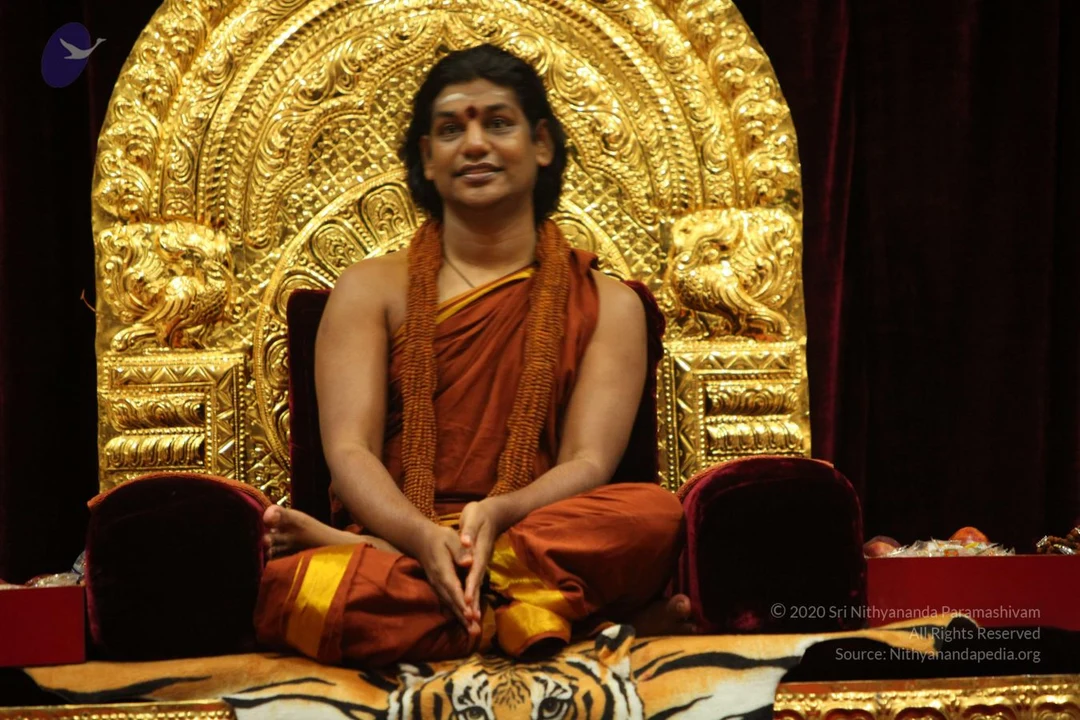
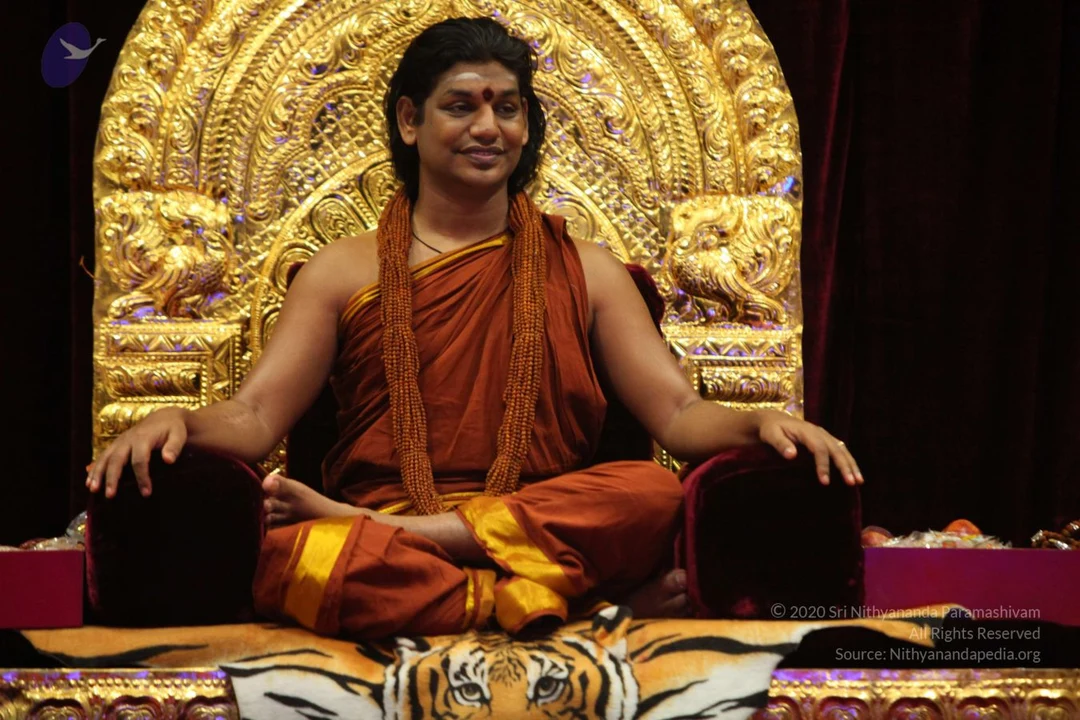
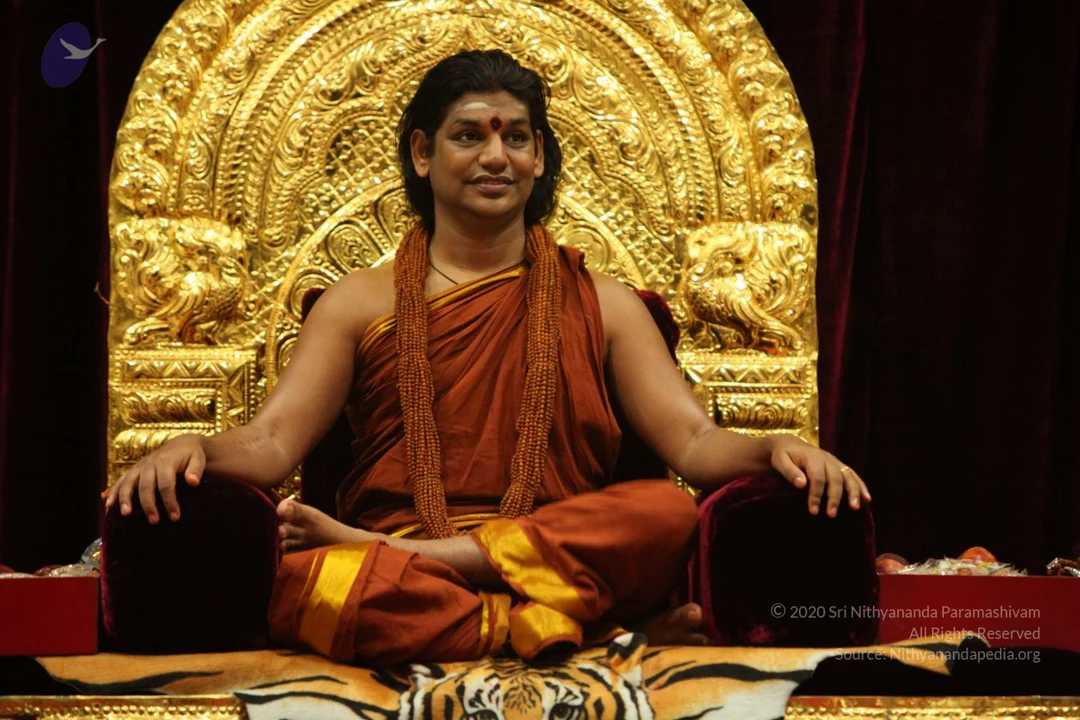
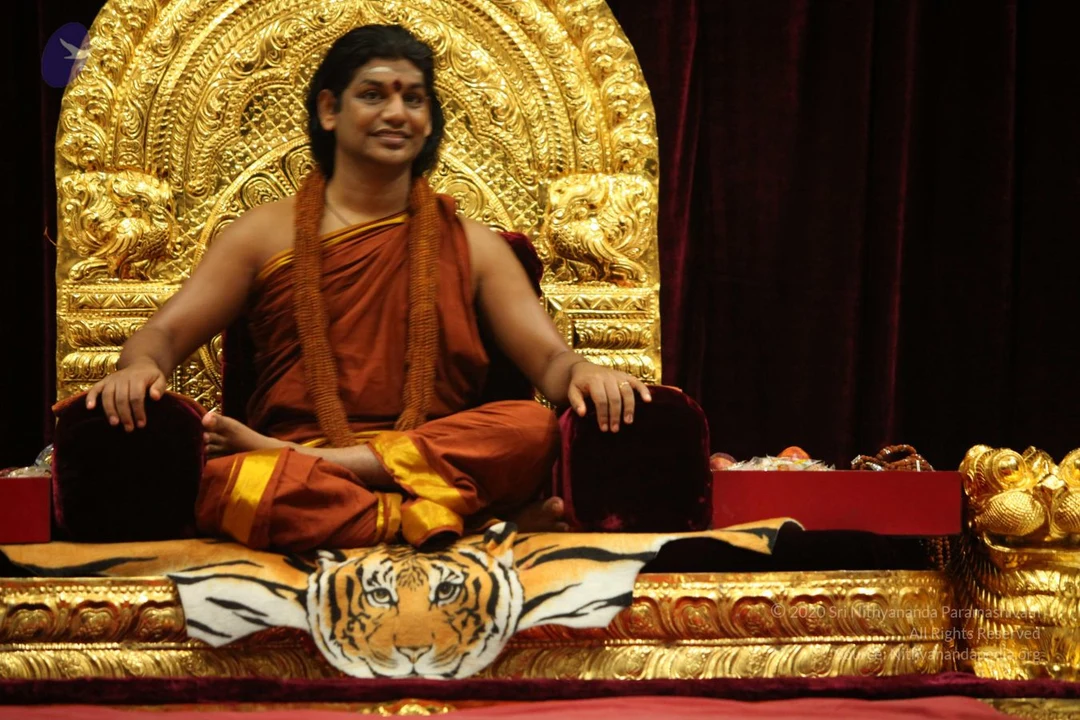
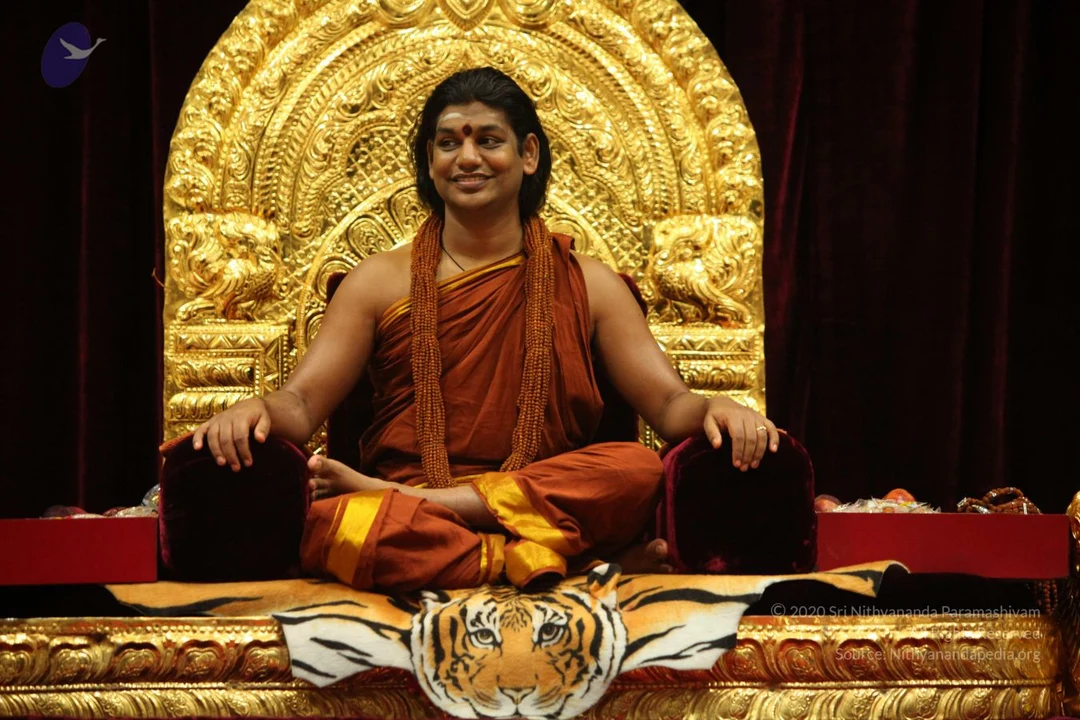
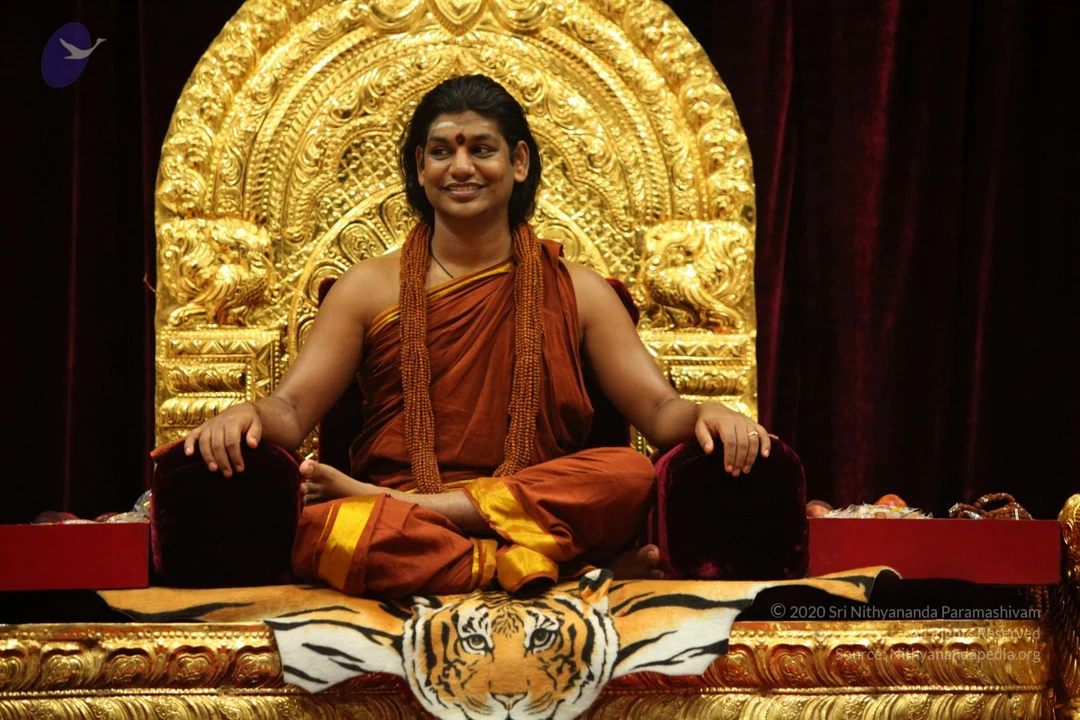
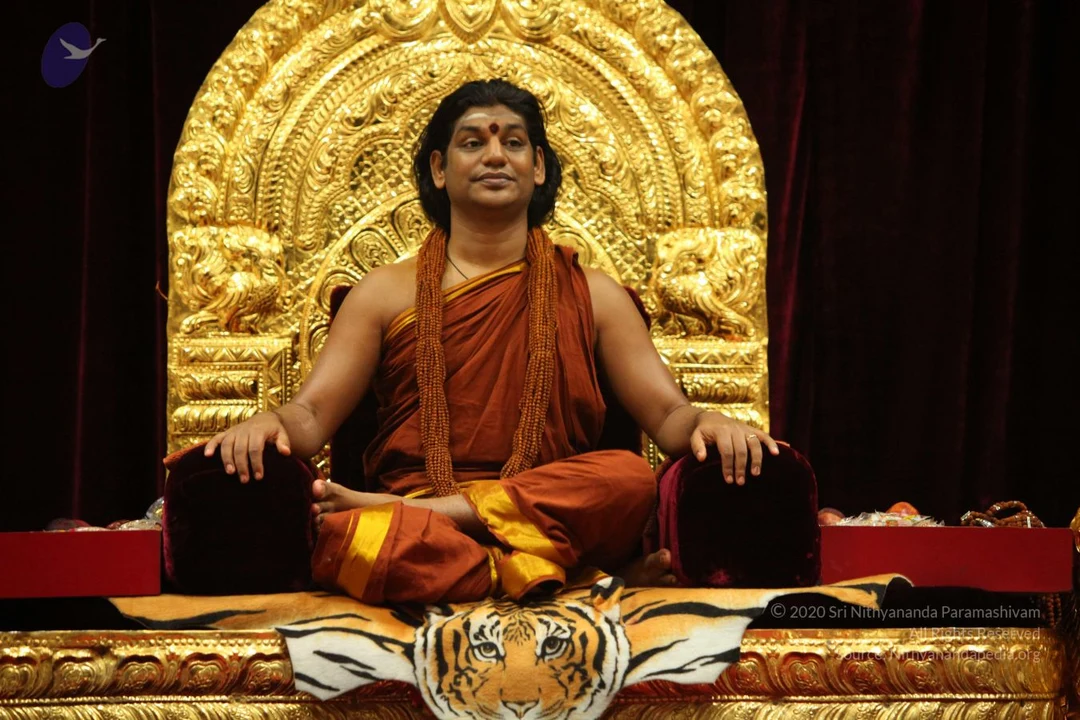
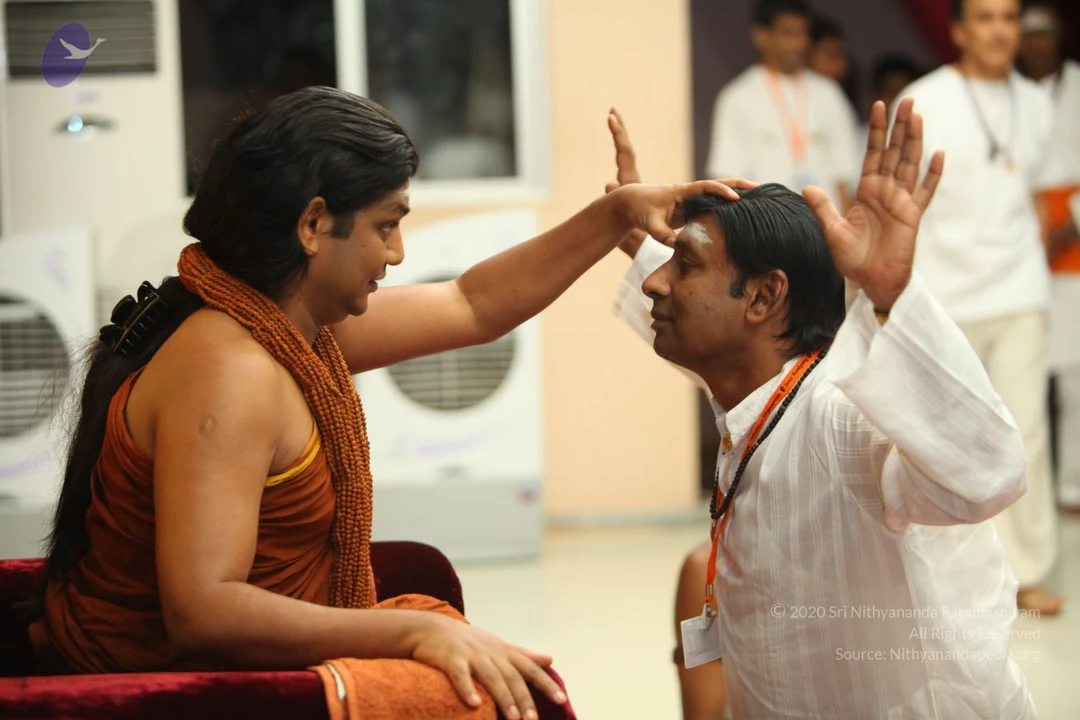
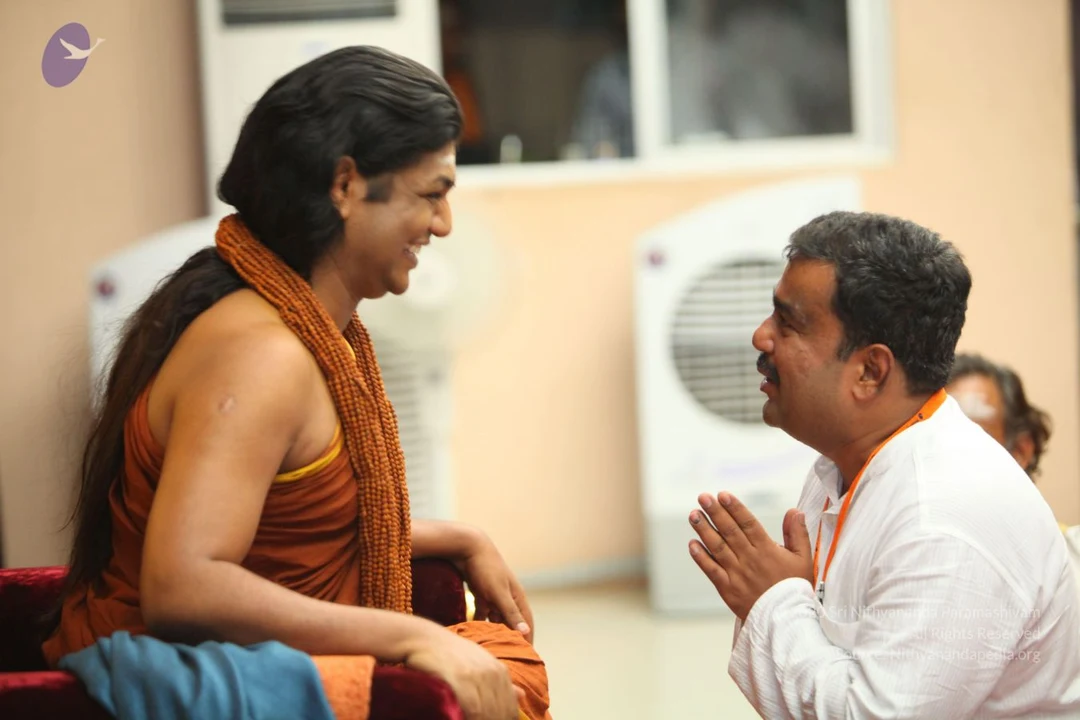
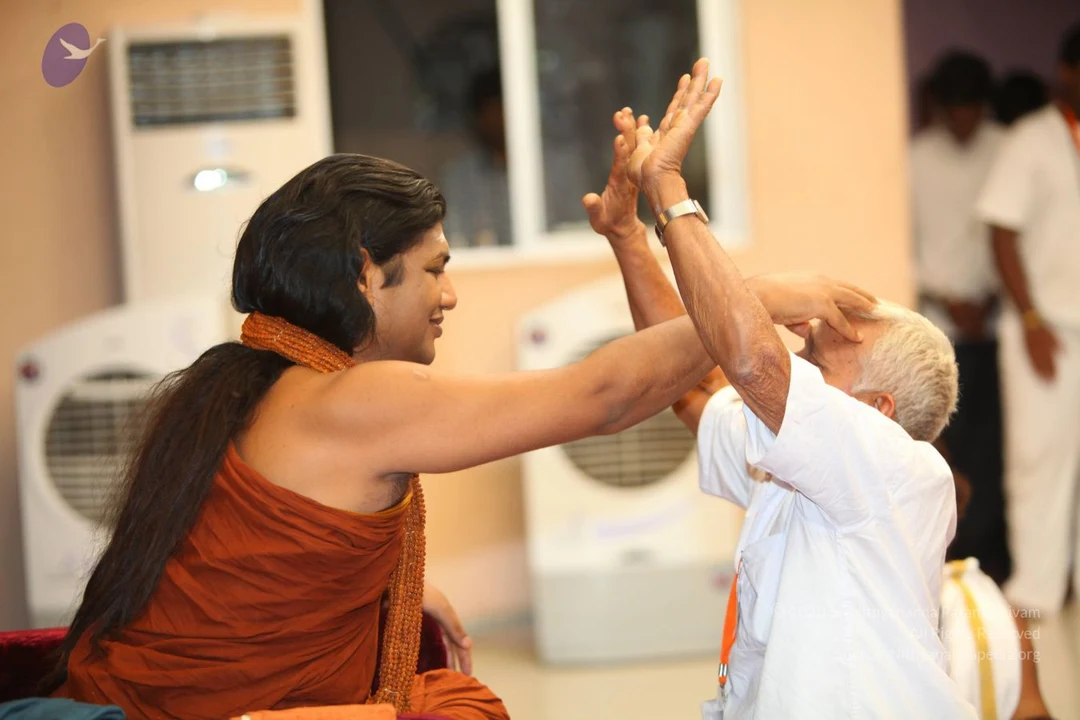
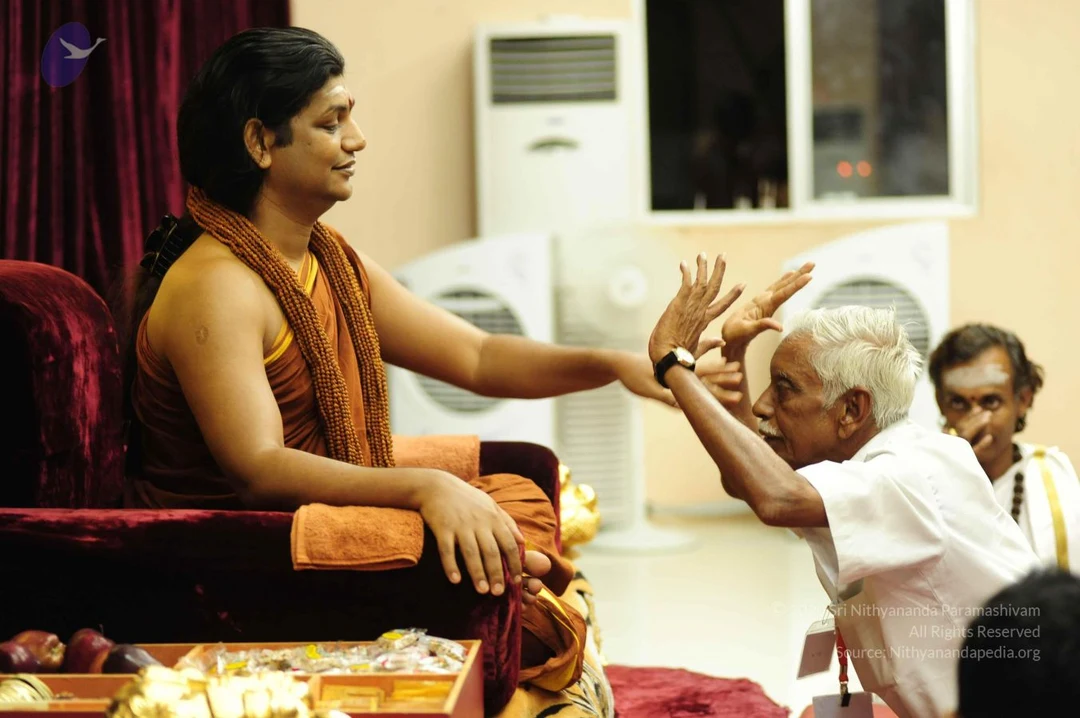
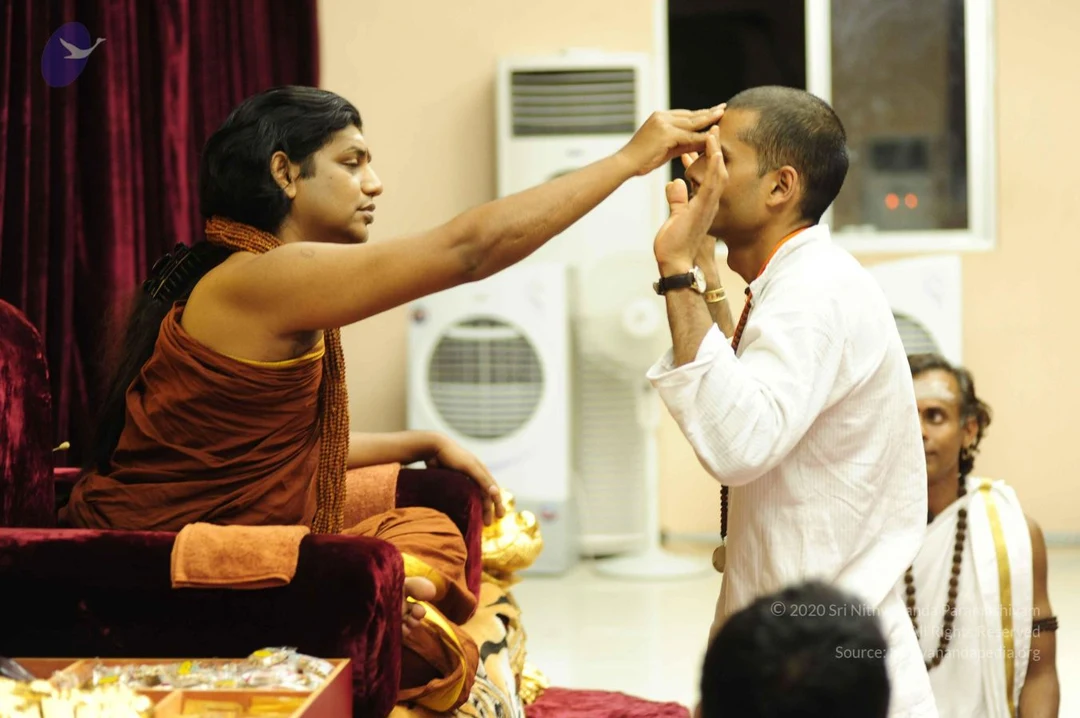
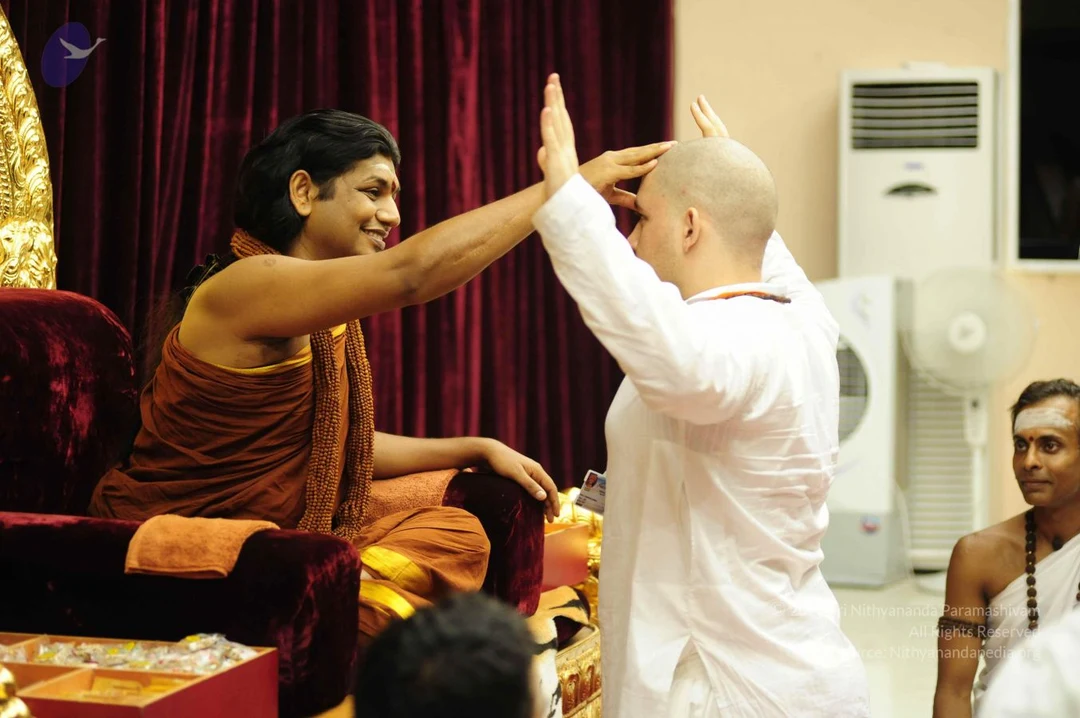
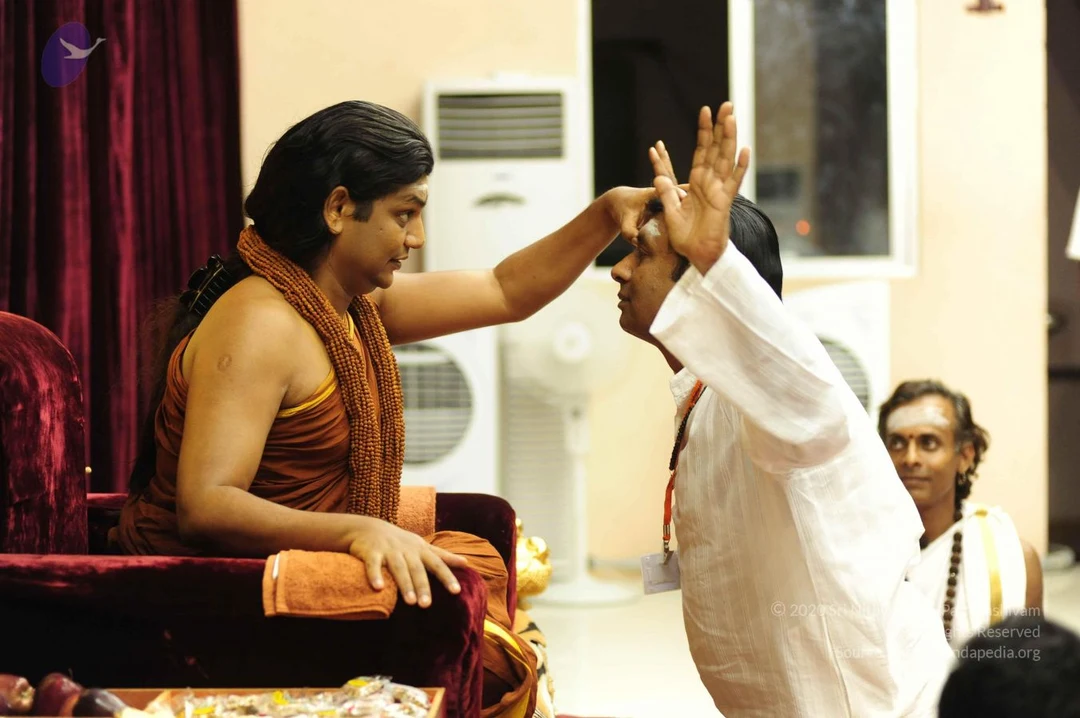
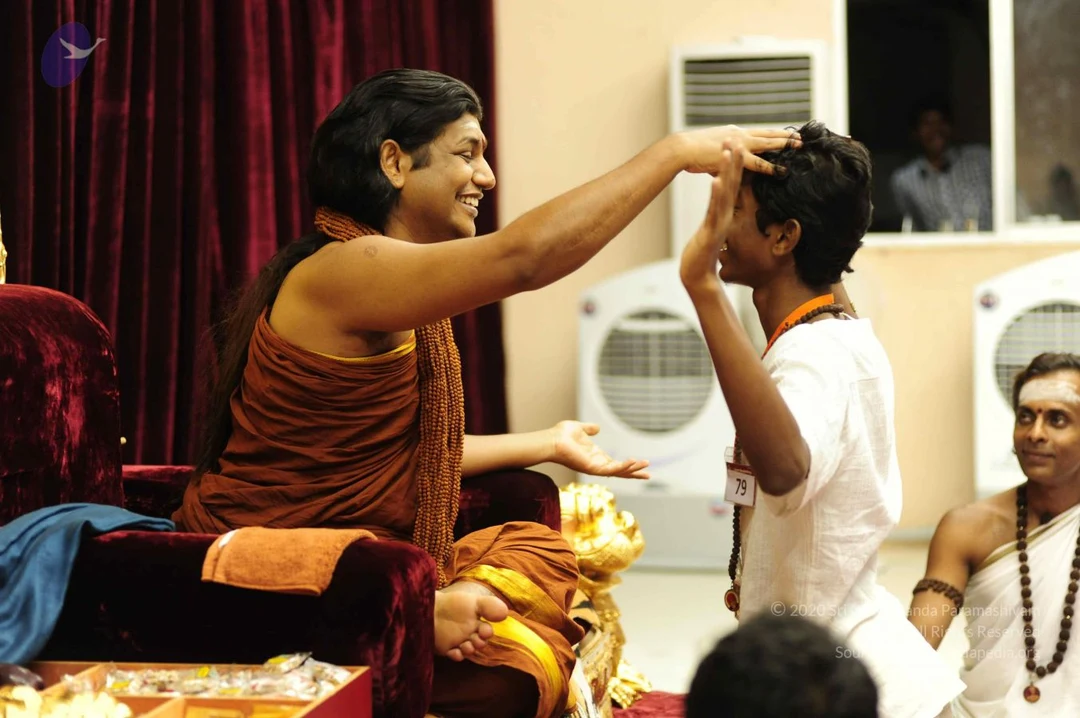
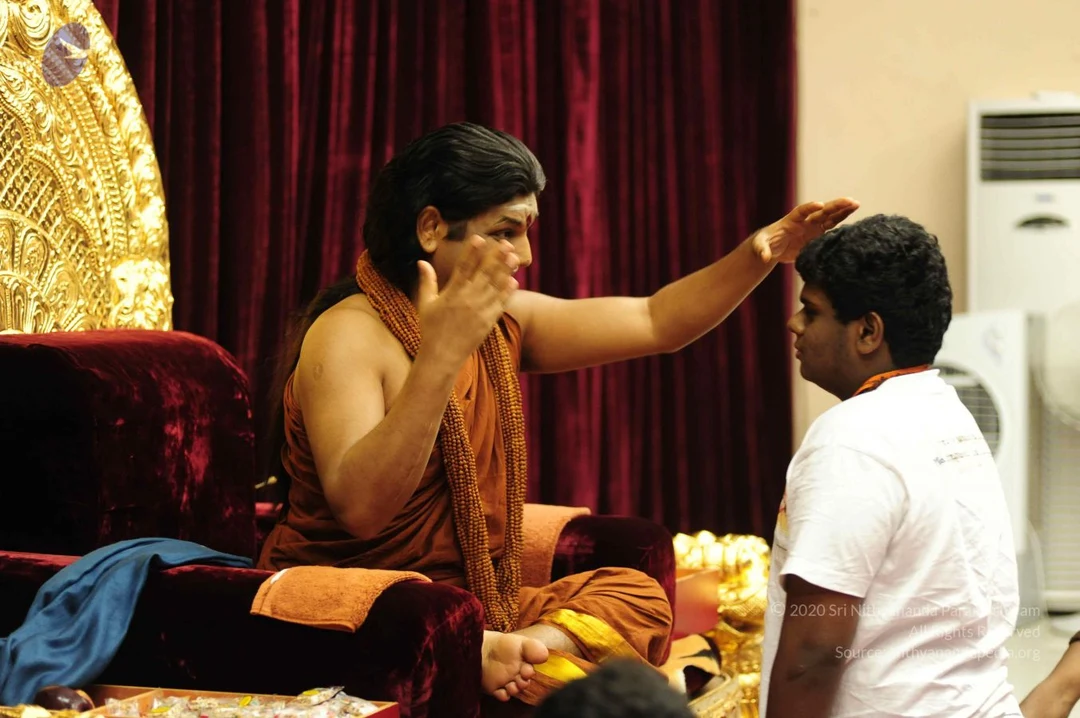
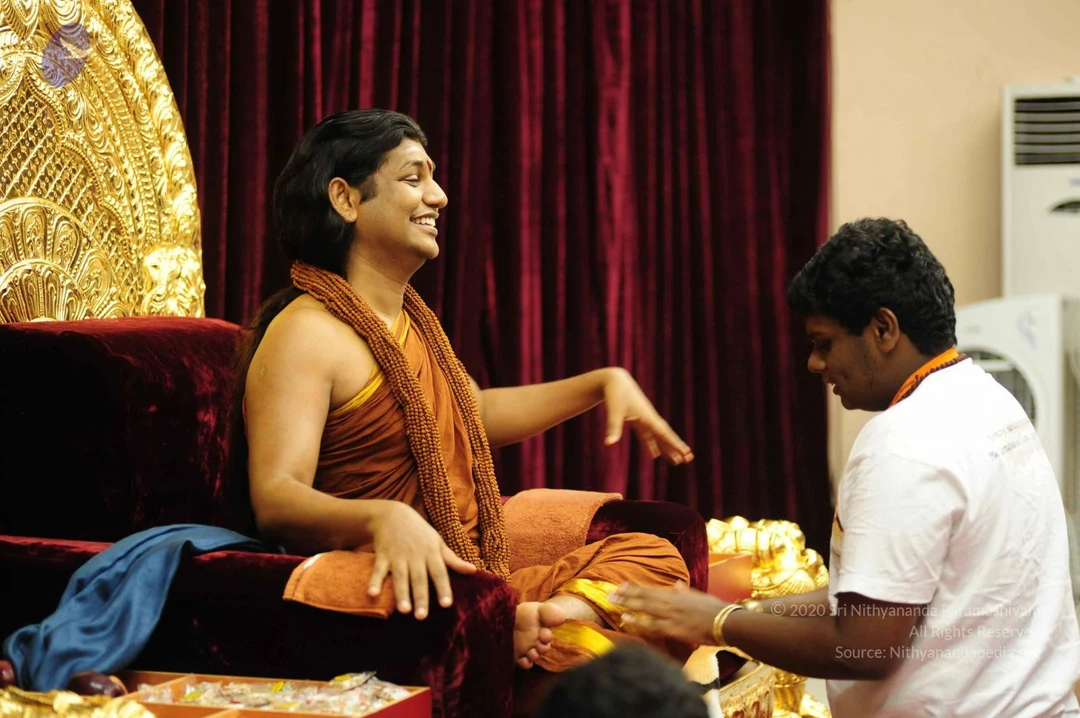
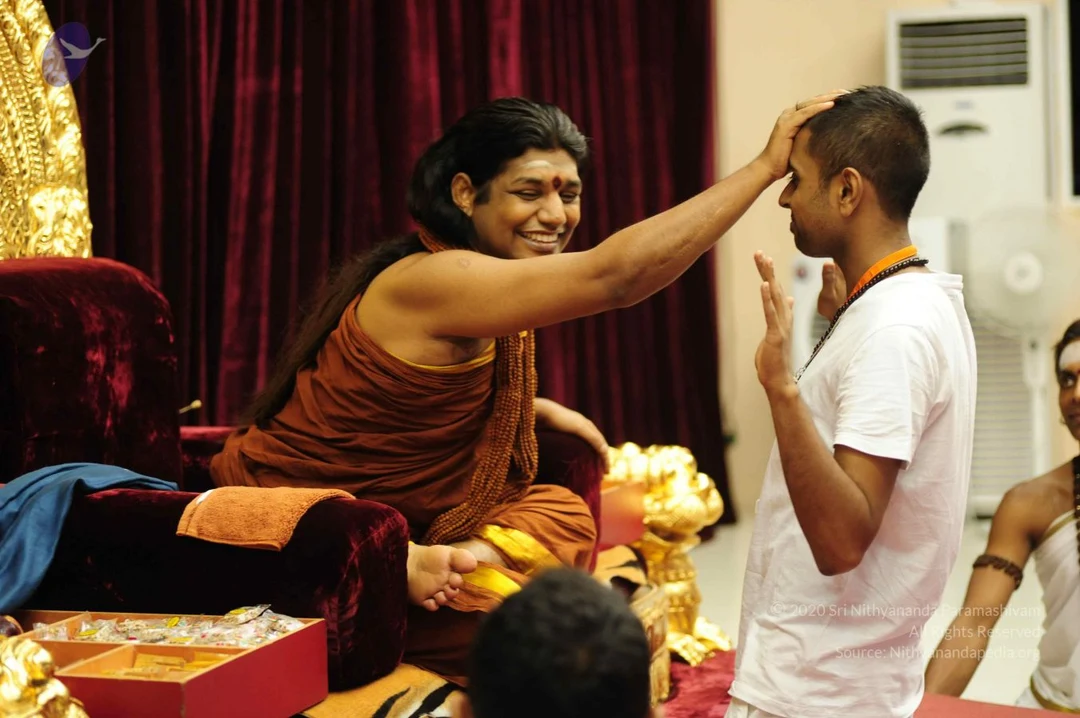
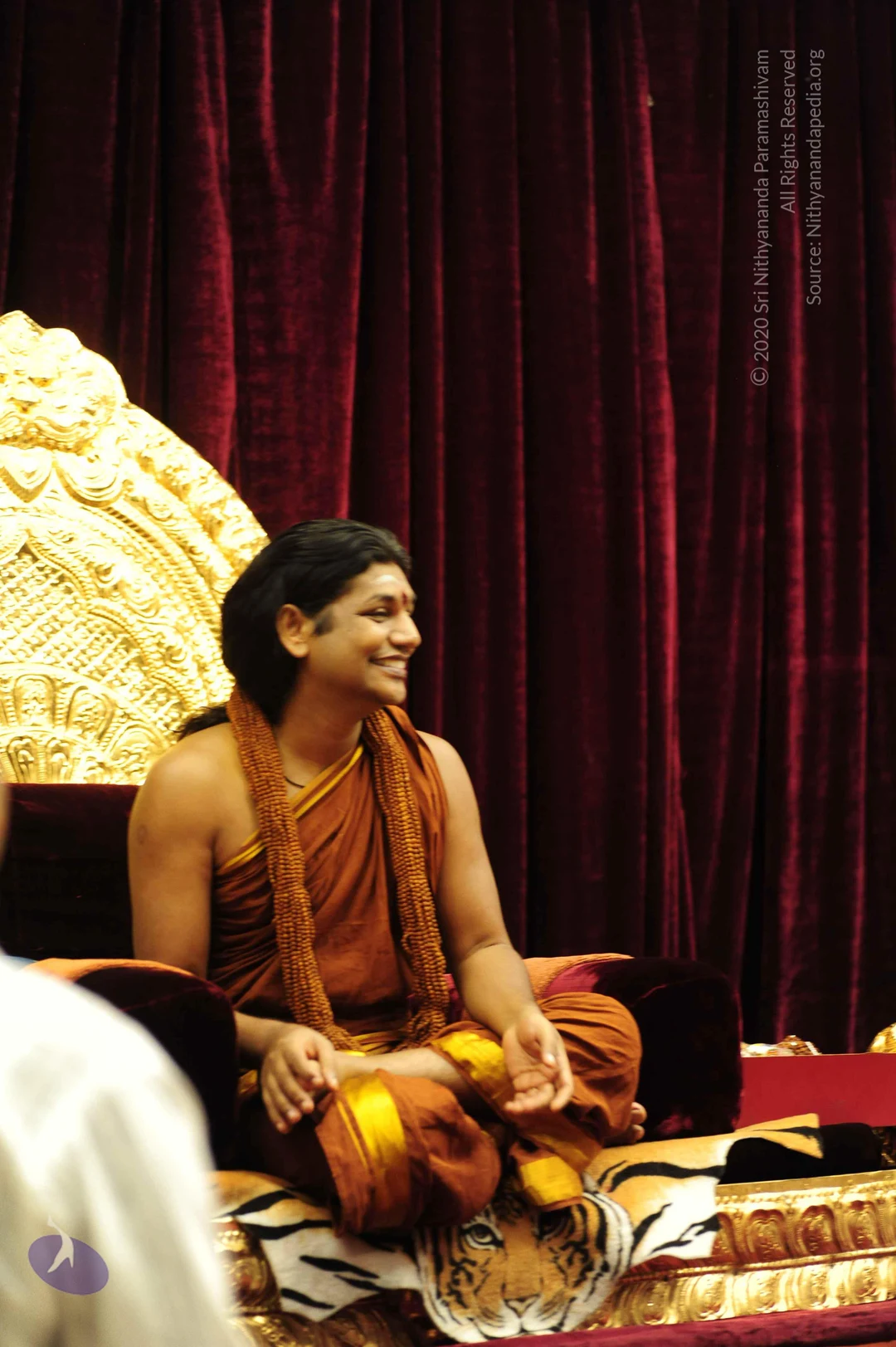
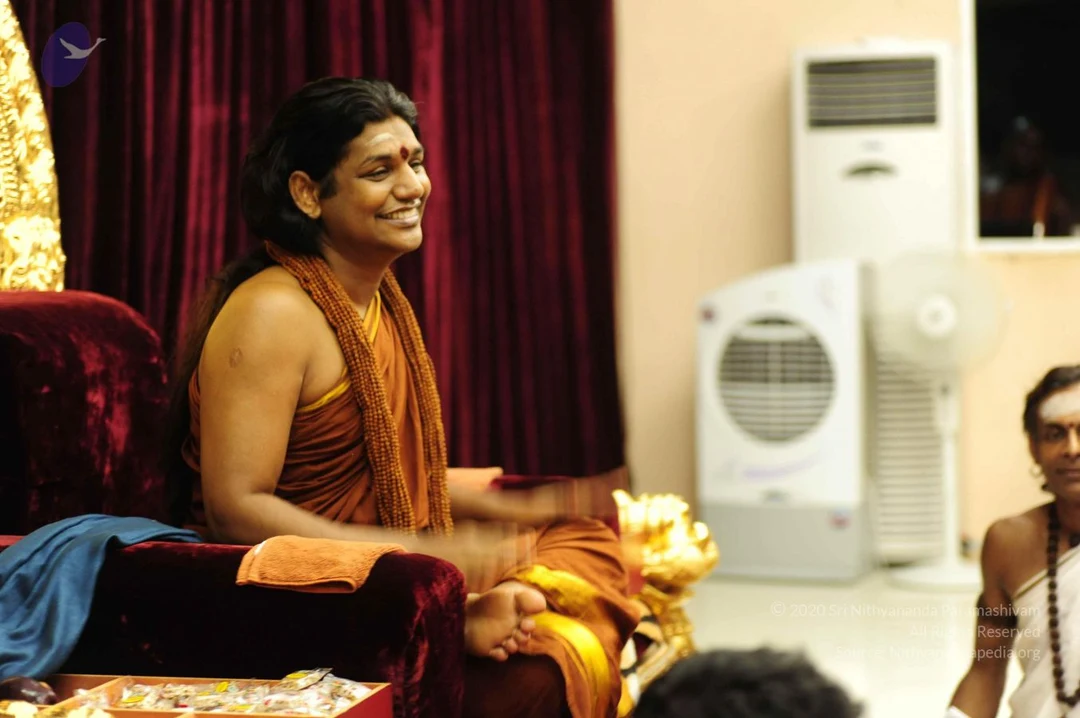
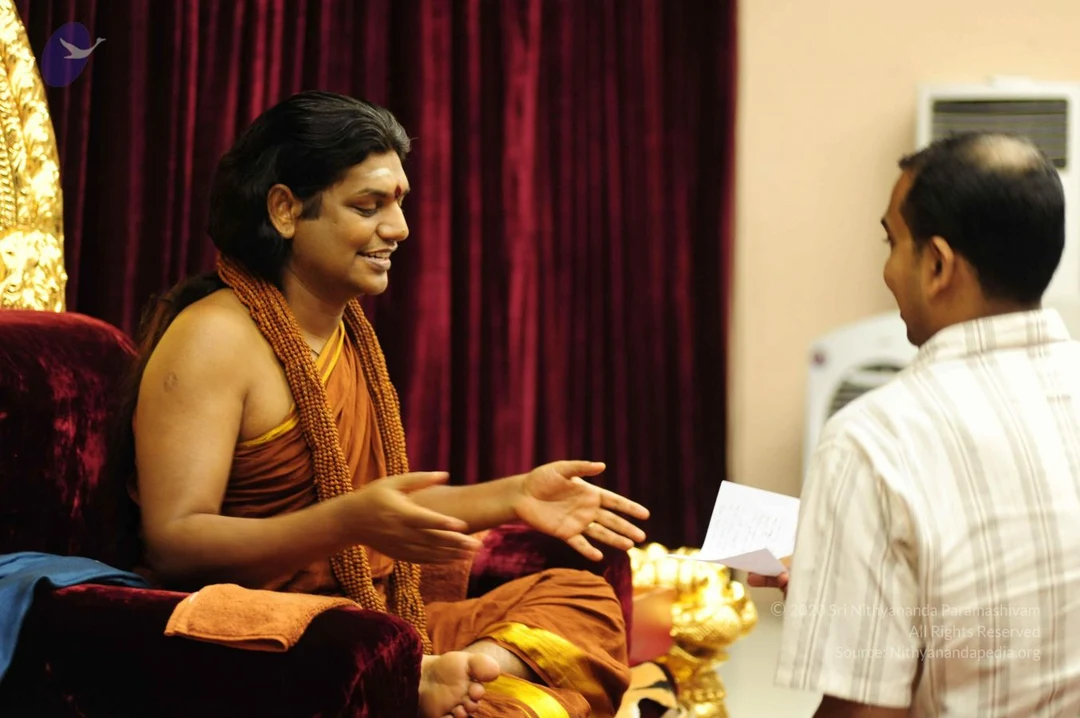
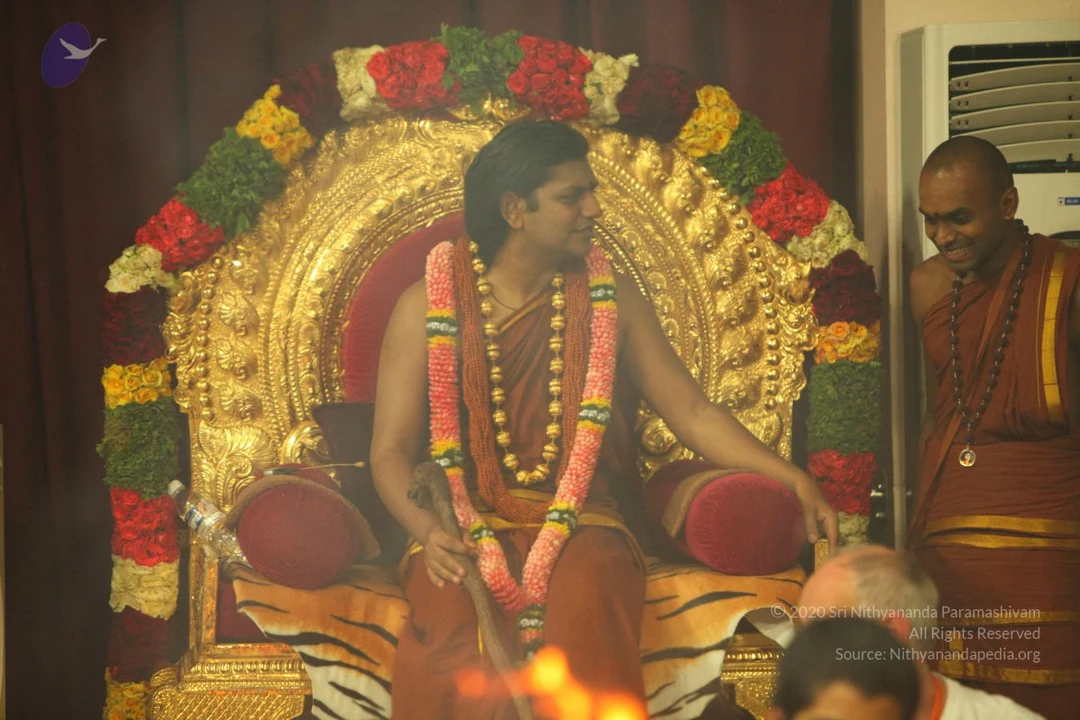
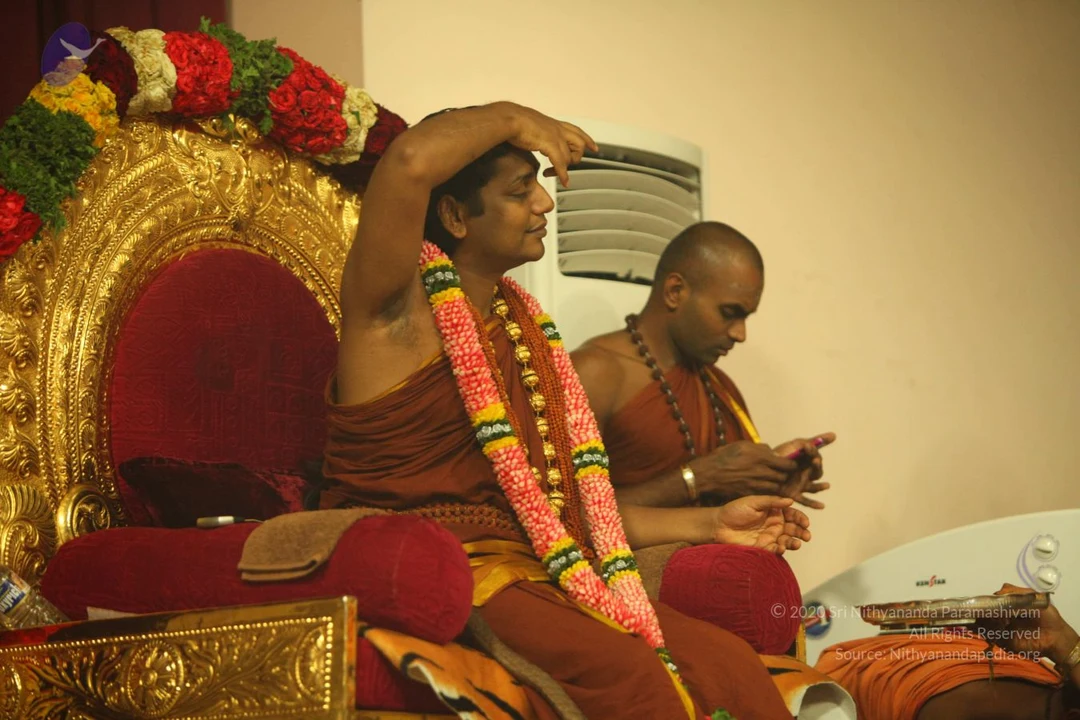
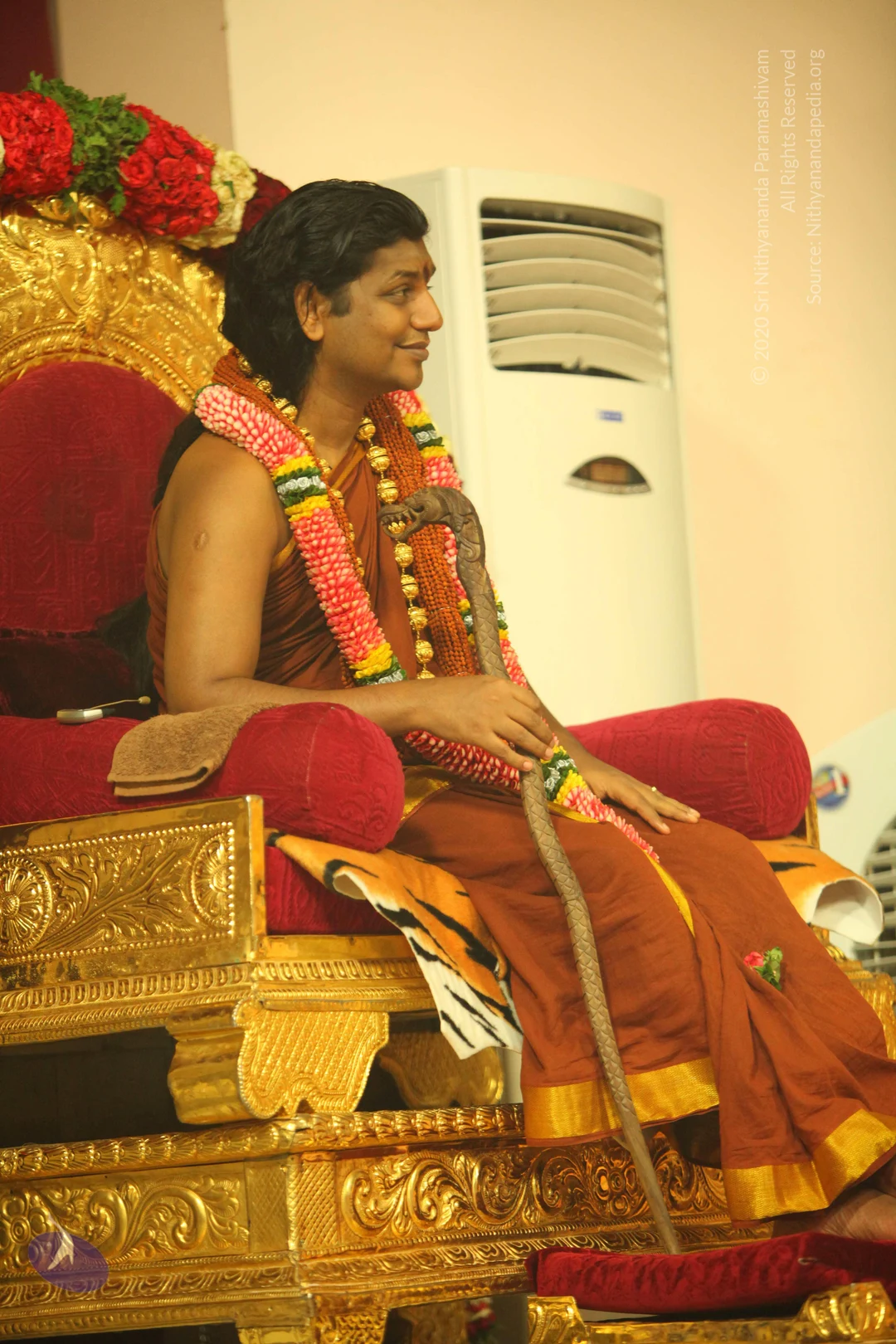
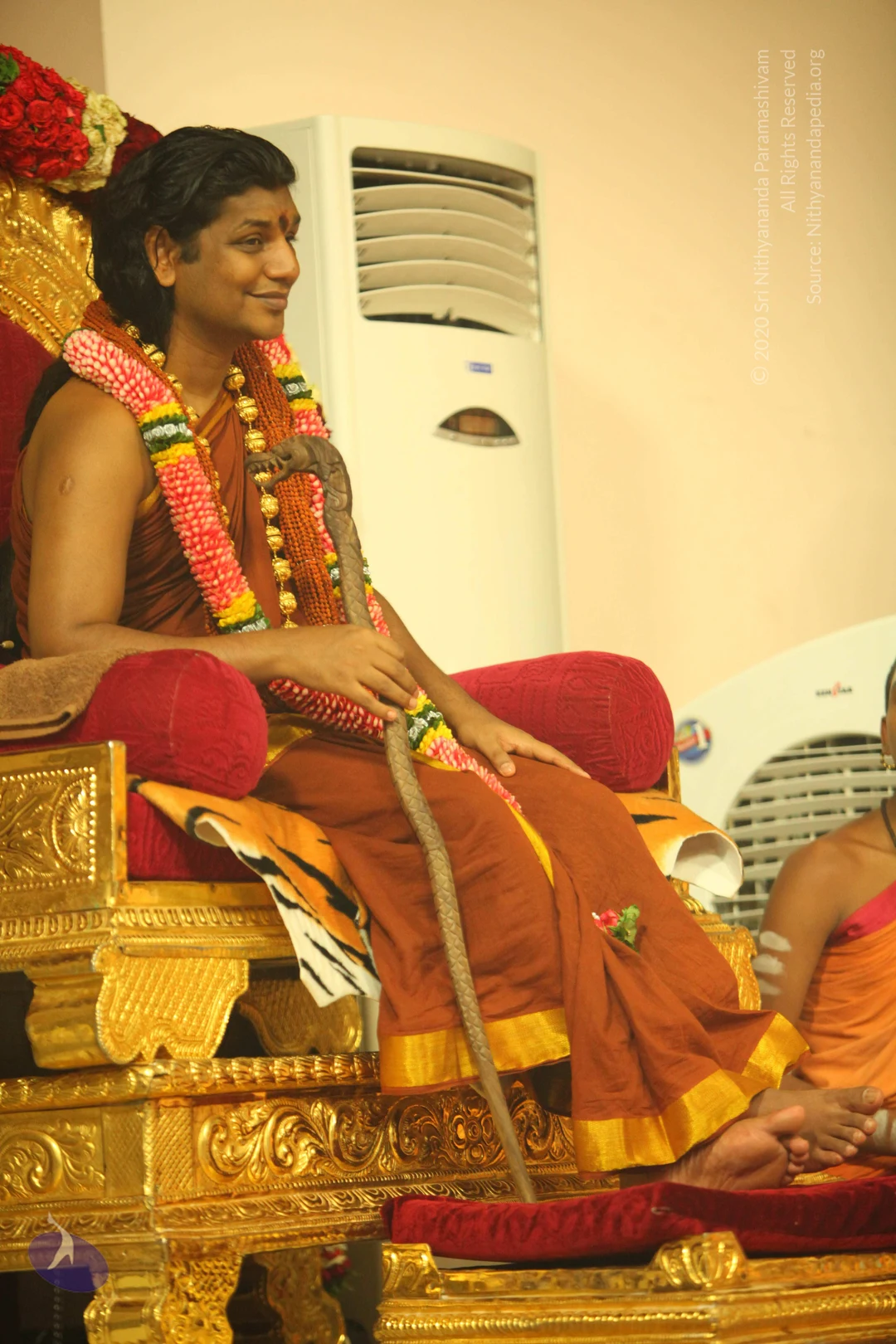
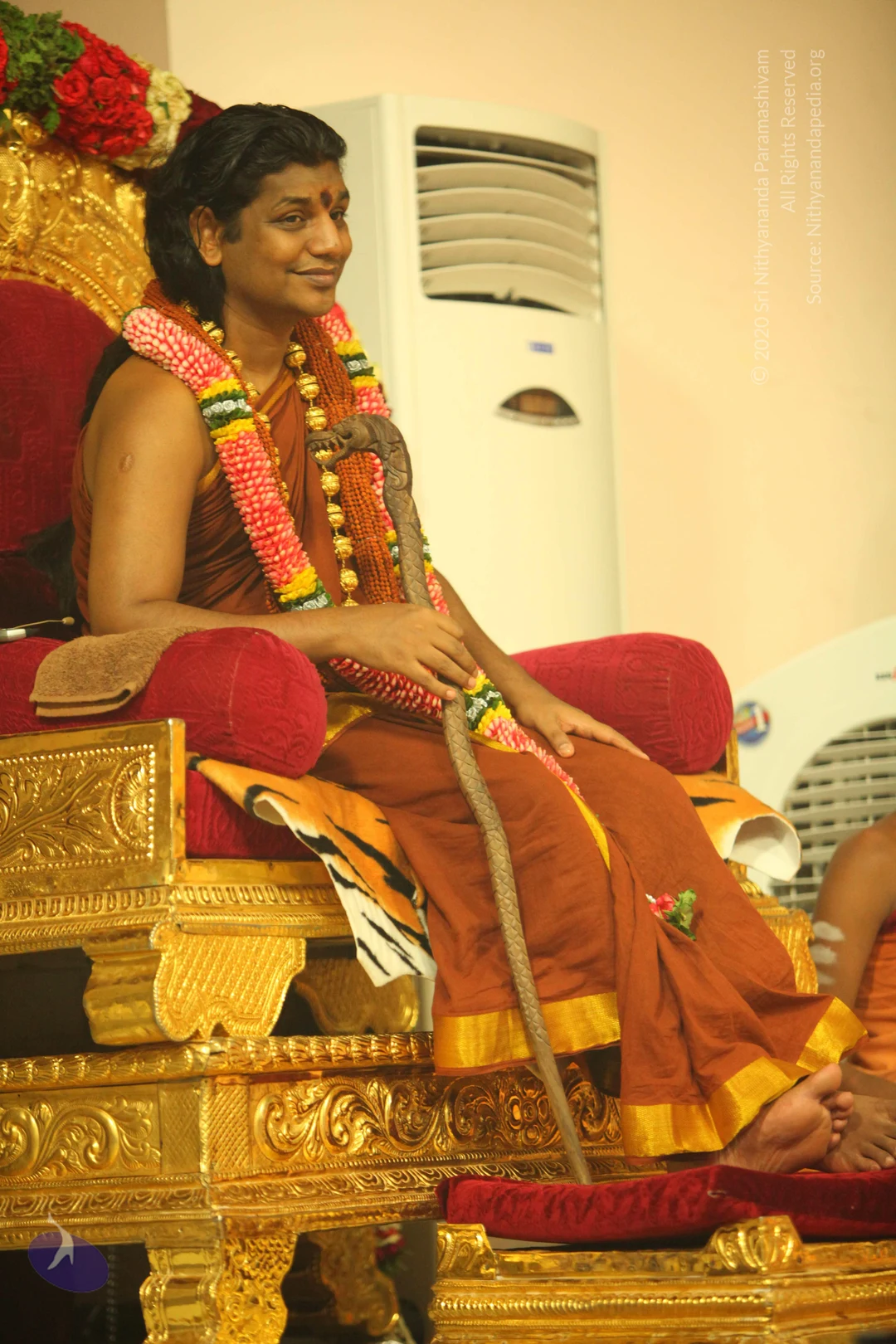
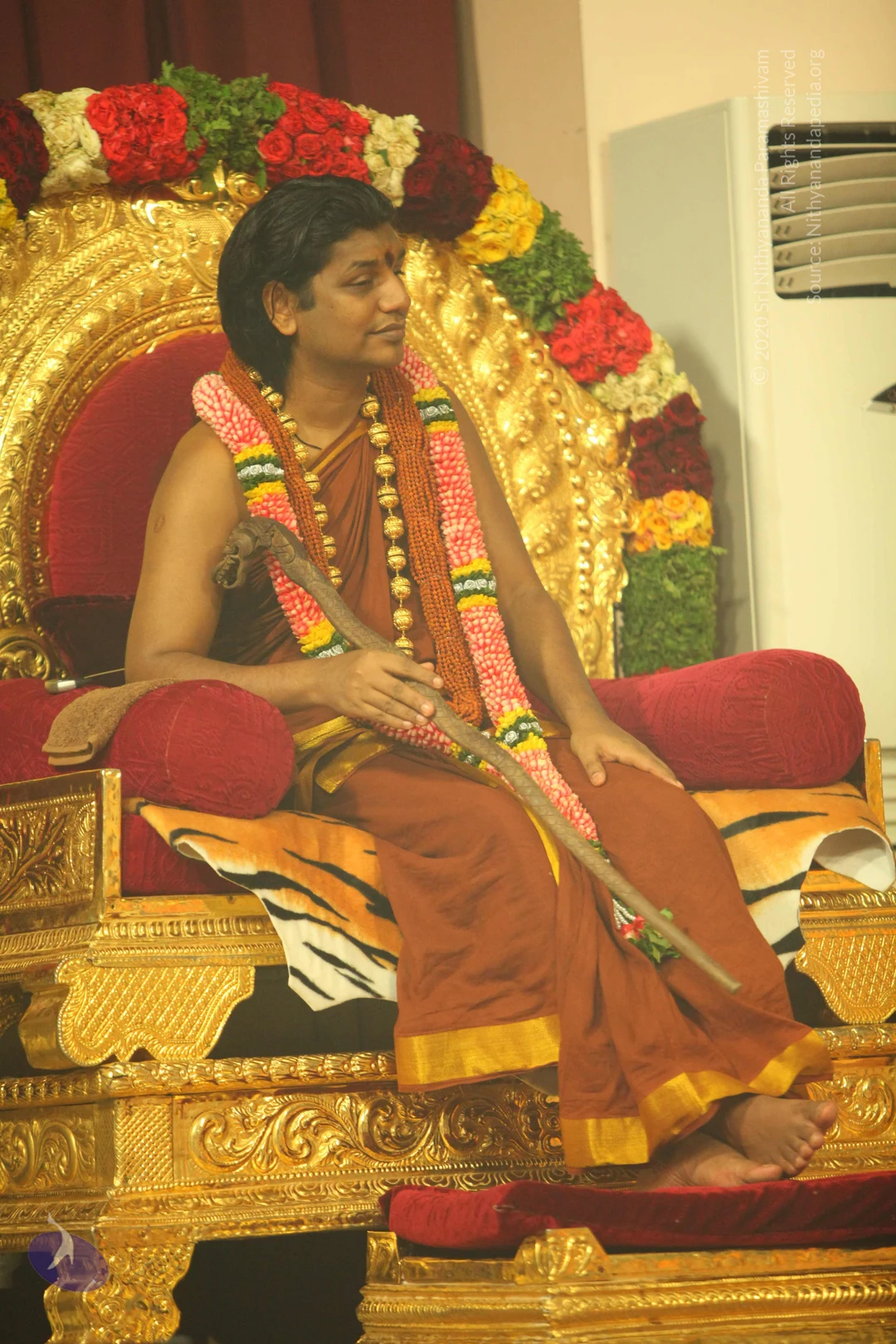
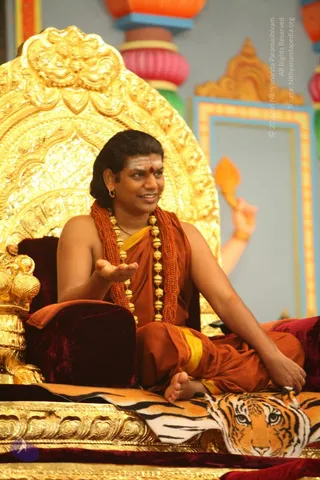
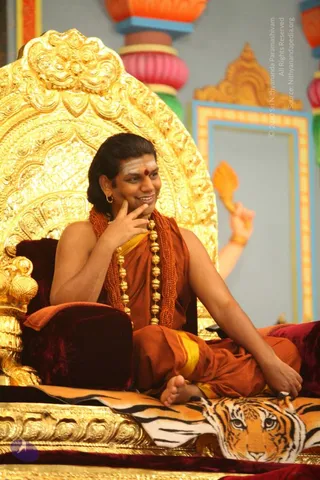
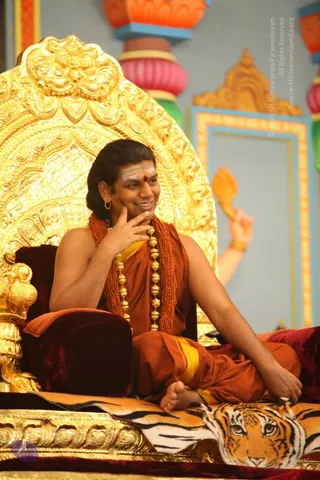
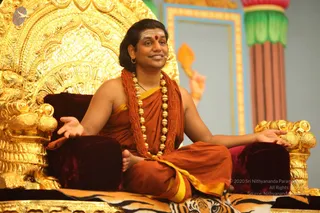
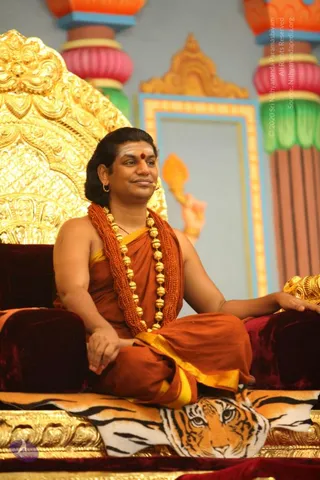
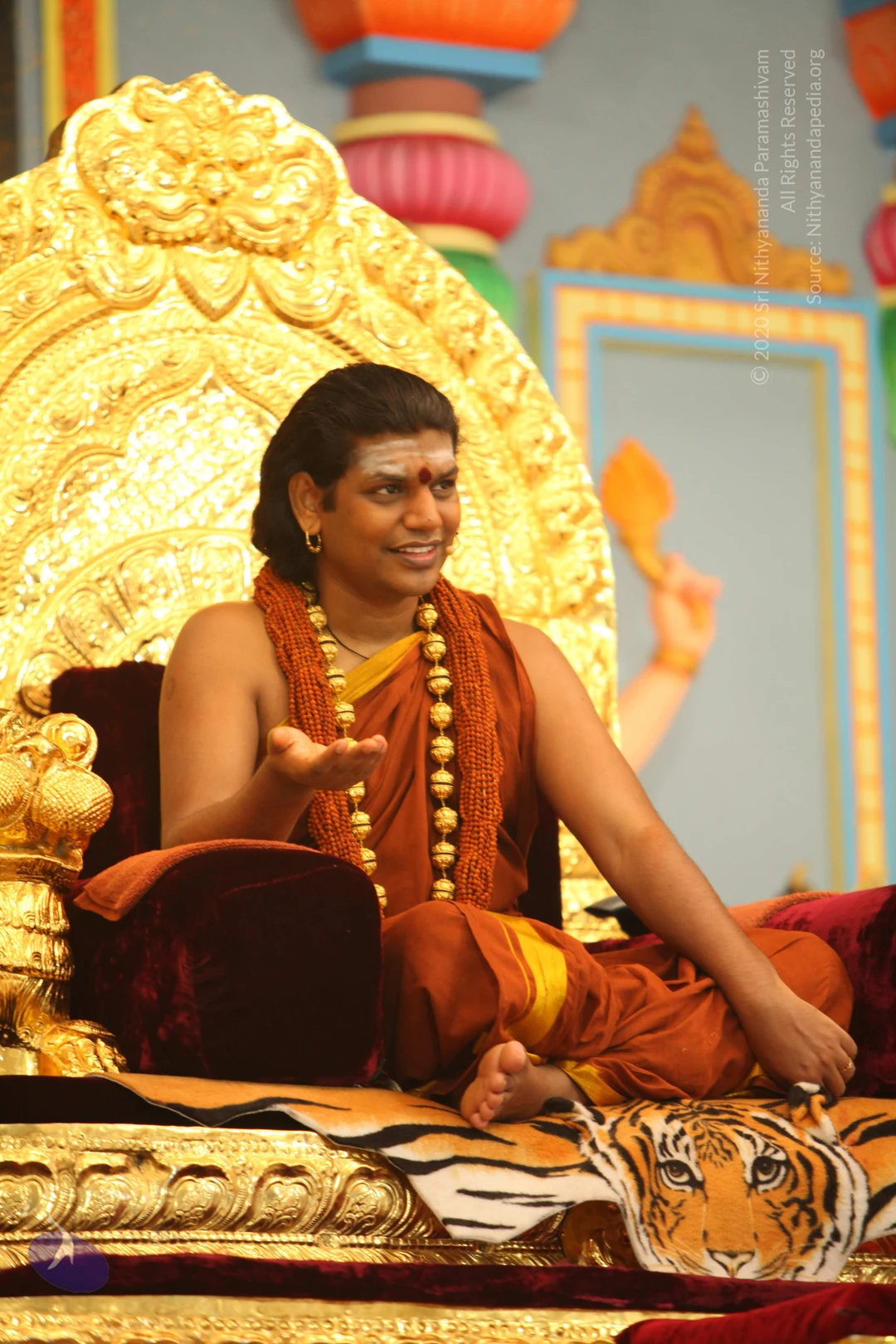
A seated man on an ornate gold throne with a deep red velvet cushion and a tiger-striped rug draped over the dais, speaking to an unseen audience with one hand open in a gesturing motion. He wears a saffron-orange ascetic cloth draped over his shoulder, several strands of rudraksha beads and a heavy gold bead necklace, and has white vibhuti lines with a red kumkum dot on his forehead. Behind him stand colourful decorative pillars in pink, green and red and a blue-framed gilded arch. Probable Swamiji: long swept-back hair, ornate gold throne, saffron garments, rudraksha malas and gold necklace, seated as a discourse speaker.A photograph of a seated man on an ornate gold throne with a tall carved golden back, draped with a maroon velvet cushion and a tiger-face rug at his feet. He wears a saffron-orange dhoti and shawl, a long rudraksha mala with golden beads, a gold earring, and white and red forehead markings. He rests one hand on his chin and smiles while looking to the side. Behind him are painted pillars with orange, pink and green bands and a blue frame with golden trim. Swamiji (probable): the seated man has long swept-back hair, a crown-like throne setting, saffron clothing and rudraksha mala with golden beads, matching the page's satsang context.A photograph of a man seated on an ornate gold throne with a deep red velvet cushion, resting on a tiger-skin rug. He wears an orange-brown robe with a yellow-gold border, multiple strands of rudraksha beads and a gold bead necklace, and gold hoop earrings. He has white stripes on his forehead and a red dot, and is smiling with one hand raised to his chin. Behind him are colourful painted pillars in pink, orange and green and a gold-framed blue panel with a painted arm holding an object. Appearance-based label: a person, seated on the throne in a teaching setting.A man seated cross-legged on an ornate gilded throne with a plush maroon cushion and carved golden lion-head armrests, draped over a tiger-striped rug. He wears saffron-orange robes with a yellow edge, a red-orange rudraksha mala and a long ceremonial gold bead necklace, a red bindi on his forehead and small gold earrings, and his hands are open in an explanatory gesture while he speaks. Behind him are a golden arched backdrop and a decorative pillar with green and pink lotus capitals, and a fan-like golden object is visible at right. Swamiji (probable): the appearance cues of long swept-back hair, saffron clothing, rudraksha mala and gold necklace align with the page's identification of Paramahamsa Nithyananda giving satsang.A man sits cross-legged on an ornate gold throne with plush maroon cushions and a tiger-striped rug, speaking with open hands. He wears a saffron-orange garment with a yellow border, a red-orange rudraksha mala and a long ceremonial gold bead necklace, plus gold hoop earrings, a red bindi and white forehead markings. Behind him are a painted lotus-motif pillar in green, pink and gold and a pale blue panel. The gold filigree backrest and armrests are prominent. A Swamiji (probable) appearance is noted: long swept-back hair, saffron clothing, rudraksha mala and ceremonial gold necklace on a throne.A photograph of a man seated cross-legged on an ornate golden throne draped with a tiger-skin rug, in a stage setting with gilded carvings and painted pillars. He wears a saffron-orange draped garment with a gold border, a long orange rudraksha mala with large gold beads, gold earrings, and a white tilak with a red dot on his forehead. He has long swept-back hair and rests one hand on the throne's gold armrest. Appearance-based label: a person, seated in person on the throne with saffron robes, rudraksha mala and ceremonial gold ornaments.

SARVA-DARSHAN
19 photosSource gallery
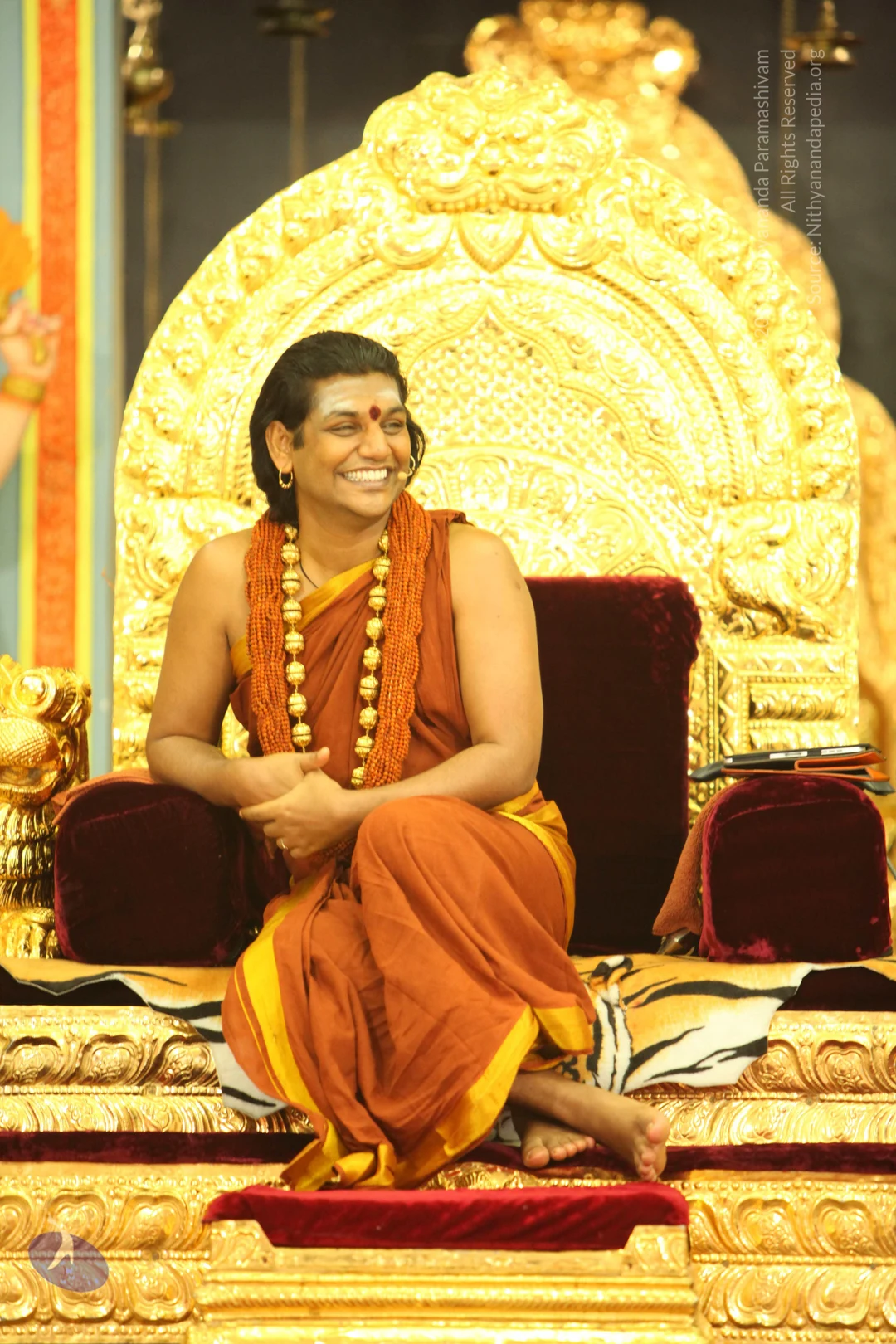
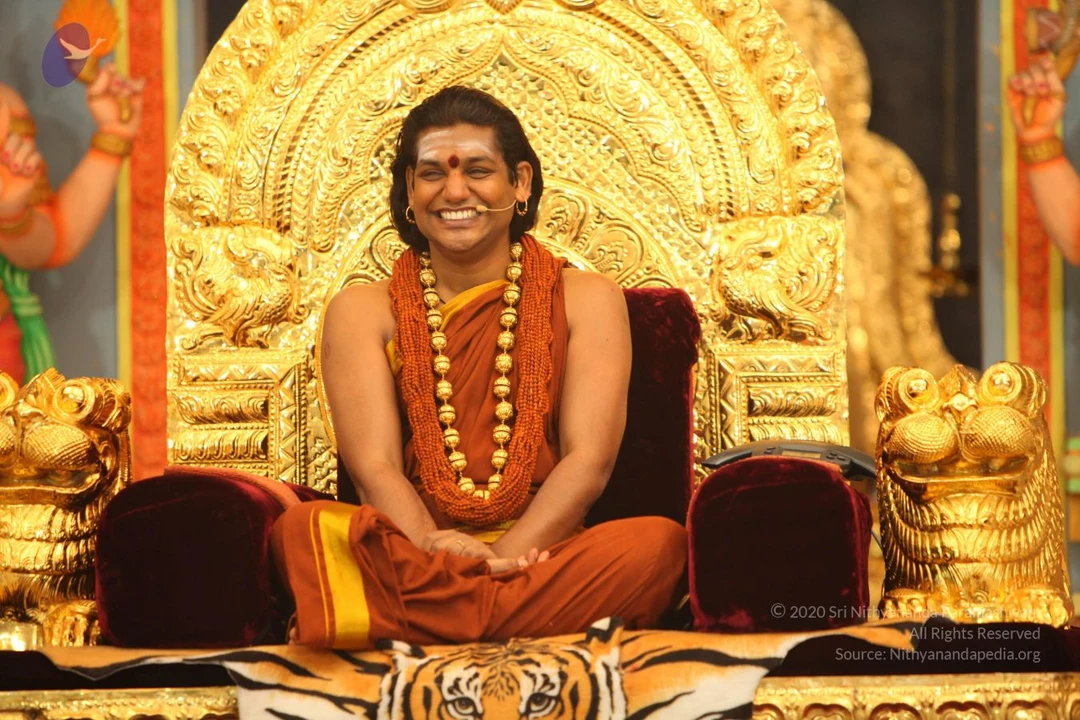
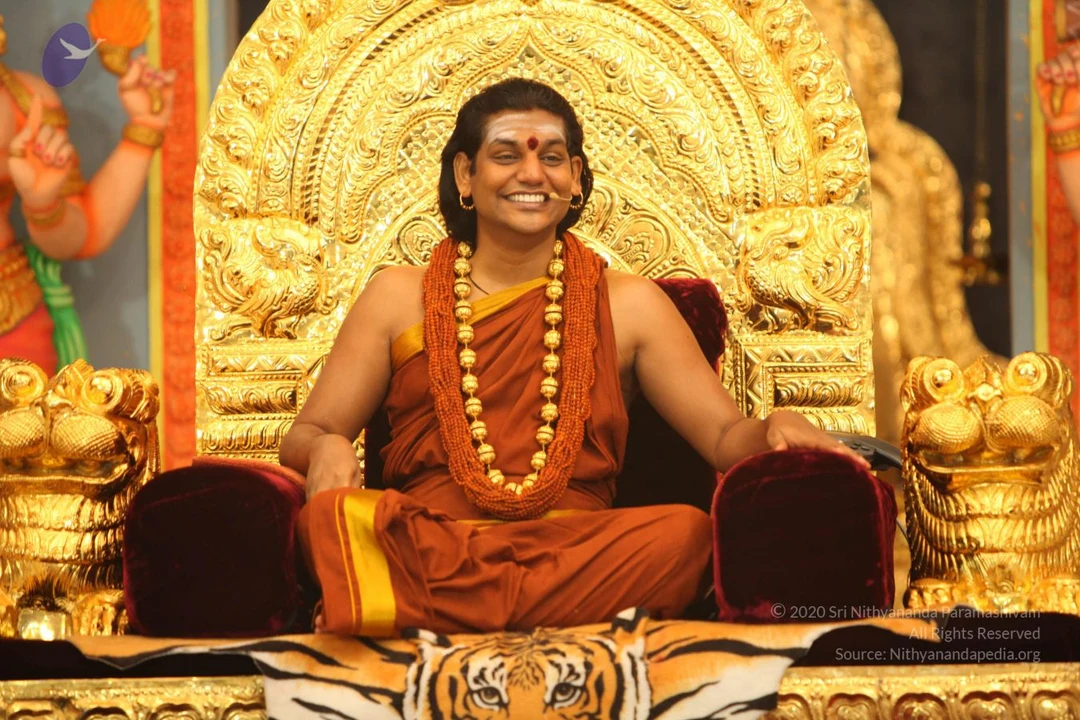
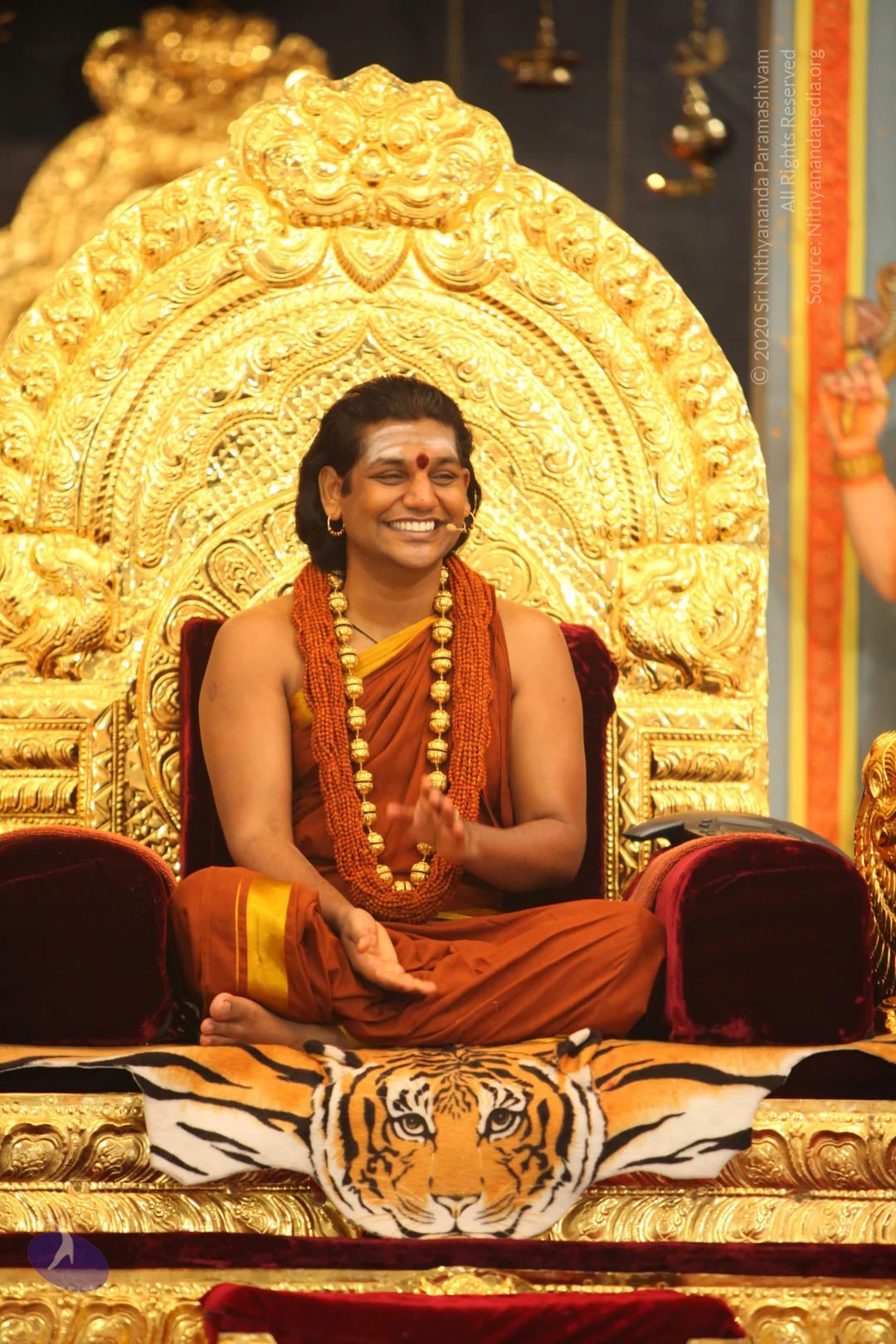
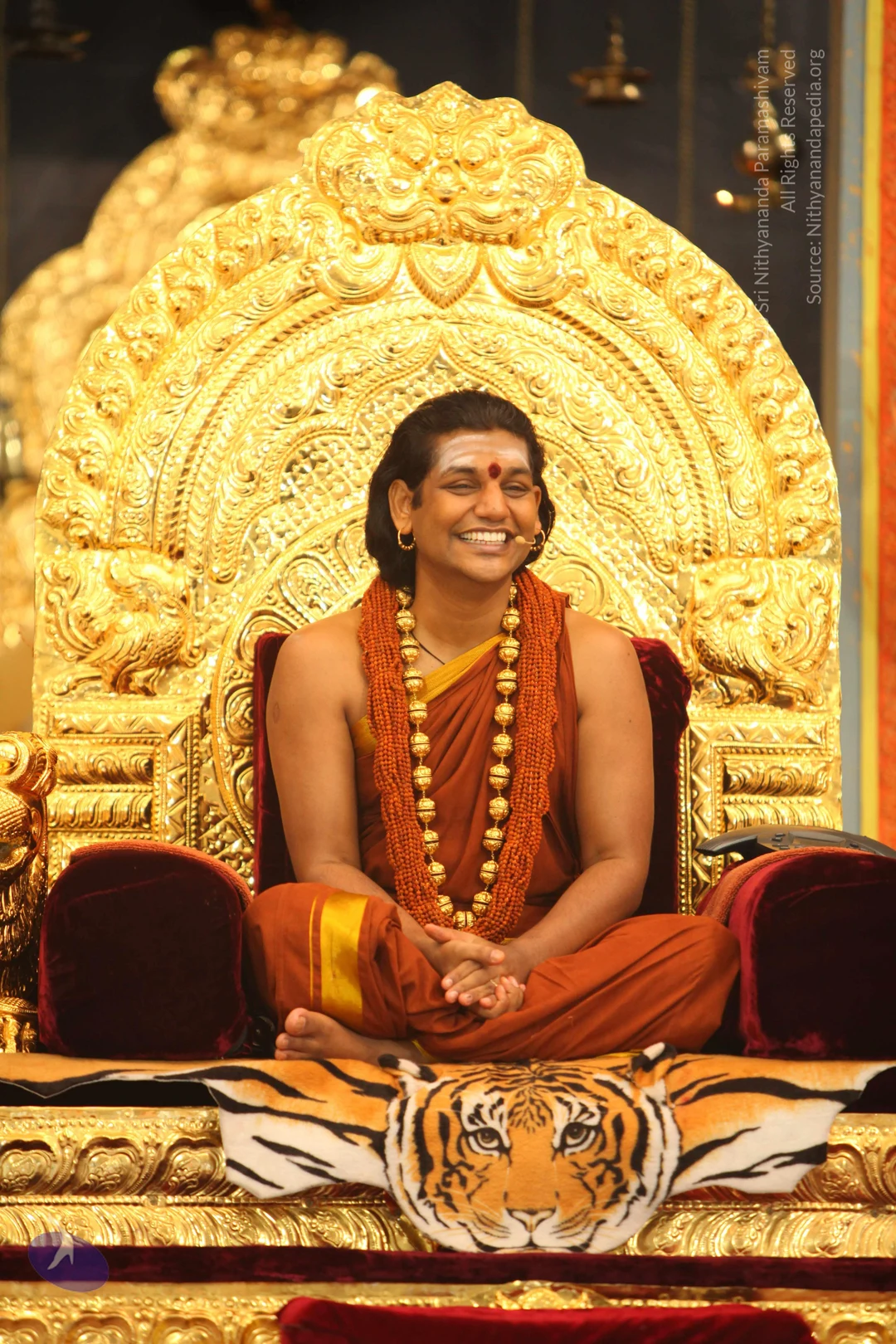
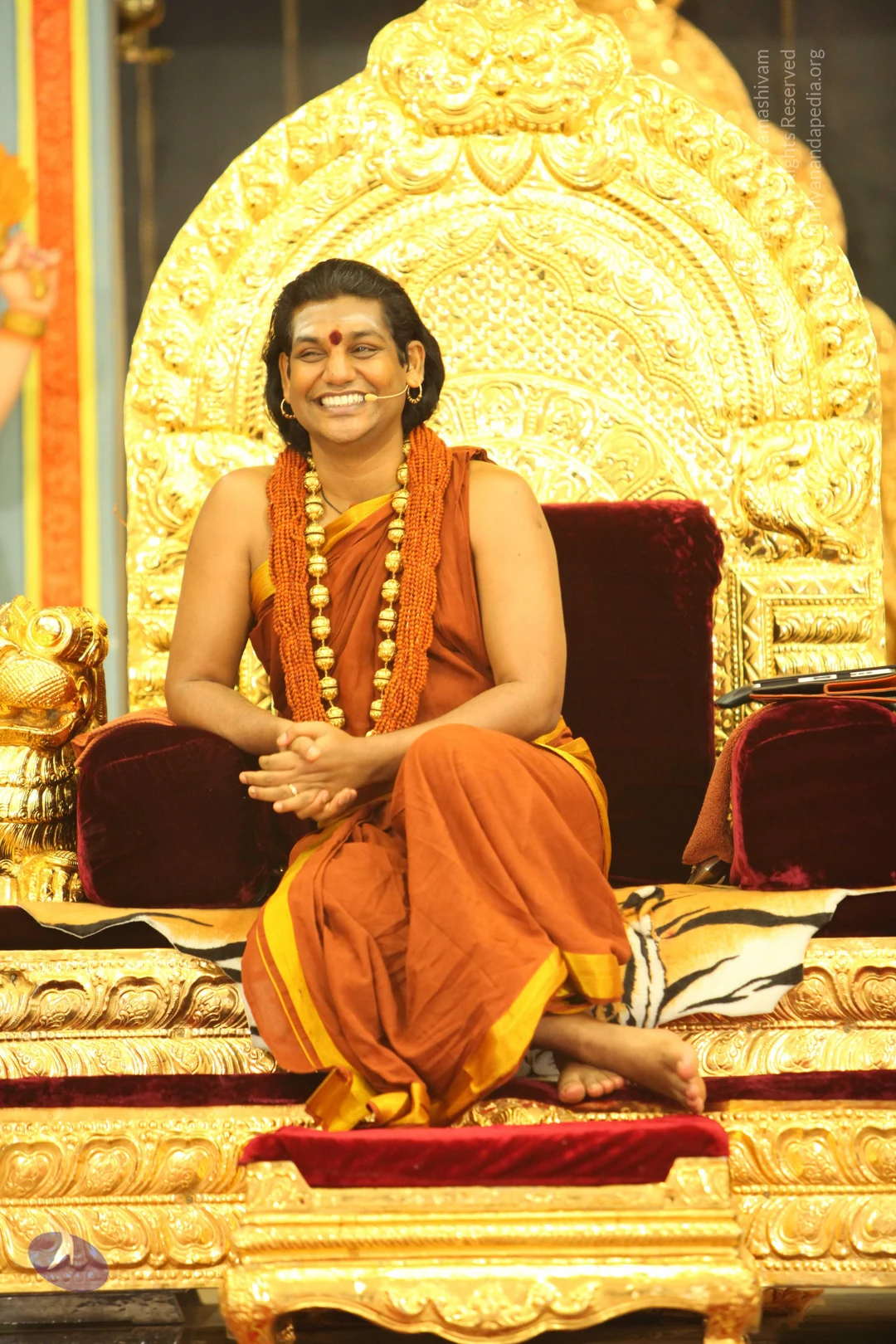
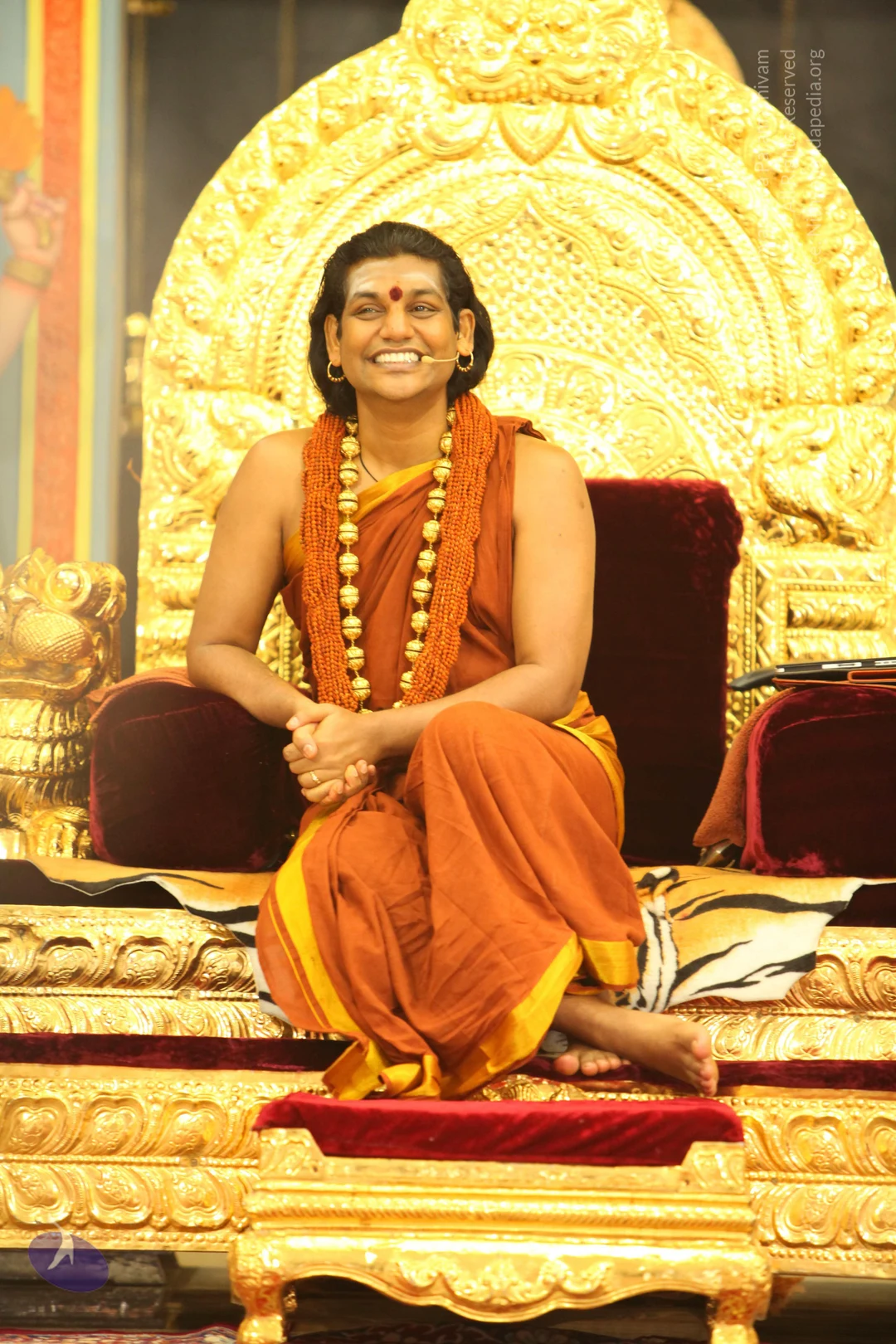
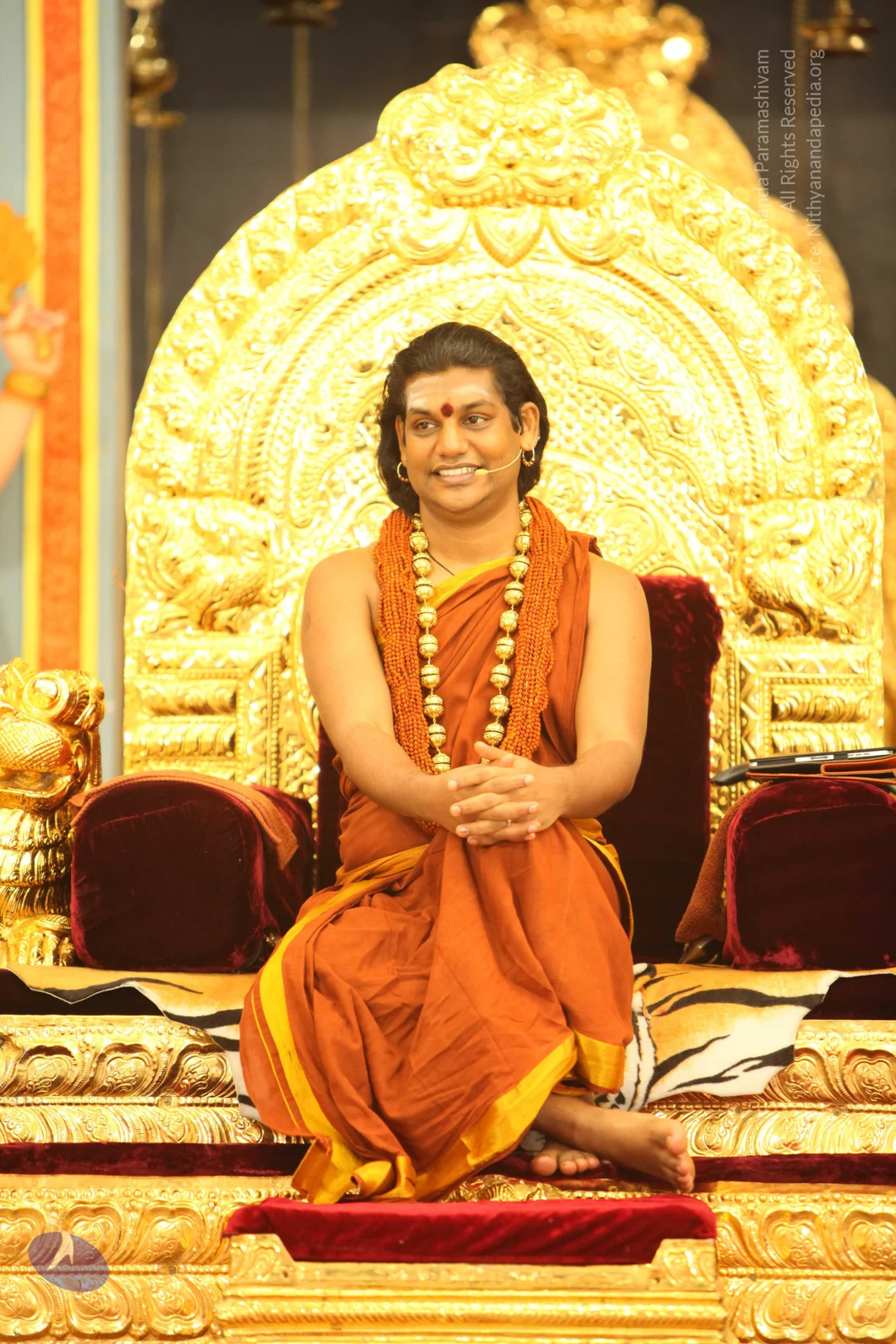
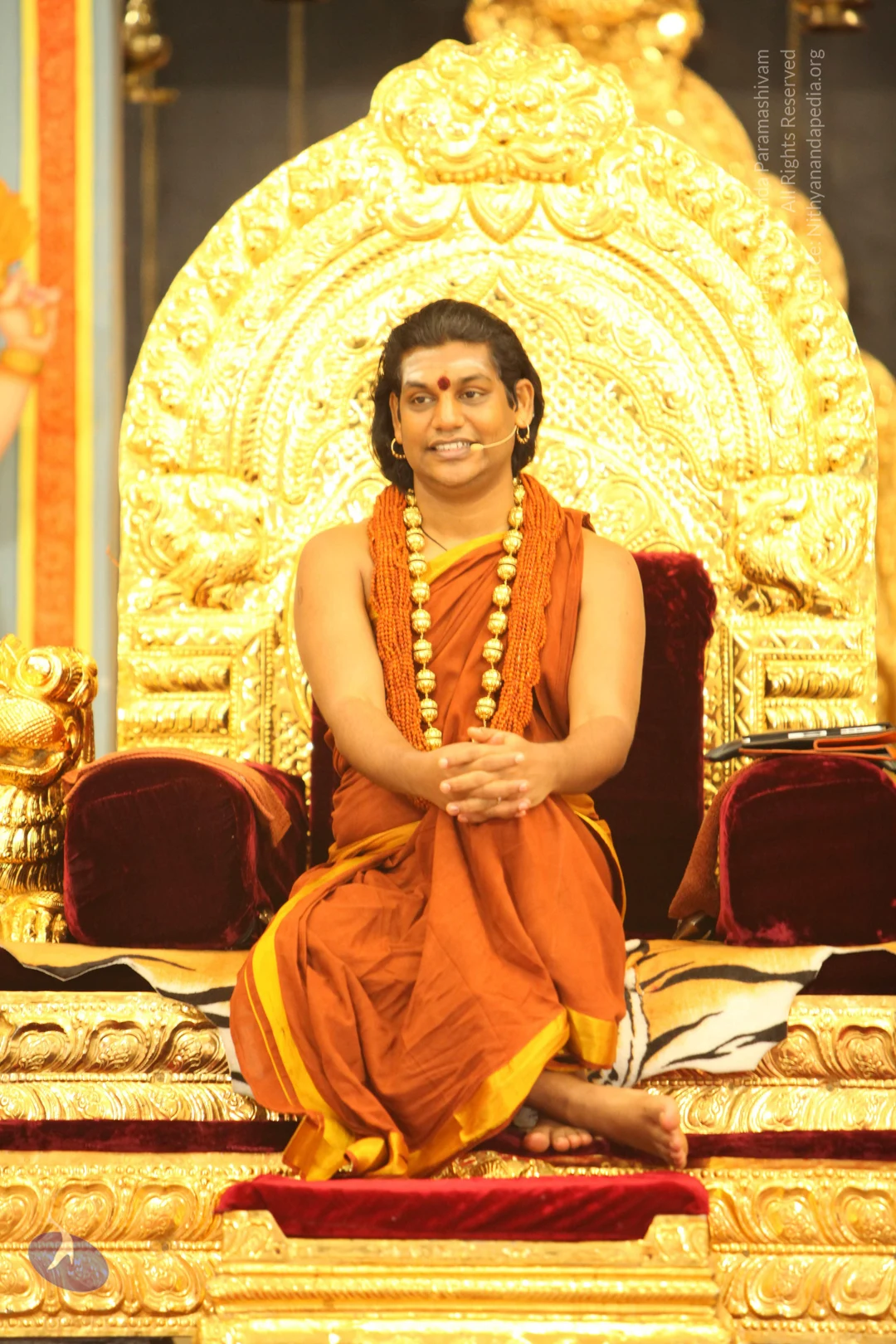
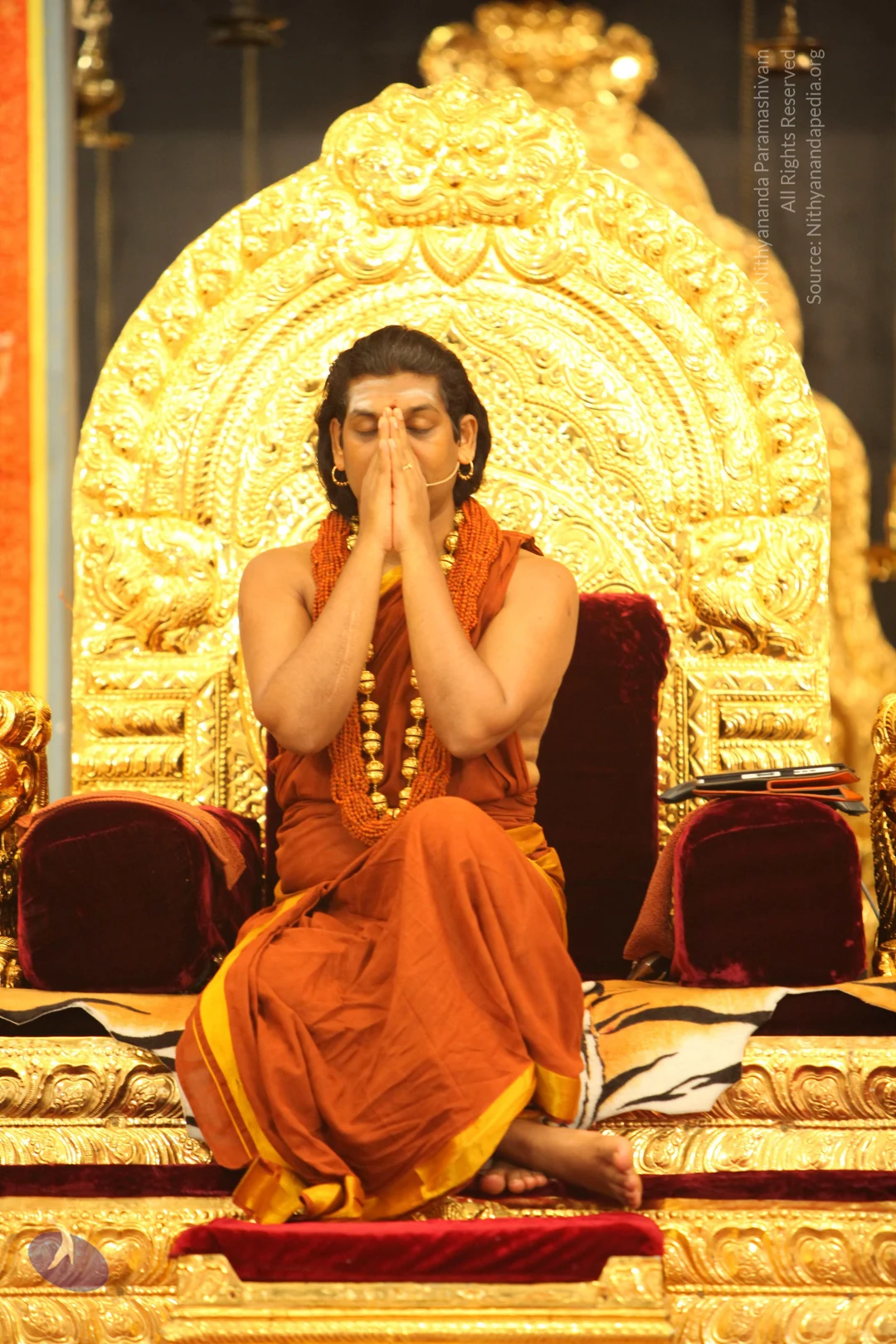
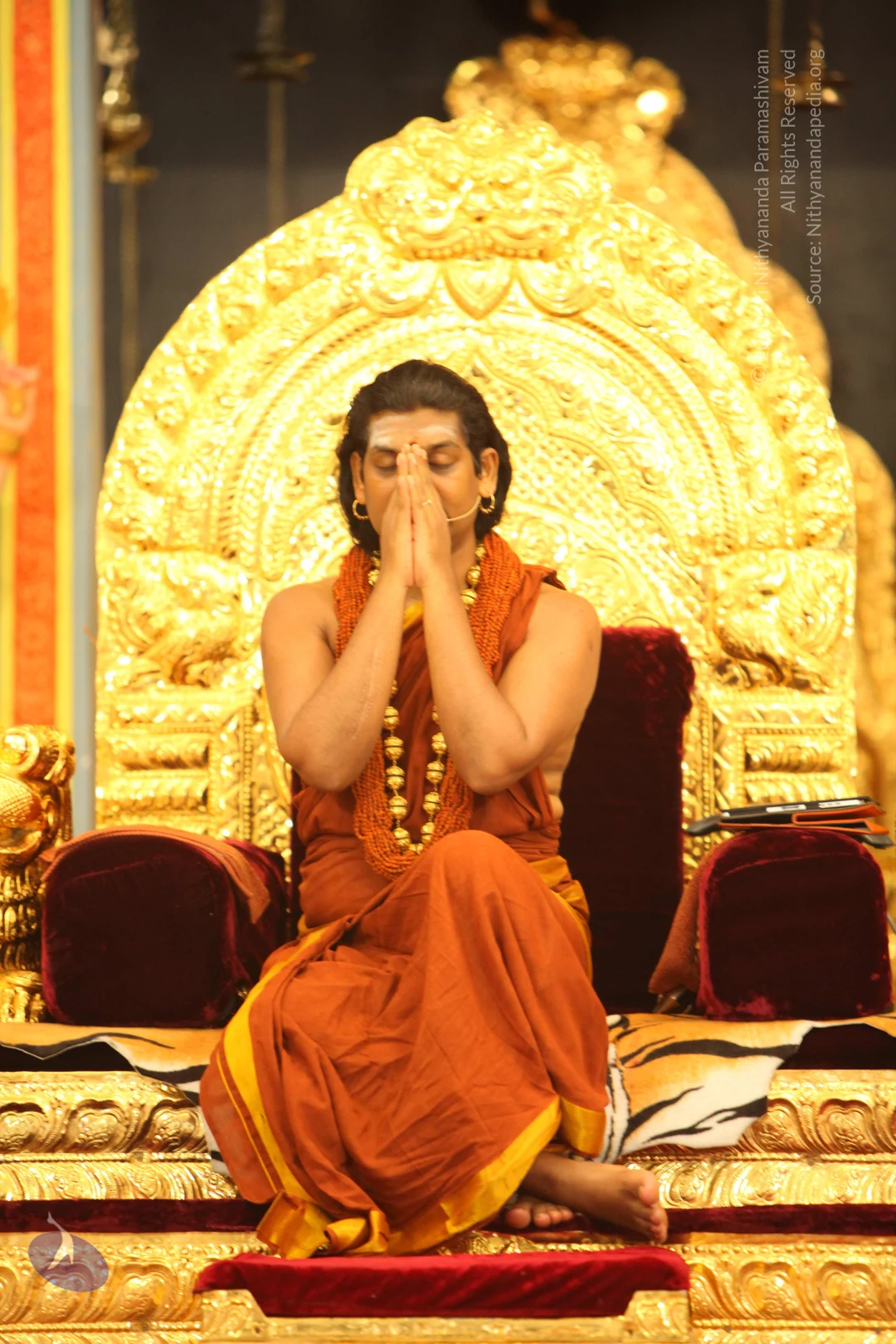
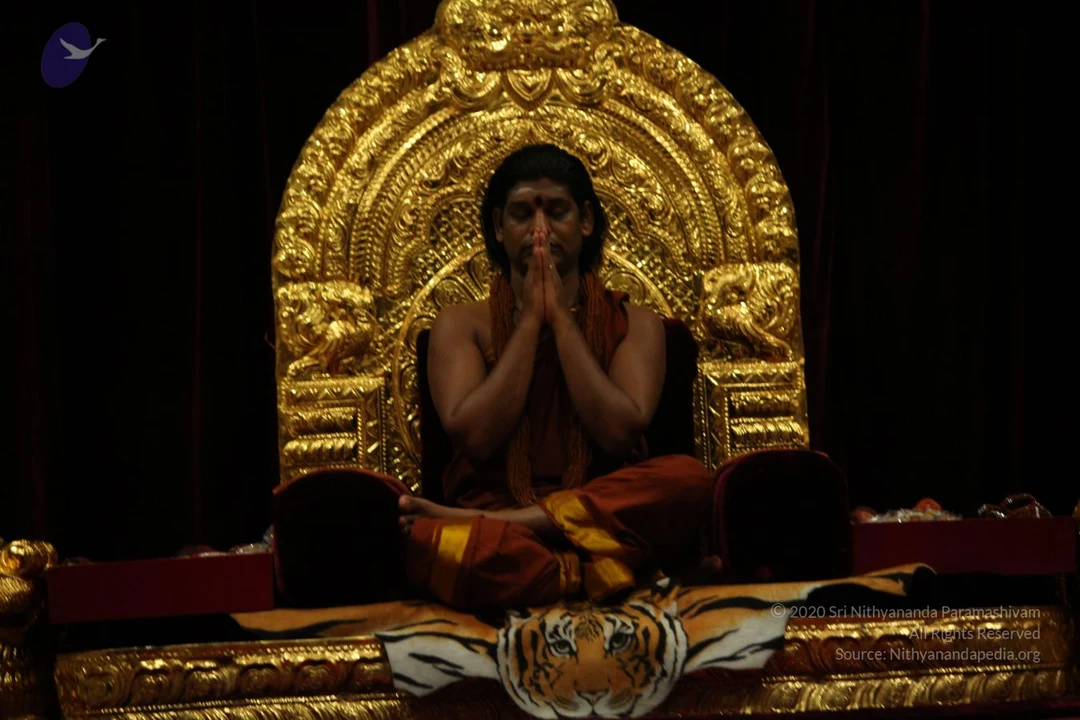
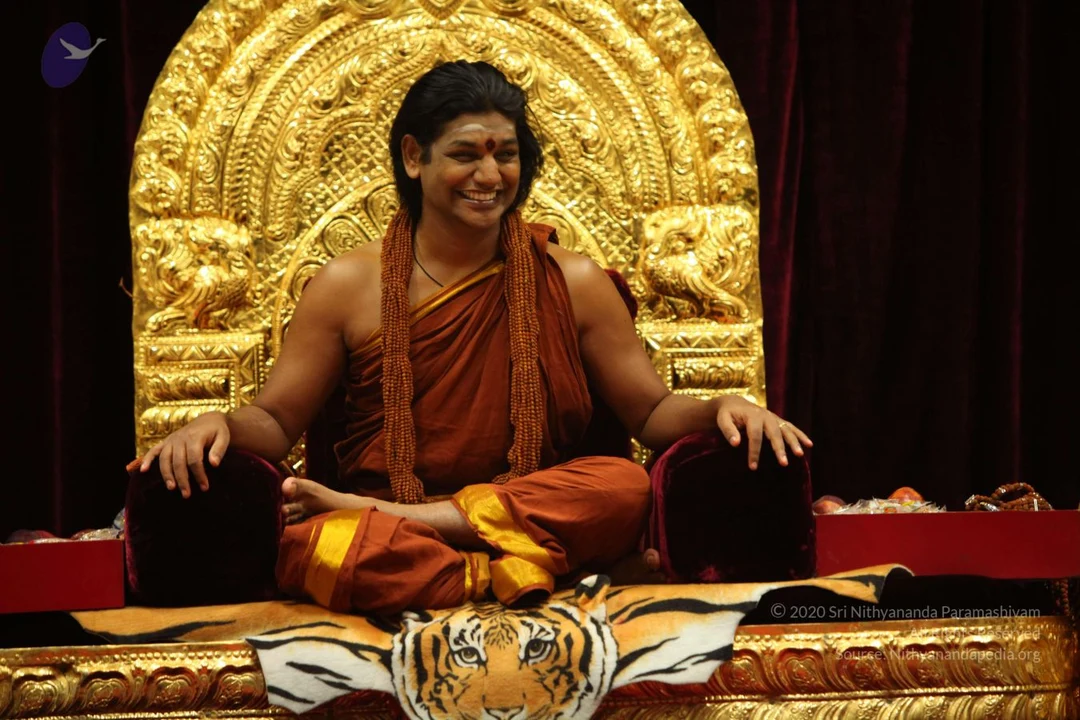
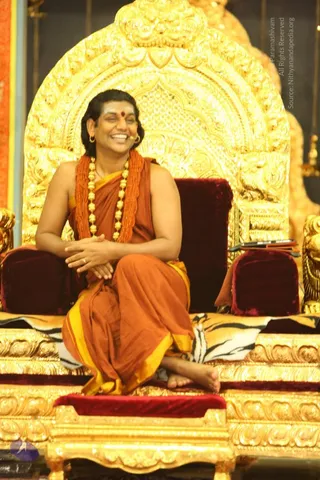
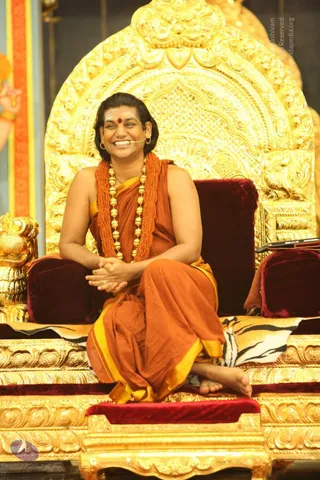
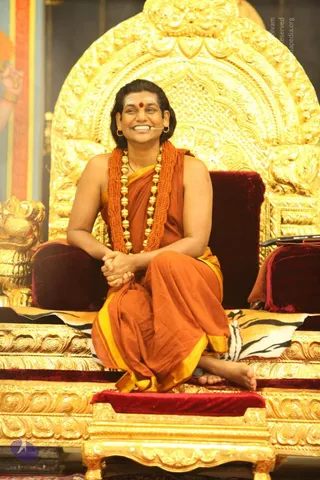
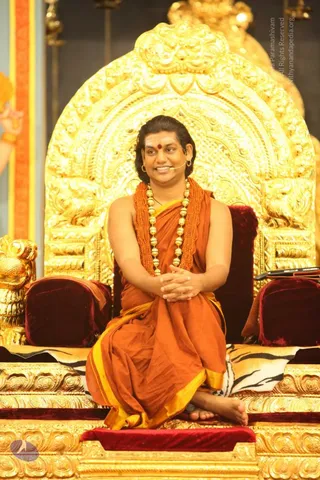
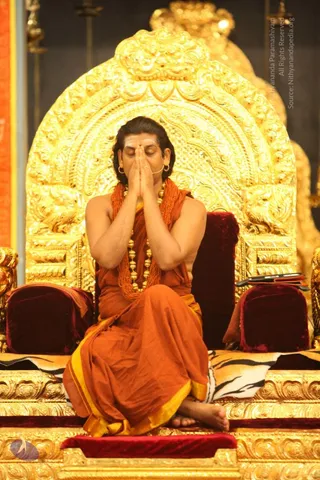
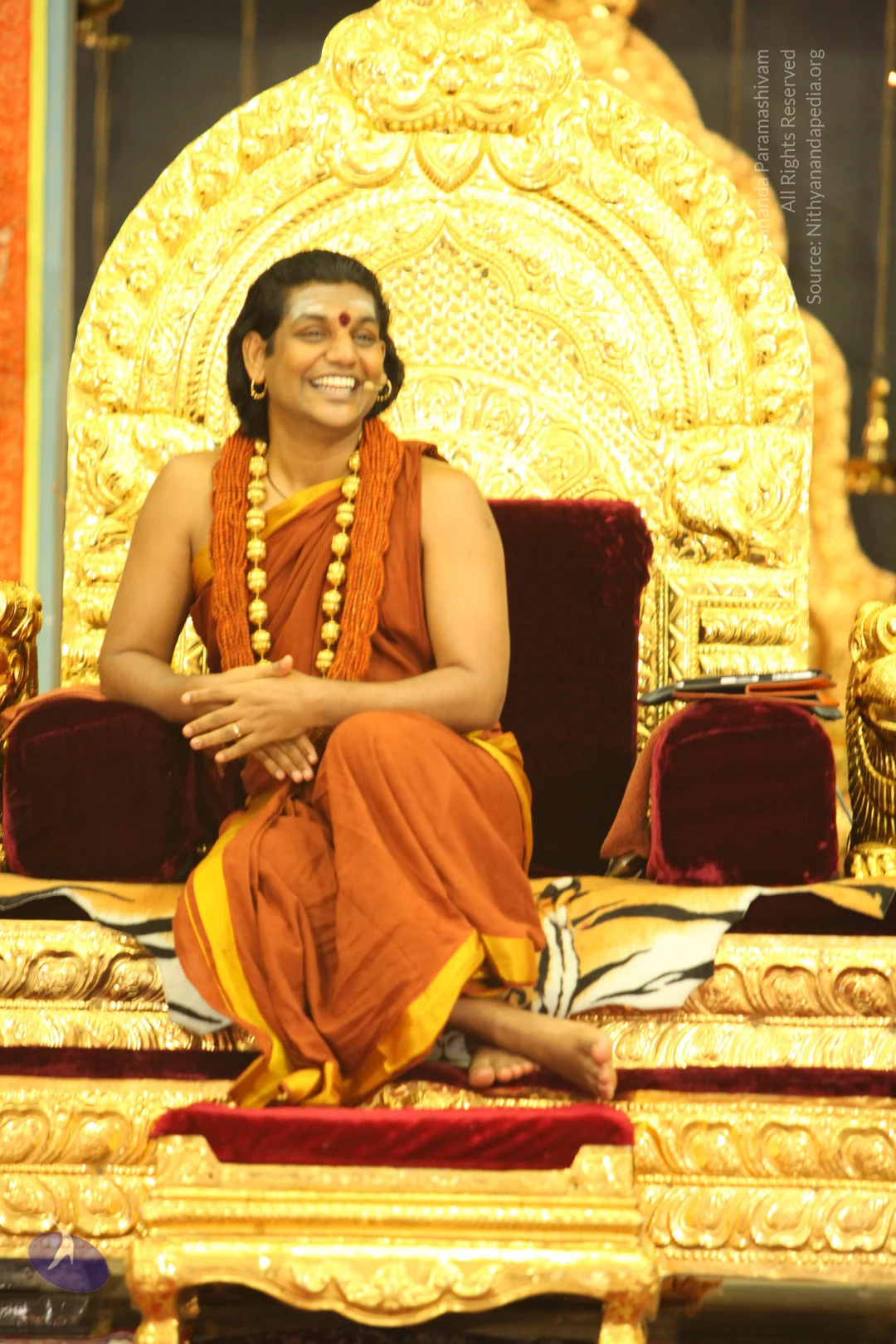
A smiling man with swept-back dark hair, a red bindi and white forehead markings sits on an ornate gold throne with a red velvet backrest and armrests, a tiger-striped cloth draped over the seat. He wears a saffron-orange robe with yellow borders, a rudraksha mala of red beads and a long ceremonial gold bead necklace, with a small microphone clipped near his face. His hands rest folded in his lap, and his bare feet rest on a red velvet footstool. Gold lion carvings flank the throne.A man seated on an ornate gilded throne with a dark red velvet cushion and tiger-striped cloth draped over the seat, smiling broadly with hands clasped in his lap. He wears an orange-saffron cloth over one shoulder with a yellow border, a long orange rudraksha mala, and a heavy ceremonial gold bead necklace, plus a red bindi on his forehead and a small headset microphone. Behind him is a large golden arched backrest with carved floral and lion motifs, and a golden lion figure sits at the left edge. The scene suggests a satsang discourse setting.A smiling man in orange saffron robes sits cross-legged on an ornate gilded throne with a carved golden arched backrest and red velvet cushions, draped with a striped tiger-skin cloth. He wears a long red-orange rudraksha mala and a heavy gold bead necklace, a red bindi and white tilak on his forehead, a small microphone clipped near his mouth, and gold hoop earrings. His hands are clasped in his lap and his feet are bare. Behind him a golden floral backdrop and a decorated pillar are visible. Appearance-based label: a person, seated on the throne with distinctive saffron robes, rudraksha mala and gold necklace as cues.A man seated cross-legged on an ornate gilded throne with a deep red velvet cushion and a tiger-striped cloth draped over the seat, speaking into a headset microphone. He wears an orange-saffron dhoti and shawl with yellow borders, a long rudraksha mala and a heavy gold bead necklace, and has a red bindi on his forehead. His hands are clasped in his lap and he is smiling while looking to the side. A gilded lion-carved backrest and a gold lion statue frame the scene. Appearance-based identification: Swamiji (probable), seated on the throne, with long swept-back hair, saffron clothing, rudraksha mala and gold necklace, in a satsang setting.A seated man in orange-saffron robes with a yellow border sits on an ornate gold throne with a carved arched backrest and red velvet cushions. He wears a red-orange rudraksha mala and a long gold bead necklace, a small red bindi on his forehead, and a headset microphone. His hands are clasped in his lap and he is smiling while speaking, with a tiger-striped cloth draped over the throne. A gold deity figure is partly visible at the left edge. The appearance matches the Swamiji (probable) cues of long swept-back hair, saffron clothing, rudraksha and gold necklaces, seated in a satsang setting, with the page noting a morning satsang discourse.A seated man in an orange-saffron dhoti and shawl with a golden border sits cross-legged on an ornate gold throne with a carved gold arch and maroon velvet cushions. He presses his palms together in namaste with eyes closed, wearing layered orange-red rudraksha-style beaded malas and a gold ceremonial necklace, with white vibhuti on the forehead and a small gold earring visible. A tiger-striped cloth covers the dais. Probable Swamiji (probable): a bare-shouldered saffron-clad figure with long swept-back hair, rudraksha malas and gold ceremonial necklace seated on a golden throne in satsang.

HDH-CONDUCTING-INNER-AWAKENING-SESSION
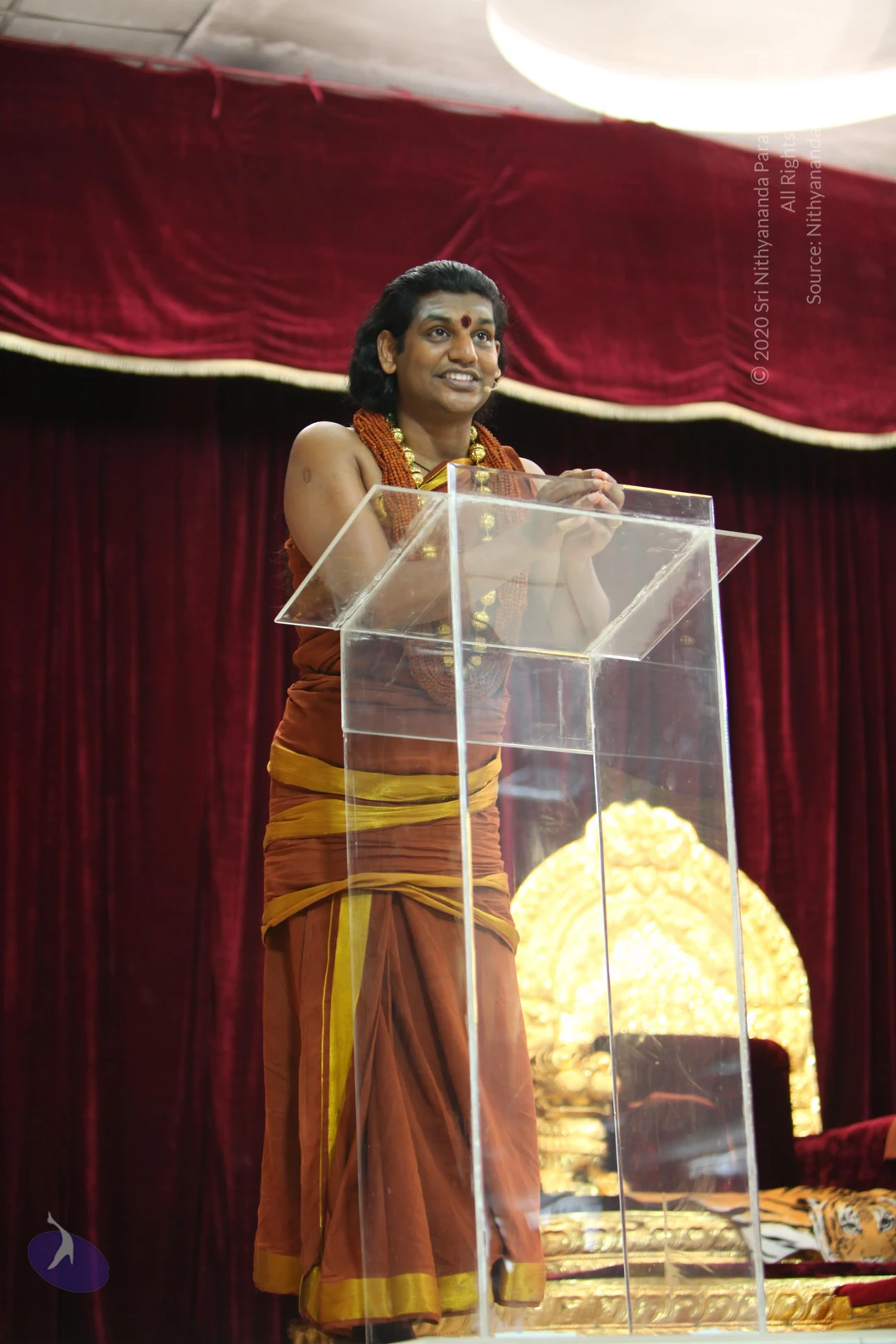
40 photosSource gallery
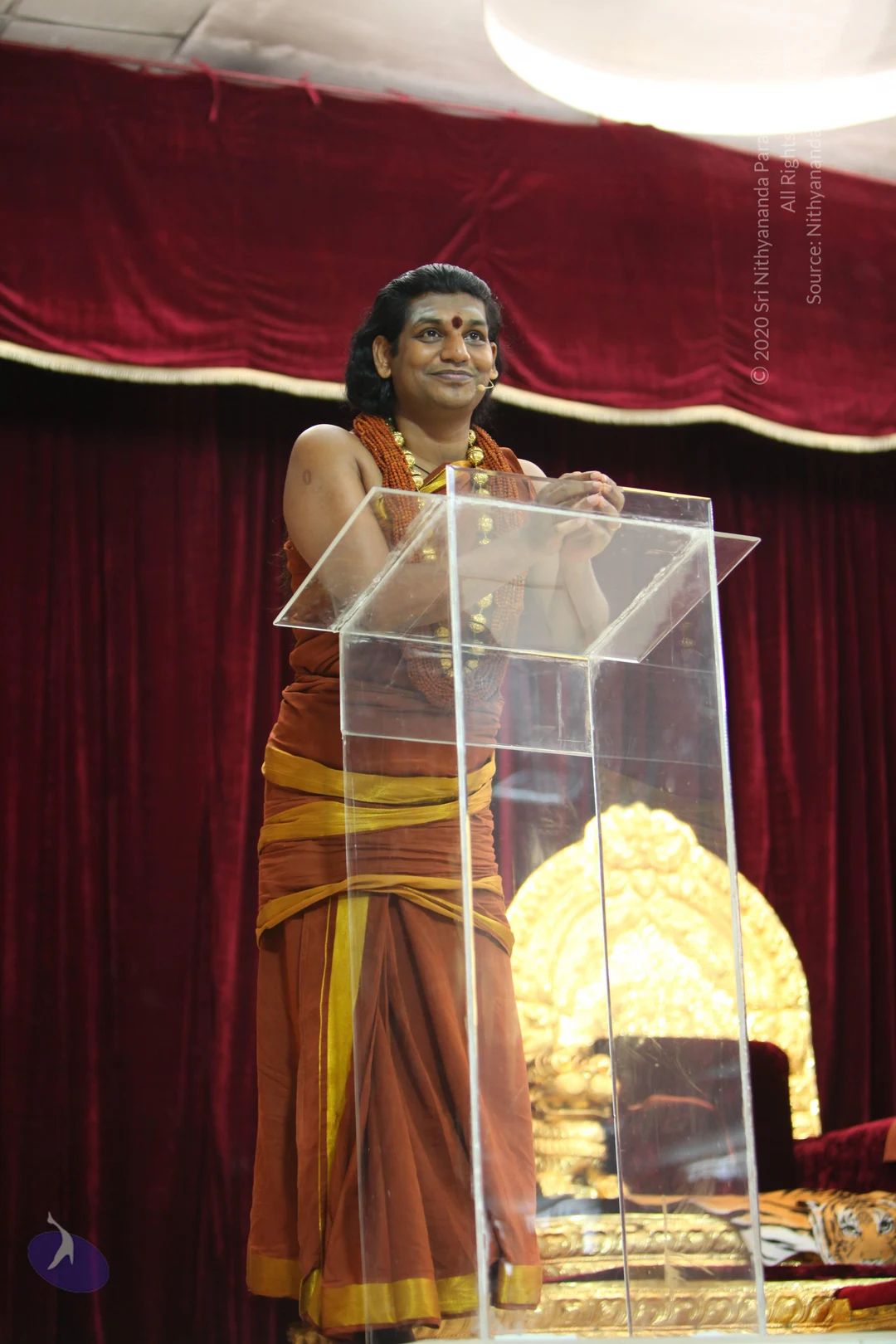
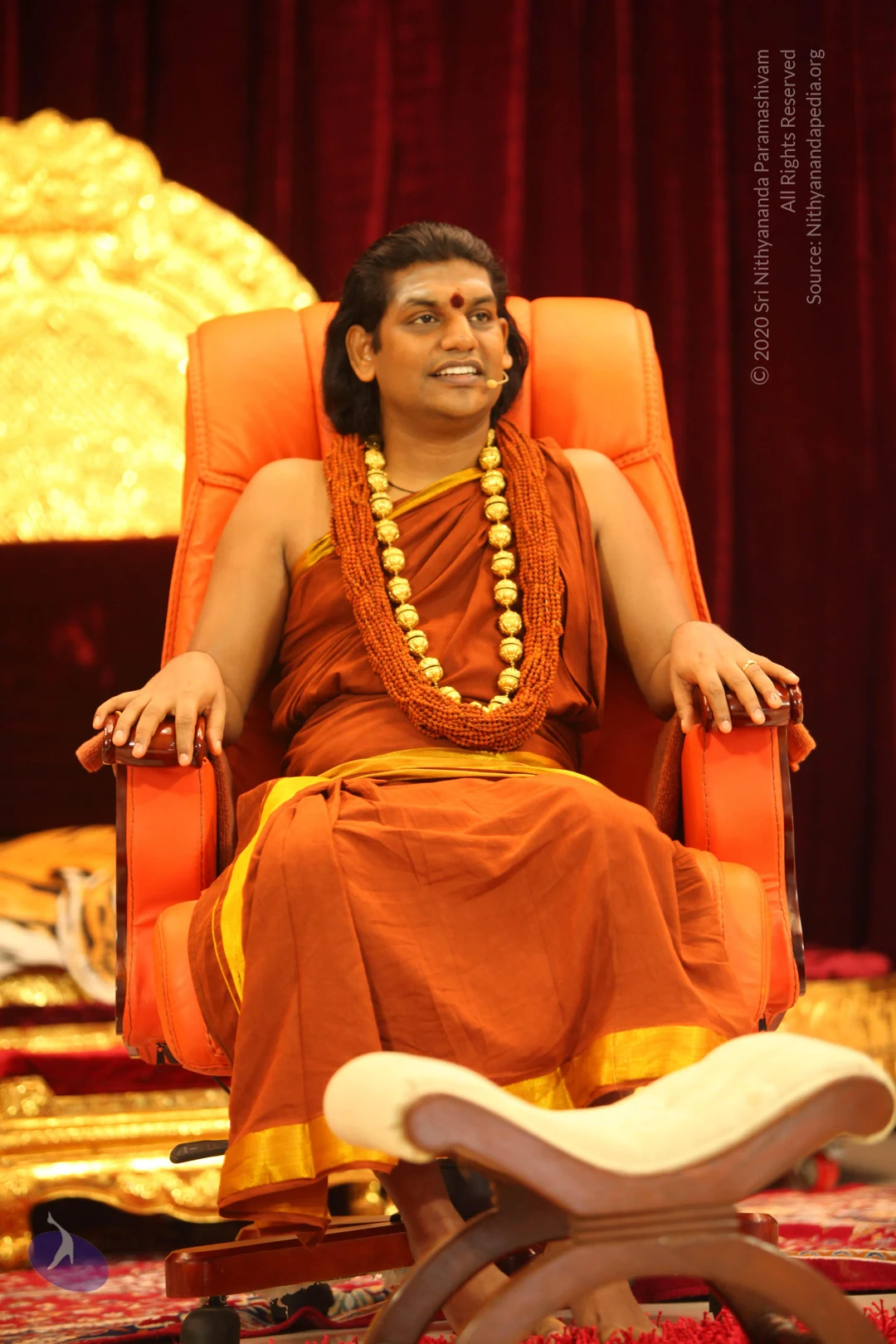
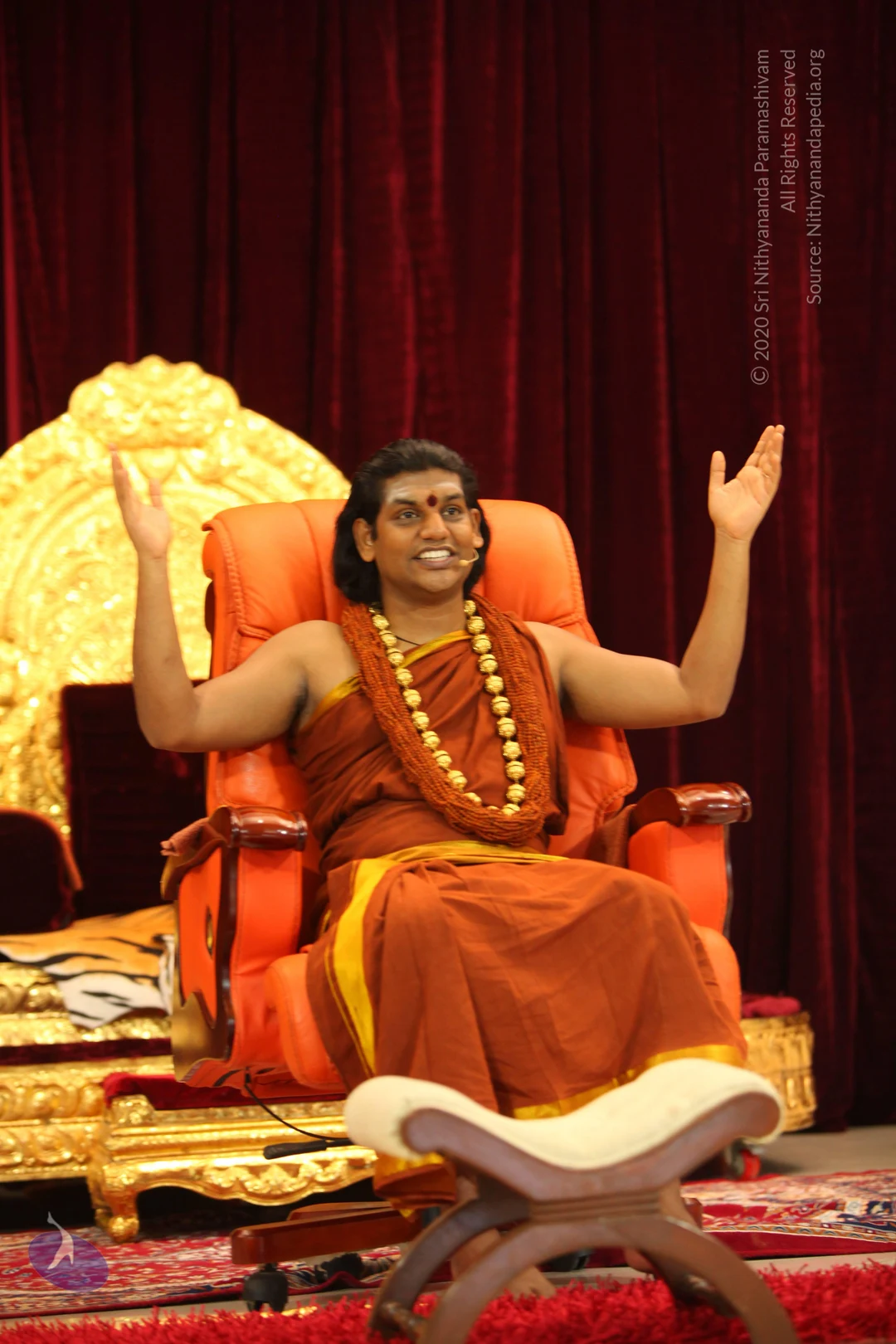
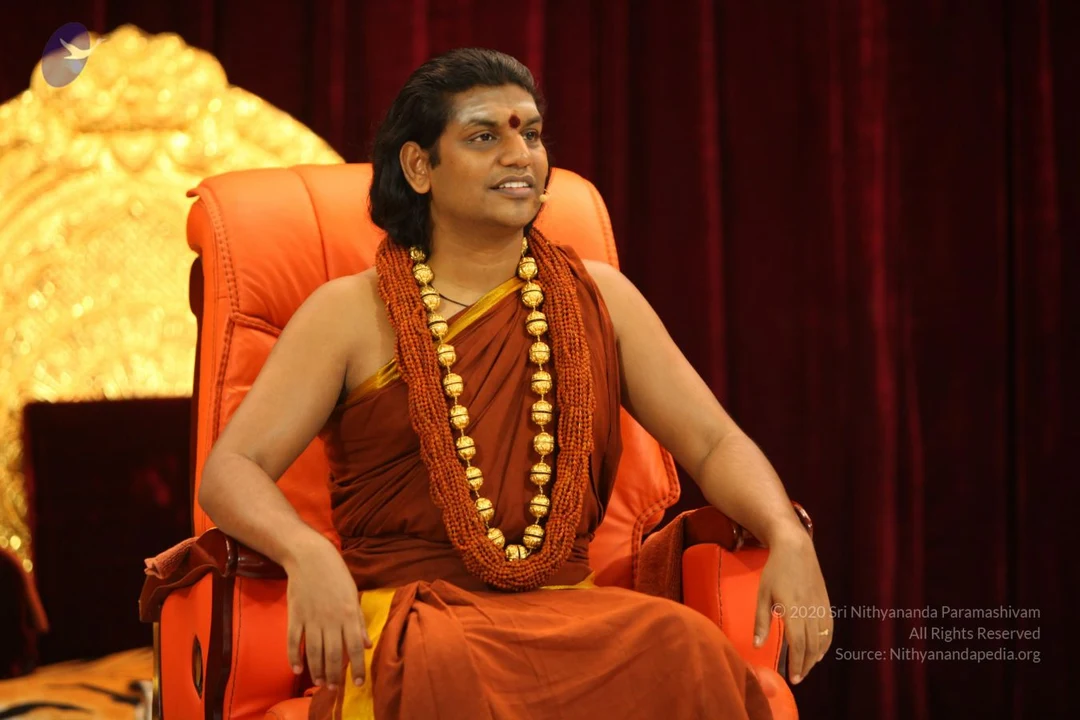
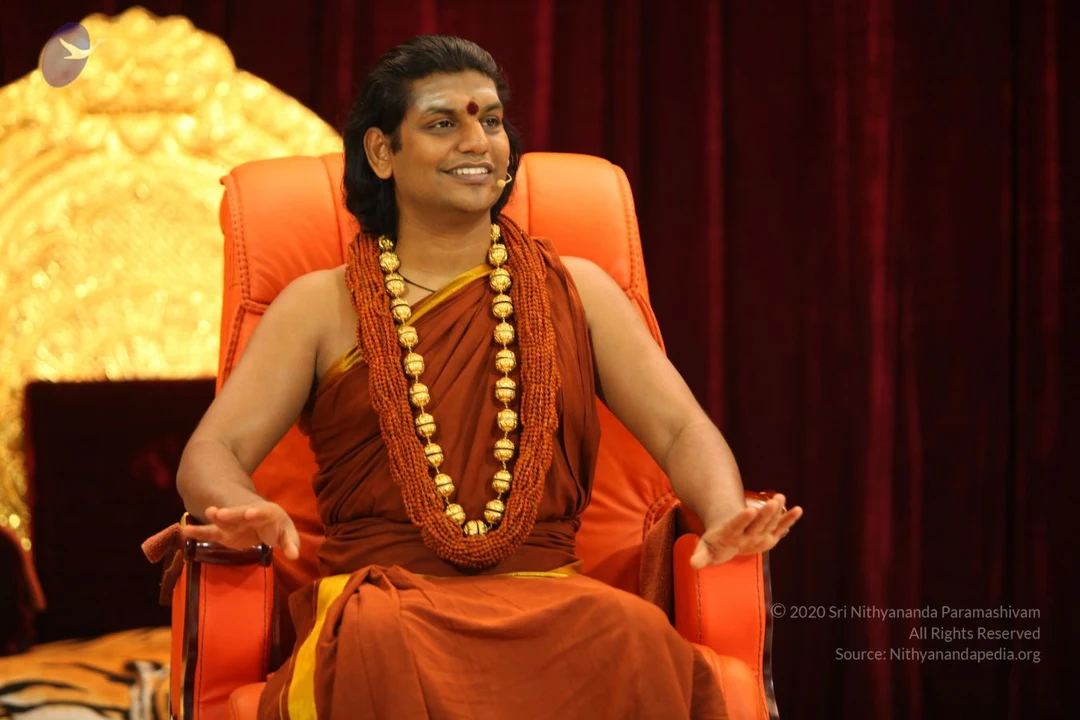
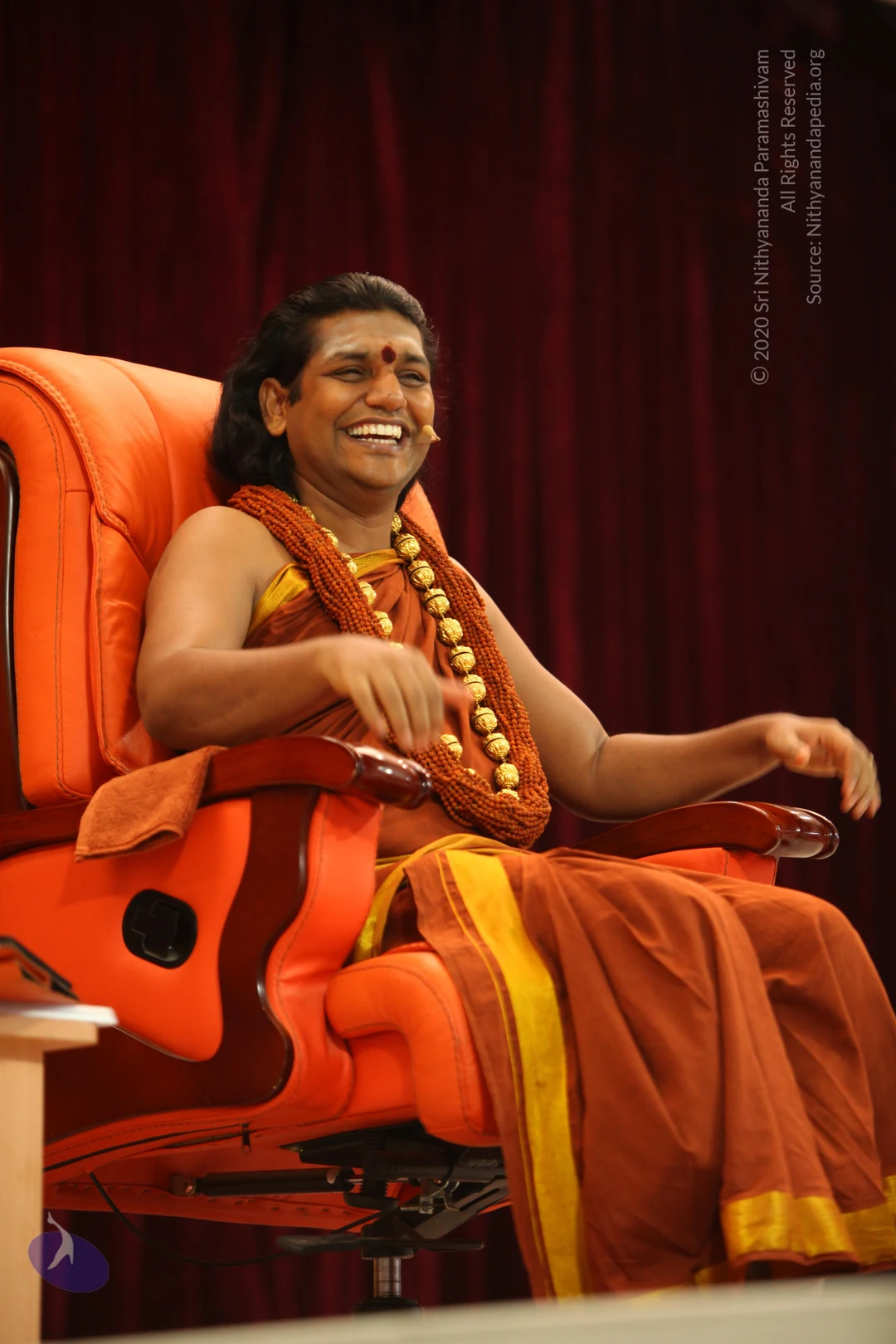
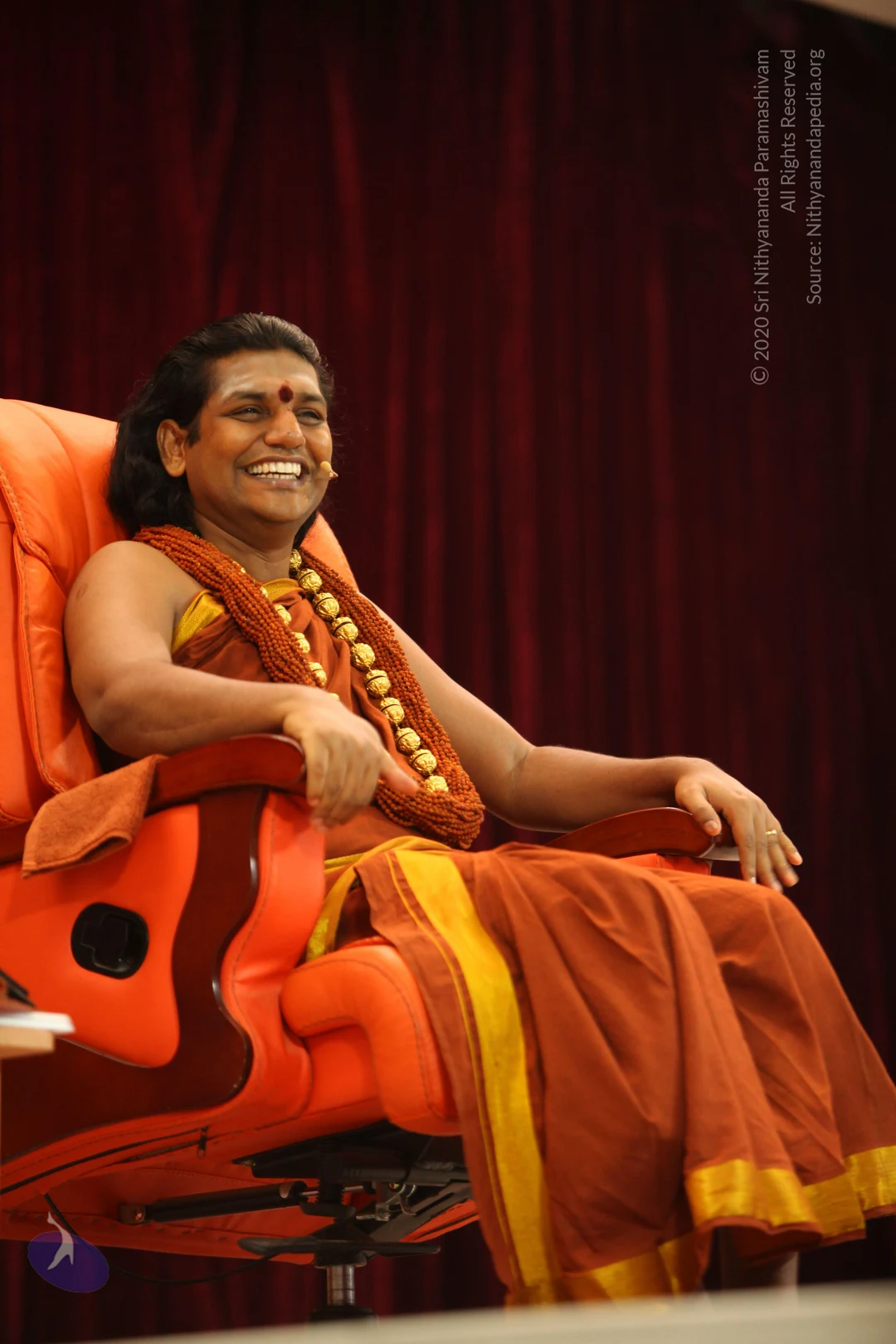
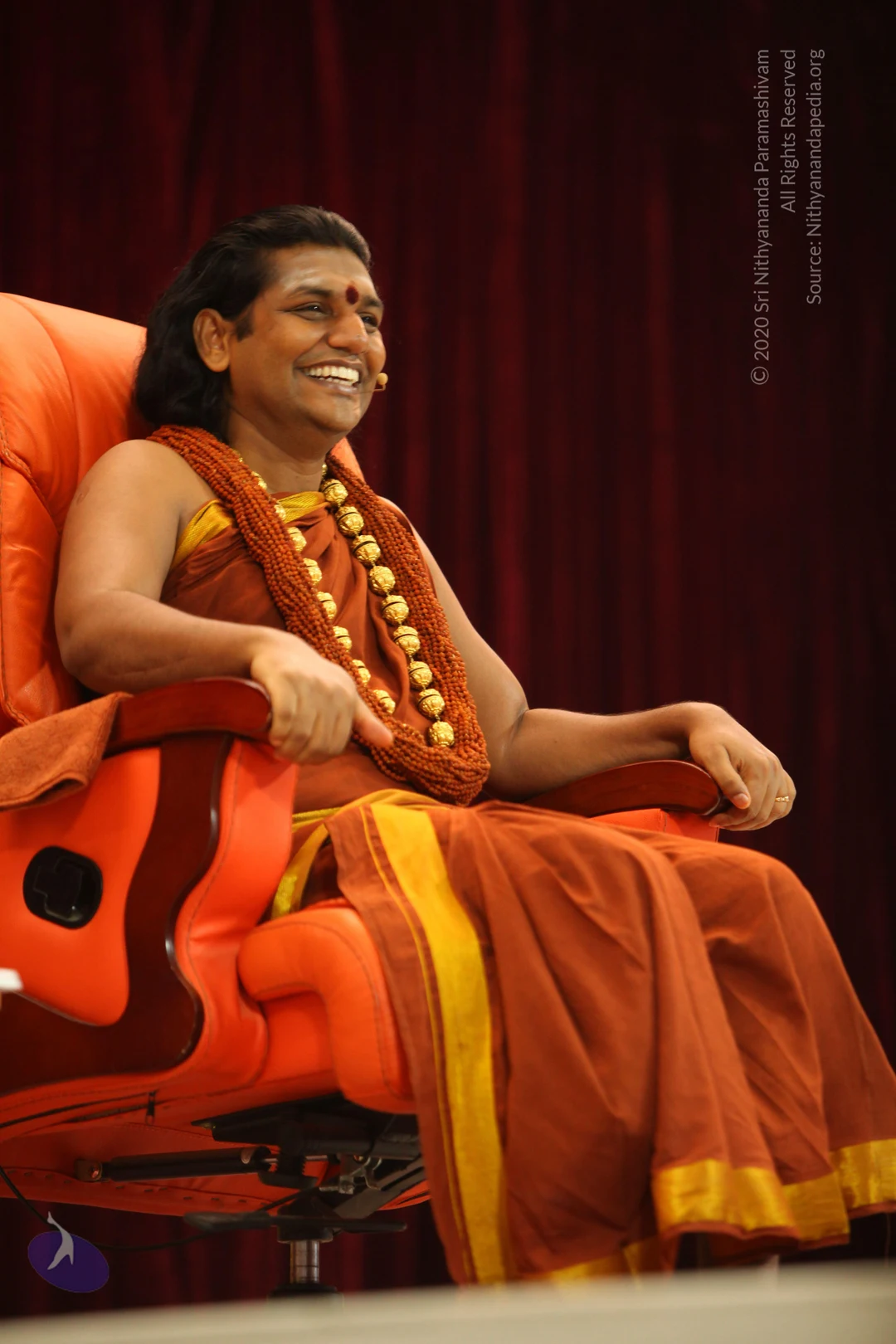
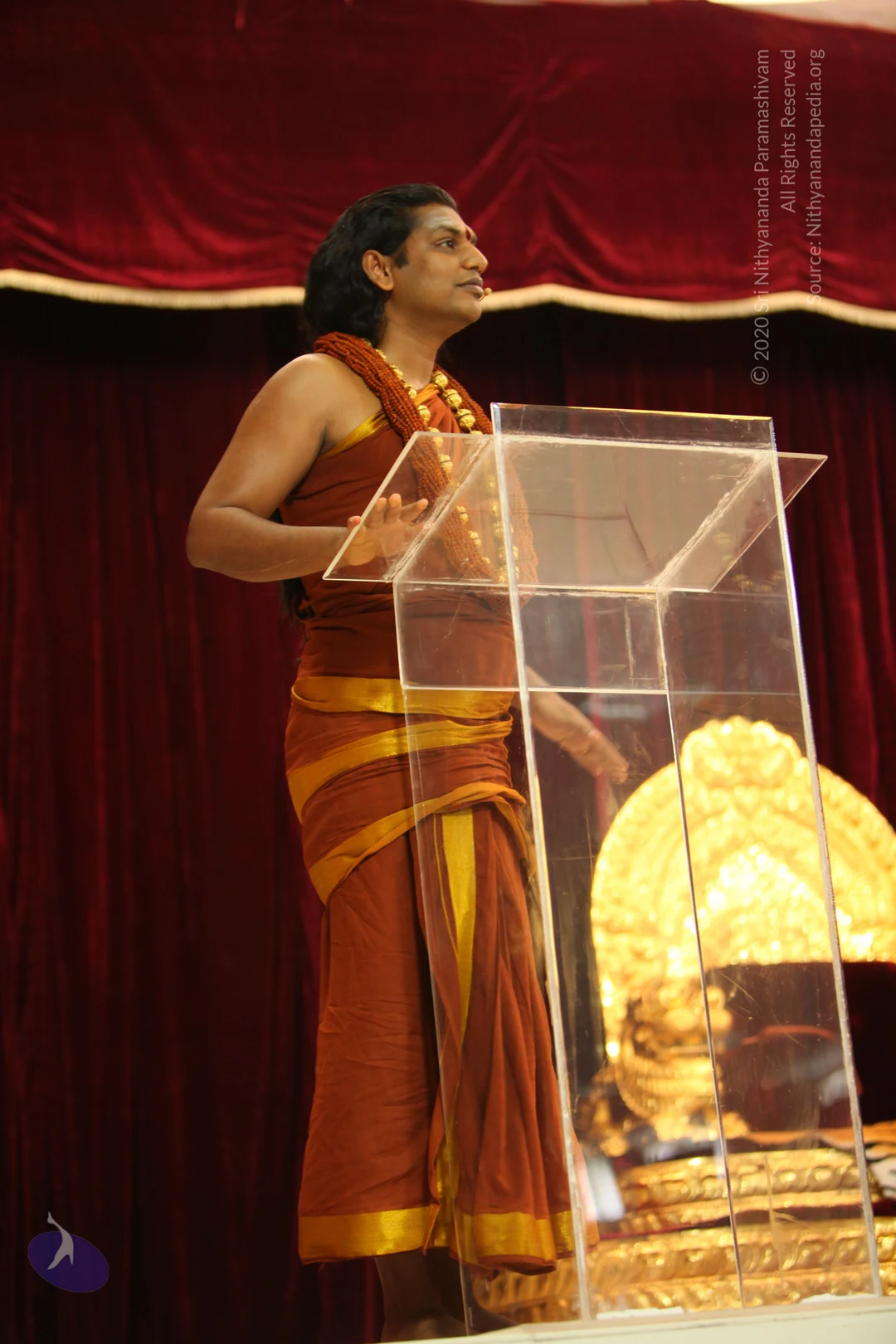
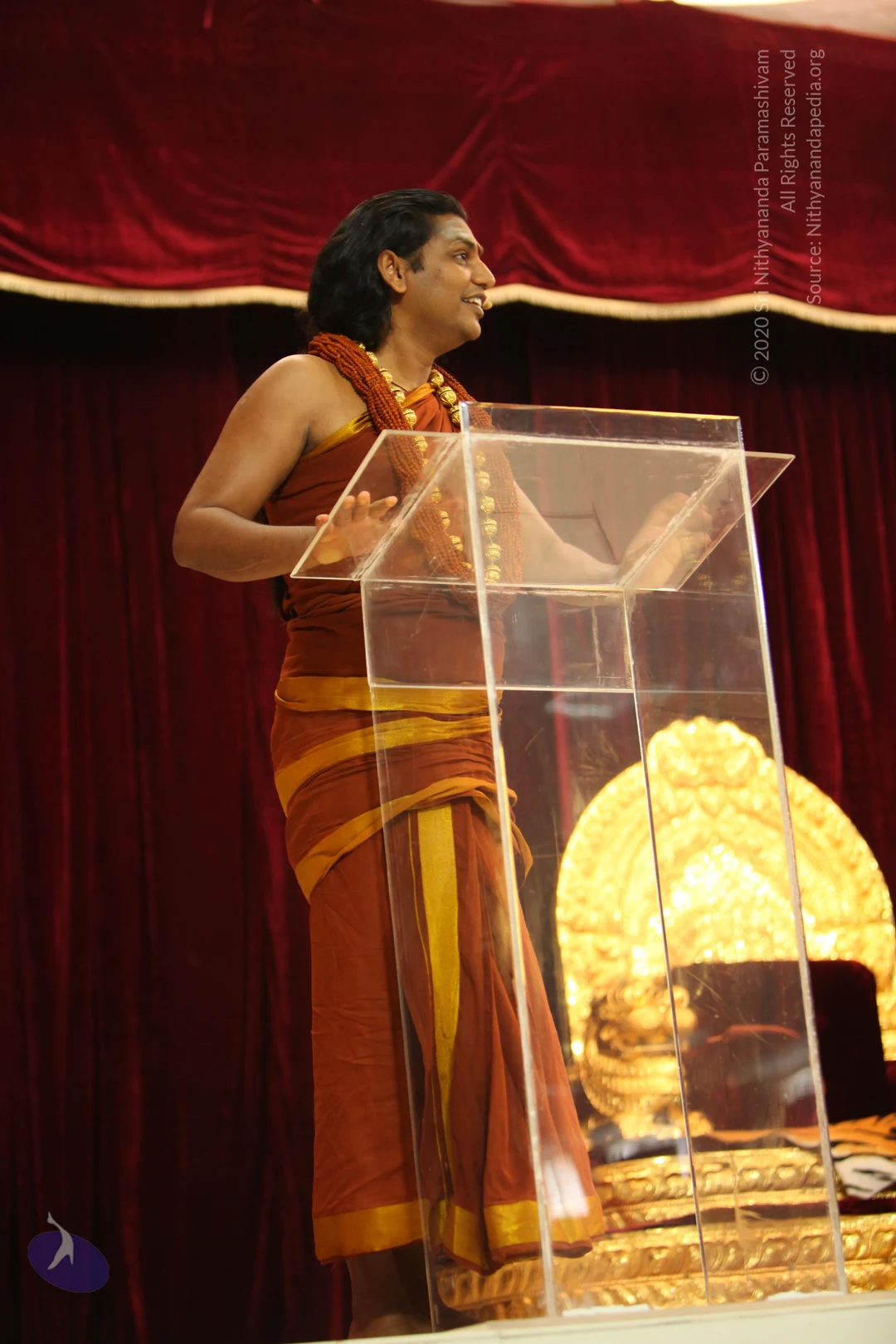
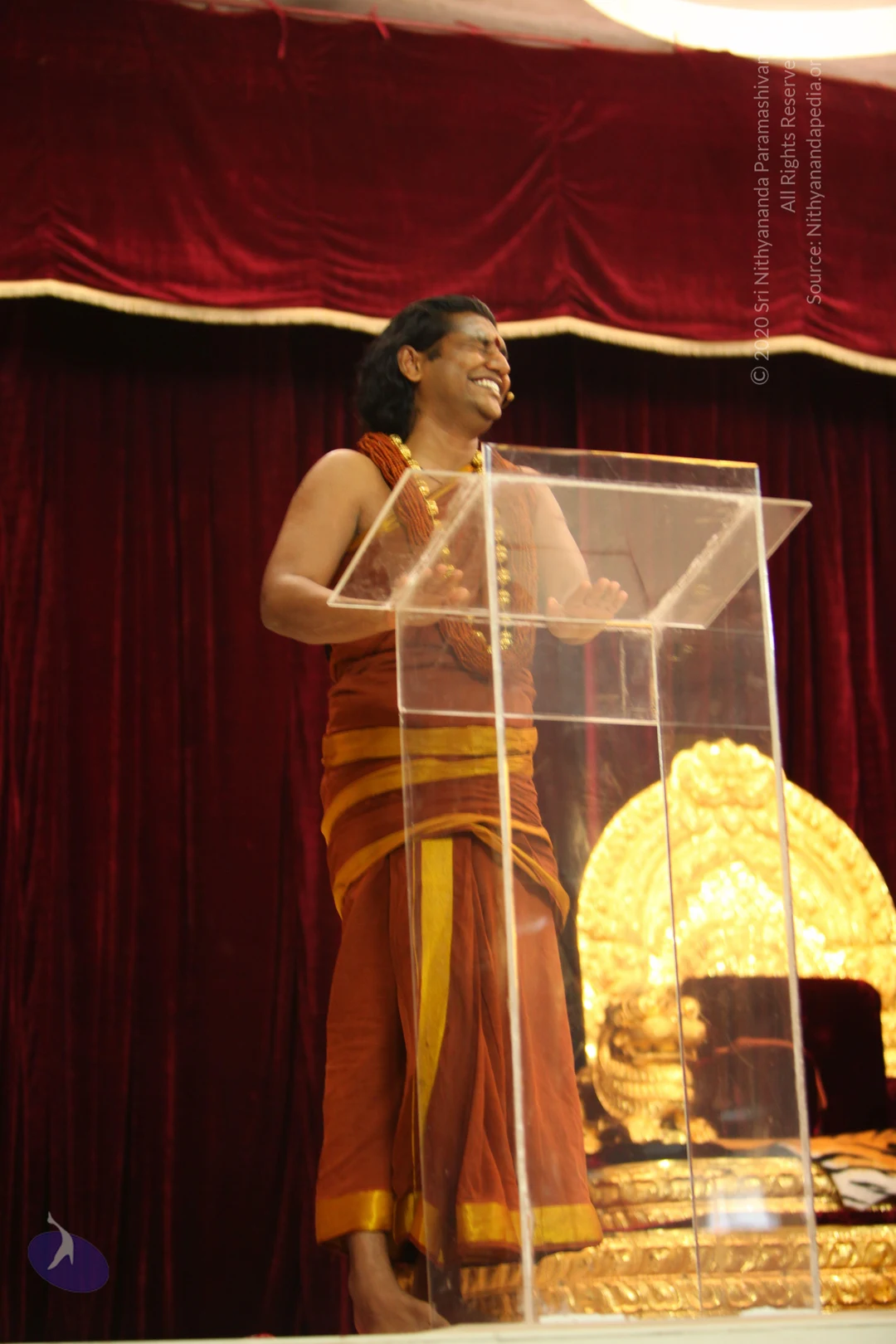
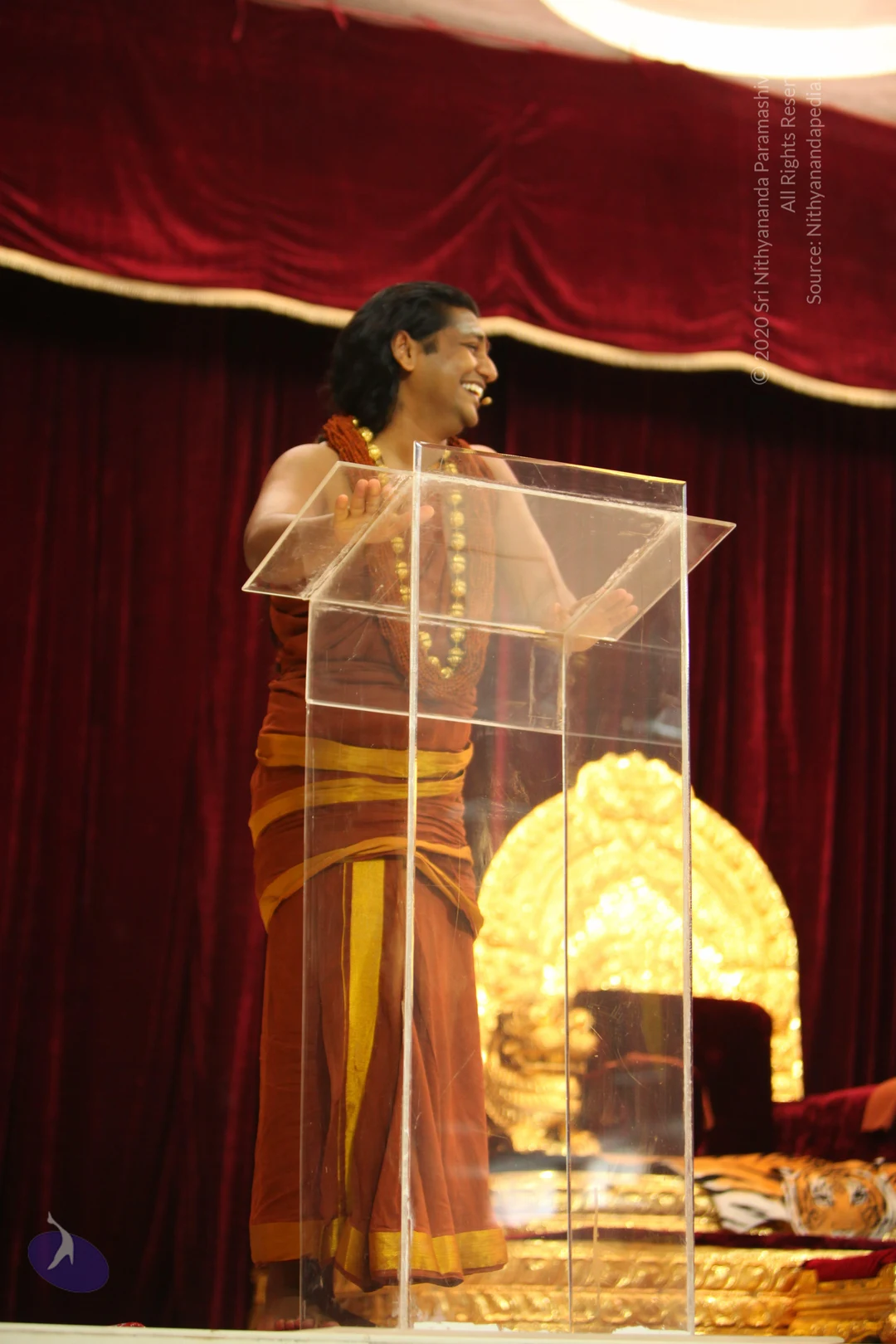
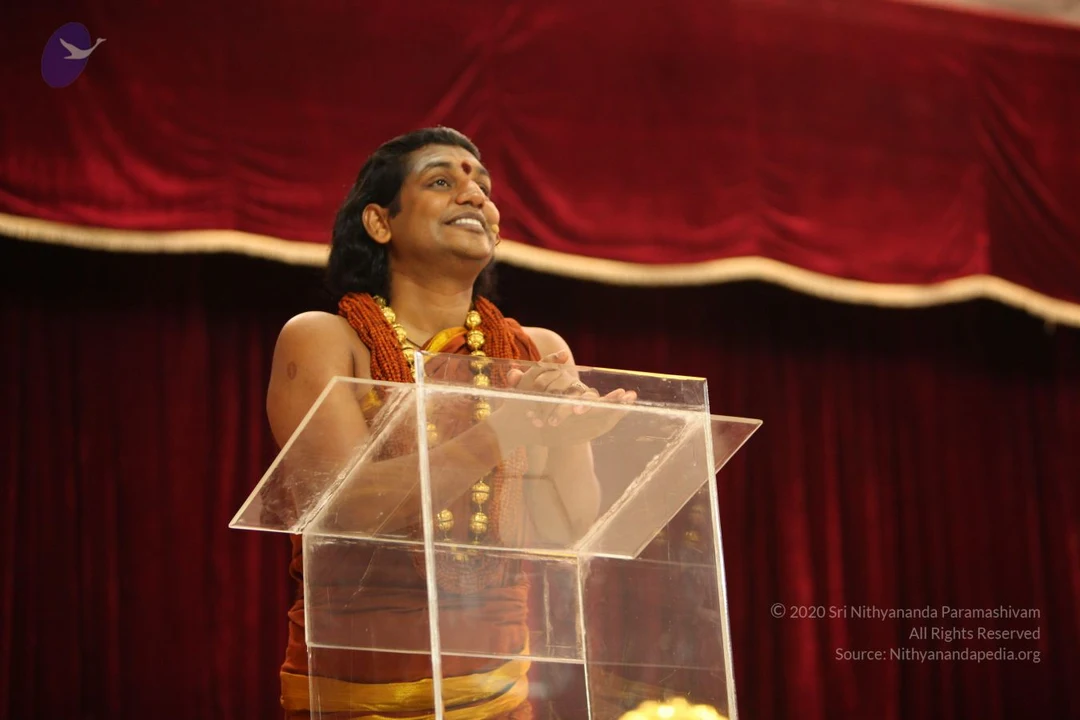
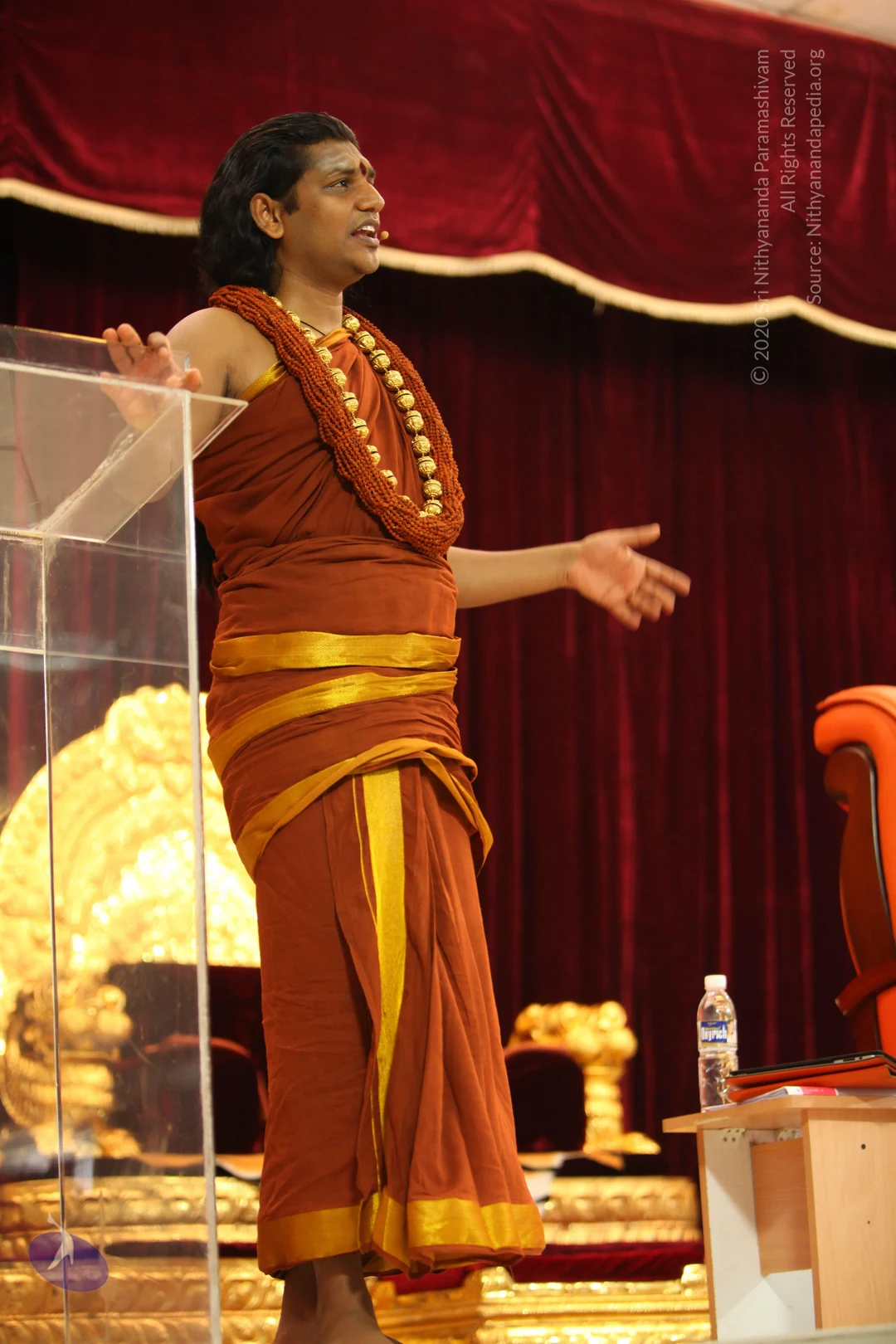
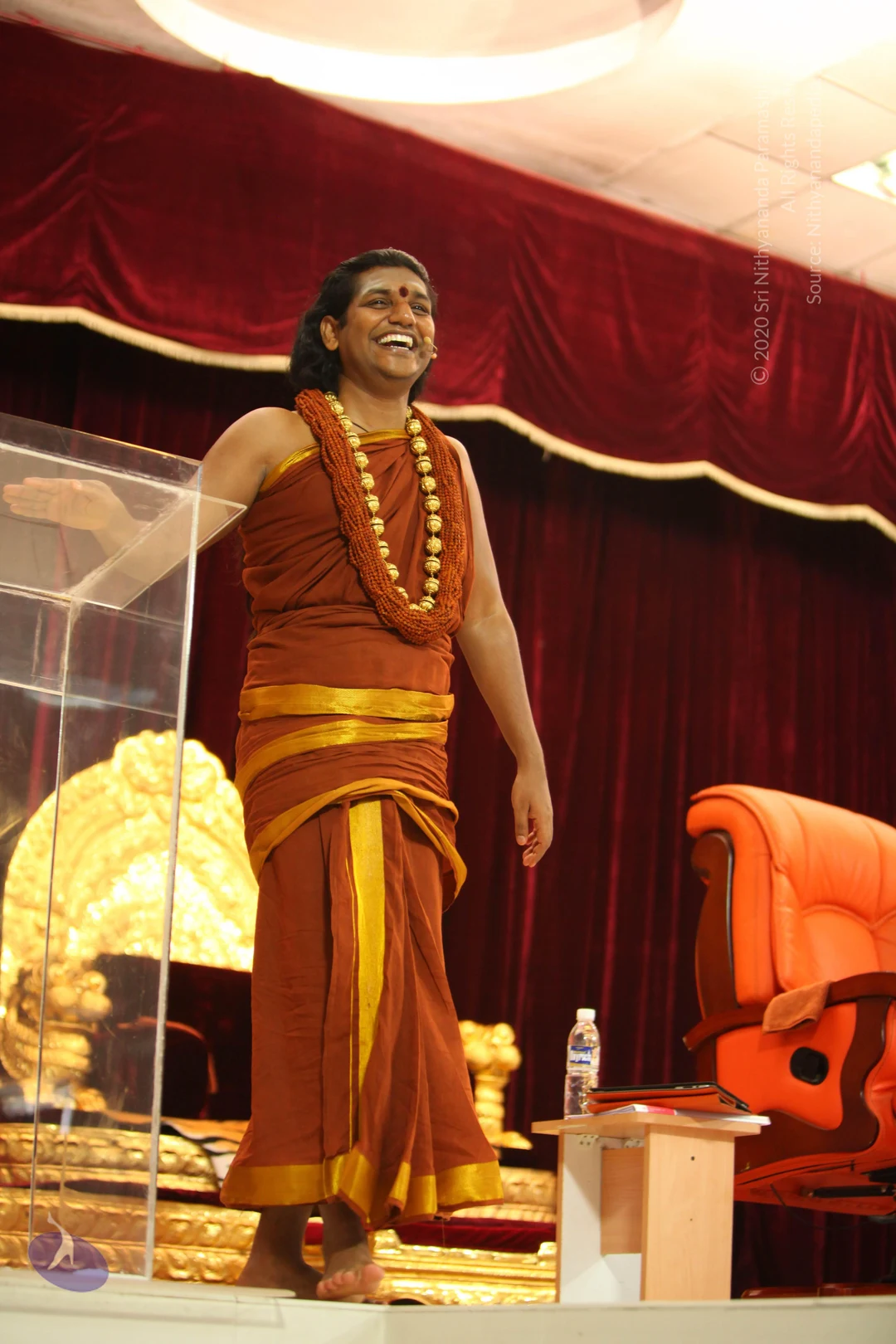
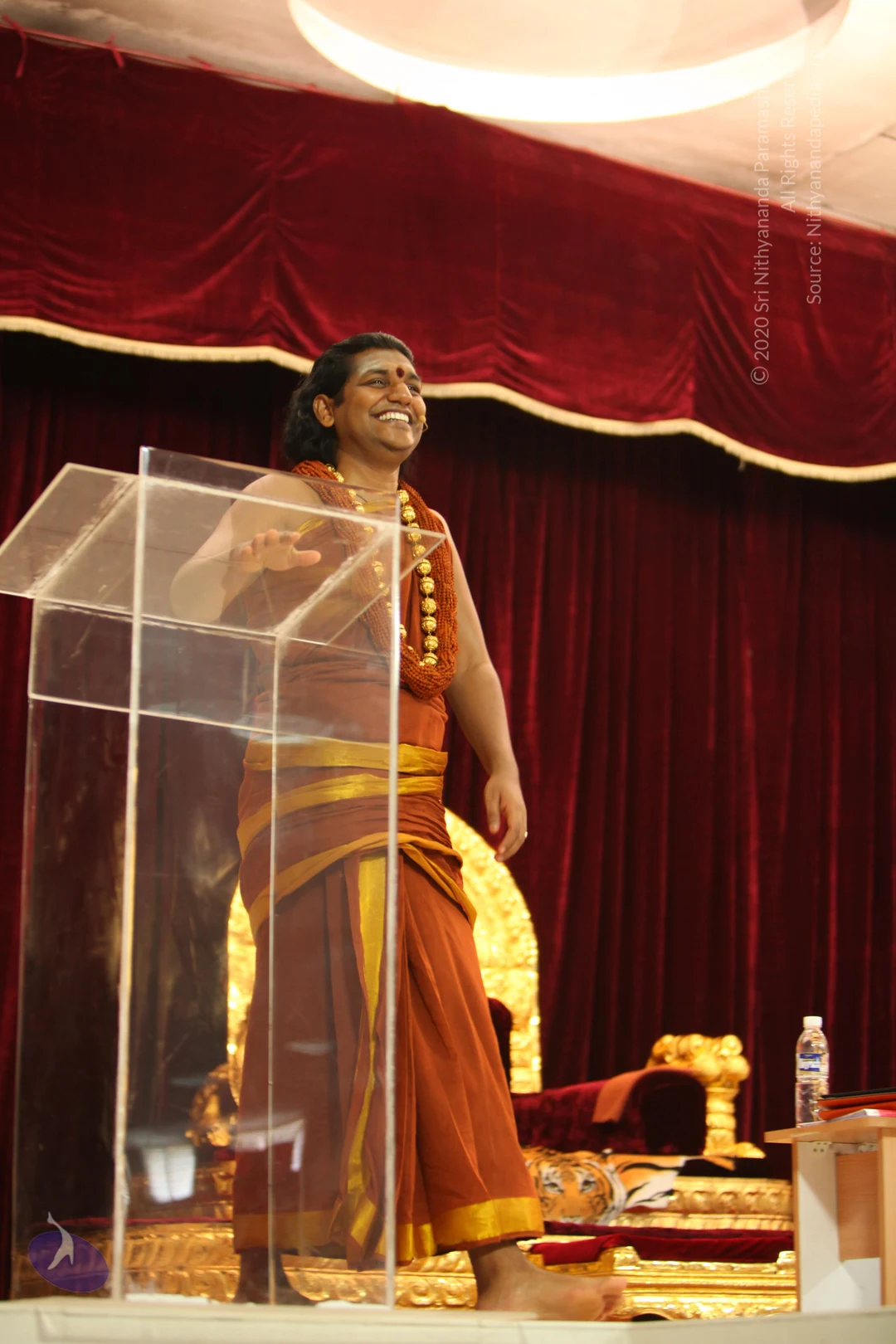
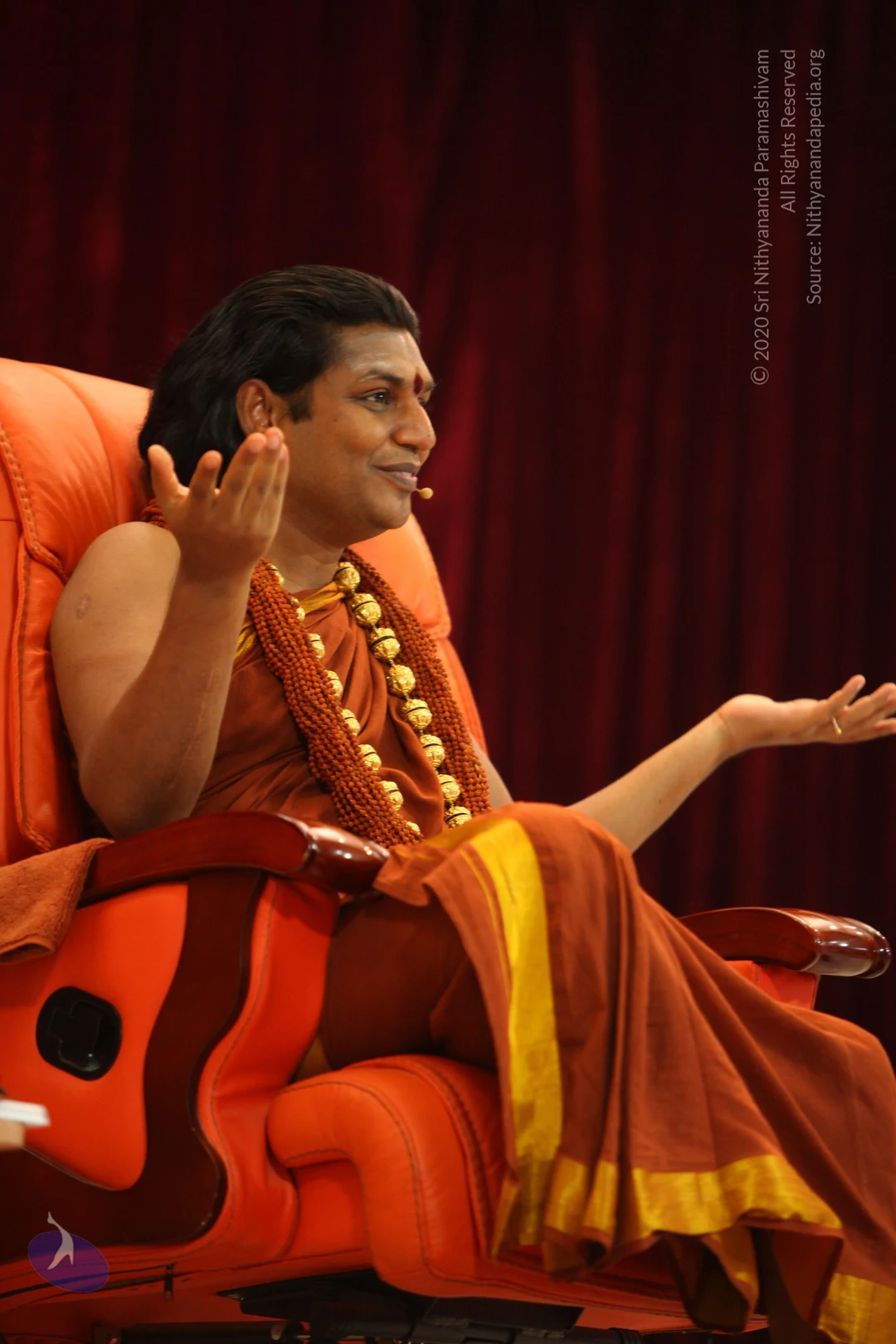
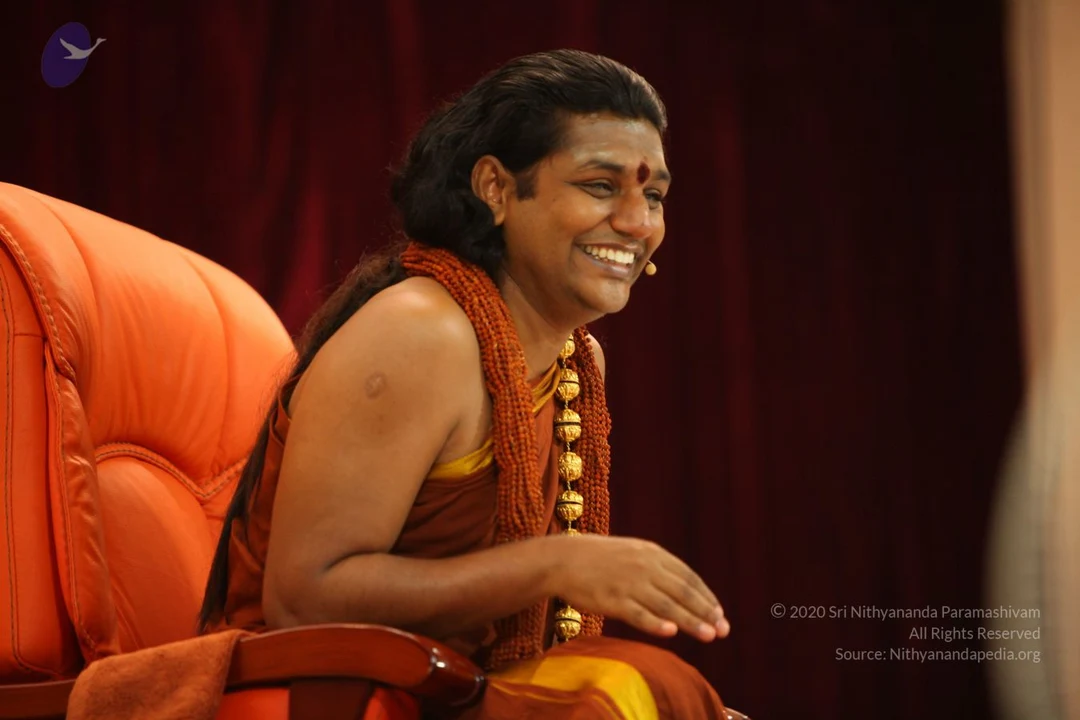
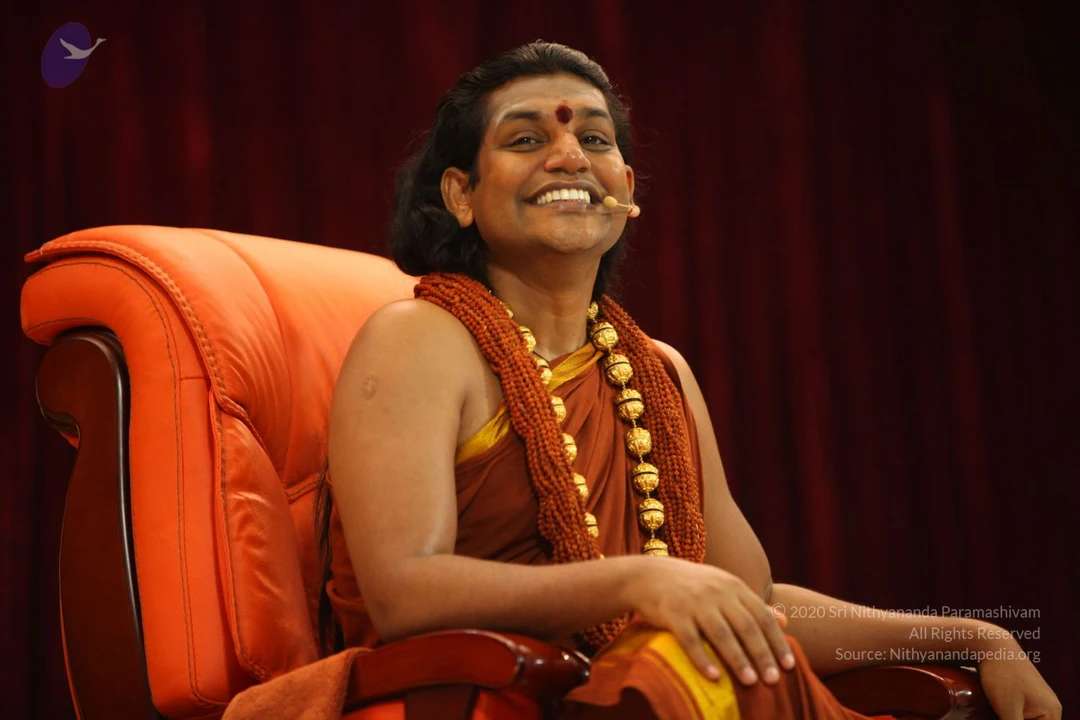
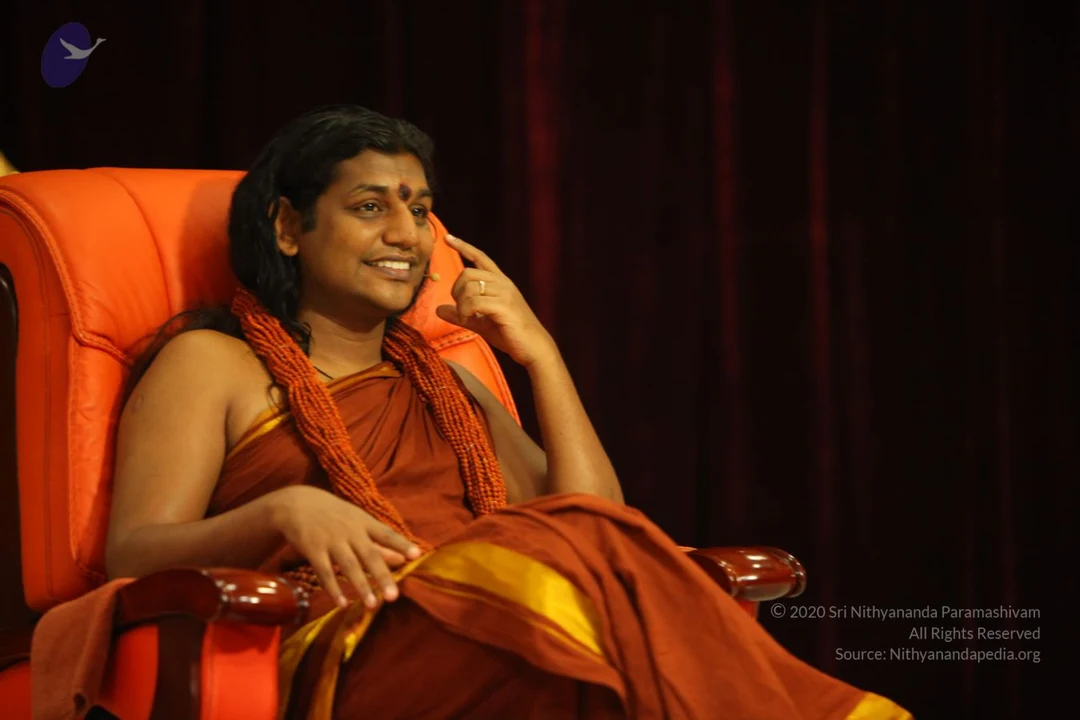
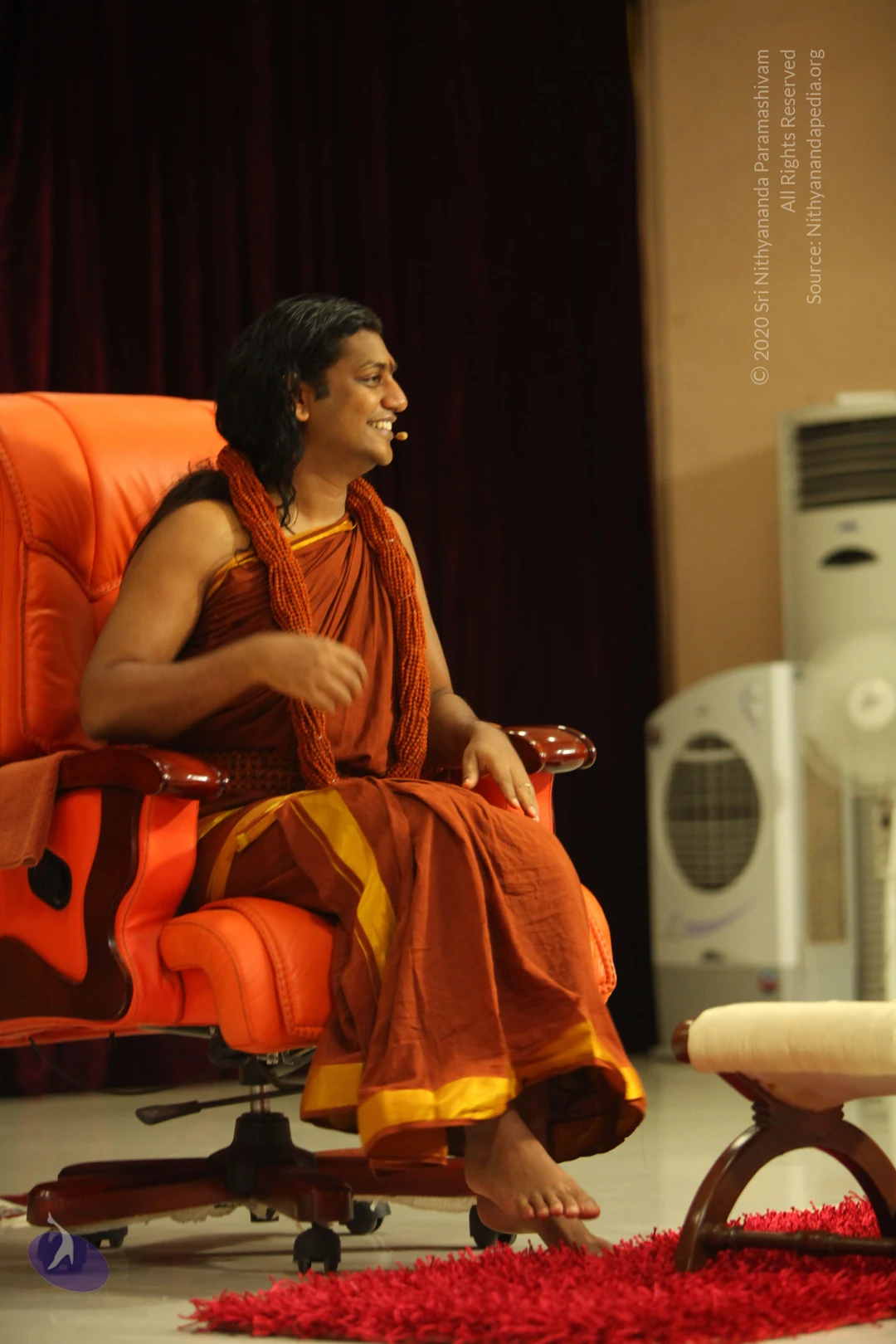
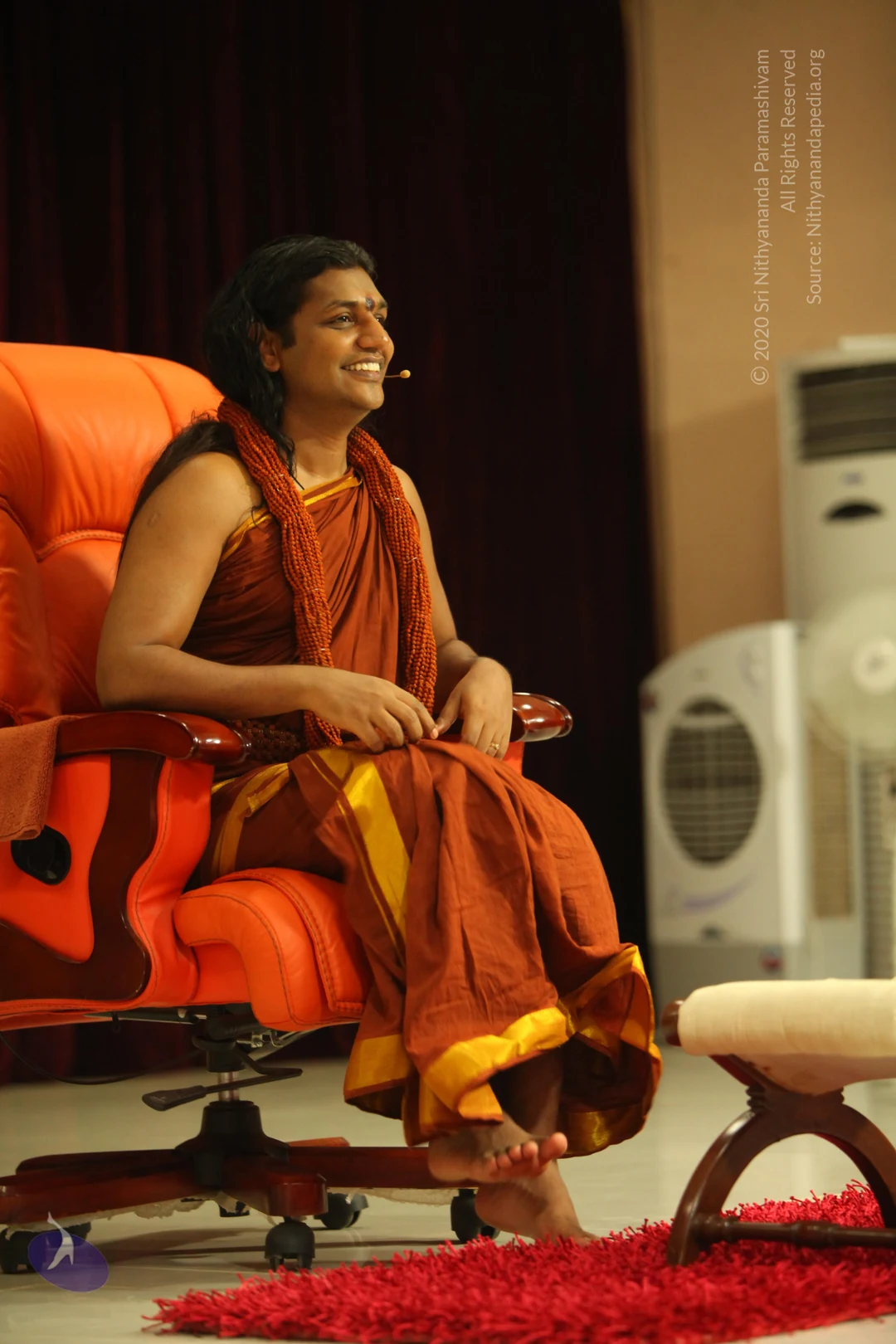
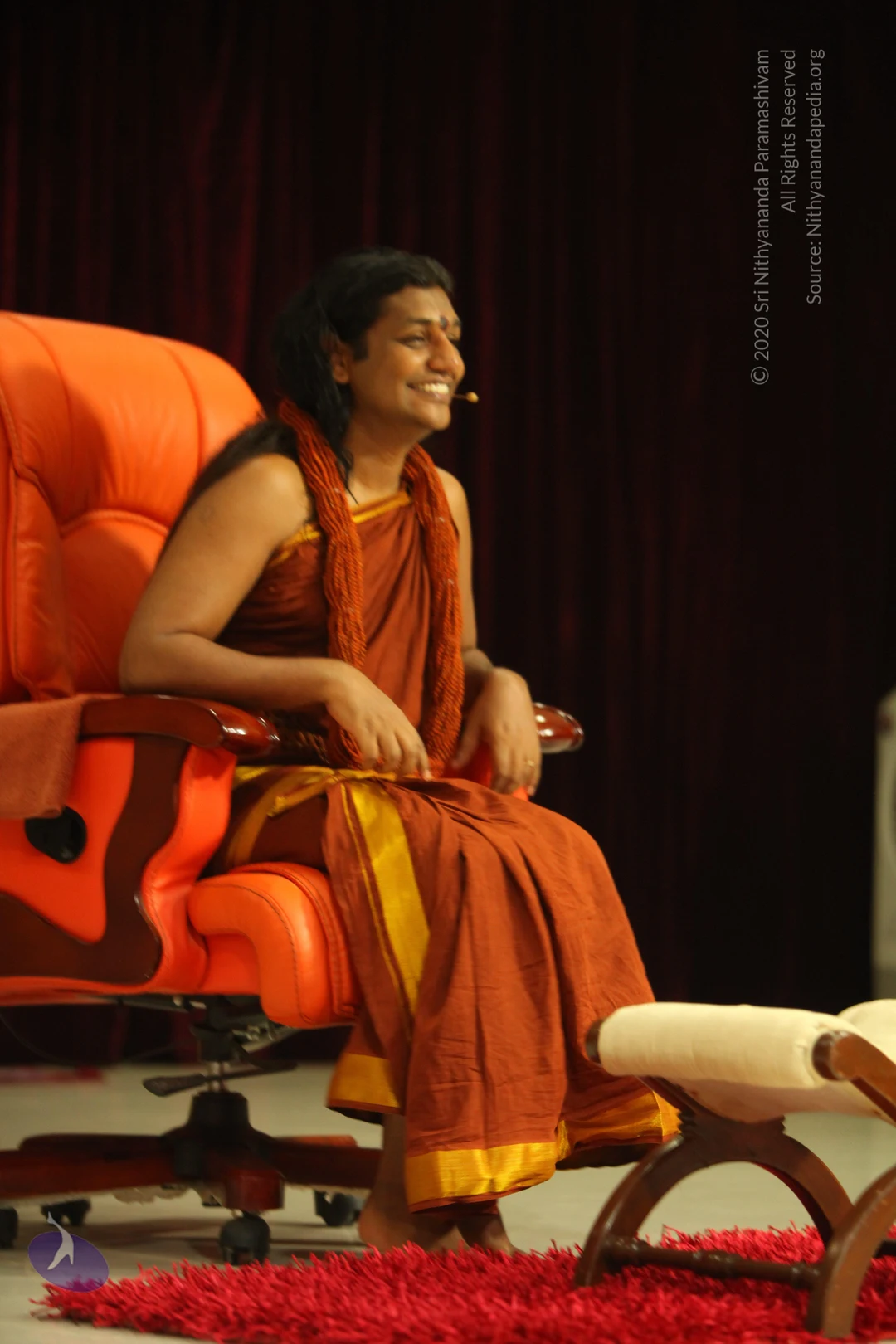
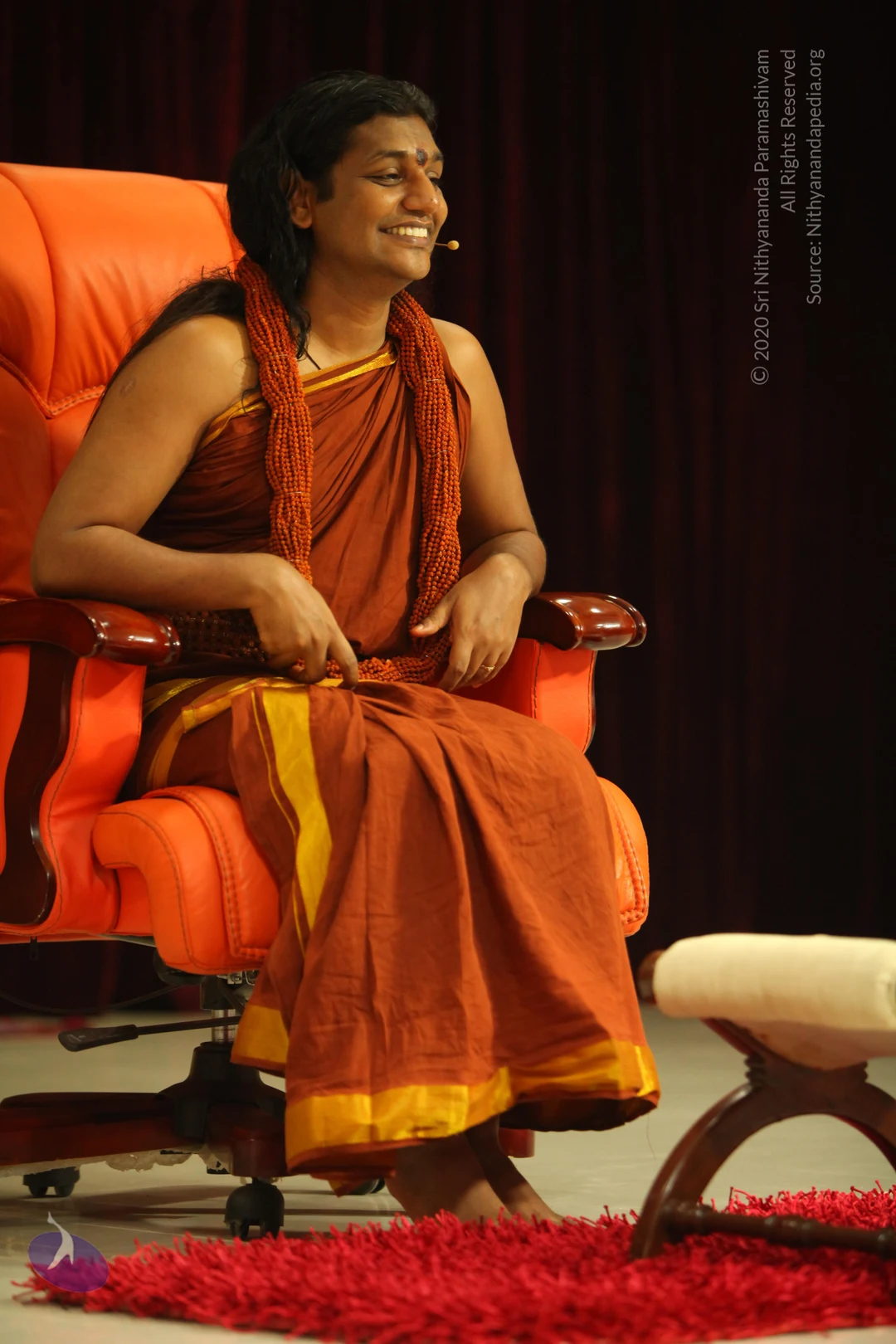
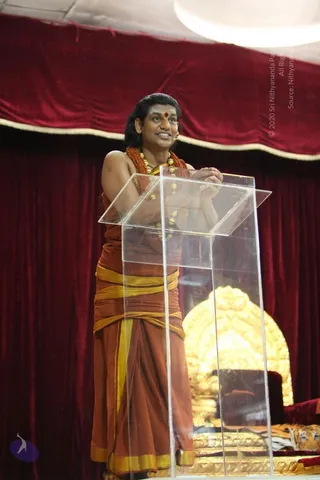
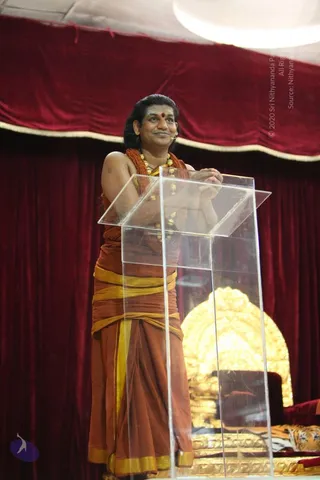
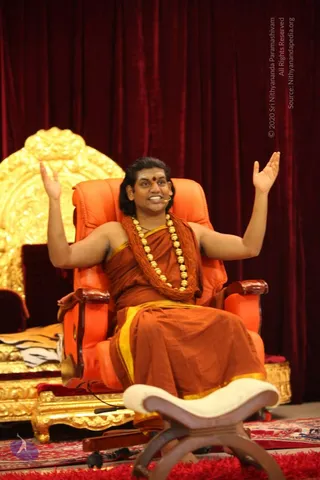
A man stands behind a clear acrylic lectern on a stage in front of deep red velvet drapes with gold fringe. He wears an orange-brown wrap with gold-bordered yellow sash and a bare shoulder, with multiple strands of rudraksha beads and gold ornaments around his neck and a red bindi on his forehead. His hands rest on the lectern as he smiles and looks upward. Behind him a gold ornate throne back and a tiger-print cloth are visible. Appearance-based candidate: a person, speaking at a satsang stage with rudraksha mala, gold necklace and saffron-orange clothing.A man in rust-orange robes with a gold-and-saffron waist wrap stands behind a clear acrylic lectern on a stage. He wears multiple strands of rudraksha beads and gold bead necklaces, has long swept-back dark hair and a red bindi, and his hands are clasped on the lectern while he looks up and smiles. A small microphone is attached near his face. Behind him are deep red velvet drapes and a large gold ornate throne or backrest with a tiger-print cloth draped over a seat. The scene resembles a satsang discourse.A man seated in an orange leather armchair on a red-carpeted stage, speaking into a headset microphone. He wears a saffron-orange dhoti and shawl with gold borders, a red-orange rudraksha mala with large gold beads, and a red bindi on his forehead; his long dark hair is swept back. His hands rest on the chair arms, and a white wooden footrest is in front of him. Behind him are red velvet drapes and a large gold ornate backdrop. The figure matches Swamiji (probable) by his saffron and gold ceremonial dress, rudraksha mala with gold beads and long swept-back hair, and is seated as a teacher giving satsang discourse.A man in saffron-orange monastic robes with gold trim sits in an orange leather chair on a stage, arms raised open-palmed as if speaking. He wears a red-orange rudraksha mala with gold beads around his neck, a red bindi on his forehead and a small headset microphone. Behind him stands a large ornate gold throne against deep red velvet drapes, with a striped tiger-skin cloth on a gold stool and red floor rugs. A wooden footstool sits in front. The scene resembles a satsang discourse. Swamiji (probable): the seated speaker has long swept-back dark hair, saffron robes and a rudraksha mala with gold beads, cues consistent with the page.A man with shoulder-length dark hair and a small red bindi sits in an orange leather armchair before a red velvet curtain and a glowing gold ornamental backdrop. He wears a rust-coloured saffron-toned robe with a yellow edging draped over one shoulder, a dense rudraksha mala of reddish-brown beads, and a heavy ceremonial necklace of large gold beads. He rests his arms on the chair arms and gazes off to one side while speaking, a small microphone visible near his face. Appearance-based label: Swamiji (probable) seated in an in-person satsang setting, identified by the swept-back hair, rudraksha mala, gold bead necklace and saffron-toned robe, with a throne-like chair and gold backdrop.A man with swept-back long dark hair and a red bindi sits in a large orange leather armchair, gesturing with both open hands while speaking, with a small clip-on microphone at his ear. He wears a saffron-orange draped robe with yellow borders and a long multi-strand mala of rudraksha beads interspersed with large gold beads and a gold pendant chain. Behind him a glowing gold ornamental backdrop and deep red drapery frame the stage, and a striped tiger-print cloth lies over a surface at lower left. The setting suggests a live satsang discourse. The man matches the appearance cues of a probable Swamiji (probable) seated on a throne-like chair, with distinctive long hair, saffron clothing and rudraksha mala with gold beads.

HDH-CONDUCTING-THE-PROCESS-OF-CLEANSING-THE-CAUSAL-LAYER

16 photosSource gallery
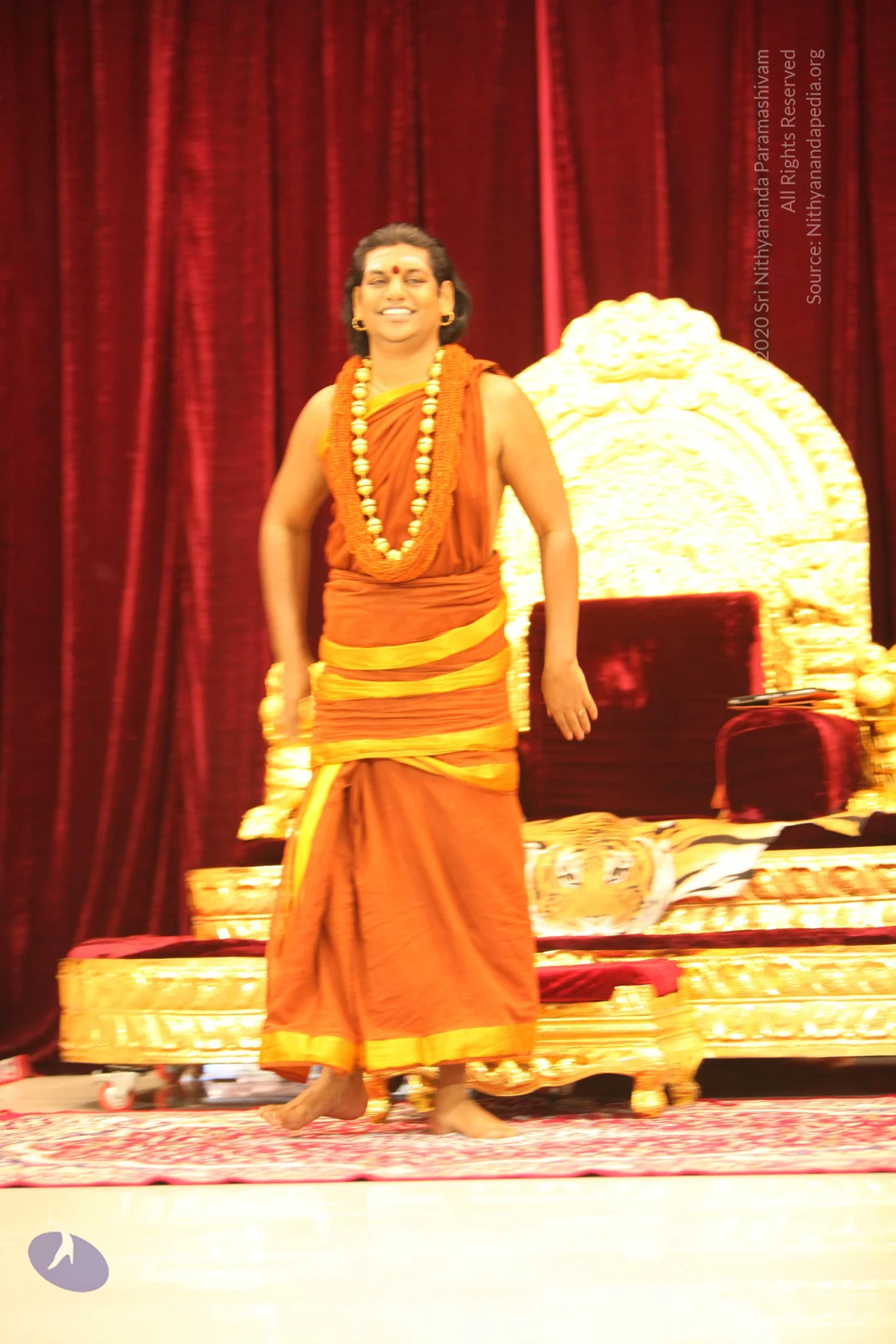
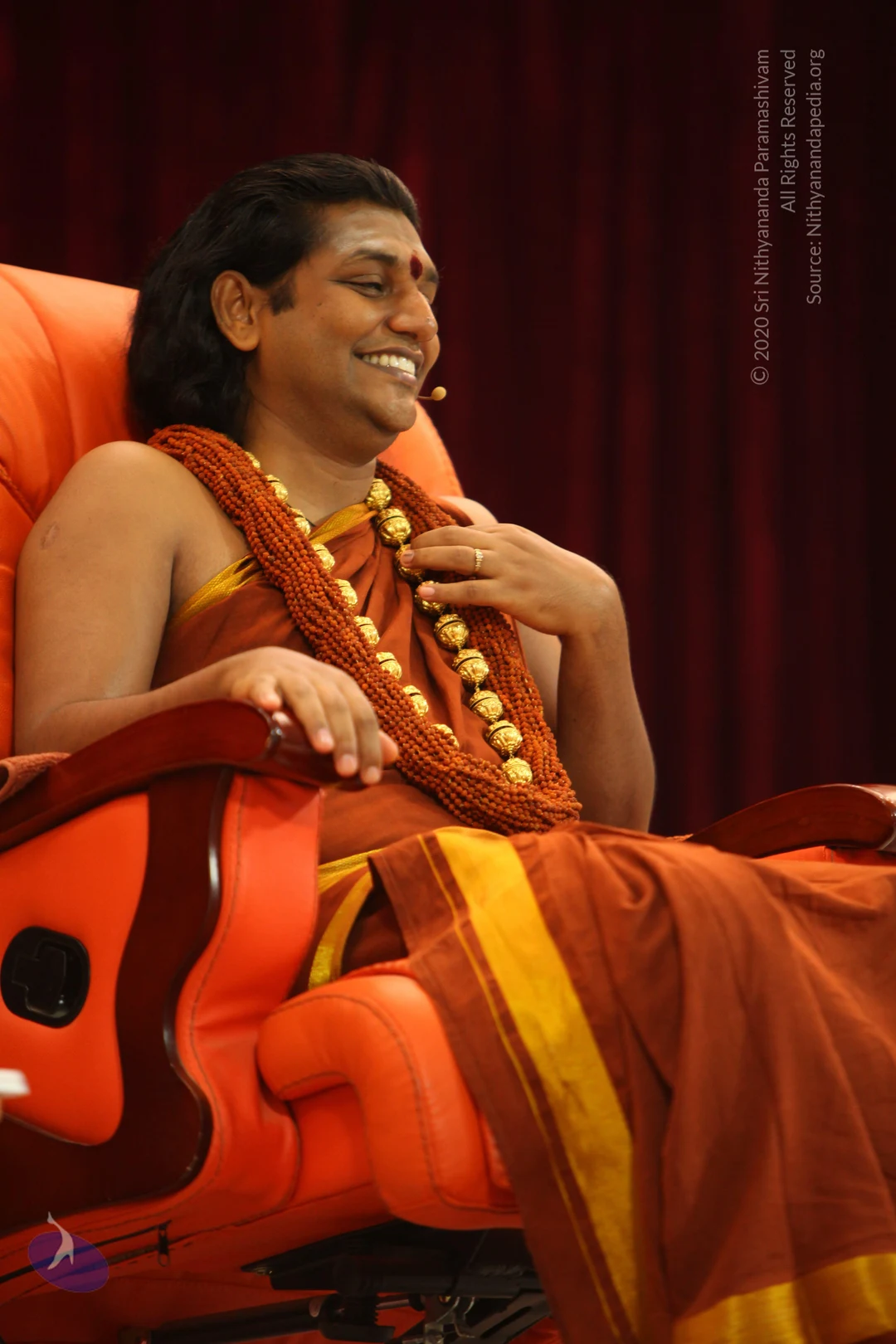
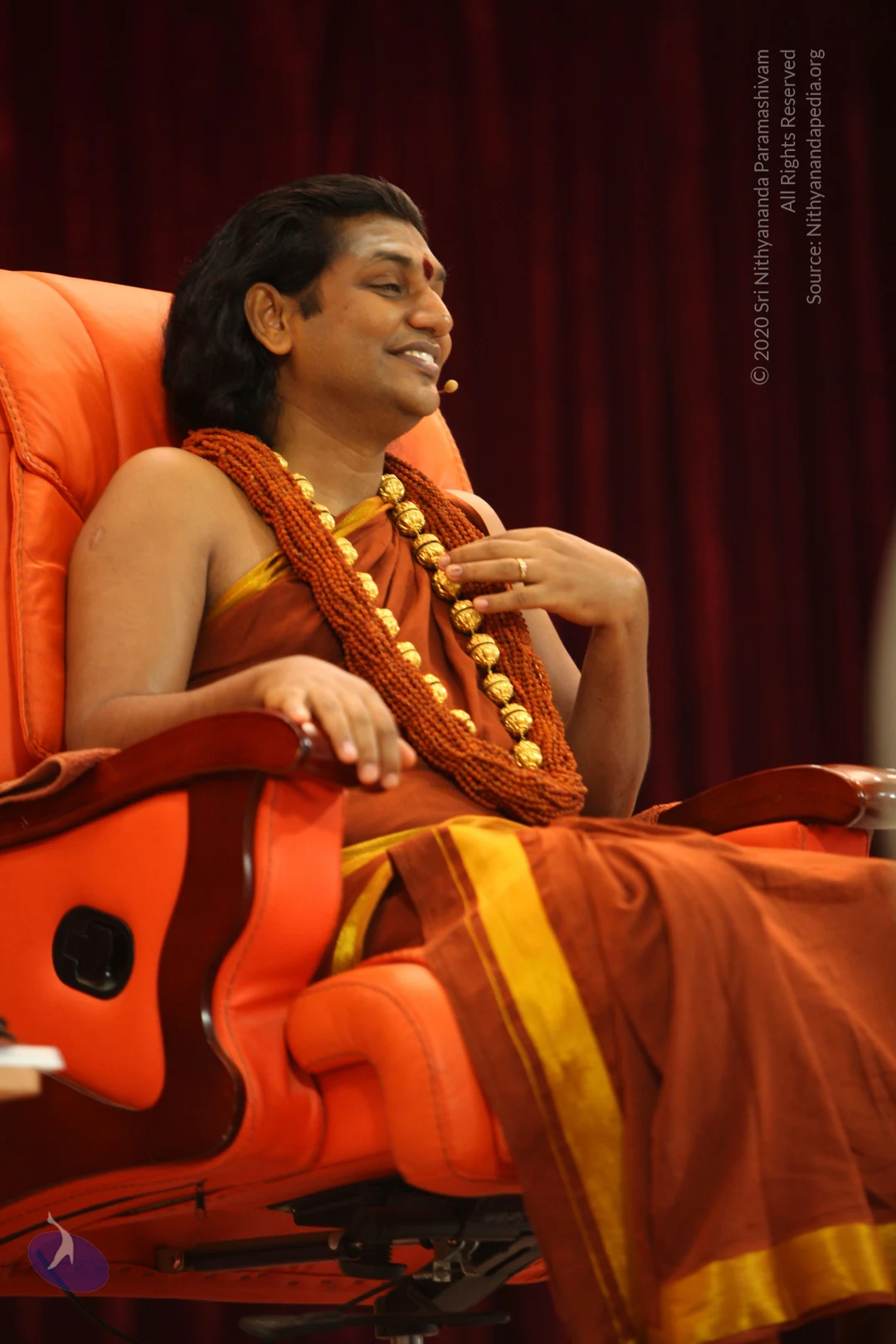
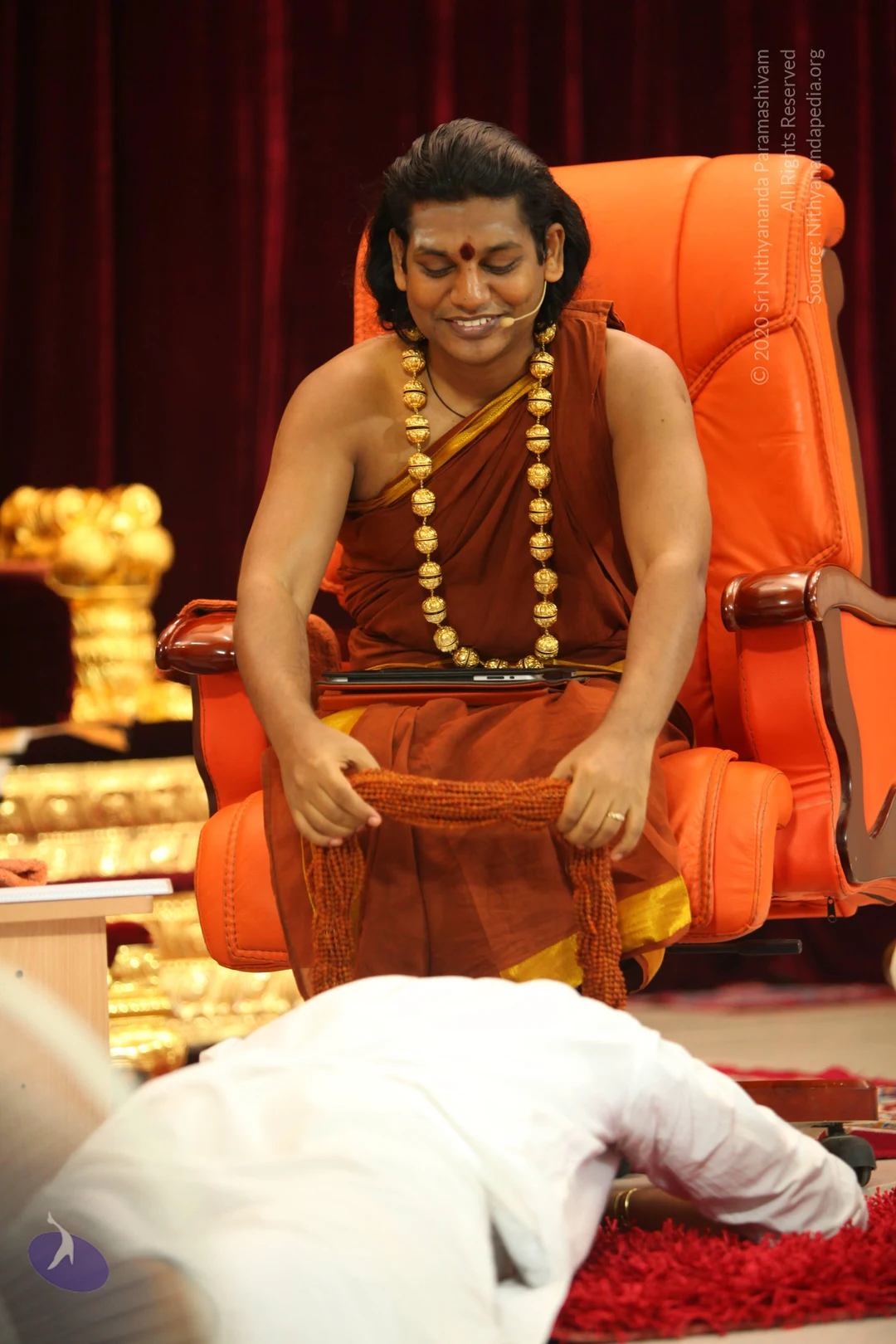
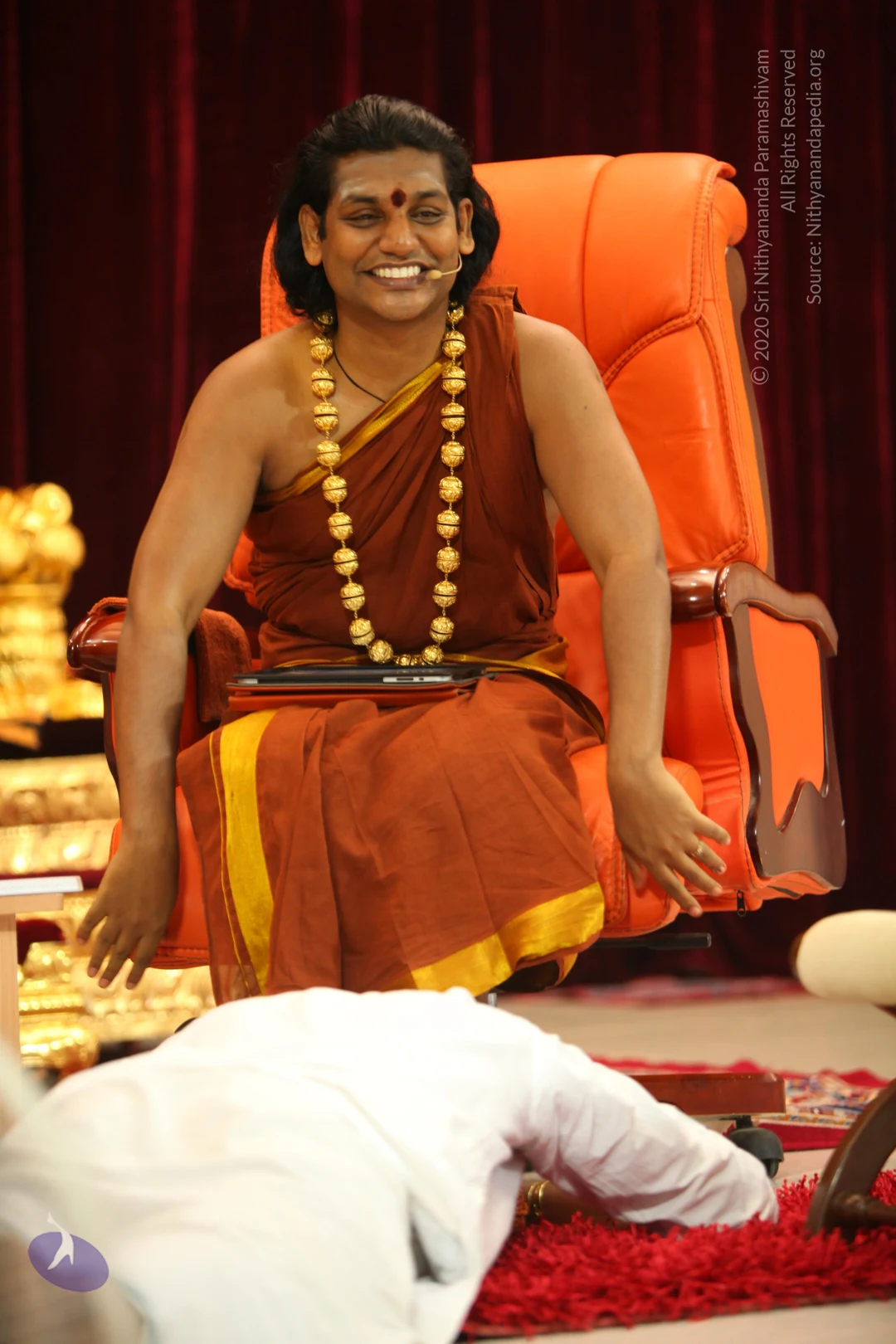
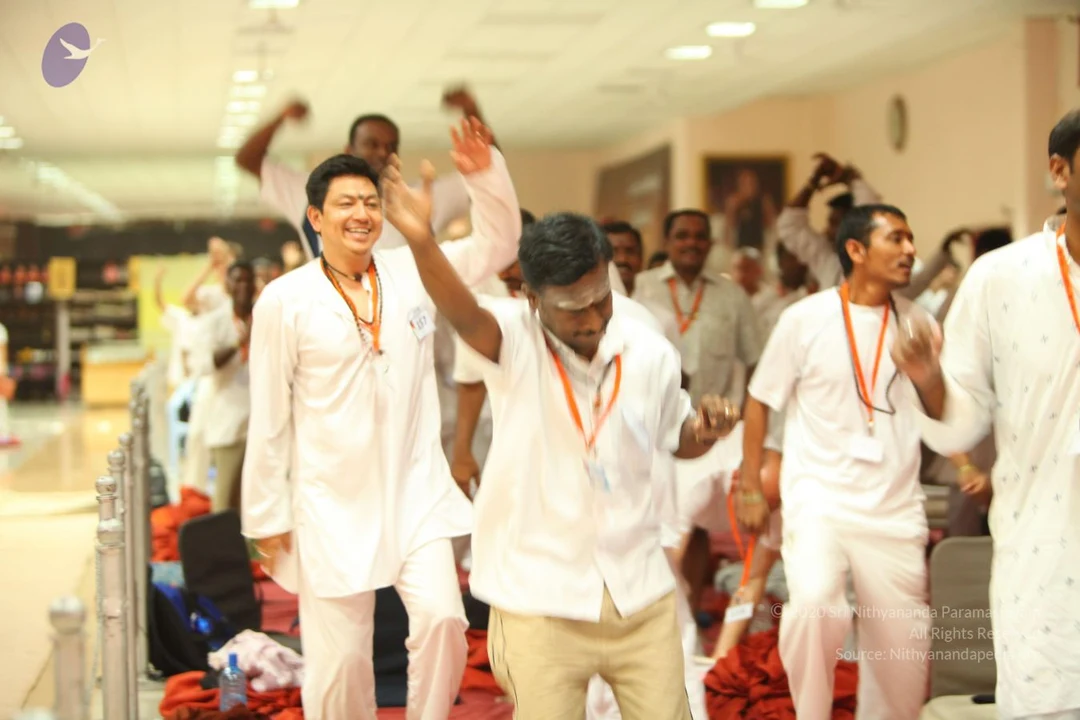
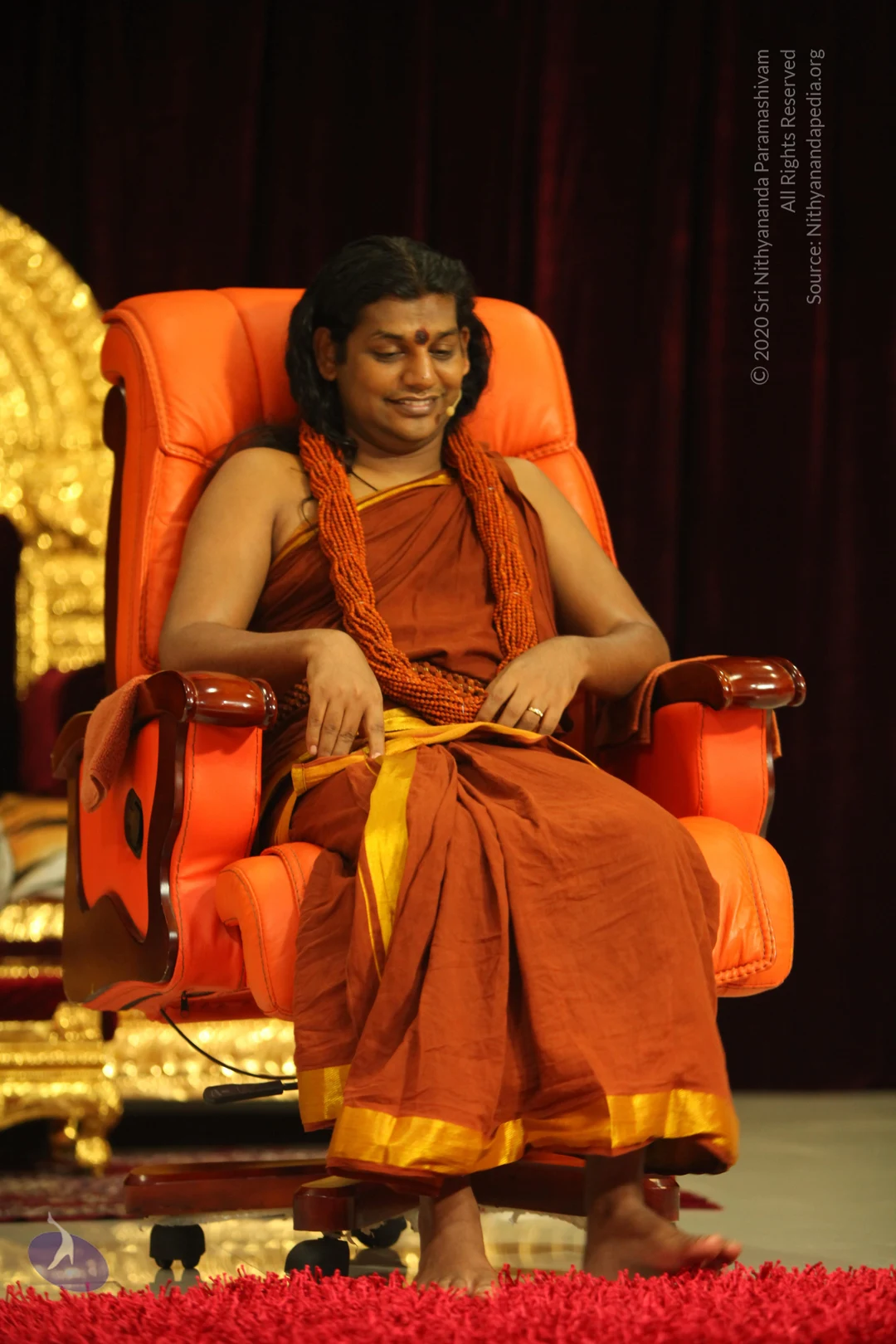
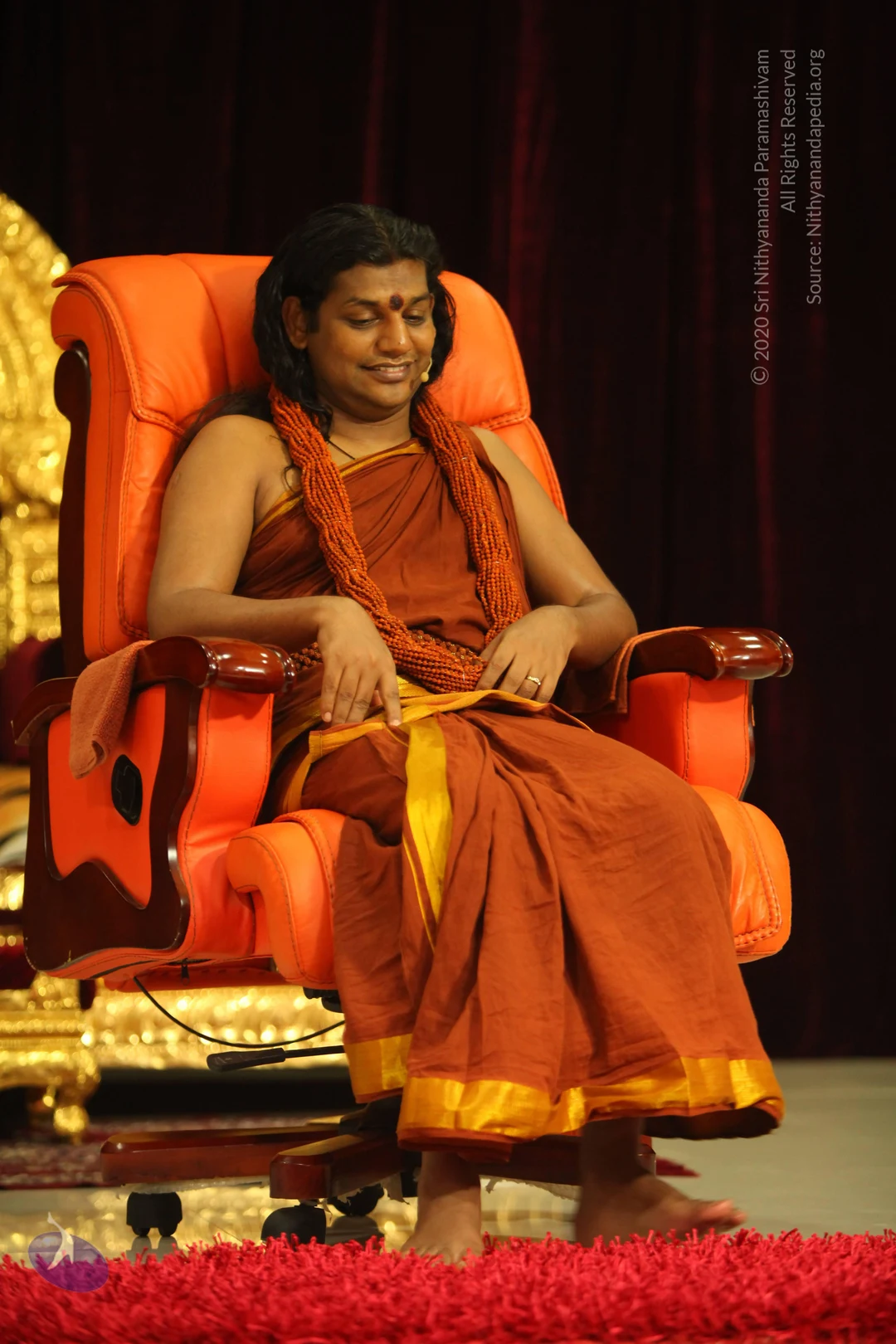
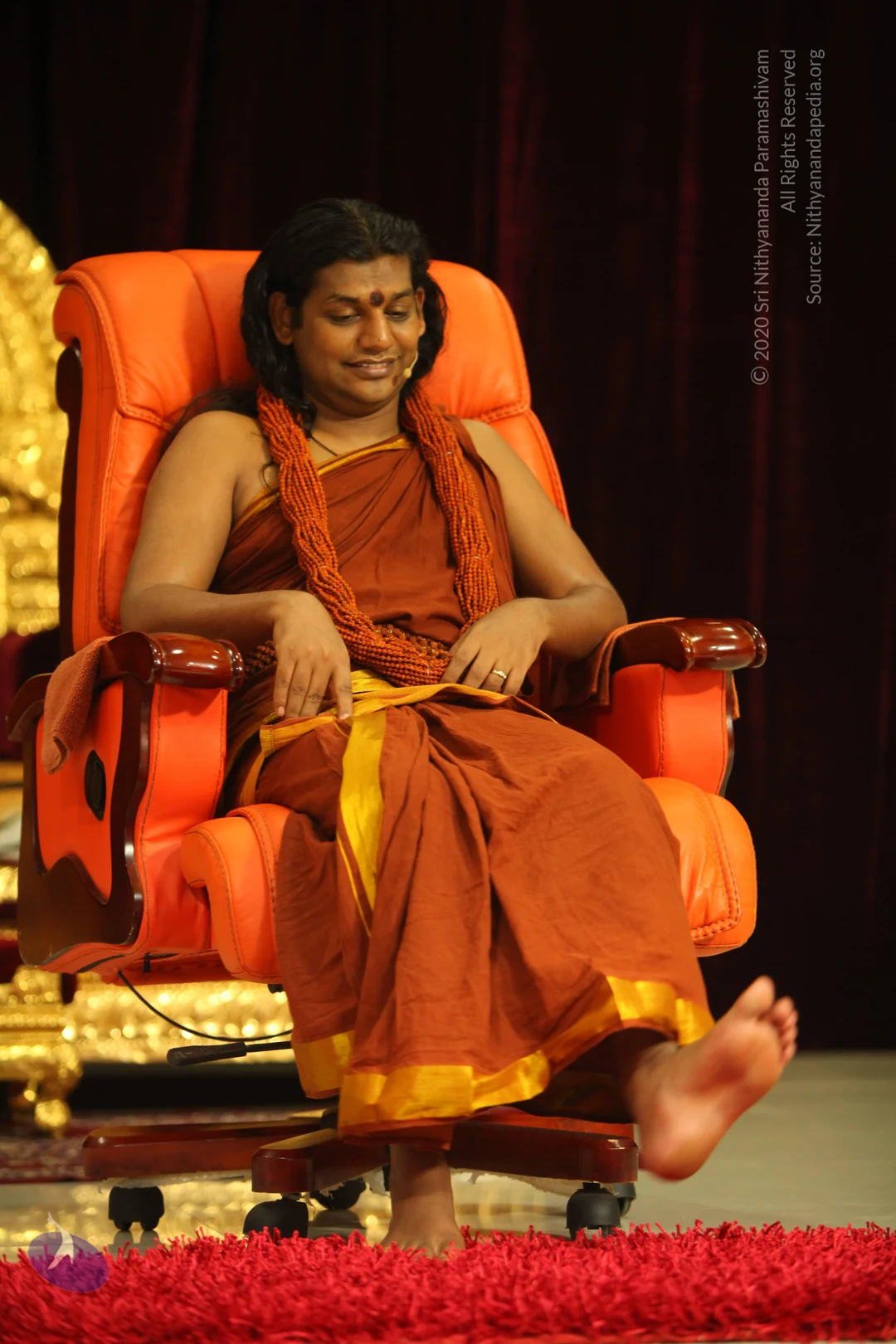
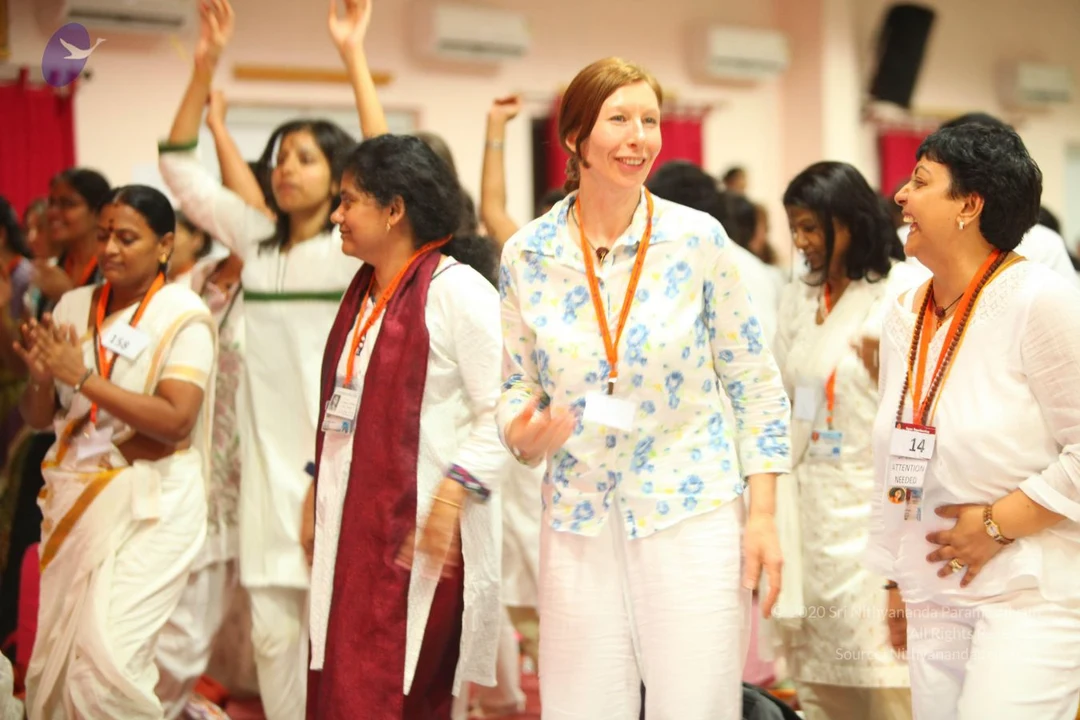
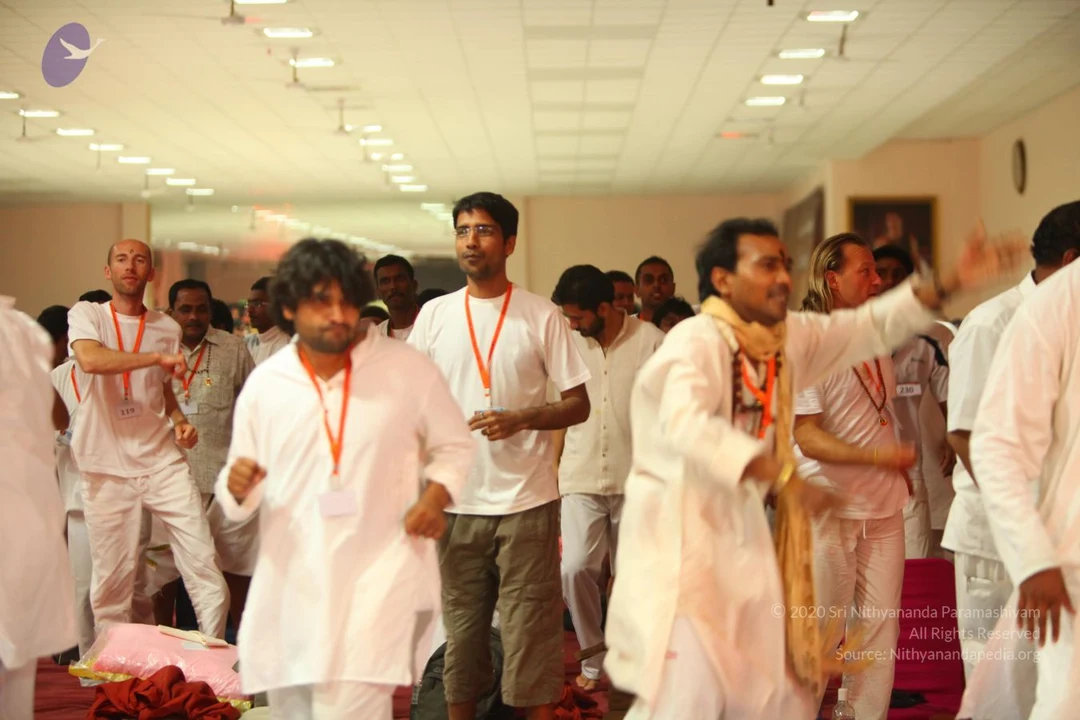
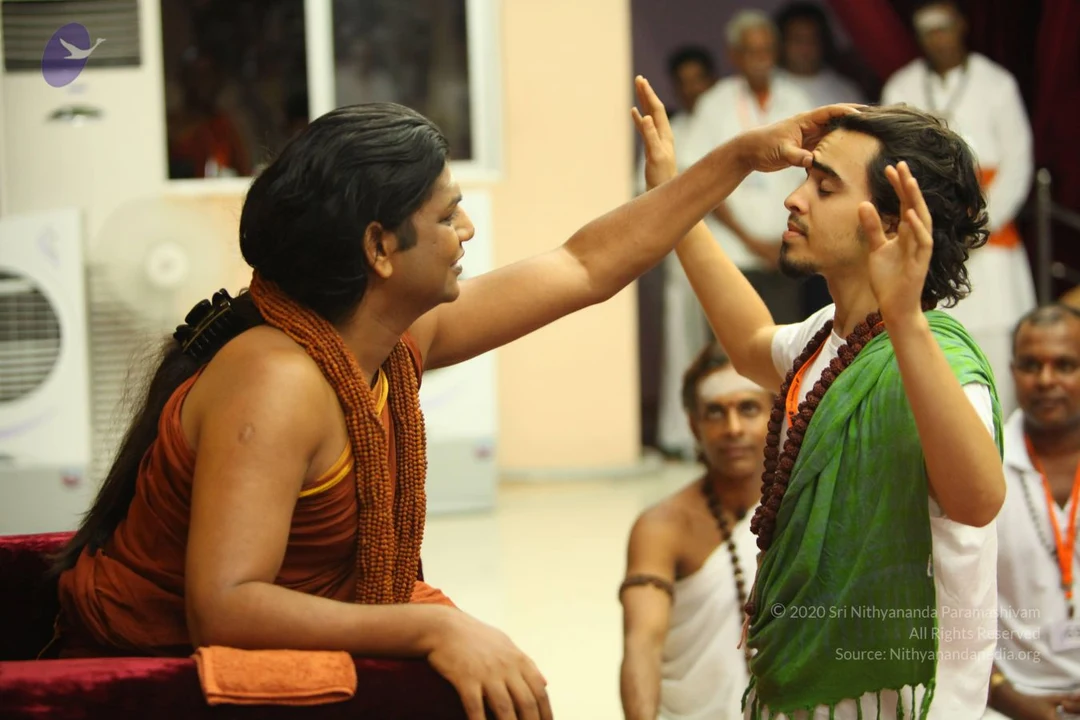
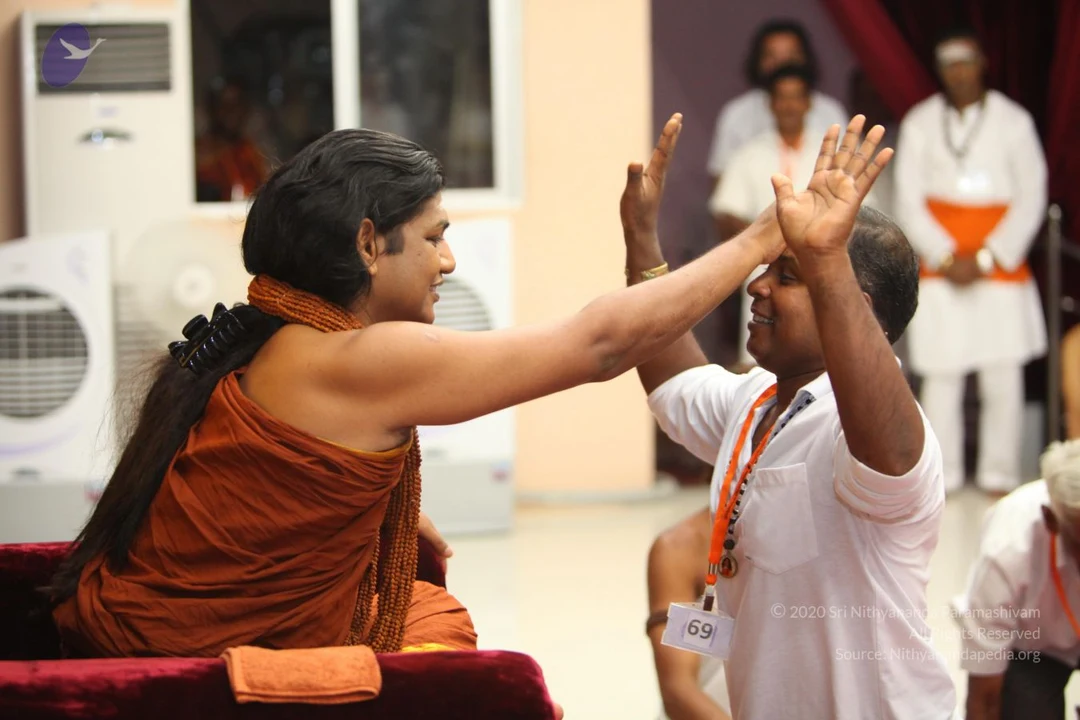
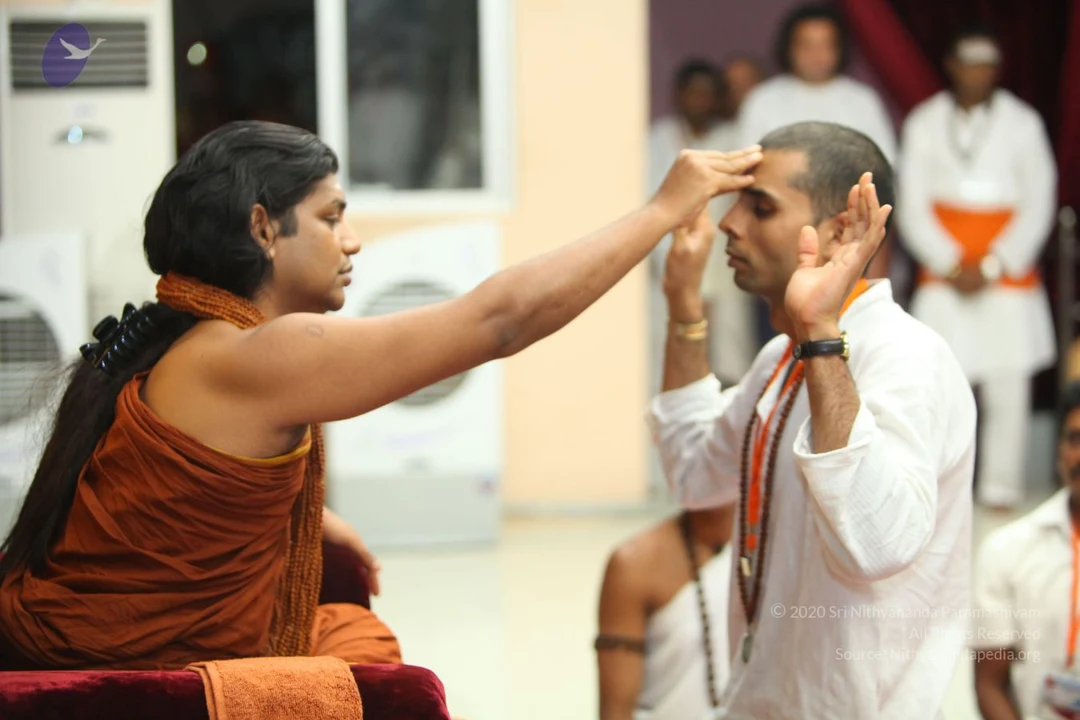
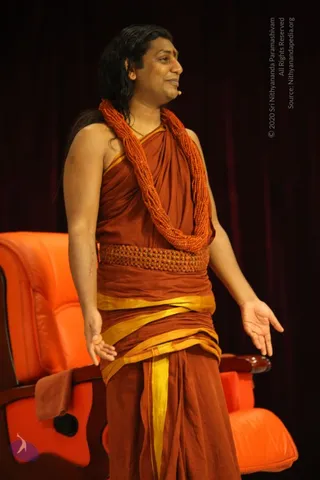
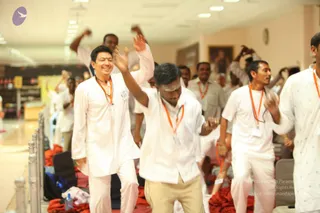
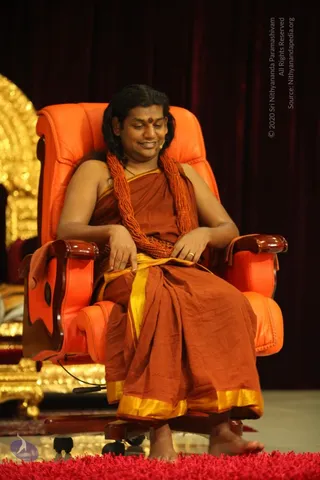
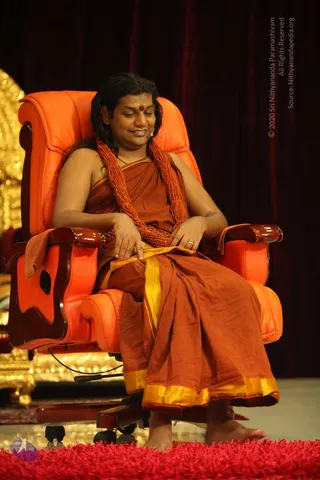
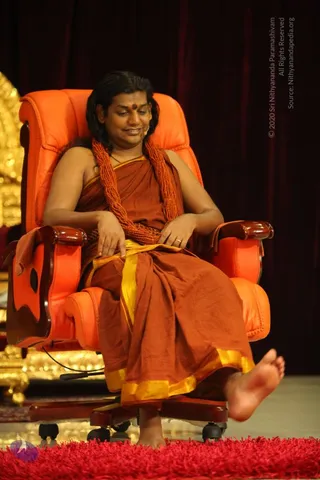
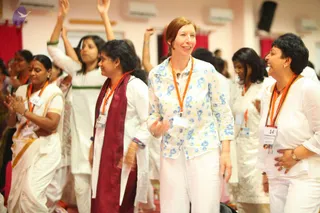
A man with long swept-back dark hair stands on a stage in front of a dark maroon curtain, speaking with open hands beside an orange leather chair. He wears a rust-red draped sannyasi-style garment with a gold-bordered sash at the waist and a long orange-red rudraksha-style bead mala draped over one shoulder. A small red forehead mark is visible and a headset microphone is clipped near his face. Overlaid vertical text reads the copyright and source credit.A photograph of a large indoor hall where many men in white kurta-style clothes with orange-saffron neck cords and lanyard badges are dancing and cheering with raised arms. The central men are smiling and gesturing enthusiastically, while others in the background raise hands in celebration. Red and orange cloths lie on the floor and chairs, and a framed picture hangs on a pale wall. A small water bottle sits near a metal barrier on the left.A man seated in a large orange leather armchair on a red-carpeted stage with dark red drapes behind him and gold ornamental carving at the left edge. He wears a rust-red shawl and dhoti with a gold border, a long rudraksha mala of reddish beads draped over his shoulders, and a red bindi on his forehead. He has long dark hair swept back, a small headset microphone near his face, and is smiling with eyes lowered while his hands rest on his lap. a person: the figure's long swept hair, rudraksha mala and saffron-red sannyasa dress with gold-bordered cloth match the satsang context, seated on a throne-like chair.A man with long dark hair and a red bindi sits in an orange leather armchair with wooden arms on a stage with a deep red velvet backdrop and a gold ornate throne partly visible at left. He wears a rust-brown robe with a gold border and a wrap over his shoulder, with a long orange rudraksha mala draped around his neck, and a small wired microphone clipped near his face. He smiles while looking down, one hand resting on his lap, and bare feet rest on a red shaggy rug. a person is shown in an appearance-based label: long swept hair, saffron-toned robes and rudraksha beads, seated as a speaker at a satsang discourse.A man with long dark hair and a red bindi sits in a bright orange leather office-style armchair with wooden armrests on a stage with a red shag rug and dark red drapes. He wears a rust-orange draped cloth with a gold border and a long orange rudraksha-style bead garland, and holds a small orange towel on the armrest. He smiles while looking down, one bare foot lifted in the air. A gold ornate structure is visible at the left edge. Swamiji (probable): the long hair, orange draped clothing, orange-beaded garland and armchair seat cues match the page's reference to a satsang seating.A photograph of devotees at an indoor satsang hall with pink walls and red curtains. Several women in white ritual clothes wear orange lanyards with name badges; some raise their hands and clap while smiling. One woman in the foreground wears a blue-and-white floral shirt with white trousers and an orange lanyard. Another on the right wears white with a rudraksha mala and an orange lanyard, badge numbered 14. A woman on the left in a white sari with gold border claps her hands. No a person candidate is visible.

DARSHAN
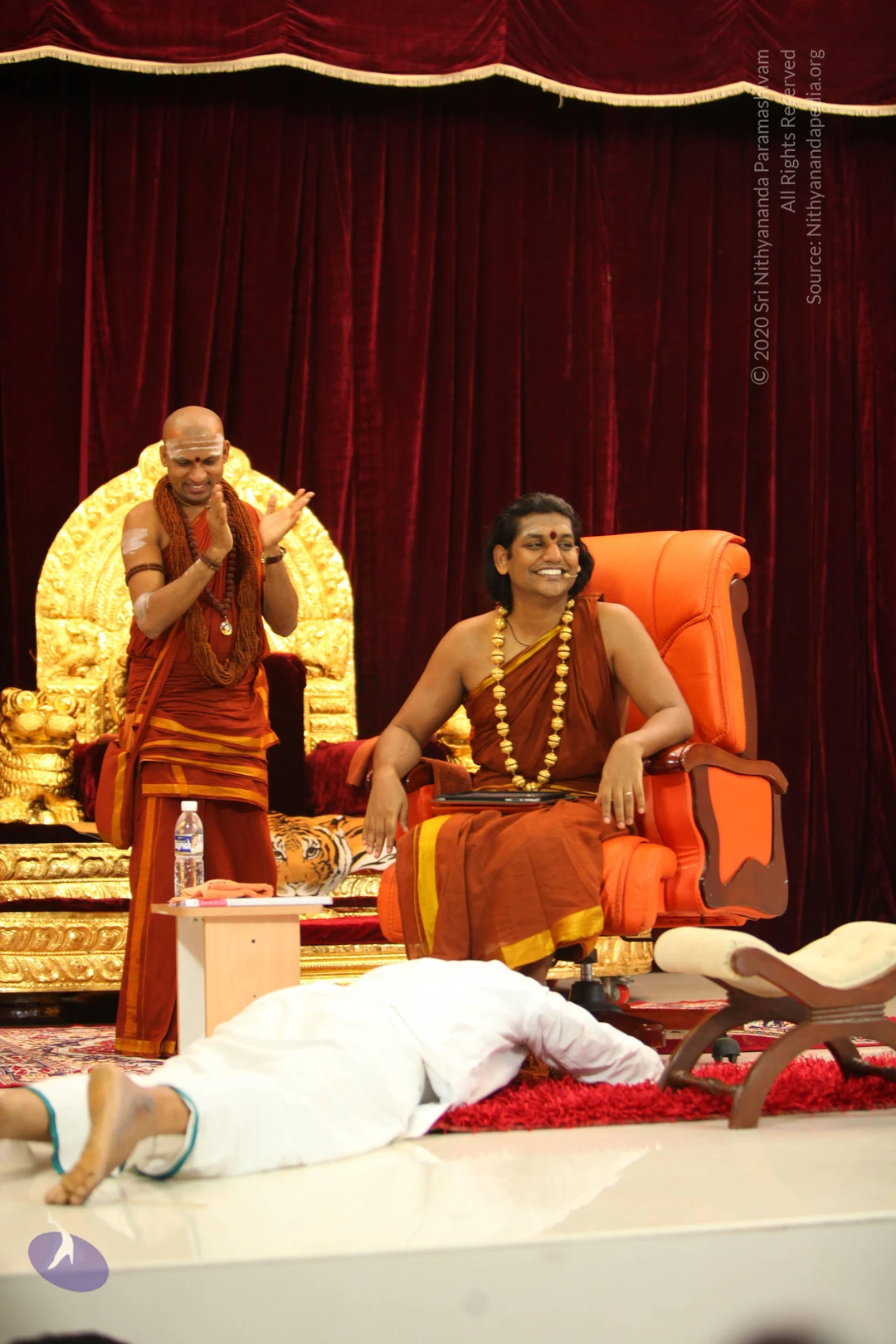
115 photosSource gallery
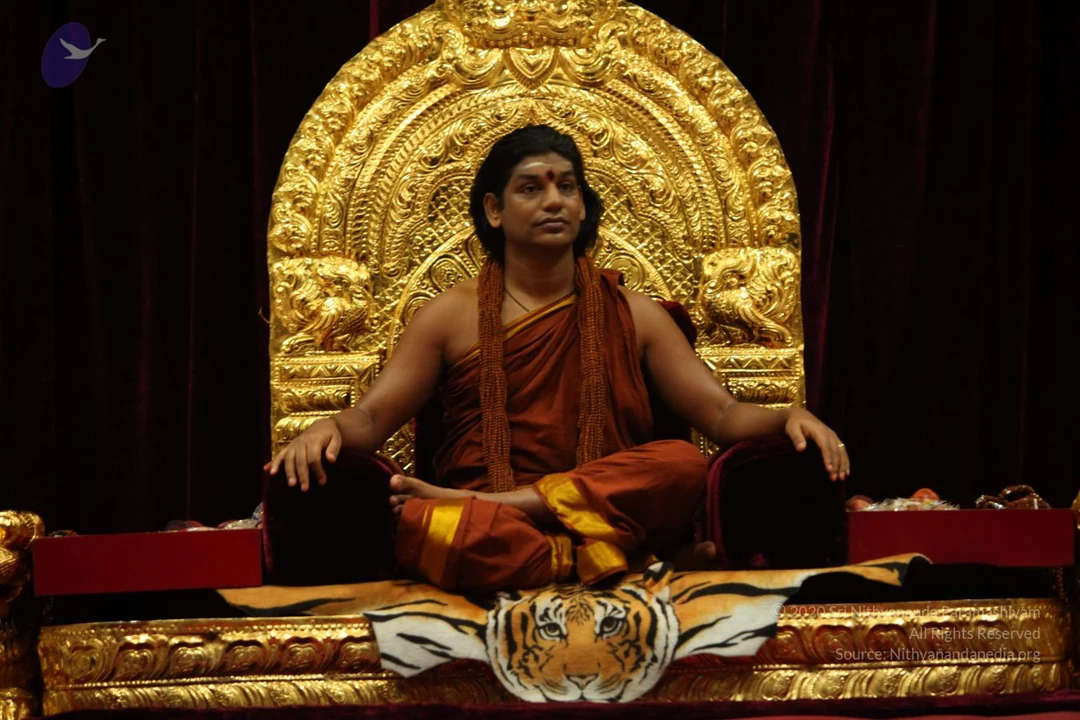
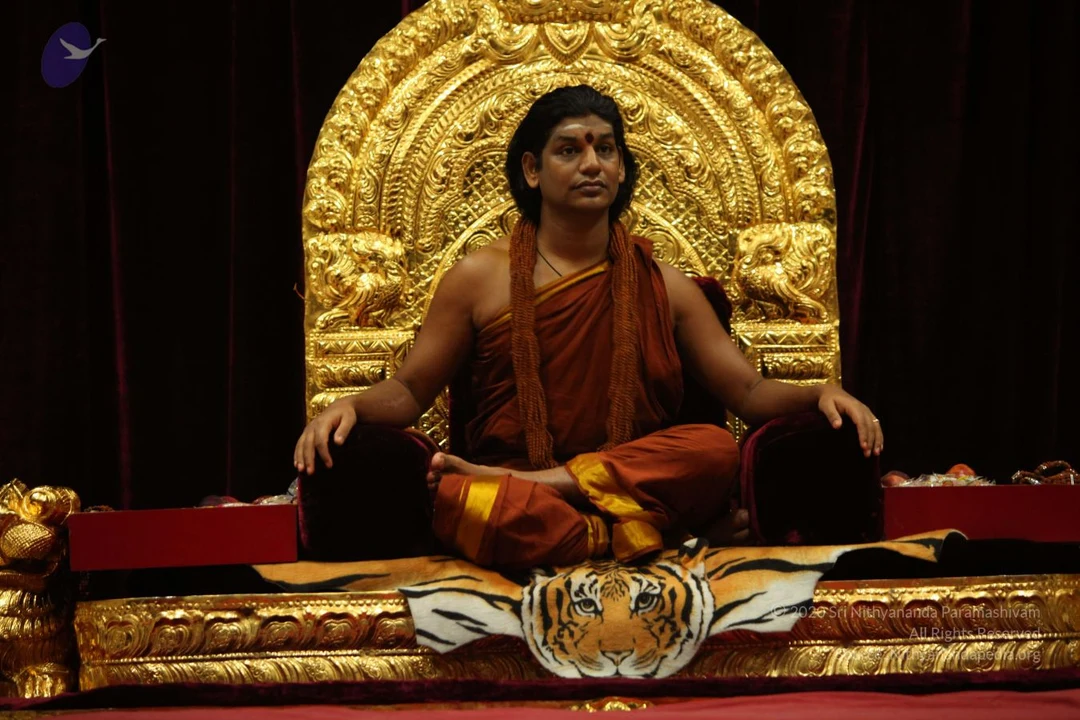
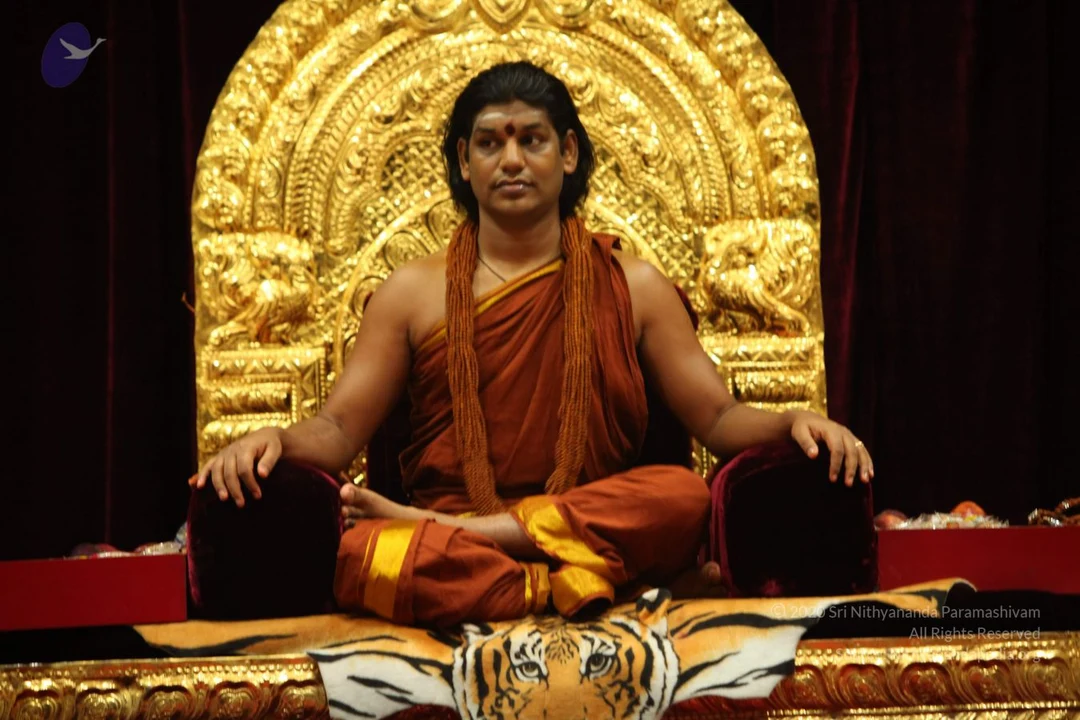
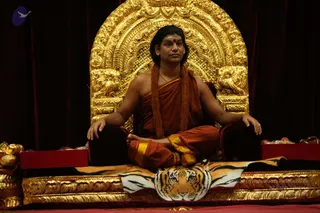
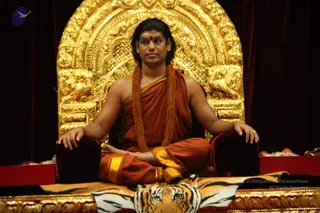
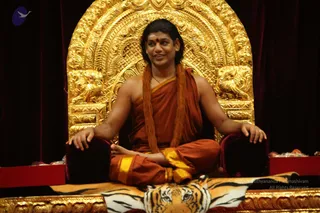
A seated man in orange-saffron robes sits cross-legged on an ornate gold throne with a carved arched back and lion-head motifs, placed on a tiger-skin cushion. His palms are pressed together in namaste with eyes closed, and a red mark is visible on his forehead. A long rudraksha-style mala hangs around his neck. Dark curtains form the background. Swamiji (probable): the long swept-back hair, saffron robes, rudraksha mala and throne with tiger skin are consistent with the page's reference to Swamiji.A seated man in saffron-orange robes sits cross-legged on an ornate gold throne with a carved arched backrest and lion motifs, draped with a tiger-skin cloth. He wears a rudraksha mala necklace, a red forehead mark, and a gold-bordered orange dhoti, with his palms resting open on the arms of the seat. Deep red velvet drapes hang behind the throne, and offerings of fruit sit on the side platforms.A man sits cross-legged on an elevated golden throne with carved lion figures and an ornate gold arch behind him, draped with dark maroon velvet curtains. He wears an orange-brown robe over one shoulder, a long reddish-brown rudraksha mala draped across his chest, gold-bordered dhoti at the legs, and a red vermilion bindi on his forehead. He sits with hands resting on maroon cushions, placed on a tiger-skin rug with a tiger head design in front of the throne, with red trays holding offerings at the sides. a person: the saffron-orange robe, rudraksha mala and ornate throne setting align with the page's reference to a person, though his face and features are not used for identification.A seated man in saffron-orange robes and a saffron-orange shawl sits cross-legged on a tiger-skin rug in front of an ornate gold arched backrest with carved lion figures, on a red-draped stage. A rudraksha mala with long beads hangs over his shoulders and a red tilak is on his forehead. Long swept-back dark hair falls to his shoulders. His hands rest on maroon cushioned armrests. Probable Swamiji (in-person candidate, seated on a throne with saffron robes, rudraksha mala and long hair as cues).A man sits cross-legged on a tiger-skin rug in front of an ornate gilded throne with carved lion figures and a decorative arch, against dark red velvet drapes. He wears saffron-orange monastic cloth draped over the shoulders, a matching saffron dhoti with gold border, a long rudraksha mala with a rope-like strand, and a red bindi on his forehead. Small red boxes with offerings such as fruit and flowers flank the throne. The setting suggests a formal satsang seat.A man with long swept-back dark hair and a red tilak on his forehead sits cross-legged on an ornate gold throne carved with lions and floral scrollwork, against dark maroon drapes. He wears an orange-saffron robe with a gold-bordered dhoti, and a long orange-saffron rudraksha mala hangs over his chest. His arms rest on maroon cushions and his bare feet sit on a tiger-striped cloth. Small fruit offerings are visible at the edges of the dais. Appearance cues match the page's a person flag, but identity is uncertain from appearance alone.

KALABHAIRAVA-HOMA
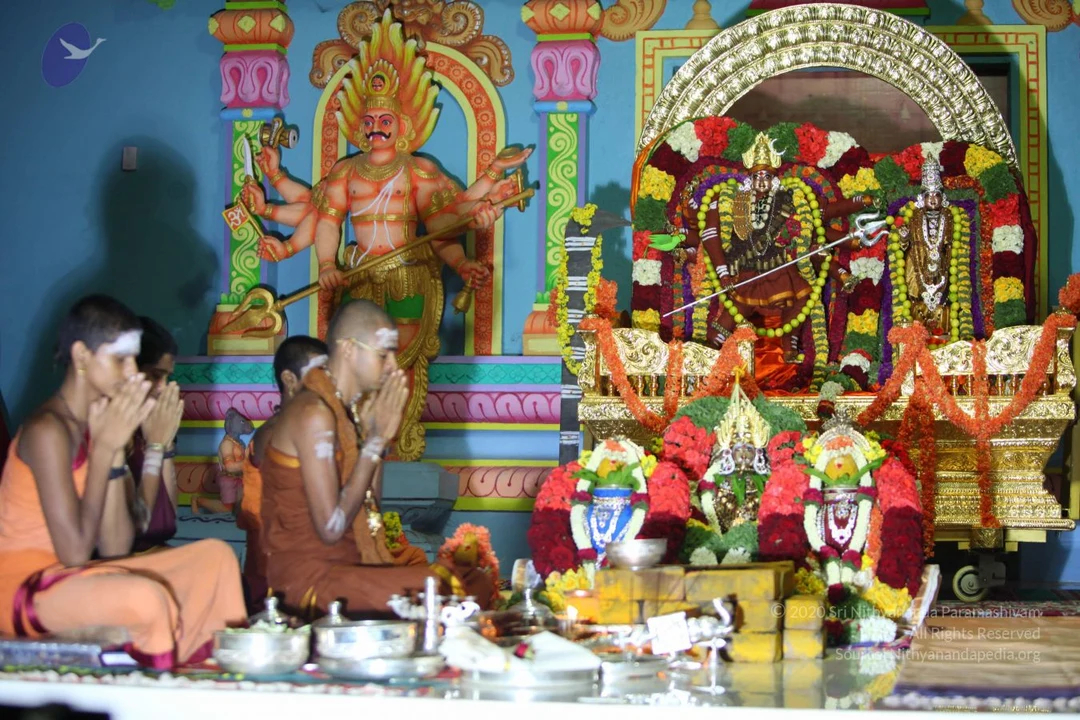
107 photosSource gallery
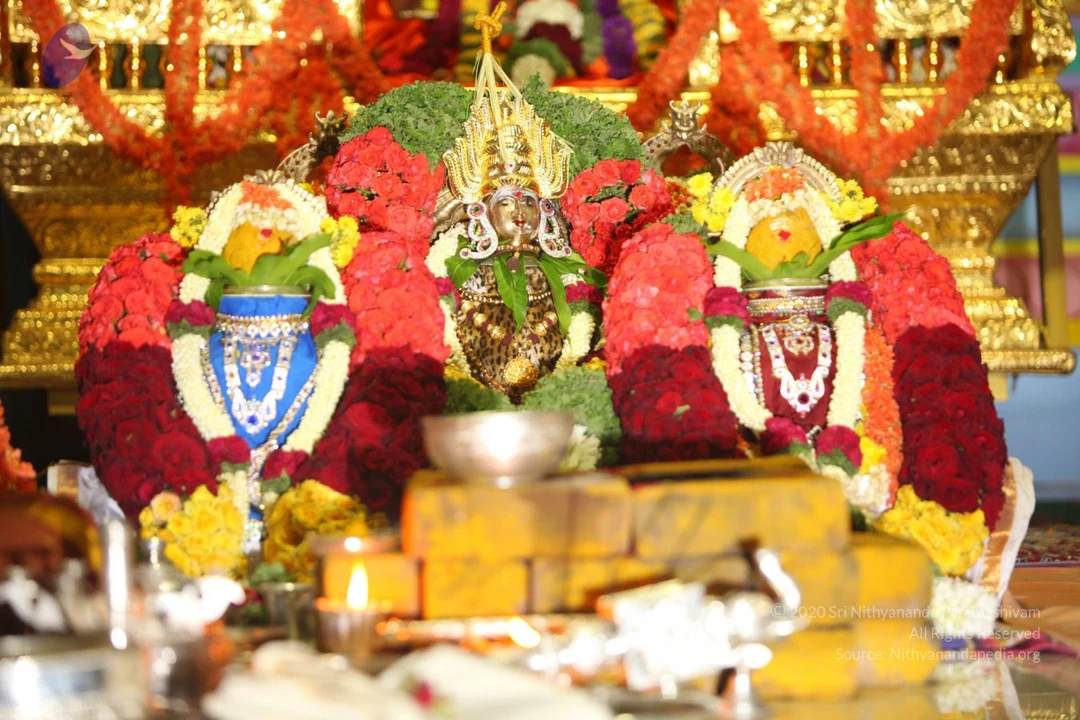
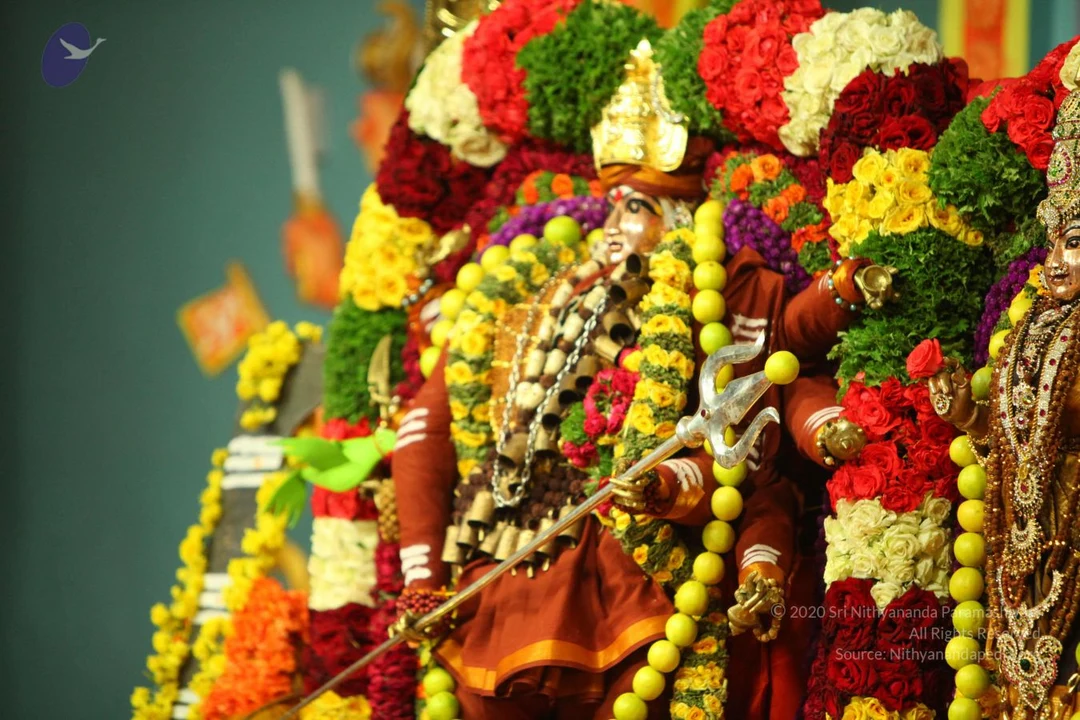
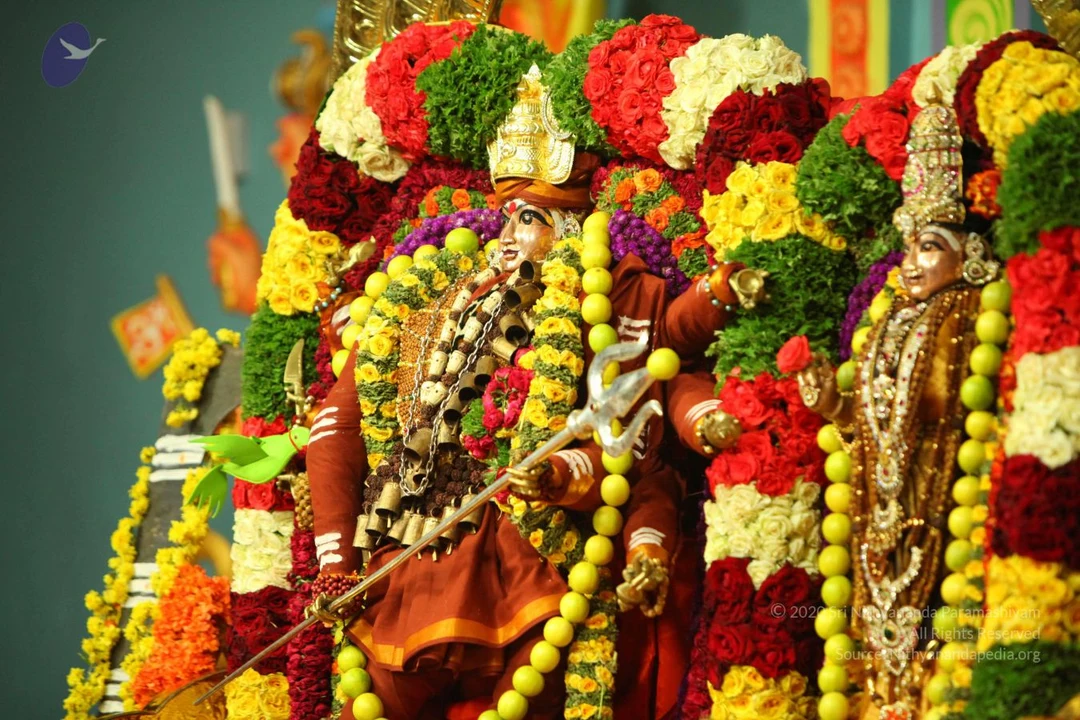
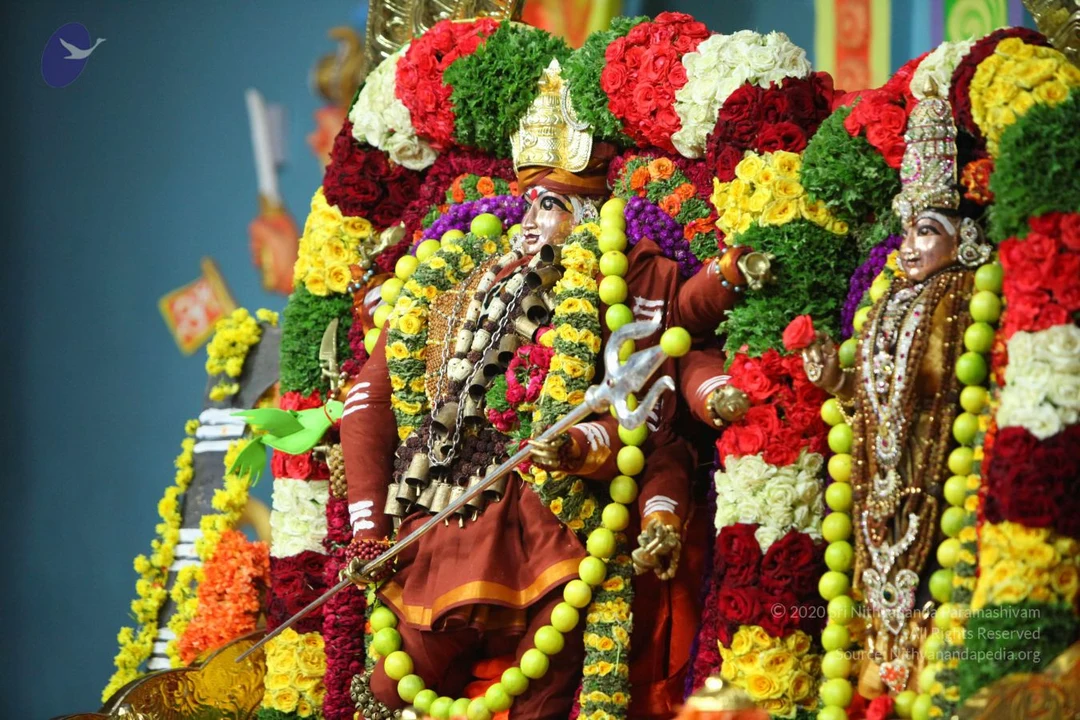
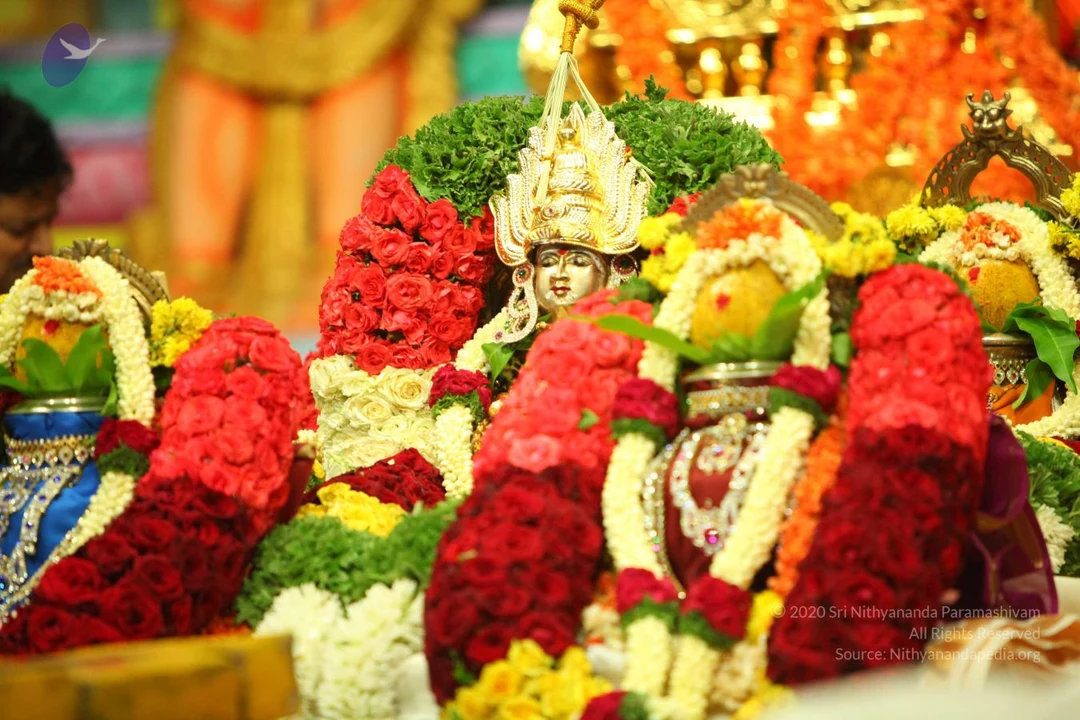
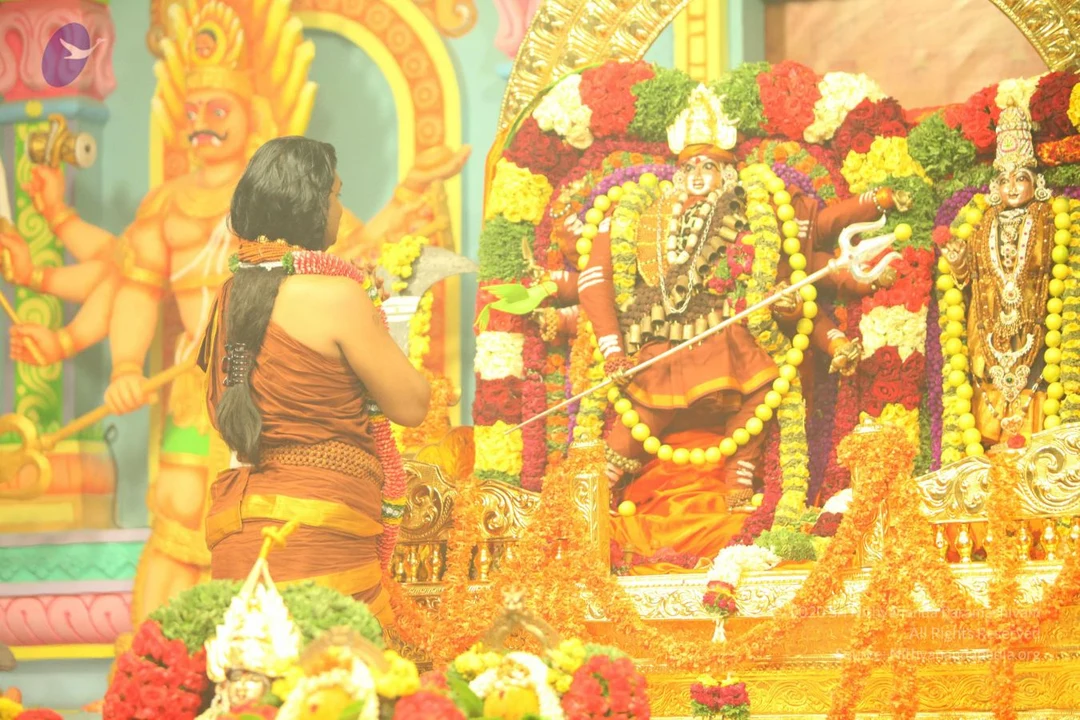
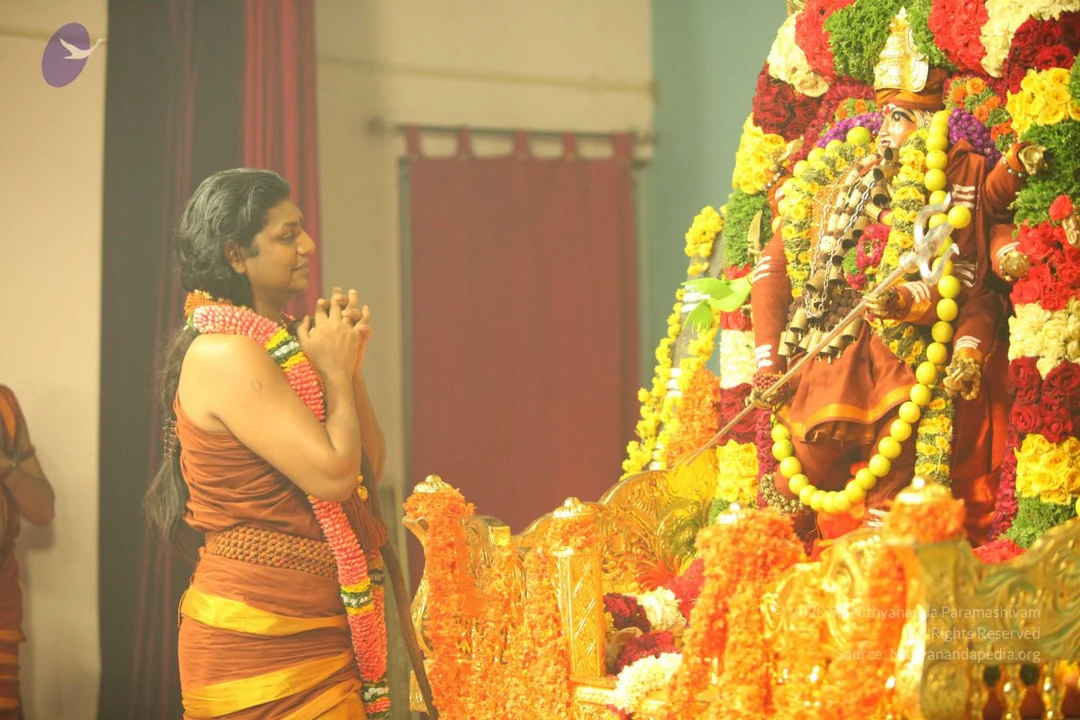
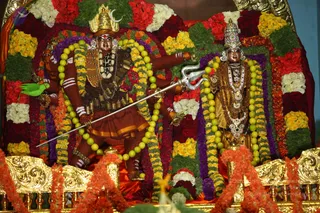
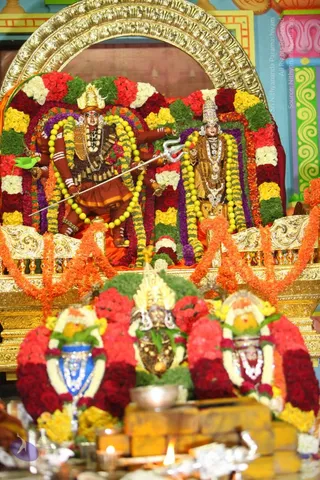
A photograph of a temple shrine with a painted blue wall and a large painted figure of a multi-armed deity with flaming crown and orange body, holding weapons. In front, two people kneel with palms pressed together in prayer: a young person in orange cloth with white sacred ash marks on the forehead, and a shaved-headed person in orange robes with a white-marked forehead. The shrine holds garlanded deity murti decorated with red, yellow and white flowers and green leaves, with a trident placed before them. Brass vessels, a kalasha-like pot, flower offerings and a plate of items sit on the altar in front. Two people are visible, both at the lower left.A decorated deity murti with a gold crown and silver-toned face is the central focus, framed by dense garlands of red roses, orange marigolds and white flowers draped on two large vessels or kalasha-like pots with blue and pink bodies. Green leaves are tucked among the garlands, and a silver bowl sits in front on a stack of yellow cloth-wrapped blocks. A lit oil lamp flame glows at lower left, with blurred brass and gold ritual items in the foreground and gold-painted ornamentation behind. No people are visible.A photograph of a decorated deity murti in a temple, with a golden crown and jewelled ornaments on a central figure flanked by two smaller figures. Red roses, yellow flowers and green leaves form elaborate garlands arranged in arches around the figures. Two brass or silver pots with leaf-garnished mouths stand in front, and a metal bowl sits on stacked golden blocks. Oil lamps and brass vessels occupy the foreground, with gold-coloured temple architecture behind. No people are visible.A decorated deity murti stands in a flower-filled shrine. On the left, a figure with a golden crown and crescent, red-brown dress and a trident raised in one hand holds a green parrot. Beside it, a figure in gold-brown robes wears a tall jewelled crown and layered jewellery. Both are draped with green and yellow beaded garlands, surrounded by red, white and yellow roses, orange marigolds and green leaves, with gold throne carvings in front. No people are visible.A photograph of a temple shrine decorated with dense garlands of red, orange, yellow and white flowers and green leaves. Two deity murtis stand in the centre: the left figure, with a gold crown bearing a crescent, a rudraksha-style necklace, a trident held in one hand and a green parrot in another, is dressed in red and orange; the right figure wears a gold crown, layered ornate necklaces and a golden-brown dhoti, with a long beaded garland draped over both. Golden peetha-style seats and orange flower strands line the base. No physical people are visible; the figures are statues.A decorated temple shrine with two deity murtis on a gold-framed altar, both draped in dense garlands of red, orange, yellow and green flowers. The left murti is a multi-armed figure in red-brown garments holding a trident, with a golden crown and beaded necklaces; the right murti is a figure in gold-toned clothing with a jeweled crown. In the foreground, three ornate kalasha pots with flower garlands and gold-trimmed bases are arranged before a brass vessel, with small oil lamps glowing below. No people are visible.