Skip to content
Thursday

16 May 2013

Inner Awakening Day 9

Dated photos
319
Source pages
1
Media
3
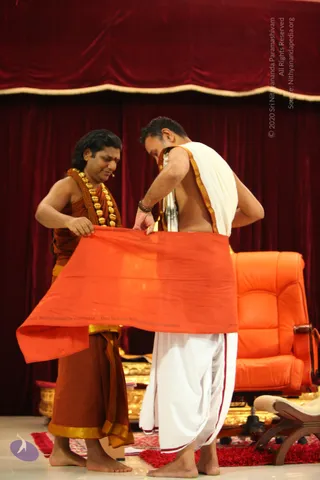
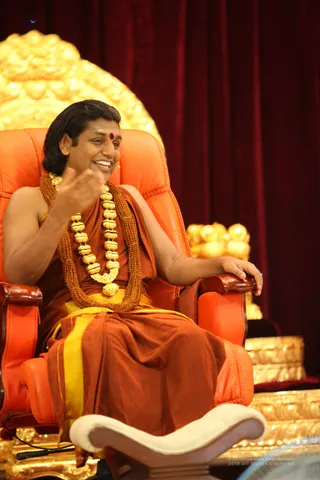
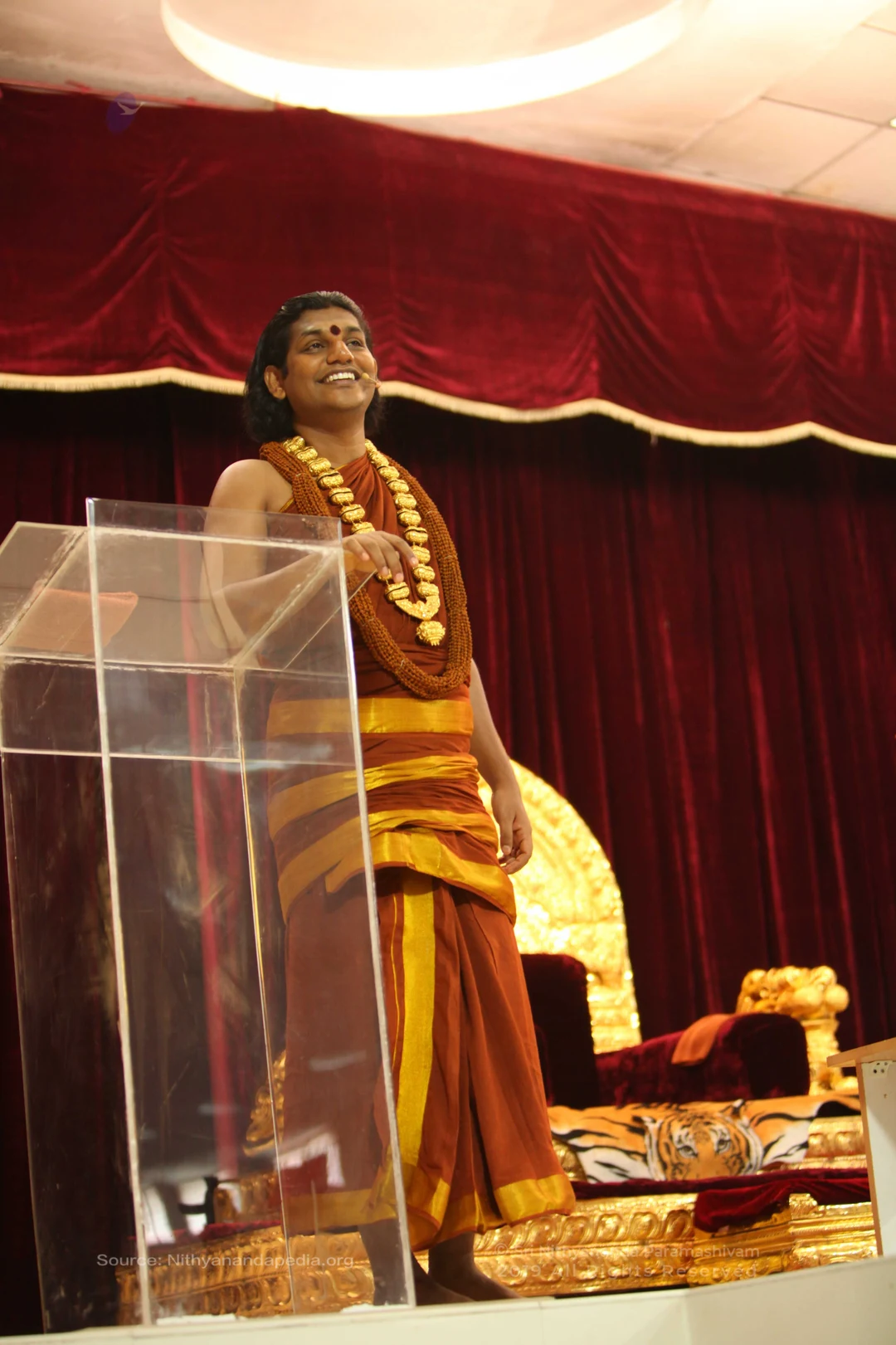
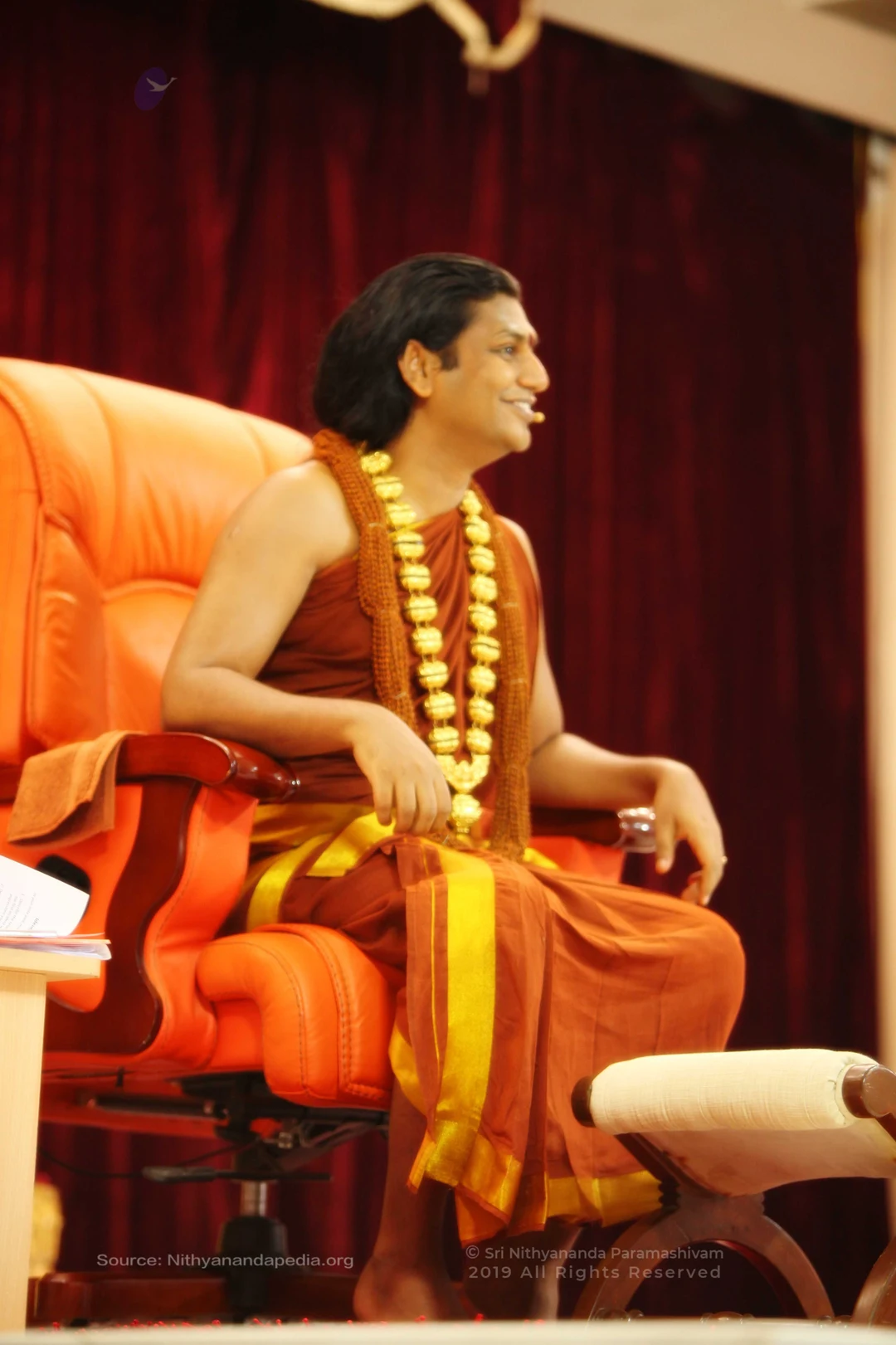
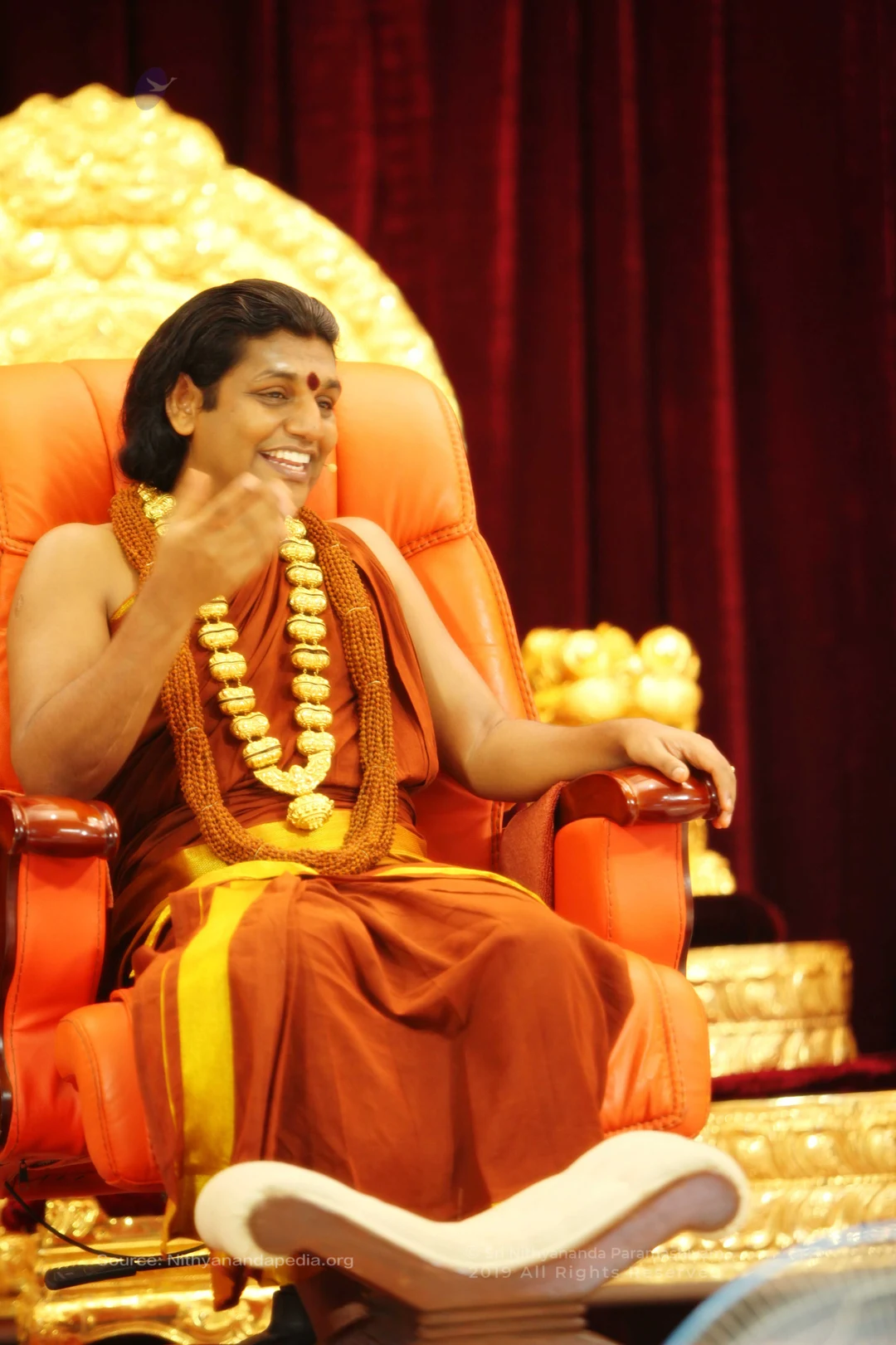
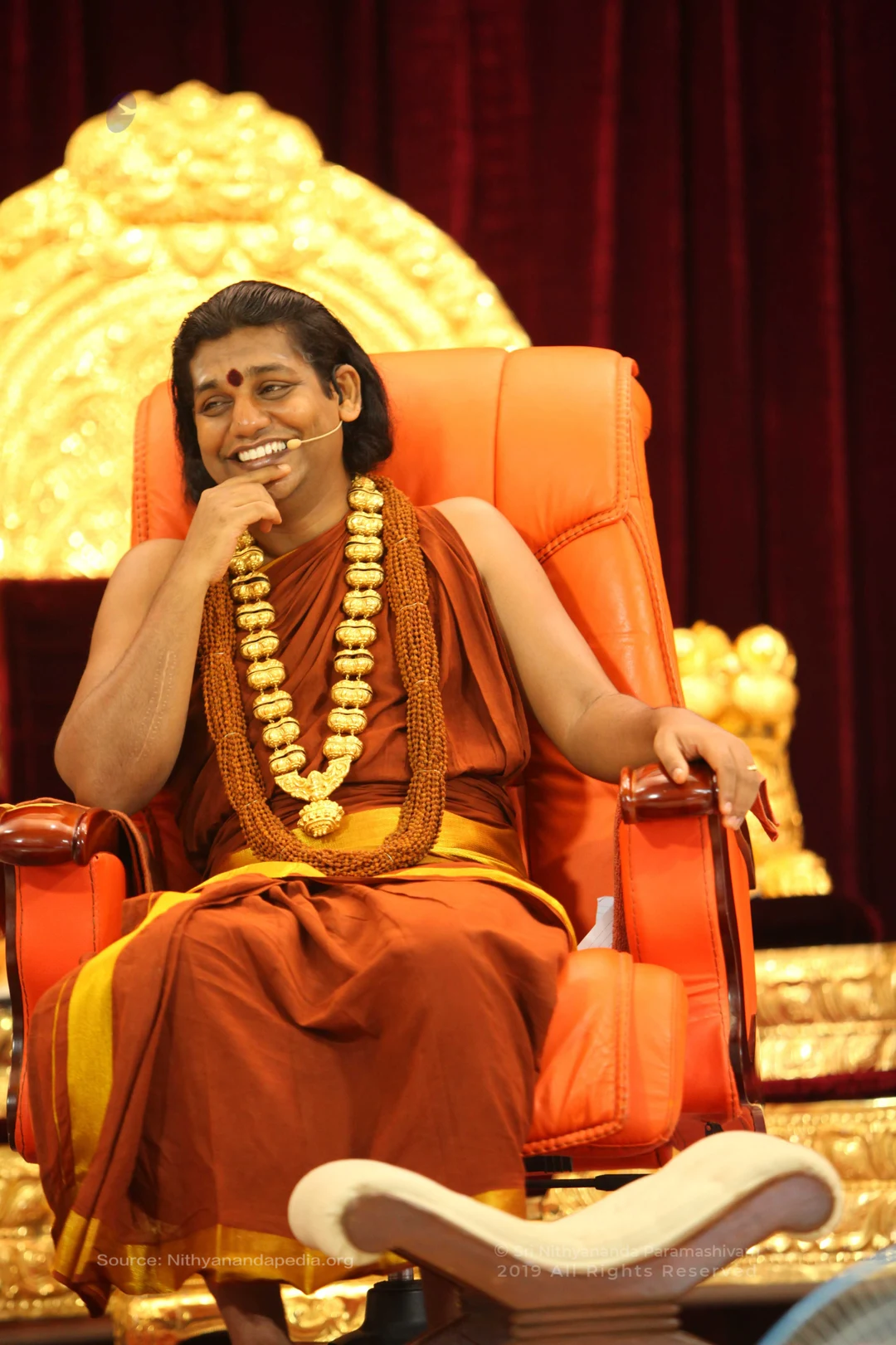
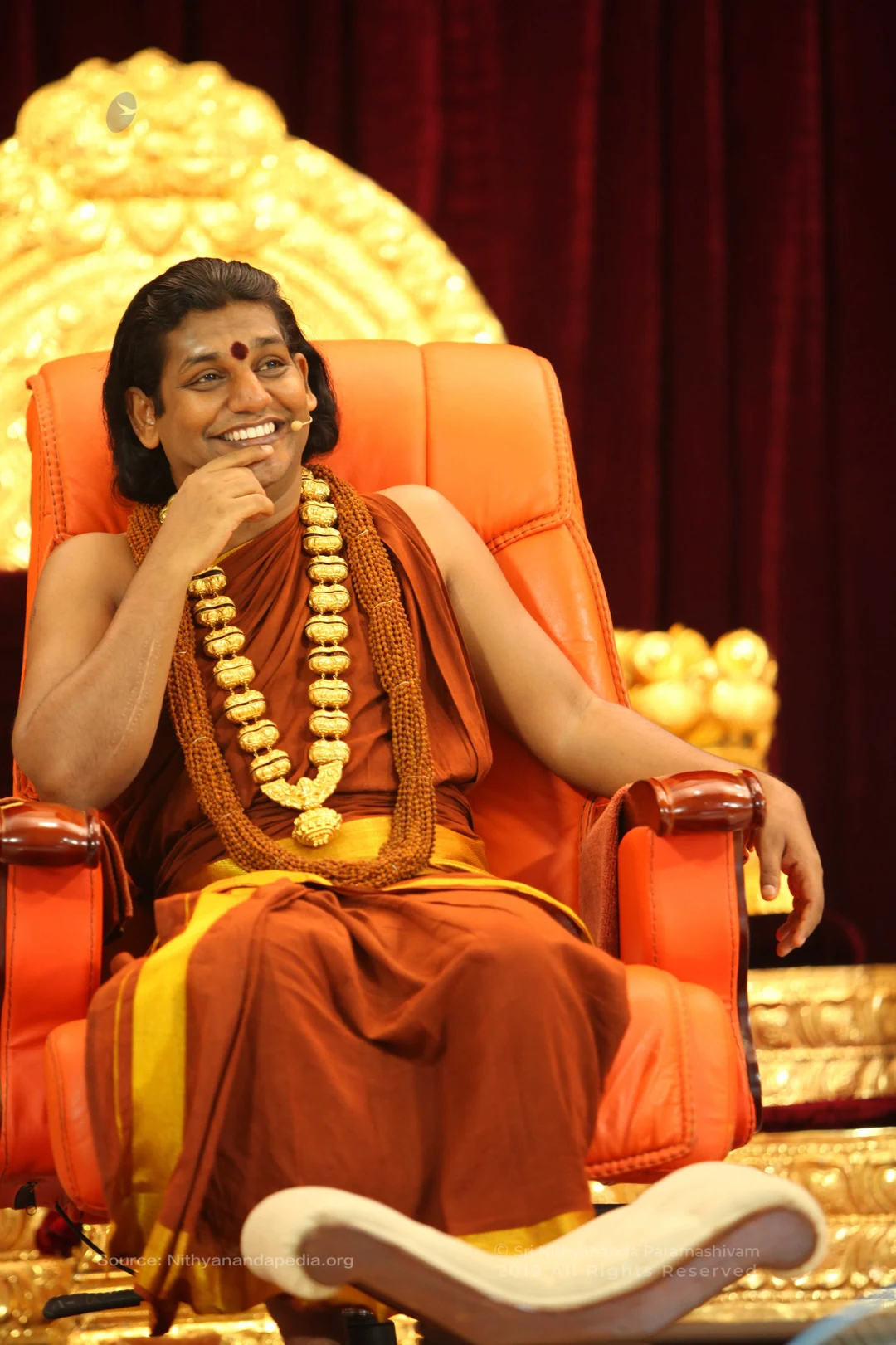
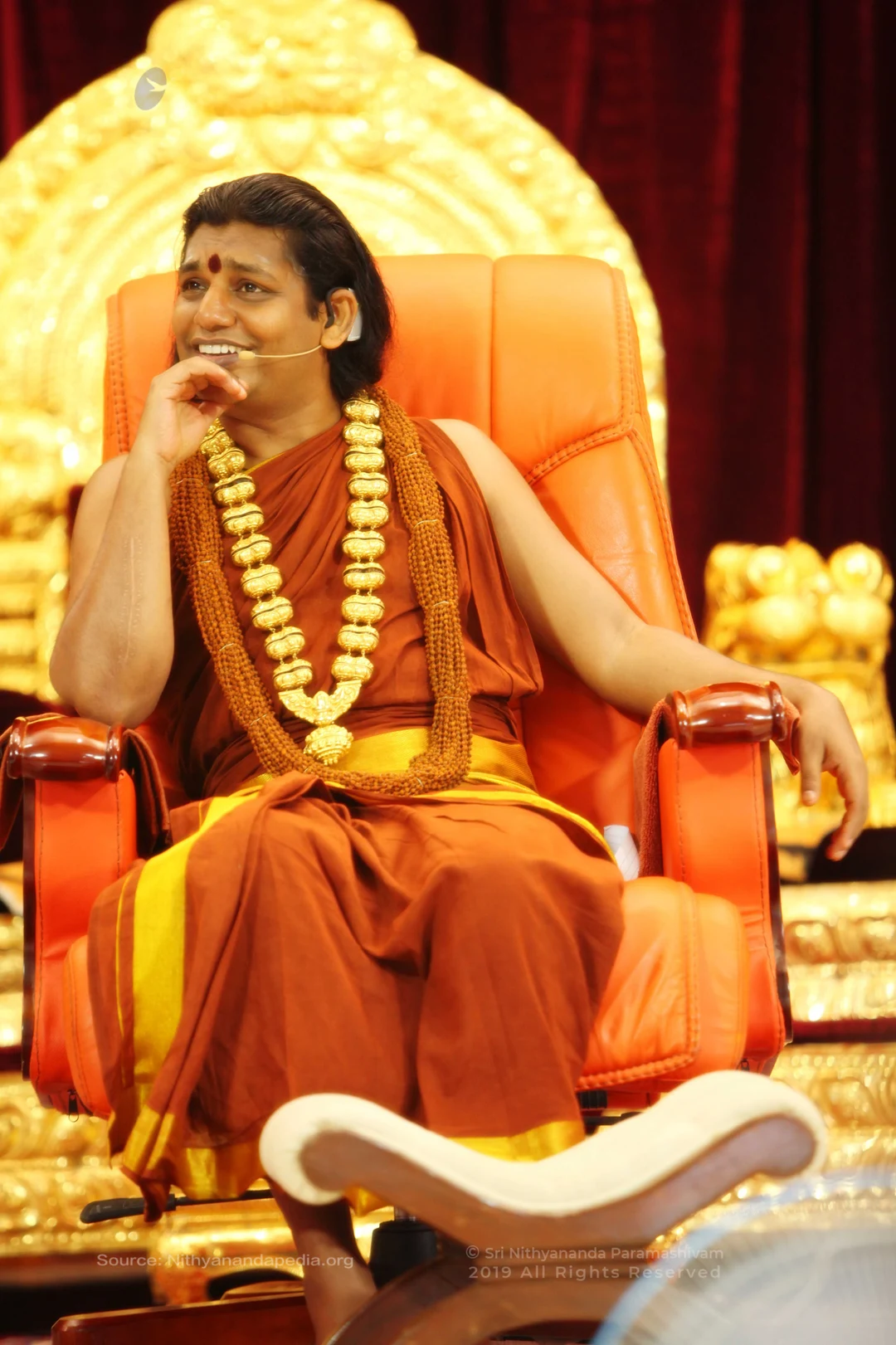
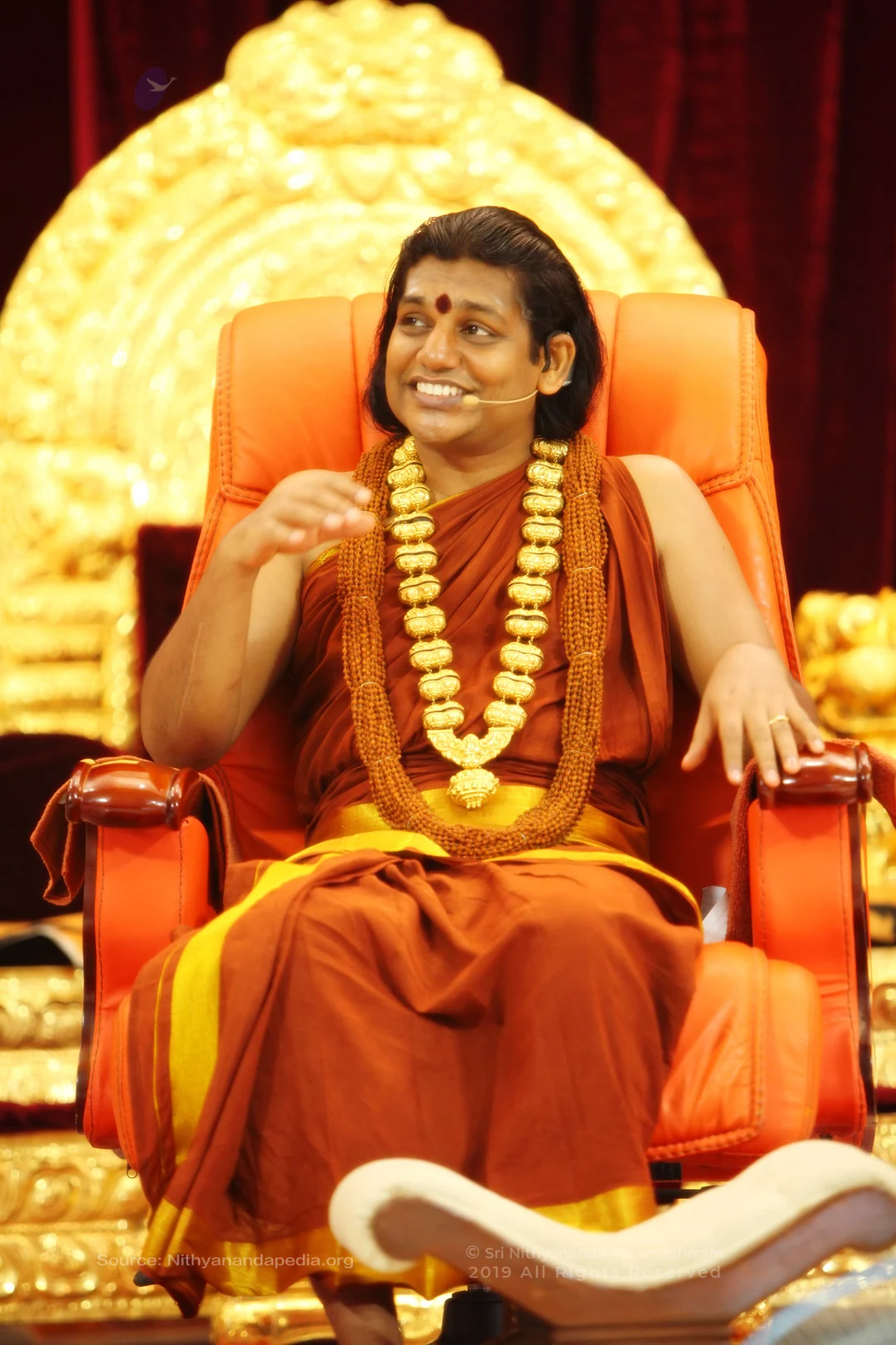
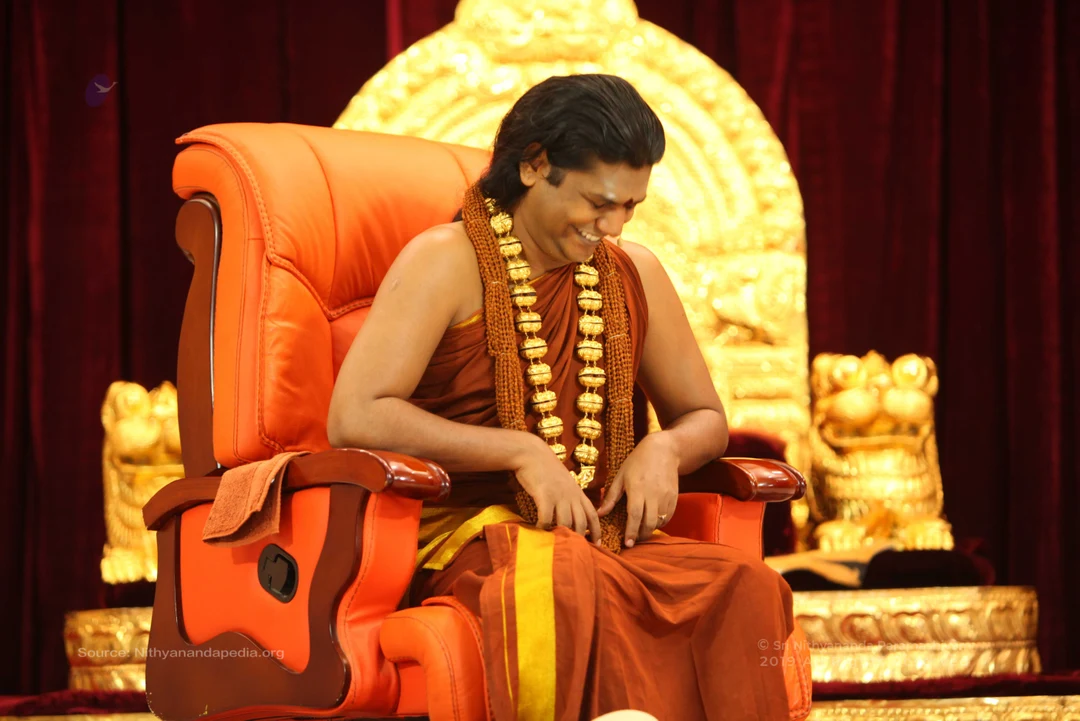
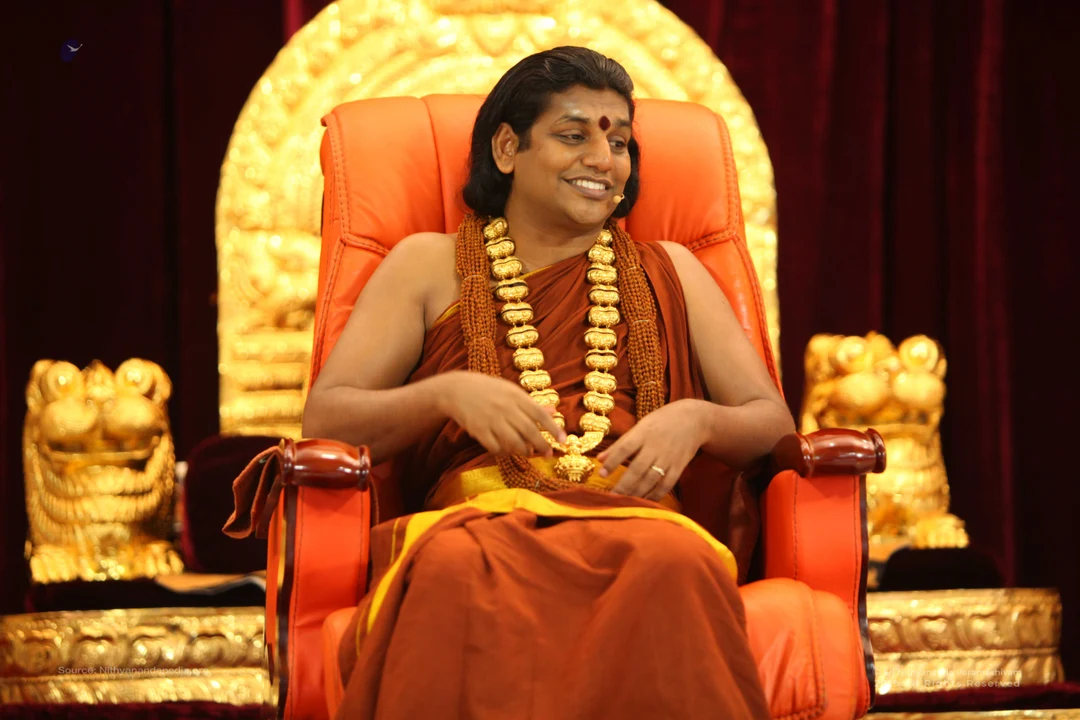
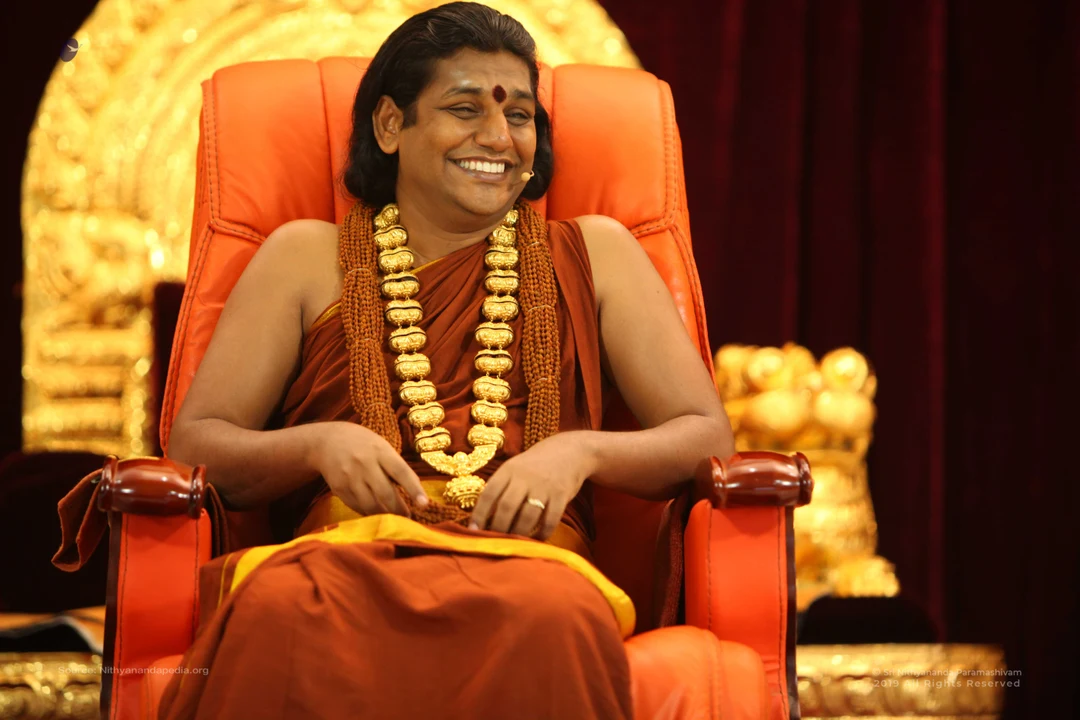
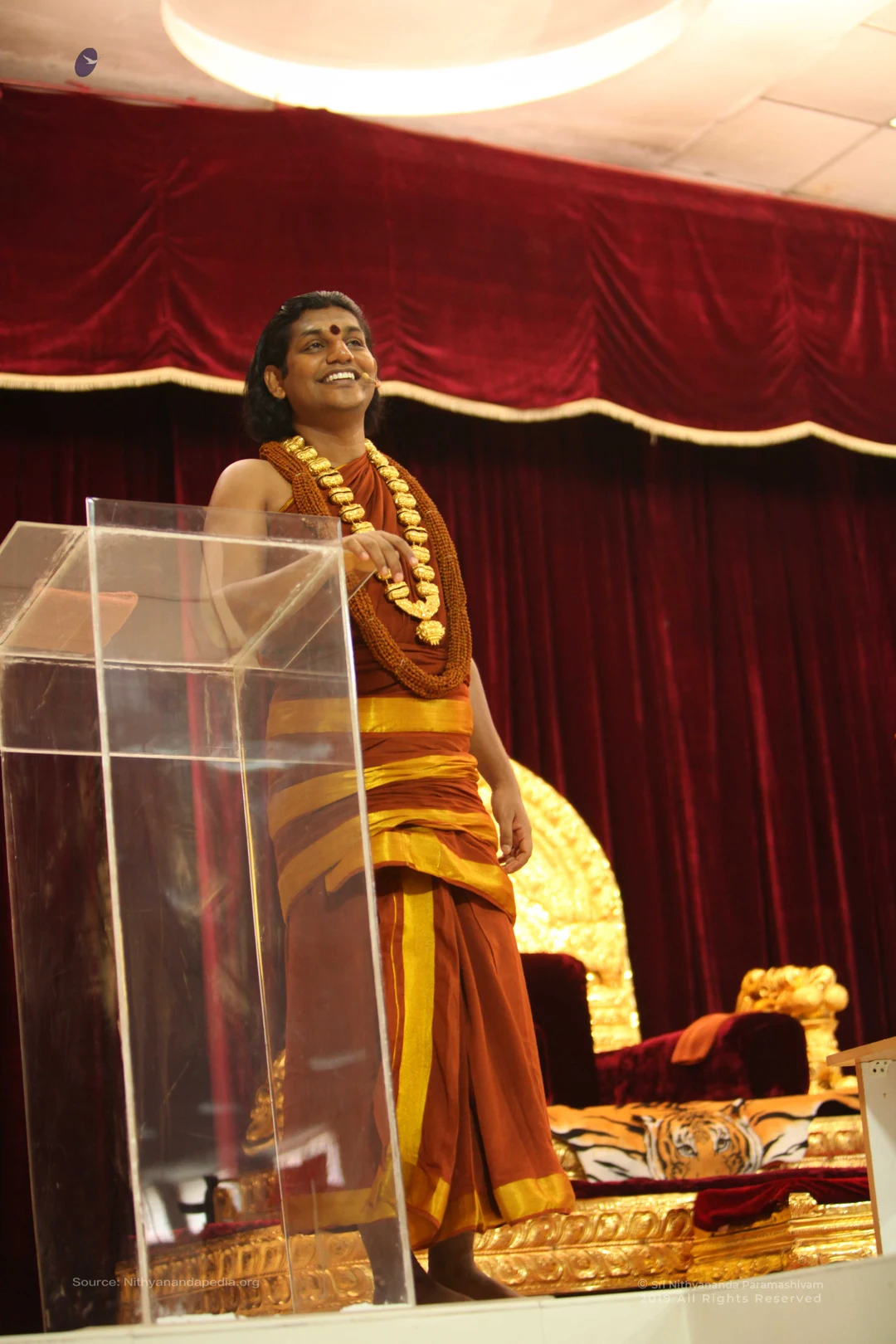
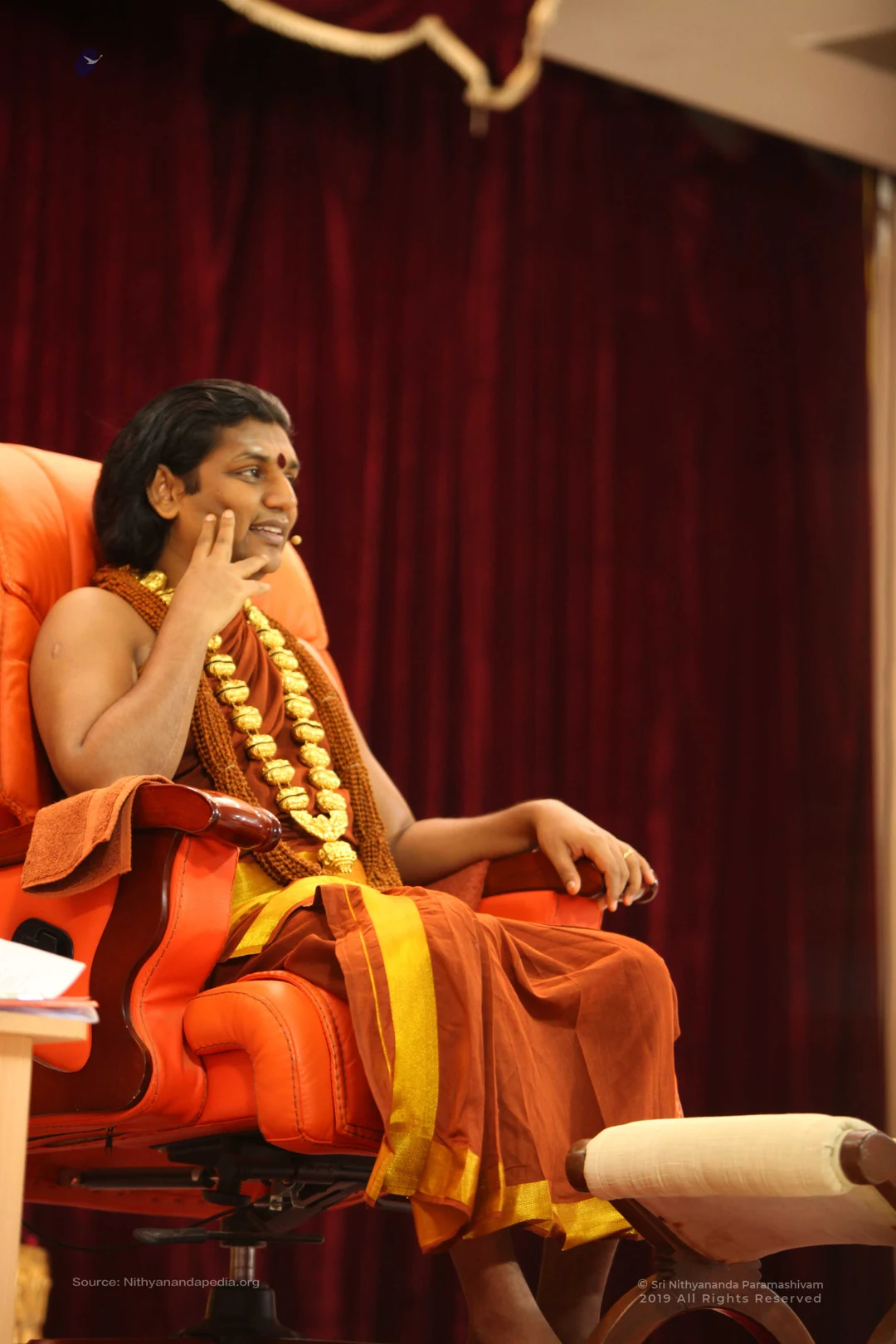
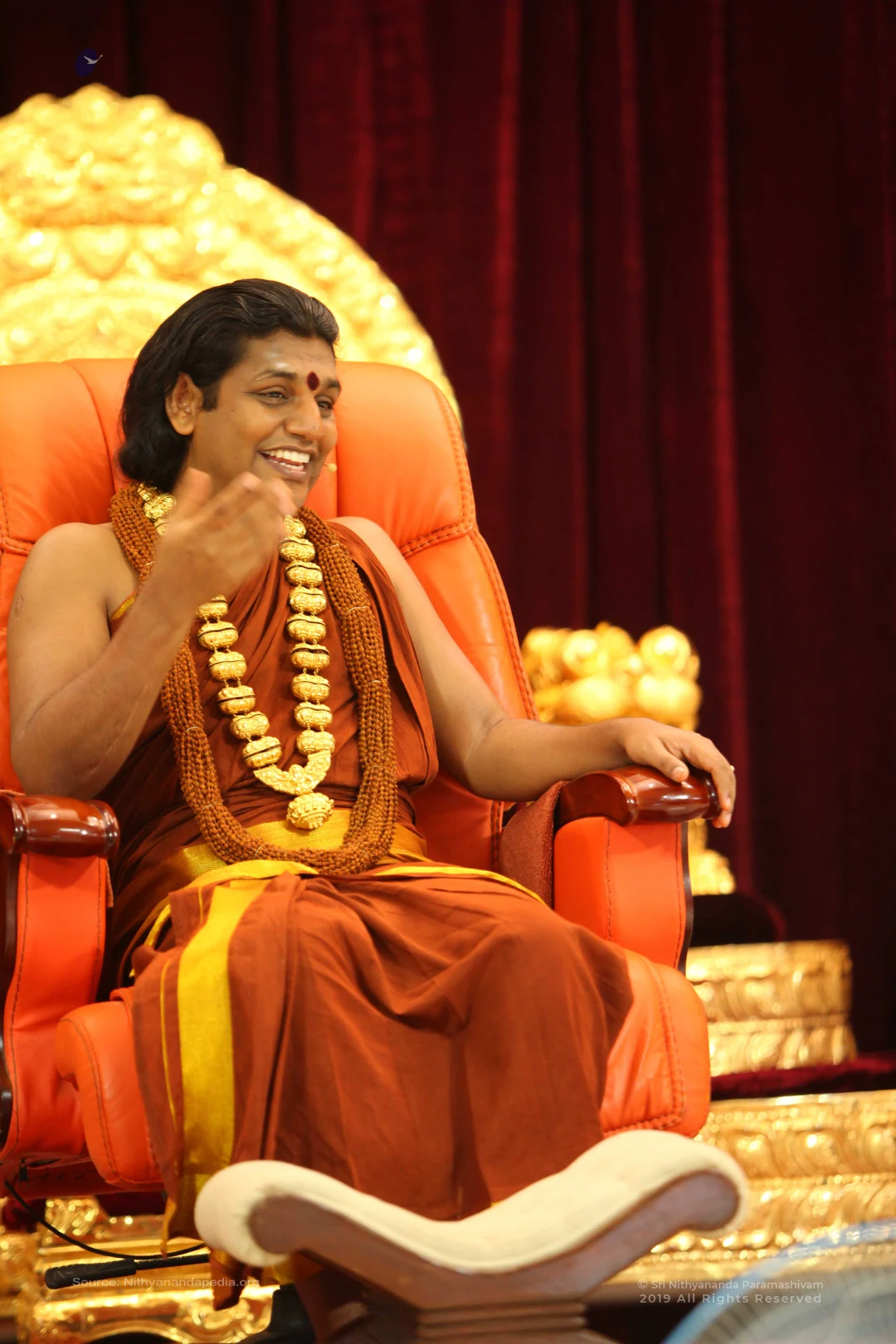
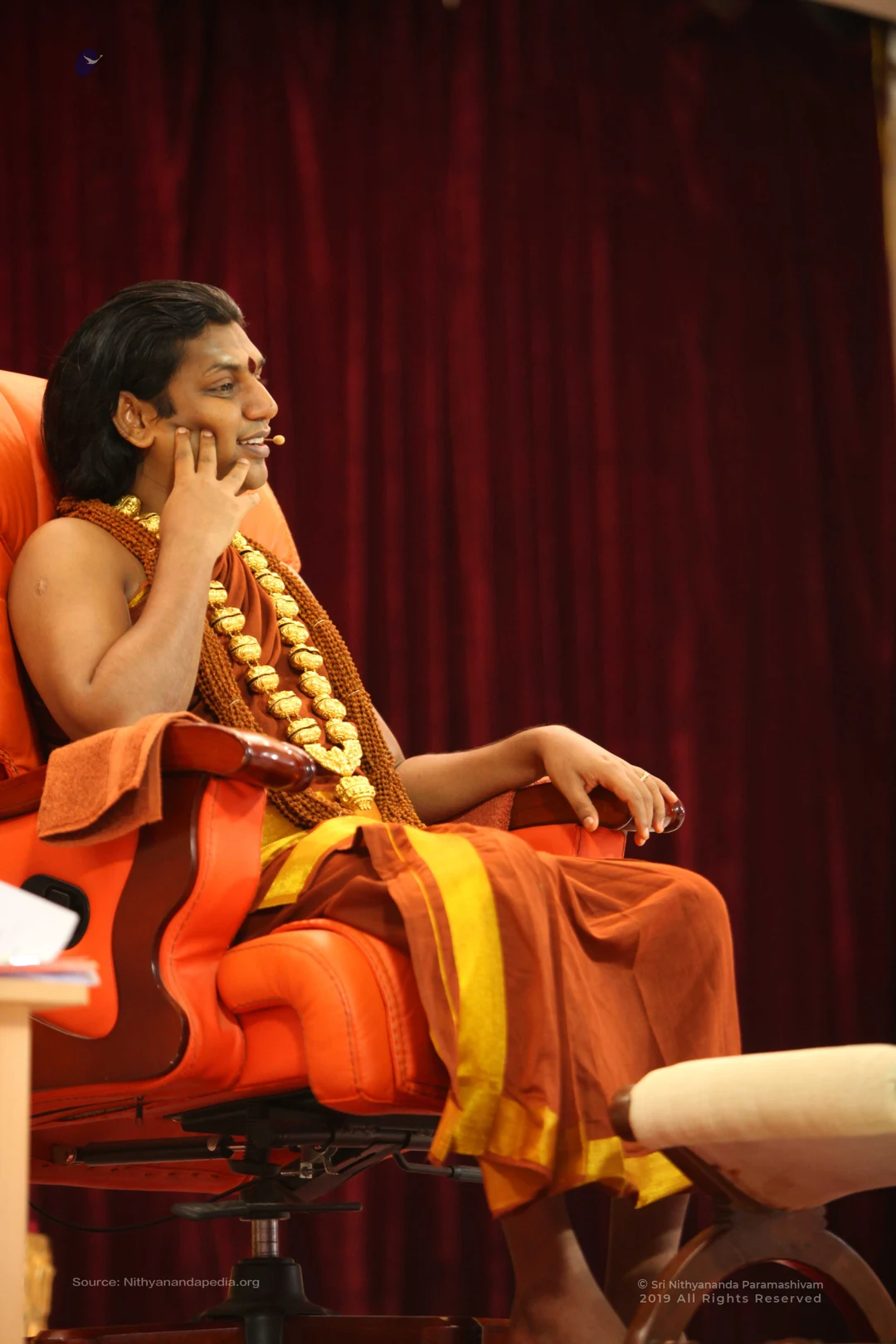
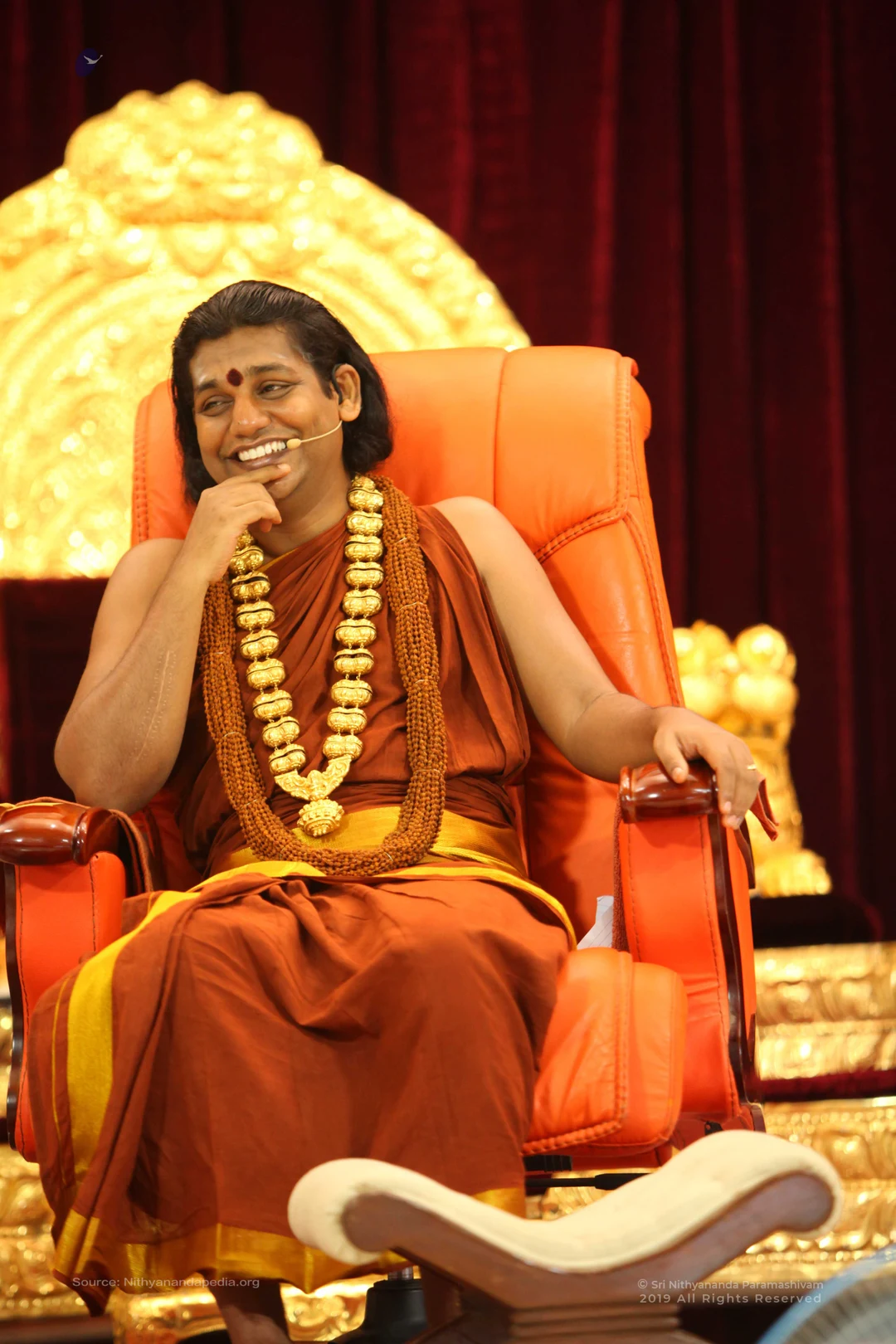
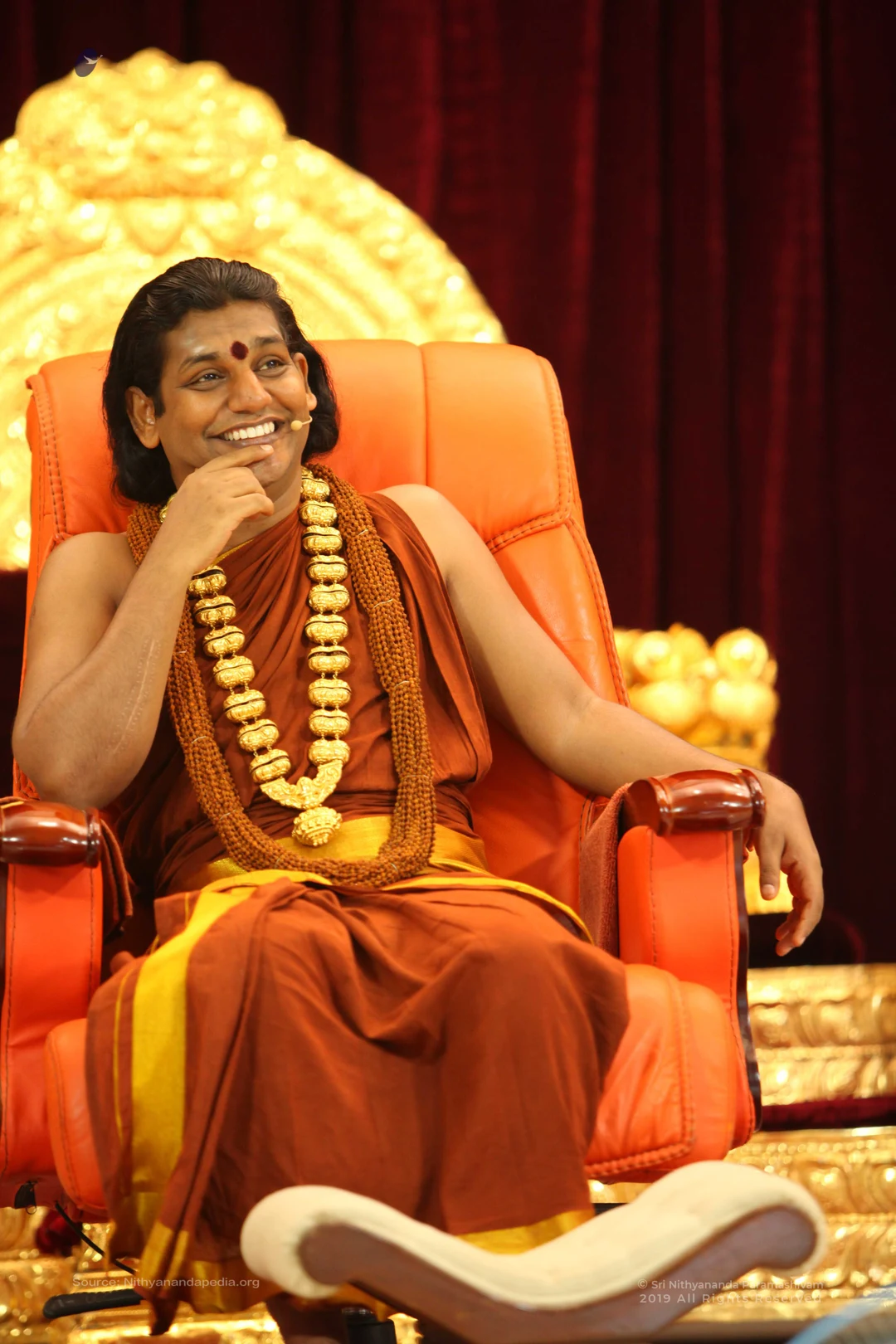
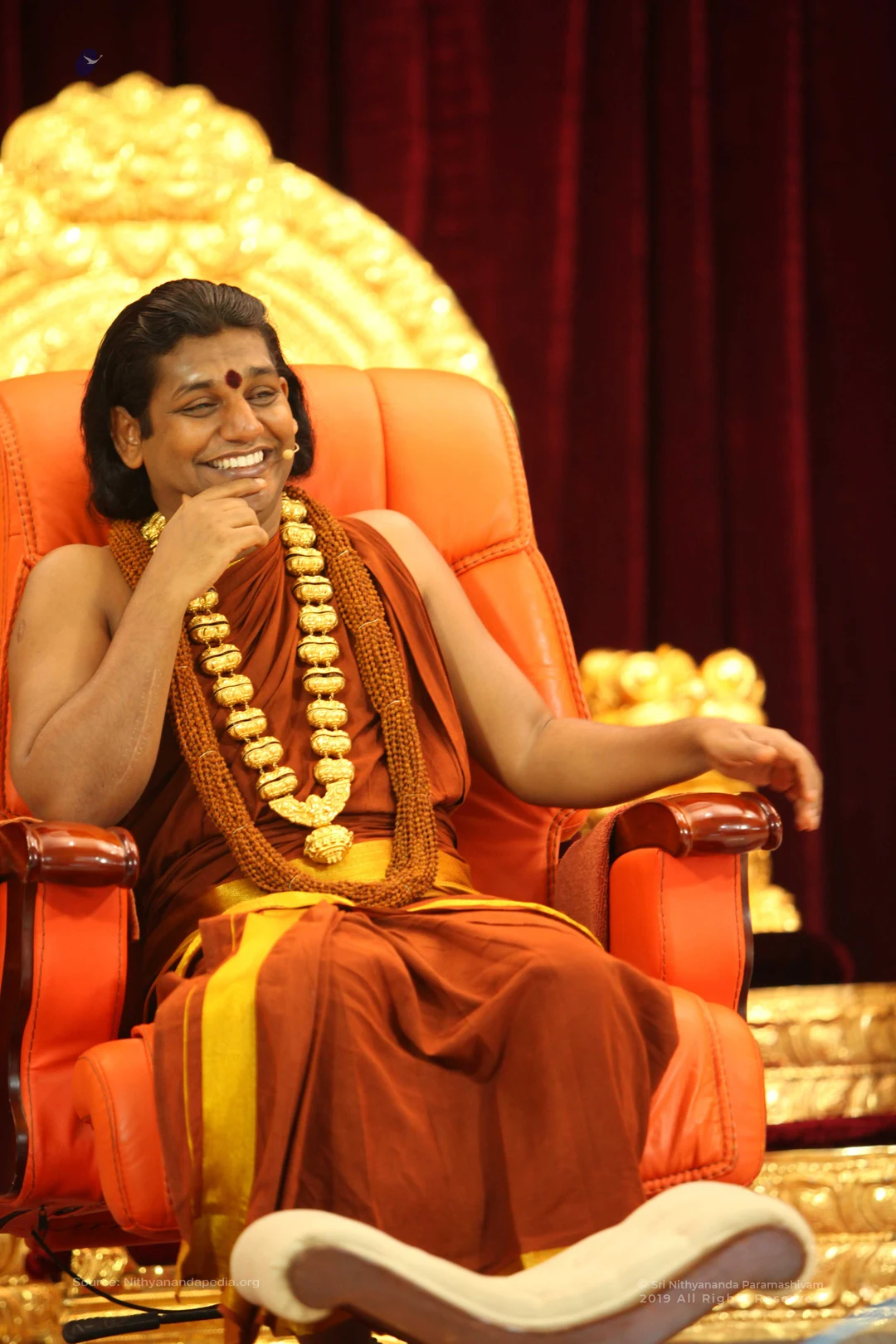
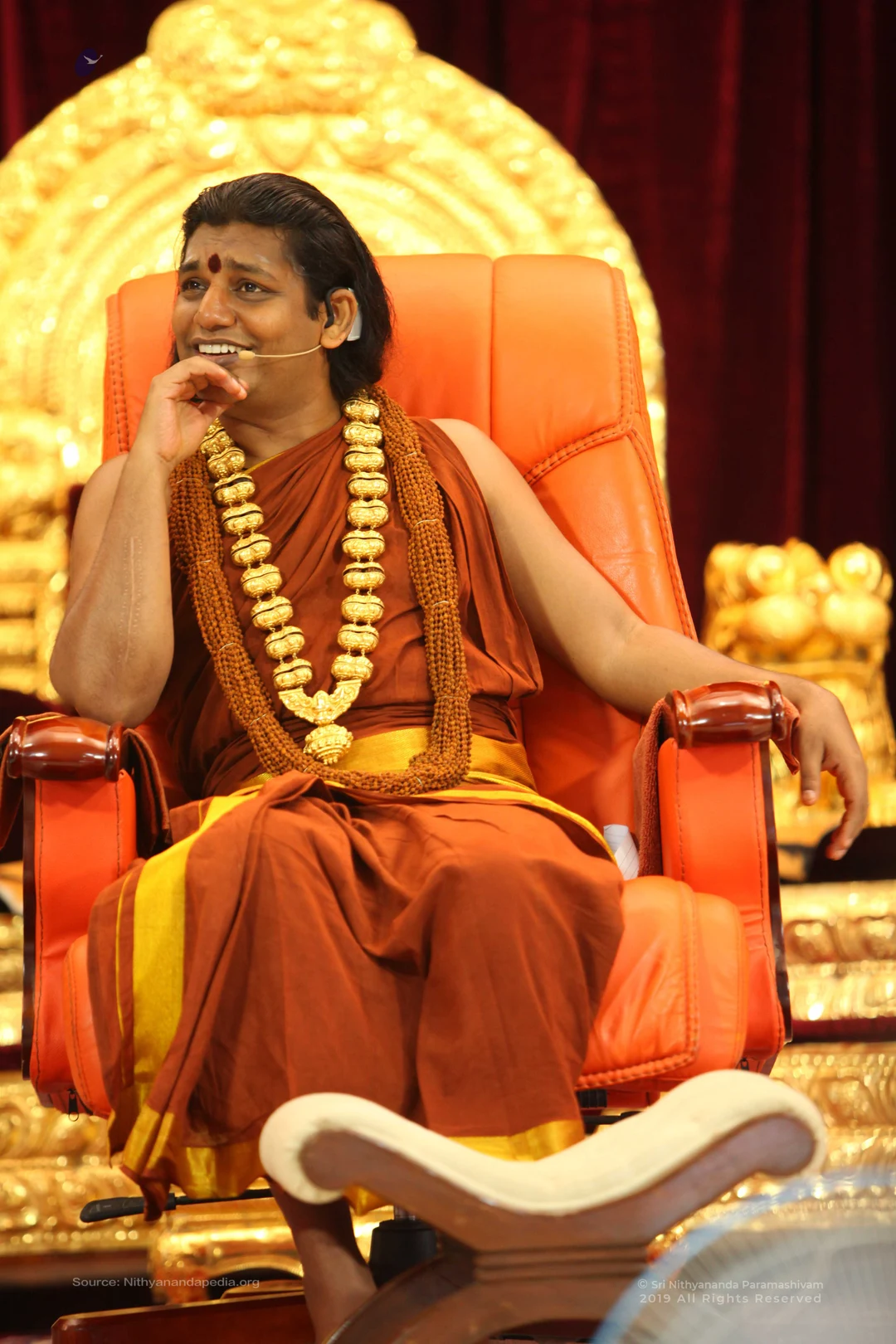
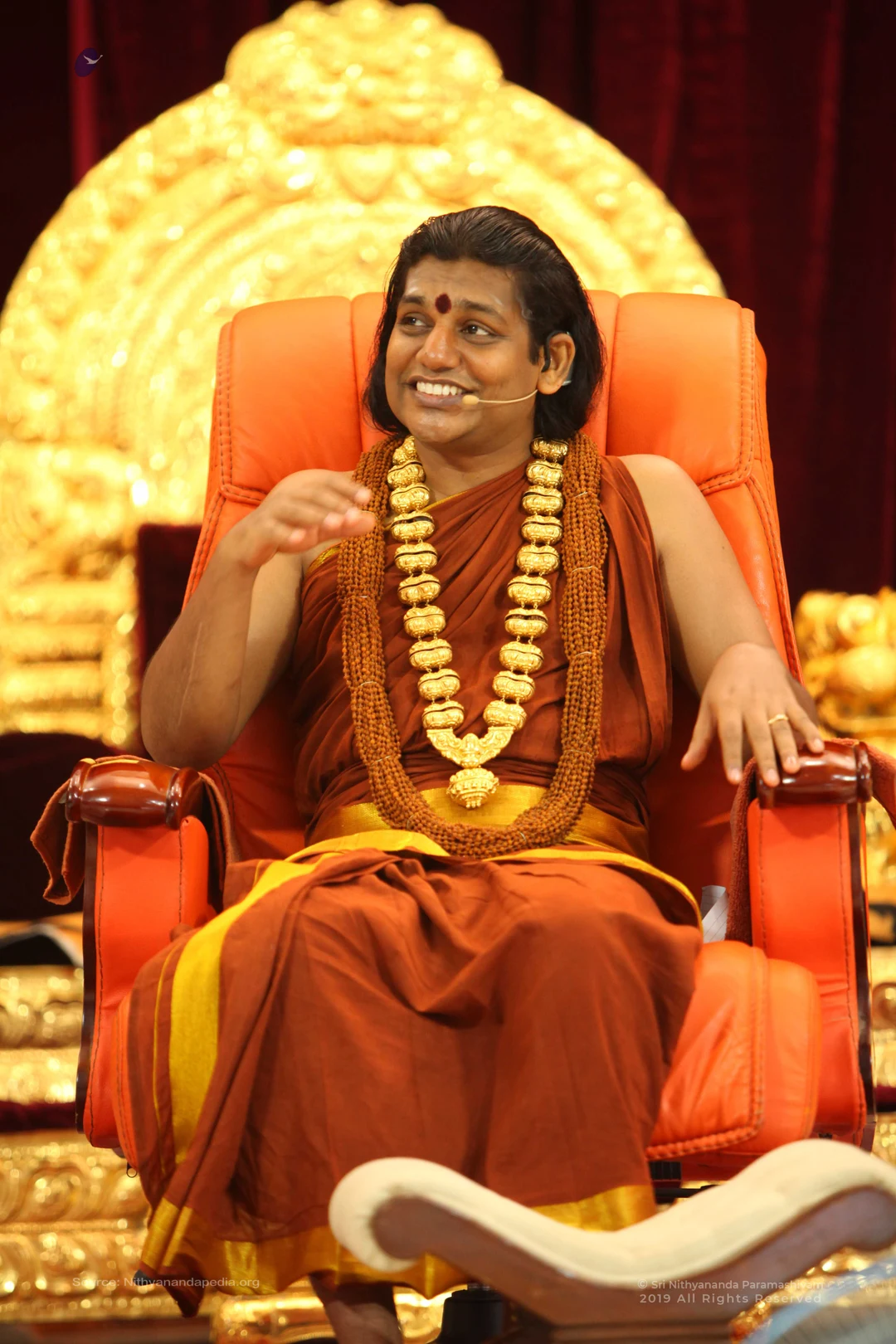
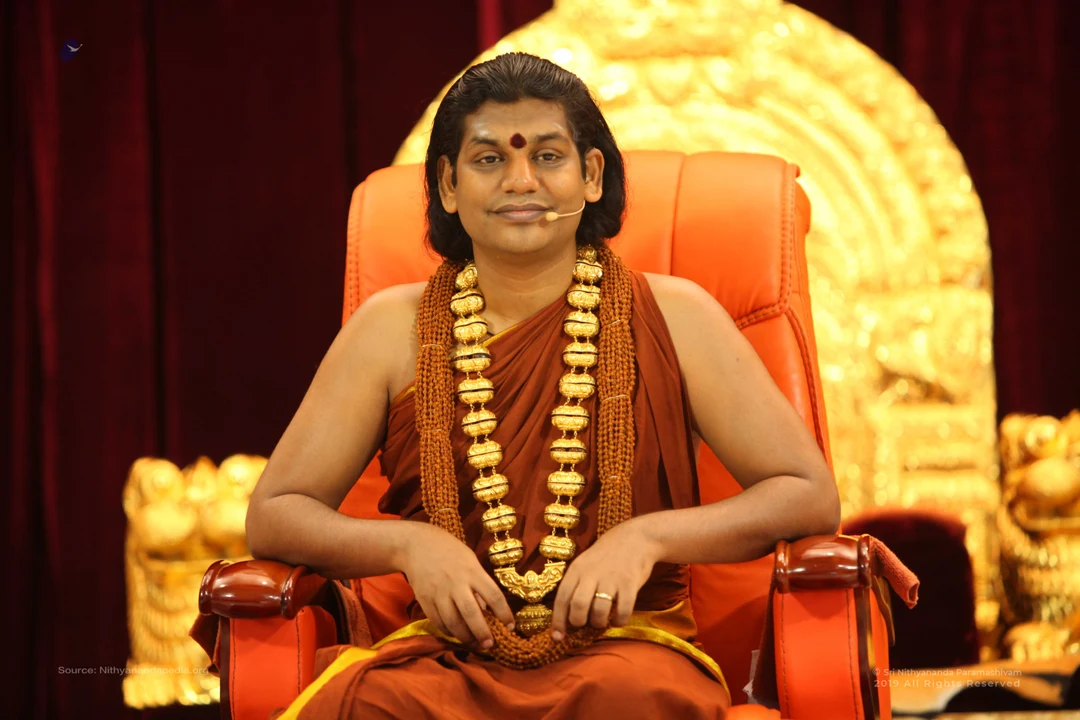
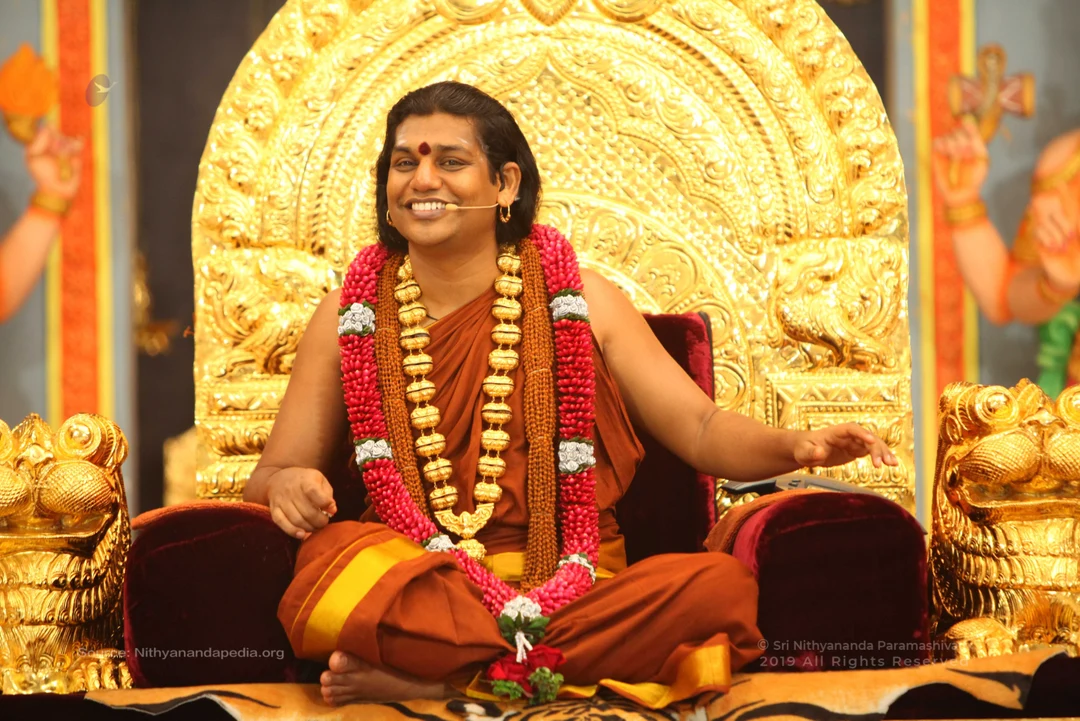
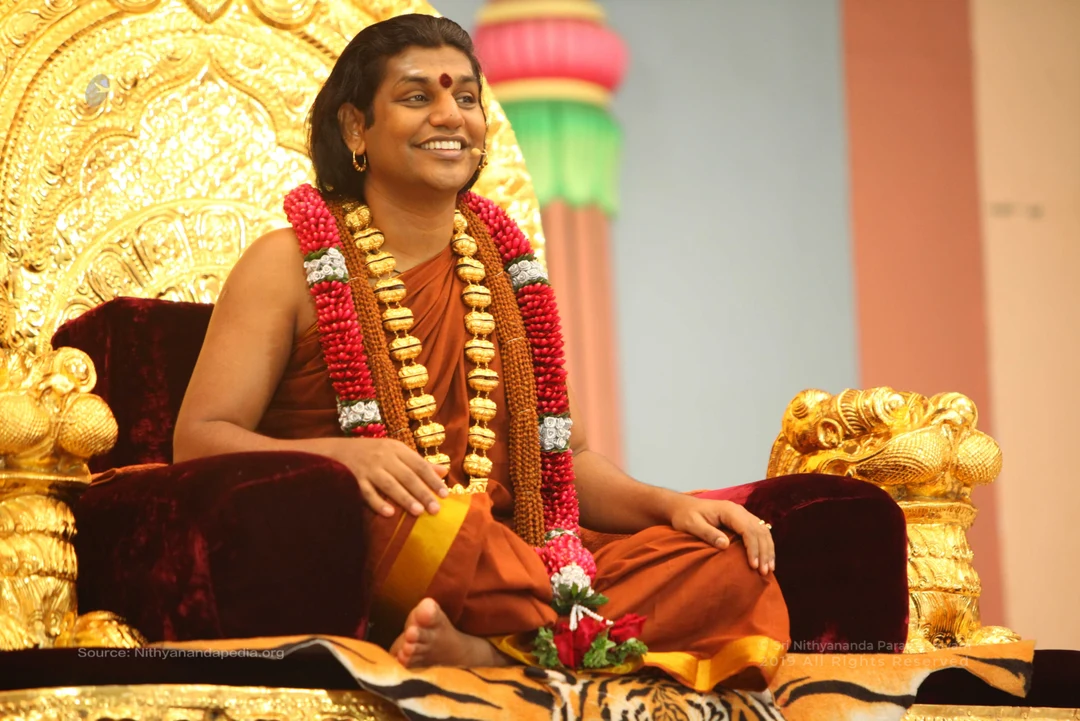
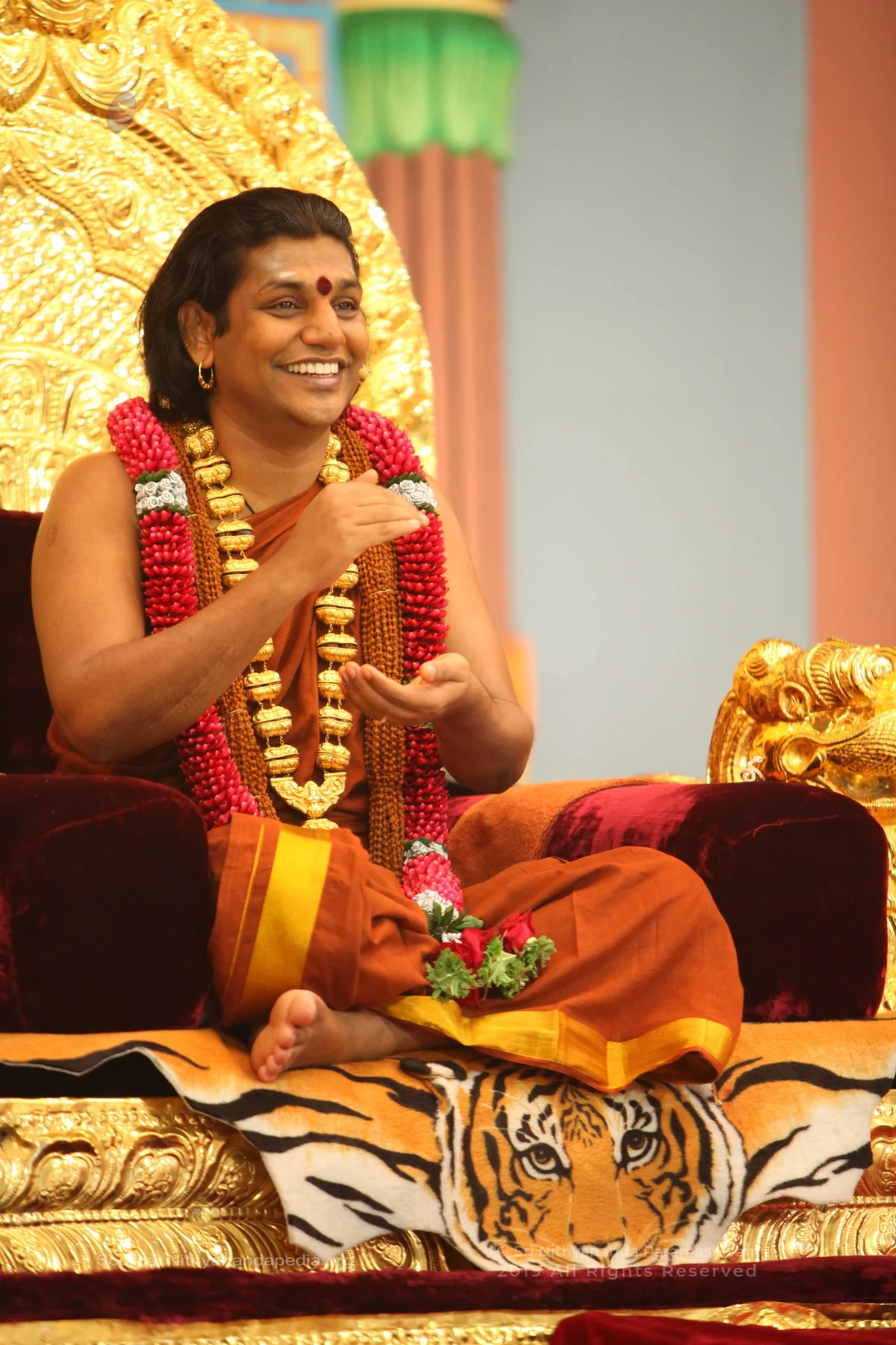
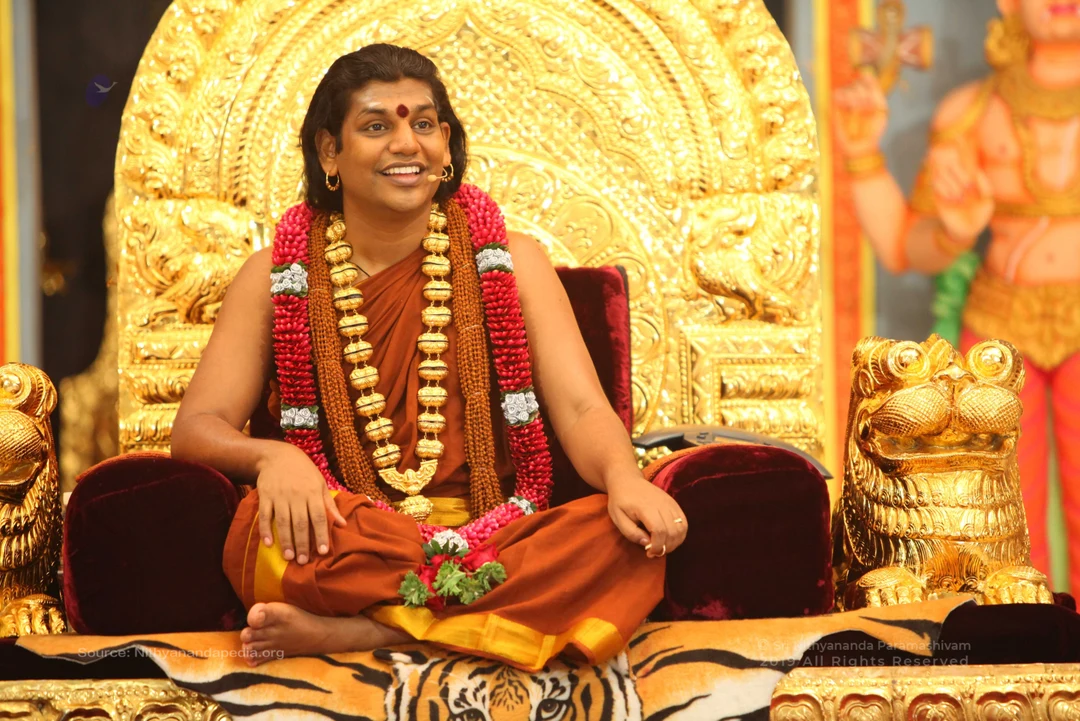
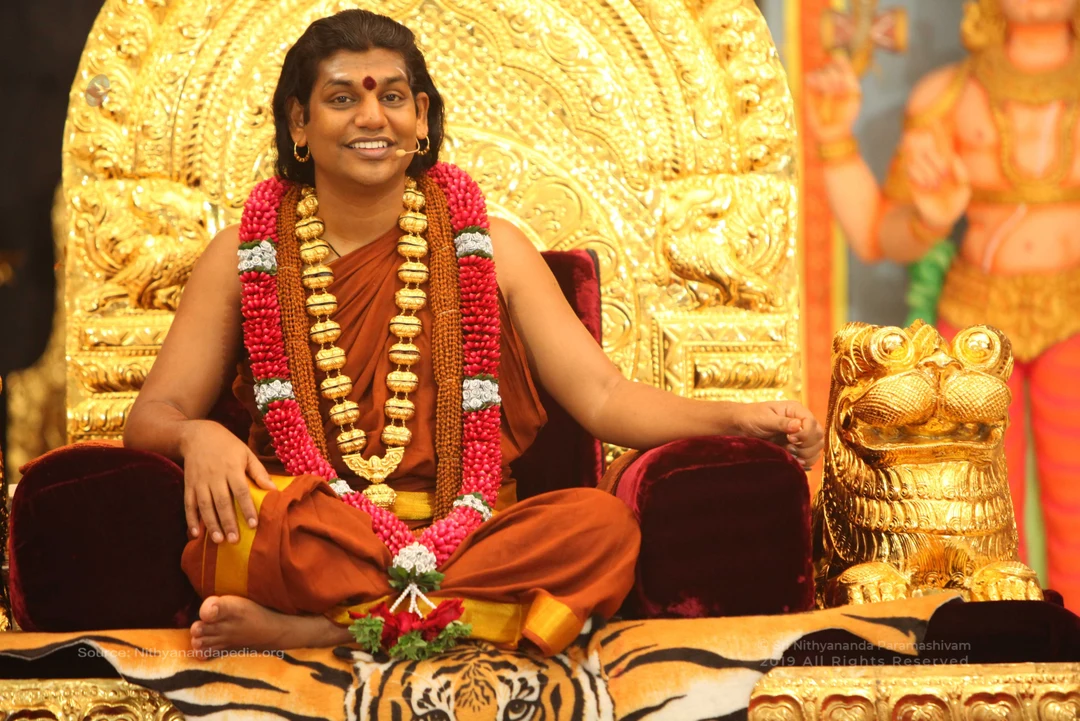
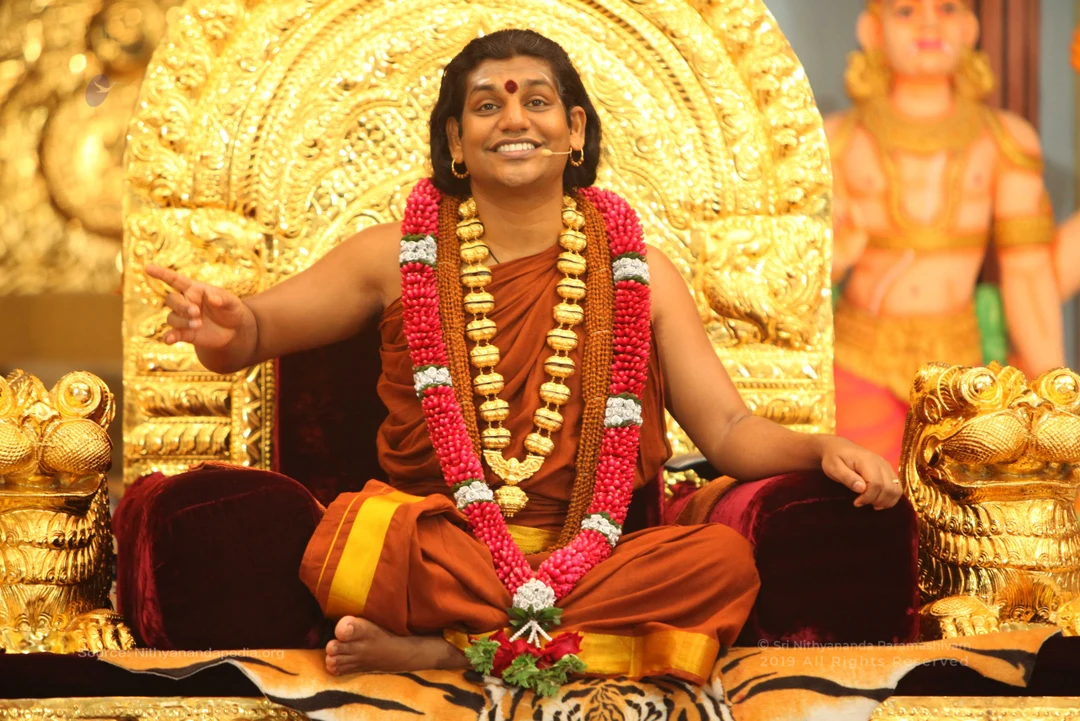
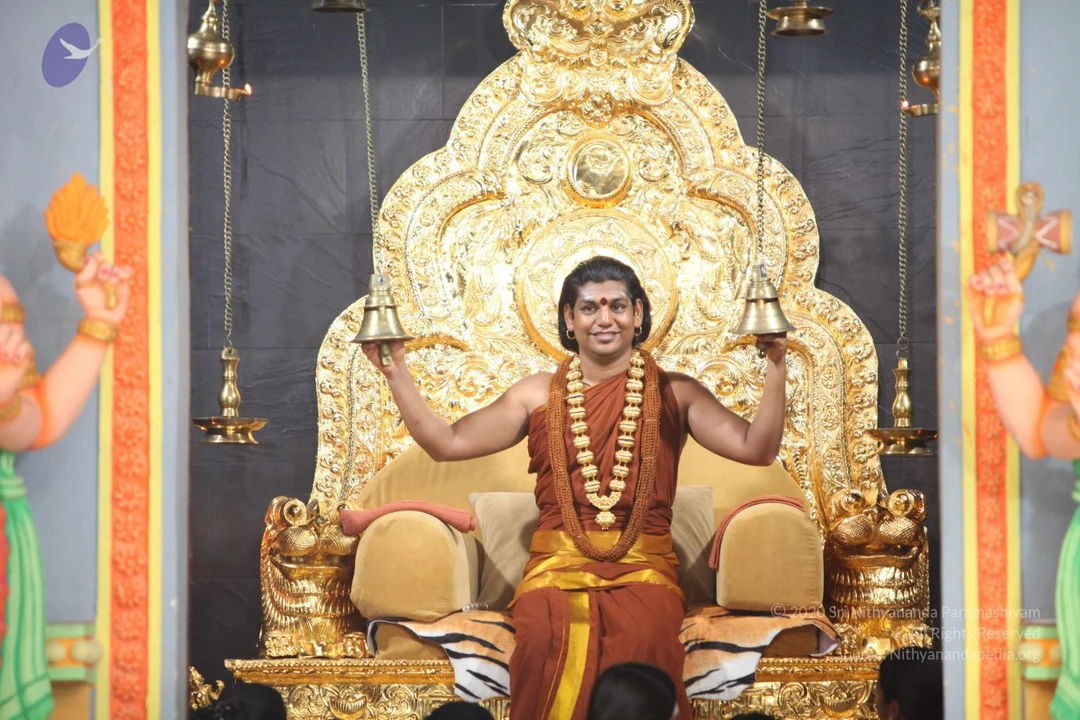
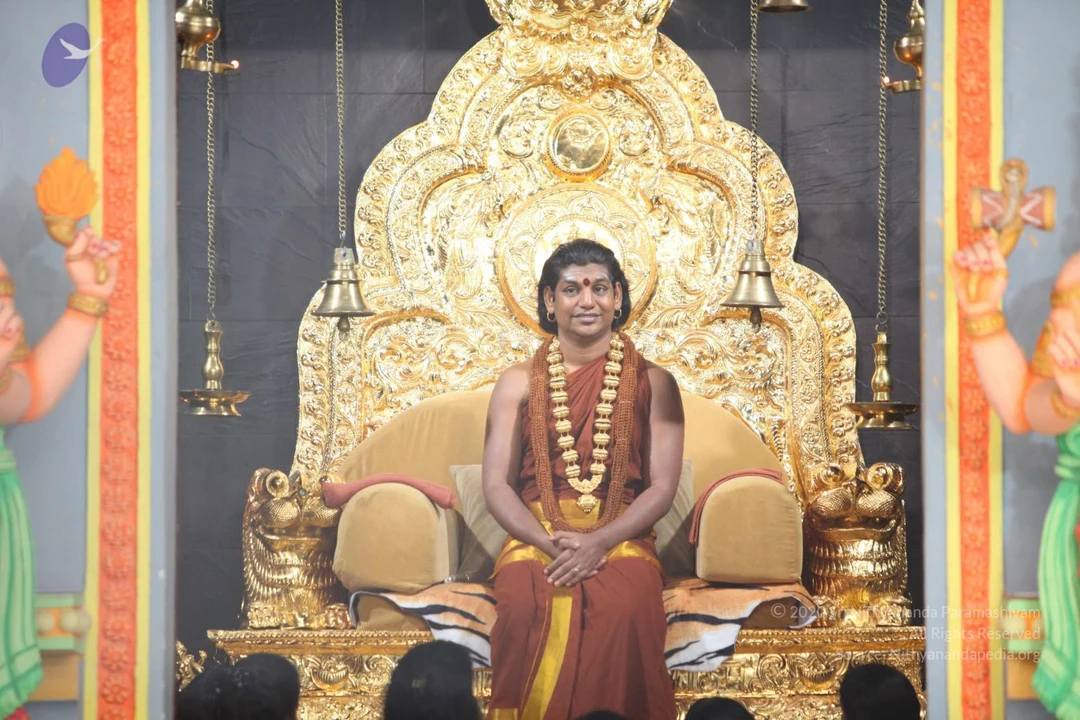
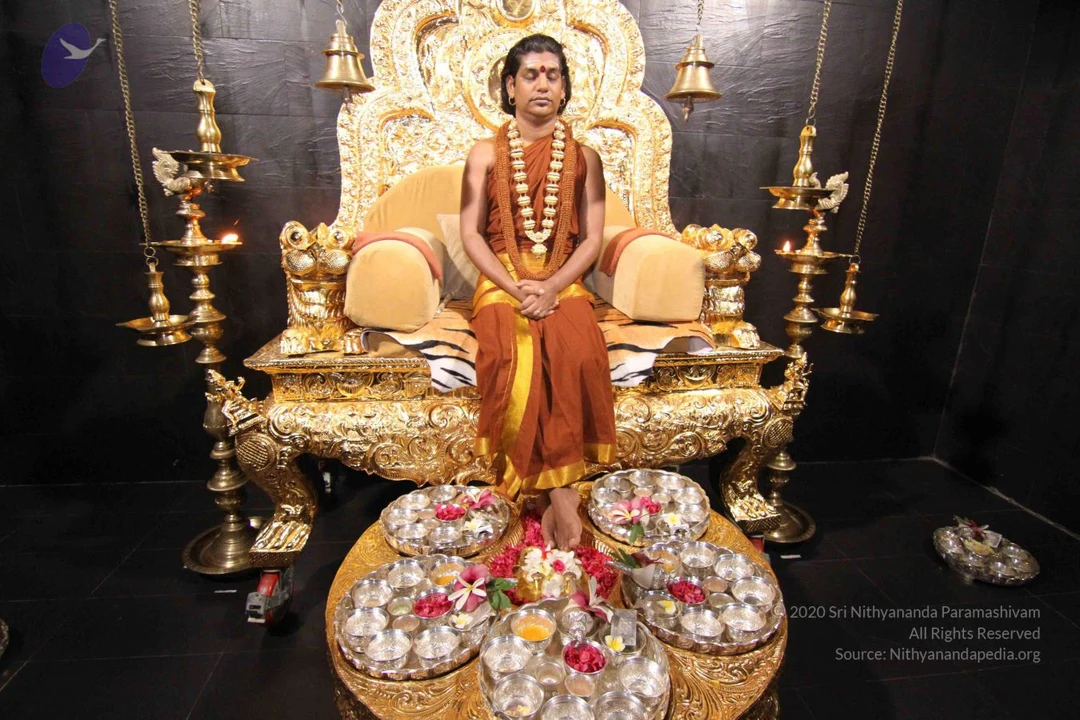
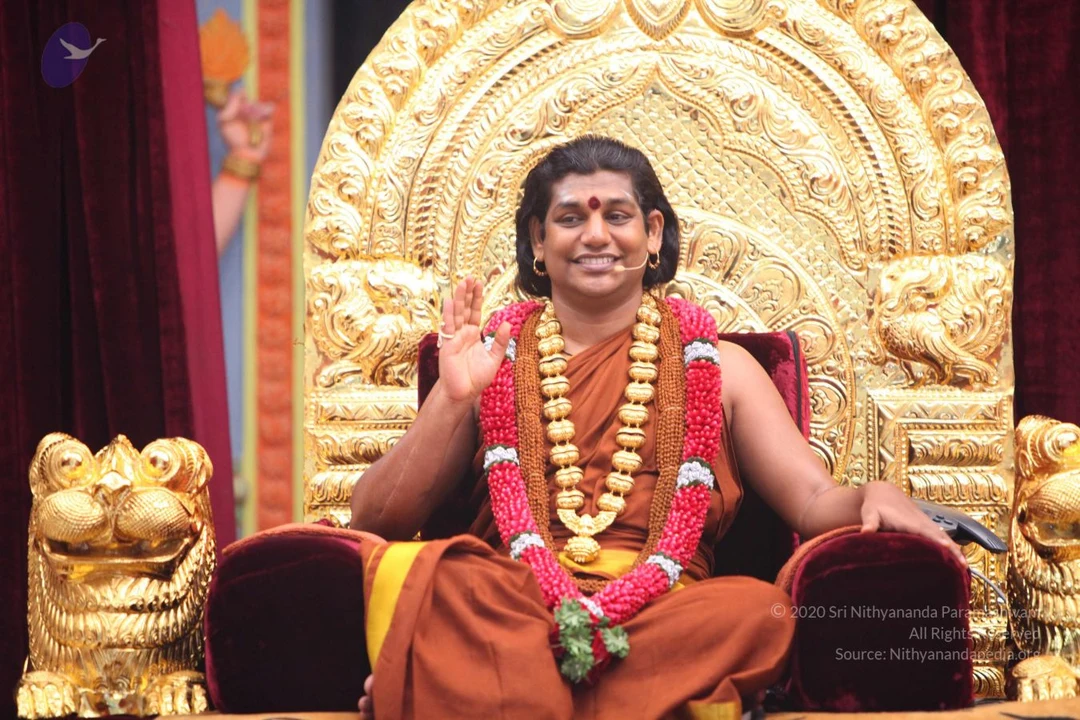
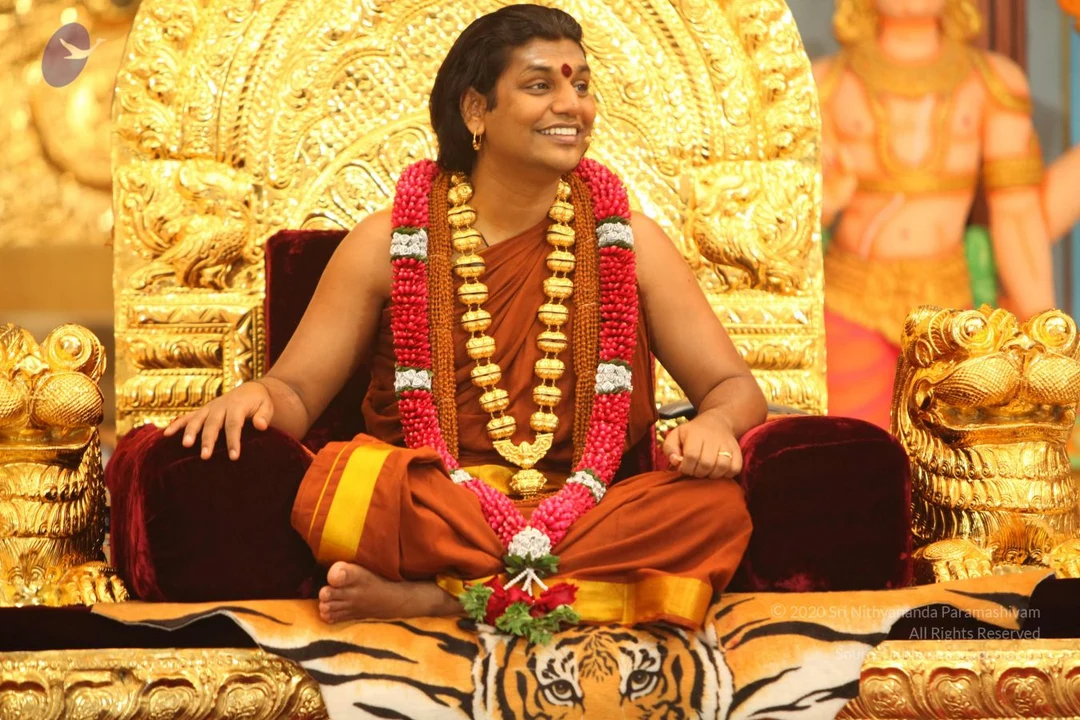
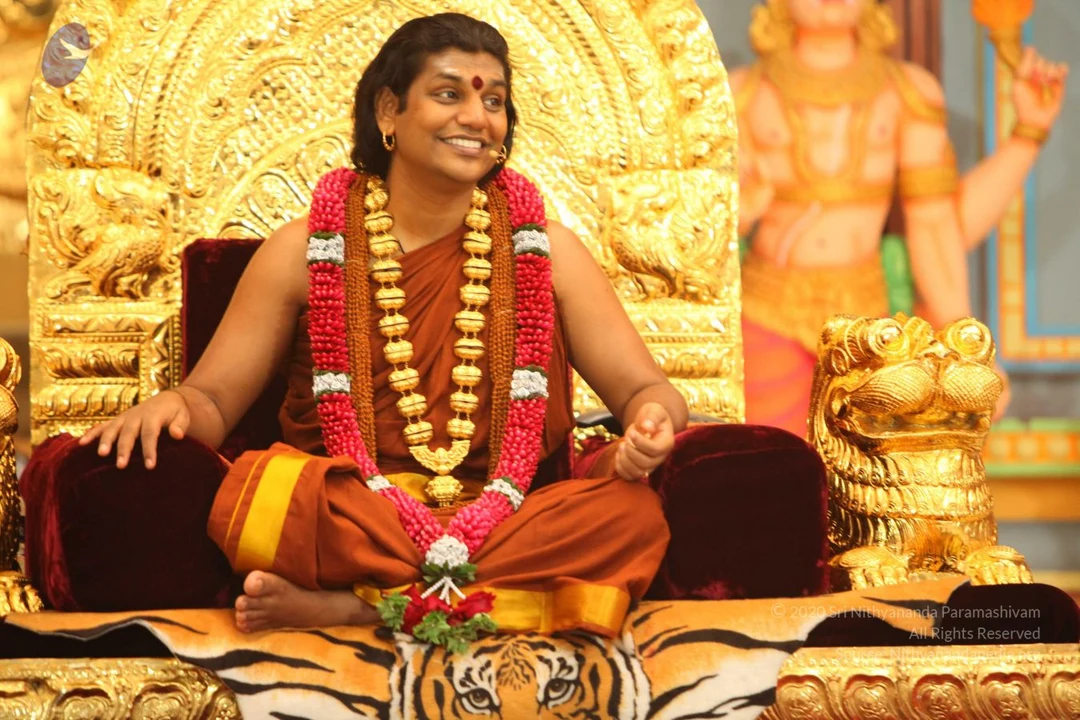
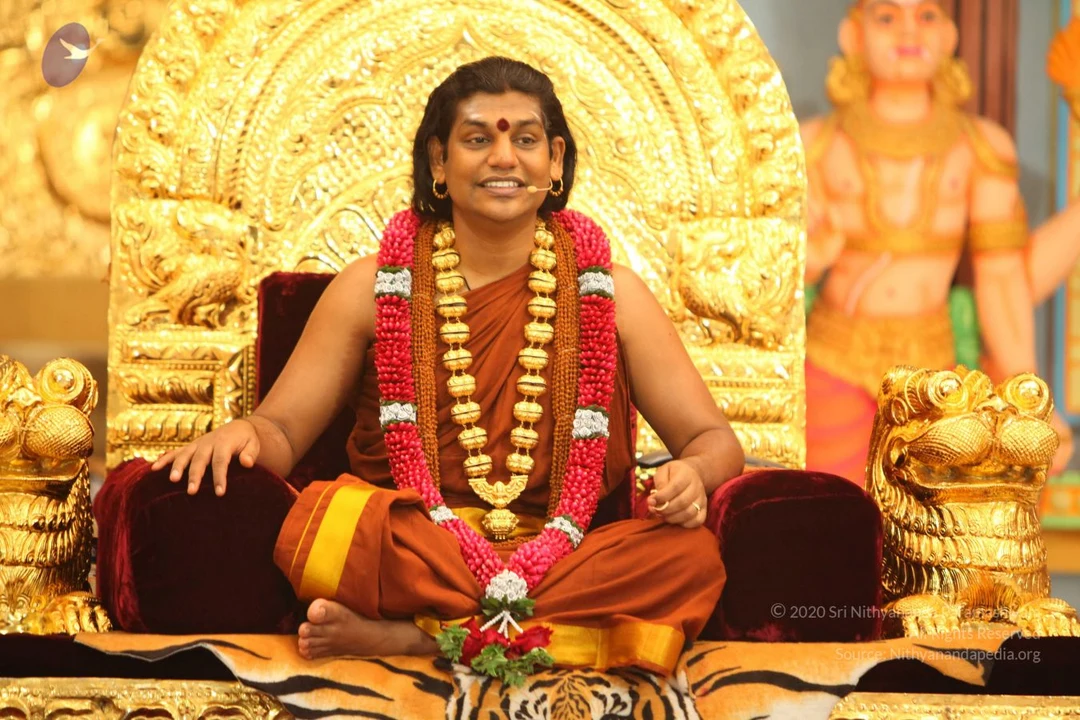
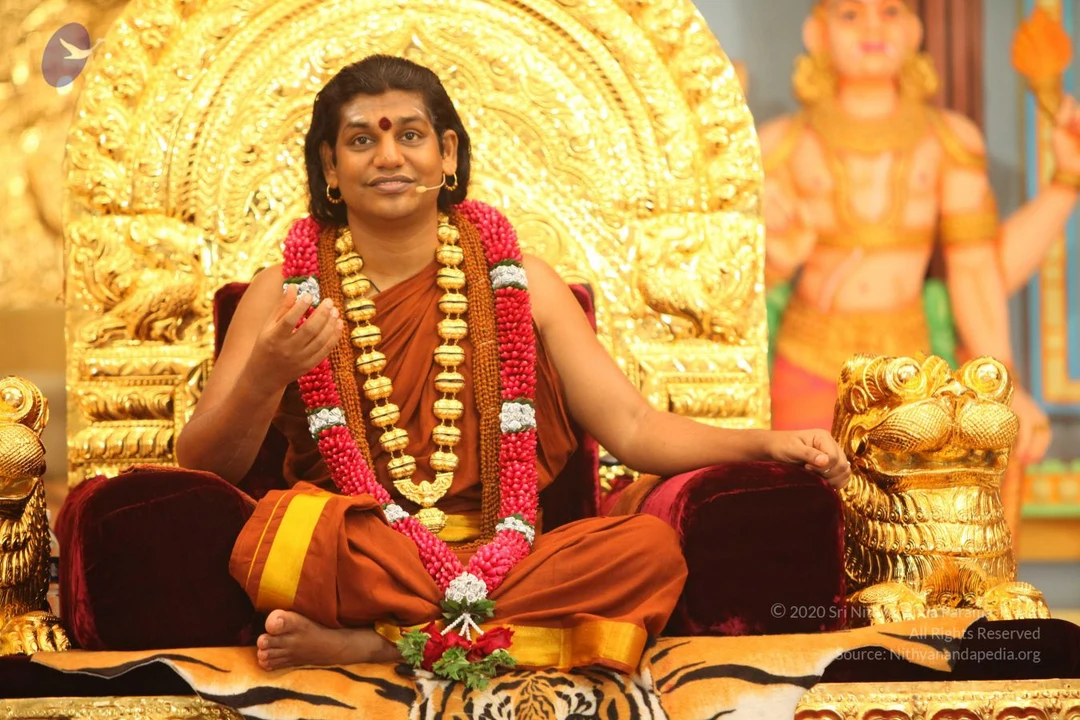
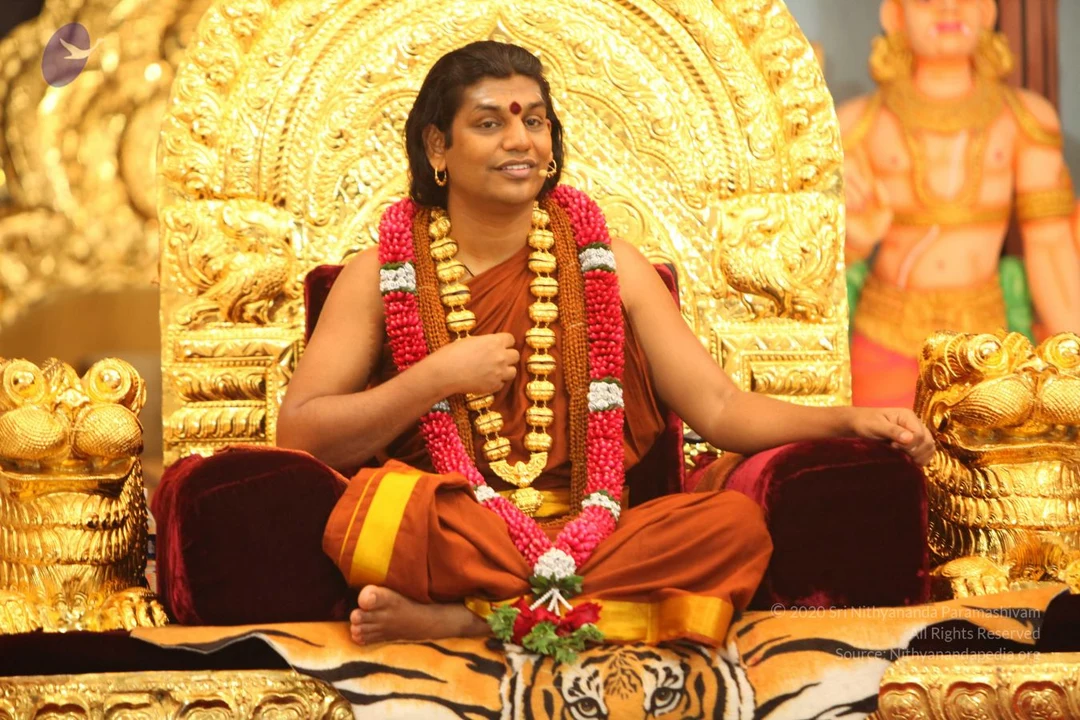
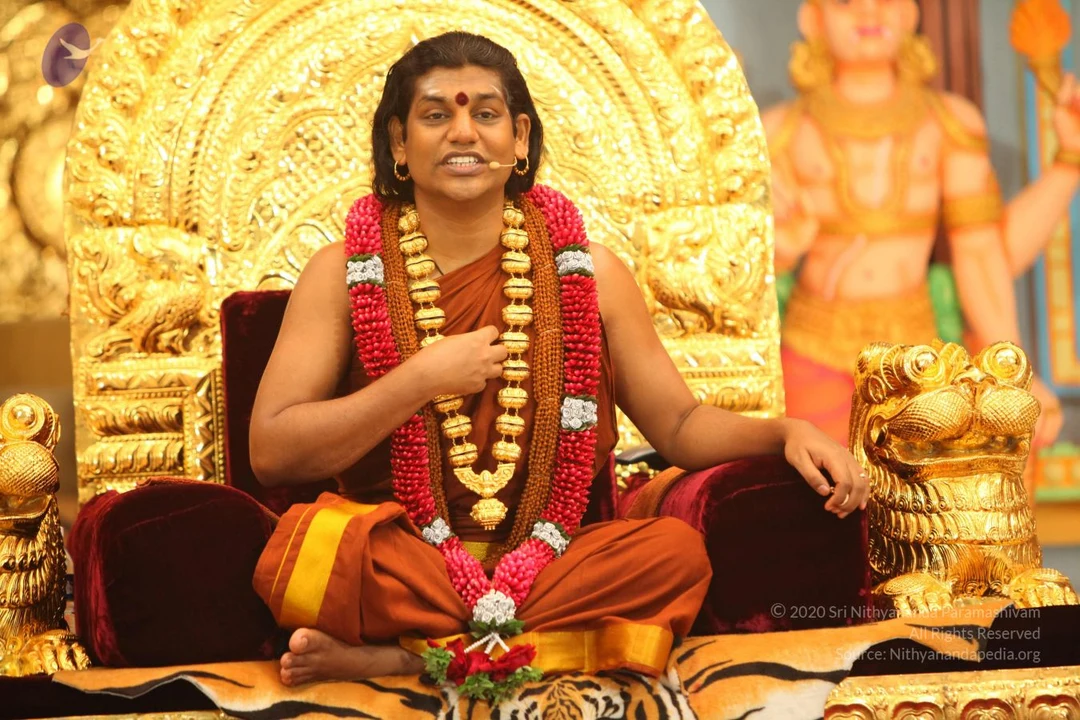
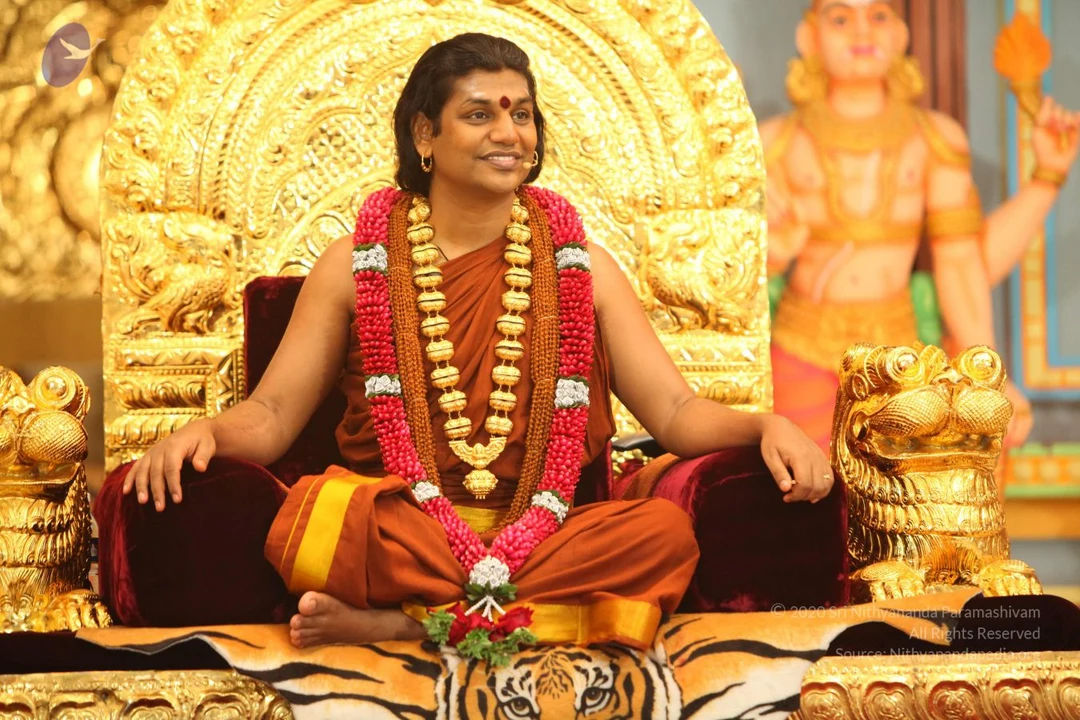
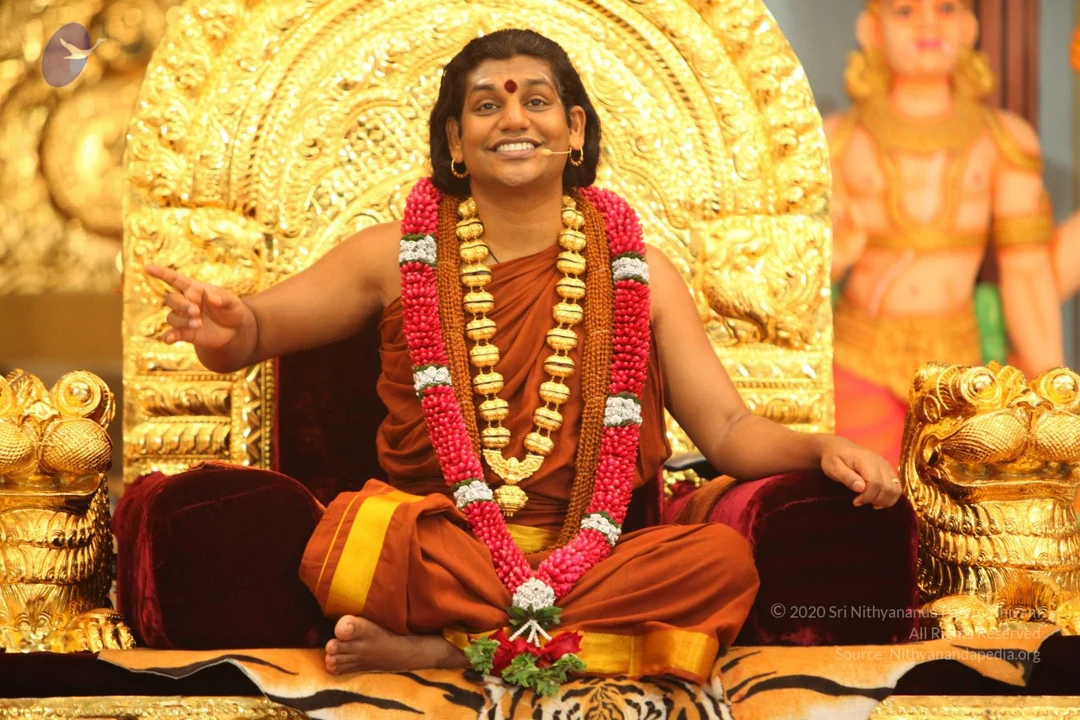
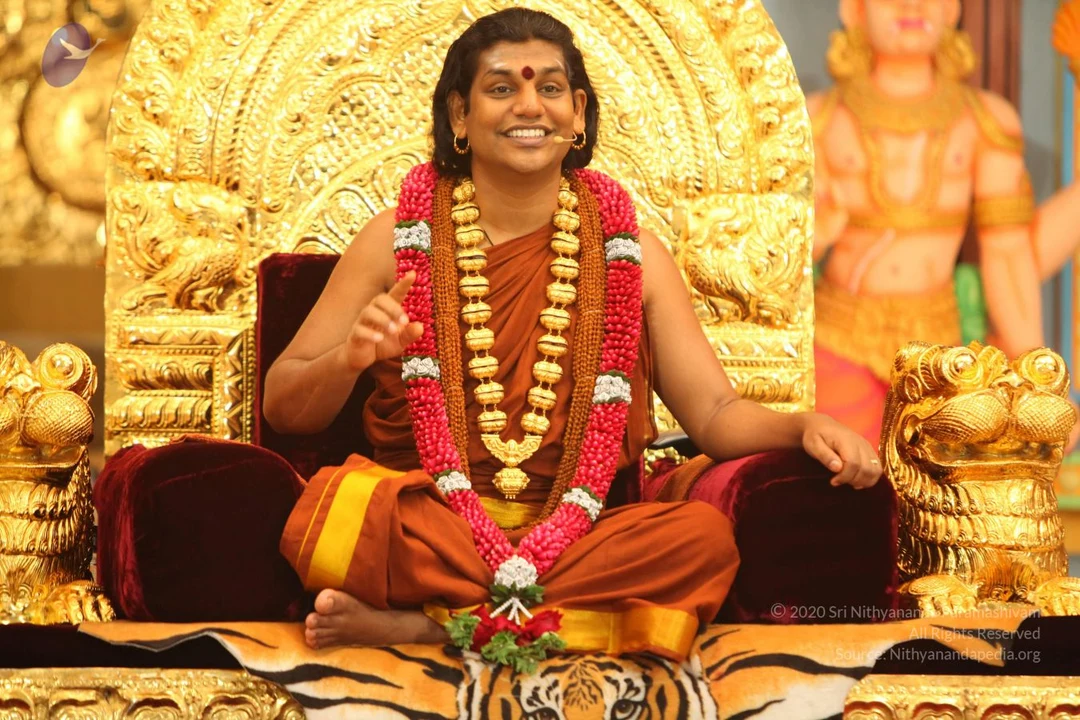
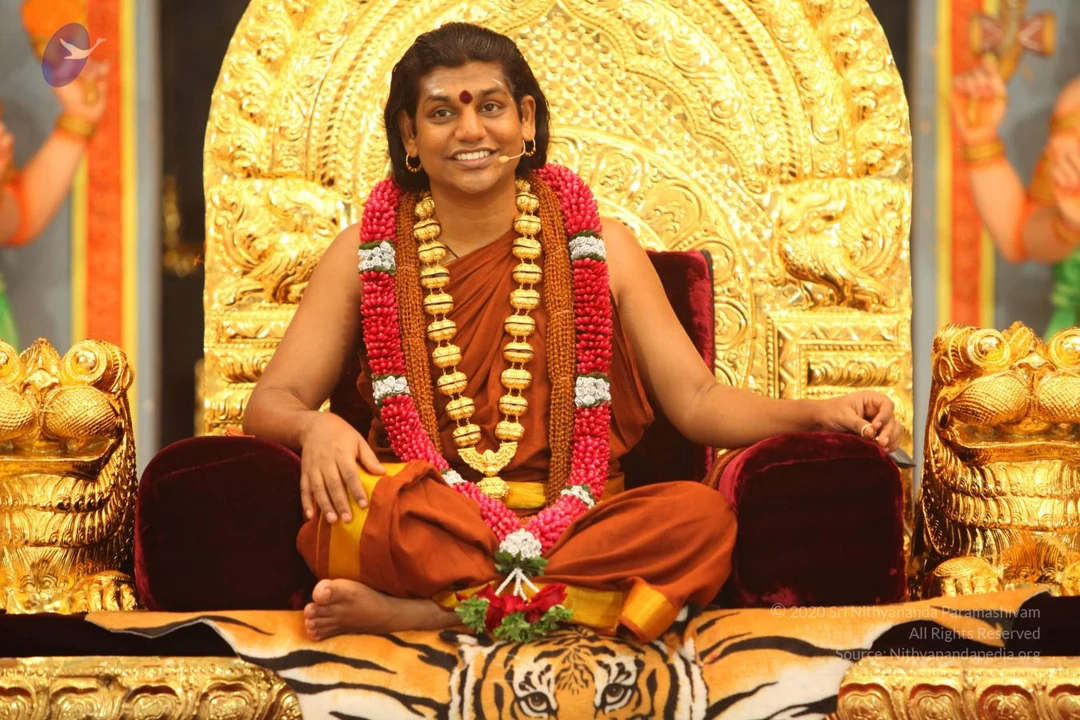
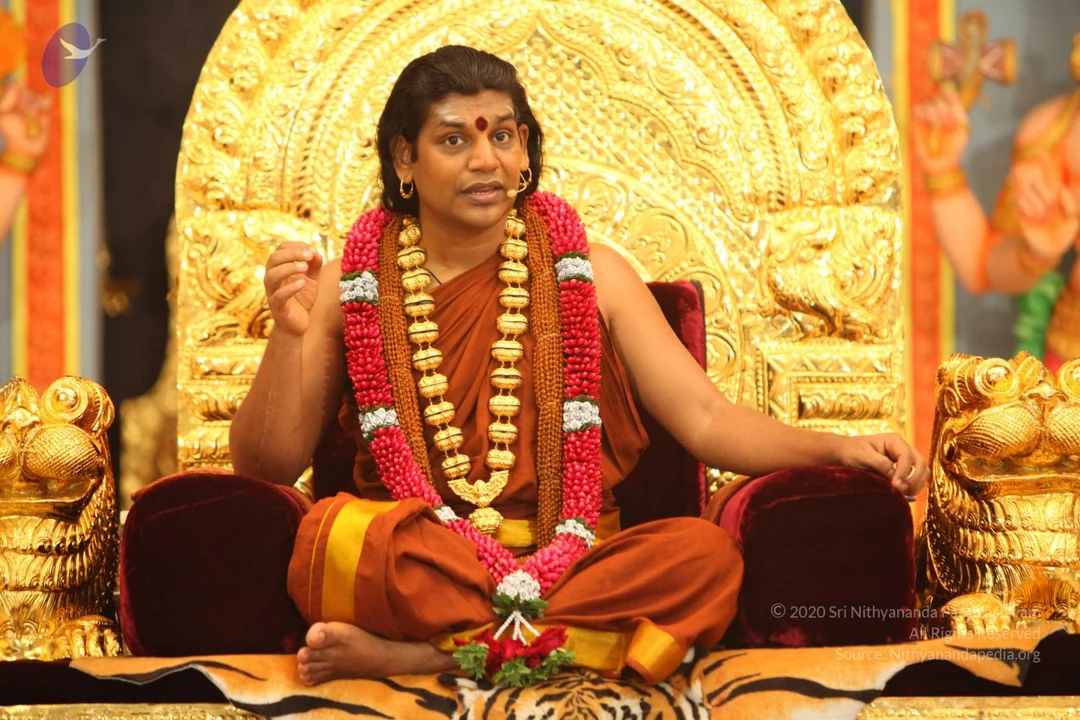
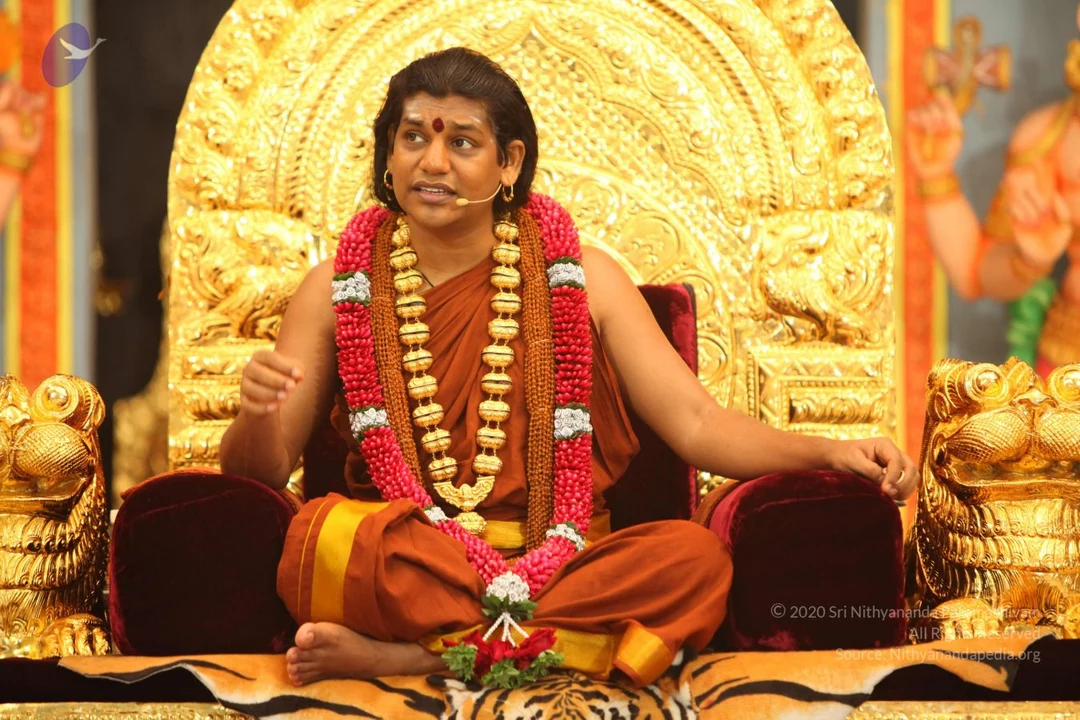
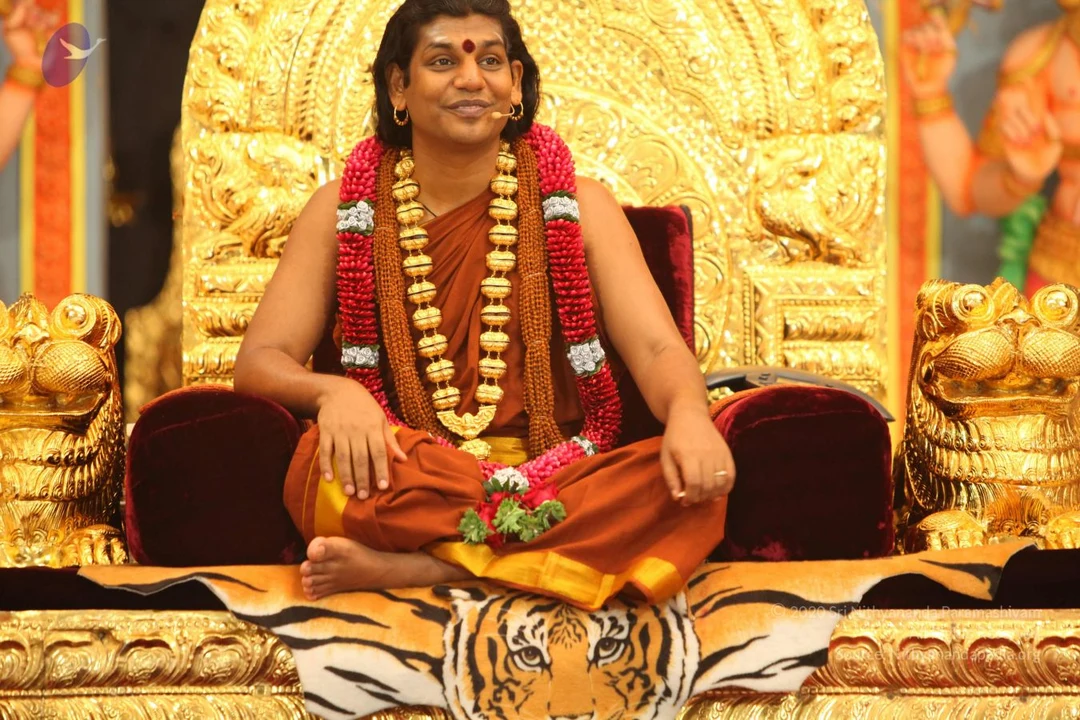
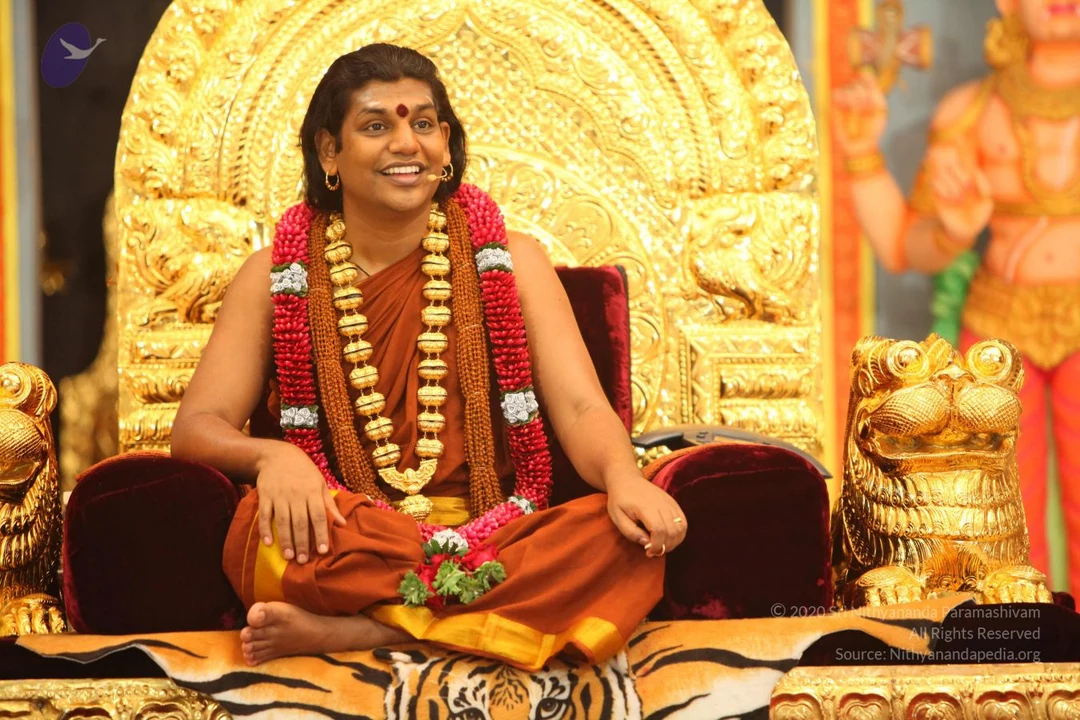
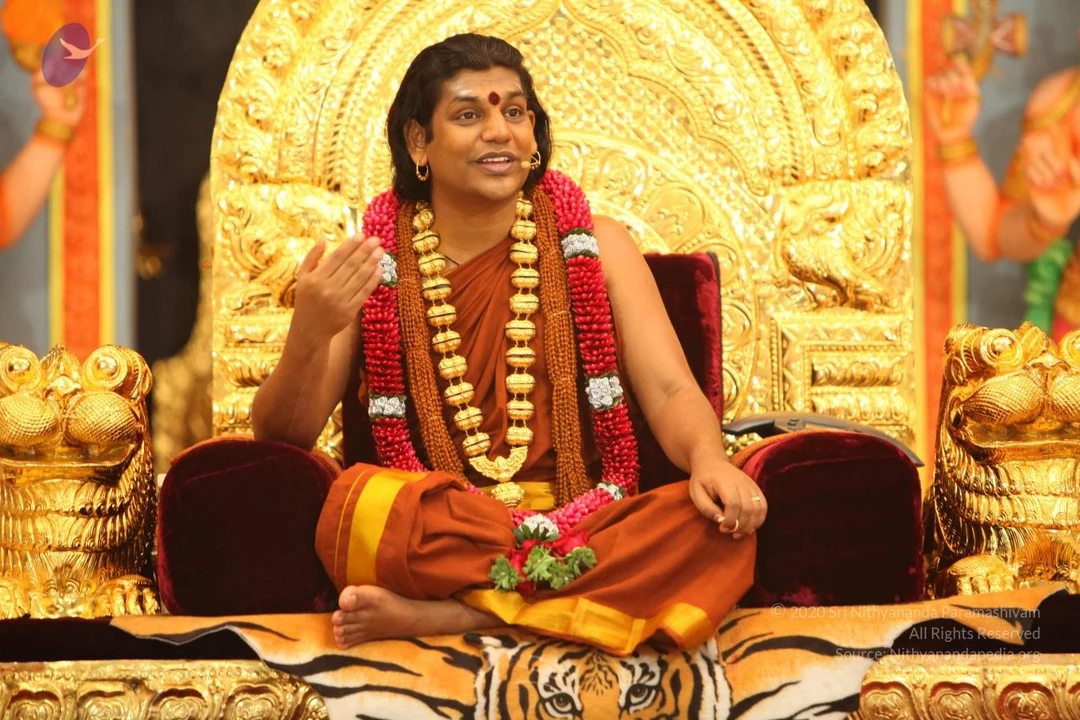
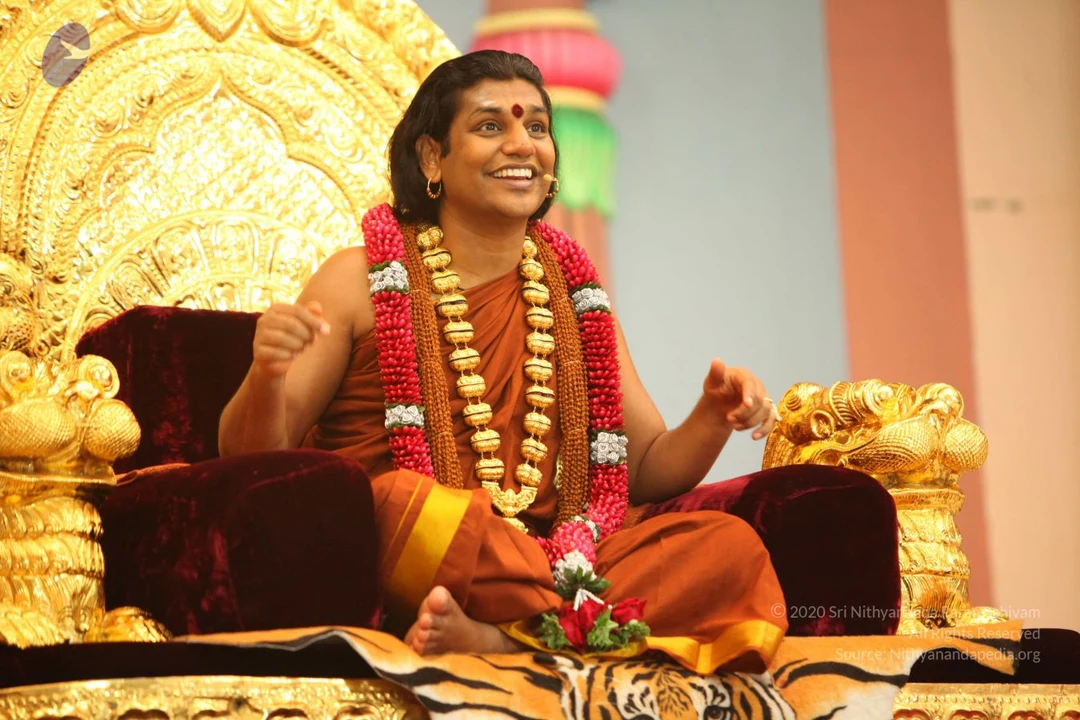
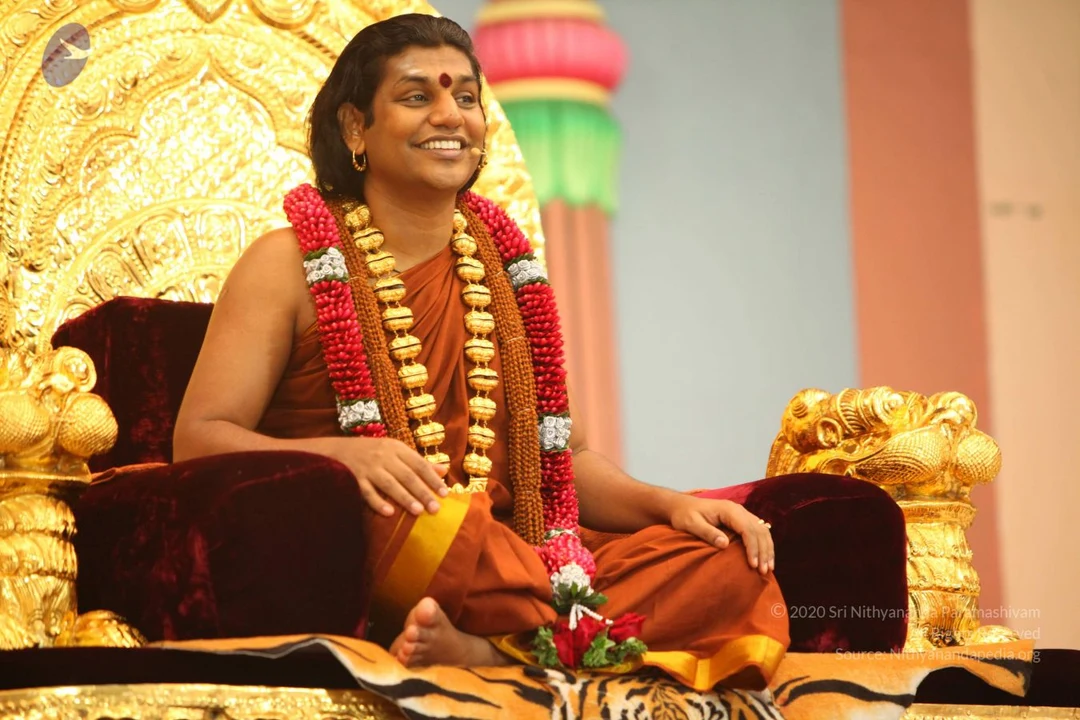
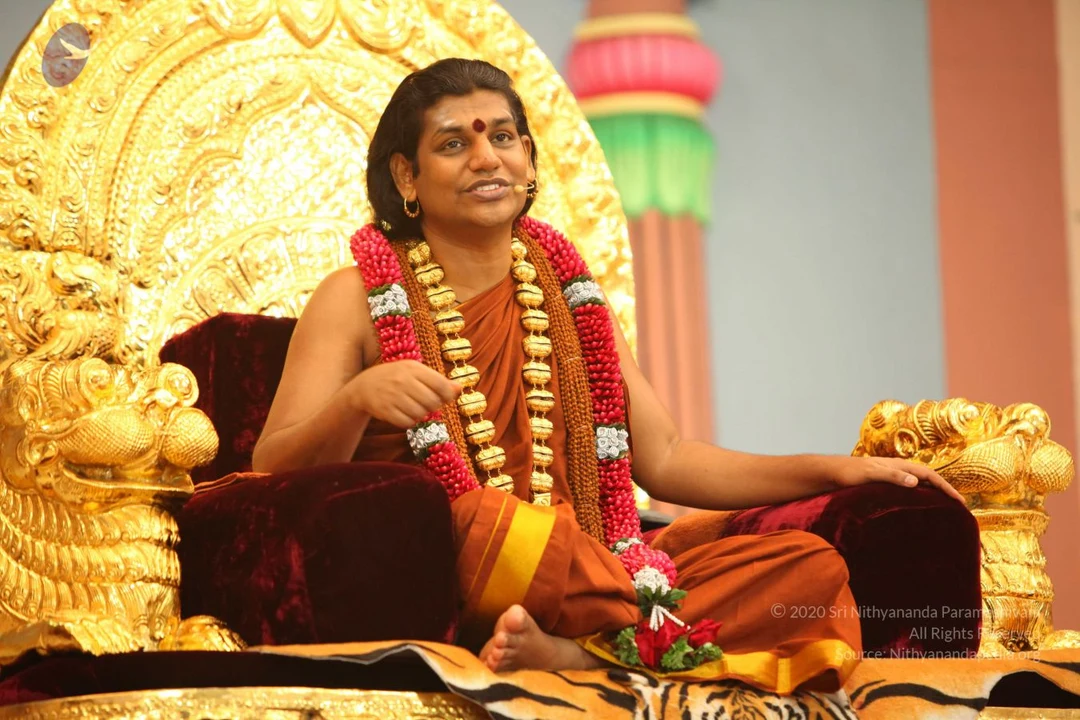
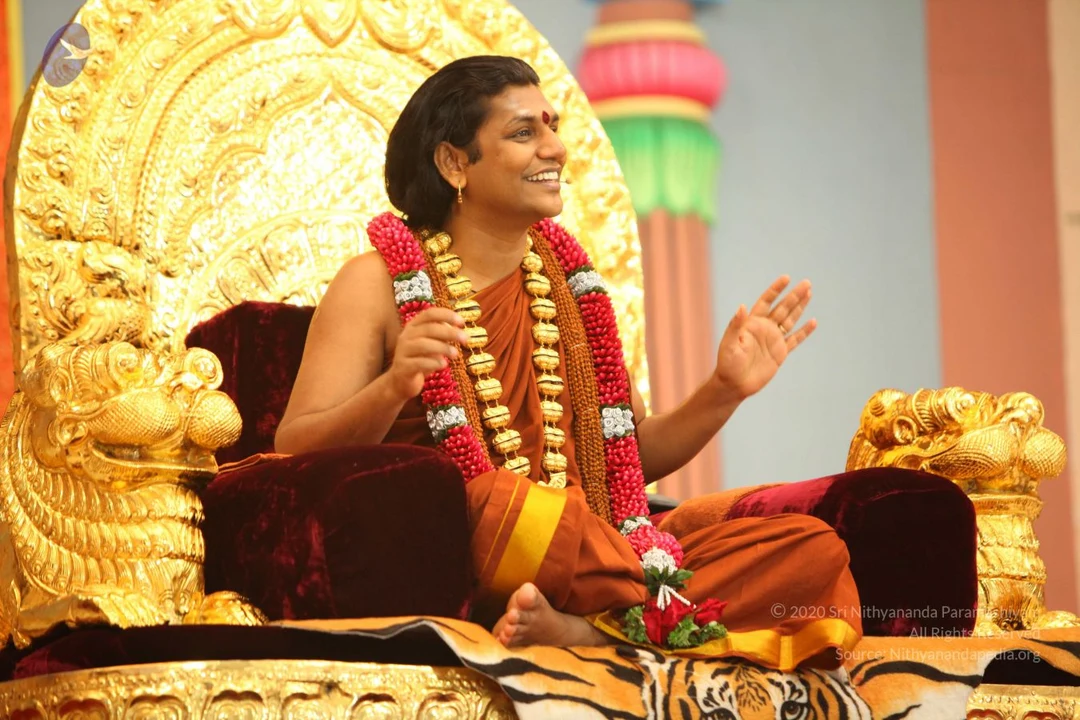
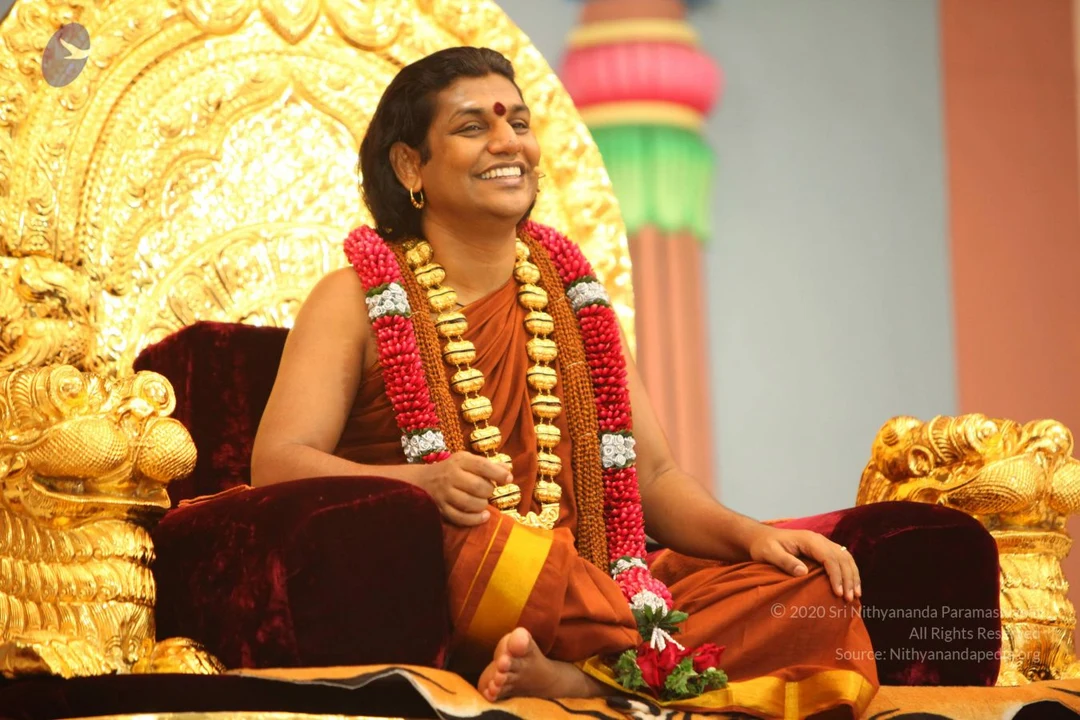
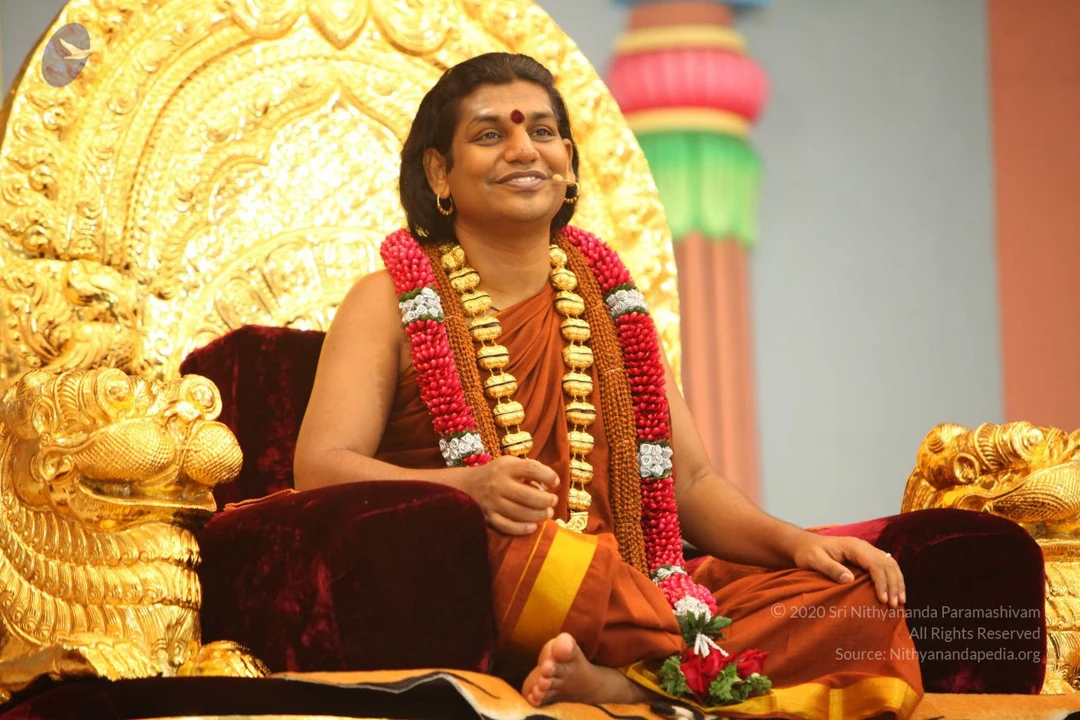
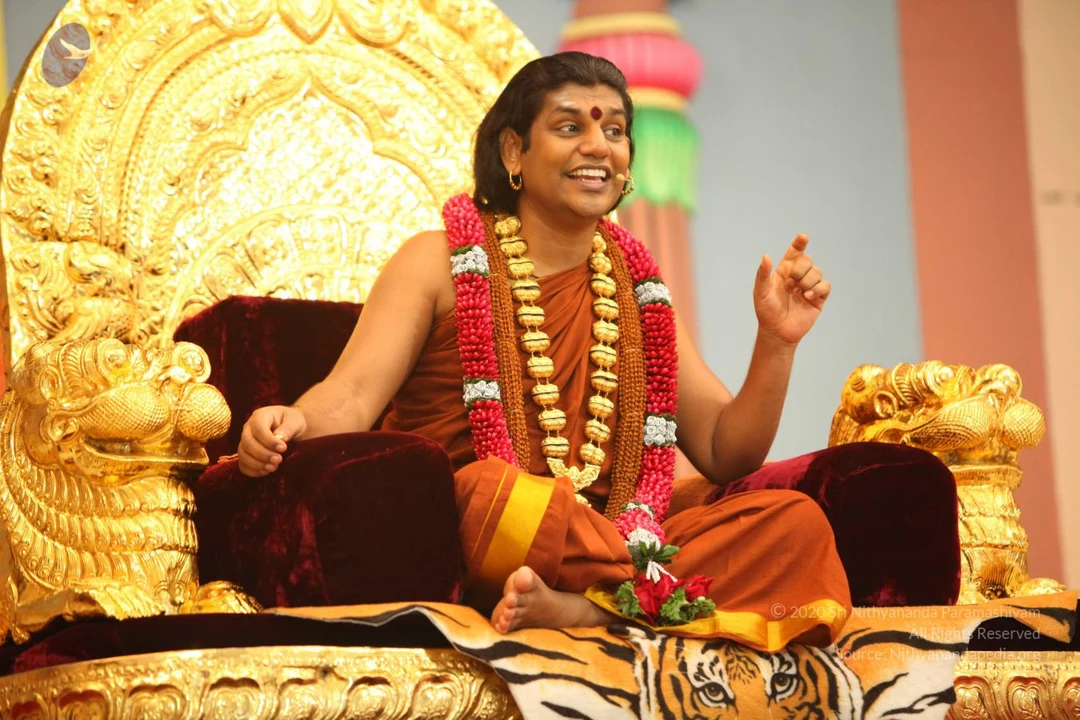
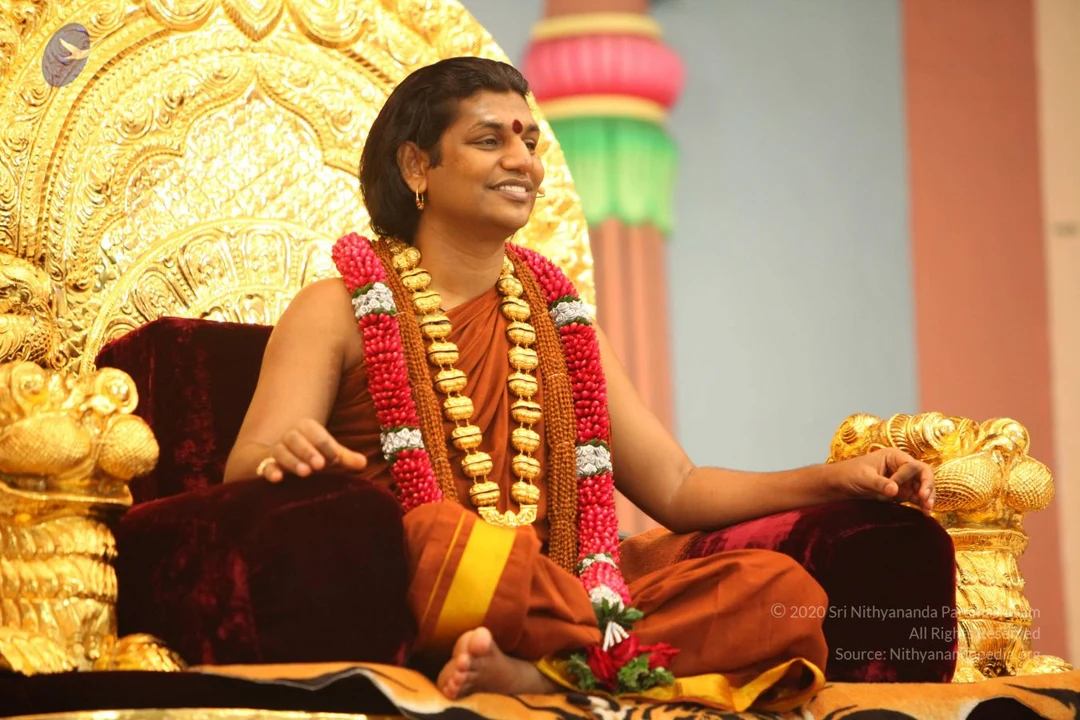
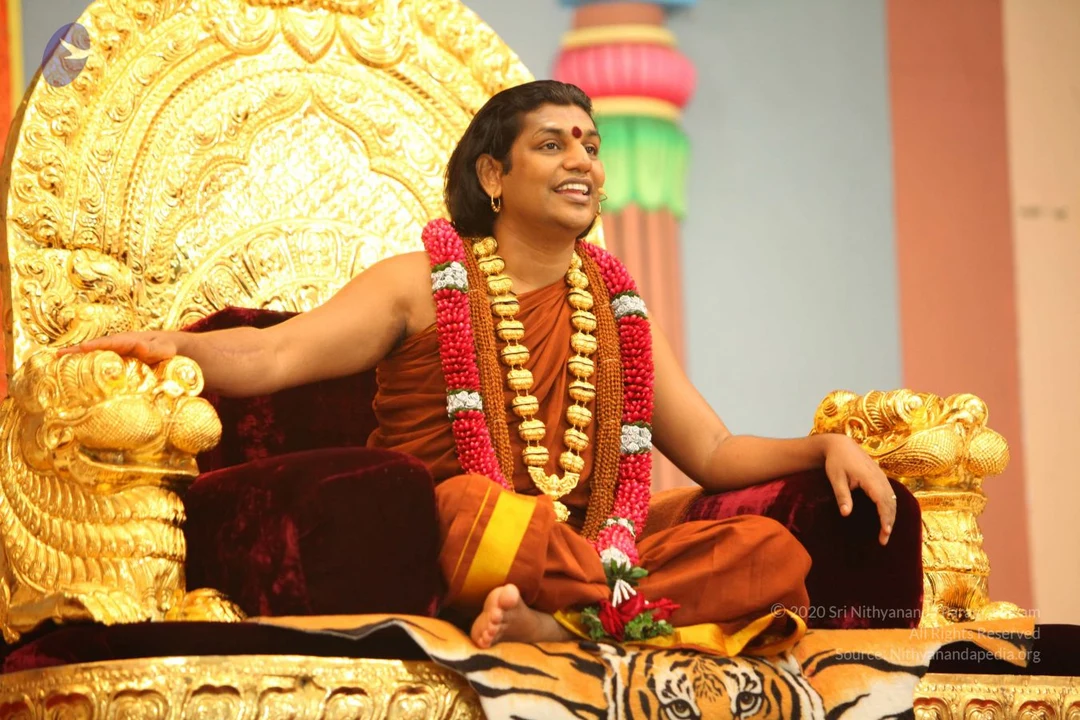
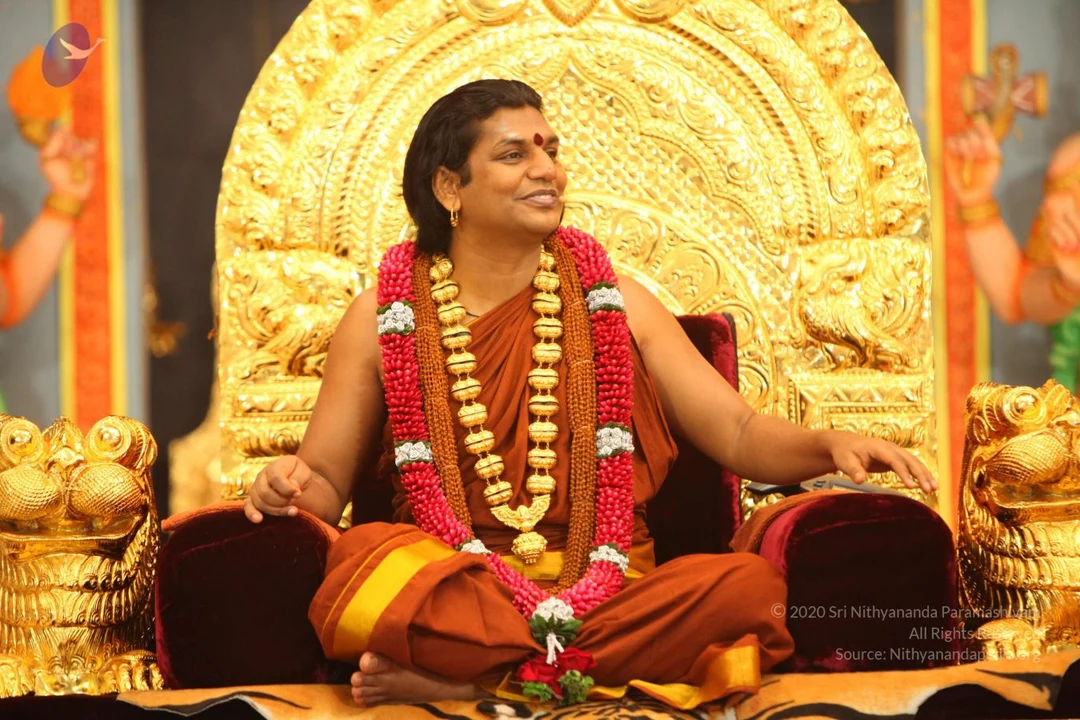
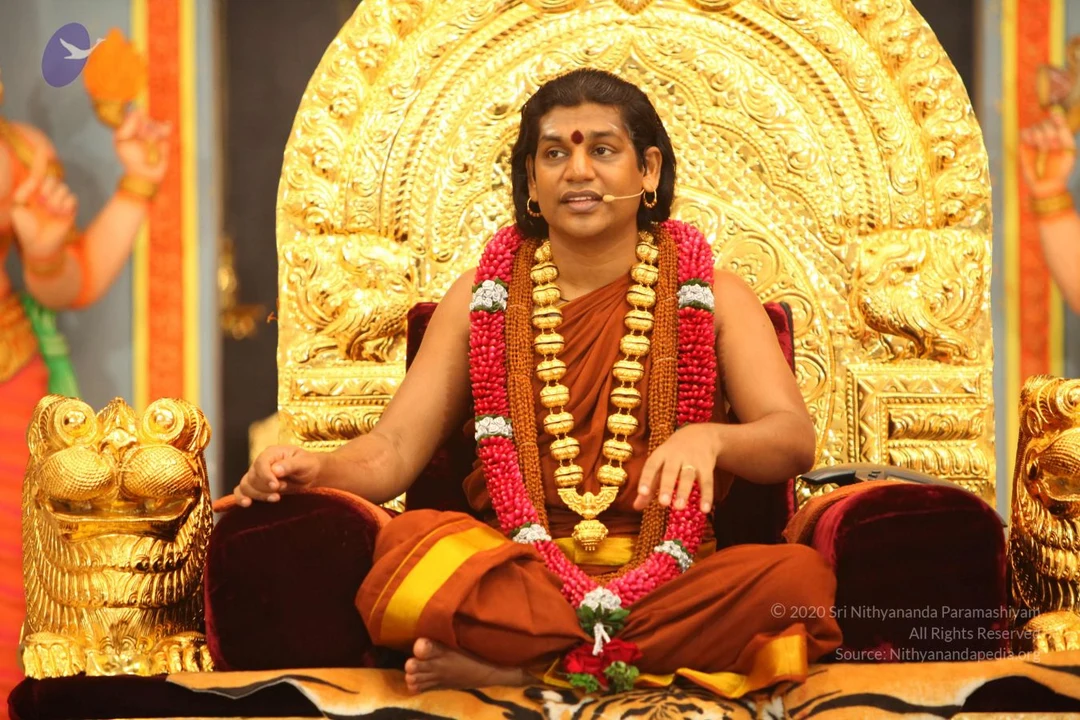
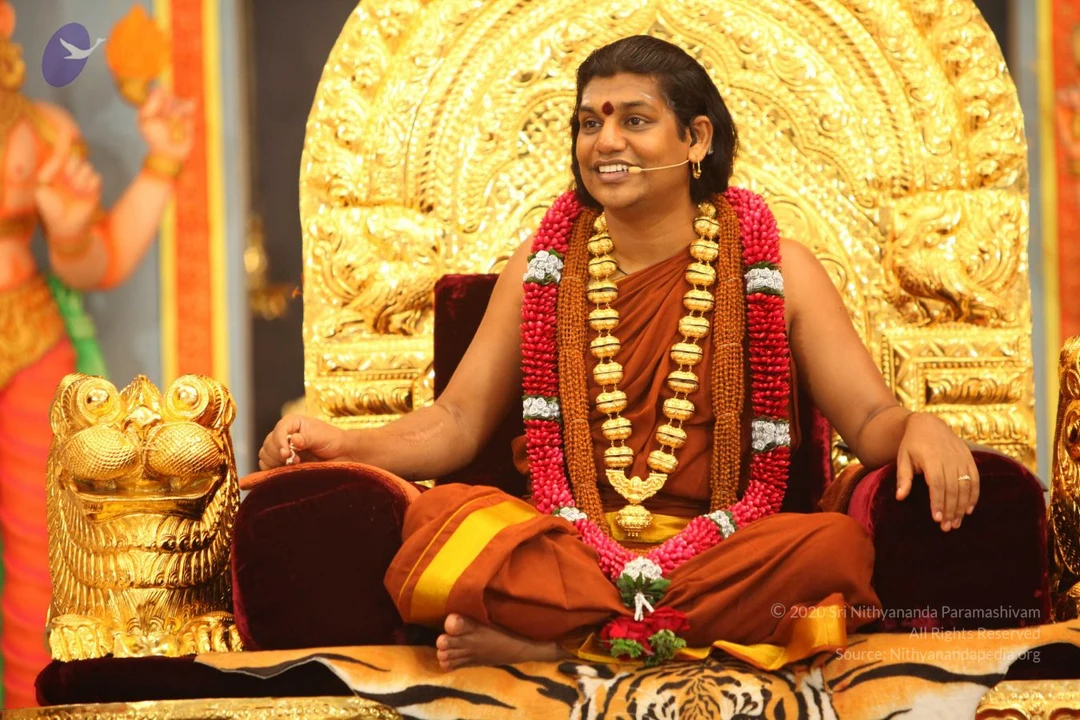
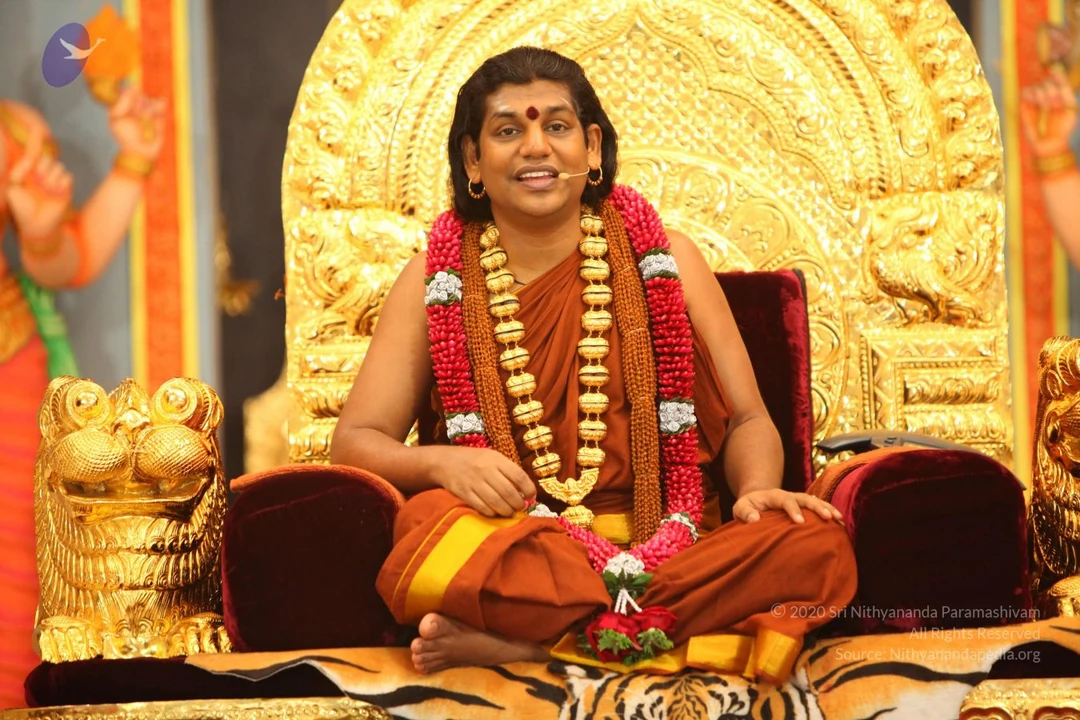
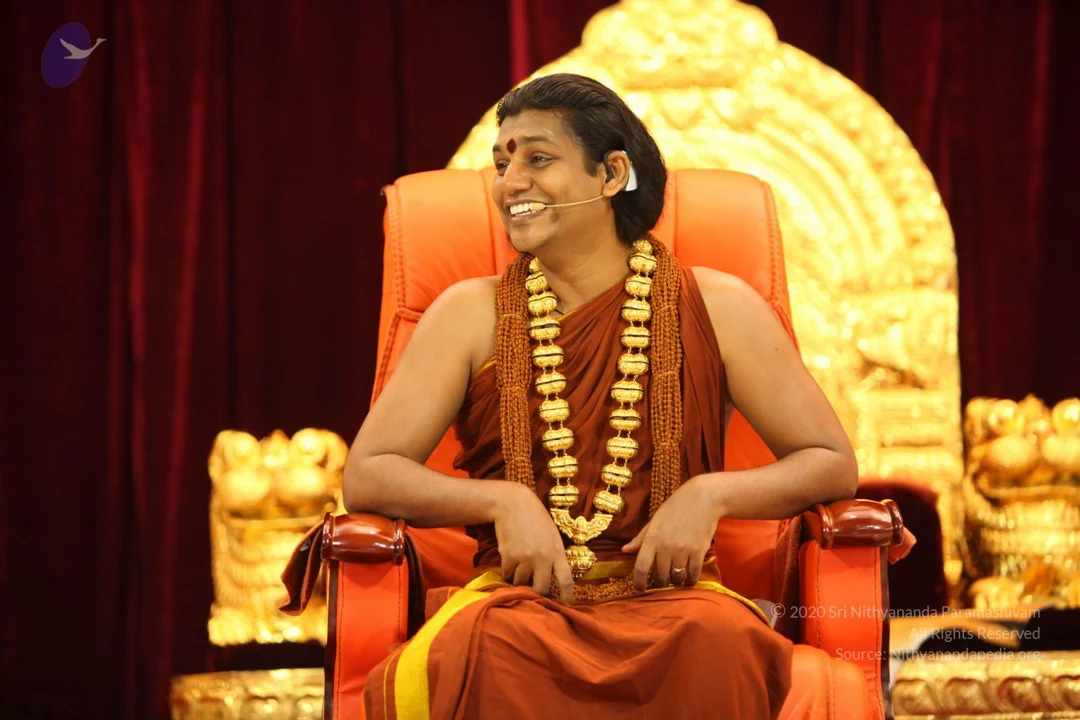
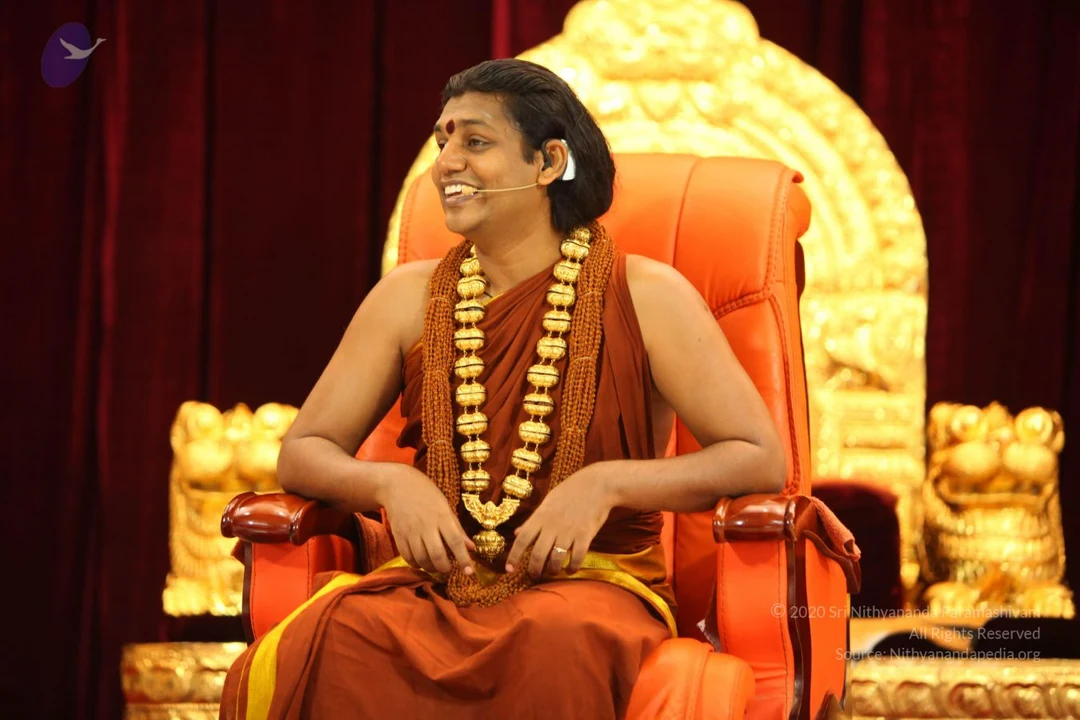
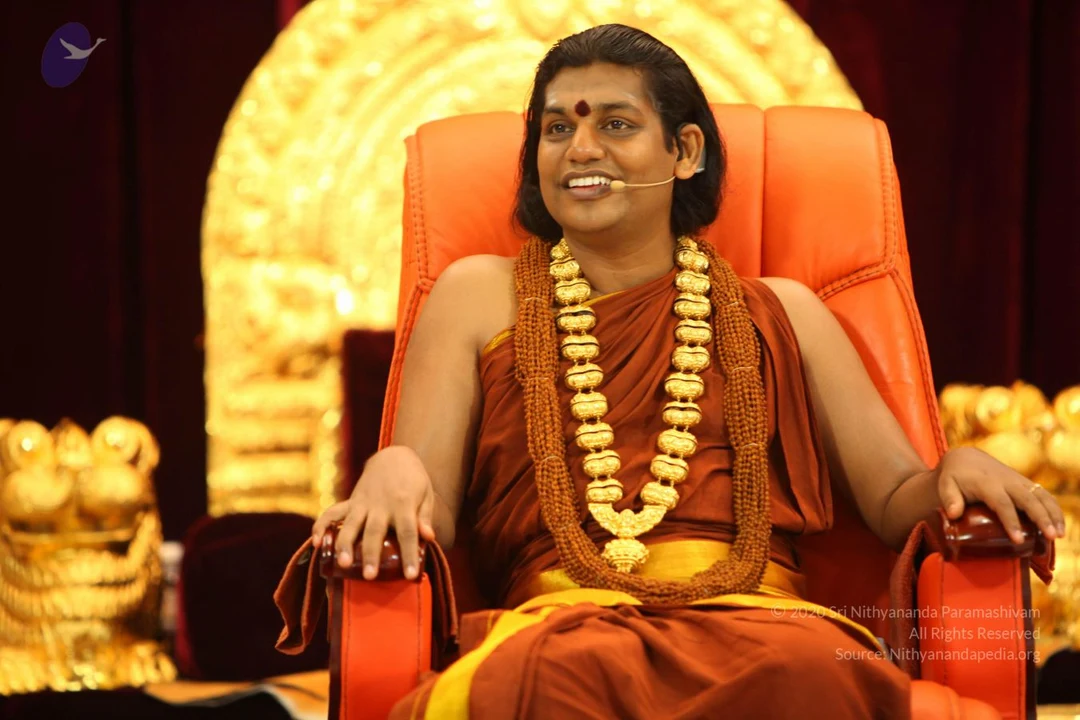
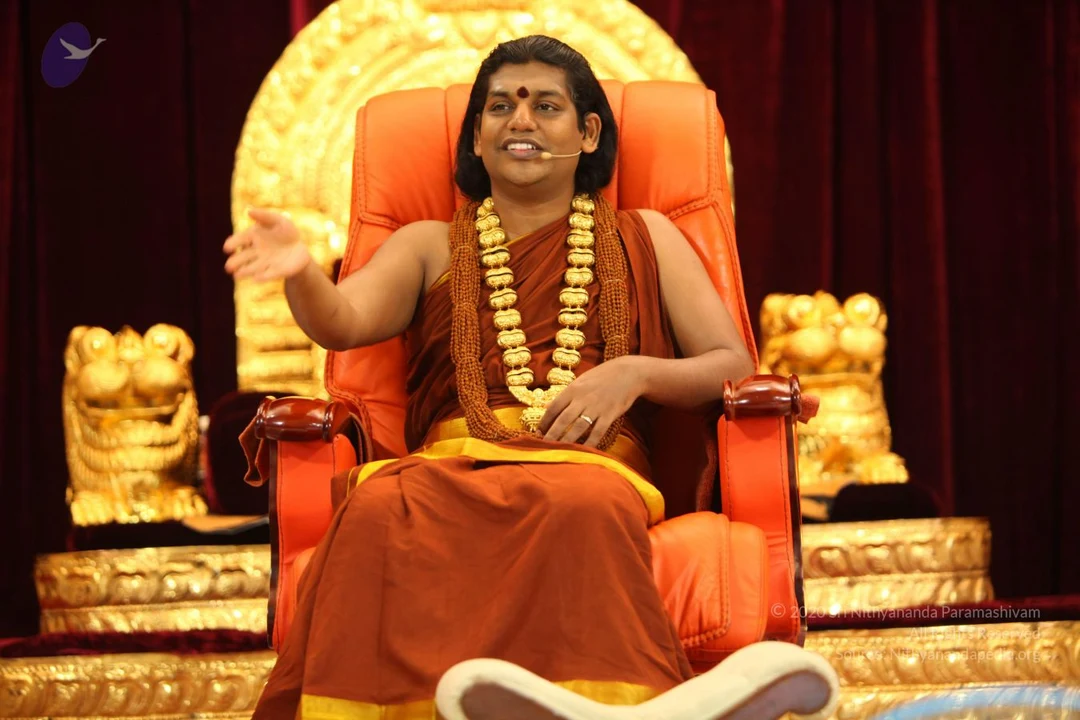
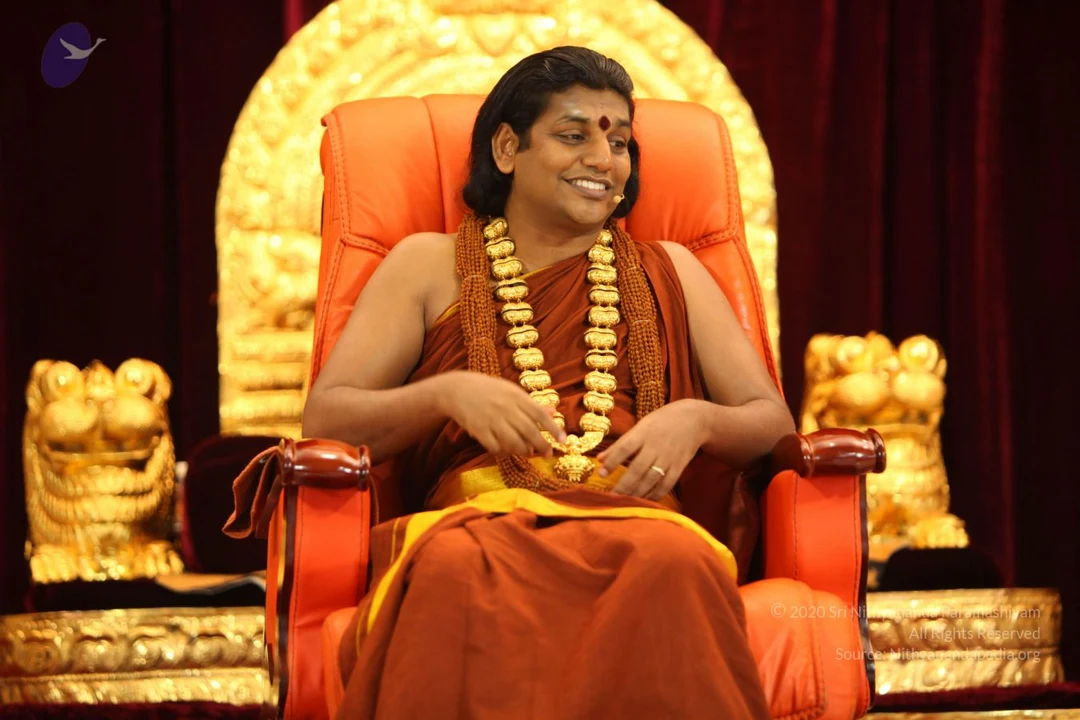
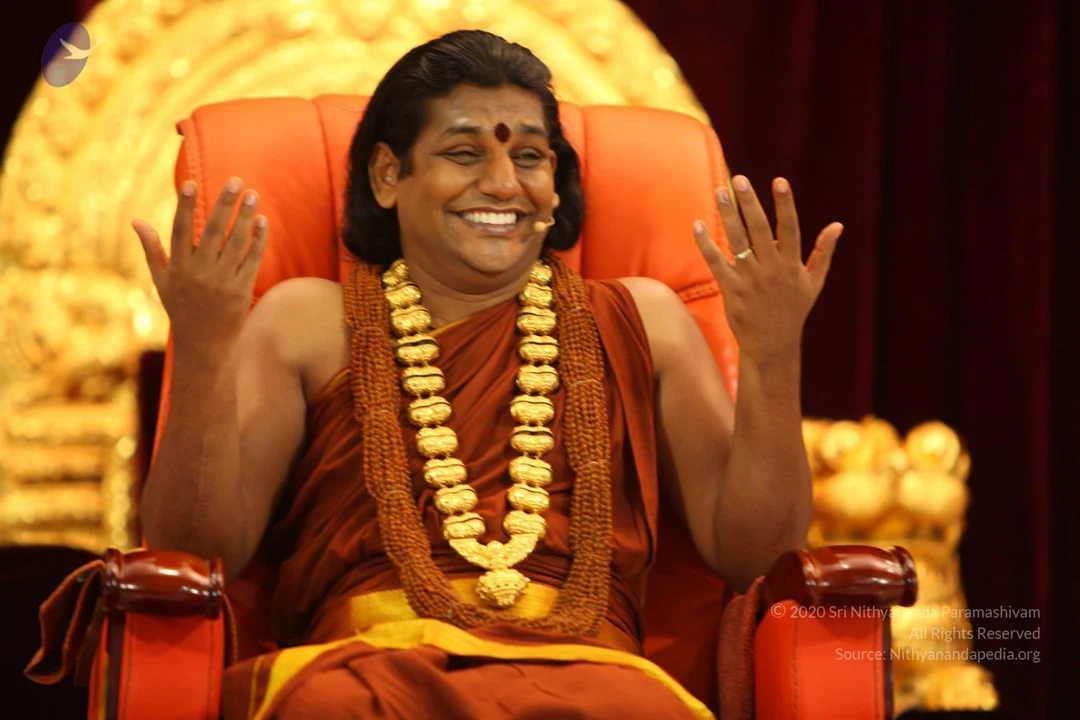
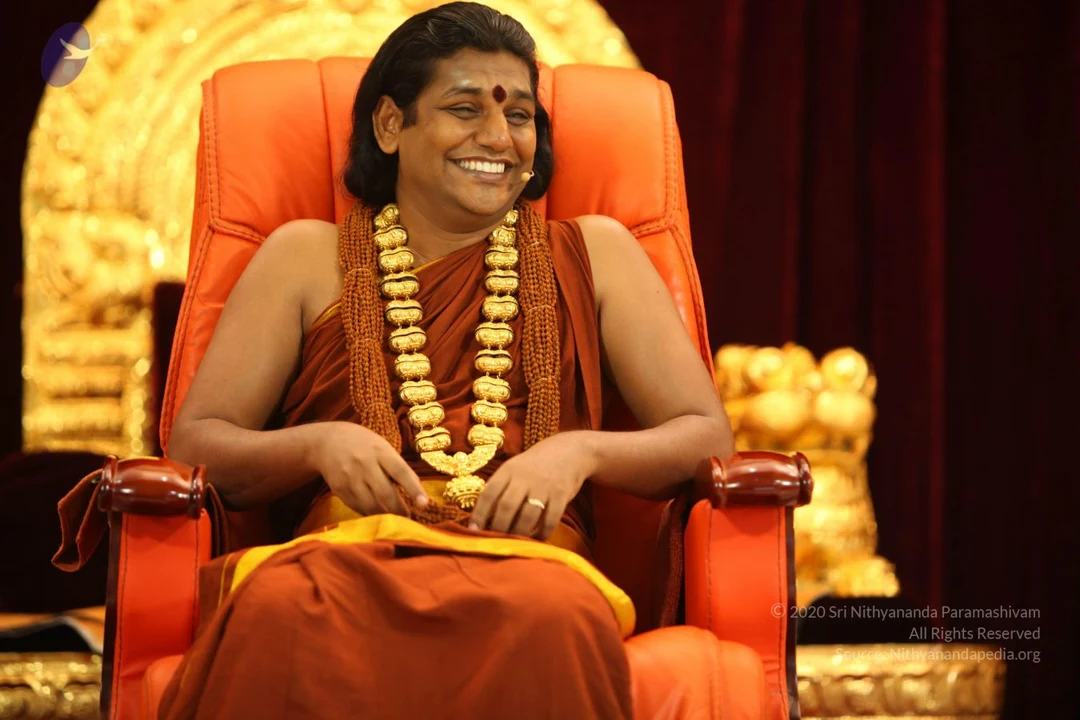
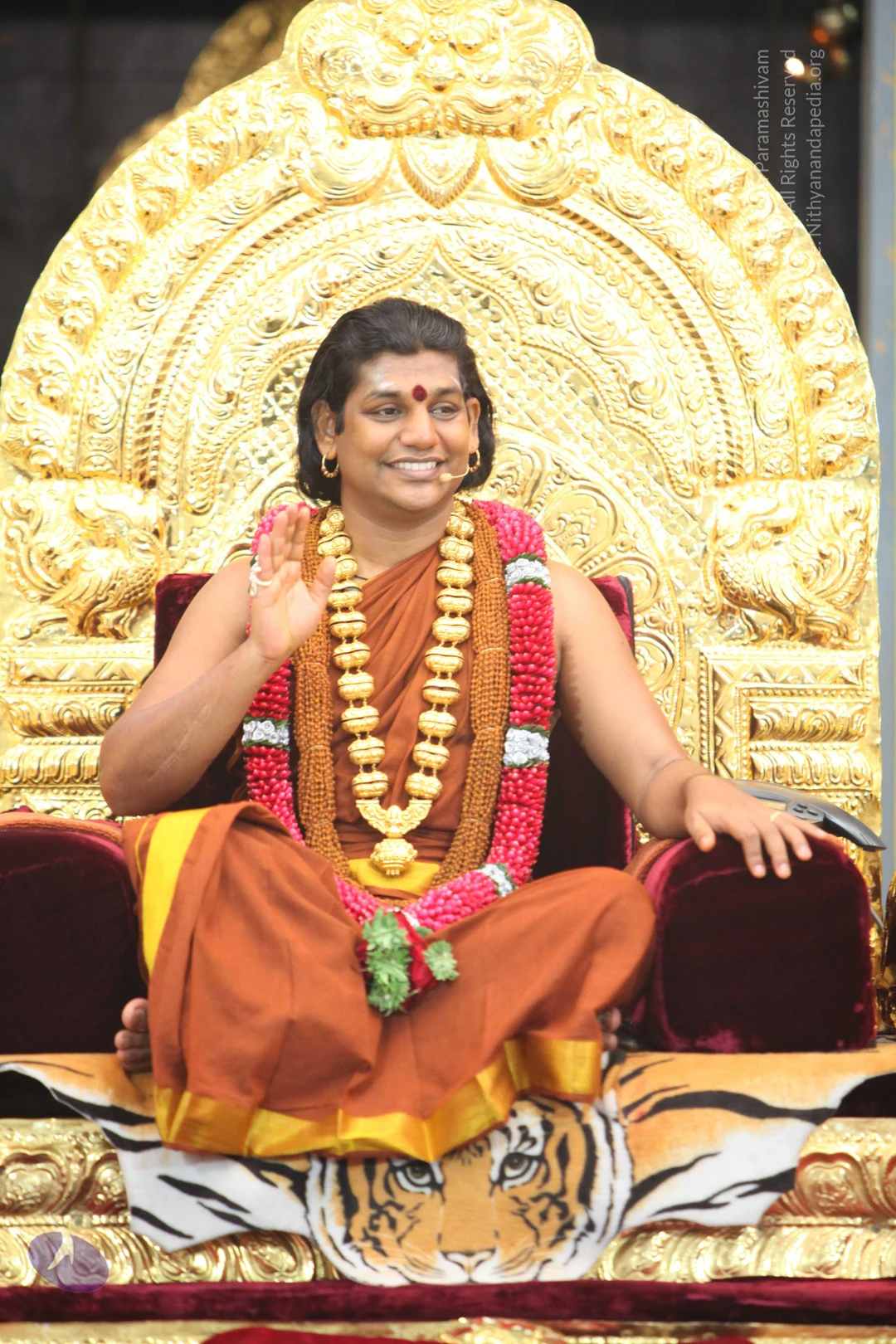
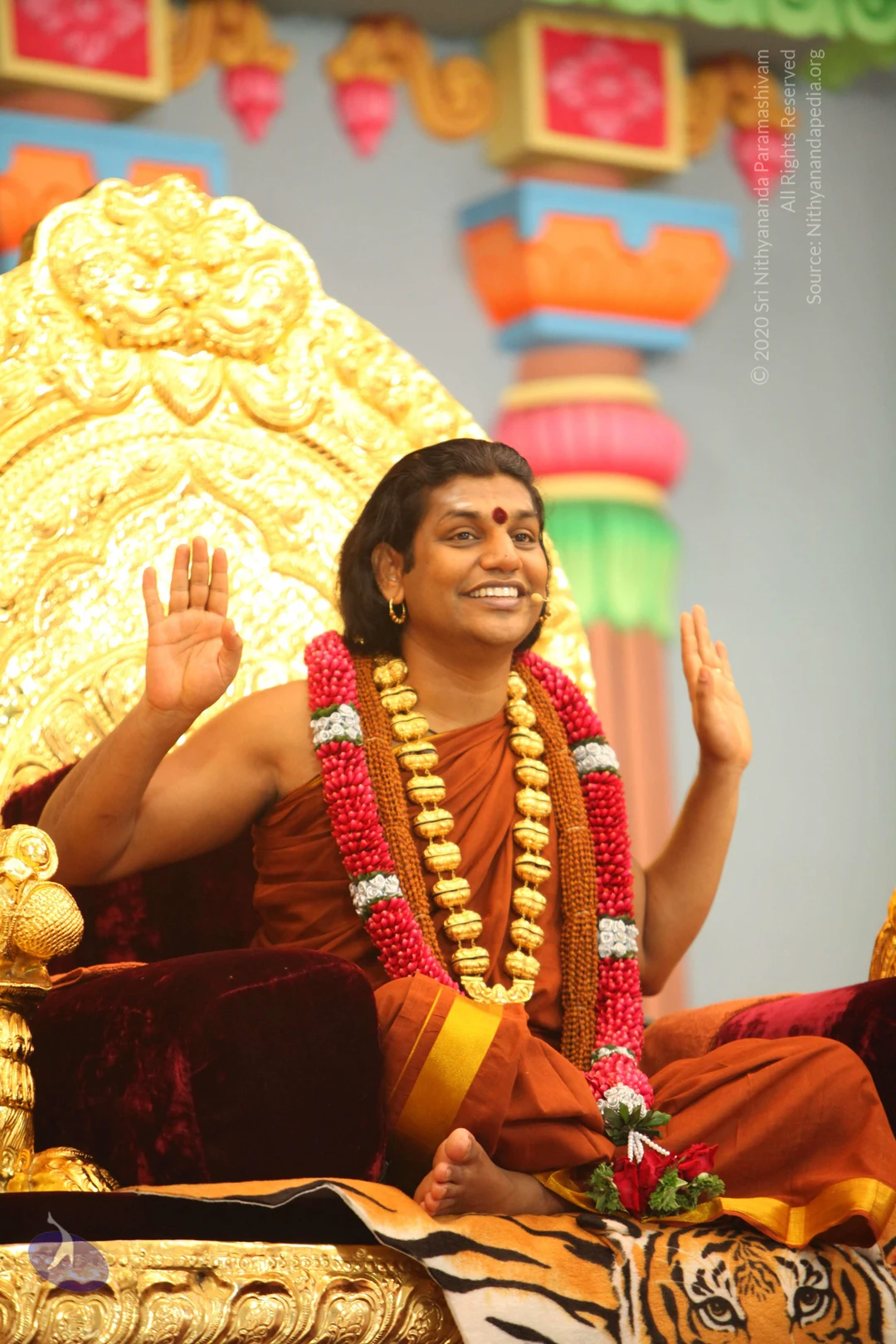
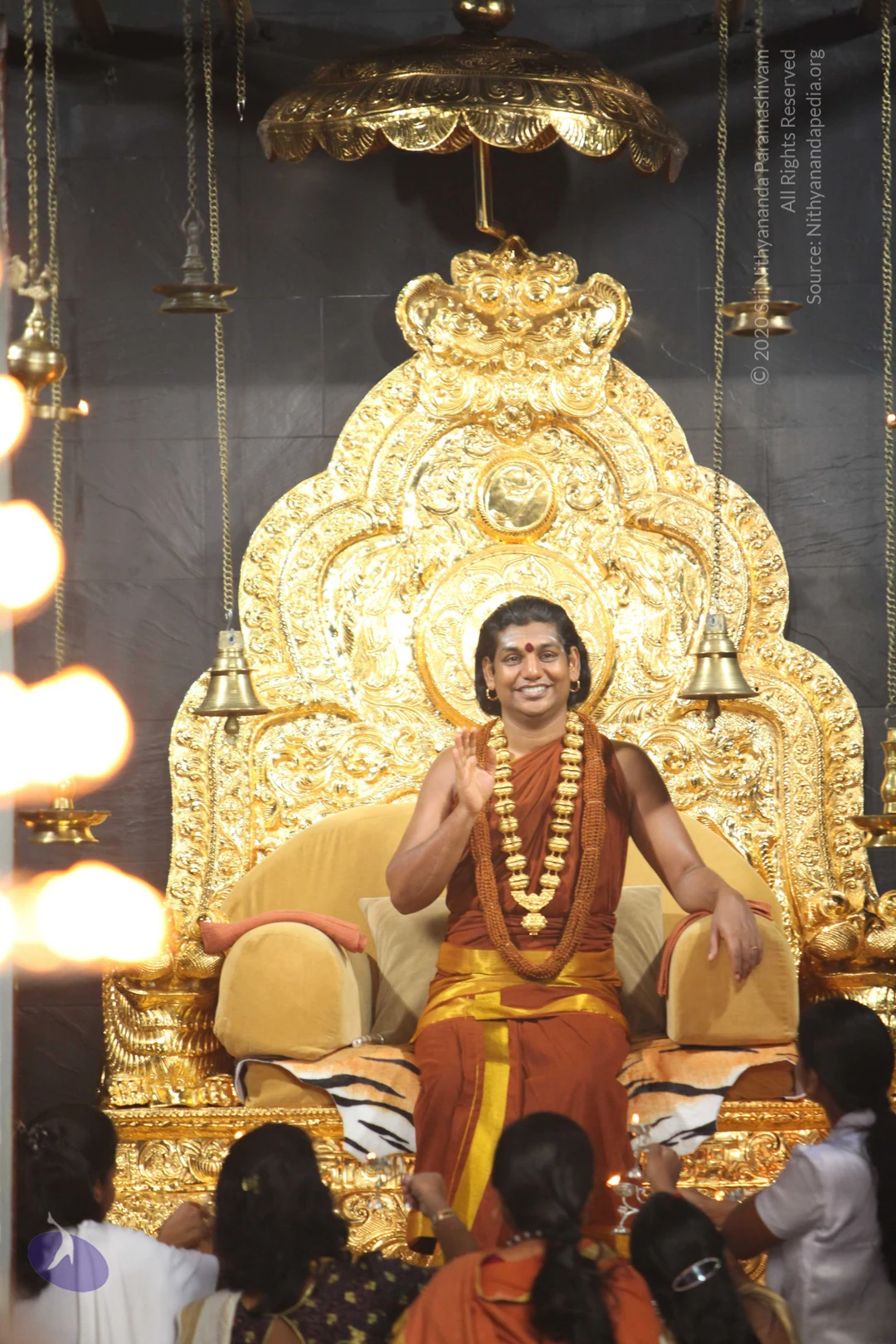
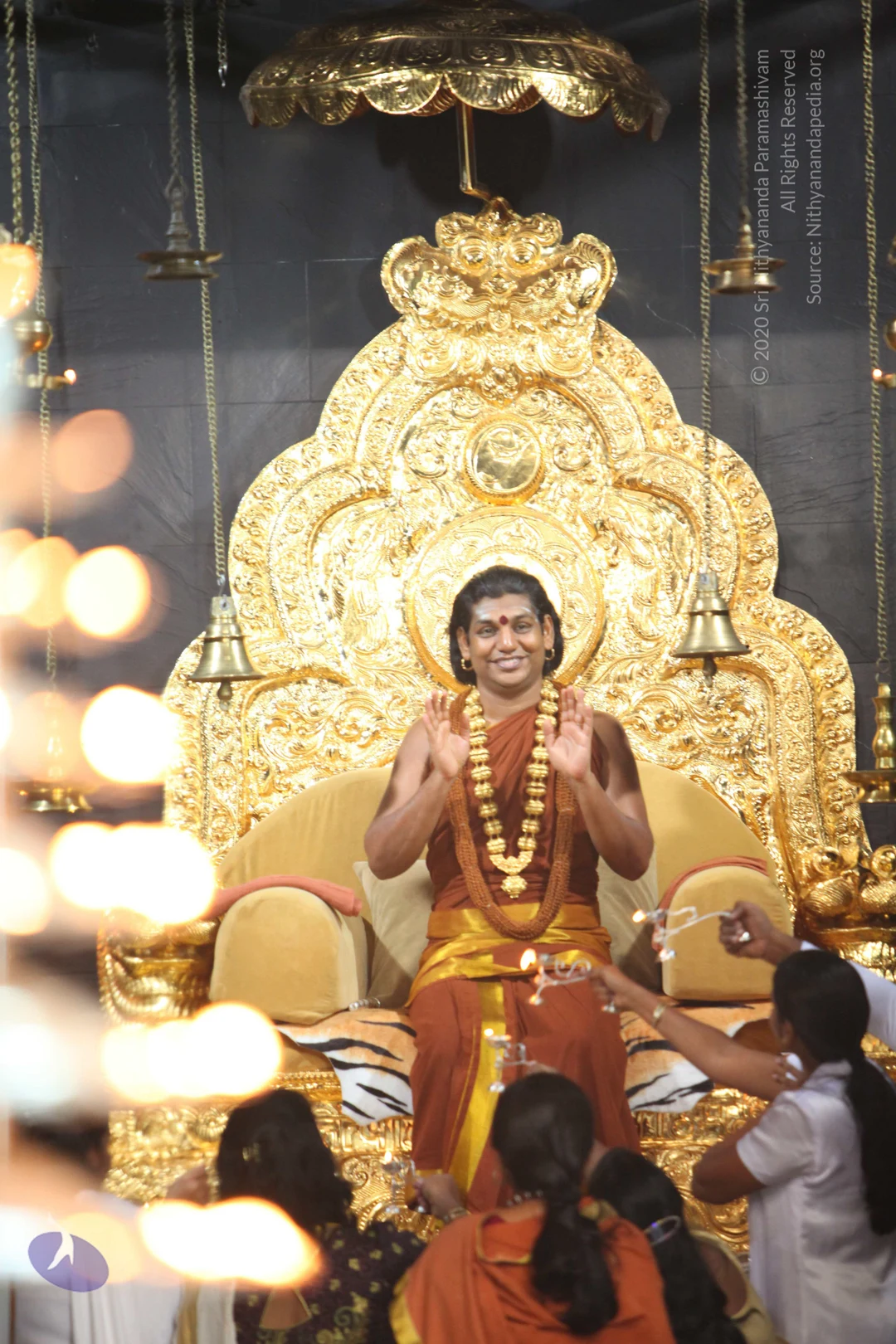
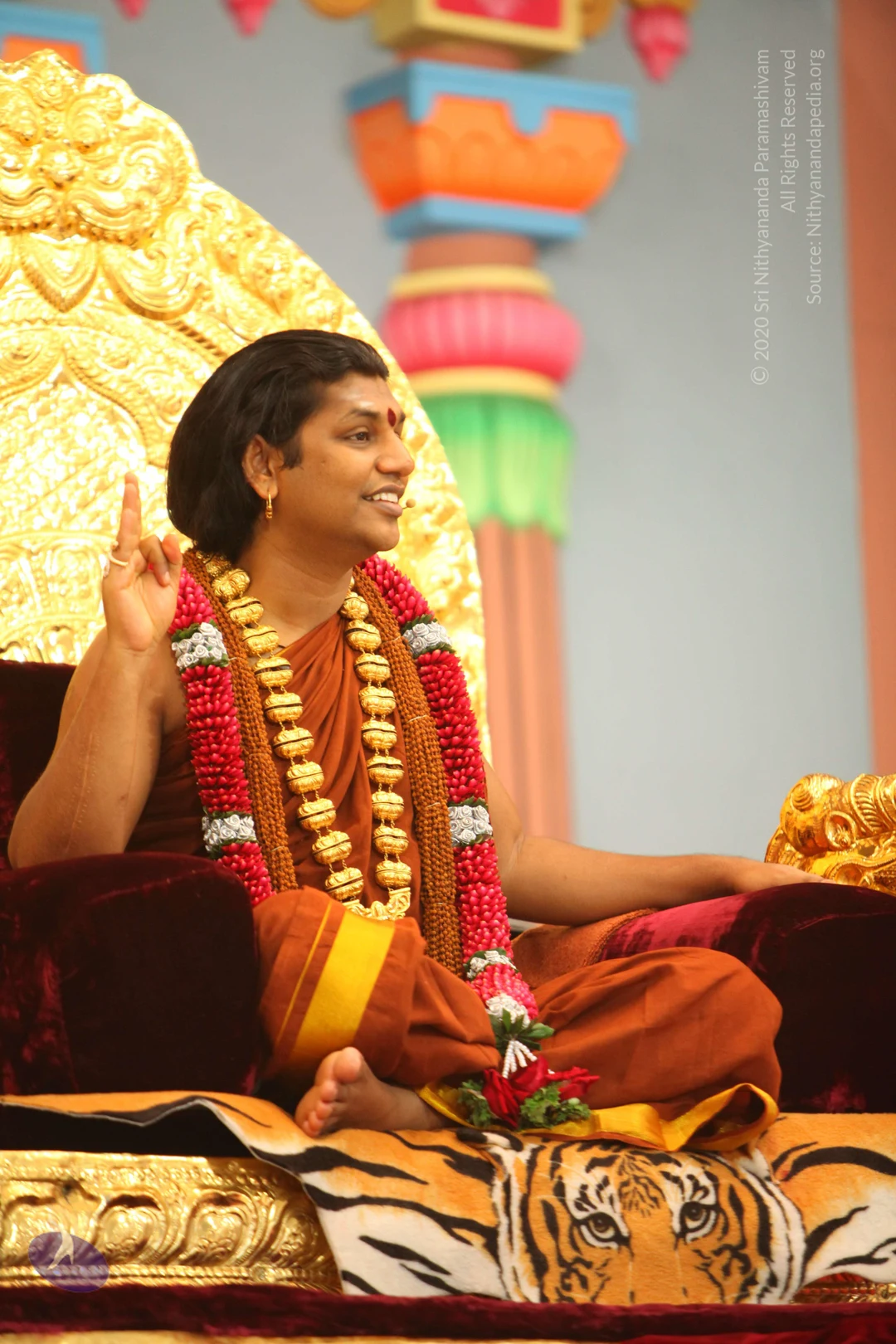
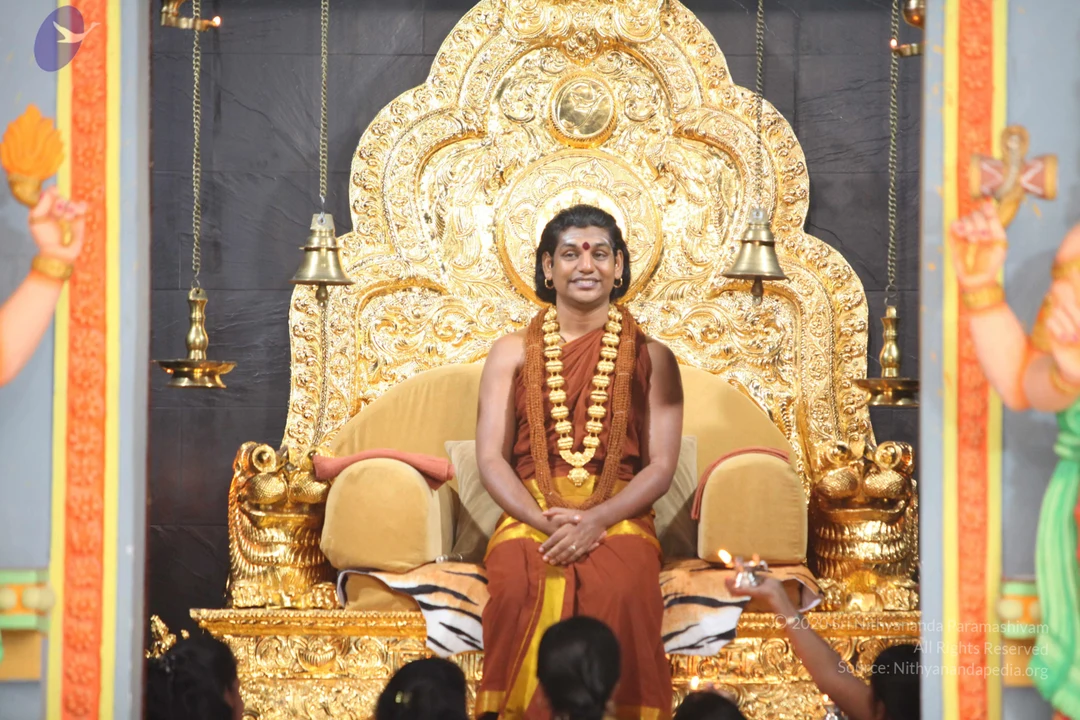
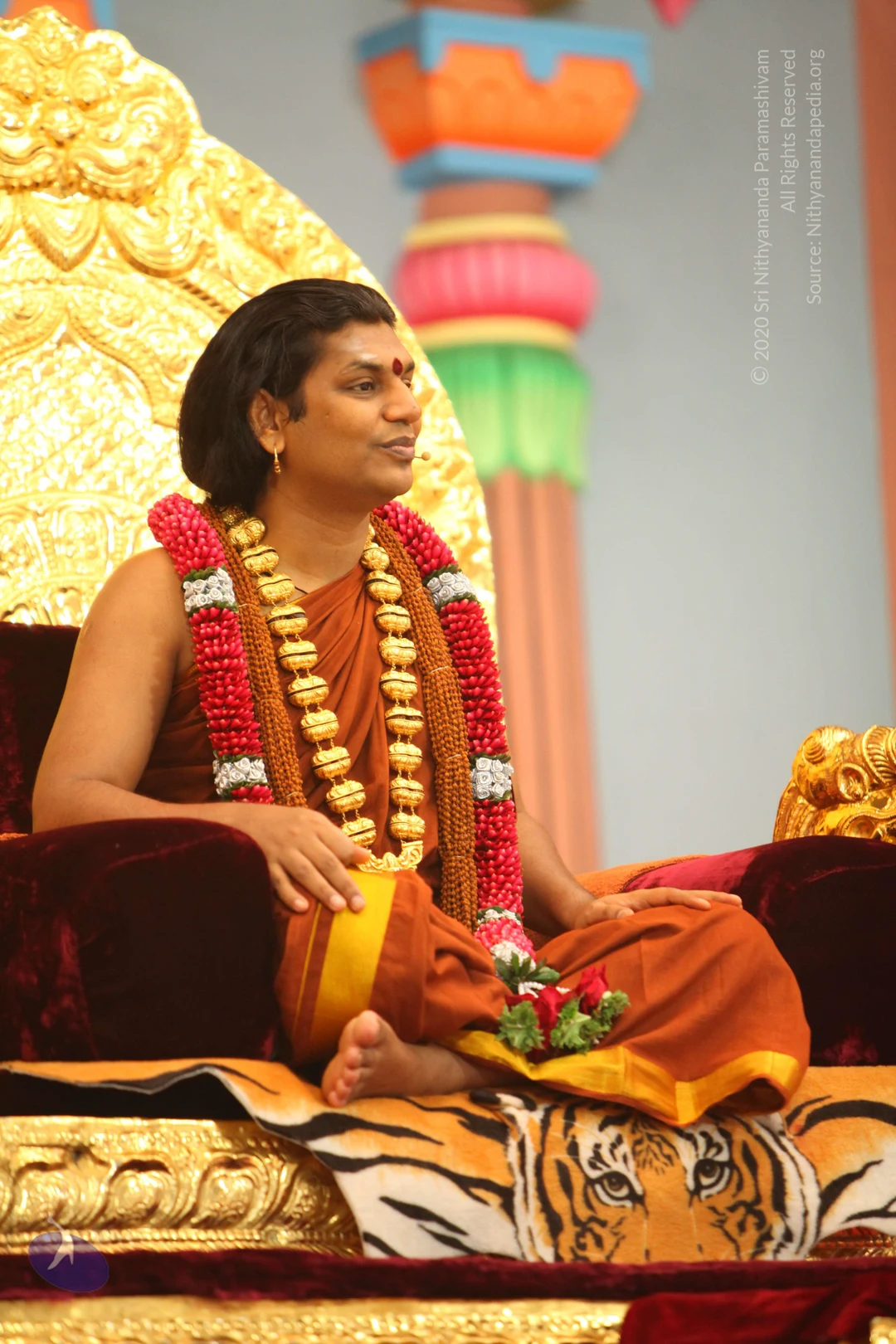
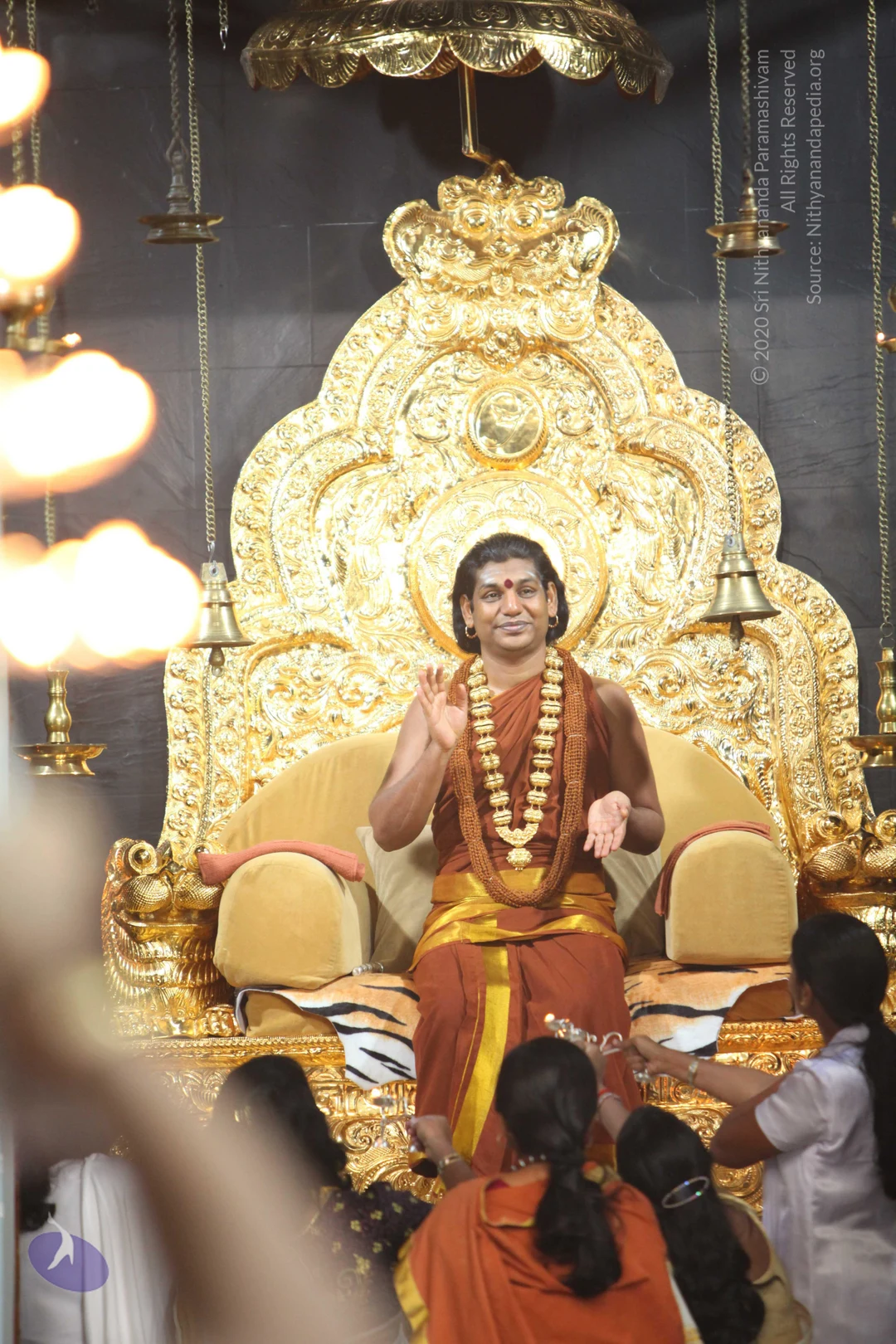
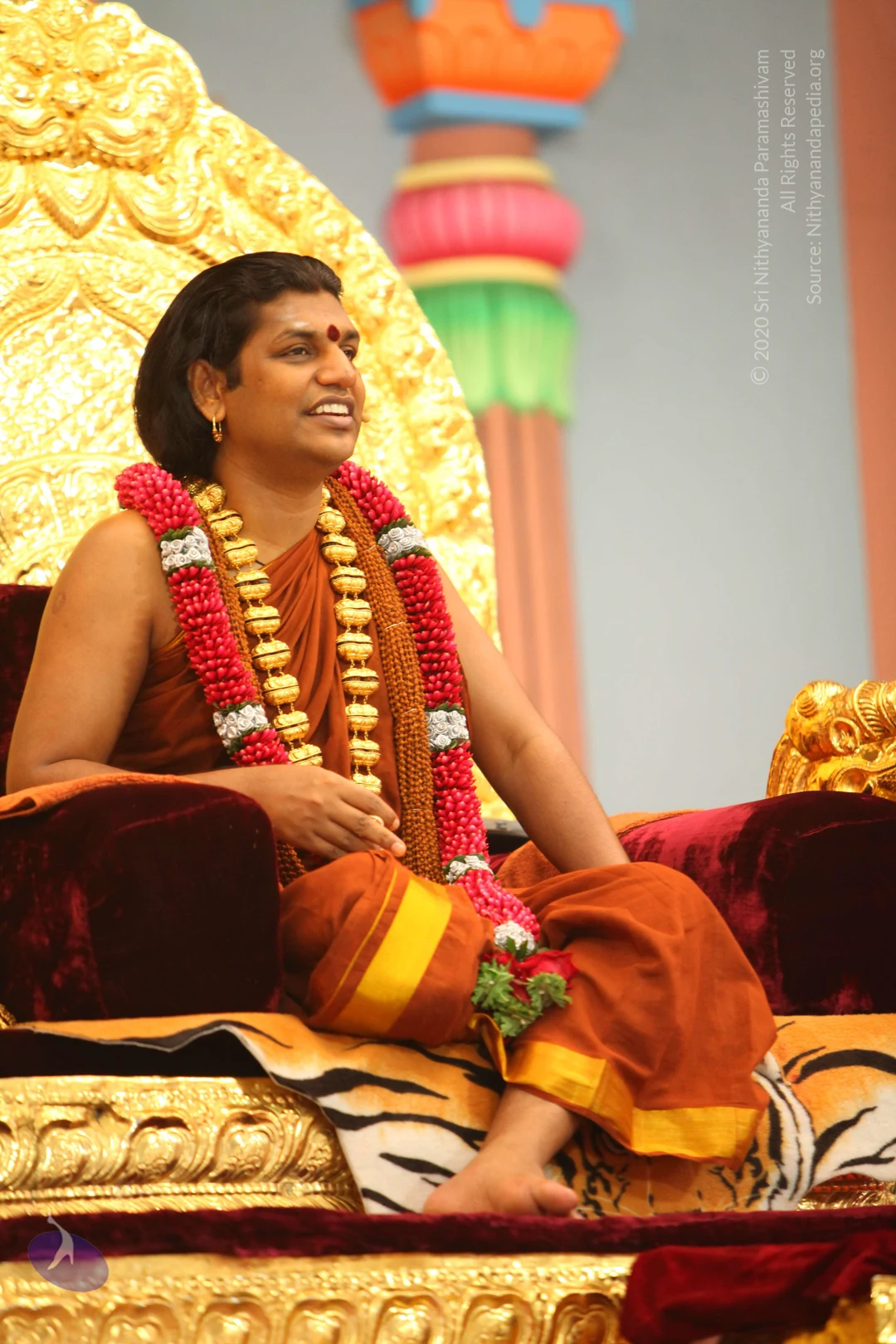
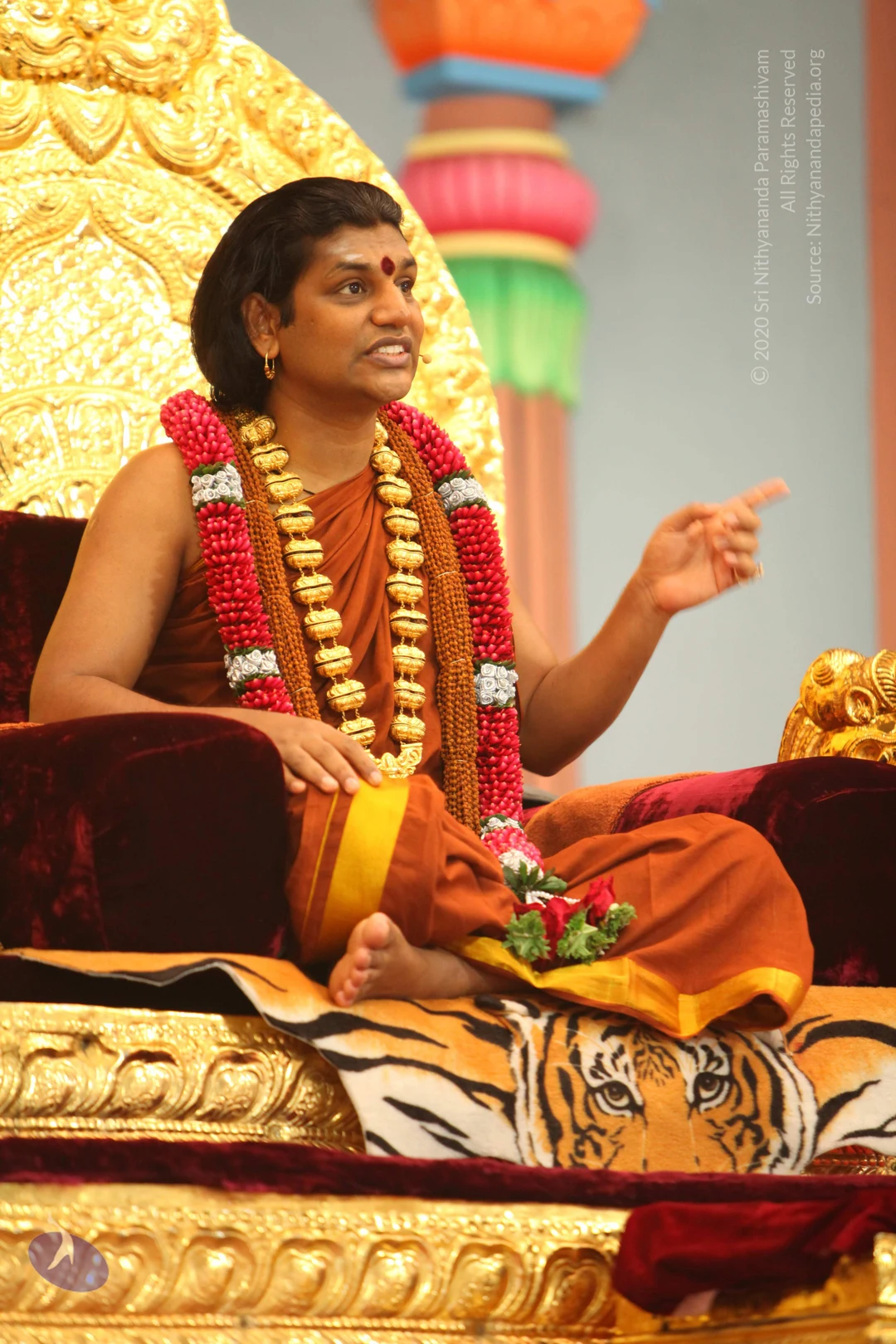
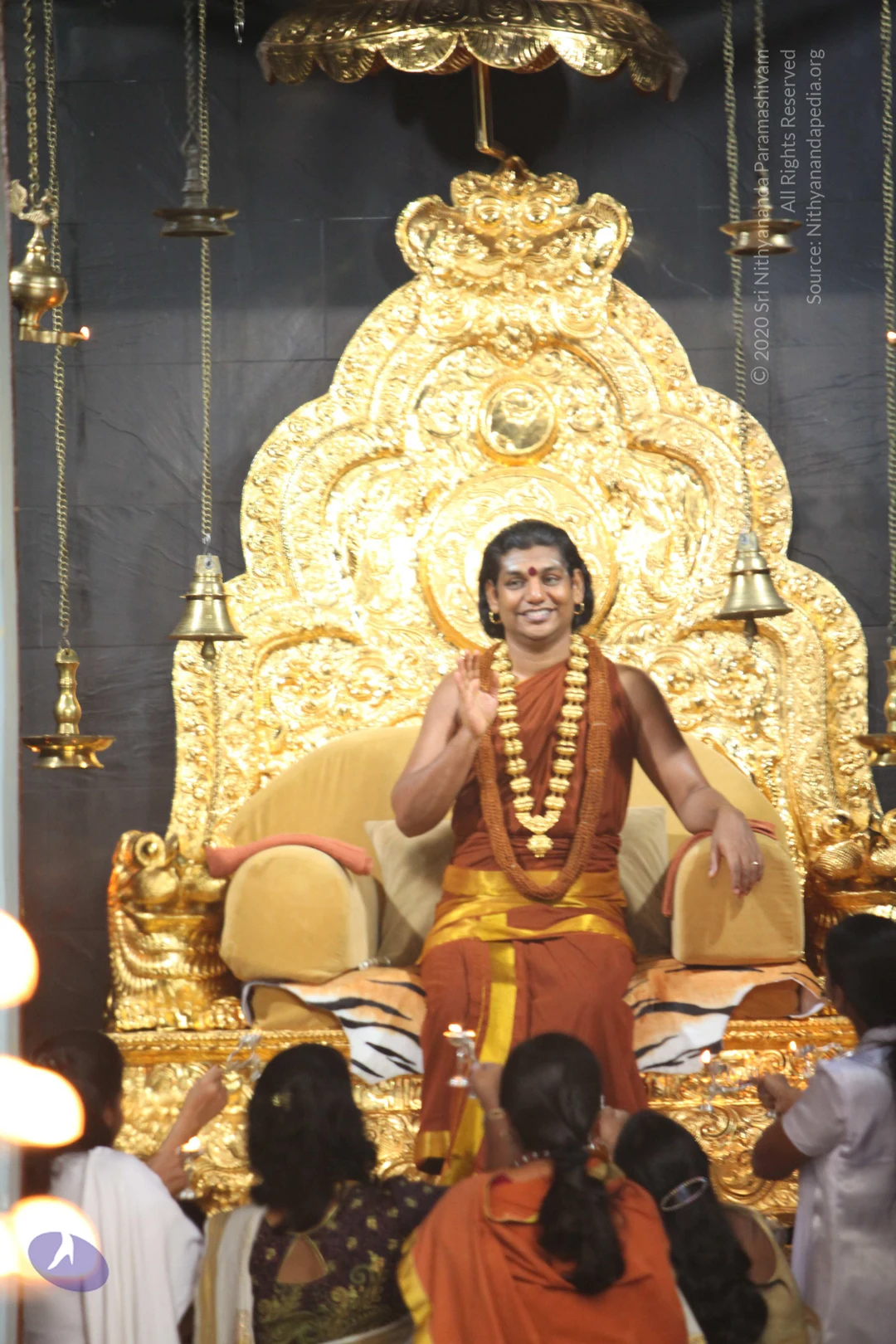
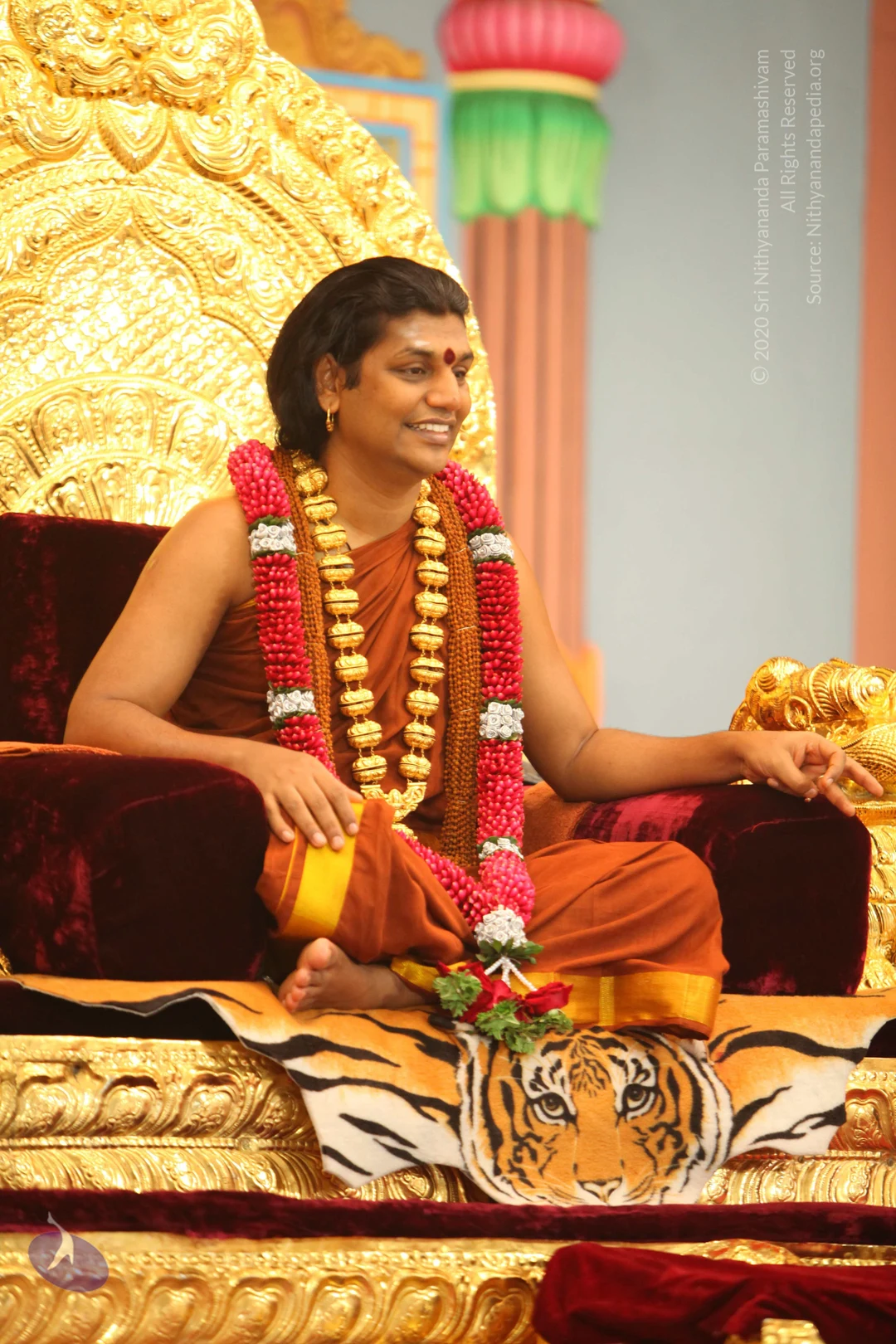
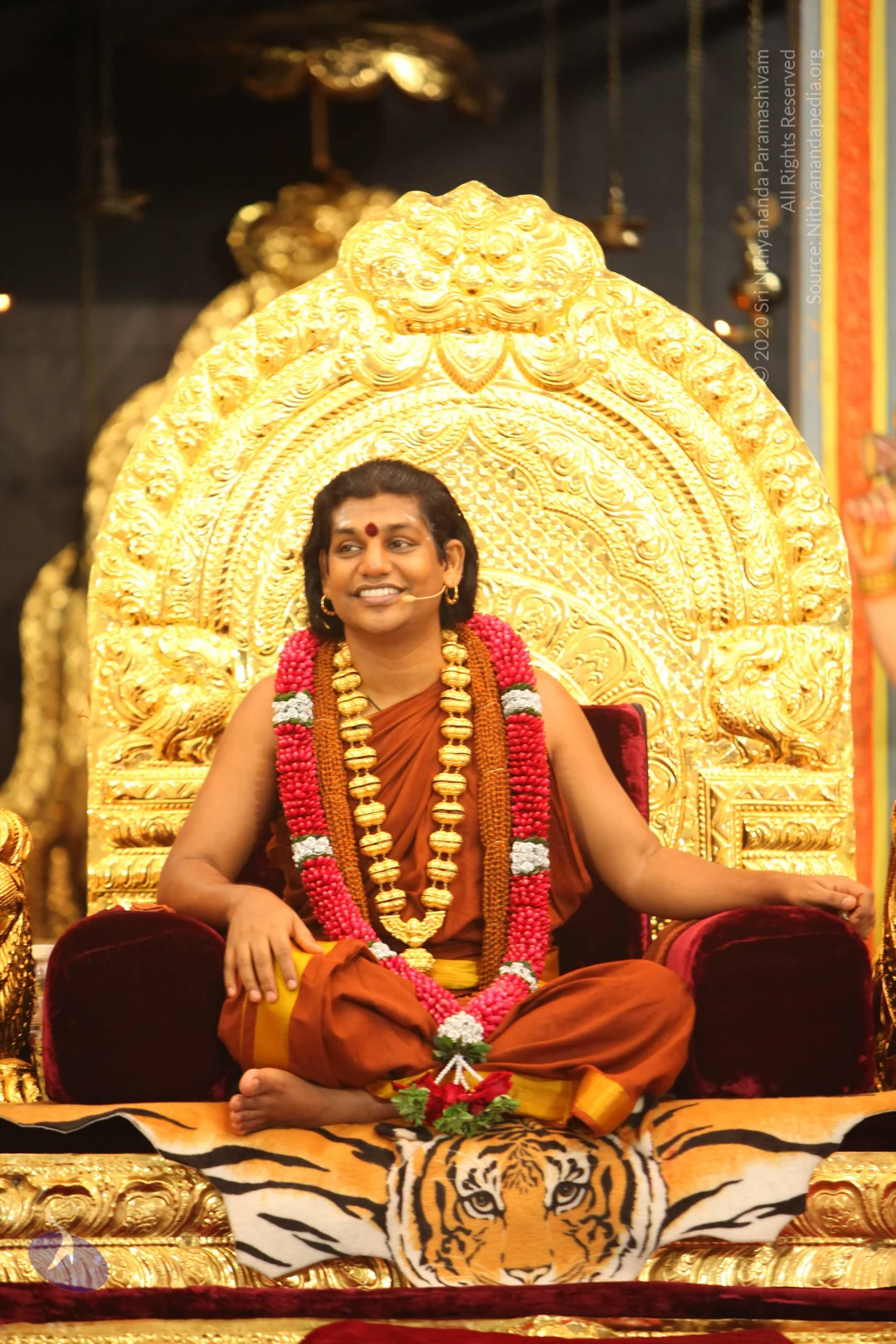
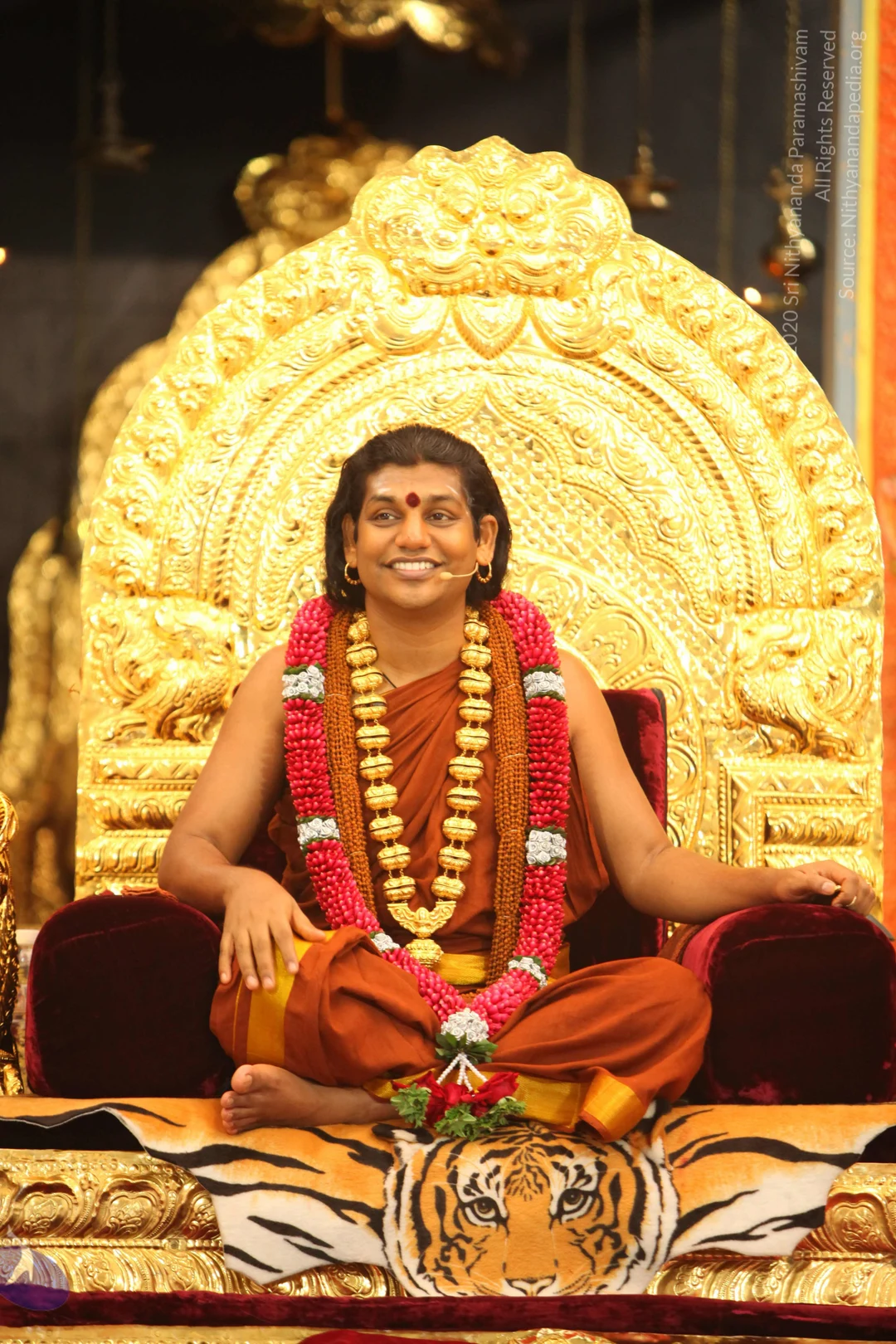
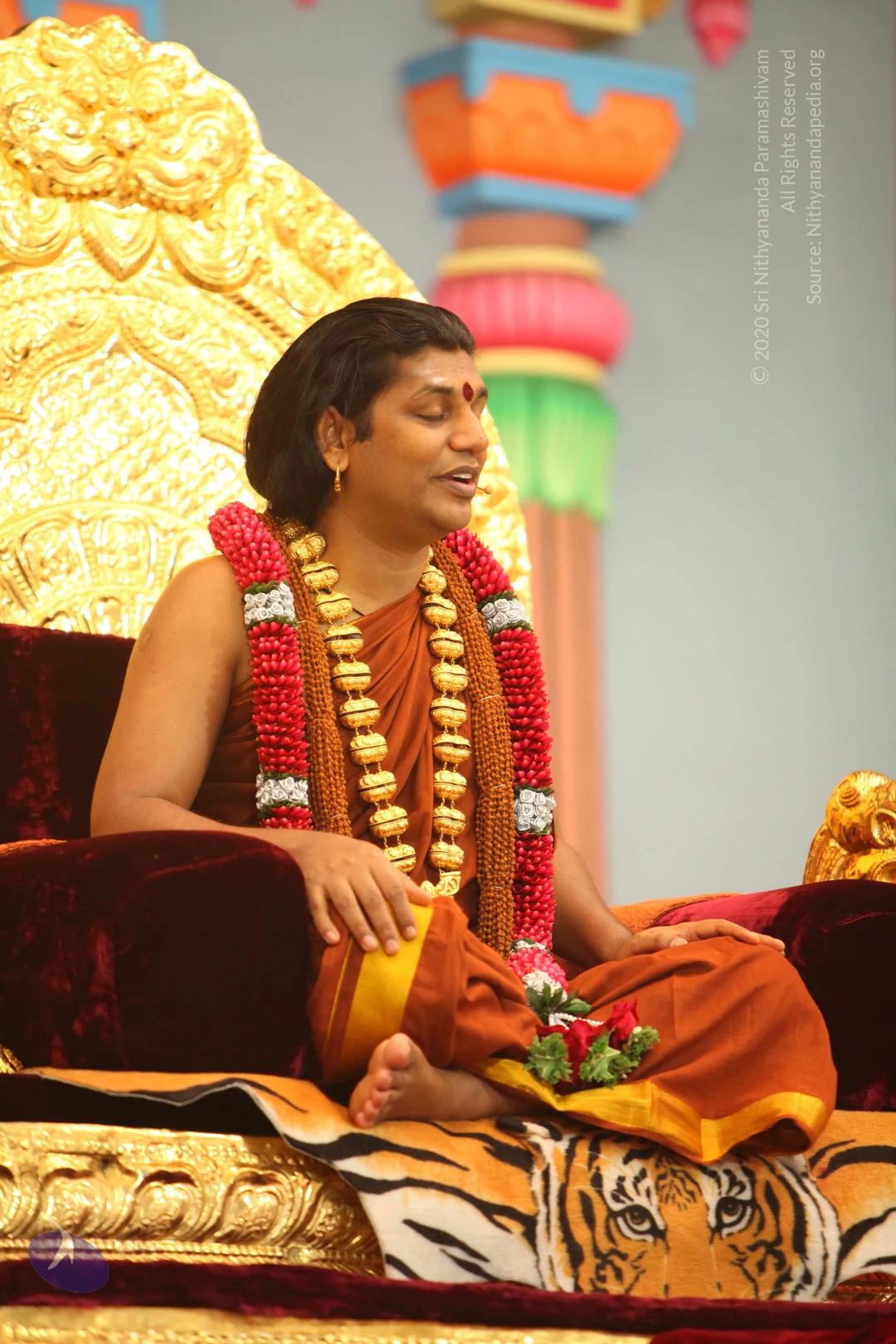
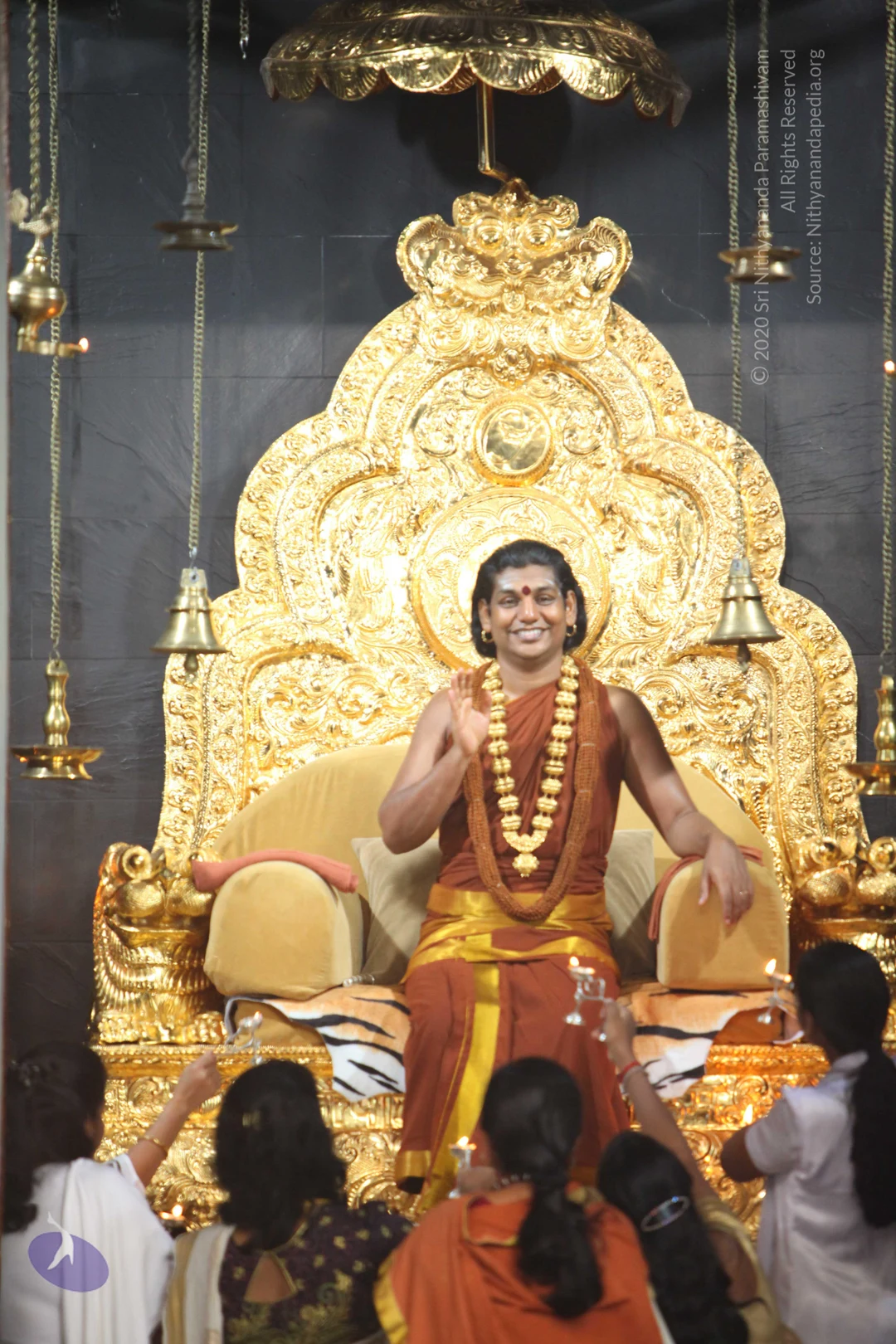
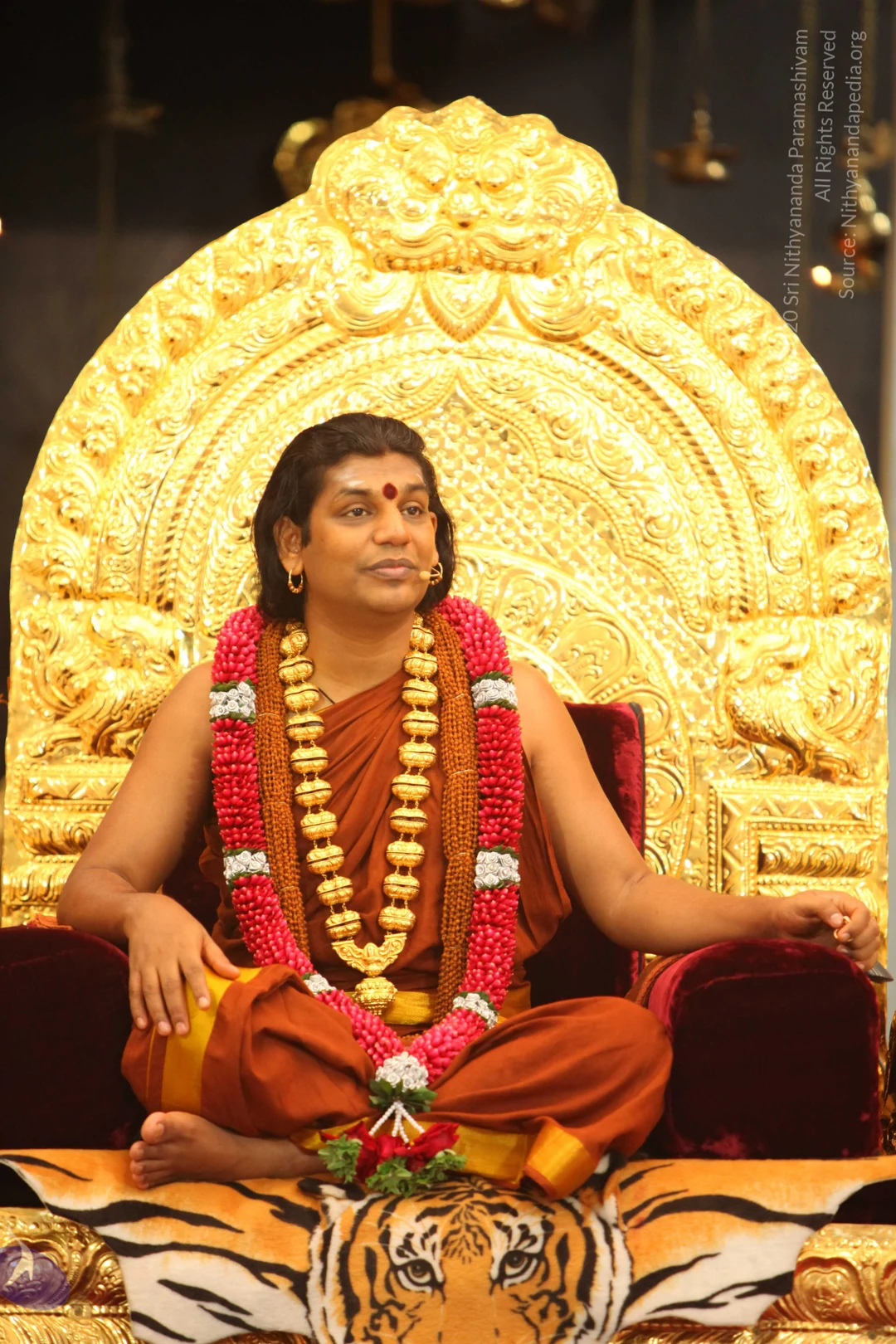
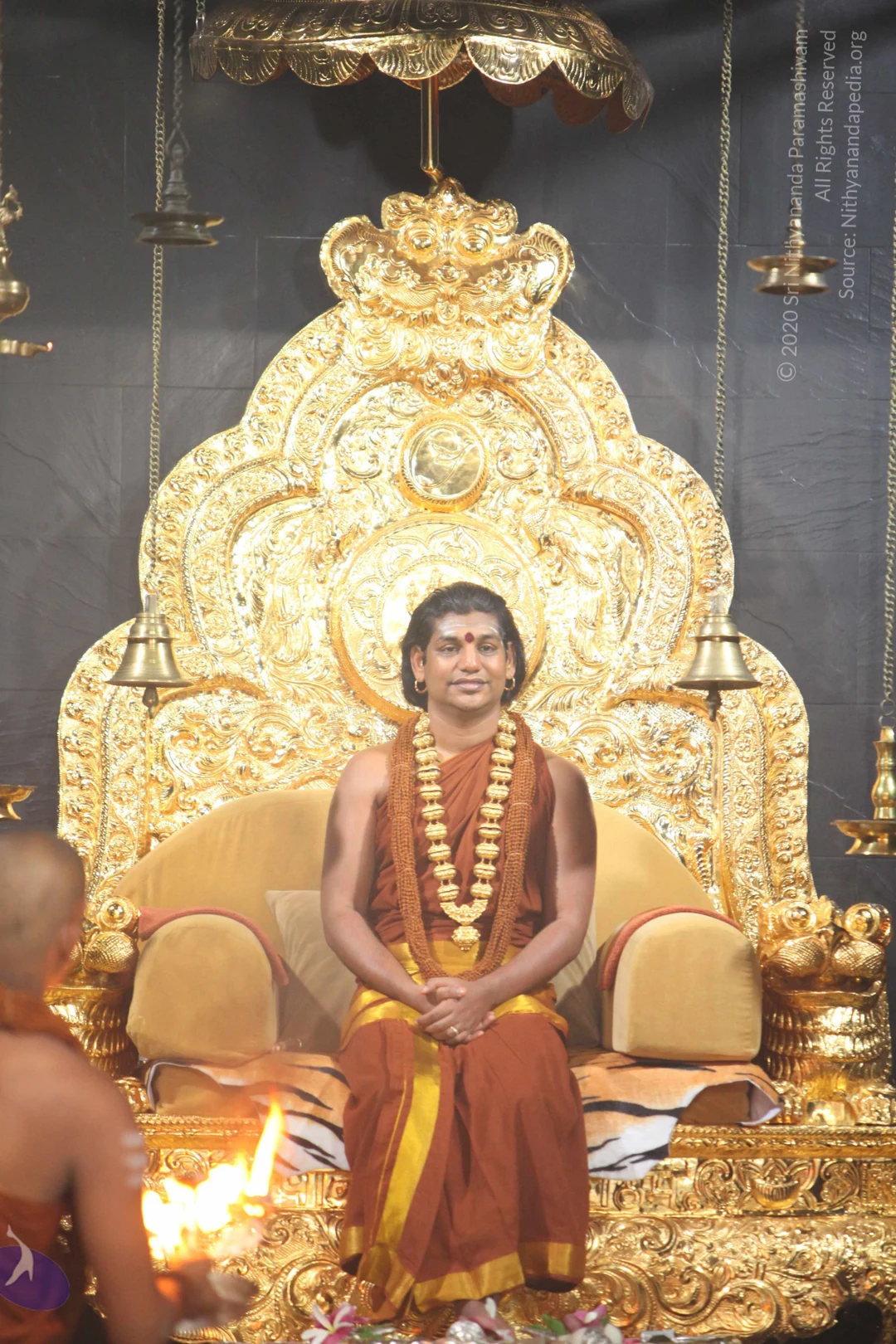
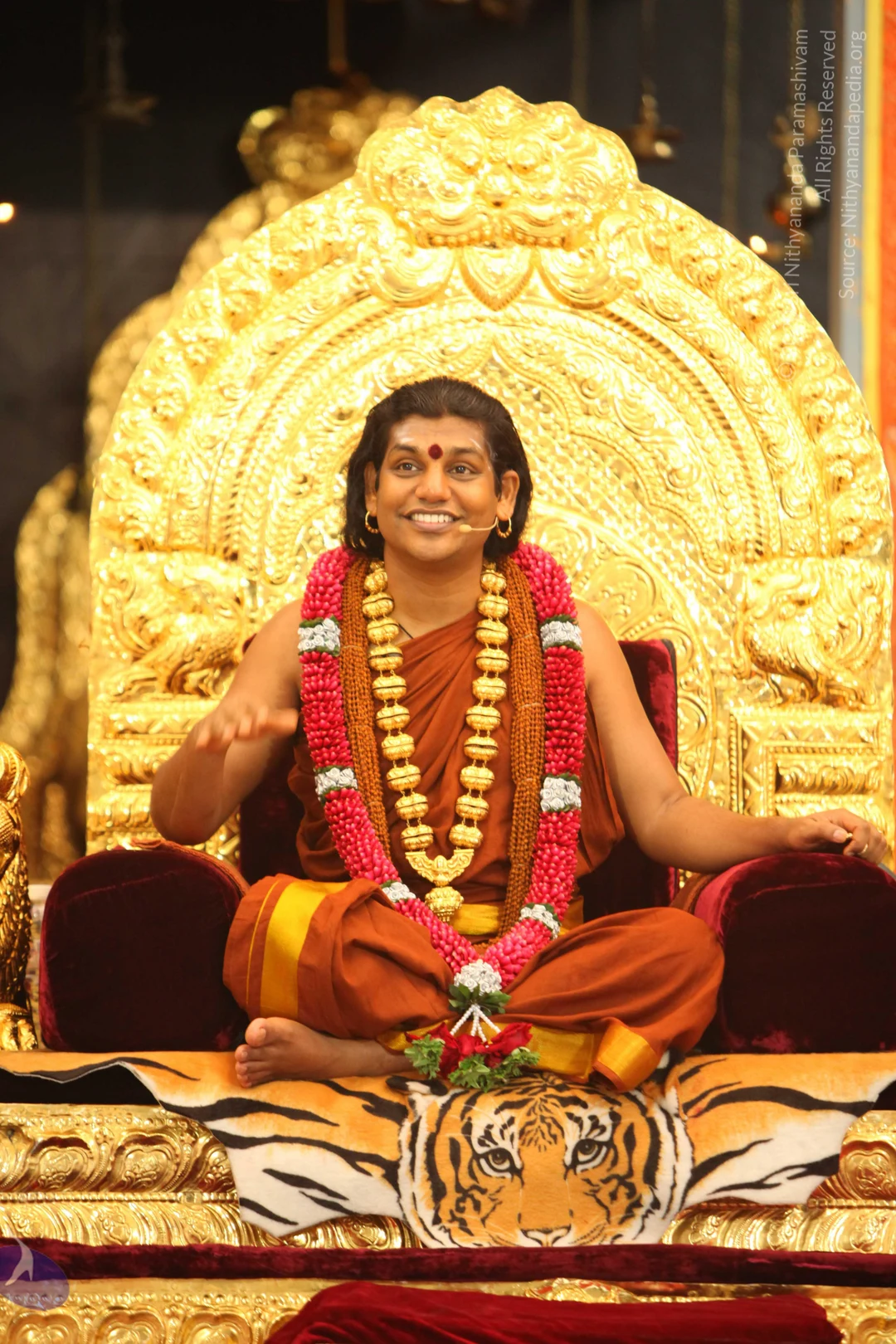
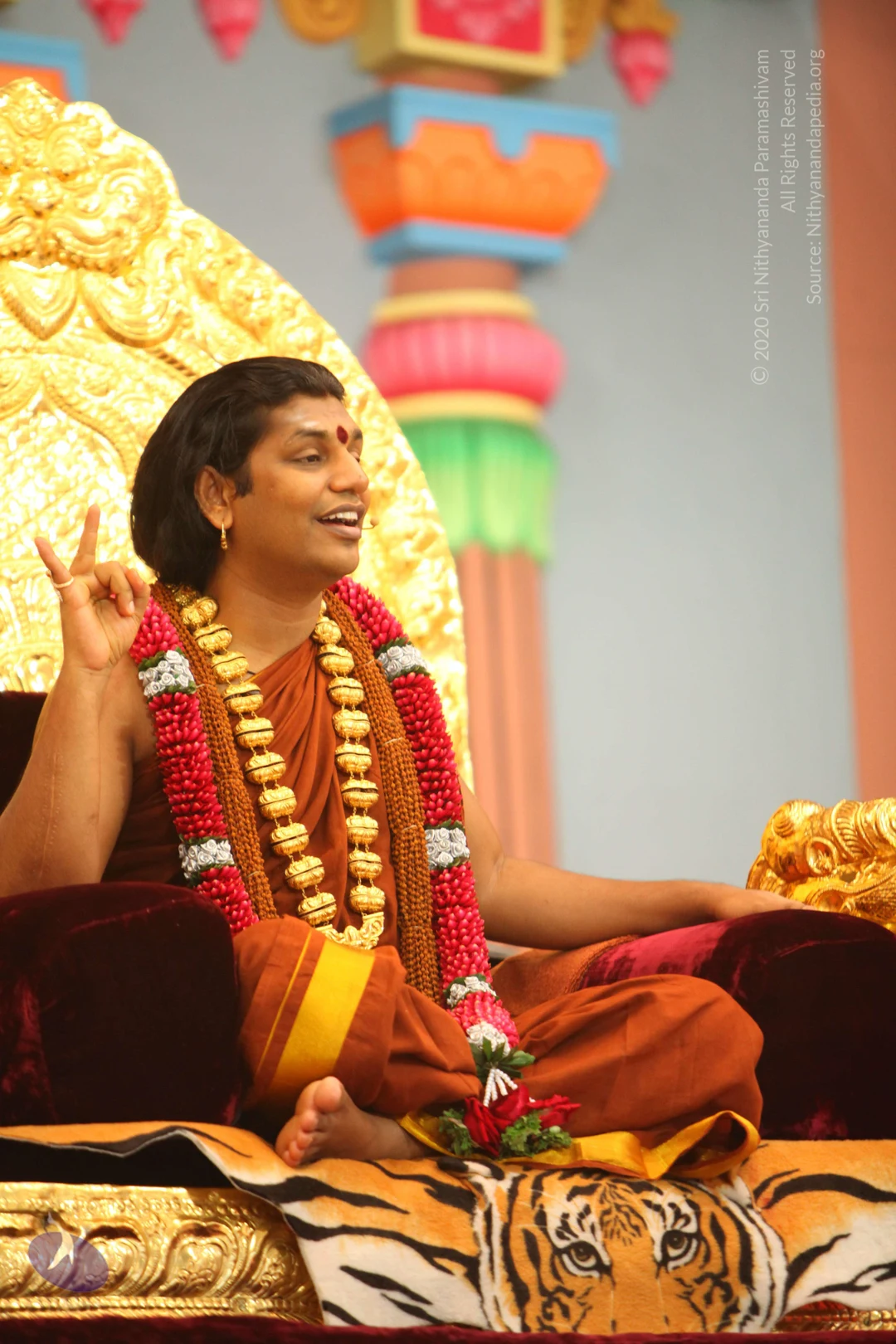
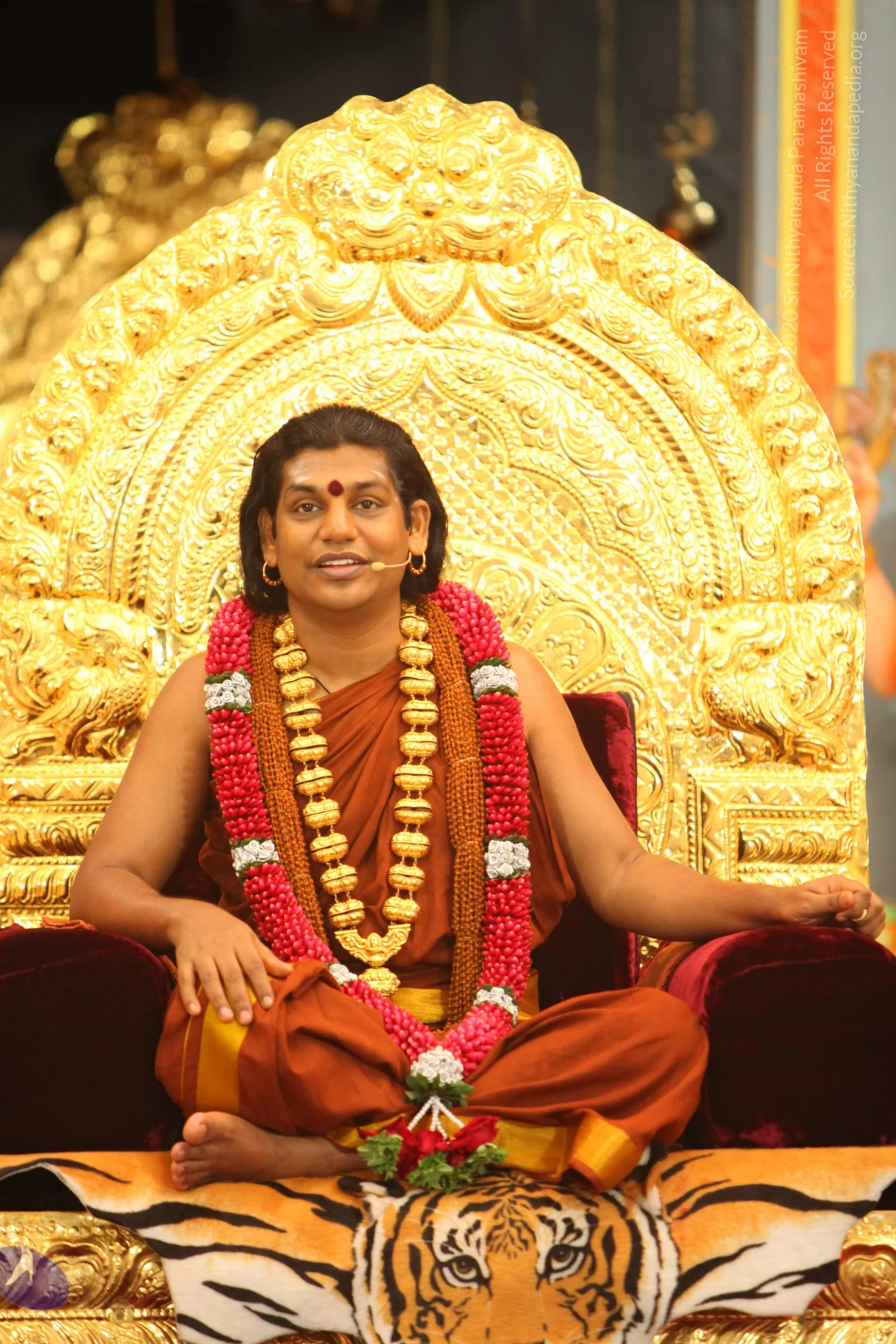
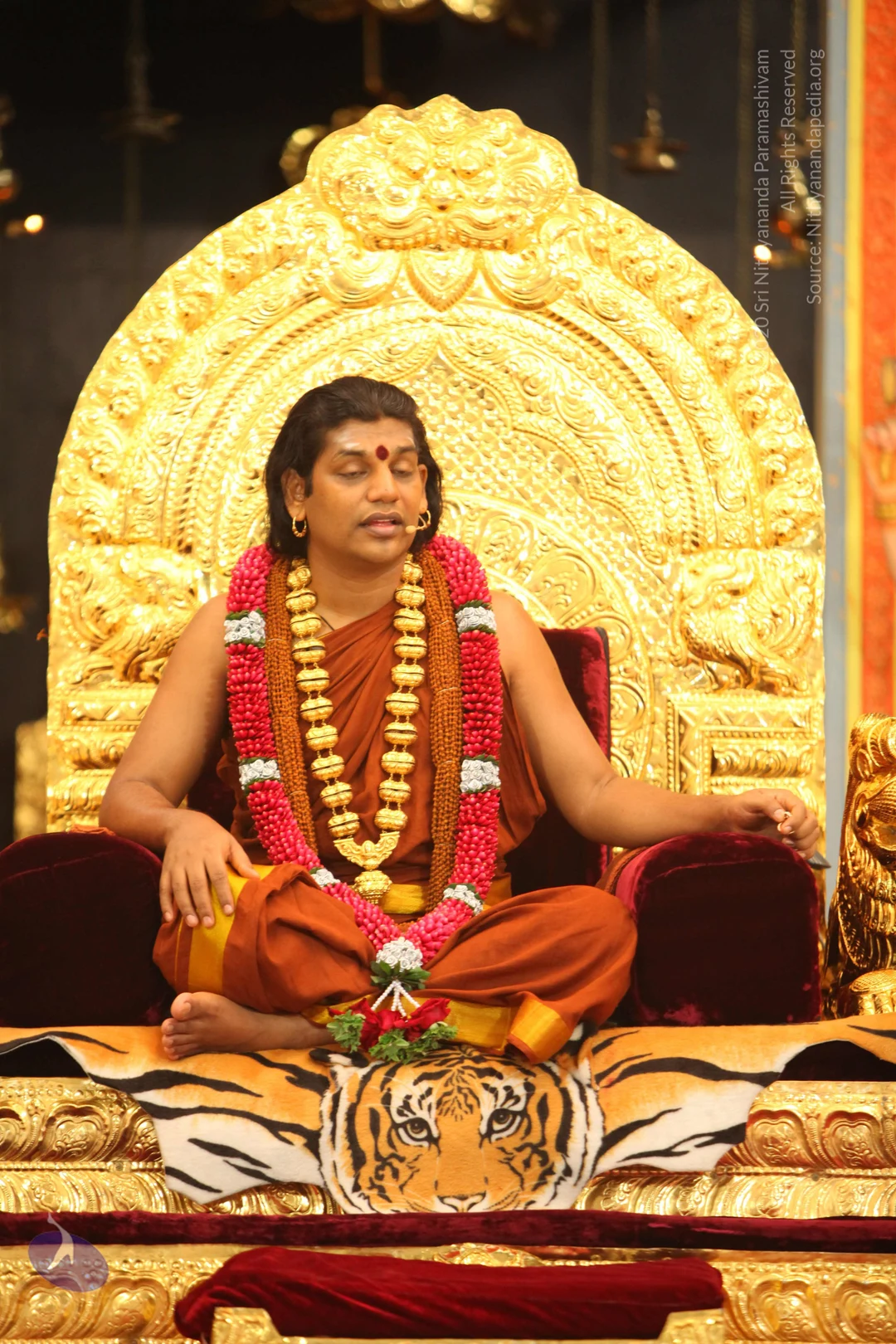
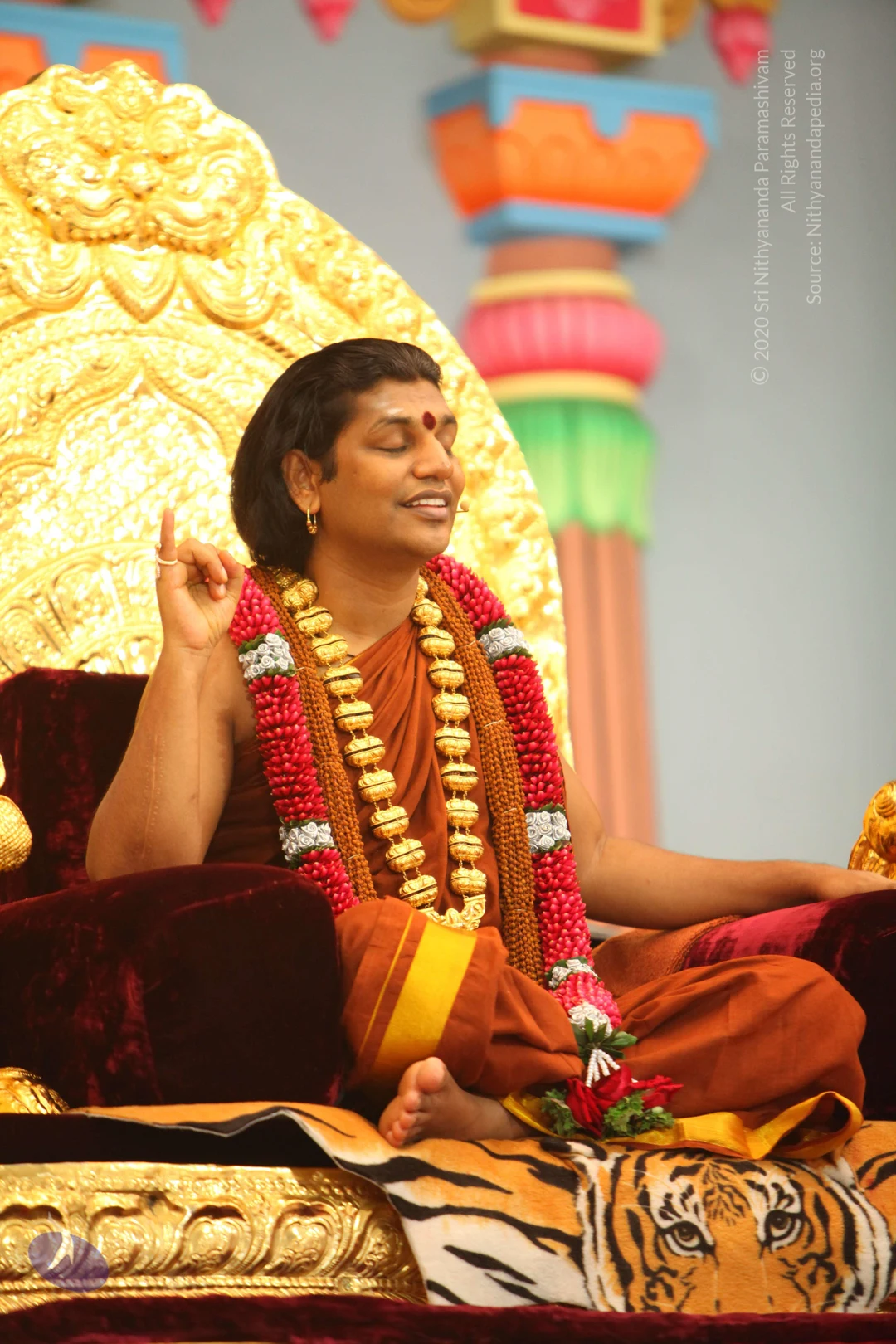
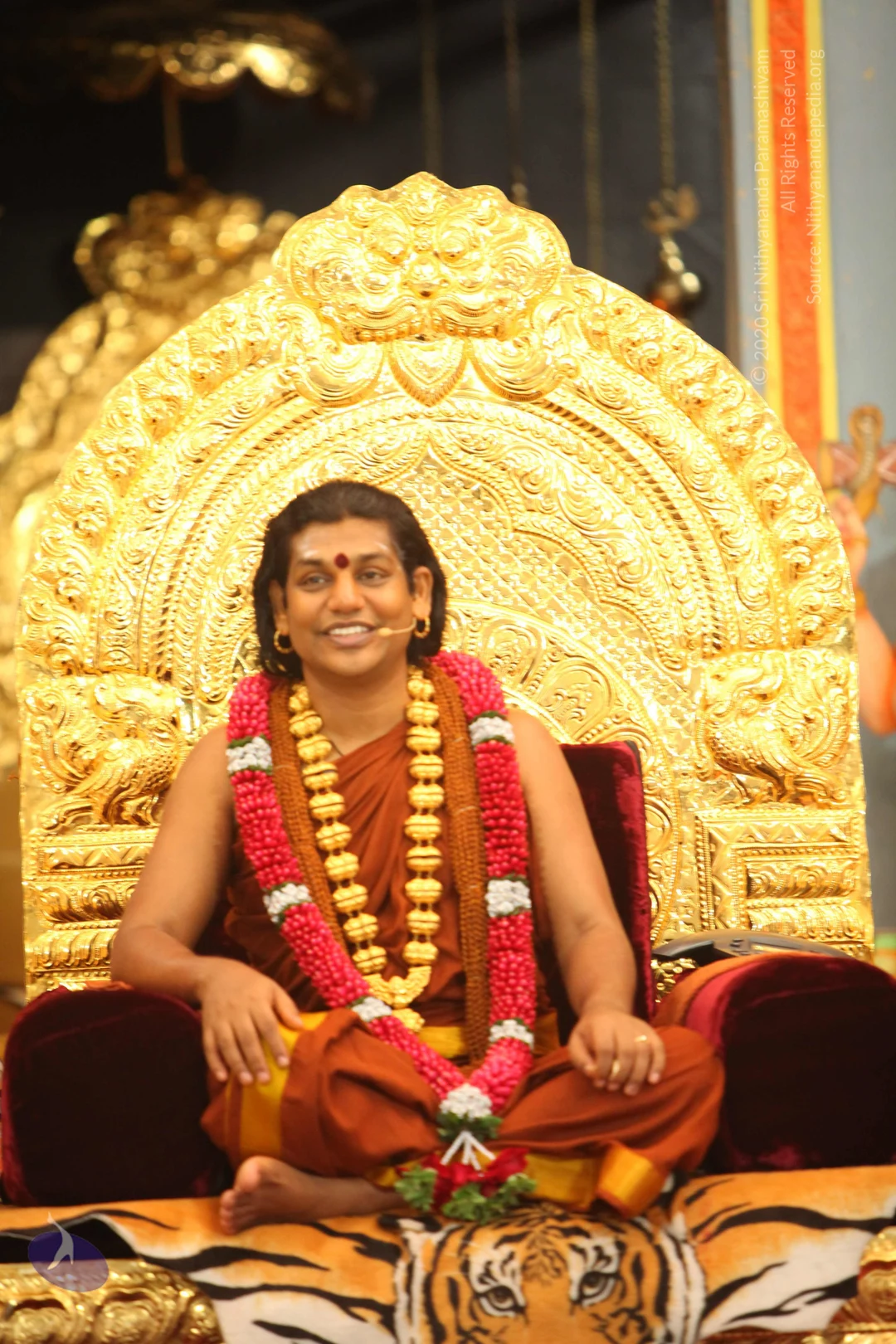
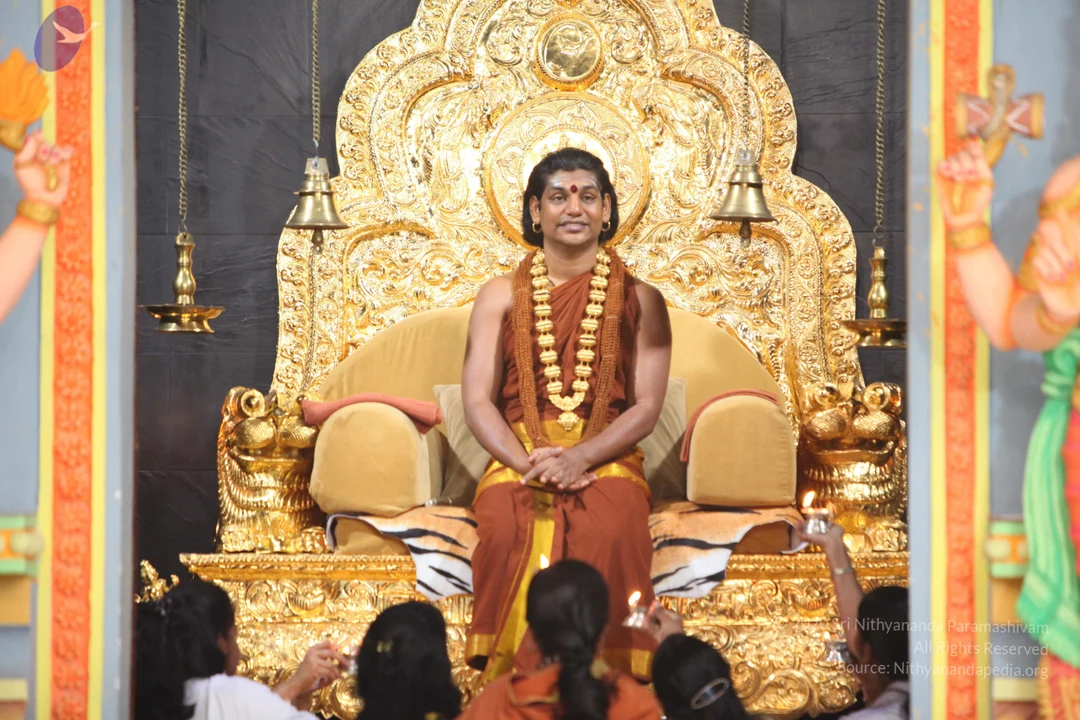
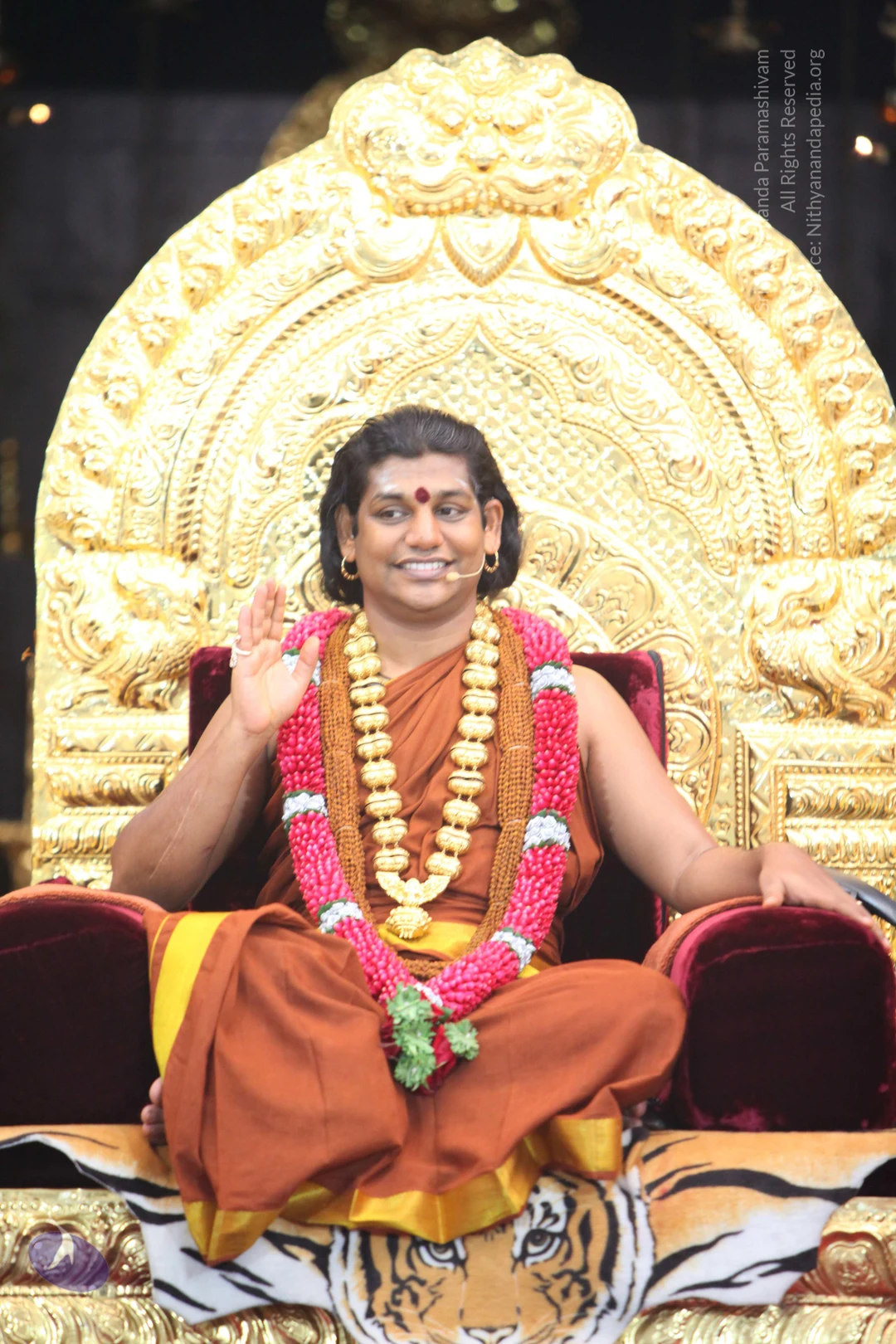
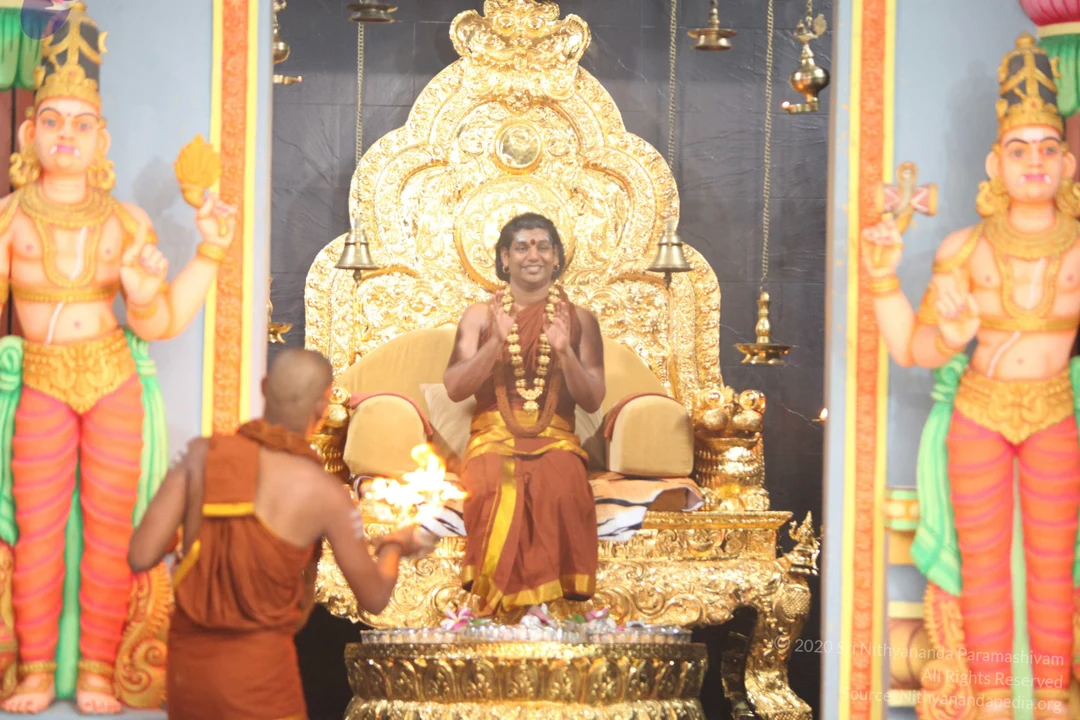
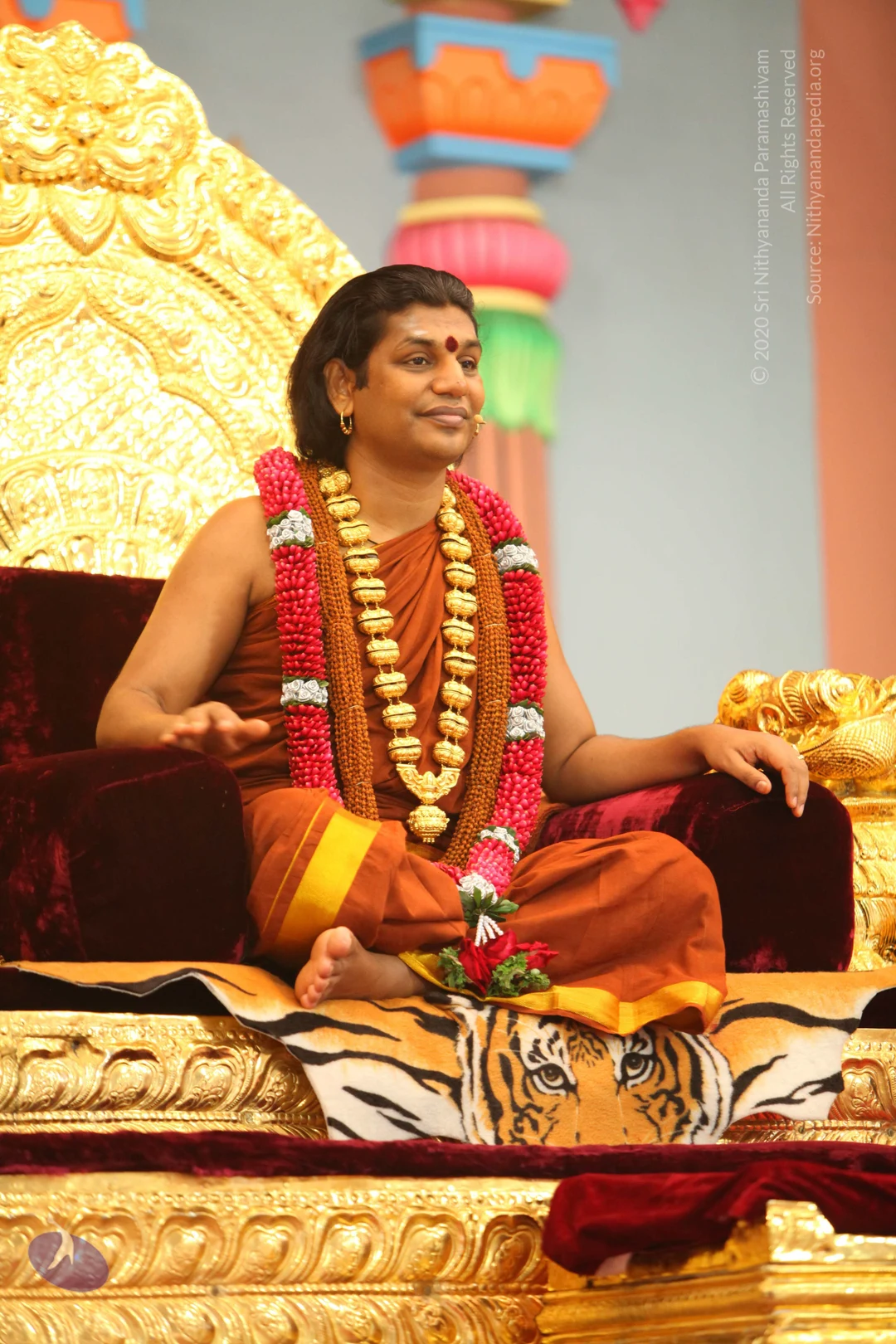
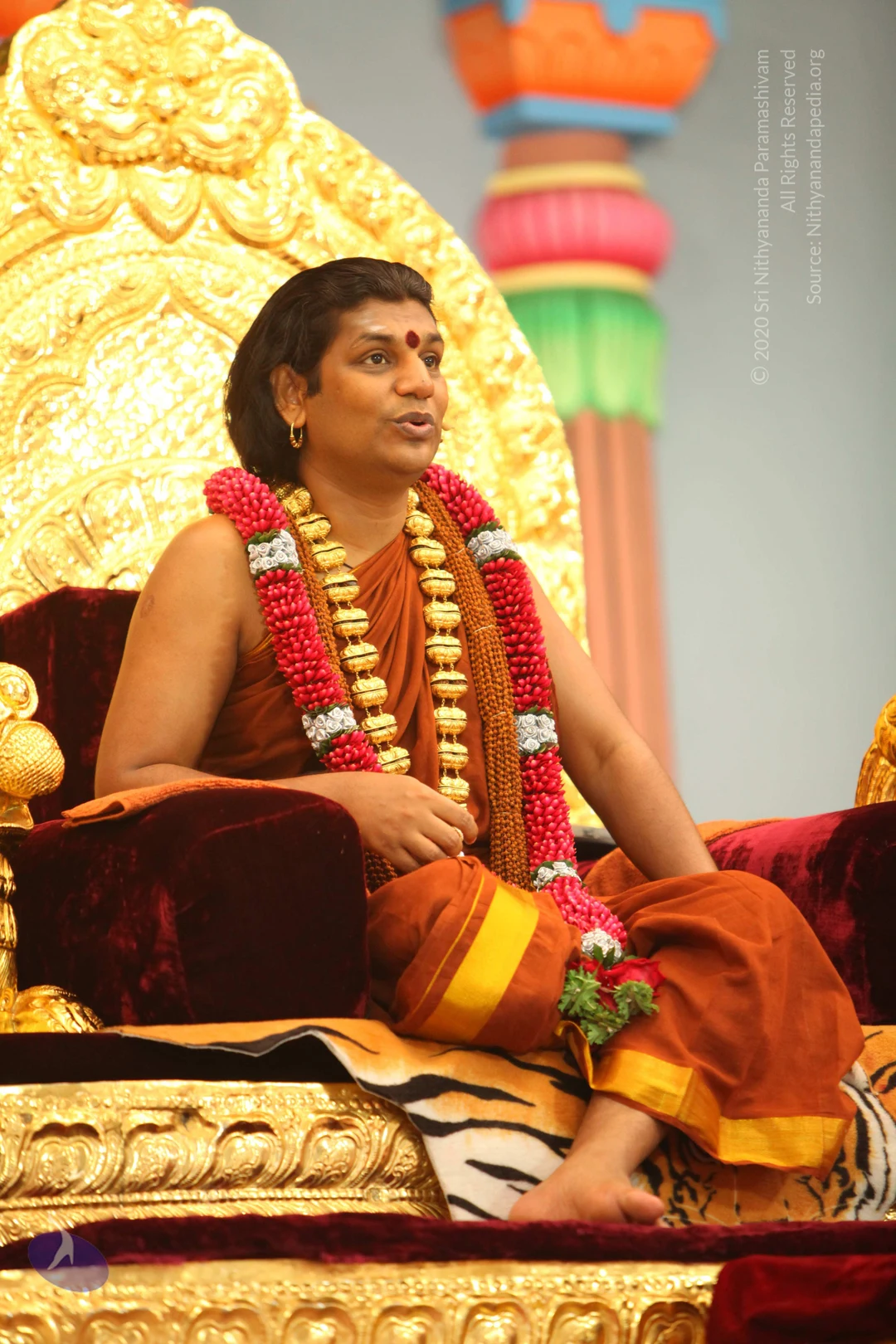
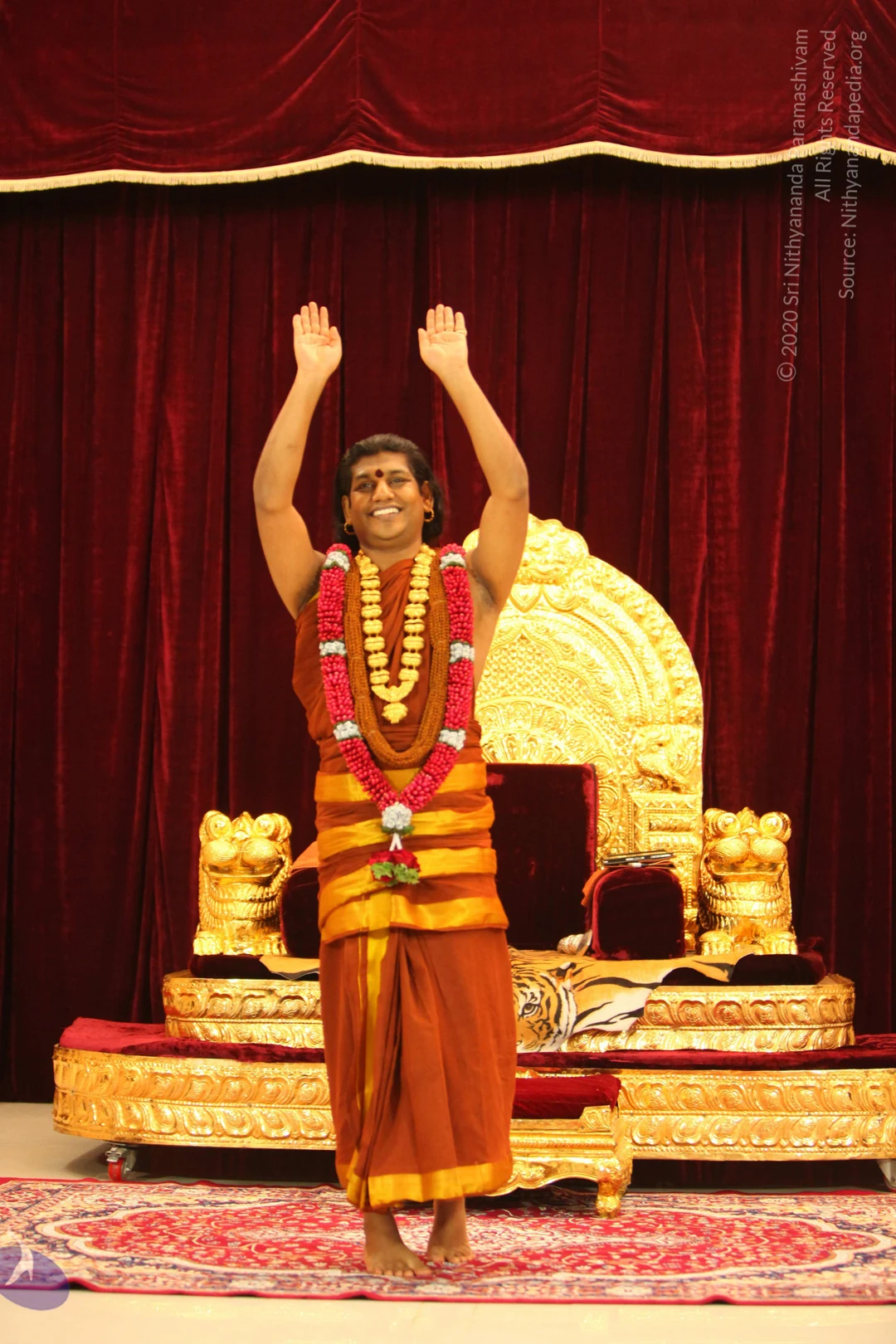
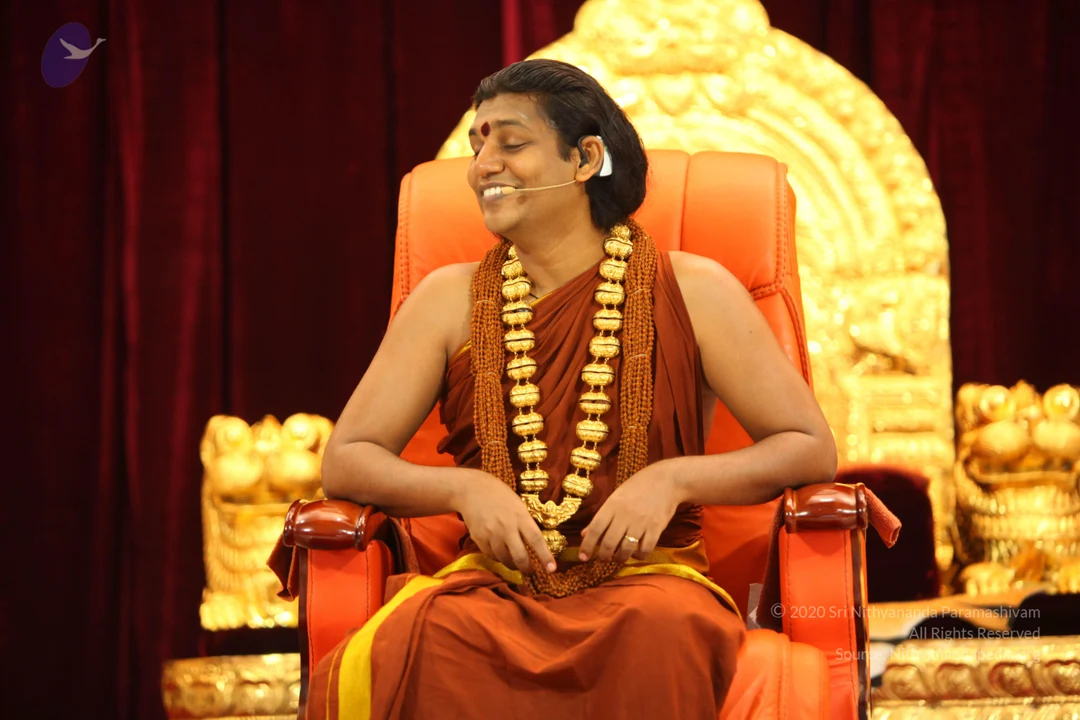
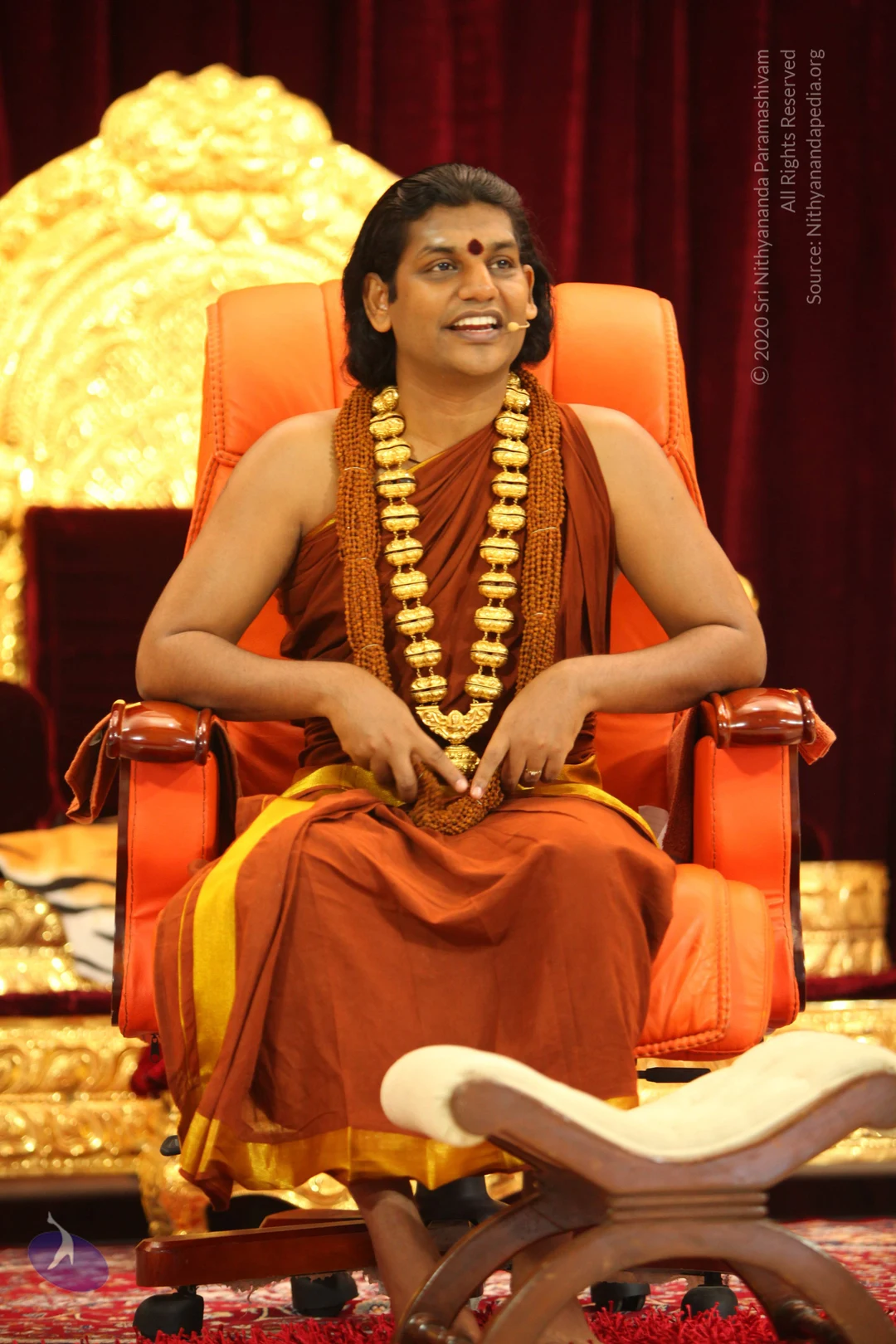
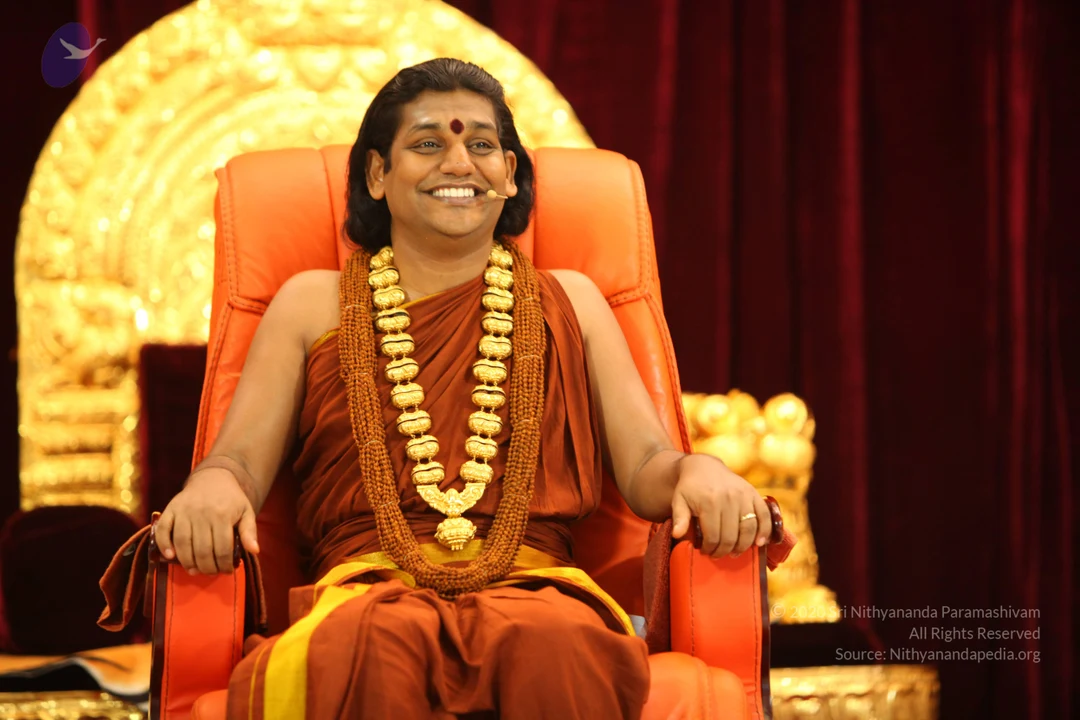
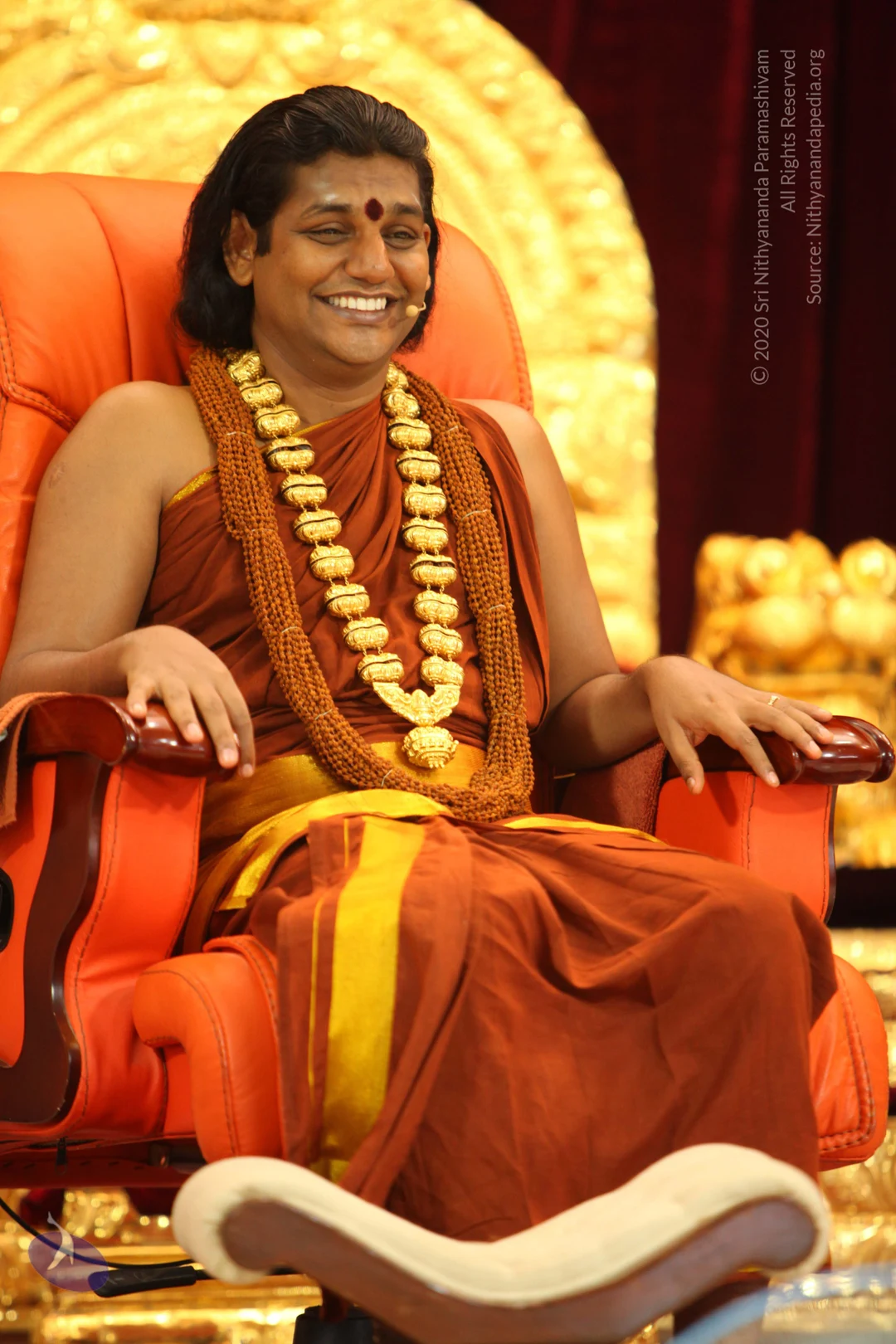
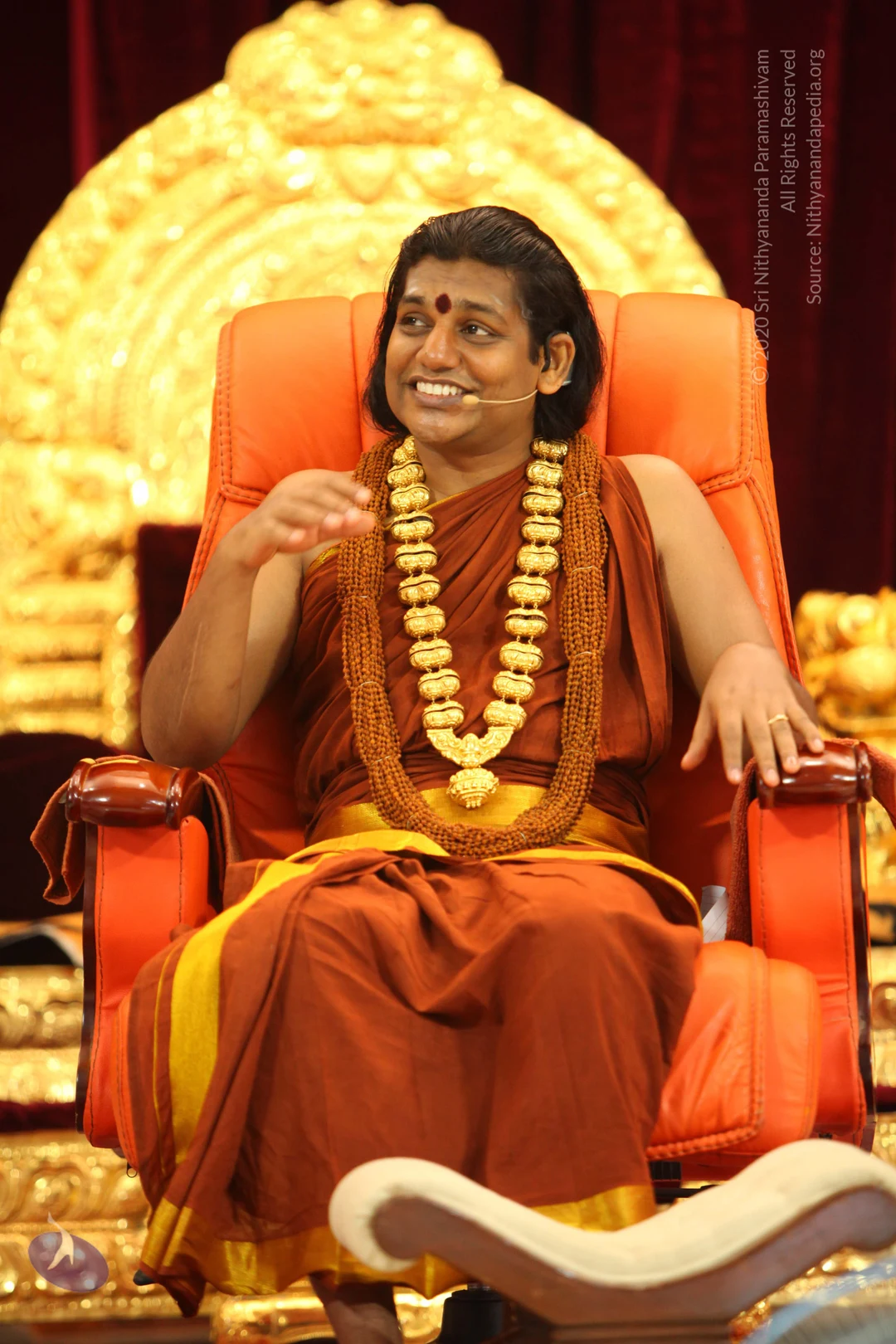
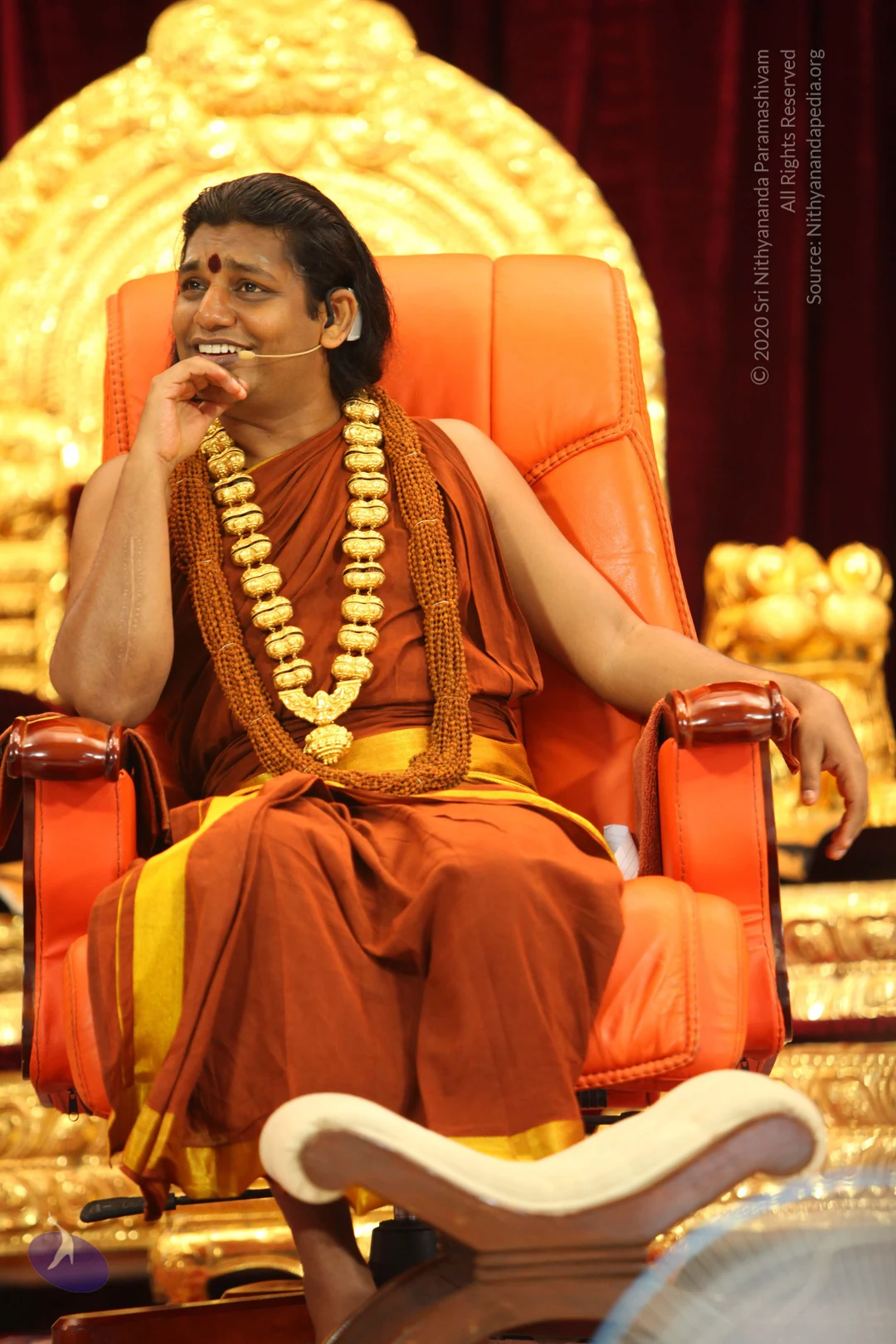
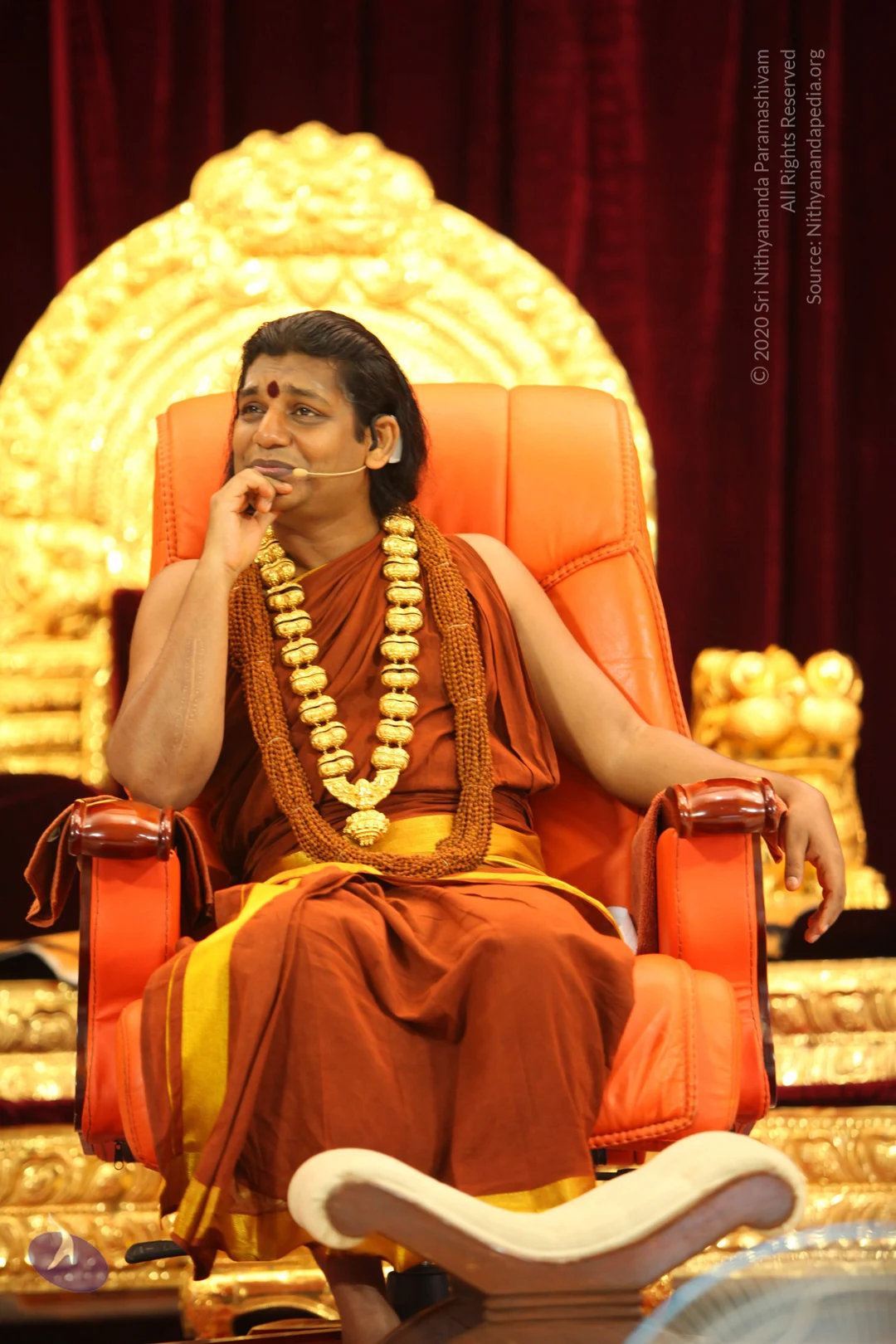
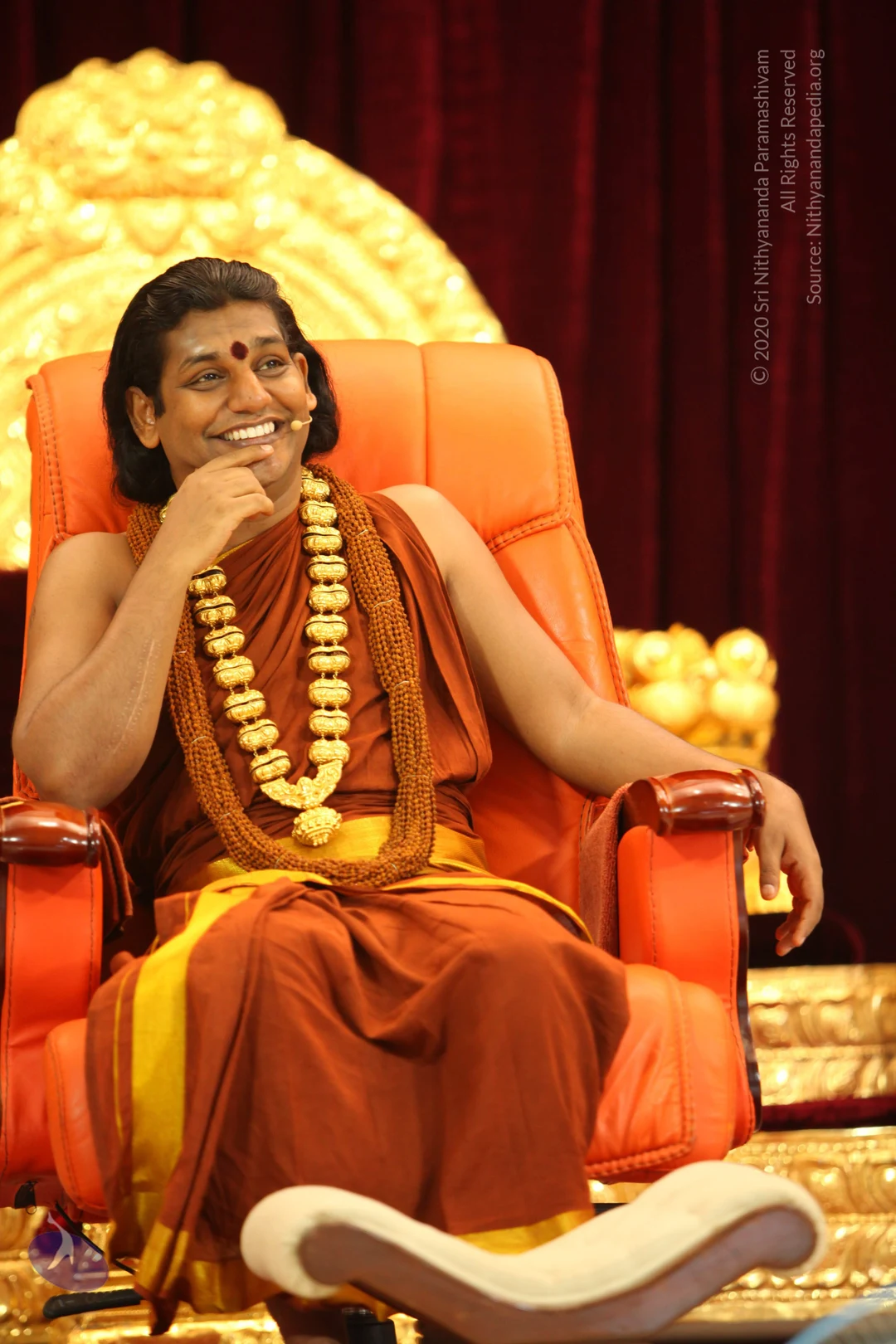
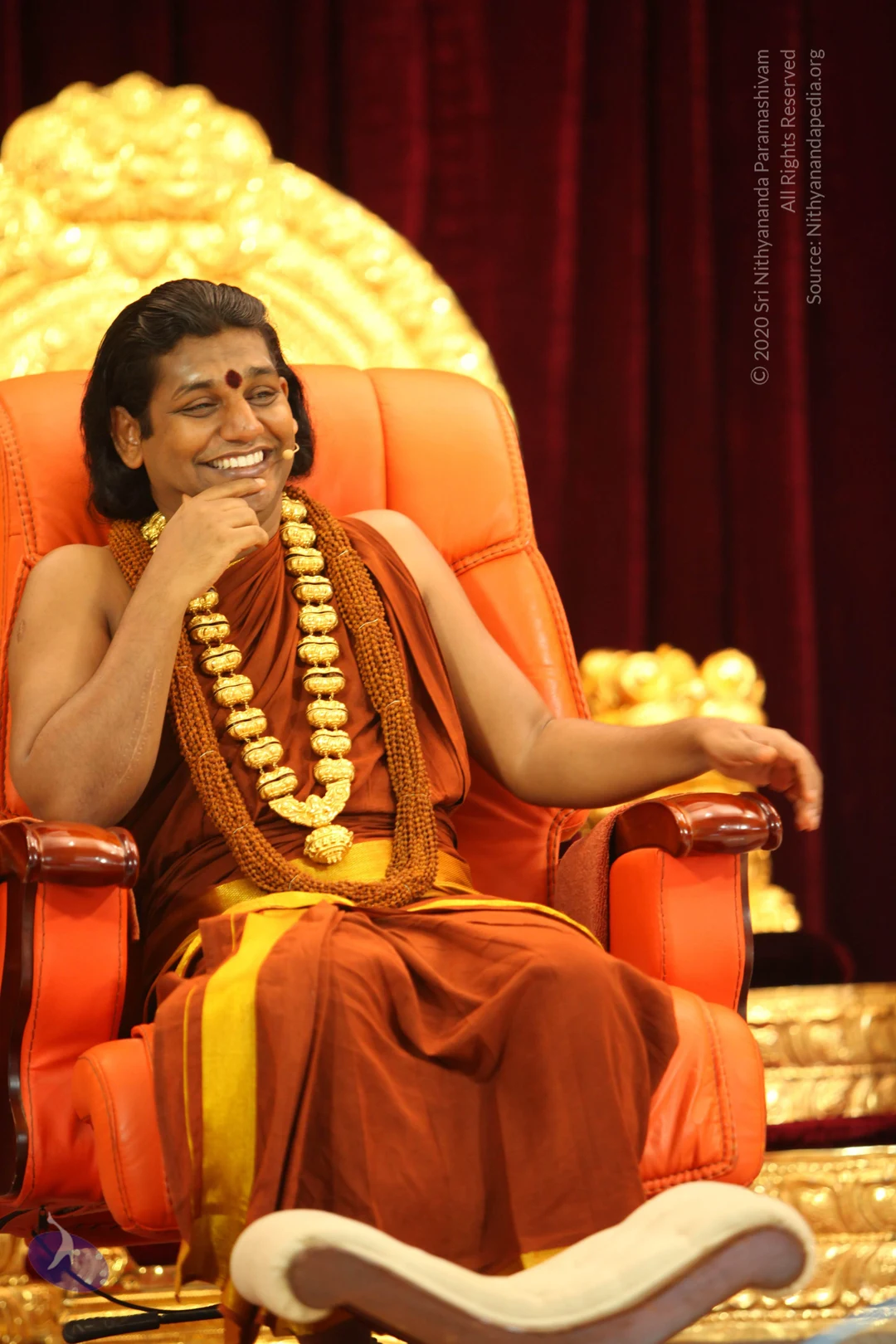
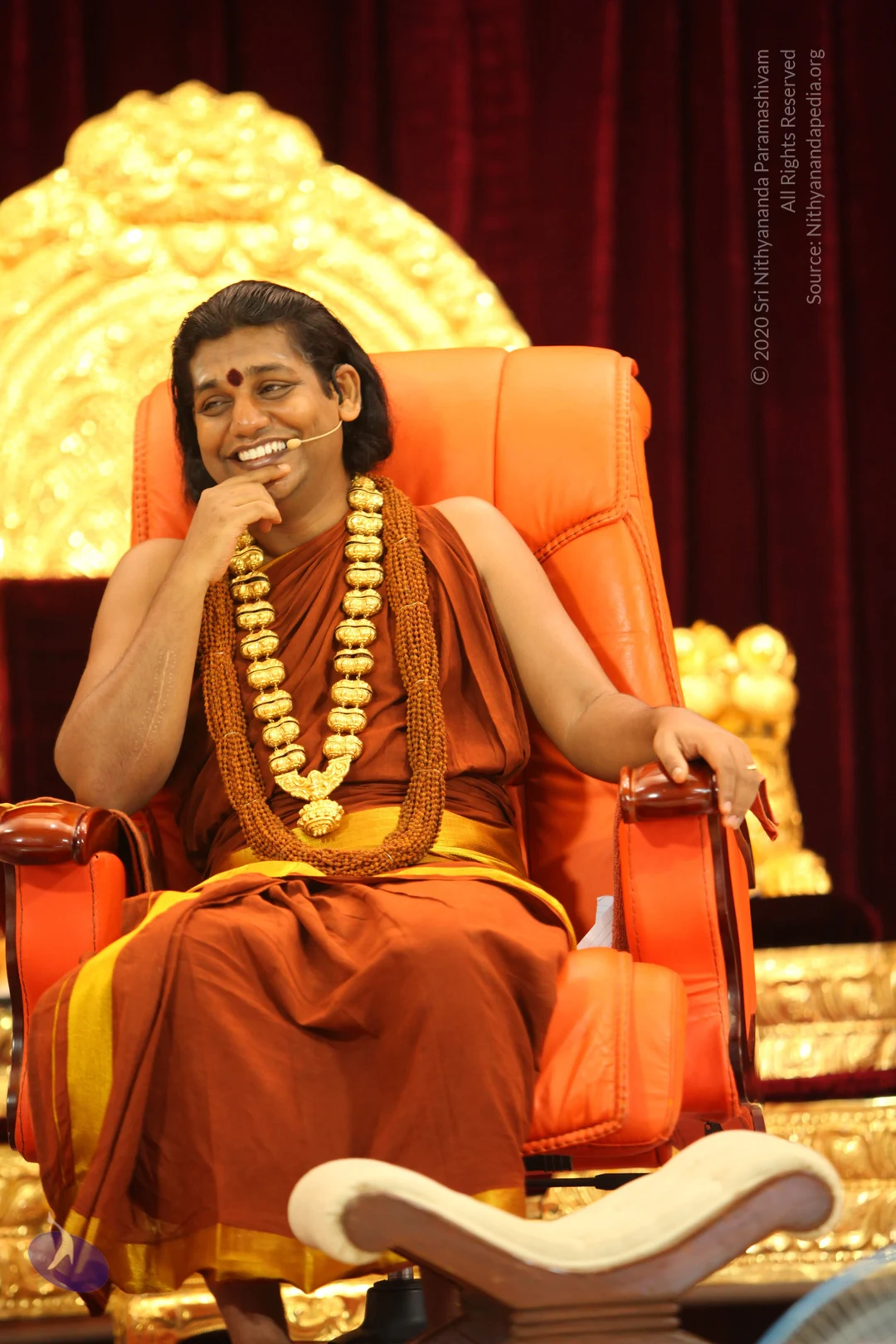
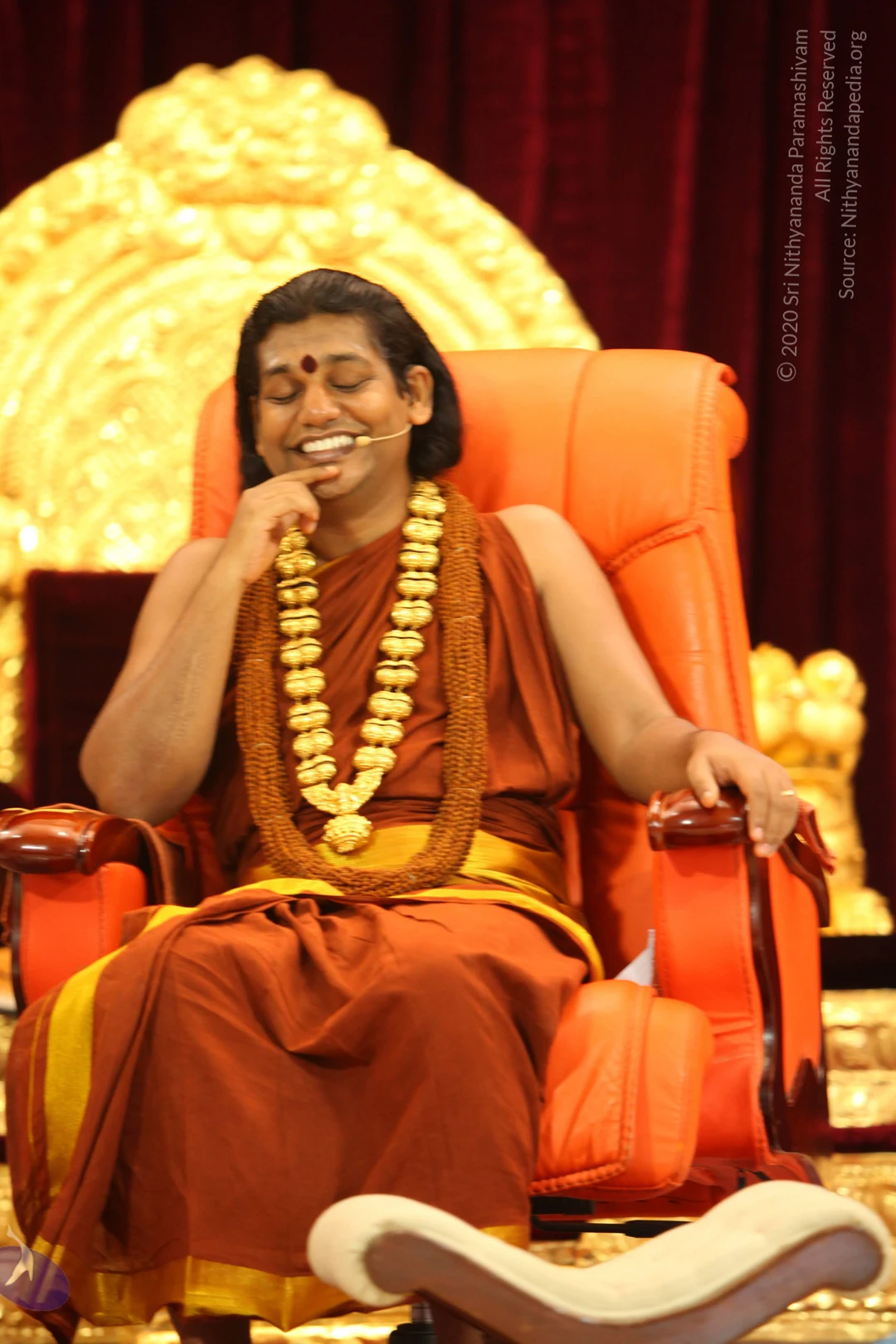
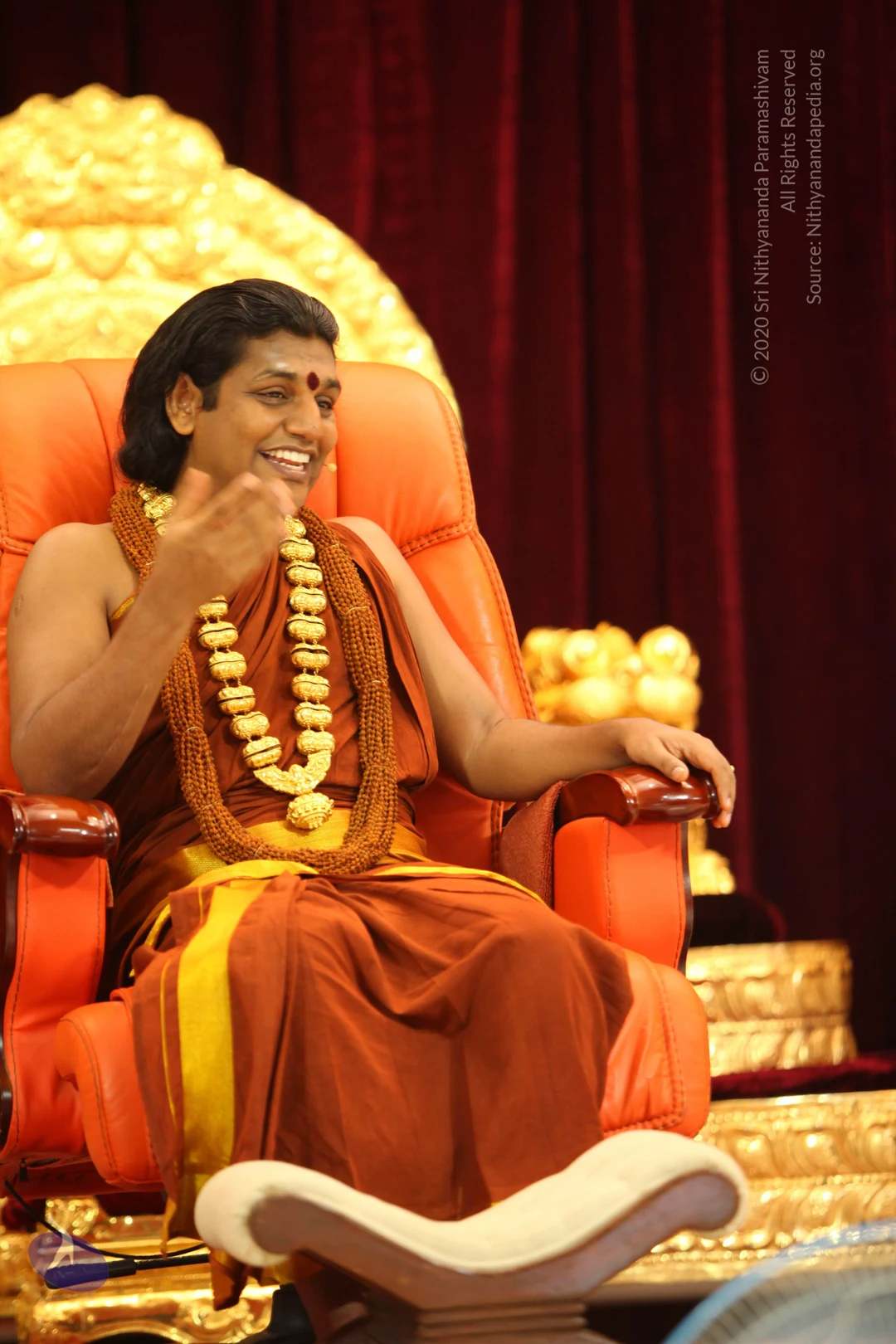
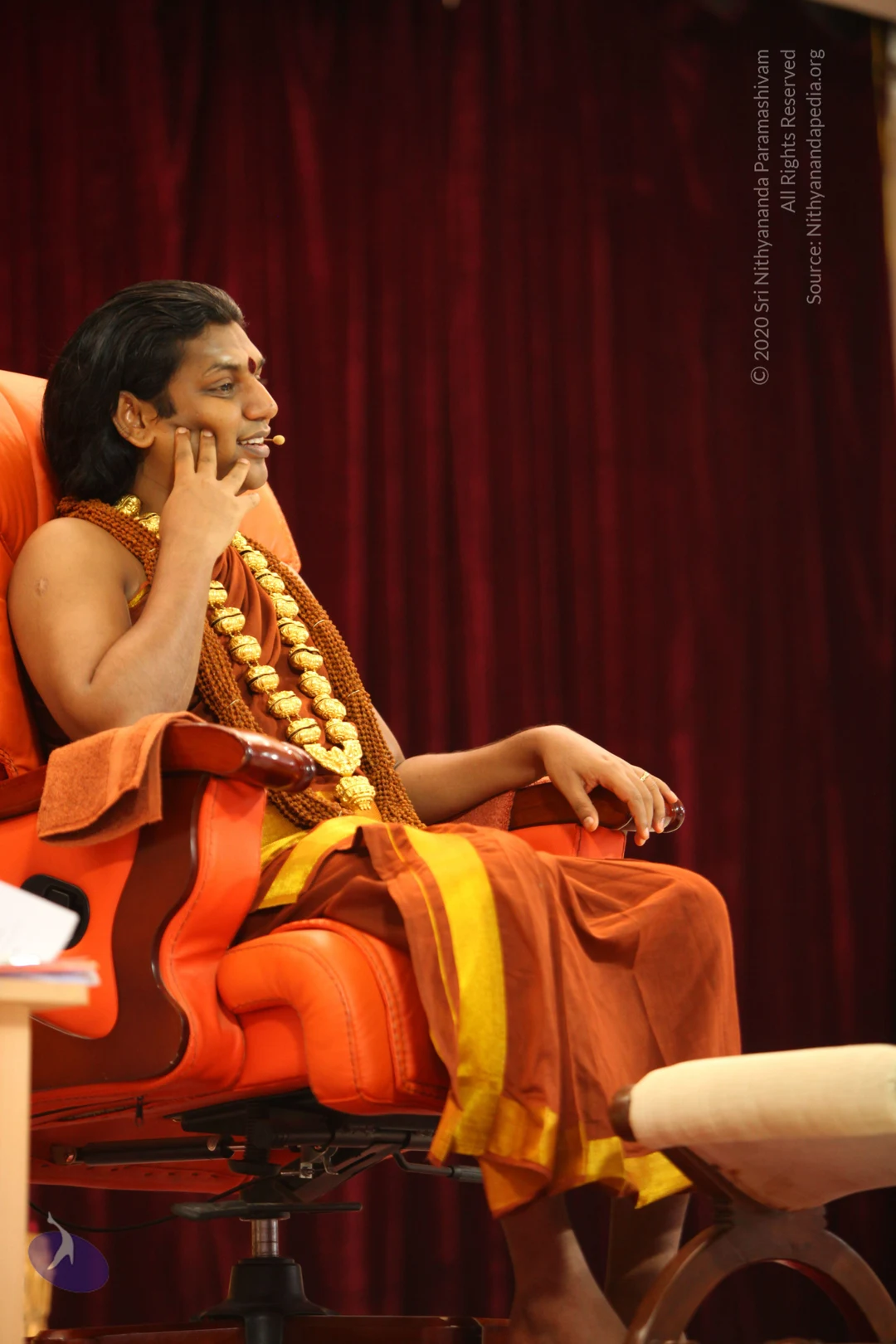
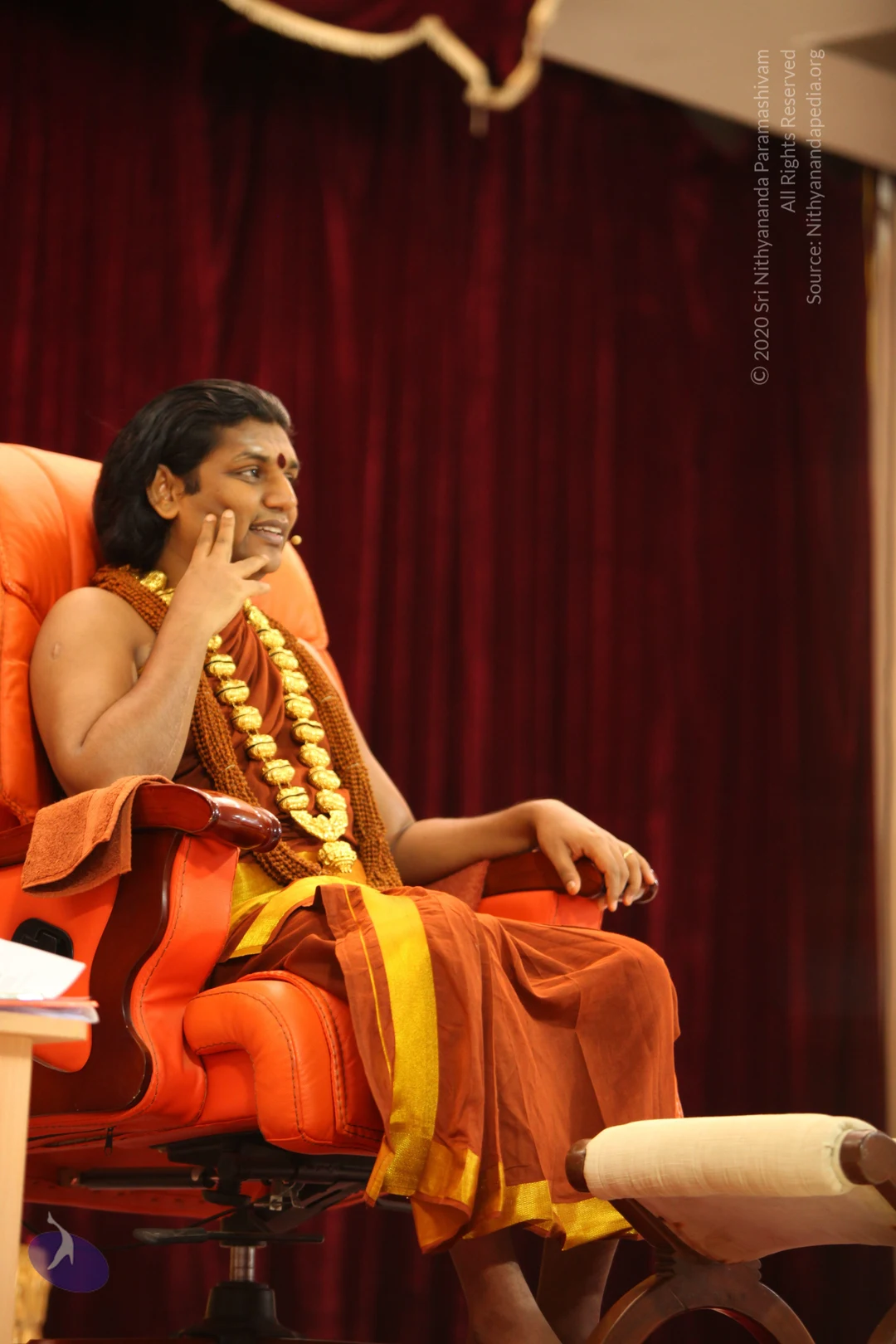
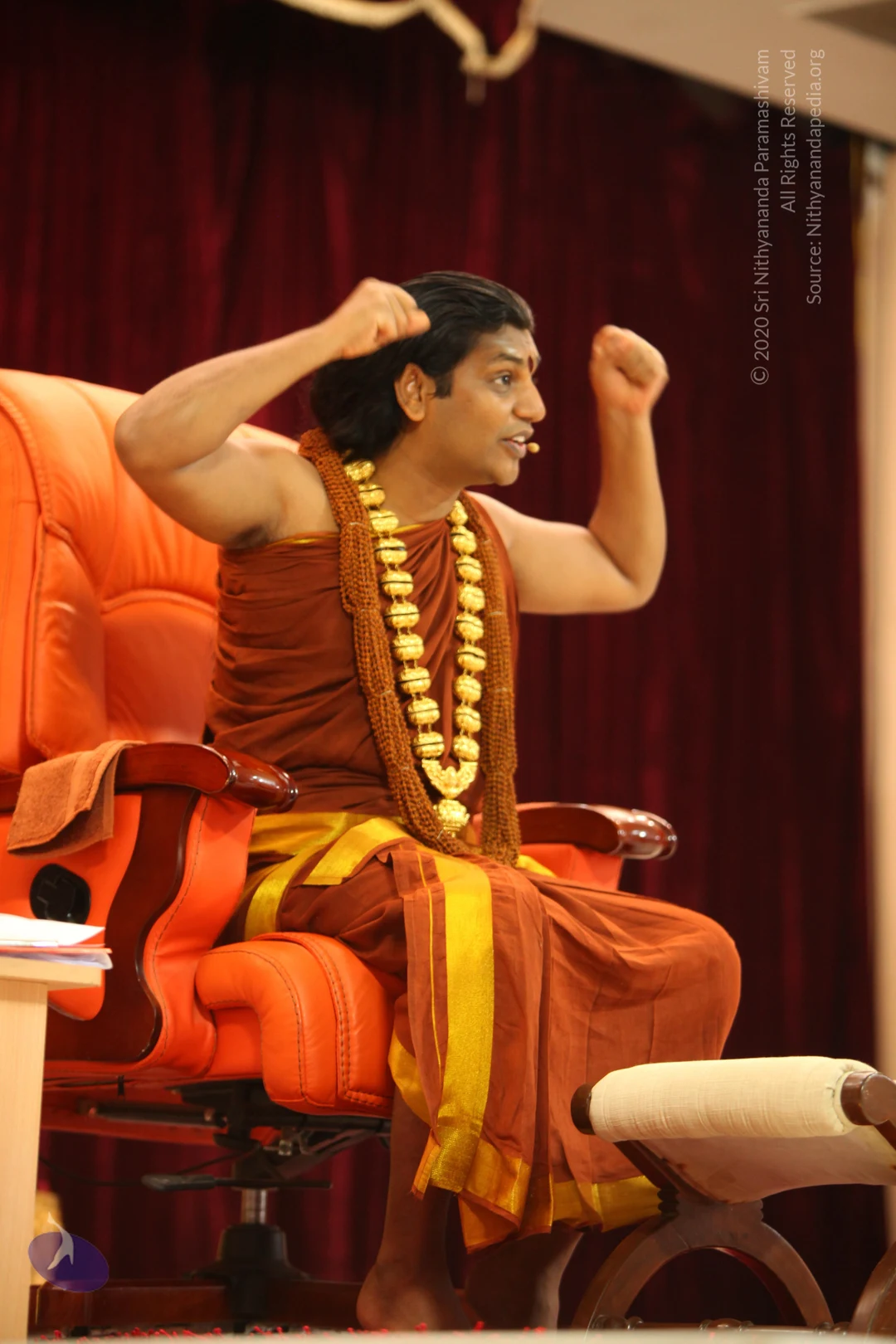
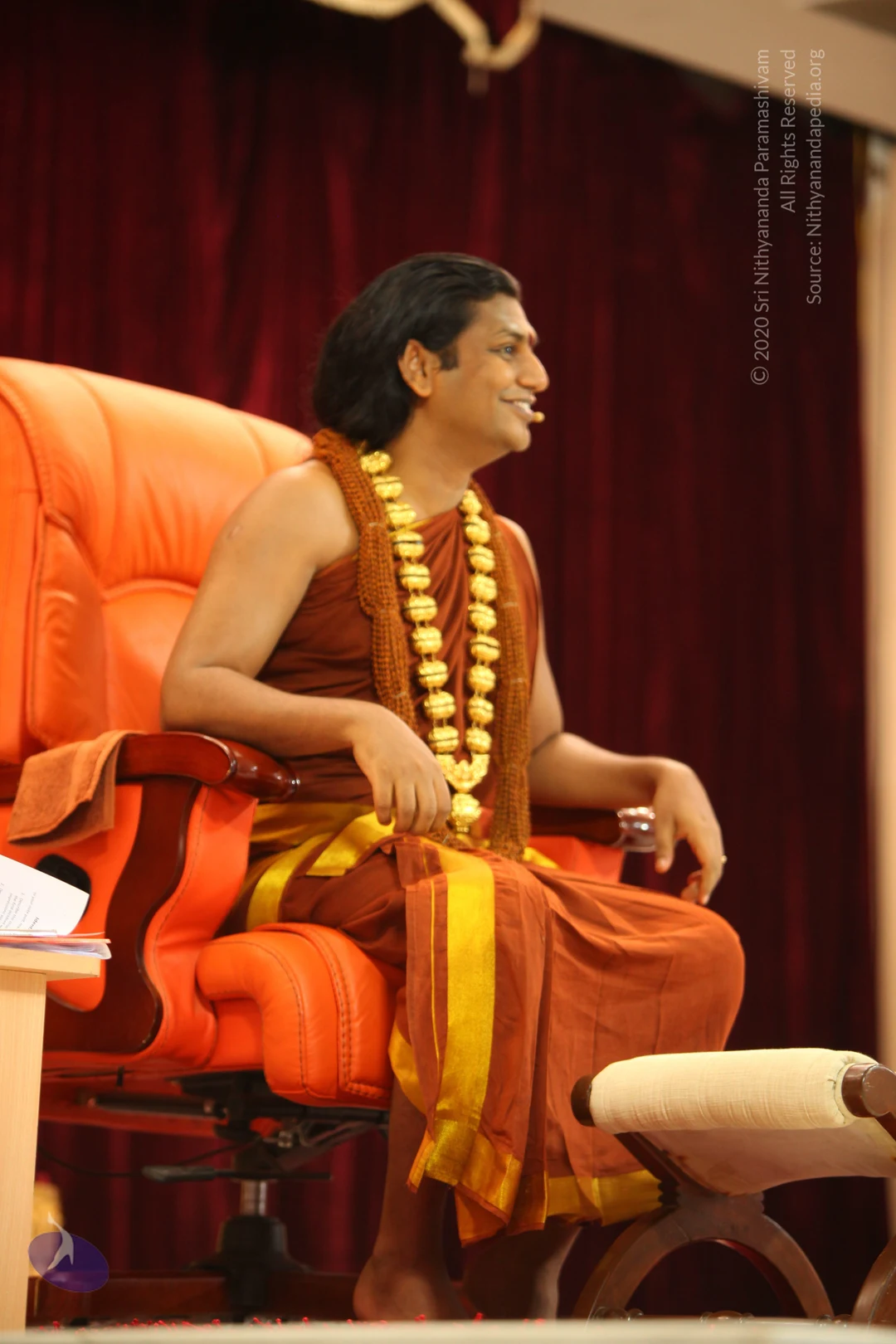
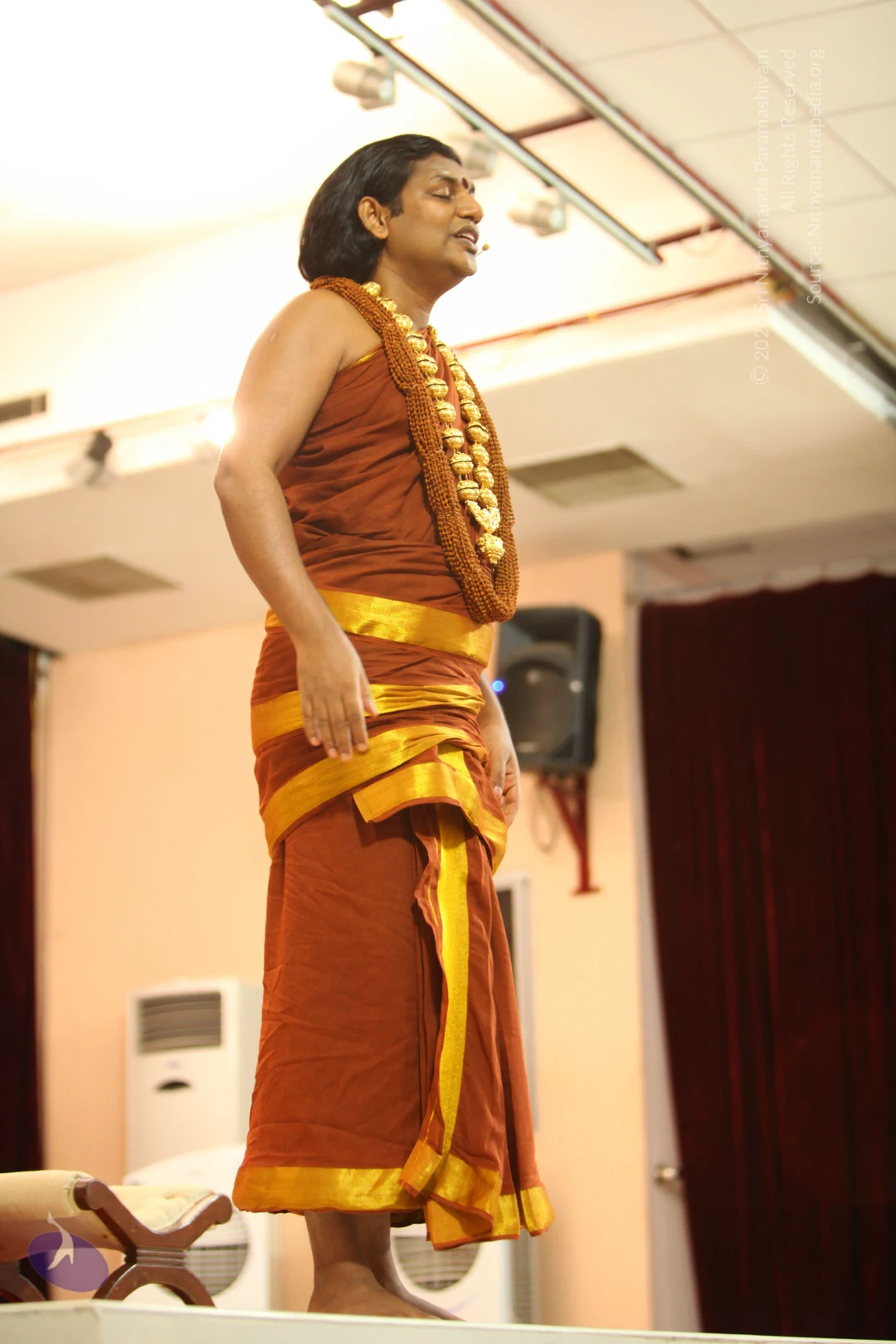
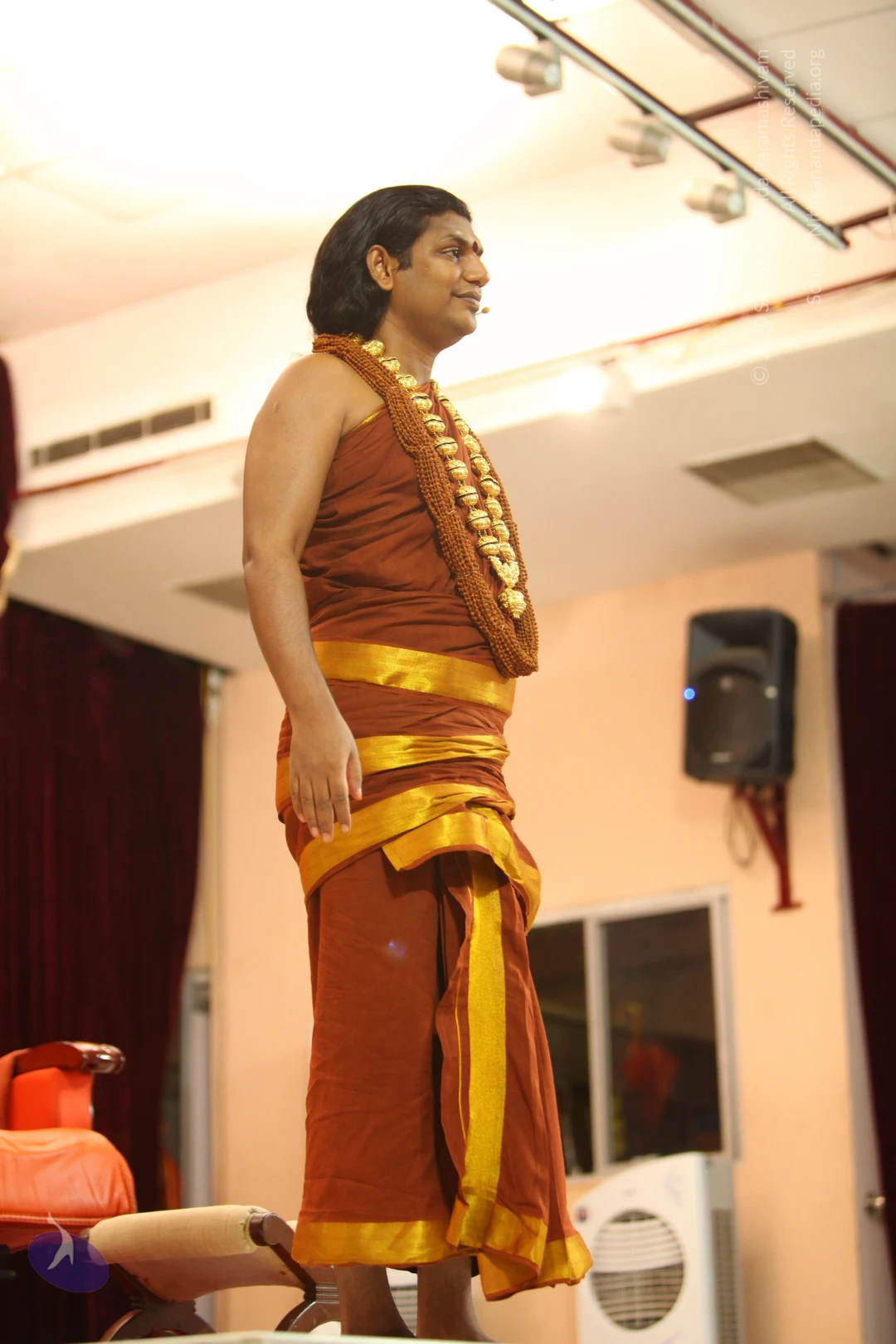
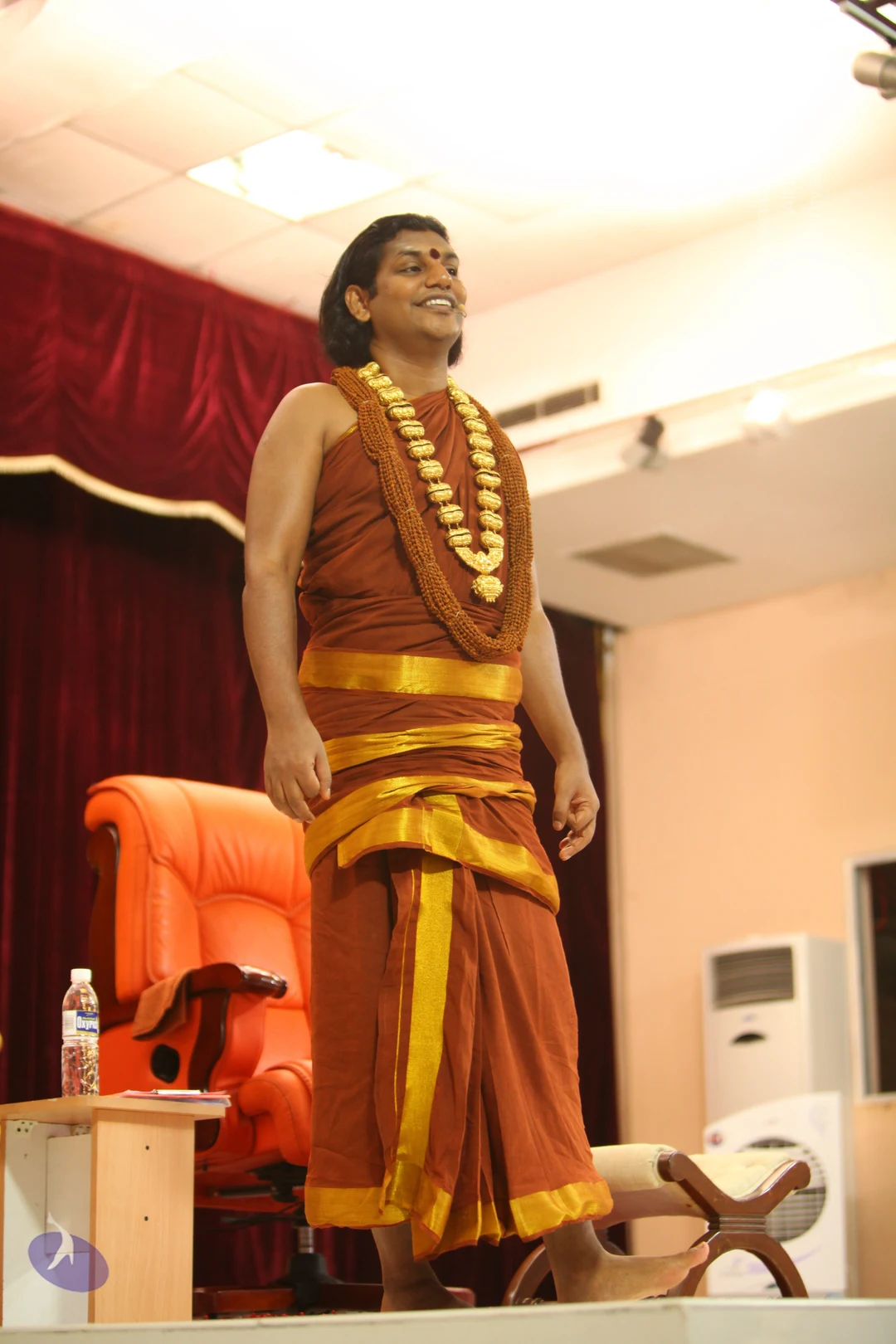
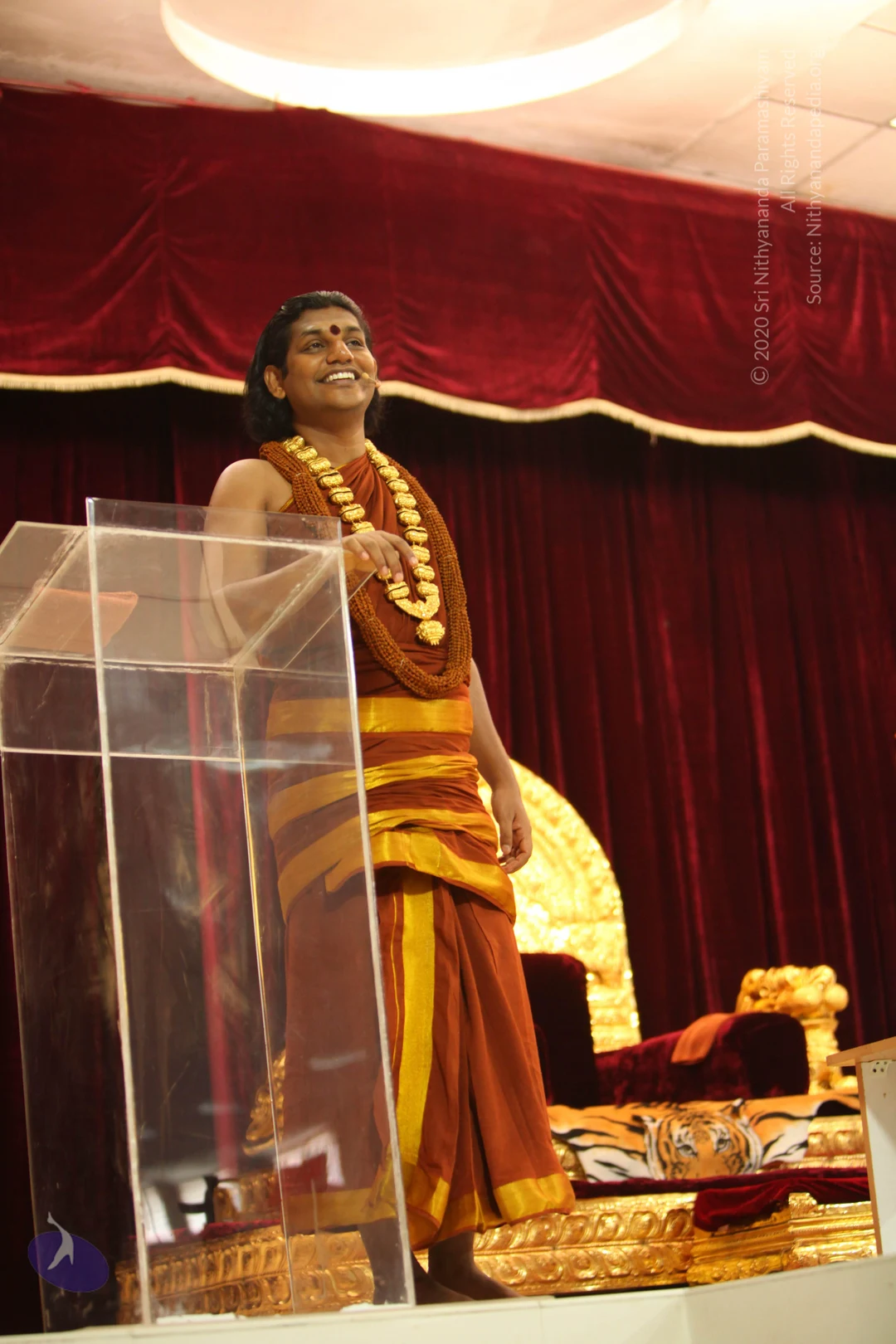
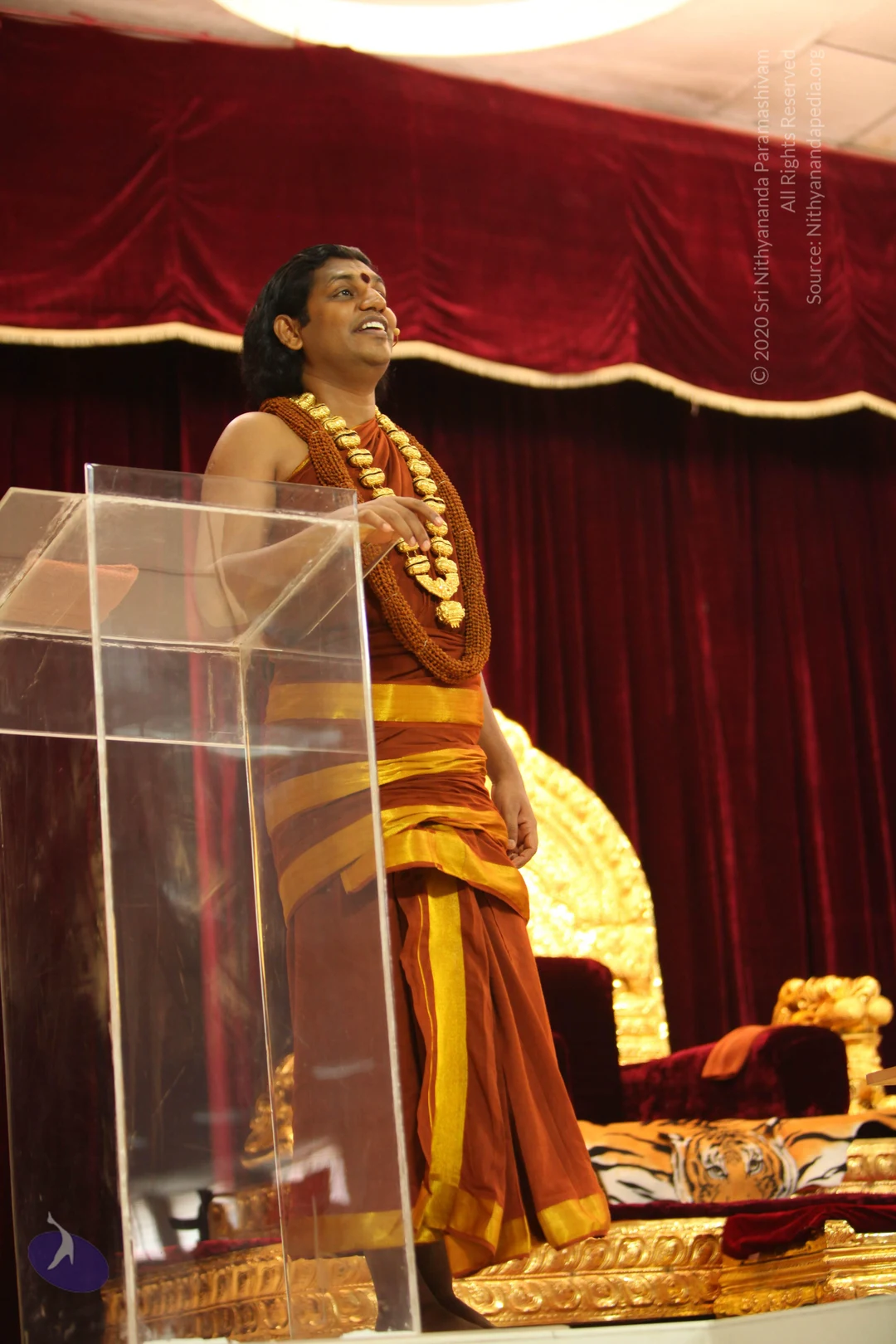
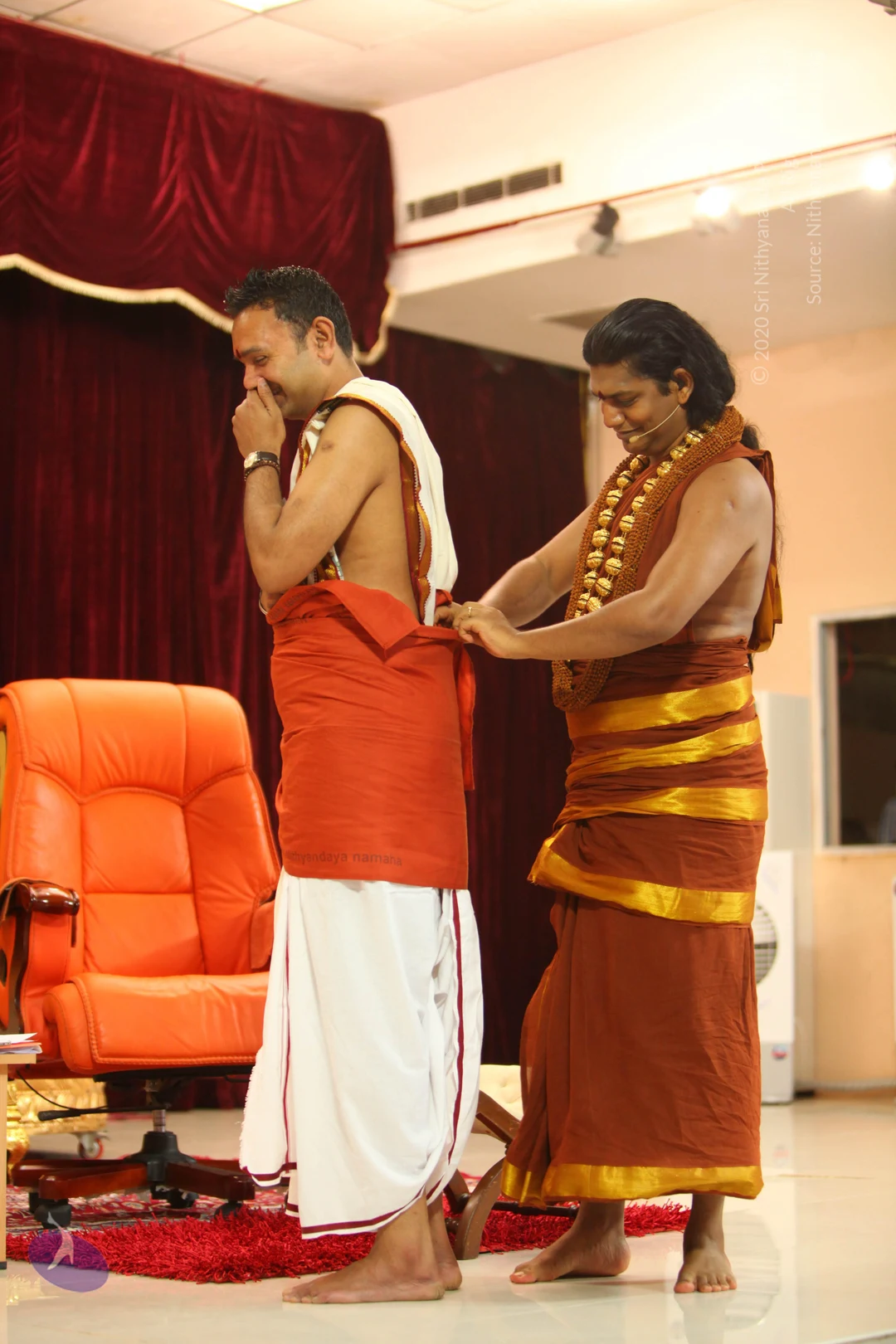
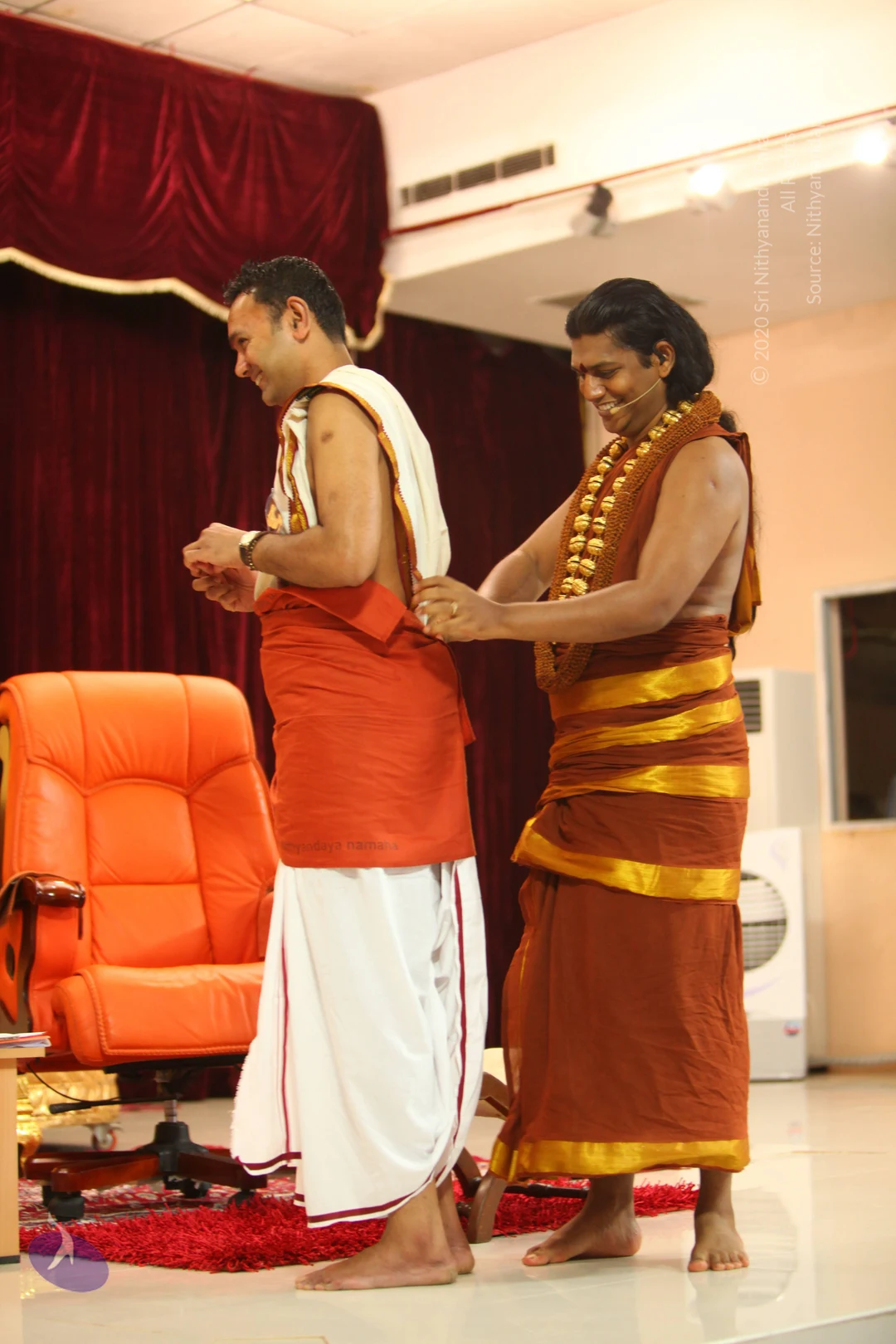
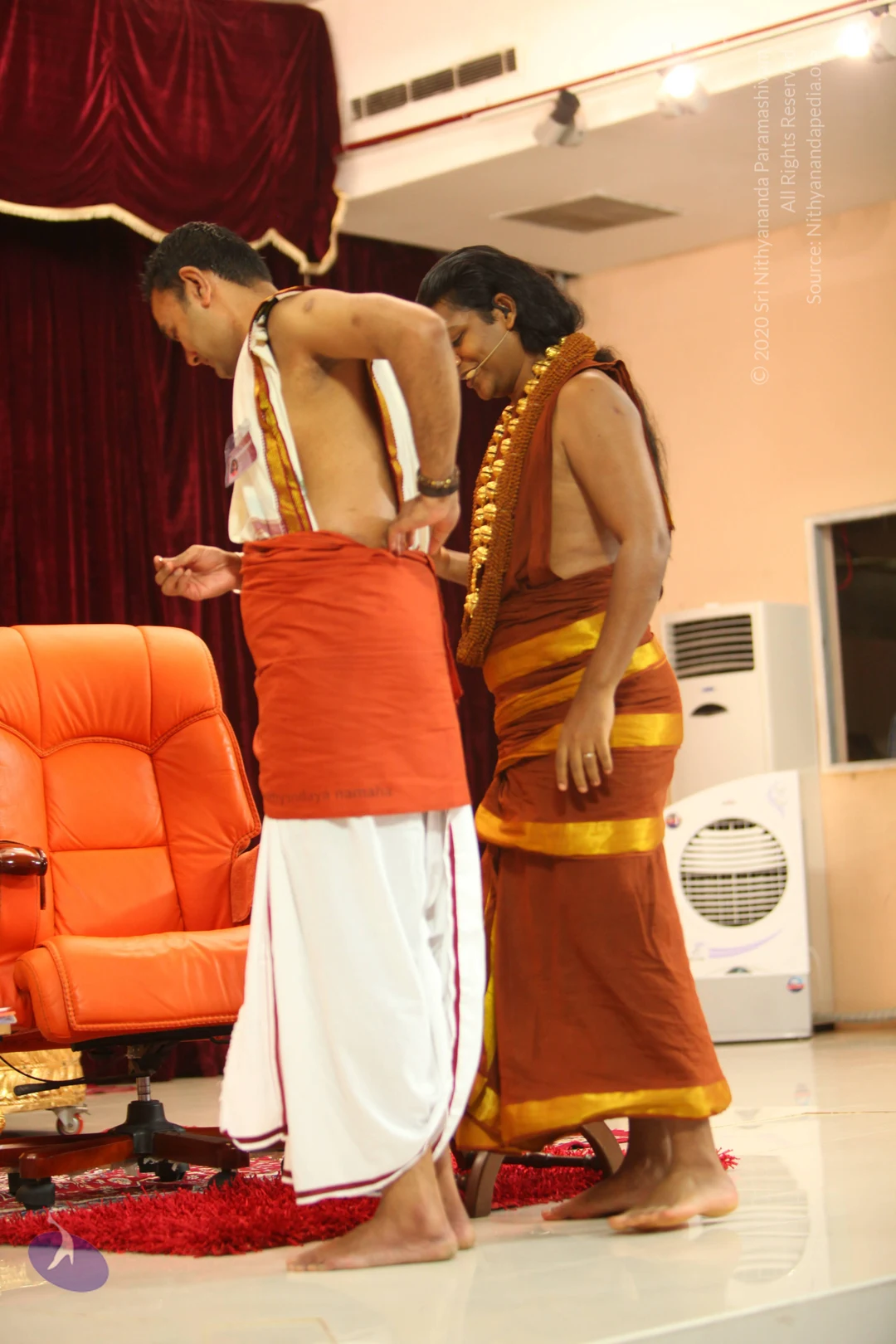
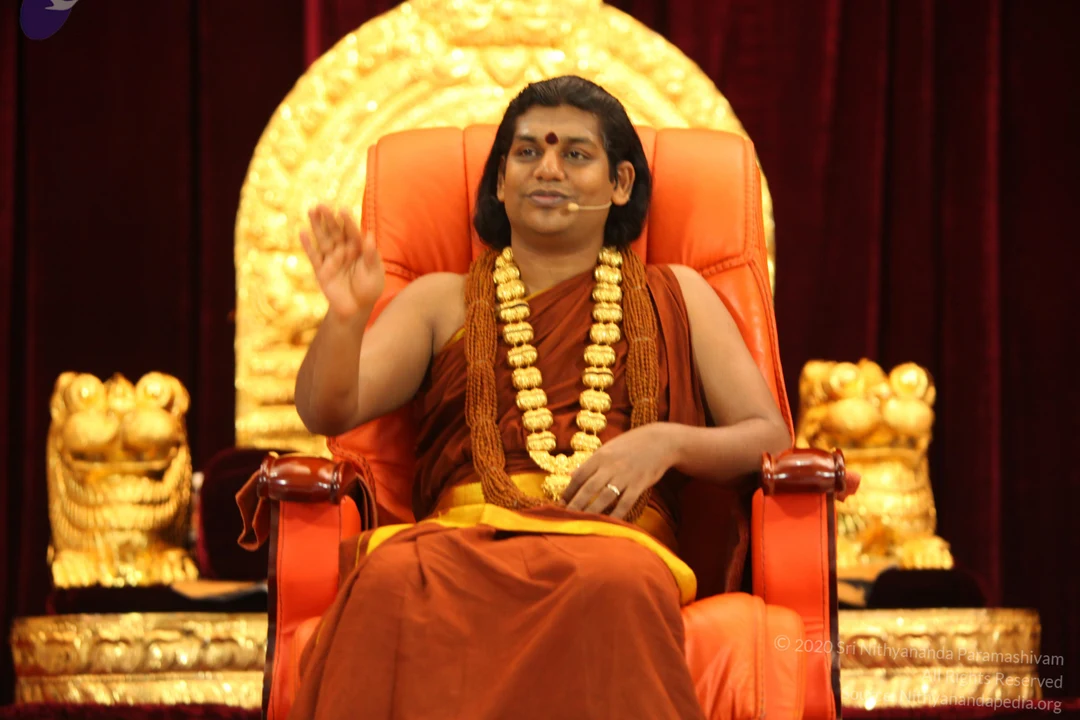
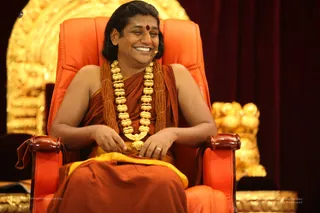
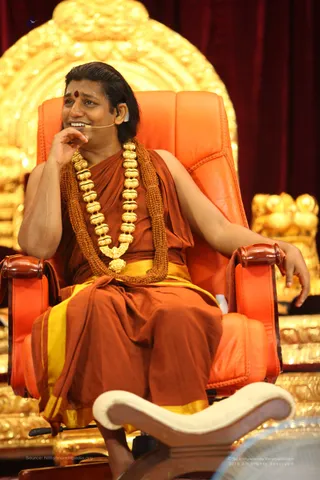
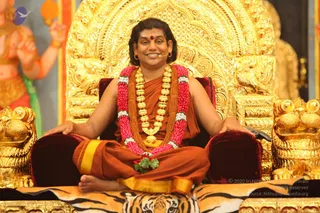
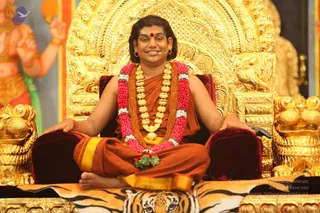
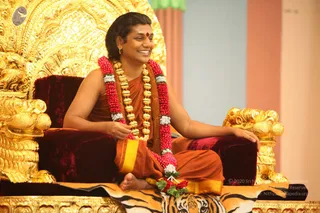
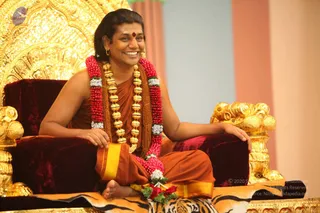
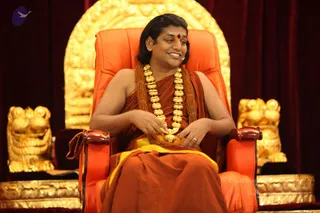
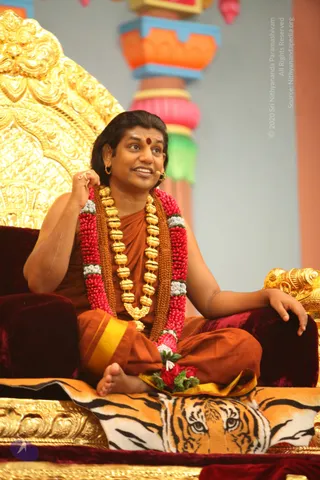
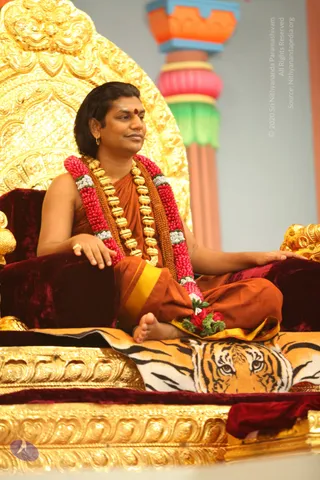
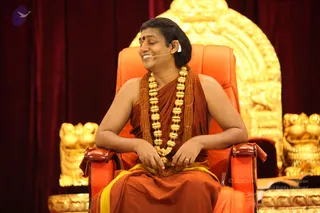
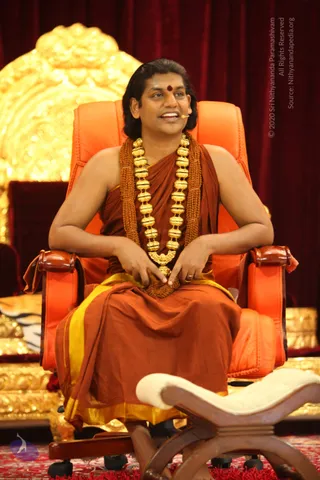
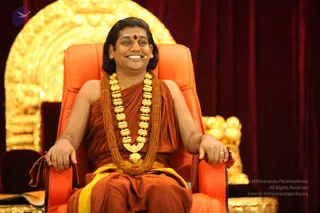
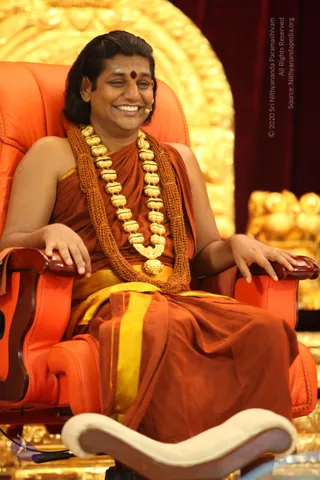
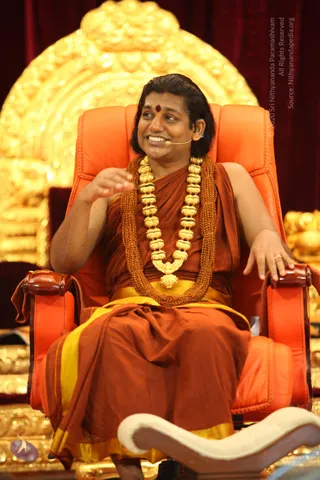
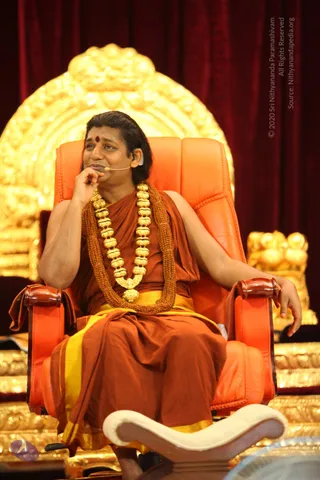
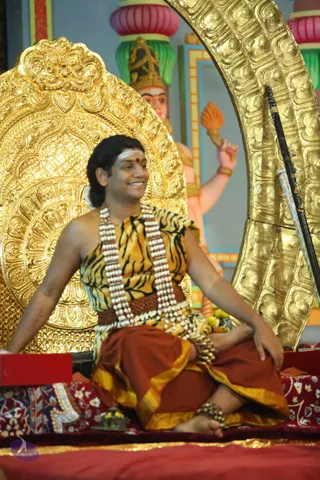
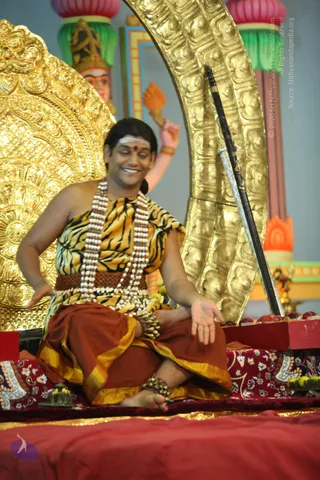
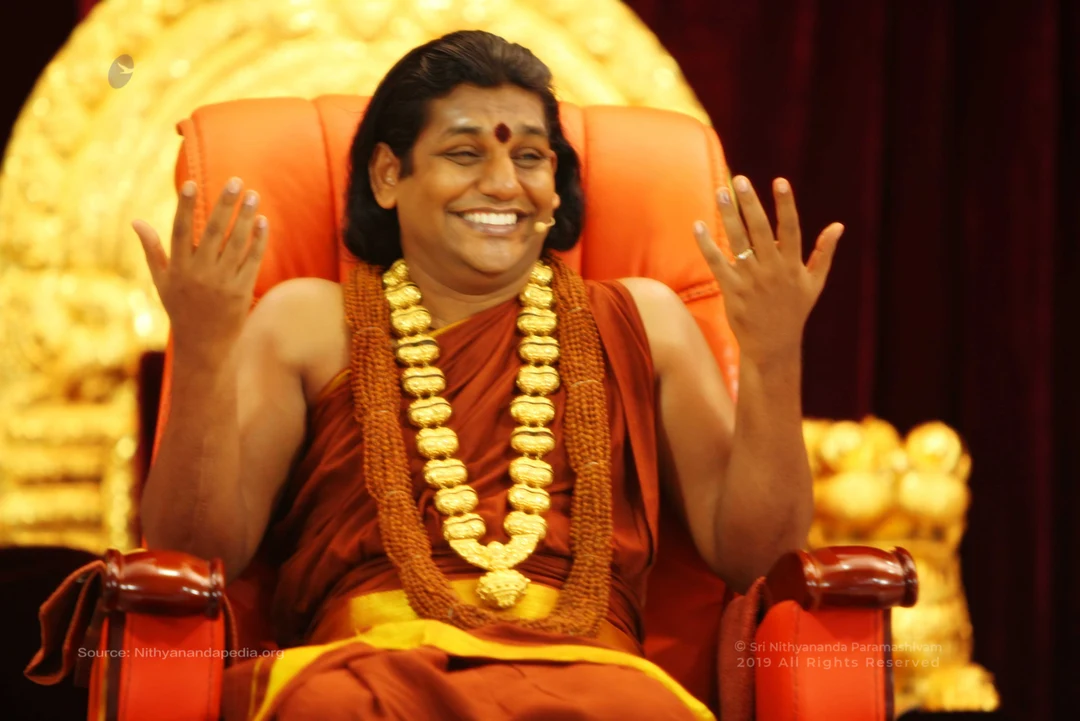
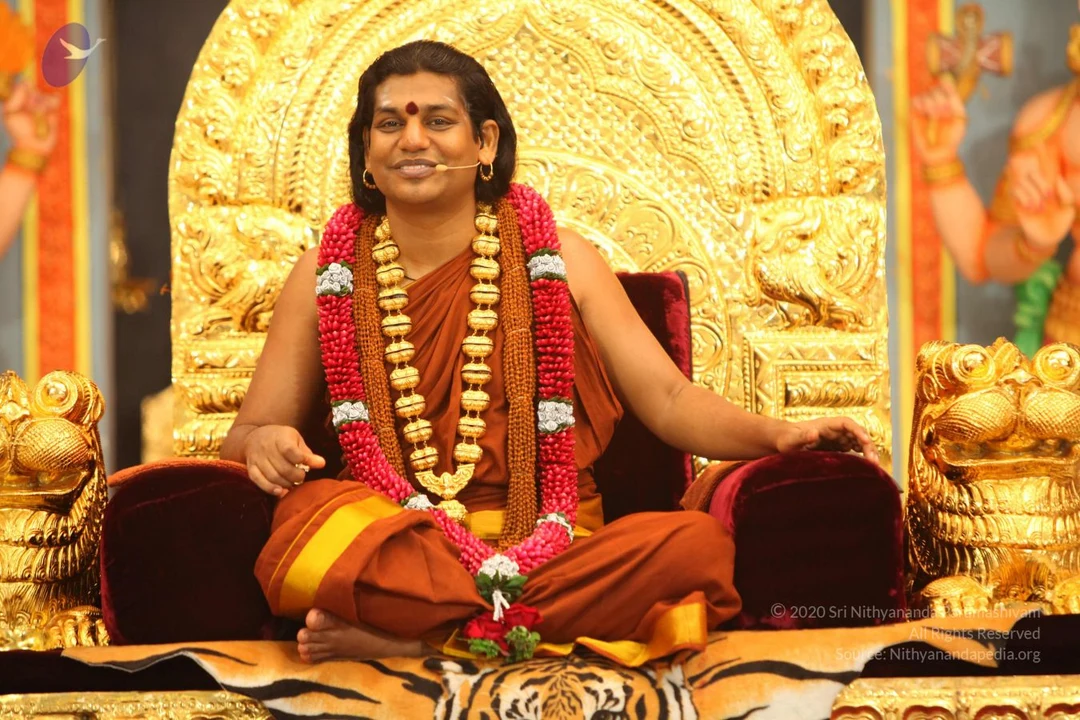
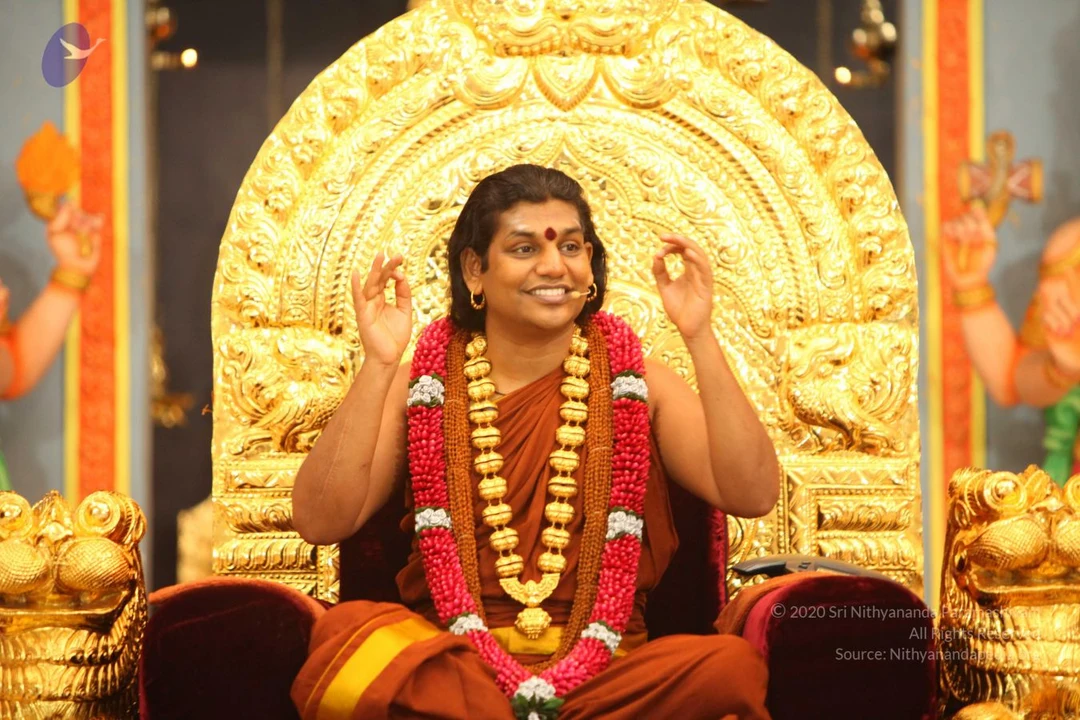
Two men stand on a stage before a deep red velvet drape and an orange leather chair. The man on the left wears long swept-back dark hair, an orange-brown robe, a thick gold-beaded rudraksha-style garland and a red forehead mark; he holds the edge of a large saffron-orange cloth printed with repeated mantra text. The man on the right, his back partly turned, wears a white shawl with a gold border and white dhoti with a red edge, and takes the other end of the cloth. Both are barefoot on a cream floor with red rugs, and a gold-trimmed low table is visible.A photograph of a smiling man with swept-back long dark hair seated on an orange leather throne-style chair in front of a golden ornate backdrop and deep red drapes. He wears an orange-saffron cloth draped over the body with a gold-bordered edge, a red bindi on his forehead, and multiple strands of rudraksha beads with large ceremonial gold ornaments around his neck. His right hand is raised near his chin in a gesture of speaking, and his left hand rests on the armrest. A white cushioned footrest is in the foreground.A seated man in an orange-and-saffron robe sits on an orange leather throne-style chair in front of a large gold arched backdrop with ornate carving. He wears a dense multi-strand necklace of gold beads alternating with brown rudraksha-style beads, and a red bindi on his forehead. His hands rest in his lap, and a small headset microphone is visible near his face. Gilded lion figures flank the chair against deep red drapery. The man appears to be Swamiji (probable), based on the long swept-back hair, saffron robe, ornate gold necklace and rudraksha beads, and the throne setting, with the page indicating his presence at this satsang.

May 16 2013

Original wiki page
Contents

Title

Inner Awakening Day 9

Description:

In today’s morning satsang, Paramahamsa Nithyananda answers questions from devotees. One questioner states that she feels she has a strong inner connection to Nithyananda, but she feels distanced from his outer form. He replies that connection with Guru reflects our own soul’s situation. Good inward connection indicates that we are complete with ourselves – swapoornatva; but if outer connection is weak we need to do further completion with others – poornatva. Nithyananda also discusses the Guru-disciple relationship. Vedic tradition allows us to choose the Guru we wish to guide us to enlightenment. We can identify the Guru with god or worship the two separately; but when we bow to any other Guru or god we should see them only as a reflection of our Guru and hold his ideal in our hearts.

Link to Video:

VideoAudio

Transcript:

May 16 2013 -Practising the Presence of God

0-12 min

Today, I will answer the questions from Inner Awakening participants to help you all realize the 4 principles as satyas. Tattvas into satyas, into life.

Question: The first question today is from ID # 3 Chellaya who is asking, Swamiji, I have a feeling I am connected and not connected to you. Back home I am so connected to you. I talk to you through the Gurumurthy photograph. Whenever I have pain, I touch the photo and feel the vibration and the pain is gone. I talk to you freely, like I am talking to a friend. I am staying alone away from my family, but I live with you. When I go out, I tell you that I am going out and when I am back, I again tell you, I am back. When I go to sleep, when I get up, everything I talk to you. If I am late, you wake me up. I live with you in my home. I drive my car, I feel you are with me so many times. I have escaped even from an accident because I know you pulled me out of it. But here in the IA program, you are physically so near and I feel you are so far away as though some wall is there between you and me. Why is this so Swamiji ? what do I have to do to break this ? please help me to connect to you, like how I do back home, even I am physically in your presence. Cellaya ID # 3

Swamiji: Chellaya, this is a very beautiful question. Right problem to have. See, always used to tell, there are some wrong problems to have & there are some right problems to have. Sometimes people have problem, “I have too many orders, I am not able to supply”, sometime people have the problem that “I don’t have any orders, I am just jobless”. Which problem is best to have ? having too many orders and not able to supply is the problem to have. Good problem to have. See, listen, listen, now I am expanding on some of the important truths. I represent your innermost soul. Atma. Completion. Understand, I represent your innermost soul. Atma, Completion. If you are able to relate with me through my photograph, means that you have already done enough of self completion. You are complete within you. The swapoornatva is done. But if you have a problem, physically when I am around, not able to feel that strongly connected and close, means still you need to do poornatva with others. You need to do completion. Understand, in whatever space you are complete, you will be deeply connected to me. How many have this problem, please raise your hand. Whatever you said. Great, you have done lot of completion with you but even in the completion, you have not completely completed. If you completely complete it, even with completion with others, you will be complete.

Listen, listen what I am saying. I am your soul. How you relate with me outside will be how you relate with the world outside. How you relate with me inside, will be how you relate with you inside. I just reflect the quality of your ability to relate with others and you. How many of you are cognizing it ? It’s a very intimate question. Chellaya, I can understand you completely. And there are thousands here who can sympathize with you and understand you completely. Sometimes you will see a new devotee, person first time coming to see me, you will see me holding the hand, standing and talking to the person, long time and enquiring, how are you, how do you feel. As if I know him for a long time. When you see my conversation, my words, you will catch, exactly I know thoroughly about him. He is coming first time but I will be asking “what happened to the house problem, got sold”. You will see me spending so much time with him. Sometimes, a long time devotee, 10 years they will be connected to me, “What’s your name?” That’s all, especially if she is a woman, she will collapse. Have heart attack, brain attack, liver attack, kidney attack. Whatever organs she has, she will have attack on it.

I just represent your level of completion. Chellaya, your state means you have done more swapooratva but less completion with others. Now you need to concentrate in completing with everyone. If you are having the feeling of completion with all the people around you, you will feel the same nearness that you feel with my photograph, with me physically. And I will also be reciprocating in the same way. I will also be reciprocating, reacting to you in the same way. Understand, Every devotee has his own version of me. Atma Nithyananda. With whom they talk, they relate, sometime talk back for me also. How many of you talk back for me ? God ! When I am in the body itself. And then literally live with me. Its called Ishta Nishta in tradition. And leela dhyana, means strongly feeling connected to your own version of your chosen ideal. You are free to choose your ideal in Hindu tradition. You can choose your Guru, whoever you want as your Guru. Your KulaGuru can’t be changed but satGuru can be changed. Means, KulaGuru means family Guru. All family will have one Guru, that community Guru. KulaGuru is more for training you when you are a child into the disciplines of what to do and what not to do. Like take bath 3 times a day. Do sandyavandana, Gayatri jappa. Small, small instructions. SatGuru is who gives you enlightenment. From time immemorial, vedic tradition gives you the freedom to choose your satguru. Who gives you enlightenment. You can choose your god. You can choose even your Guru as god and god as Guru. Understand. You can choose your Guru. You can choose your God. You can choose your god as Guru and Guru as god. And you can even choose both separately. Choosing Guru as God, we have hundreds of examples. How many have done that ? Choosing God as Guru, Arunagiri Nader did. In Thitruvanamalai, there was a great saint, the devotee of muruga, he chose god, muruga himself as Guru, and Muruga appeared and initiated him. Gave him enlightenment. Guruvay, varuvay, AruLvay Muruga.

12 – 24 min

He calls Muruga, Subramanya, Skanda as Guru. You can choose god as Guru. Guru as god. And you can also choose both independently. Like you can have shiva as god and swami as the Guru, you can have Nithyanandeshwara as God and Nithyananda as Guru. You can have Rama as God, and Ramadasa as Guru. You can have all the options. For that I can give you hundreds of examples, how many choose God and Guru independently. So, these are all the examples. Ramakrishna chose God himself as Guru, Kali. He chose Kali herself as Guru in the beginning. Then Kali herself came as a Bhairavi Brahmani and taught him! Then he chose Kalias God and Tothapuri as Guru. Hinduism gives you a vast variety, vast variety.

You need to understand, living with your chosen ideal is called “Ishta Nishta”, “Leela Dhyana”. I have seen so many people, ordinary village men in India, living with their chosen ideal and living the highest enlightened life without even knowing the words Integrity, Authenticity, Responsibility and Enriching and all that! Without knowing any of these words, they are radiating, radiating enlightenment! I tell you, just this one truth, Ishta Nishta and Leela Dhyana, made millions of village Indians, Indian villagers enlightened! Millions of Indian villagers practice the presence of God. Understand! What you are doing? Unknowingly you are practicing the presence of God!

This country, every time I speak about the great civilization, civilization of Bharat. The western world kids are taught to live with Barbie dolls or cartoons they see on TV. Fortunately, God saved me! I am born in a village of South India. From that age I was living and practicing the presence of God. See, what I understood about Ganesha at the age of three, and what I understand about Ganesha now is different. But that understanding at the age of three only has led me to this understanding. If I was too busy with Mickey Mouse, Tom and Jerry at the age of three, I would have been disillusioned at the age of thirteen that Tom and Jerry doesn’t exist. But I would not have reached any higher understanding. Because I started living with Ganesha at the age of three, even at the age of thirty-five I have higher understanding of Ganesha which has led me to higher and higher planes of existence. Ishta Nishta and Leela Dhyana, practicing the presence of God, living with God!

Understand, for every individual who wants to enlightenment through the path of devotion, who wants to make their life authentic, this is the best path. Chellaiah, I tell you, whether you want it or not your life will continue to become more and more authentic, because you know I am there! I am there! Practicing the presence of God makes you more and more authentic. That is the beauty of the Hindu tradition! Beauty of the Vaidik spiritual tradition! Ishta Nishta makes you do lot of self-completion with you. Actually, because of this Leela Dhyana practice you become more complete with you, and if you observe deeply you will find out if you have incompletion with you, that day you will feel am angry with you! I am angry with you! When you have the incompletion, you will see the reflection on me, means, if you feel I am angry with you, all you need to do is do completion with you and completion with others. How many of you feel that I am angry with you? (People raise their hands). Then all of you have to do completion with you and completion with others. I am not angry with you. If I am angry with you, then I am incomplete. I am not angry with you, because I am complete with me and with others. All you need to do is, you need to complete with you and with others.

Understand, the completion you need to do with you and with others is responsible for how you feel connected to me outside and inside. Because you practice the presence of God, Ishta Nishta, Leela Dhyana……see, all these three are three different words, but finally boils down to one. Leela Dhyana means, remembering all the acts of Krishna is Krishna Leela Dhyana, what all he did. Remembering all the pastimes of Krishna is Leela Dhyana. Remembering all the Shiva Leelas and experiencing it as it is happening now is Shiva Leela Dhyana. In my case you don’t need to do Leela Dhyana. Wherever you are, I will be possessing you. Simply you will be remembering only me! Whether you are in the kitchen, ironing clothes, washing vessels, or sitting in the office and doing the job! Listen! Listen! How many of you feel, almost twenty-four hours, as an undercurrent, I am there in your memory, in your life? Whatever you may be doing, I will be there! This is Leela Dhyana. Practicing the presence of God, means, what Chellaiah is telling, exactly. Whenever you go out you tell me, ‘Swami, Maharaj, I am going out and I will come back.’ When you wake up, ‘Swamiji I am on time. I am in Integrity.’ If not, ‘Swamiji, I am late. I am completing with you.’ This is practicing the presence of God. See, you can be doing this practicing the presence of God with anybody. You can do with Shiva, Hanuman, Rama, Krishna, Devi, whomever you have chosen as your chosen ideal. With that you can do. Doing with Guru, God. You have option. But practicing the presence of God is so powerful!

Please understand! I need to tell you, practicing the presence of God I myself did in my life. I carried the photograph of Shri Ramakrishna from the age of thirteen till the age of twenty-two, practicing his presence continuously. Continuously! Whole day! I tell you, practicing the presence of God is one of the most powerful methods to make you authentic and integrated. Practicing the presence of God is one of the most powerful and integrated methods for becoming enlightened.

Listen! I have defined Leela Dhyana. Leela Dhyana means, being lost in the pastimes of the Guru or God. With God one thing is that you may not be directly involved in the whole Leela. So you have to remember, remember and try to practice. With Guru, you are directly part of it. So, you don’t need to try to remember, remember; he will be remembering you! He will be remembering you! This is called Leela Dhyana. Even if you are afraid he is going to fire you is Leela Dhyana. Then practicing the presence of God is constantly feeling you are with him, he is with you. Practicing the presence of God is the greatest, most powerful technique to put you in Bhava Samadhi immediately. Ramakrishna did it. Ramana Maharsh practiced it. Even the great agnostic, atheist, enlightened beings like J. Krishnamurthi practiced it. If you read the biography of J. Krishnamurthi, from the young age he was trained to practice the presence of the higher power.

24 – 36 min

Other than that dirty mouth, U.G. Krishnamurthi……fortunately he died. Actually, I sent an e-mail to him when I read his book. He was claiming enlightenment is pain. I sent an e-mail to him that, ‘Come on! Let us have a public debate! In open’. Poor fellow died immediately! I told him, there is no arrogant thing whether you win or I win. If you are able to take me to the level further than where I am, I will become your disciple. If I am able to take you further than where you are, you become my disciple. We will enrich other. Come on! That fellow died before coming. Other than that dirty mouth, U.G. Krishnamurthi…….no, this fellow fires everyone.

And I wanted all these so-called modern Gurus to know I am giving you a warning through national channel, no question of attacking, abusing any of the tradition and traditional masters. Don’t think you are Osho! If that fellow was live, I will tear him to pieces! Every Tom, Dick and Harry, these trekker Guru idiots, if you just put a jeans pant and grow a beard and have a backpack and do some yoga, you think you are a big Guru and you have the guts to attack the Hindu tradition and traditional Hindu Gurus! I have come! That time is over! Keep your dirty mouth within you, maybe secretly open only to your close disciples, not to the public!

All the modern-day, trekker Gurus, be very clear, if you are teaching the products of Hinduism - Yoga, Meditation, Hindu philosophy, and saying all religions are the same, I am not going to spare you! If you teach Quran and say all religions are same, Muslim leaders are going to spare you? So, be very clear, owner of Hinduism has come already! None of you guys will talk in the language of Osho! If you don’t have respect for tradition, you live your life and die! We don’t care! But no attacking! Osho made attacking these traditional Gurus as a fashion – attacking Shankaracharyas, attacking Pramukh Swami Maharaj, attacking Asaram Bapuji – attacking all the traditional Gurus, he made it as a fashion. Fellow fortunately died before I came, before I started my public life! Otherwise I would have given him the same taste of his medicine. What, only you know? Fellow saved himself by dying!

All these fellows left and right abuse these practices like practicing the presence of God. See, because Osho set a trend, all the fellows, still these dhaadi waala Gurus, putting a jeans pant and having a backpack, and if you know, ‘Stretch your hands, stretch your leg, blow your nose three times.’, if you know that, immediately you think you are a Guru! And abusing all the traditions! ‘Flush your Vedas!’ One fellow has made a comment, one of these so-called Gurus! Flush yourself first! If you can’t, tell us! We will do it! Now it is time, all these so-called modern, backpack, trekker Guru fellows keep away from Hinduism. Don’t try to attack Hindu Gurus or Hinduism! And I wanted to give this as a warning on a national channel. If you know how to talk, we also know how to talk!

Constantly hurting the religious sentiments, hurting the Hindu religious sentiments has become a fashion! See, these trekker Gurus naturally have a little charisma and orating skills. Naturally, the traditional Gurus have spent all their time on meditation and growing spiritually. They may not have those little, few of those skills, those drama skills. So these fellows go on attacking them! I have come having both! I can do your drama and that drama, both! And I have come with both the skills is a good news! I am going to be standing up at the side of tradition is bad news for the trekker Gurus! All these backpack, trekker Gurus, pack your backpacks and get lost into some hill! Don’t be with the human civilization!

I am going to suggest to the Acharya Sabhas and Akhadas, anybody who teaches yoga, meditation and the Hindu-related material, should not say all religions are equal. You can say all religions are unique. Because, all religions are equal is a defaming, abusing statement towards Hinduism! How can a religion which tells people to go and kill others, and the Hindu tradition which tells you to go and enrich others be equal? Can be same? I was already planning, at least some ten, twelve, these kind of common agendas should be formed and regulated.

Understand, practicing the presence of God leads you to Bhava Samadhi directly. And the third word I uttered, “Ishta Nishta”. You may accept all divine beings. It is not that you will not go to Vishnu temple, you will not go to Devi temple, but if you are connected, if you have chosen Shiva as your ideal, you will know he is your ideal! Ramakrishna gives a very beautiful example. Woman in the house, she will serve everybody. She will serve the brother-in-law, sister-in-law, father-in-law, mother-in-law, husband’s elder brother, younger brother, sister’s husband, everyone she will serve, give them food, give them water to wash the hands, take care. But she knows her bed is only for her husband! Same way, you may bow down in front of any God, any deity, any Guru, but you know you are bowing down only to your Guru in this form. “SathGuru swaroopaaya, Nithyanandaaya, Nithyanandeshwara swaroopaaya namaha!” Very clear! “SathGuru swaroopa, Meenakshiyai namaha!” “SathGuru swaroopa, Ganeshaaya namaha!” “SathGuru swaroopa, Subramanyaaya namaha!” Means, you may bow down in front of any god, any deity. You know you are bowing down only to your chosen ideal, Ishta Nishta! Same way, if your chosen ideal is Shiva, or Devi, or Muruga, even if you bow down to me, you should bow down to me as an embodiment of your chosen ideal. For example, if your chosen ideal is Vishnu, even if you bow down to me, if you bow down at all, you should bow down to me only as an embodiment of Vishnu. If your chosen ideal is me, even if you bow down to anybody, you should bow down to them only as an embodiment of me. That is Ishta Nishta. Understand these three words. Then you will understand this whole space Chellaiah is going through, not only Chellaiah, when I address Chellaiah, I address all of you who are in that space.

Practicing the presence of God, Leela Dhyana, Ishta Nishta, all the three boils down to the same space, space of Bhava Samadhi.

Leela Dhyana means constantly remembering the actions and life of your chosen ideal.

Practicing the presence of God means cognizing his presence is there with you and constantly relating with him, keeping him present in your presence. Keeping him present in your presence is practicing the presence of God.

36 min to end

Practicing the Presence of the God means, cognizing His presence is there with you and constantly relating with Him. Keeping Him present in your presence! Keeping Him present in your presence, is Practicing the Presence of God!

Ishtha Nistha means bowing down, revering only your Ishtha. Wherever you bow down, even if you bow down to your father or mother, you should know that I bow down to my Ishtha who is in your heart. I bow down to Nithyananda who is in your Ananda Gandha whether he is awakened or not, He is there in your Ananda Gandha; whether you experience or not. If you are initiated into Ananda Gandha, you will also experience. If not, you may not experience but I can experience. I bow down to Nithyananda who is in your Ananda Gandha.

Solution for this feeling, close with the photograph and very distance with me is, listen! Because you already practiced the presence of God with my photograph, so you are feeling that intimacy. You are feeling the completion. But now, you have to complete with everyone! In the outer space also you should be in completion, then you will feel the same intimacy, same nearness, even outside you and I will also be responding in the same way! All the ashramites who are with me, in the past janma practiced the presence of God and received boon to live around me, but unfortunately, they forget and when they are given that space, they abuse, they miss to continue to practice the presence of God and miss and the next janma away and again after two janmas practice the presence of the God and come back. They are doing this, falling into the same rut.

If you complete outside also and catch the same closeness you feel inside you with me outside also, you are complete and you live enlightened life. You enrich yourself and others. So, all you need is more completion with others.

Next question:

Ma Maneesha: The next question is, ‘what is the significance of doing homas, especially when I’m sitting in your breathing space the whole day, is there anything else that doing a homa that can add more to my inner space and my spiritual growth, can you please explain?’

Swamiji: ‘what is the significance of doing homas? When I’m sitting in your presence whole day, is there anything else doing a homa that can add more to my inner space and growth?’ First, first listen! What is the significance of doing homas? Homa is not faith-based action, it is science-based action. First understand, it is not faith-based action, it is a science-based actions, which has been considered a science because media promoted it. For e.g. you think if you eat, you will become more energetic, this is considered as science, because media promoted it. Why don’t you eat McDonald’s food every day and see? It is not science-based action, it is a faith-based action, became science-based action because of media promoting it. All of you are getting it? I can give you millions of examples like this. If you take antibiotics, your cough will disappear. It is not science-based action. I’m trying, it‘s not disappearing. Because media promoted it, it has become almost science-based action.

Homa, Yajna is not faith-based action, it is a science-based action. With Integrity, a person who practices Integrity when he utters the word, “Ihaa gaccha, Ihaa gaccha, Iha thishta, Iha thishta”, that space is filled with the presence of the deity, divine energy he is inviting, invoking! Especially, all the homas happen in this campus, I am responsible for the Divine Presence to be there, and receive what you offer. Getting it? Better get it! Understand, when you invoke those energies in the fire properly and procedures, Divine appears and receives your offering! Experience the space of the Divine! Even this is a faith-based action only. You take strepsils, you will not have cough! No, if you take strepsils, your throat is engaged in something else, so you don’t have cough, that’s all. Alright!

Homas, Yajnas, Yagas, all of them are very powerful science-based actions. Tomorrow, Kaalabhairava Homa you will see, you will see the Presence! Literally He will be there, receiving the offerings, responding to you! When you are in that presence, offering, please understand, He will be straightaway, literally answering your prayers and giving you the boons! Homas are, if you do the scientific analysis and research, their percentage ability to cure the disease will be more than allopathy, I challenge! Just the science of doing it with Integrity and Authenticity is lost, that is where the problem is. We will revive now! We are reviving now! Especially, I’m reviving it with my Gurukul kids. My Gurukul kids are the best Integrated, Authentic beings on the planet earth. They are going to be chanting these mantras. Do you know the effect of that on the planet earth? You will see! you will see! And, I commit with you all, I will create group of my Gurukul kids, able to do all this yajnas like Varuna yajna, literally hundred percent I guarantee, when they go and perform those yajna in any city, simply it will rain! I’ll demonstrate, please understand, I’ll demonstrate and show hundred percent result. For the Yajnas like, Varuna yajna and Vaideeshwara homas, you will see, I’m training! Especially, when they practice this mallakamba and all these martial arts, even their muscles will be integrated into their Integrity! I’m training. Already I’m successful, but still I’m training them with more details including how the yajna kundas should be created, yantra, everything will be so authentic! When they say, let it rain, it will just shower! Only the water which showers from the sky can put the fire out, nobody else can put it off! And, it will shower and put the fire off. Only then the yajna will end! Till then yajna will go on. Only when it showers they will say, ‘Okay, Agne twam samudram gaccha, Prithvi tvam sheetala bhava!’ Means, ending the homa. It is just the power of Integrity and Authenticity and Responsibility, decision to Enrich!

I’ll prove this as a science to the world! Science to the world! When you are sitting in my breathing space or in the homa, be in the space of pure listening! Deities land in the homa, the presence opens up in the homa as a ‘Sound’. Understand, then they become fire, but the vehicle through which they land is a Sound! So listen! Listen! Be in the space of pure listening! It can transform you! It can transform you! It can just transform you!

Homa is science-based action! Not faith-based action!

Photos
Link to Video:

Tags:

Paramahamsa Nithyananda, connection, Guru, soul, relationship, Vedic tradition, wish, enlightenment, god, worship, reflection, ideal, heart.

Photos Of The Day:
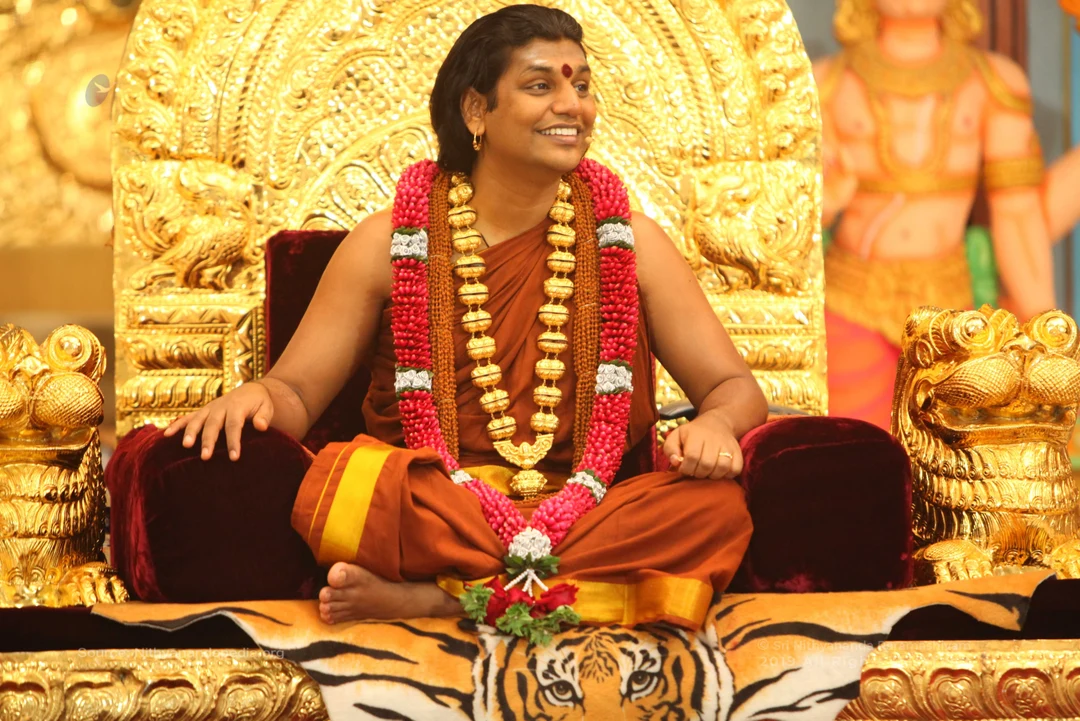
TempleTour-Padapuja-MorningMessage

IASession

KalaBhairavaDarshan

Photos Of The Day:
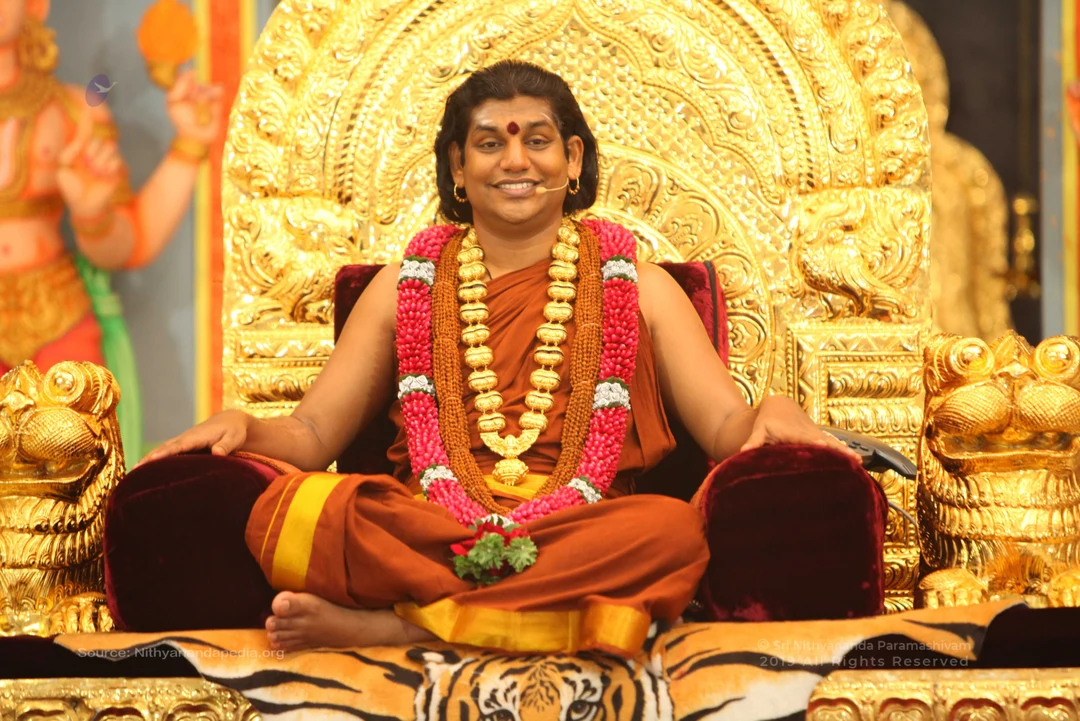
Inner-Awakening-Swamiji-Session

1-TempleTour-Padapuja-MorningMessages

2-IASession

3-KalaBhairavaDarshan

Photos from this day
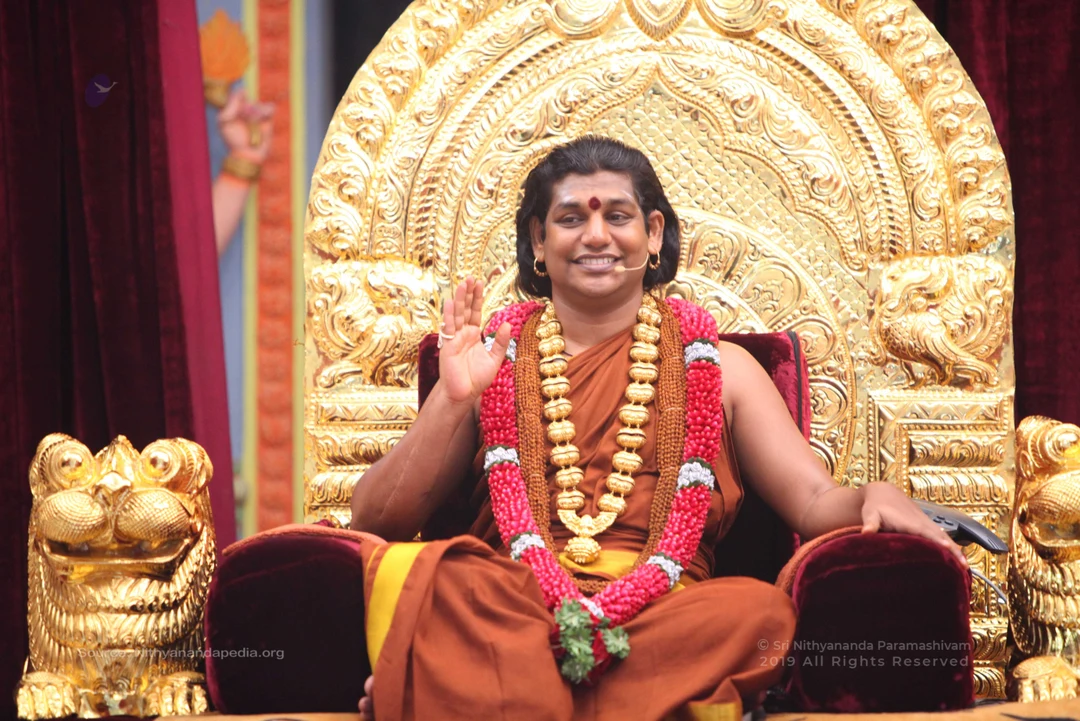
View all 319 photos

Photos

7 photosSource gallery
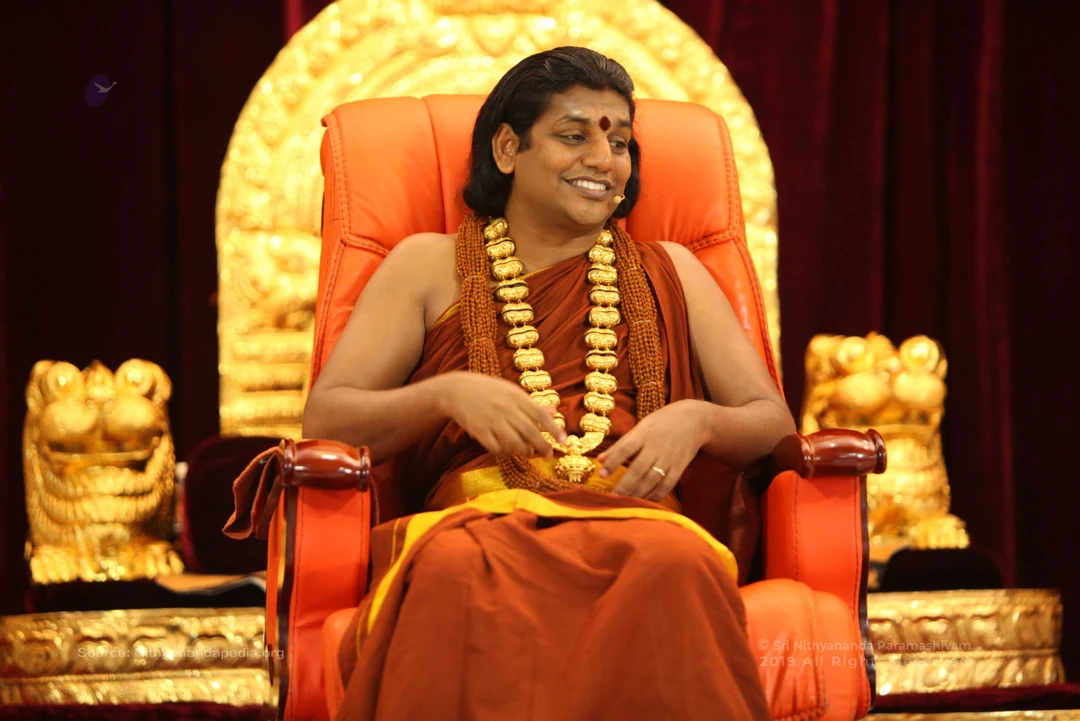
He wears a rust-orange saffron-toned robe with a yellow border, a dark rudraksha mala and a heavy ceremonial gold necklace, with a red kumkum dot on the forehead and a small lapel microphone. Behind him a glowing gold ornate backdrop and a dark red curtain frame the stage, with a gold-decorated seat at the right edge.A man with long swept-back dark hair sits smiling and looking downward in a large orange leather chair on a stage. He wears a rust-orange and saffron draped garment over one shoulder, a long rudraksha mala with ornate gold beads around his neck, and a small vertical mark on his forehead. His hands rest on his lap. Behind him is a large golden ornate backdrop and a gold-trimmed throne-like structure, set against deep red velvet drapes.A smiling man with long swept-back dark hair and a red bindi sits in a bright orange leather armchair with wooden armrests. He wears saffron-orange robes with a yellow edge, a long brown rudraksha mala draped over his shoulders, and a thick ceremonial gold necklace of large beads. A small microphone is clipped near his face. Behind him stands an ornate gold arched backdrop and a gold seat, set against deep maroon drapes. Swamiji (probable) is seated centrally, with long swept-back hair, saffron robes, rudraksha mala and ceremonial gold necklace as the qualifying cues.A photograph of a smiling man with swept-back long dark hair seated on an orange leather throne-style chair in front of a golden ornate backdrop and deep red drapes. He wears an orange-saffron cloth draped over the body with a gold-bordered edge, a red bindi on his forehead, and multiple strands of rudraksha beads with large ceremonial gold ornaments around his neck. His right hand is raised near his chin in a gesture of speaking, and his left hand rests on the armrest. A white cushioned footrest is in the foreground.A man seated on an orange leather armchair with wooden armrests, in front of a large golden ornate backdrop and red curtains. He wears a rust-orange draped robe with a yellow-gold border, a heavy gold necklace with rudraksha beads, and a red bindi on his forehead. He has a headset microphone, a hand raised to his chin, and a smile, as if listening or speaking to an audience. A cream-upholstered footrest is in the foreground. Swamiji (probable): long swept-back hair, saffron robes, ceremonial gold necklace and rudraksha mala, seated on a throne-like chair.A seated man in an orange-and-saffron robe sits on an orange leather throne-style chair in front of a large gold arched backdrop with ornate carving. He wears a dense multi-strand necklace of gold beads alternating with brown rudraksha-style beads, and a red bindi on his forehead. His hands rest in his lap, and a small headset microphone is visible near his face. Gilded lion figures flank the chair against deep red drapery. The man appears to be Swamiji (probable), based on the long swept-back hair, saffron robe, ornate gold necklace and rudraksha beads, and the throne setting, with the page indicating his presence at this satsang.

TempleTour-Padapuja-MorningMessage
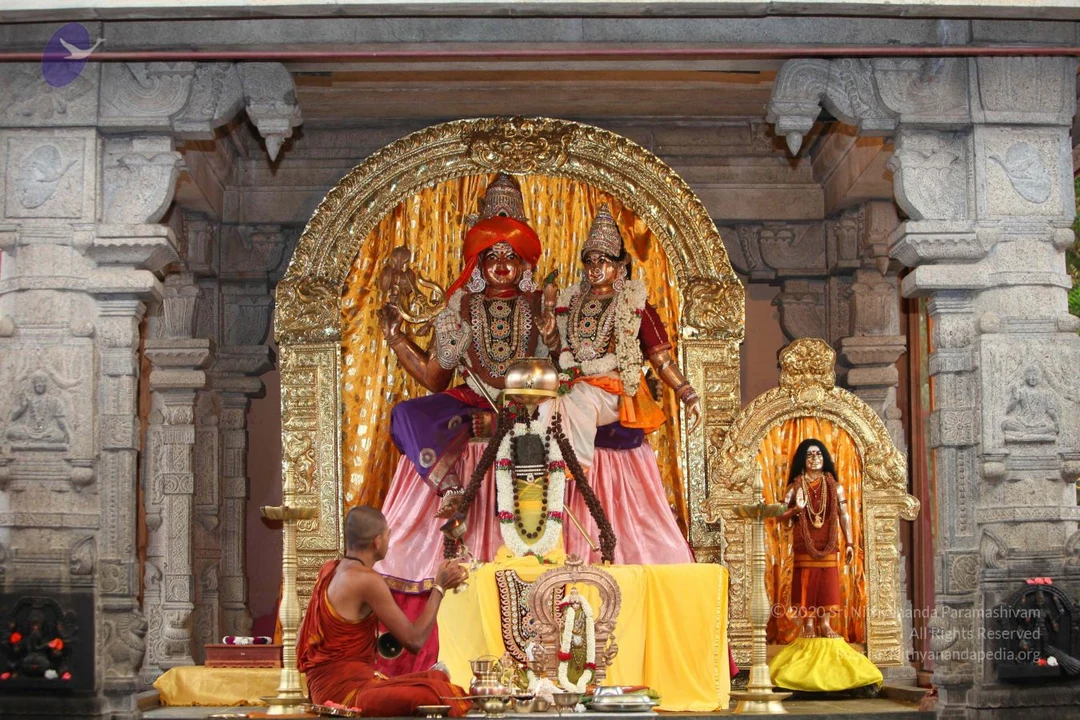
71 photosSource gallery
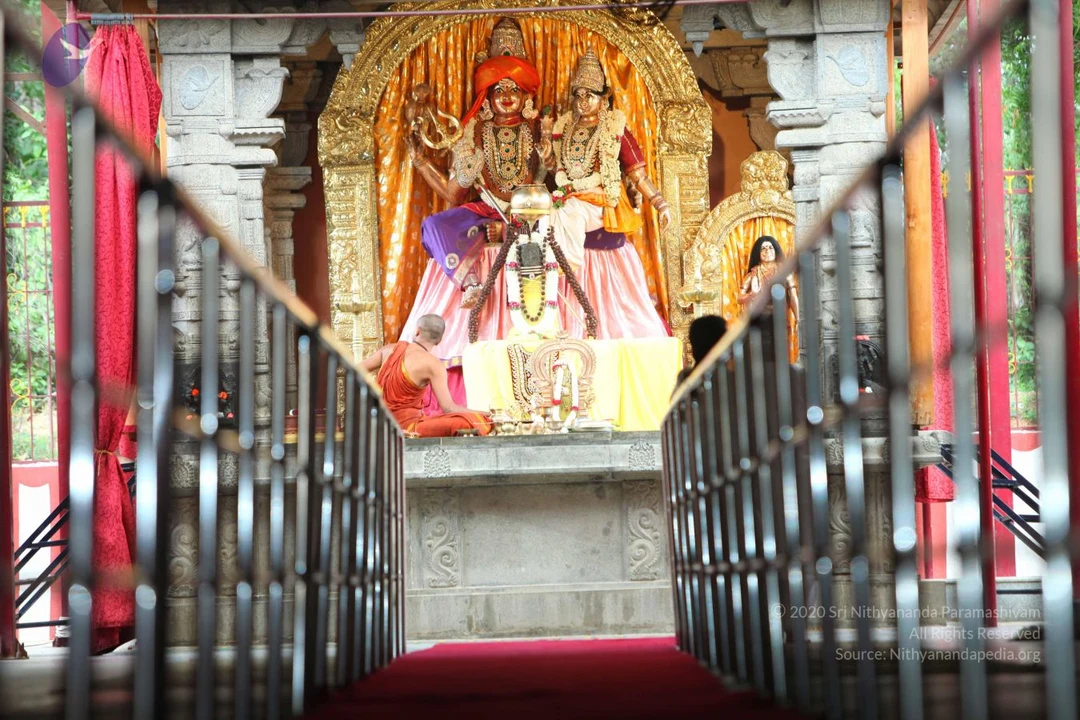
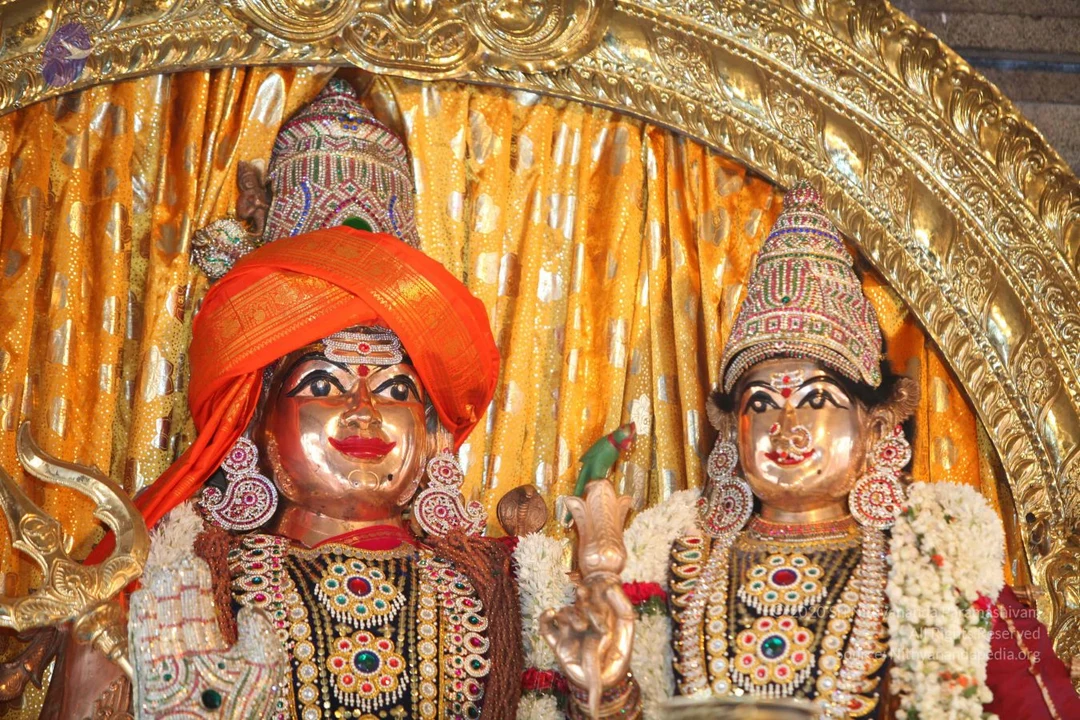
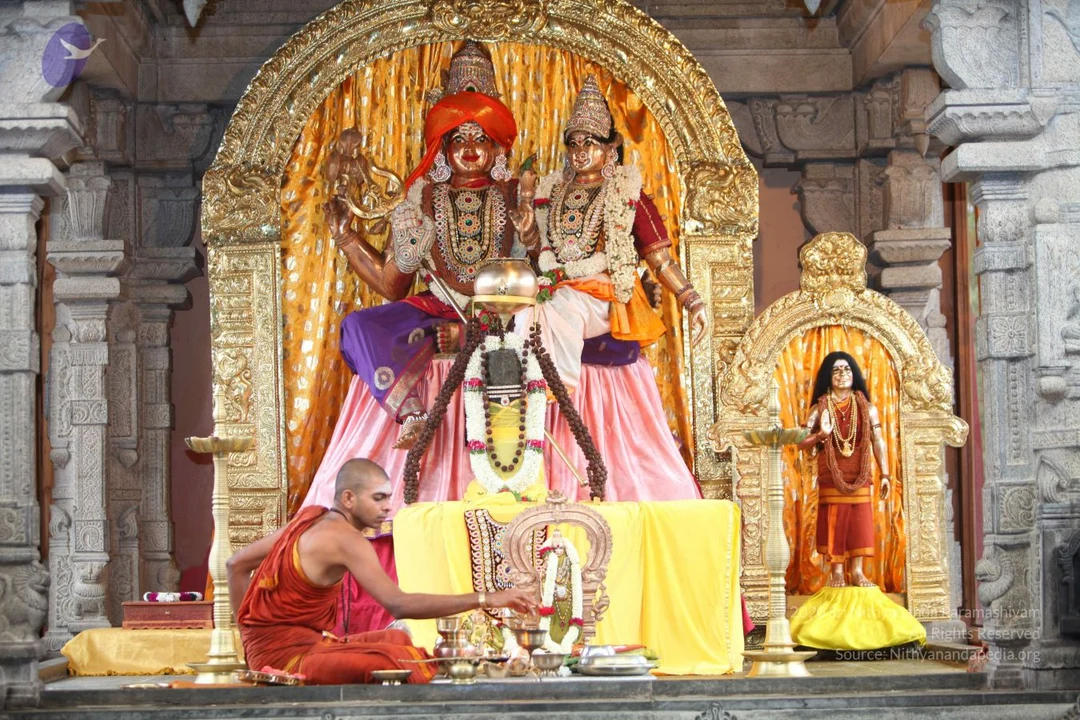
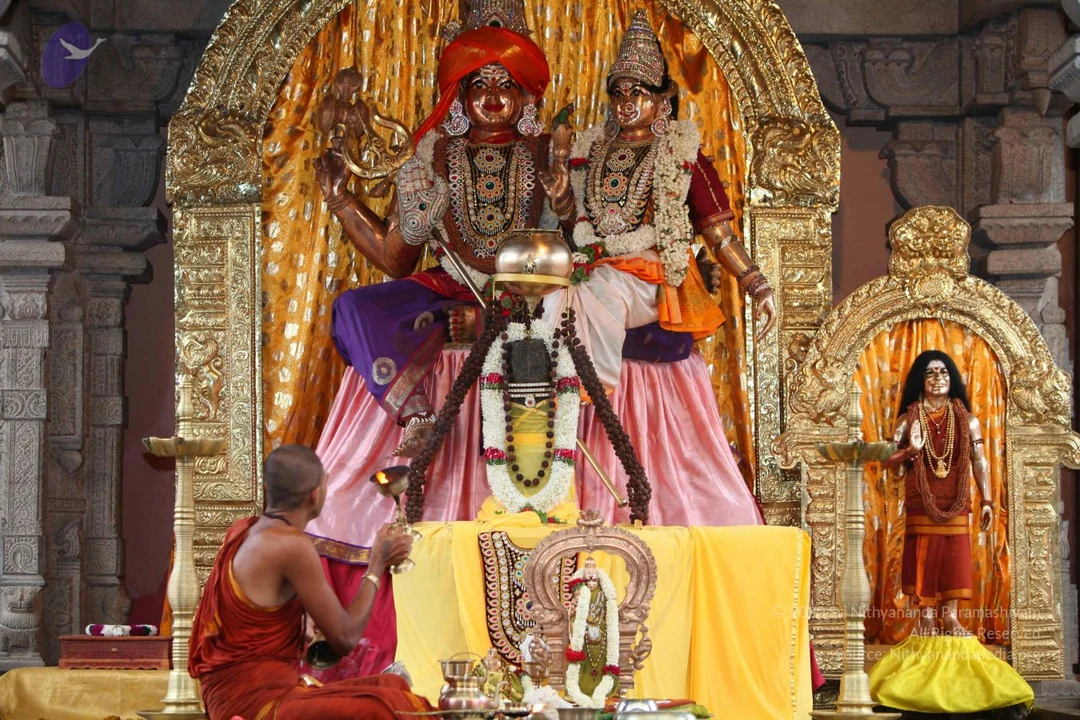
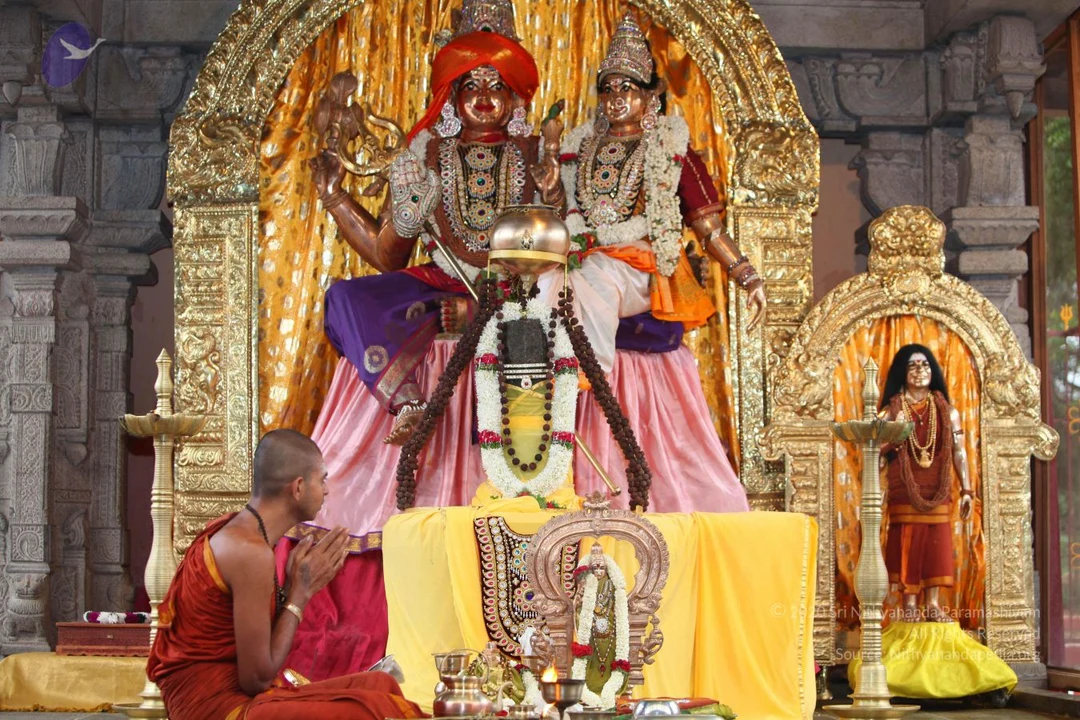
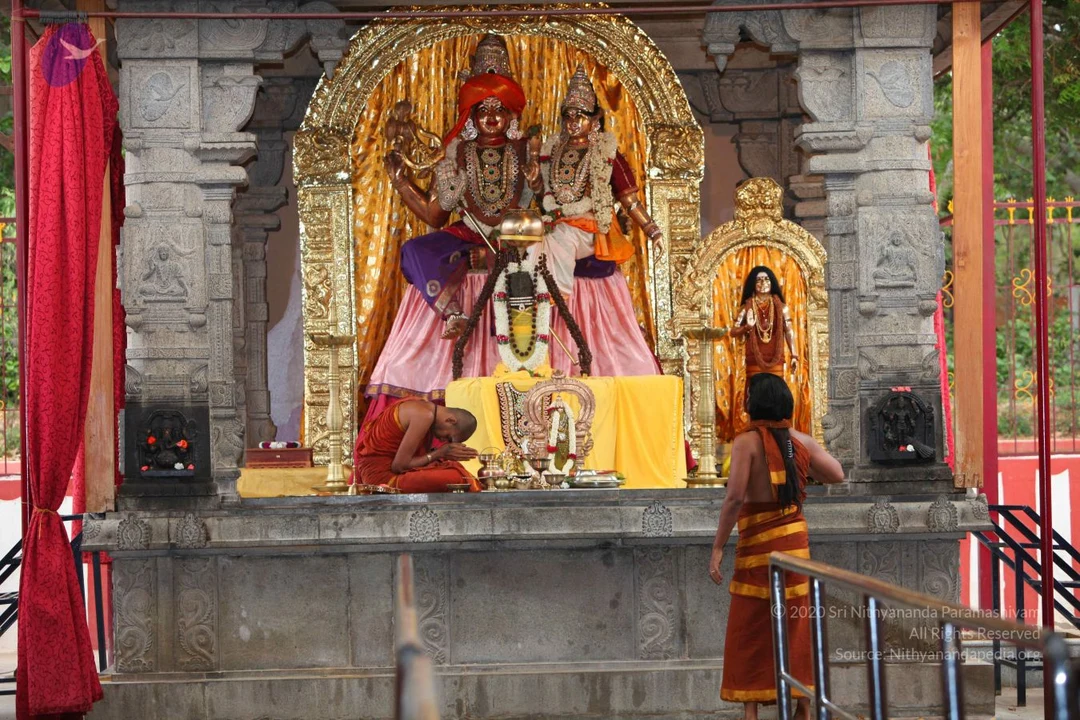
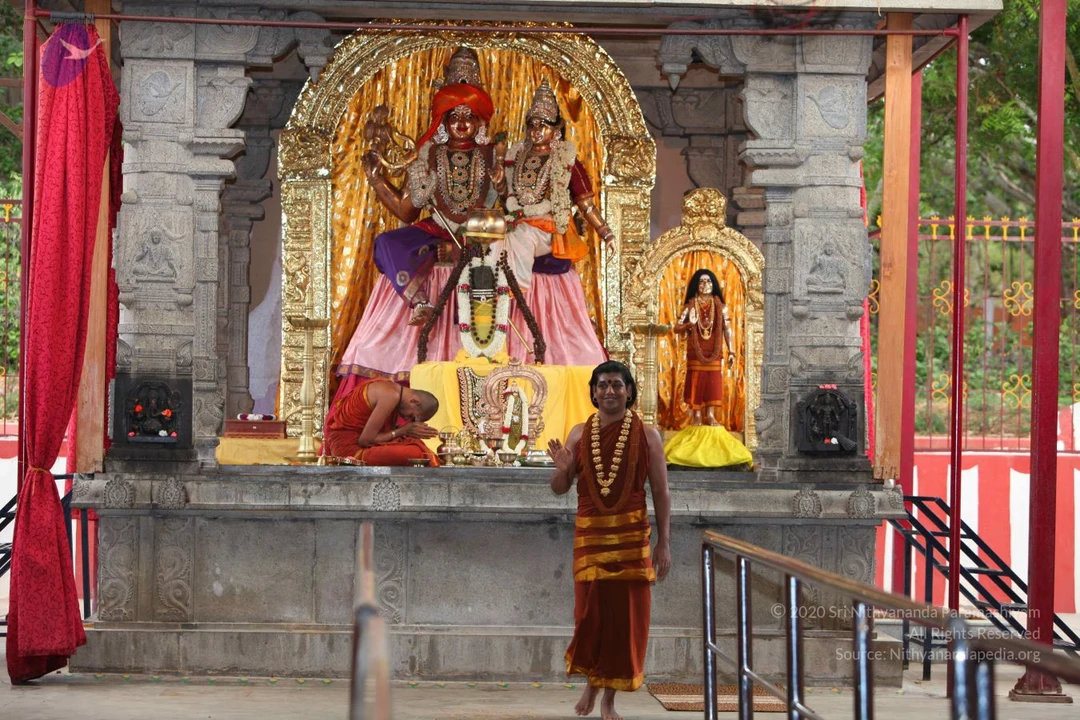
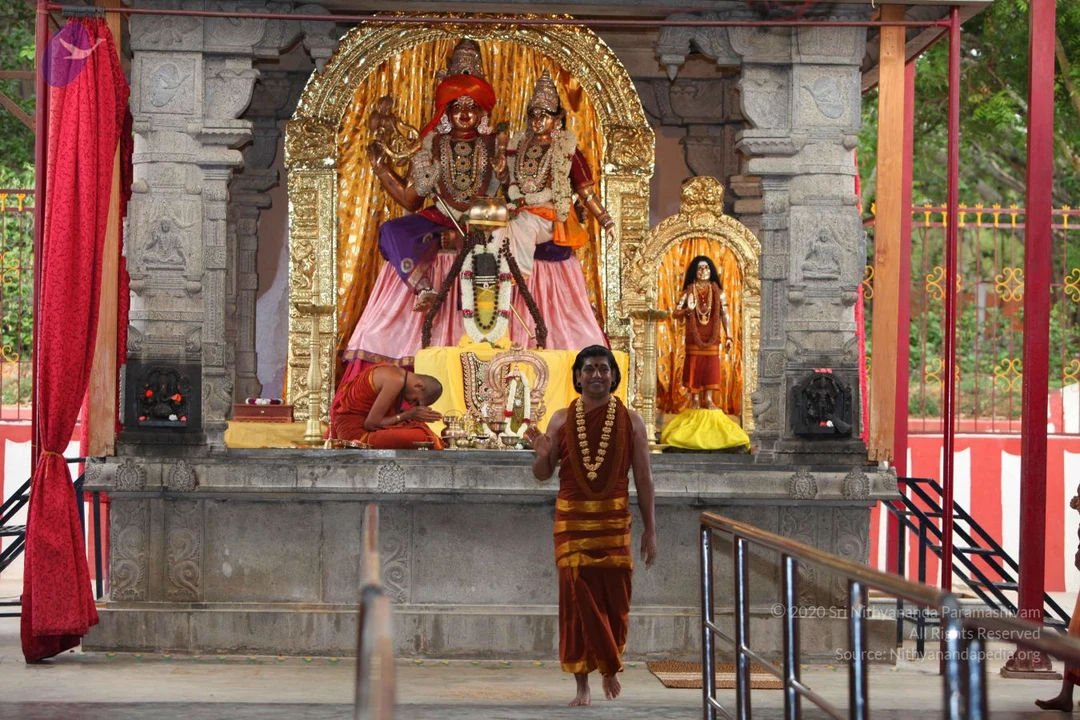
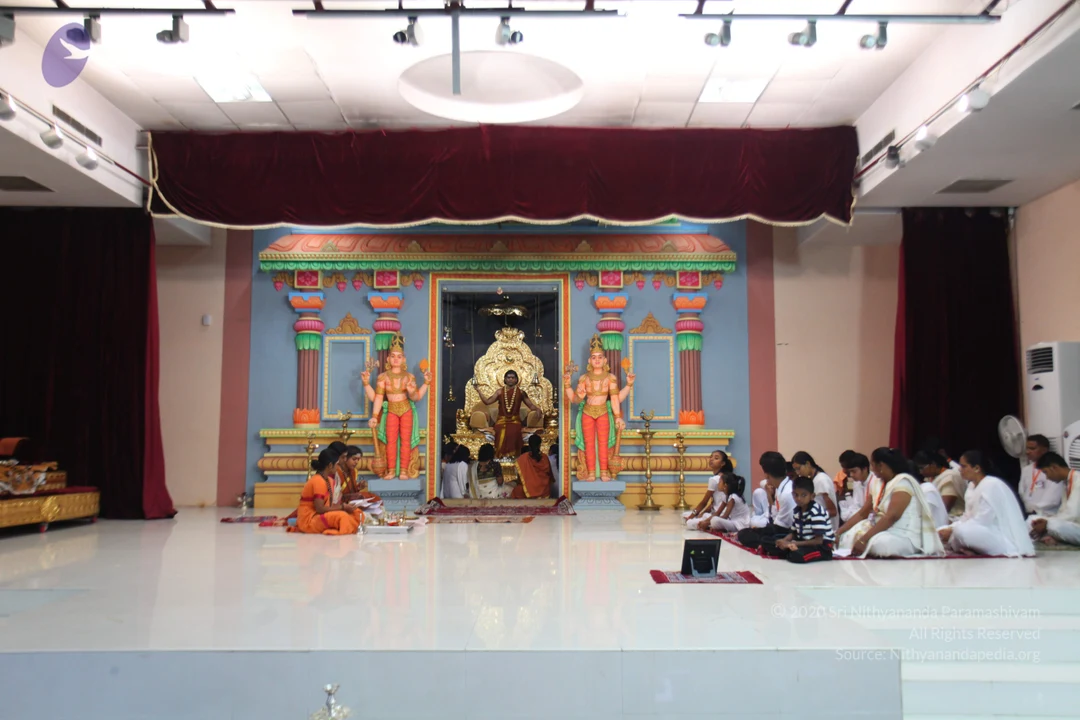
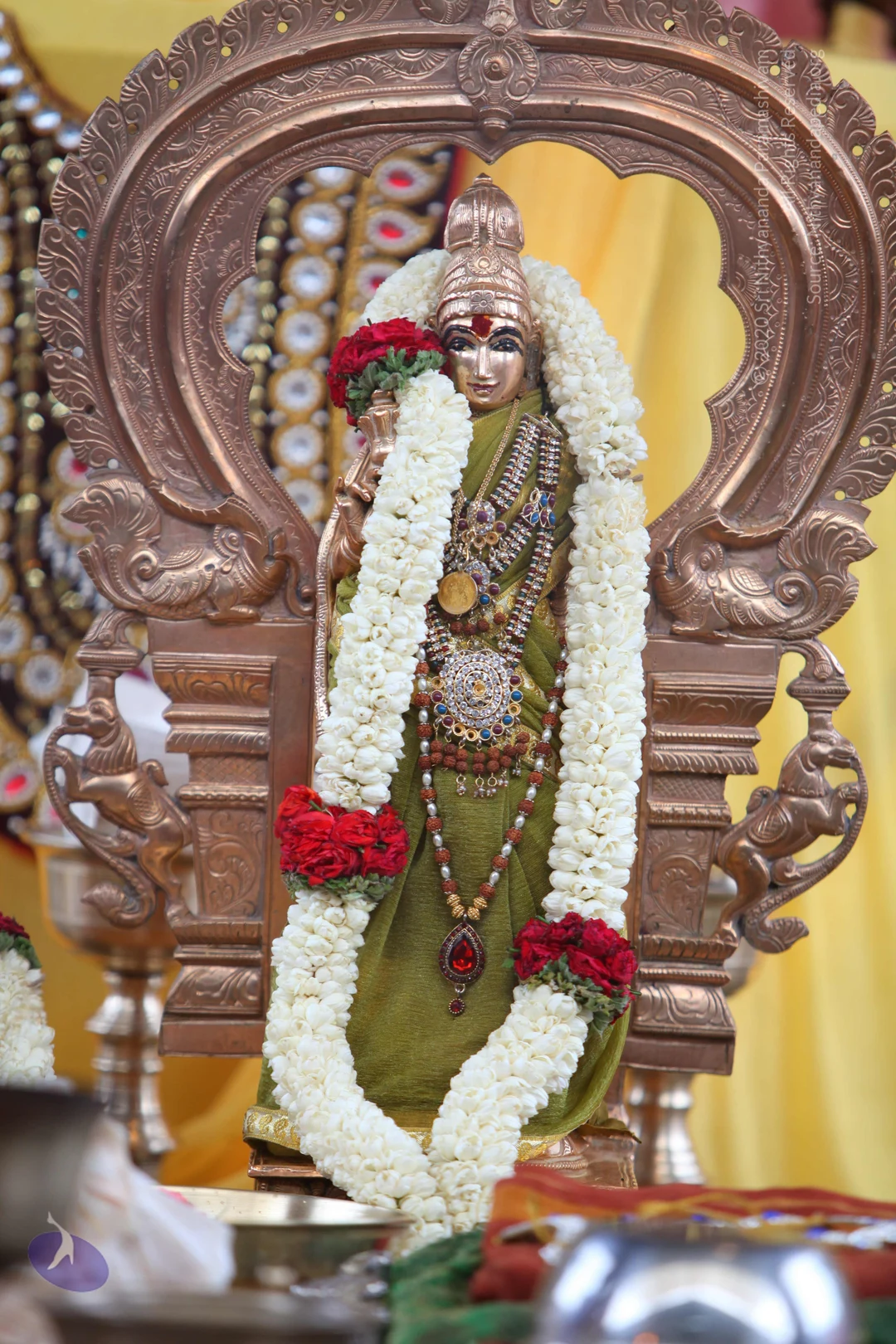
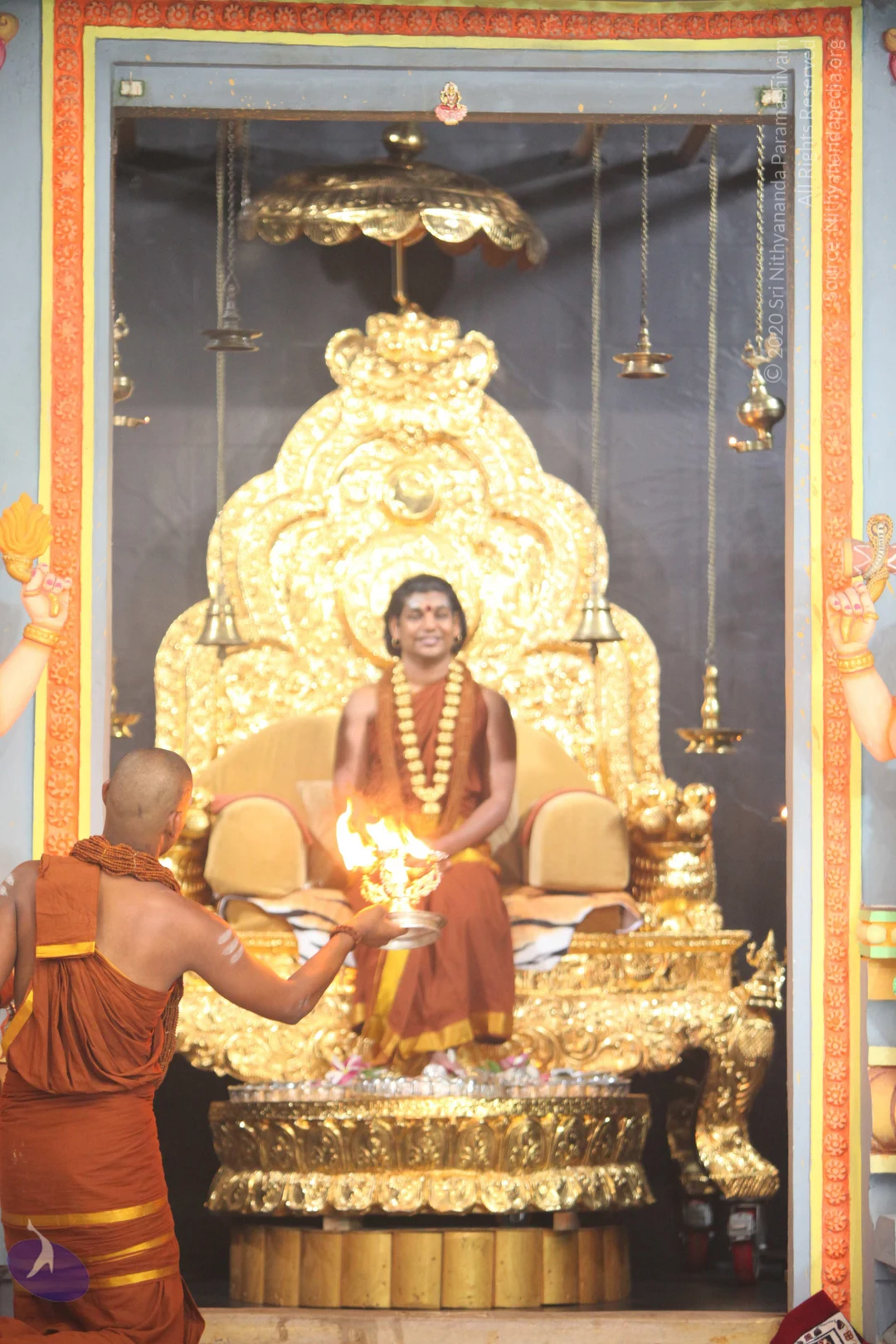
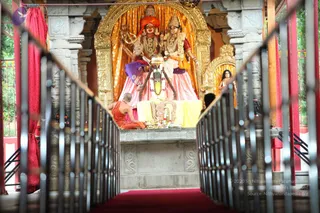
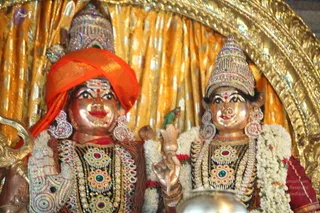
Photograph of a temple shrine seen through a narrow corridor of metal railings lined with red carpet. At the centre, a pair of large painted deity murtis stand on a raised platform, one with a red turban and crown holding a trident and a dark-skinned figure beside it wearing jewelled gold ornaments and a crown, both draped in pink and violet cloth before golden arches and orange curtains. A shaved-headed priest in an orange-saffron robe kneels at the left of the platform, attending to a brass kalasha and oil lamps arranged with garlands and a rudraksha-like mala. Red cloth hangs at the left, and a small figure stands at the right edge.Two gilded metal deity murtis stand side by side before a gold brocade backdrop with a curved golden arch. The figure on the left wears a bright orange turban, a richly embroidered jewelled garment, and ornate earrings, and holds a long staff topped with a carved finial. The figure on the right wears a tall jewelled crown, a dark embroidered garment decorated with gem-set ornaments, and white jasmine garlands. A small green parrot perches on the staff between them, and a brass vessel rests in the foreground. Both statues are decorated with jewelled ornaments and fresh garlands.Two ornately dressed metal deity murtis stand side by side before a gold brocade backdrop with a gilded arched frame. The figure on the left wears an orange-red turban and a jewelled black-and-gold garment with a trident at his side. The figure on the right wears a tall jewelled crown and a gold necklace. Both have large jewelled earrings, red tilaks and white jasmine garlands draped at their shoulders.A photograph inside a temple shrine with carved grey stone pillars and a gilded arch. Two large painted deity figures stand behind a central lingam with a garland and rudraksha mala, with an orange-and-gold curtain behind them. A shaved-headed young priest in orange robes sits cross-legged in front, pouring or offering from a brass vessel over the altar, which is draped in yellow cloth and holds brass lamps, a small kalasha, and flower offerings. To the right, a smaller statue in a niche wears orange robes, a rudraksha mala and long hair, standing beside a brass lamp stand on a yellow cloth. Abhishekam-style puja is taking place.A photograph of a temple shrine with two large sculpted deity figures seated on a pink-and-purple pedestal beneath an ornate gold arch and gold-yellow draping. The central figure wears a red headdress and a rudraksha-style necklace, with a garland of white flowers around the figure; the figure beside has a tall crown and a white garland. A shaved-headed priest in orange-red robes sits at the lower left, offering to a central shivalingam-like form decorated with white and red flower garlands on a yellow cloth, with brass lamps and a kalasha-style vessel nearby. At the right, a smaller statue of a standing ascetic with long hair and orange robes holds his hands in anjali. Carved stone pillars frame the shrine.A photograph of a shrine with large painted murti of a deity couple seated on a raised pink-and-purple dais under golden drapery, one figure with a red turban and multiple arms holding a trident-like staff, the other with a tall crown and orange garment, both draped in white garlands and beaded necklaces. In front, a shaved-headed priest in saffron-orange robes kneels at a yellow-draped altar, holding a small cup and oil lamp near a Shivalinga adorned with white flower garlands and rudraksha beads, with a kalasha and brass vessels. At right stands a smaller standing statue in orange robes with long hair and a rudraksha mala. Brass lamps flank the altar.

IASession

71 photosSource gallery
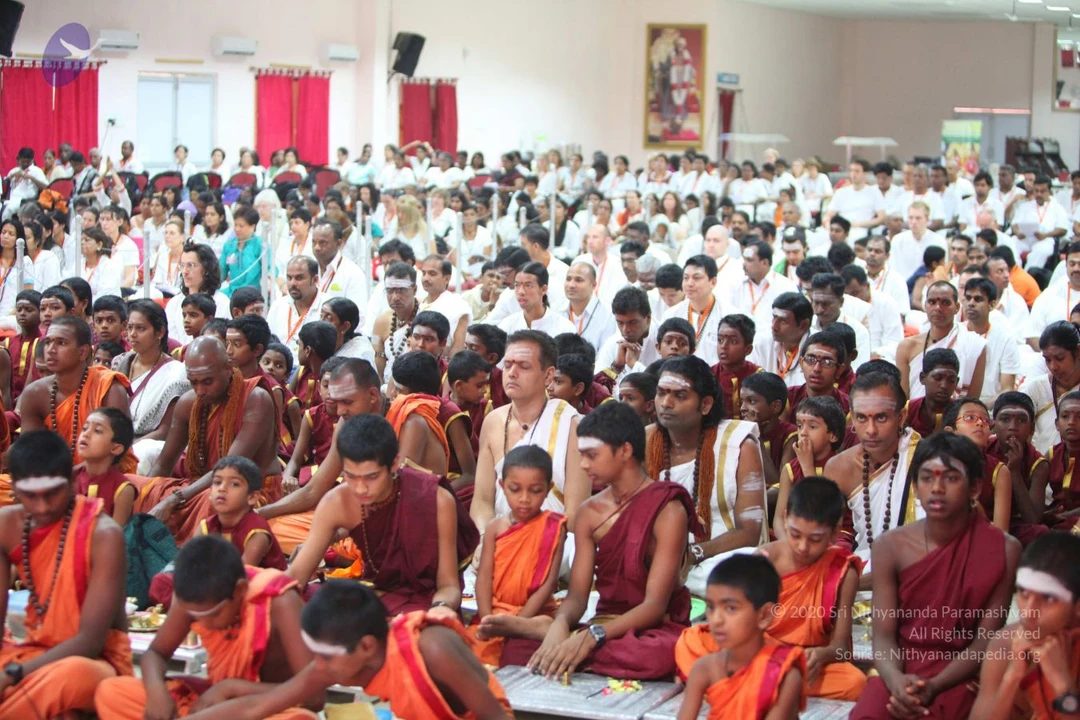
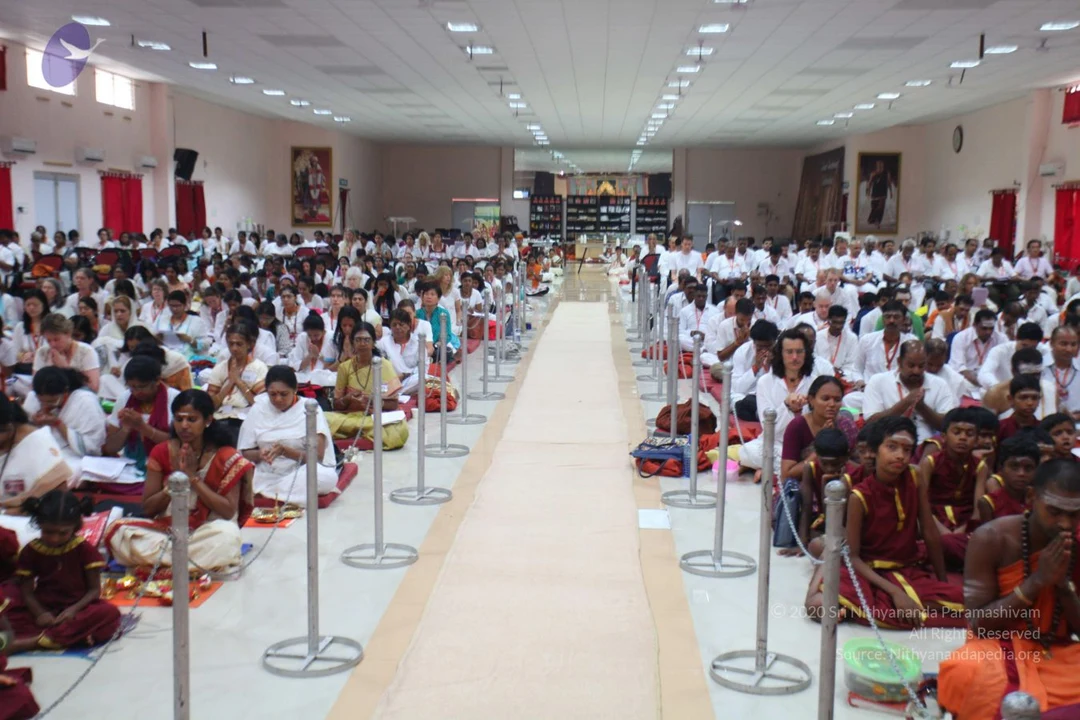
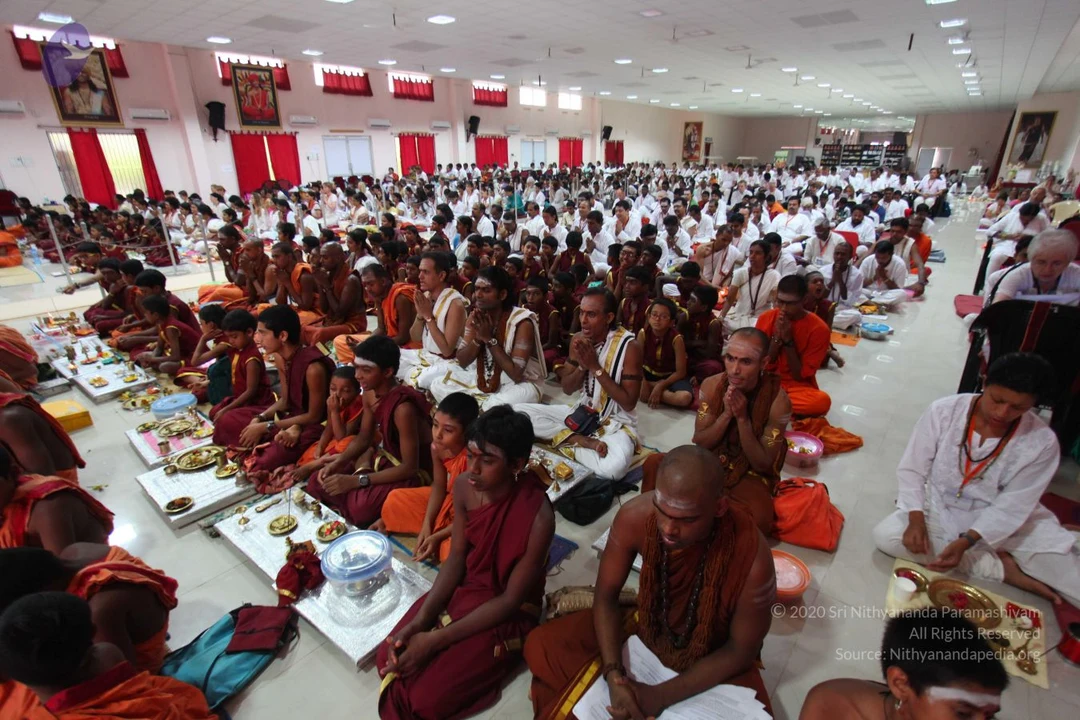
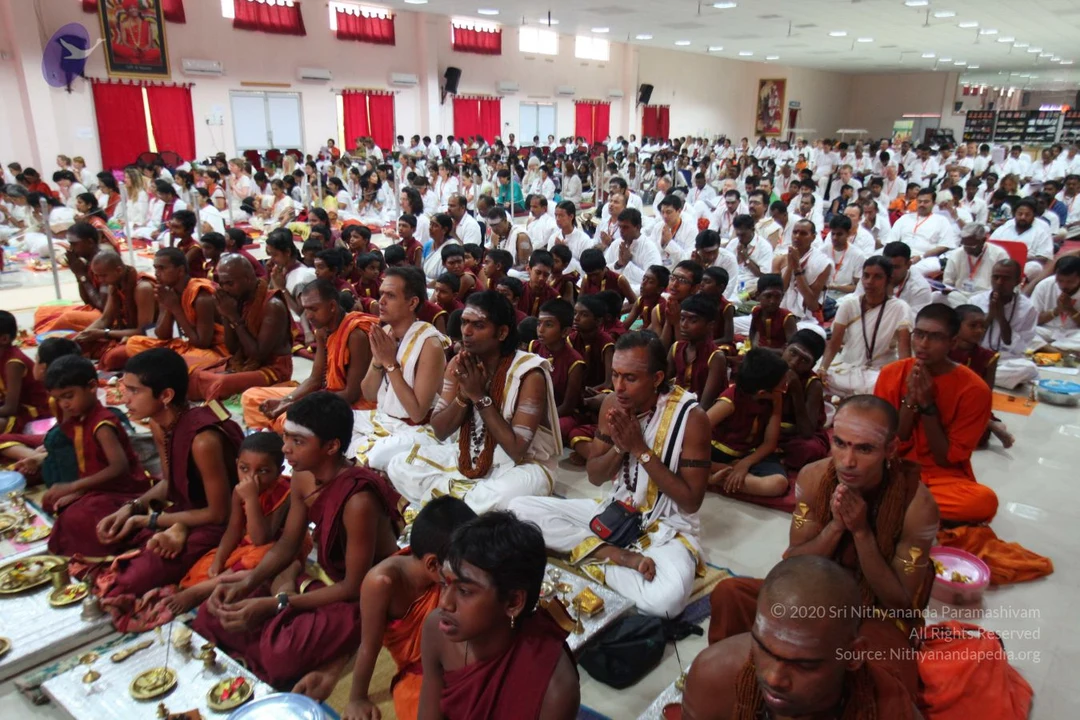
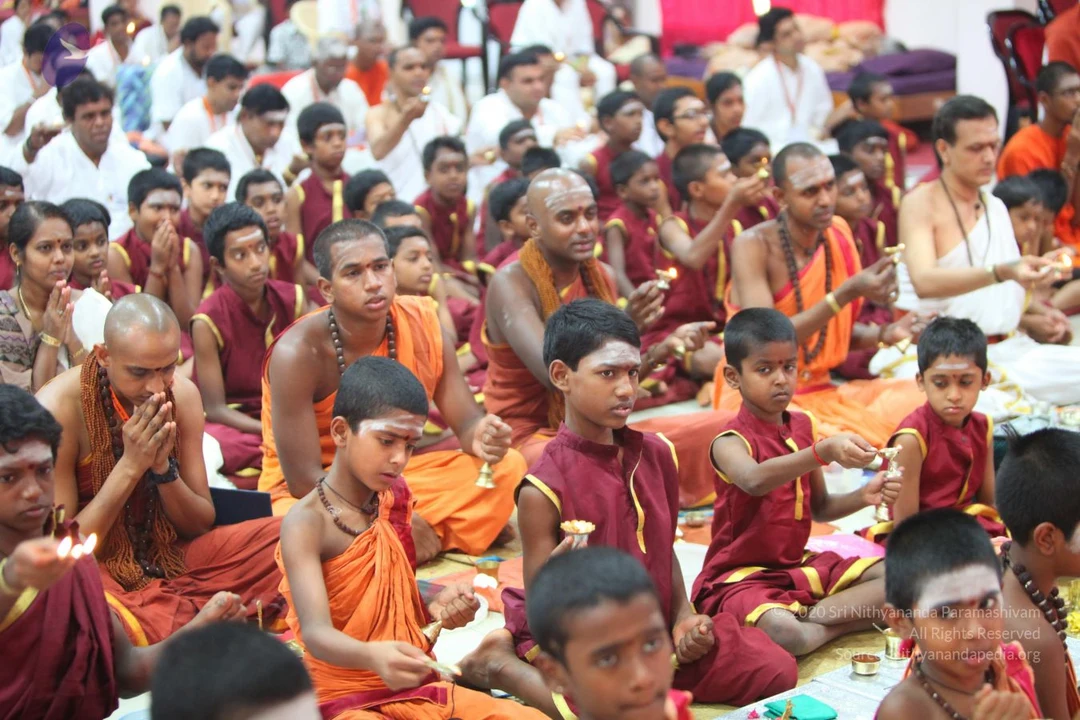
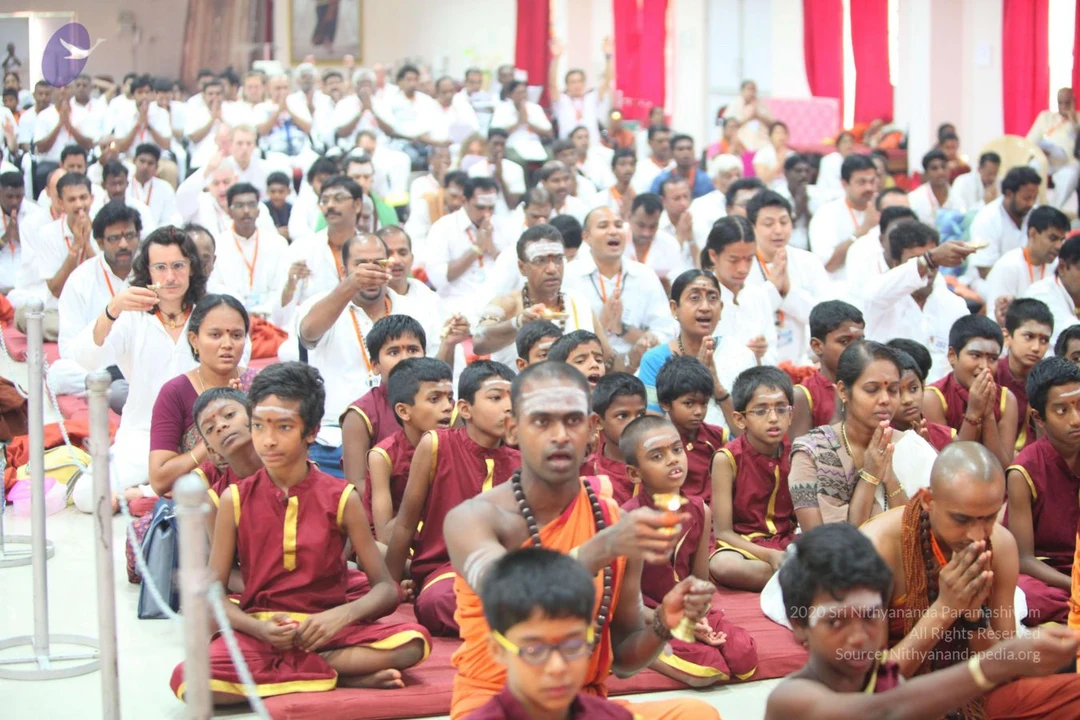
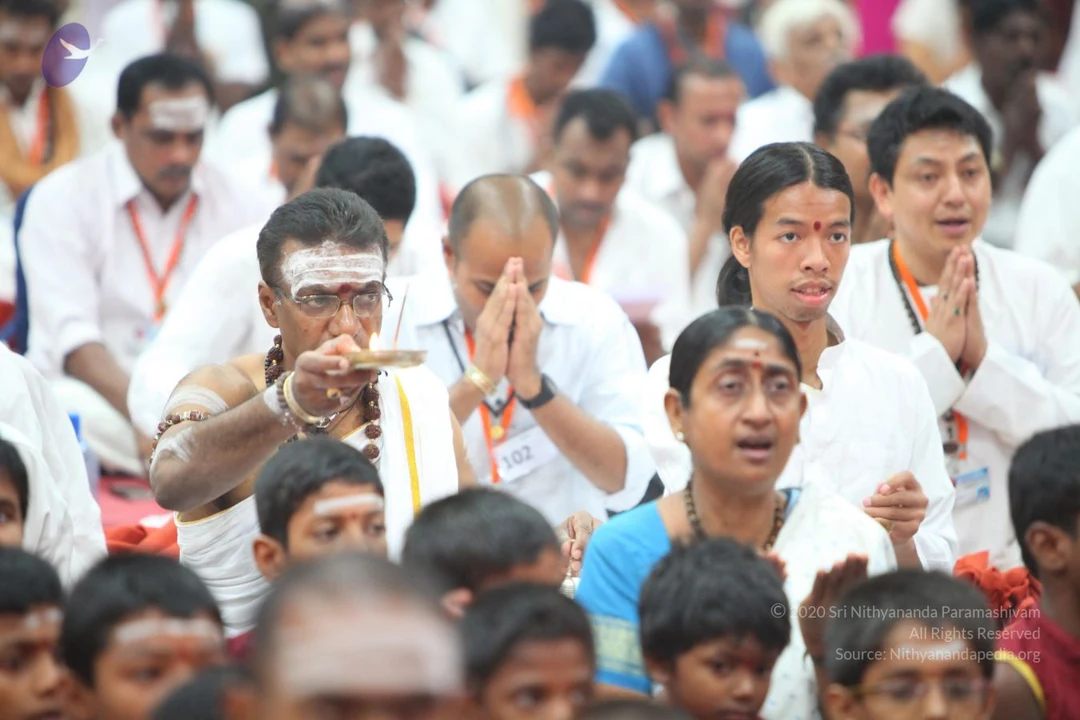
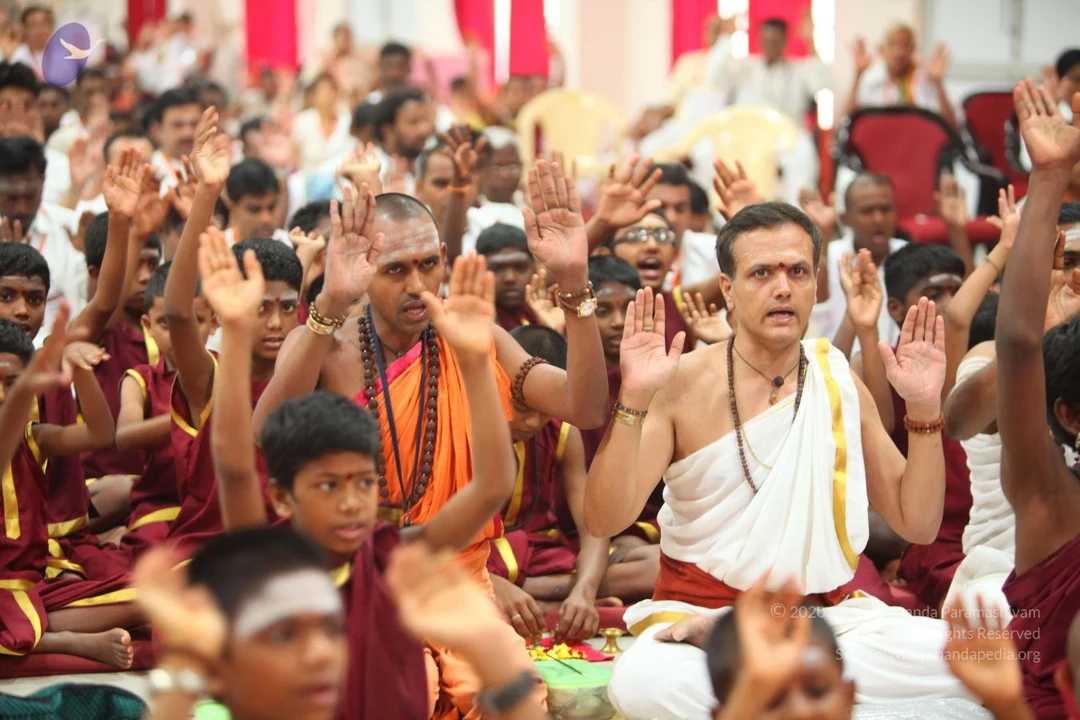
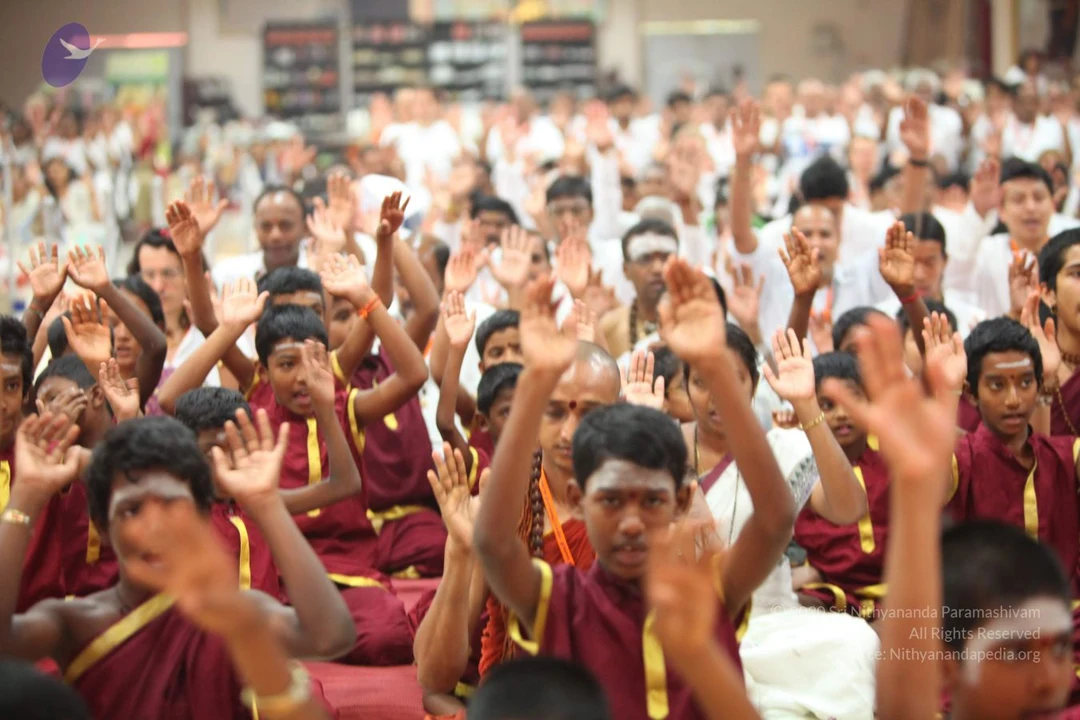
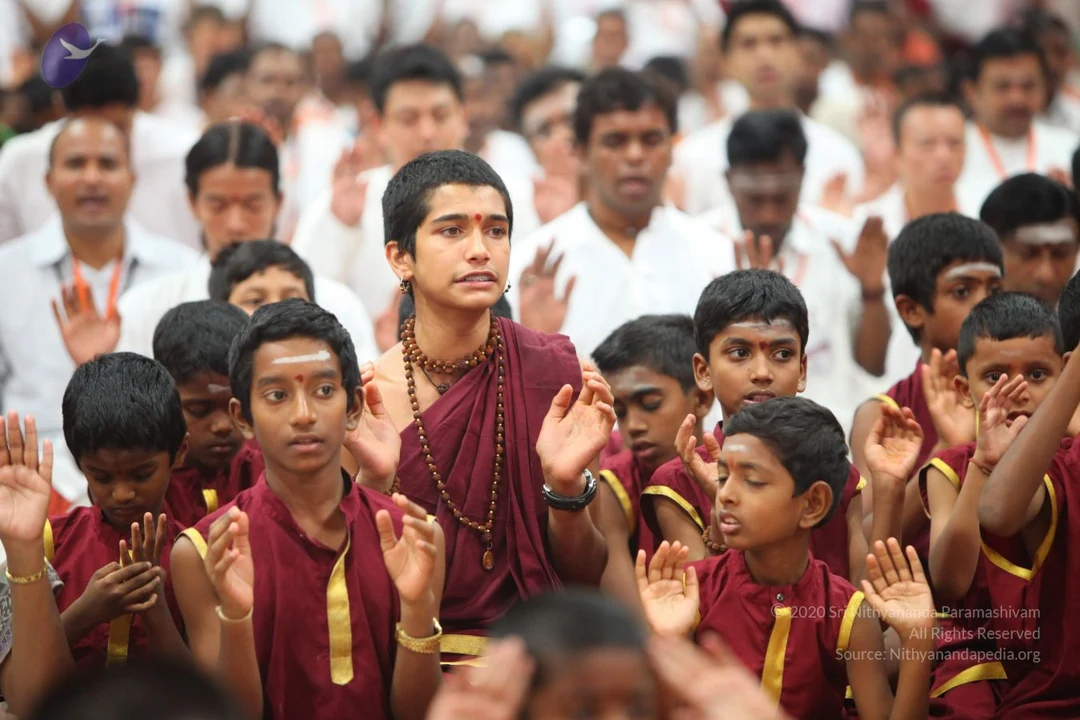
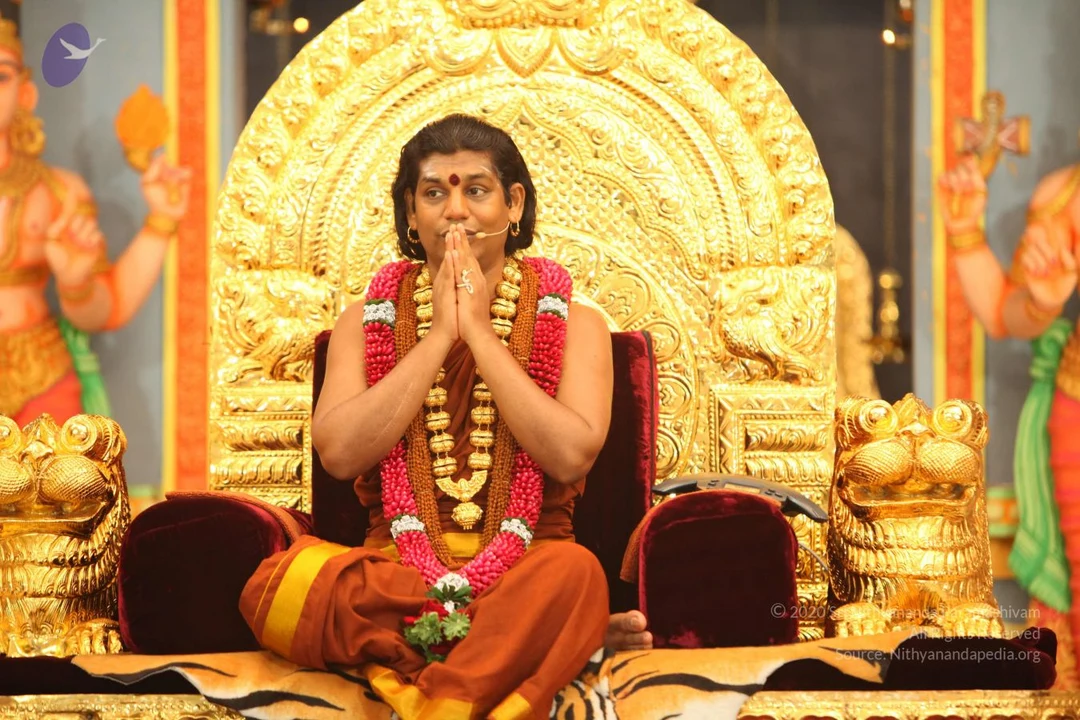
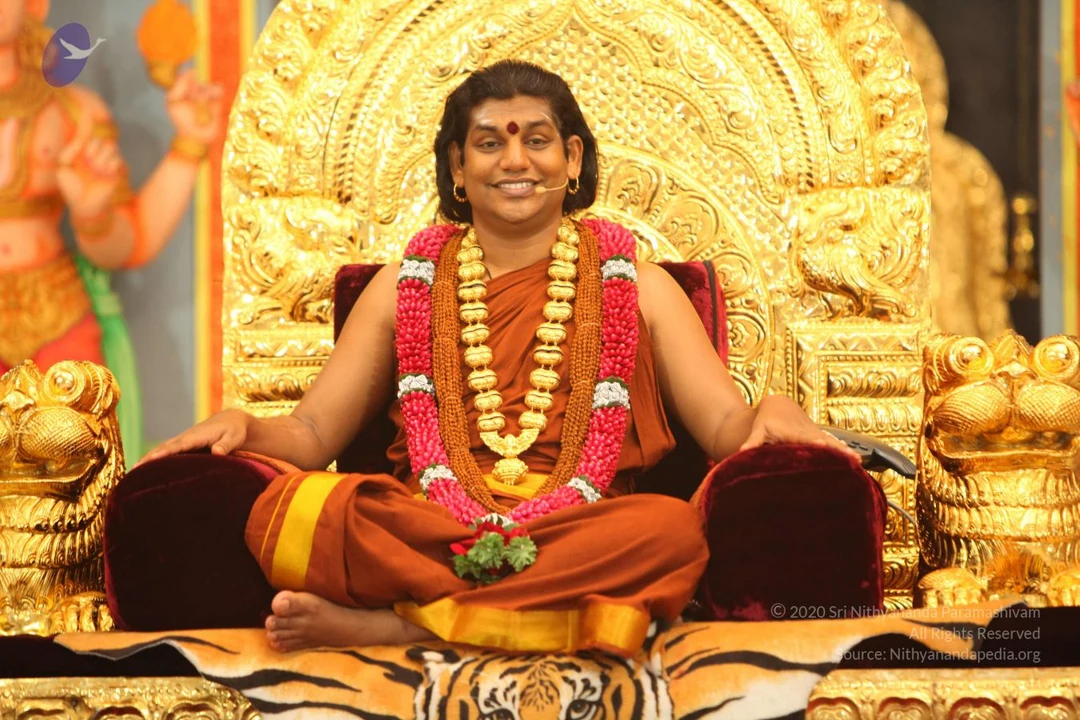
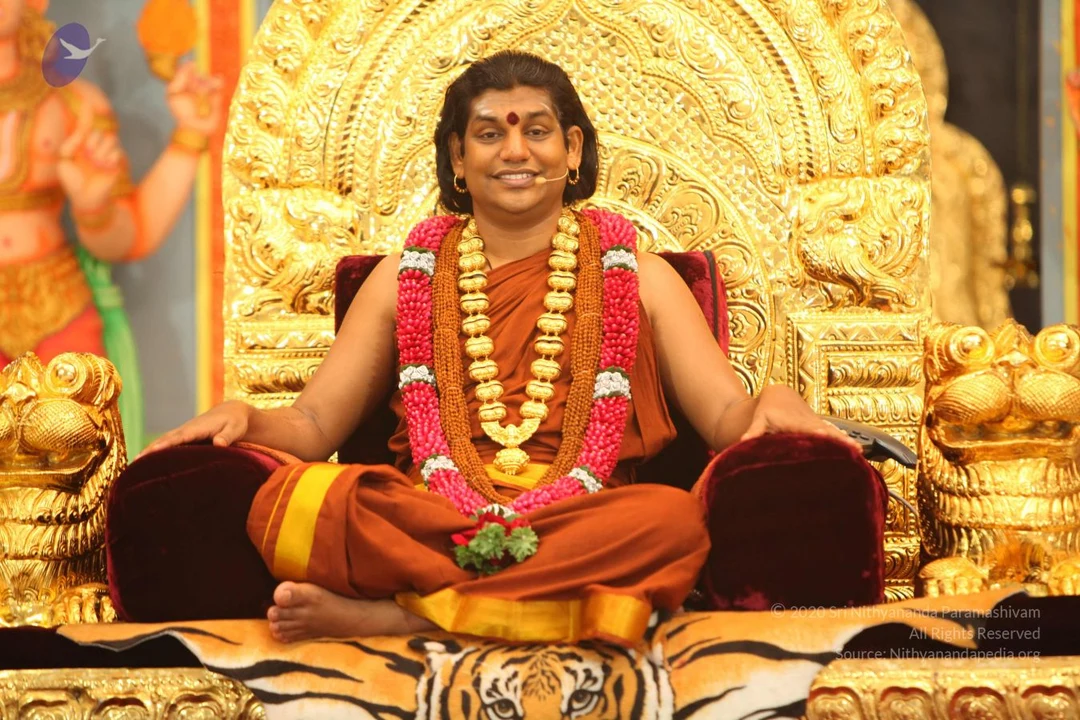
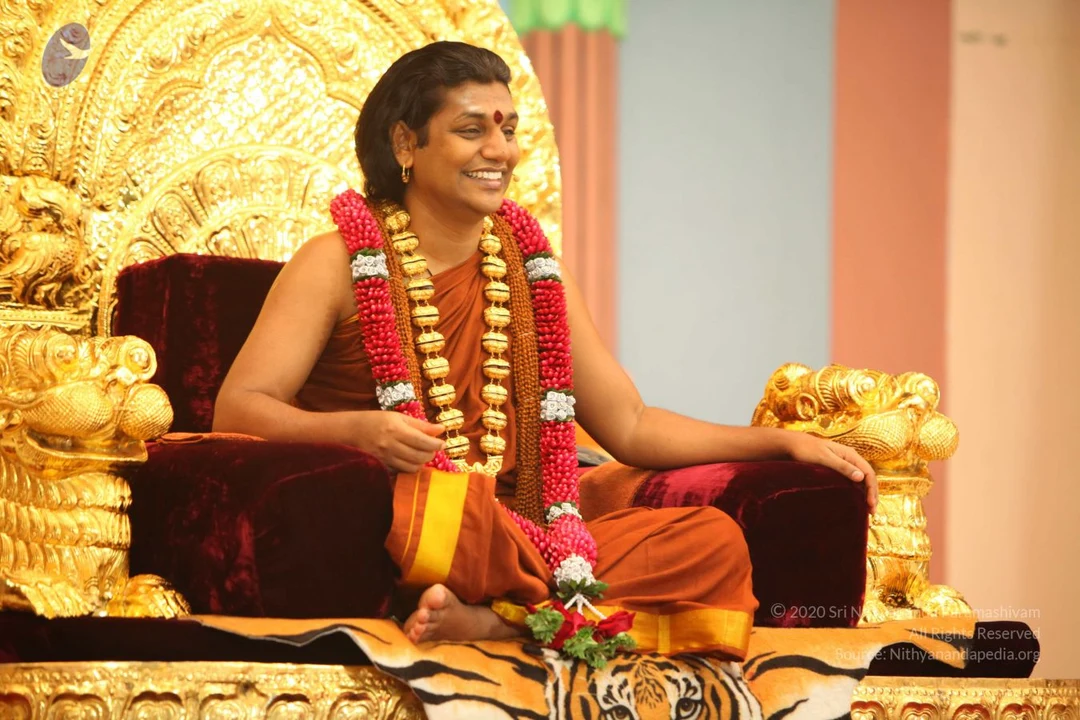
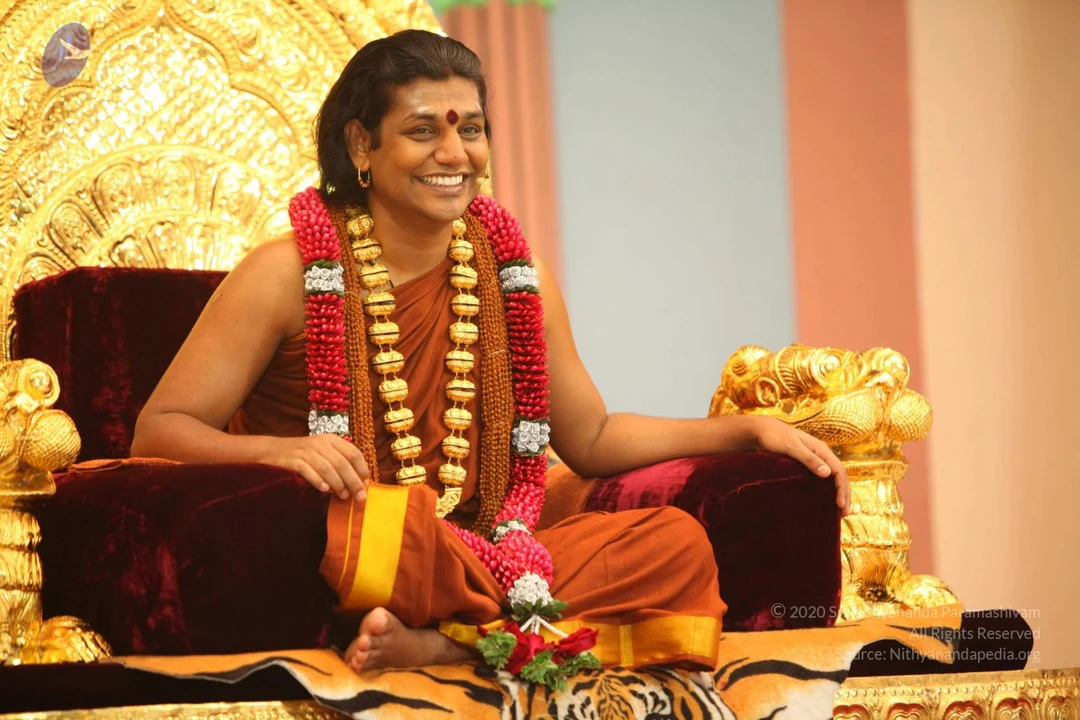
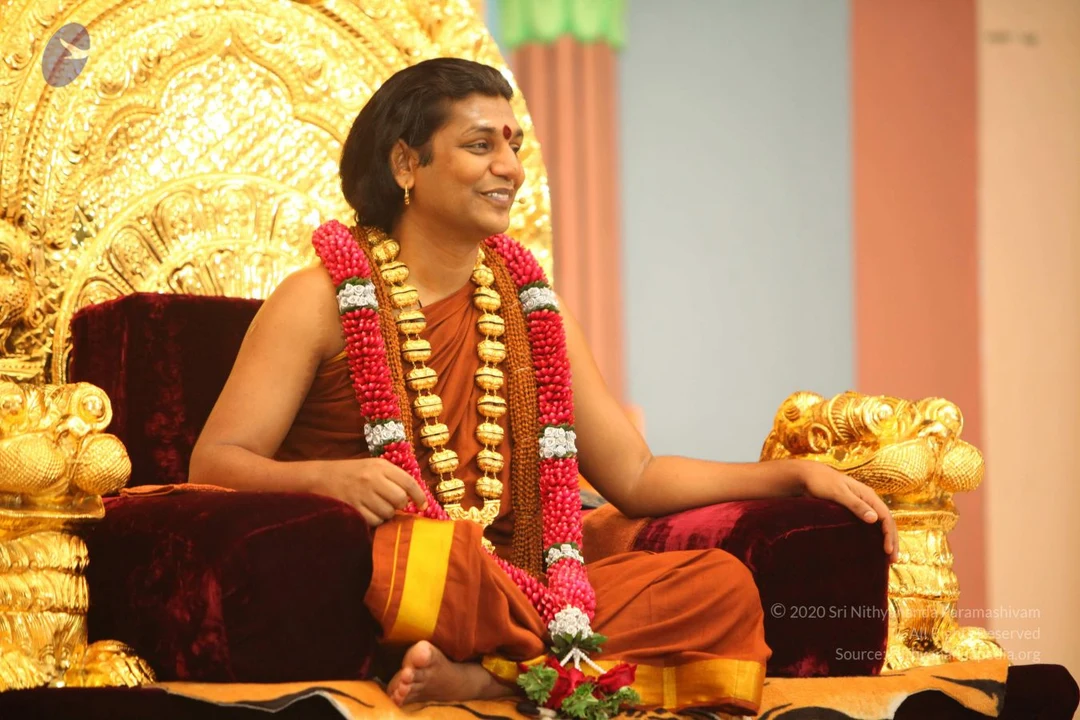
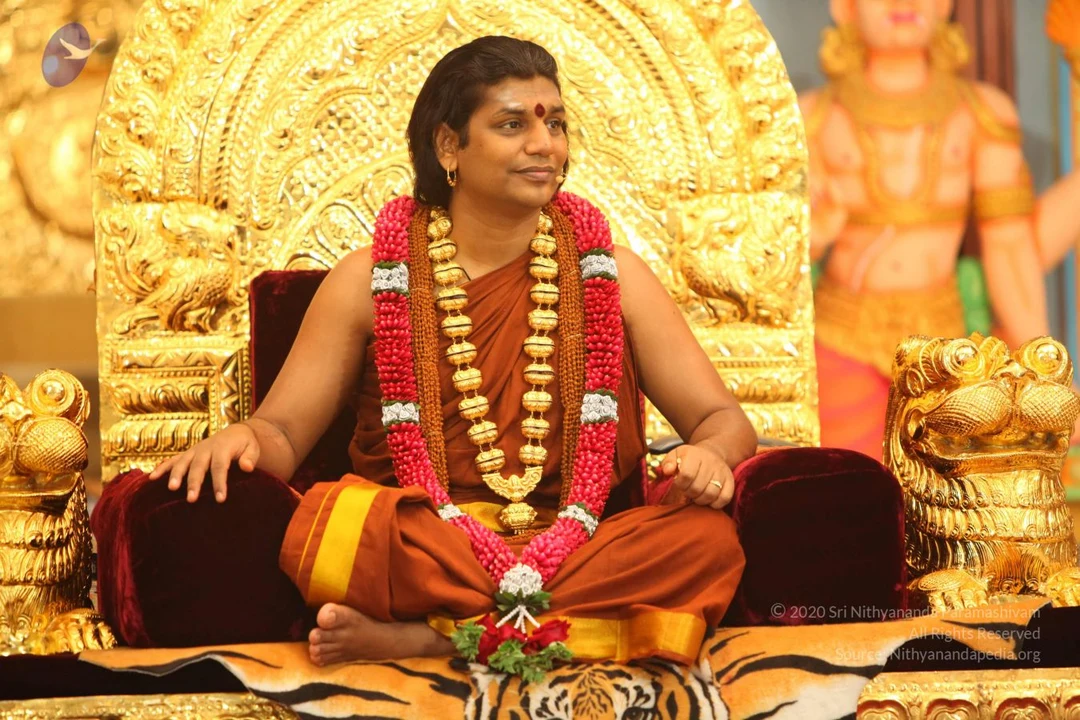
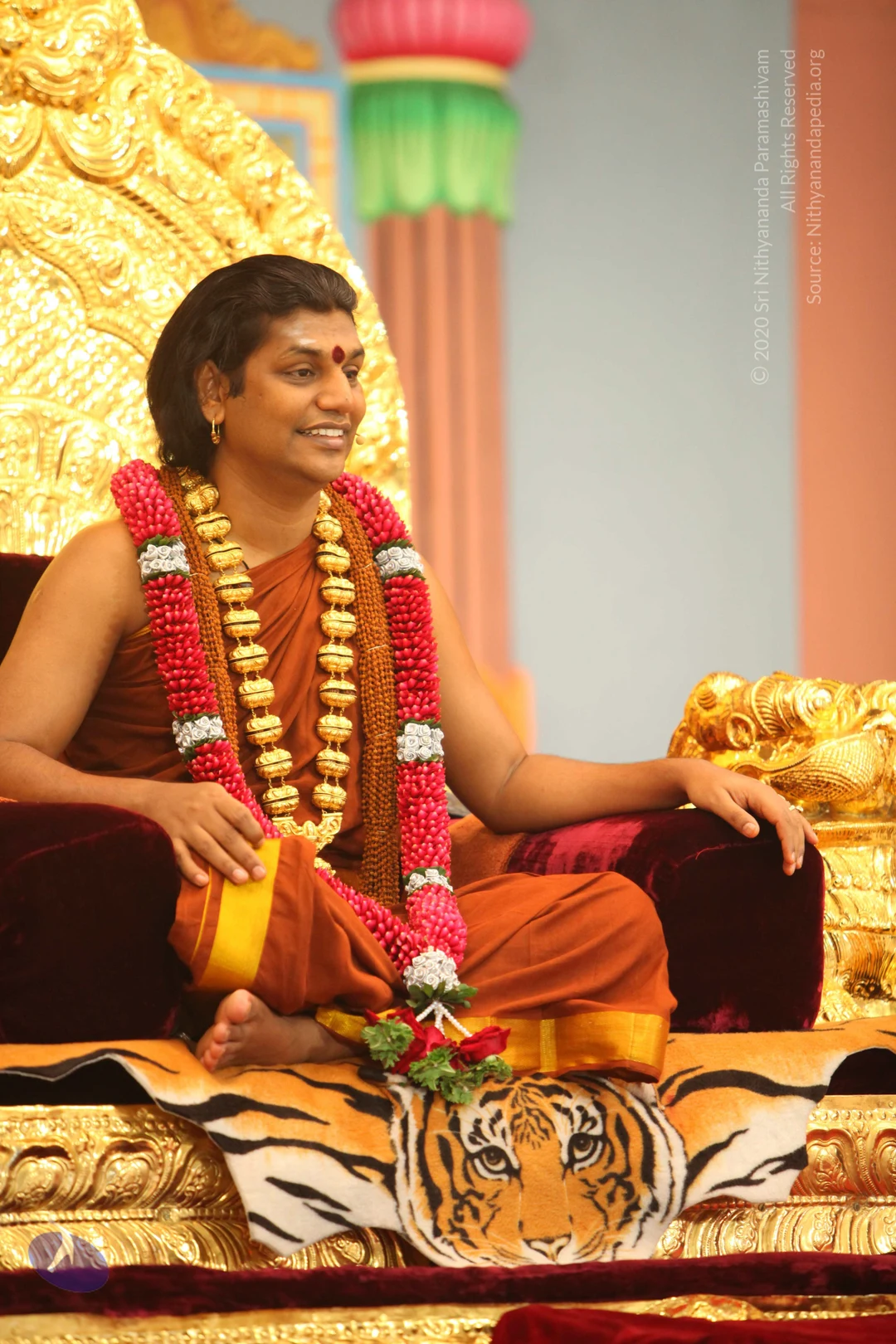
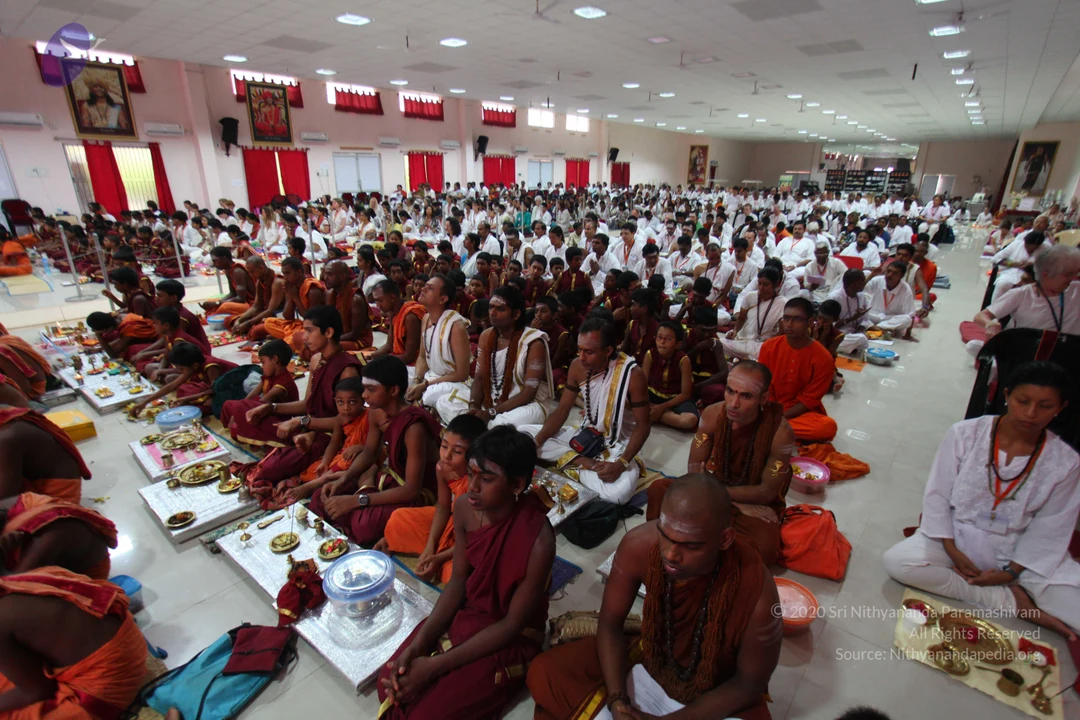
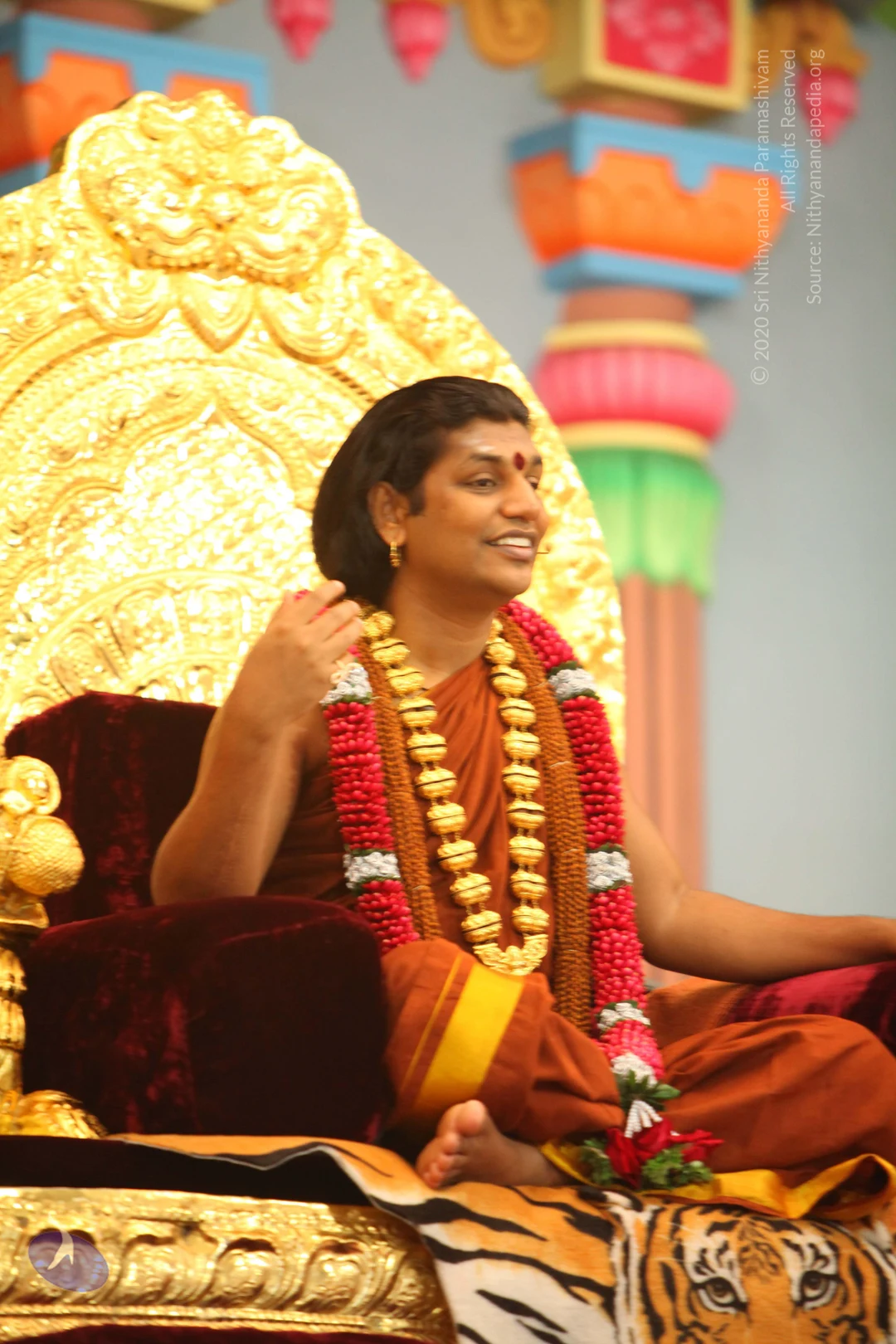
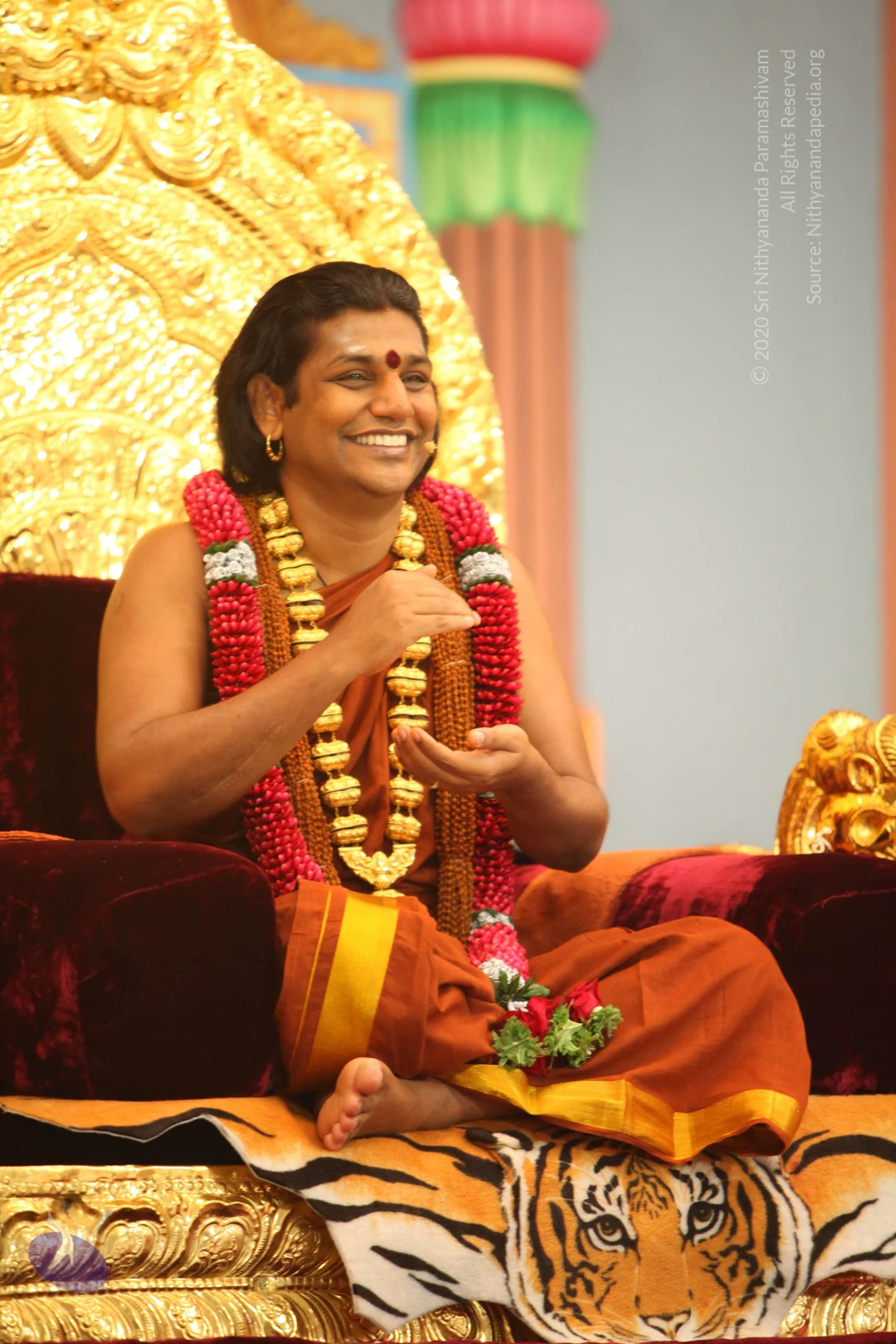
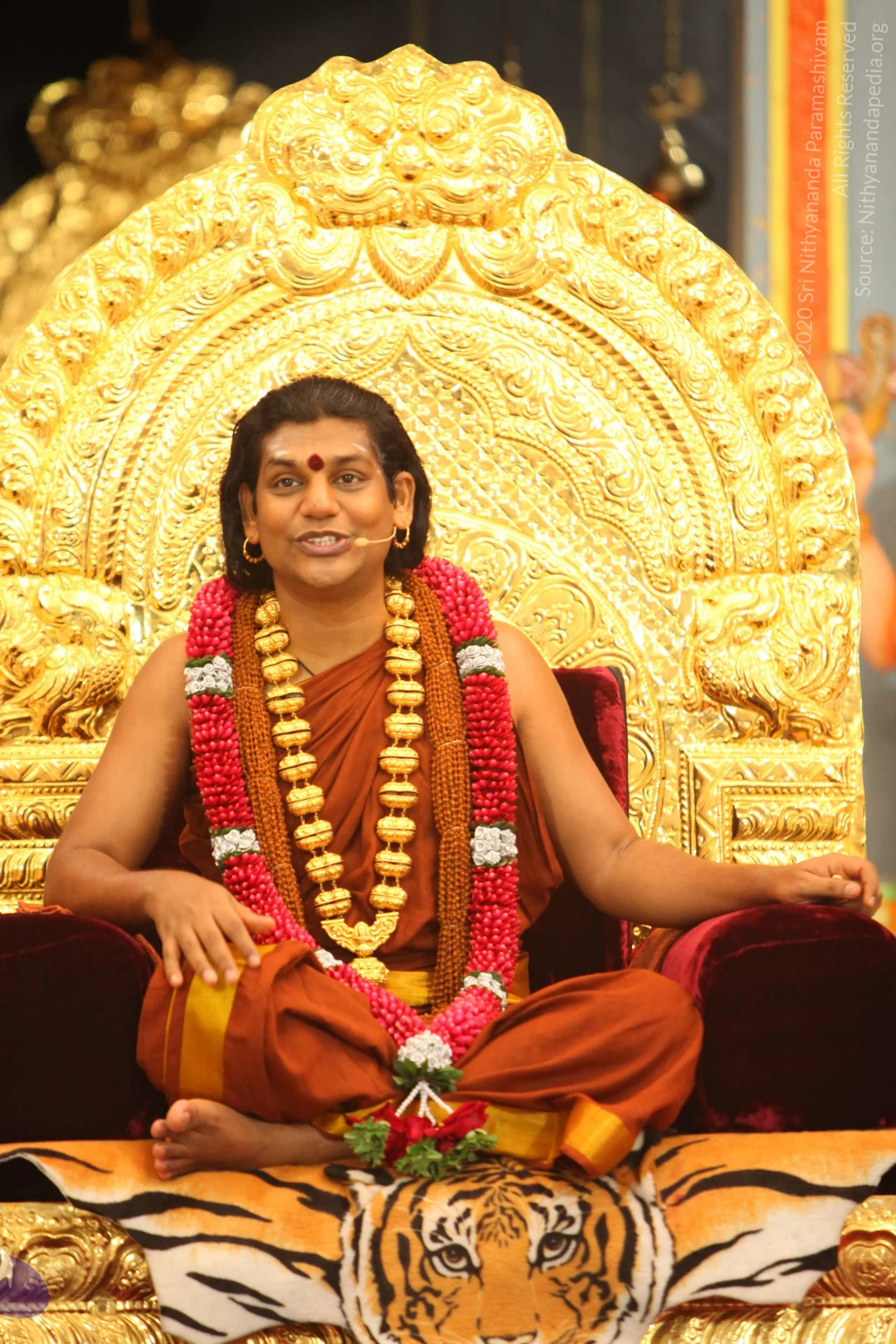
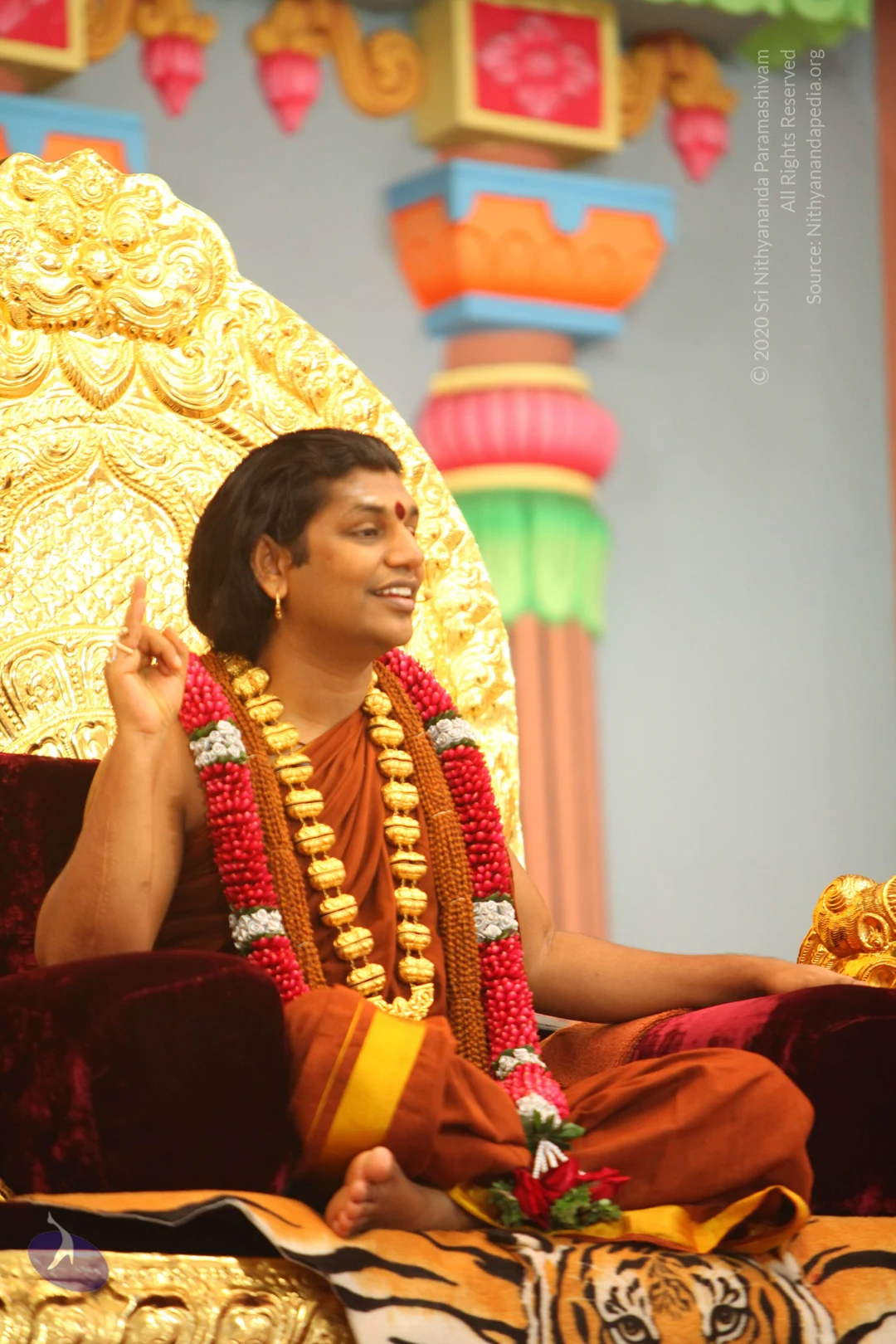
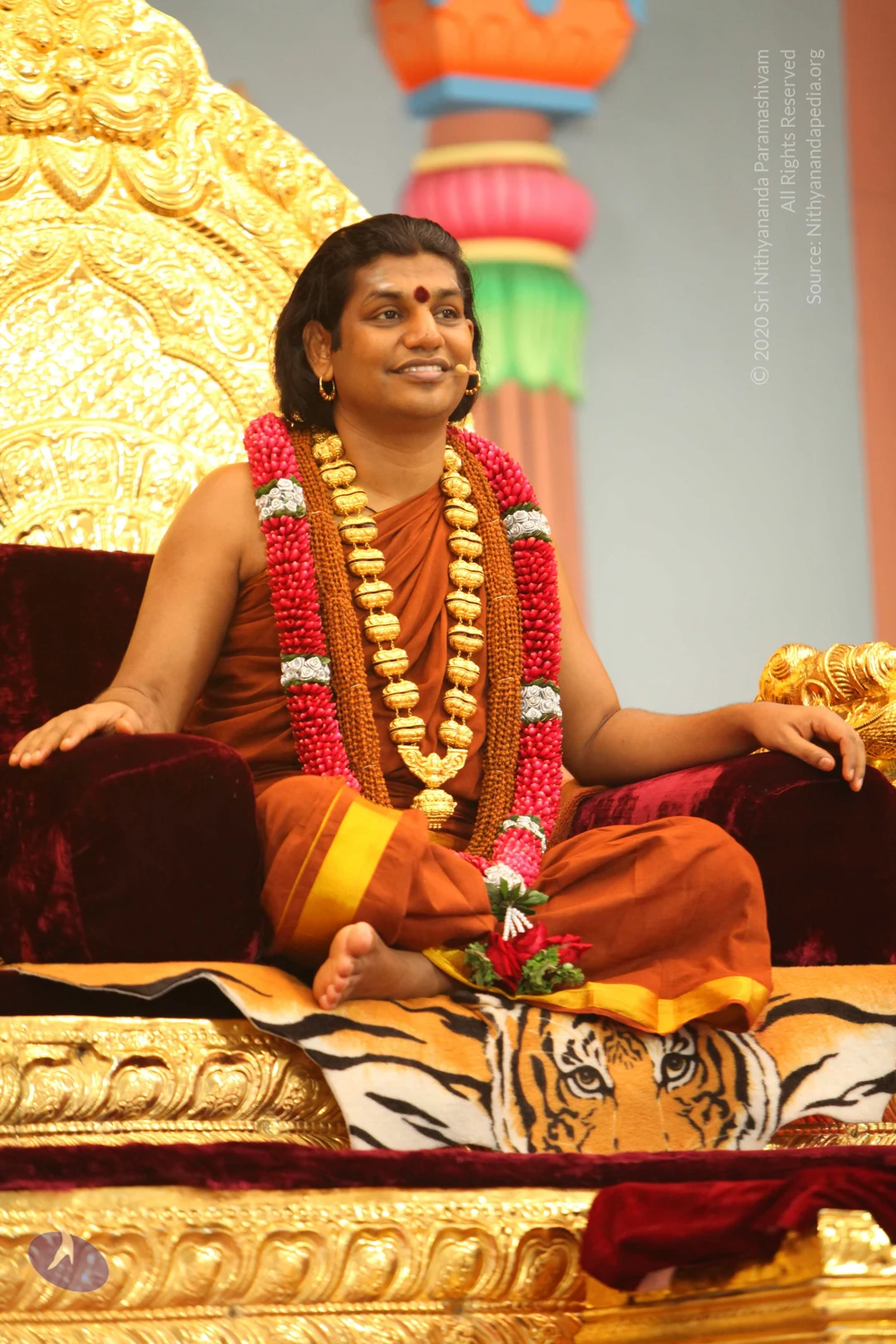
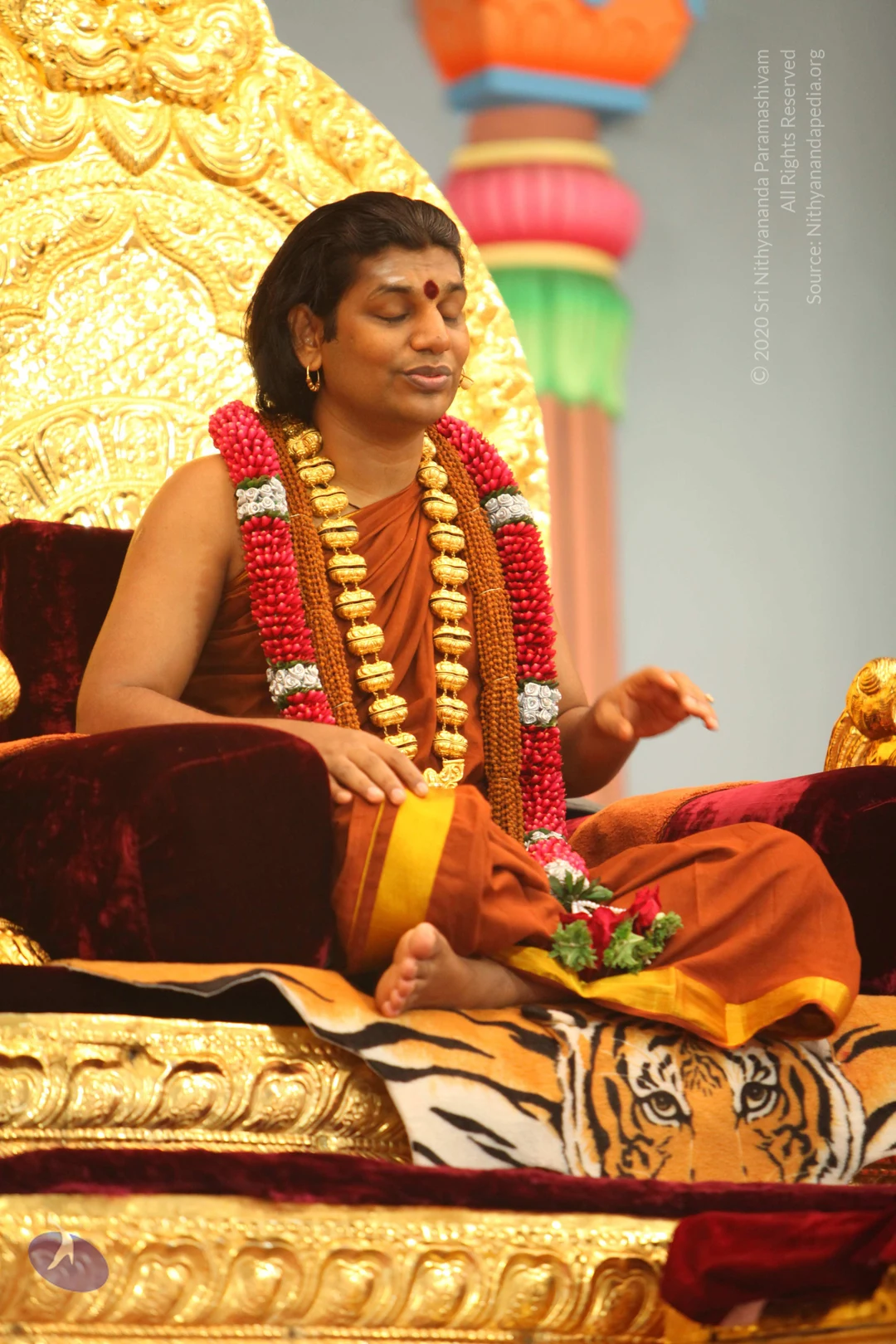
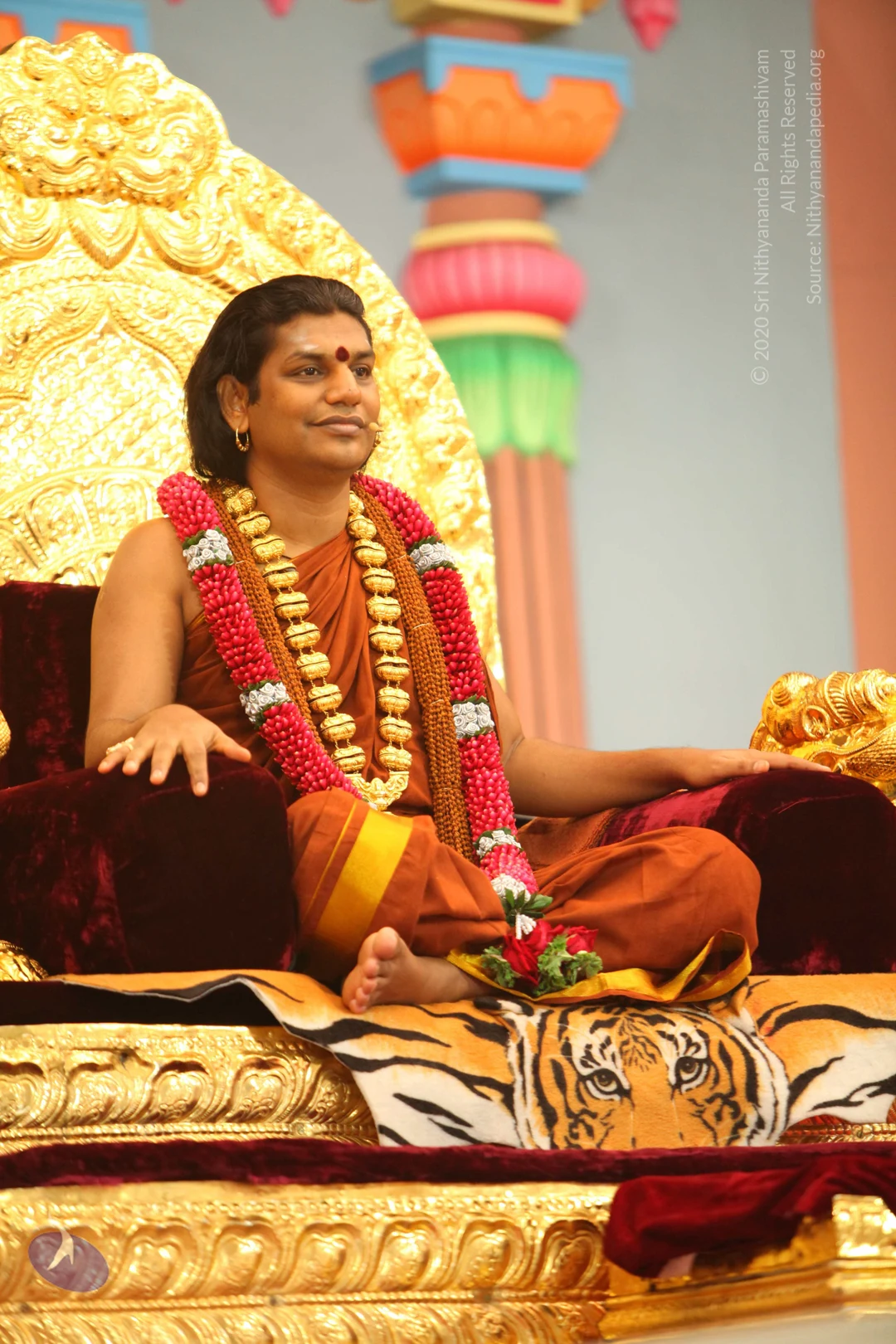
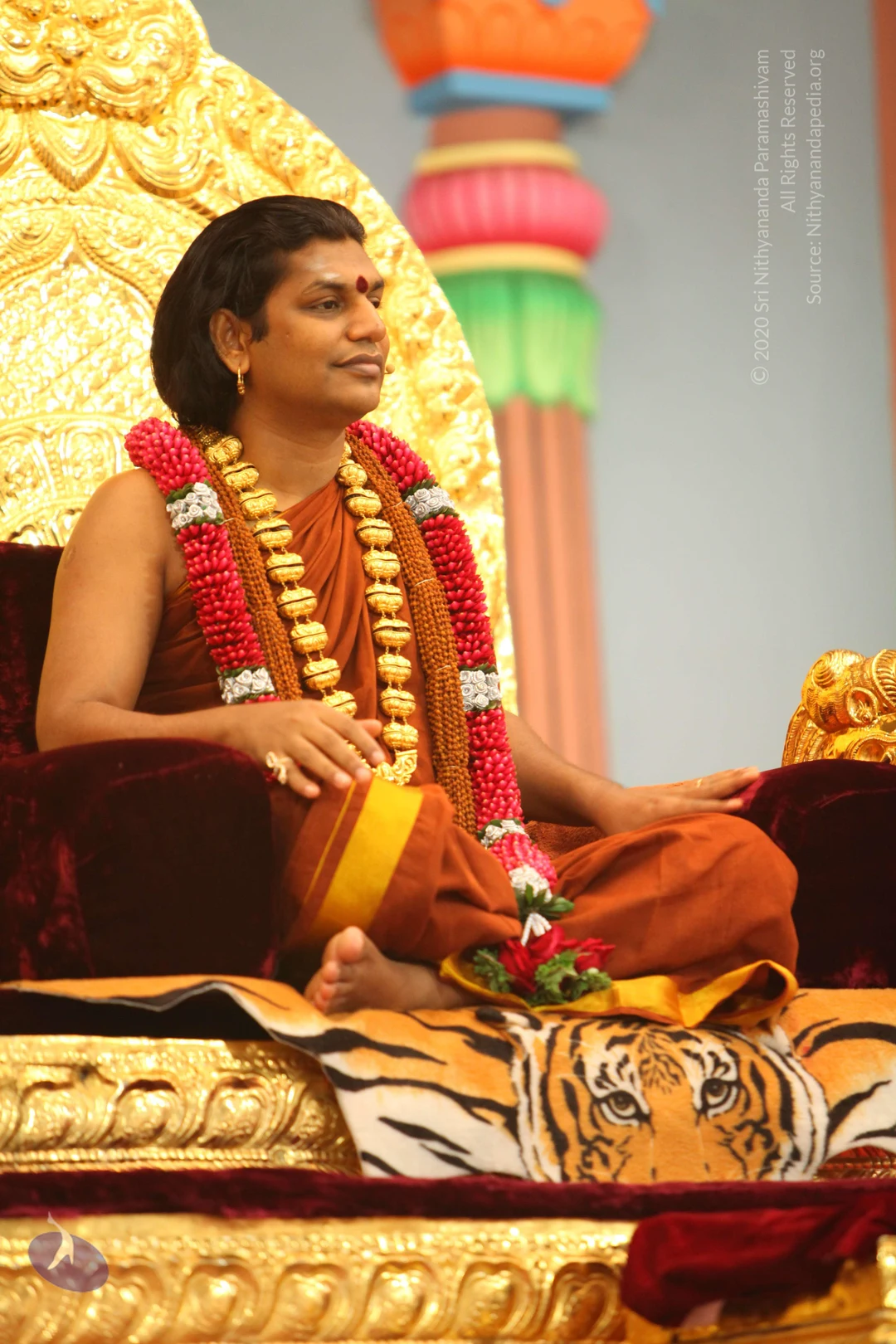
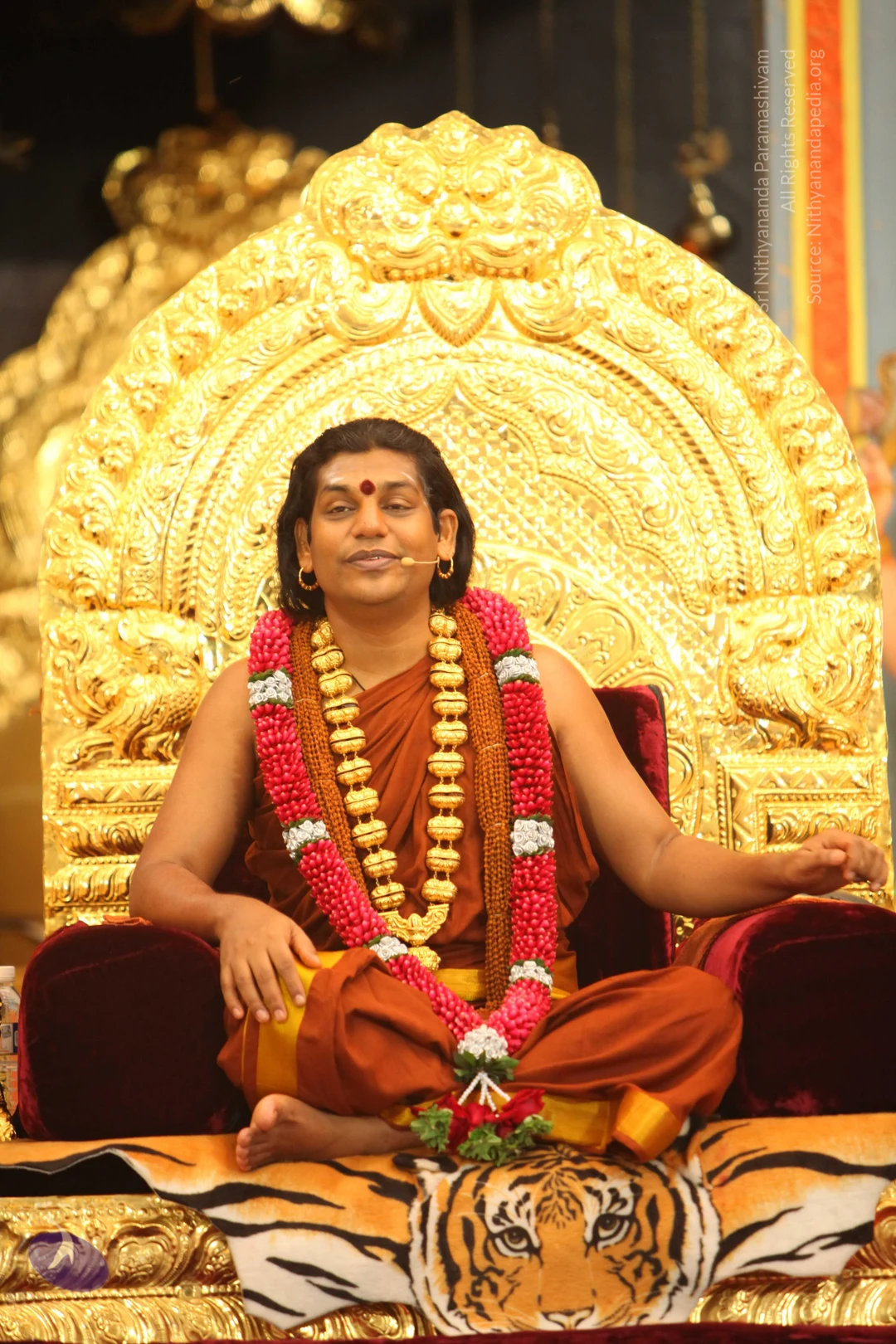
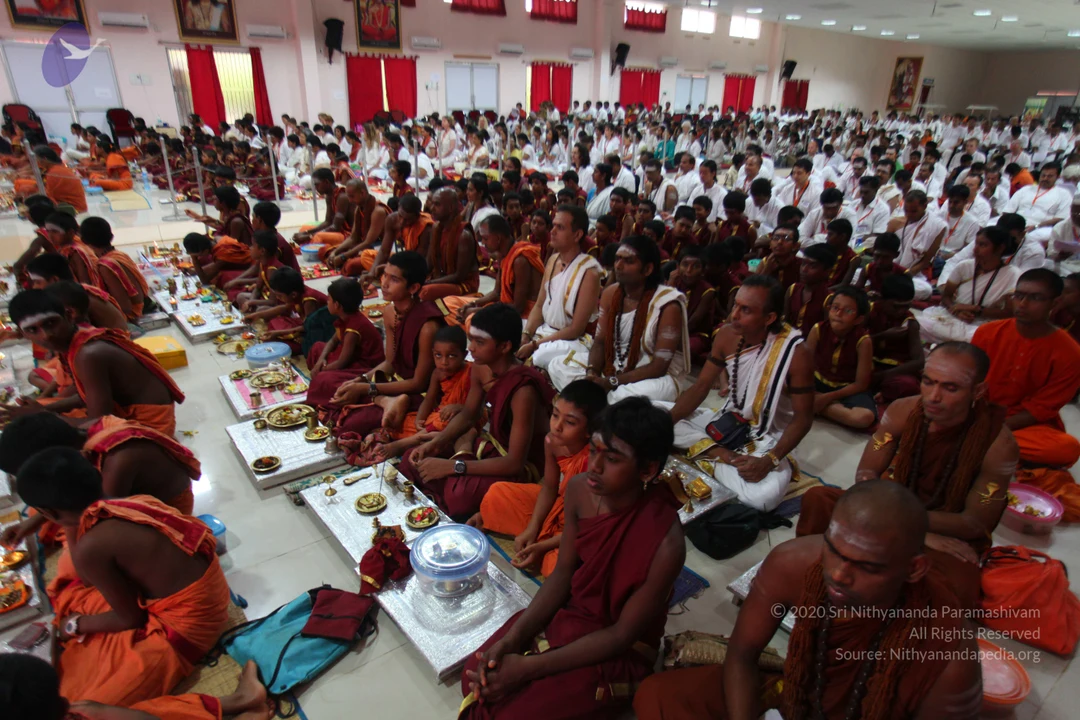
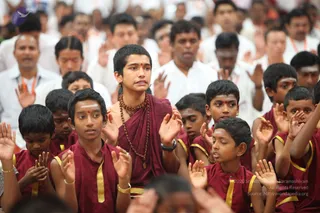
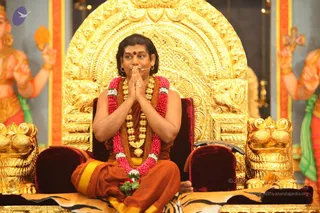
A large crowd of devotees gathers in a hall, many with palms raised or pressed together in devotional gesture. In the foreground, a young person with short dark hair and a red bindi wears a maroon robe, a rudraksha mala, and a beaded necklace, with a dark wristband, while speaking or chanting. Around them, boys in maroon tunics with gold trim sit with sandalwood or white marks on their foreheads, and white-clad adults stand behind, some wearing orange lanyards. The scene suggests satsang or group chanting.A man seated cross-legged on a red velvet chair before an ornate gold throne with carved lion-shaped armrests, palms pressed together in namaste. He wears a saffron-orange cloth draped over his shoulders, a red bindi, a long rudraksha-style mala and gold ceremonial necklaces, and a pink and white flower garland. A tiger-striped cloth covers the platform. Two painted deity figures in orange and green stand on either side. A person seated before an ornate gold throne in a saffron and orange robe and garlands, with a microphone at the chin and two painted standing figures flanking the platform. Swamiji (probable): a long-haired man in saffron with rudraksha and gold necklaces, seated on a throne in a satsang setting.A smiling man sits cross-legged on an ornate gold throne with carved lion-head armrests and a tiger-skin rug beneath him. He wears saffron-orange robes with a gold-bordered dhoti, a red and white flower garland, a long gold bead necklace over a rudraksha-style mala, and a small red bindi, with a small headset microphone near his face. Behind him is a large gold arched backdrop, and a painted deity figure with raised arms appears at the left edge. The setting suggests a satsang or discourse.A seated man in saffron-orange robes sits cross-legged on an ornate gold throne with plush maroon armrests and gilded lion-head arms, atop a tiger-striped cloth. He wears a long multi-strand garland of red and white flowers, a heavy gold bead necklace over a brown rudraksha mala, and a red bindi on his forehead, with a small microphone at his cheek. A gilded arch and a blue-and-gold deity murti with raised hands stand in the background.A smiling man with swept-back dark hair sits on an ornate gold throne with a deep red velvet seat and gold lion-head armrests, draped over a striped tiger-skin rug. He wears a saffron-orange robe with a yellow-gold border, a red bindi, a thick necklace of gold beads, and a long garland of red flowers with white accents. A small bouquet of red roses rests by his feet. Behind him stand a gilded carved backrest and pastel pink, green and blue walls. Swamiji (probable): the seated figure has swept-back hair, saffron robes, ornate gold necklaces and a rudraksha-style mala, consistent with the page's identification of Paramahamsa Nithyananda in an in-person setting.A smiling man with long swept-back hair and a red bindi sits cross-legged on an ornate gold throne with plush maroon upholstery and carved gold armrests. He wears an orange-saffron robe with a gold-bordered dhoti, a red and white flower garland, and a heavy gold ceremonial necklace over rudraksha-style beads. His bare feet rest on a tiger-striped cloth, and a small red and white floral offering lies at his lap. Background shows pastel pink and grey walls.

KalaBhairavaDarshan

34 photosSource gallery
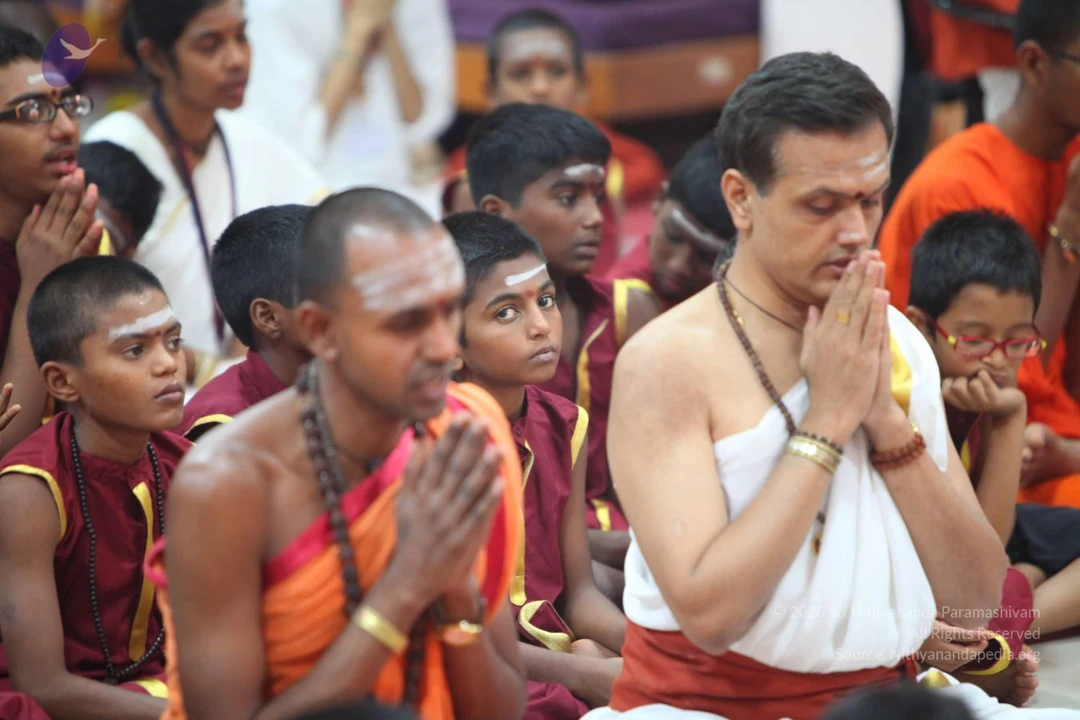
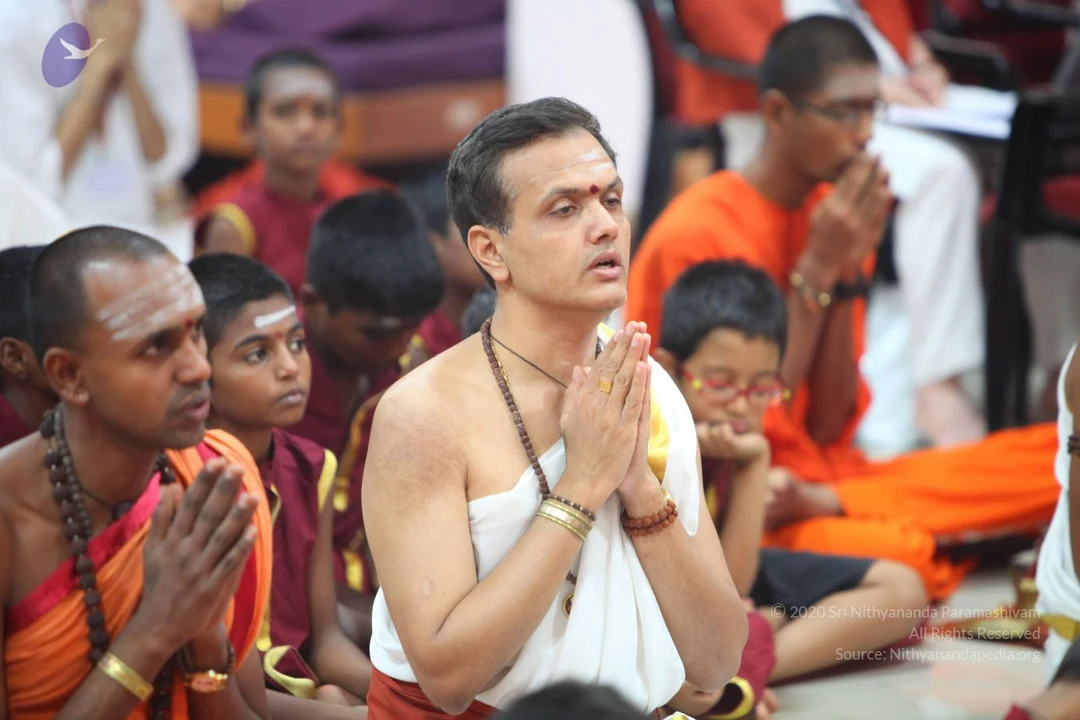
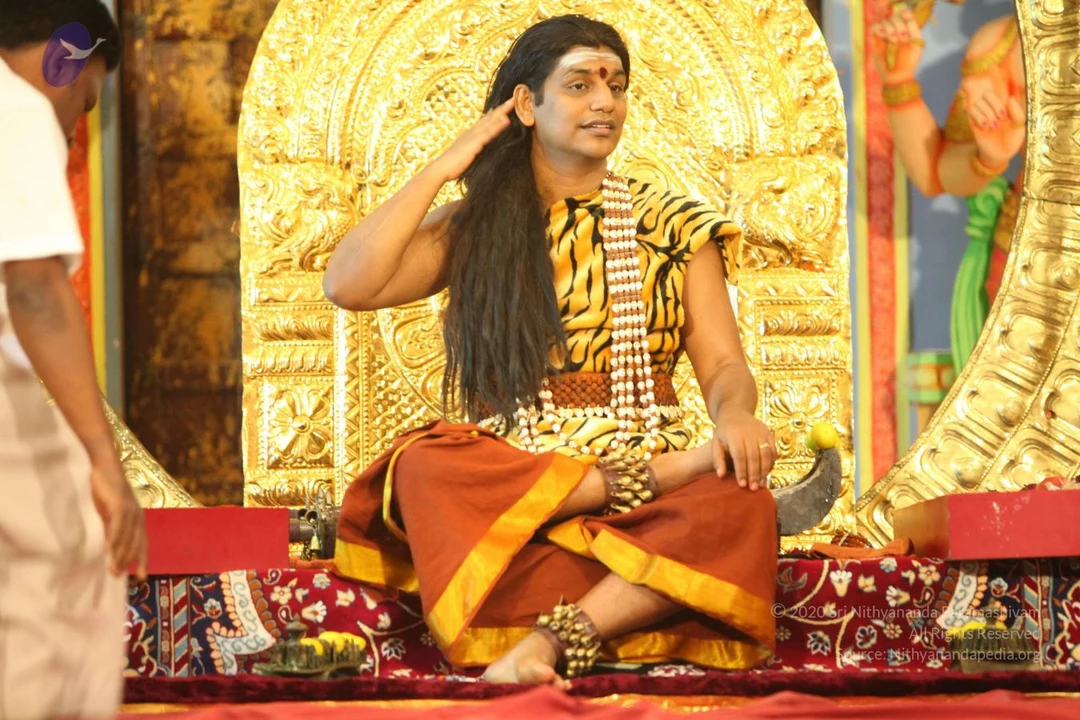
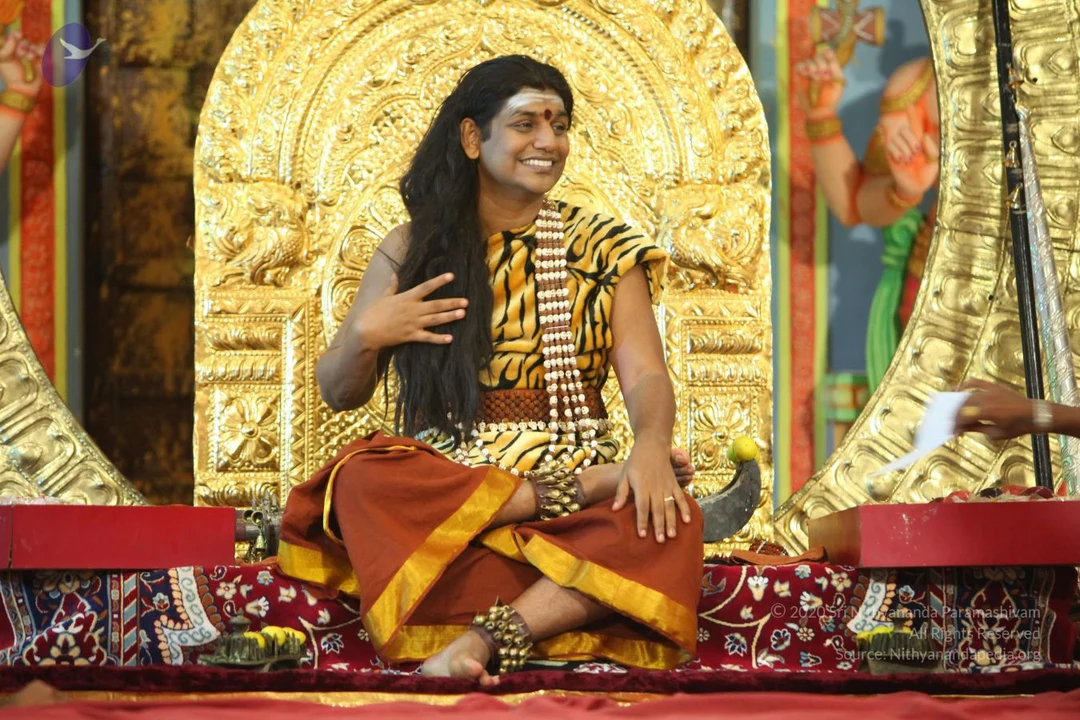
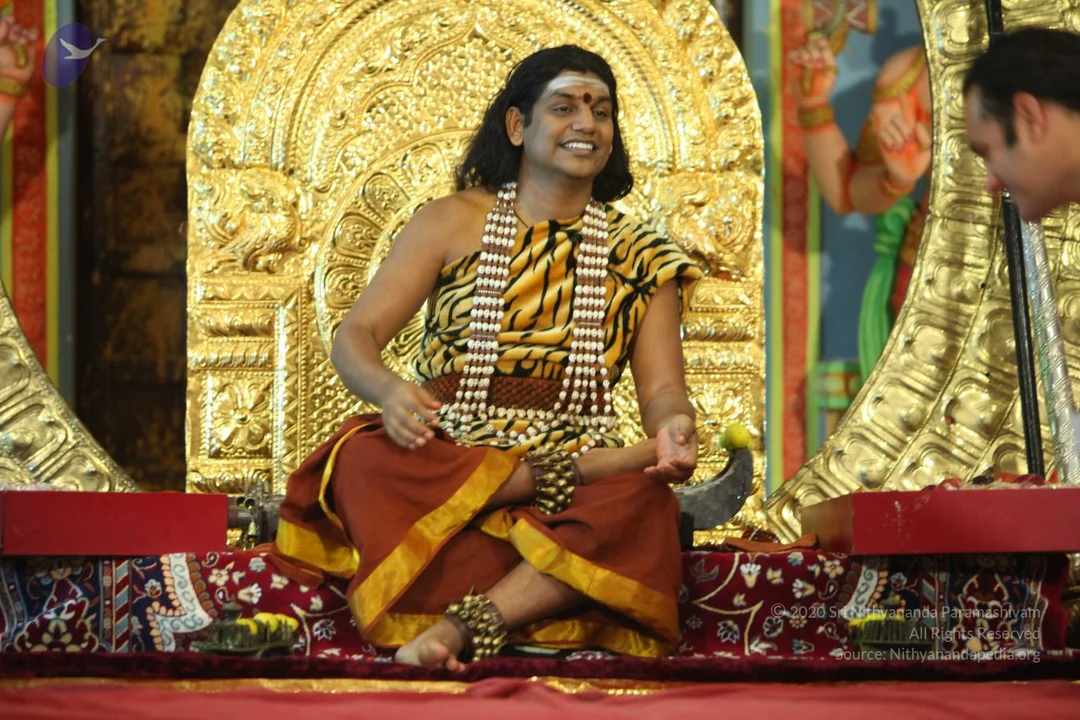
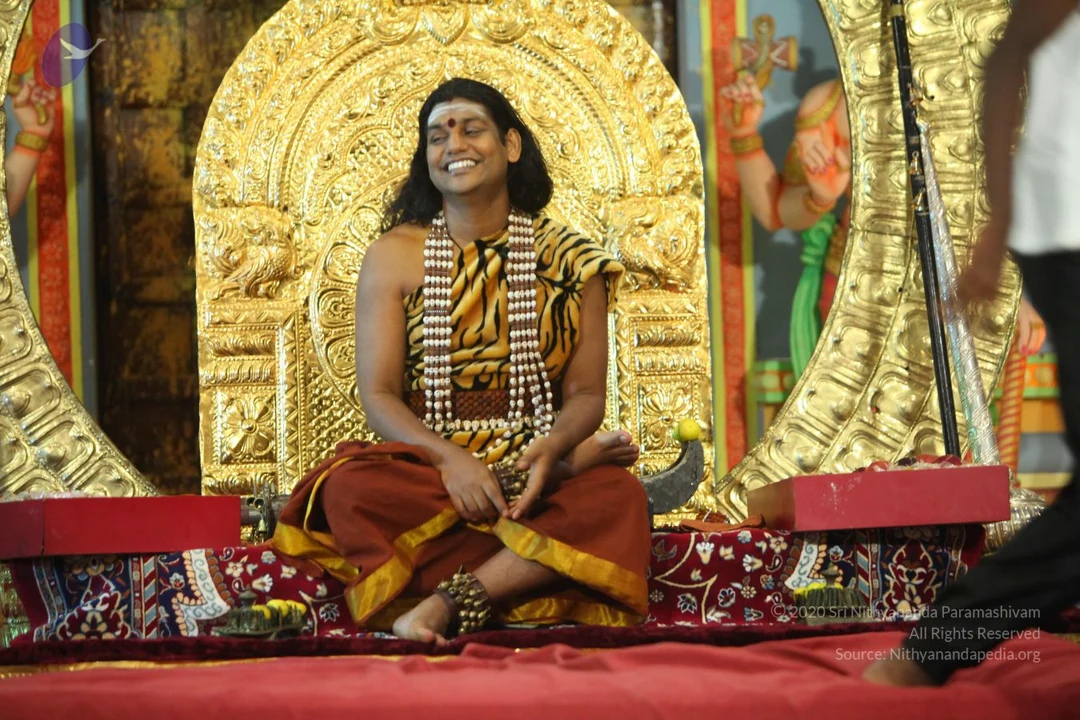
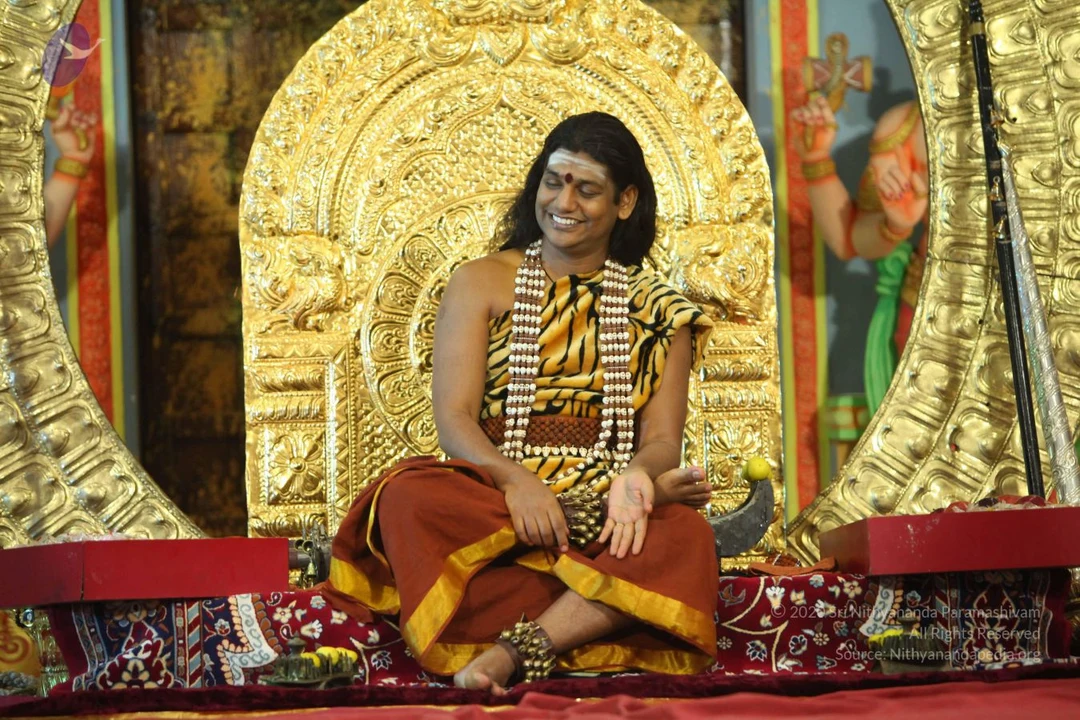
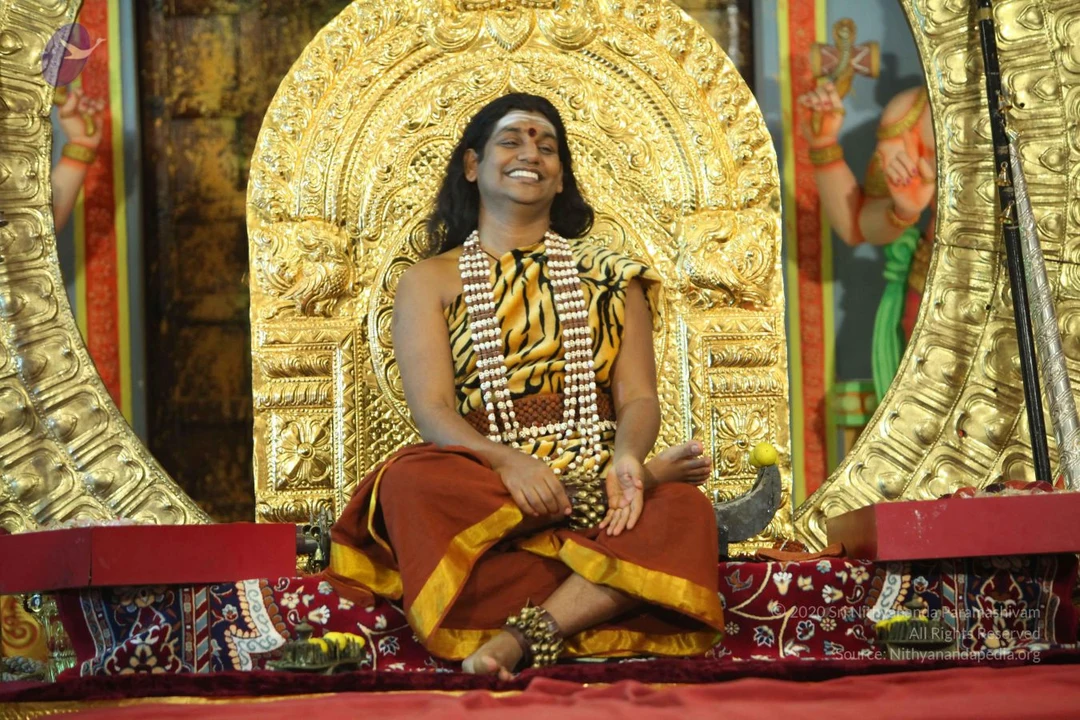
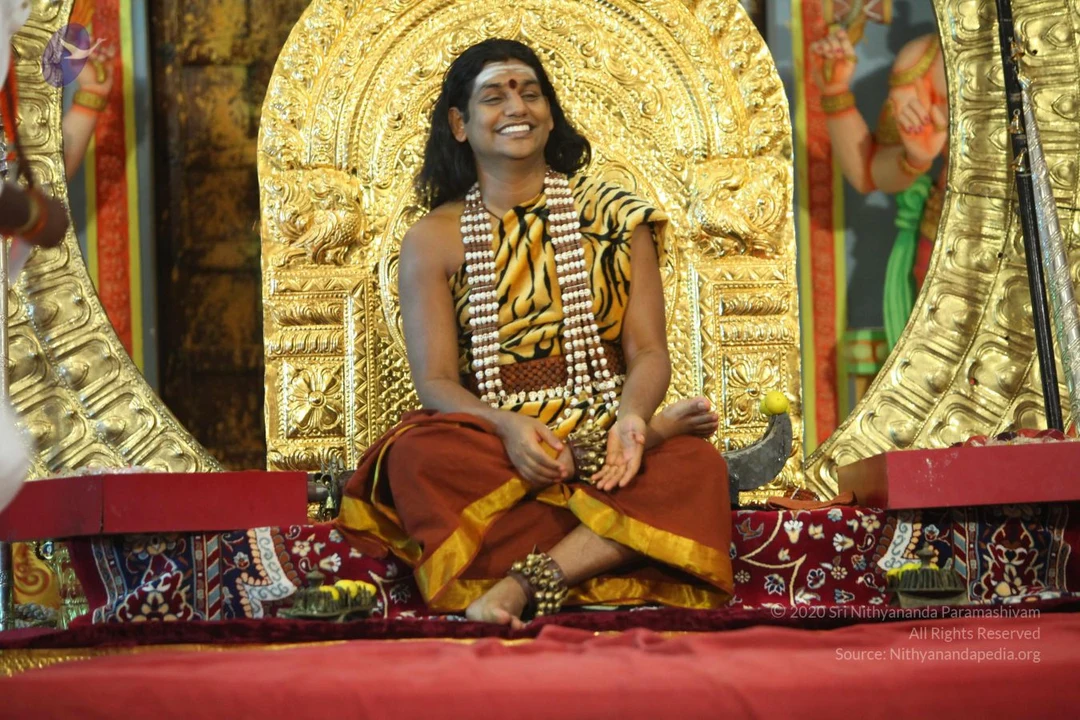
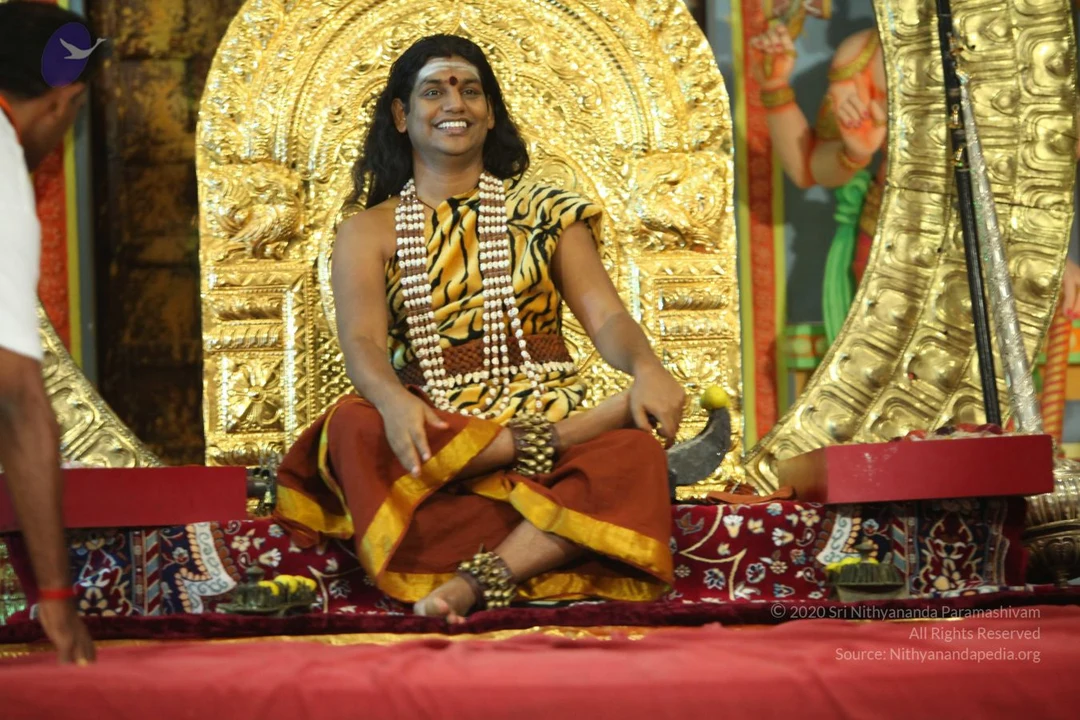
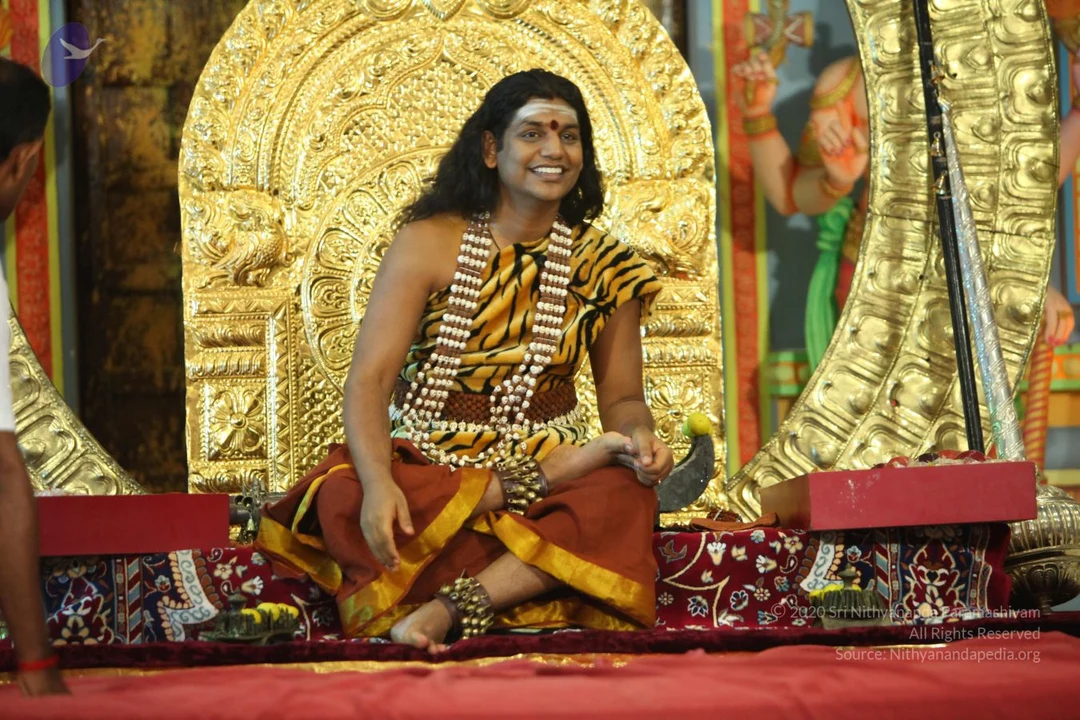
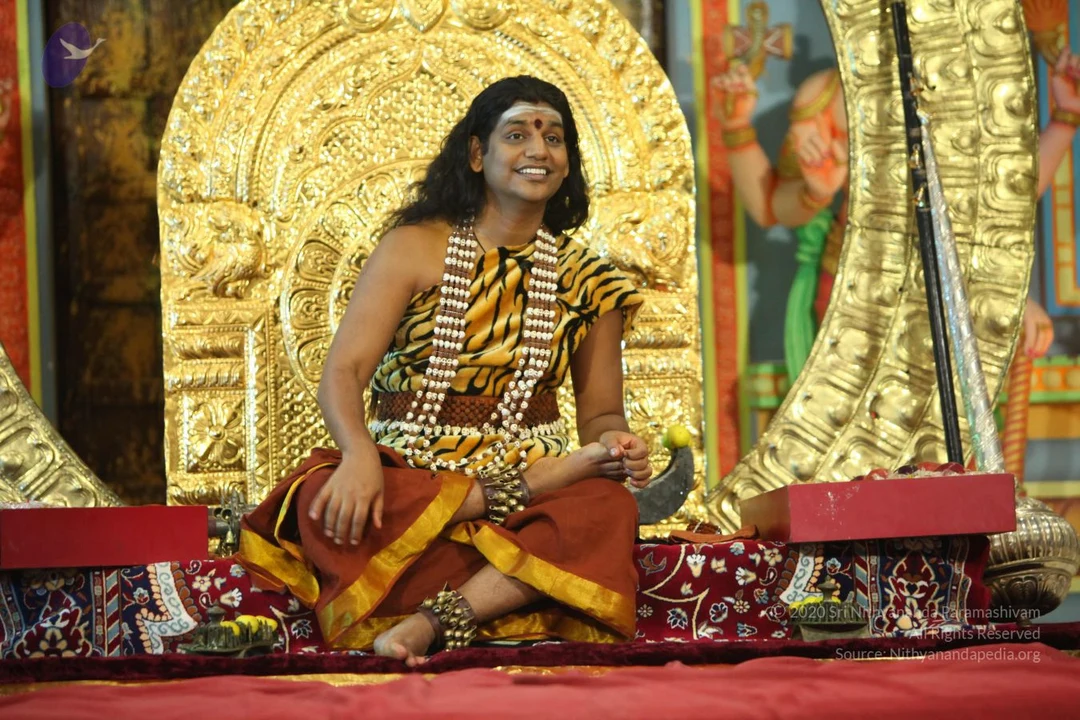
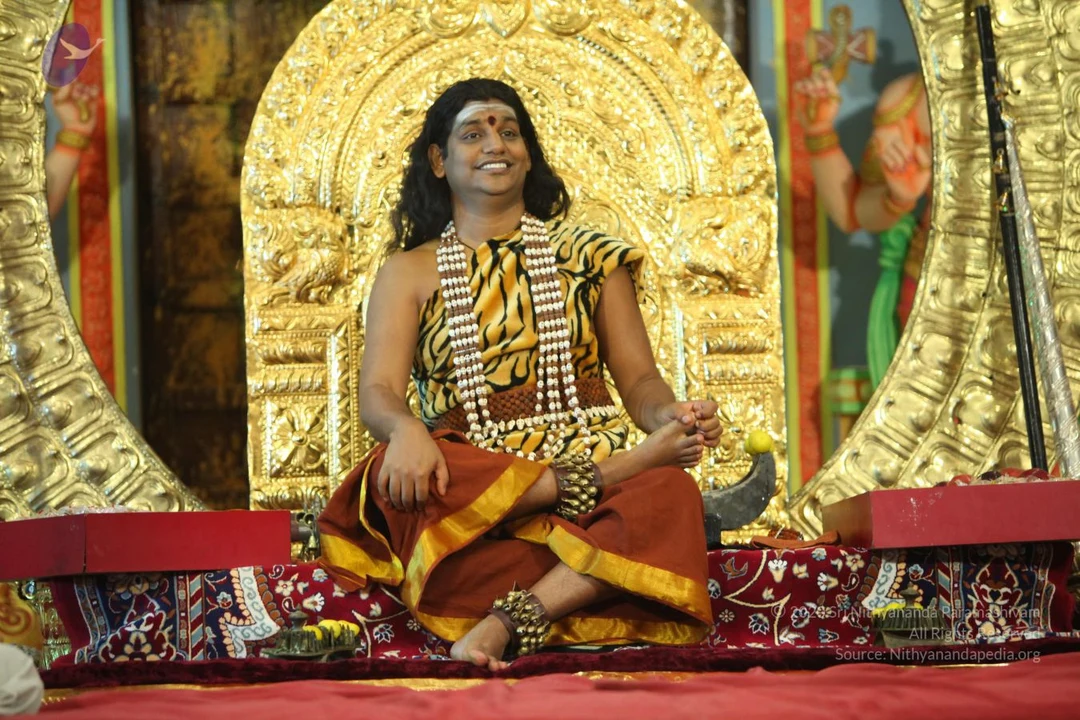
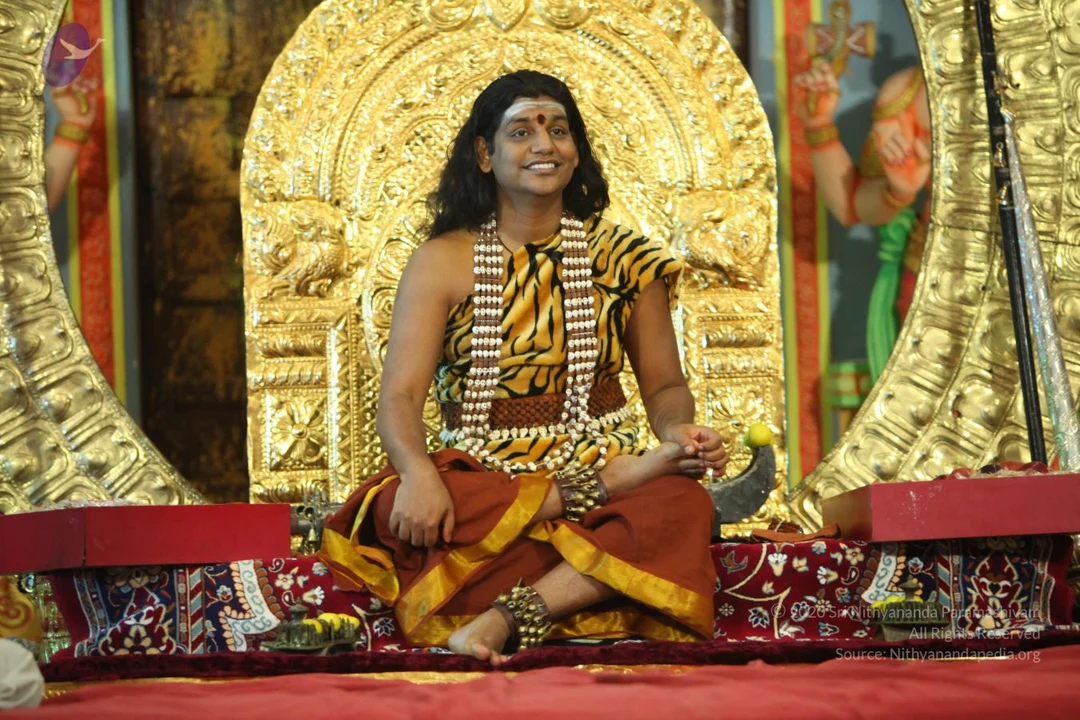
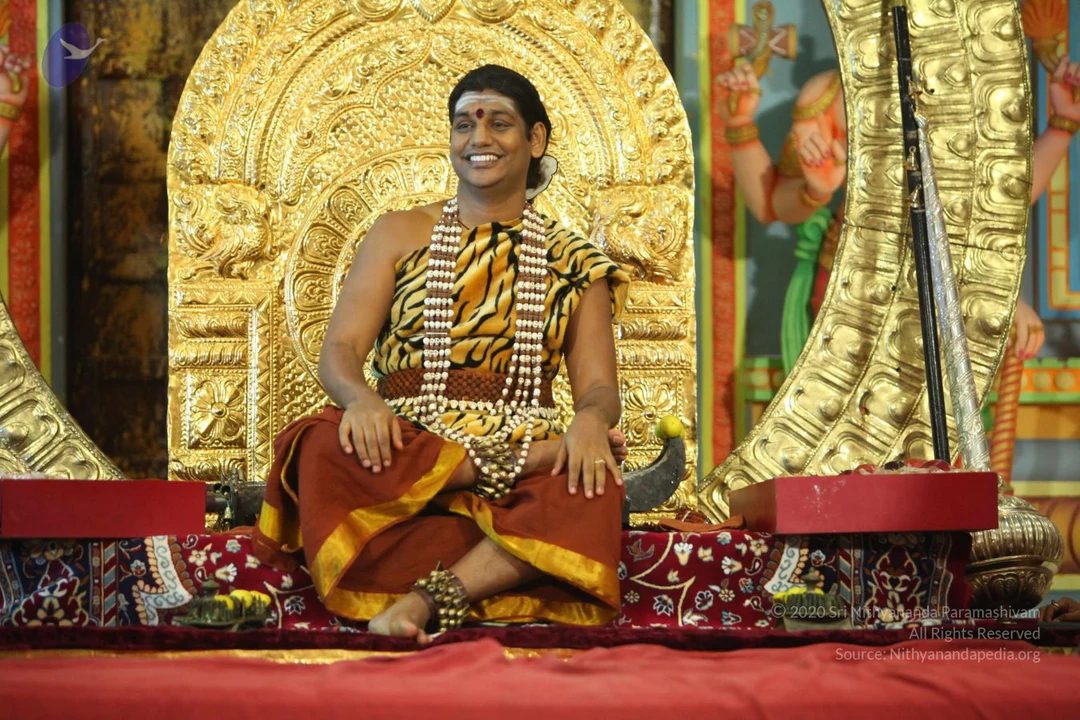
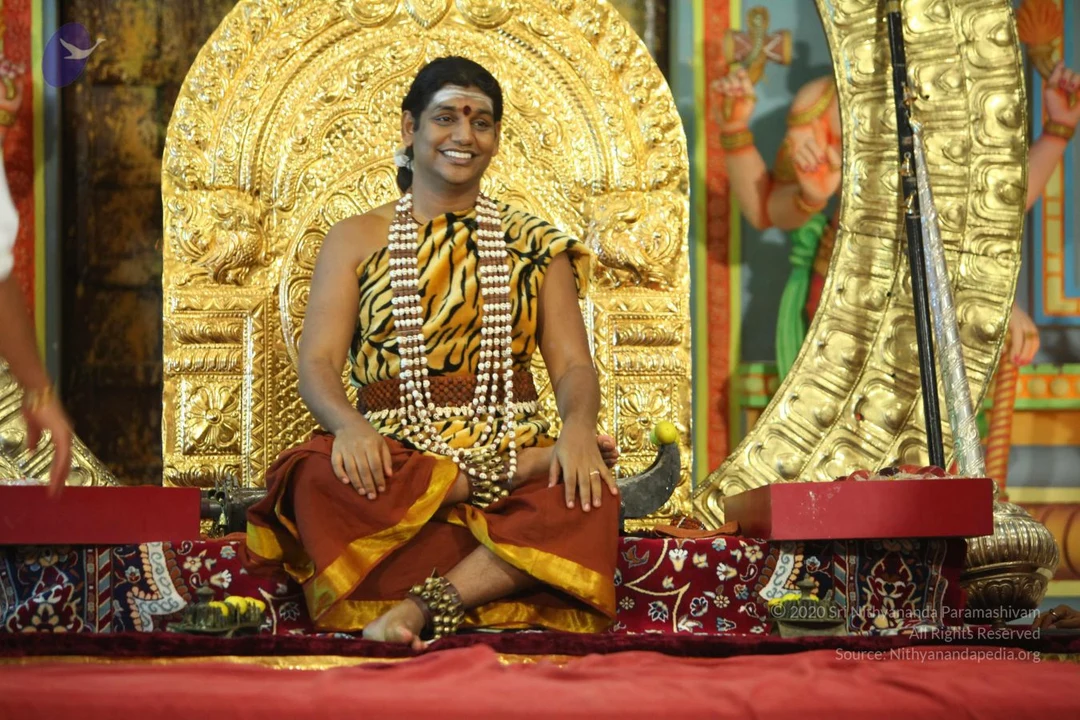
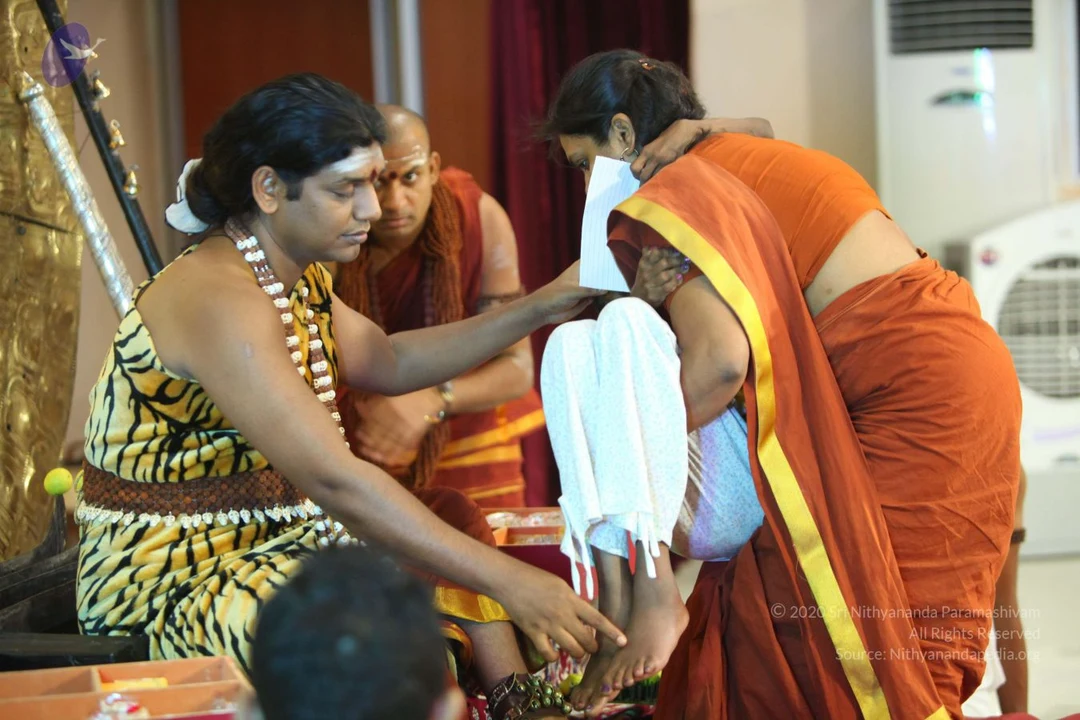
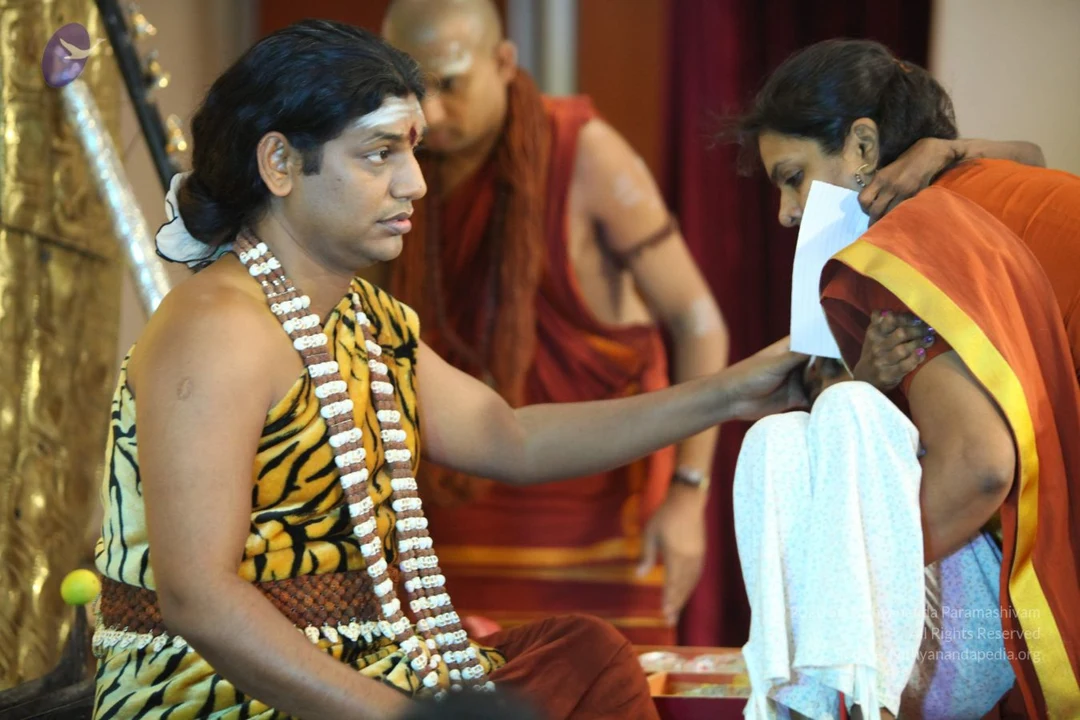
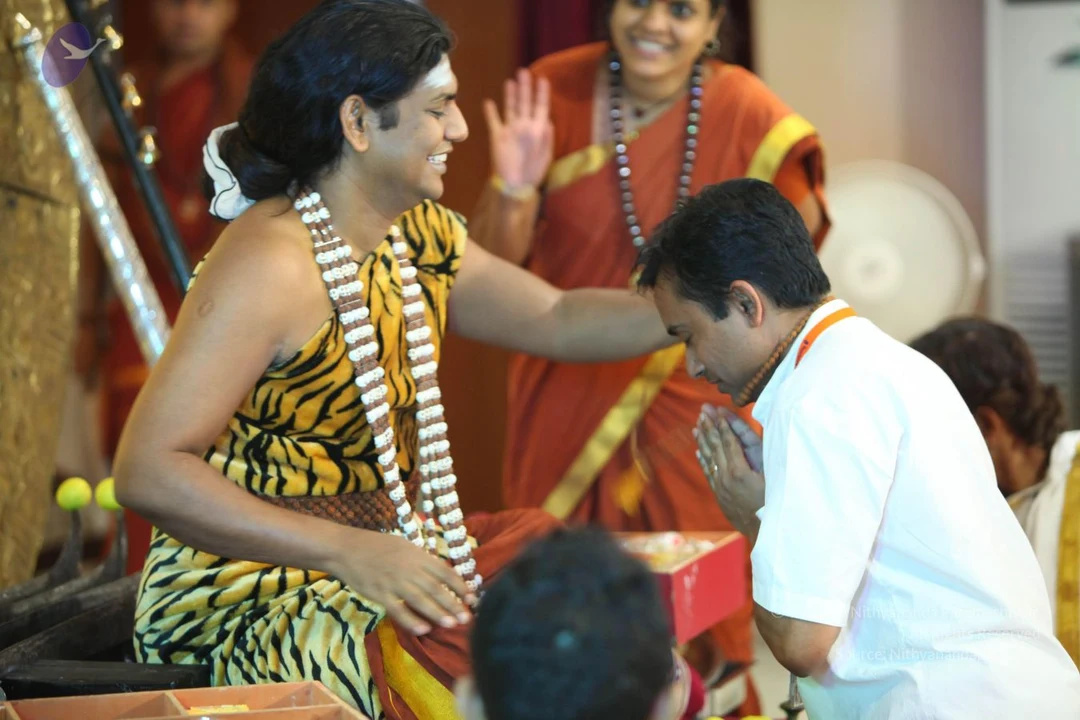
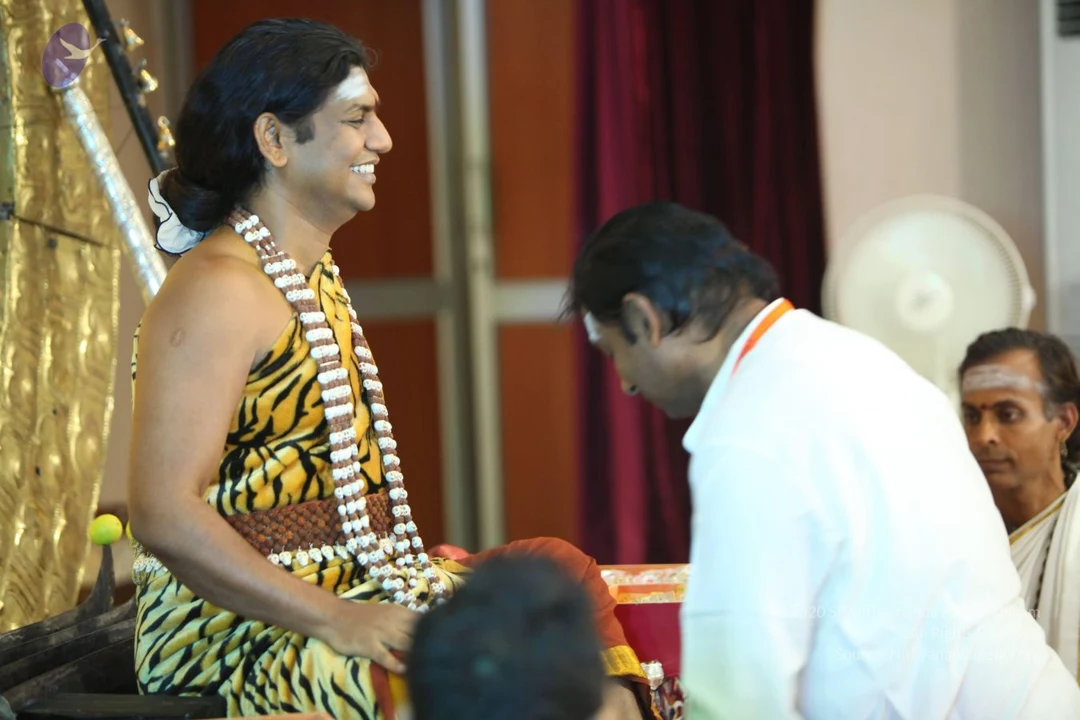
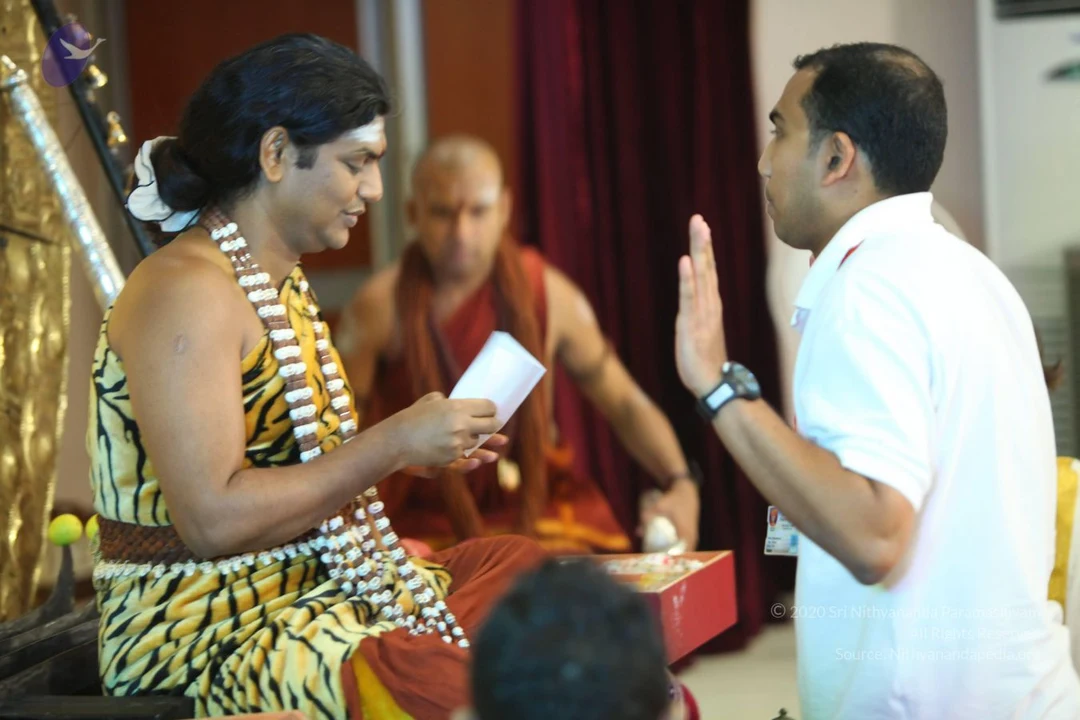
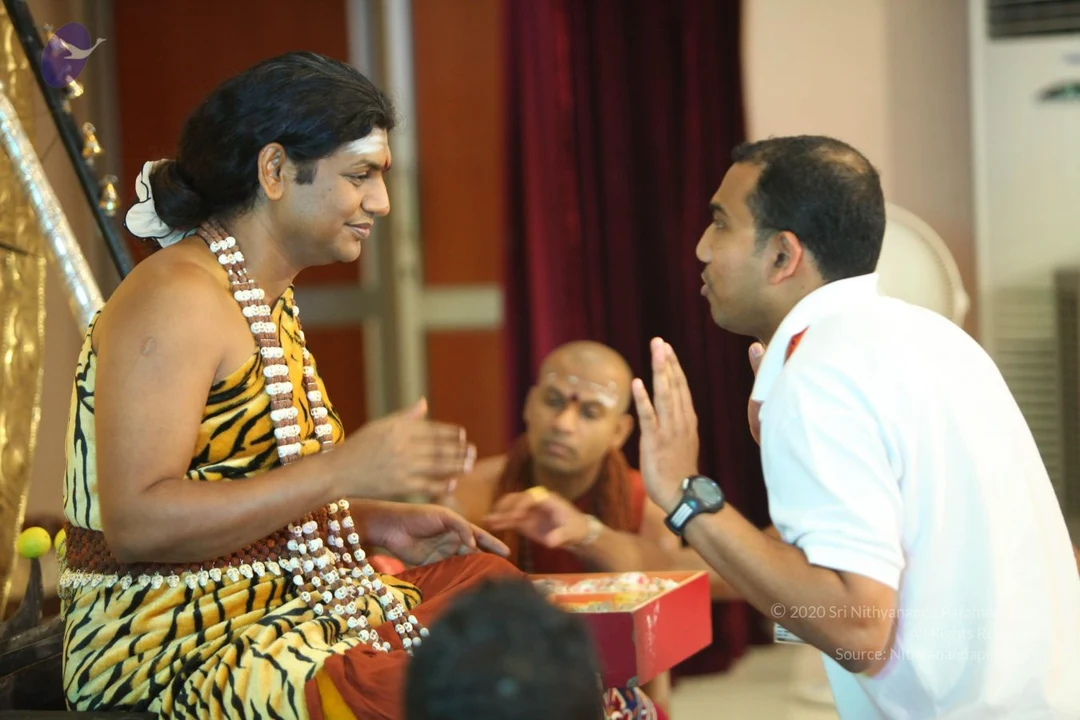
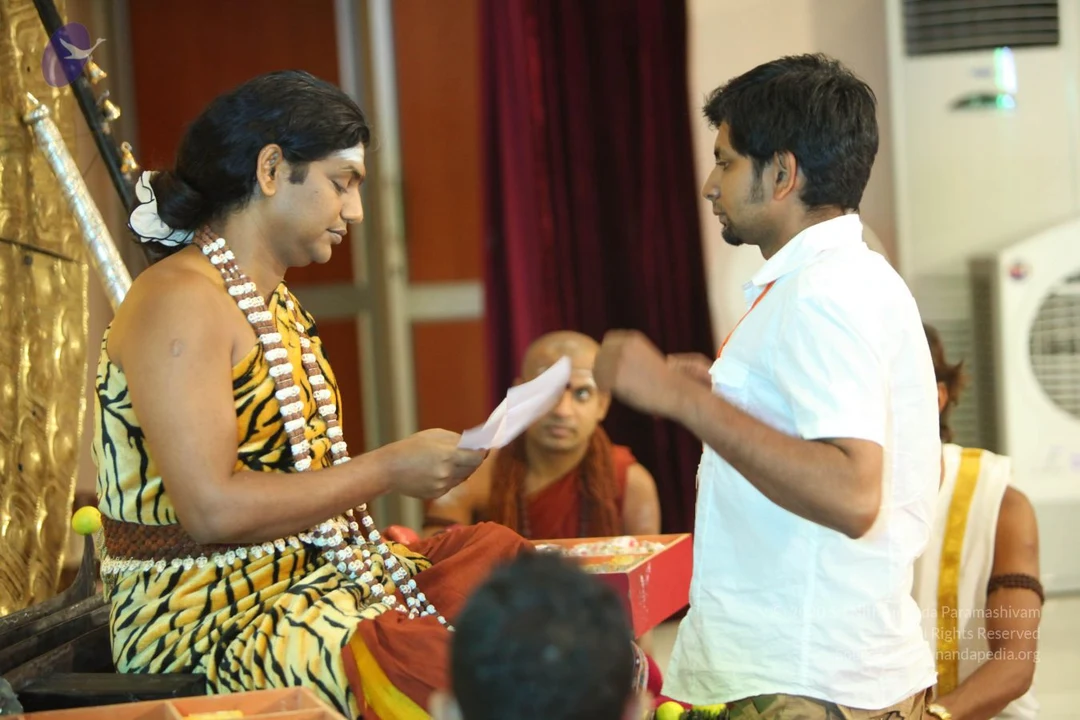
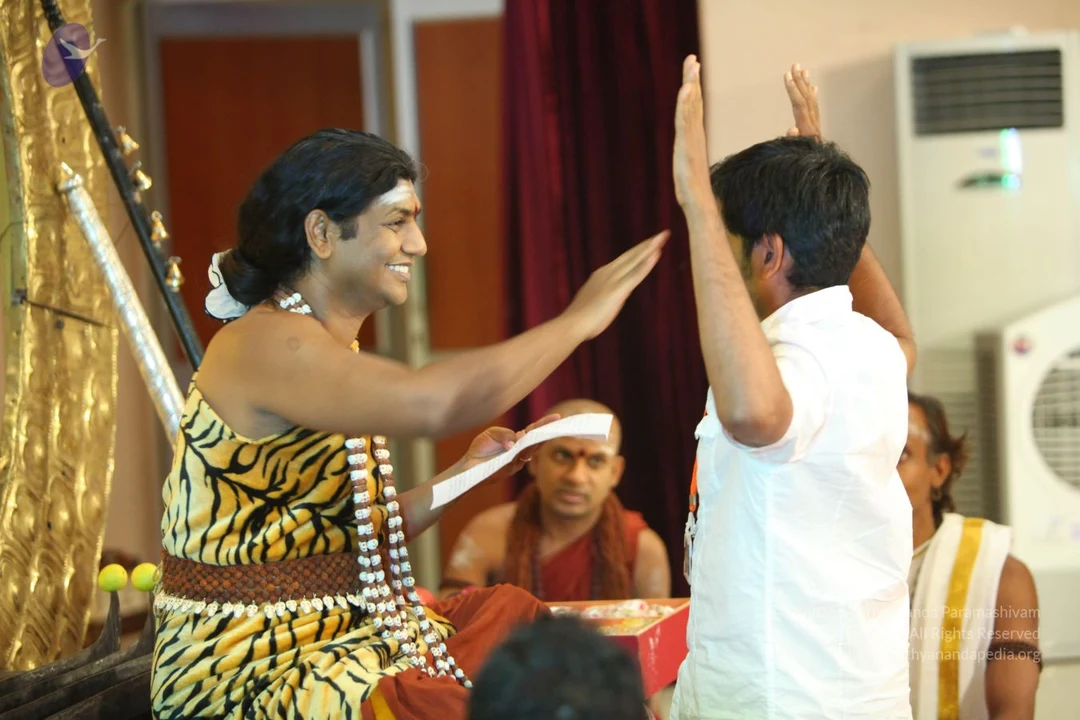
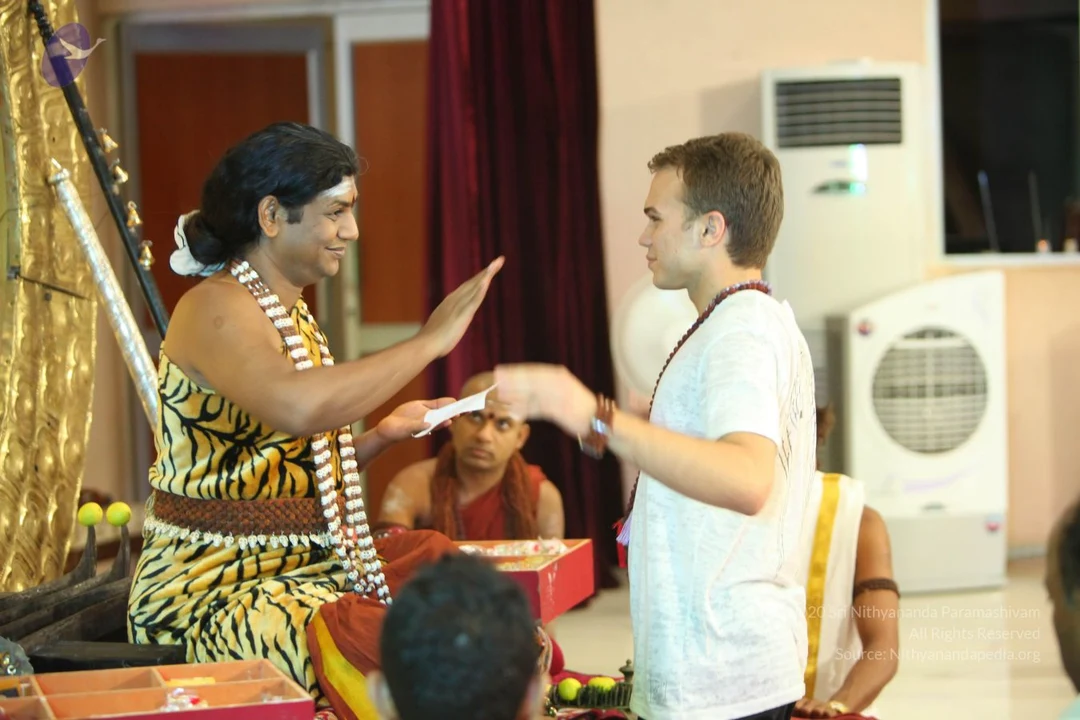
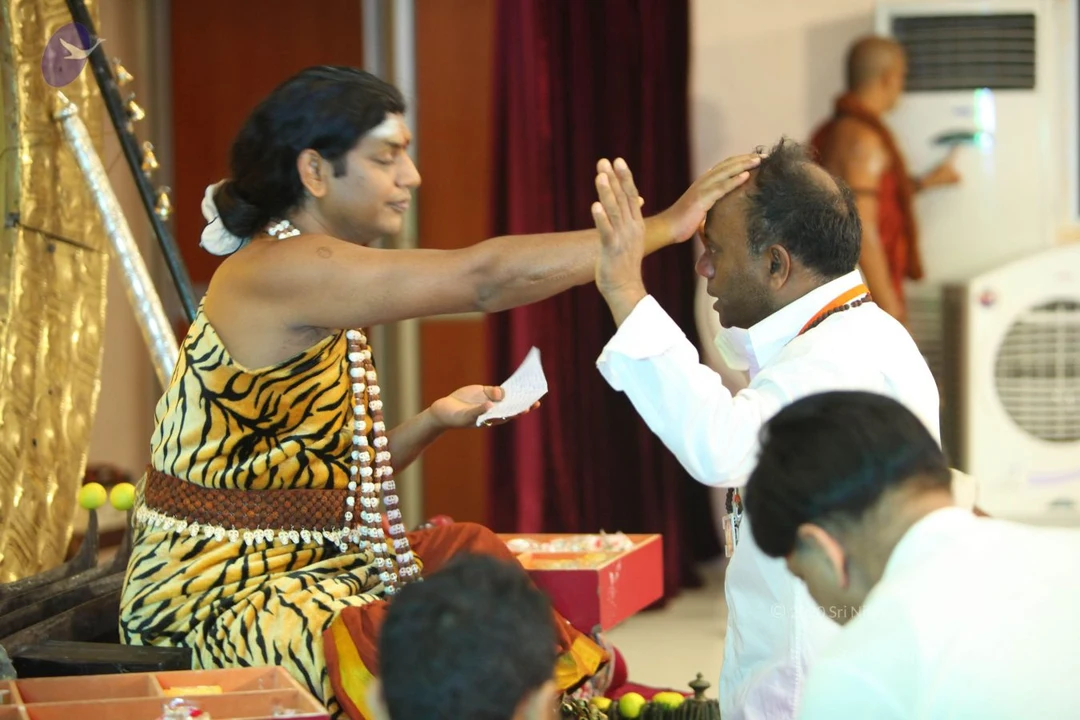
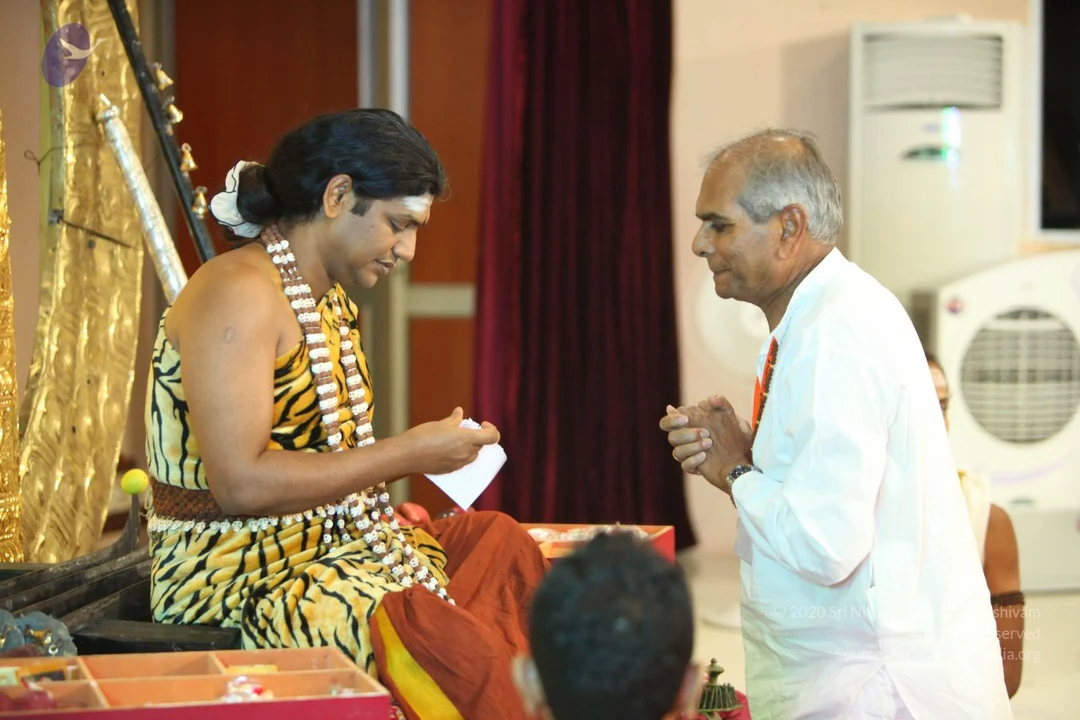
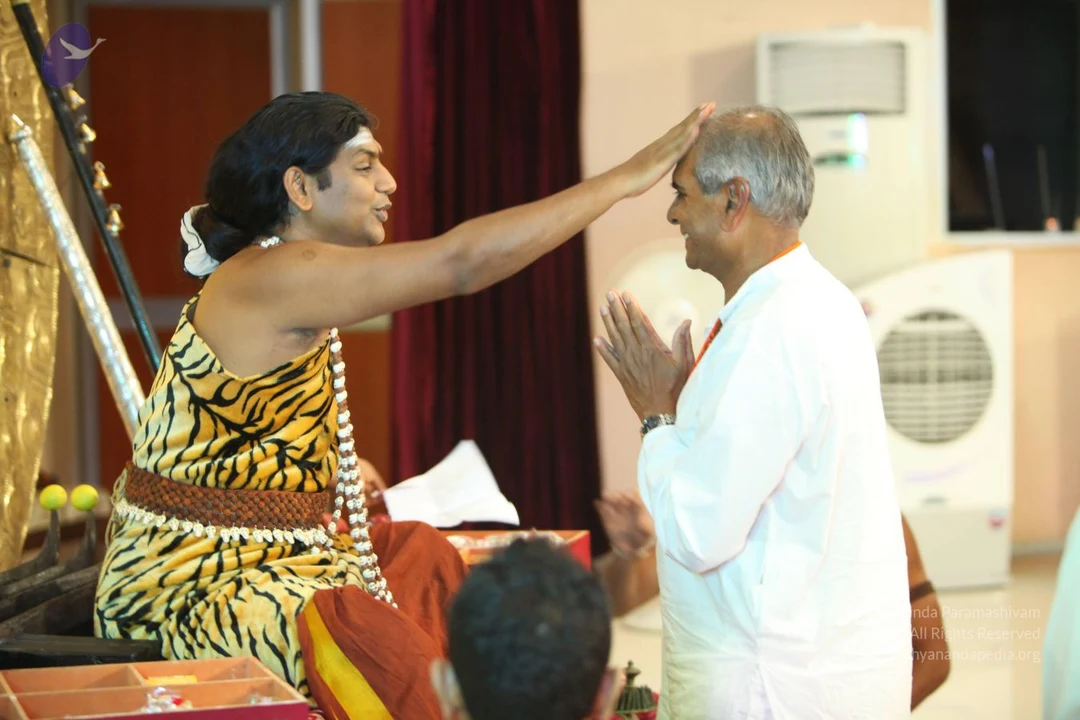
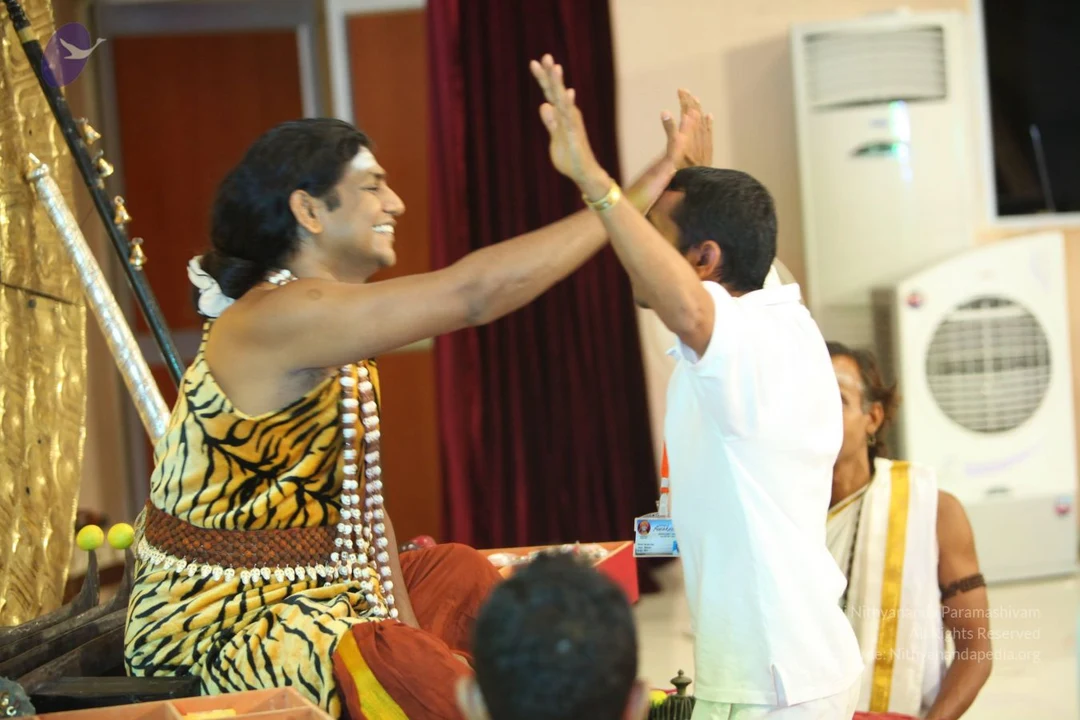
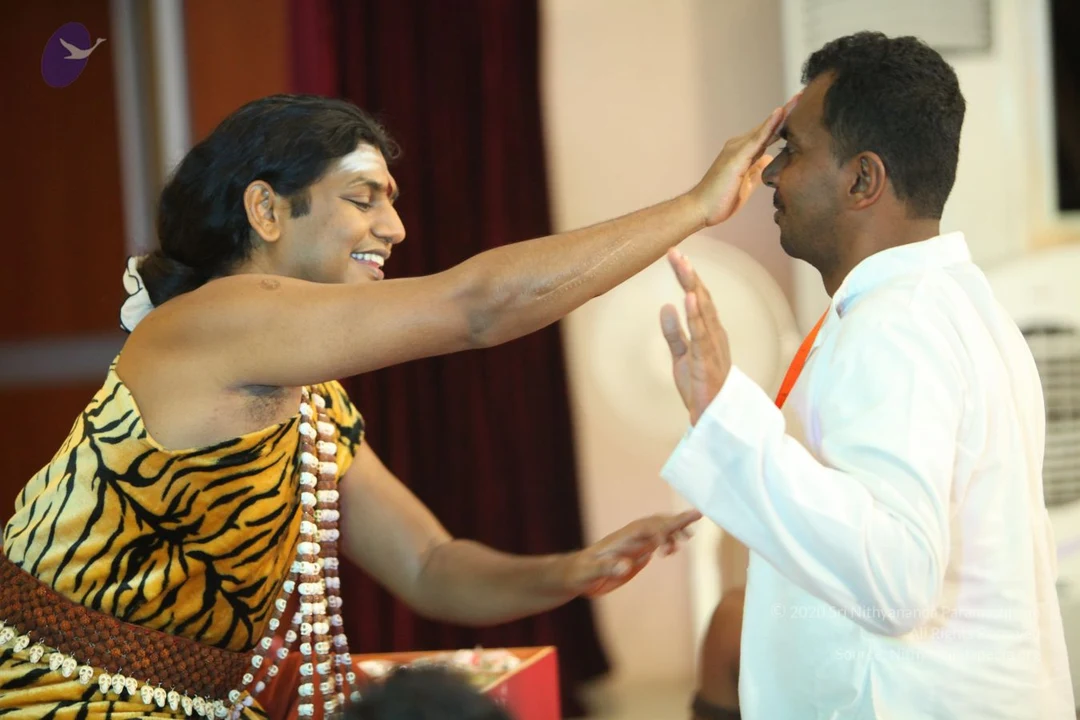
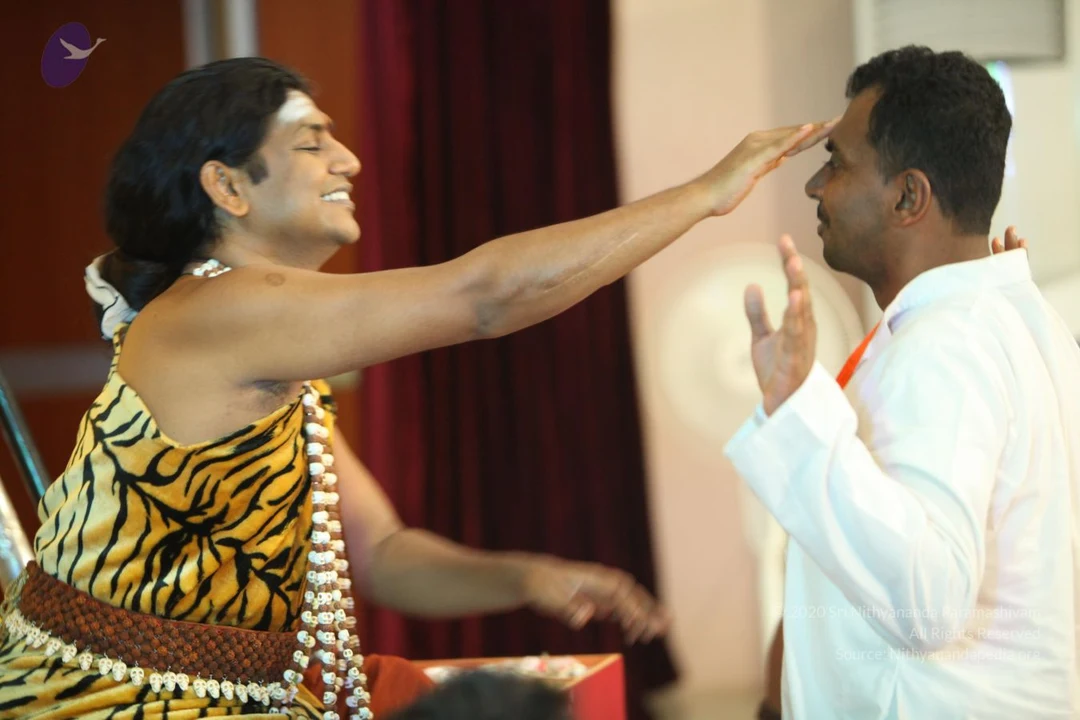
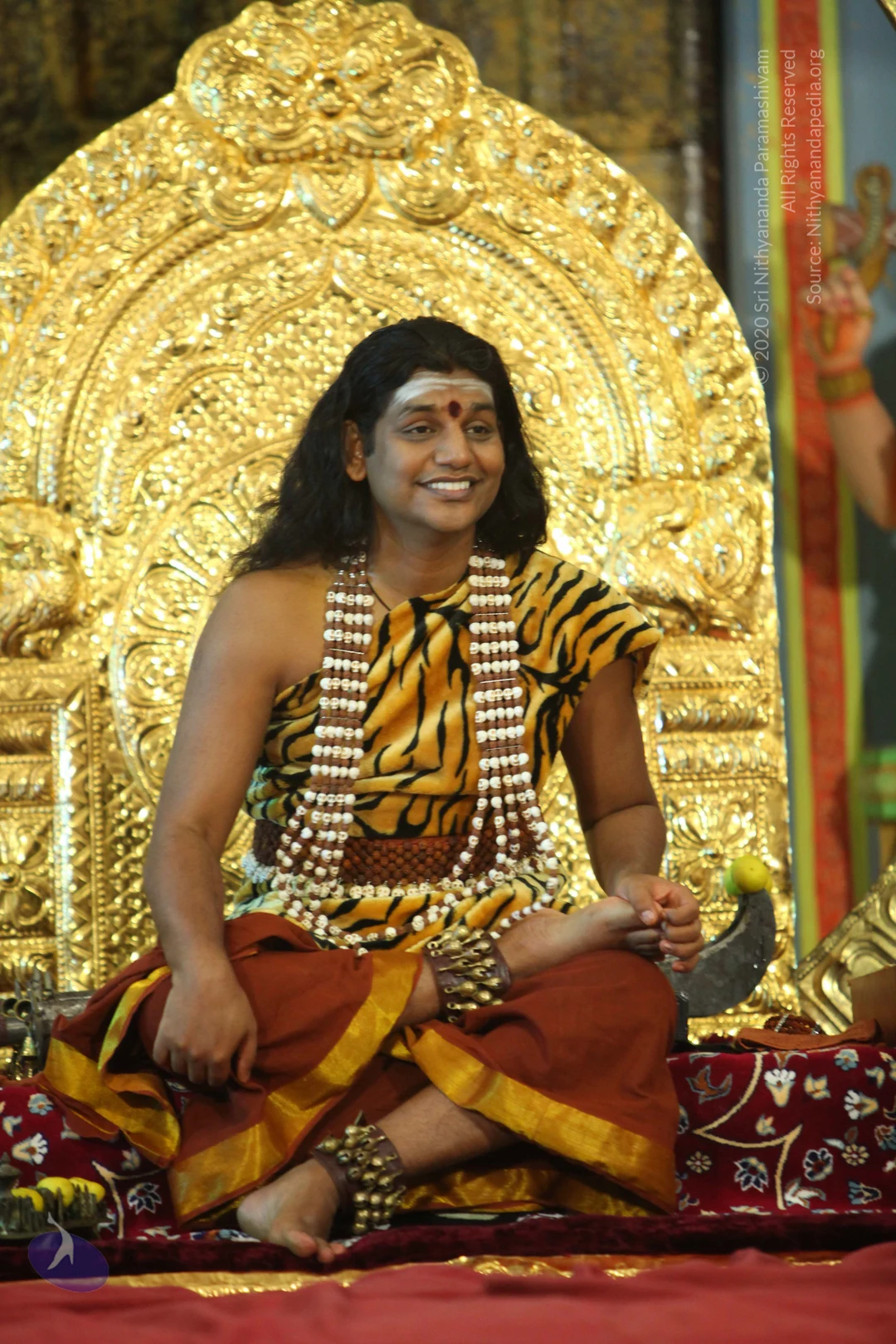
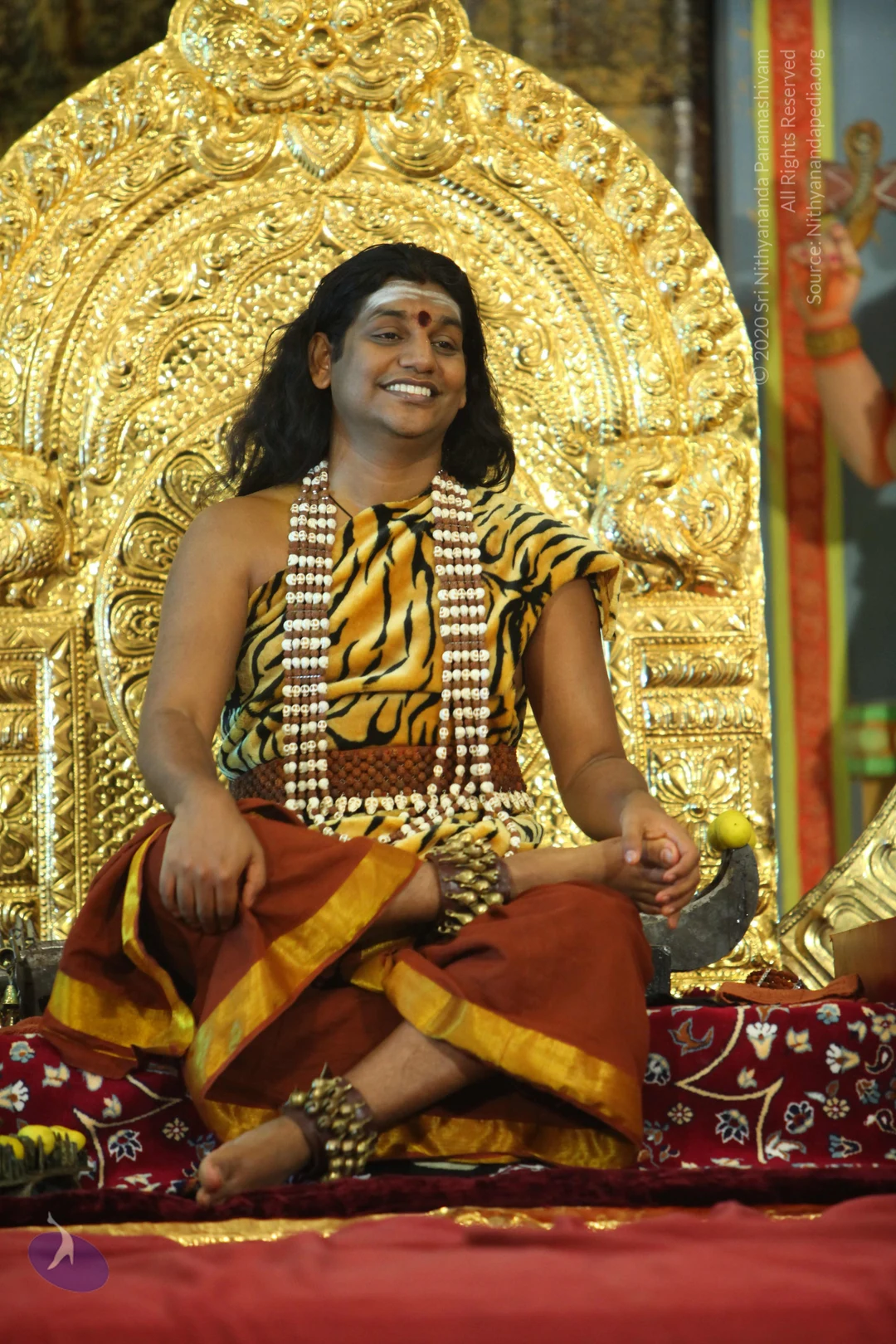
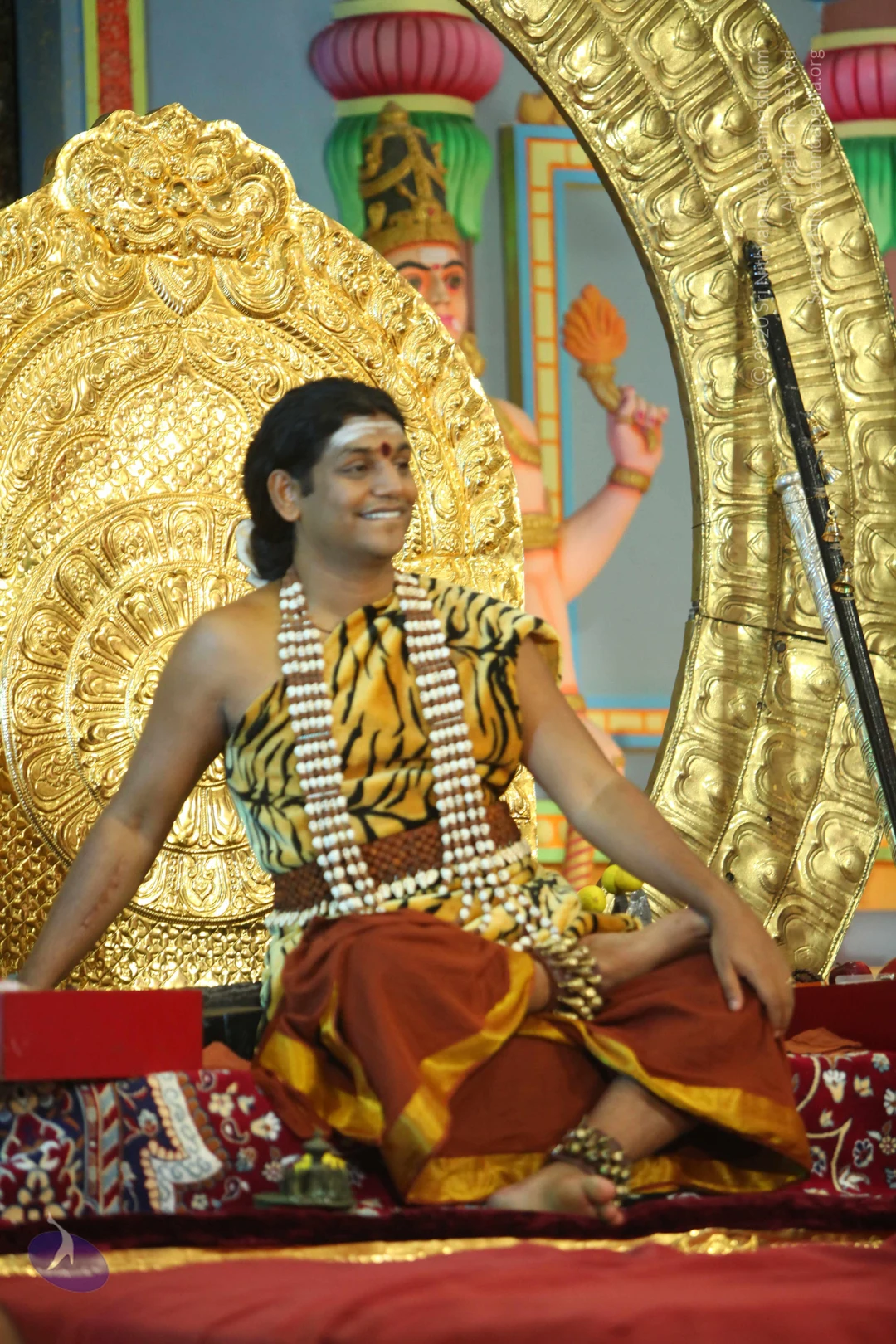
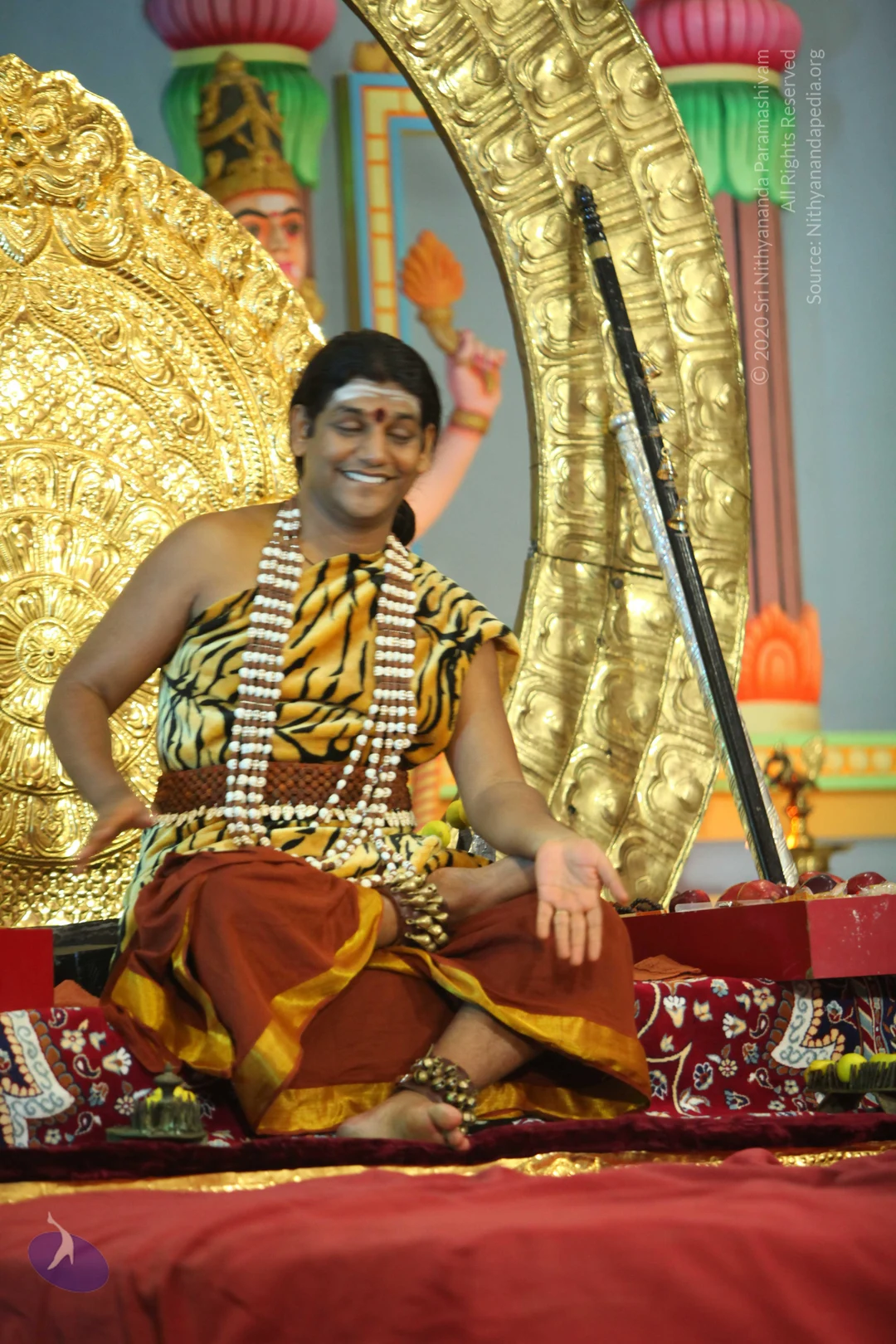
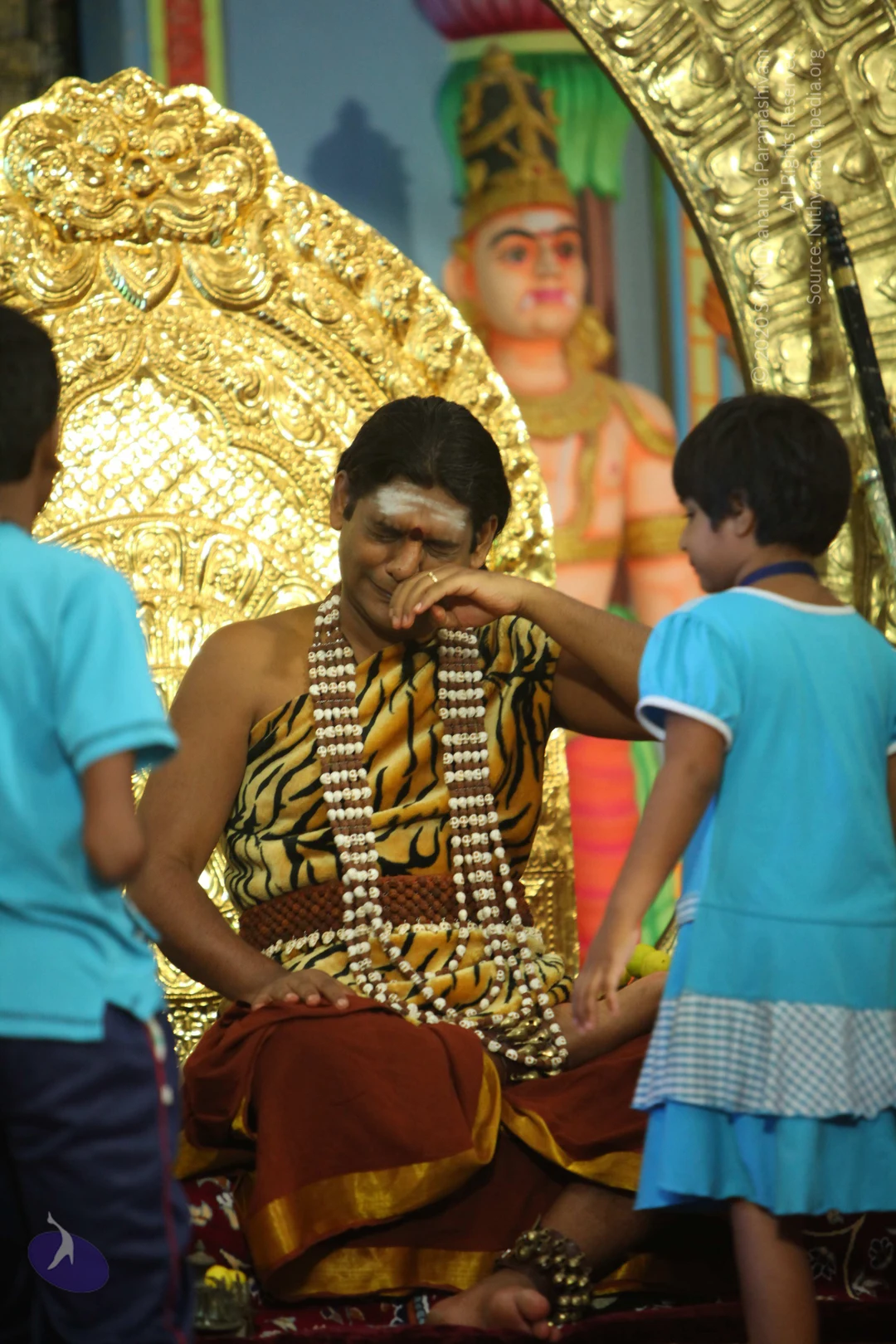
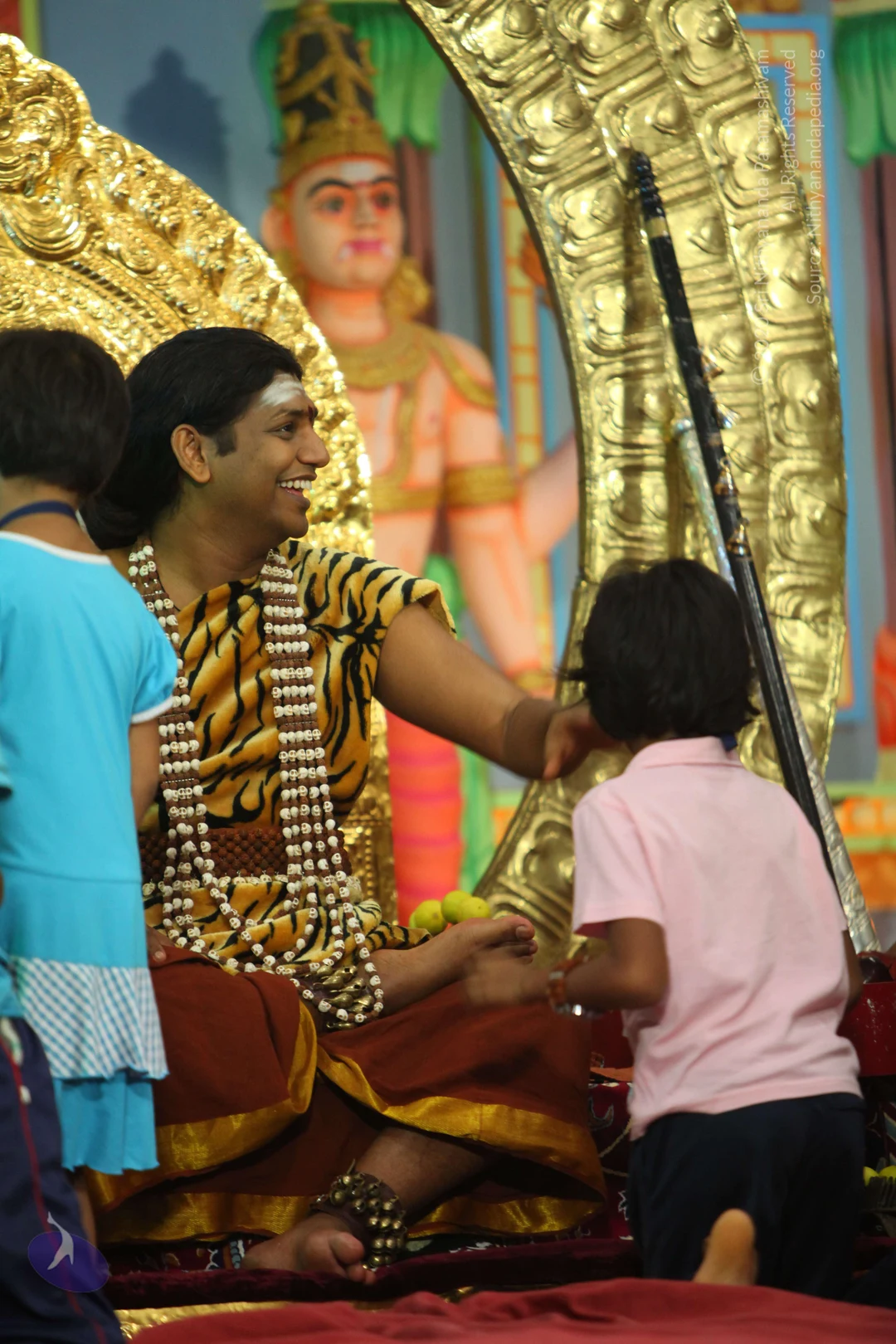
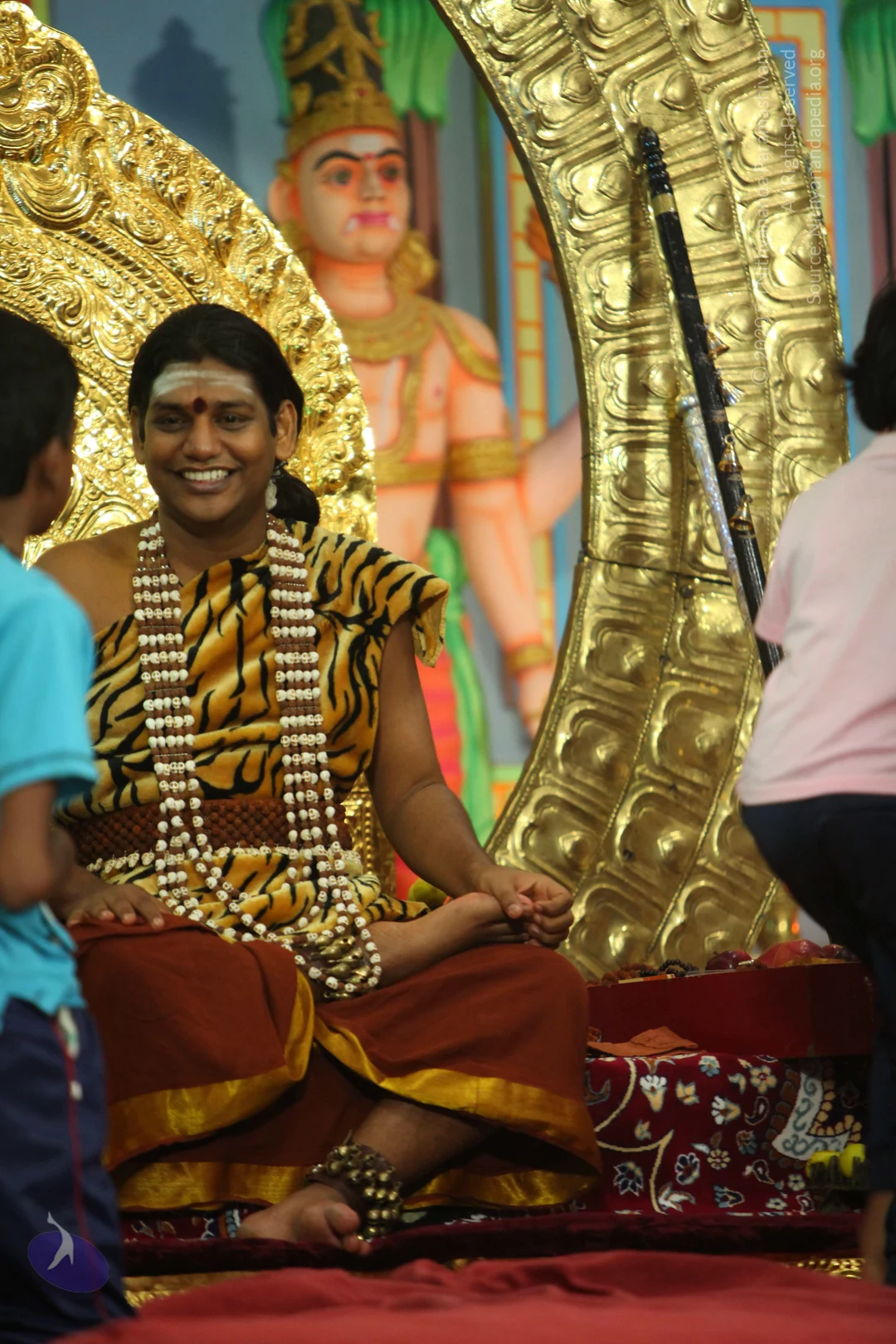
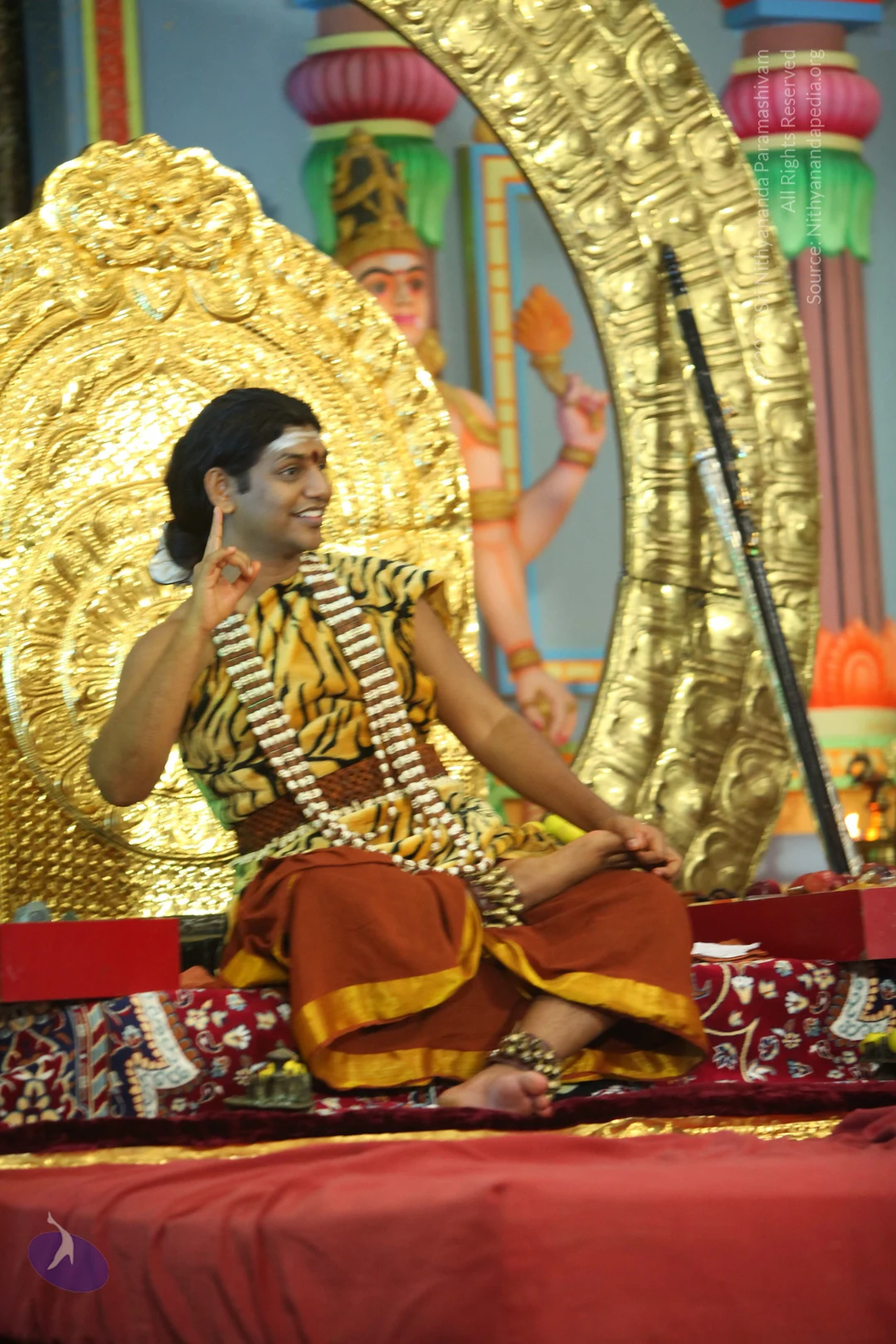
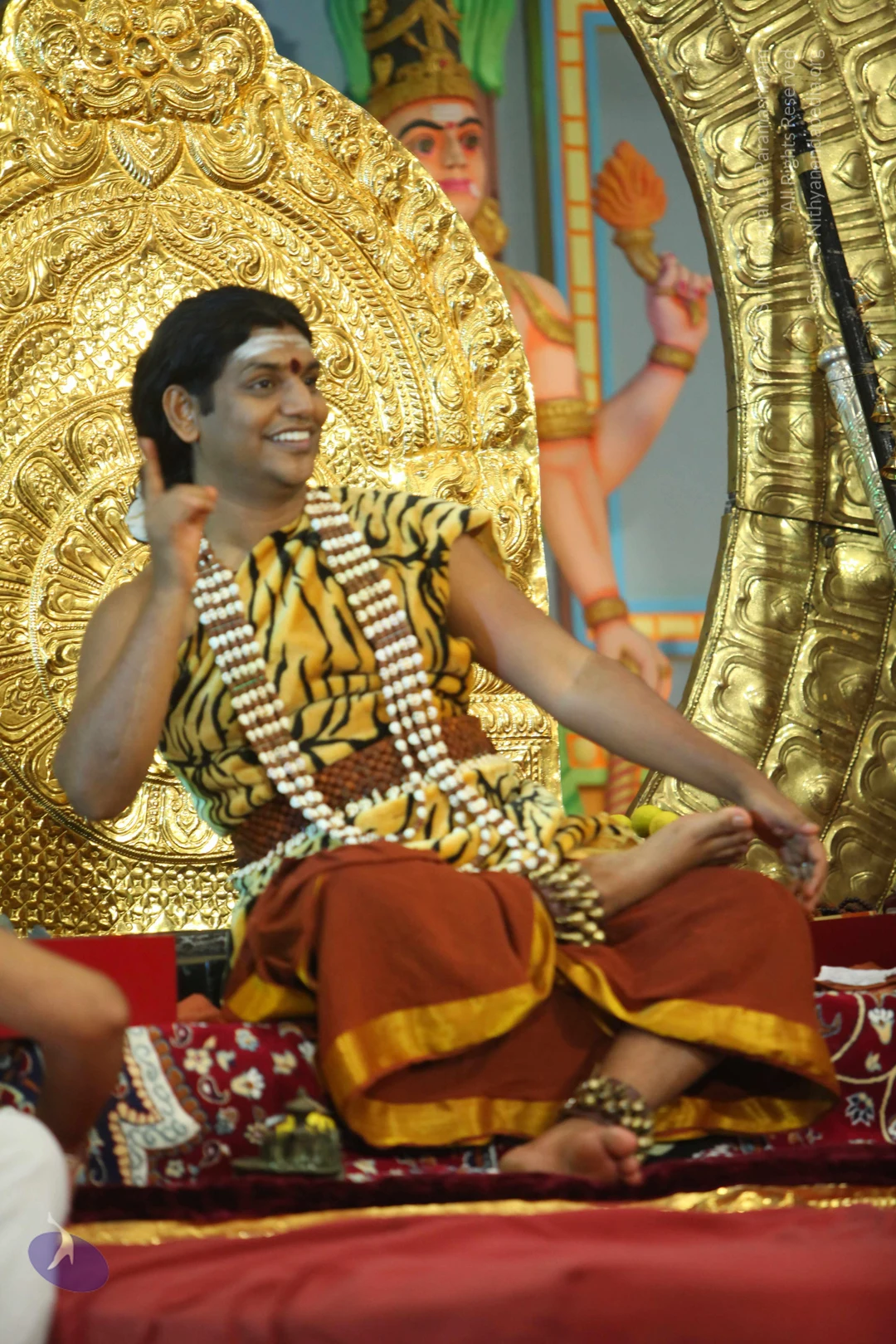
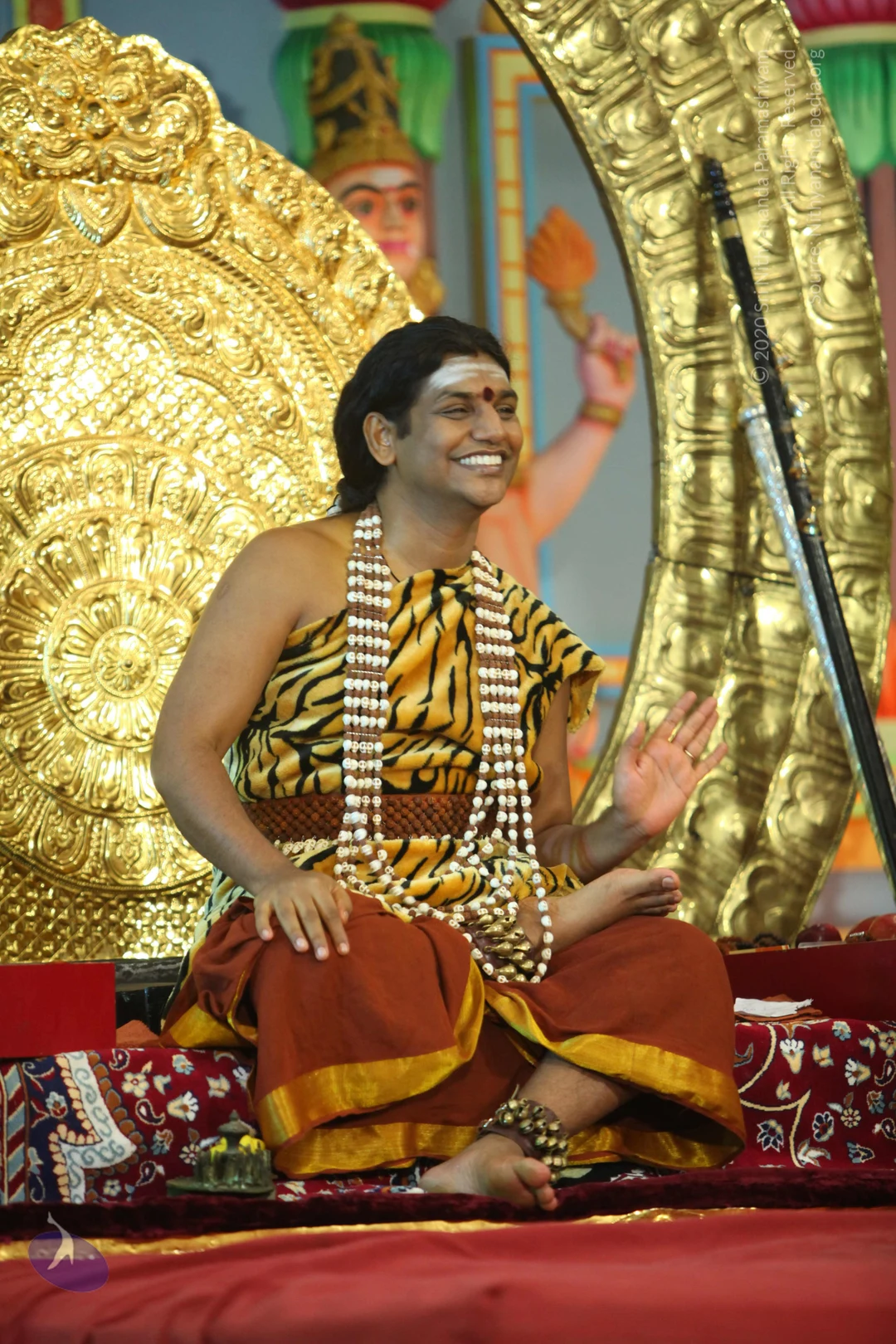
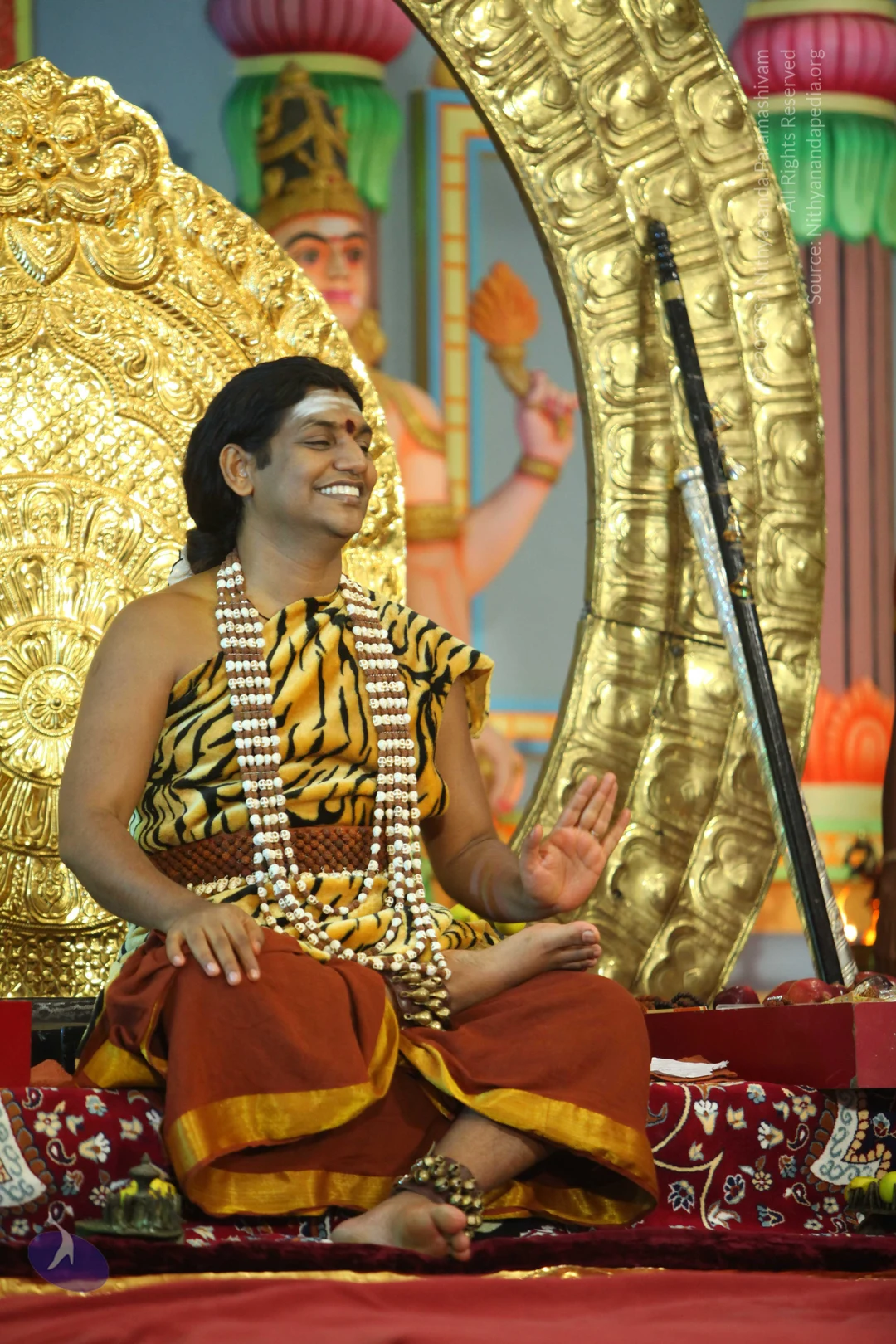
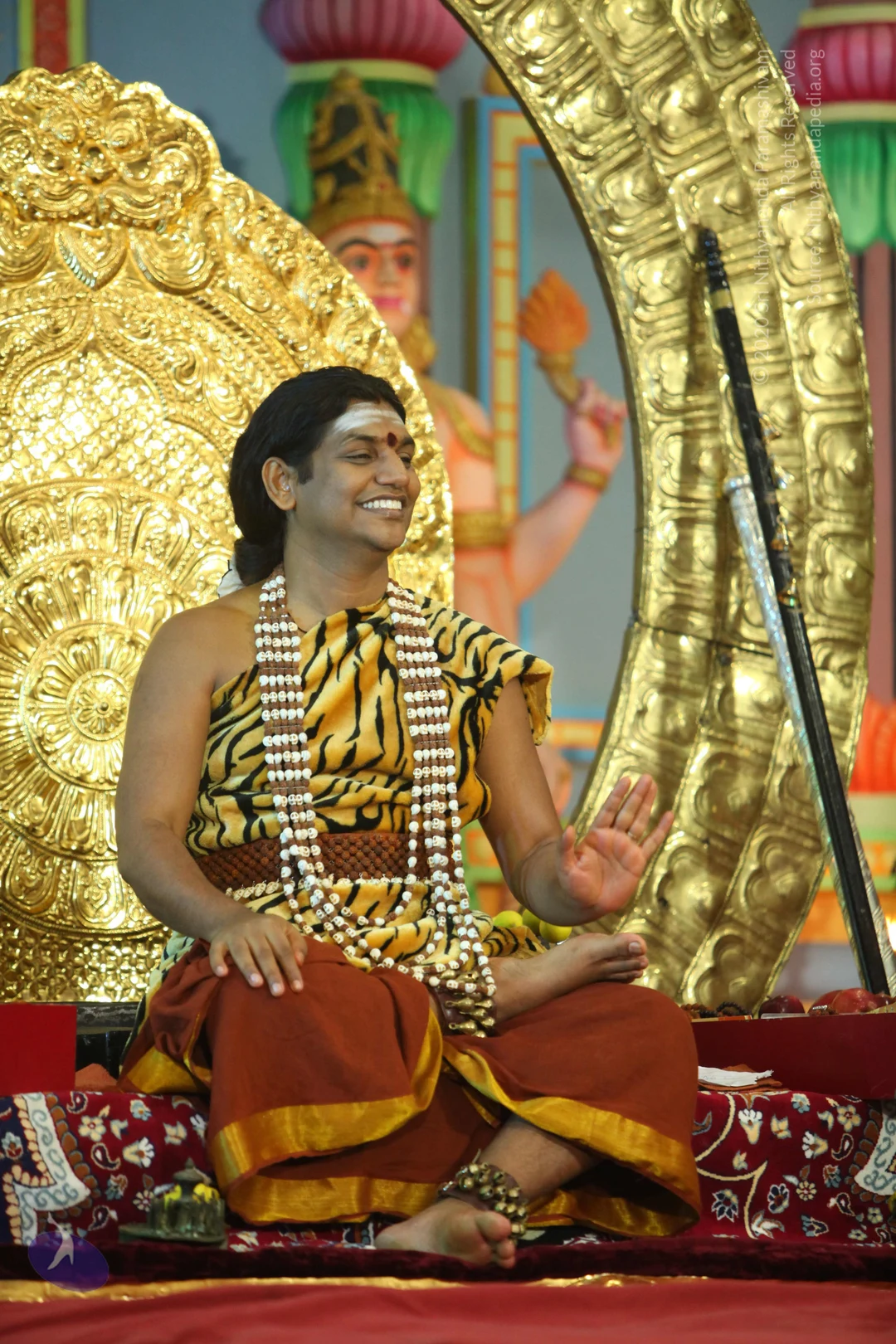
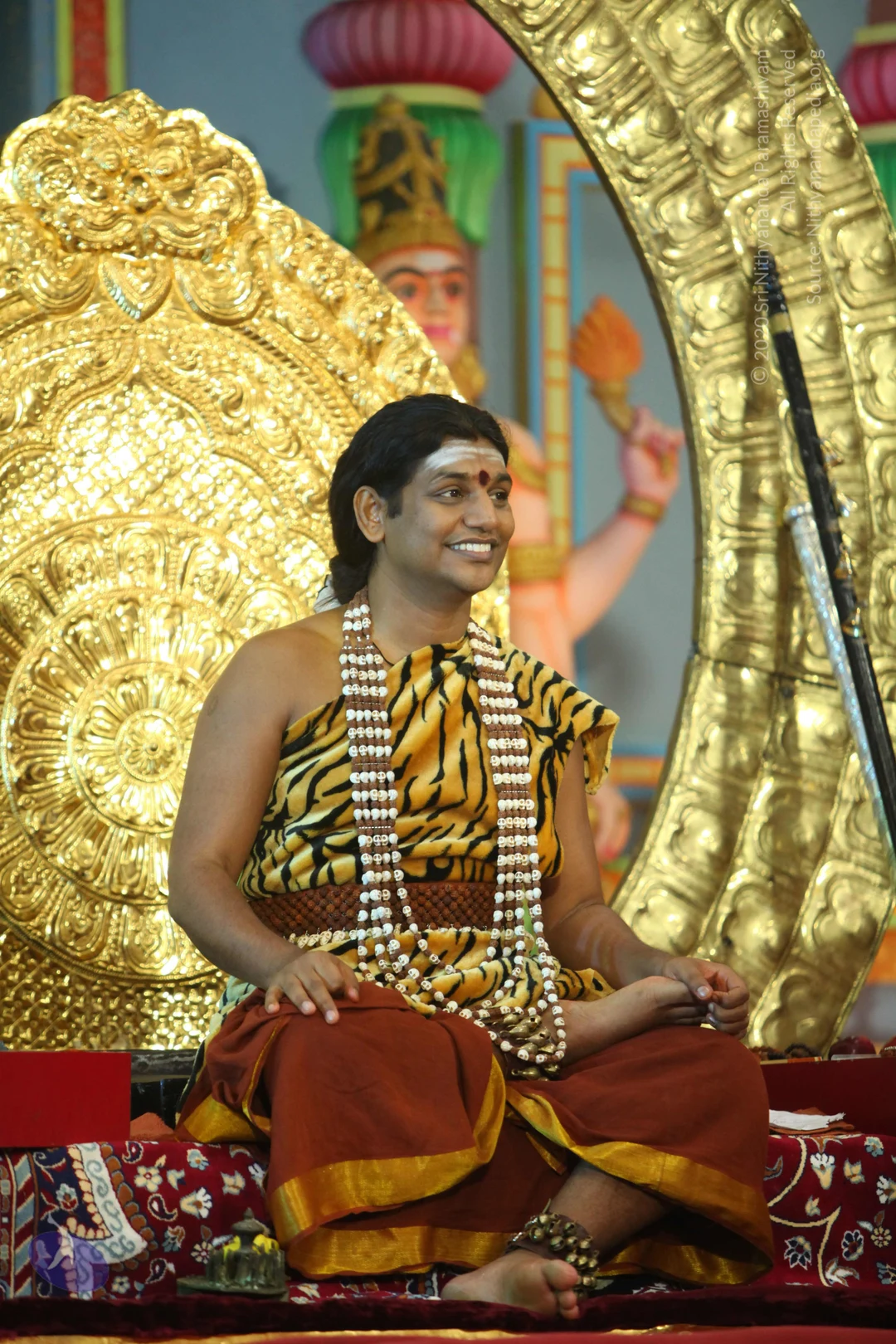
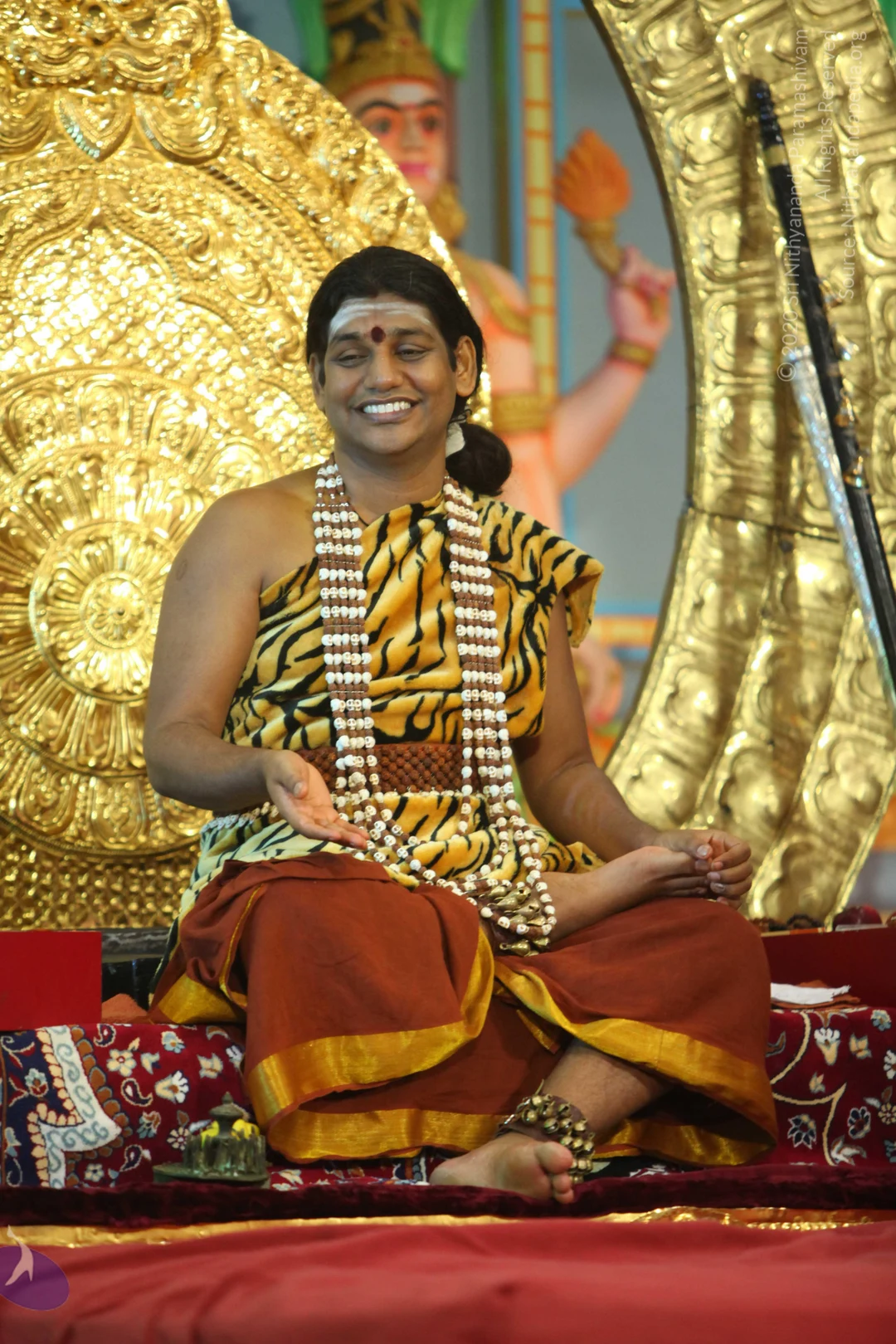
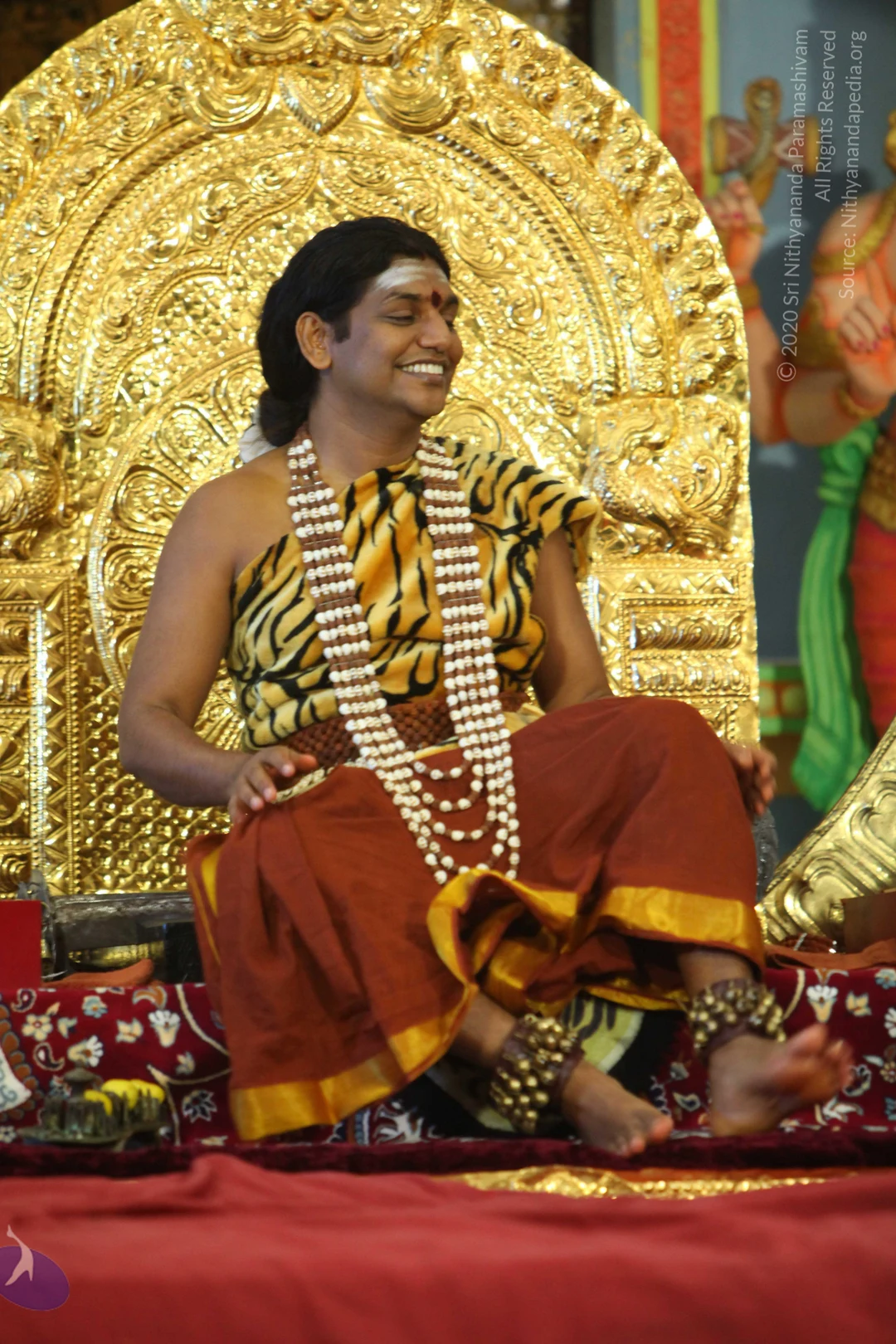
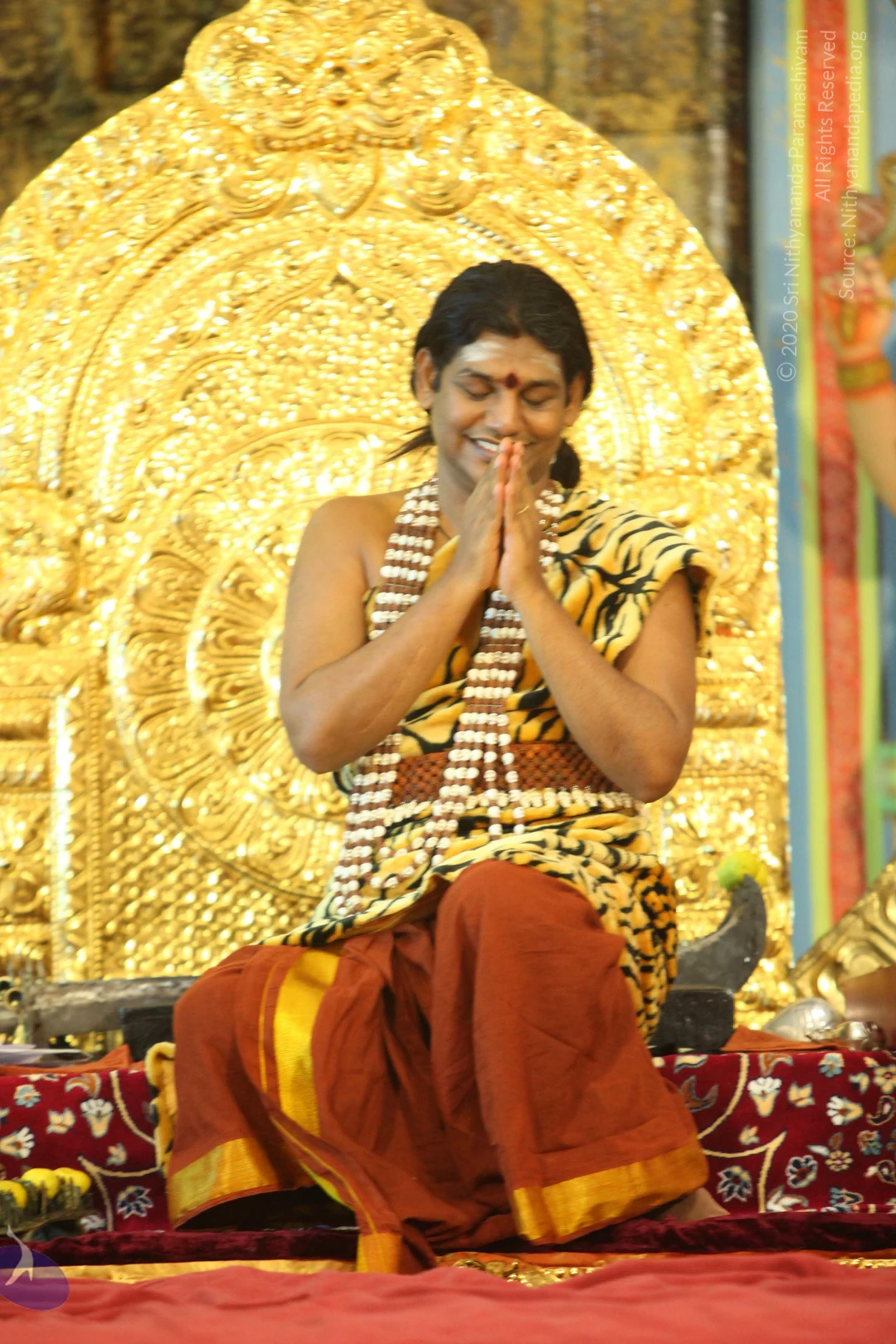
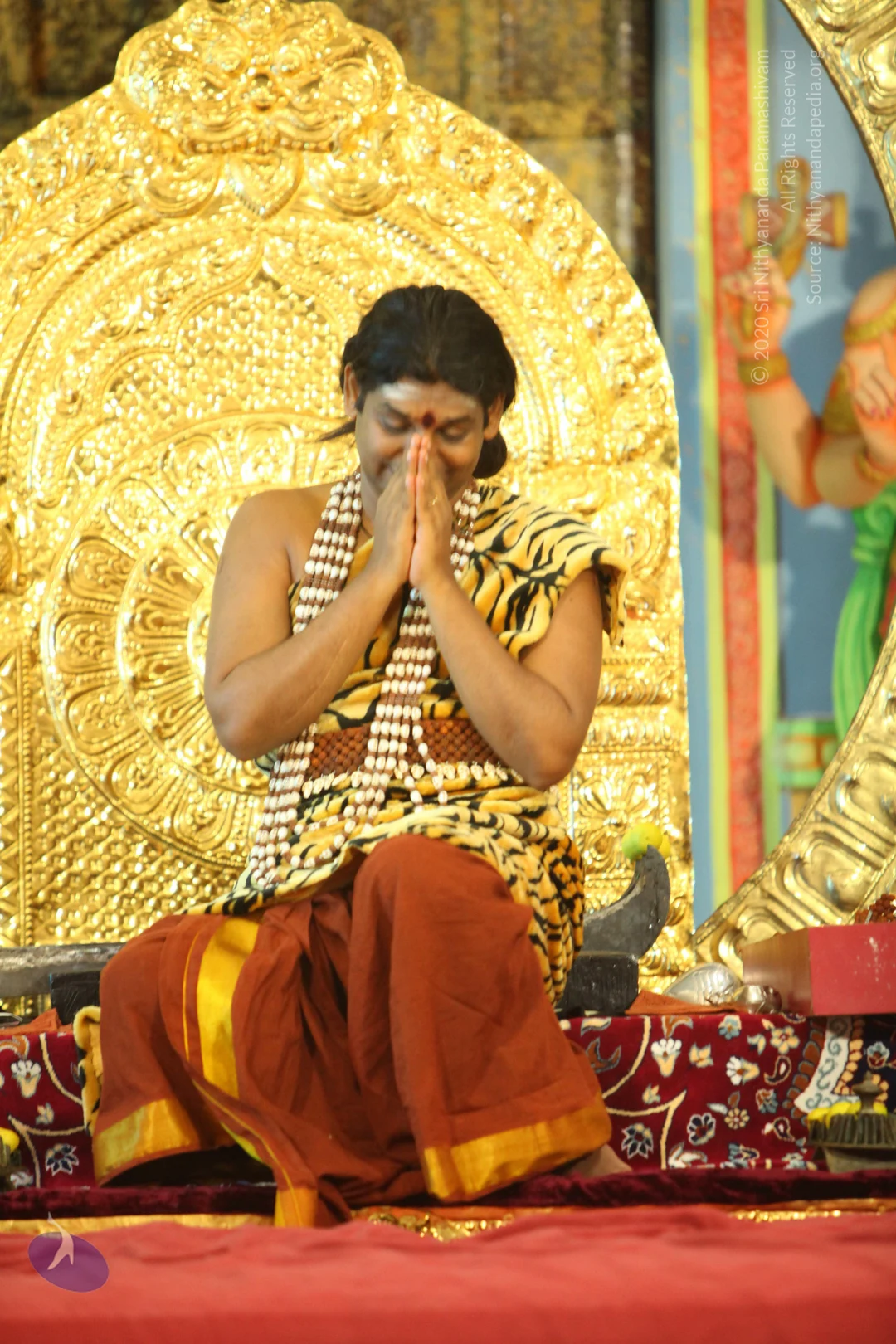
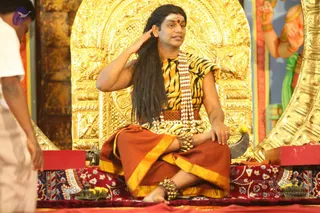
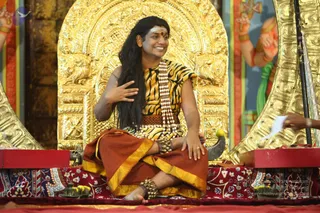
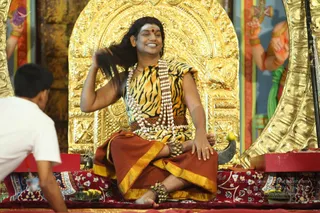
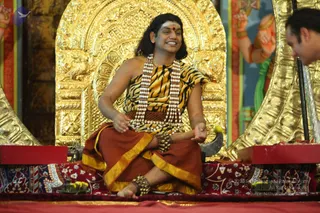
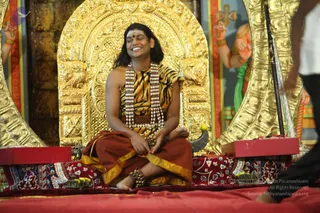
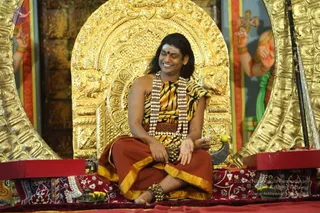
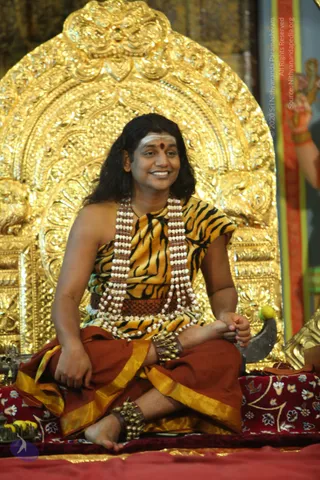
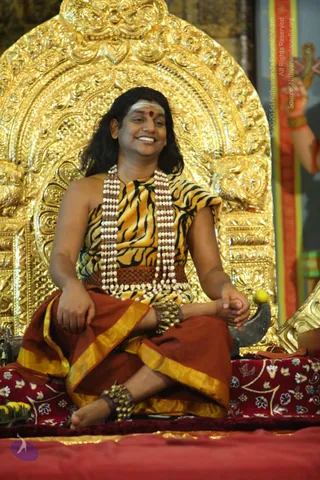
A seated man with long dark hair and a white-and-red tilak on his forehead sits cross-legged on a red and floral-patterned cushion before an ornate gold-leaf throne. He wears a yellow and black tiger-striped top, a rust-orange dhoti with a gold border, layered white and wooden beaded necklaces, and a wooden-bead waist belt. Bronze anklets and a bracelet are visible. His right hand rests on his knee while his left hand touches his head. A man in white clothing stands at the left edge. Behind the throne a painted deity figure with golden ornaments is partly visible, and a brass oil lamp sits on the floor.A smiling man with long, loose dark hair sits cross-legged on a red and gold cushioned dais in front of an ornate gold throne-back. He wears a yellow and black tiger-striped upper garment, a brown-and-gold dhoti-style lower wrap with a gold border, a long white beaded mala draped over his chest, and a wide brown waist belt. His forehead bears white markings and a red dot. His right hand is raised in a gesturing, explaining motion while his left hand rests on his knee. Gold bangles and anklets are visible, and a gold-painted deity figure stands in the background. A small brass lamp sits on the dais beside a red wooden stand. a person is seated in the satsang setting, with the long hair, mala and ornate attire serving as the appearance cues.A photograph of a seated figure on an ornate gold throne in a temple-style hall, with a shaved-looking appearance of long dark hair swept back, a white and red tilak on the forehead, and smiling while tossing hair with one hand. The figure wears a tiger-striped yellow and black top, layered white bead necklaces, a brown waist belt, a rust-orange dhoti with gold border, and gold bangles. A white-shirted attendant leans in from the left edge toward a small brass lamp and offering tray on a red and floral cloth. Gold carved panels and a green-clad deity figure appear at the right edge. Appearance-based label: a person, seated on the throne as a central figure, with long swept hair, rudraksha-style beads and ornate ritual clothing as qualifying cues. One attendant is visible, plus the seated figure, for a total of two people.A seated man with long swept-back dark hair, a red bindi and white tilak, sits cross-legged on a red and gold cushioned seat before an ornate gold throne-like backdrop. He wears a tiger-striped yellow and black garment, rust-red dhoti with gold border, multiple strands of white beaded necklaces, and gold bangles on his wrist, smiling with hands gesturing outward. A person in dark clothing is partially visible at the right edge. The scene suggests a satsang setting.A smiling man with long dark hair sits cross-legged on a red cushioned dais in front of an ornate gold throne with carved lion-like figures. He wears an orange and black tiger-striped shawl over his bare shoulders, a rust-red dhoti with gold border, multiple strands of white pearl-like beads and a rudraksha-style mala around his neck, and a red tilak on his forehead. Gold armbands and a beaded bracelet are visible on his wrists. Beside the throne stand gilded decorative pillars with painted figures, and a person in white clothing is partially visible at the right edge. Brass items and small oil lamps sit on the platform.A smiling man with long dark hair and a white vibhuti line with a red kumkum dot sits cross-legged on a richly gilded throne with ornate carved backrest. He wears a yellow-and-black tiger-striped shawl over bare shoulders, a long white pearl-style mala with a rudraksha mala, and a rust-orange dhoti with gold border. Ankle and wrist bands of beads and bells are visible. His right hand rests open on his knee. Behind him stand gilded columns and a painted figure with orange and green garments. A red-cushioned seat and carved wooden bench sit to the side. The scene resembles a satsang or discourse.

Inner-Awakening-Swamiji-Session

9 photosSource gallery
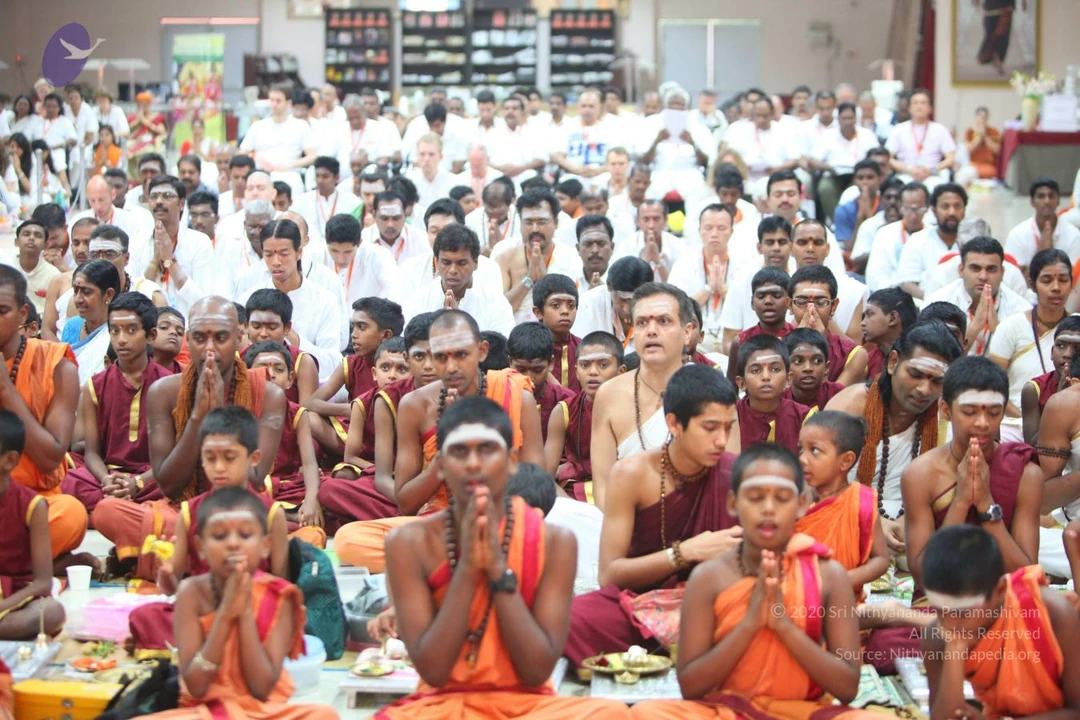
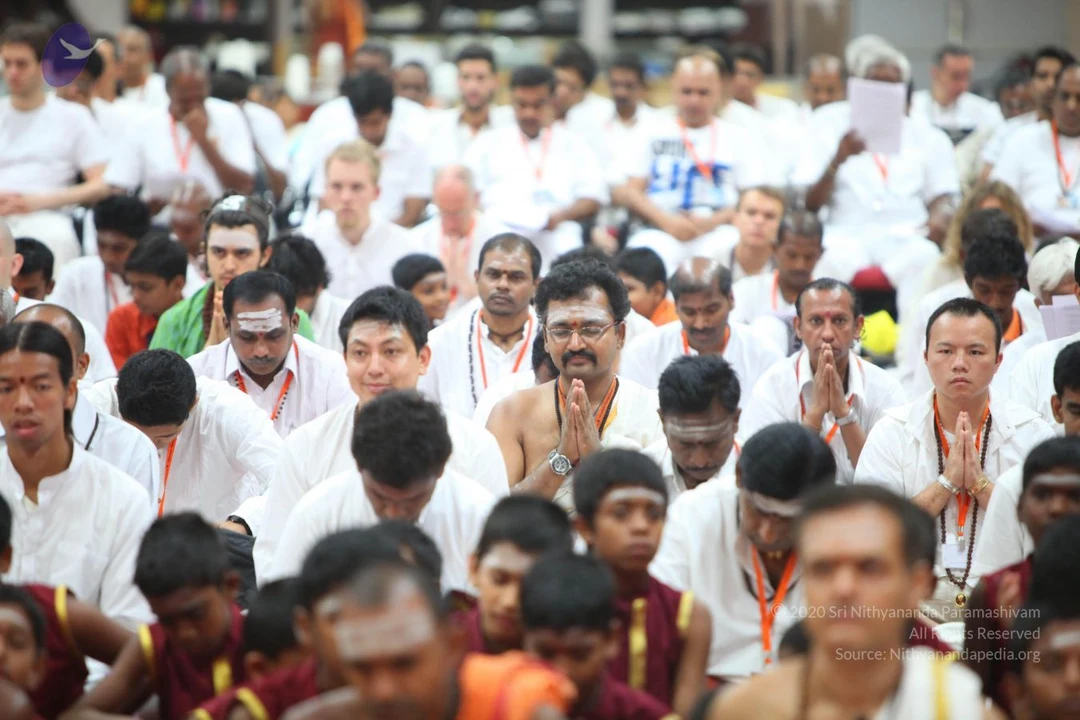
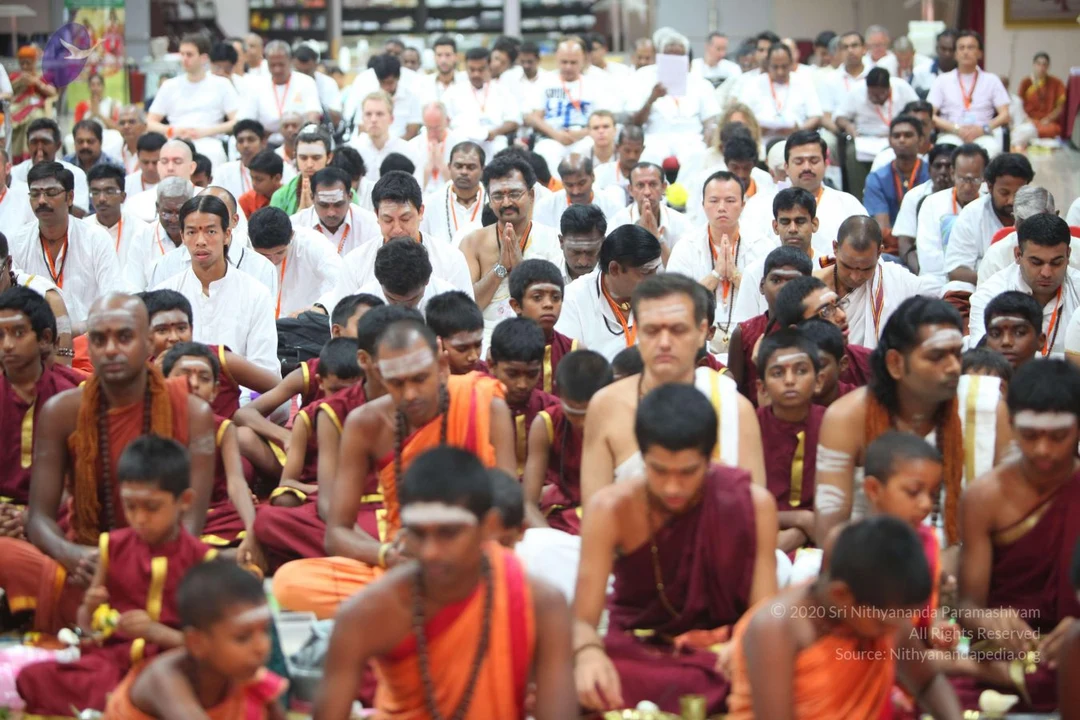
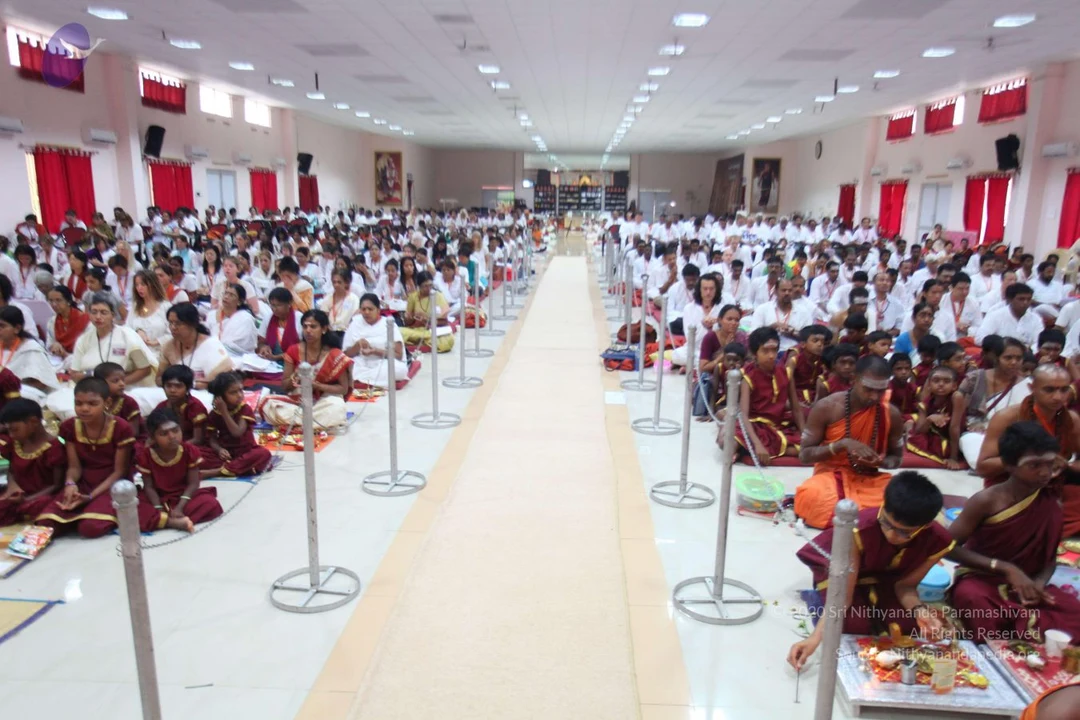
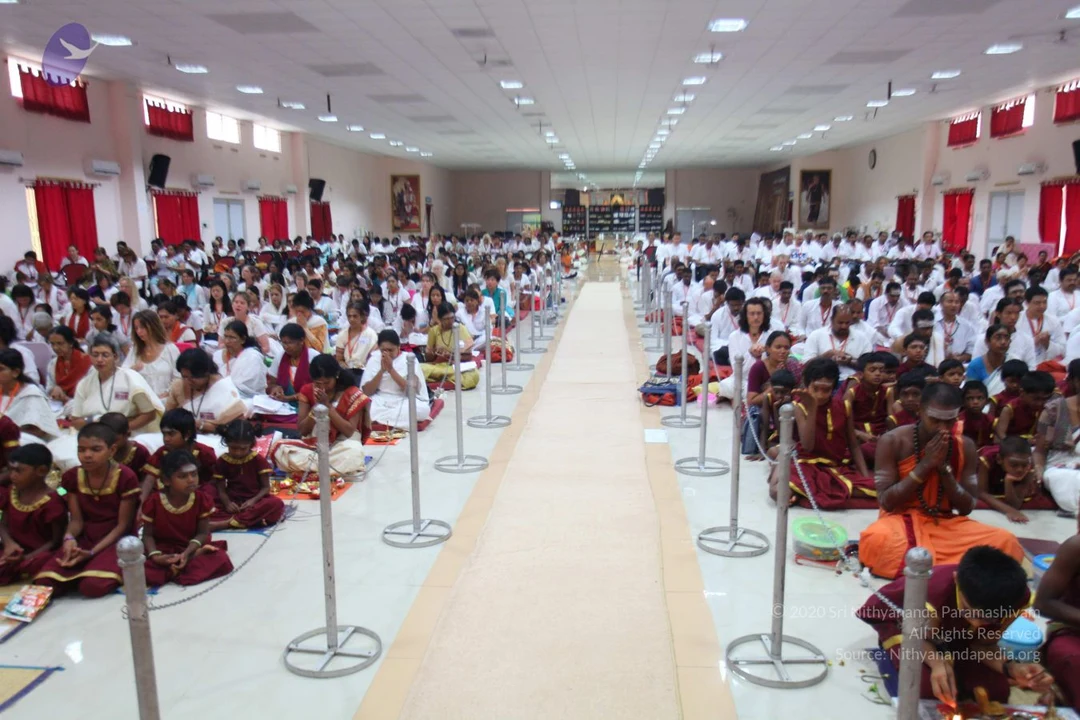
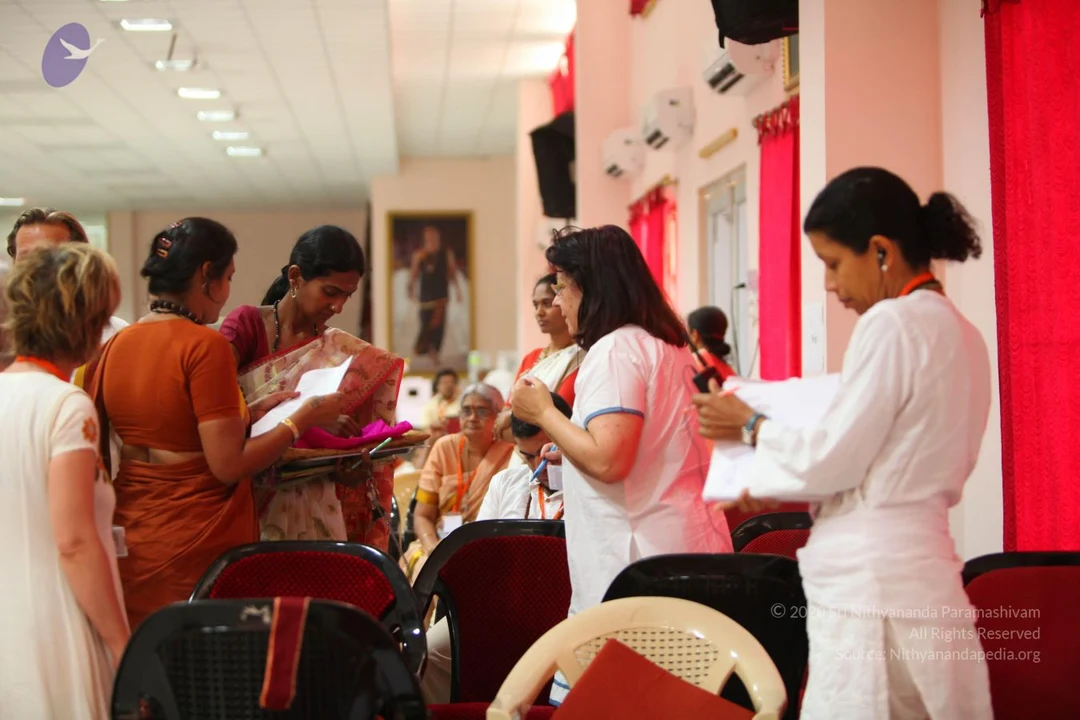
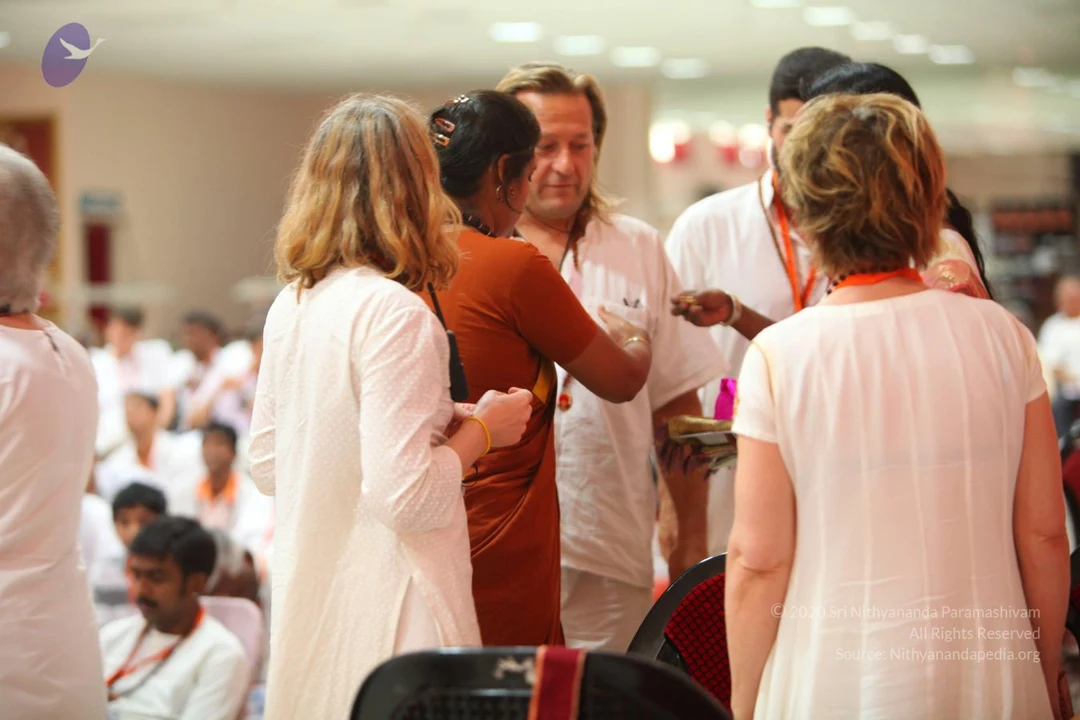
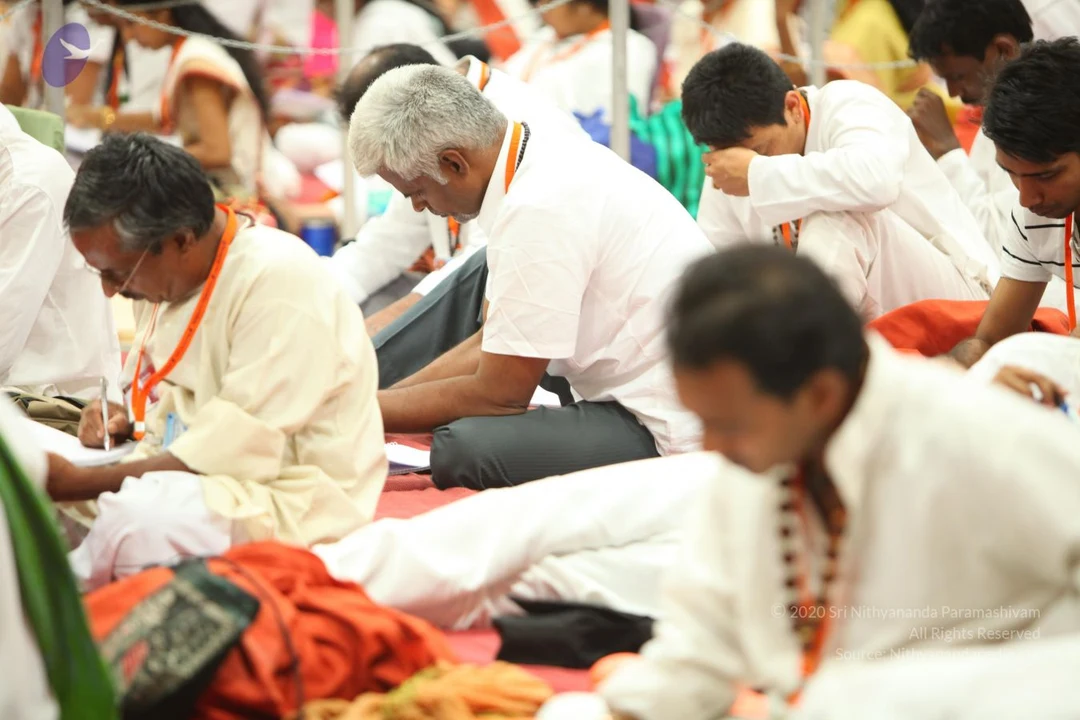
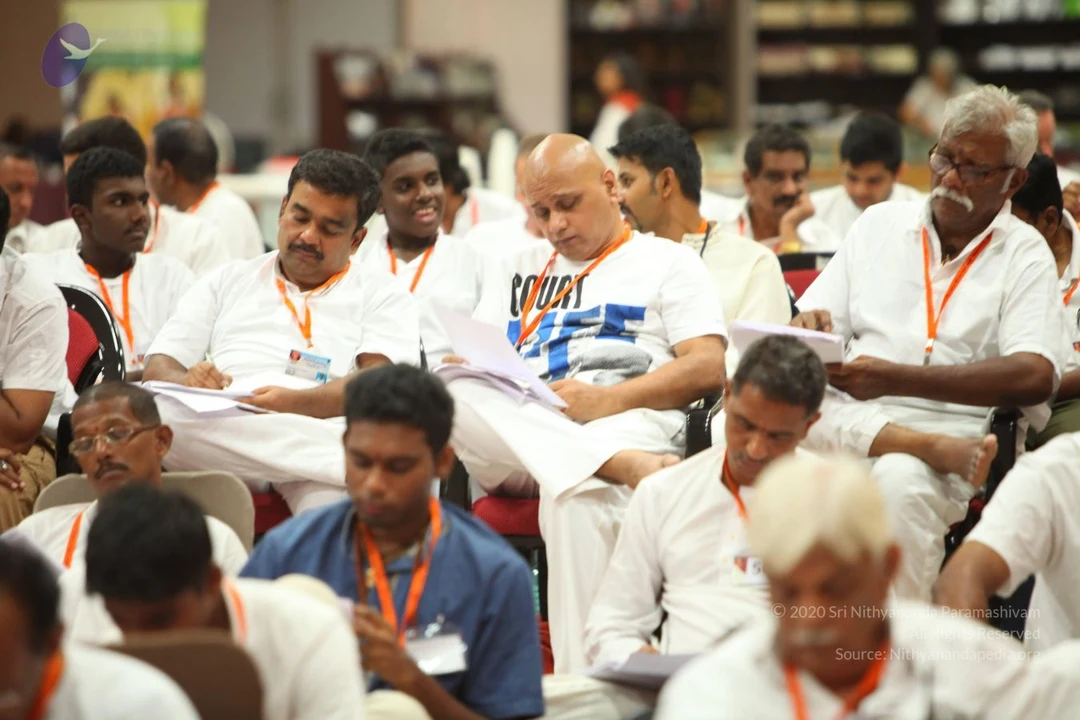
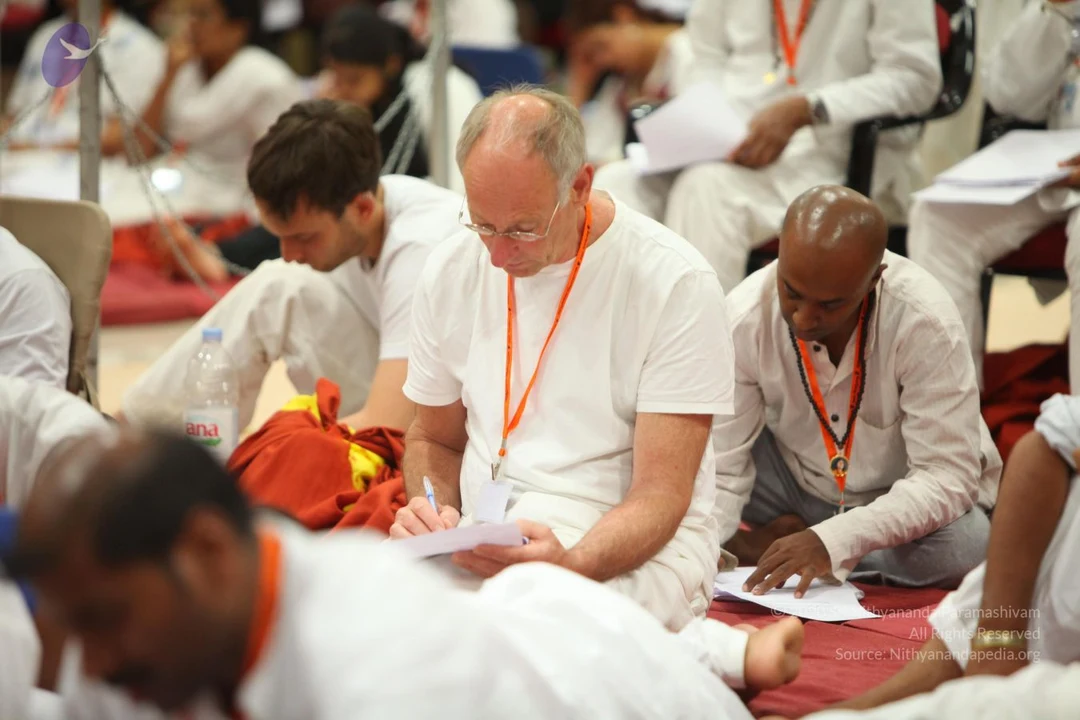
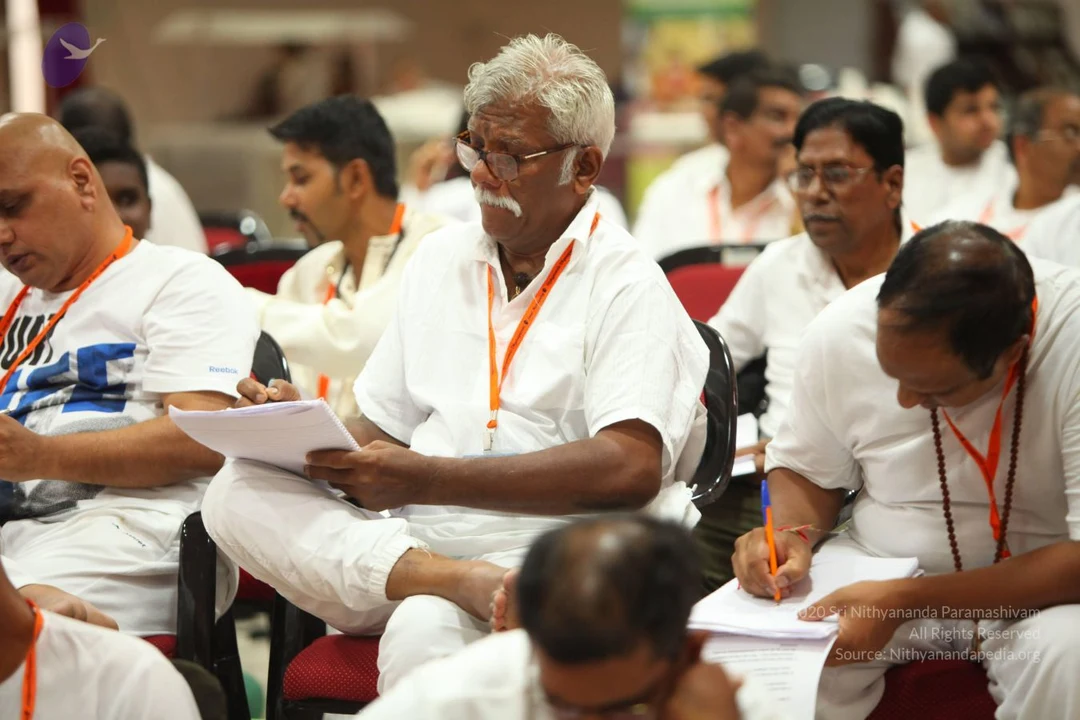
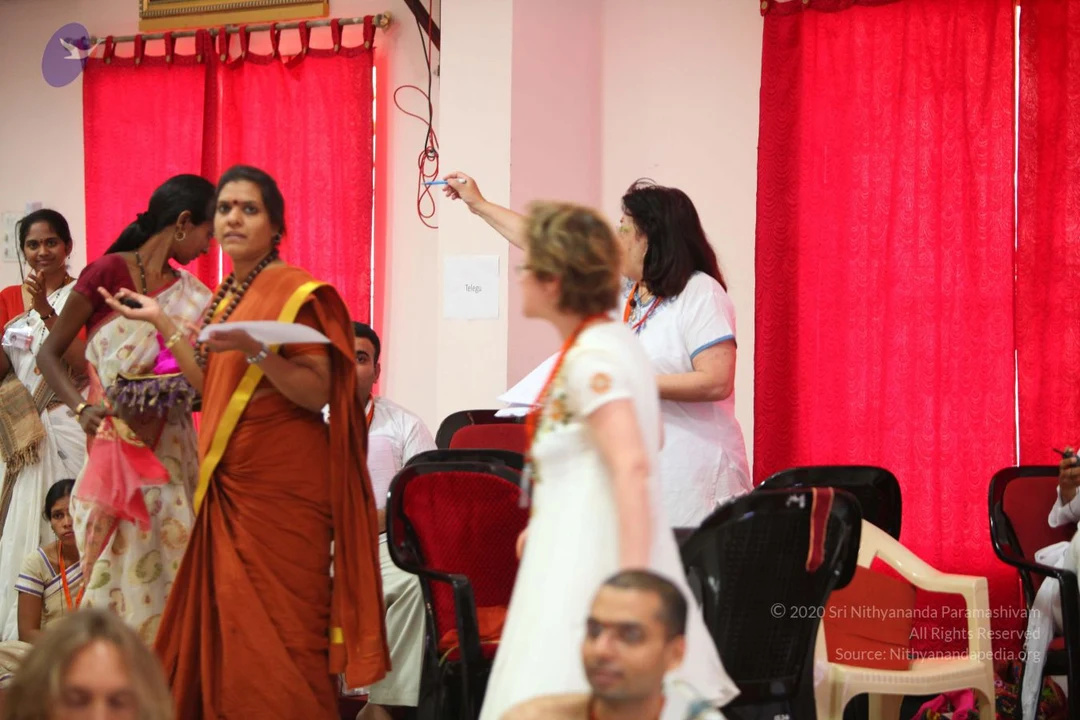
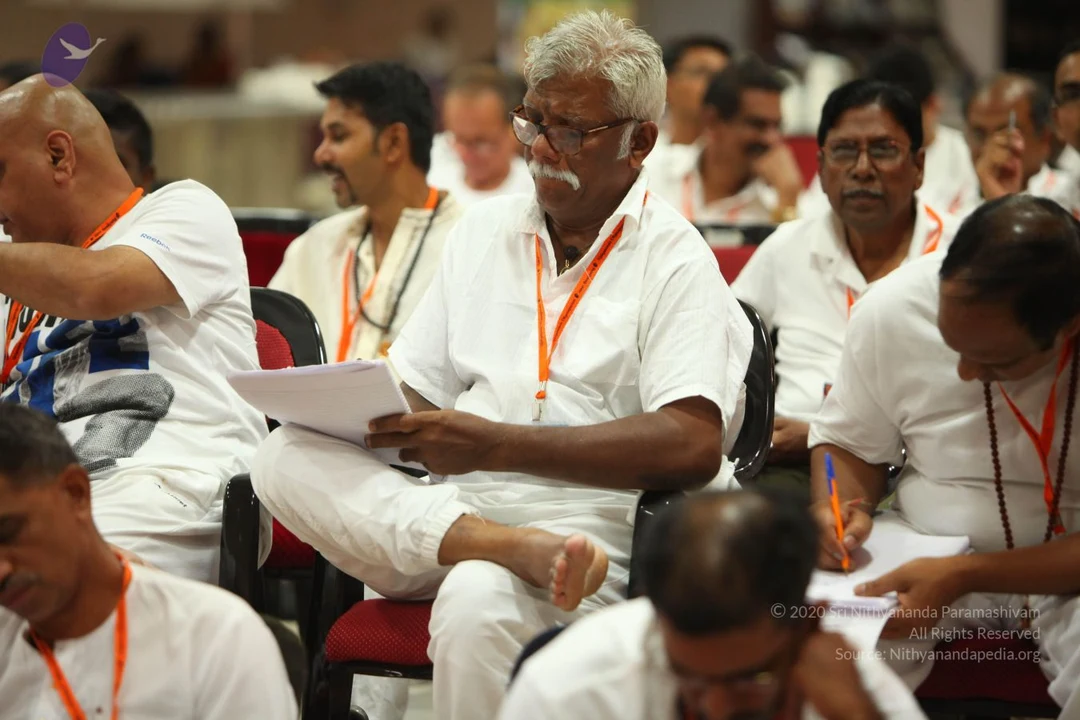
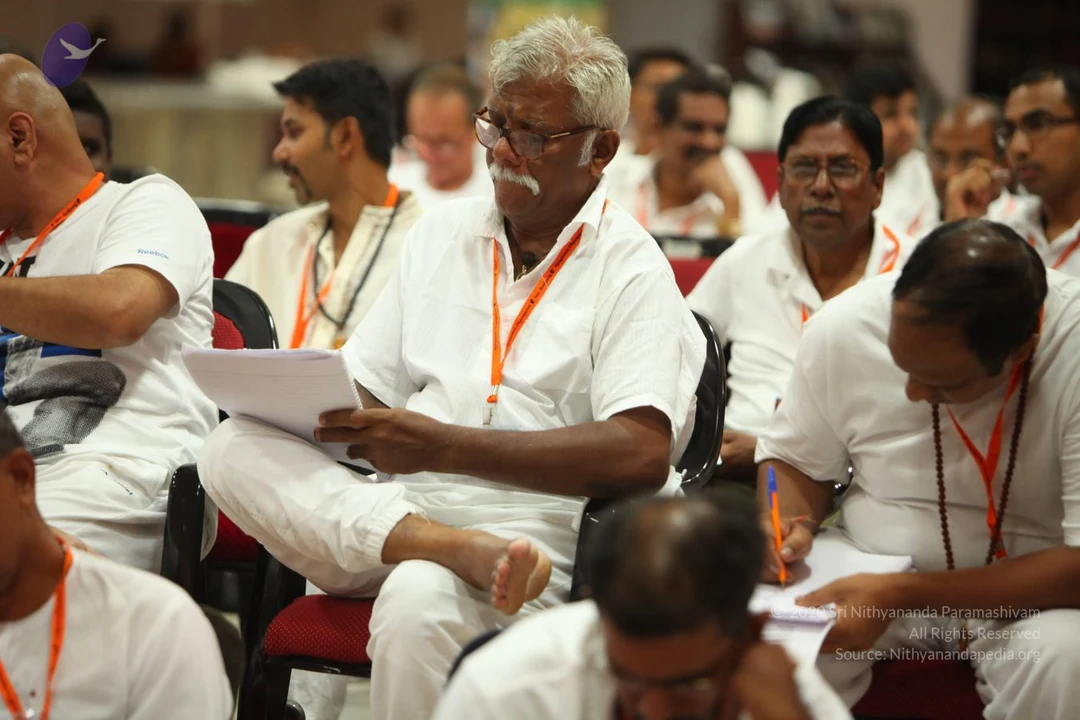
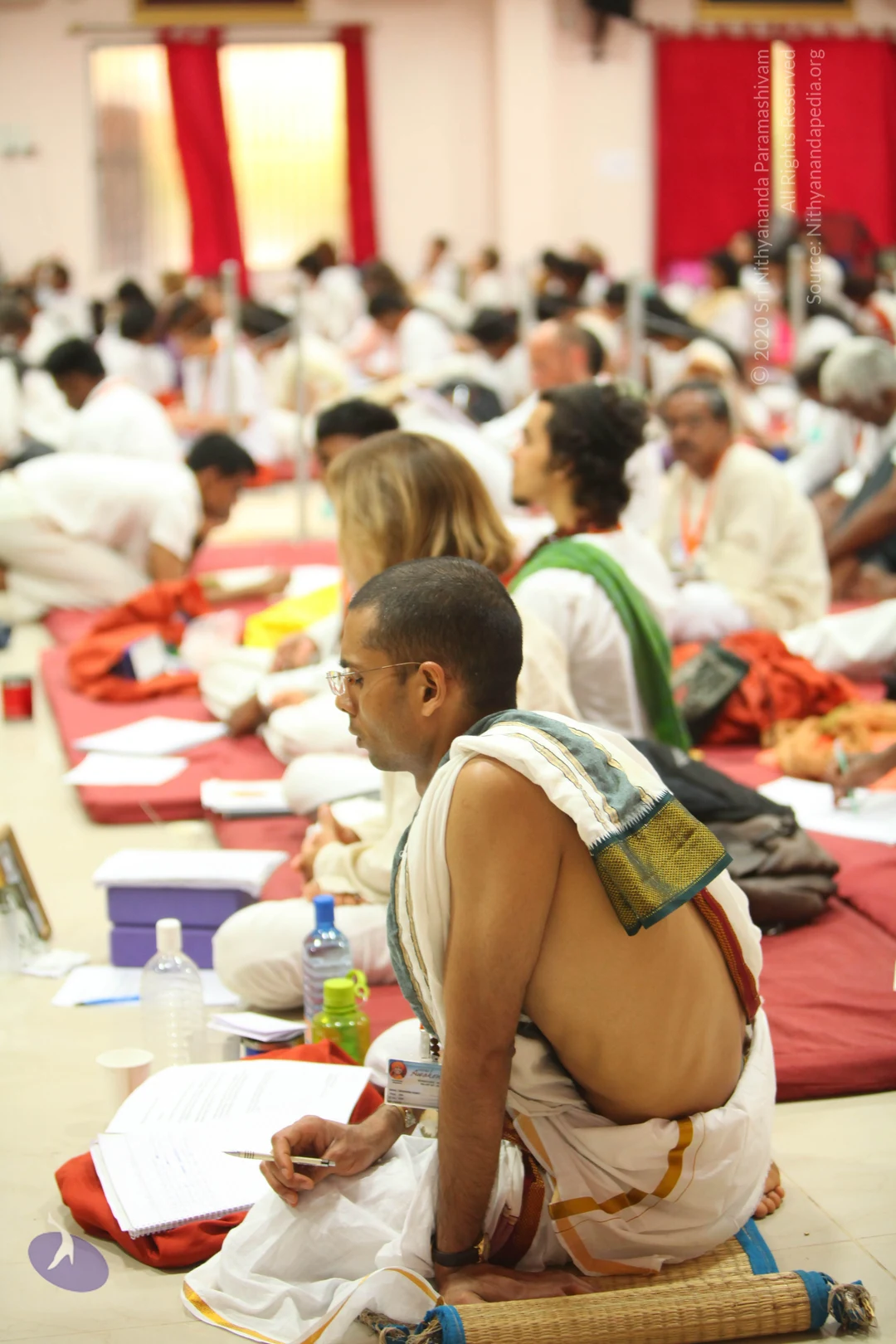
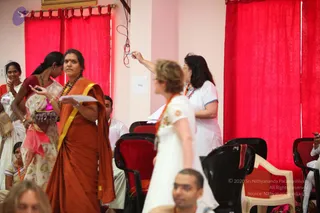
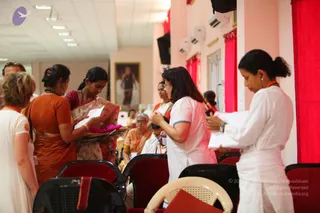
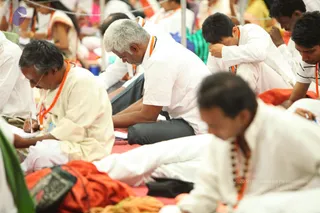
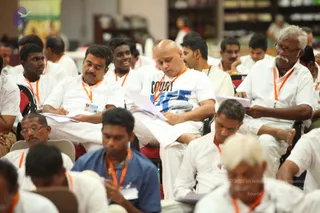
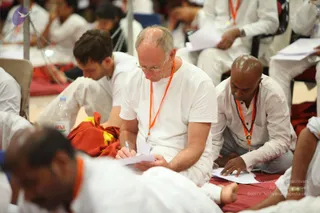
A smiling man with swept-back long dark hair and a red bindi sits on an orange leather throne-style chair before a gold-embossed arch and golden lion-form armrest ornaments. He wears a saffron-orange robe with a yellow border, a thick gold bead necklace, and a rudraksha mala. His hands rest in his lap. Swamiji (probable) by visible cues: long swept-back hair, saffron robes, rudraksha mala and ceremonial gold necklace, seated on a throne.A photograph of a hall with red curtains and red chairs during a seminar-style gathering. In the foreground, a woman in an orange sari with a yellow border and a beaded necklace walks past, holding a sheet of paper. Beside her, a woman in a cream and red sari with a pink fringed cloth holds papers and gestures. At right, a woman in a white top with a lanyard-style necklace reaches up toward a wall where a small white sign reads Telugu. A blurred woman in a white dress with a red-orange garland and a man in white are partly visible among seated attendees. A small framed item hangs above the curtain rod.A photograph of a satsang hall with red curtains and red-cushioned chairs. Several women stand in a cluster reviewing papers: one in an orange sari with a pink dupatta holds a clipboard, another in a pink-and-white sari holds paperwork, and a woman in a white top with blue trim writes on a sheet. At right a woman in white clothing reads a stack of papers. A framed portrait on the back wall shows a man in a saffron-and-black outfit speaking before an audience; it is a printed picture, not a physical person. Background participants in orange and white sit and stand.Photo of a seated satsang audience at an Inner Awakening session. Men in white kurtas and white shirts with orange lanyards sit on red mats, several writing in notebooks or bowing their heads in meditation. In the foreground a man in white holds his head in his hand, and a man in an orange-and-black striped shirt sits at right. Behind them women in colourful saris are visible, and a rope barrier runs along the top of the frame.A seated audience of devotees in a hall, most dressed in white with orange lanyards and name badges, many holding papers and reading or writing. In the foreground a bald man in a white t-shirt with blue and white lettering sits with papers on his lap, and an older man with white hair and a white moustache wears white and reads. Bookshelves and a bright banner appear in the background. No one is identifiable as a person in this frame.Seated participants at a Nithyananda Dhyanapeetam Inner Awakening session wear white clothes and orange lanyards. In the centre, a bespectacled older man in a white T-shirt writes on a sheet of paper with a pen. Beside him, a bald man in a white shirt and grey trousers wears a dark beaded mala and looks down at papers on a red mat. Other attendees sit on red mats in the background, and a water bottle and a red-and-gold cloth lie on the floor. No one is identifiable as a person in the frame.

1-TempleTour-Padapuja-MorningMessages

81 photosSource gallery
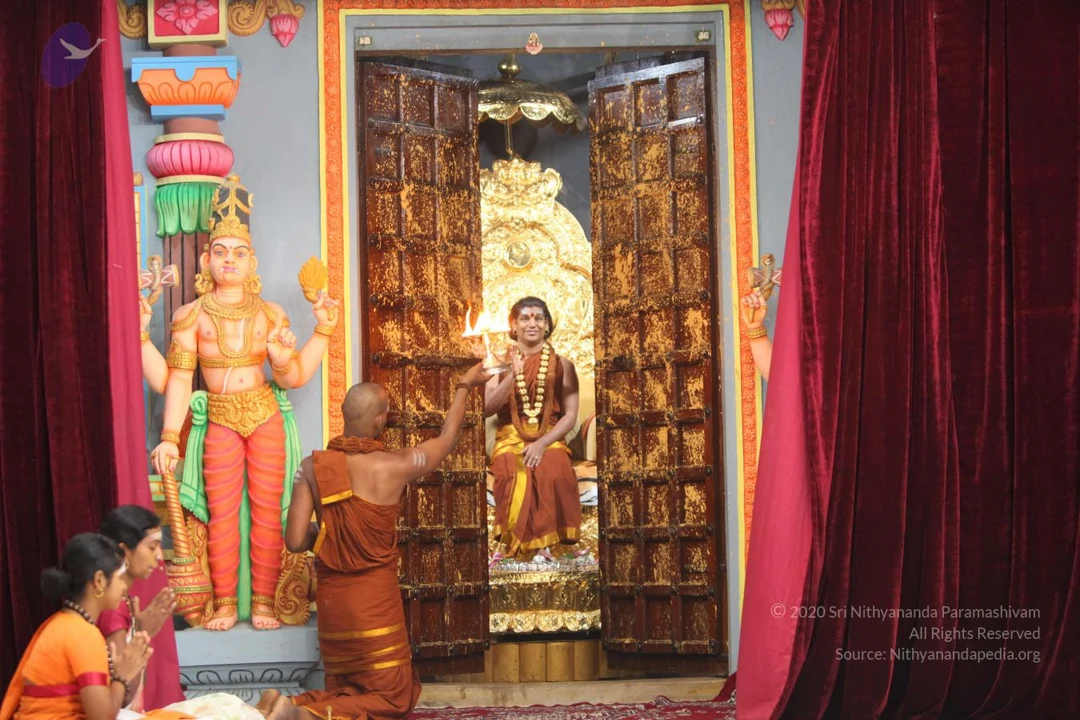
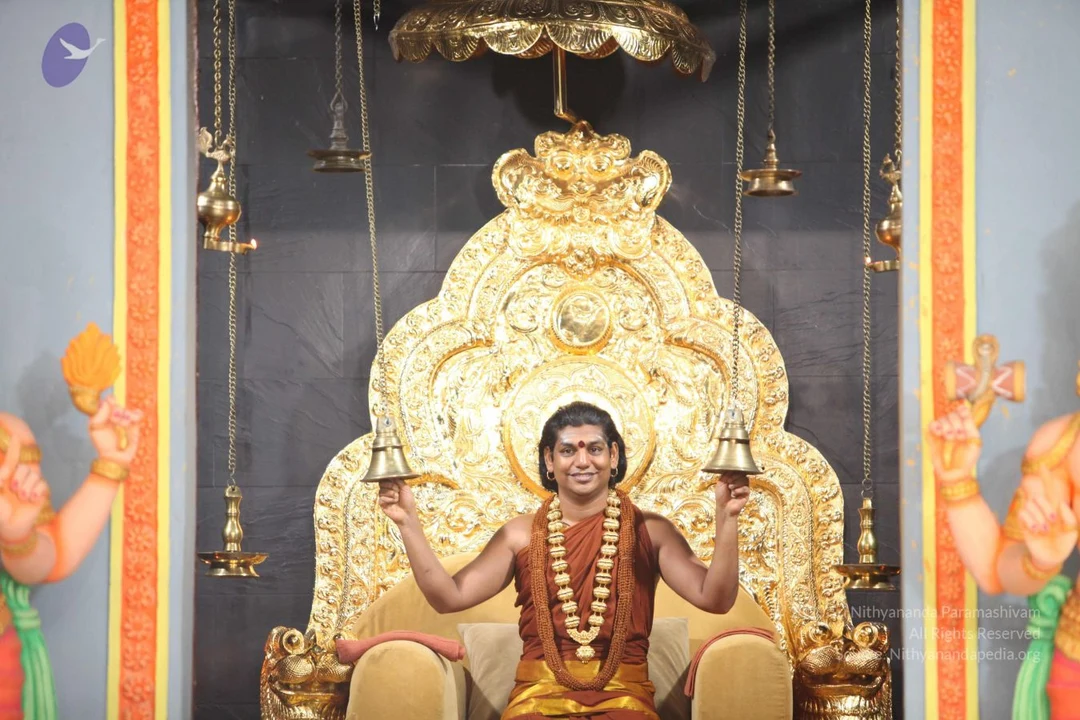
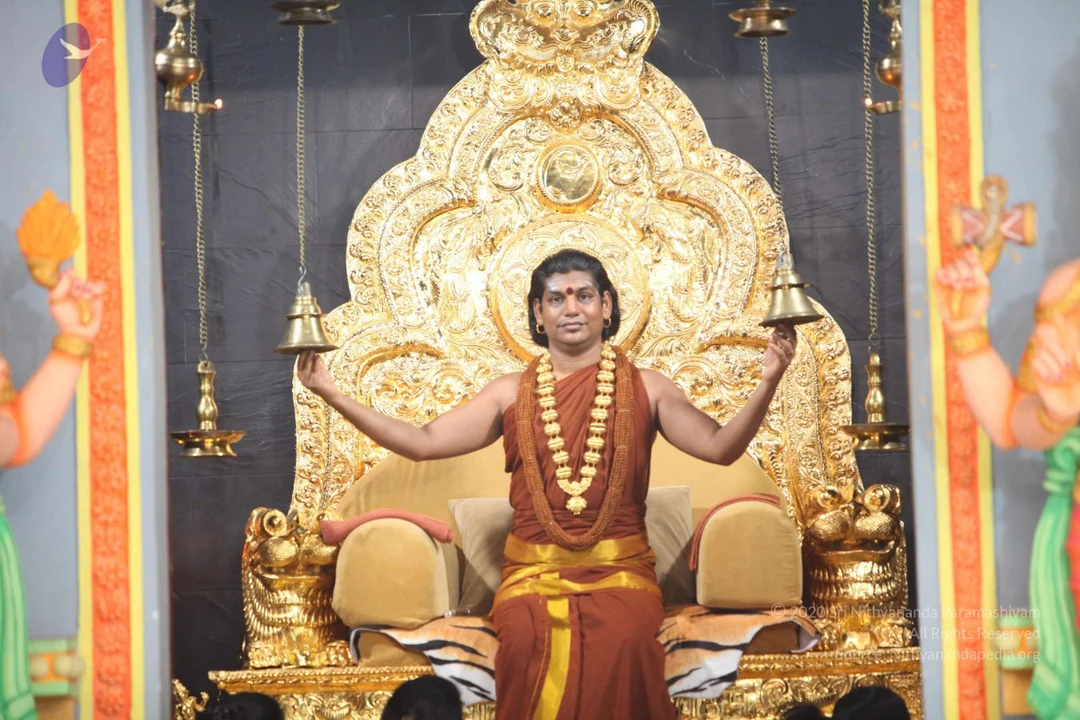
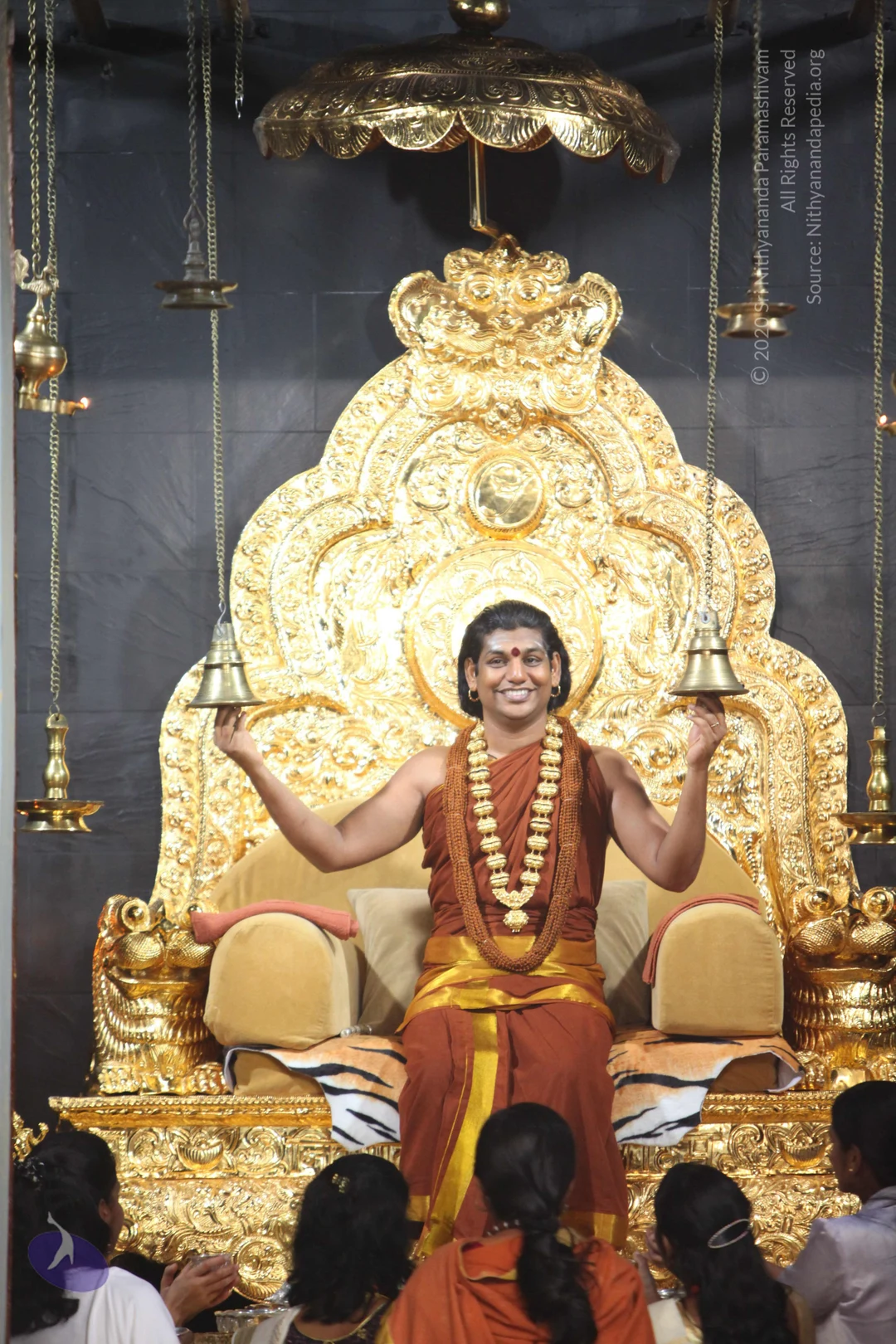
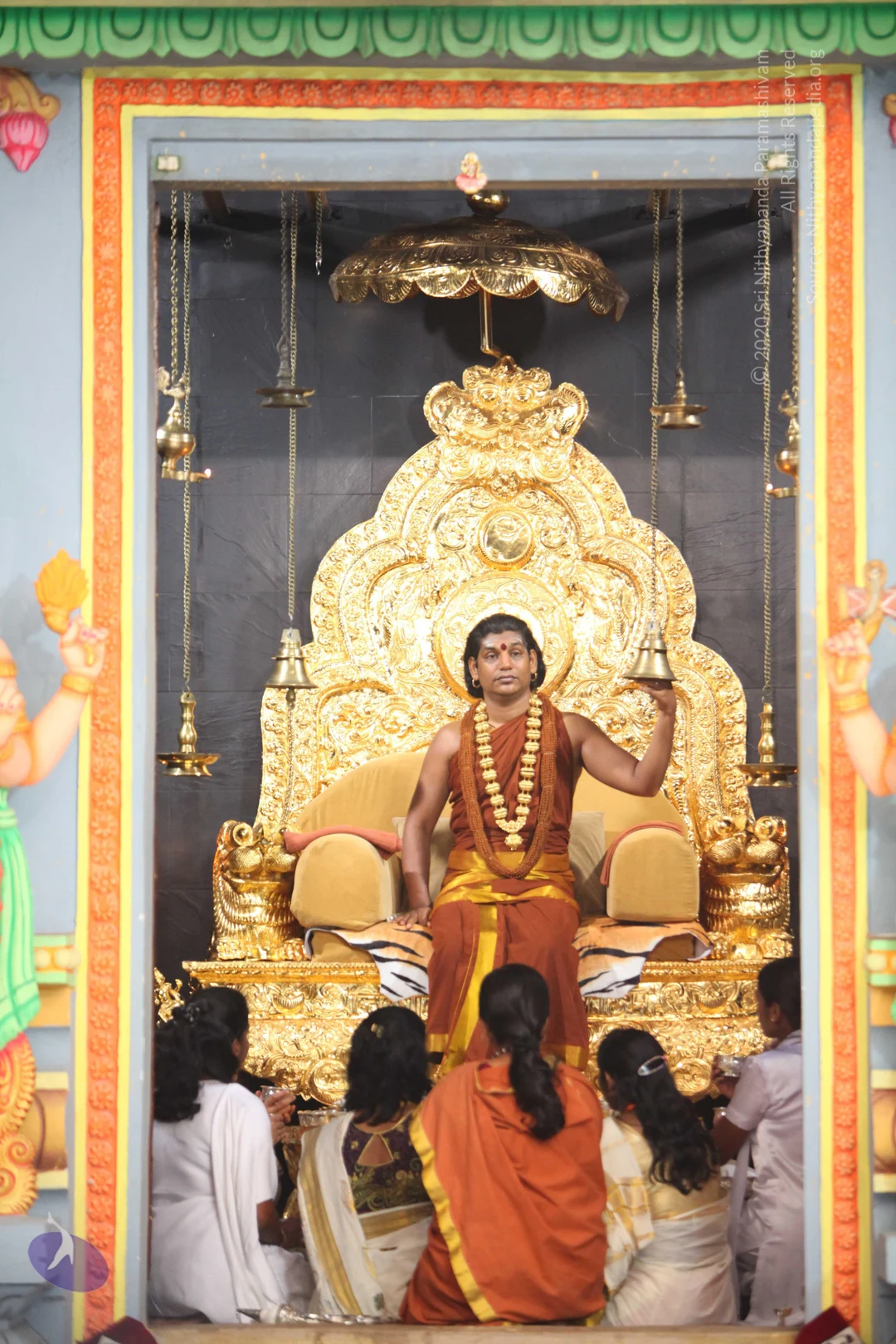
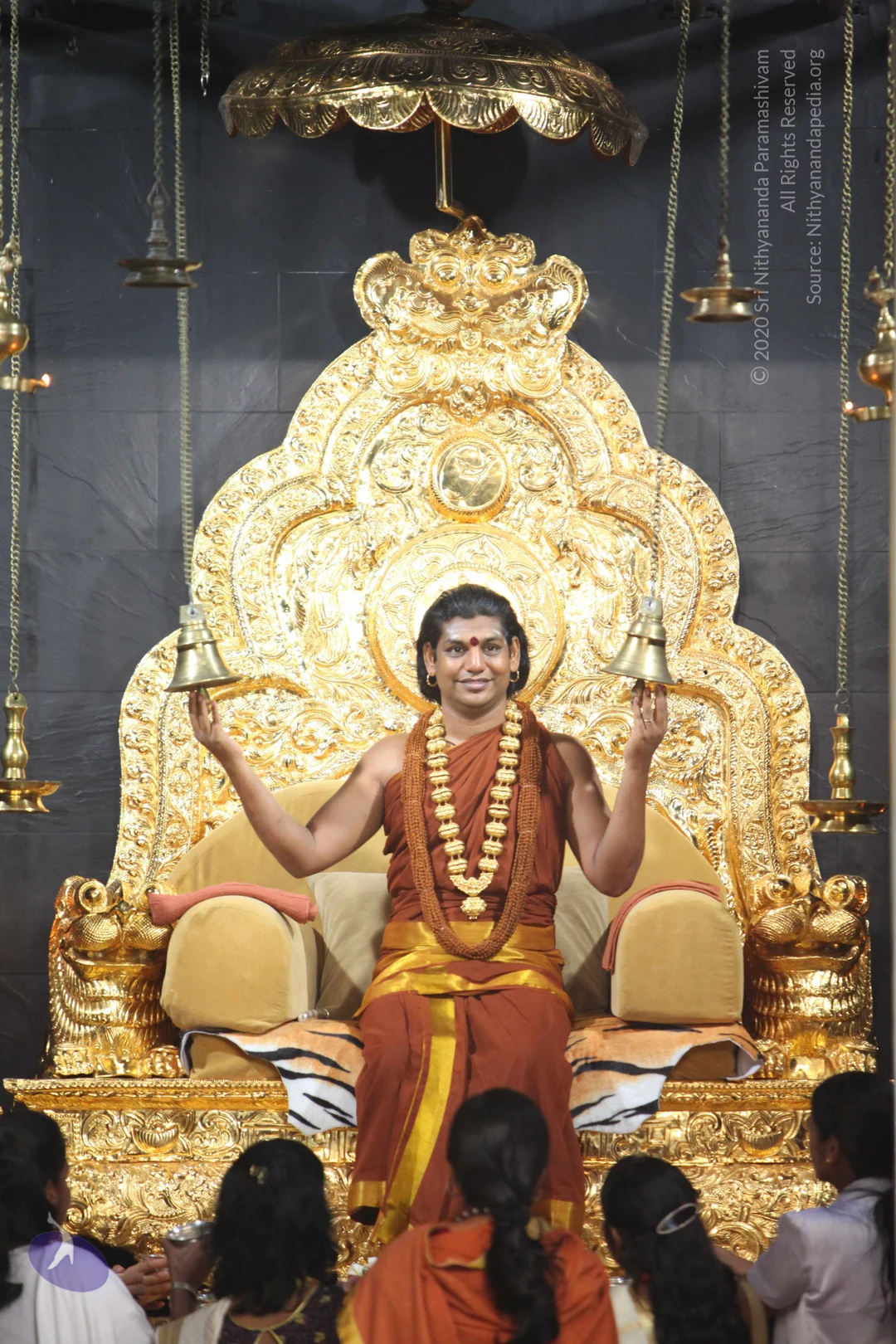
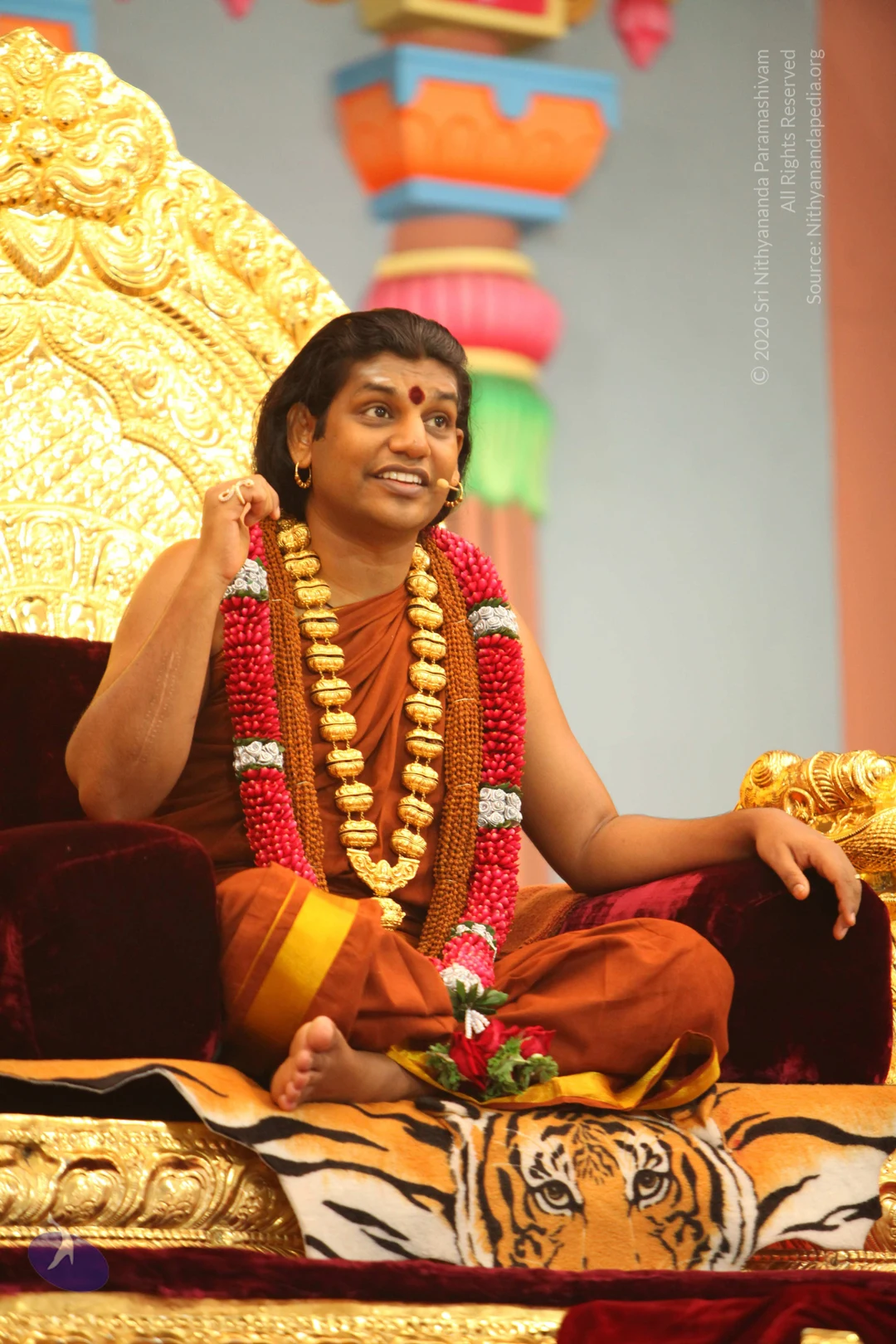
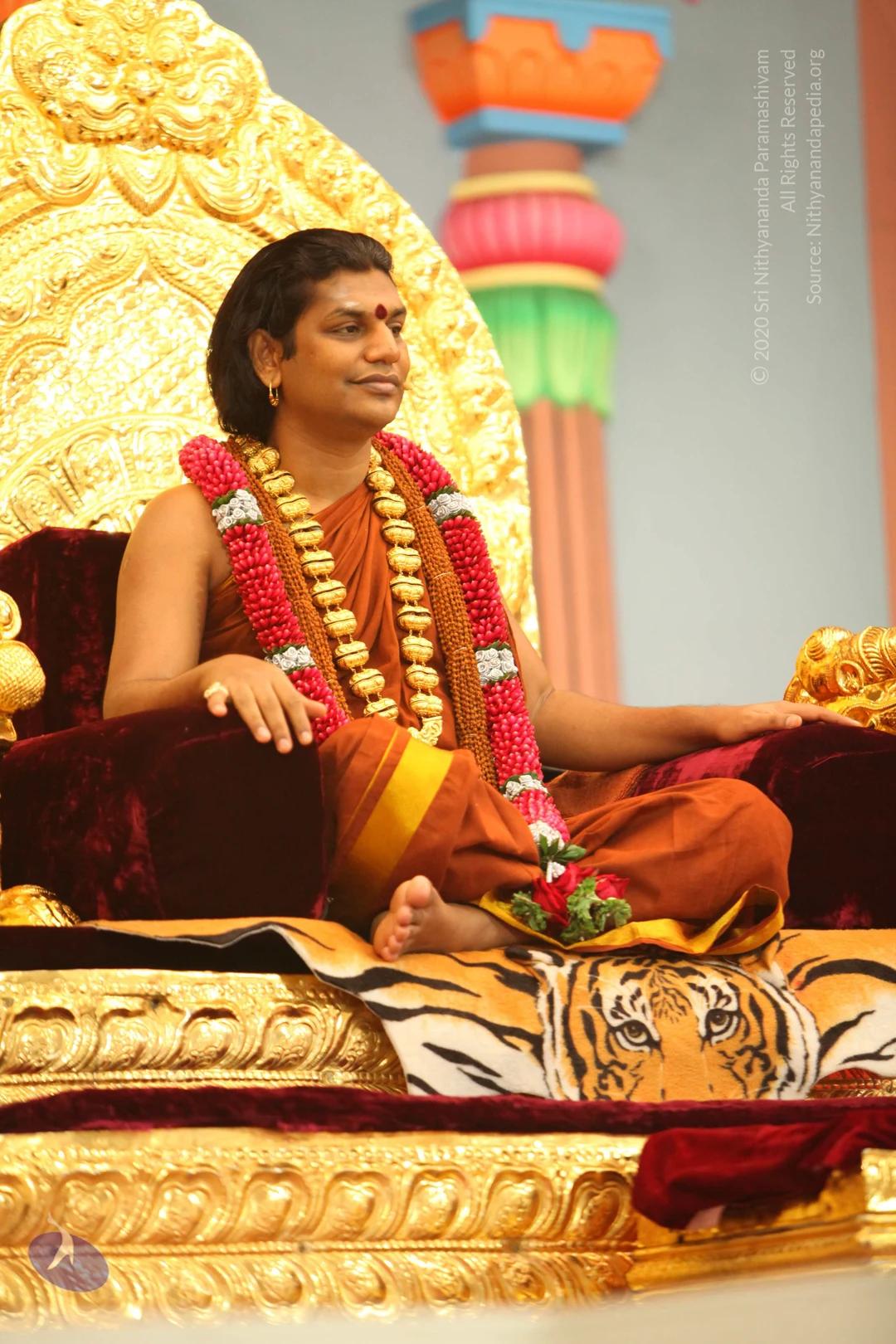
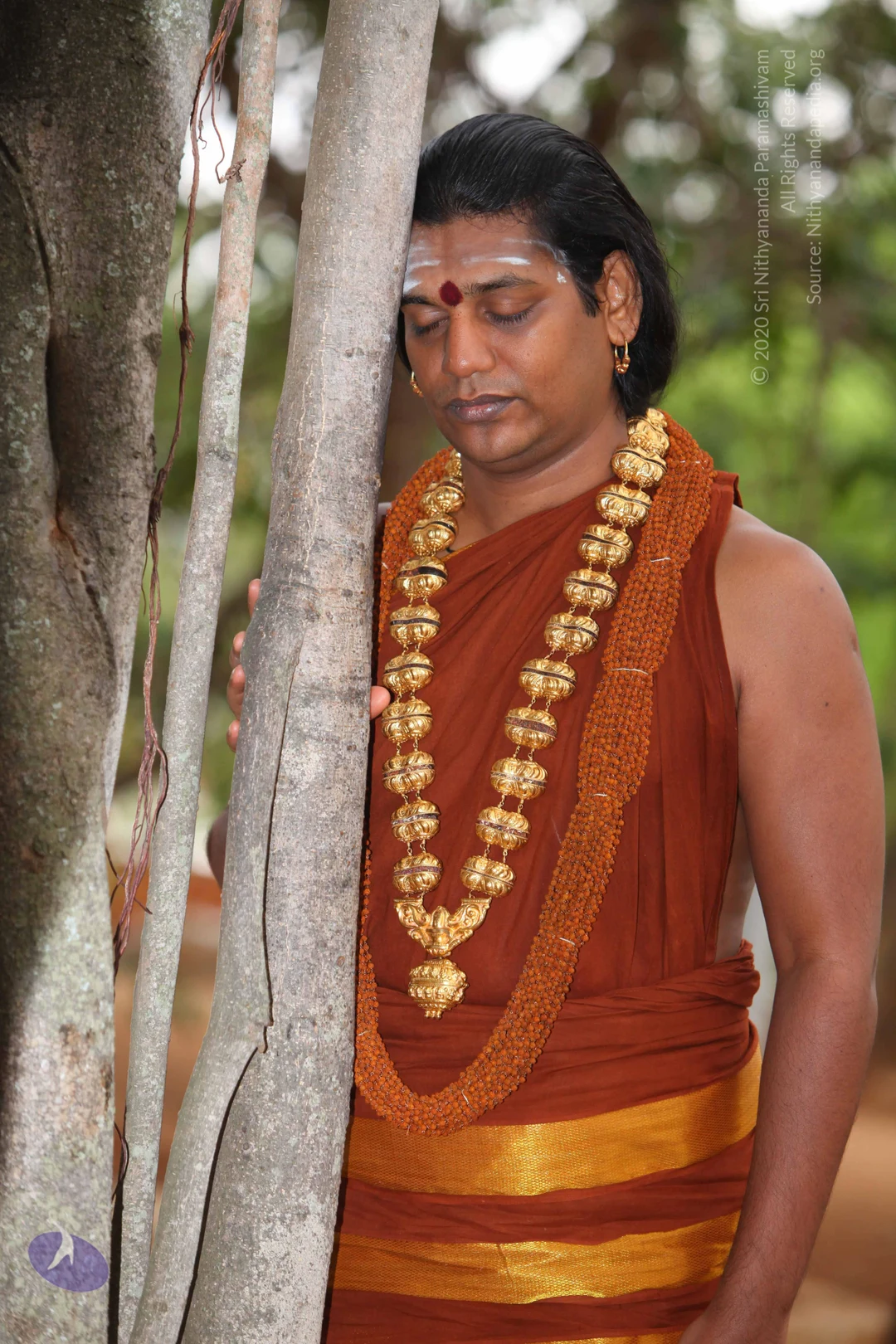
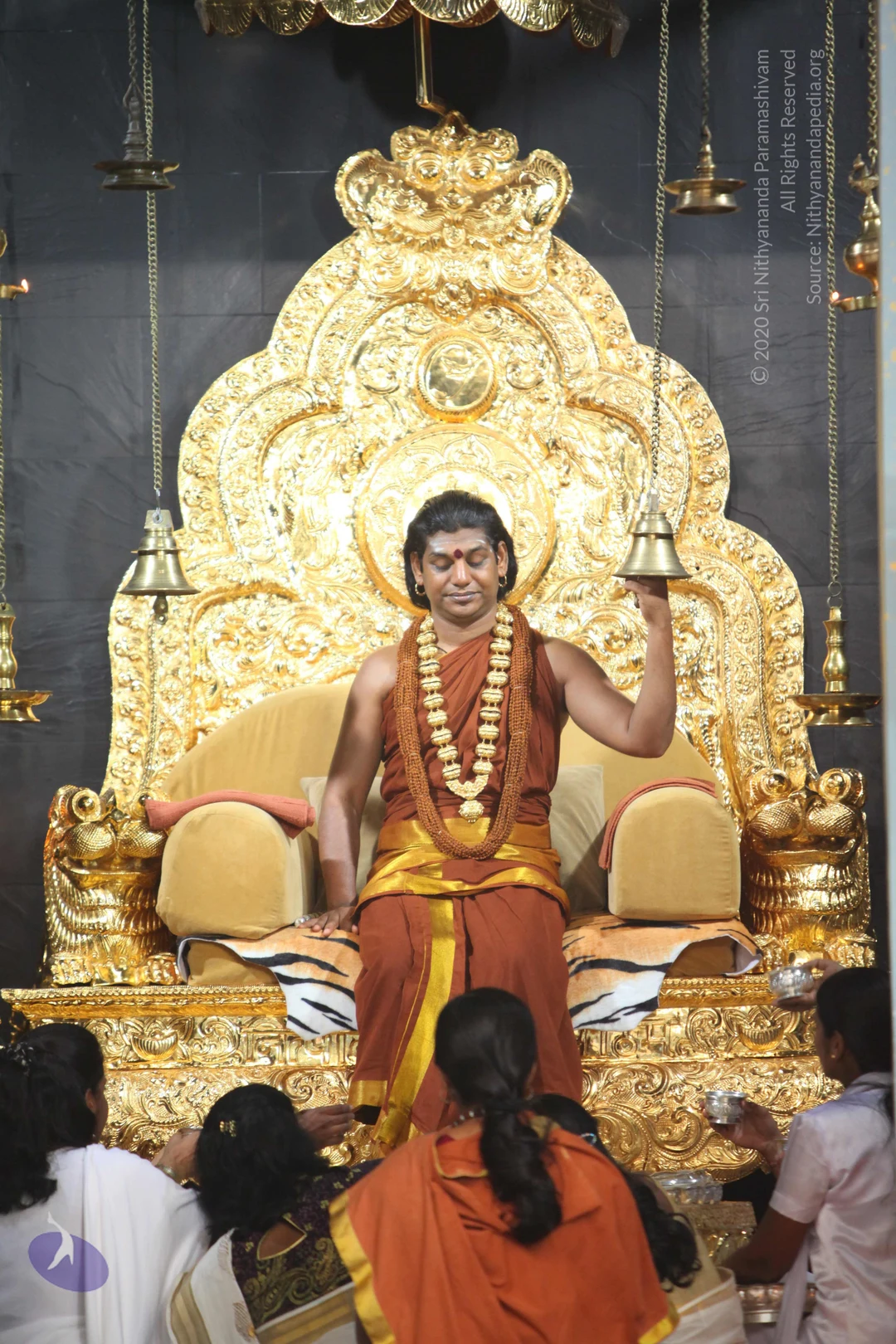
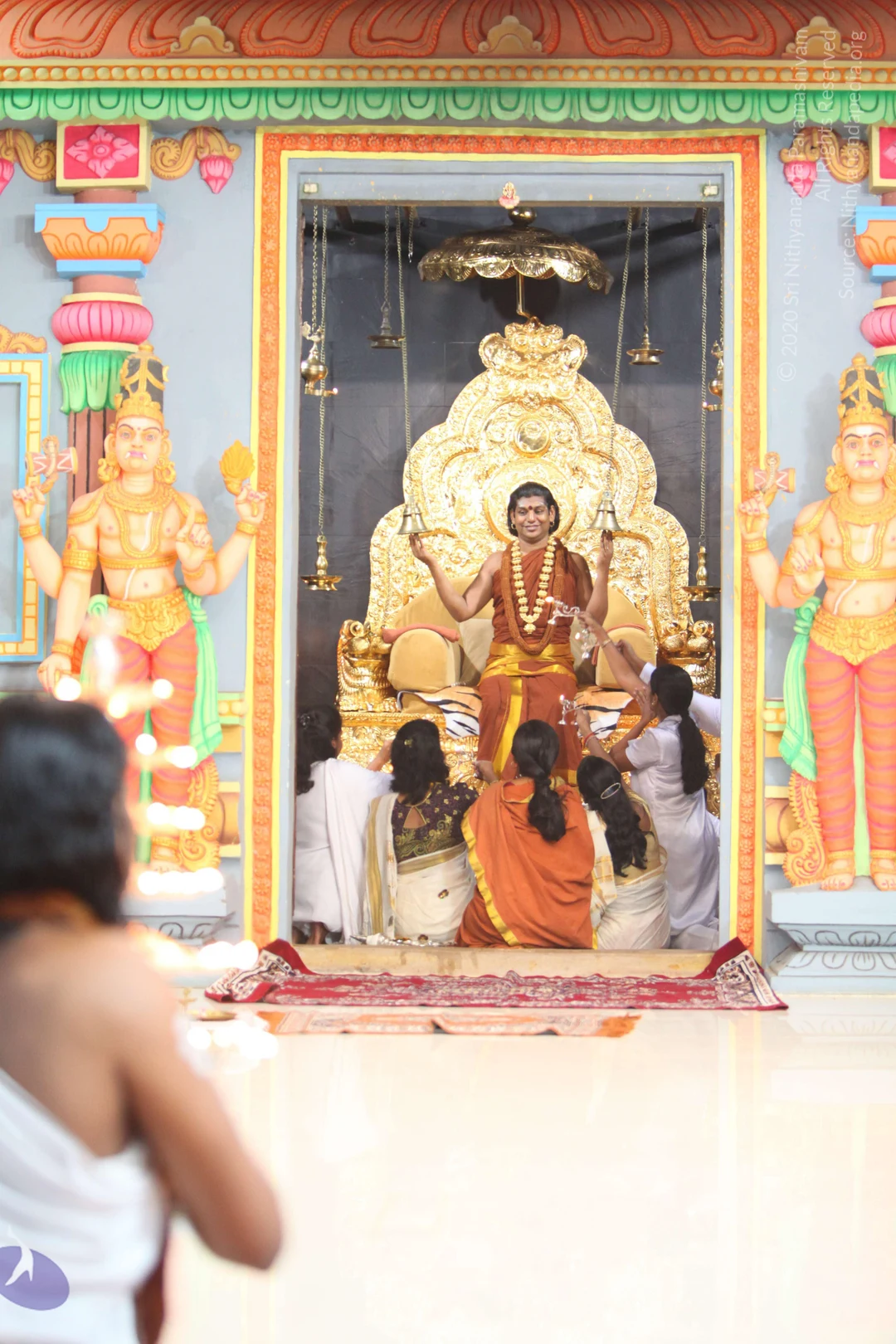
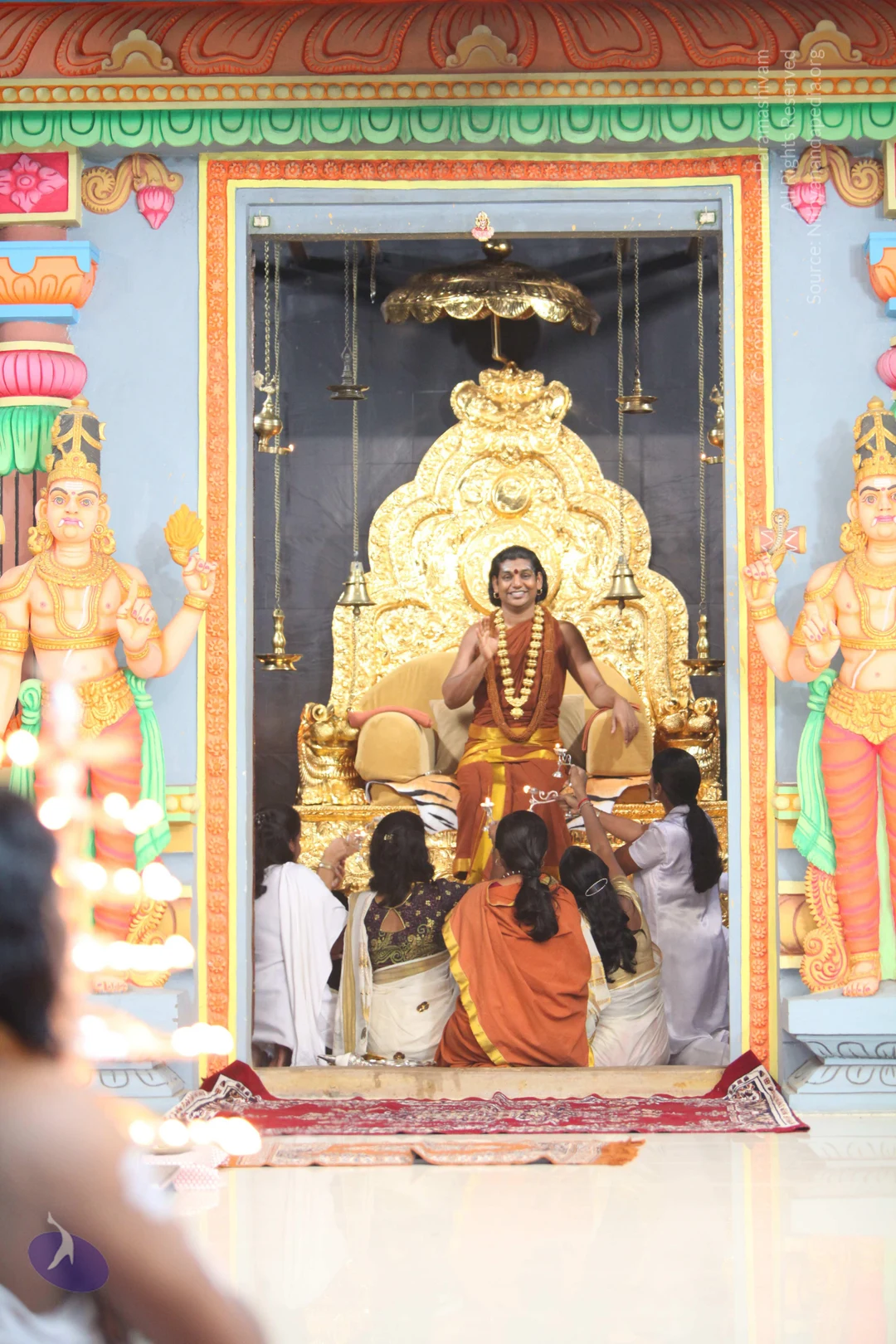
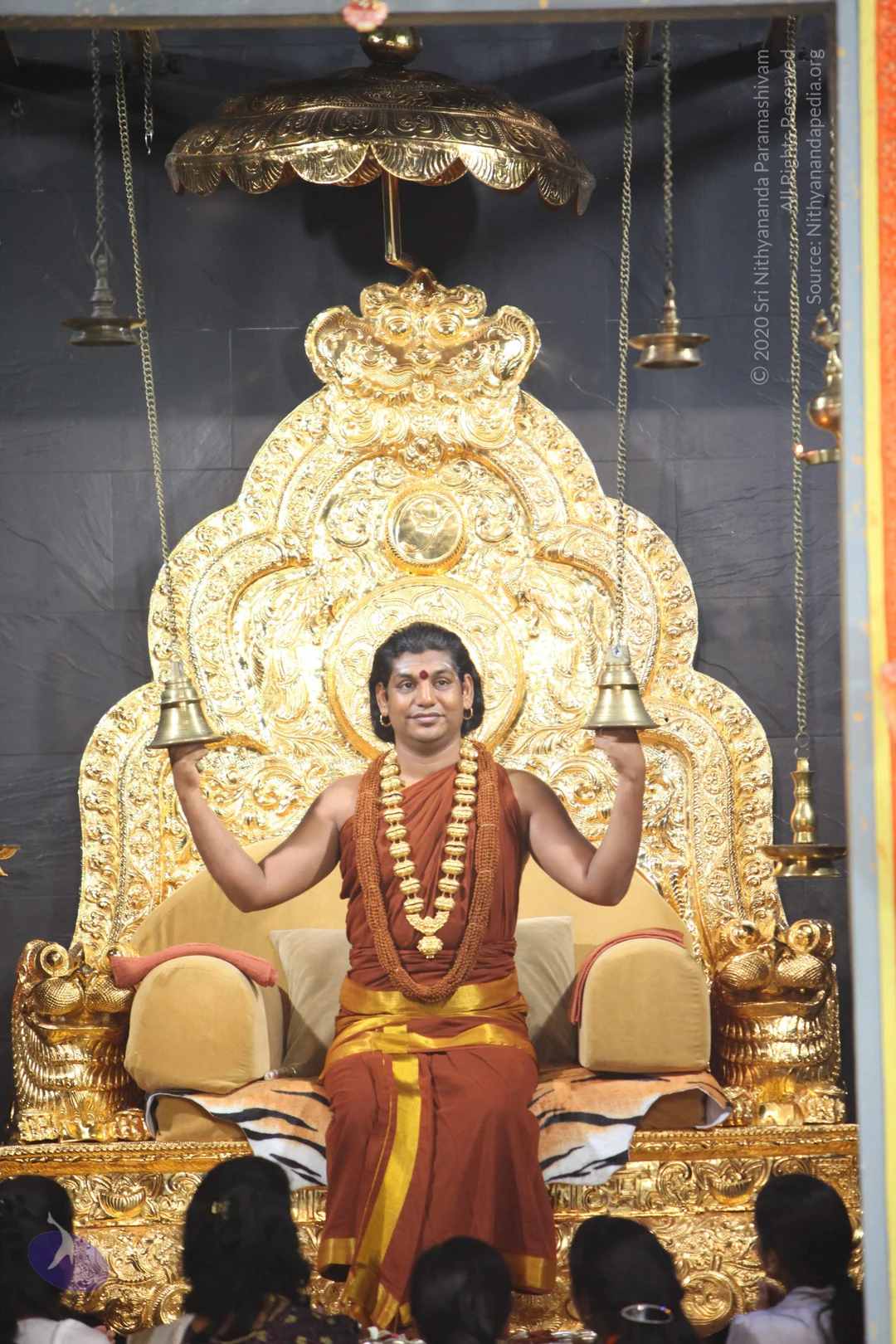
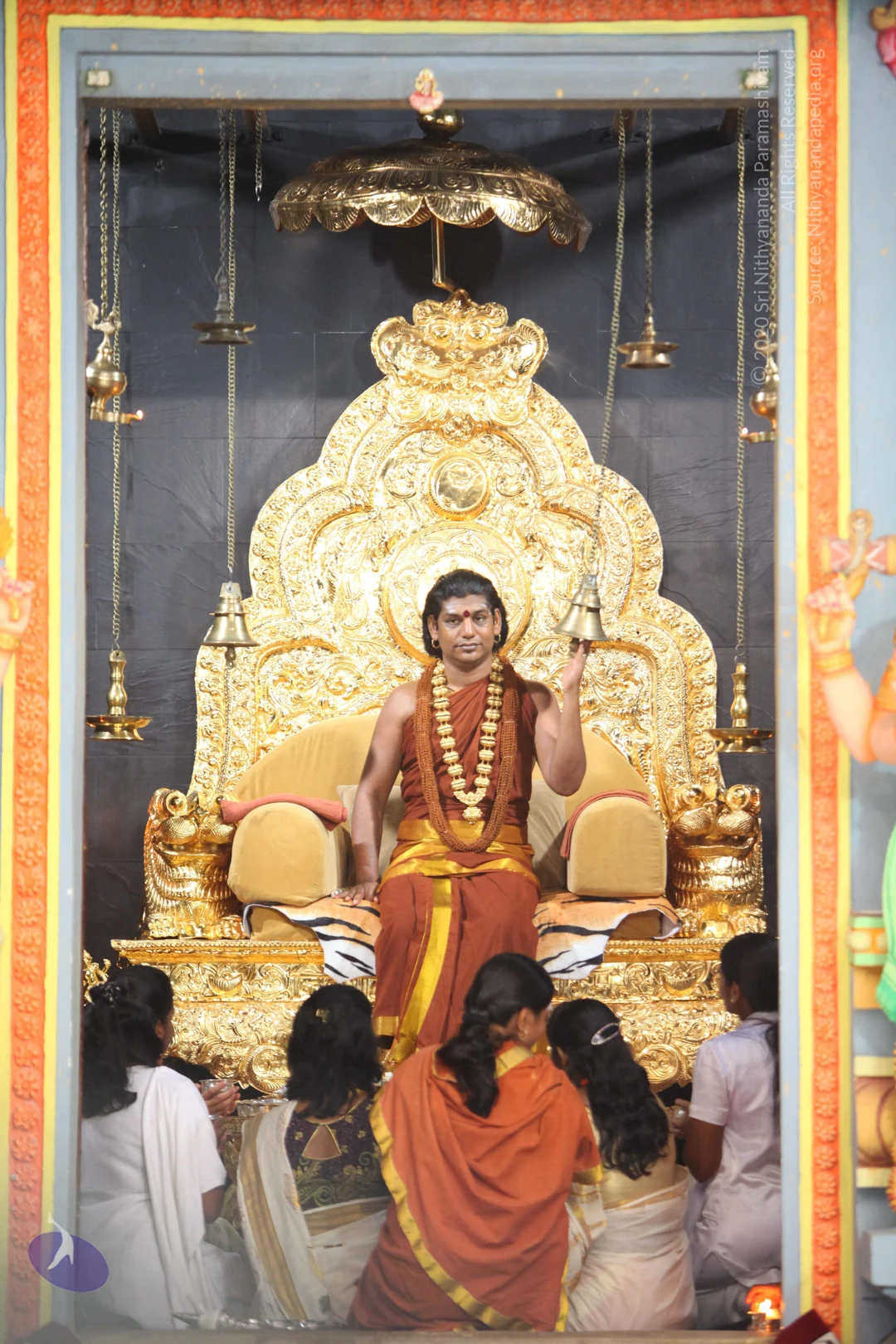
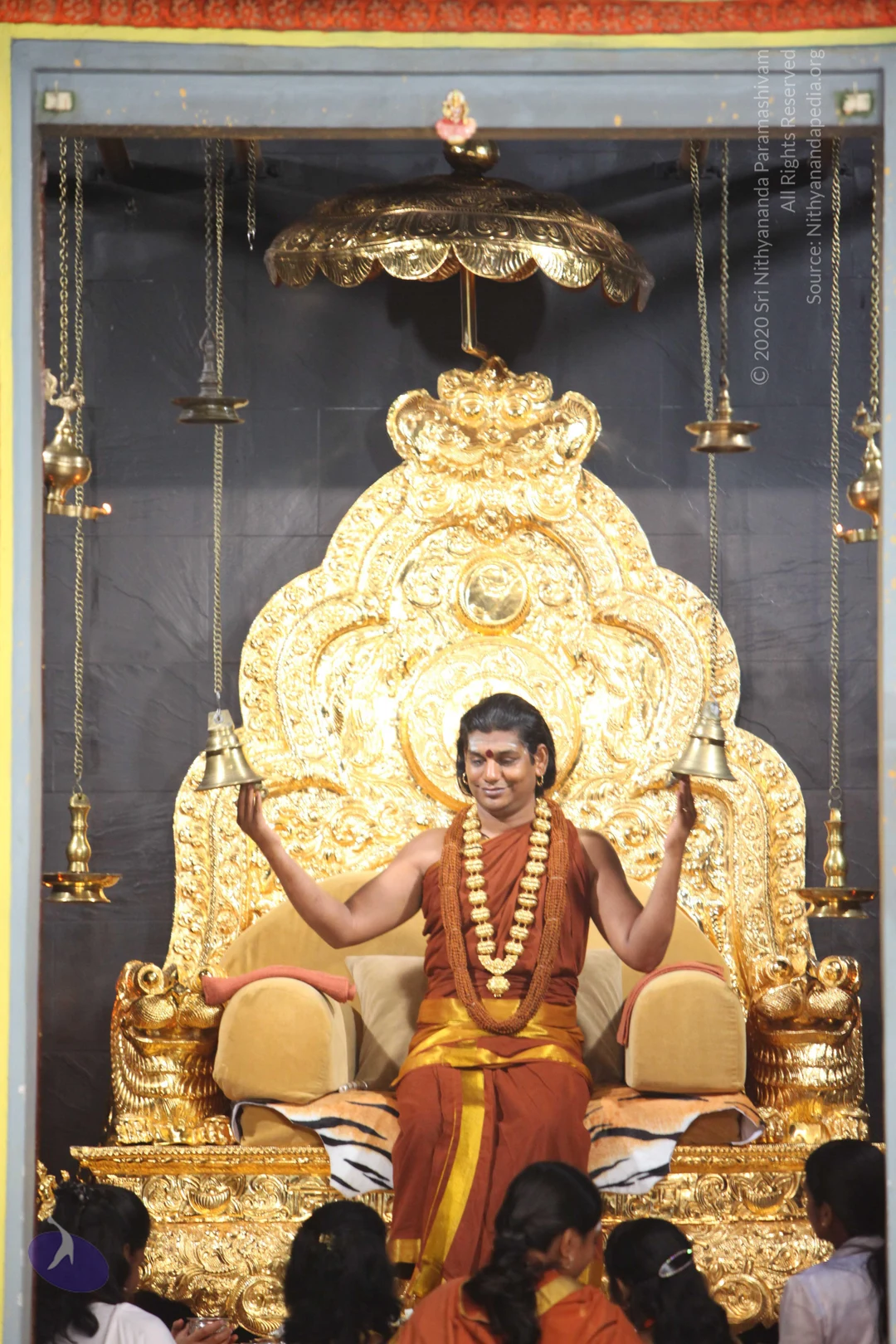
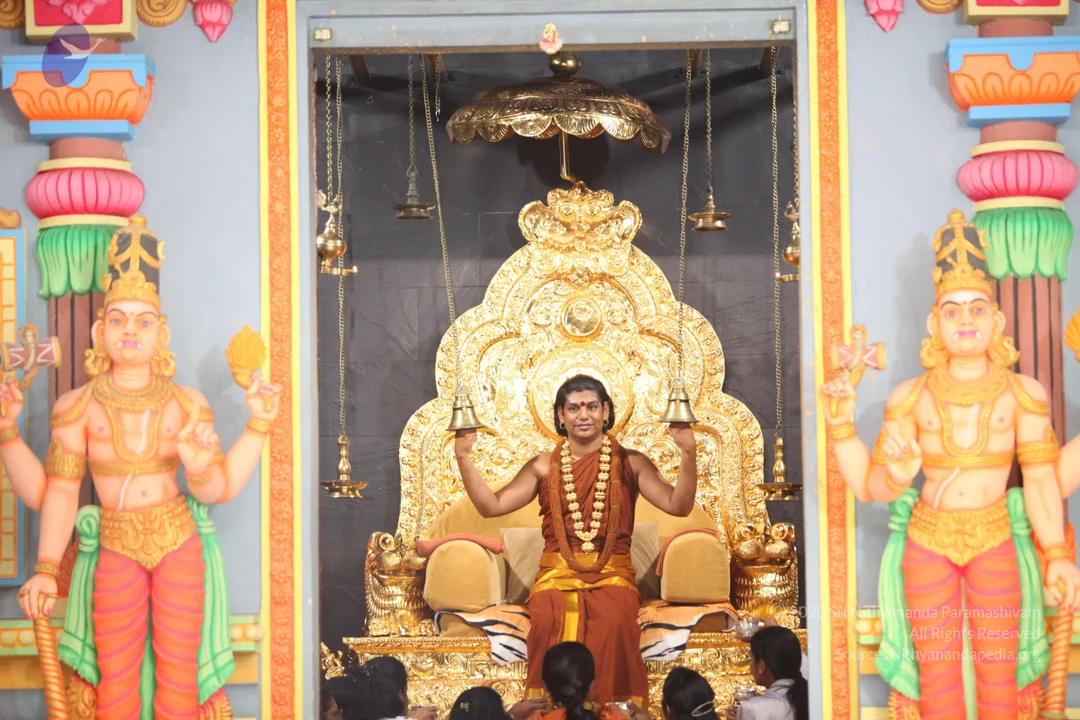
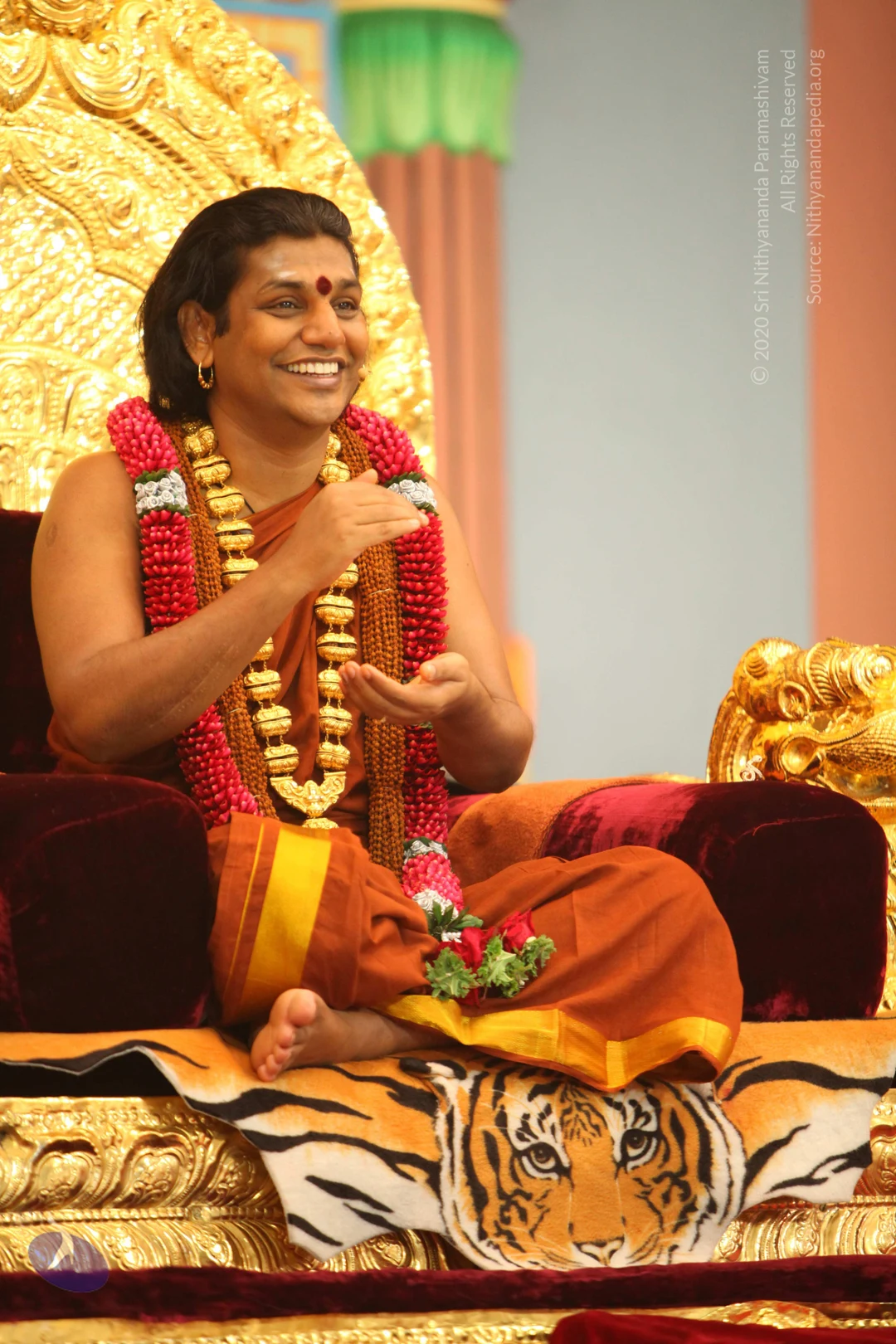
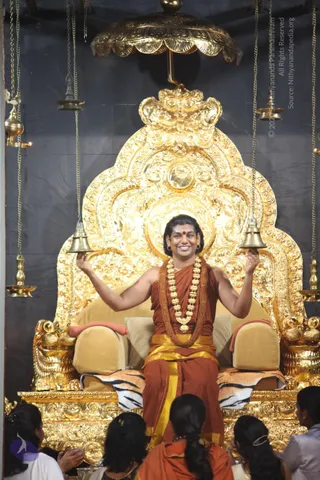
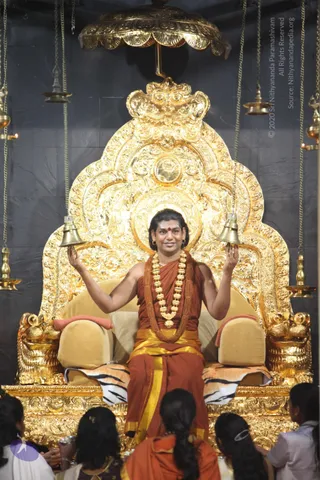
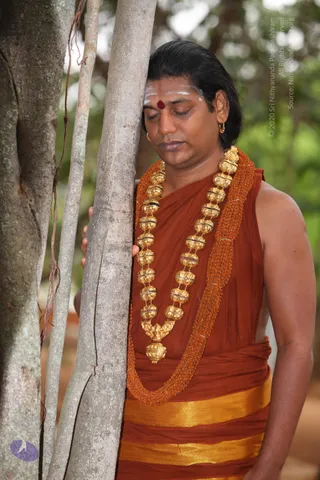
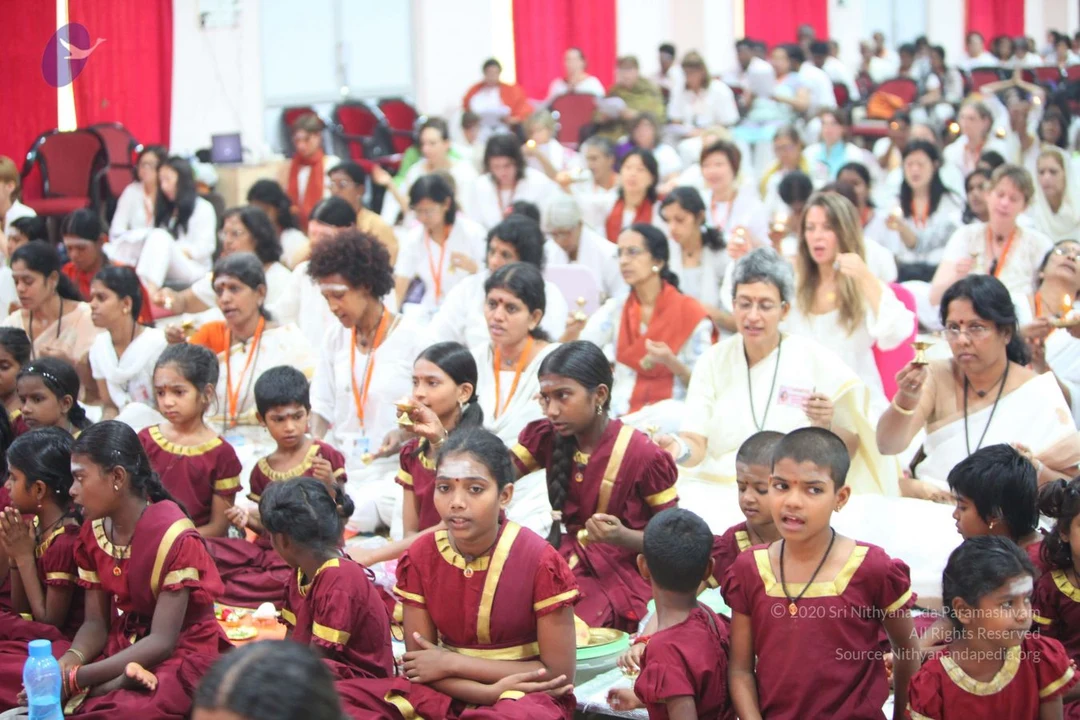
A seated man in an ornate golden throne with a gilded canopy overhead smiles while raising a pair of brass handbells, one in each hand. He wears a rust-orange dhoti and shawl with a gold border, a long rudraksha mala and a heavy gold ceremonial necklace, and has a red bindi on his forehead. Hanging brass lamps and chains surround the throne, and a tiger-striped cloth covers the seat. Several devotees with their backs to the camera sit in the foreground, with a woman in an orange top at centre.A man in a saffron-orange sannyasi garment with a golden-yellow border and a rudraksha mala sits on an ornate gold throne under a gilded umbrella, holding a small brass bell aloft in his right hand. Hanging brass oil lamps and bells flank the throne within a painted temple doorway. Several seated devotees in white and cream clothing, some in traditional Kerala-style saris, face him from below, with one woman in an orange sari with a gold border in the foreground. Gilded deity murti figures are painted on the pillars at the sides.A man seated on an ornate gilded throne with a carved golden backrest and lion-form armrests, draped with a tiger-striped cloth. He wears a saffron-orange garment with a gold-bordered dhoti, a red bindi, and a long rudraksha mala with ceremonial gold necklaces; he raises a bell in each hand. Gold chains and hanging oil lamps are suspended above him, and a gilded canopy covers the throne. In the foreground, several devotees with dark hair sit facing the throne, one in orange clothing with a braid. a person: a seated figure with rudraksha and gold adornment in saffron attire, distinctive ceremonial cues, appearing in person in a ritual setting.A seated man in saffron-orange robes sits cross-legged on a red velvet throne with ornate gold carved backrest and a tiger-striped cloth covering the seat. He wears a thick multi-strand gold bead necklace over a brown rudraksha-style mala, a red-and-pink flower garland with white accents, and a red bindi. He holds one end of the garland with his raised hand and gestures with the other, smiling and looking to the side. Wall behind is pastel blue with orange and pink decorative columns. Appearance-based label: a person, seated on the throne, giving satsang-style talk with a headset microphone visible.A seated man in a saffron-orange robe sits cross-legged on an ornate gold-and-velvet throne with a tiger-face rug draped over the seat. He wears a red-and-white flower garland, a heavy gold bead necklace over rudraksha-style brown beads, a red bindi and a small gold earring, and looks off to the side with a calm expression. Behind him a gold-embossed backrest and orange, pink and green pillar detail frame the scene. Swamiji (probable): long swept-back hair, saffron clothing, gold necklace and rudraksha cues fit the page's identification; appearance is consistent.A man with swept-back long black hair leans his head and shoulder against a grey tree trunk with eyes closed in a calm, meditative posture. He wears a saffron-orange sleeveless wrap with a bright gold border, a heavy gold ceremonial necklace of carved beads and a rudraksha mala, gold earrings, white vertical tilaka lines and a red bindi. Green foliage blurs in the background. Swamiji (probable): the swept-back hair, saffron clothing, rudraksha mala and ornate gold necklace match the page's Swamiji reference, so this is a probable in-person candidate.
2-IASession

30 photosSource gallery
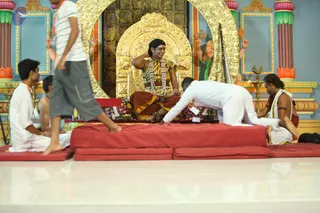
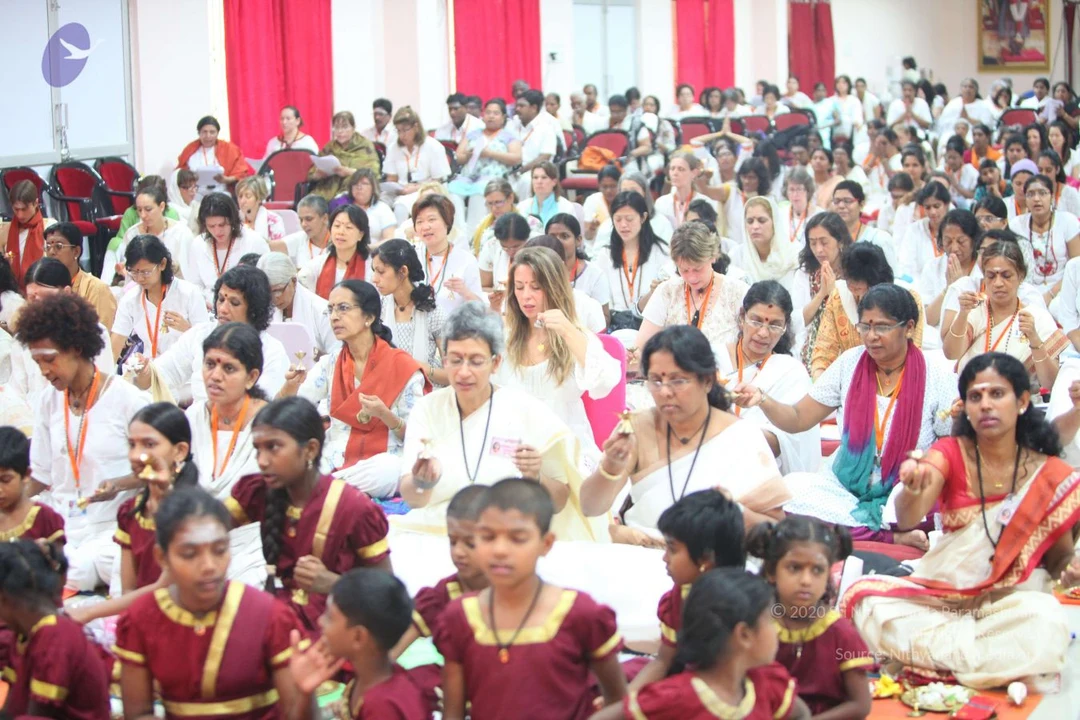
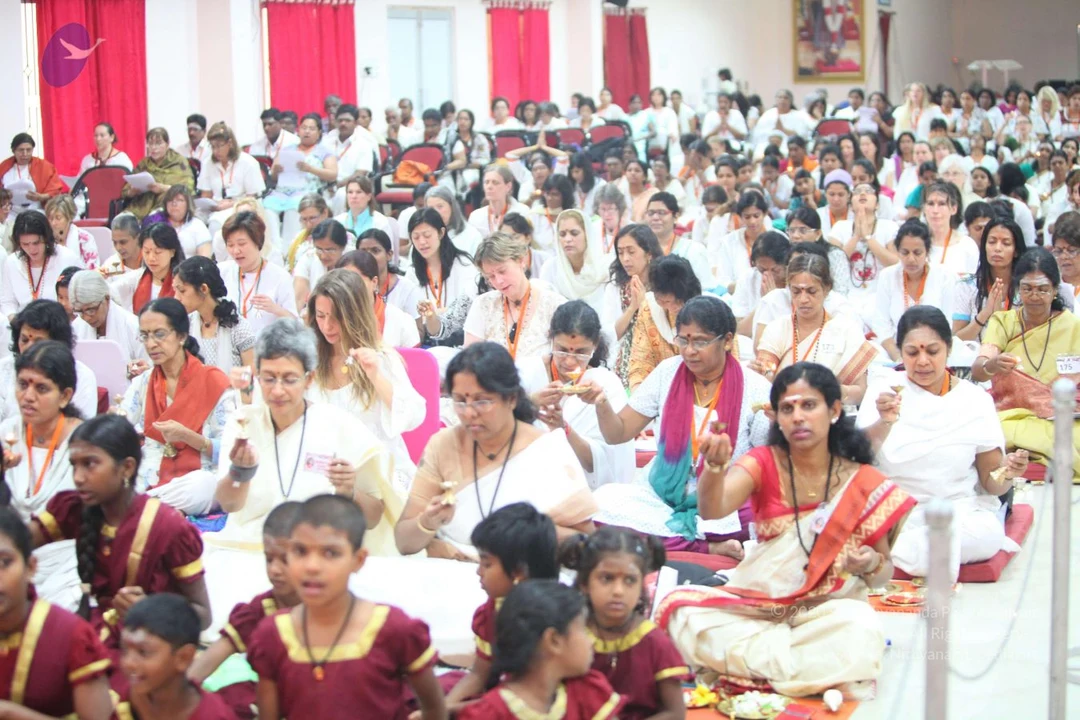
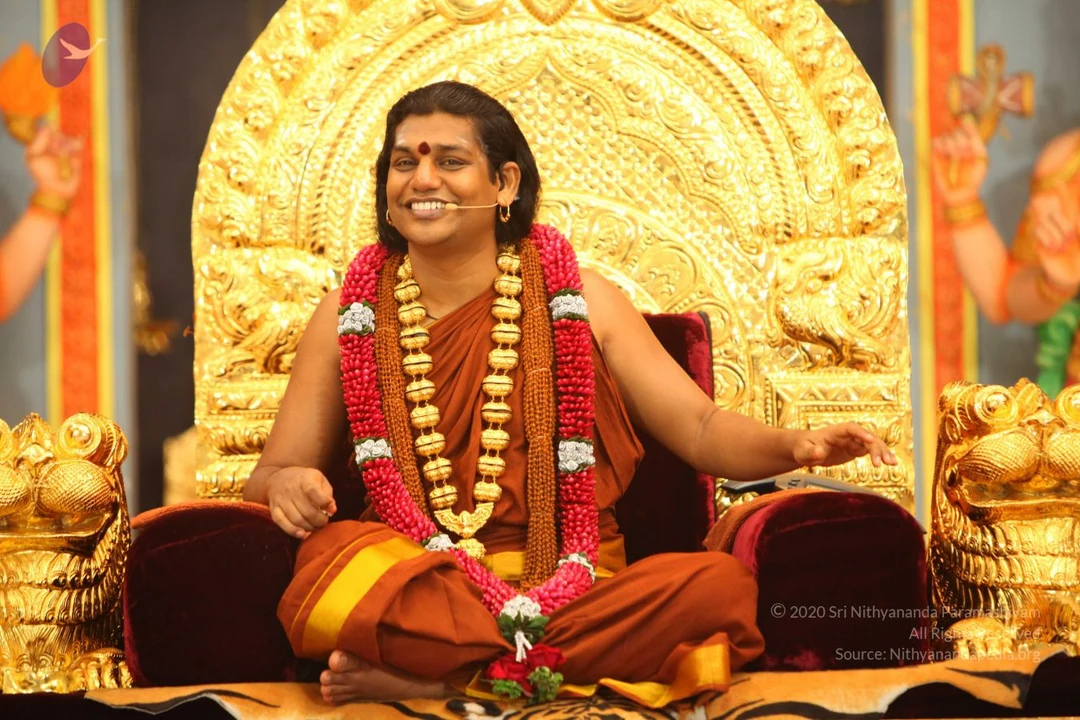
A photograph of a smiling man with eyes closed seated on an orange leather throne-style chair before a deep red curtain and a large gilded arched backdrop with gold lion-like armrest ornaments. He wears an orange-red sannyasi-style robe with a yellow edge, a long layered gold bead necklace with rudraksha-style beads, a small red bindi on his forehead, a headset microphone, and a ring on his finger. Swamiji (probable): long swept-back hair, saffron robe and ceremonial gold necklace consistent with the page's identification of the speaker. Setting appears to be a satsang stage.A man with long swept-back dark hair and a red bindi sits in an orange leather chair on a stage, smiling and speaking into a headset microphone. He wears a rust-orange shawl with gold border over a rust-orange garment, a heavy gold bead necklace and multiple strands of rudraksha malas. His hands rest together in his lap. Behind him a large gilded throne-like backdrop and deep red velvet curtains frame the stage, and a wooden footstool sits in front. Swamiji (probable) presents with the swept-back hair, saffron-orange clothing and rudraksha malas, seated as the discourse speaker.A smiling man sits in an orange leather throne-style chair against a deep red velvet backdrop with a large gold ornamental arch behind him. He wears a rust-orange robe draped over his shoulders and a heavy multi-strand necklace of gold beads and rudraksha-style brown beads with a gold pendant. A red bindi marks his forehead and a small headset microphone is clipped near his face. His hands rest on the armrests. Swamiji (probable): the appearance cues of long swept-back hair, saffron-orange robes, ceremonial gold necklace and rudraksha beads match the satsang discourse setting; he is seated in the throne of the discourse hall.A smiling man with long swept-back dark hair sits in an orange leather armchair on a gold-decorated stage. He wears a saffron-orange draped robe with a gold-bordered dhoti, a heavy rudraksha mala with large gold bead ornaments, and a red bindi on his forehead, with a small headset microphone at his ear. Behind him are ornate gold panels and gold decorative objects. Appearance-based candidate: Swamiji (probable), seated in a throne-like chair in a satsang setting, identified by long swept-back hair, saffron clothing, rudraksha mala and gold ceremonial adornments.A man with long swept-back dark hair and a red bindi sits smiling in an orange leather armchair, gesturing with one hand, wearing a headset microphone. He wears a rust-orange robe with a gold-bordered yellow edge and a long gold-beaded necklace over rudraksha-style brown beads. Behind him a large ornate gold backdrop with a radiating arch stands against deep red drapes. Swamiji (probable) seated in the orange throne for a satsang discourse, with cues of long hair, orange clothing and ornate gold adornment.A man seated in a bright orange leather armchair on a golden stage, with a deep red velvet backdrop and an ornate gold arched throne behind him. He wears a rust-orange robe with a golden border, a red bindi on his forehead, a small microphone at his cheek, and a dense rudraksha mala with a large ornate gold necklace. He rests one hand thoughtfully at his chin while looking to the side, and his other arm rests on the chair arm. Appearance-based probable Swamiji (probable), with long swept-back hair, saffron robes, rudraksha and gold adornments, seated as a speaker during a satsang.
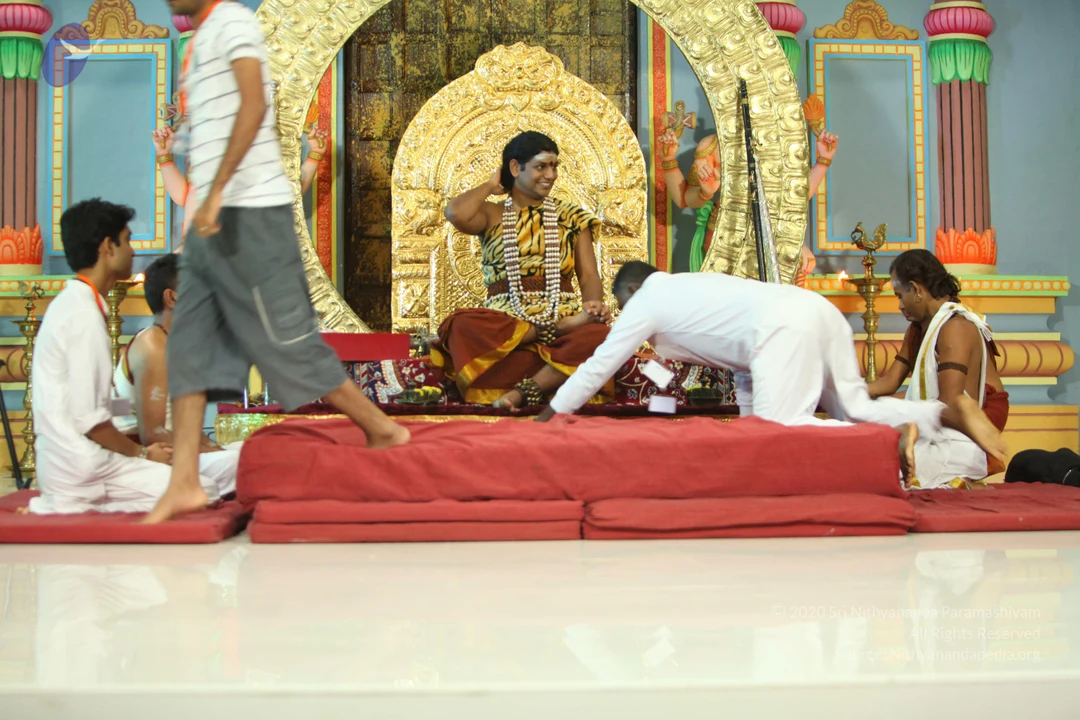
3-KalaBhairavaDarshan
22 photosSource gallery
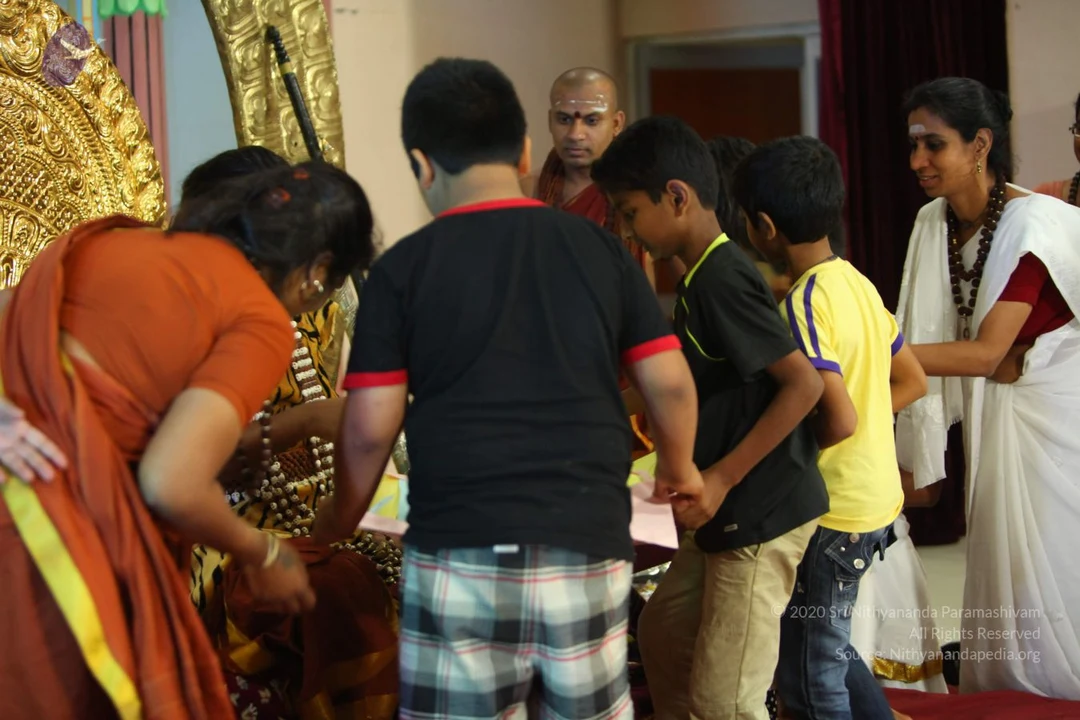
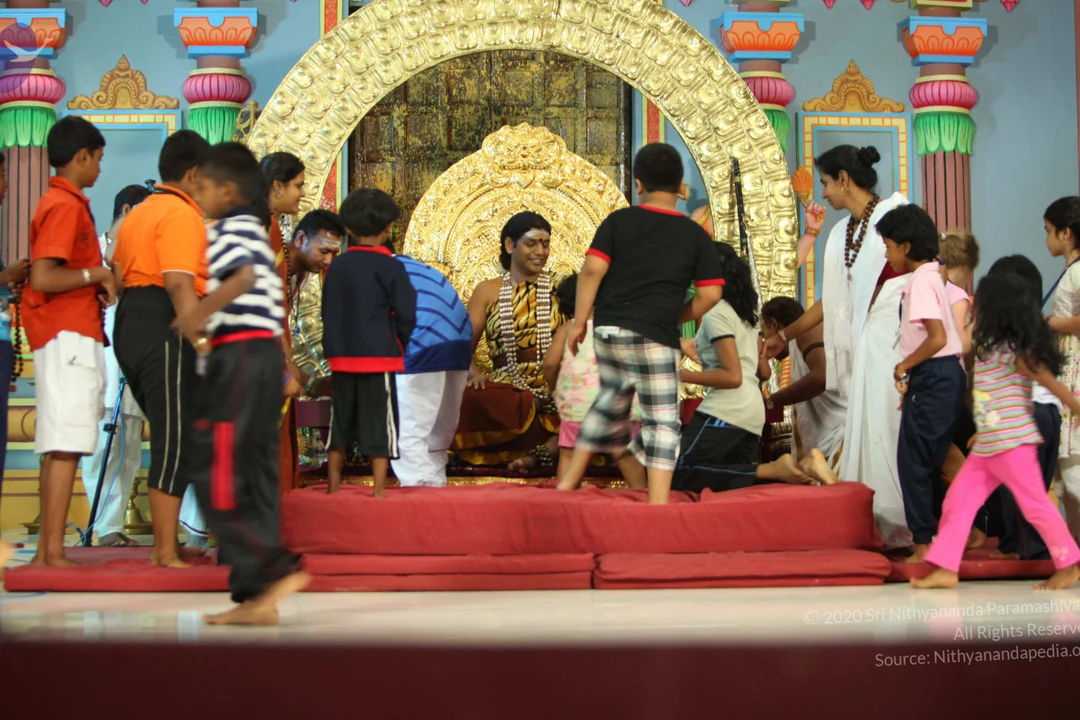
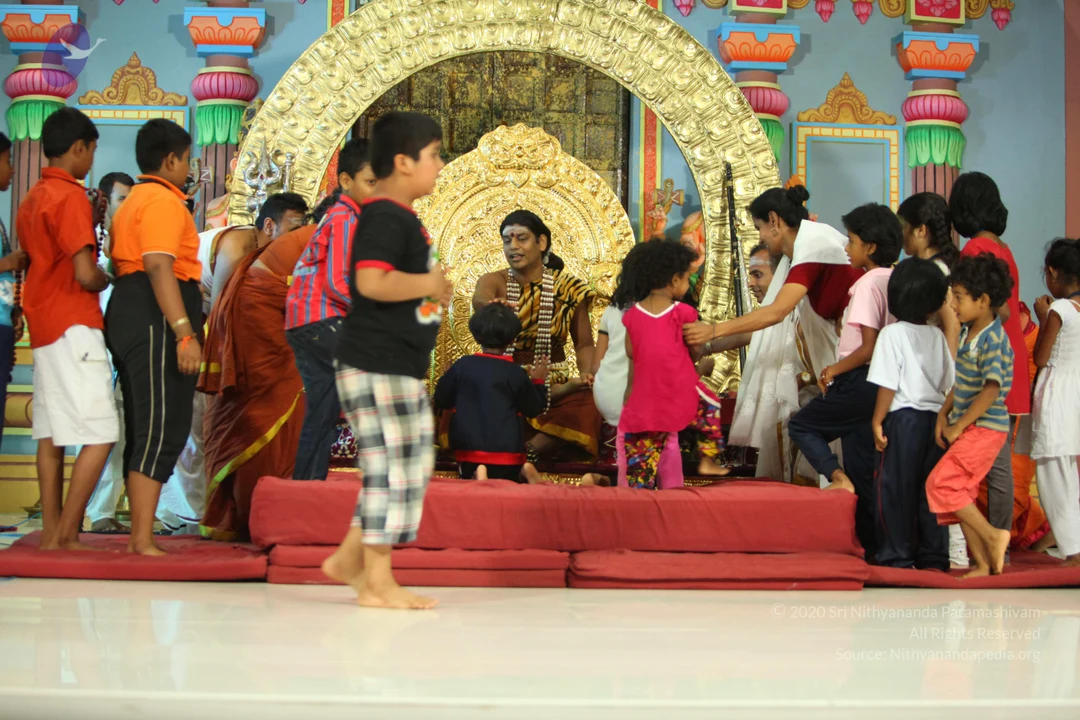
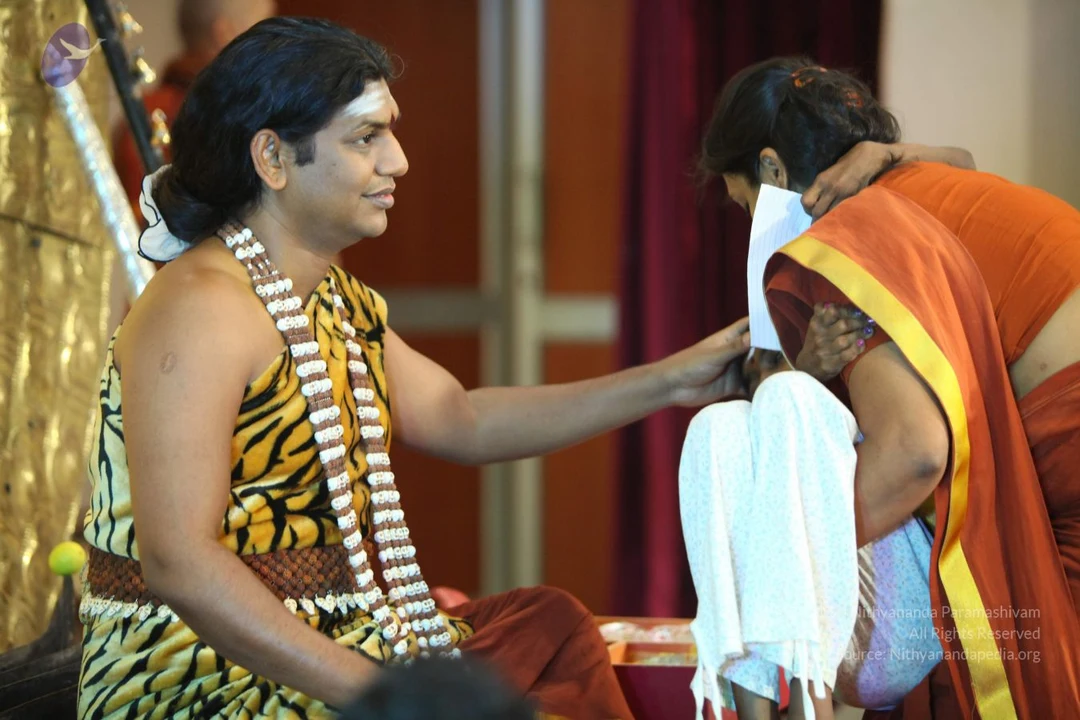
A smiling man with long dark hair sits cross-legged on a red floral cushion before an ornate gold throne with carved arch. He wears a yellow and black tiger-striped garment over one shoulder, a long wrap of white and rudraksha beads, a rust-orange dhoti with gold border, and ankle bells. A white and red tilak marks his forehead. a person: long swept hair, ornate gold throne and beaded garland are visible cues. Photo shows a seated speaker during a satsang setting with brass items and red cloth at lower edge.A seated man with long, swept-back dark hair, a white tilak and red bindi on his forehead, smiles while sitting cross-legged on a red floral-patterned cushion in front of an elaborate gold-embossed throne backdrop. He wears a tiger-striped yellow and black garment, multiple strands of rudraksha and white beaded malas, a maroon dhoti with gold border, and ankle bells. His hands rest together in his lap. Swamiji (probable), based on long swept-back hair, rudraksha malas and ornate ceremonial clothing, seated on a peetha throne.A photograph of a satsang hall set with a large gilded throne-like seat framed by an ornate golden arch and painted pillars with lotus capitals. A man seated on the throne wears a tiger-striped kurta, a red-and-gold dhoti, a long white flower garland and a rudraksha-style necklace, with a tilak on his forehead. Before him, a devotee in white clothes bows low, touching the red cushioned floor mats, while a man in white sits nearby with folded hands. Oil lamps stand on the right ledge and a few attendants sit in white on red mats. Two other attendants sit on the left. A man in a striped shirt and grey shorts walks across the foreground. Appearance-based candidate for a person, seated on the throne and wearing a garland and ornate tiger-striped clothing.A seated man on a red-and-floral cushioned dais in front of an ornate gold arched backdrop and a painted deity murti with a raised hand holding a conch. He wears a tiger-striped yellow and black sleeveless garment, a brown-red dhoti with gold border, layered white and brown beaded necklaces, and a rudraksha-style mala at the waist, with white vibhuti and a red bindi on his forehead. He smiles and gestures with one arm, a ceremonial staff with bells rests beside him, and a small brass lamp sits near his feet. a person: the long swept hair, saffron-toned ornate clothing and rudraksha malas match the page's identification, so he is treated as a probable presence.A smiling man with swept-back dark hair, a white vibhuti line and red bindi sits cross-legged on a red cushion before a large gilded throne-back. He wears a yellow and black tiger-striped garment, a brown-red dhoti with gold border, a long multi-strand white bead necklace with a rudraksha-style mala, and ankle and arm bangles. His right hand is open in a gesture while he leans slightly. Behind him stands a painted figure with a pink arm holding a conch-like object, and a black-handled ceremonial staff rests against the gold arch. Fruit and a small brass lamp sit on a red-cloth table to the right. a person cues: swept-back long hair, saffron-toned ornate clothing and mala beads, seated on a throne.Children crowd a raised stage with red floor cushions in front of a golden arched backdrop and a gilded throne-like seat. A seated figure in a saffron-brown wrap and layered beaded necklaces, with long swept-back dark hair, sits at the centre; the appearance cues are distinctive enough to label this figure as Swamiji (probable), seated and receiving children. Around him children in orange, red, navy and pink clothing move or lean in, a woman in white with a mala stands at right, and a man in white is near the left. Painted pillars with colourful lotus-style capitals frame the hall.