Skip to content
Wednesday

15 May 2013

Vedic Tradition Spirituality and Sannyas

Dated photos
522
Source pages
1
Media
3

May 15 2013

Original wiki page
Contents

Title

Vedic Tradition Spirituality and Sannyas

Description

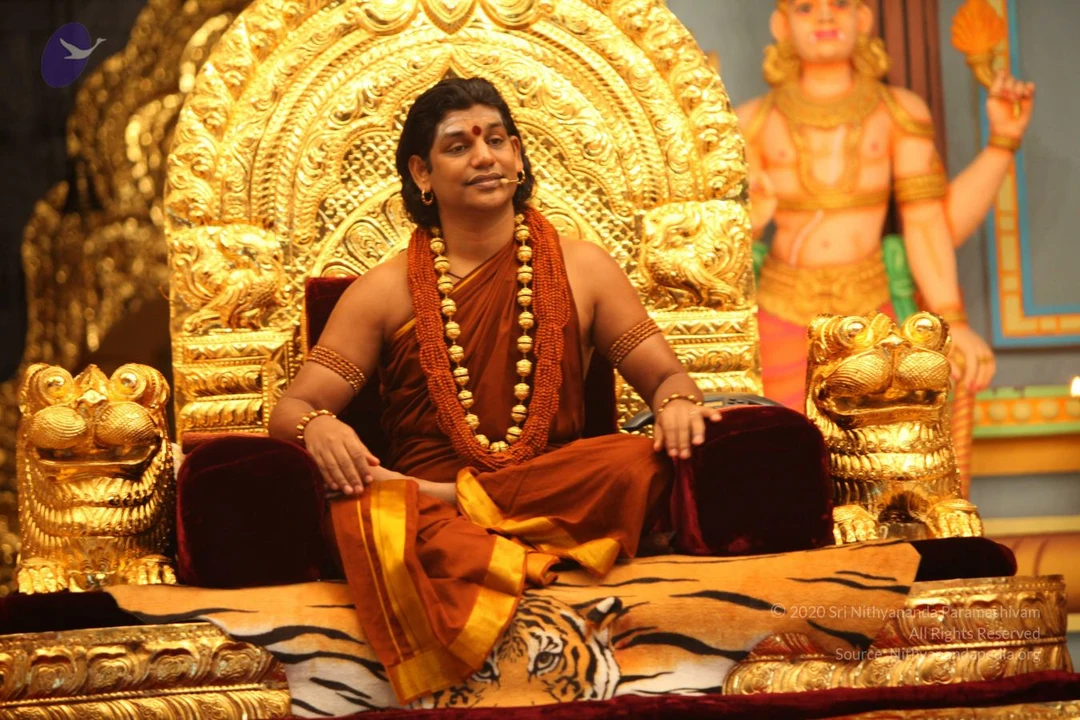
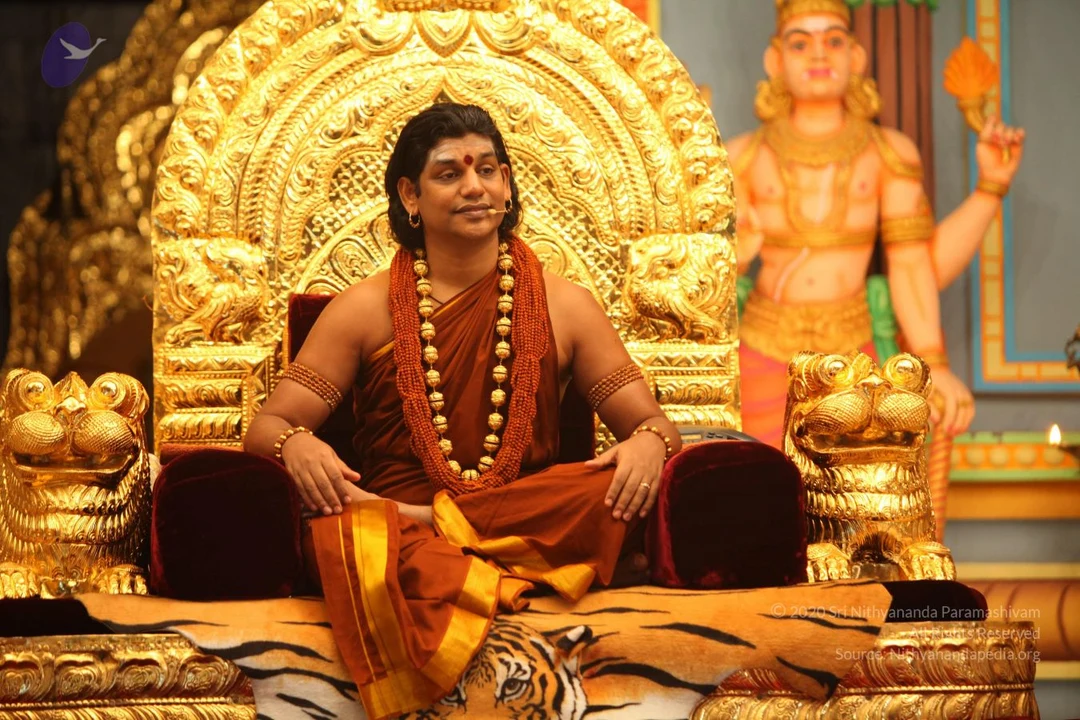
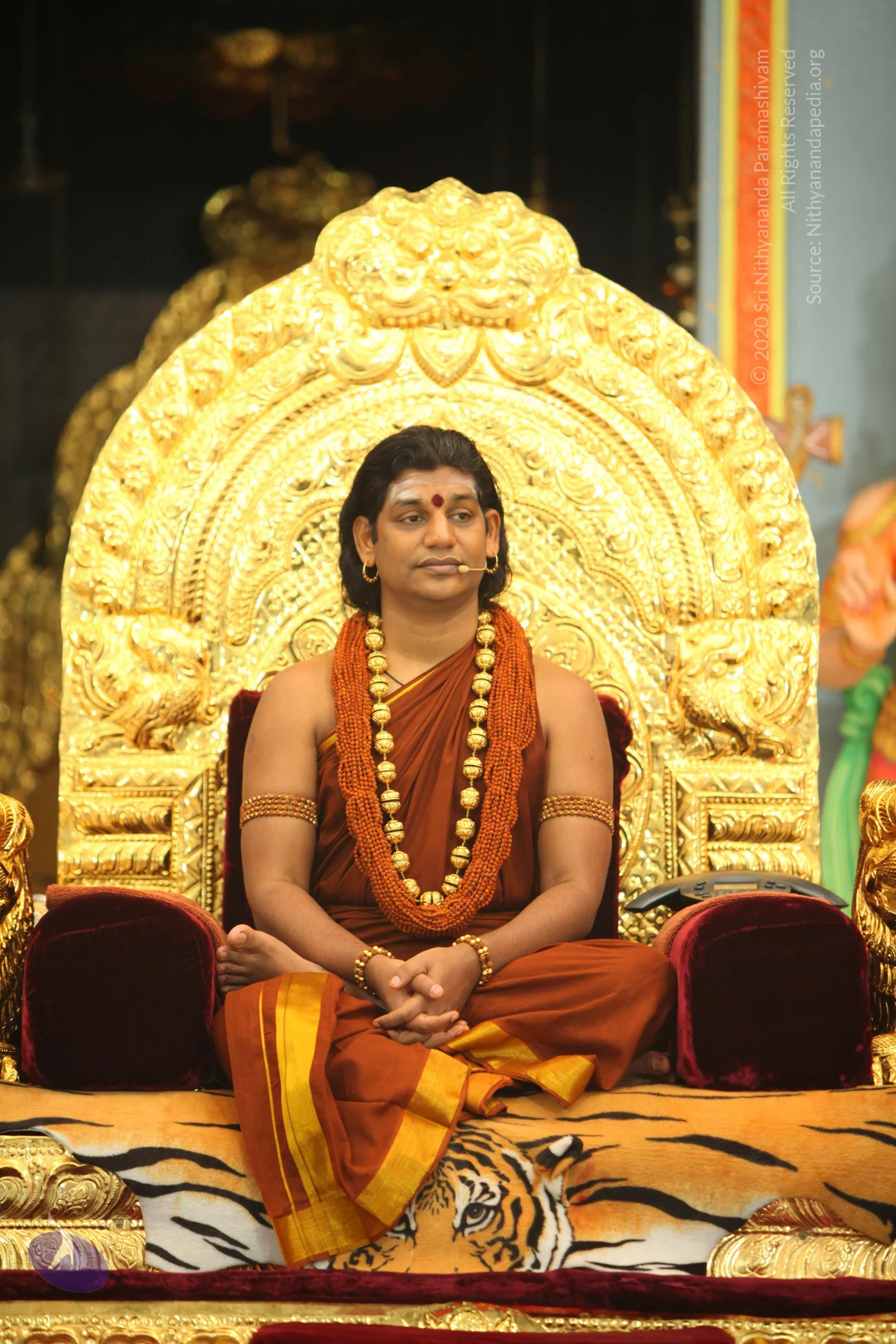
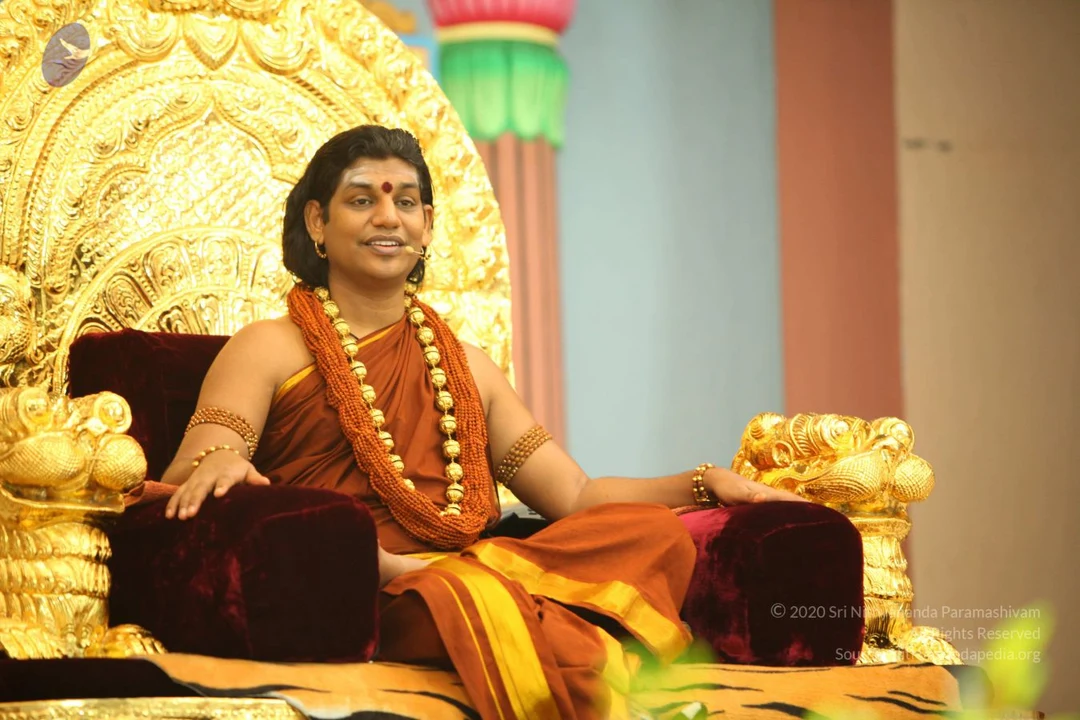
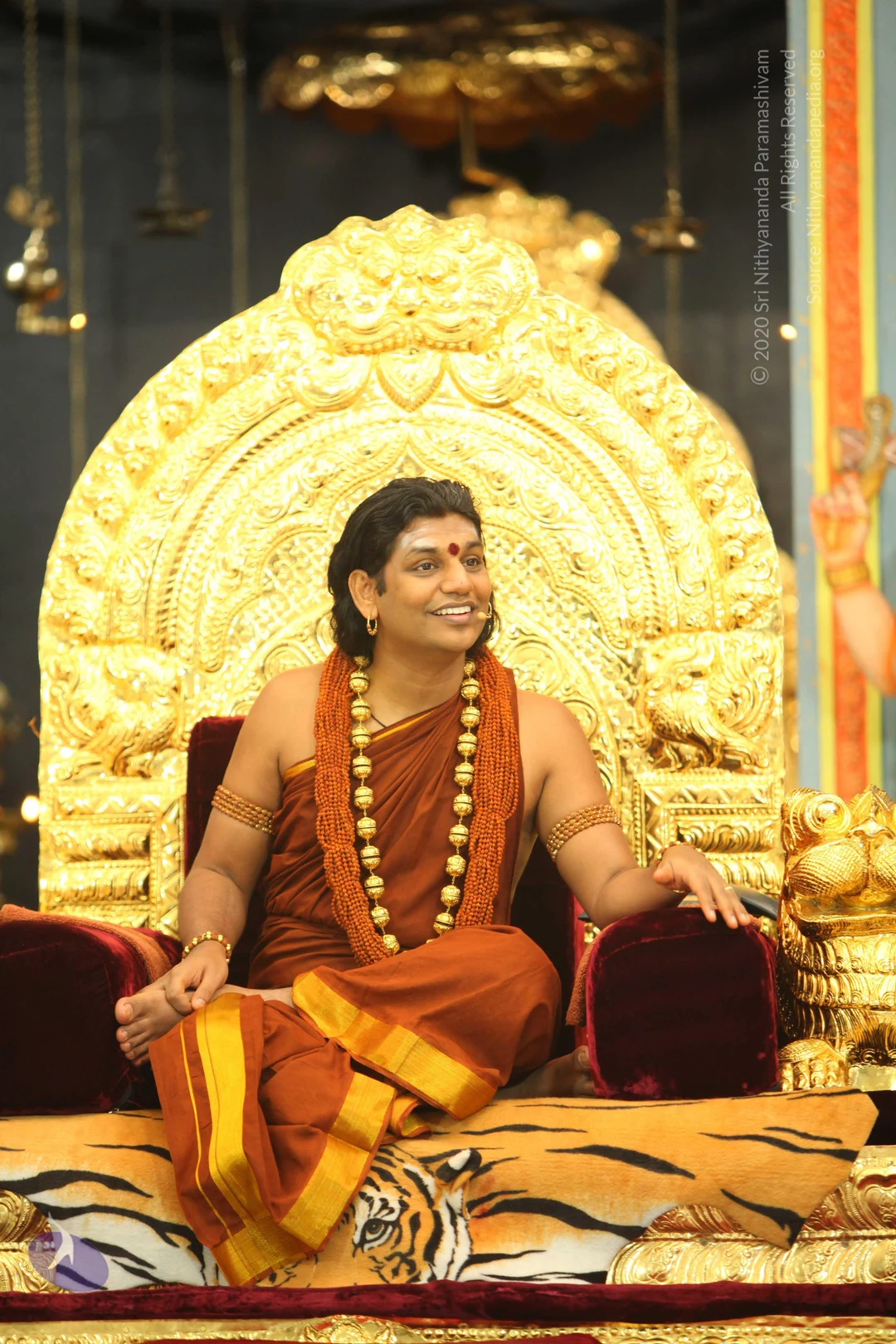
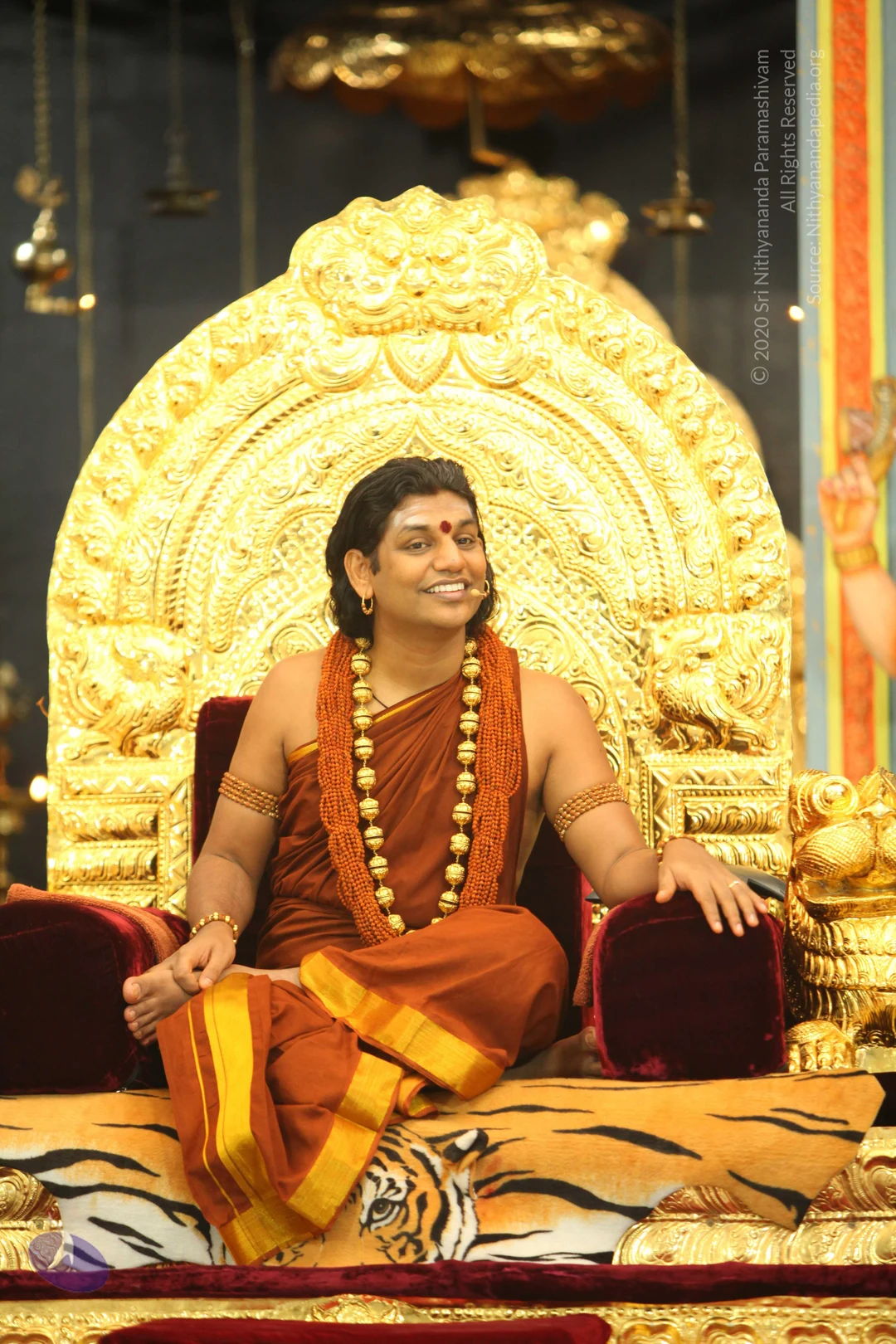
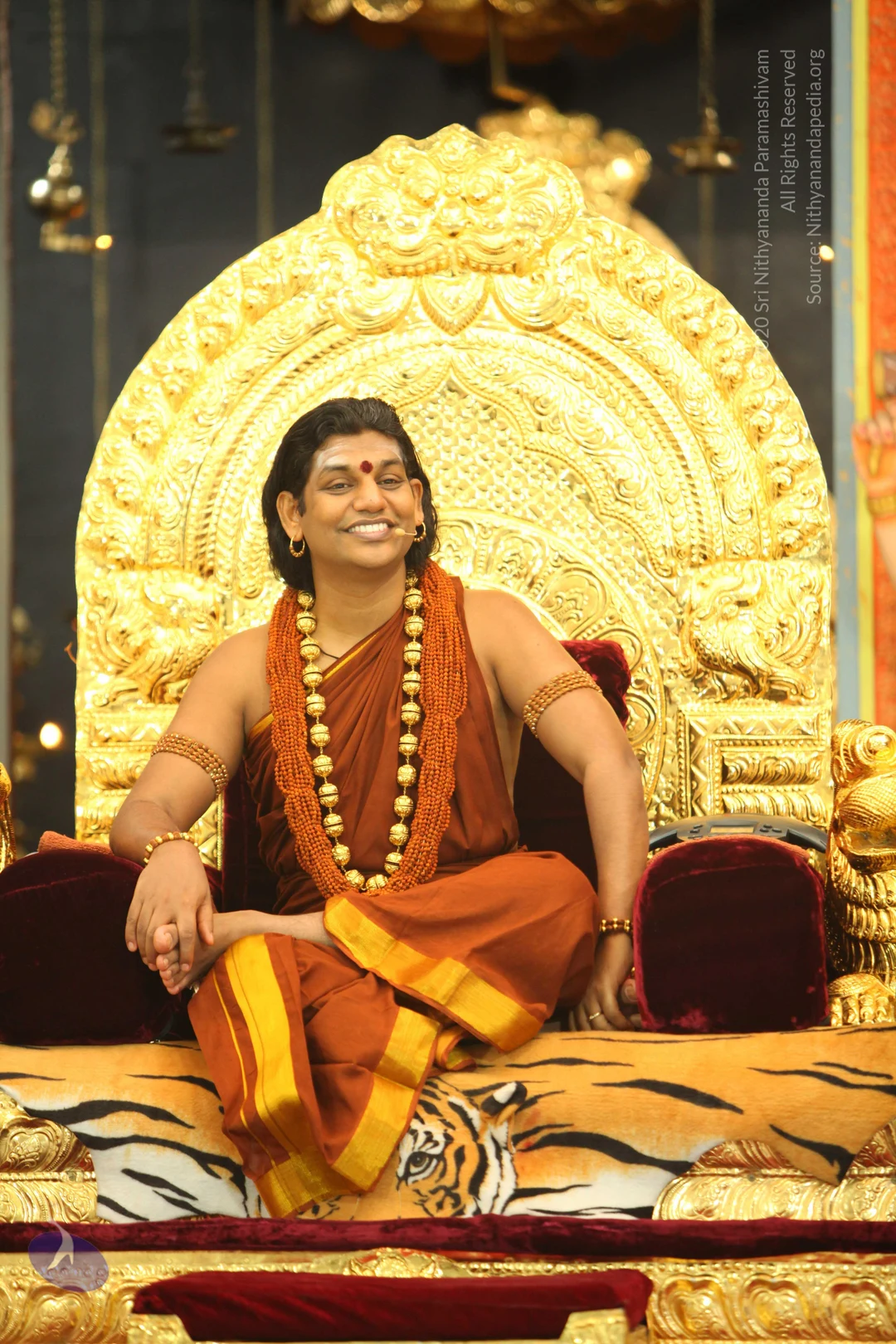
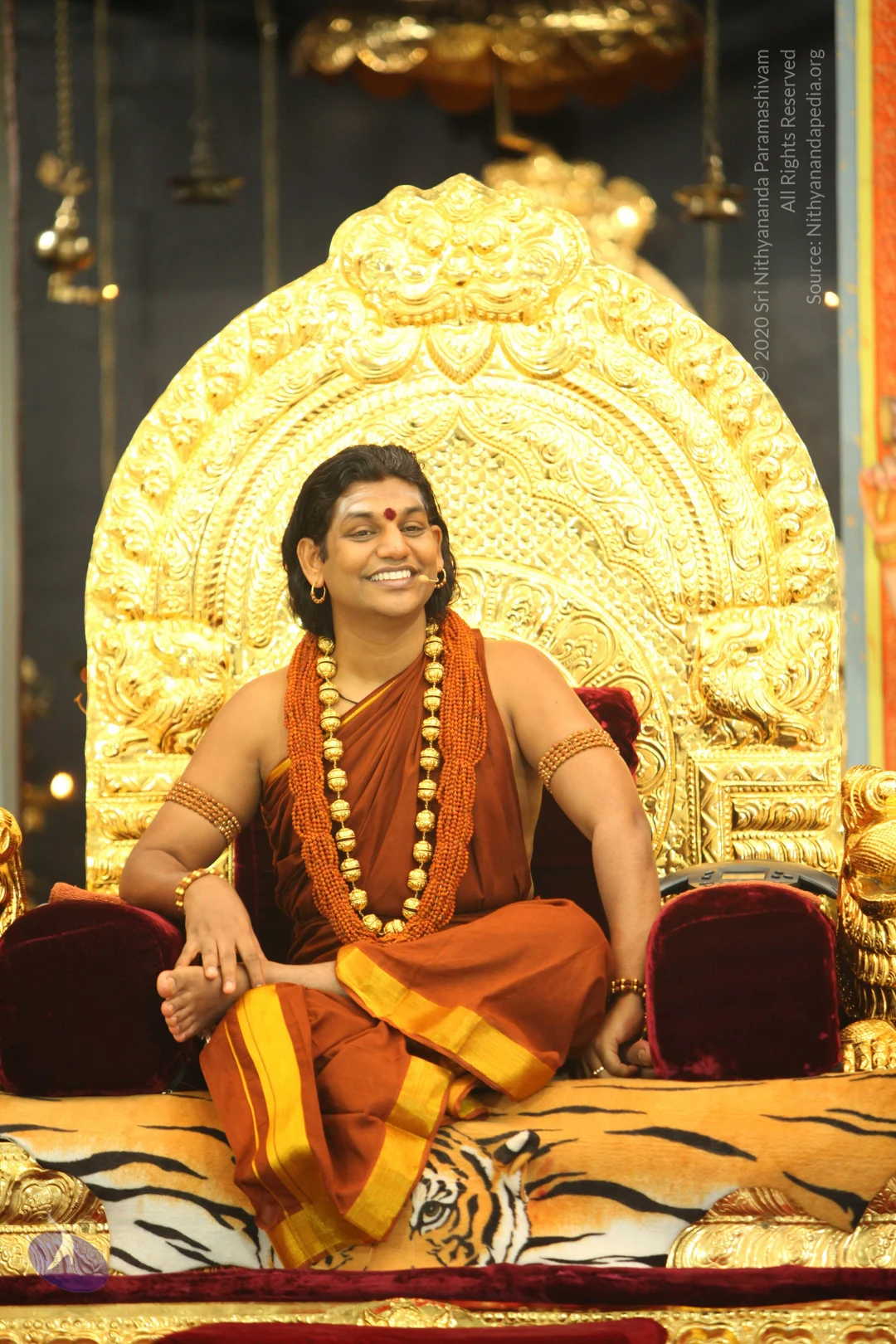
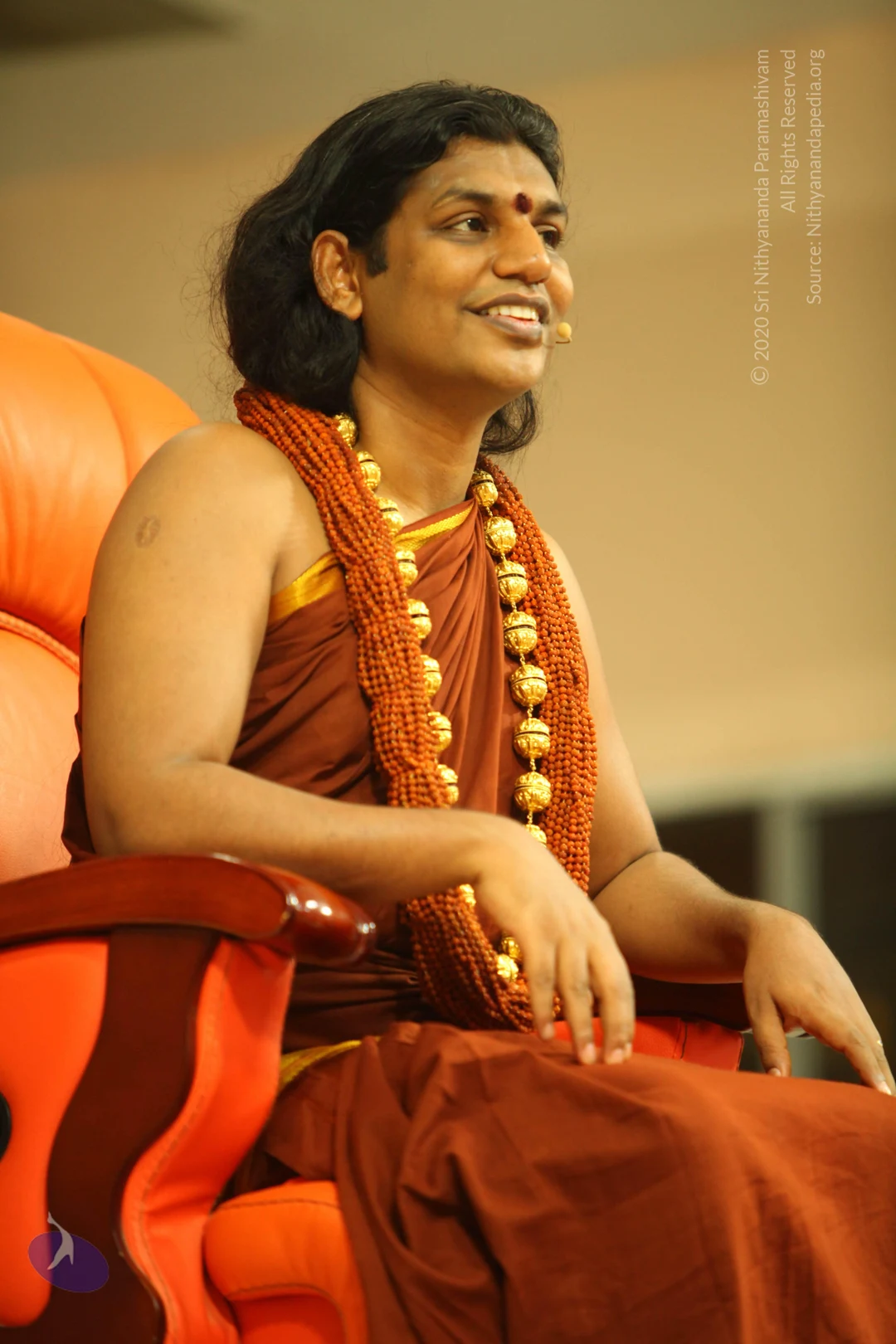
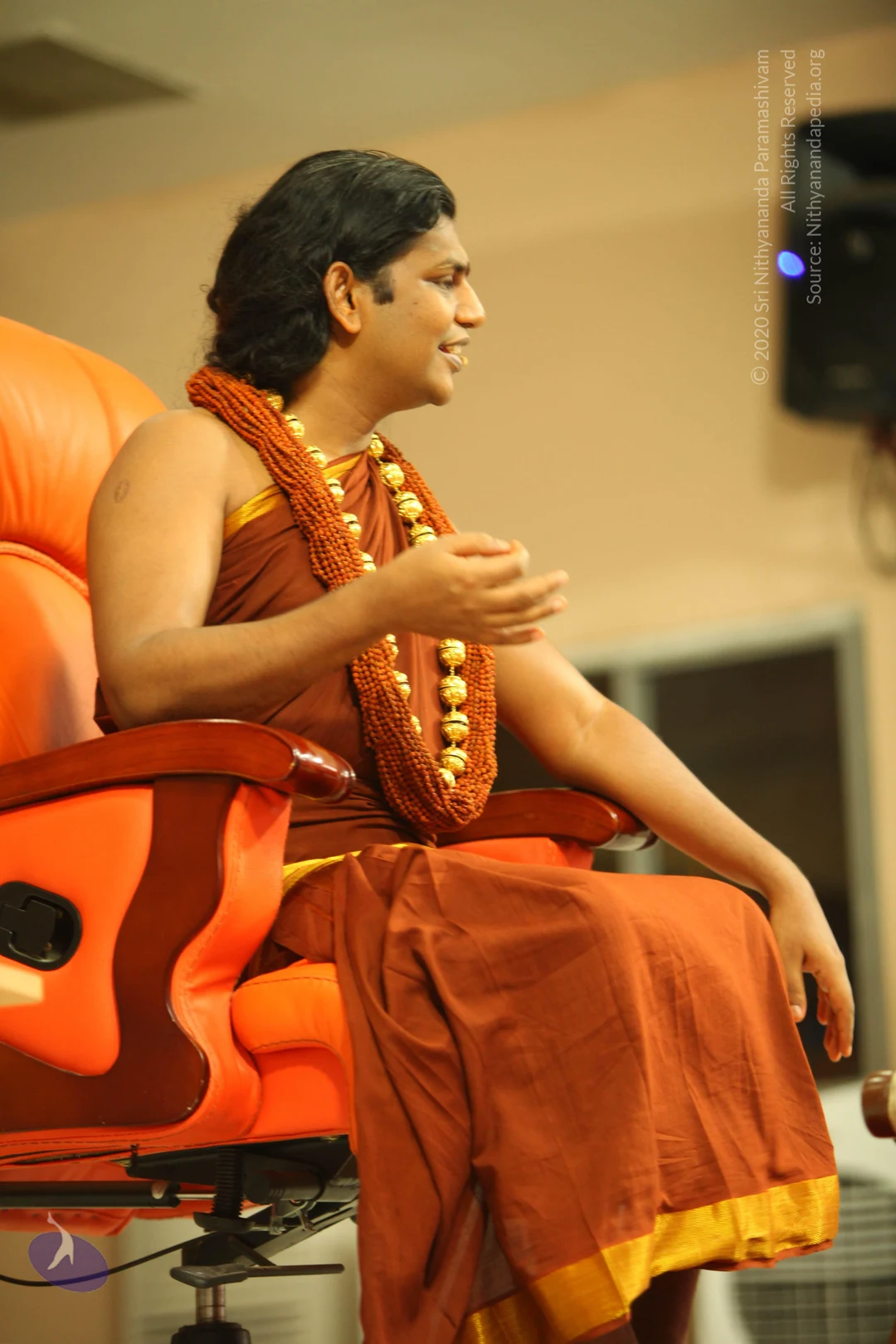
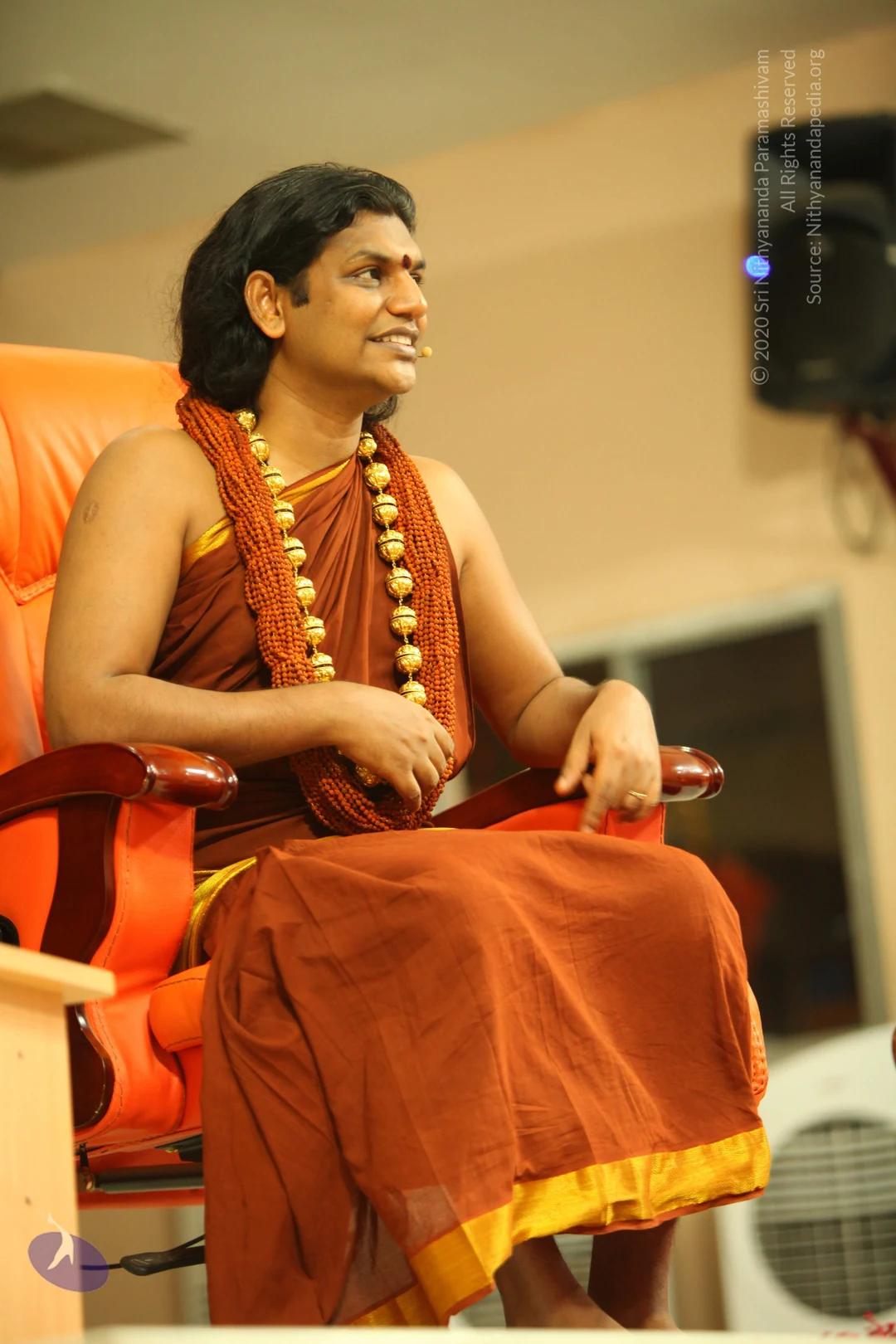
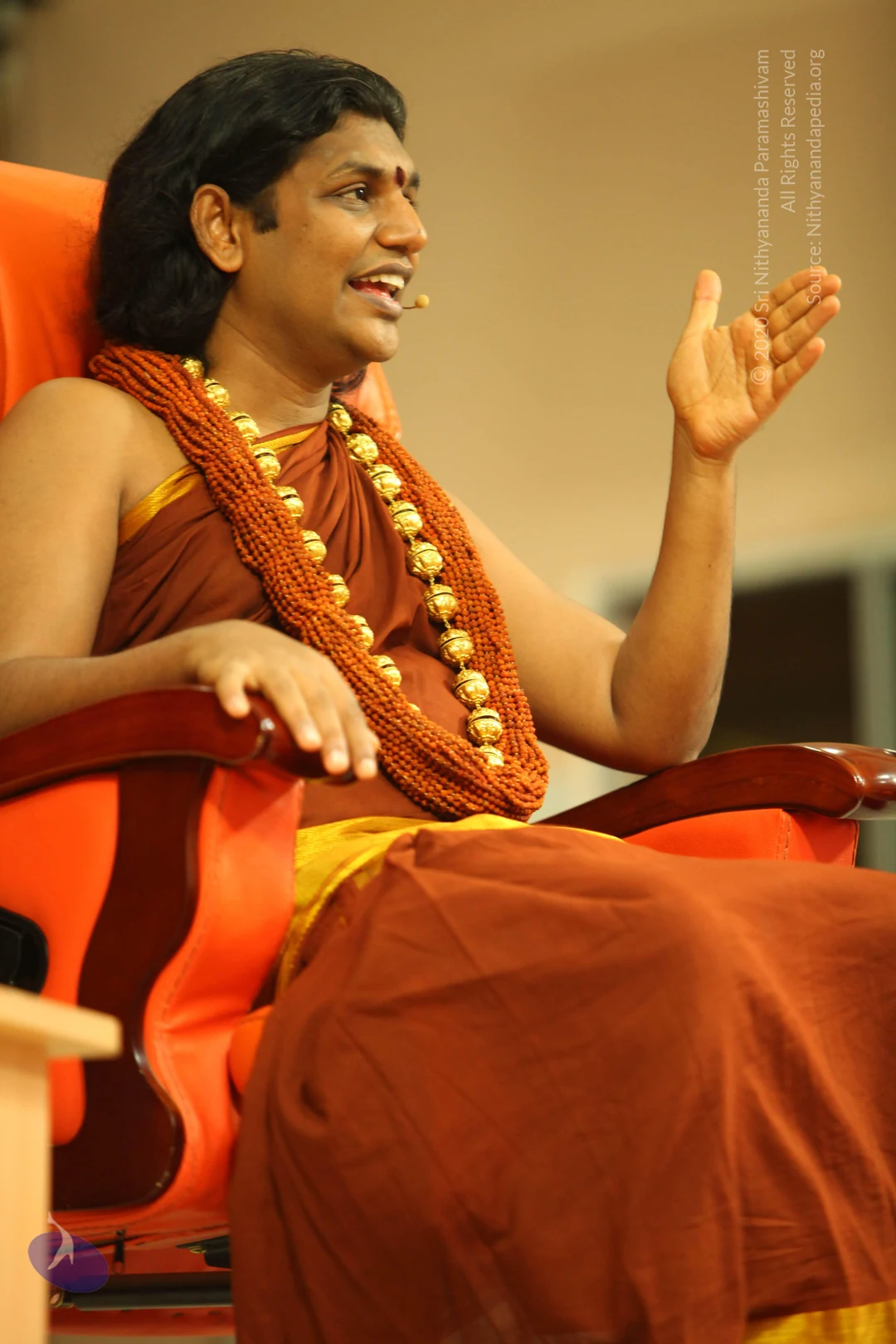
In today’s morning satsang, Paramahamsa Nithyananda offers a moving tribute to Adi Shankaracharya, the greatest sage of the Vedic tradition. Shankaracharya lived only 34 years but founded four monasteries, commented on all major scriptures and composed countless devotional chants. He also originated a number of philosophies, foremost of which is Advaita. Nithyananda also answers questions from devotees, including an inspiring response to why should one become sanyasi. Only In sanyas can one fulfill the ultimate peak of potential and discover the extreme frontiers of spirituality by surrendering completely to the four principles. Since mainstream lifestyle has failed to bring happiness or wisdom to our lives, sanyas can rescue the floundering human race and preserve Planet Earth.

Video

VideoAudio

Transcript

Nithyanandeshwara samarambham Nithyanandeshwari Madhyamaam Asmadacharya Paryantaam Vande Guruparamparaam

I welcome you all with my love and respects.

/* 1.02- 1.11 Hindi */

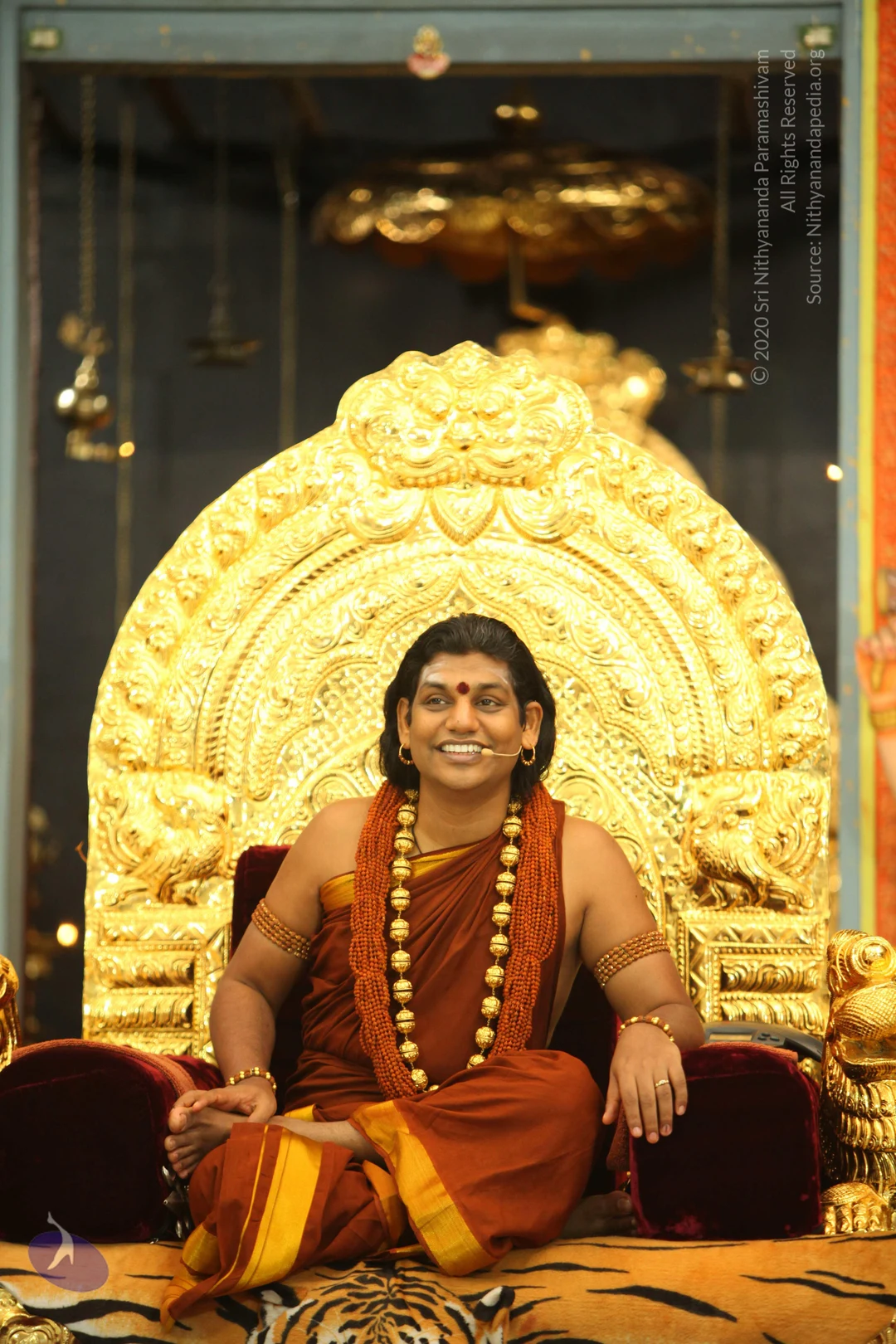
I welcome all of you who are sitting with us around the world. Today is, Adi Shankara Jayanthi. The great being, Sri Adi Shankaracharya was born on today.

One of the greatest philosopher on the planet earth still still, still, he is the unbeaten record. Please understand, almost after 2500 years, somebody can be an unbeaten record in the field of philosophy is not a joke.

/* 2.20 – 2.38 Hindi */

He is the only Acharya, went from south and, may be I can say, first. Instead of word one, First Acharya went from south and established the vedic tradition all over the world. Please understand, at that time, the different parts of India was different countries. So, it is equivalent to establishing all over the world. The civilization was such he had the strength, strength. Adi Shankara is still one of the greatest philosophers, walked on the planet Earth, Still an unbroken record. Understand, in the world of philosophy, there is only 2 group:-

–>One who accept Shankara

–>Who rejects Shankara

But nobody can go beyond Shankara. Thats all.

Who accepts Shankara. Who reject Shankara. Nobody is above Shankara.

/* 5.01 – 5.50 Hindi */

I still can’t introduce Adi Shankara. Because when I remember him, I am just lost in the ocean of his glory. What he has done, Just 32 years he was in the body, Some biographies say 34. But no biography claims, he lived more than 34 years on the planet earth. So, the maximum possibility is 34 years. Studied the shastras, wrote commentaries on all the major books like prastanatraya, even on the stotras like vishnu sahasranama, composed hundreds and hundreds of stotras of the -level of Bhaja Govindam. And, above all, argued, did vada prativada, transformed millions of people, established 4 peetas – Shringeri, Dwarika, puri, Bhadrikashrama. Established 4 peetas to keep the dharma alive, still 3 peetas are unbroken, lineage of masters. Only Bhadrikashram peetadhipati, Shankaracharya was killed by Aurangzeb before he initiated the successor. But by that time, the Puri Shankaracharya took charge and initiated the next Shankaracharya. 3 mutts are unbroken lineage. And created the philosophies.

Please understand, I am not saying Shankaracharya created the philosophy. I am using the word ‘philosophies’. Because he is so vast. He cant even be contained inside advaitha philosophy. He was a space for the philosophies to happen. The best philosophy happenned out of him is Advaitha. So, Advaitha became his brand. But he is not just Advaiti alone. If you see his devotion, Soundarya Lahari, Oh god! Anybody will be mesmerised by the description of the form he is doing. A person who can describe the form so beautifully, can never be called Only Advaiti. That was also the breeze happened in his space. No one can imagine, in 34 years, he has done this. Please don’t think, “Oh, Swamiji also did it.” No. now we have so much of modern equipment supports. All the 500 books published, I myself don’t need to sit and write. Because video records are there. What ever I speak is video recorded, it gets transcribed, gets edited and published. But in Shankara’s time, every book he wrote, he has to write. Every argument he conducts, teachings he conducts, satsangs he conducts, he has to speak, there is no audio recording system. When he speaks it gets audio recorded, then transcribed. NO!

So, for the arguments, separate time, and writing the books, separate time.

Shankara has written 3 types of literatures:

–> commentaries on the traditional scriptures, like Brahma sutra bhashya, Bhashya on the dwadashopanishads, and Gita Bhashya. That’s the first.

–> Next, please understand, next, he established 4 monasteries. It is not a joke to establish a monastery. Even in this modern day, having 55 sannyasis, directly supporting the mission and around thousand two hundred full time volunteers, including rishis and everyone, I am not able to establish monasteries everywhere. It is so much of work. You don’t know. 4 peetas in 4 different countries he established. Understand, it was not India at that time. It was Kalinga desha, Chola desha. Those days, Sringeri was under Chola kingdom. Chola desha, Kalinga desha and Goorjara desha and Himachala in the 4 different countries he established the 4 peetas.

And the amount of his contribution to the world of philosophy. See, Usually philosophers will be so impractical they will not even have their own house. Philosophers will be so impractical, Neither people can live with them nor they can live with others. That is why, they can never create even their own house. They will be always beggars in the streets.

Here is a philosopher so practical. Established 4 huge monasteries which are still alive, flourishing, thriving and incidentally today is jayanthi of Ramanujacharya also. Both of them are born on same day. Of course with the gap of may be Thousand five hundred years, Ramanuja’s birthday was 996 jayanthi. Of course because of the shaiva-vaishnava problem, usually always the vaishnavites tend to celebrate one day before. But the original thithi and nakshatra is on same. Nothing, nothing, nothing can be compared with Adi shankara. Me, and my sangha pays homage to the Adhipati of the hindu tradition. Sarvangyna Peetadhipati of the hindu tradition.

15 TO 30 MINUTES

Establisher of Hindu tradition, whatever you are seeing today as the Hindu tradition, Adi Shankara is the architect. Understand, even maha nirvana akaada, even though it was originated by Kapila muni by laws are formed and reorganised as a sangha as an organism by adi shankara. We bow down to the aachaarya with the great respect. Let him shower his grace on all of us. Bless us to experience what he experienced and expressed through his great words.

With this tribute to shankaraachaarya, I will move to nithya satsang today. I will answer the questions from Inner Awakening participants and all the participants. Please read the questions.

Ma Maneesha: The first question today is from Inner Awakening ID no 103 who is asking respected swami I am working in business con where my job is to make our buyers believe that they are getting the products at the best cost without giving a good profit. If I lead a life of complete integrity, may or the company may not be out of business. Please help me for this situation.

Swamiji: This is a very important question. I tell you. Really I tell you. You do not need the people to know what is your margin or profit. When I say integirty, please listen. Do not reduce the quality of the product and do not try to do cutting the corners, do not try to cheat, do not try to delay the delivery. For example, I say this is the product this is best the cost is 10000 rupees. He does not need to know that I made it only for 2000 rupee. I can continue to be in my integrity by maintaining the quality of this product, delivery date and all the services and in the, the integrity does not tell you, you need to tell the cost of the product to the guy. Understand, make the buyers understand very cleary we are business organisation, we are not charitable organisation. We are business organisation. What profit we make is ours. All you need to know is best product. Please understand, if you maintain integrity in all these, that is all is integrity. Don’t lie, don’t talk about the cost price, and make it very clear to people whatever words you utter will be honoured. Whatever words you utter will be honoured. May I know who asked the question? Yes please be seated. Whatever words you utter is honoured. For example, this program. Inner awakening program. Whatever I commit I go on honouring, but what is the expense we incur nobody need to know. Nobody need to compare what they are paying and what is the expense we incur. You understand? Neither we tell you nor you expect to know. Everyone knows what is finally delivered to us is worthy of much more than what we are paying. There ends integrity.

Understand. Please understand. Integrity is not transparency. It is honouring the words you gave. You are confusing integrity with transparency. Tell the people, we are in business. I have a wife, I have a car, and I have a house. I need a cell phone bill. Who will pay my bills? We are a business organisation. You can be very clear, when you say we are a business organisation. Forget about business organisation, even charitable organisations. We need to run. 1200 people I have to take care per month. I’m the father for 1200 people. 1200 people eat because of me. Understand, so, it is not a joke. To run an organisation with 1200 people. So integrity is not transparency, integrity is honouring the words you gave. Trying to honour the words you give. And go on trying to provide the best is authenticity. Neither in integrity nor in authenticity, you are asked to be transparent. You are only asked to be transparent about the product and the cost. When you say upfront, perfectly alright. Understand. Because your life is added into each product. Each product you create, your time is added, your energy is added, your creativity is added. What’s the cost of your time your creativity, your energy. So, integrity is not transparency. How many of you are clear? If you maintain your integrity in all these place, that’s enough, your business will flourish and pick up.

Next, next question.

Ma Maneesha: The next question is from an IA participant who is asking, “The practice of the 4 tattvas has to manifest in our behavior as a human being. And the correct practice of this will make us role models in the society. How can we achieve this?

Swamiji: First drop the greed to be a role model in the society. Live these 4 tattvas, simply people will accept you as a role model. If you are rolled in the 4 tattvas, you will be the model for society. Understand, intensely, intensely, as intensely as possible, as authentically as possible, think think think, through the 4 tattvas. Please understand. Think through the 4 tattvas. First, you need to do is pure listening of 4 tattvas and thinking through these 4 tattvas. Integrity, authenticity, responsibility and enriching. Let your thinking be aligned with these 4 tattvas. For example, now if you are feeling very sleepy drowsy, immediately bring authenticity. “Come on, till yesterday I was always like this, now let me wake up and practice these tattvas. Let me push myself to the space of listening. Let me take the responsibility for transformation and enriching.” continuously think through the 4 tattvas. Thinking through the 4 tattvas. You will simply be successful with you and with the society. I tell you. Thinking through the 4 tattvas is the best way to be a success and a role model to the humanity. When you think through the 4 tattvas you will have a breakthrough thinking. Next question.

Ma Maneesha: The next question is from is id no 300, who is asking what does it mean to be complete with any situation in life?

Swamiji: What does it mean to be complete with any situation in life. ID no. 300, may I know who it is?

Completion means feeling empowered. Powerful! Without any hangover, after every situation in your life. Completion means feeling empowered, feeling powerful, without any hangover without feeling powerless during and after any situation in your life. If you are powerful, you won’t be violent. You will not be lying spontaneously. You will not be in guilt, fear, pain. So completion means, completion means, feeling empowered after every incident. Listen, every incident only adds to you. Sometimes it adds wealth, success. Sometimes knowledge, experience! It only adds, adds adds. If you are feeling every incident is adding to you, you are empowered, you are complete. If you are feeling disempowered, powerless, then naturally you are in incompletion. So only when you live you will understand this principle based on your experience, what you feel, what you are, how you perceive you.

30 – 45 mins

Next question.

Q. Ma Maneesha: The next question is from a devotee who is asking, Swamiji, I heard you say that sannyas is the best lifestyle and is the need of the hour for the world. You also said that sannyas is the true freedom. I don’t understand how sannyas can be freedom. Can you please explain?

Swamiji: If you are married, you will understand! In so many different levels, sannyas is freedom. I have a story for you guys. One American soldier was in a bunker in Afghanistan with another American whom he did not know. The first soldier said, ‘Why did you come to this war?’ The second soldier replied, ‘I am not married and I love war. So I came here. What about you? ’The other guy replied, ‘I am married and I love peace, that is why I am here.’

Listen! Listen! Listen! Alcohol does not need any marketing. Do you know in India, marketing, advertising alcohol is banned? Any form of spirit, the alcohol advertising is banned. Legally it is not allowed. But do you know, non-advertising, does it stop people consuming it? Understand, just by the experience it gives, it gets, one fellow enriches another fellow about alcohol and gets enriched, and the whole world is drinking! At least in India, especially, the whole country is drinking! They import and drink! Make local arrack and drink! And what all they do! Sometimes mix and drink! Listen! Just by the experience of the alcohol, you don’t need a marketing department, people pick up the lifestyle of alcohol, I tell you, sannyas does not need separate promotion. If they see me and my sannyasis, that is enough! It will spread! Alcohol is addiction. Sannyas is de-addiction! That is the only difference.

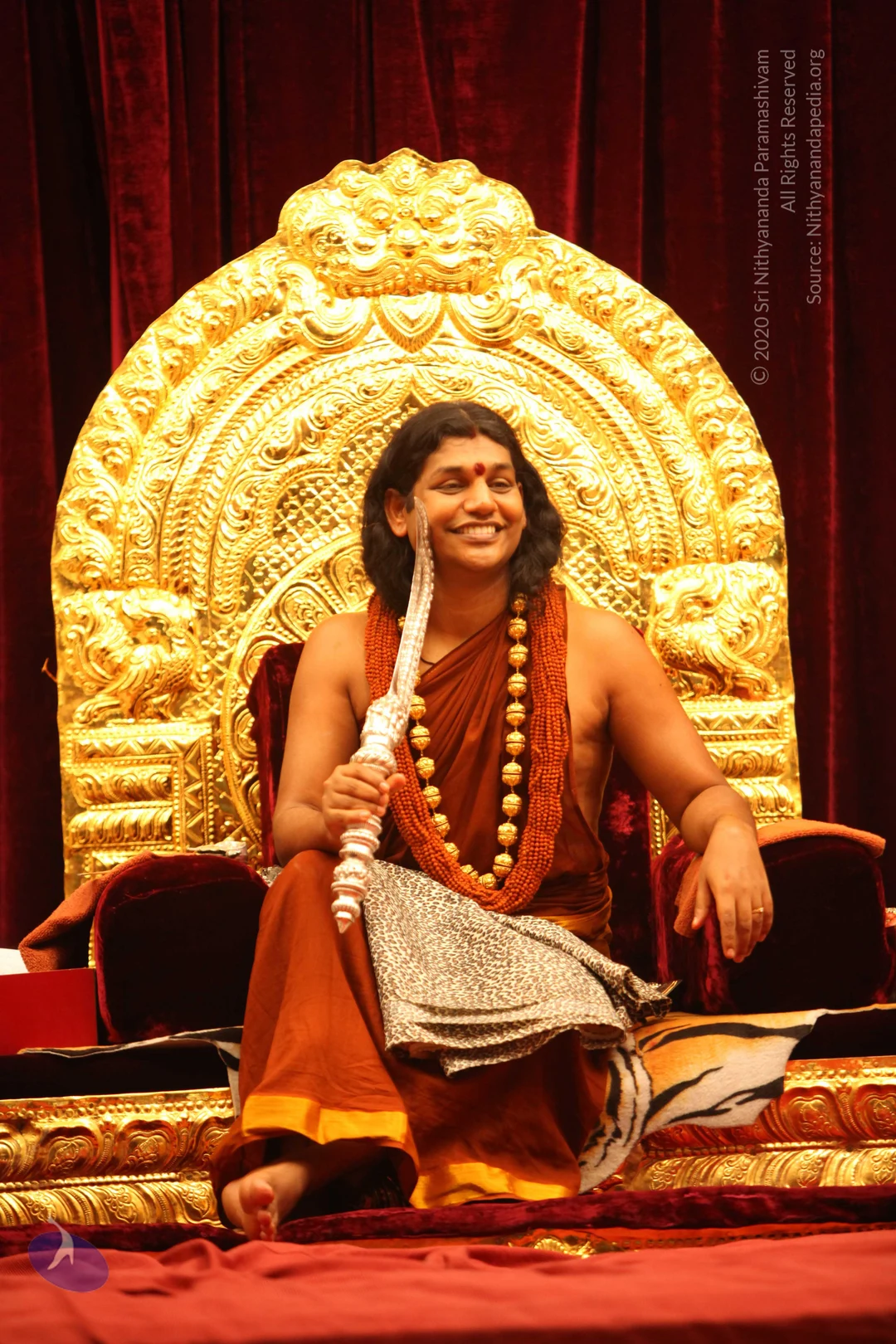
Come and see my Peetadheeshwar Training Centers. Come and see my Gurukul. Sannyas is freedom even from the idea of freedom! What is real freedom? Freedom to surrender to four tattvas. Other than these four tattvas, nothing else exists in me, is the freedom. Freedom is not simply doing what you want, it is allowing four tattvas to live through you. See, from today, as long as I am alive, morning 7 o’clock I am going to be in Pada Puja; 8 o’clock I am going to be in satsang. Do you understand? I did this for last, at least I think three years, and I am going to be doing for all the years I am going to be in the body. But I don’t feel this as a bondage! You may think, ‘Oh, every day, day in and day out, I have to come out and sit and stretch my legs, and then I have to sit and talk something and entertain people for one hour!’ You can get bored with anything, understand! If you are inauthentic, even being worshipped you can get bored! If you are authentic, even while you worship you won’t get bored.

Understand, I never even feel that my commitment towards the world is a bondage. See, whether you may be here today; tomorrow somebody else will be here; but this is my lifestyle. 7 o’clock in the garbha mandir; 8 o’clock in this seat I will have to continue. It is not a joke! How many of you understand? (People raise their hands). Then you know! But, I do not feel it is a bondage. And not only my morning routine, whole day! Because, after the Inner Awakening, few days only break, and immediately starts Inner Awakening Level-1. Then few days break, immediately, Bali Inner Awakening starts. Then, straight Kailaasa Yatra. Then immediately after that, August Inner Awakening starts! Already my whole next year calendar is in the website. You can see! I already know what I am going to do for next one full year. But I don’t feel it is a bondage. I don’t feel it is boring. Freedom is free from boredom and idea of bondage and freedom. Allowing the four tattwas to live through you is freedom. Getting it?

With Integrity and Authenticity, tell me, even if you are worshipped by people every day, you have to come exactly at the same time to receive the worship, Pada Puja, how many of you will be really bored? See, neither I am bored, nor I am going to change the time or I am tired. I am going to continue to receive as long as I am in the body and even after I leave the body! And the morning satsangh is going to happen! I will continue to speak as long as I am in the body. After that, I will have my own mechanism to speak! I am neither bored nor going to get bored. Understand! Freedom means, freedom from boredom and freedom from the concept of freedom. Deciding to live with these four tattvas. See, decide, ‘I am not going to have anything called my private or my own other than these four tattvas!’ That is freedom! That is freedom! That is freedom!

Sannyas is the only way to true freedom! Please understand, I am not saying one way to true freedom. Even when it comes to Hinduism, I am not fanatic. But when it comes to sannyas, I think I am fanatic! But one nice thing, my fanaticism is established on sound knowledge and perfect experience. Sound knowledge and complete experience! In my life, I have even doubted at least once the masters whom I believed – Ramakrishna and Ramana Maharshi. These two were the masters whom I believed while I was doing my practices. They both are my scale to measure anything. What is vairagya? I will refer only to them. What is enlightenment? I will refer only to them. What is tapas? I will refer to them. What is spiritual practice? I will refer to them. They were the scale for me to refer anything. Their words are the ultimate for me. They both are the Supreme Court for me. Even I doubted both of them, but I never doubted sannyas in my life. There was a time I decided I will live without both of them in my life, before my realization of my mission. Maybe, I can say, that some ten hours I was in that space. Once I even thought of disowning Hinduism! In that space I was there for three - four hours. I felt the whole Hinduism is fake! All masters are fake! I was in such a deep depression. The last, just before the enlightenment, means that flowering, that last phase I have to walk, I have to walk alone. So, that loneliness, I felt all masters are fake! Hinduism is fake! At that time, I wanted to take revenge. I threw the Ramakrishna photo which I was worshipping as my very being for years! And I decided just to take revenge I will convert from Hinduism! I doubted my masters and Hinduism, but even at that moment I never thought I will leave the sannyas! Of course, when I realized the ultimate, I understood everyone has to pass through that phase. So, my connection with sannyas is more than my connection with Vedic tradition. See, I was planning to get converted only to Buddhism. That is the closest I can find to Hinduism.

45 min – end

Even then I was only planning to be a Buddhist Lama, not married, Buddhist sannyasi.

I tell you, even a failed sannyasi is thousand times progressed than a successful householder, because in the householder, the responsibility you take is a totally different direction. It is all about enriching one family. The very scale you set for yourself is so low. It is like a mom-shop pop-shop guy. His whole goal is only yearly turnover of ten-thousand-five-hundred-and-fifty rupees. A sannyasi, every day turnover is two-and-a-half crore. So, even if he fails, he will be at least two crore! Even if the mom-shop pop-shop guy is successful, he may be twelve-thousand rupees. Understand, the very level in which you put your scale itself is different in Sannyas. But only thing, you have to be a responsible Sannyasi. Of course, only with responsibility Sannyas comes. Sannyasi is not an outfit, he is an overfit. If mainstream Hindus take up Sannyas again as a lifestyle, at least after sixty-five, after sixty, at least after the retirement – of course if you ask me, I will say you should start the Sannyas life at the age of six, or if not, little early – but at least after retirement, after sixty, if you pick up Sannyas. I tell you, so much can be done to you and to the world!

I commit, I will make mainstream Hindus accept Sannyas as a lifestyle by making some of the top celebrities in India in political, cine field, social field, making them take Sannyas when they retire from the life. Some of the top celebrities in India, I will see to it they take Sannyas when they turn fifty-eight, and they set a trend! Any model citizen, the mainstream Hindus should take Sannyas by the time you retire. I will make this as a lifestyle and I wanted it to be a lifestyle. Only then, people will understand the different way of living. The lifestyle taught to us by the mainstream western philosophy is a lie, is a failure! Already it is proved. For the amount of depression, addiction, suicide, legal suicide and illegal suicide. When I say legal suicide, bringing cancer for yourself and dying; bringing the diabetes for yourself and dying; bringing blood pressure for yourself and dying; it is legal suicide! You know if you do all this, this, you will have diabetes and blood pressure. Why are you doing that and dying? It is a legal suicide! Socially accepted suicide and unaccepted suicide. That is all. If you drink poison straightaway and die in a few hours, it is unaccepted suicide. If you sip little by little every day in the form of alcohol and die, it is accepted suicide! The accepted and unaccepted suicides, addictions, depressions has proved the lifestyle you adopted as a mainstream lifestyle is a failure.

I give my clarion call, O! Hindus of India, O! the people of Vedic tradition all over the world, wake up! I give you my call for both groups. People of Vedic tradition from all over the world and Hindus of India, wake up! Sannyas is the only solution! This is the best alternative lifestyle! Let the mainstream Hindus accept Sannyas as a lifestyle like Buddhists. Only then you will understand and taste the joy of freedom and enlightenment. Jeevan Mukthi!

I am coming! I am just preparing the ground, doing the groundwork. I will initiate at least one million – 10 lakh – Sannyasis with this very hand! I will make Sannyas as a mainstream lifestyle. Just like Buddhism, let the Sannyas become the mainstream lifestyle! Understand, only with Sannyas you can go to the extreme of living those spiritual principles. Seeing the peak of spiritual life! I know! People are frightened when I talk about Sannyas. Especially they try to hide their sons and daughters away from me when I speak about Sannyas. It is your inauthenticity, hiding you and hiding your kids away from me. You may hide them from me during the waking hours. But I will go into their dreams! There you can’t stop me! And wake them up!

O! The Youth of India, your life is going to be with me. Get ready! Elders of India, be mature enough to do the graceful exit, allowing the revolution, spiritual revolution to happen. Either allow the spiritual evolution, or we may have to make revolution!

Yes, it is time we paint the Parliament with saffron! It is time we paint the country with Kaavi! It is time we take up the responsibility, we take up the responsibility of making Sannyas as a mainstream lifestyle! If you are shivering when I am speaking about Sannyas, be very clear, that is your root-pattern and inauthenticity. If you are, again and again, looking at your son or daughter, how he is reacting, catch it, that is your root-pattern! And if you are shivering seeing the joy in the face of your son or daughter when I speak about Sannyas, better you know that nobody is going to save you! Even if you bring it to the Ultimate Judge, he is going to be on the side of your son and daughter! It is time, it is time! Only then we can save the Planet Earth! Planet Earth can be saved only by creating responsible Sannyasis. Sannyasis who take the responsibility to teach these spiritual principles. It is time.

The essence of today’s satsang is:

SANNYAS IS “THE” LIFE!!!!

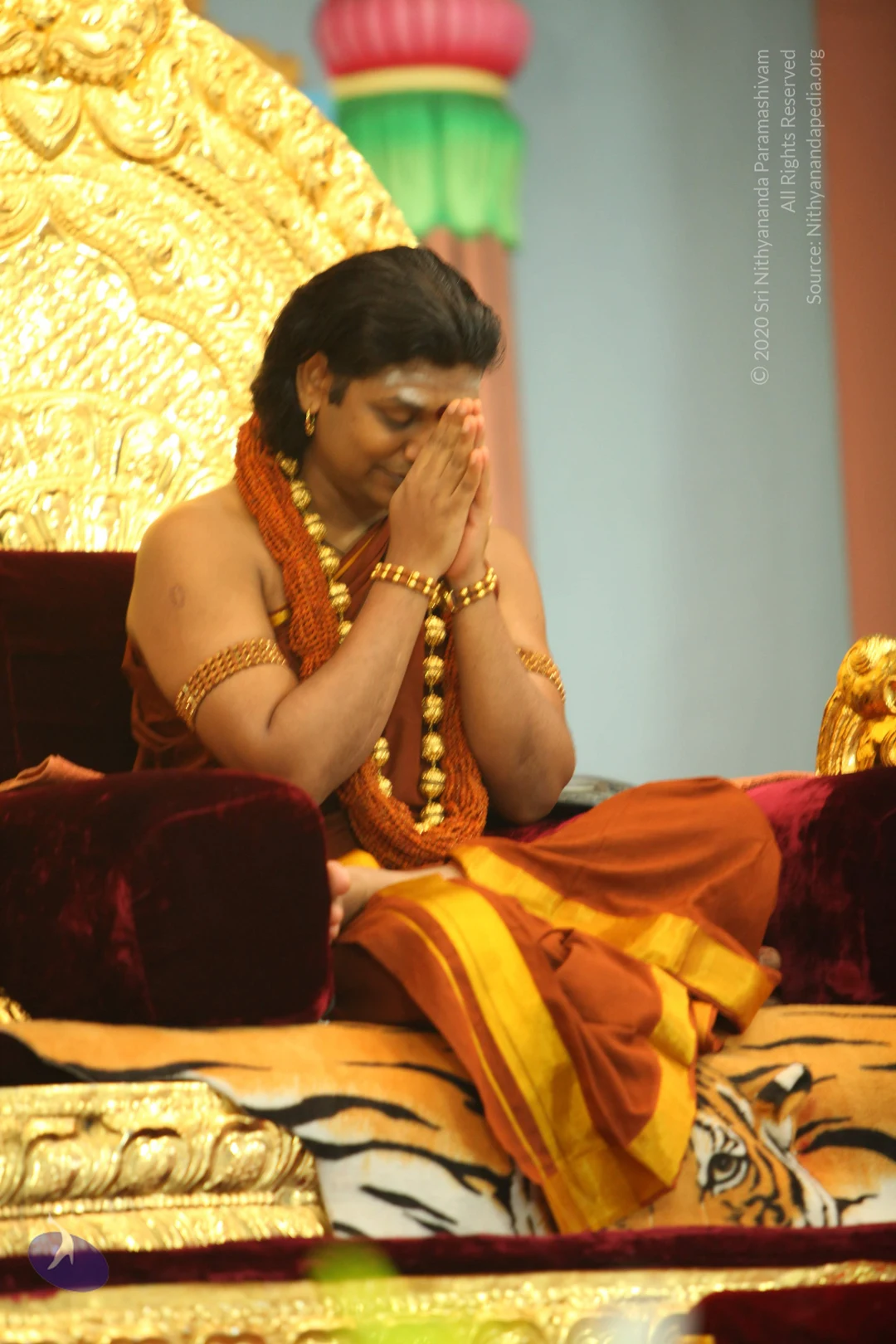
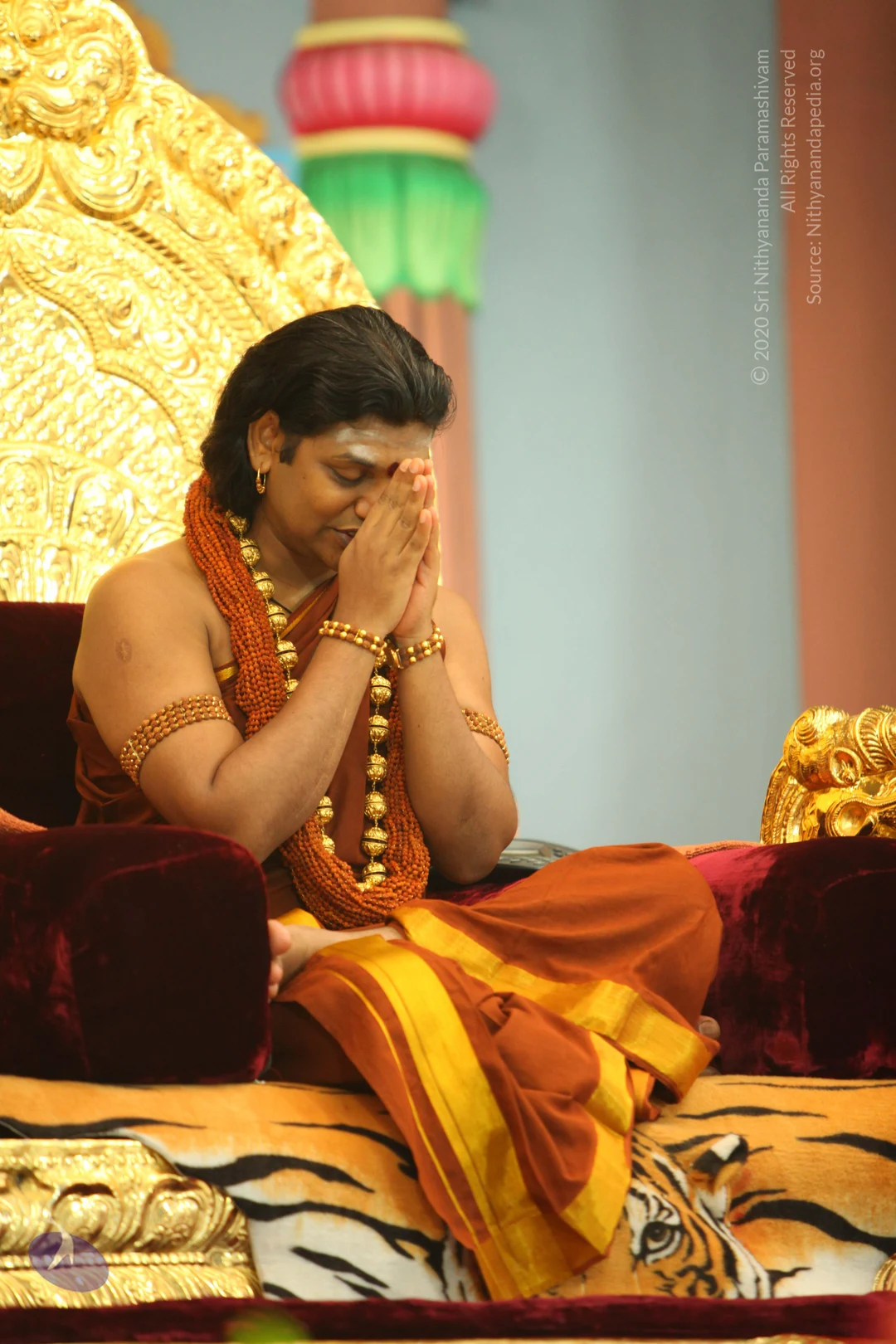
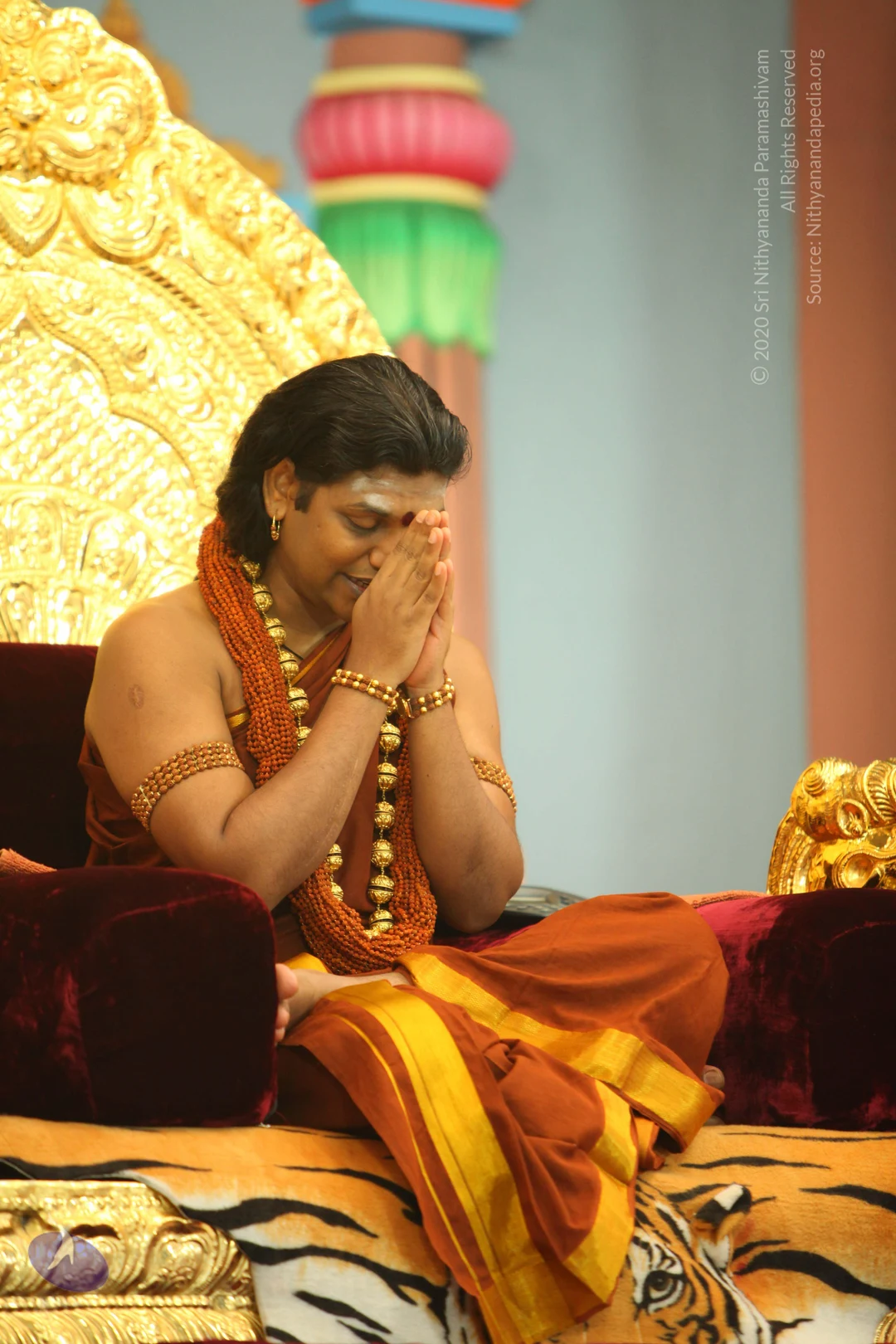
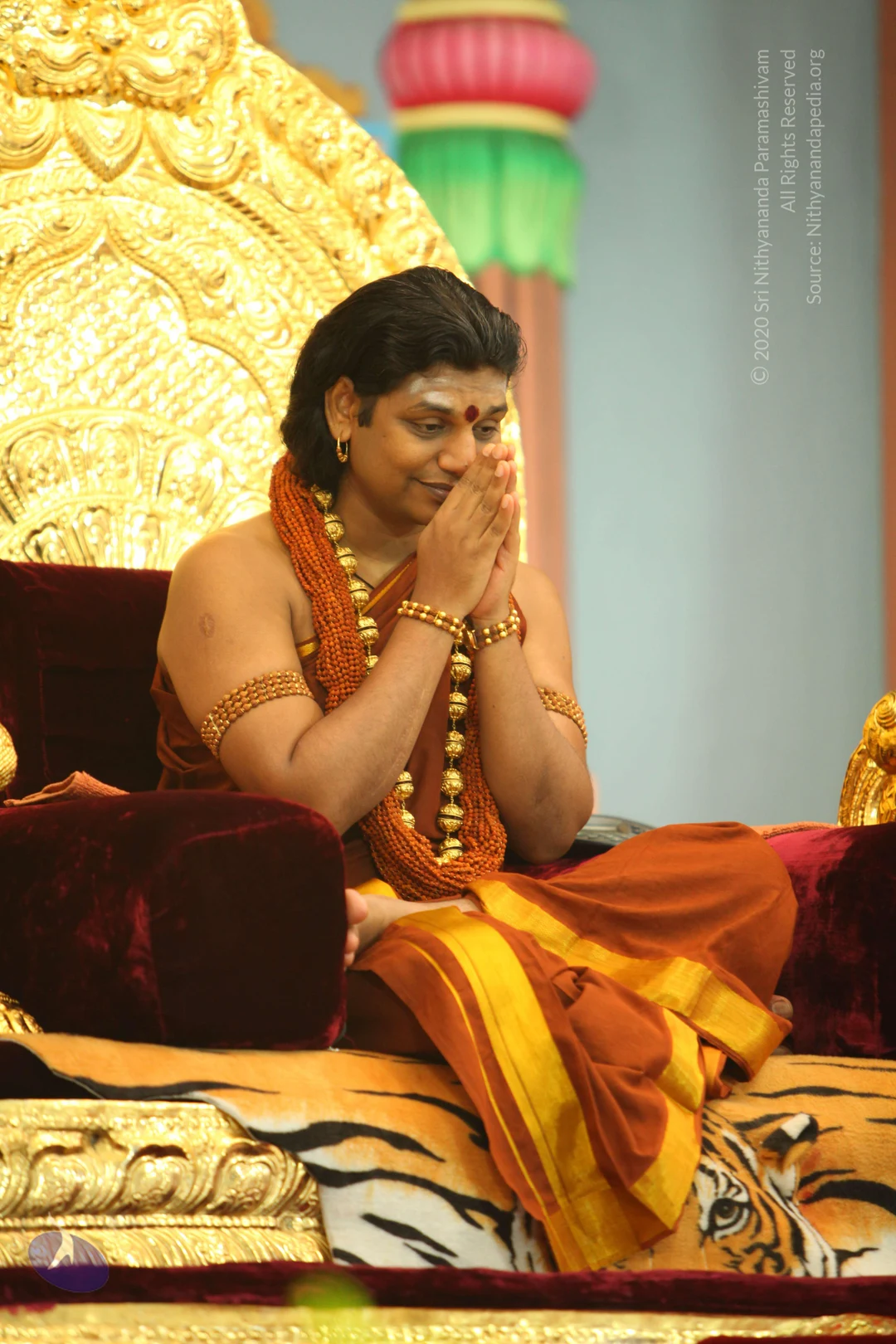
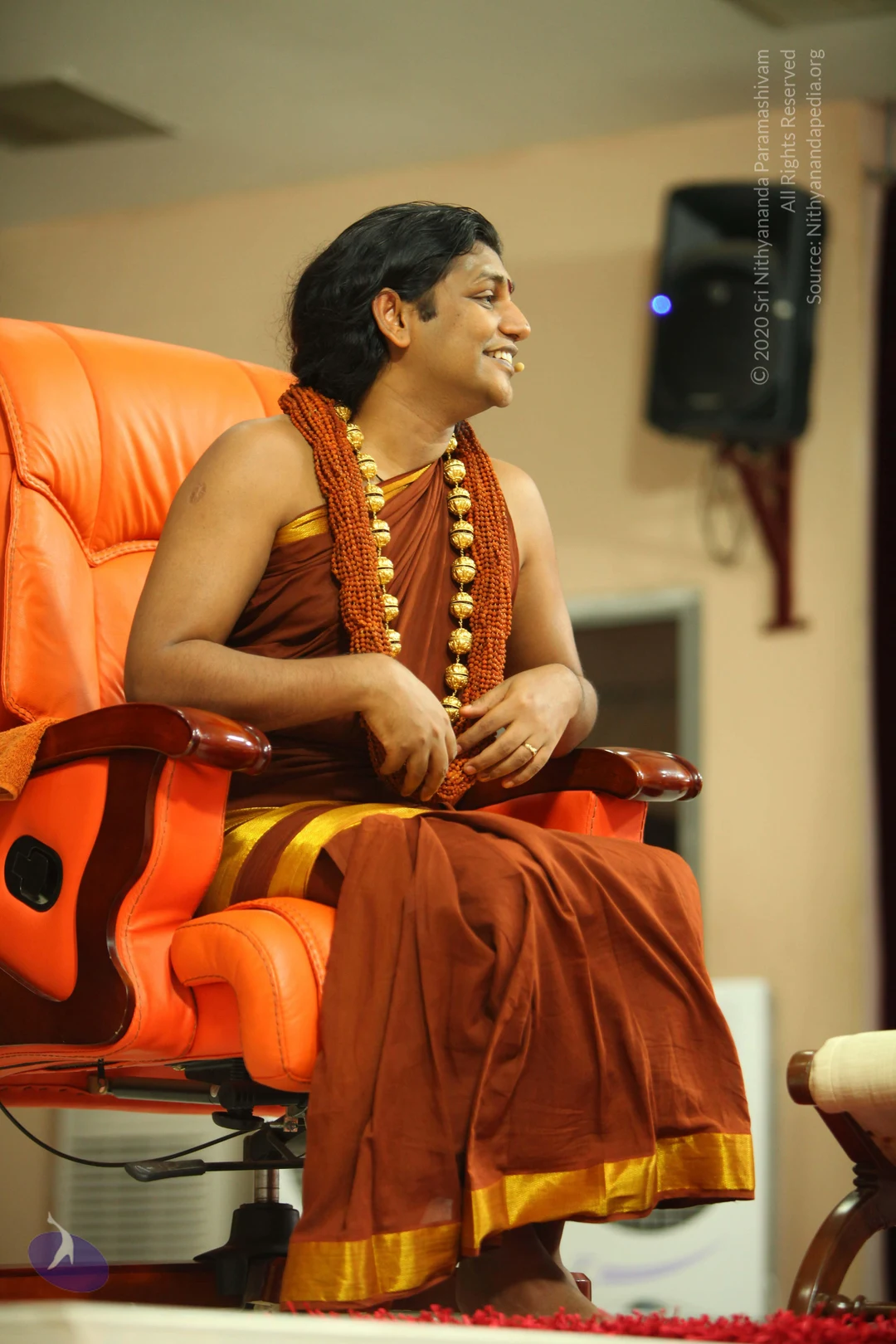
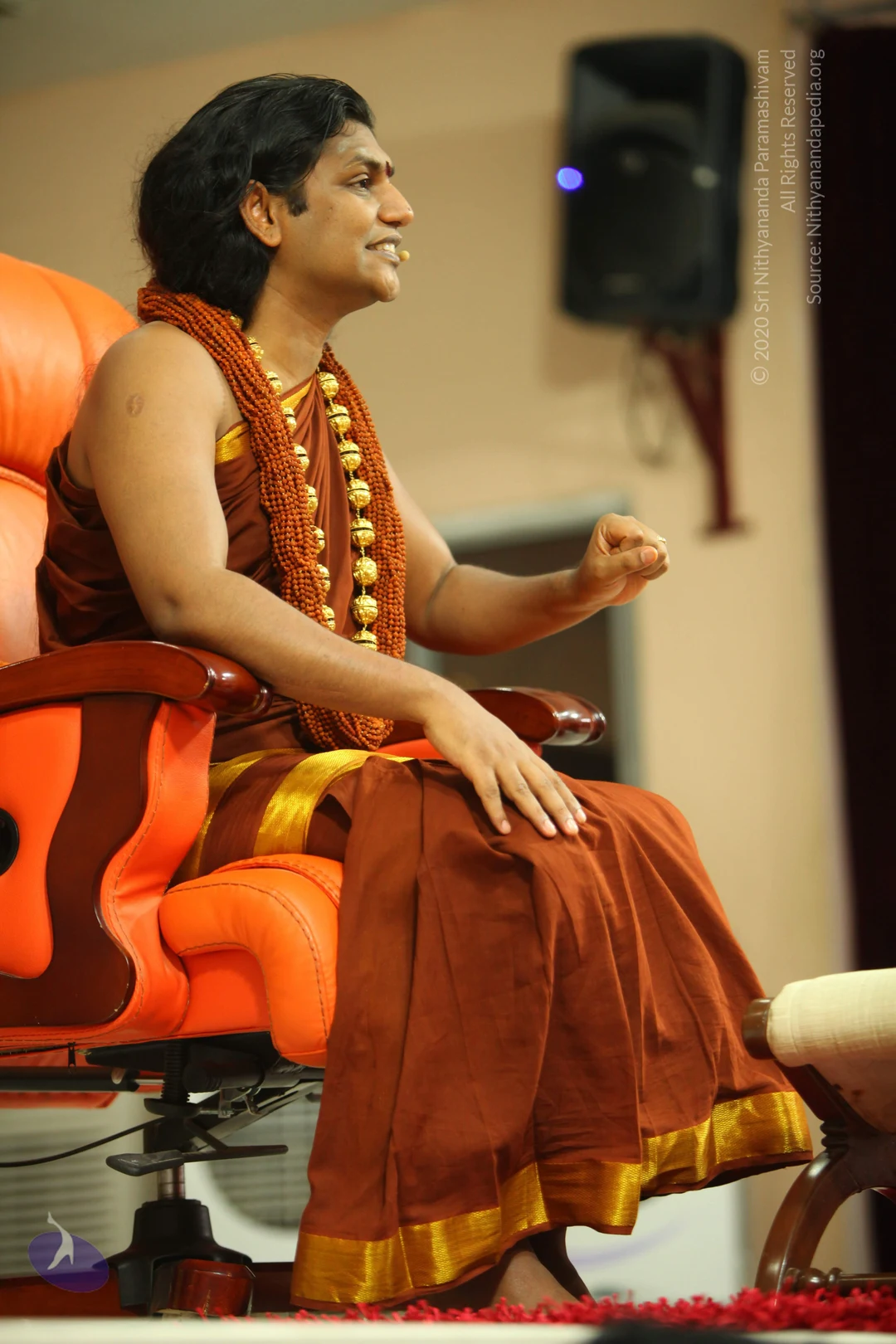
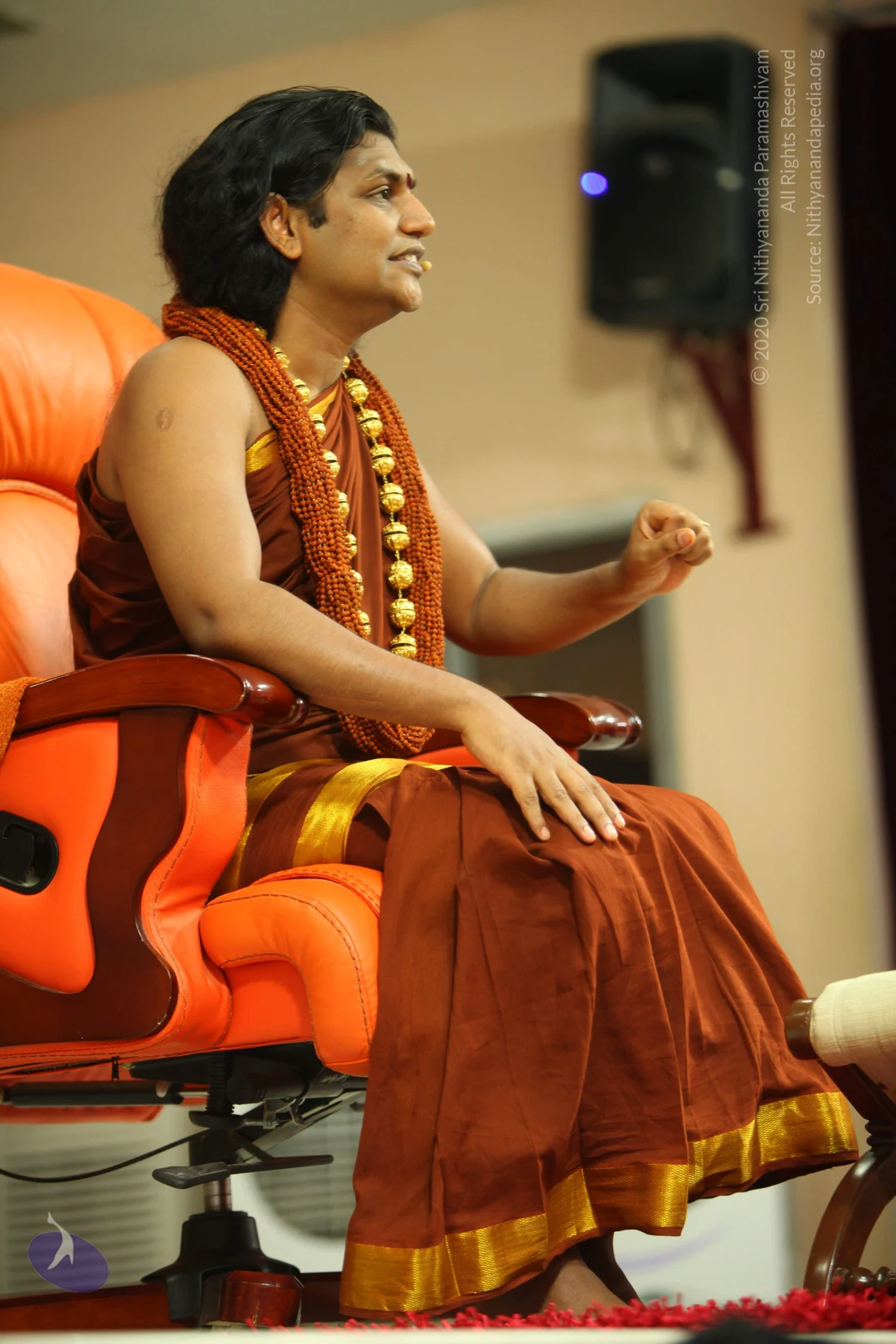
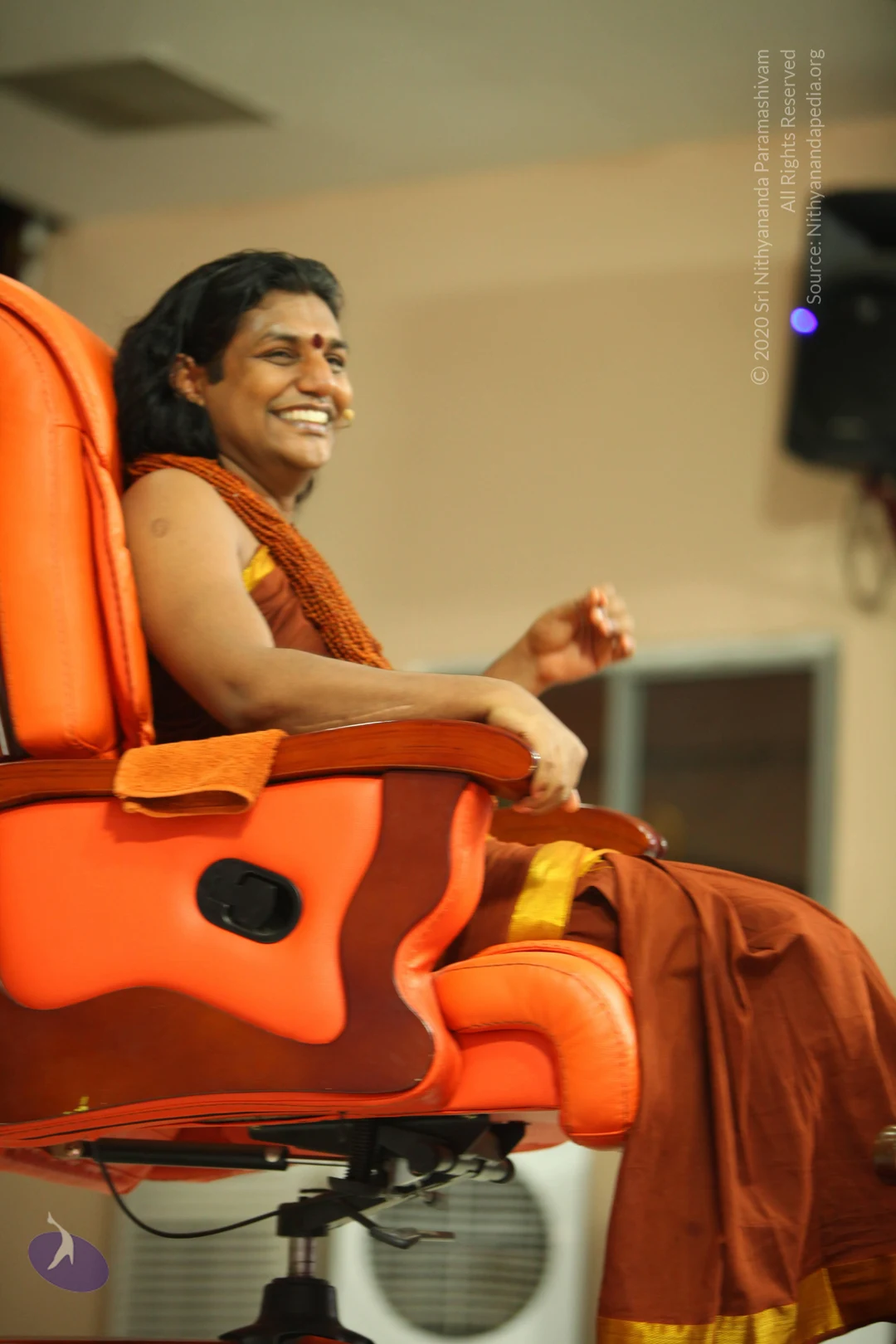
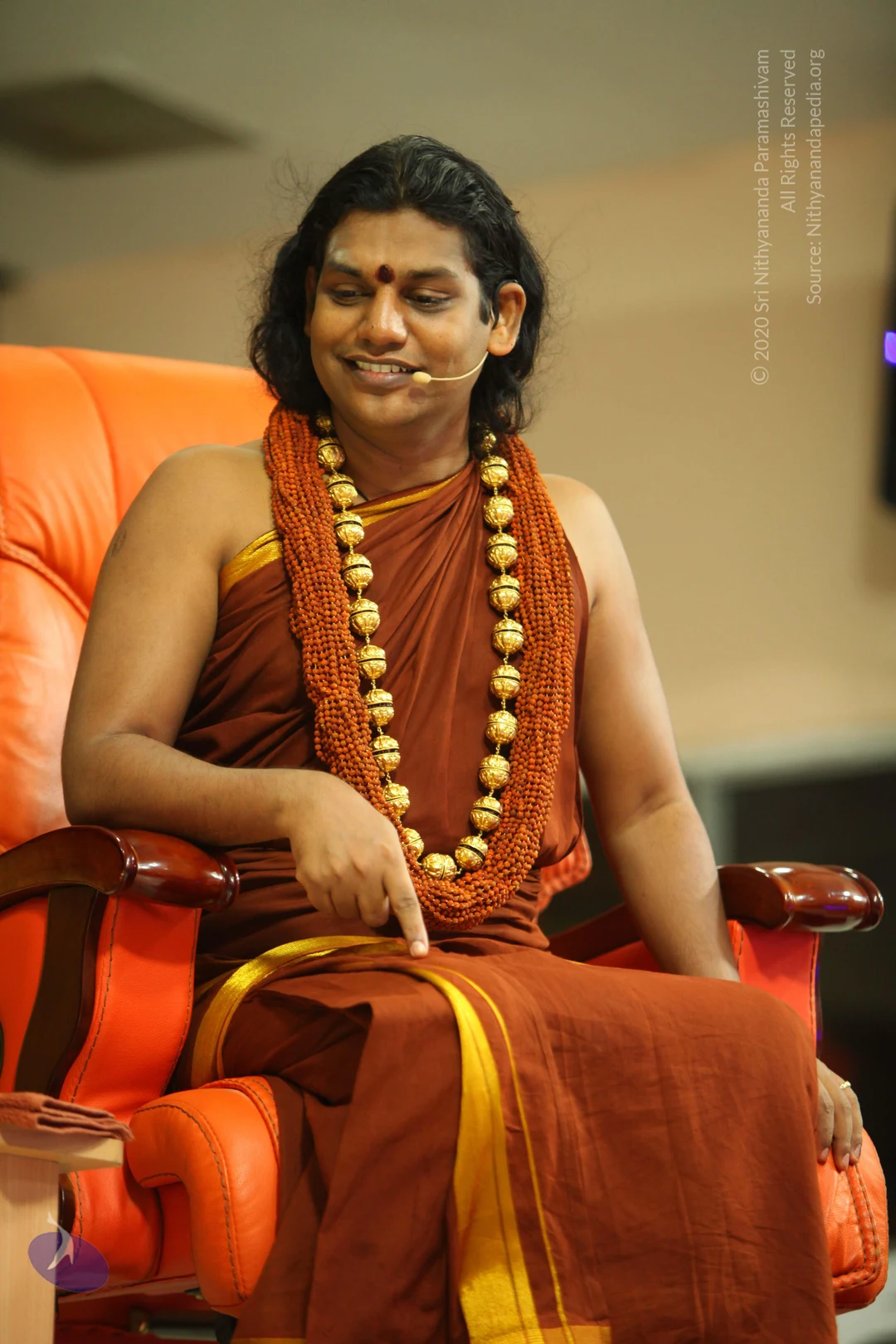
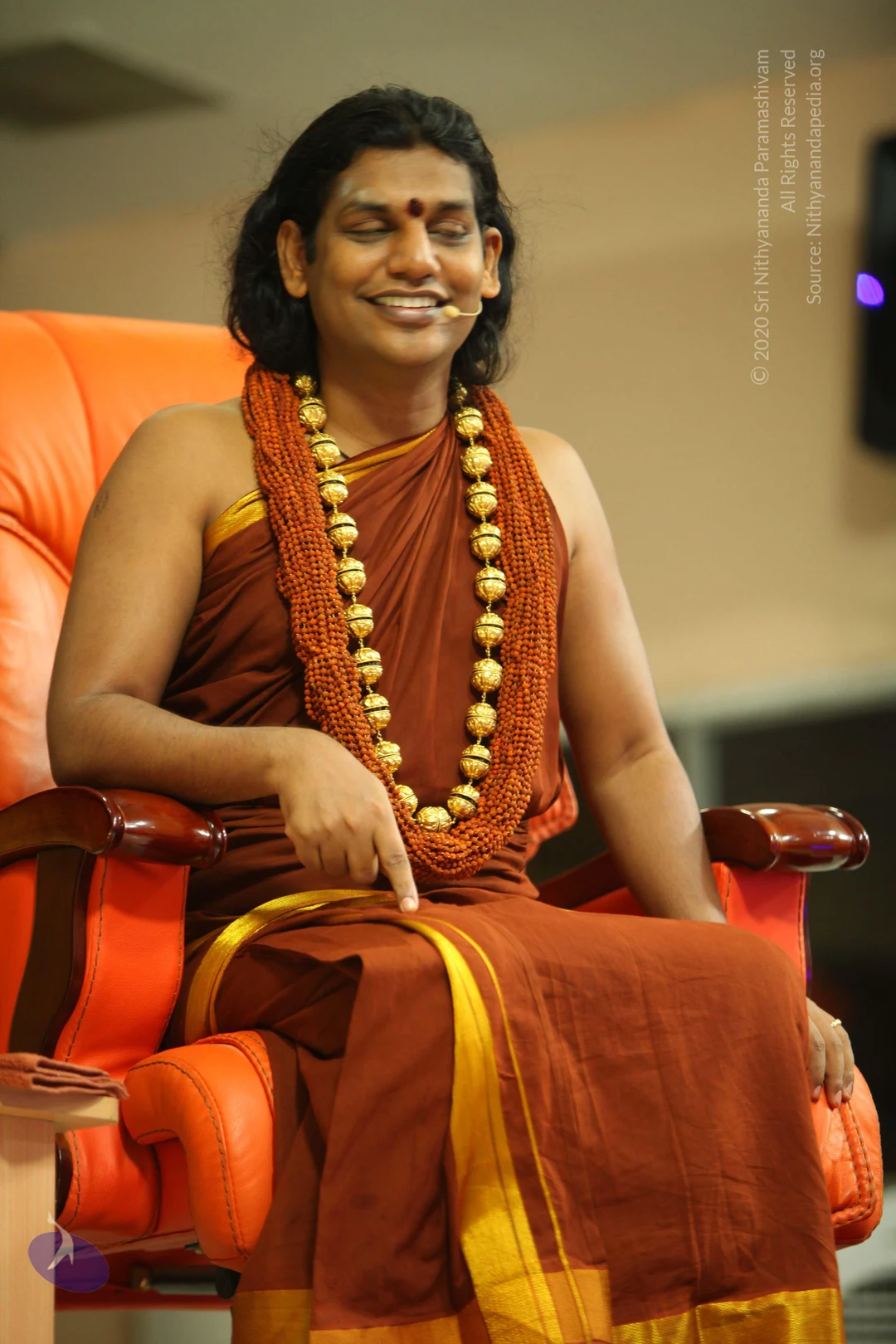
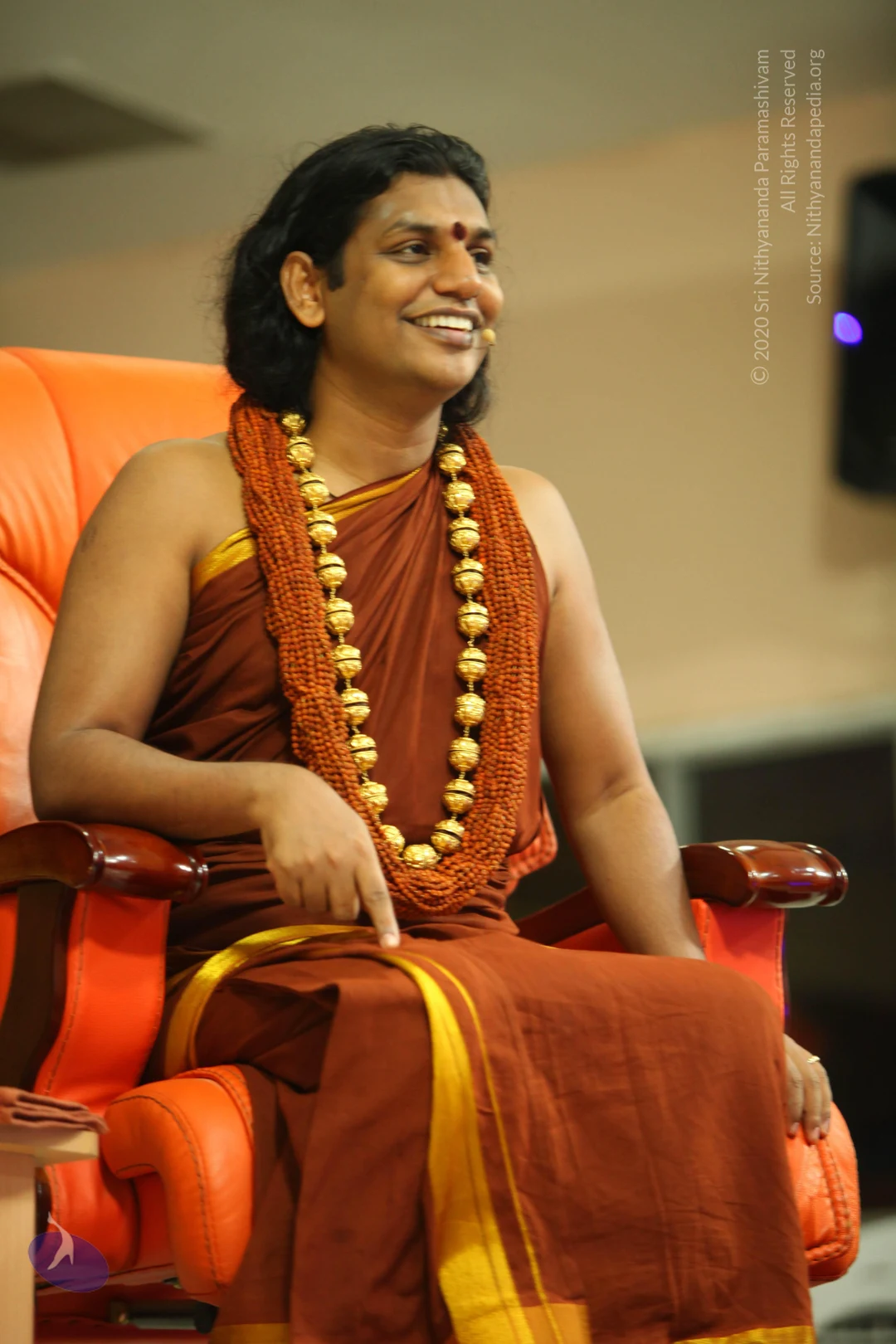
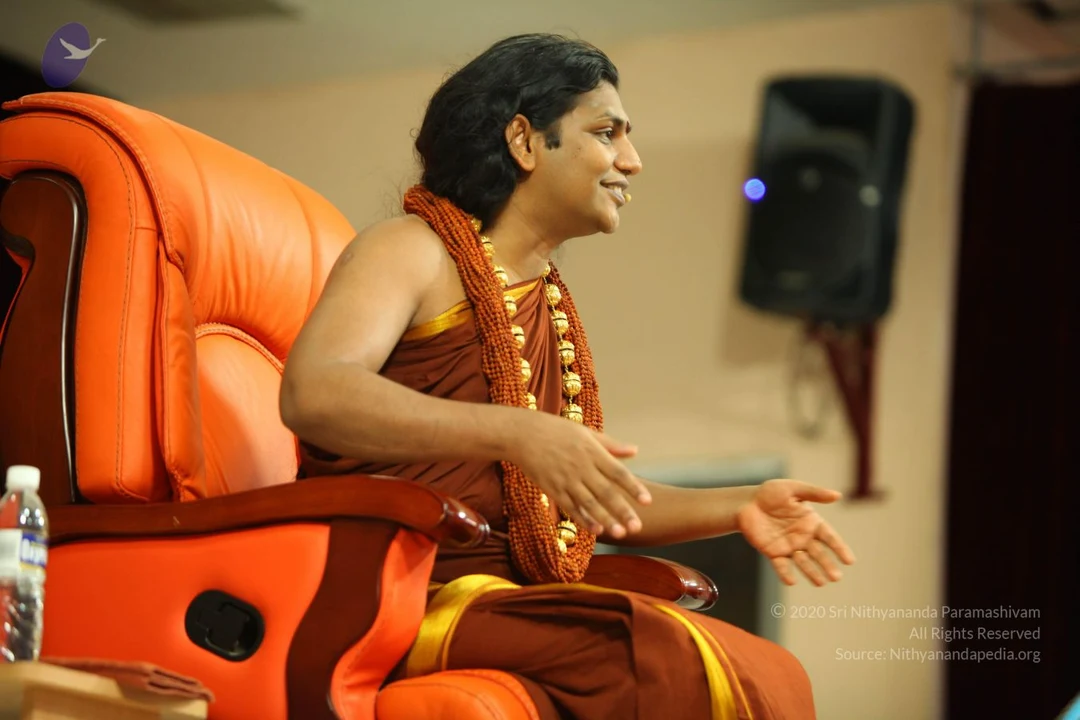
Photos
Link to Video:

Tags:

Paramahamsa Nithyananda, Adi Shankaracharya, sage, Vedic tradition, scriptures,devotional, Advaita, inspiring, potential, spirituality, surrender, lifestyle, happiness, wisdom, human, Planet Earth.

Photos Of The Day:

TEMPLE
PADA-POOJA

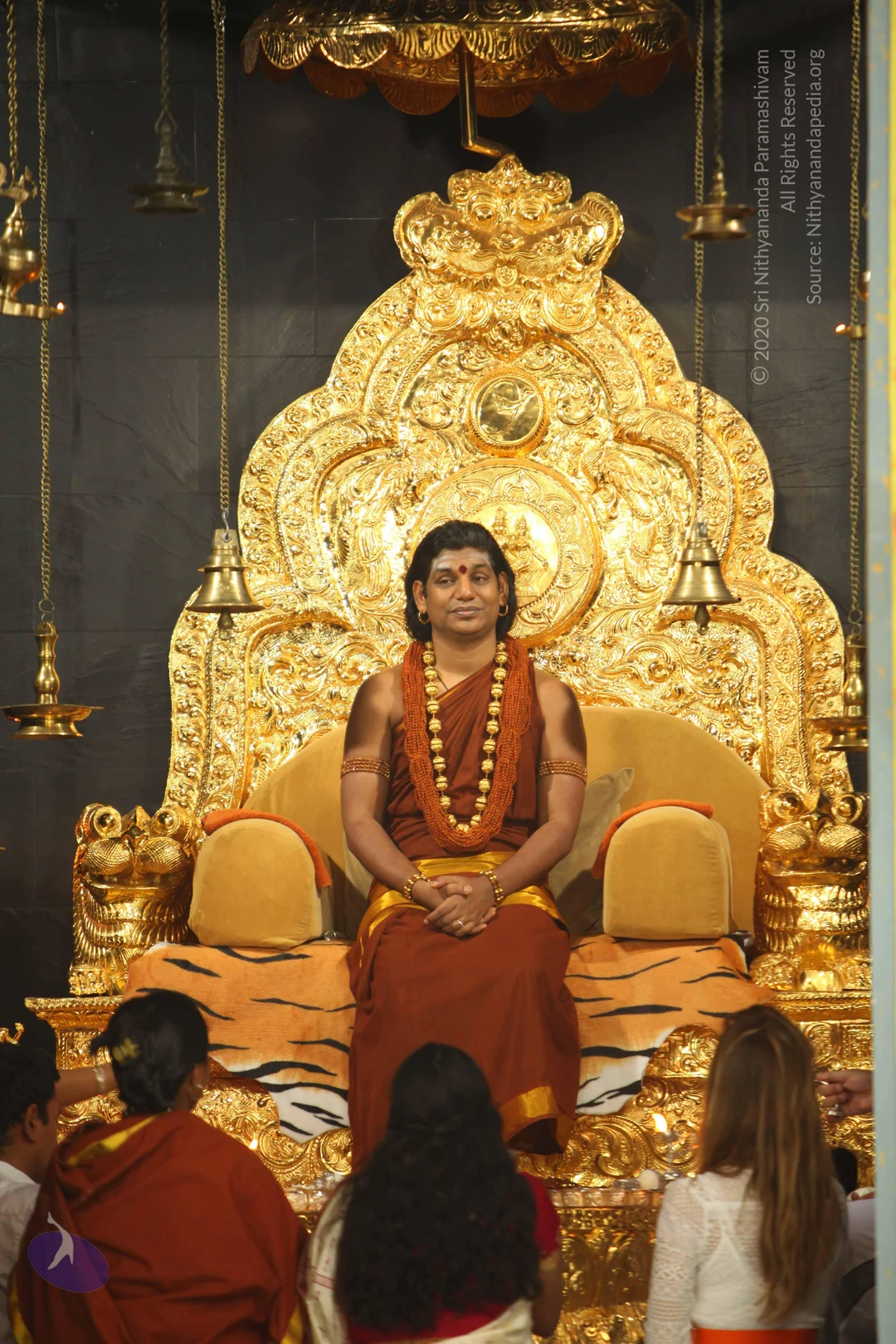
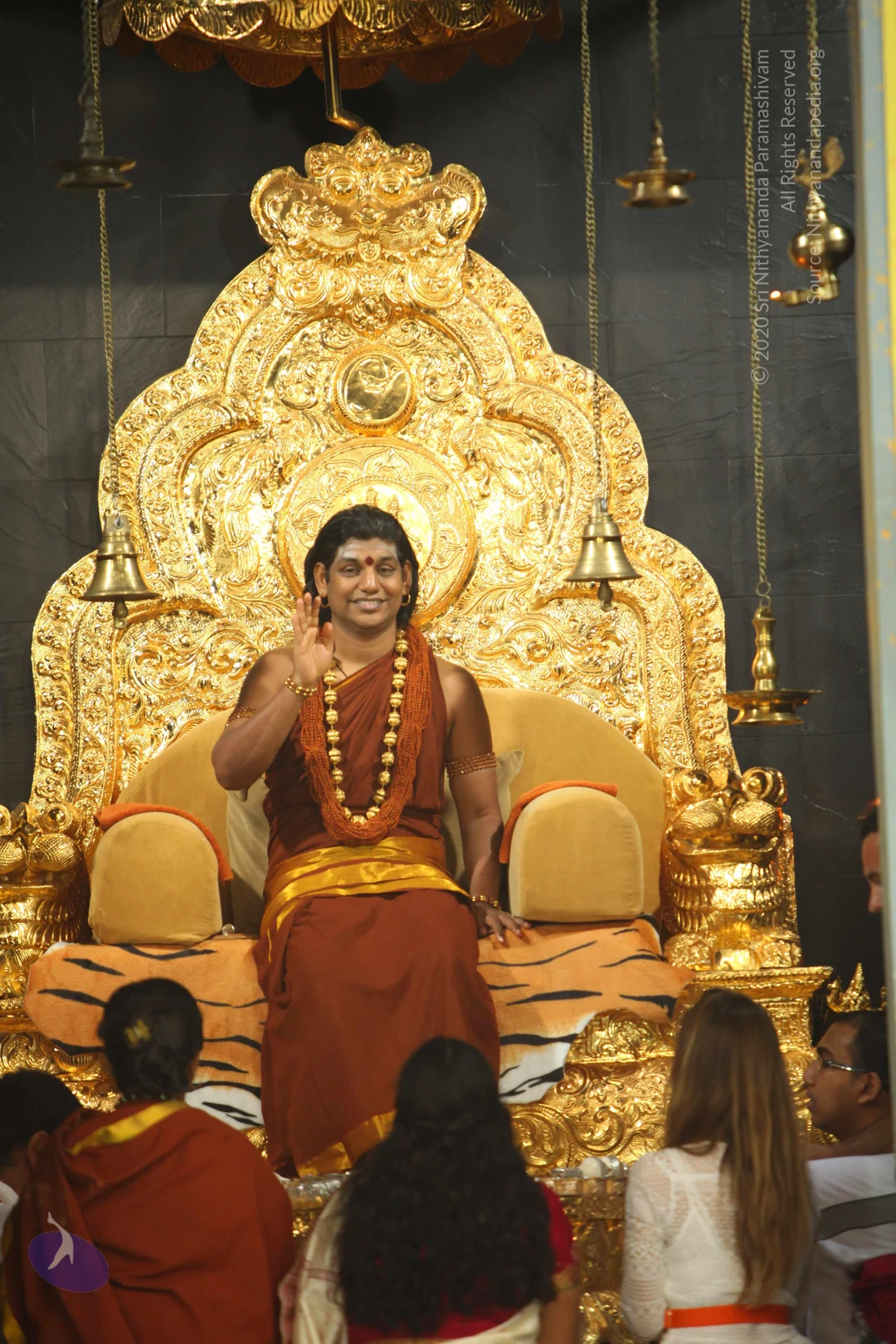
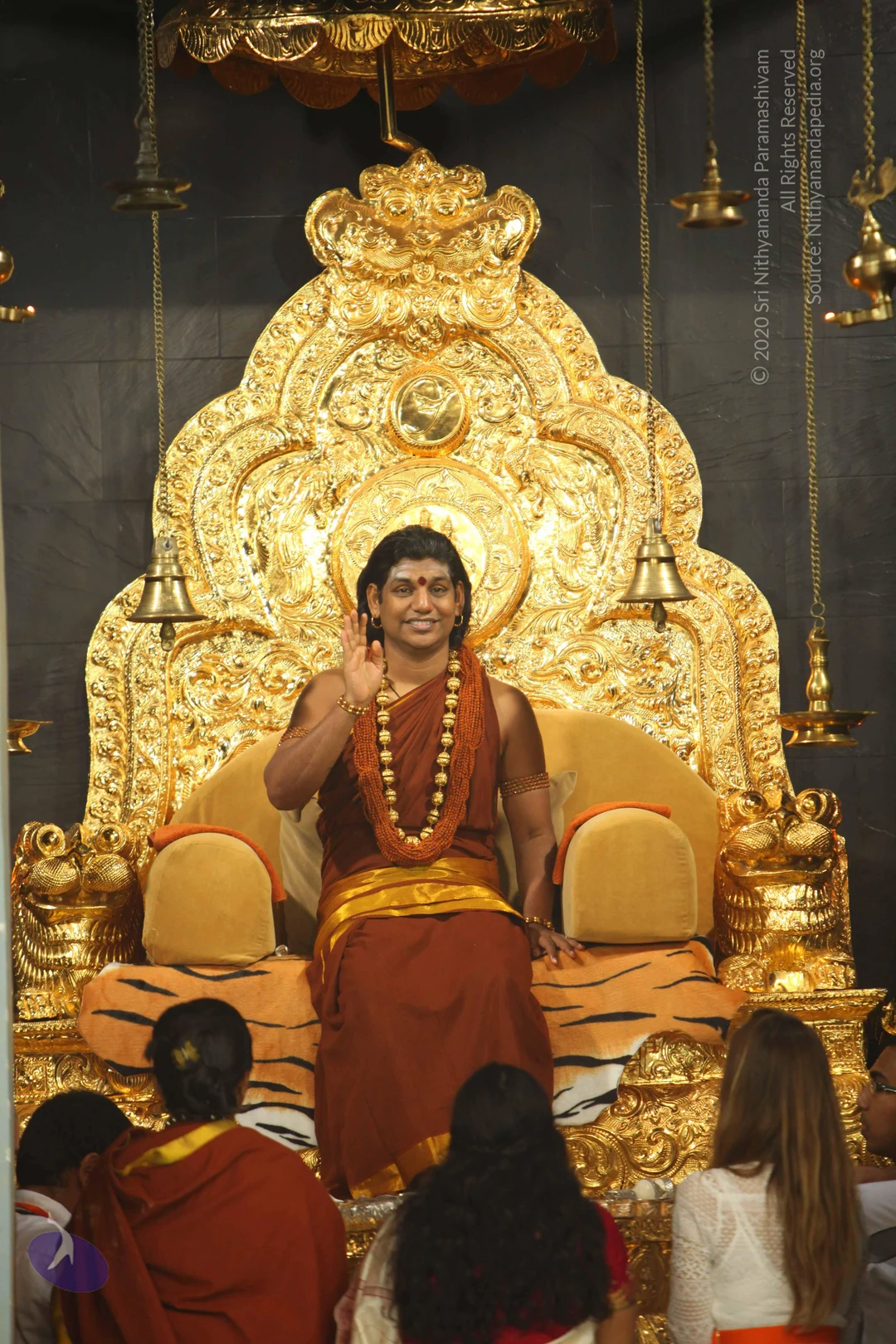
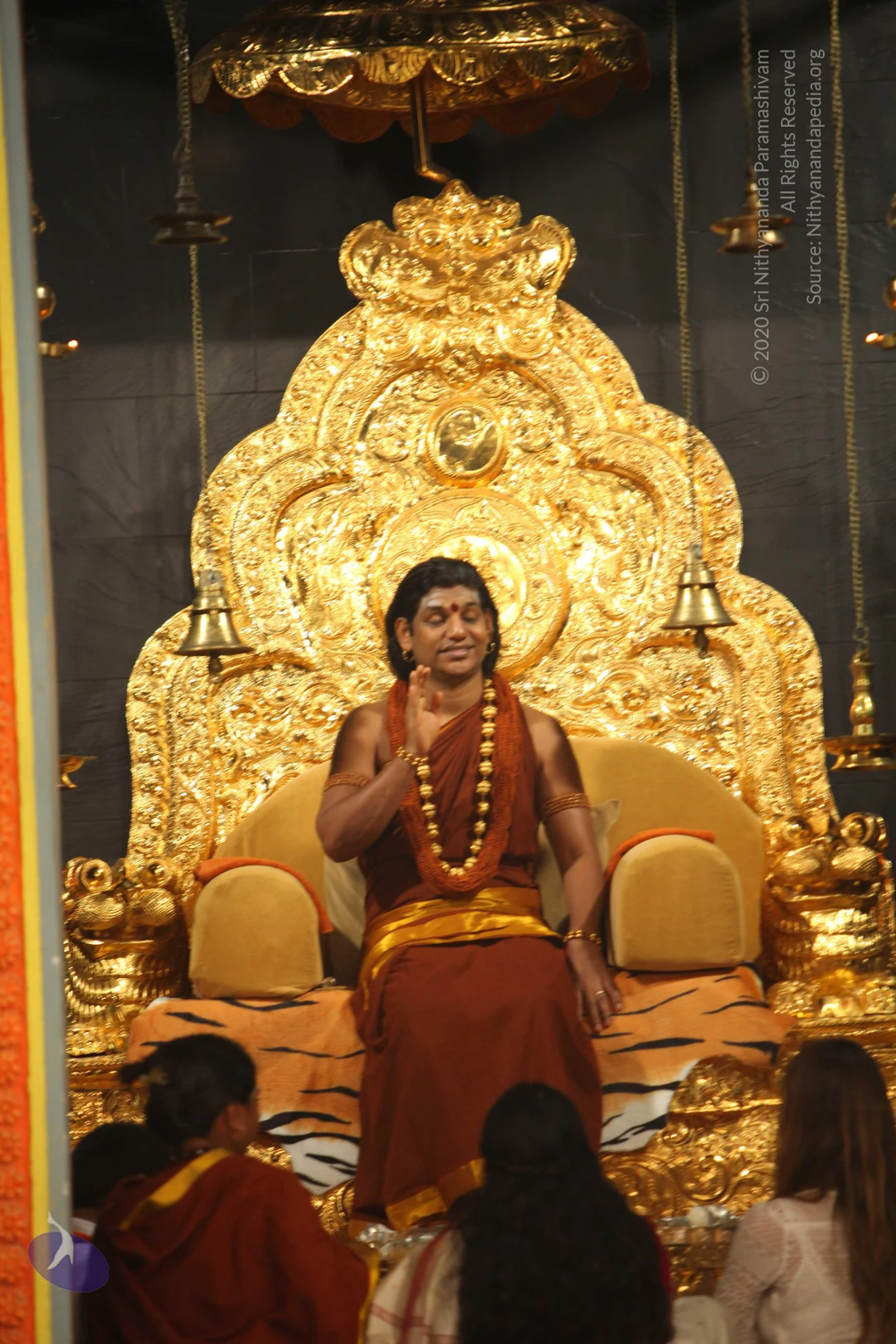
NITHYA-SATSANG

SARVA-DARSHAN

COSMIC-TRUTHS-ON-DEATH-IA-SESSION-BY-HDH

DARSHAN

ENERGY-DARSHAN

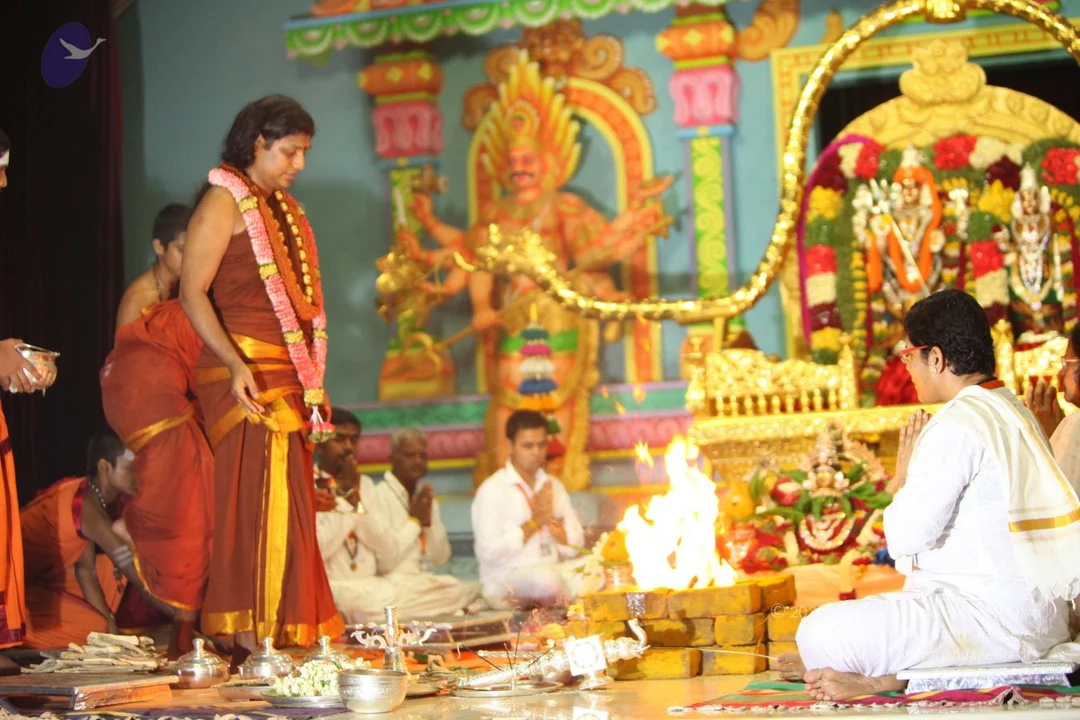
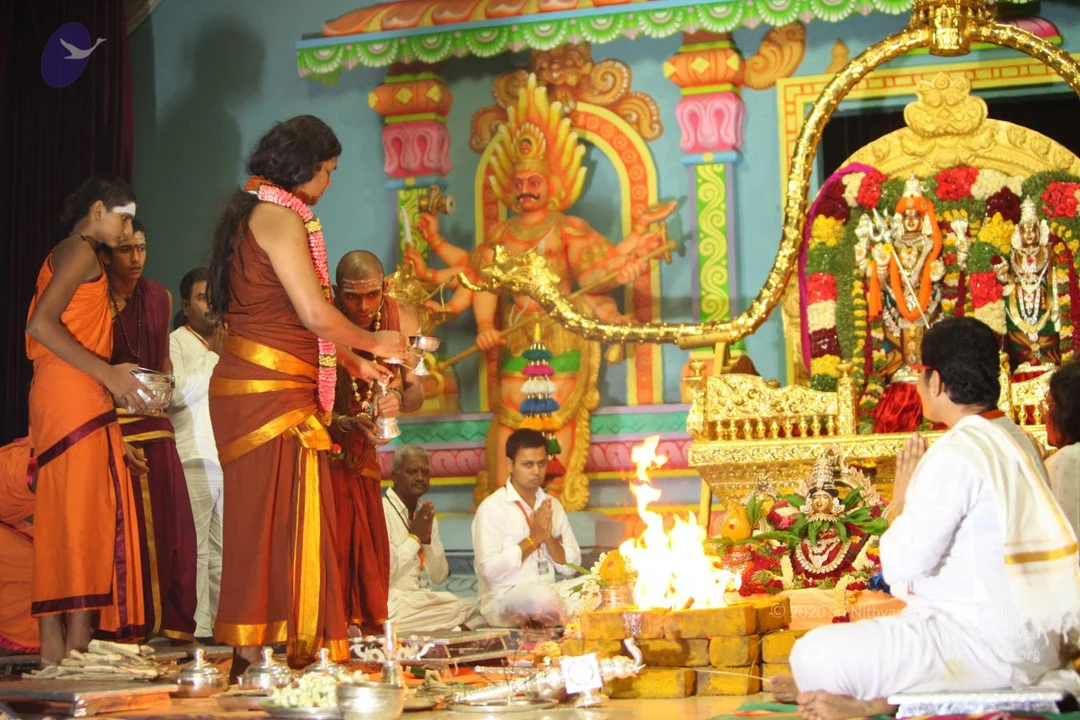
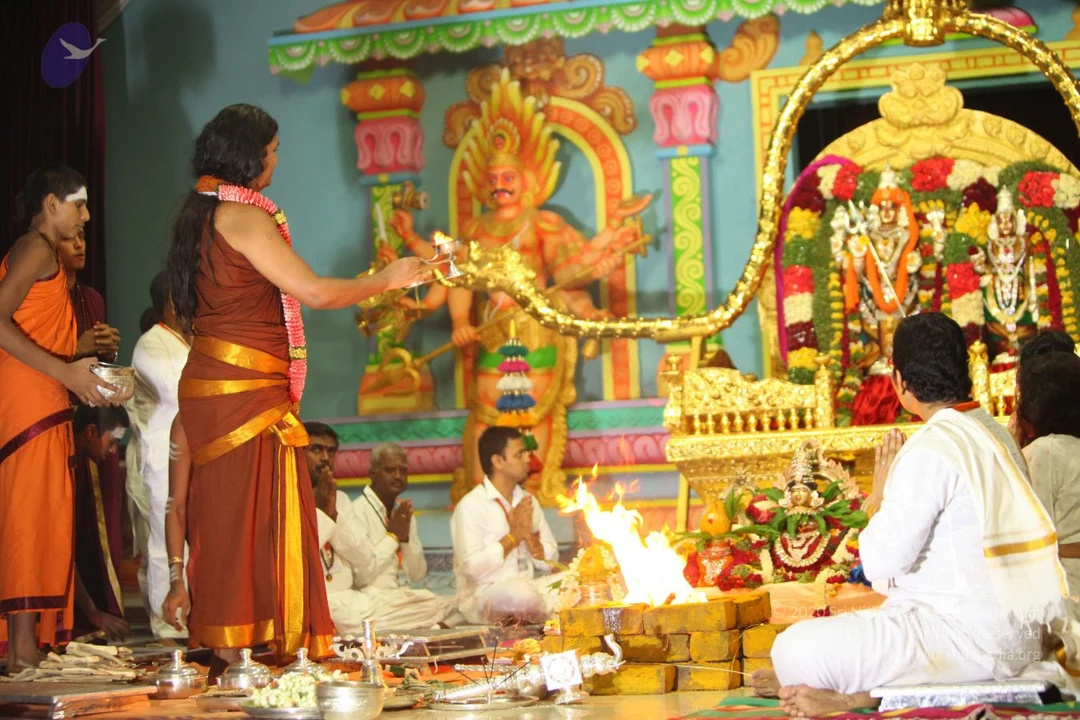
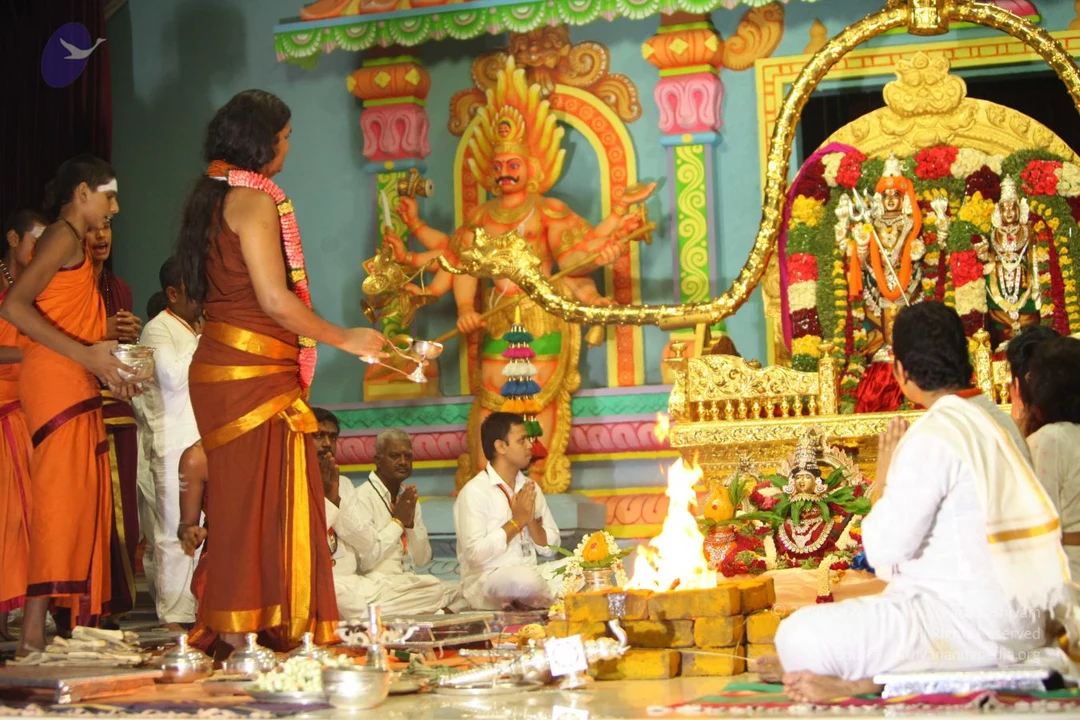
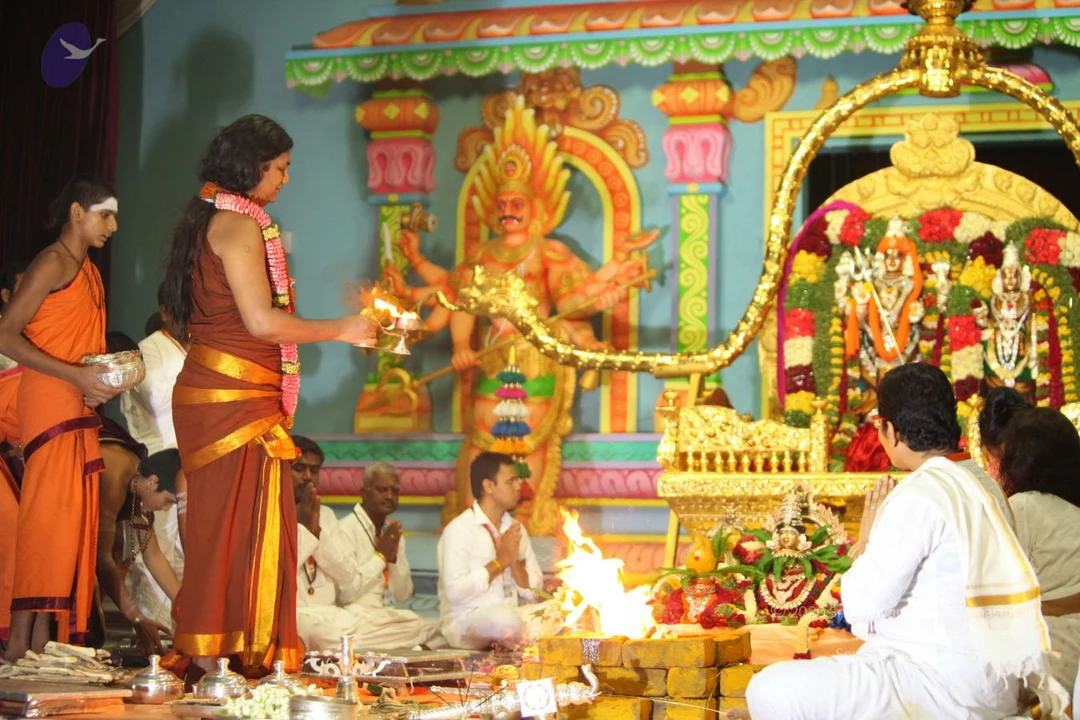
HOMA

Photos from this day

View all 522 photos

Photos

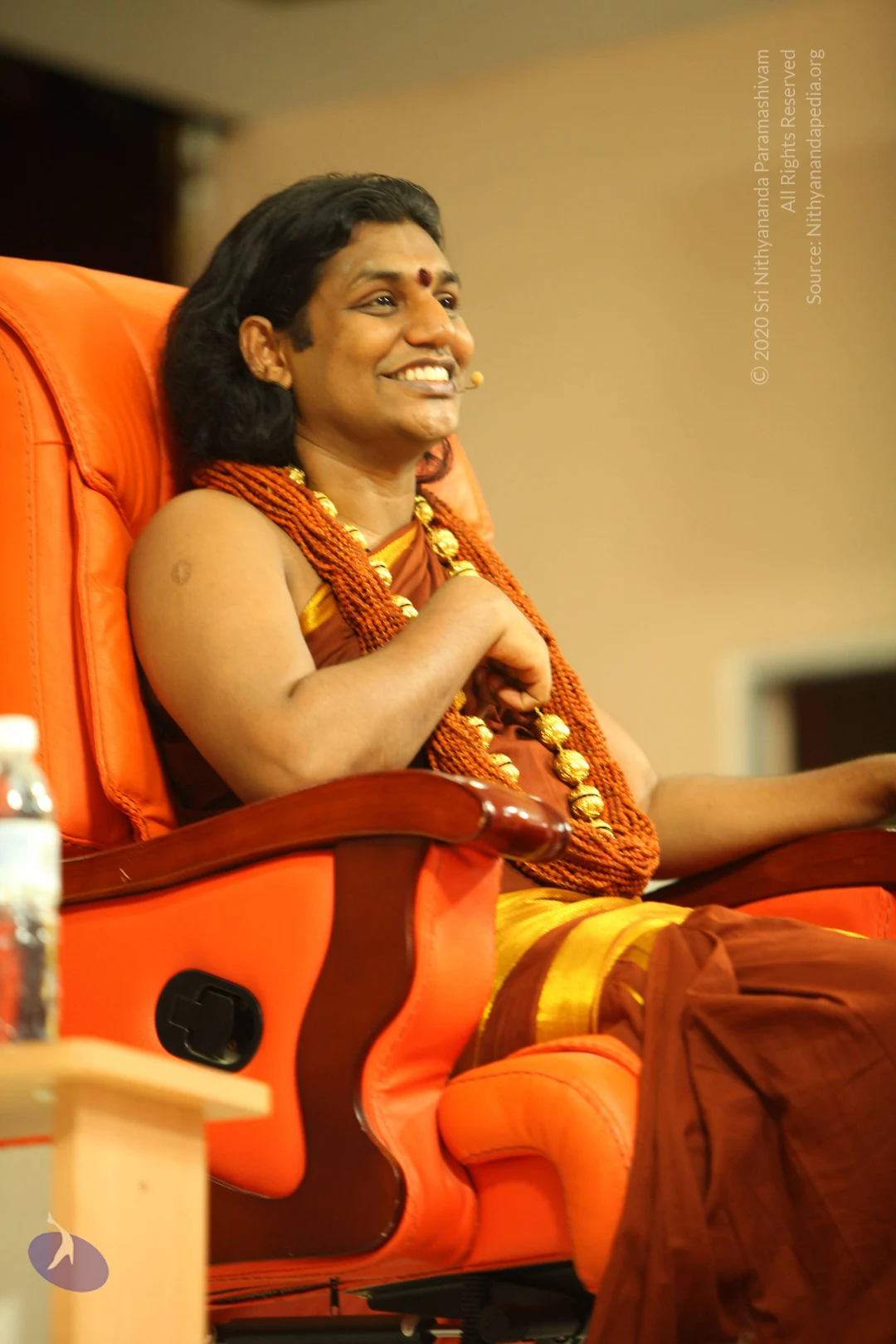
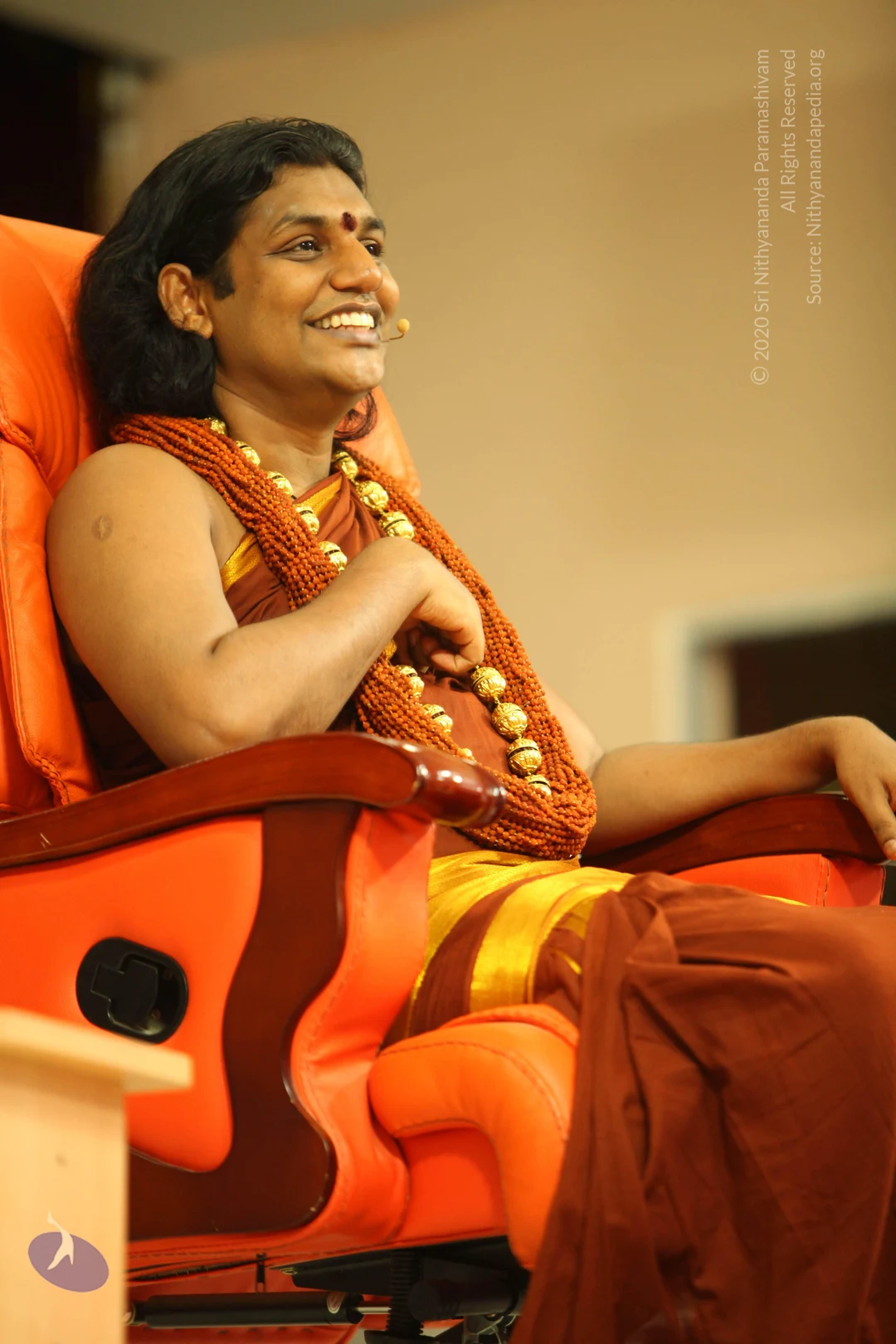
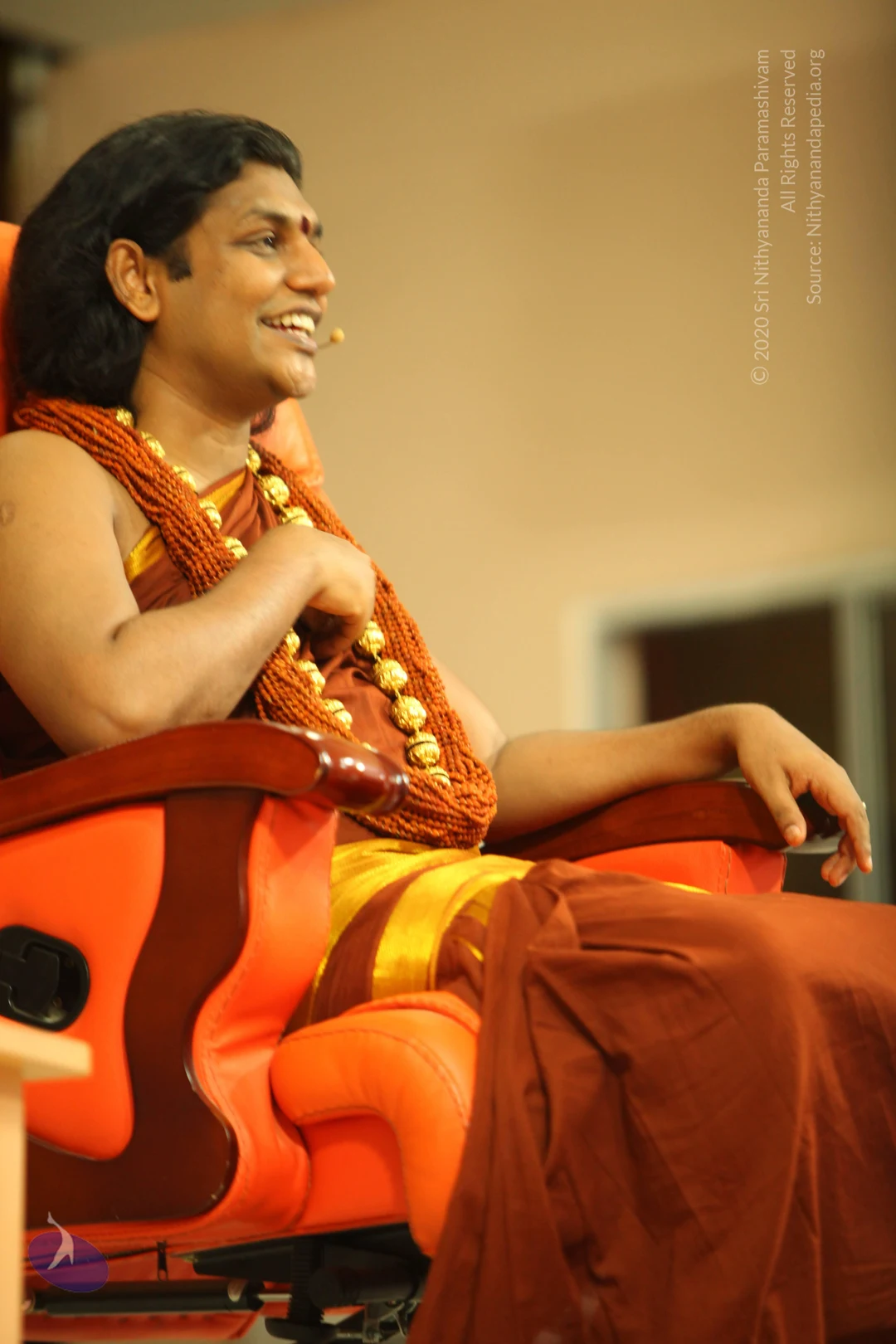
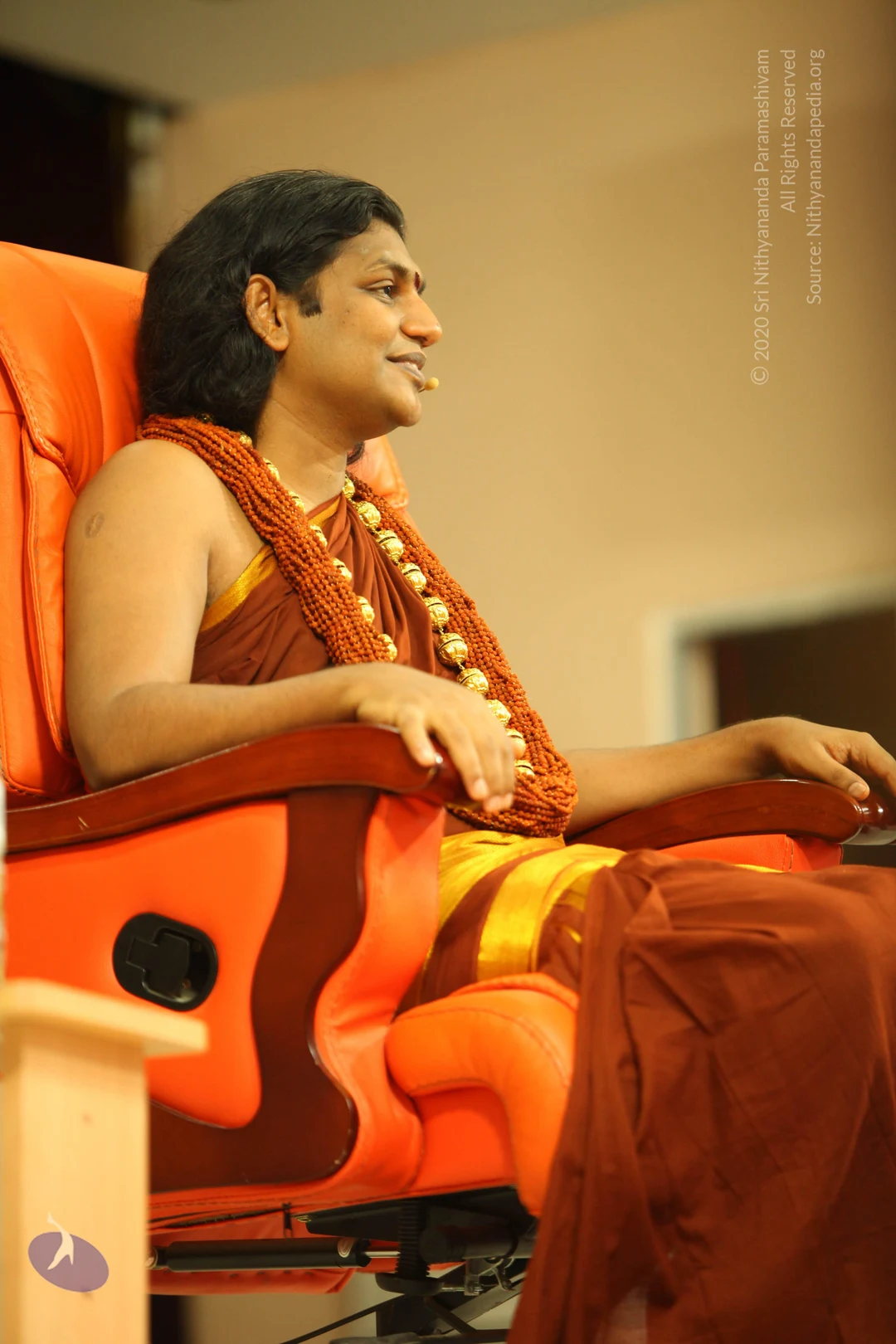
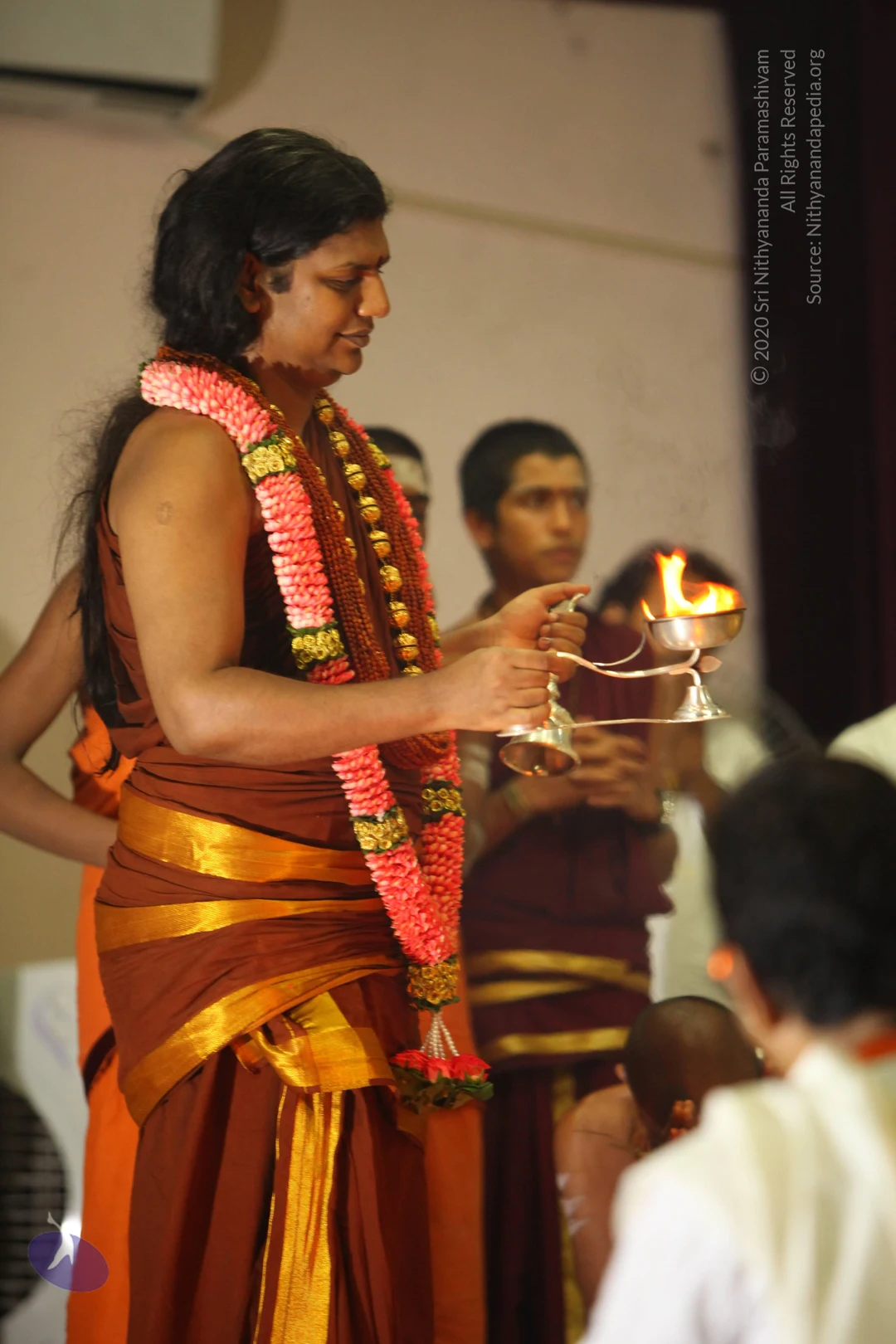
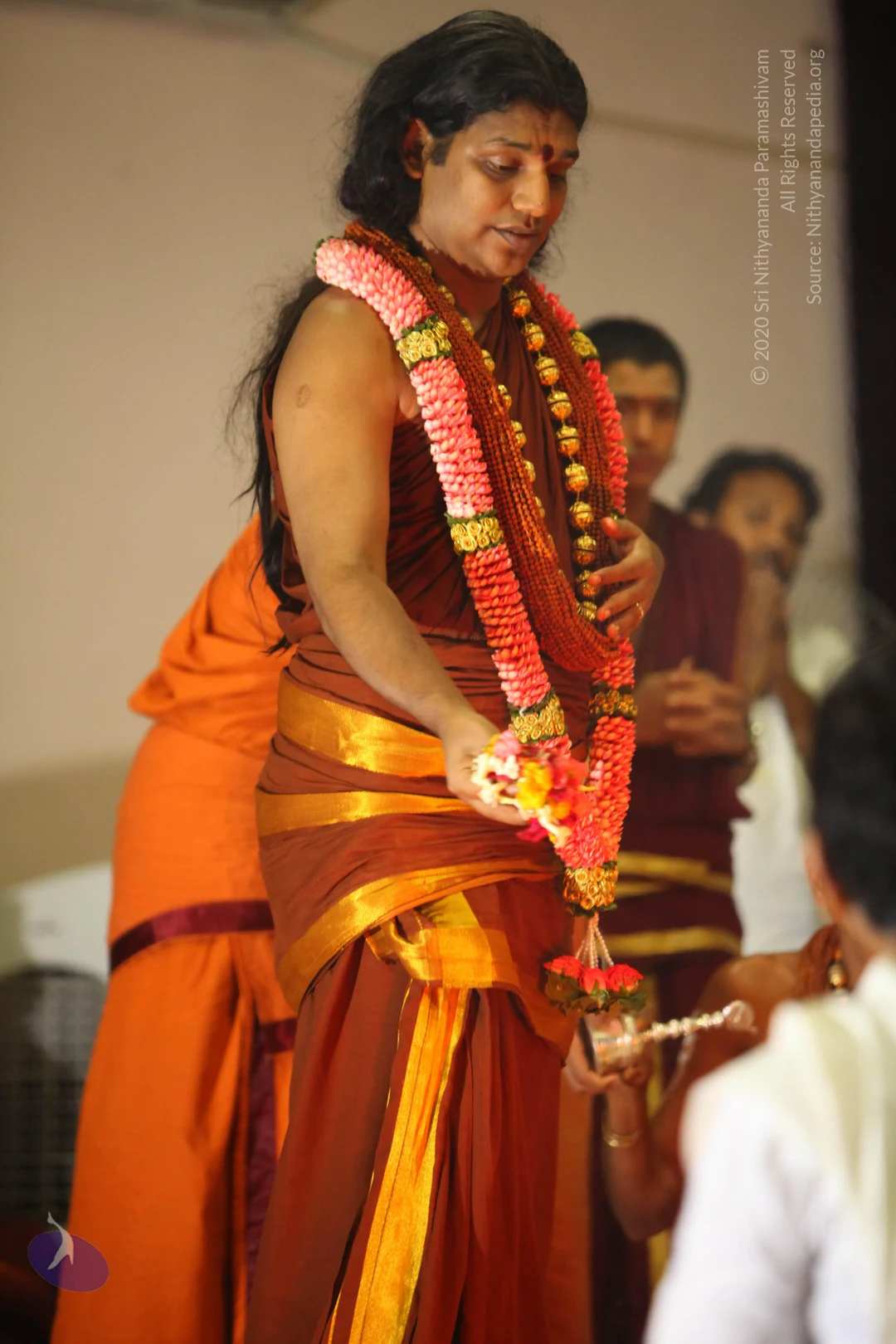
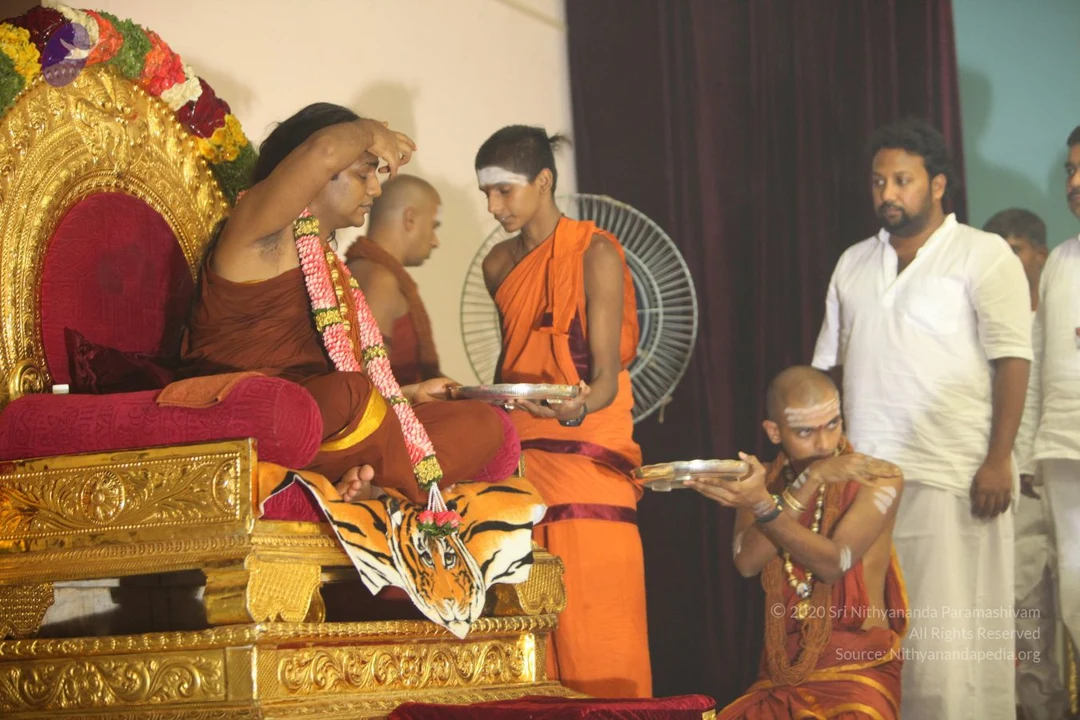
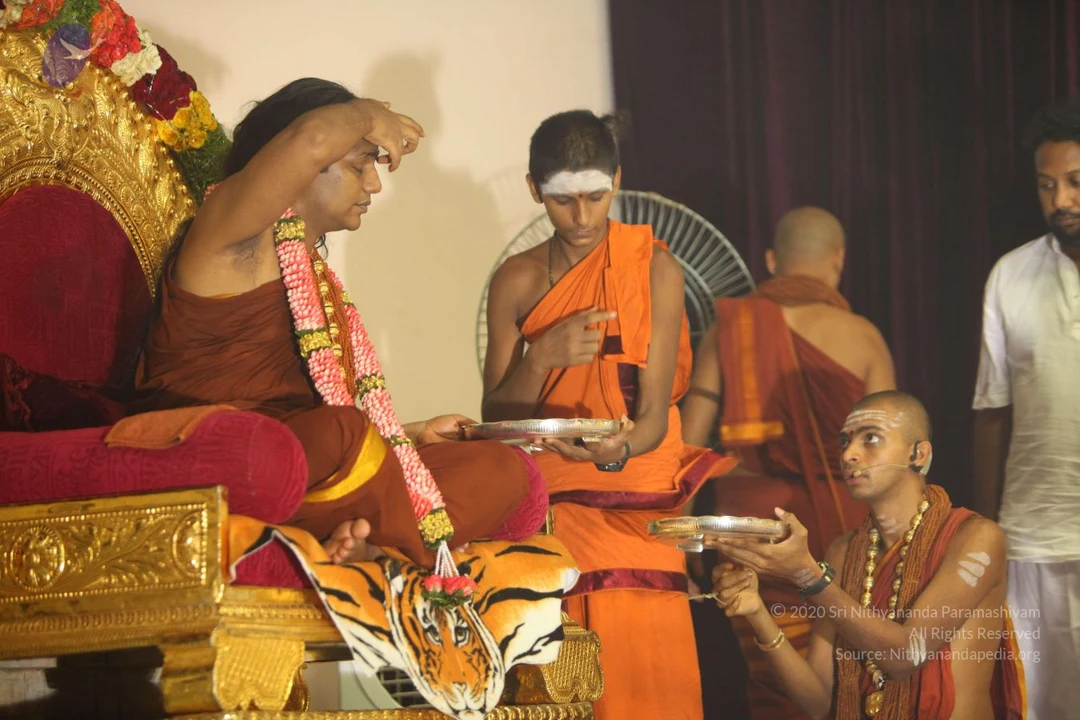
5 photosSource gallery

TEMPLE
41 photosSource gallery
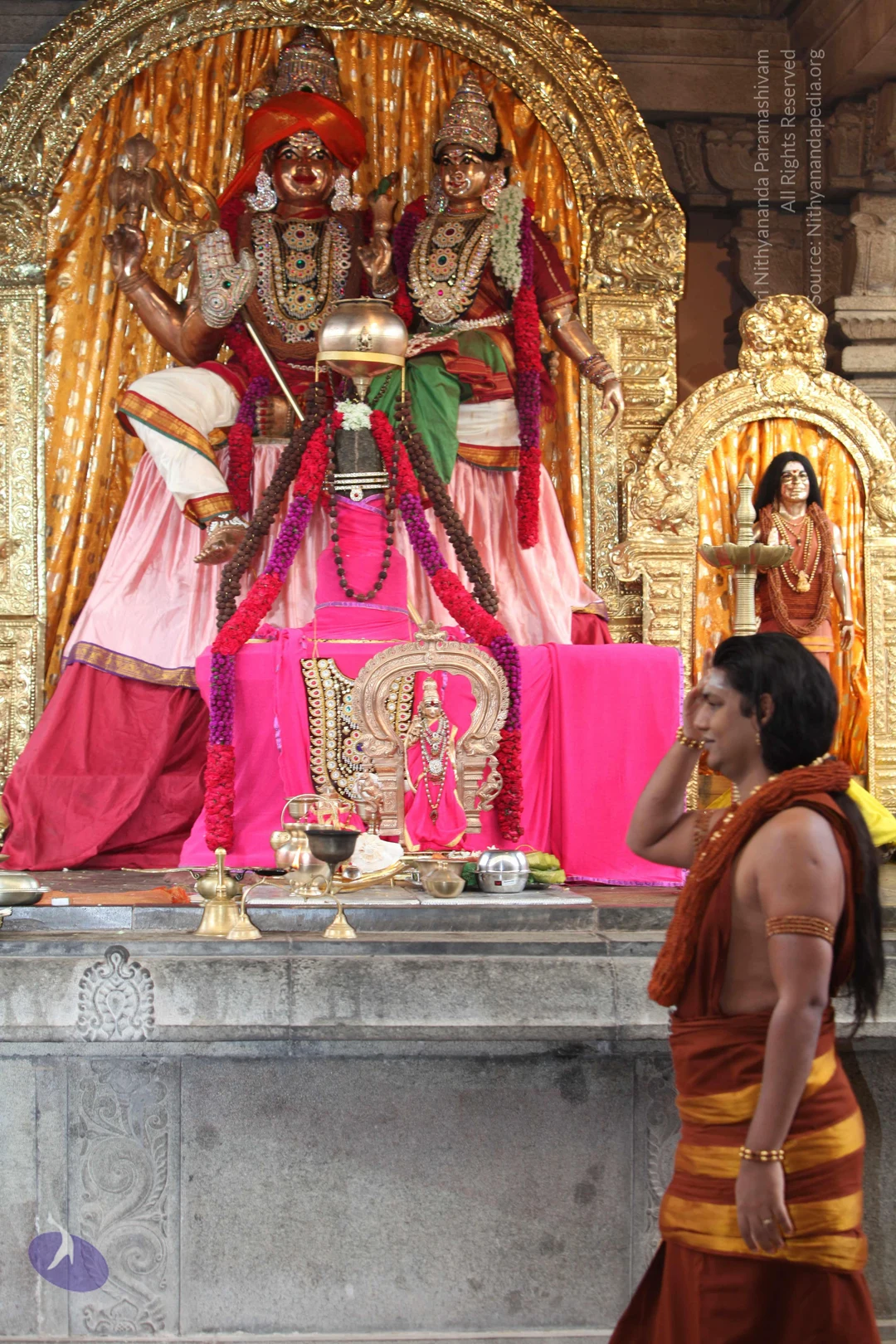
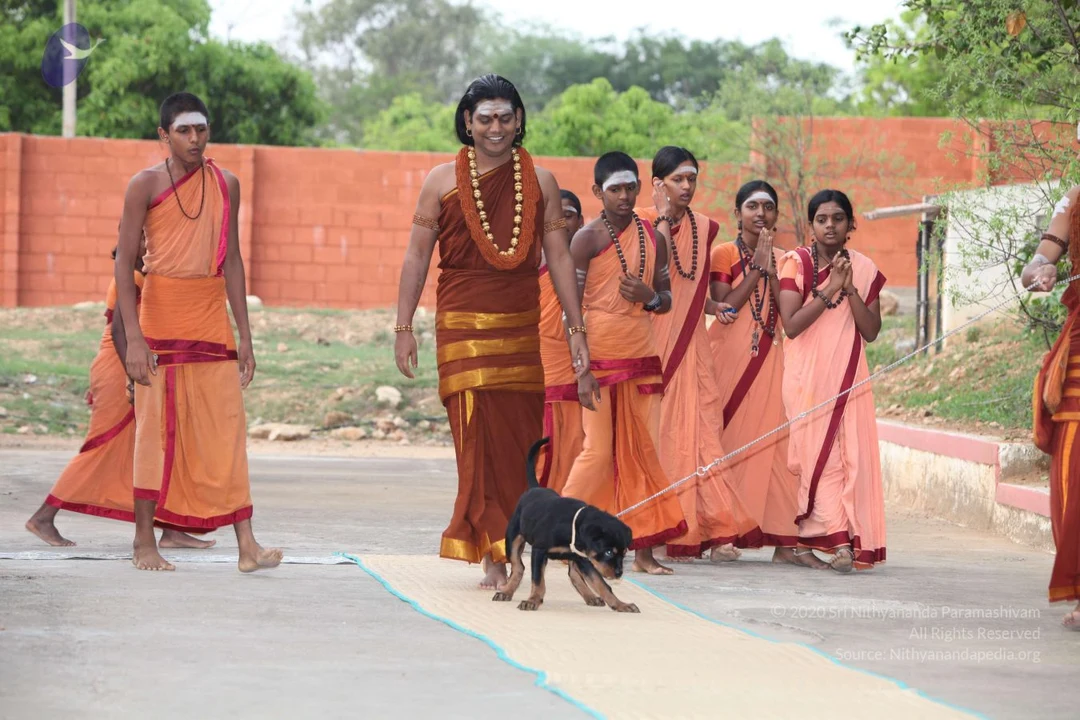
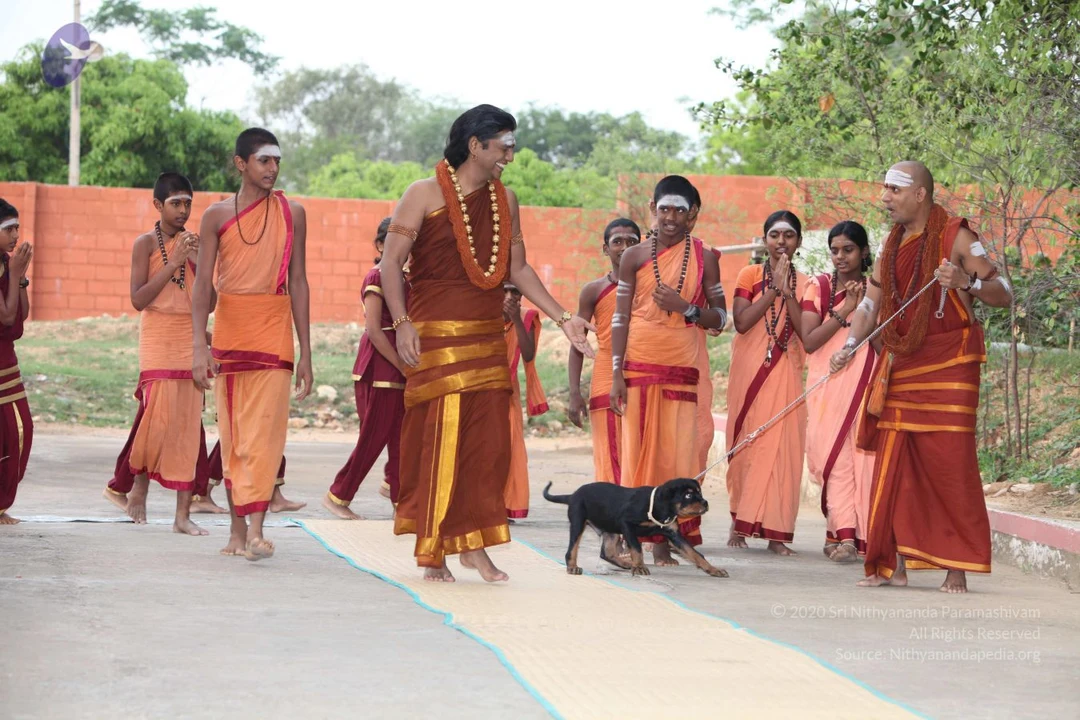
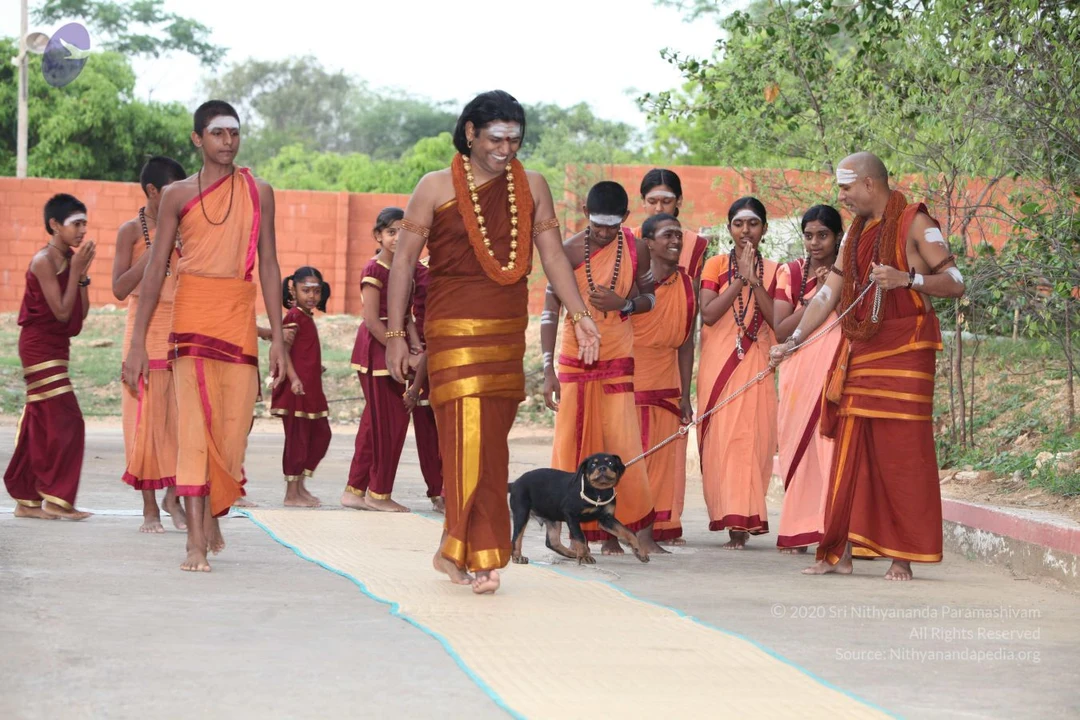
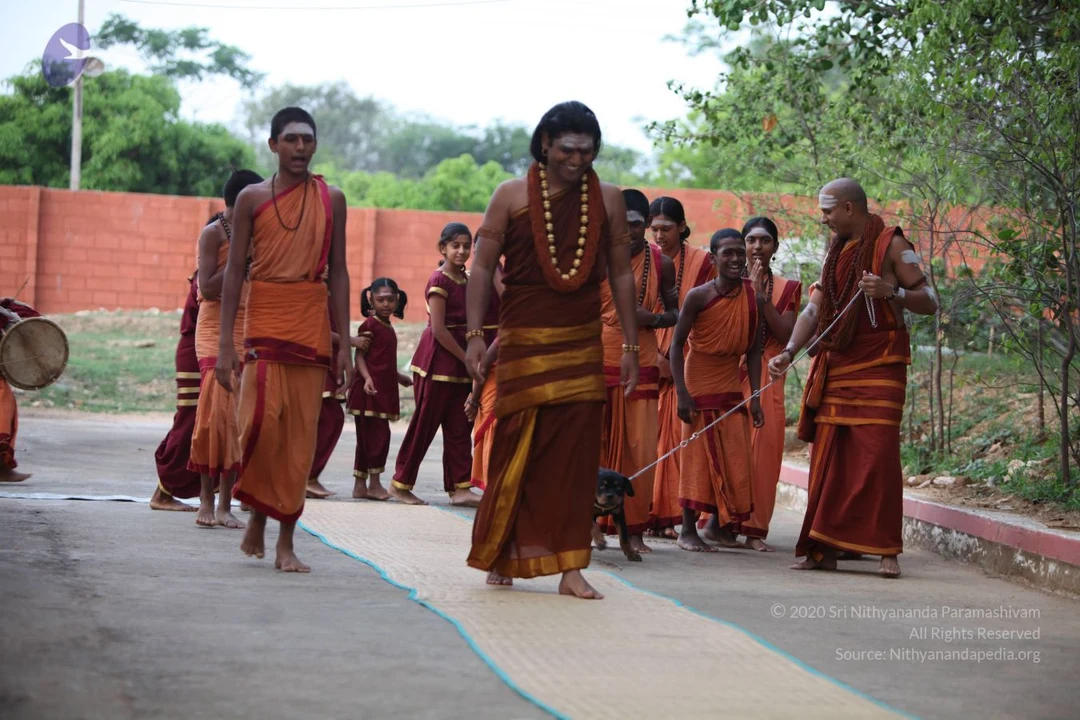
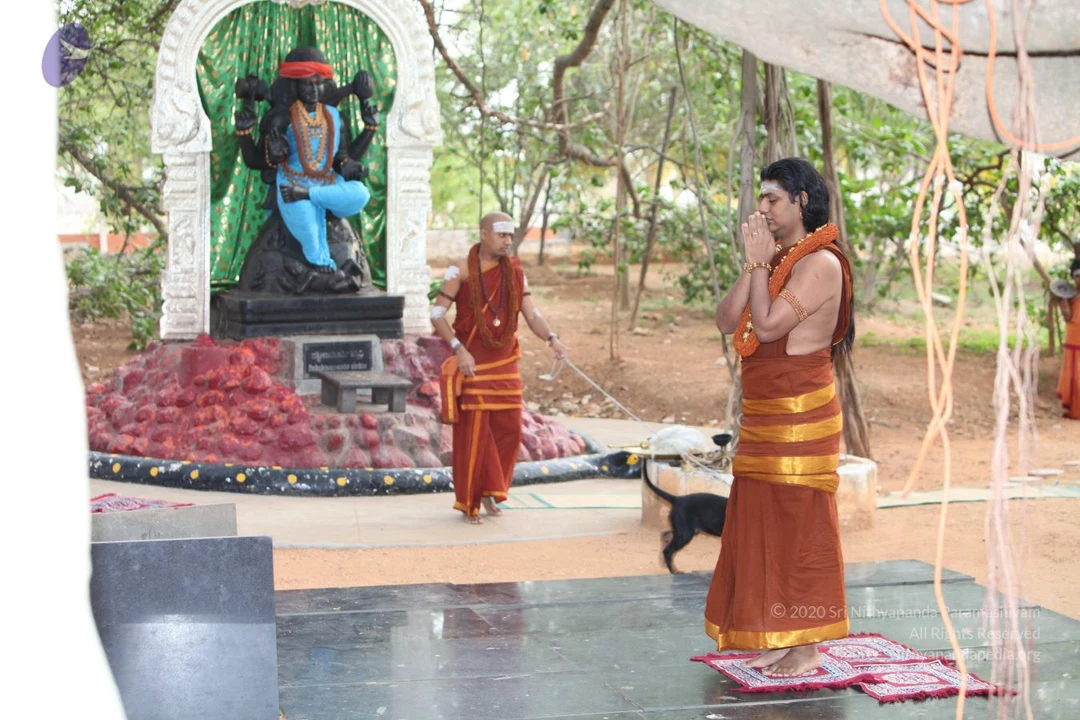
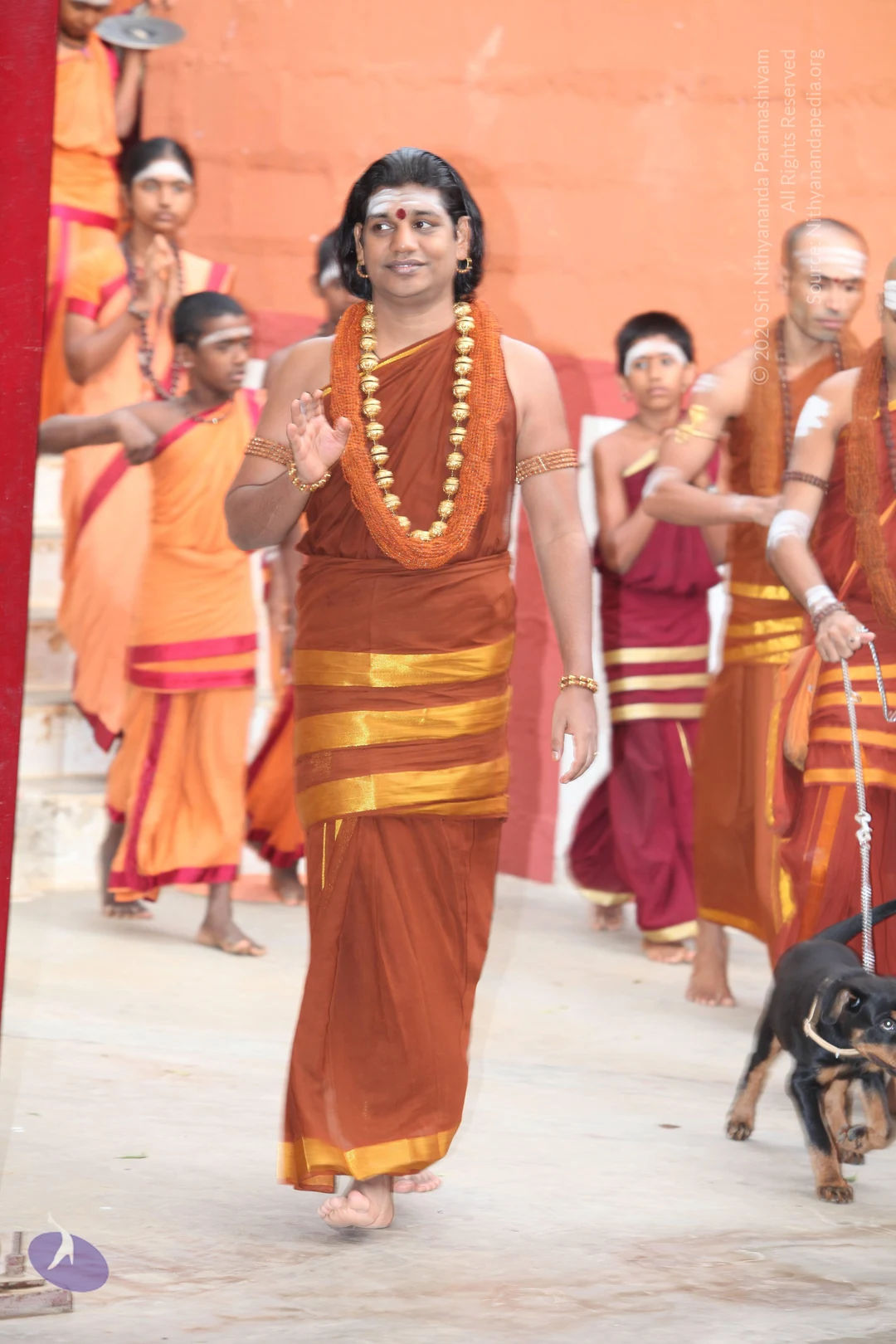
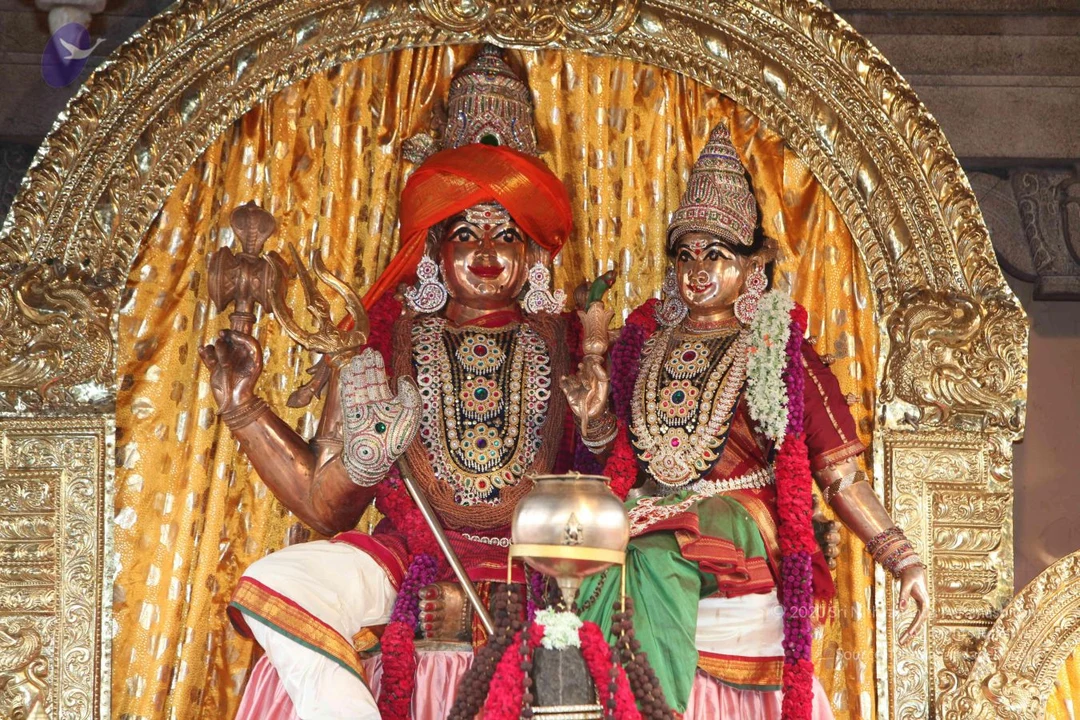
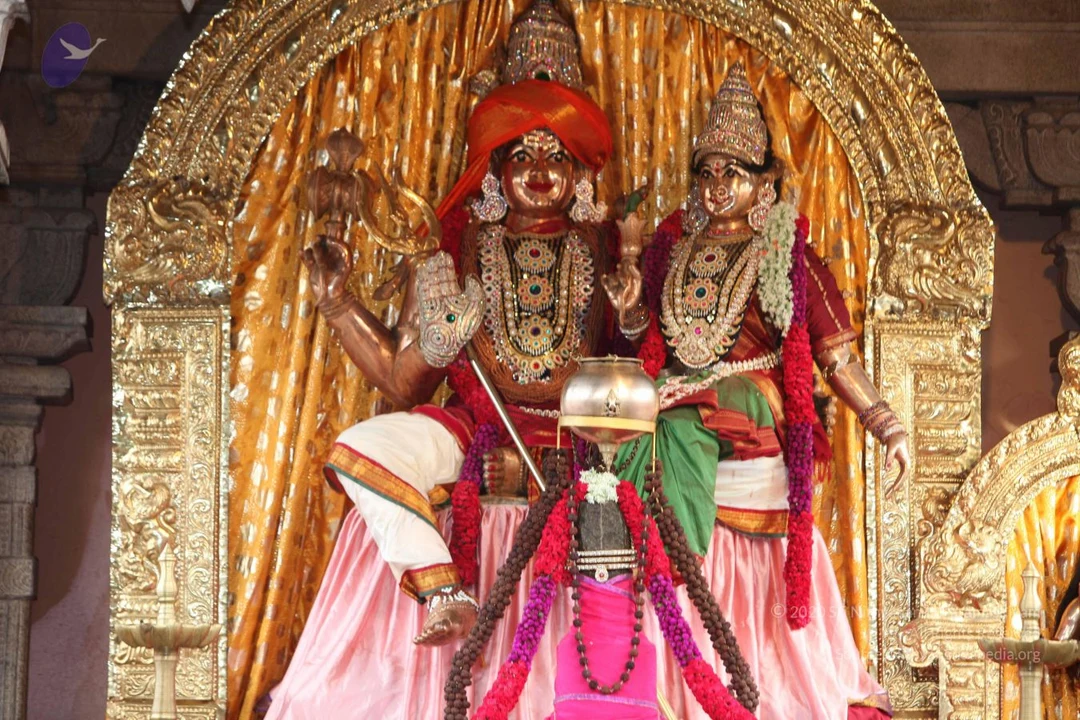
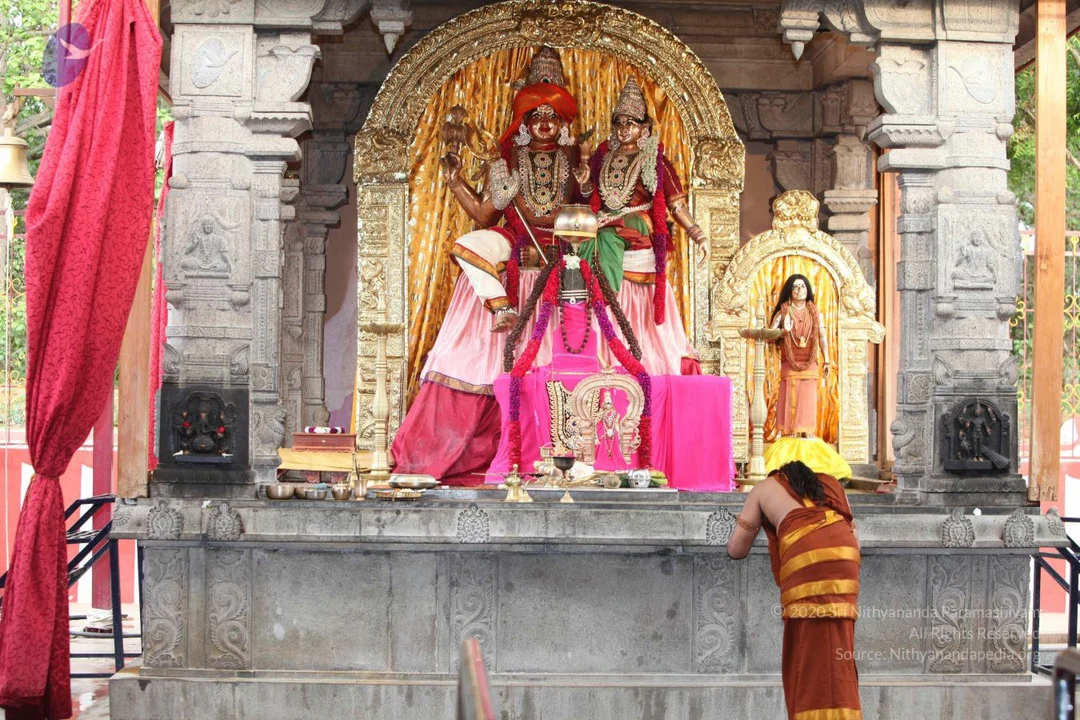
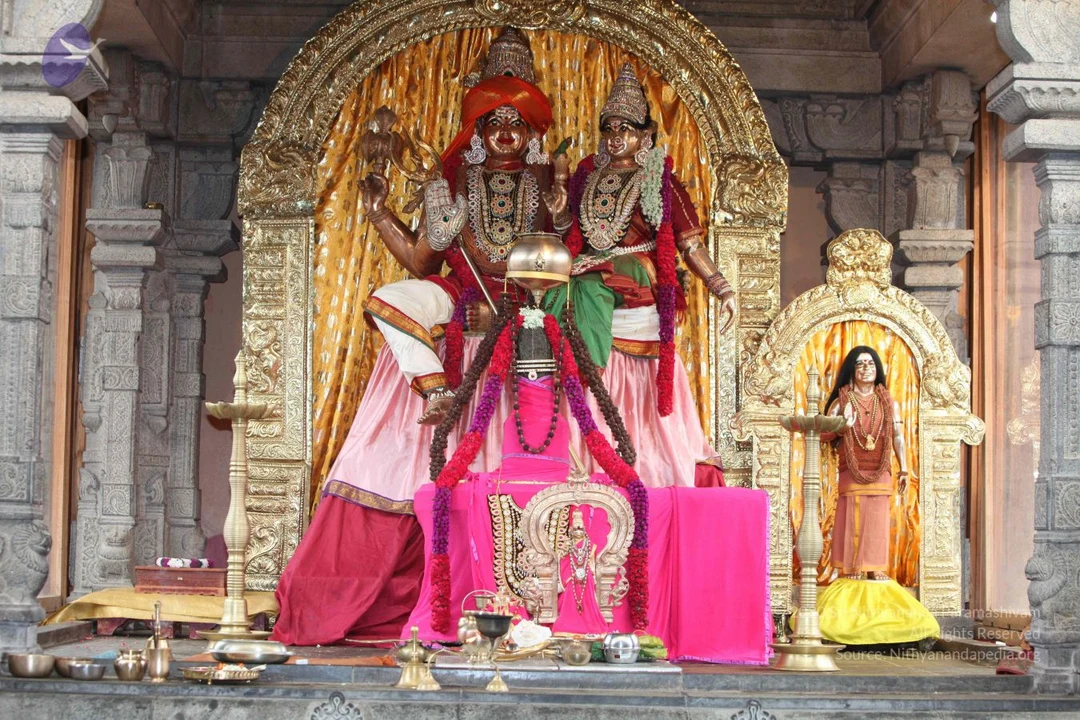
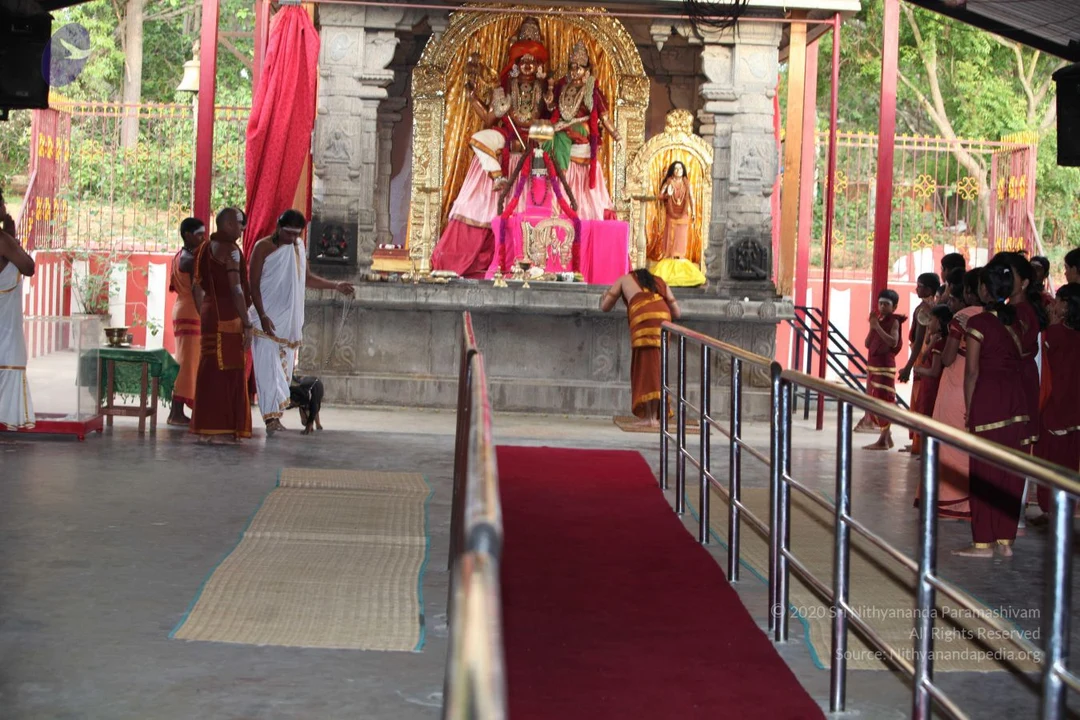
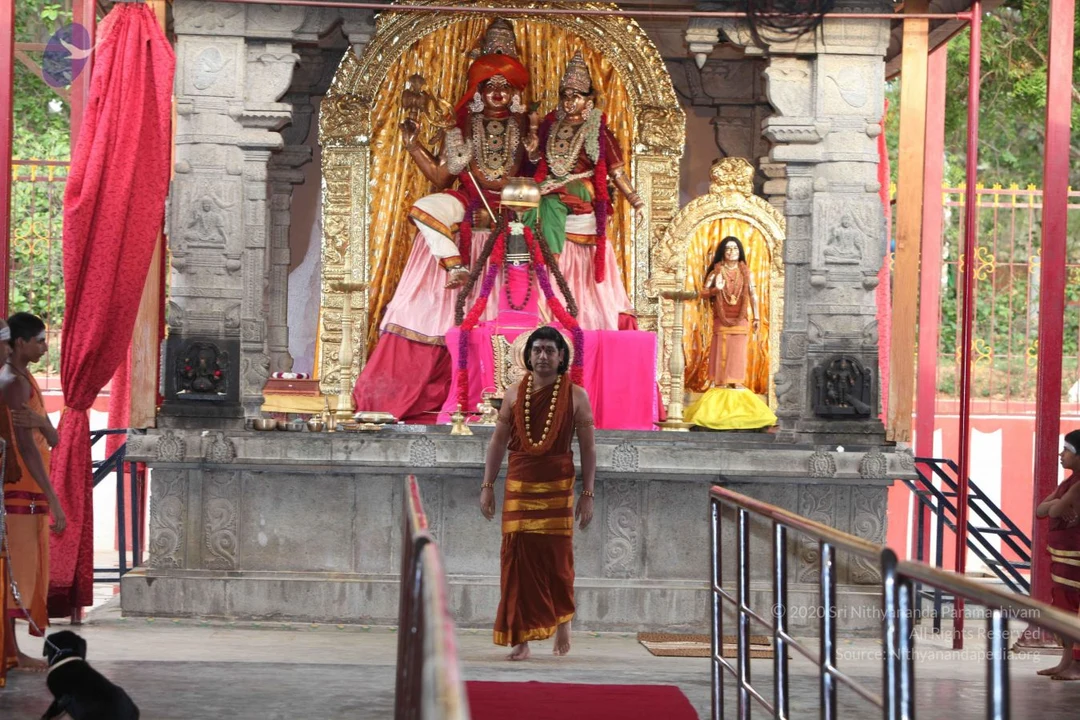
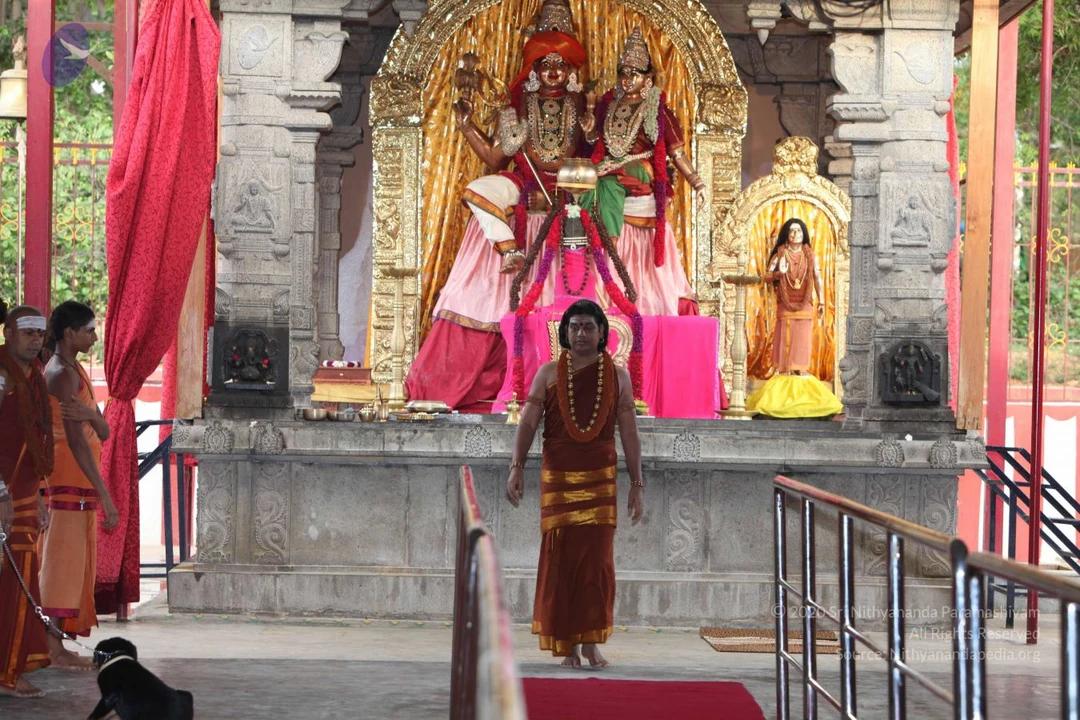
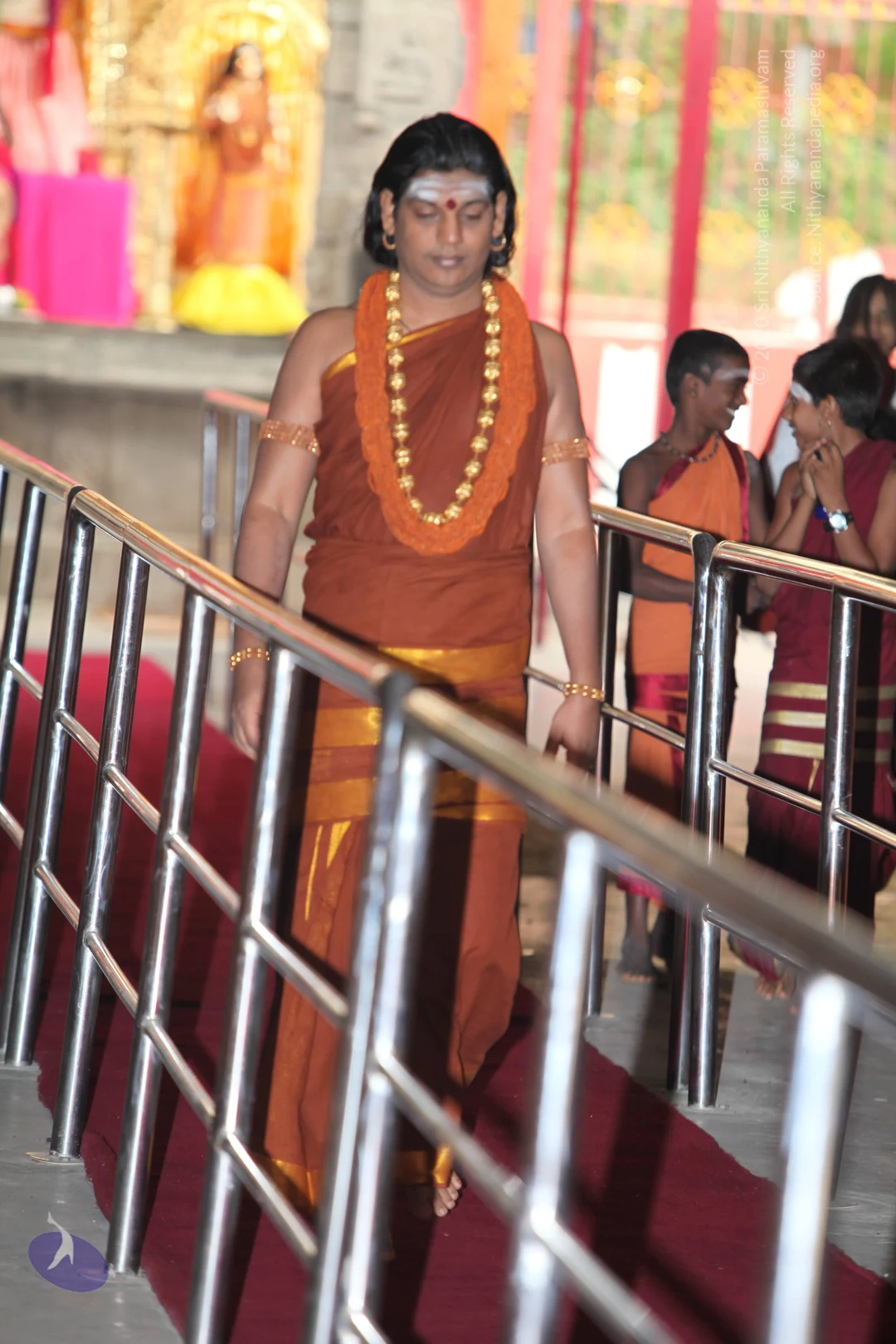
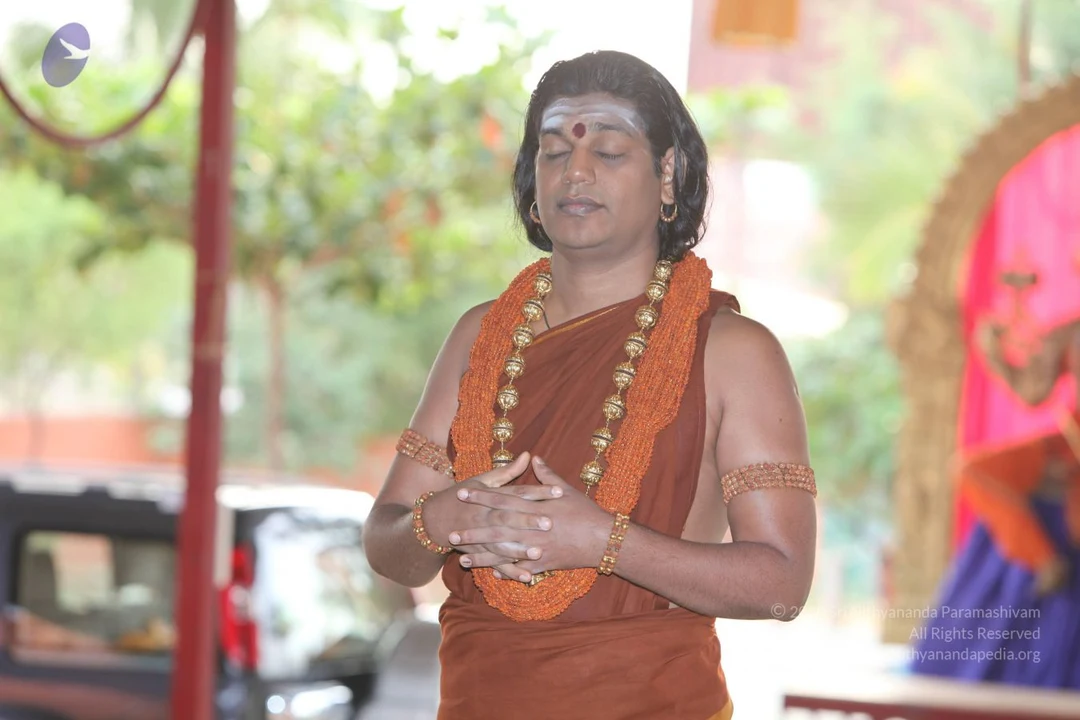
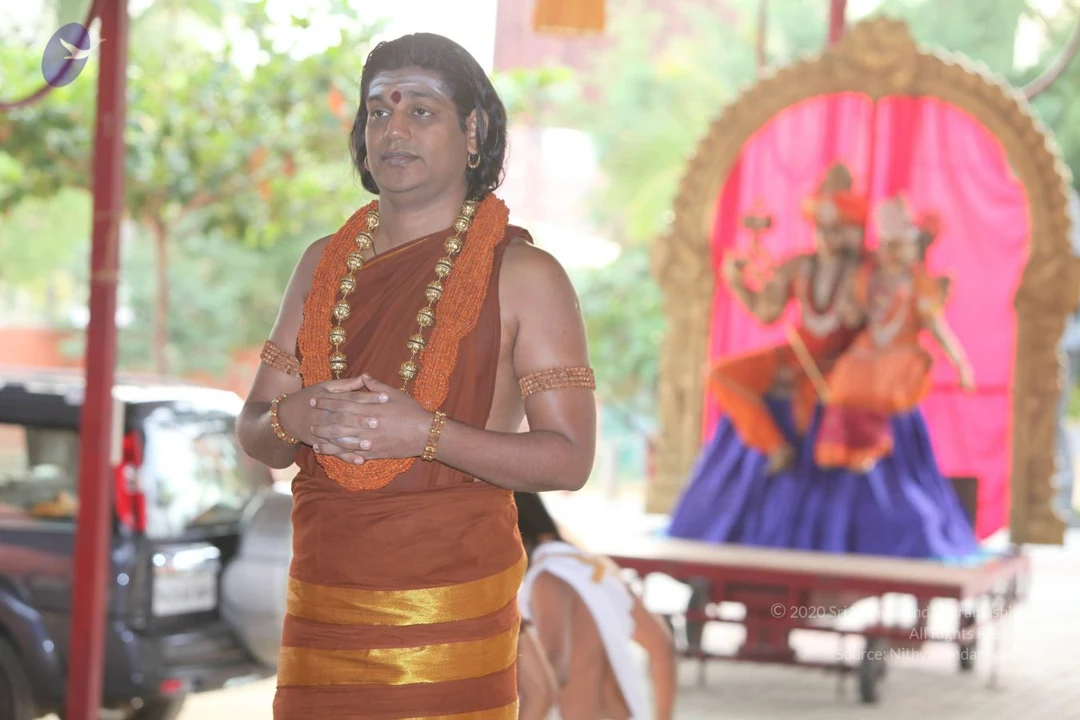
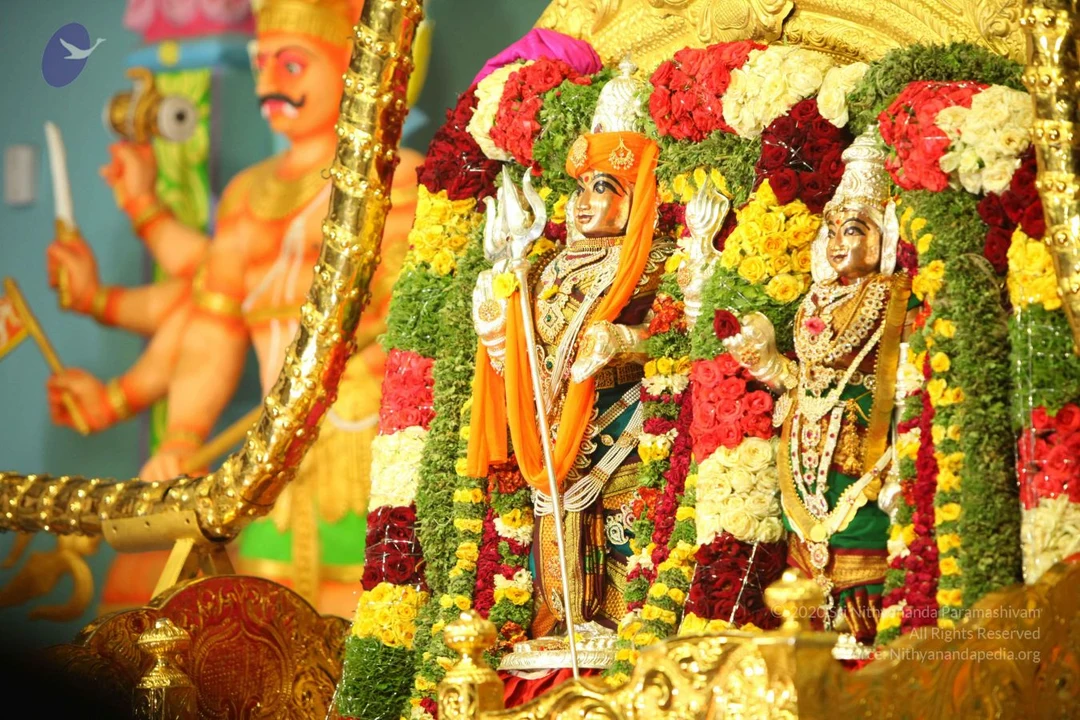
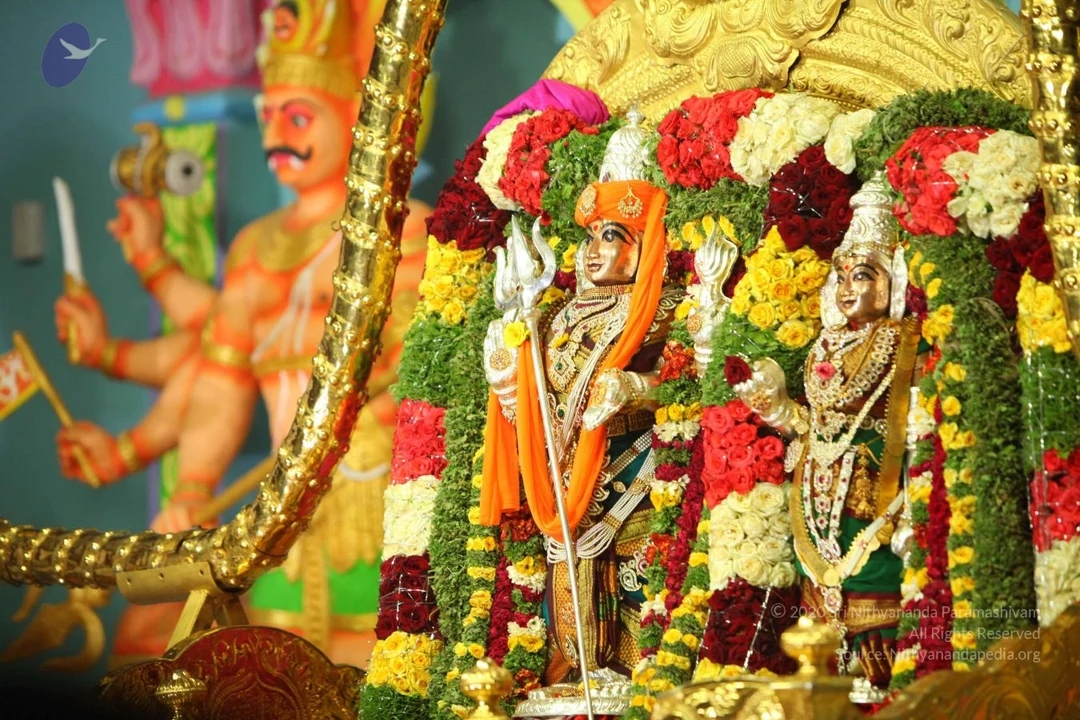
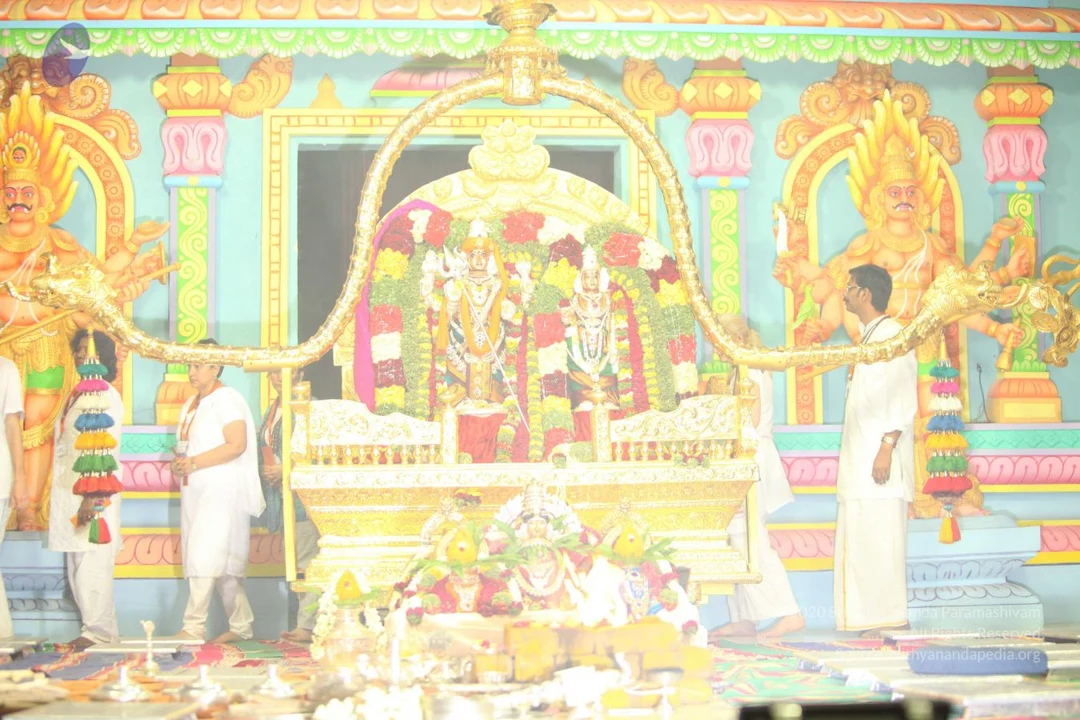
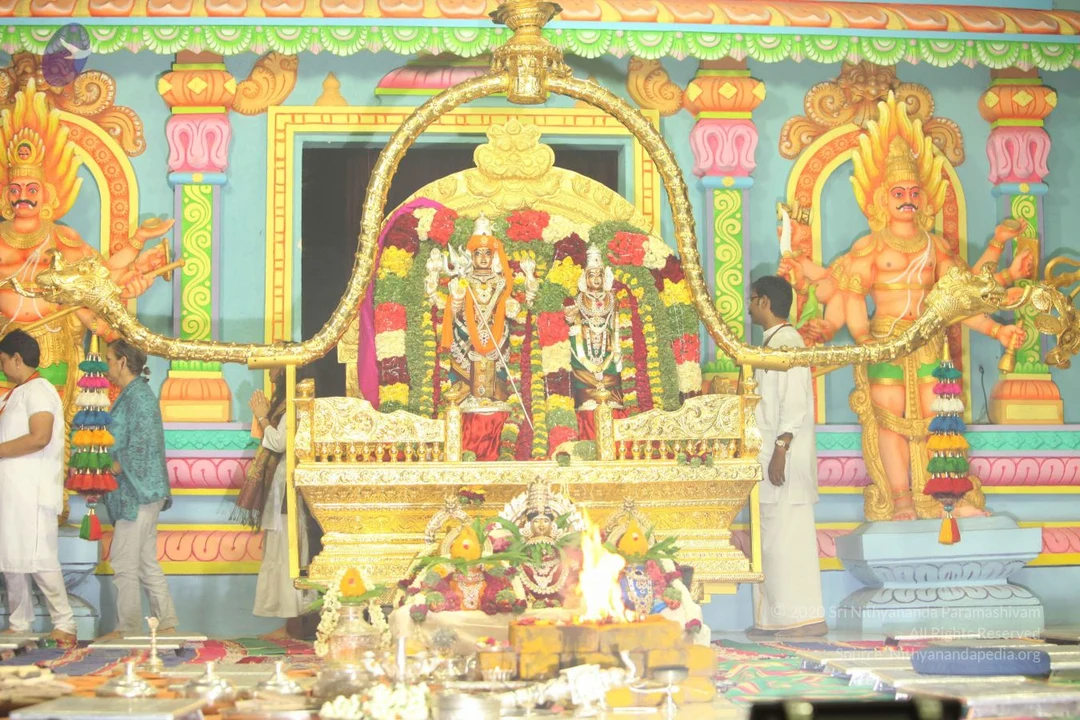
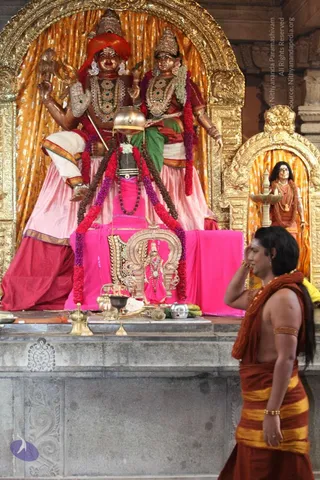
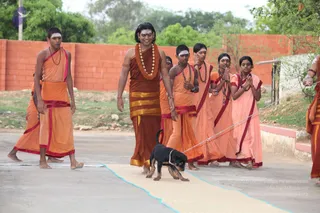
A temple shrine with gilded arches and golden drapery holds two large painted murti figures seated on a pink-draped platform: the left figure wears a red turban and holds a trident, the right wears a crown and a green and red cloth, both adorned with beaded necklaces and garlands of red and purple flowers. A kalasha-topped vessel sits between them, with brass oil lamps and offering plates in front. To the right stands a smaller statue of a saffron-robed sannyasi with long hair and a rudraksha mala, beside a gold-framed niche. In the foreground a devotee with long dark hair and an orange shawl stands with back to the camera facing the shrine.A photograph inside a temple shrine with a golden arched backdrop. Two large painted deity statues stand behind a pink-draped shivalinga adorned with red and purple flower garlands and rudraksha strands. The left statue wears a red turban and holds a trident-like weapon; the right wears a green skirt and jewelled necklaces. Brass oil lamps, bells and a kalasha sit on the altar in front. To the right, a smaller statue of a sannyasi with long hair, rudraksha beads and a saffron shawl holds a lamp. In the foreground, a living man with long hair, a saffron shawl over bare shoulders and gold bangles stands in profile, one hand raised to his head, dressed in orange and gold ochre cloth. He is the only physical person visible, and no appearance-based identification is made.Outdoor photograph of a procession on a paved path beside an orange brick wall. A man in the centre wears a dark brown-orange robe with gold borders, a saffron-orange shawl with a beaded garland, bead necklaces, and a long dark hairstyle, with ornate gold-toned bracelets. He is followed by a black dog on a white leash walking along a pale cloth runner marked with blue edging. Around him, young people in orange and peach robes with red borders and white forehead markings walk barefoot; several carry rudraksha malas, and two women in the right foreground hold their palms joined in namaskar. A rope barrier runs along the right side. Swamiji (probable) is the centre man with long swept-back hair, ornate gold-trimmed robe, beaded garland and rudraksha malas, shown in a procession with devotees.Outdoor photo of a group of young sannyasi-style students in saffron and orange dhotis and shawls, many with white vibhuti stripes and rudraksha malas, walking along a paved path beside a terracotta brick wall. A central figure in a brown and gold dhoti with a long orange-brown shawl and ornate beaded garland is walking barefoot on a cream mat, smiling with hands extended. A black dog on a white leash walks along the mat. On the right, a bald, white-striped man in red-orange robes holds the leash and smiles. Several students behind them stand with palms pressed together in anjali. Greenery and a utility pole are behind the wall.Outdoor photo of a group of young sannyasis and devotees walking along a paved path beside a red brick wall and green foliage. In the centre, a smiling man with long dark hair wears a saffron-brown robe, an orange-red marigold garland, a rudraksha mala and gold-toned bangles, and walks barefoot on a cream mat edged in blue. A black-and-tan dog on a leash walks beside him. Around them, young men and girls in orange and maroon robes with white forehead markings and rudraksha malas, some with hands folded in namaste. At the right edge, a bald man in a maroon-orange robe with a bare upper arm holds the leash. Appearance-based a person cues: long hair, saffron robe, garland and rudraksha mala, though the identity is uncertain.A photograph of a procession on a paved path between a brick wall and green trees. In the centre, a man with long dark hair and a dark brown robe with a gold-and-maroon waist cloth and a long orange-and-gold shawl over one shoulder walks barefoot on a woven mat, wearing a large orange-red garland. Around him, young men and boys in saffron and orange dhotis and shawls walk barefoot, with rudraksha beads and ash marks on their foreheads. Several girls in maroon tunics and maroon and gold dress walk alongside, and a bald man in orange robes holds a leash to a small black dog. A drummer stands at the left edge.

PADA-POOJA
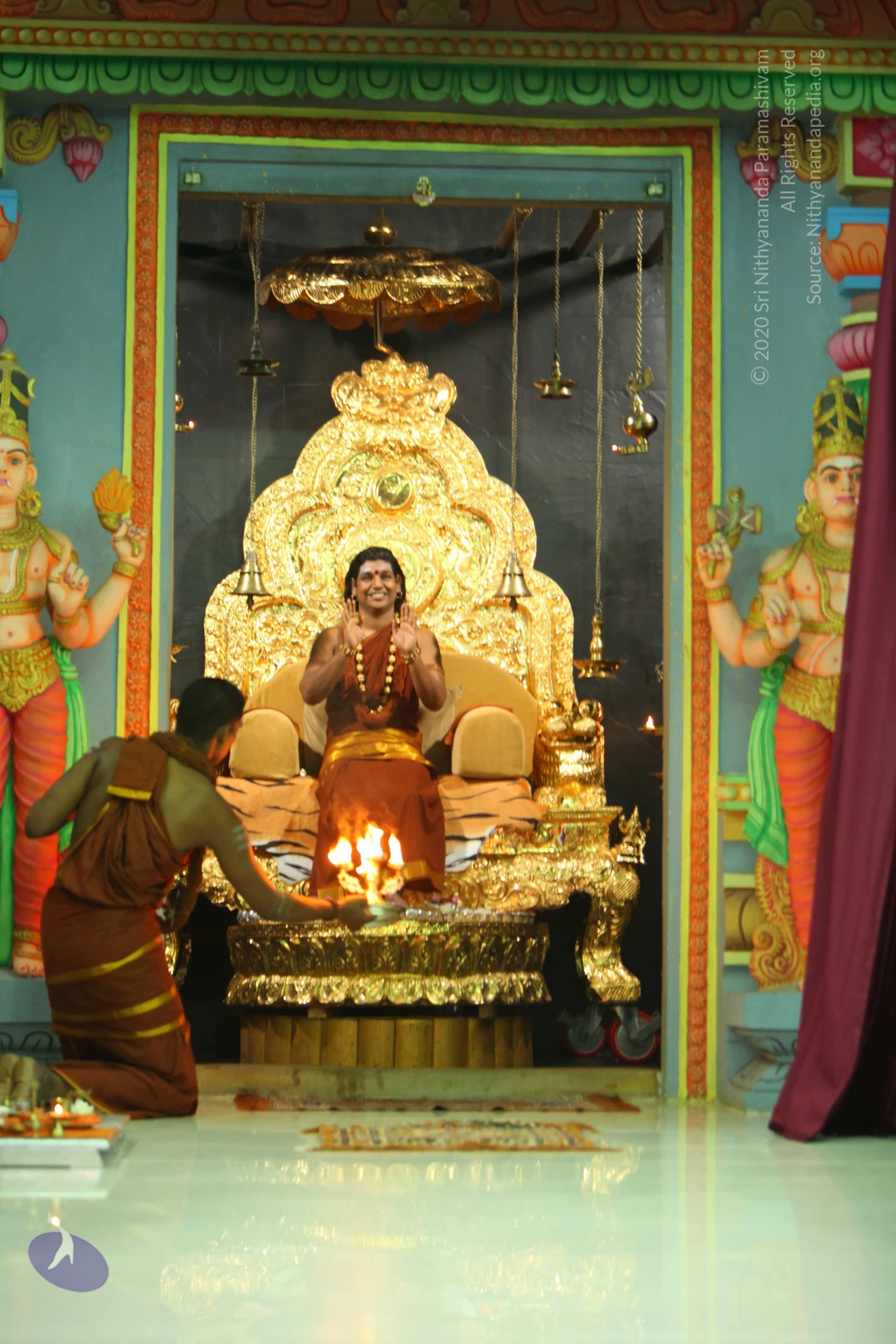
83 photosSource gallery
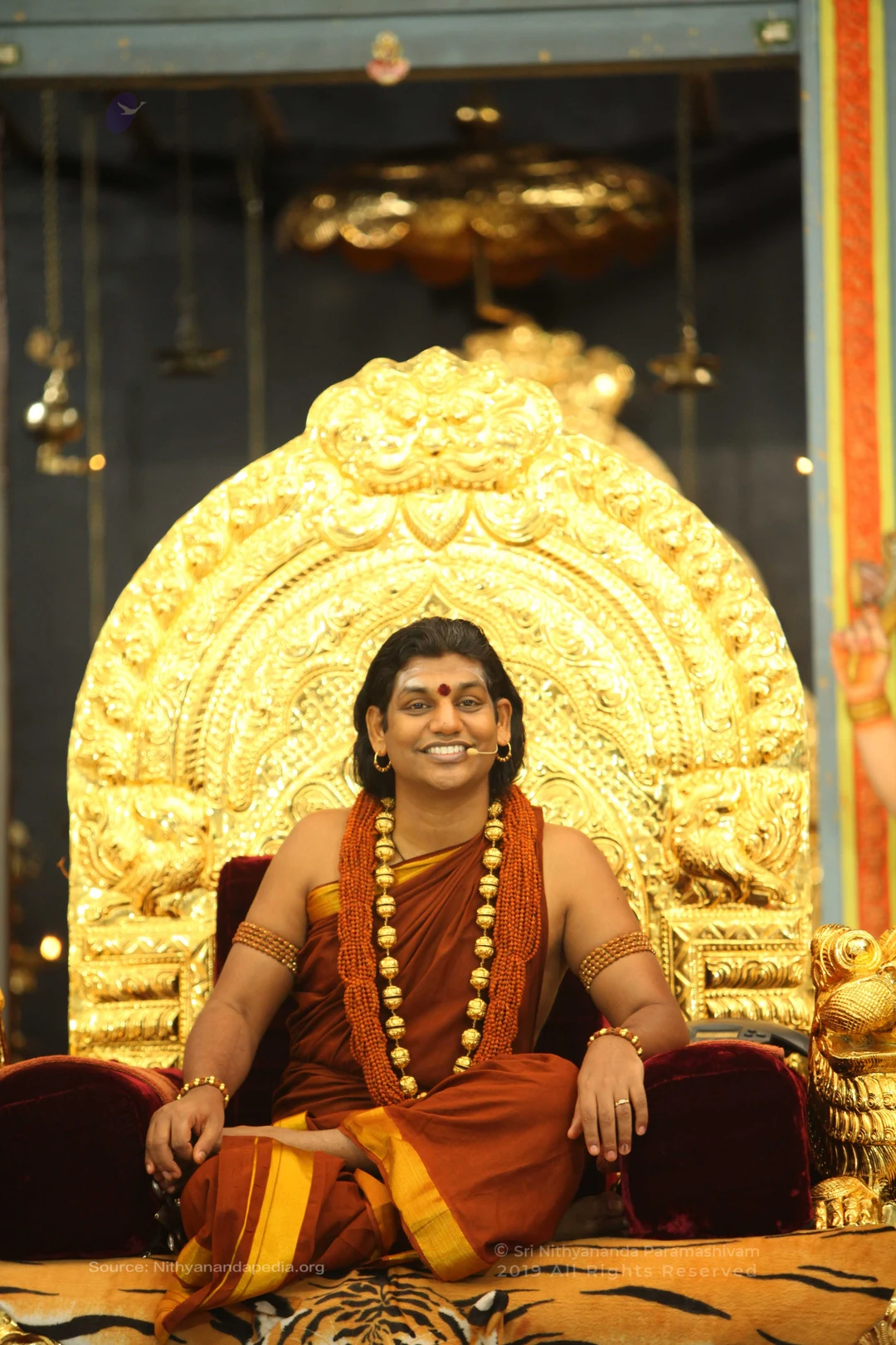
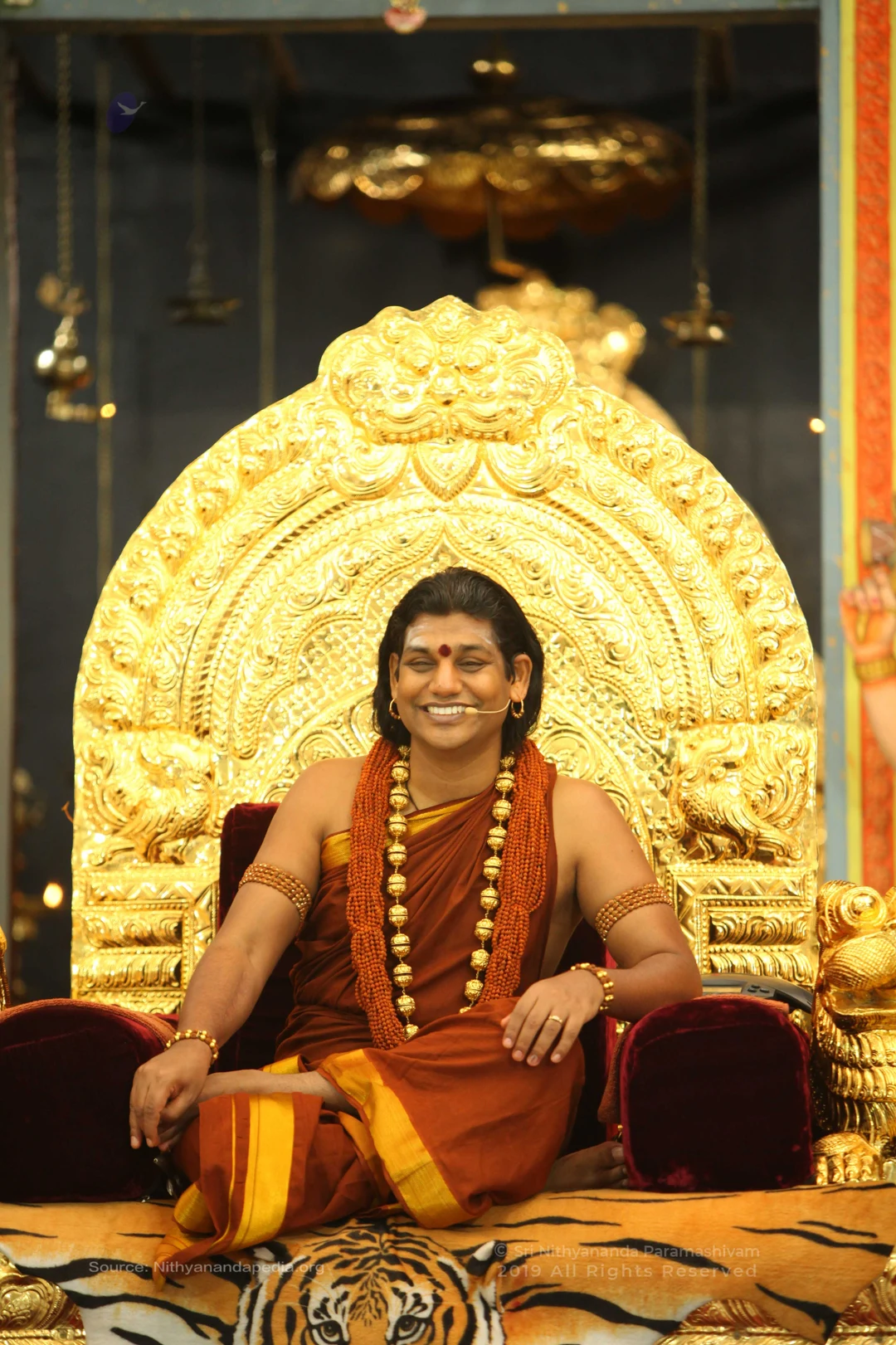
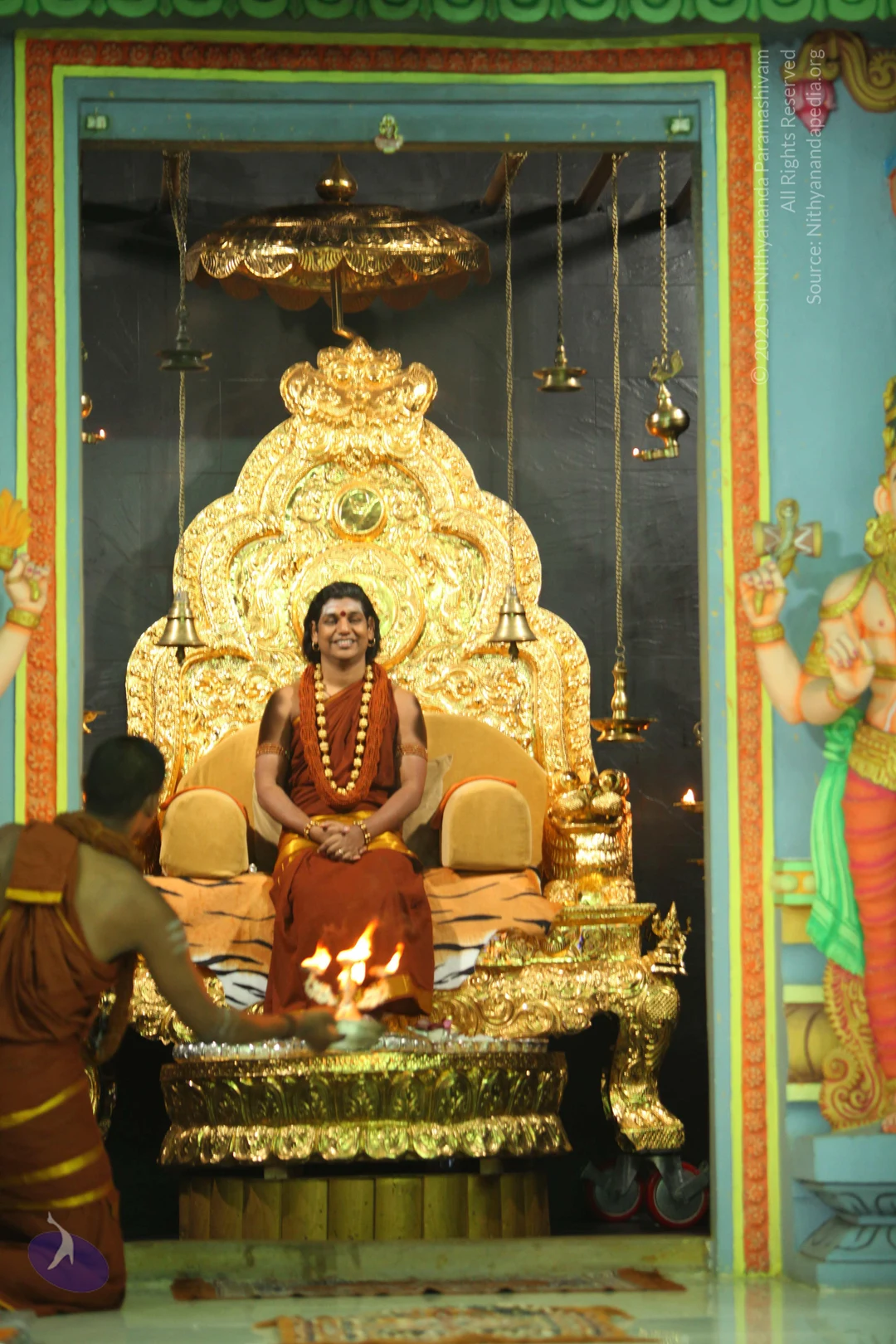
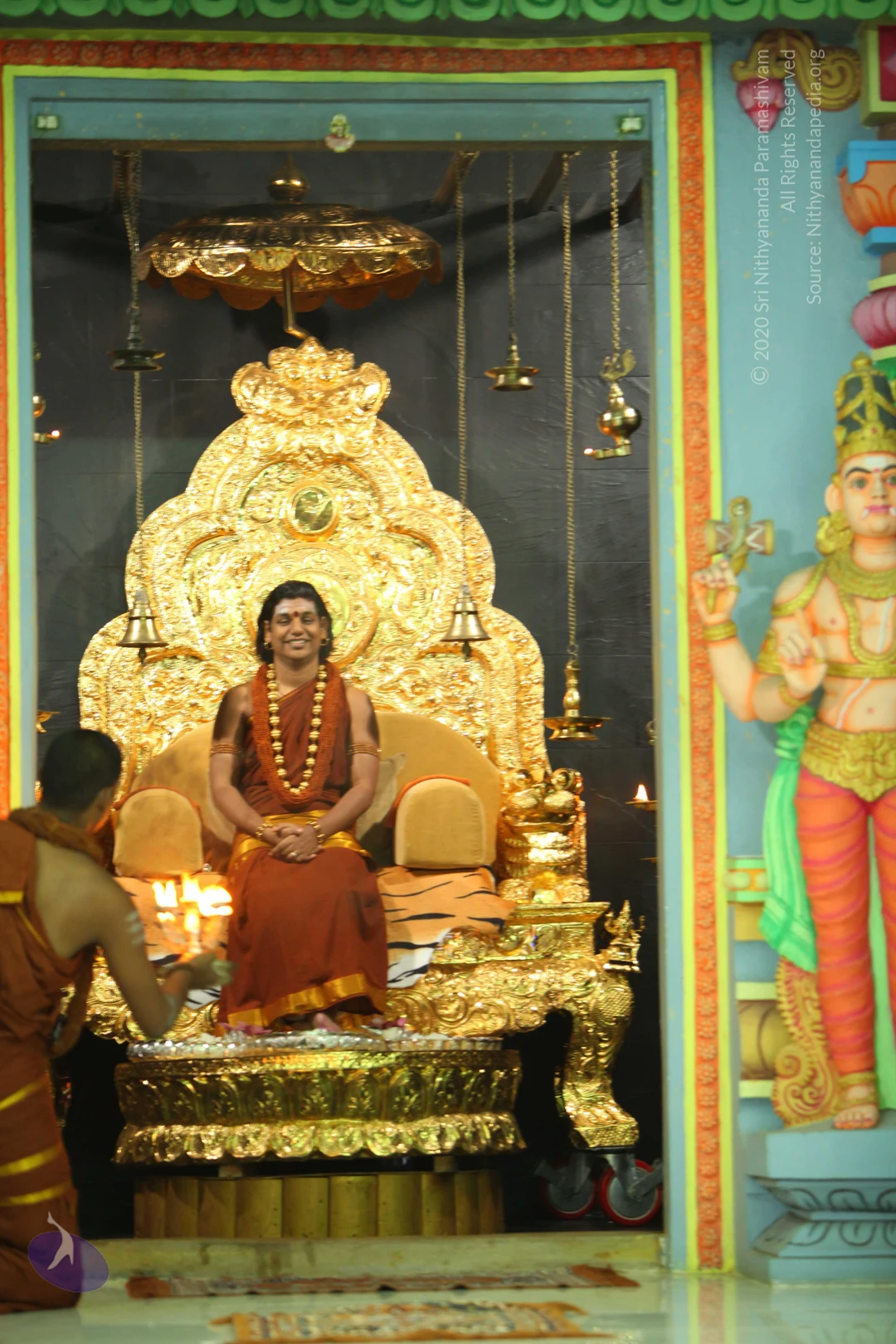
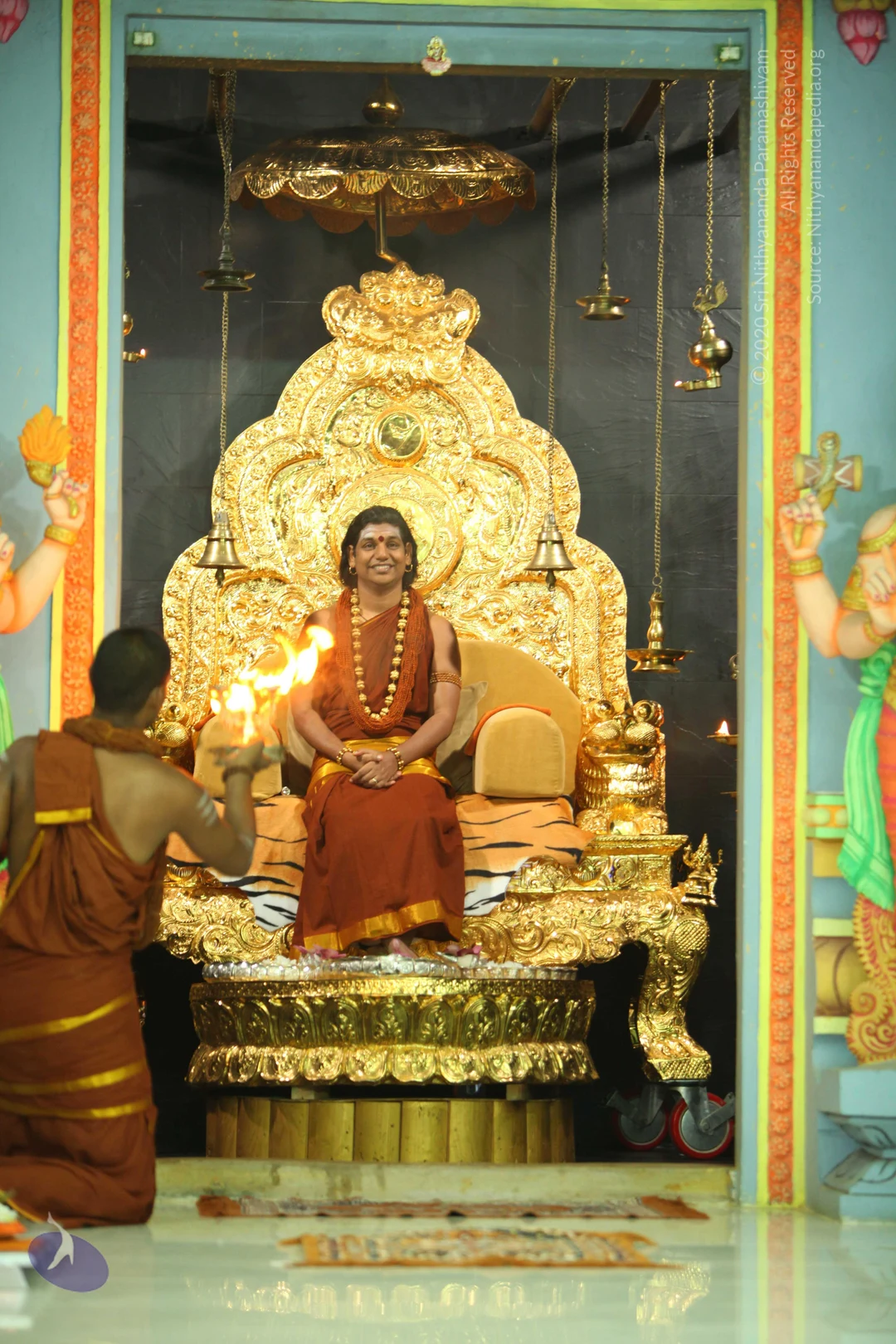
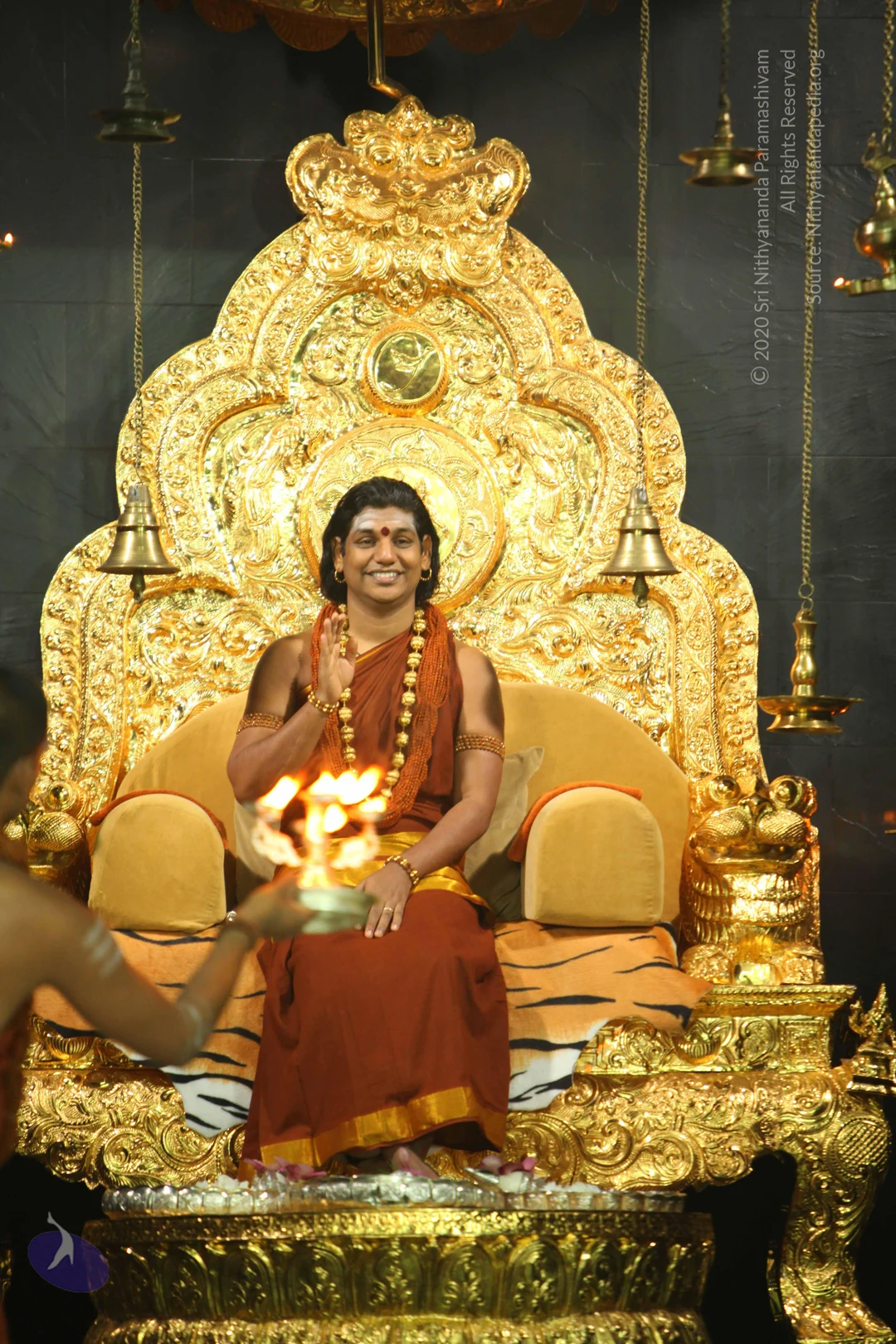
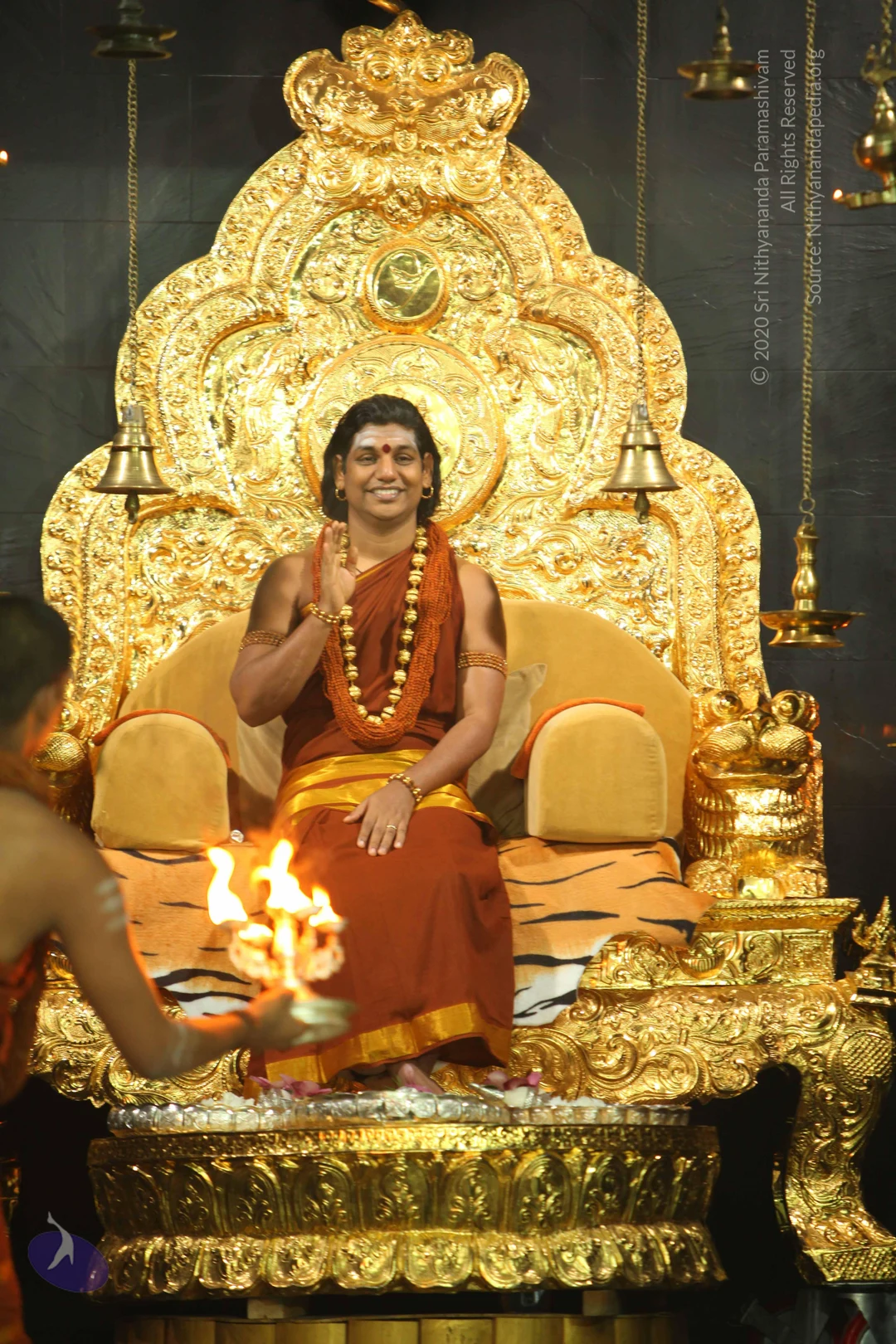
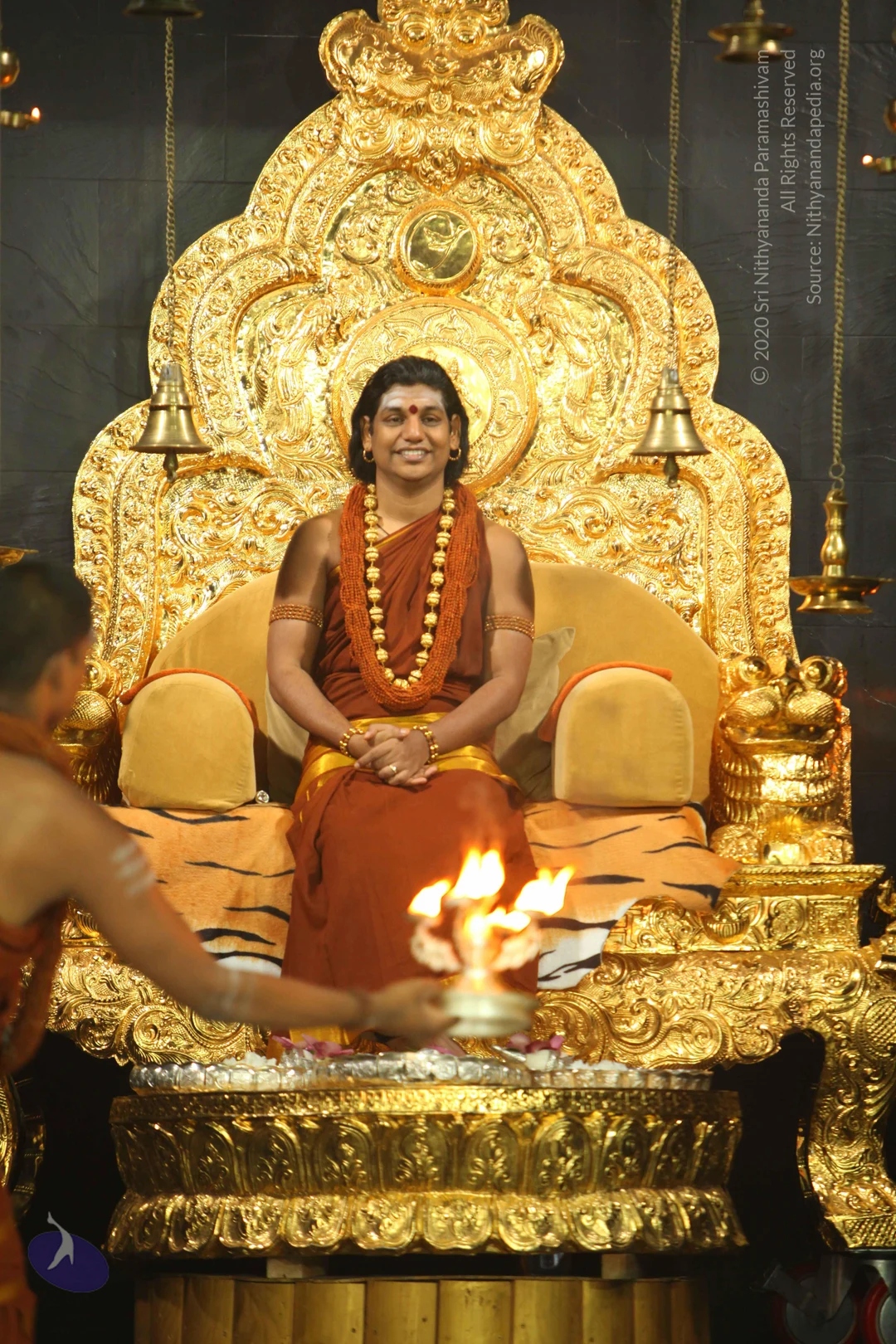
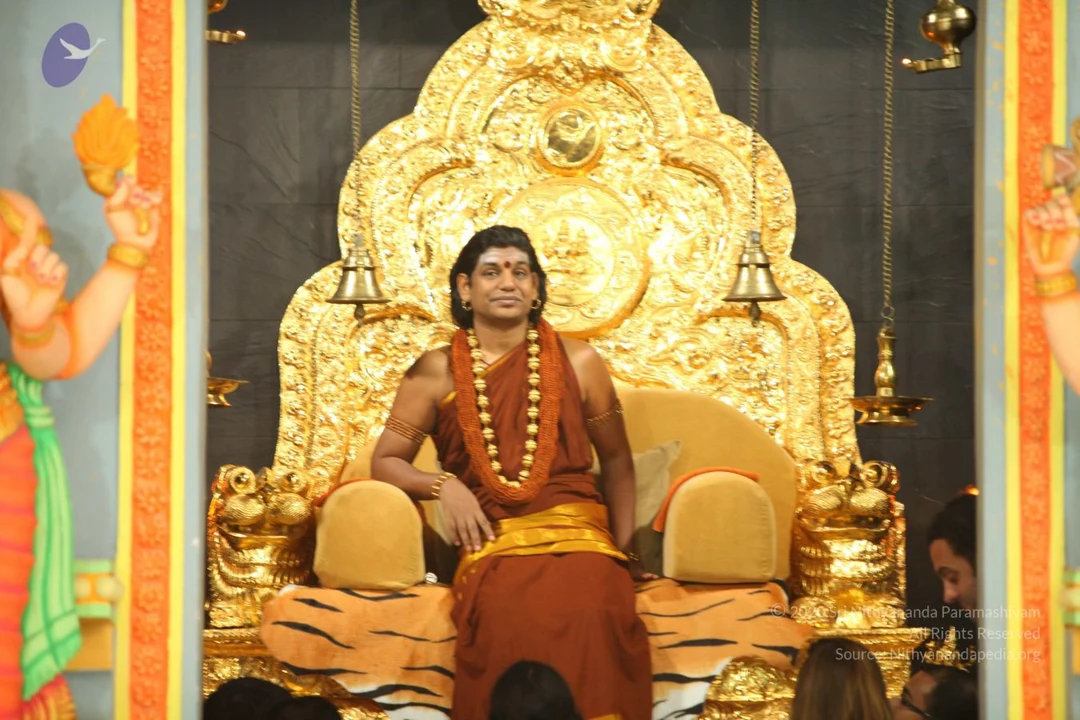
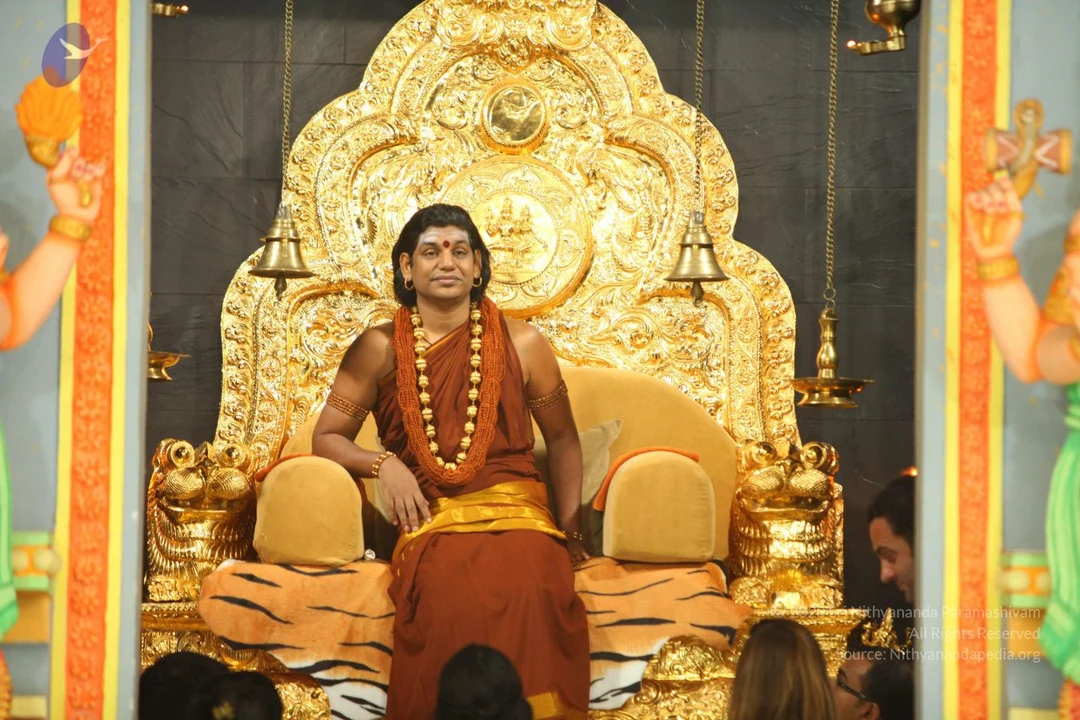
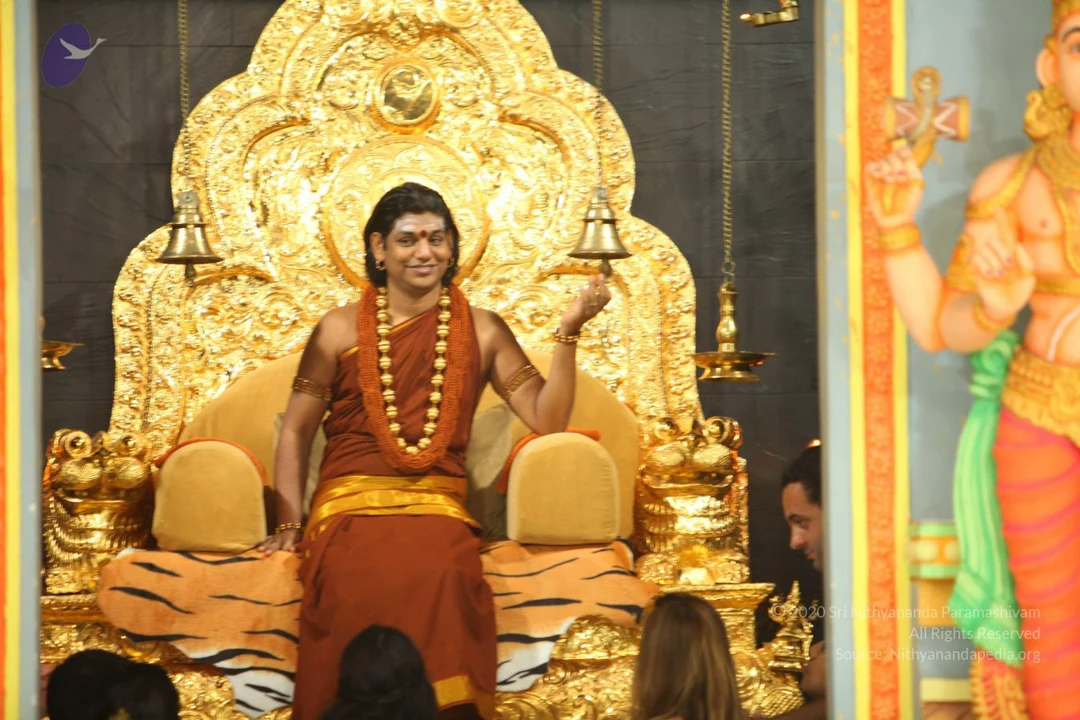
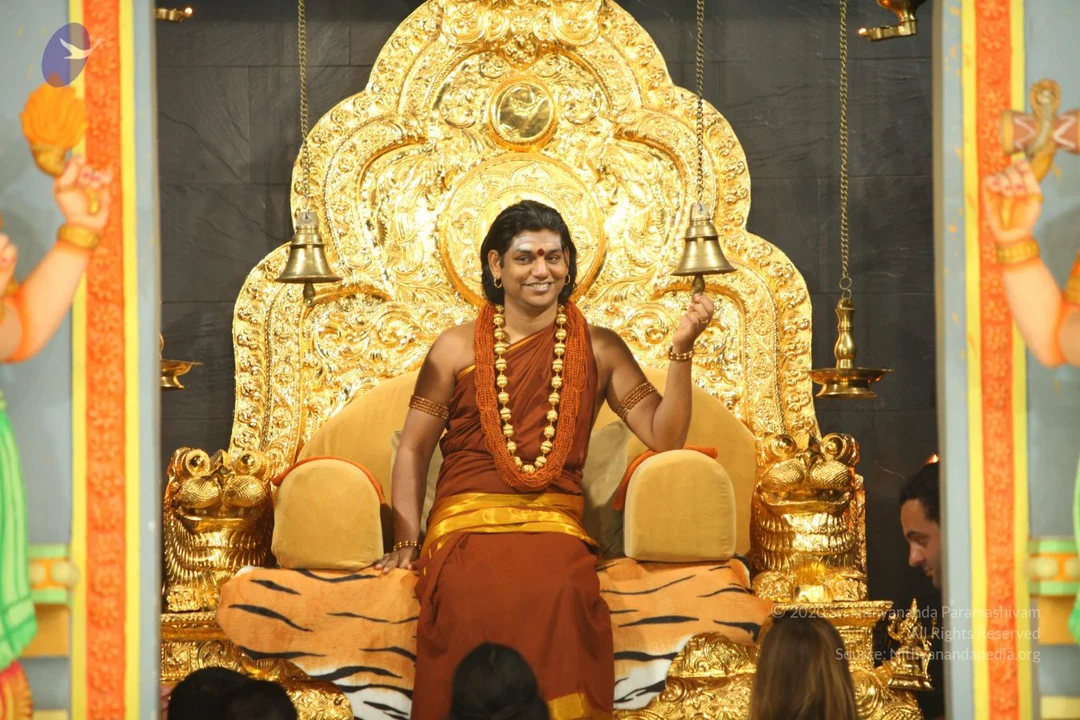
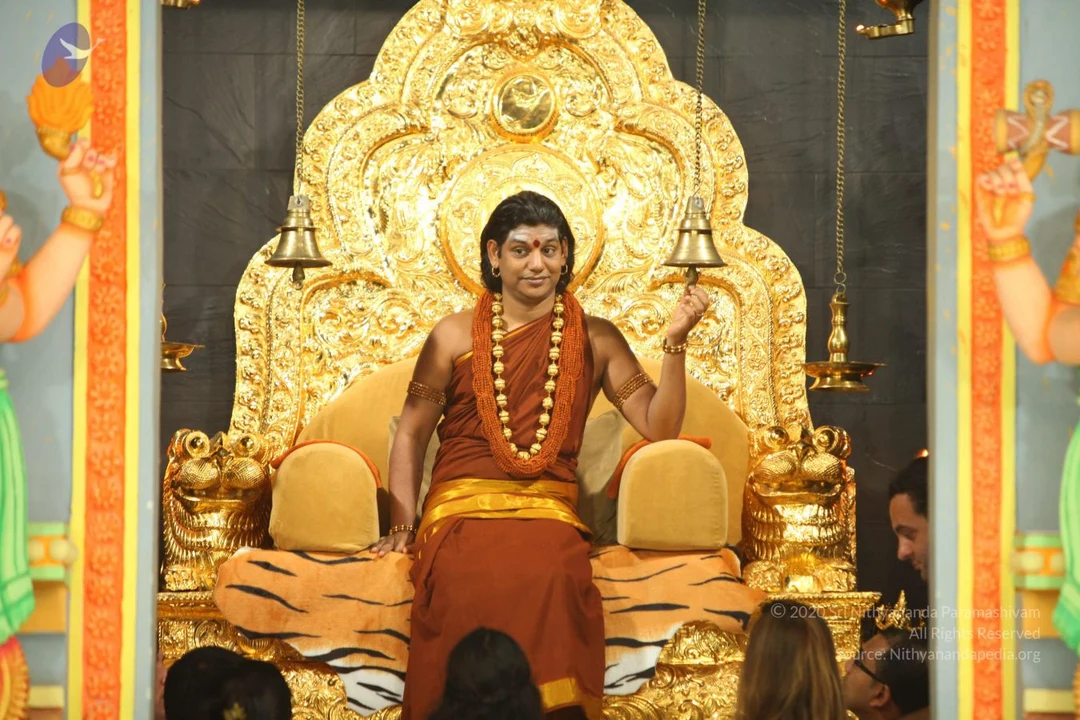
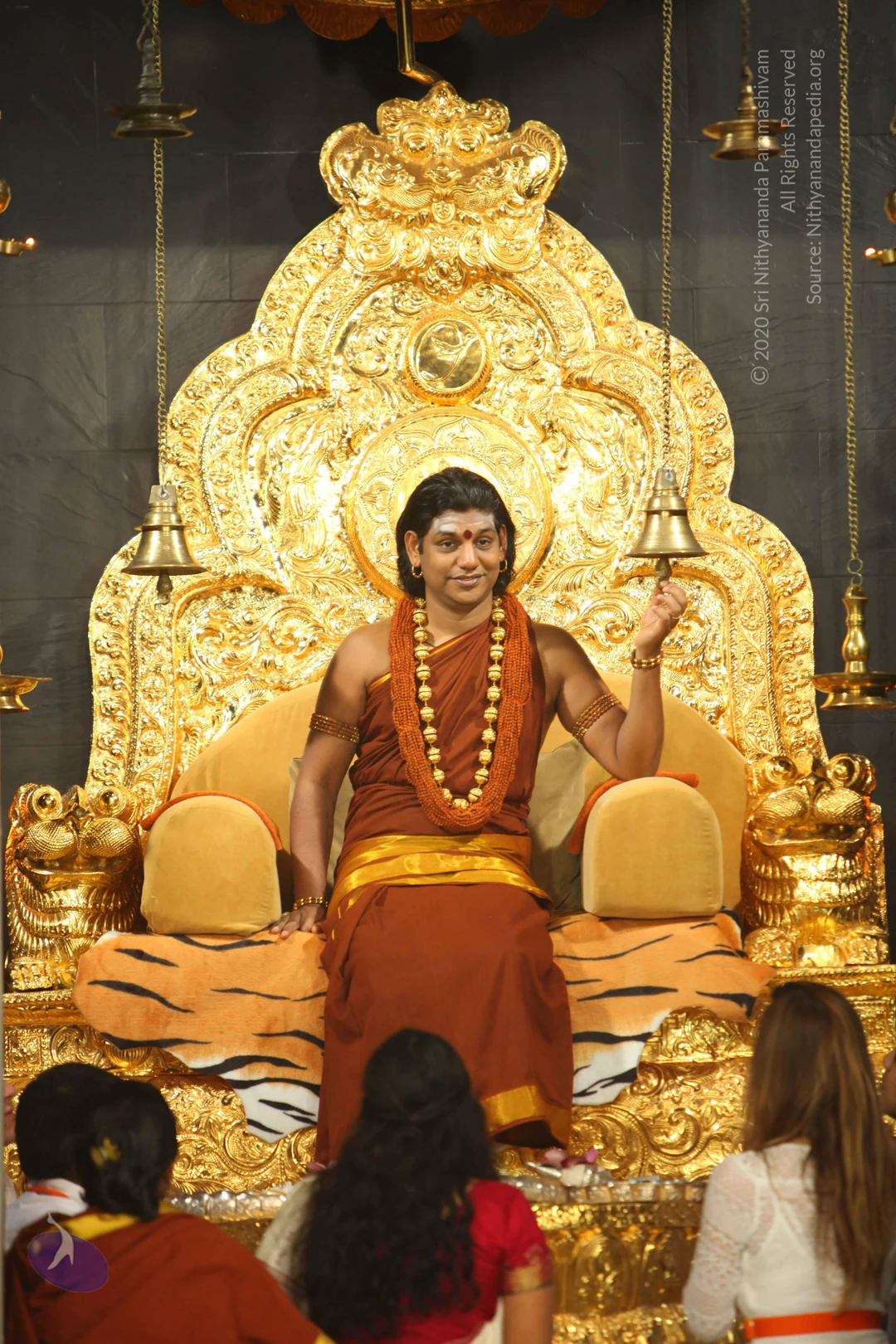
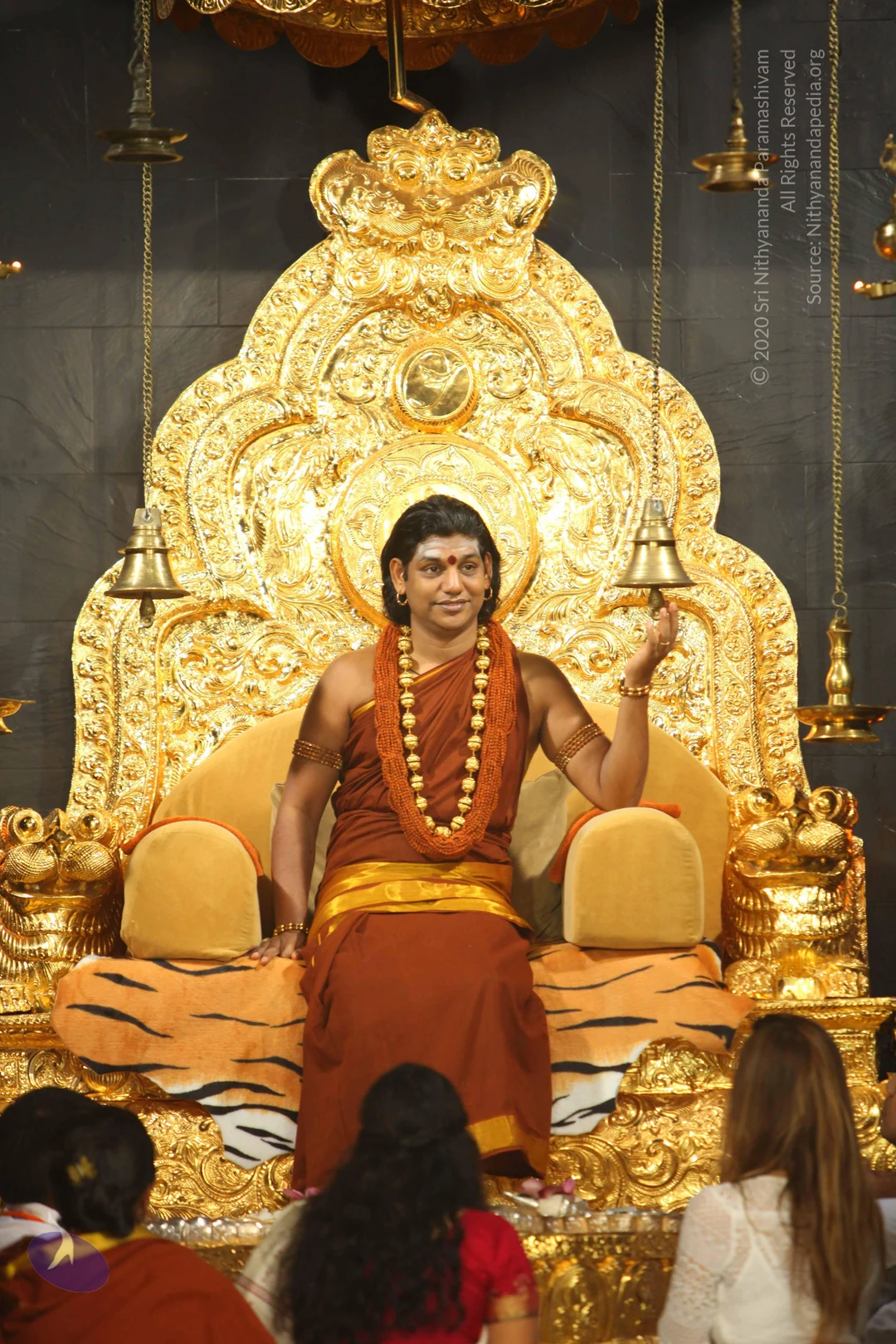
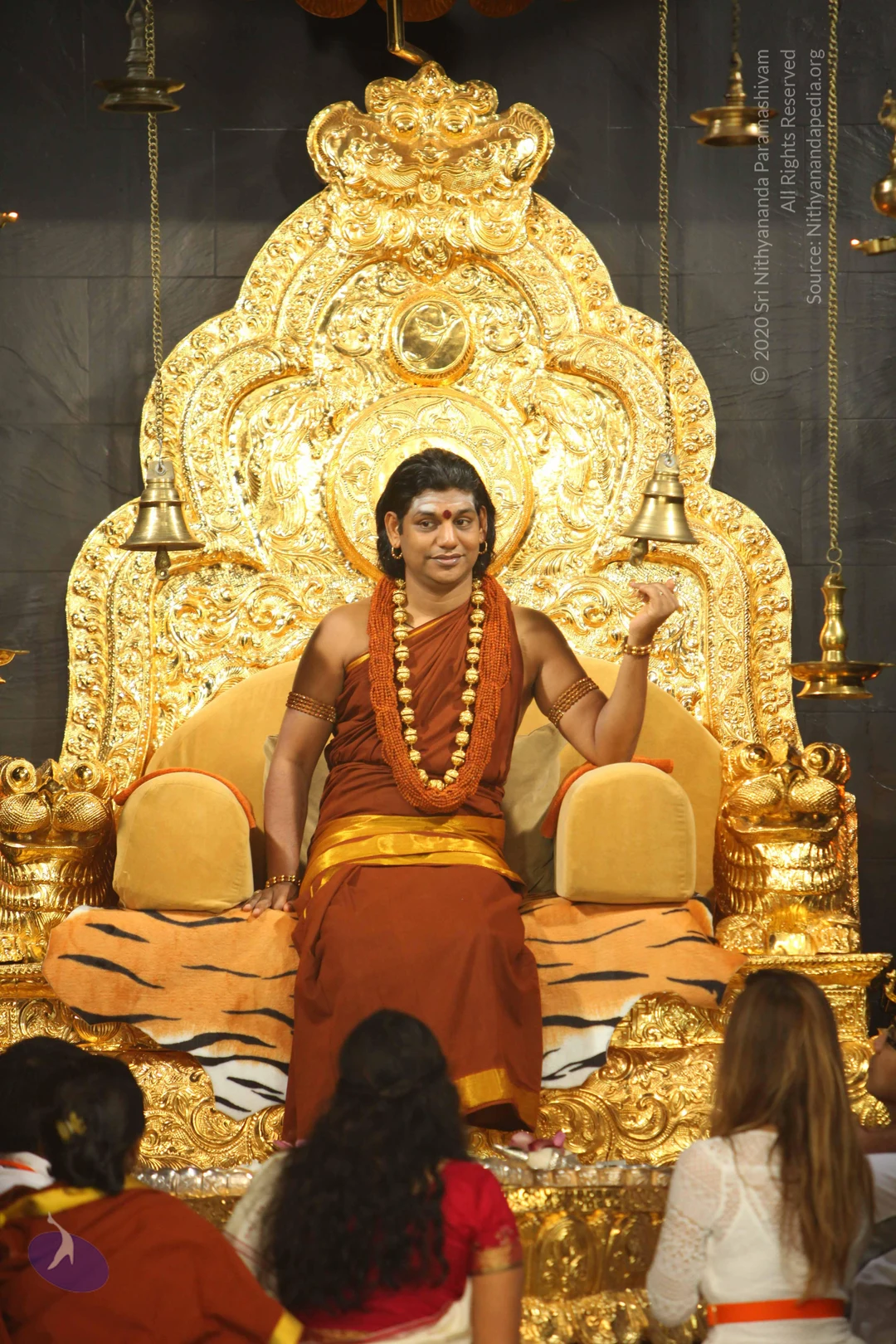
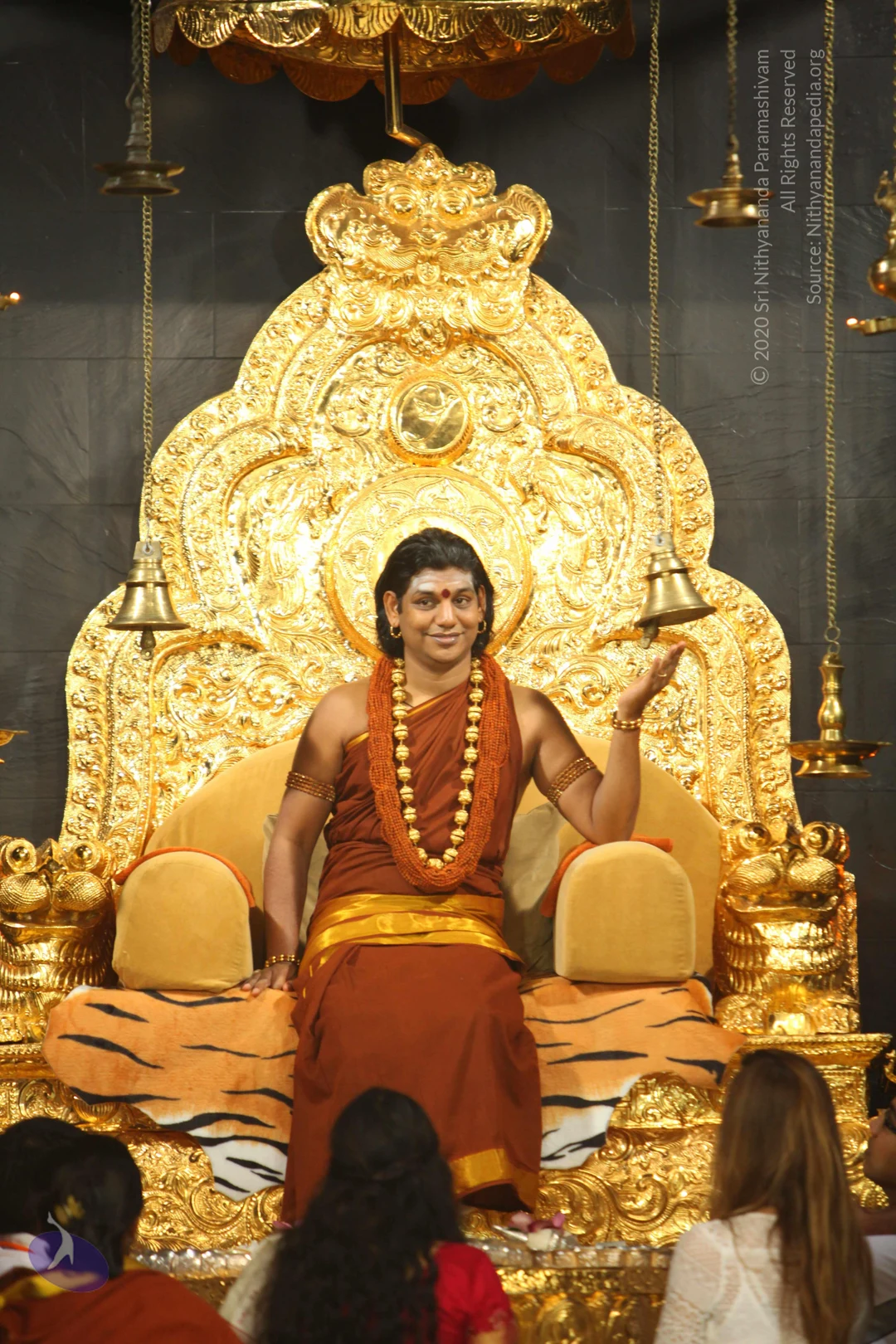
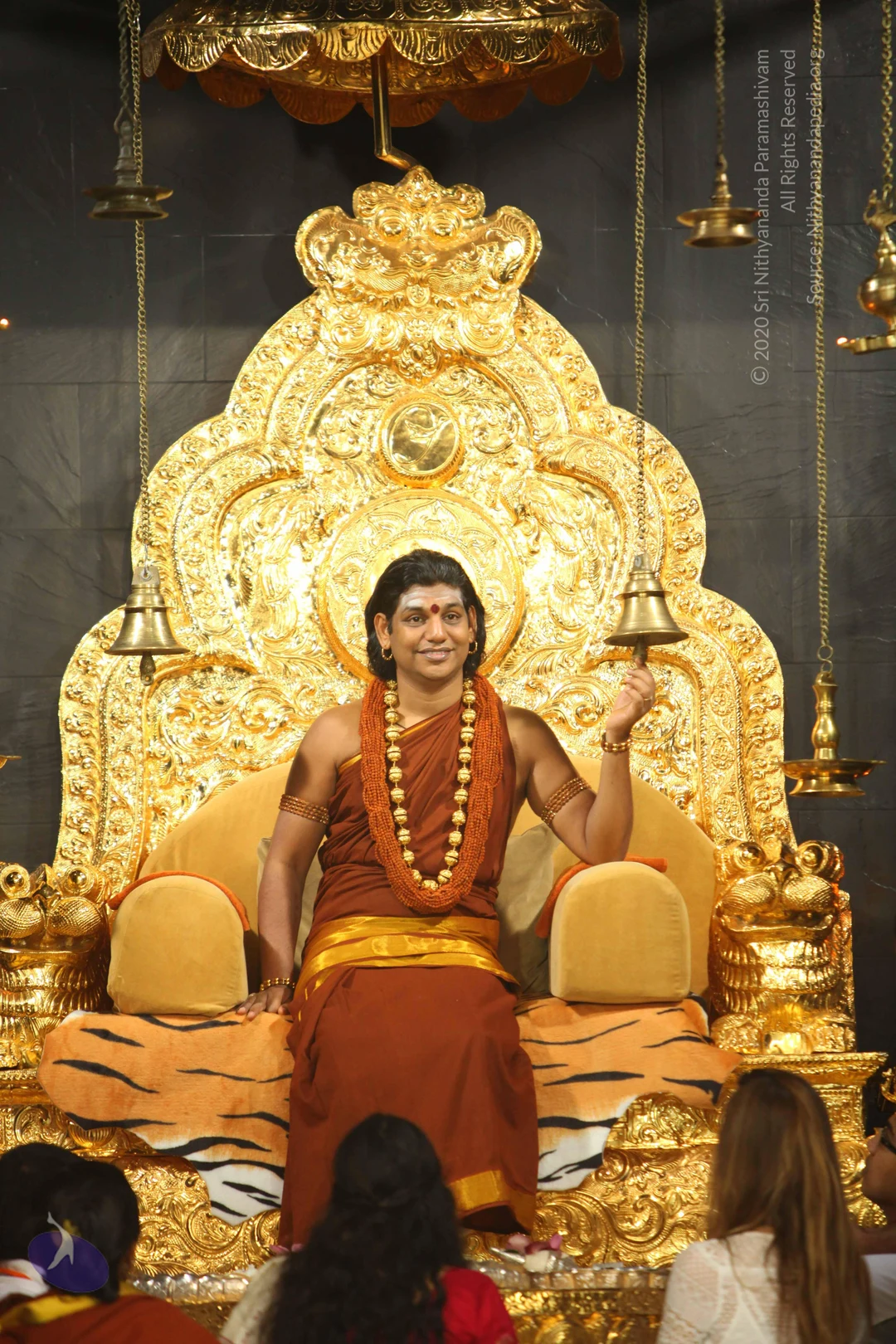
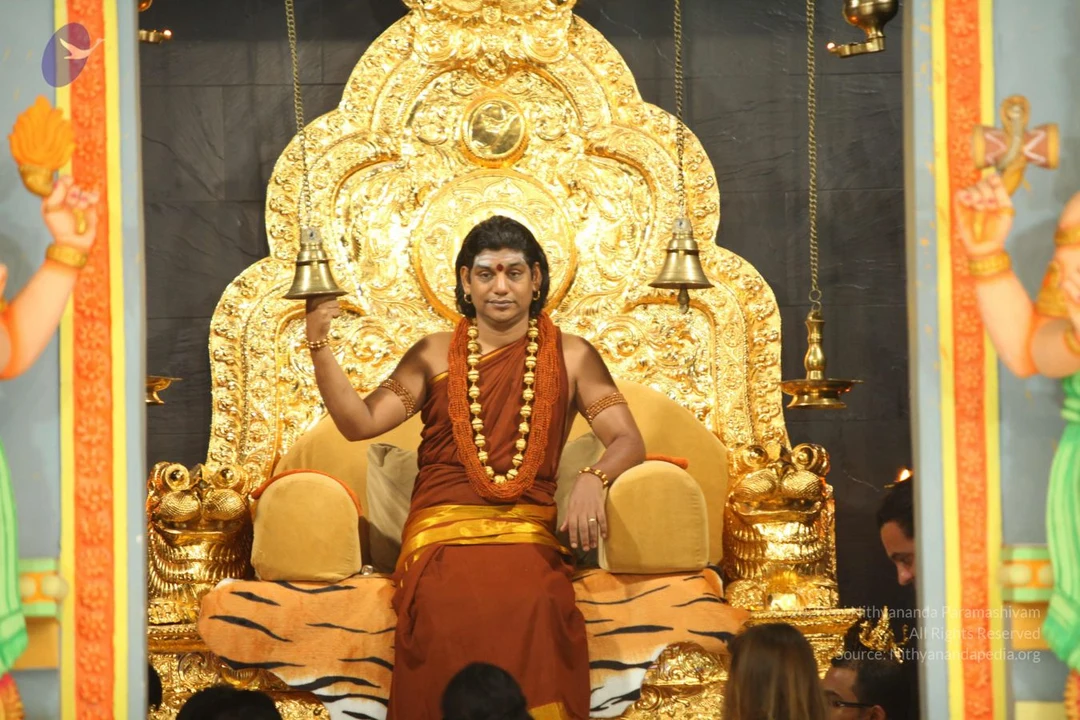
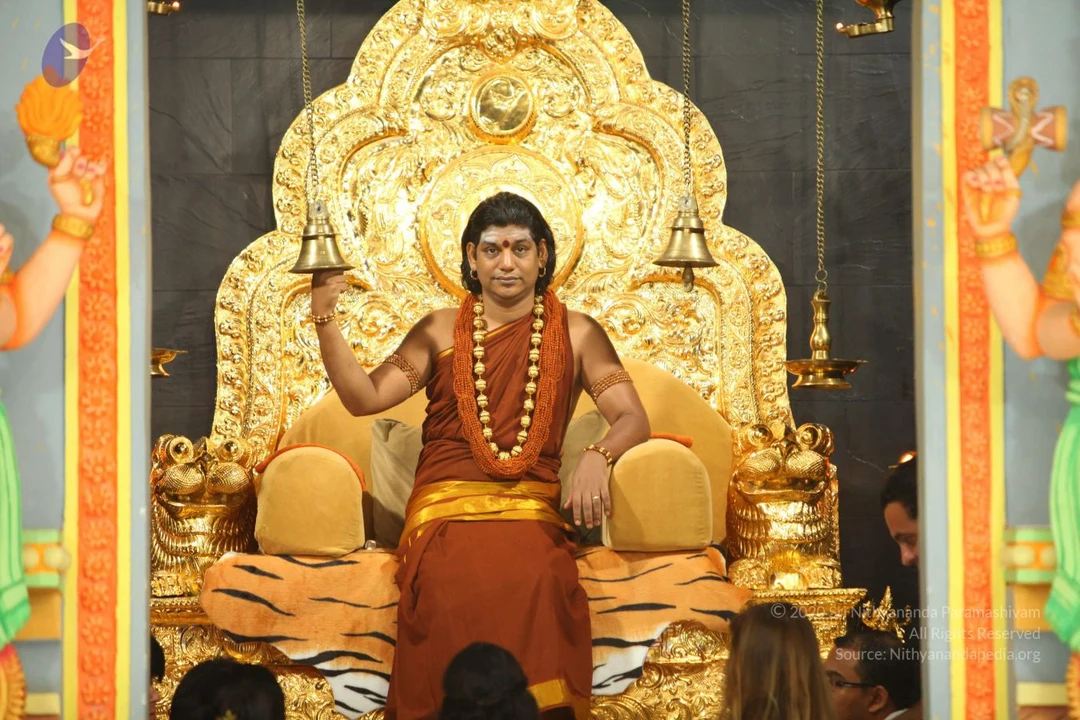
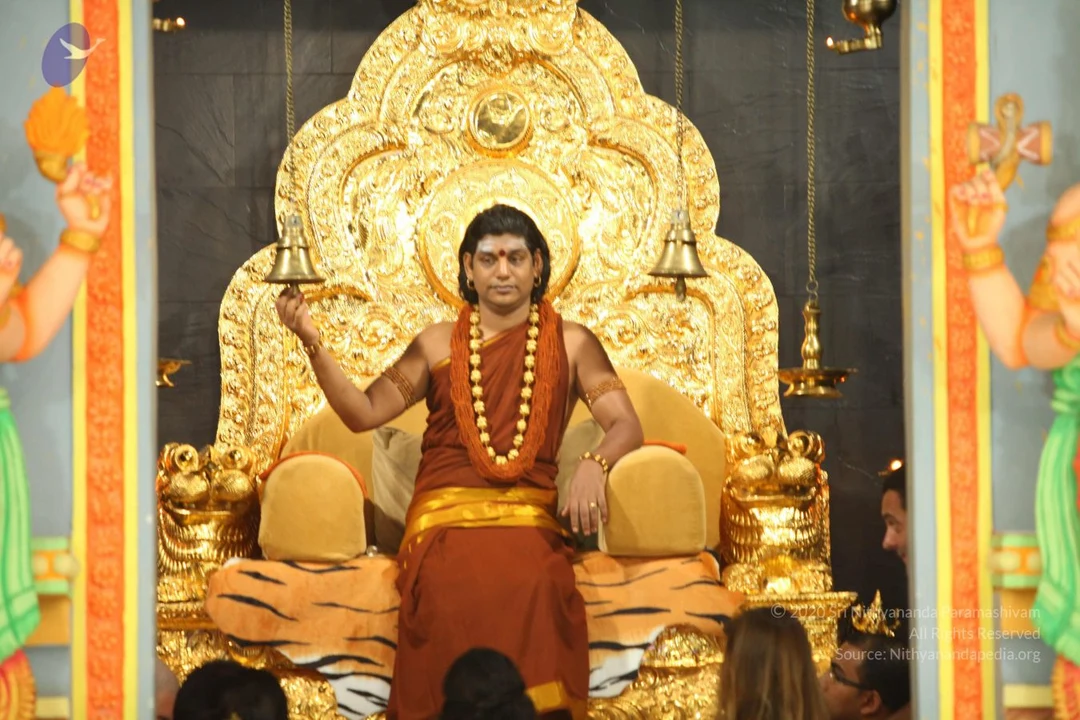
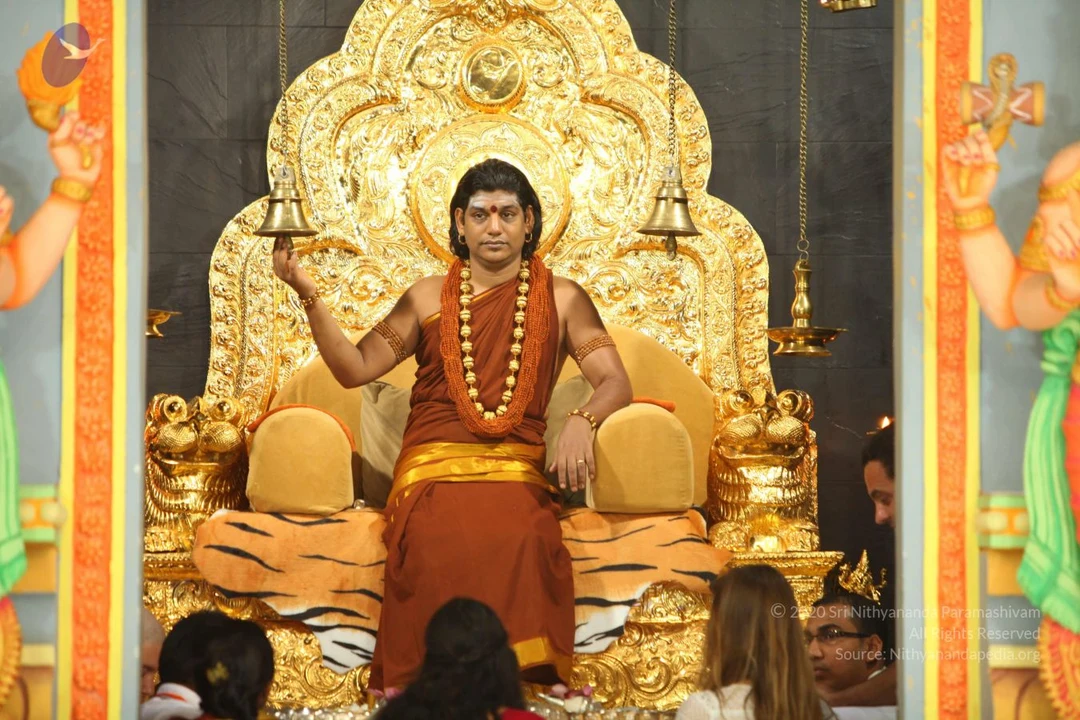
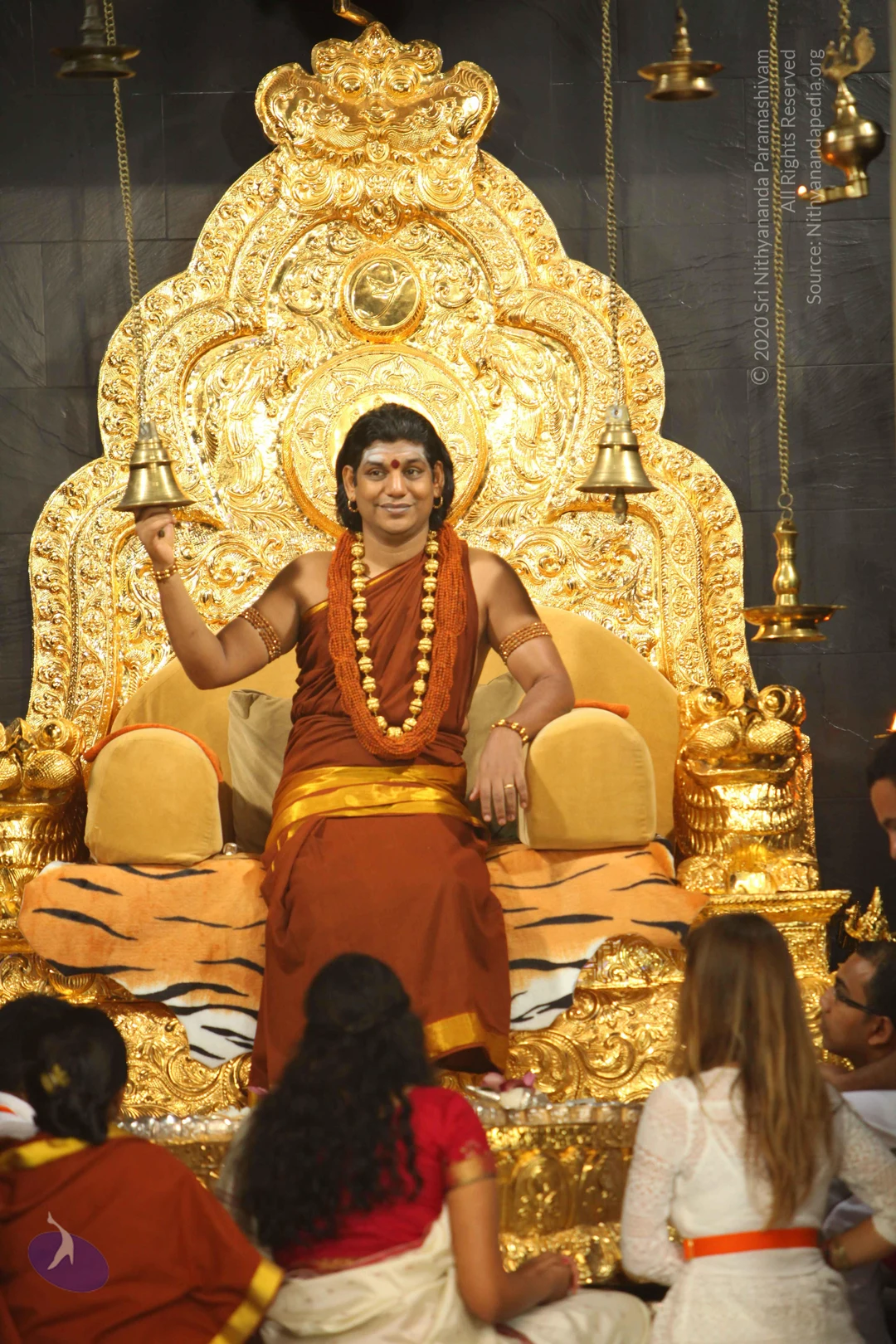
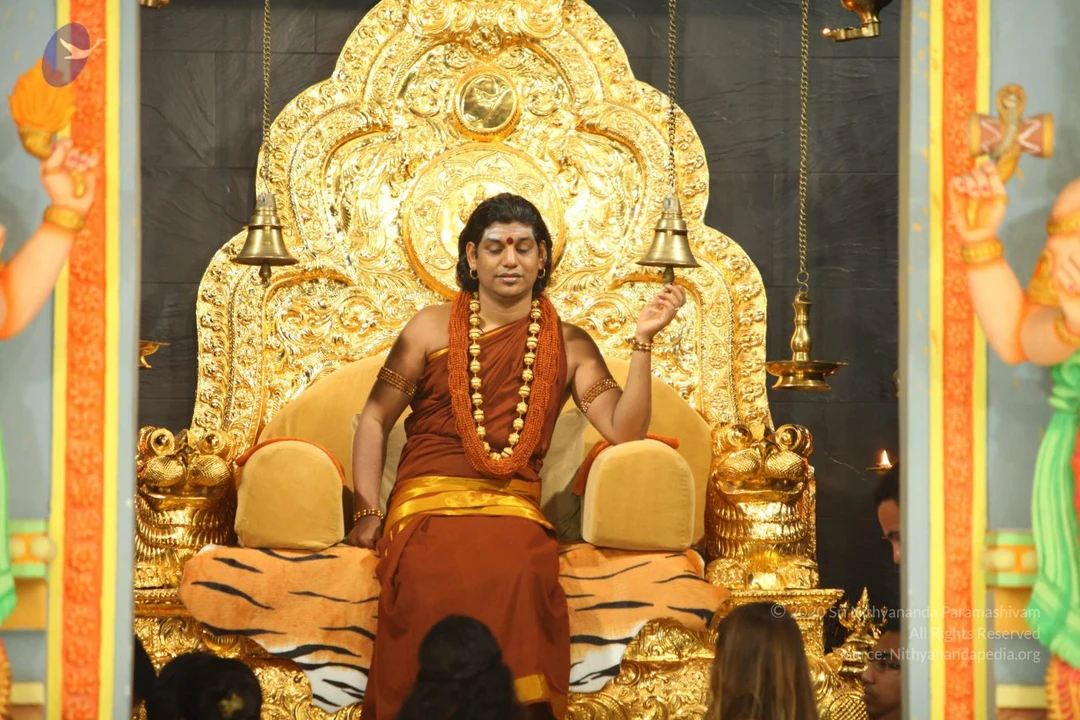
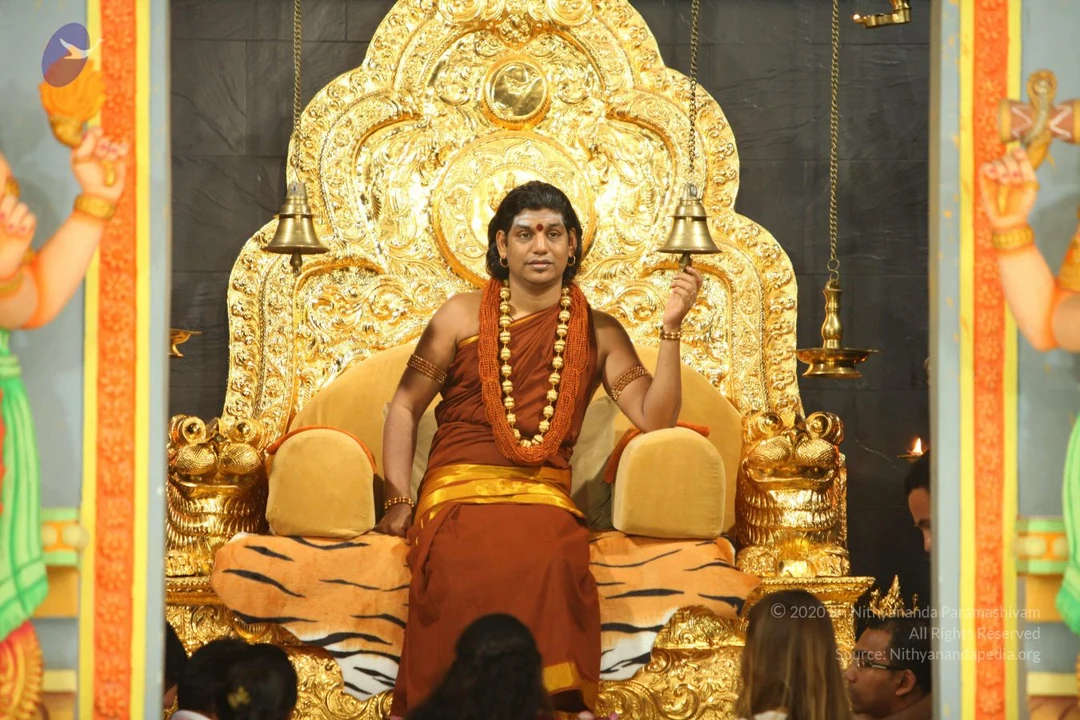
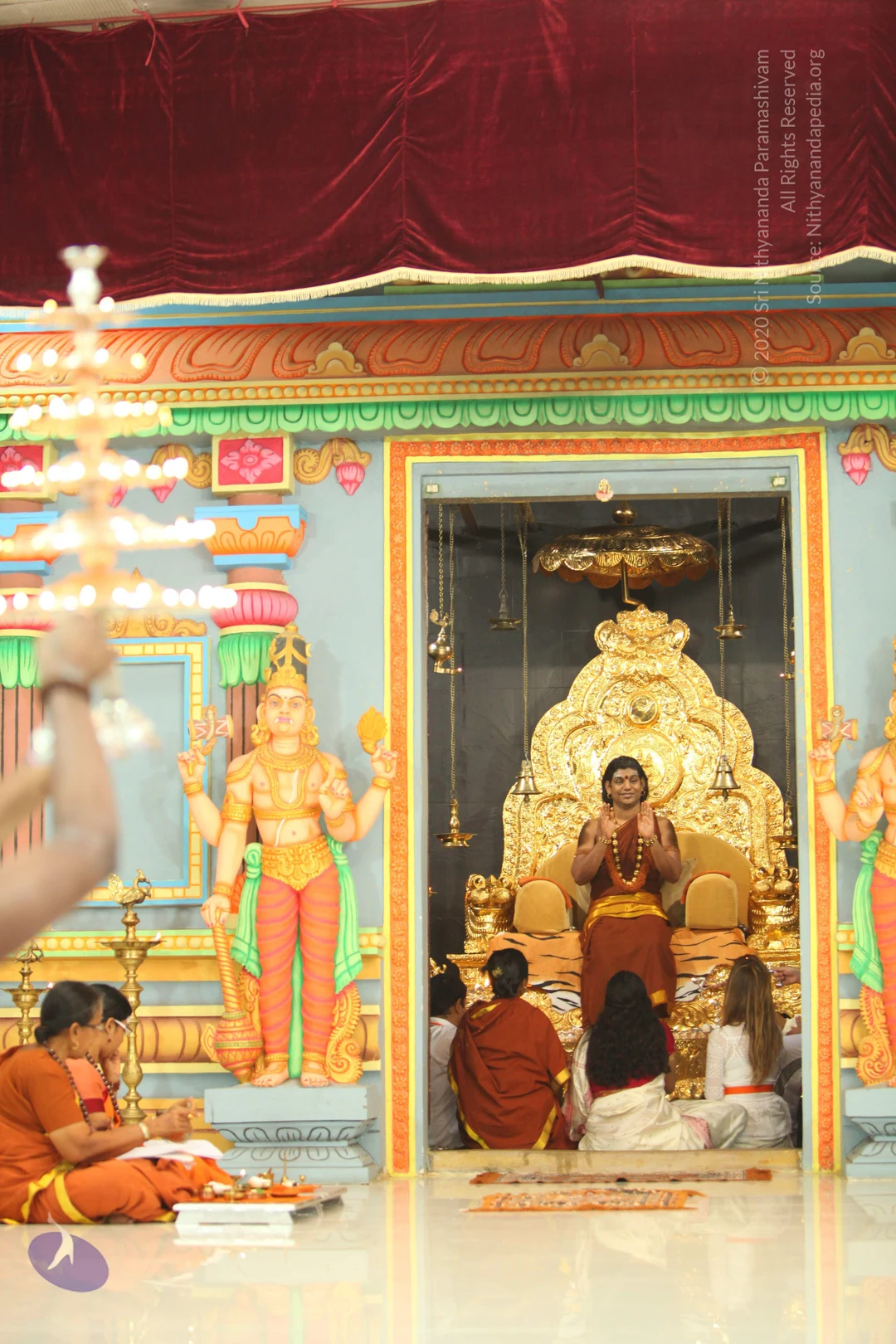
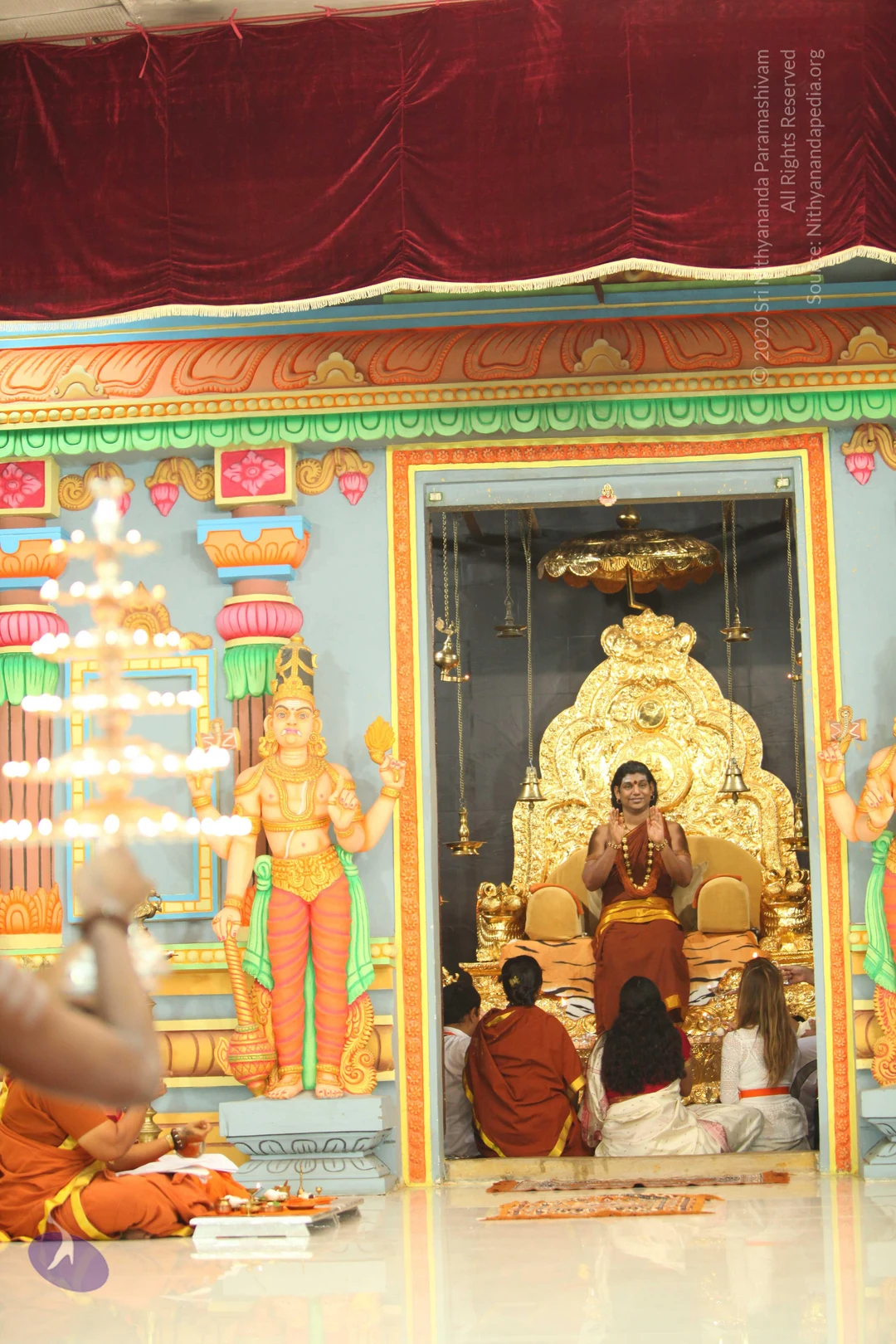
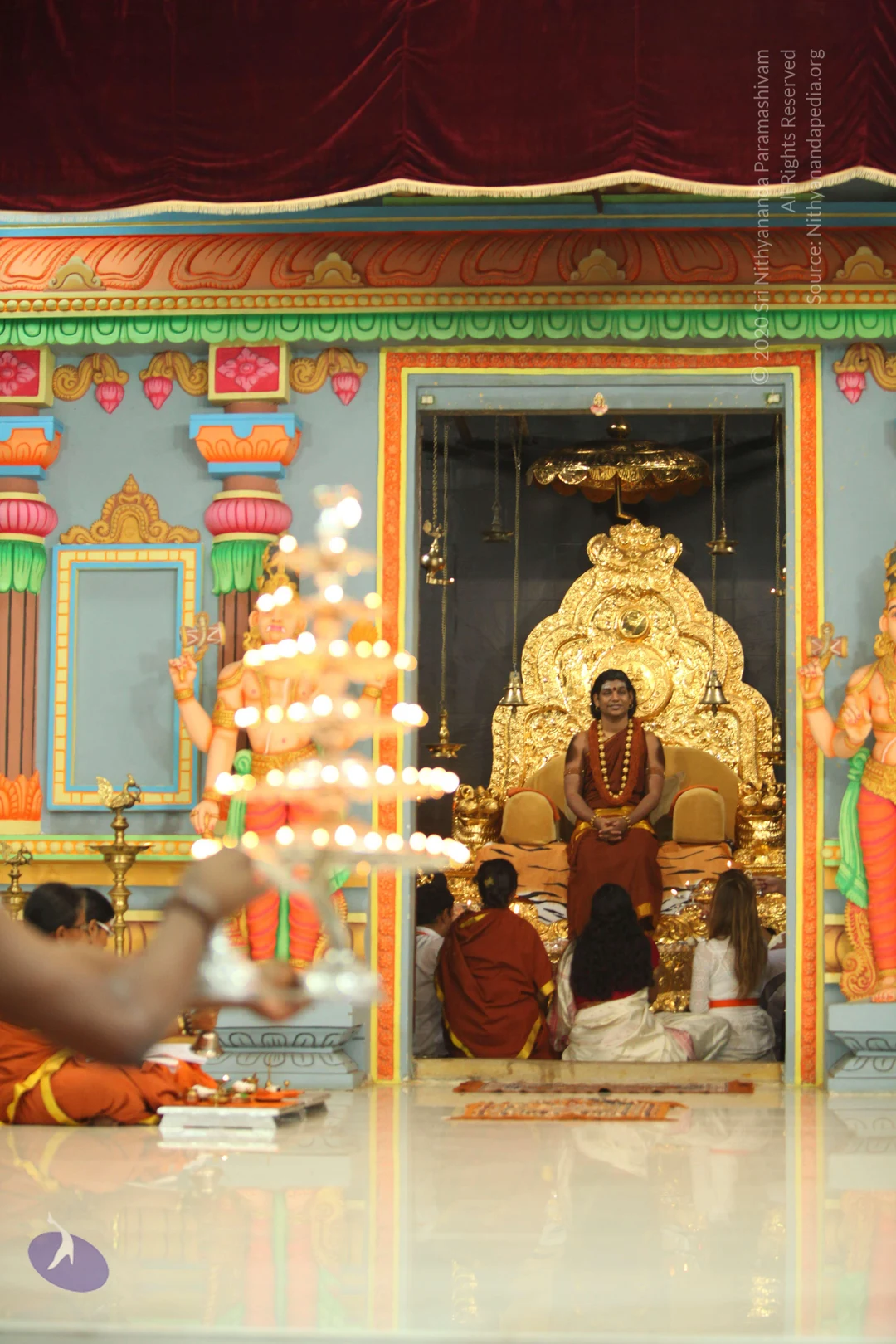
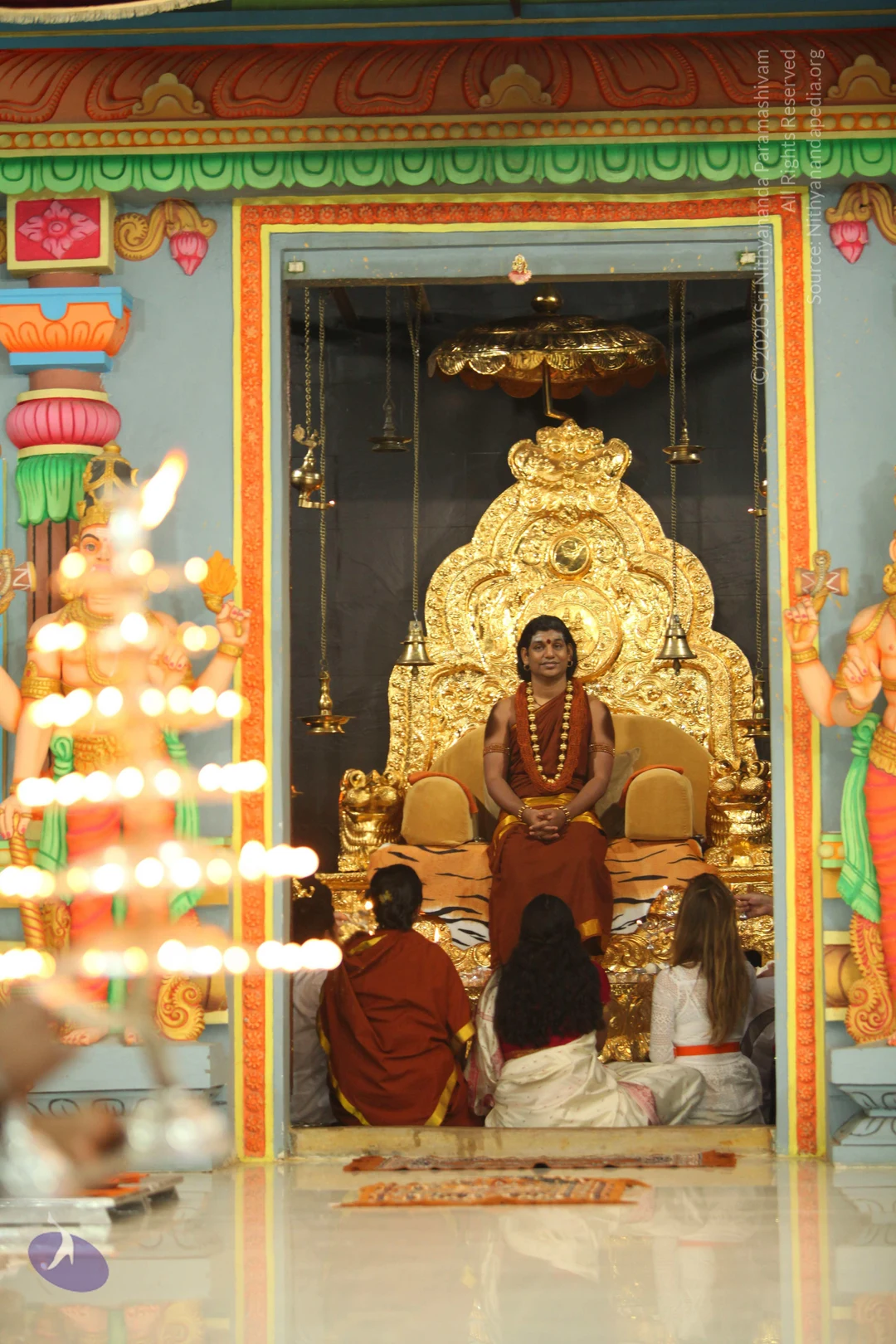
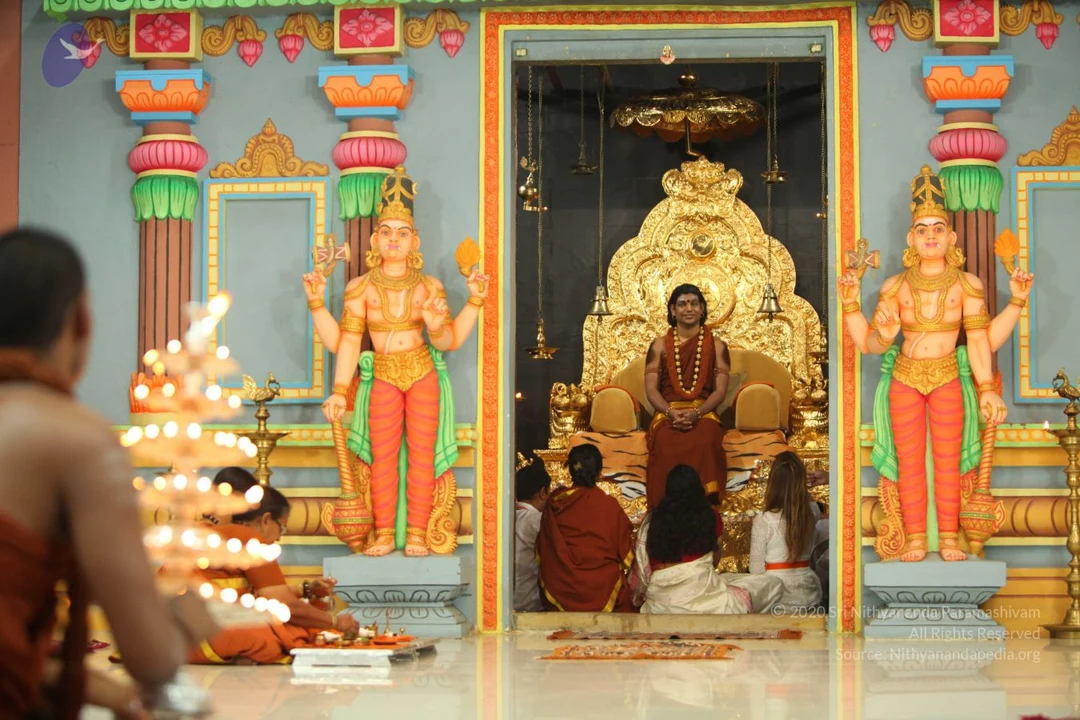
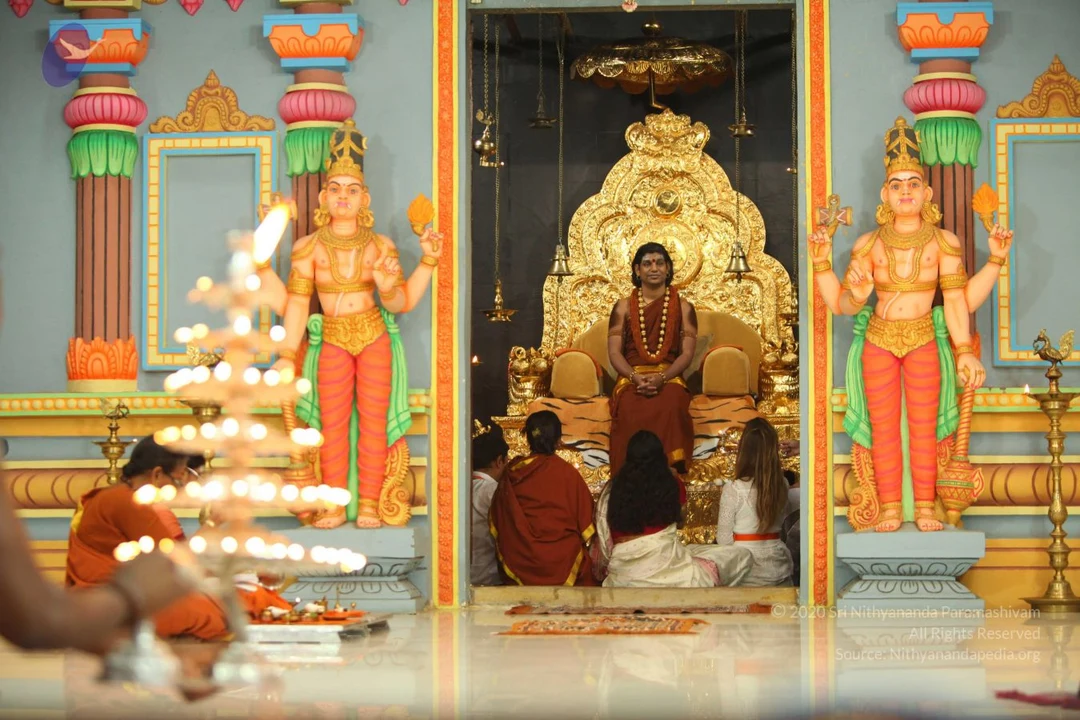
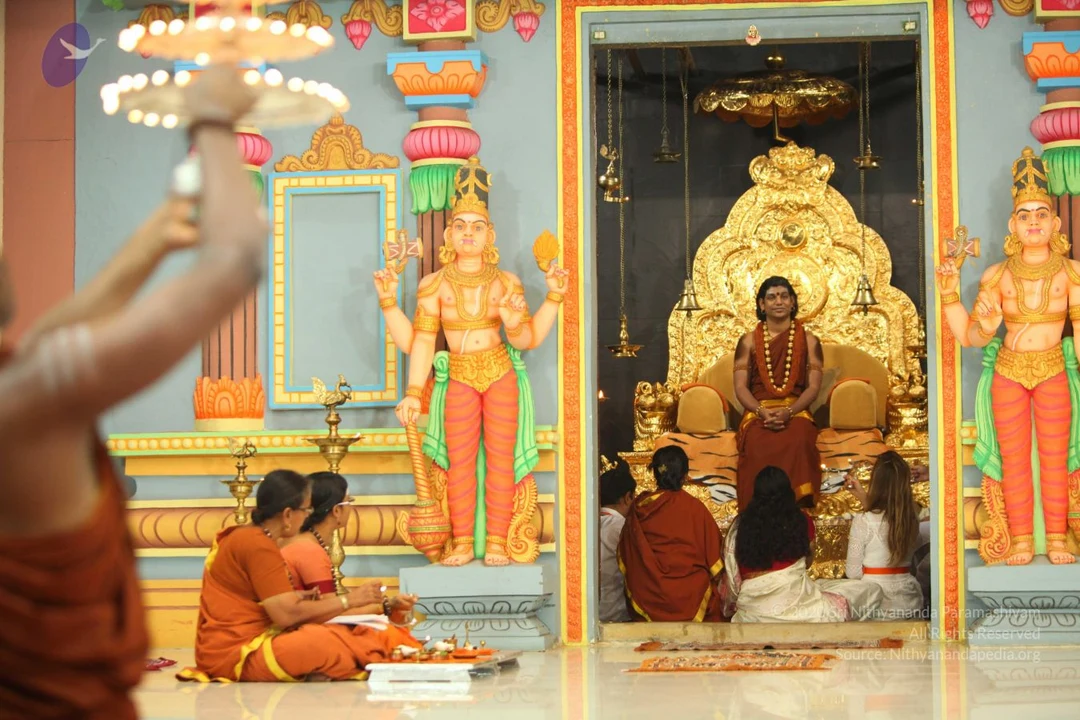
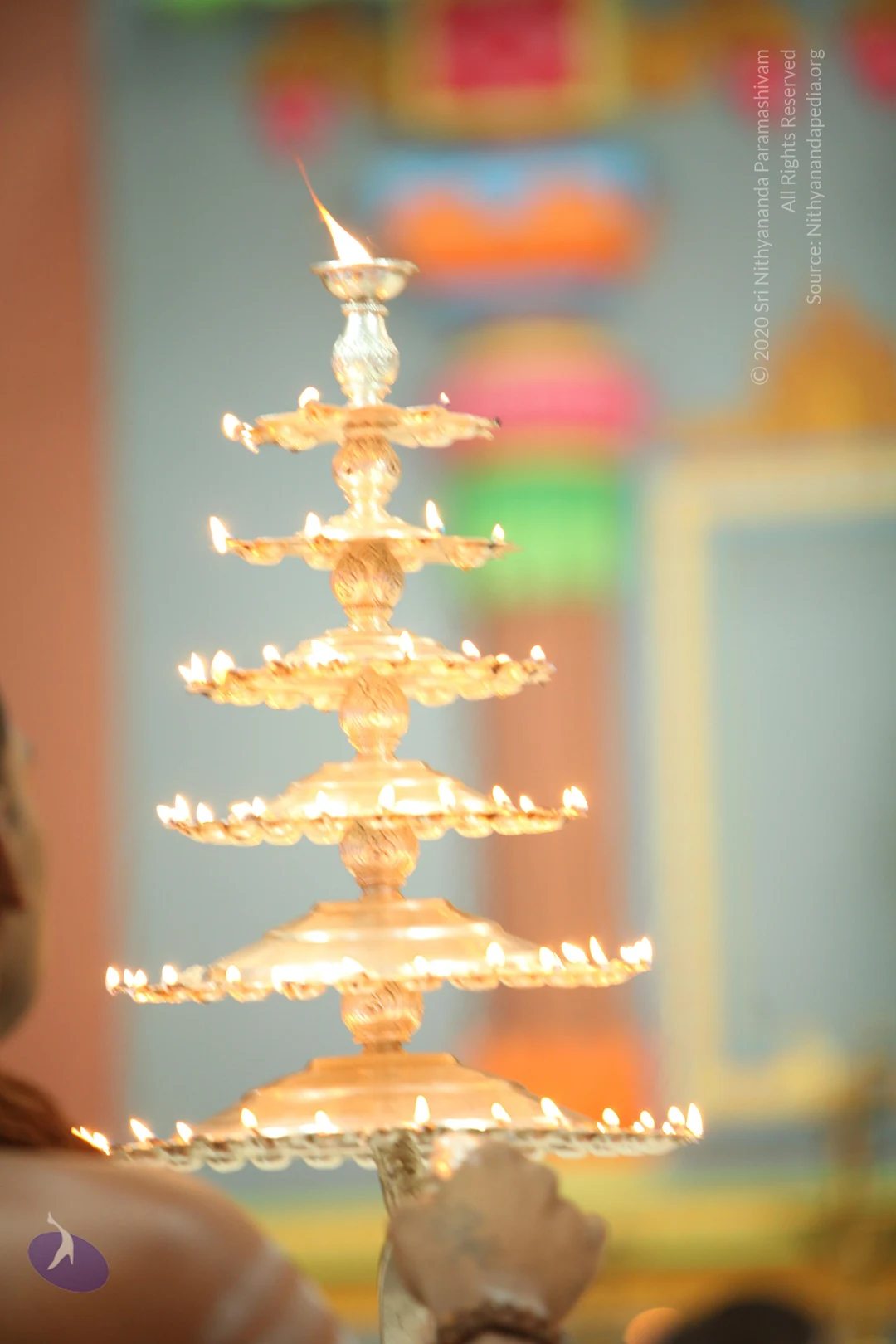
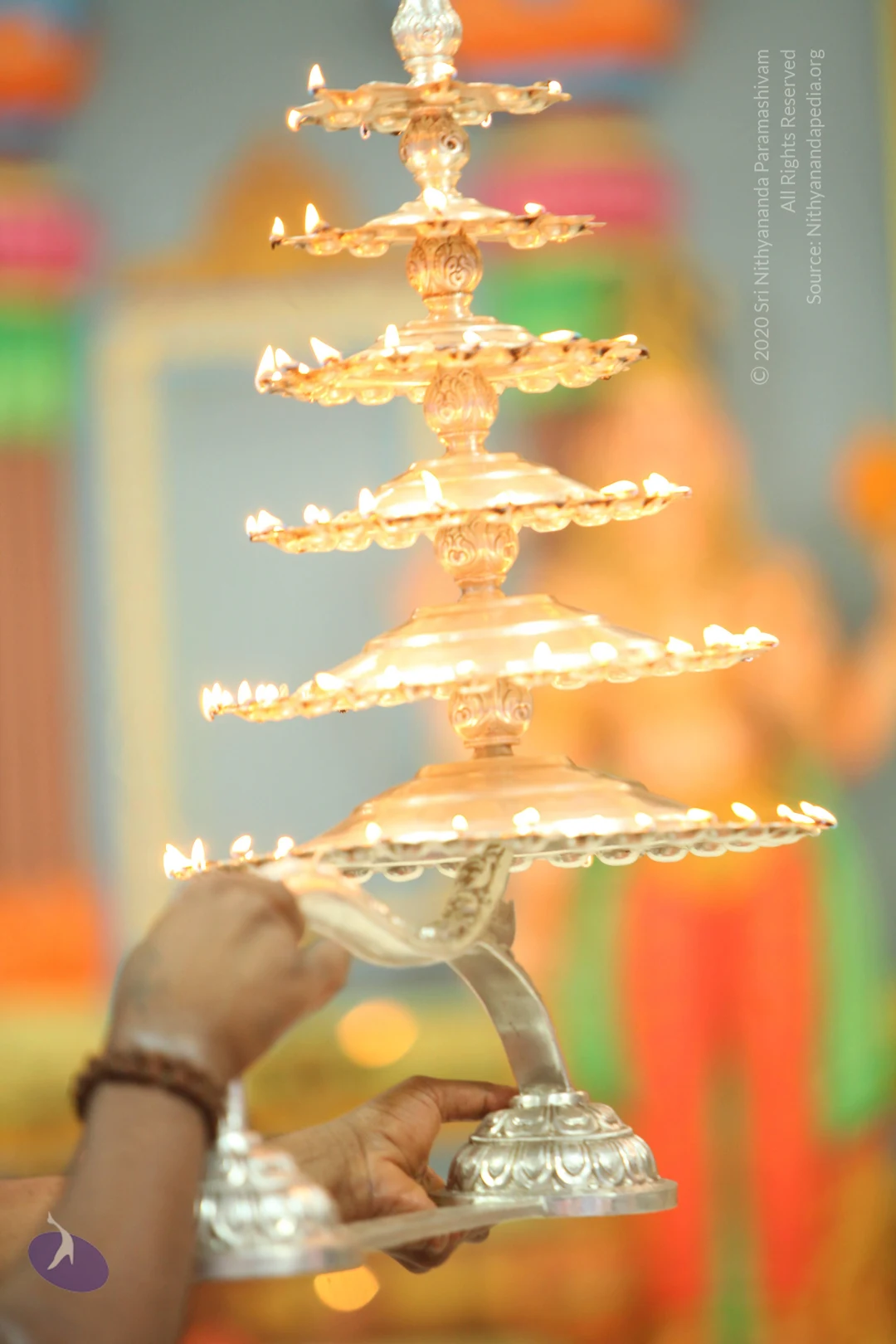
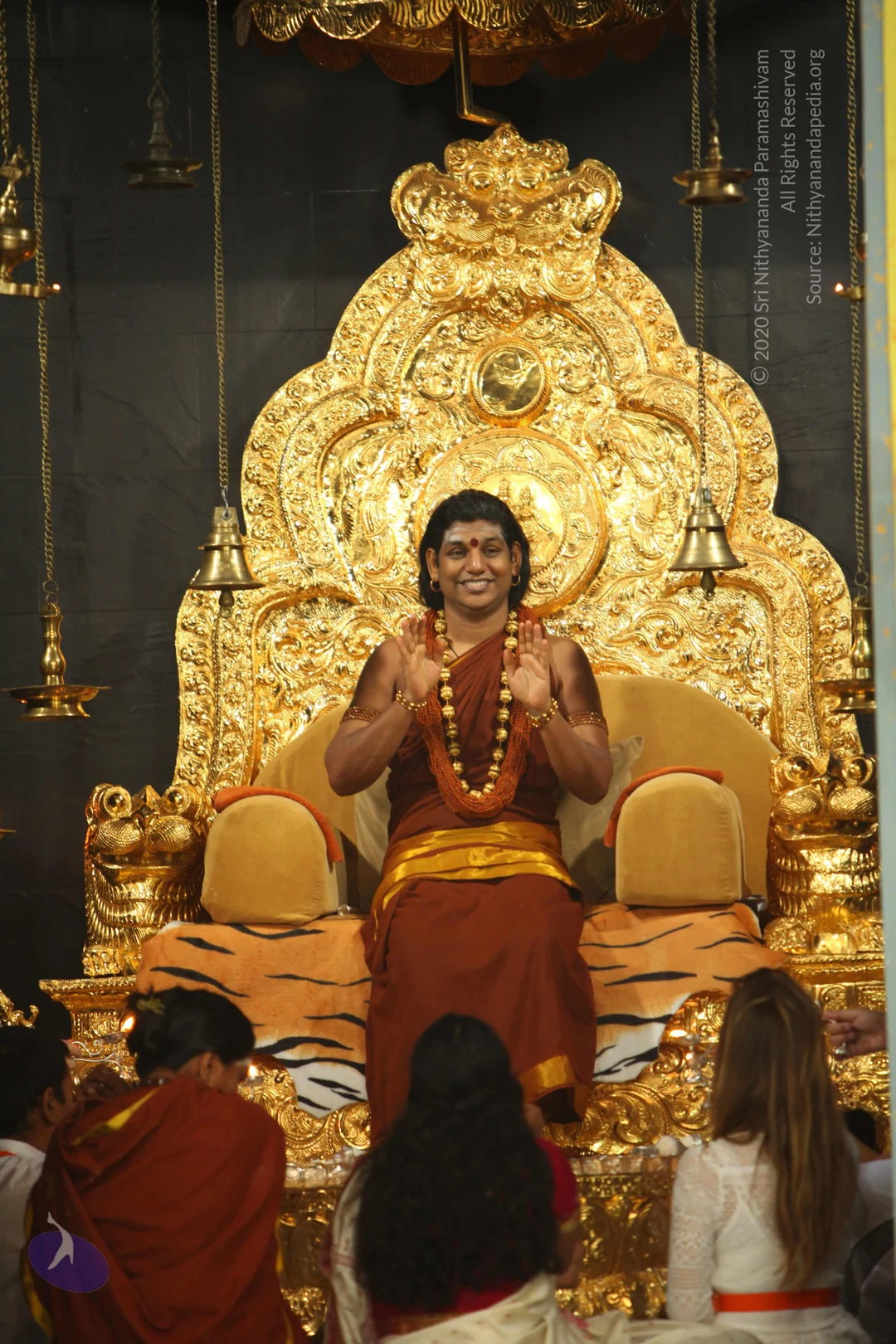
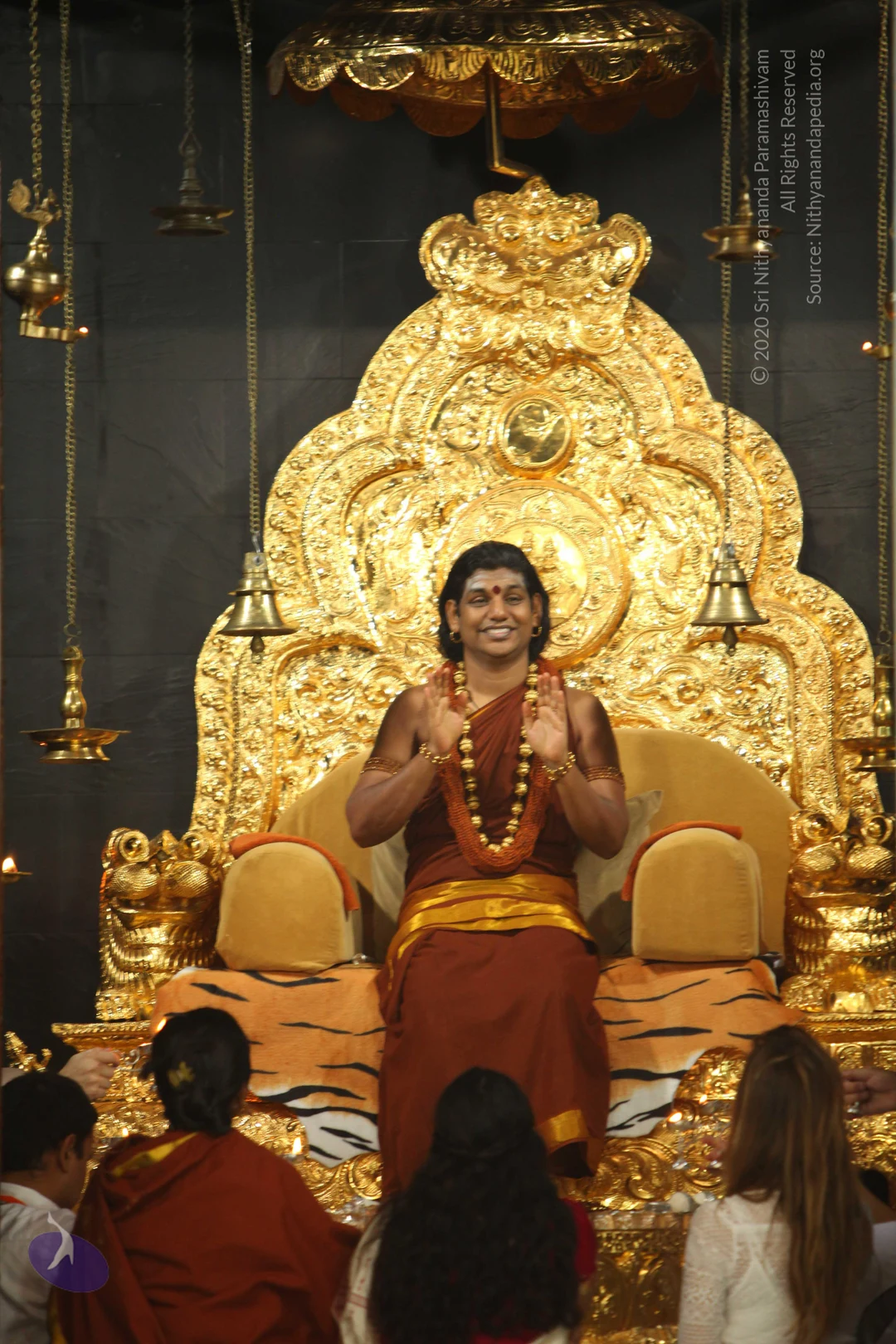
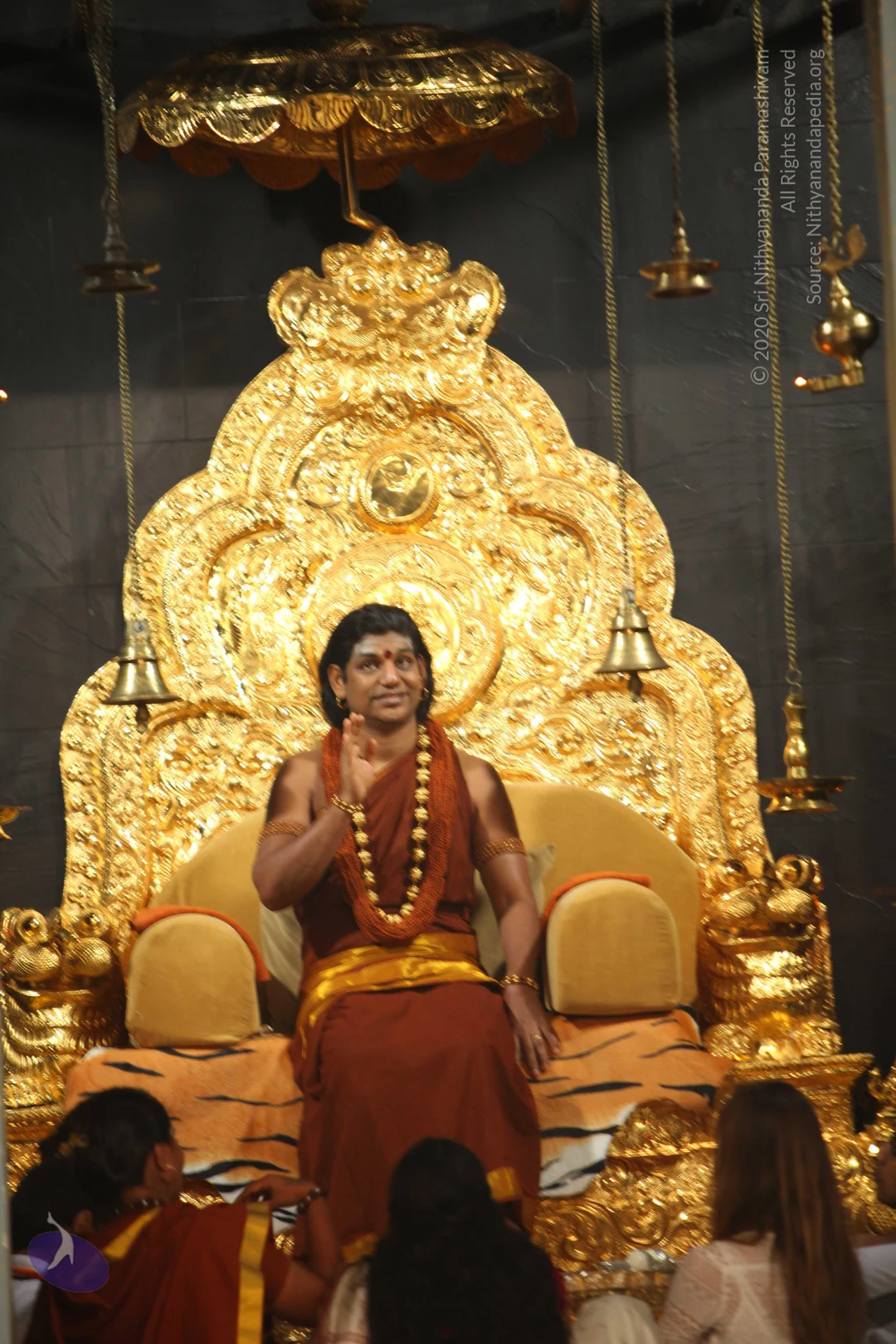
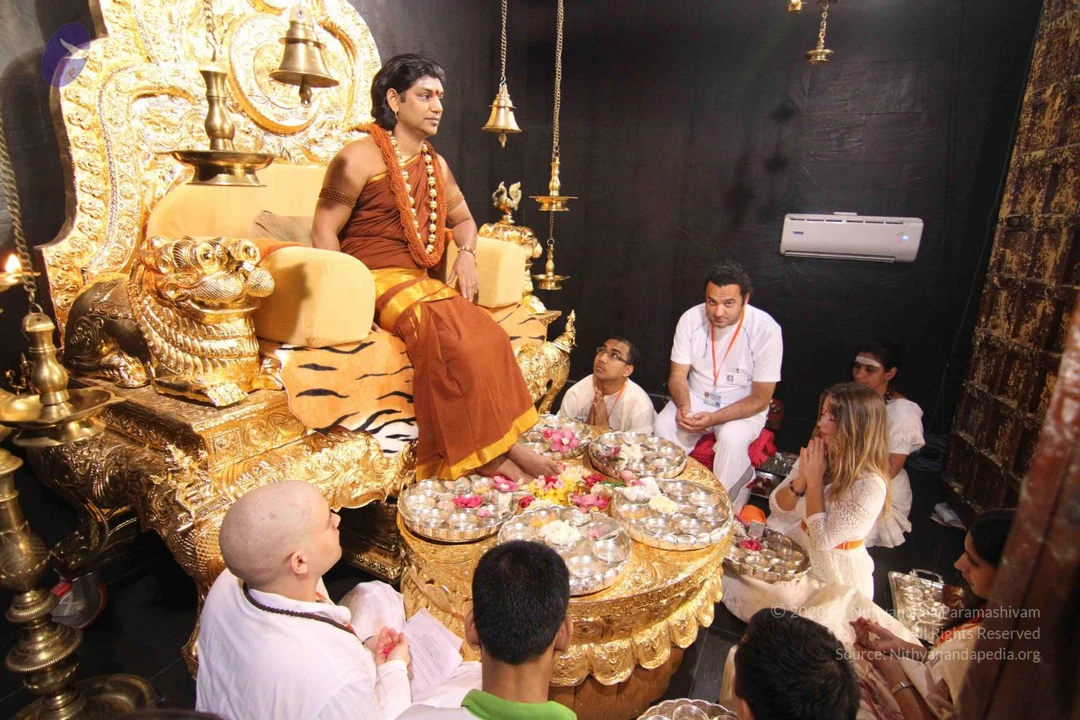
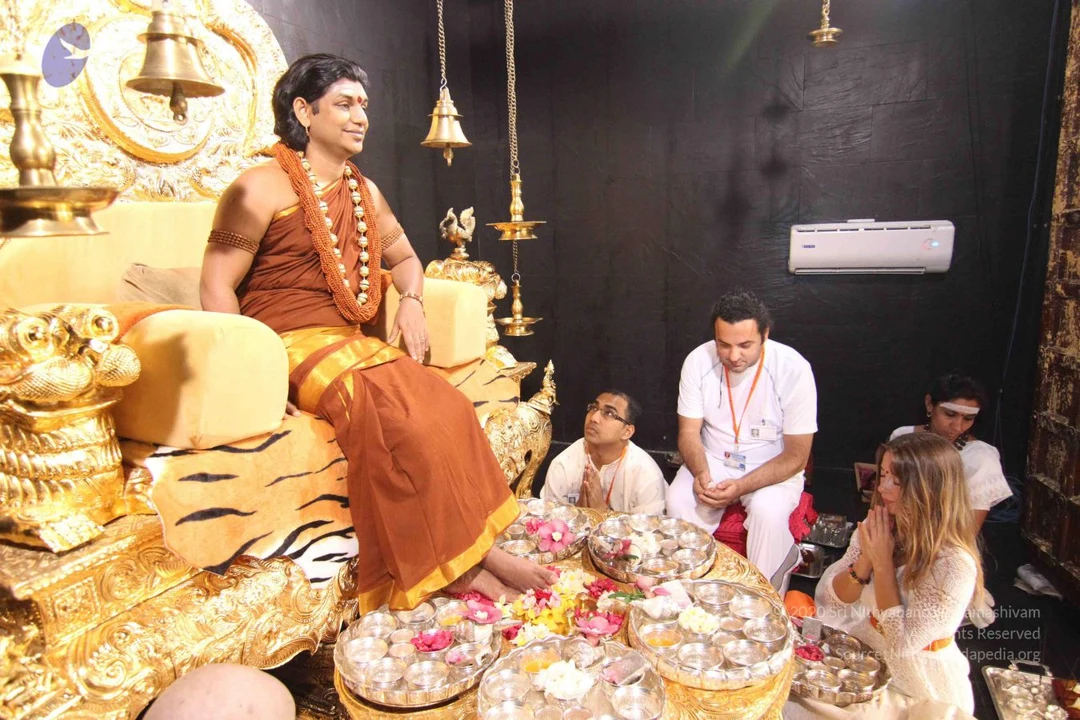
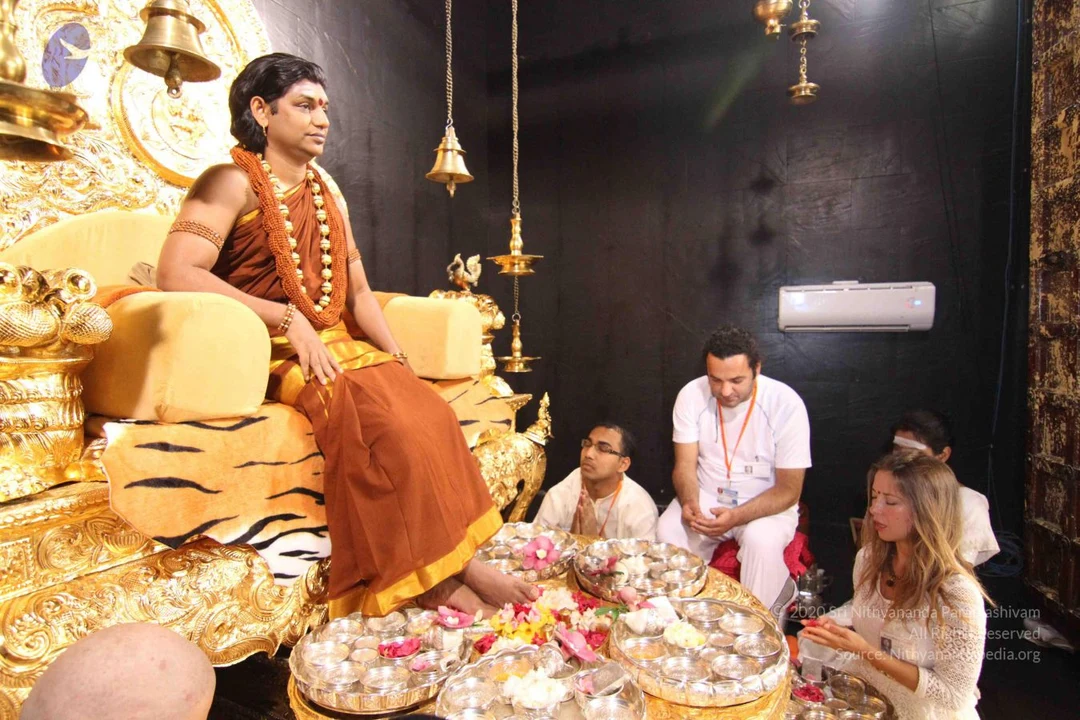
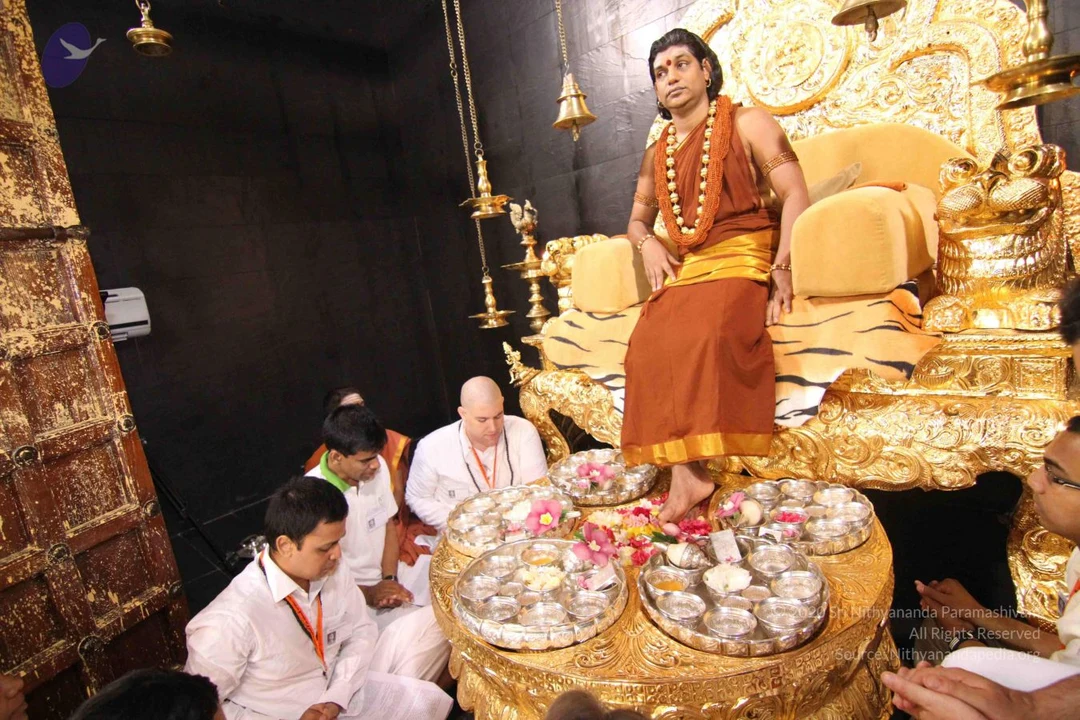
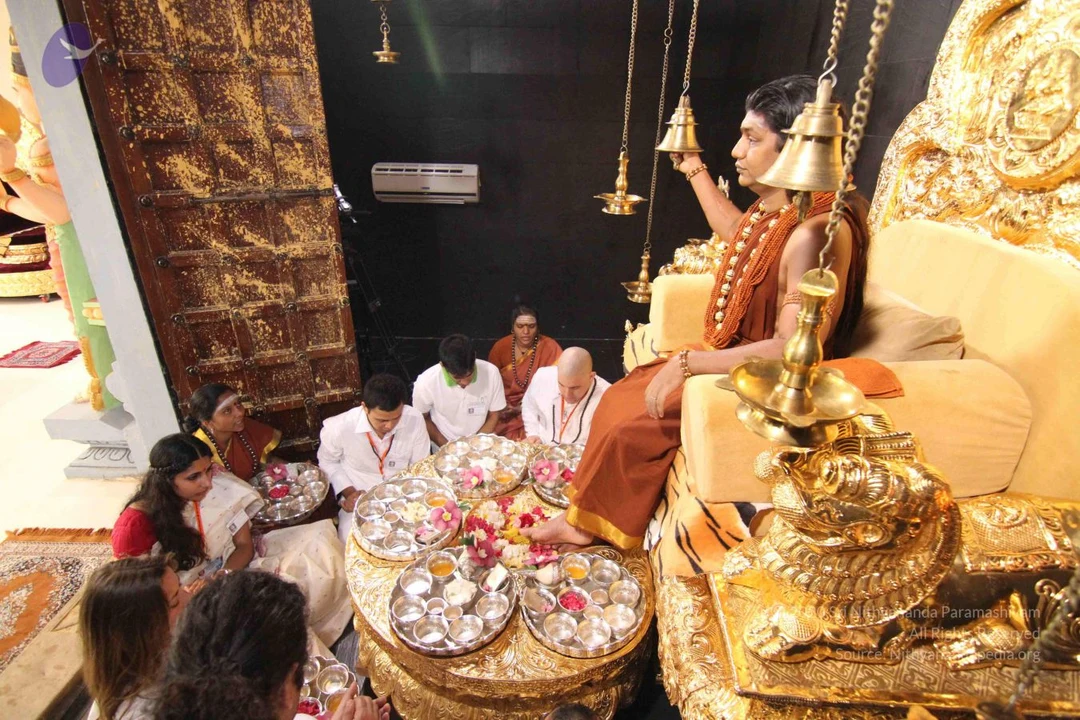
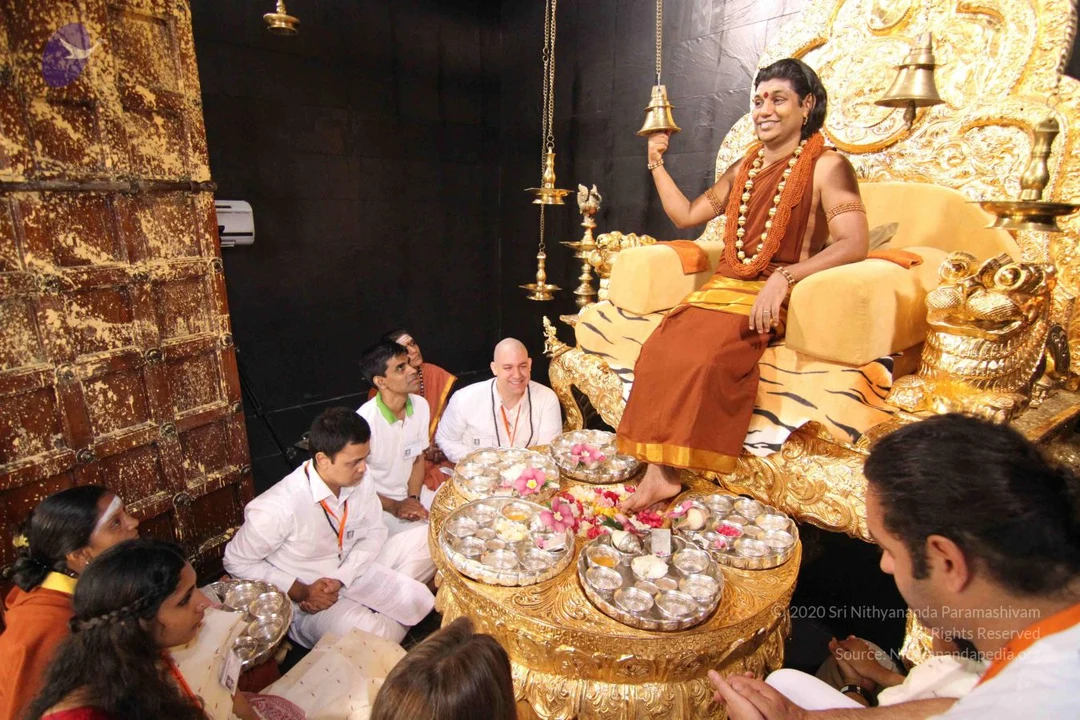
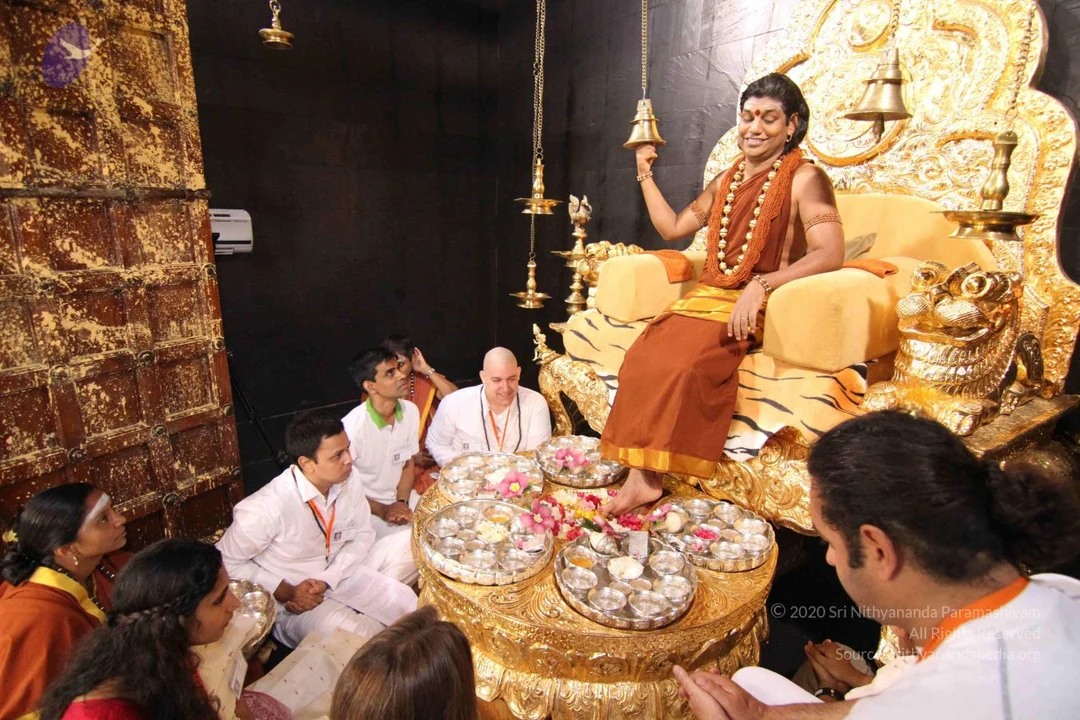
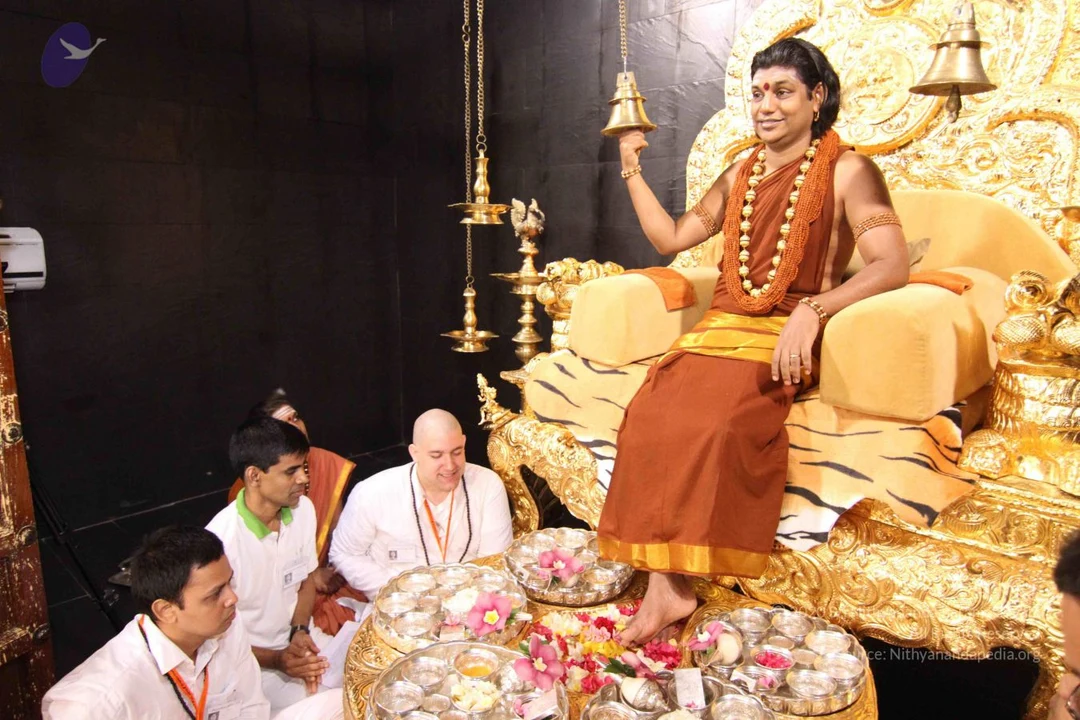
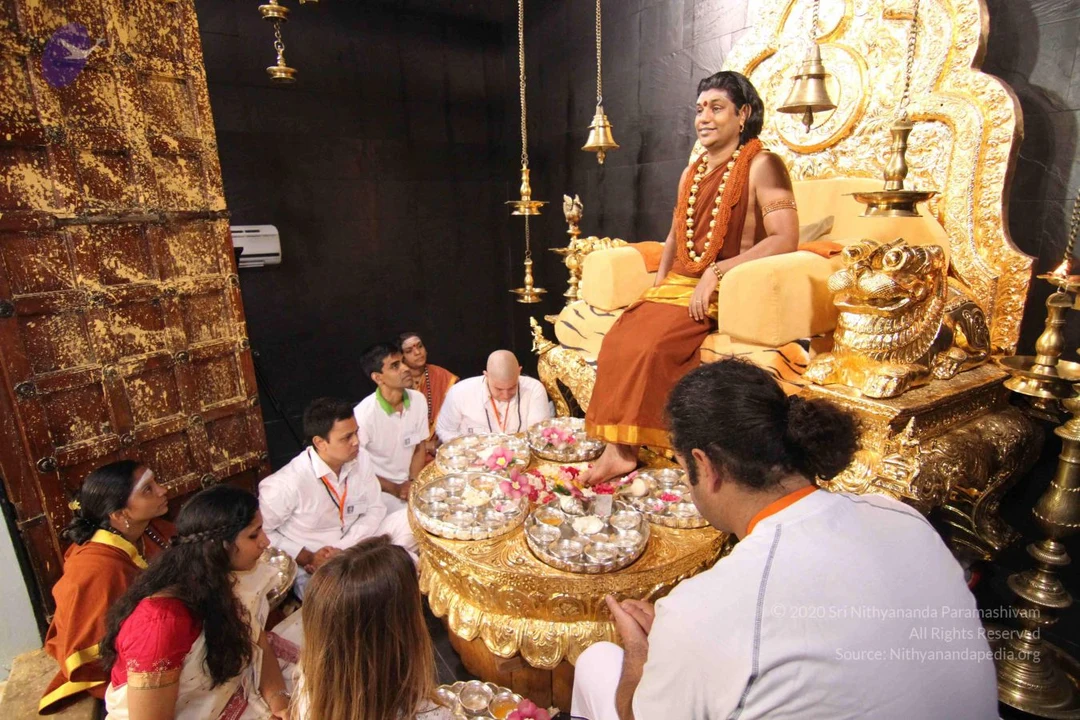
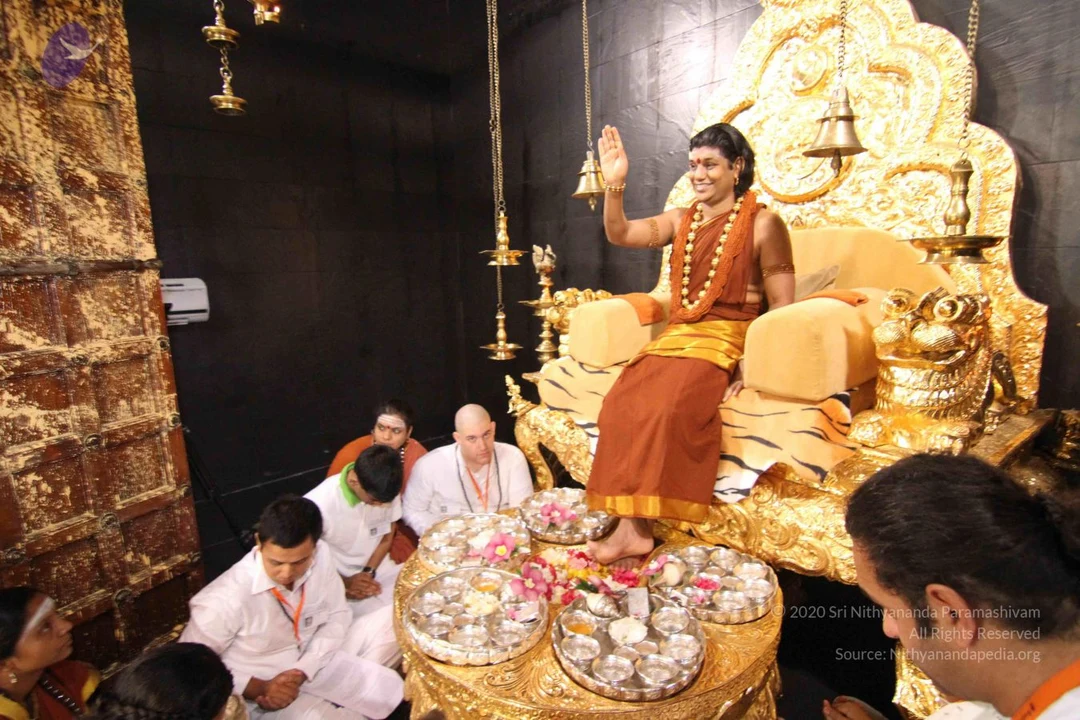
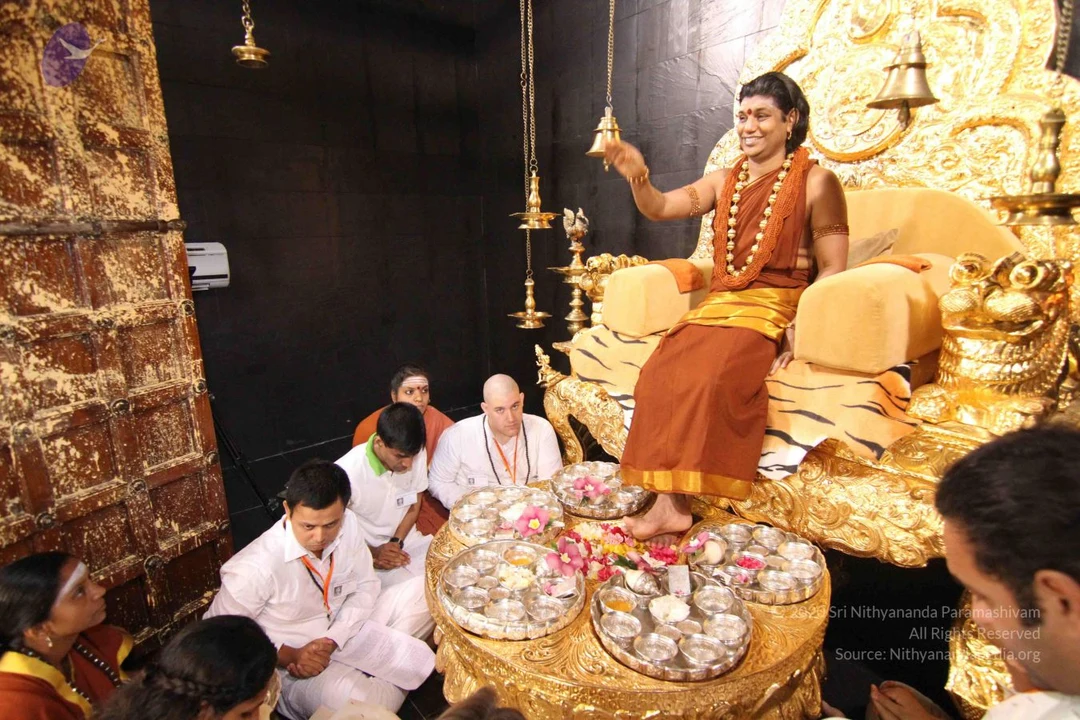
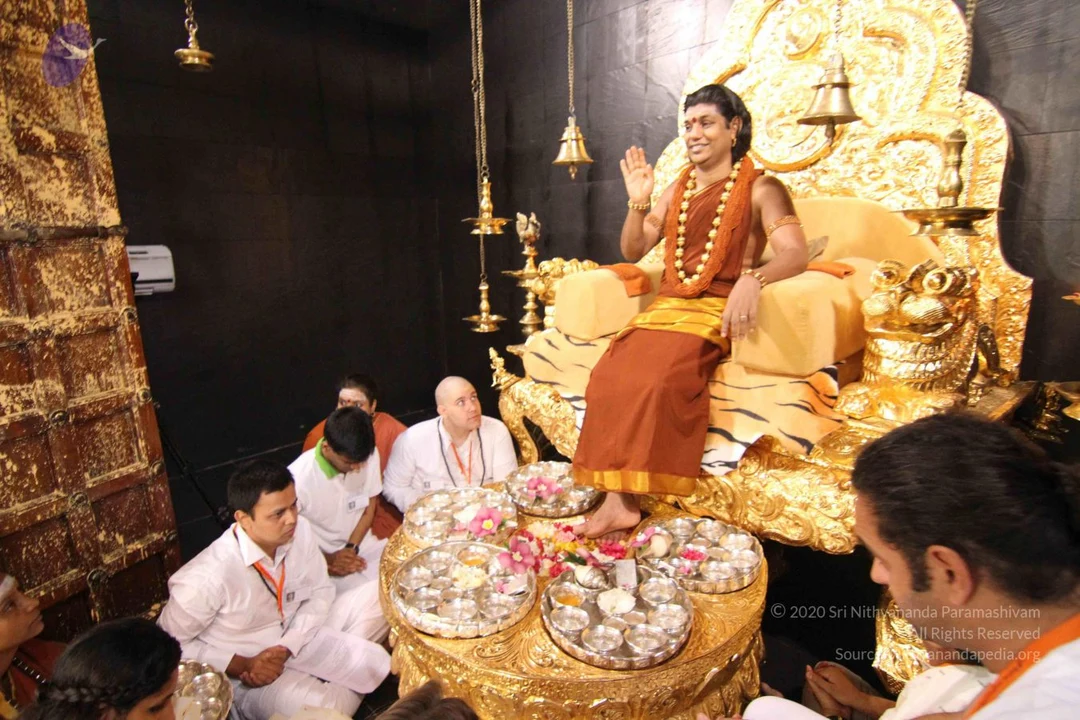
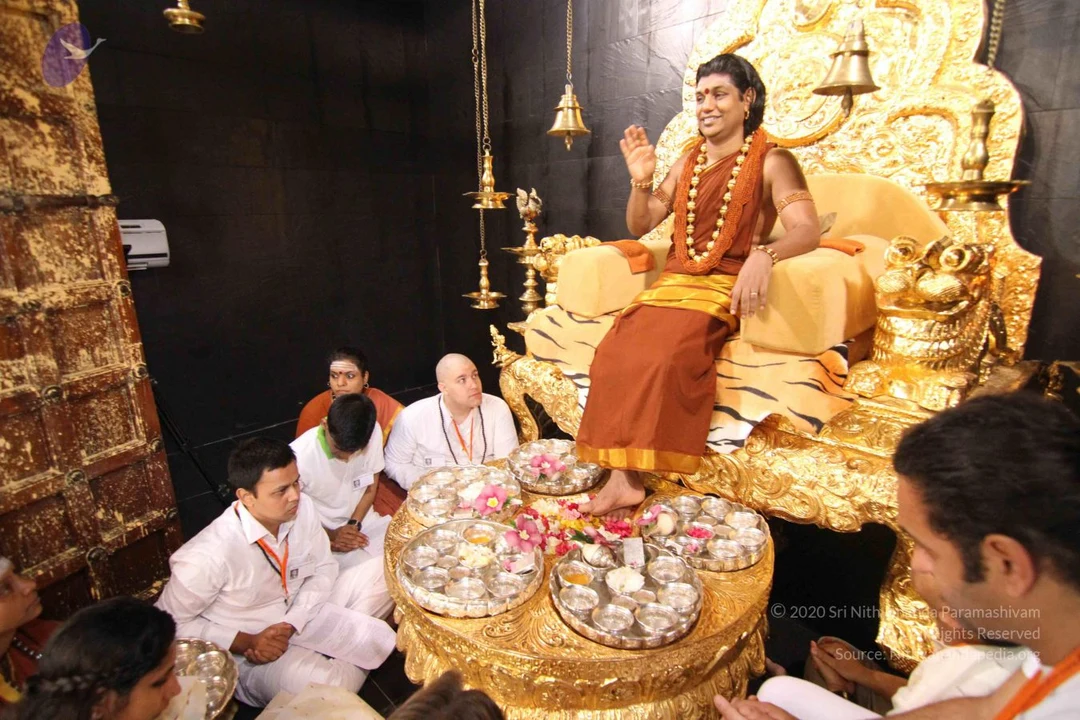
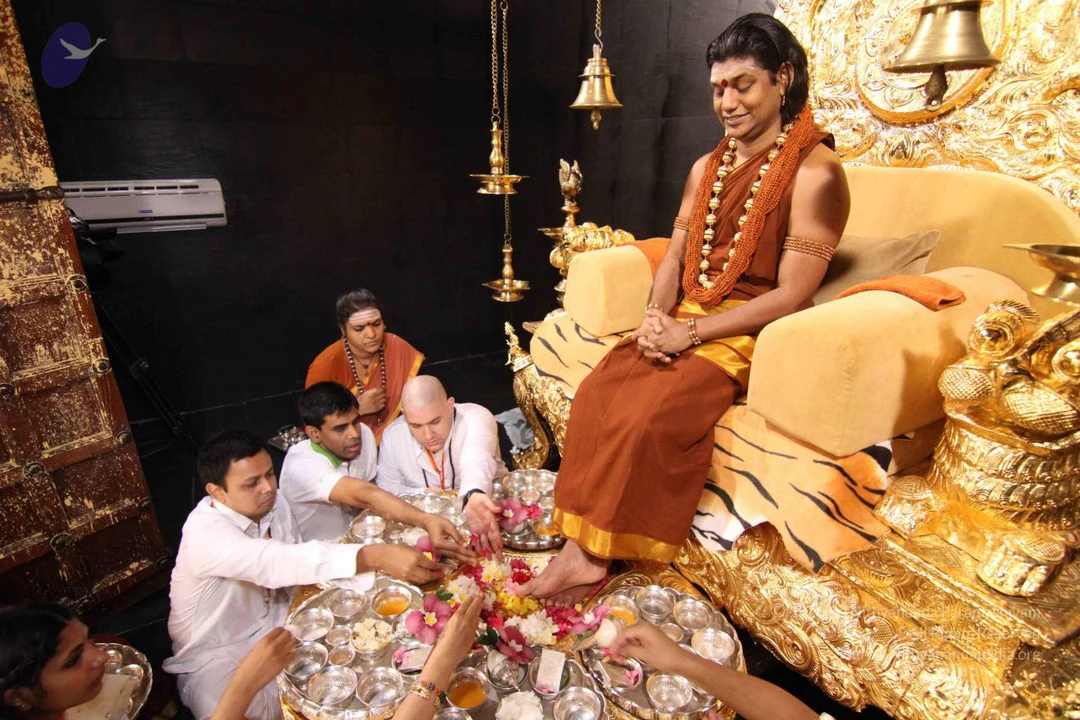
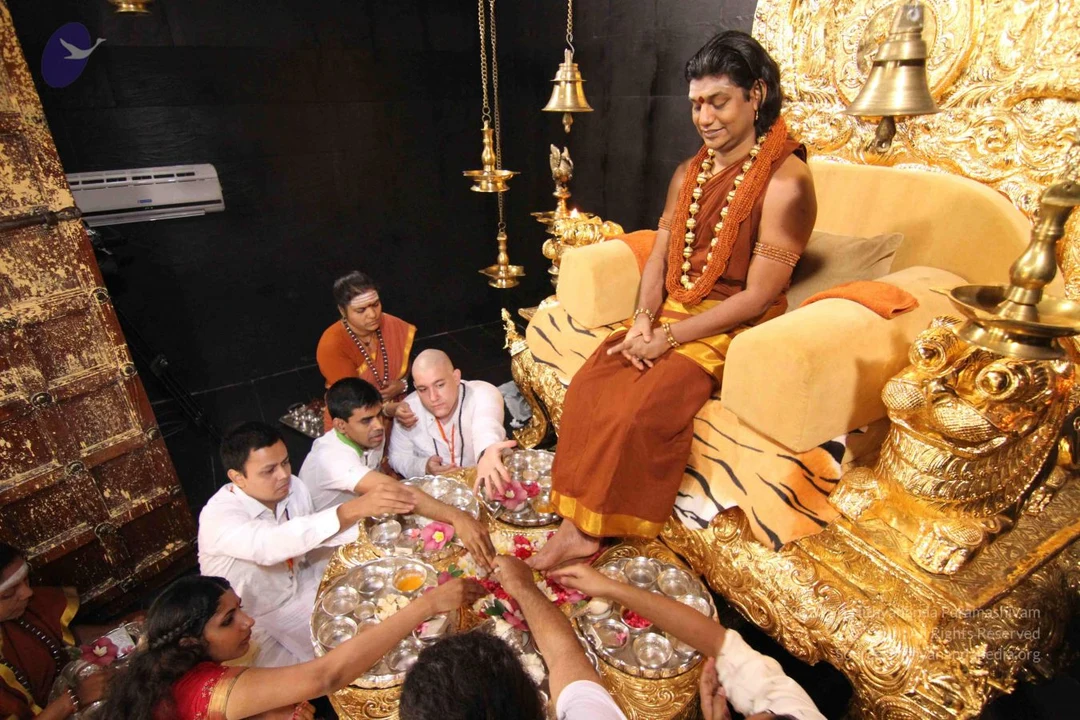
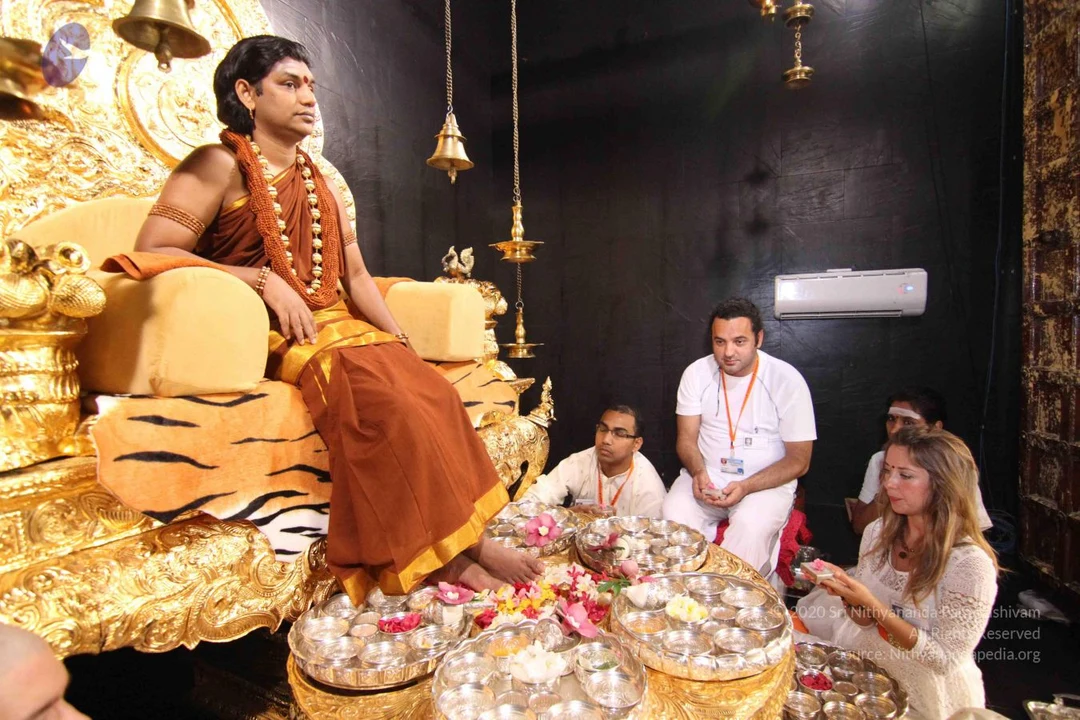
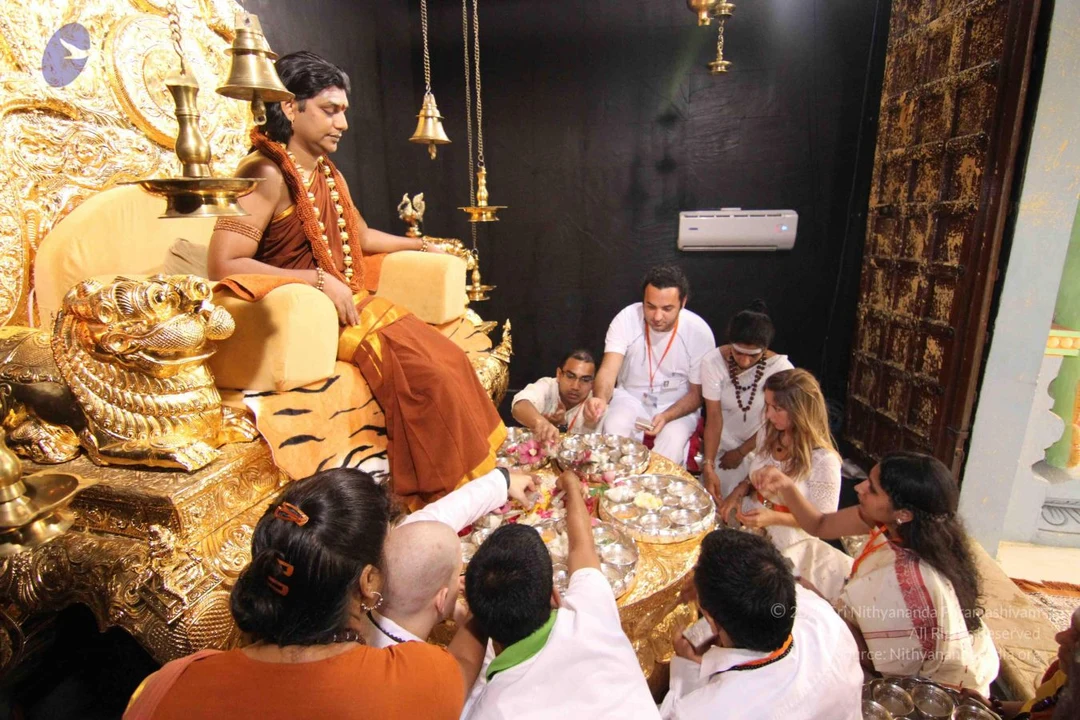
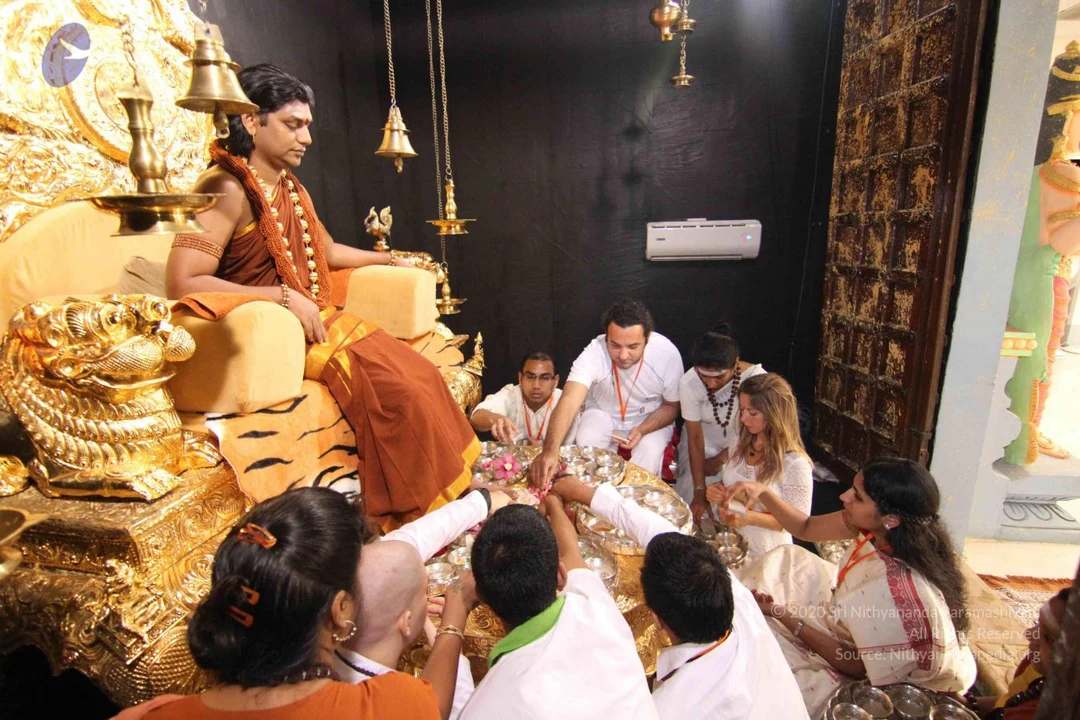
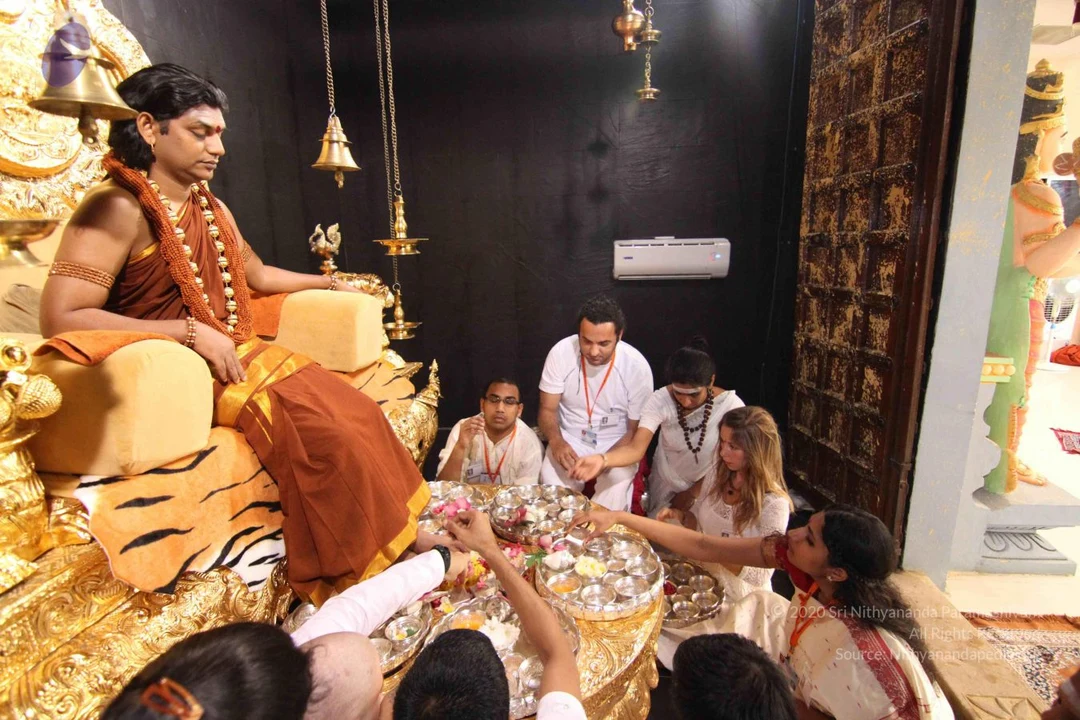
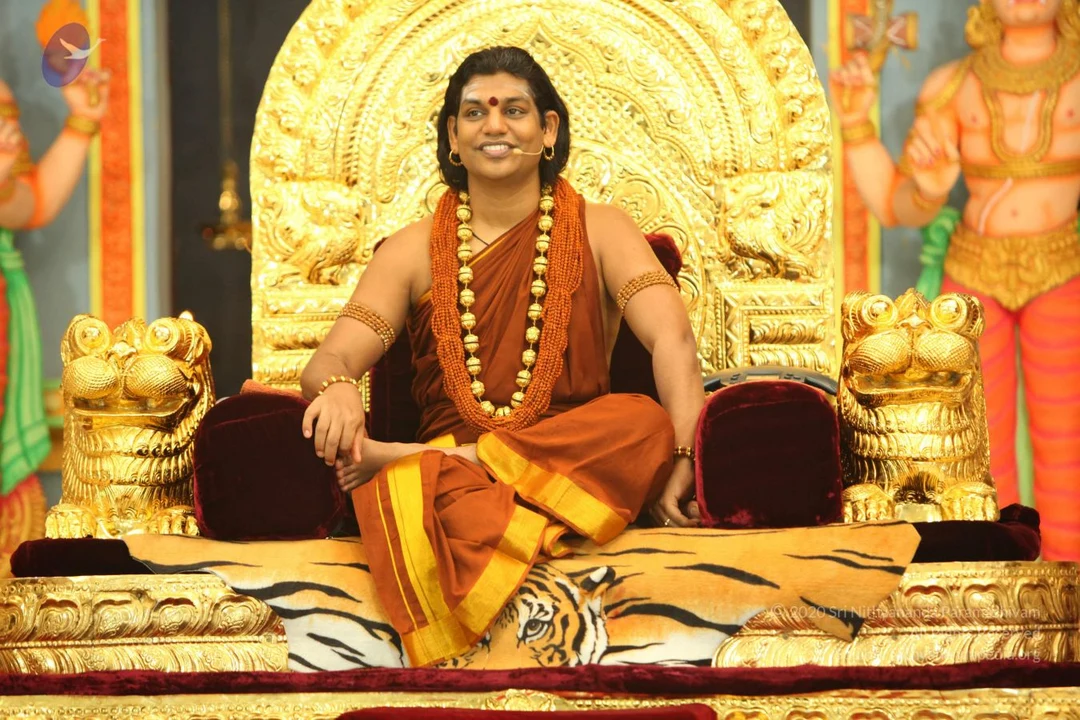
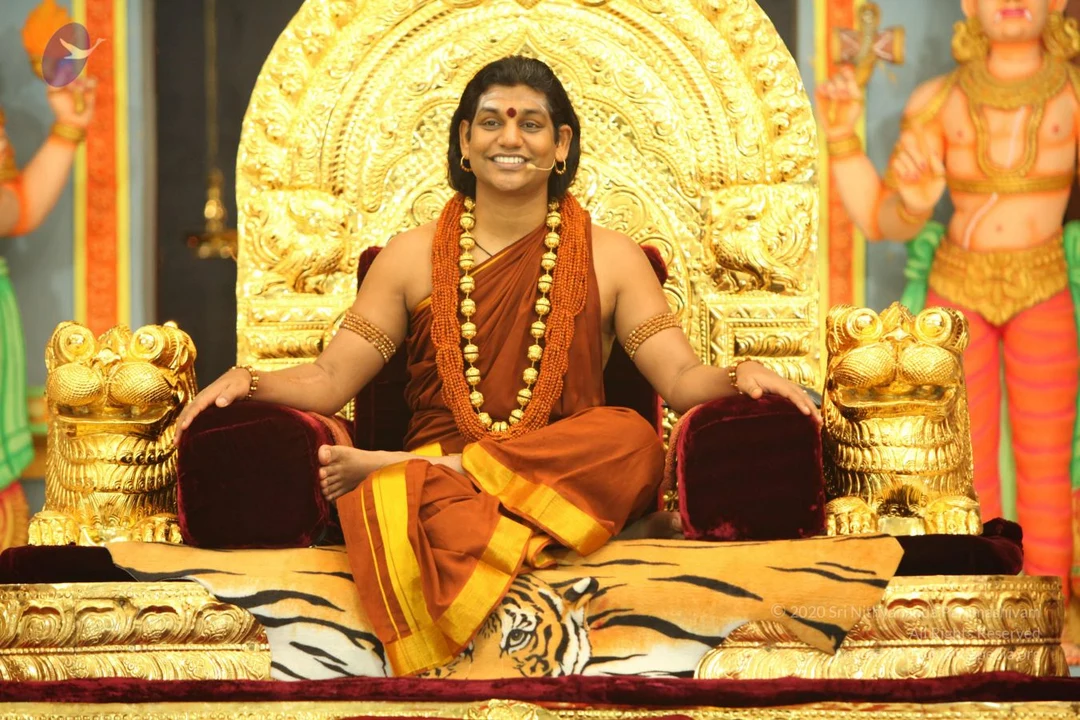
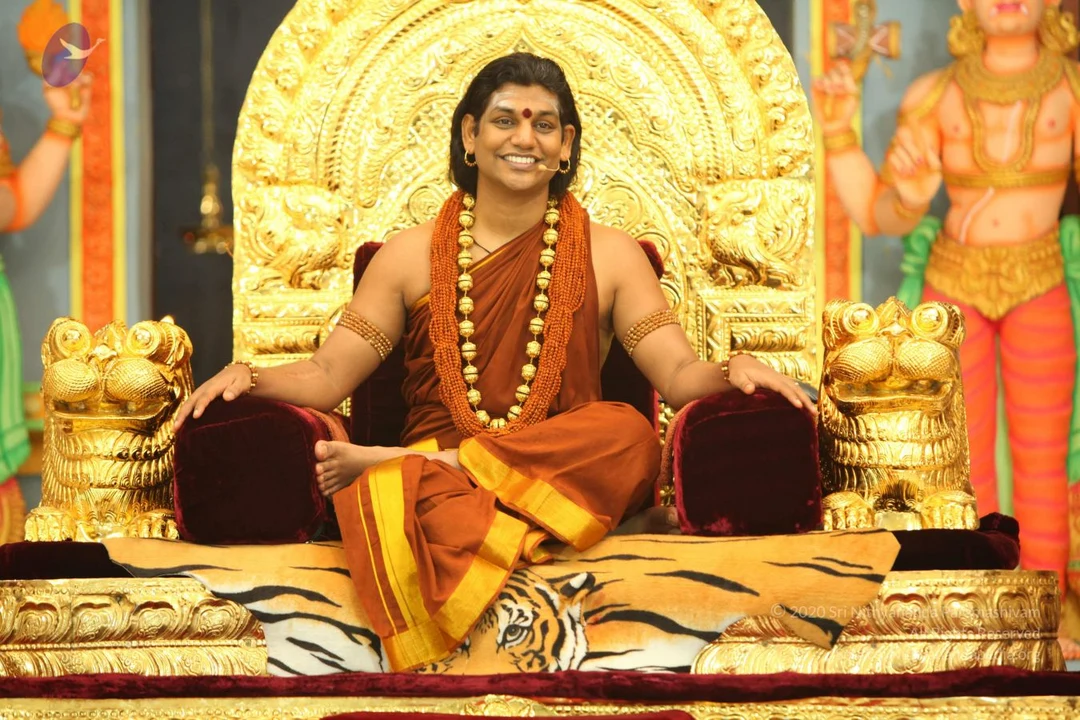
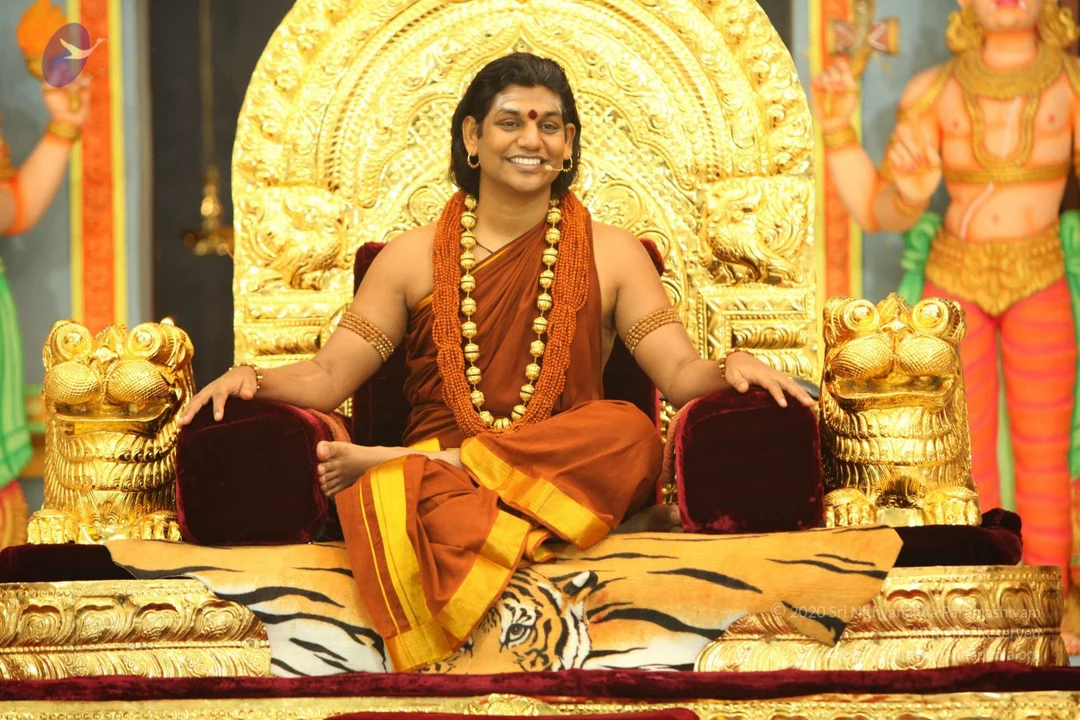
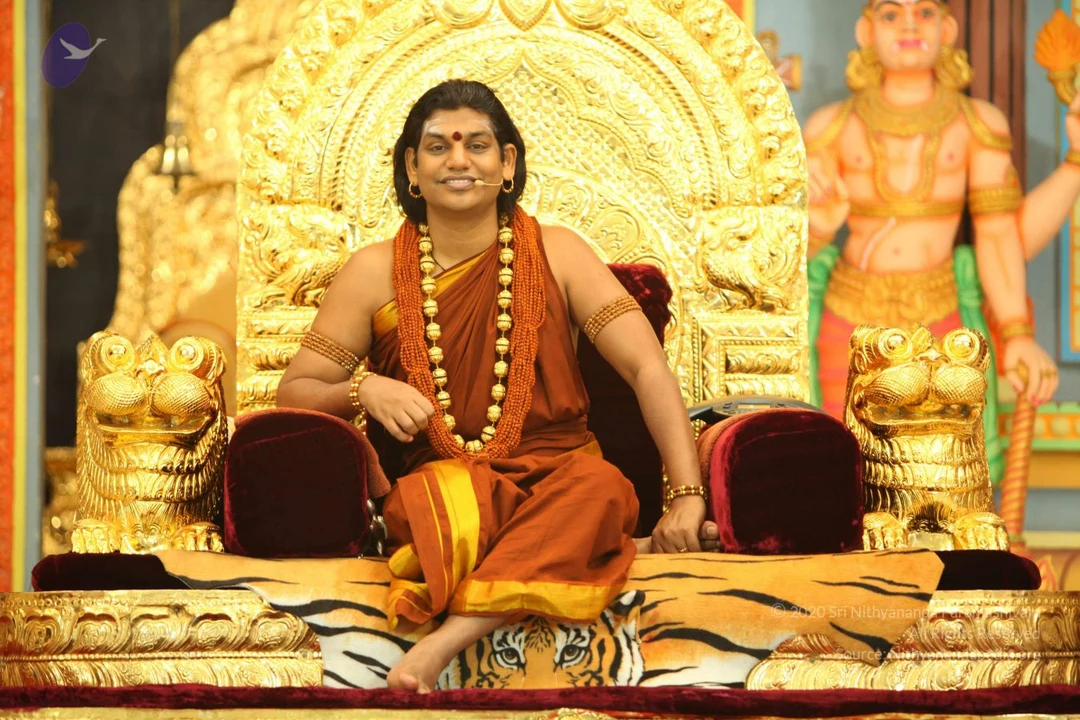
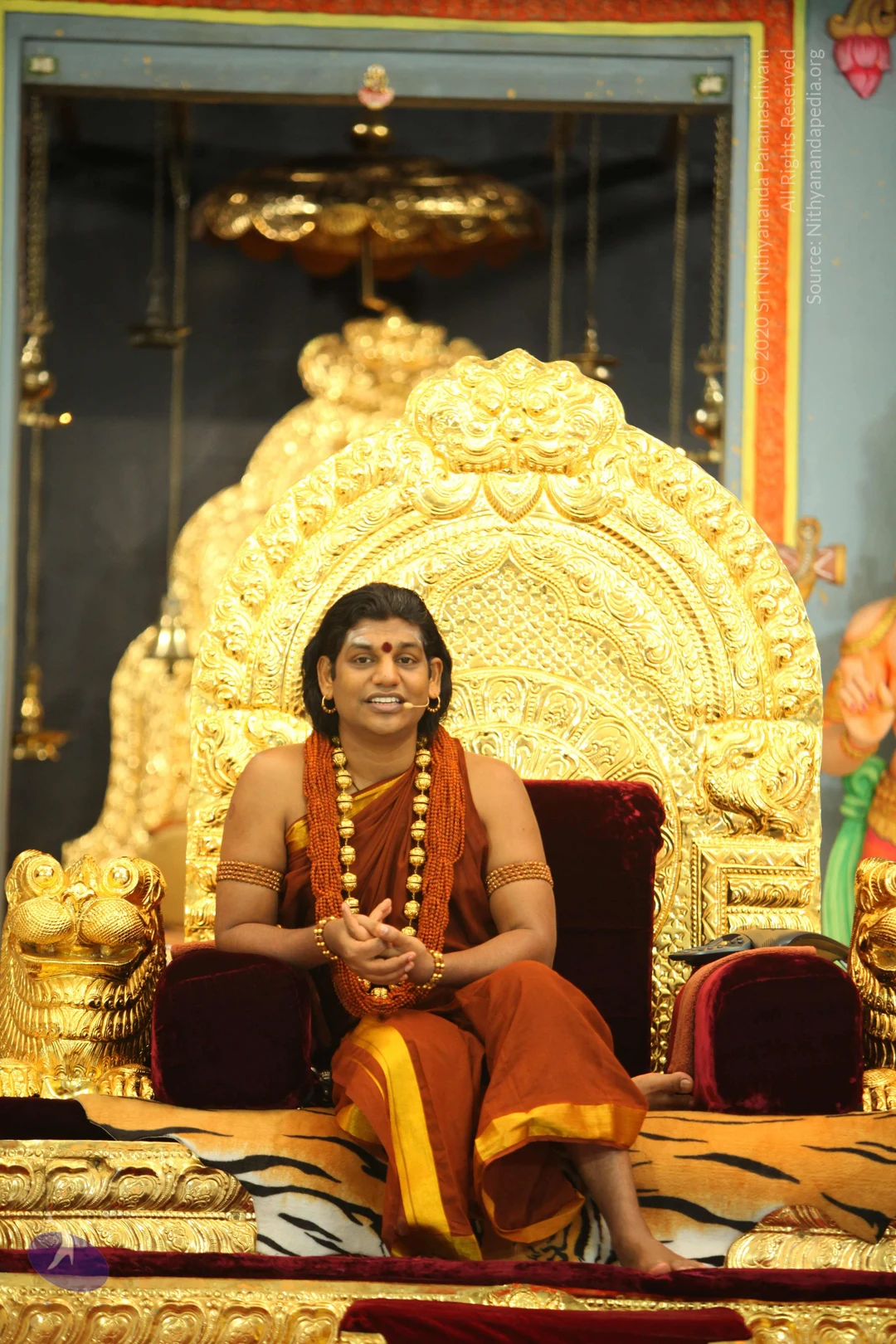
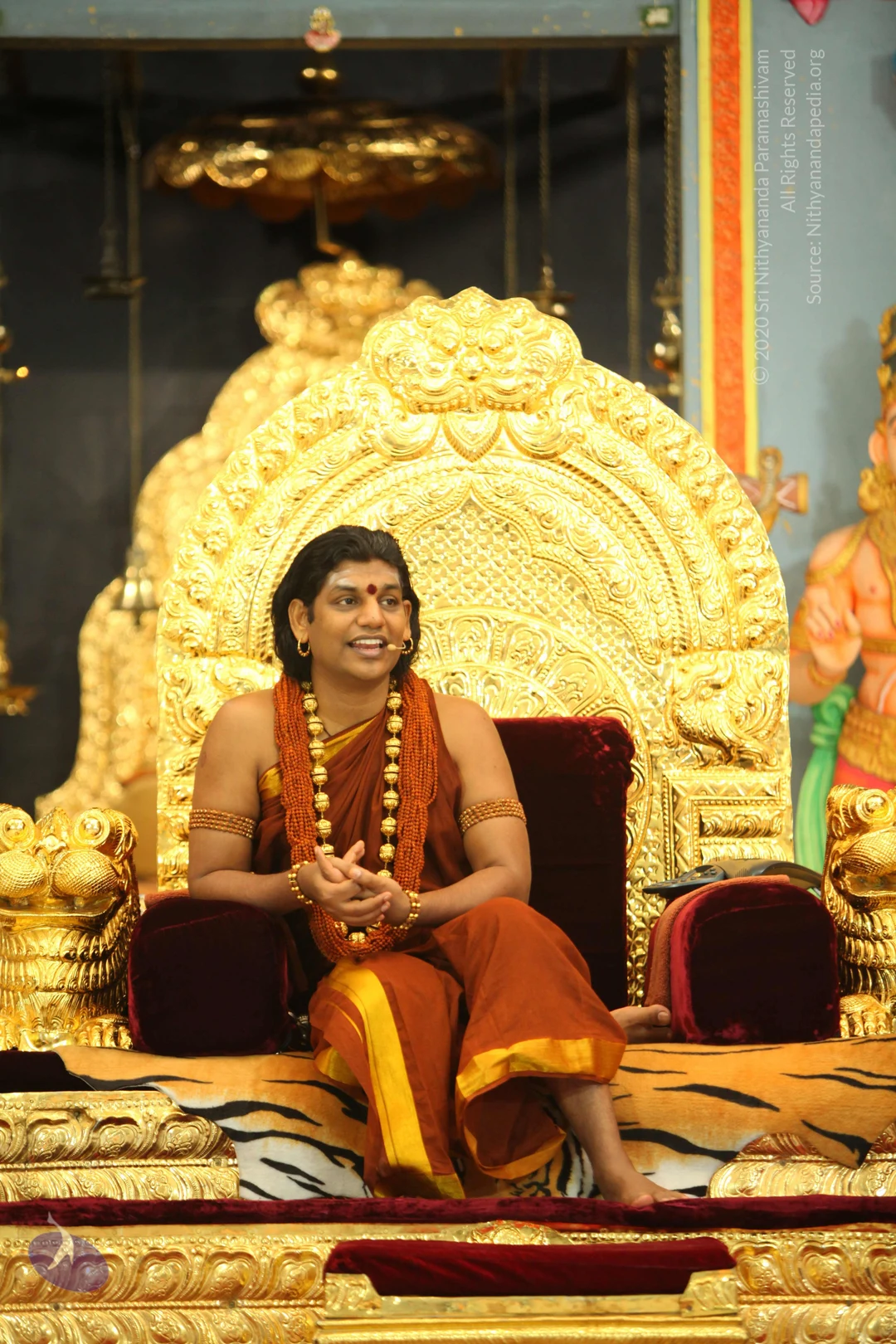
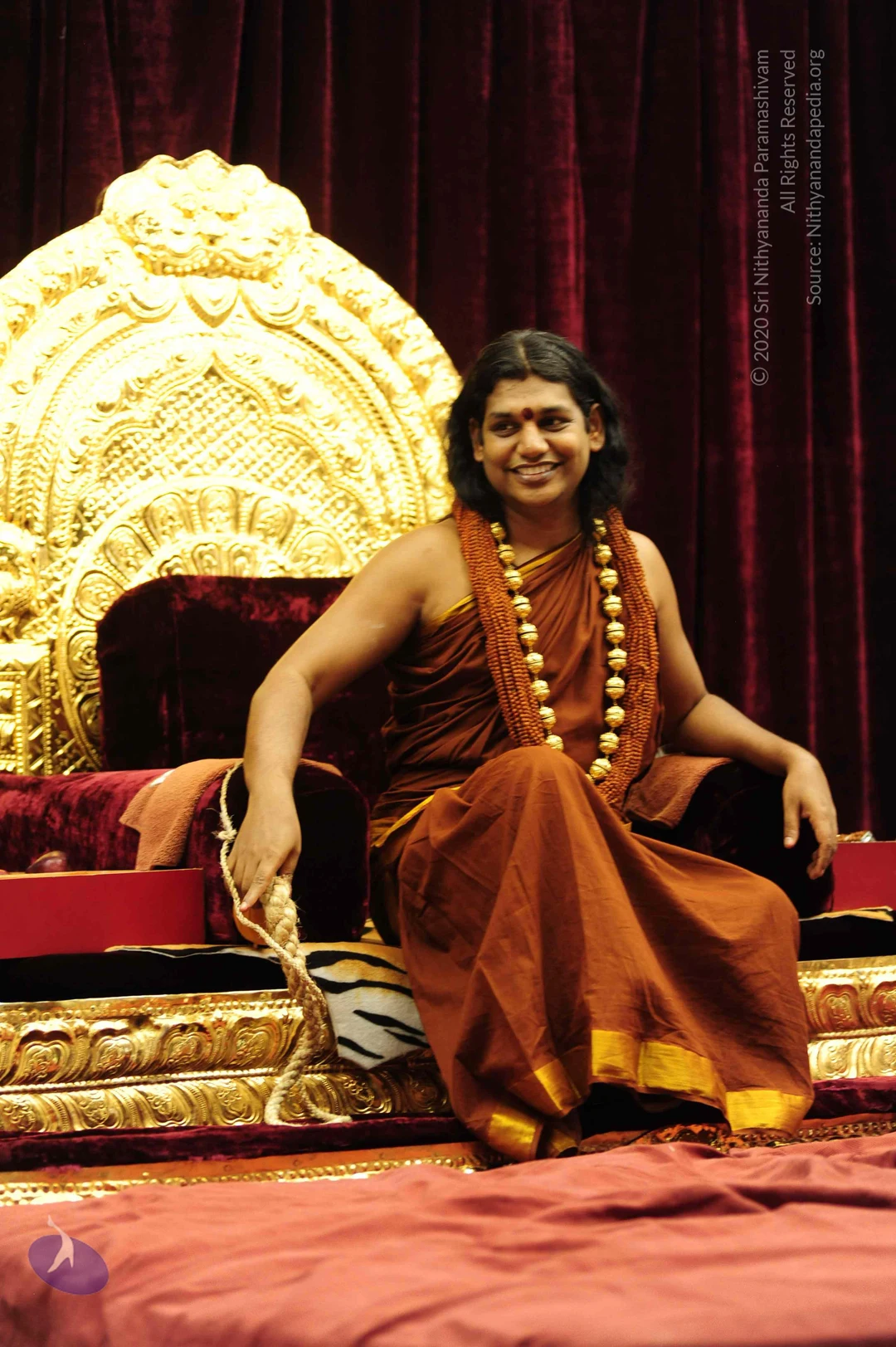
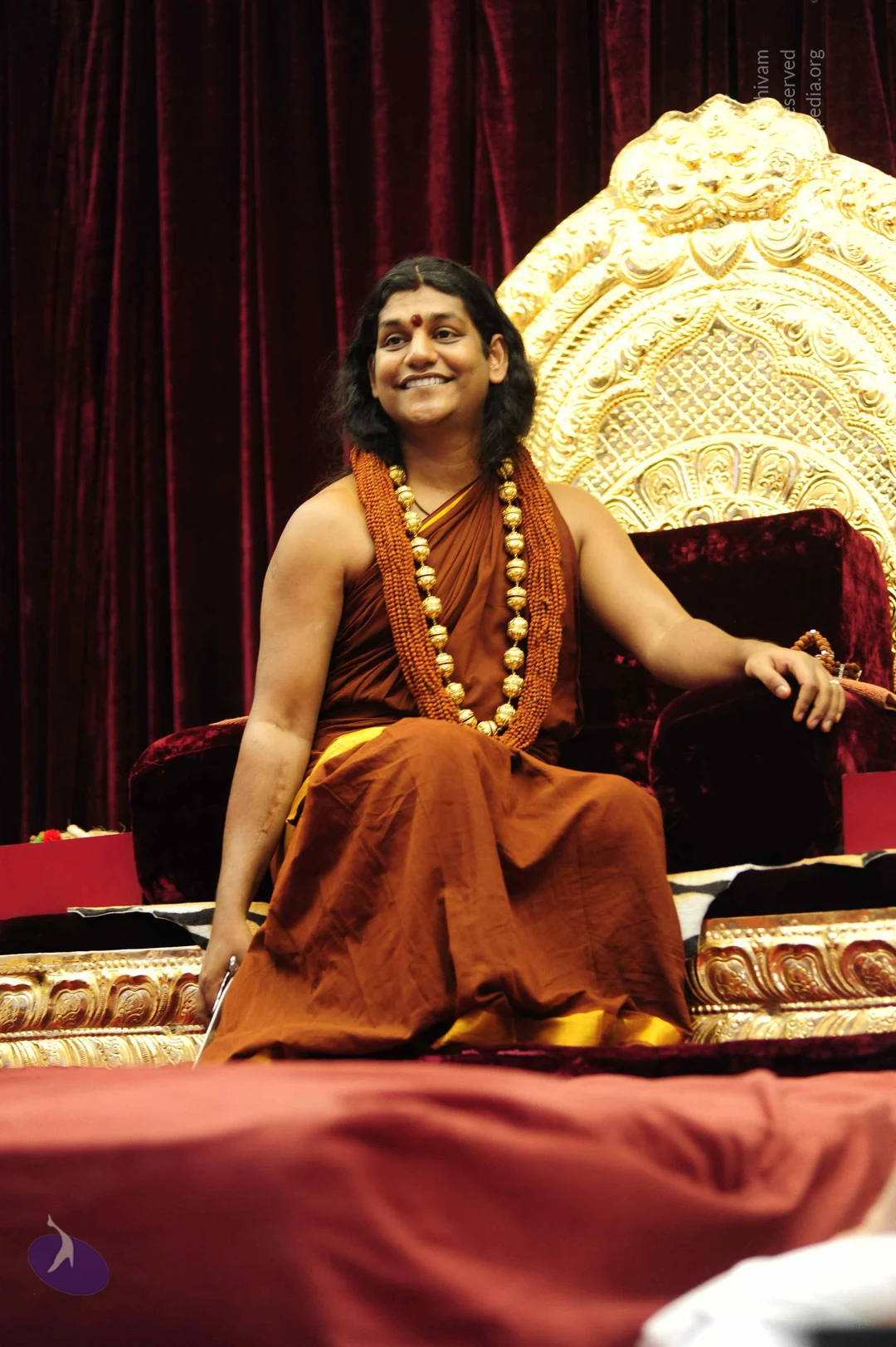
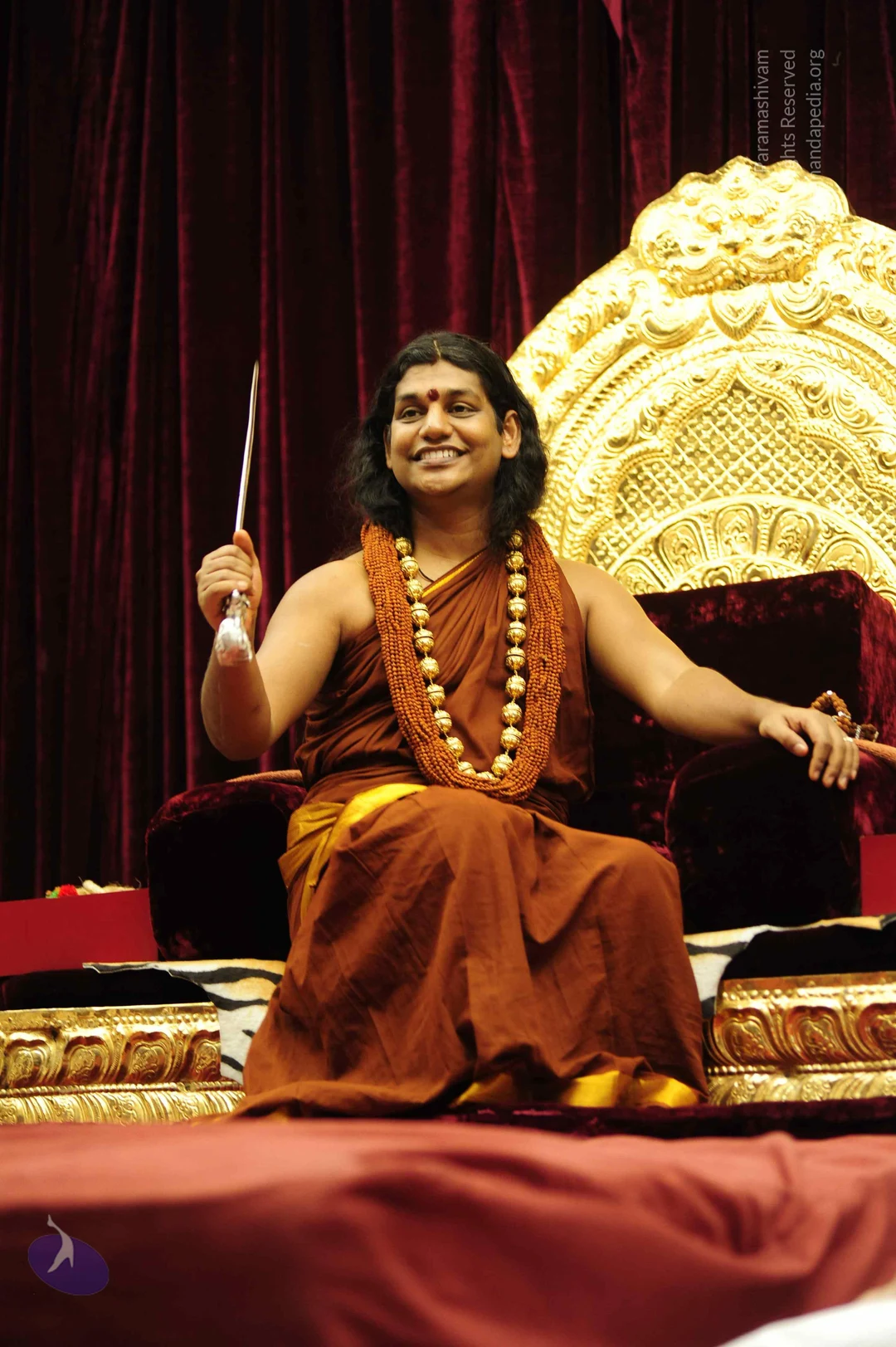
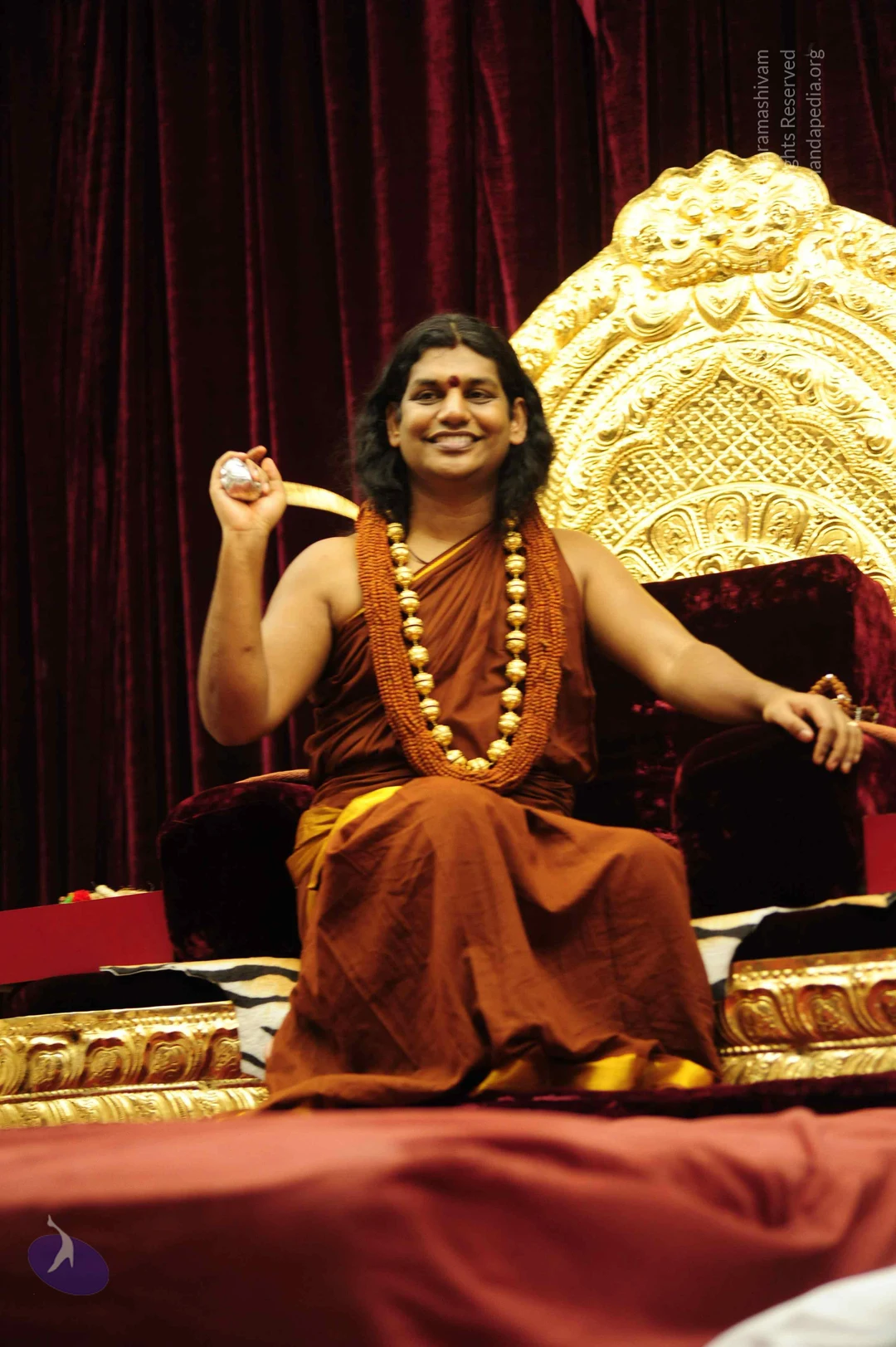
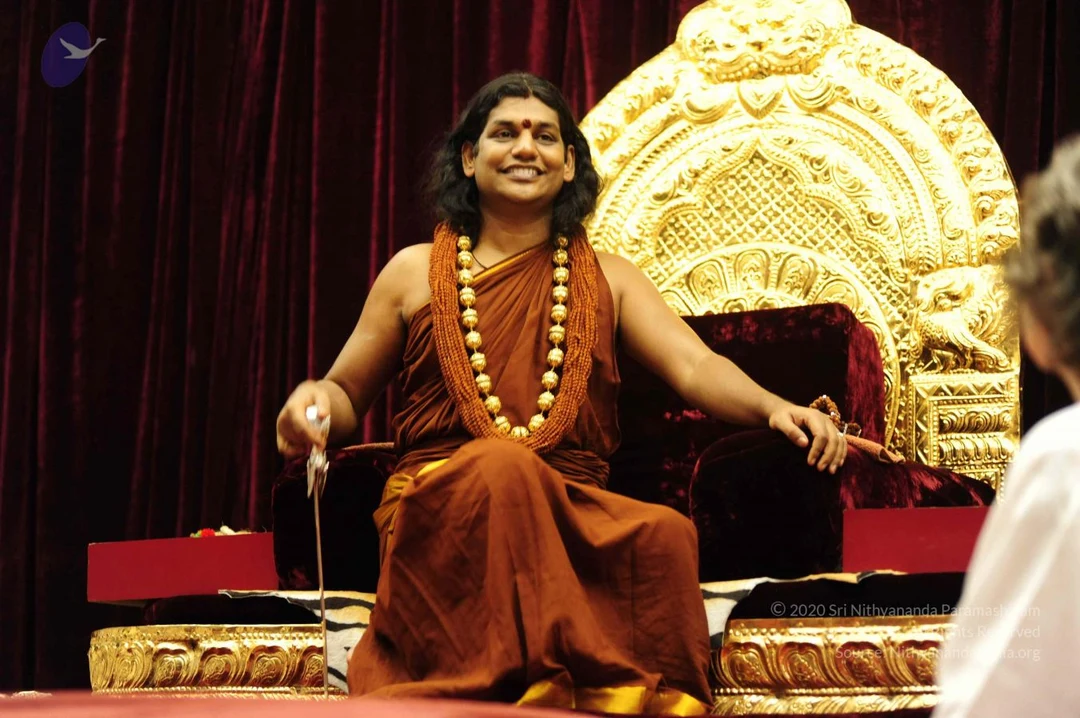
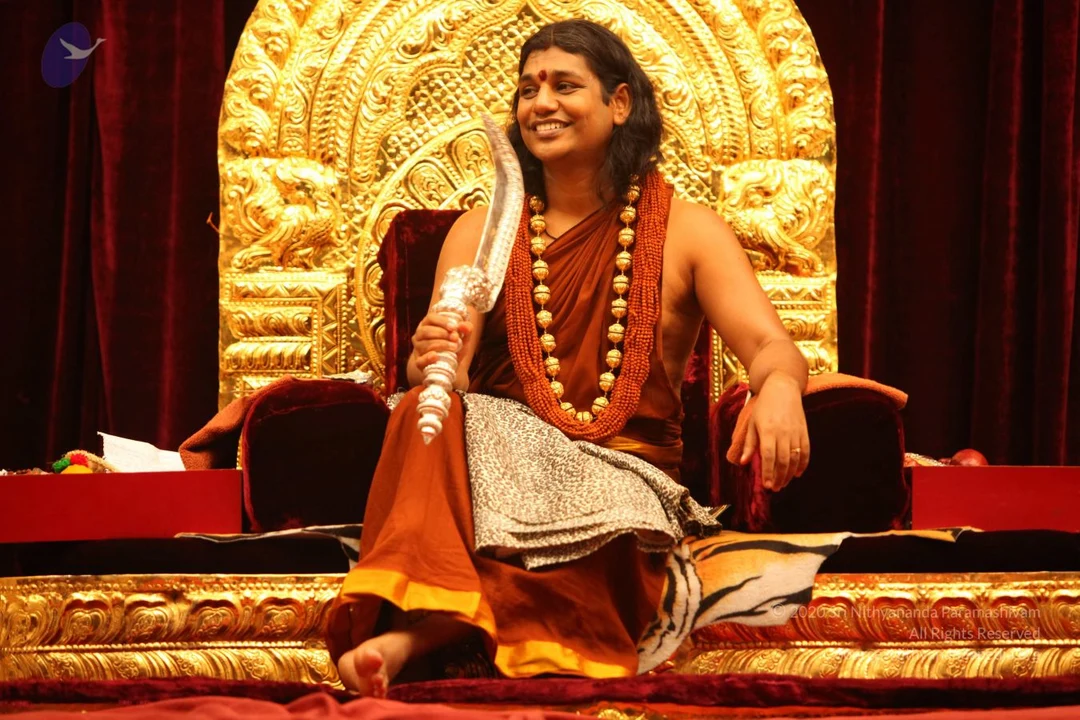
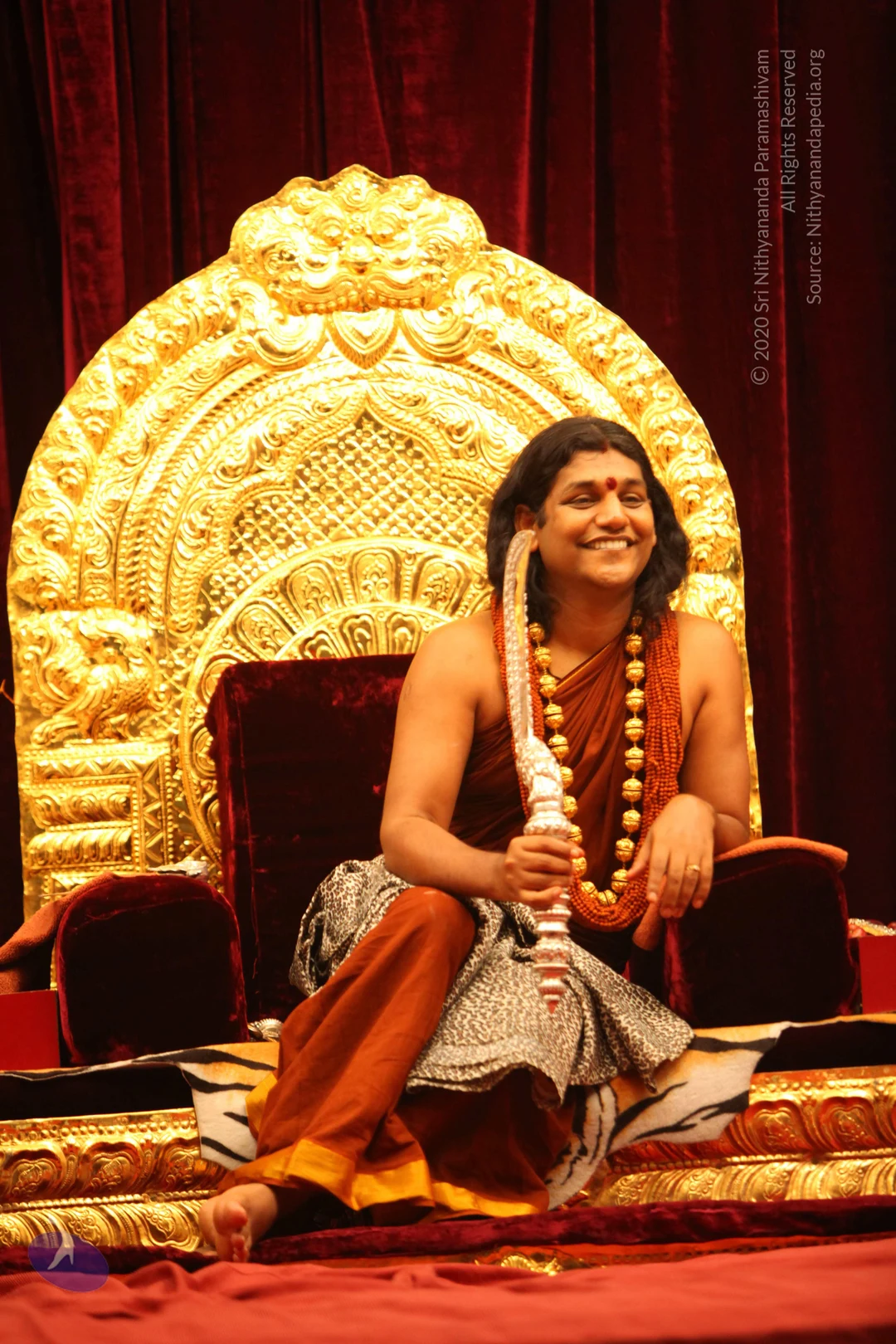
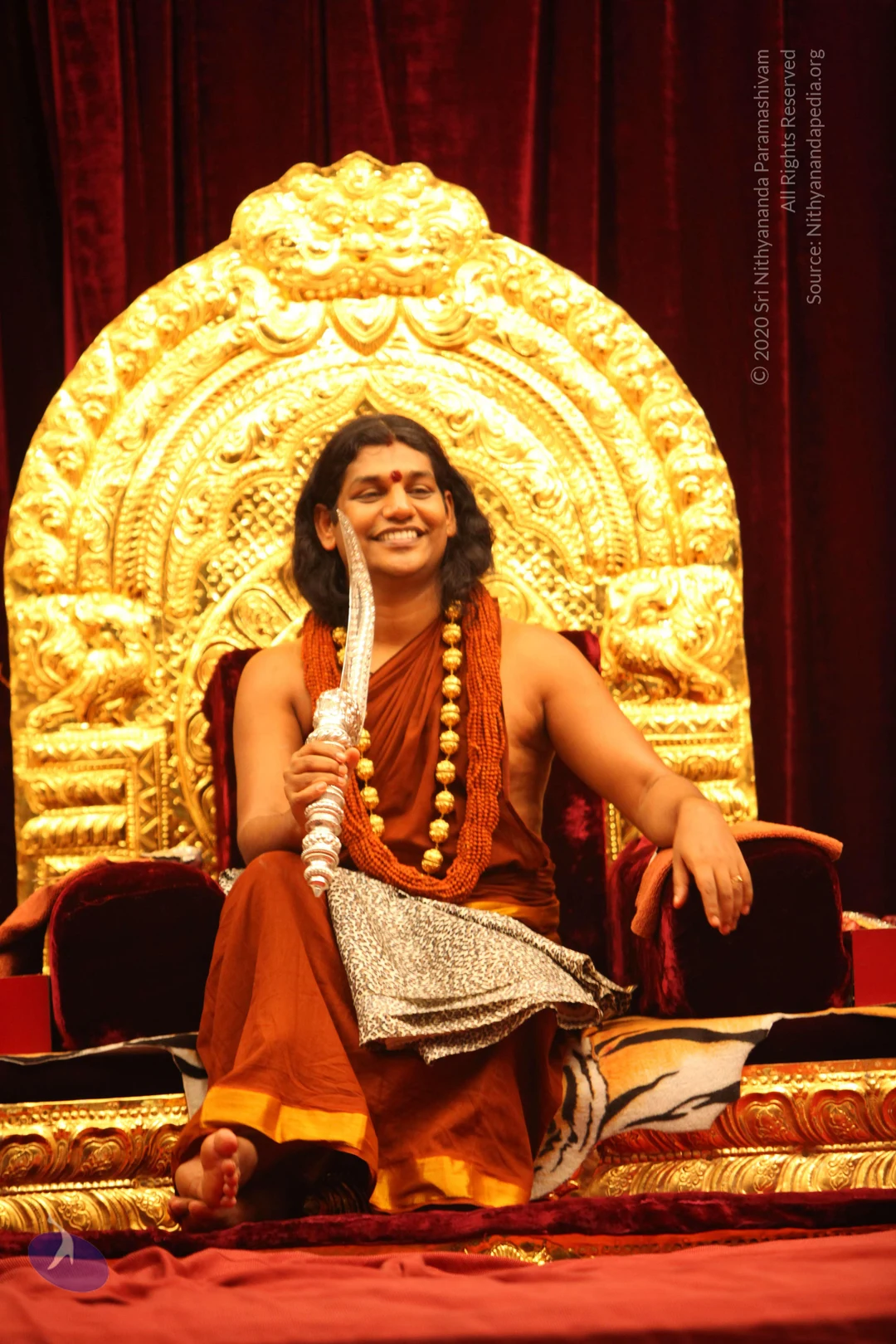
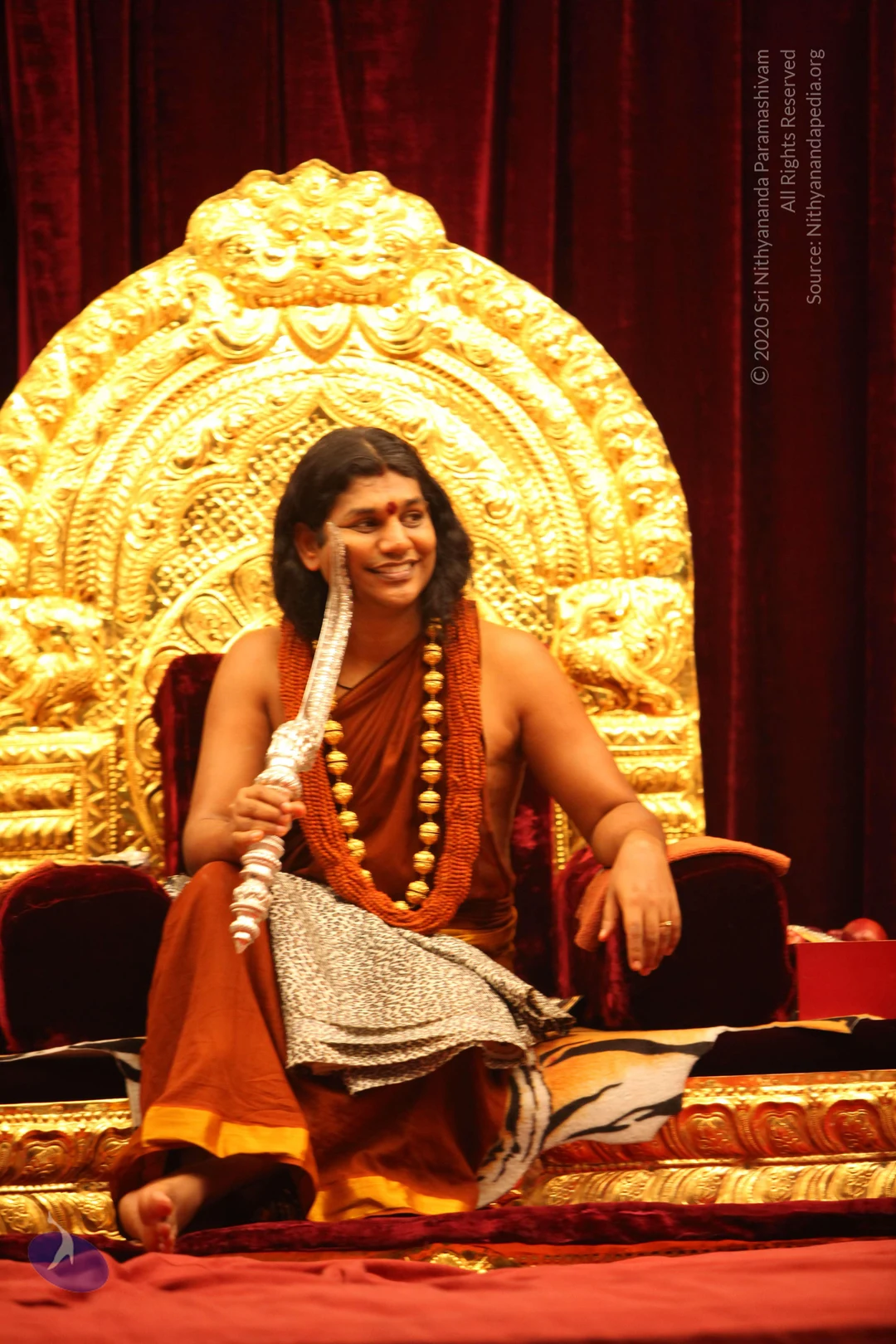
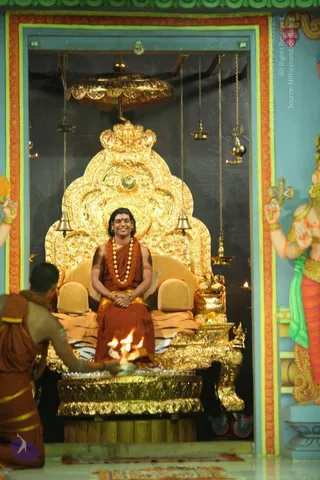
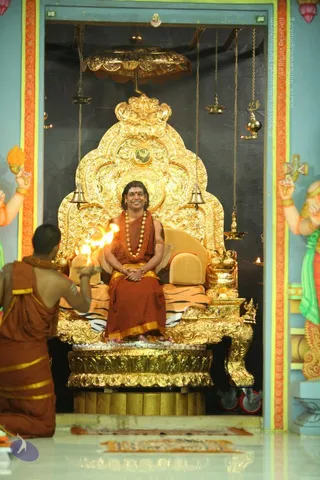
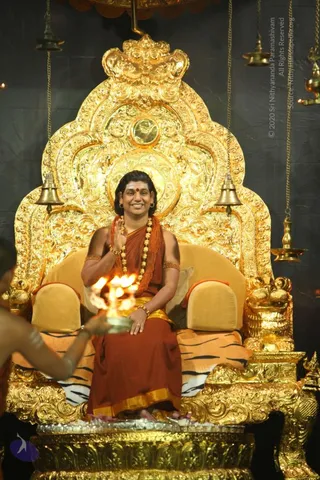
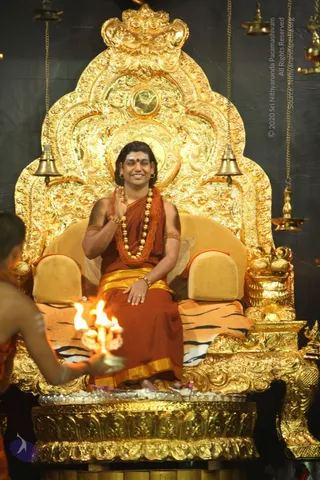
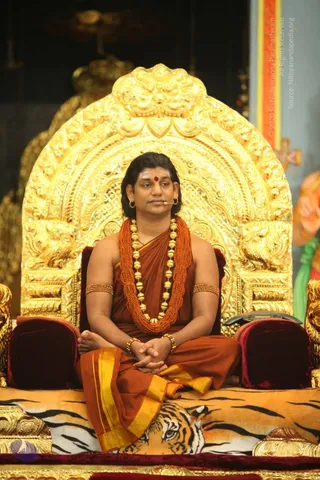
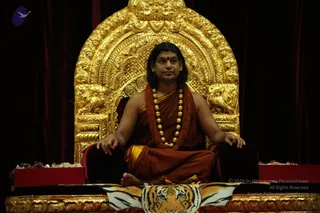
A seated man in orange-red sannyasi robes sits on an ornate gold throne with a gilded canopy and hanging bells, smiling with raised palms. A tiger-striped cloth covers the throne's seat. A kneeling attendant in brown robes tends a fire lamp on a gold stand in front. Painted multi-armed deity murti flank the entrance in a temple-style hall, one holding a lamp. A rudraksha mala hangs on the seated man's chest.A seated man in rust-orange robes and a long rudraksha-style bead garland sits on an ornate gilded throne with a golden canopy and gold lion-form armrests, beneath hanging brass lamps. Before him, a figure in orange cloth kneels and holds a small flame or offering dish near the base of the throne. Painted deity figures with multiple arms flank the doorway on the right. The seated figure is smiling with hands folded in his lap. The setting resembles a temple-style satsang or puja with a fire offering.A seated man in saffron-orange robes with a rudraksha mala and gold necklace sits on an ornate gold throne with a tiger-striped cushion beneath a gold canopy. A kneeling priest in orange robes holds a lit flame toward him. Hanging oil lamps and bells hang above, with painted deity figures with multiple arms on the pillars. a person appears in the central throne, identified by distinctive saffron robes, rudraksha mala and gold necklace.A man with long dark hair, a red bindi and orange-red robes sits on an ornate gold throne with a lion-carved armrest and a tiger-striped cushion, raising one hand in blessing and smiling. Gold ceremonial beaded necklaces and rudraksha-style mala beads hang on his chest. In the foreground, a person's arm holds a brass aarti lamp with a bright flame toward him. Hanging brass oil lamps and bells decorate the dark wall behind the throne. He is shown in an aarti setting during a seated satsang-style ceremony.A photograph of a seated man on an ornate gold throne with a carved gold backrest, lion-head armrests and a tiger-striped cloth draped over the seat. He wears an orange-red sannyasi robe with a gold border, a long orange rudraksha mala with gold beads, gold armbands and a red bindi with white markings on his forehead. He raises one hand in blessing and smiles. In the foreground at left, a person in orange holds a lit camphor aarti flame on a plate. Gold bells hang from chains and gold oil lamps are visible at the top right. a person is shown in this scene, seated on the throne in the role of teacher receiving aarti. Printed copyright text runs vertically at the right edge.A seated man on an ornate gold throne with a carved gold back and tiger-striped cloth draped over the seat, smiling with hands folded in his lap. He wears a rust-orange garment, a long orange-red rudraksha mala, a gold bead necklace, gold armbands and bangles, a red bindi and a white tilak. In the foreground a blurred attendant in orange holds a lit oil lamp flame over a gold pedestal scattered with flower petals. Gold bells hang from chains and brass lamps are visible above. Swamiji (probable): long swept-back hair, rudraksha mala and ceremonial gold necklace on a throne in orange robes. Pictured in a temple-like shrine with aarti being offered.
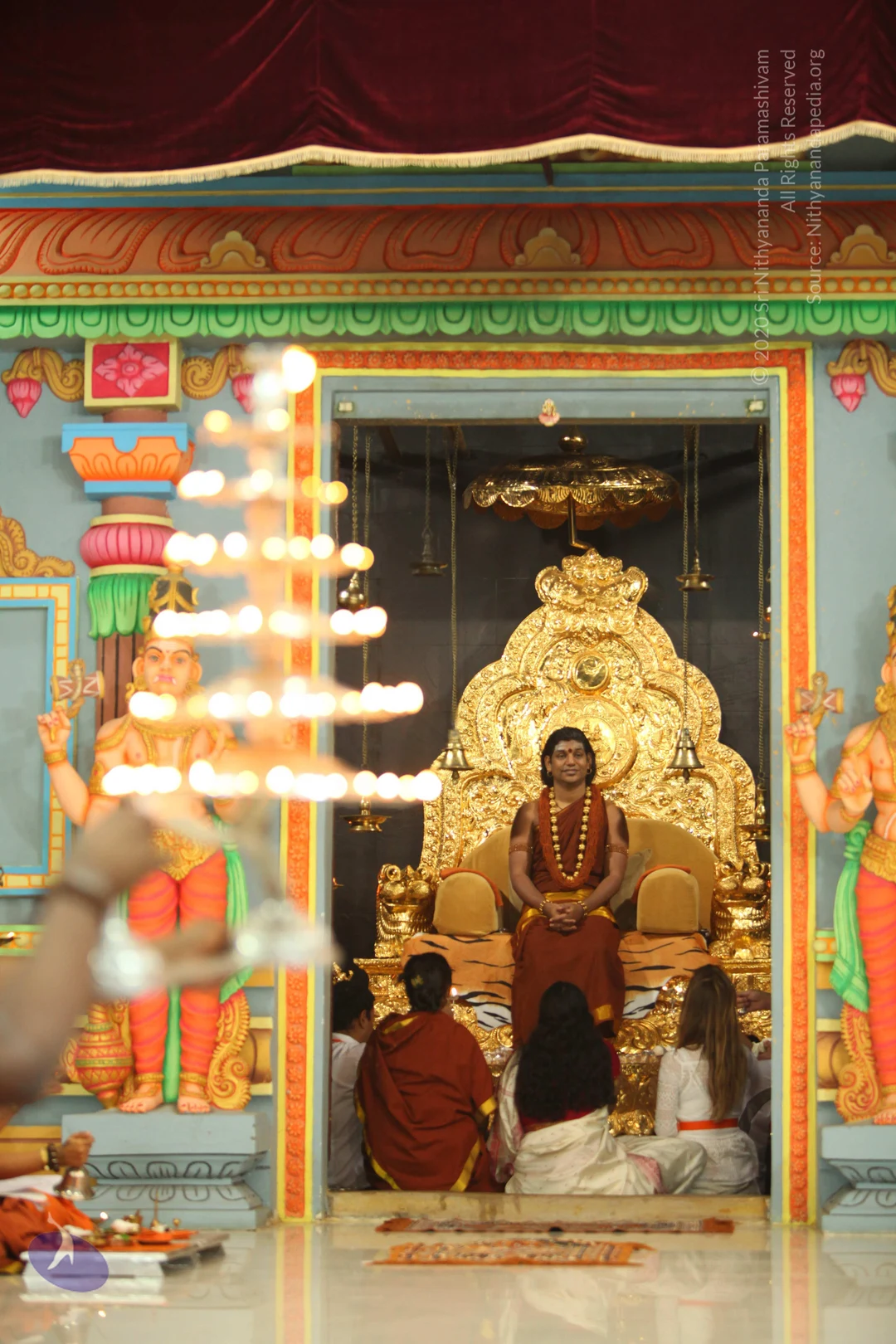
NITHYA-SATSANG
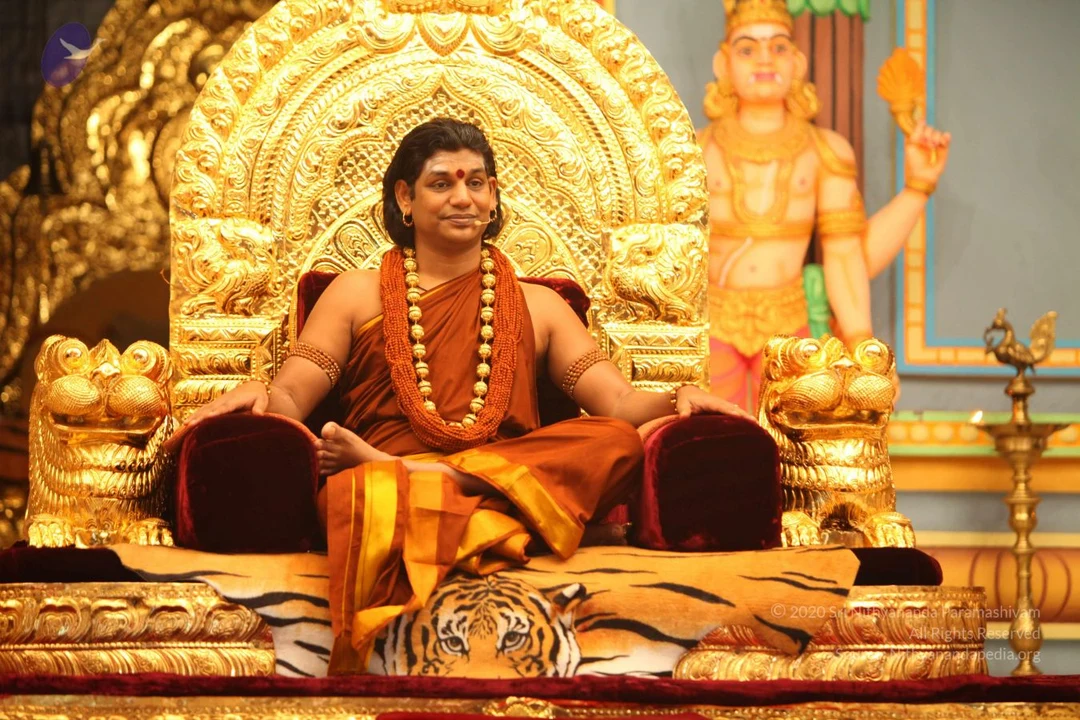
83 photosSource gallery
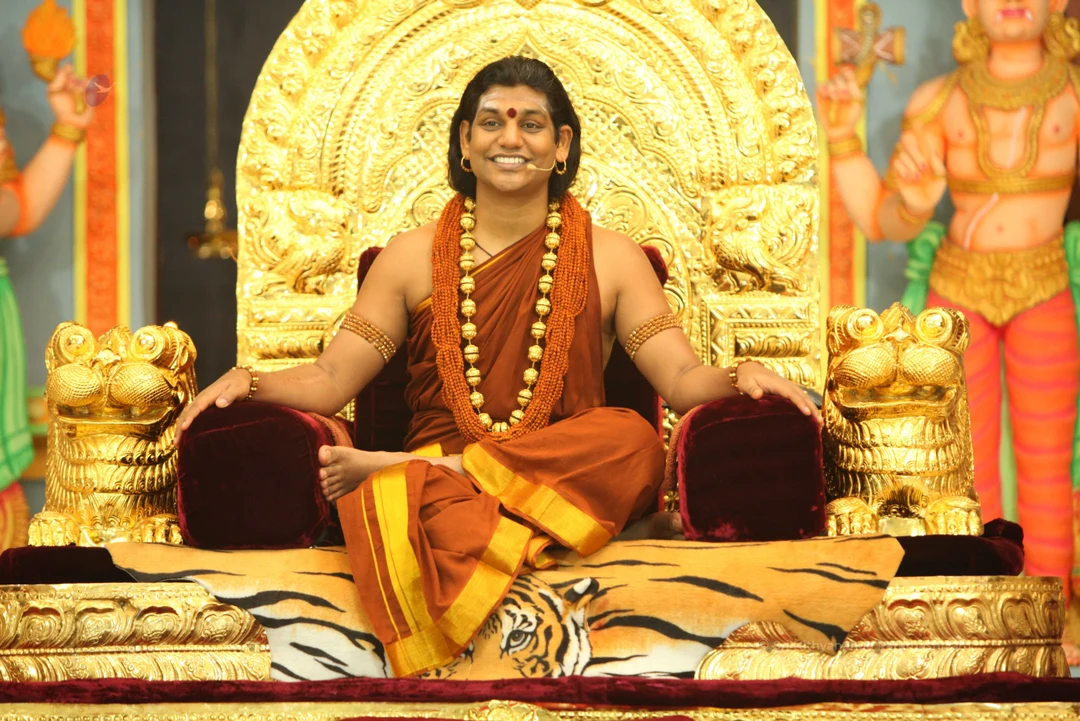
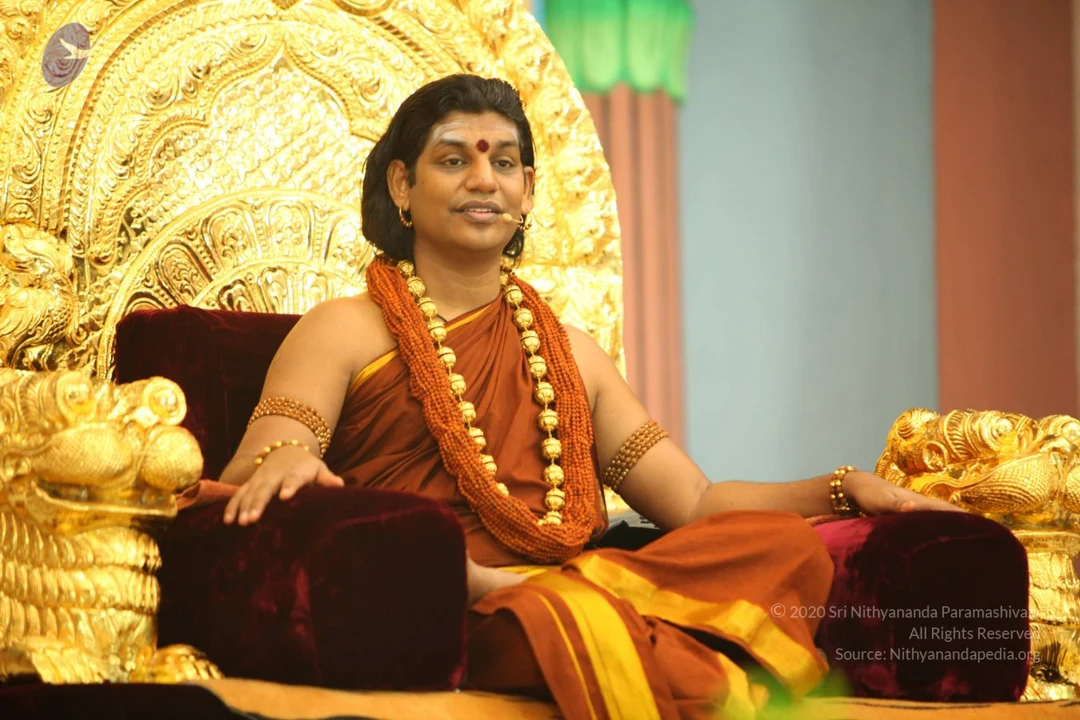
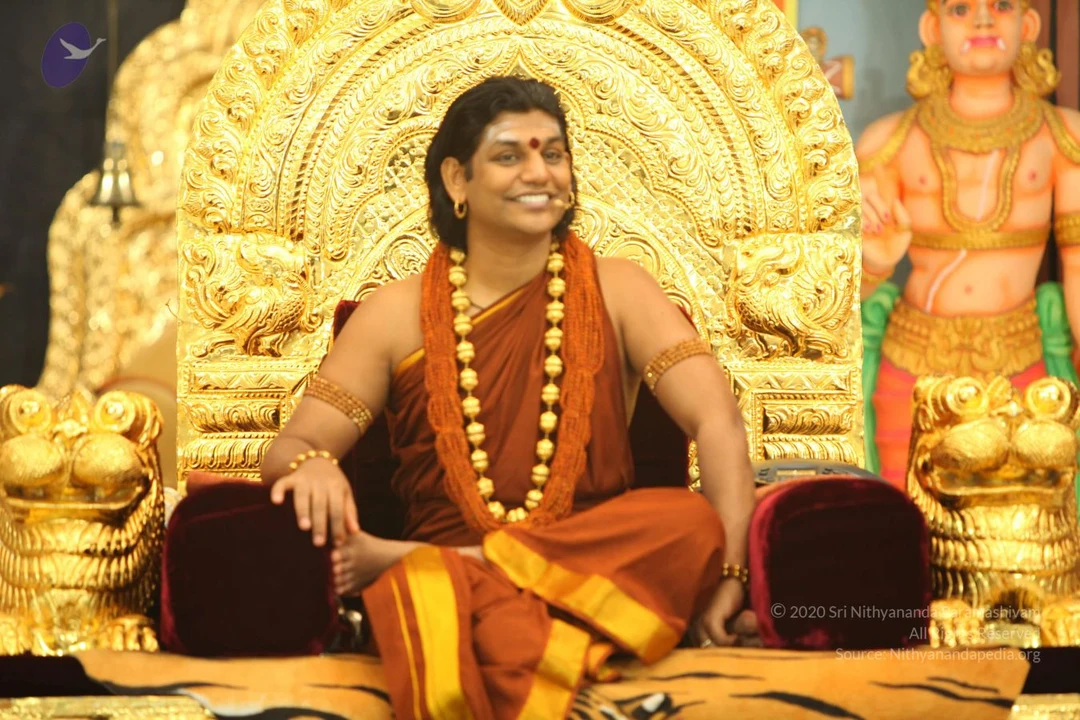
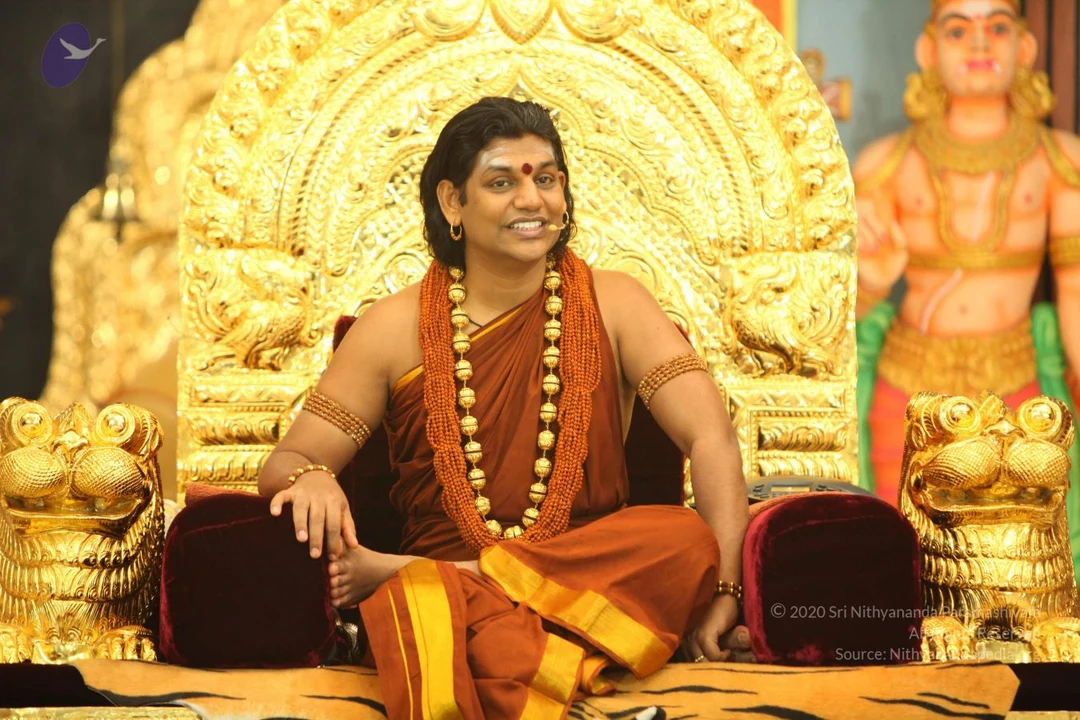
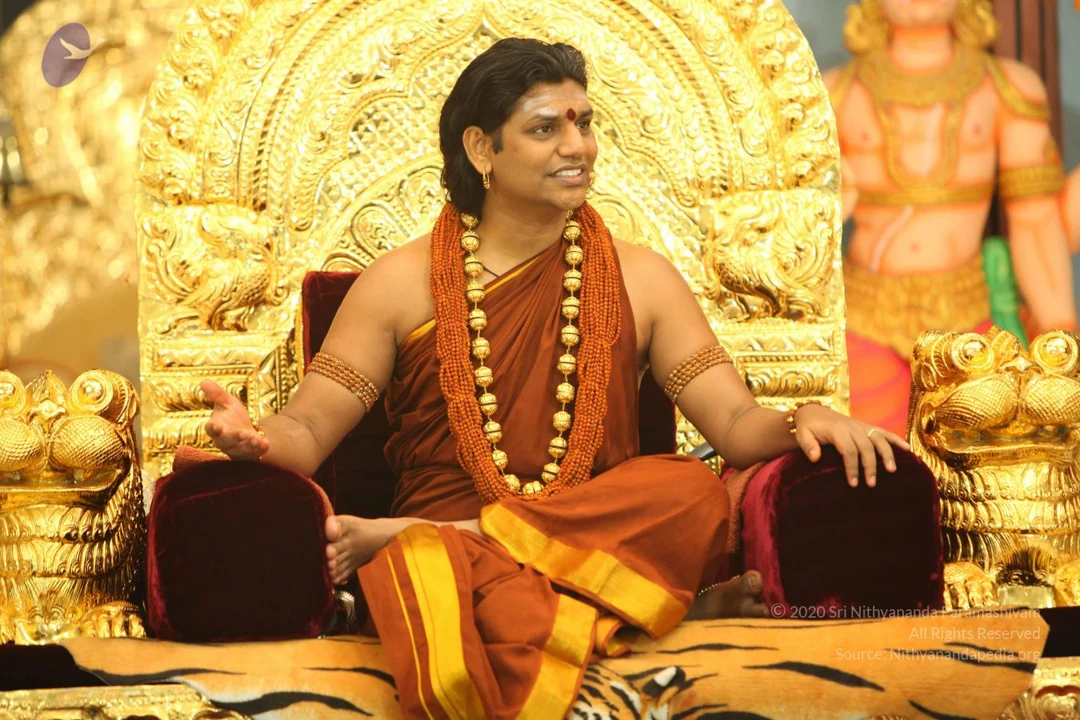
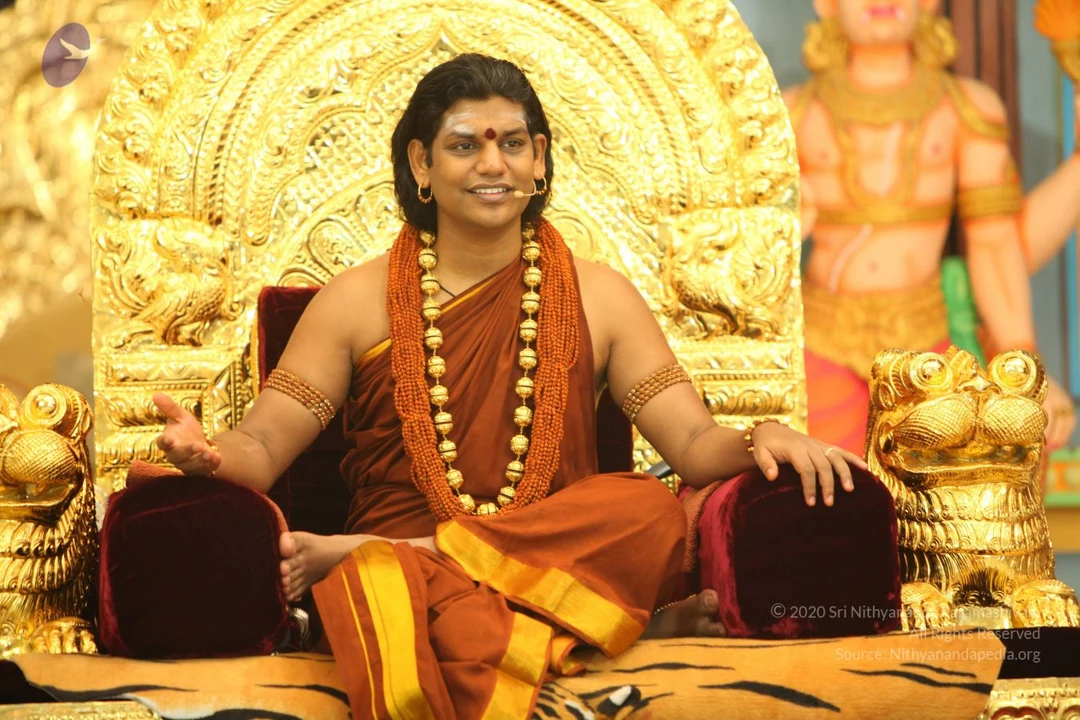
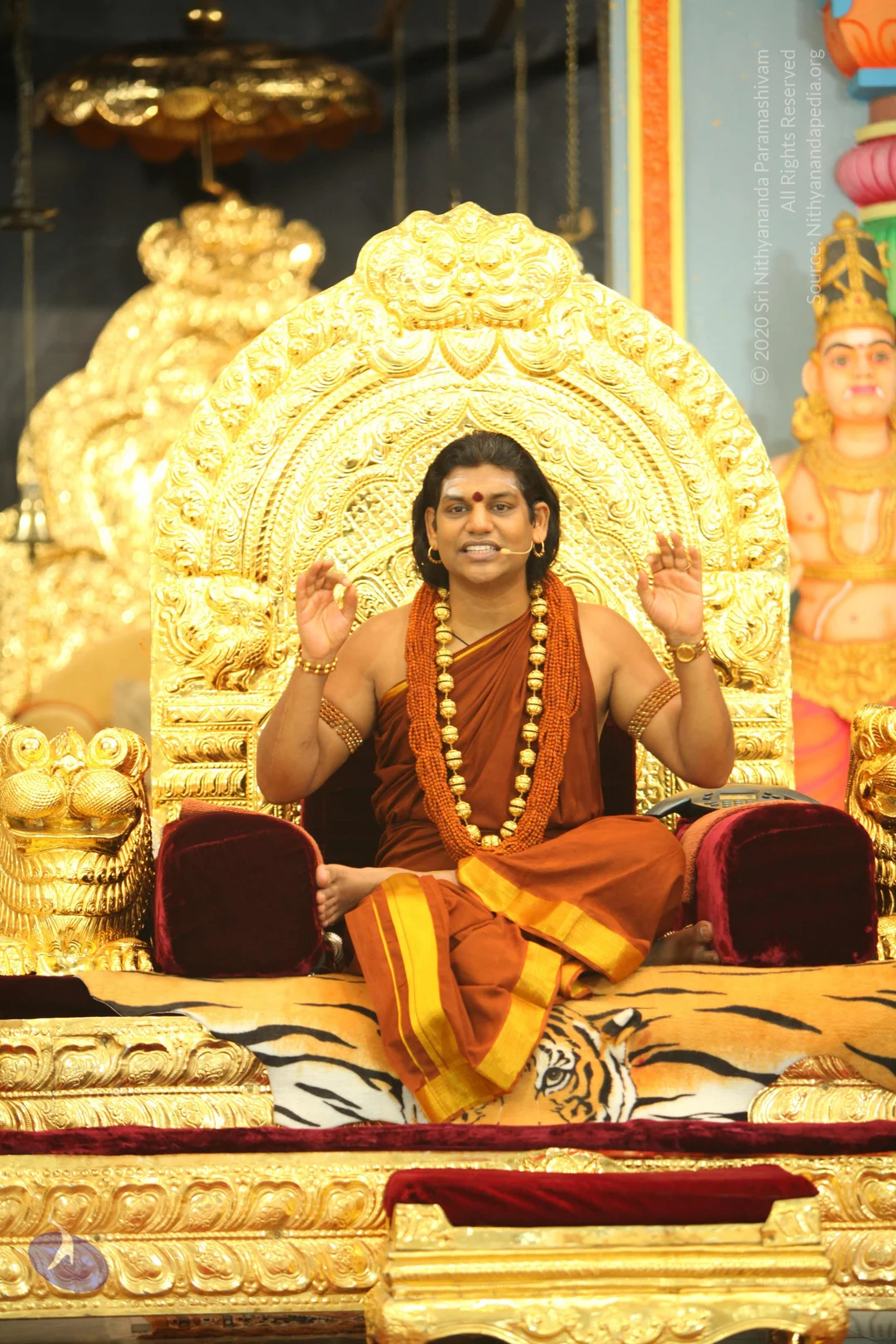
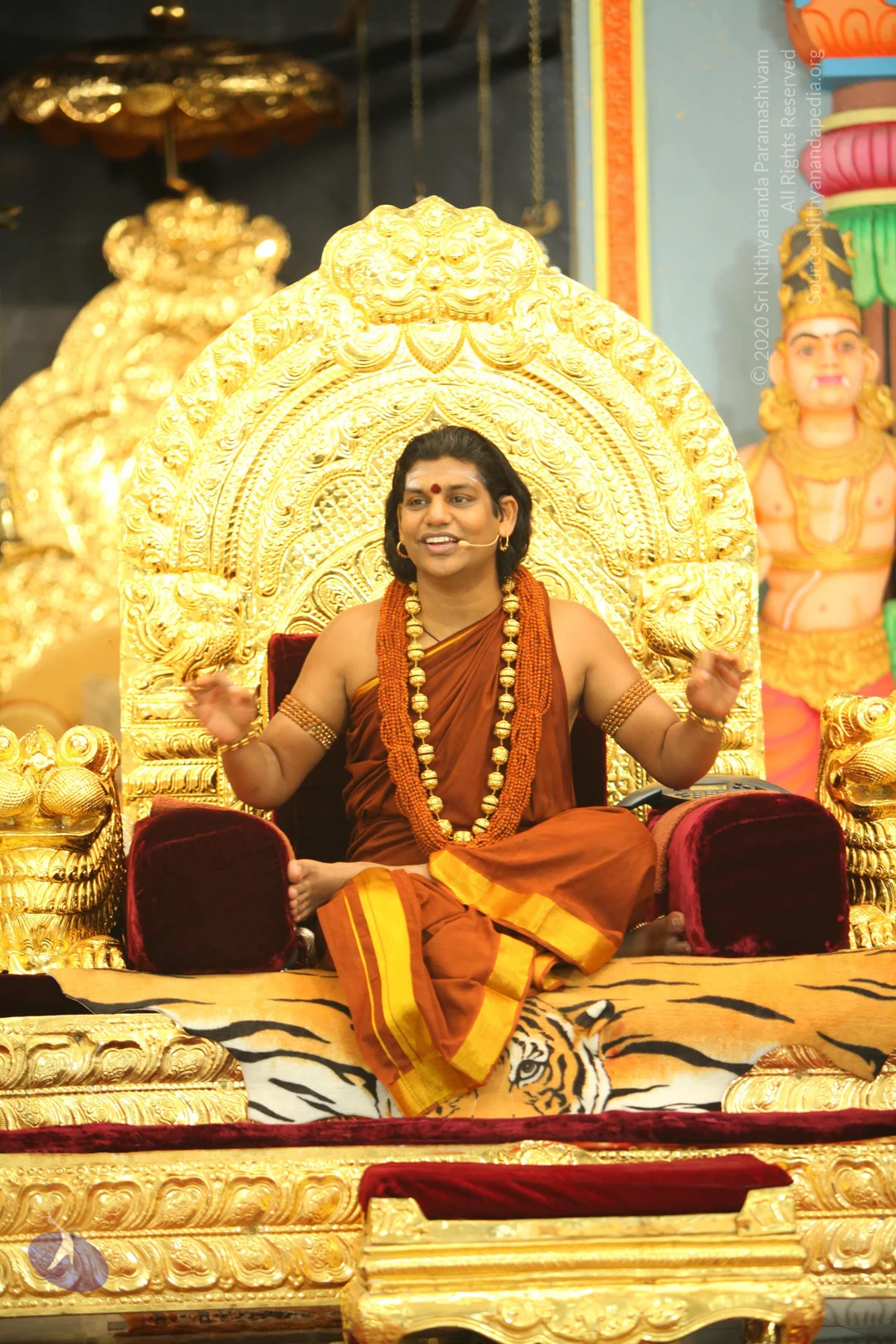
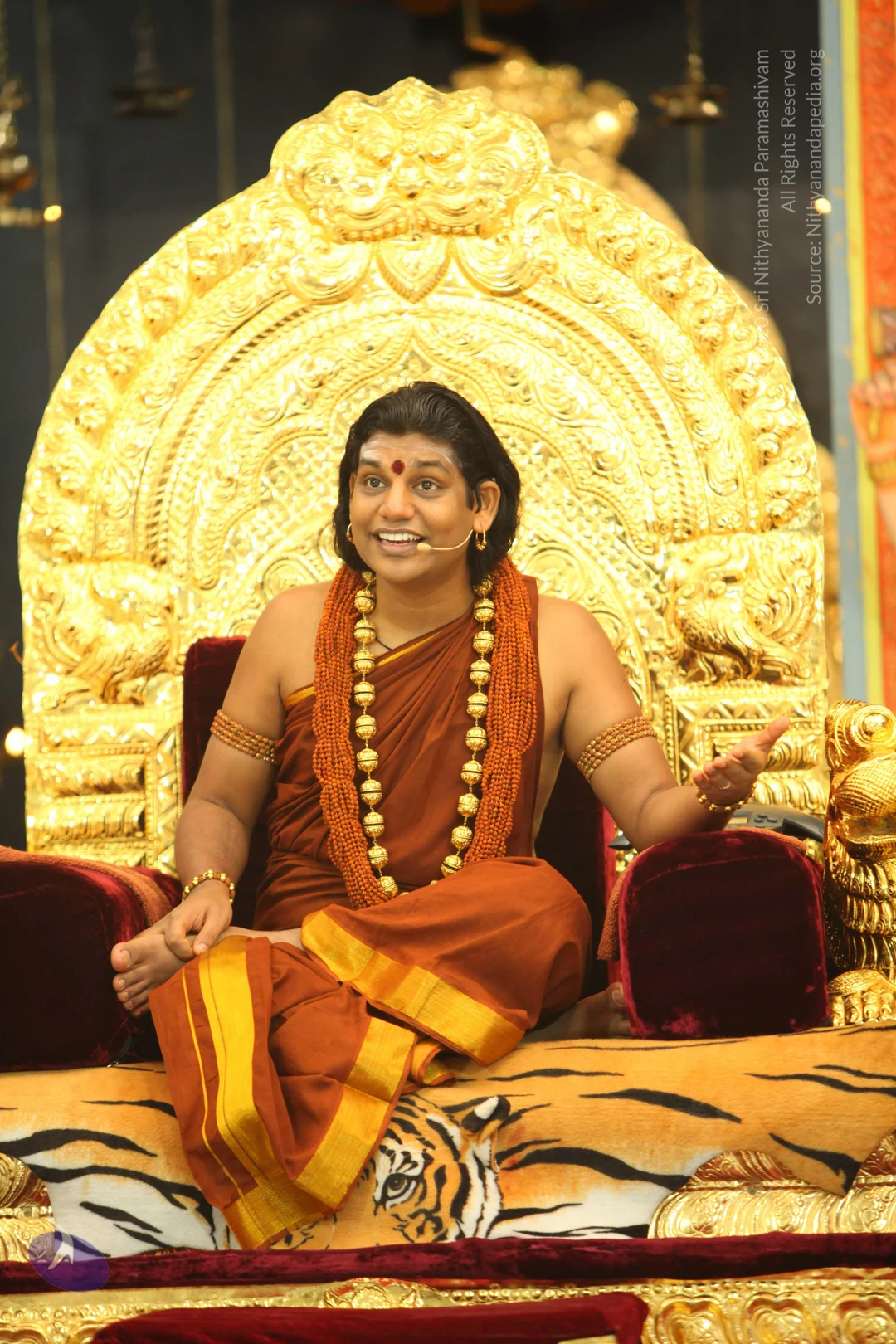
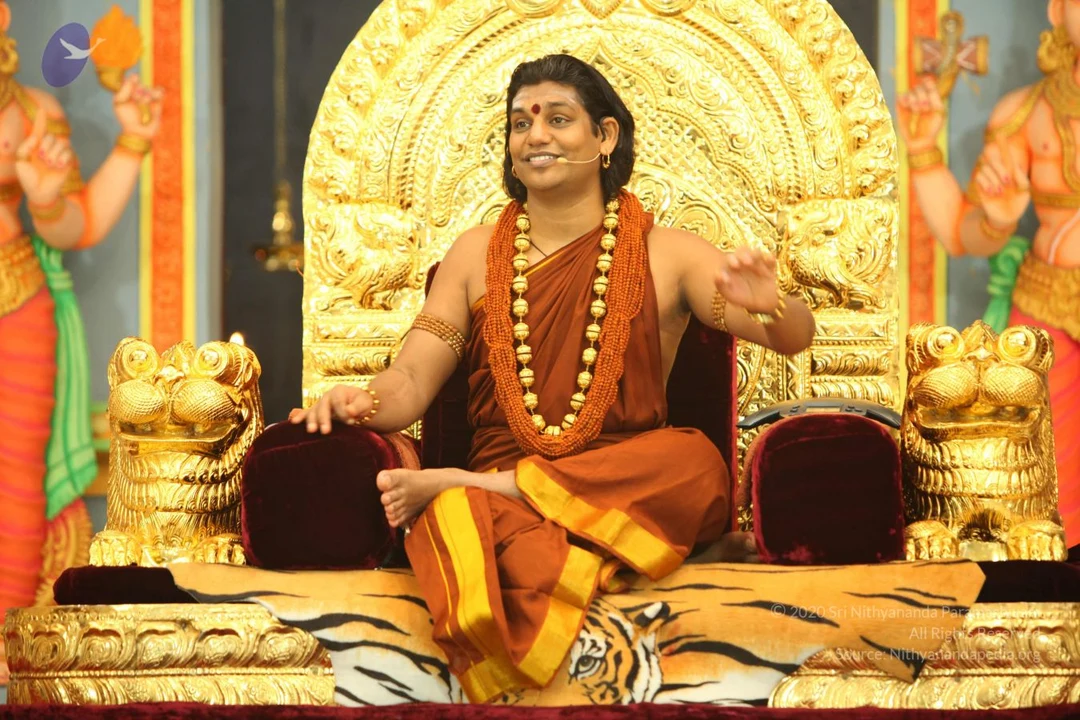
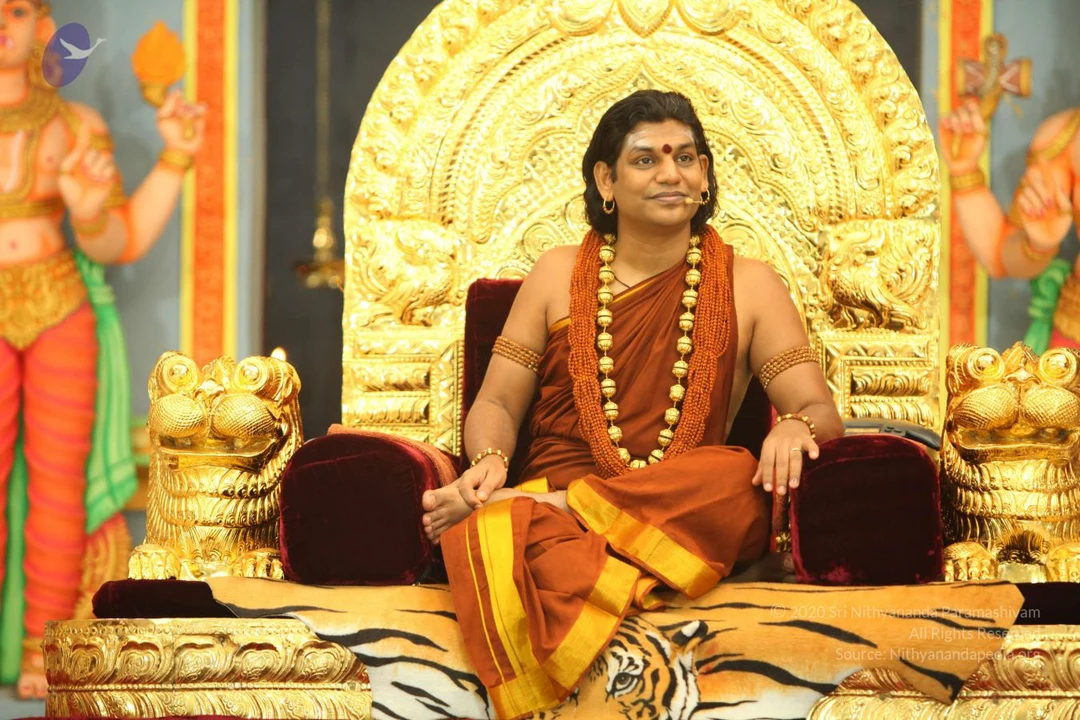
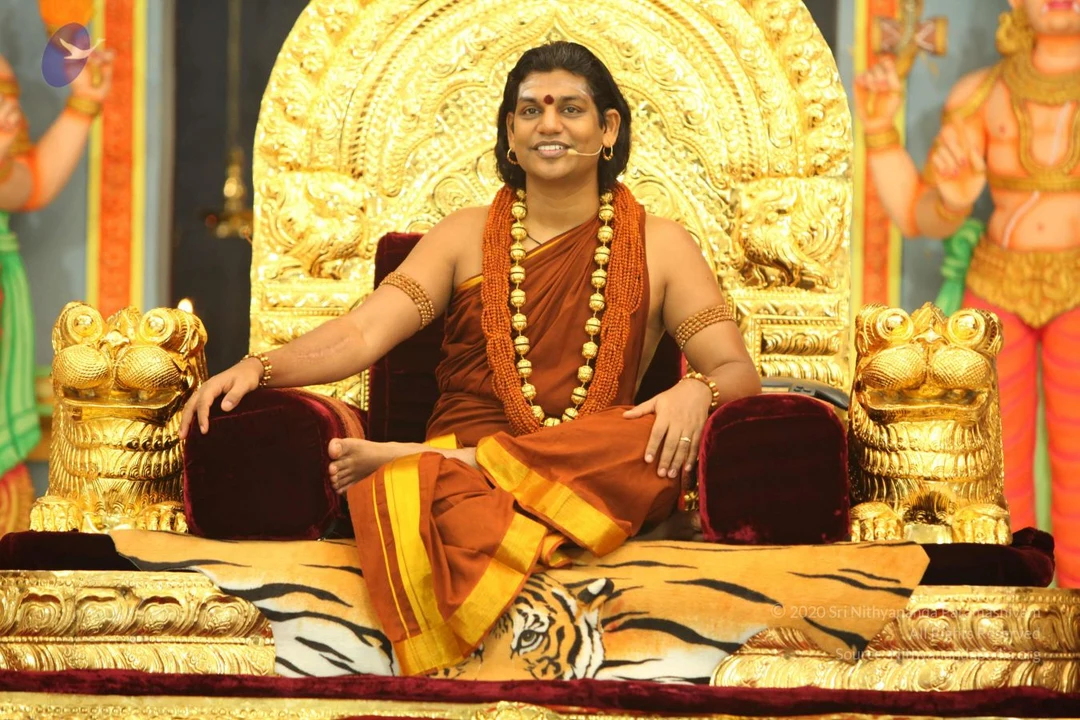
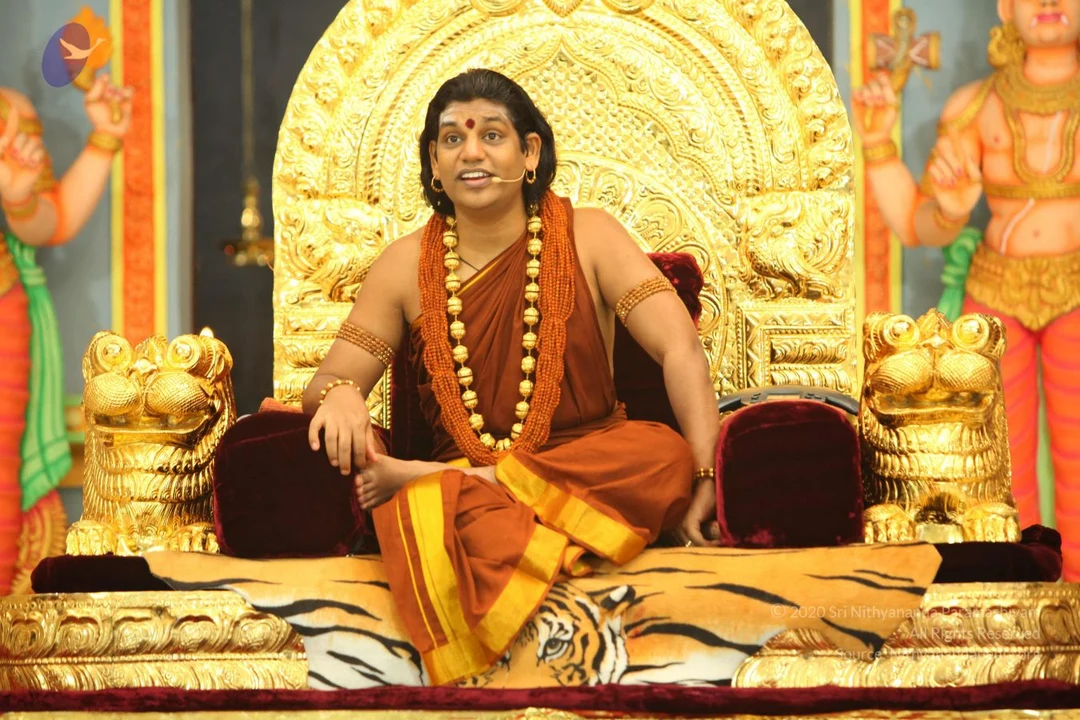
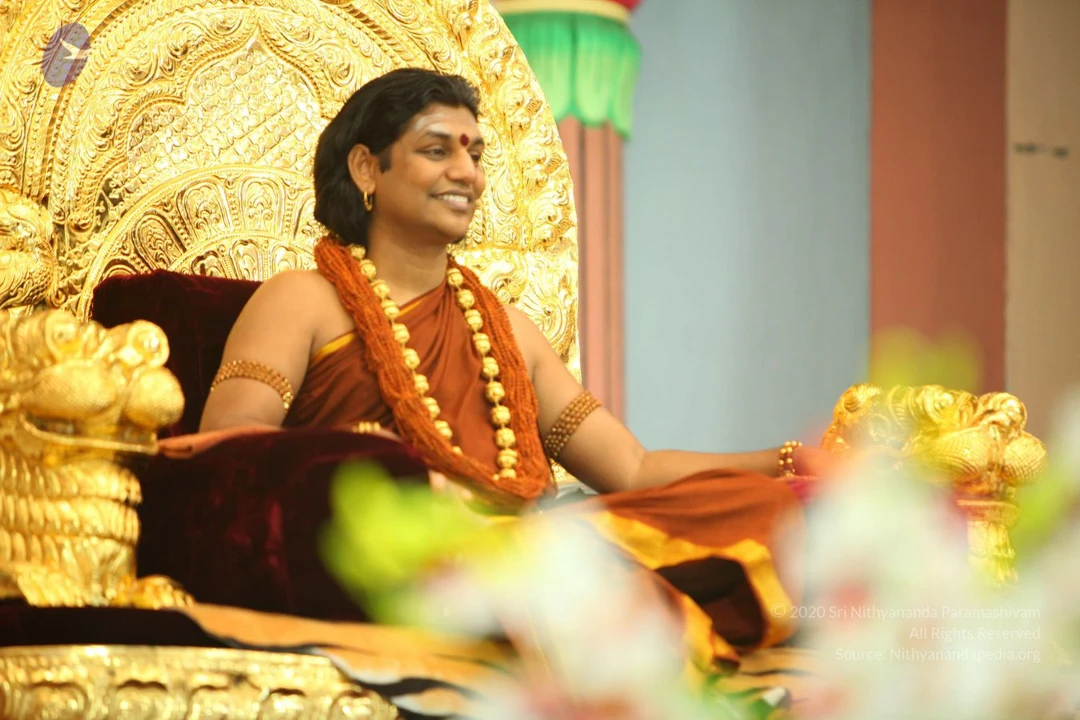
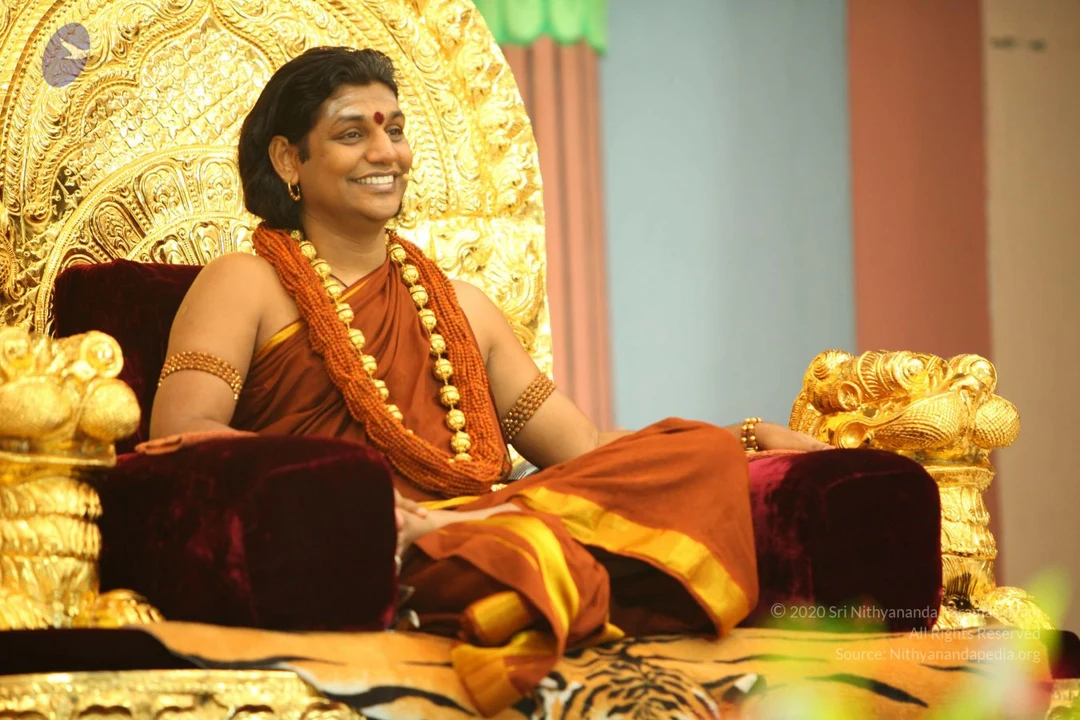
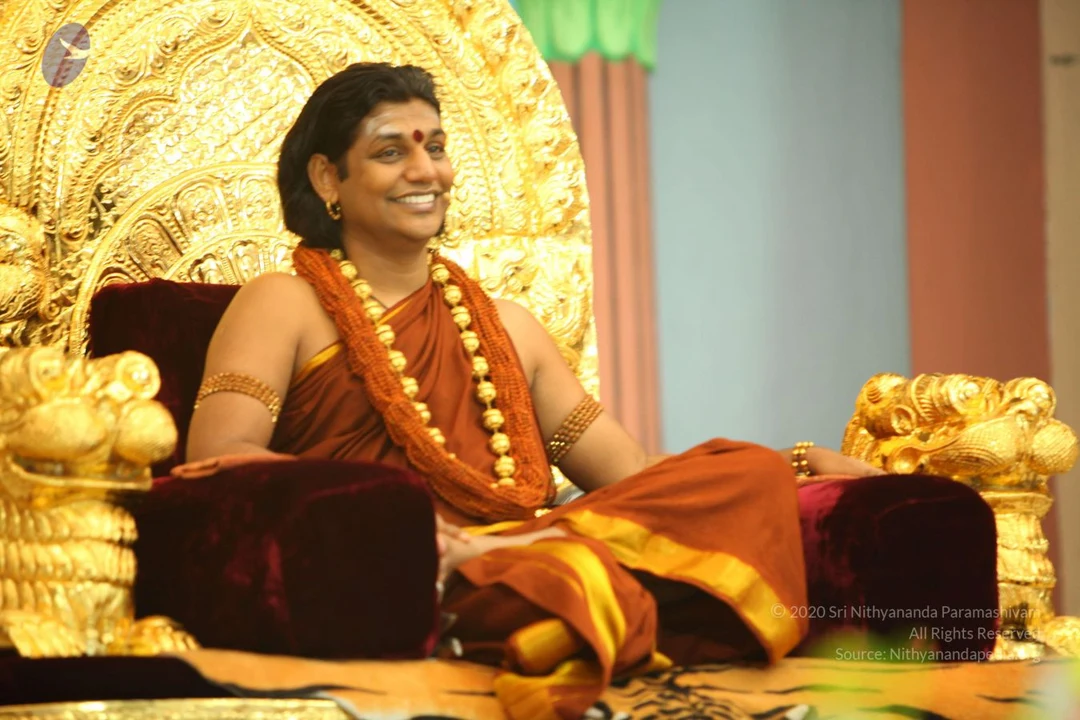
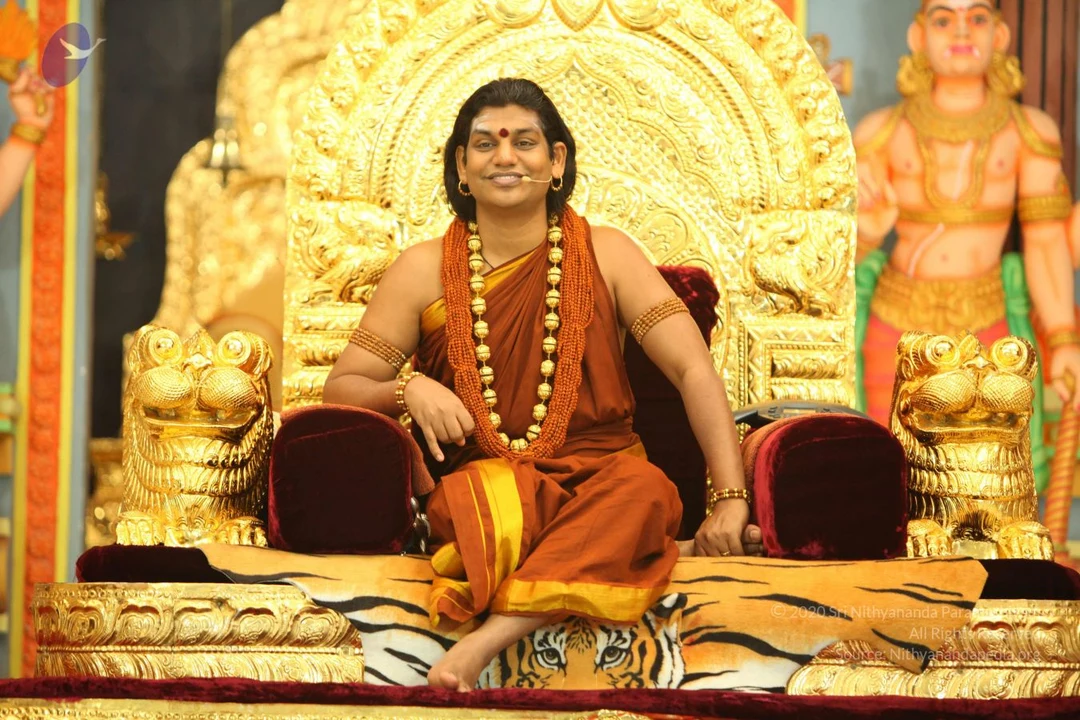
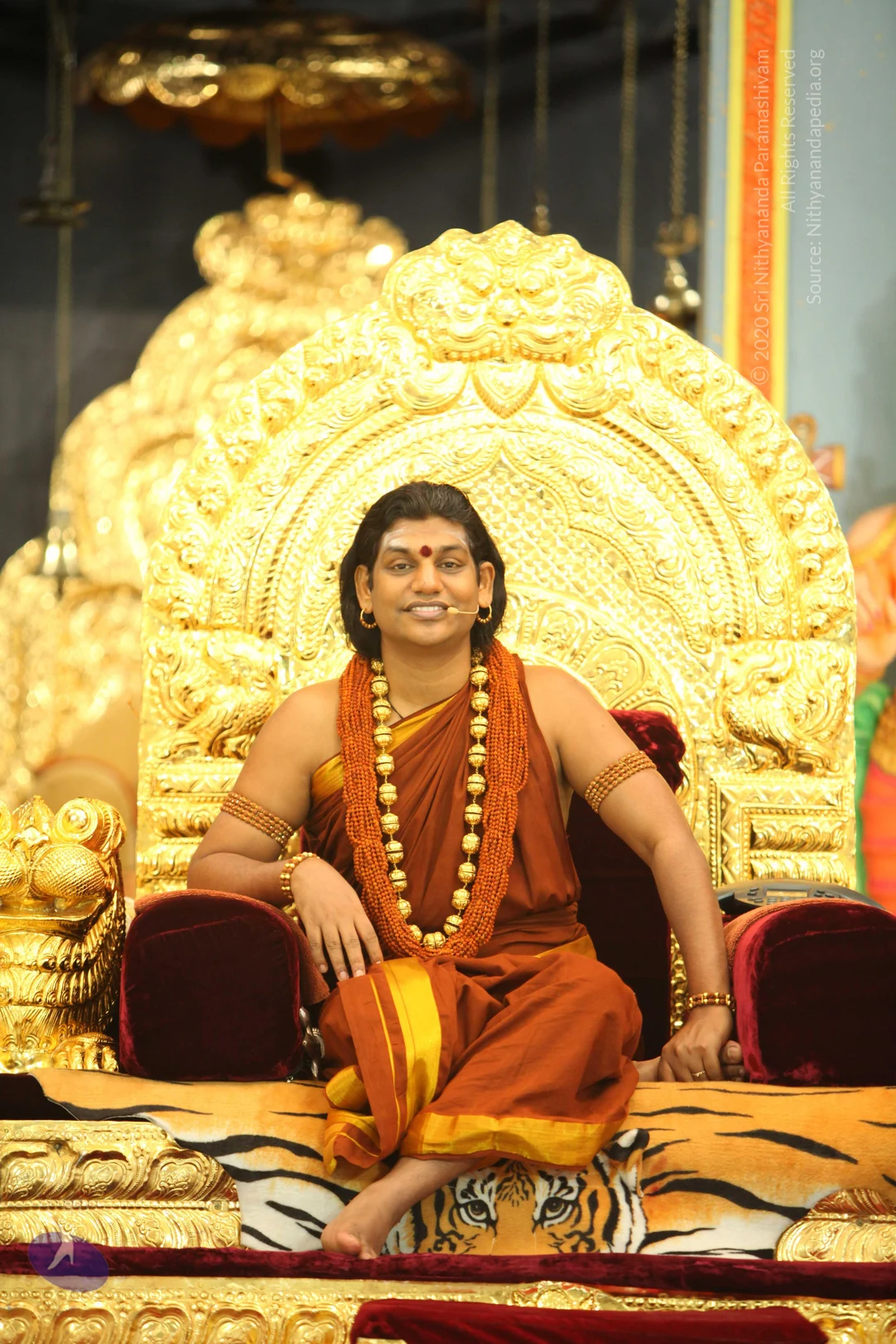
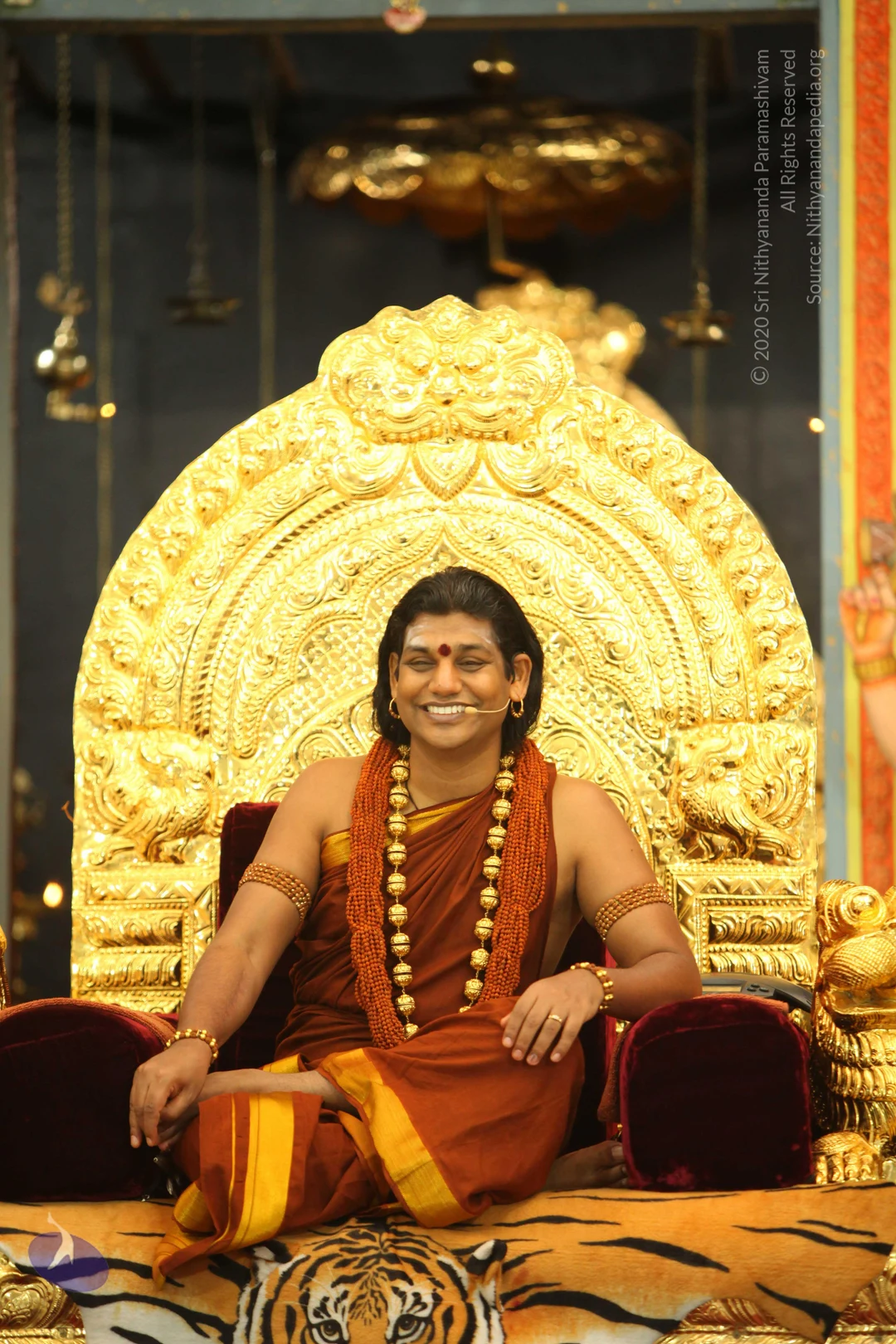
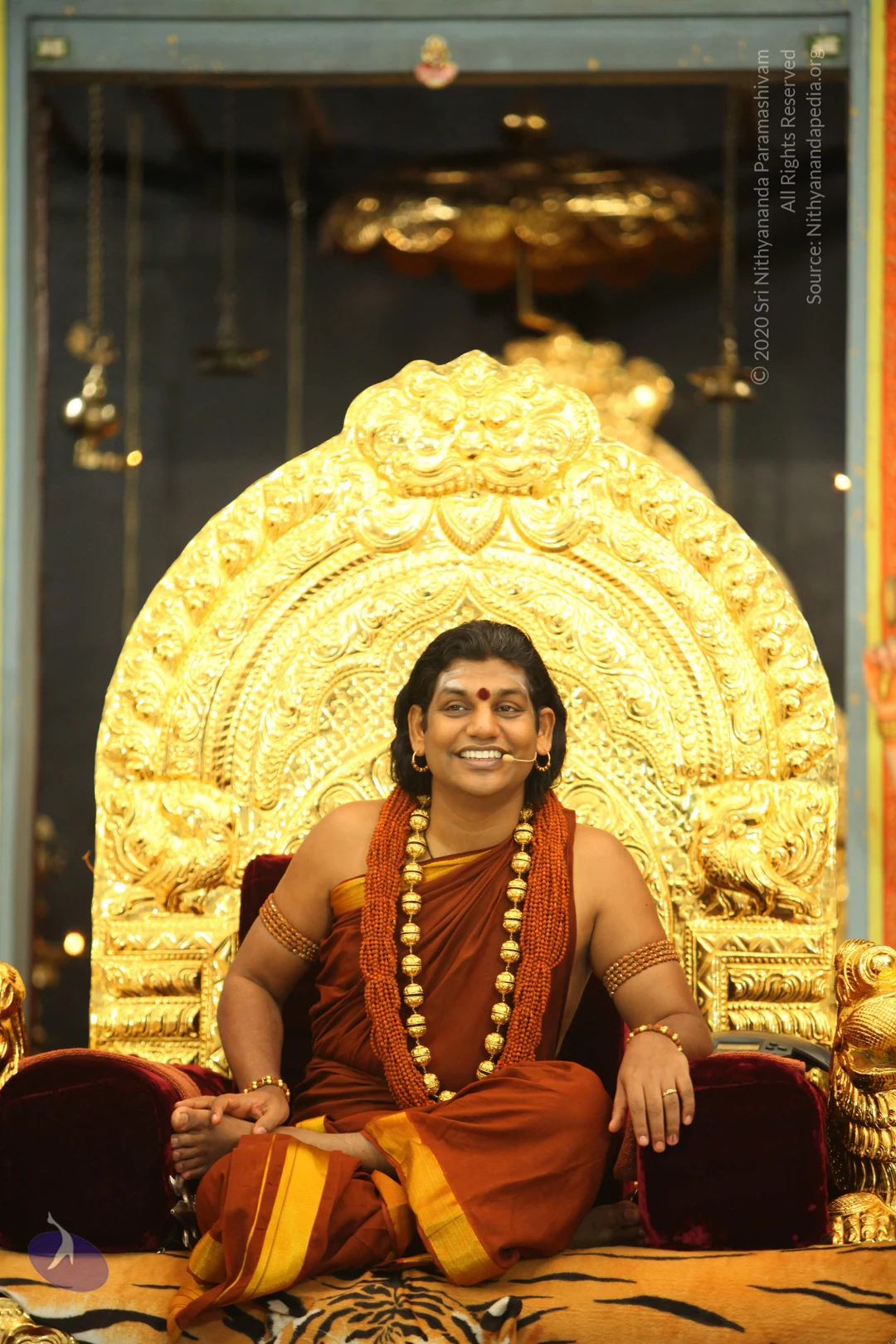
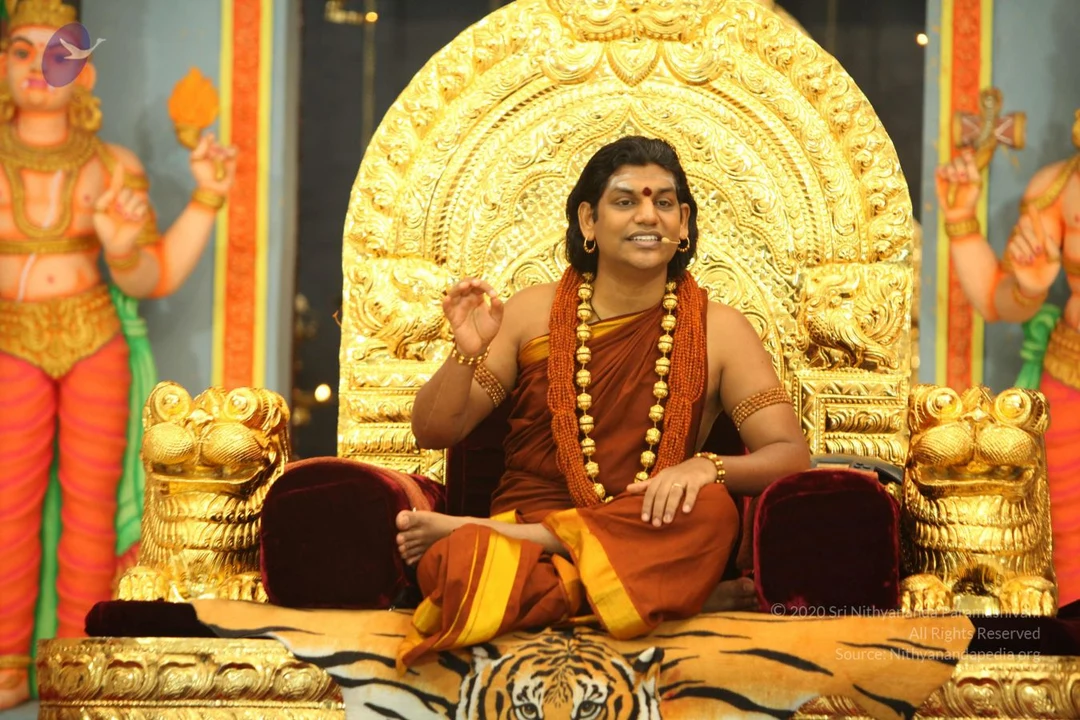
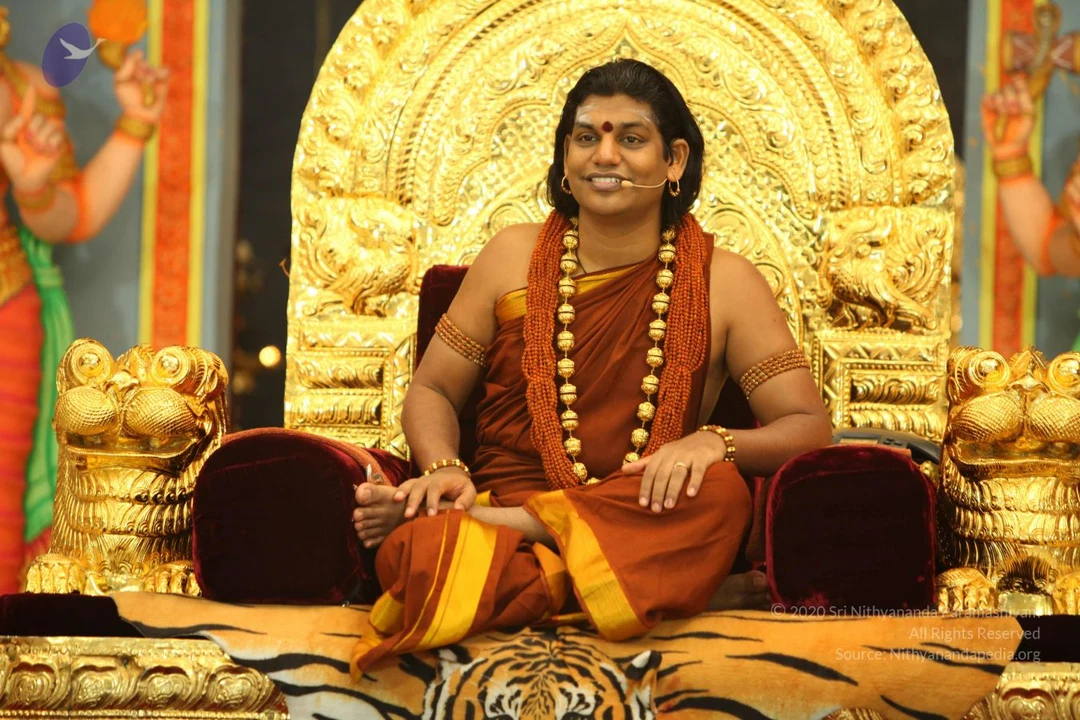
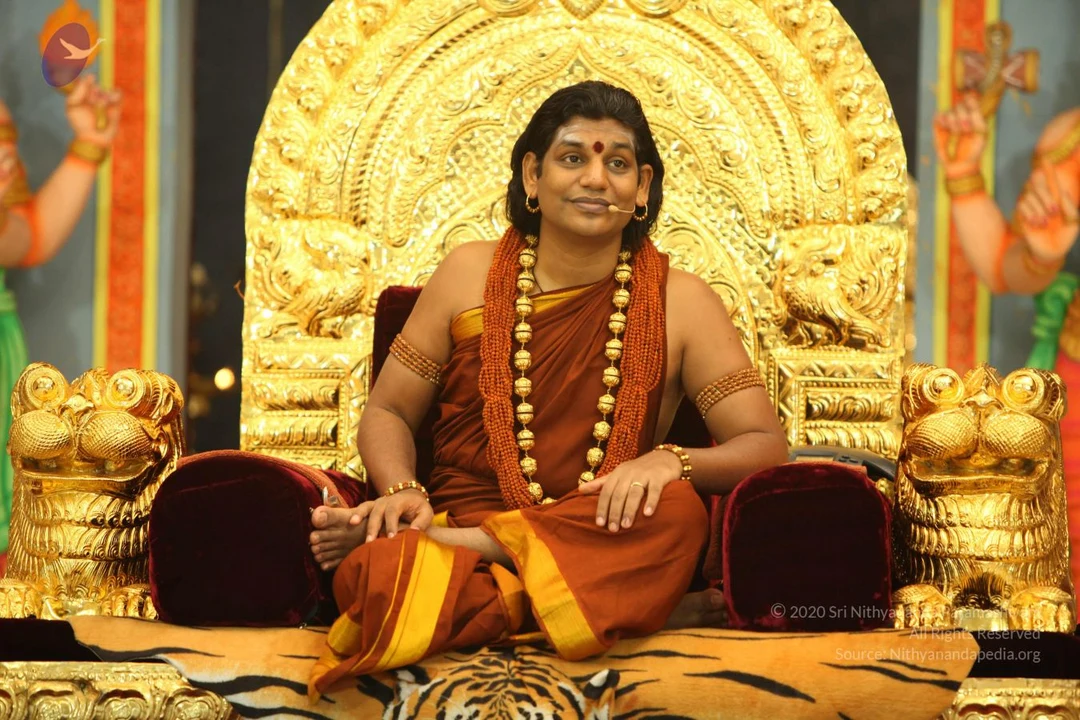
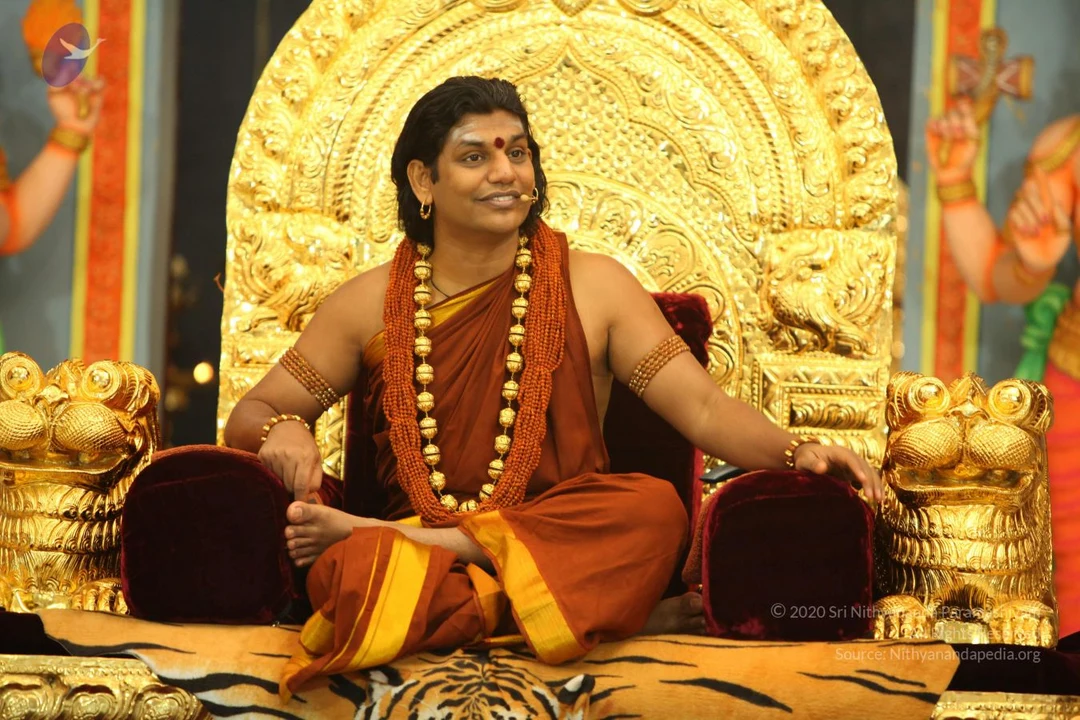
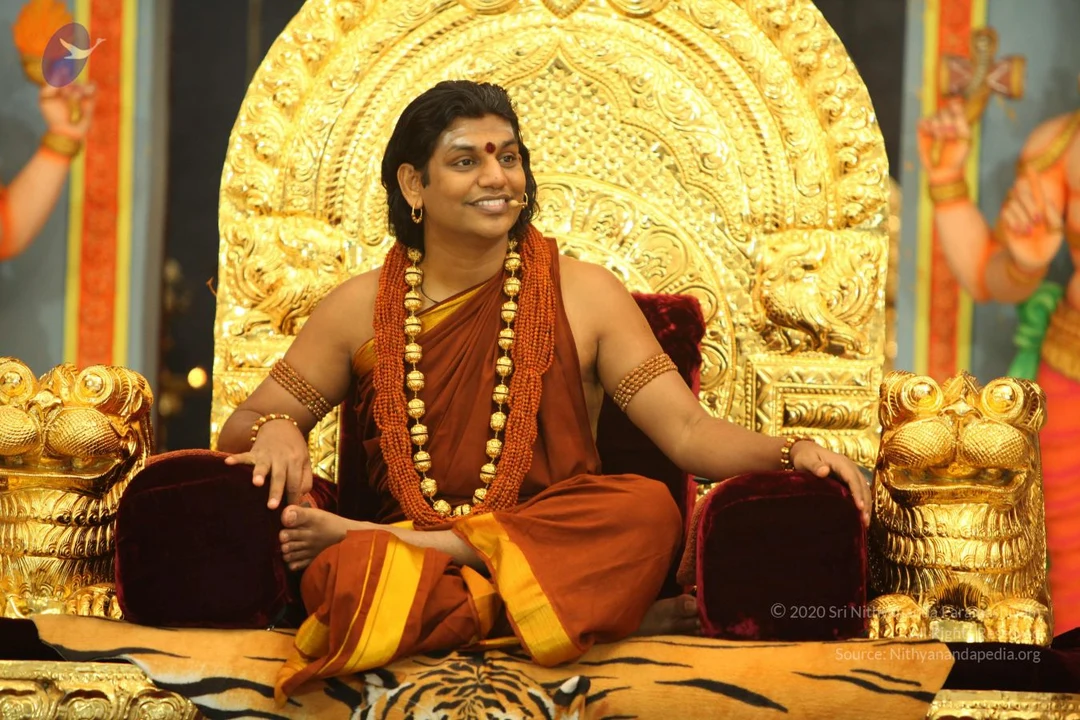
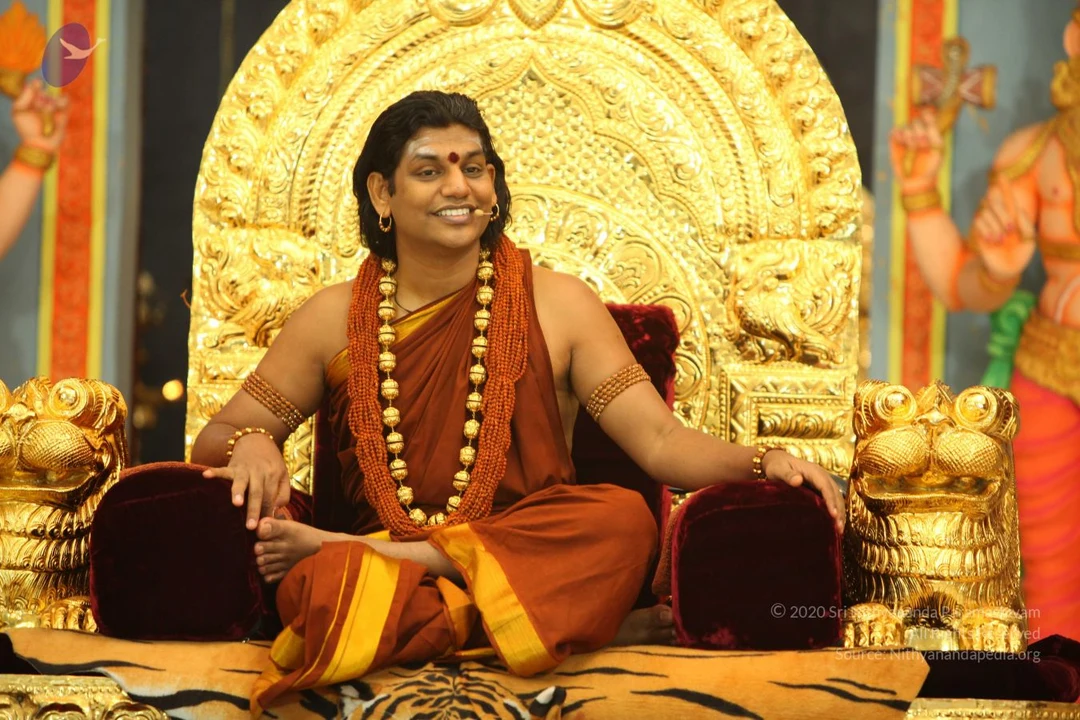
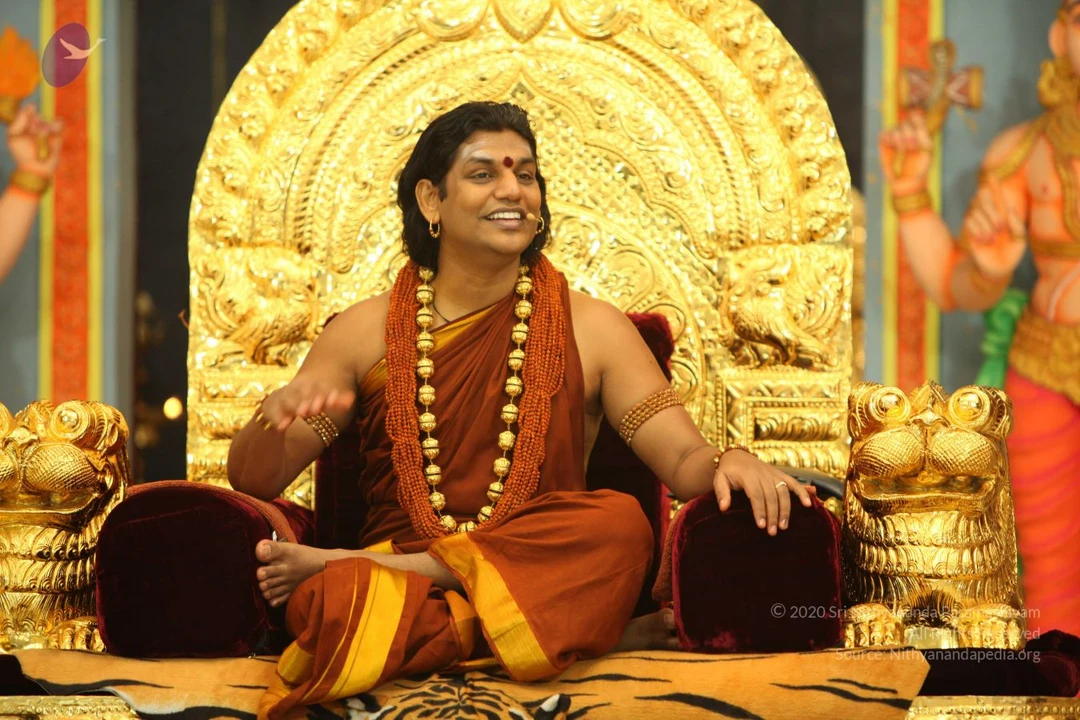
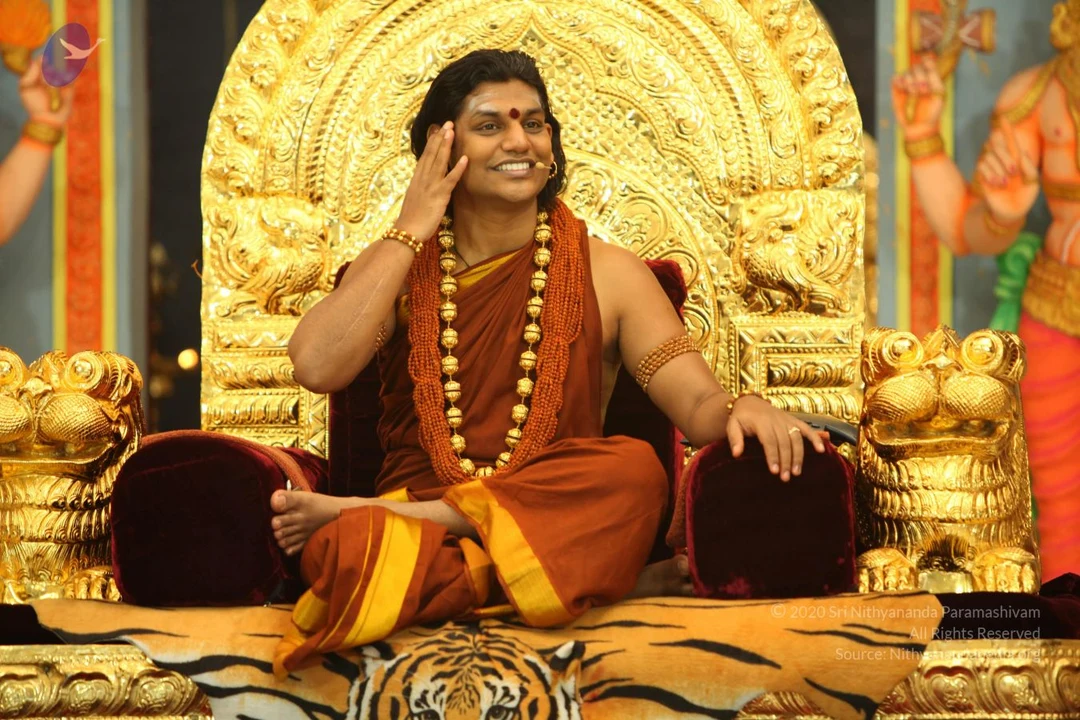
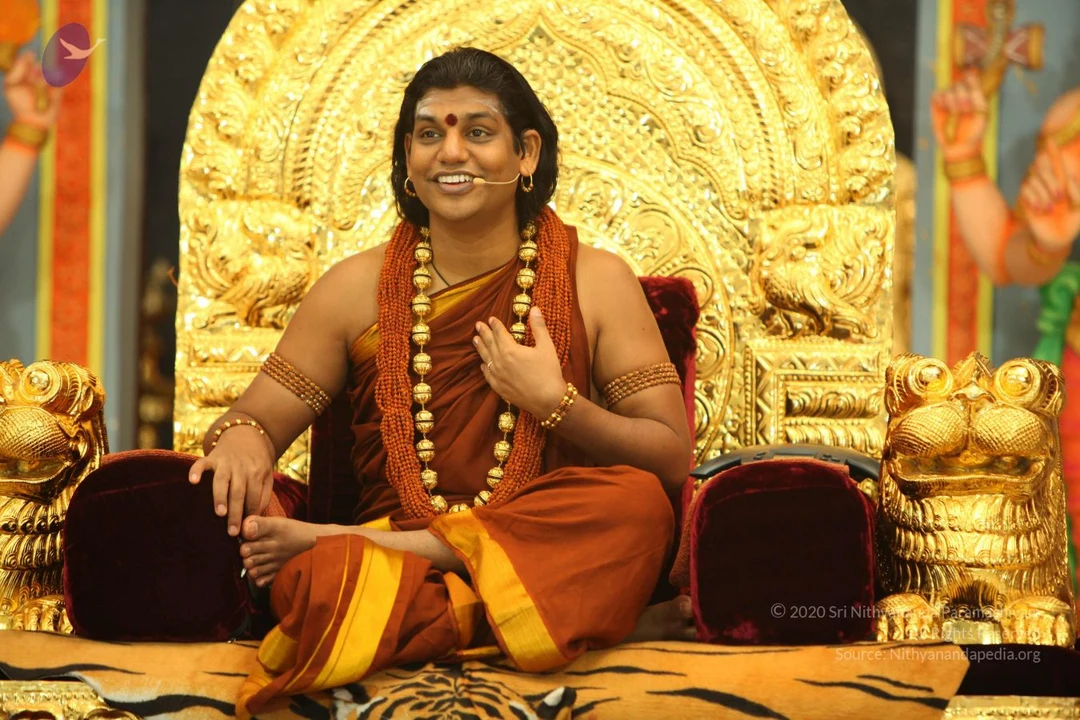
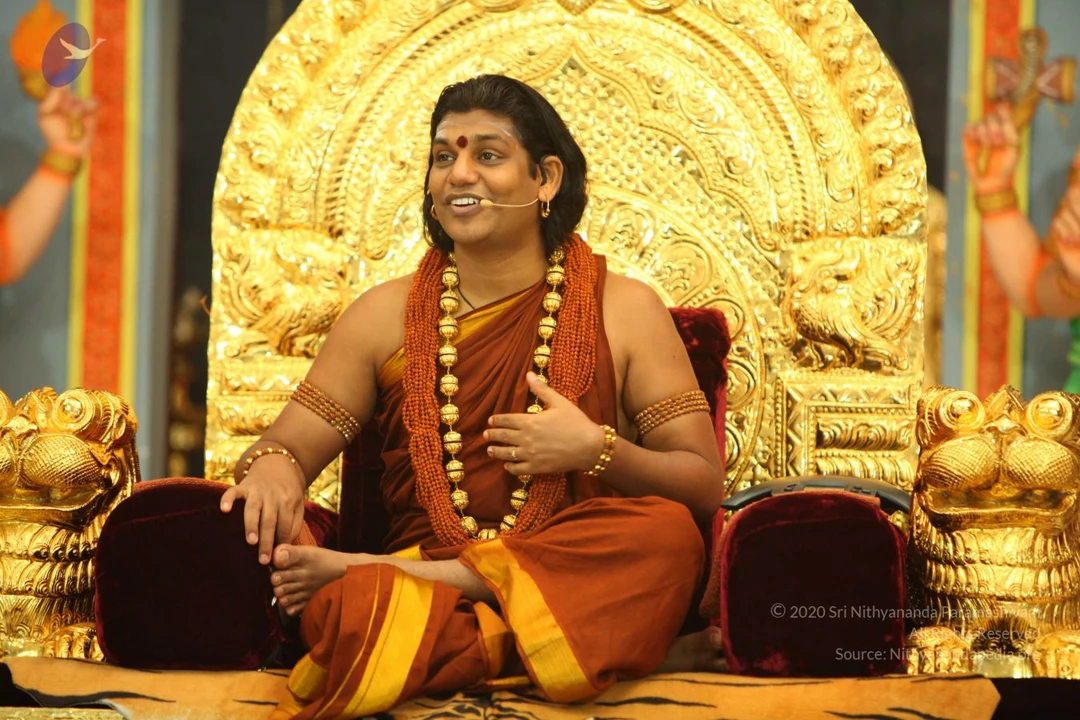
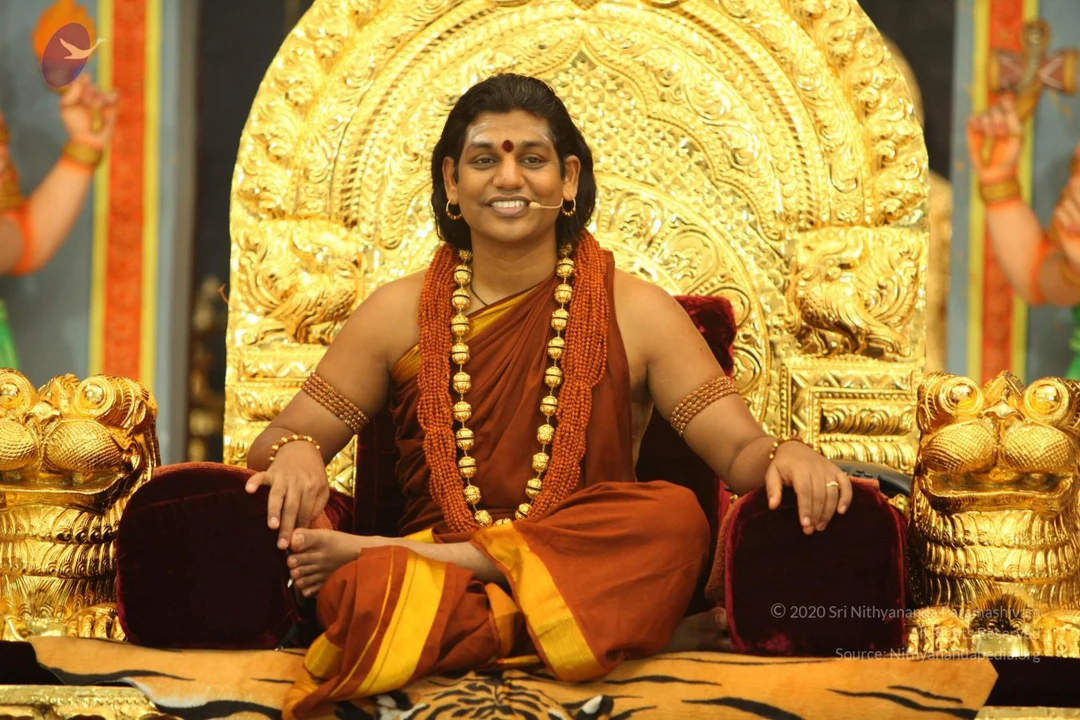
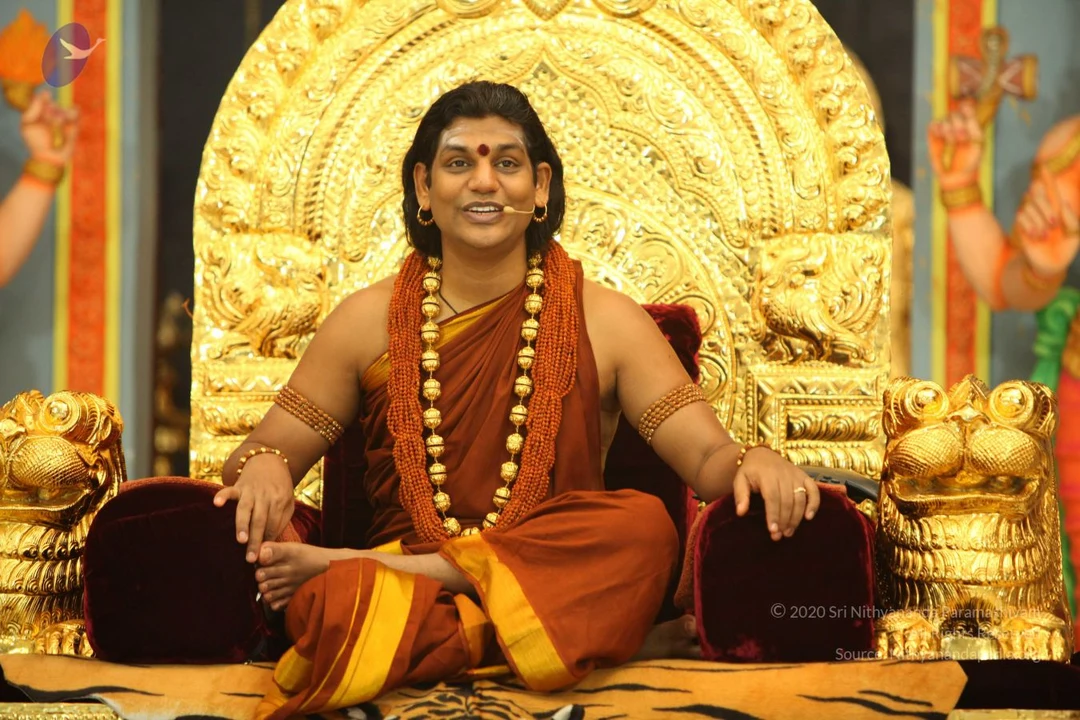
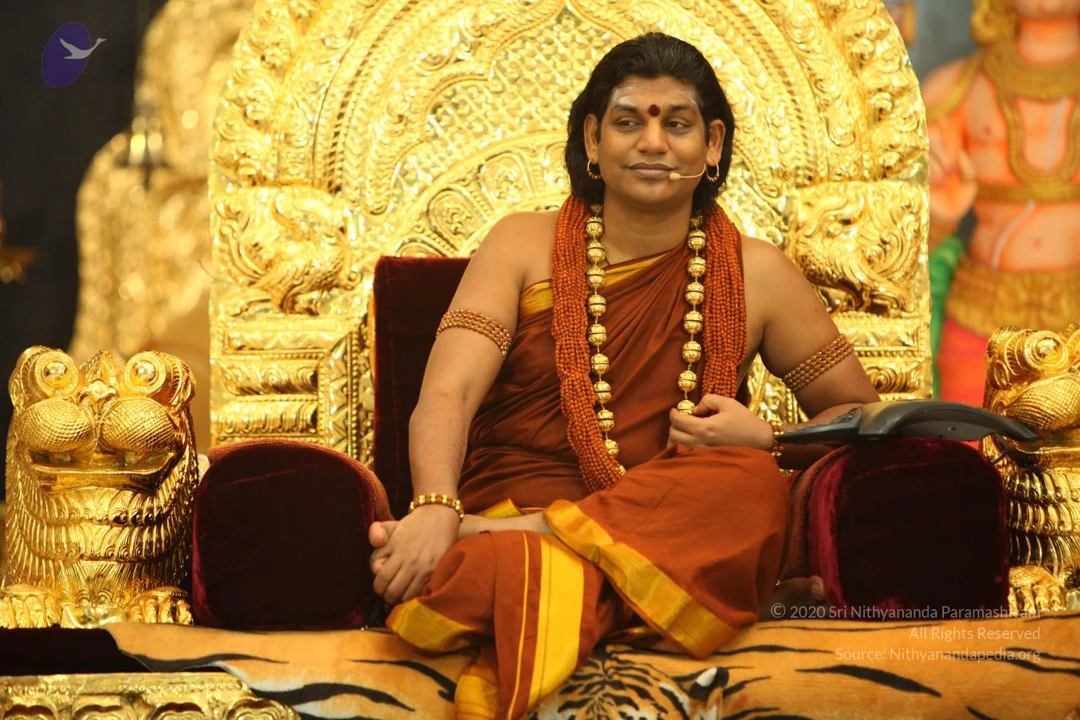
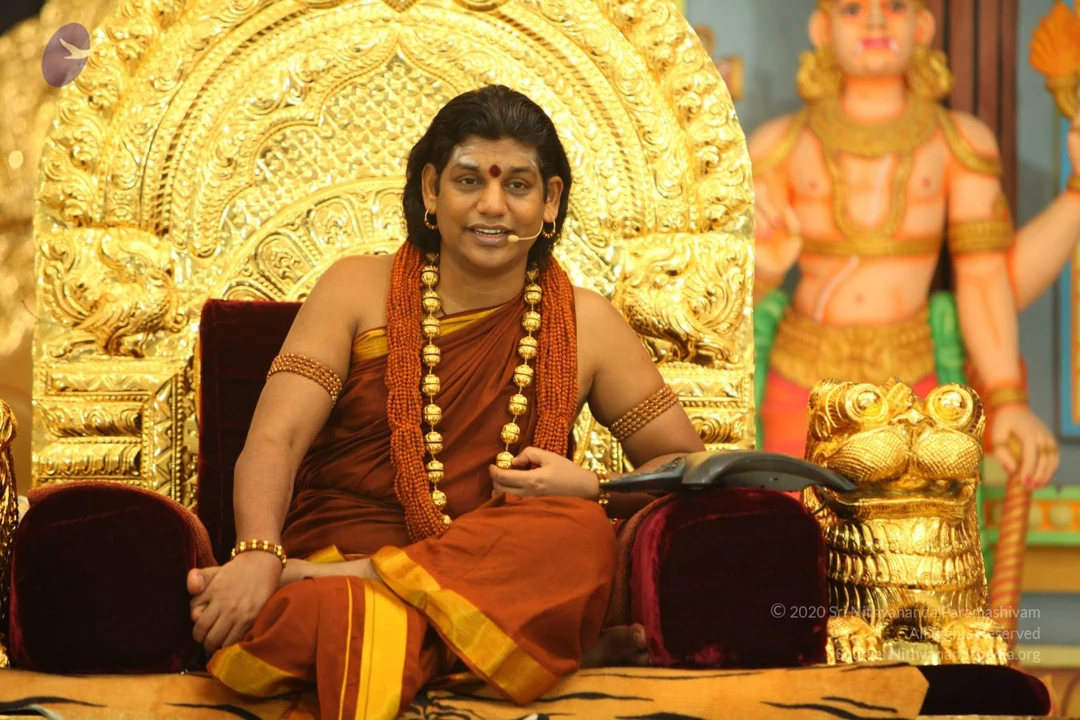
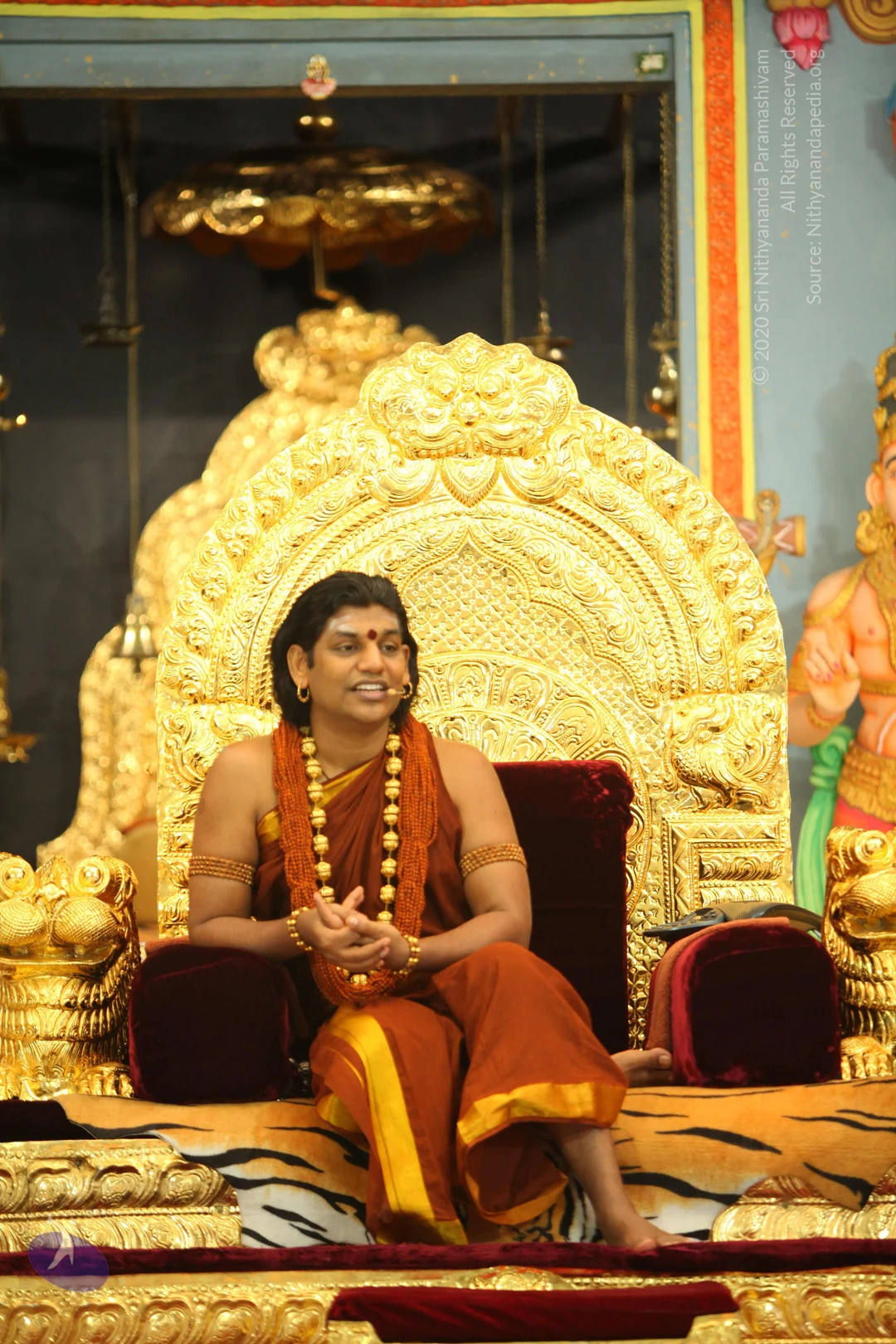
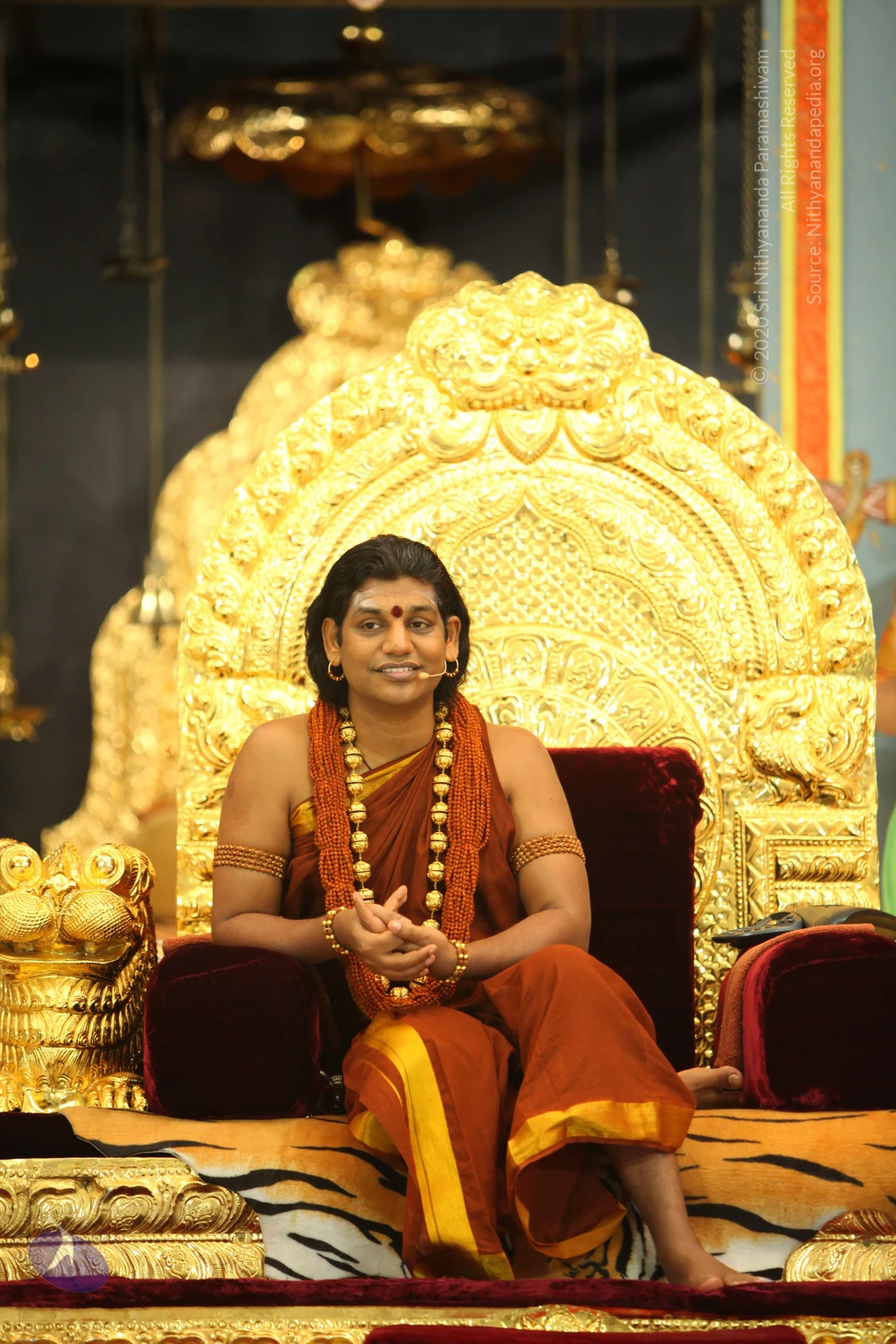
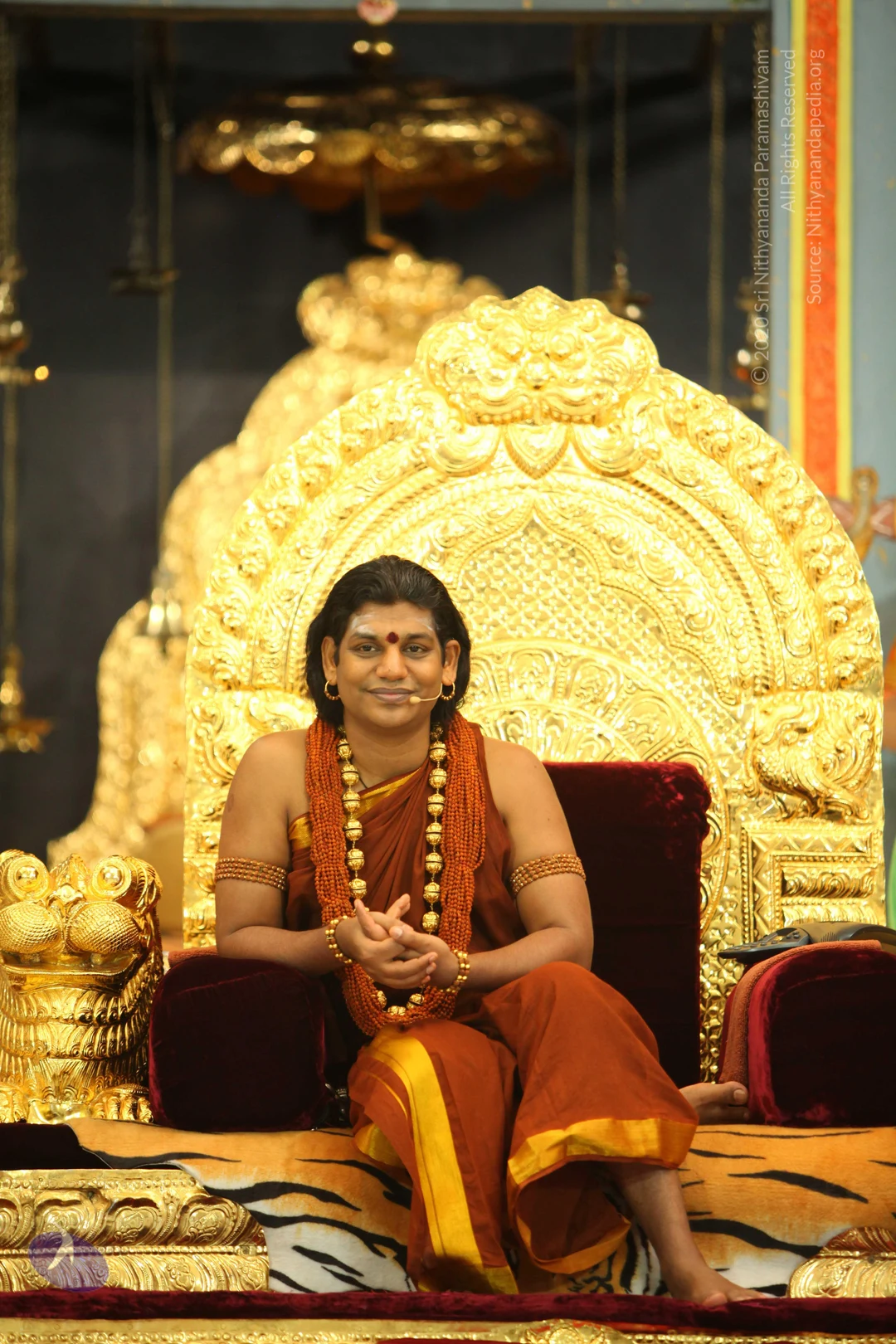
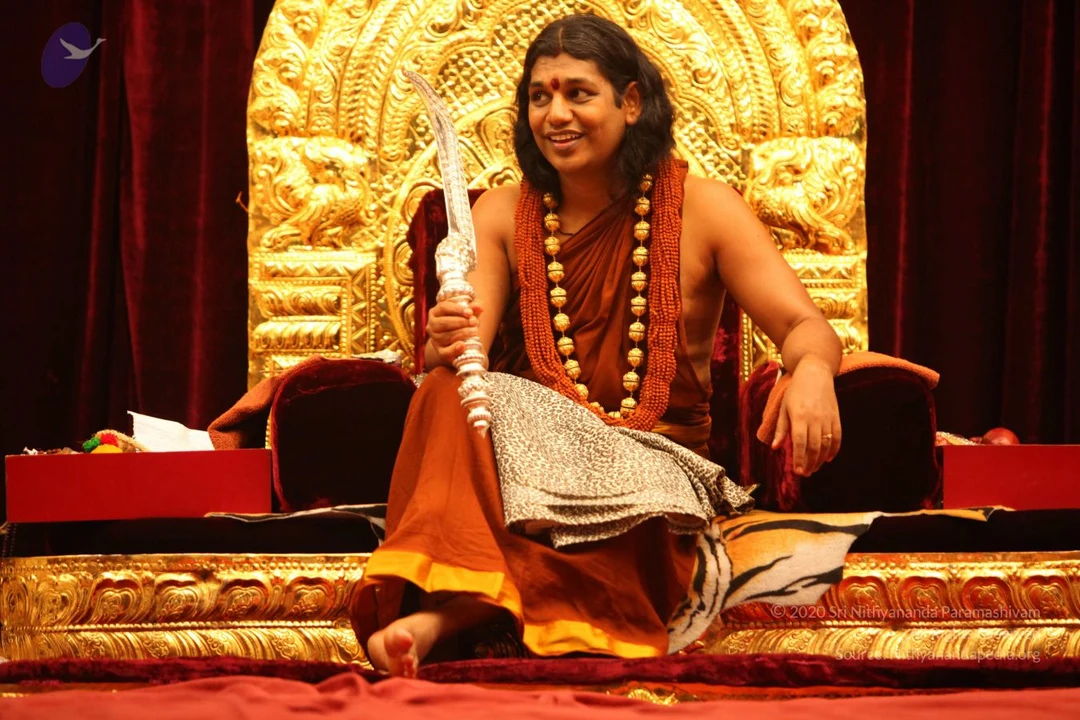
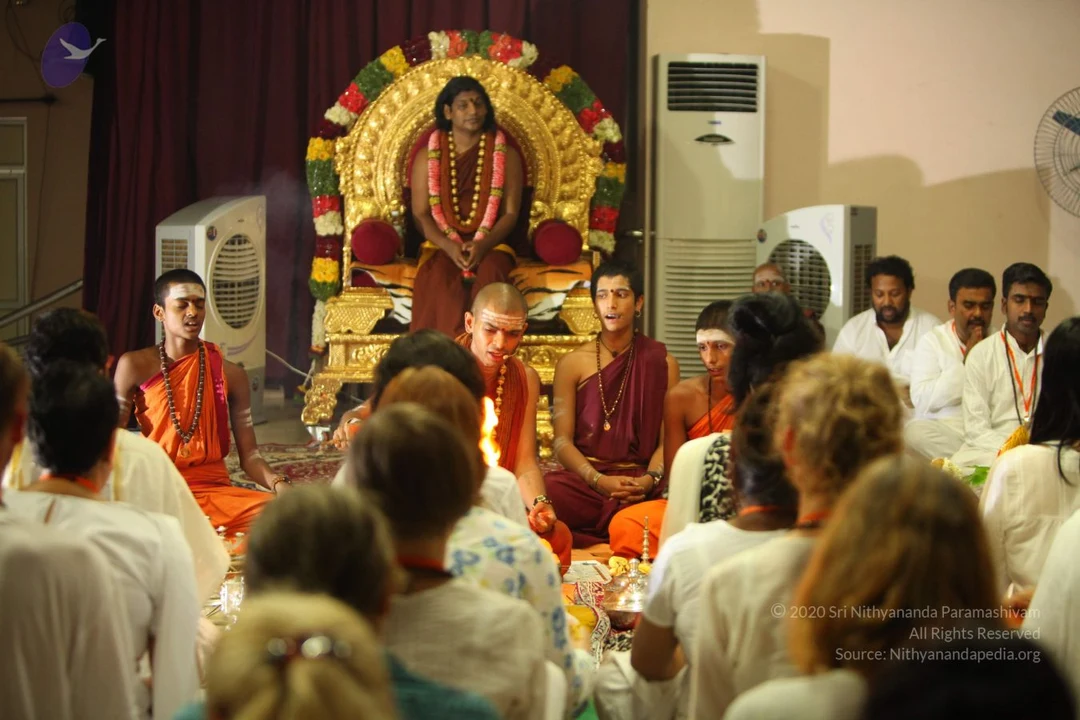
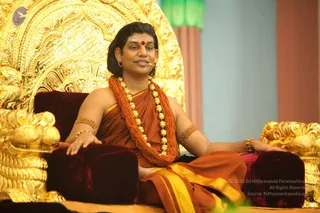
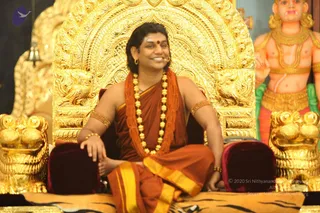
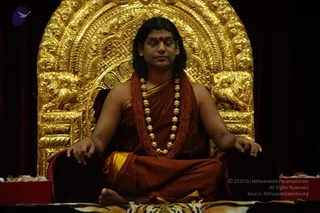
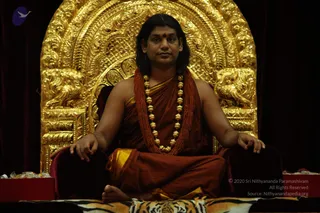
A man seated cross-legged on an ornate gold throne with lion-head armrests and a tiger-skin cushion, in a satsang setting. He wears an orange-saffron robe with a yellow-gold border, a thick orange-red rudraksha mala with gold beads, gold armbands, and a red tilak on his forehead. Behind him stands a gold-painted deity murti with a crown and multiple gold necklaces, holding a fan-like object. A brass oil lamp stands at right. a person appears in person, seated in the central role of teacher, appearance-based cues being the saffron robe, rudraksha mala and ornate throne.A man seated cross-legged on an ornate golden throne with lion-head armrests and a tiger-skin cushion, wearing an orange-brown saffron-style robe with a gold border, a long rudraksha mala and a gold bead necklace, gold bangles and armlets, and a red tilak on his forehead, with a small lapel microphone clipped to his clothing. He has long swept-back hair and gestures calmly with his hands. Behind him stands a golden-coloured deity murti with multiple arms holding a fan-like object. The scene appears to be a satsang or discourse setting. Swamiji (probable): the seated figure's long hair, saffron robe, rudraksha mala and ceremonial gold ornaments match the page's identification.A seated man in saffron-orange robes with a gold-bordered cloth sits cross-legged on an ornate gold throne with carved lion heads, draped with a striped tiger-skin cover. He wears a long red-orange rudraksha mala and a heavy gold bead necklace, gold bangles on his wrists, and a small red mark on his forehead; a small microphone is clipped near his face. Behind him stands a golden-hued deity murti with four arms, a gold crown, and ornate jewellery, and a lit oil lamp appears at right. Appearance-based cues (long swept hair, saffron robes, rudraksha and gold necklaces, throne setting) match the page's a person label, so this is a person in a satsang seat.A man with long swept-back dark hair sits cross-legged on an ornate gold throne with a carved arched back, seated on a tiger-striped fabric covering. He wears saffron-orange robes with a gold-bordered cloth, a long rudraksha mala with gold beads, gold armlets and bangles, and a red bindi with white markings on his forehead, plus a small headset microphone. He holds his hands together in his lap. A faded painted figure stands at the right edge.A photograph of a seated man on an ornate golden throne with a carved gilded backrest and lion-head armrests, upholstered in deep maroon velvet. He wears saffron-orange sannyasi robes with a gold border, a dense rudraksha mala over the shoulders with large gold beads, gold armbands and bangles, and a small red bindi on his forehead, with a microphone clipped near his face. He sits cross-legged with his hands resting on the armrests and appears to be speaking to an audience. Background walls are green and pink.A photograph of a smiling man with swept-back dark hair seated cross-legged on an ornate gold throne carved with lion heads and scrollwork, on a tiger-striped cloth. He wears an orange-saffron shawl and dhoti with a yellow-gold border, a long rudraksha-style mala with large gold beads, gold armbands and a red bindi. To the right stands a painted deity murti with a gold crown, gold necklaces and orange-red dhoti. a person is shown in a seated teaching pose, and the image appears to be from a satsang setting.

SARVA-DARSHAN
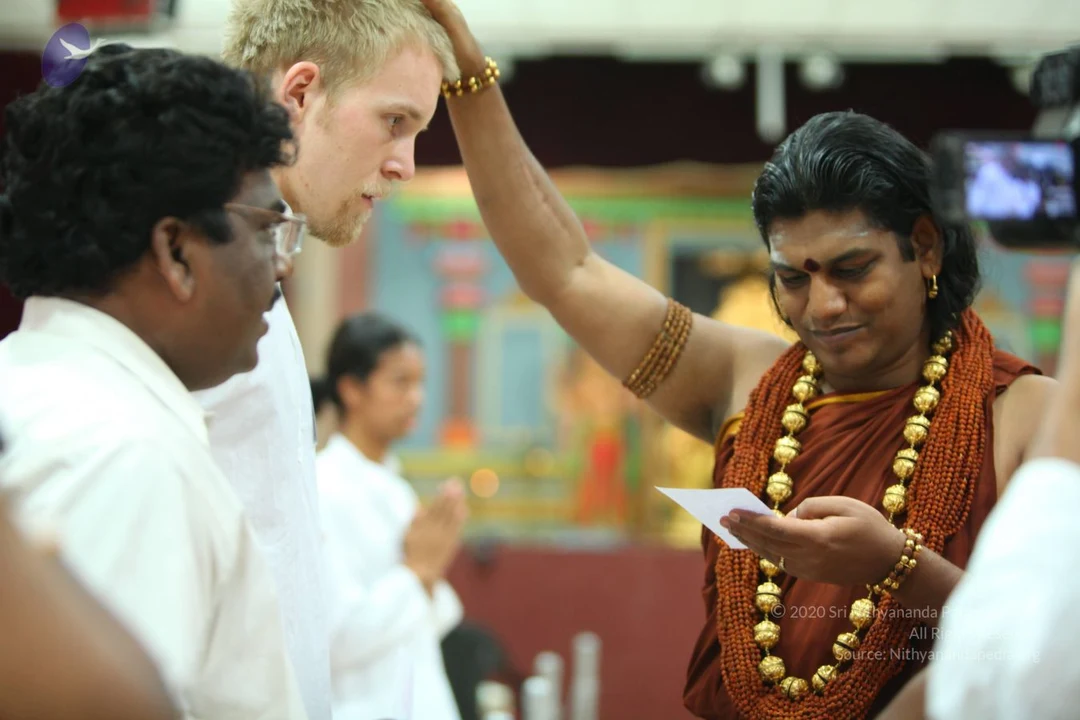
16 photosSource gallery
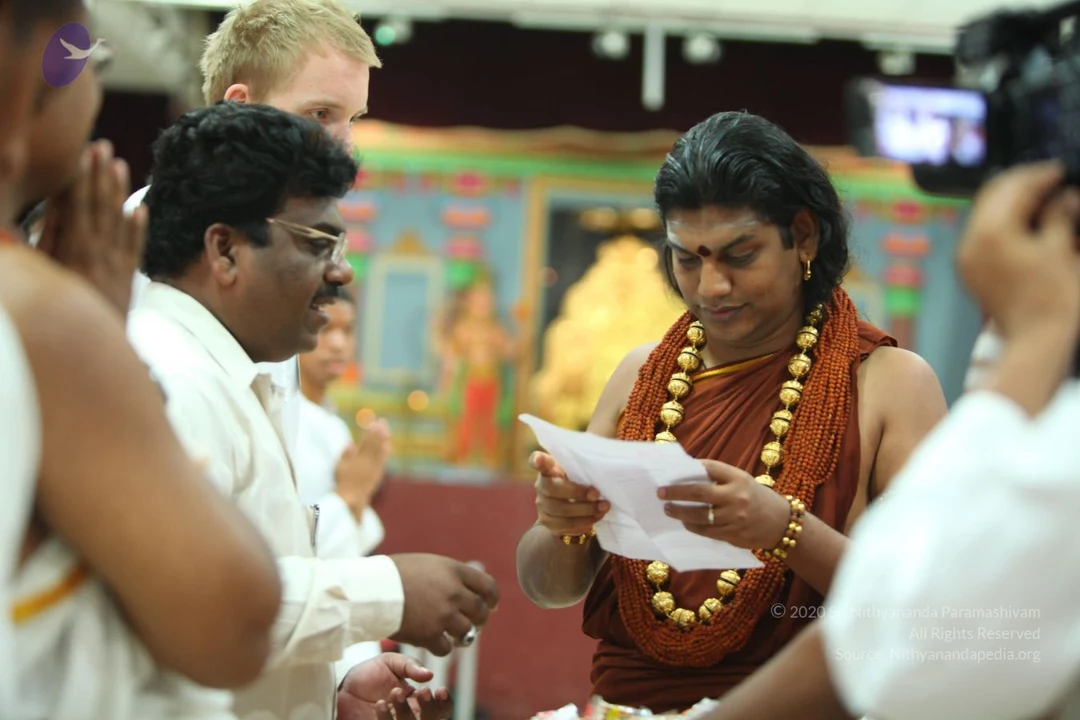
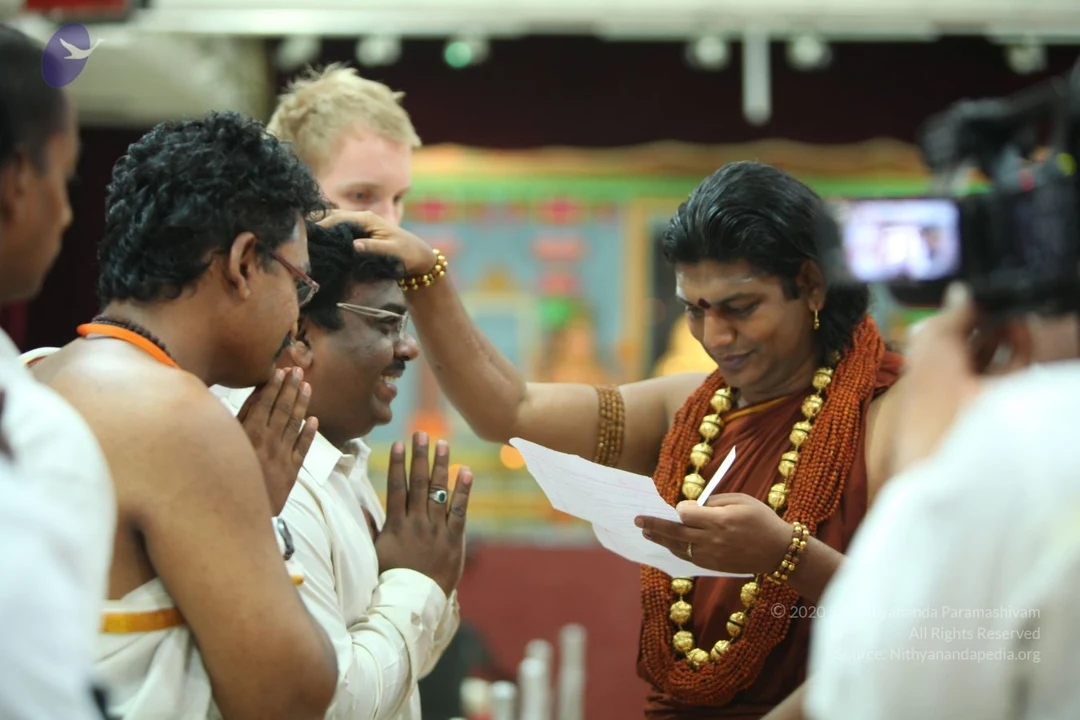
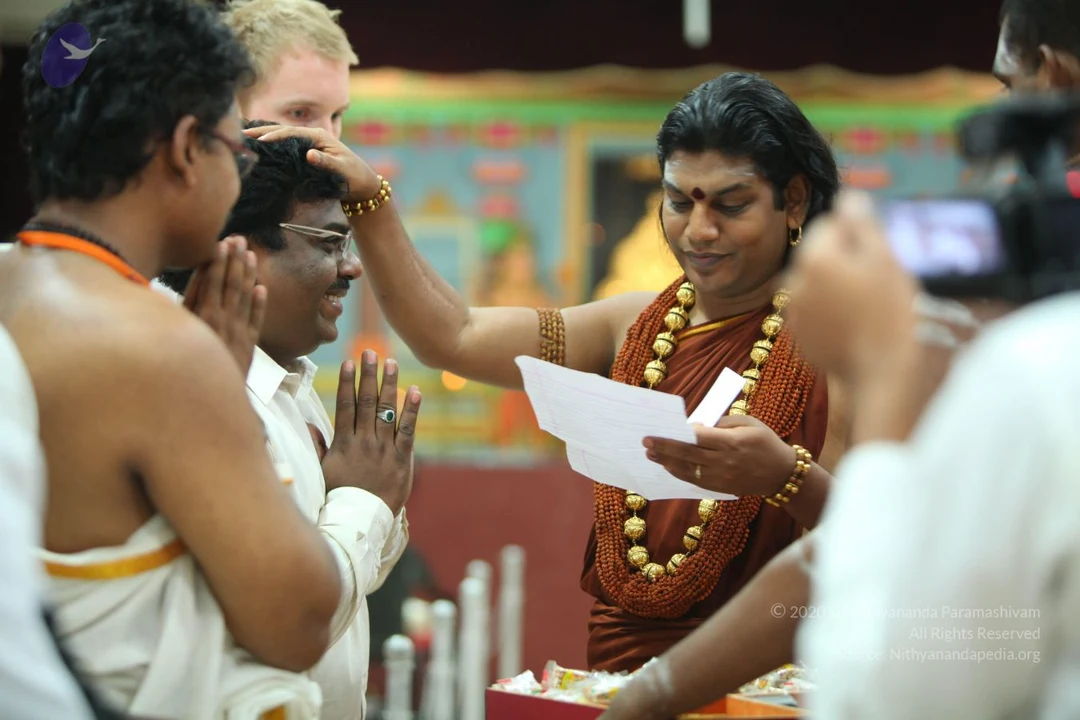
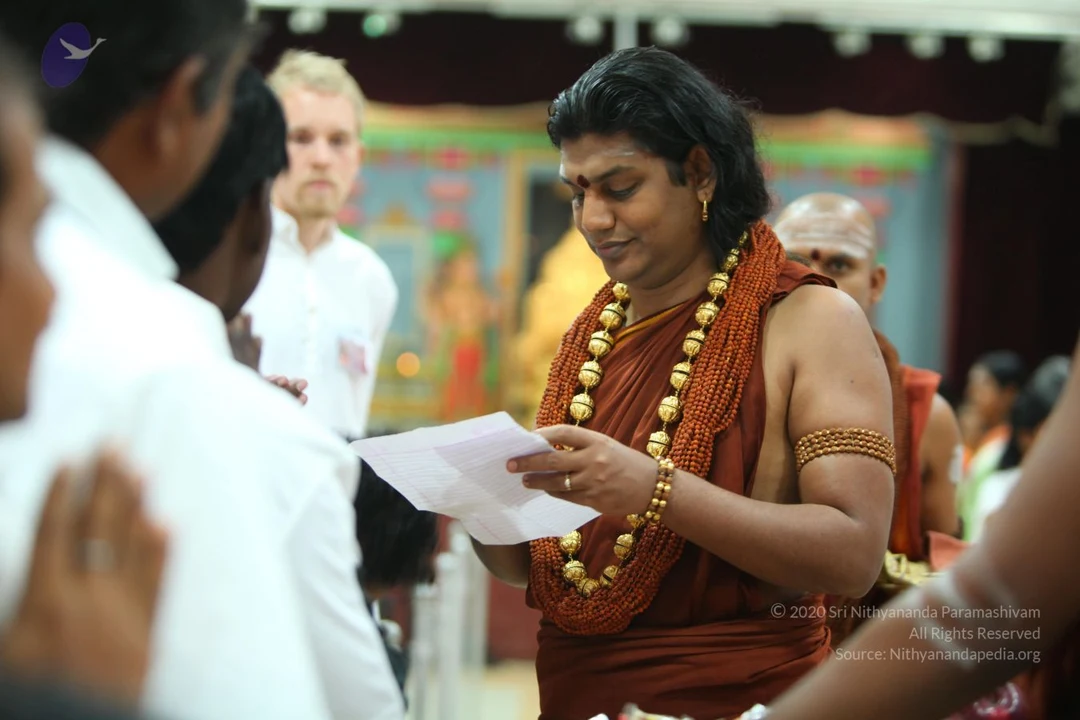
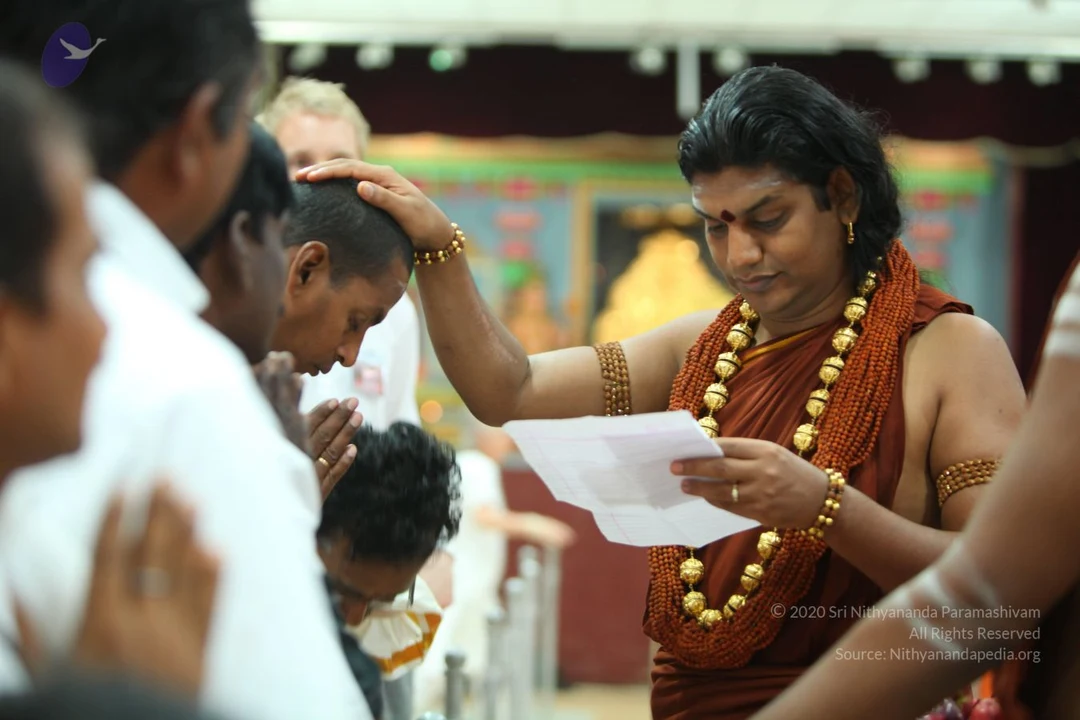
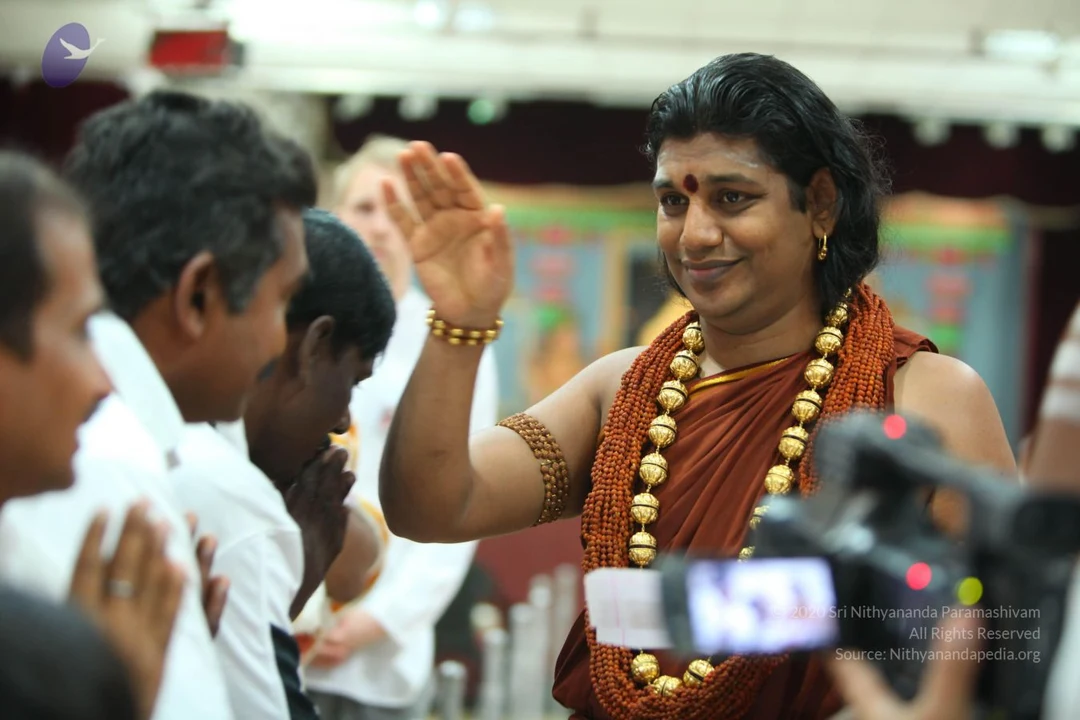
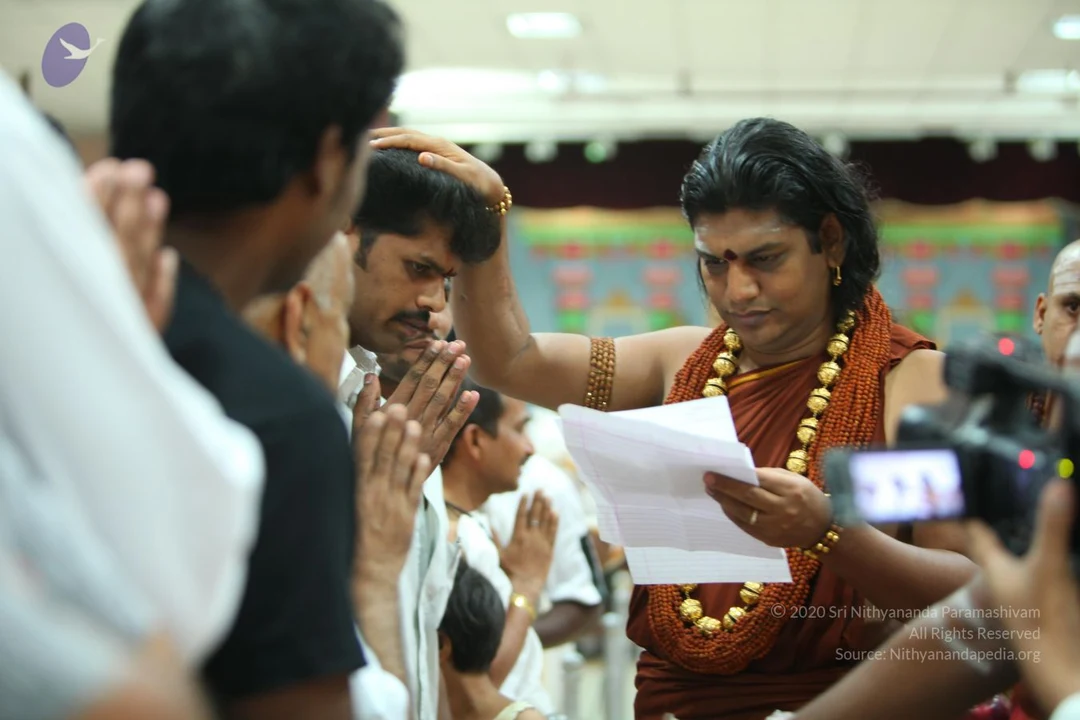
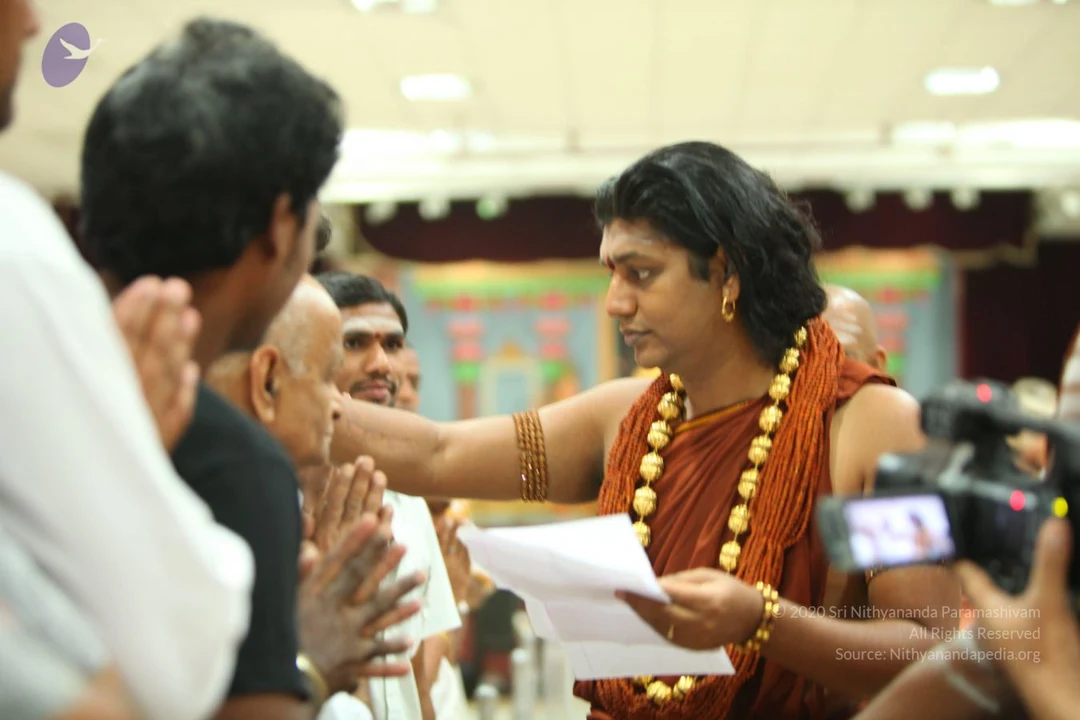
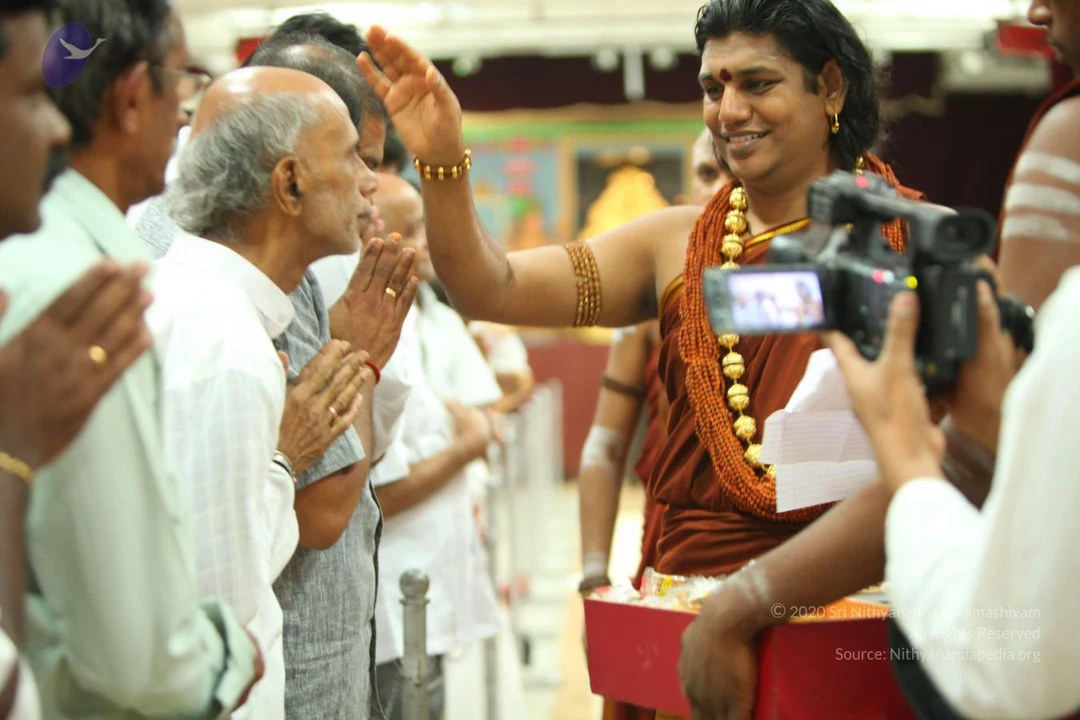
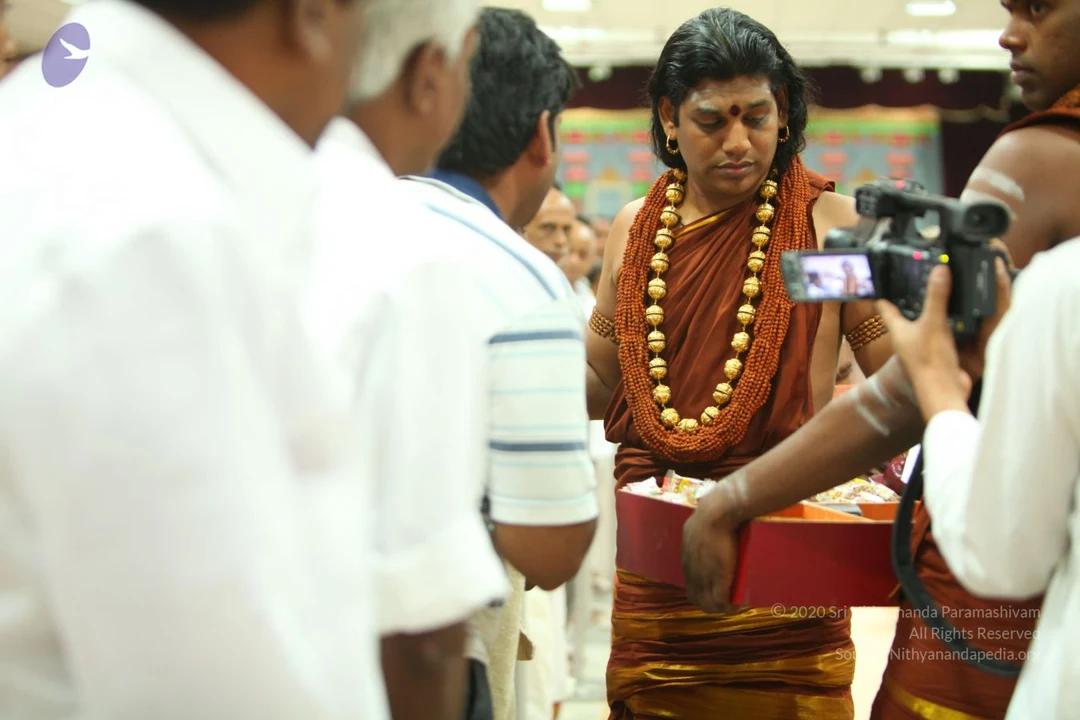
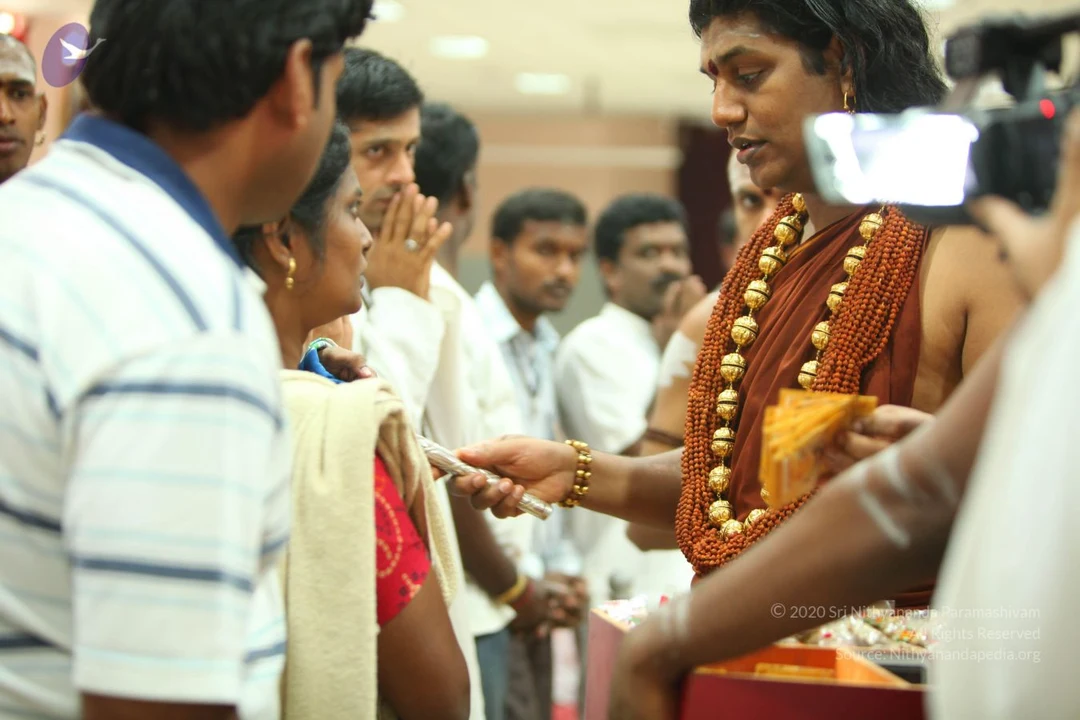
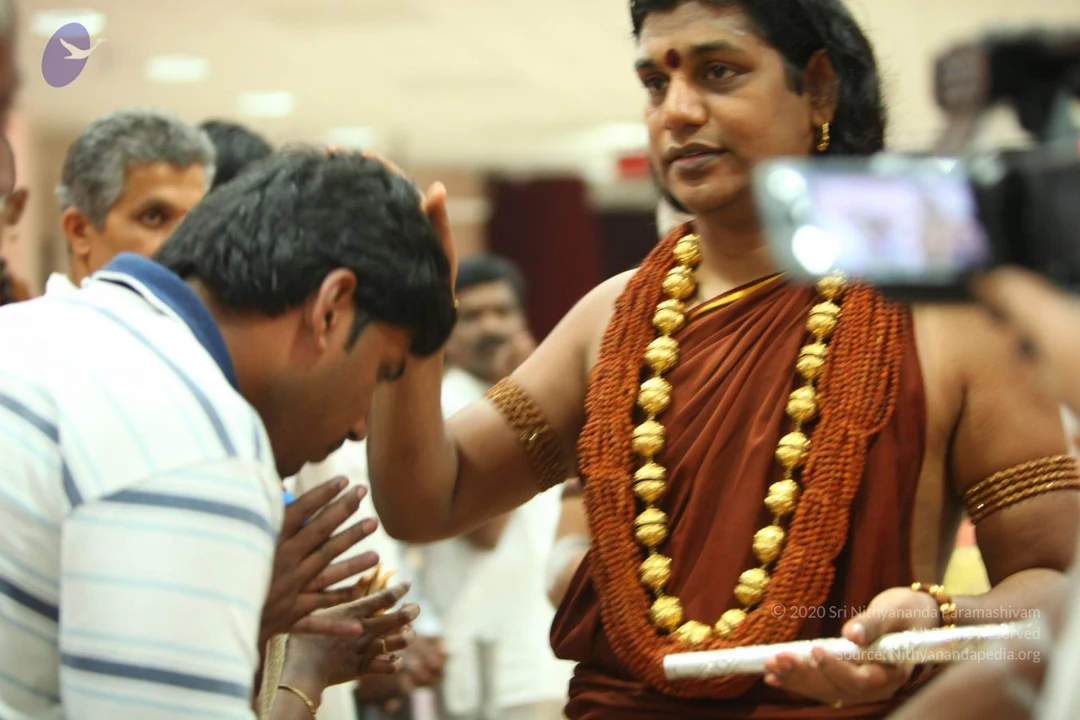
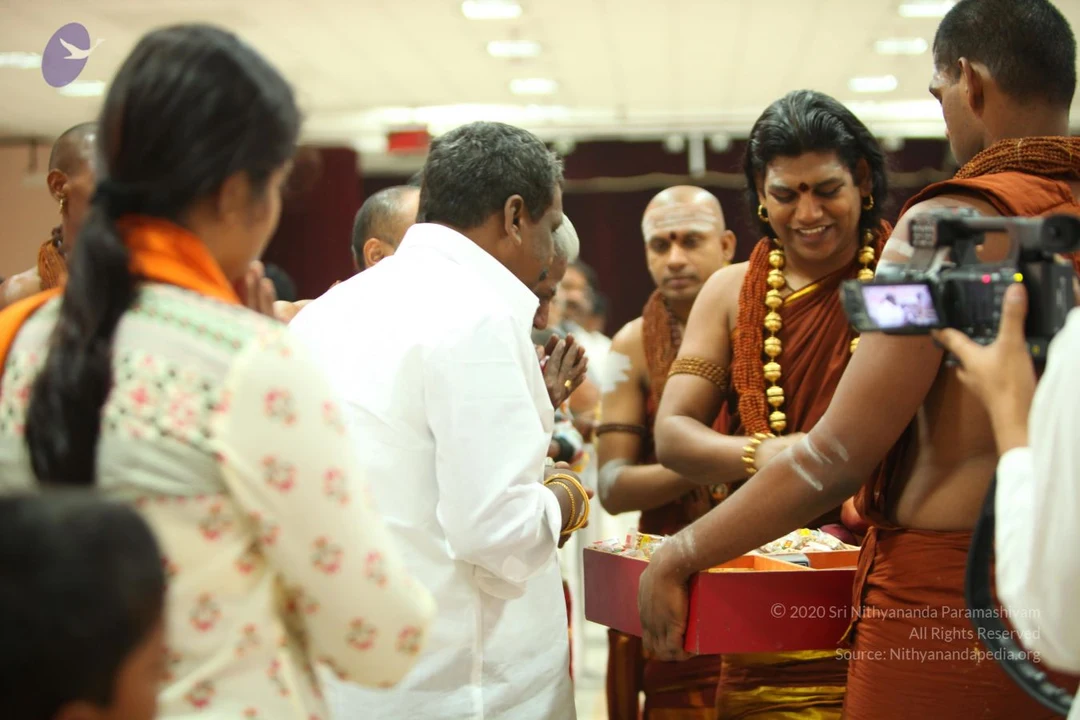
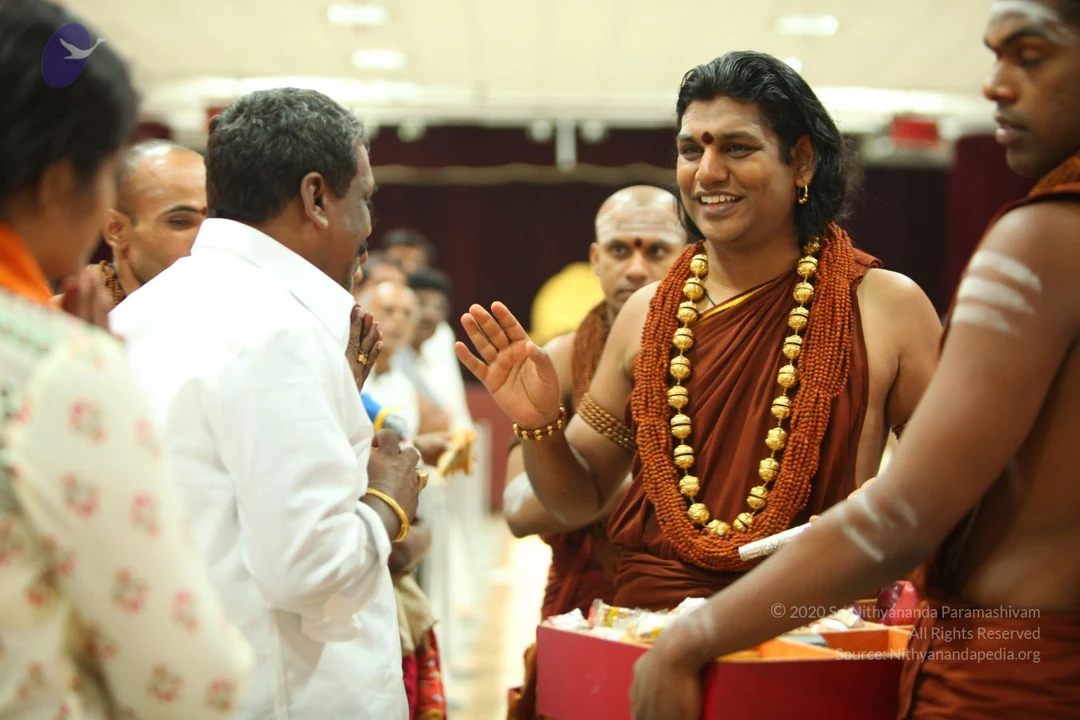
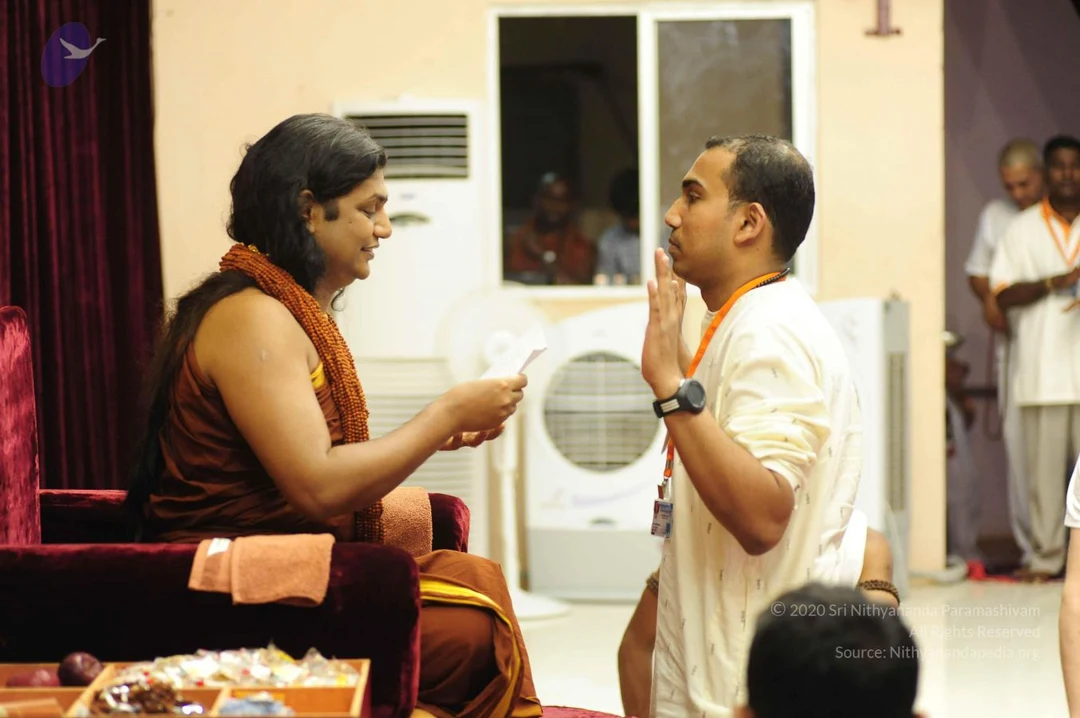
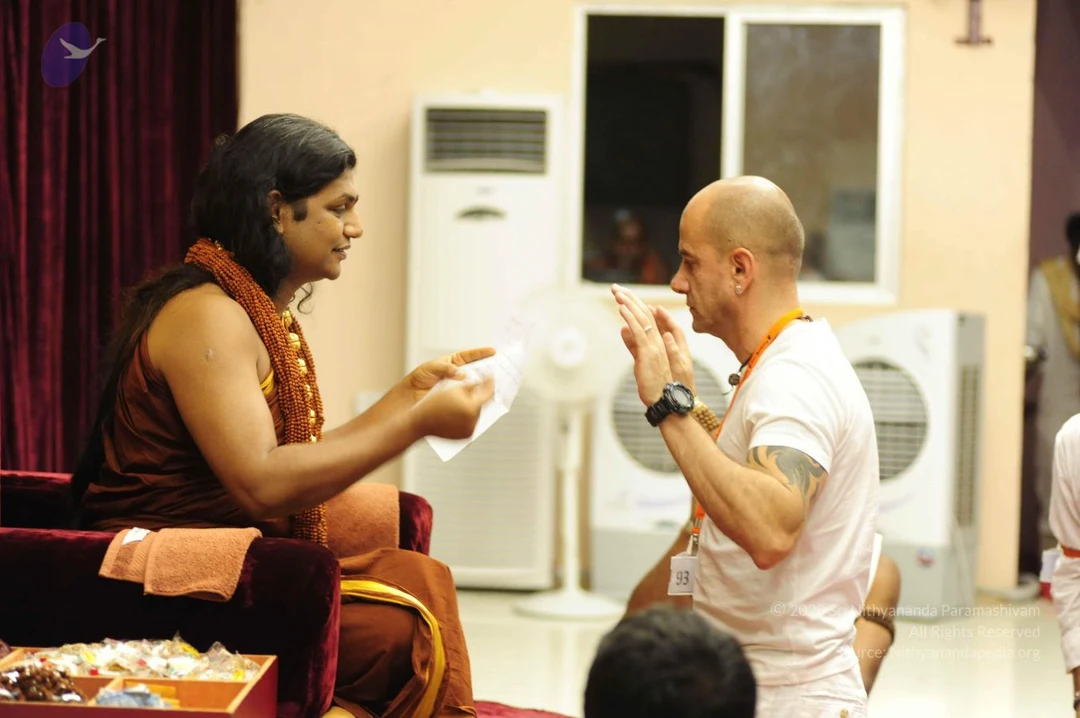
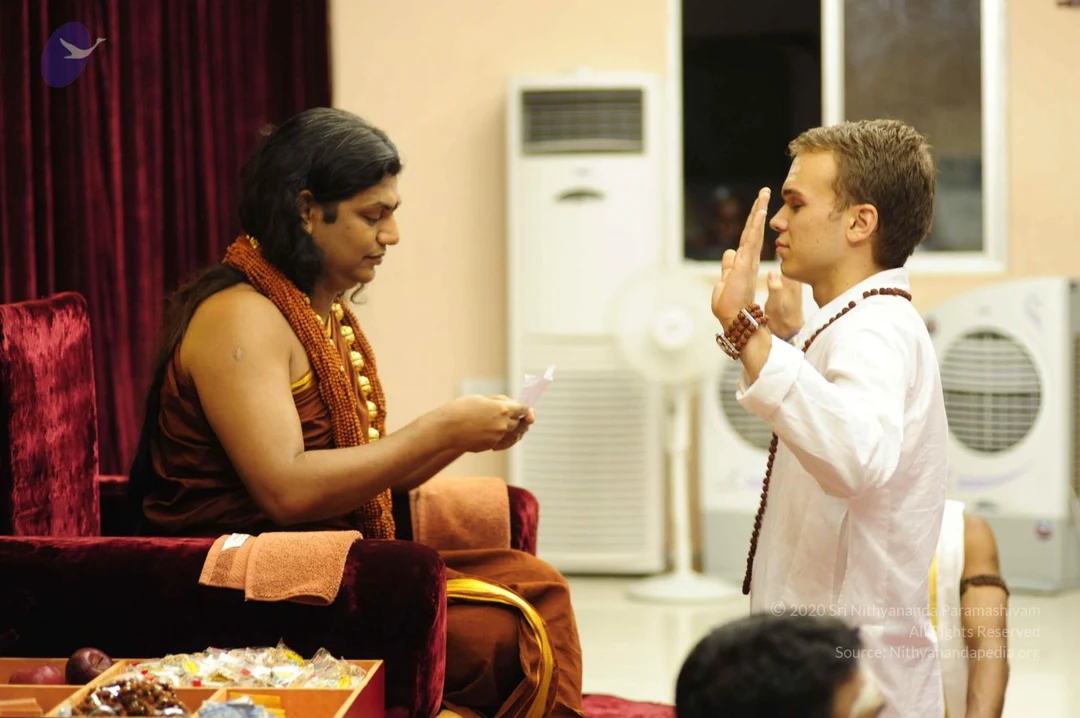
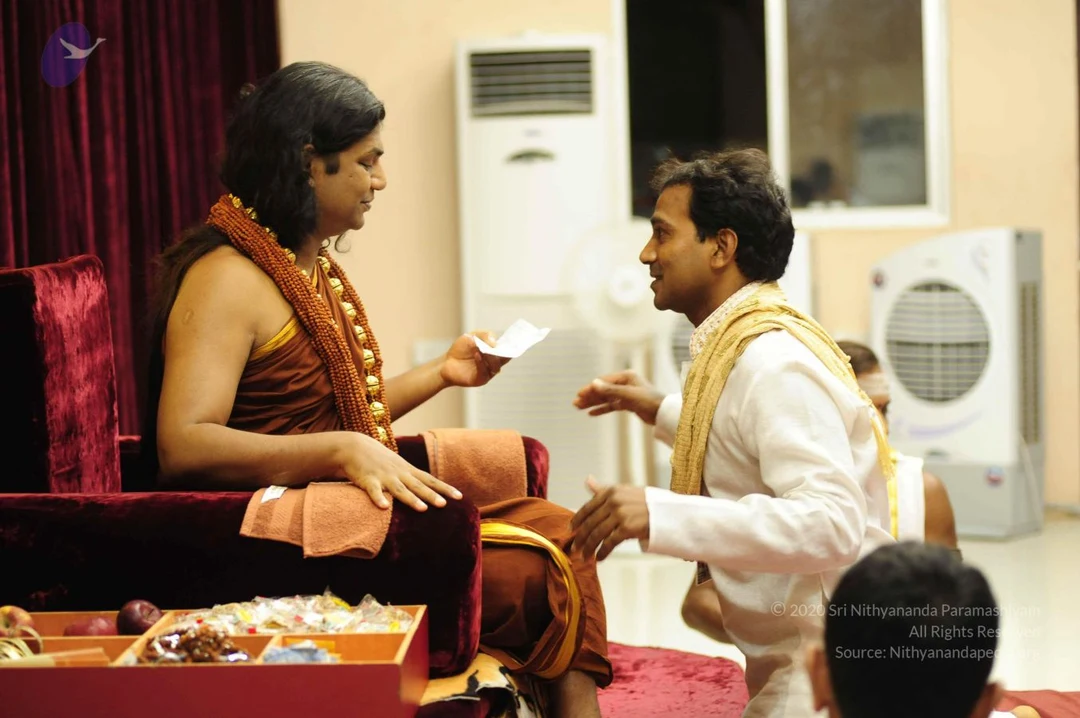
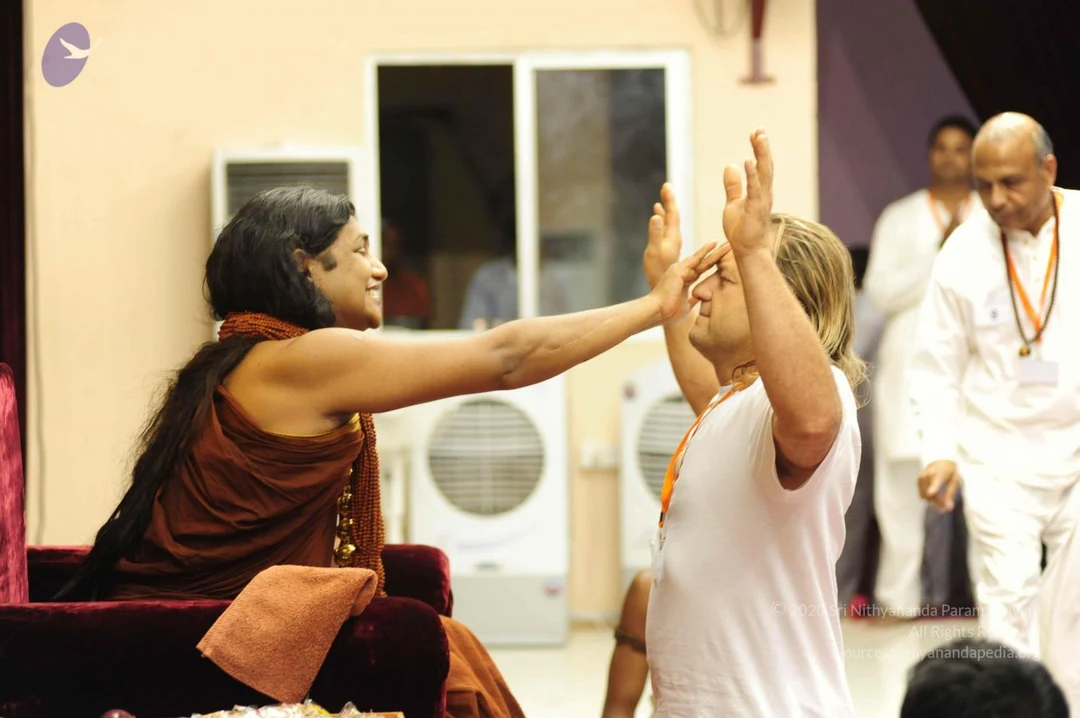
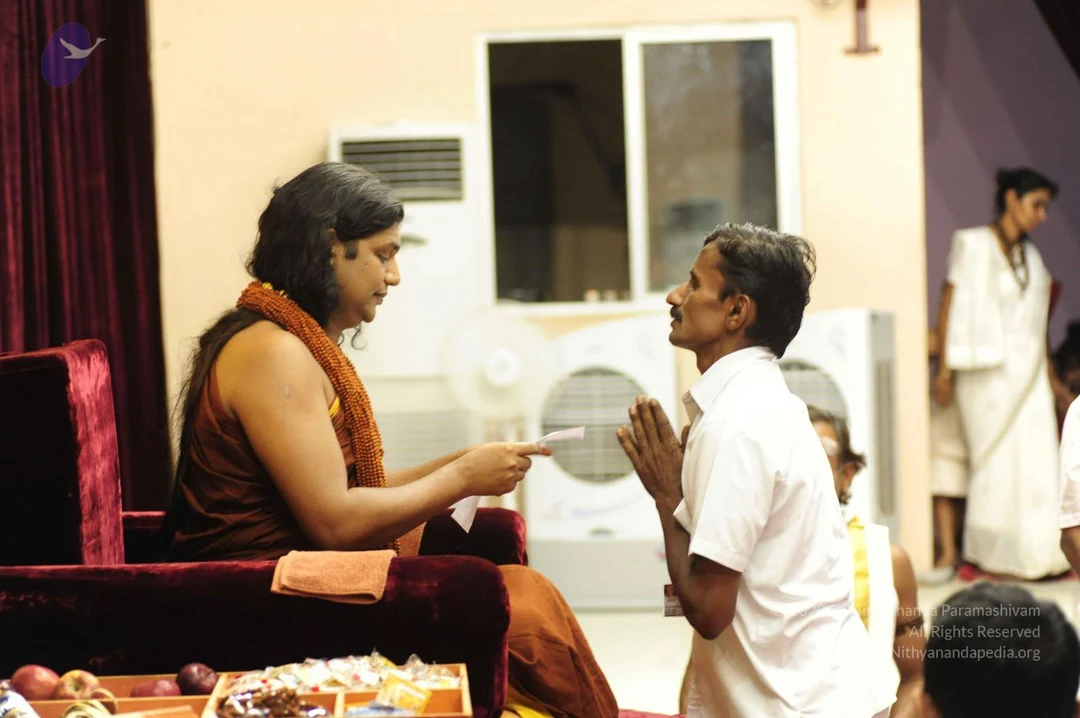
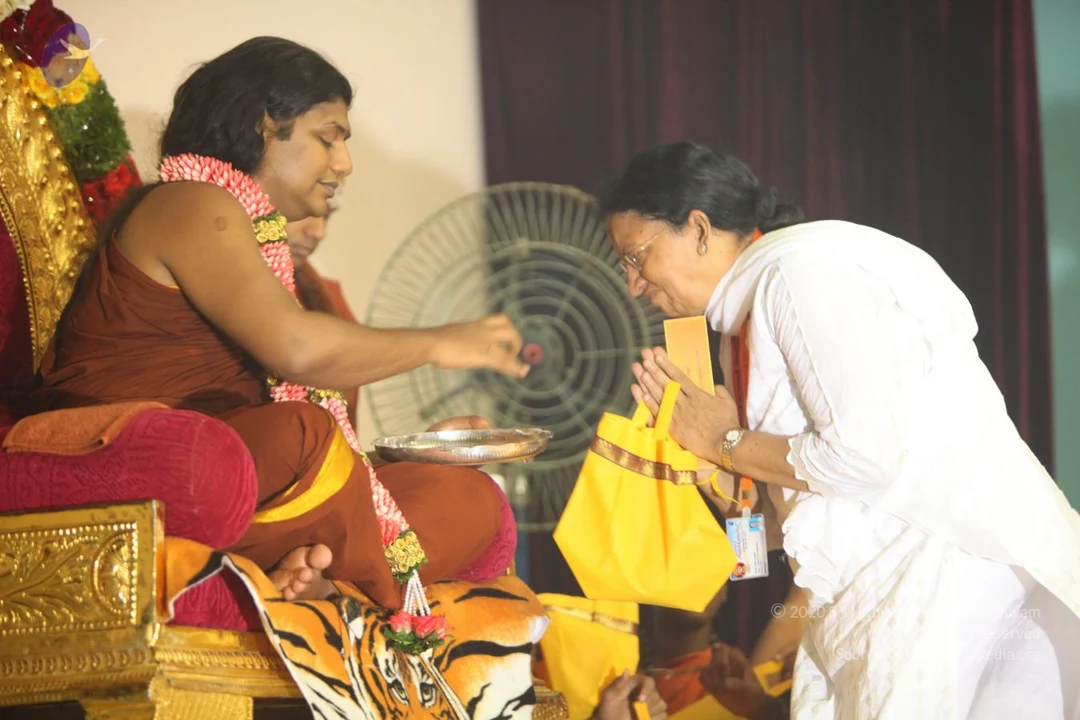
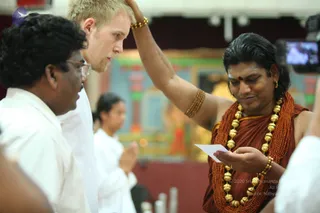
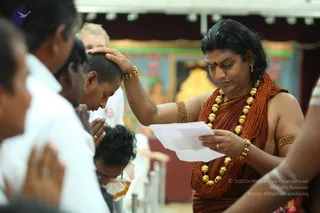
A photograph of a ceremonial moment at an ashram setting. A man in a saffron-orange robe with a long rudraksha mala and heavy gold bead necklaces, a red tilak on his forehead, and gold earrings holds a small white paper in one hand while placing his other hand on the head of a young blond man in a white shirt. To the left, a man in white with glasses looks on, and behind them a woman in white stands with palms joined. The background shows a colourful altar with painted panels and a red wall. Appearance cues include long swept-back hair, saffron clothing, rudraksha and gold necklaces, consistent with the Swamiji (probable) candidate performing a blessing or initiation.A photograph of a figure in an orange-red saffron dhoti and bare-chested, wearing long rudraksha malas with ornate gold beads and gold bangles, holding a folded white sheet of paper and reading it. He has long swept-back dark hair and a red tilak on his forehead, and a small gold earring is visible. Beside him a man in white shirt and glasses stands with hands folded, a young blond man is behind, and a partially visible person with palms pressed together is at the left edge. A video camera is at the right edge. Behind them a colourful temple backdrop with a gilded shrine and painted deity figures appears. The figure has distinctive long hair, gold beaded malas and saffron clothing, consistent with the page's a person cues, but the face is not used for identification.A photograph of a satsang-style gathering in a temple-like hall with a painted backdrop. A man with long swept-back dark hair, wearing a saffron-orange robe, a heavy rudraksha mala and multiple ceremonial gold beaded necklaces, holds a sheet of paper and places a hand on the head of a devotee. Two men in white clothes stand with palms pressed together in namaste in front, one bare-chested with an orange sacred thread, another in a white shirt and glasses. A blond foreign man stands behind, and a camera operator with a video camera is at the right edge. a person in the saffron robe, presented as the figure giving blessing and reading.A photograph of a ritual exchange in a temple-like hall. A man with long swept-back dark hair, rudraksha malas and a gold necklace, wearing an ochre-brown wrap and a red bindi, places his hand on the head of a seated devotee in a white shirt with glasses, who presses his palms together. Another man in a white dhoti with an orange-banded sacred thread stands at left with palms folded. The man in brown holds a sheet of paper and smiles while a camera operator films at right. Behind them is a colourful painted wall with a golden deity murti. Probable Swamiji is the man in brown performing the blessing, marked by his long hair, rudraksha malas and ceremonial gold necklace.A photograph inside a temple-like hall with a decorated backdrop of painted panels and a golden deity figure. A central man with shoulder-length dark hair, a red tilak and gold earring wears an orange-saffron cloth, a large rudraksha mala with gold beads, a gold armlet and gold bracelets. He looks down at a sheet of paper in both hands. Around him stand devotees in white shirts, including a fair-haired man on the left and a shaved-headed priest in orange with a white tilak on the right. Several hands and onlookers are visible in the foreground.A photograph of a ritual blessing. A man in a saffron-orange robe with long swept-back dark hair, a red bindi, multiple rudraksha malas and ornate gold bead necklaces and armbands, holds a sheet of paper and places his hand on the head of a kneeling man in a white shirt. Around them, other devotees with folded hands and bowed heads, some in white clothes, stand or kneel. In the background are a gold-coloured deity murti and a red and green decorated backdrop. The distinctive saffron attire, malas and gold ornaments form a person appearance-based candidate performing a blessing, with the scene reading as satsang or darshan.

COSMIC-TRUTHS-ON-DEATH-IA-SESSION-BY-HDH
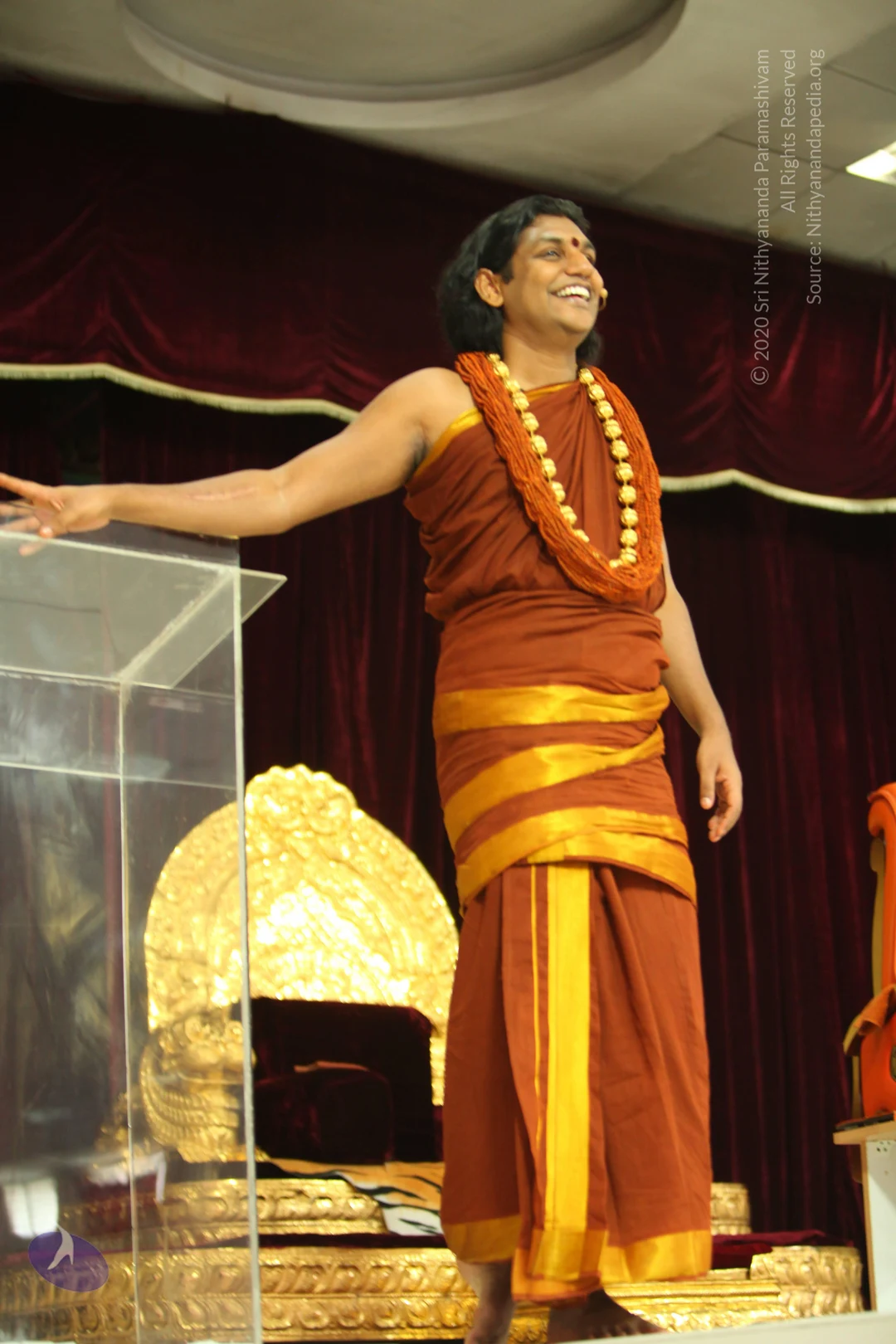
101 photosSource gallery
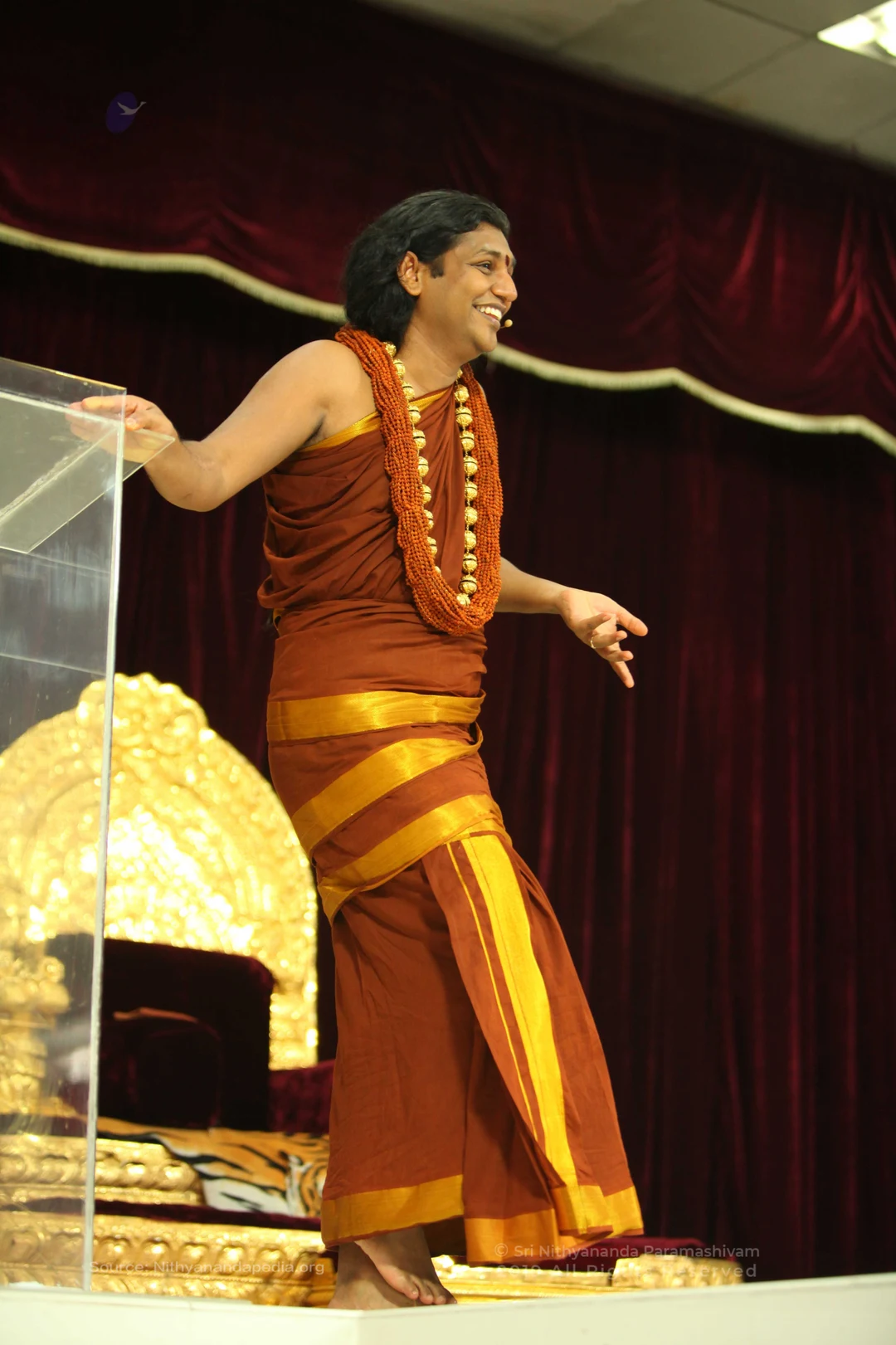
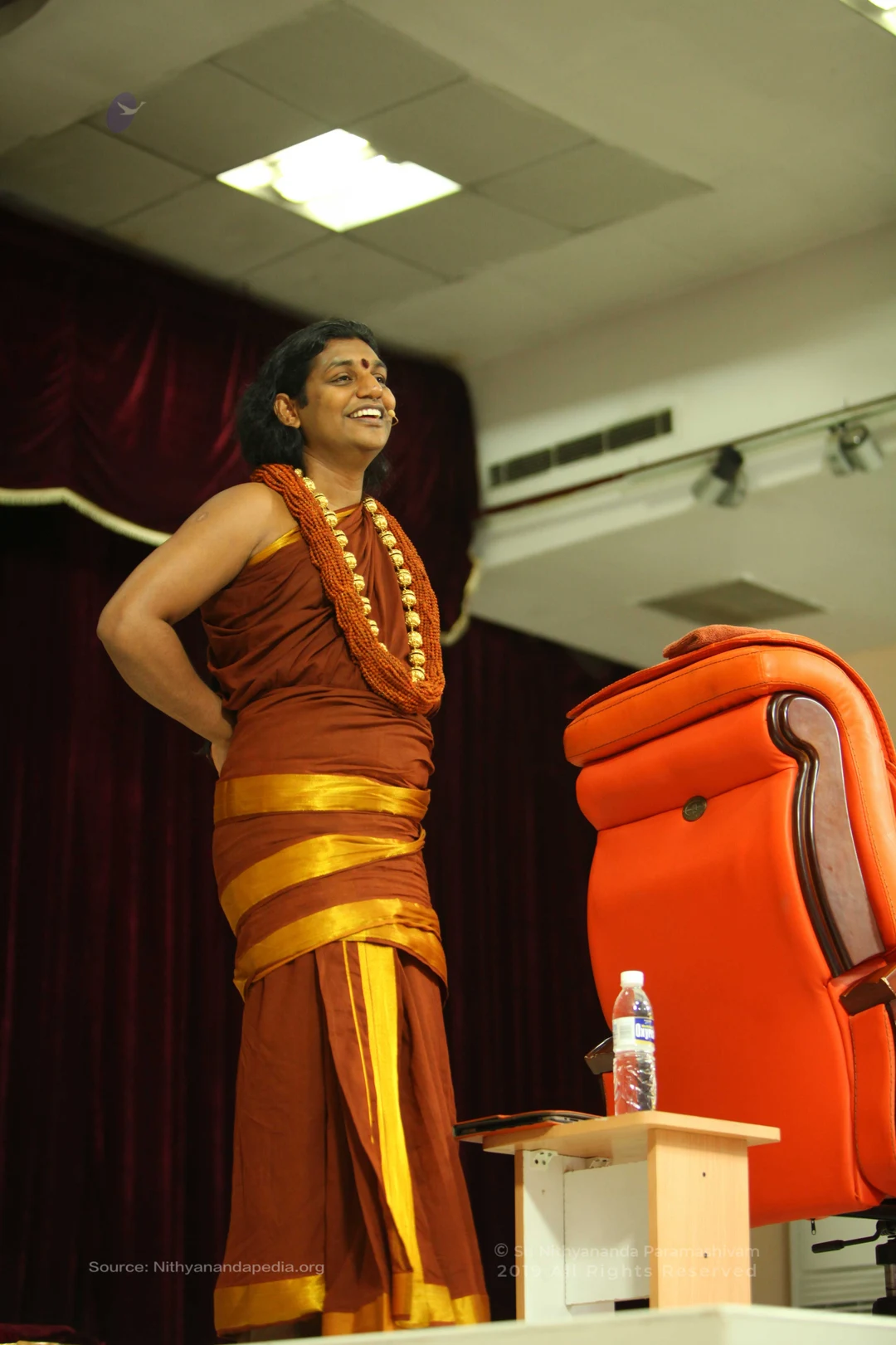
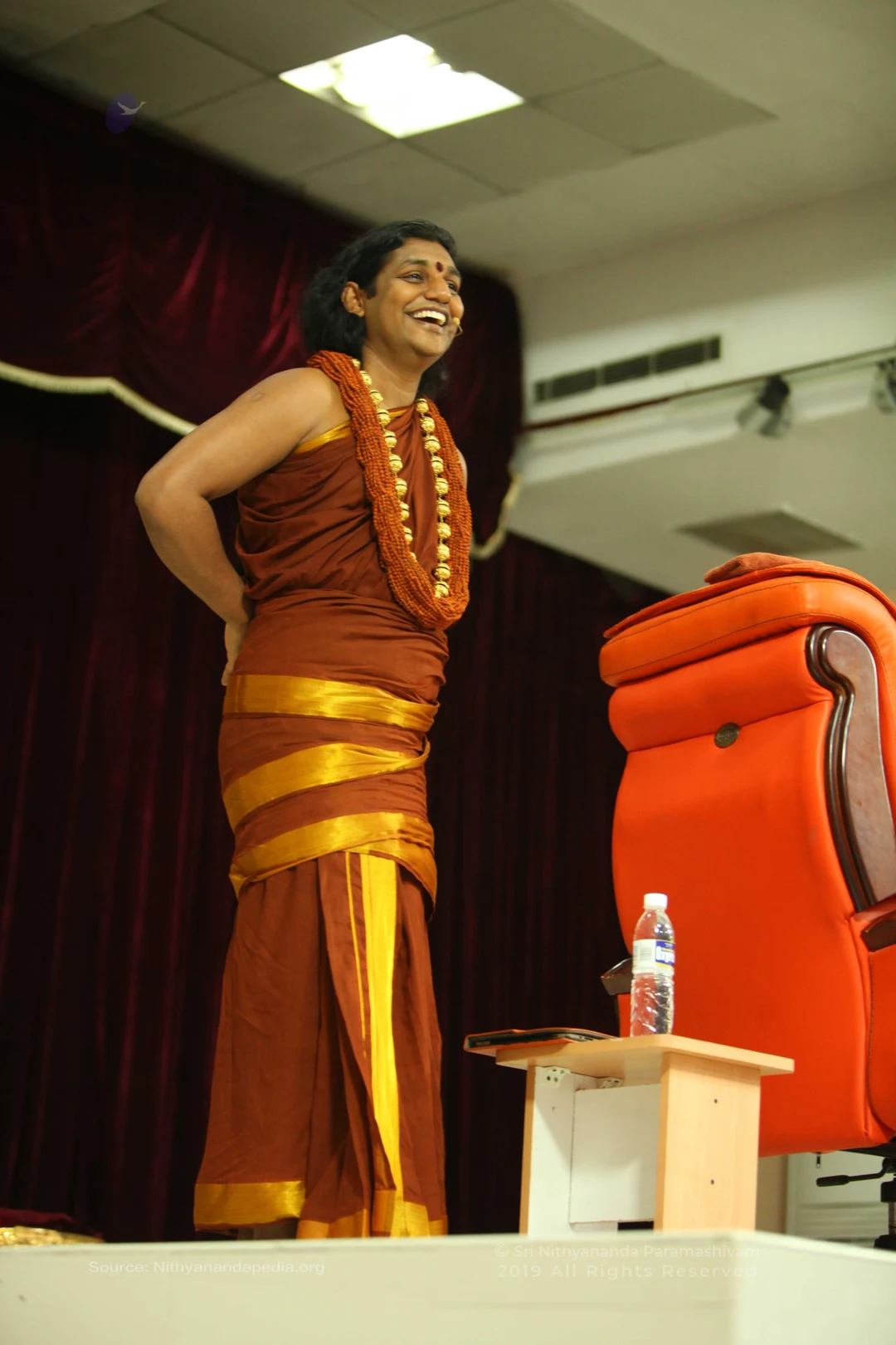
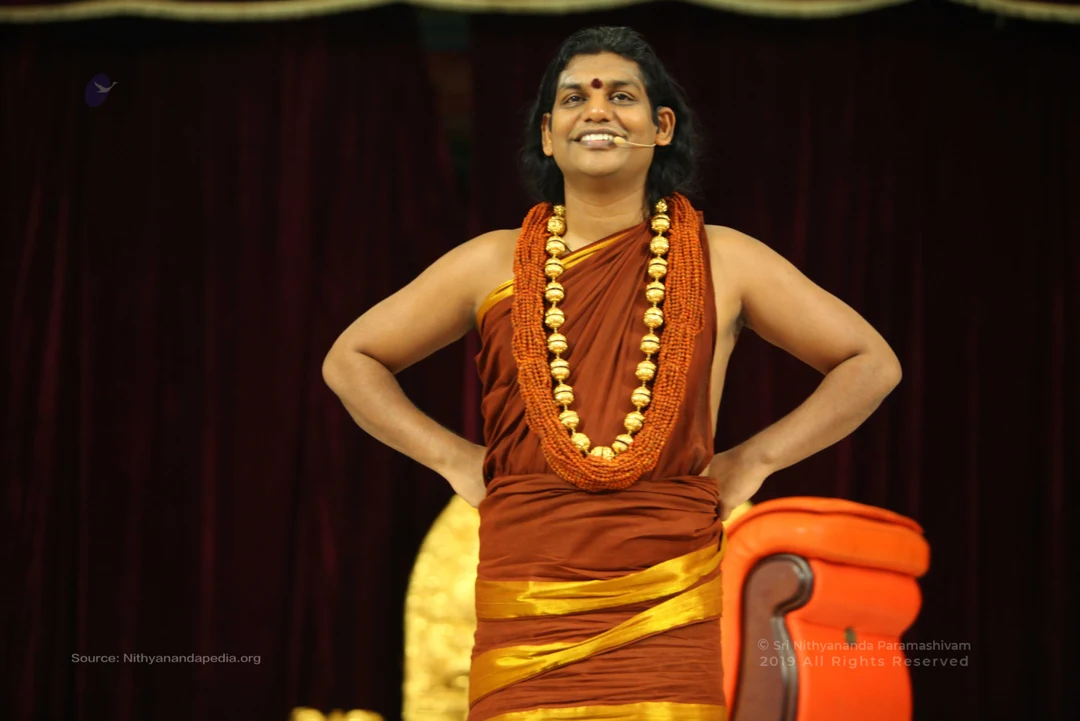
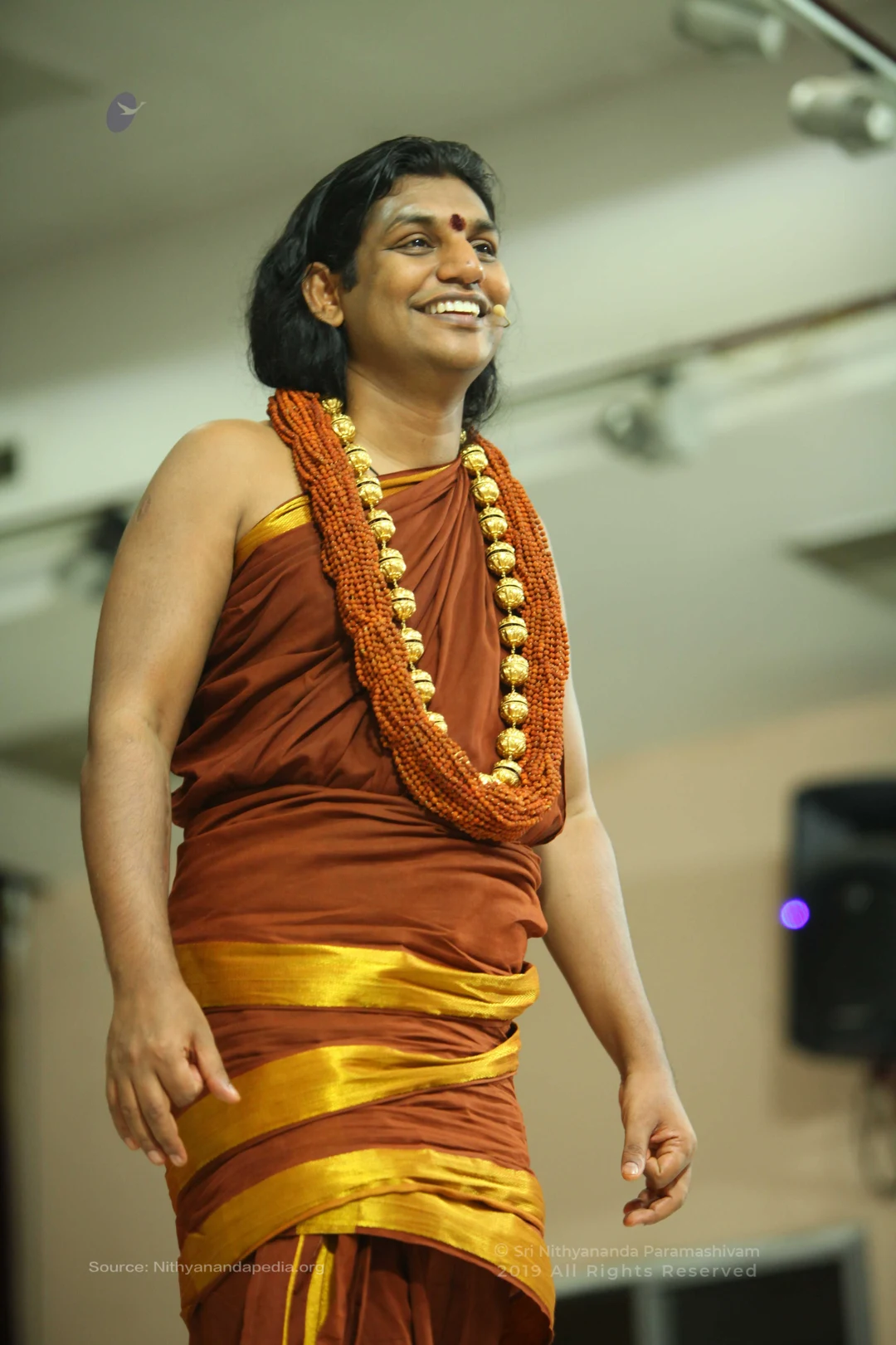
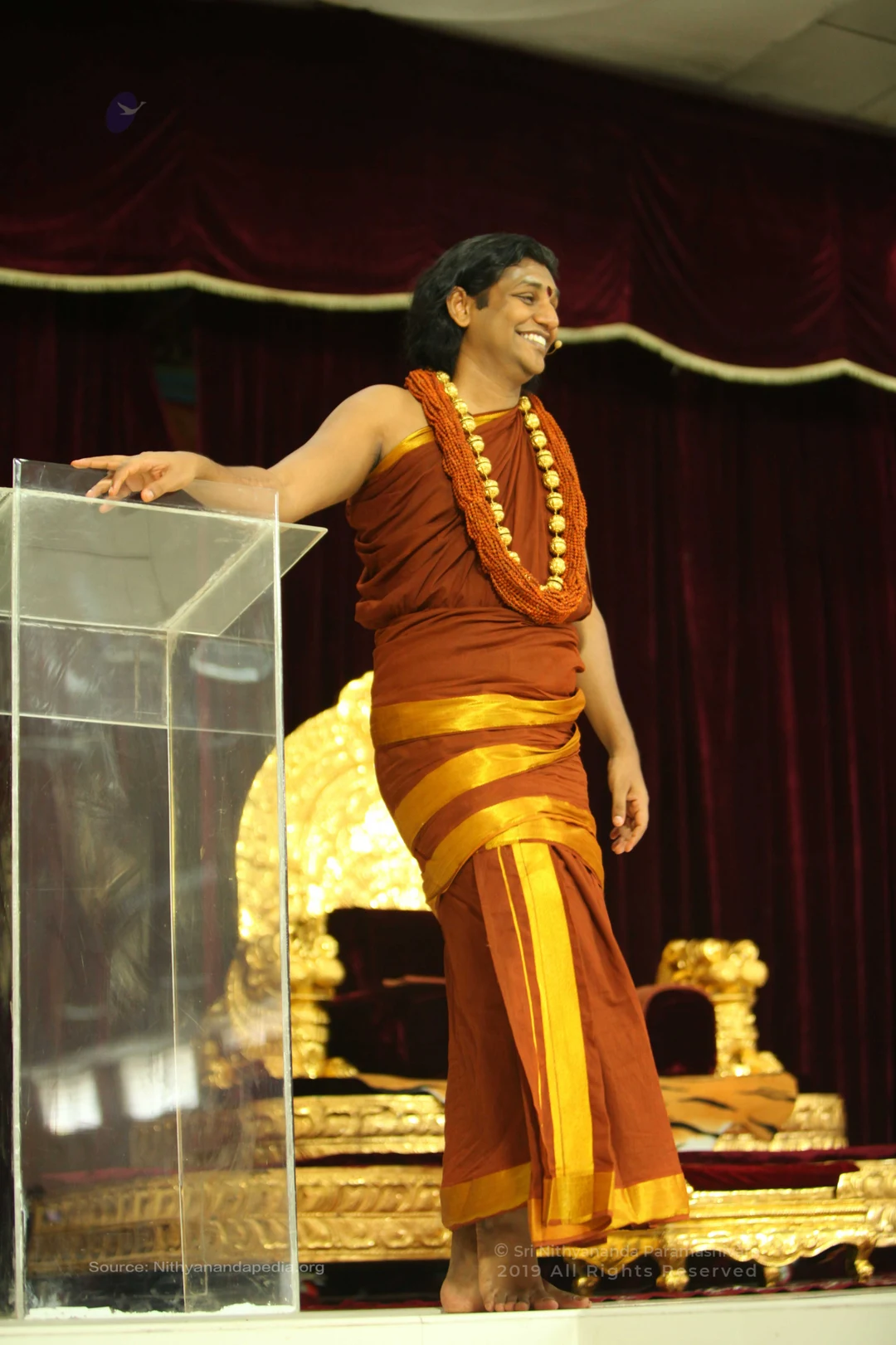
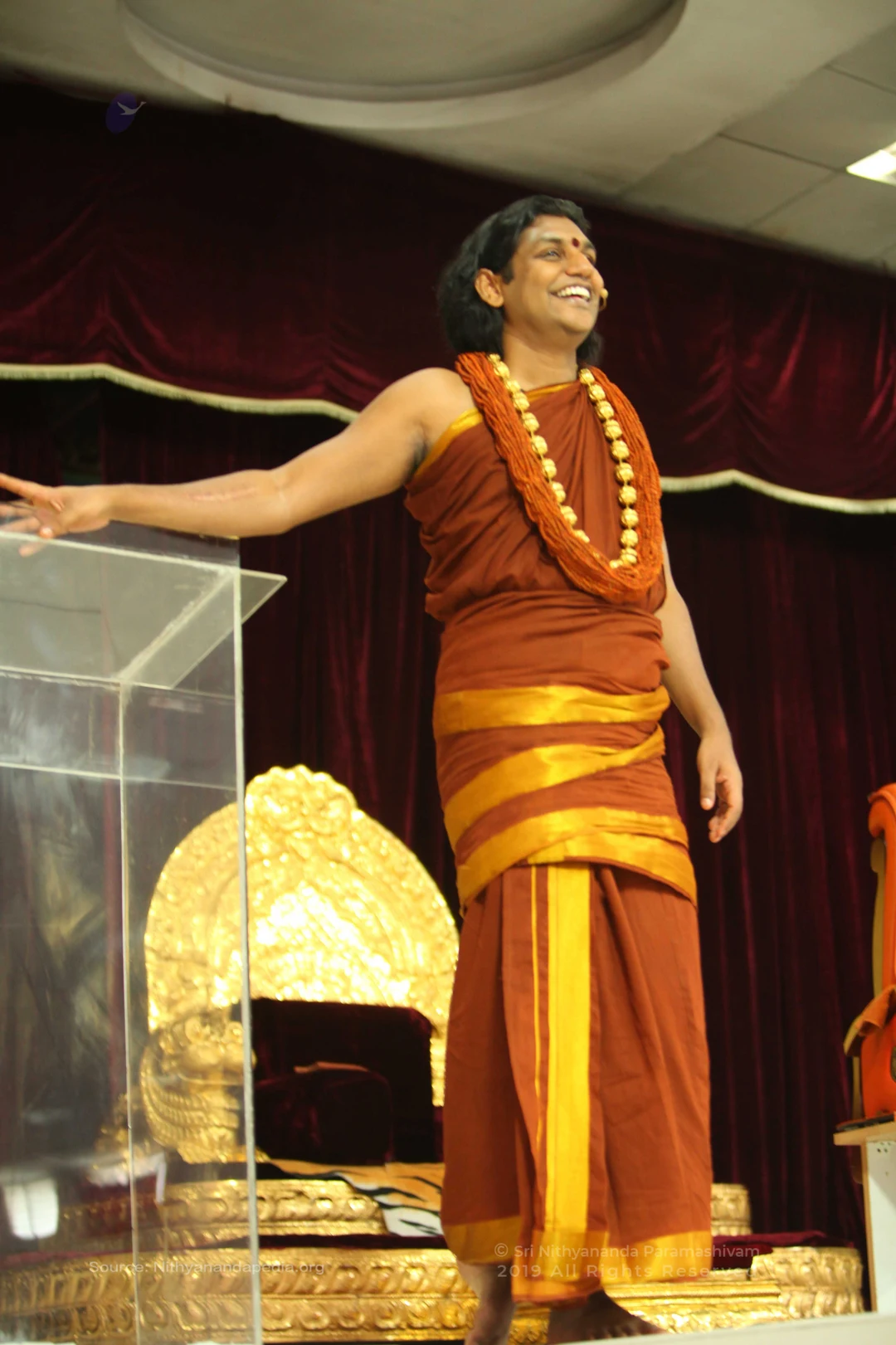
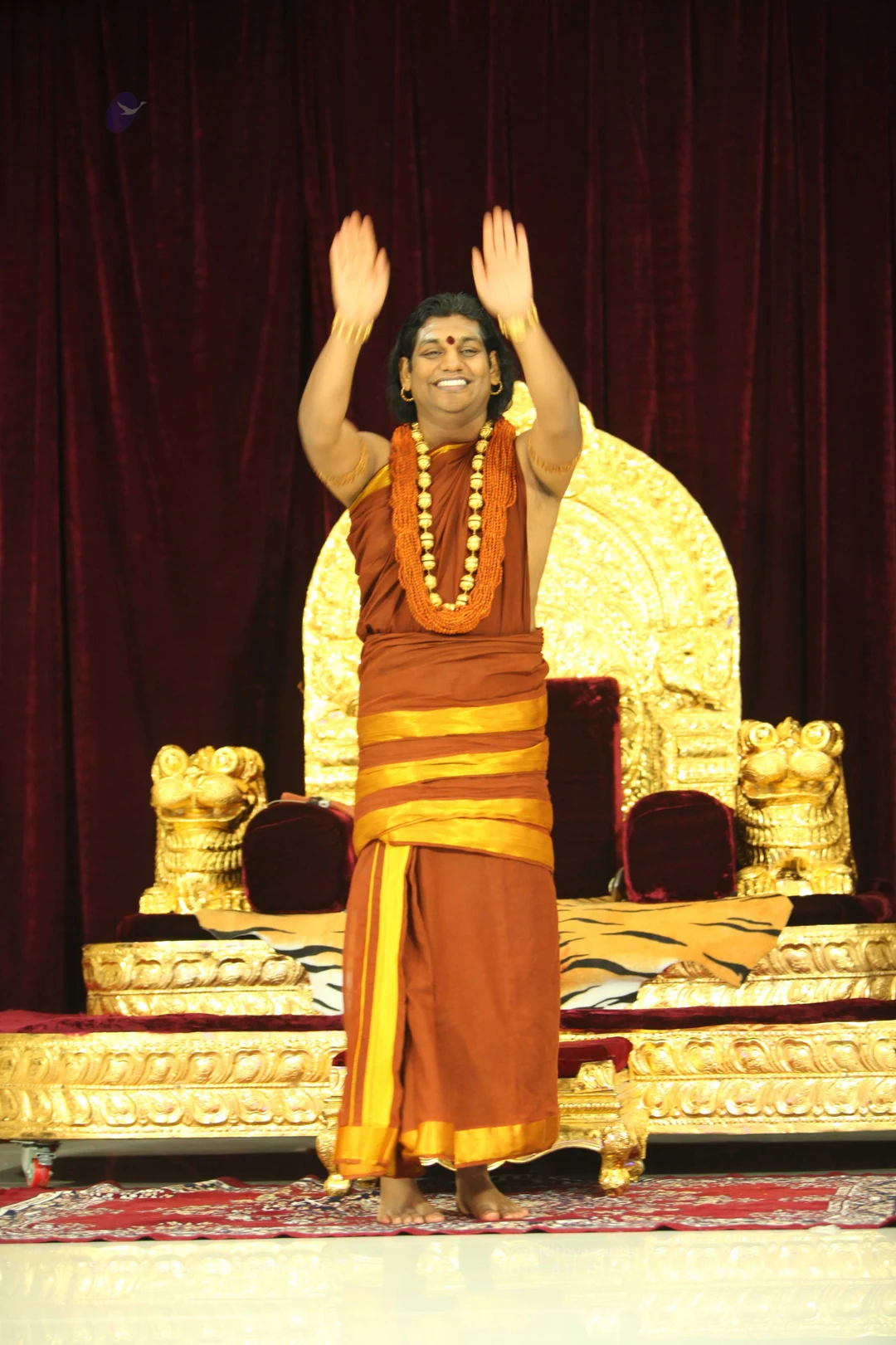
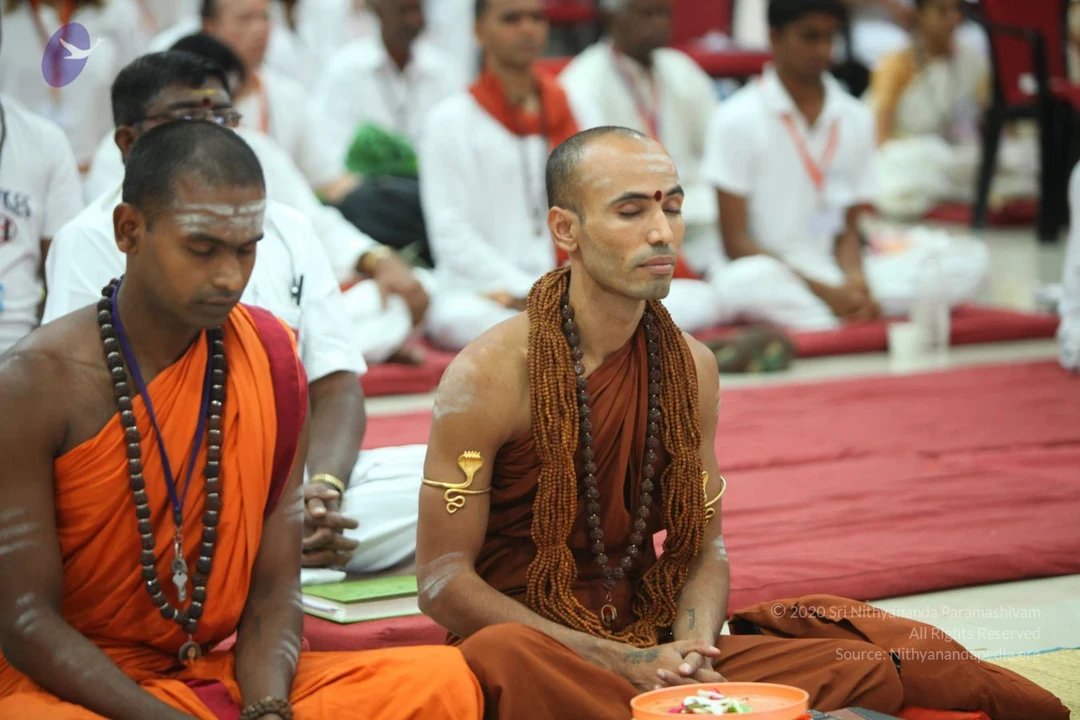
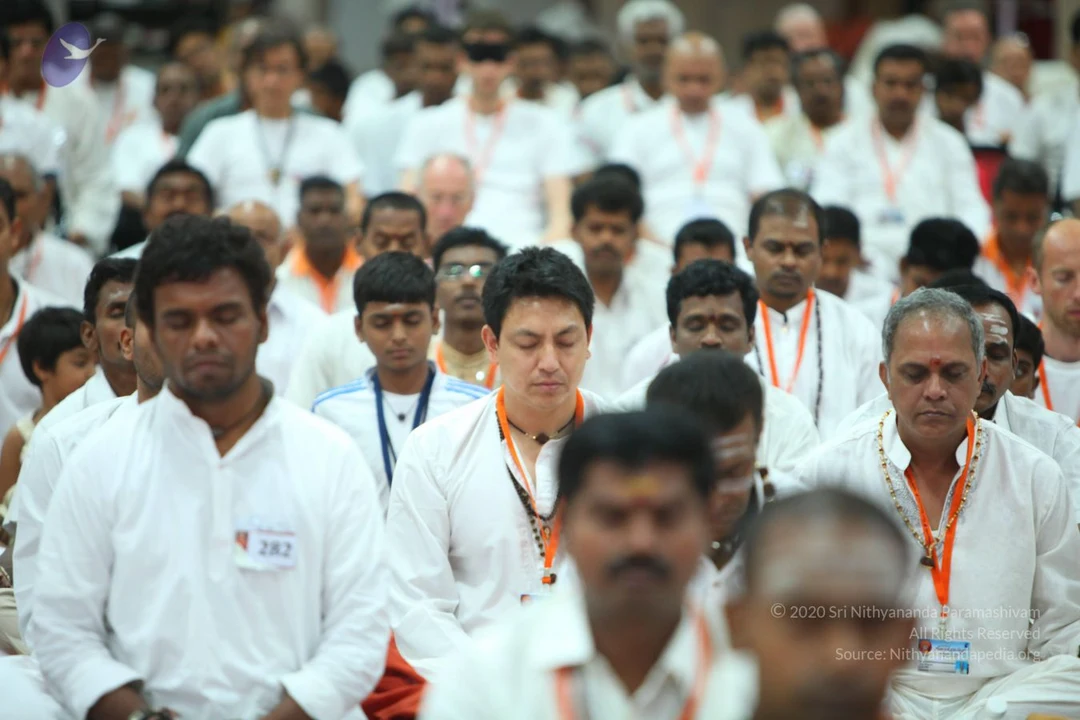
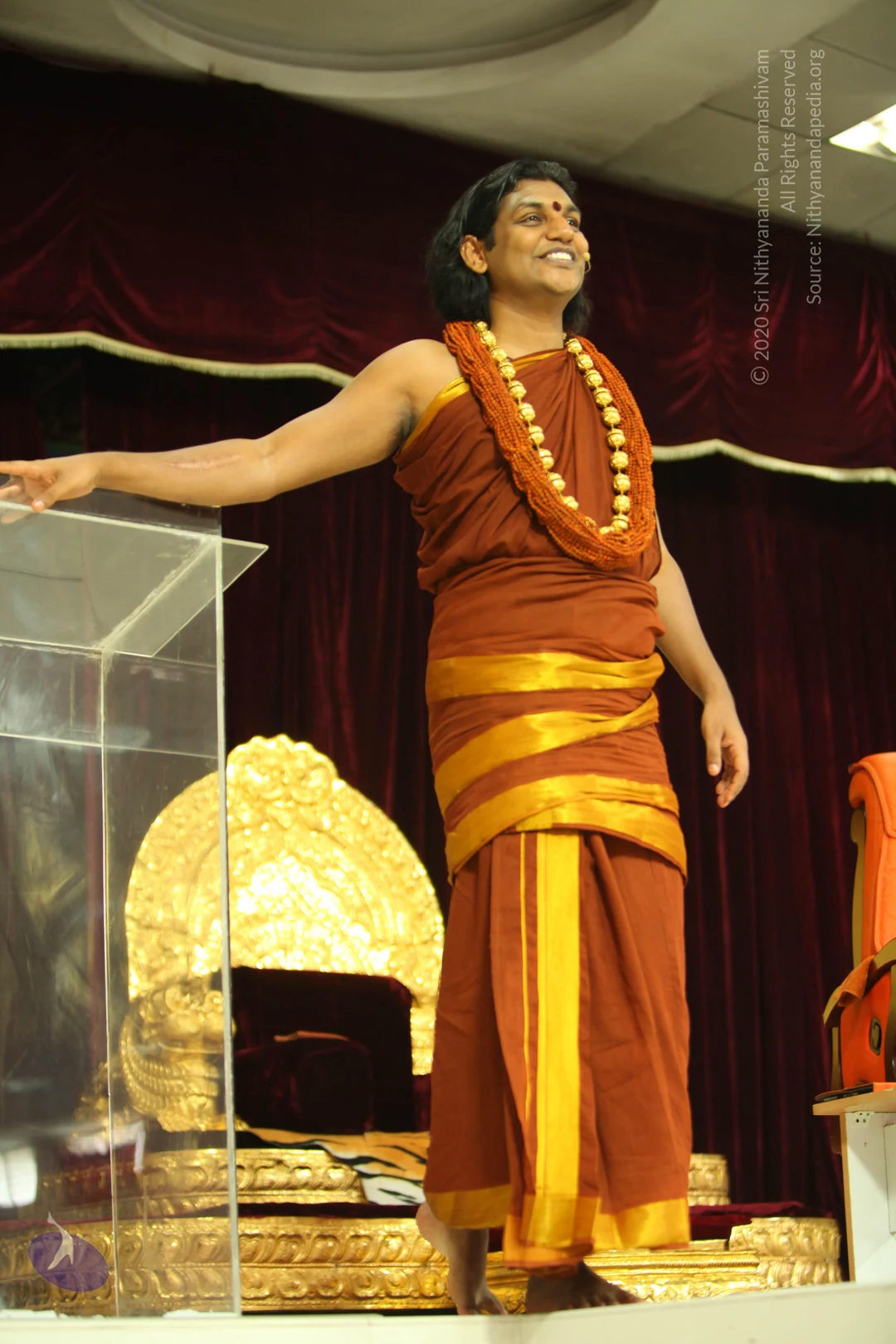
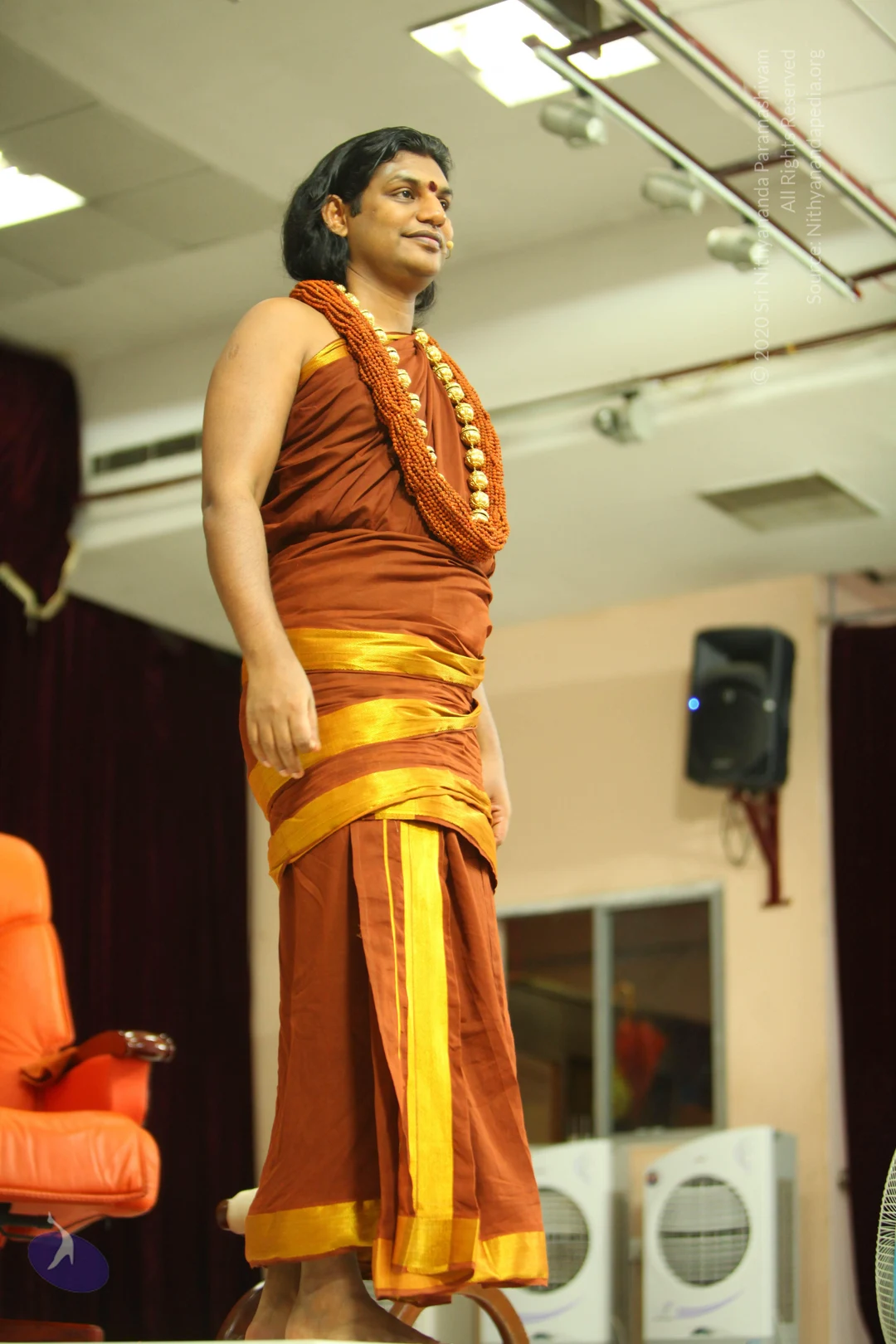
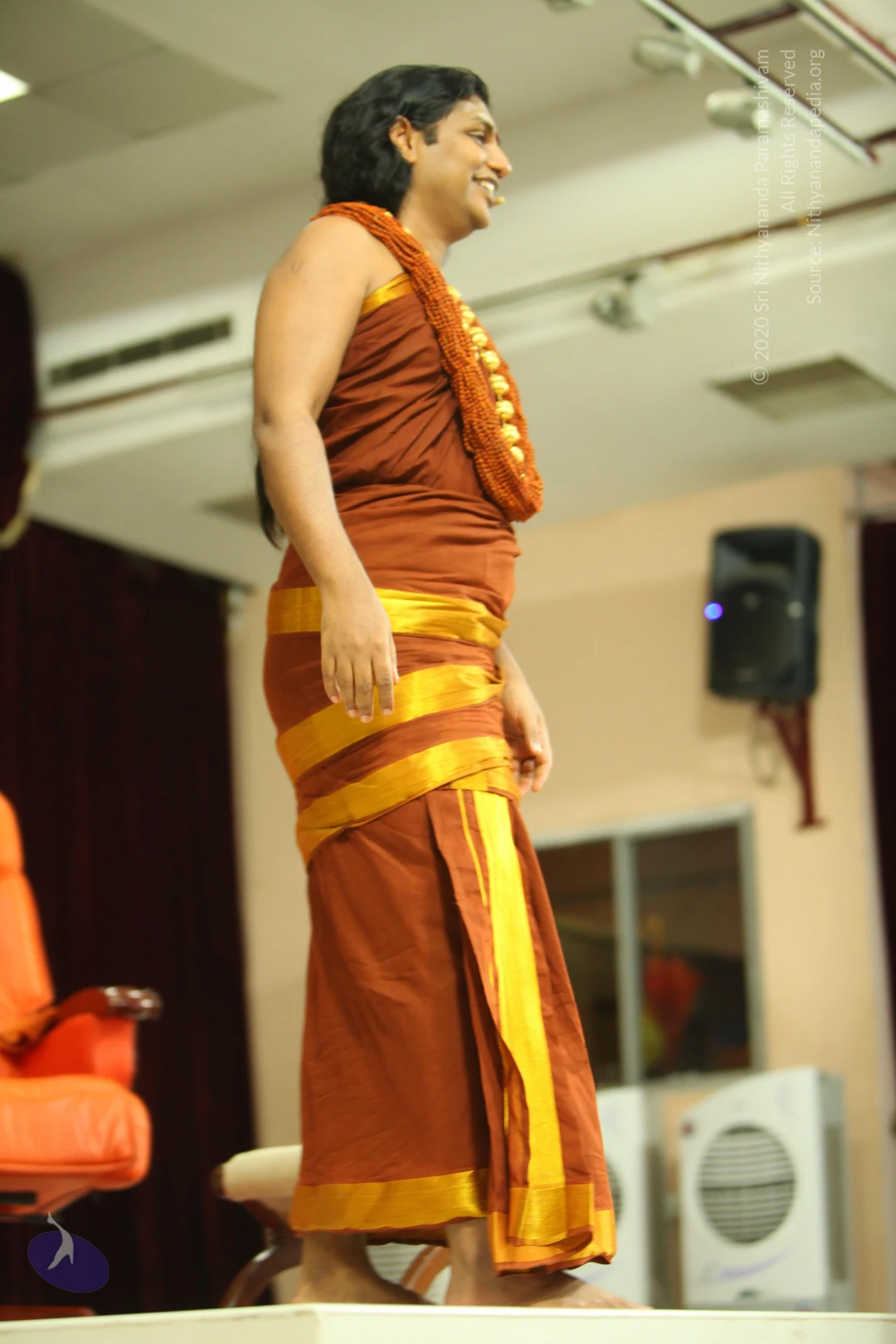
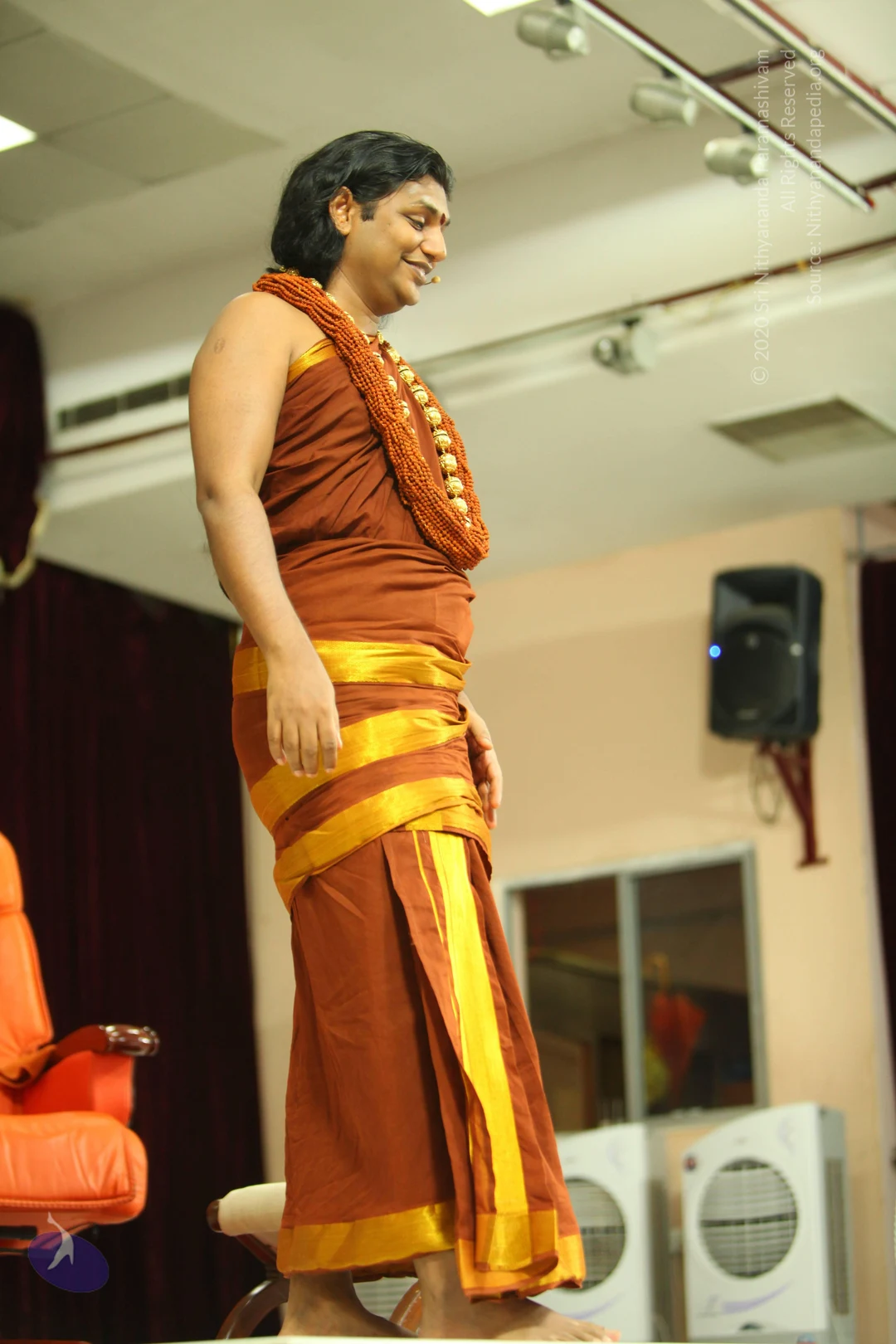
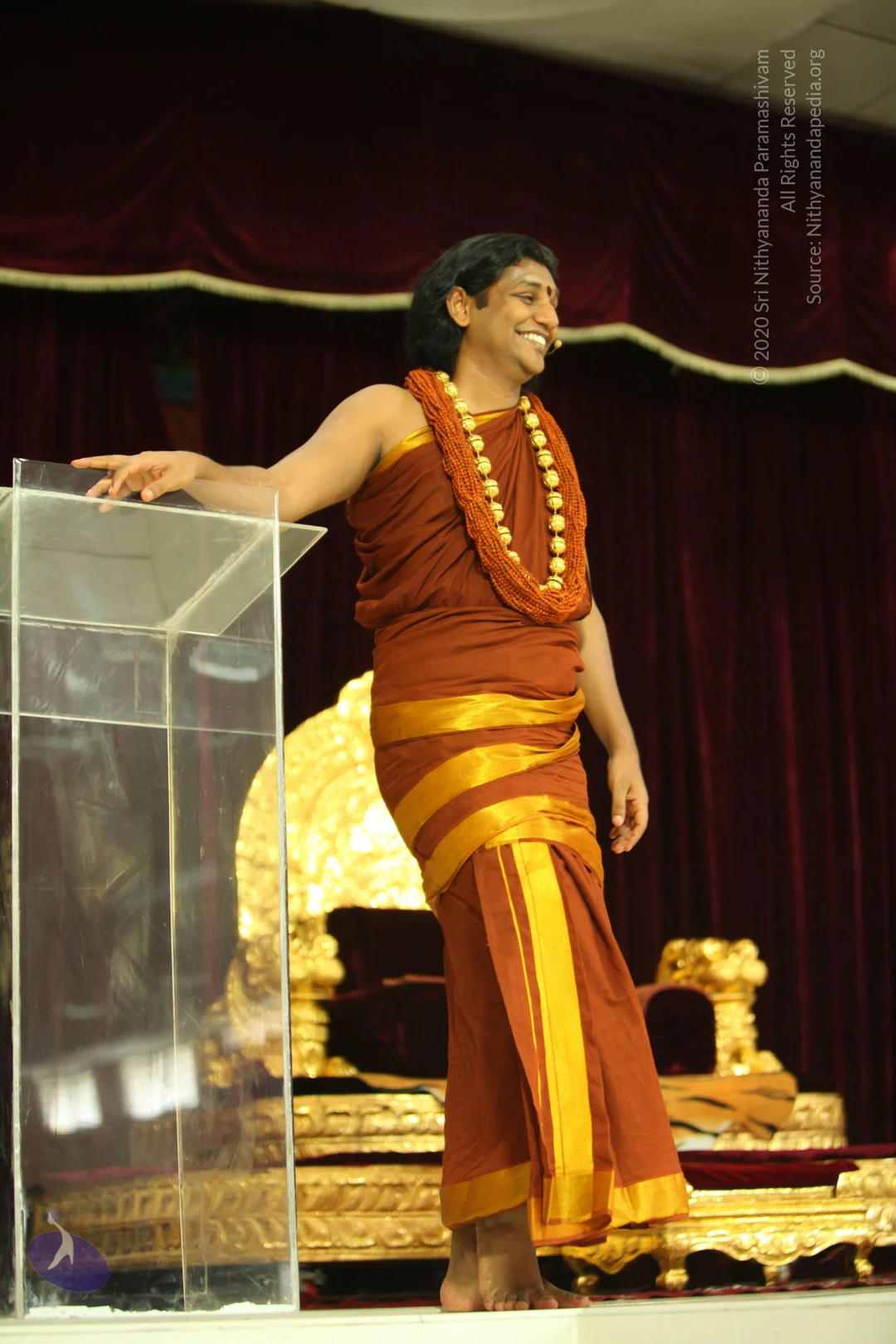
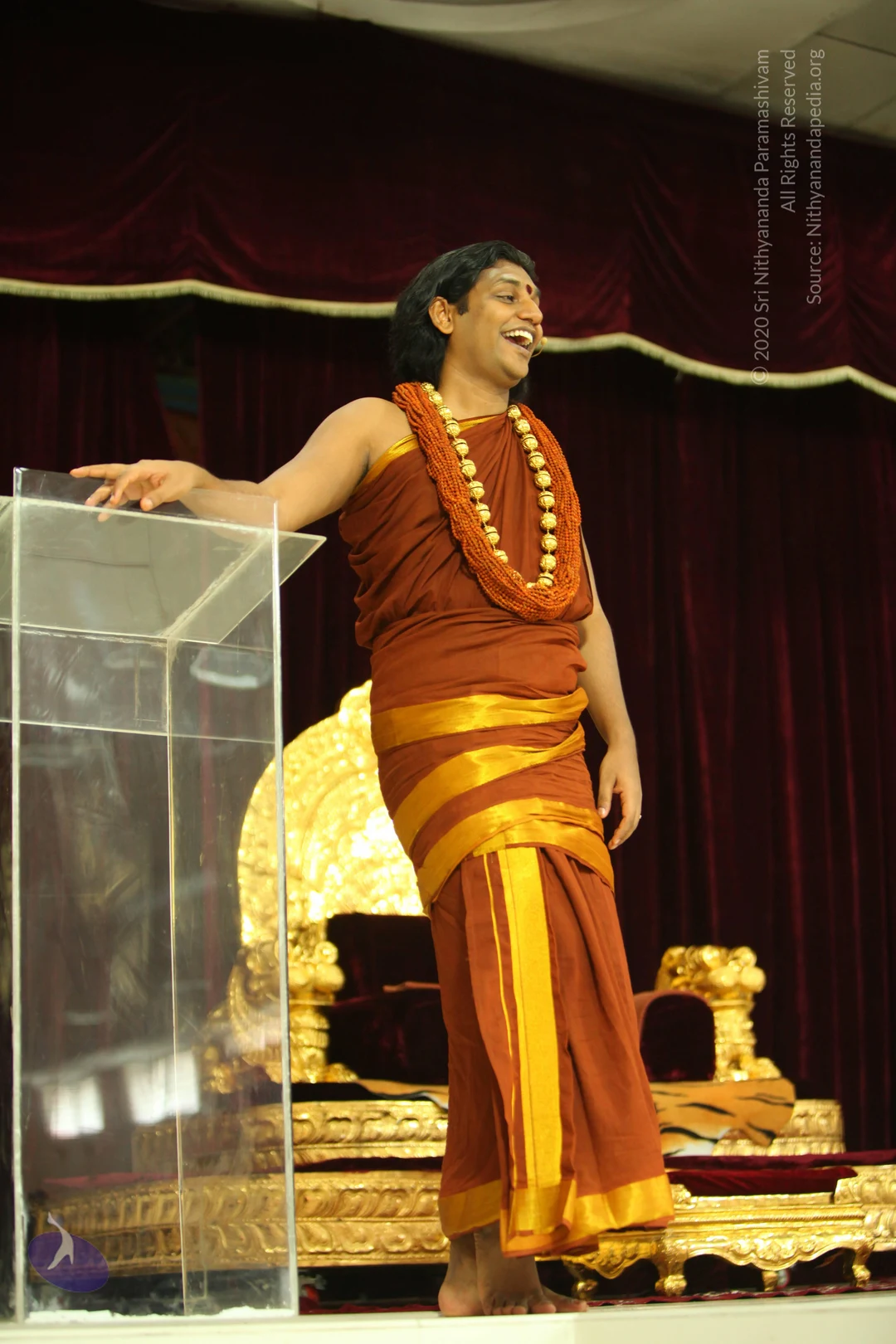
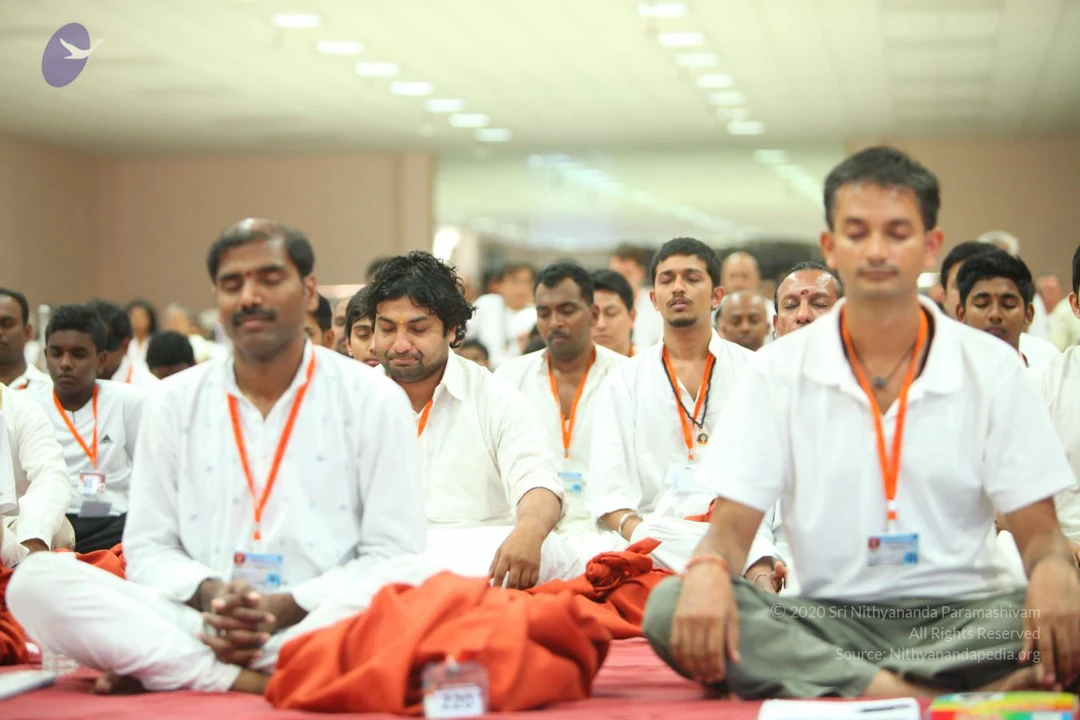
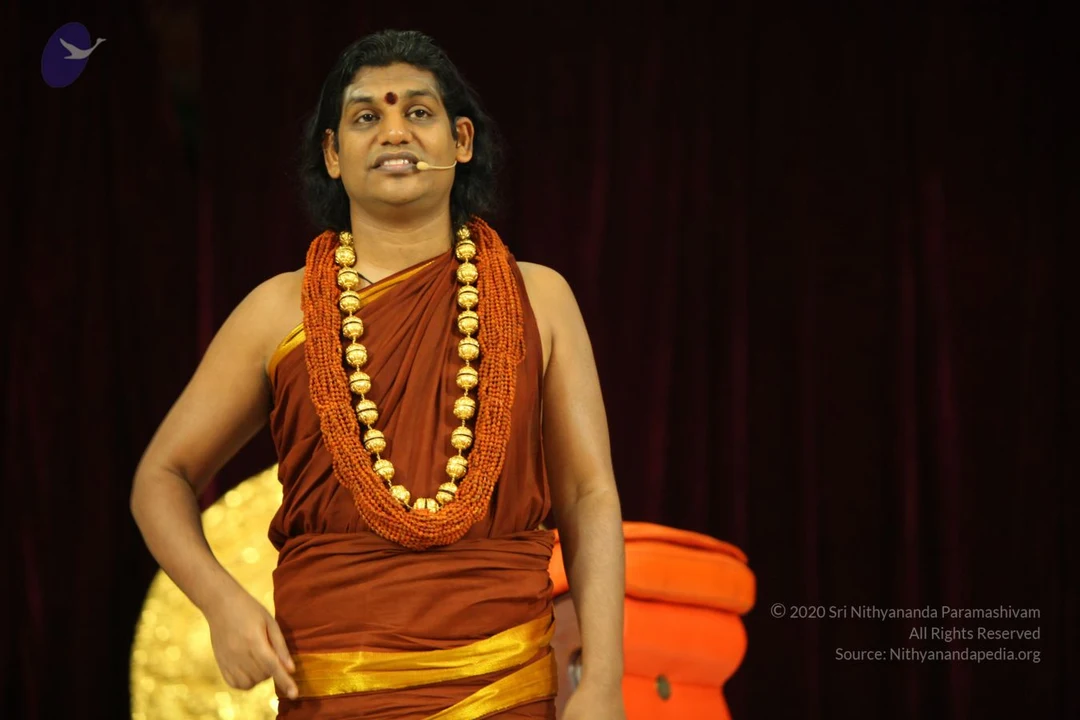
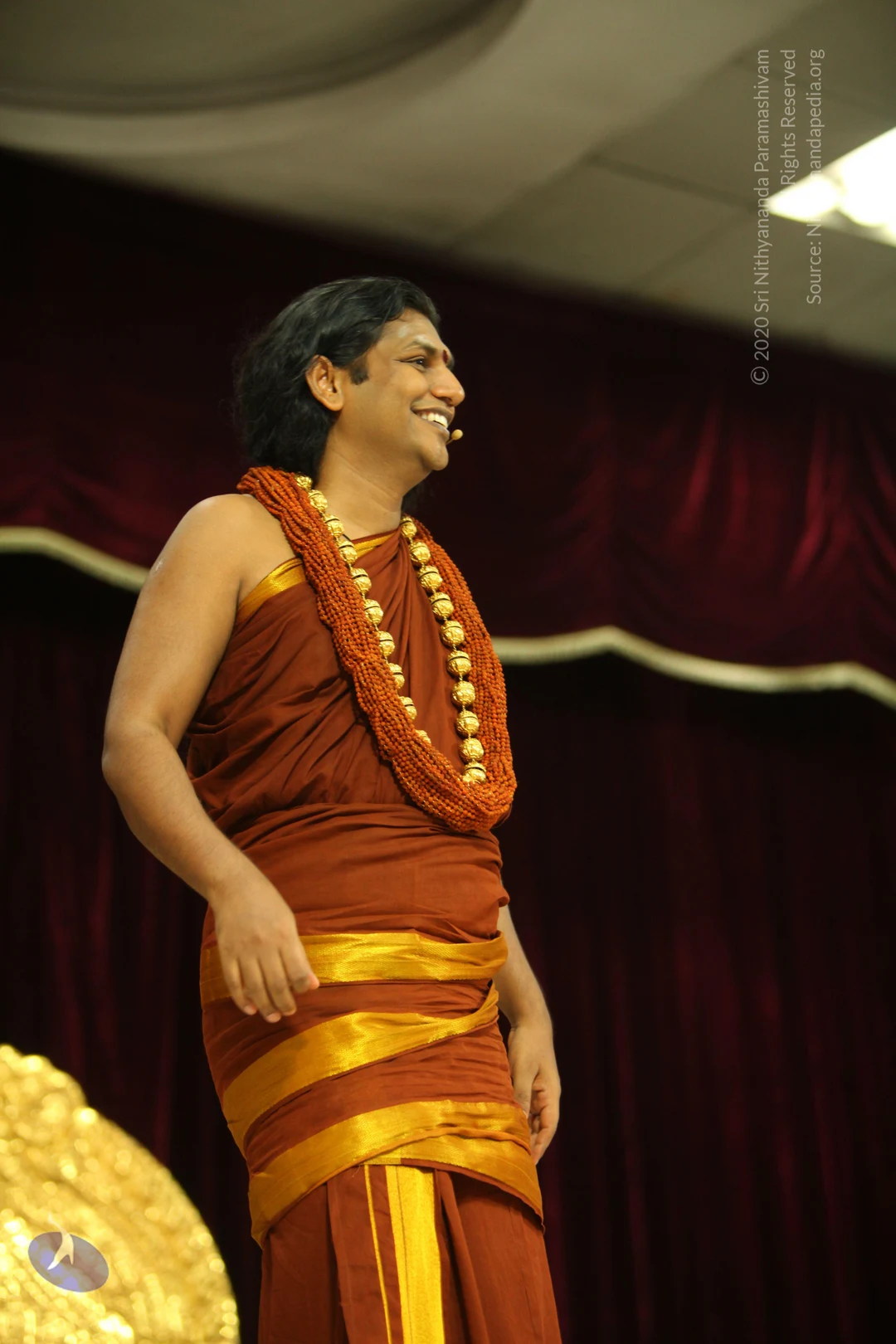
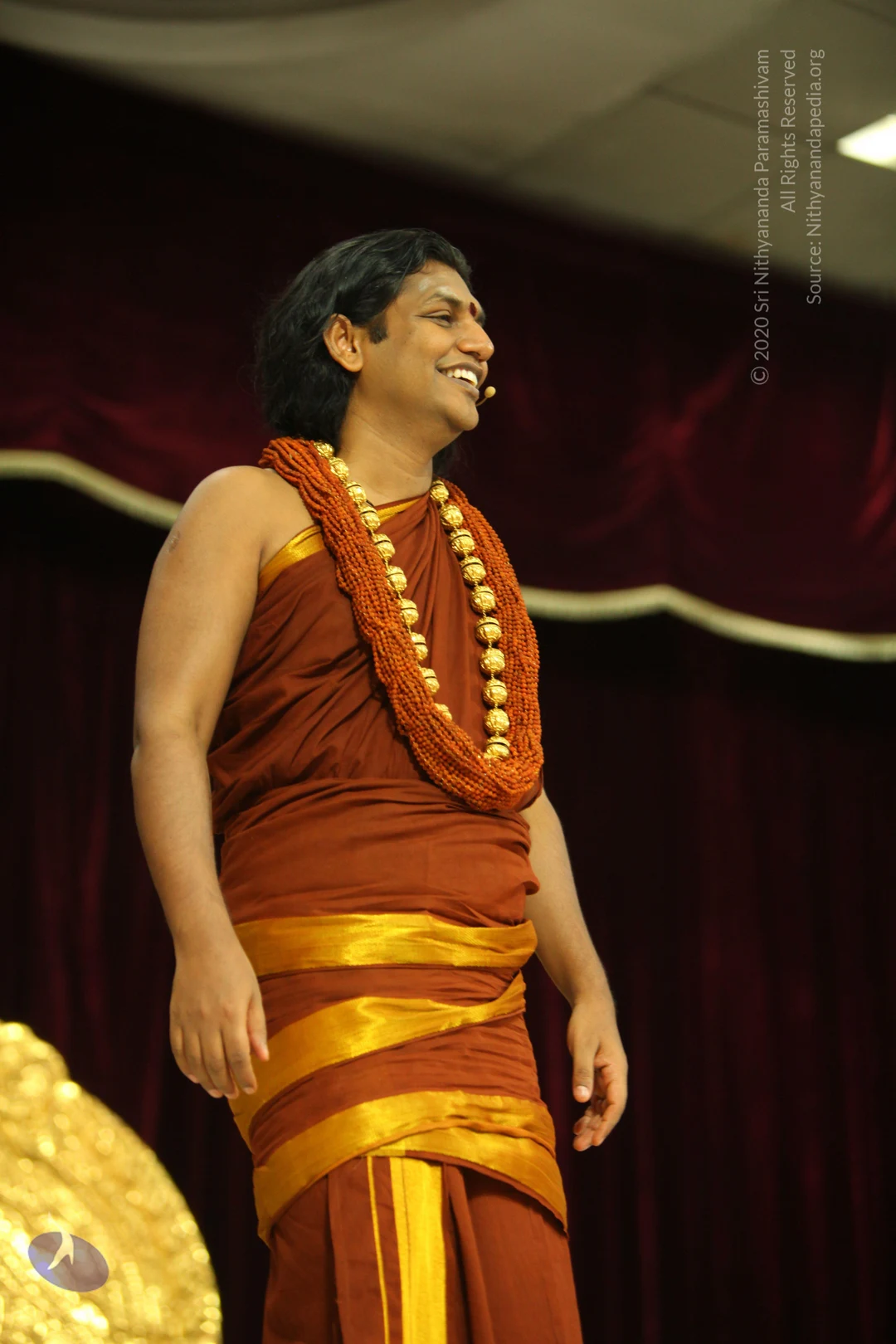
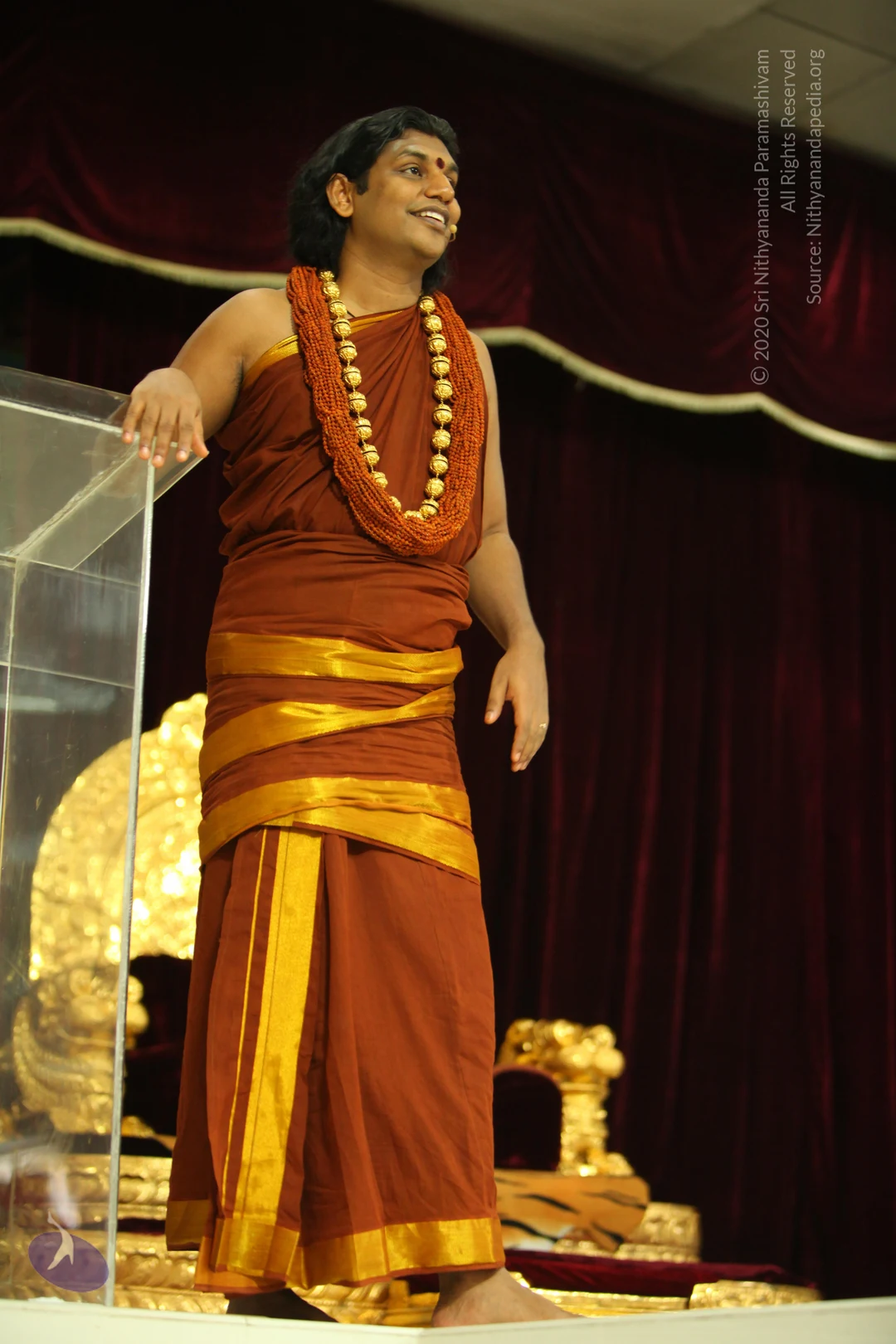
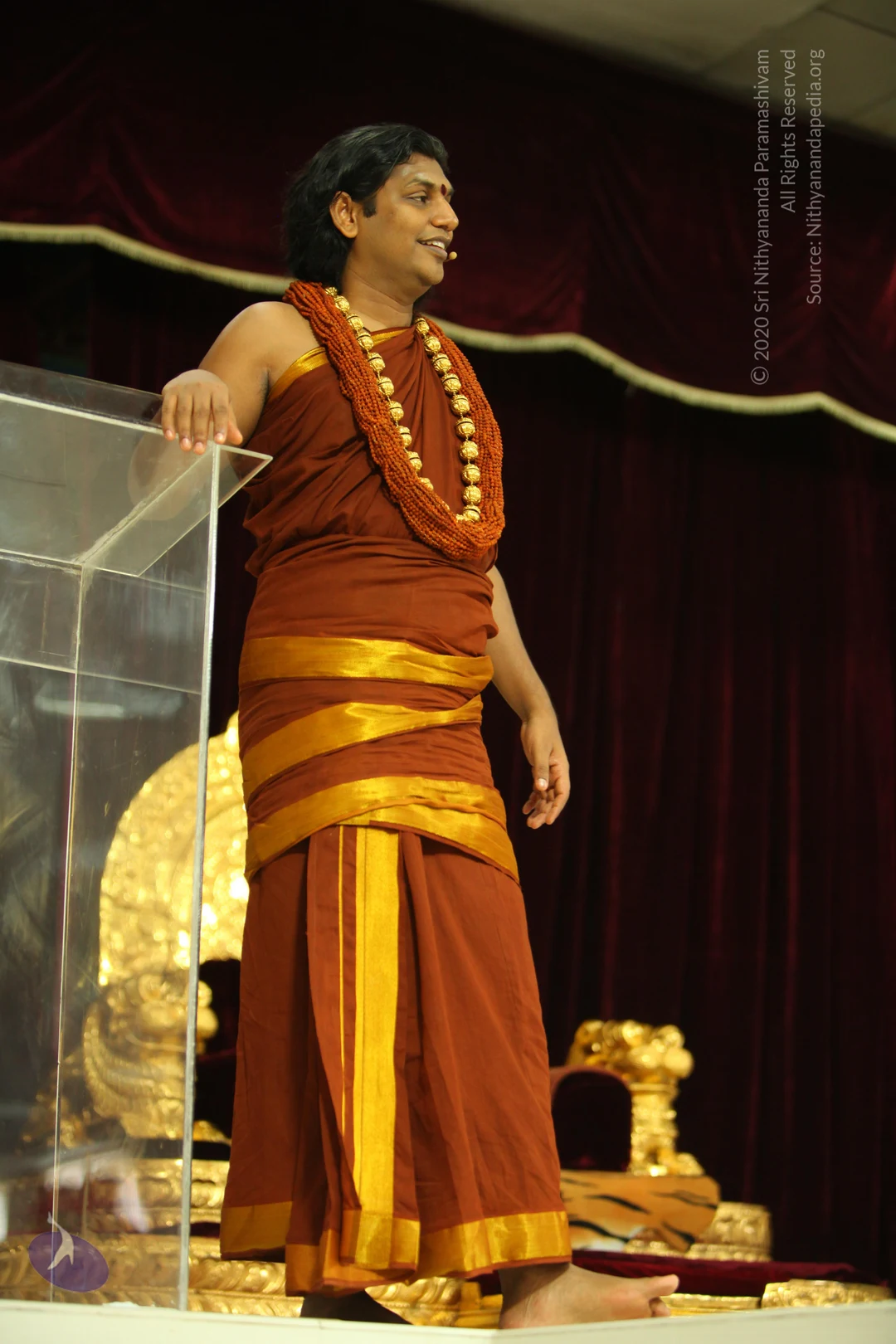
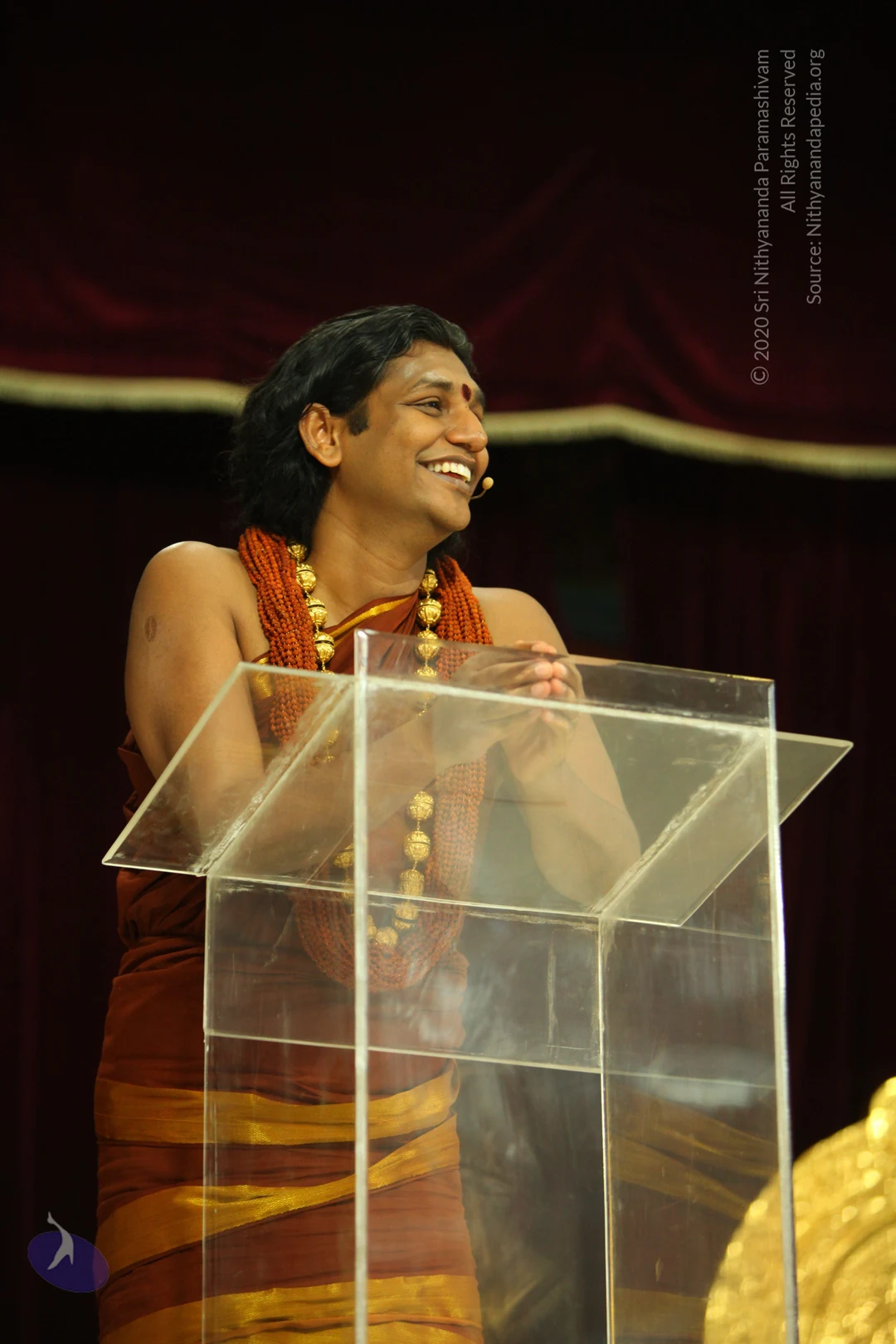
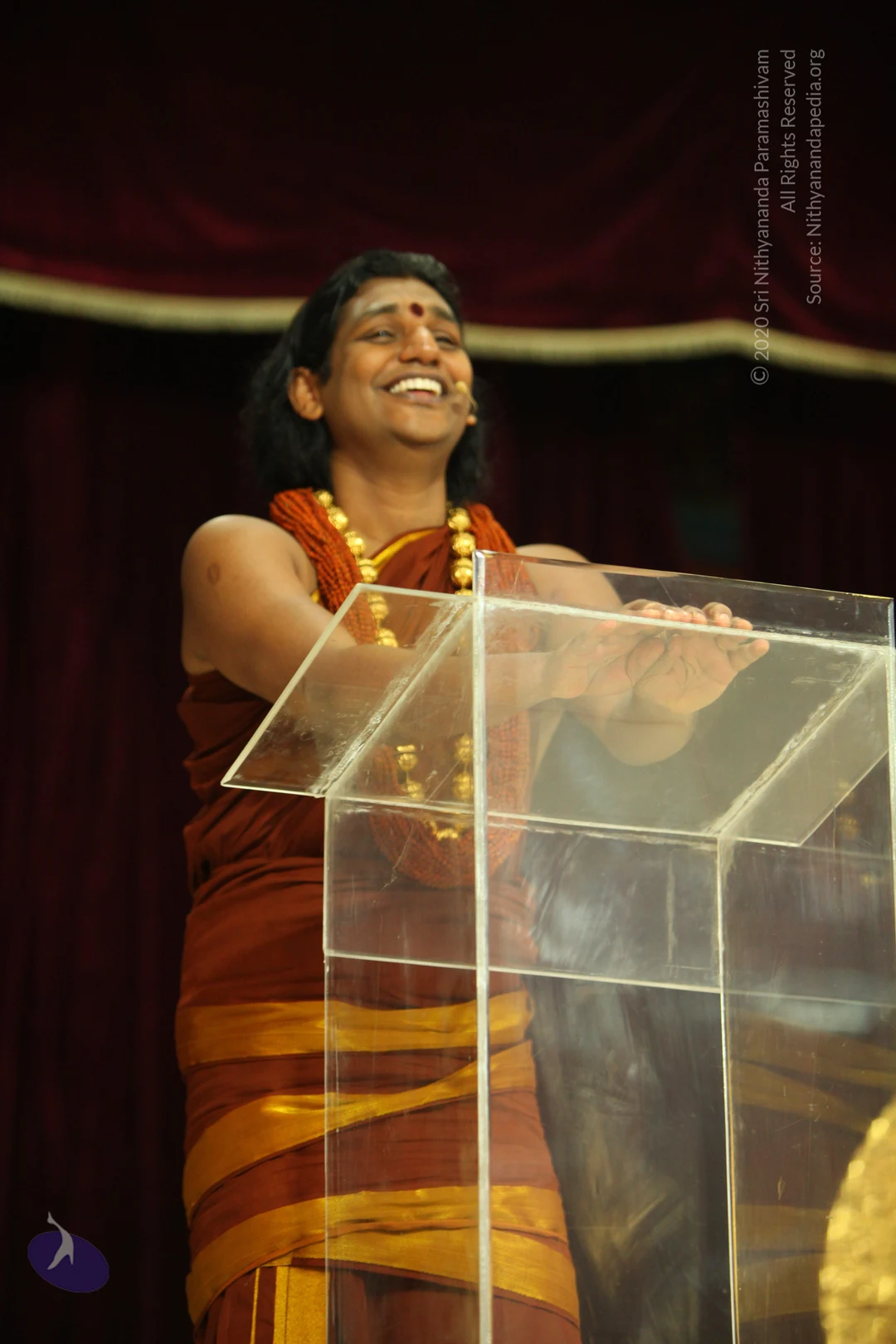
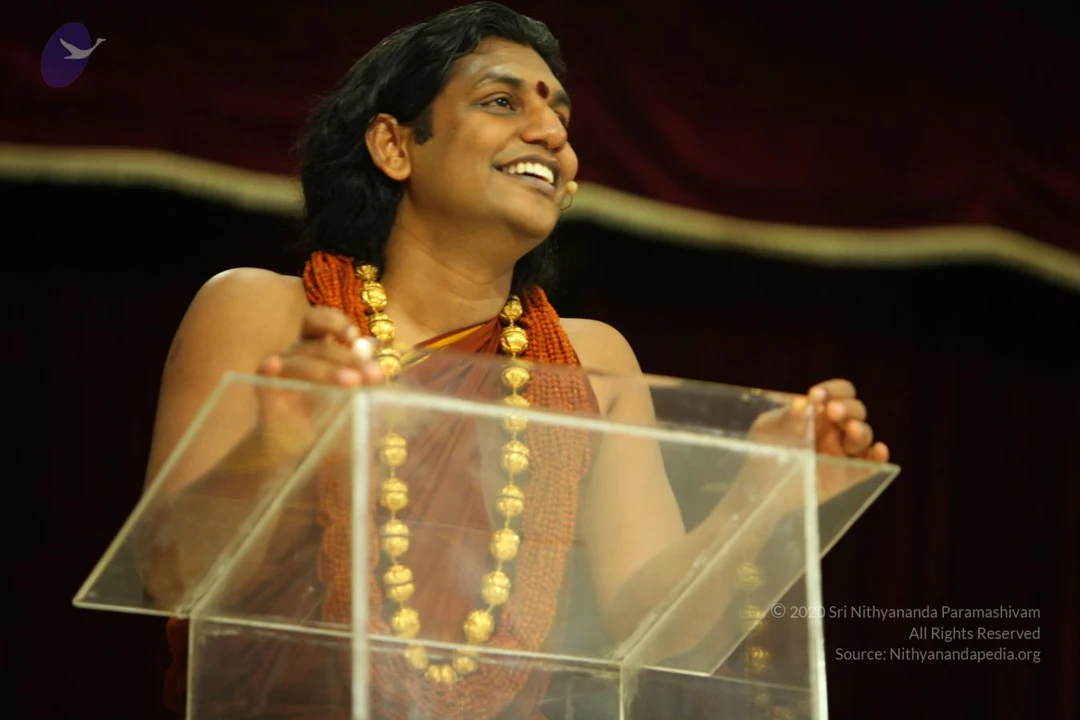
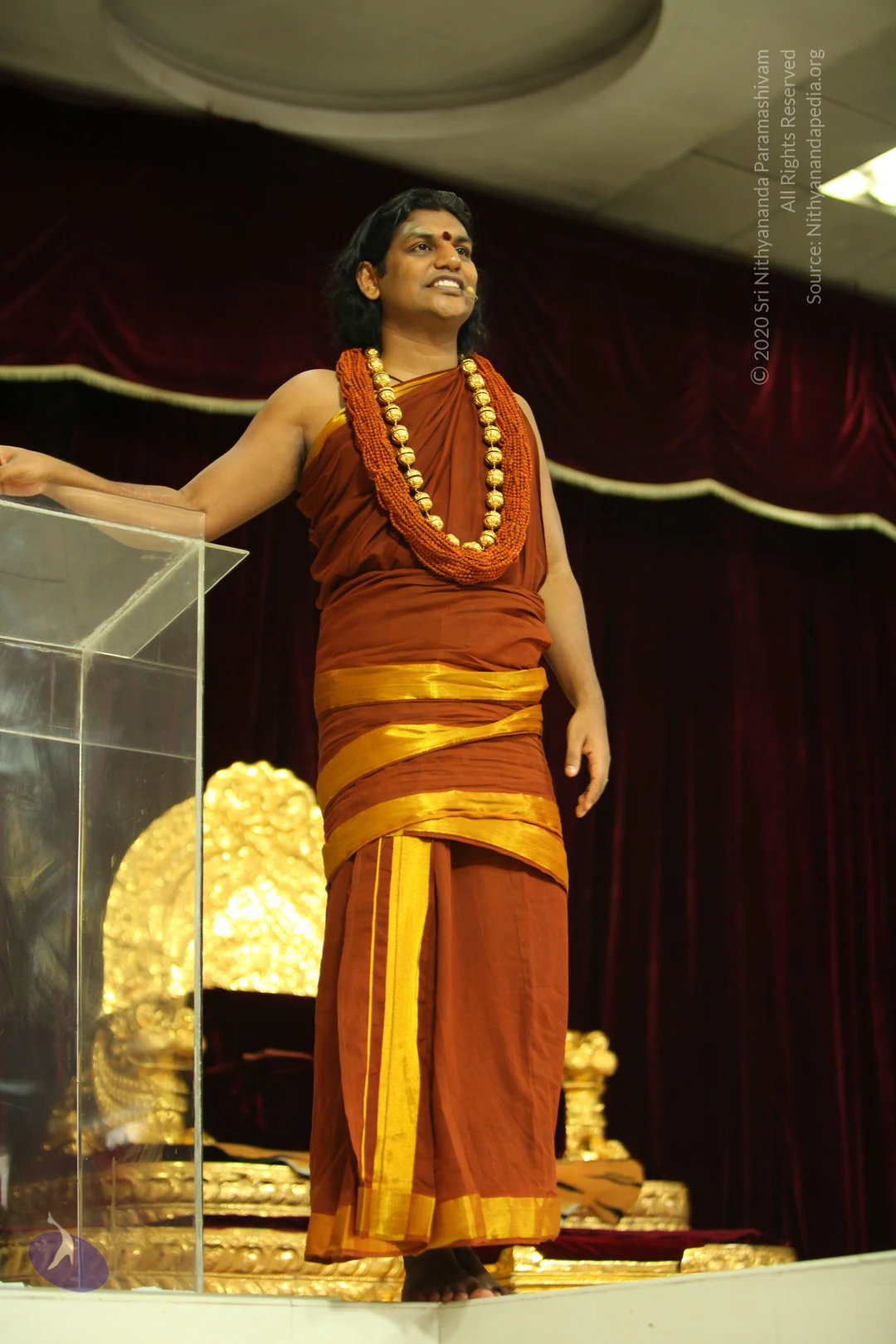
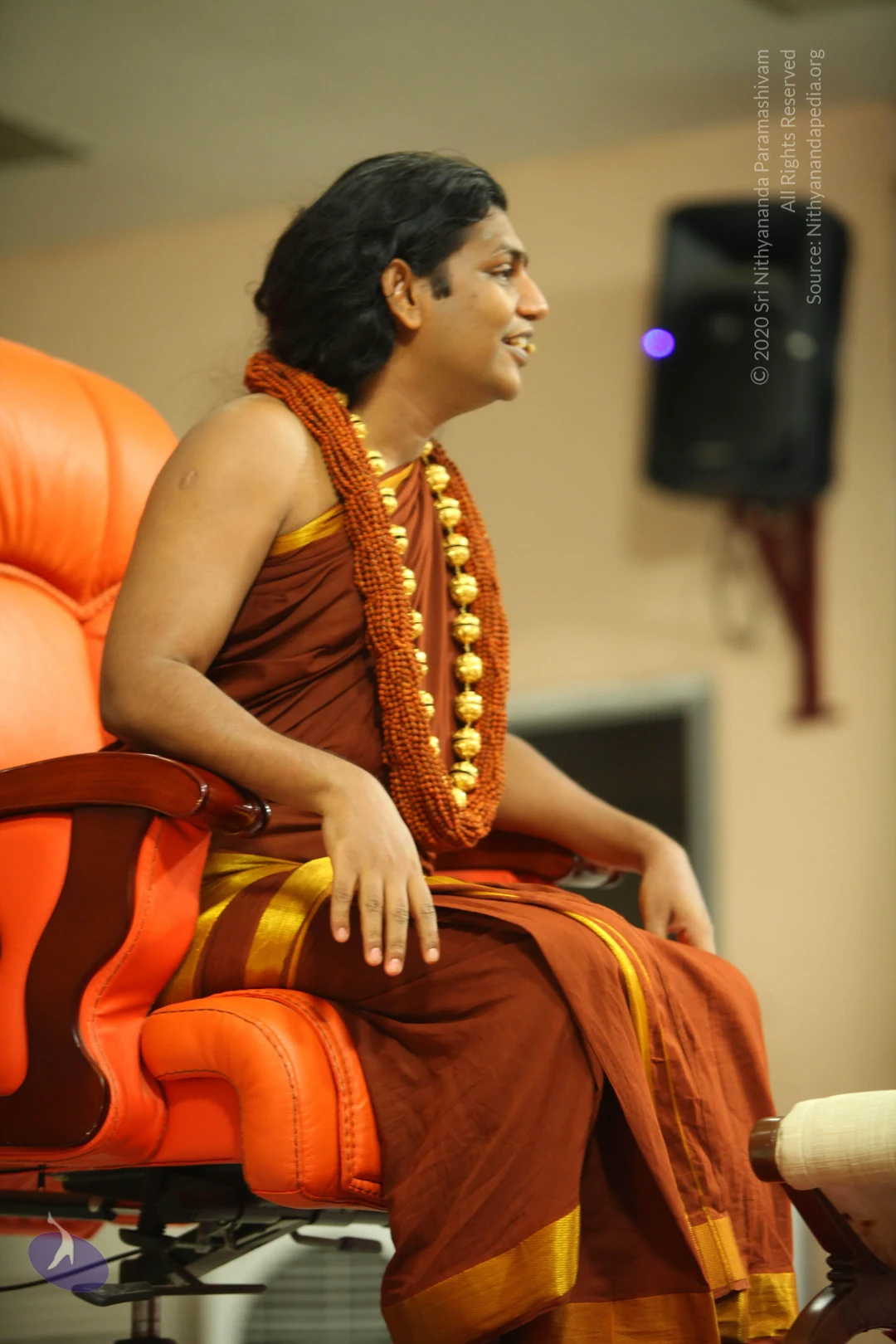
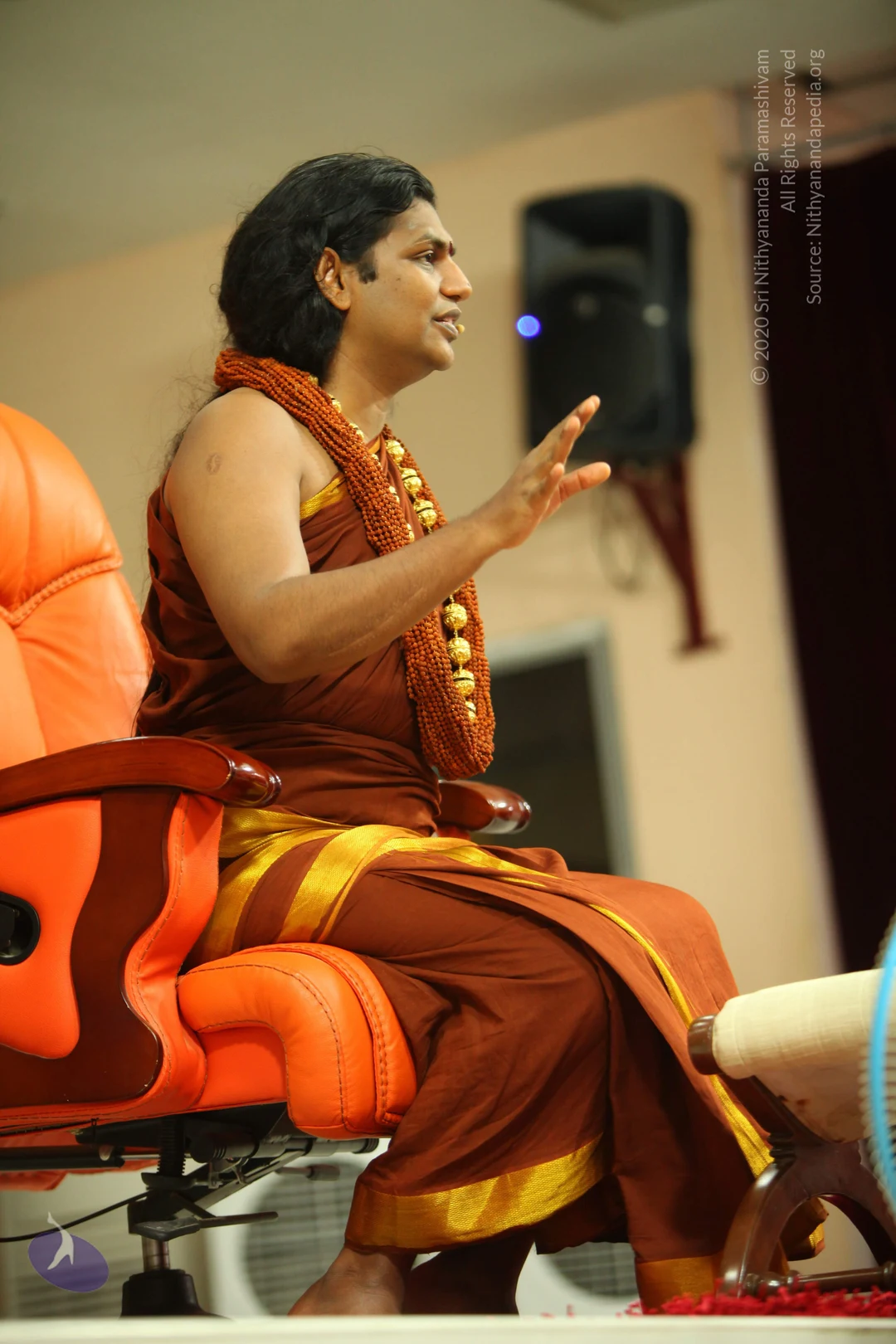
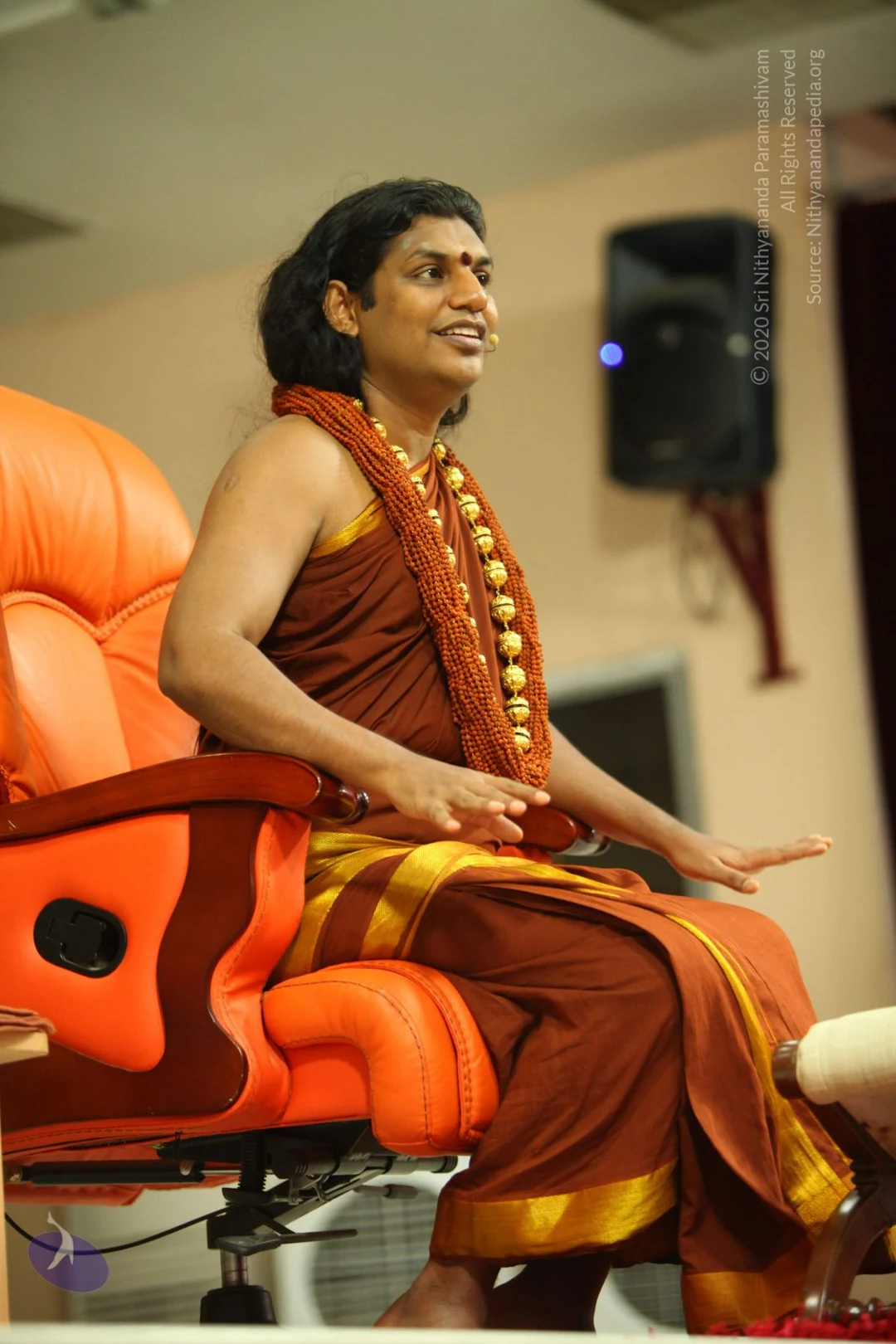
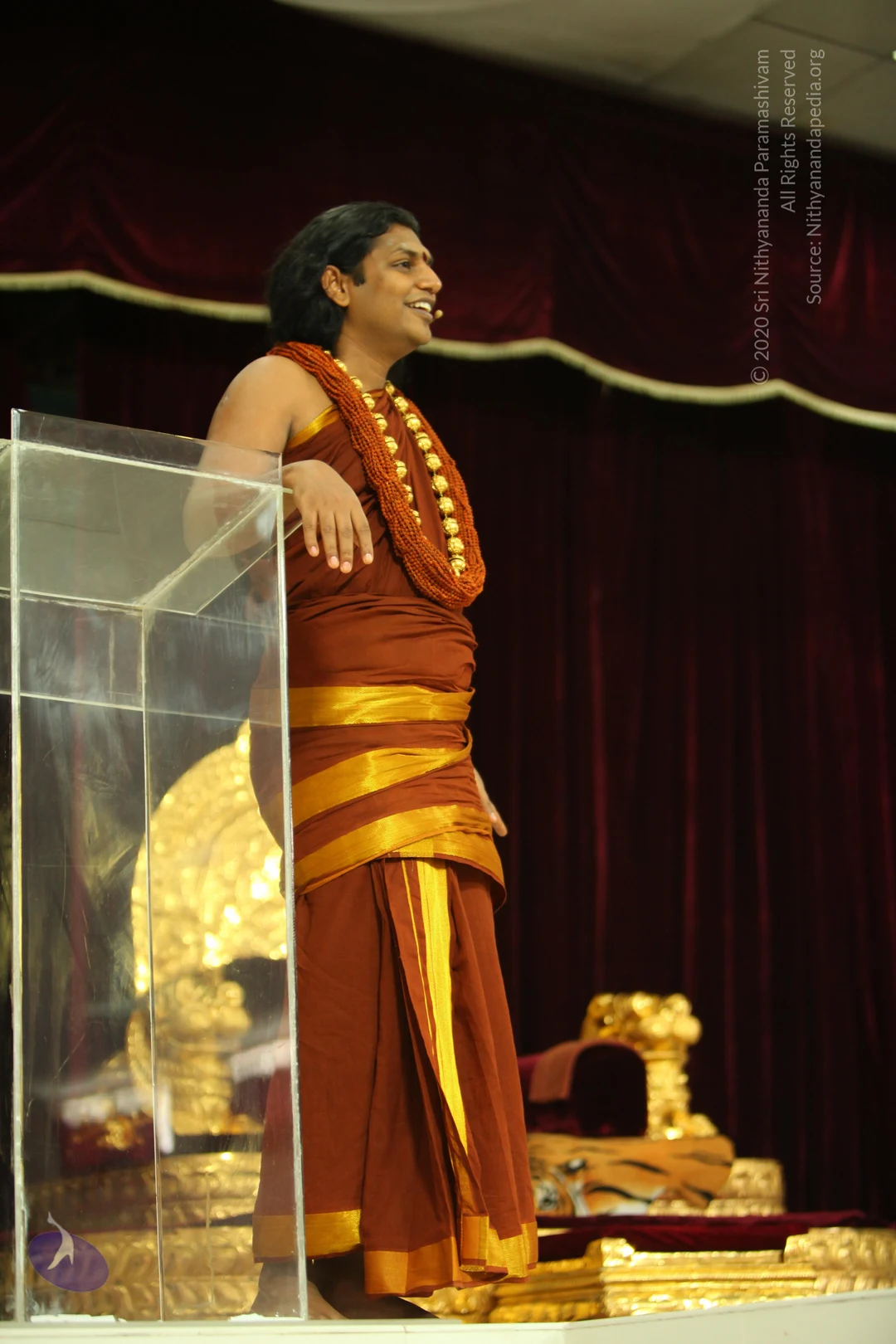
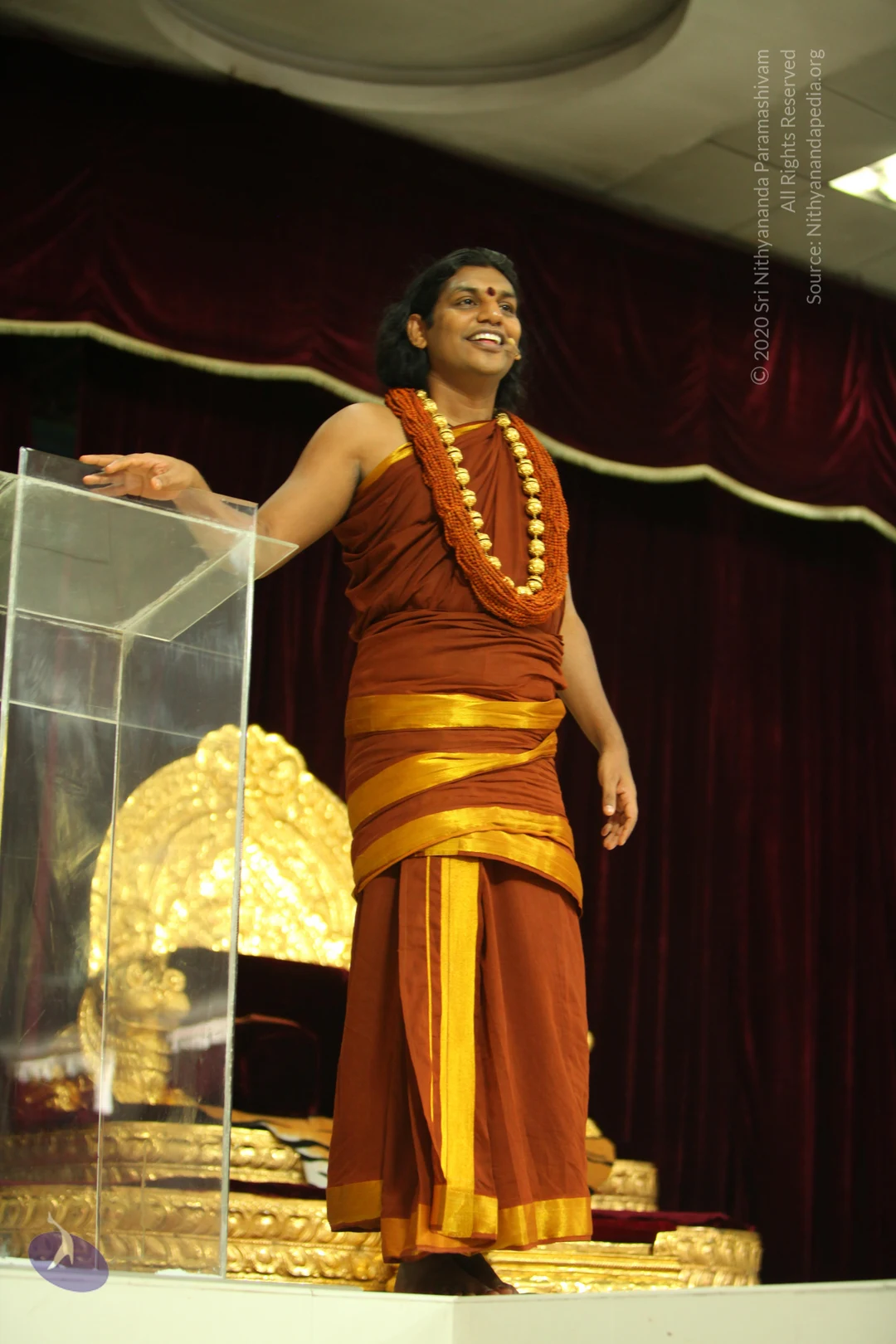
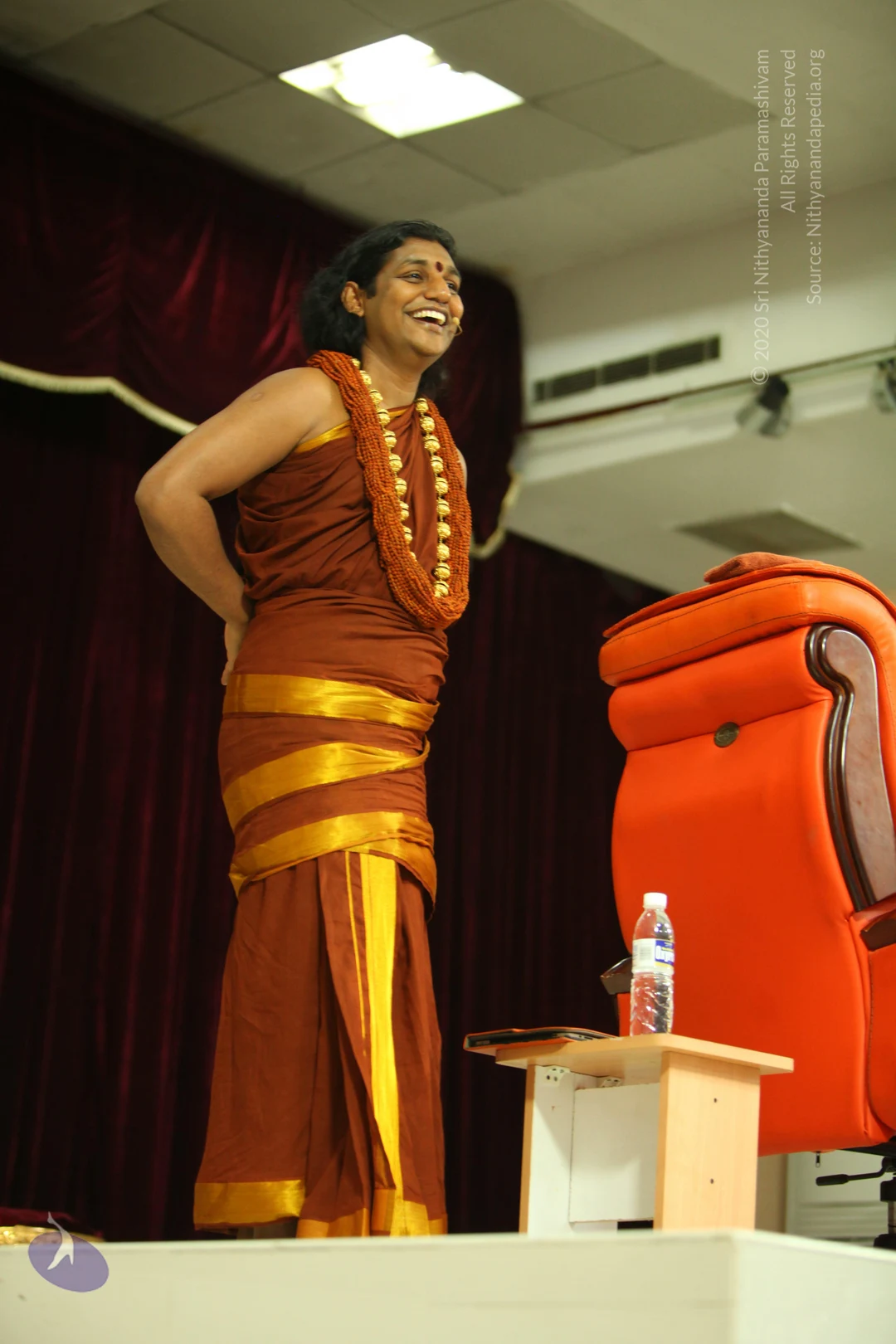
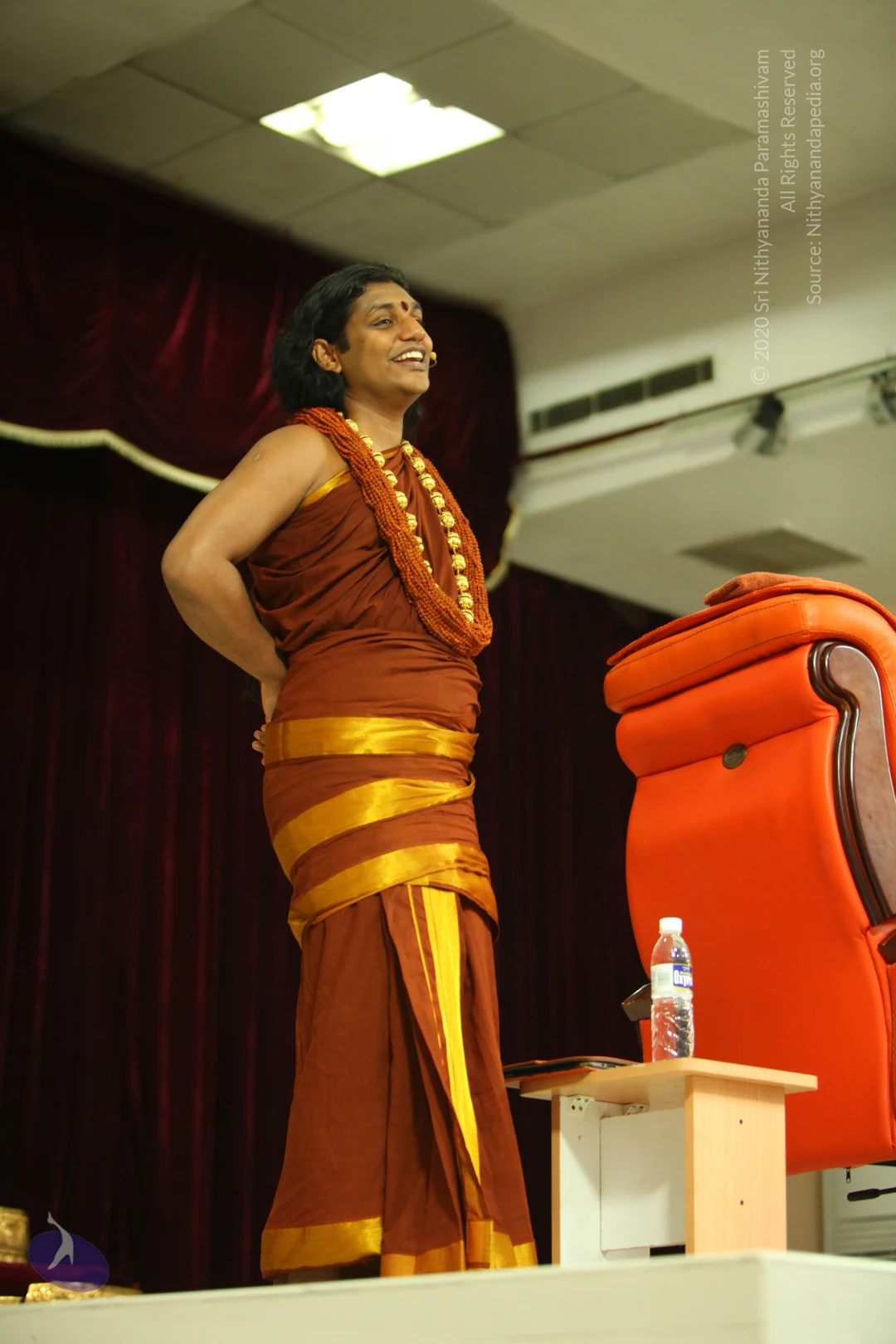
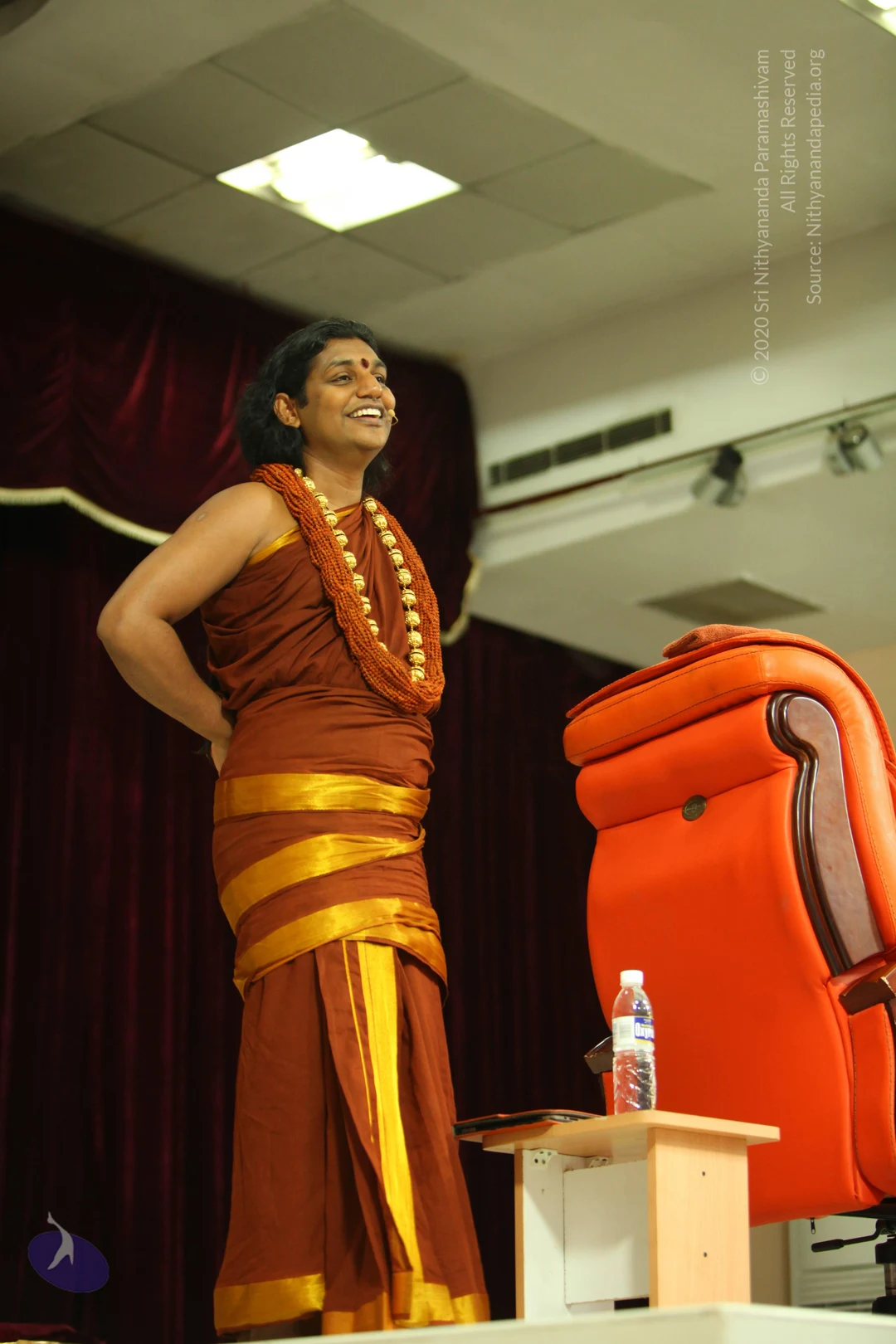
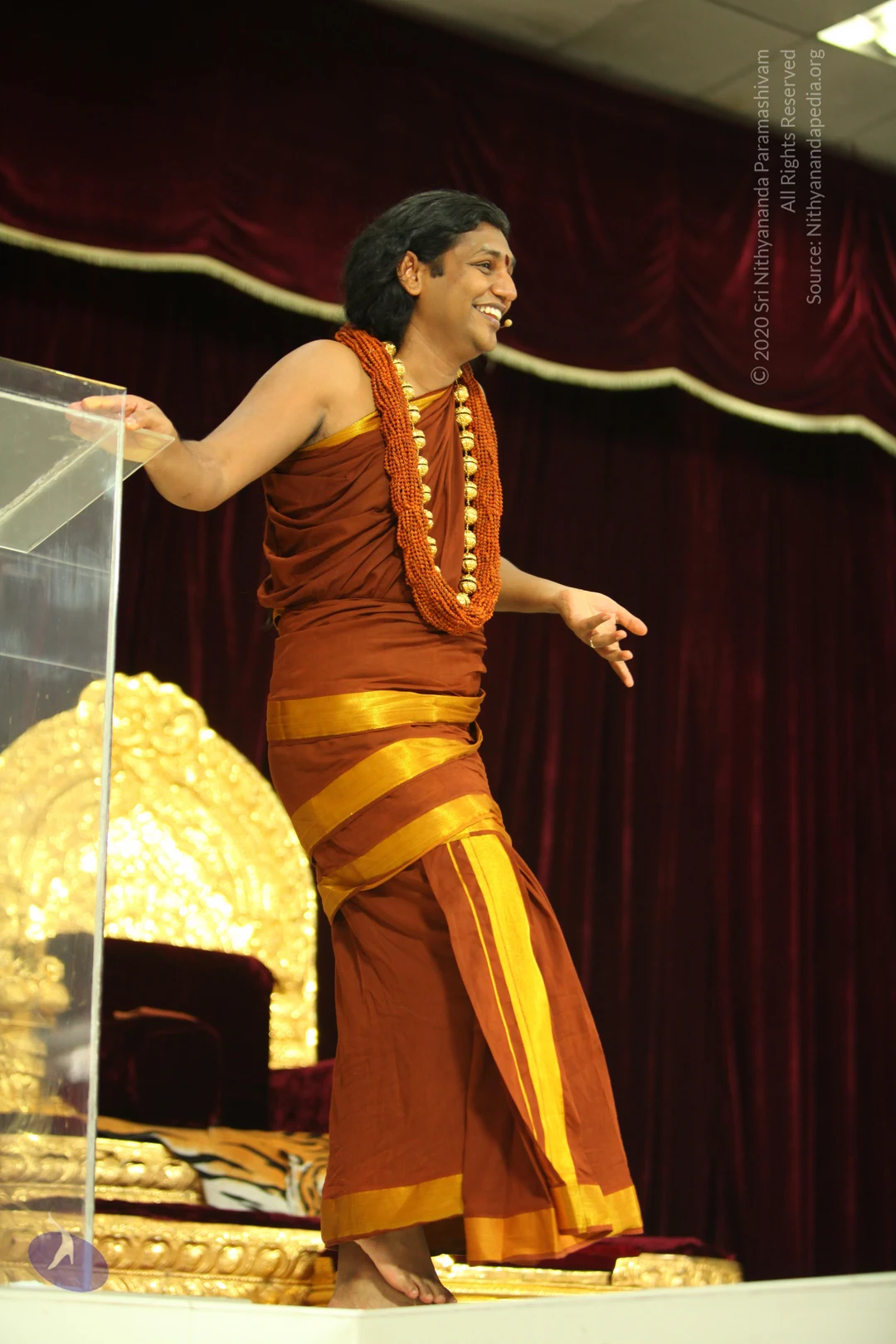
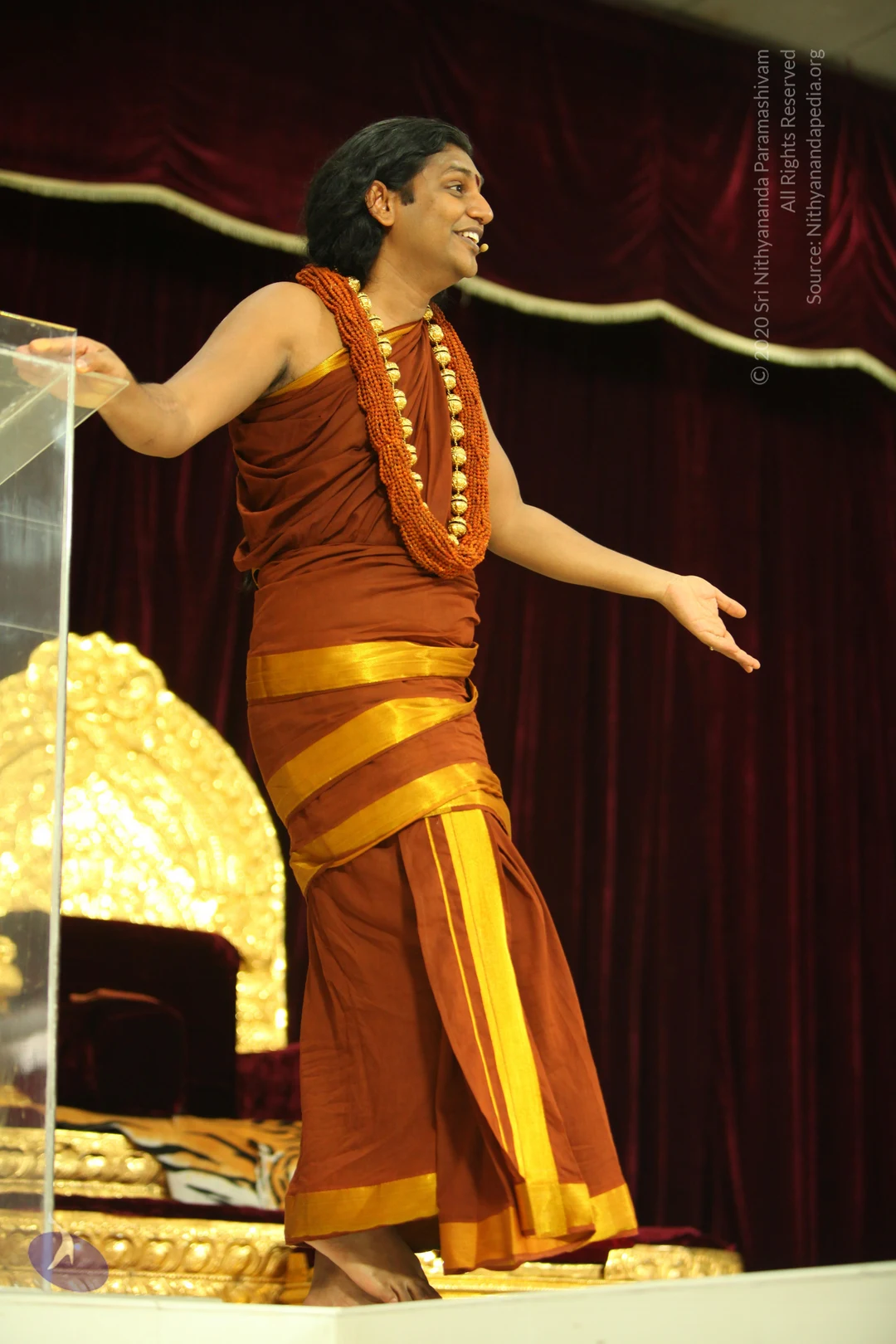
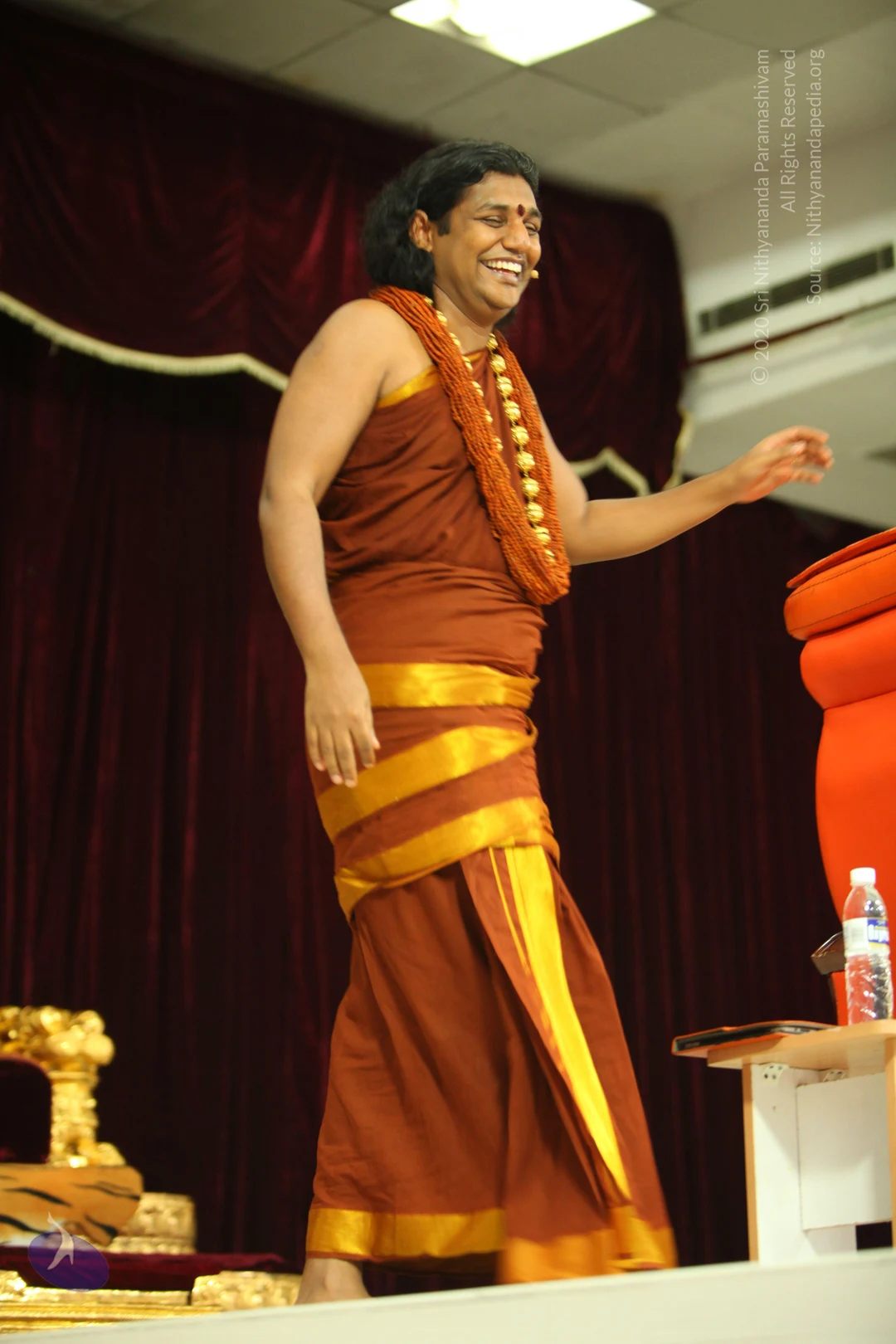
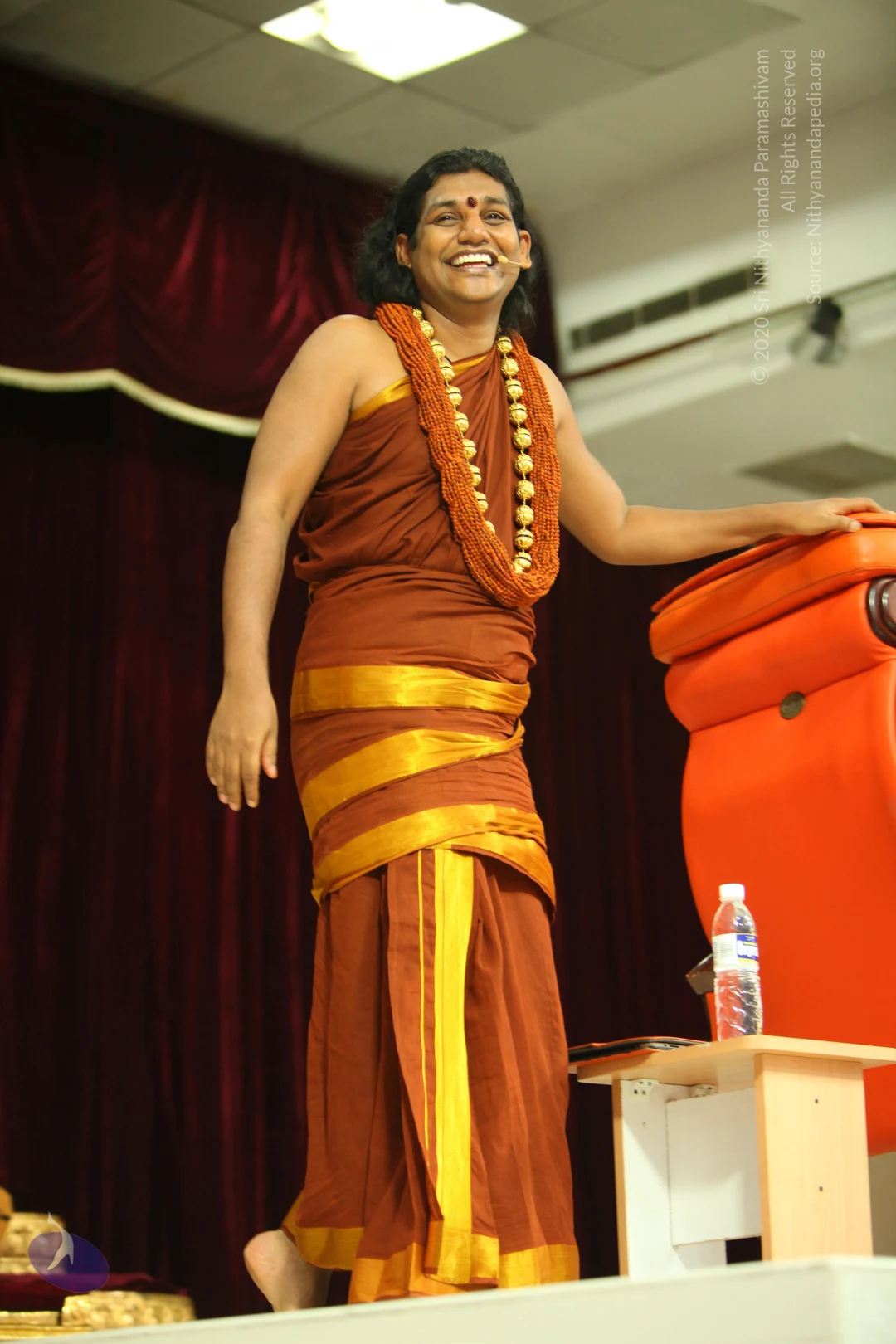
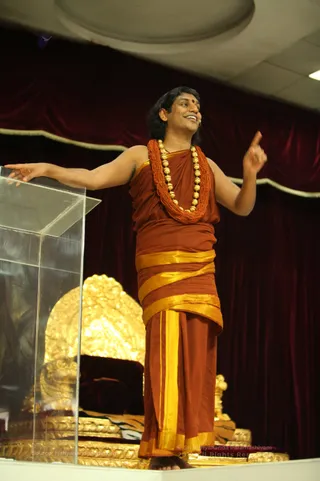
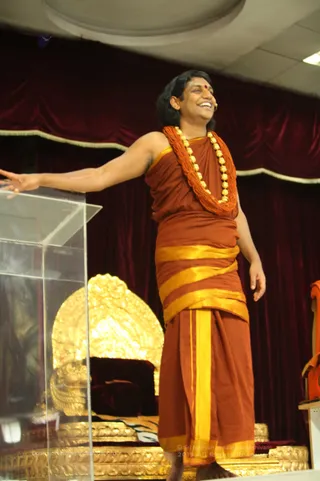
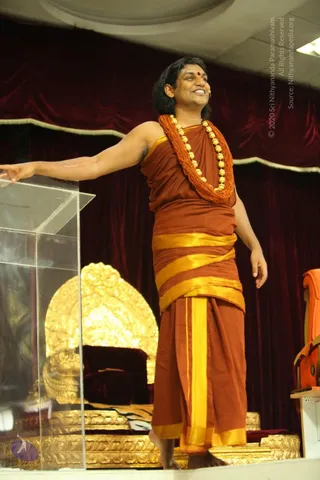
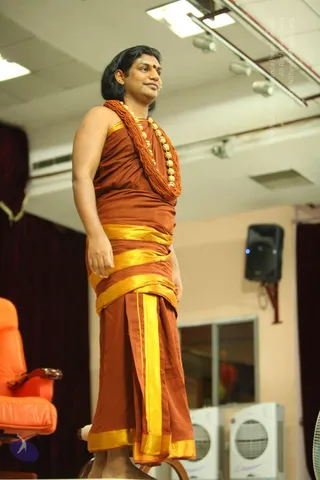
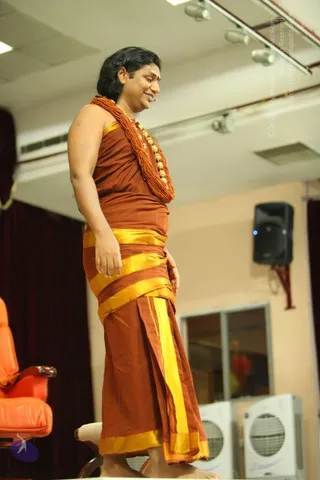
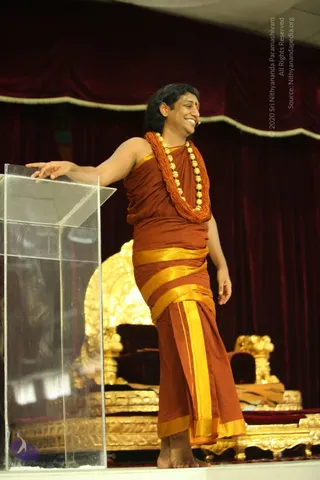
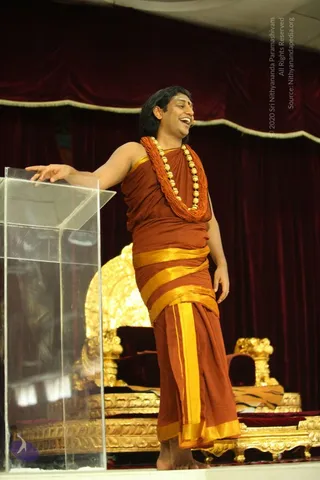
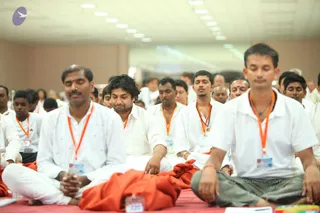
A man in rust-brown and gold ceremonial dhoti and shawl stands on a raised stage, arm extended toward a clear acrylic lectern, smiling. He wears a multi-strand rudraksha mala with gold beads and a red bindi. Behind him is an ornate gold throne with a carved backrest, draped with a tiger-stripe cloth, against deep red velvet drapes. An orange cushioned chair sits at the right edge. Satsang discourse setting.A standing man with long swept-back black hair and a small red bindi wears a rust-orange shawl over the shoulder and a rust-orange dhoti with gold borders, tied with a gold-bordered waistcloth. He wears a dense rust-orange rudraksha mala and a gold bead necklace, and stands on a raised platform in a hall with a leather orange chair at left, maroon drapes, a speaker on the wall and white fans at the bottom. Appearance-based label: a person, standing on stage in orange ritual dress with a rudraksha mala and gold beads.A man stands barefoot on a raised stage in a hall, smiling and looking downward. He wears a rust-brown wrap draped over one shoulder and a golden-bordered brown dhoti tied at the waist, with a rudraksha mala of orange beads and gold-toned beads around his neck. A small headset microphone is clipped near his face. Behind him, an orange leather chair, a dark maroon curtain, a black speaker on the wall and two white air coolers are visible under track lighting. The description is based on the visible scene; the appearance matches the a person candidate cues of long swept-back hair, saffron-toned clothing and rudraksha beads, but the identity is uncertain.A smiling man with long swept-back dark hair and a red tilak stands barefoot on a stage beside a clear acrylic lectern, one hand resting on its top. He wears a rust-brown dhoti and shawl edged with gold borders and a long rudraksha mala with gold beads. Behind him a red velvet curtain and an ornate gold throne with a tiger-skin cover are visible. The lone figure appears to be giving a discourse. The man's appearance, with long hair, saffron-toned ceremonial clothing, rudraksha and gold beads, matches the Swamiji (probable) cues, so this is a probable in-person appearance of Swamiji at a satsang.A man with shoulder-length swept-back dark hair and a red bindi stands barefoot on a stage, laughing and gesturing with his left hand toward a clear acrylic lectern. He wears a rust-red unstitched robe with broad gold borders, a gold-bordered dhoti draped at the waist, and a thick rudraksha mala with gold beads around his neck. Behind him, a gold ornate throne with a tiger-skin cushion stands before deep burgundy velvet drapes.A photograph of a seated group of devotees with eyes closed in meditation in a large hall with pale walls and a ceiling of recessed lights. In the foreground, a man in a white shirt and light grey trousers sits cross-legged on a red mat with his hands resting in his lap. Beside him a man in a white kurta sits on an orange cloth, hands folded. Other men wear white clothes with orange lanyards and ID badges, and a few young men with orange shawls sit in rows behind them. Among the group, no figure is clearly identifiable as the a person. Several more people are visible in the background, seated in a meditative posture.

DARSHAN
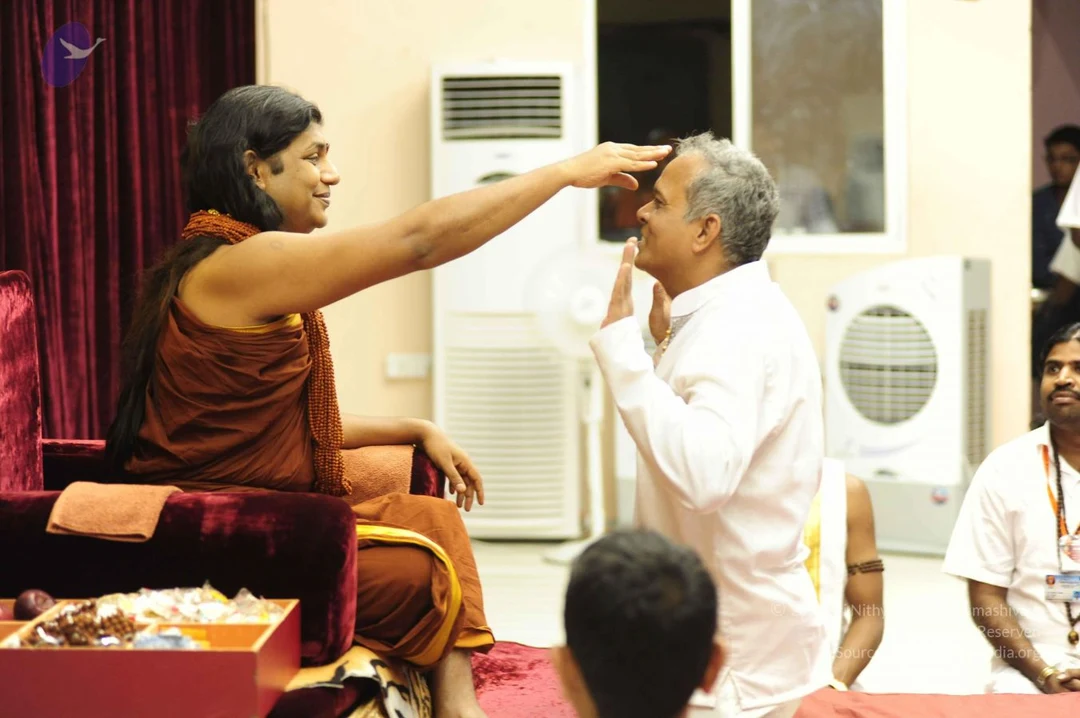
96 photosSource gallery
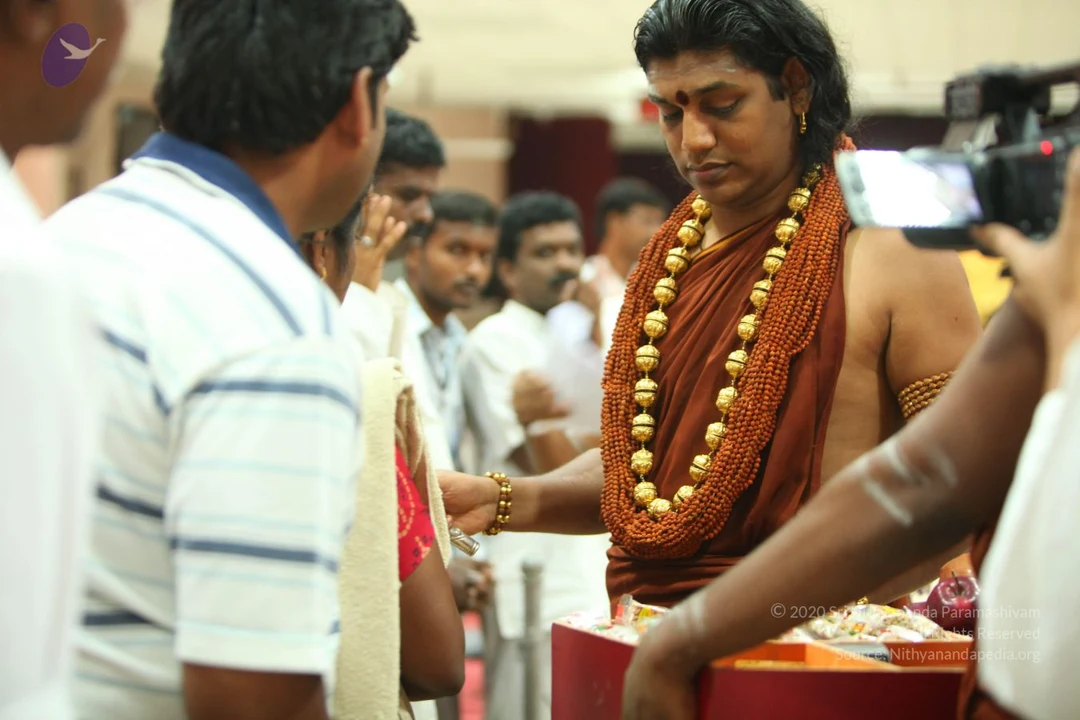
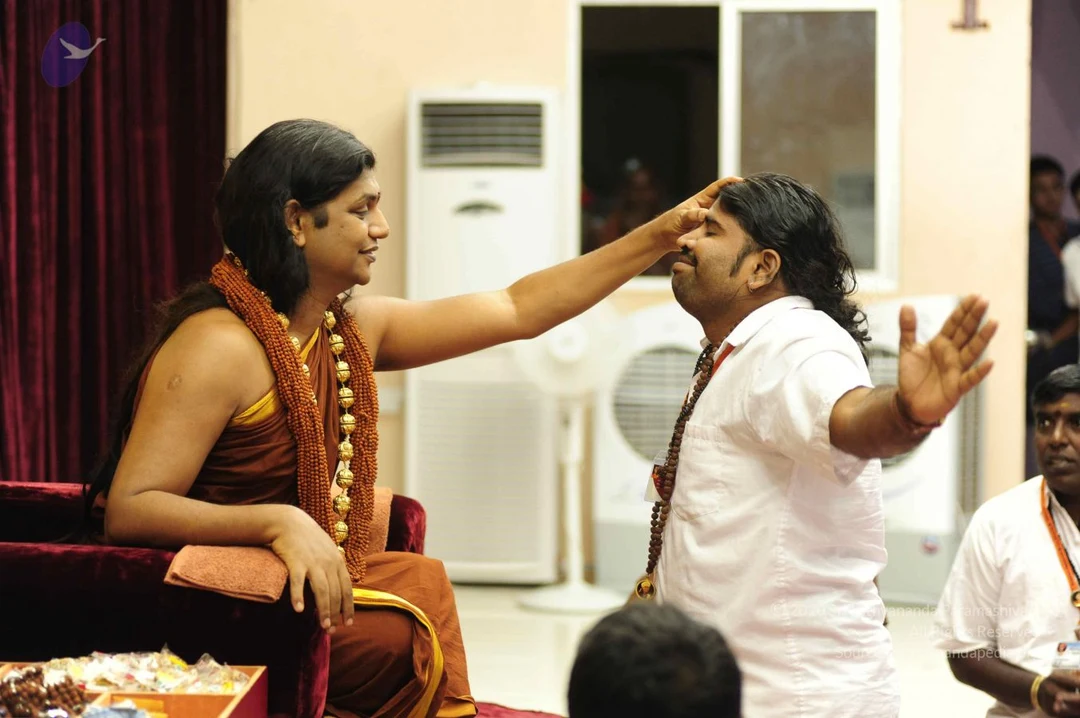
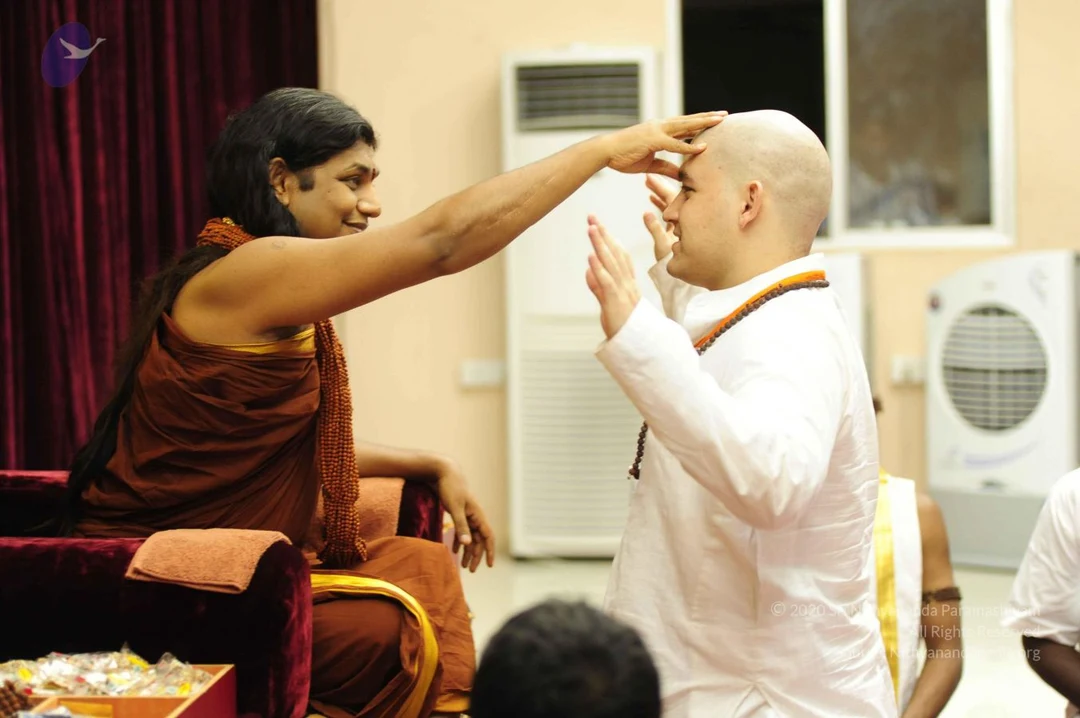
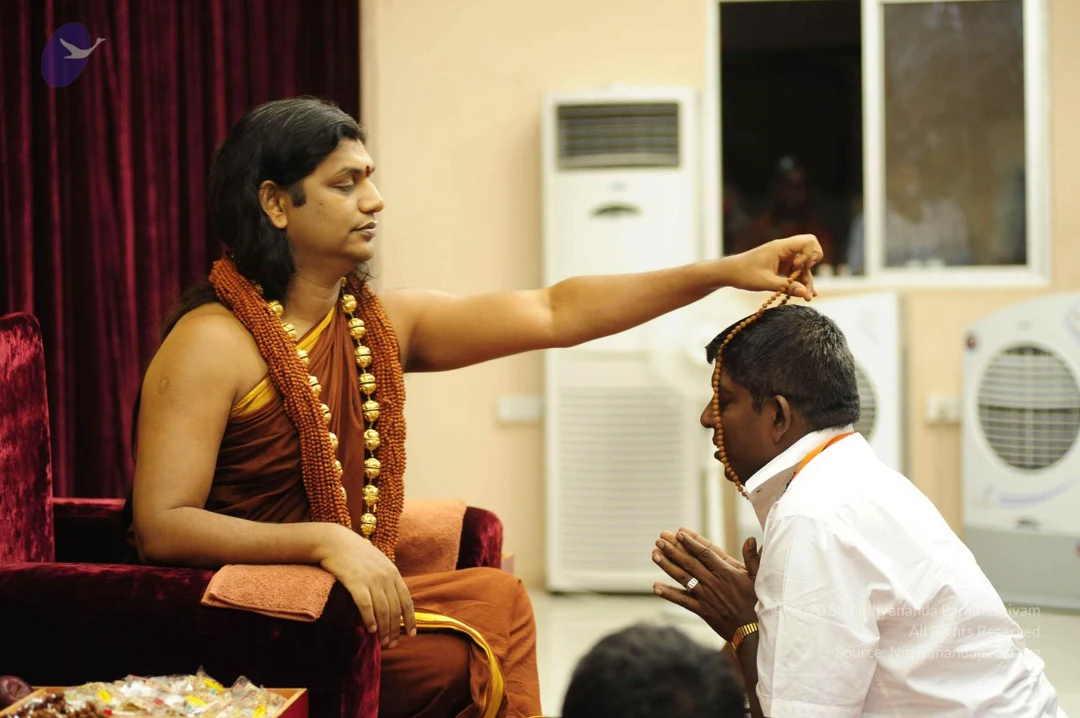
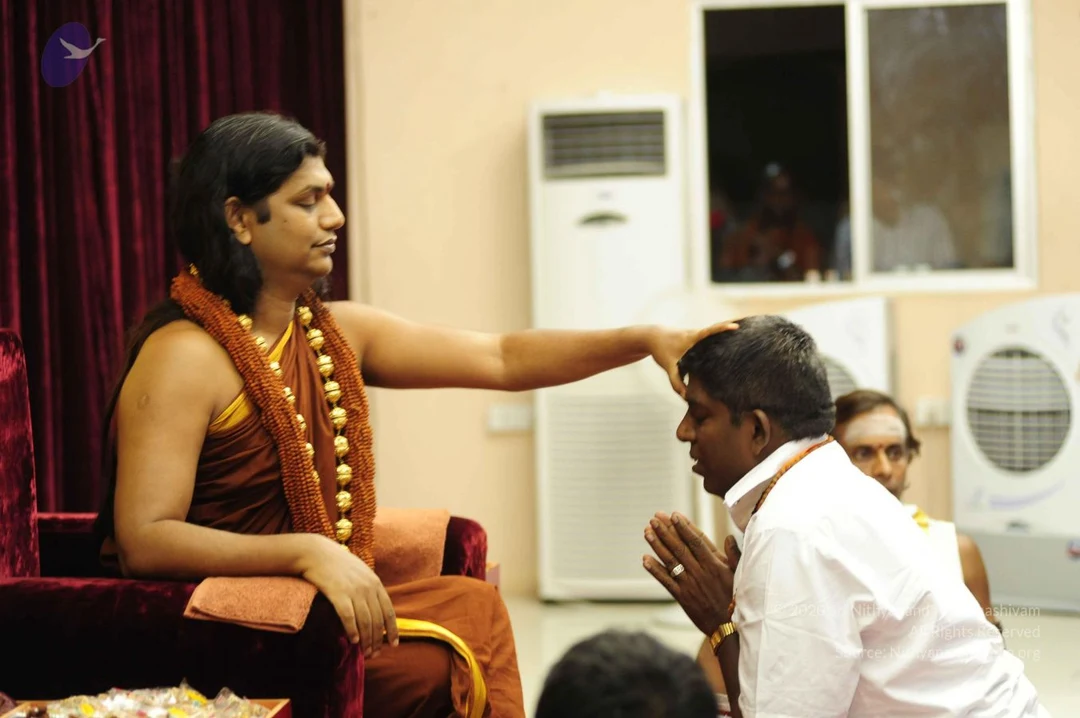
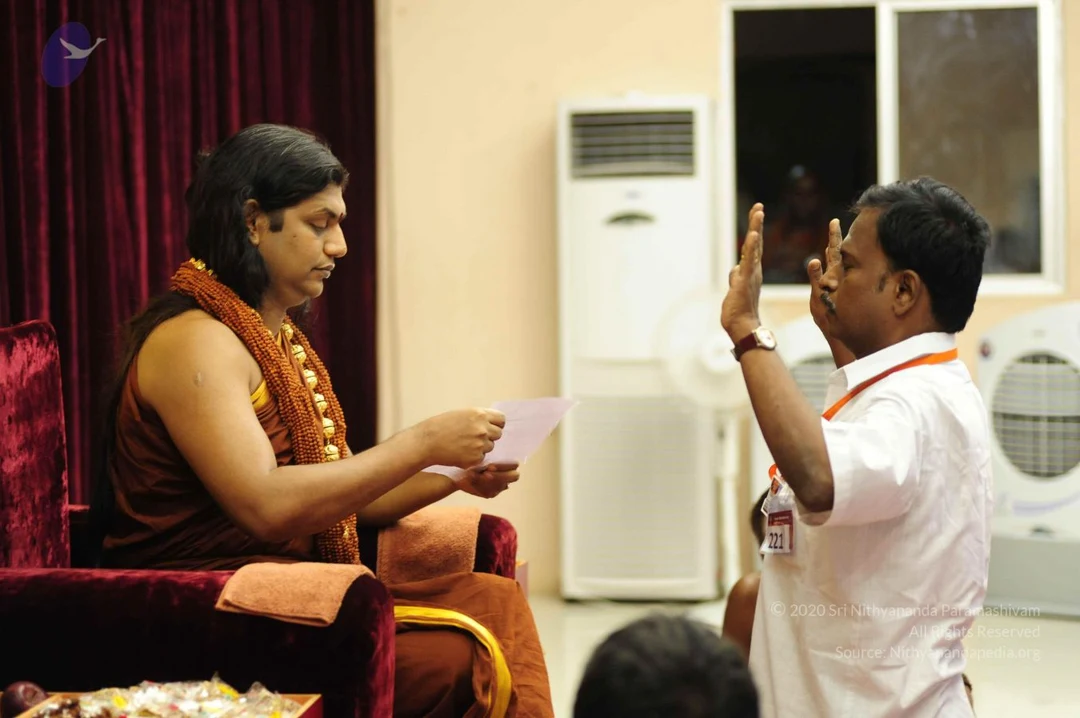
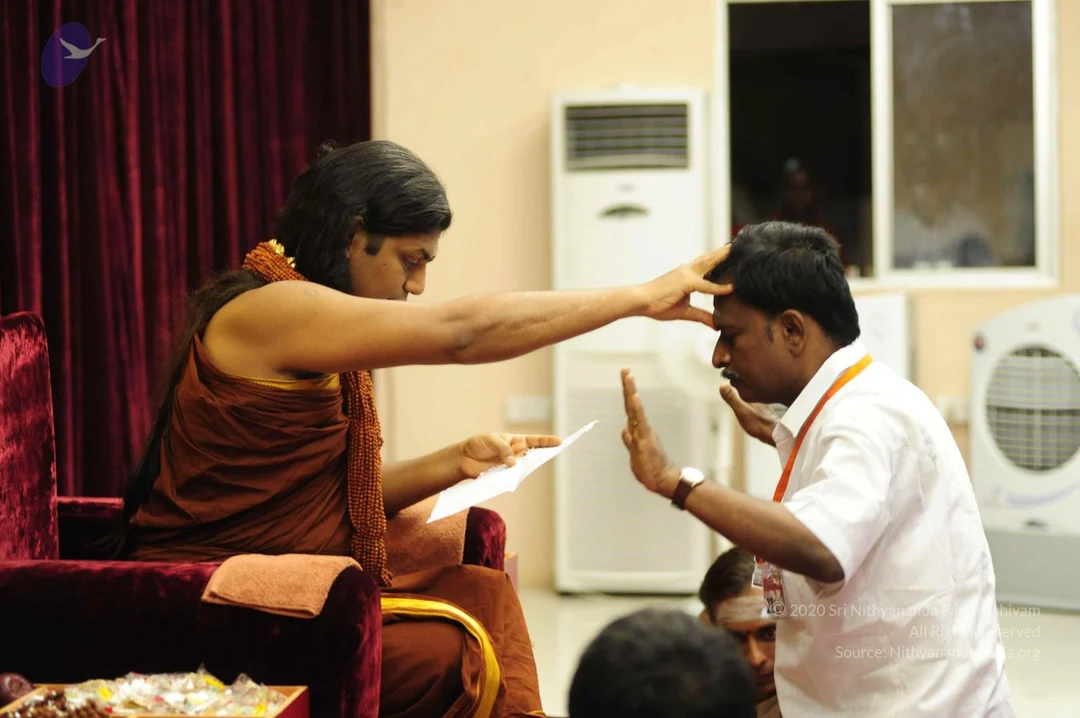
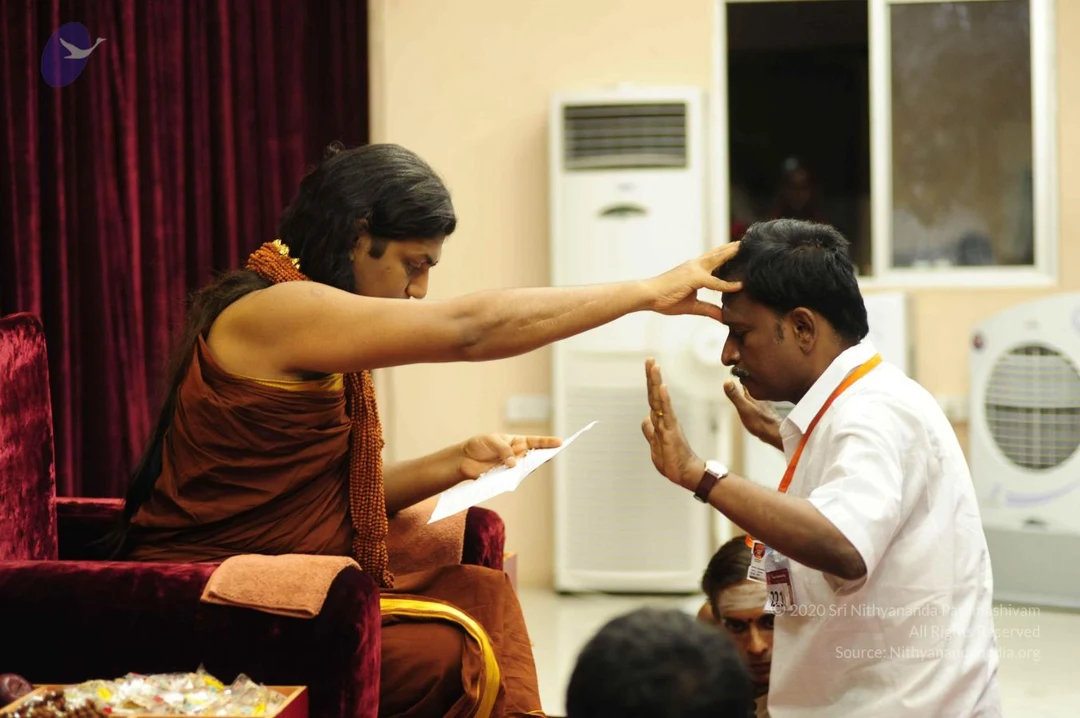
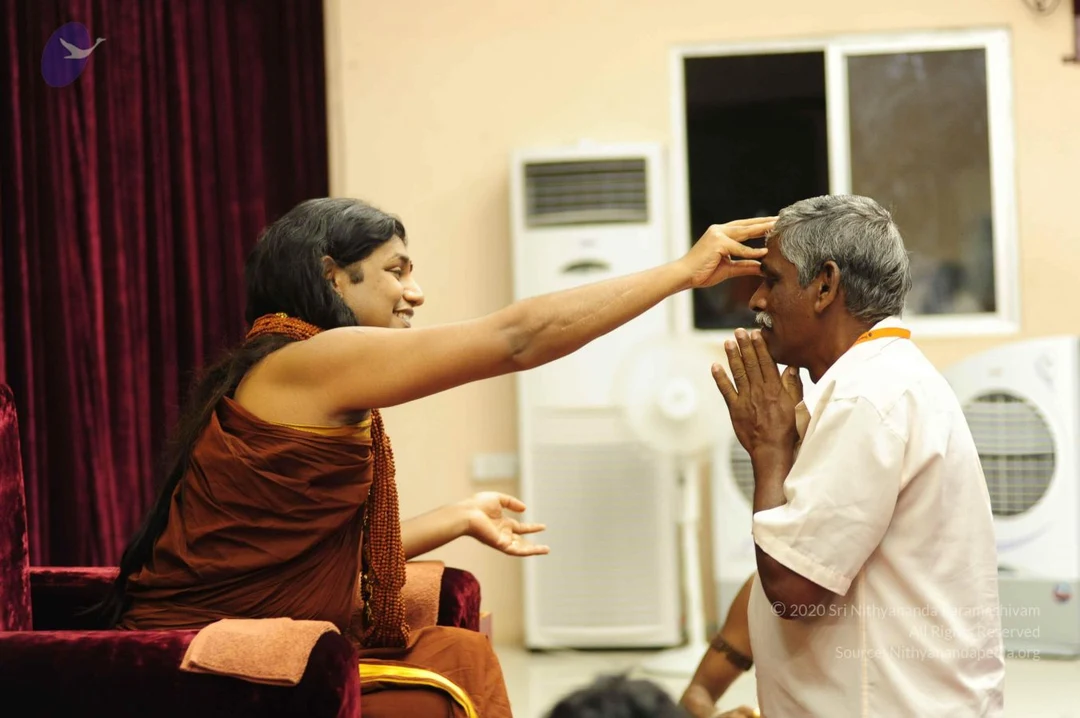
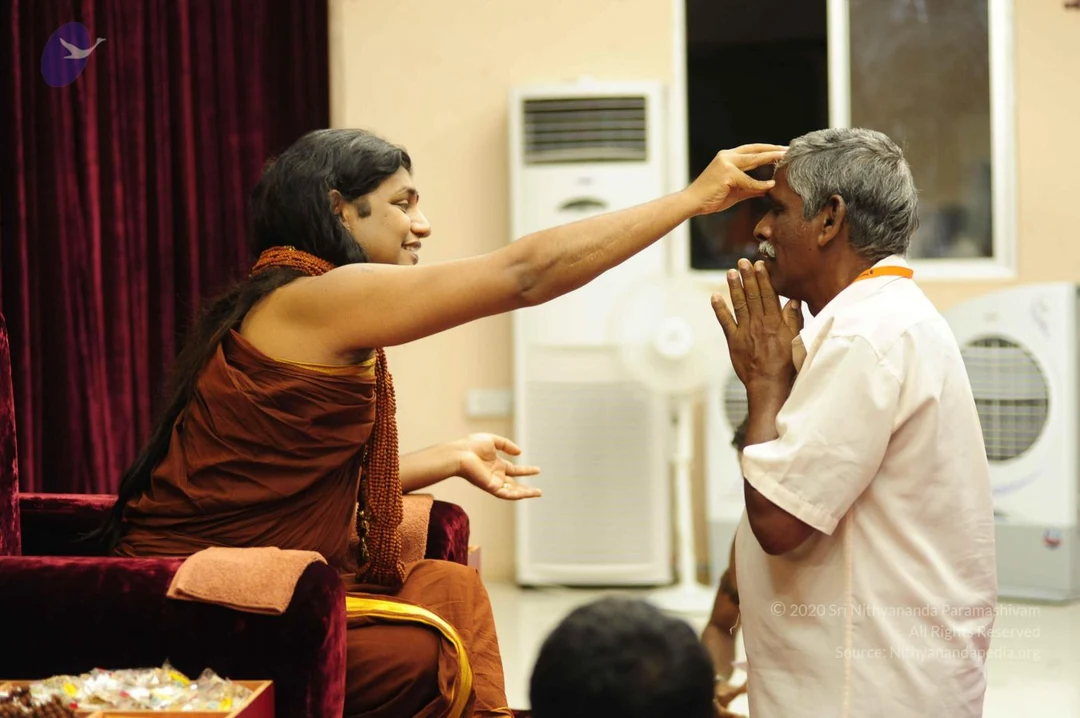
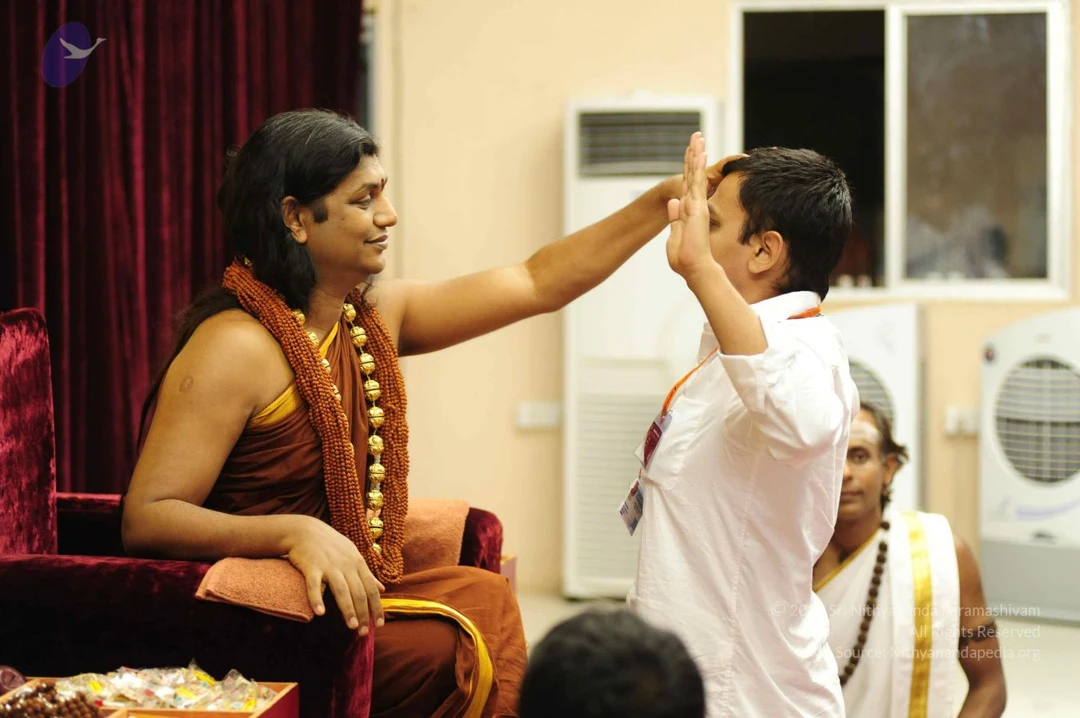
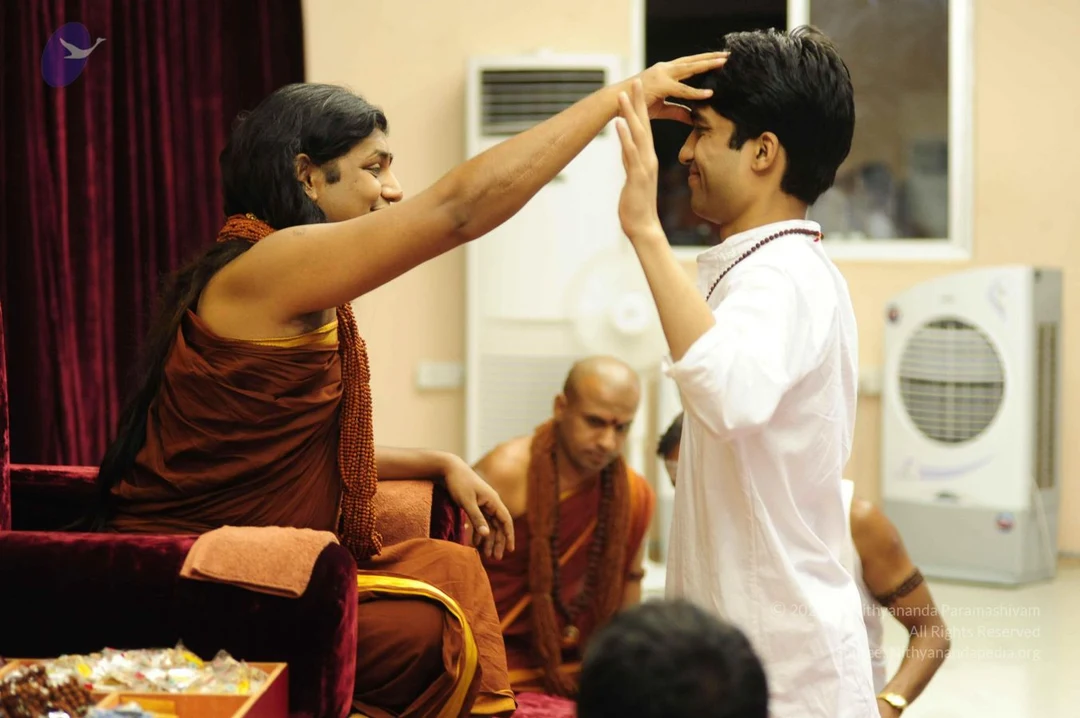
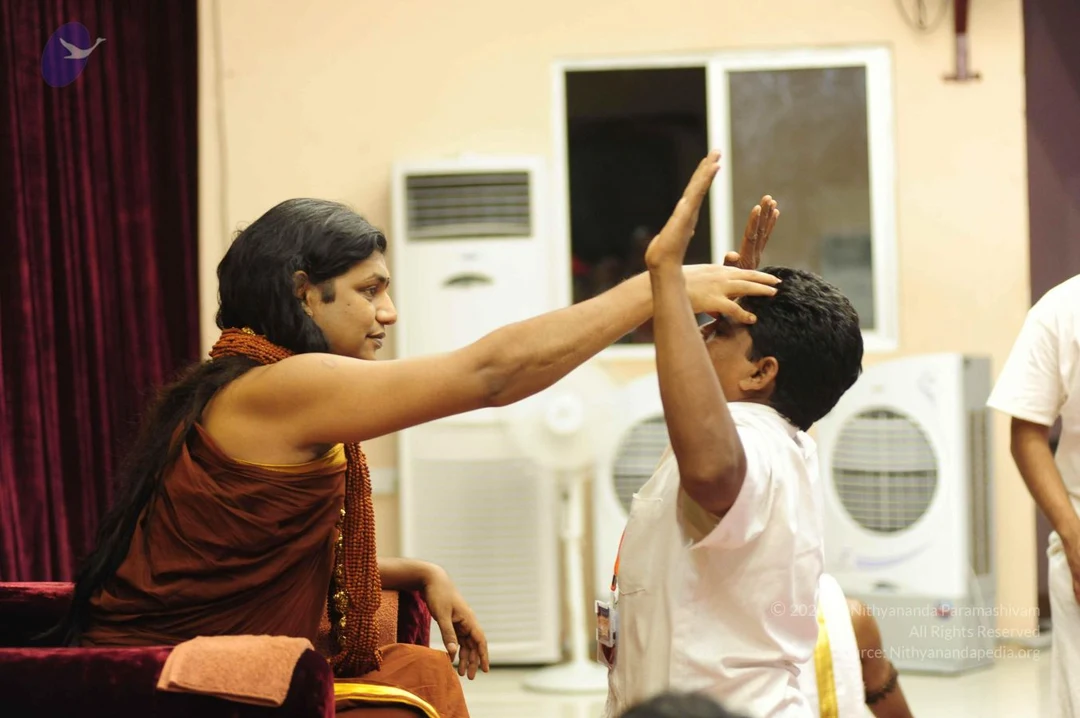
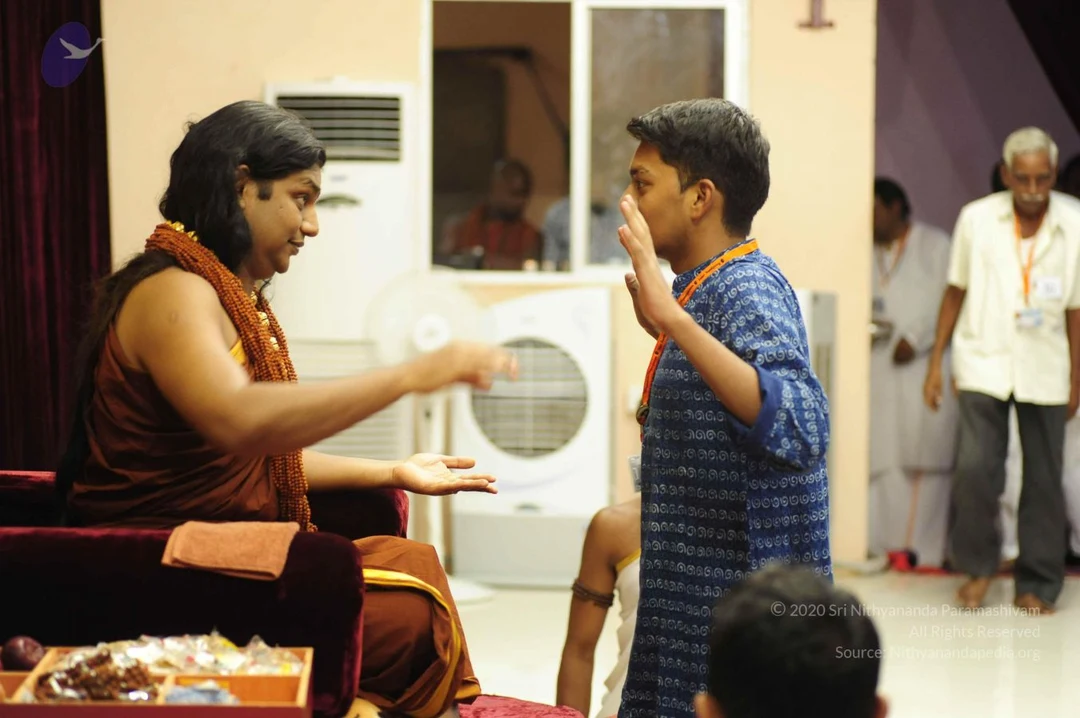
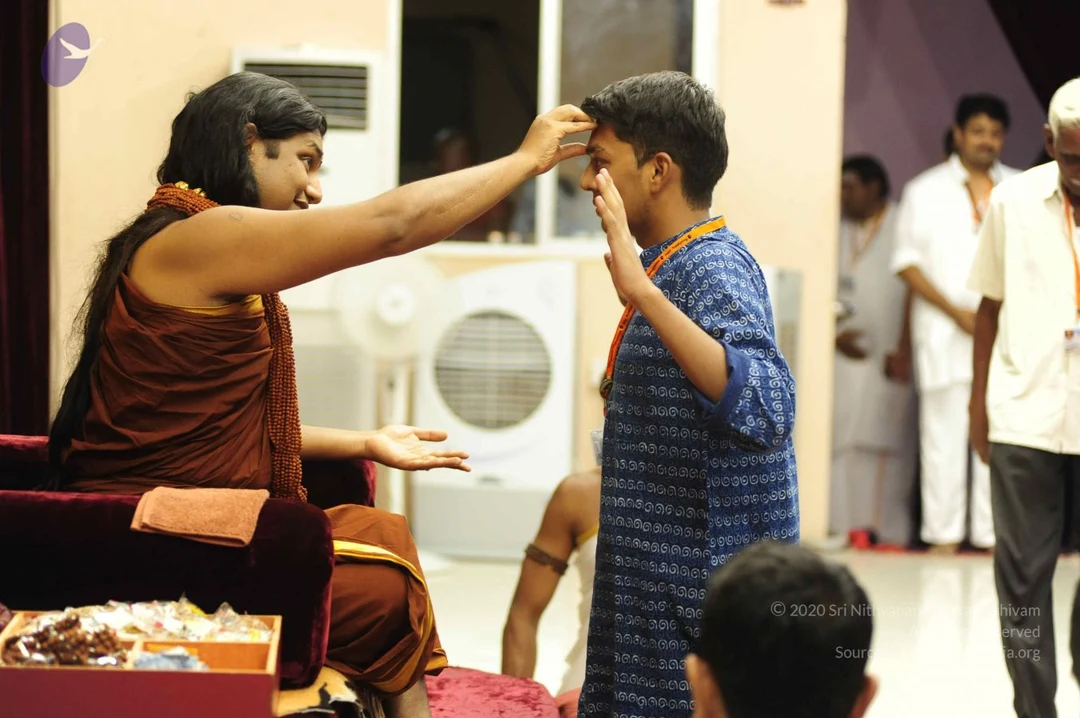
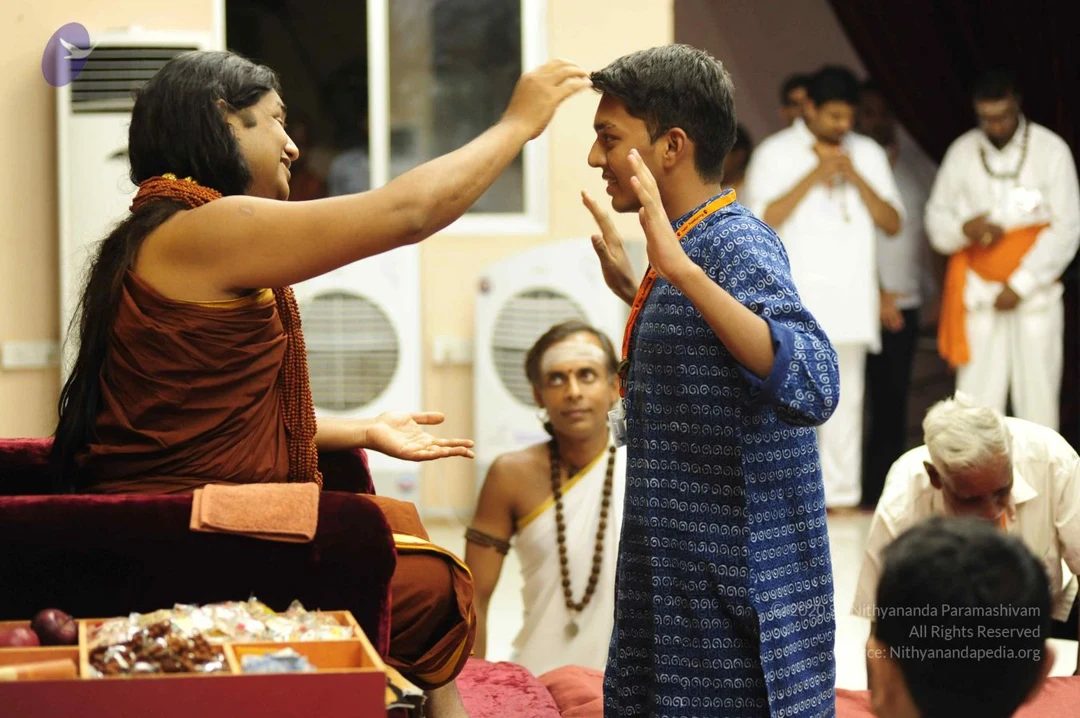
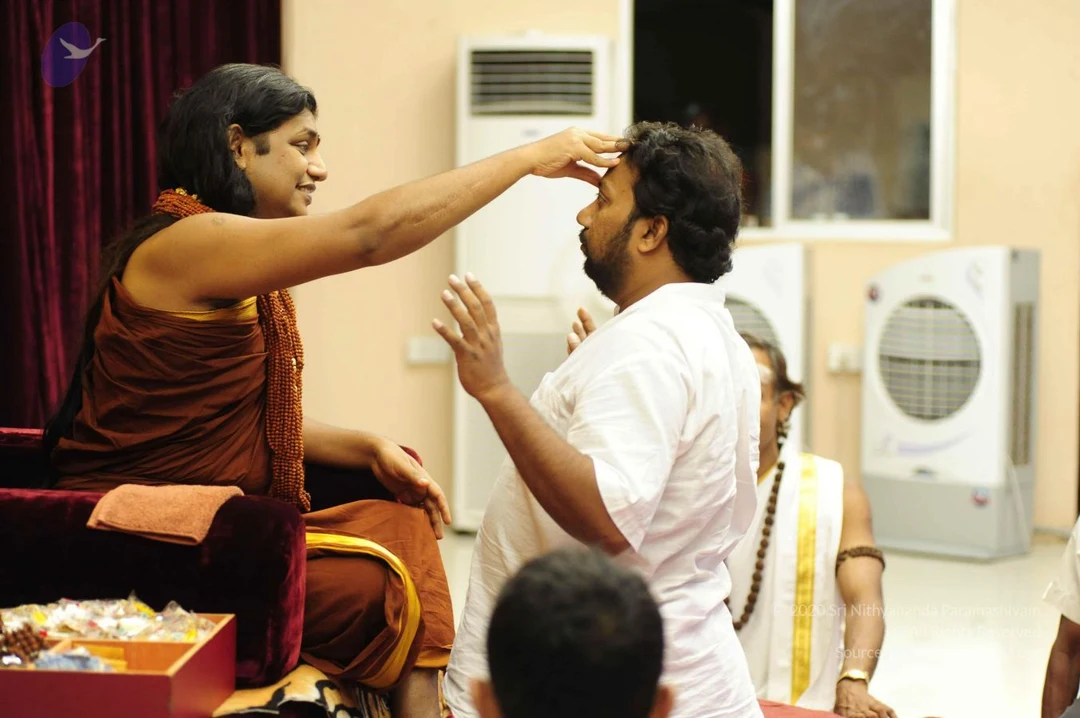
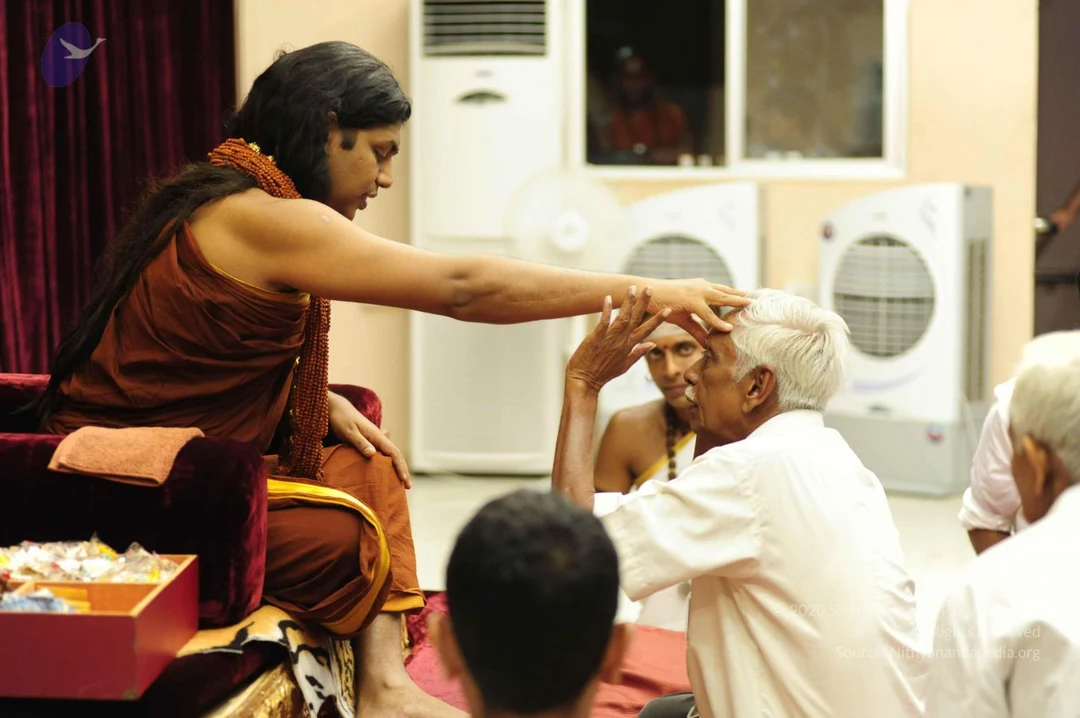
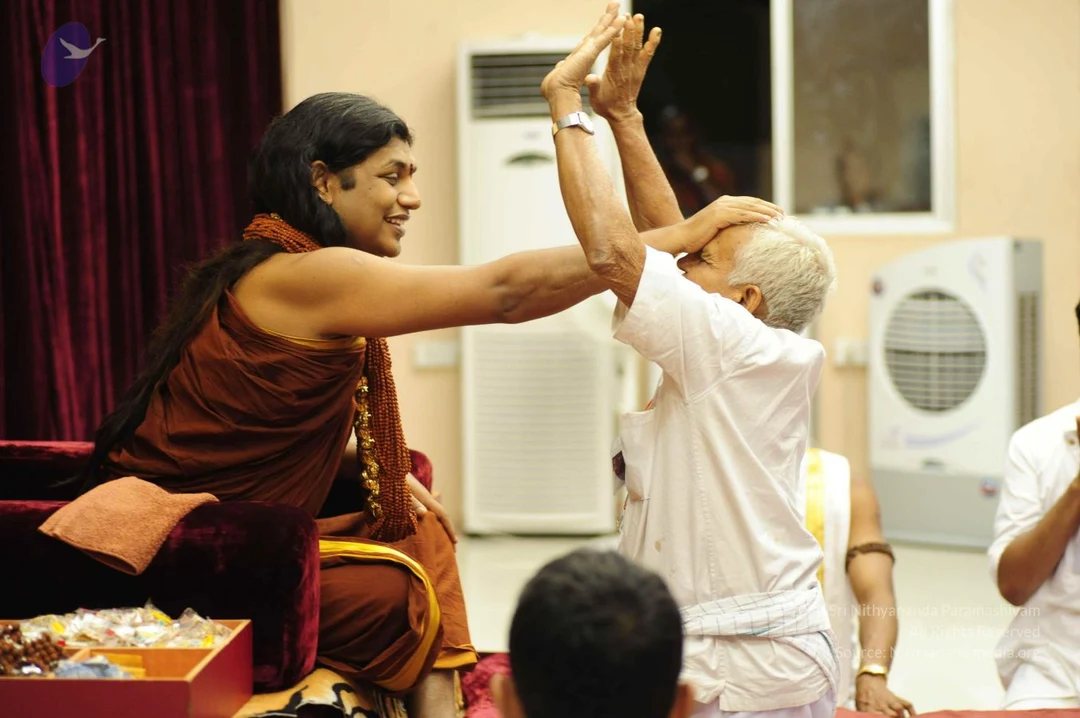
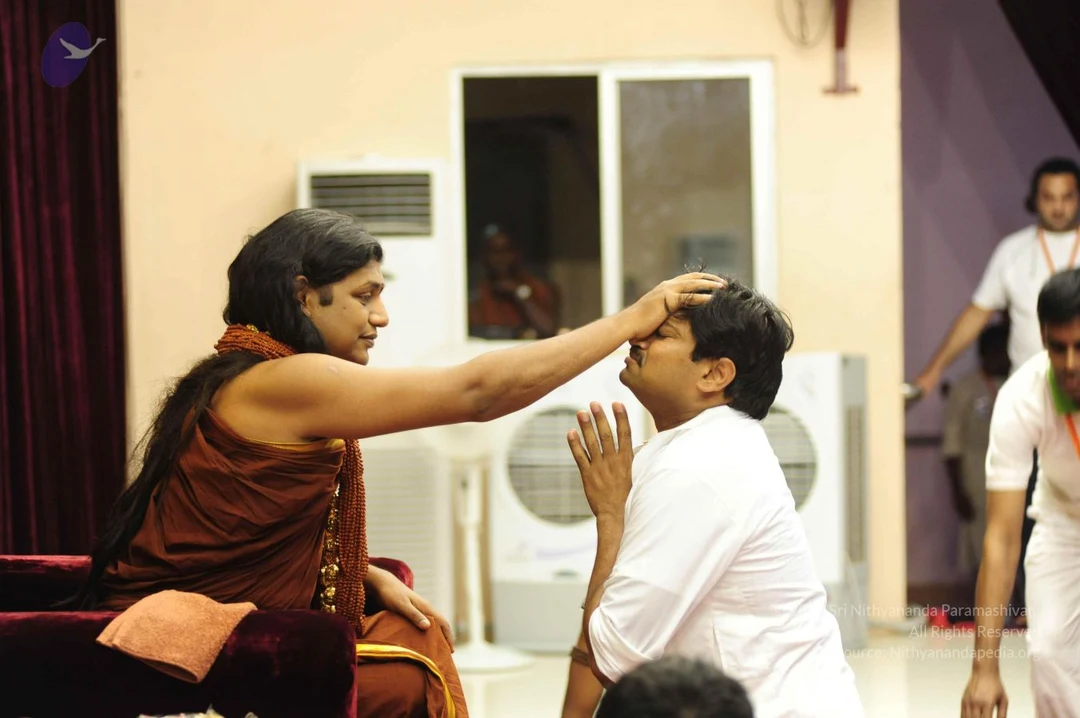
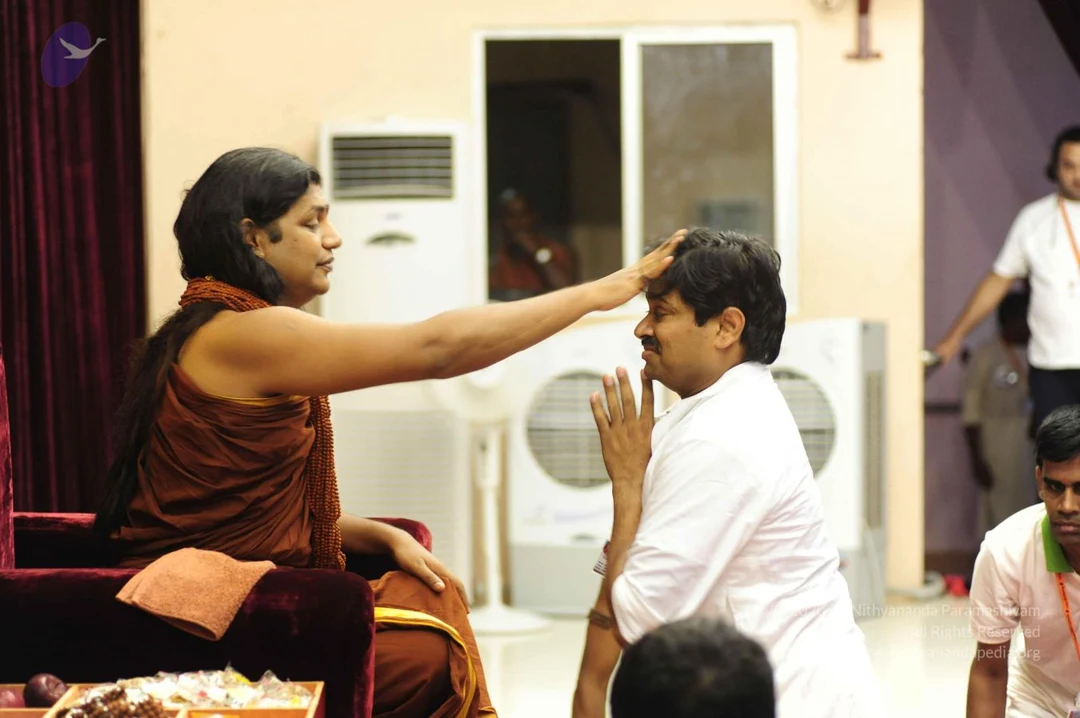
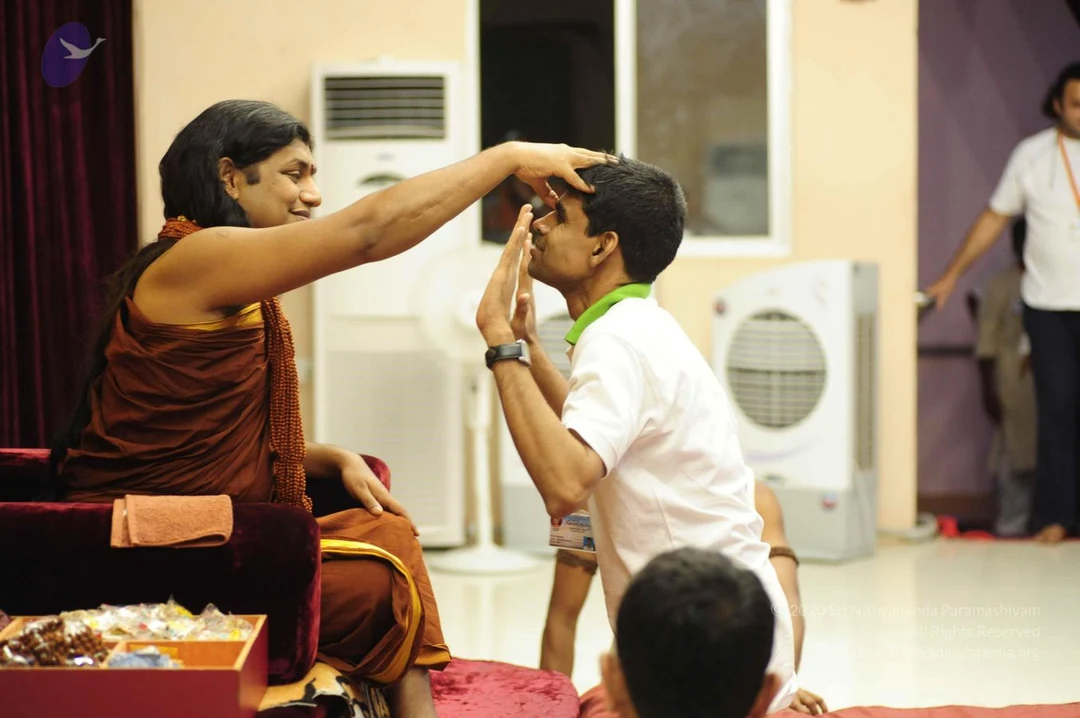
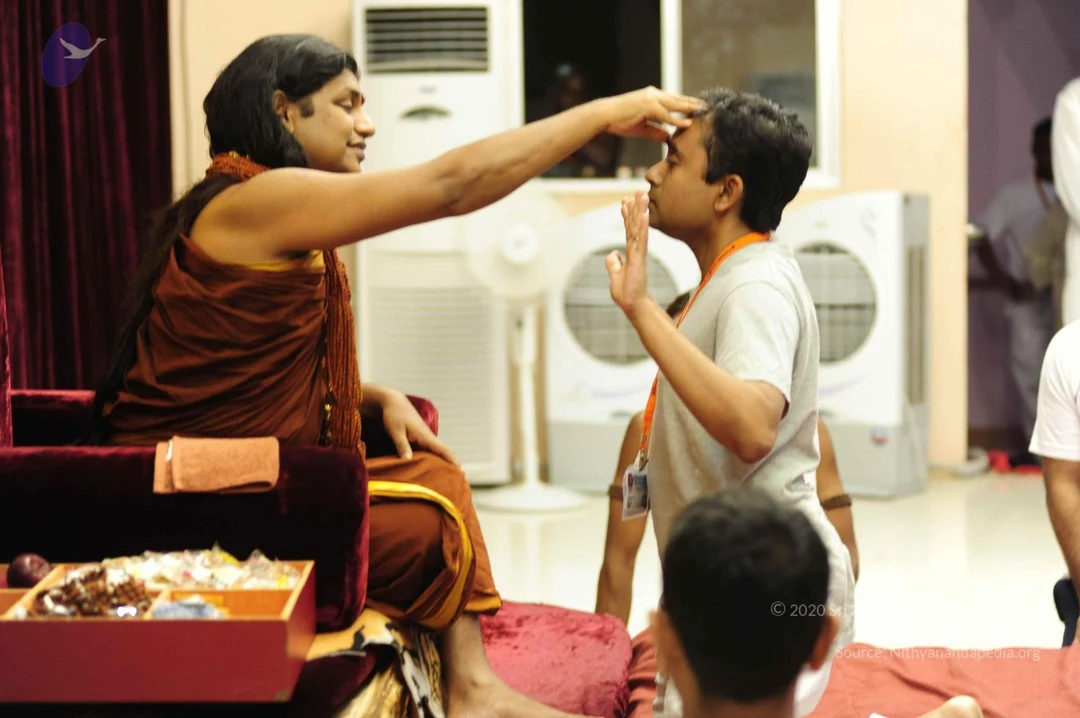
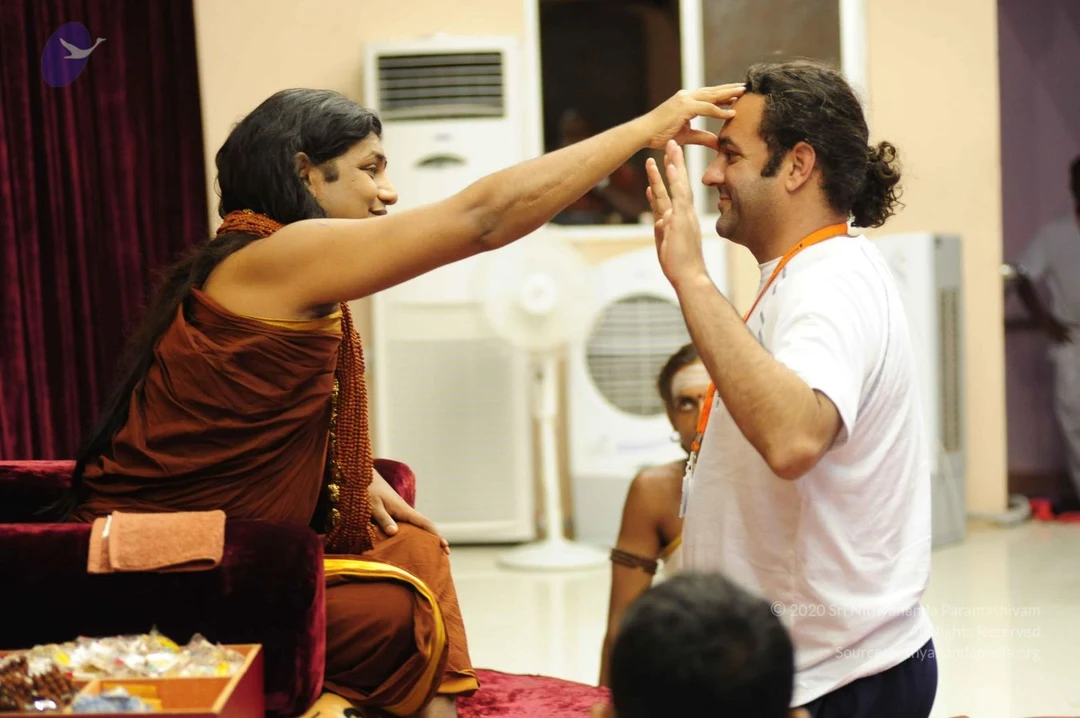
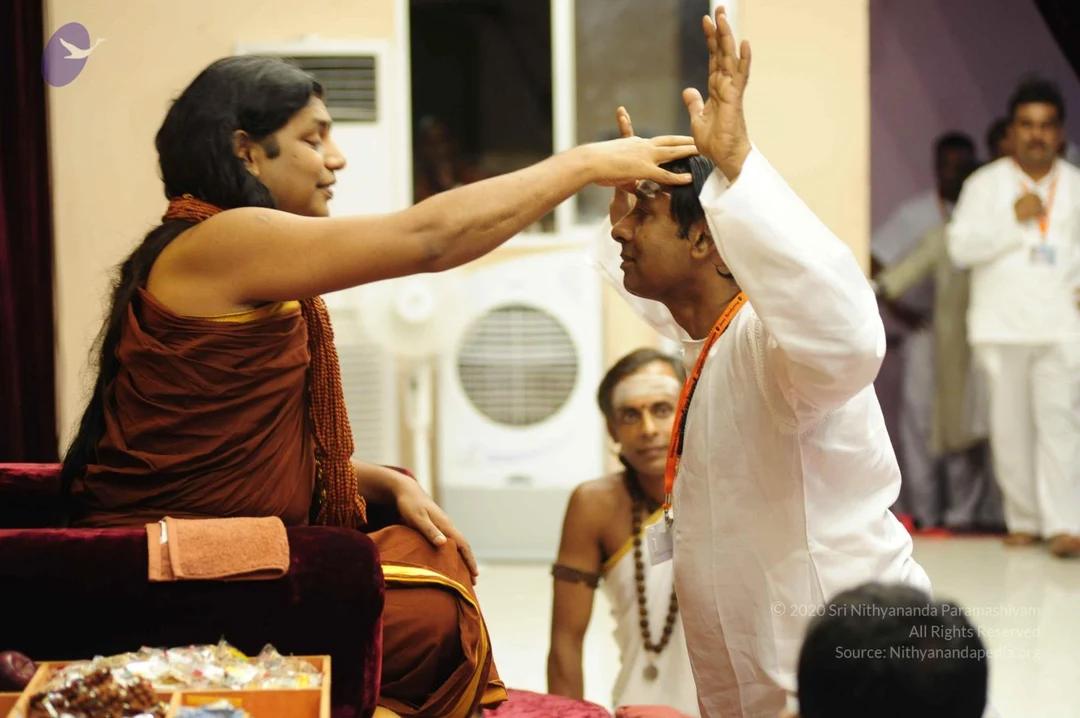
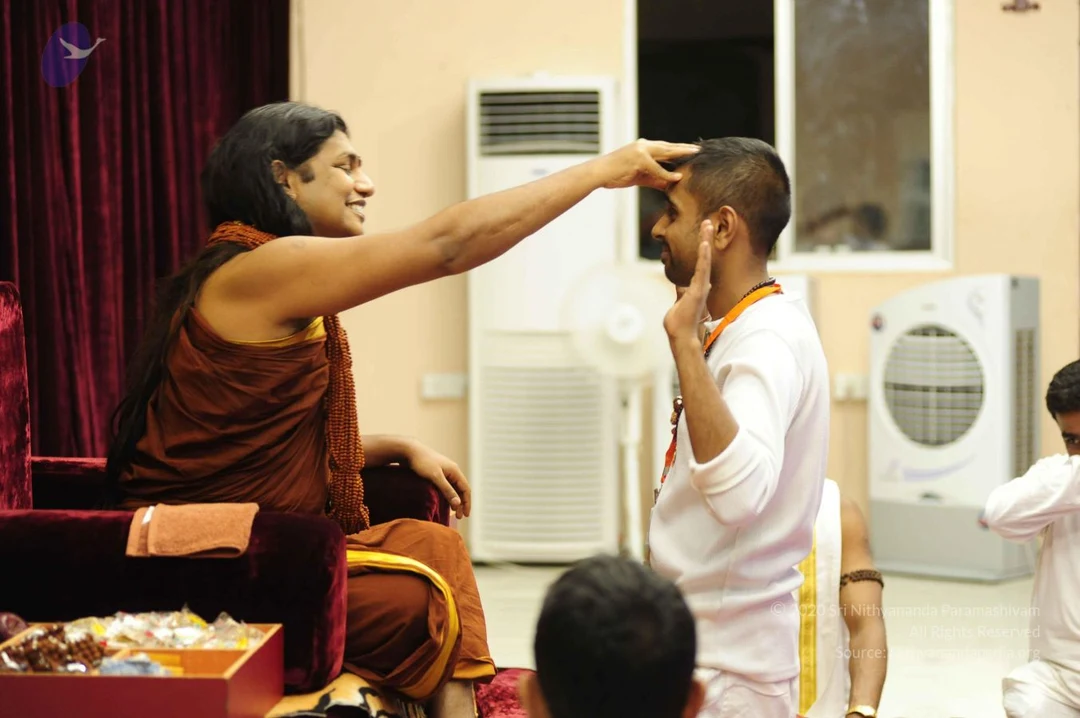
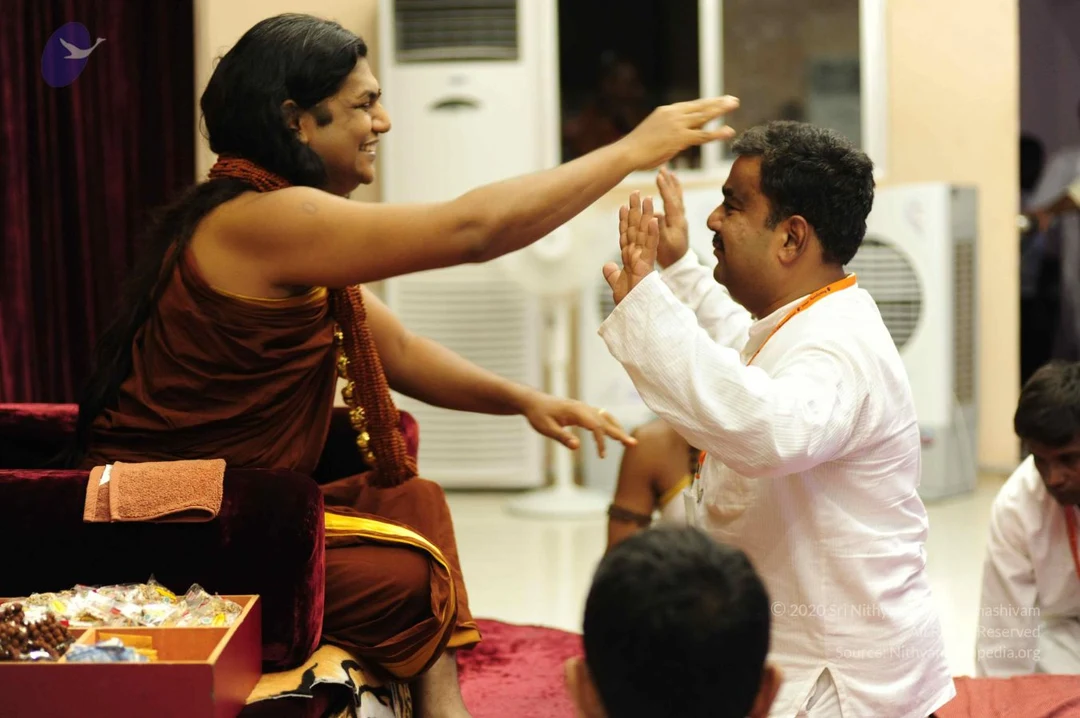
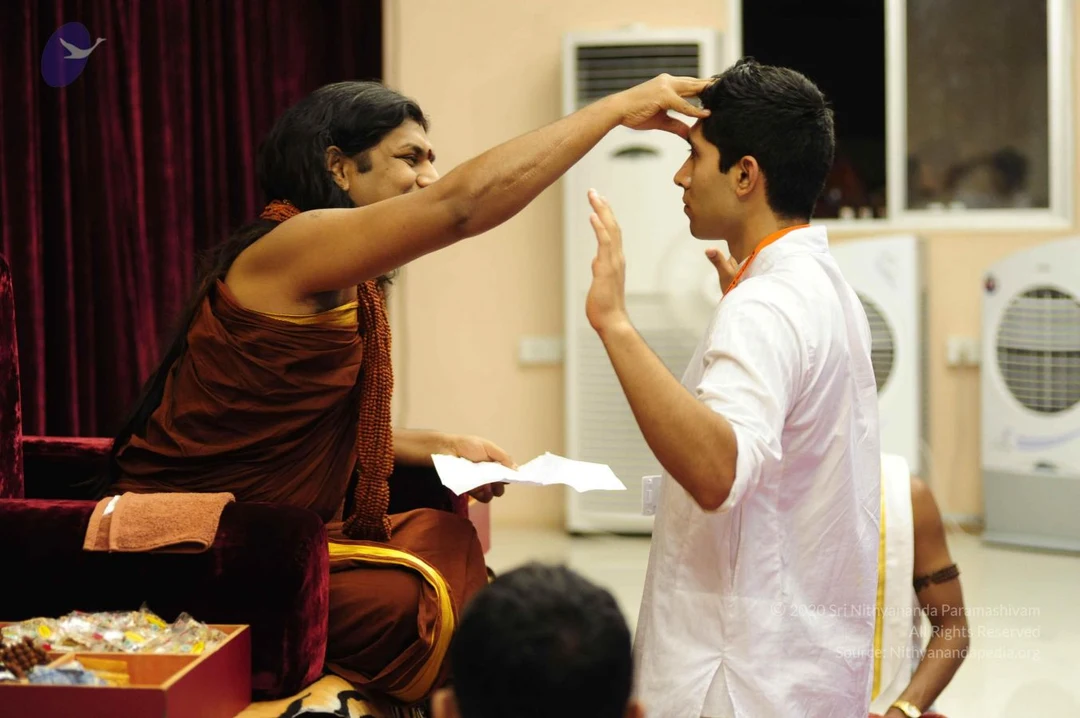
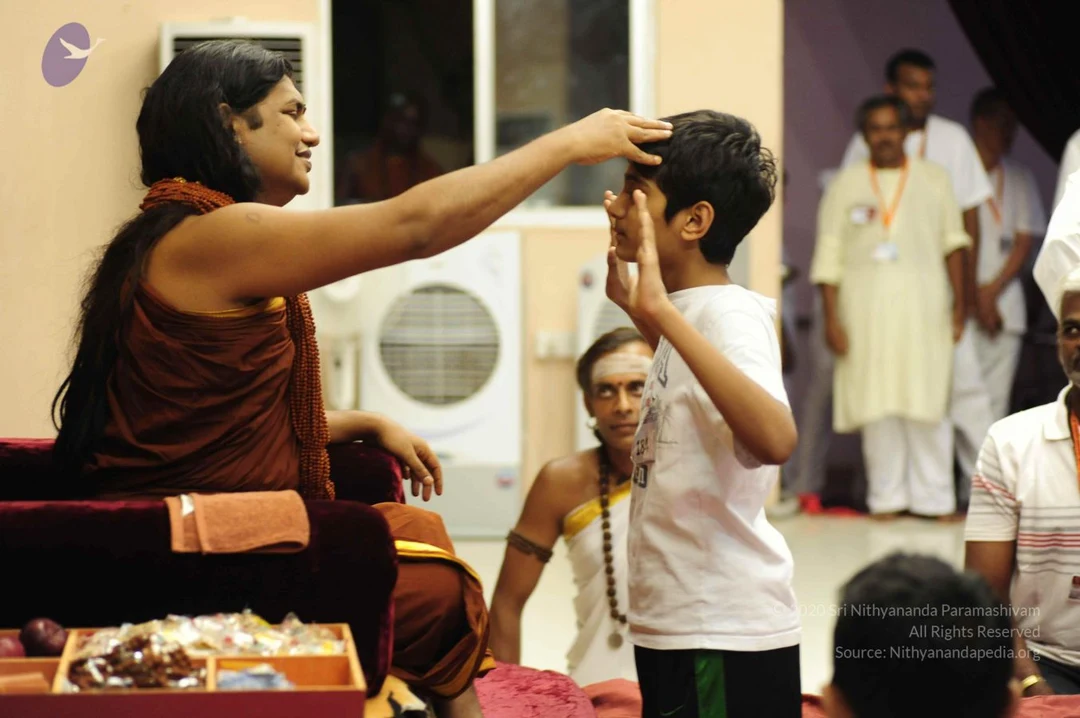
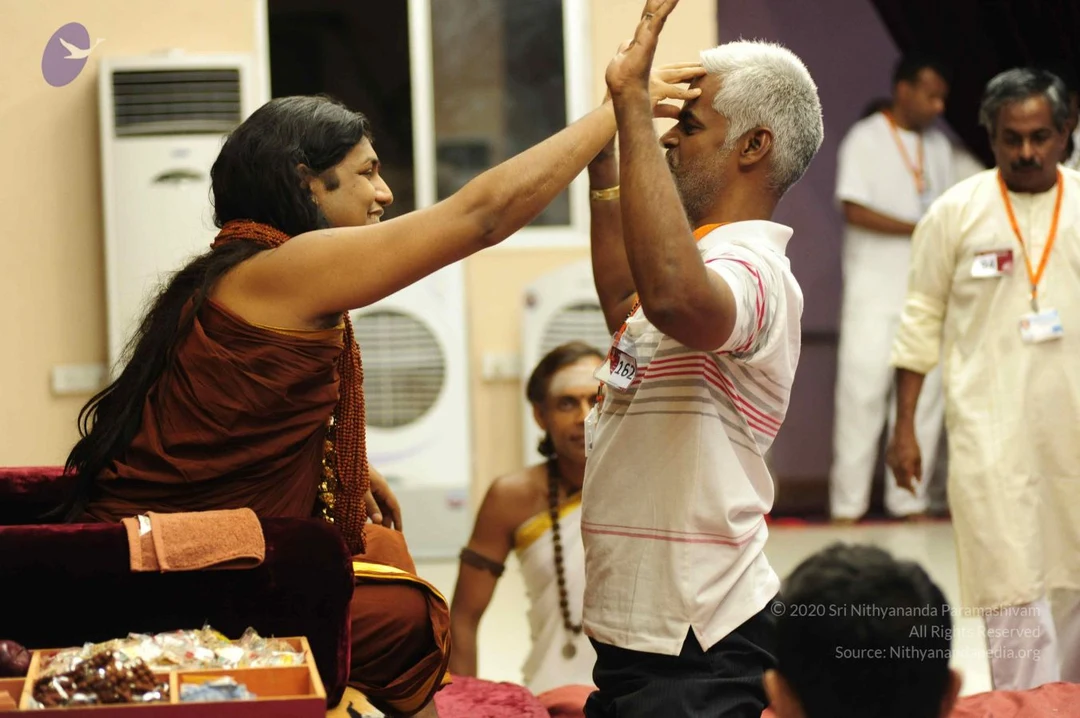
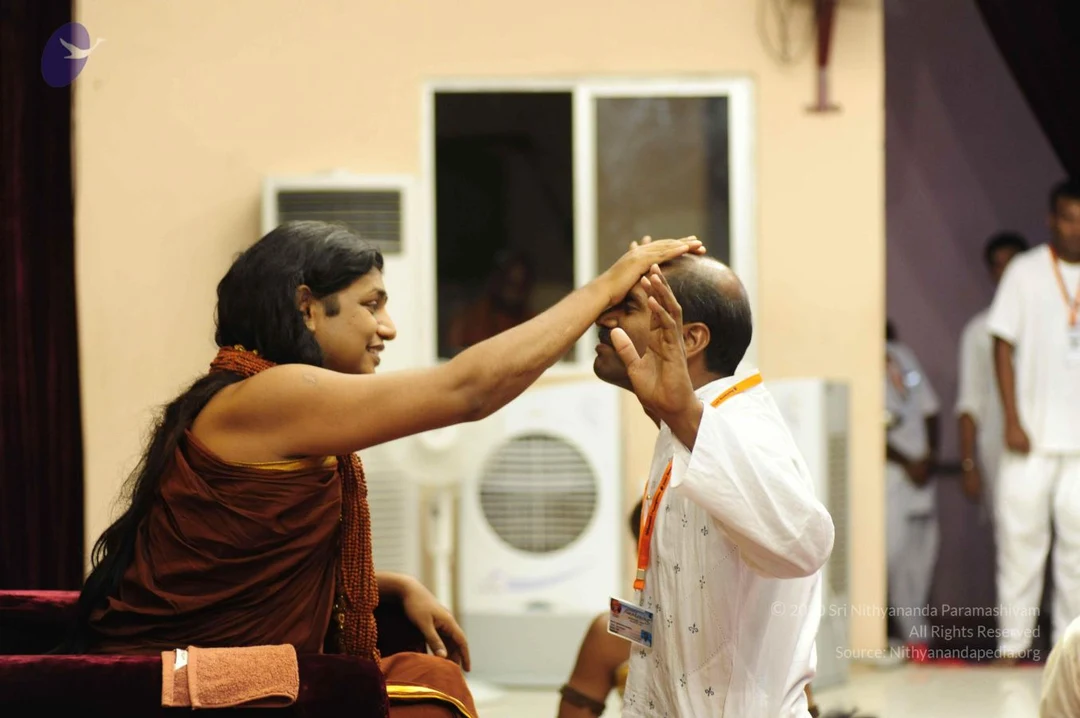
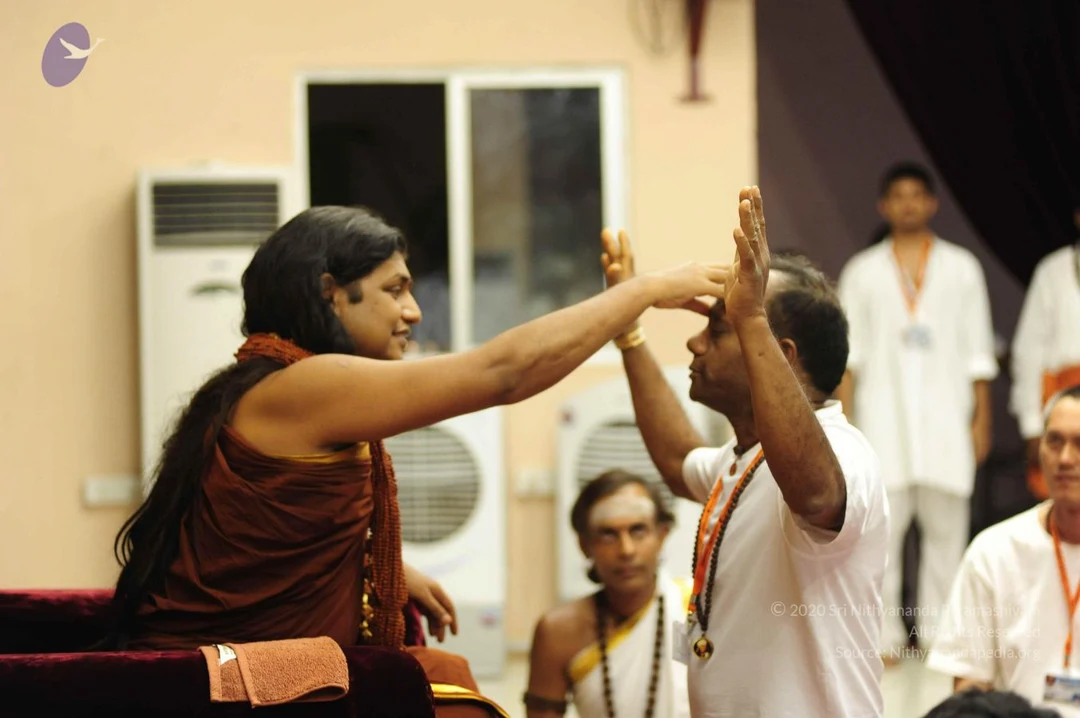
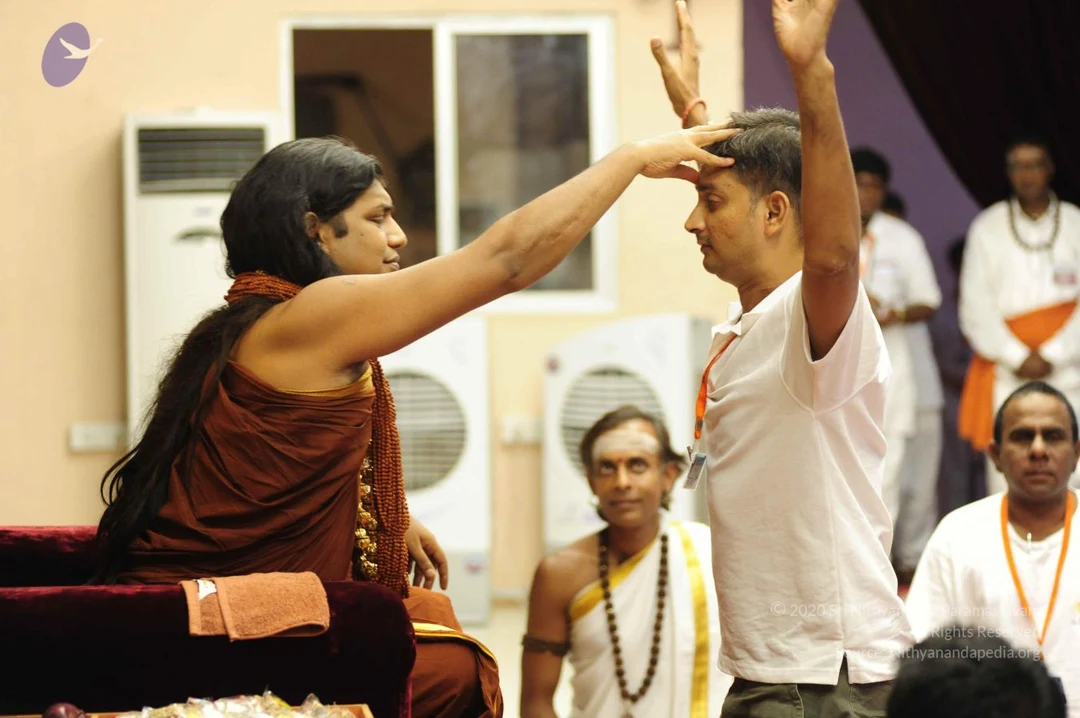
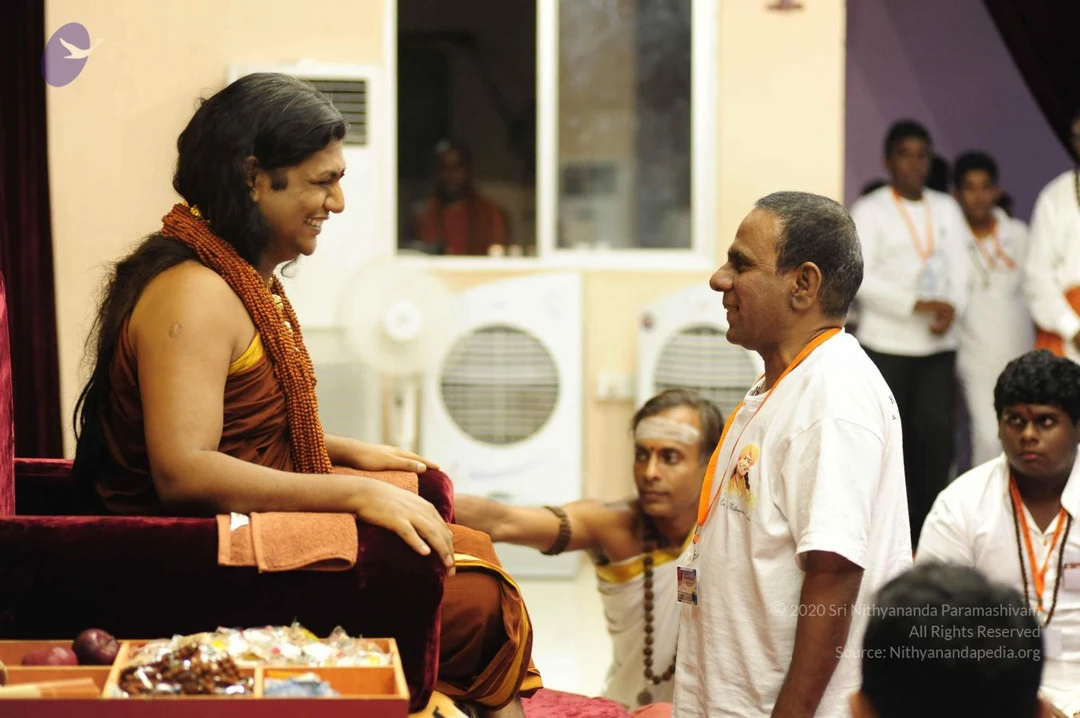
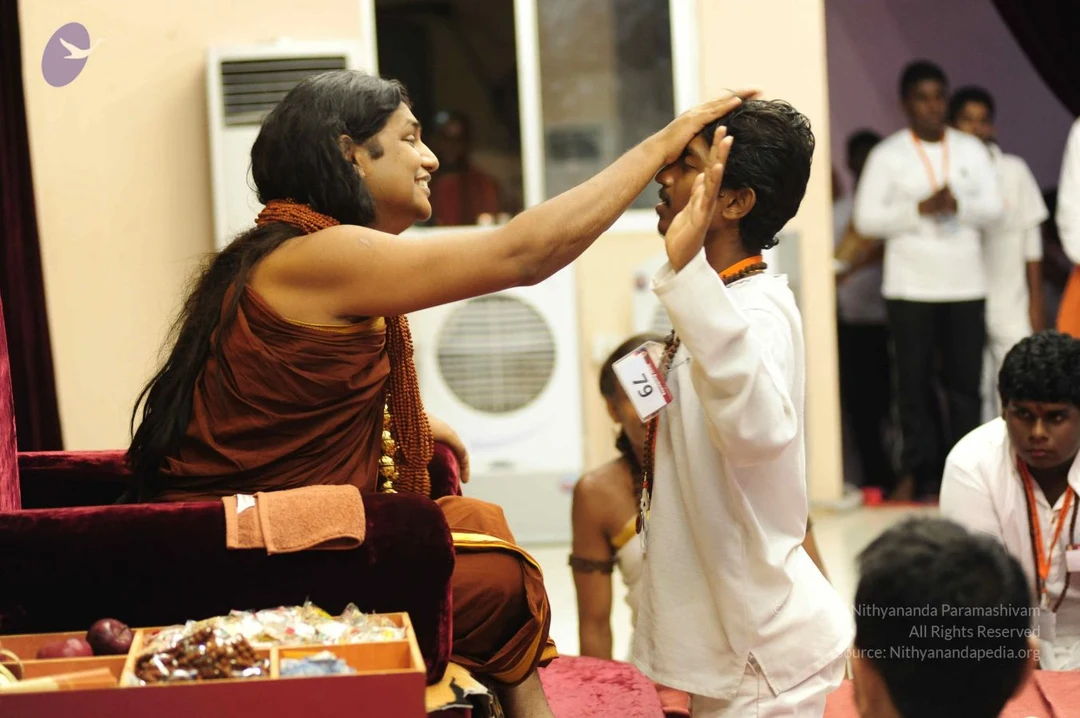
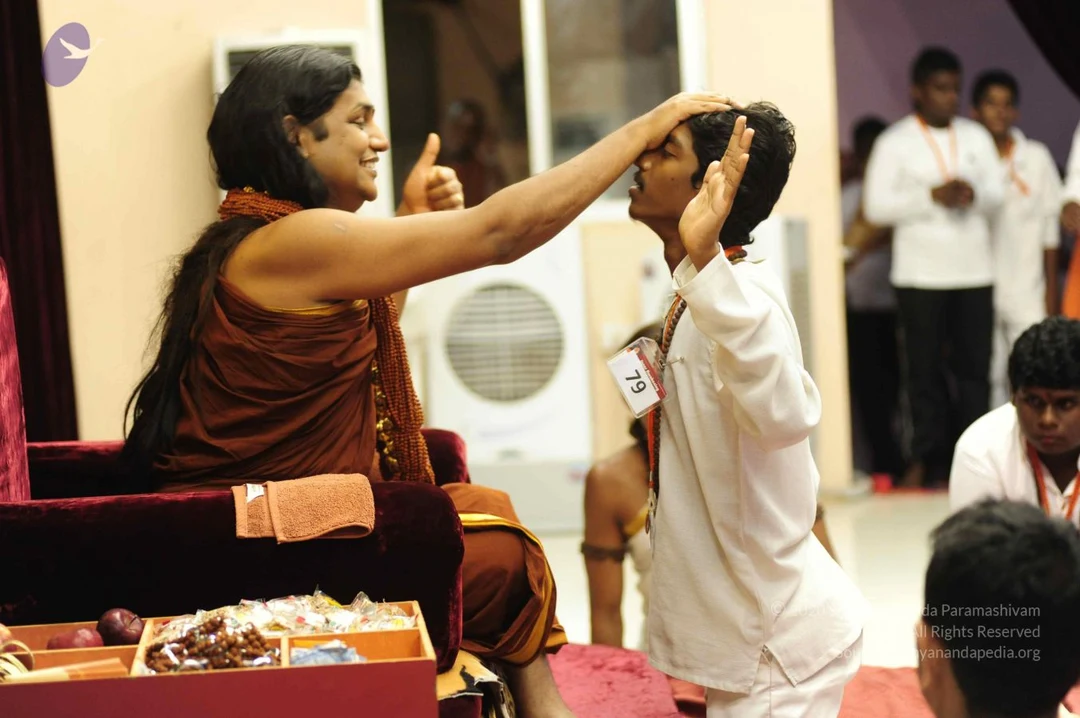
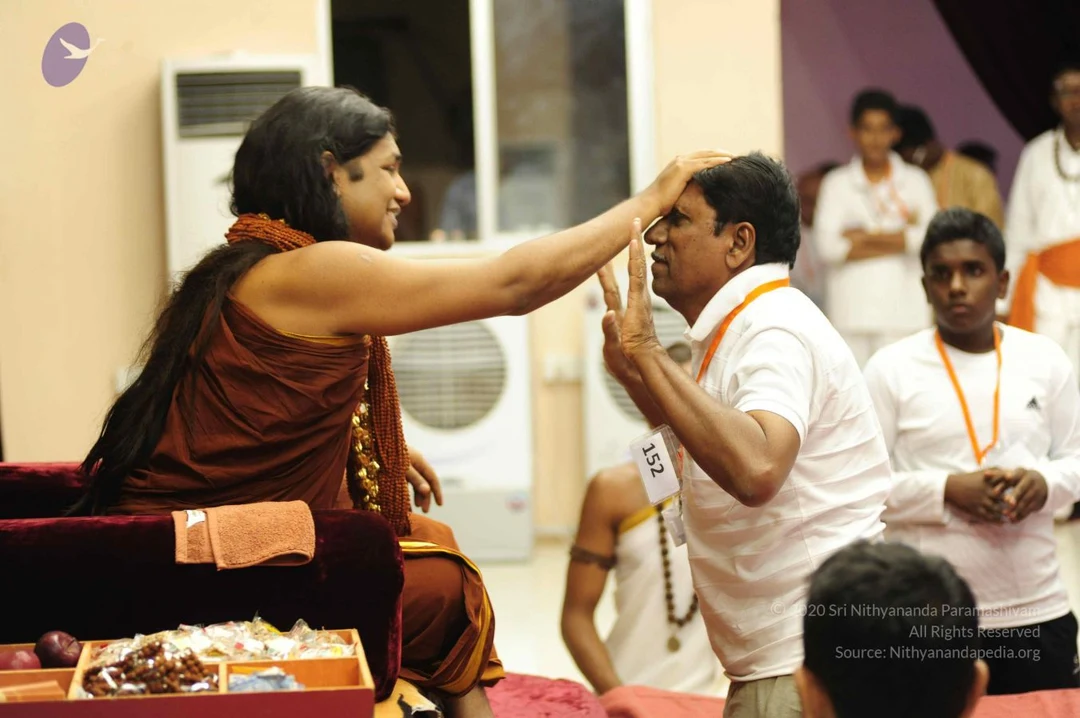
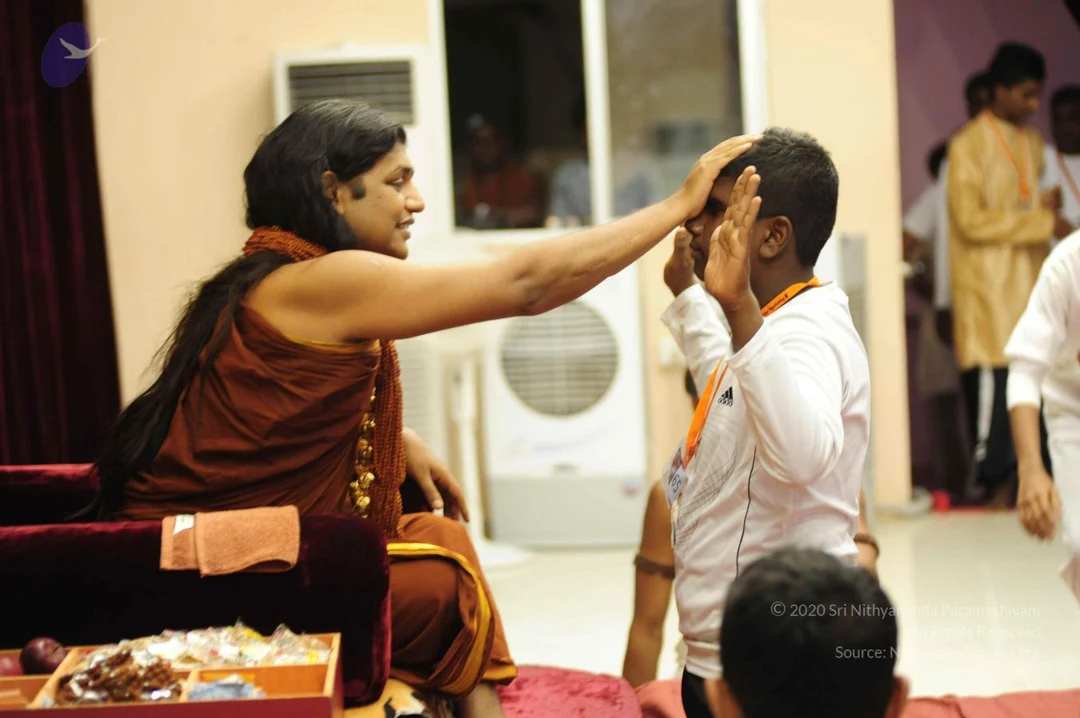
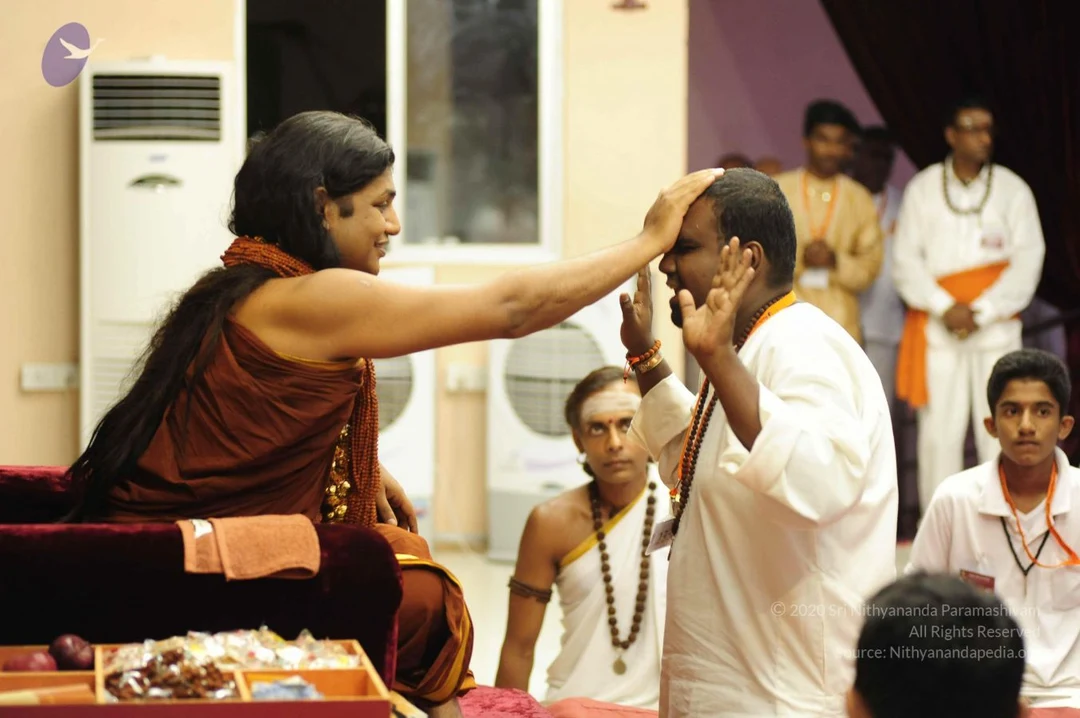
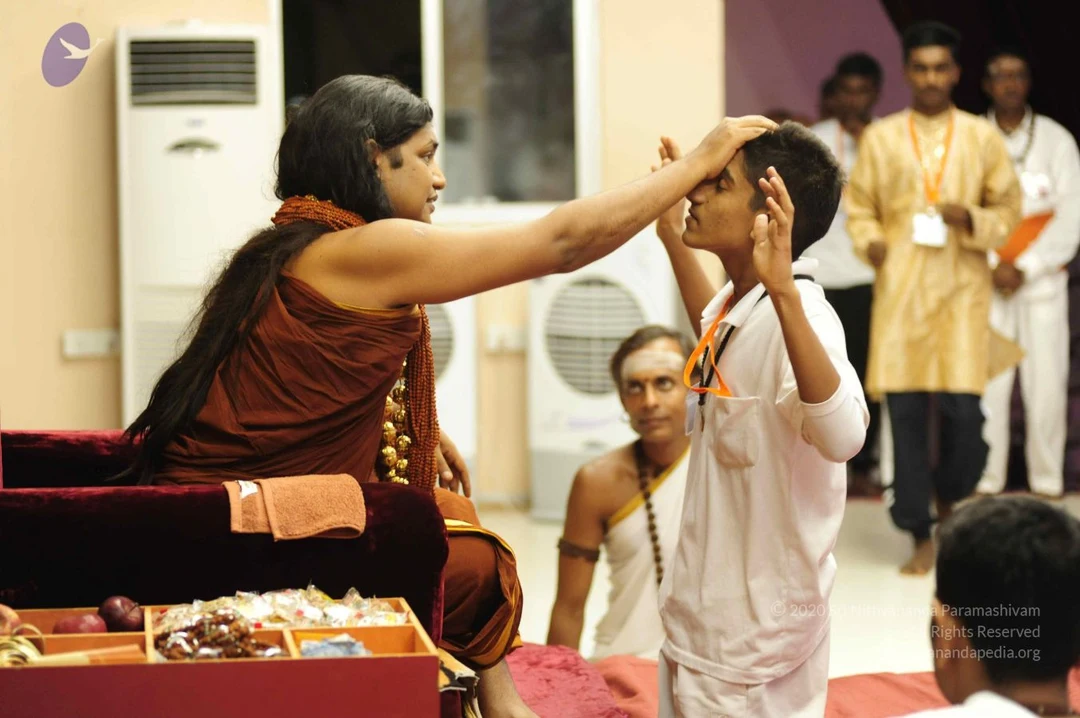
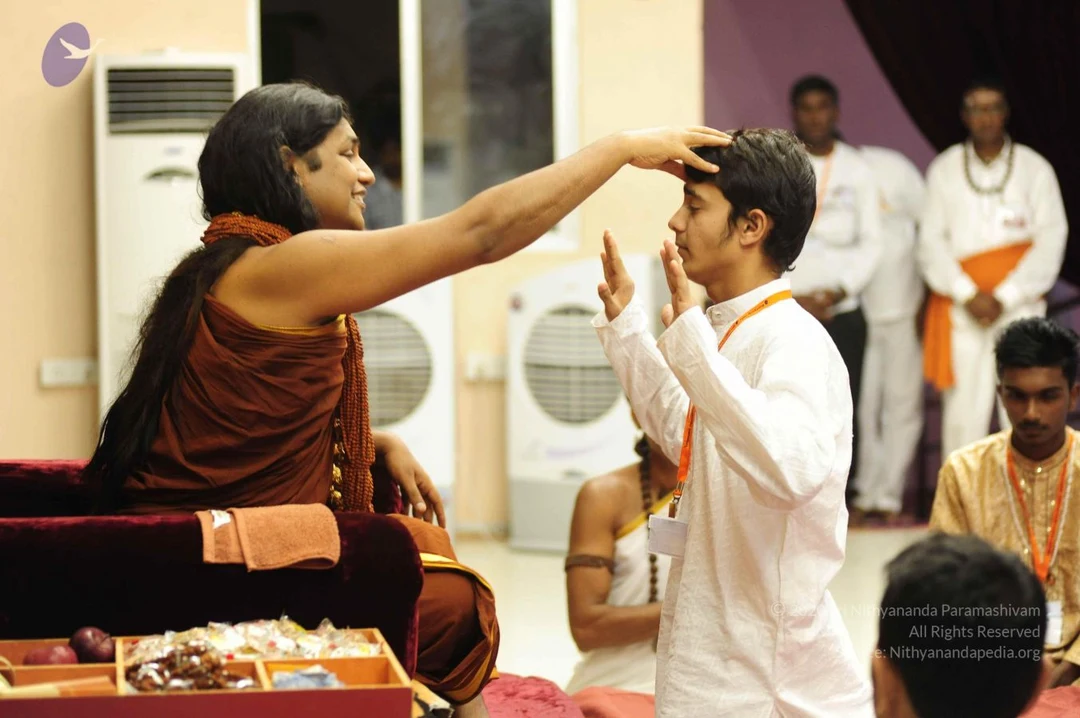
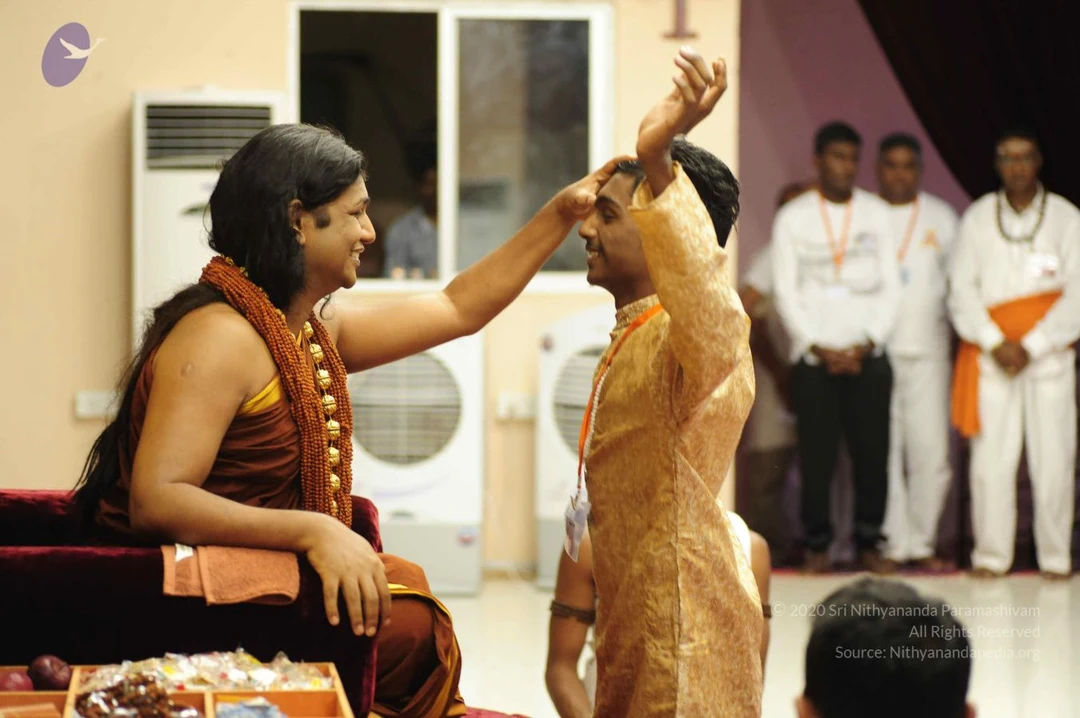
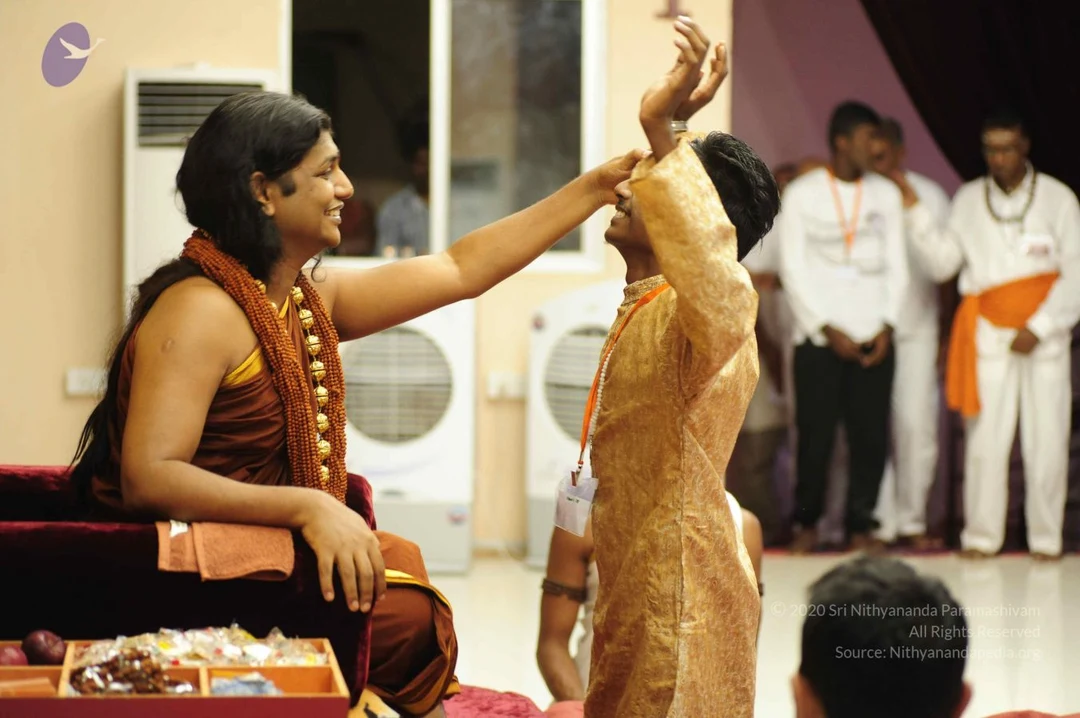
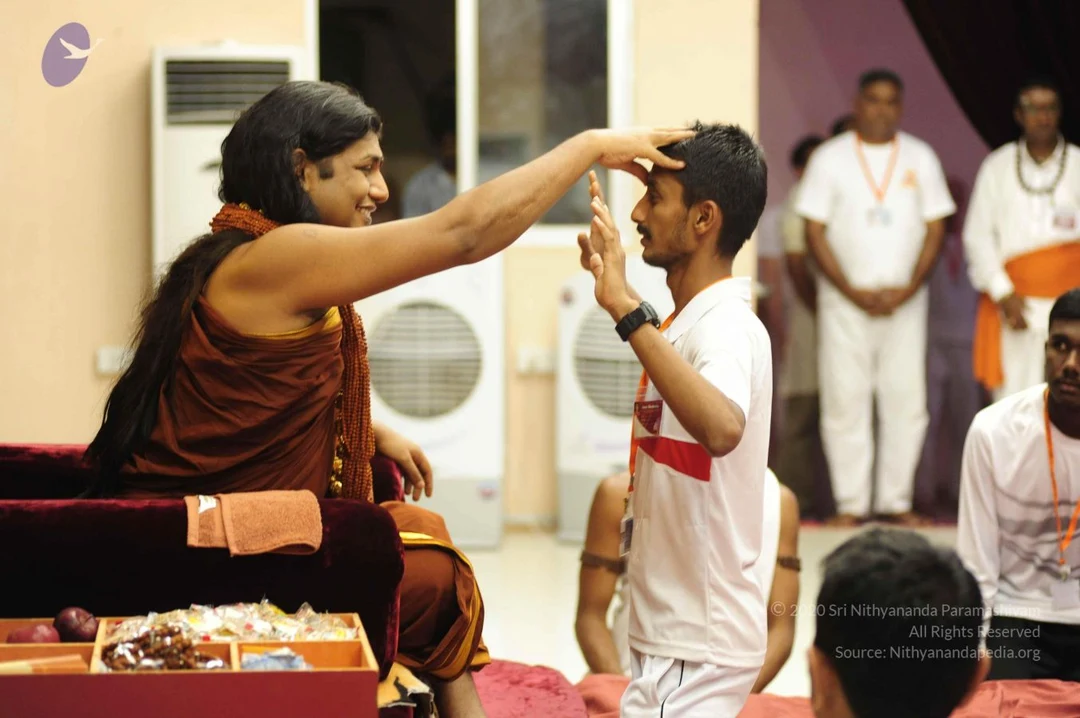
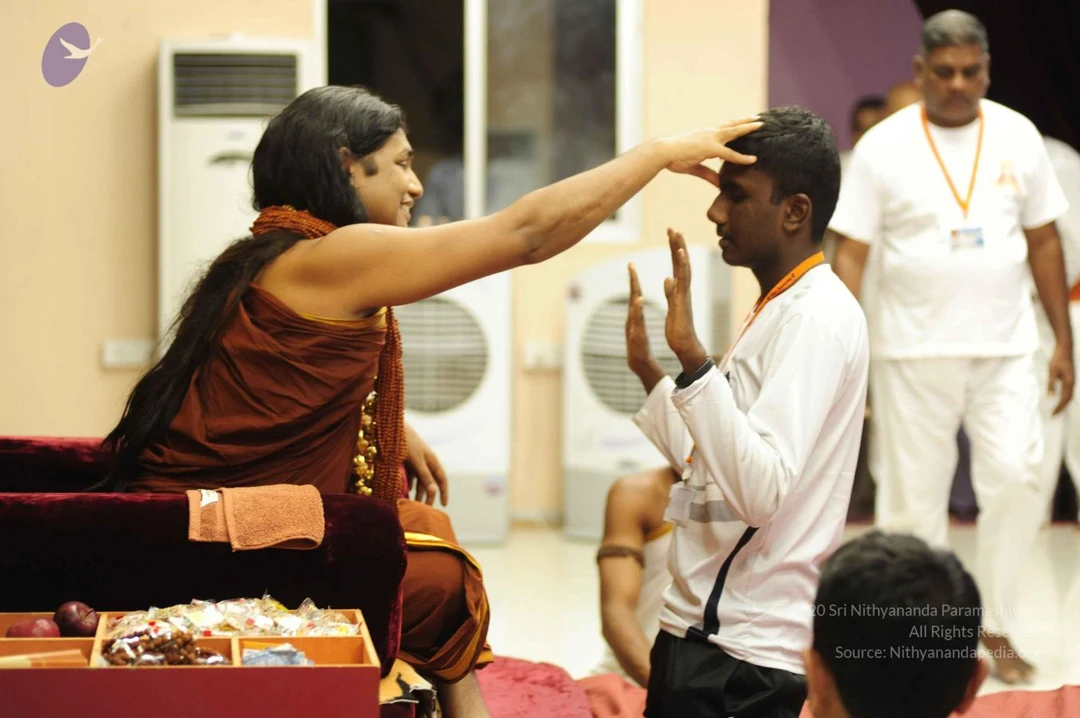
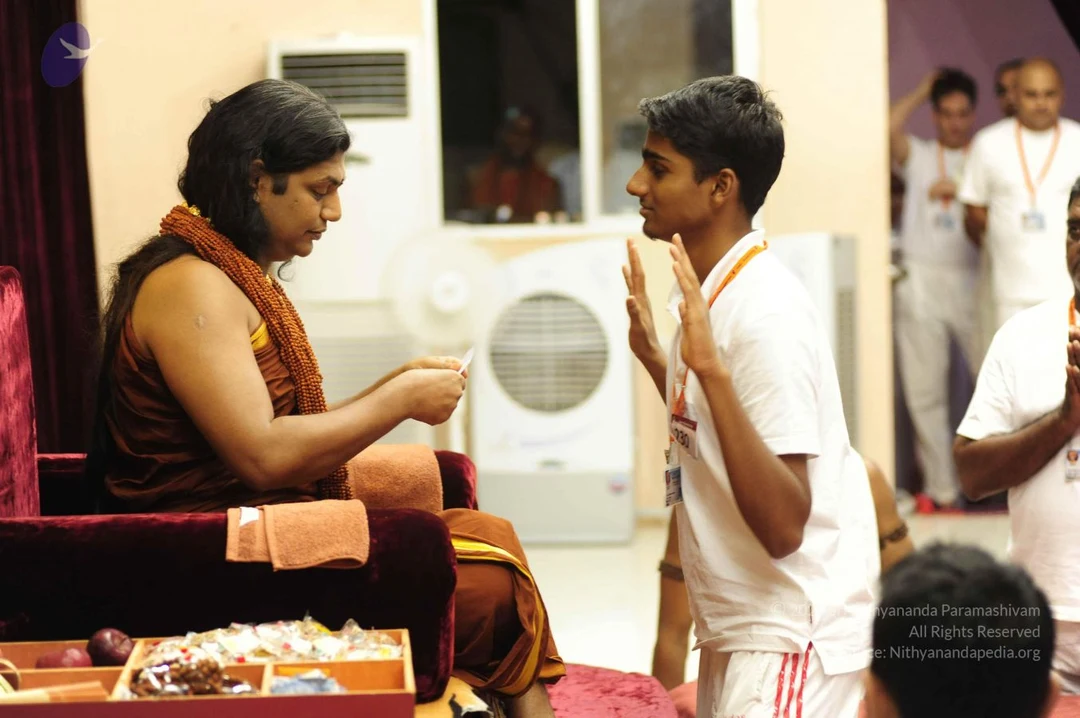
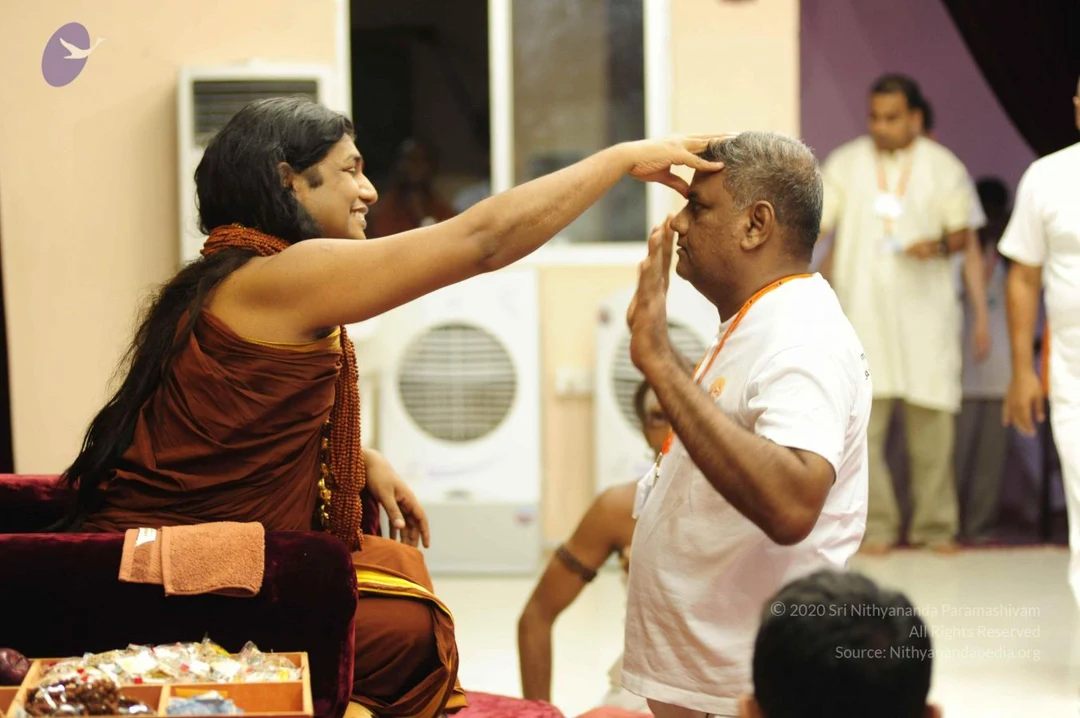
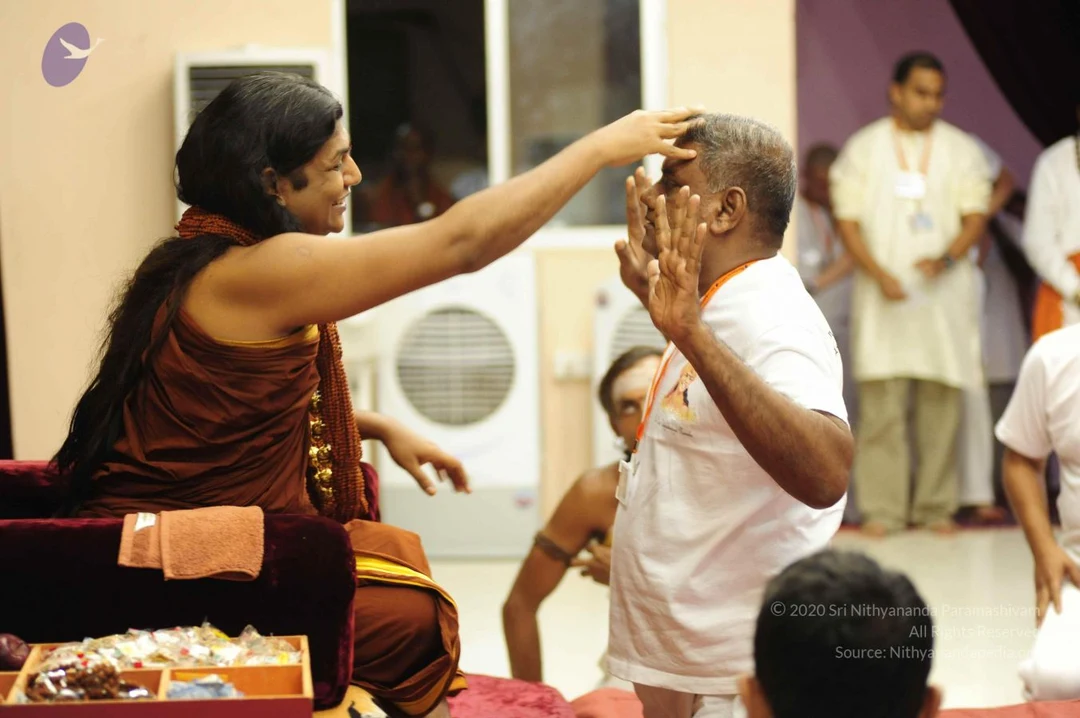
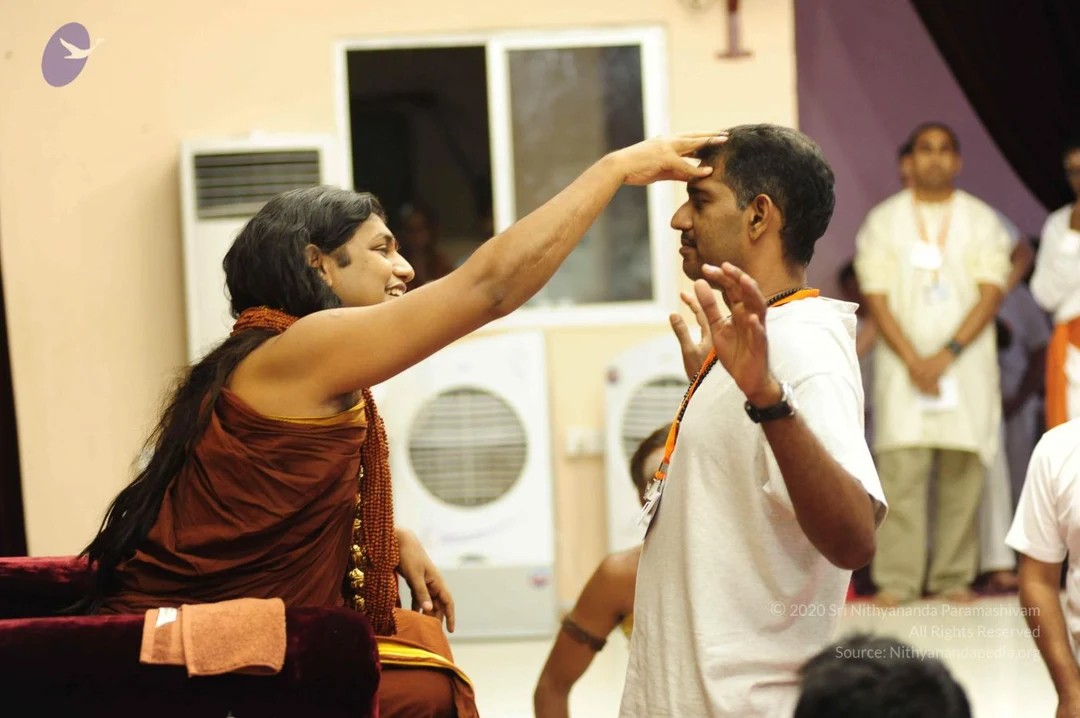
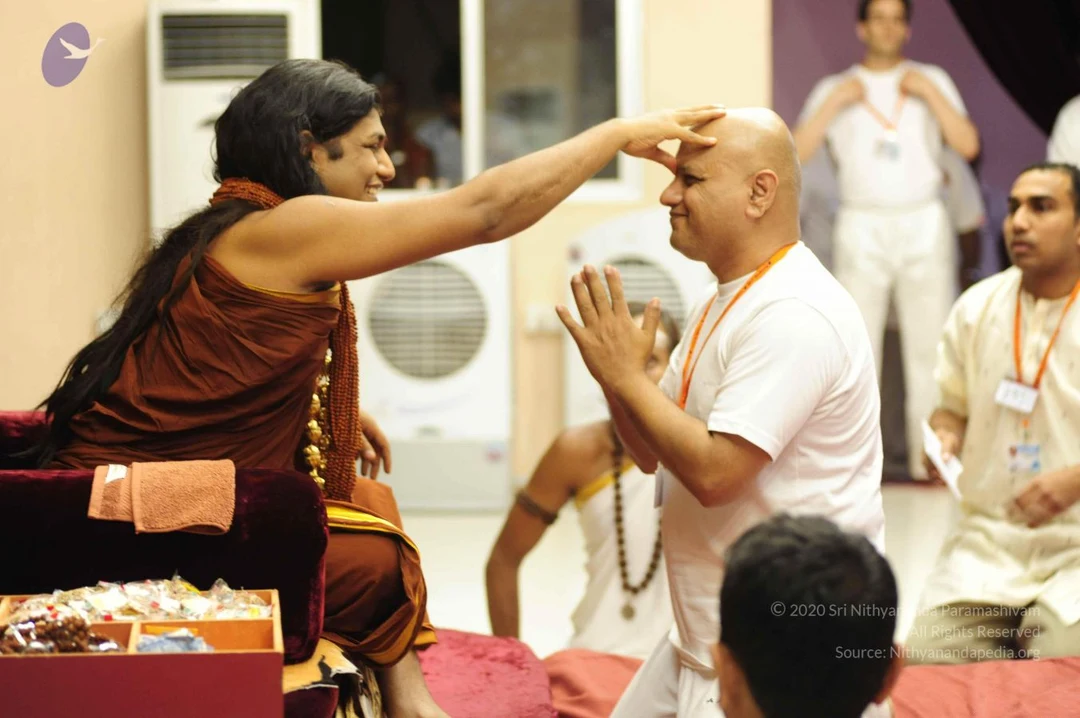
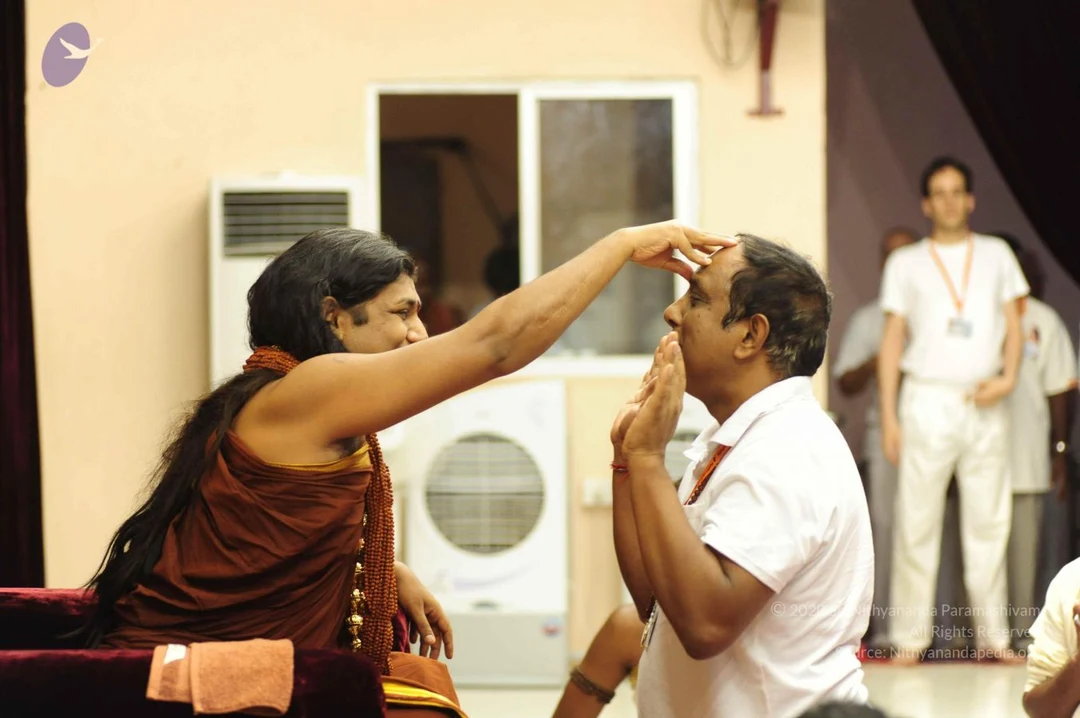
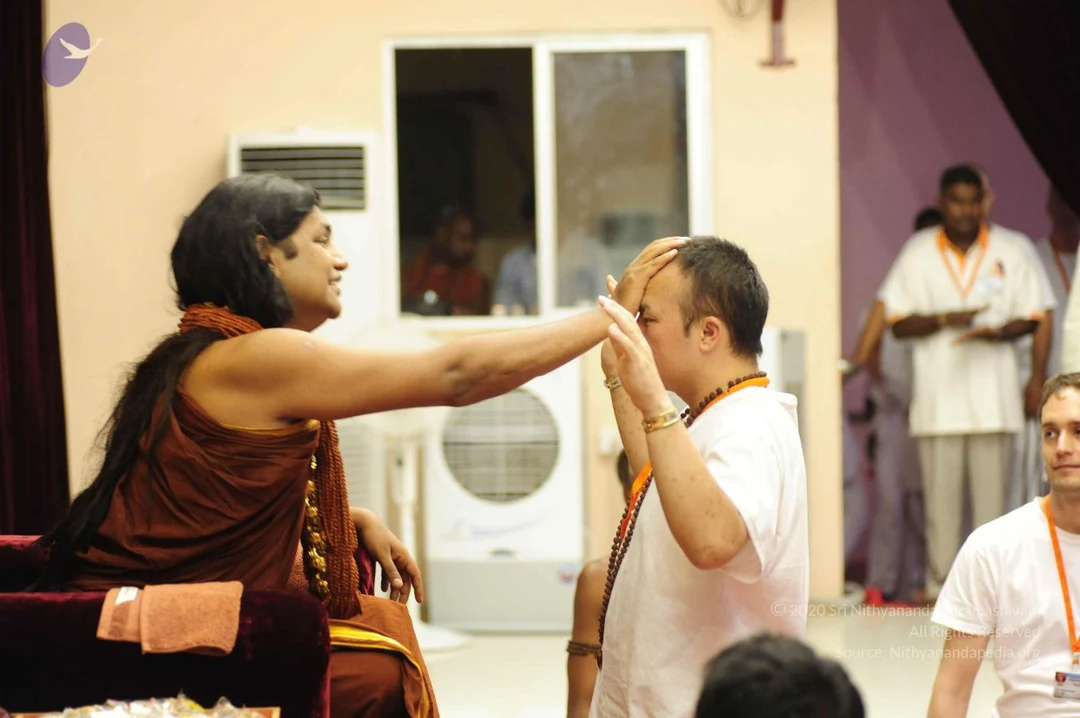
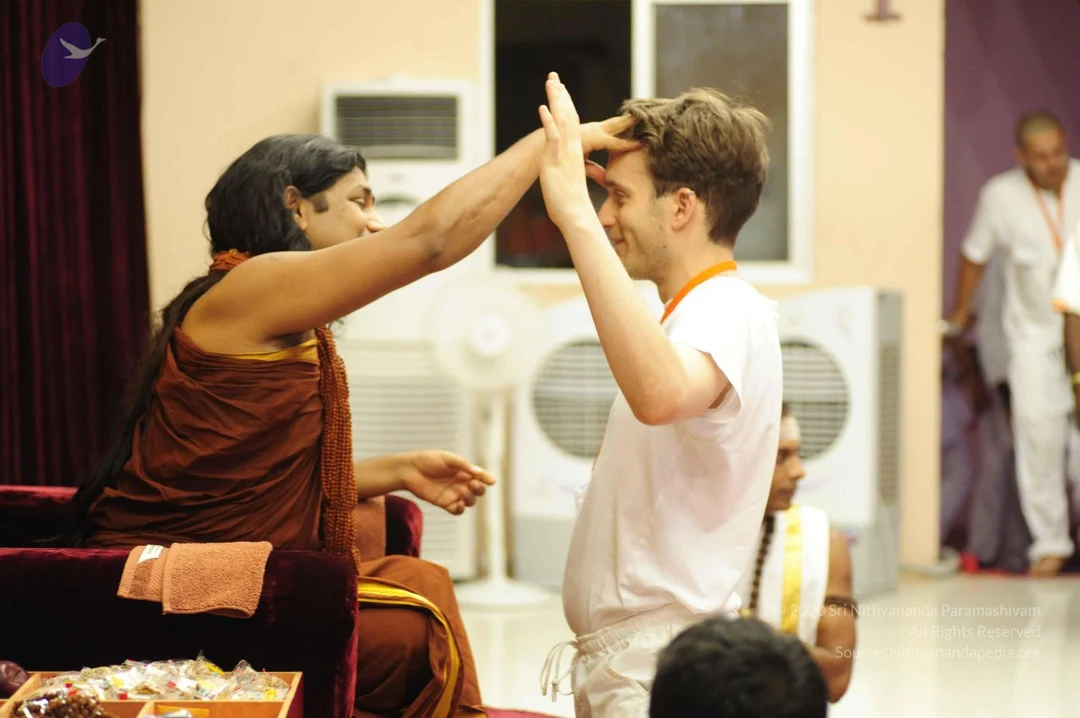
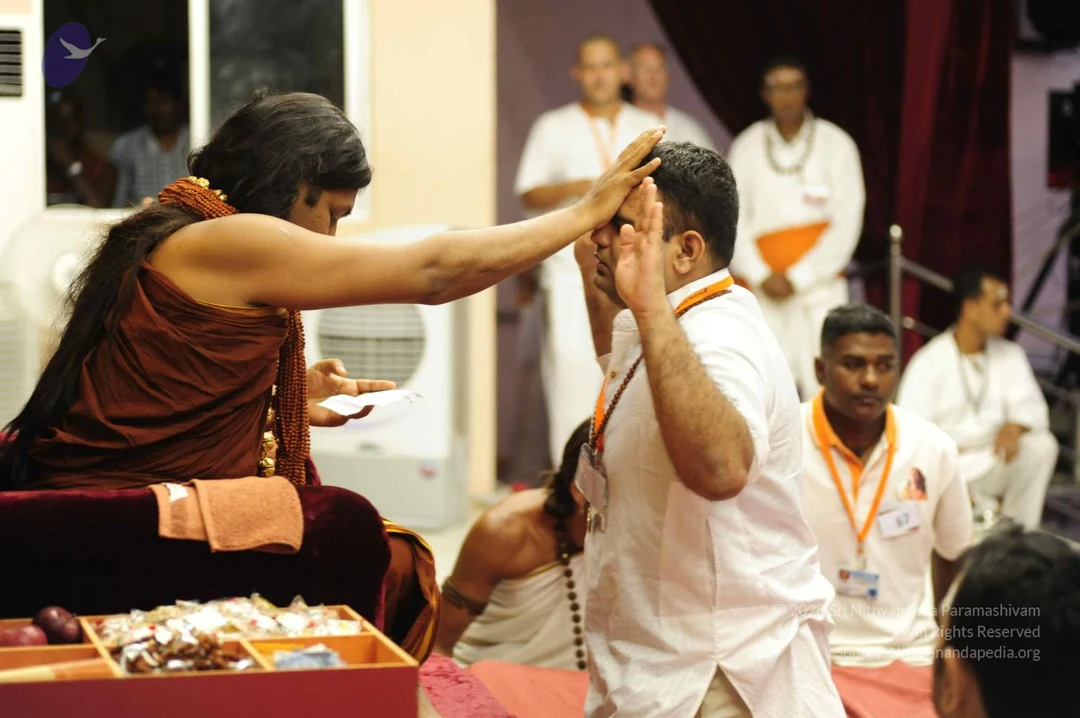
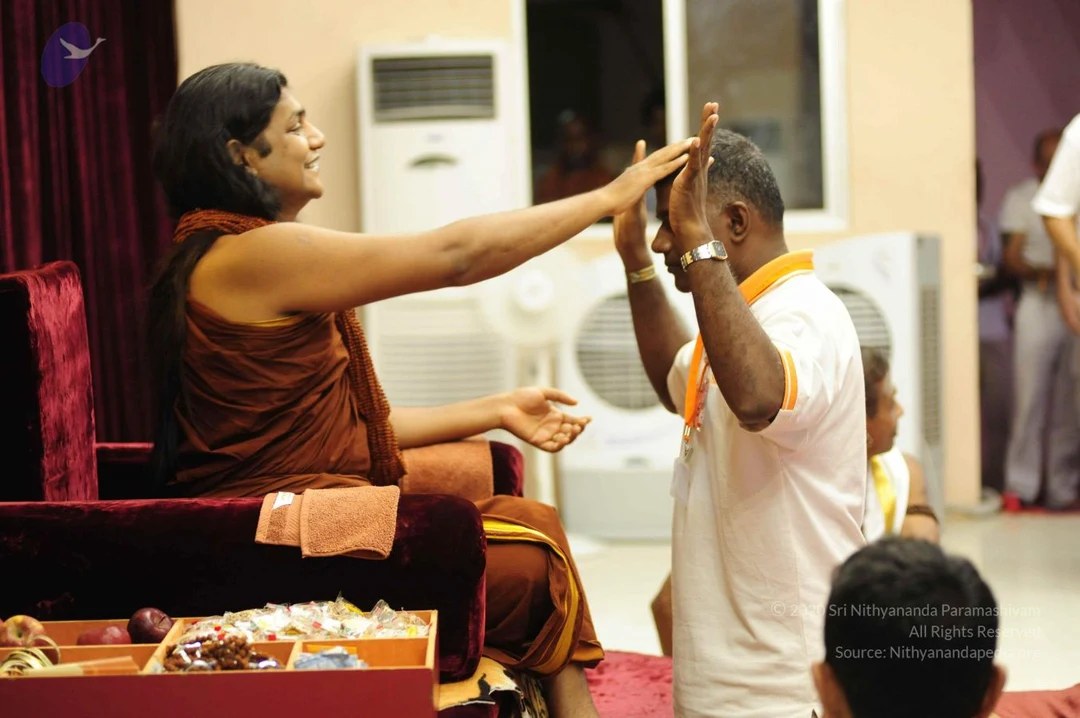
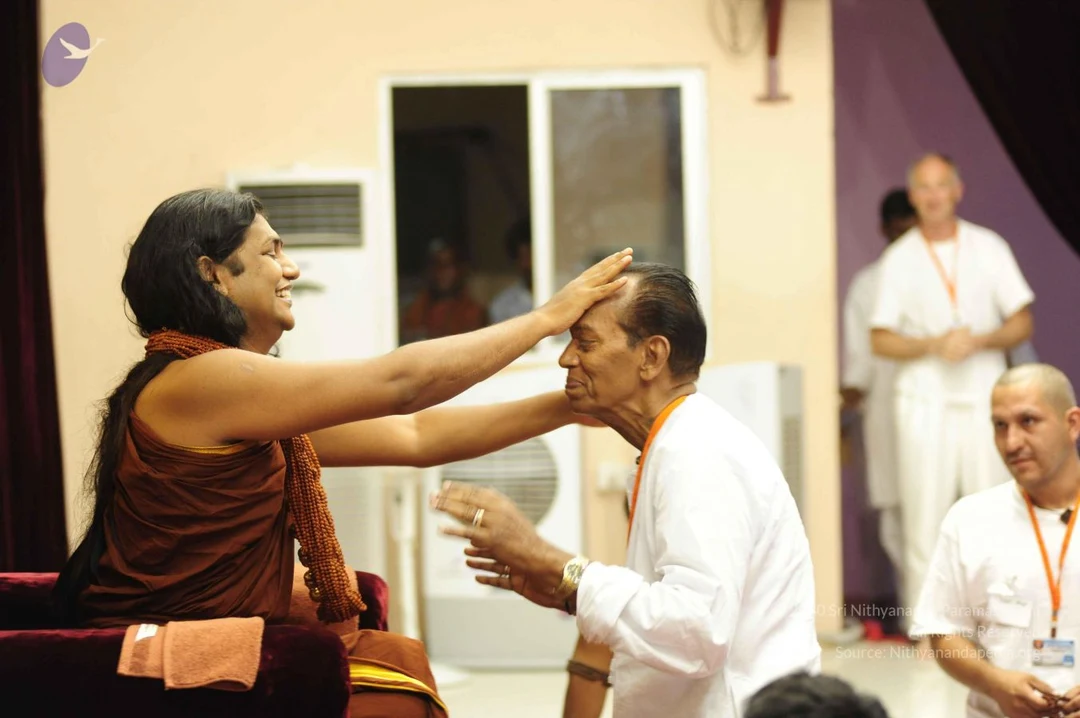
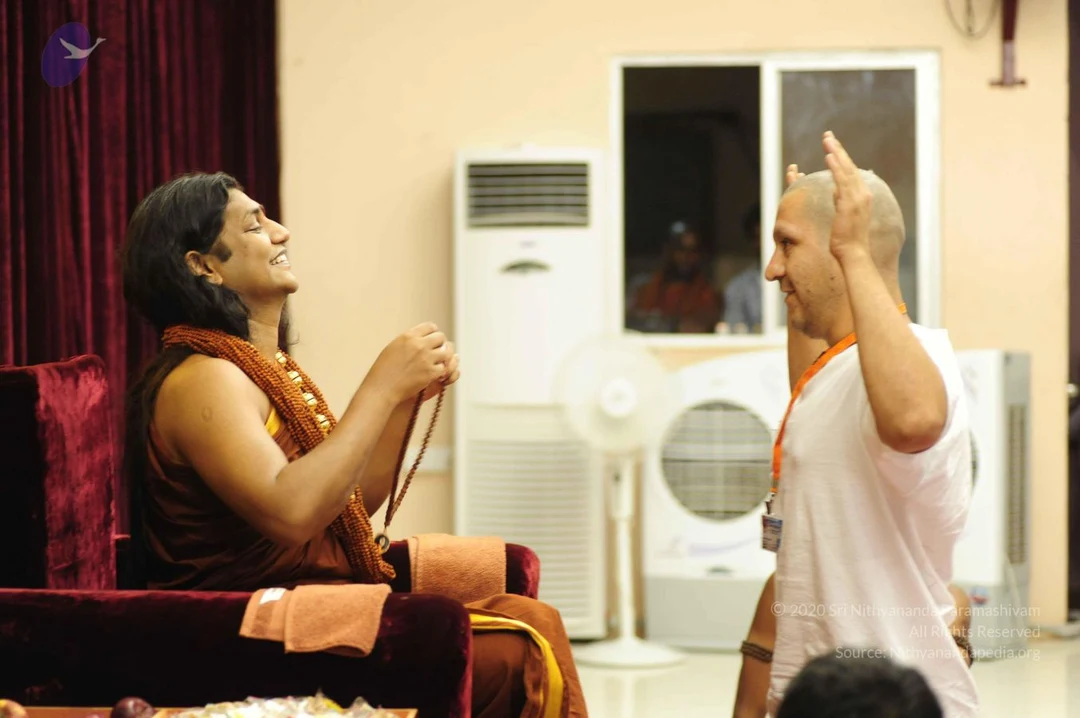
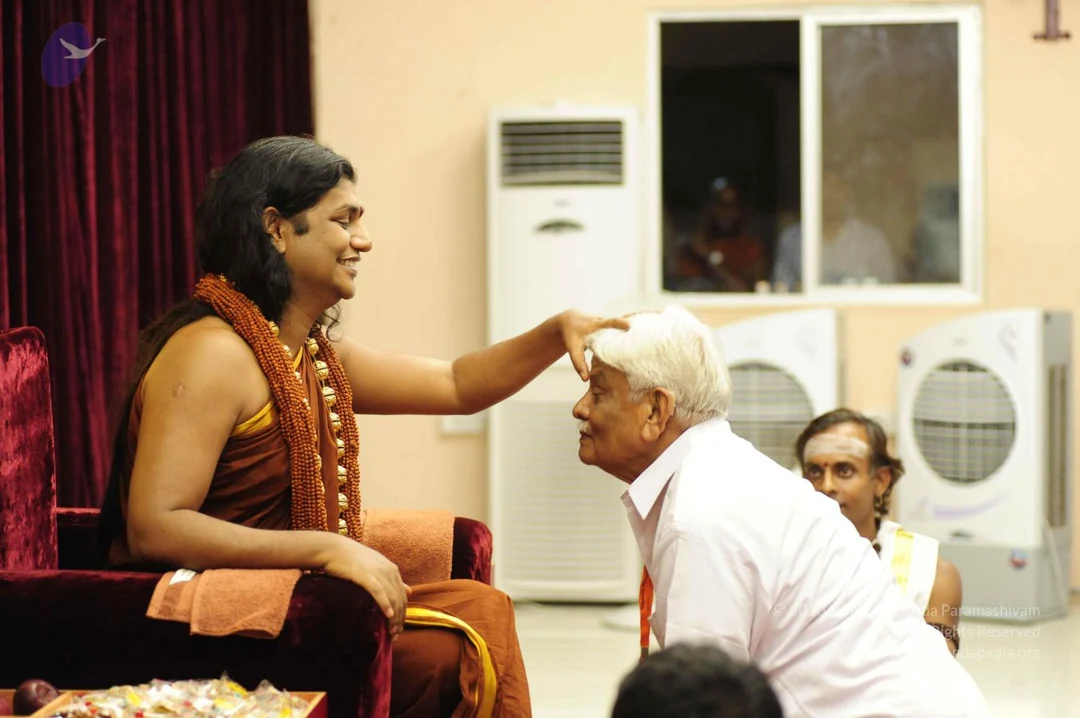
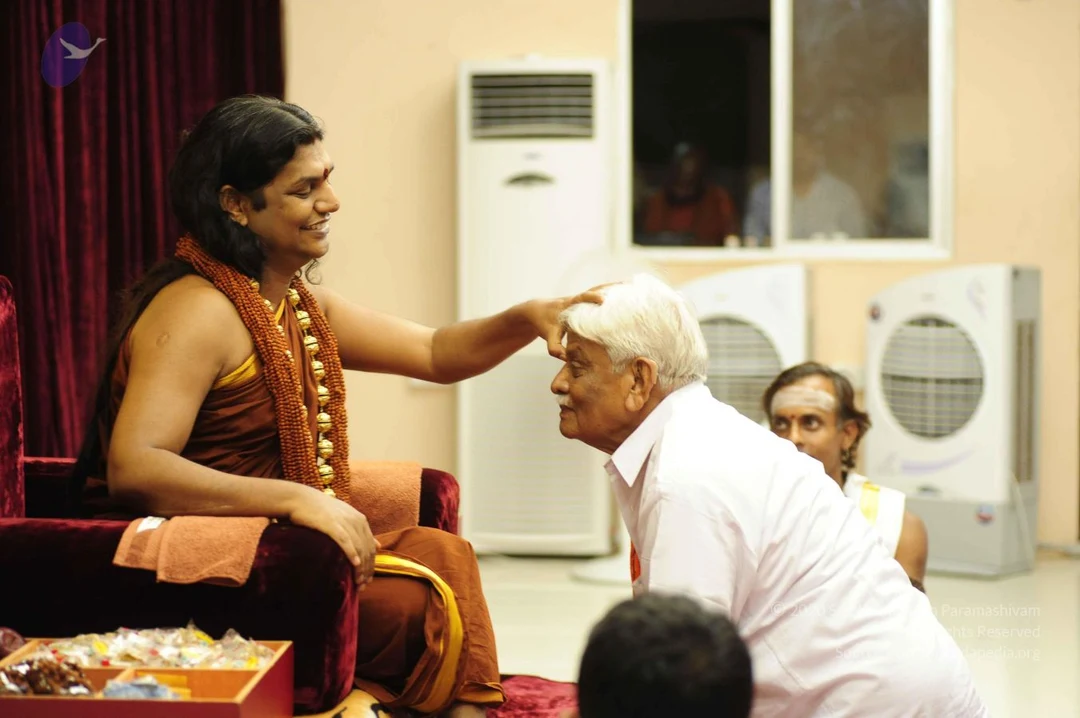
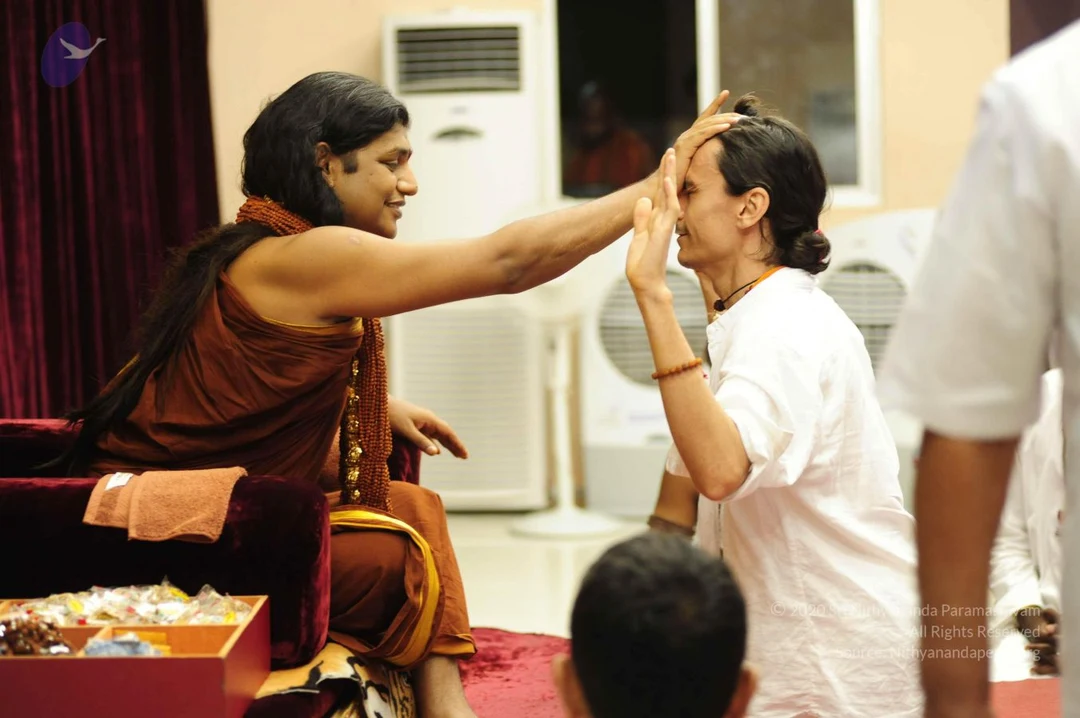
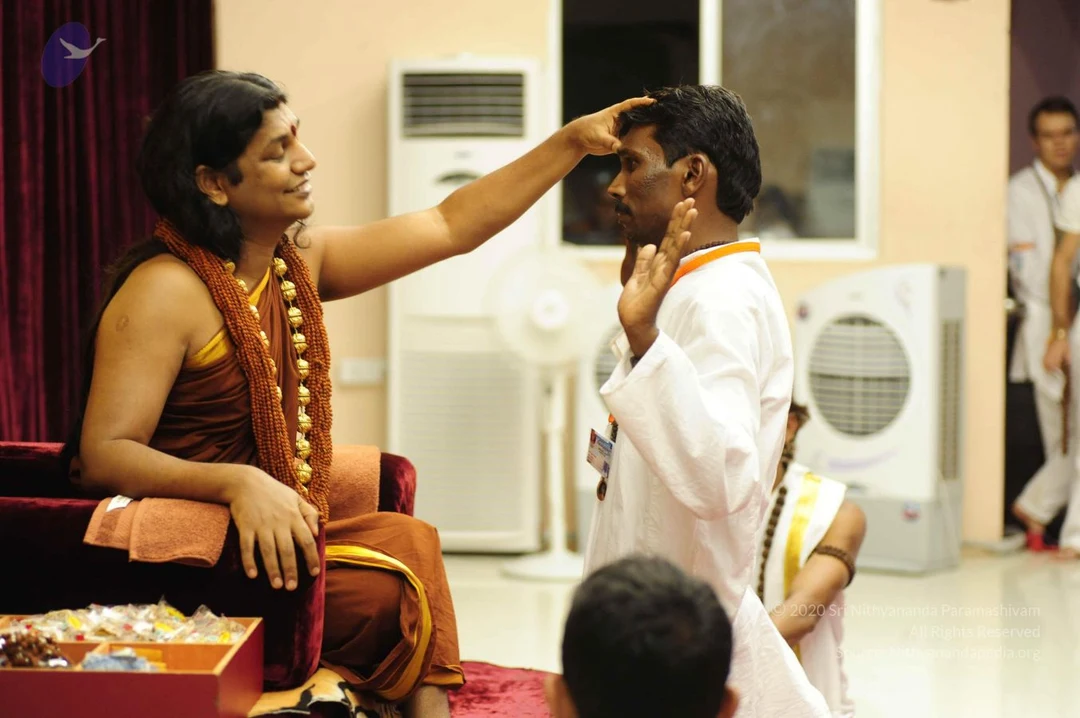
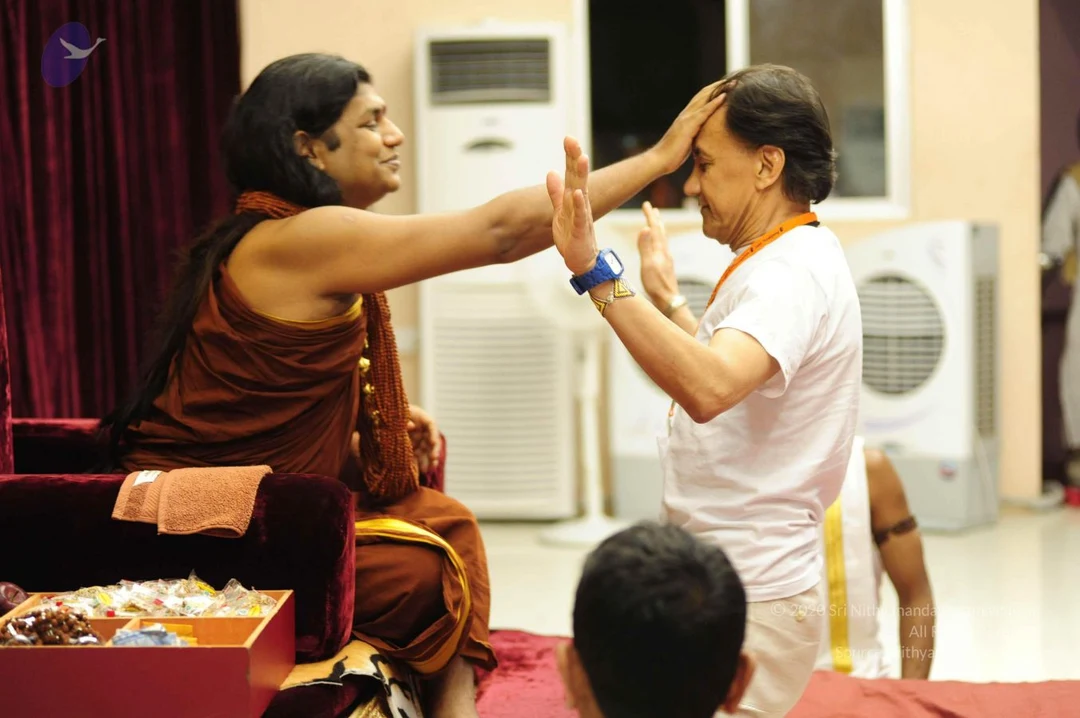
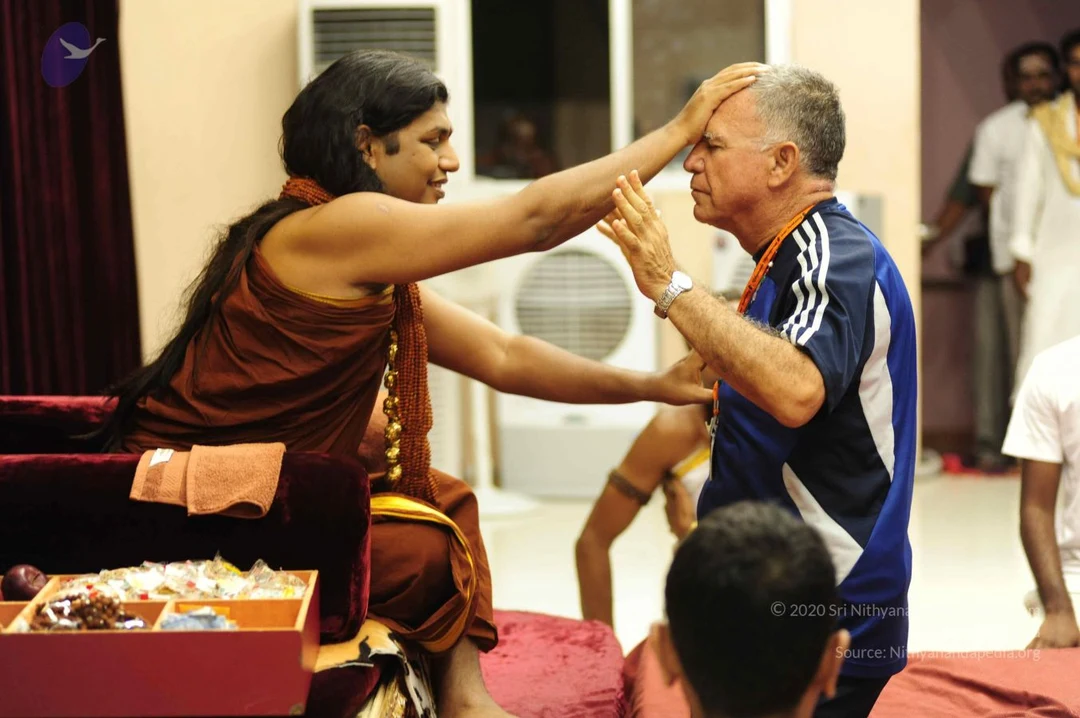
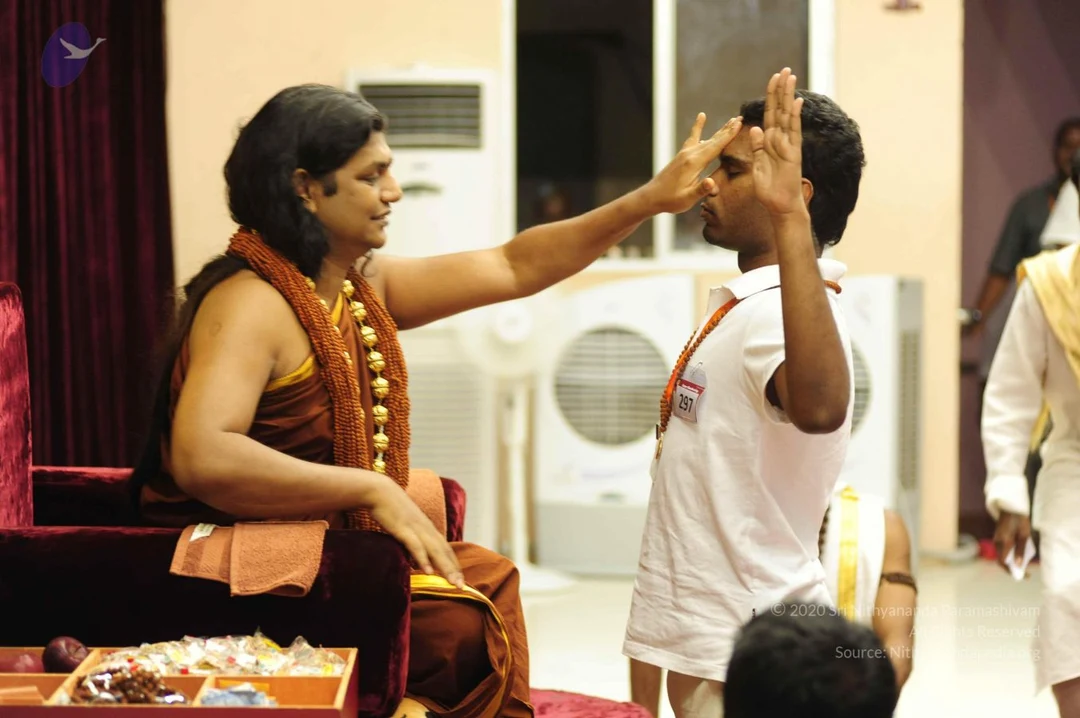
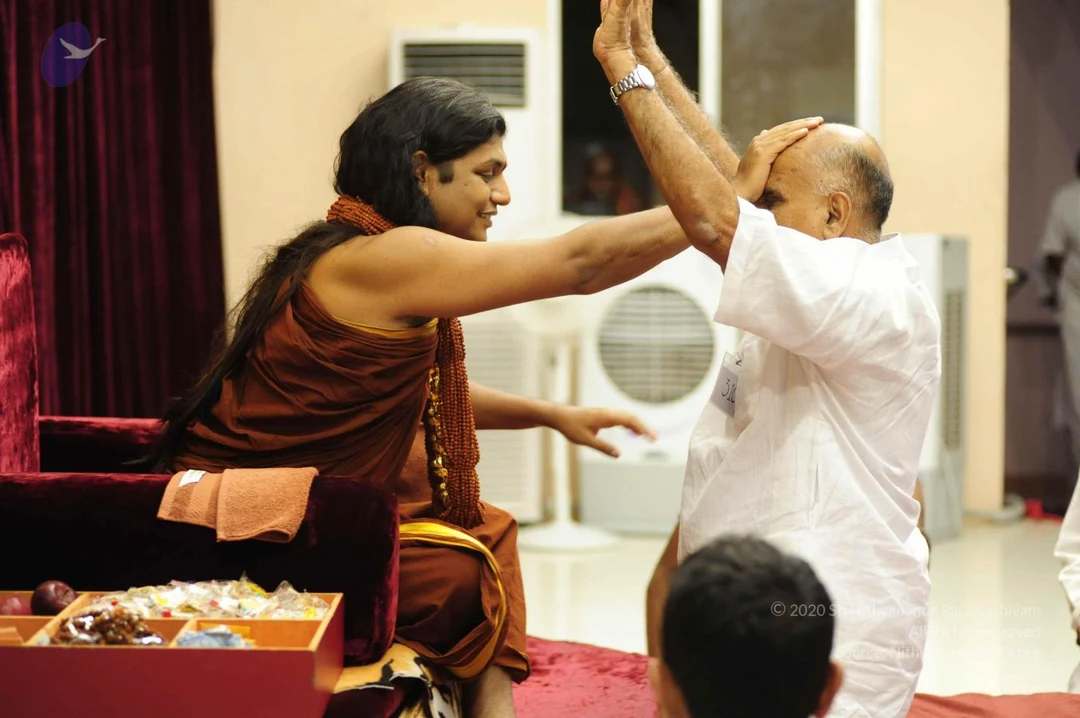
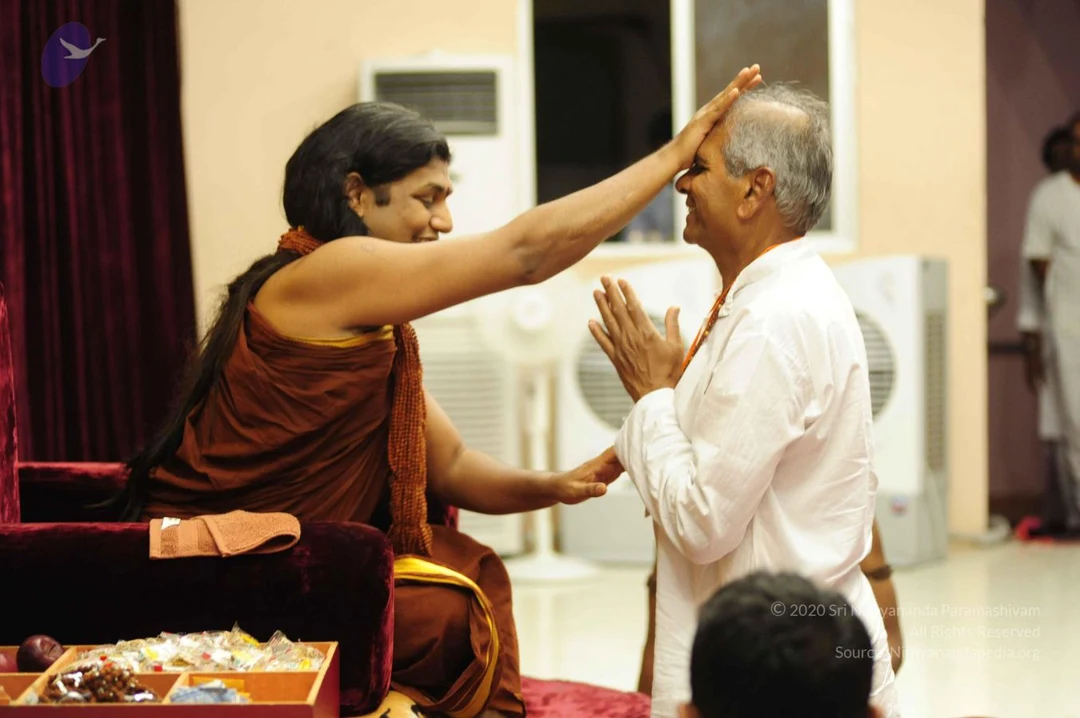
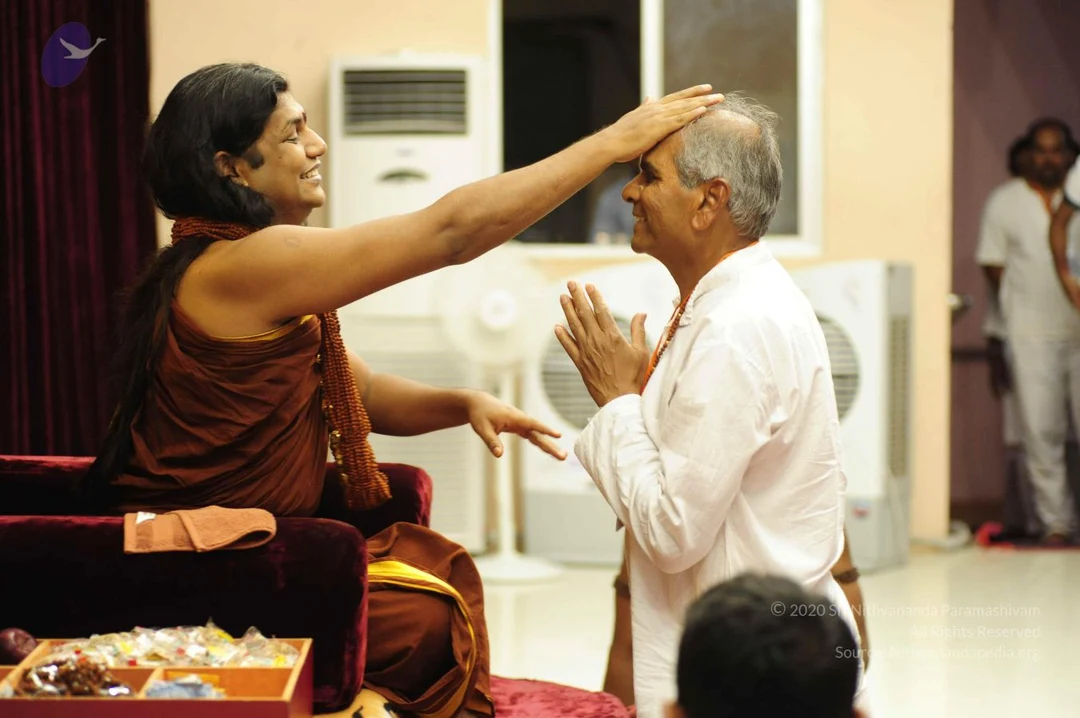
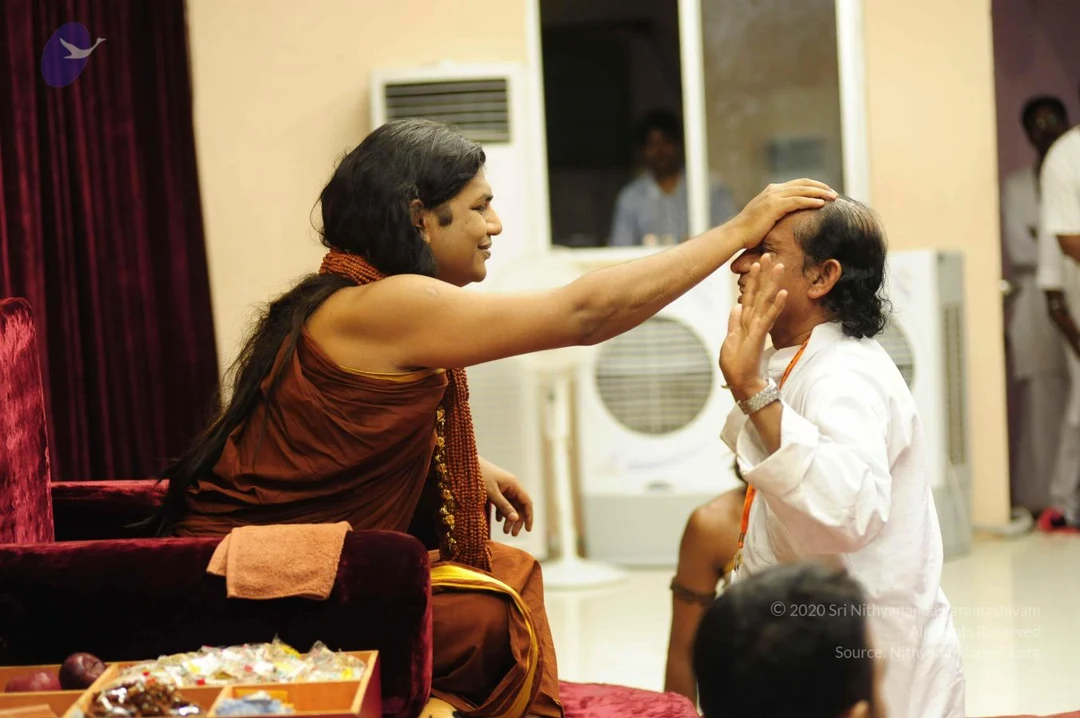
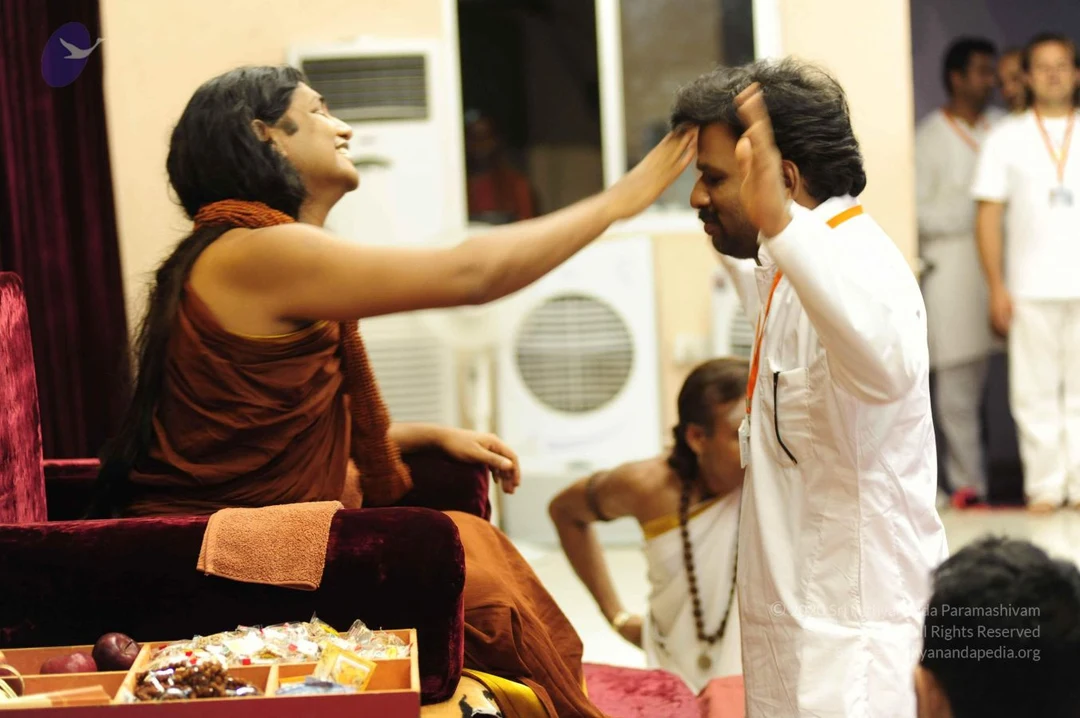
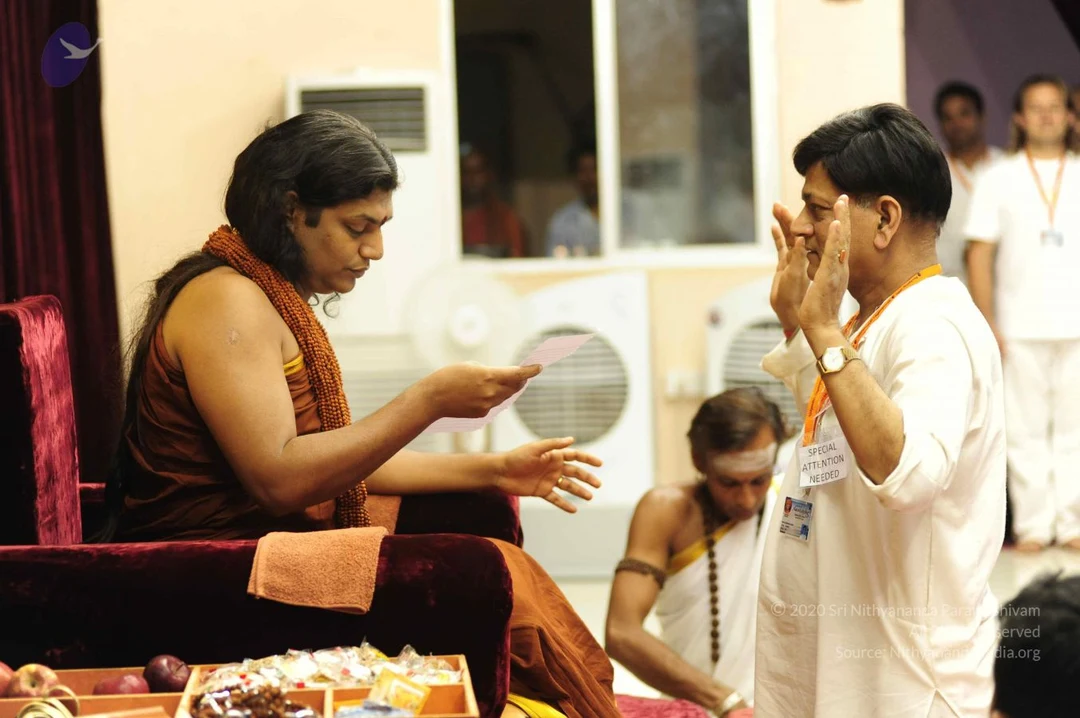
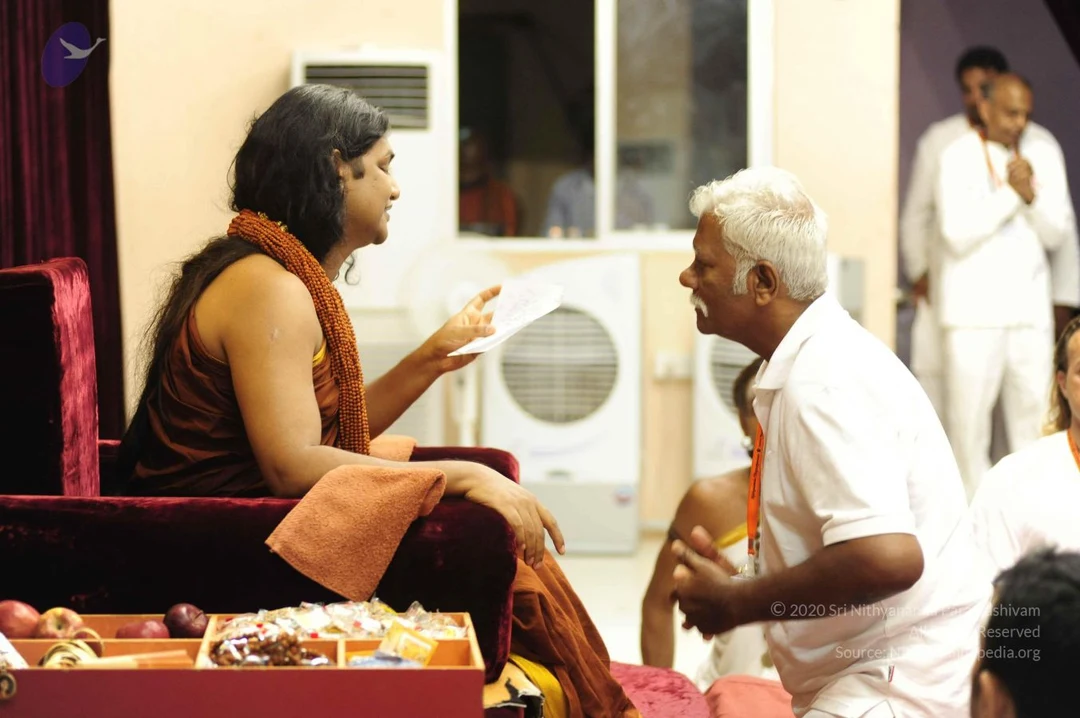
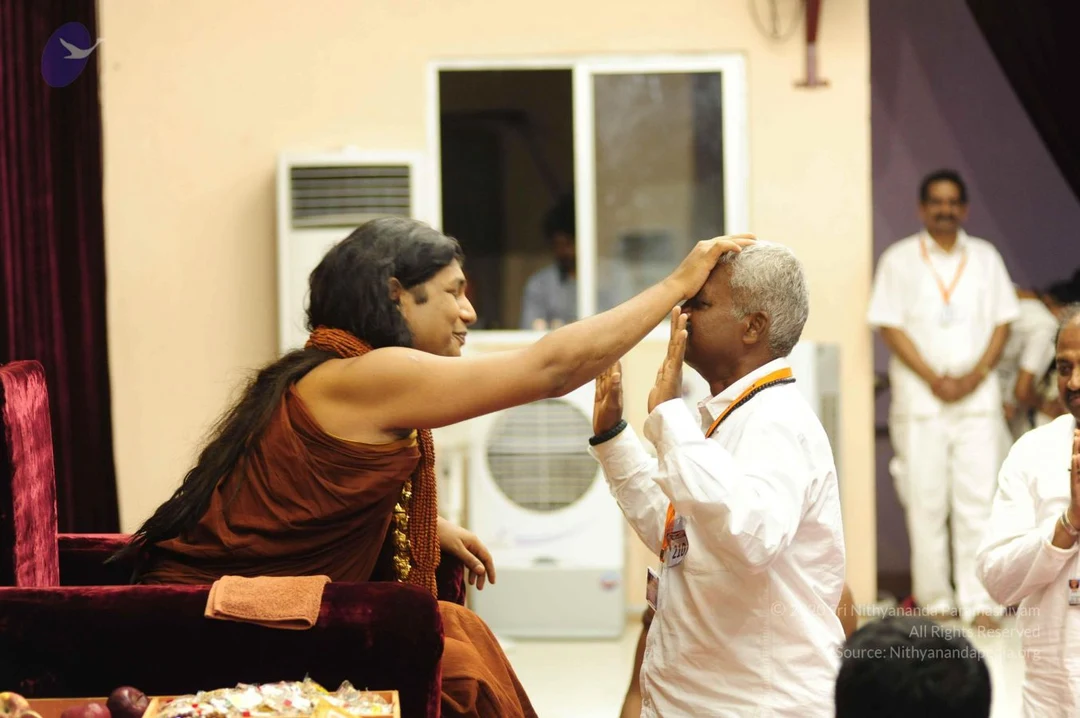
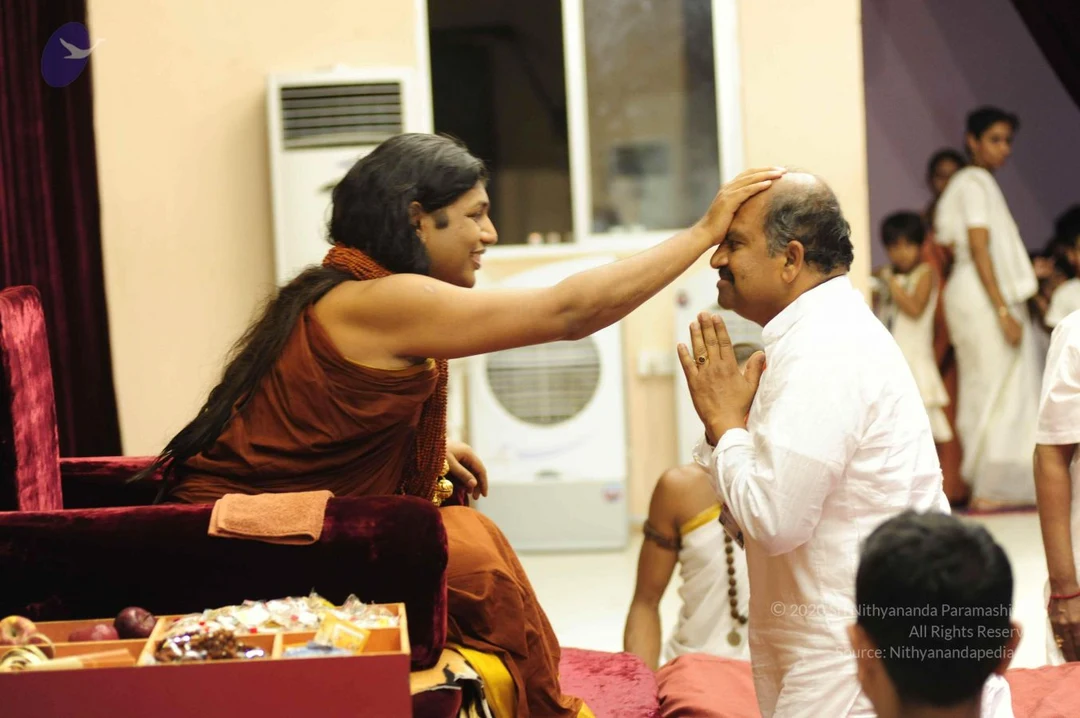
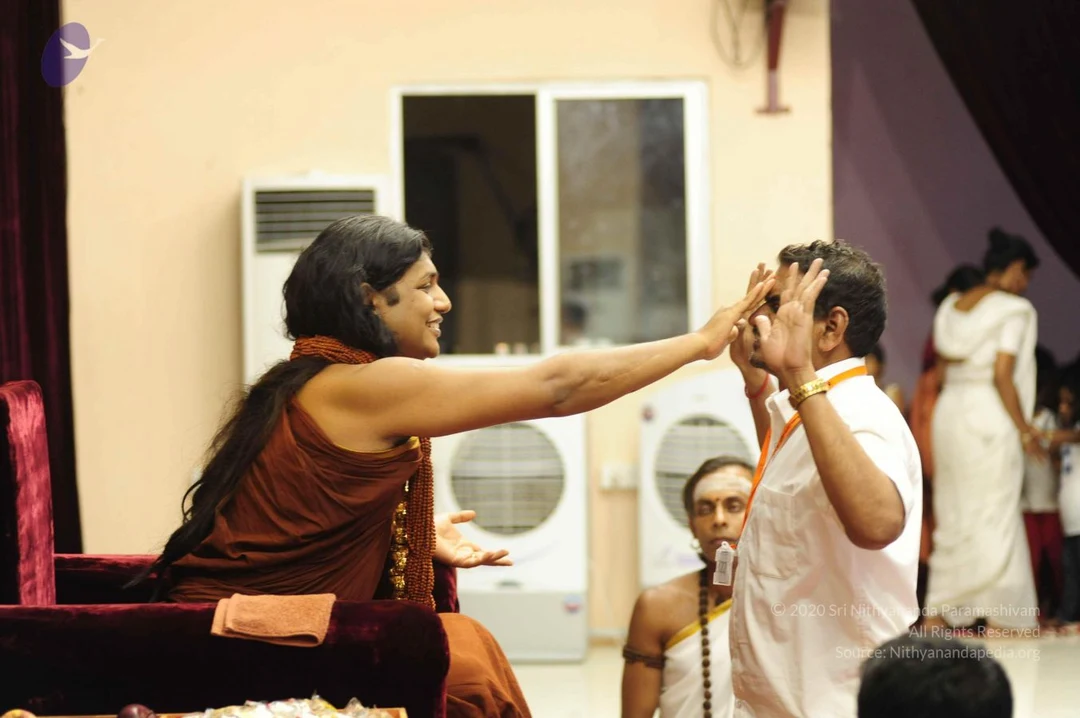
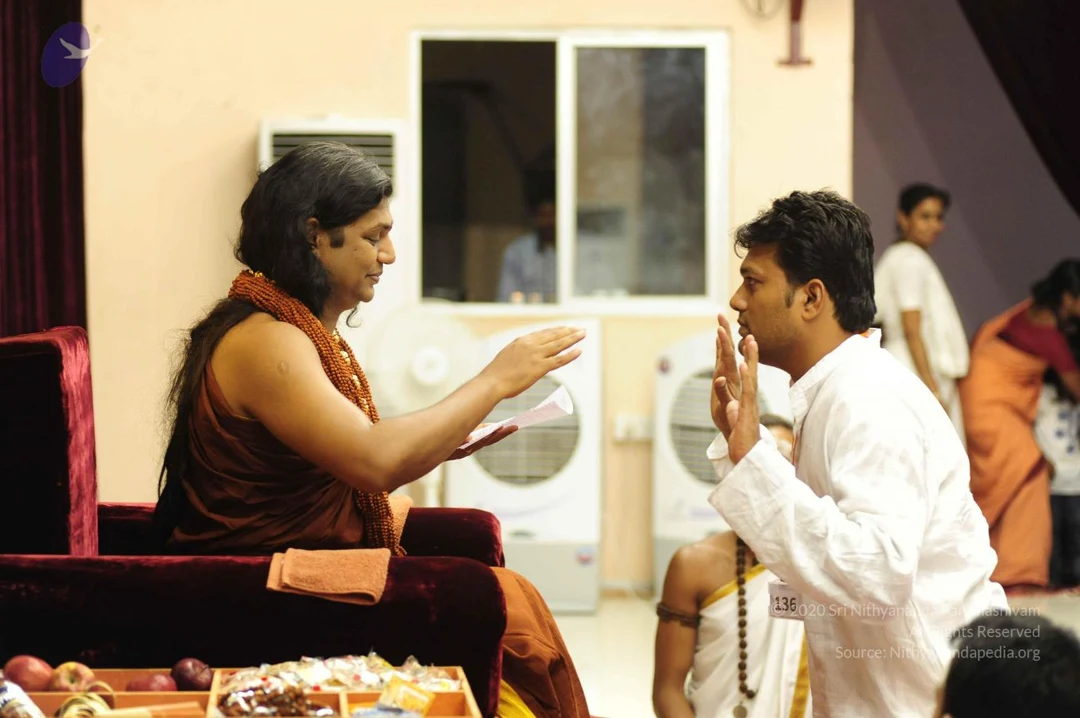
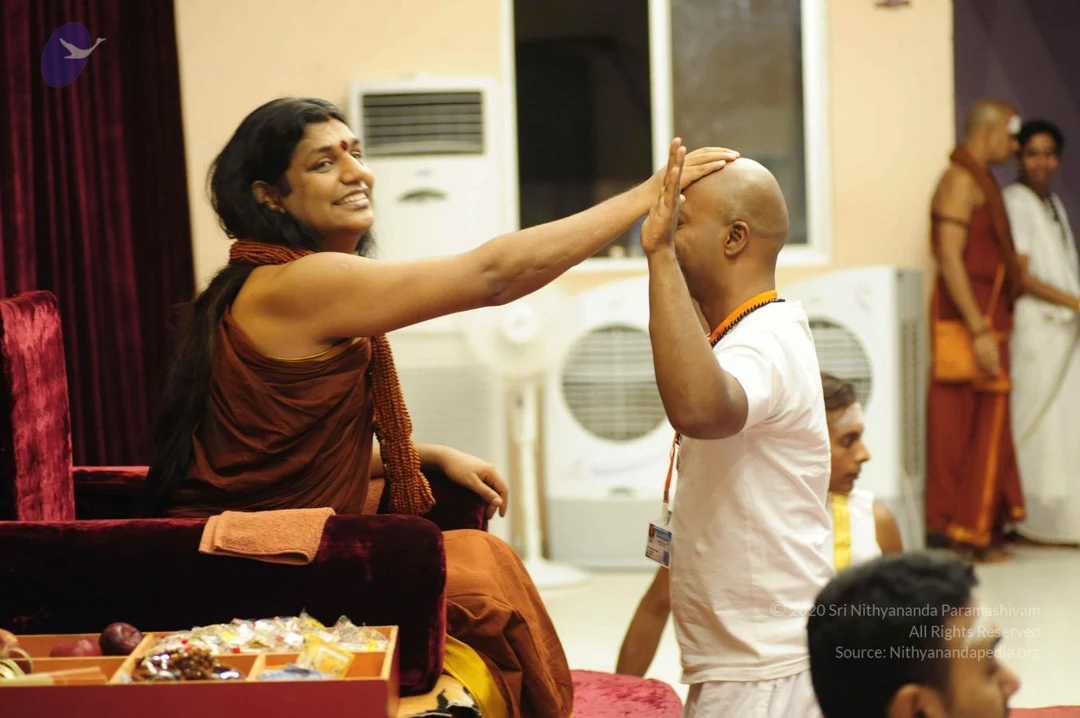
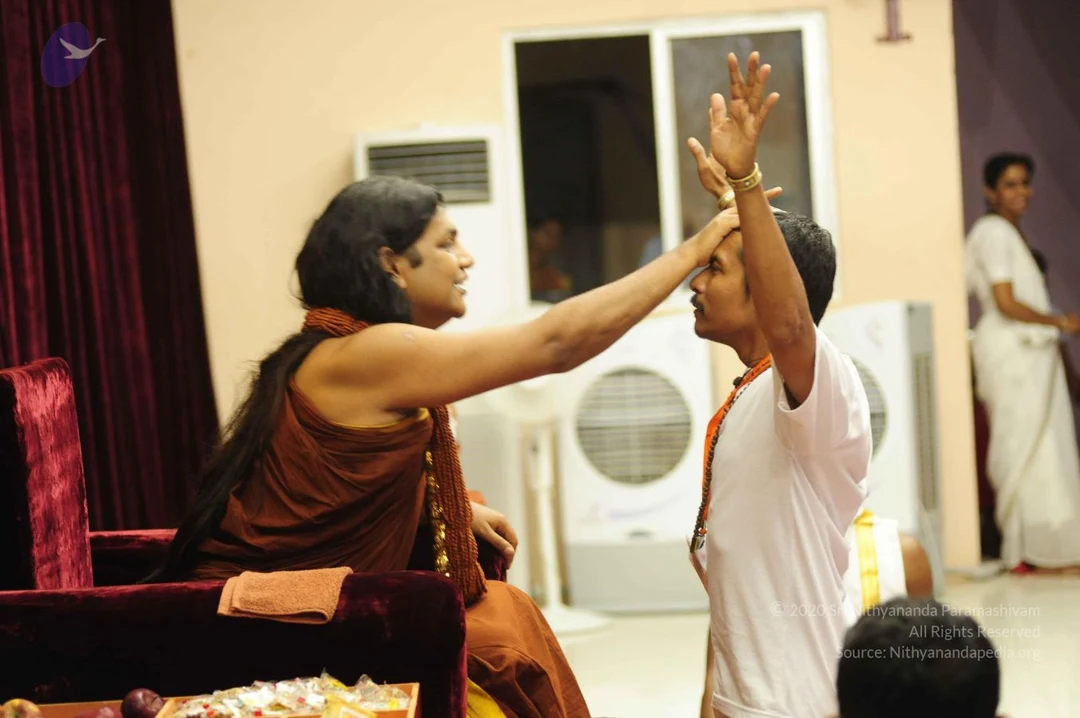
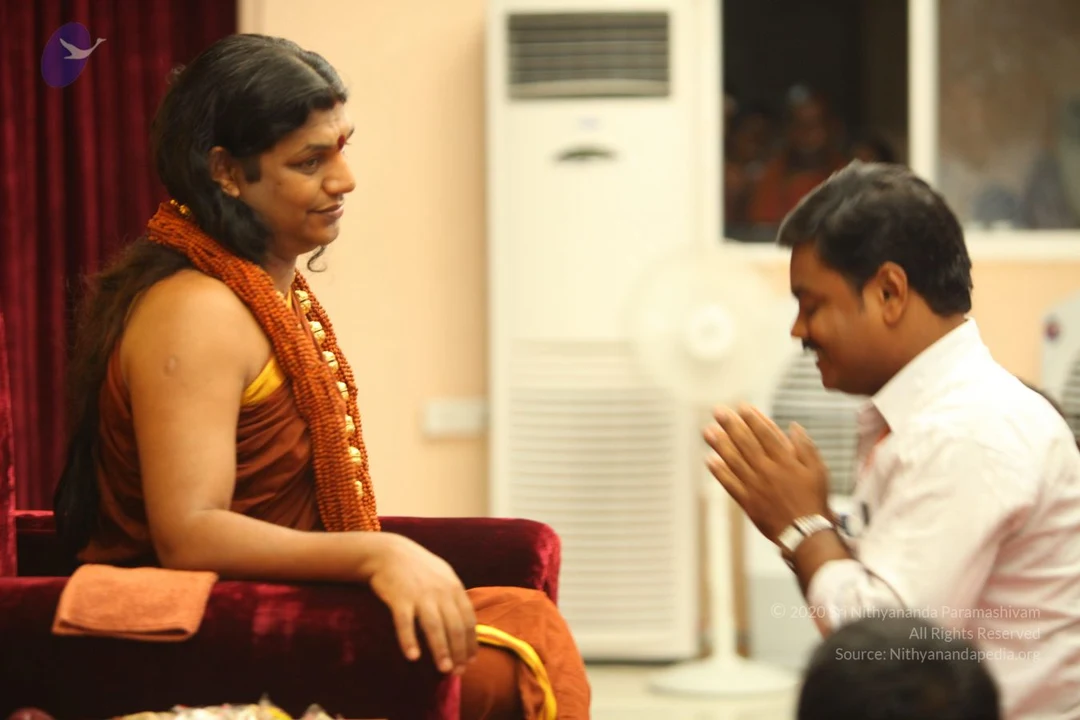
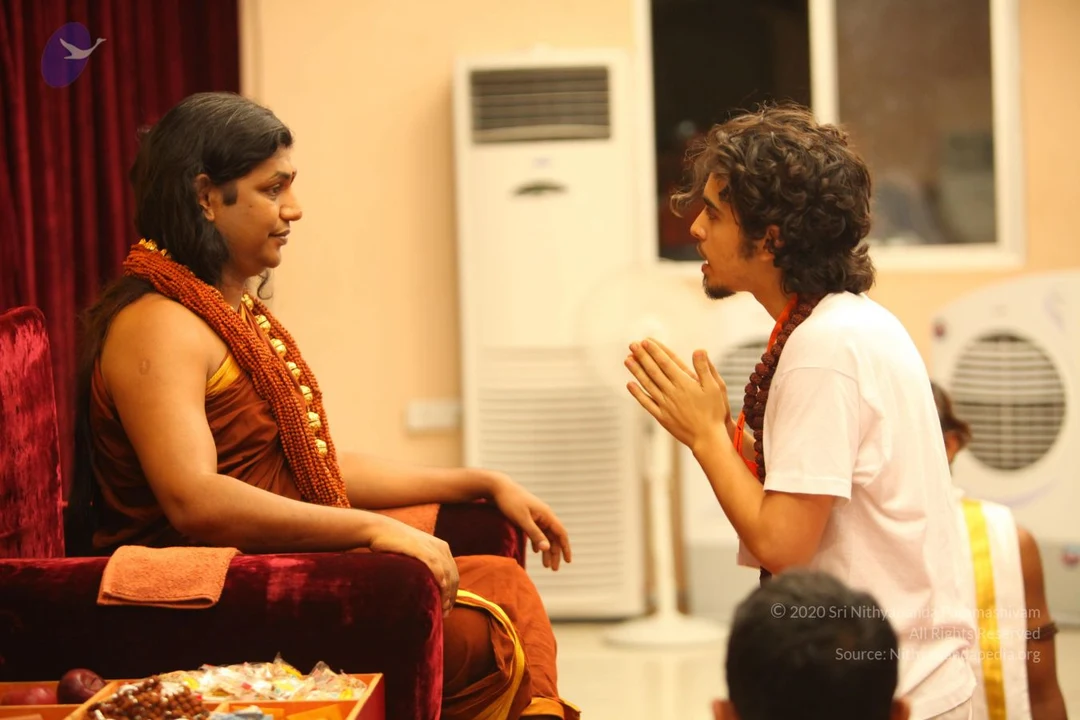
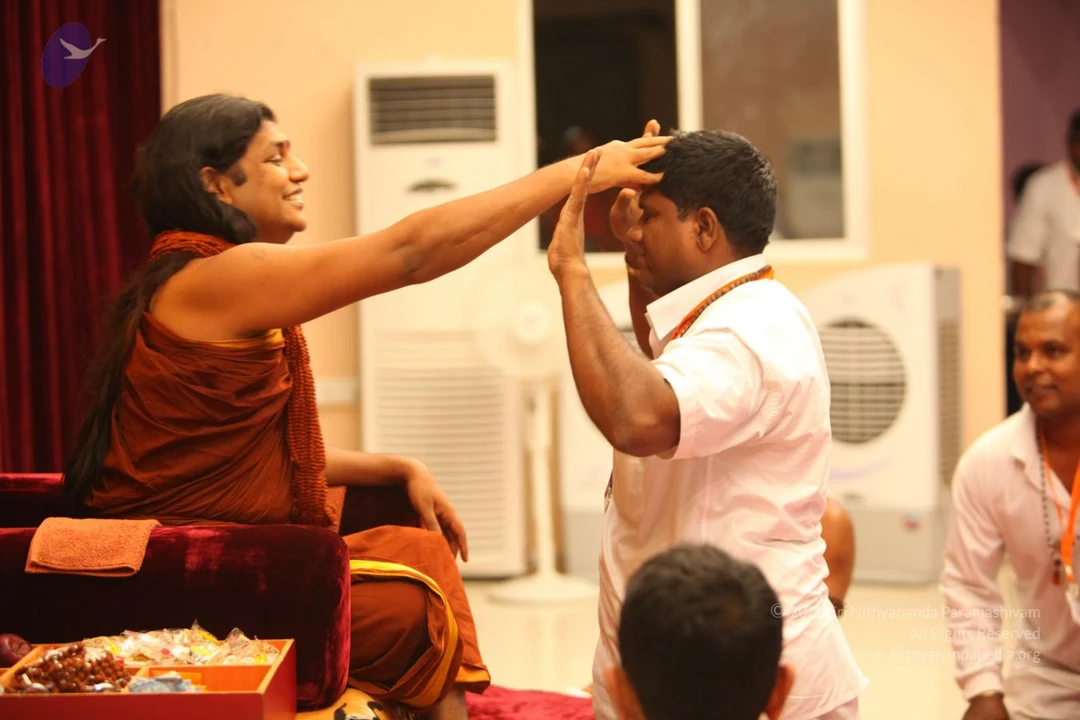
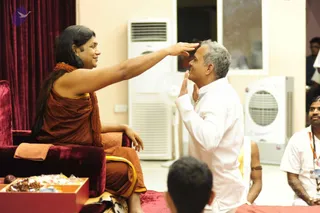
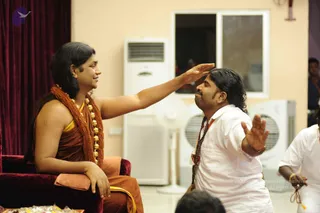
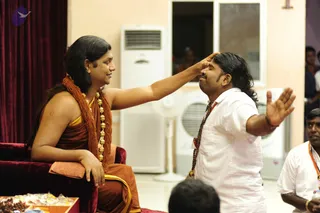
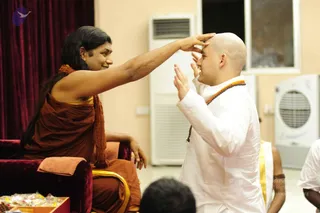
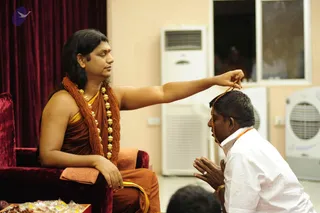
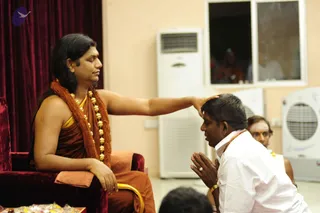
A photograph of a satsang-style blessing. A long-haired figure in saffron-orange robes and a rudraksha mala sits on a deep red velvet throne, extending one arm to touch the forehead of a man in a white kurta who kneels before them with palms raised. Behind the throne hang red velvet drapes, and beside it a red tray holds rudraksha beads and small offerings. Two white air coolers stand in the background, with a seated attendant in white and a child visible at the bottom edge. Swamiji (probable): the seated figure has long swept-back hair, saffron robes and a rudraksha mala, and is seated on a throne receiving devotees.A seated figure in an orange-brown robe with a yellow inner garment and a long rudraksha mala with gold beads leans forward on a deep red velvet throne-style chair, extending a hand toward the forehead of a kneeling man in a white shirt with a rudraksha mala and orange thread. The man kneels with his palms open to the side. Behind them are wall-mounted air conditioners, a standing fan and a red curtain, and a pink towel lies on the armrest. Lower right, another person in white sits partly out of frame. The kneeling man is an ashram devotee receiving a blessing gesture. Flower offerings sit on a tray at the lower left.A seated long-haired figure in saffron-orange robes with a thick orange rudraksha mala and gold beaded necklace extends a hand to touch the forehead of a standing man in a white shirt with a rudraksha mala. The man has his hand raised palm-out in devotion. A red velvet-draped throne-style seat is at left, with a tray of offerings and sweets in the lower left. Air coolers and a fan stand in the background, with a seated attendant in white at lower right. Probable Swamiji: the seated figure shows long swept-back hair, saffron robes and rudraksha and gold necklaces, consistent with the page's satsang event, and is being honoured by a devotee, so the seated figure is identified only by appearance and role.A seated figure with long dark hair wears an orange-brown saffron-toned cloth, a rudraksha mala and an orange shawl, and reaches forward to touch the forehead of a shaved-headed man in white ritual clothes and a beaded mala. The seated figure's distinctive long hair, saffron clothing and rudraksha beads are visible cues. A red velvet armchair, a wooden box of offerings and white air coolers fill the room behind them, and a few other people sit partially visible in the foreground. This appears to be a blessing or initiation moment.A seated man in ochre-orange robes and a long rudraksha mala with gold bead necklaces raises a rudraksha mala over the head of a kneeling devotee in a white shirt, who has his palms joined in namaste. The seated man has long swept-back hair, a red bindi and a gold necklace. The seated figure sits in a red velvet armchair beside a small tray of offerings, with a pale room, white wall-mounted air conditioners and a red curtain behind. Swamiji (probable): the seated man has long swept-back hair, ochre robes, rudraksha malas and ceremonial gold necklaces, and is performing a blessing of the kneeling devotee.A photograph of a seated figure in a saffron-orange robe with a gold-edged yellow cloth and a long orange-and-gold beaded garland, with long swept-back hair and a gold-beaded necklace. He rests one hand on a red velvet armchair and places his other palm on the head of a kneeling devotee in a white shirt and white garland, who has hands folded in anjali. A second man in white with a forehead mark sits partly visible at the right edge. Background shows beige walls, white cooling units, a red velvet curtain, and a tray of flowers and offerings at lower left. a person is seated in the chair giving a blessing with a visible hand on the devotee's head.

ENERGY-DARSHAN
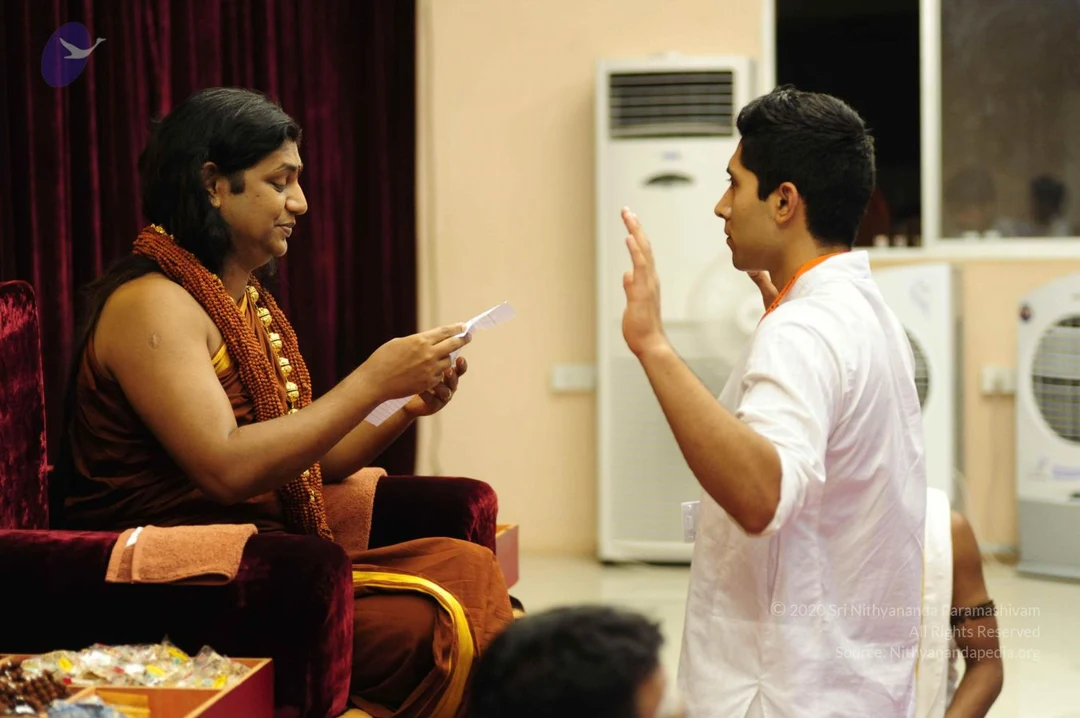
27 photosSource gallery
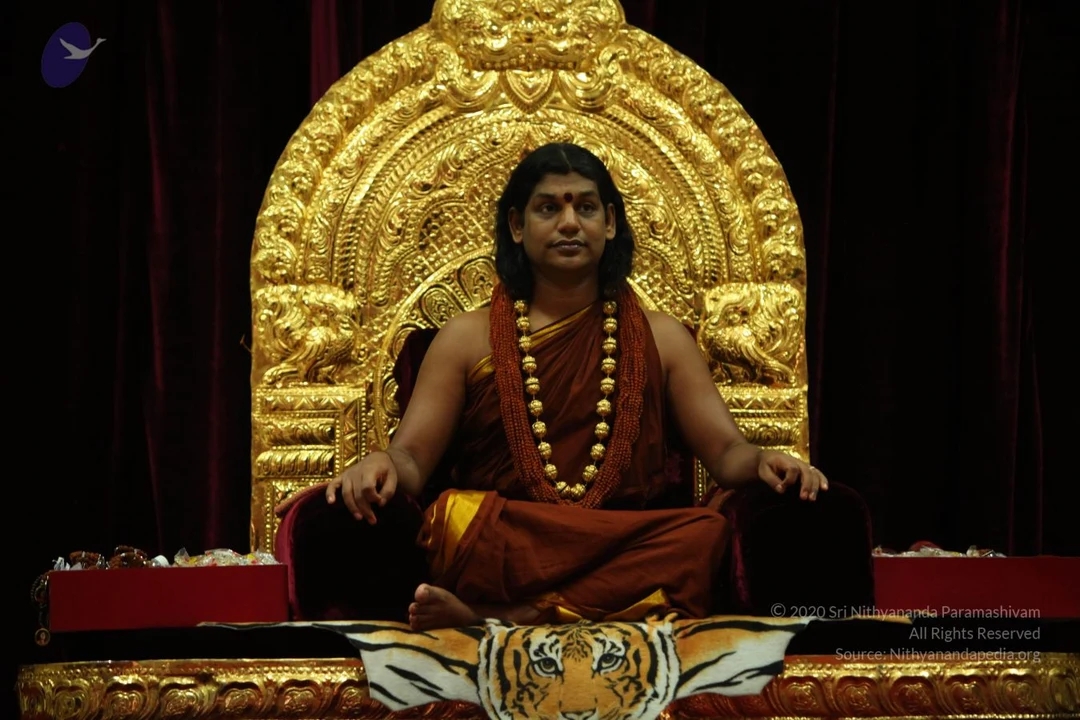
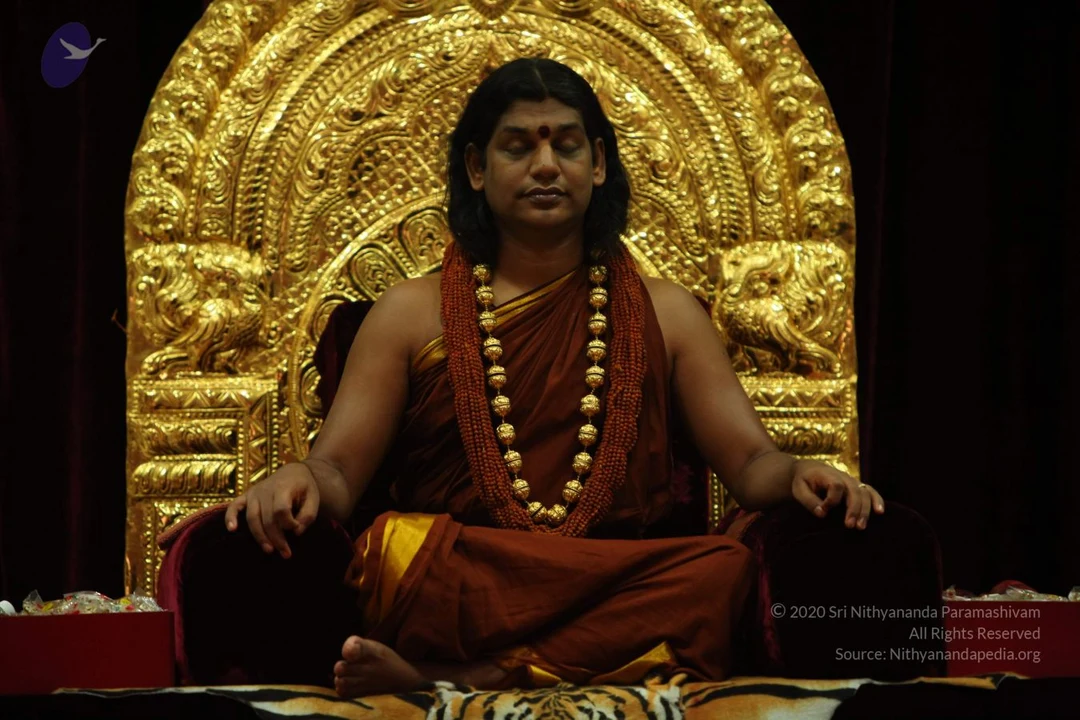
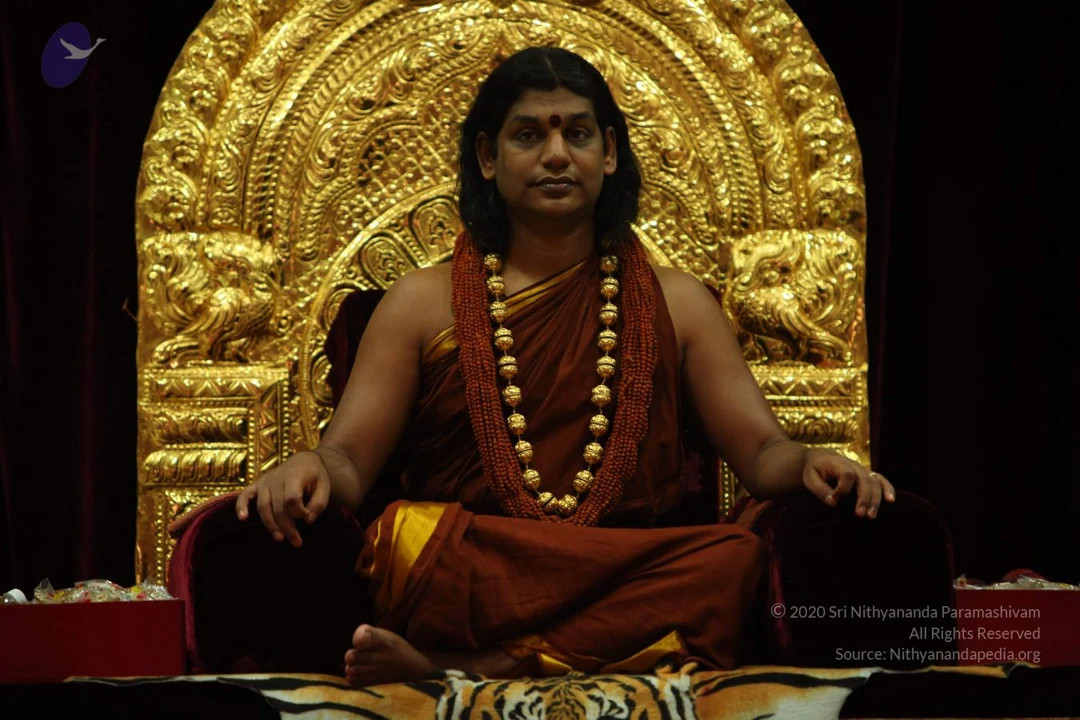
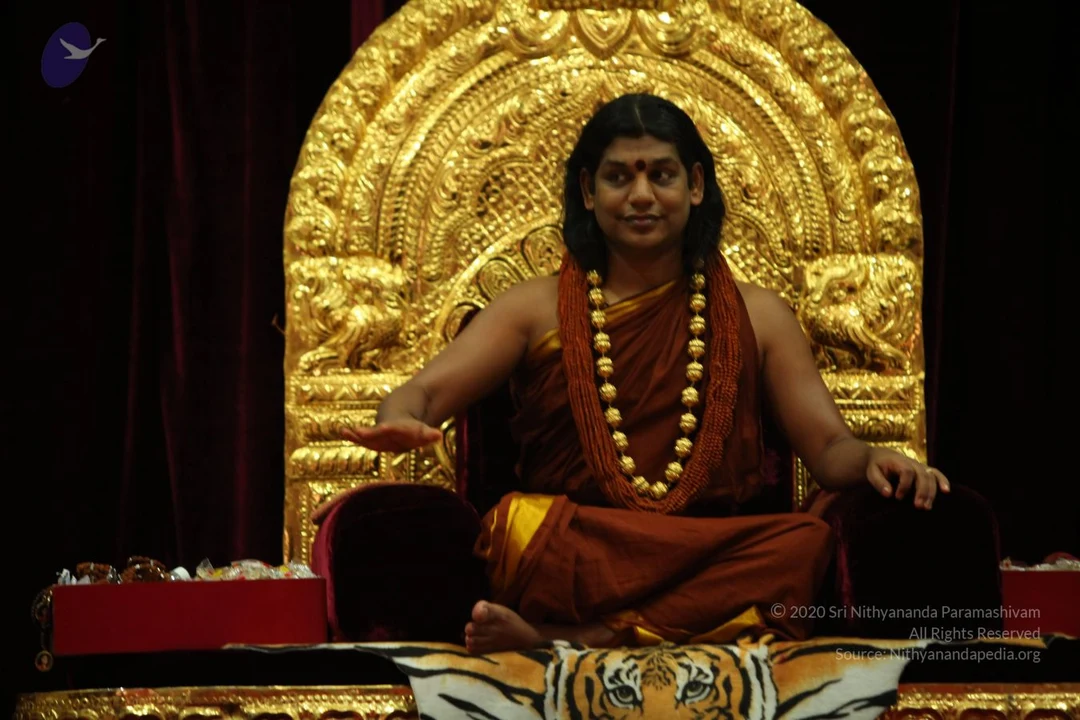
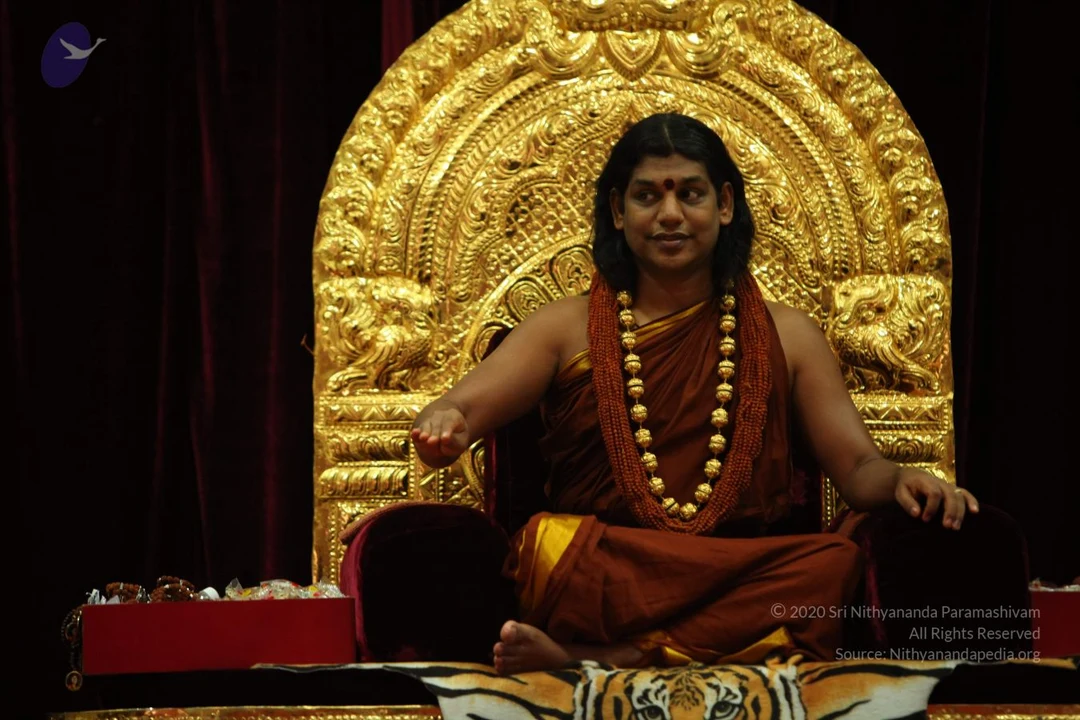
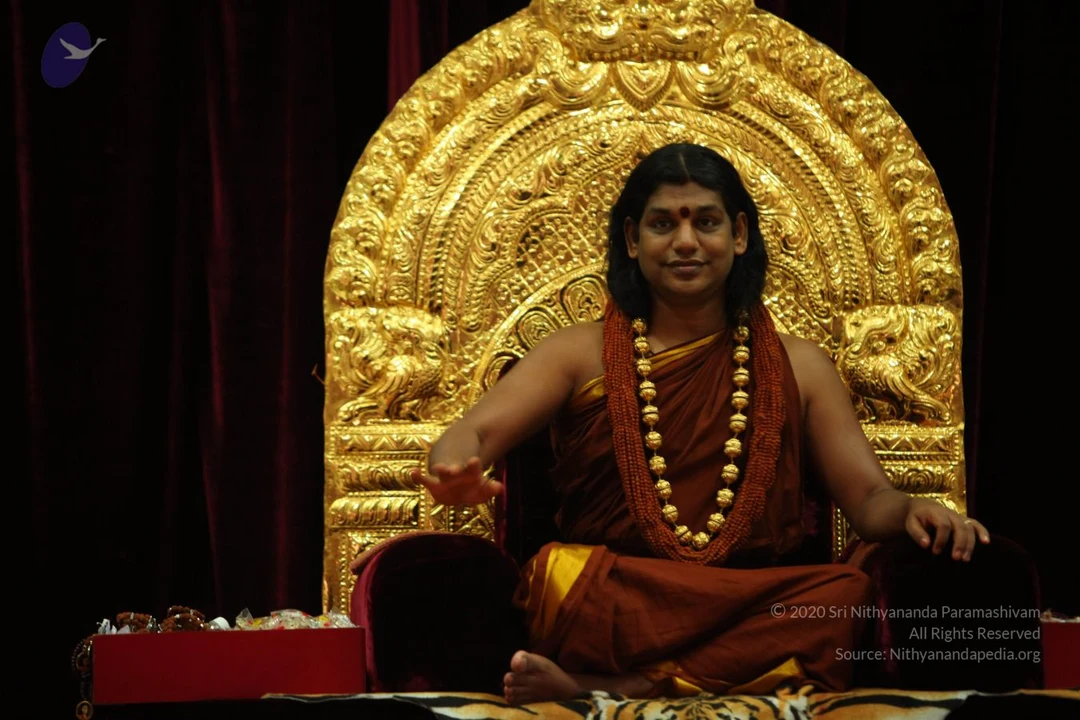
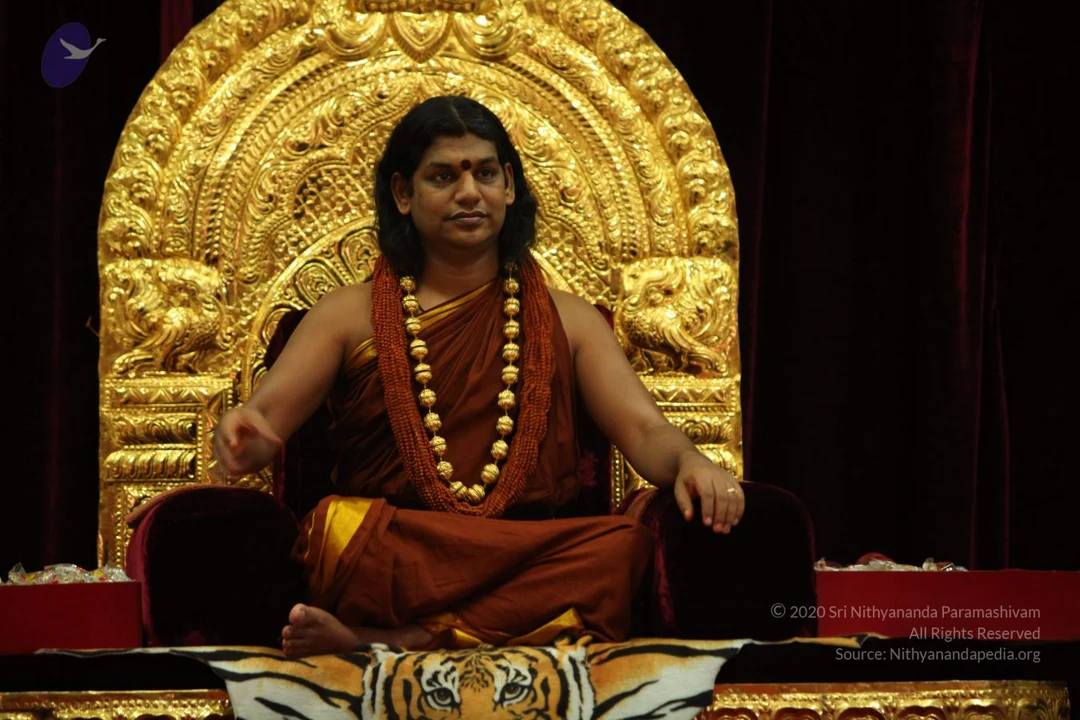
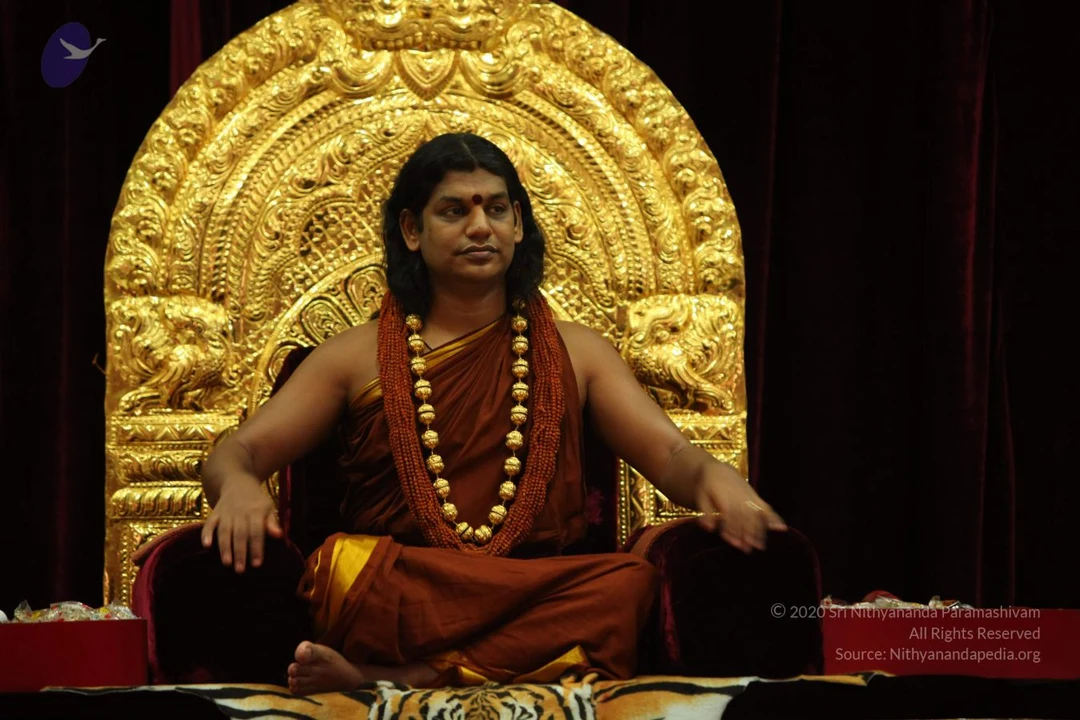
A seated man in dark red-brown saffron-toned robes sits cross-legged on an ornate gold throne with an arched gold back, placed on a red-draped platform with a tiger-striped cloth. He wears a long beaded mala around his neck and has a red bindi on his forehead. His hands rest open on his knees against a dark red curtain. At the lower right, a person in white ritual clothing with a yellow-trimmed cloth sits with palms pressed together in namaste. The stage is dimly lit, with the gold throne as the focal point. Swamiji (probable): the seated figure has long dark hair and a rudraksha-style bead mala, and the page indicates he is present at this satsang.A seated man in dark-red ochre robes sits cross-legged on an ornate gold throne with a carved arched back and lion figures at its sides. He wears a long beaded necklace of gold-toned beads and a red bindi, with his hands resting open on his knees. The throne sits on a tiger-striped rug in a dark hall with red curtains behind. Swamiji (probable): long dark hair, saffron-ochre robes and a beaded mala are visible cues, so the figure is described as a probable candidate for Swamiji in an appearance-based sense only. Gold-toned trays holding small offerings sit on either side of the throne.A seated man in a dark red-brown robe sits cross-legged on a tiger-skin rug before an ornate gilded throne with carved lion heads and foliate arches, set against dark red velvet drapes. He wears a long strand of gold beads around his neck, a red-brown shawl draped over his shoulders, and a red bindi on his forehead, with his hands resting on the armrests. Crystal objects sit on a red table at the left edge.A seated man in saffron-orange robes sits cross-legged on an ornate gold throne with carved lion heads and a tiger-skin mat at its base. He wears a long rudraksha mala and a heavy gold bead necklace, with a red bindi on his forehead and long dark hair swept back, hands resting on his knees. Red velvet drapes frame the throne, and red boxes holding offerings flank it on either side. Swamiji (probable) is seated in the centre, with the presentation cues of saffron robes, rudraksha mala, gold necklace and swept-back hair.A seated man in saffron-orange robes sits cross-legged with eyes closed in meditation on an ornate gold throne with carved lion figures and a large gold arched backrest. He wears a dense red-orange rudraksha mala with gold bead accents, a red bindi on his forehead, and a saffron wrap over his shoulders. His hands rest open on the throne armrests, and his bare feet rest on a striped tiger-skin cloth. Small offerings sit on red trays at the lower corners. Swamiji (probable) appears by appearance cues: long swept-back hair, saffron robes, rudraksha mala and gold ornaments, seated in a meditative posture on a ceremonial throne.A seated man in a saffron-orange robe with a gold-yellow edge sits cross-legged on a tiger-striped cloth in front of an ornate golden arched throne carved with lion figures. He wears a long rudraksha mala with large gold beads, a red bindi on his forehead, and has long swept-back dark hair. His hands rest on the throne arms with palms down, and his bare feet are visible. Small offerings wrapped in plastic sit at the lower corners. A purple logo appears at upper left and a copyright credit at lower right. Appearance cues match the a person candidate in a satsang setting, so this is probable.

HOMA
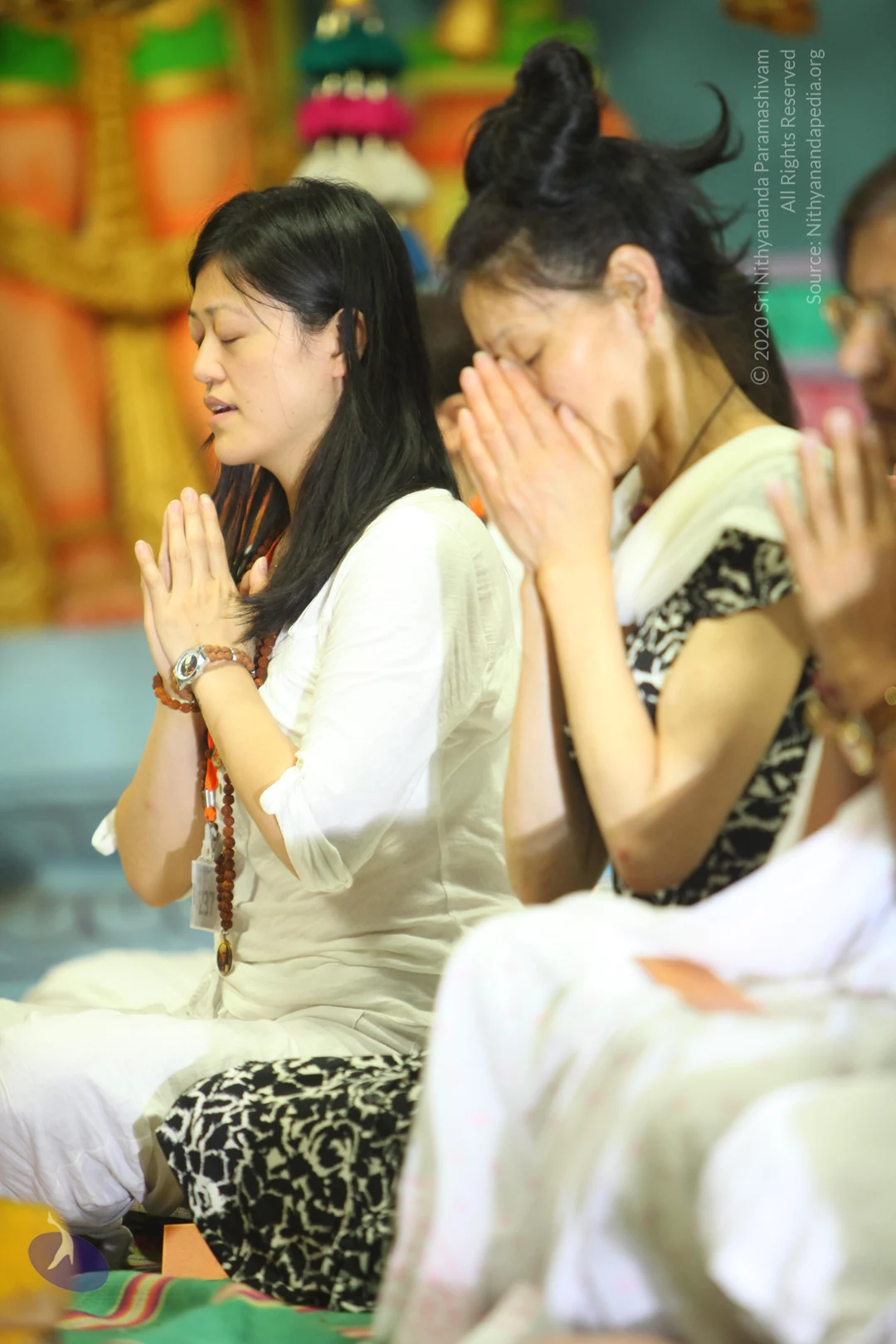
48 photosSource gallery
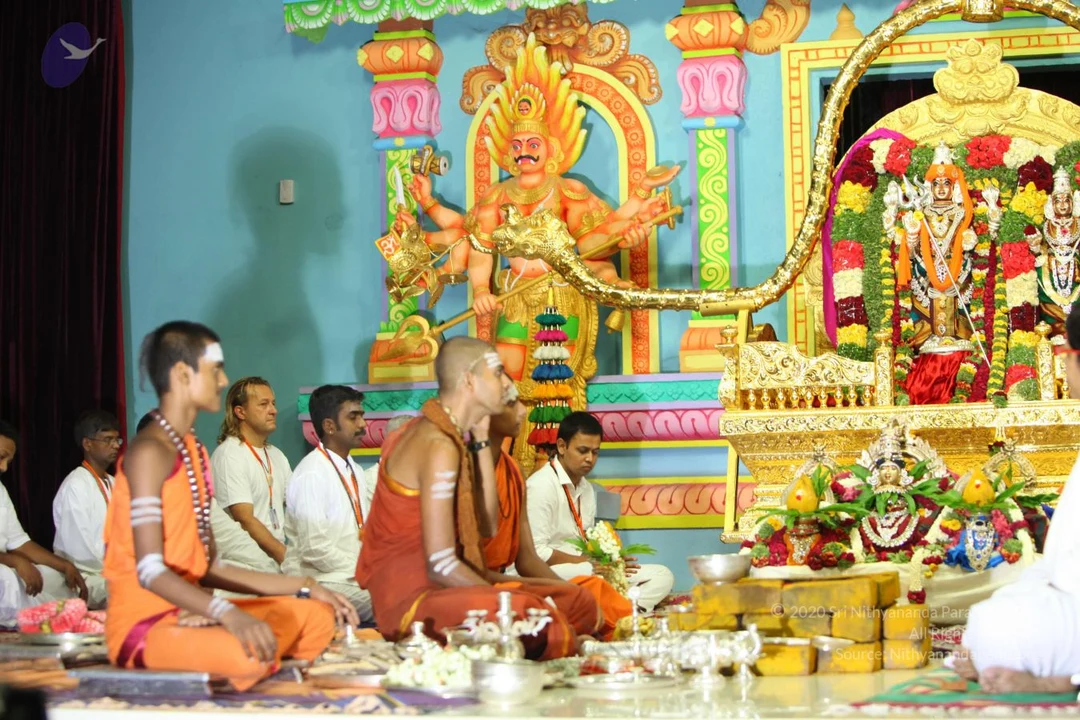
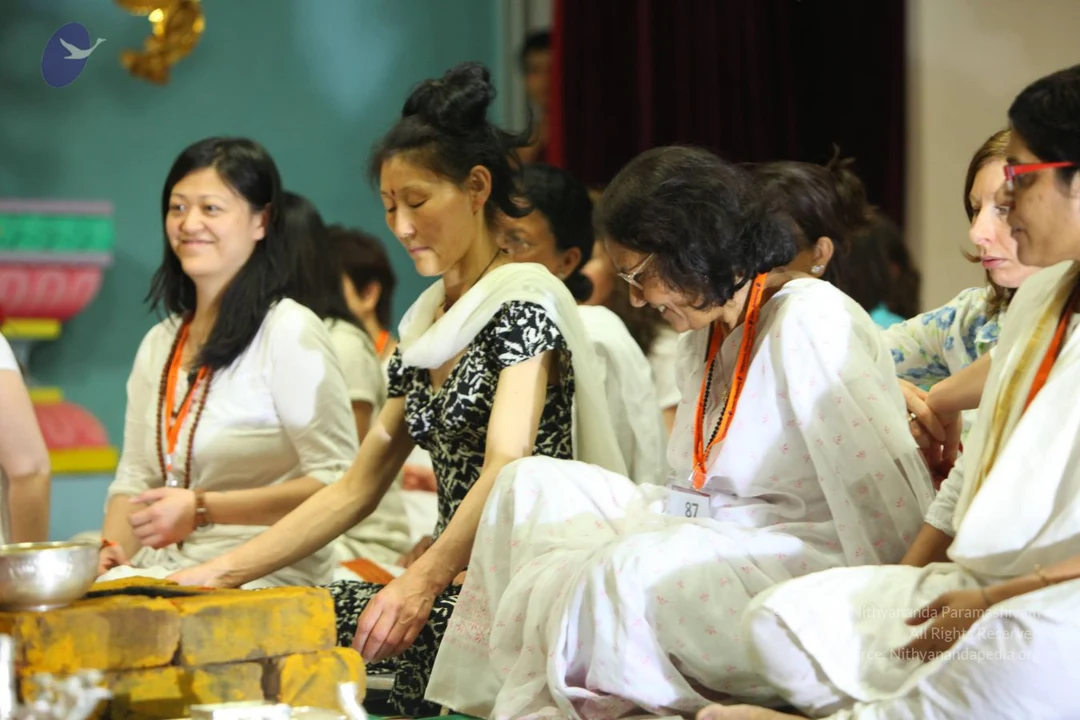
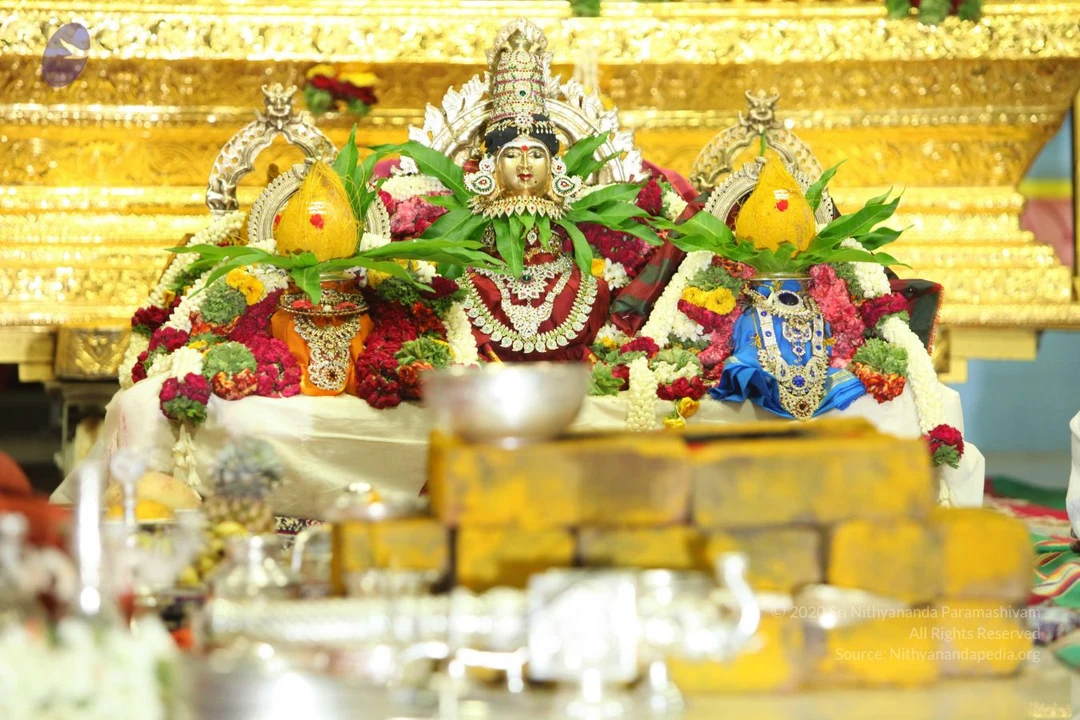
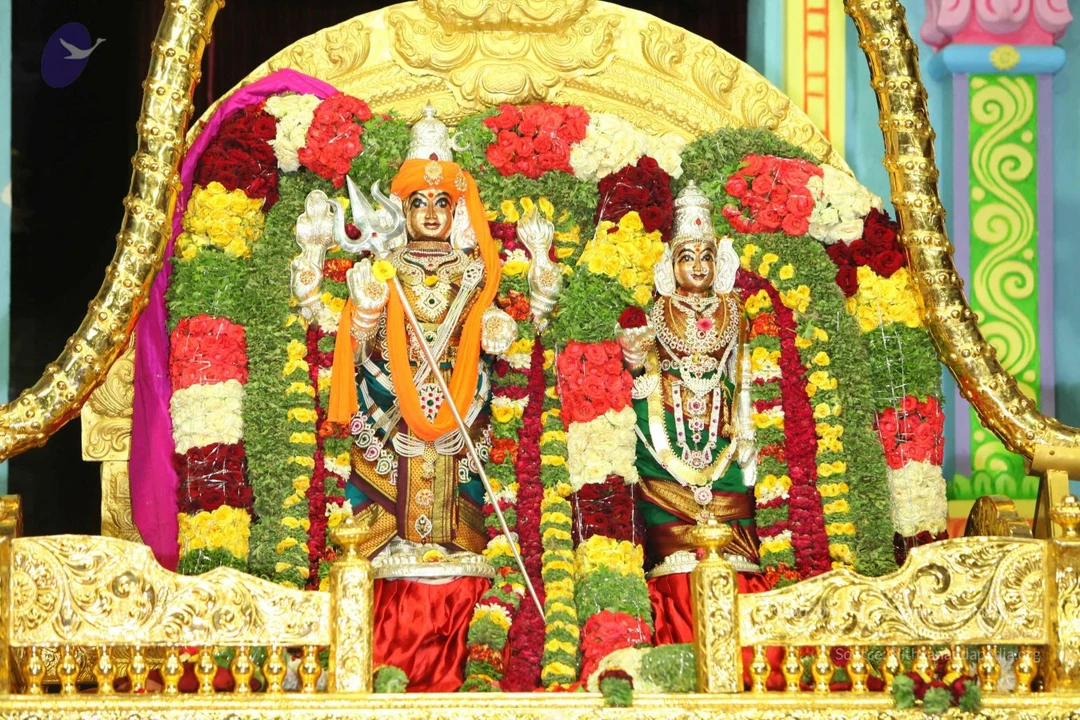
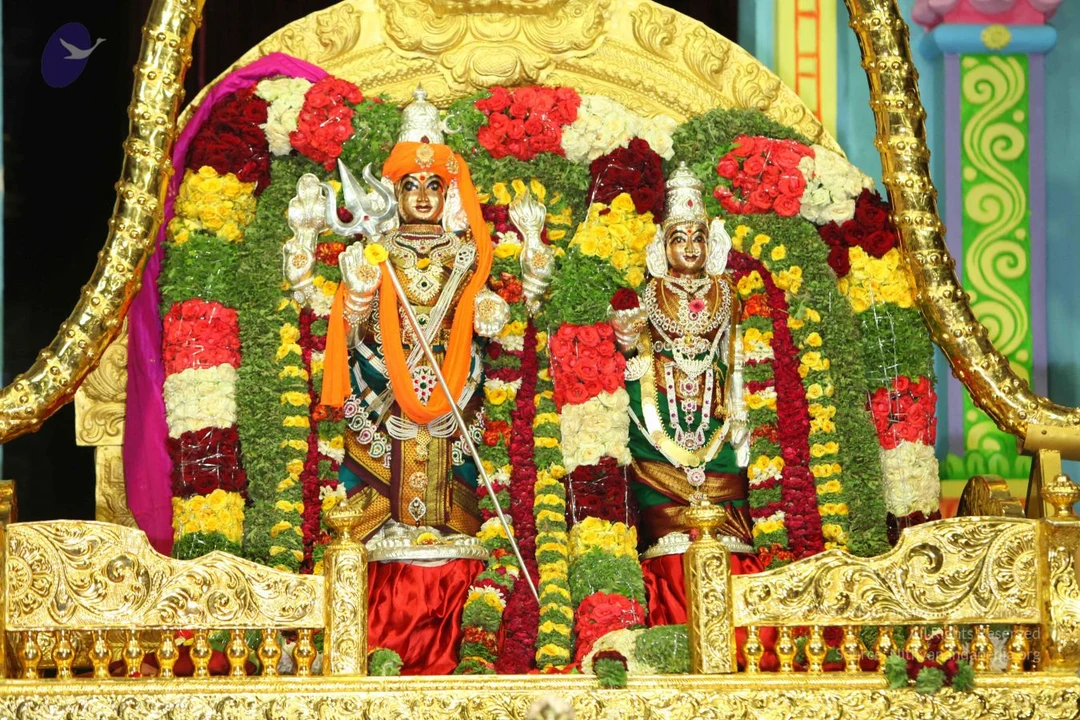
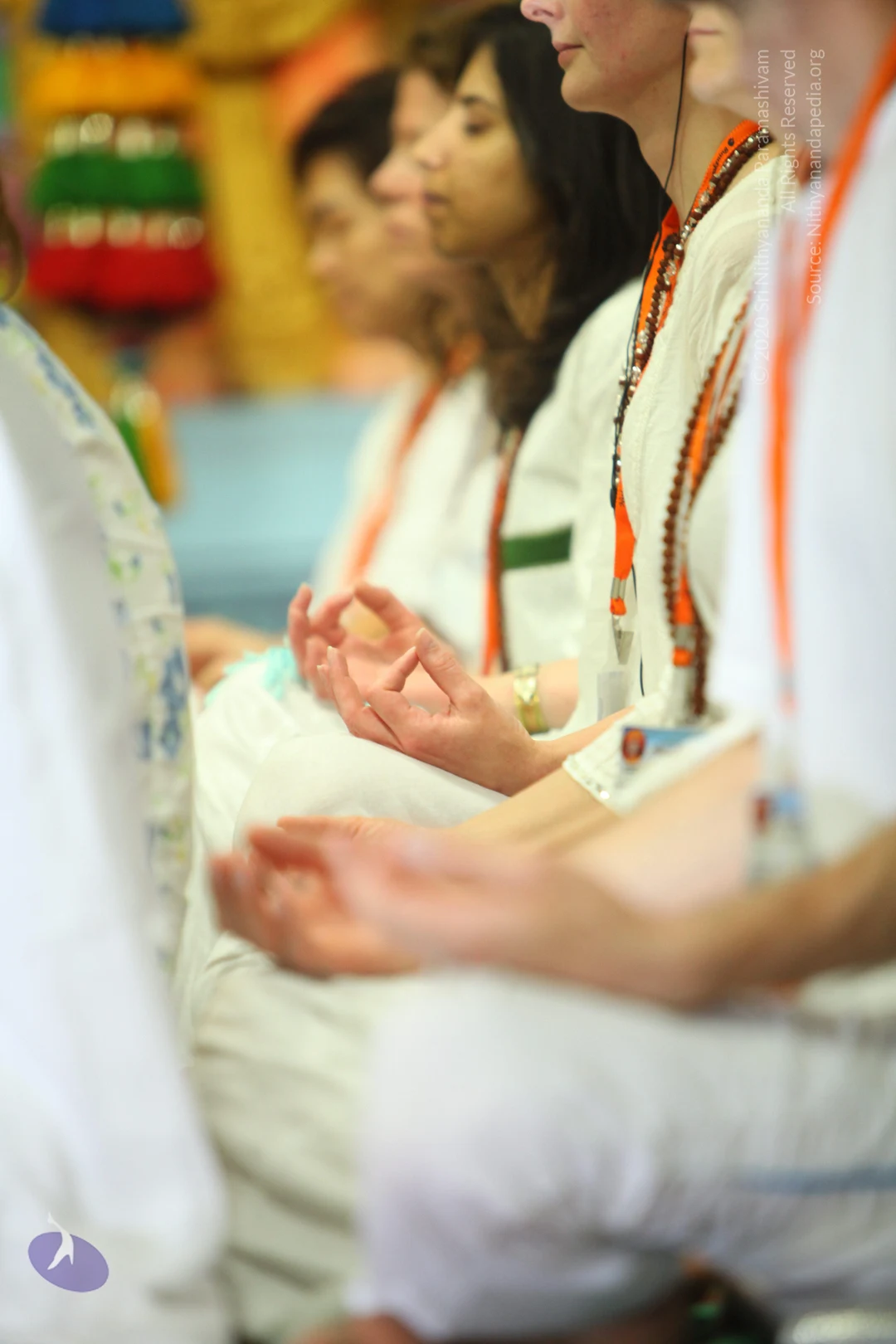
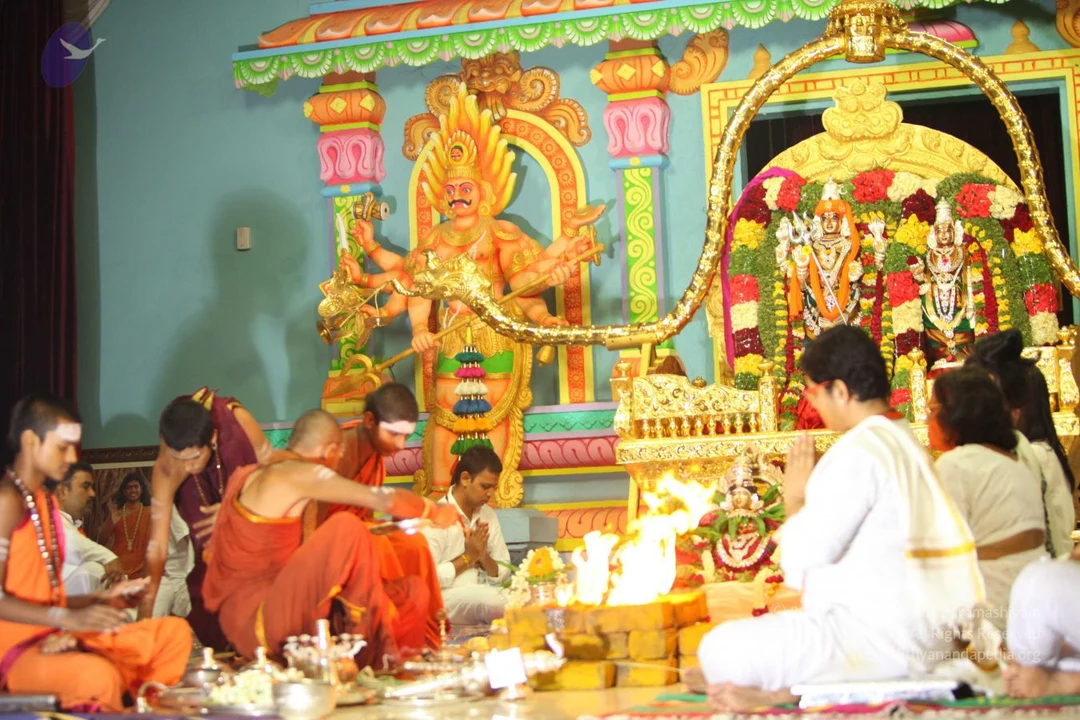
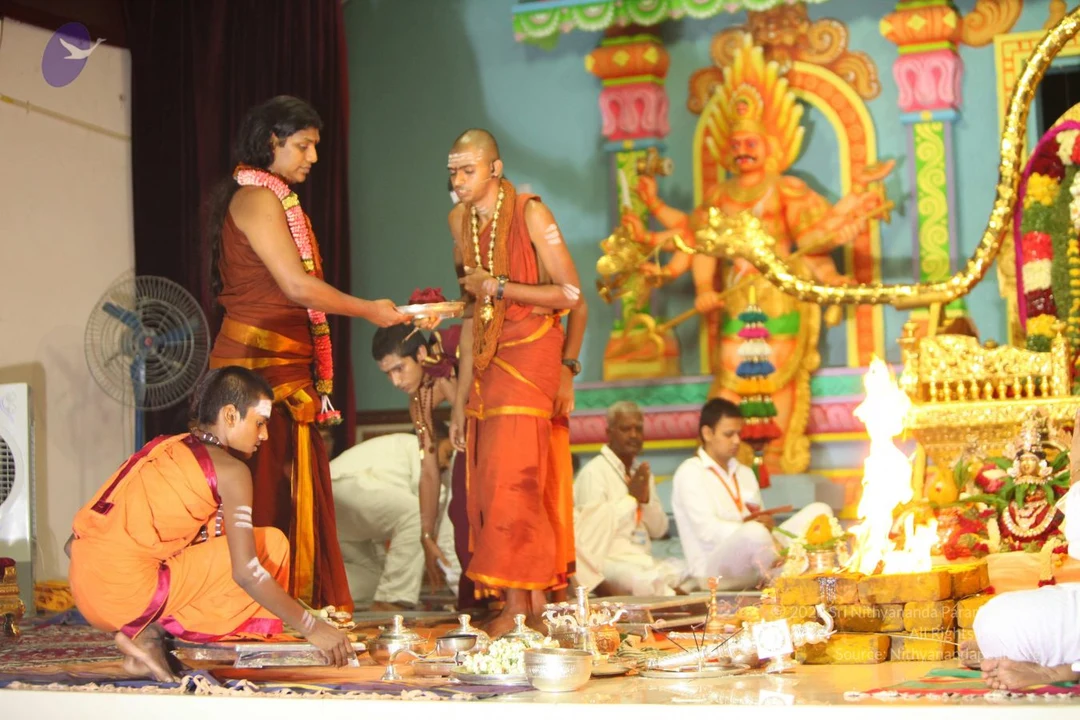
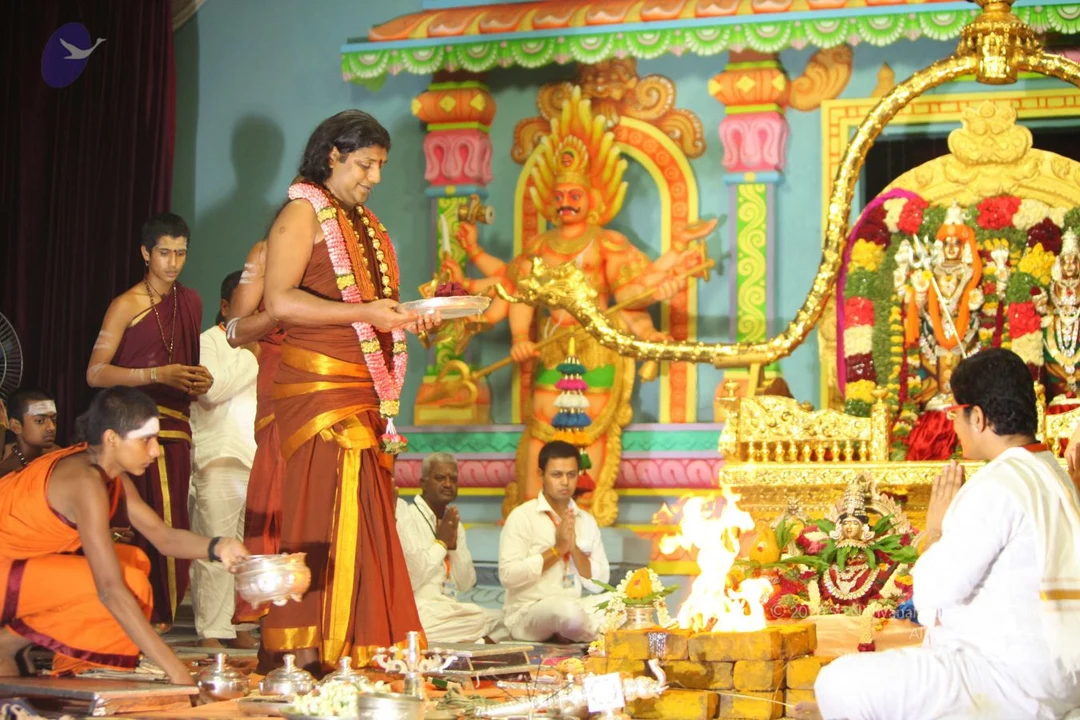
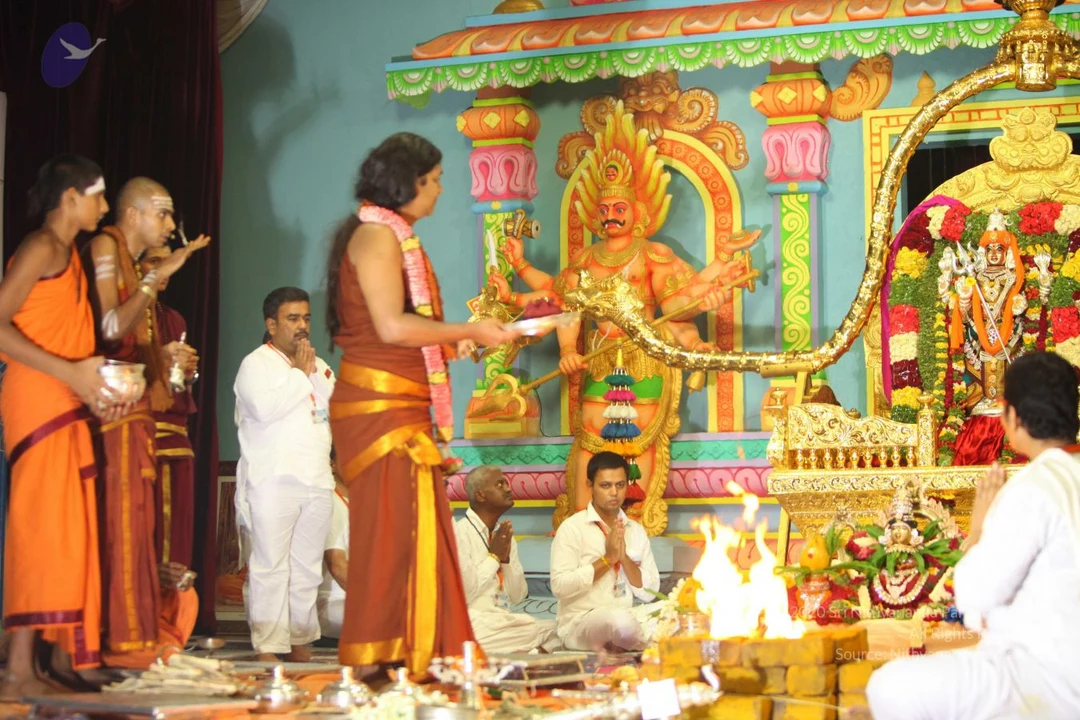
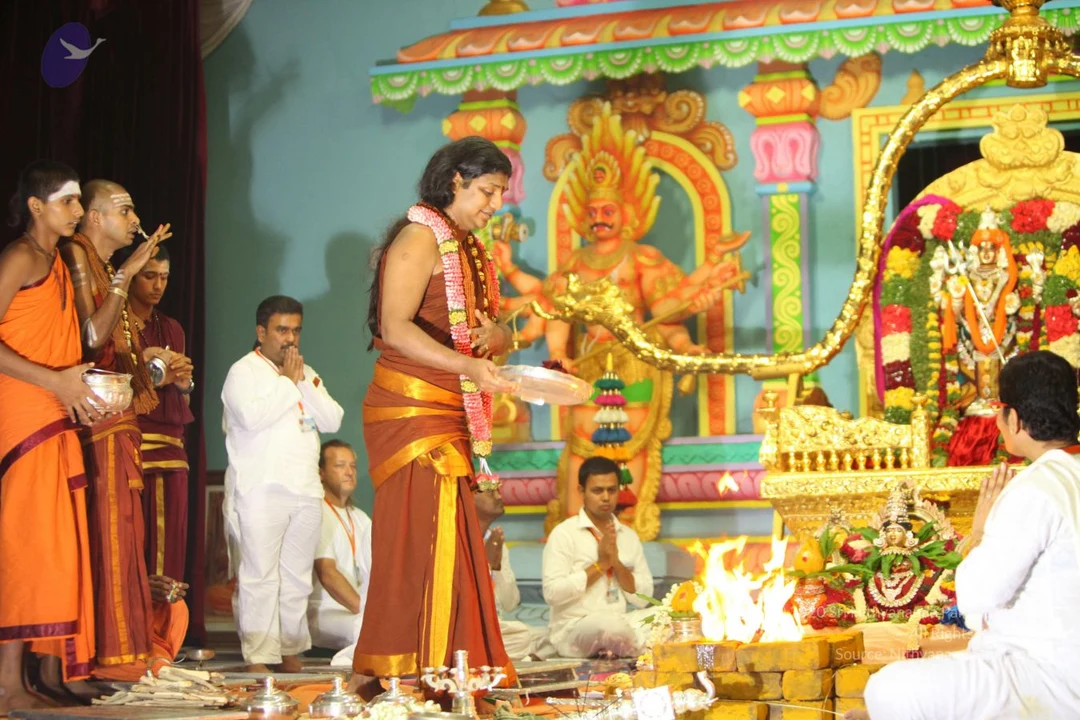
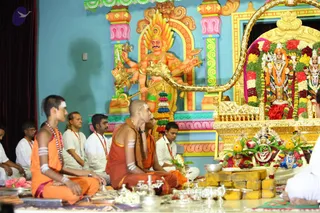
A photograph of a ceremony in a temple hall with a turquoise wall and colourful painted pillars. In the foreground, several men in orange and saffron robes sit cross-legged on the floor with white sacred ash marks on their foreheads and arms, some wearing rudraksha malas. Behind them, a group of men in white clothes and orange-and-white lanyards sits and watches. A painted deity figure with multiple arms holding a trident and club stands in the background. On the right, a golden palanquin-style altar is decorated with red and orange flower garlands, and a deity murti in a garland is displayed on it, with brass puja vessels and flower offerings arranged on a gold-coloured platform in front.A seated satsang gathering of women in white and cream clothing, many wearing orange and rudraksha-style beaded malas. In the foreground a silver bowl rests on a yellow-ochre platform beside a sitting woman in a black-and-white patterned dress and white shawl, who leans forward. Behind them a seated woman with a badge numbered 87 wears a white sari with pink print and an orange mala. Other participants sit in rows, and the wall behind is teal with a pink and green decorative panel and a dark red curtain.A photograph of a decorated deity murti set on a white-draped altar before a gilded golden backdrop. The central figure is a goddess murti with a tall crown, large earrings and a layered gold-and-jewel necklace, dressed in a deep maroon garment. Flanking her are two smaller pots or kalashas topped with mango leaves and coconut-like yellow fruit, each marked with red tilak, one set on a gold base and the other on a blue cloth with gold ornaments. Red and white flower garlands drape the altar, and a silver bowl and brass vessels sit in the foreground, blurred. Ritual puja setup.A photograph of two decorated deity murti figures on a golden throne-like altar framed by garlands of red, yellow and white flowers and green leaves. The figure on the left holds a trident and a staff, wears an orange head wrap and ornate gold jewellery, and stands in a red and green garment. The figure on the right wears a crown, layered necklaces and red and green attire. Pink fabric drapes behind the altar, and the ornate gold frame is decorated with flowers and hanging garlands. No physical people are visible.Two painted deity murtis stand side by side on a gold-carved throne-like platform, framed by a dense arch of red, white and yellow flower garlands with green leaves. The figure on the left holds a silver trident and carries a silver trident-like staff, wears an orange head covering, an orange shawl and ornate gold-and-jewelled attire. The figure on the right wears a crown, layered jewelled necklaces, a green and gold garment and holds a silver implement. Both are statues rather than living people. Gold carved panels, a pink cloth and a colourful pillar with green swirl patterns frame the altar.Close side view of seated devotees in white clothing meditating with mudra hands resting on their laps. A young woman in the foreground wears an orange and white outfit with rudraksha mala beads and an orange cord, eyes closed. Other seated people in white, including an older person and a figure on the left edge, sit in a row. Their hands are held in meditation mudra. Blurred colourful hangings in the background suggest a hall. No a person candidate is visibly present.