Skip to content
Friday

15 May 2015

Awaken The Ability To Reinvent Yourself

Dated photos
147
Source pages
1
Media
4
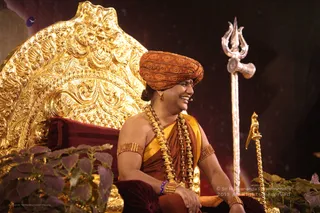
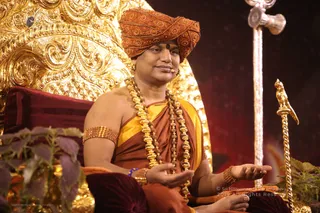
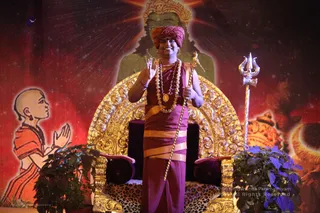
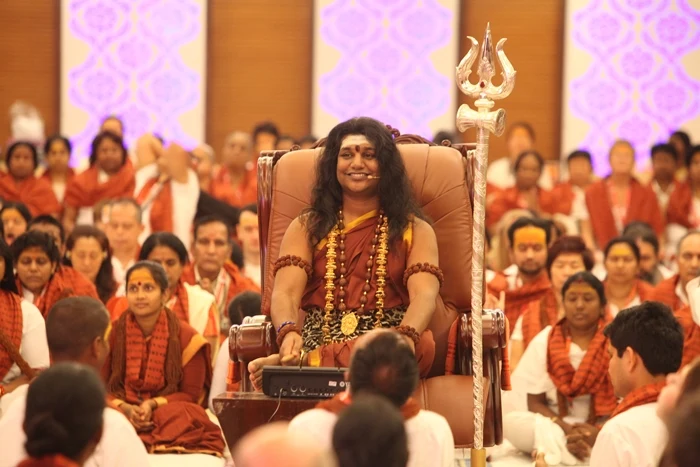
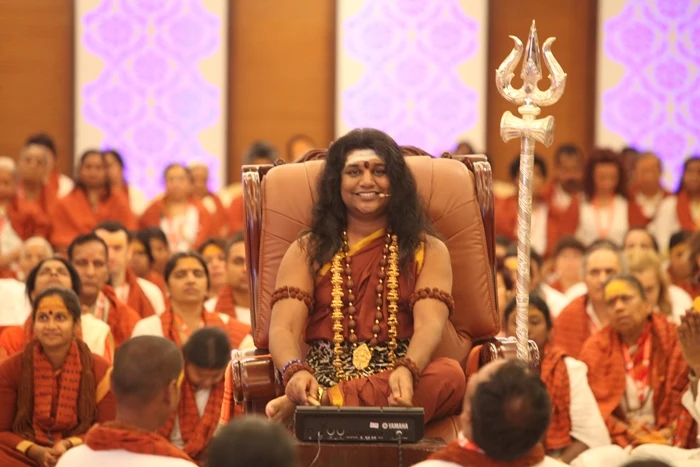
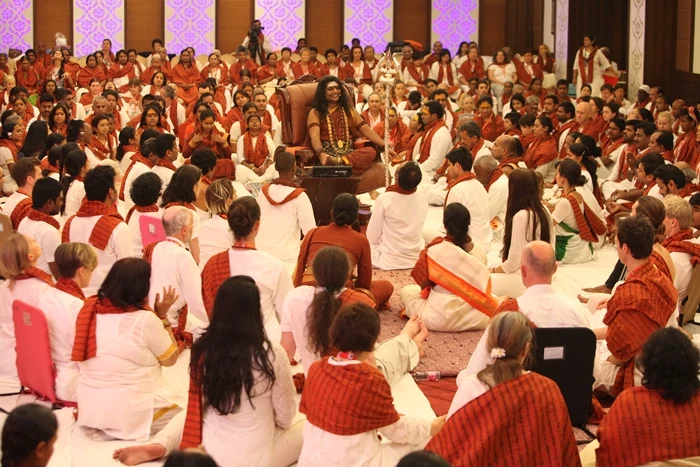
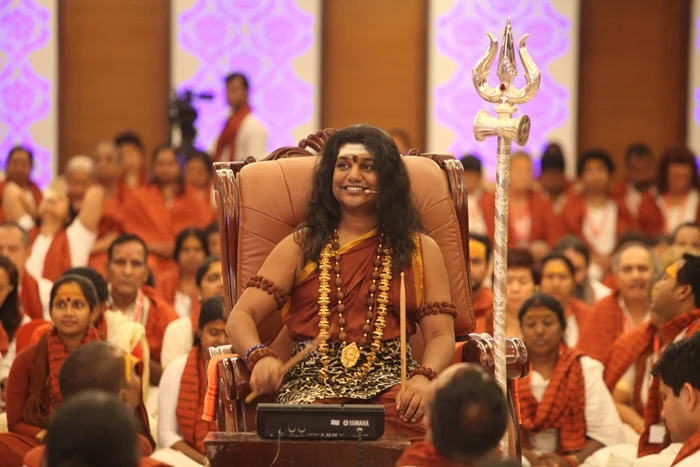
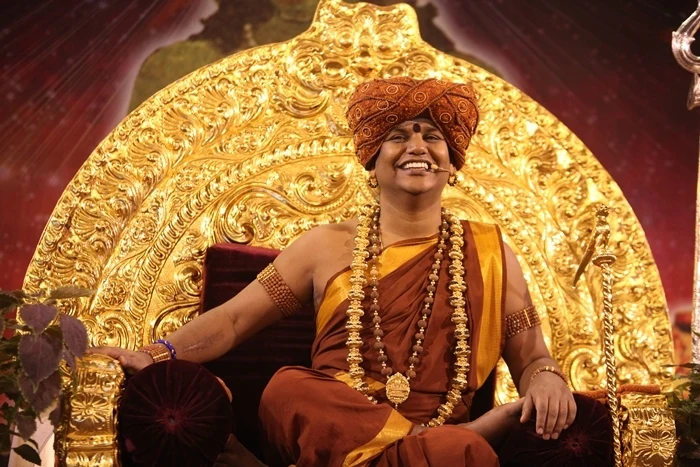
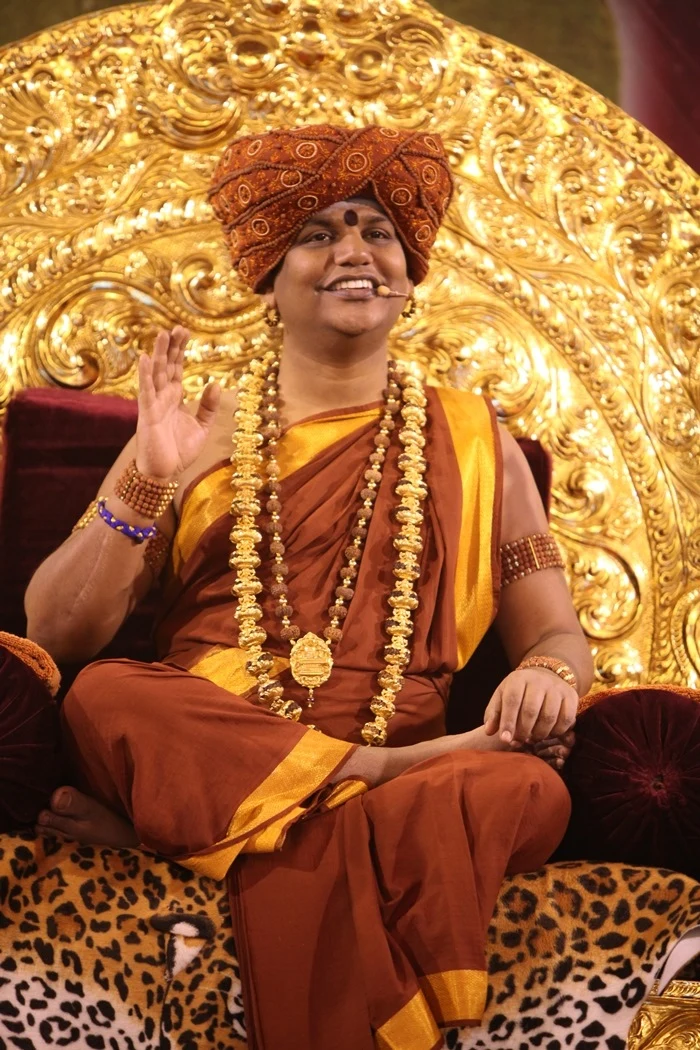
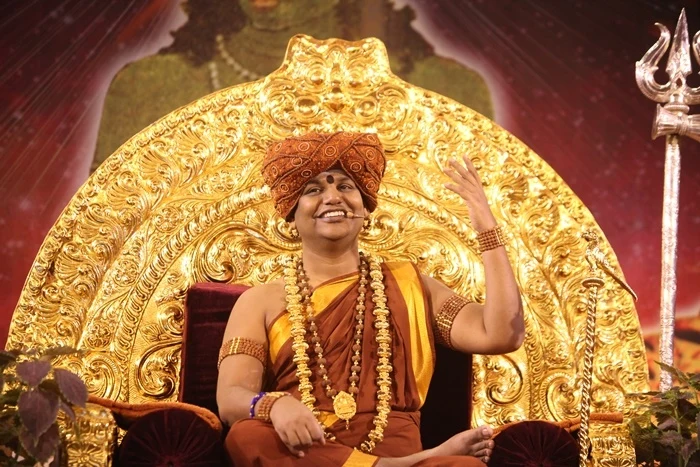
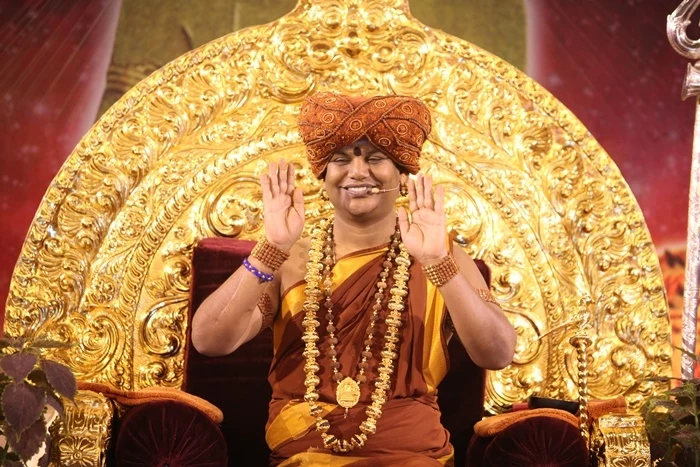
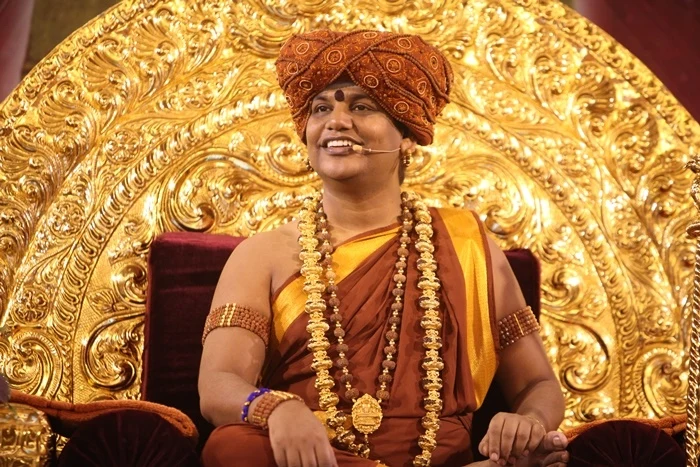
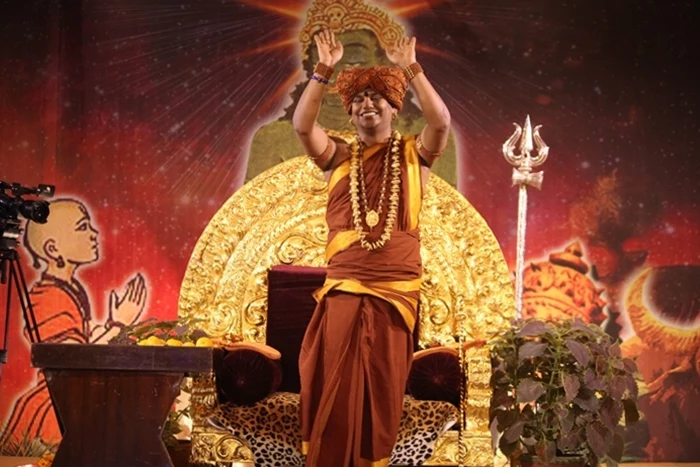
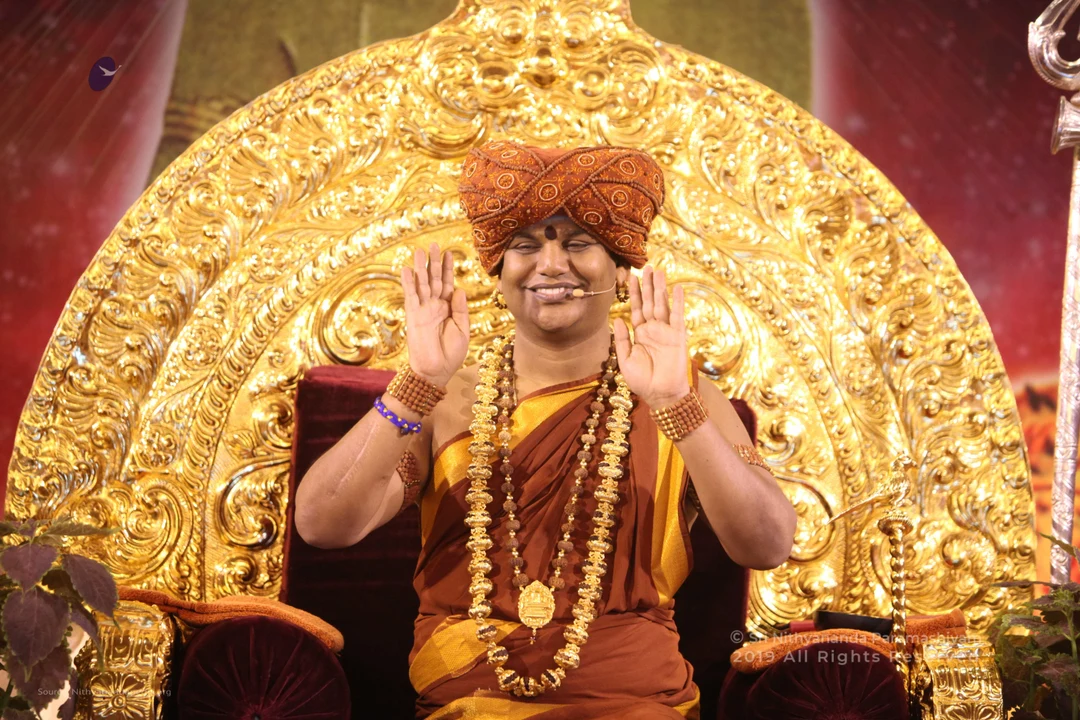
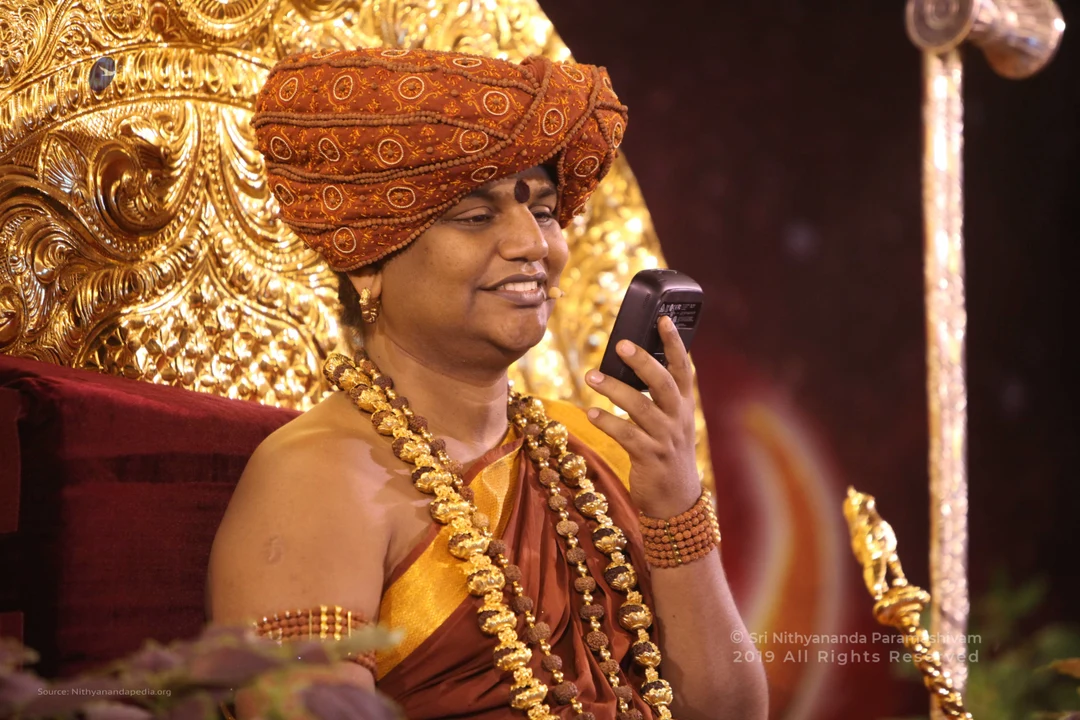
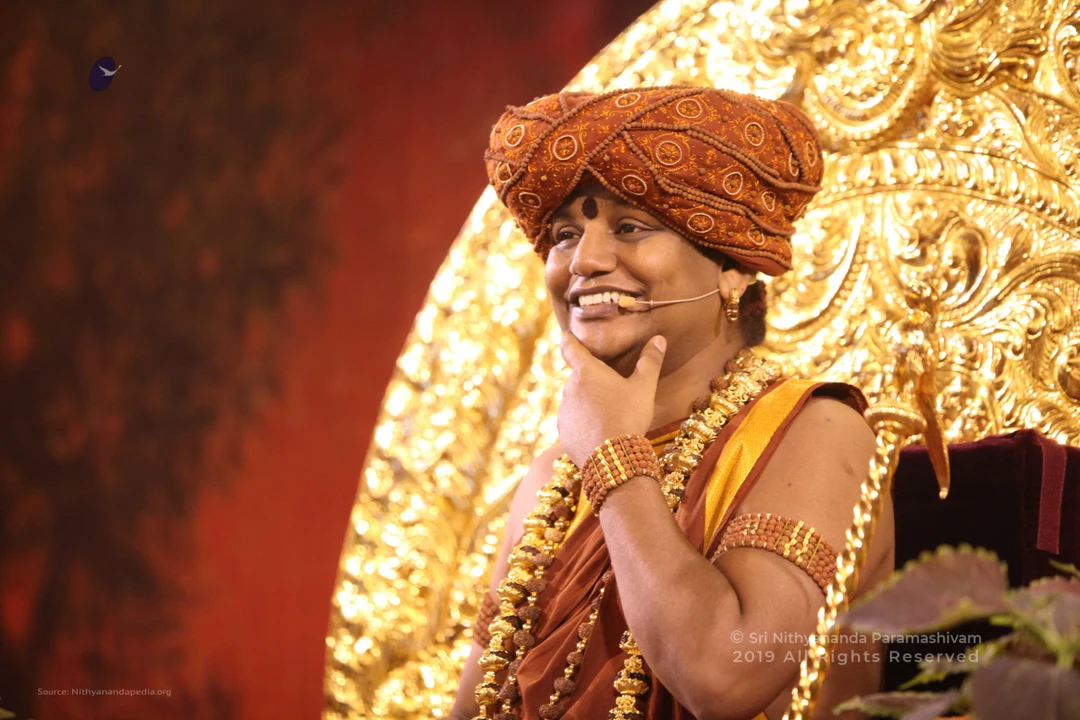
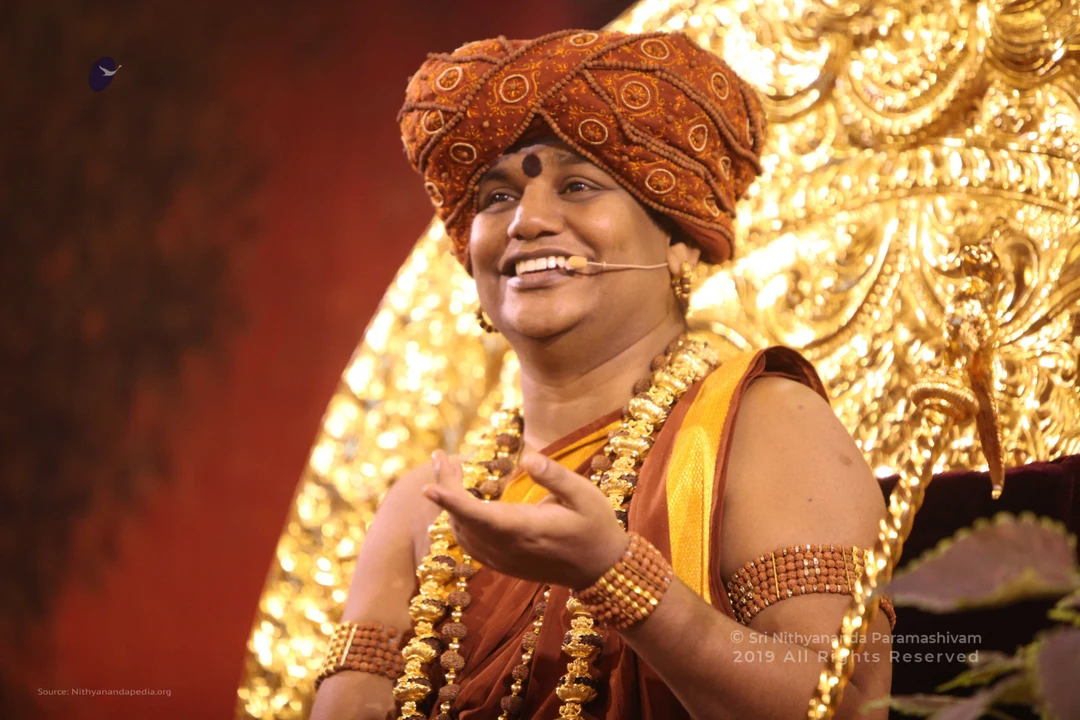
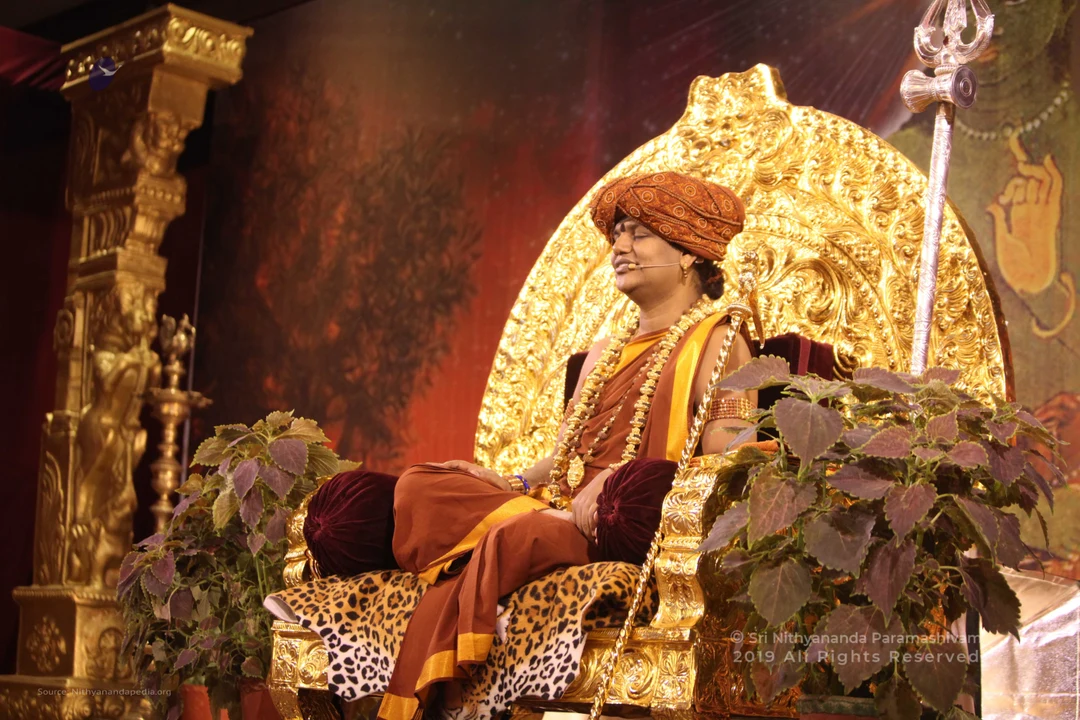
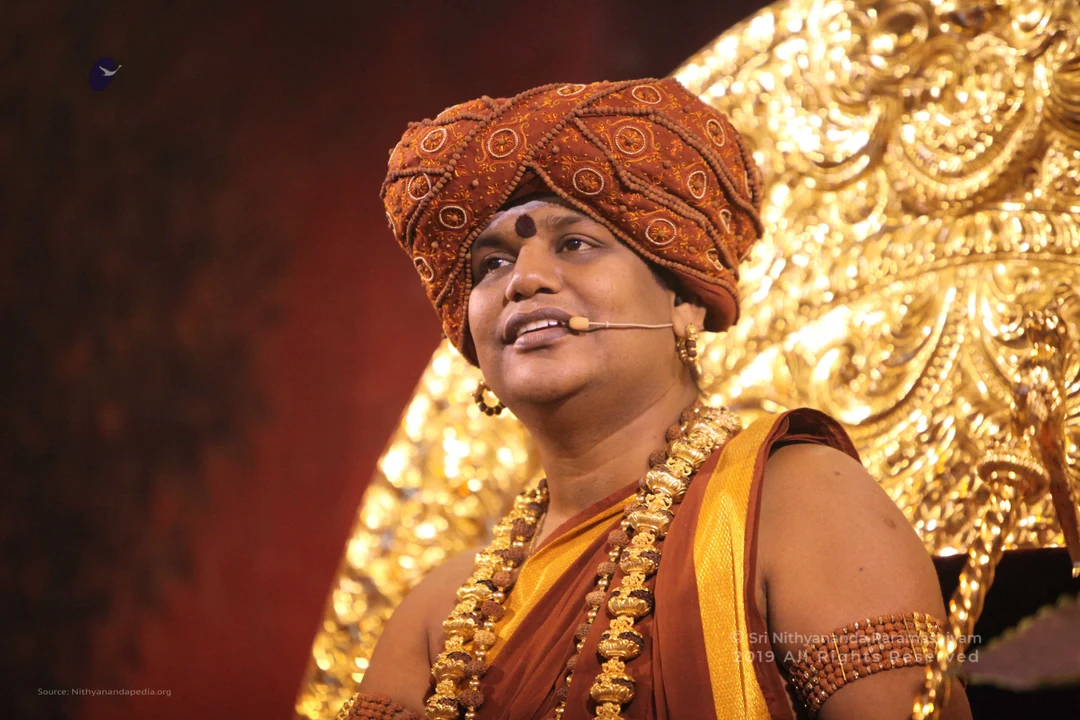
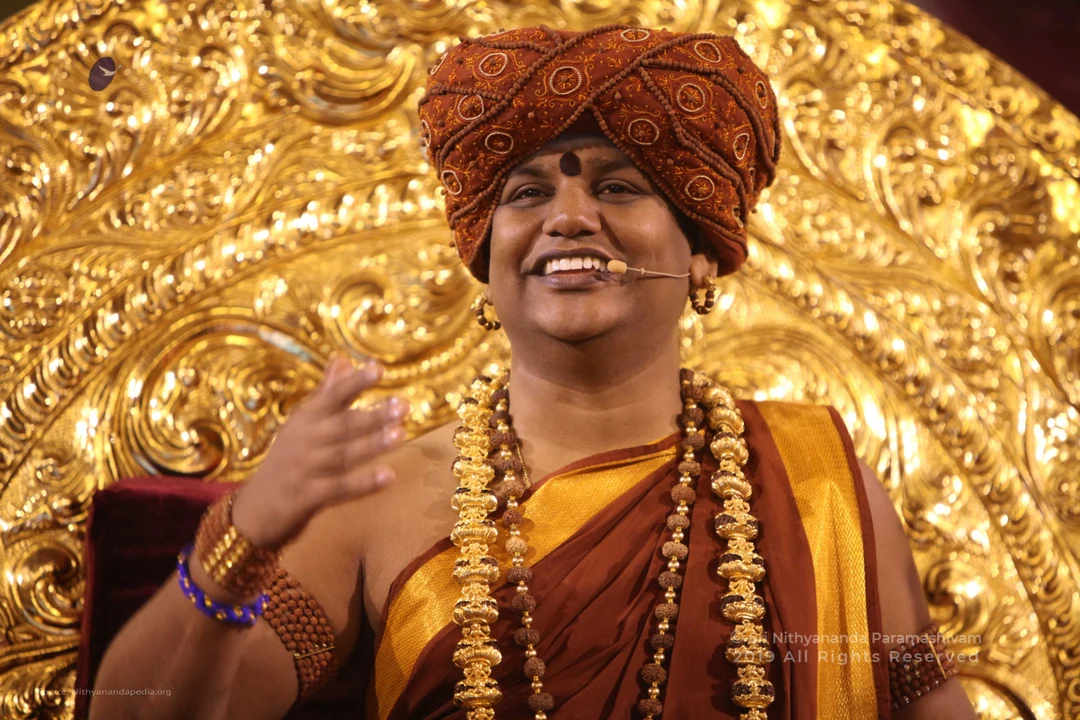
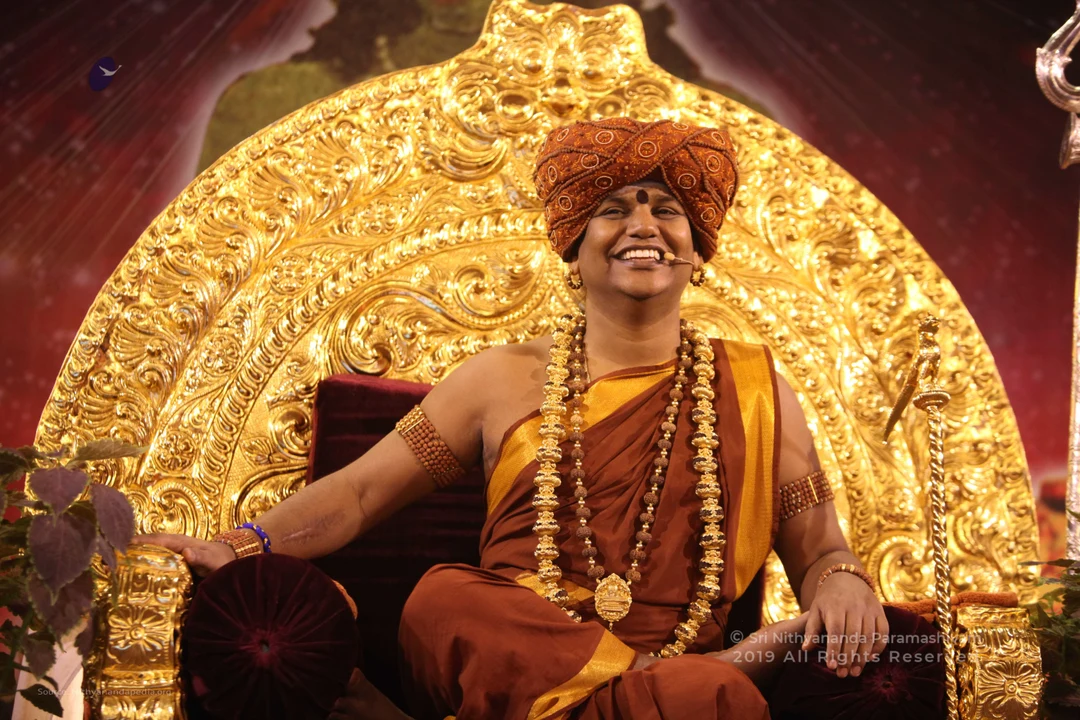
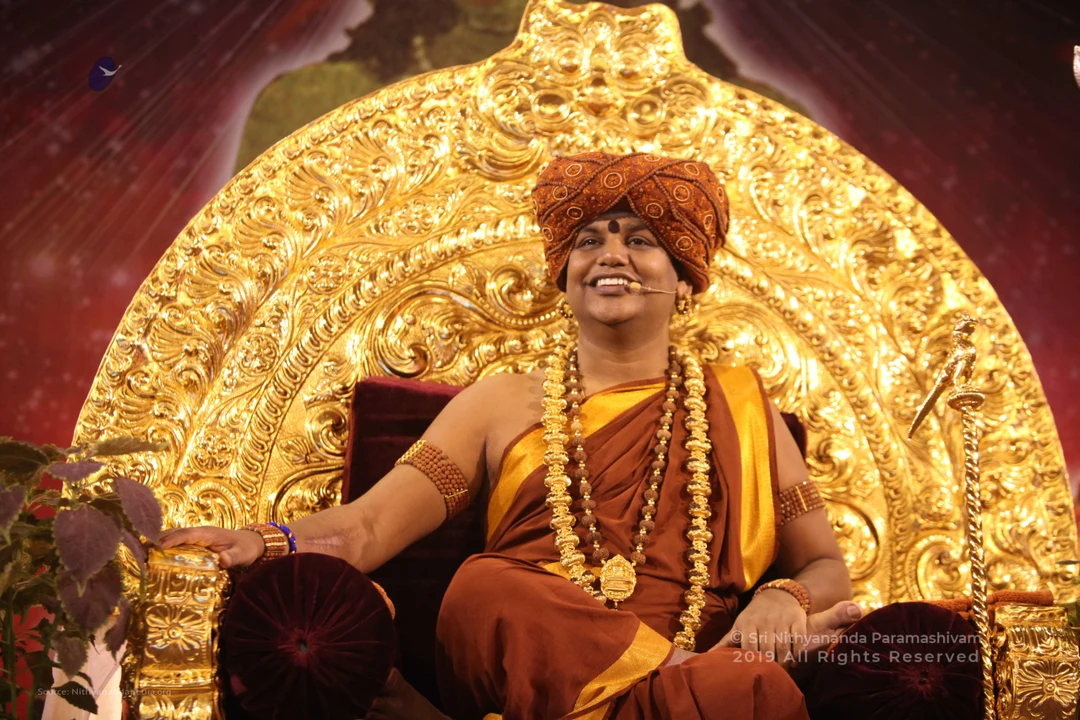
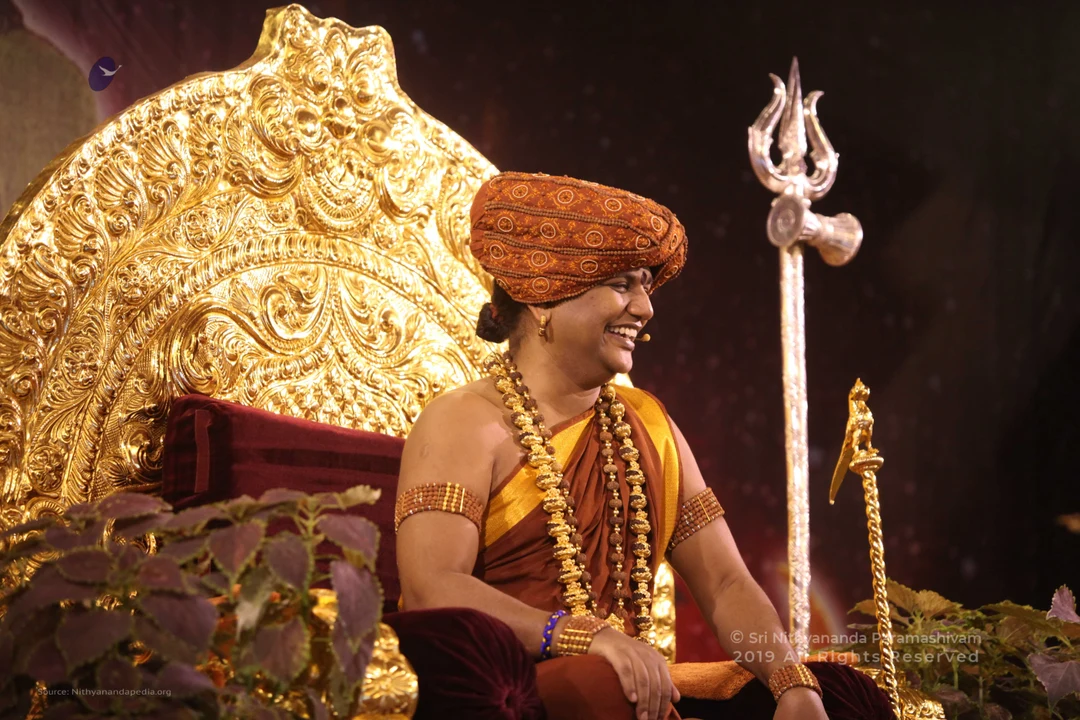
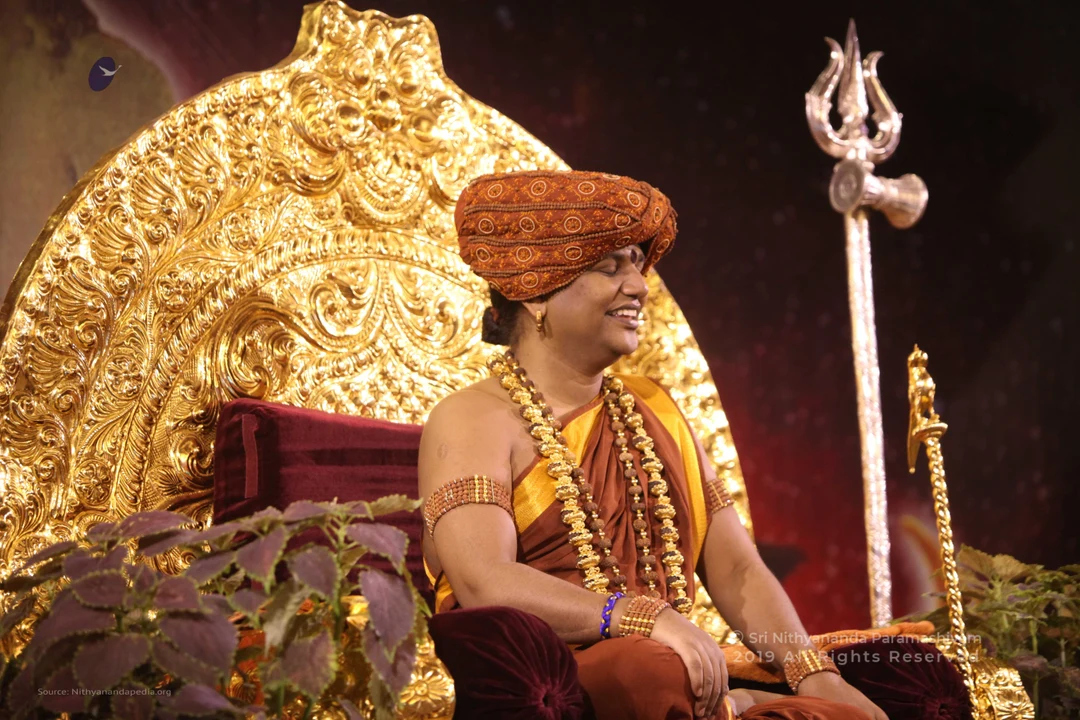
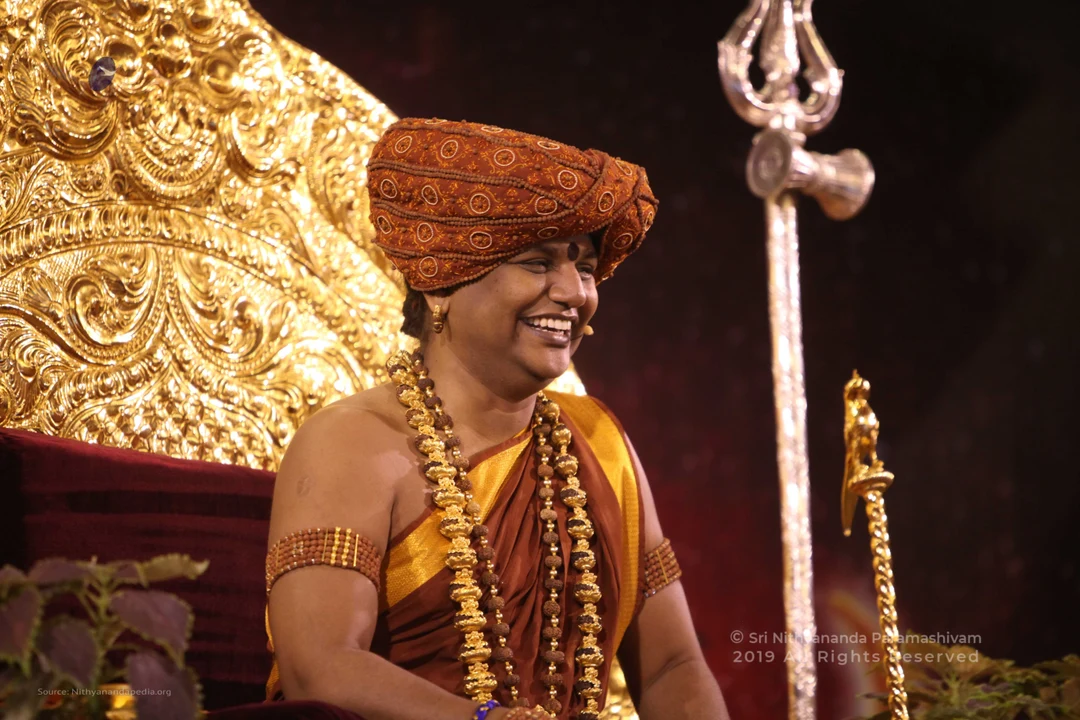
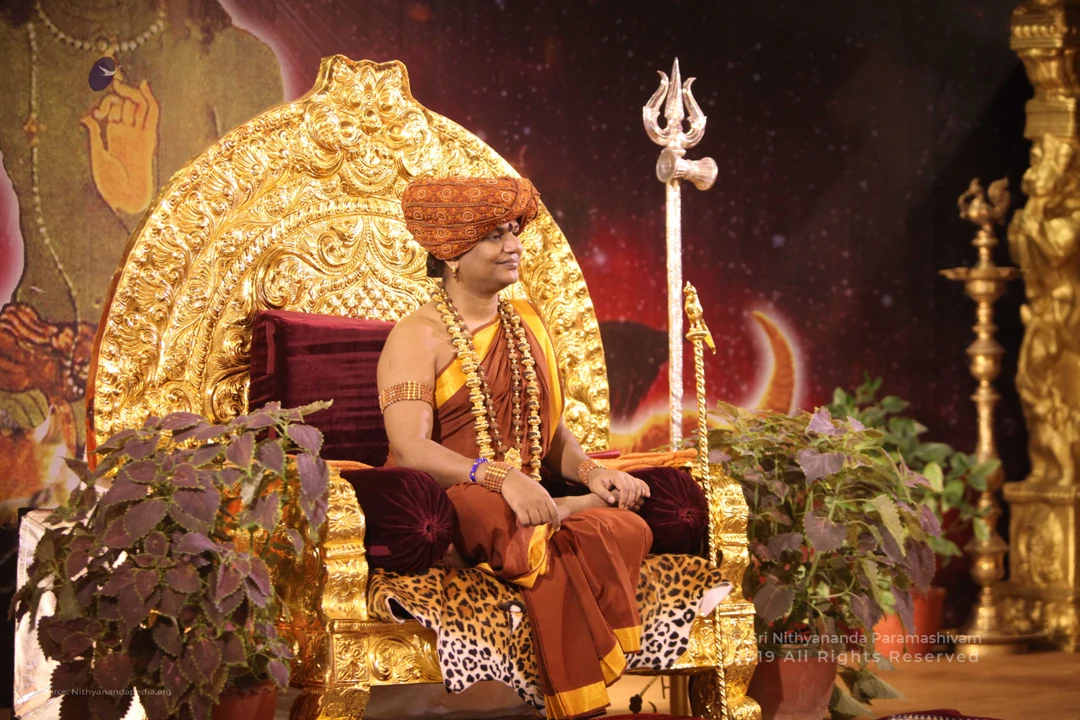
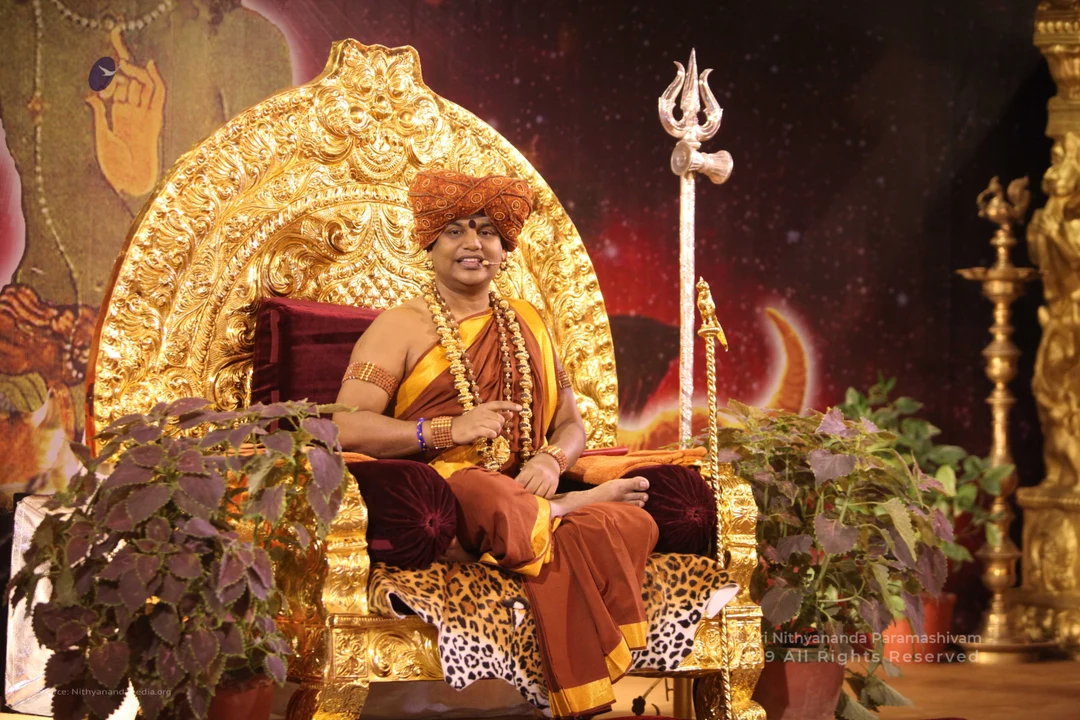
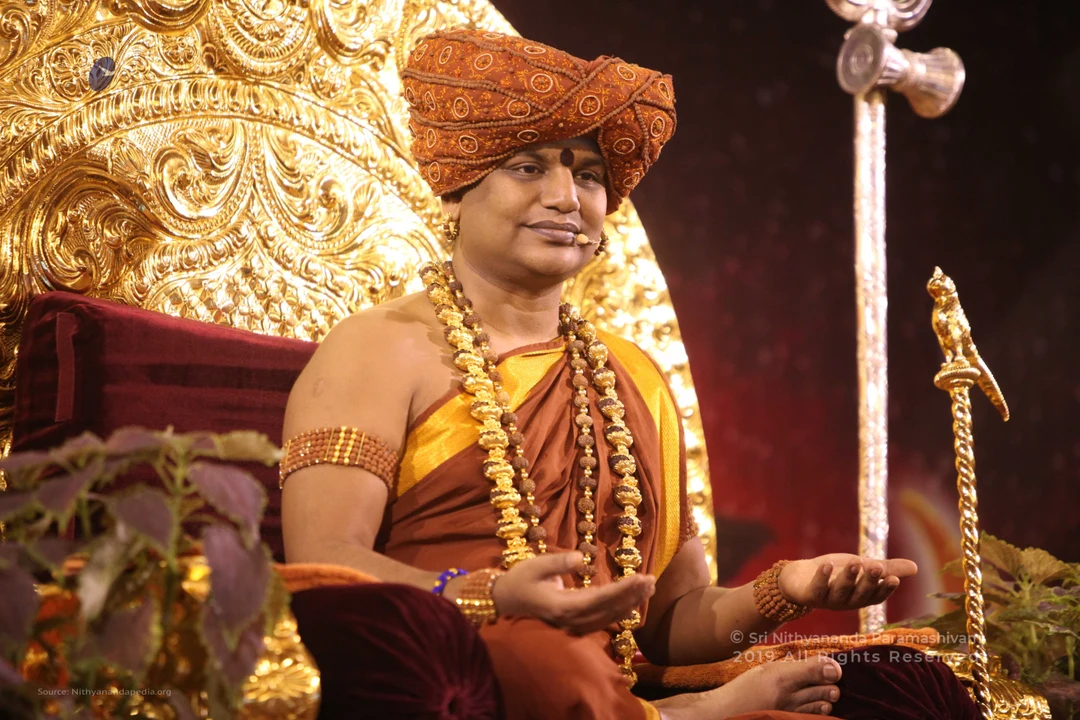
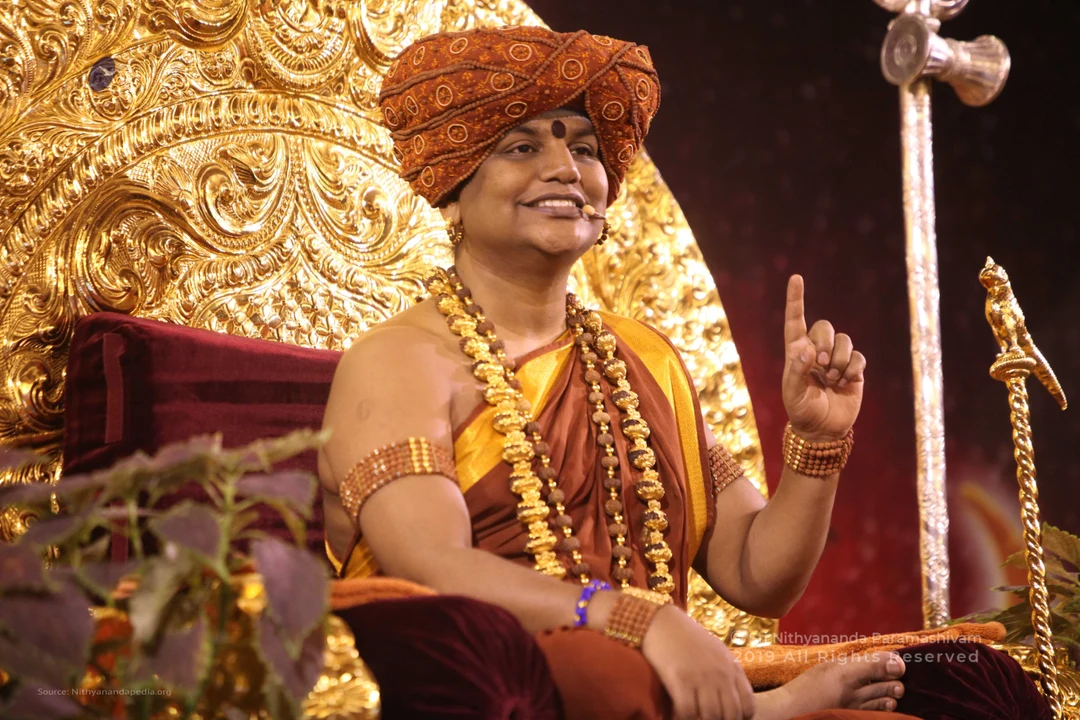
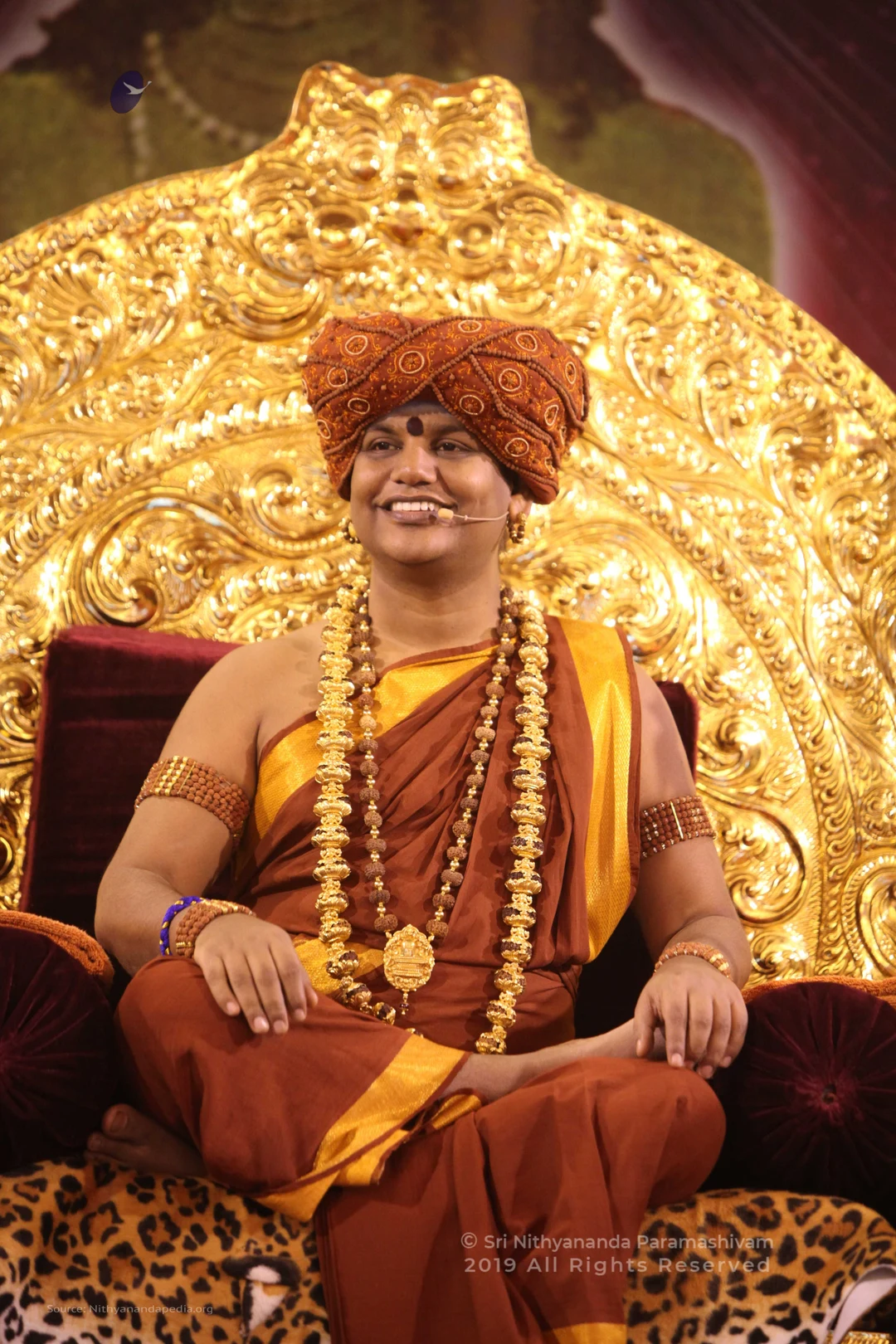
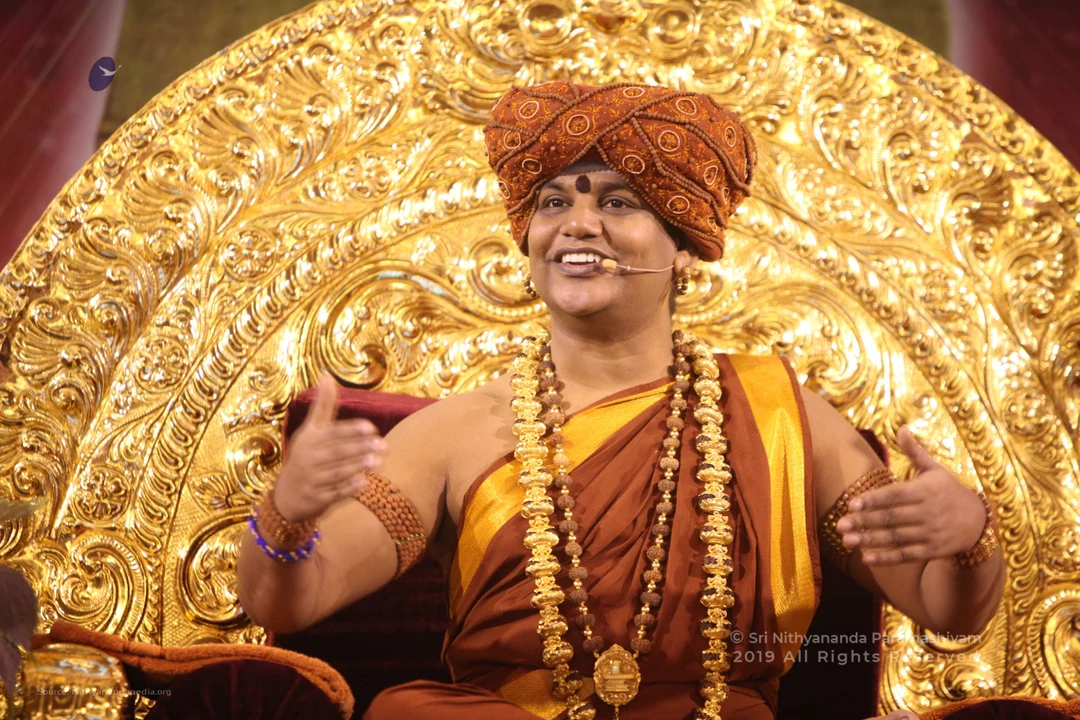
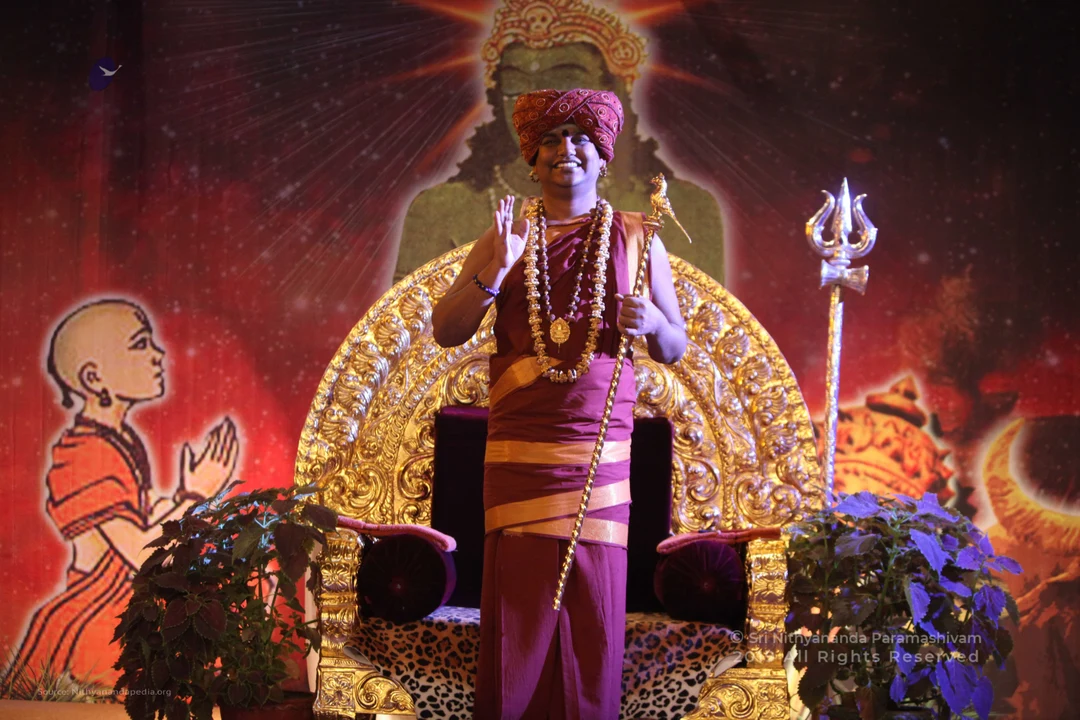
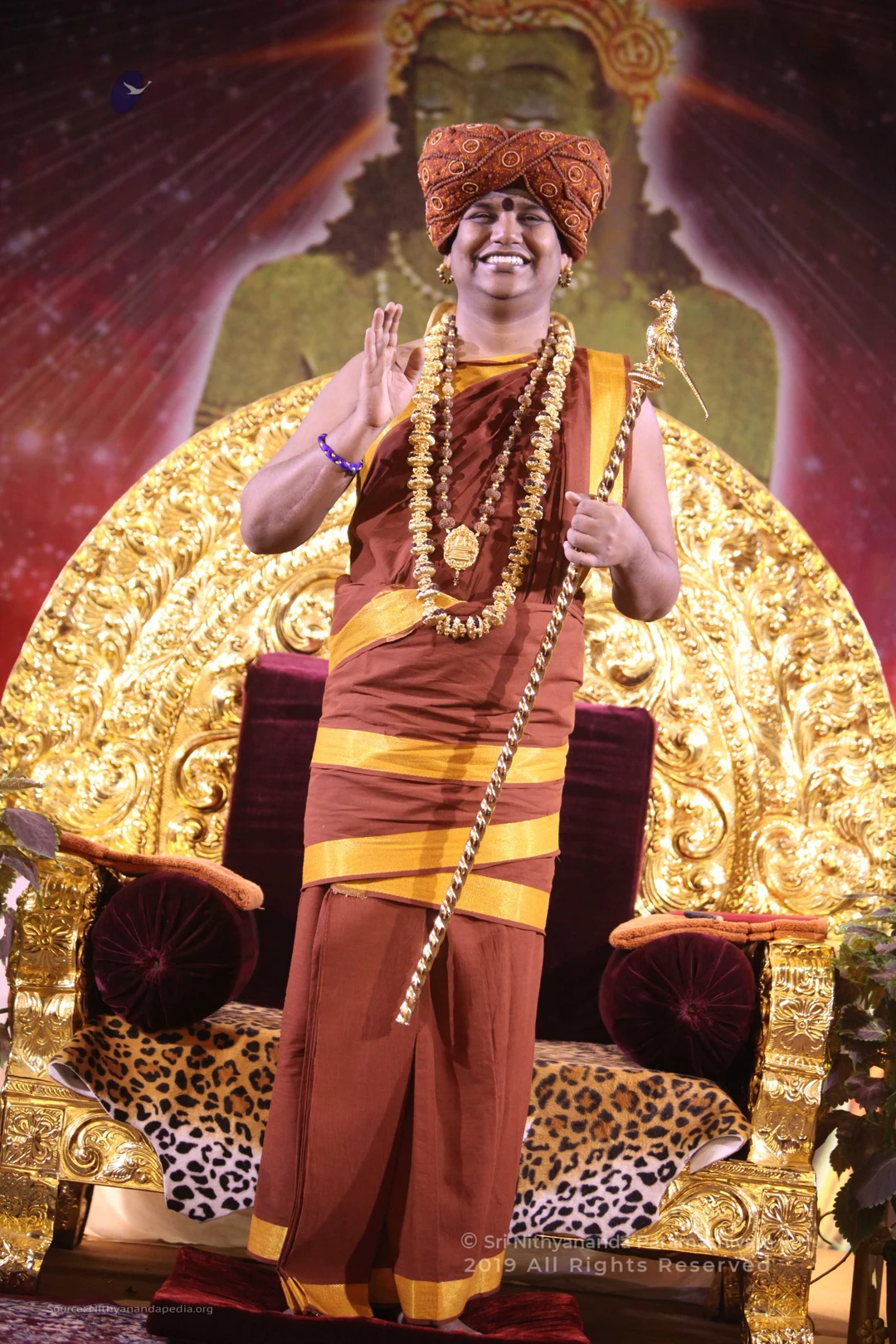
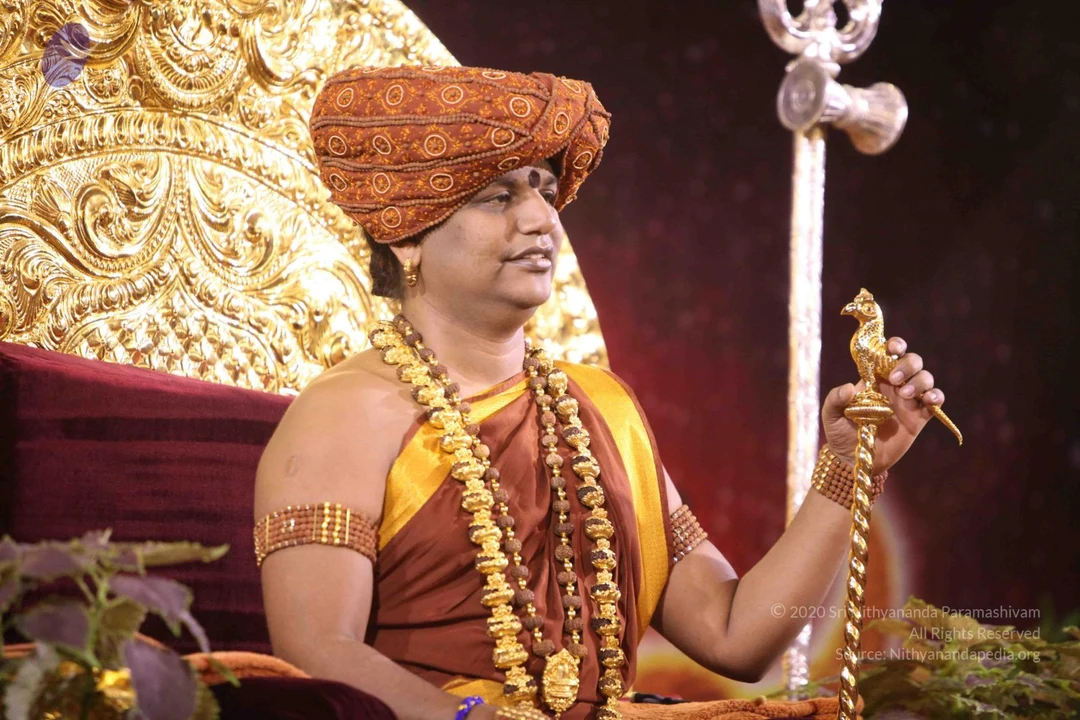
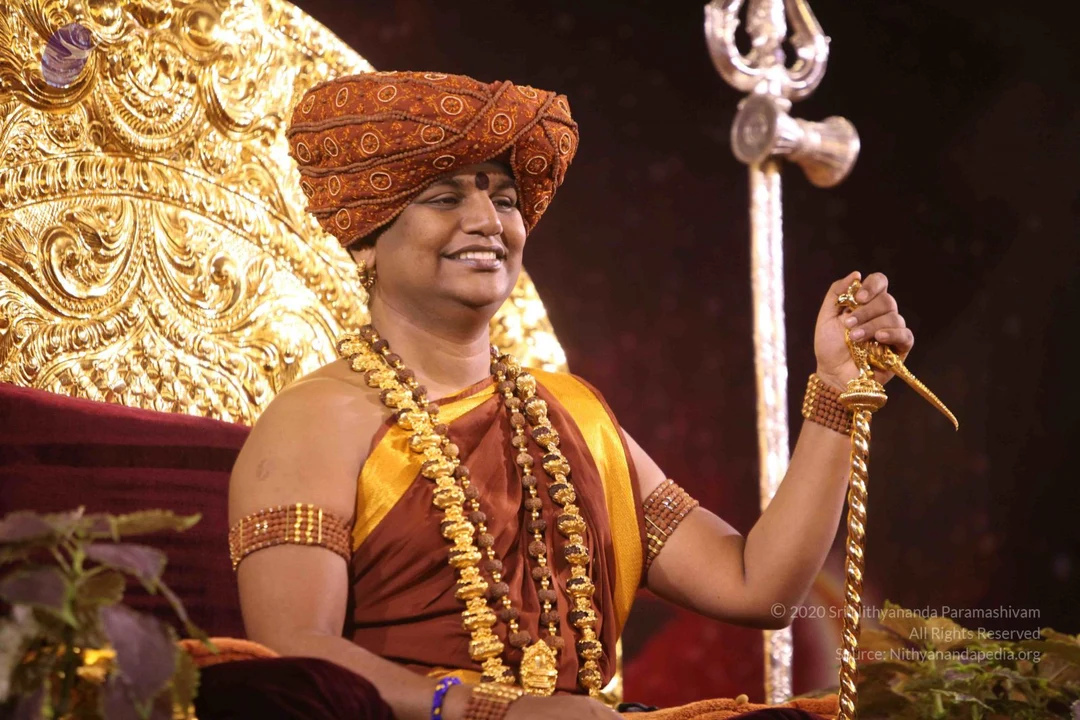
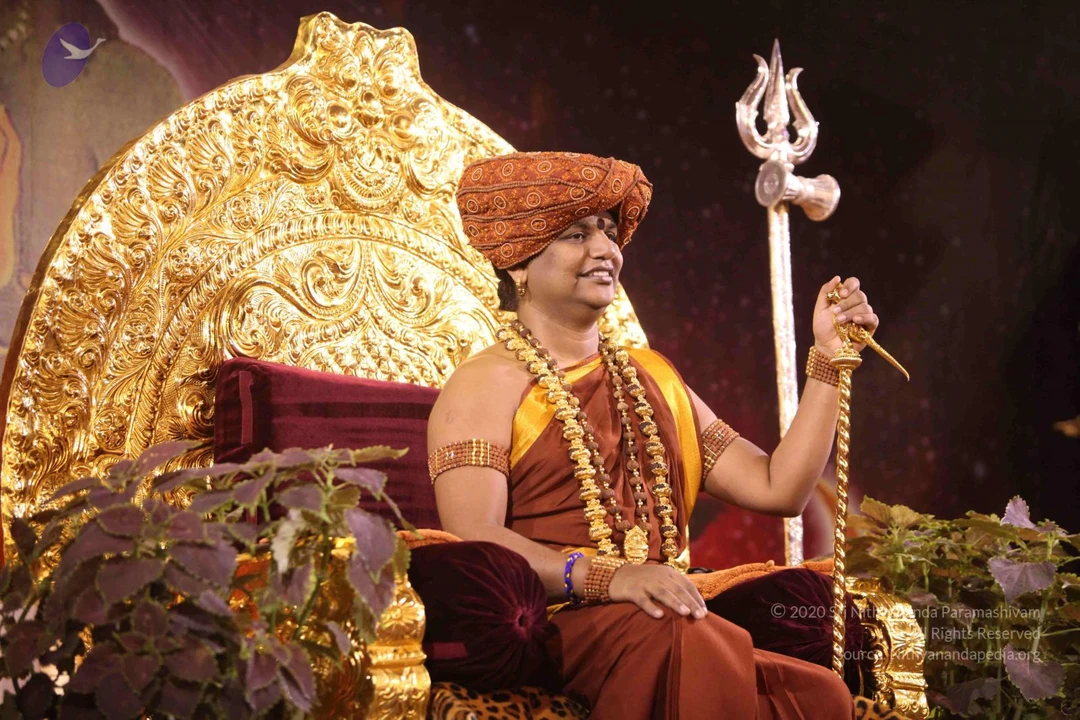
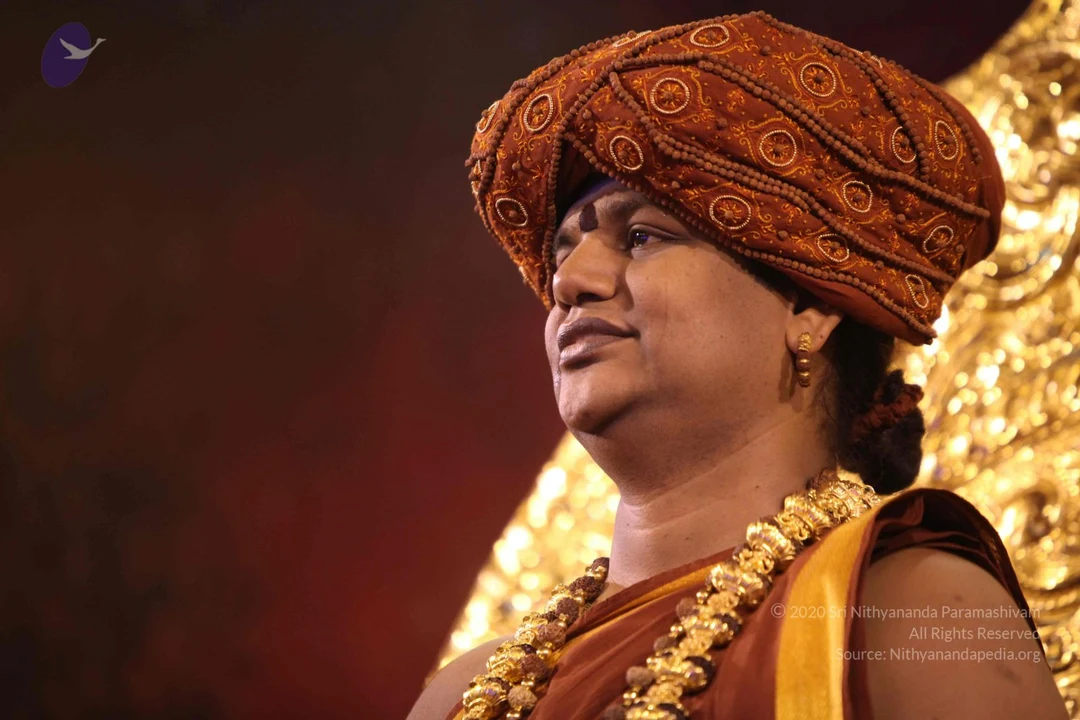
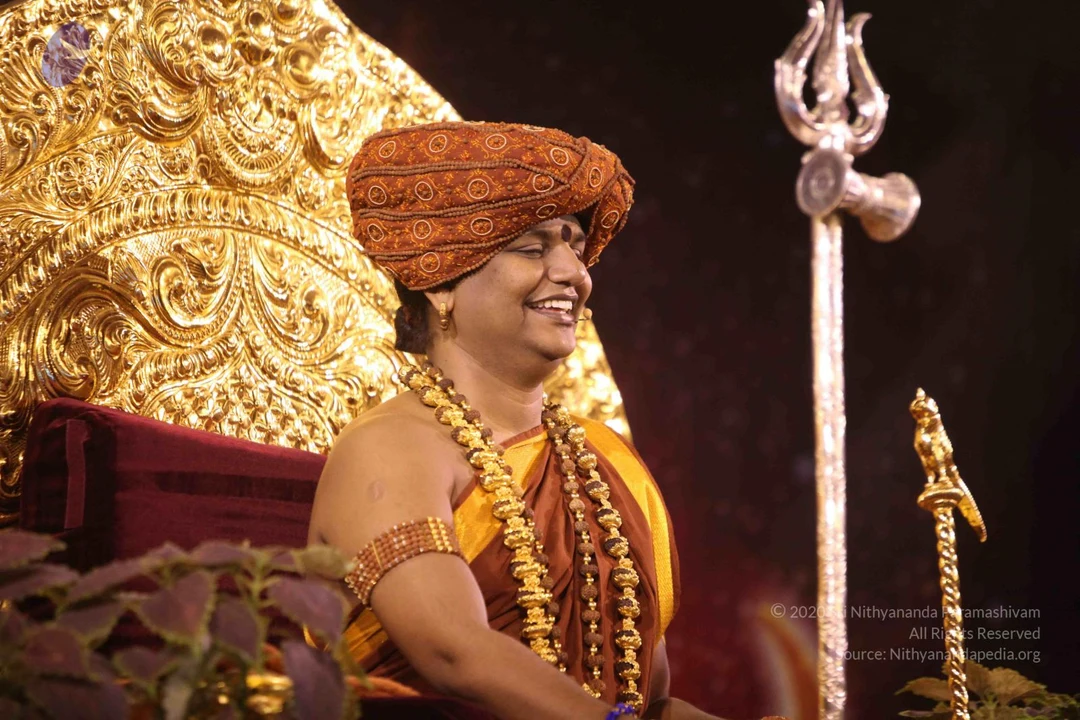
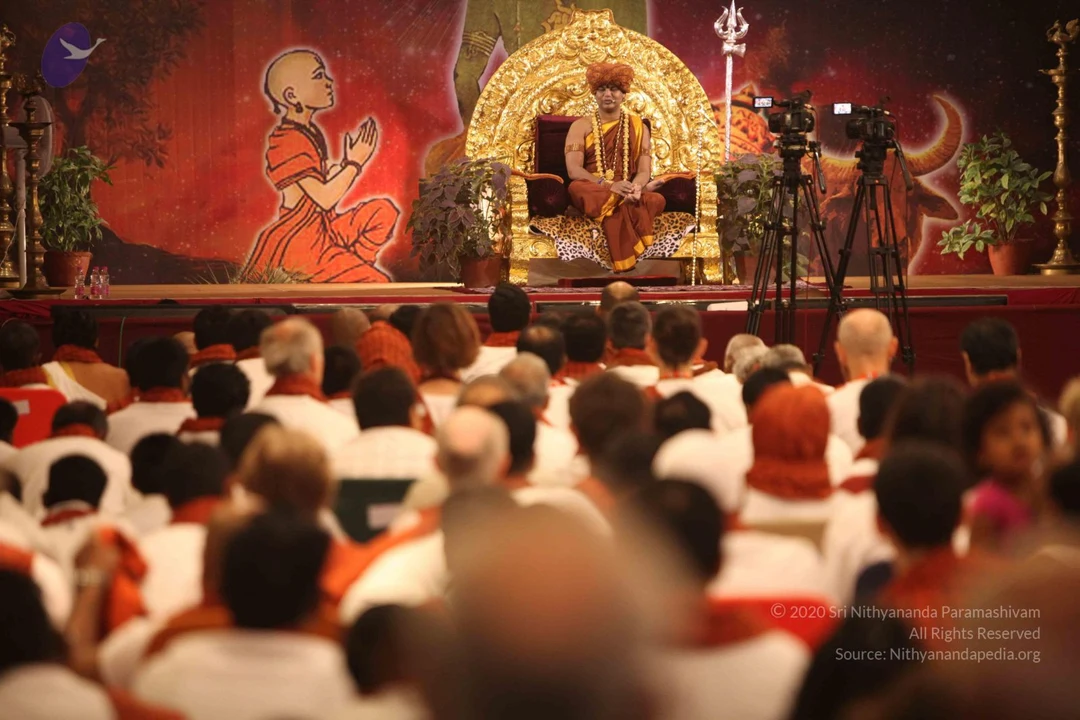
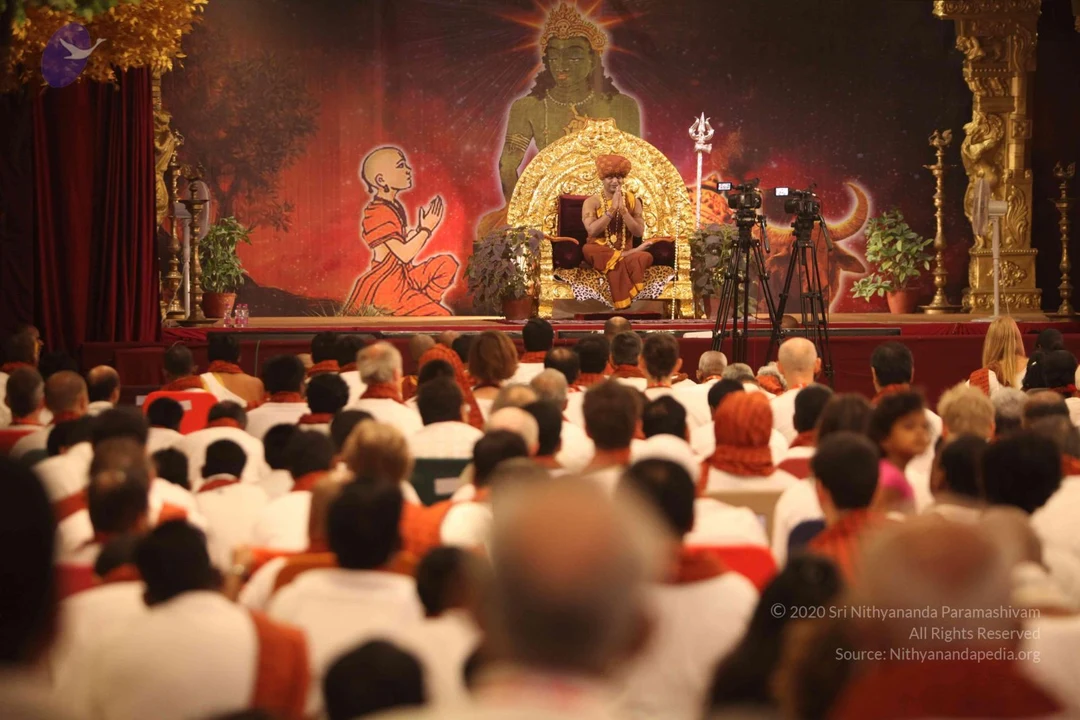
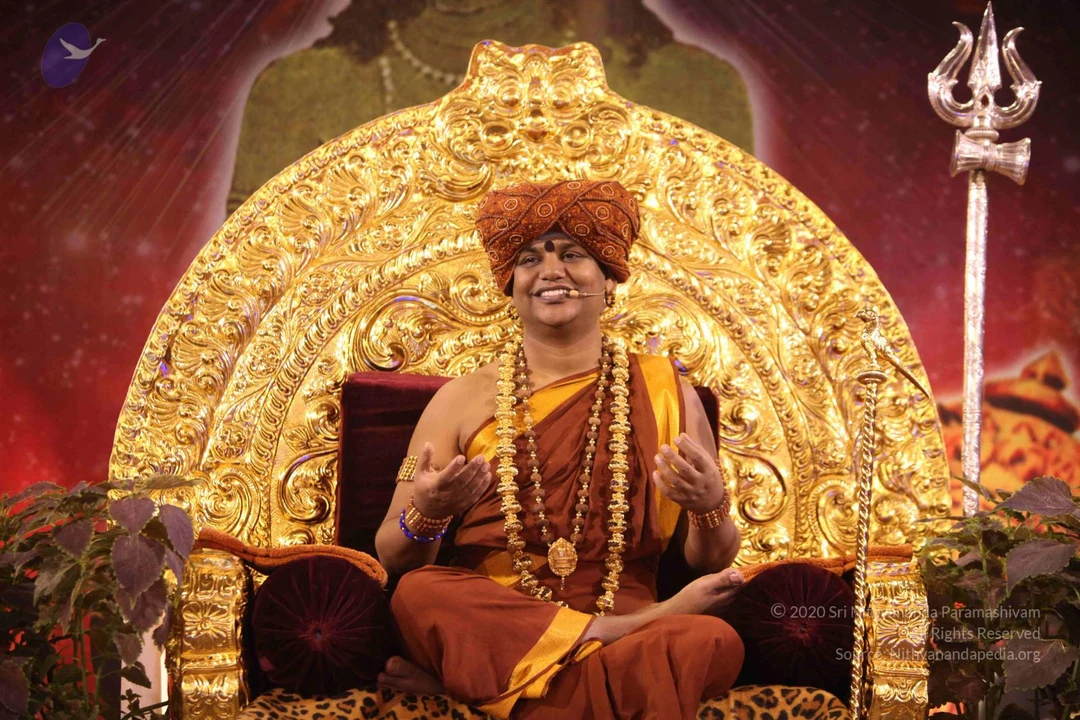
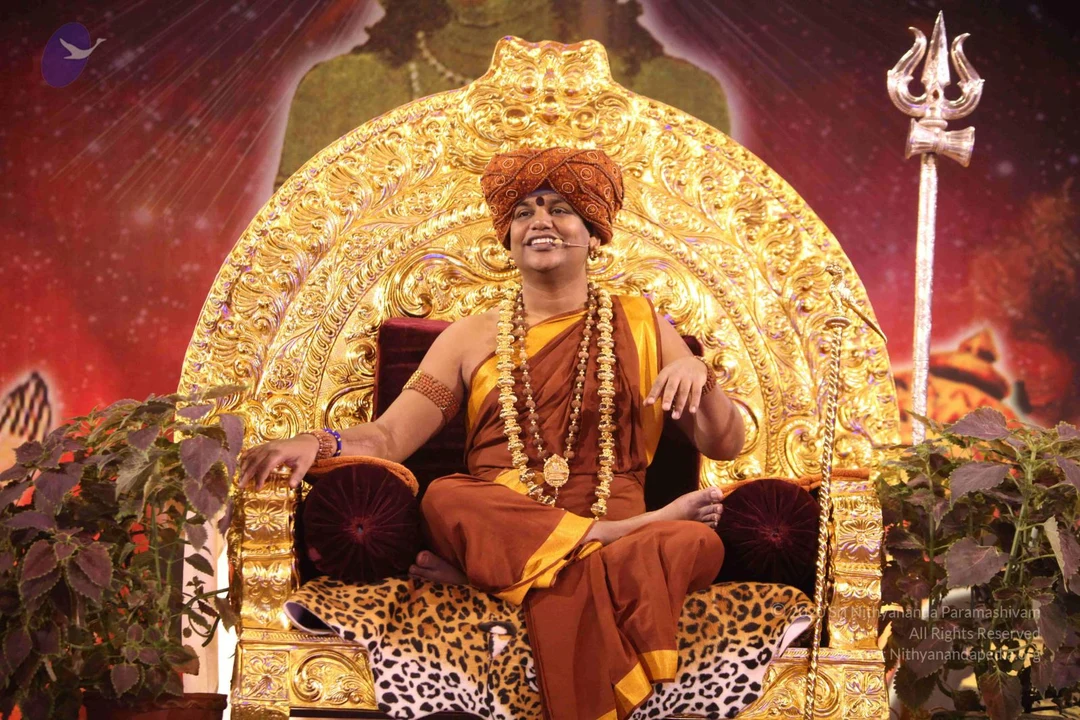
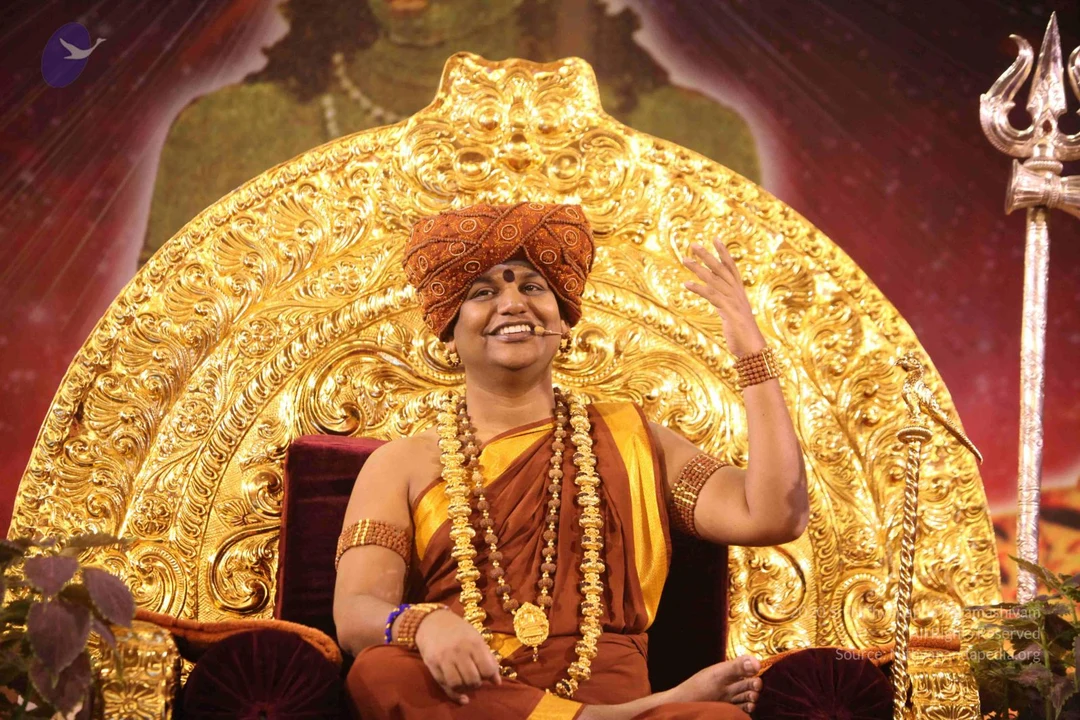
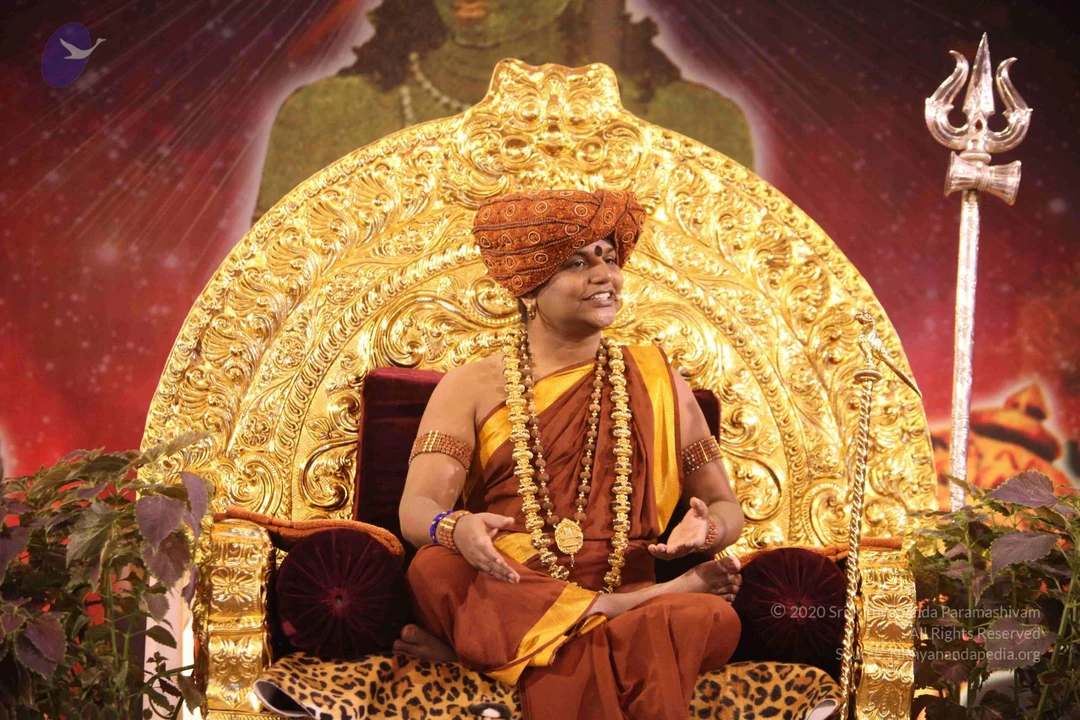
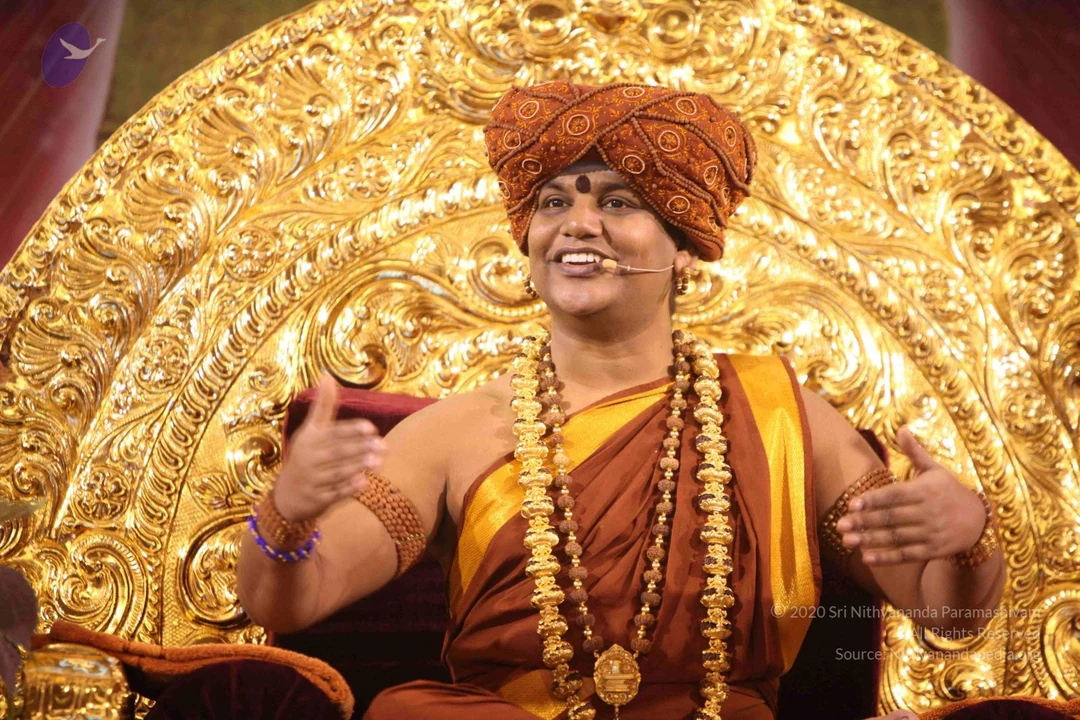
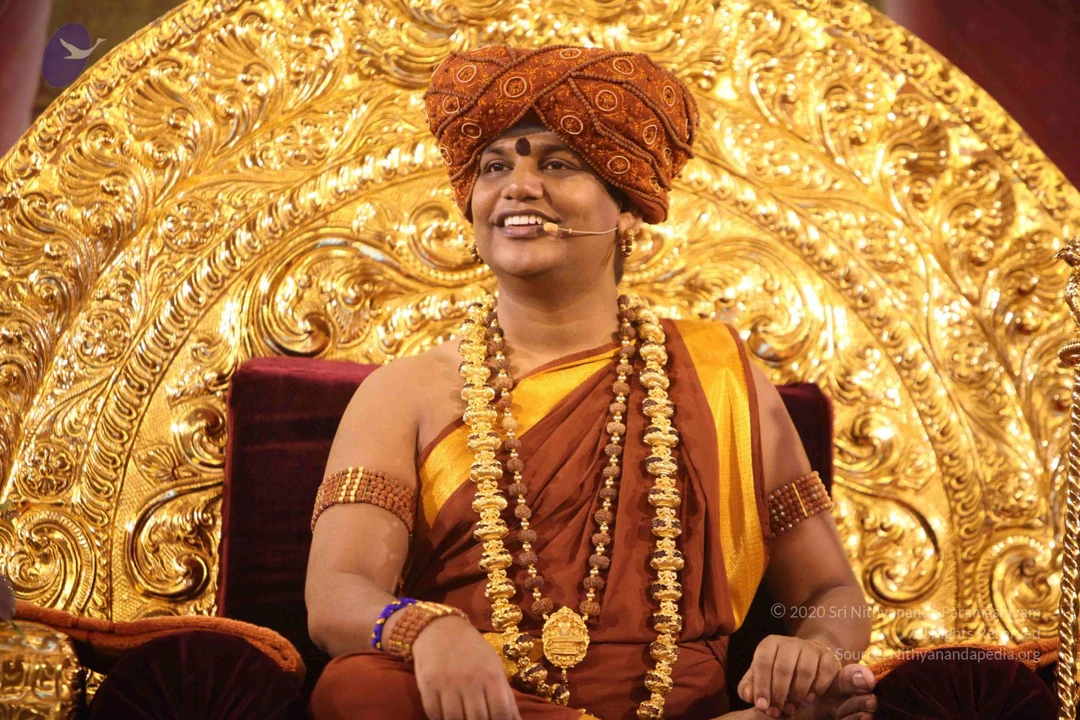
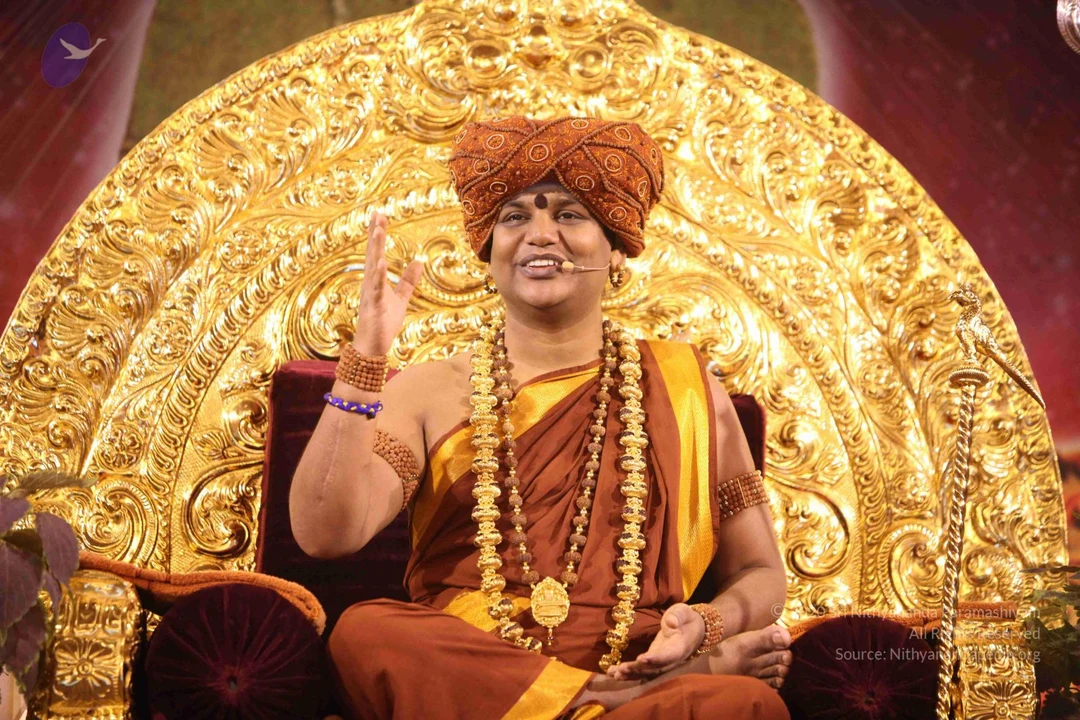
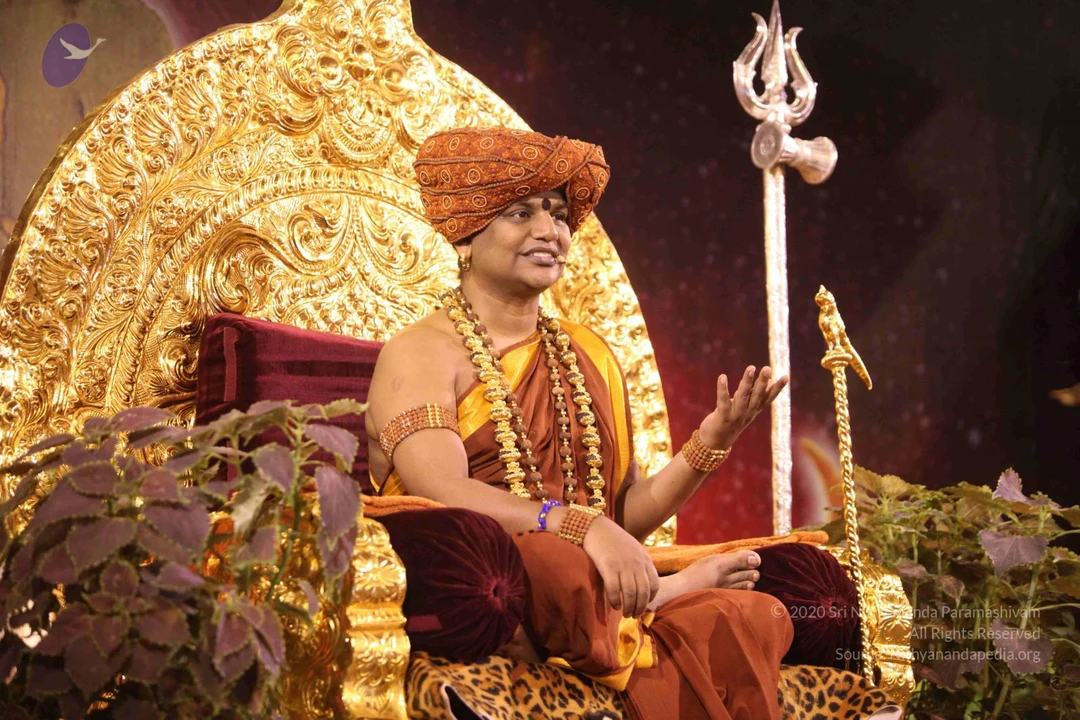
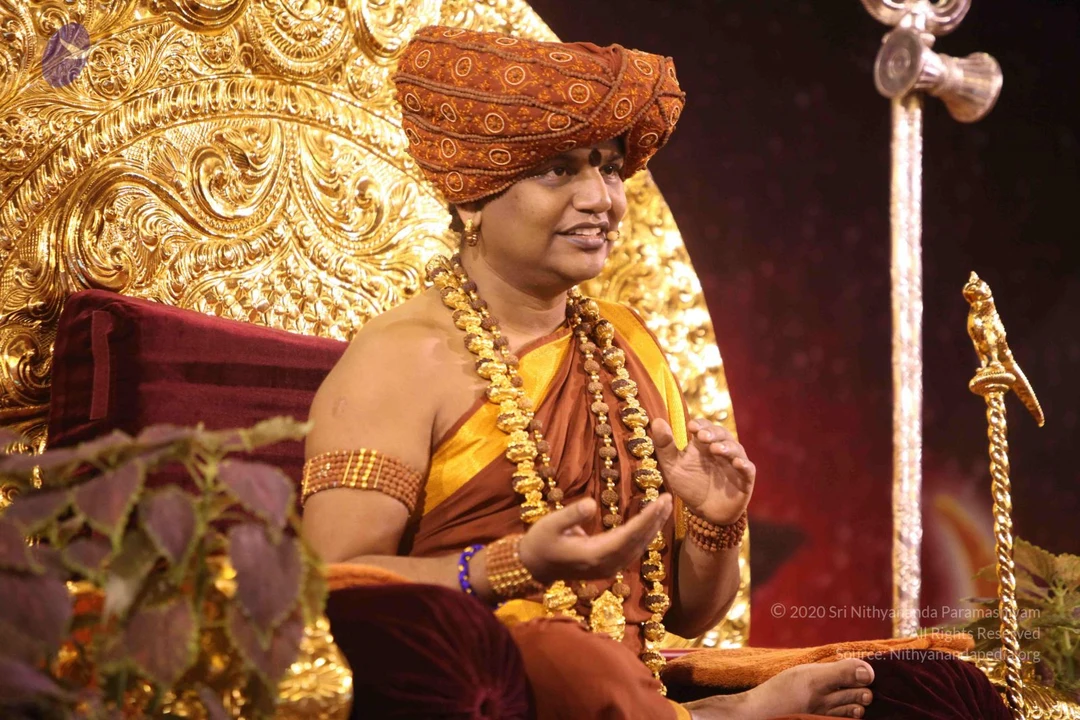
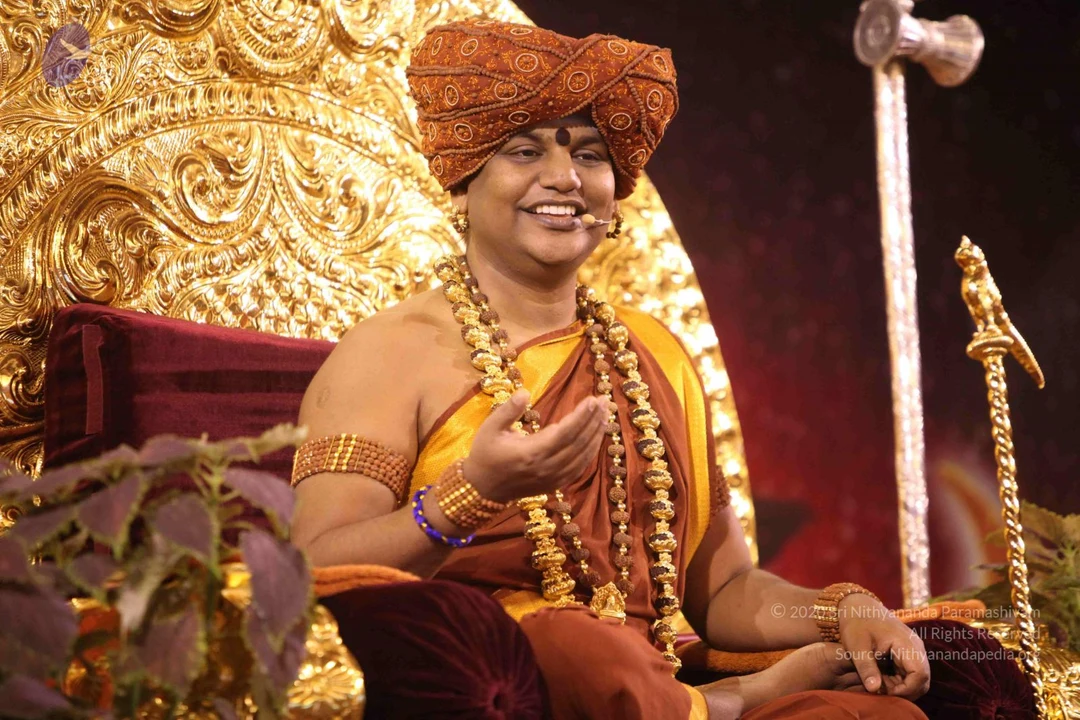
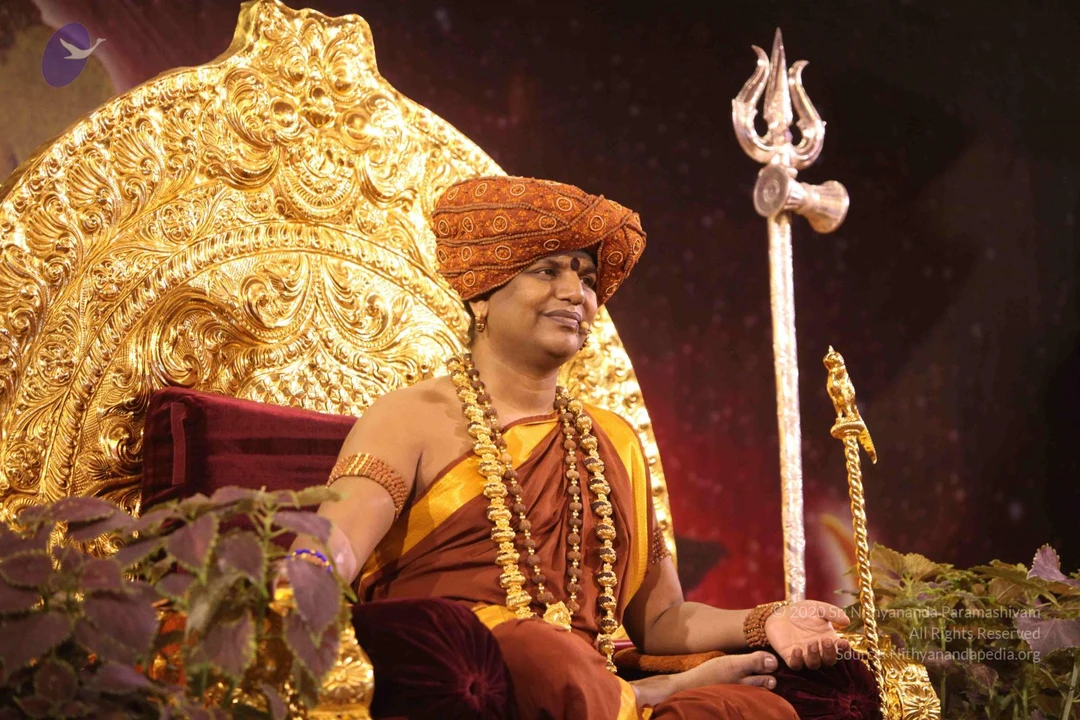
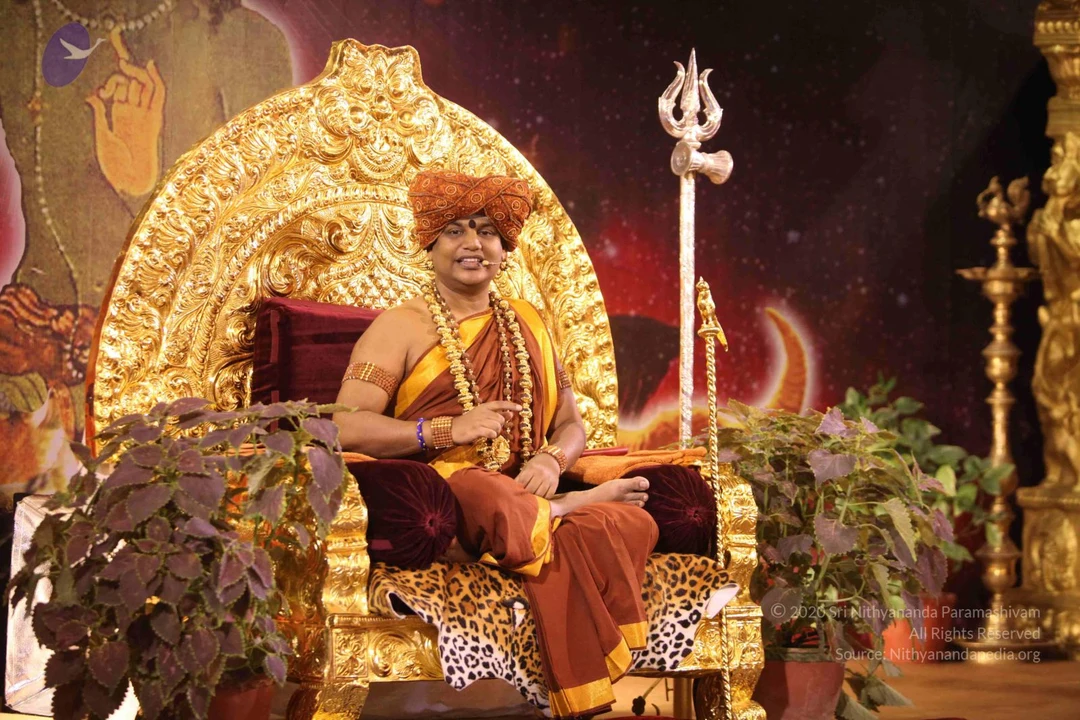
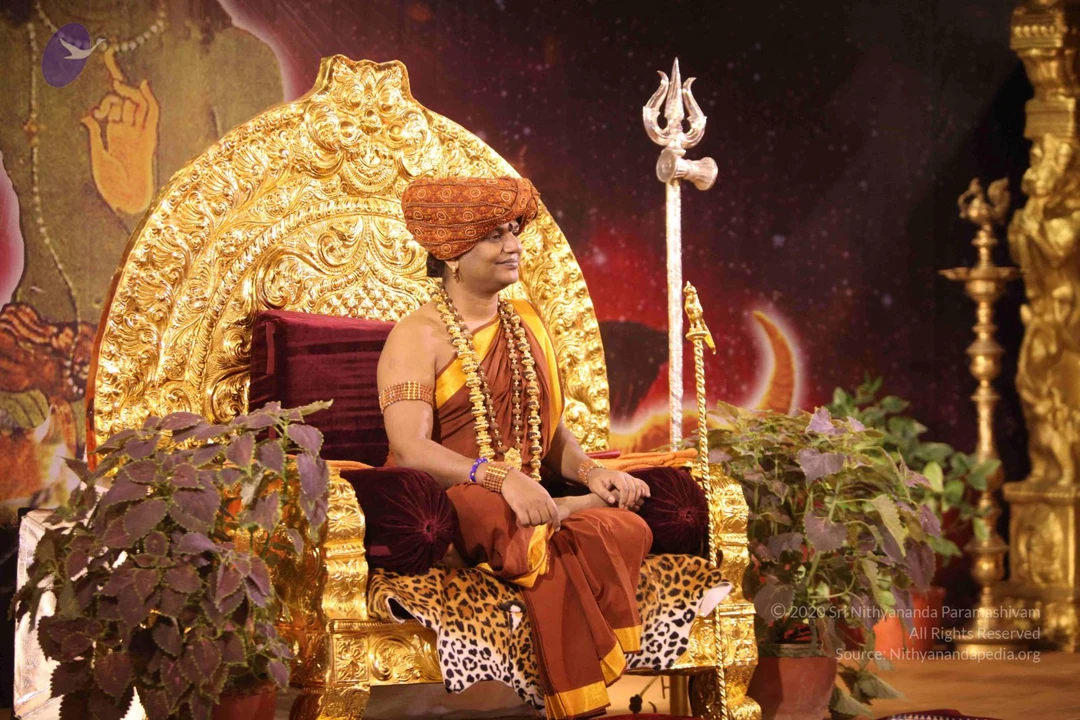
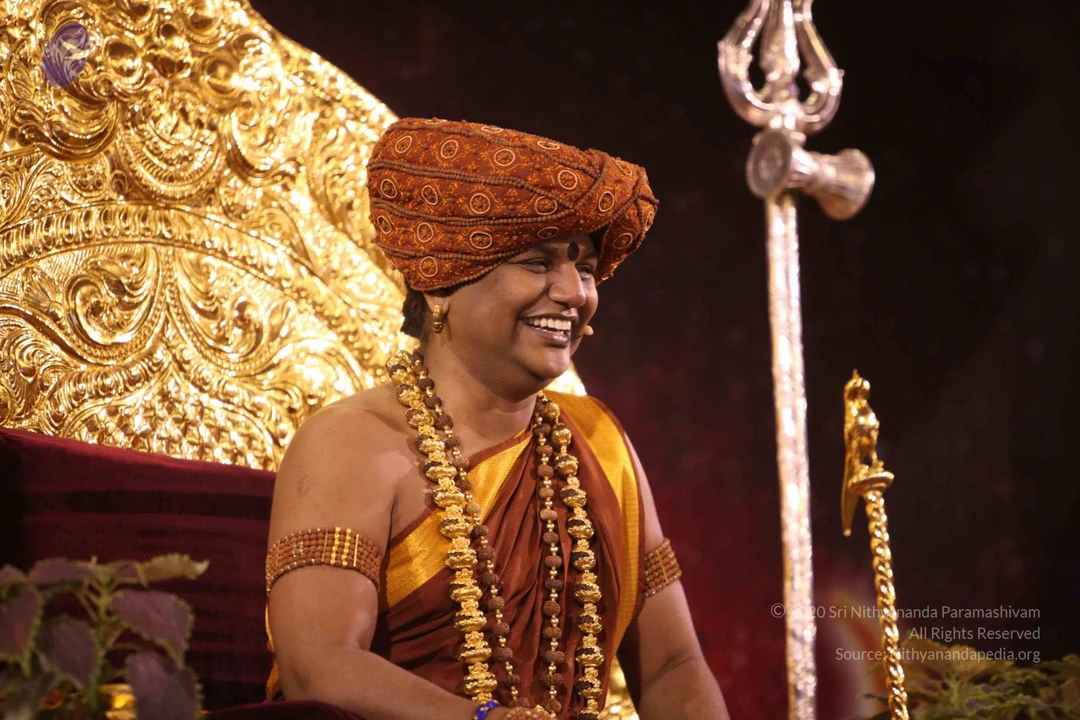
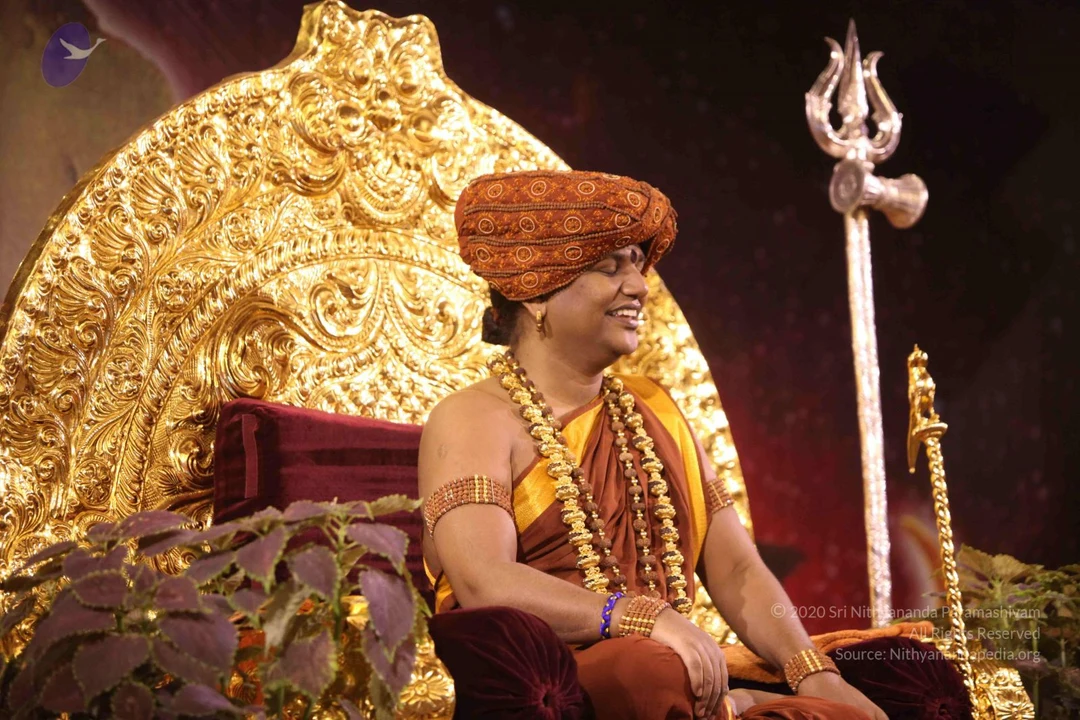
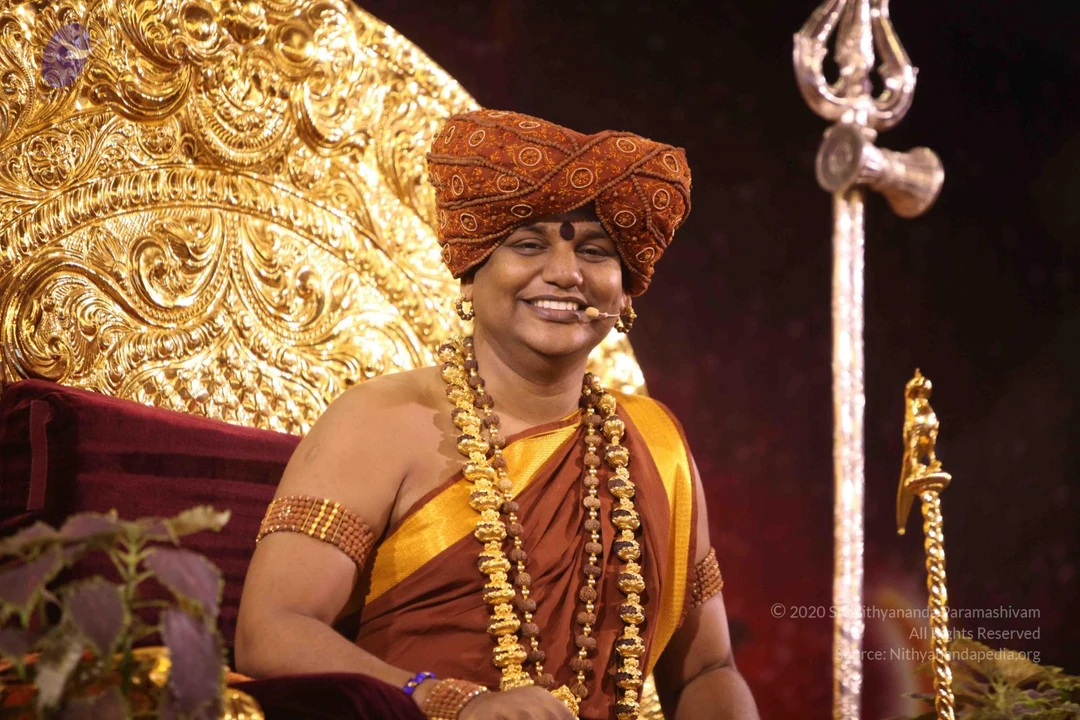
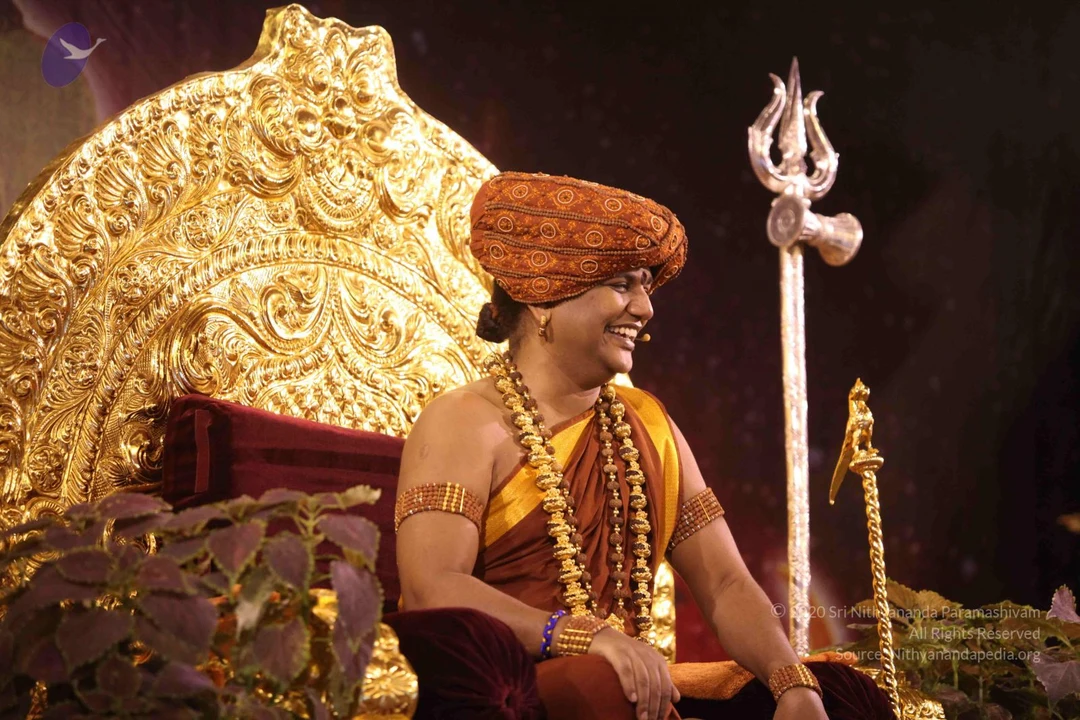
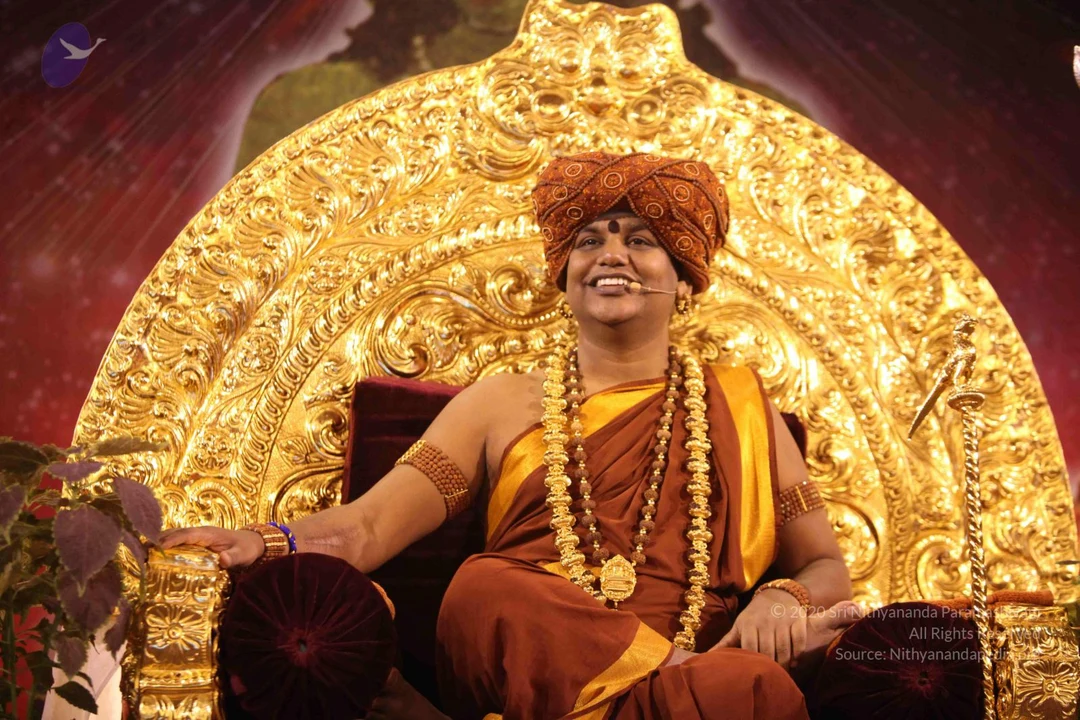
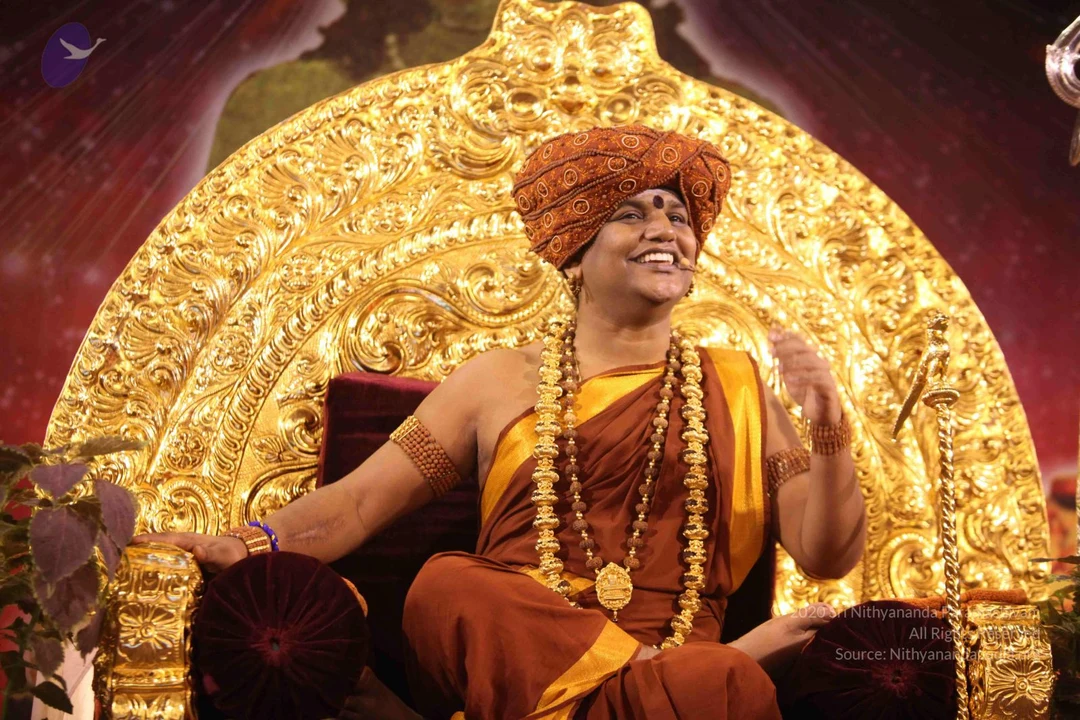
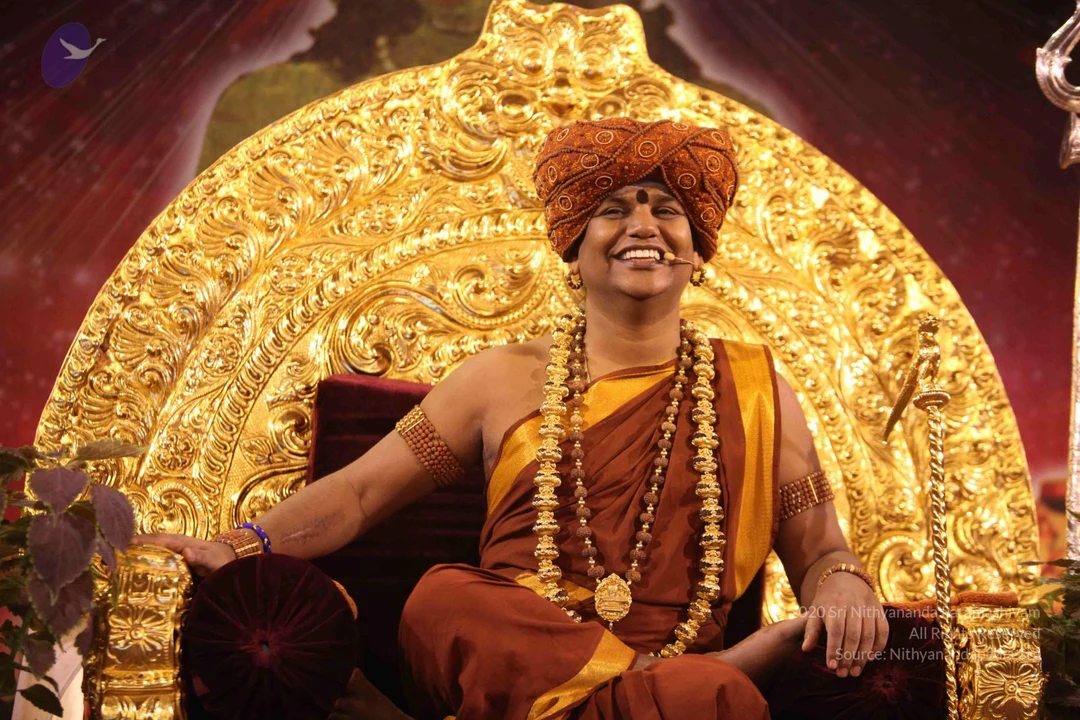
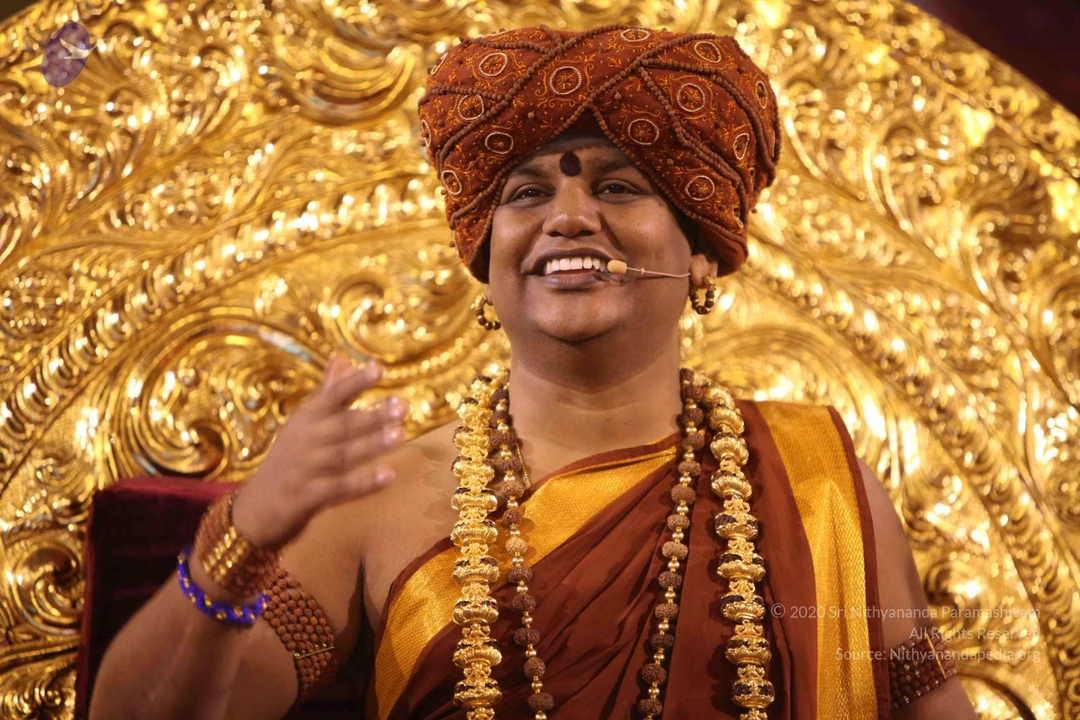
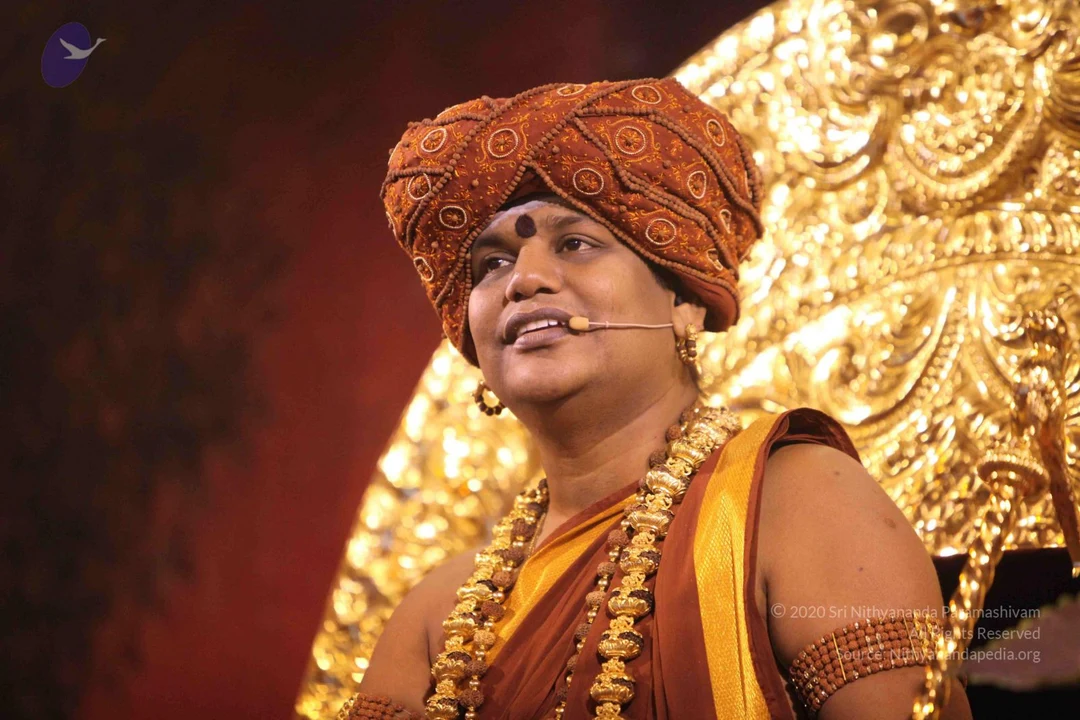
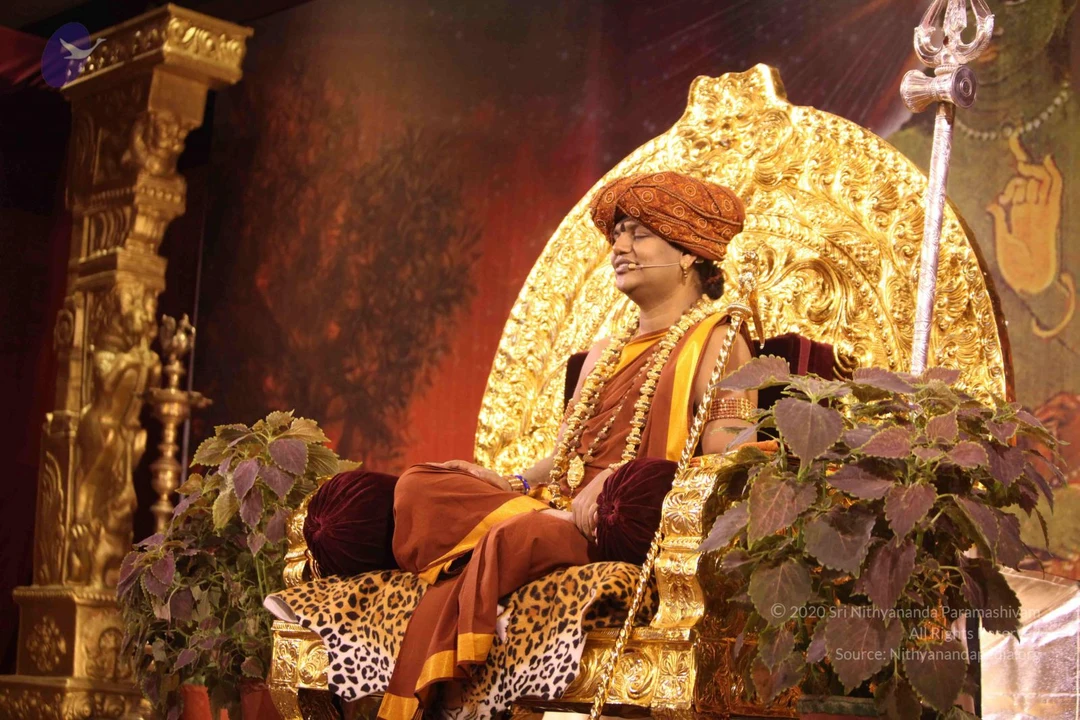
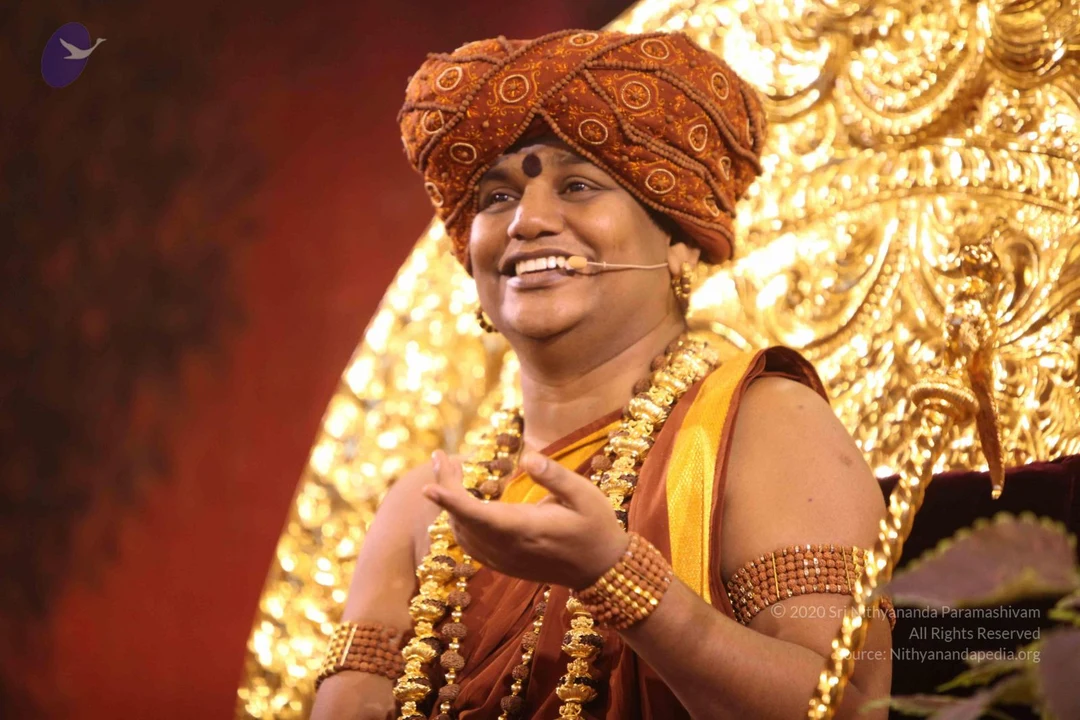
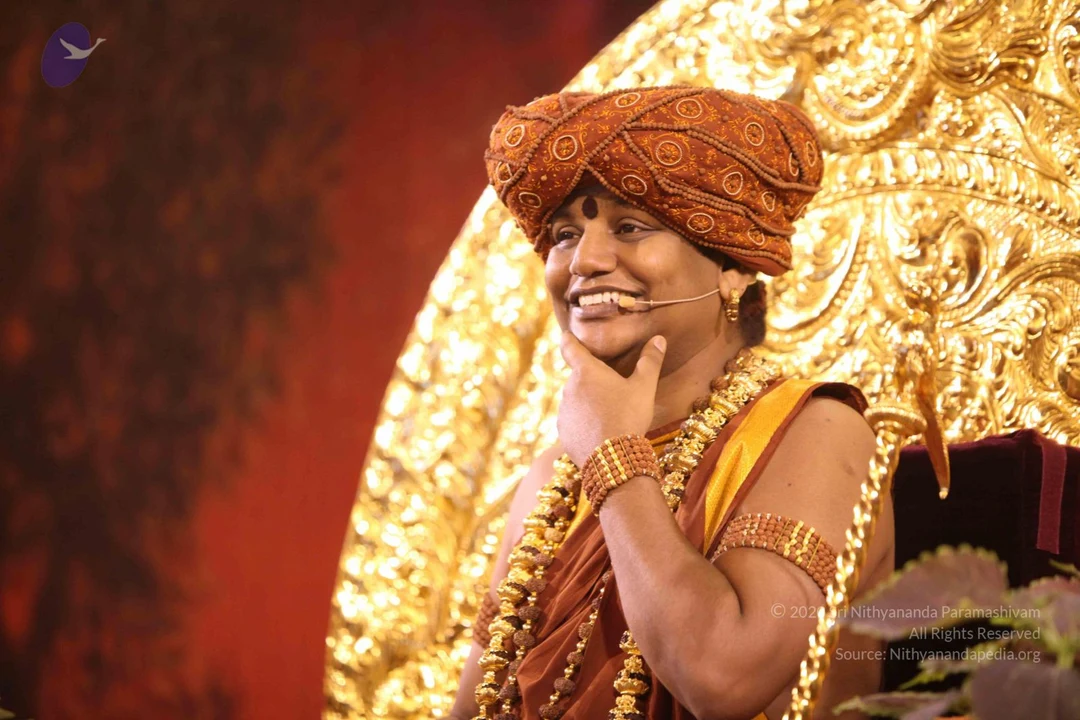
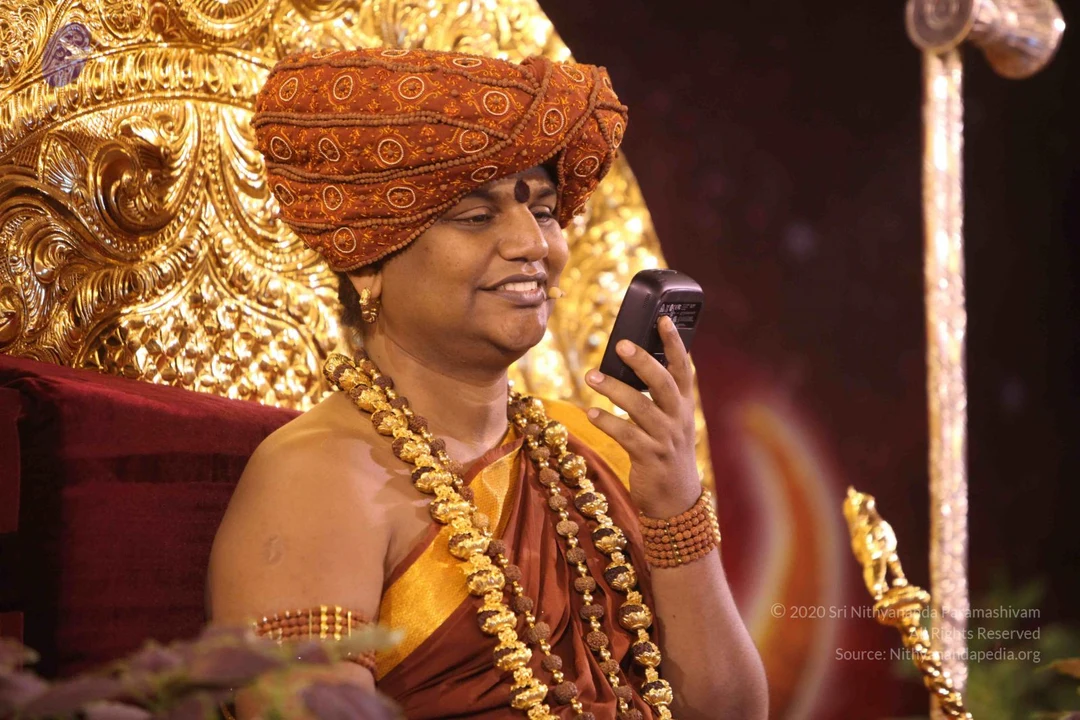
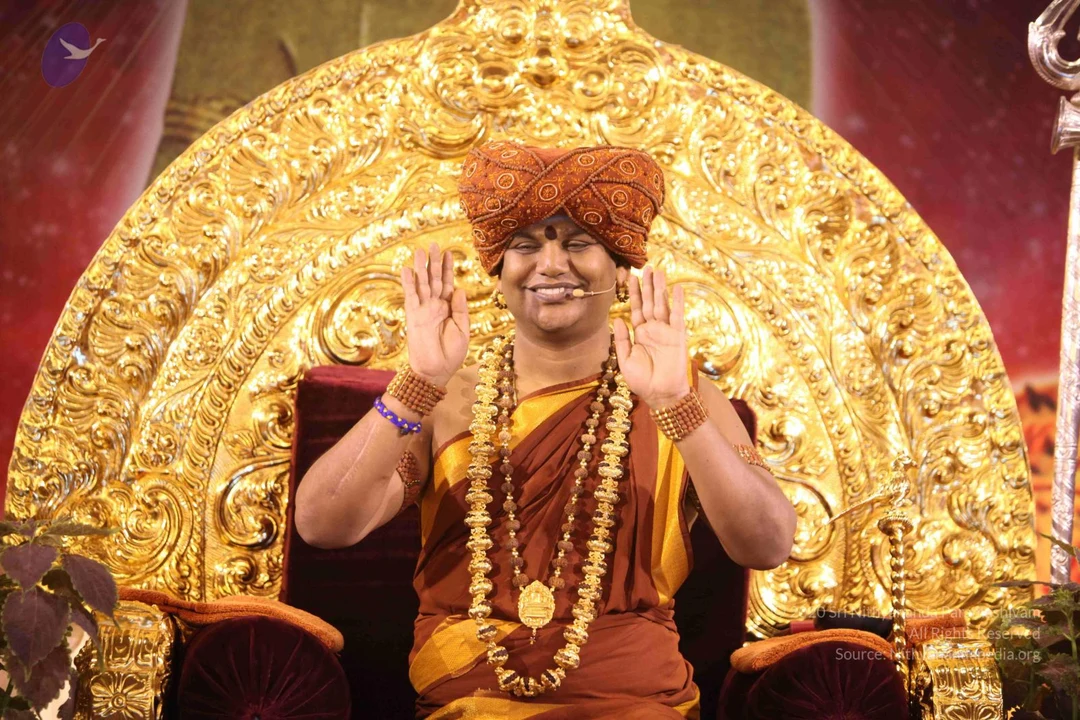
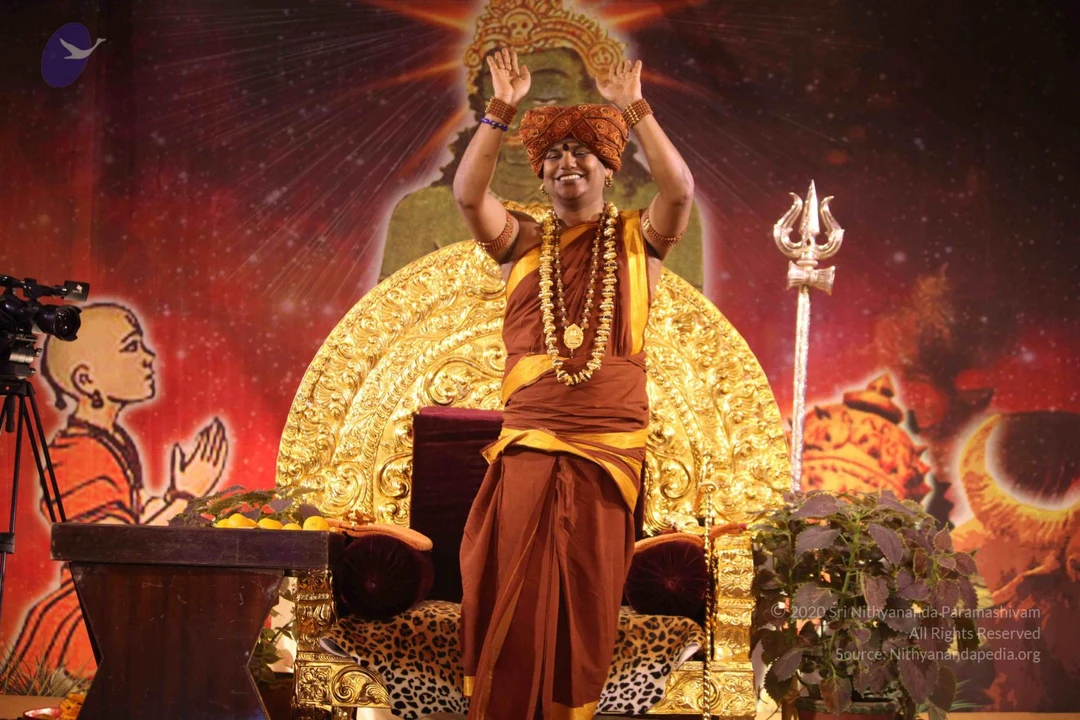
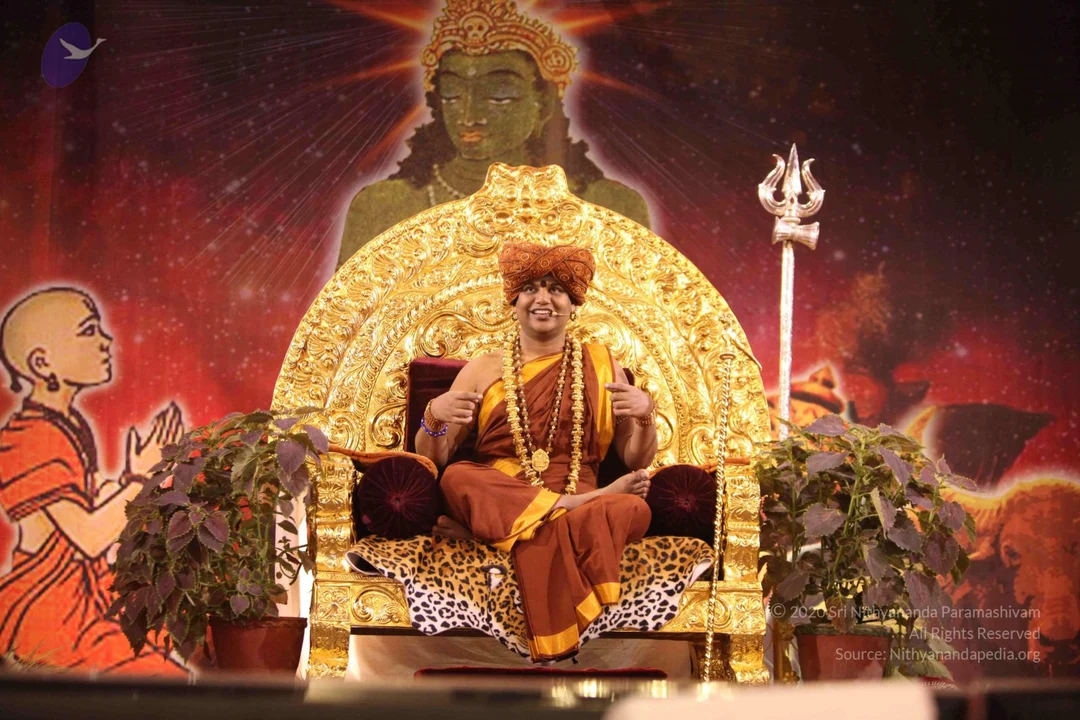
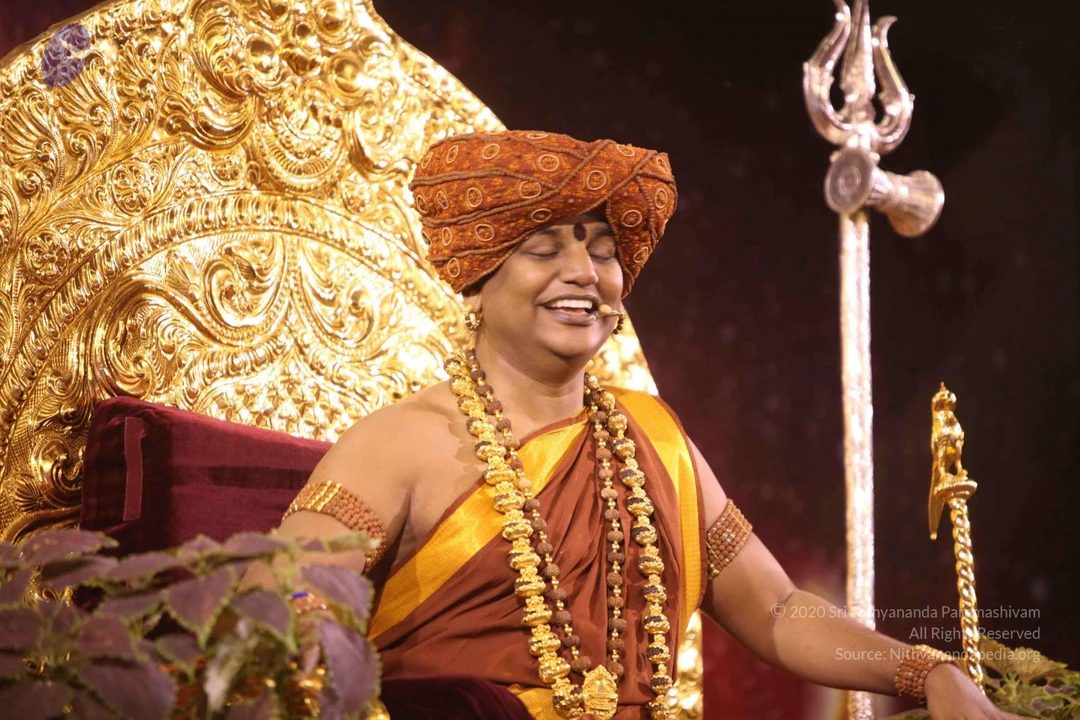
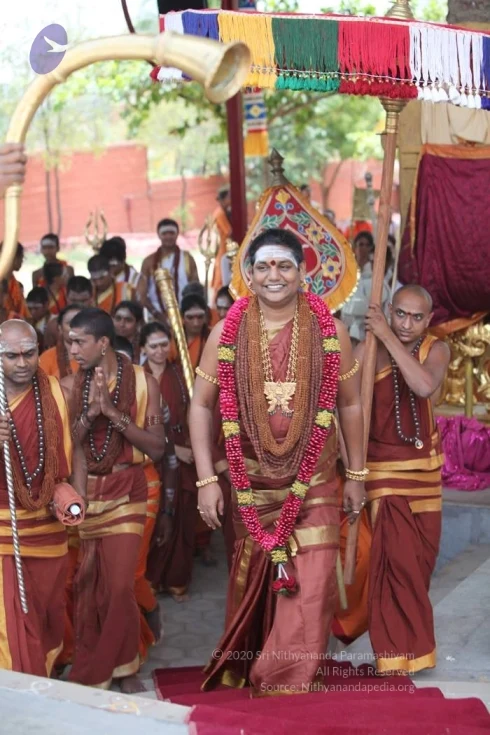
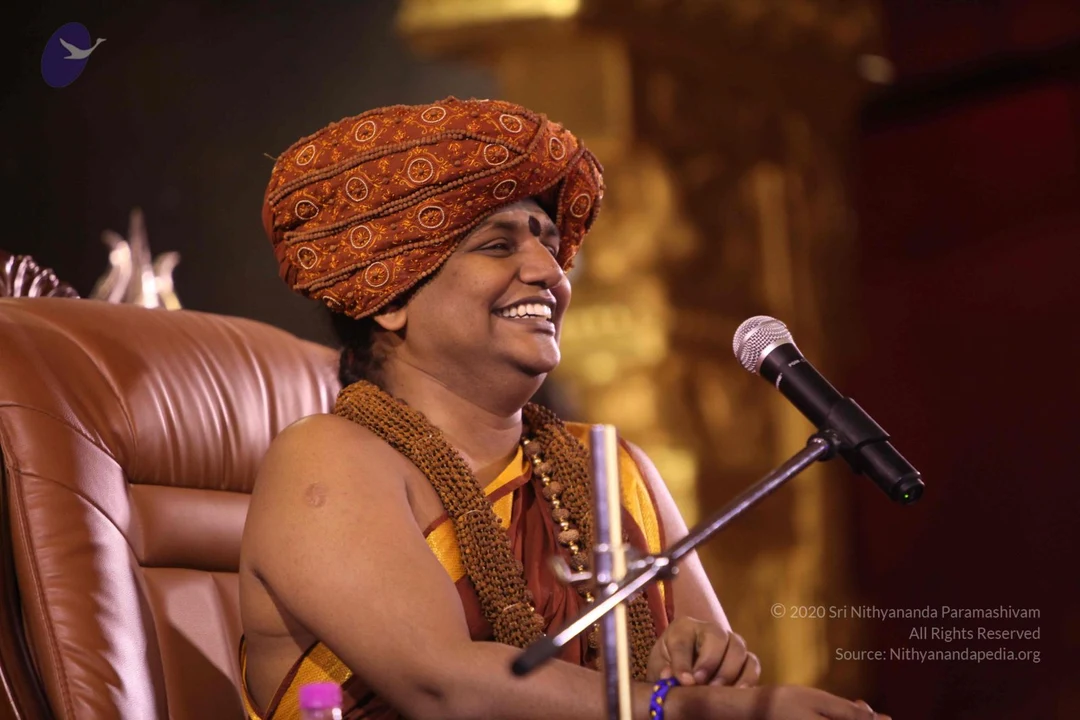
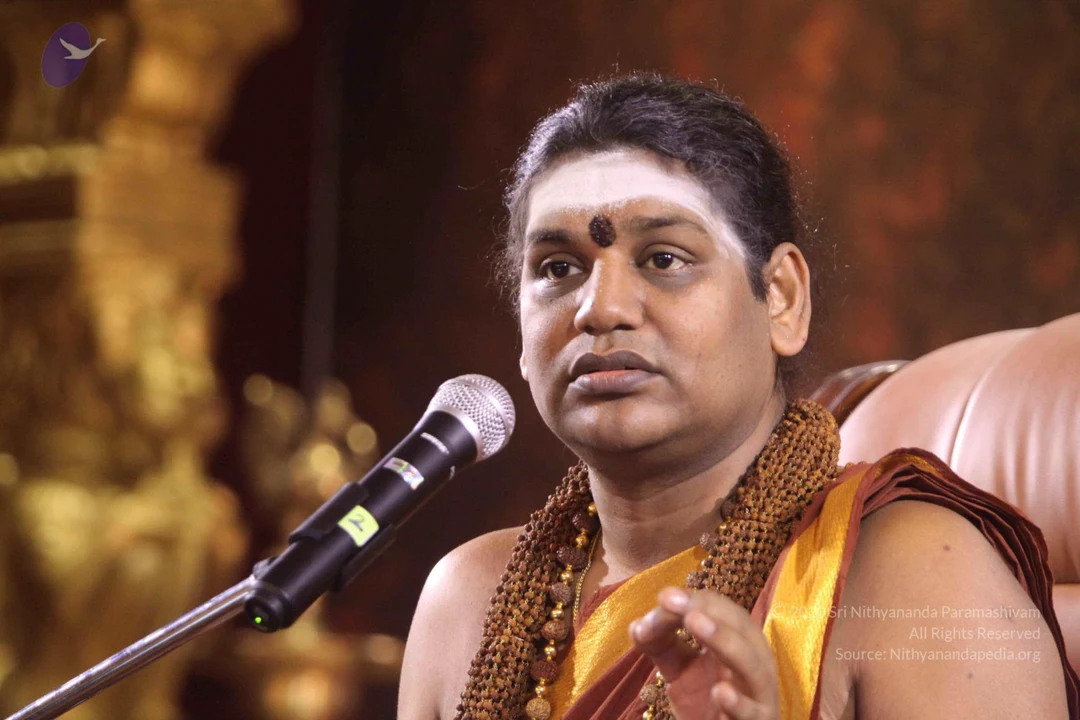
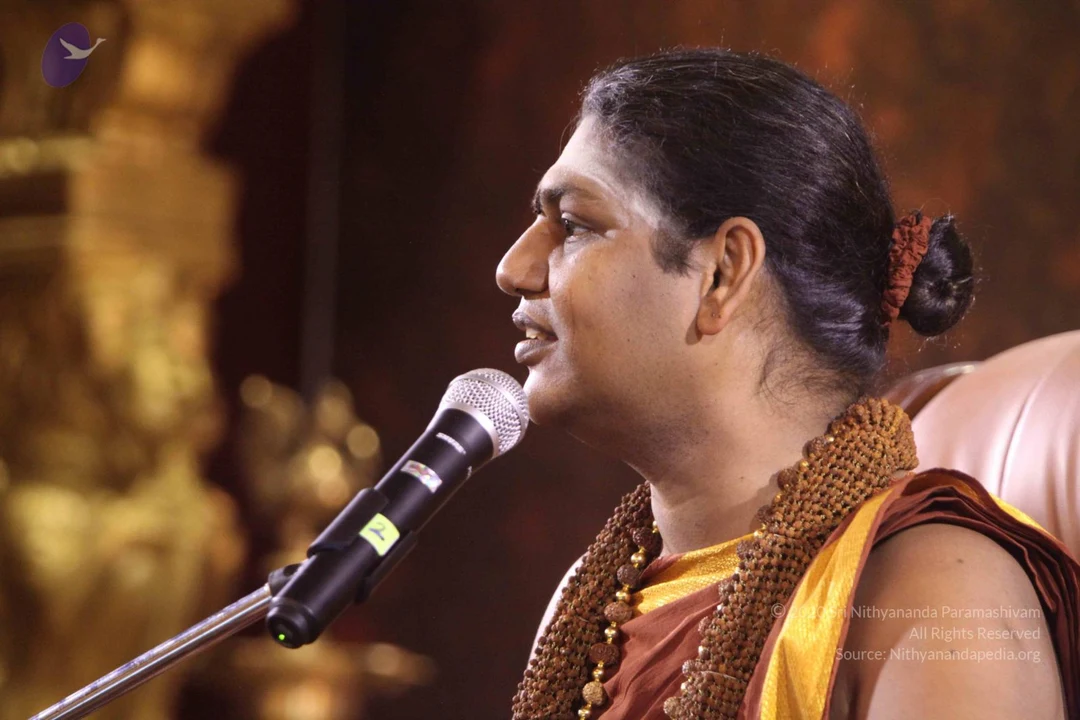
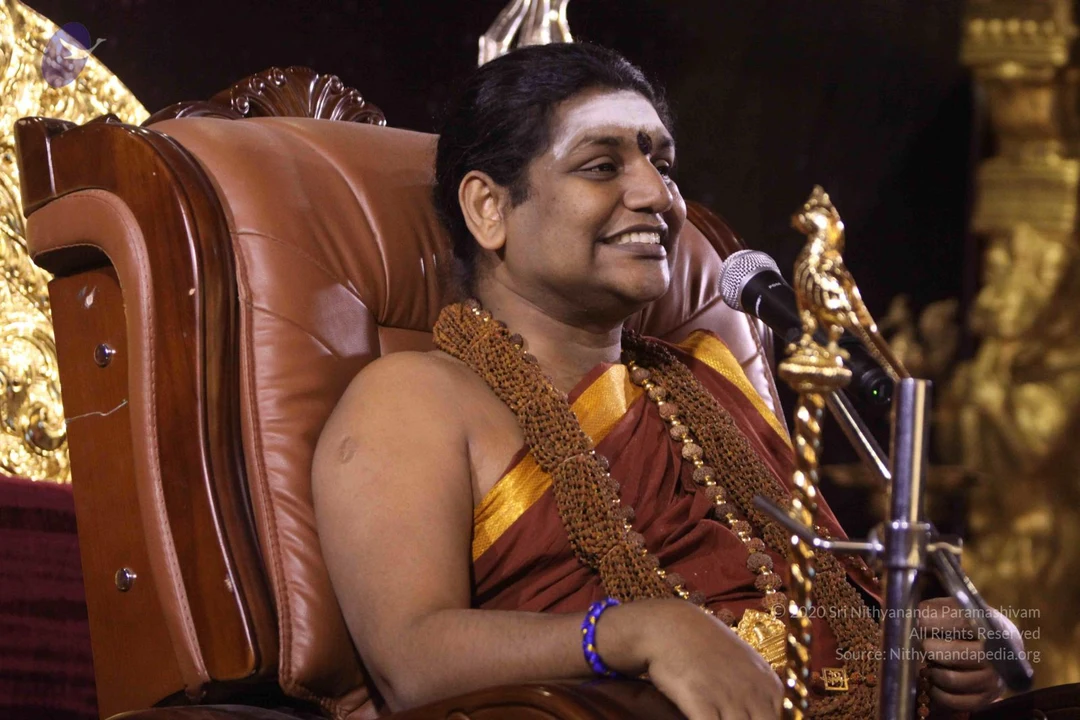
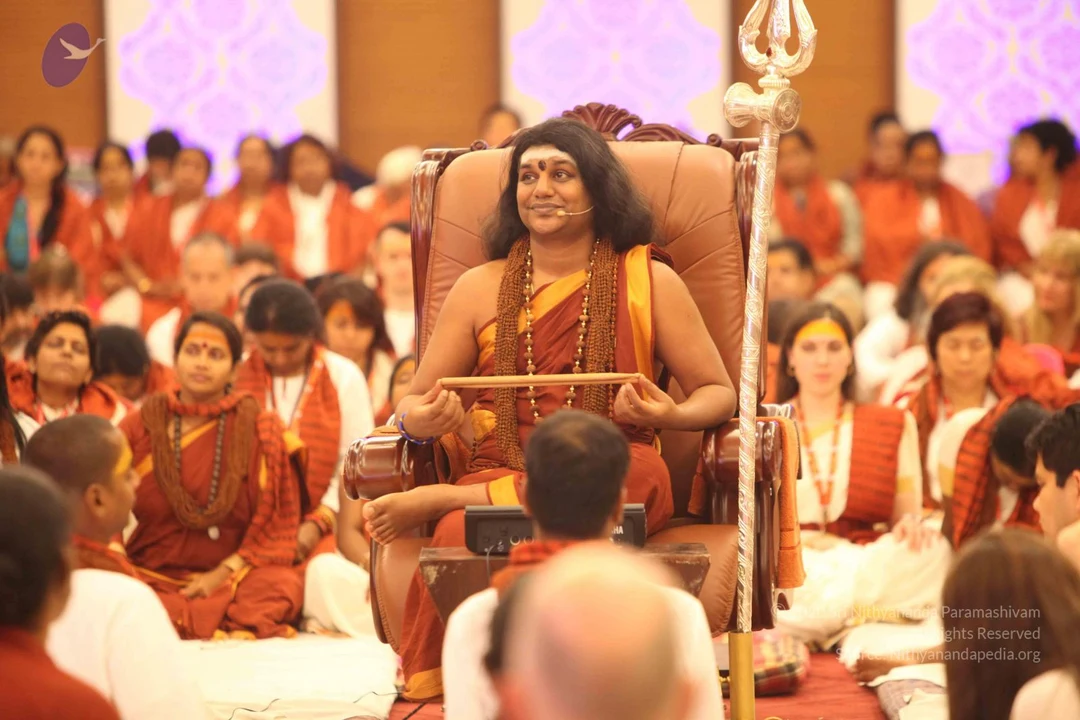
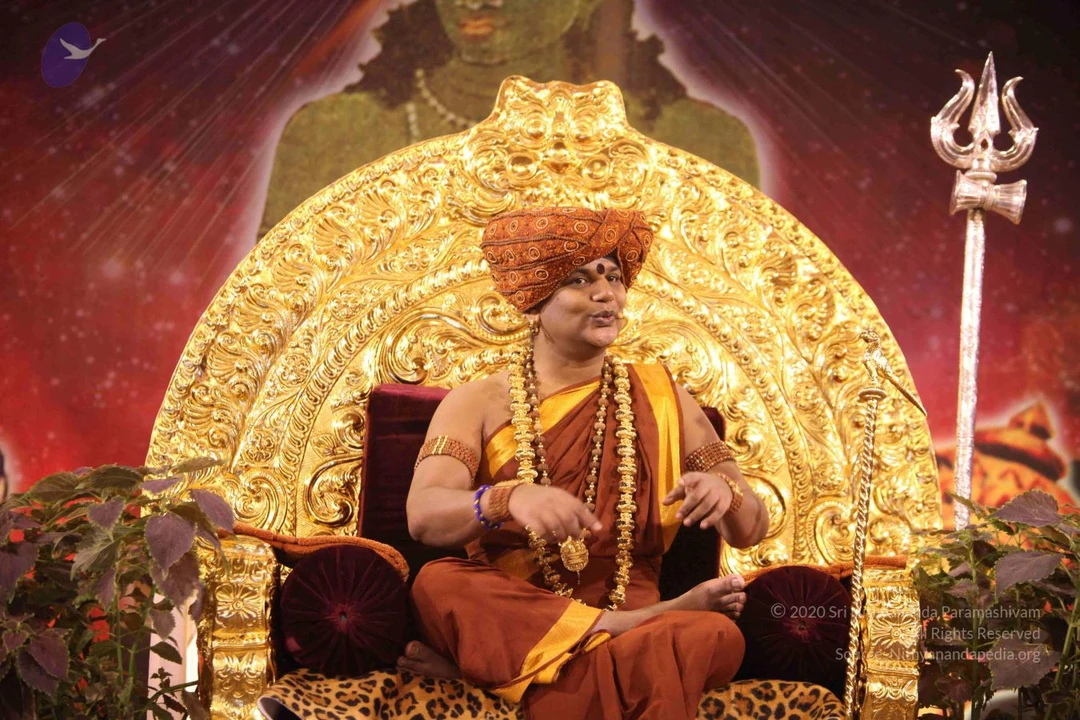
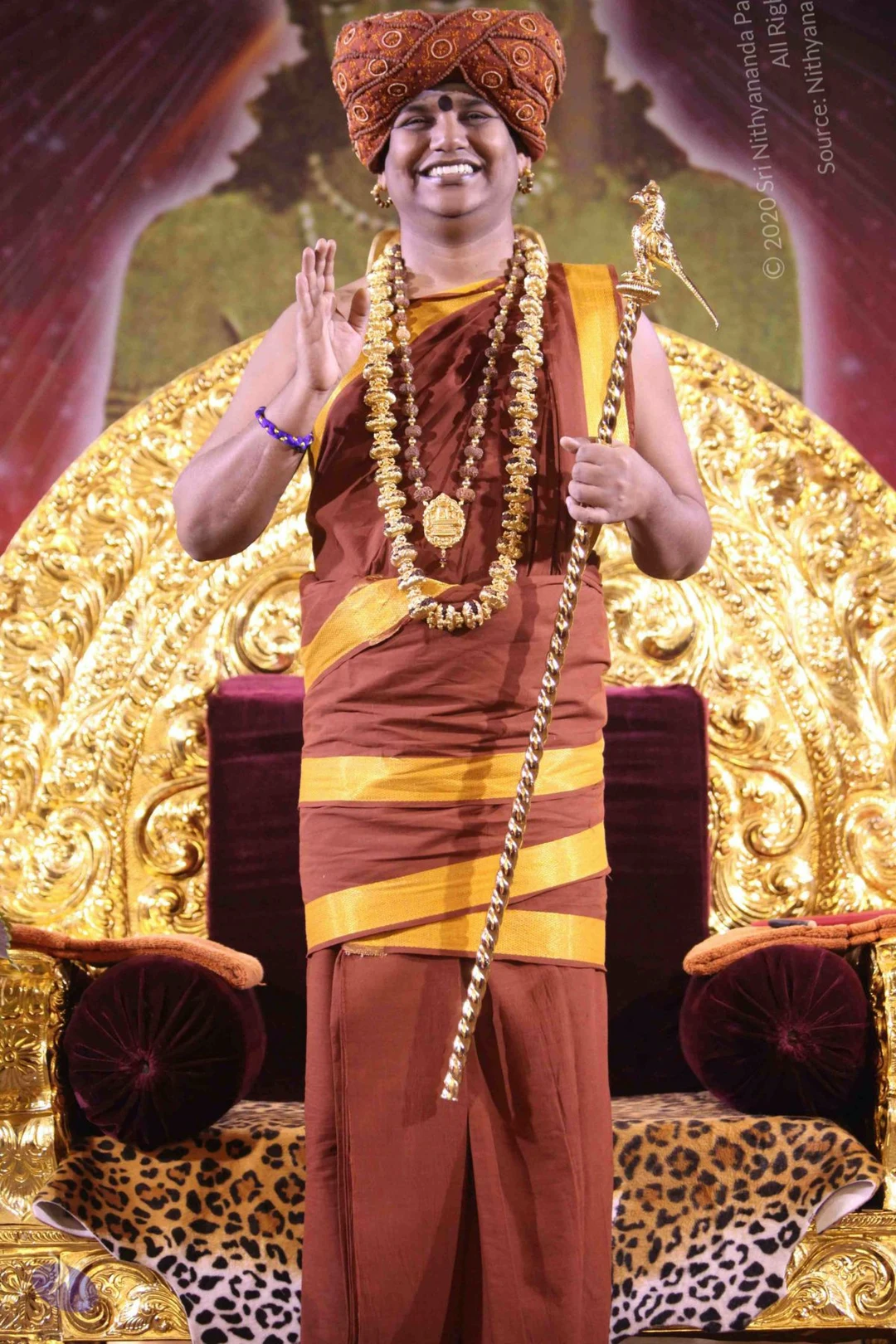
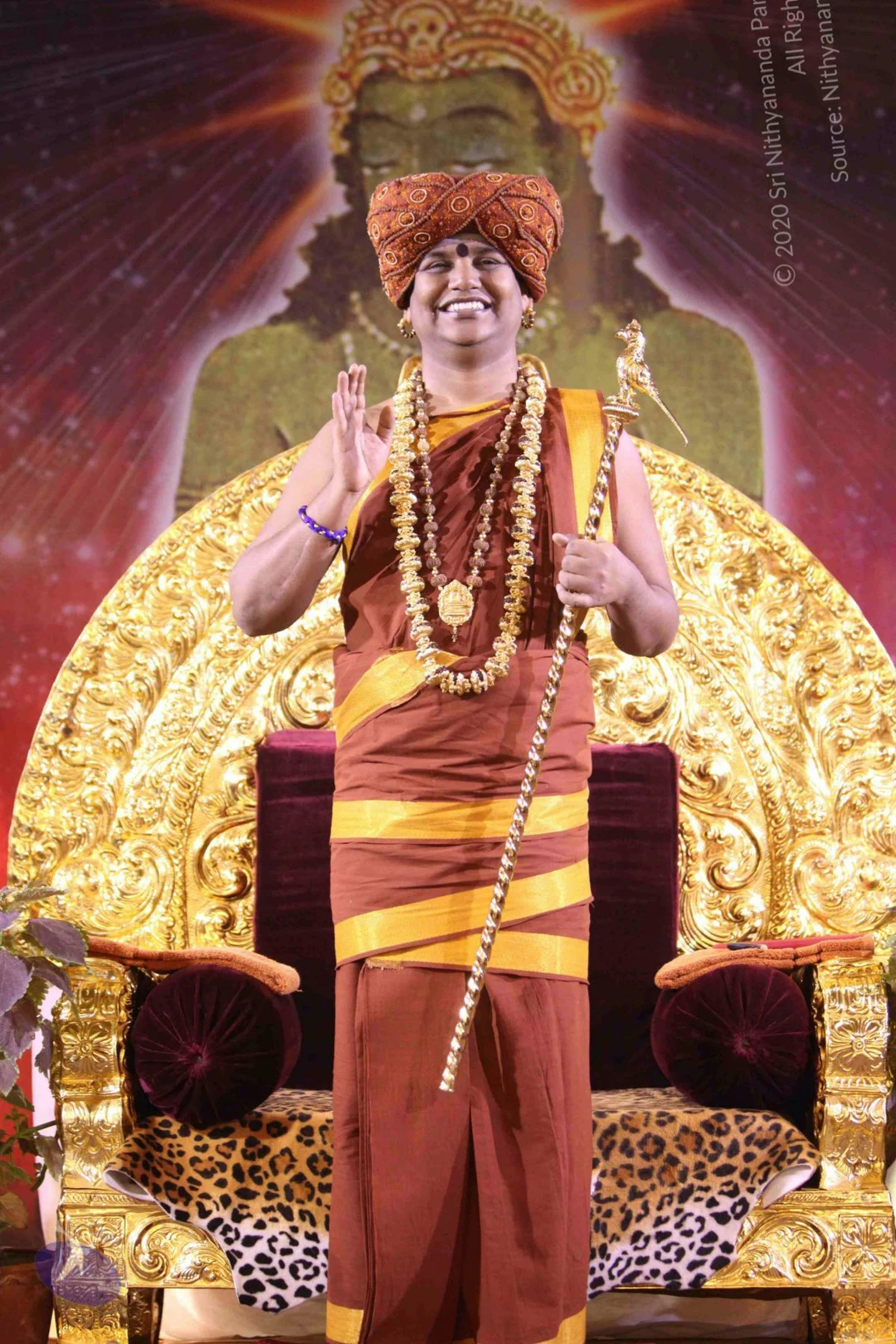
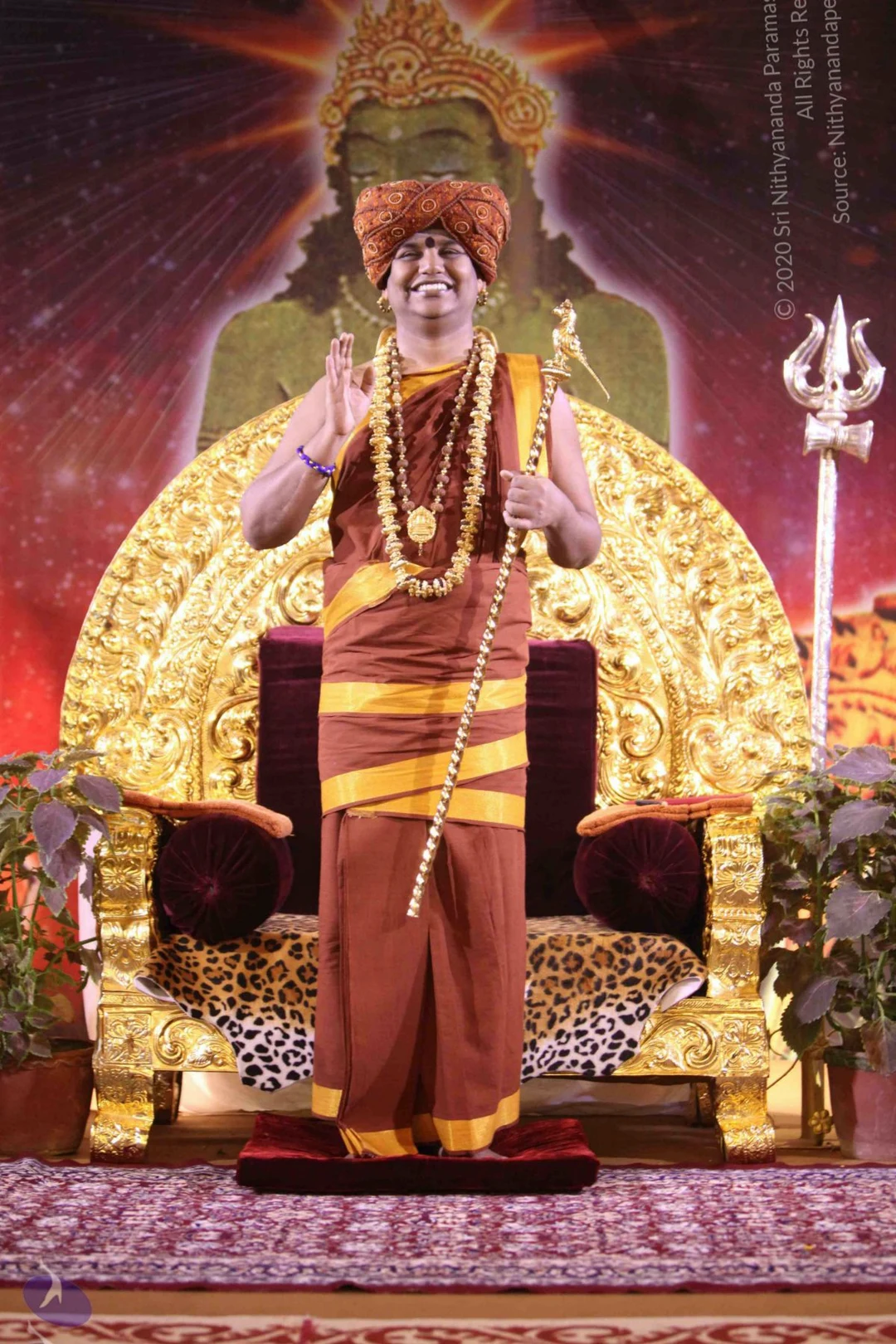
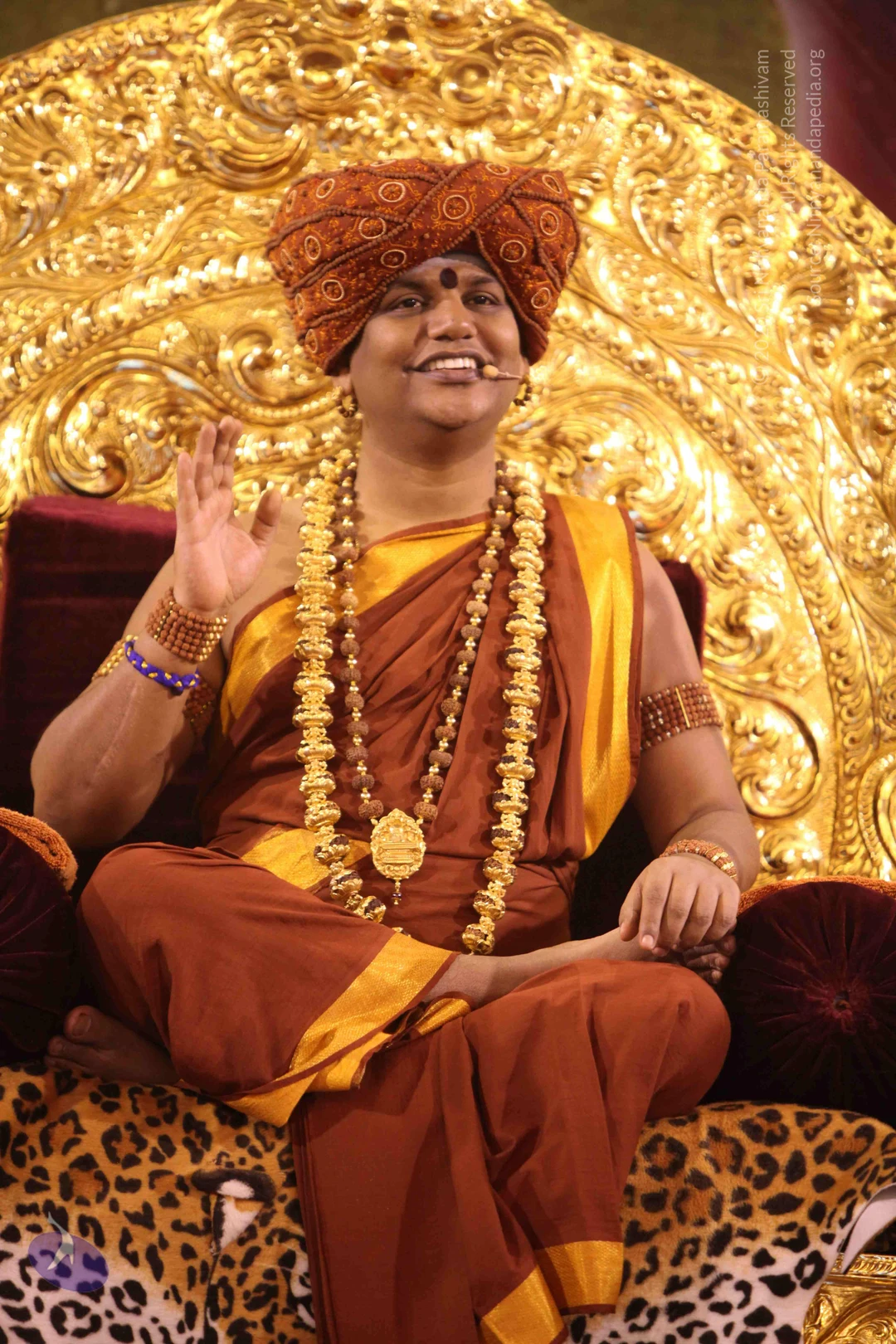
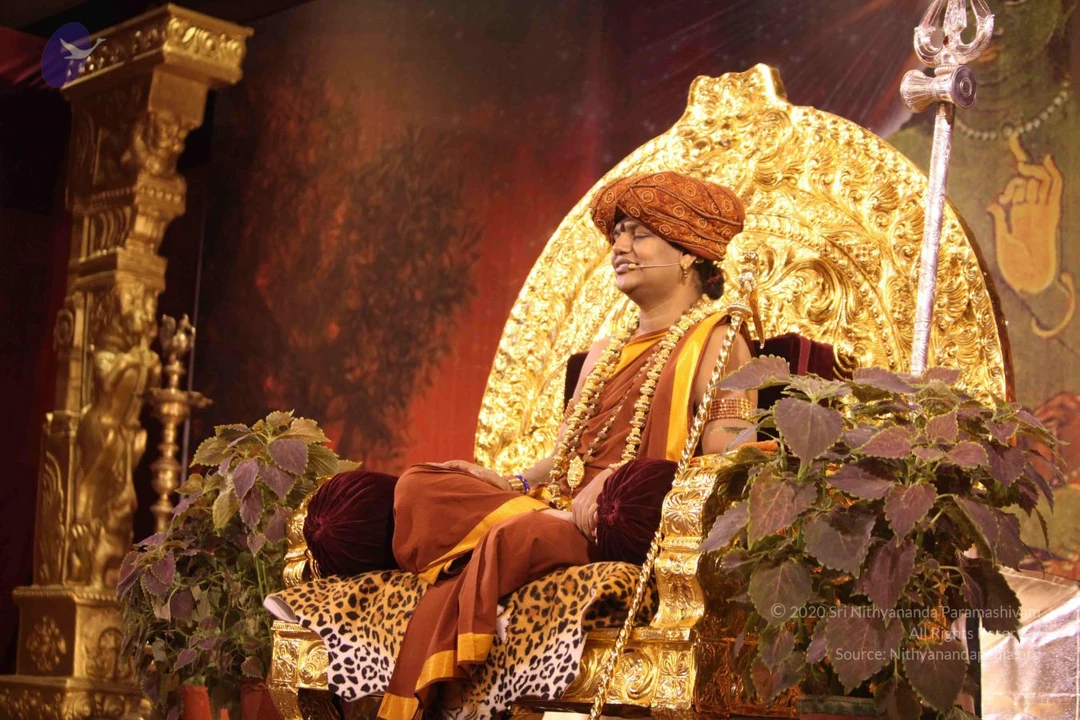
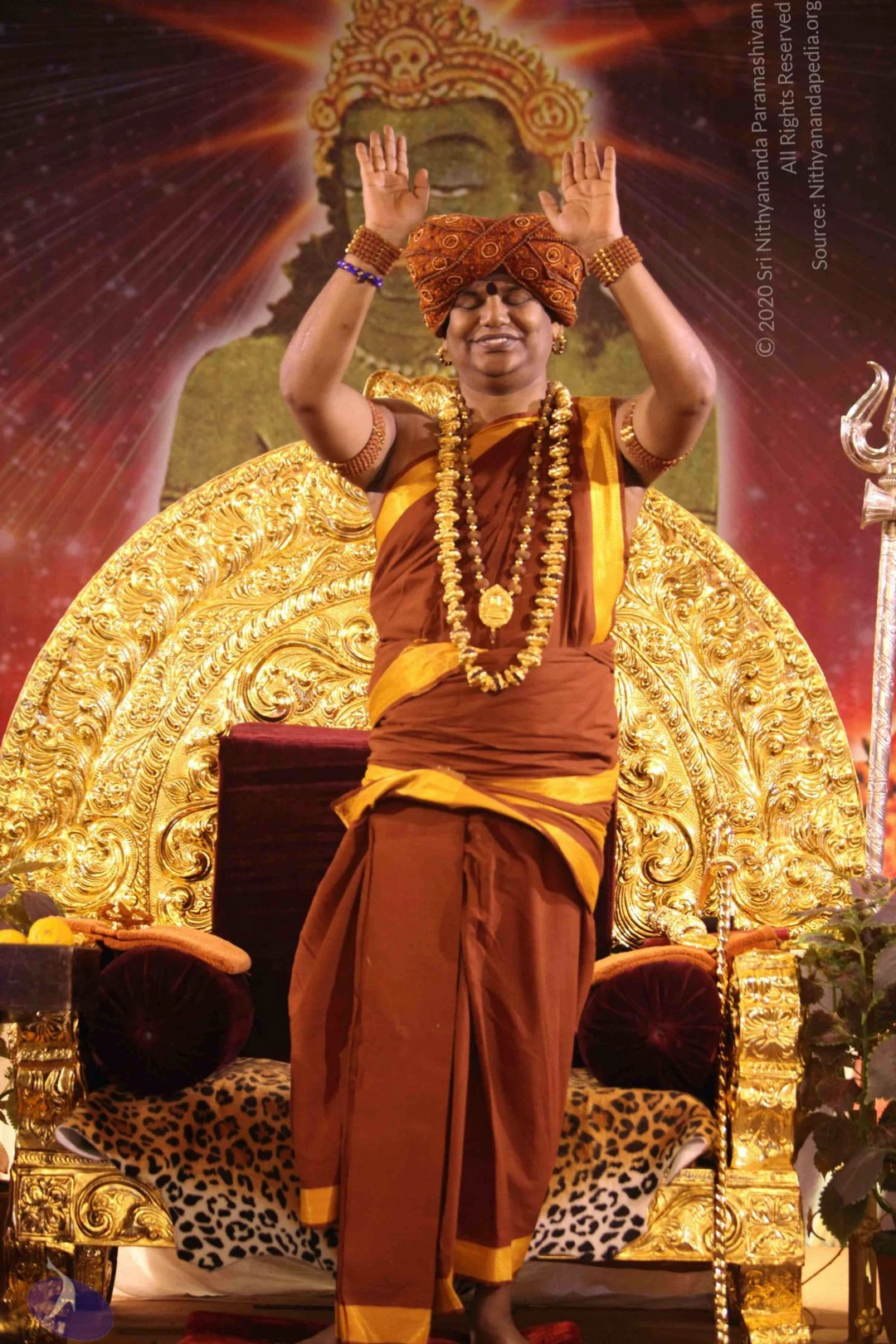
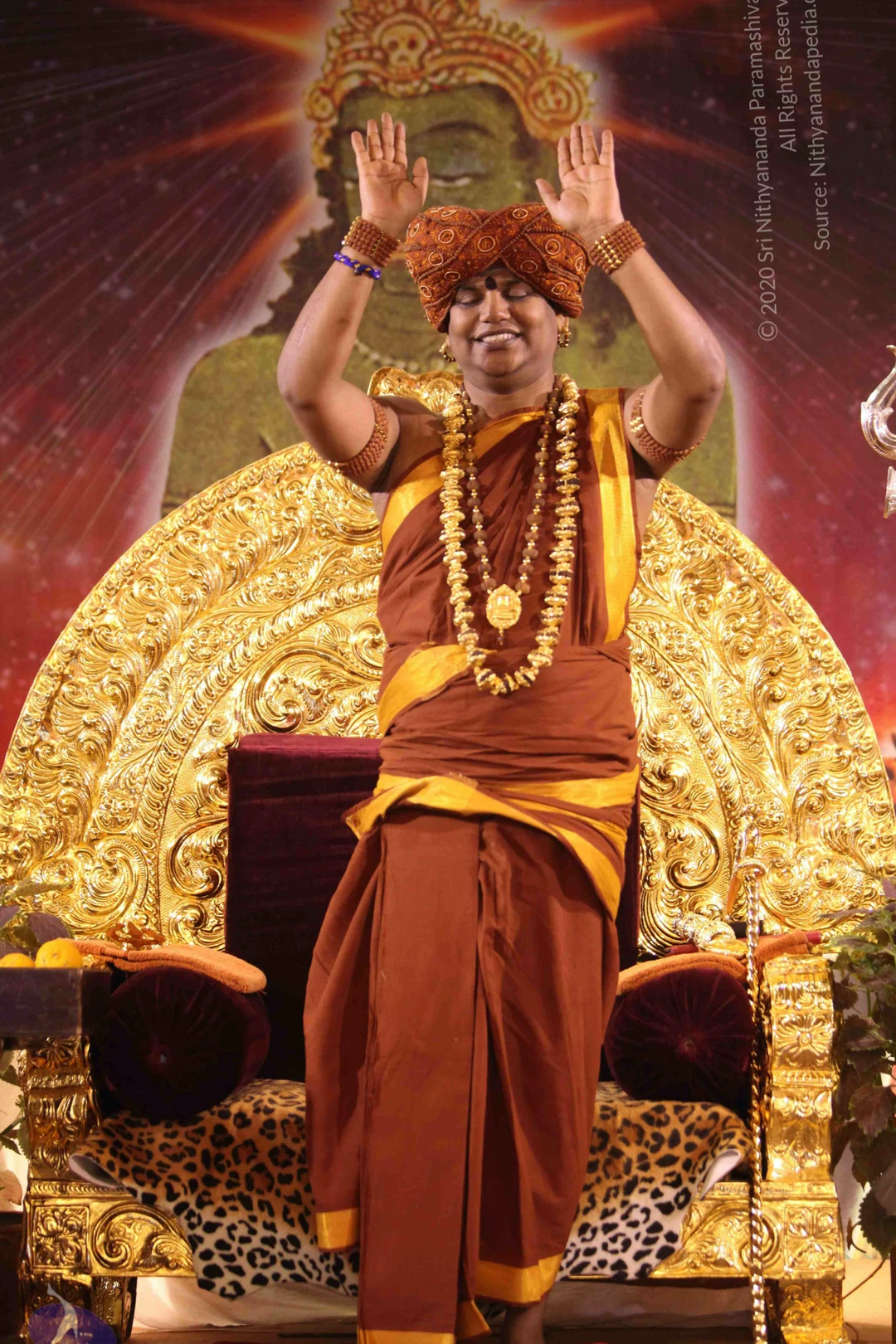
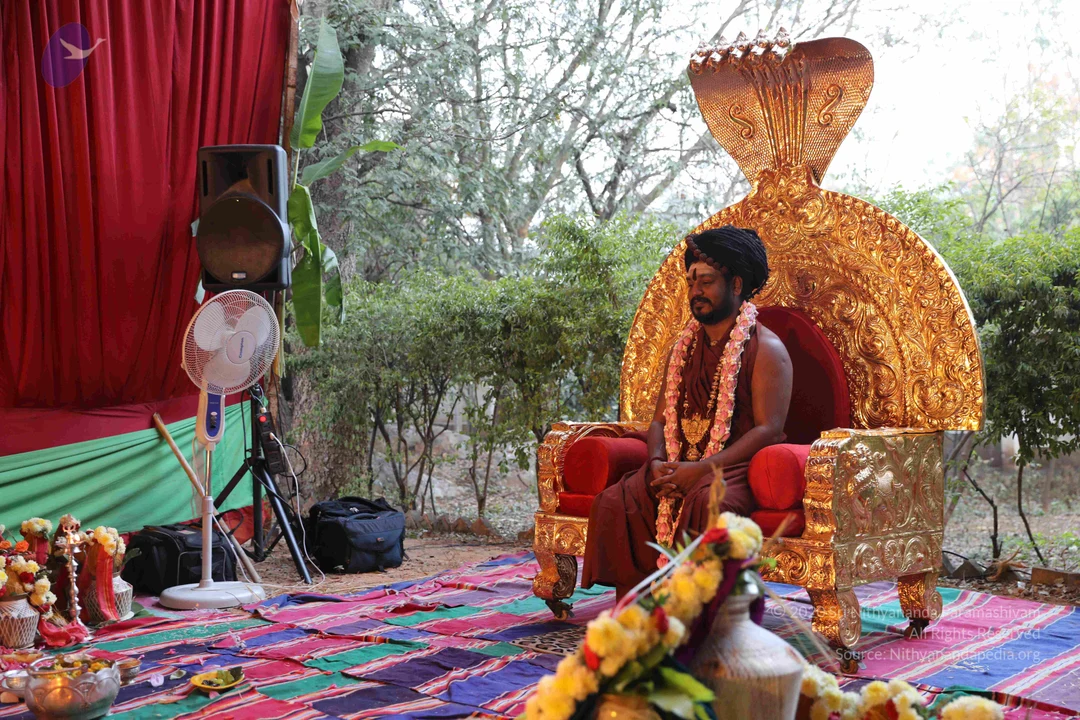
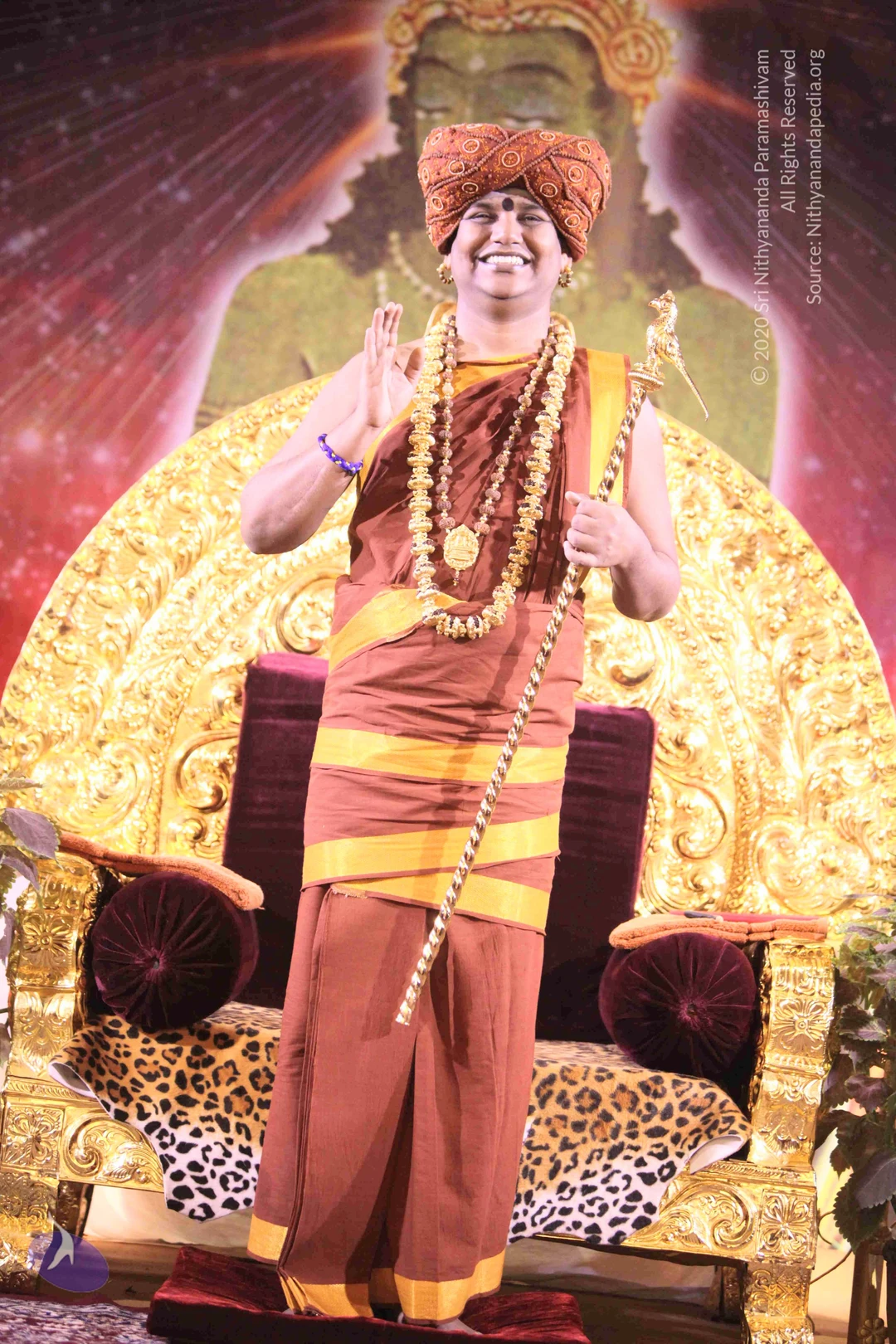
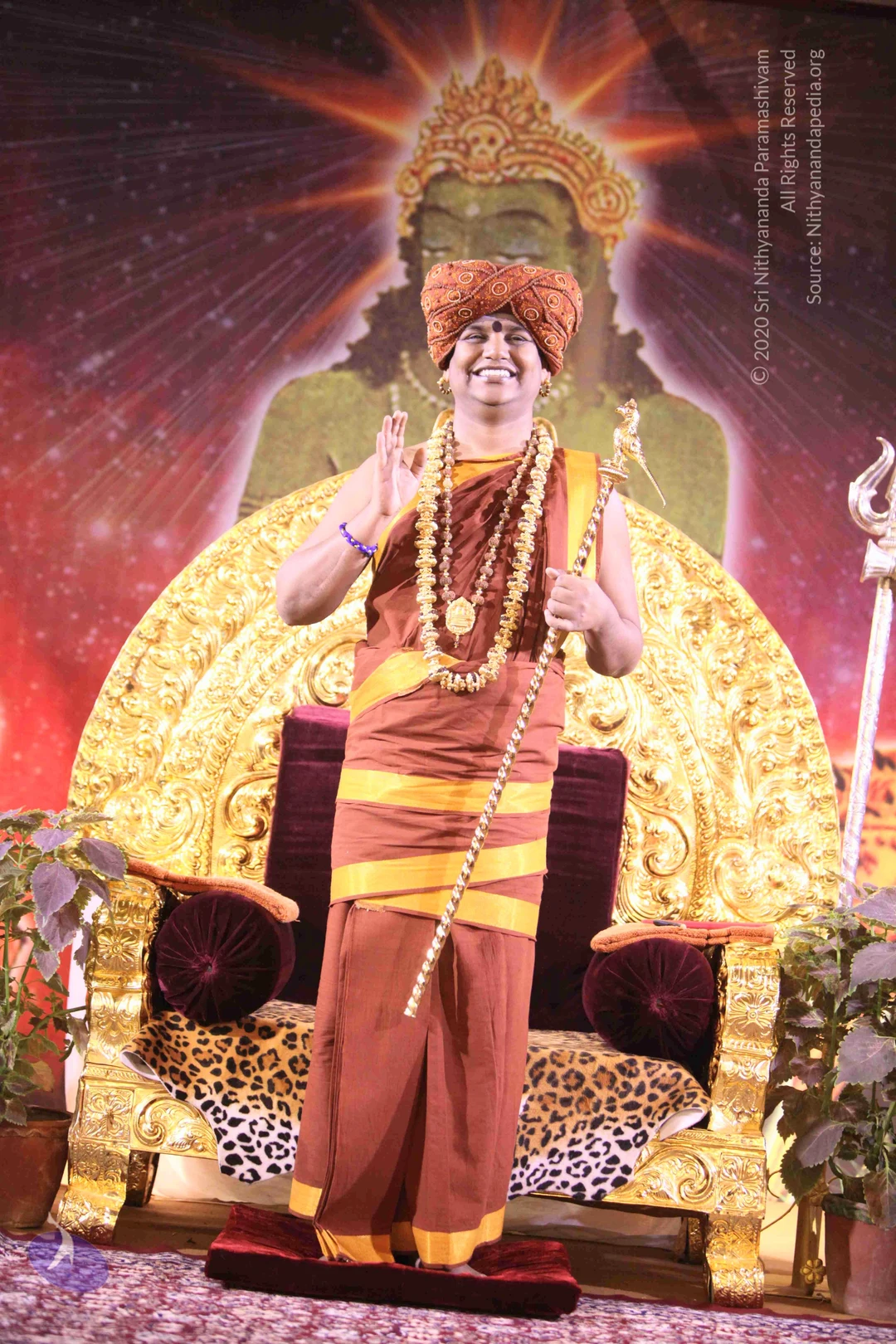
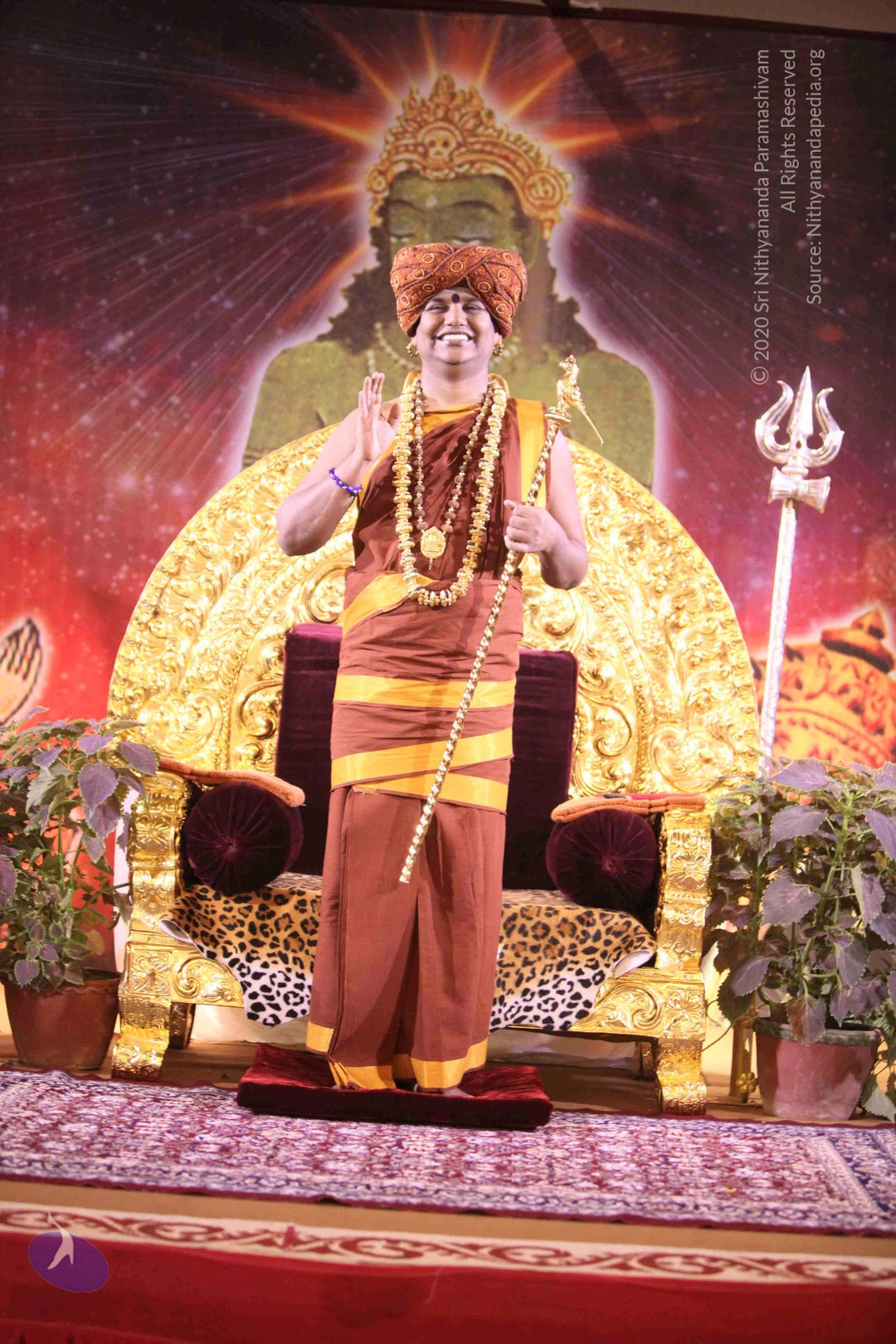
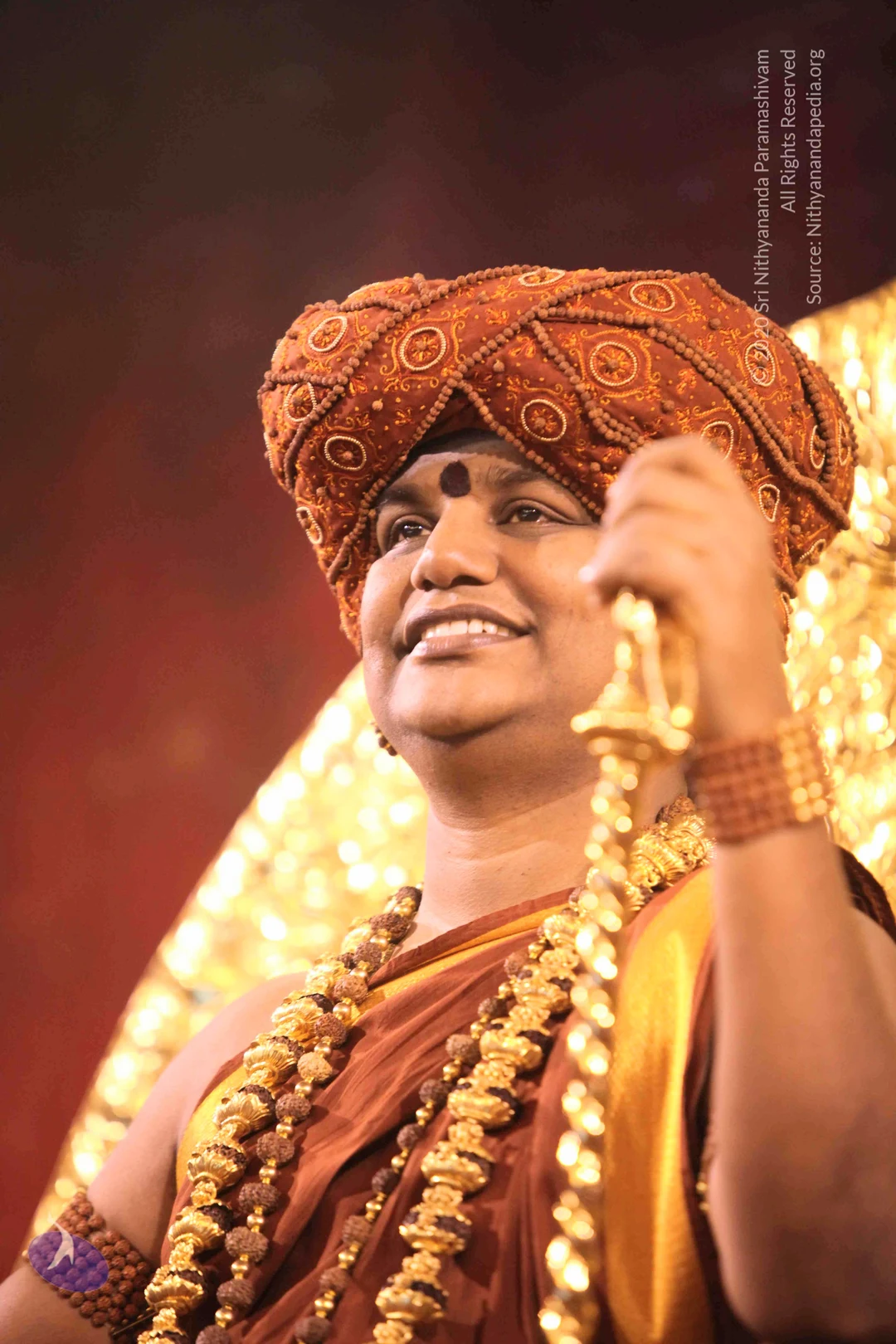
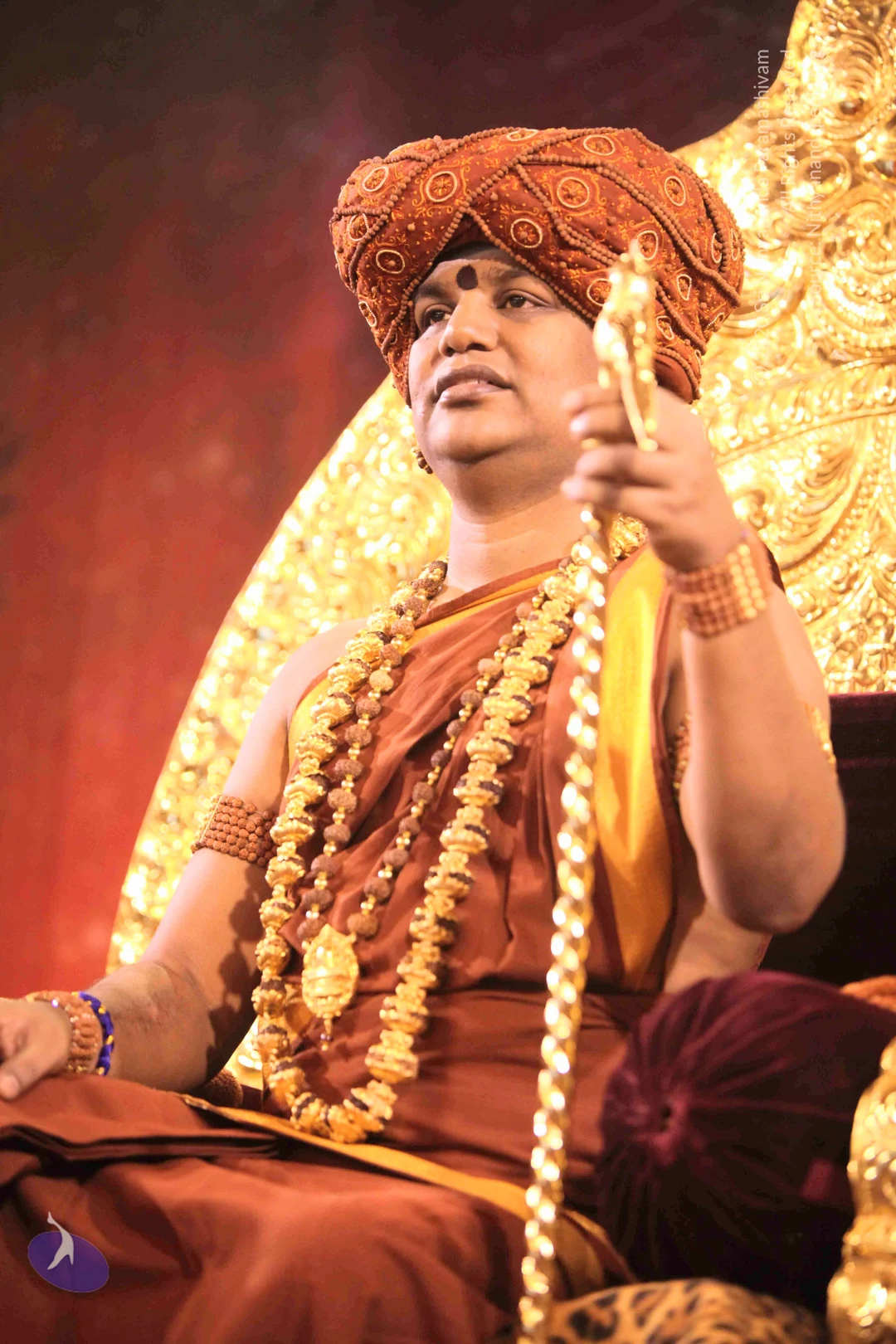
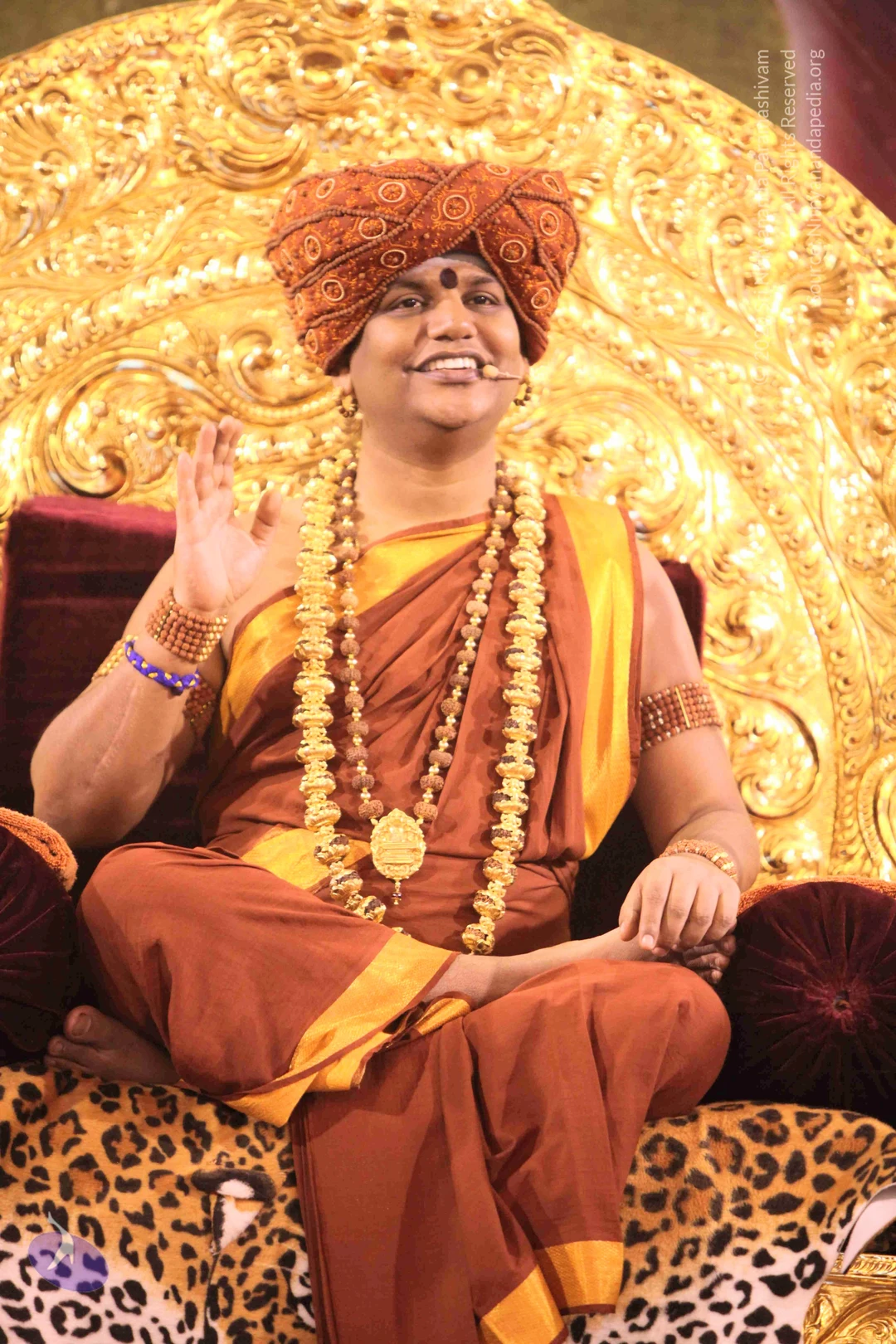
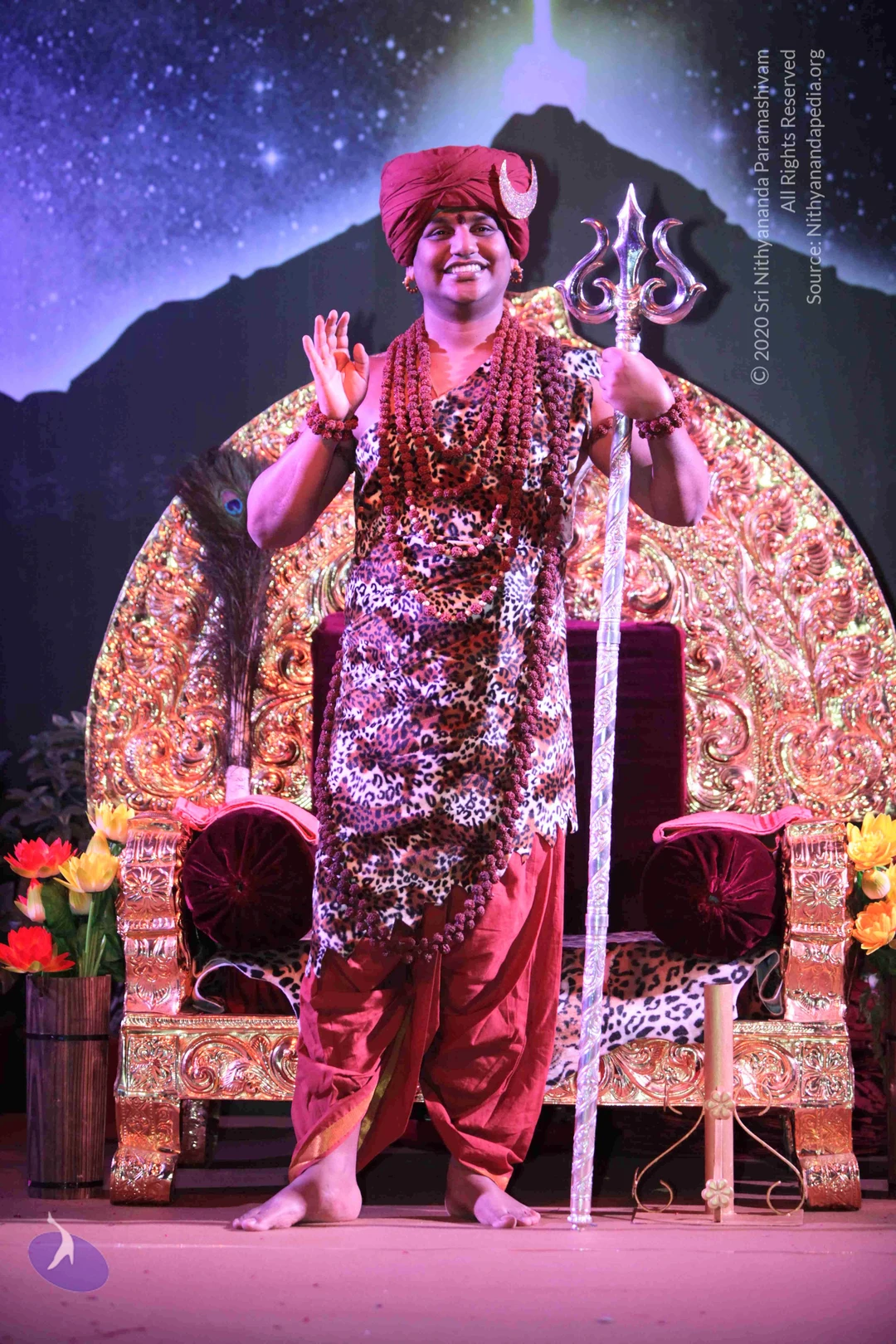
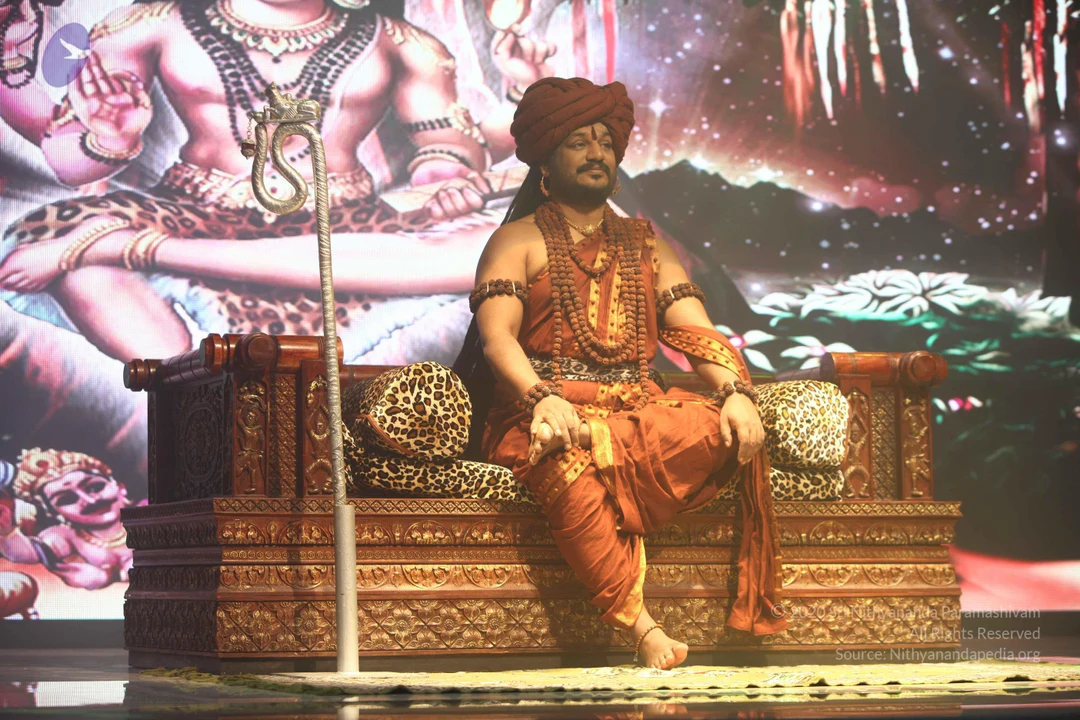
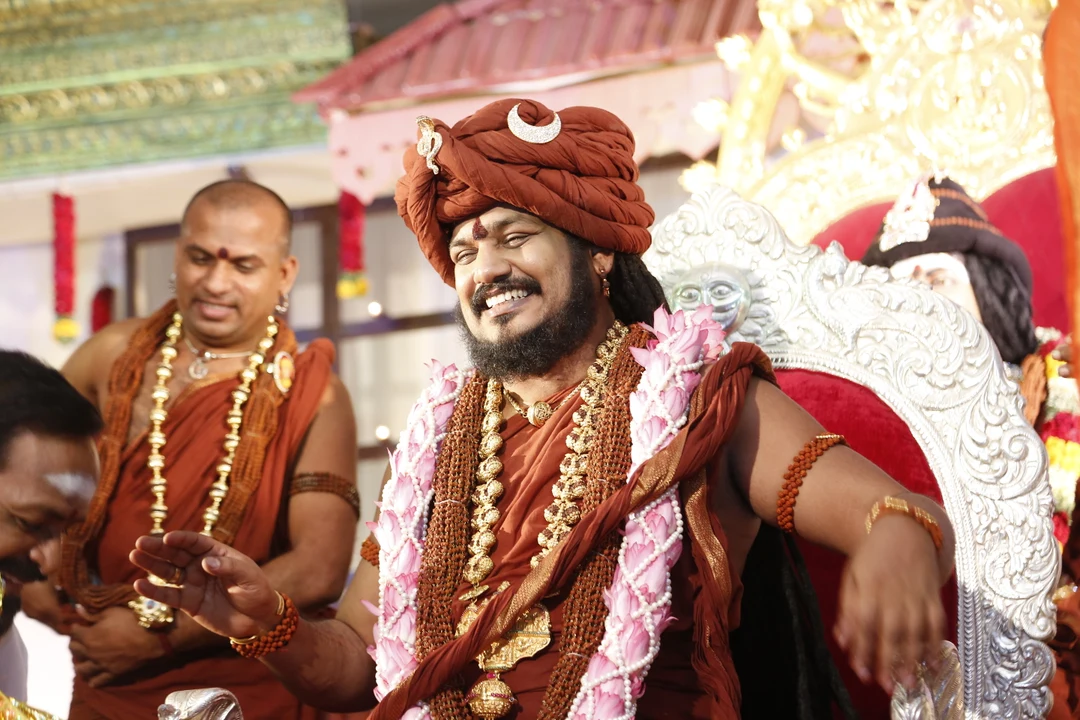
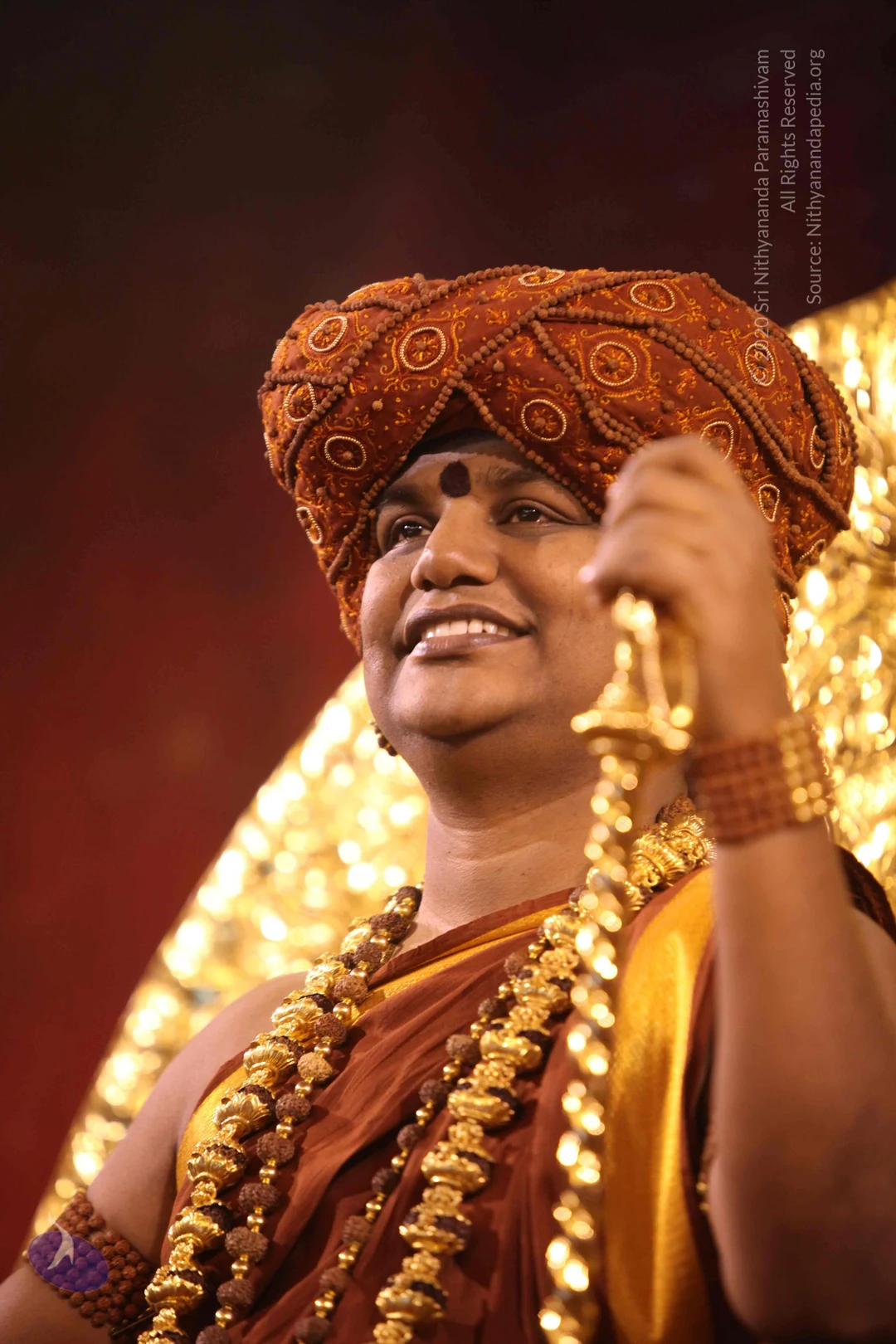
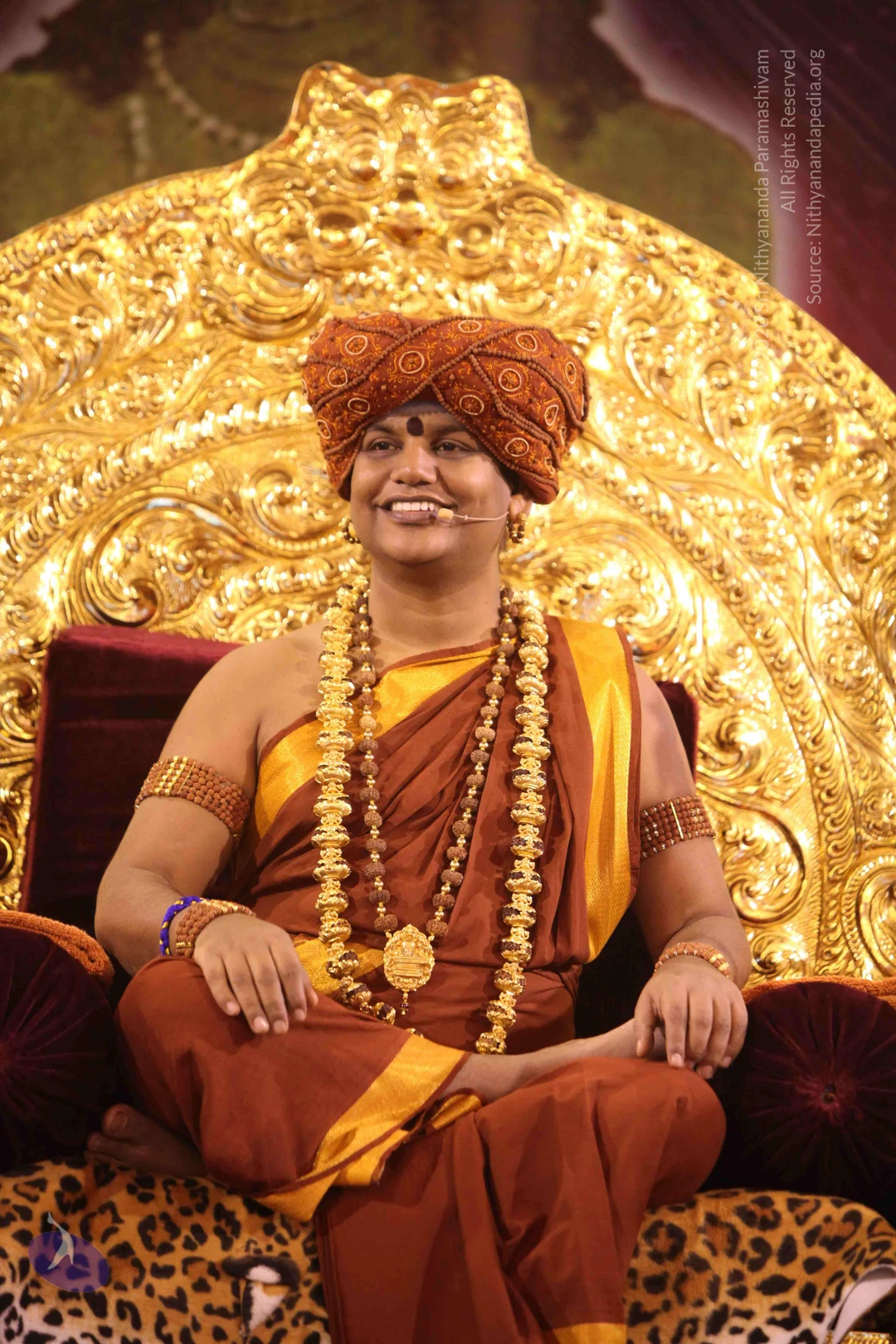
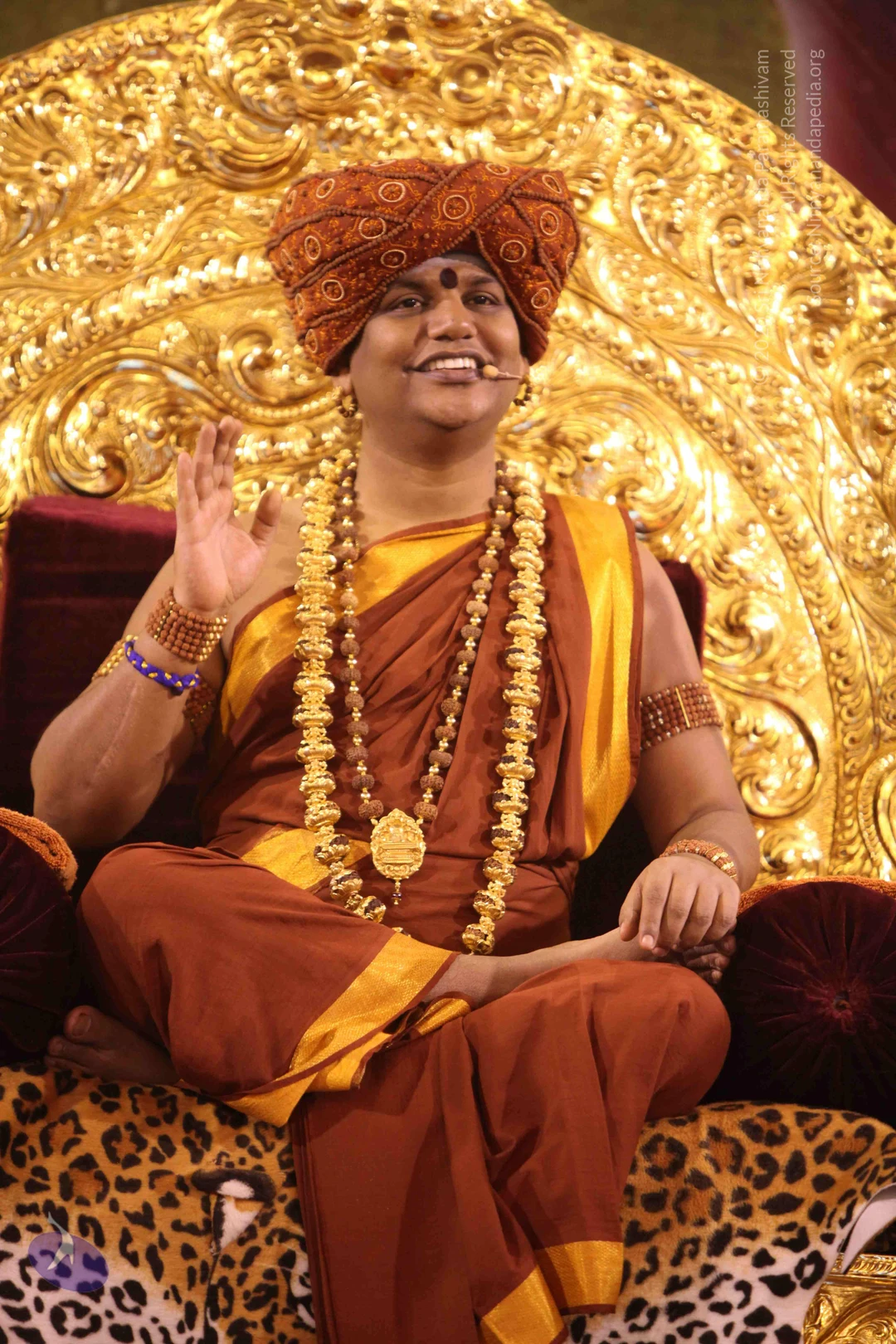
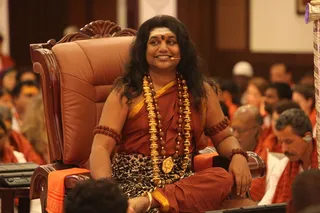
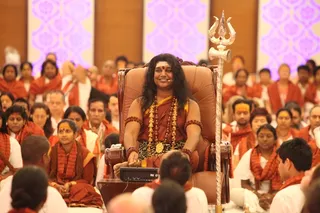
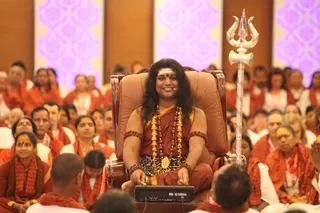
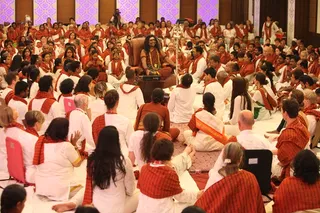
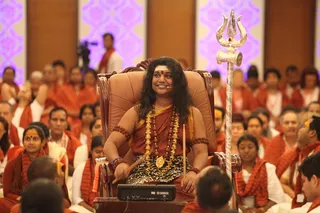
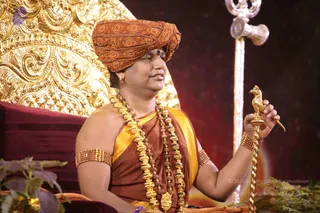
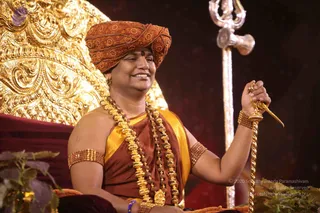
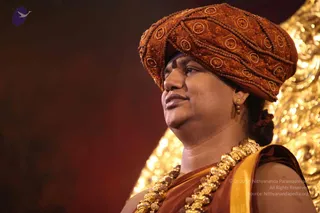
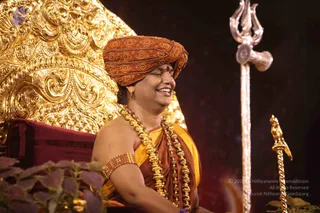
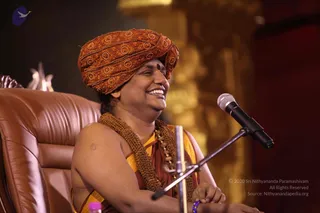
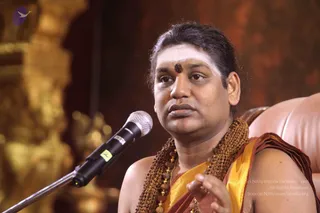
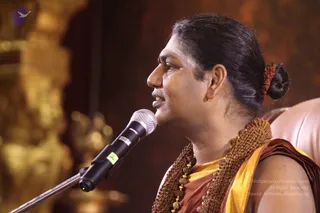
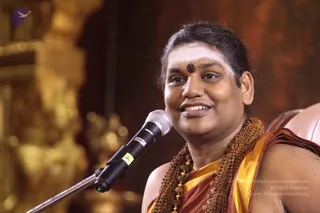
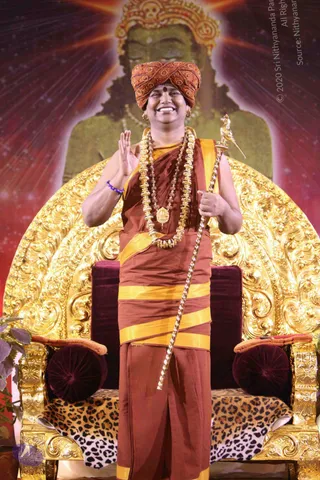
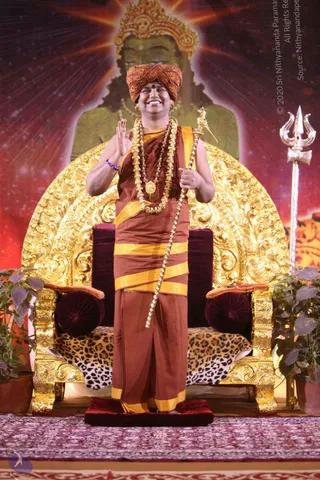
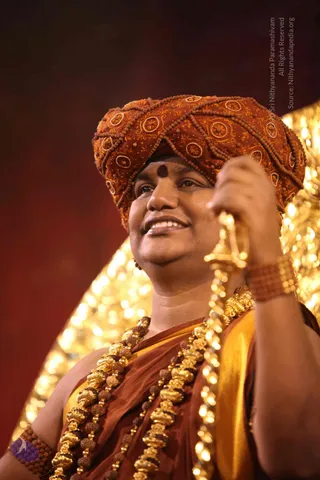
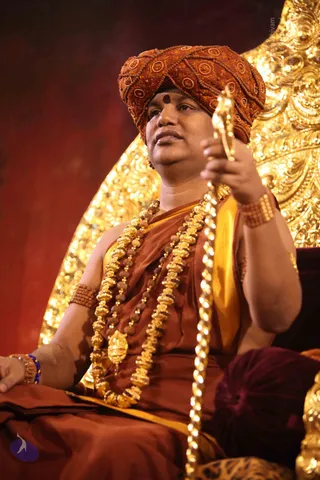
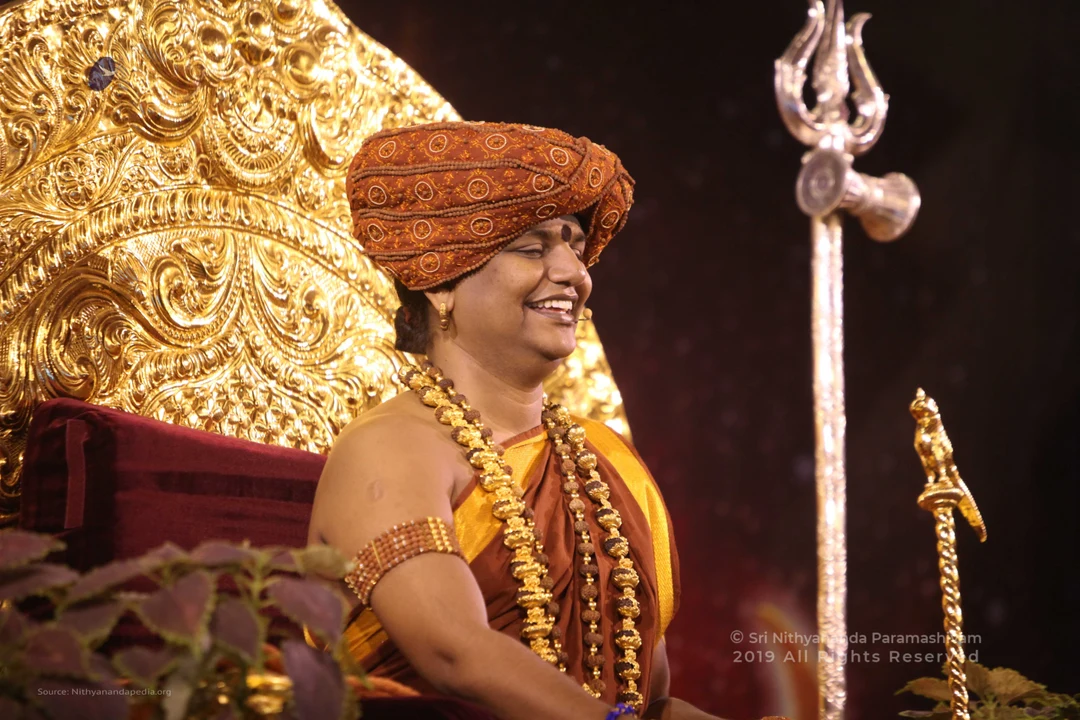
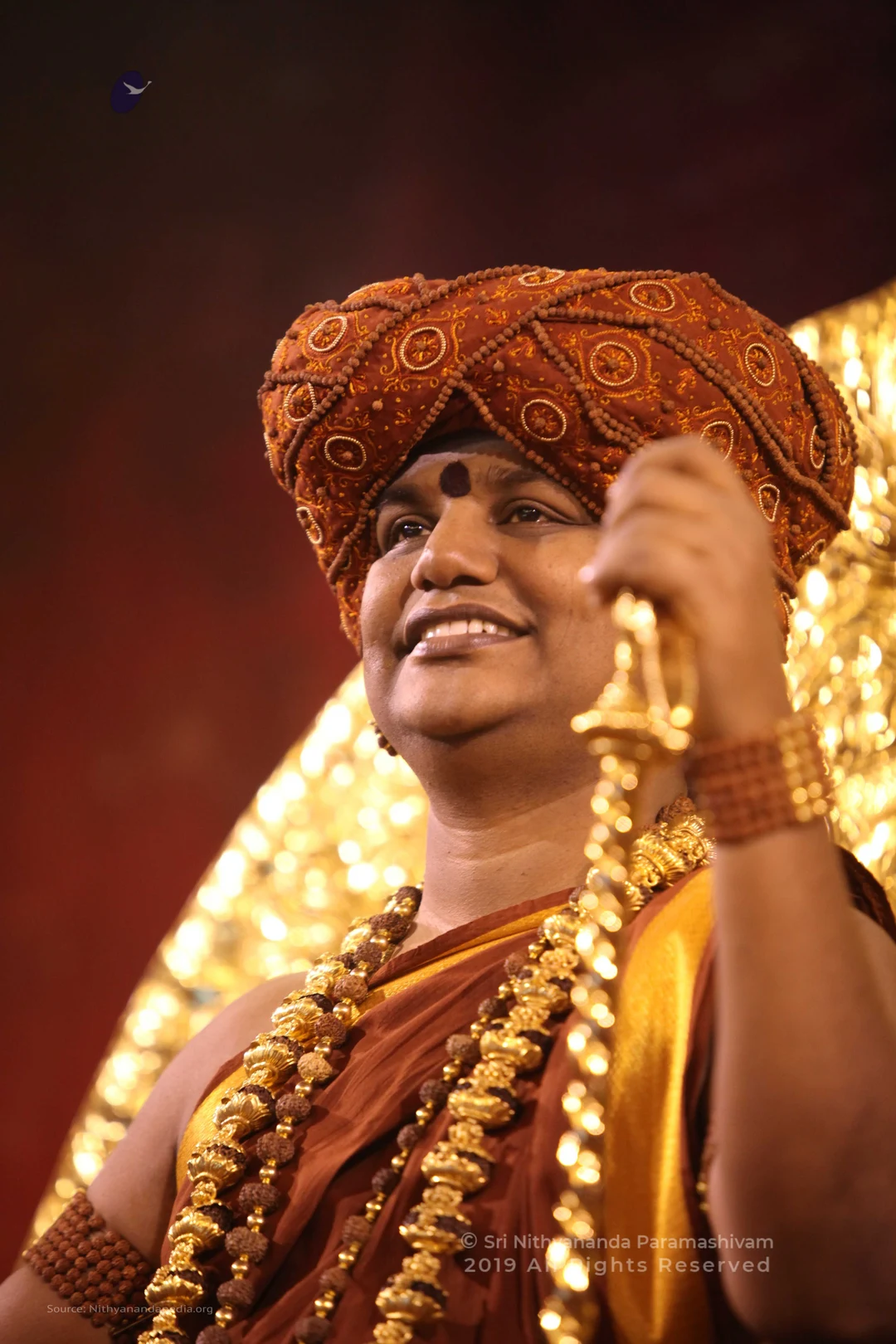
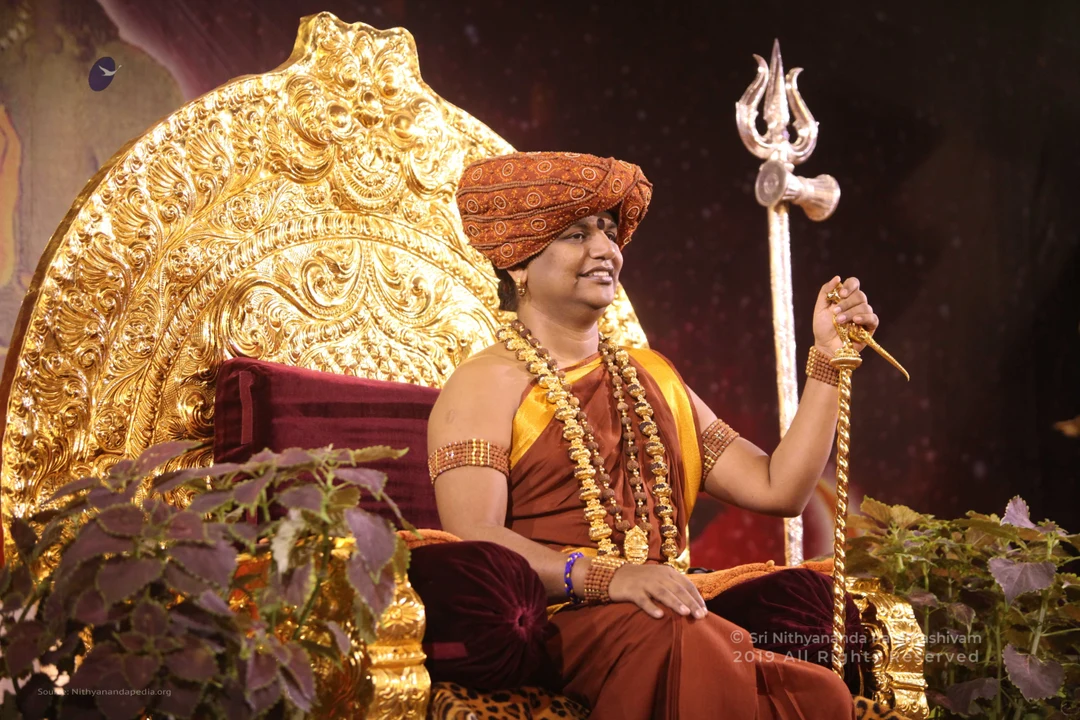
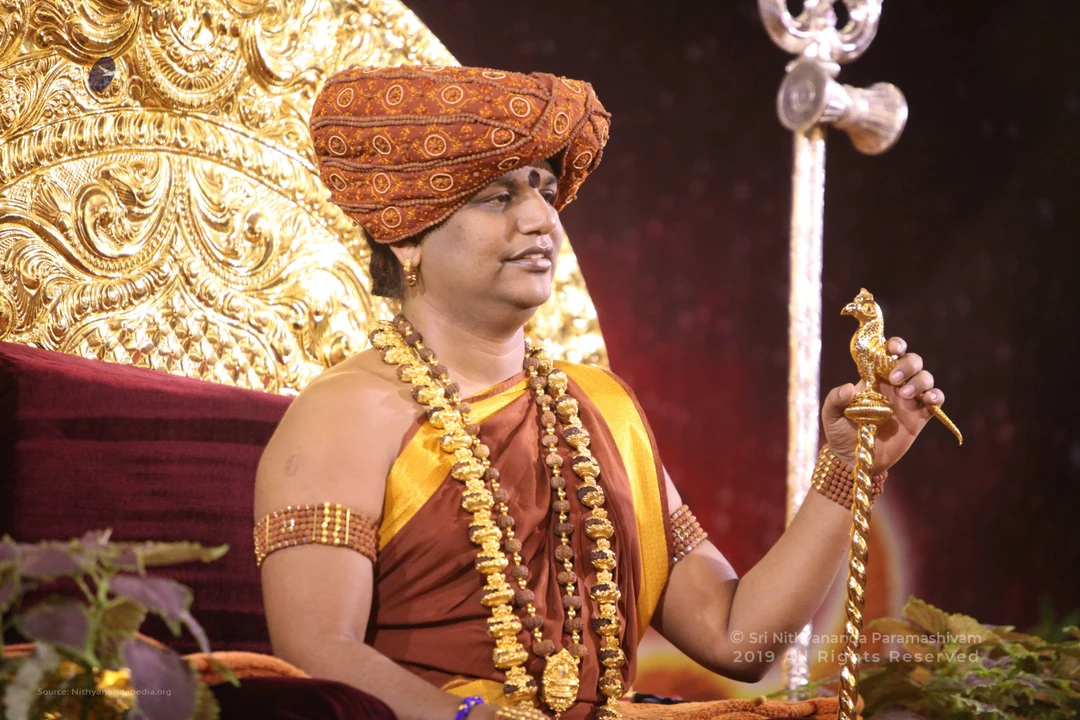
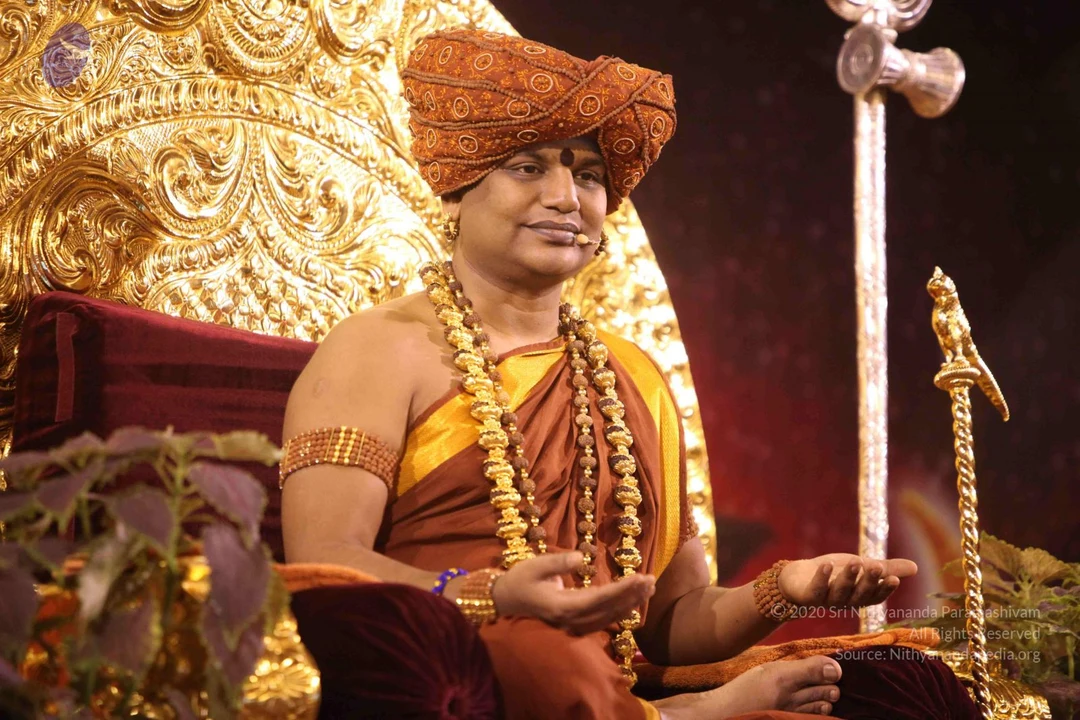
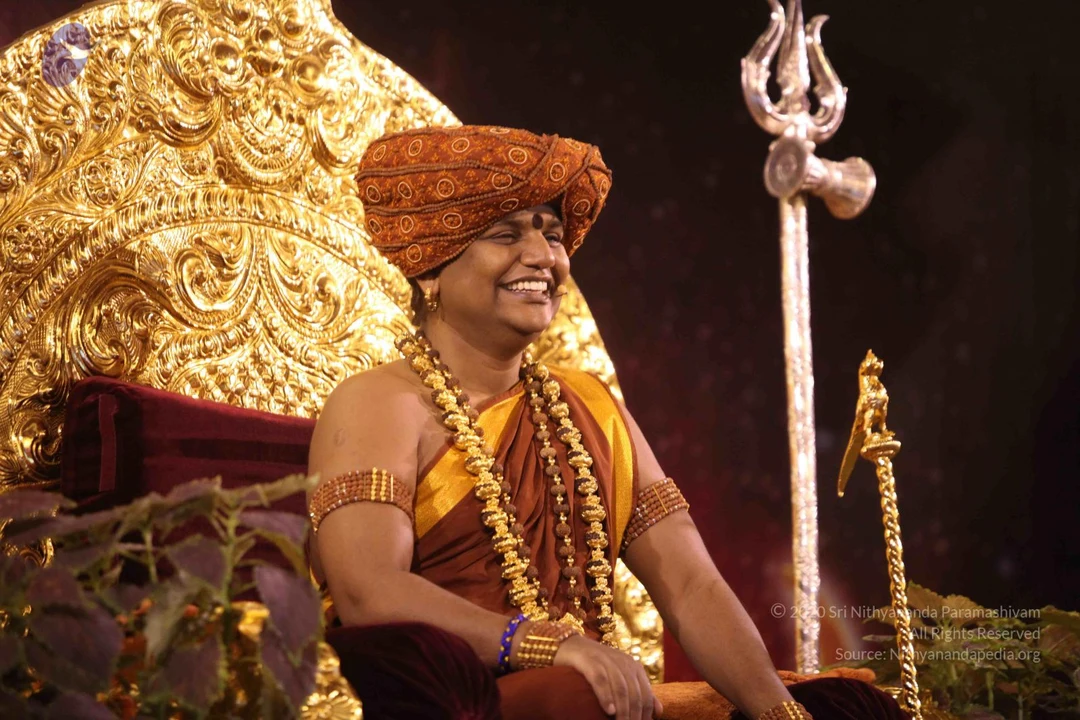
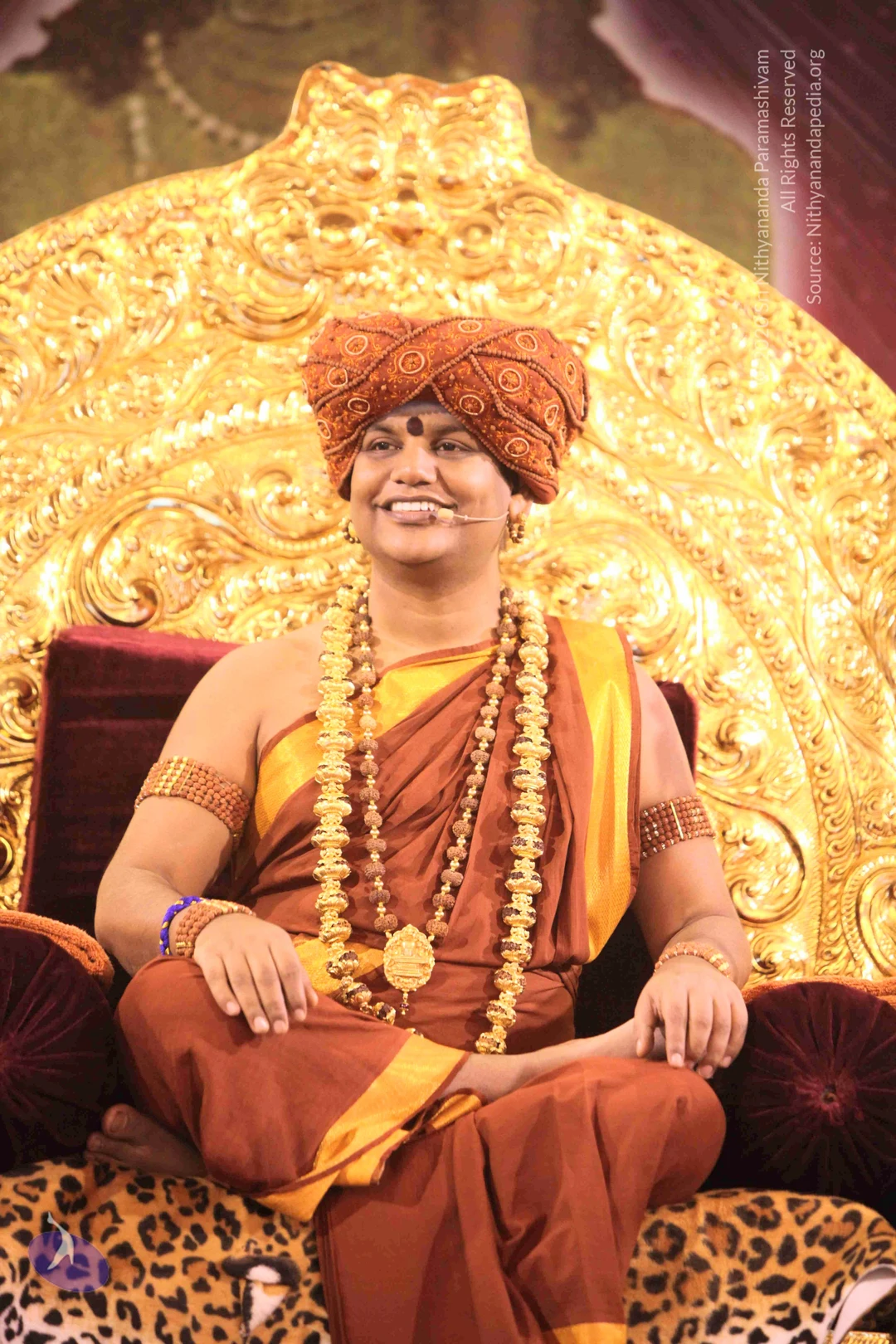
A seated man smiles broadly on an ornate gold throne with carved floral scrollwork and a deep red velvet cushion. He wears a rust-orange and deep red patterned turban, a saffron-orange shawl with gold trim, multiple beaded rudraksha-style malas and a gold necklace, gold armbands and gold bangles, and a blue beaded bracelet. A large silver trident stands to his right, a gold staff with a small figure rests beside him, and green leafy plants frame the lower left. The dark backdrop has a faint starry glow.A seated man in an orange-red turban with a red bindi and gold-toned earpiece microphone sits on a large ornate gold throne with carved scrollwork. He wears an orange-red and saffron-yellow shawl draped over one shoulder, multiple gold-toned necklaces and rudraksha malas, and gold bangles on his arms. His hands are open in a gesturing pose as he speaks. Beside him stand a tall silver-toned staff and a gold-toned ceremonial sceptre with a bird-topped finial, with green-purple plants at the lower left. The backdrop is dark red. Swamiji (probable) cues: turban, ornate gold necklaces, rudraksha malas and saffron shawl, seated on a throne while speaking to an audience.A standing man in a maroon-purple dhoti and a matching sash with gold-and-maroon borders stands before an ornate gold throne upholstered with a leopard-print cushion. He wears a red-and-orange turban, a multi-strand rudraksha-style necklace with a gold pendant, and a long gold-tipped staff topped with a bird figure in his left hand. His right hand is raised in blessing. A silver trident stands to the right and purple flowering plants flank the throne. Behind him, a painted backdrop shows a glowing red sky, a golden deity figure with a halo, a sketched kneeling devotee with palms pressed together, and a crescent moon. This is a stage setting with a satsang-style presentation.

May 15 2015

Original wiki page
Contents

Title

Awaken The Ability To Reinvent Yourself

Description

In today’s (15 May 2015) Nithya Satsang on Kathopanishad in Living Advaita Series from Varanasi, Paramahamsa Nithyananda continues intercepting into the subject-matter of Death! The essence, result, gift of Kathopanishad, the last word of Yama Dharma on Life And Death is - Awaken your ability to be reborn, awaken your ability to reinvent yourself. He reveals that Life itself is the science of reinventing yourself. For this reinvention to happen, the first thing we need is - ability to drop the past as past, which has no power over us. We learn nothing from past, except learning not to be affected and leave it. Second, having the courage to keep our possibility alive in face of impossibilities we perceive. He gives us the great news that our past thought currents and patterns are matter and have no power over our Consciousness. Our urge needs to become urgent to be reborn and reinvent ourselves.

Link to Video

VideoAudio

Transcript

nithyānandeśvara samārambhām

nithyānandeśvari madhyamām |

asmat āchārya paryantām

vande Guru paramparām ||

I welcome all of you with my love and respects.

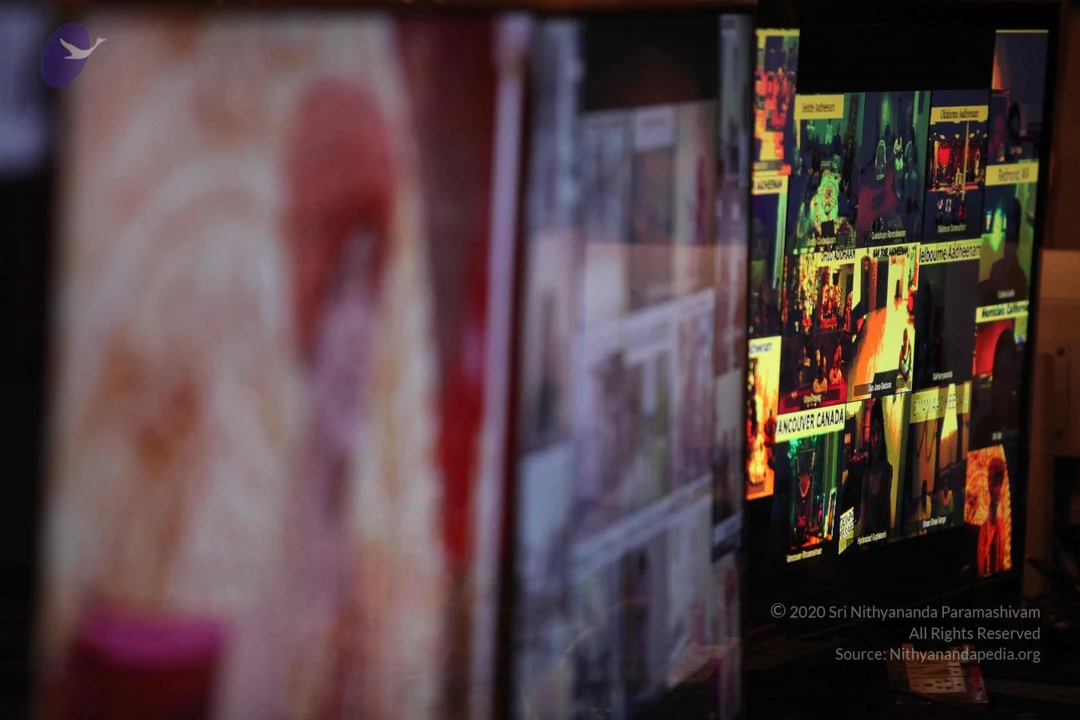
I welcome all the devotee, disciples, samajis, satsangis, Sri Mahants, Mahants, Thanedar, Kothari, visitors, viewers, sitting with us all over the world through Nithyananda TV, Sadhana TV, two-way video conferencing having Nayana Deeksha. Cities sitting with us in two-way video conferencing having Nayana Deeksha, Toronto Aadhenam, Kaula Lumpar Aadhenam, Vancouver Aadhenam, Phoenix Aadhenam, Melbourne Aadhenam, Vancouver, Cananda, Ohio Aadhenam, Seattle Aadhenam, Guadalupe Aadhenam, Oklahoma Aadhenam, San Jose Aadhenam, Phoenix Aadhenam, China, Montclair, Singapore 2, Warrington, UK, Doncaster, UK, Hyderabad Aadhenam, Dubai Aadhenam, Bangalore, North, London Southwest, Kanyakumari, Los Angeles, Sherman Oaks, Vancouver, Manhattan, New York, Houston Aadhenam, Bidadi Nithyananda Nagaram, Singapore Aadhenam, and some more cities are joining, Oman Aadhenam, Phoenix, Arizona, more and more are joining, Dubai Aadhenam.

Death – the subject matter of Kathopanishad. I feel still I have not yet explained, that one concept which I started explaining from day before yesterday. So I will continue to expand on that, little more detailed way so that it can be absorbed as an experience for all of you.

Listen. Please listen with all your attention. The constant happening of life can be perceived as constant rebirth or a constant death. If you perceive as a constant rebirth, or a constant death, if you perceive it as a constant rebirth, you will experience the beauty of life. If you perceive, listen, if you perceive life as a constant rebirth or constant death, both the ways, whatever way you may be perceiving, life is not going to change. Please understand, reality does not wait for your acceptance.

I think I need to give more examples, then you can grasp, you catch what I am saying.

Whatever need to be taken away from you, when that is taken away, your hue and cry, non-acceptance, screaming, shouting, cursing, all that will neither stop nor reduce the speed of those things being taken away from you. Same way, whatever needs to be showered on you, your blessing, your praising, all those things will not multiply the things which is going to be showered on you. Please listen, praising God, or Life or Guru, is not to please them, but to keep you in a pleasant space. Understand, be very clear, praising God or Guru or life, is not to please them, but for you to be pleasant. Never ever think you can bribe Mahadeva. No! If you are in the mood of praising them, you will be in the pleasant space. That is the result, that is the fruit of praising Gods, Goddess, doing Sahasranāma (chanting 1000 names of Gods), doing archana, vandana, bhajana, pujana, seva—worshipping, chanting, serving, praising—all that is for you to be kept in the space of pleasantness. Bribing Mahadeva is not possible. Listen, no bribing is going to work. You can’t bribe Him. You can’t bribe Him.

(silence...)

I want everyone of you to do this homework today. Sitting with yourself and seeing what all the aspects of your life, you feel you are having rebirth, what all the aspects of your life, you are feeling you are dying. Health, just see and pen down. Do I feel I am reborn constantly or I am dying constantly. After everyday am I feeling am I feeling I am reborn or am I feeling I am dying? In my relationship, my relationship with my mother, am I getting reborn everyday or am I dying everyday. Relationship with my father, am I getting reborn everyday or am I dying everyday, relationship with my spouse, am I getting reborn everyday or am I dying everyday?

Please understand, just this simple awareness shift. If you just bring the awareness, the way I am able to move my back, my body movements, am I getting reborn everyday or am I dying everyday. The way I am able to handle the shocks of life, even if it is a small tremor, and I making it that as an earthquake, or even if it is an earthquake, or am I just standing, like Pasupatinath.

Understand, I want you to know, such huge Tsunami, not a single temple got washed away. In India, that bit Tsunami, it is shocking because Tiruchendur, Kanyakumari and all those places, everyday the wave touches the temple compound. Suddenly, in those areas, ocean is withdrawn, not a single temple got destroyed, and, such a Himalayan tsunami, Kedarnath is standing, he is just standing. Much stronger modern day RCC buildings disappeared. Kedarnath is standing. Nepal not even one crack Pasupatinath, so many other things collapsed, Pasupatinath is standing. I tell you, our Hindu temples are designed in tune in panchabhutas (five primal life-sustaining elements), so panchabhutas don’t destroy Hindu temples.

The 6th bhuta, stupidity of human beings, that only destroys Hindu temples. Even that is not able to destroy South Indian temples. See this Kailasanath temple in central India, Aurangzeb has deployed a huge army, after working on it for almost 2 years, they were only able to damage, not able to destroy it. Two years, around 10,000 people were breaking, breaking, breaking, finally they got tired and went away, They were not able to demolish it, they were only able to damage it.

Anyhow, listen. In every aspect of your life, are you dying day by day, when the life is happening? Are you feeling you are dying or are you feeling that you are being re-born? This simple awareness shift, naturally you will want to be reborn. So you will catch where all you are unaware and dying, and you will see, you will see automatically, you plan for constantly being reborn. Please understand, this planning to be reborn will make you re-invent yourself. This ability to re-invent yourself. In every aspect of life, the ability to re-invent yourself. I can say, final prasada (grace), result, gift, the essence of this Kathopanishad is—Awakening your ability to REBORN and re-invent yourself, that’s all.

Please understand, Yama Dharma is talking about Death, revealing at least 20 sacred secrets about Life and Death. But final essence, the final result, the last word of Yama Dharma, from the Kathopanishad is – Awaken your ability to reinvent yourself...Awaken your ability to reinvent yourself.

Life itself, whether you want you health, you want wealth, you want joy bliss, you want contentment, you want completion, you want relationships, you want Enlightenment, Life itself, it is just the science of reinventing yourself. If you know how to re-invent yourself in the same body, you will how to re-invent yourself in the same body, you will know how to re-invent yourself when you leave the body also.

Ability to reinvent yourself, even when you leave the body is Conscious birth. Ability to reinvent yourself when you are in the body is Enlightenment.

Listen, constantly reinvent yourself. For the re-invention the first thing you need to do, you should be capable of dropping the past as past. Past has no meaning to you, other than making you understand, it has no meaning to you. Past has no meaning to you, other than making you understand, it has no meaning to you.

I tell you, the only lesson you need to learn from past is – don’t be affected by it, and with my responsibility I am telling you, there is nothing good you need to learn from past, you go on justifying yourself, making you believe, no, no from the past mistakes I will learn. No one learnt, relax! No one learnt, relax! It’s a stupid illusion, delusion in the name of, oh I will learn from past mistake, you want to be go on brooding about it, no one learned it, relax. No one build Tajmahal for love. Even Sharjahan did not build for love. It is stupid theory being invented.

The amount of lies told to us about Indian history to us, oh God. The amount of lies, if you carbon date of the Tajmahal, it says 1000 year old, and these fellows go on pushing us to believe that Tajmahal is built by Sharjahan. Is there no limit for stupidity! And there are tons and tons of evidences, it was Shiva temple. When some researchers, scientists, archeologists tried to reveal this, he is silenced brutally.

Anyhow, let us come back to Kathopanishad.

Listen. Ability to re-invent yourself. Ability to reinvent yourself. I think I need to expand on this, only then I will feel complete that I have introduced the subject matter of Kathopanishad.

Past has no power over you. Past has no place in your life. Do not have the desire to learn from past. Do not think something good can come out of brooding over your past. Don’t dream from past your future can grow. No. Completely discarding your past can create lot more space and possibility in you than trying to pick up the lessons from the past. It’s like in villages, they will grow hen and chicken in the house, they will run around and constantly playing in the dustbin, or where they put all that dirt in that corner, it will try to pick up some worms and everything. Just like that hen or chicken, don’t play with your past, it is dustbin. How much ever, whatever you may want to pick up from the dustbin, the final result will be dump me and go and live your life. That is what past can give.

The ultimate lesson your past can give to you is – leave me and go and live, leave me and go and live. Ability to discard past. When you drop the past, life becomes a possibility, greatest possibility. Whenever I read the great saints, sages life – Valmika, Arunagirinathar Swami, not Arunagiri Yogishwara, Arunagirinathar, a saint lived in my native place, Tiruvannamalai, he was born and brought up in Tiruvannamalai; Ramadas, Kanakadas, Purandardas, Vittaladasa, the dasa sampradaya (servitor’s lineage), bhaktas (devotees), whenever I read their histories, stories, one of the most important point that strikes me is – their ability to reinvent themselves, and the moment they decided to reinvent themselves only is claimed as their Enlightenment moment. Please understand, the moment when they decided and declared they will reinvent themselves, that moment only is considered as their Enlightenment moment, that moment only is attributed as the moment when God gave darshan (vision) to them, when they are awakened, or the moment of spiritual enlightenment and experience, whatever, whatever, whatever. It is just the moment they decide to reinvent themselves. Please understand, decision to reinvent yourself, decision to reinvent yourself is the essence of Kathopanishad.

Brahmasvarupa is messaging me, “When you leave the past, your life become feast, not fast.” Relax. You don’t need to supply quotes to me, and this quote is wrong. When you leave your past, your life becomes feast, not fast. Life becoming fast means restless. When you leave your past life becomes feast not just fast. Good, I have not become that poor that Brahmasvarupa can give me quotations.

I already wrote the poem as I committed with you all yesterday, see it has come out in the style, the spontaneous style of how I sang a few days before, in satsang about the love current of Mahadeva. I am just sitting and referring, because I wanted to make this as a traditional poetry, not the modern day poetry. In Tamil there is two section – Marabu kavidai, Pudhu kavidai, sections are there. The traditional poetry and modern poetry. In traditional poetry there are grammars for the poetry, my spontaneous expression, I don’t know how much it aligns to the grammar, so I am taking a few days, it will take a few days, to align them to the grammar, because I used to in 1995-1996, in those period, I used to write this traditional poetry without missing the grammar, without missing the traditional Tamil grammar. Tamil grammar is something far, far deeper, complicated than Sanskrit grammar. Please understand, I am not disrespecting Sanskrit, because I have knowledge about both the languages. I tell you, the grammar, the Tamil grammar is very complicated because the language was used, being used as a spoken language till now. Sanskrit is no more a spoken language, even in those days, it was not a communication language it was only a language used for elite for writing, but Tamil remained a communication language from the time of origin. So I am aligning, it to the grammar, then I will bring it as sing. Reinventing yourself. Please understand. The first step is dropping the load of the past. The second step, is having courage to keep your possibility alive in the face of any impossibility perceived by you because of your SDHD. Listen, keeping your possibility alive in the face of any impossibility perceived by your SDHD.

Ability to reinvent yourself. It is not necessary you need to live with the same current of thoughts or patterns. Please understand, it is not necessary you need to live with the same current of thoughts or patterns throughout your life, because you created it once accidently. They won’t mistake you, sent them out. You think, oh, they are our guests, after all they lived with me for such a long time, how can I send them out. No, not necessary. Whether you want to get rid of a simple addiction like smoking, or one of the most subtle addictions, the innate violence. Please understand, yesterday in the last session, in the night I was explaining about the innate violence, because you missed the oneness, you have a deep anger and hated towards unknown persons. It’s like FIR filed on unknown persons, not just on one person, or two person, anybody who is seen, unseen by me and you go on suffering with that innate anger, hatred, frustration. One good news I have for all of you - patterns are matter, you can conquer them. They are not more powerful than you.

Please understand, they are not more powerful than you.See somebody who is interested only in money, for him this silver stick, this may be more valuable than me, he will feel if I take this away it will be more useful, if he takes me what to do, he has to give food and very difficulty to maintain.

No if he takes me, then what to do, nothing can be done, no use, if he takes this, it will be useful for him at least. For a person who is interested in money, for him, it may look, this may look more valuable than me, but in reality this is not more valuable than me. Understand, look into your life in every place, look into your life in every place, where stupidity, the matter is being given so much of importance over the Consciousness. You see inside, actually I tell you, your whole problem in the life is nothing more than a simple early morning laziness in the bed. Listen,

see, early morning in the bed, you are already awake, but you are feeling why not, ten more minutes, I know, what is there. But if really there

is a flight, you won’t miss. If there is a compulsion, you will not entertain that laziness, you will just out.

The laziness is just, aaaahhh, there is no compulsion, it’s ok.

All your suffering and ignorance and SDHD, self-doubt, self-hatred, self-denial, all that is only because you think, you have a freedom. Please listen, you have free space to play, something in your life, makes you feel the urge is urgent, no; you can’t play this game anymore. A disease, or an accident, or a breaking up of a relationship or something, very strong root shock, you just wake up and decide to re-invent yourself. Most of you would have decided yourself only when you have been slapped by a root shock by life. How many of you please raise your hand. It’s true. Root shock, does not give you time to think, you have to decide to re-invent yourself.

All the problems in your life is just cherishing that early morning laziness in the bed. That same attitude, in everything in the life. “I have to stop drinking, ok, what is there, now, today this one glass, am I going to die, or what.” Alcohol is such, after one glass goes inside, you will forget that you thought, what this one glass is going to do, because after that goes inside, that starts drinking. Only the first glass you drink, second glass, the first glass is drinking, and

you are no more in control, you are no more in control. Only yesterday, I discovered, first few verse, when I was compiling, only it was taking a few minutes or using words and all that. After 3 or 4 verse, suddenly I have courage, come let me write andhadi, andhadi means 100 verse. I suddenly decided let me write 100 andhadi and it did not have any big plan. Maybe when I will present it to you guys, I will be presenting 100 verse.

Listen. Alcohol and poetry is one and the same. See, alcohol does damage to you. Poetry does healing to you, that’s all, both the result is different, but the way it flows, if you take the first glass, second glass you will not be drinking, the first glass you will be drinking, if you write the first poetry, second poetry you don’t have to sing, second poetry will sing the second poetry, that is andhadi. First poetry will sing the second poetry. First poem will write the second poem. That is andhadhi.

Listen, the simple laziness, which you cherish, thinking things are not that urgent, that needs to be broken for re-inventing yourself. It is urgent! The moment you are born looking into death is urgent, because any moment it can happen. Good news is your Consciousness is more powerful than any patterns or the matter. The great news I have, is you just need to feel the urge into urgent, that’s all. You need to feel the urge into urgent. Don’t say, “ahhhh...I need to stop smoking, but I smoked ten years, will this one cigarette kill me or what ?”

The other day I was reading a quotation in Facebook, it says, “B.K. Iyengar did yoga throughout his life, he dies at 93, Kushwant Singh drank whiskey throughout his life and he died in 96. So the moral of the story, whiskey gives you 3 years edge over the life. What is stupid theory people develop! No the stupidity is when you are drunk, all this looks real. A man who regularly drinks really believes this. Kushwant Singh if he has not, if he was not drinking whiskey every day, might have lived even 200 years who knows. The B.K. S. family, genetics he might have died at 40, because of yoga he lived to 83, who knows, look into that. People think, “I have to give up smoking, but I smoked for ten years, will this one cigarette kill me today, or what, come on, it’s okay, I have to stop smoking,” and continuing smoking.

Because the urge to reinvent has not become urgent. It is as simple as smoking to smoking to as deepest pattern of innate violence.

Even with innate the violence, I should not be shouting like this to my mother in law, I should become more humble, respectful to her. Thinking this, but the moment she passes by in front of you, {Swamiji plays a AK-47} and after finishing, suddenly again you will remember, “I thought I should speak little patiently with her.”

Please understand, all conscious human beings has urge to re-invent themselves. That’s the good news.

Only thing it should become urgent, that’s all. It should become urgent.

I am not at all denying the existence of the urge, but the urge is supposed to become urgent. Re-invent yourself again and again and again. That is the essence of Kathopanishad.

I tell you, in Indian tradition anyone who wants to be an Enlightened Being is asked to do Parivrajika yatra, means changing the place every three days and travel. Why you know? Because when you go to new, new places, your ability to reinvent yourself, will start flowering. I feel whether you want to be Grihasta or Sannyasi, in the young age, during the period of Brahmacharya, you should spend a little time in Parivrajika yatra, and reinvent yourself. I am already planning after they cross 18, I am going to send my Gurukul kids for Parivrajika yatra, because that is one of the important trainings they cannot afford to miss. I am just waiting for them to cross 18. I think most of them by the time they cross 18 they will be already Peethadi Pati of some Peetha (spiritual head of some spiritual seat of authority), because that is the way I am creating peethas everywhere. Even if they are Peethadi Pati of a Peetha, they should do Parivrajika yatra, after they cross 18; because there, you get the chance and possibility to reinvent yourself with the new, new, new group of people.

Jnanatma has got a historic reference. BK Iyengar’s father died when he was only 9 years old, his childhood was marked with a series of serious illnesses including malaria, tuberculosis, together with malnutrition. He was actually on way to die very early, from his history biography. Jnanatma gave the reference. So be very clear, don’t believe this Kushwant theory. From Iyengar website, we got his biographical reference. He living up to 93 equals to living up to 200 years.

Alright listen, how many times I may repeat, the essence is ability to re-invent yourself, that’s all, that’s all.

So, with this, I will continue to expand on Kathopanishad in further satsangs.

I bless you all, let you radiate, with integrity, responsibility and enriching, causing, living Advaita, the Eternal Bliss, Nithyananda, thank you. Be blissful!

Link to Video

Paramashivoham oneness capsule - 366 (15 May 2015 )

Link to video:

Photos
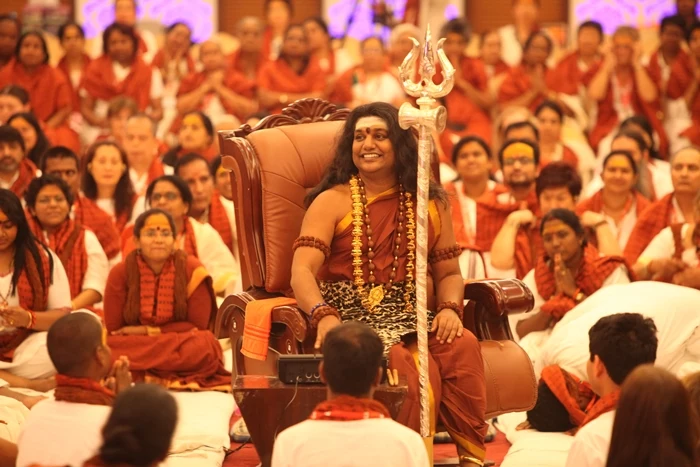
Link to Facebook Post

https://www.facebook.com/ParamahamsaNithyananda/photos/a.321615927926264/835219746565877

Tags

Paramahamsa Nithyananda, Varanasi, Shiva, Mahadeva, Inner Awakening, Shivoham, Katha Upanishad, Kathopanishad, Nachiketa, Lord of Death, Death, Mystery Of Death, Dharma, Yama, Consciousness, BK Iyengar, Tajmahal

Photos Of The Day:
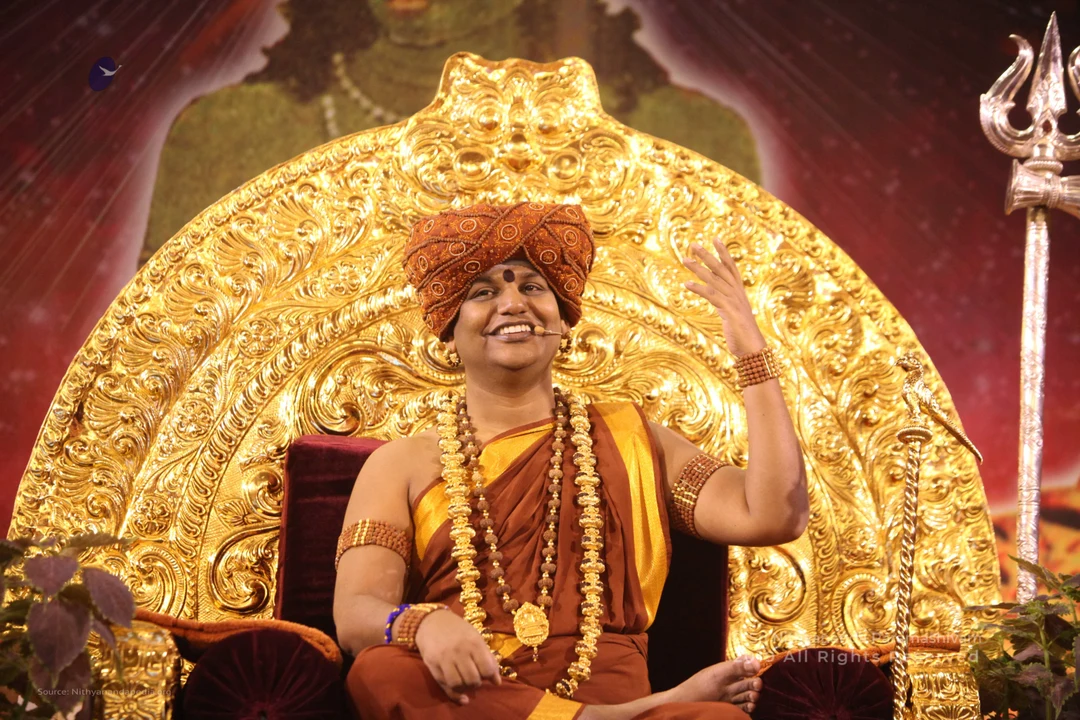
NITHYA-SATSANG

SARVA-DARSHAN

Photos Of The Day:
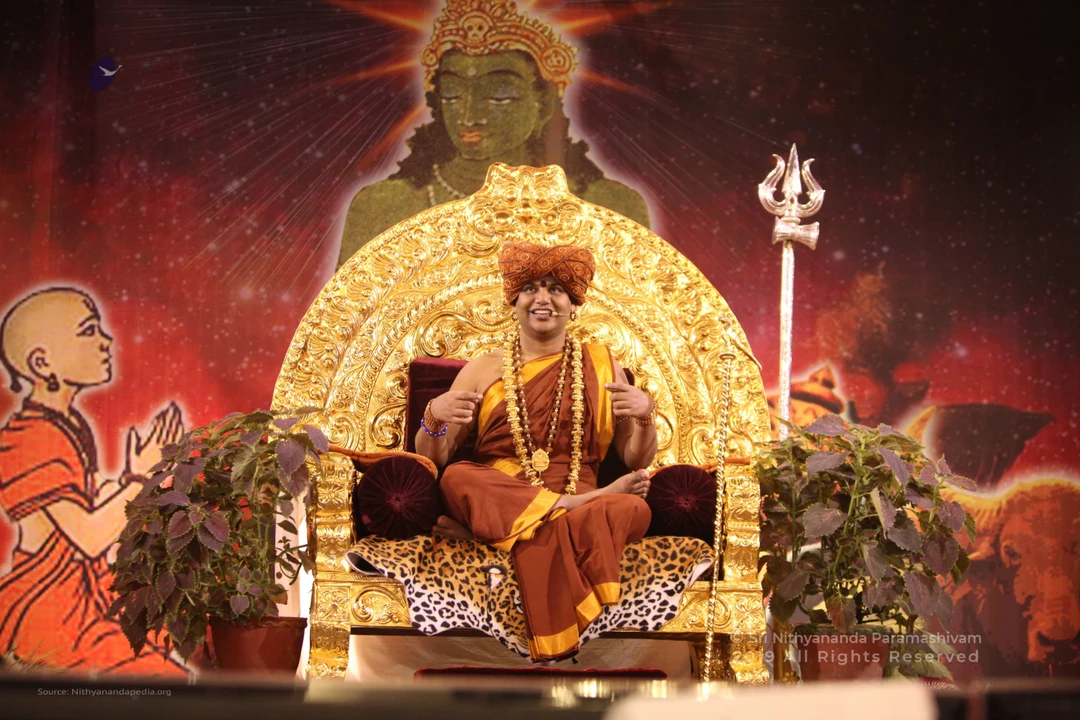
Inner-Awakening-Varanasi

Photos Of The Day:
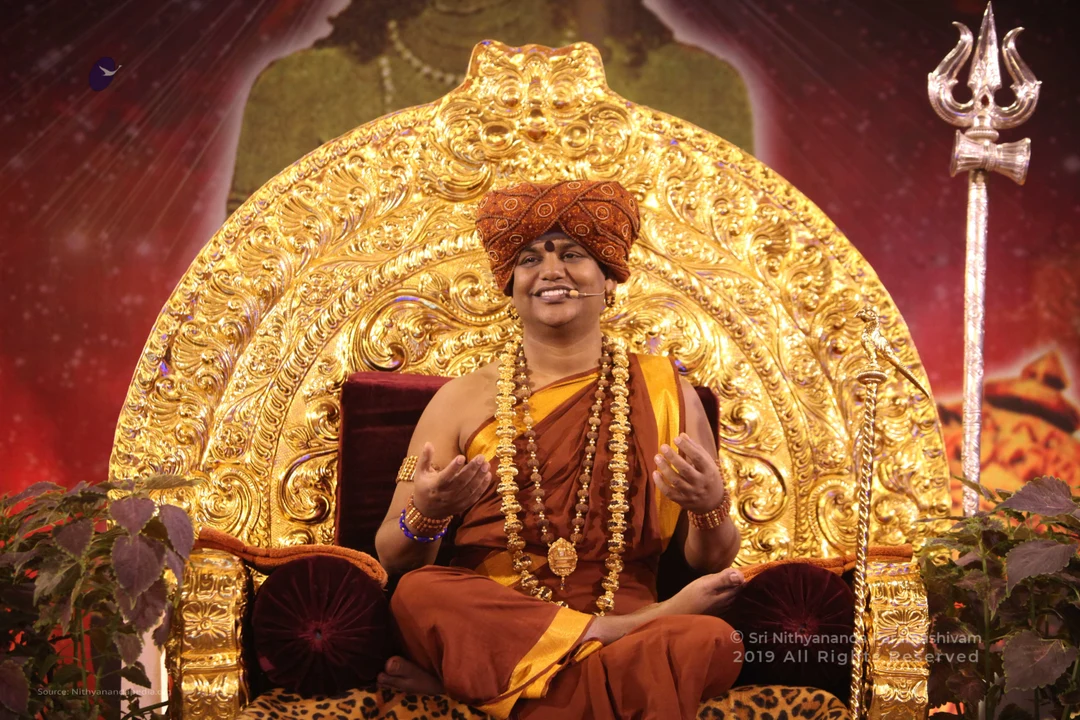
FB-photo-of-the-day

Photos Of The Day:
INNER-AWAKENING

Photos Of The Day:
Shivoham

Photos Of The Day:
Shivoham

01-IA-VARANASI

Inner-Awakening-Varanasi

Photos from this day
View all 147 photos

Photos

17 photosSource gallery

NITHYA-SATSANG
44 photosSource gallery
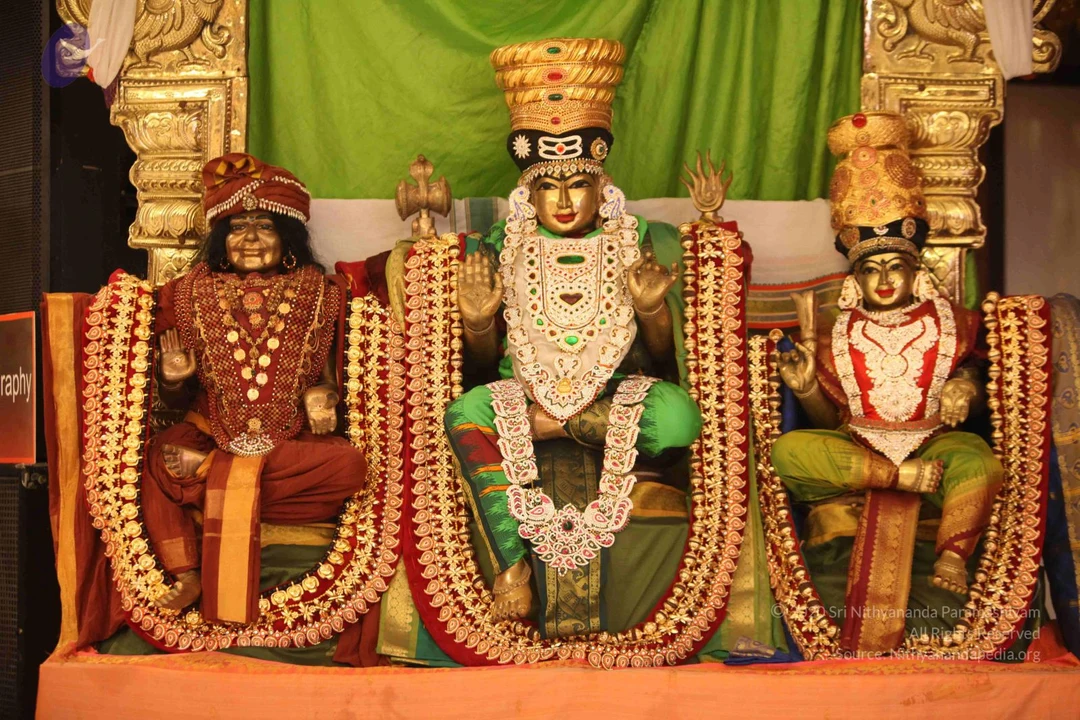
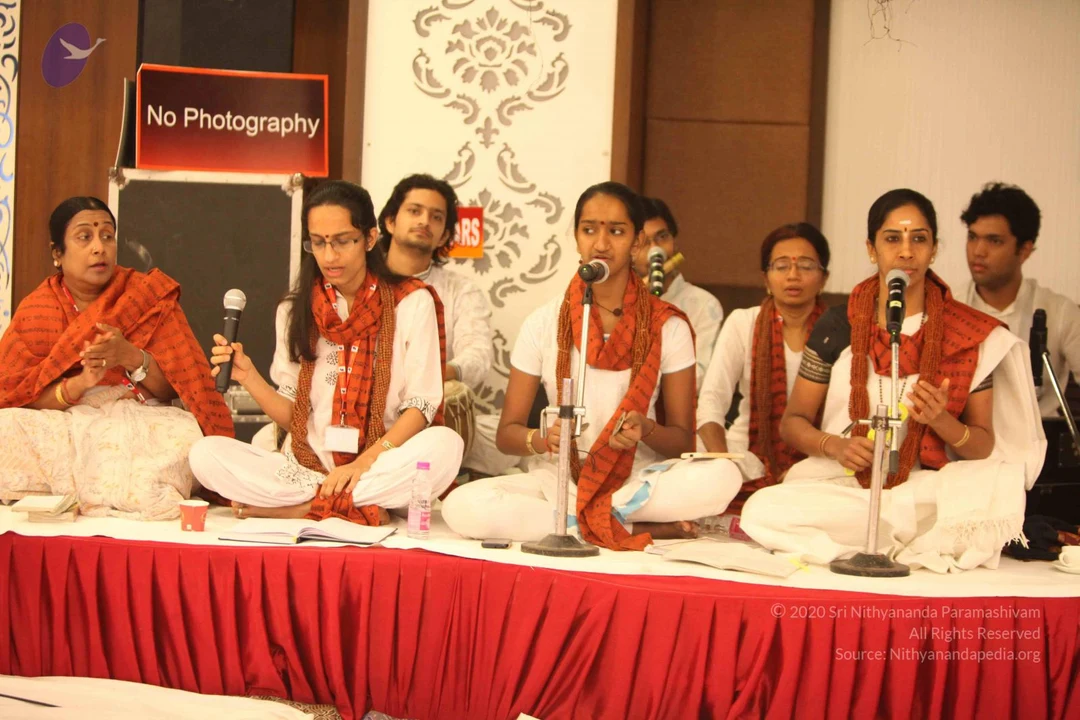
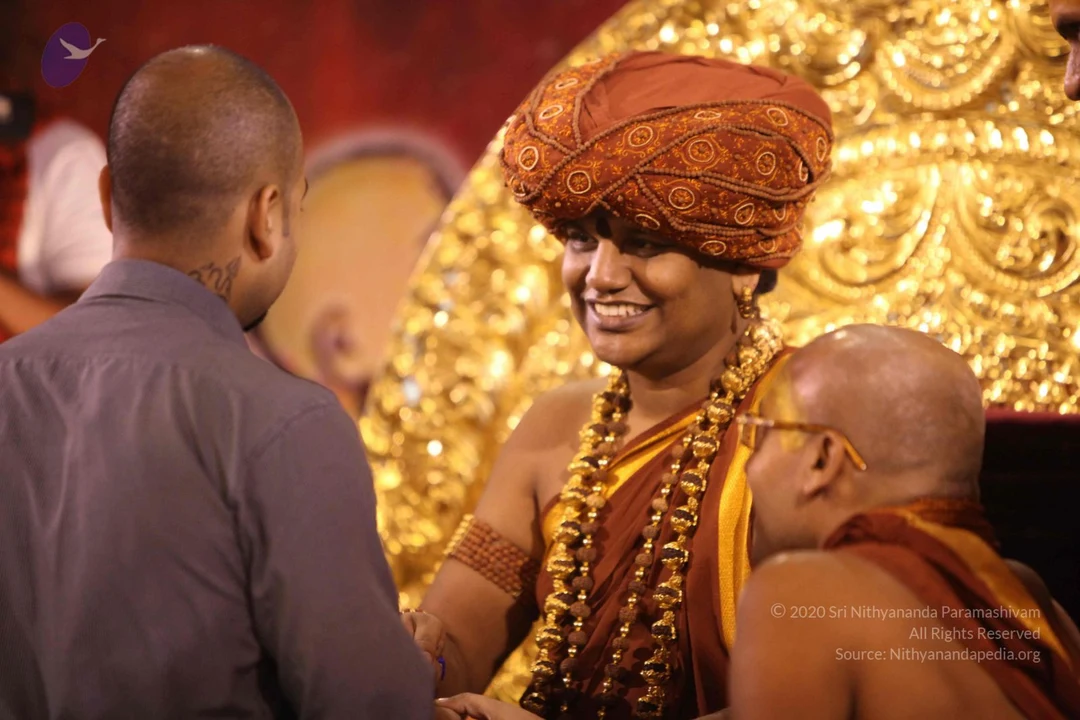
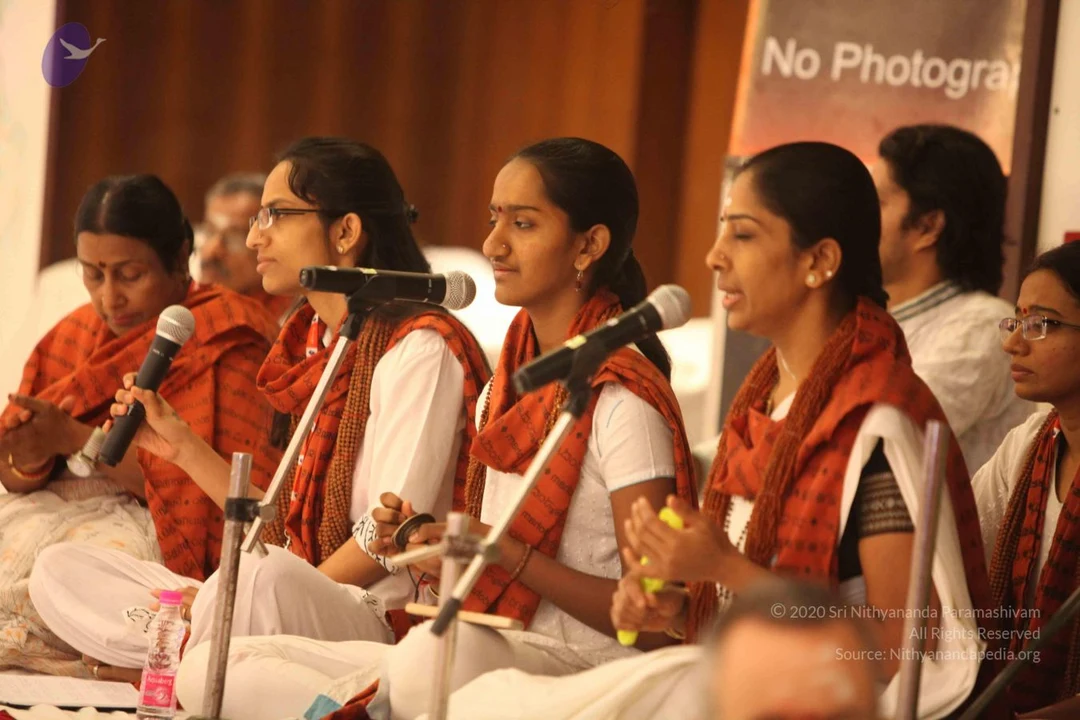
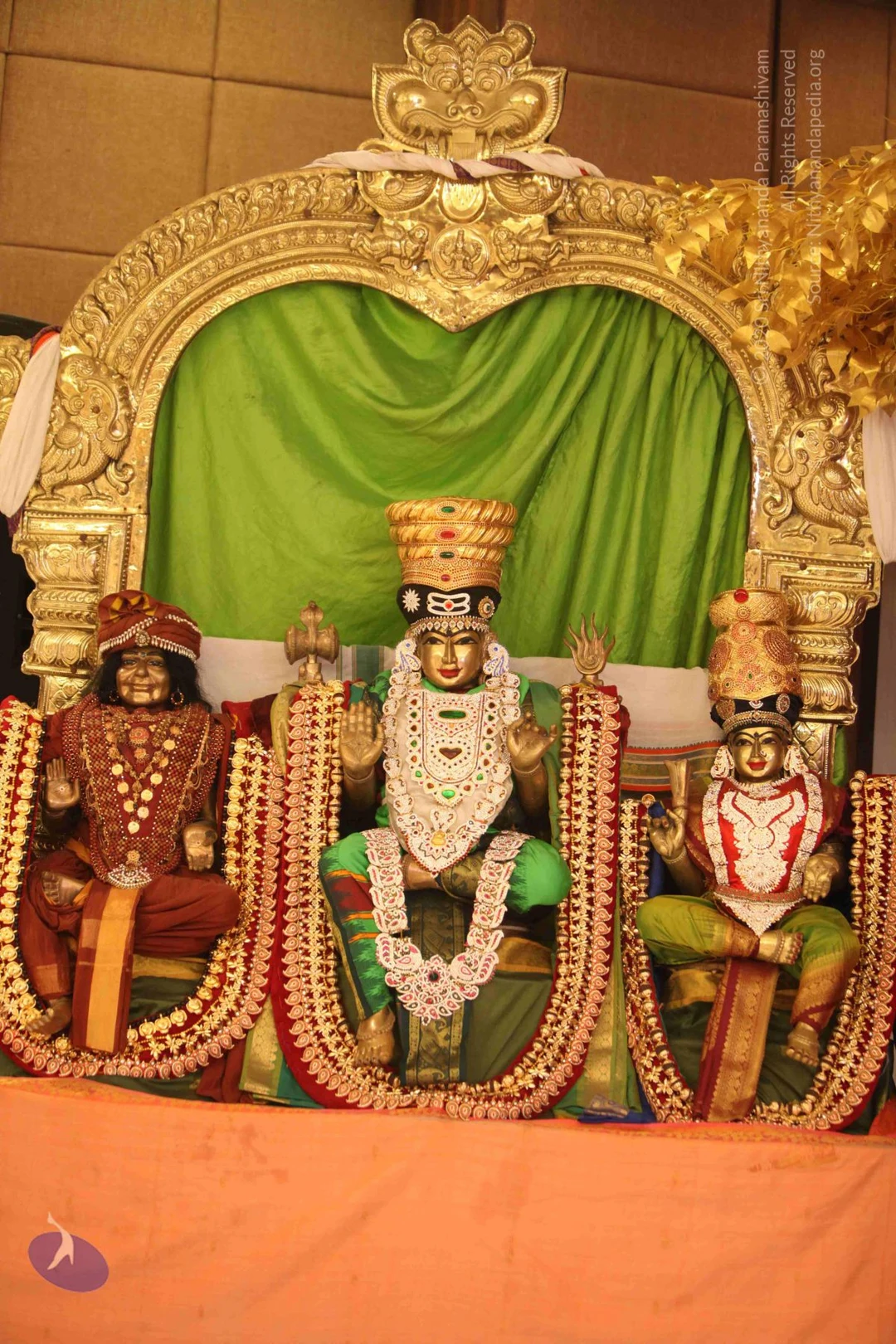
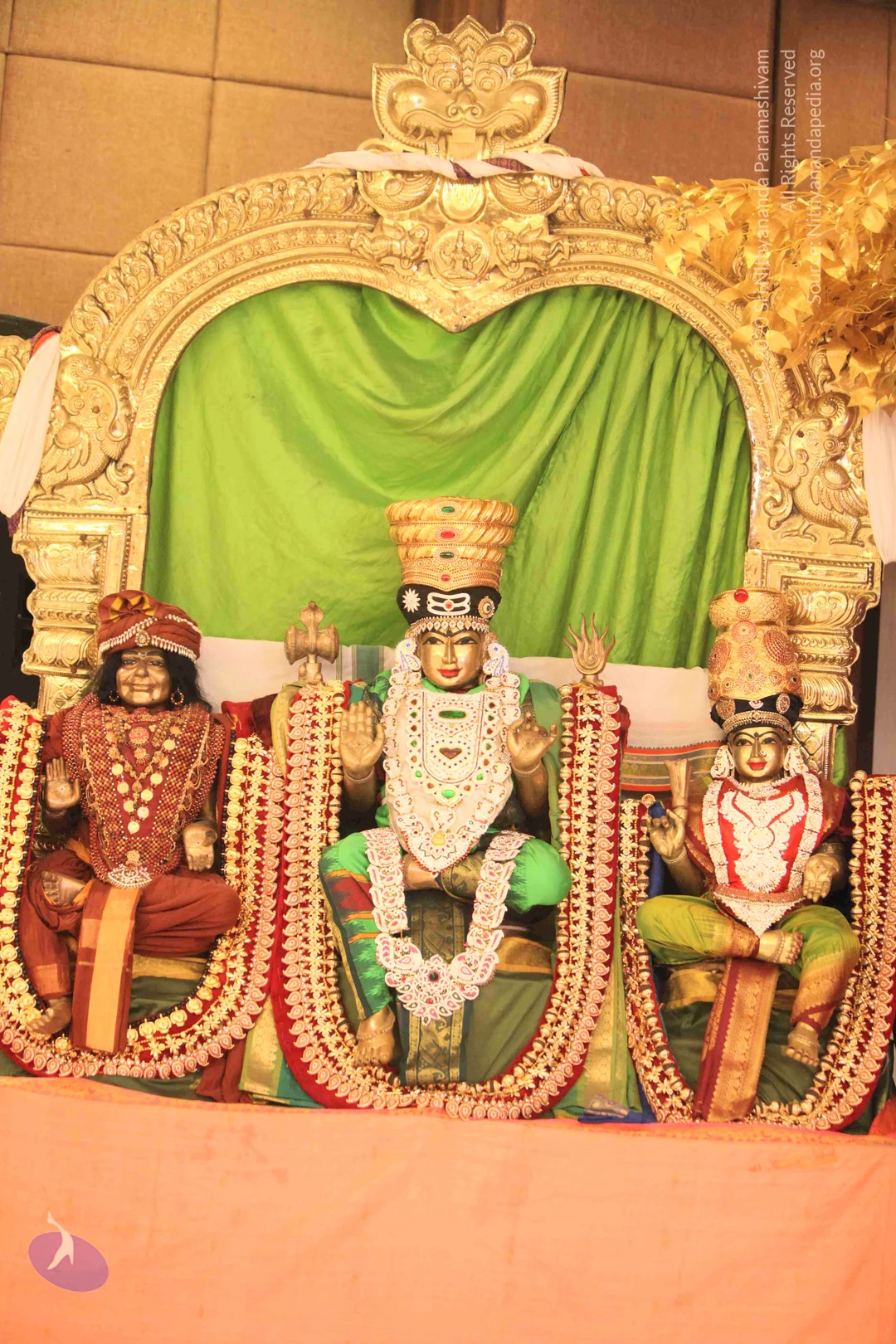
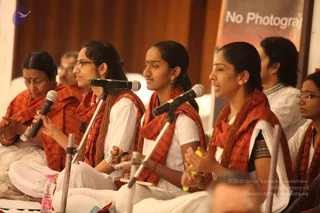
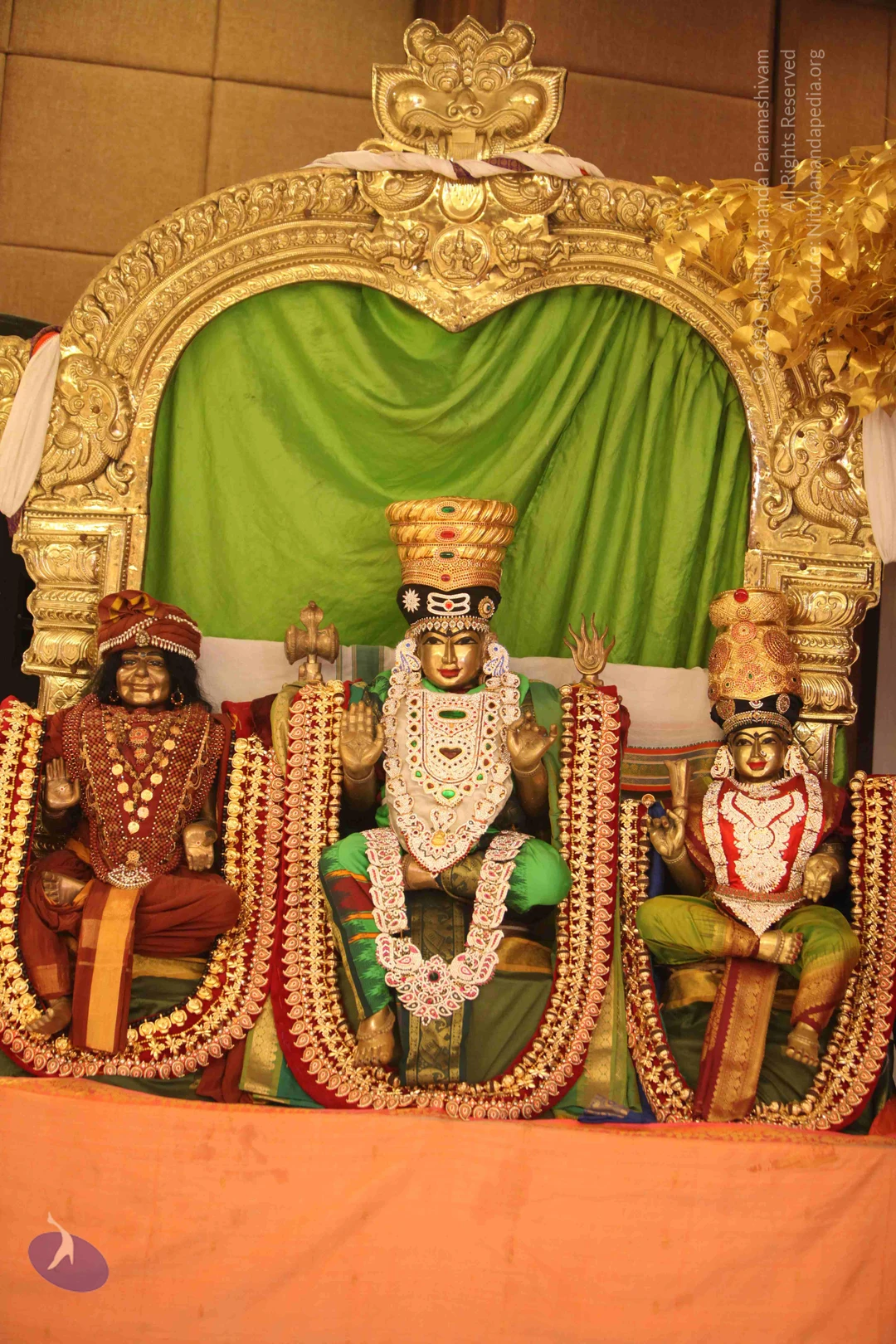
Three gilded deity murti statues seated side by side on an orange-draped platform before a green cloth backdrop with gold carved pillars. The central figure wears a tall gold crown with jewelled band and a green garment, with a white and multicoloured beaded necklace and a long white flower garland; hands raised in blessing mudra. Left figure wears a red turban, red-brown garments, a layered rudraksha-style mala and gold coin necklaces, holding a trident. Right figure wears a gold jewelled crown, green skirt, red and white adornments and a long garland, with a raised hand. Red and gold garlands drape the seats.A photograph of a seated panel at a satsang event with a red draped table. A sign reads "No Photography" on a stand behind them. Seven people sit in a row: women in white garments with orange-red shawls and small microphones on stands, and men in white kurtas behind them. Each speaks or listens with hands gesturing, some holding notebooks and water bottles. The backdrop is a white wall with an ornate stencil design.A seated group satsang in a hall with purple-lit panels behind. Women in white garments and orange-red shawls sit cross-legged on white mats with eyes closed in meditation. The central woman has a yellow-and-red tilak on her forehead, red bindi, and folds her hands in anjali. Others wear yellow tilak, red and white beaded malas, and small earpieces. Orange cloth bundles lie in front. Several more devotees sit or stand in the background.A photograph of a man seated on an ornate golden throne against a dark red backdrop. He wears a rust-orange patterned turban, a rust-brown robe with a gold border, multiple gold and rudraksha-bead necklaces, gold bangles and a gold earring, and a red bindi. He holds a gold staff topped with a bird finial in his right hand. A tall gold trident-like standard stands behind him and green foliage sits at the lower left. Visible cues include the crown-like turban, ceremonial gold necklaces and saffron-toned clothing, so this is a probable Swamiji appearance, seated in a discourse setting.A seated man in a deep orange-brown turban with a small red forehead mark smiles while holding a long gold-handled ceremonial staff topped by a silver trident. He wears a brown and gold draped garment, layered gold and bead necklaces with rudraksha-style beads, beaded bangles and arm bands. Behind him a large ornate gold throne with repoussé scrollwork glows against a dark red backdrop, with green leaves in the lower corner.Close-up photograph of a man in a rust-orange turban embroidered with gold circular motifs and bead strands, wearing a rust-orange shawl over an orange-gold garment, gold ornate beaded necklaces, a gold earring, and a vertical tilak on his forehead. He gazes off to the side against a dark red background with a glowing gold ornamental backdrop at right. Probable Swamiji by appearance cues: ornate saffron-toned turban, shawl, and heavy gold necklaces, with the page noting his presence at this satsang event.

SARVA-DARSHAN

20 photosSource gallery
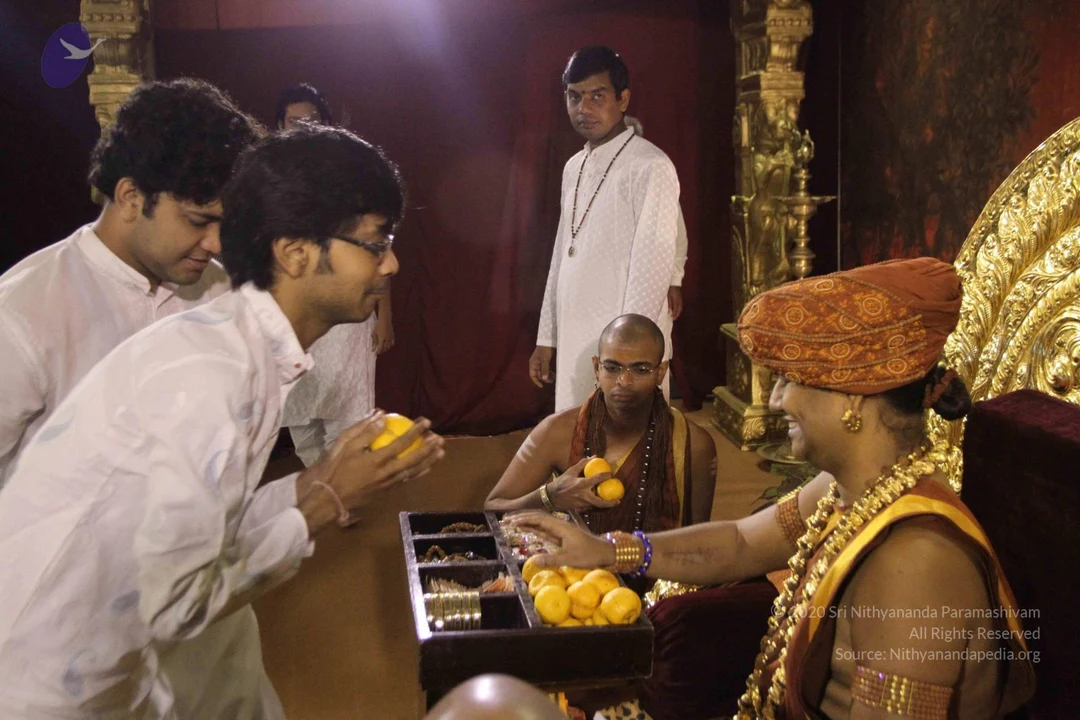
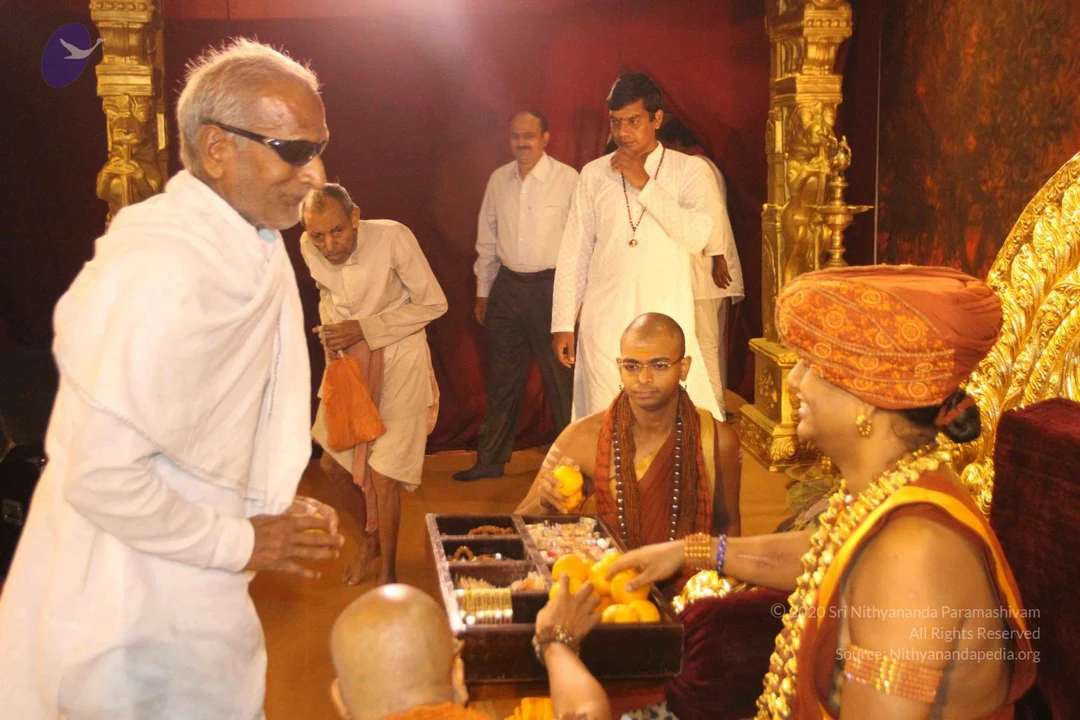
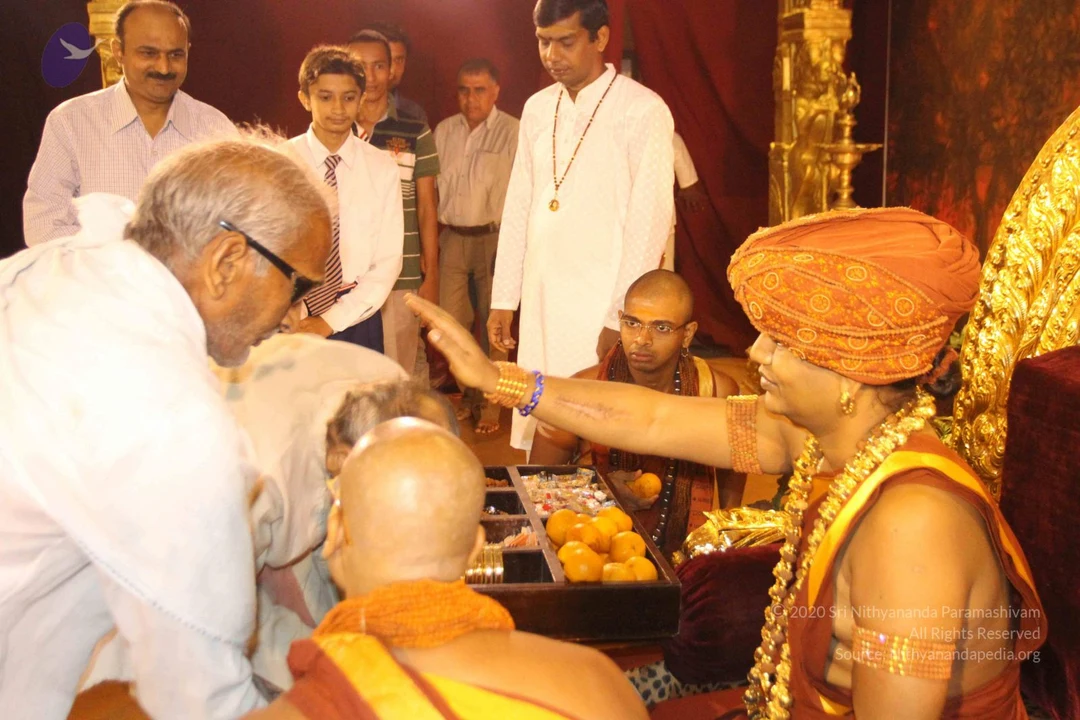
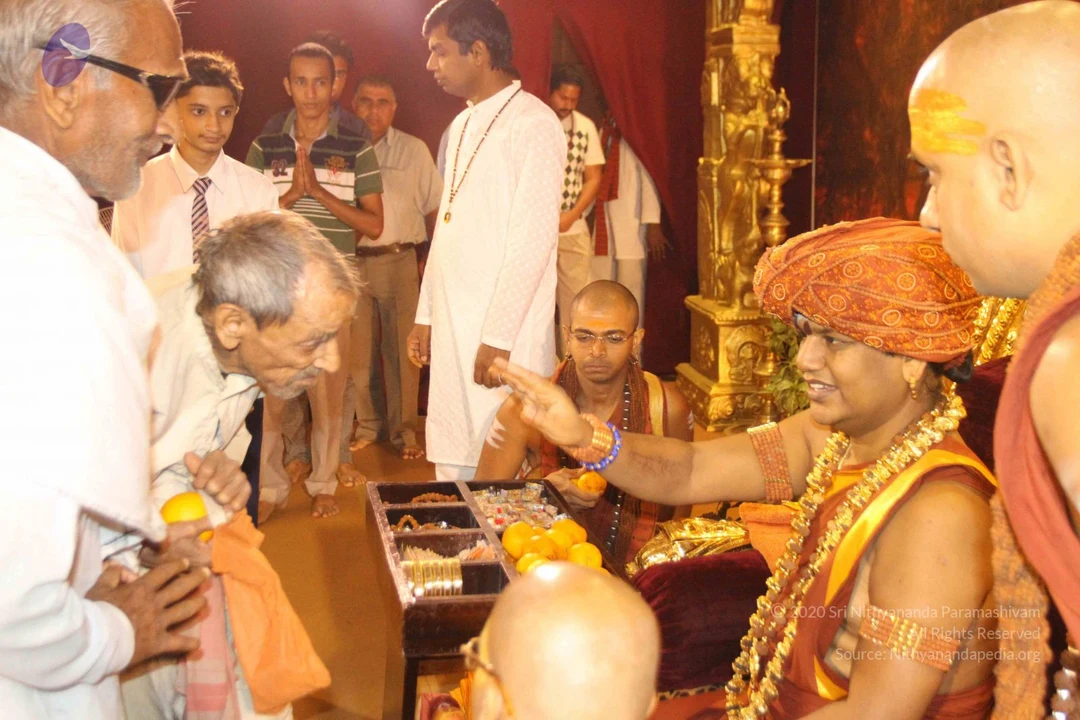
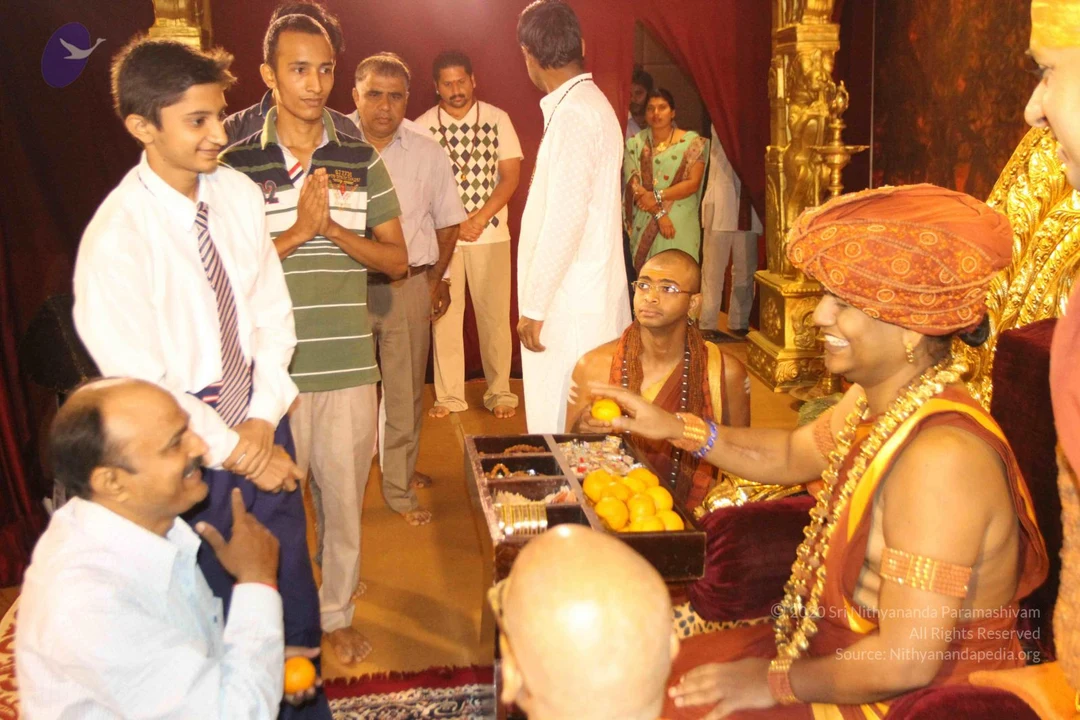
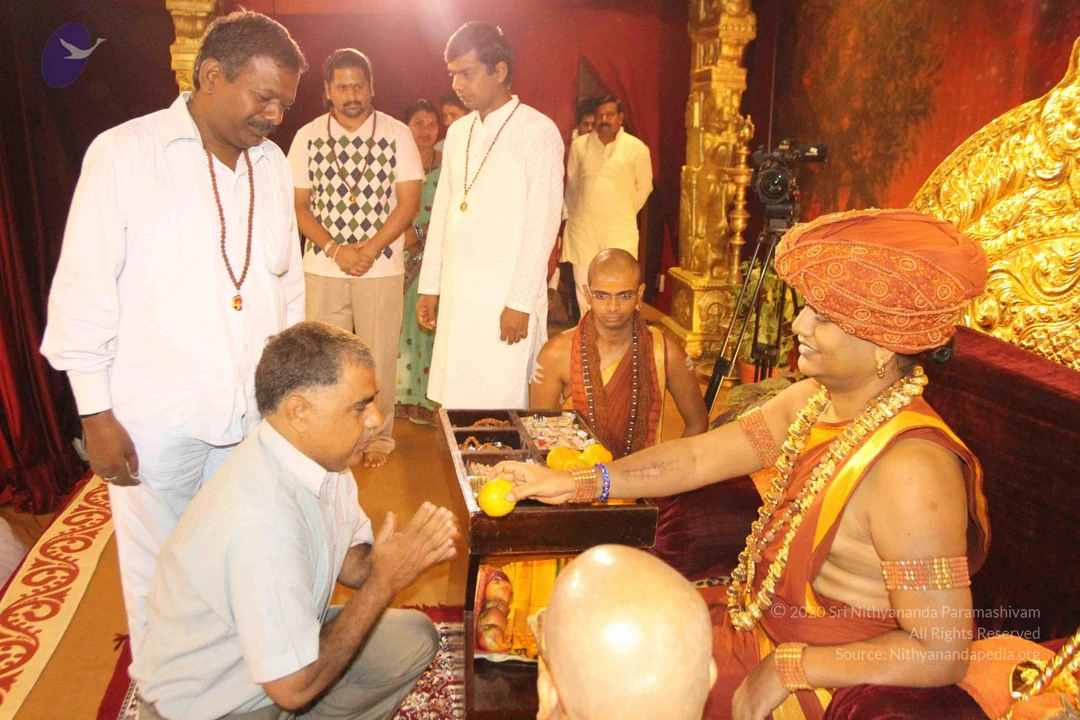
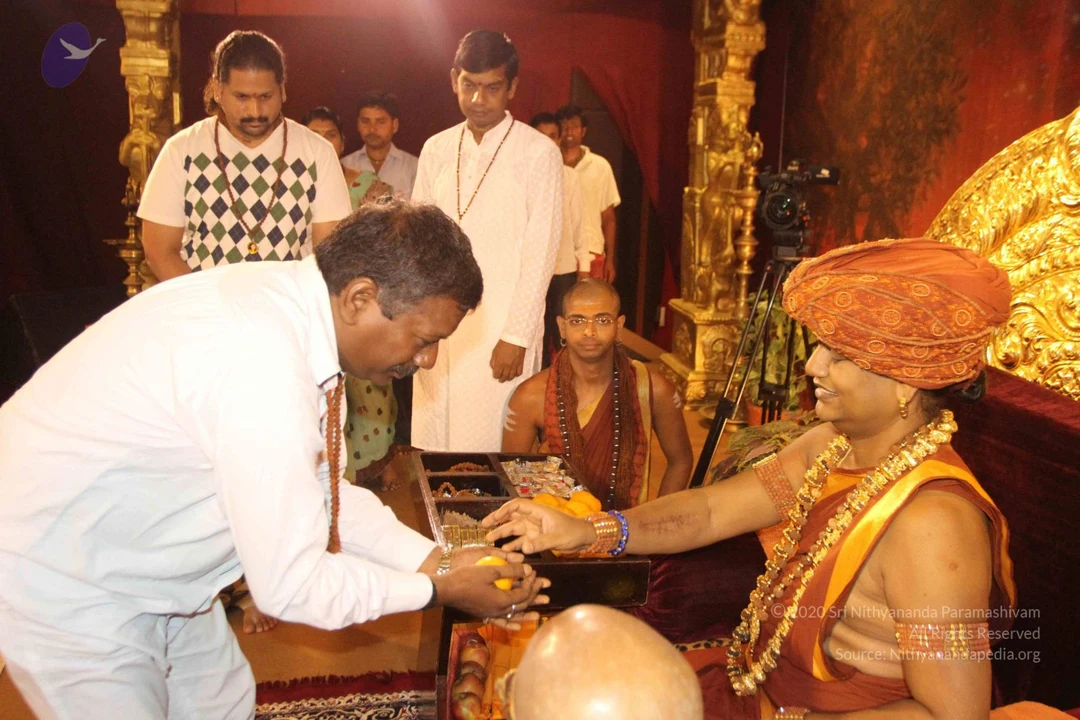
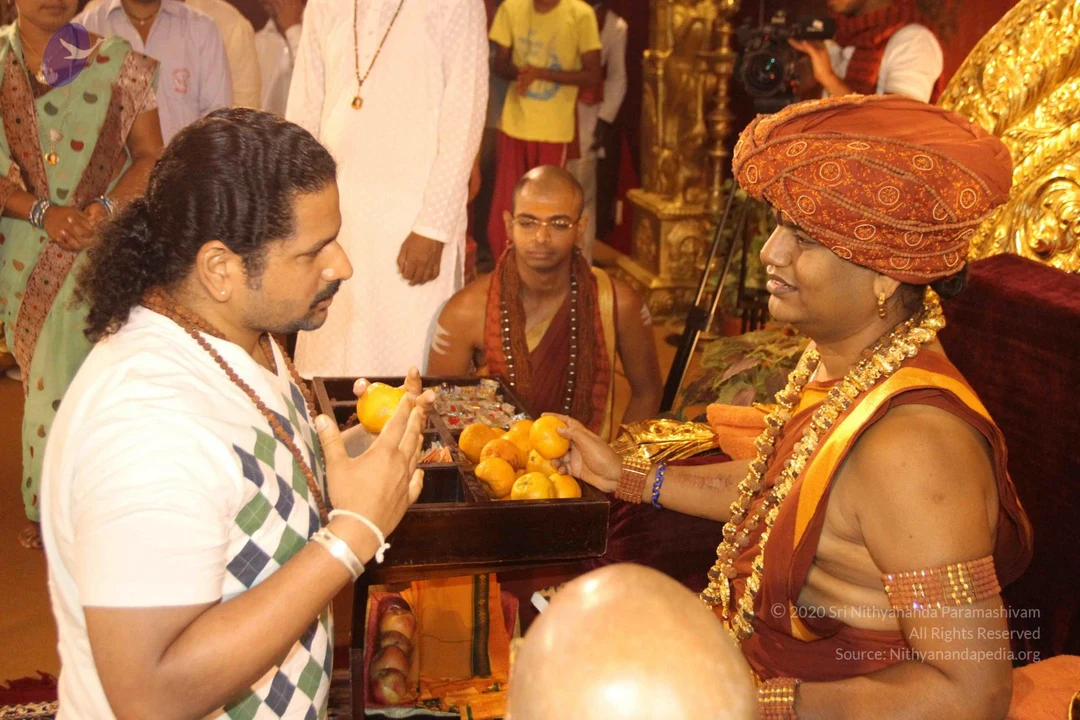
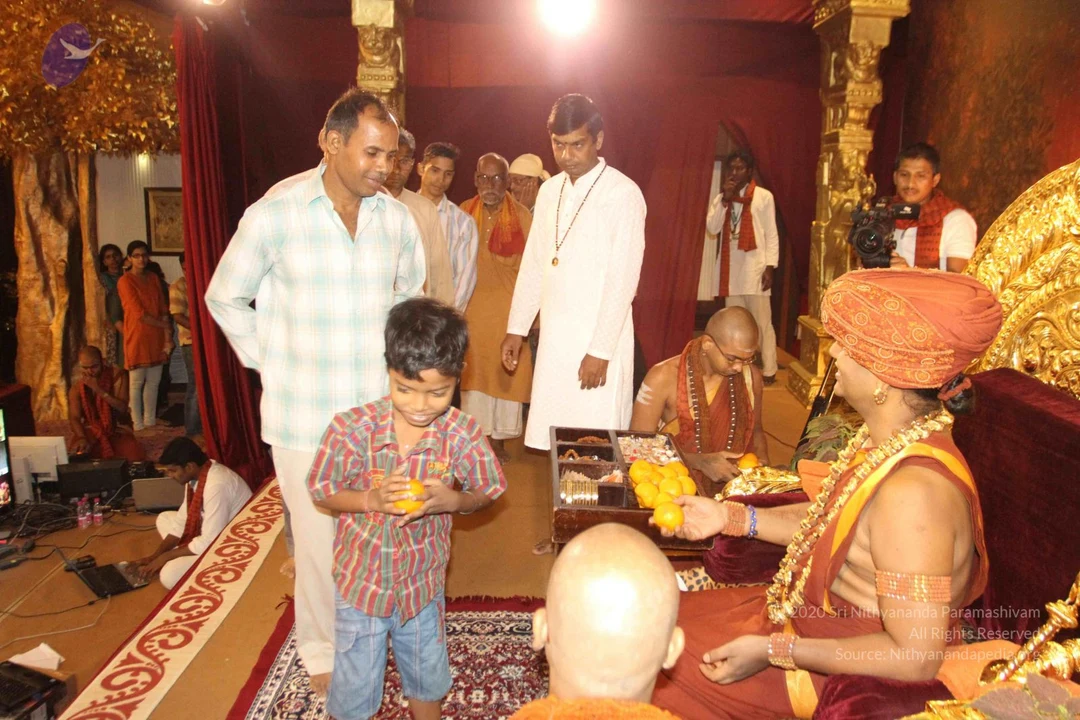
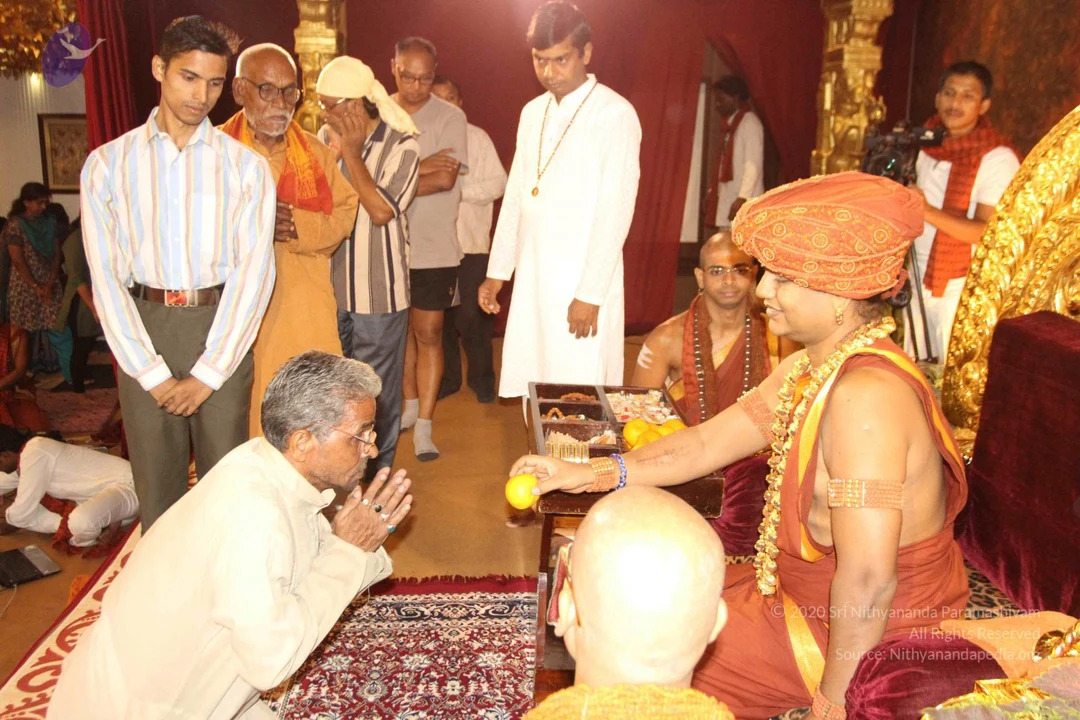
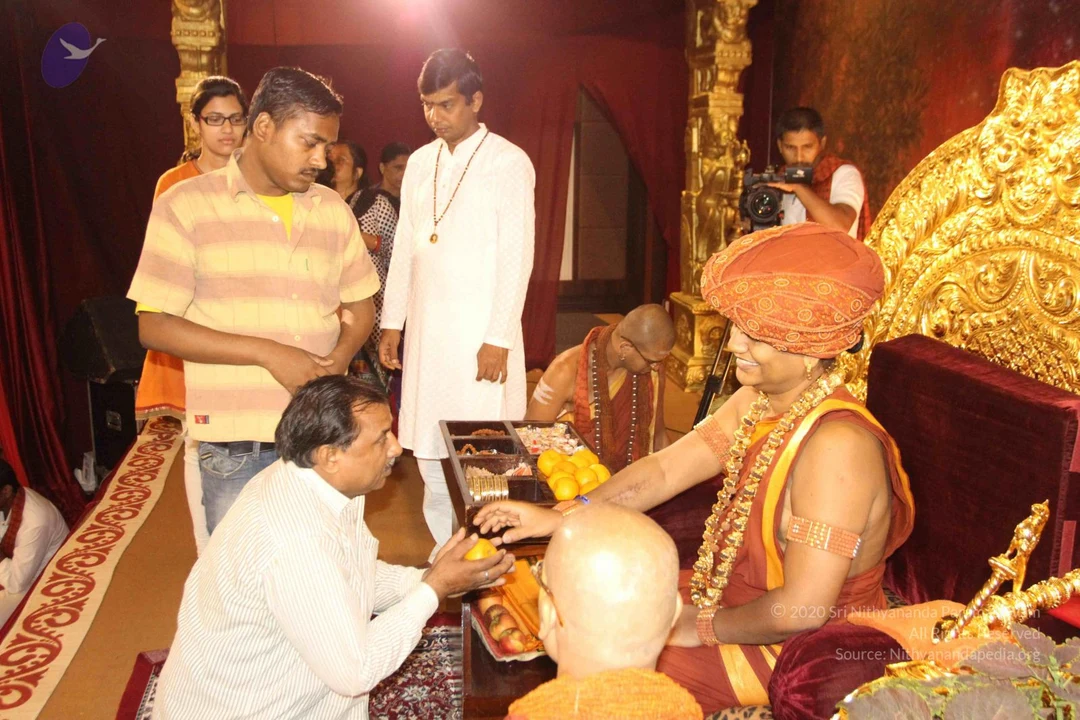
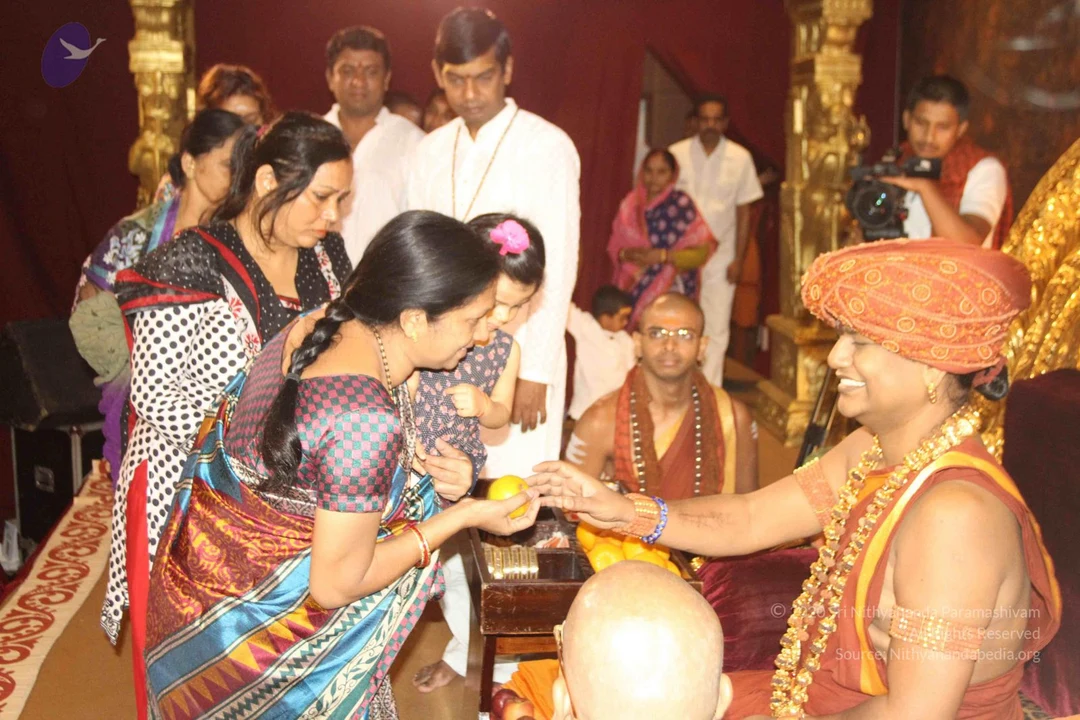
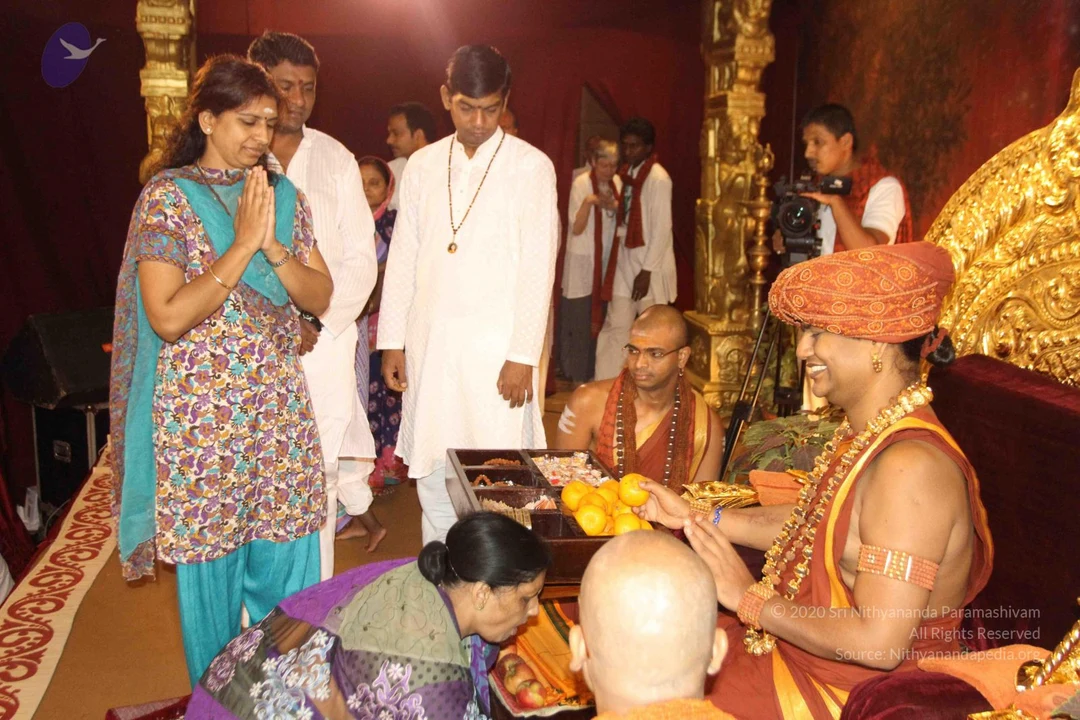
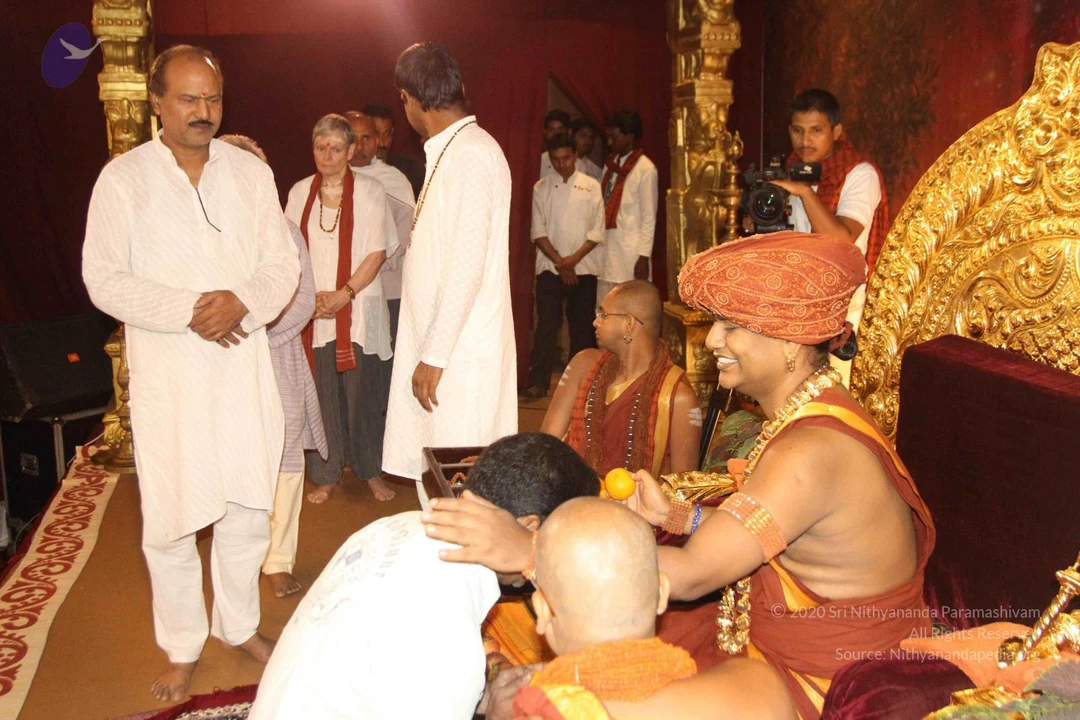
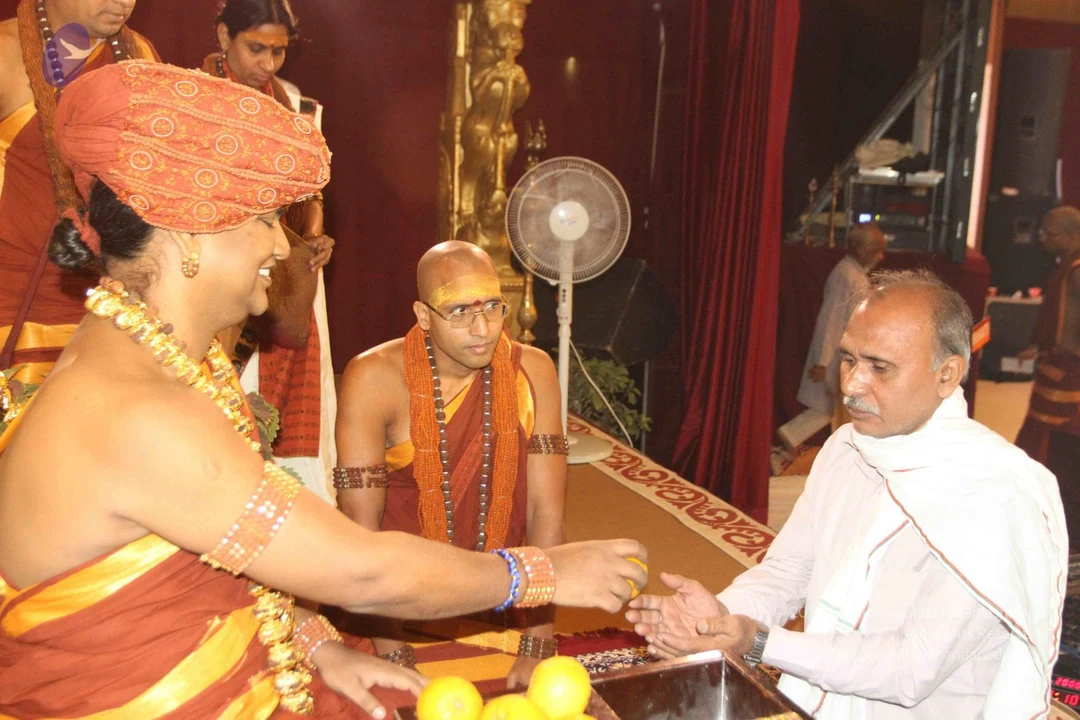
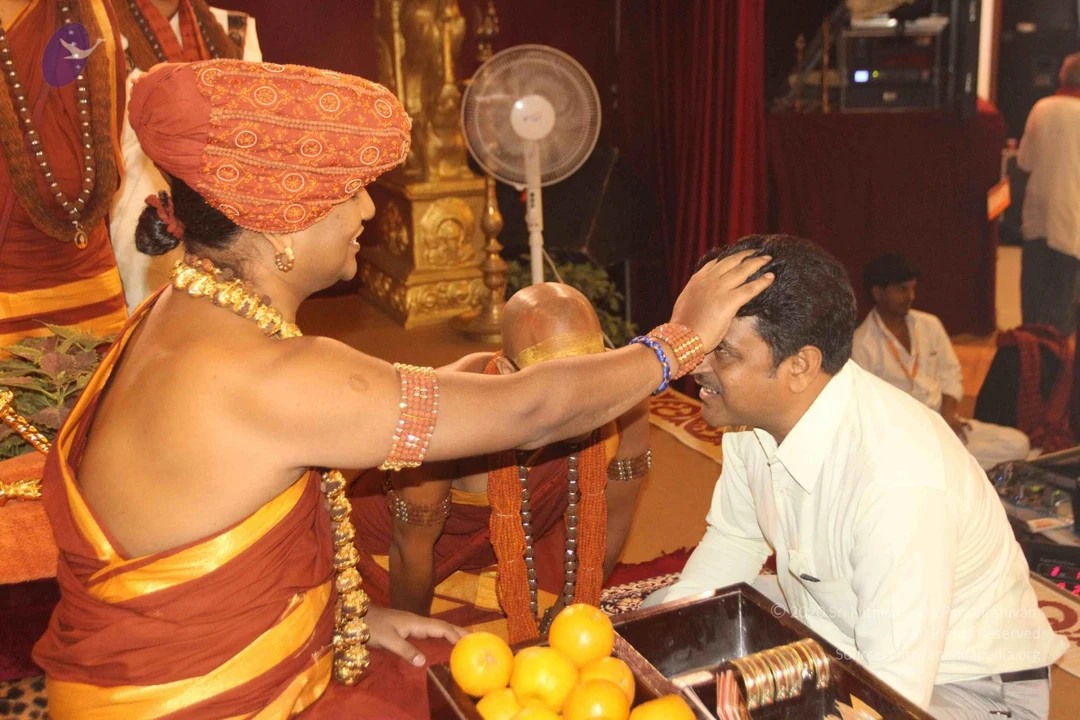
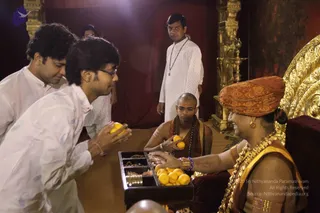
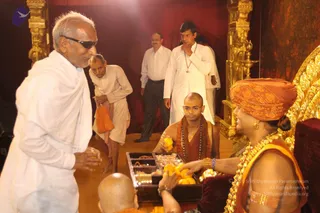
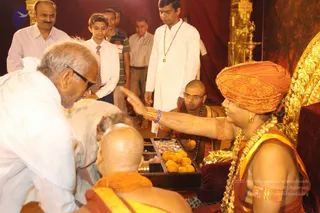
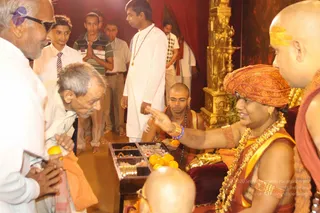
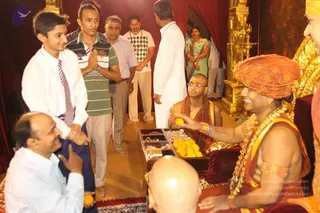
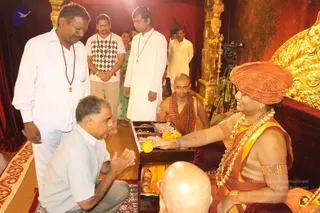
Indoor satsang setting with rich red drapes and an ornate gold throne. A woman seated on the right wears an orange and gold head wrap, layered gold necklaces and gold bangles, and holds an orange; she smiles as she reaches toward a wooden tray of oranges and small offerings. A bald man in an orange shawl and a rudraksha mala sits beside her holding an orange. Two men in white kurtas stand at the left, one offering an orange, and another standing man in a white kurta with a mala watches from behind. A brass lamp stands near the golden throne. Four to five people are visible.A gathering in a gold-accented hall with dark red drapery. On the right, a figure in an orange-and-gold turban, orange-and-gold sari and a heavy gold necklace sits on a gilded throne-like seat, smiling as a hand offers a fruit. Seated before them, a shaved-headed man in saffron robes with a rudraksha-style mala and glasses holds an orange fruit. A wooden tray in front holds oranges, rudraksha beads, bangles and small items. On the left, an elderly man in white with dark sunglasses and a white shawl stands with hands together. Behind them, two men in white kurta-style clothes and an older man in white stand near a gold pillar with a lamp. A bald figure in the foreground also reaches toward the tray. The scene reads as a devotee offering or darshan at a satsang setting.A seated figure in an orange-and-gold turban, orange-gold garments, gold bangles and a heavy gold necklace extends a hand in blessing toward an elderly man in white with dark-rimmed glasses who bows forward. Behind them a shaved-headed priest in orange with a rudraksha mala sits beside a wooden tray of oranges and small offerings. Standing onlookers in white kurtas and shirts watch from the back, with a gold ornamental throne and a lamp in the background. Swamiji (probable): the seated figure wears an orange turban, gold ornaments and ornate saffron clothing, consistent with a seated teacher giving blessings.Photograph of a seated figure in an orange and red turban, saffron-orange robes and layered gold necklaces, extending a hand in blessing toward an elderly man in white who bows with hands folded. The seated figure has a wrist covered in beaded bracelets and sits on a plush maroon cushion before an open wooden box holding rudraksha malas, bangles and small items, with oranges placed nearby. Behind them a shaved-headed attendant in orange and a man in a white kurta with a rudraksha mala stand near a gilded ornate shrine and a lamp. Several onlookers in casual and white clothes watch from the left and back.Indoor photo in a red-draped room with a gold-carved throne at right. A bare-chested figure in orange and saffron cloth, a gold-coloured turban, a gold necklace and gold armbands sits on a red cushioned seat, smiling and holding out an orange toward a bowl. A standing group of men and a woman in green sari look on, several in striped polo, checked sweater and white kurta. A young man in white shirt and tie stands at left; a seated man in white shirt is at lower left. A wooden tray with oranges, sweets and small items sits in the foreground, and a bald seated man in orange at lower centre faces the scene. The orange-clad figure with the turban and gold adornments is a person in the role of a seated teacher distributing fruit to visitors.Indoor satsang-style scene in a red-draped hall with a gilded throne at right. A woman in an orange-and-saffron turban, saffron sari with gold border, and heavy gold necklaces and bangles sits on the throne, extending her hand to offer a yellow fruit from a wooden tray on a low table. A kneeling man in a pale blue shirt presses his palms together before the tray. Behind them, a shaved-headed attendant in saffron with rudraksha beads sits, and several standing devotees in white and patterned shirts observe, one wearing a rudraksha mala. A camera on a tripod is visible at right. The woman has no clearly distinctive a person cues sufficient to identify him, so the candidate is unsure.

Inner-Awakening-Varanasi

59 photosSource gallery
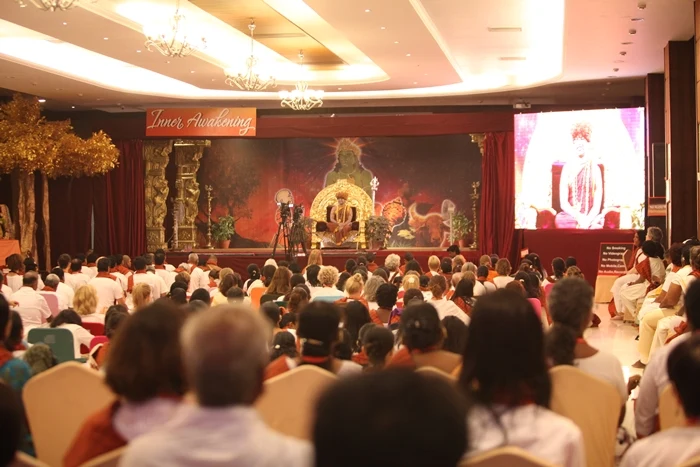
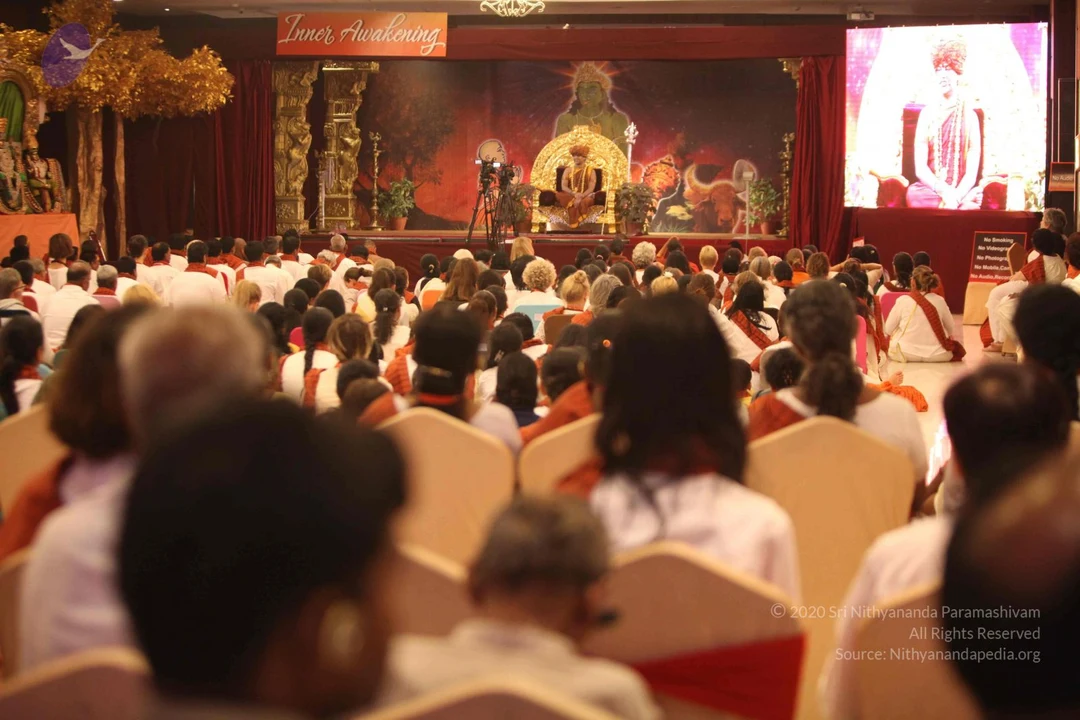
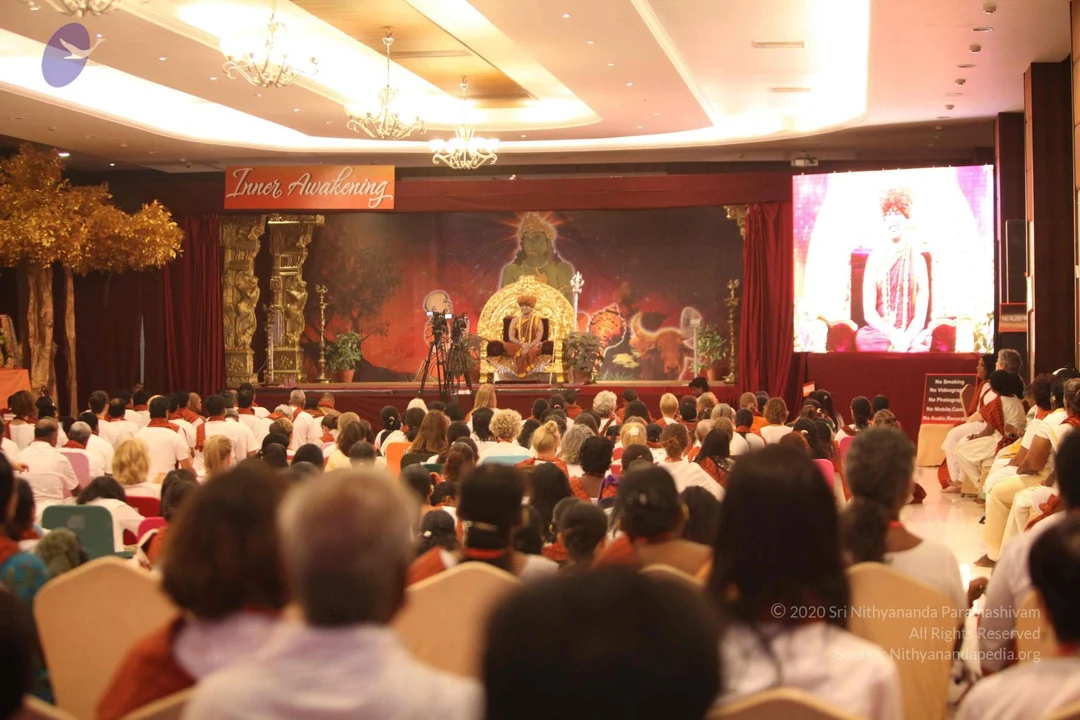
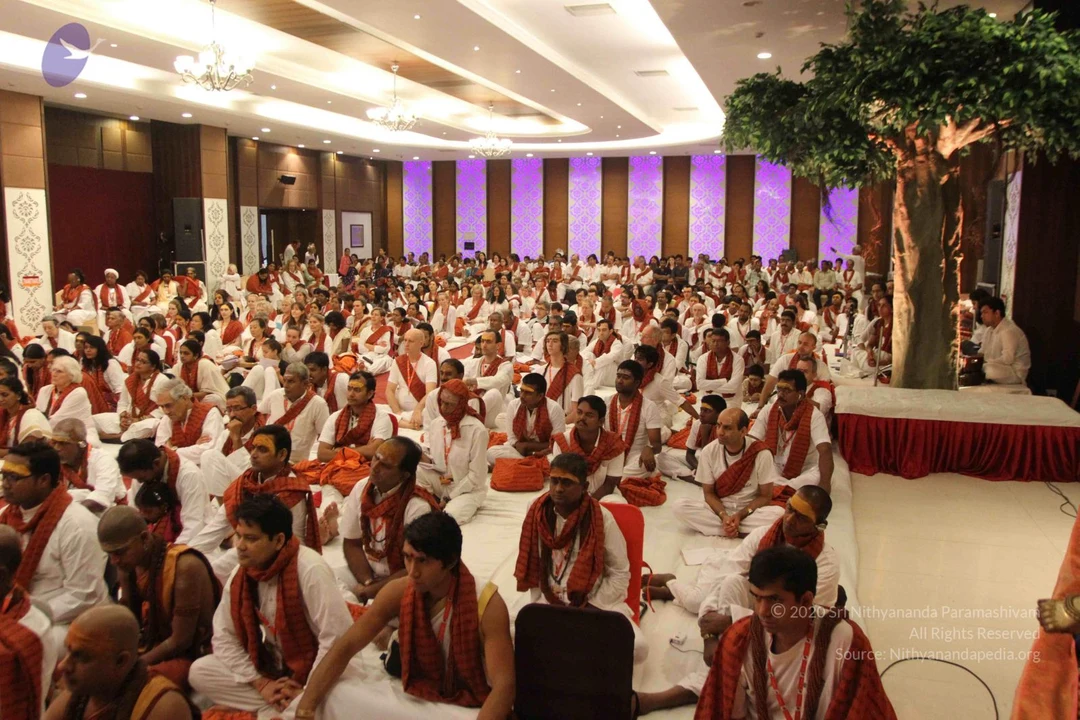
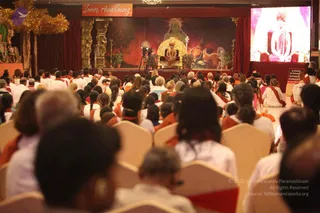
Three gilded deity murti statues seated side by side on an orange-draped platform before a green cloth backdrop with gold carved pillars. The central figure wears a tall gold crown with jewelled band and a green garment, with a white and multicoloured beaded necklace and a long white flower garland; hands raised in blessing mudra. Left figure wears a red turban, red-brown garments, a layered rudraksha-style mala and gold coin necklaces, holding a trident. Right figure wears a gold jewelled crown, green skirt, red and white adornments and a long garland, with a raised hand. Red and gold garlands drape the seats.A photograph of a man seated on an ornate golden throne against a dark red backdrop. He wears a rust-orange patterned turban, a rust-brown robe with a gold border, multiple gold and rudraksha-bead necklaces, gold bangles and a gold earring, and a red bindi. He holds a gold staff topped with a bird finial in his right hand. A tall gold trident-like standard stands behind him and green foliage sits at the lower left. Visible cues include the crown-like turban, ceremonial gold necklaces and saffron-toned clothing, so this is a probable Swamiji appearance, seated in a discourse setting.A seated man in a deep orange-brown turban with a small red forehead mark smiles while holding a long gold-handled ceremonial staff topped by a silver trident. He wears a brown and gold draped garment, layered gold and bead necklaces with rudraksha-style beads, beaded bangles and arm bands. Behind him a large ornate gold throne with repoussé scrollwork glows against a dark red backdrop, with green leaves in the lower corner.Close-up photograph of a man in a rust-orange turban embroidered with gold circular motifs and bead strands, wearing a rust-orange shawl over an orange-gold garment, gold ornate beaded necklaces, a gold earring, and a vertical tilak on his forehead. He gazes off to the side against a dark red background with a glowing gold ornamental backdrop at right. Probable Swamiji by appearance cues: ornate saffron-toned turban, shawl, and heavy gold necklaces, with the page noting his presence at this satsang event.A man seated on an ornate gilded throne smiles broadly, wearing an orange-and-rust patterned turban with a red bindi, a saffron-gold draped garment, layered gold and rudraksha beaded necklaces, a gold armlet, and gold earrings. Beside him stands a tall silver trident and a small gold figure, with a red cushion and green leaves in the foreground.A photograph taken from the back of a large hall during a satsang, with rows of seated audience members in white and orange-red shawls in the foreground. On a raised stage, a man seated on a gold ornate throne with red cushions, wearing an orange-red robe, is addressed to the crowd, with a painted backdrop of a deity and a bull behind him. A large screen at upper right shows a close-up of the seated speaker. A banner above the stage reads Inner Awakening, and a sign at right lists No Smoking, No Videos, No Photos, No Audio Recording. Camera equipment on a tripod stands near the stage.

FB-photo-of-the-day

1 photoSource gallery

INNER-AWAKENING
21 photosSource gallery
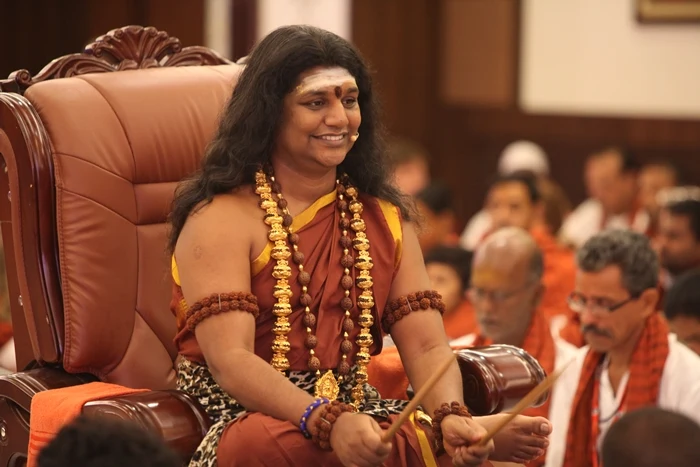
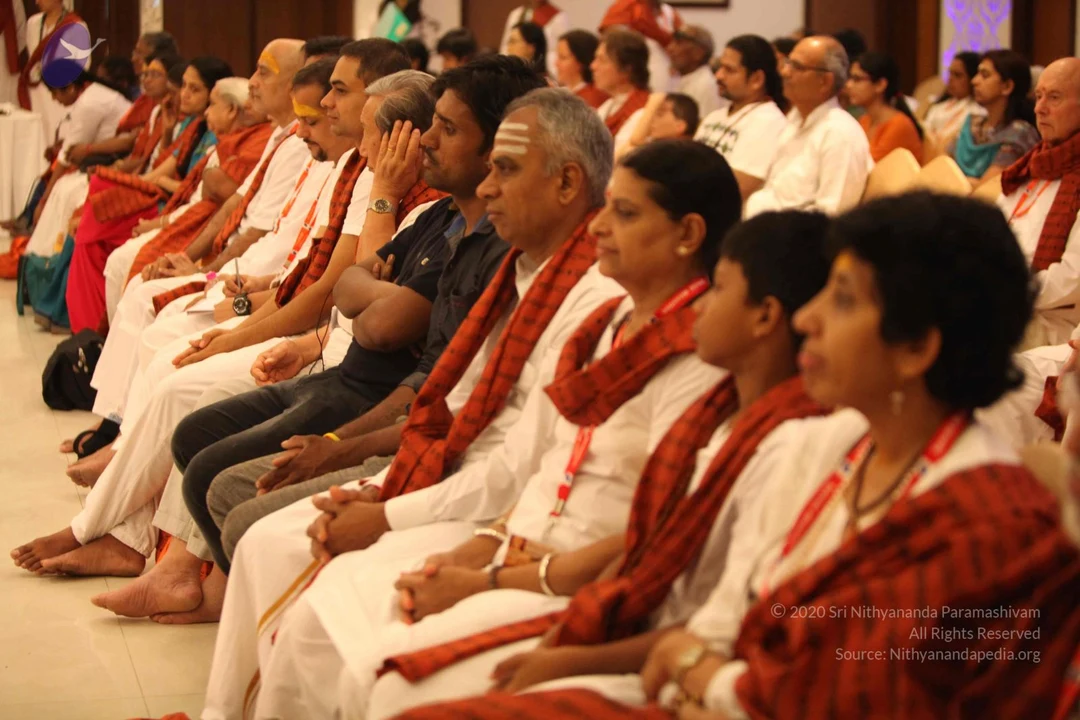
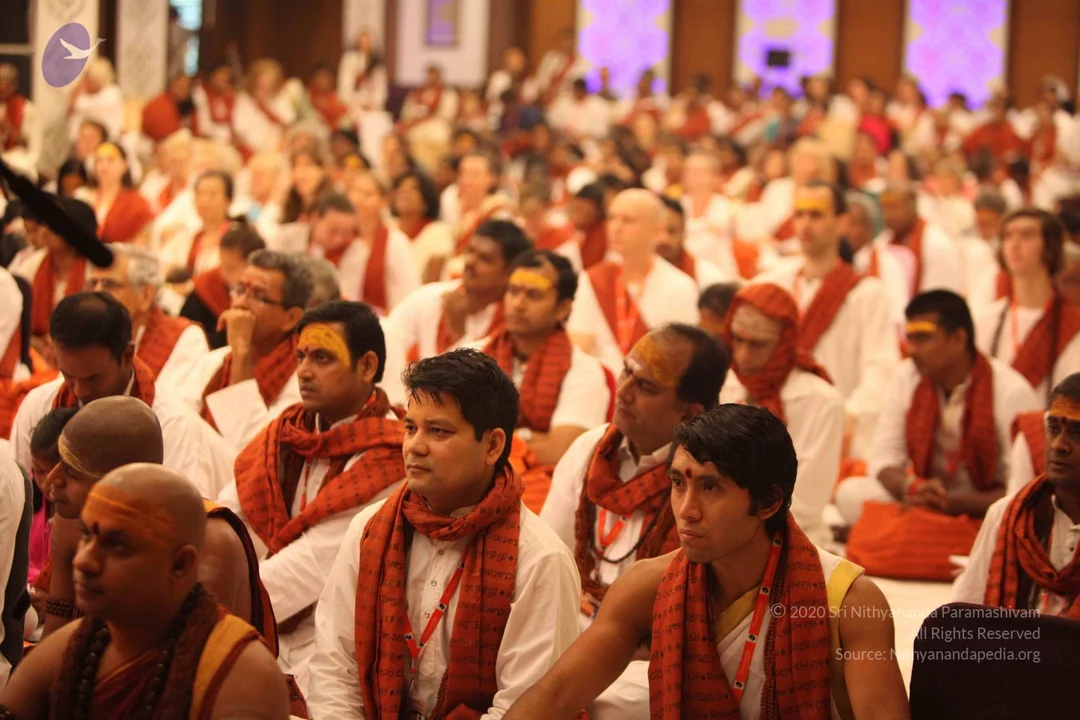
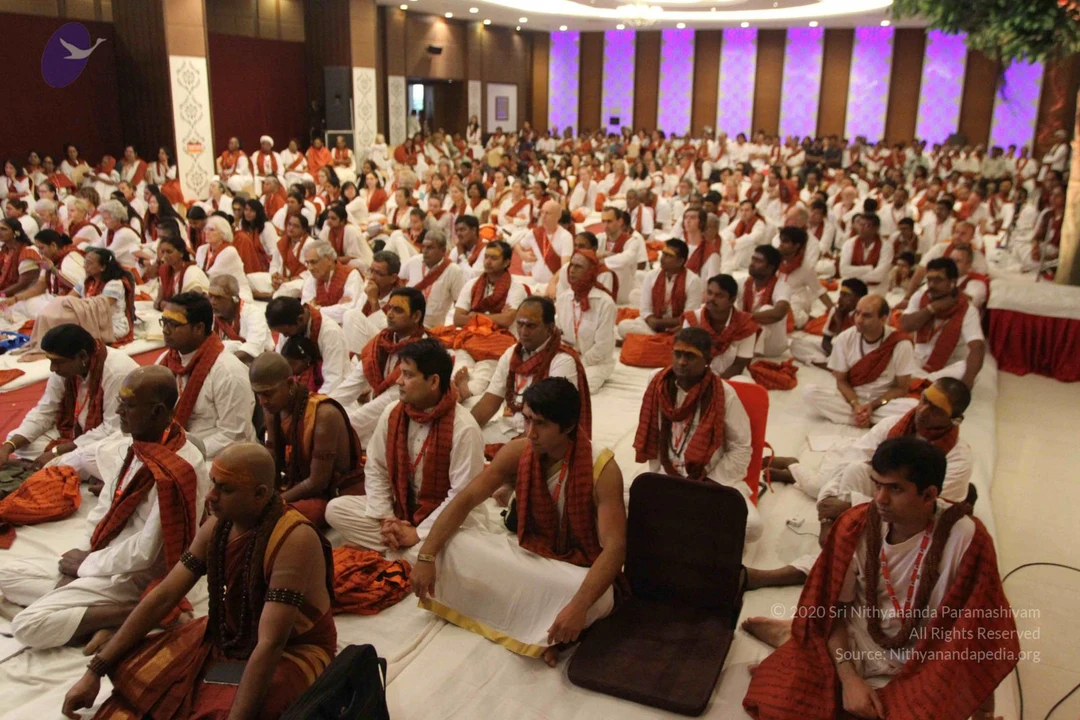
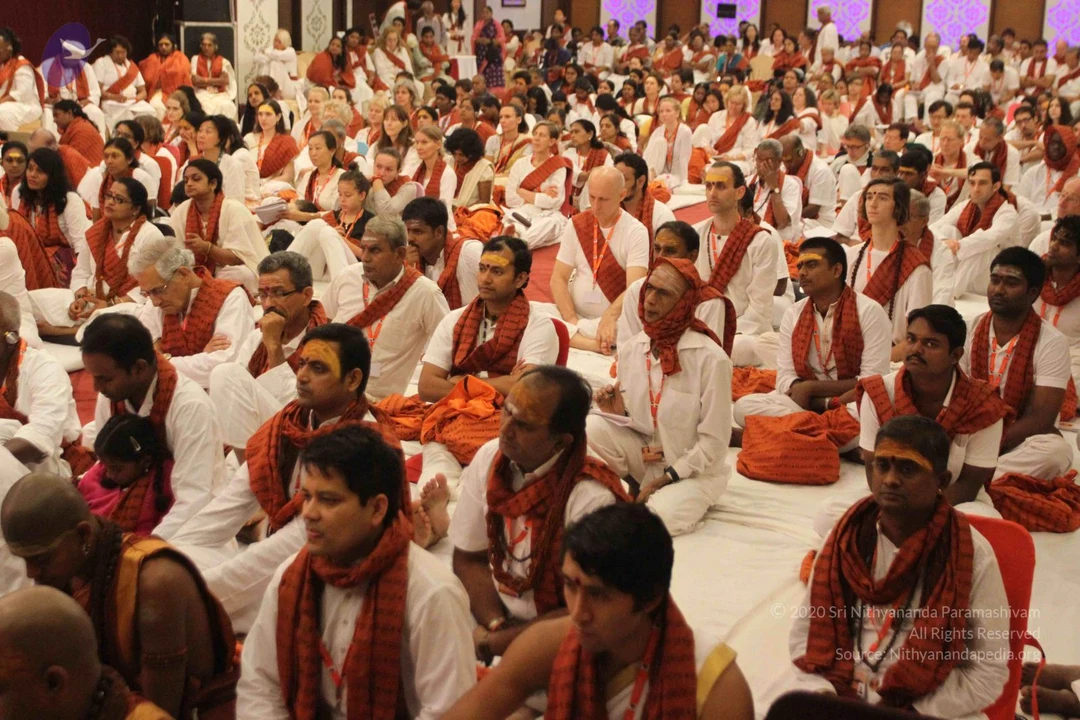
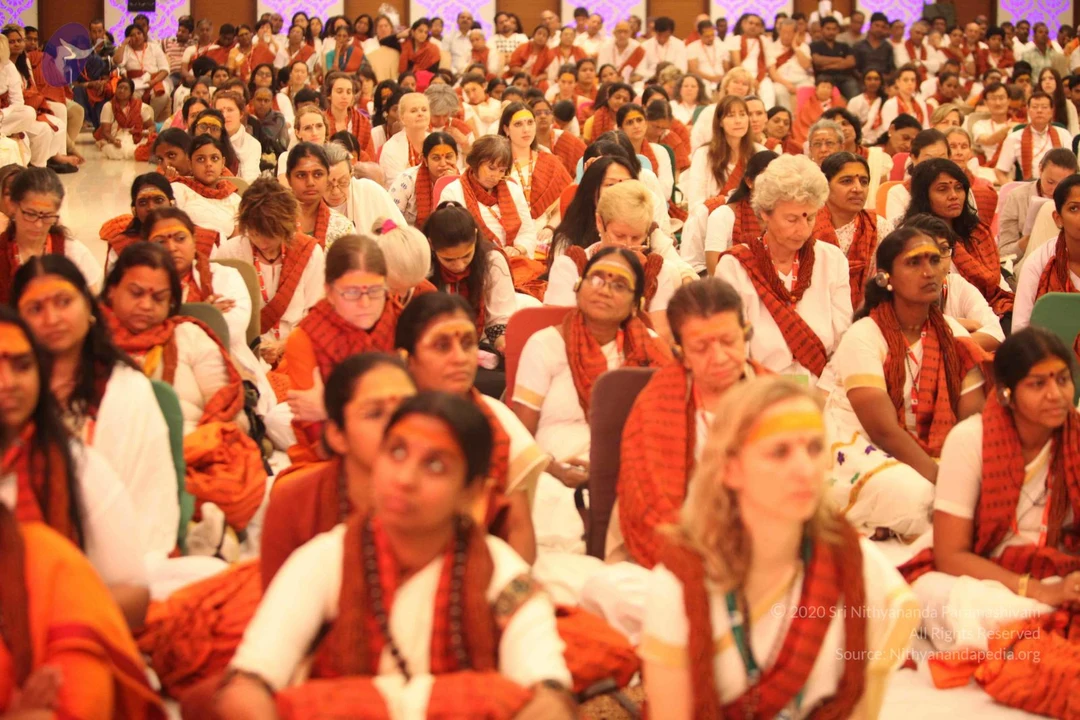
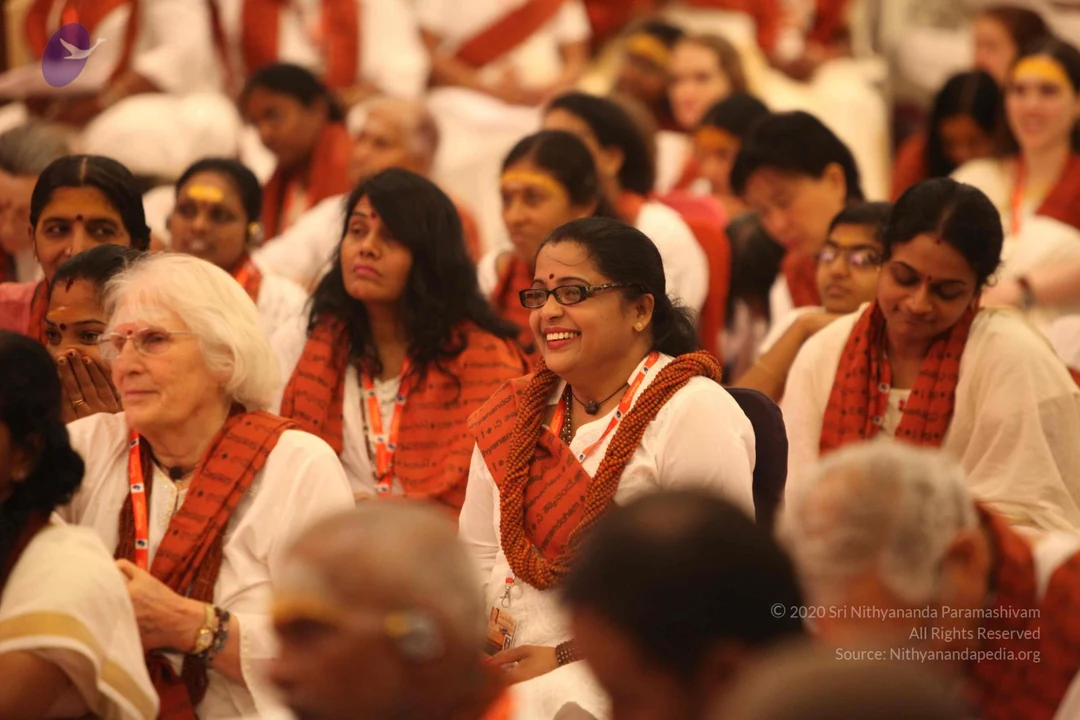
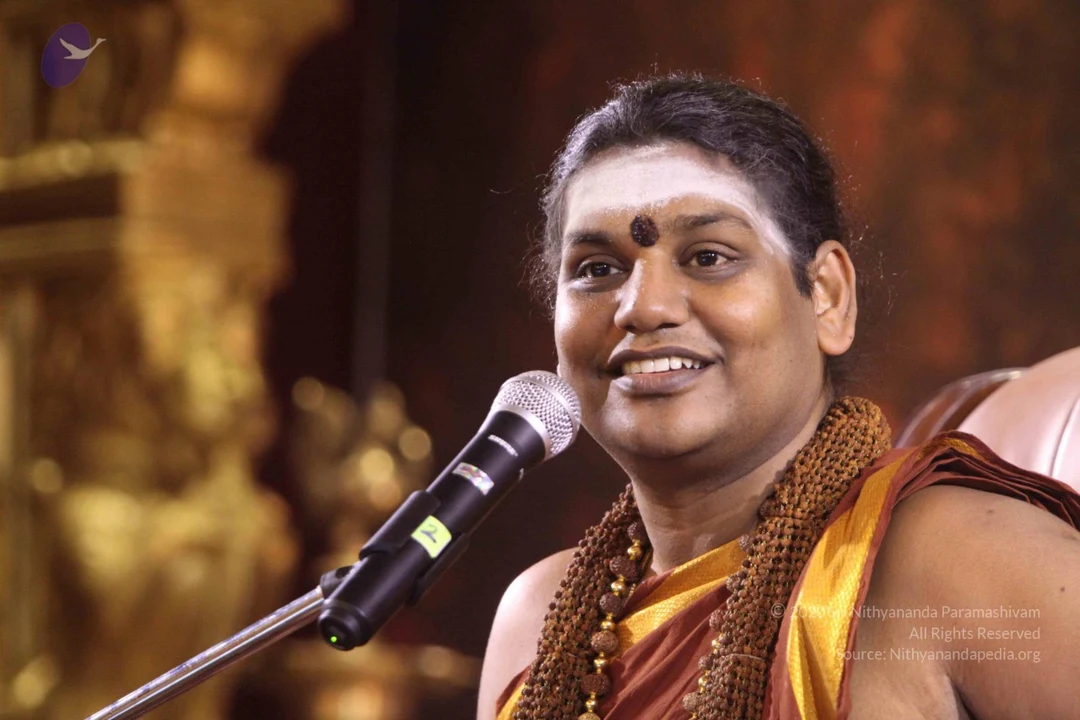
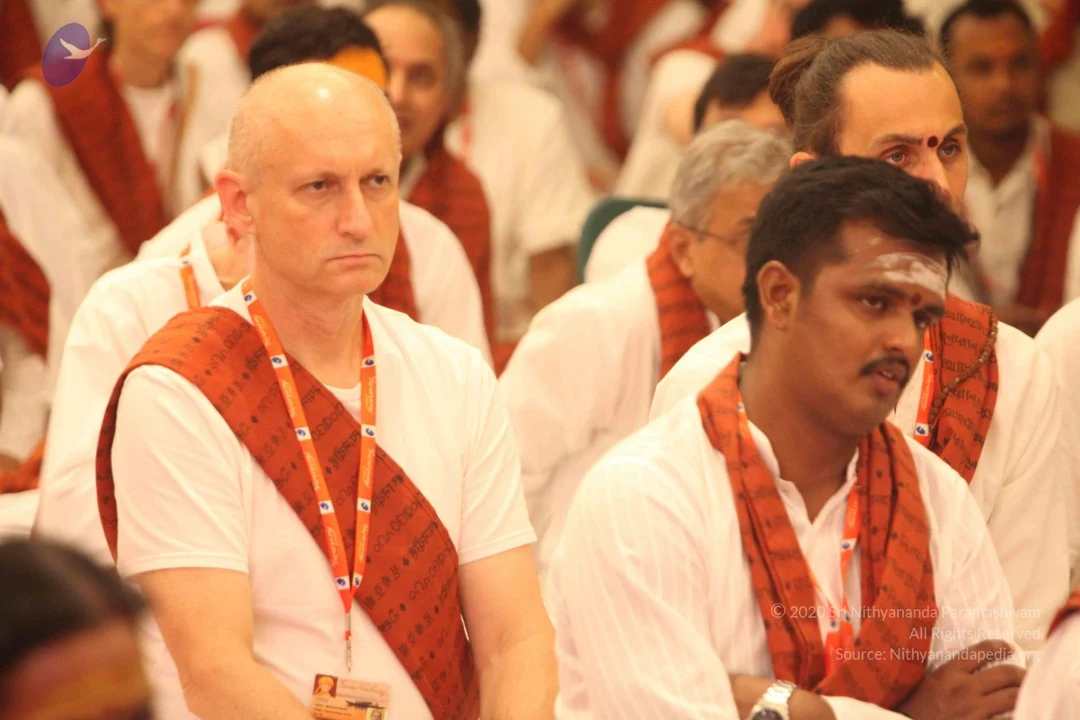
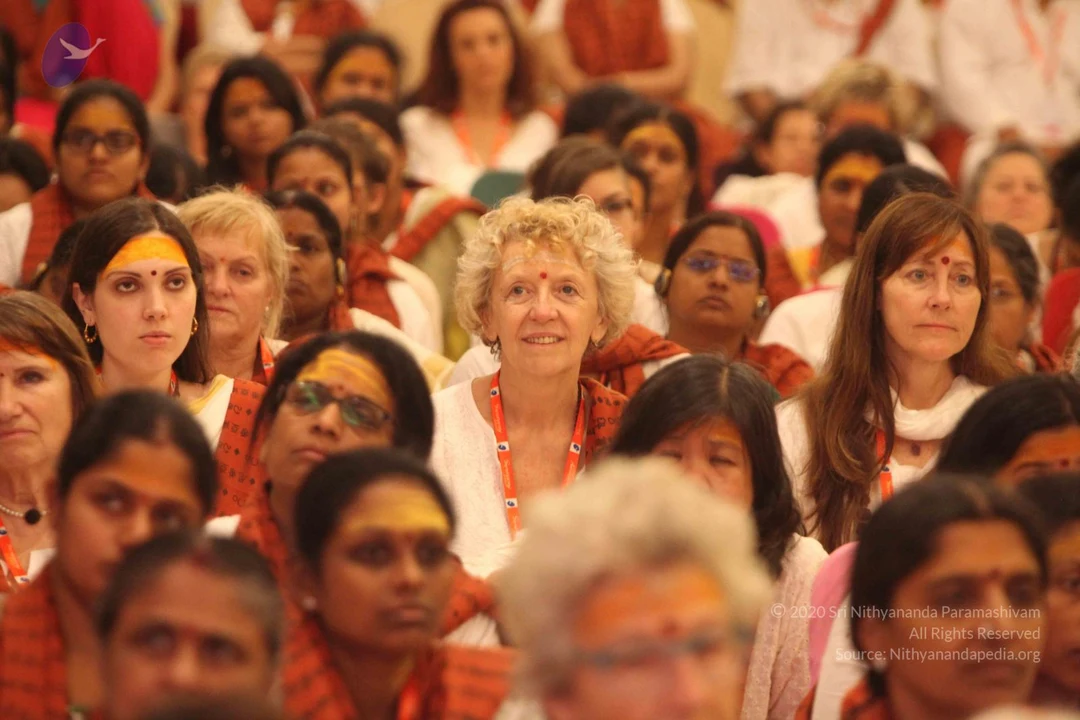
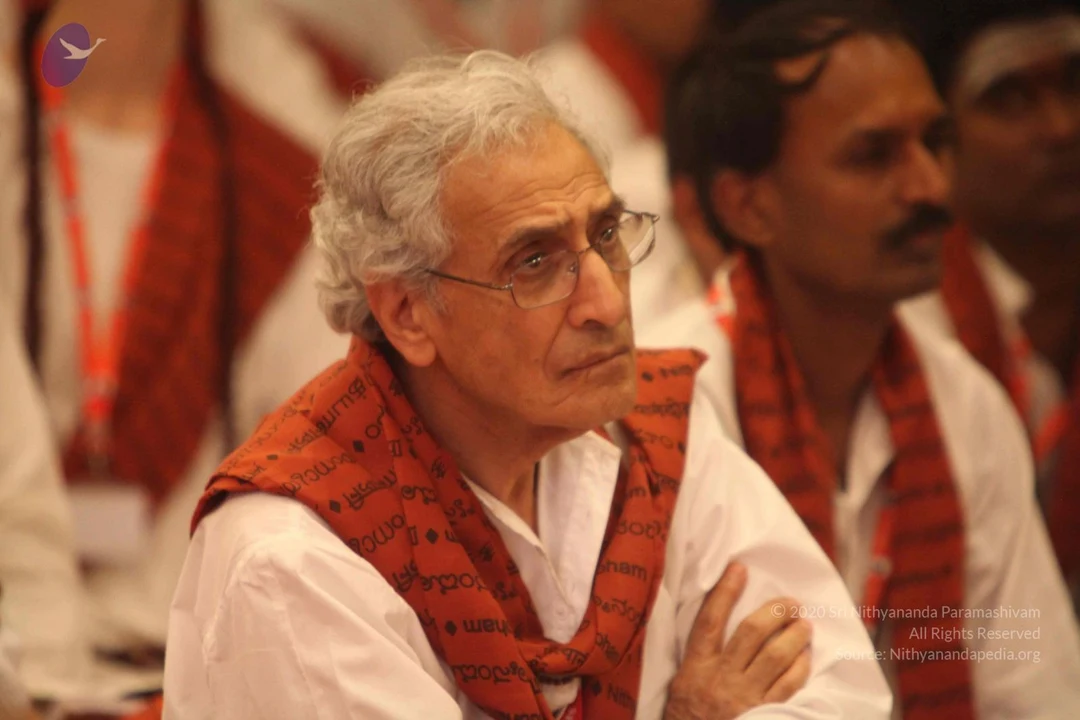
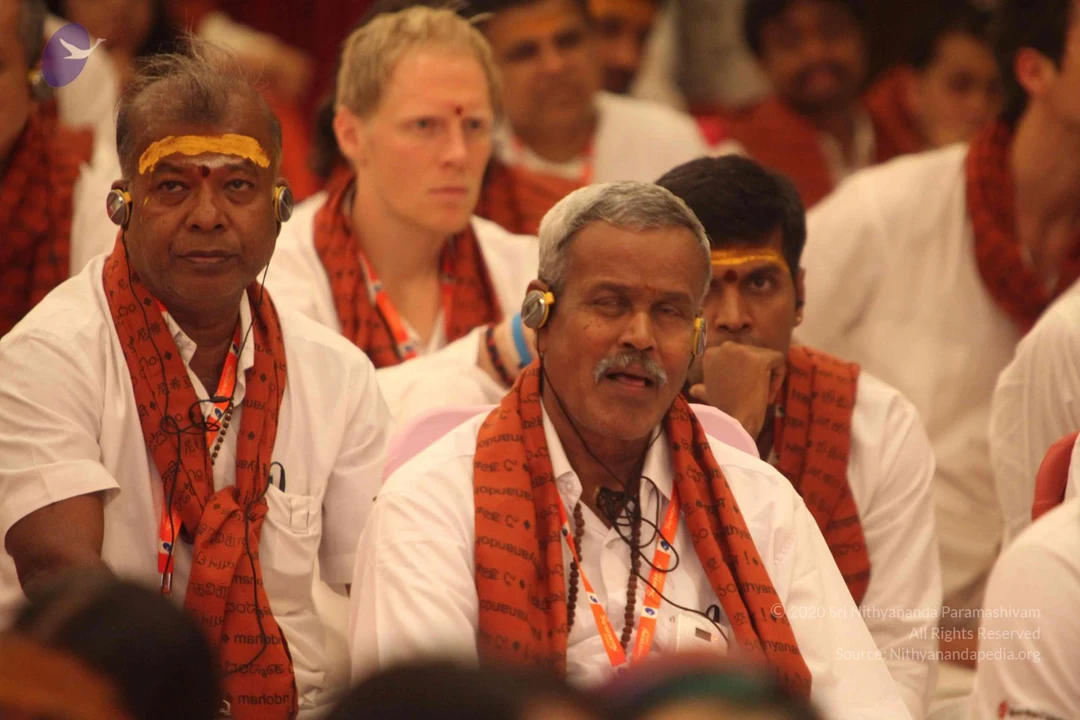
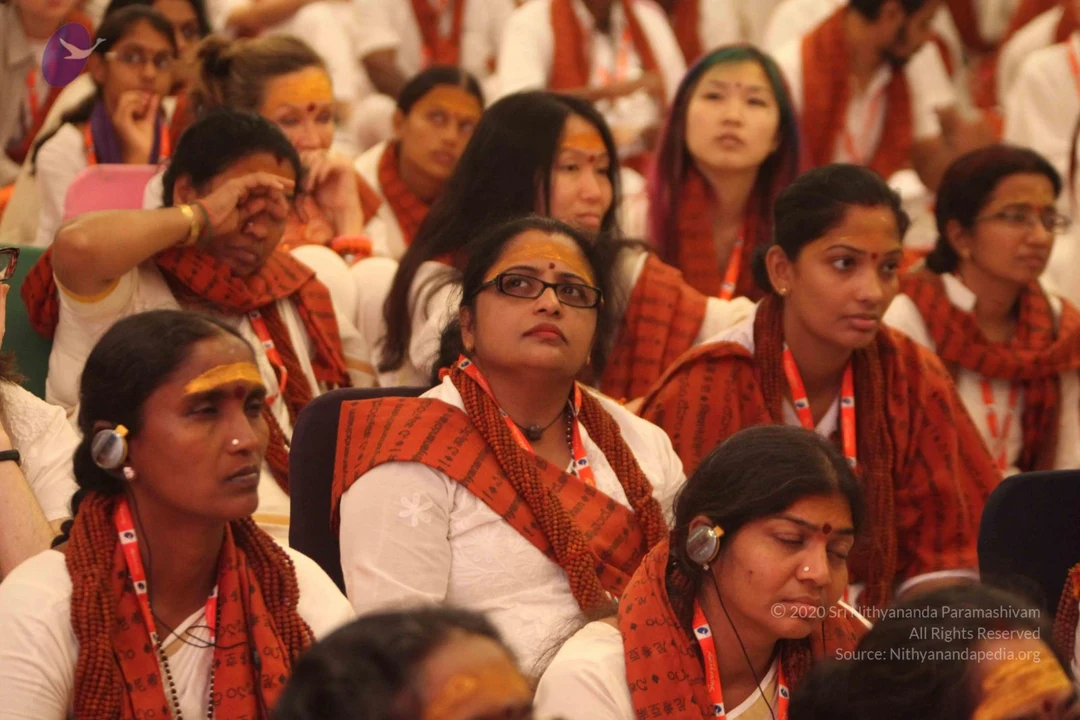
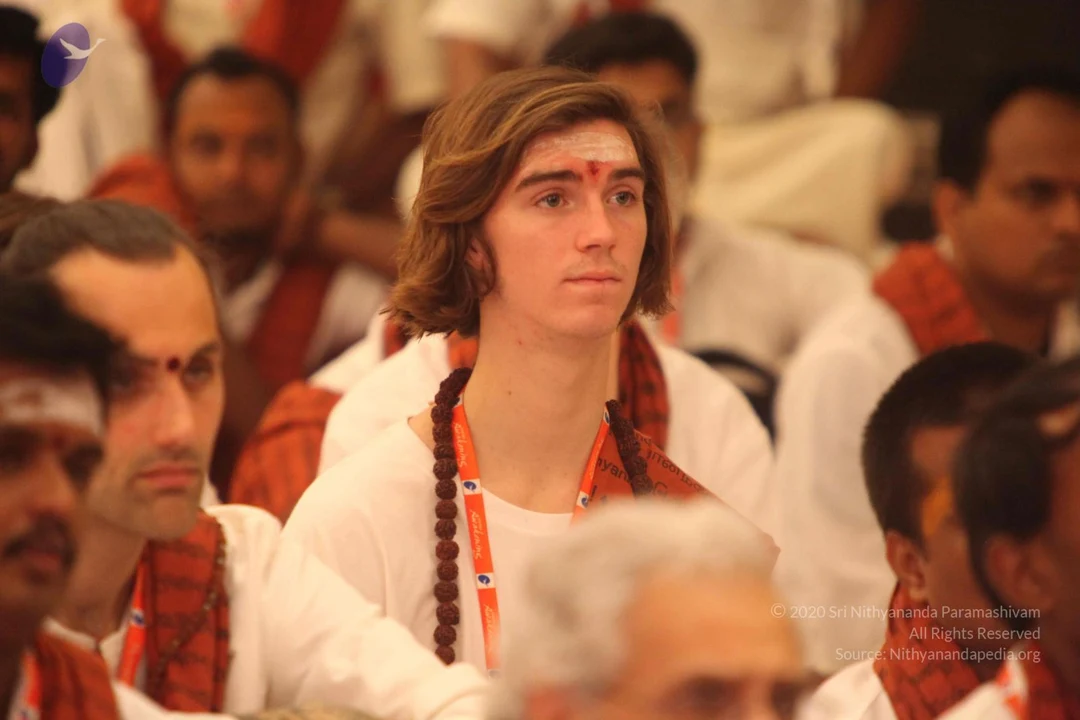
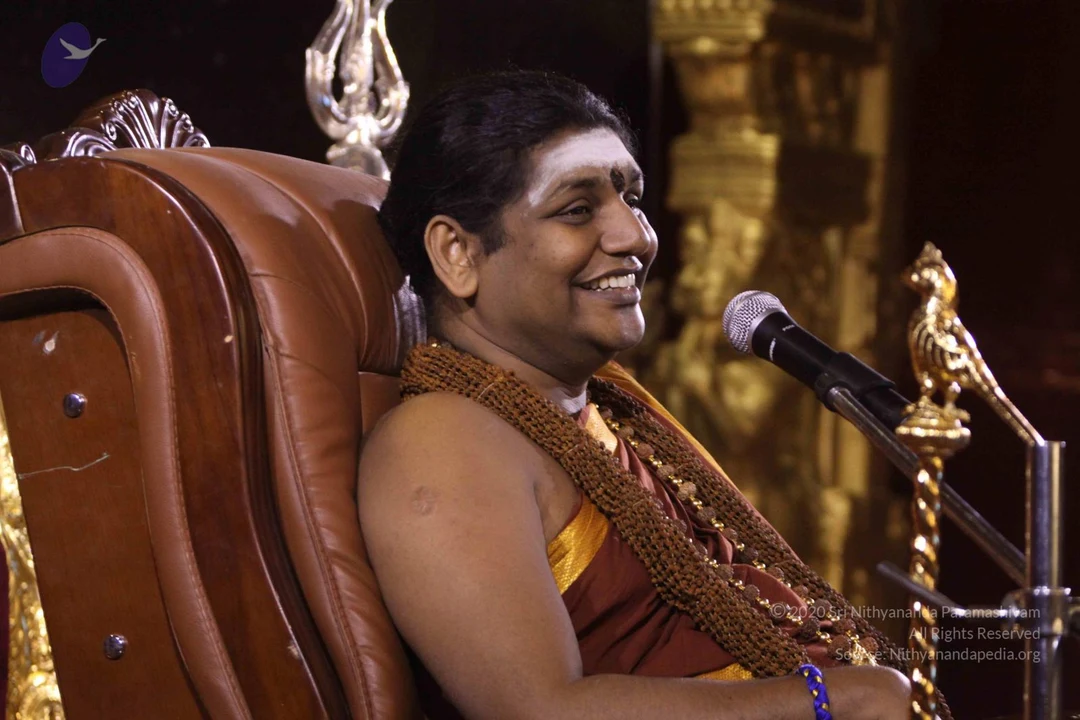
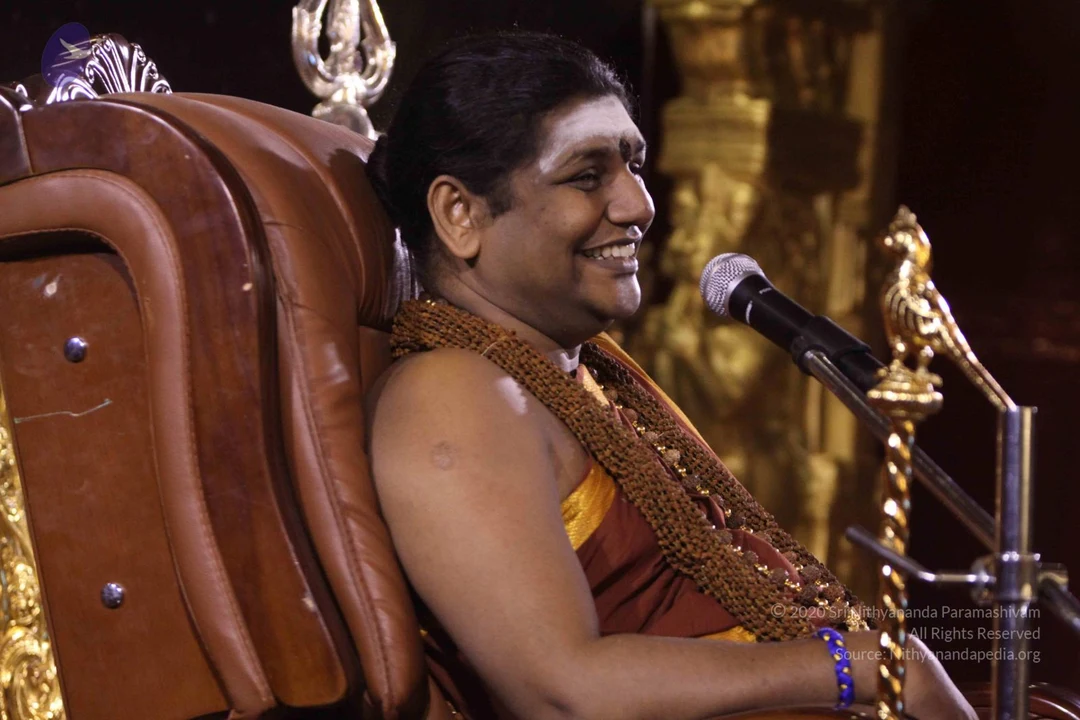
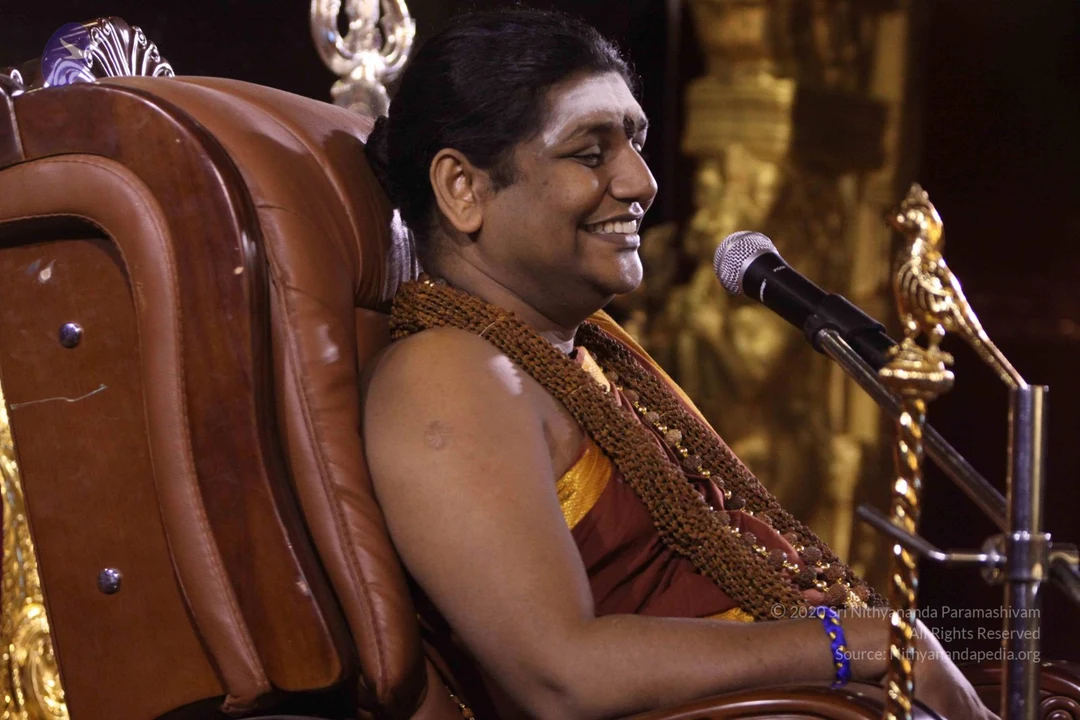
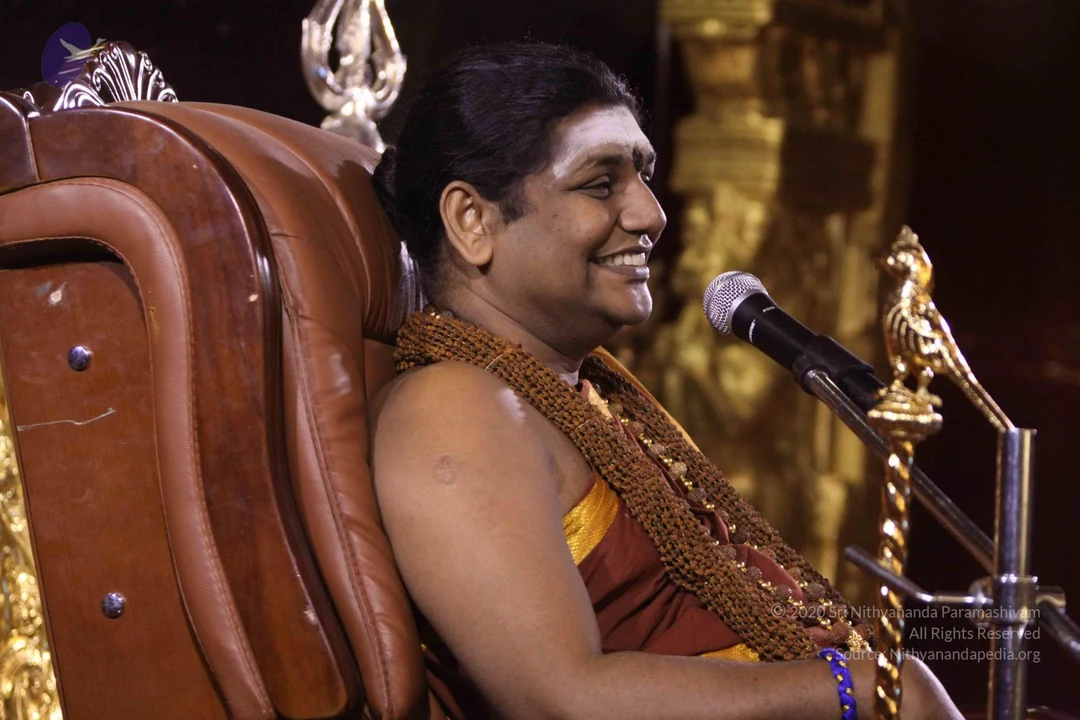
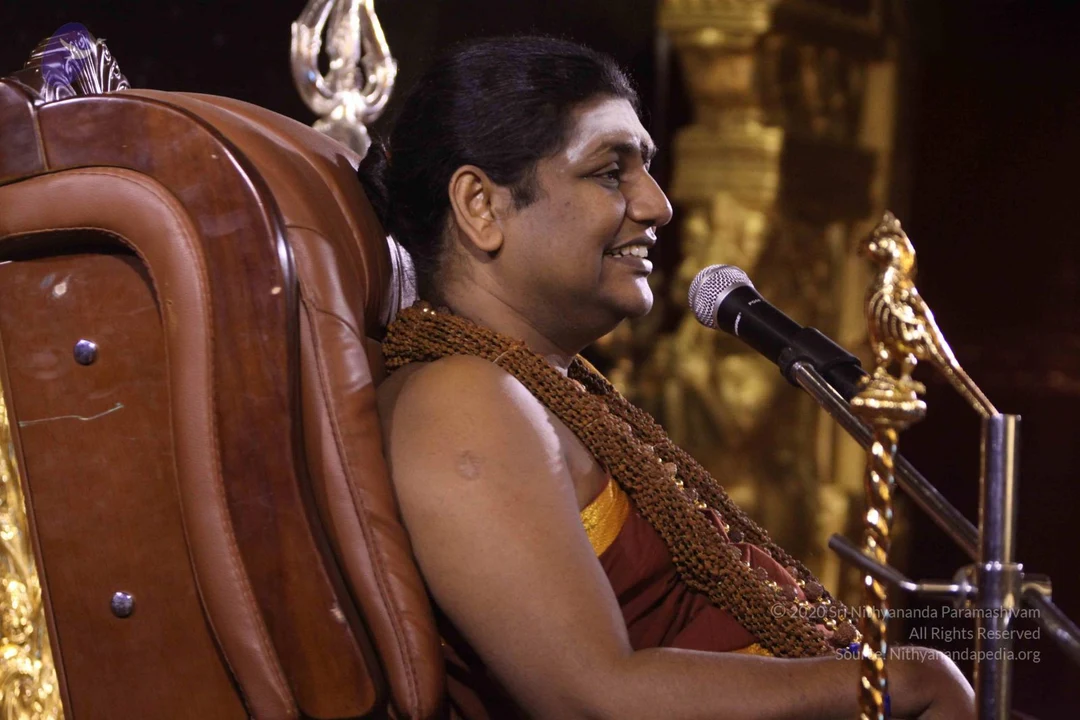
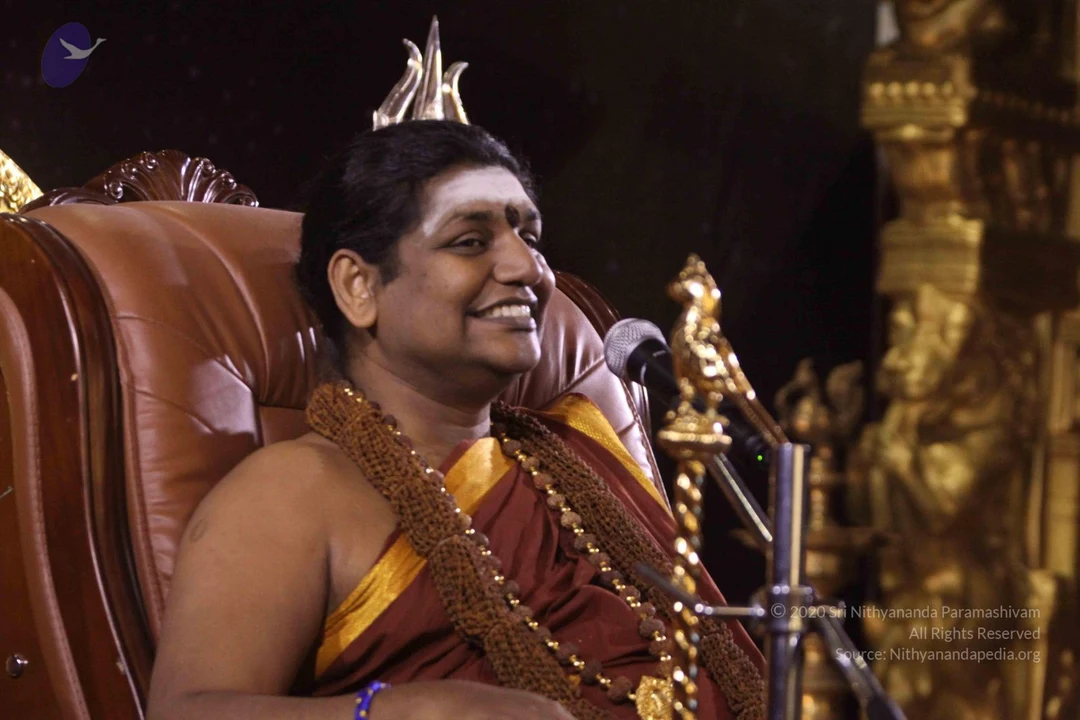
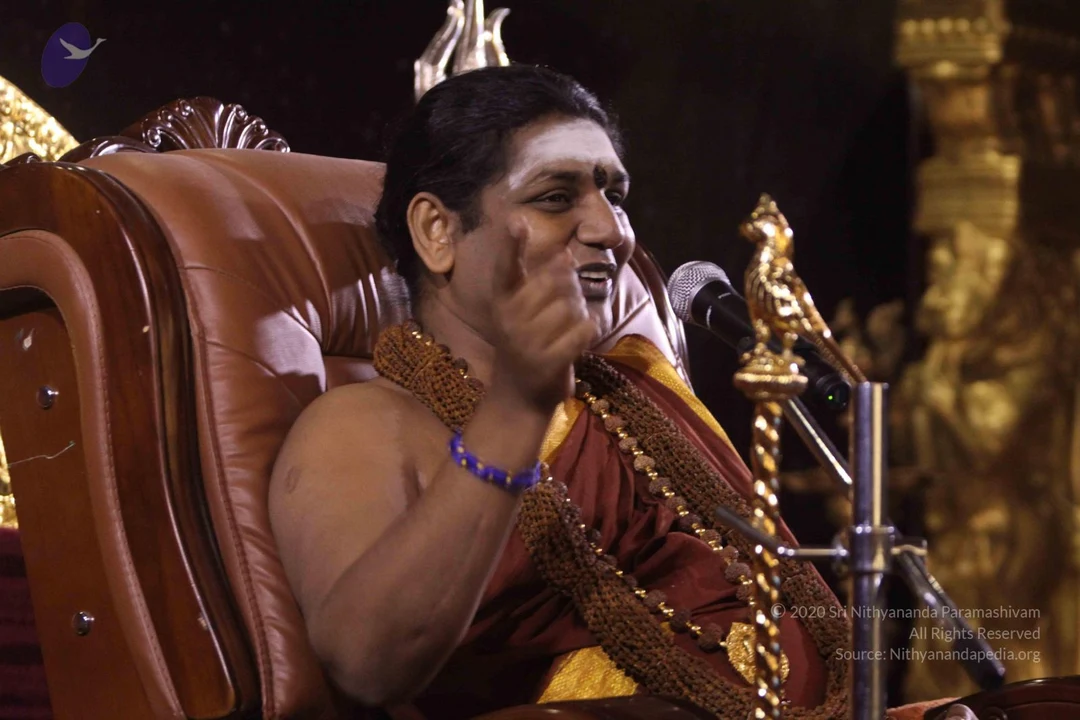
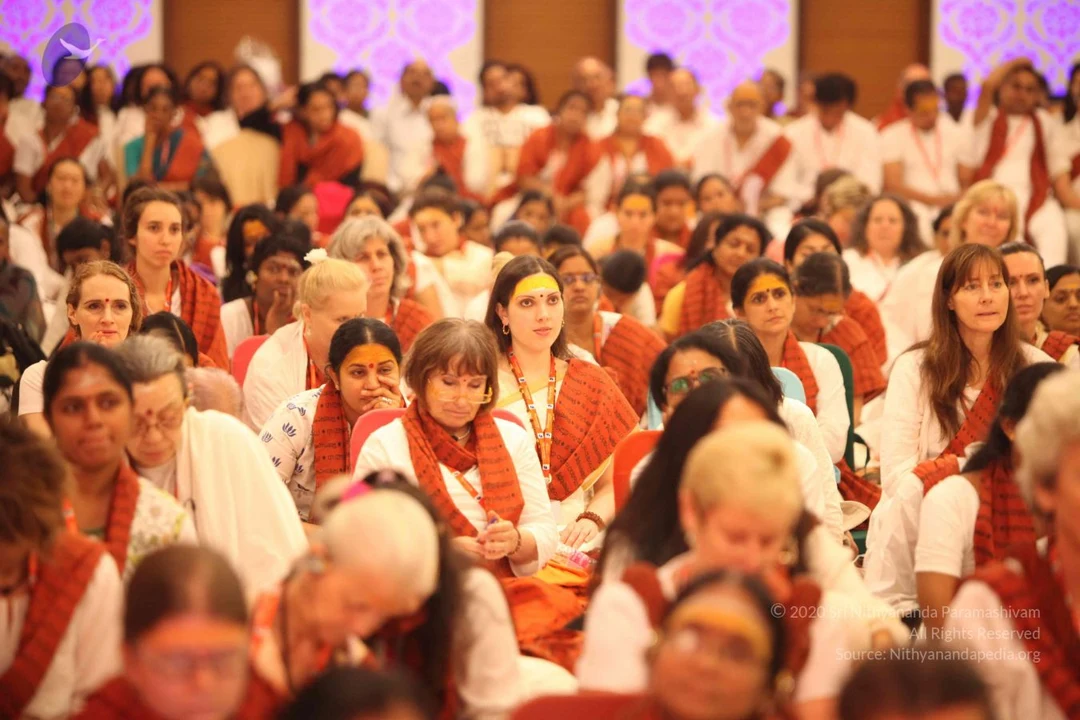
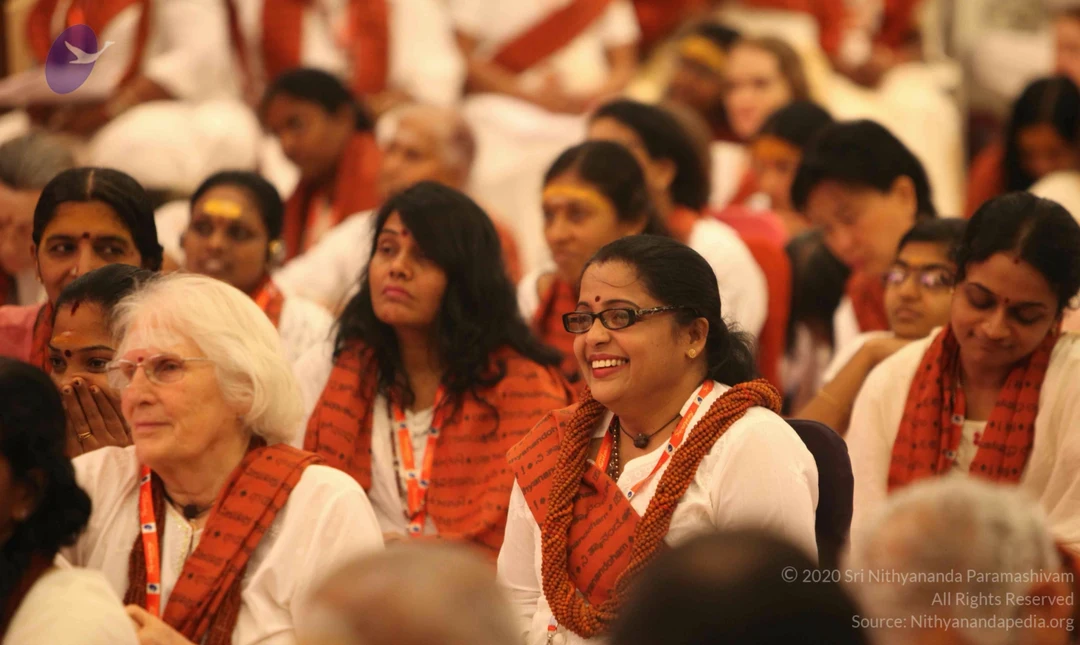
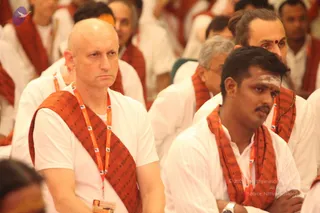
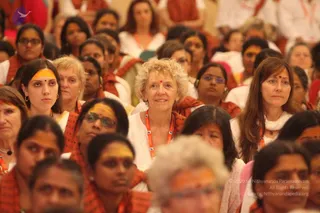
A smiling man seated in a brown leather armchair on a stage, speaking into a black microphone on a stand. He wears an orange-and-gold patterned turban with a small red bindi, a long rudraksha mala draped over bare shoulders, and a saffron-orange wrap. A pink water bottle sits at the lower edge, with a blurred gilded pillar behind him. Swamiji (probable): the bare-shouldered figure wears a turban, rudraksha mala and saffron wrap, and is presented as the speaker at a satsang discourse.A man speaks into a black microphone on a stand during a satsang discourse. He wears a rudraksha mala with a gold necklace, and an orange-red shawl over a yellow-gold cloth. His forehead bears a white marking with a dark red bindi, and his hair is swept back. He sits in front of a warm, golden-brown backdrop with ornate gold decor, and his raised hand gestures mid-talk. Swamiji (probable) appears as the speaker, based on the rudraksha mala, gold necklace, orange-red shawl and swept-back hair.A man in profile speaks into a black wireless microphone on a stand, his dark hair pulled back into a bun secured with a red scrunchie. He wears a rudraksha mala with multiple strands and a rust-brown garment with a golden-yellow border. The warm, blurred background shows gold and amber tones. Only one physical person is visible, seated and speaking during a satsang.A man seated and smiling speaks into a silver microphone on a stand during a satsang. He has swept-back dark hair, a white forehead marking with a dark round bindi, and wears a long rudraksha mala with a gold-bead accent and a rust-brown garment with a gold border draped over one shoulder. Behind him, blurred golden ornamental carvings and warm brown tones suggest a stage setting. Swamiji (probable) with rudraksha mala, swept-back hair and saffron-brown ceremonial clothing, seated and giving a discourse.Photograph of a seated congregation at a satsang, with devotees in white ritual clothes and red-orange shawls printed with script, many wearing orange lanyards. In the foreground a bald man in a white t-shirt and orange shawl sits beside a younger man in white kurta with a vibhuti forehead mark and orange shawl; behind them a man with hair tied up wears a red bindi and orange shawl. Other devotees sit in rows behind, some with grey hair and white garments. A partially visible hand and orange shawl appear at the lower left edge.A photograph of a large seated audience at a satsang, mostly women and some with grey or light hair, wearing white clothes with orange-red shawls or stoles and orange lanyards. Many have orange or yellow tilak marks on their foreheads. The foreground shows a row of heads and faces in close focus, with the audience looking forward toward an unseen speaker. A small purple bird logo appears at the top left corner, and the photo is watermarked by the archive, which is not described.

Shivoham

72 photosSource gallery
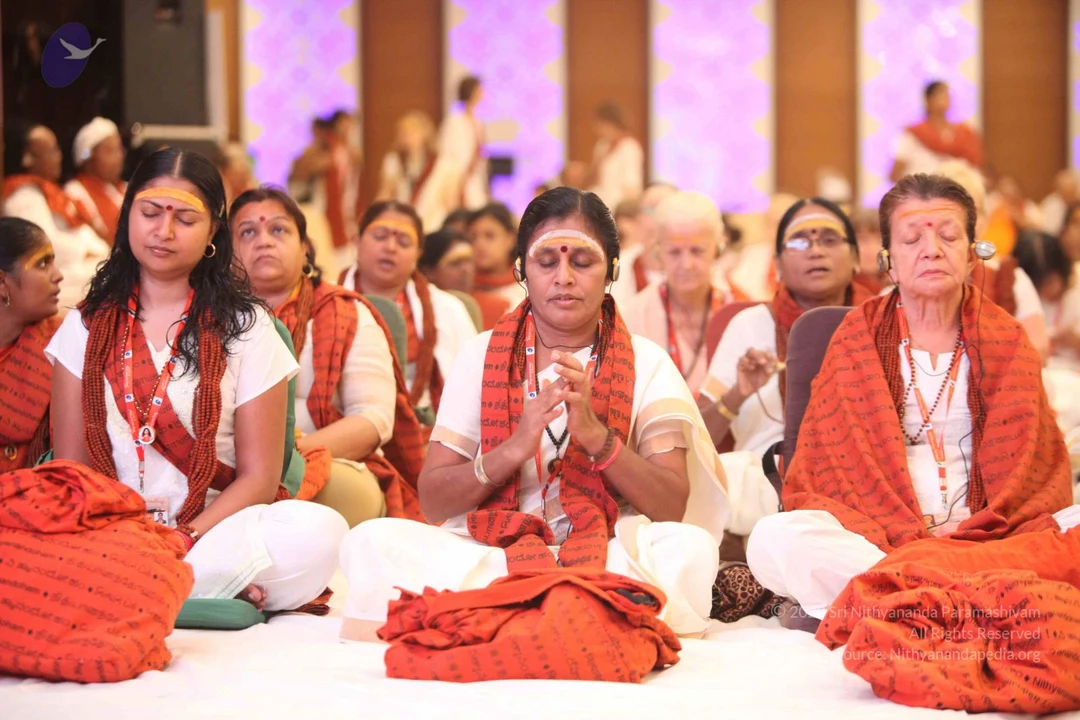
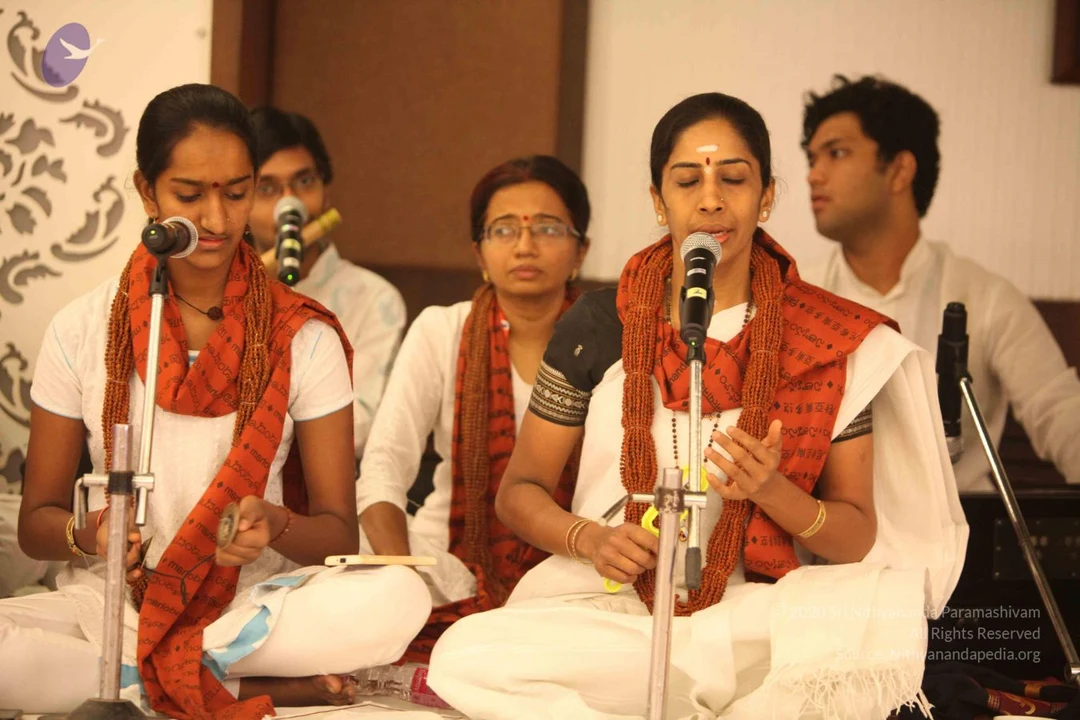
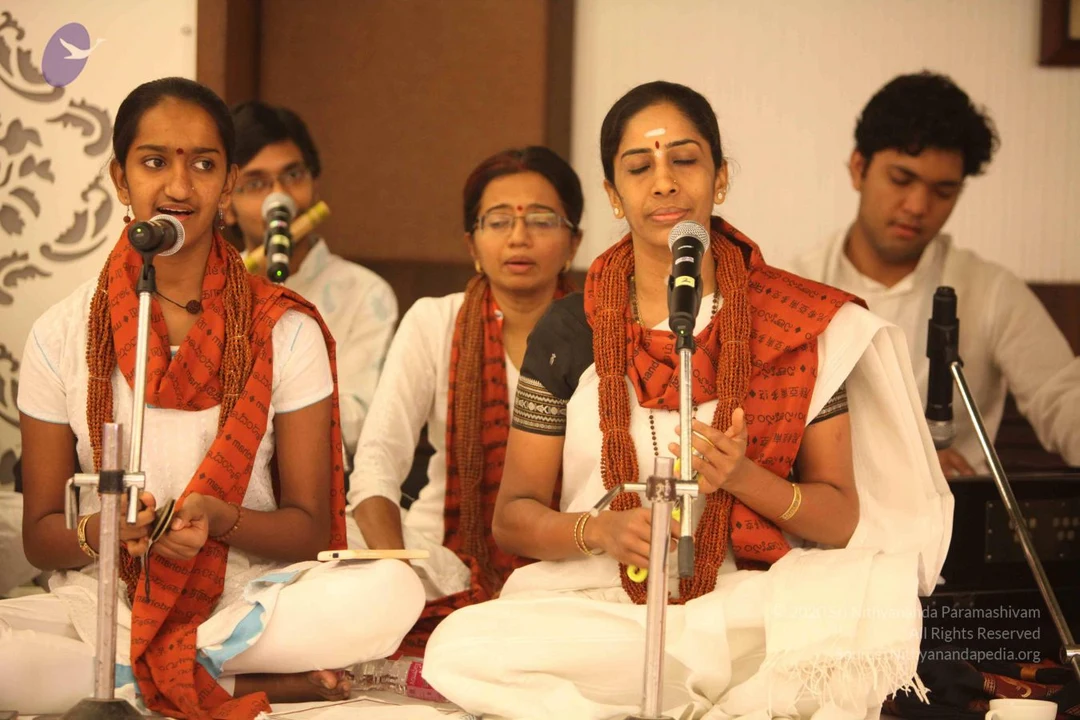
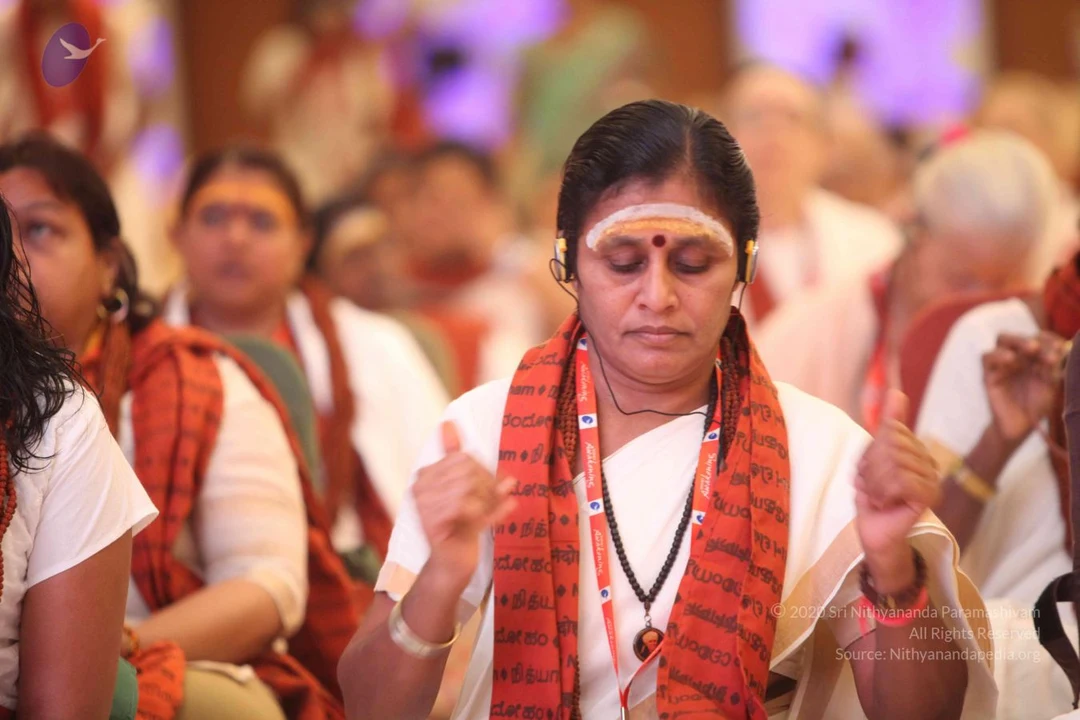
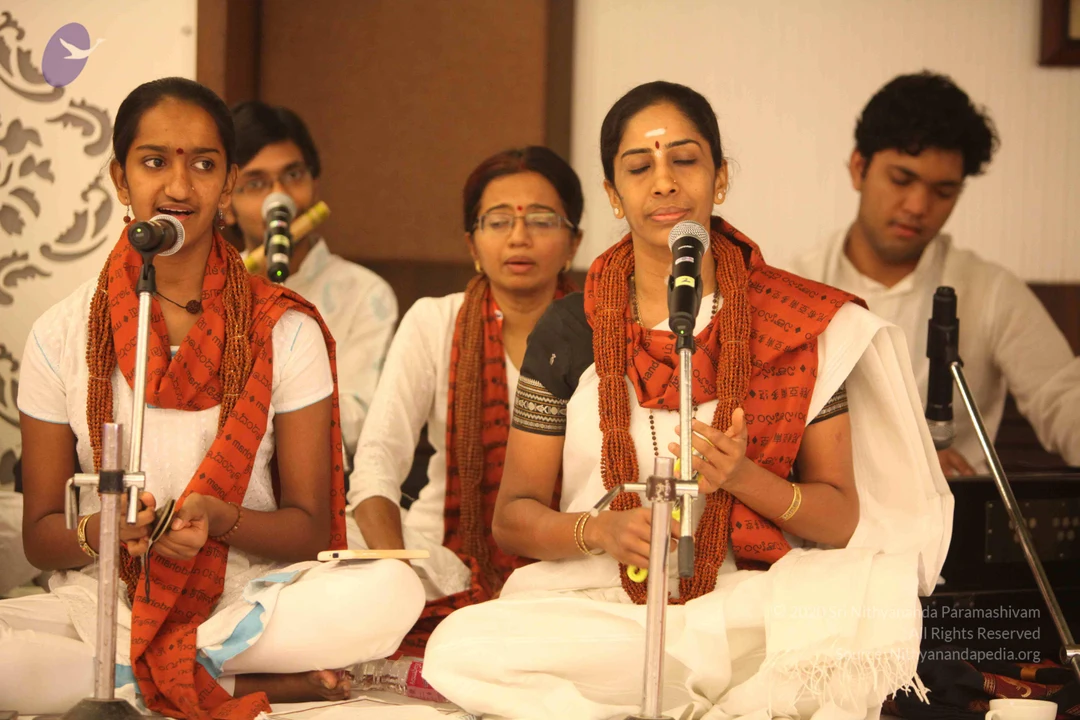
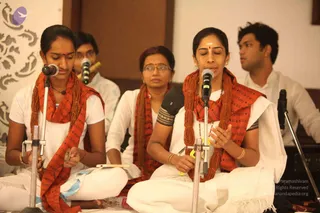
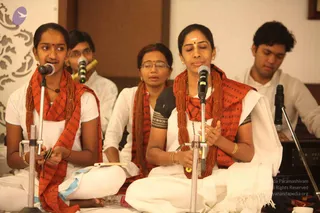
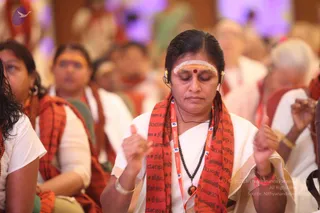
Three gilded deity murti statues seated side by side on an orange-draped platform before a green cloth backdrop with gold carved pillars. The central figure wears a tall gold crown with jewelled band and a green garment, with a white and multicoloured beaded necklace and a long white flower garland; hands raised in blessing mudra. Left figure wears a red turban, red-brown garments, a layered rudraksha-style mala and gold coin necklaces, holding a trident. Right figure wears a gold jewelled crown, green skirt, red and white adornments and a long garland, with a raised hand. Red and gold garlands drape the seats.A photograph of a satsang-style chanting session with several women seated on the floor in white clothes and rust-orange shawls with woven patterns, several wearing rudraksha-style beaded malas. Microphones on stands sit in front of them. The woman at centre right holds a small yellow object in her hands, and the woman on the left holds a microphone. A white-haired man in white clothes is partly visible at right. A banner in the background reads No Photography, and a water bottle sits at lower left.Four devotees sit cross-legged on a white floor cushion during a satsang performance of devotional singing. Two women in white saris with rust-orange shawls patterned with text sing into microphones on stands; the woman on the right wears a white vertical tilak on her forehead and rudraksha-style beaded garlands, and she holds one hand open in gesture. The young woman on the left plays a small hand percussion instrument and wears a red scarf. Behind them a man in white plays a wooden flute and another man in white sits at the right edge. A woman in the centre wears glasses and a red bindi. The background wall has a grey floral stencil design.A photograph of a devotional music performance indoors. Two women in front sing into microphones seated on the floor. The woman on the left wears a white top with a rust-orange shawl and beaded necklaces; the woman on the right wears a white sari-style garment with an orange shawl, a bindi, gold bangles and a beaded mala. Behind them a woman in glasses and an orange shawl sings, a man plays a bamboo flute, and a young man in white plays an instrument at the right. A wall with a white floral stencil pattern forms the backdrop.A photograph of a seated panel at a satsang event with a red draped table. A sign reads "No Photography" on a stand behind them. Seven people sit in a row: women in white garments with orange-red shawls and small microphones on stands, and men in white kurtas behind them. Each speaks or listens with hands gesturing, some holding notebooks and water bottles. The backdrop is a white wall with an ornate stencil design.A woman seated in the foreground of a satsang audience, eyes closed, hands raised in a mudra with thumb and index finger touching. She wears a white sari with a red-orange shawl printed with script, a rudraksha mala, a lanyard, a small headset microphone, a white and orange forehead mark with a red bindi, and bangles. Behind her, rows of seated devotees in white and orange clothing with orange shawls listen, some with orange tilak marks. Soft blurred purple and white stage lighting fills the background. a person is not visibly present in this frame.

Shivoham

10 photosSource gallery
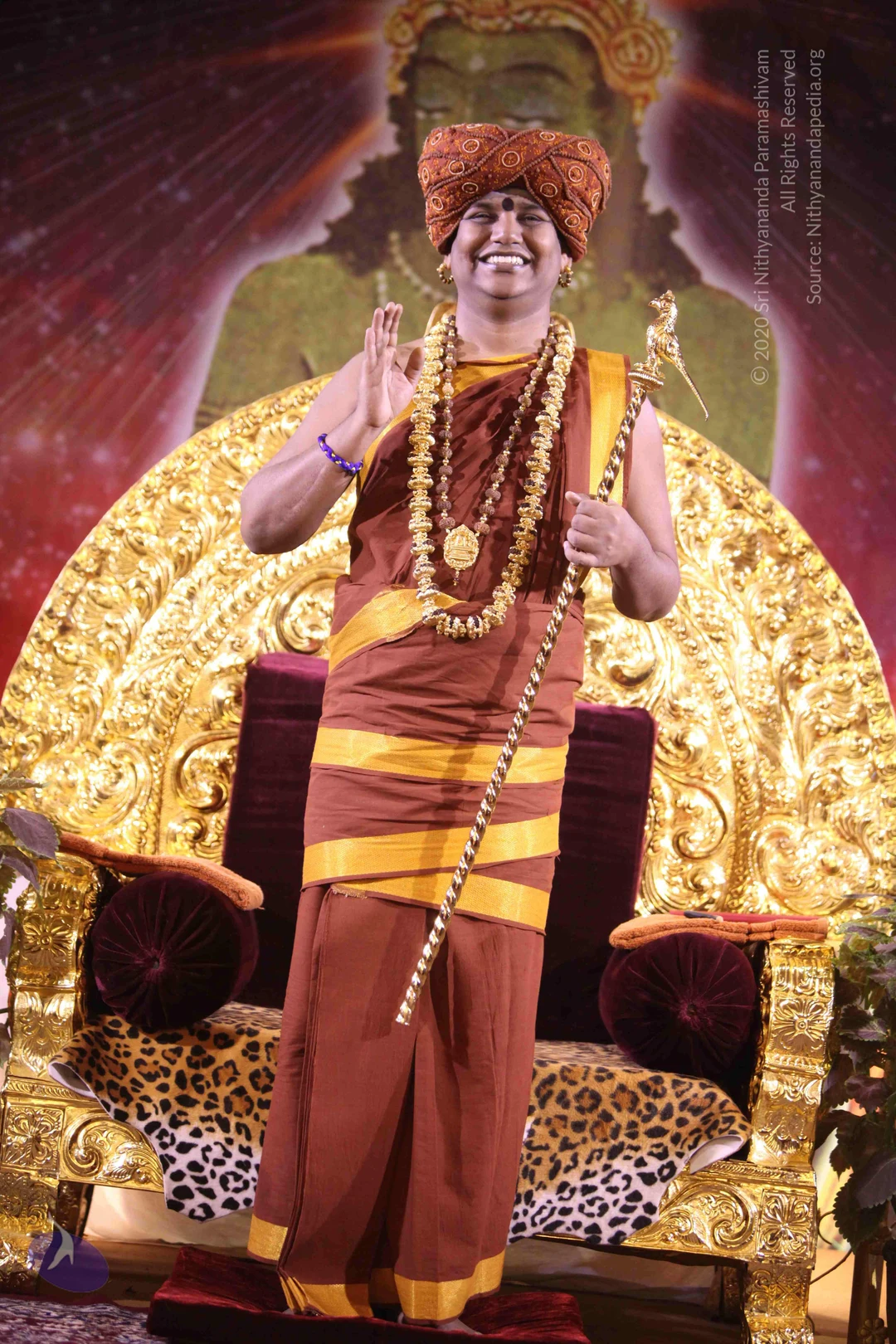
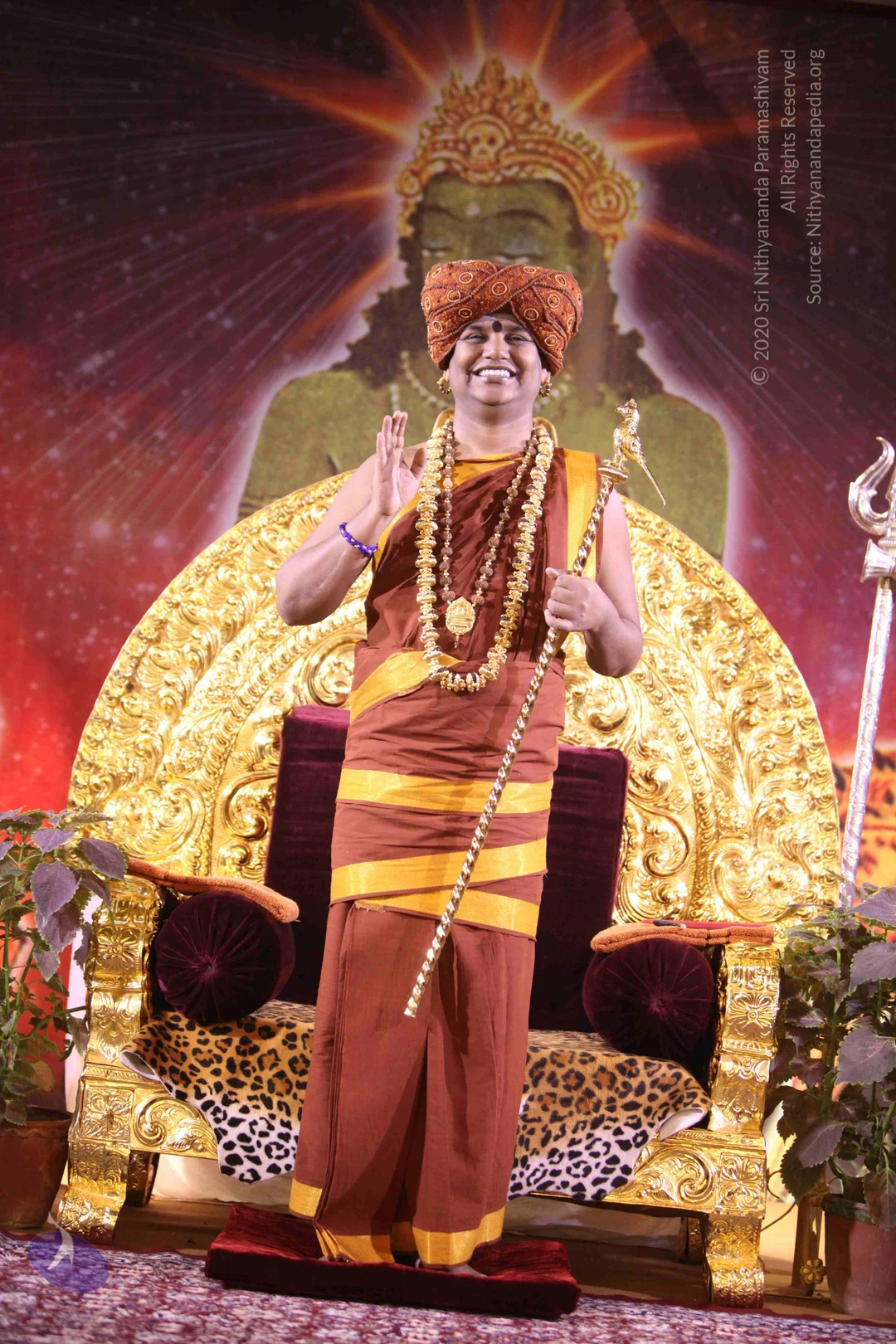
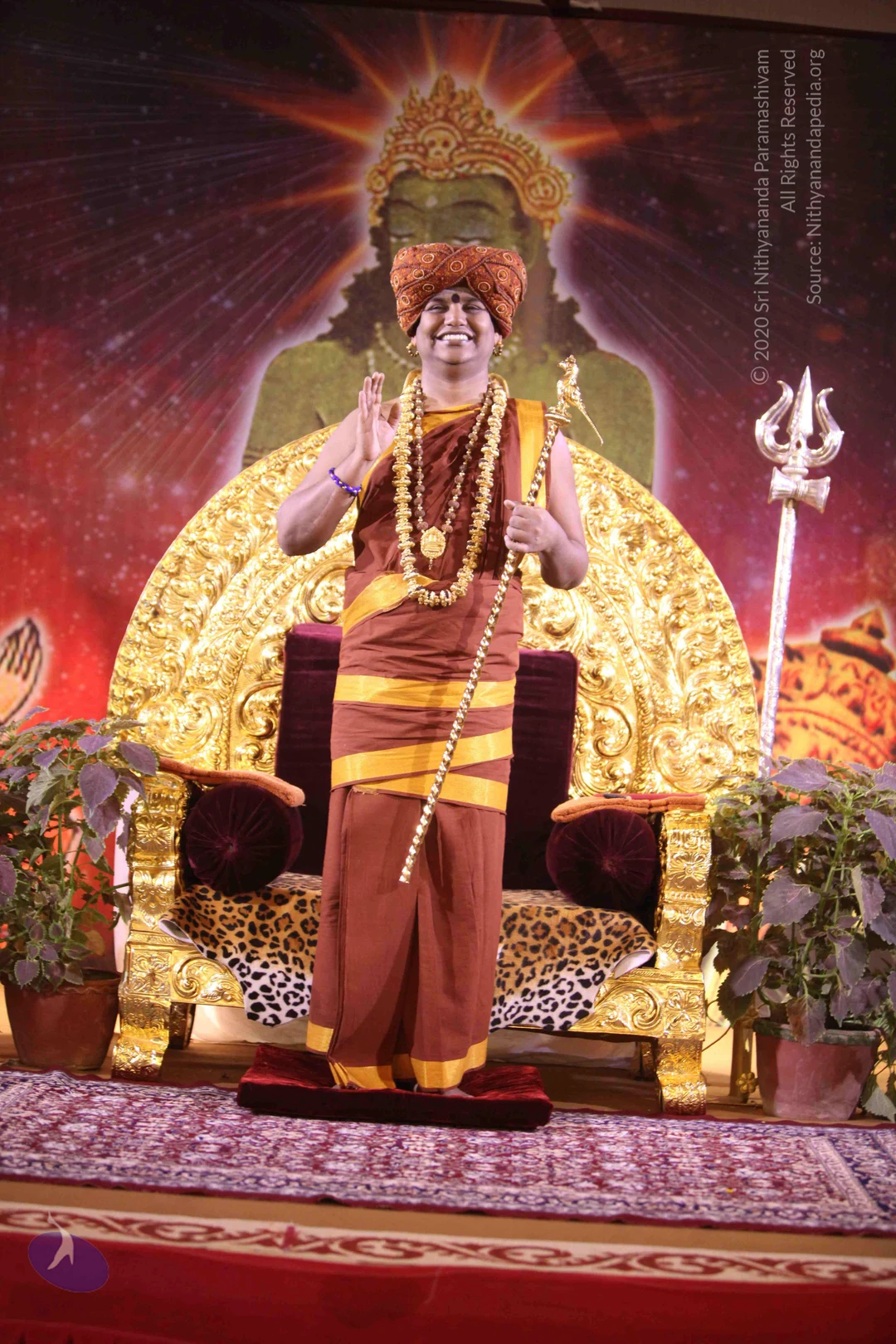
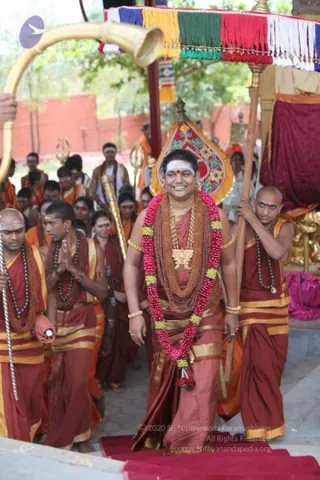
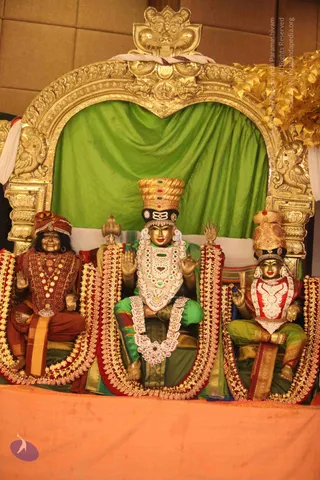
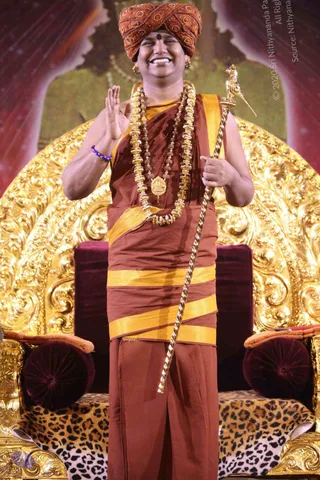
Three gilded statues sit on an ornate golden throne-arch before a green draped backdrop, with a saffron-orange cloth covering the platform below. The central figure wears a tall gold crown with red and green gems, a green garment, a white beaded and jewelled necklace and a green garland, and holds a trident-like staff and a flame-like emblem. The figure on the left wears a maroon turban, a red-brown robe with a gold-bordered dhoti and layered beaded necklaces, and holds up a hand in blessing. The figure on the right wears a tall gold crown, a red and white embellished top and a green skirt. All three are statues, not people; the scene is a deity murti display with garlands and gold-trimmed cushions.A smiling man stands in front of an ornate gold throne with a maroon velvet back and a leopard-print cushion. He wears a red-orange patterned turban with a bindi, a brown robe with wide gold borders, and layered gold necklaces with rudraksha beads and a pendant. He raises his right hand in blessing and holds a long gold staff topped with a bird finial. A purple beaded bracelet is on his wrist.A smiling man stands before an ornate golden throne with a leopard-print cushion, raising one hand in greeting and holding a gold staff topped with a bird finial. He wears an orange patterned turban with a red bindi, a maroon robe with gold borders, and layered gold and beaded garlands. Behind him a large backdrop shows a green deity-like figure with a golden halo against red radiating light.A smiling man in an orange-and-gold patterned turban and brown-and-gold draped robe stands with palms pressed together in greeting on a red carpeted stage, holding a gold-tipped staff with a bird finial. He wears layered gold and bead garlands, a rudraksha-style mala, and a bracelet. Behind him stands an ornate gold throne with a leopard-print seat cushion, flanked by potted plants, and a large backdrop shows a green-tinted deity murti beneath a radiant red halo. A silver trident stands at the right edge. a person is shown as the speaker, appearing in person at a satsang setting.Close-up photograph of a smiling man wearing an ornately embroidered orange-red turban decorated with rudraksha beads and white embellishments, a dark tilak mark on his forehead, a rust-brown and gold garment, layered rudraksha and gold ceremonial necklaces, and gold-and-rudraksha bracelets. He raises one hand near his head, gazing upward against a glittering gold backdrop and dark red background. Appearance-based probable Swamiji (probable) with turban, rudraksha malas and gold ceremonial necklaces, shown in person at the event.A seated man in an ornate orange-red patterned turban with a dark bindi wears a rust-orange saffron-toned robe with a gold-yellow sash. Multiple strands of gold beads and rudraksha malas hang across his chest, and he wears a red-and-gold bracelet on his wrist and a rudraksha bracelet on his upper arm. He raises a golden ceremonial staff or sceptre in his right hand while seated on an elaborate gold-embossed throne with a red backdrop. Swamiji (probable) is the appearance-based label for this person, based on the saffron-toned clothing, distinctive turban and multiple ceremonial malas, while he is seated as a presiding teacher during a satsang.

01-IA-VARANASI
20 photosSource gallery
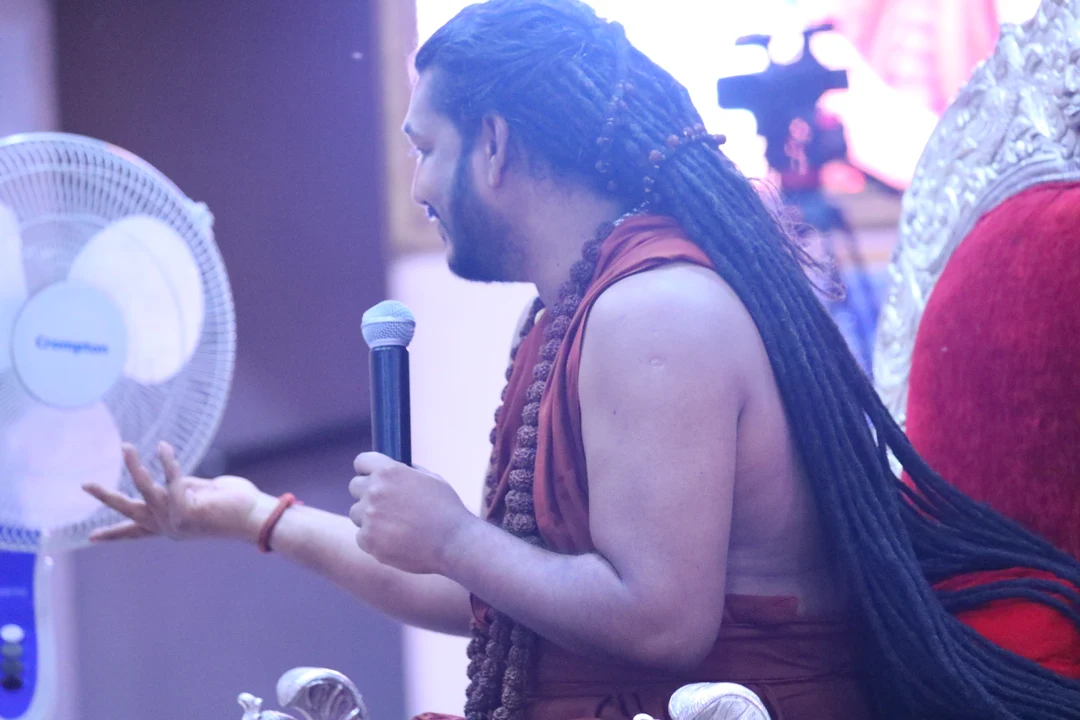
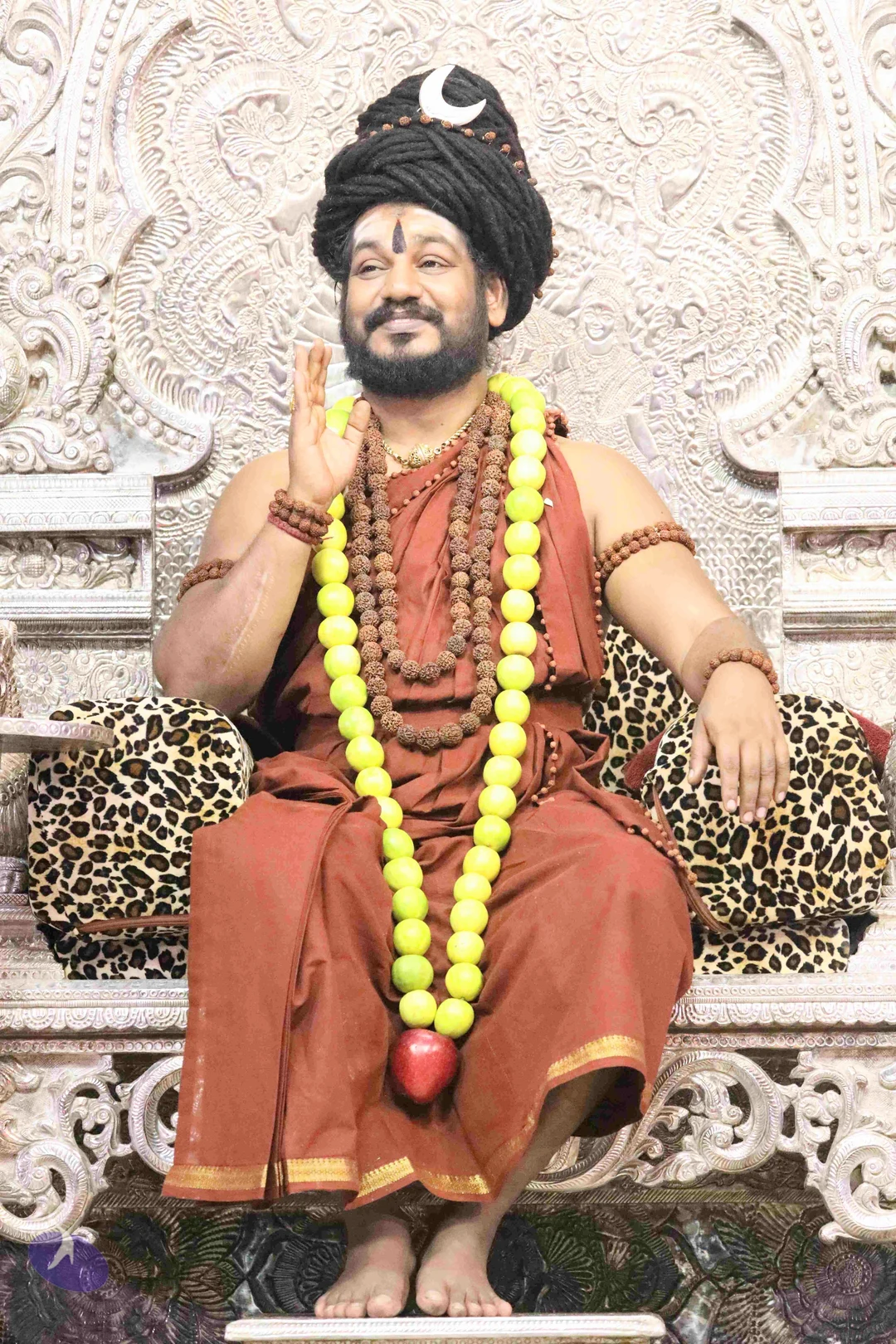
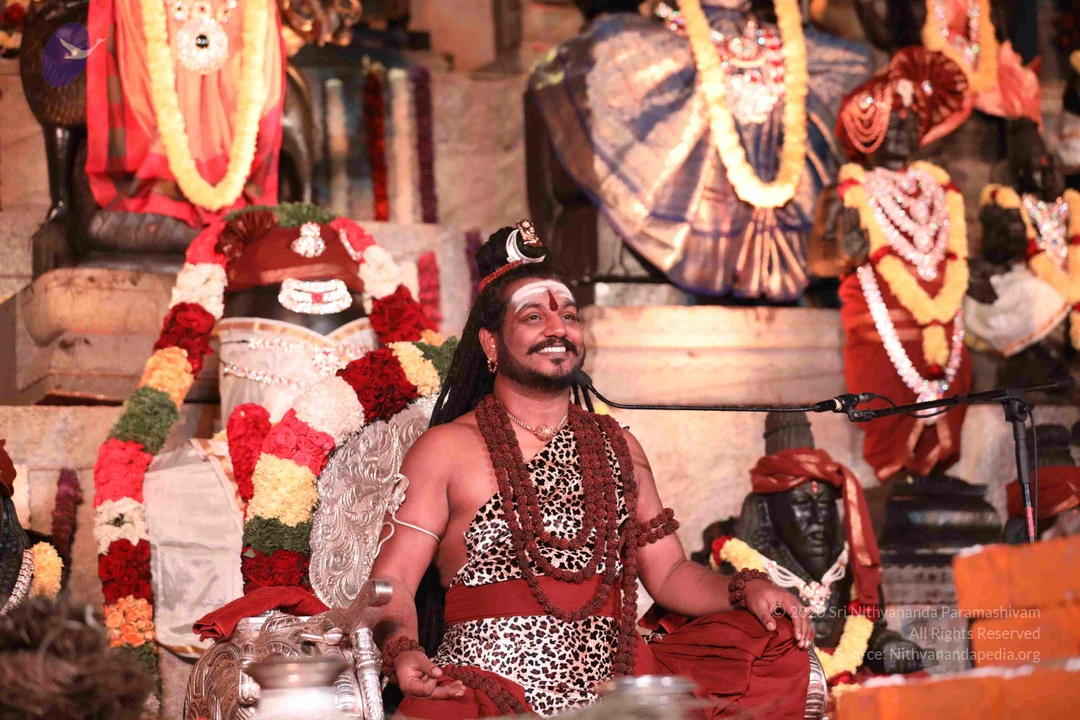
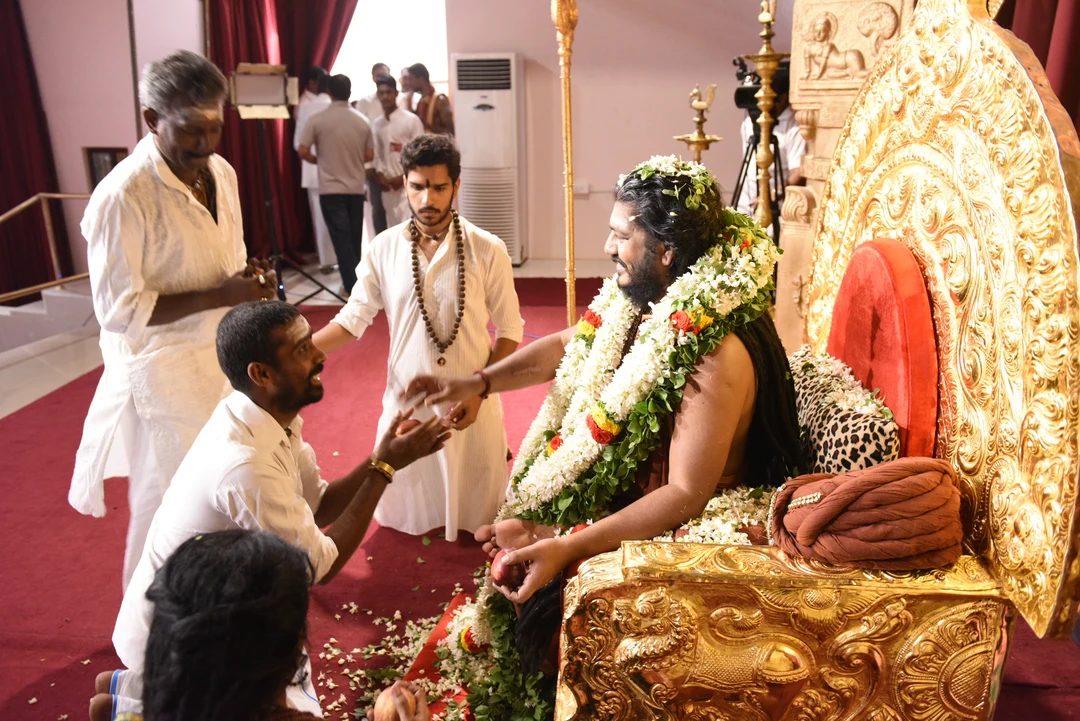
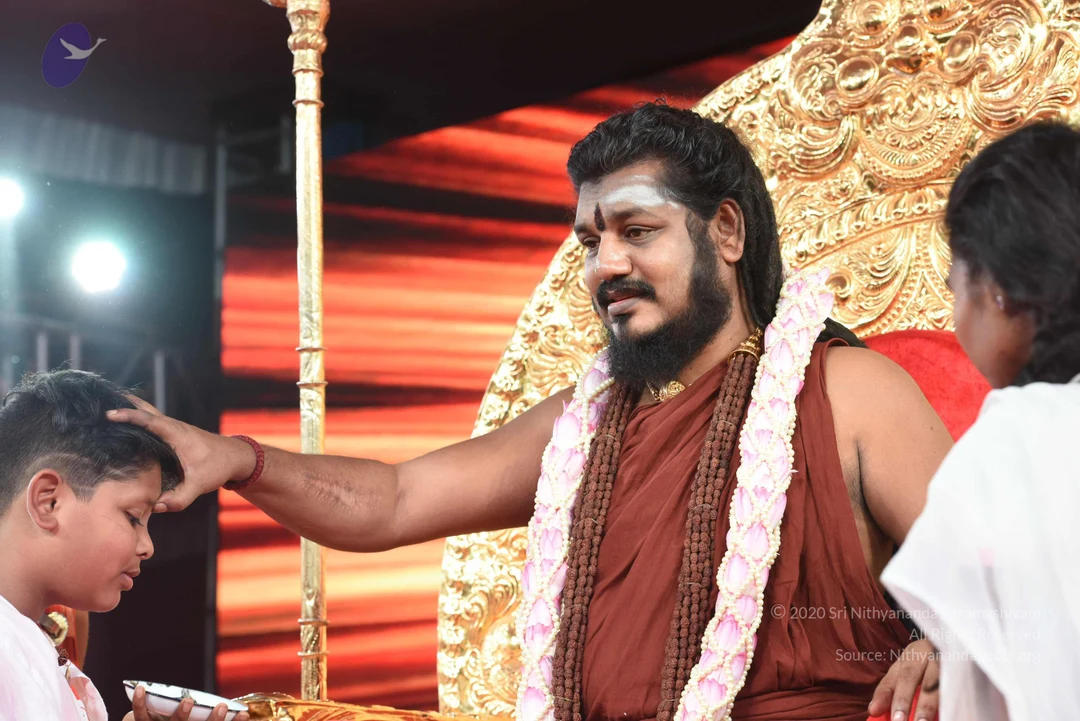
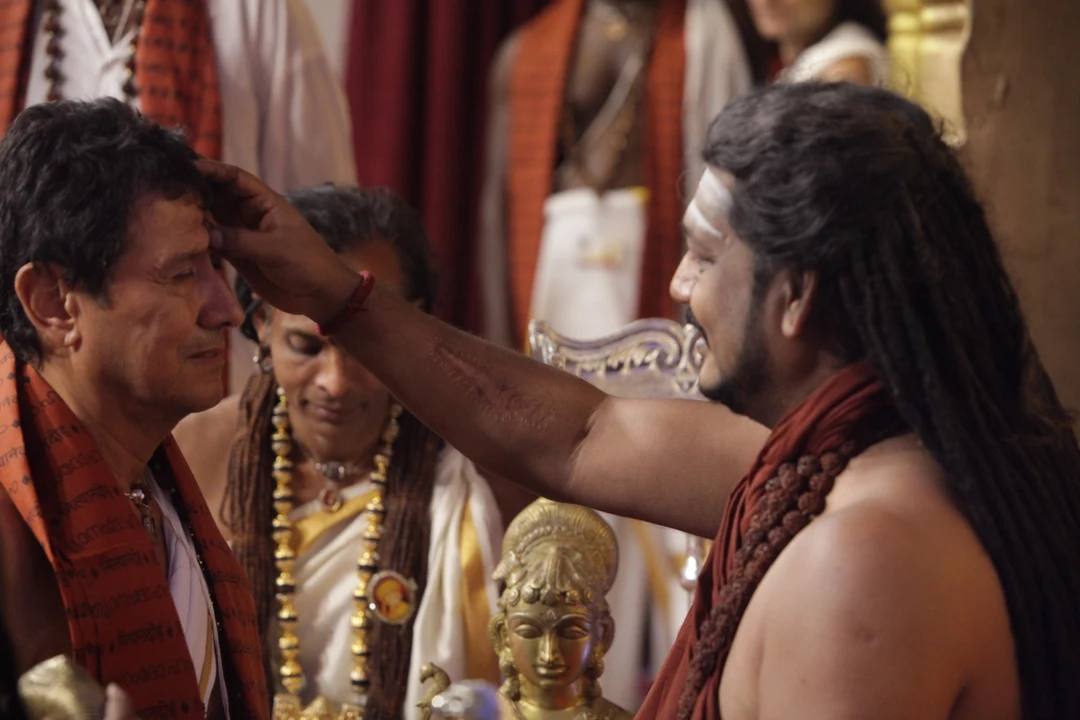
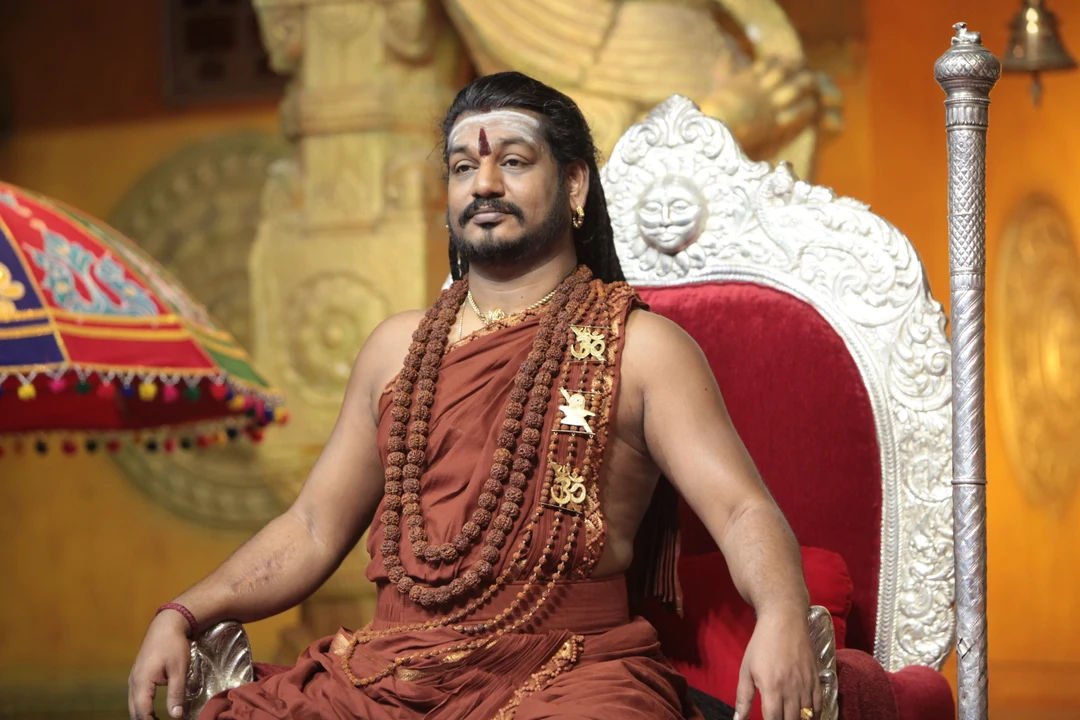
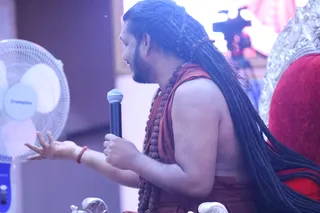
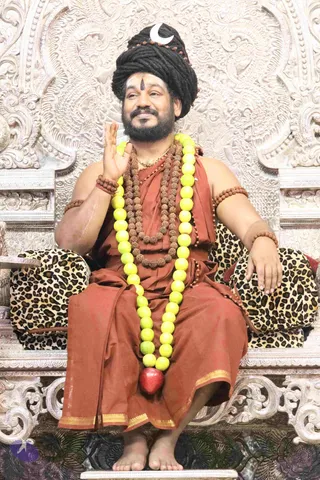
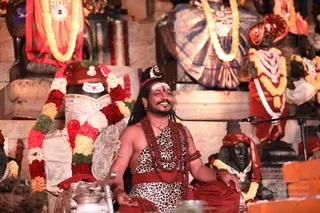
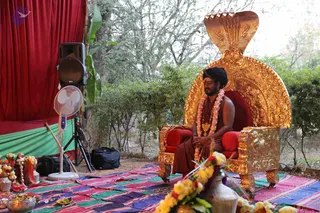
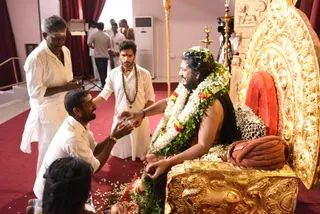
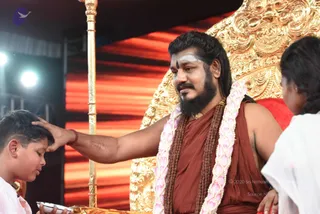
Photograph of a man in profile seated before a microphone during a satsang discourse. He has long, dark, matted hair swept back and wears a rudraksha mala with a prominent ceremonial necklace, a bare-chested orange-red shawl, and a red thread on his wrist. He holds a black microphone in one hand while gesturing with the other toward a white electric fan on the left. Silver ritual objects are visible at the bottom edge, and a red upholstered throne with silver trim sits behind him. Swamiji (probable), seated and speaking as the satsang speaker, based on long swept-back hair, rudraksha malas and orange shawl, with the throne and microphone setting.A seated bearded man with long dark matted hair wrapped in a turban-like coil topped by a silver crescent moon ornament, wearing a rust-orange cloth draped over the body and shoulders. He wears multiple strands of brown rudraksha beads, a yellow-green bead garland, a red heart-shaped object at his lap, and rudraksha bracelets on his arms. He sits on an ornate silver throne with a leopard-print cushion, one hand raised in blessing while smiling. Visible in the image: one person, no others present.A photograph of a seated man in the centre of a temple-like setting, smiling and speaking into a microphone on a stand. He wears a leopard-print garment, a red waist cloth, a long rudraksha mala across his chest and several rudraksha bracelets, with a horizontal white and red tilak on his forehead and long dark hair tied up. He sits on an ornate silver-backed seat draped with red, orange and white floral garlands. Behind him stand dark stone deity murti adorned with yellow and white garlands, jewelled necklaces and coloured drapes. A brass vessel sits at his feet. a person seated on a garlanded throne, giving a satsang discourse.A seated man in rust-orange robes sits on an ornate gilded throne with a large cobra-hood backrest and red velvet cushions, eyes closed in meditation. He wears a dark head wrap, a long flower garland of pink and white blossoms, and a gold necklace. Bare-shouldered, he rests his hands in his lap. In front of him on a colourful striped woven mat are brass lamps, a kalasha-style vessel, and yellow marigold garlands. Behind him hang red drapes, a black loudspeaker, a standing fan, and bushy trees in an outdoor setting. Swamiji (probable): long dark hair wrapped in a turban-style head covering, ornate gold necklace and rudraksha-style garland, seated on a throne in an open-air satsang.A bearded man with long dark hair, draped in layered white and green-and-orange flower garlands and sitting on an ornate gold throne with a red seat and a leopard-print cushion, extends his hand toward devotees. An older man in white kurta stands at left with hands folded in namaskar, while a younger man in white kurta with rudraksha mala kneels and reaches forward, and another devotee in white kneels in front. Scattered flower petals cover the red carpet, and a gold kalasha-topped staff and oil lamp stand nearby. Cameras and a stand are visible in the background. The seated man is a candidate for the a person identity based on his long hair, garlands and golden throne, but his appearance is not sufficiently distinctive to confirm it.A photograph of a bearded man in a reddish-brown sleeveless robe and rudraksha mala, wearing a pink-and-white flower garland and a white forehead marking, seated before an ornate gold throne-like backdrop with a gold staff at left. He rests his right hand on the head of a young boy in white clothes who bows his head, while a woman in white stands at the right edge. Red and orange stage lighting glows behind. The man has long hair and a gold chain, and appears to be giving a blessing. The visible appearance cues (rudraksha mala, flower garland, gold chain, throne setting) are consistent with a person candidate in a blessing role.

Inner-Awakening-Varanasi
4 photosSource gallery
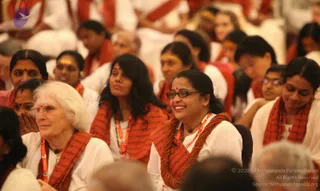
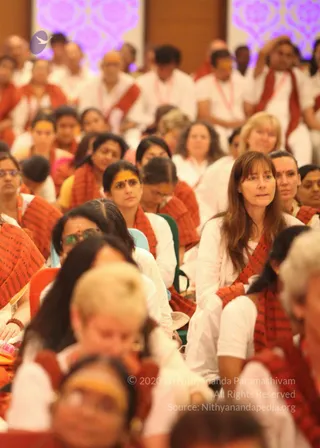
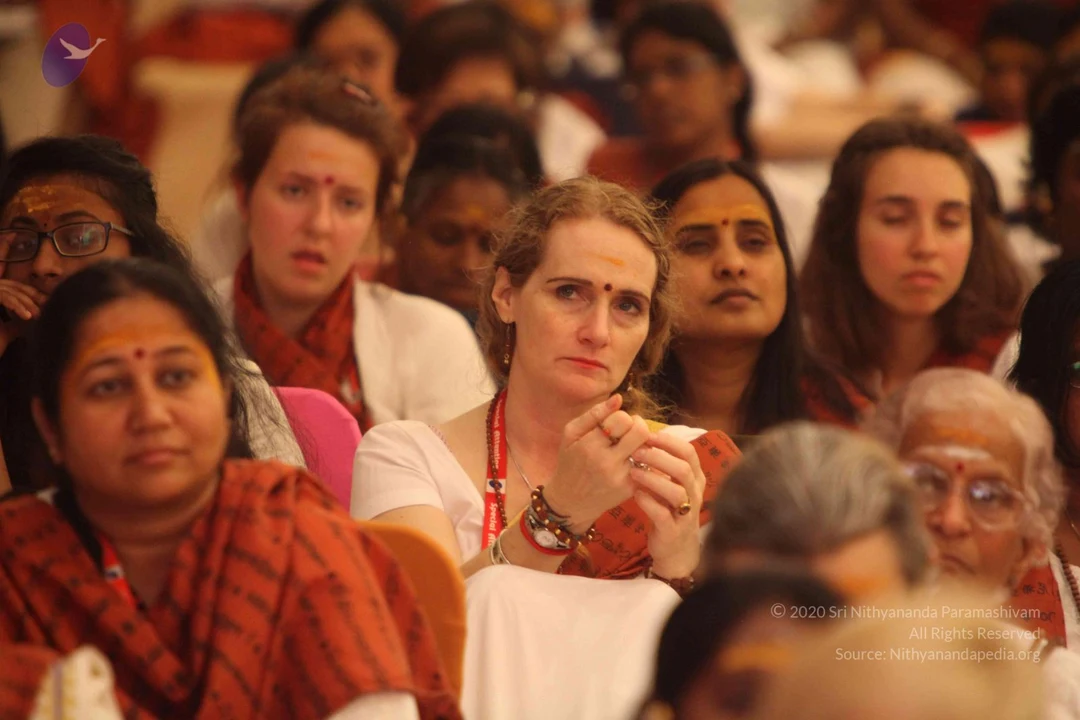
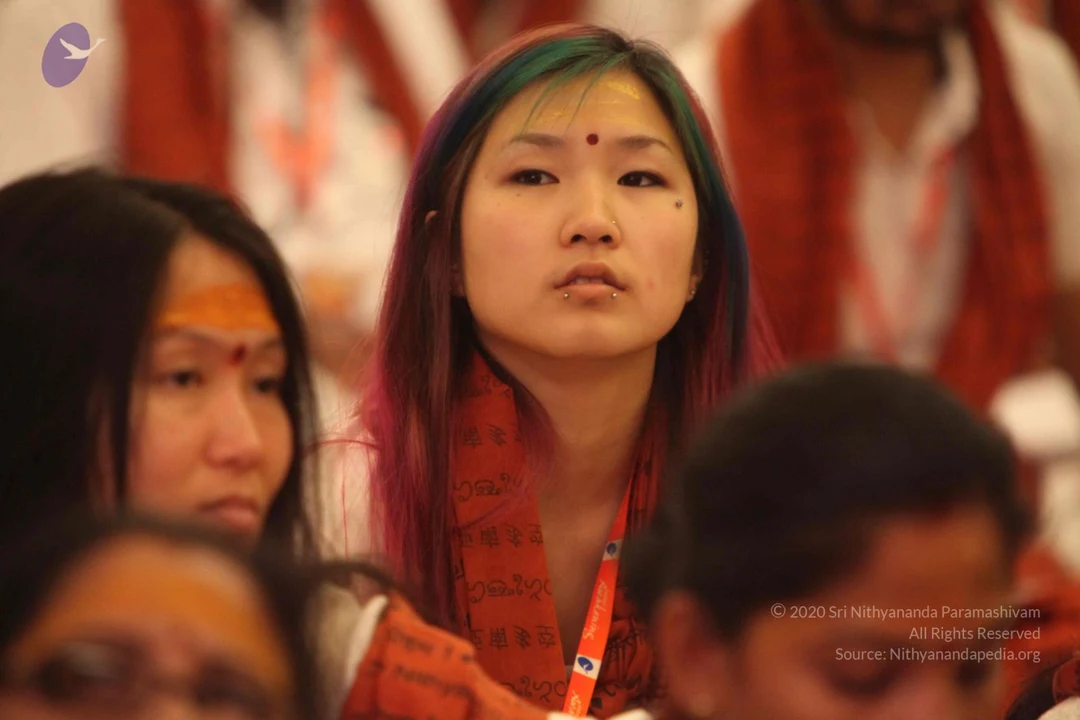
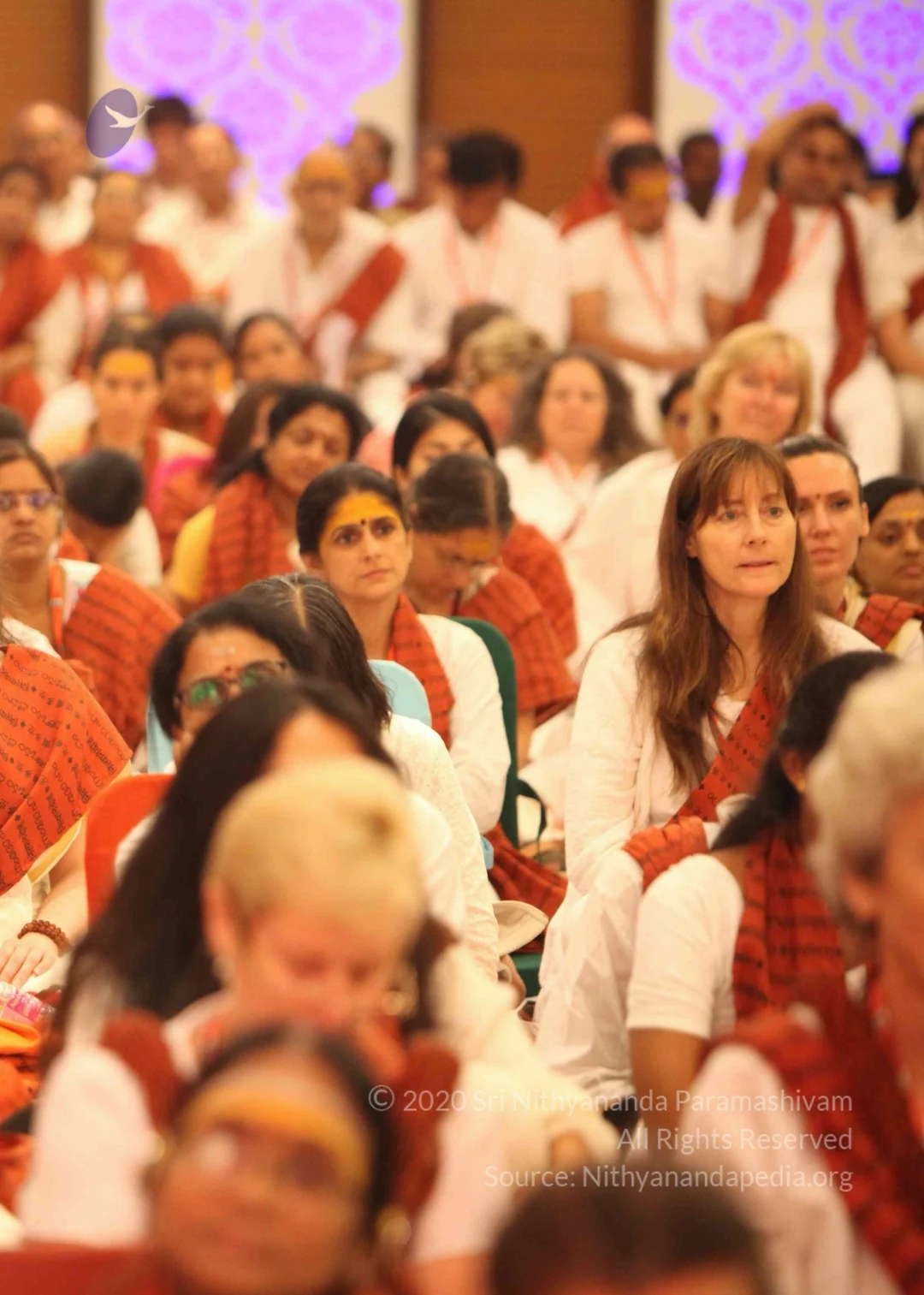
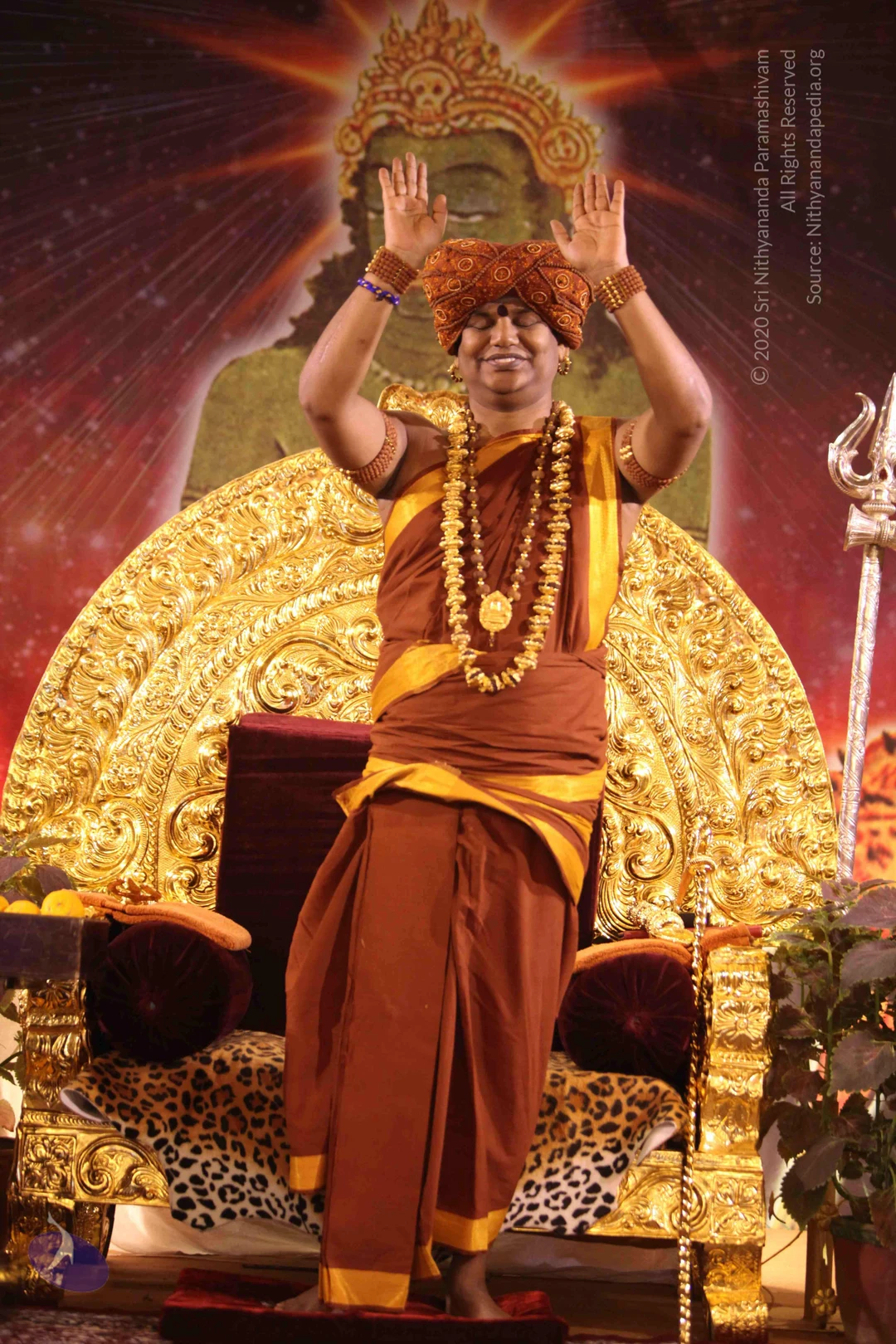
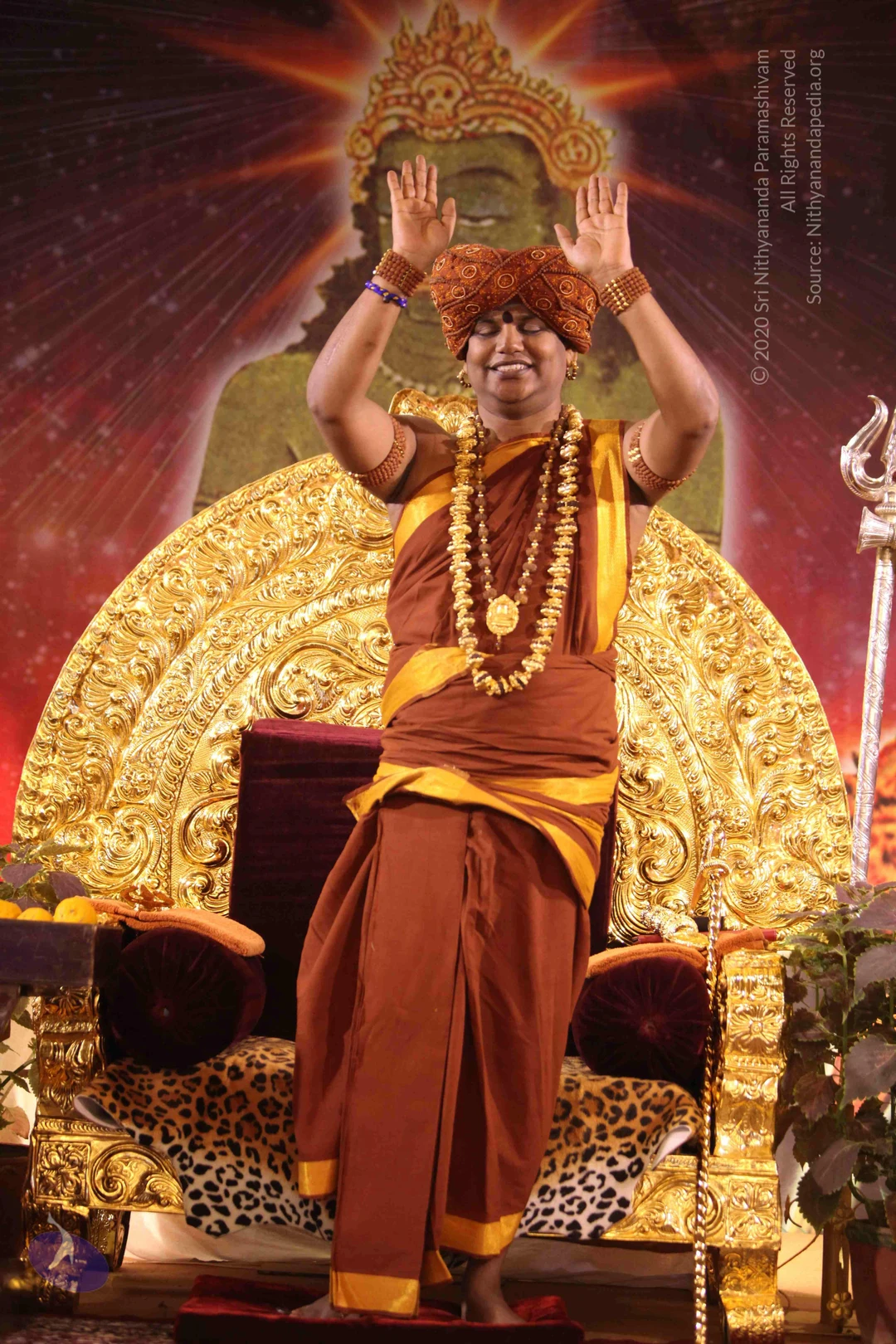
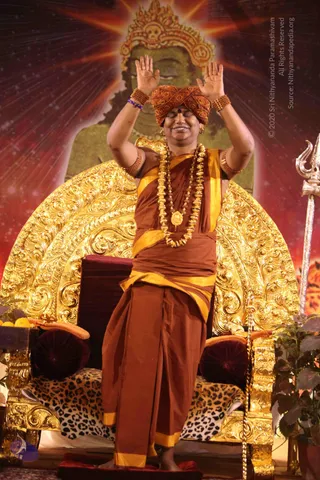
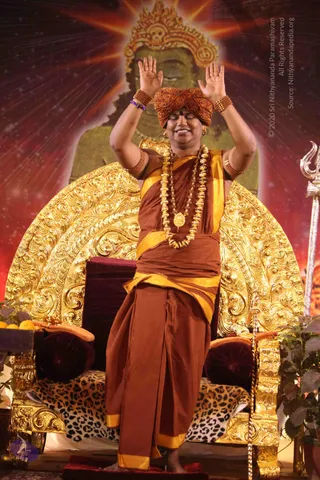
A seated audience of devotees in white clothing with orange-red shawls printed with dark script, many wearing orange lanyards. In the foreground a smiling woman in glasses wears a rudraksha mala and a white outfit, next to an elderly woman with white hair and glasses. Others have yellow or orange tilak marks on their foreheads and sit with hands folded. Blurred heads fill the background.Photograph of a seated audience at a satsang in a large hall, with lilac floral backdrop panels behind. Many devotees wear white clothes with red-orange shawls, and several have yellow or orange tilak marks on their foreheads. In the foreground a woman with long light-brown hair in white clothing and a red shawl listens attentively. Several others are visible, including a woman in glasses and a blonde woman. No speaker or a person candidate is visible in the frame.A seated figure on an ornate gold throne with carved scrollwork and a leopard-print cushion raises both palms above the head with eyes closed in a blessing gesture. He wears a rust-brown robe with gold borders, a matching orange-and-gold patterned turban, a gold necklace with a pendant and a long multi-strand gold and beaded mala, plus beaded bracelets on both wrists. A silver trident stands at the right edge and a green plant sits beside the throne. Behind him a large golden deity figure with a crown glows against a red radiating backdrop.A person stands on a red cushion before an ornate gold throne with a leopard-print seat cover, arms raised with palms open above a red-and-gold patterned turban. The figure wears a brown and gold-bordered draped garment, a long necklace of beads and a pendant, and bangles on the wrists and upper arms, with eyes closed and a smile. Behind is a large glowing backdrop showing a green seated deity figure with a golden crown and radiating red light. A silver trident stands at the right edge and yellow fruit sits at the left.