Skip to content
Thursday

14 May 2015

Let Shiva Sculpt You From Death To Divine

Dated photos
367
Source pages
1
Media
8
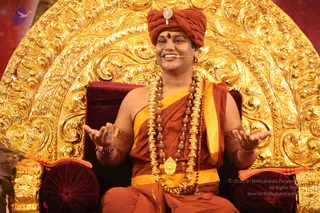
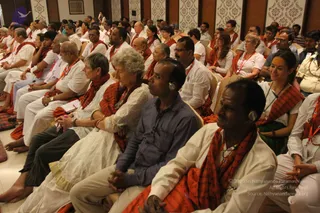
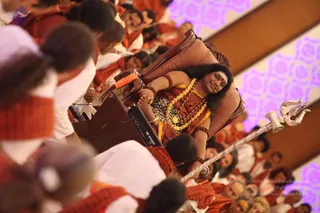
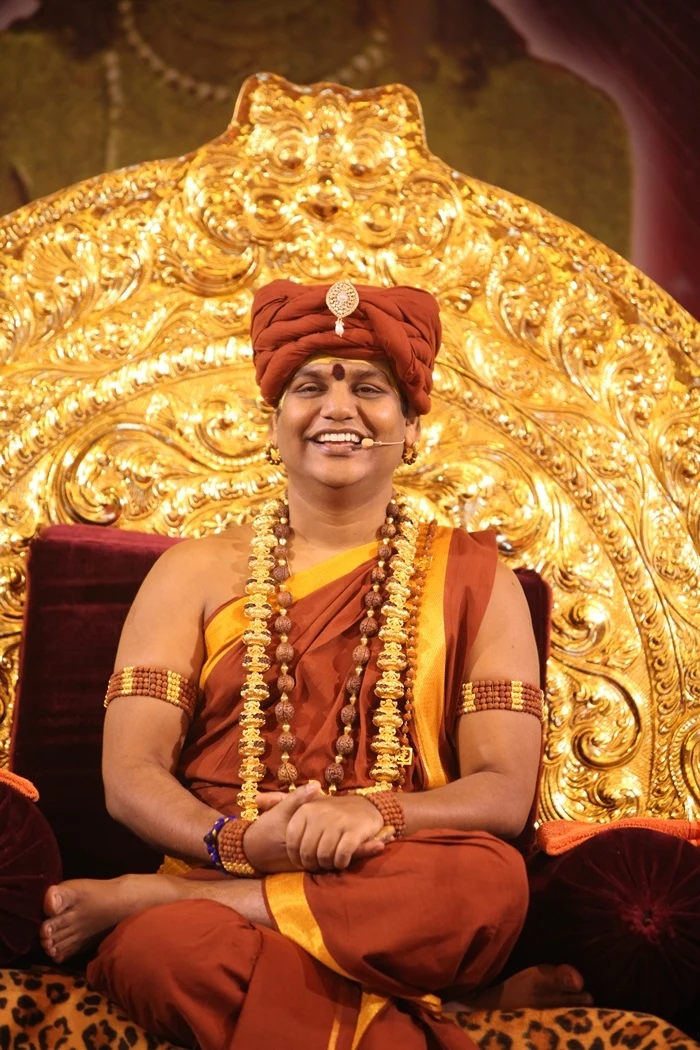
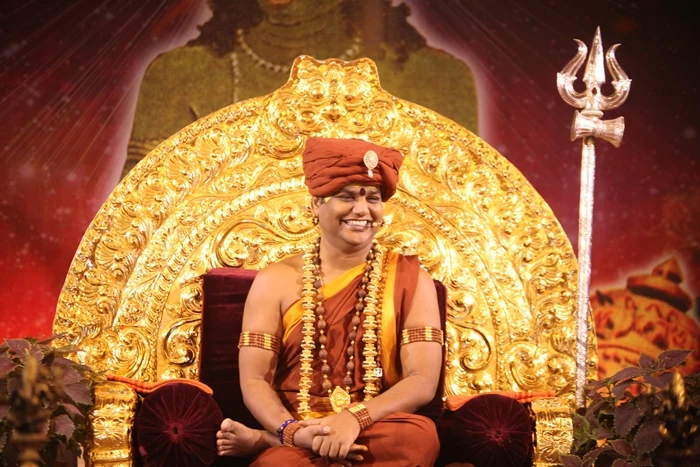
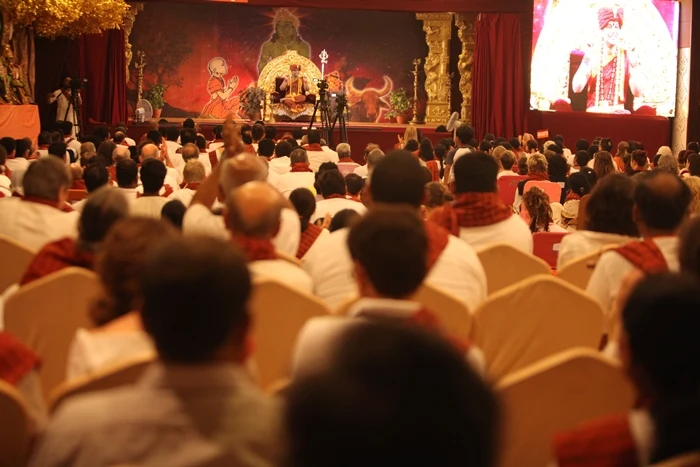
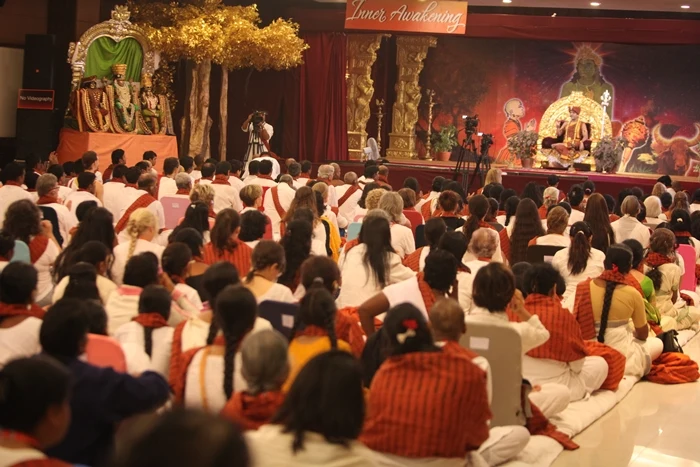
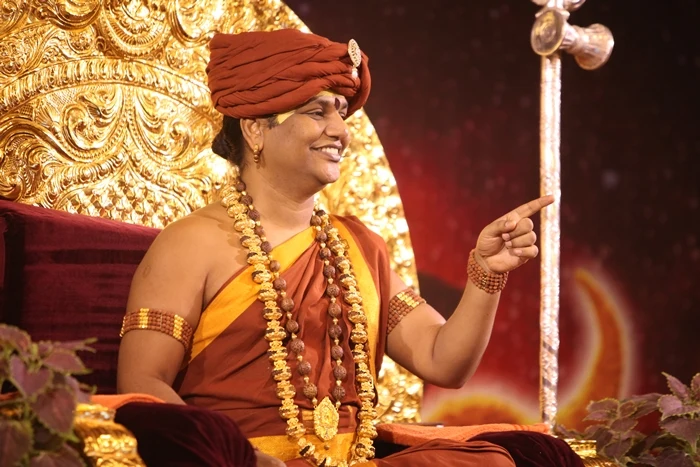
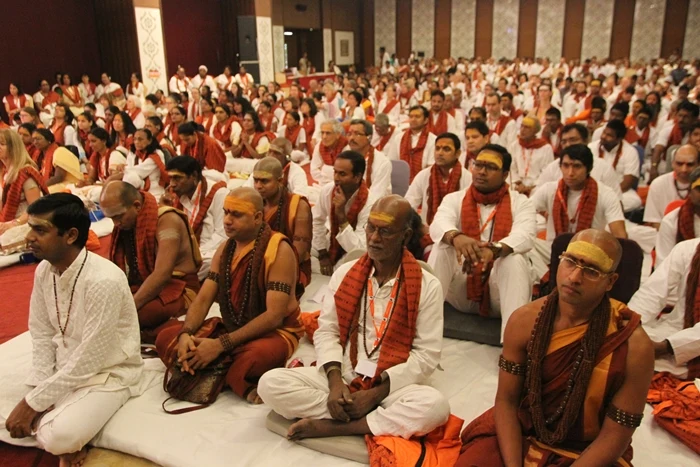
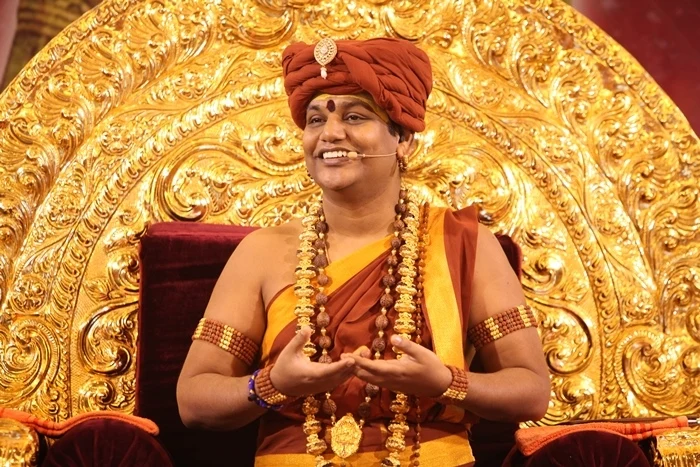
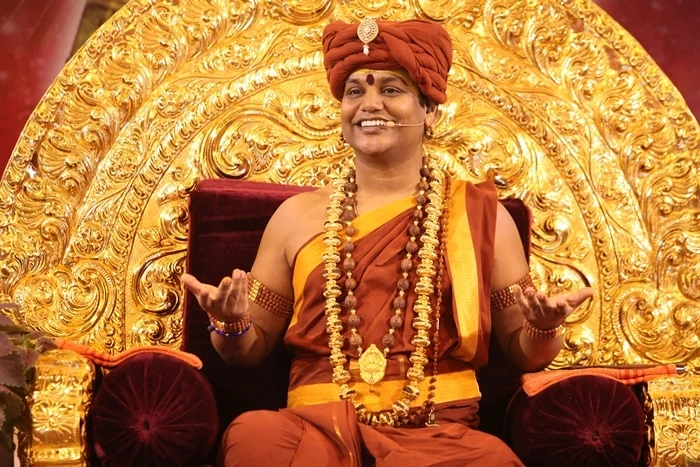
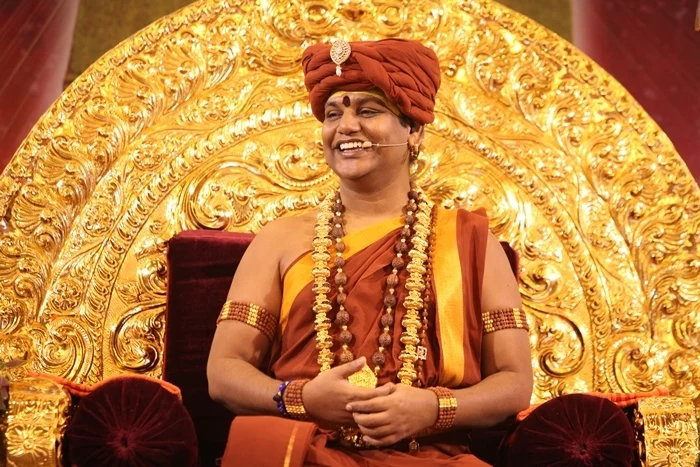
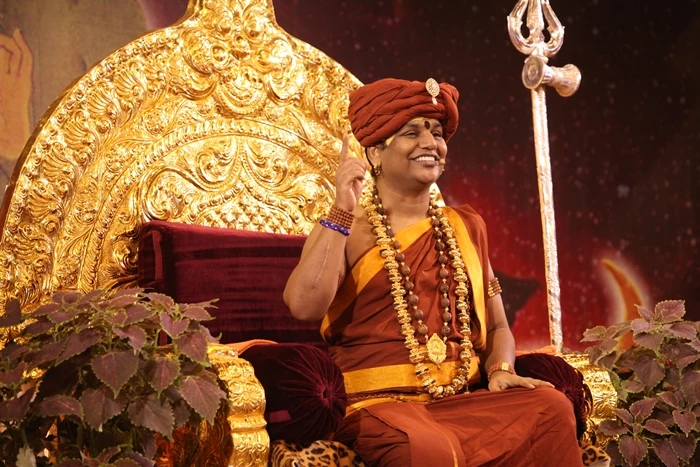
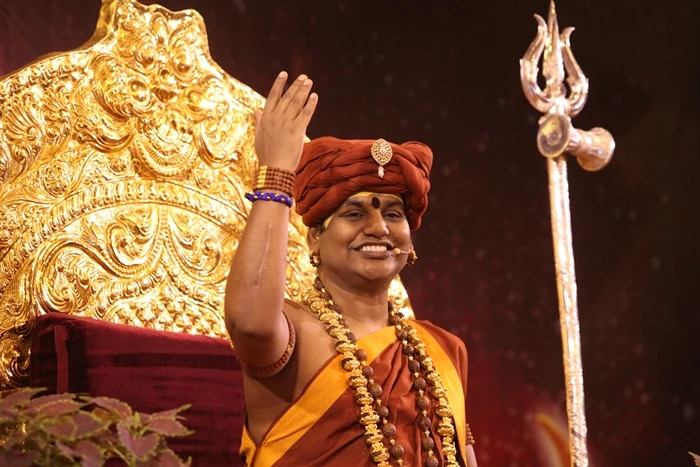
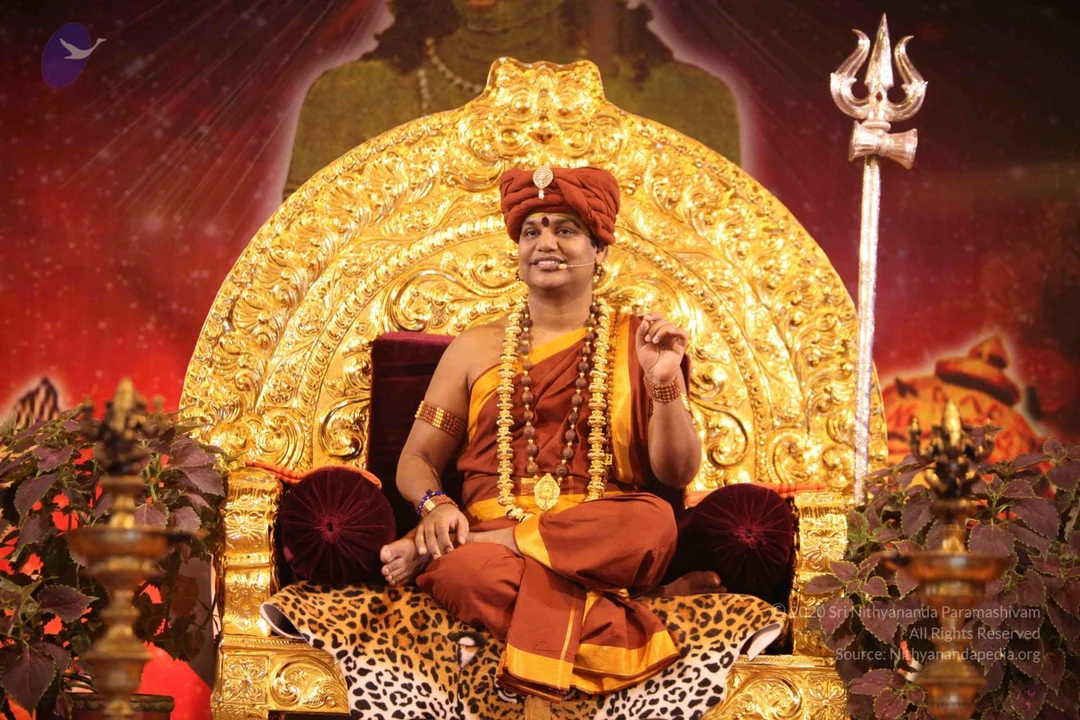
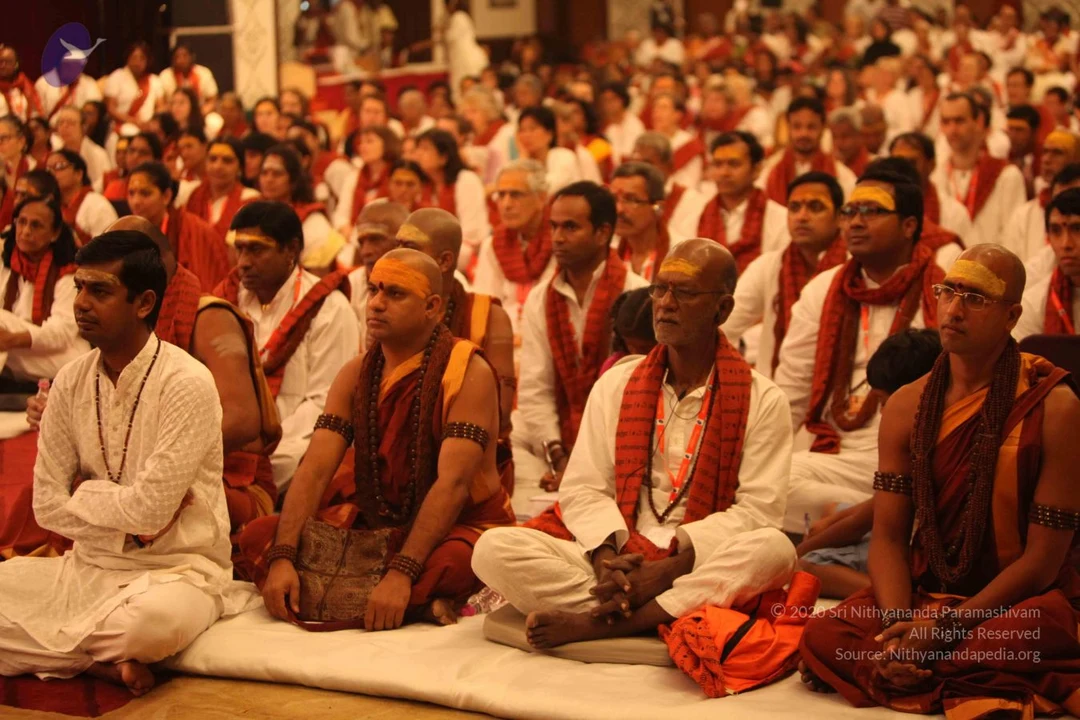
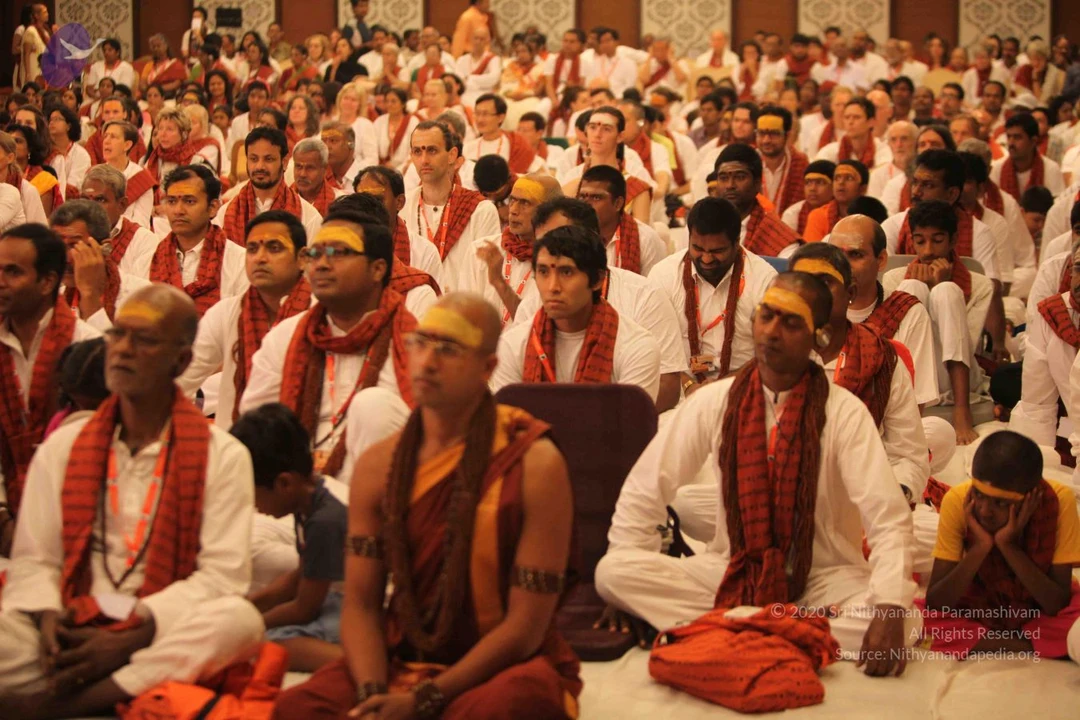
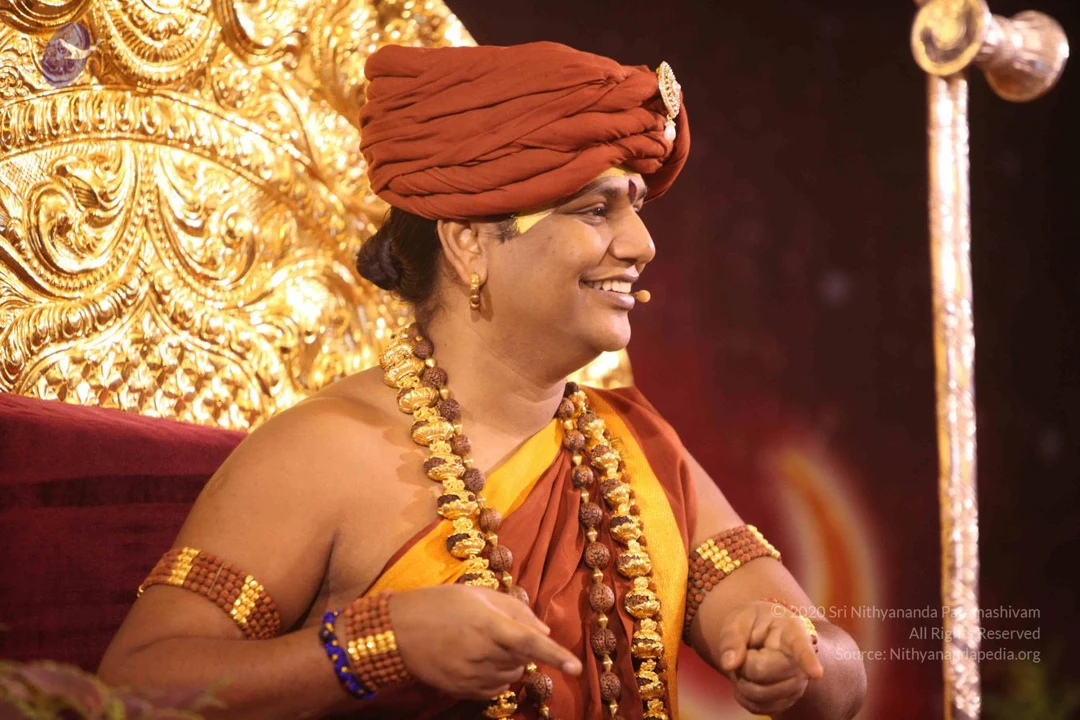
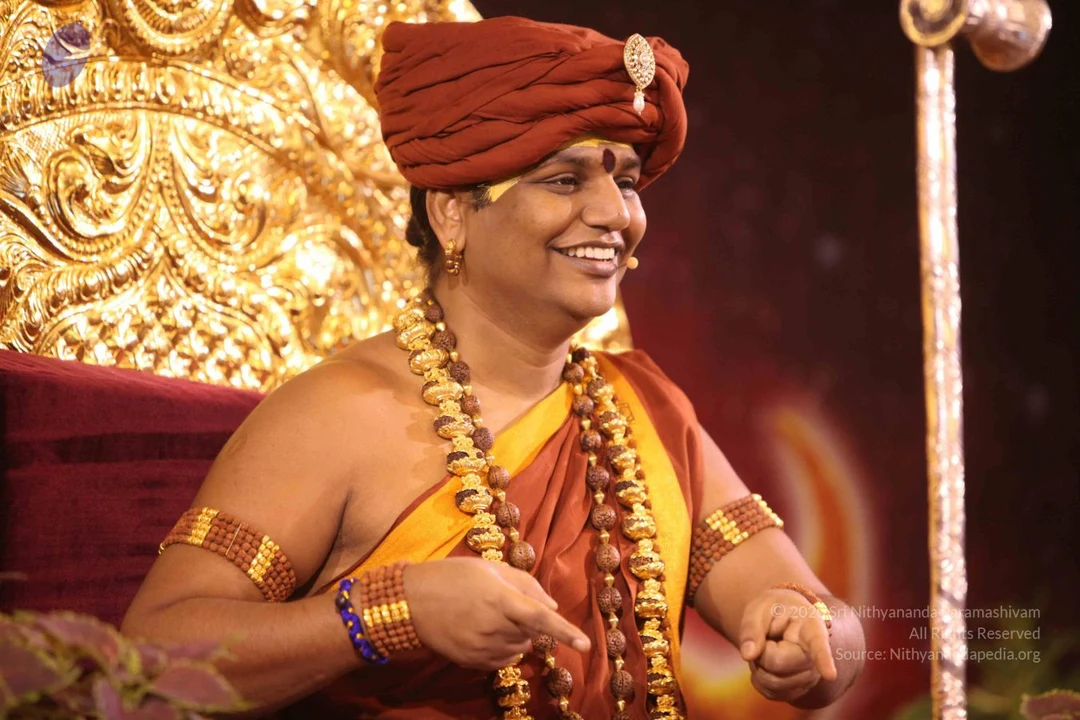
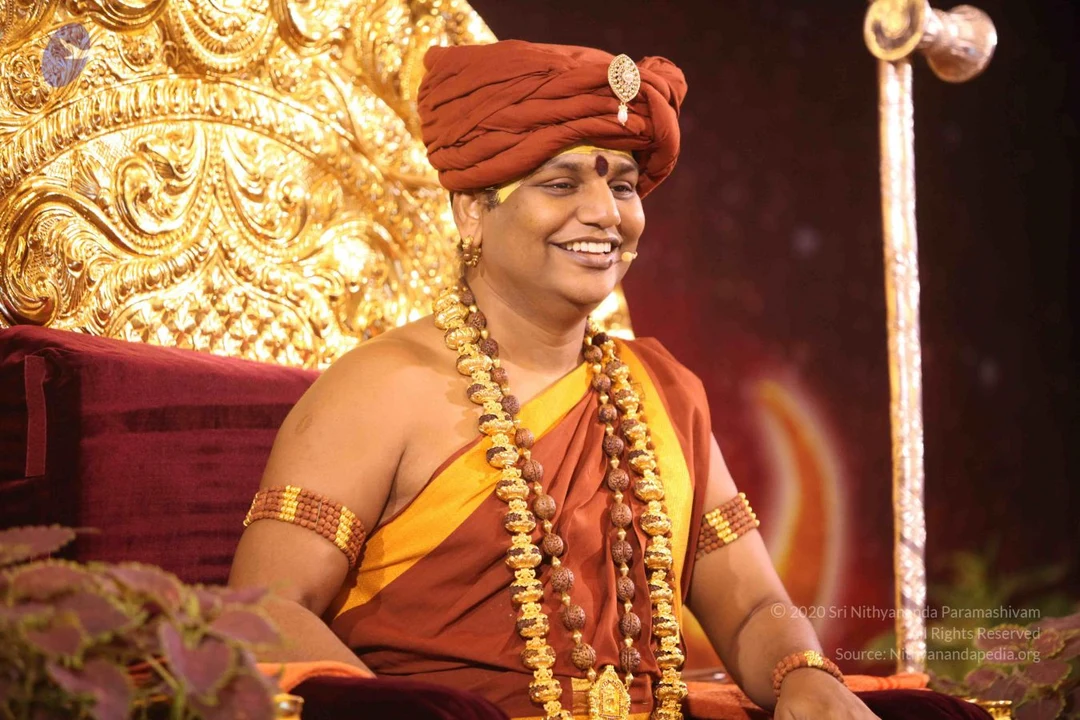
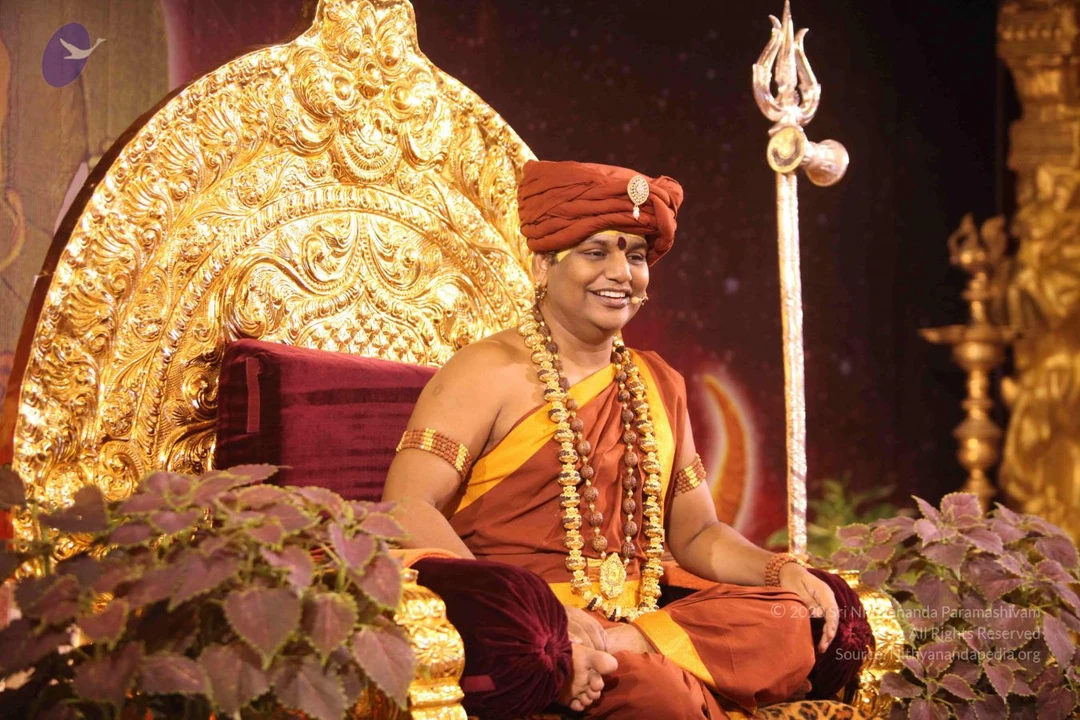
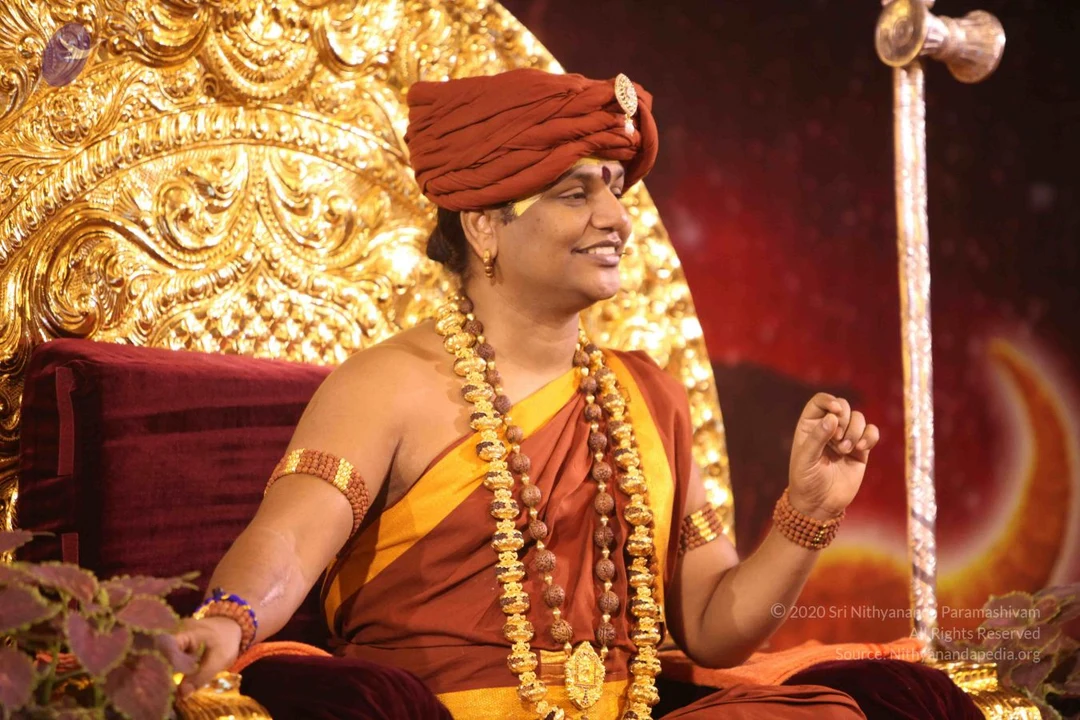
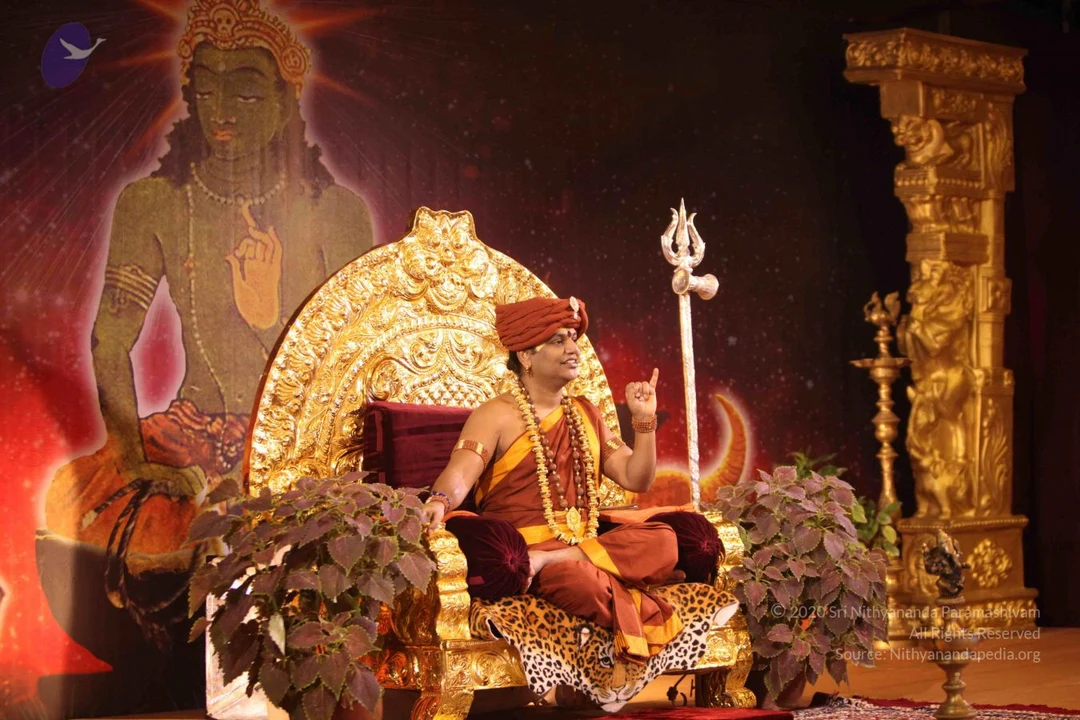
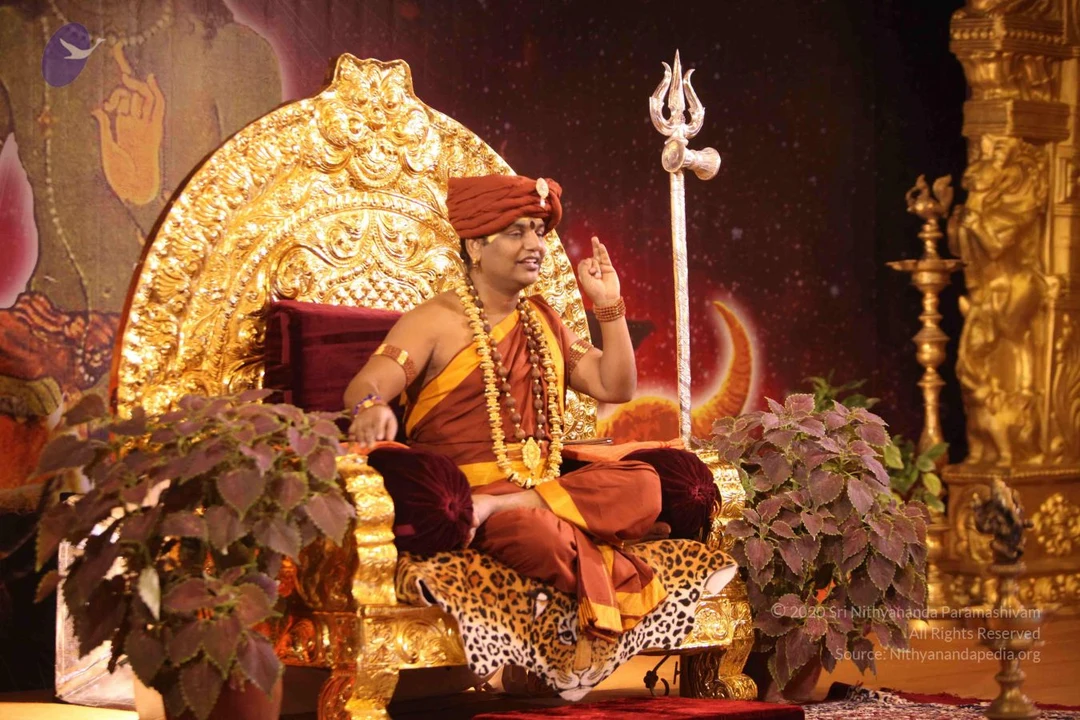
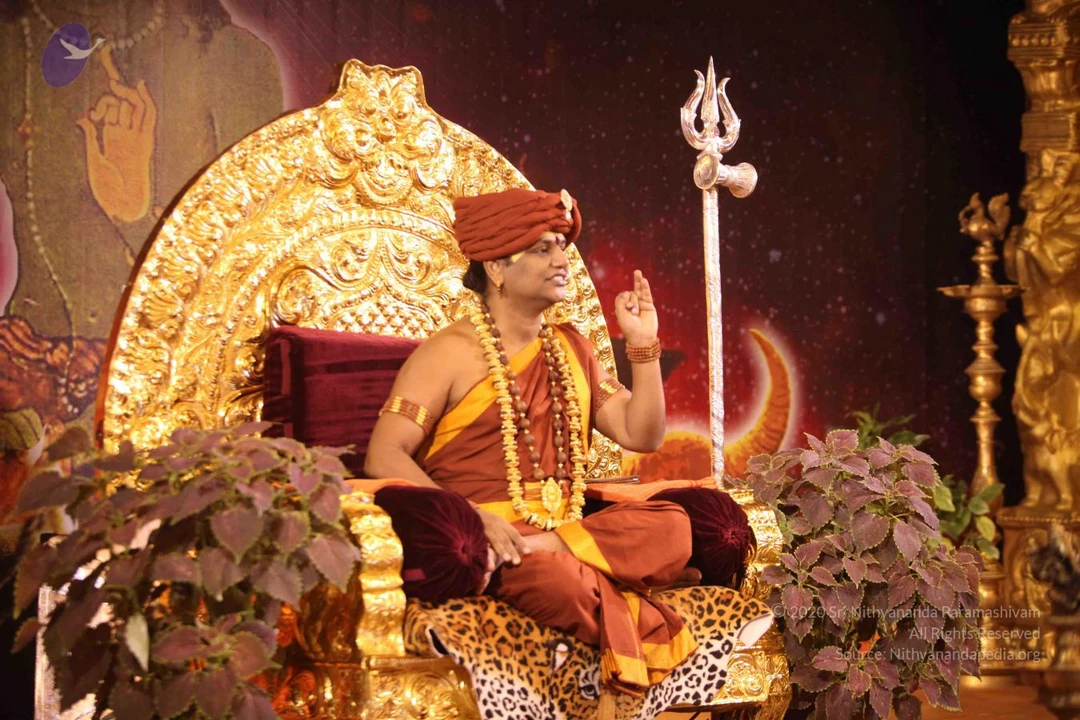
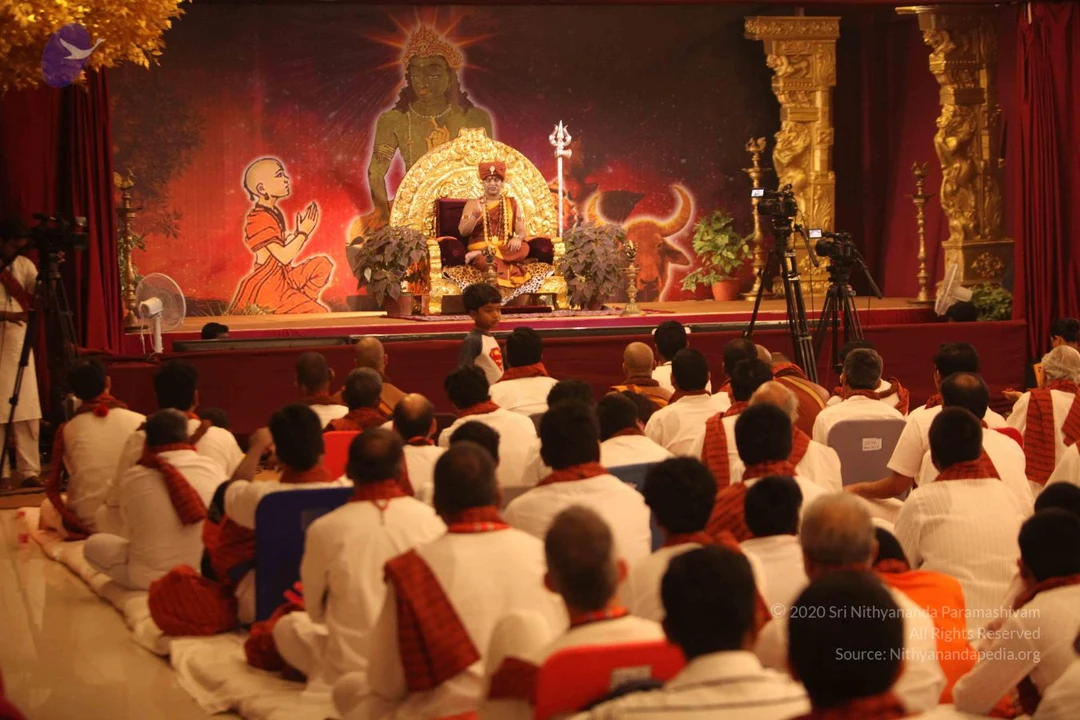
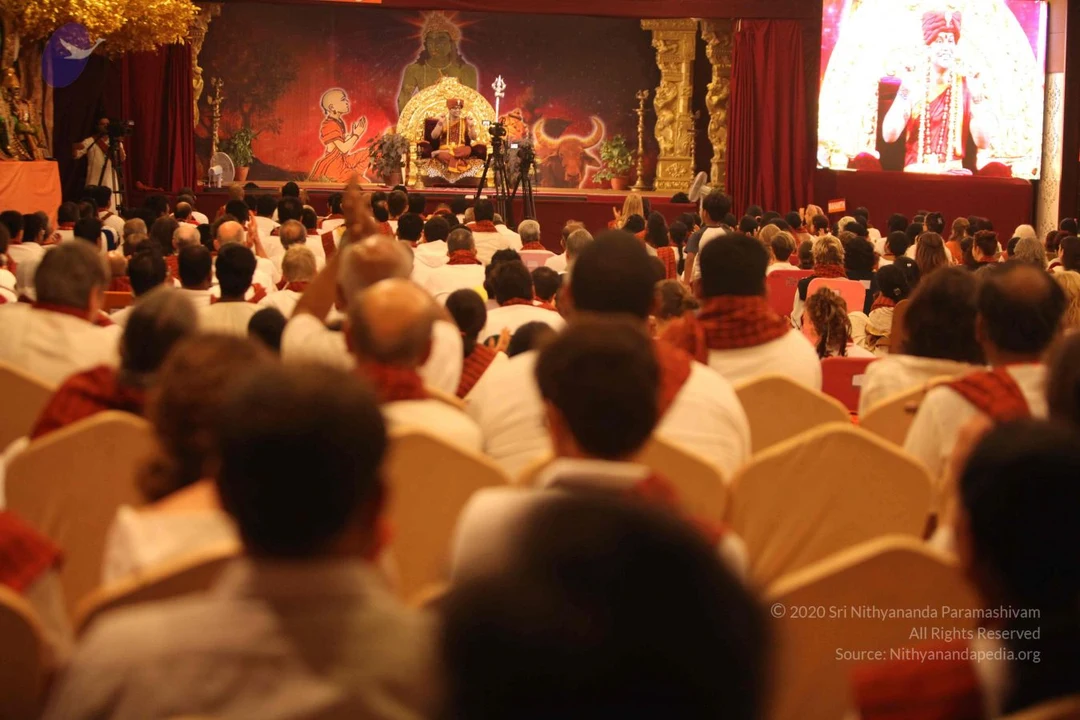
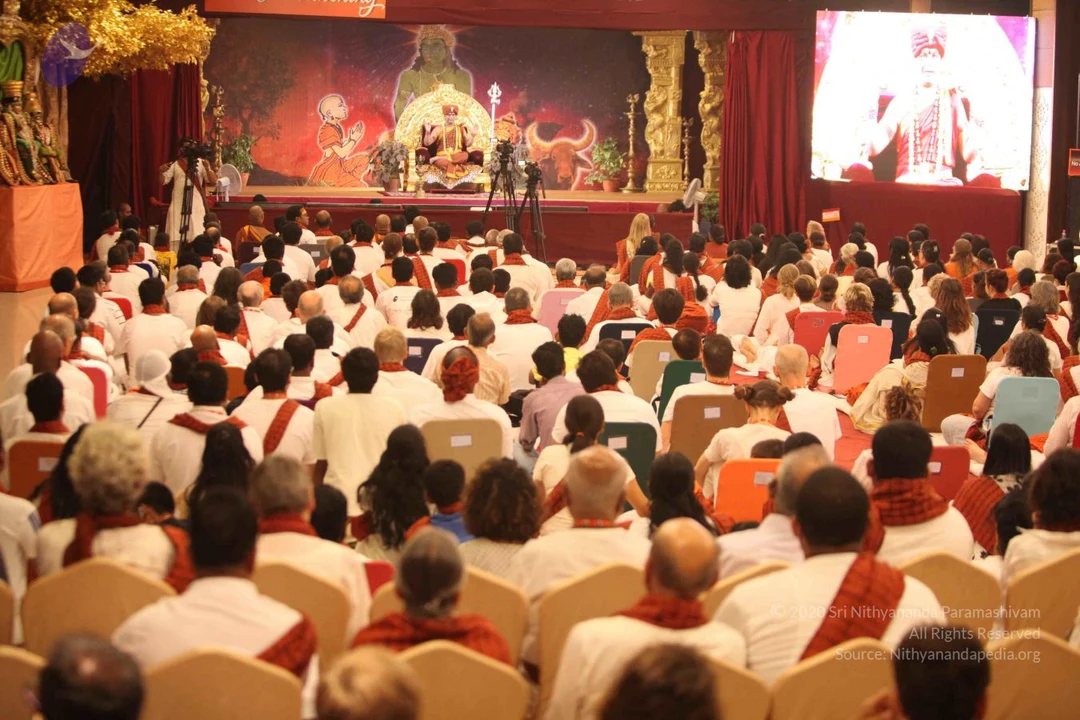
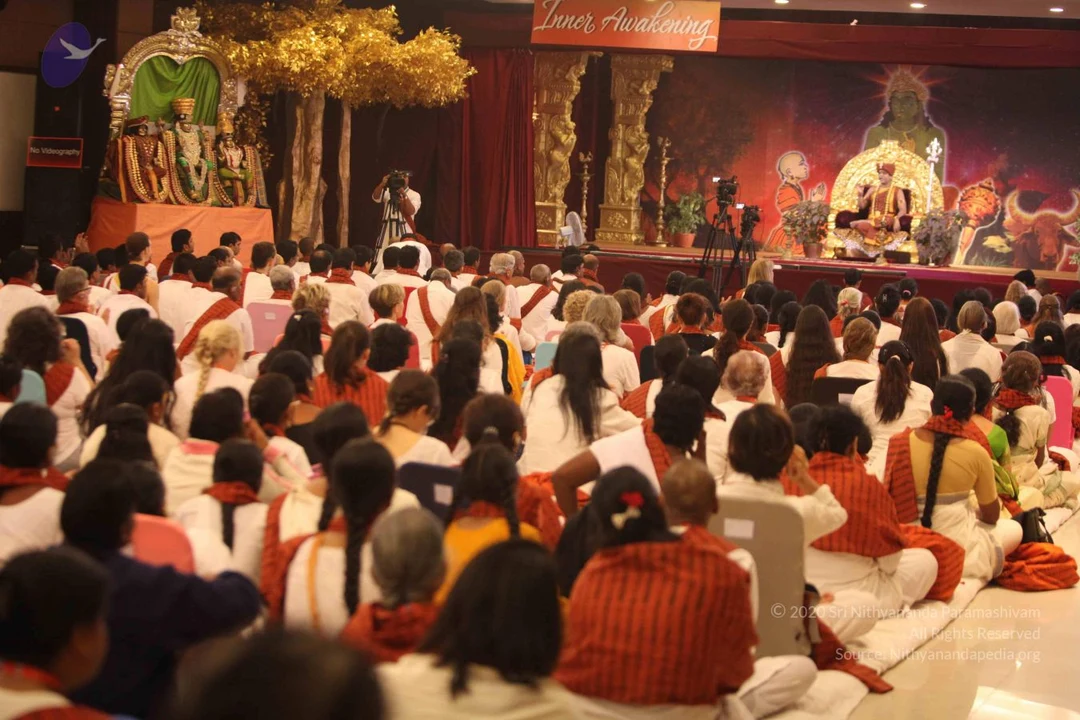
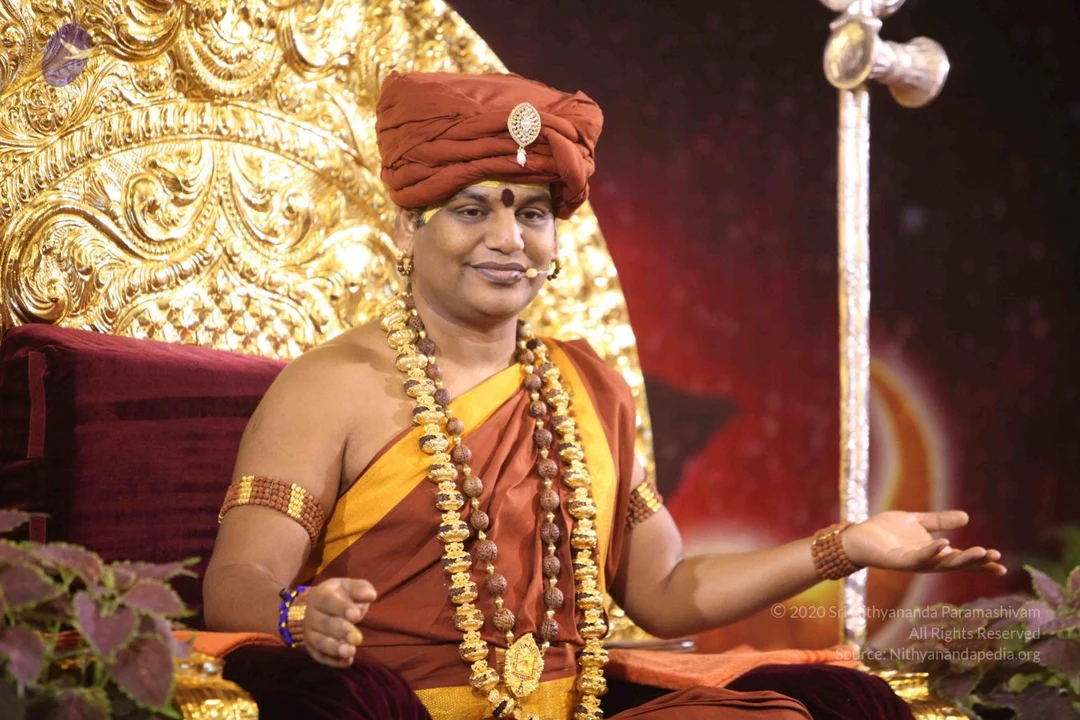
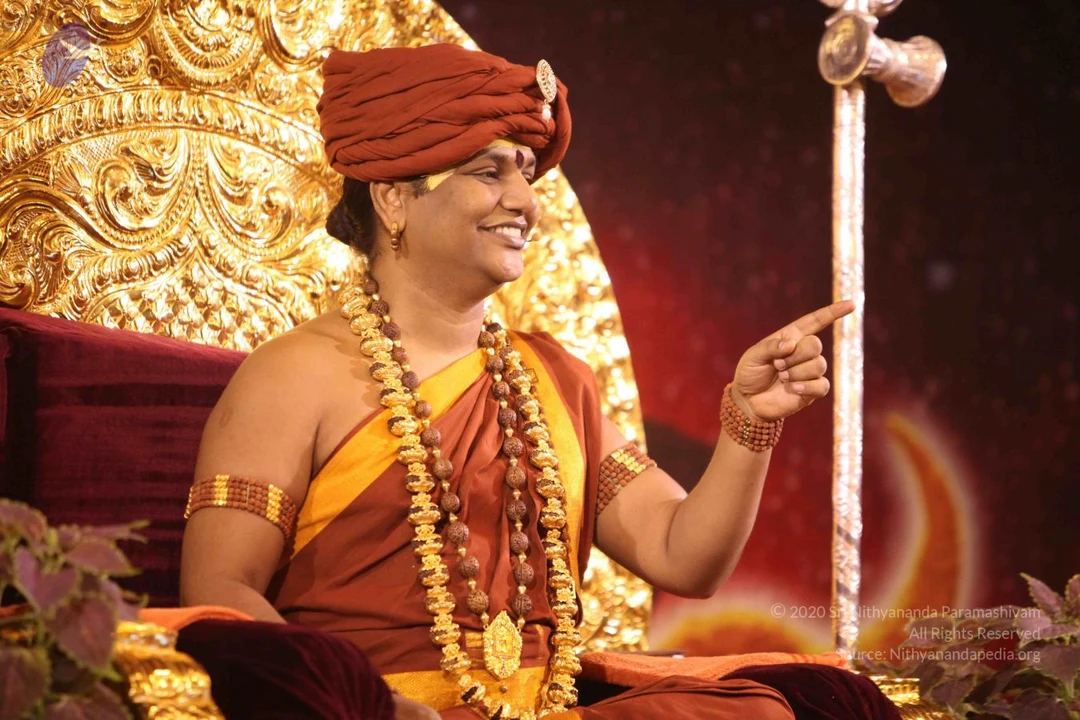
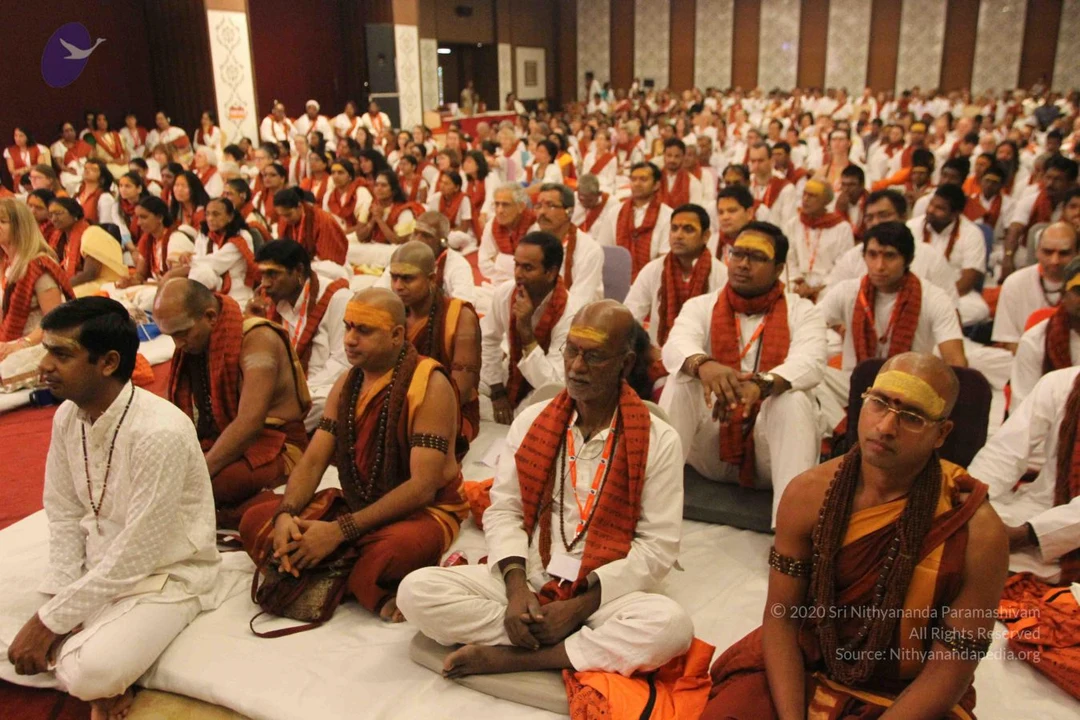
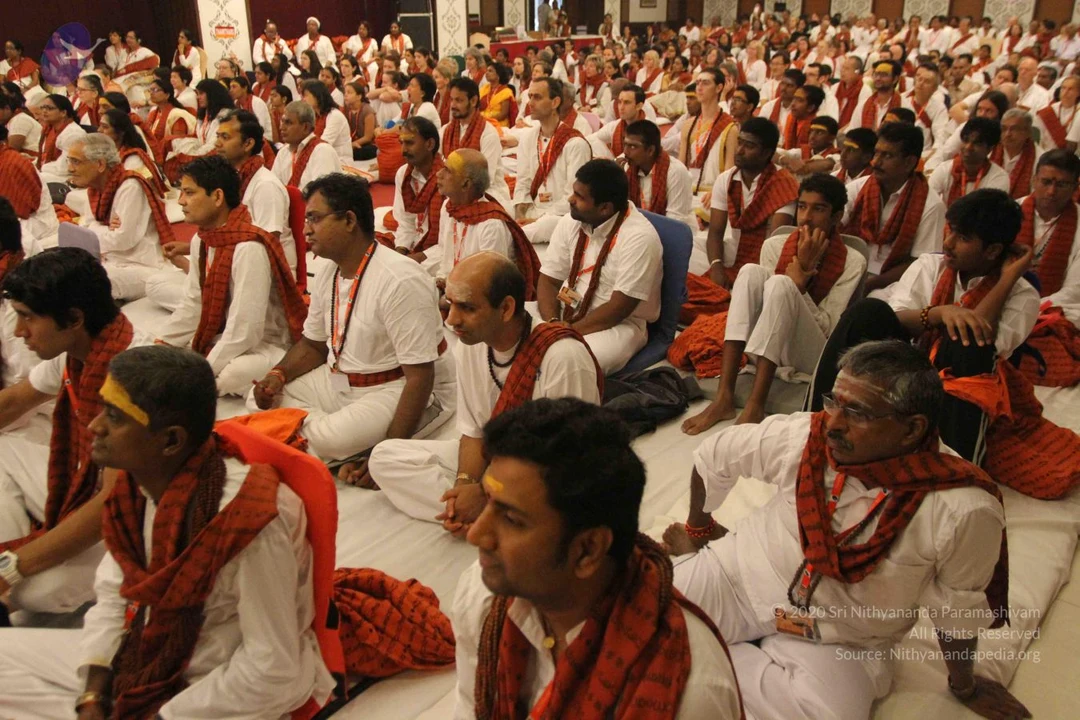
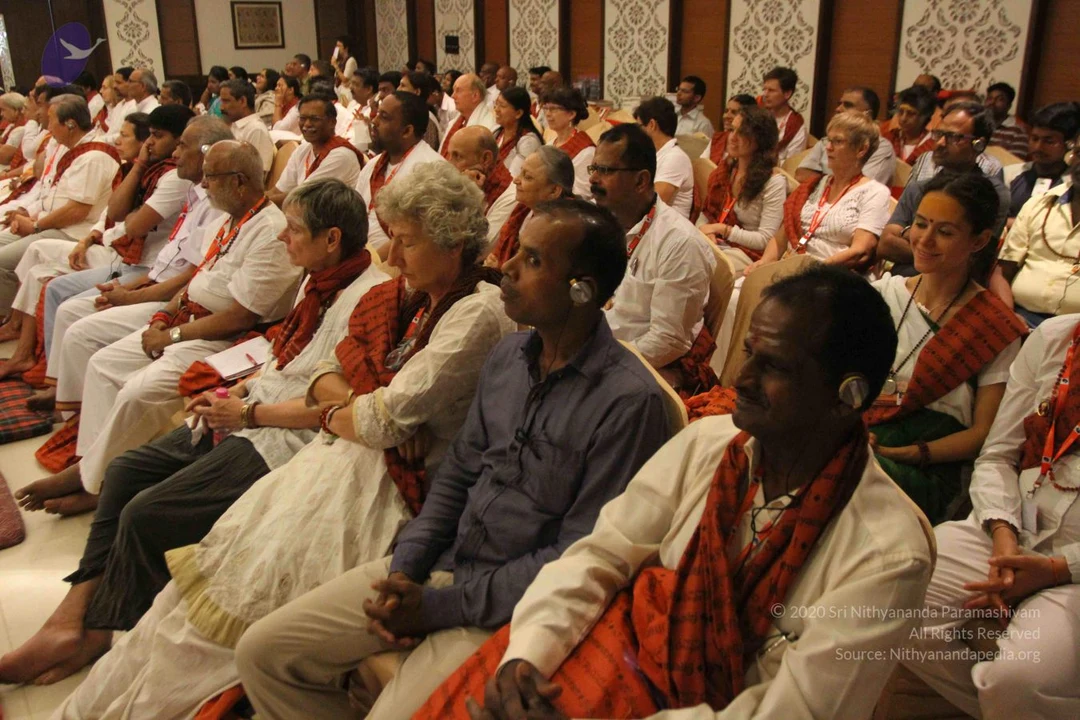
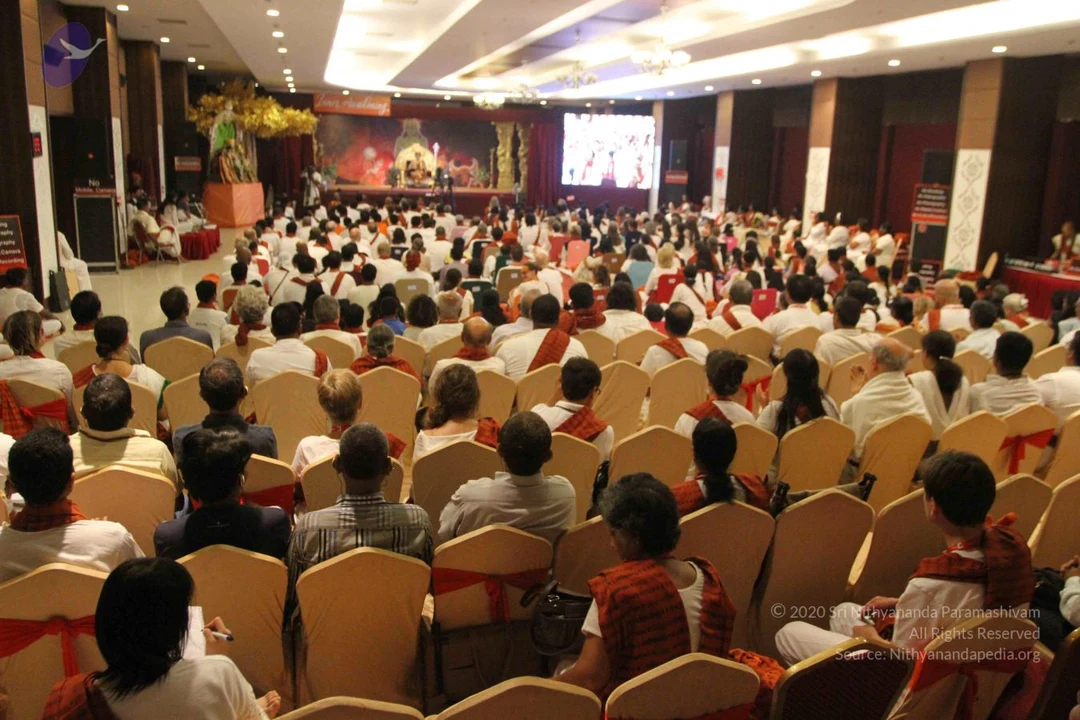
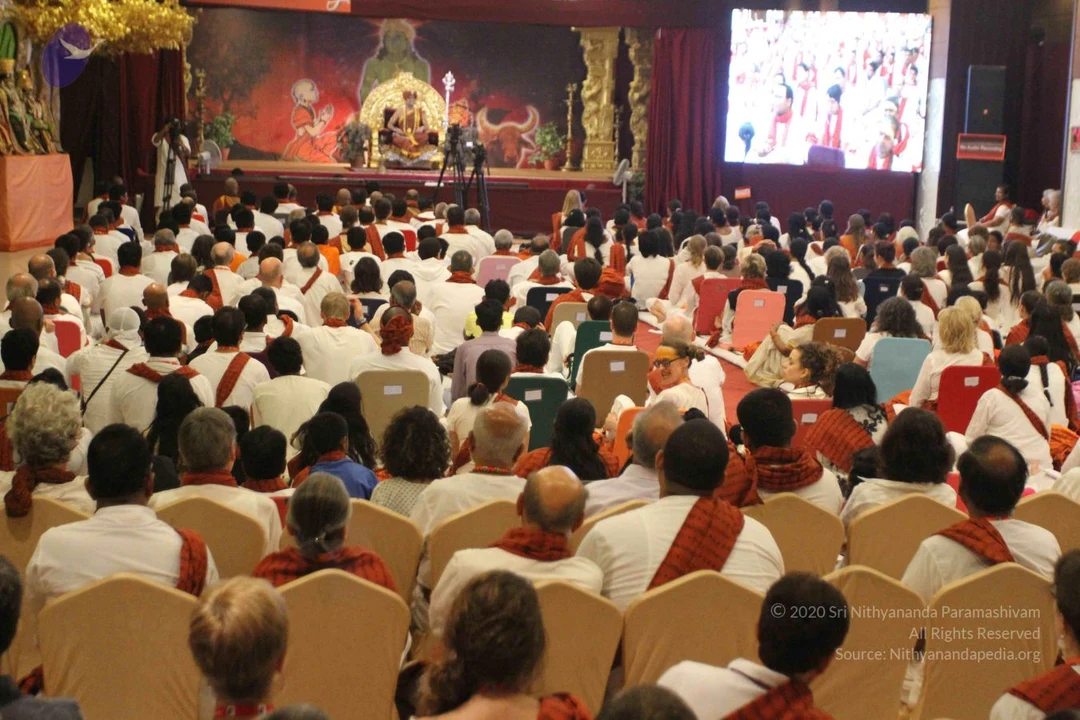
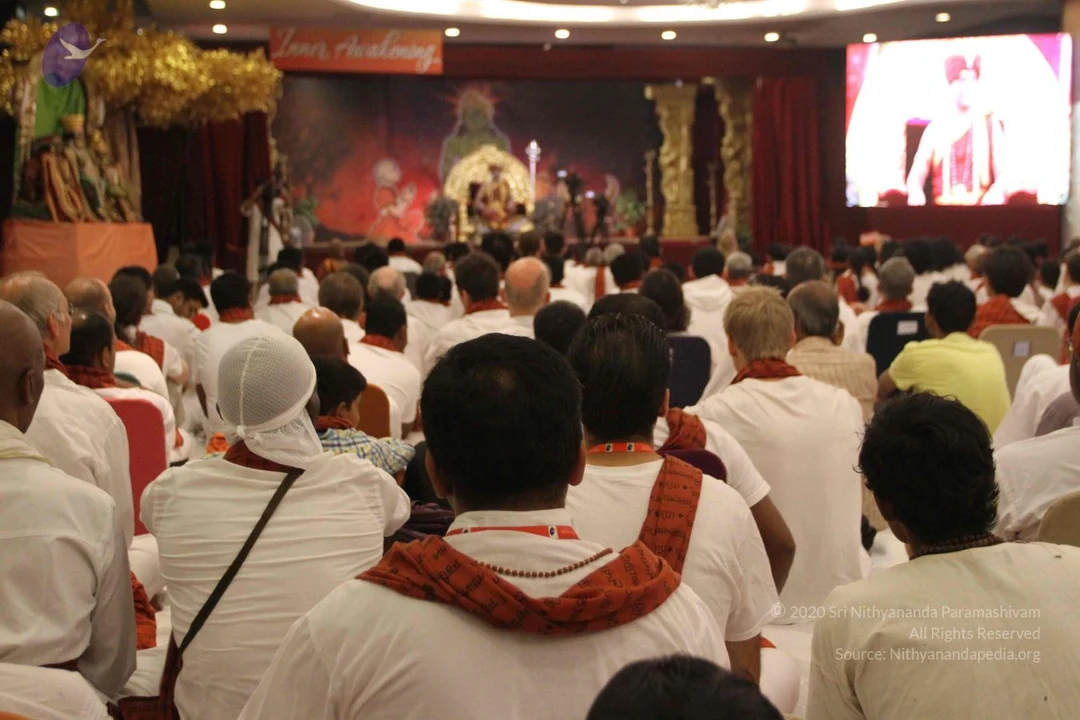
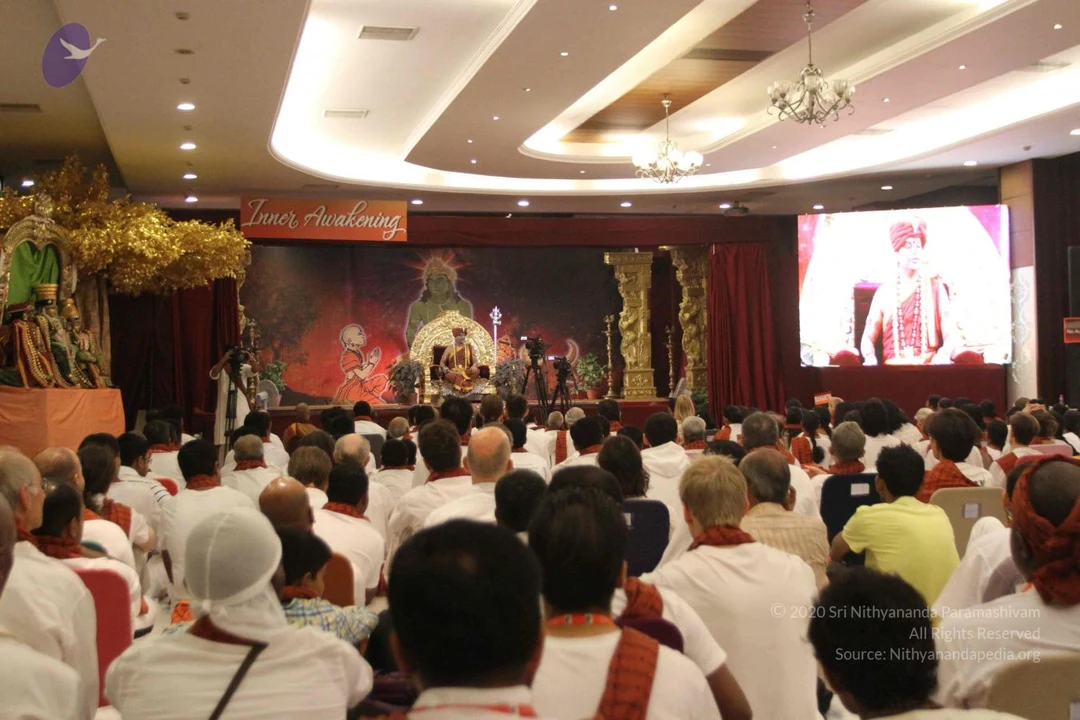
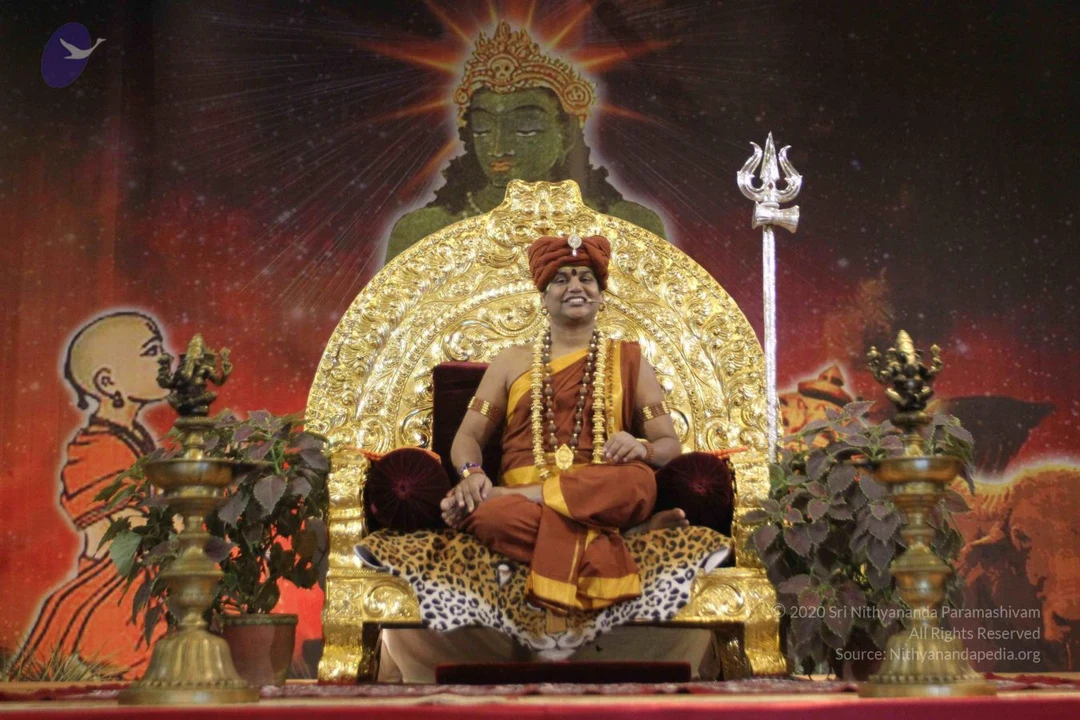
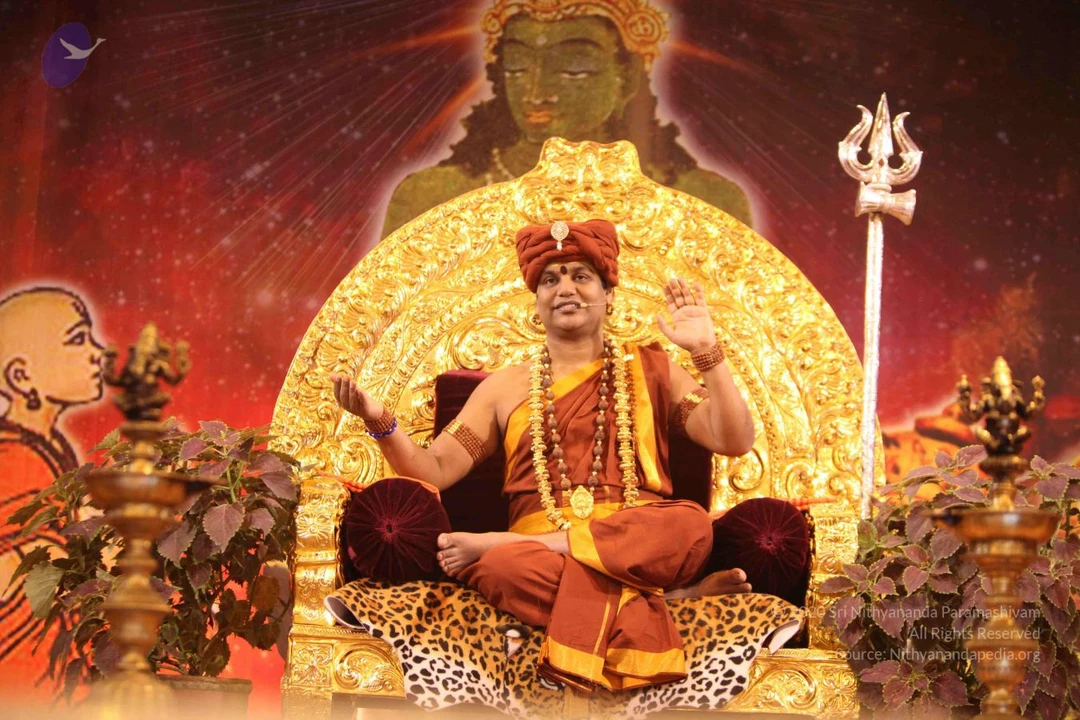
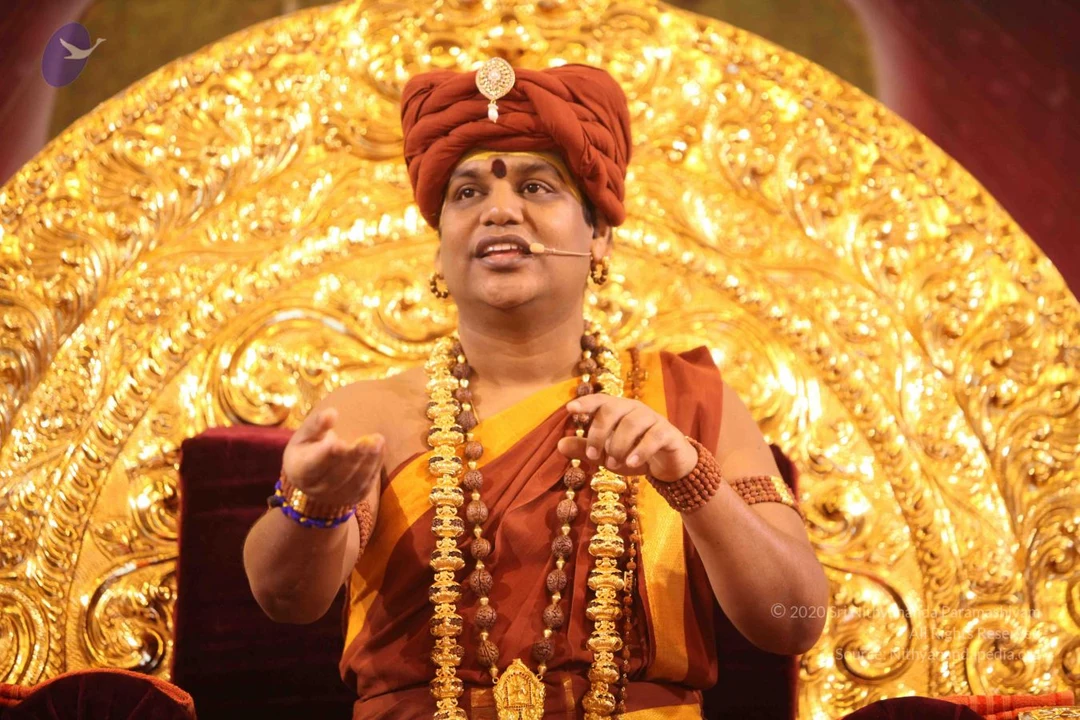
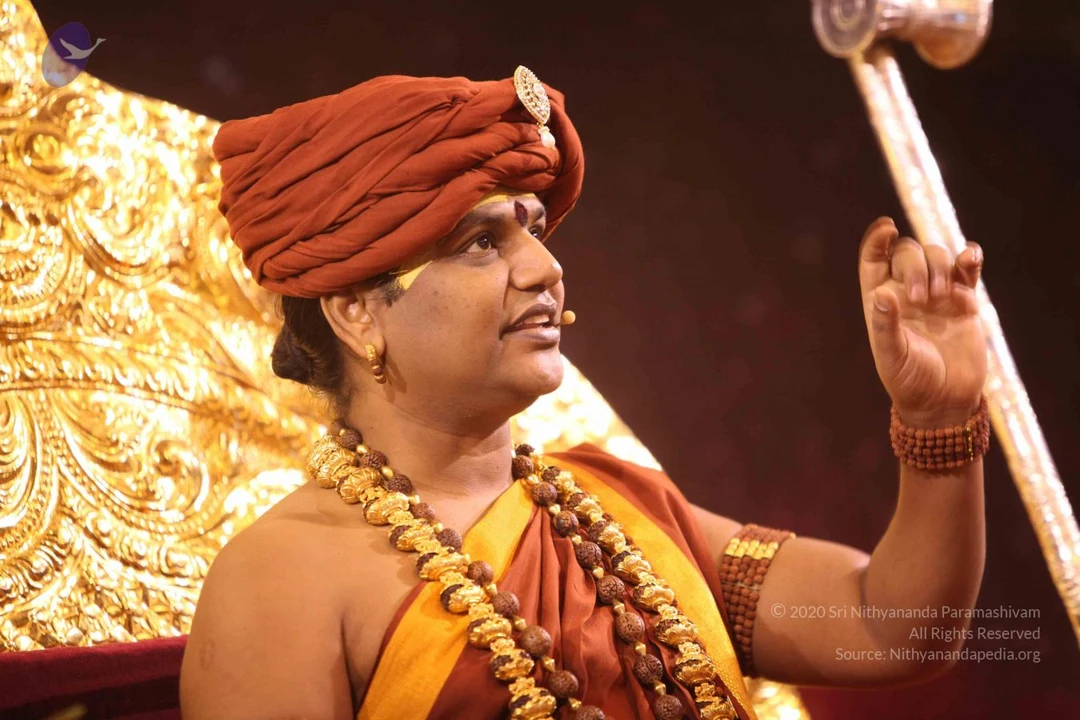
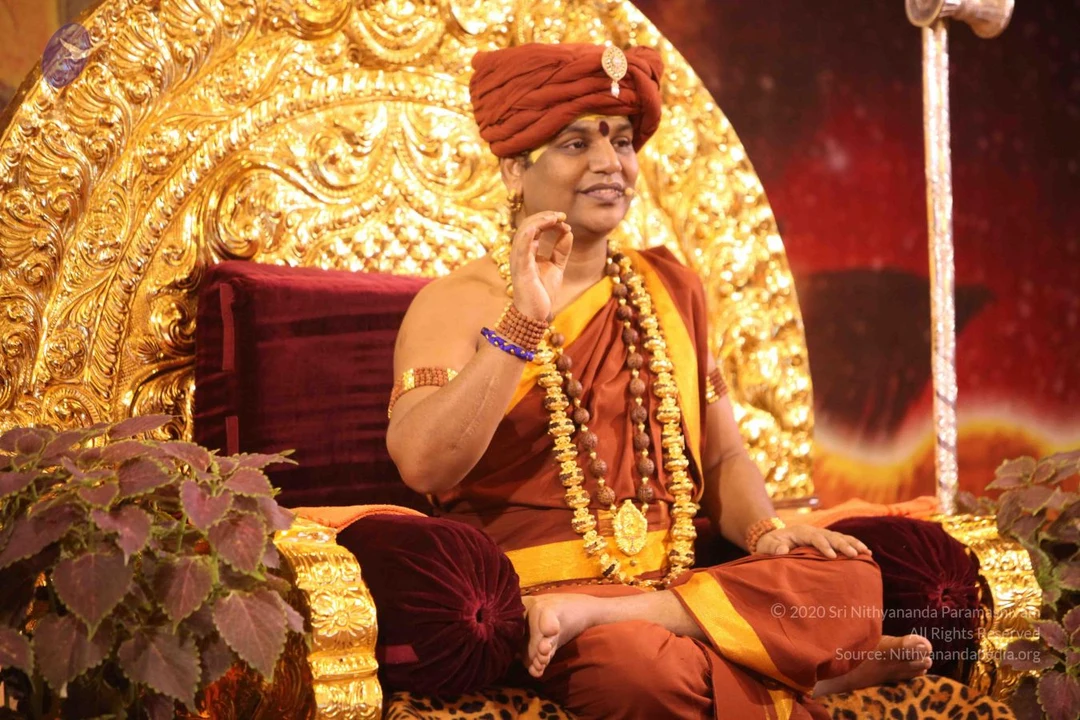
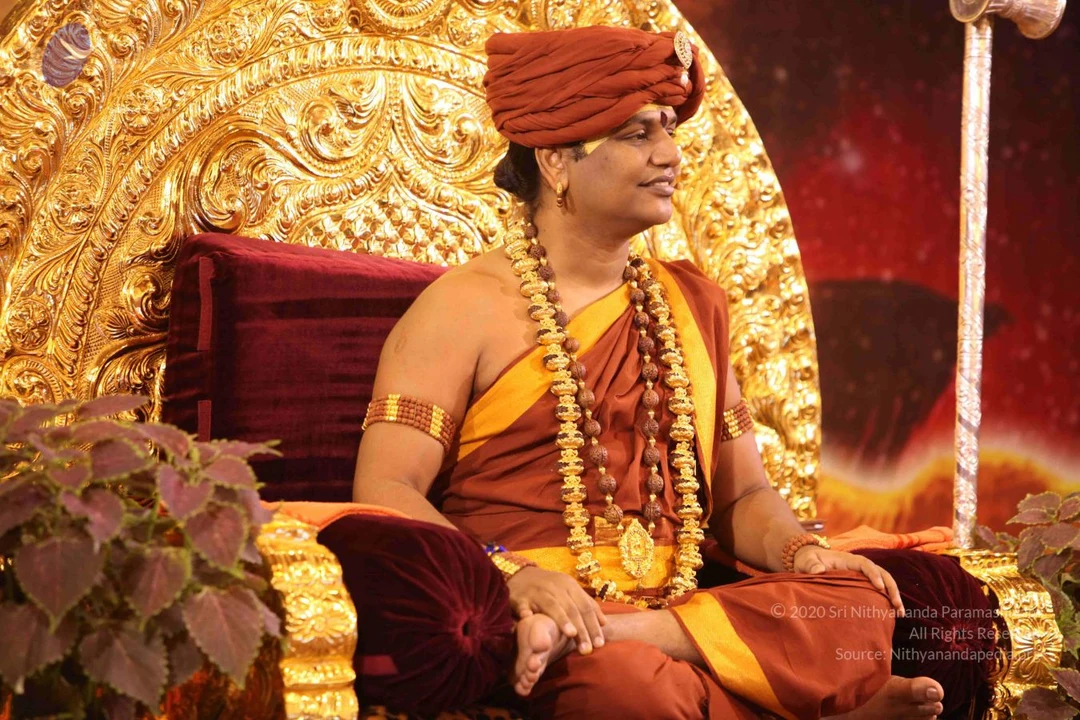
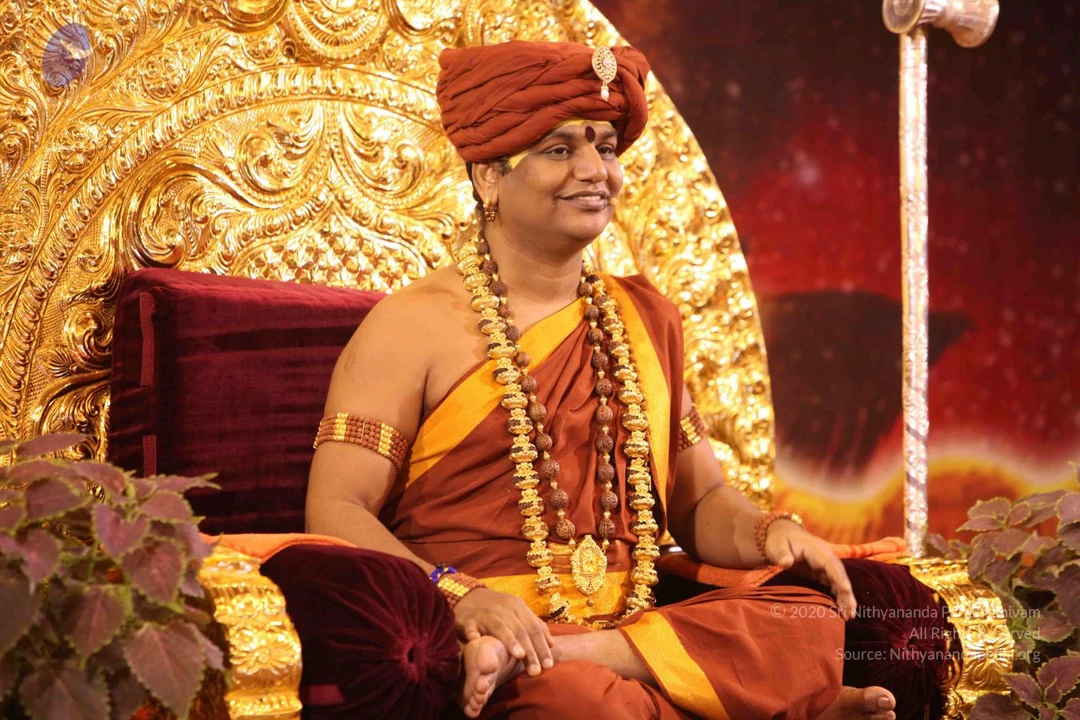
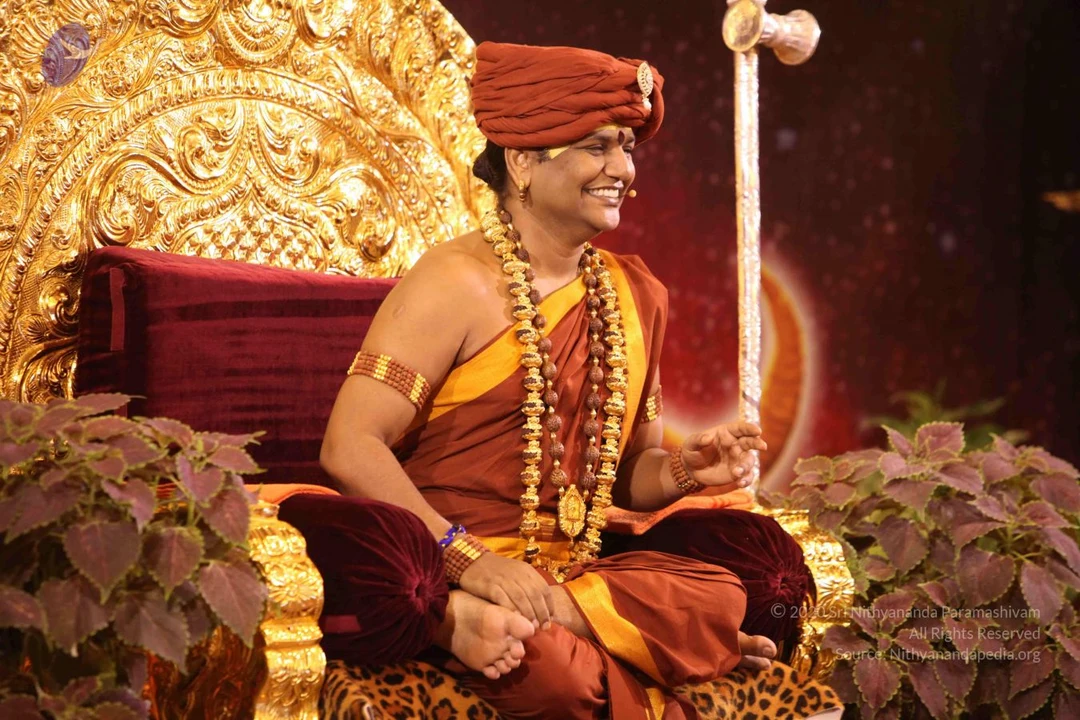
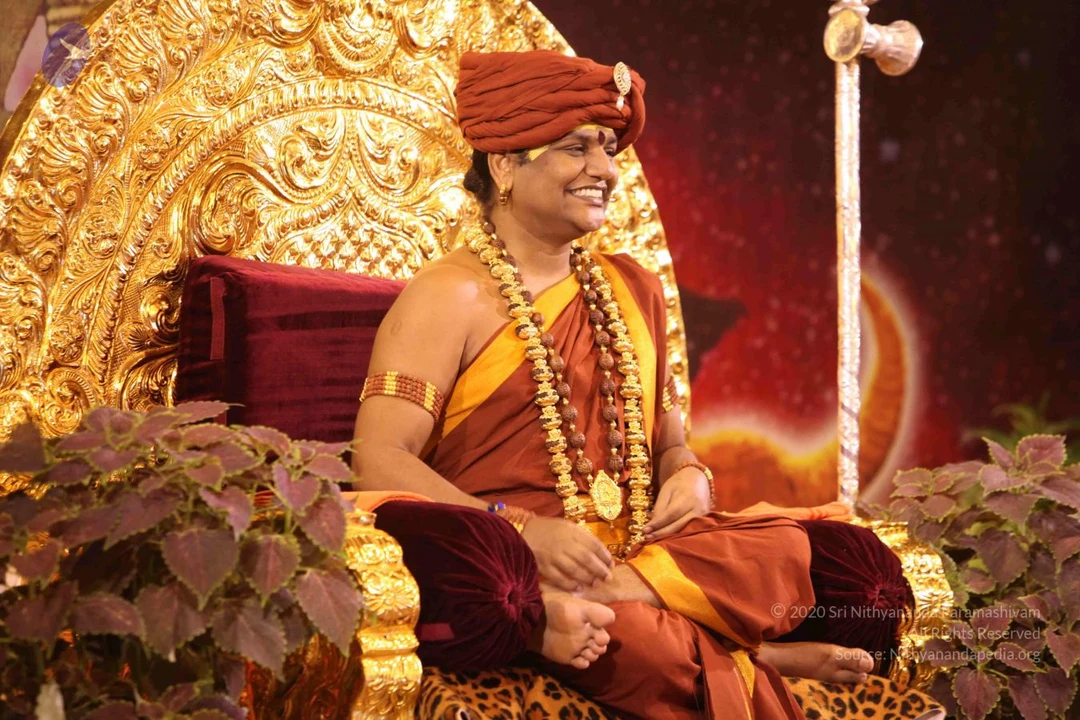
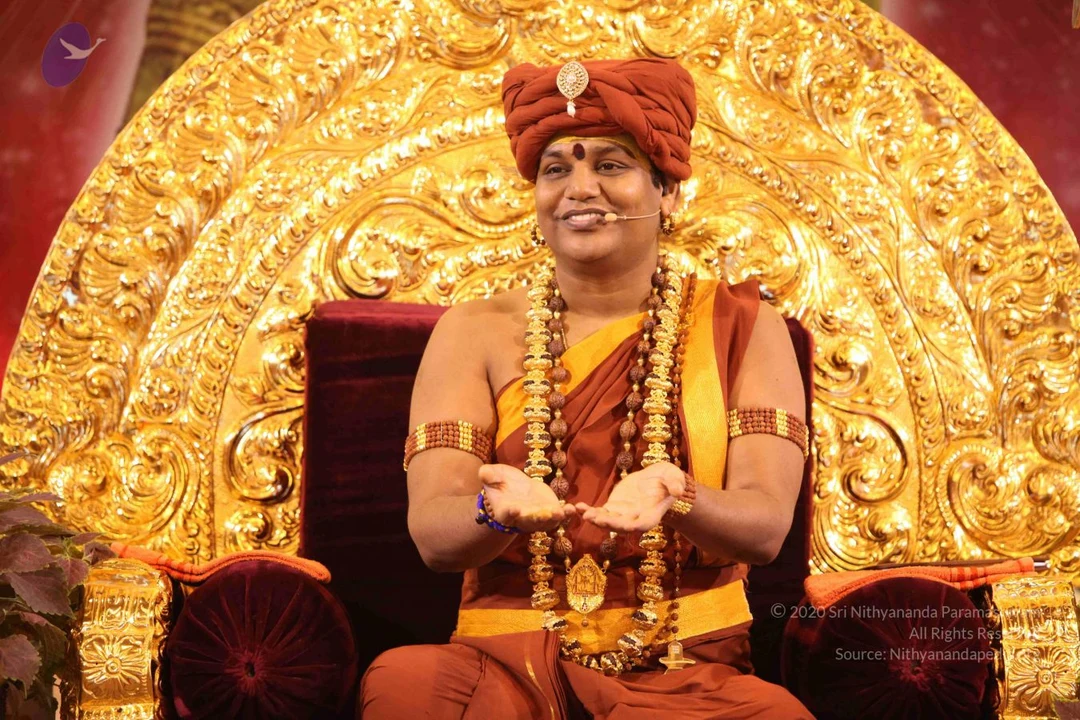
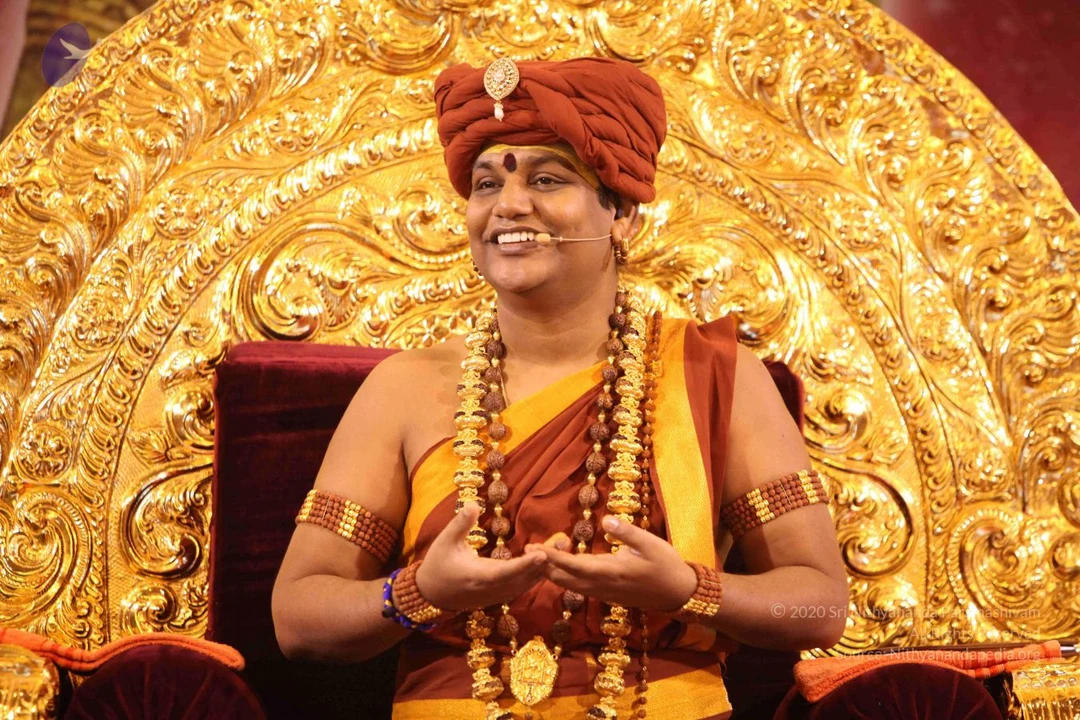
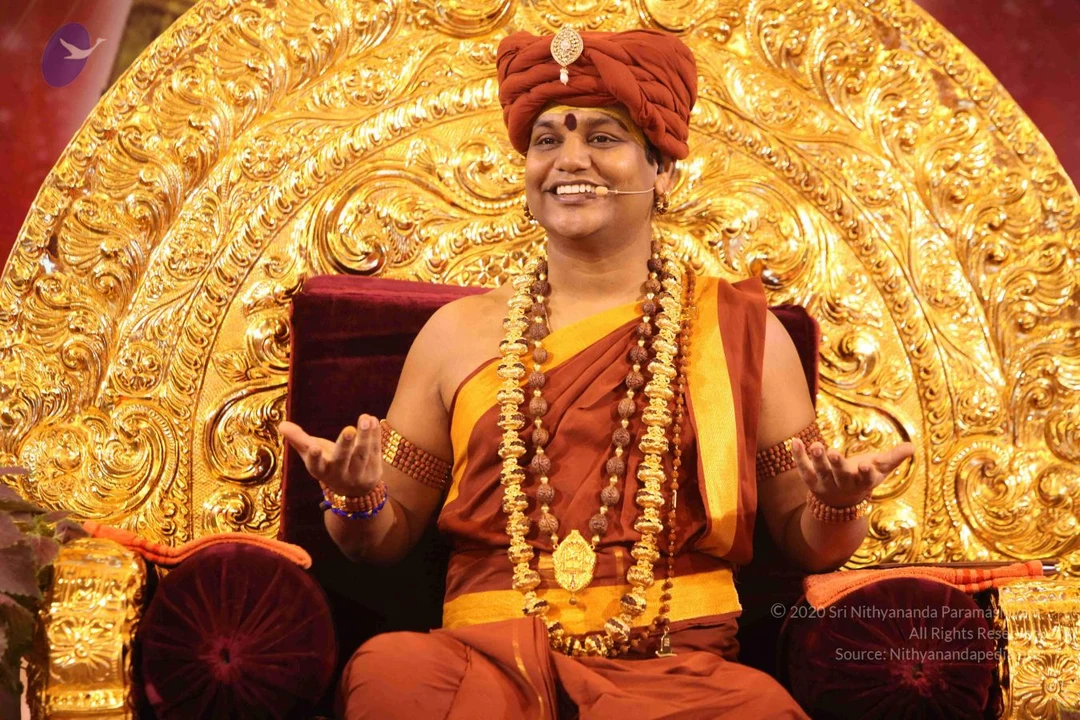
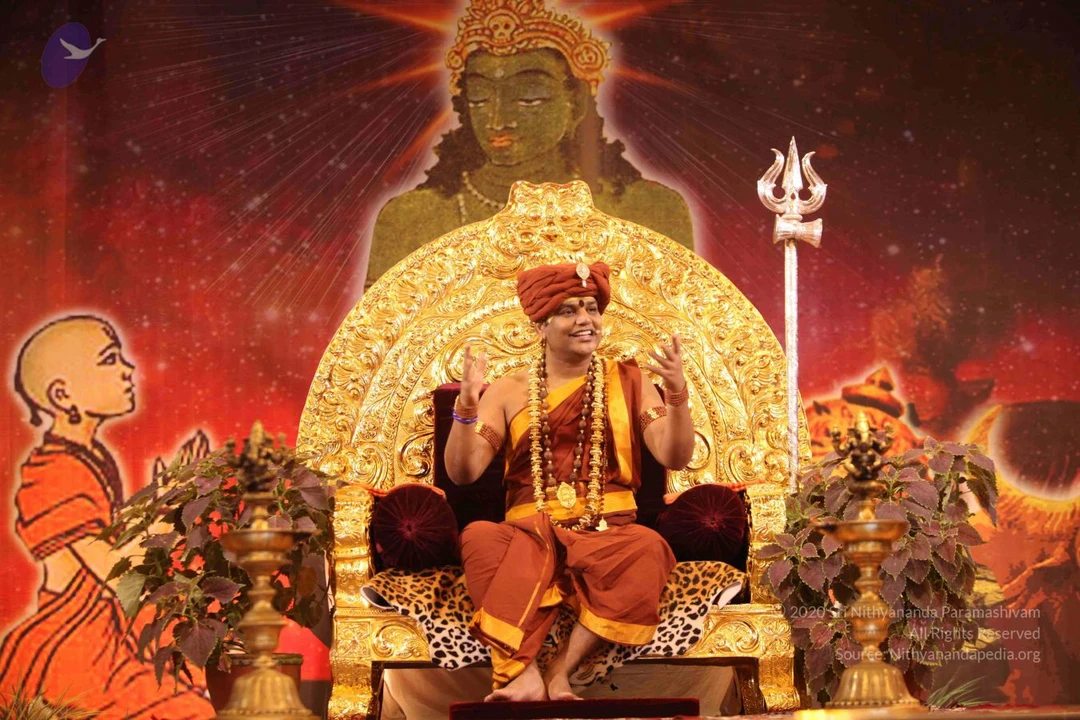
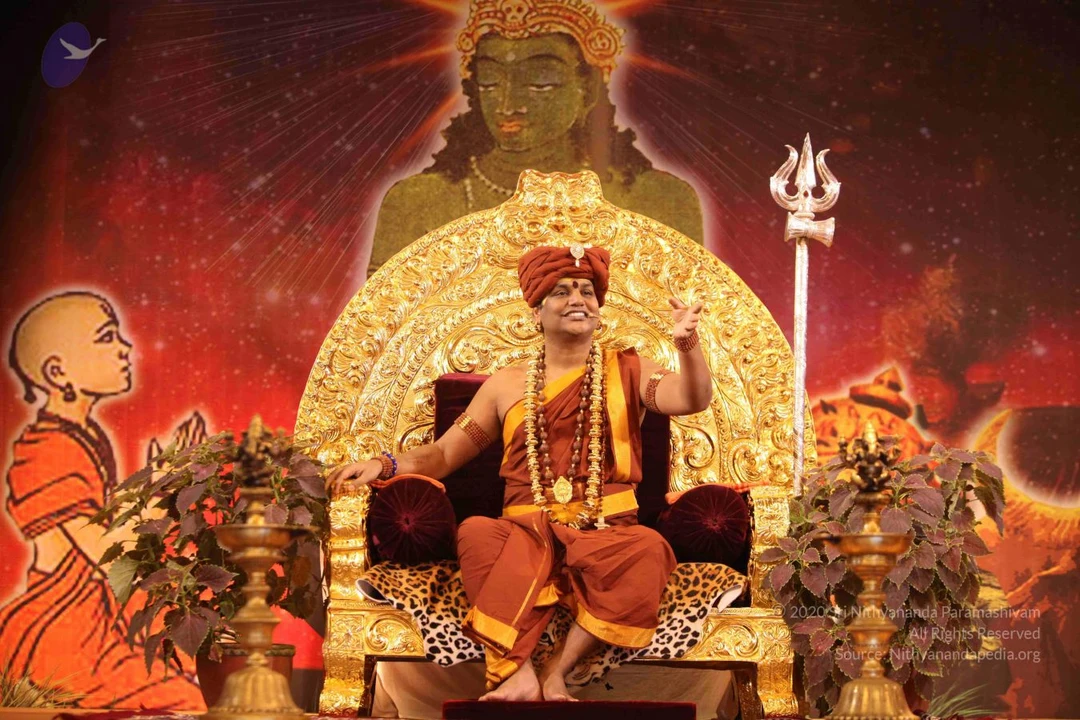
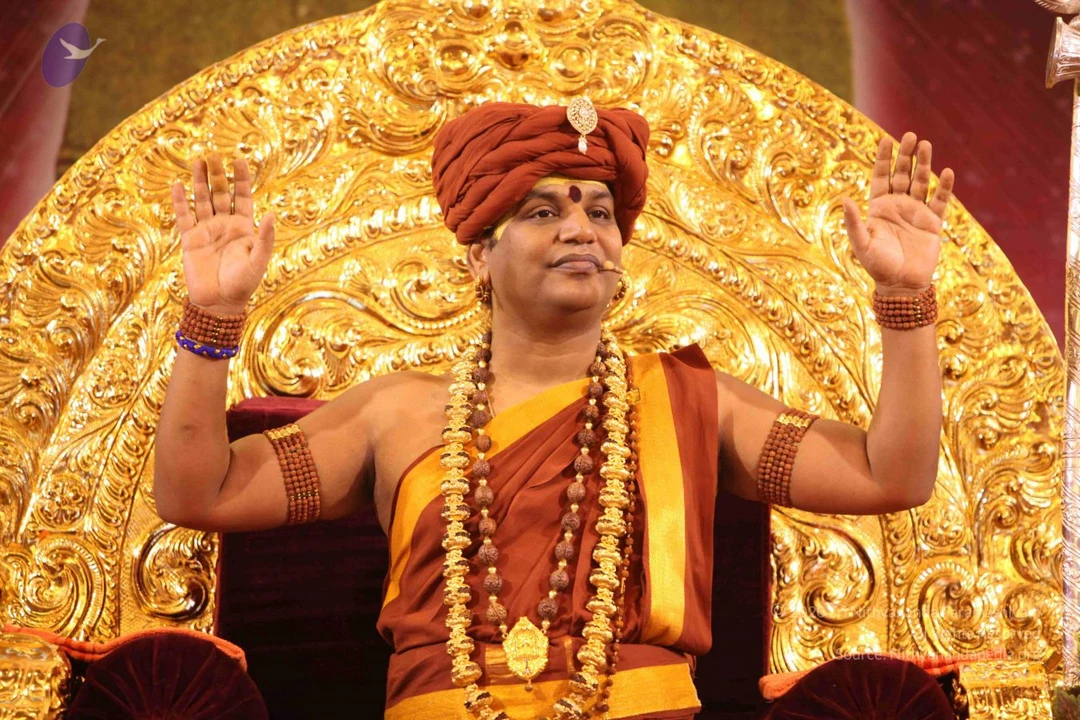
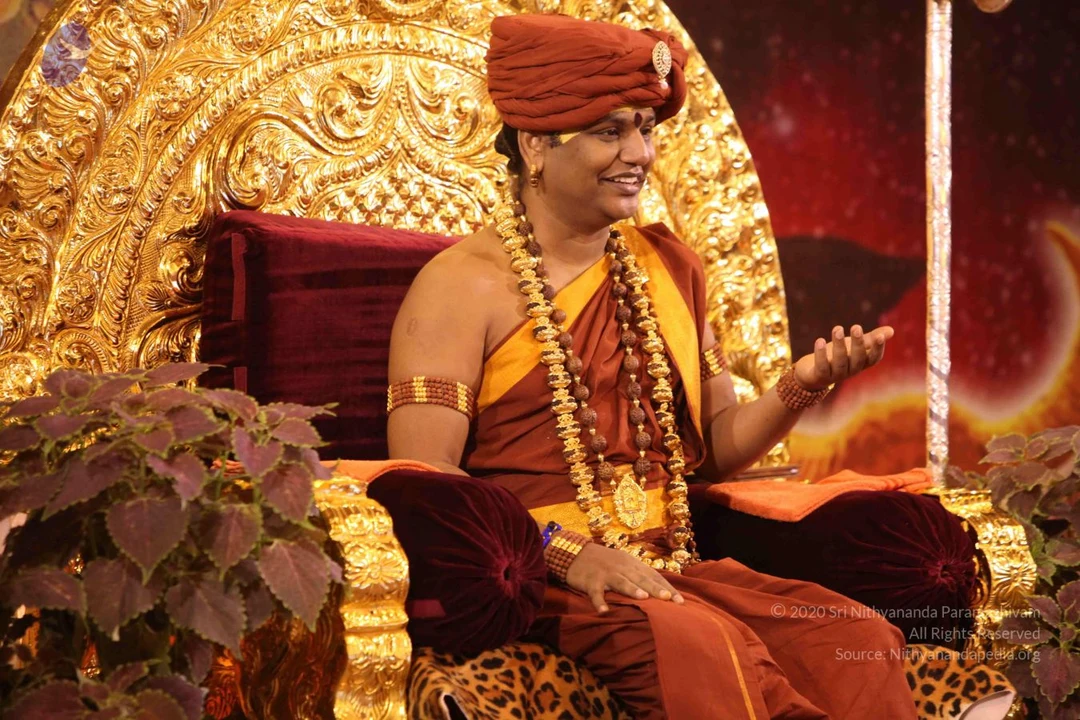
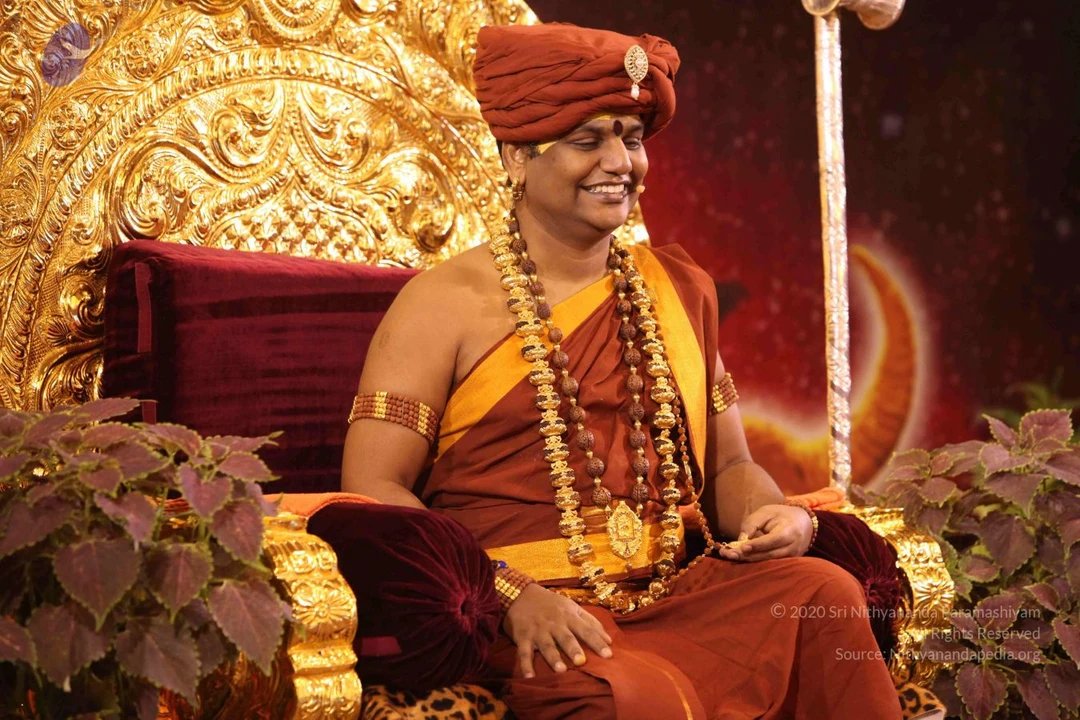
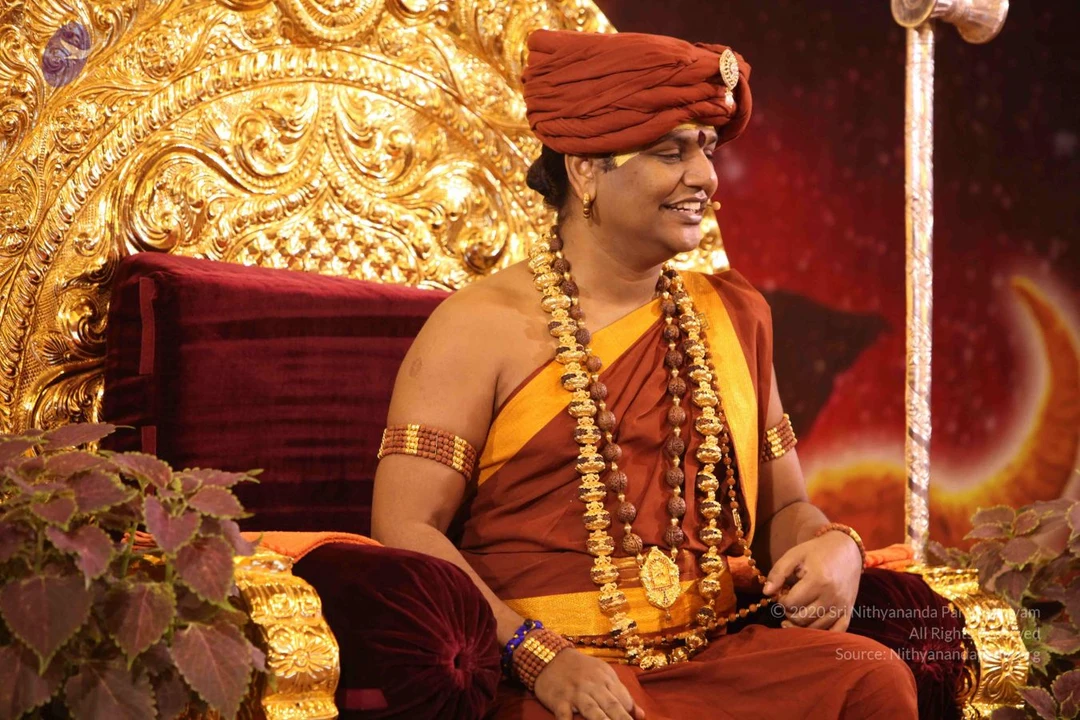
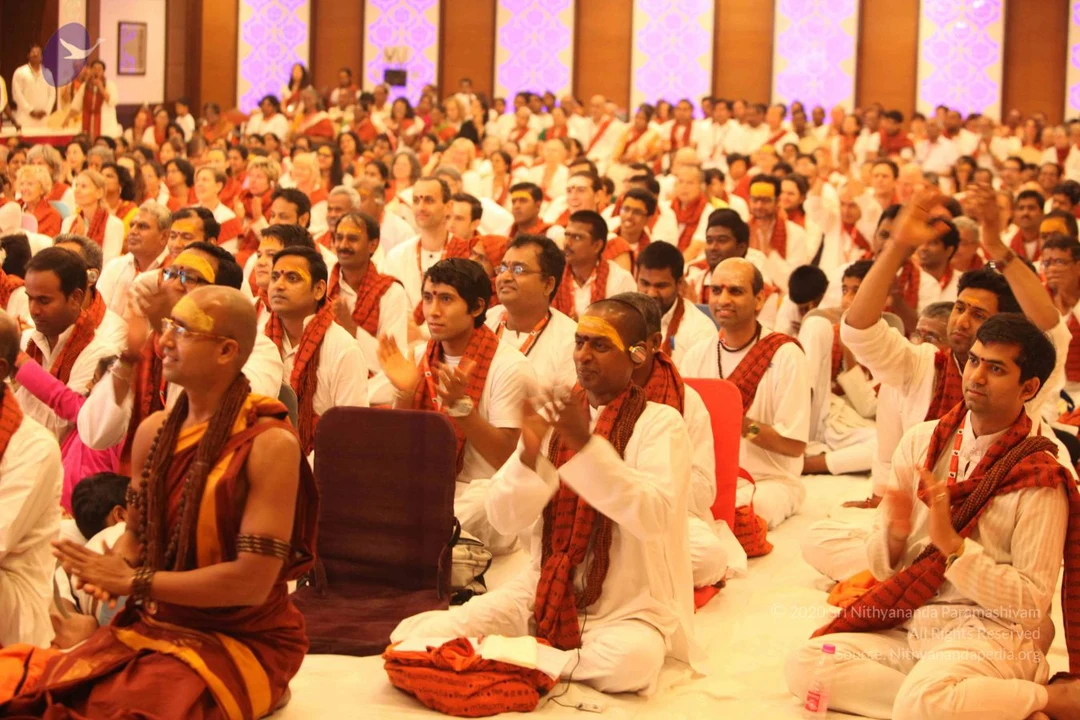
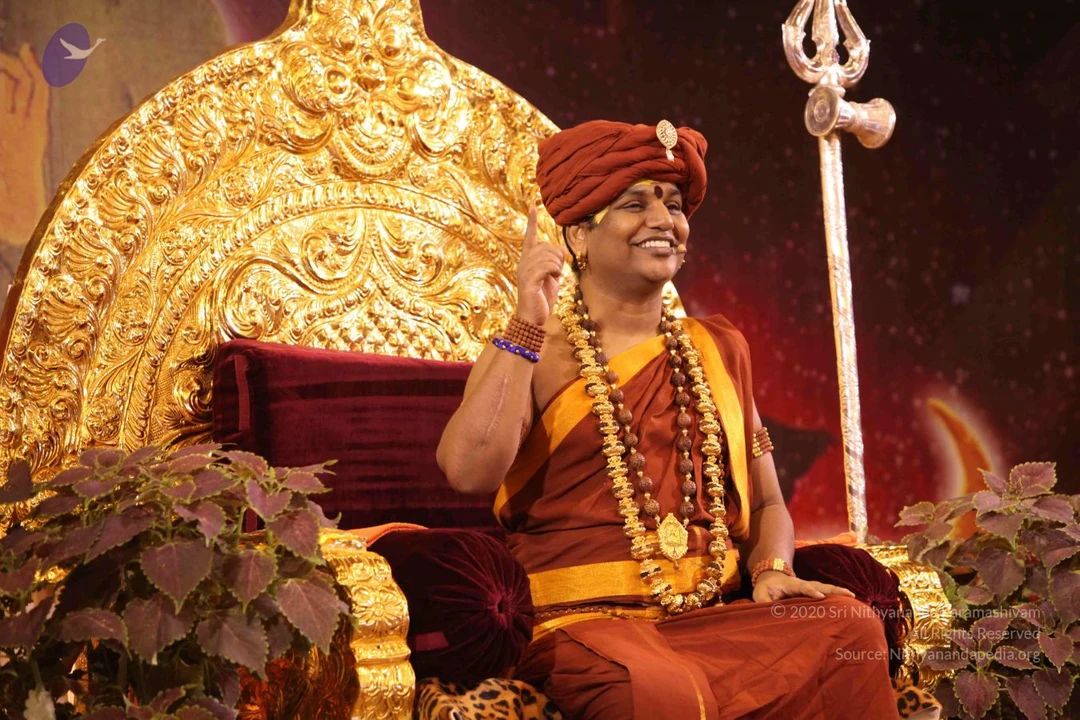
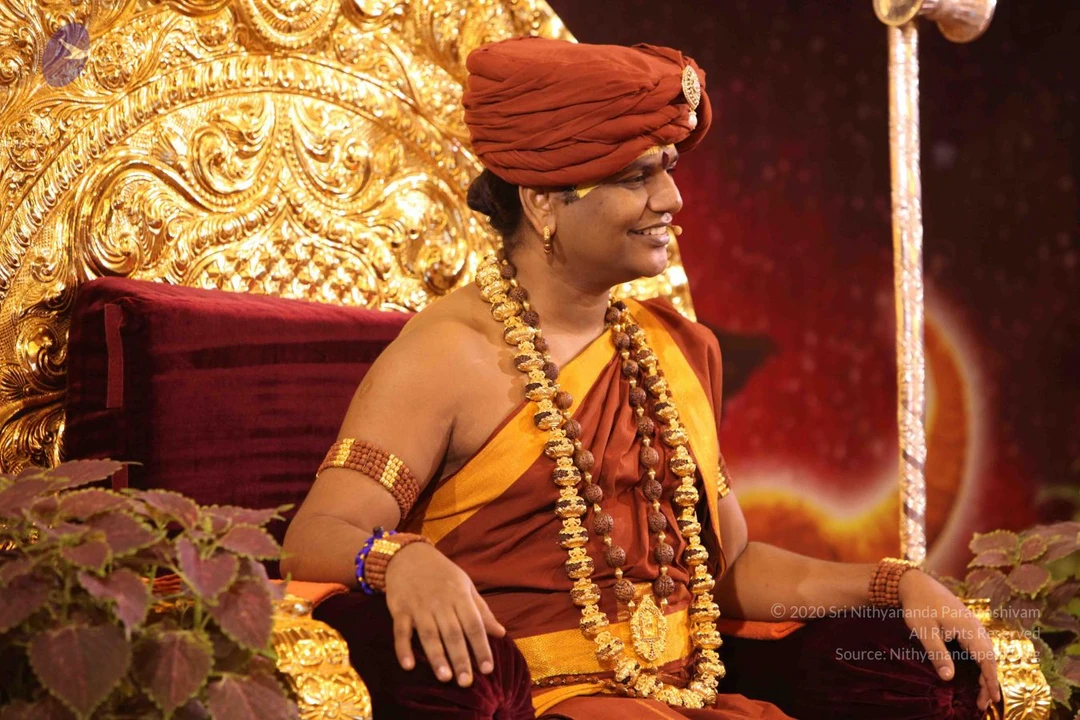
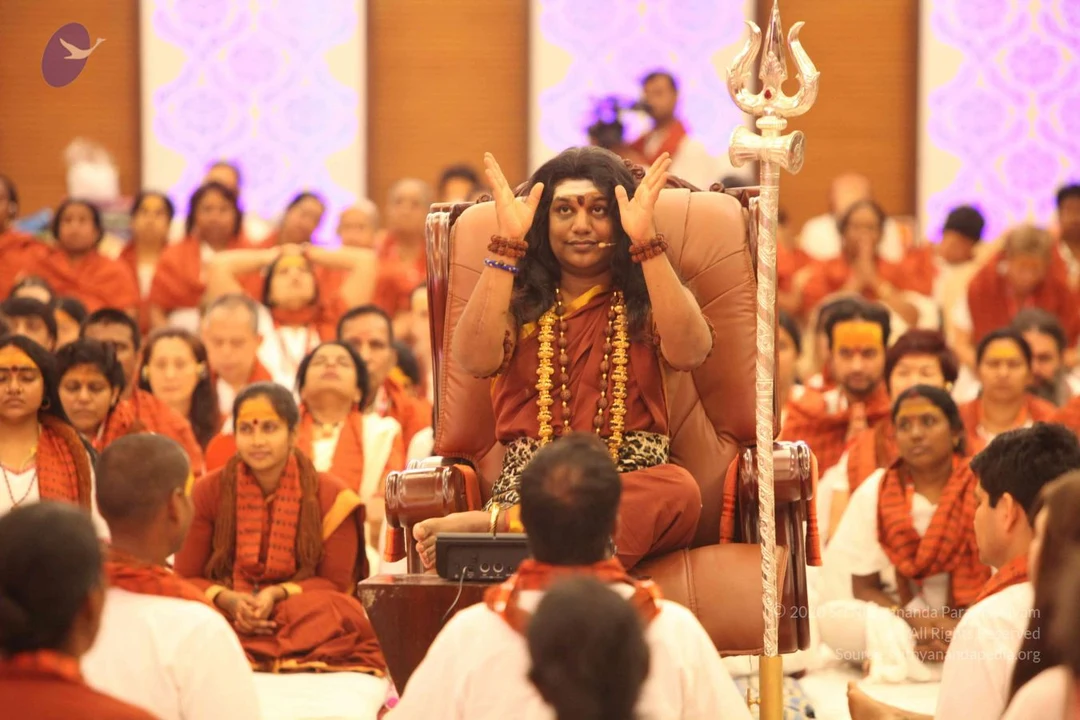
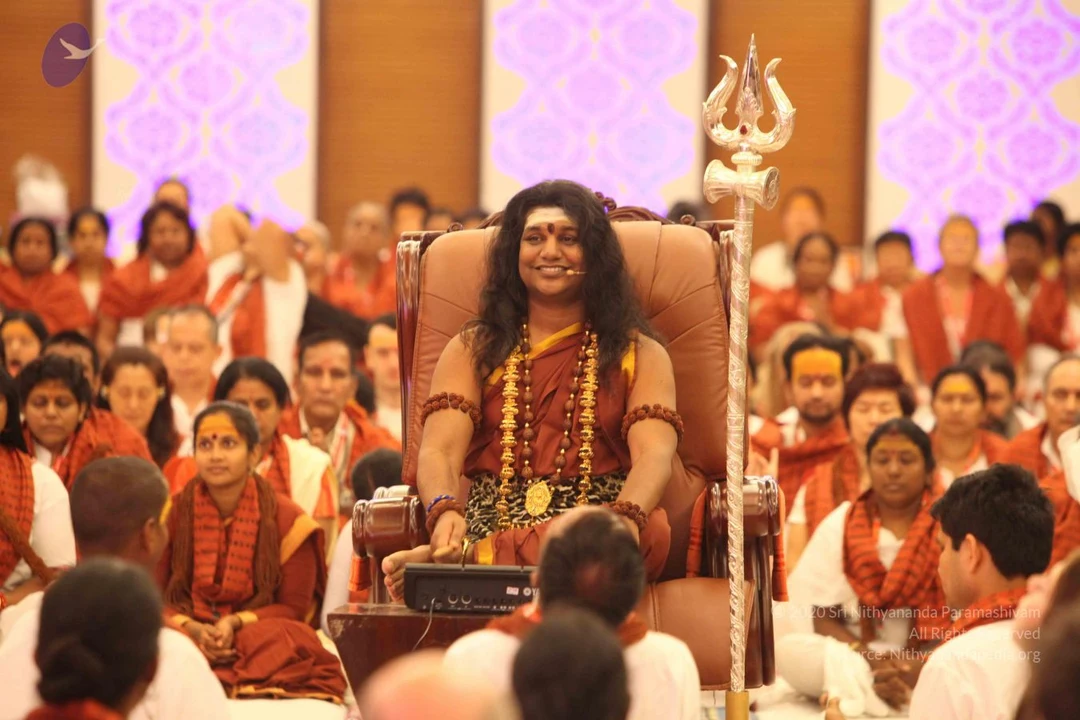
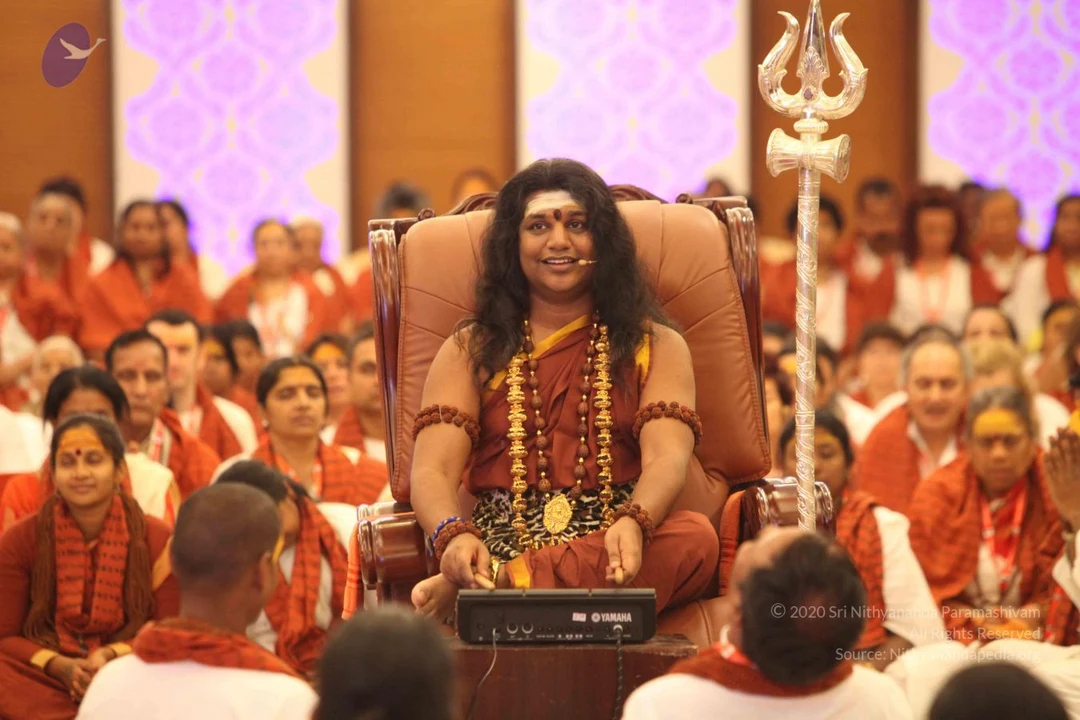
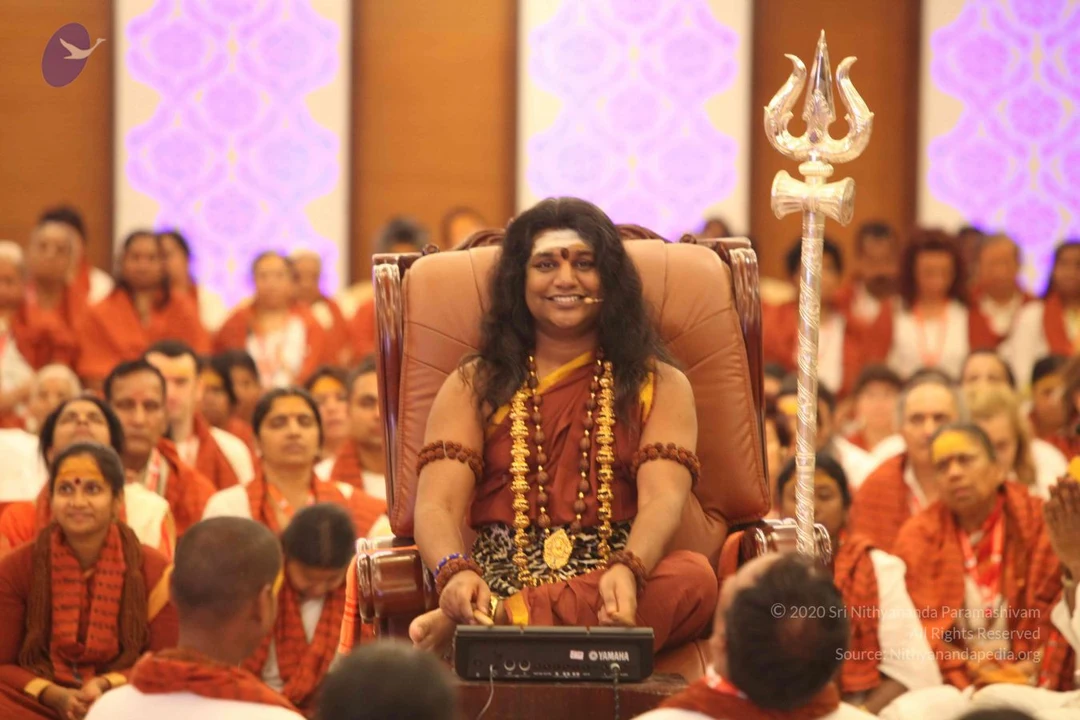
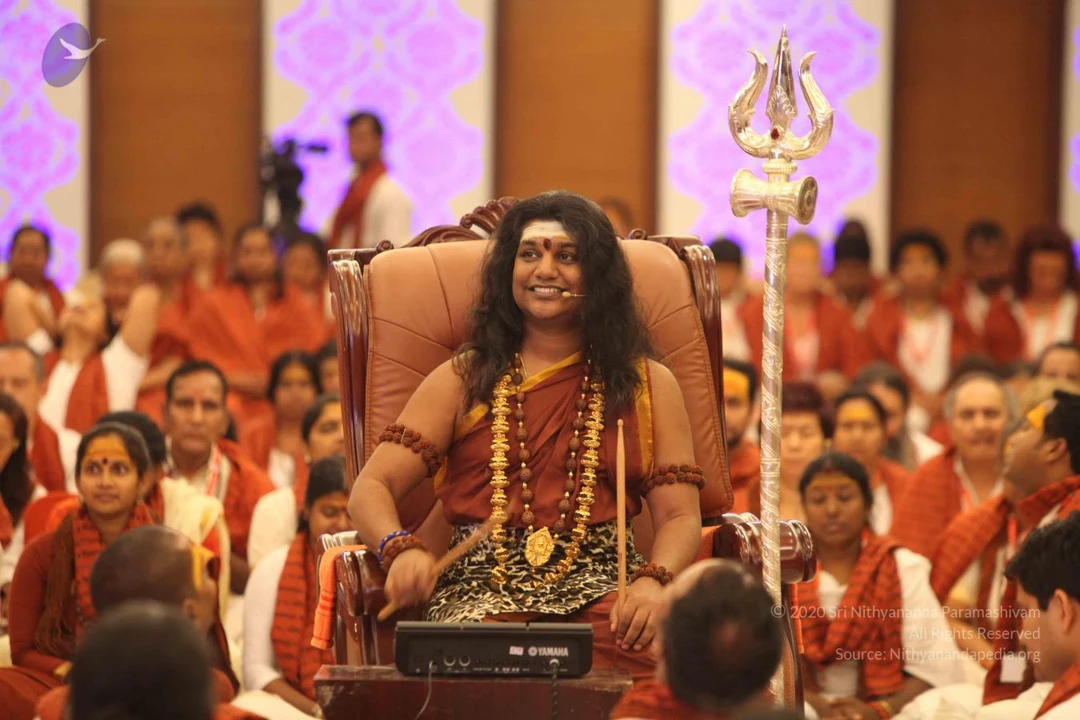
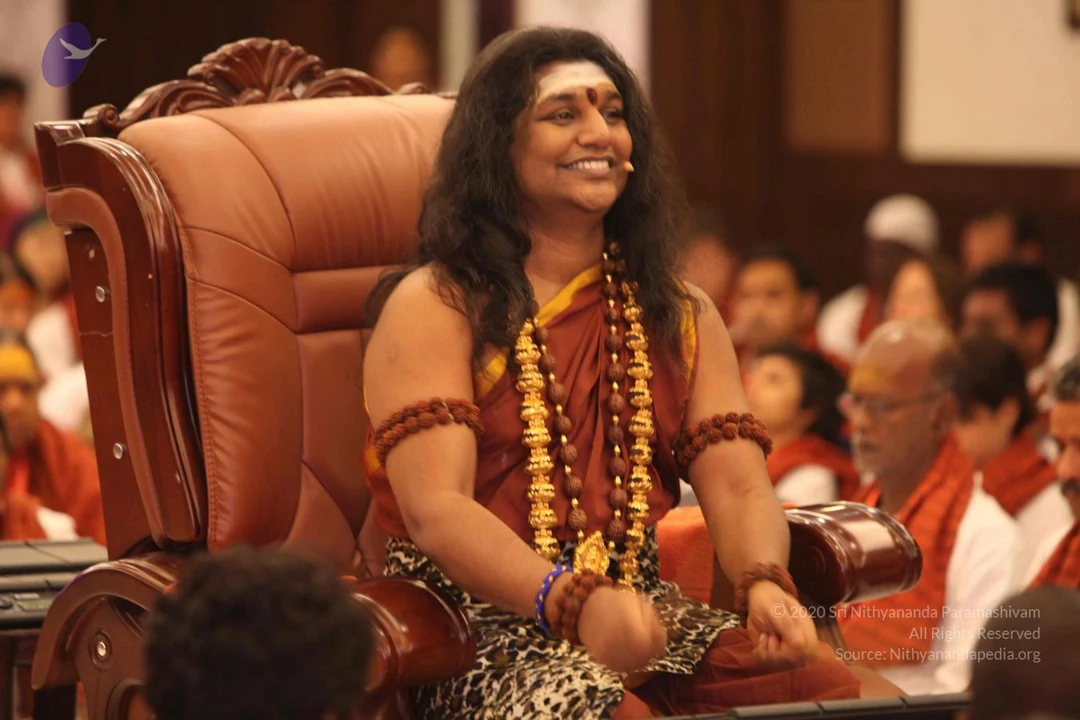
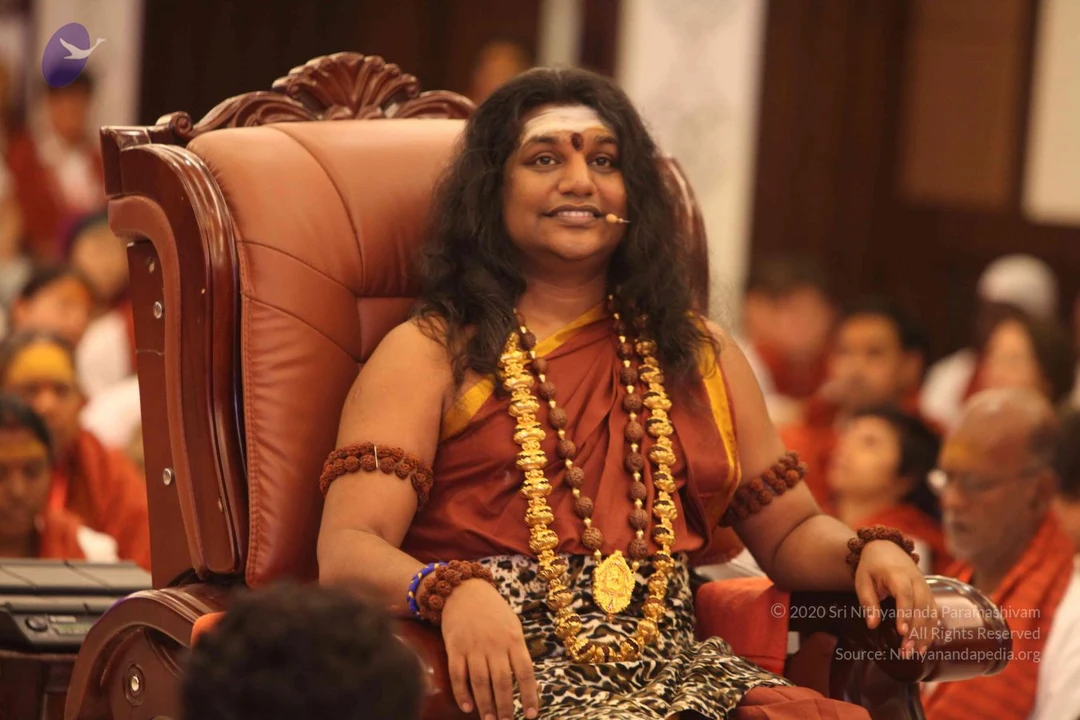
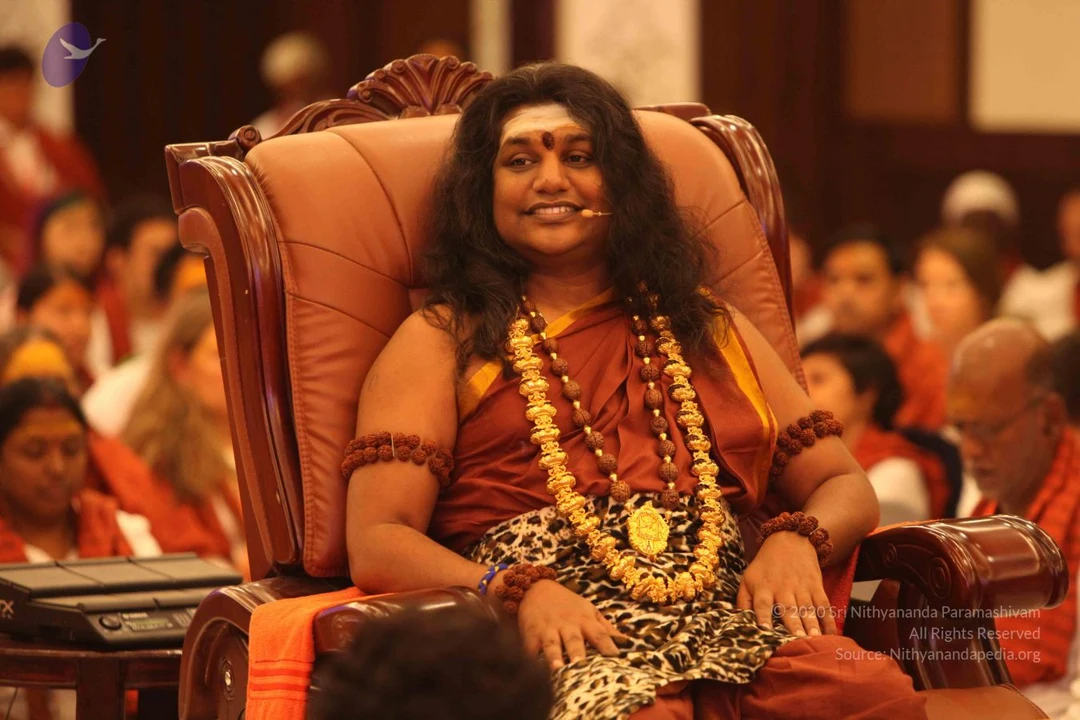
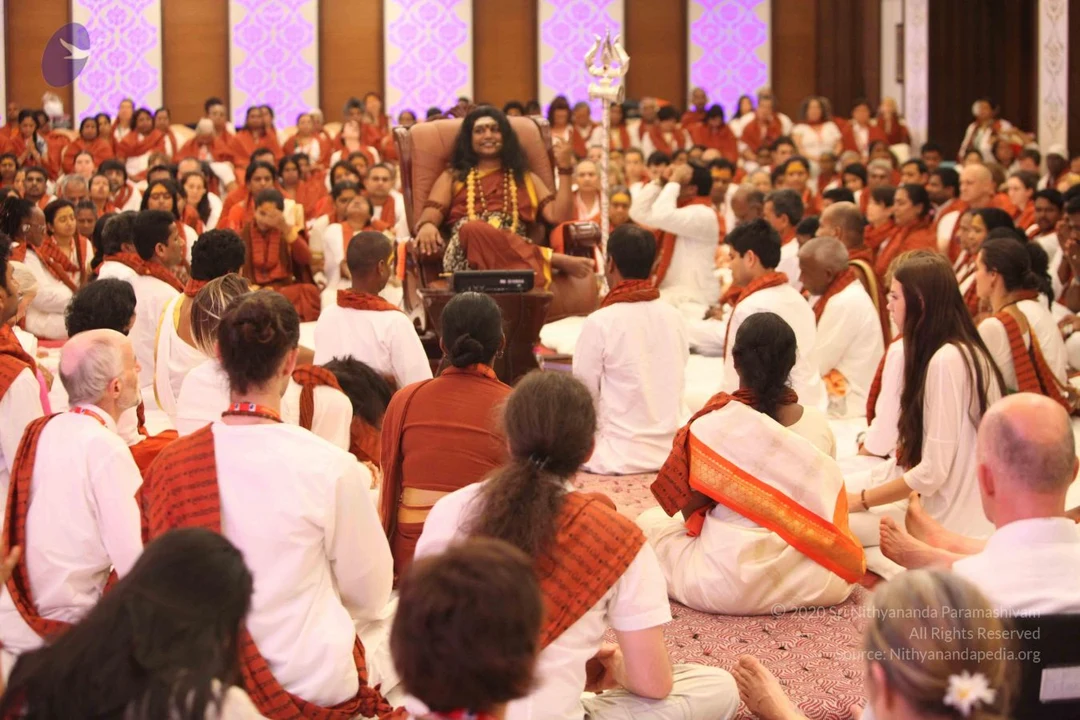
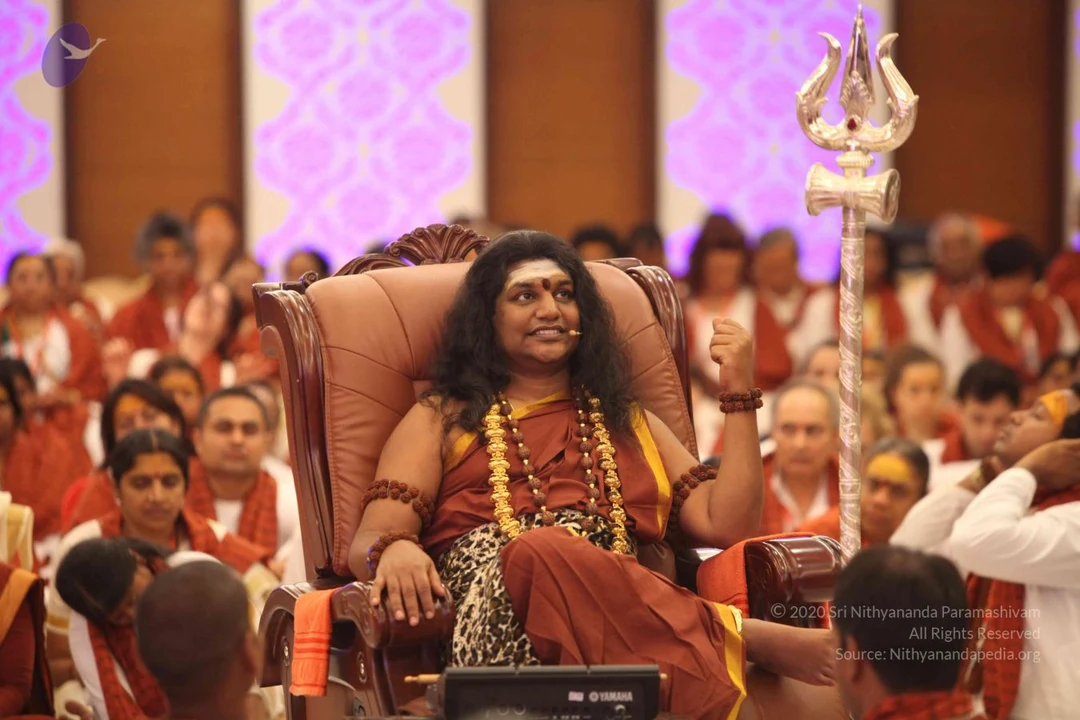
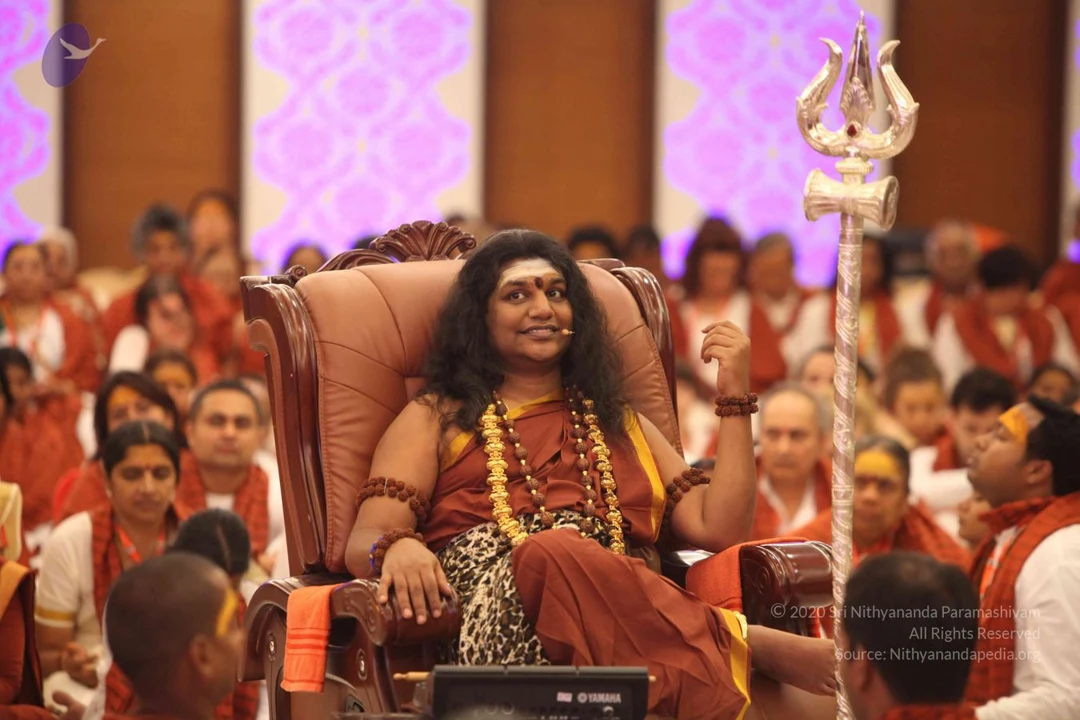
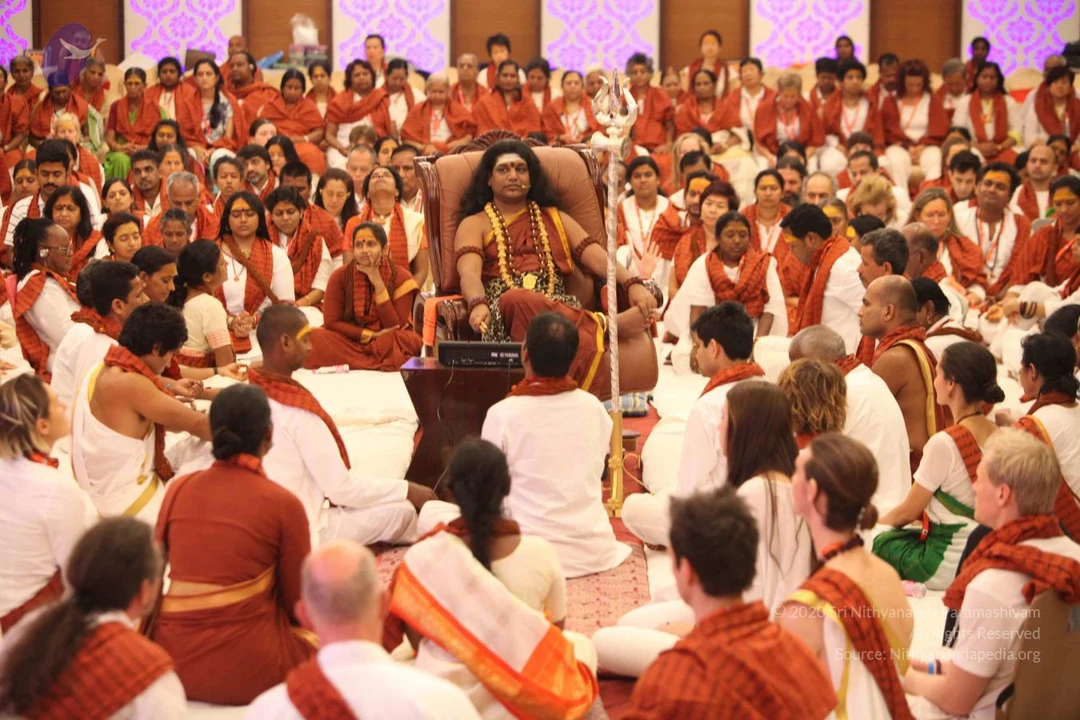
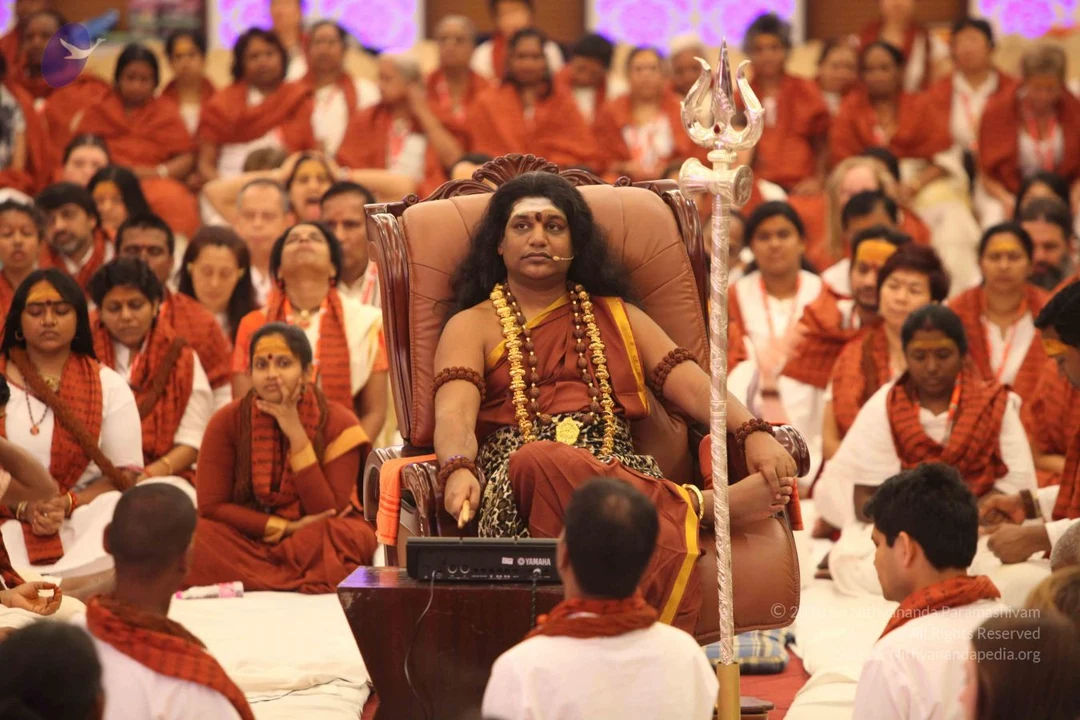
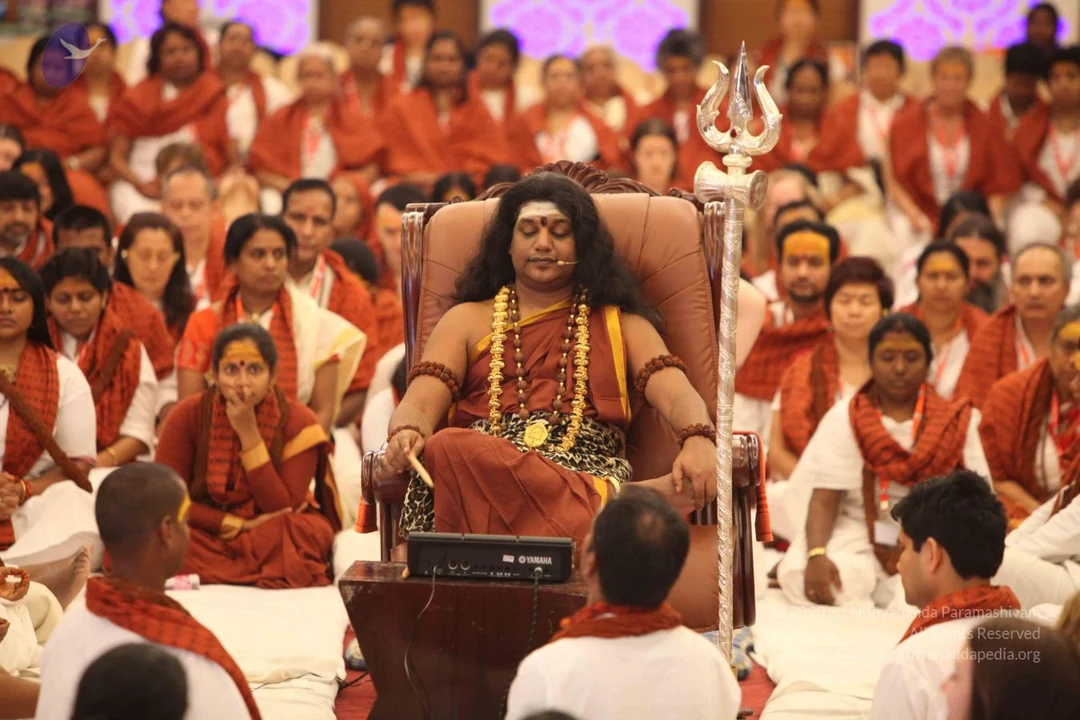
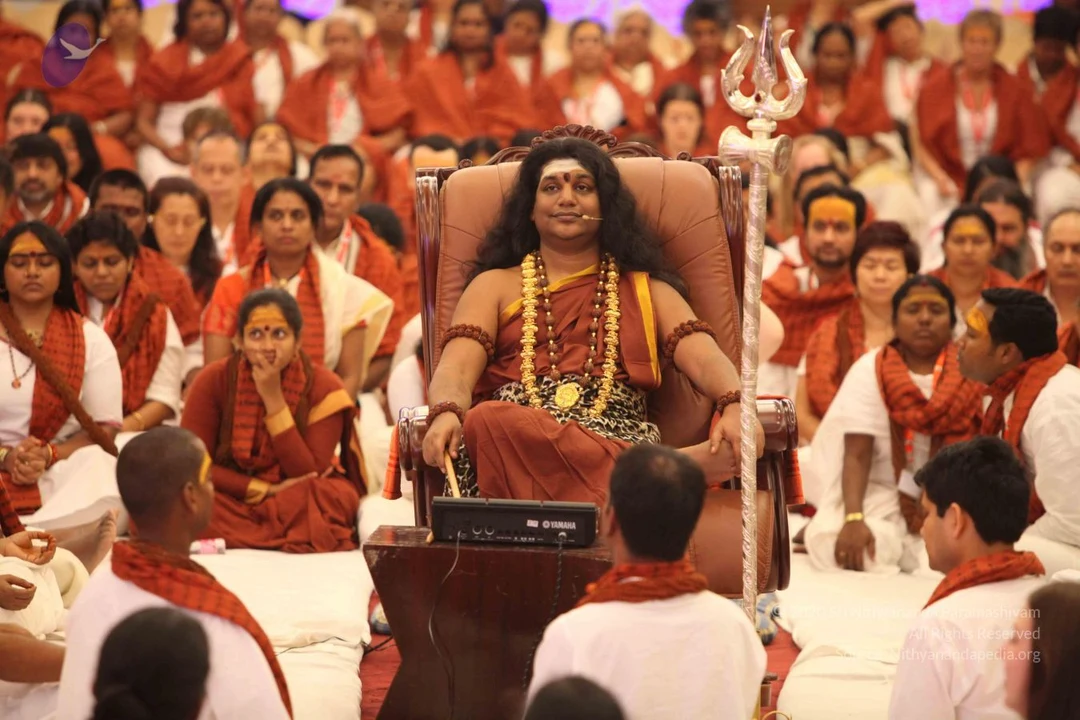
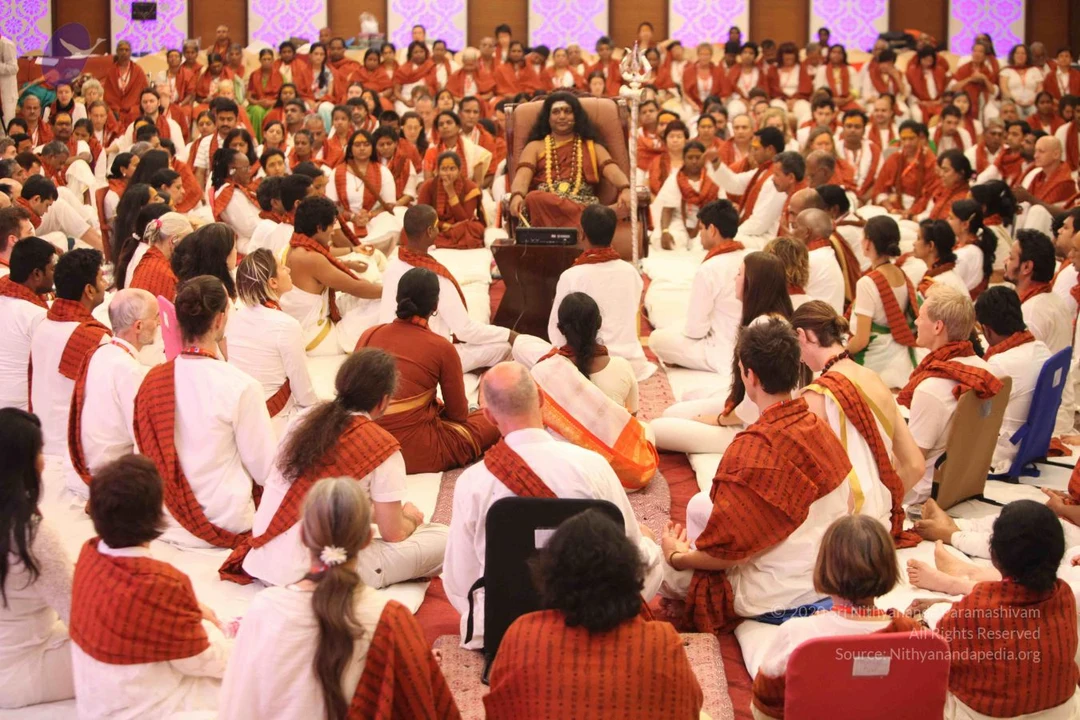
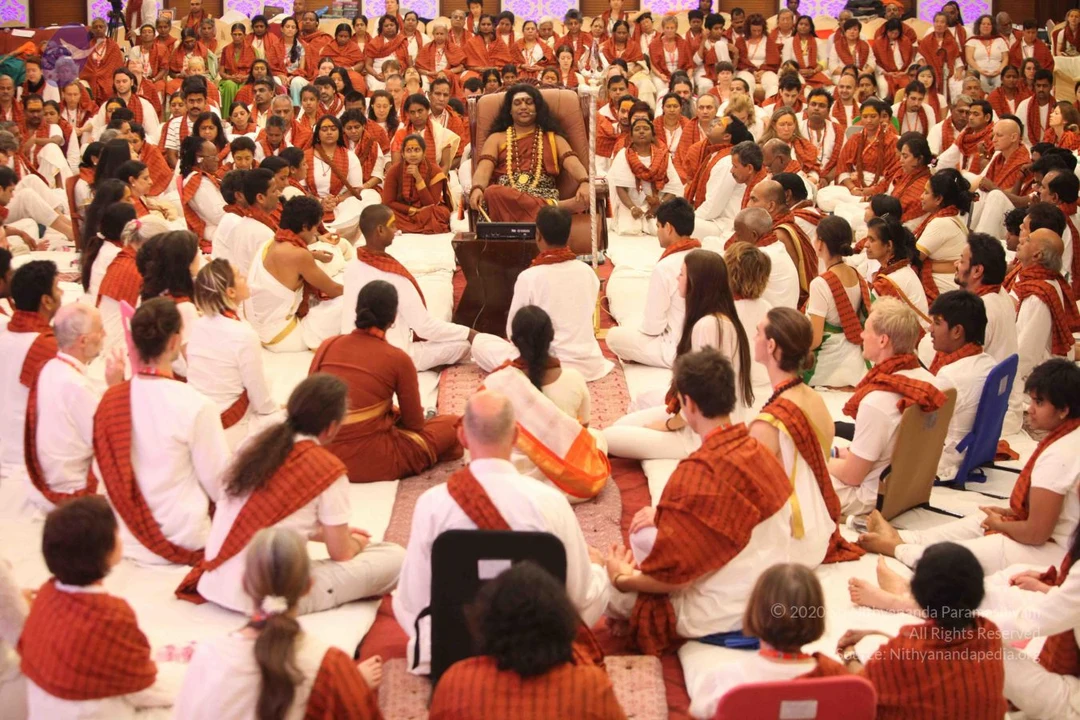
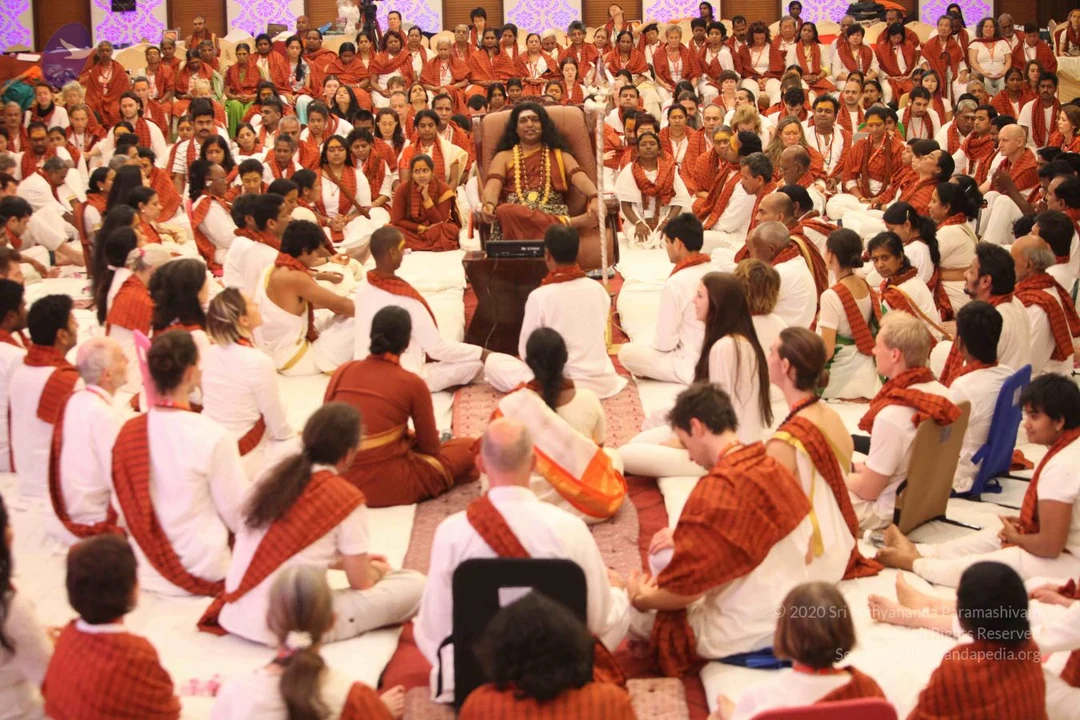
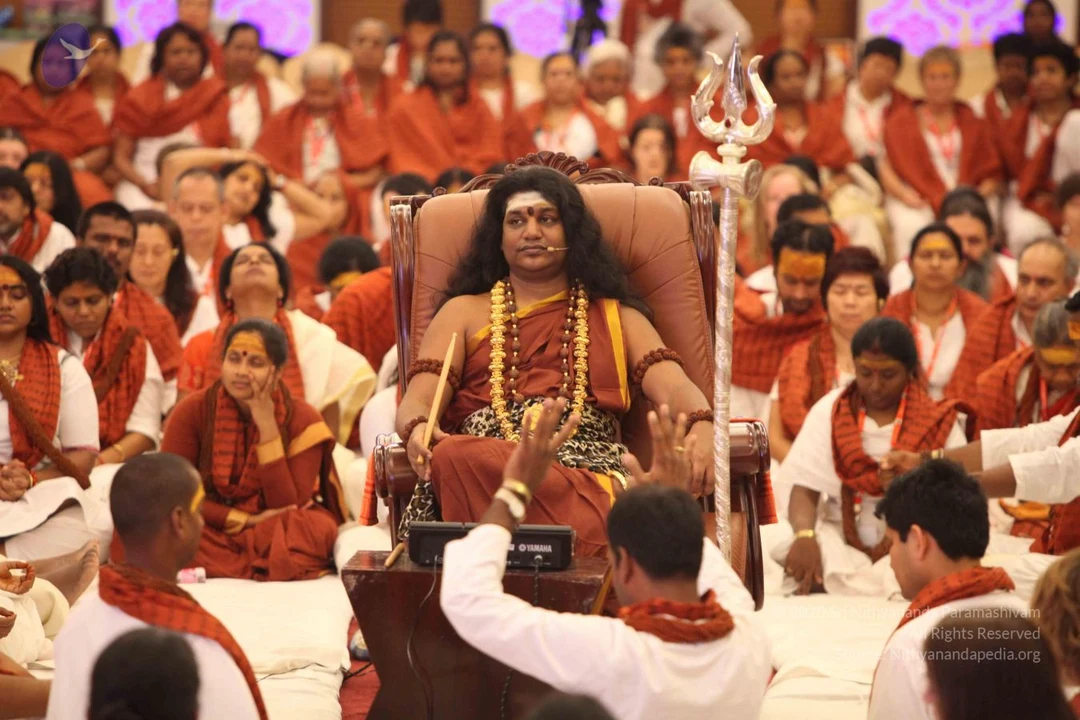
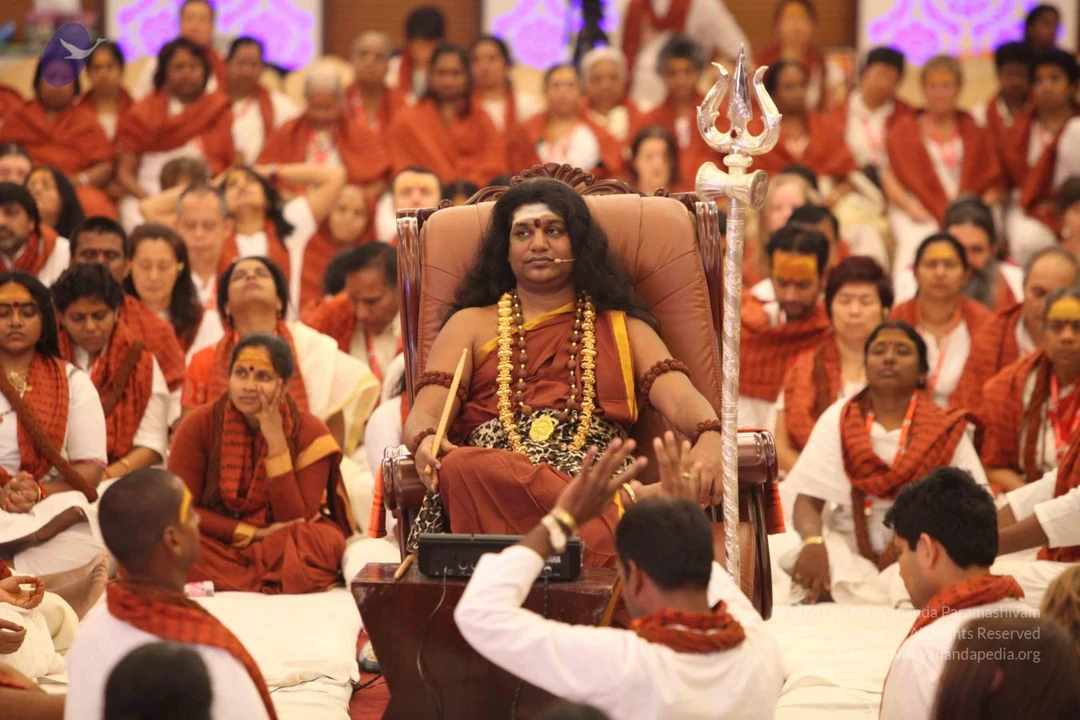
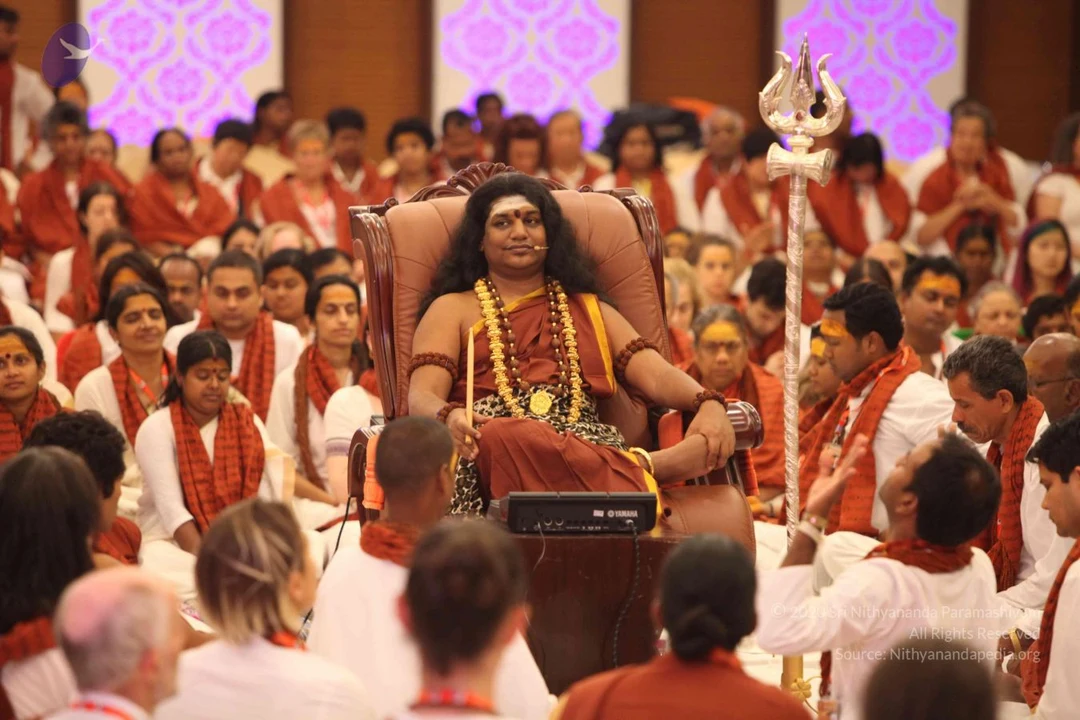
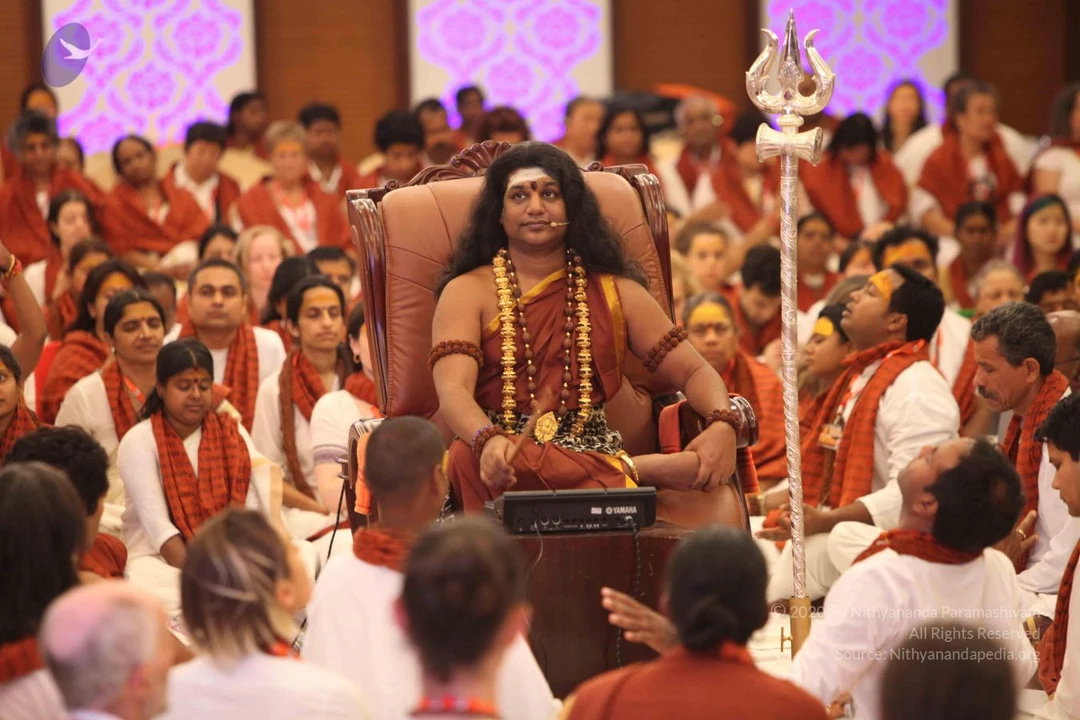
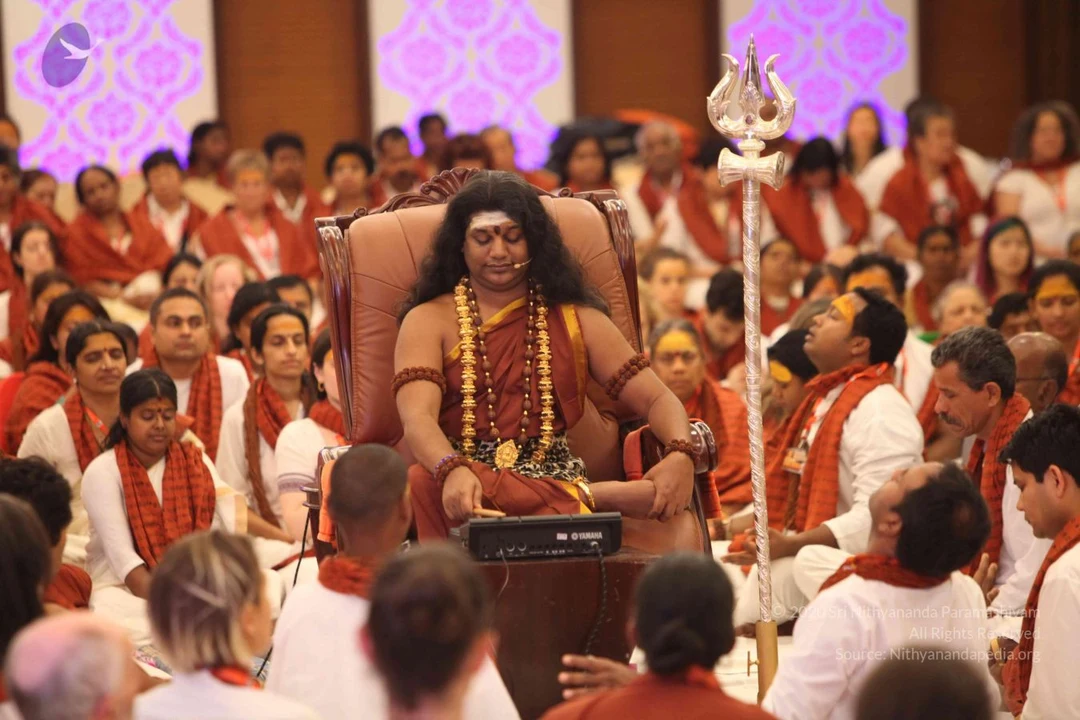
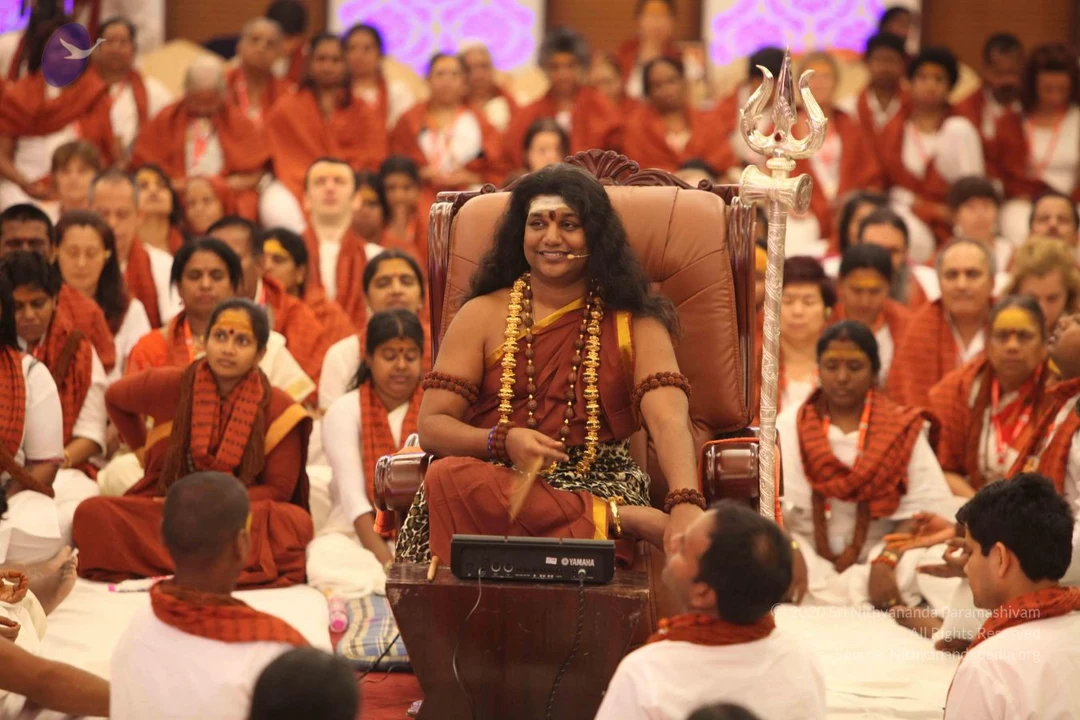
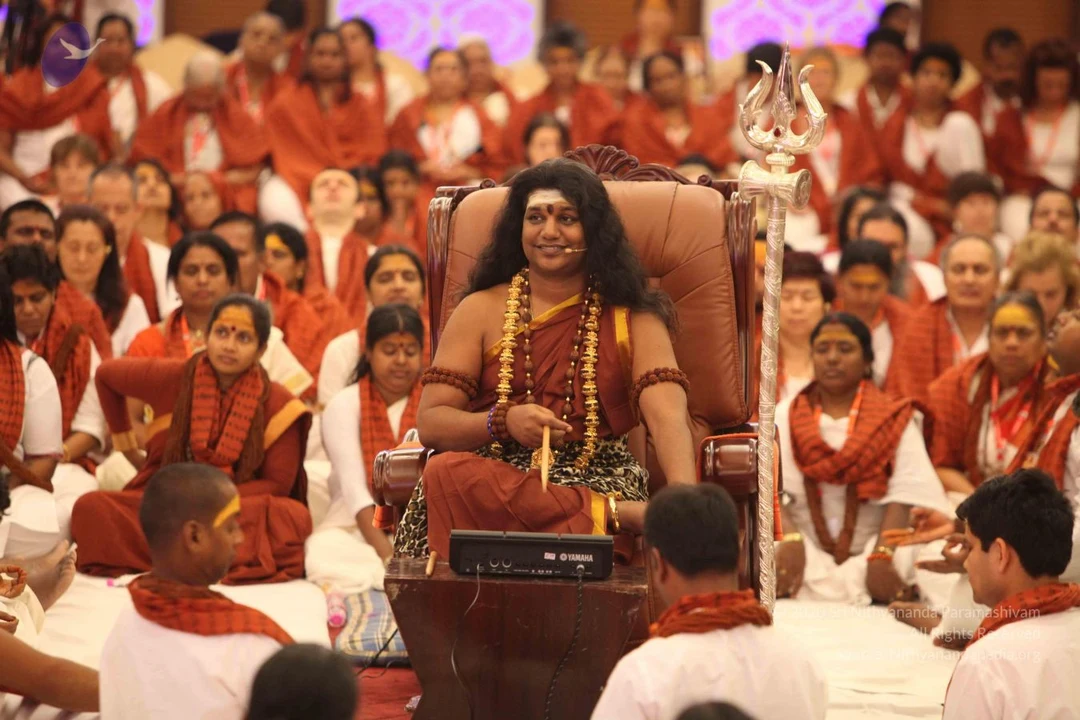
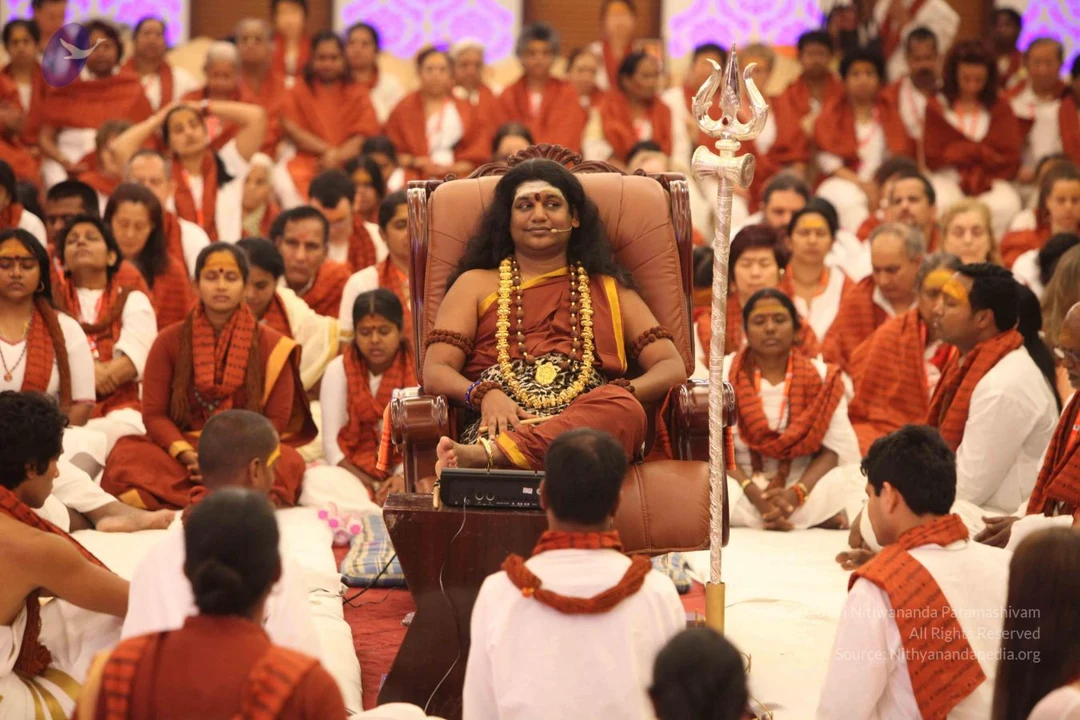
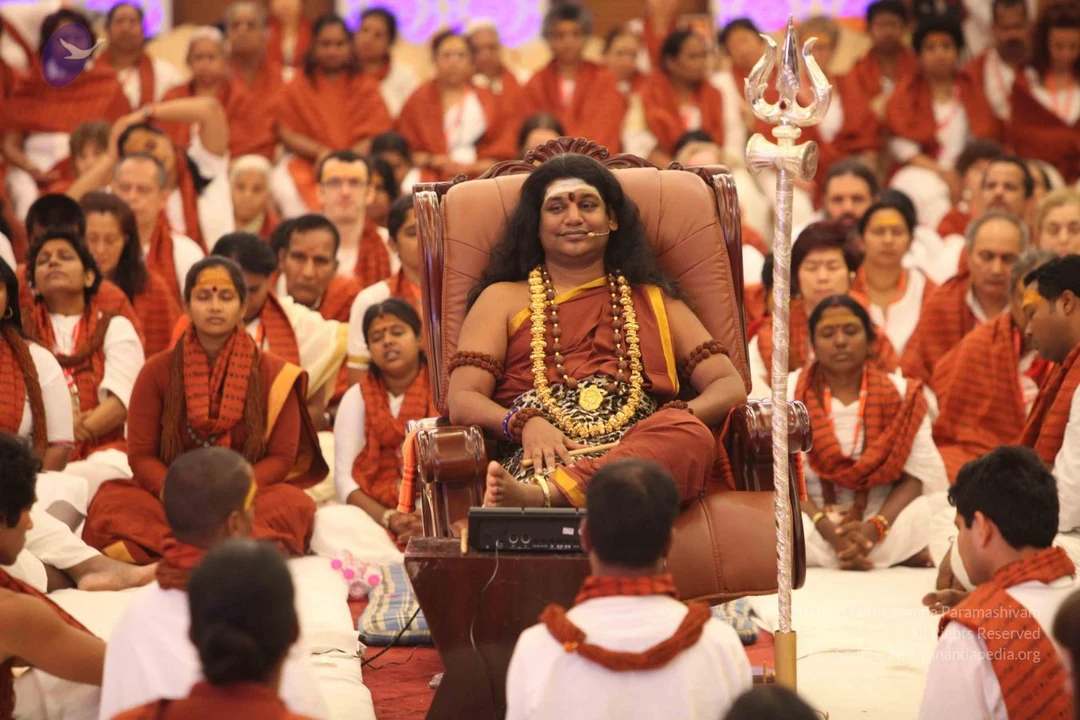
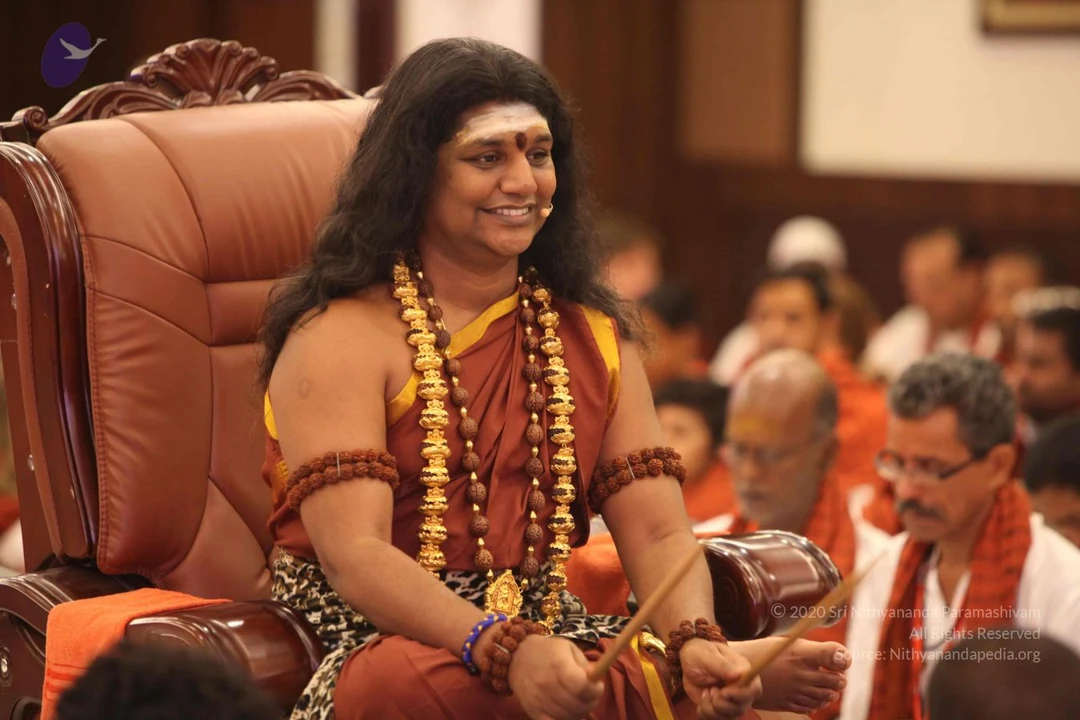
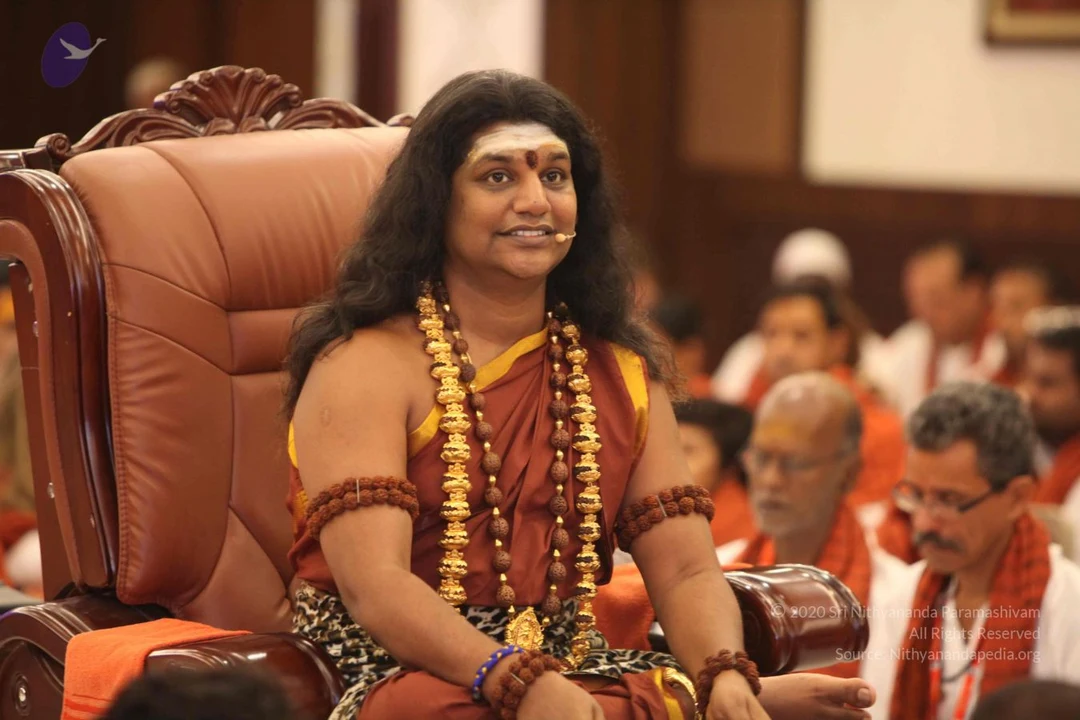
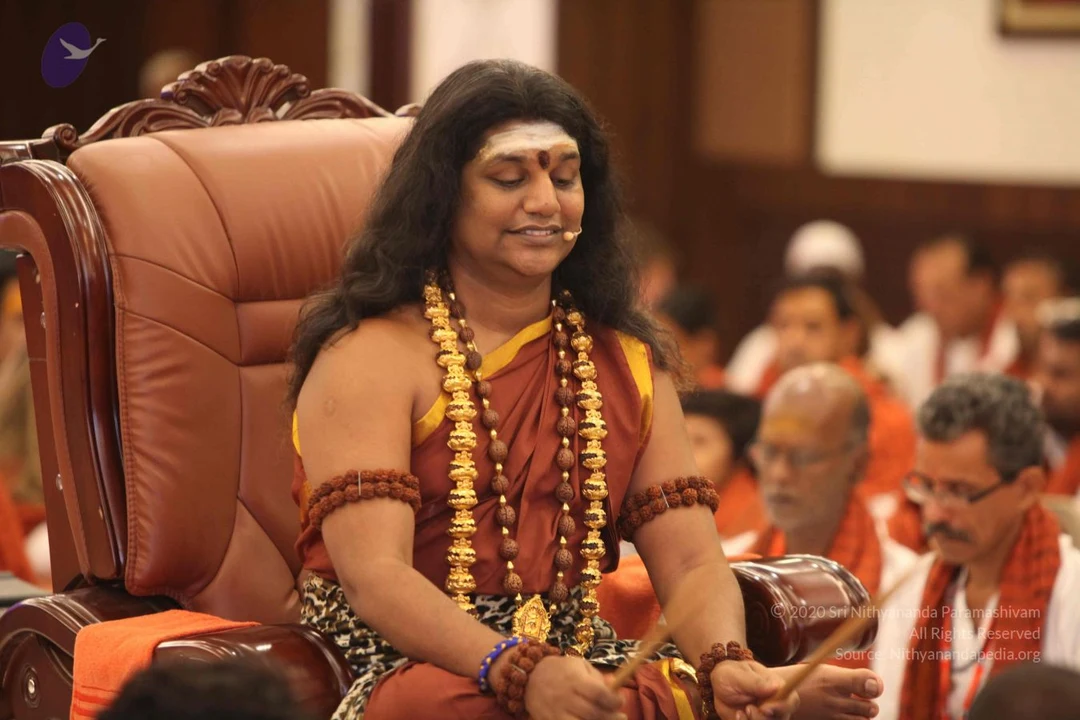
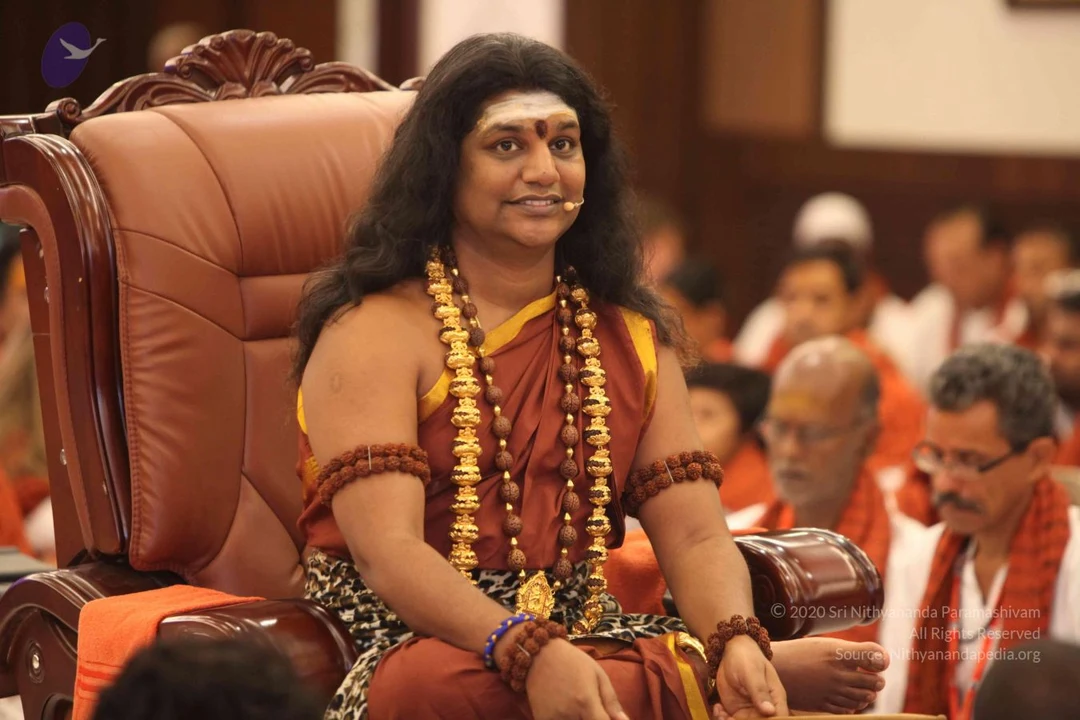
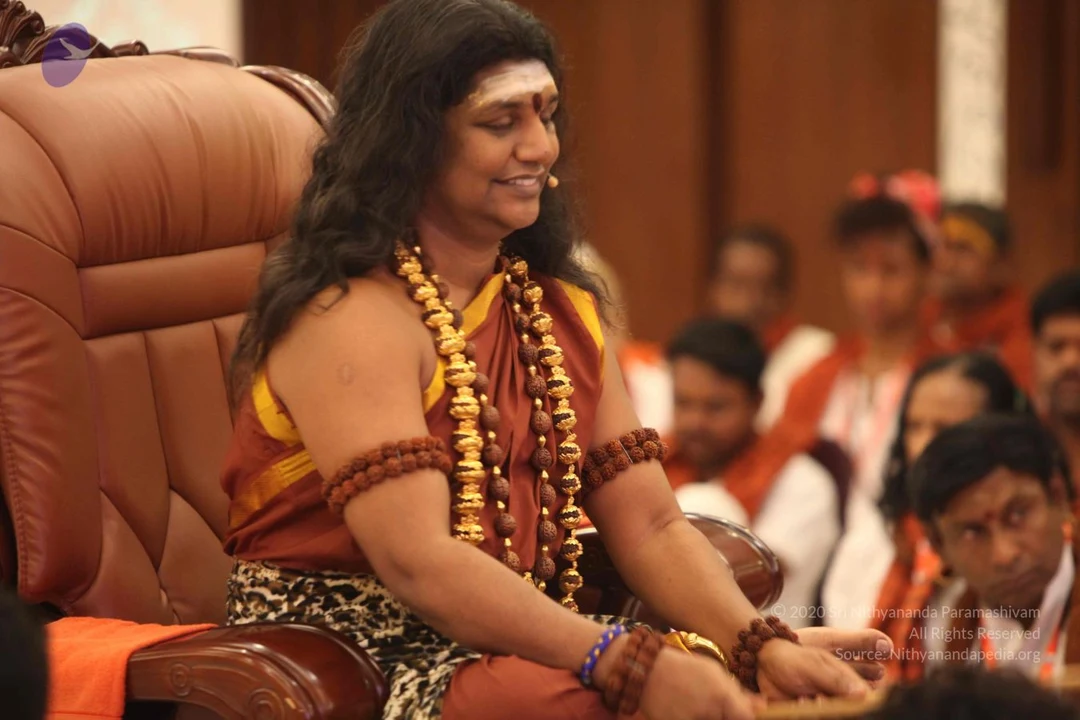
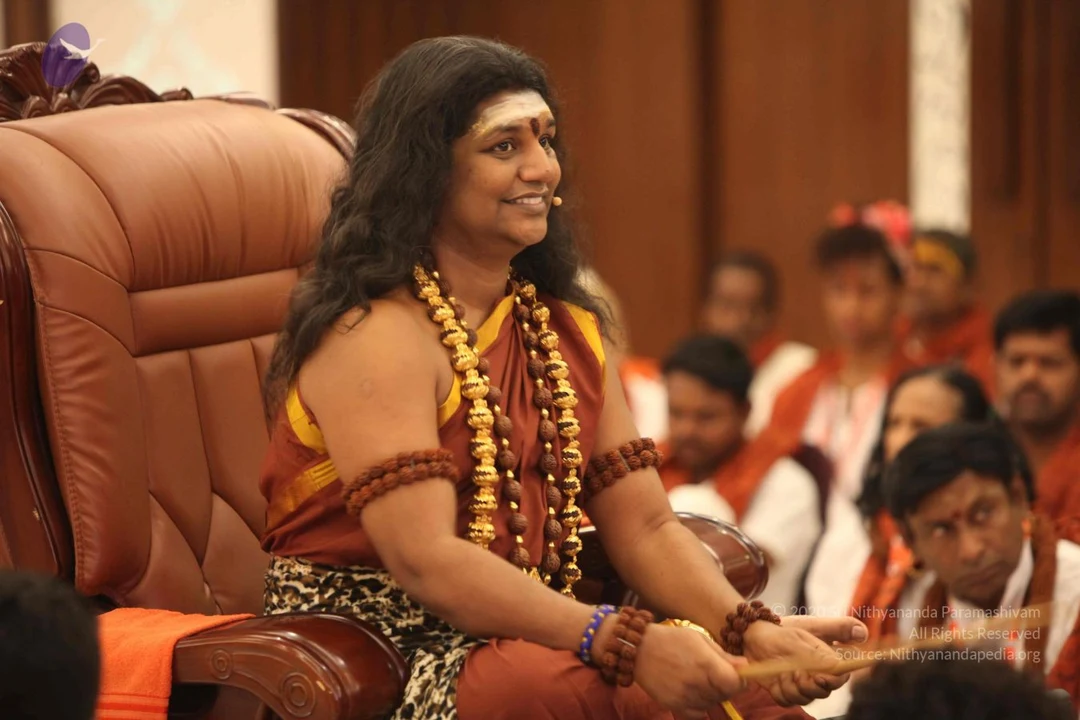
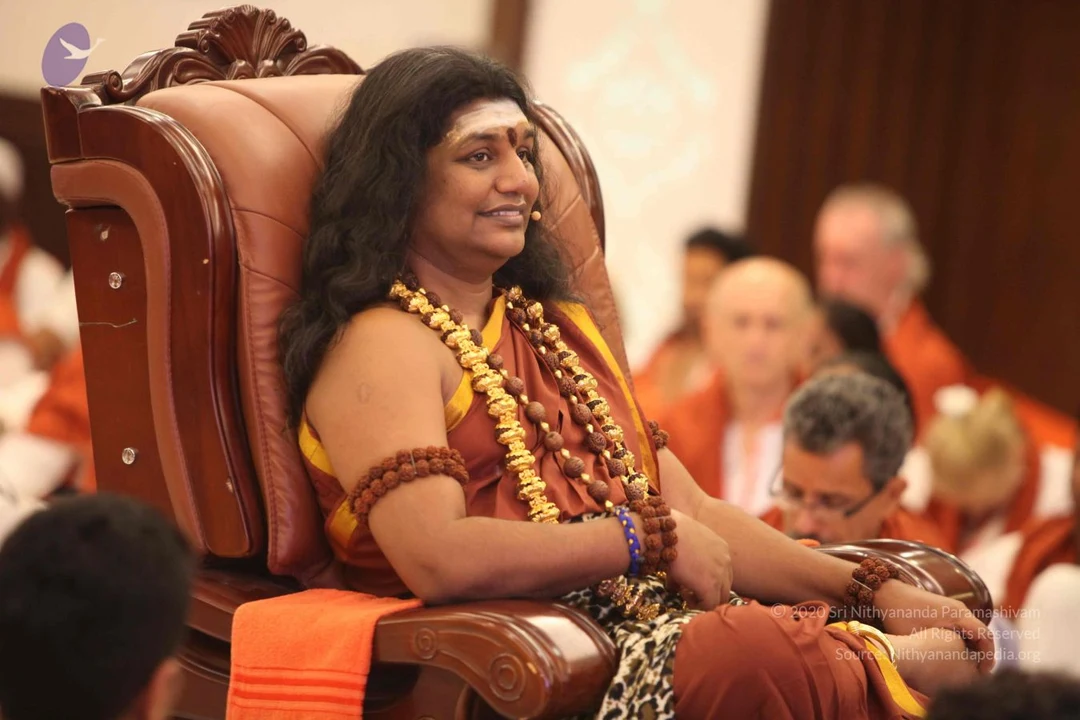
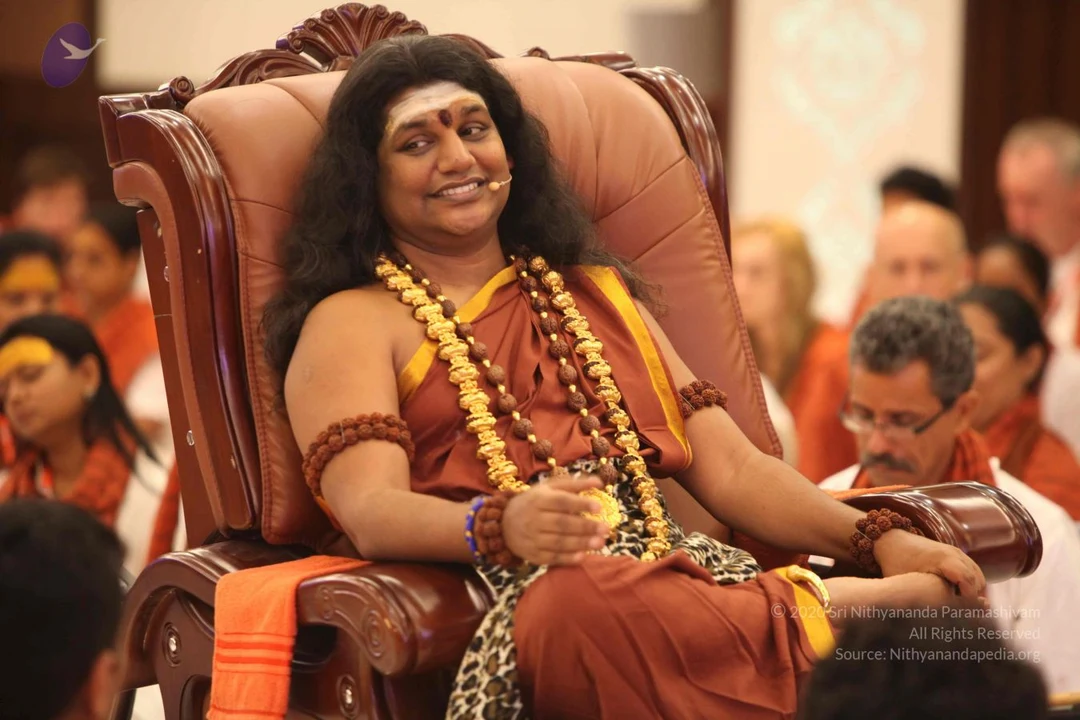
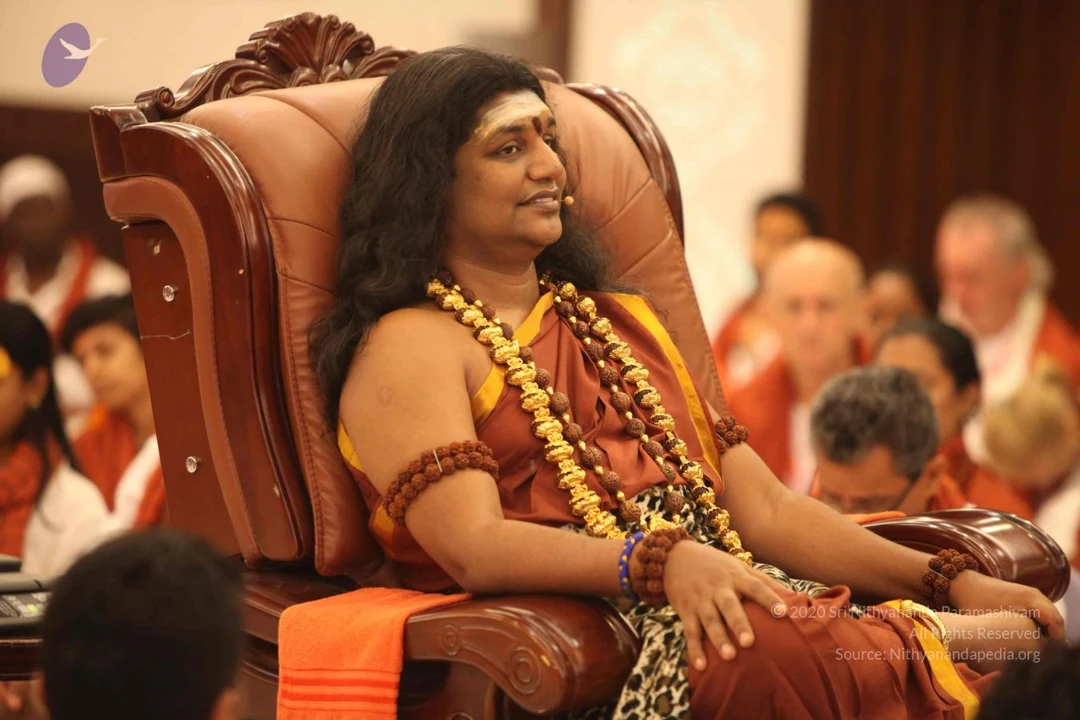
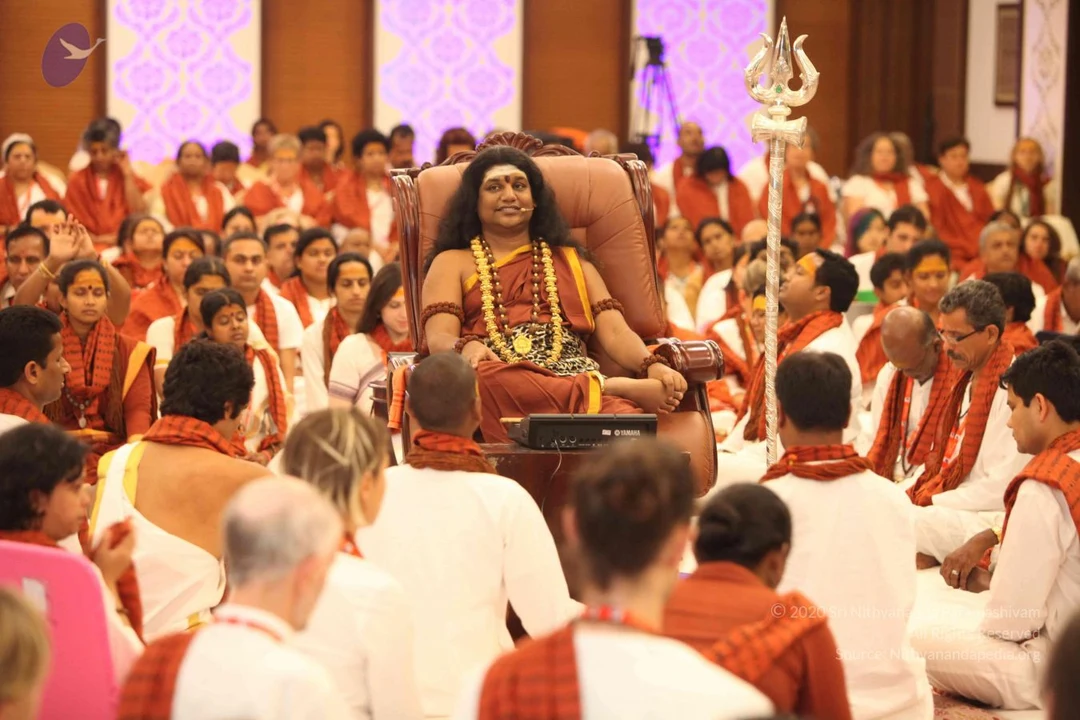
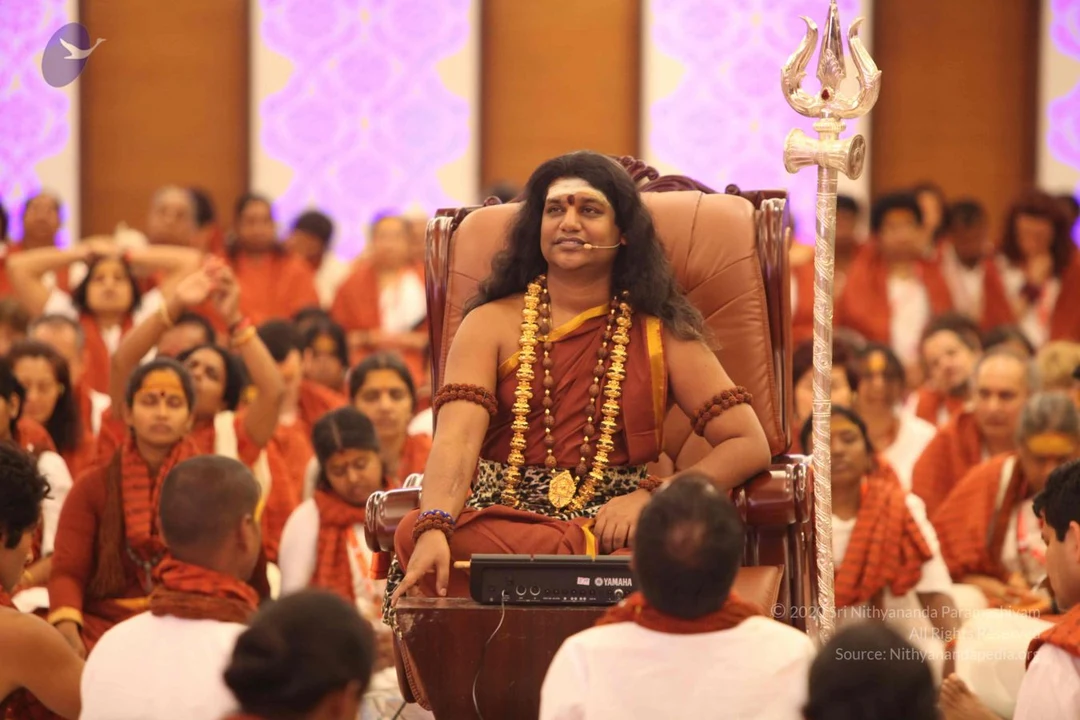
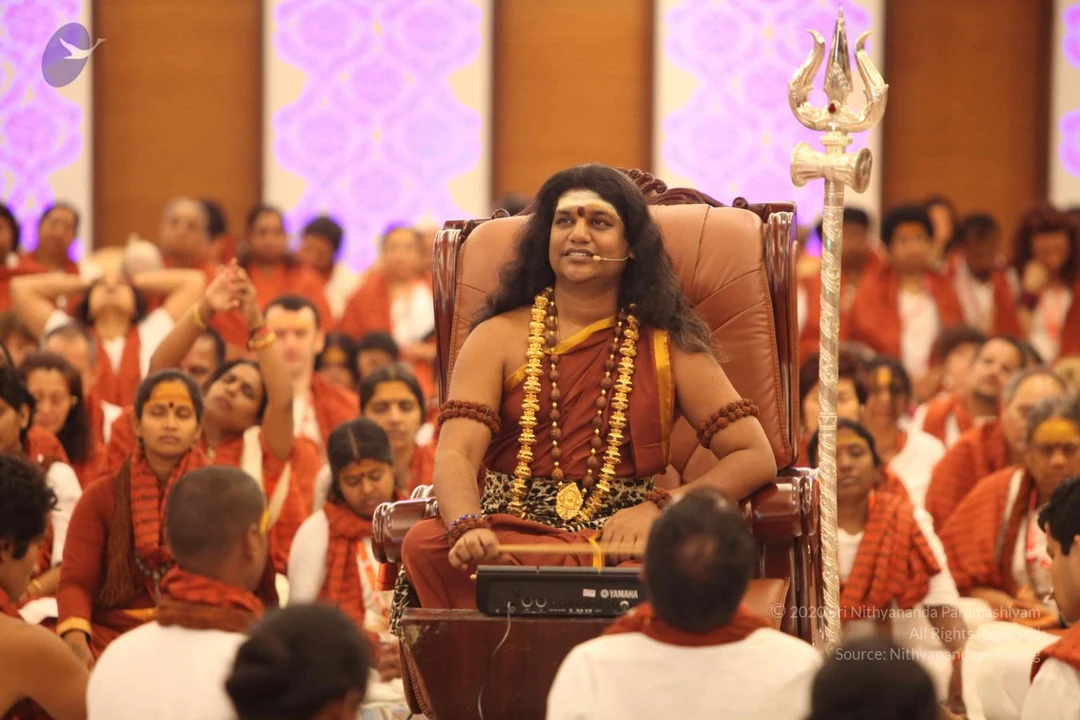
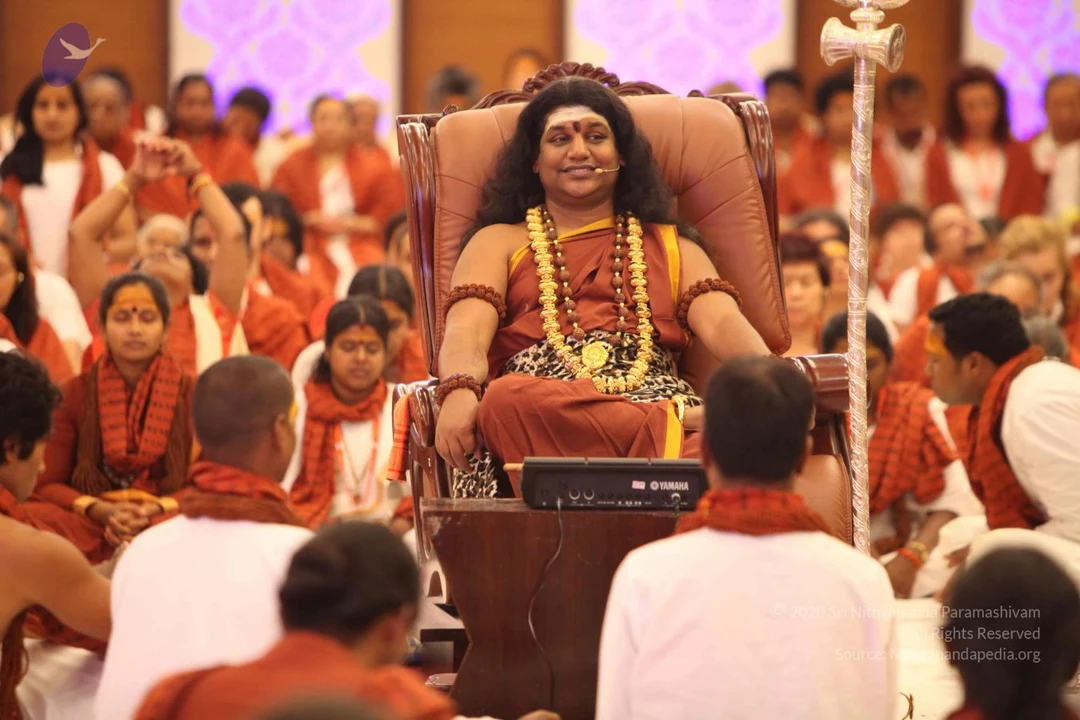
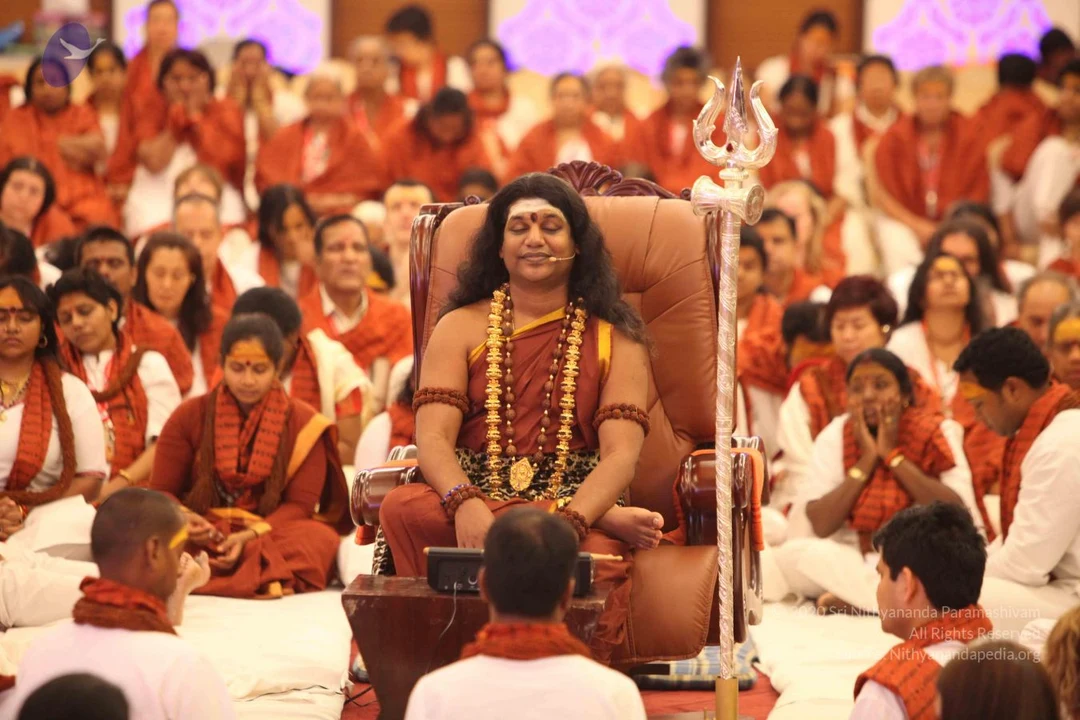
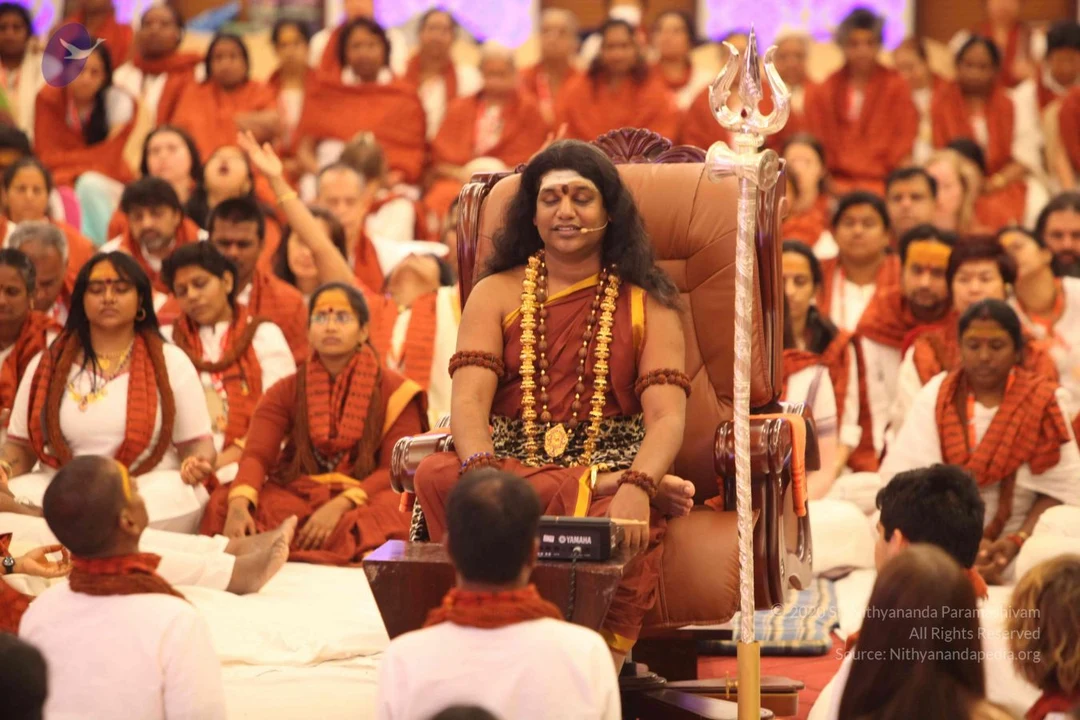
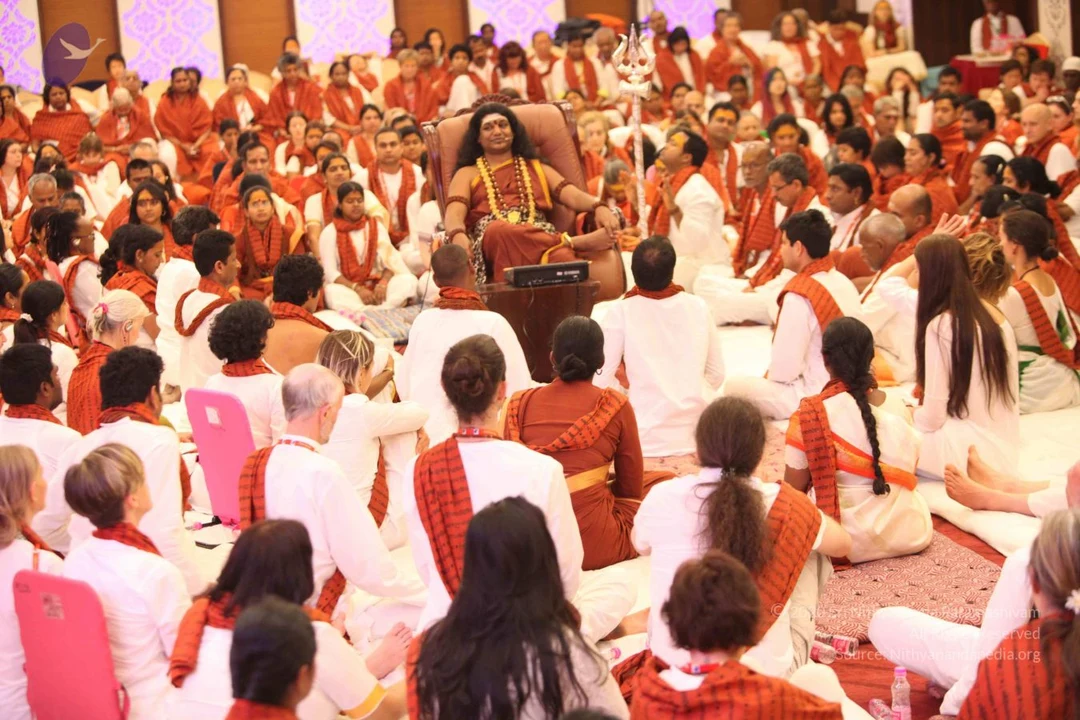
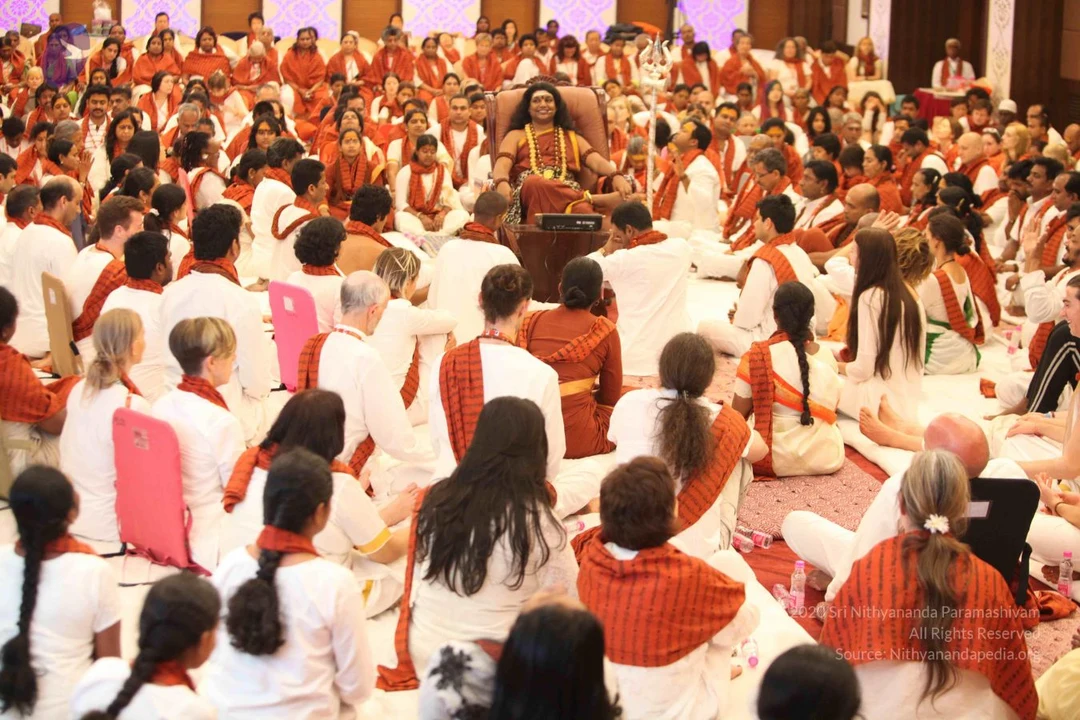
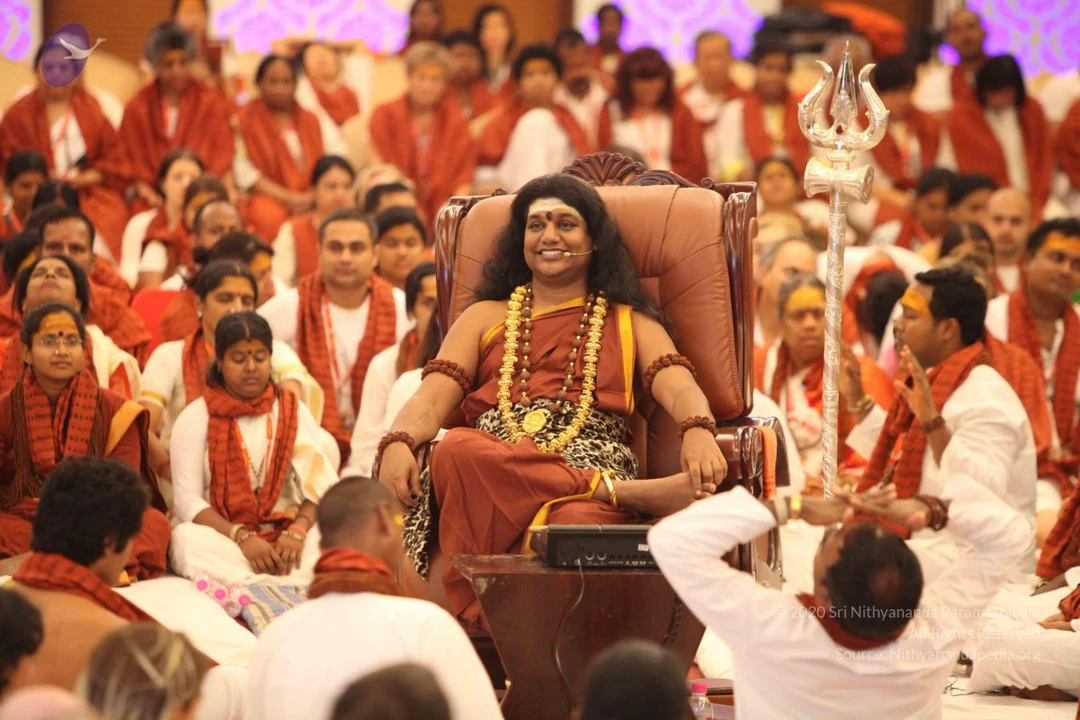
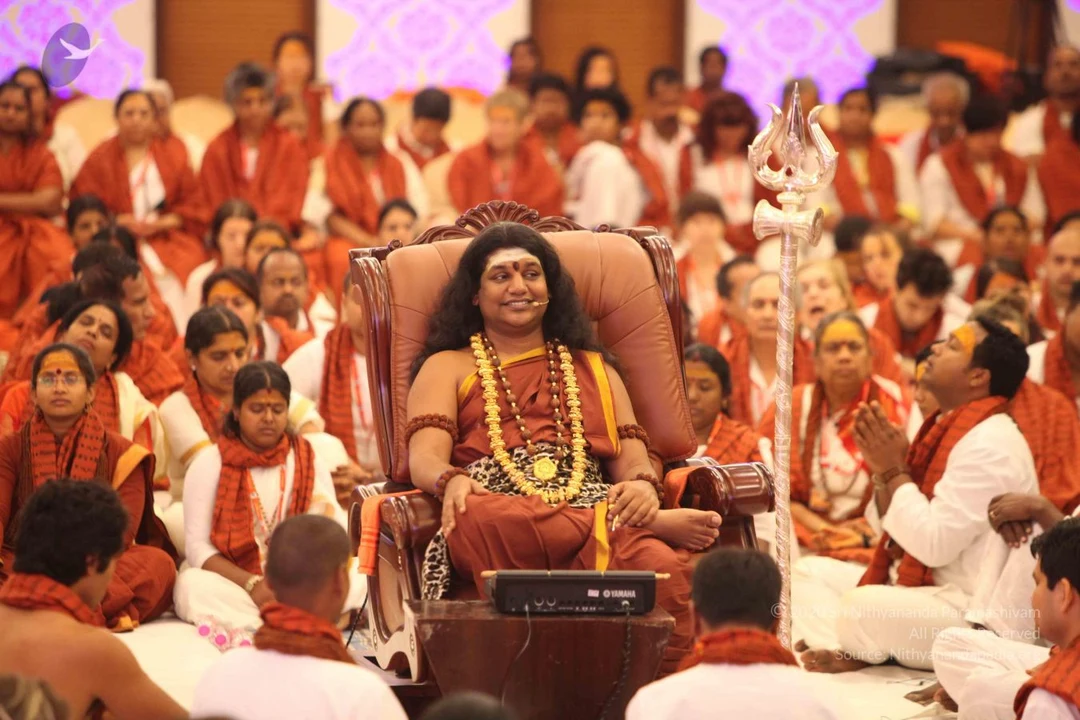
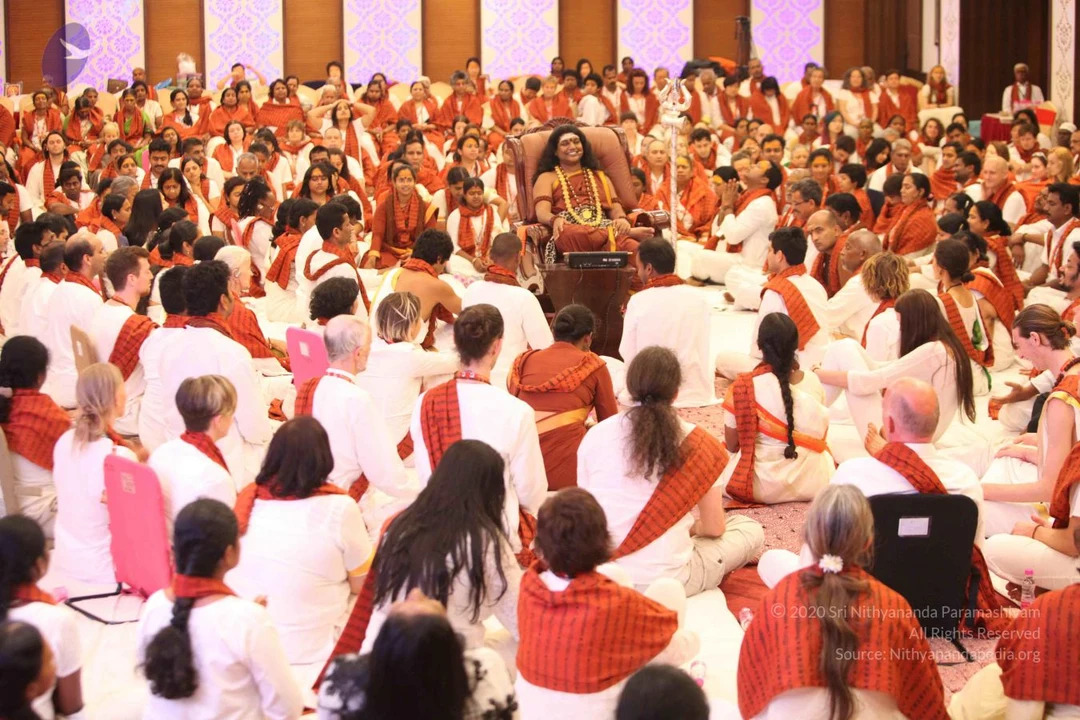
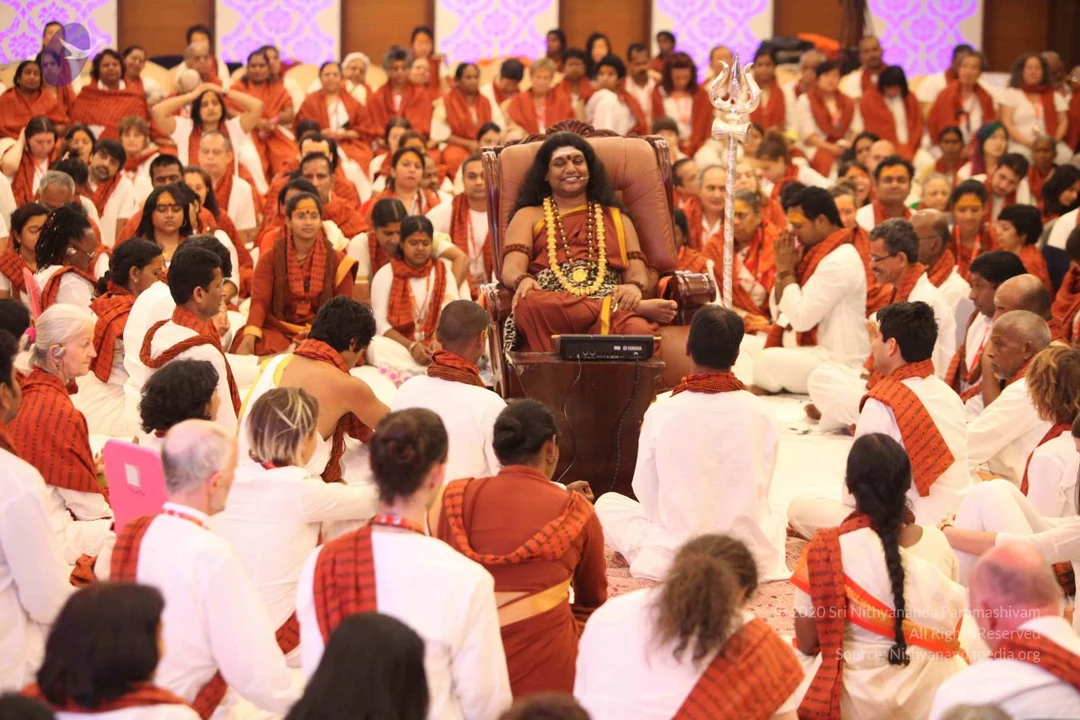
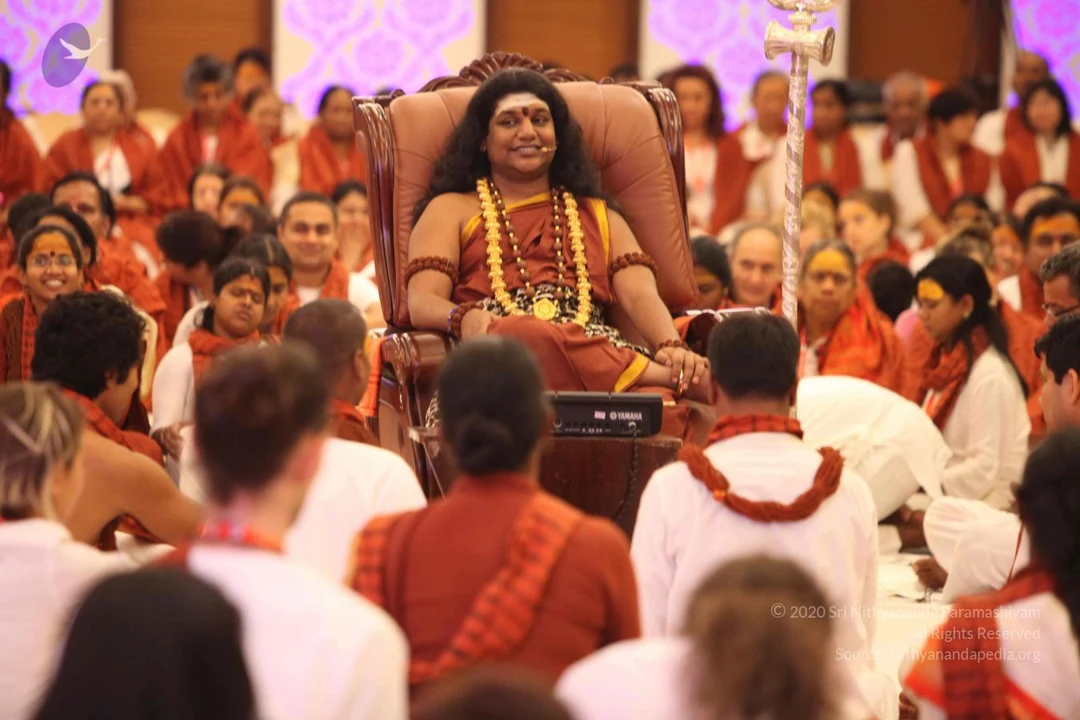
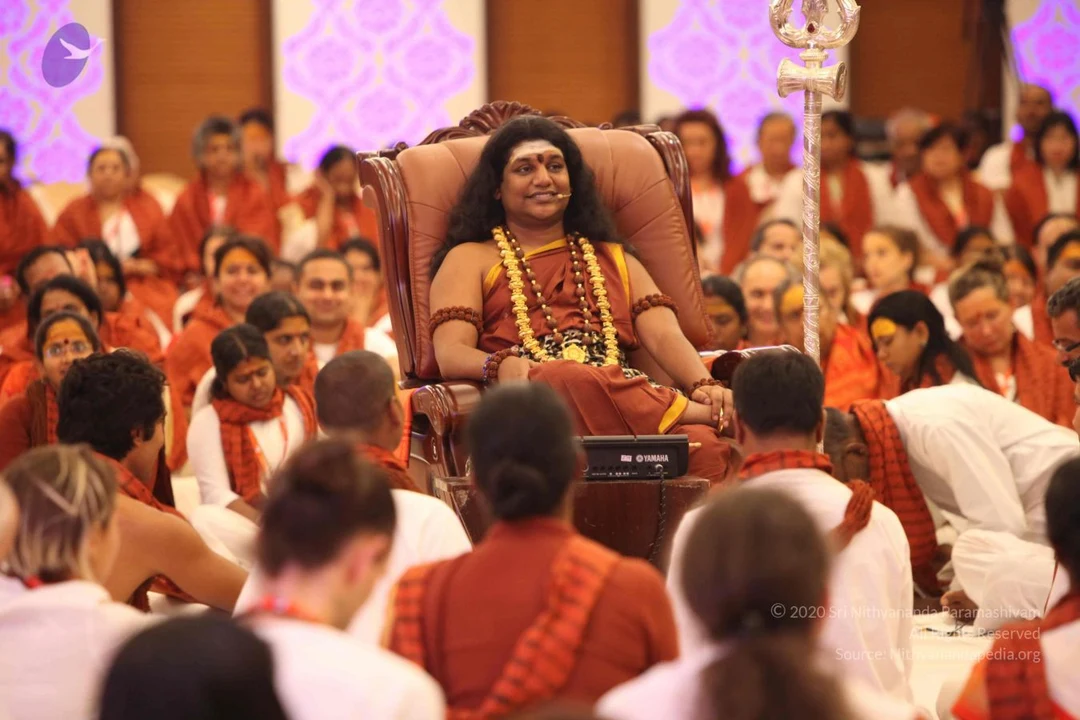
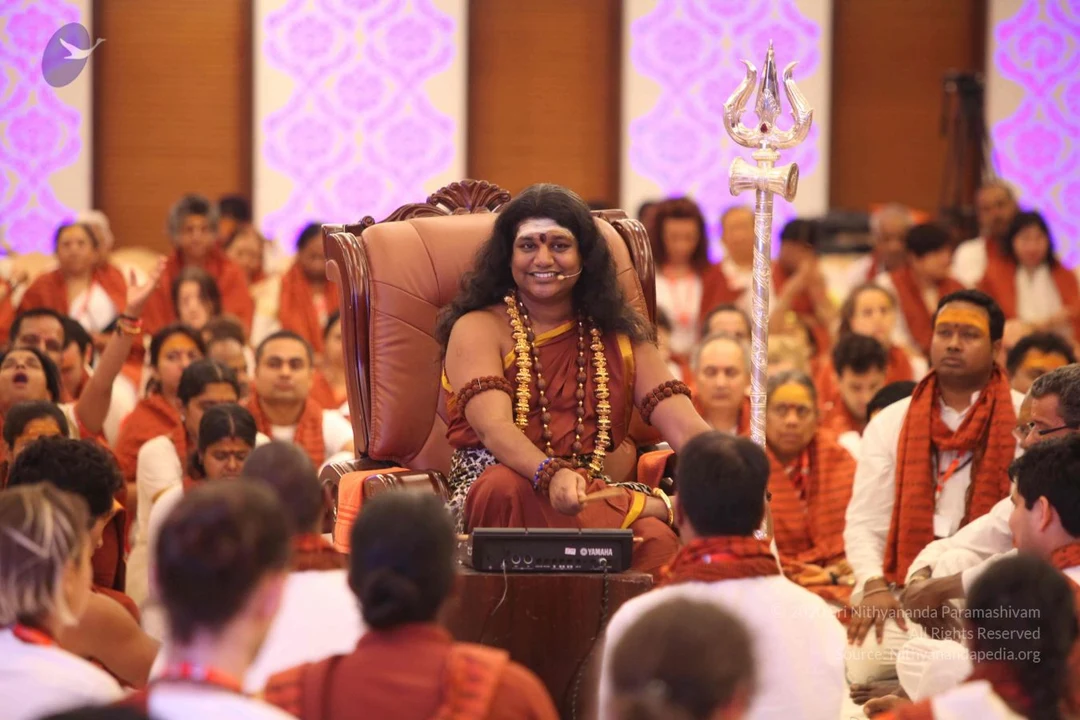
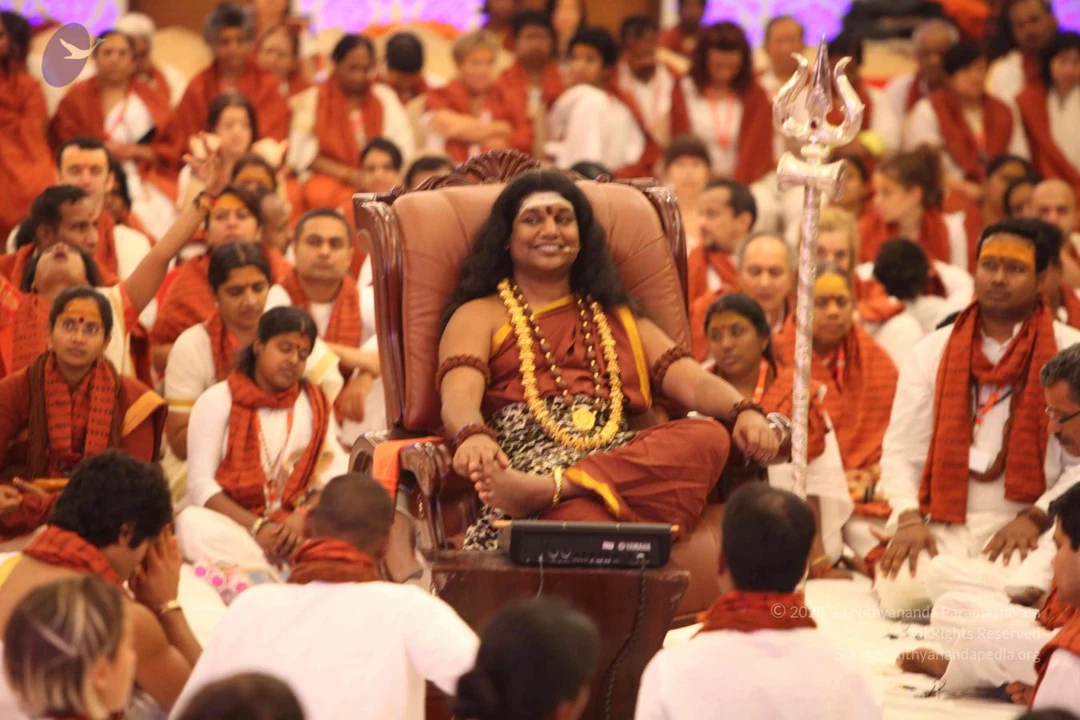
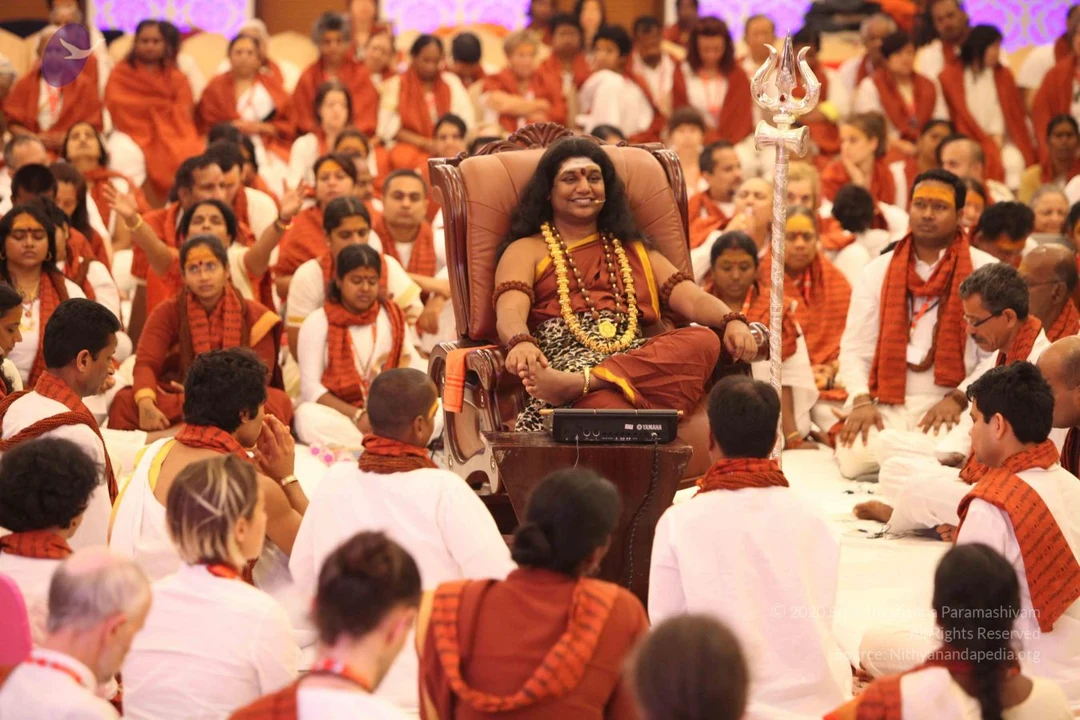
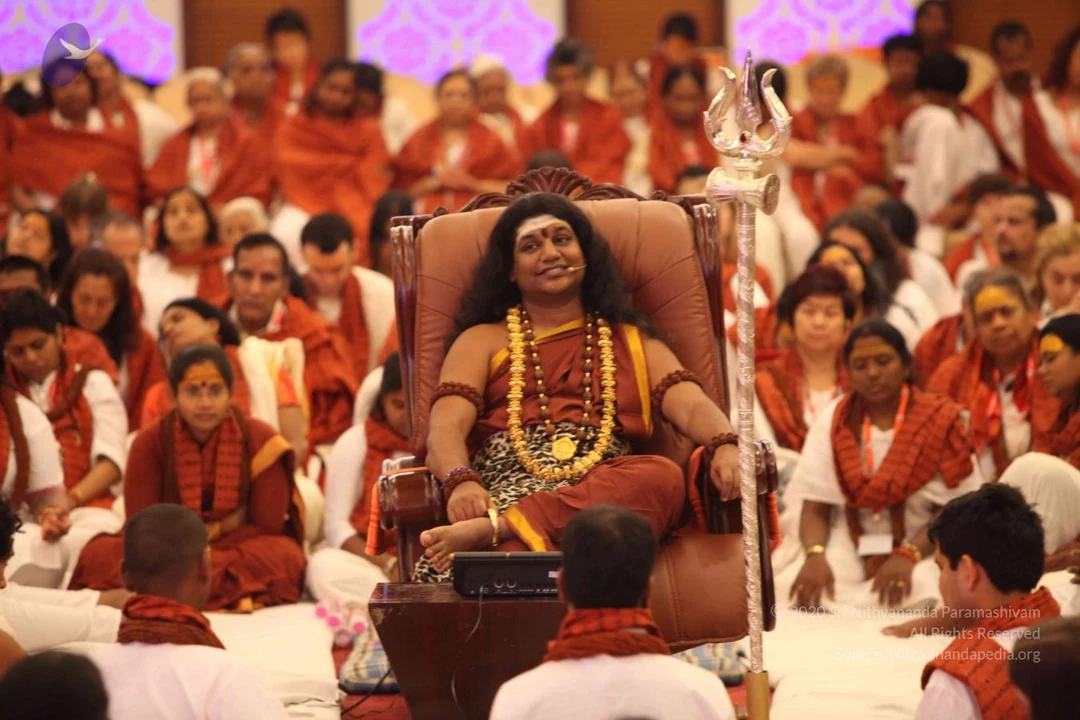
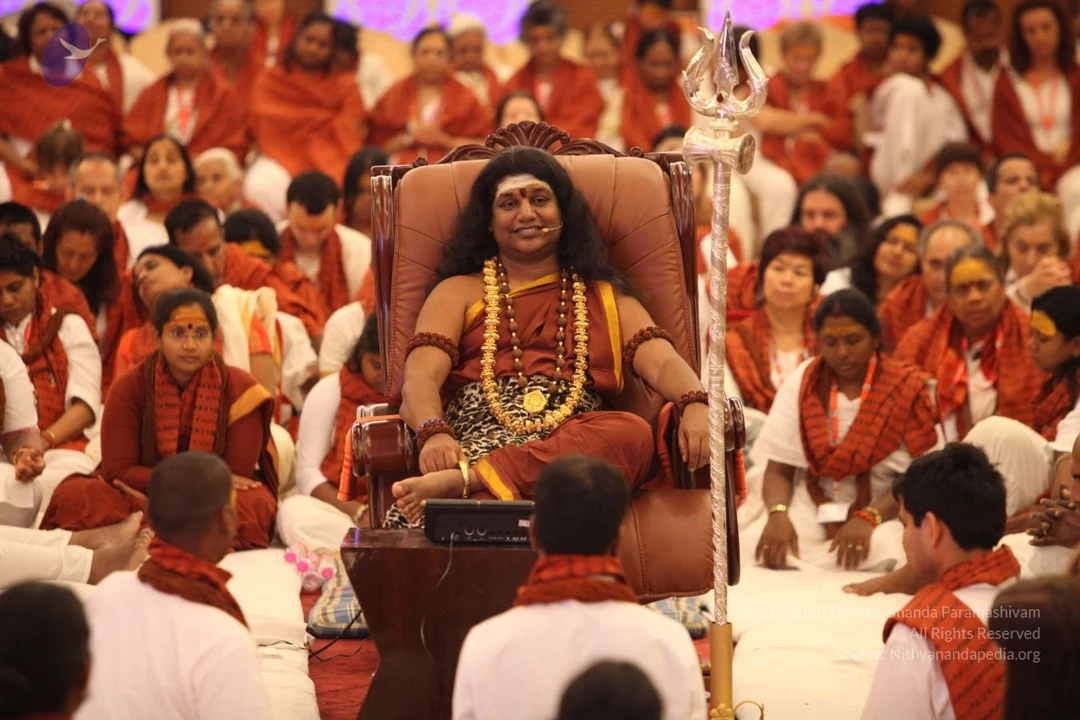
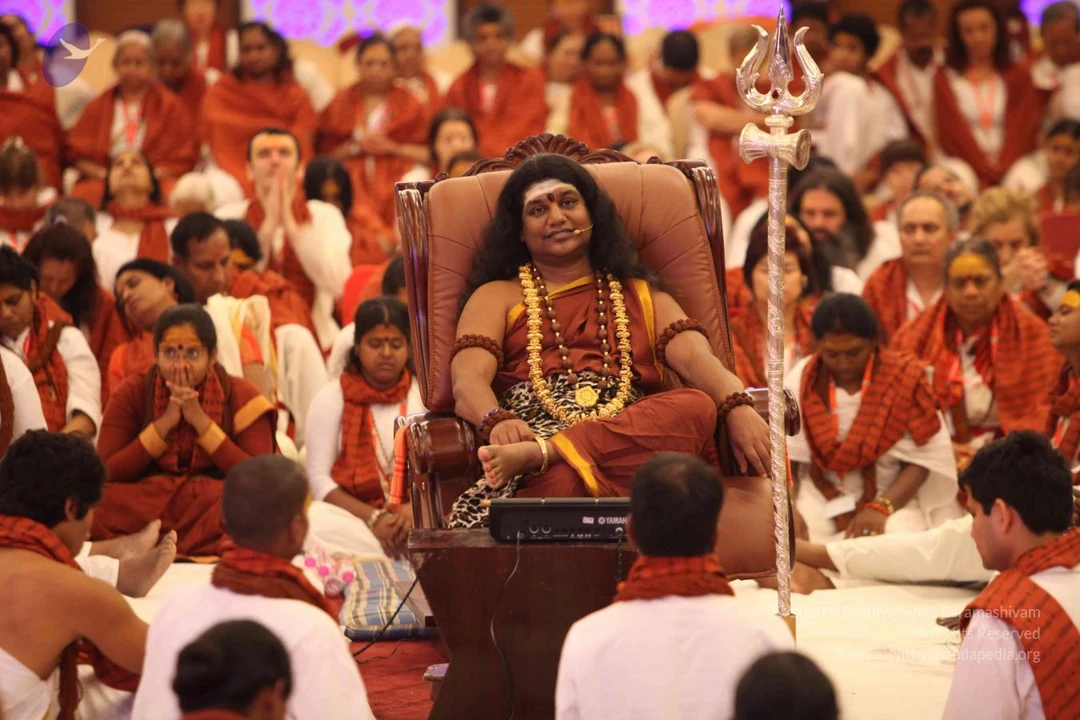
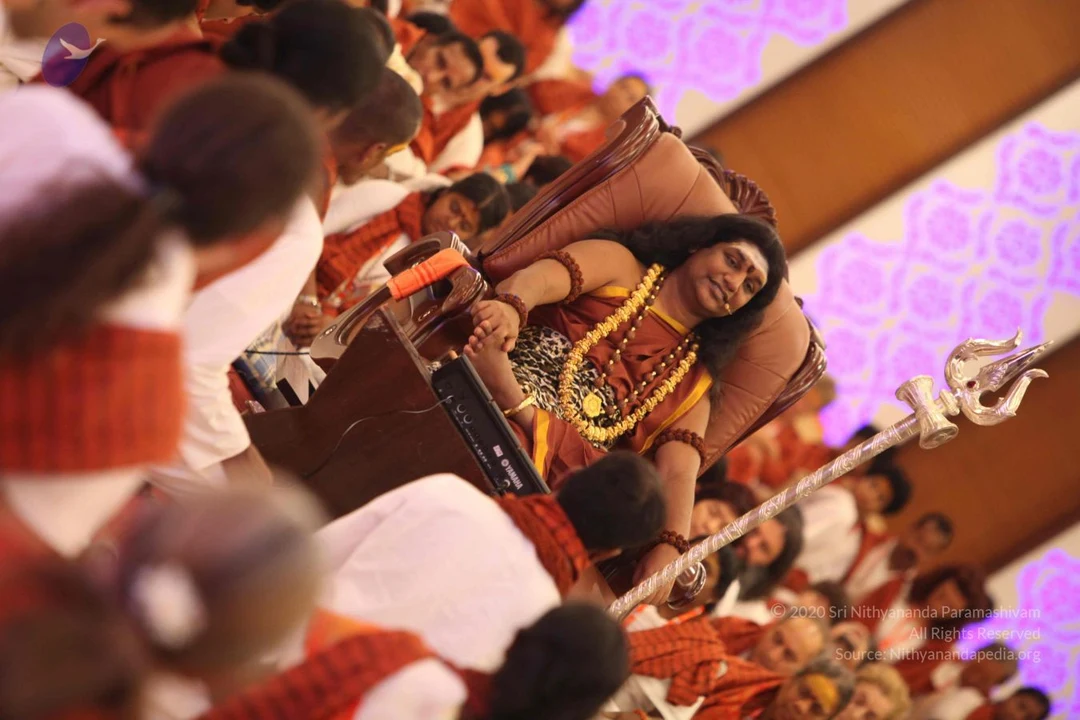
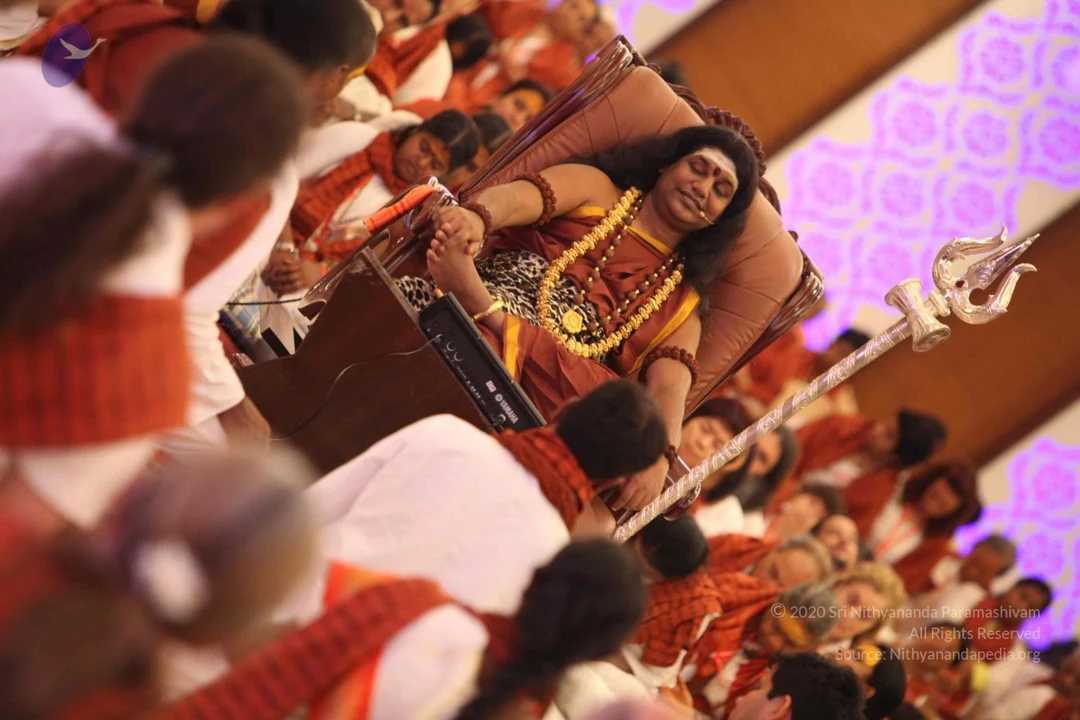
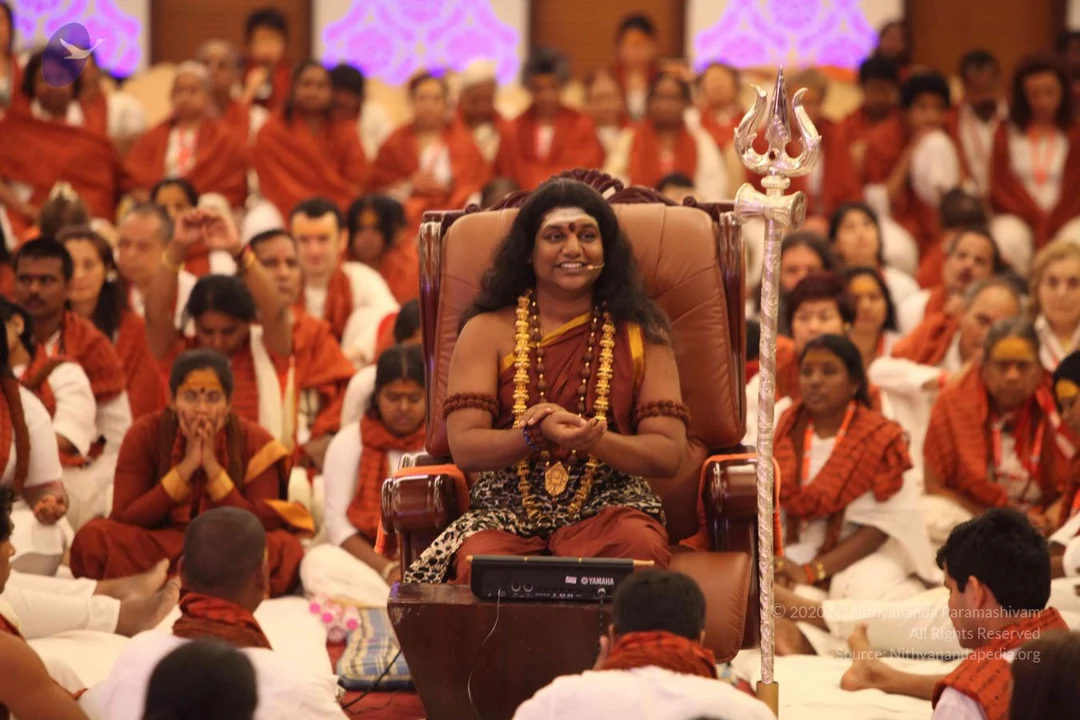
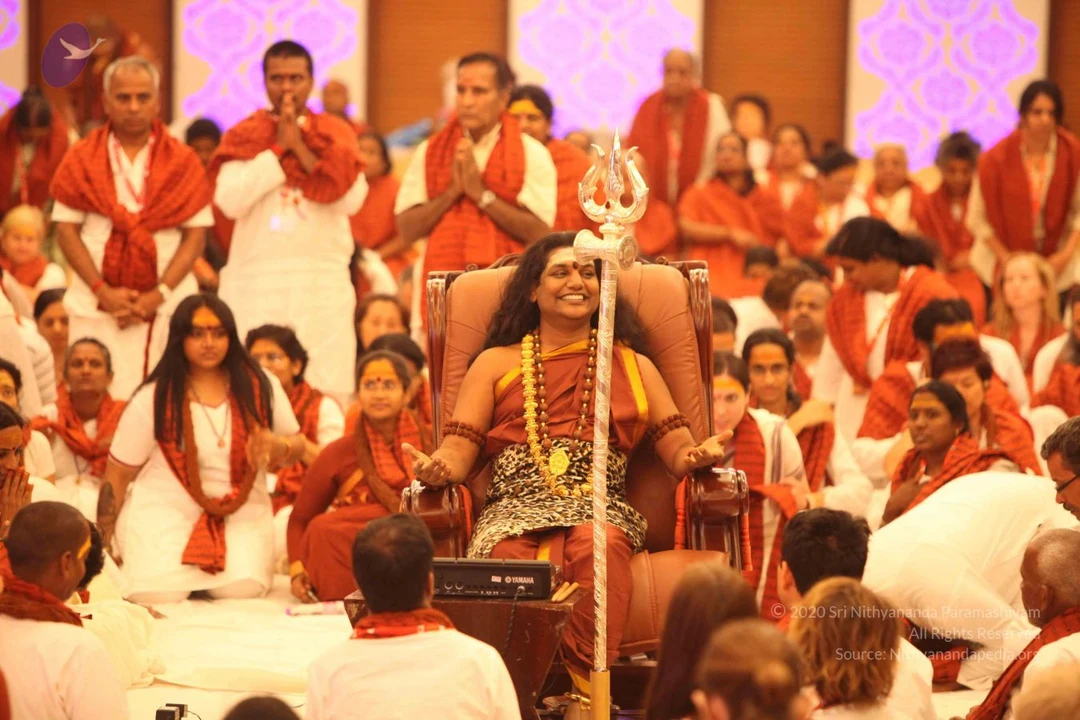
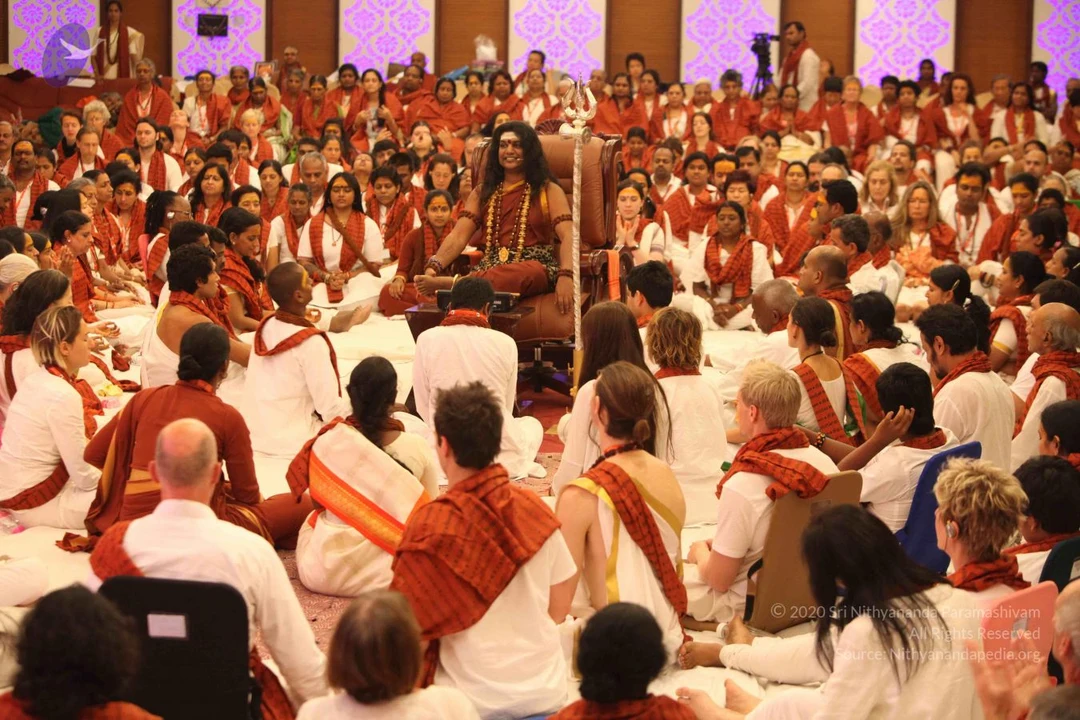
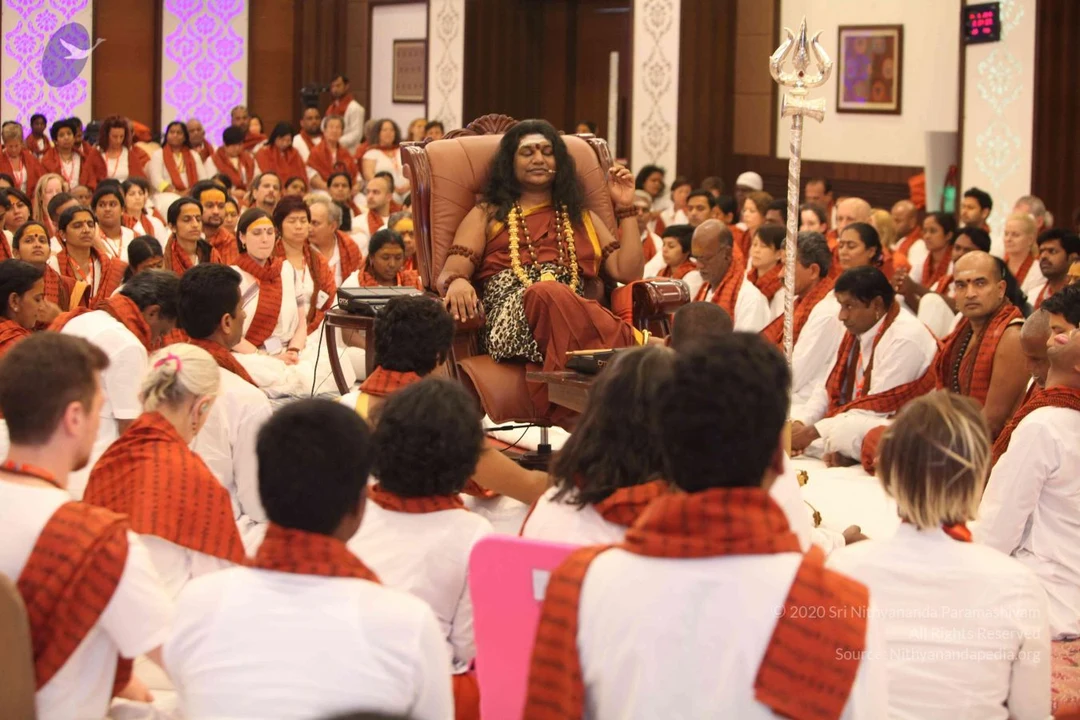
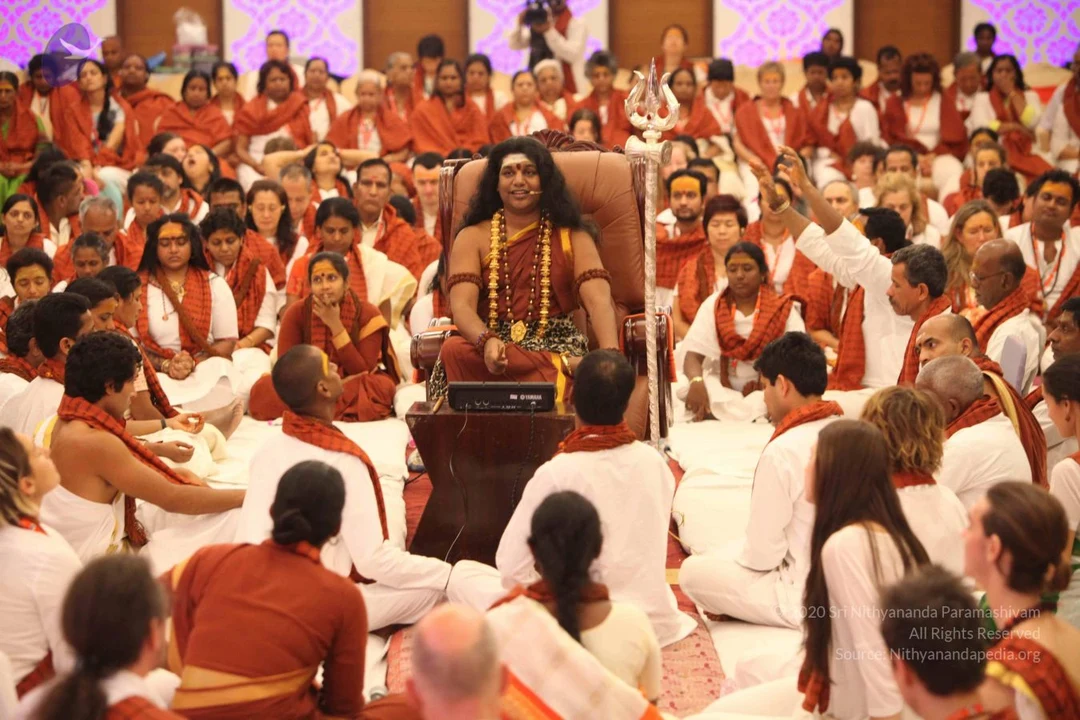
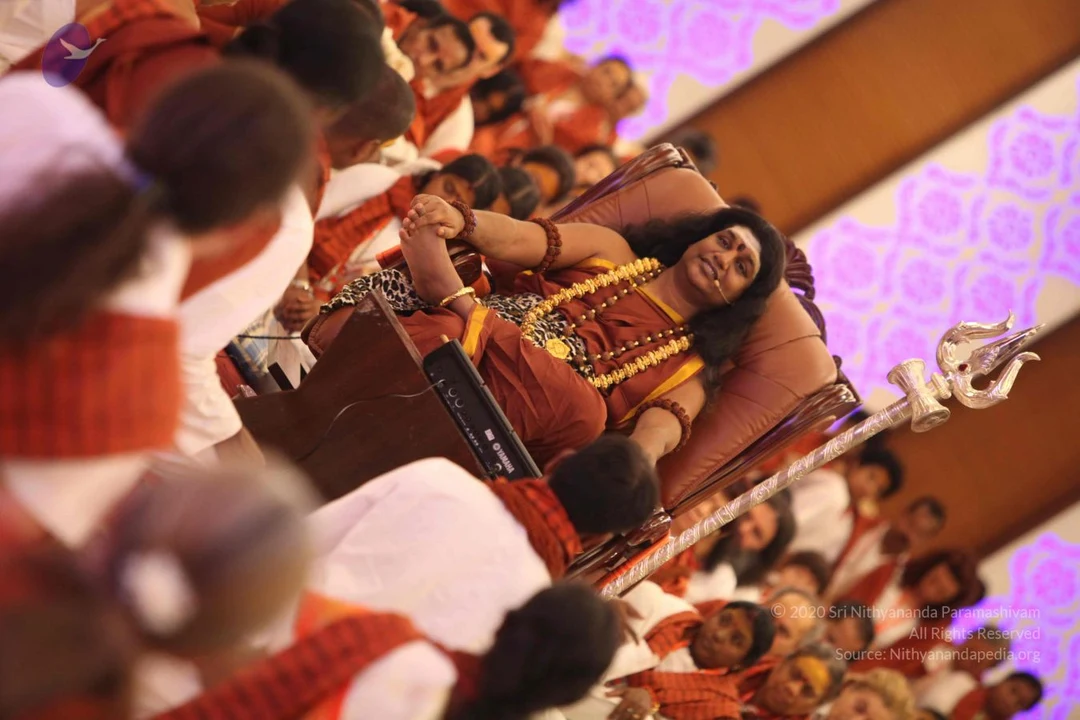
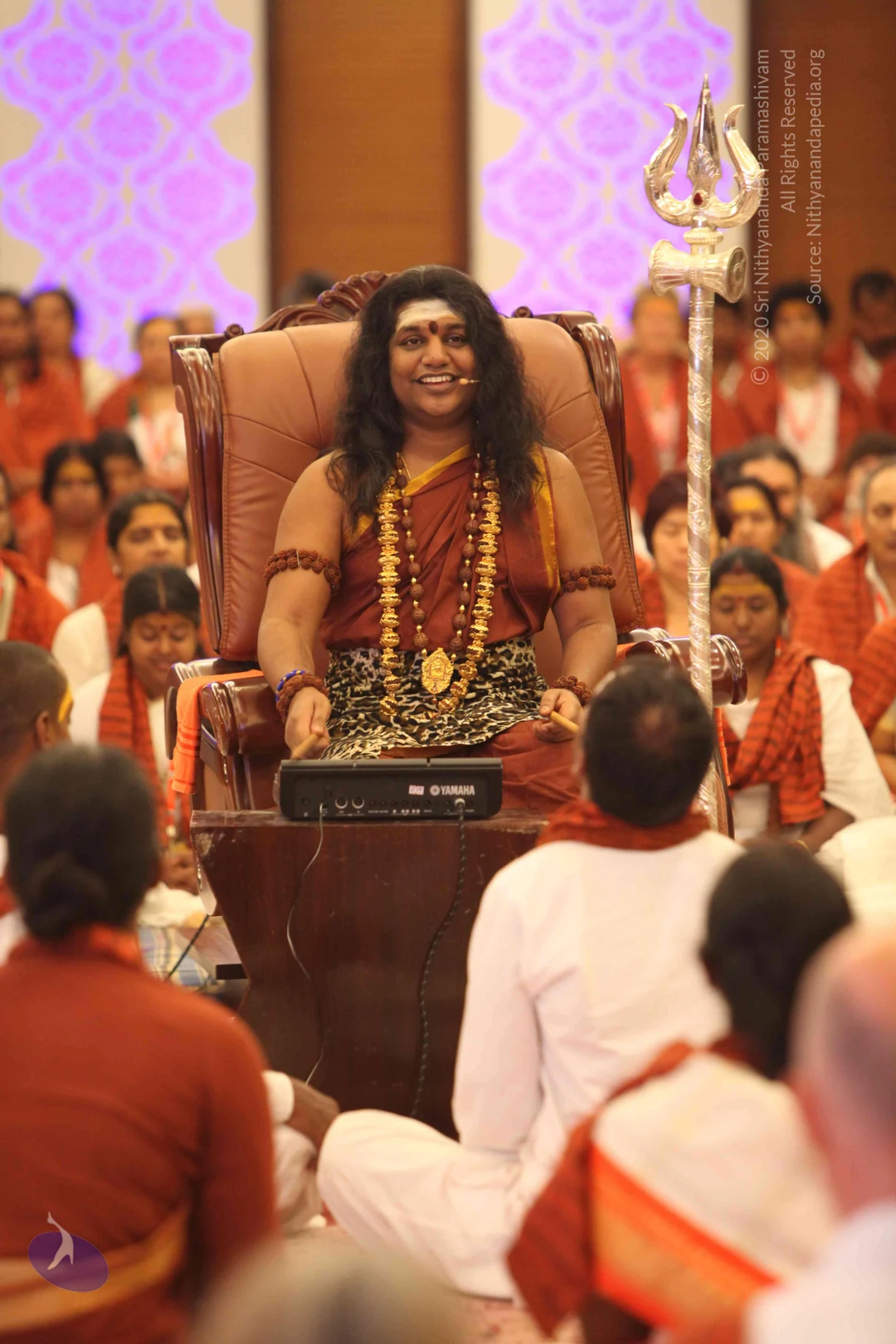
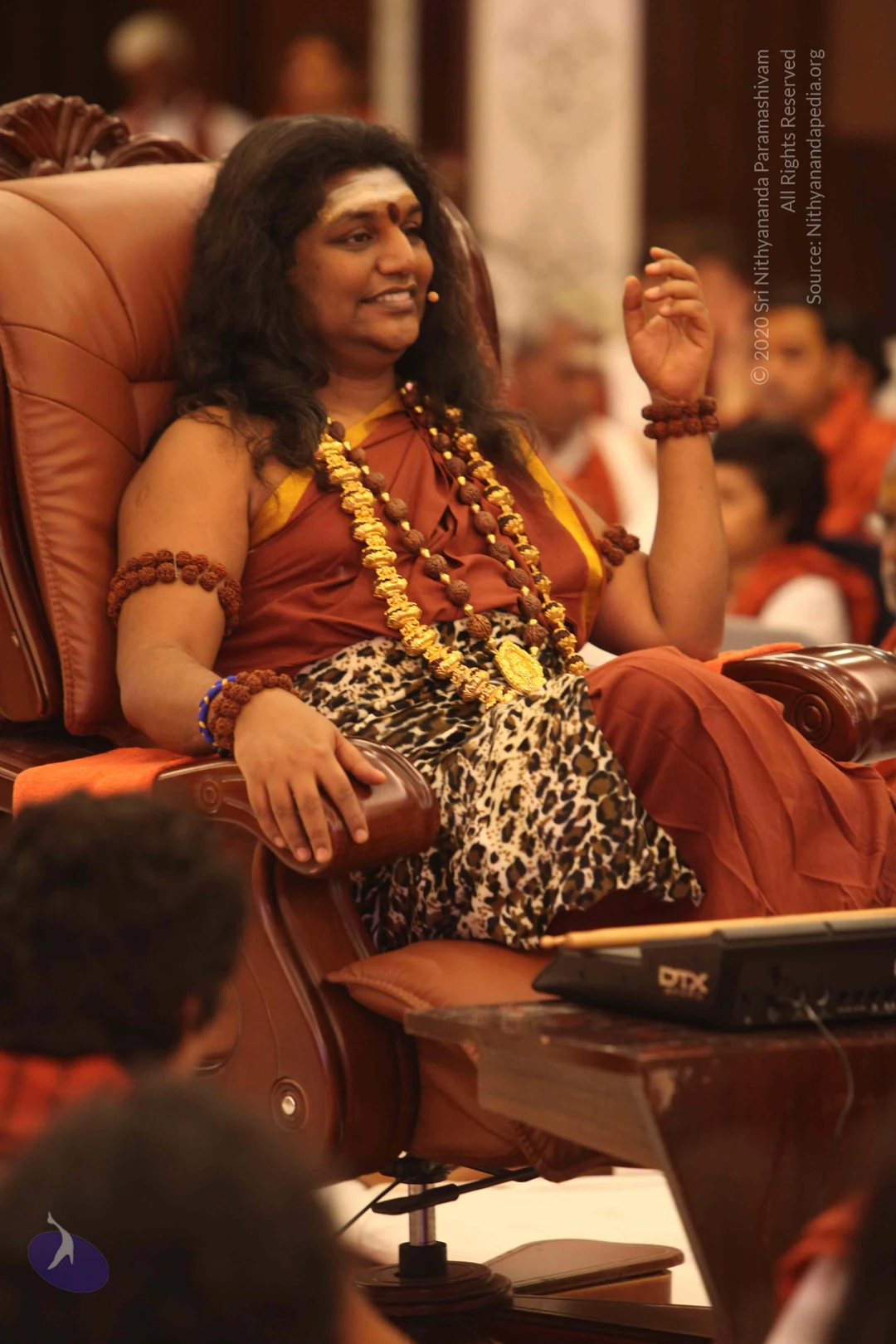
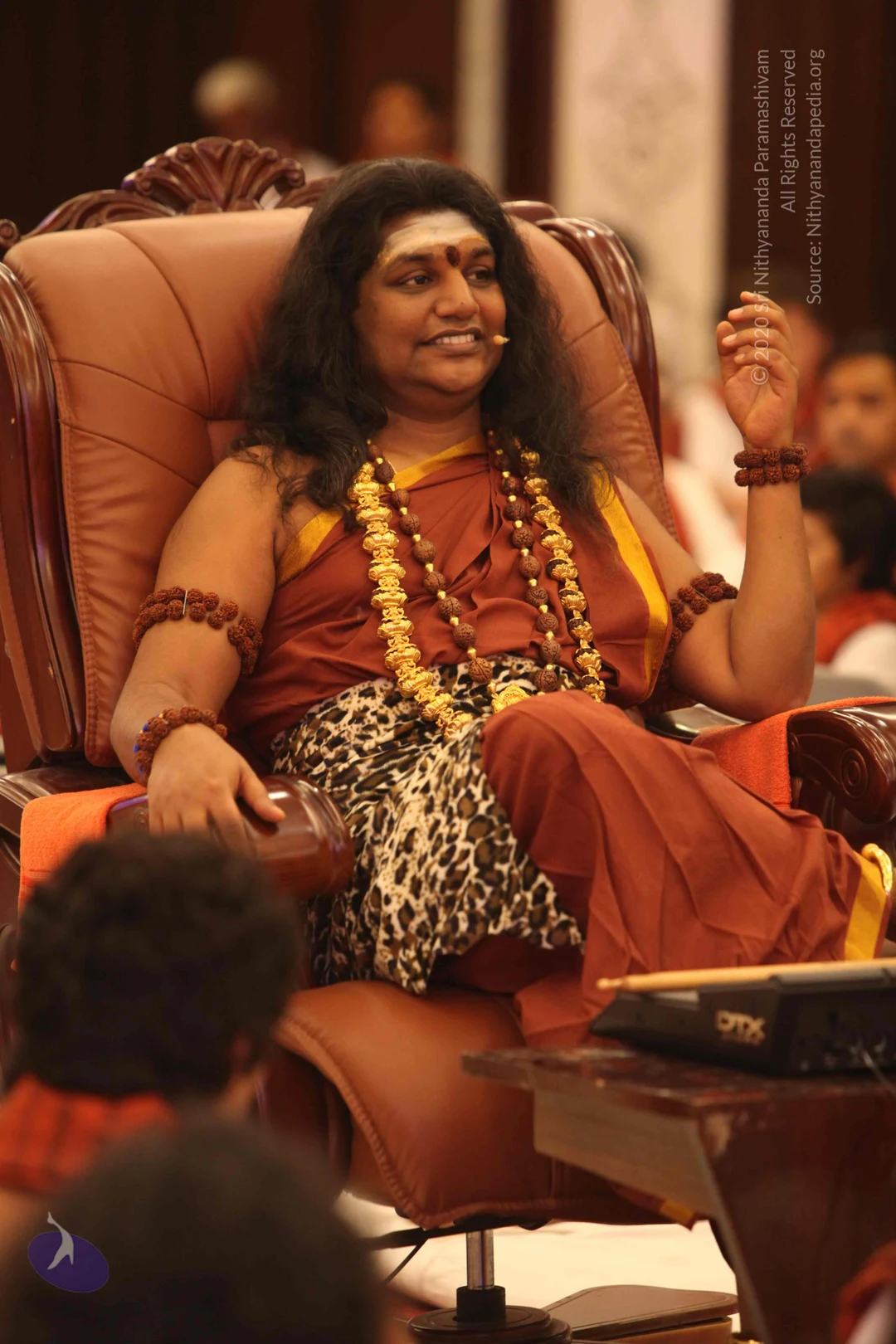
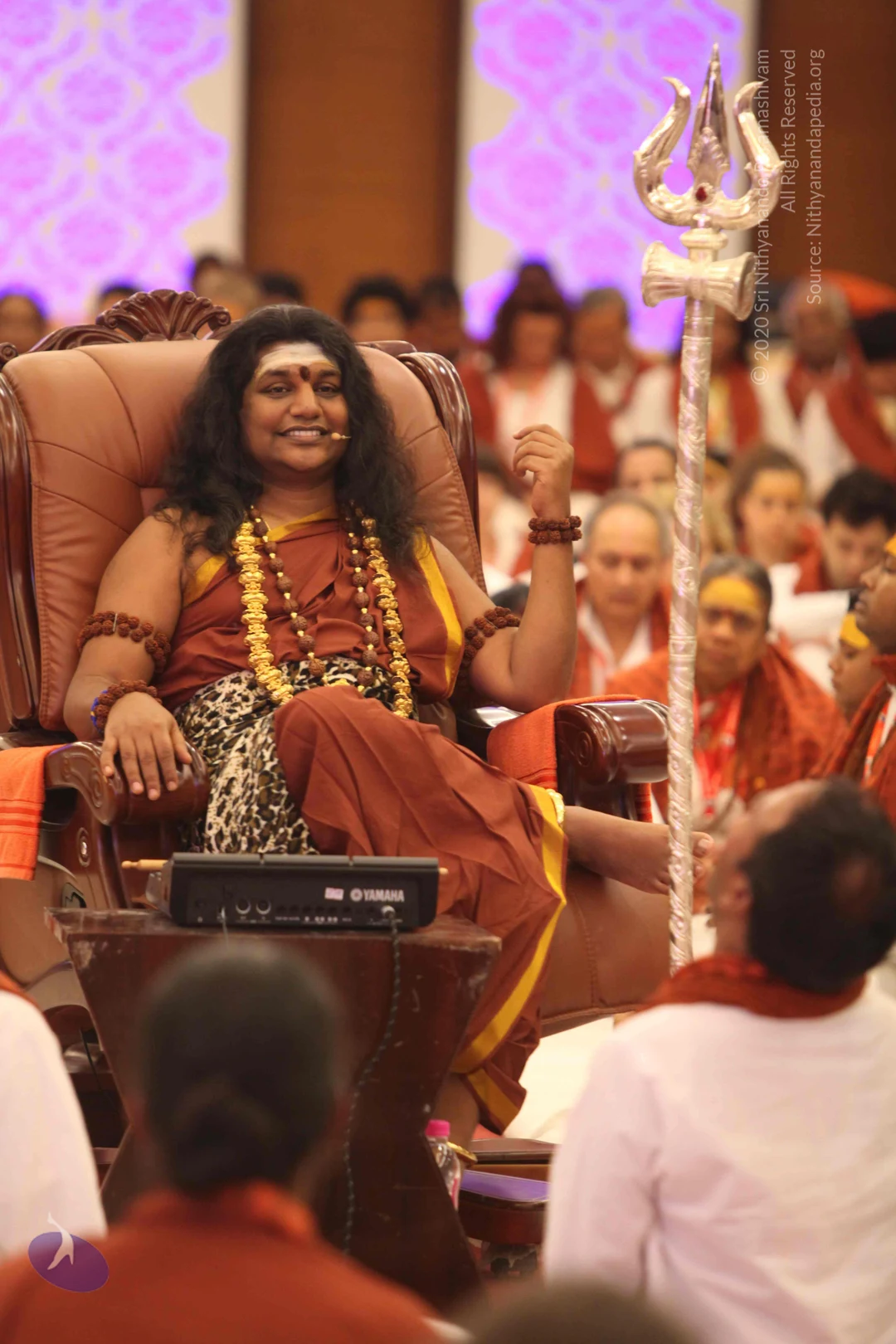
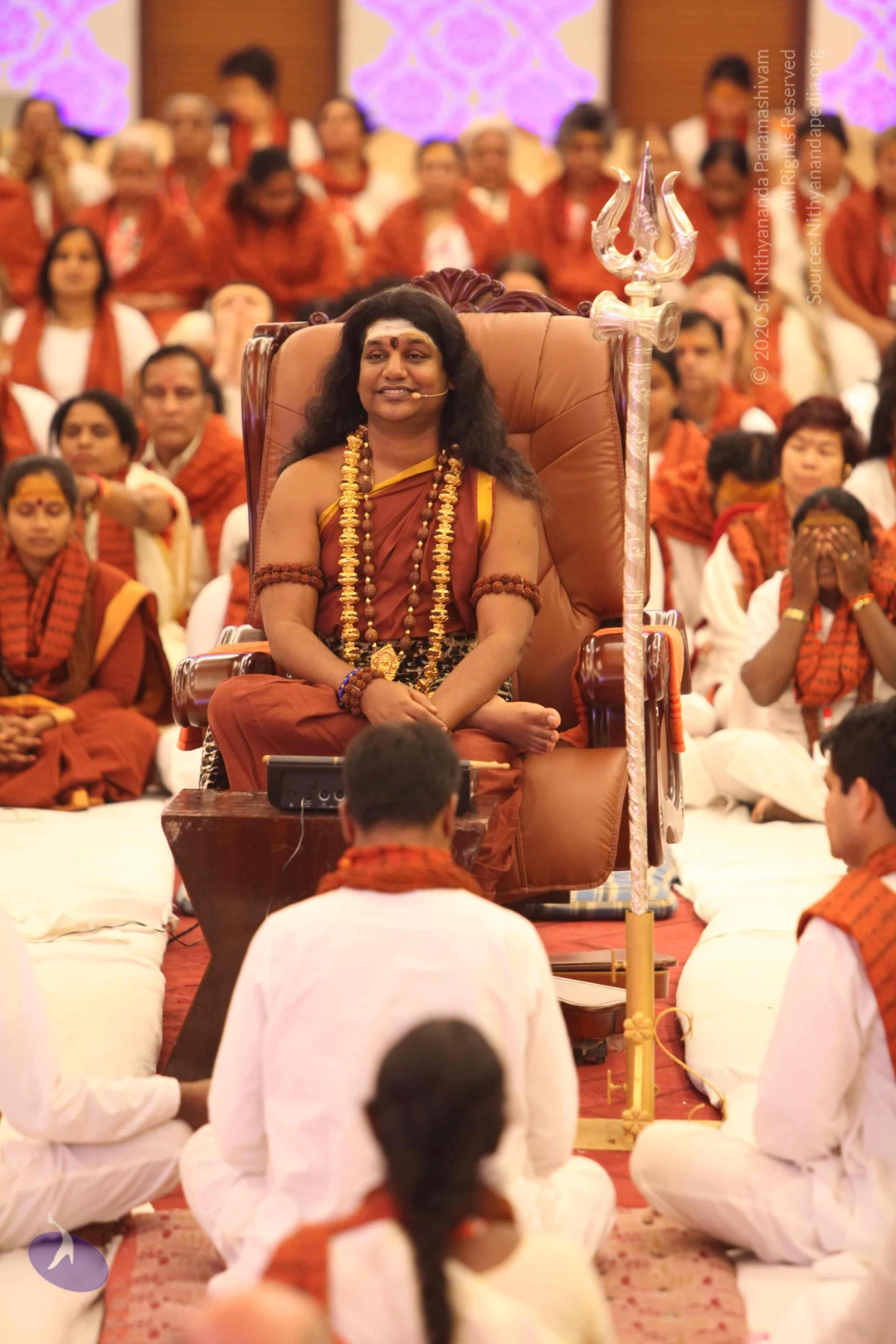
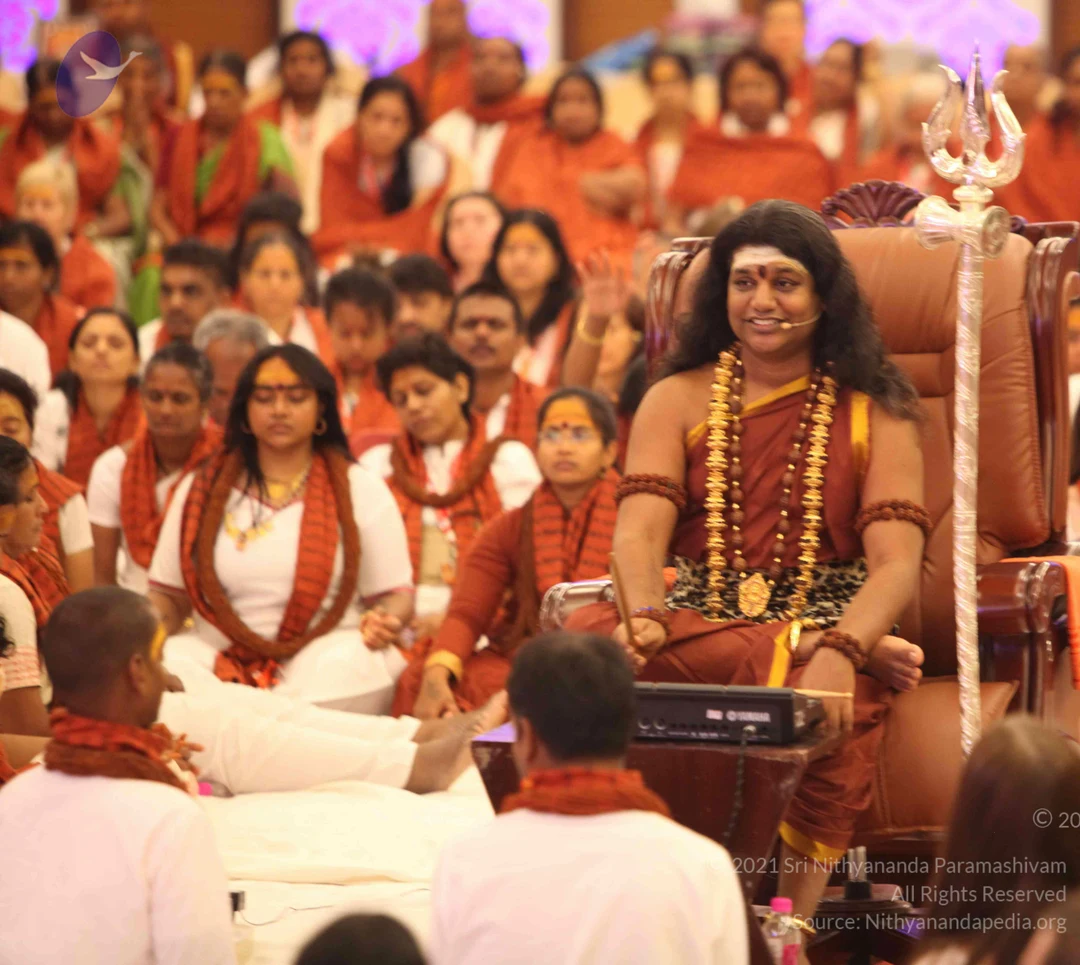
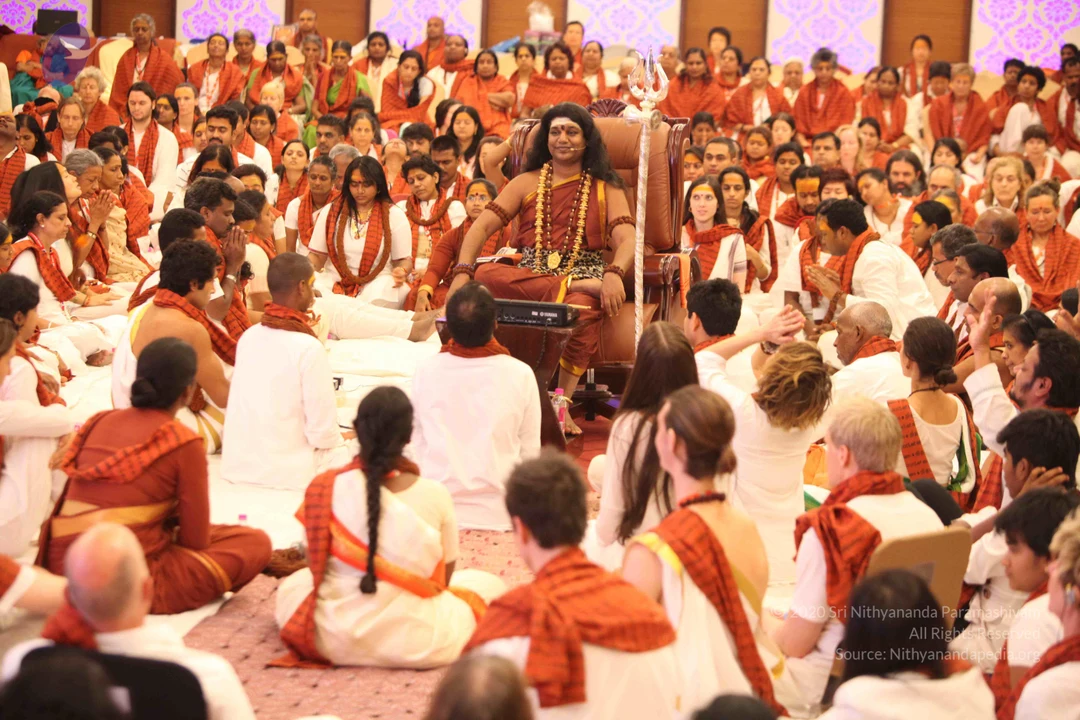
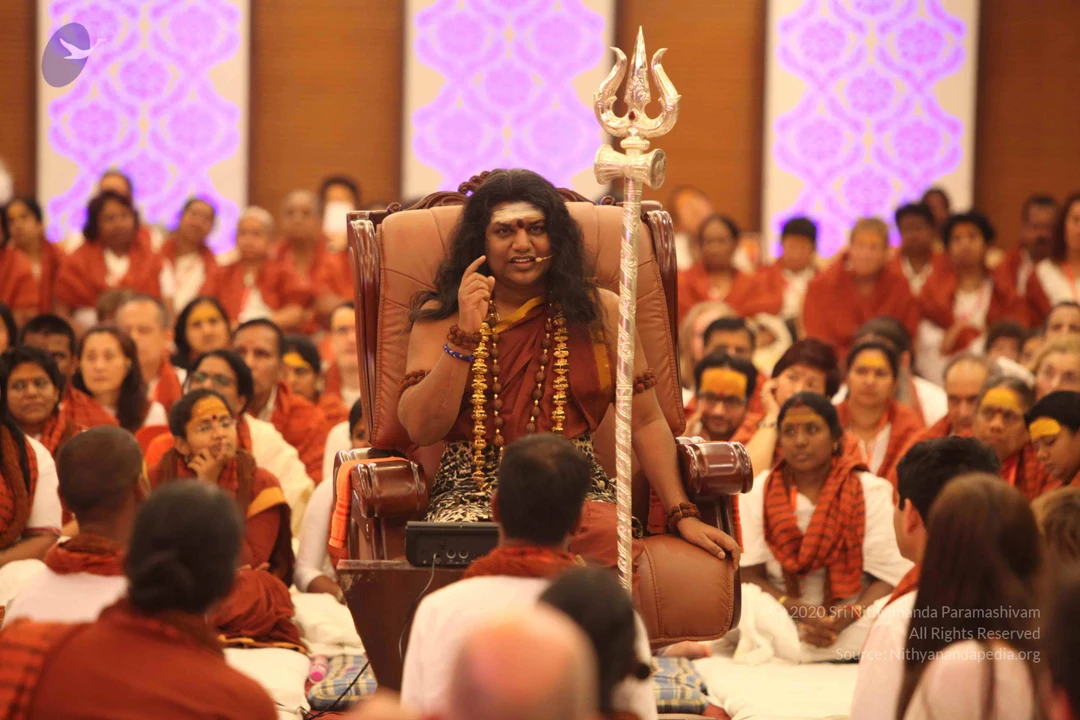
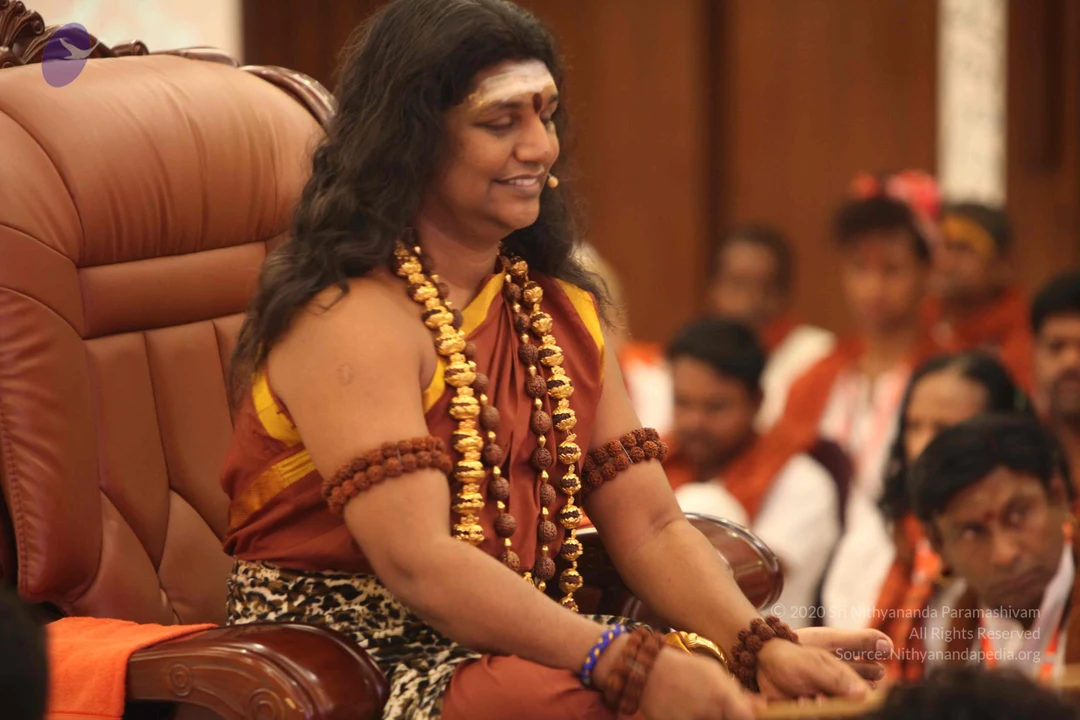
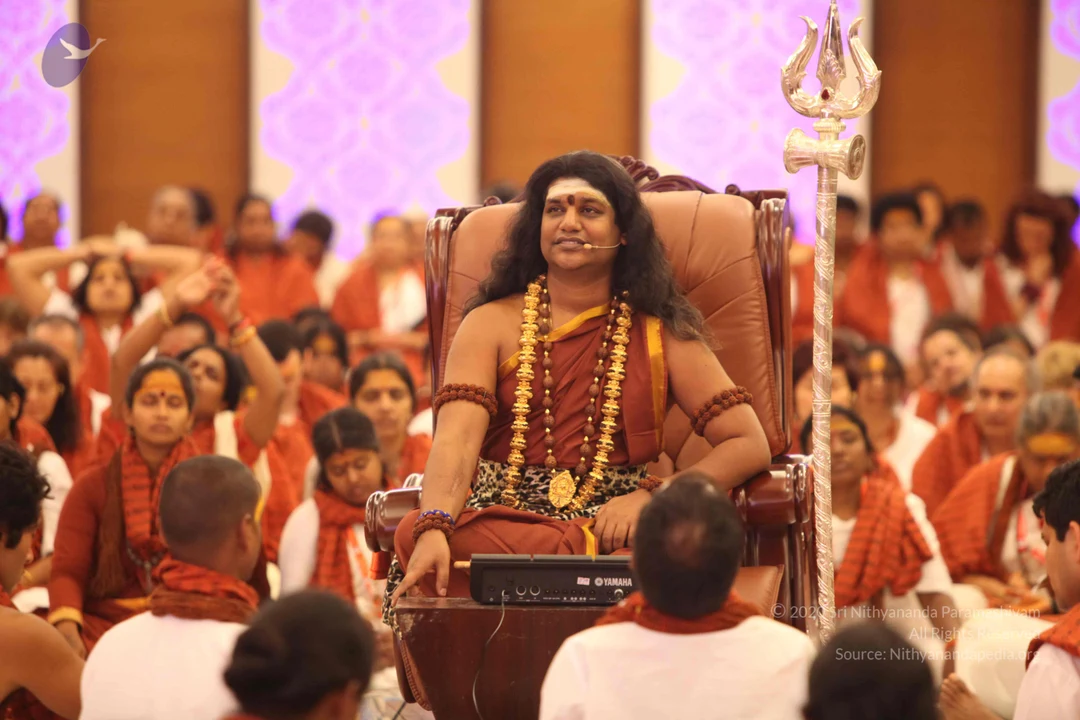
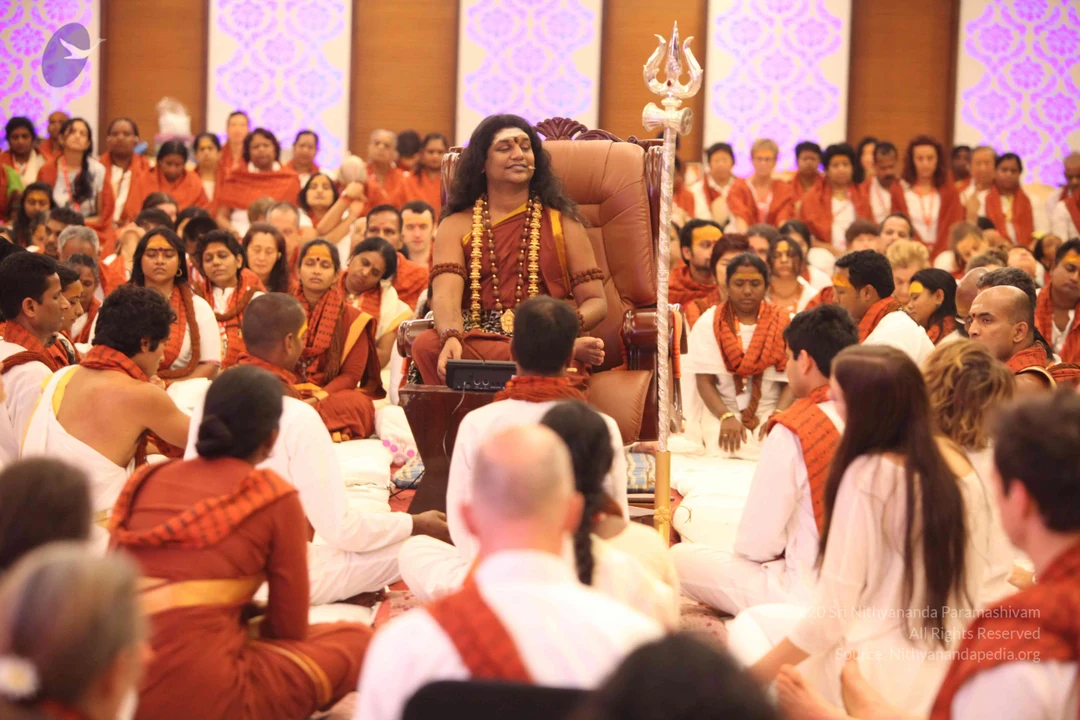
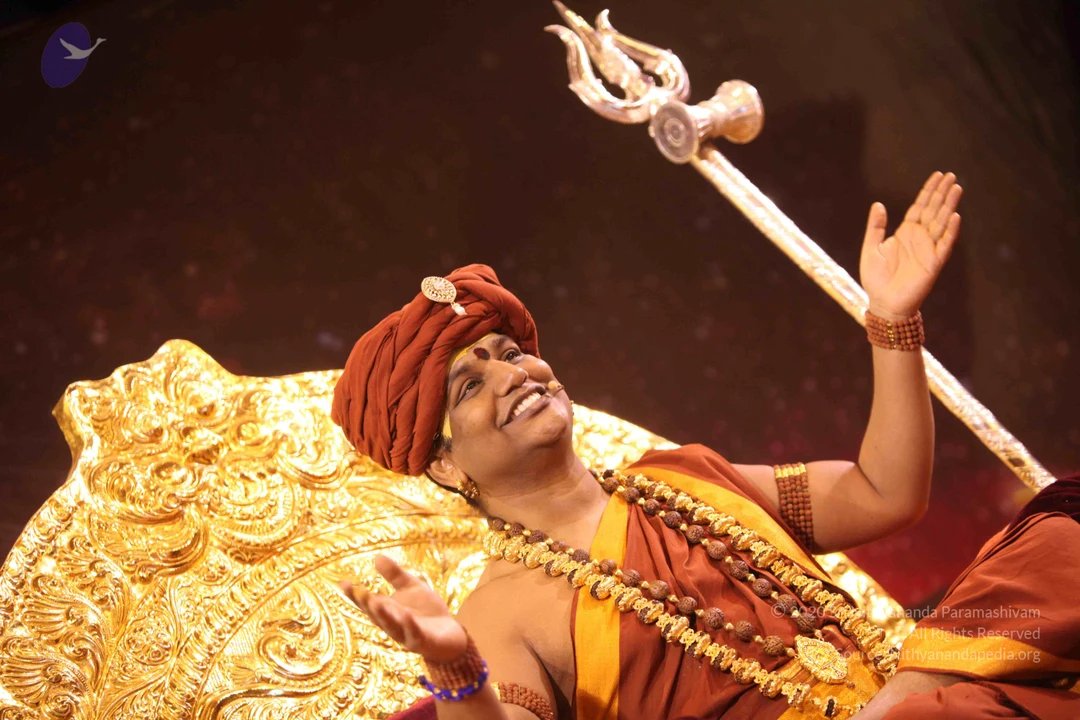
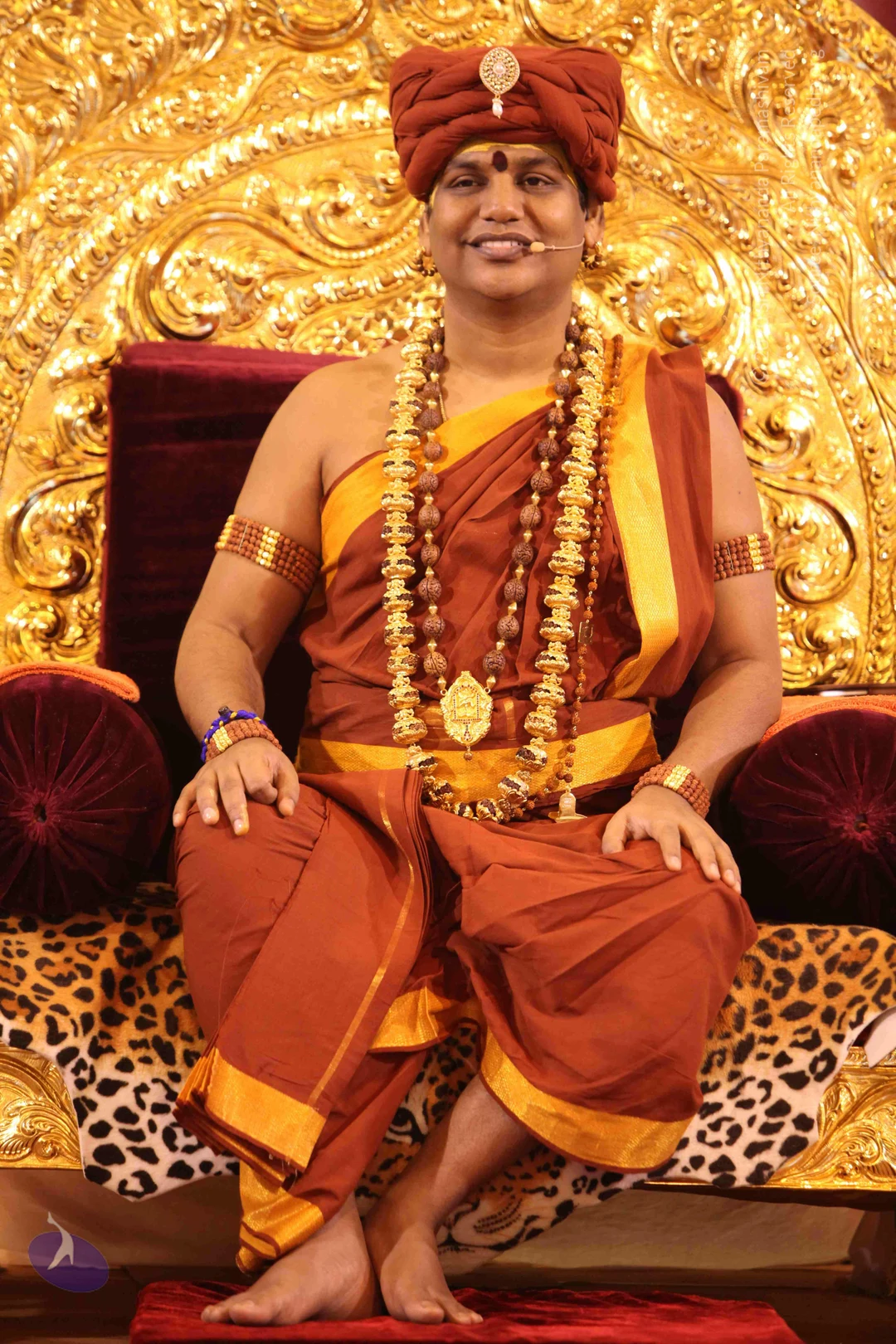
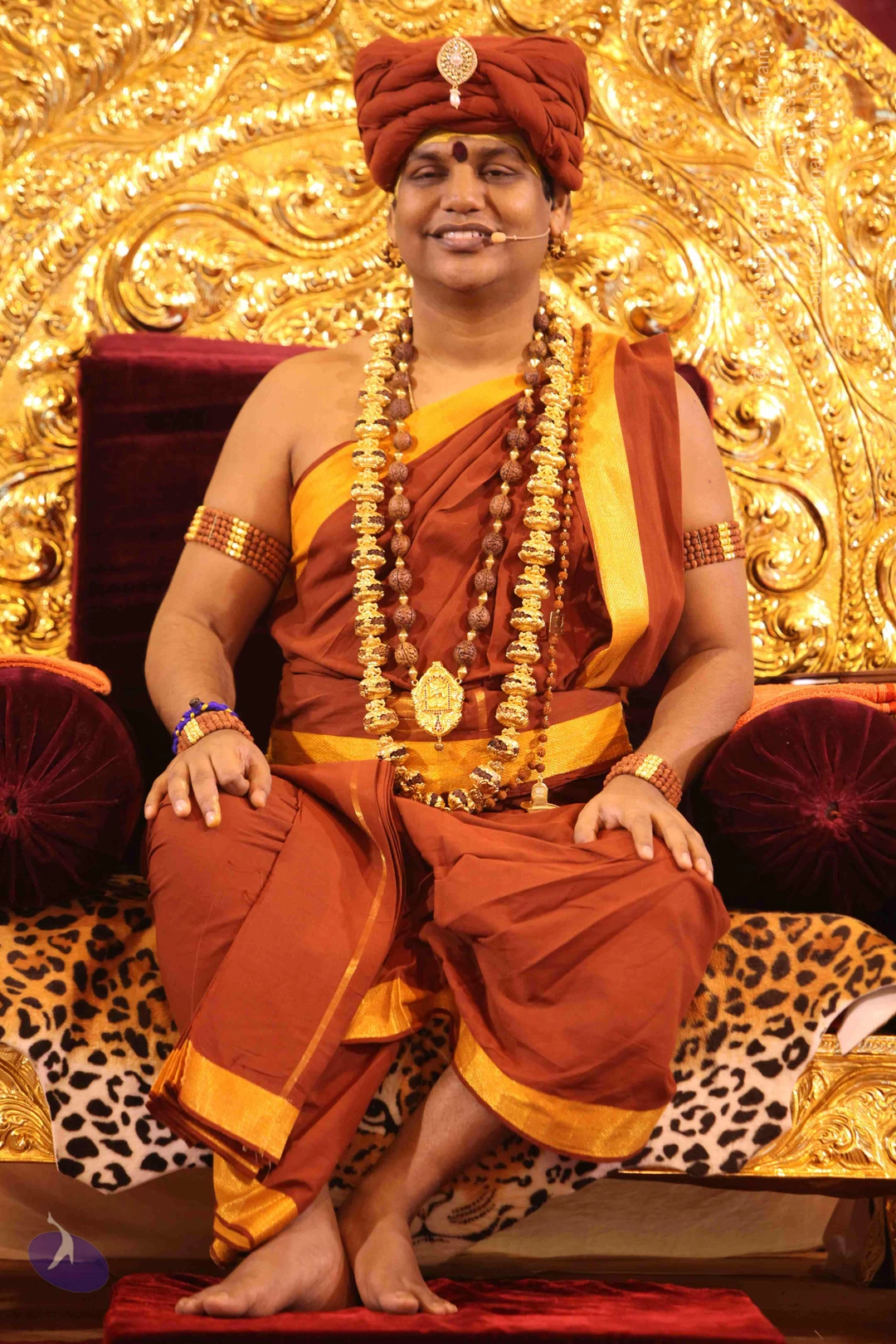
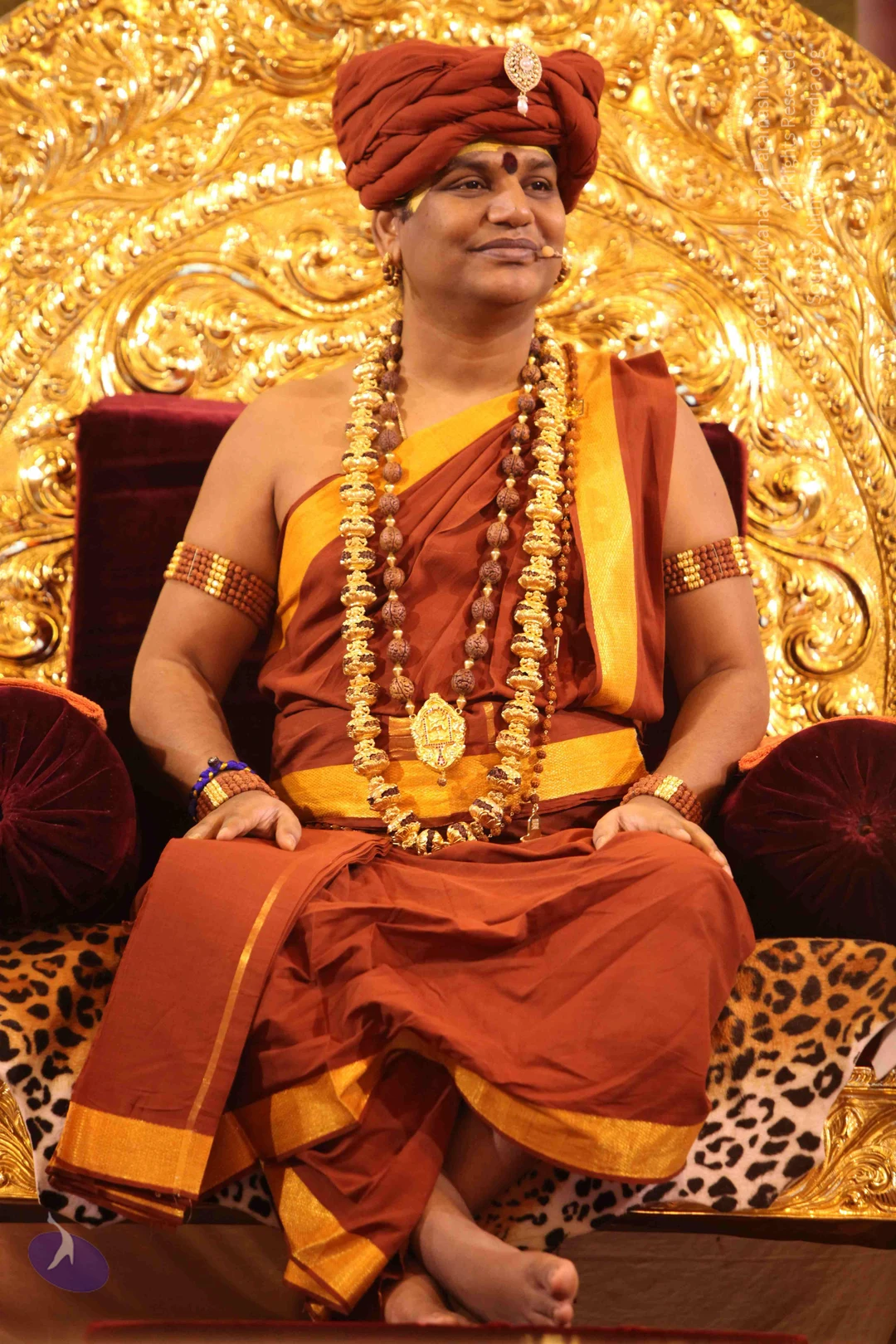
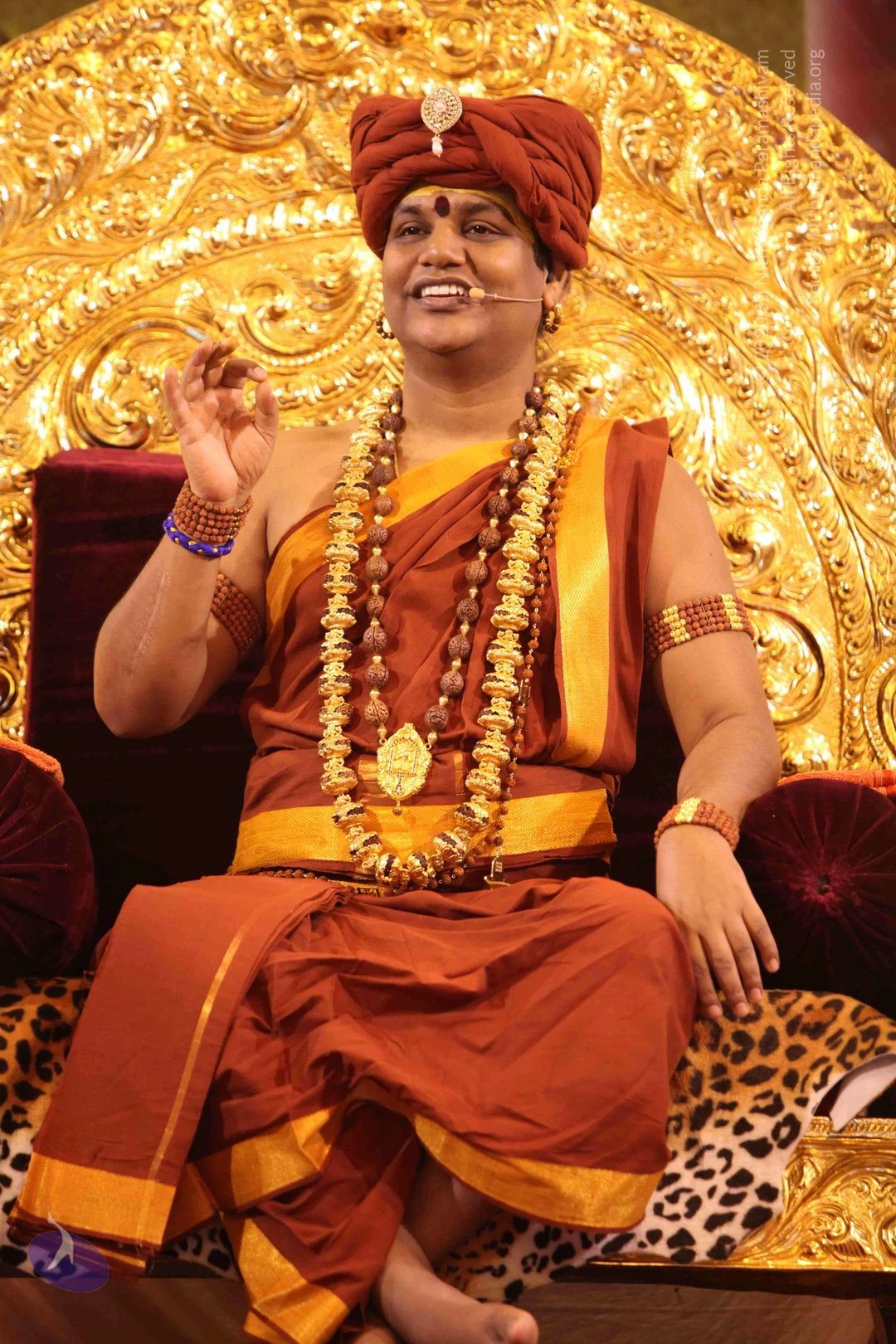
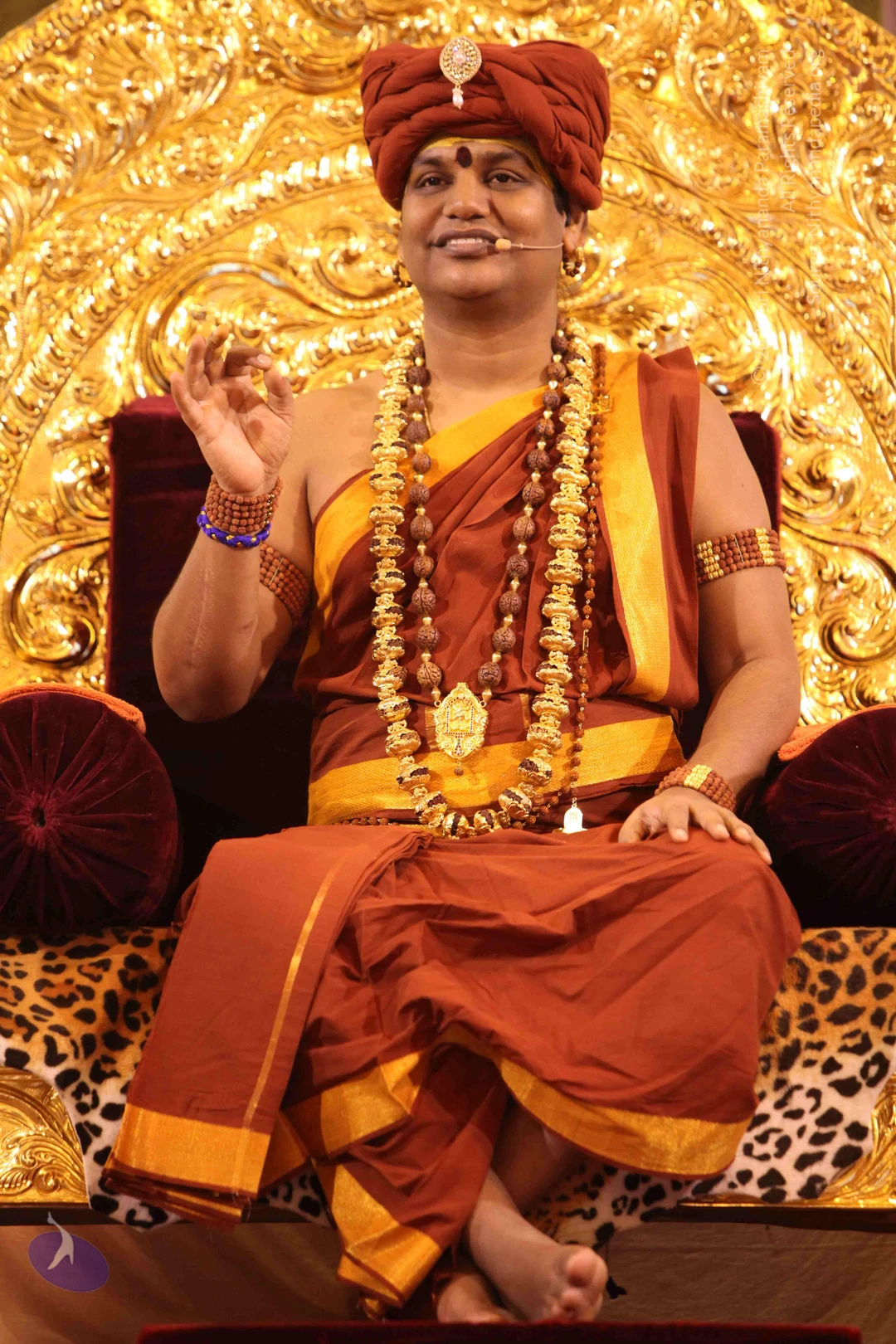
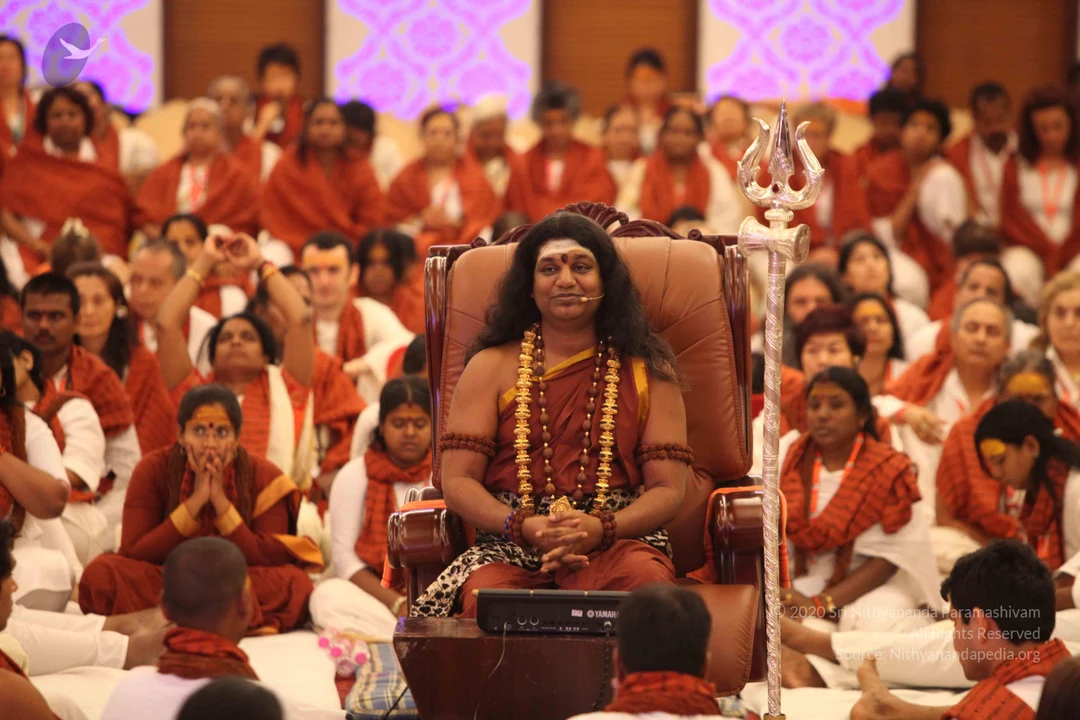
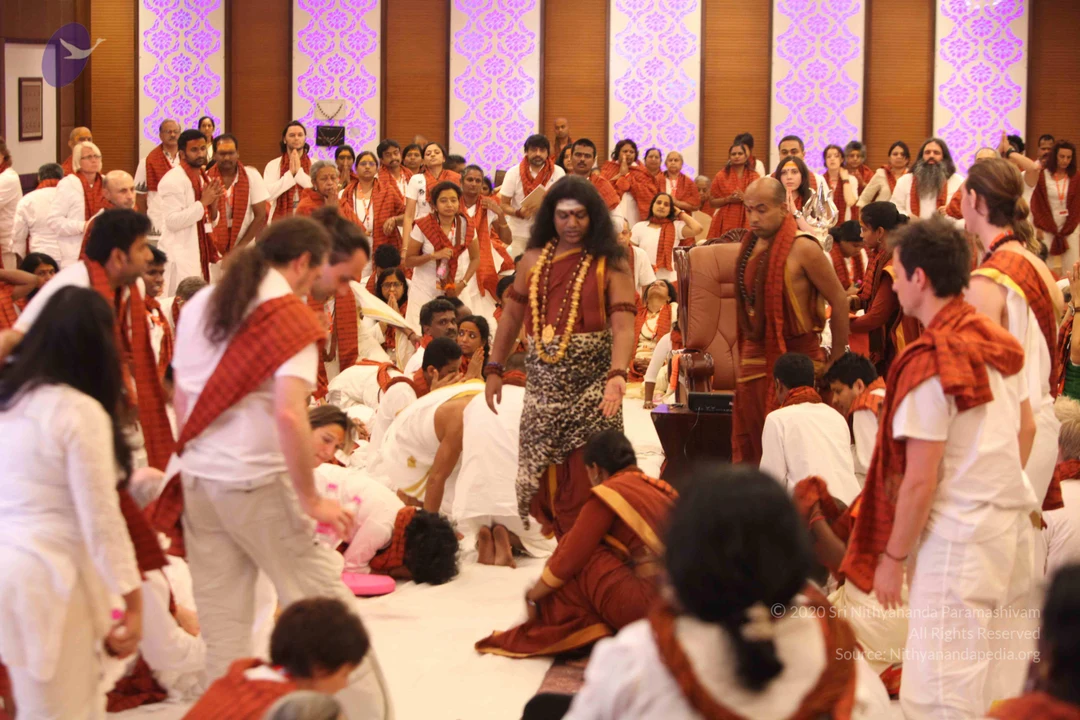
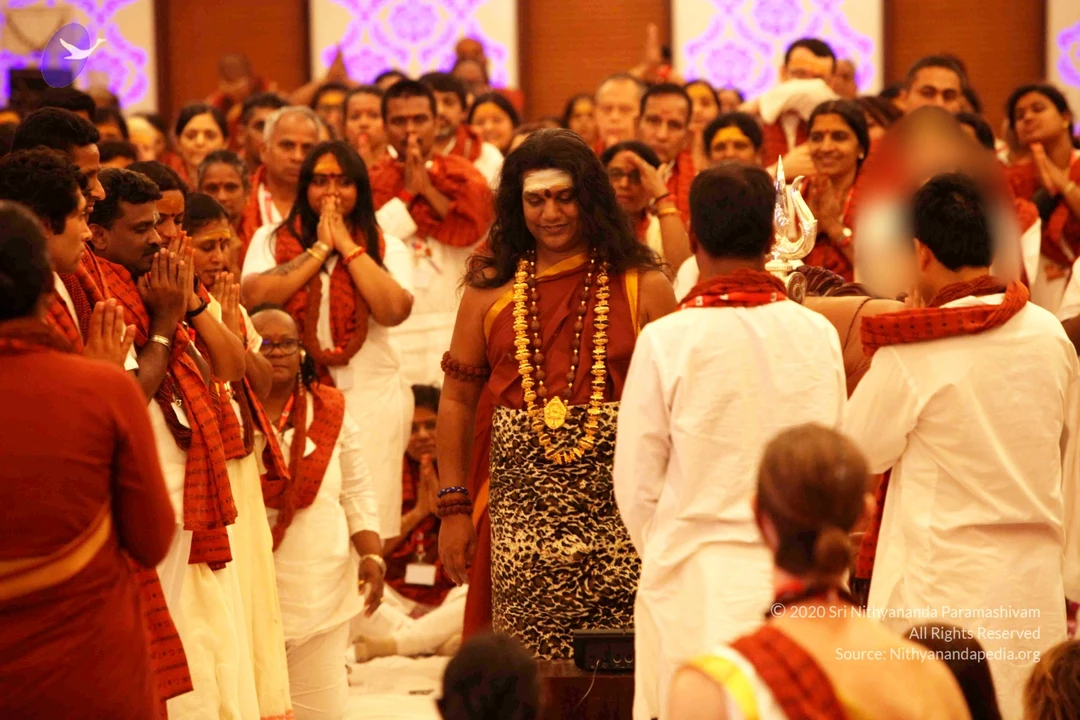
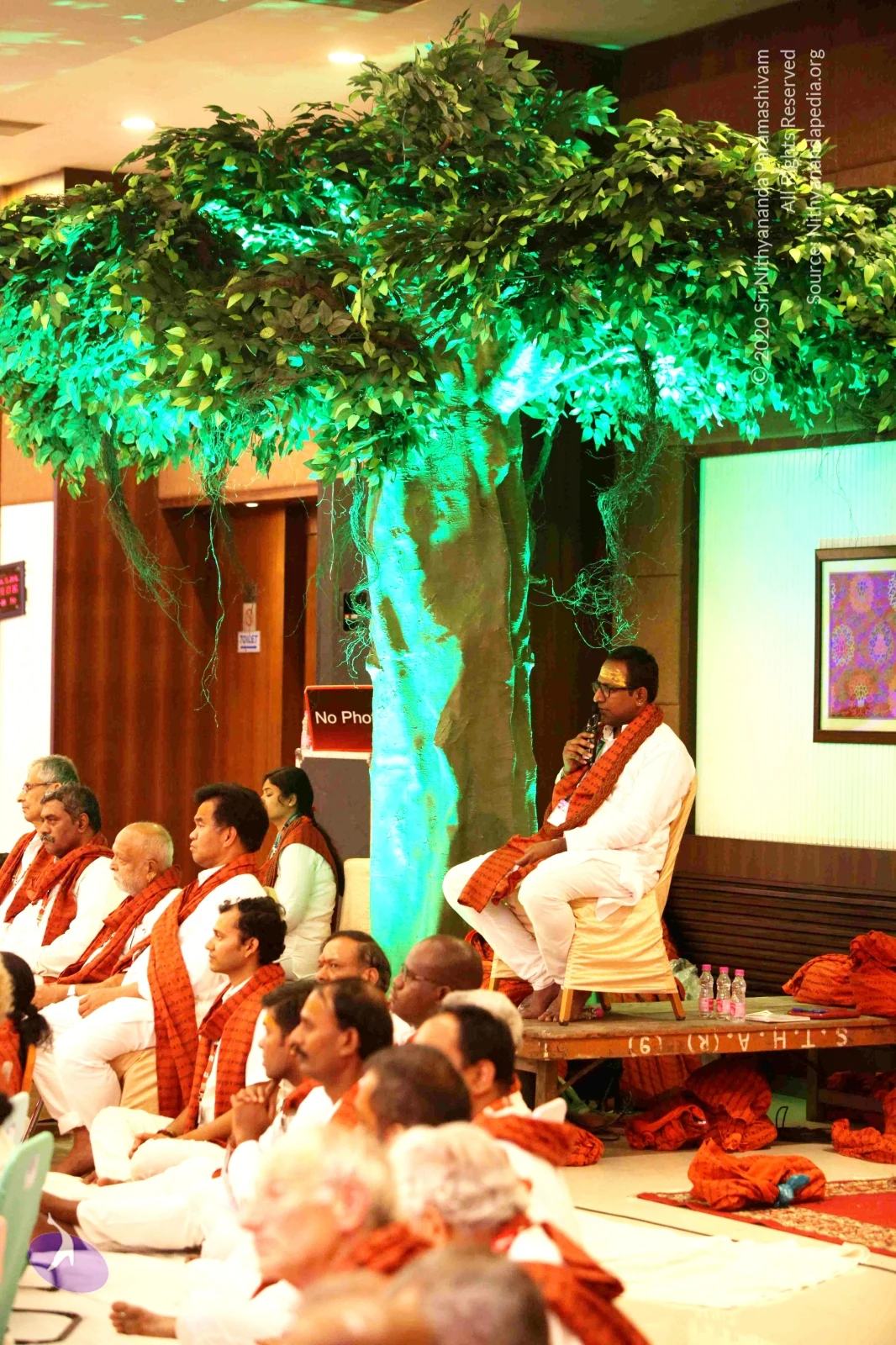
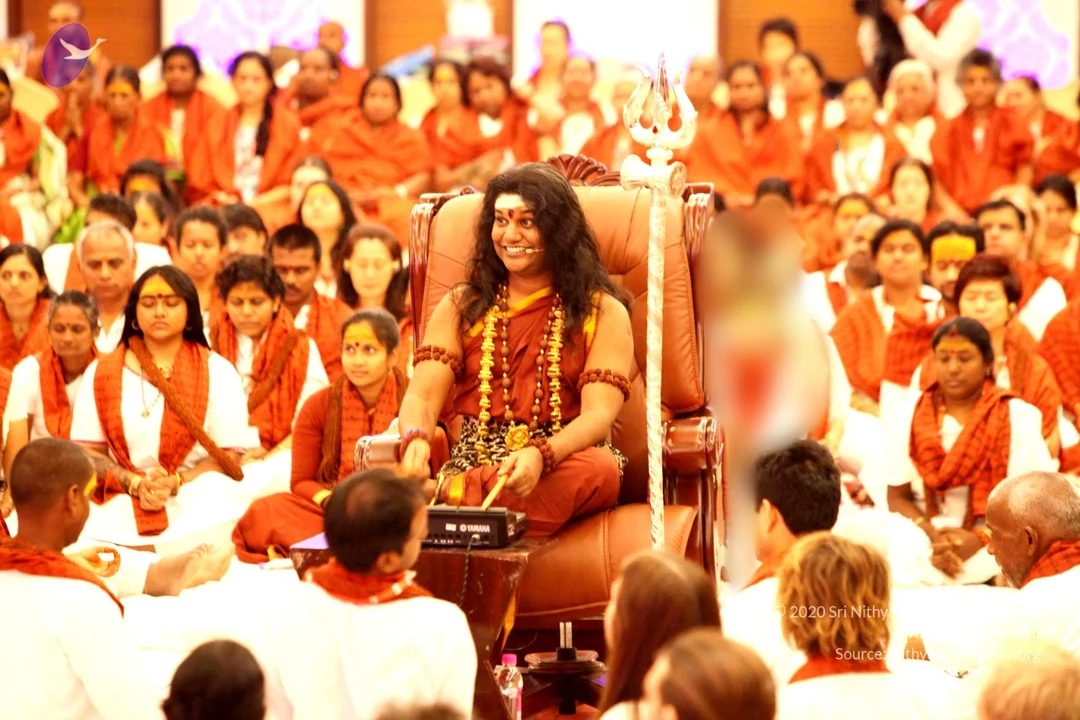
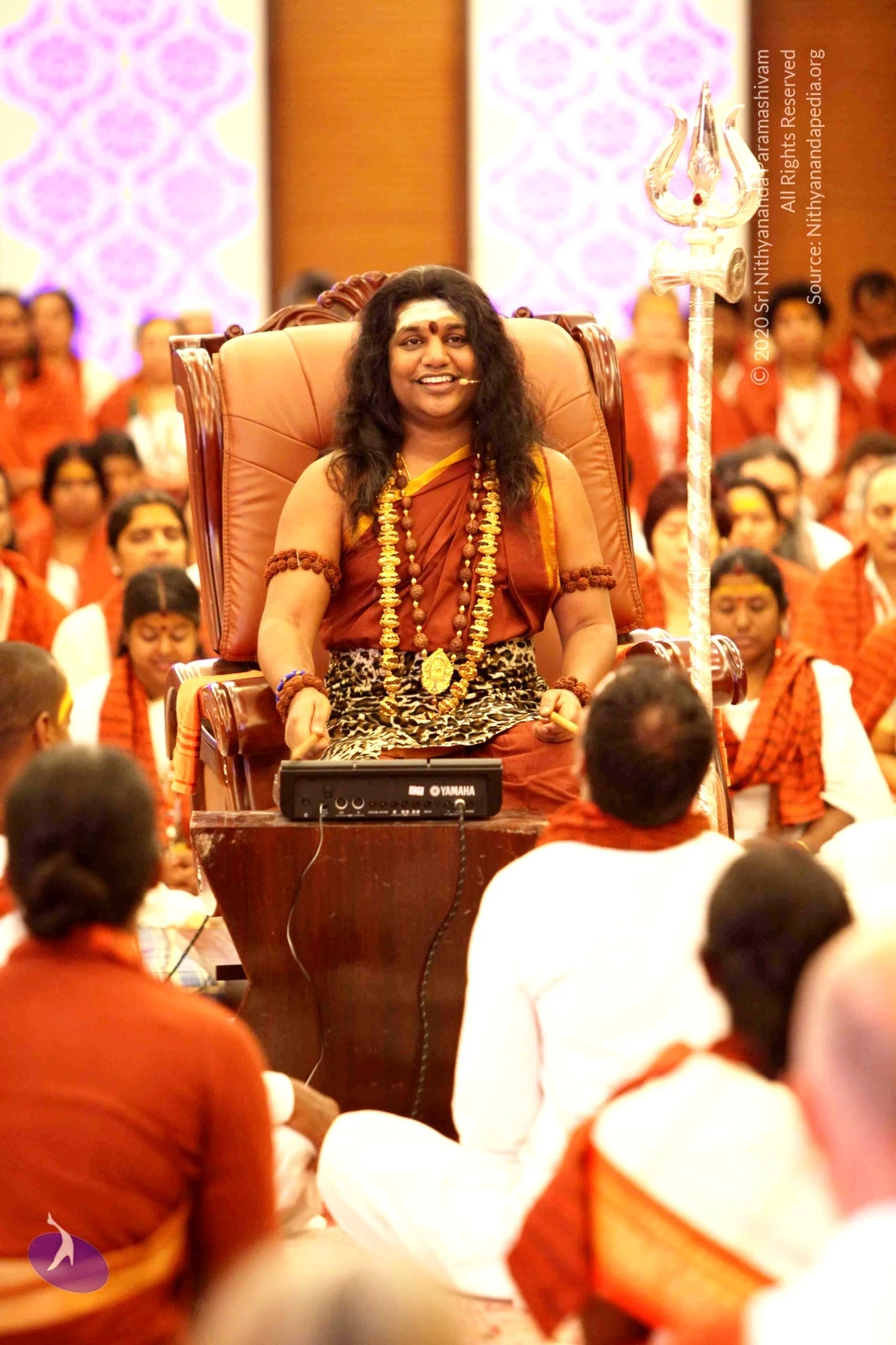
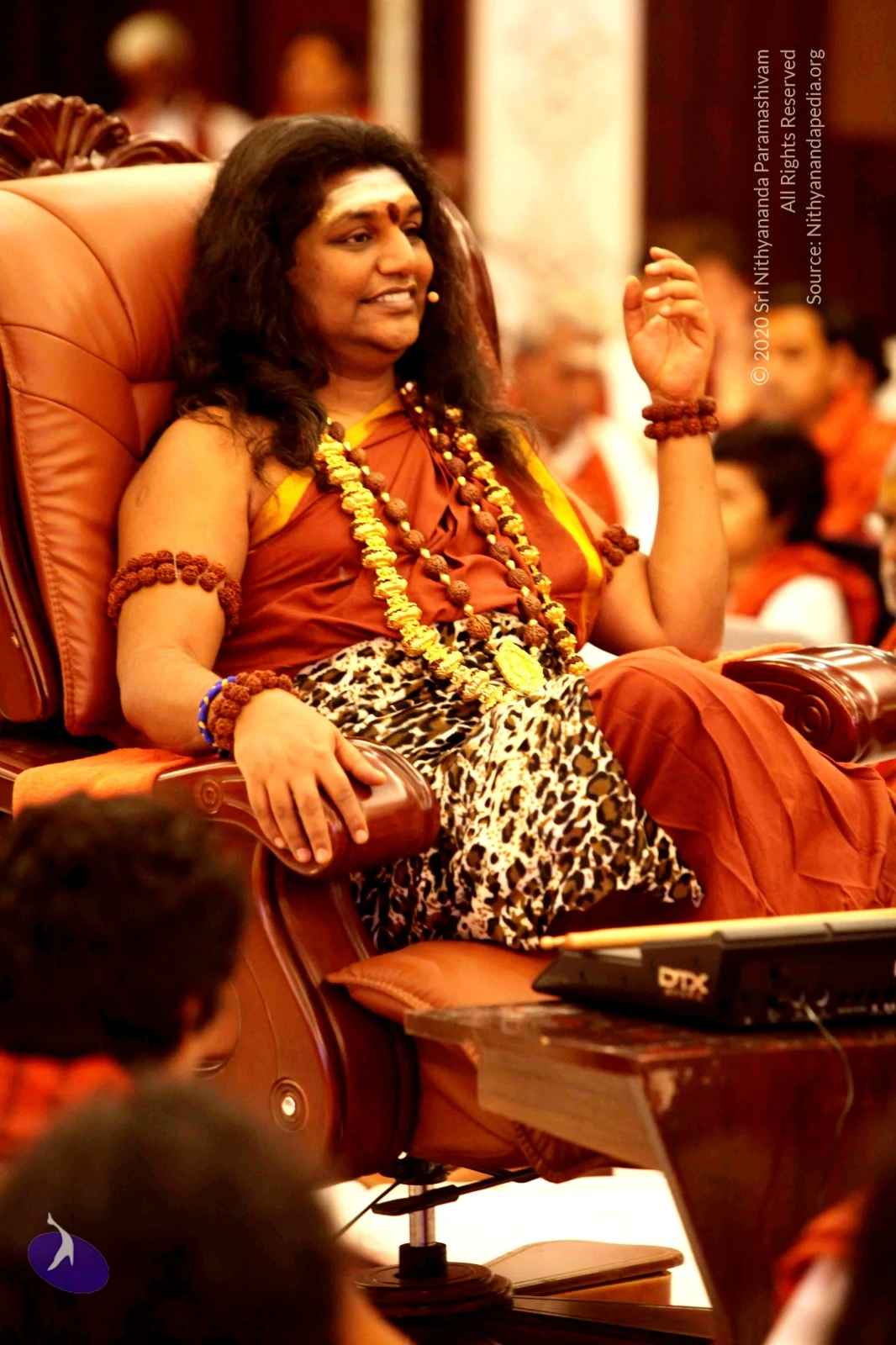
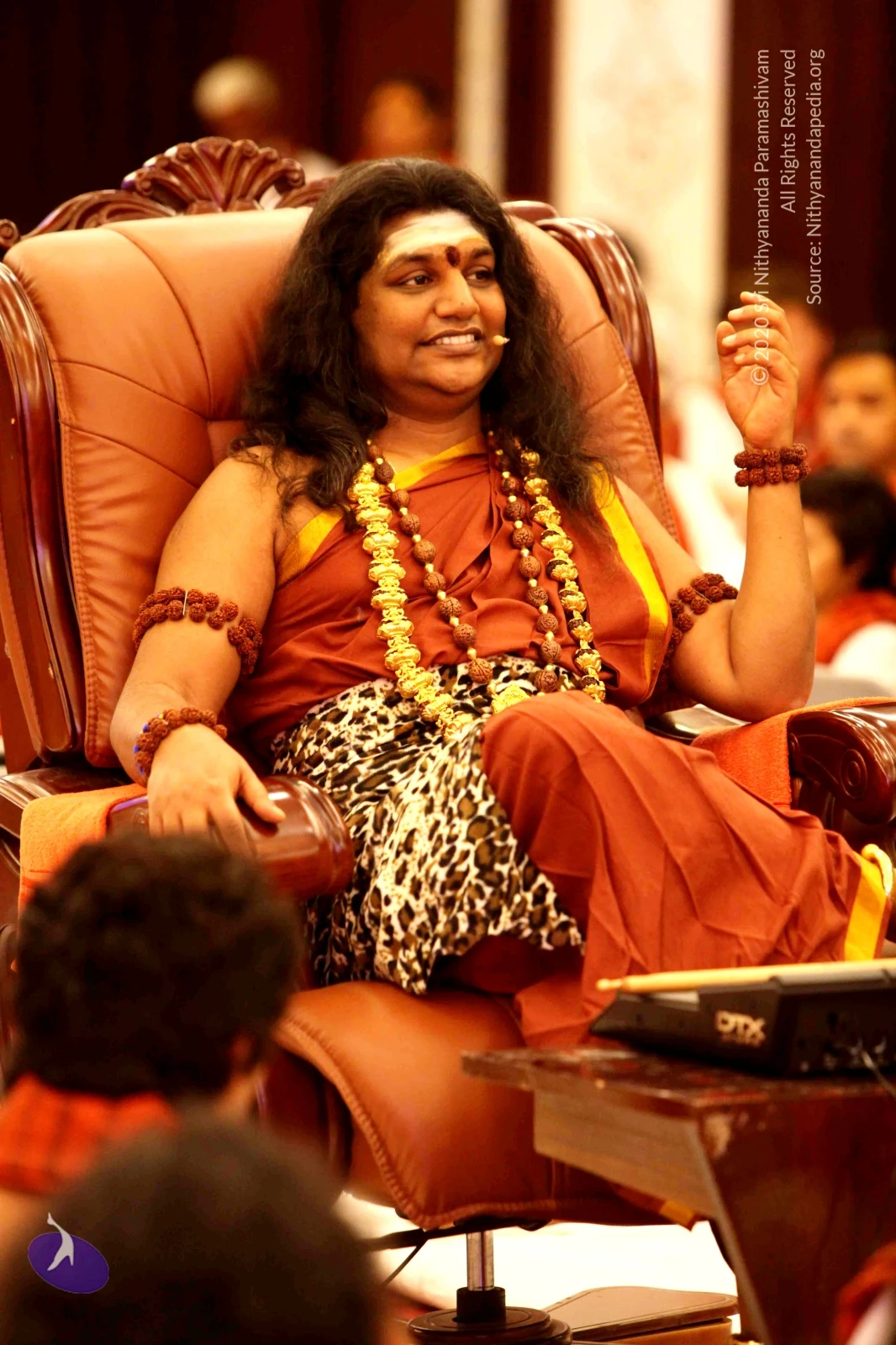
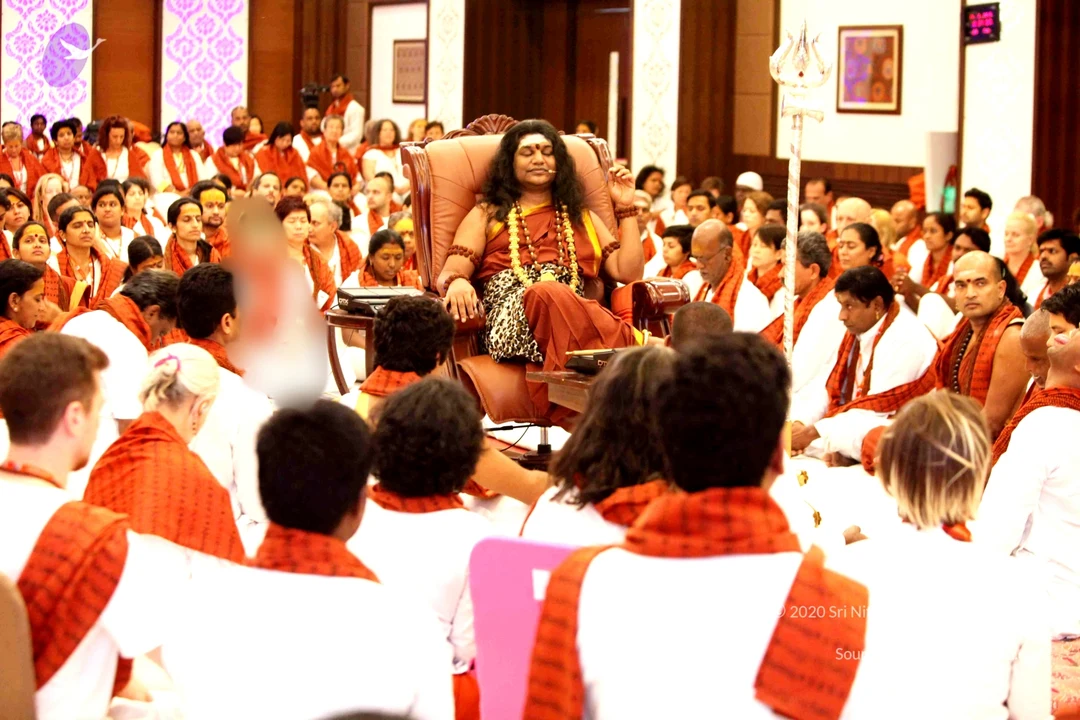
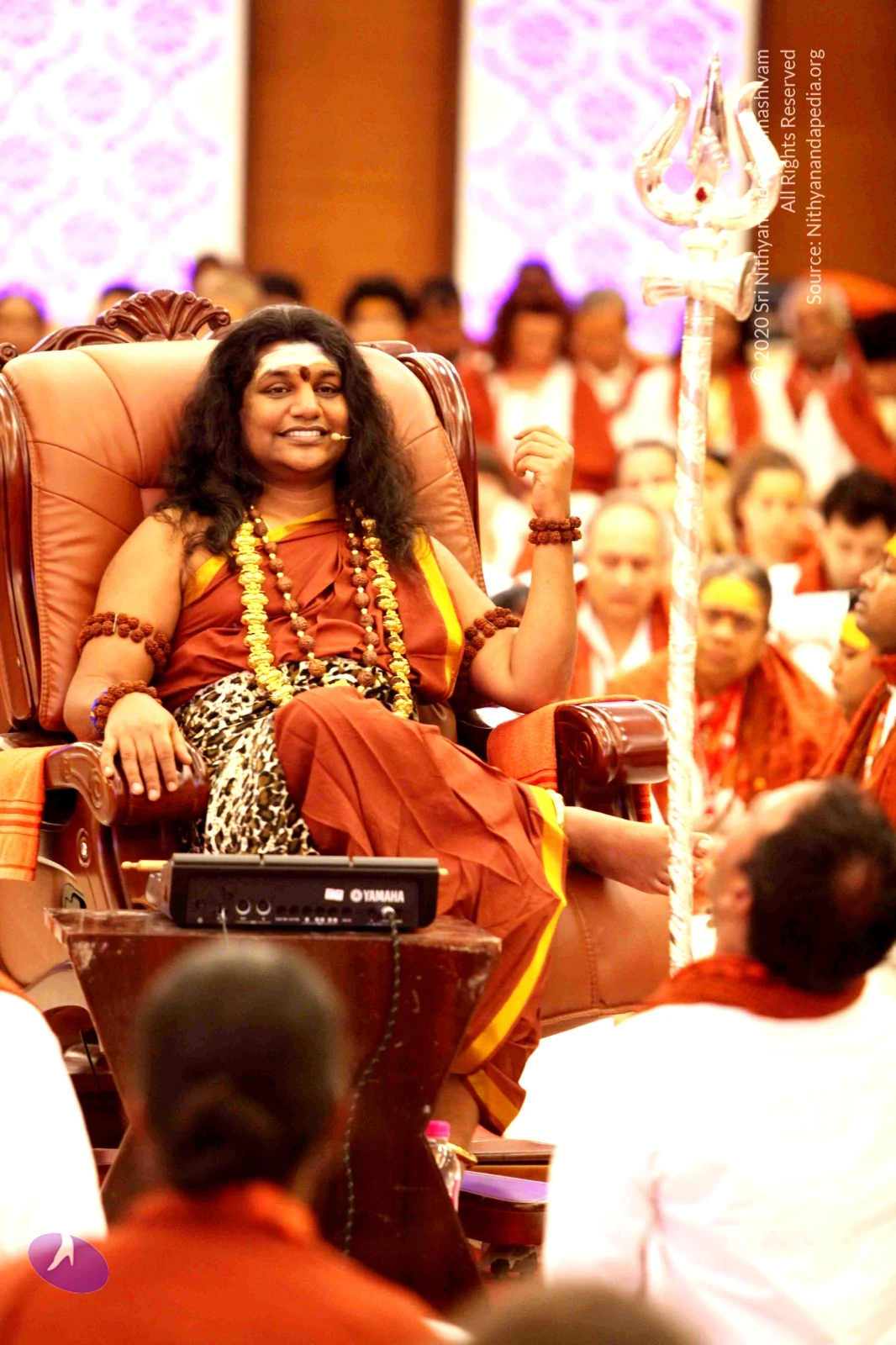
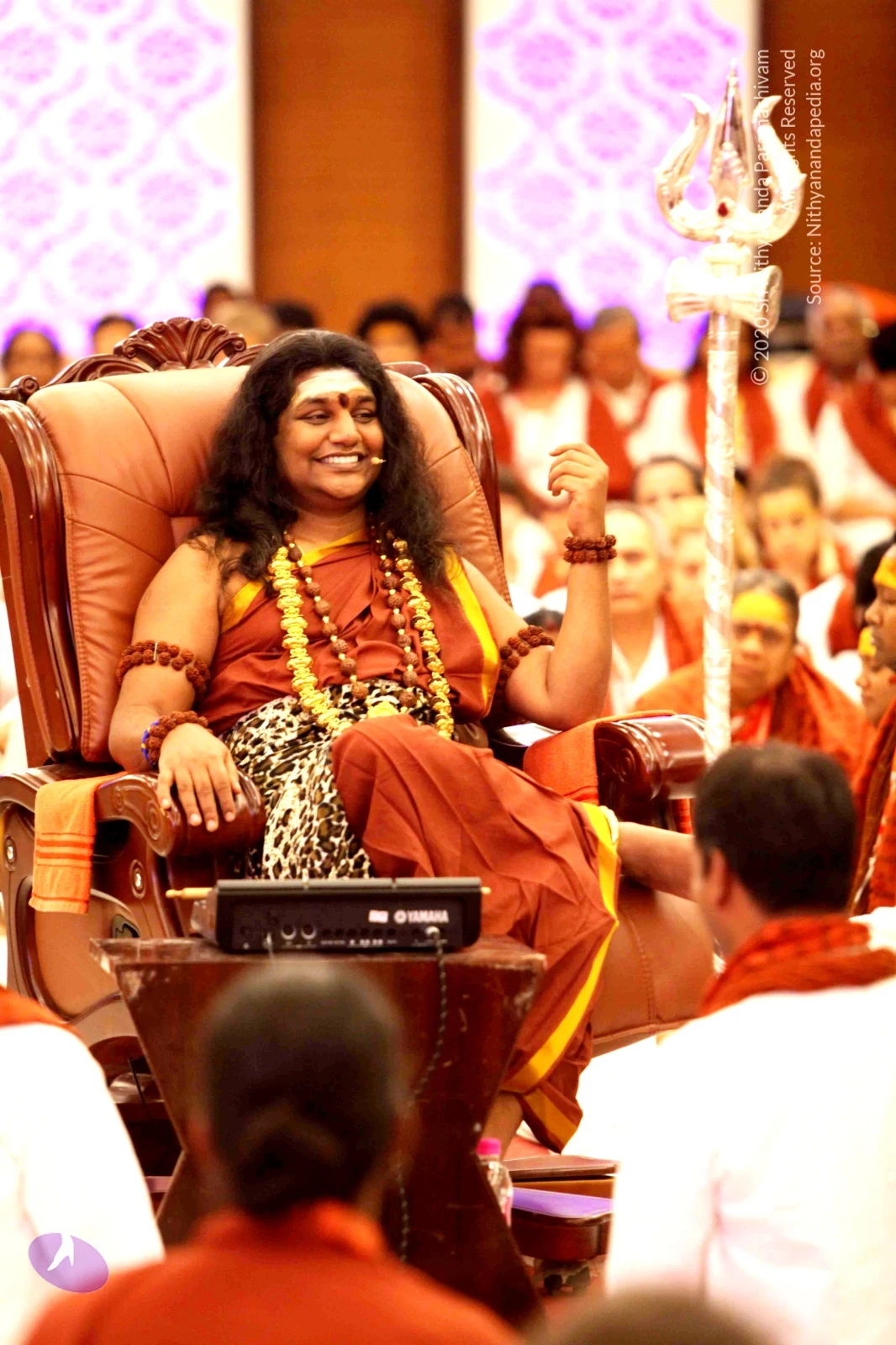
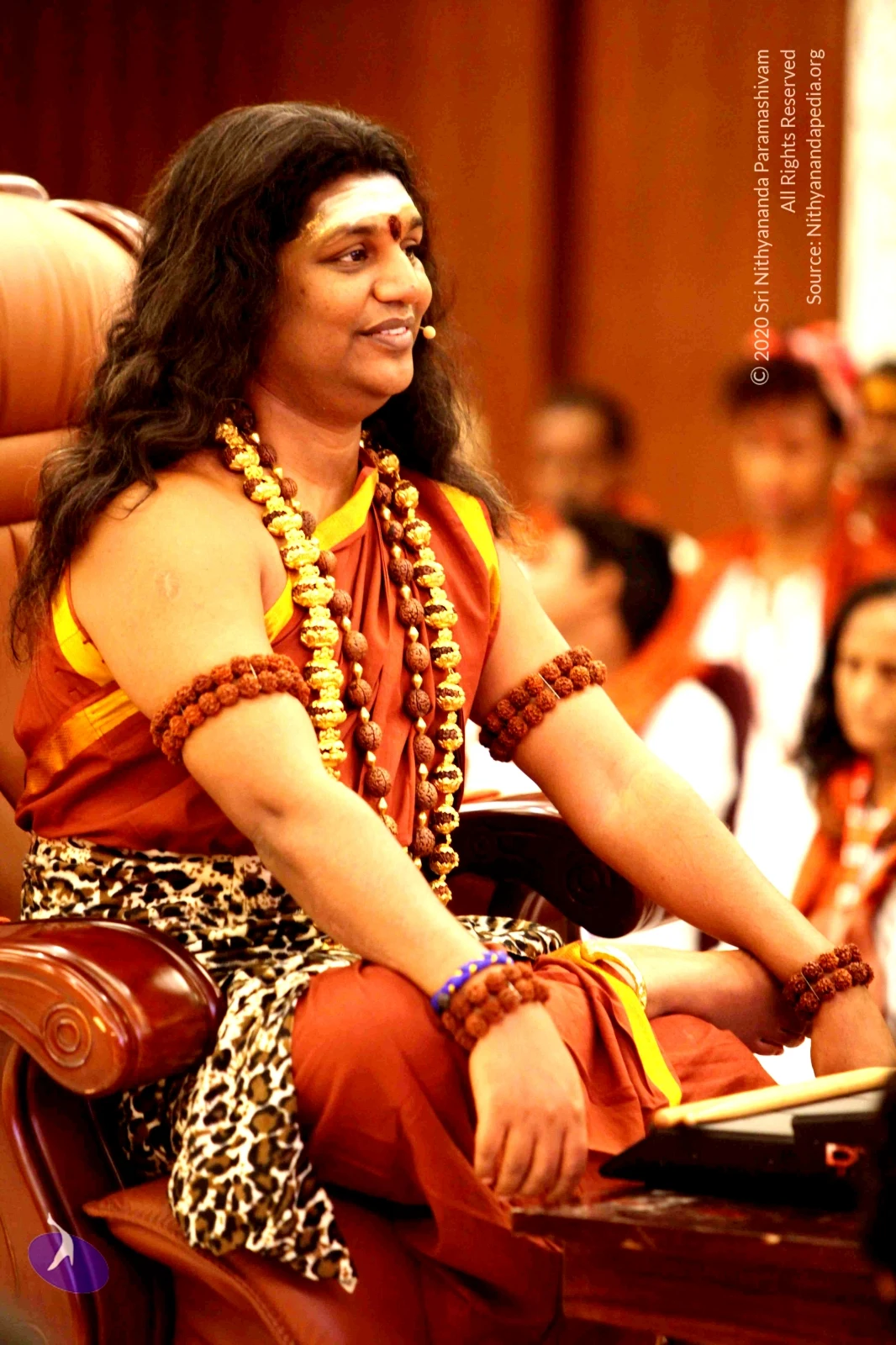
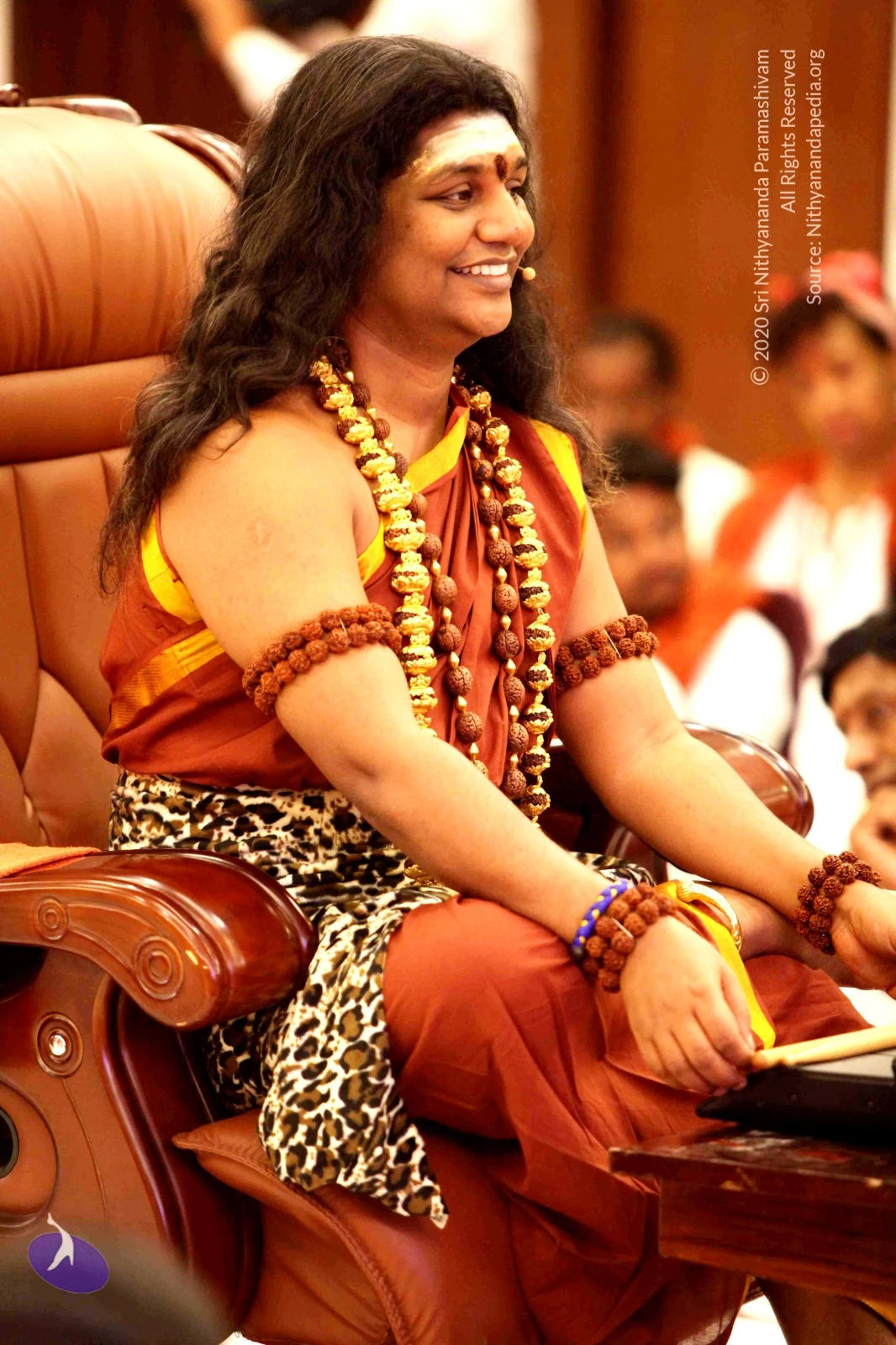
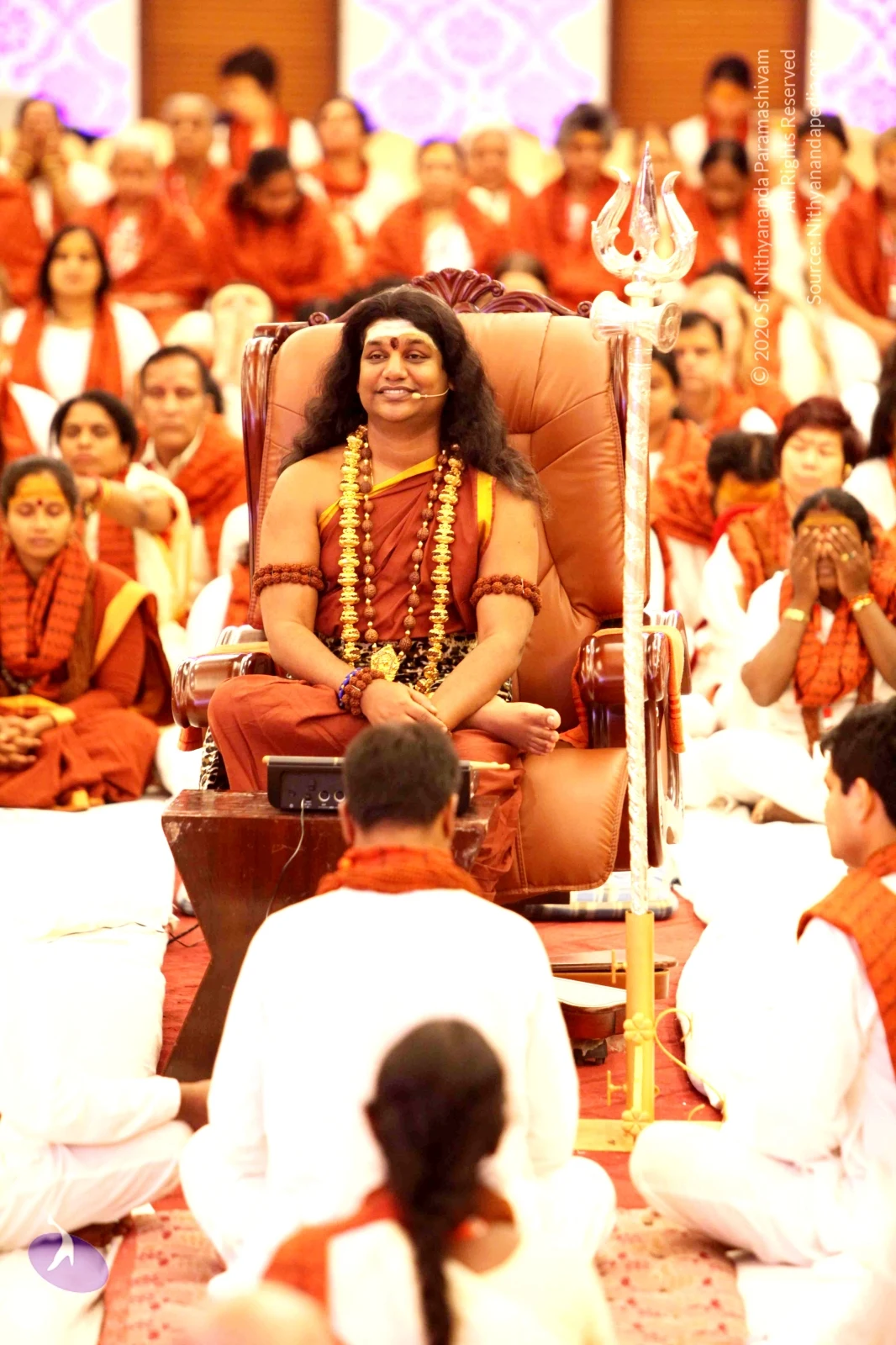
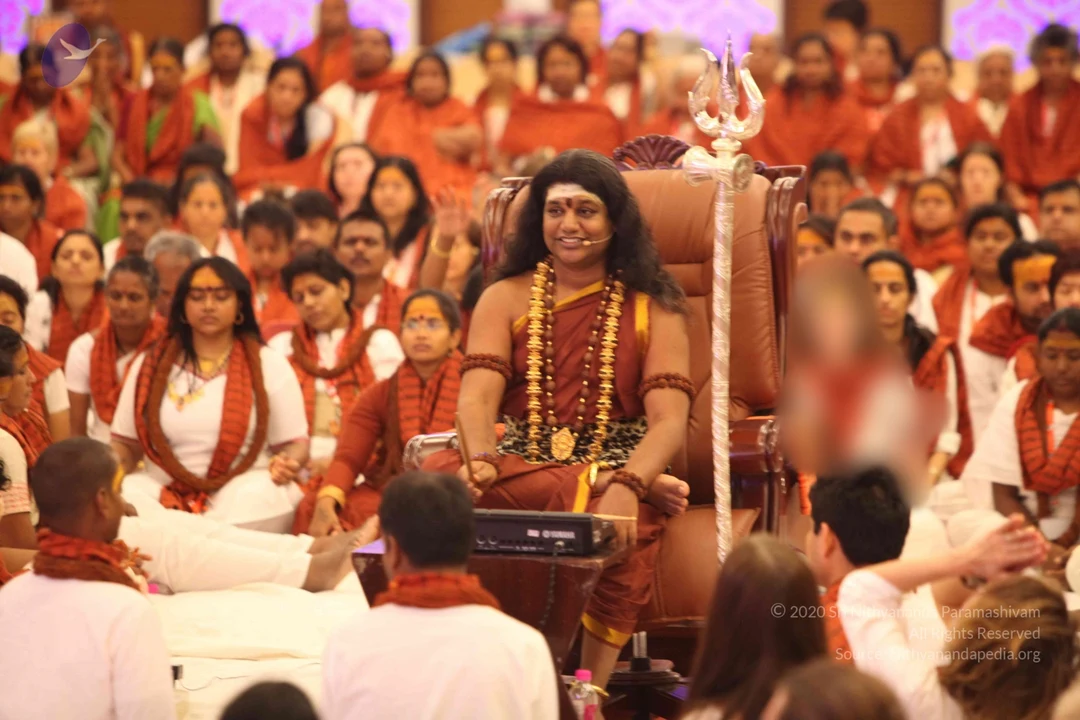
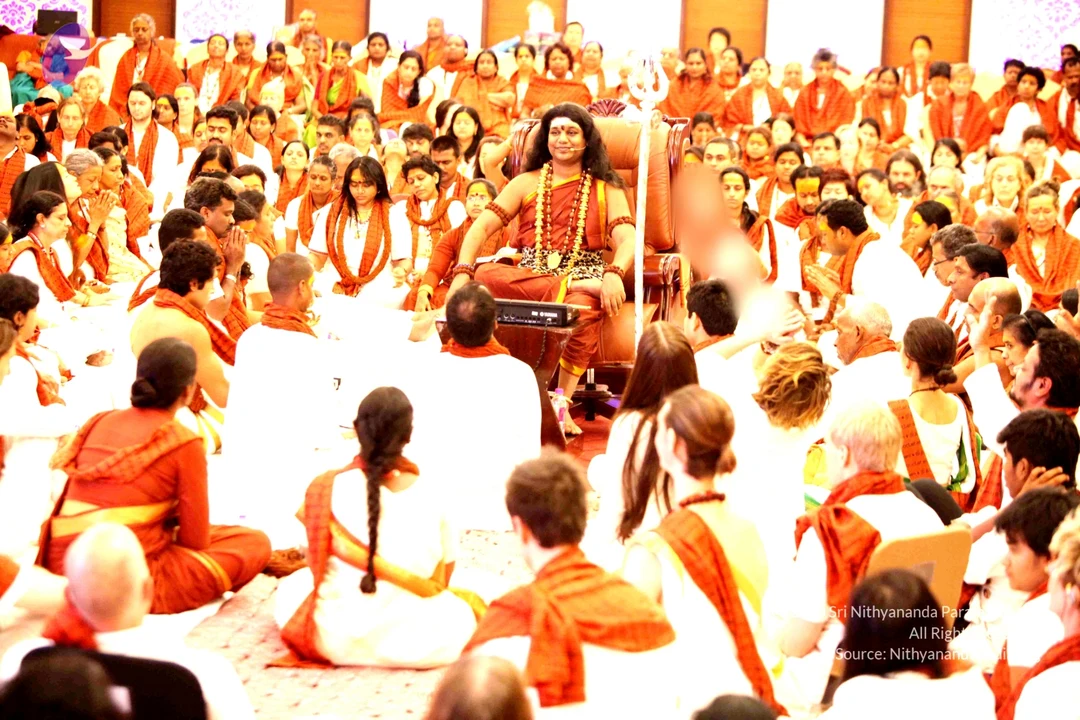
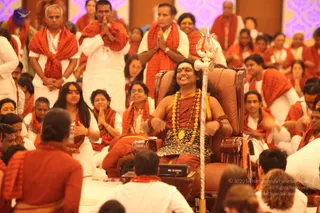
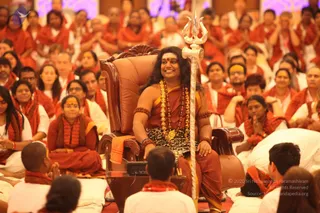
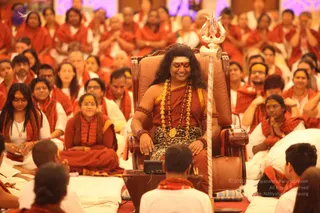
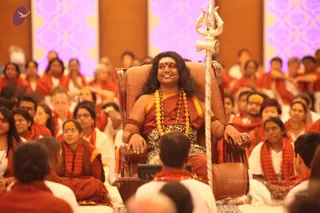
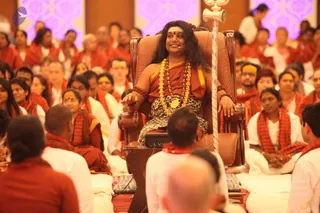
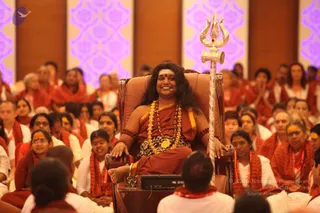
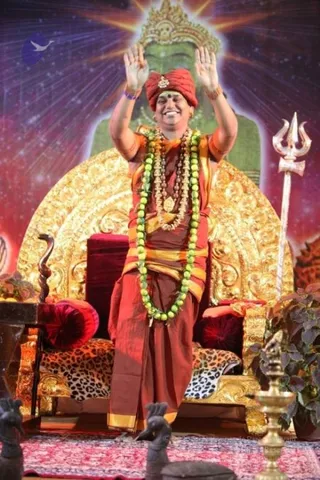
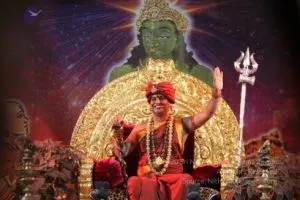
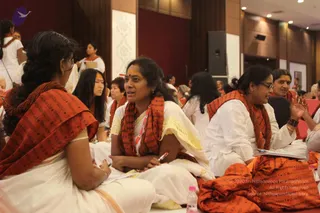
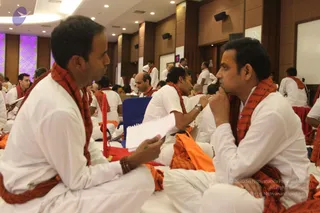
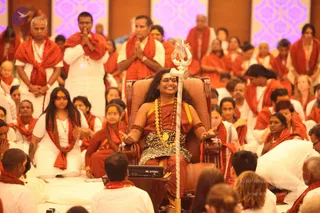
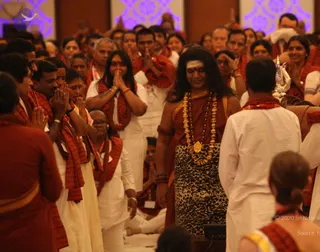
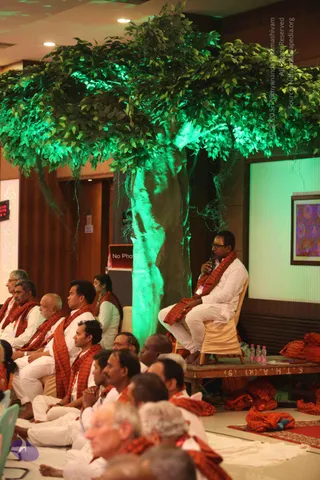
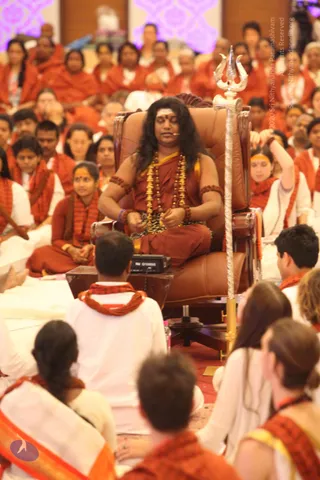
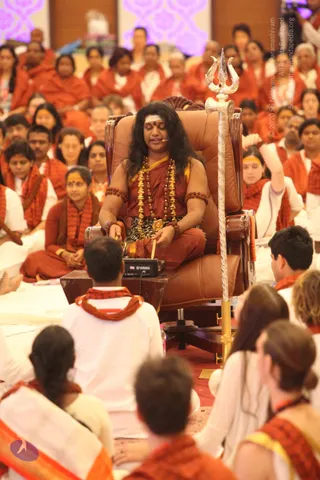
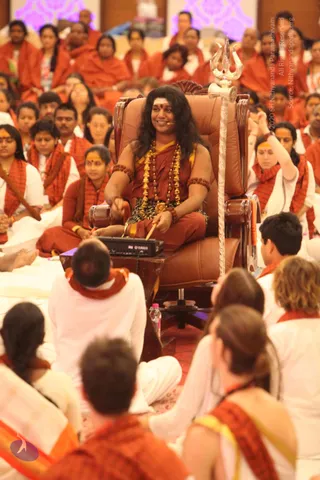
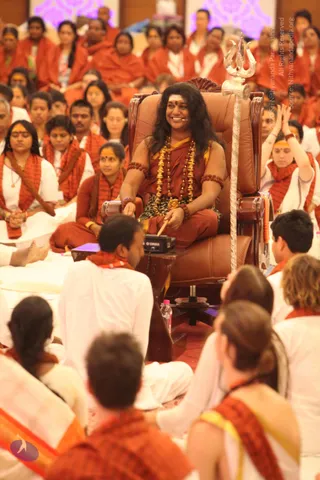
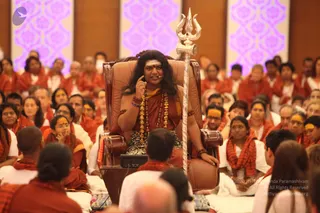
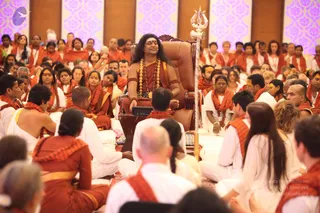
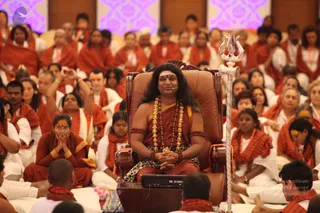
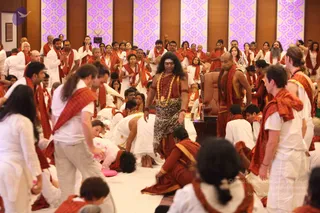
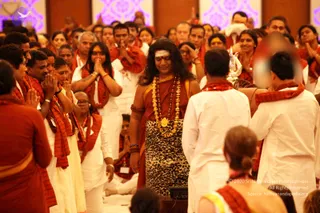
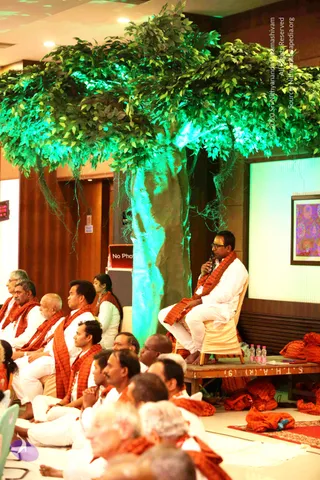
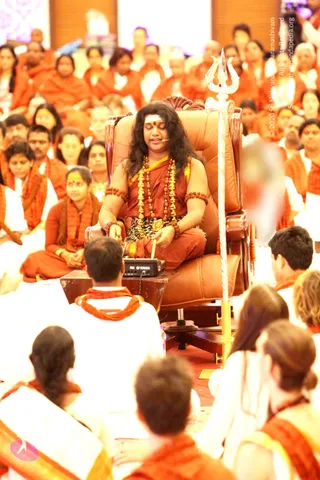
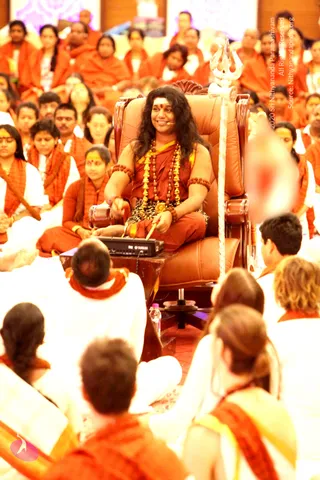
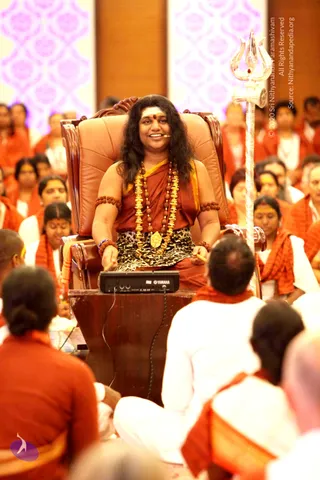
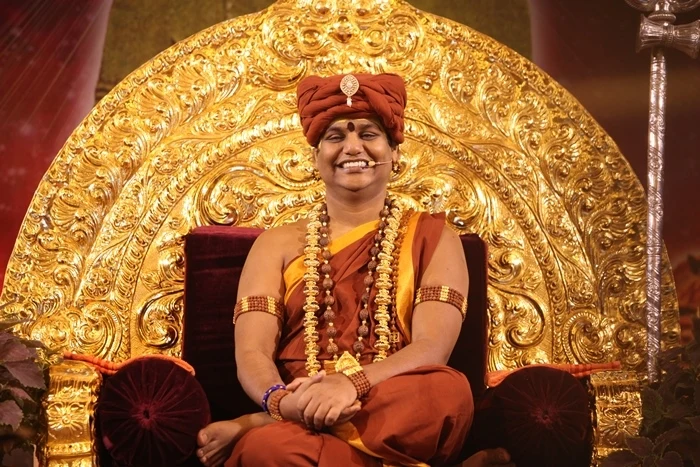
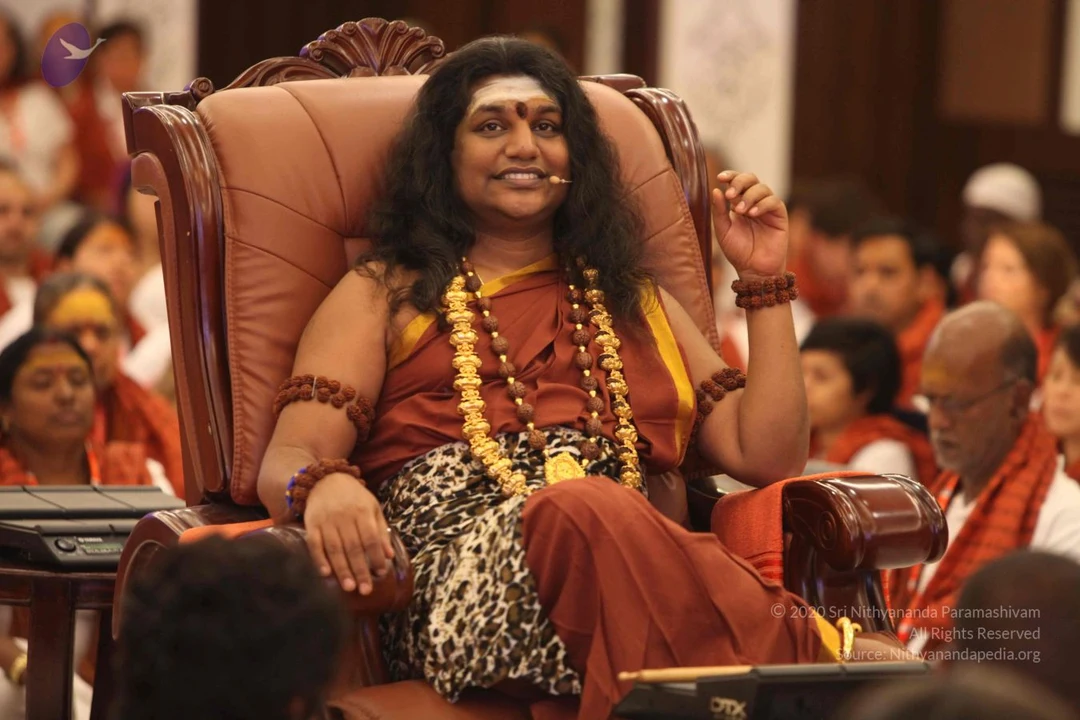
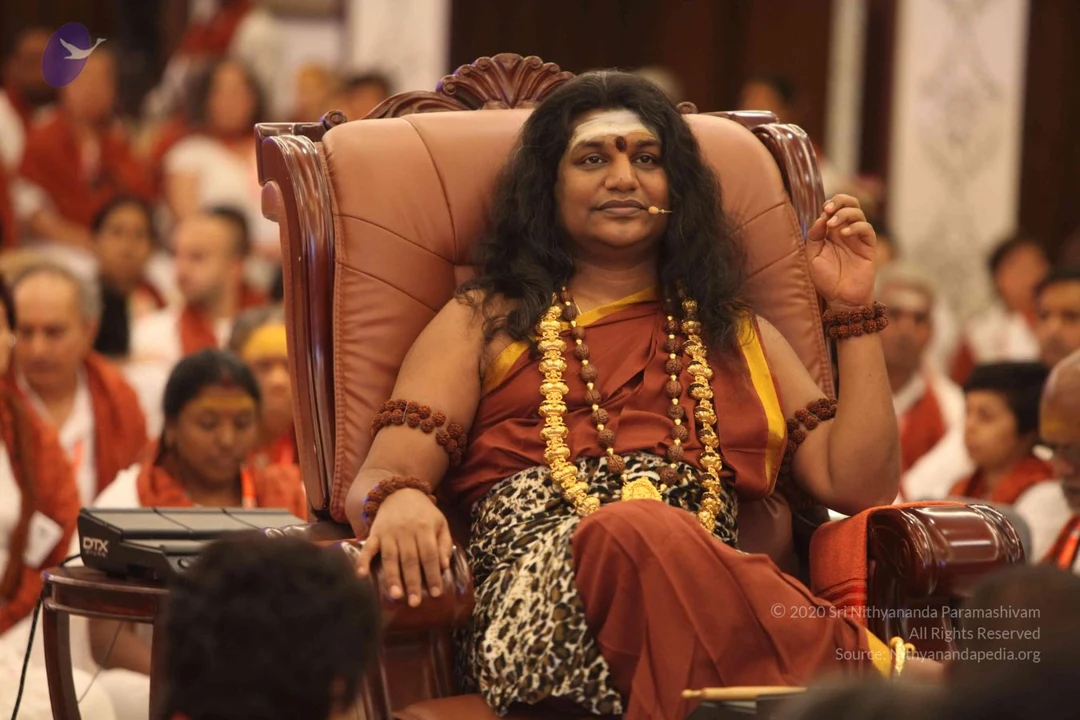
A seated man in a red-orange turban with a gold ornament and a small red bindi speaks into a headset microphone while smiling and gesturing with open hands. He wears an orange and gold shawl over the shoulder, layered rudraksha malas, a long gold ceremonial necklace and rudraksha bracelets on the upper arms and wrists. He sits on a deep red velvet cushioned throne backed by an ornate gold carved arch, with red and orange cushions at his side. a person is seated in front of the throne, teaching a satsang discourse, and the gold carving and rich red fabrics dominate the frame.A photograph of a seated audience at a satsang in a hall with patterned cream wall panels. Many attendees wear white or cream clothes with red-orange shawls and red-orange lanyard badges. Foreground figures include a man in a blue shirt with a hearing receiver in his ear, a grey-haired woman in white with a red shawl, and a man in white with an orange shawl. A woman on the right wears a white top and an orange-brown bindi and sits smiling. No clearly identifiable a person figure is visible on stage, so no candidate is shown in this image.A photograph of a satsang hall where a seated teacher reclines in a wooden armchair with brown cushioned upholstery, a silver trident (trishul) held upright in the foreground at right. The teacher wears an orange-brown robe with a gold-yellow trim, a long gold-beaded garland, rudraksha bead bracelets and long dark swept-back hair, and rests one hand on the armrest. Around him, a dense audience of devotees in orange and maroon shawls and white garments sits in close rows, many with dark hair visible from behind. Purple floral patterned panels decorate the wall at right. A dark rear-view figure and a microphone stand appear at the lower left.

May 14 2015

Original wiki page
Contents

Title

Let Shiva Sculpt You From Death To Divine

Description:

Today’s Nithya satsang (14 May 2015) from Varanasi on Kathopanishad in Living Advaita Series, Paramahamsa Nithyananda expands on the subject matter of Kathopanishad – Death, to experience the space beyond Death. He explains step-by-step: first, Life happening, even in confusion, life is happening constantly to us. Second, when we change the game of life, from ‘law of life’ into ‘flow of life’, pain is caused. Third, when we approach the constant life happening with education, i.e. letting the flow, Yama to be and the law to protect, Dharma, that process is constant Death and constant Rebirth. Beautifully likening this divine process to the human like stones rolling in Ganga, who begins her journey from Shiva’s Sahasrara (crown) or Enlightenment flowing onto His body, is getting chiseled and polished. Associating ourself to the small part getting chipped, chiseled is feeling suffering, death, with ‘why me? why me?’ Associating with the bigger you or stone and allowing, enjoying being in the hands of Mahadeva, the greatest, most compassionate sculptor, to polish us into Shiva Linga, to be worshipped is the Rebirth, the space of “Wow Me! Wow Me!”

Link to Video

VideoAudio

Title

Heal Your Innate Violence, Inner Awakening Varanasi, 14 May 2015

Description

Today’s Nithya satsang (14 May 2015) from Varanasi on Kathopanishad in Living Advaita Series, Paramahamsa Nithyananda expands on the subject matter of Kathopanishad – Death, to experience the space beyond Death. He explains step-by-step: first, Life happening, even in confusion, life is happening constantly to us. Second, when we change the game of life, from ‘law of life’ into ‘flow of life’, pain is caused. Third, when we approach the constant life happening with education, i.e. letting the flow, Yama to be and the law to protect, Dharma, that process is constant Death and constant Rebirth. Beautifully likening this divine process to the human like stones rolling in Ganga, who begins her journey from Shiva’s Sahasrara (crown) or Enlightenment flowing onto His body, is getting chiseled and polished. Associating ourself to the small part getting chipped, chiseled is feeling suffering, death, with ‘why me? why me?’ Associating with the bigger you or stone and allowing, enjoying being in the hands of Mahadeva, the greatest, most compassionate sculptor, to polish us into Shiva Linga, to be worshipped is the Rebirth, the space of “Wow Me! Wow Me!”

Link to Video

VideoAudio

Transcript

nithyānandeśvara samārambhām nithyānandeśvari madhyamām | asmat āchārya paryantām vande Guru paramparām ||

I welcome all the devotees, disciples sri mahants, mahants, thanedars, kotharis, visitor, viewers sitting with us through Nithyananda TV, Sadhana TV, two-way video-conferencing, Arra TV in and having Nayana Deeksha. I welcome every one of you with my love and respects. Cities sitting with us through two-way conferencing having Nayana Deeksha – Houston Aadhenam, Warrington UK, Singapore Aadhenam, Vancouver Basaveshwara Bangalore North, London, Duncaster UK, Bidadi Nithyananda Nagaram, Amersfoort Netherlands, center in Bangalore, Los Angeles Sherman Oak, Dubai Aadhenam, Toronto Canada Aadhenam, Phoenix AZ, Hyderabad Guptakashi, Los Angeles Aadhenam, Montclair CA, Kuala Lumpur Aadhenam, Seattle Aadhenam, Ohio Aadhenam, Melbourne Aadhenam, Redmond, WA, Tiruvanyam Aadhenam, Ma Dhyanatma, Oman Aadhenam, San Jose Aadhenam, and Hyderabad Guptakashi, China, and some more cities are joining, St Louis Aadhenam, some I am not able to read the name. Anyhow, I welcome all of you with my love and respects

(2:49)

I will just give one breaking news and then we will give the details. We will get the details and give you the details. The breaking new is – in Washington DC, US Capitol, in business summit, one of our Gurukul kids demonstrated Third Eye Awakening and blind fold reading. Ma Yogamaataa, our Gurukul kid, daughter of Sri Shivajnana, Ma Shivajnana, Houston Mahants, successfully demonstrated the Third Eye Awakening and blind fold reading. The whole business community were surprised and shocked. That is the breaking news. For more detail continue to tune in, be with us, don’t go anywhere. We’ll give you more detail. We are gathering. This is the first breakthrough news

Understand, I want to tell you this one thing, I am giving you some of the most important insider’s secret of this Gurudam. See when you have few thousands people connecting with you having a kind of feeling connection. Anything you say some 20, 30 people will catch it and manifest, but that is not science. Be very clear. Now whatever I am declaring, or claiming, whether it is mitochondria cell energy or DNA alteration for a better life. Anti-aging everything happens to all 100 percent participants. No a single person is left out.

Please understand, still now, all the medical test and researches we have done, is there a single participant who did not have any transformation. And the lowest data is the data we even publish. When I say 1000 percent cell mitochondria cell energy that is the lowest, it even goes up to 1600 for some participants. Understand what we claimed is the lowest participant, who is actually sitting here, fighting with me. Not doing what I am saying and denying whatever I am saying. It’s just like SDHD, it’s GDHD, Guru doubt, Guru hatred, Guru denial. No, there are people, self-doubt, self-hatred, self-denial. They live on GDHD, Guru hatred, Guru doubt, Guru hatred, Guru denial. Like SDHD, self-hatred, self-doubt, self-hatred, self-denial. Swami doubt, Swami, hatred, Swami denial. Even they experienced, demonstrate the amazing result of anti aging, DNA getting re-organize or awakening. Actually that is the exact truth, the more DNA layer gets awakened and mitochrondria energy goes up.

Understand now boldly on national channel I am talking. Not in just one national channel Sadhana TV, international channel, Nithyananda channel I am talking with this responsibility I am saying. For the kids below 14 years, the third eye awakening, and blindfold reading I am declaring it as a science. I claiming it, we are successful in doing it 100 percent.

Please understand, 100 percent, it’s just little time we need nothing else. May be maximum this 21days. This 21 days Inner Awakening, why I am claiming, just to keep the maximum time requirement. But for more than 60 percent of the kids, within 4 days, their third eye is awakened. They are able to do blindfold reading. And around 30 percent kids, day one, it is awakened. The moment they are initiated, it is awakened, 60 percent within 4 days. But with 21 days, I guarantee 100 percent.

Please understand, I am claiming this as a science. Anything can be called a science only when it can be replicated for every individual. Every individual who has the possibility, means like a, every individual who has third eye we should be able to awaken it. Only then it can be declare it as science. And every individual has it. Even if you don’t have two eyes, you have third eye. Anybody who has a head, have third eye. And anybody who has a head, below 14, I am declaring this as a science. We are successful able to awaken their third eye. And they are able to do blind fold reading successfully within 21 days.

Understand, all these statements are my claims scientifically validated and demonstrated in front of 3rd party who are neither for me or against me, who are simple straightforward people, who don’t have any vested interest to proof me or disproof me. I will always used to tell — I will be well known to the world very positively due my Gurukul. I will always used to tell – my kids will bring pride for me and respect for me. I am seeing they are doing it. I am seeing they are doing it. And as I said, already the inner awakening participants, for kids. IA for kids program participants. All the kids have started reading. I am just asking her to give some more training, some more deeper meditation process so that they can bring them to the stage and demonstrate it.

It’s just the final finishing is going on. It’s only I think 8 or 9 day. 8th day, today is only the 8th day, almost every kid is able to read. Their 3rd eye is awakened. I am just waiting for few more days. And this time, I am going to initiate for men also. We have mastered the process and technique for men also. But we are not able to like make it as foolproof reproducible science for adult. Still there are thick heads, like GDHD where I have to work a little more. I am doing it. I am doing, but the technique is successful, means: the adults who tried, their 3rd eye is awakened, they are able to read. That we already demonstrated. That we already mastered, that we are successful. But just like the kids thing, making it 100 percent. We will achieve it. Hope we will achieve it. I think by this IA. It is just deeper level of completion, that’s all. See adults are not criminals, they are just cunning and stupid, that’s all. See, sometime people ask, “Is this dangerous for my child to this?” Oh god what is this? It is just extraordinary power. It may be dangerous for the other people to be in front of your kid, but not for your kid itself.

Please understand, people sometime say I don’t want to receive, my child to receiving information in the minds of people around whom may not be trust worthy or danger of being influence by ghosts, spirits. No! Be very clear, with this power, the kids will be intelligent enough also — which, what to read, what not to read and they can never be influenced by any ghosts or spirits, understand. Actually, any kids whose Third Eye is awakened, if he sees that person who is possessed by ghosts or spirit, even that person will be healed. The kids will have a tremendous healing power in their eyes. Understand, just by seeing they will heal people. They will heal people, so don’t even have this doubt. See, actually, the adults feel little humiliated that is why they bring up all these stupid arguments, “My kid is doing all that, but I am not able to do.” So when you feel humiliated, you try to stop them. See this is the exact way you destroy kids. When you see they are so happy. You feel this, why is he so happy. Why alone I am taking all the stress. You also take something. So most of the time instead of bringing them up, we bring them down.

So now understand, this is one of the most powerful, healthy foolproof process given directly by Mahadeva. Understand, it is mandated by Mahadeva. Time tested, fool proof, authentic, most extraordinary and no bad side-effect, no ill side-effect or after effect. Maybe in further satsangs, I will give you more details and more questions on this Third Eye Awakening. I will take more questions on this Third Eye Awakening.

(16.07 mins)

I am changing the channel internally. Let me move to the Katho Upanishad. Katho Upanishad. I was introducing the subject matter of Katho Upanishad – Death. Listen, listen, Death. Listen to this first statement and listen to every declaration I am making throughout this satsang. In the end, you will be able to come to the conclusion. You will be able to validate this first statement.

So please listen. I am going to step-by-step help you to understand Death. Experience the space beyond fear of death.

Listen, every moment the happening in you, means your Life. Listen carefully..Life. You may be marching towards your goal to achieve something in the outer world or inner world or you may just be confused and stuck. Whatever, but Life IS happening to you. Please understand, even feeling confused and getting stuck, is Life happening Sometime people feel, you are not even letting us live in confusion and depression little bit. Understand, confusion and feeling stuck, is Life happening. Life happening. So, in this happening of Life, whenever you change the game, like the rules with which you need to play with the matter, if you play it with Consciousness; the rules with which you need to play with Consciousness, if you play with matter.

I will give you an example.

A ship is very safe, most secured in the port, when it docked, whatever, but it is not created just for that purpose. Understand, if you always decide based on law of life — if the ship is parked or locked in the port, it is very safe, most secured. Yes, no doubt! But the purpose of ship is not just being docked in the port.

Law of life is only teaching about the most secure things. Flow of life is exciting, adventurous, innovating, opening up different possibilities.

Life, life happening to you every moment — that is the first statement, even if you feel you are stuck, life is happening.

Second statement, listen, second statement — when you changed the games, when you change the rule of life – when you play law into flow, flow into law – what you go though is pain, listen. When flow, the life is restrained by the misunderstanding of law, pain is caused. Whenever you need to follow the law of the matter, you try to break it because of your over enthusiastic flow, suffering is caused.

Listen to the third statement. The constant life happening, when you approach it with agitation, every moment the purification process which is happening in you, becomes painful. Listen, purification means more and more understanding of – which is law, which is flow.Letting the flow to be, letting the law to protect. Dharma to protect, yama to enjoy. Listen, Dharma to protect, yama to enjoy. Bringing more and more understanding about Yama and Dharma is life, and that process is constant death and constant rebirth.

Many things in you will constantly die, many things in you will constantly be given rebirth. But whenever, due to your attachment, arrogance, you are not letting things move in your life. For example, there are somethings, law of life, that is the way matter functions. Means there is, I can give you the example. If you try to bind the other person, possess the other person whom you love, the love will be lost. This is law of life. But, you are so much in denial, saying, “no no no, the flow was so powerful, how can it be destroyed?” Please understand, however powerful the flow may be, it will not be able to break at some points – law of life. But, because of your delusion about the flow of life. “oh you don’t know Swamiji, I was in love with him, he was in love with me, you don’t know how we romanced and loved each other.” Yes, it maybe true. Both of you enjoyed the flow of life, no doubt. But the moment you try to possess the other person, suffocate the other person, bring suffering to the other person, the love will lose its power, is law of life; but you try to overlook. You get into the denial mood. “No, no, no, that is the way life will be, that is the way it should be.” I am not saying it should be, or it could be, it must be, or it may be right or wrong. In many laws of life, there is no such thing as waiting for your approval of right or wrong. It just moves. That is why He is called Dharma, He just moves. Your inability to see the Reality does not stop the Reality fortunately. I just want to add the word – fortunately. Otherwise, you will be stuck forever,

(25:28 mins)

Understand, this is one of the important prayer you should carry in your heart, “Mahadeva, even if I don’t understand, whatever need to be removed from me, please remove it from me at least by force. Whatever purification I need to go through, let me go through, even by force, because I know, if you are waiting for my yes, it will never happen. If you are waiting for my yes, it will never happen.”

Understand I am defining Surrender, bhakti. Surrender and Bhakti. Giving the GPA, general power of attorney to Mahadeva, saying – “whether I understand and appreciate or not, whether I understand or not, appreciate or not, what my life need to go through, how I need to experience the flow of life and law of life in the ultimate intelligence of You, Mahadeva, Your third eye. From Your third eye when You see, how I should be with the flow of life and law of life, let that become reality; whether I understand or not, accept it or not, appreciate or not ready to receive or not. I am giving you the whole GPA now itself, do it.” This is Surrender. This is Surrender, and when He does it, enjoying it is bhakti. Understand, giving the GPA to Him is surrender and when He does His job, enjoying it is bhakti. That is bhakti.

Understand, the constant death which is supposed to happen in you, if you cherish it with bhakti, It will become celebration and liberation. It will become celebration and liberation.

Now I am deciding this whole truth, which I am revealing now about bhakti and surrender. I will write a beautiful Tamil poetry and bring it to you guys. It is just sitting in my heart now. I can see already the beautiful words overflowing. I will beautifully put it and bring it to you guys.

Listen. I feel everyone should carry this Truth in the heart as the context of Life and every time when Mahadeva rolls you like a stone rolled in Ganga…Each of us are stones in Ganga, He just rolls all of us in the flow of life, which comes from His head and washes His devotee’s feet, that is what is enriching, understand. Coming down from Enlightenment, Mahadeva’s Sahasrara is the space of Enlightenment. Ganga comes there to wash the feet of Kapila, Shiva’s devotee and release people from sins and give them Enlightenment. That is the journey of Ganga Maata. That is exactly should be the journey of each one of us.

First, get into the head of Mahadeva, Sahasrara – the space of Enlightenment. From there, just flow to the whole world. And the original Purana does not say – Ganga just flows away from Mahadeva. How in the pictures they portray, just the Ganga coming out and flowing ther. No, She is very romantic, She flows all over the body. She is enjoying the very flow. Understand, She is enjoying the very flow on Mahadeva. The Gomukh is the space where She touches the Planet Earth and Hari-ki-puri is the space of Shiva’s feet, till that space, the whole thing is Shiva’s body. Understand, Shiva’s body in the physical plane. Then She comes down to Gangasagar to release the sins Bhagiratha’s ancestors and wash the feet of Kapila, Shiva’s devotee. Kapila is older than Ganga. Because it is because of Kapila’s curse, and as a shaap vimocana [atonement from sin] Ganga was brought to Planet Earth by Bhagiratha.

Understand, just like in Ganga, how the stones roll, all of us are stone rolling in the flow of life, flow of Ganga. Many unnecessary parts of us are chipped and we are polished. In all these flow, if you appreciate what life is doing to you, you will experience constant rebirth, rebirth, rebirth. If you don’t, you will constantly experience death, death, death.

Understand, when a stone rolls in Ganga, it nicely gets shaped and polished and becomes Shiva Linga and left in the banks for the people to worship it. A stone allowed itself with the flow of Ganga becomes God and worshipped by everyone. The flow of life, we are also like stone which is moving and rotating in Ganga. Many corners where we need to be chiseled, it gets chiseled, those parts are removed; and where we need to be polished, the polishing happens. Understand, cleaning, chiseling, polishing, cleaning, chiseling, polishing. The stone which can take that cleaning, chiseling, polishing as a death for it or as a rebirth for it. You have that freedom. You can approach the life every moment as Death, saying, “oh god, life never gives me what I want. I am always tortured, deprived, depressed. How much ever I struggle, it never gives me what I want. It never supports me. I am the only one who is tortured every time by the life. Why me? Why me? Why me?”

“Why me” is looking at the life as death, then you will see constantly you only are dying. Understand the most dangerous thing – seeing life as constantly death, you know, you will associate yourself with that little pieces of stone which get chipped off. You will never be worshipped. Associate yourself with the main part, which is going to be worshipped as Shiva. That part always feels – “Wow. I did not do anything, just life move me in the flow. I am polished, cleared, now I am worshipped as a God.” That is what I call – Brahmanyam Bahuputratām – the favorite inheritor of the Cosmos.

Understand, if you look at the Life as constant rebirth, you will identify yourself with the main stone, main portion of the stone, which is going to become Shiva Linga, which is going to be worshipped. If you associate yourself with that – why me? why me? – you will be the small corner, that chip, that corner stone that getschipped off in the flow of life. The danger is, you will never be Shiva Linga, you will be just lying there in stupid depression.

I made a statement in this satsang, adults are not criminals, cunning. Means, cunning means powerless criminal. Criminal who don’t even have the power to commit crimes. He is potential but doesn’t have the courage and power. He is cunning enough, not that he is innocent. But he doesn’t have the guts or power even to commit a crime.

The broken parts of the Shiva Linga, chiseled parts are stuck in cunningness. They are not even, they don’t even have power to commit a crime. They are stuck, stupid, stuck, stupid.

Listen, listen, listen. Constantly appreciating life, enjoying life, celebrating life, even though it forcefully removes some part of ‘you’ from you. Even if it removes something physically from you, some persons, some pleasures, some wealth, something which you want, or something which you don’t want or some part of your mind. Even if forcibly, when it is removed, celebrating life, appreciating life will make you understand life is a constant rebirth, rebirth, rebirth.

Anyone carries the context of Life is bliss, he is constantly reborn. Understand. This is the greatest gift any Guru can give it to disciple. I am giving it to you, take it. This understanding, this understanding – appreciate Life even when you think something is being removed from you, forcibly, even when you are not able to see the longer vision Life has for you. Sometime you may not be able to see the larger vision life has for you, and don’t be a tantrum throwing manager who need to be convinced constantly about the whole vision of a company for you to move even one file from one table to another table. To move one file from one table to another table, if a CEO has to come and sit with you and all Directors, and constantly remind you the whole vision of a company, you are a tantrum throwing stupid. Maybe once or twice this can be done, after few days, they only have to decide to carry on without you being part of them. You are forcing that.

Same way, even with Life, don’t drop the context again and again, throw tantrum. Don’t miss the vision of larger vision of life again and again and throwing tantrum. Your tantrums with the Life are not going to be responded in any way. Come up retain, remain with the larger vision of Life and appreciate what it is being done to you every moment. Many things which you yourself may not renounce, is getting renounced, taken away forcibly. Many polishing, which you may not do it on your own, is getting done naturally. It is all finally for YOU to be worshipped as Shiva Linga. The receiver of the worshipper is YOU. I tell you, man who celebrates Life is worshipped. Man who is constantly complaining is worshipping. Who constantly complains – why me? why me? why me? Who constantly feels – life is a death happening, death happening, death happening, suffocates himself – sees life only as death. Who understand constantly, life is rebirth, rebirth, rebirth; rebirth, rebirth, rebirth. Whoever feels constantly Life is a rebirth celebrates Life and feels as the favorite inheritor of the Cosmos – brahmanyam bahuputratām | brahmanyam bahuputratām |

A Sannyasi who declared this to the Cosmos, see during the Virija homa, you declare to the whole world, I retain the context of brahmanyam bahuputratām in my heart. Means: you have to constantly keep yourself in bliss and carry this context of Life is a constant rebirth not death. You have no right to feel suffering. You are not that small part which is getting chiseled. You are the bigger part which is getting polished. You are not the small part which is getting chiseled, chipped off. You are the bigger part which is getting polished. If you feel you are the small part which is getting chipped off – why me? why me? why me? If you feel you are the larger part which is getting polished– Wow! Wow me! Wow me! Wow me! Wow, it’s me! Wow, it’s me!

Life is just all about from “why me?” to “wow me”. Understand, I tell you one more thing, Life is so compassionate – only minimum chipping is done and maximum polishing is done. It chips really, really only the minimum required. “No, no, no, others get chipped only little bit. I get chipped so much.” No! You are in the hands of the most compassionate sculptor – Mahadeva – specially when He Himself comes as a Guru.

Understand, somebody asked me, “Swamiji, there were so many ex-devotees, disciples stole Sangha’s properties, wealth and run away.” I said, “Aye, some people get His money, some people get His land, some people get His attention, only very few blessed are those who get Him as Guru.” Understand, some get His land, some get His property, some get His gold, some get His organizations, whatever, whoever wants, they grab those things with their hands. But who stand without grabbing anything with folded hands or holding his feet, He picks them up to keep on His shoulder.

Understand, blessed are those who get Him as Guru. People who grab things with their both hands, they won’t be having him as Guru; that is the worst punishment. They don’t need any other punishment other than not having Him as a Guru for their life. Best thing can happen to you has already happened. Having Him as Guru.

(47.01 mins)

Listen, listen. The conclusion statement I am making is actually same as first statement but step-by-step I have presented – how constant death and constant rebirth is perceived by different mental setup. Whoever feels negative with the Life, feels constant Death is happening. Whoever looks at the Life with understanding and reverence, will feel constant birth is happening.

I think if I have to give the essence of this satsang, I have to repeat this whole satsang. I can’t delete any one statement. I can’t miss any one statement. I just have to delete the repetitions and repeat every statement I made. So you better watch the satsang once more – that is the essence of this satsang. (laughs)

Because when I am looking back, last one hour, and trying to give the essence. I am not able to delete even one statement. You better watch the satsang again at least few times, that is the essence of this satsang. That’s all I can say. And I will continue to expand, introduce Death. The great sacred secrets about Death.

And I have the continuation, the breaking news. Some of the photographs first I wanted to show you guys. It is actually session name is Business Advocacy Summit, Global Achievers Conclave. It was held at Canon Room Capitol Hill and May 13th session. The, from various business US government, bankers, inventors, medical researchers, even some doctors, surgeons, high profile people attended the session. Everyone was amazed by the performance and could not believe the performance. And one person even came and tried to close Ma Yogamaata’s eye by hand. One doctor from New York wants to arrange for public session and bring a huge crowd to show the science. Another doctor is surprised about the new future initiation. Gurukul kids may be able to scan the human body and tell the problems in the body. He also wants to understand the science requested he’s coming. An eye surgeon from West Virginia wants to do a research and wants to help us on how to expose this science to this world. Everyone is surprised that there is a science like this in the planet. I want everyone to know, it is available in Hinduism.

Understand, now itself I am declaring it very clearly – this power will be manifested only with the people who value Hinduism. You see, after all, at the end of the day, I am the Rishi for this whole Siddhi, this whole process. So I am the one who is going to write the software for it. I am clearly putting the lock, password – Hinduism. It is not some dead technique. Anyone can practice morning eat beef, and evening go and do the blindfold reading, no! Actually the technique itself may, may not be affected by the beef. But I am programming, it’s my freedom, I am the Rishi, so it is my programming I am writing the software. I am writing it very clearly – it is only going to work for the fellows who respect and value Hinduism. See all these grey area is the power of the Rishi. So I am very clear, any power I am expressing, making it as science, I am going to attributed it to the Vedic Science. I am going to attribute it to the Vedic tradition. That is the Mother. That is the mother. Veda Mata is the mother and She is the banyan tree. We are all just one root hanging or already grounded, so we are supporting. See, some are hanging. Some are already grounded so they are supporting. They are too many roots hanging, so it is time for Me to be grounded and supporting. Not to be a weight on Her but to be a strength for Her. There are too many sucking from Her but not being strength for Her. It is time, it’s My responsibility, I should be strength for Her also. She has given Me enough, it’s time I get grounded and be strength for Her.

Whoever just sucks, does not become a strength for Her, you are the hanging root. It is danger even for you, understand. Oh Gurus and Gurujis. I want to tell this to all trekker Gurus who suck from the Veda Maataa as a hanging root but never becomes a strength for Her. You are a hanging root, hanging root is not only load on the tree, it is even a danger for the root itself. Get grounded and start supporting Her. It is good for the tree and for root, both.

And I will make all the extraordinary powers of Hinduism as user-friendly as possible as widely available as possible, but will not compromise on values of Hinduism. The values for which our Veda Maataa stands; for the values for which our Hindu tradition stands. Value for which Mahadeva stands. Mahadeva is not bound by any moral, values, rules, regulations. But out of His grace, even He stands by them to help the whole humanity. Ganga is not bound by any rules, but even She stops near the bank for all of us to take bath and drink, enjoy Her. So, even though these powers are not bound by any rules, values, morals or anything, it is my free choice to write the software and programming. I decide to abide and celebrate the values and traditions of Vedic tradition and Hinduism so that millions are helped.

And I also make this as a rule and guidelines for all My teachers, the teachers from My organization, Archaryas from My organization, all my disciples, swamis, sannyasis, brahmacharis, Rishis, everyone — even when you, understand, these powers are not bound by some of the rules, values, morals which we are promoting, even if you understand, they are not directly connected, you will stand by the values of Hinduism and Vedic tradition. This is My commandment to all of you. Be very clear, sometimes, directly you may not need to follow some of the values of Vedic tradition to radiate these powers. Even if you understand that secret, you will stand by the values of Vedic tradition – is my command as a Rishi of all these process and techniques. I am making it very clear. It is not only for the followers, it is for even the teachers an Swamis and archaryas, and everyone from My organization representing Me and the Sangha. Because in course of time, some places you may find the value I am associating with it., moral I am associating with it, the tradition I am associating with it, may not be precisely required to radiate that power, but you will not disassociate both of them. Because the Rishi, who developed this science as user-friendly, wanted you to live these values. I know when Mahadeva gave all these powers and science, what He wants to promote, I am standing for that, I am standing for that. And I will continue to stand for that.

I bless you all: let you all radiate with authenticity, integrity, responsibility, enriching causing living advaita, the Eternal Bliss Nithyananda. Thank You. Be blissful.

Link to Video:

VideoAudio

Link to Video

Paramashivoham Oneness Capsule 275 (14 May 2015 photo)

Title

Nithyananda Times - 14th May, 2015

Description

The Daily Video Magazine of the Nithyananda Sangha

Link to Video

Nithyananda Times - 14th May, 2015

Photos From The Day
Link to Facebook Post

https://www.facebook.com/ParamahamsaNithyananda/posts/834746779946507

Tags

Paramahamsa Nithyananda, Varanasi, Shiva, Mahadeva, Inner Awakening, Shivoham, Katha Upanishad, Kathopanishad, Nachiketa, Lord of Death, Death, Mystery Of Death, Book Of Death, Dharma, Yama, Akashic Records, Consciousness, Naciketa.

Photos Of The Day:

Varanasi-Yatra
Photos Of The Day:

completionwithothers

shivoham

dieties

Photos Of The Day:

FB-photo-of-the-day

Photos Of The Day:

Completion-With-Others

Shivoham

Deities

02-Shivoham

03-Deities

02-Shivoham

01-IA-VARANASI

02-Shivoham

2-Shivoham

3-Deities

Photos from this day

View all 367 photos

Varanasi-Yatra
130 photosSource gallery
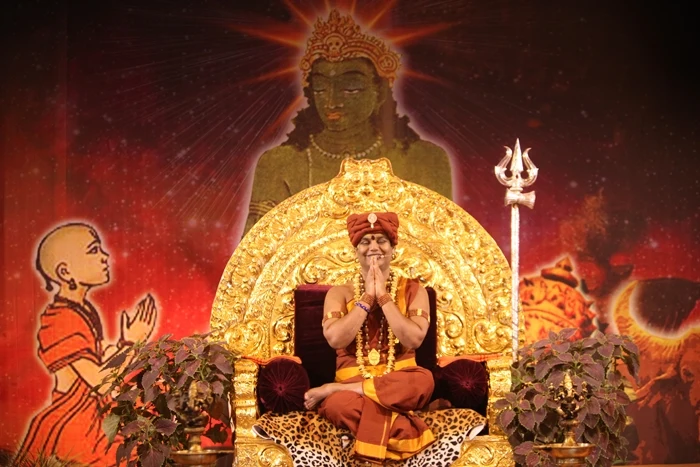
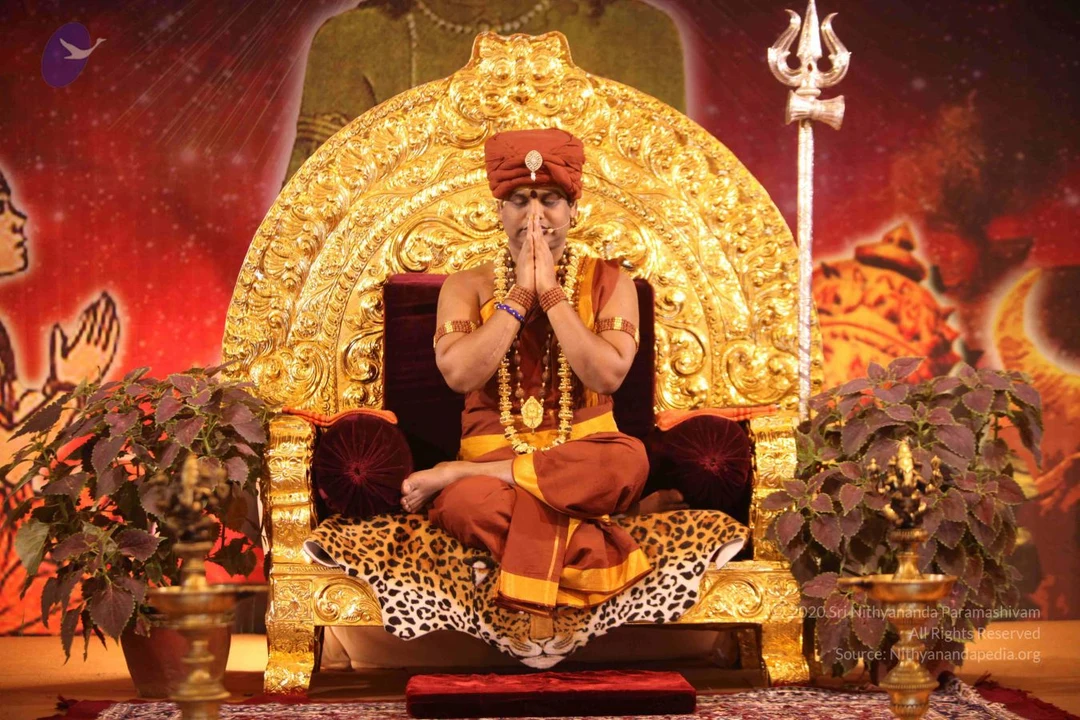
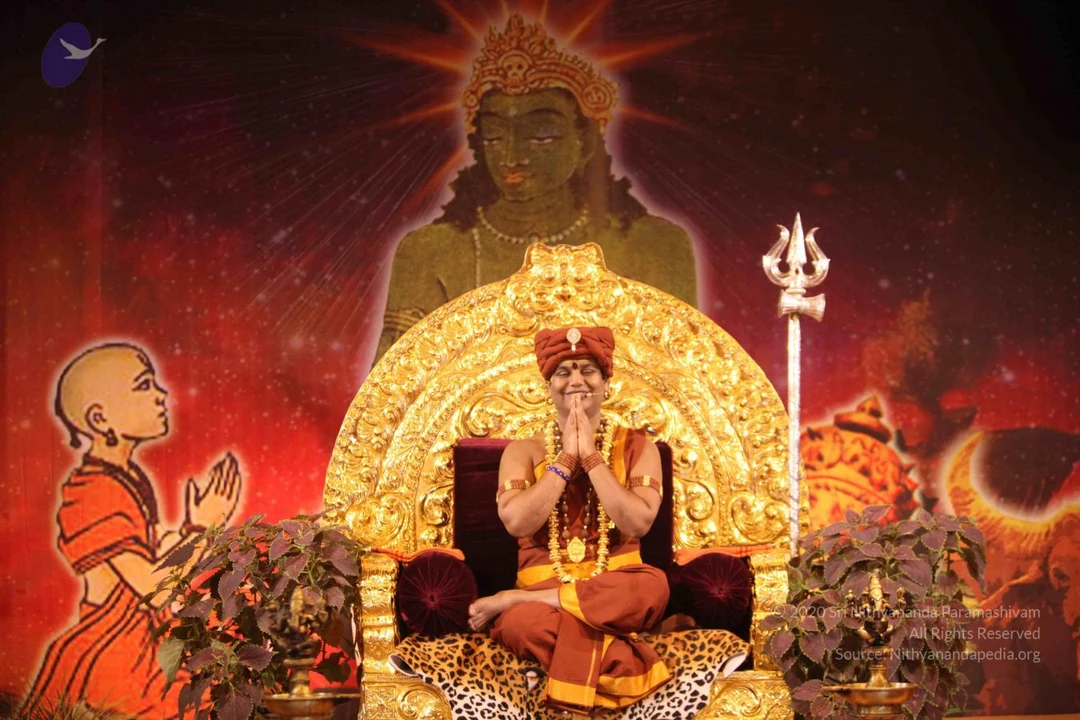
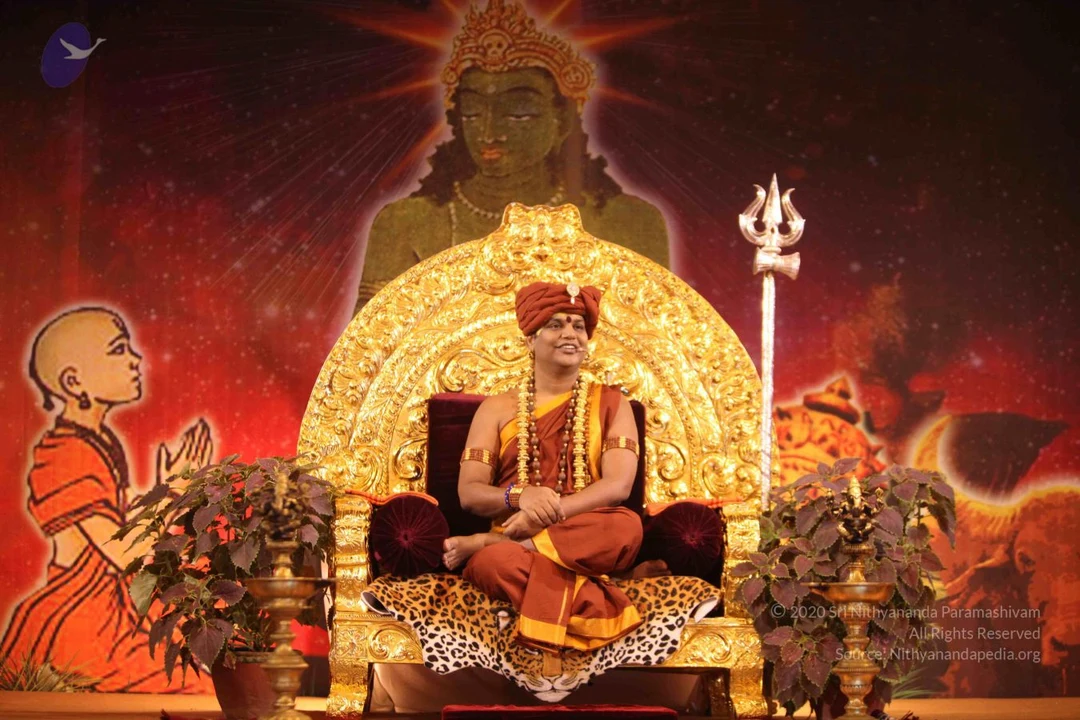
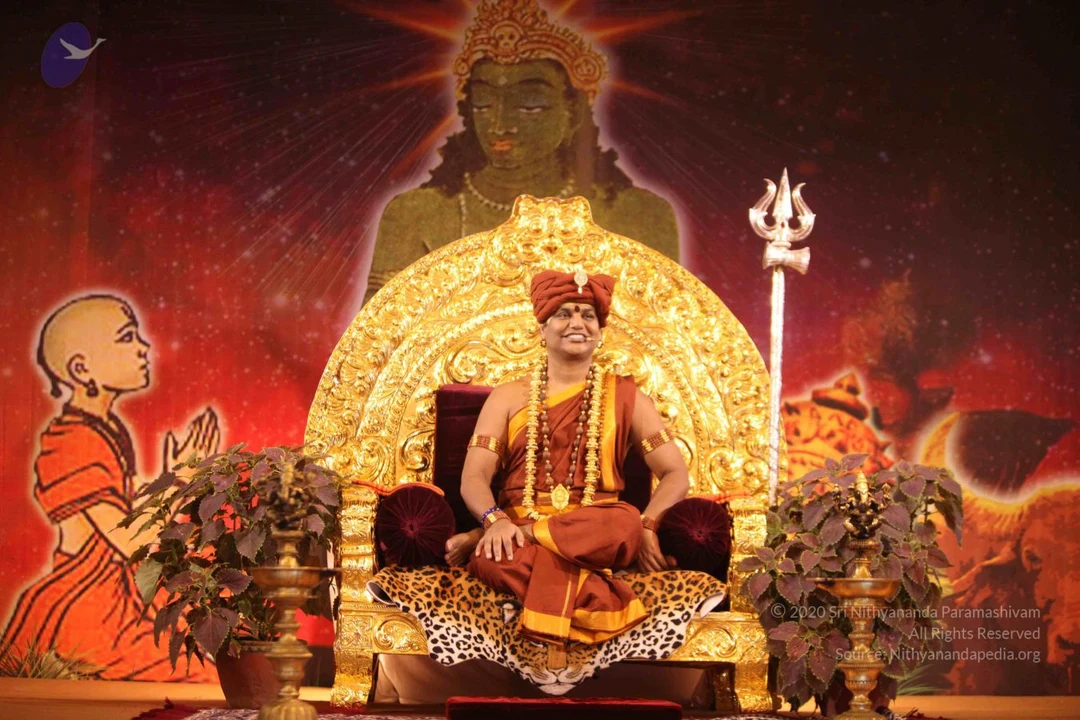
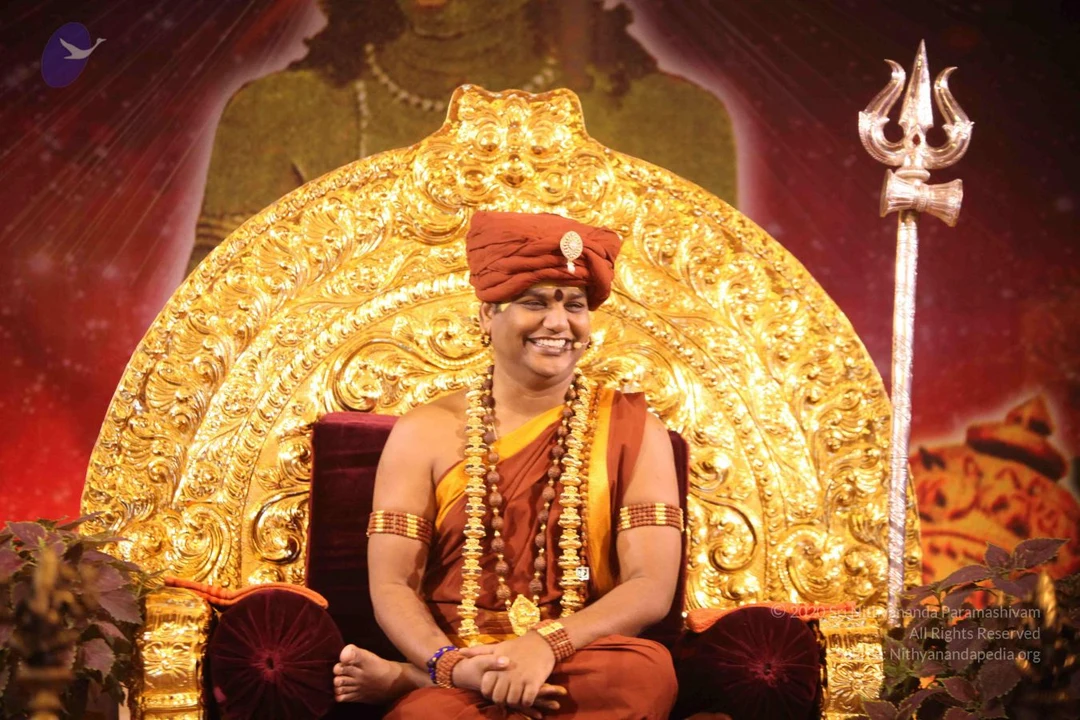
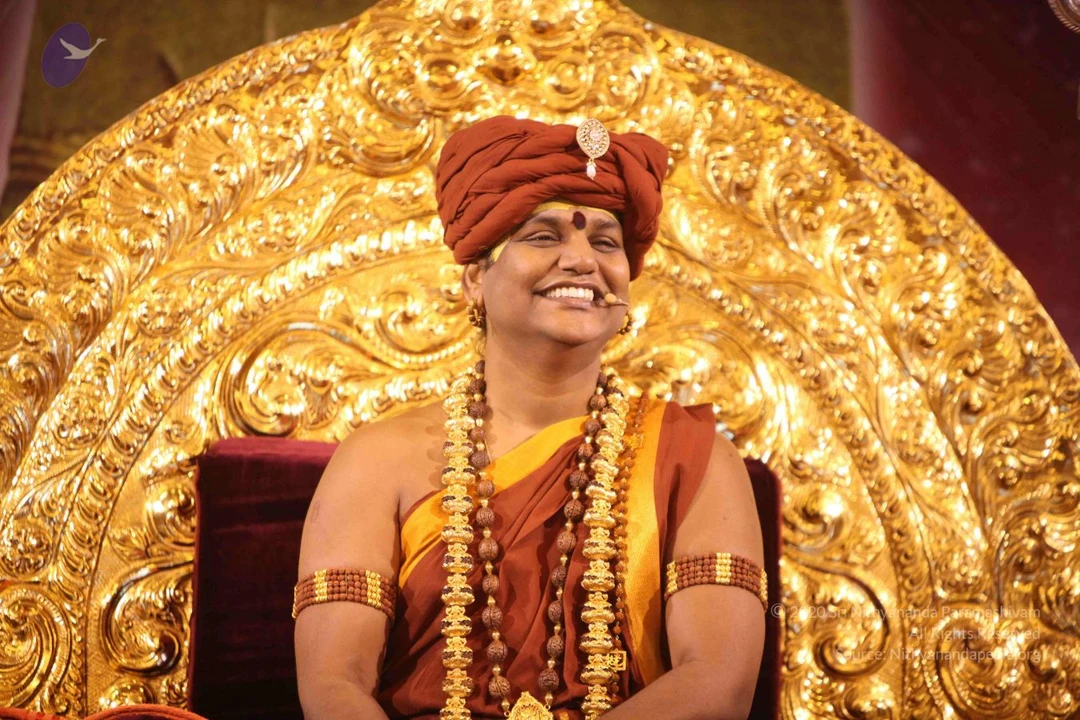
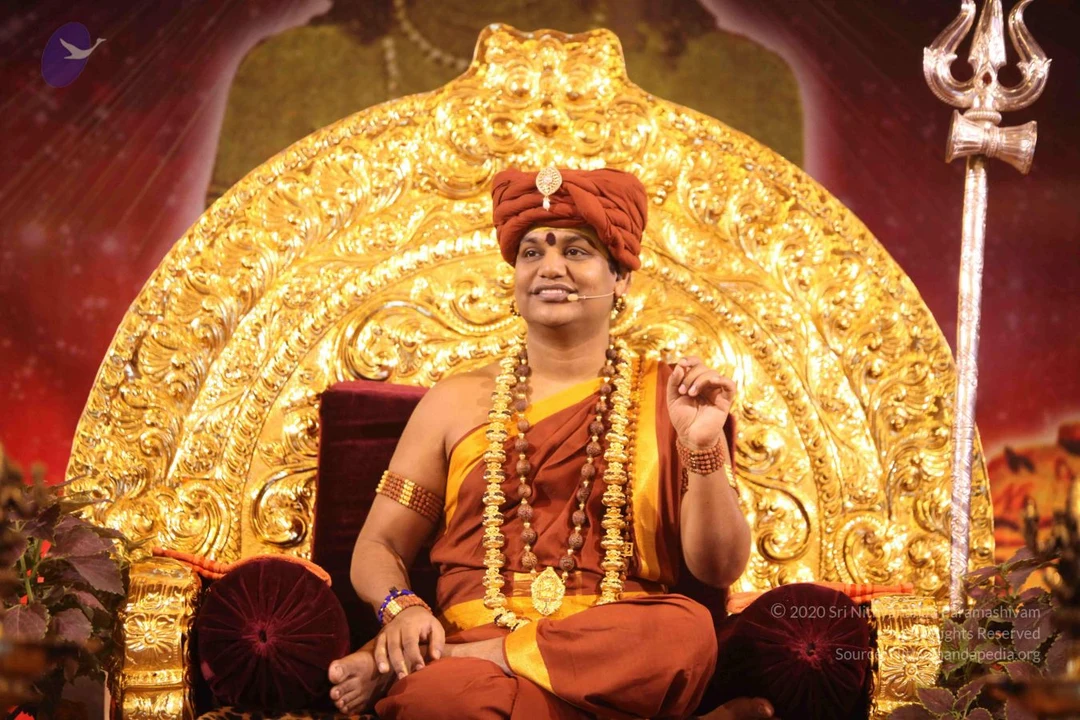
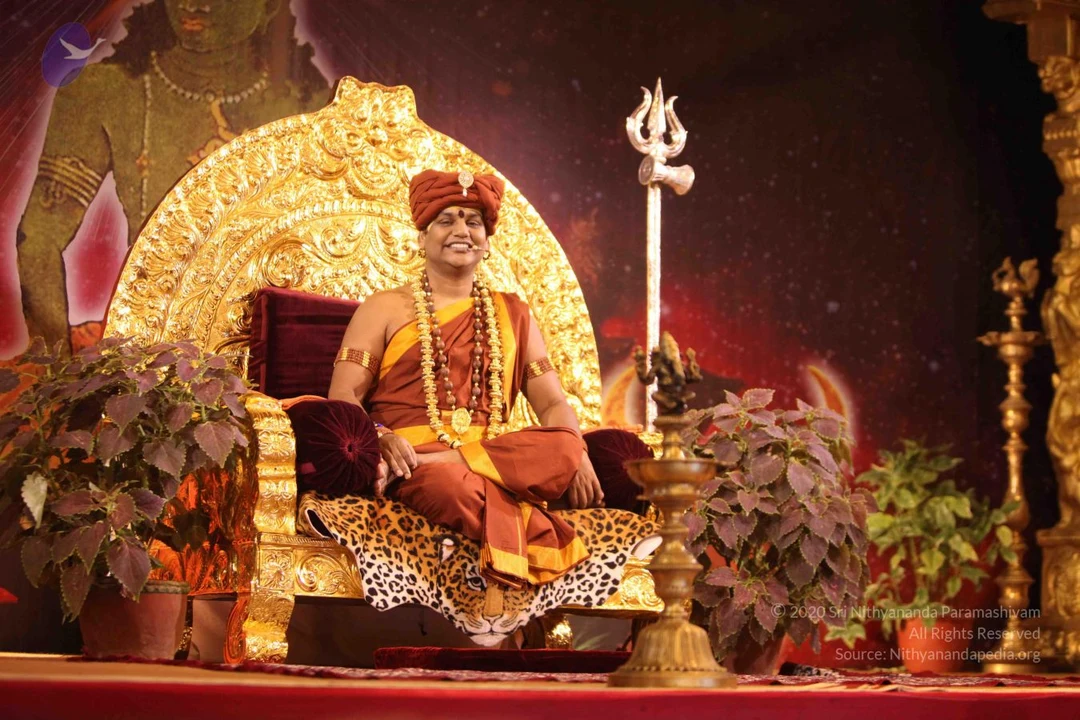
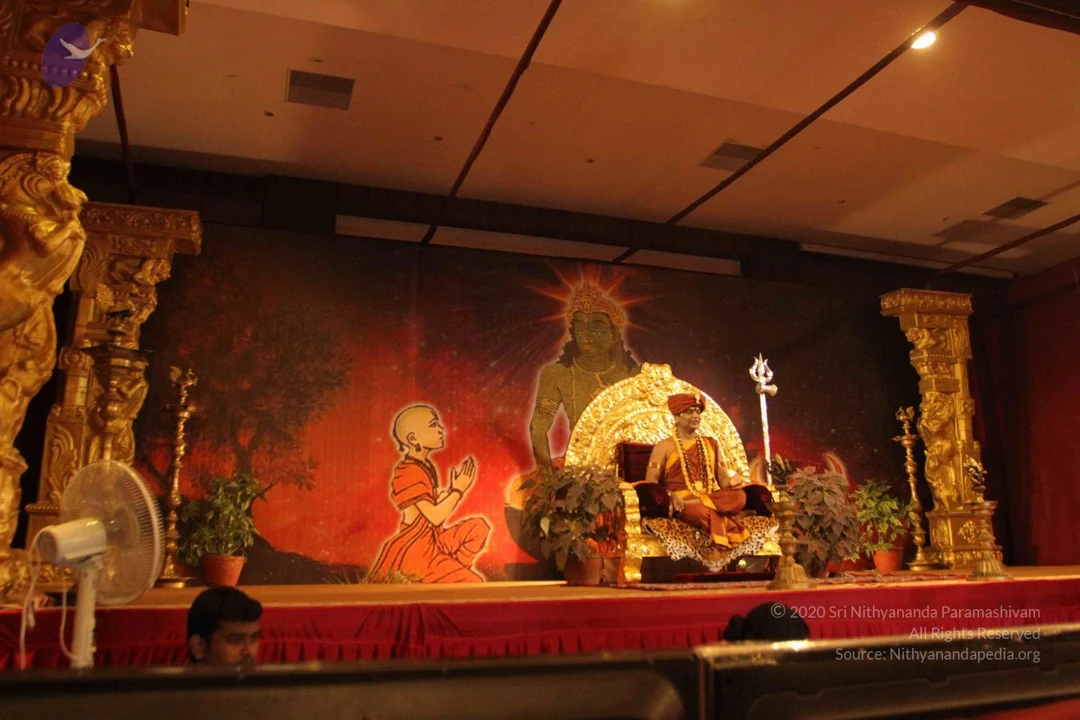
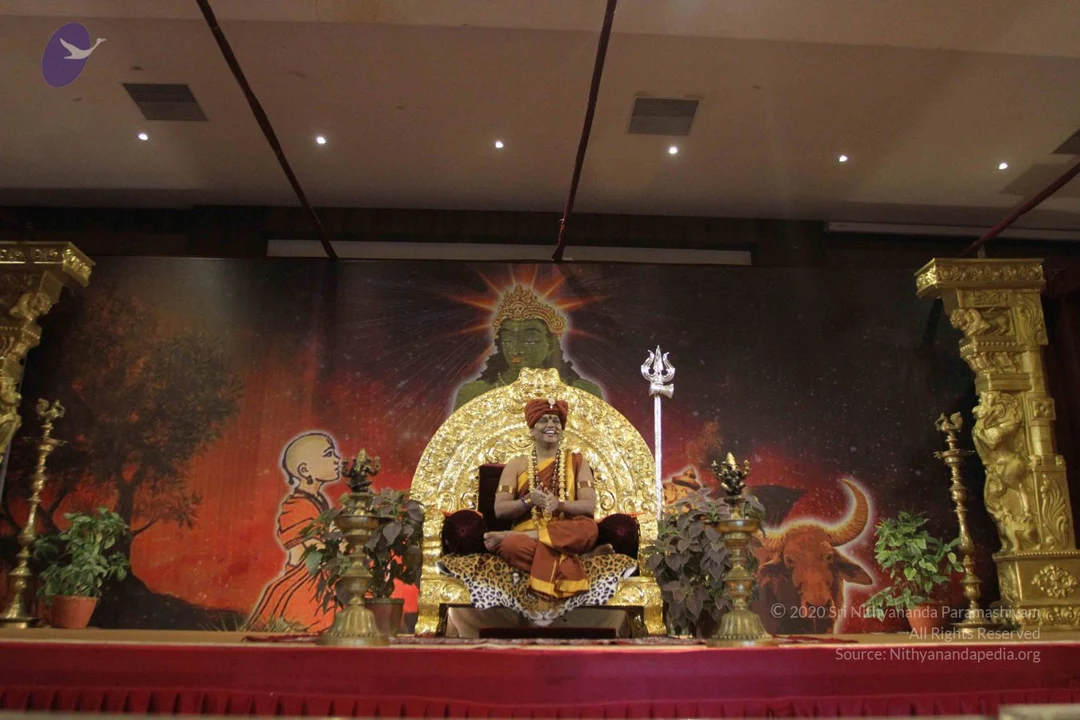
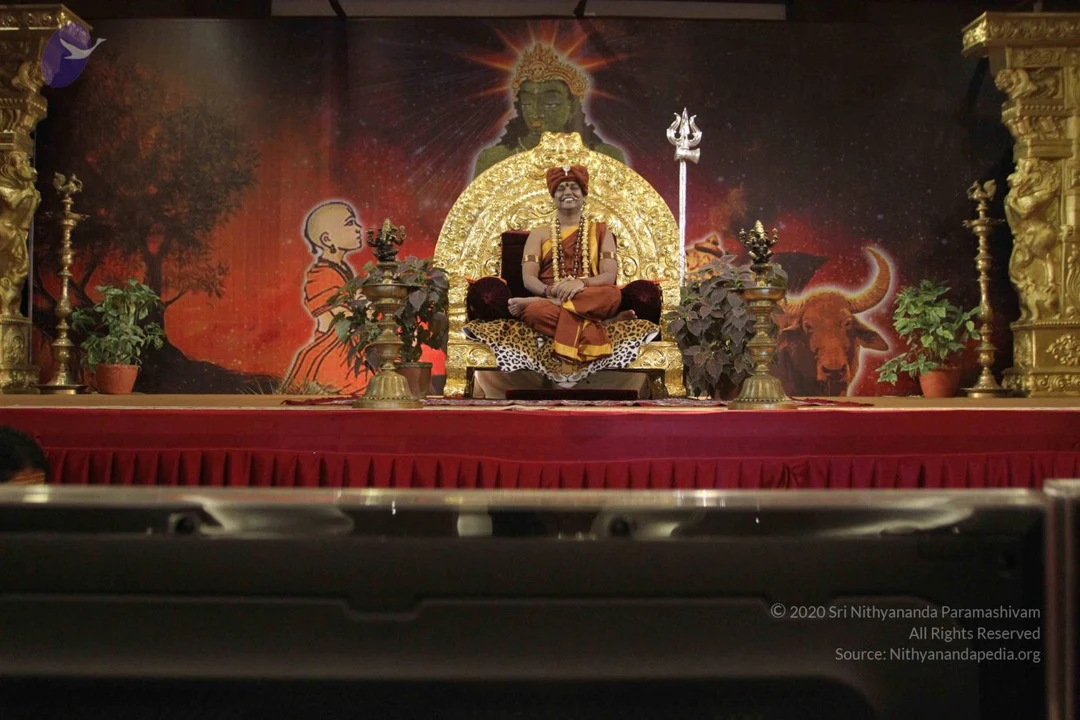
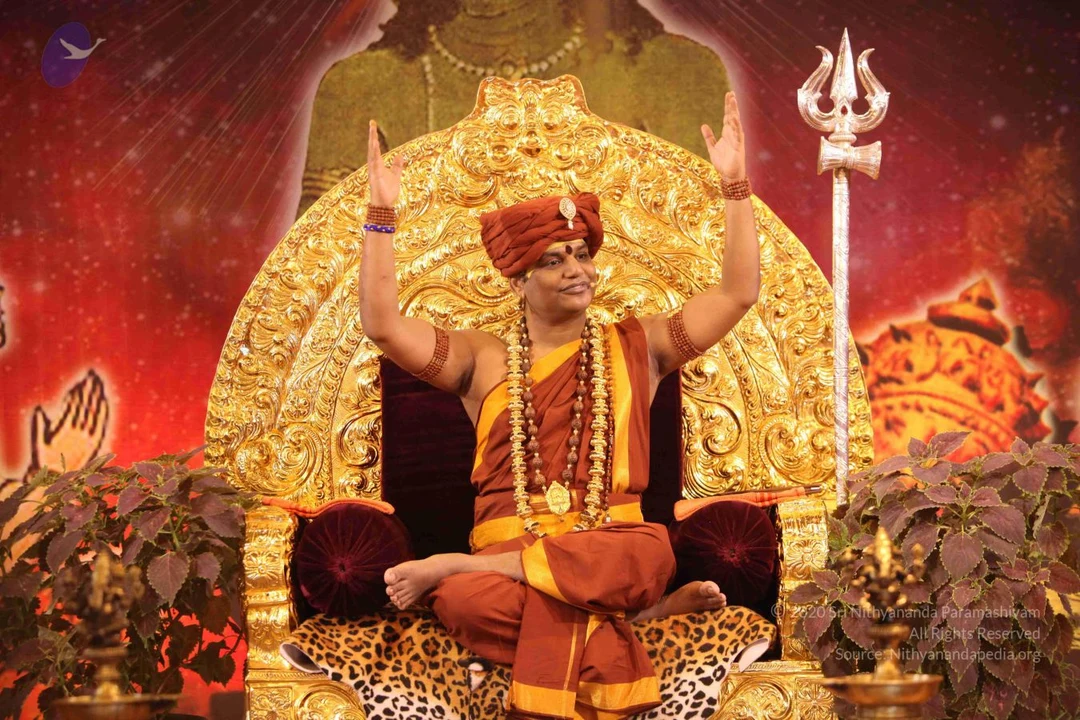
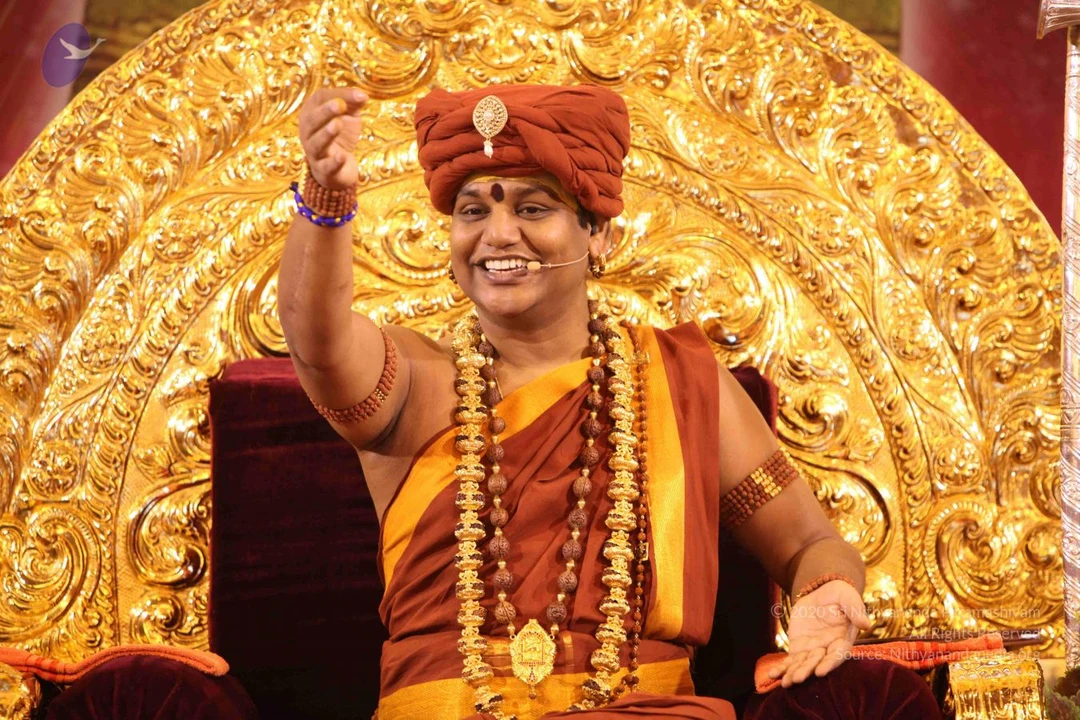
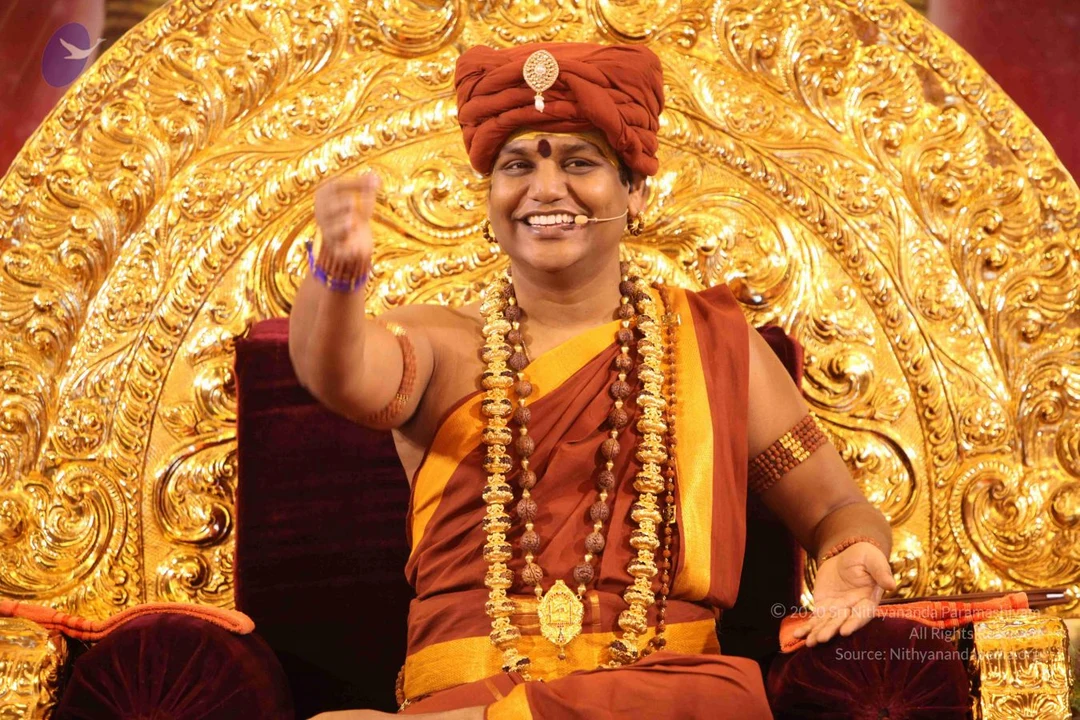
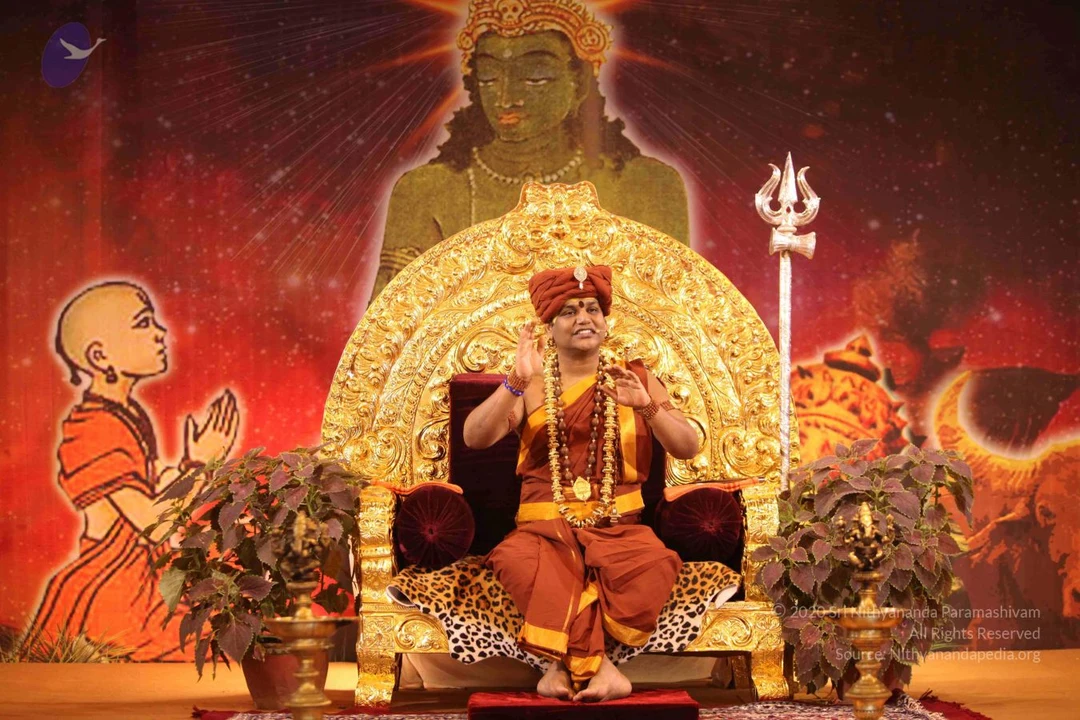
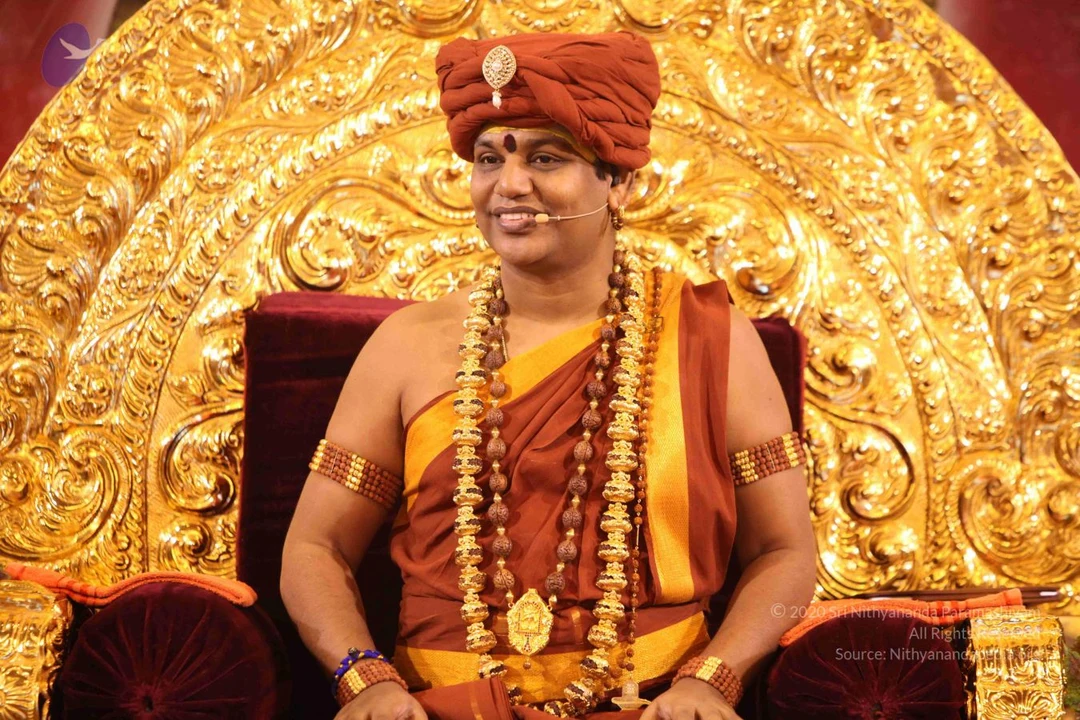
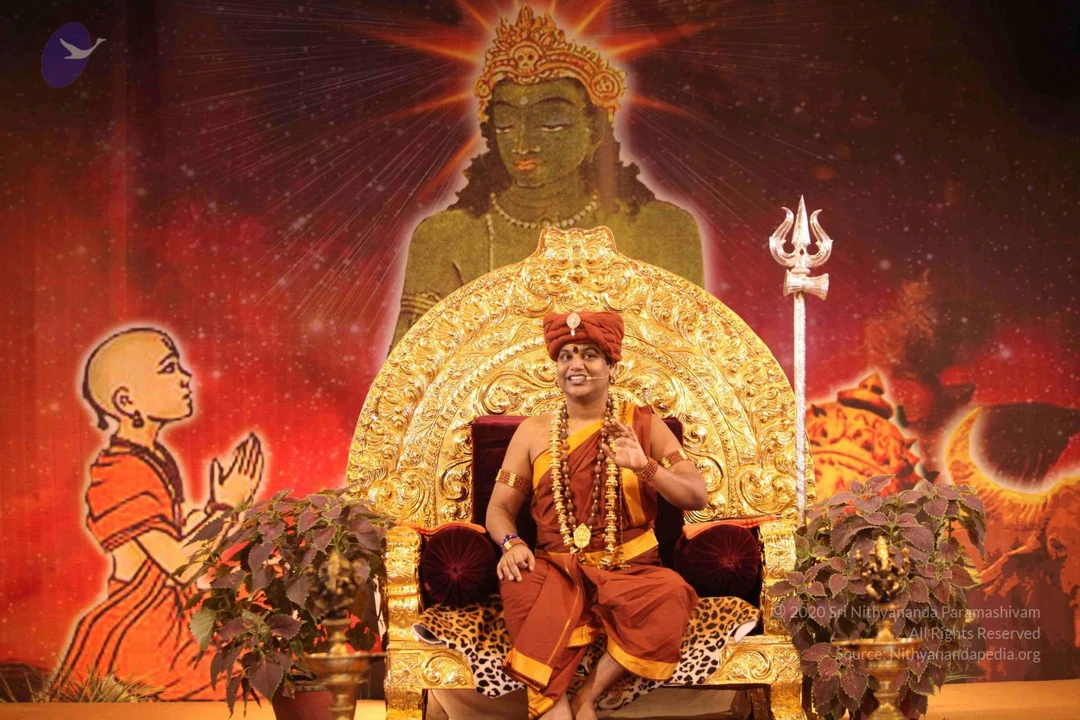
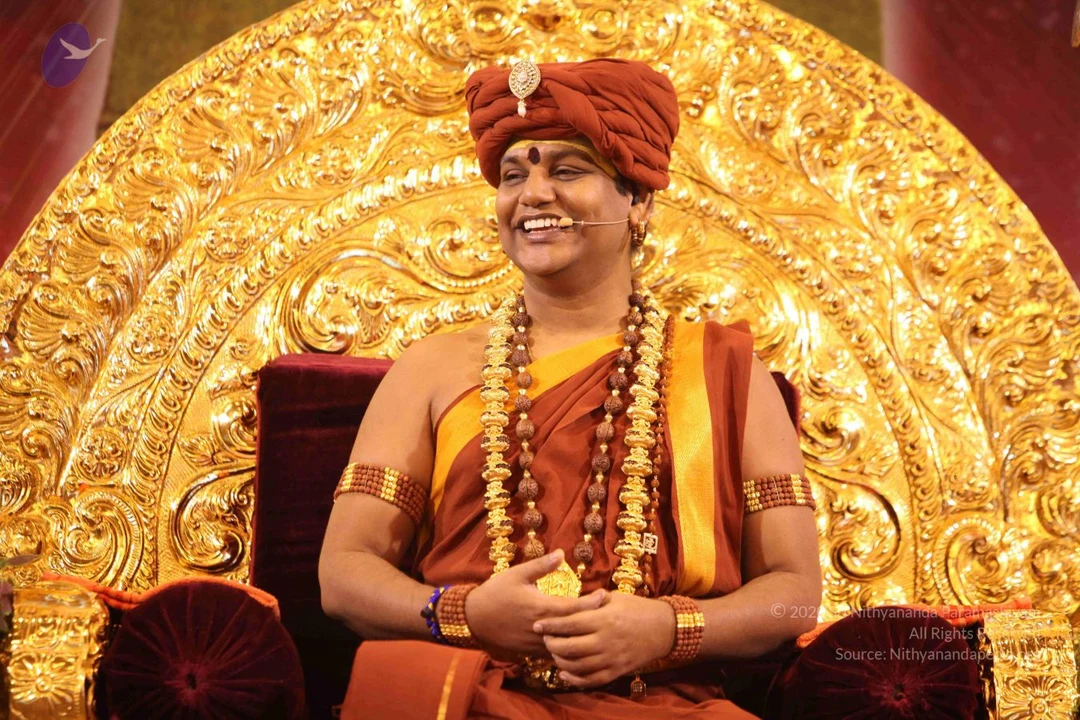
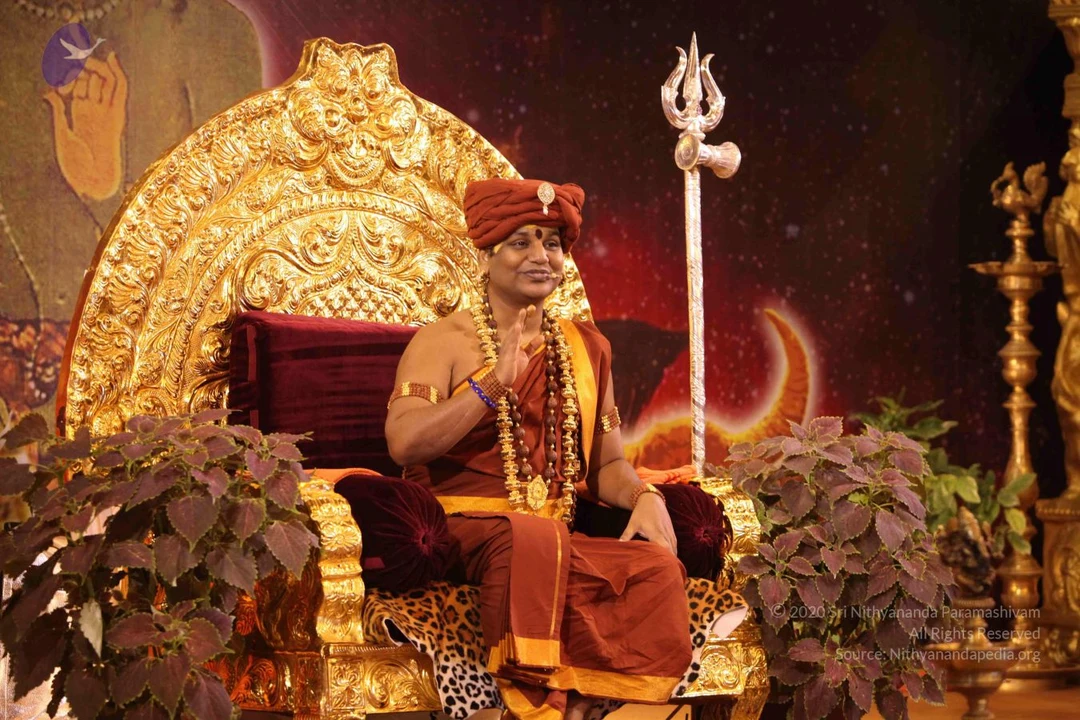
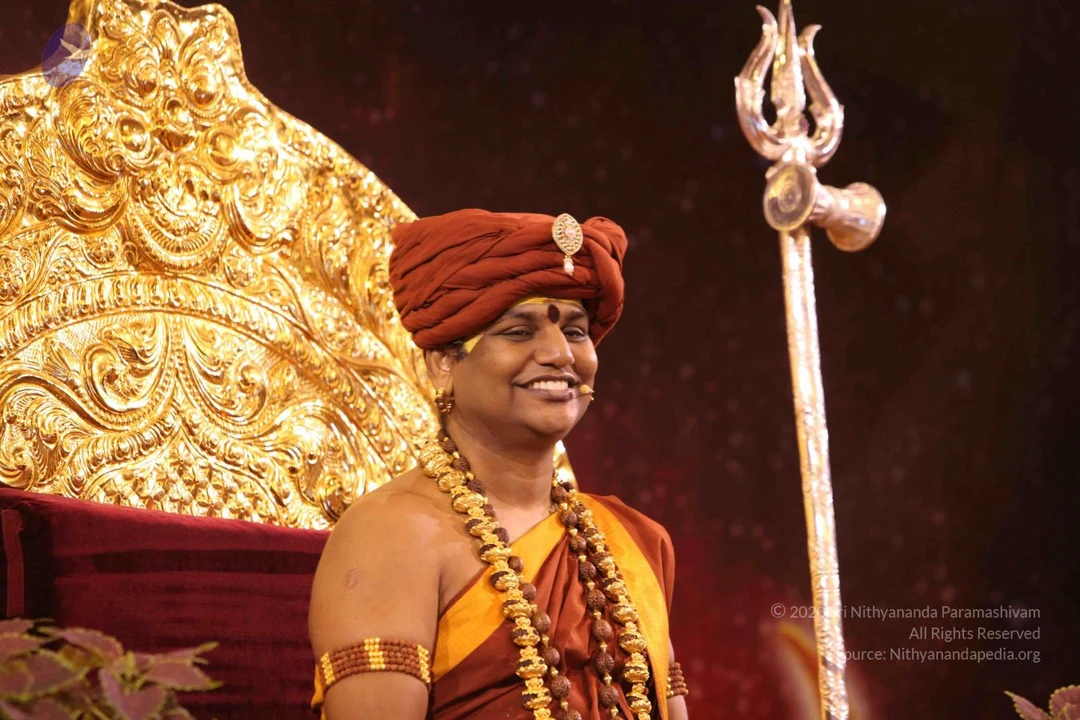
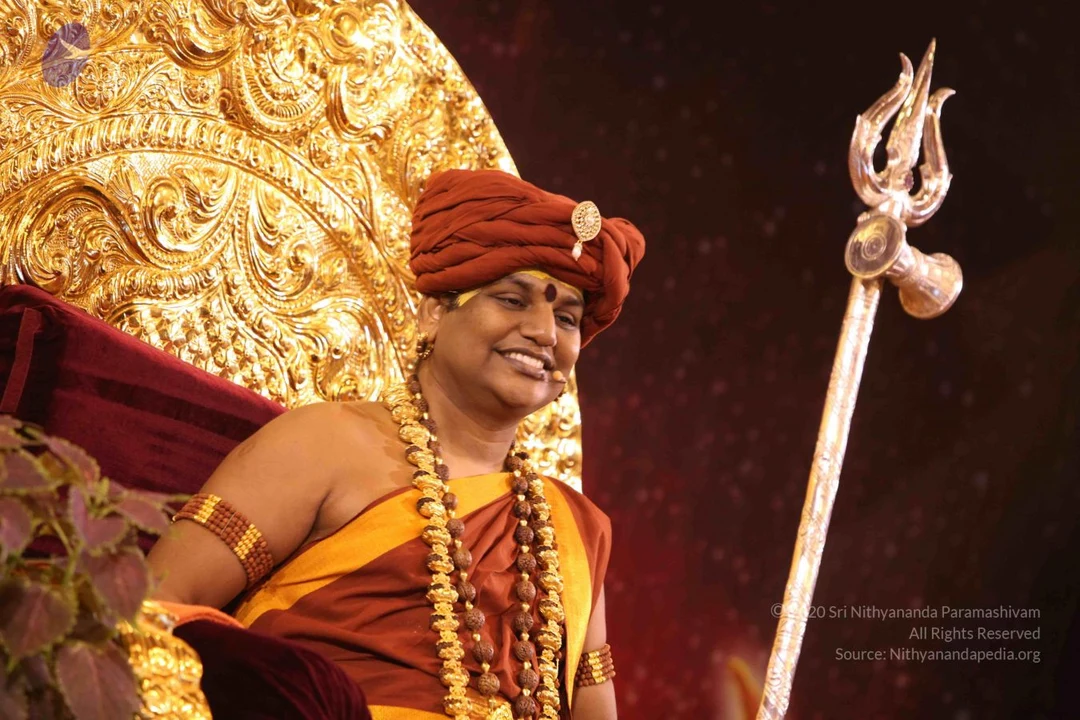
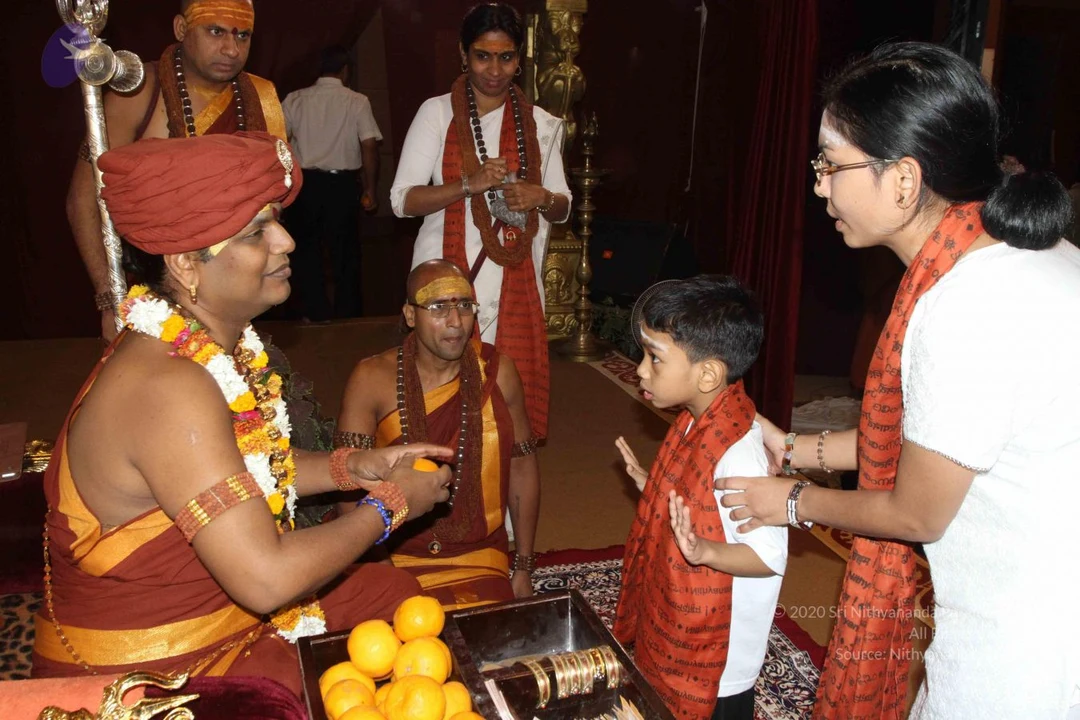
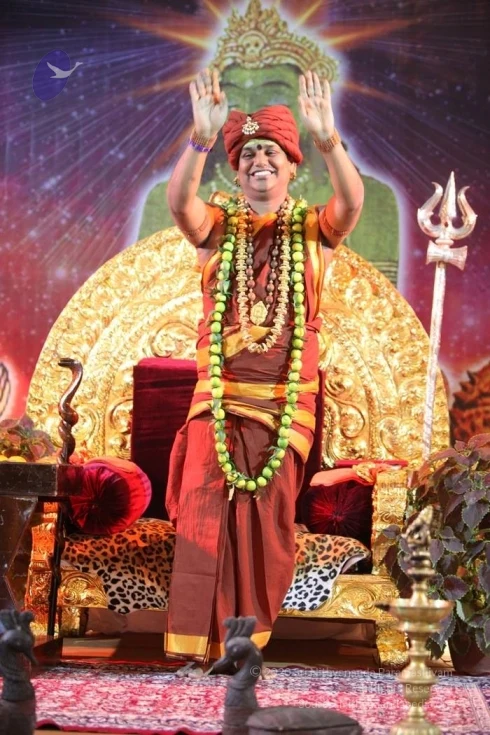
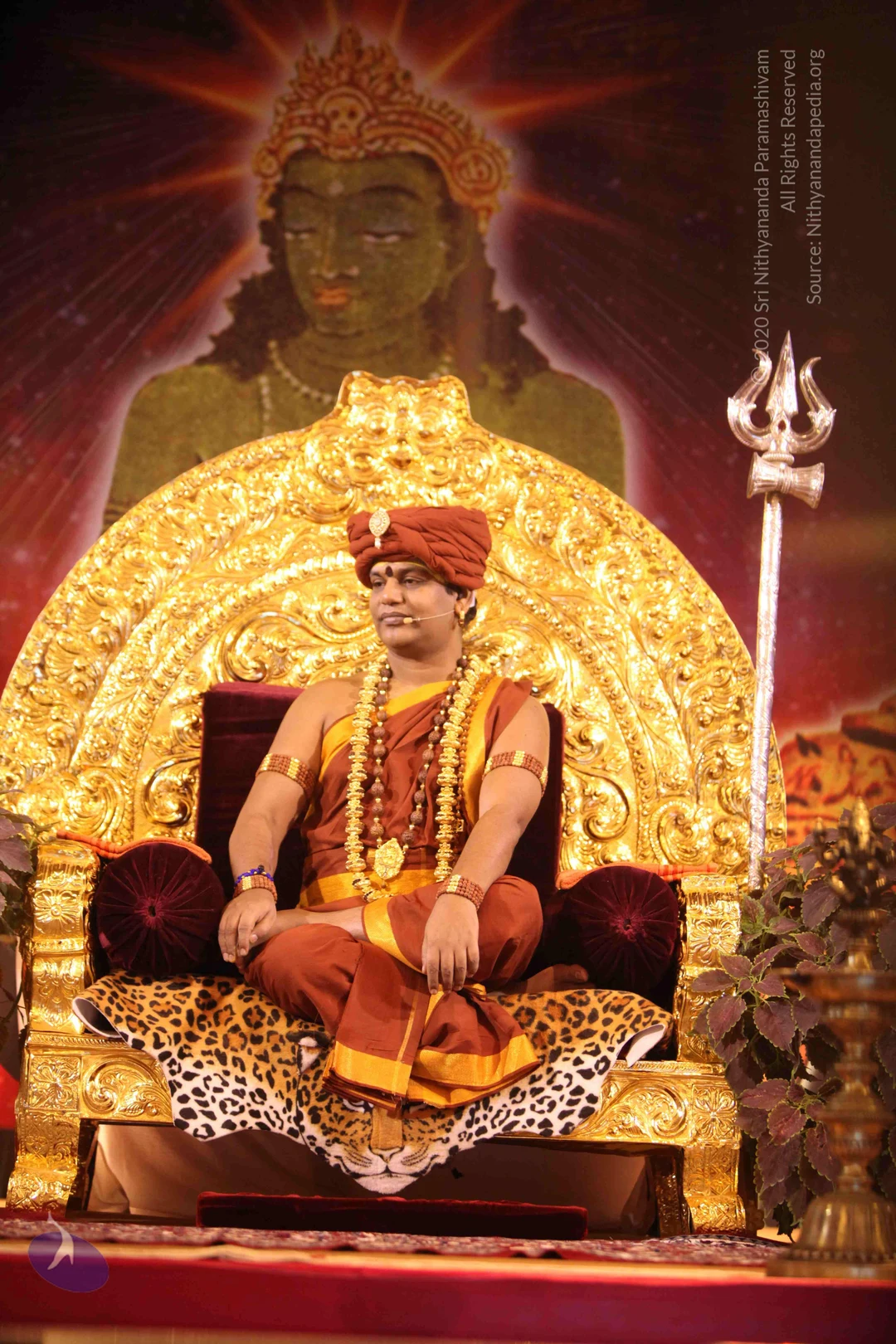
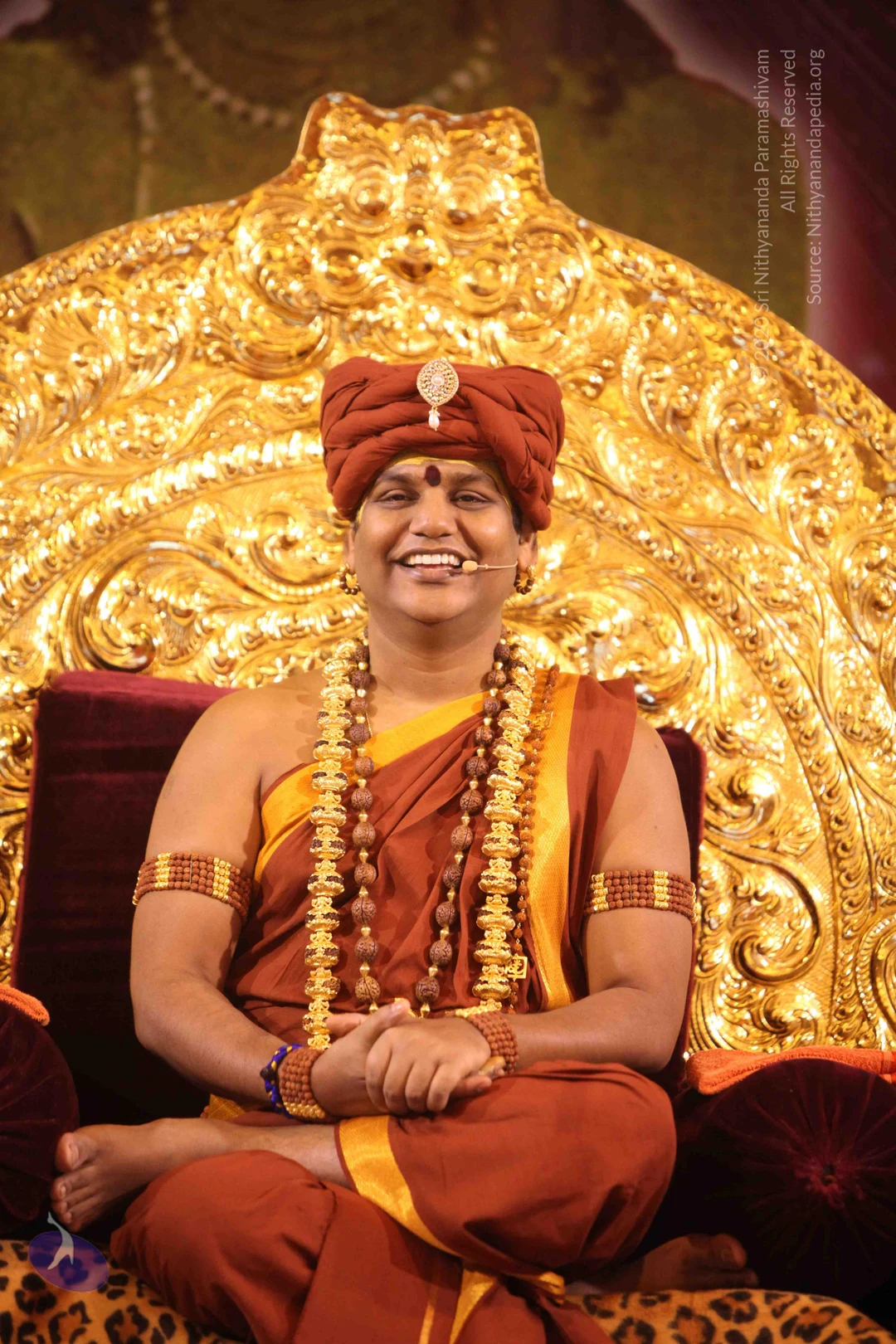
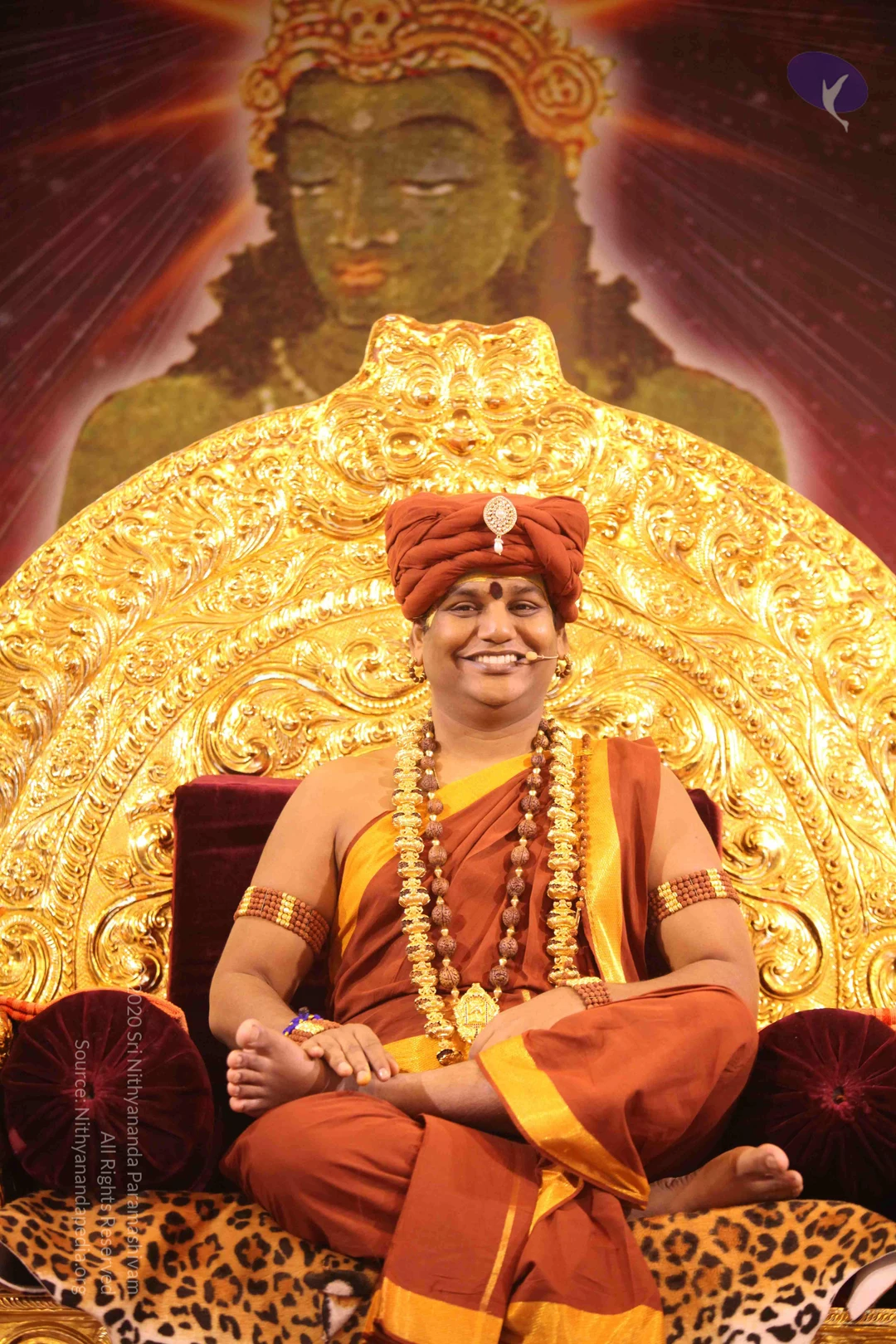
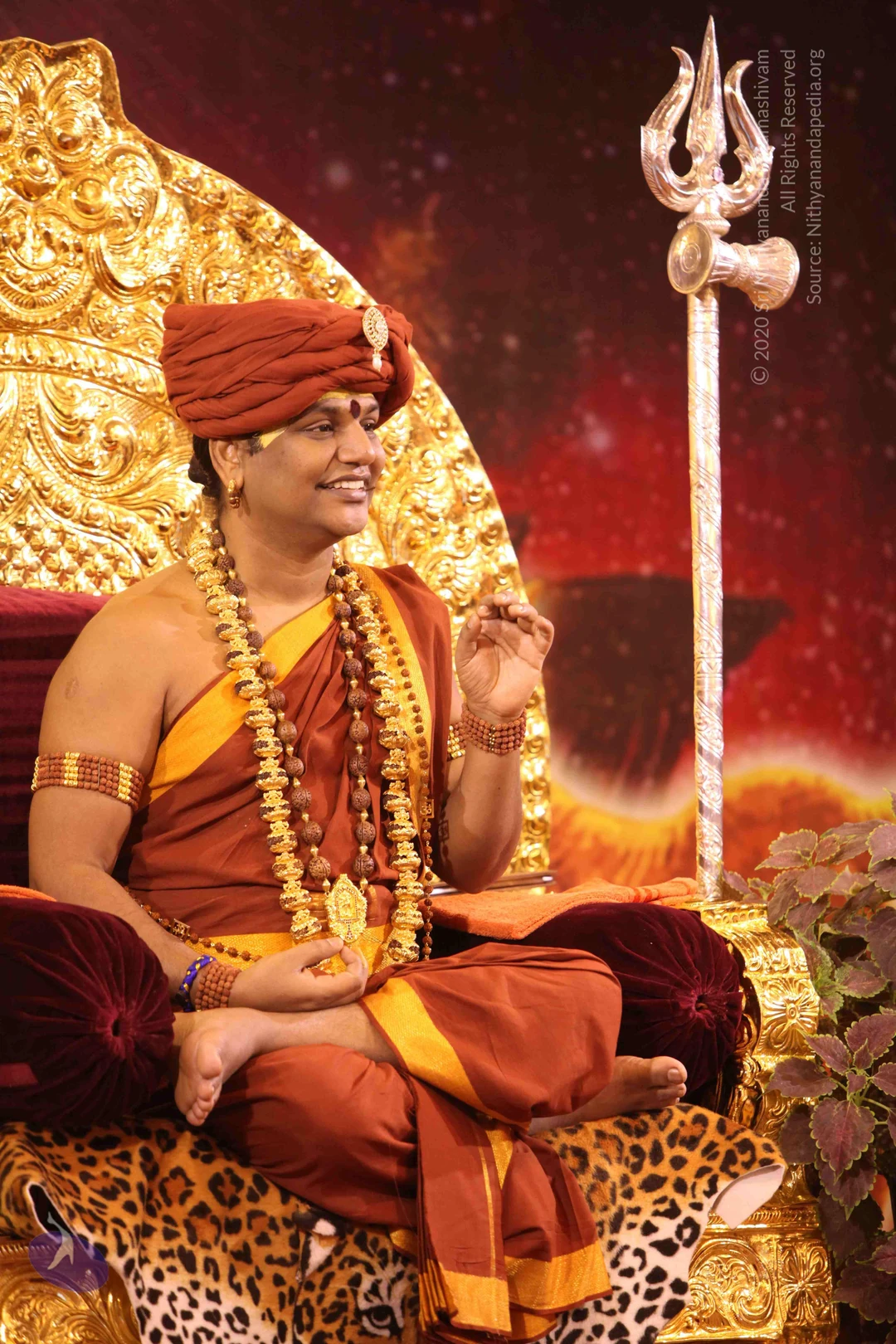
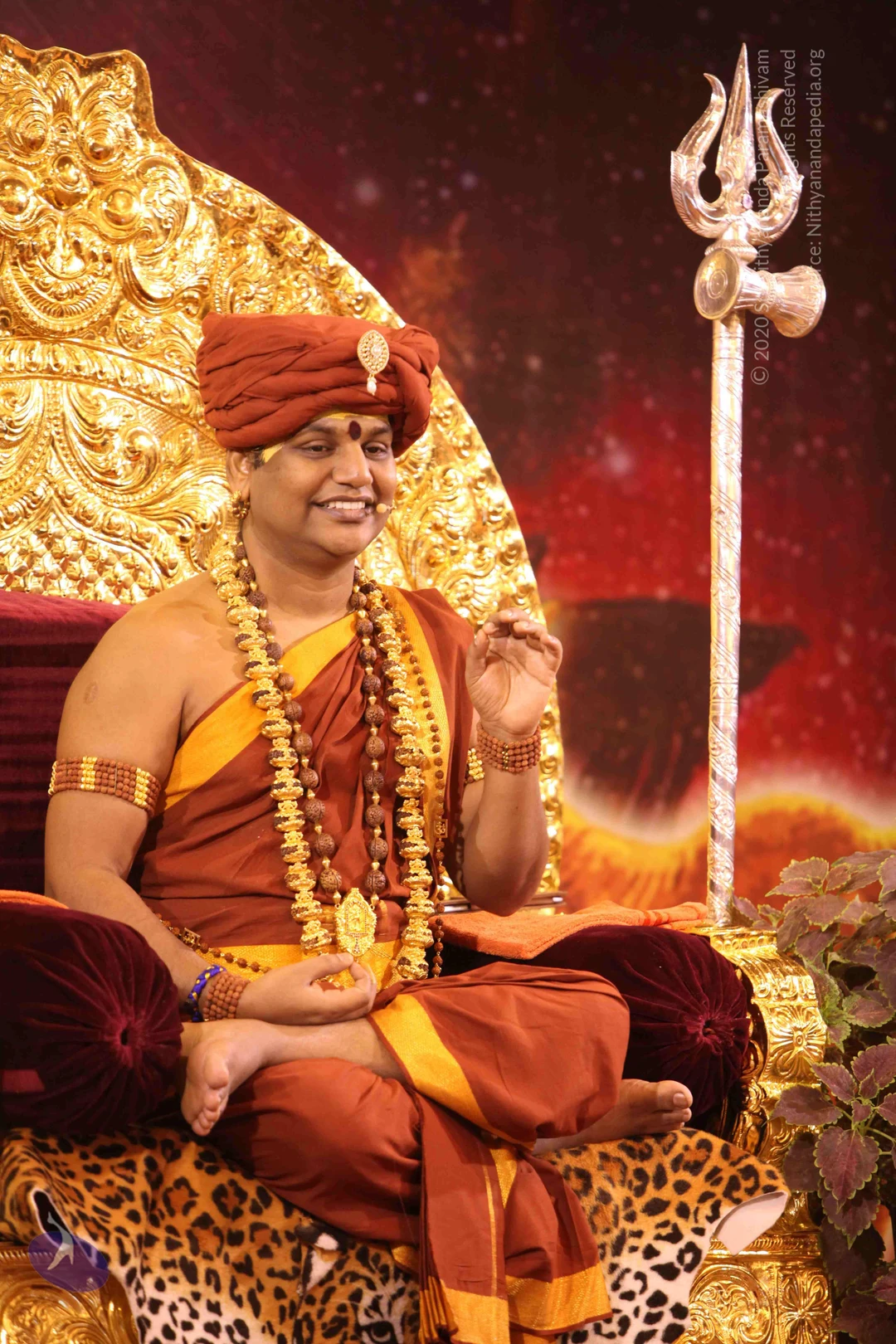
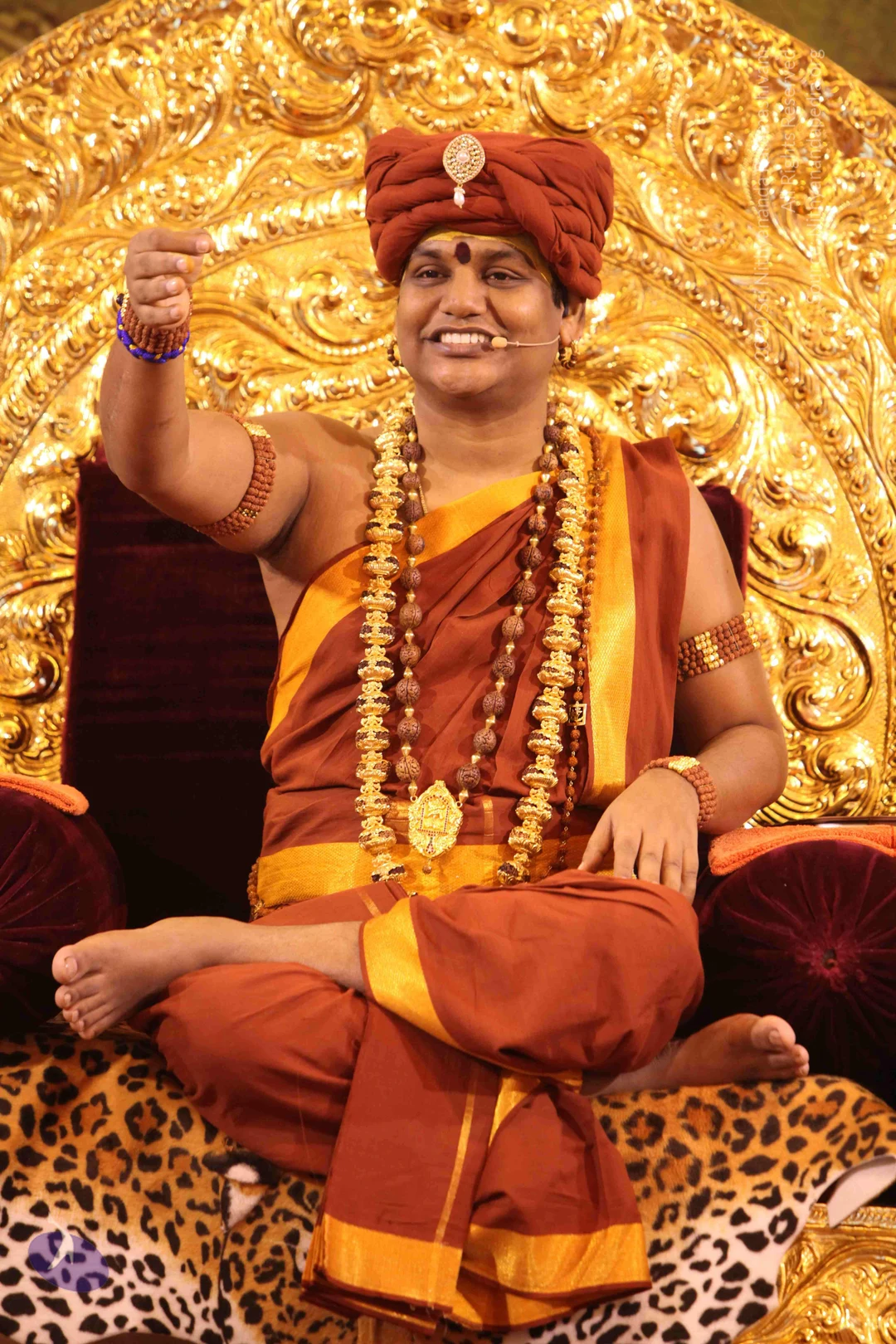
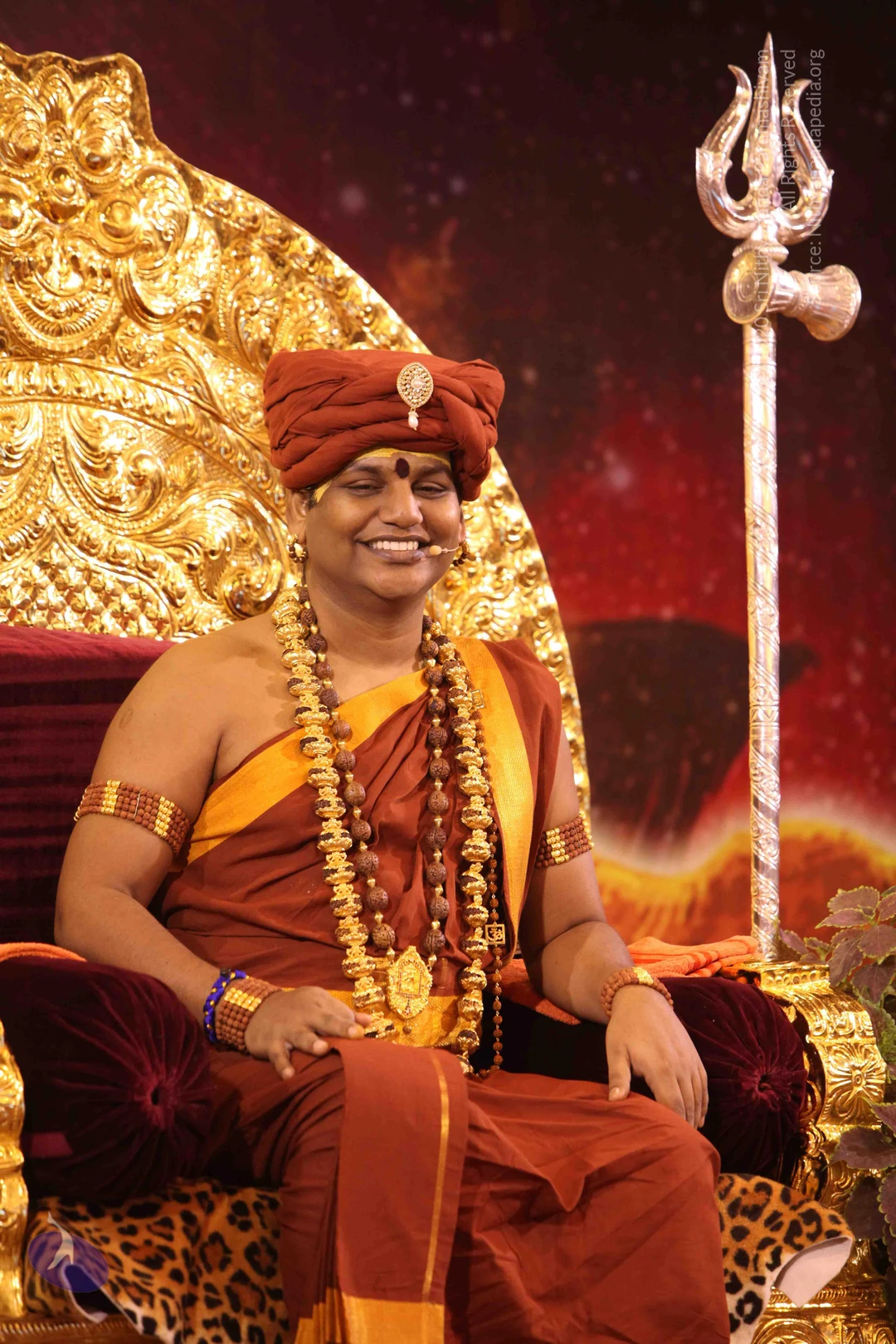
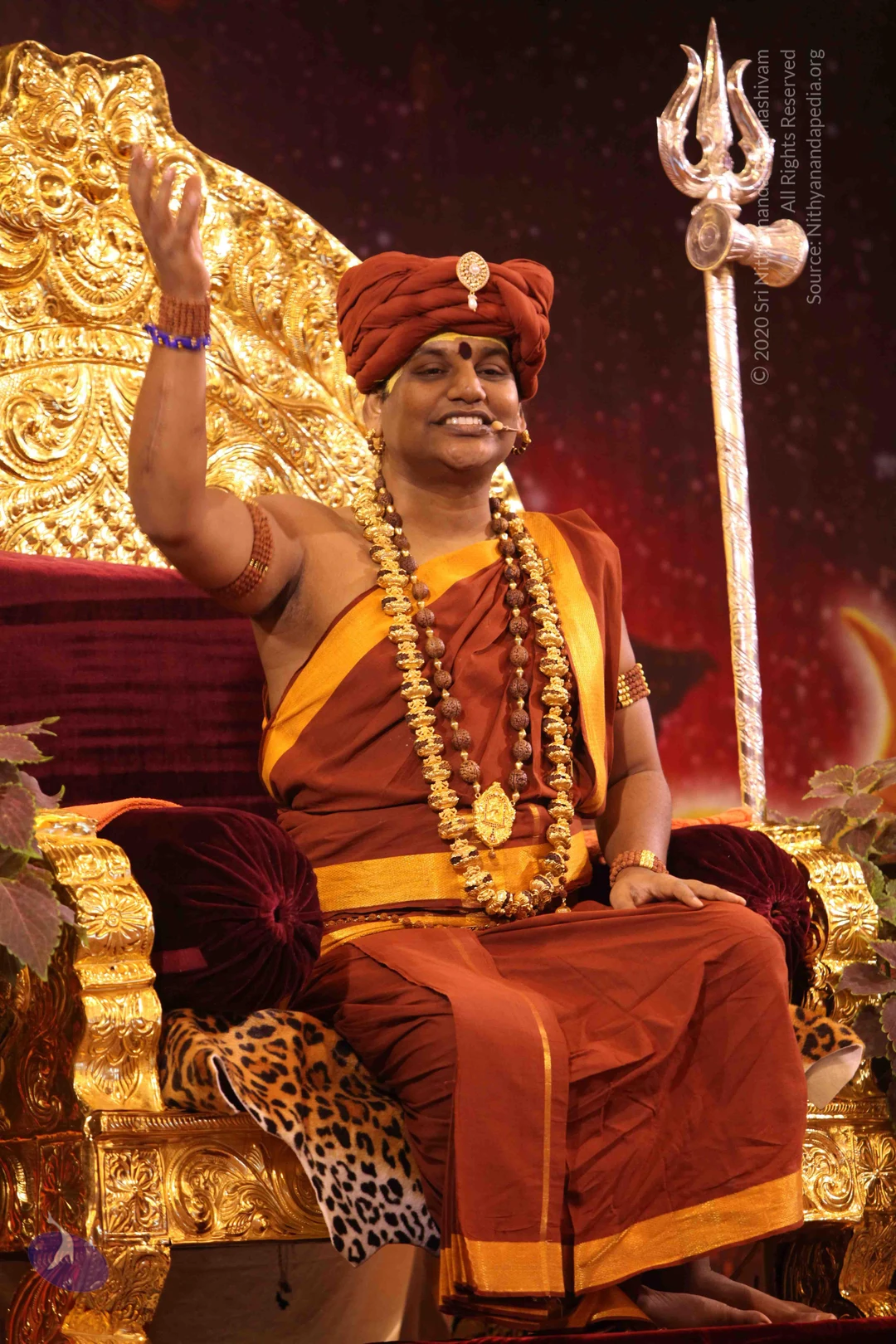
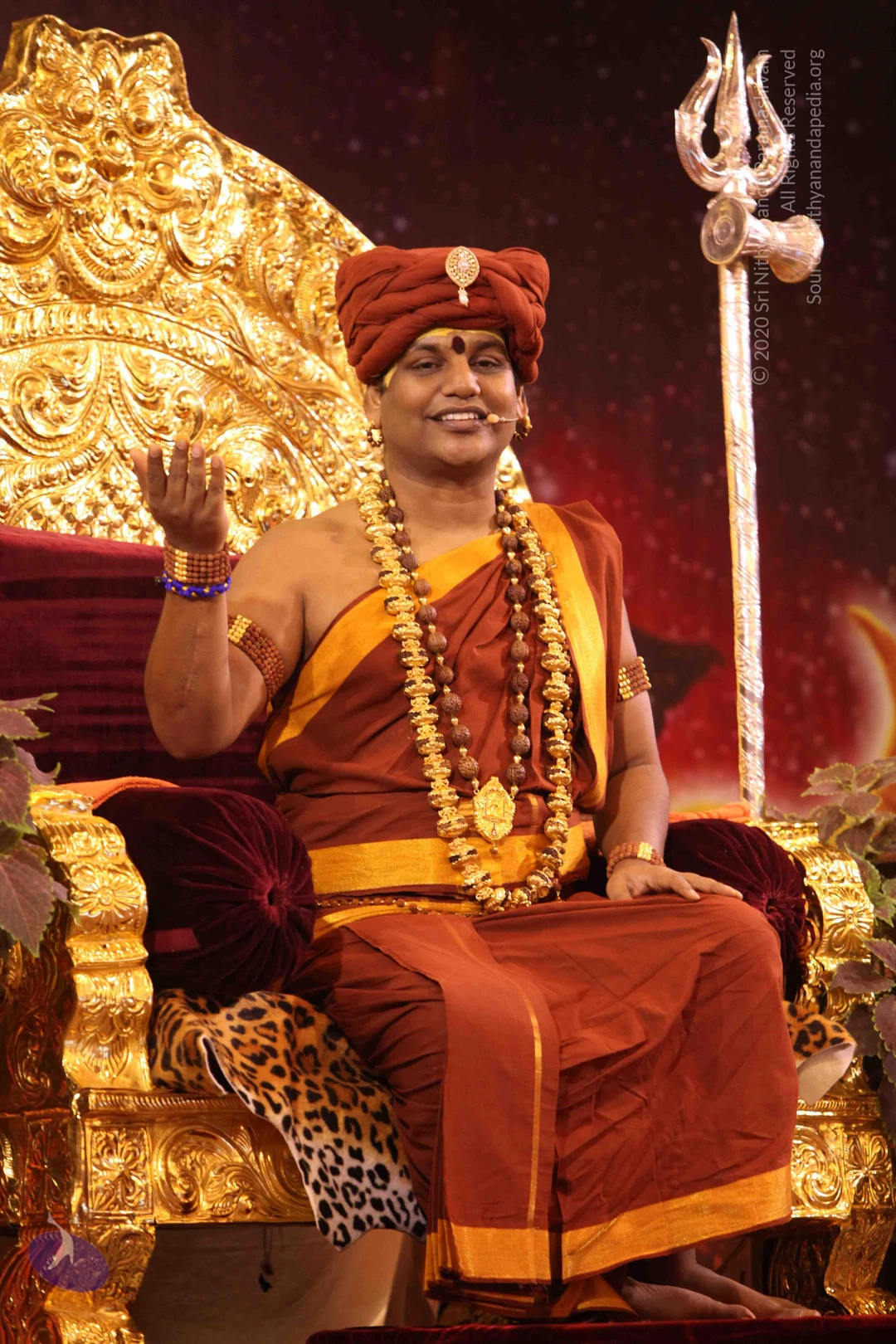
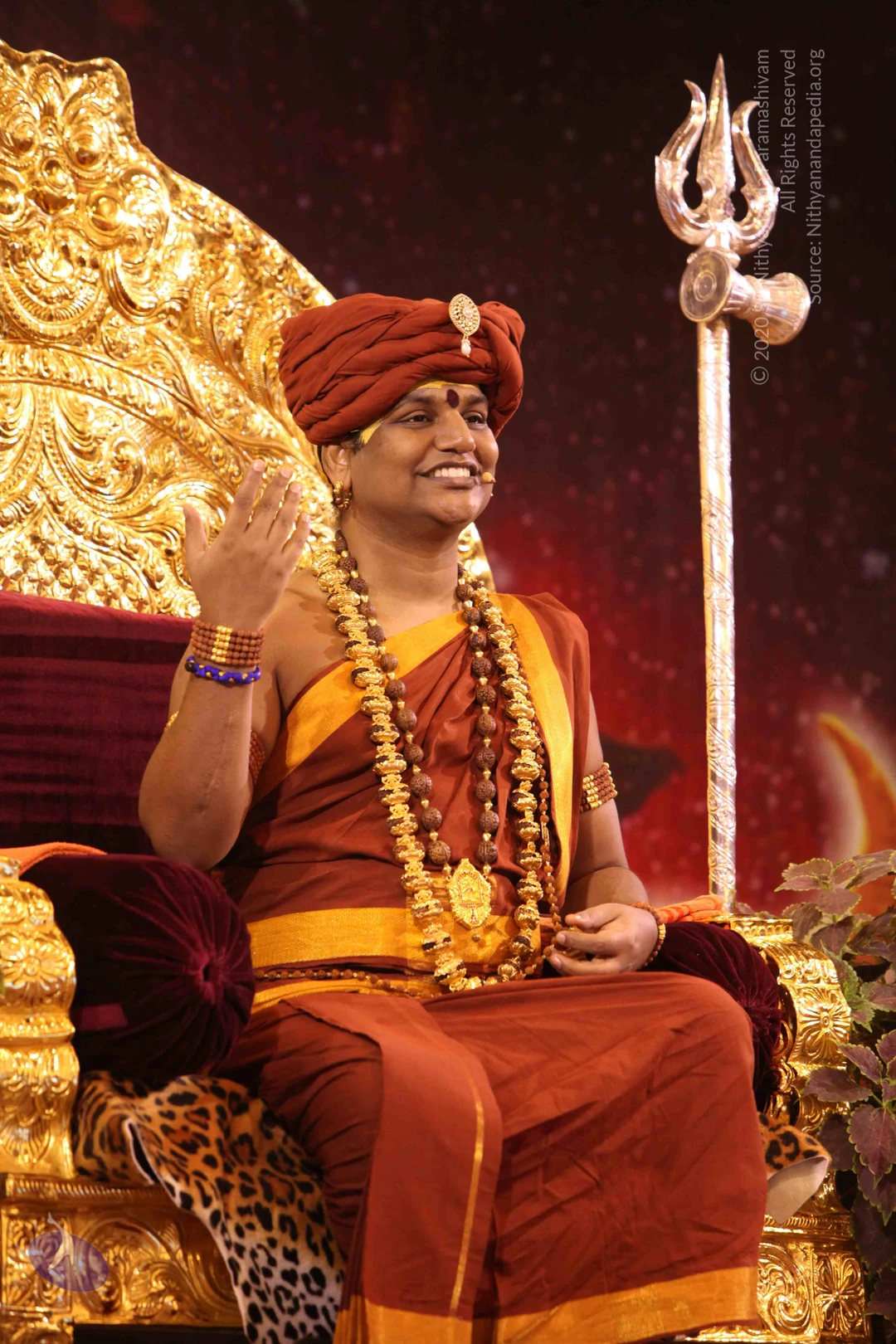
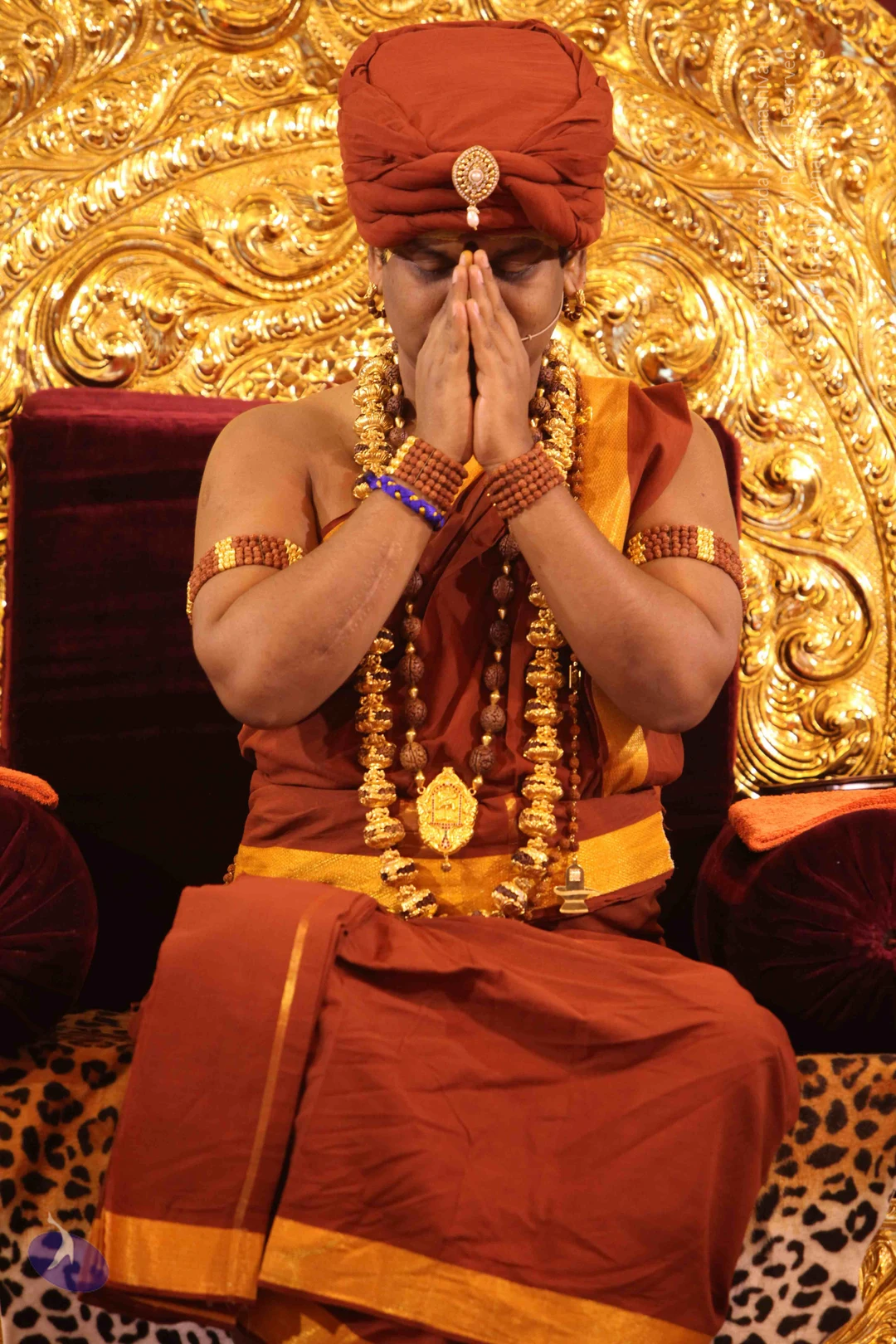
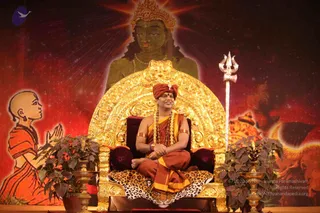
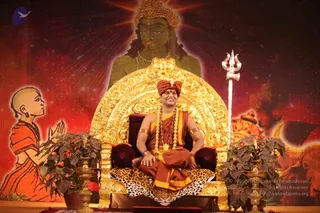
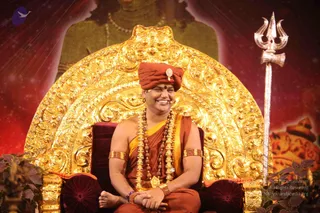
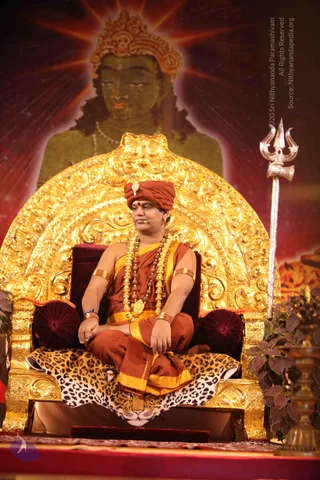
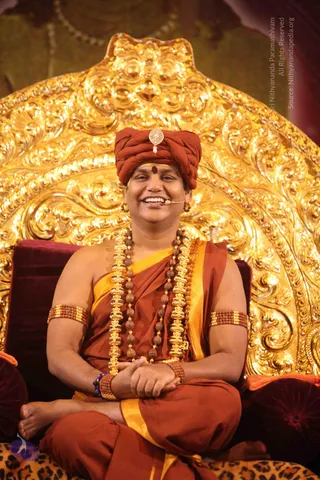
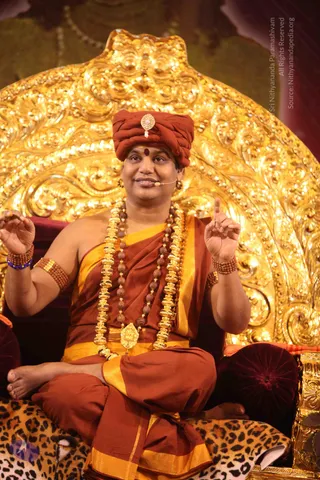
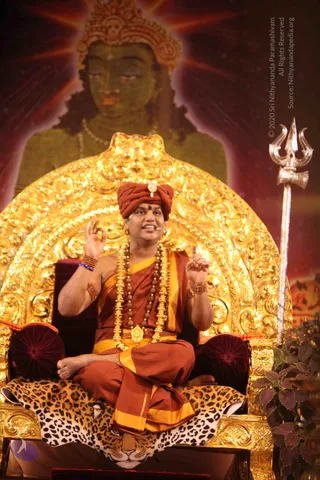
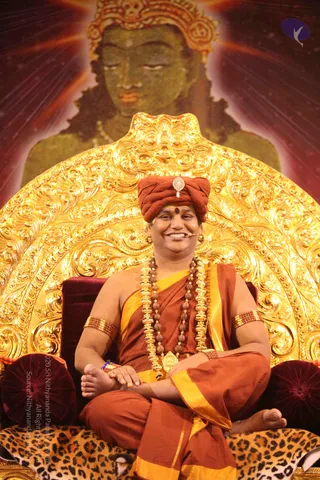
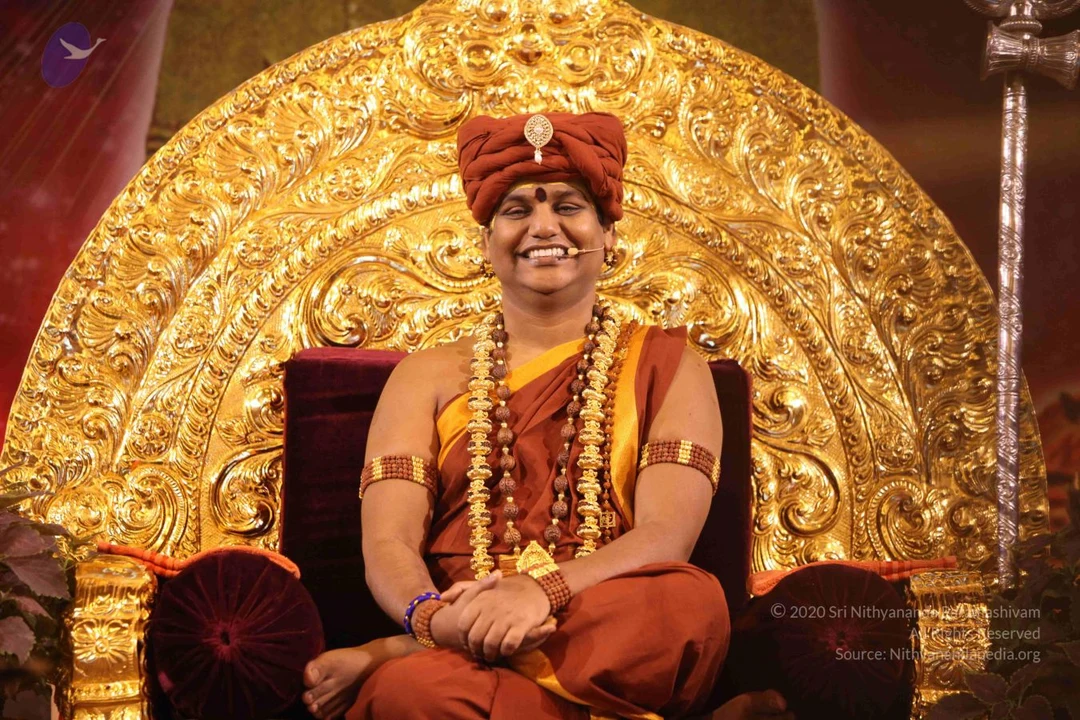
A smiling man seated on an ornate gilded throne with a large curved backrest carved in scrolling floral patterns. He wears a rust-orange turban with a small jewelled ornament at the front, a red-orange shawl over an orange-saffron garment, and multiple long strands of rudraksha beads and gold ceremonial necklaces. Gold armbands and bead bracelets are visible, and a small wireless microphone is clipped near his face. His hands rest folded in his lap with legs crossed on a plush maroon cushion. A silver trident-like staff stands to the right. Swamiji (probable): a seated figure with a turban, saffron clothing and rudraksha malas on a throne, consistent with the page's Swamiji reference. Background shows red fabric and green foliage. Copyright overlay on the image.A figure seated cross-legged on an ornate gold throne with a leopard-print cloth draped over the seat, hands pressed together in anjali namaste with eyes closed. The person wears a rust-orange turban with a small gold ornament, a rust-orange and gold-bordered garment, a long gold-bead necklace with a rudraksha-style pendant, beaded wrist bands, and gold armbands. Behind the throne stands a silver trishul, flanked by potted plants with purple-green leaves and brass lamps on the floor. The red stage backdrop shows painted hands in prayer and a stylised deity figure. a person by appearance: the orange-and-gold attire, ornate throne and rudraksha-style necklace are visible cues for the speaker on stage.A man seated in a large ornate golden throne with leopard-skin cushion at the base, hands pressed in namaste, wearing a maroon head wrap with a round gold emblem, rudraksha-style beaded necklaces, gold bangles and saffron-orange robes with yellow borders. A brass trident stands to his right and brass oil lamps sit at the sides of the throne among plants. Behind him a large green-tinted deity murti with a crown and necklace glows against a red radiant backdrop, with a painted figure of a devotee with palms joined at the left.A seated man in an ornate golden throne with a leopard-skin cushion on the dais, wearing a saffron-orange turban, orange-red robes with a gold border, multiple rudraksha malas and a gold-coloured ceremonial necklace, and gold armbands. He sits cross-legged with hands folded and smiles. Behind him is a large painted backdrop with a glowing deity murti in a crown and a silver trident leaning at right, a praying devotee in orange at left, and a bull figure at right. Potted plants and brass oil lamps flank the throne. The appearance of the seated figure is consistent with Swamiji (probable), given the turban, rudraksha malas and saffron garments, though the image is a single seated figure on a throne.A seated man sits on an ornate gilded throne with a leopard-print cloth draped over its seat, smiling with hands resting on his knees. He wears a rust-orange turban, a saffron-orange and gold dhoti-style wrap, a multi-strand rudraksha mala with a pendant, and gold armbands. A silver trident stands to the right. Behind him a large backdrop shows a green-skinned deity figure with a crown and rays of light, a kneeling devotee in orange robes with palms joined on the left, and red-toned imagery. Two brass oil lamps flank the throne beside potted plants with purple-green leaves. The throne, bearing and clothing are the appearance cues for the candidate.A man seated cross-legged on an ornate gold throne with a carved arched back, smiling broadly. He wears a rust-red turban with a small gold ornament, a saffron-and-orange shawl draped over a rust-red robe, multiple strands of gold-and-rudraksha beads, and gold armbands. A silver trident stands to the right. Background shows a red-lit backdrop with a painted deity figure and potted plants in the foreground. Appearance suggests a person seated on a throne during a satsang setting.

completionwithothers

8 photosSource gallery
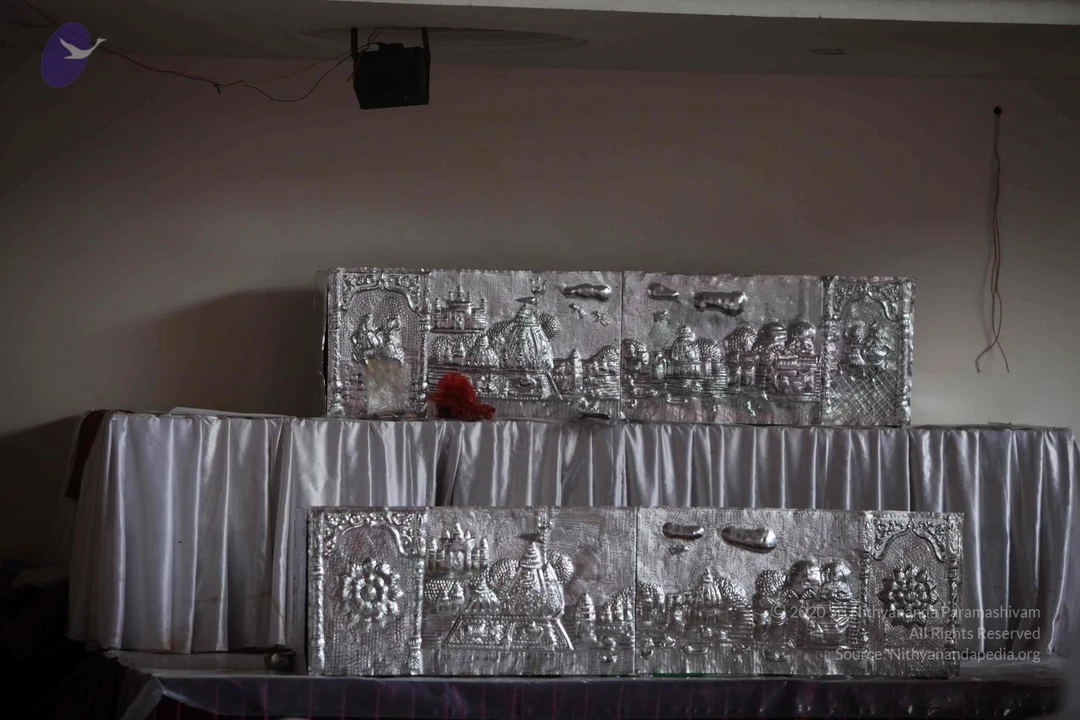
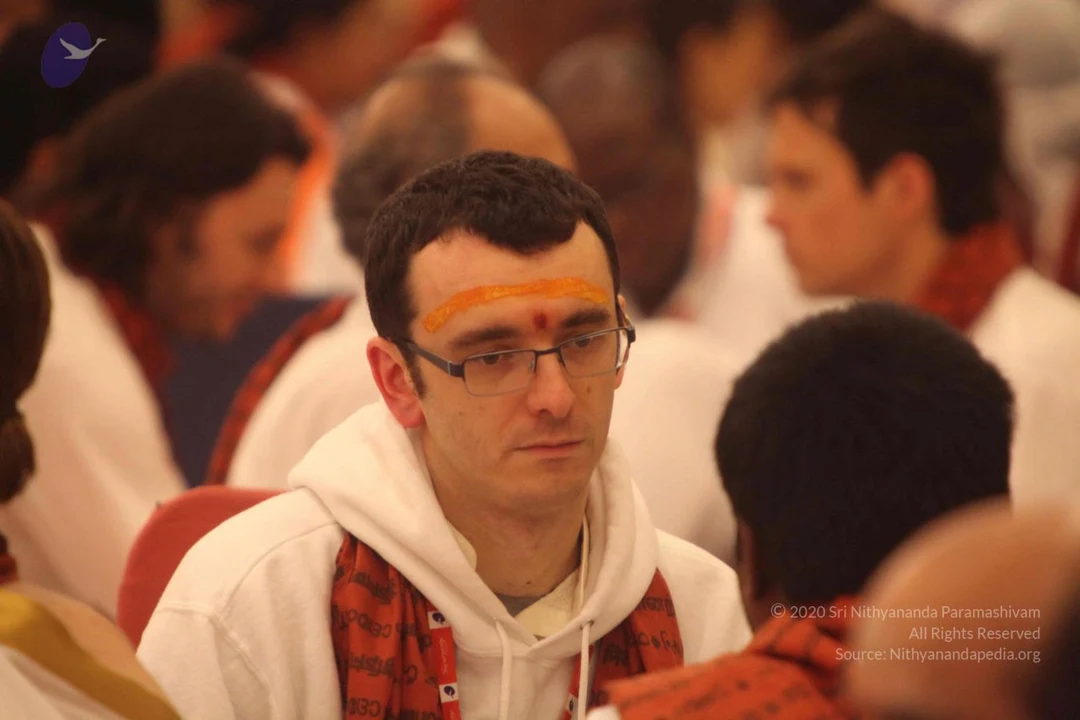
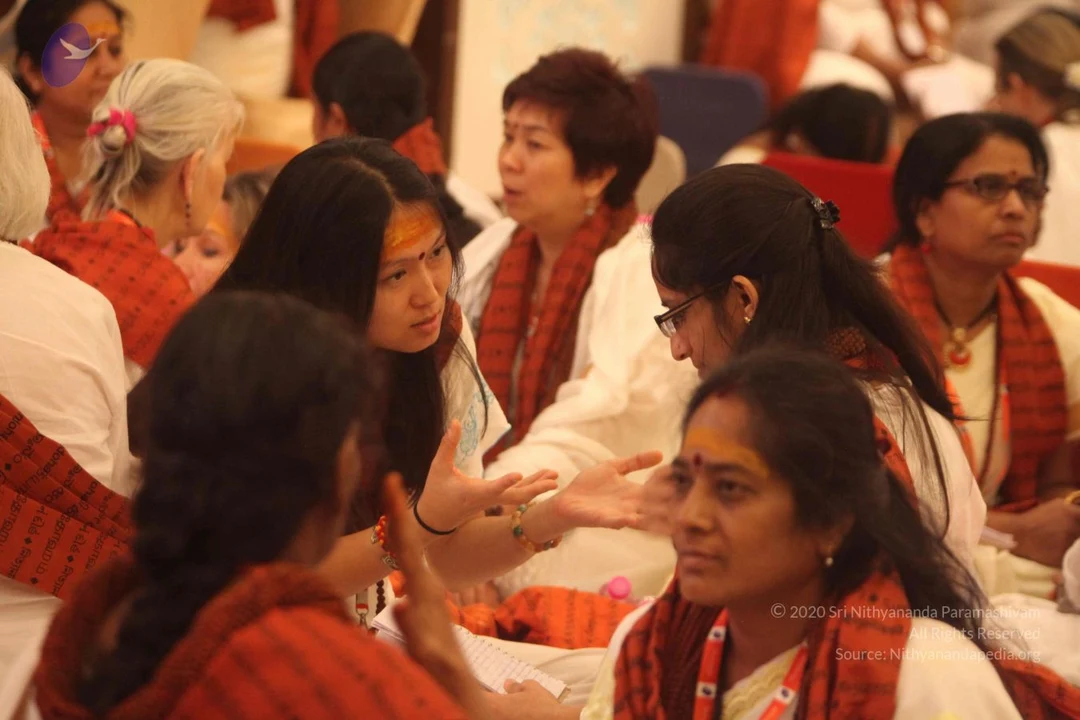
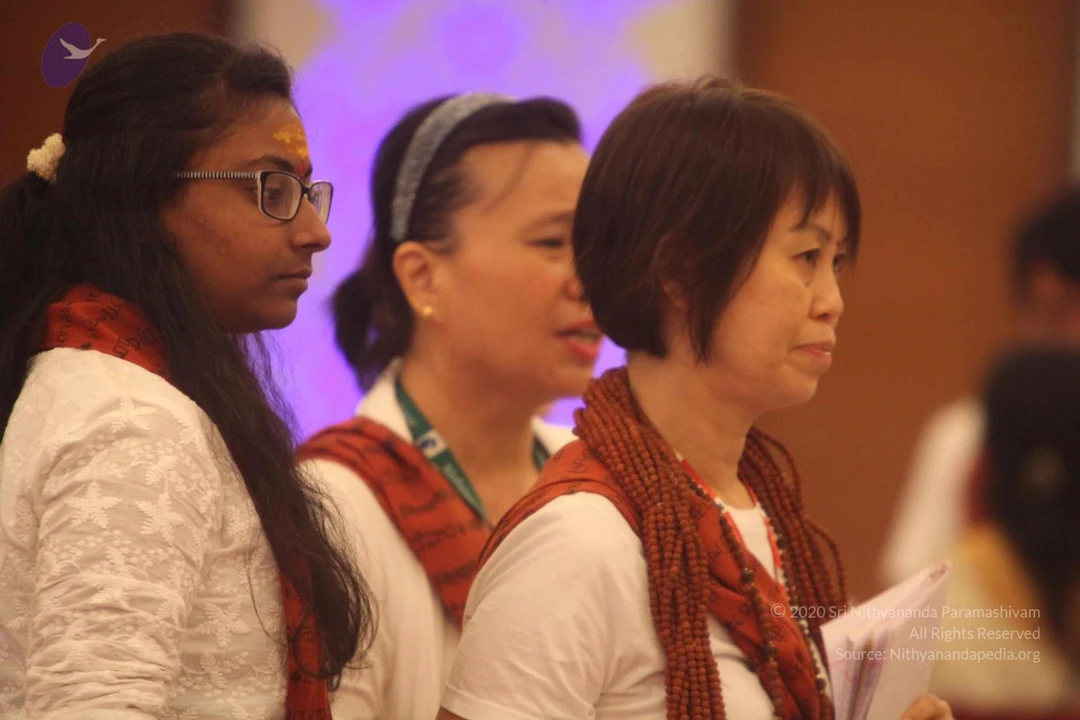
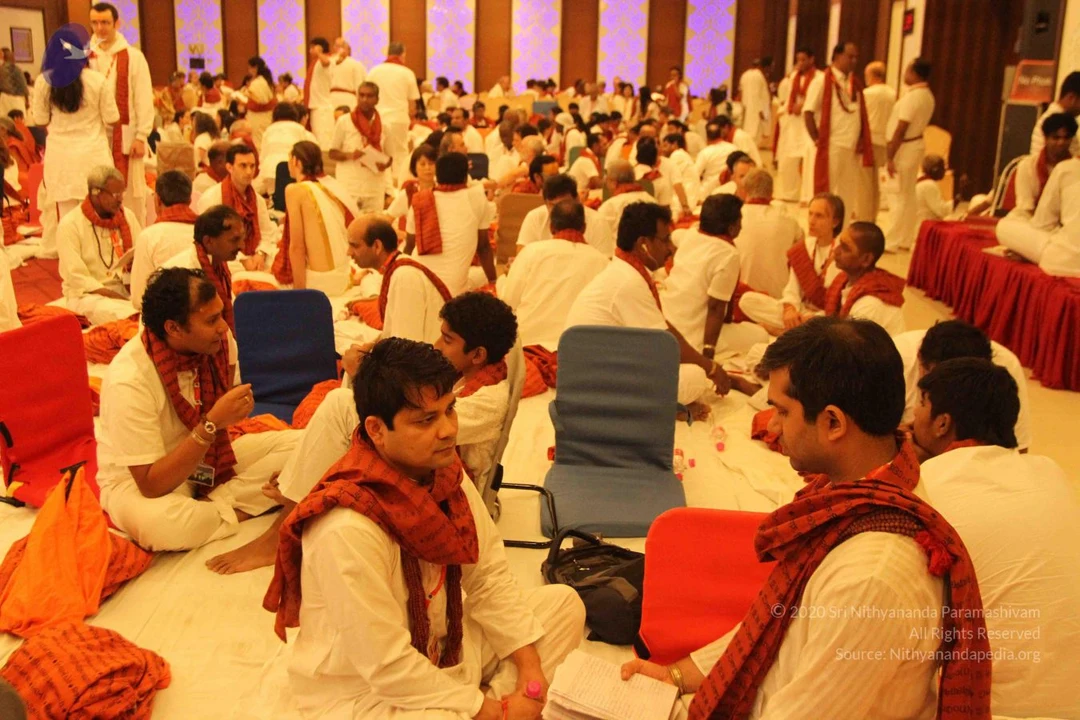
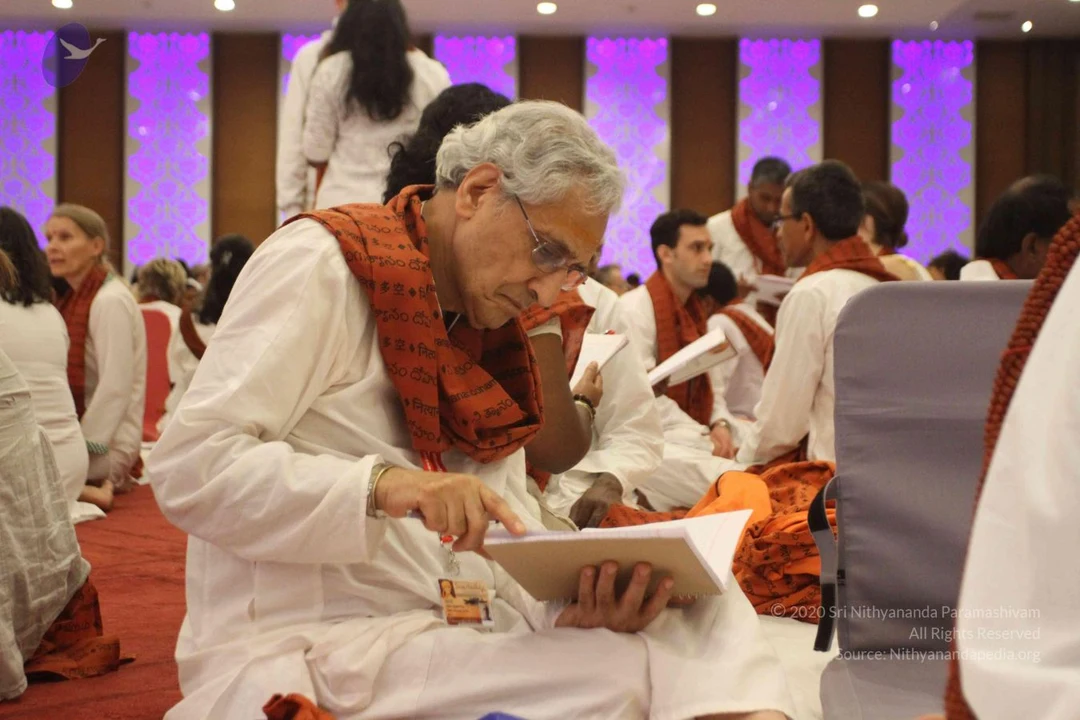
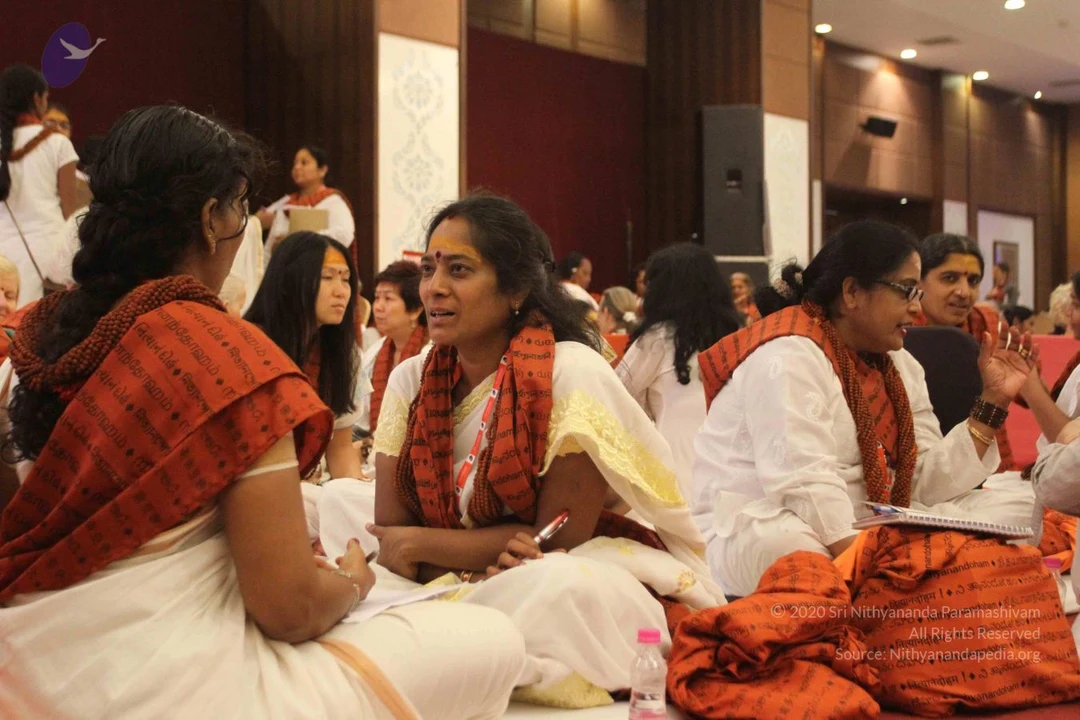
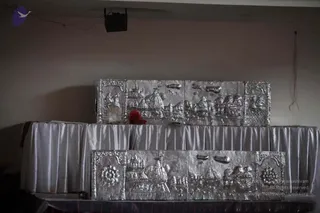
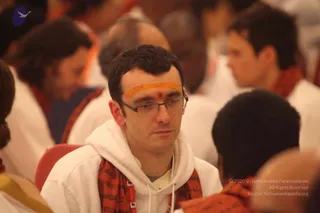
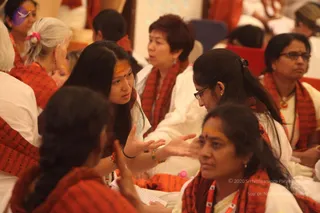
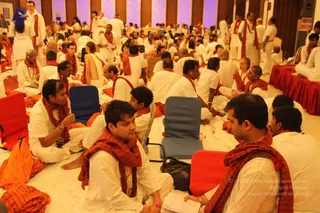
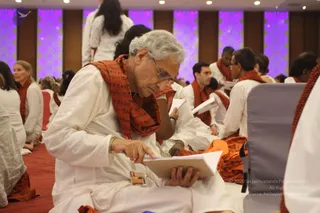
Photograph of an empty stage or altar setup in a plain hall with cream walls and a black ceiling speaker. Two tiered tables are draped in white satin cloth, with a silver-embossed relief panel arrangement on each: a larger upper panel and a lower panel showing temple towers, a shikhara spire, arches, pillars, and a pair of carved footprints. A red tassel hangs near the upper panel. No people are visible.A seated satsang audience at a discourse. In the foreground a young man in white hooded sweatshirt wears glasses, an orange-yellow tilak across his forehead with a red dot, and an orange shawl printed with Sanskrit-style script. Behind him and around him, other devotees in white clothes and orange-red shawls sit close together, some with shaved or short hair, one in a blue top. The background is softly blurred. No clearly identifiable a person figure is visible in this frame.A seated satsang gathering of devotees in white clothing with orange-red shawls, many with orange tilak marks on their foreheads. In the centre, a woman with long dark hair and orange forehead mark gestures with open hands while speaking to another woman in glasses and a white top with an orange shawl. Another woman in the foreground wears a red bindi and orange shawl, and others sit around them. No deity murti or a person candidate is clearly visible.Three women stand in profile at a satsang event in a wood-panelled hall with a purple-lit backdrop. The woman on the left wears white embroidered clothing, a red-orange shawl and glasses, with a yellow tilak on her forehead and a white flower in her hair. The woman in the middle wears a white top, an orange-red shawl and a grey headband. The woman on the right wears a white t-shirt, a long rudraksha mala and an orange-red shawl, and holds a sheet of paper. The people behind them are blurred.A large indoor hall filled with many seated devotees dressed in white kurtas and white clothing, most wearing red-and-maroon woven shawls draped over their shoulders. Many sit on the white floor cushions and white mats while others stand and move among them; some hold papers or notebooks. Blue and red folding chairs are scattered among the crowd, a black bag sits on the floor, and red draped tables line the right edge. Purple-patterned wall panels decorate the background. A woman in a blue headscarf and white outfit stands at the upper left. The scene appears to be a satsang or gathering with seated attendees.Photograph of a seated satsang audience in a large hall with purple lattice-patterned wall panels. In the foreground an older man with white hair and glasses, wearing white kurta-style clothes and an orange-red shawl printed with small white symbols, sits on a red carpet reading a notebook held in his hands while he points to a line with one finger. A plastic identity badge hangs from his neck. Around him, other devotees in white clothes and orange-red shawls sit on the floor or on grey chairs, some holding notebooks, and a woman with light hair sits at left. The scene suggests a seated discourse session.
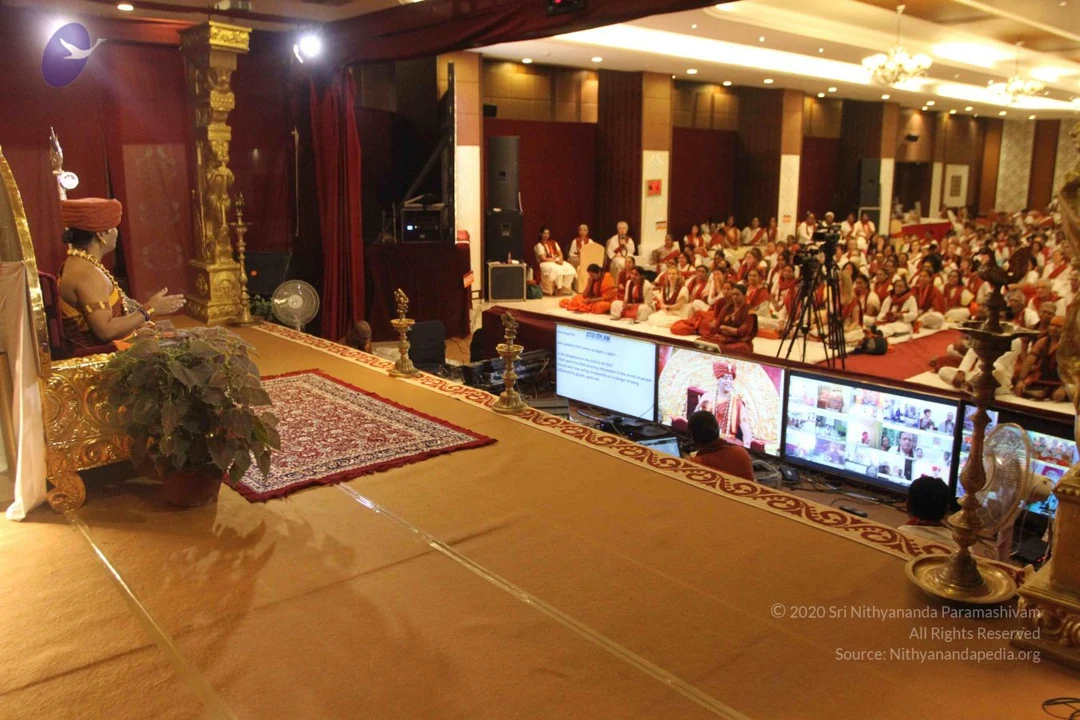
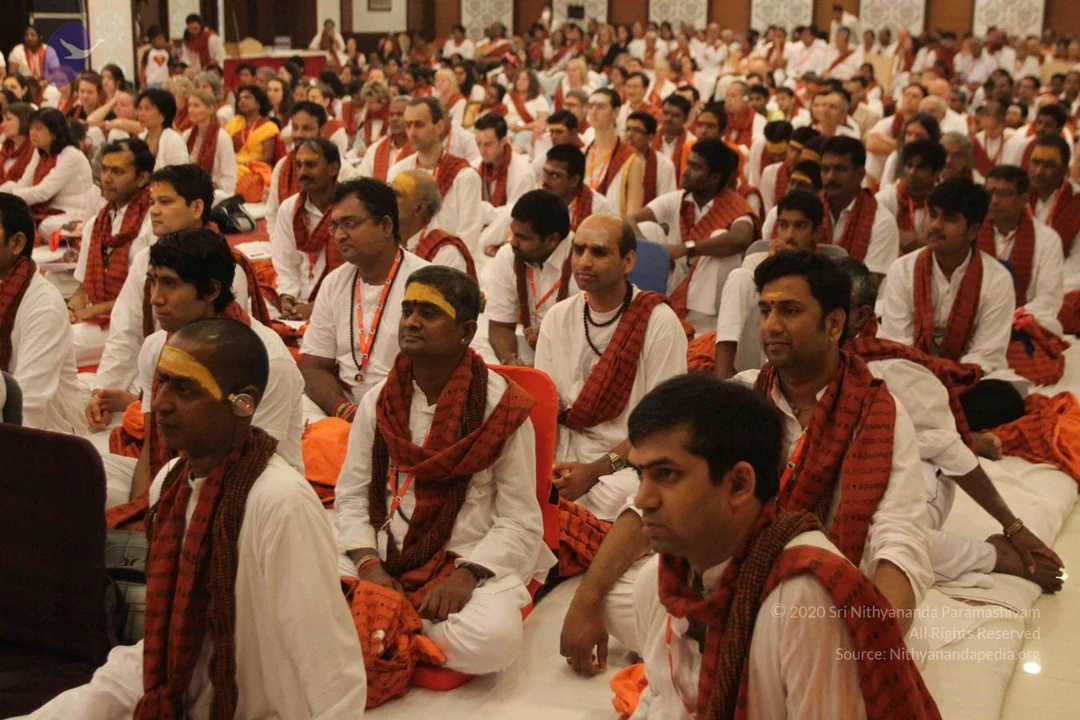
shivoham

89 photosSource gallery
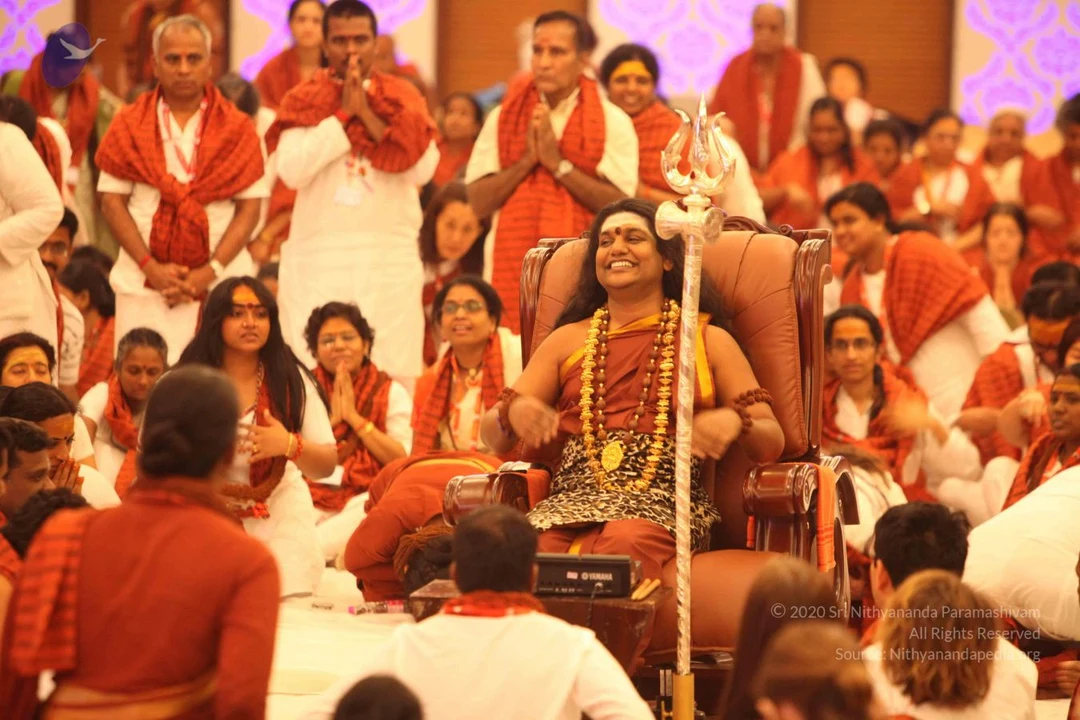
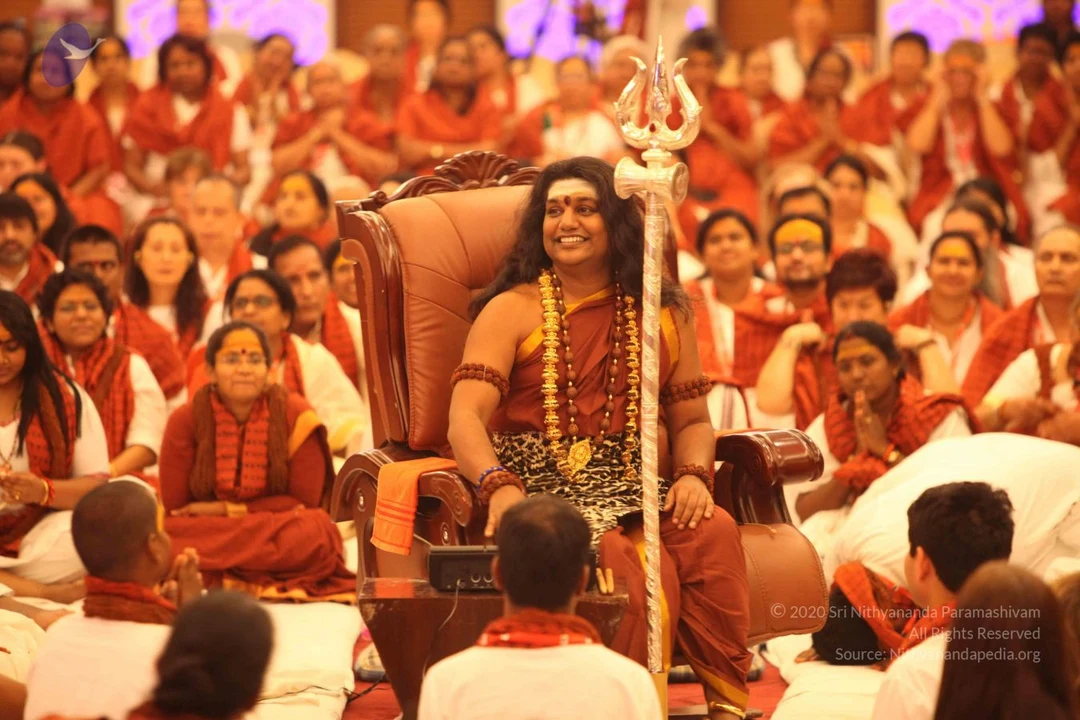
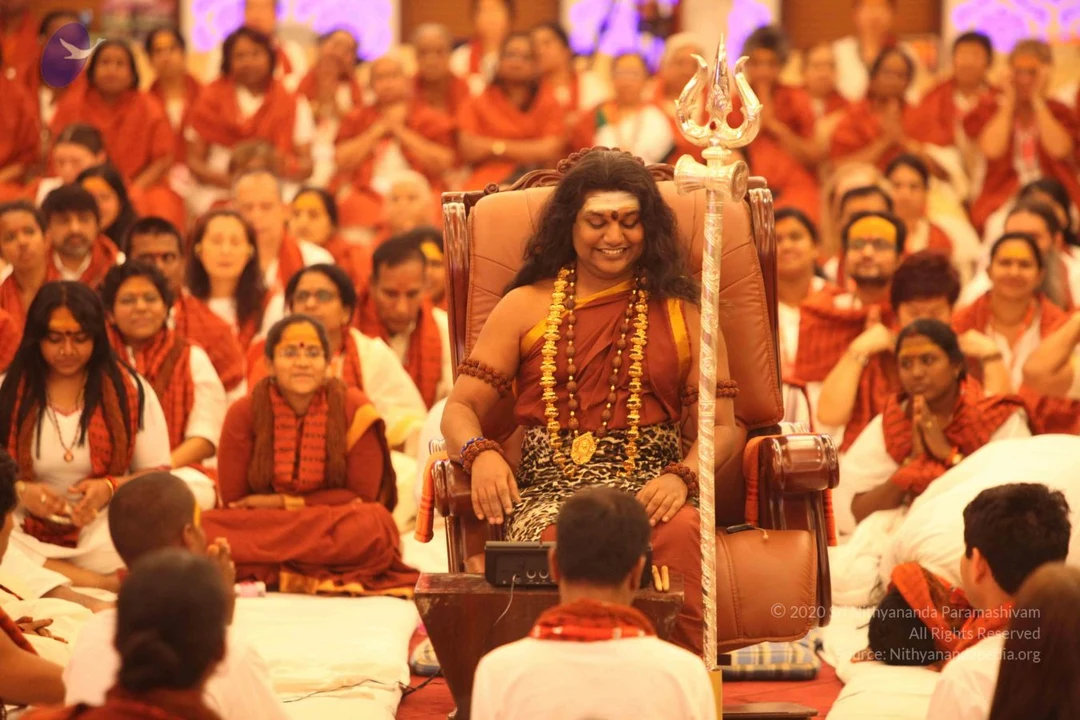
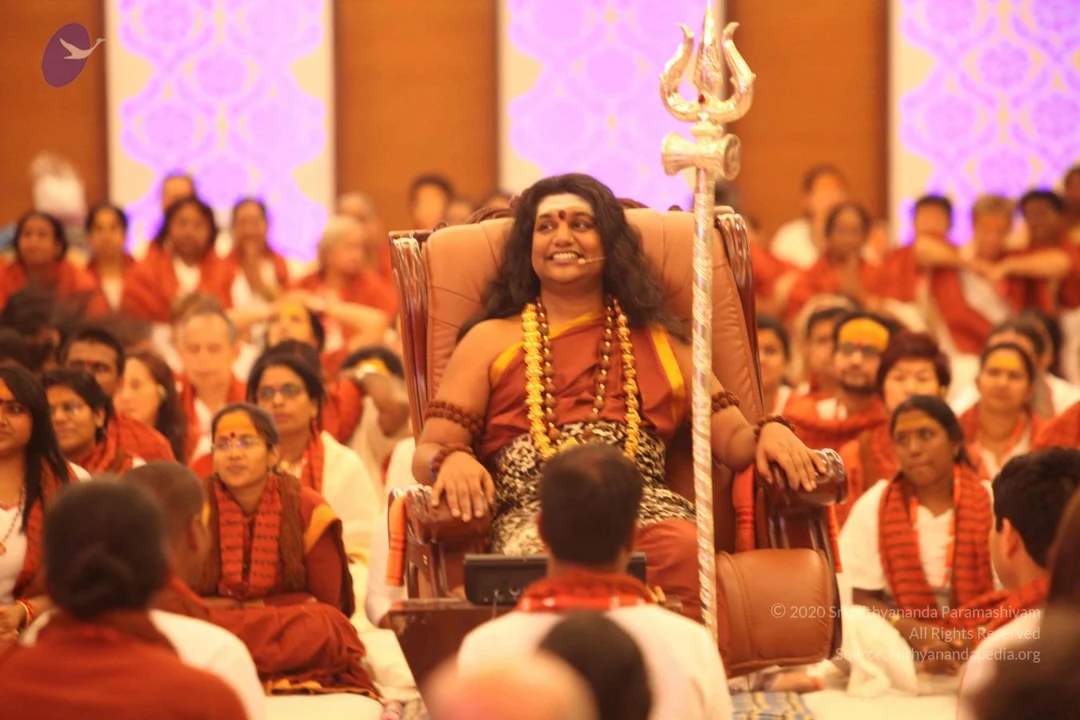
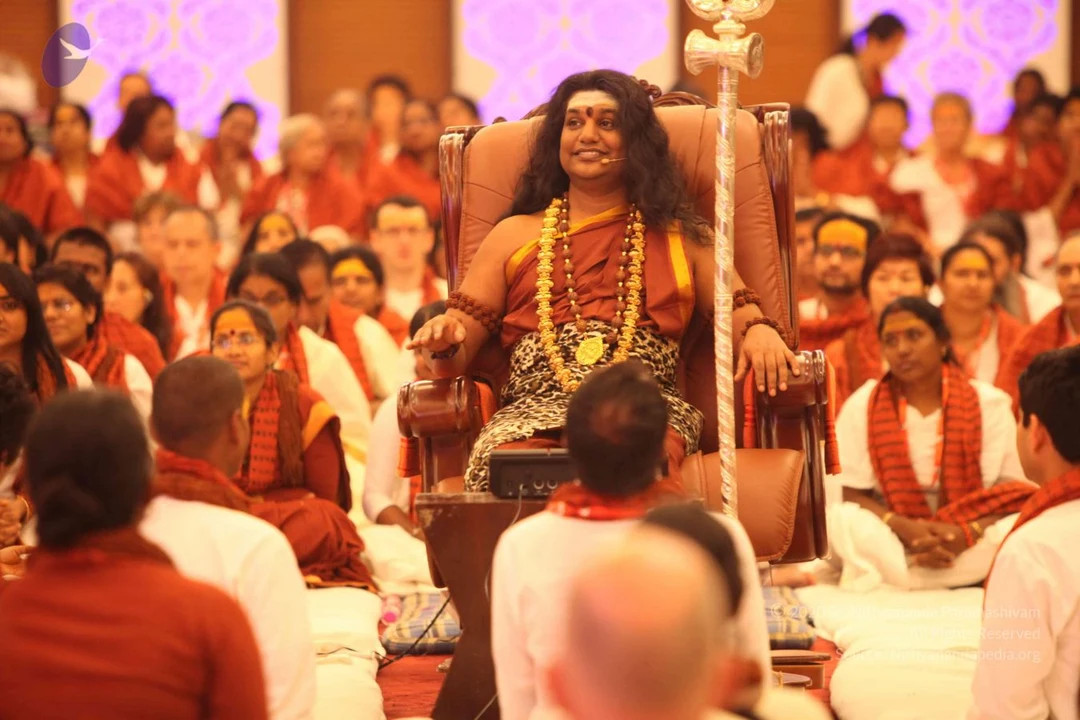
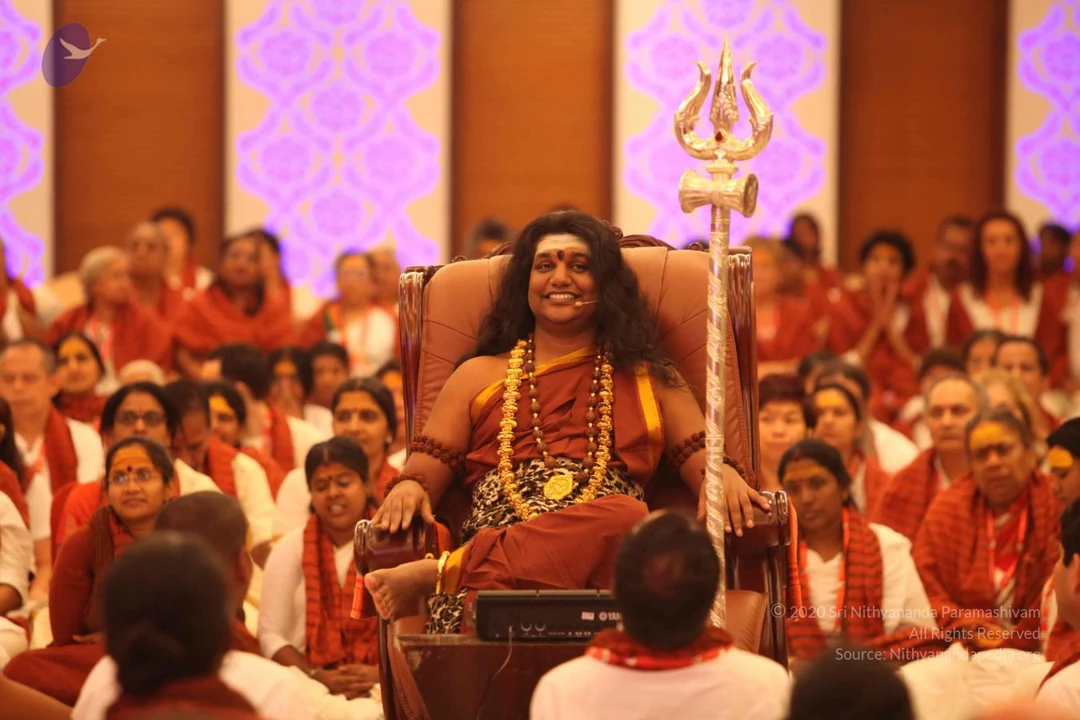
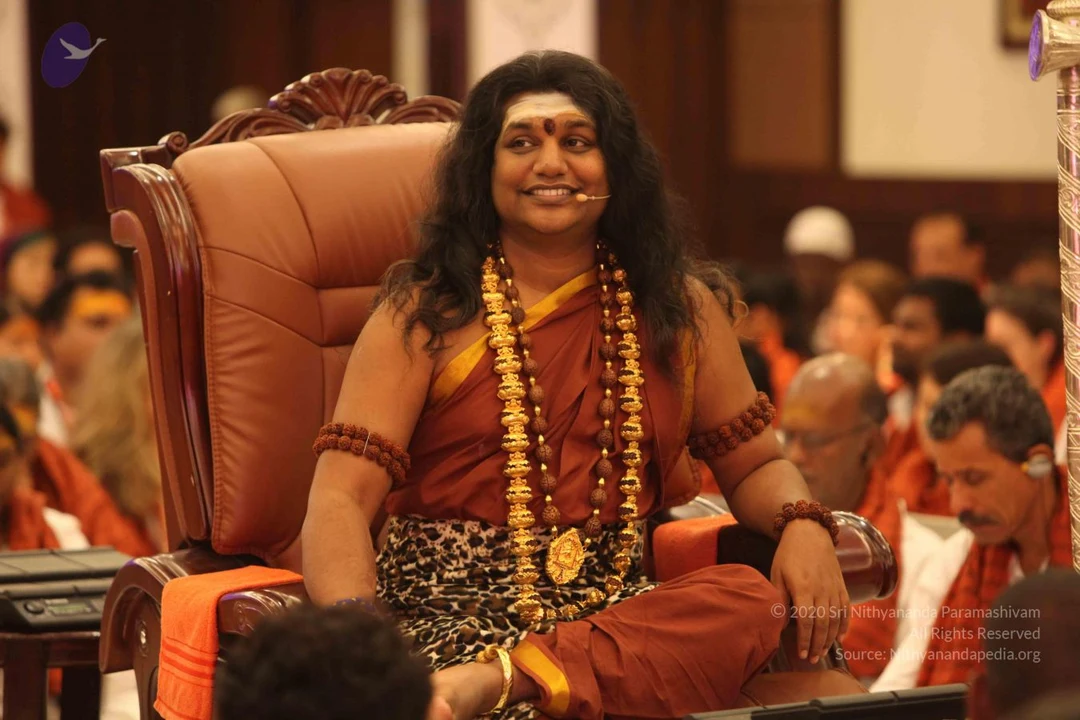
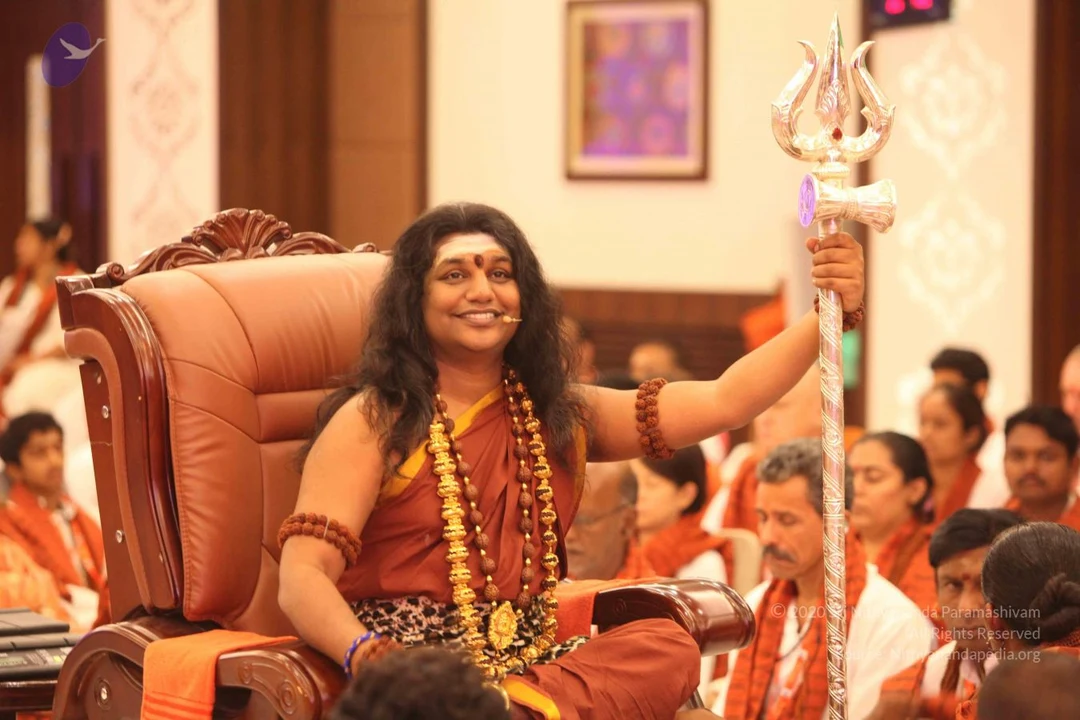
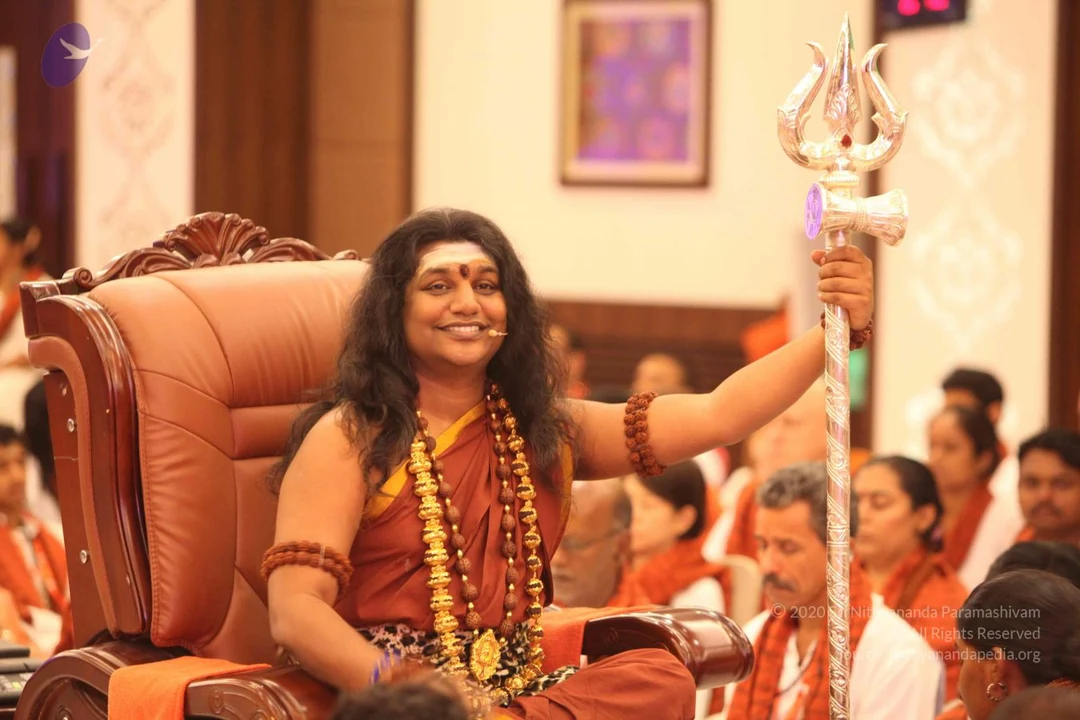
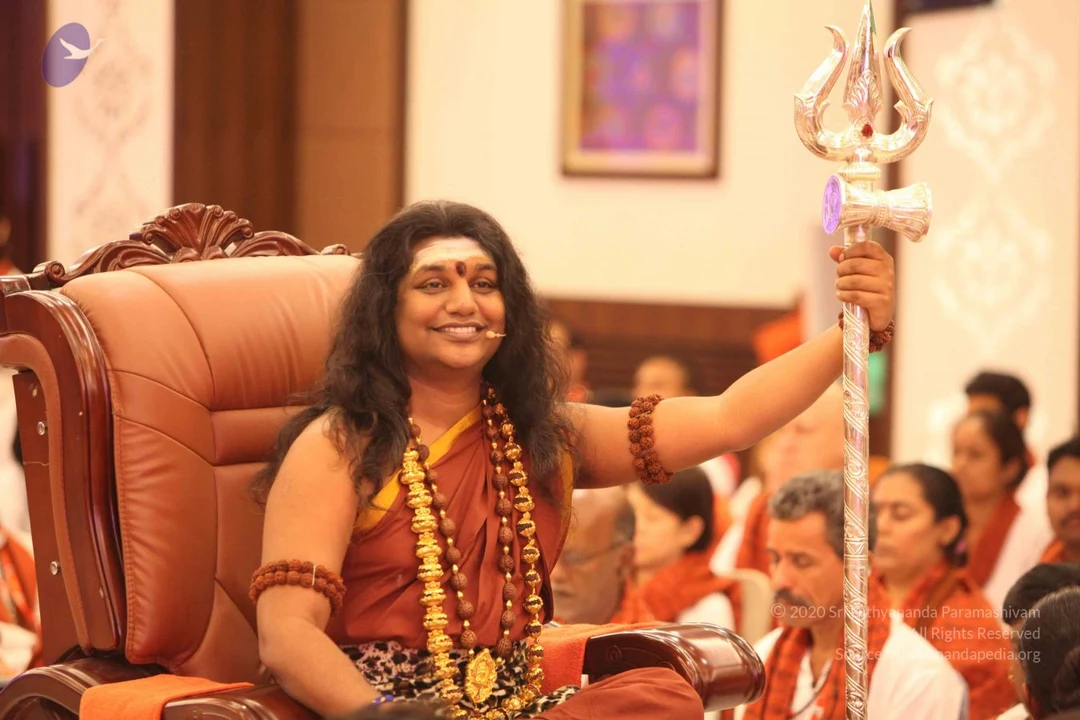
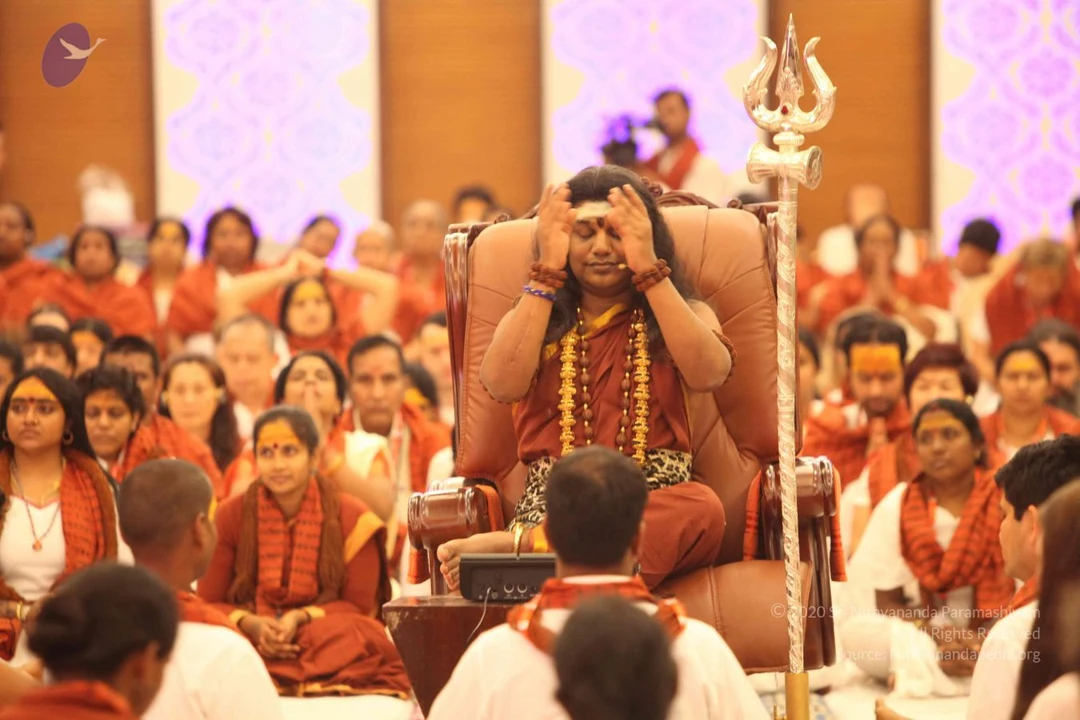
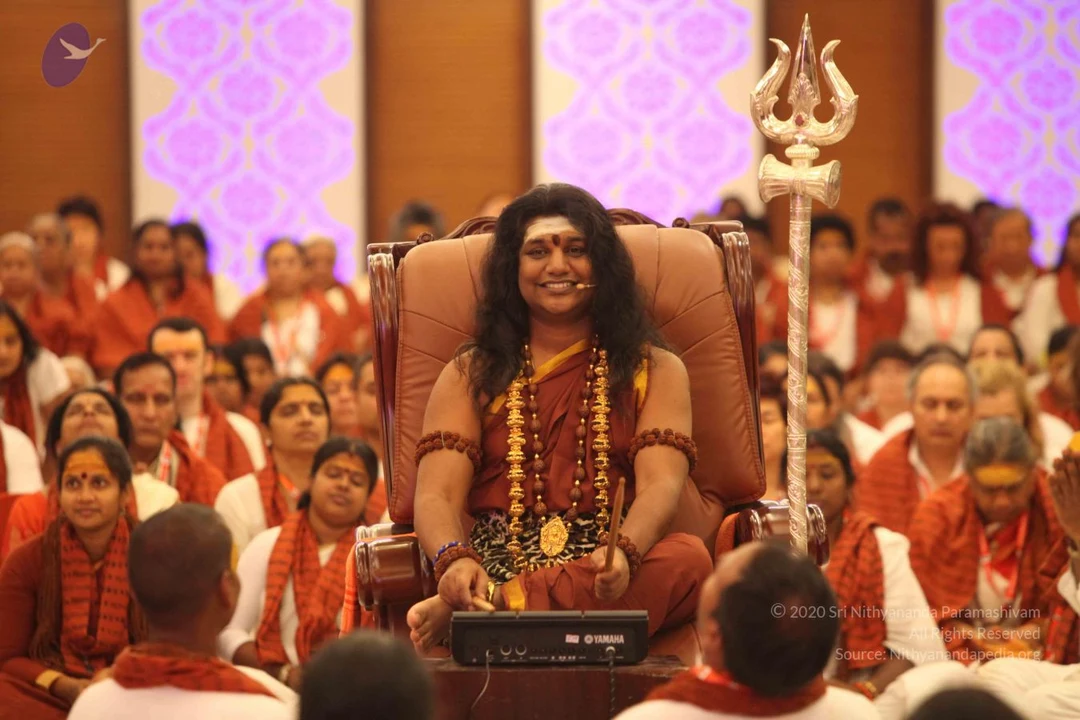
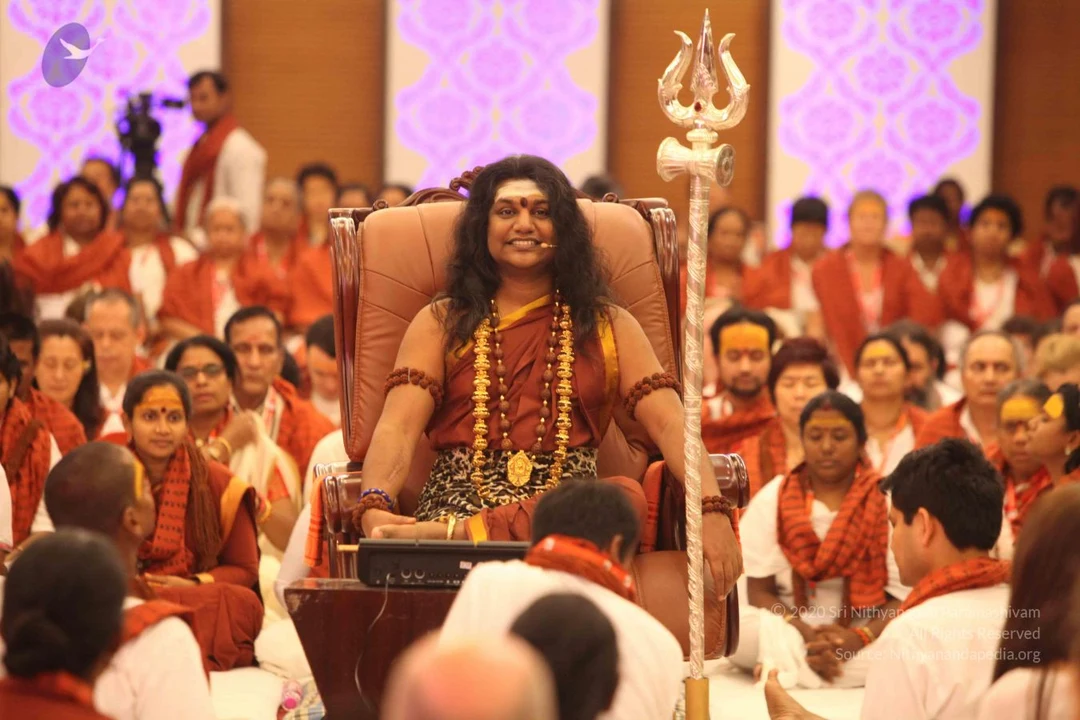
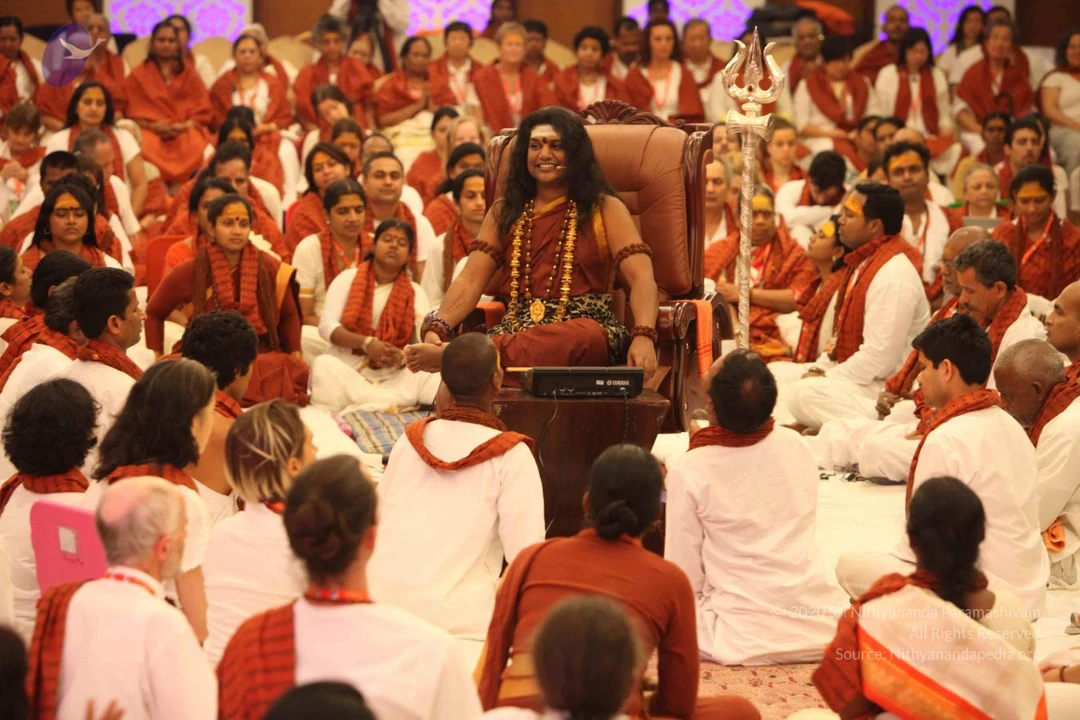
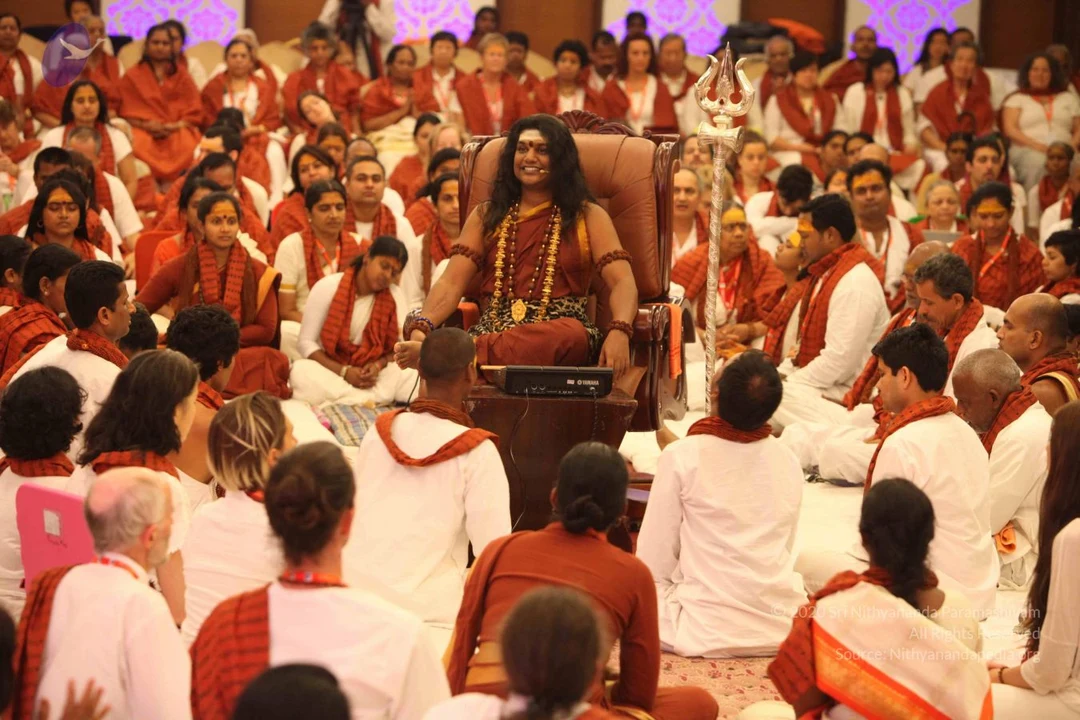
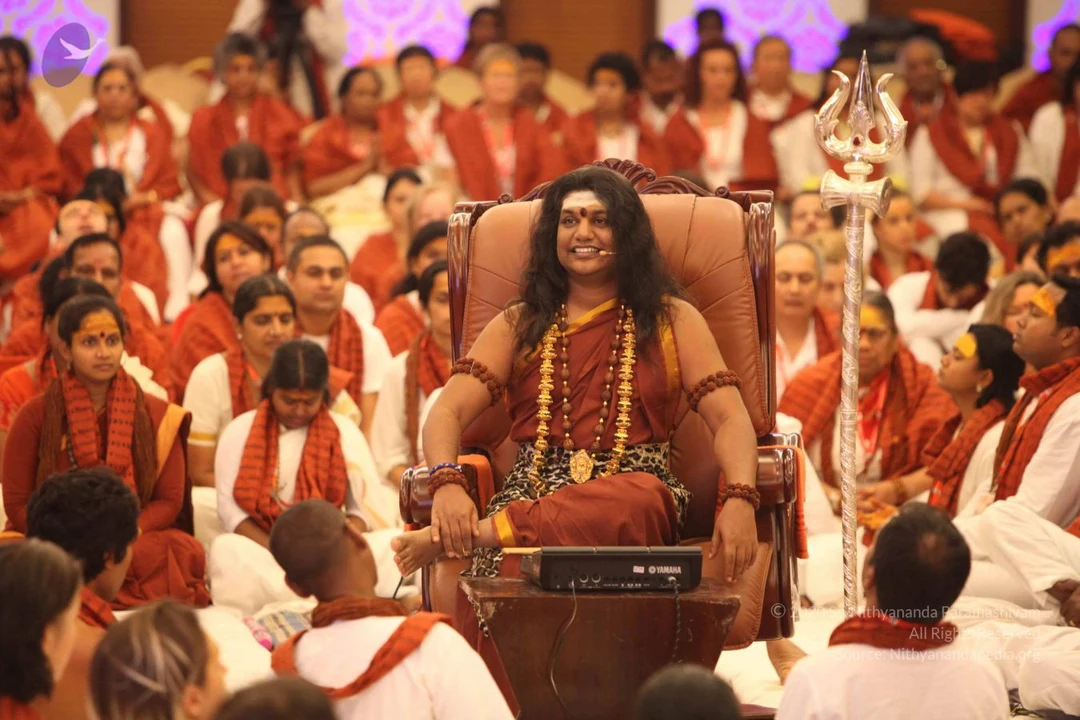
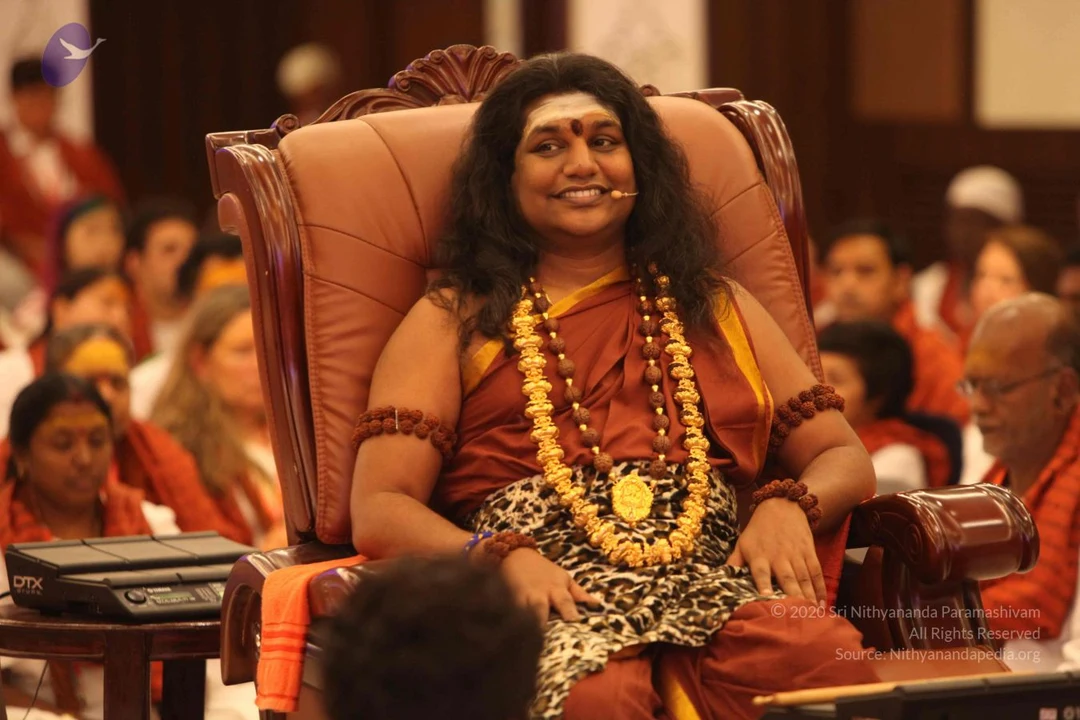
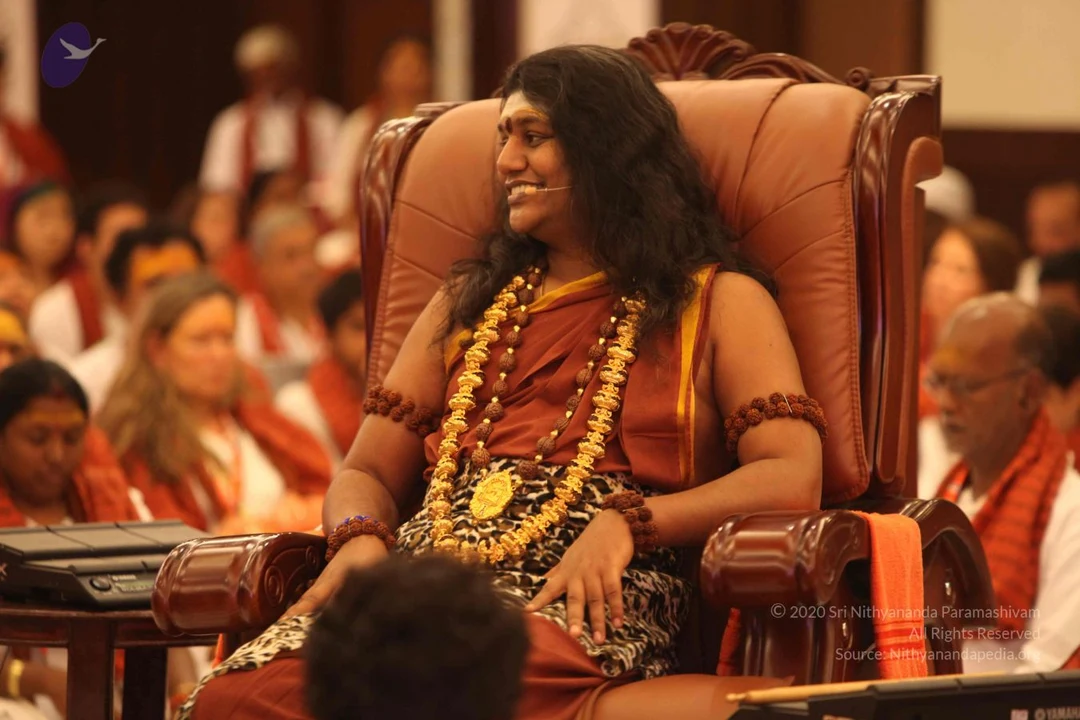
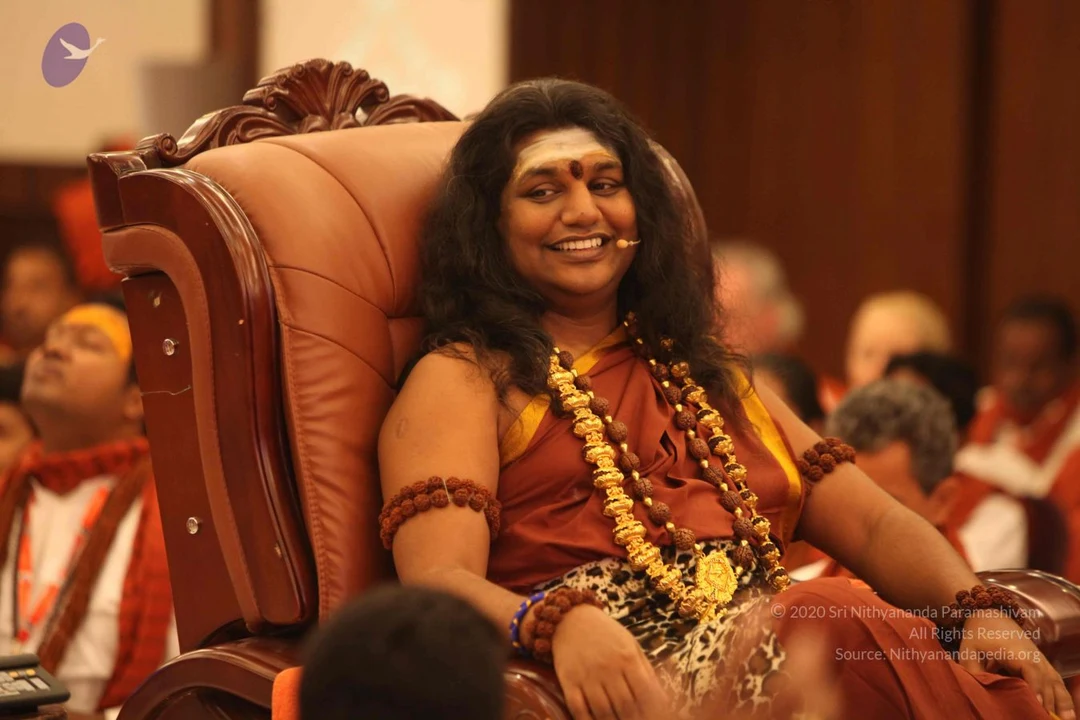
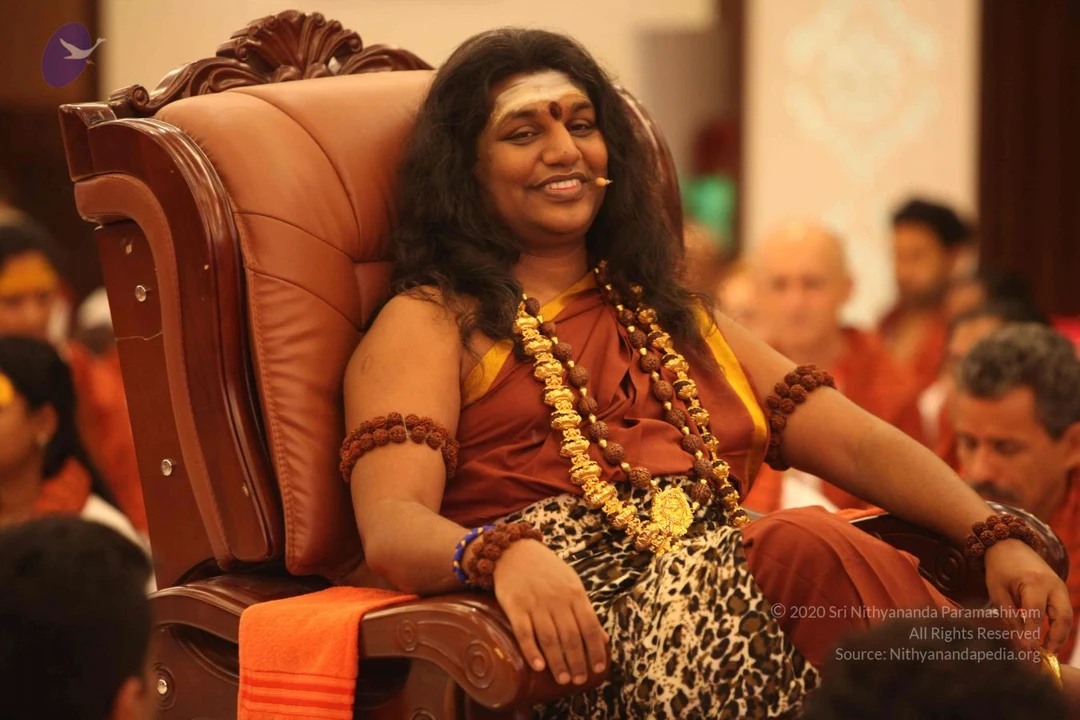
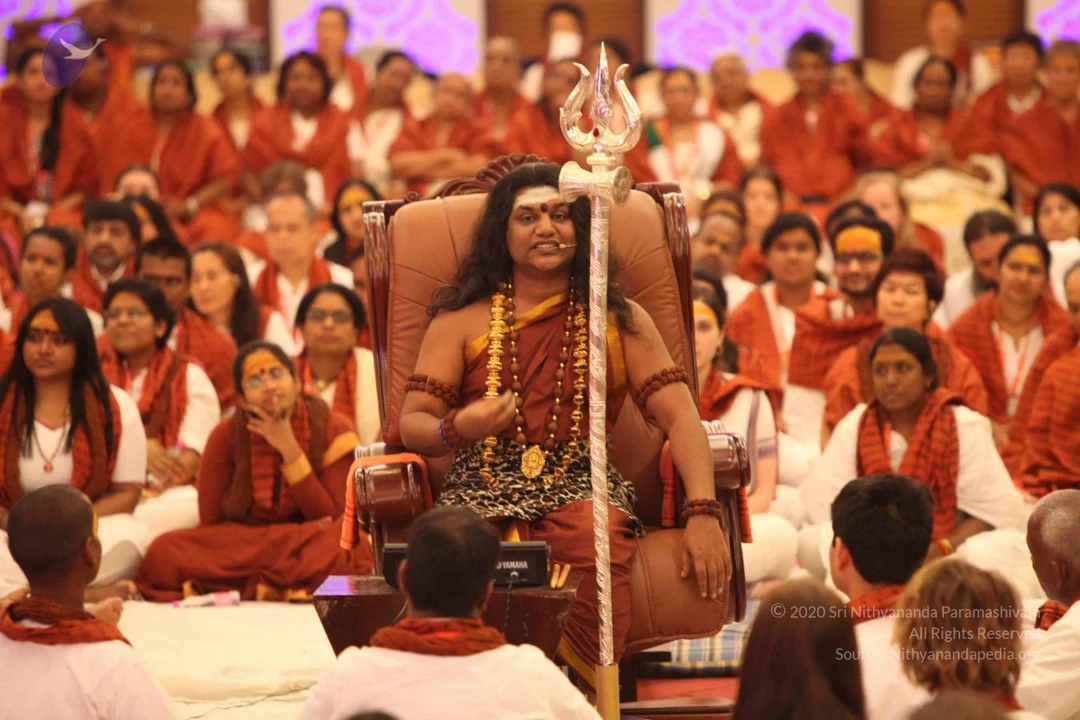
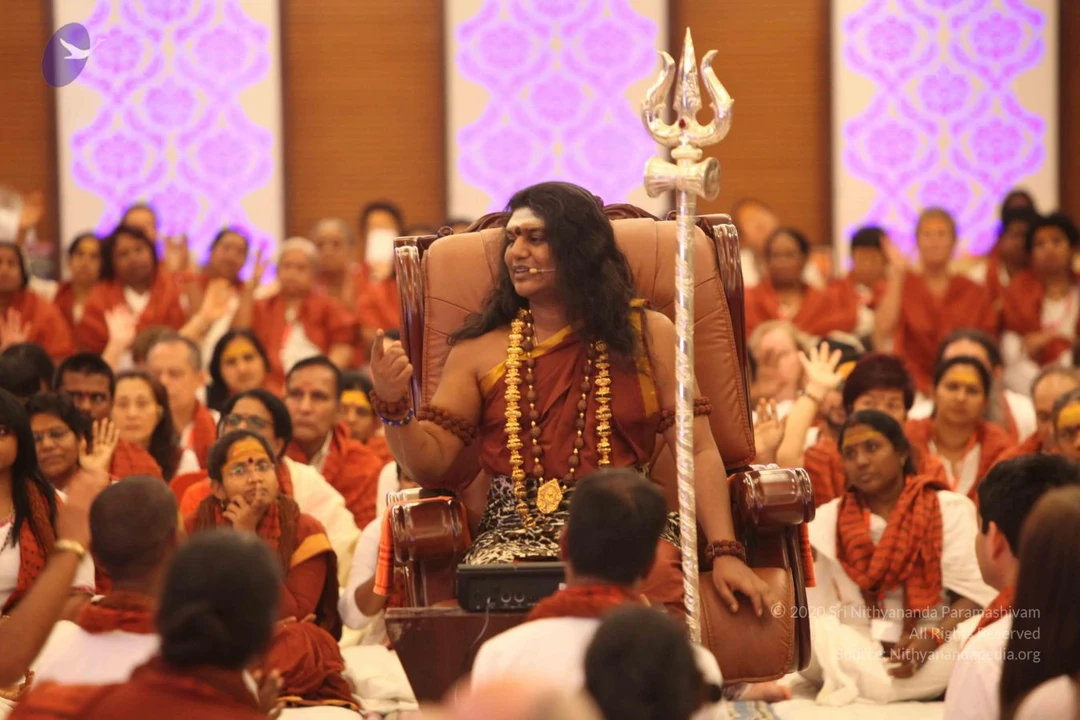
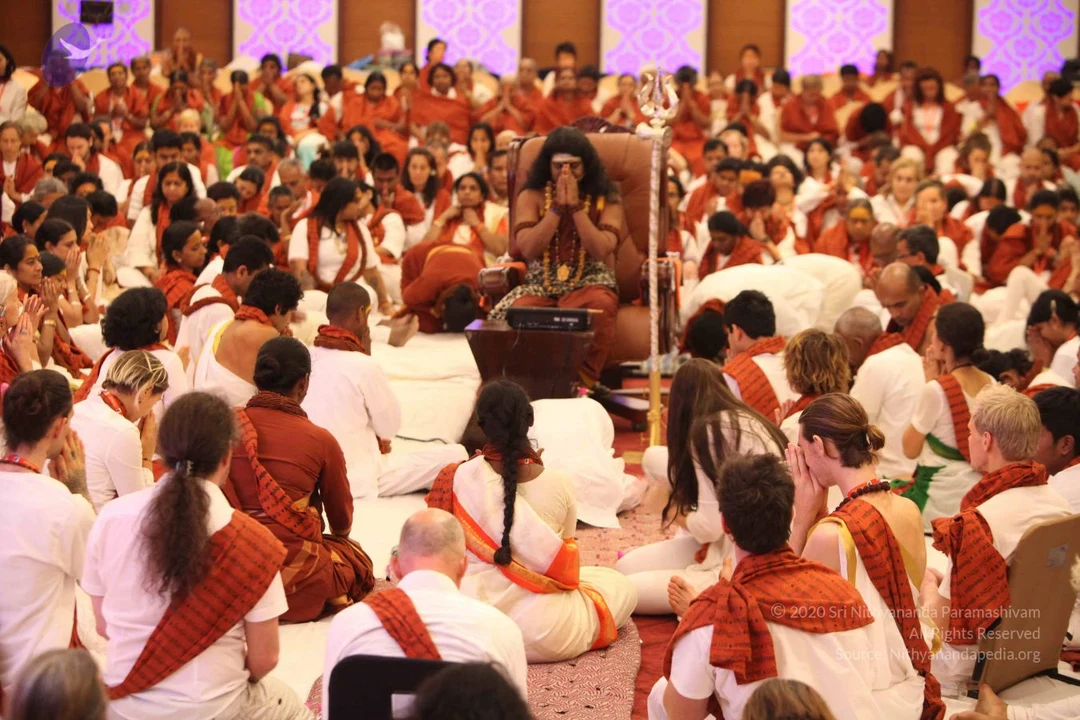
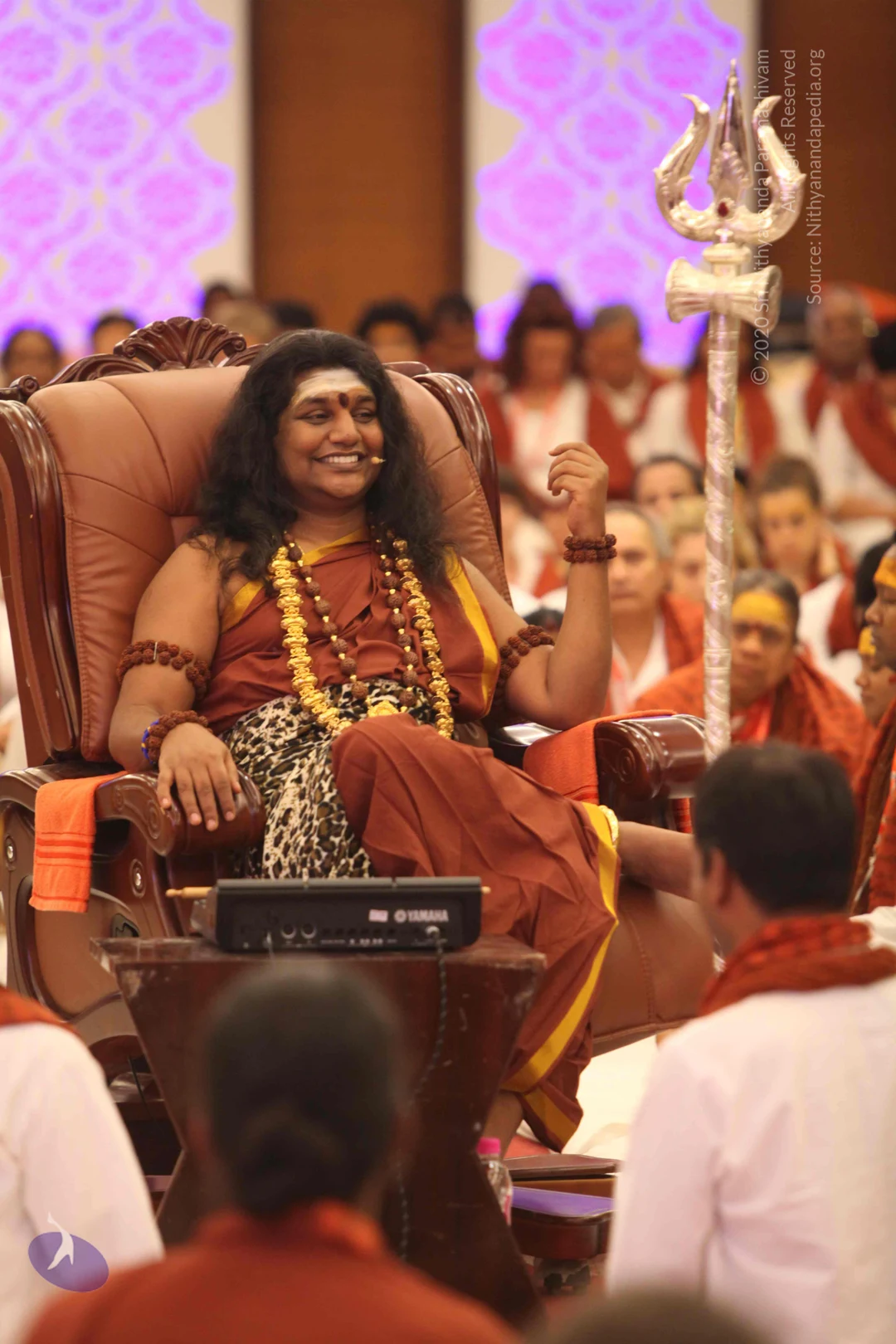
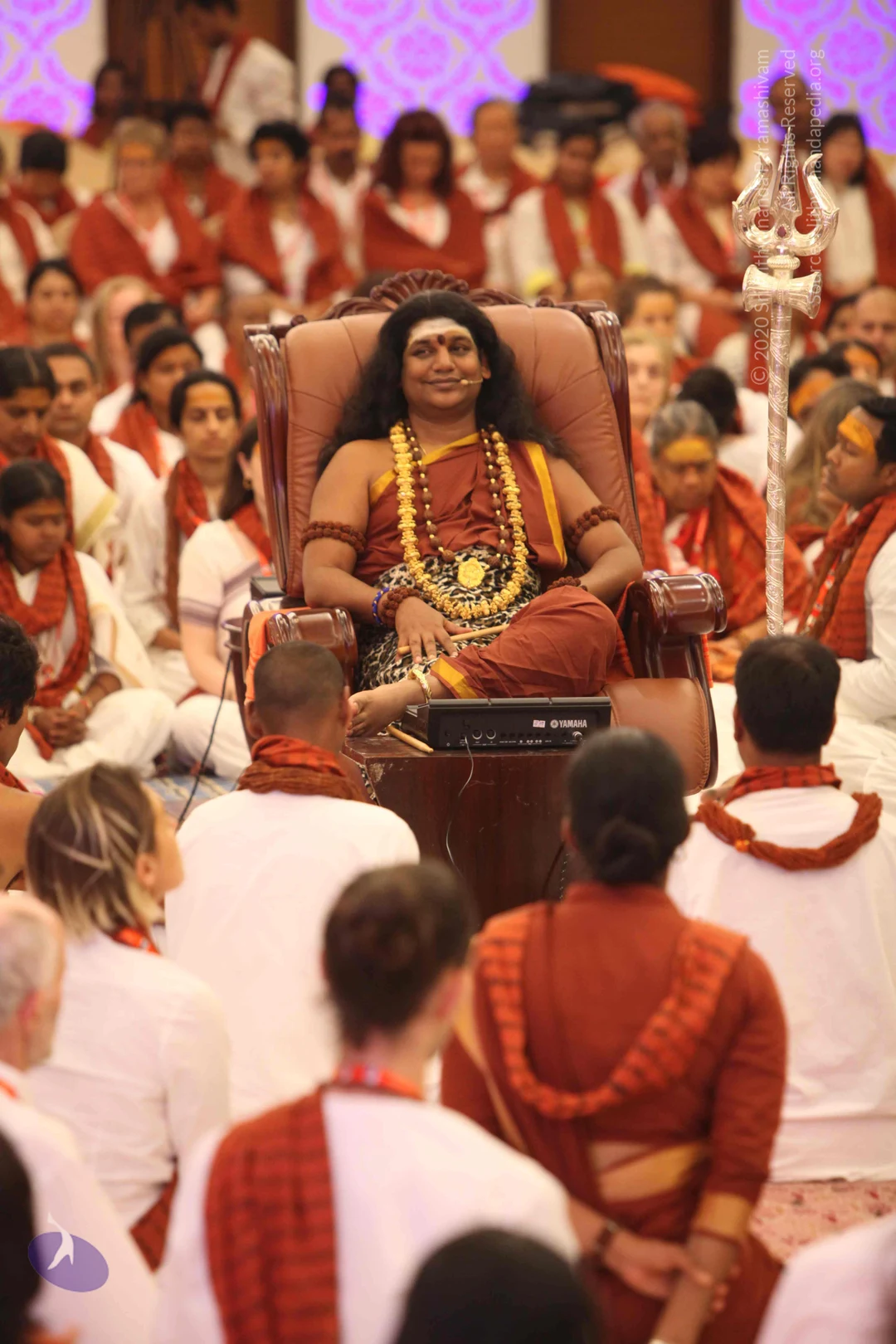
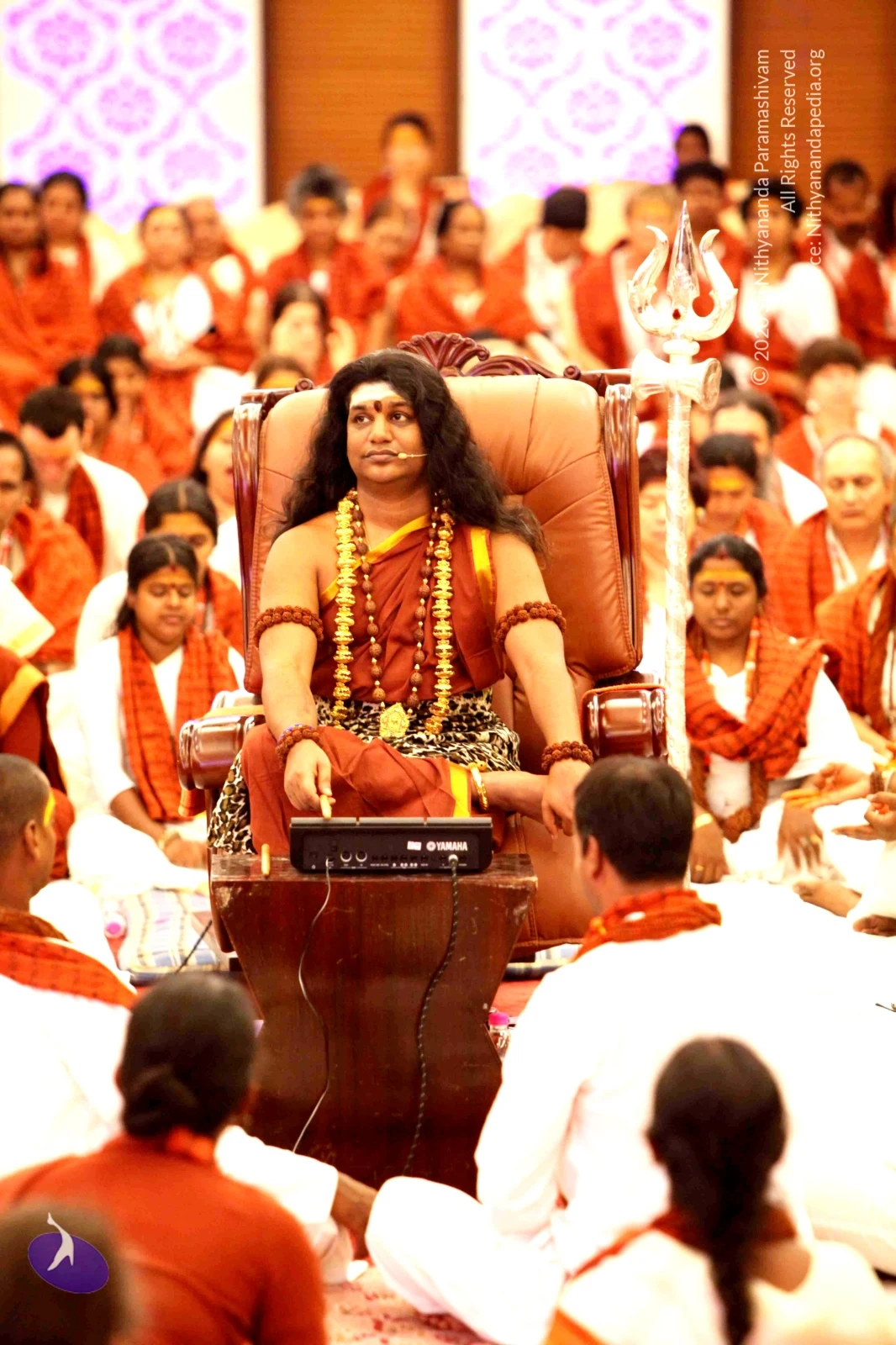
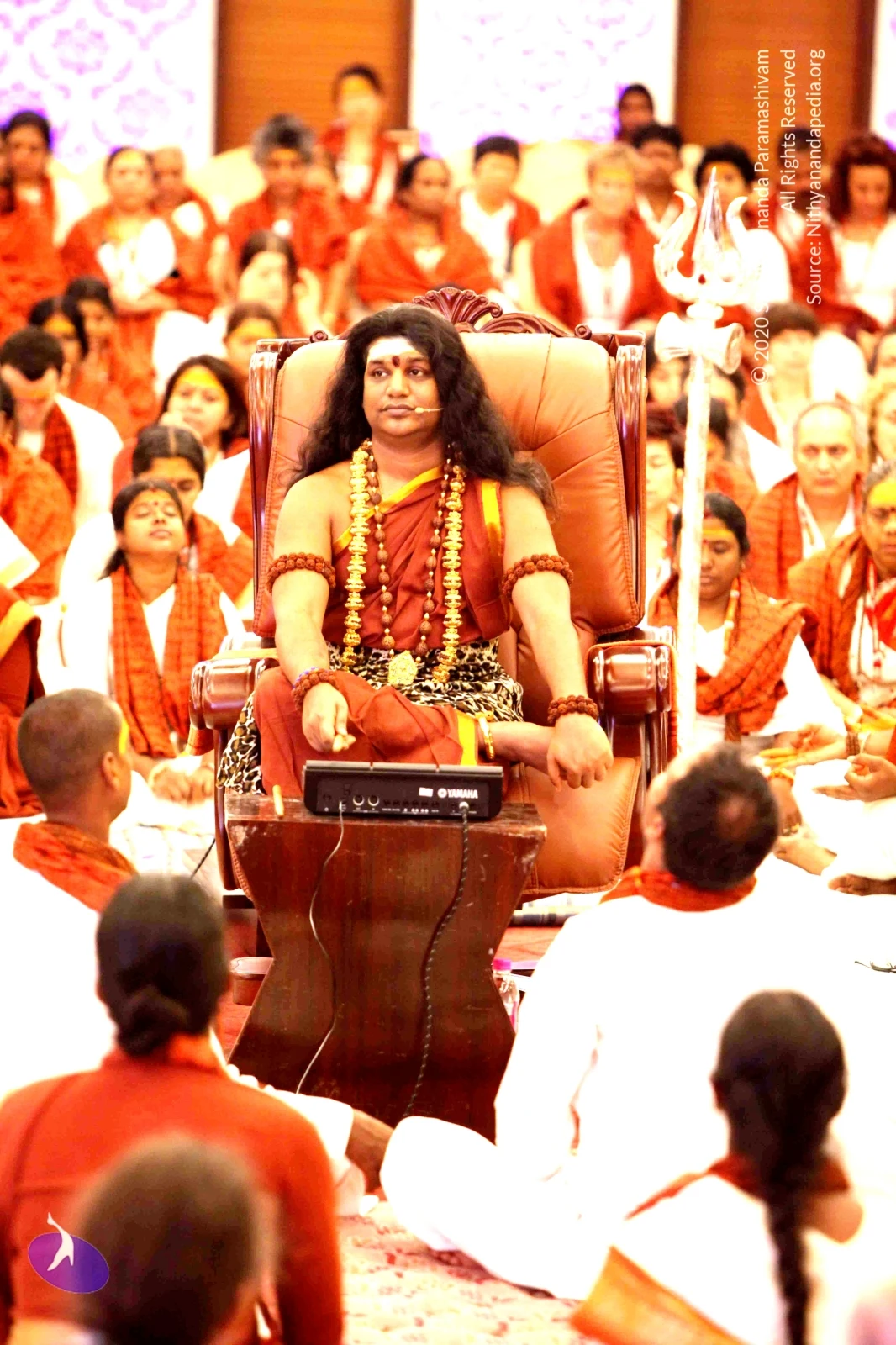
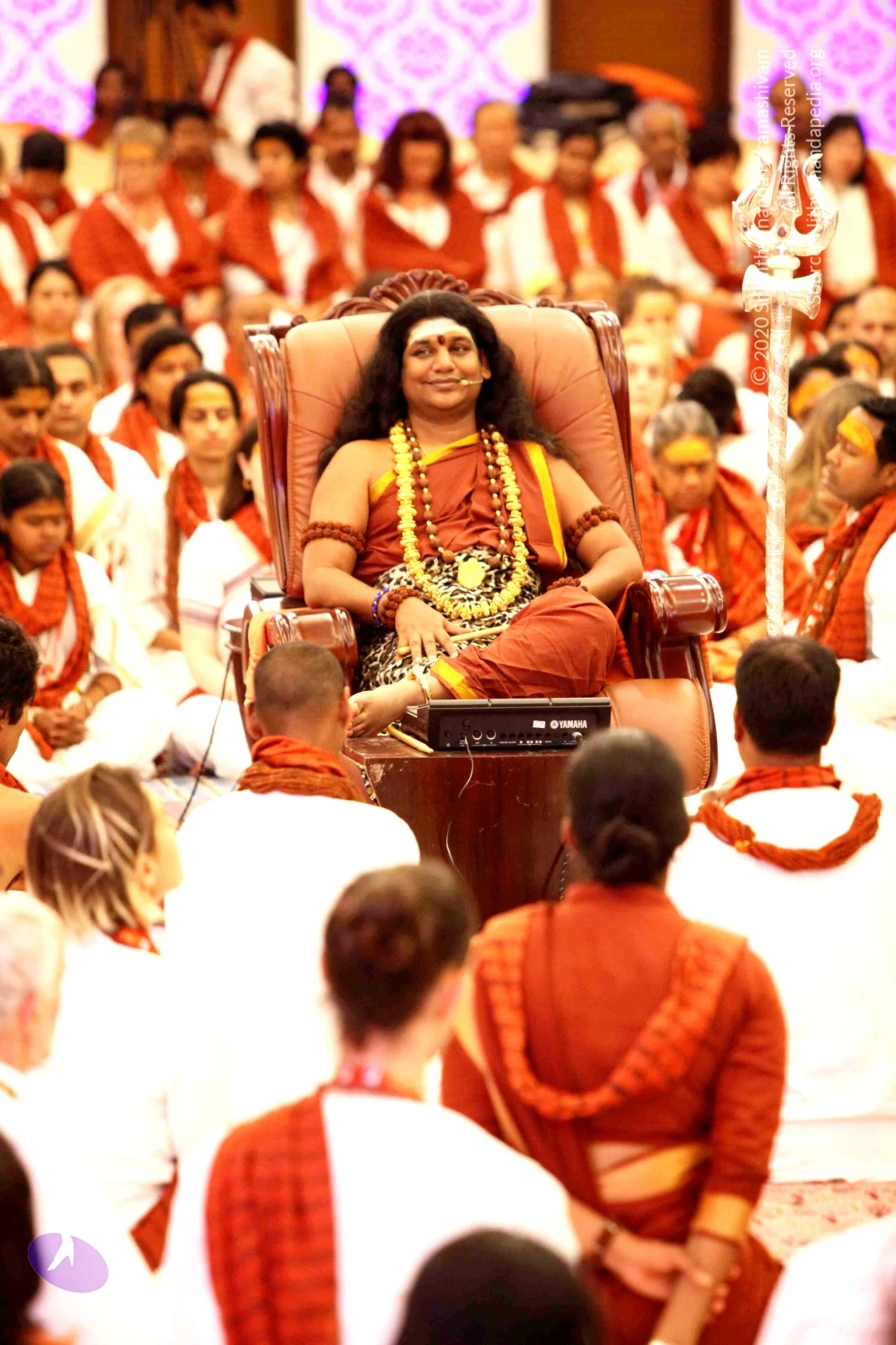
A seated figure in a brown throne-style chair, with long dark hair, a multi-strand gold-and-yellow flower garland, a rudraksha-style bead necklace, a yellow sash over an orange-brown robe, and a large silver trident beside the chair, smiles broadly while raising hands in a teaching gesture. Around the front are rows of devotees in white clothes and orange-red shawls, many with hands folded in anjali, some wearing yellow forehead markings. Behind them stand more people in white and red, and a purple floral backdrop fills the top corners of the hall. Seated devotees in the foreground show the back of a woman in orange-red and a man in white. Swamiji (probable): the seated figure wears long swept-back hair, a gold garland, rudraksha beads and an orange-saffron robe with a yellow sash, cues consistent with a satsang discourse setting.A photograph of a satsang hall where a long-haired figure seated on a brown leather throne holds a silver trident (trishul) upright beside him. He wears a saffron-orange garment, a long gold-and-beads necklace, rudraksha bracelets and a tilak on his forehead; he is smiling. Seated devotees in orange and red shawls fill the rows around him, many with hands folded in prayer and some with yellow and orange tilak marks. Purple lighting and a stage backdrop frame the scene. Swamiji (probable) is seated centrally on the throne, identified by his long hair, saffron clothing, gold necklace and rudraksha malas.A photograph of a satsang hall where a figure with long dark hair, a red-and-saffron shawl, and a heavy gold and beaded necklace sits smiling in a brown leather throne-style chair, a tall silver trident beside him. Multiple rows of seated devotees in saffron and red shawls and white clothes fill the background, several with hands pressed in anjali. In the foreground, a few heads and backs of seated attendees are visible, with a small audio device on a wooden table near the throne. Pink and purple stage lights glow at the top of the frame. Swamiji (probable): the seated figure's long hair, gold necklace, rudraksha mala and saffron shawl are the qualifying cues; he is presented as the teacher during a satsang discourse.A seated man with long dark hair, a white forehead mark and a red-orange shawl with a gold trim sits in a large brown leather throne-style chair at a satsang. He wears layered yellow-gold and red-brown beaded garlands and a patterned skirt, and holds a tall ornate silver trident (trishul) beside the chair. Rows of seated devotees in red-orange shawls and saffron clothing fill the hall in front of him, some wearing headsets, with lilac and cream patterned walls behind. a person: the seated central figure, identified by distinctive long swept hair, rudraksha-style garlands and ornate saffron clothing; he is presented as the speaker at the satsang.A seated person in a brown throne-like armchair at the front of a large hall, wearing an orange-brown shawl, a yellow-trimmed sash, a leopard-print skirt, a long gold-and-yellow marigold garland and a gold pendant, with long dark hair swept back and a small microphone near the face. A silver ceremonial staff topped with a trident stands beside the chair. Around the seat, many devotees in white and saffron-red shawls sit on the floor, some with yellow forehead markings, facing the speaker. Purple floral patterns decorate the wall behind. Swamiji (probable) appears seated in the chair, identifiable by the long swept-back hair, saffron-trimmed garments, garland and rudraksha bracelets, with the trident staff indicating his ceremonial seat.A seated man in an ornate brown leather throne chair leads a satsang hall audience, with a large silver trident standing beside him. He wears saffron-orange drapes with gold trim, a heavy gold-and-beads necklace, rudraksha bead bracelets, and a shawl draped over his shoulders, and he smiles with a sacred ash mark on his forehead. Around him, rows of seated devotees in white and red-orange shawls, some with yellow turmeric marks on their foreheads, face the stage. Purple lotus-pattern panels decorate the back wall. A microphone and a small black audio unit sit at the front. Probable Swamiji (in_person): the figure matches the presentation cues of long swept-back hair, ornate saffron clothing, rudraksha and gold necklace.

dieties

17 photosSource gallery
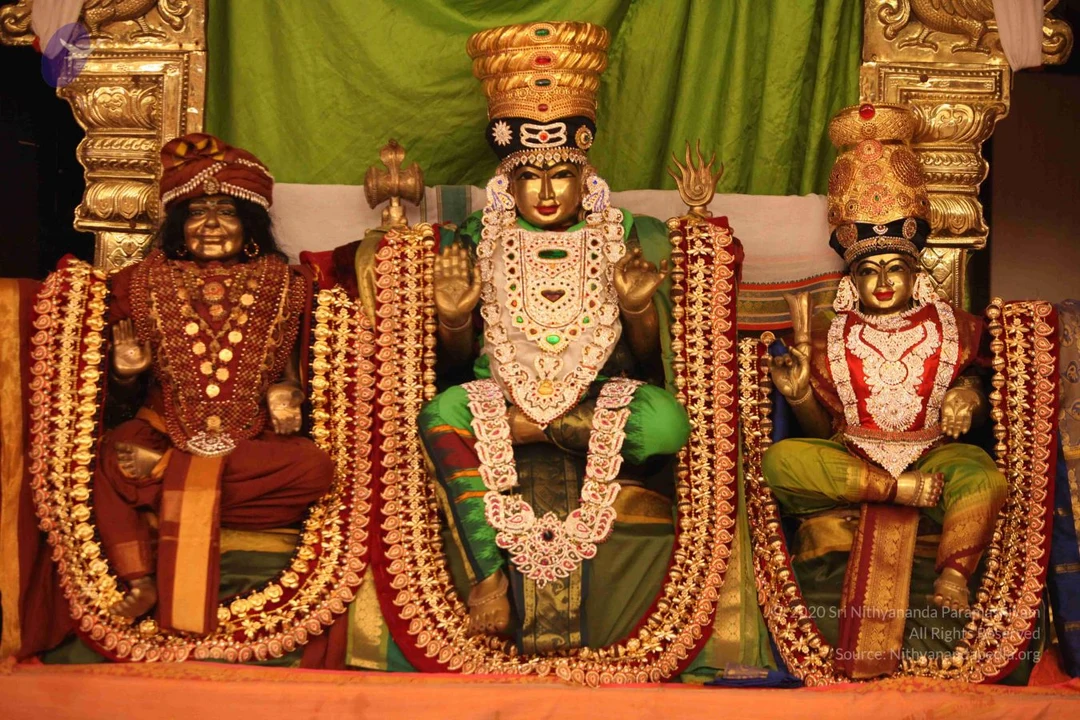
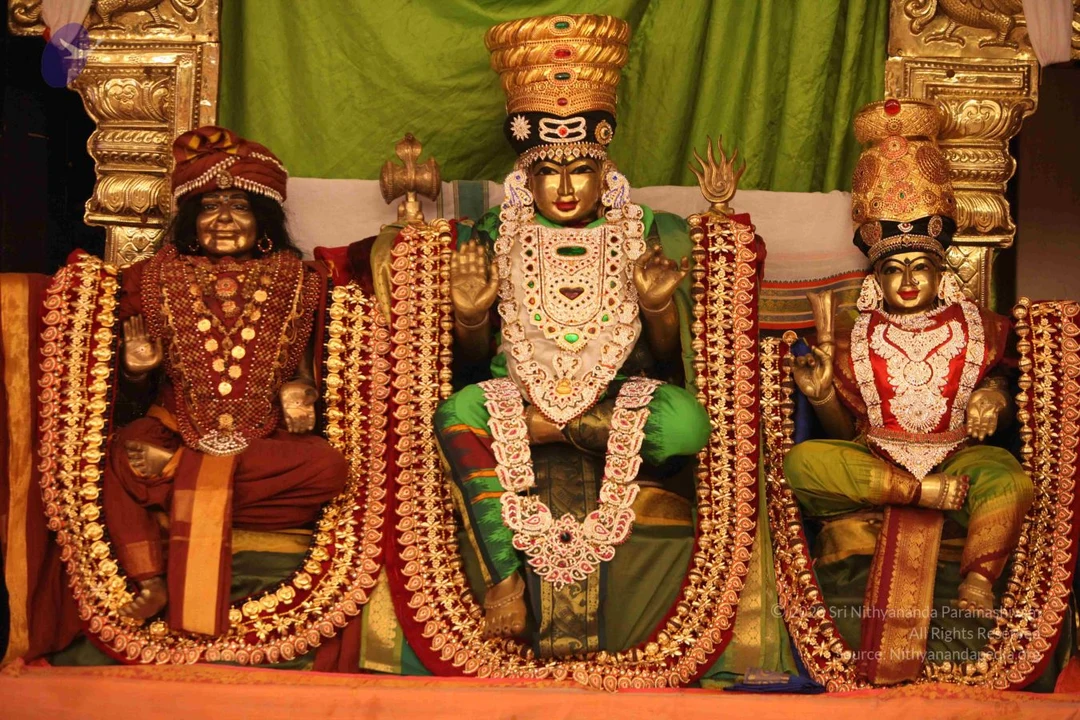
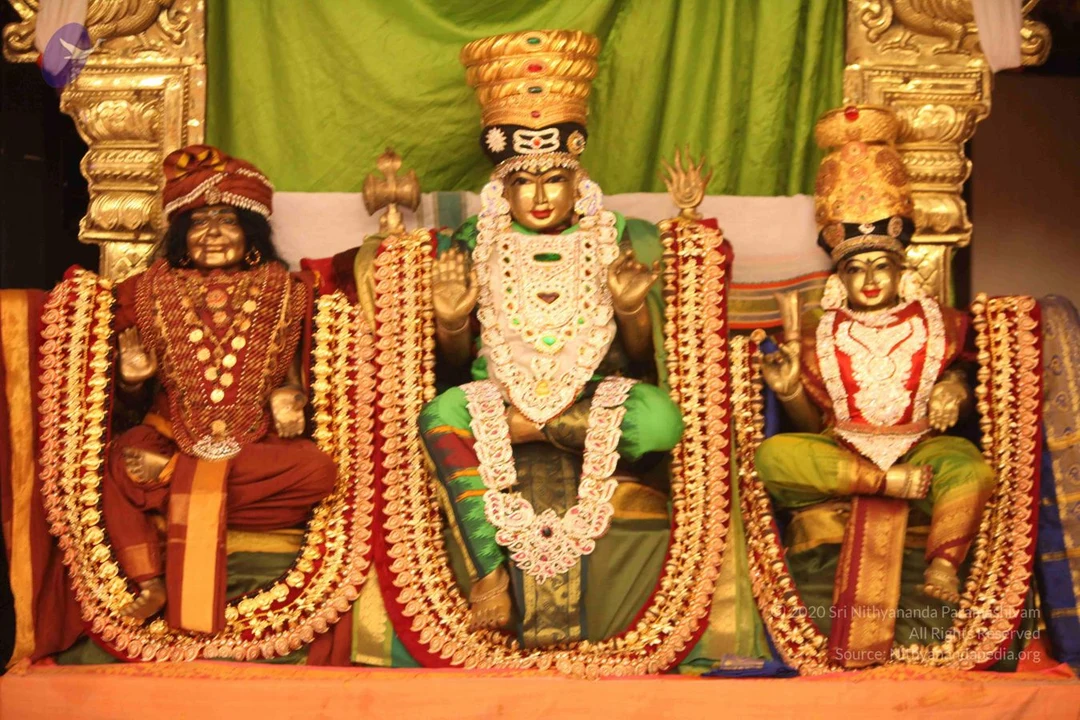
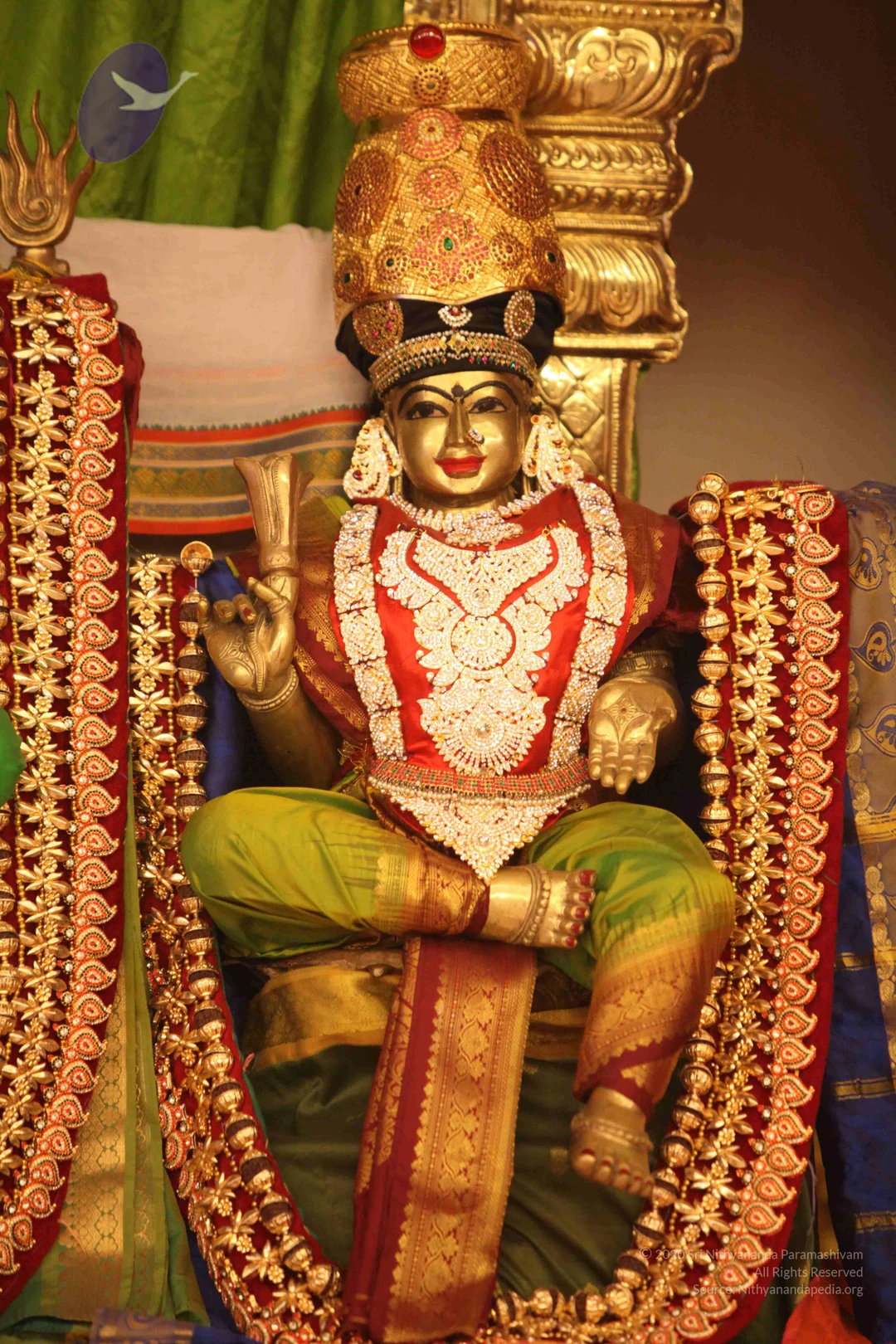
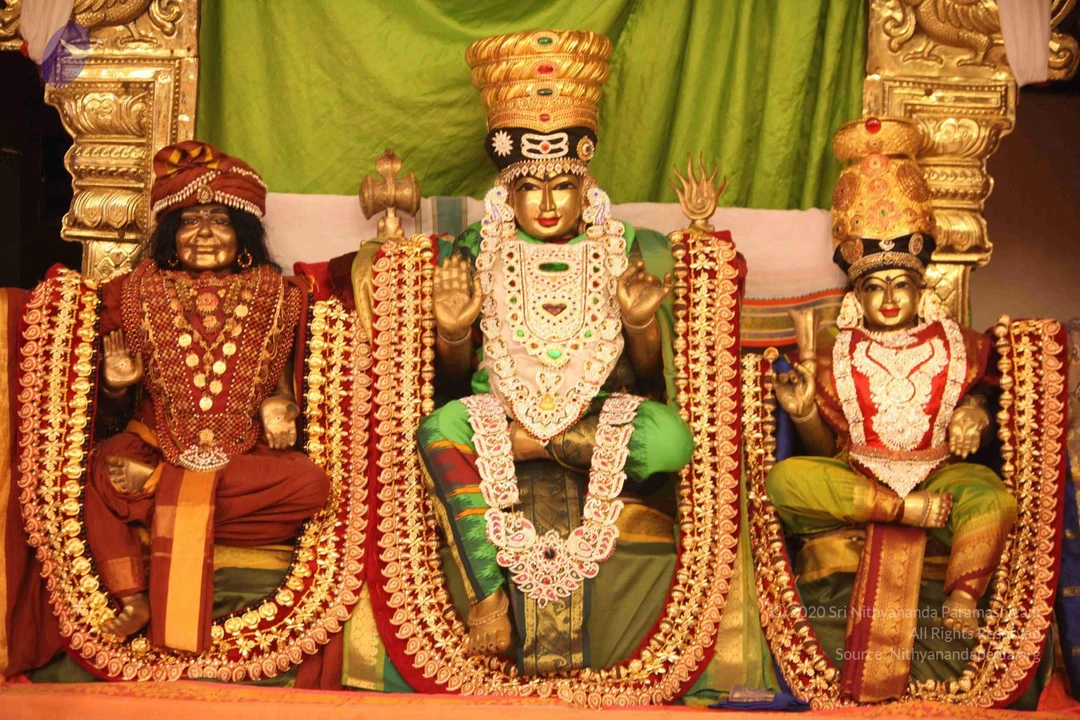
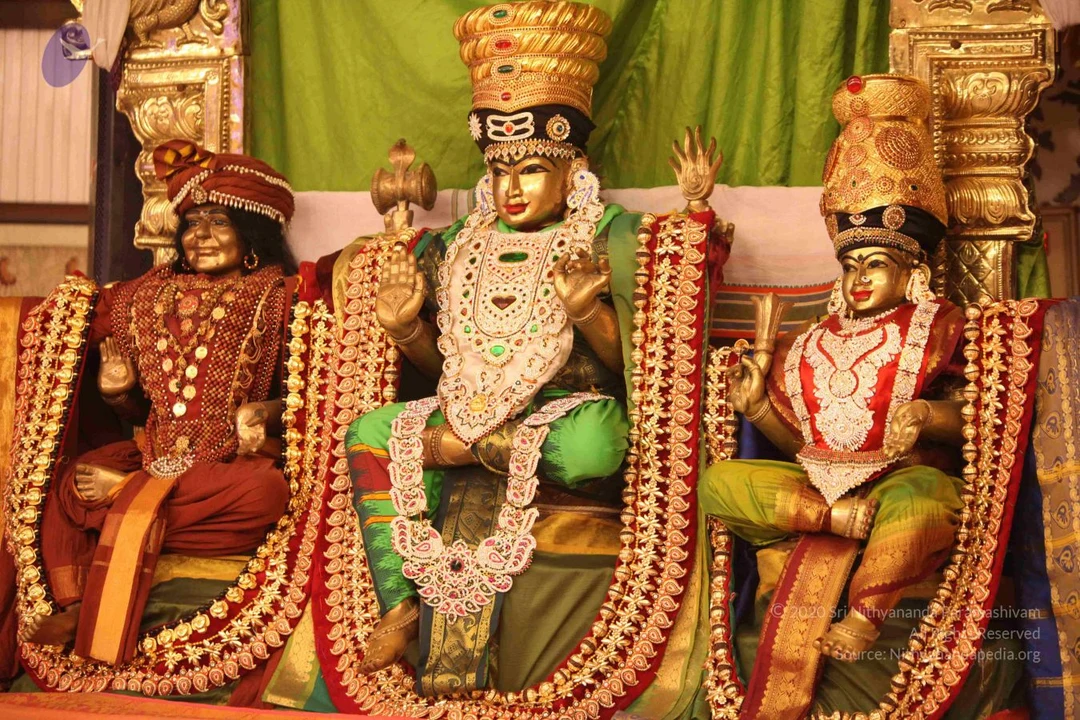
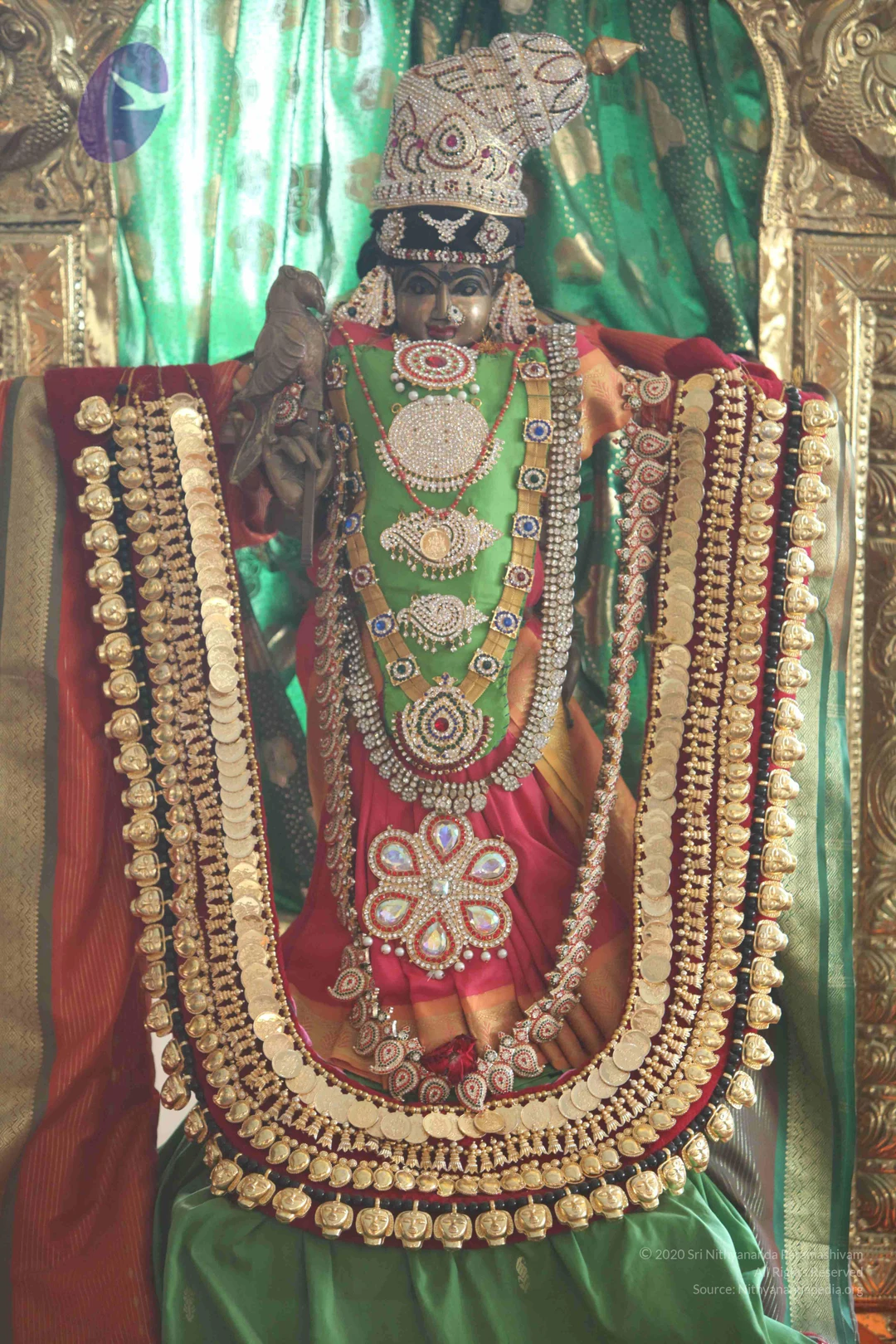
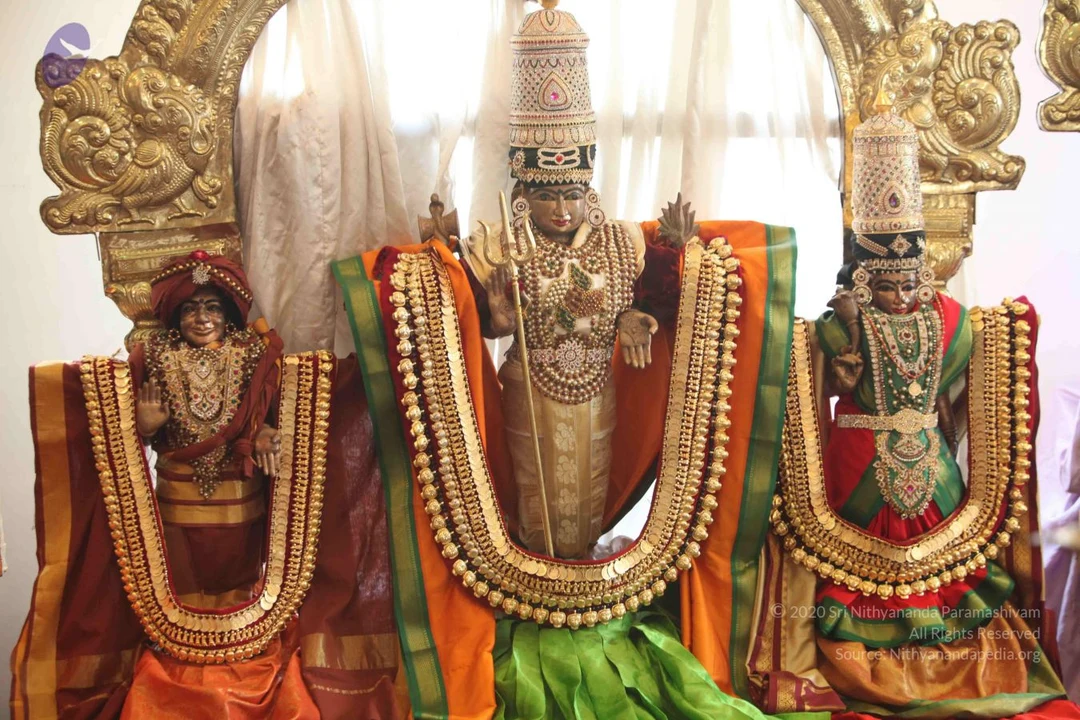
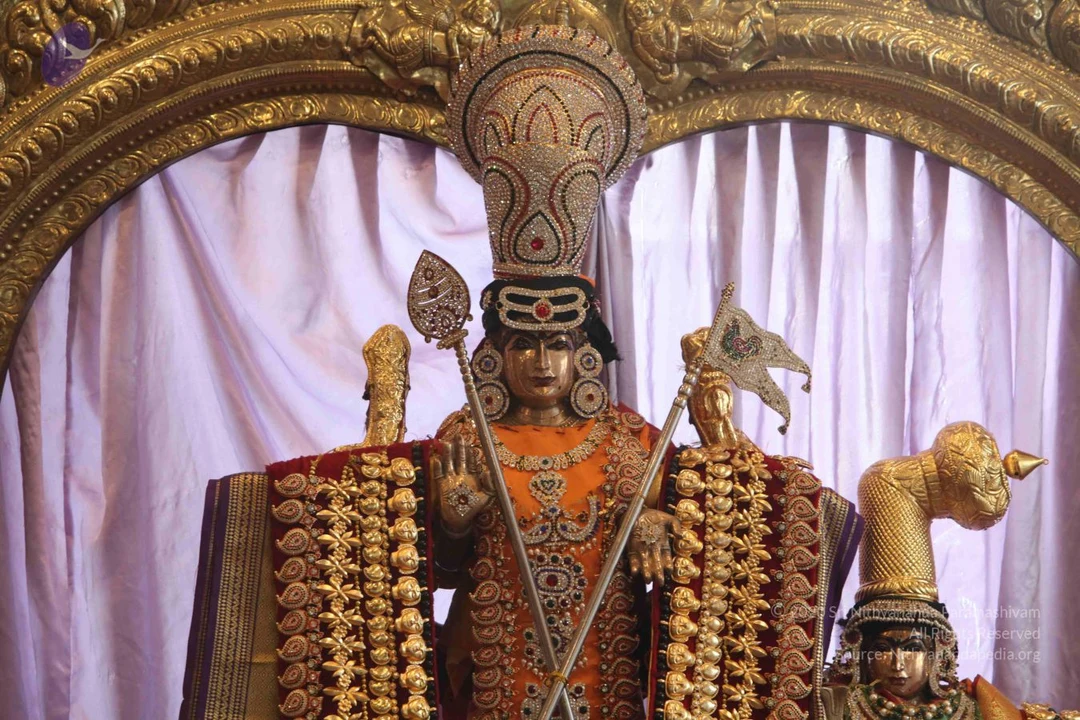
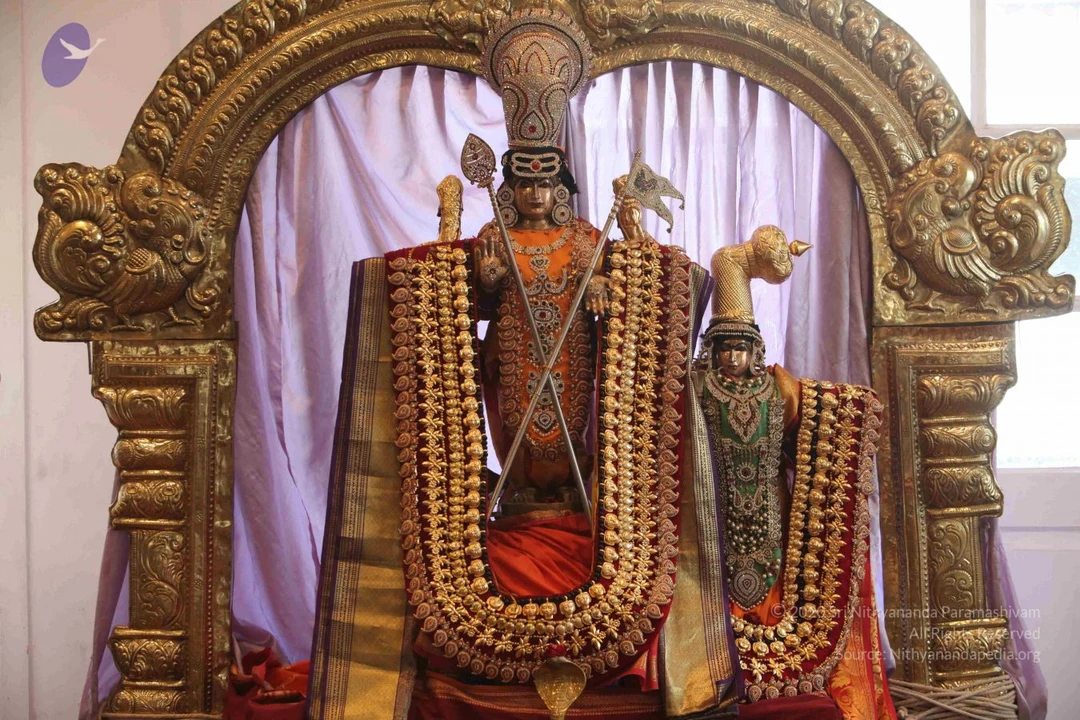
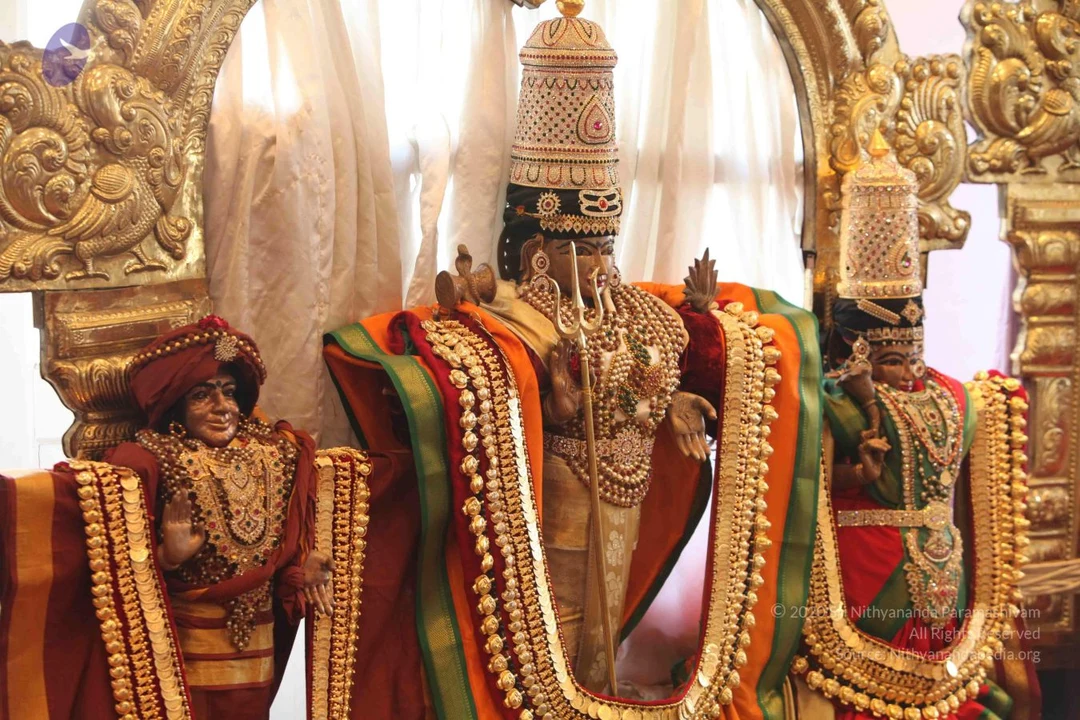
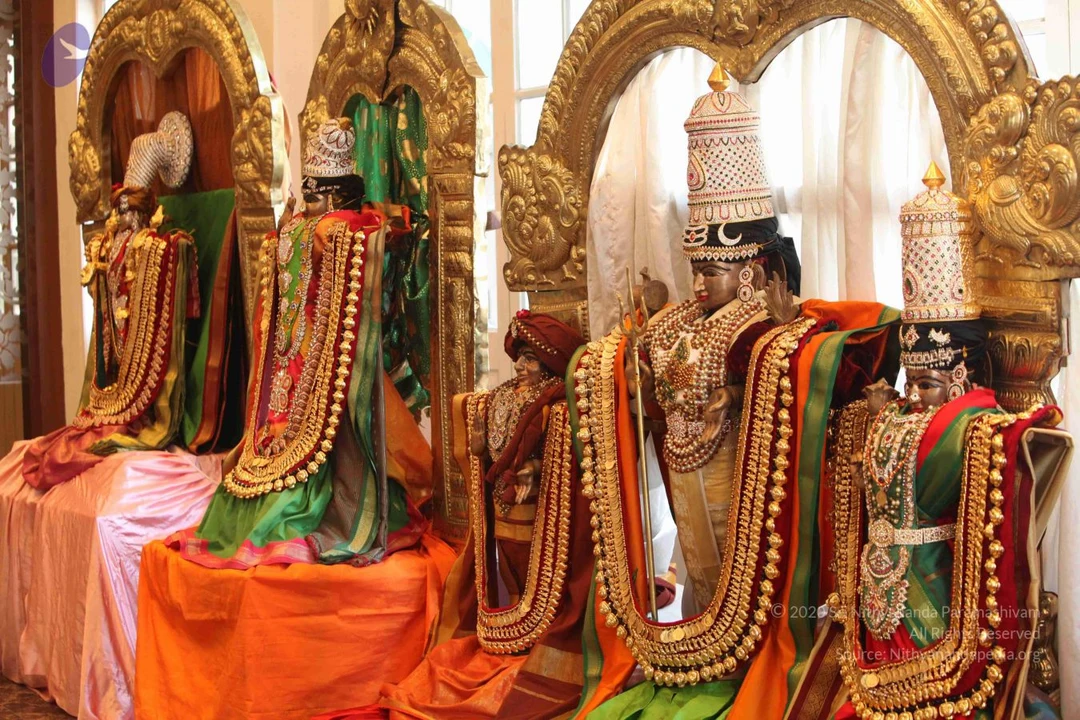
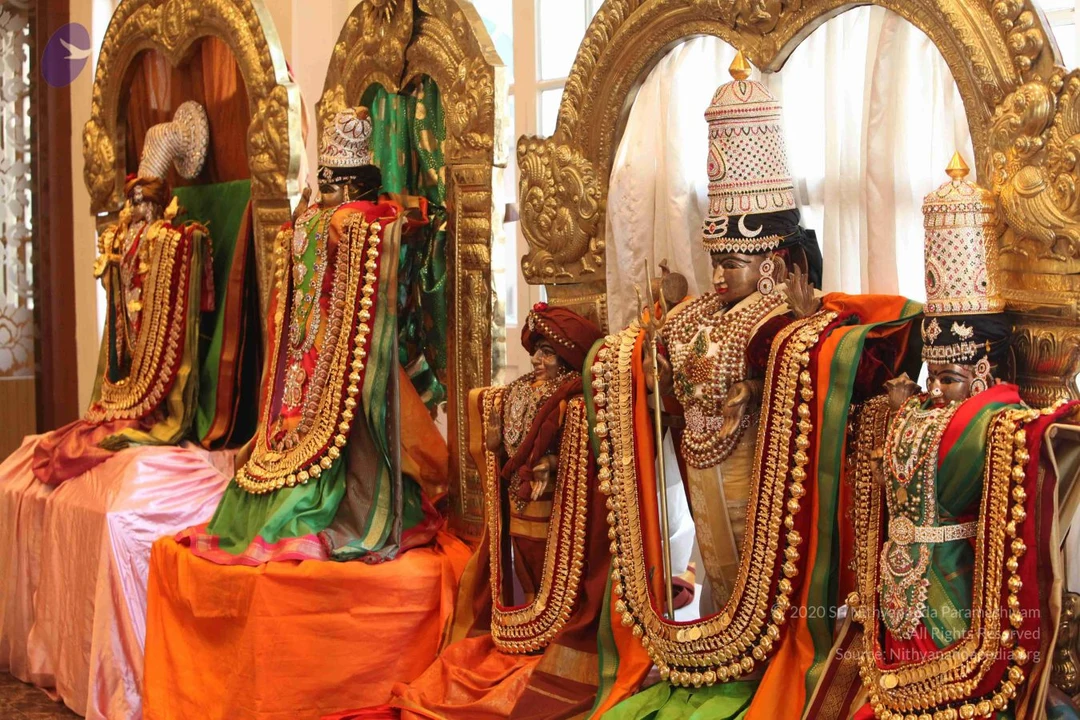
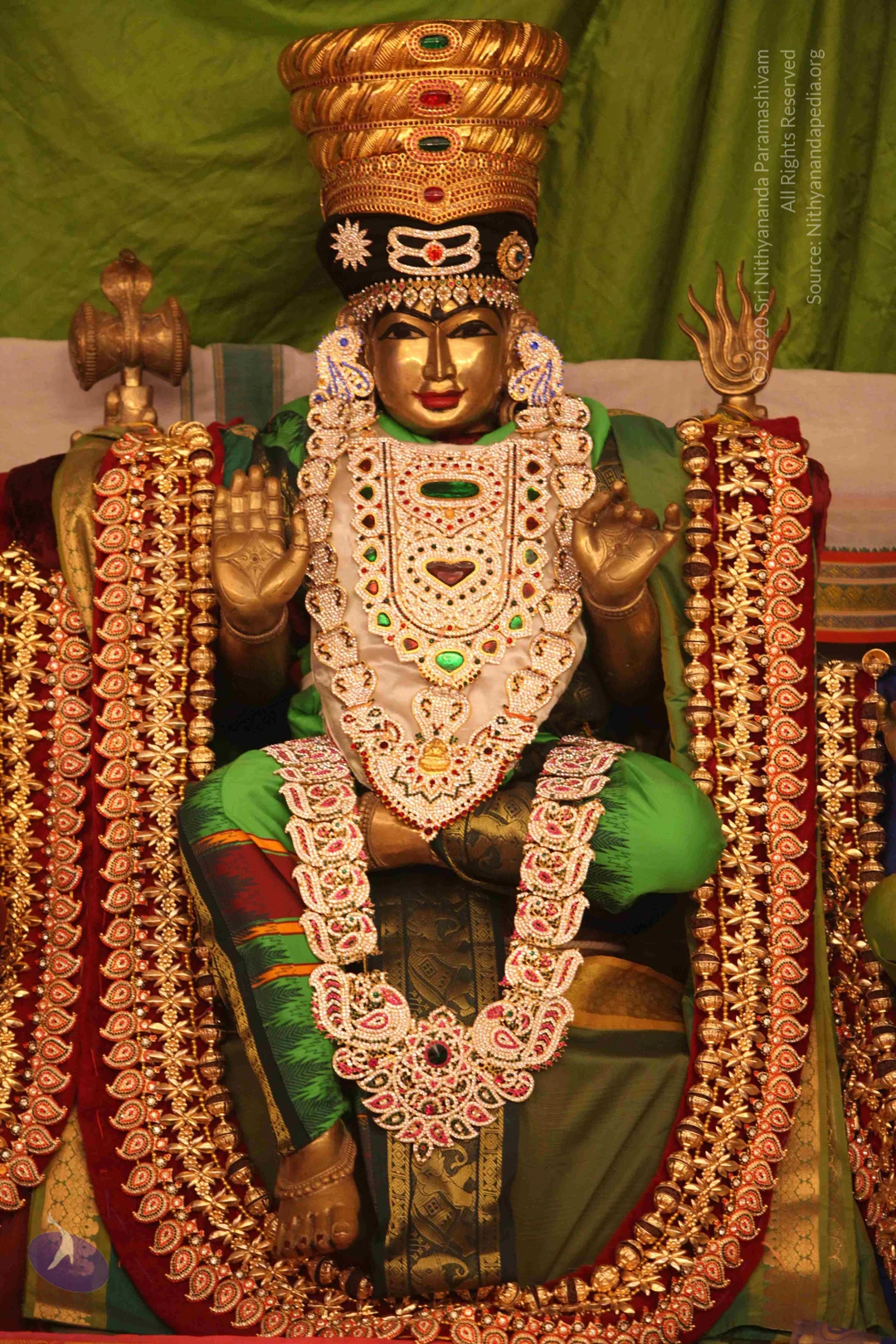
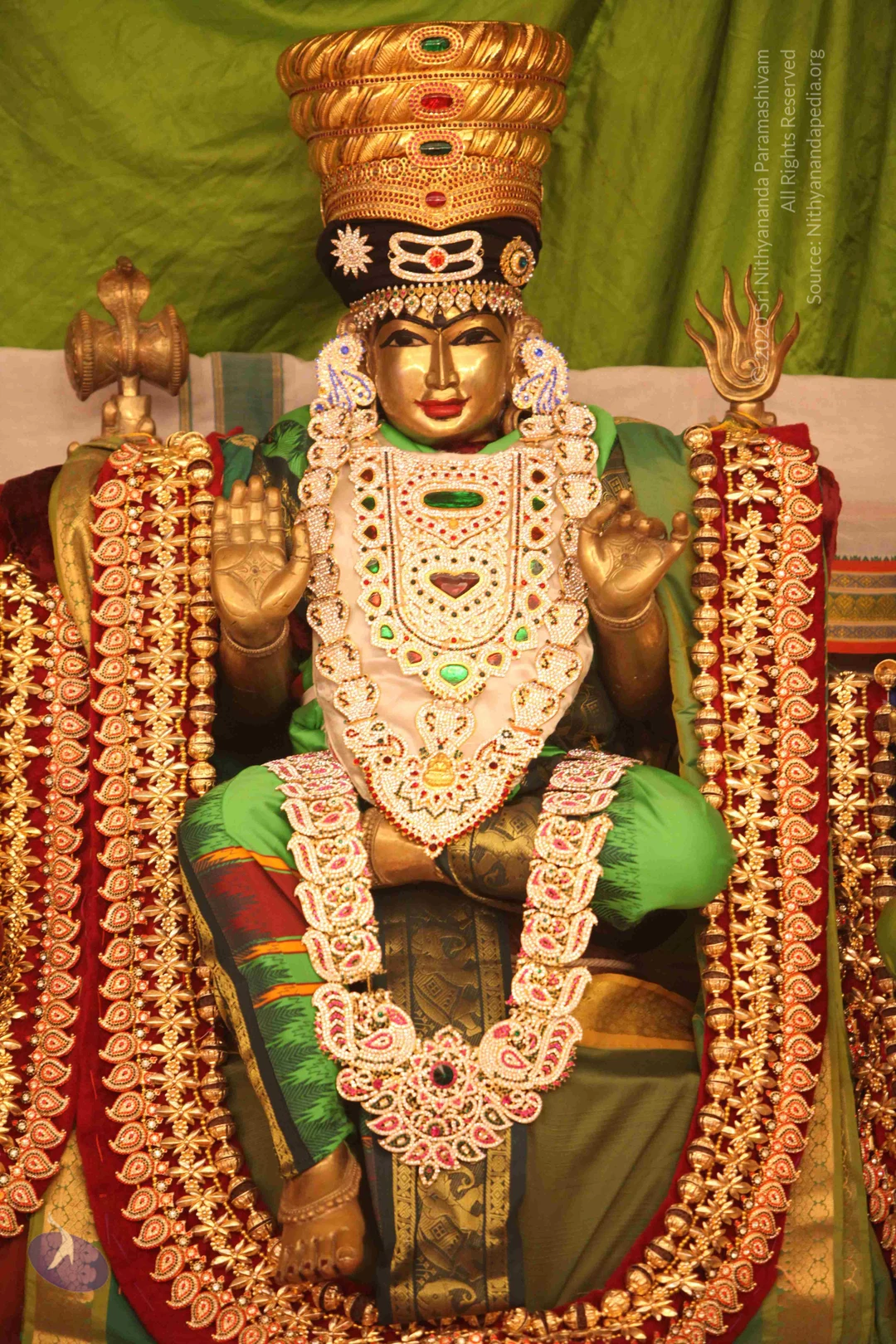
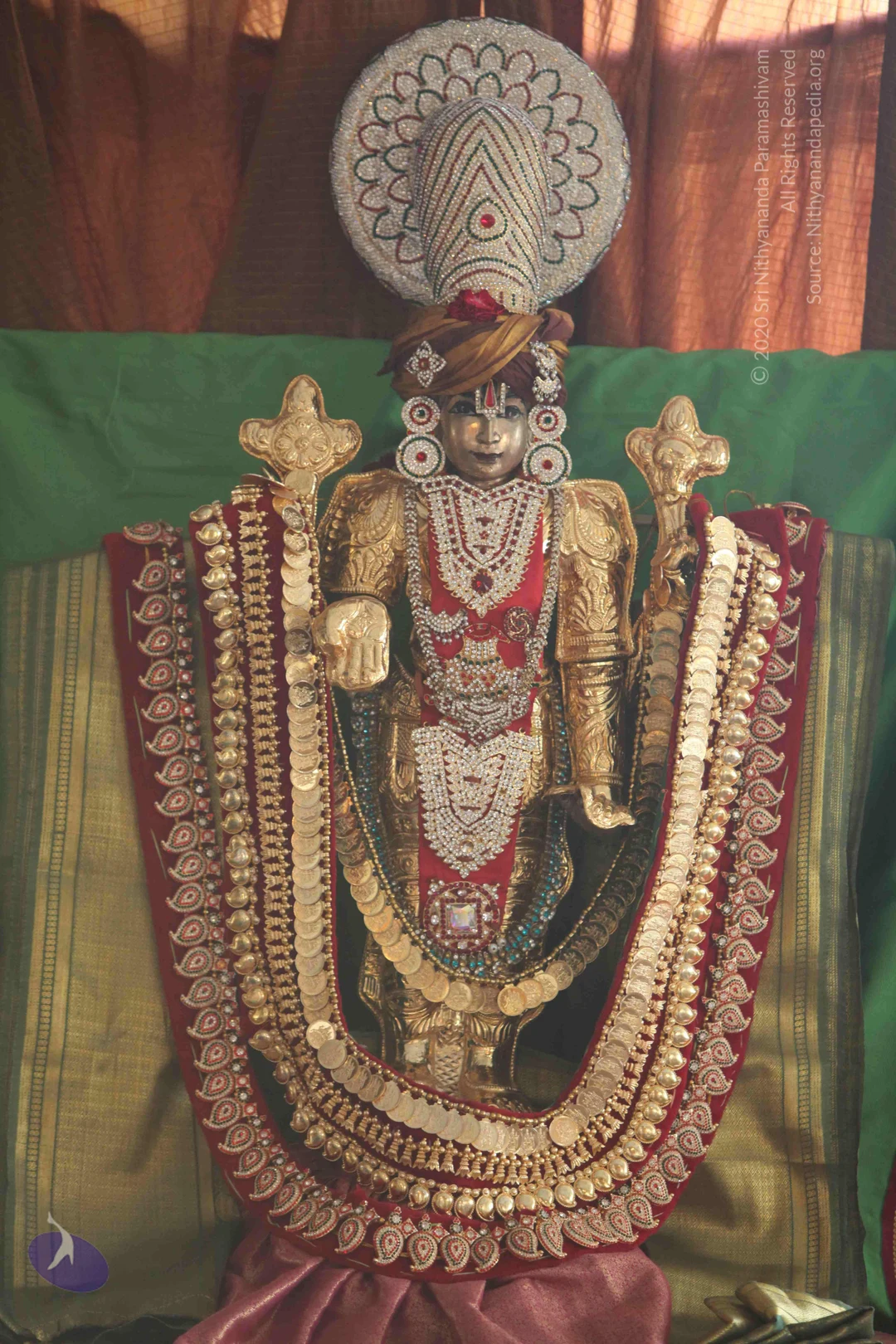
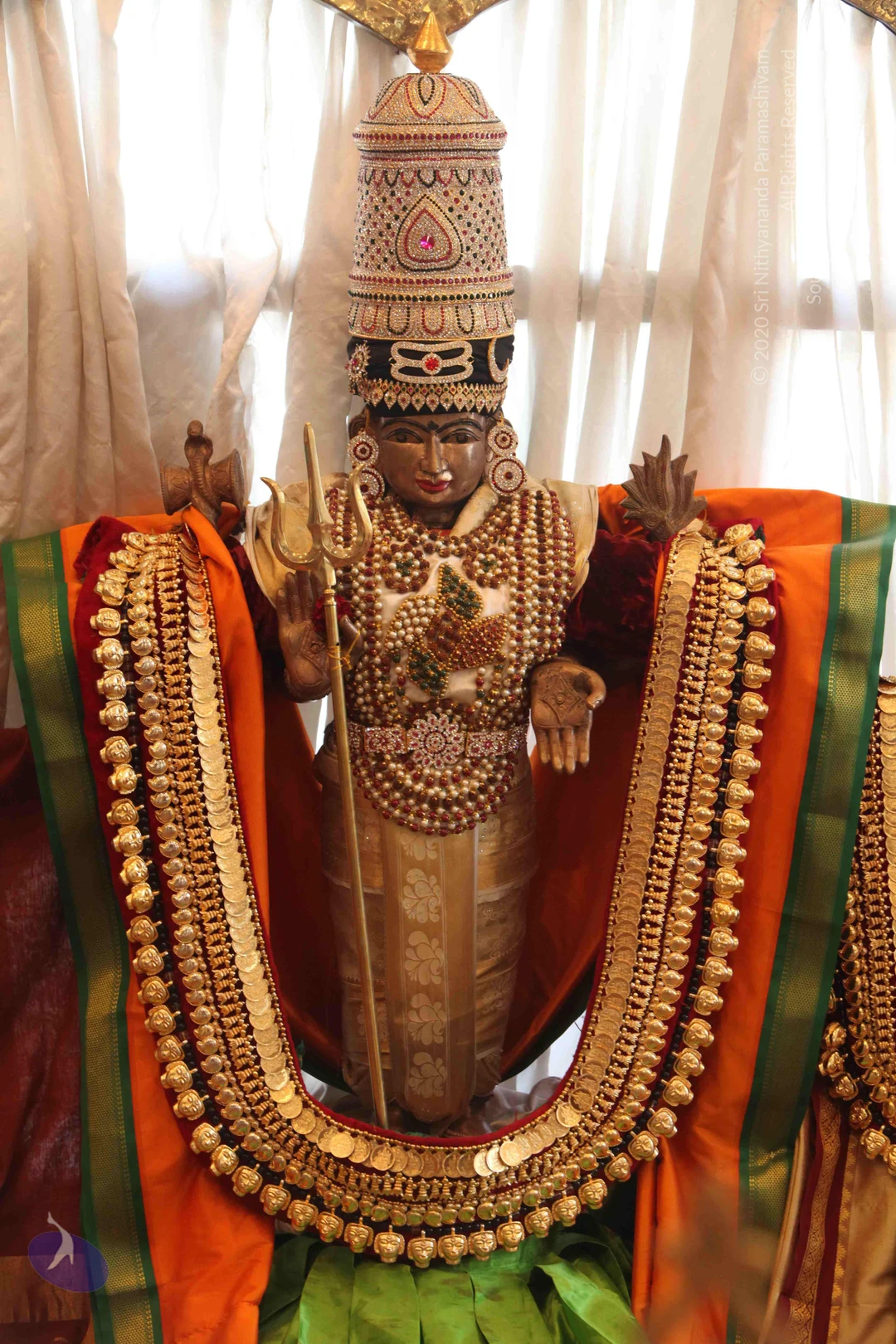
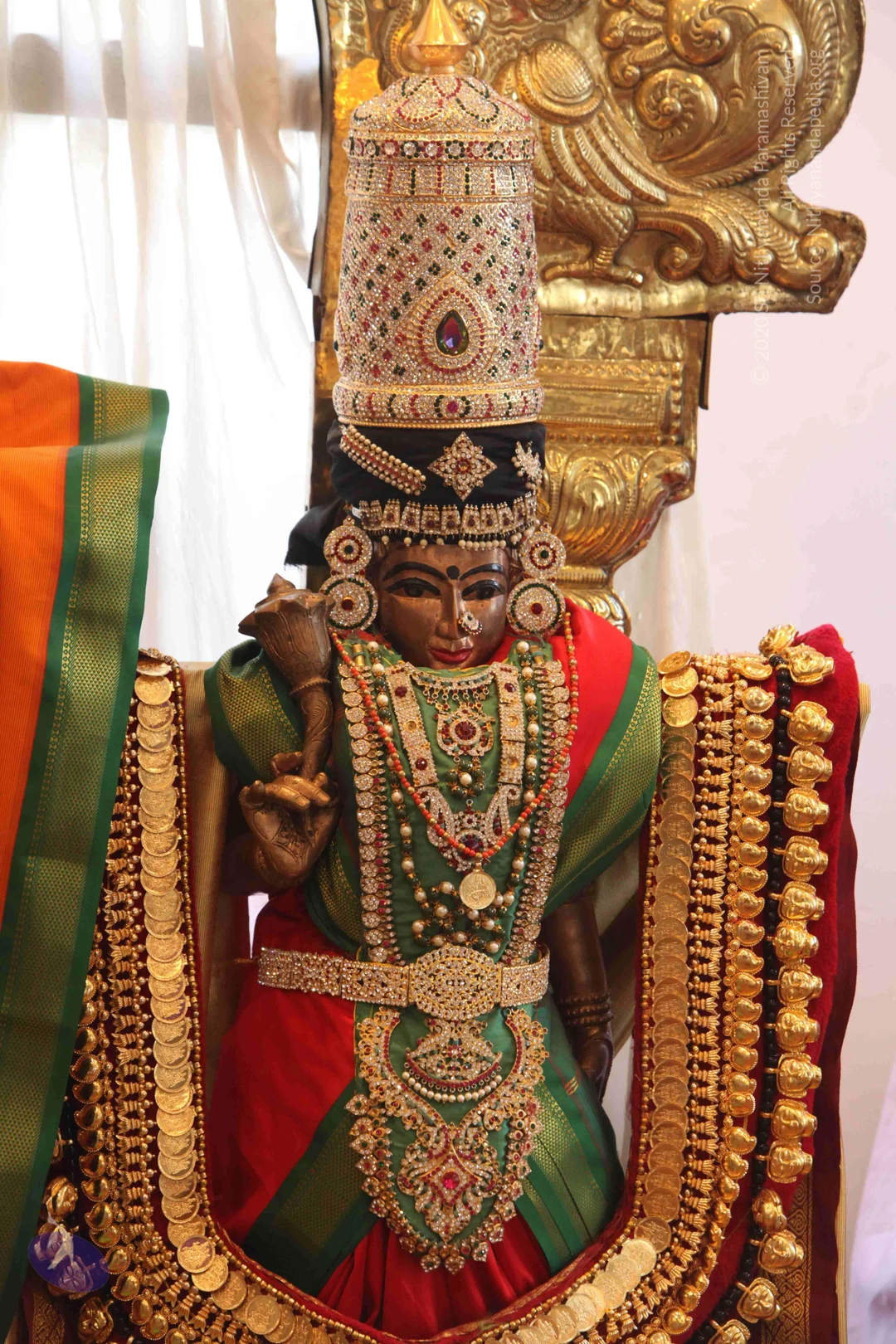
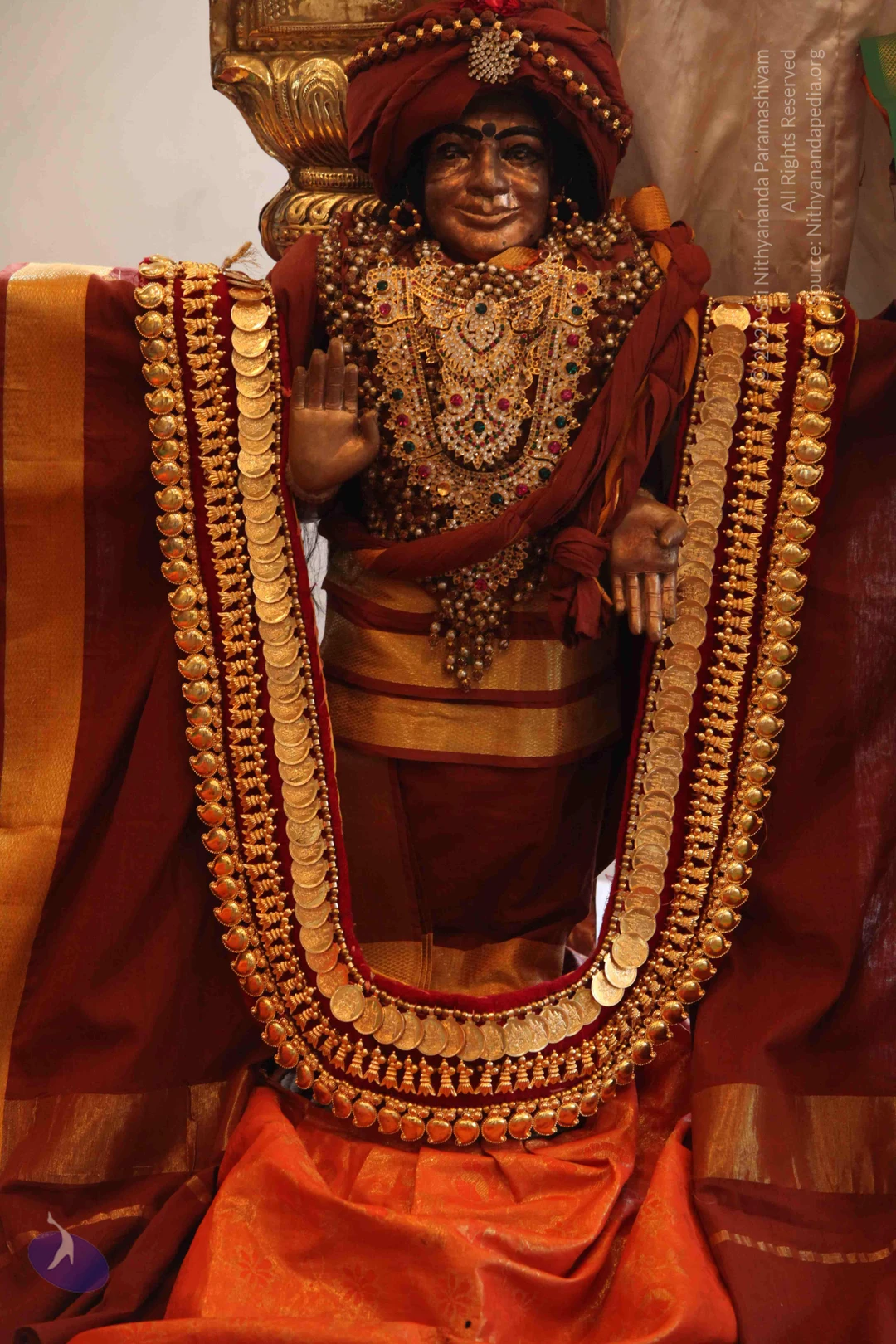
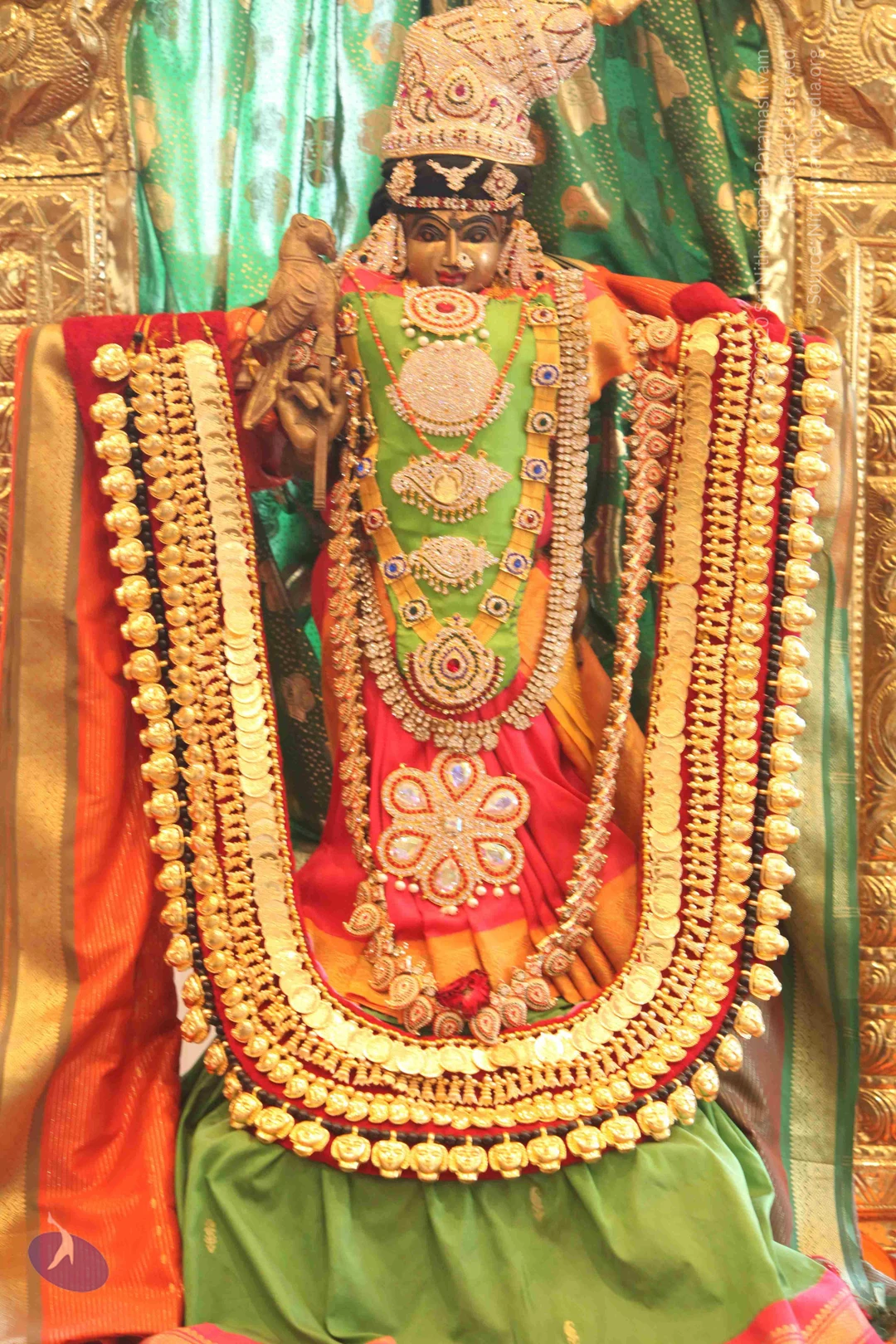
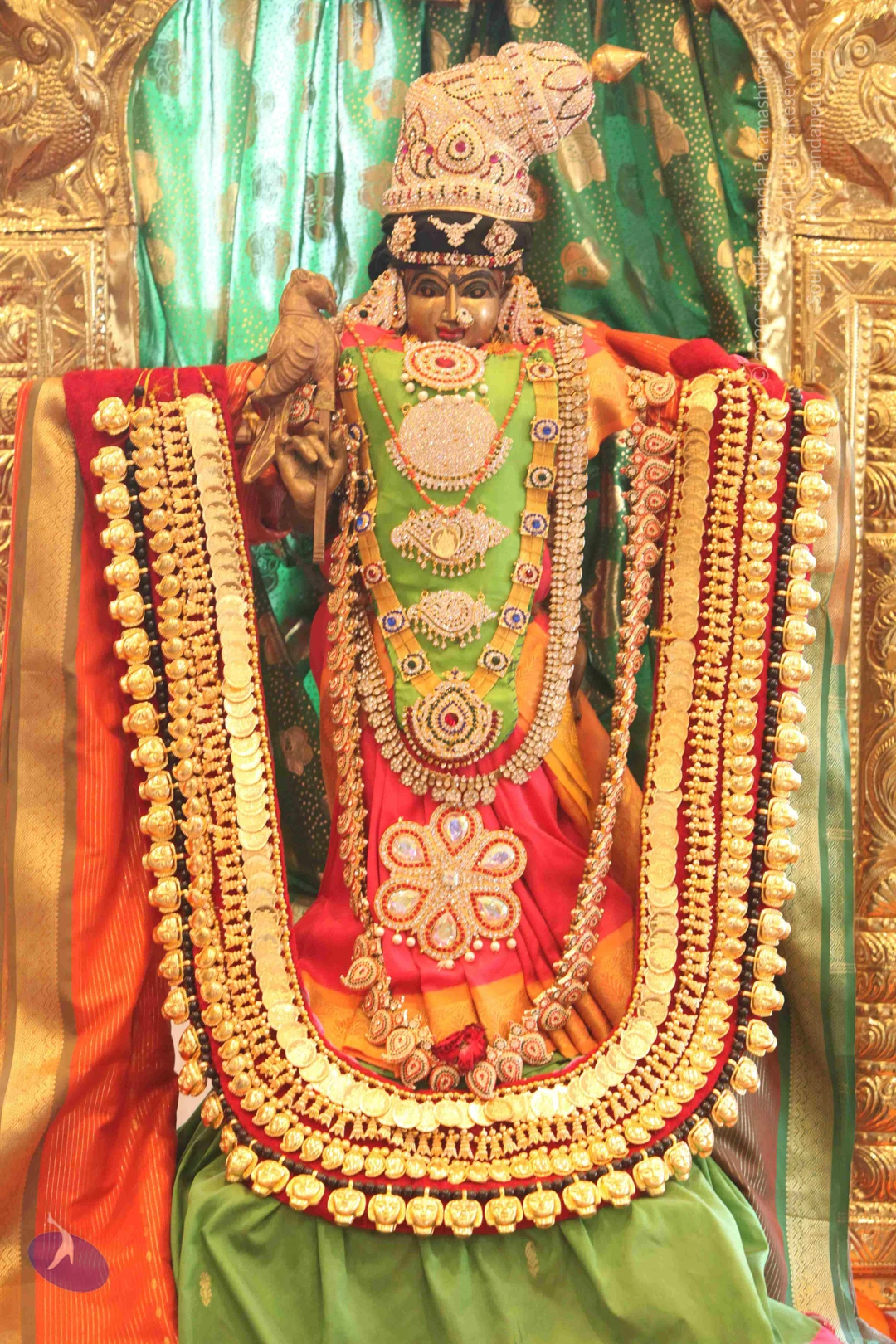
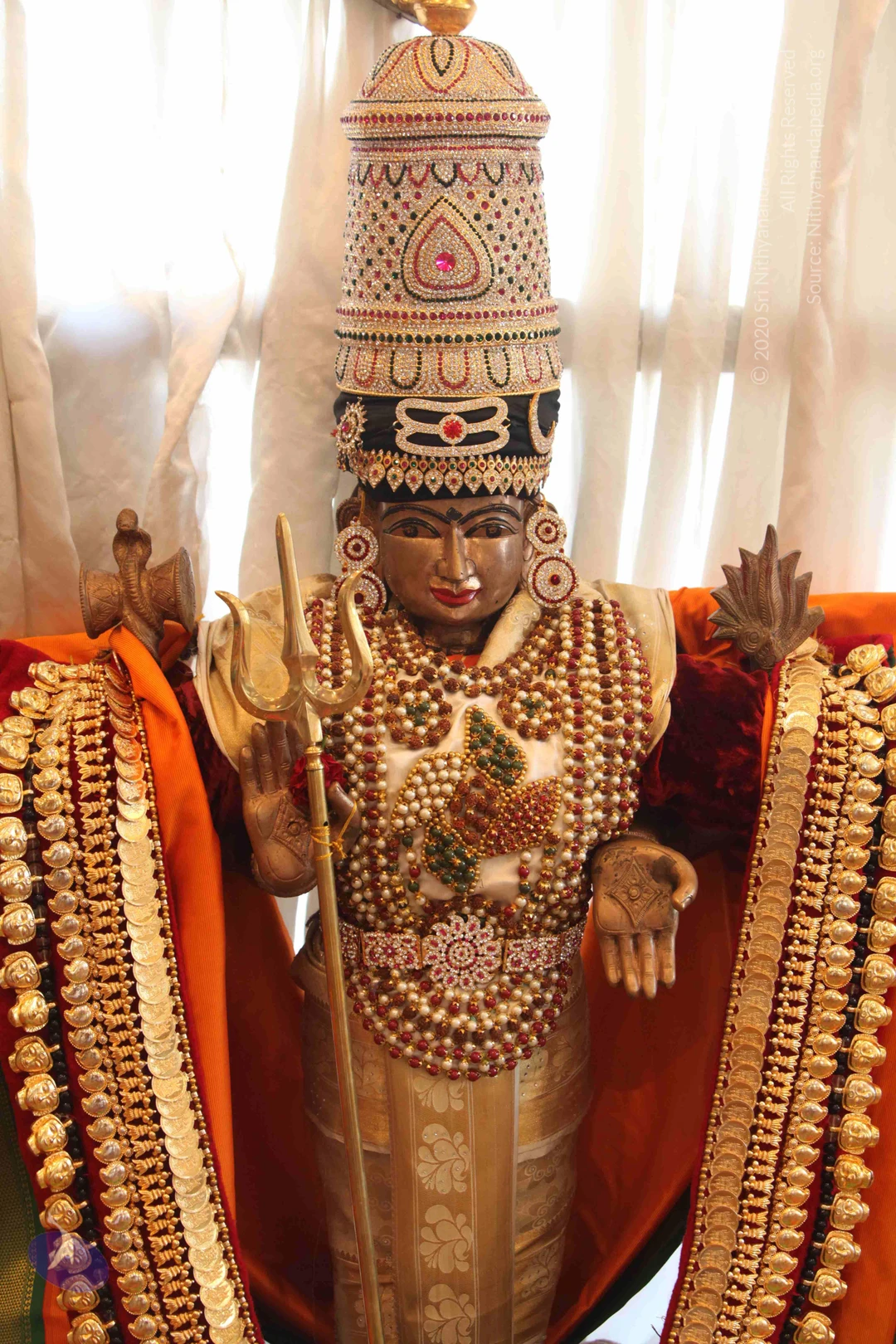
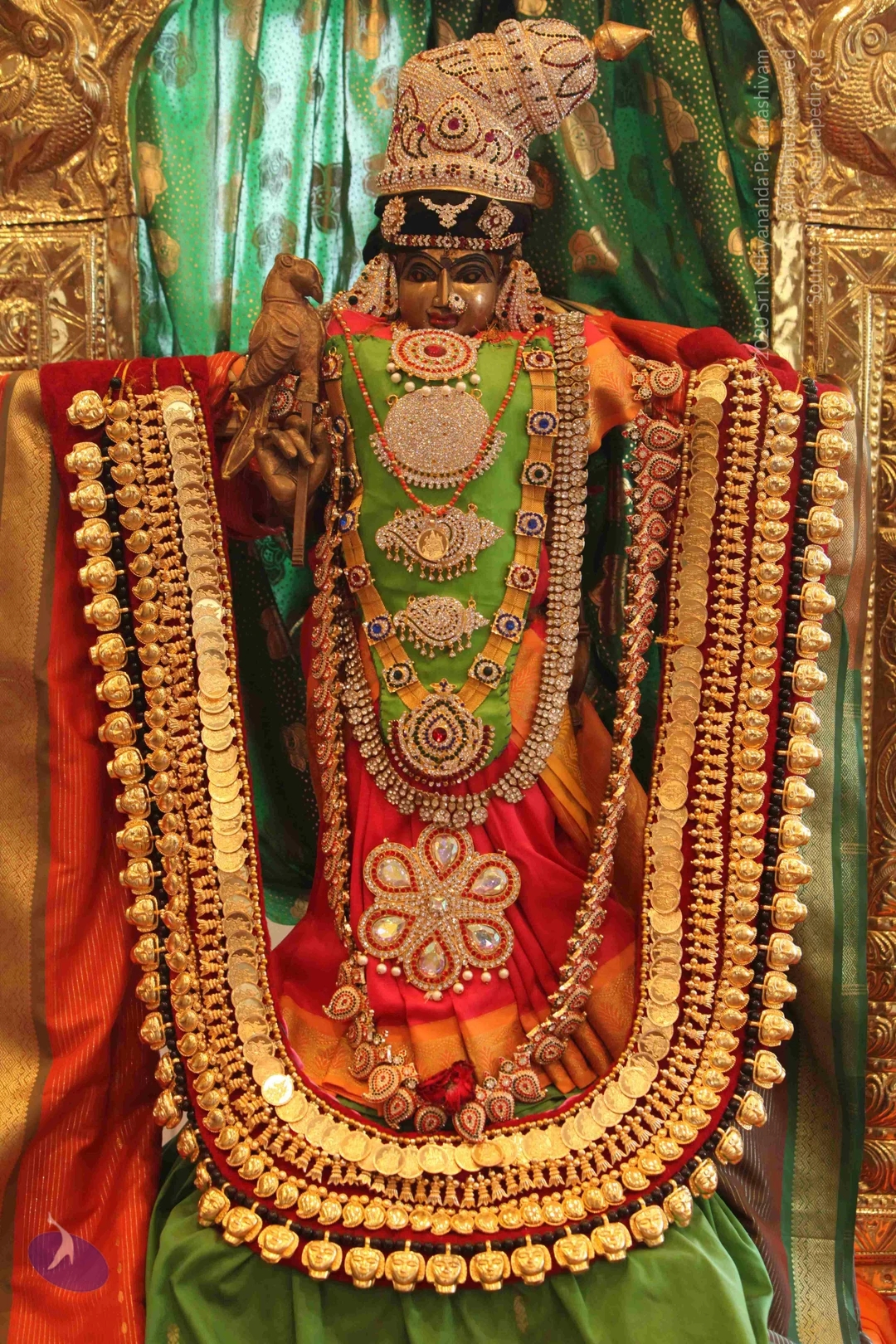
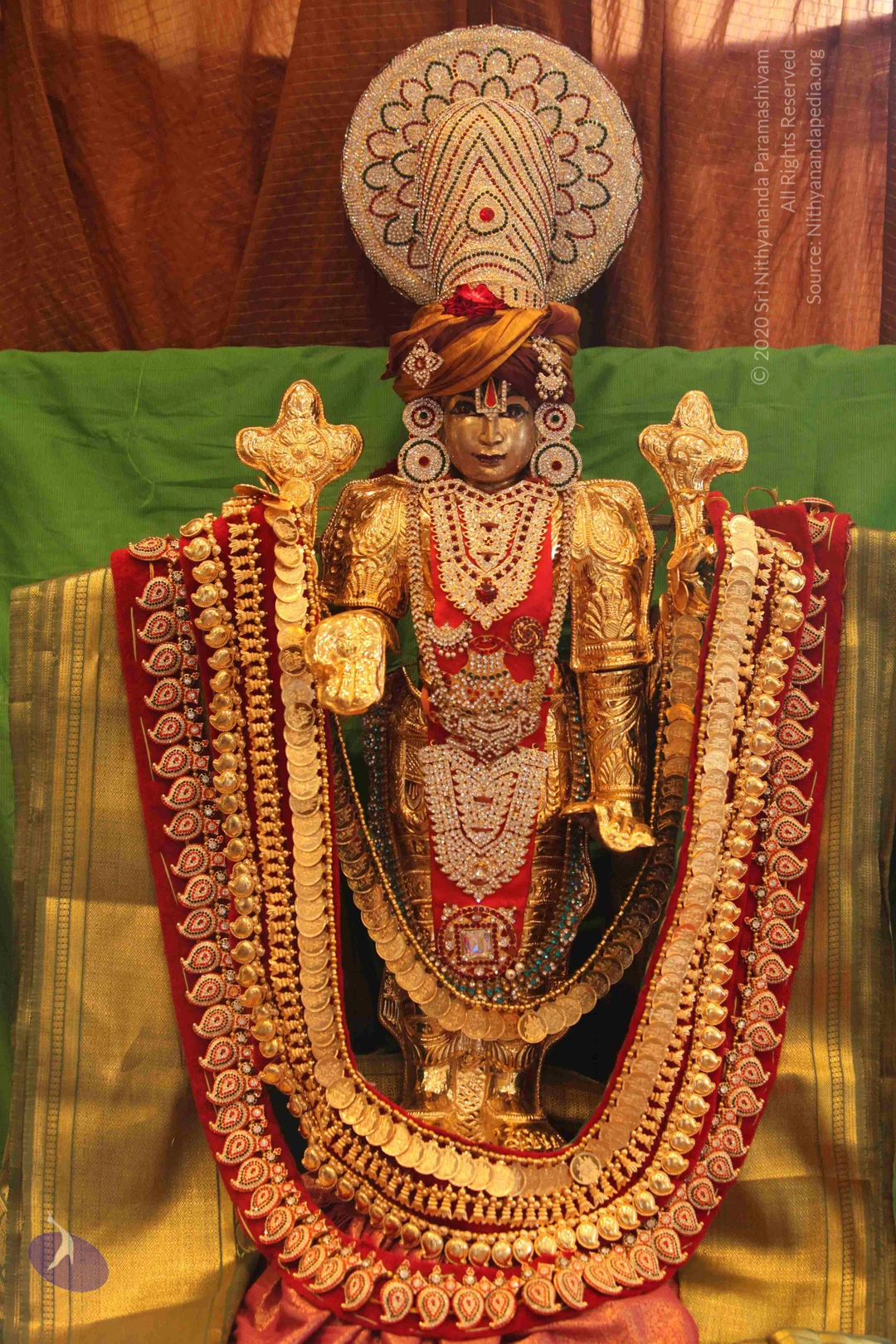
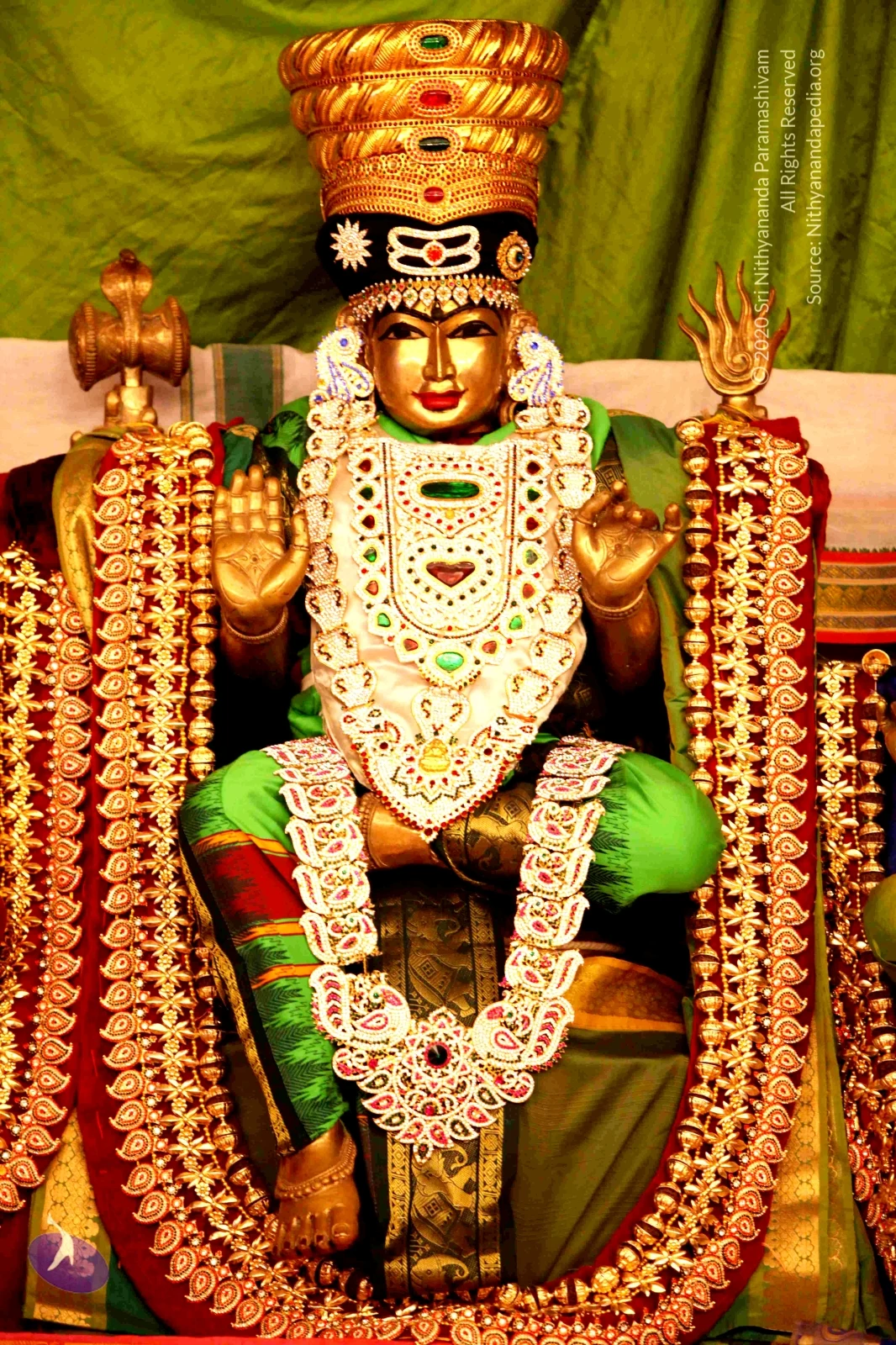
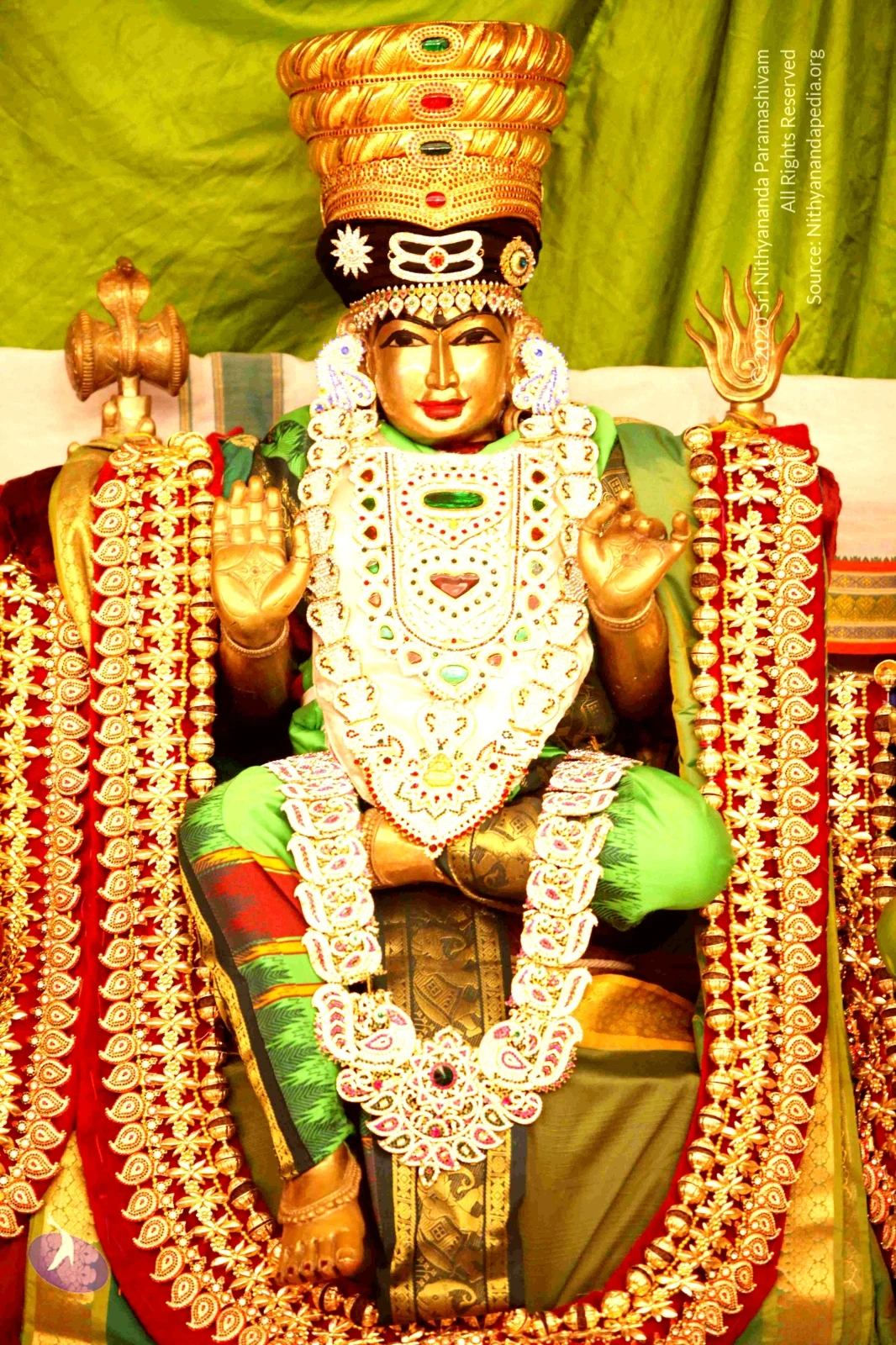
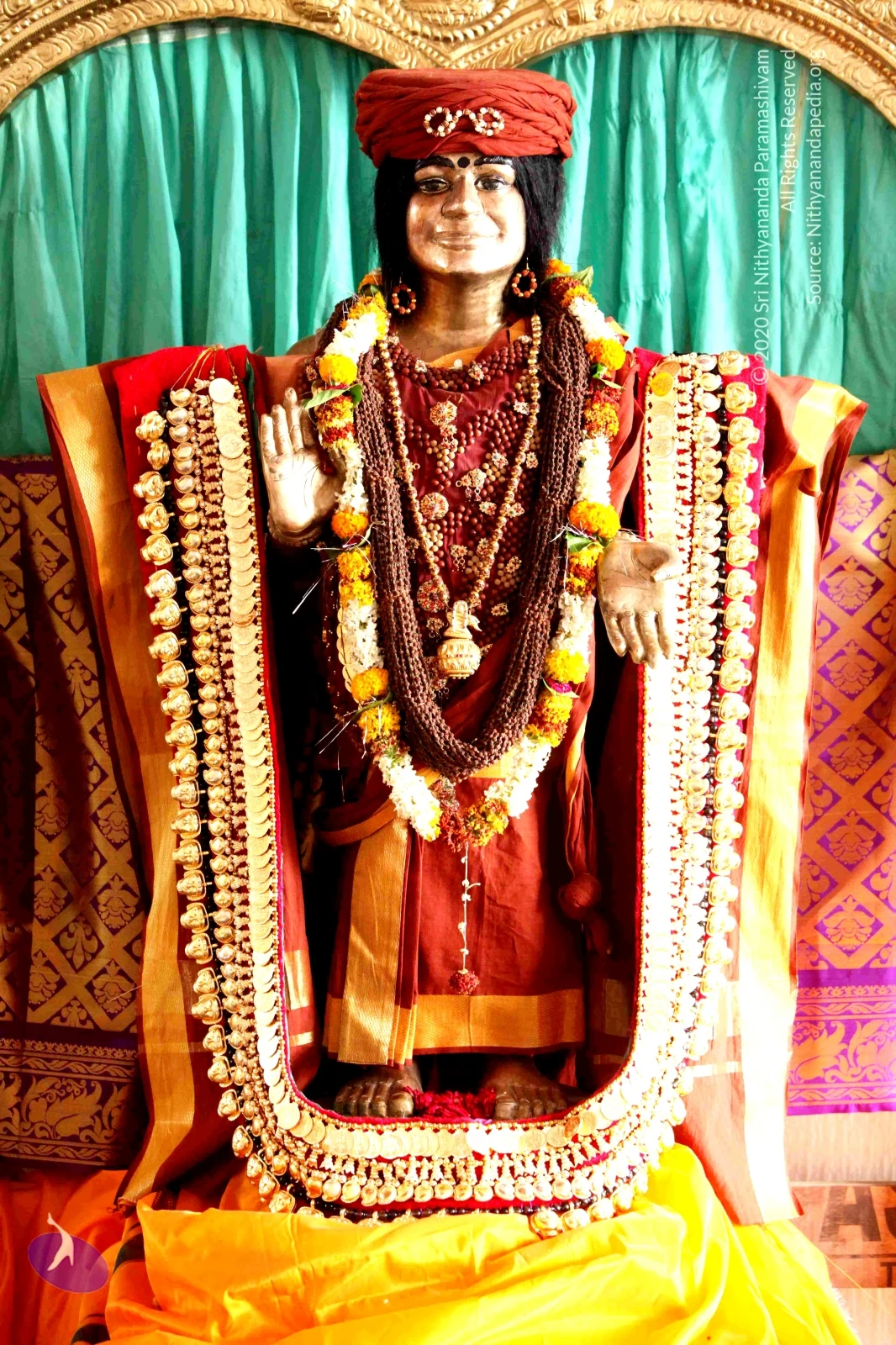
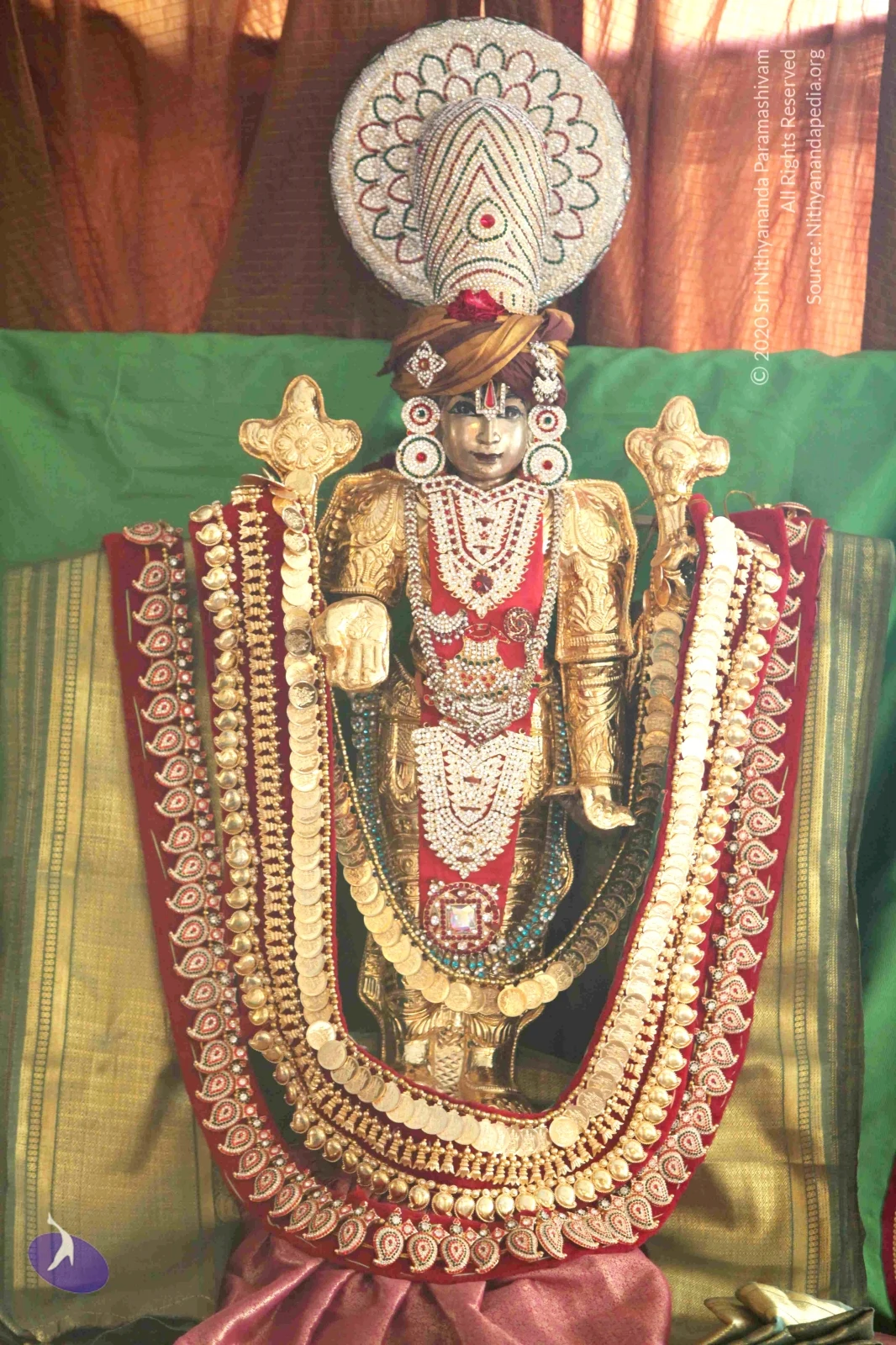
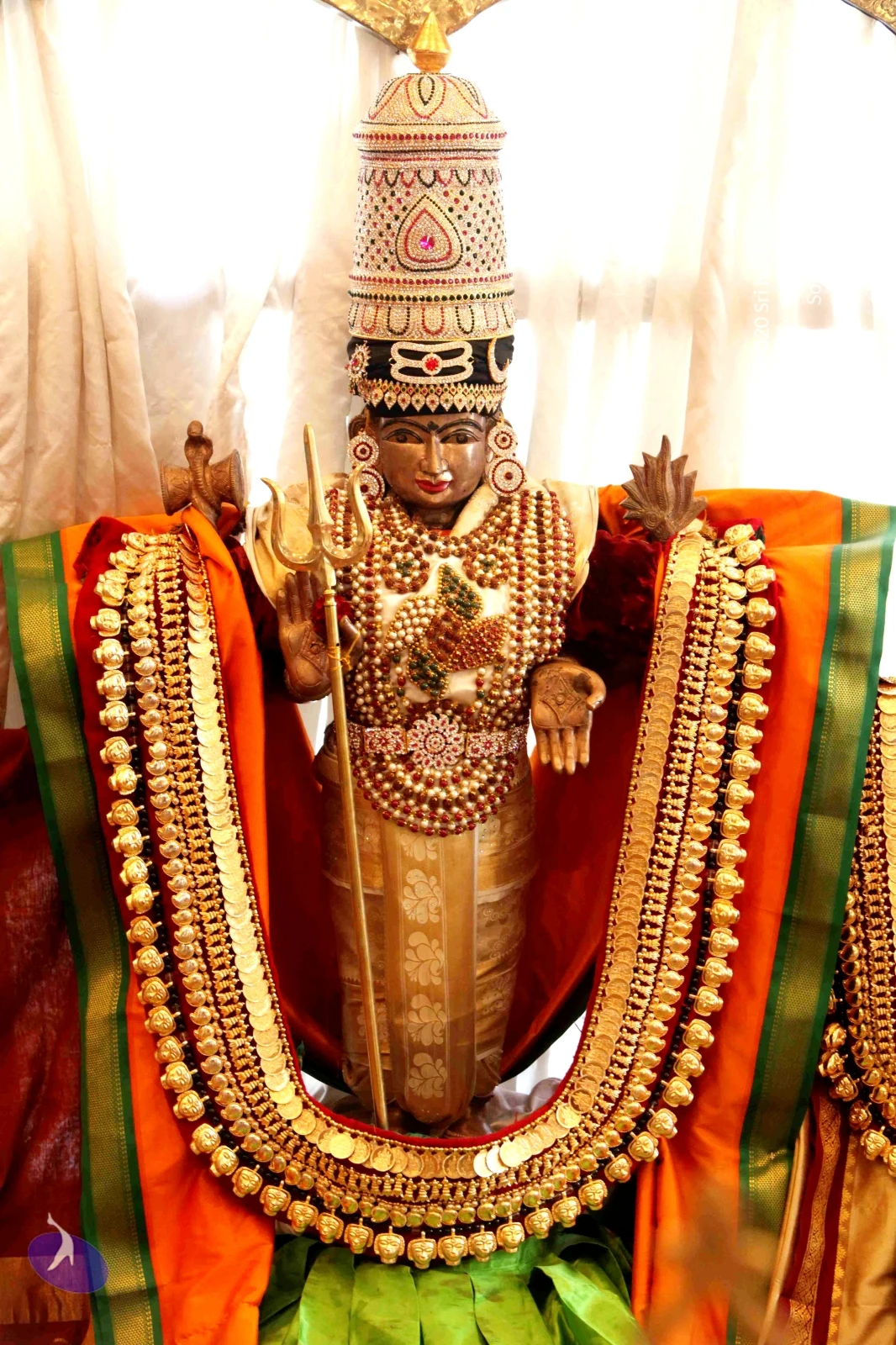
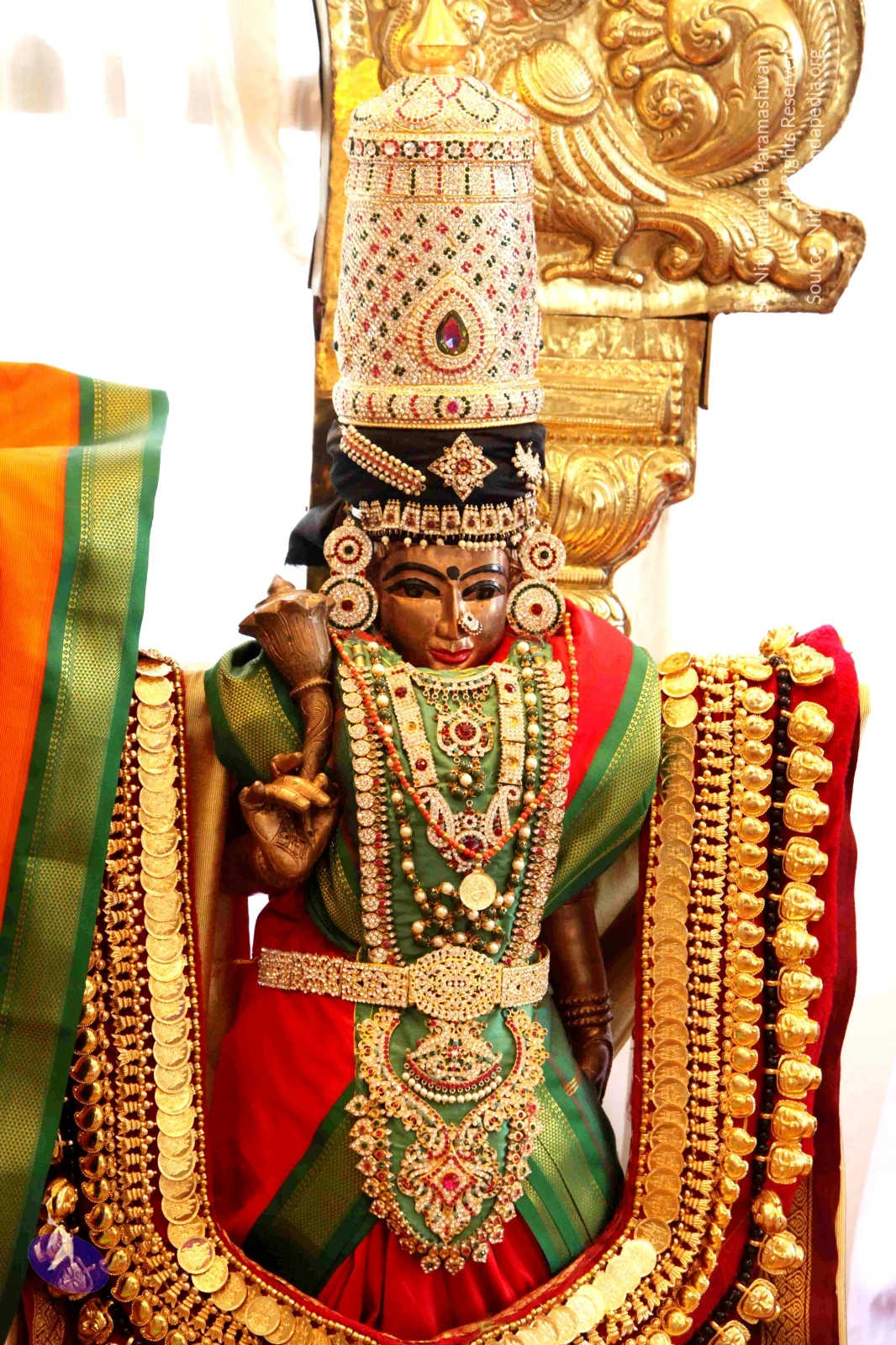
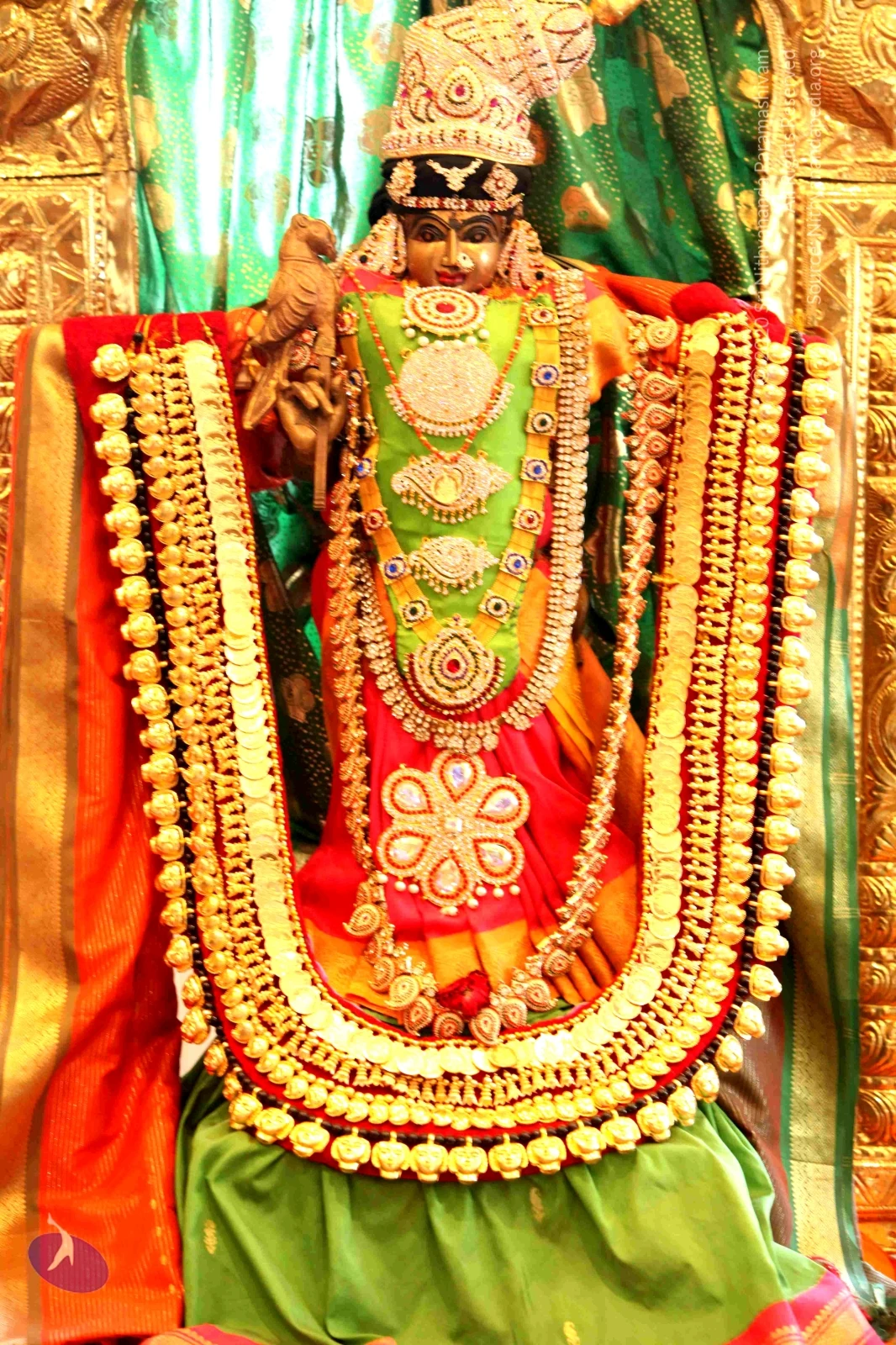
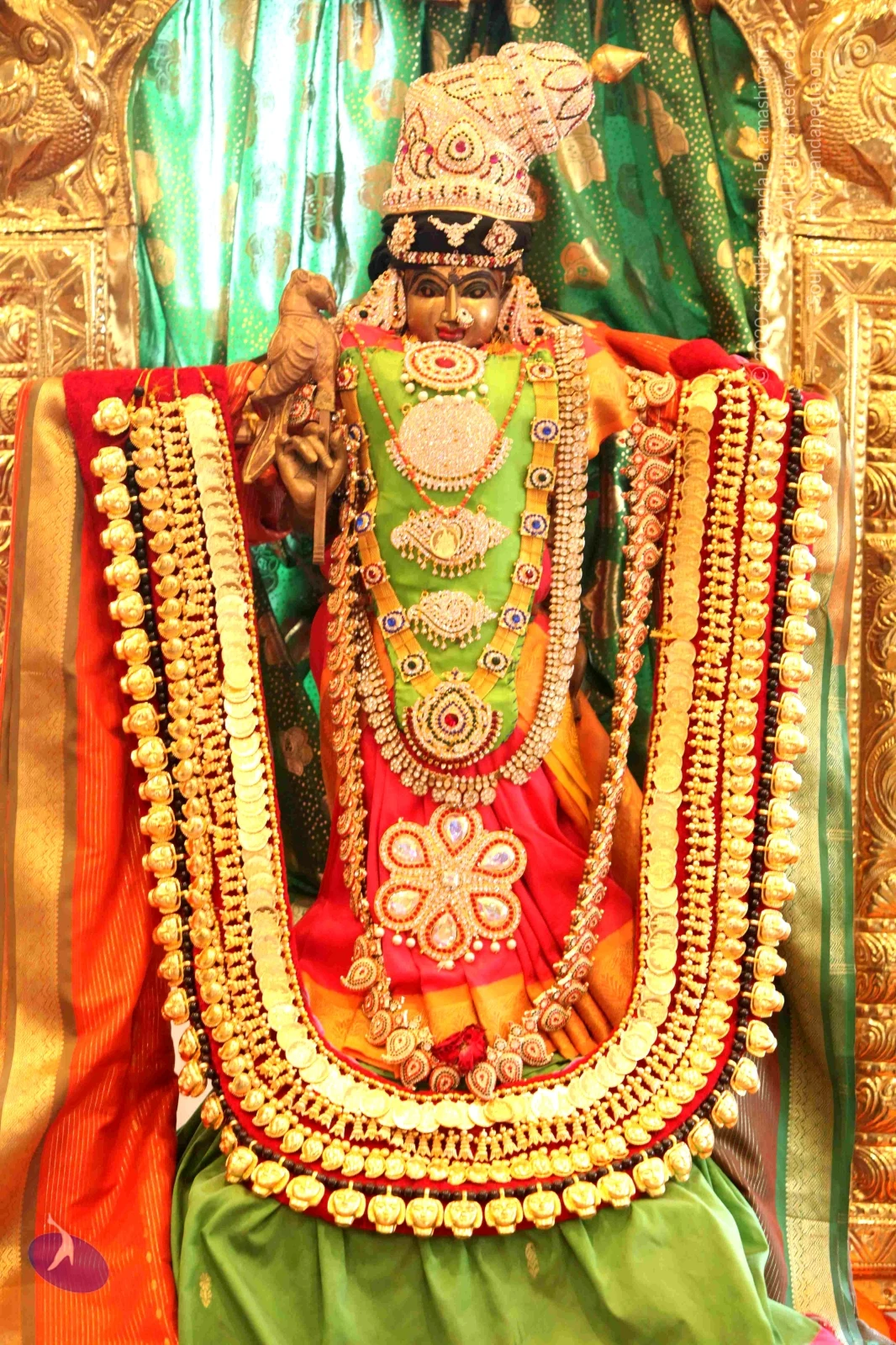
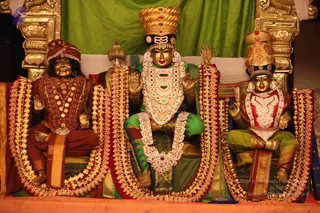
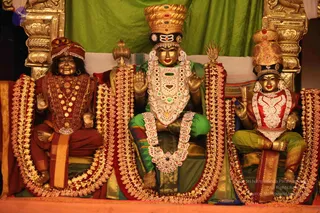
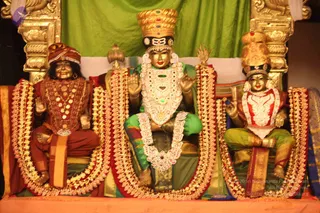
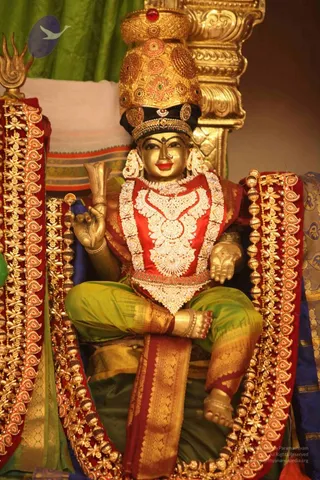
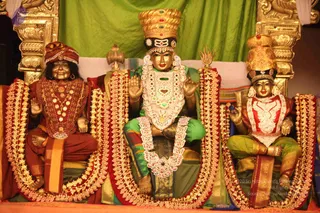
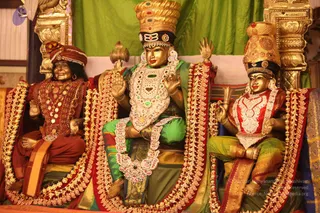
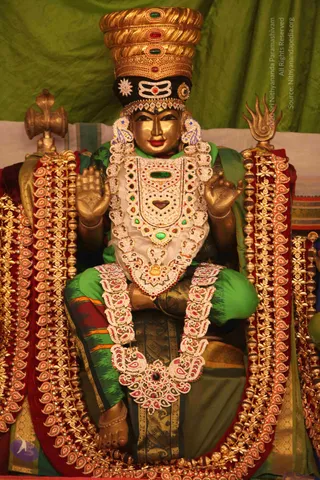
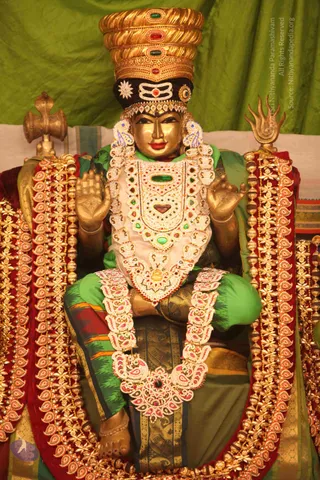
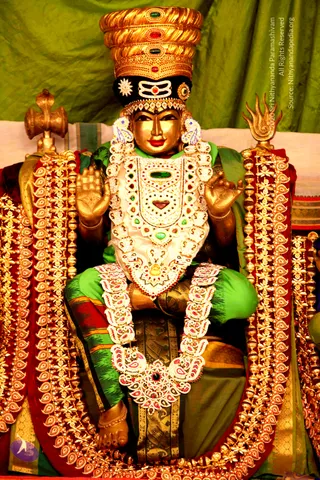
A photograph of three decorated murti statues seated side by side on a raised golden stage before a green draped backdrop. The central deity murti wears a tall gold crown set with red and green stones, a white and gold jeweled necklace, a green garment and a white garland, with hands in abhaya and varada poses. The figure on the left wears a red and maroon robe, a red turban, a beaded necklace and an ascetic-style appearance. The figure on the right wears a red and gold embroidered blouse, a gold crown and green lower garment. Gold garlands and a red velvet border frame the group, with a trident-like object above the central figure. These are statues, not physical people.A photograph of three gold-faced murtis seated on a stage before a green draped backdrop, decorated with golden garland borders. The central figure wears a tall golden crown set with red and green stones, a white jewelled necklace and a green garment, with raised hands in blessing. The figure on the left wears a red and maroon robe, a red turban and a rudraksha-style beaded necklace. The figure on the right wears a gold crown, a red and white garment and a white ornamented collar. These are statues, not living people, and no physical people are visible.Three life-sized deity murtis seated side by side on a golden throne-like platform before a green drape. The central figure wears a tall gold crown with red and green stones, a white and green floral garland, a white beaded necklace and green silk, with raised hands in abhaya mudra. The figure on the left, wearing a red turban, rudraksha-style beaded necklaces and a rust-red garment, holds a small object, and the figure on the right wears an ornate gold crown and a red and white embellished bodice with green dhoti. Gold-bordered red cushions frame the figures.A gilded deity murti seated cross-legged on an ornate throne, dressed in a red silk blouse and green silk dhoti with gold borders. Its face is gold with red lips and a bindi, wearing a tall jeweled golden crown, layered white stone necklaces, and a white floral garland. One hand raises a gold staff-like object while the other rests open on the lap. Red and gold embroidered velvet cushions flank the throne, and a golden trident stands at the left edge.Three gilded statues sit side by side on a decorated stage before a green drape and gold pillars. The central figure is a deity murti in green silk with a tall gold crown, a white and green jeweled necklace, and a Shiva lingam emblem on its forehead, holding a trident-like staff. To its left, a figure in a red and gold turban wears a red-brown beaded garment and gold necklaces. To its right, a figure wears a gold crown and a red and white jeweled blouse with green silk. The figures are framed by gold-bordered red and green fabric and garlands, and are statues rather than physical people.A photograph of three gilded deity murti seated side by side on a decorated throne against a green draped backdrop. The central figure, with a tall ornate gold crown set with red and green stones, a tilak marking on the forehead, and a tall gold crown with a trident-like staff in one raised hand, wears a green and white jewelled garment and a long white floral garland. The figure on the left is a seated sage-like murti in deep red-brown clothing with a red turban, layered beaded necklaces and a rudraksha-style mala. The figure on the right wears a gold crown, a red and white embroidered blouse and a green skirt with lace-like white necklaces. Gold-trimmed red and maroon drapes frame the seated figures and the gold pillars behind them. These are statues, not living people.

FB-photo-of-the-day

4 photosSource gallery

Completion-With-Others

6 photosSource gallery
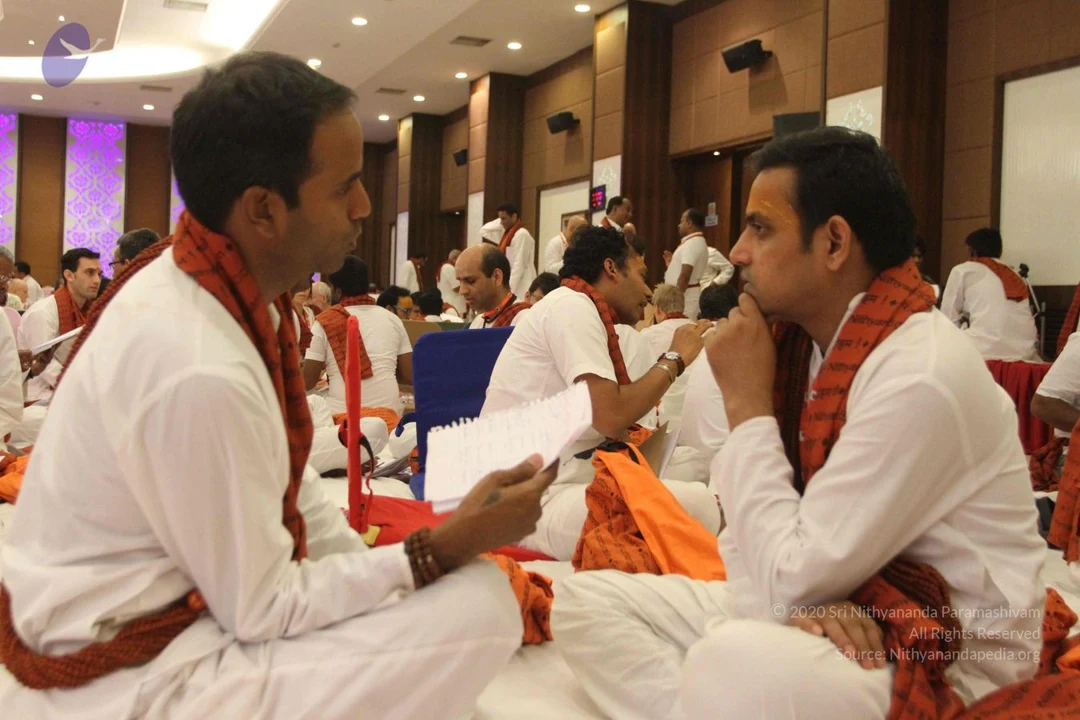
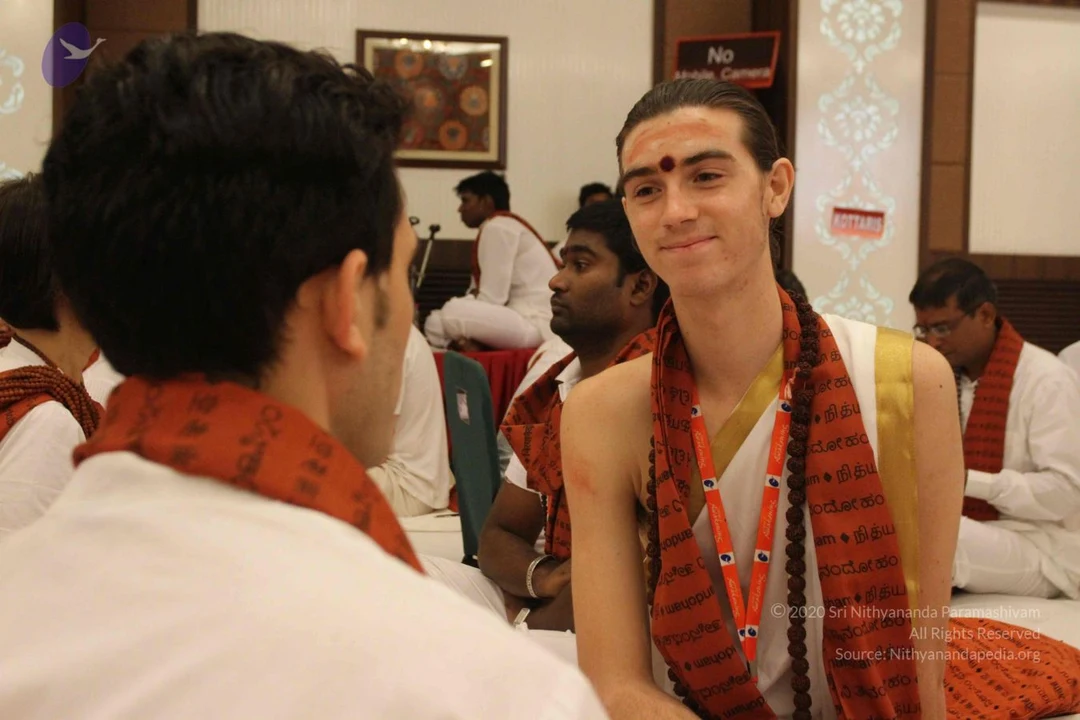
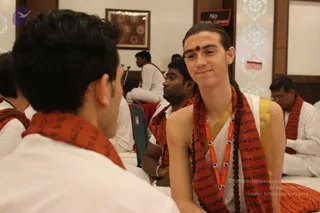
Photograph of an empty stage or altar setup in a plain hall with cream walls and a black ceiling speaker. Two tiered tables are draped in white satin cloth, with a silver-embossed relief panel arrangement on each: a larger upper panel and a lower panel showing temple towers, a shikhara spire, arches, pillars, and a pair of carved footprints. A red tassel hangs near the upper panel. No people are visible.A seated satsang gathering of devotees in white clothing with orange-red shawls, many with orange tilak marks on their foreheads. In the centre, a woman with long dark hair and orange forehead mark gestures with open hands while speaking to another woman in glasses and a white top with an orange shawl. Another woman in the foreground wears a red bindi and orange shawl, and others sit around them. No deity murti or a person candidate is clearly visible.A large indoor hall filled with many seated devotees dressed in white kurtas and white clothing, most wearing red-and-maroon woven shawls draped over their shoulders. Many sit on the white floor cushions and white mats while others stand and move among them; some hold papers or notebooks. Blue and red folding chairs are scattered among the crowd, a black bag sits on the floor, and red draped tables line the right edge. Purple-patterned wall panels decorate the background. A woman in a blue headscarf and white outfit stands at the upper left. The scene appears to be a satsang or gathering with seated attendees.A seated group of devotees in a large hall at a satsang, with several women in white dresses wearing orange-red shawls printed with Sanskrit text. The woman in the centre, wearing a white sari with gold border, an orange shawl and a red-and-white lanyard, looks toward a woman at left who wears an orange shawl and a rudraksha mala. A woman at right with glasses holds a notebook and pen. Other participants sit on the floor behind them, and a speaker stands against a dark wall. No a person is visible in the frame.A photograph of devotees seated on the floor of a large hall during a satsang gathering. In the foreground, two men in white kurta-style clothing with orange-red shawls embroidered with text sit facing each other, one holding an open notebook and pen while the other rests his chin on his hand. Behind them many more seated devotees in white and orange wraps fill the room, with wood-panelled walls, recessed ceiling lights and a purple patterned panel at left. A wrist mala and a red-cushioned seat are visible. No single figure on a throne is clearly identifiable as a person.A photograph of a satsang hall where a young man with slicked-back hair and a red bindi on his forehead sits smiling, wearing a white dhoti-style garment, a gold-bordered white shawl, a rudraksha mala and an orange-red shawl printed with repeated script, with a lanyard around his neck. He faces another man seen from behind, who wears a white kurta and a similar orange shawl. Behind them other seated devotees in white clothes and orange shawls sit on the floor, and a man in the background sits near a red cloth and a standing microphone. A framed decorative panel hangs on the wall and a red sign reading No Mobile Camera is visible at the top.
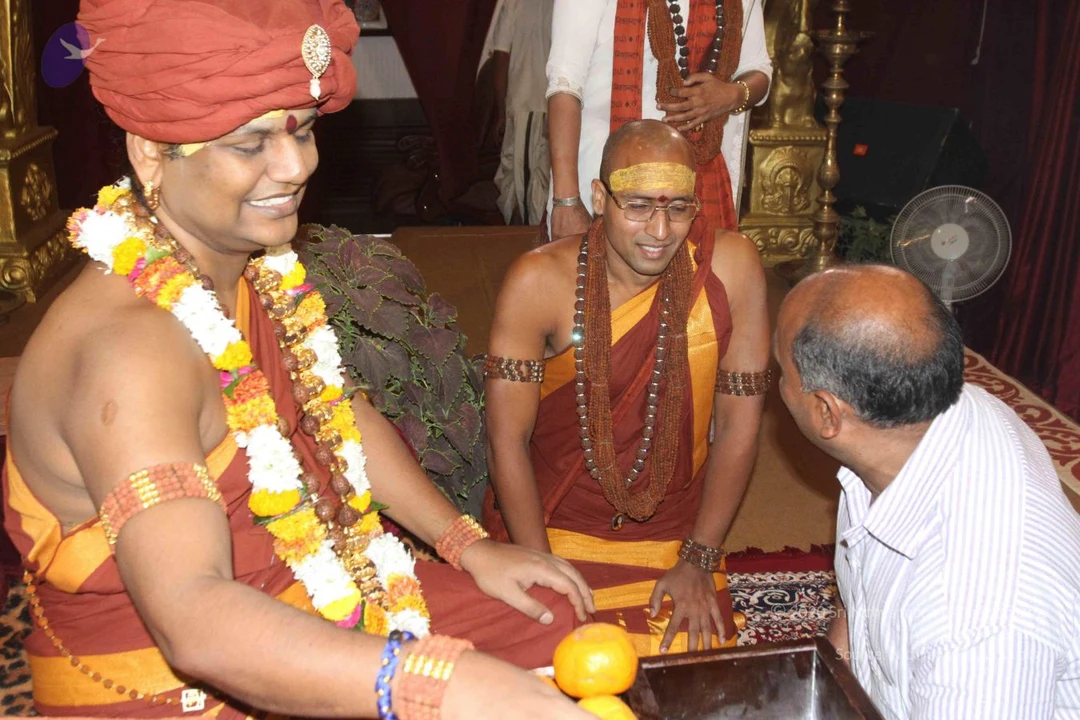
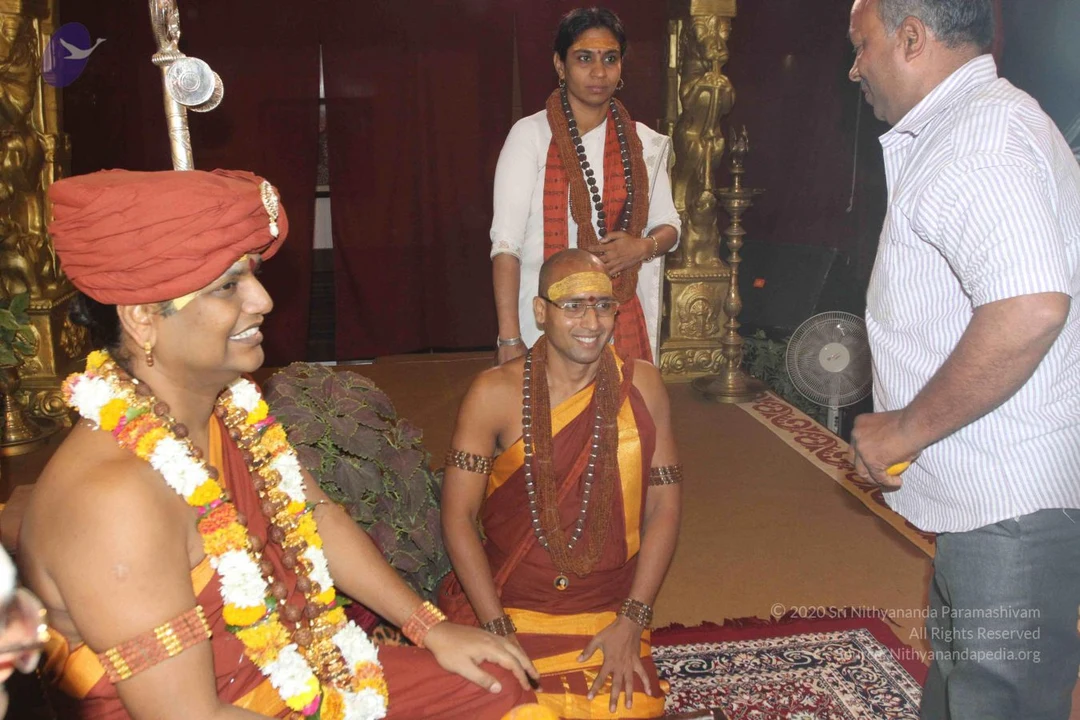
Shivoham

97 photosSource gallery
A seated figure in a brown throne-style chair, with long dark hair, a multi-strand gold-and-yellow flower garland, a rudraksha-style bead necklace, a yellow sash over an orange-brown robe, and a large silver trident beside the chair, smiles broadly while raising hands in a teaching gesture. Around the front are rows of devotees in white clothes and orange-red shawls, many with hands folded in anjali, some wearing yellow forehead markings. Behind them stand more people in white and red, and a purple floral backdrop fills the top corners of the hall. Seated devotees in the foreground show the back of a woman in orange-red and a man in white. Swamiji (probable): the seated figure wears long swept-back hair, a gold garland, rudraksha beads and an orange-saffron robe with a yellow sash, cues consistent with a satsang discourse setting.A seated long-haired figure in a rust-orange garment with a yellow border and a large yellow-beaded garland sits in a brown leather throne-style chair, smiling and gesturing with open hands. A tall silver trident stands beside the chair. Around them a large crowd sits and stands in white and orange-red shawls, many with palms pressed together in anjali and yellow forehead marks, in a hall with lavender patterned panels. a person: the seated figure has long swept-back hair, ornate orange-and-gold clothing, and a gold necklace, seated on a throne before the audience. Foreground people sit with their backs to the camera.A photograph of a satsang hall where a long-haired figure seated on a brown leather throne holds a silver trident (trishul) upright beside him. He wears a saffron-orange garment, a long gold-and-beads necklace, rudraksha bracelets and a tilak on his forehead; he is smiling. Seated devotees in orange and red shawls fill the rows around him, many with hands folded in prayer and some with yellow and orange tilak marks. Purple lighting and a stage backdrop frame the scene. Swamiji (probable) is seated centrally on the throne, identified by his long hair, saffron clothing, gold necklace and rudraksha malas.A photograph of a satsang hall where a figure with long dark hair, a red-and-saffron shawl, and a heavy gold and beaded necklace sits smiling in a brown leather throne-style chair, a tall silver trident beside him. Multiple rows of seated devotees in saffron and red shawls and white clothes fill the background, several with hands pressed in anjali. In the foreground, a few heads and backs of seated attendees are visible, with a small audio device on a wooden table near the throne. Pink and purple stage lights glow at the top of the frame. Swamiji (probable): the seated figure's long hair, gold necklace, rudraksha mala and saffron shawl are the qualifying cues; he is presented as the teacher during a satsang discourse.A seated man with long dark hair, a white forehead mark and a red-orange shawl with a gold trim sits in a large brown leather throne-style chair at a satsang. He wears layered yellow-gold and red-brown beaded garlands and a patterned skirt, and holds a tall ornate silver trident (trishul) beside the chair. Rows of seated devotees in red-orange shawls and saffron clothing fill the hall in front of him, some wearing headsets, with lilac and cream patterned walls behind. a person: the seated central figure, identified by distinctive long swept hair, rudraksha-style garlands and ornate saffron clothing; he is presented as the speaker at the satsang.A seated person in a brown throne-like armchair at the front of a large hall, wearing an orange-brown shawl, a yellow-trimmed sash, a leopard-print skirt, a long gold-and-yellow marigold garland and a gold pendant, with long dark hair swept back and a small microphone near the face. A silver ceremonial staff topped with a trident stands beside the chair. Around the seat, many devotees in white and saffron-red shawls sit on the floor, some with yellow forehead markings, facing the speaker. Purple floral patterns decorate the wall behind. Swamiji (probable) appears seated in the chair, identifiable by the long swept-back hair, saffron-trimmed garments, garland and rudraksha bracelets, with the trident staff indicating his ceremonial seat.

Deities

18 photosSource gallery
A photograph of three decorated murti statues seated side by side on a raised golden stage before a green draped backdrop. The central deity murti wears a tall gold crown set with red and green stones, a white and gold jeweled necklace, a green garment and a white garland, with hands in abhaya and varada poses. The figure on the left wears a red and maroon robe, a red turban, a beaded necklace and an ascetic-style appearance. The figure on the right wears a red and gold embroidered blouse, a gold crown and green lower garment. Gold garlands and a red velvet border frame the group, with a trident-like object above the central figure. These are statues, not physical people.A photograph of three gold-faced murtis seated on a stage before a green draped backdrop, decorated with golden garland borders. The central figure wears a tall golden crown set with red and green stones, a white jewelled necklace and a green garment, with raised hands in blessing. The figure on the left wears a red and maroon robe, a red turban and a rudraksha-style beaded necklace. The figure on the right wears a gold crown, a red and white garment and a white ornamented collar. These are statues, not living people, and no physical people are visible.Three life-sized deity murtis seated side by side on a golden throne-like platform before a green drape. The central figure wears a tall gold crown with red and green stones, a white and green floral garland, a white beaded necklace and green silk, with raised hands in abhaya mudra. The figure on the left, wearing a red turban, rudraksha-style beaded necklaces and a rust-red garment, holds a small object, and the figure on the right wears an ornate gold crown and a red and white embellished bodice with green dhoti. Gold-bordered red cushions frame the figures.A gilded deity murti seated cross-legged on an ornate throne, dressed in a red silk blouse and green silk dhoti with gold borders. Its face is gold with red lips and a bindi, wearing a tall jeweled golden crown, layered white stone necklaces, and a white floral garland. One hand raises a gold staff-like object while the other rests open on the lap. Red and gold embroidered velvet cushions flank the throne, and a golden trident stands at the left edge.Three gilded statues sit side by side on a decorated stage before a green drape and gold pillars. The central figure is a deity murti in green silk with a tall gold crown, a white and green jeweled necklace, and a Shiva lingam emblem on its forehead, holding a trident-like staff. To its left, a figure in a red and gold turban wears a red-brown beaded garment and gold necklaces. To its right, a figure wears a gold crown and a red and white jeweled blouse with green silk. The figures are framed by gold-bordered red and green fabric and garlands, and are statues rather than physical people.A photograph of three gilded deity murti seated side by side on a decorated throne against a green draped backdrop. The central figure, with a tall ornate gold crown set with red and green stones, a tilak marking on the forehead, and a tall gold crown with a trident-like staff in one raised hand, wears a green and white jewelled garment and a long white floral garland. The figure on the left is a seated sage-like murti in deep red-brown clothing with a red turban, layered beaded necklaces and a rudraksha-style mala. The figure on the right wears a gold crown, a red and white embroidered blouse and a green skirt with lace-like white necklaces. Gold-trimmed red and maroon drapes frame the seated figures and the gold pillars behind them. These are statues, not living people.

02-Shivoham
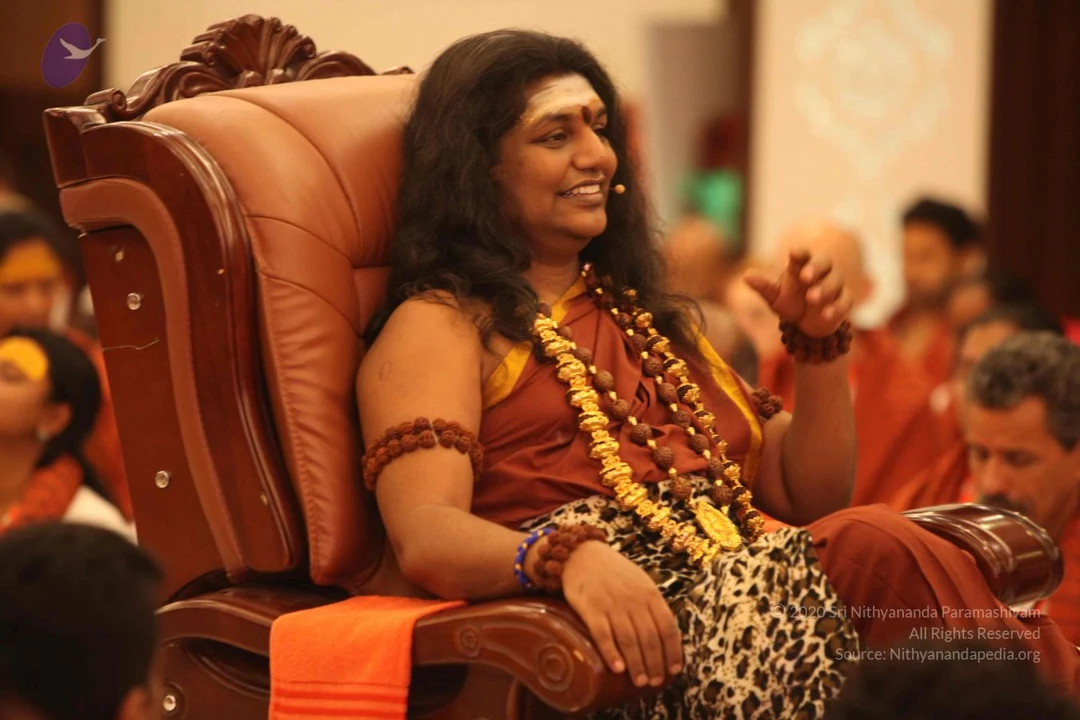
21 photosSource gallery
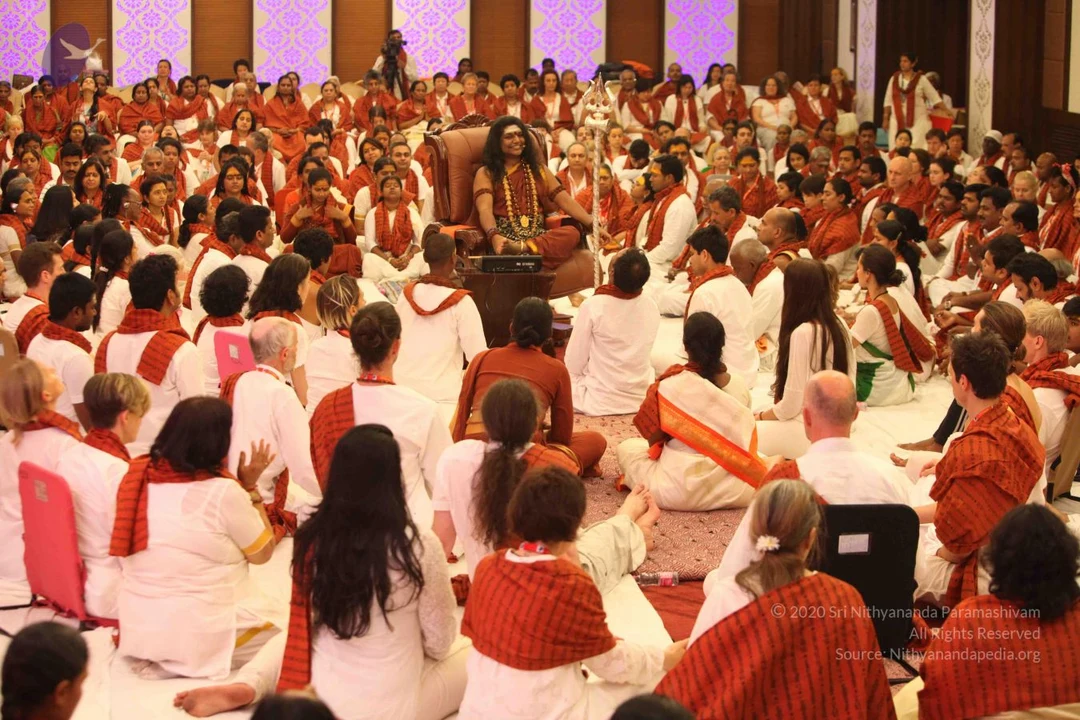
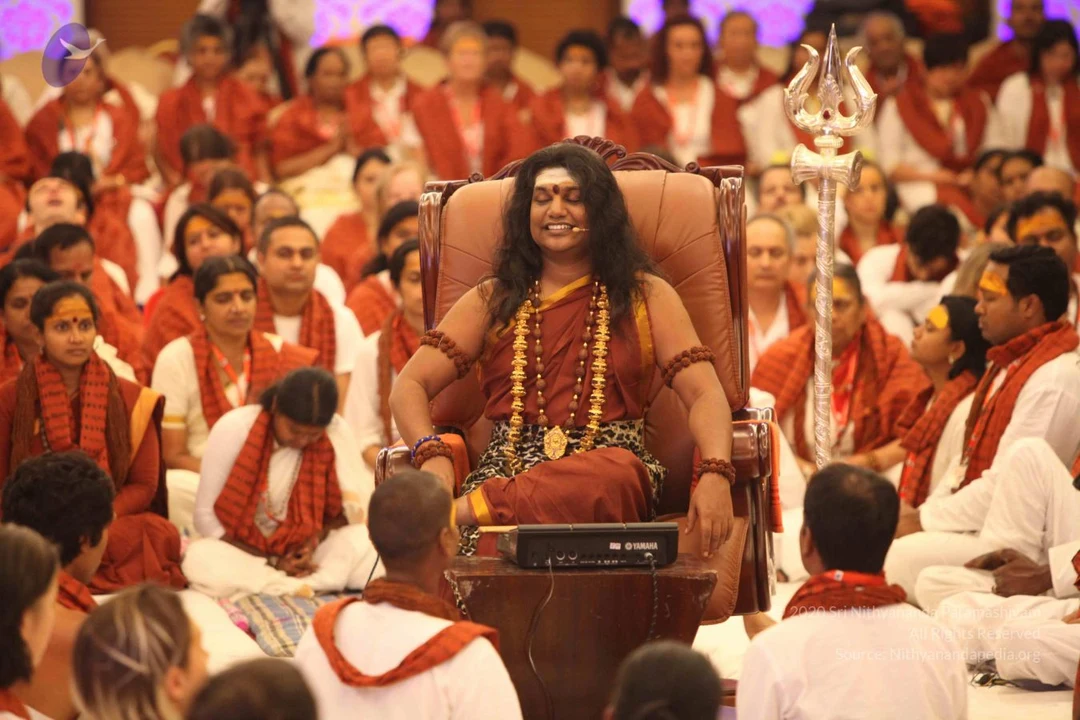
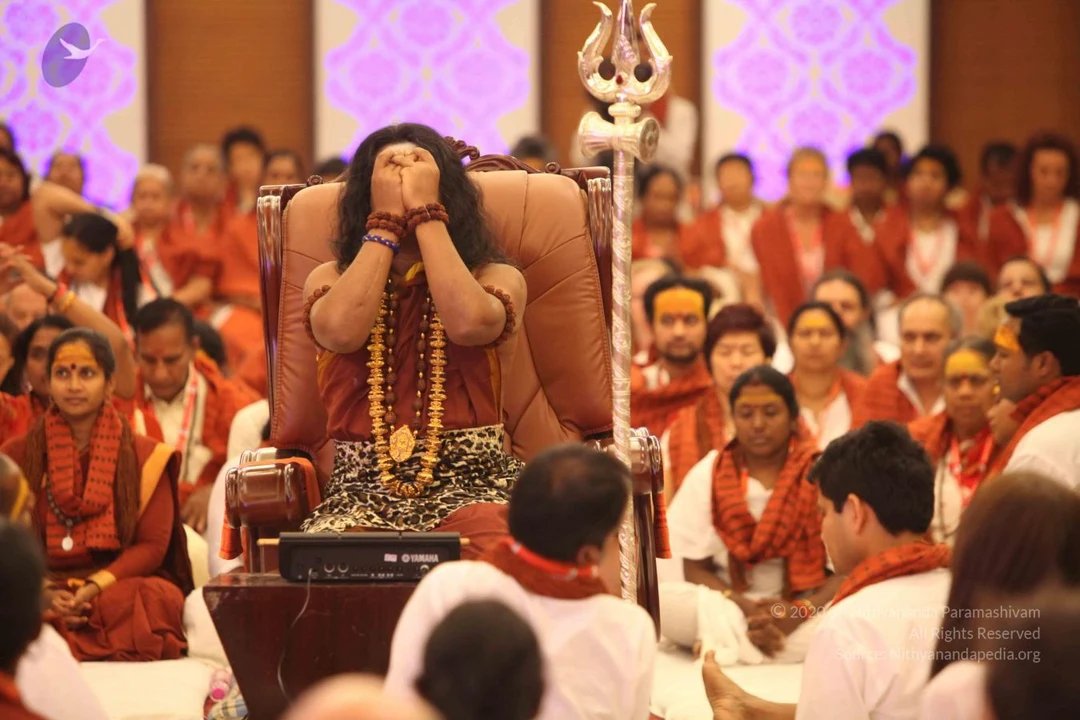
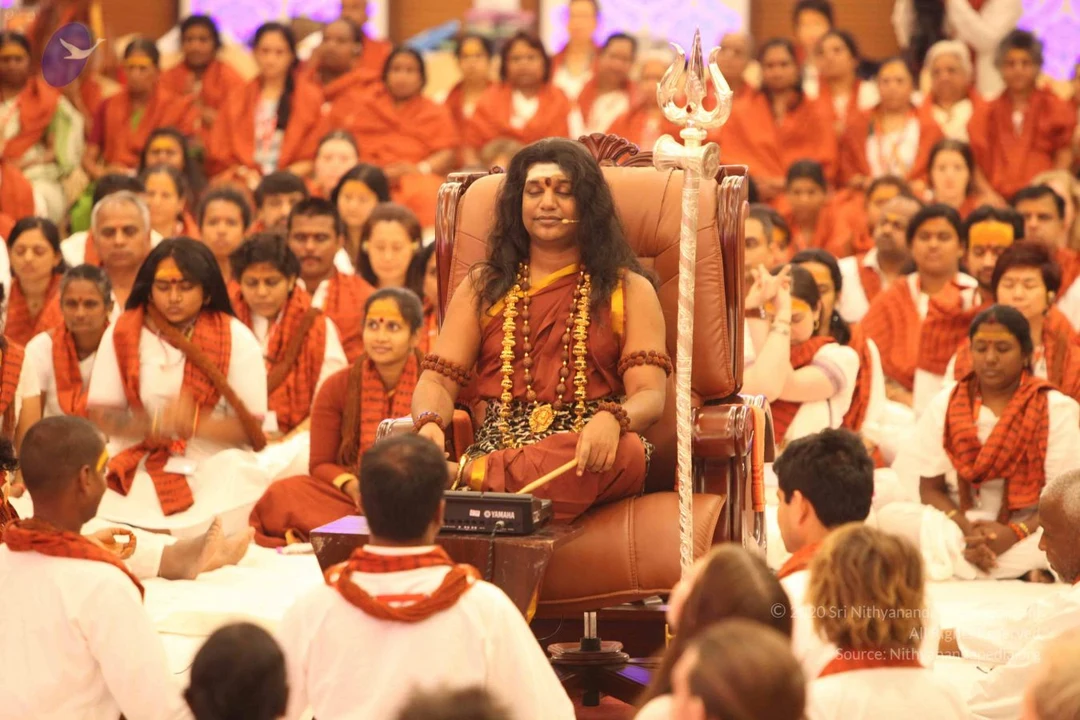
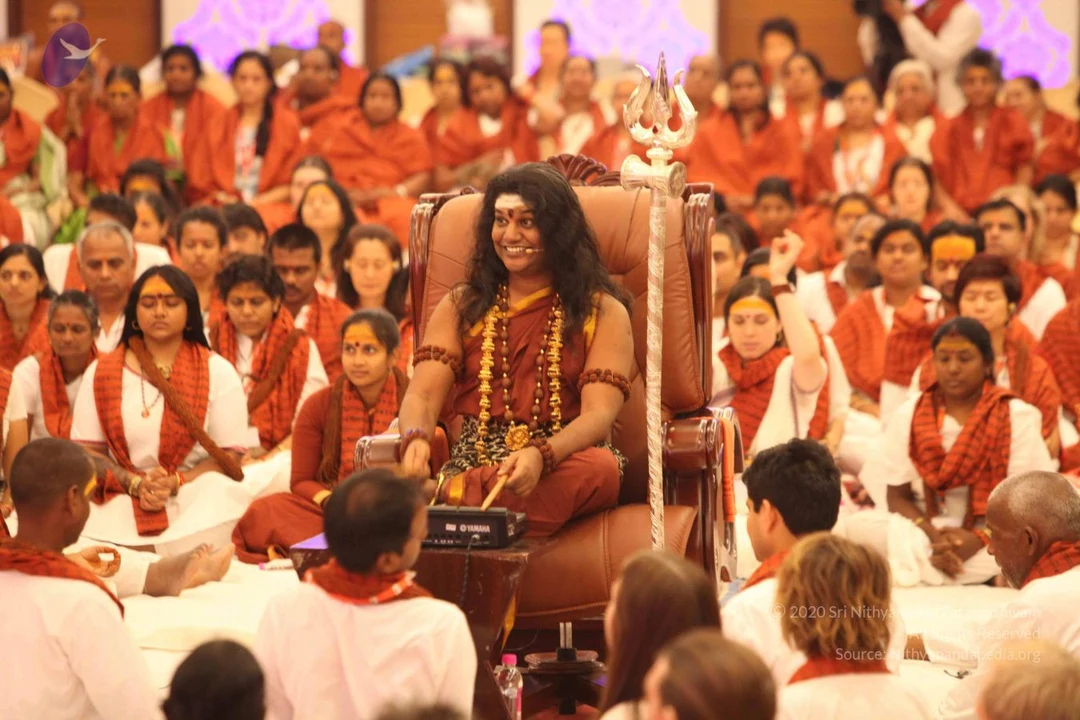
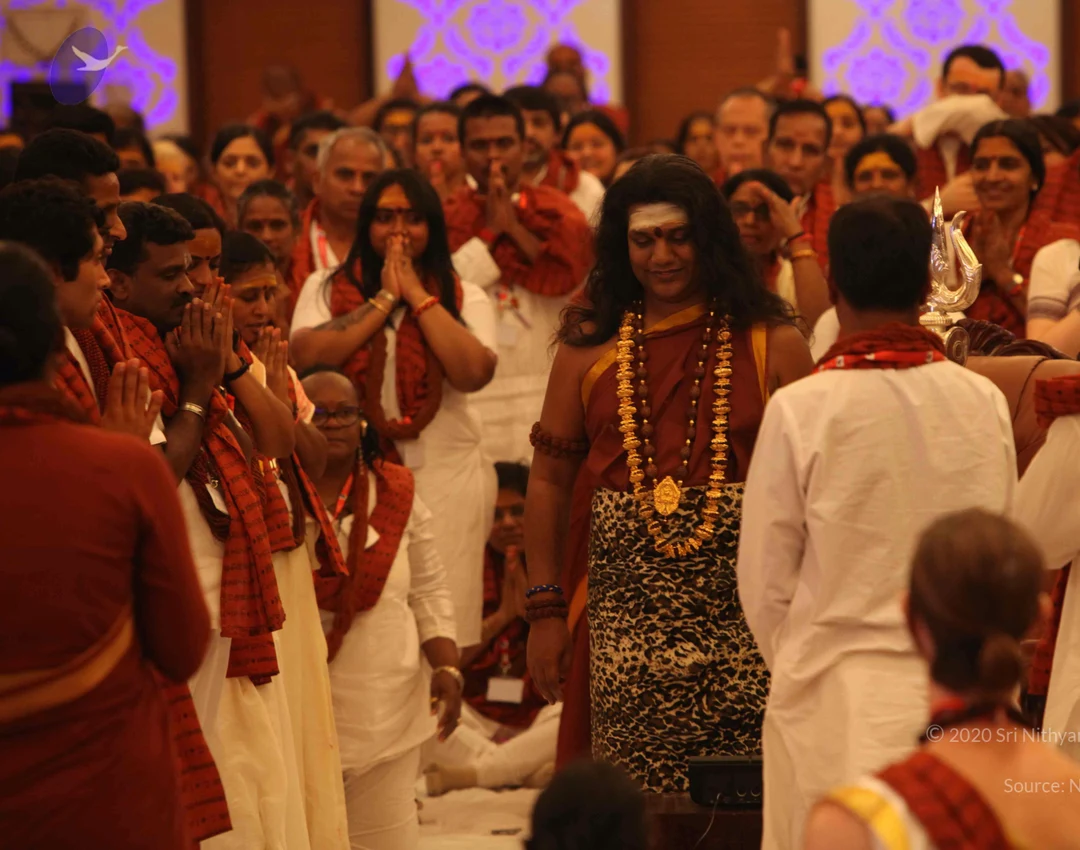
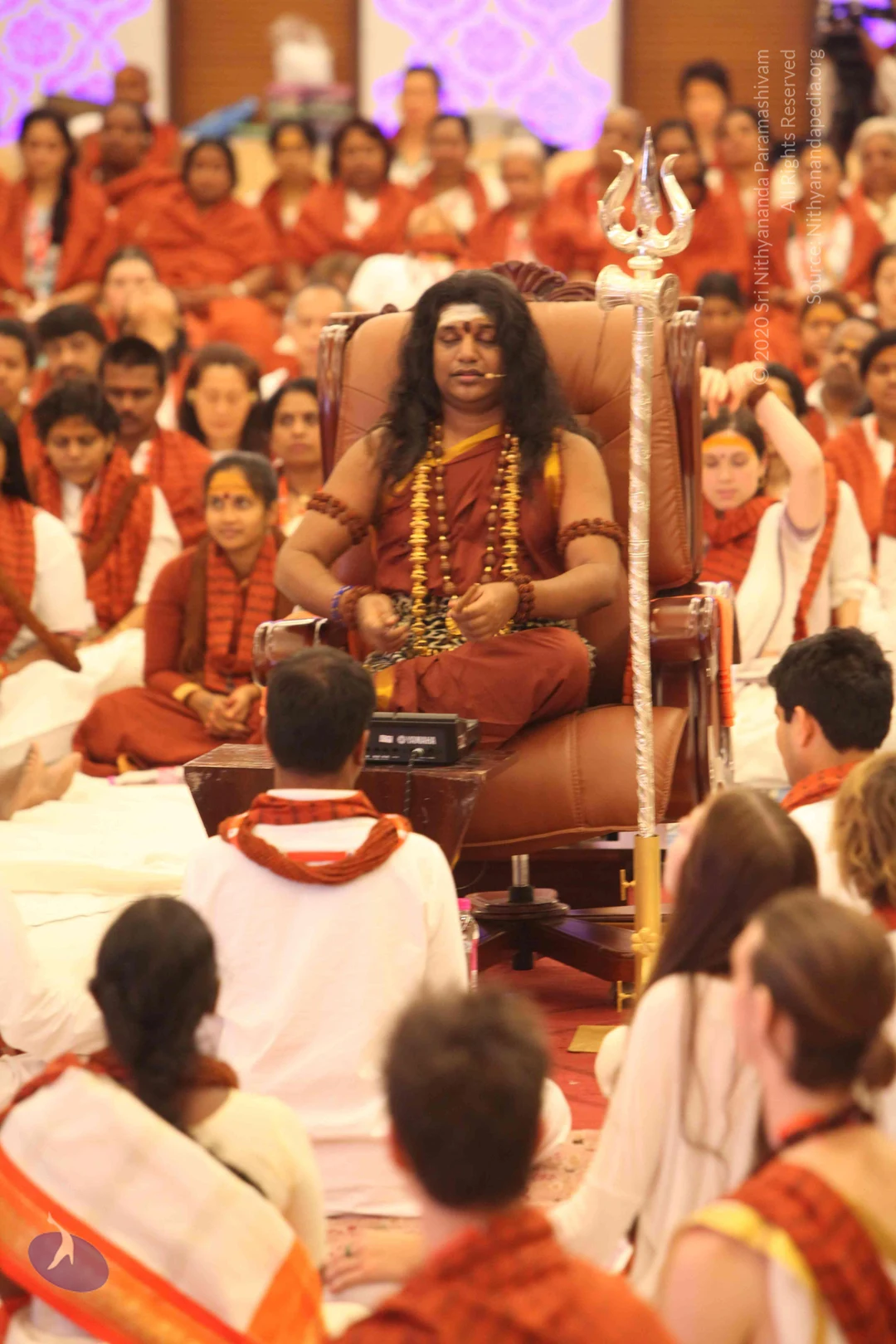
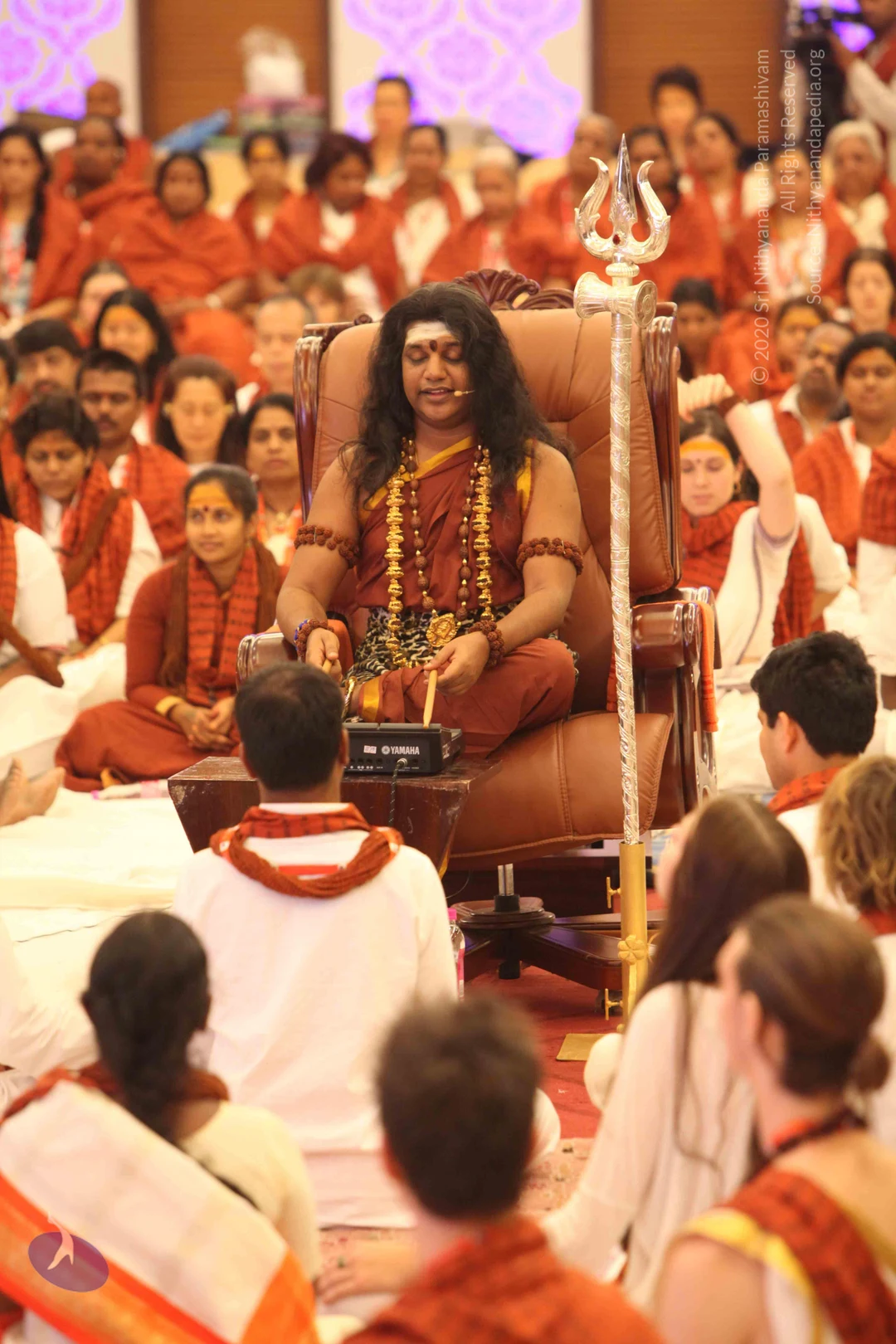
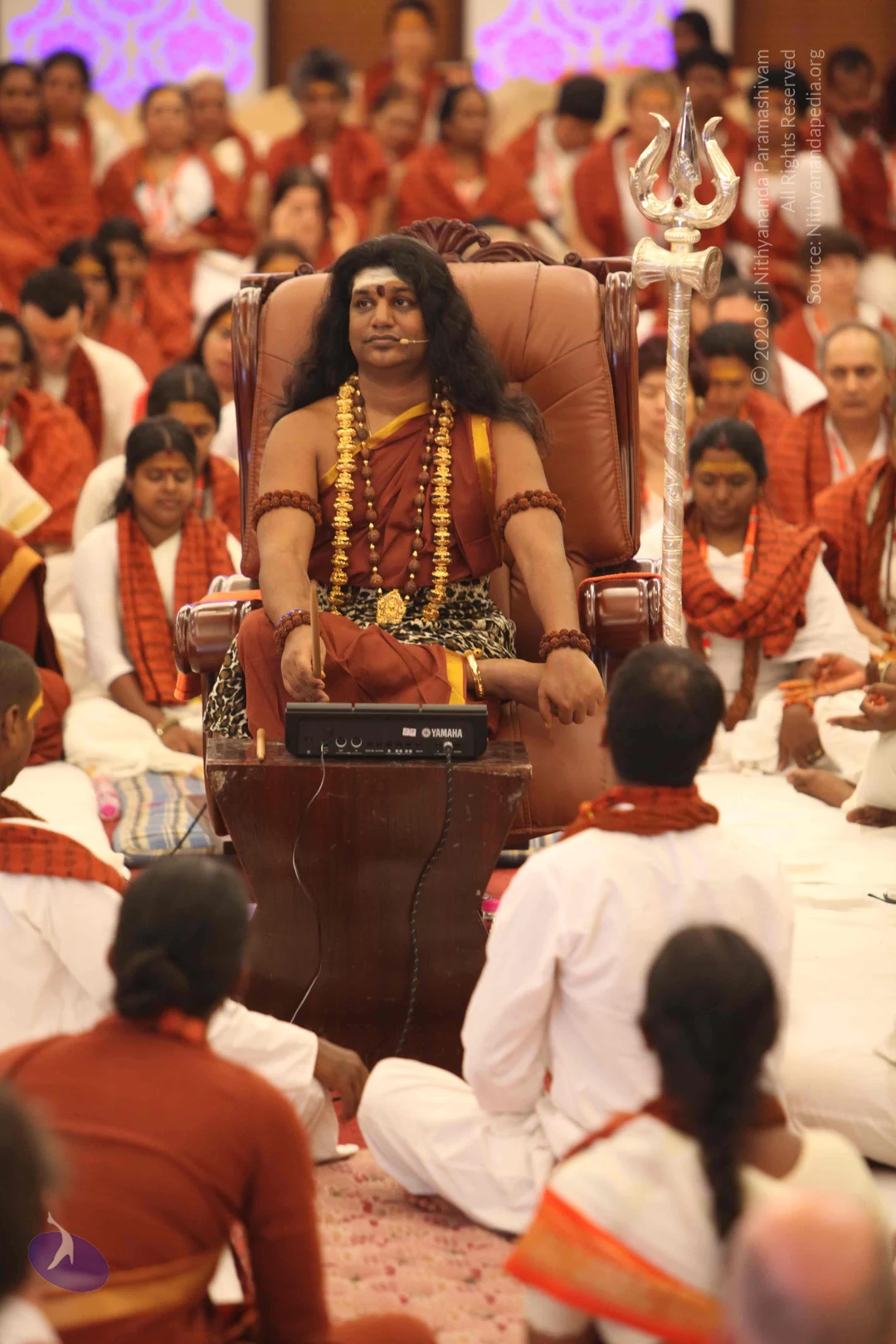
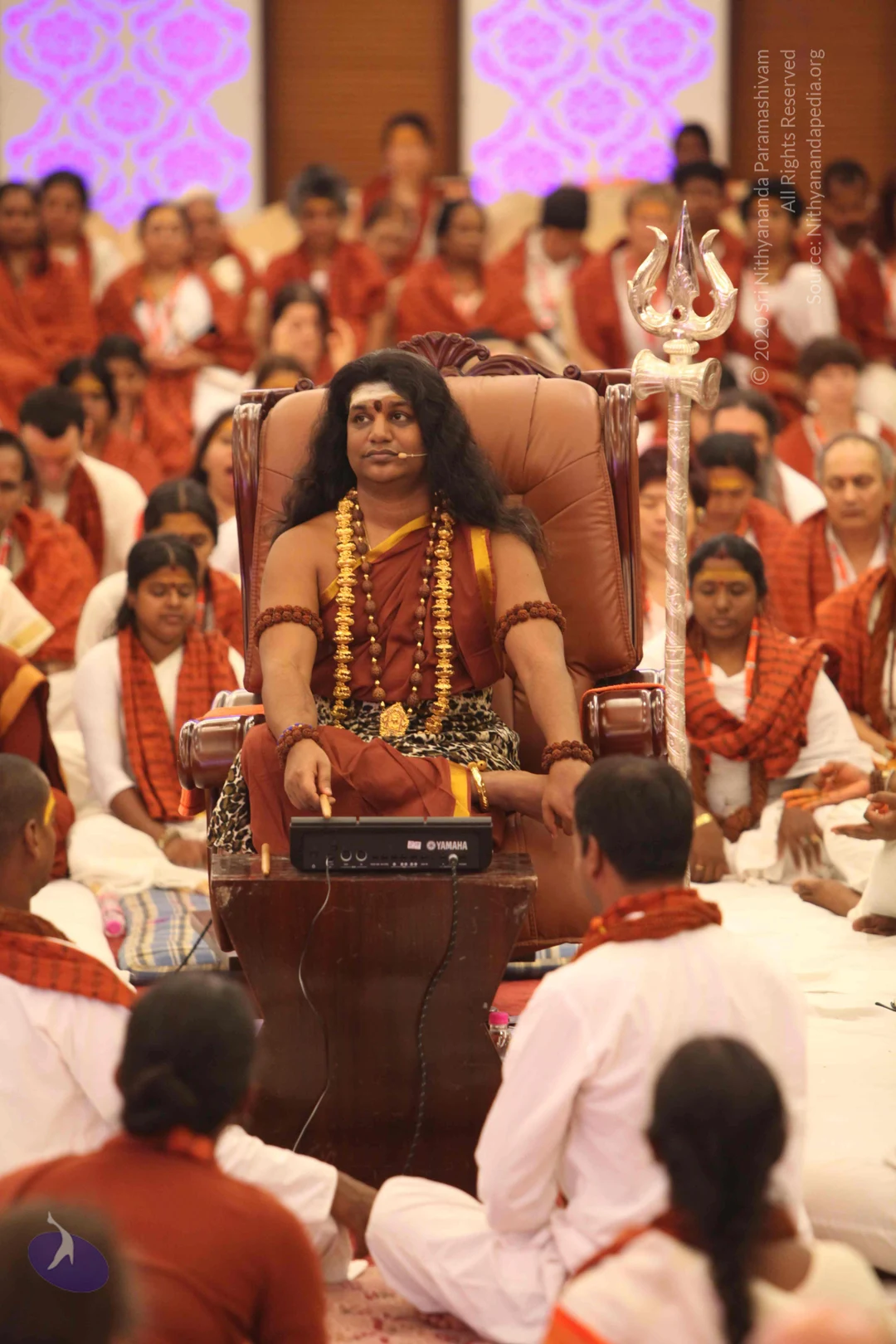
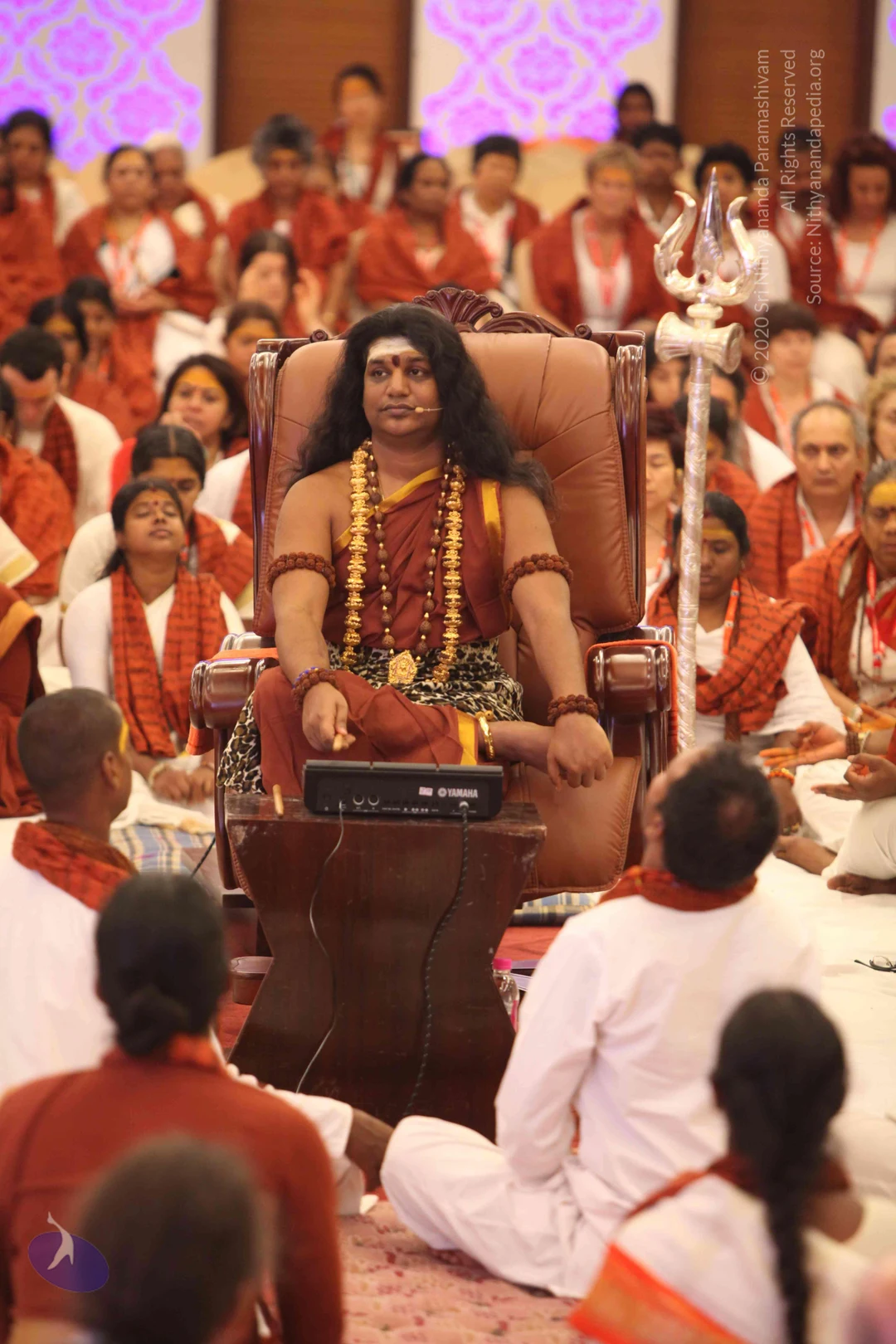
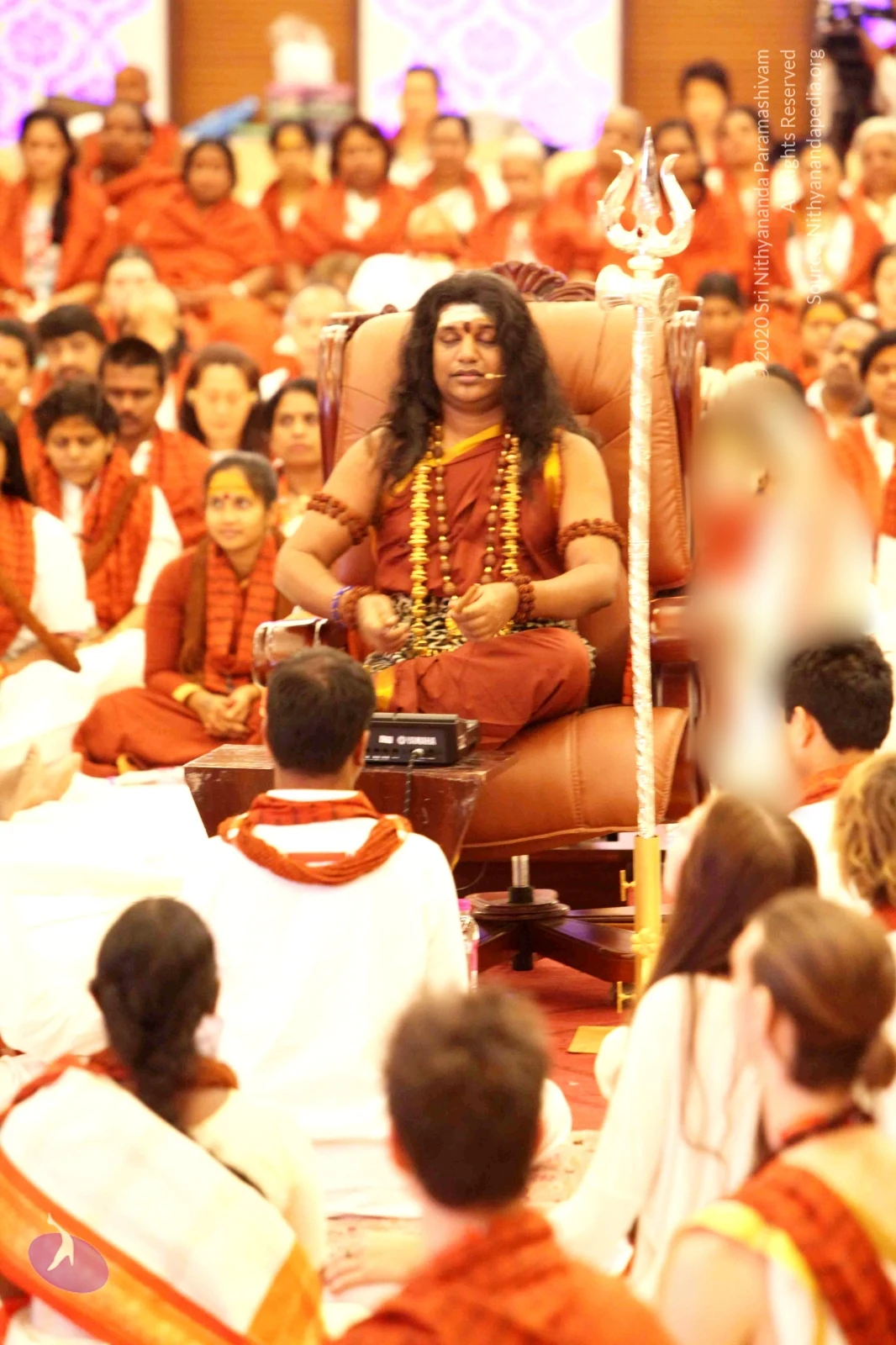
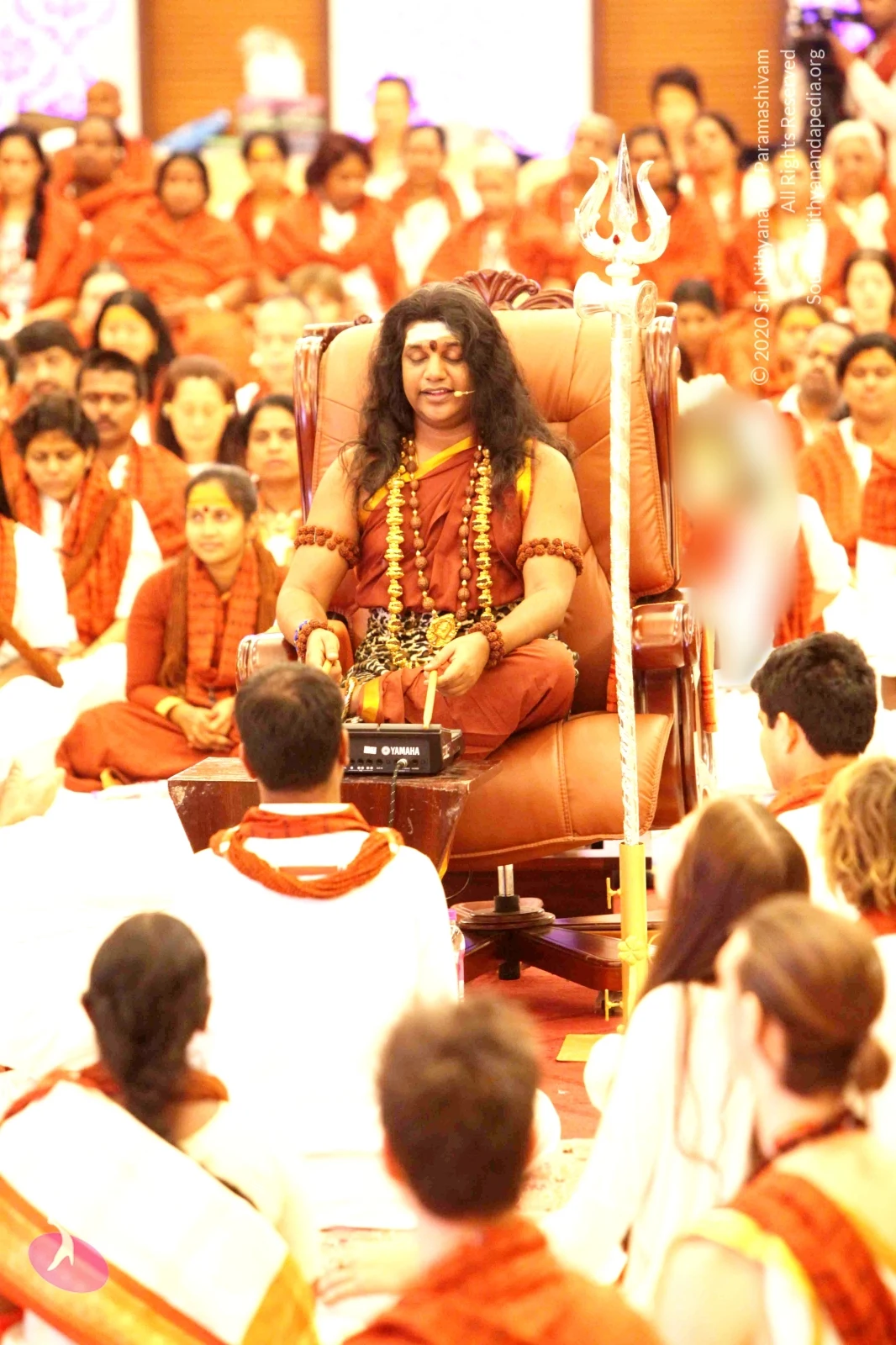
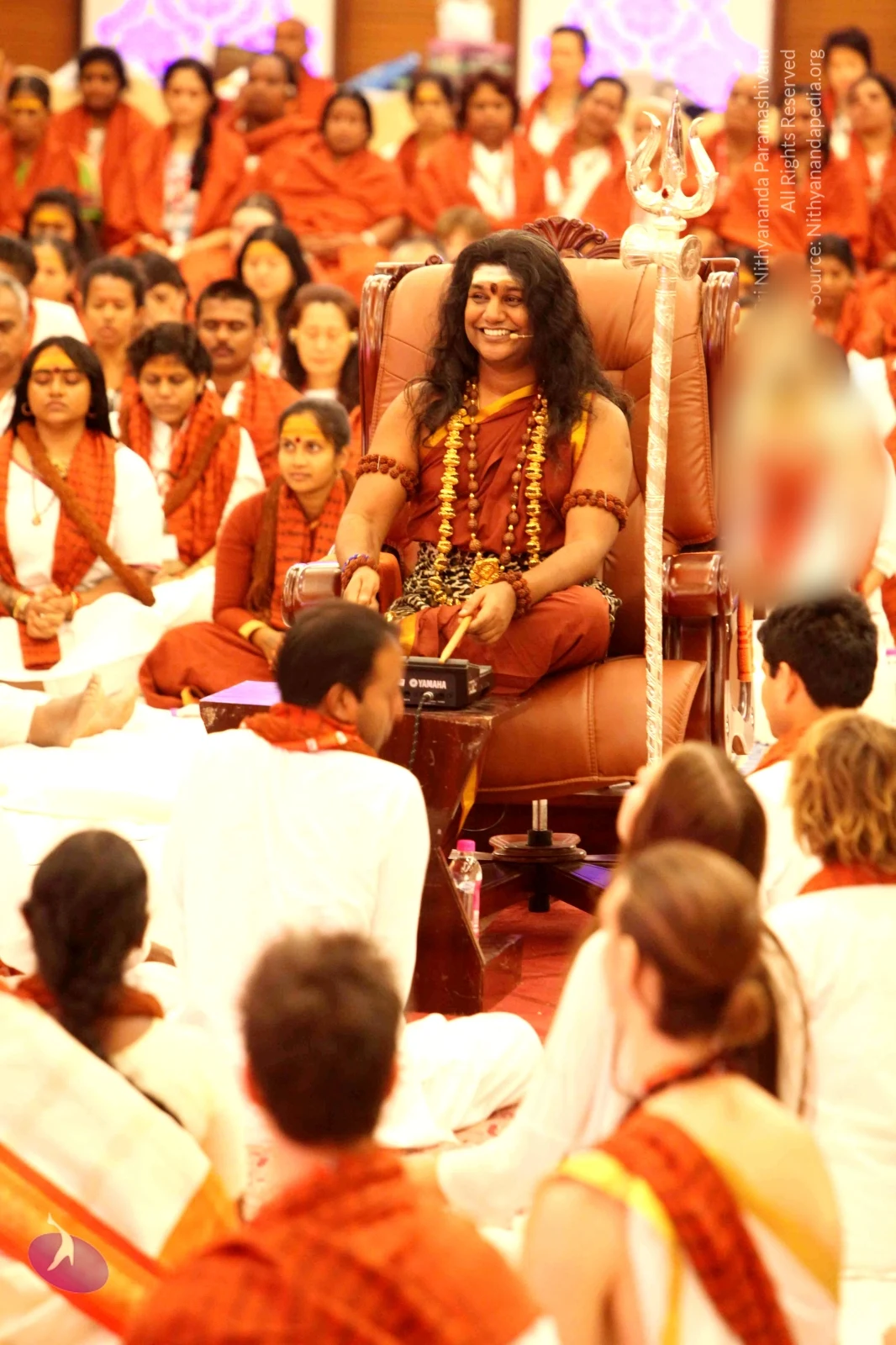
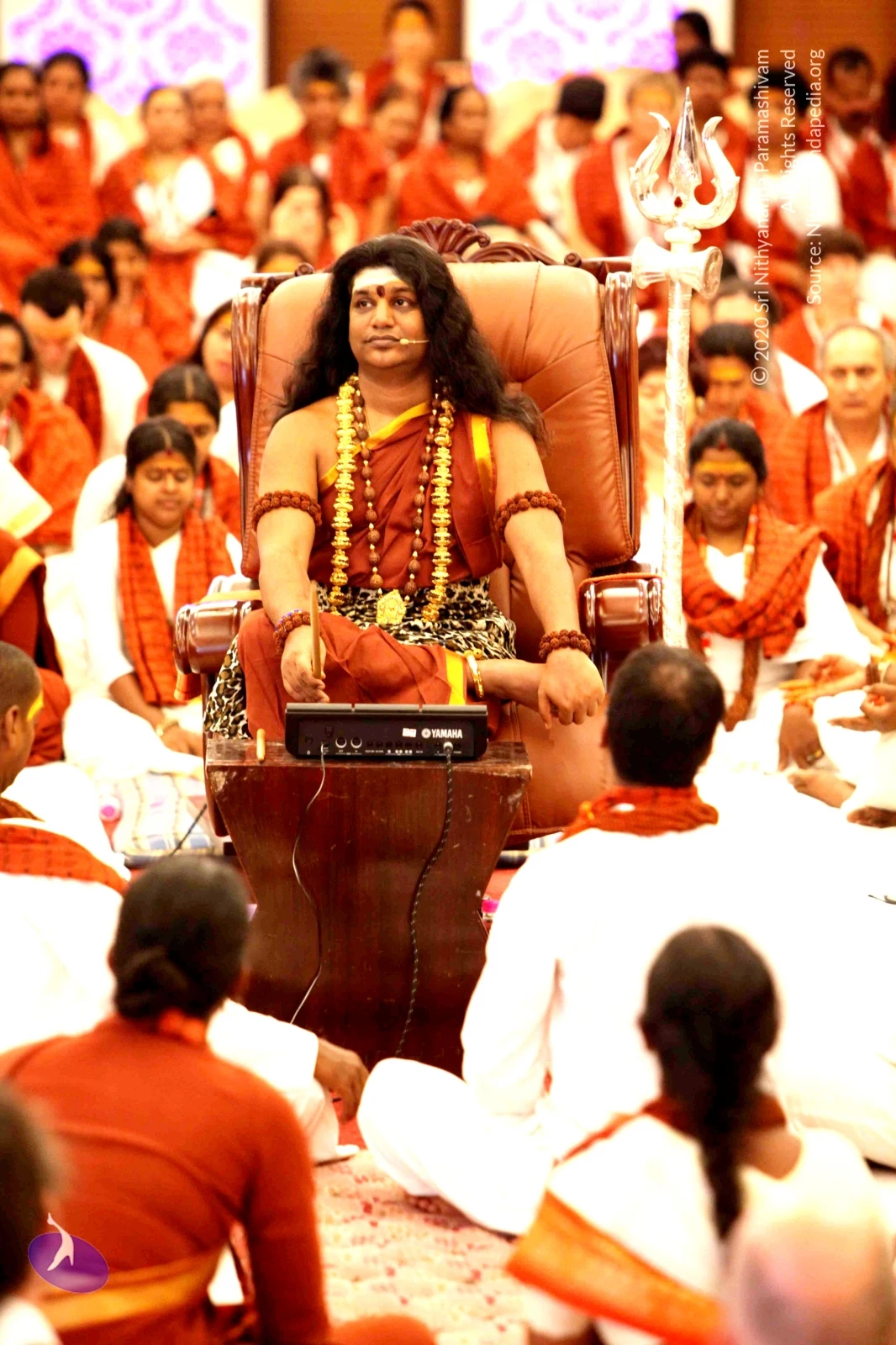
A photograph of a large hall where a long-haired man in a rust-red robe and gold-and-rudraksha necklaces walks forward through a crowd of devotees with palms pressed together in namaste. He wears white sacred ash markings on his forehead and a patterned wrap at his waist. Devotees in red and white, many with red shawls, stand with folded hands on both sides and at the back. A silver ceremonial object is visible at the right edge, and purple patterned panels decorate the wall behind the crowd. A man in white with his back to the camera stands in the foreground. The man in red is a person by appearance cues: long swept hair, rudraksha malas and gold ceremonial necklaces, with the event page indicating a person attended.A photograph of a satsang hall where a man in white kurta and white pants sits on a gold-covered chair on a raised wooden platform, speaking into a microphone. He wears an orange-red shawl with a checked pattern and has a vertical tilak on his forehead. Below him and in front are seated devotees in white clothes with orange-red shawls. A large artificial tree with green-lit foliage stands behind the speaker, and a 'No Photography' sign is visible on a stand. Orange shawls are folded on the floor beside the platform.A seated man with long dark hair, a white tilak on his forehead, and a saffron-red robe sits eyes closed on a large brown leather throne in a hall. He wears tiered gold necklaces with rudraksha malas and rudraksha bracelets, and a silver trident stands beside the throne. Before him, rows of devotees in orange and red shawls and white clothing sit on the floor, many with their backs to the camera. A small Yamaha audio unit sits on a wooden table in front. Behind, seated women and men in red and orange fill the hall under purple decorative panels.A satsang hall filled with seated devotees in orange and red shawls, many with tilak on their foreheads. In the centre, a long-haired figure in an orange-red robe and gold beaded necklaces sits on a large brown leather throne-style chair with eyes closed, holding a small stick and speaking into a headset microphone. A tall silver trident with a gold base stands beside the chair. In front, several people in white clothes and orange shawls sit with their backs to the camera, and a Yamaha audio unit sits on a wooden table. Purple floral backdrop panels appear behind the crowd.A seated teacher with long dark hair, a red-orange robe, multiple gold and rudraksha necklaces and rudraksha bracelets sits on a brown leather throne-like chair beside a tall silver trident, holding a small hand instrument while speaking into a headset microphone. A Yamaha keyboard sits on a low table in front. Before him, a large audience in orange and red shawls and white clothing sits on white floor mats, some with orange foreheads, some raising a hand; a few seated backs of white-clad listeners are in the foreground. The setting is a satsang hall with pink floral decoration on the back wall. Probable Swamiji (long swept-back hair, gold necklaces, rudraksha malas, saffron-orange robe) seated on a throne with a trident.A seated figure on a tall brown leather throne with a carved wooden back and a silver trident standing beside it addresses an assembly during a satsang. He has long dark hair, a white forehead marking, and wears a saffron-orange robe with a gold-coloured shawl, multiple rudraksha malas and ornate gold beaded necklaces, and holds a small wooden stick while smiling. Seated before him on white cloth are people in white clothes with orange-red shawls, some with orange forehead marks; one woman in the foreground with raised hands and eyes closed, and a man in white in the lower foreground facing the throne. A large audience in orange robes fills the hall behind, with a Yamaha device on a low table and a water bottle nearby.

03-Deities

24 photosSource gallery
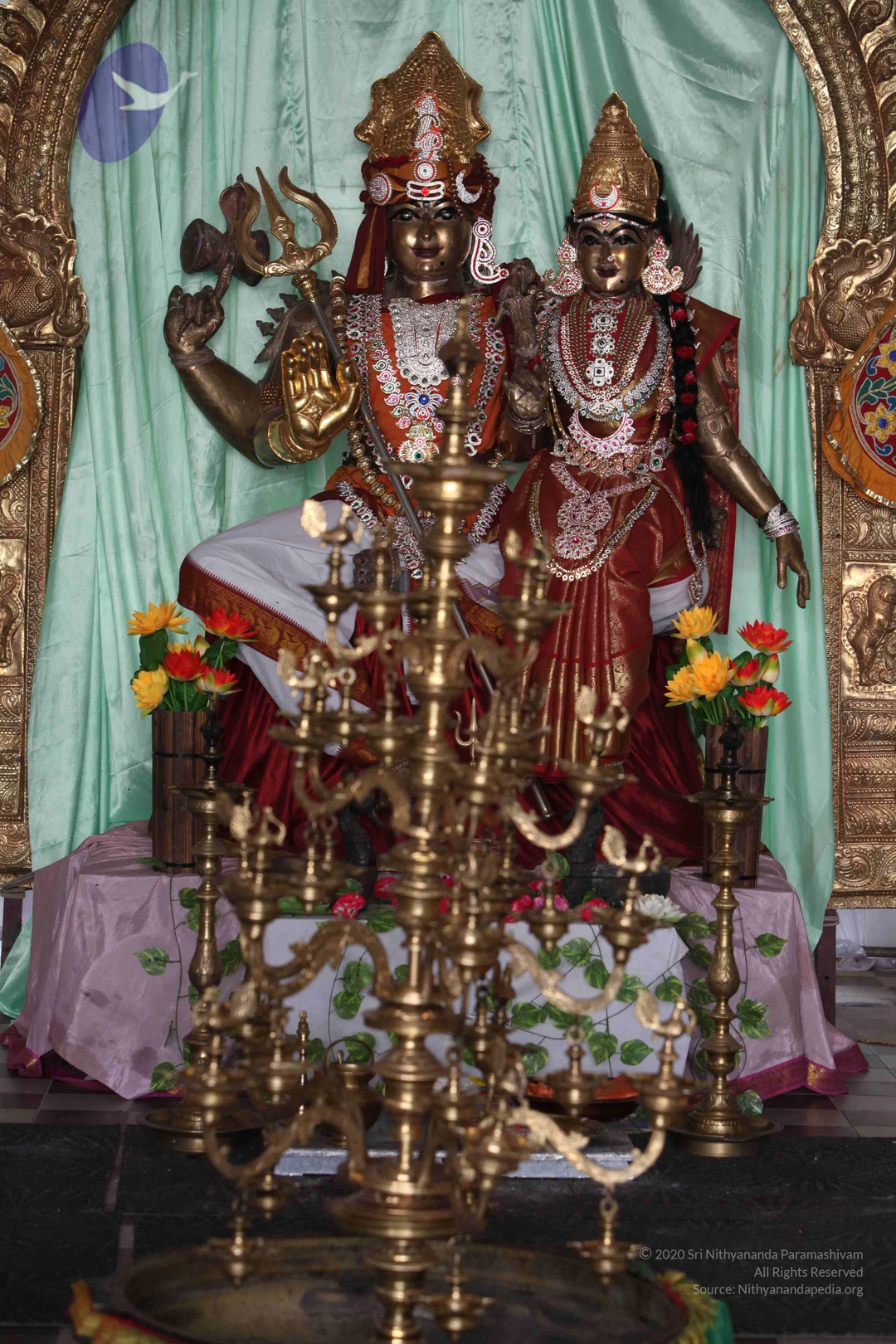
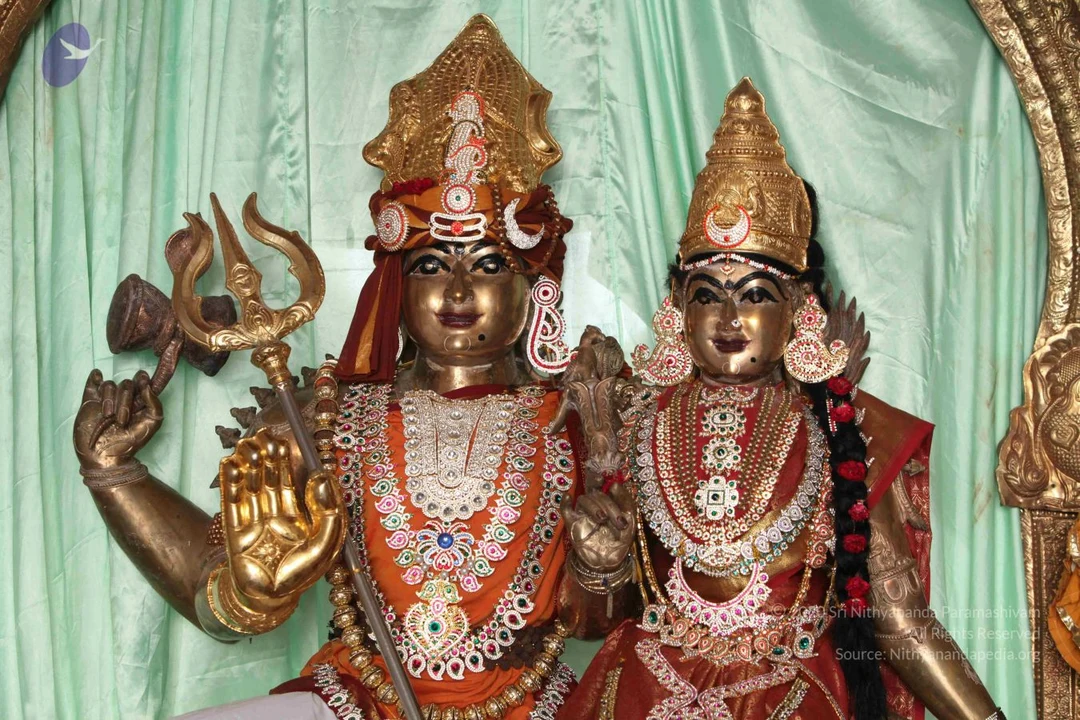
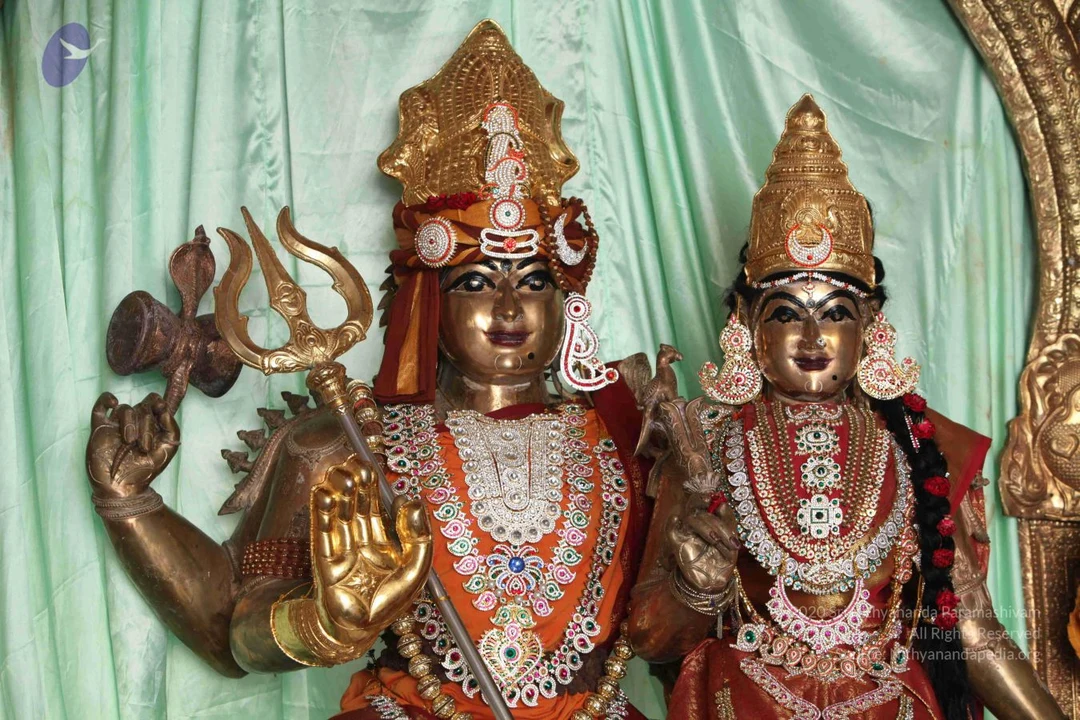
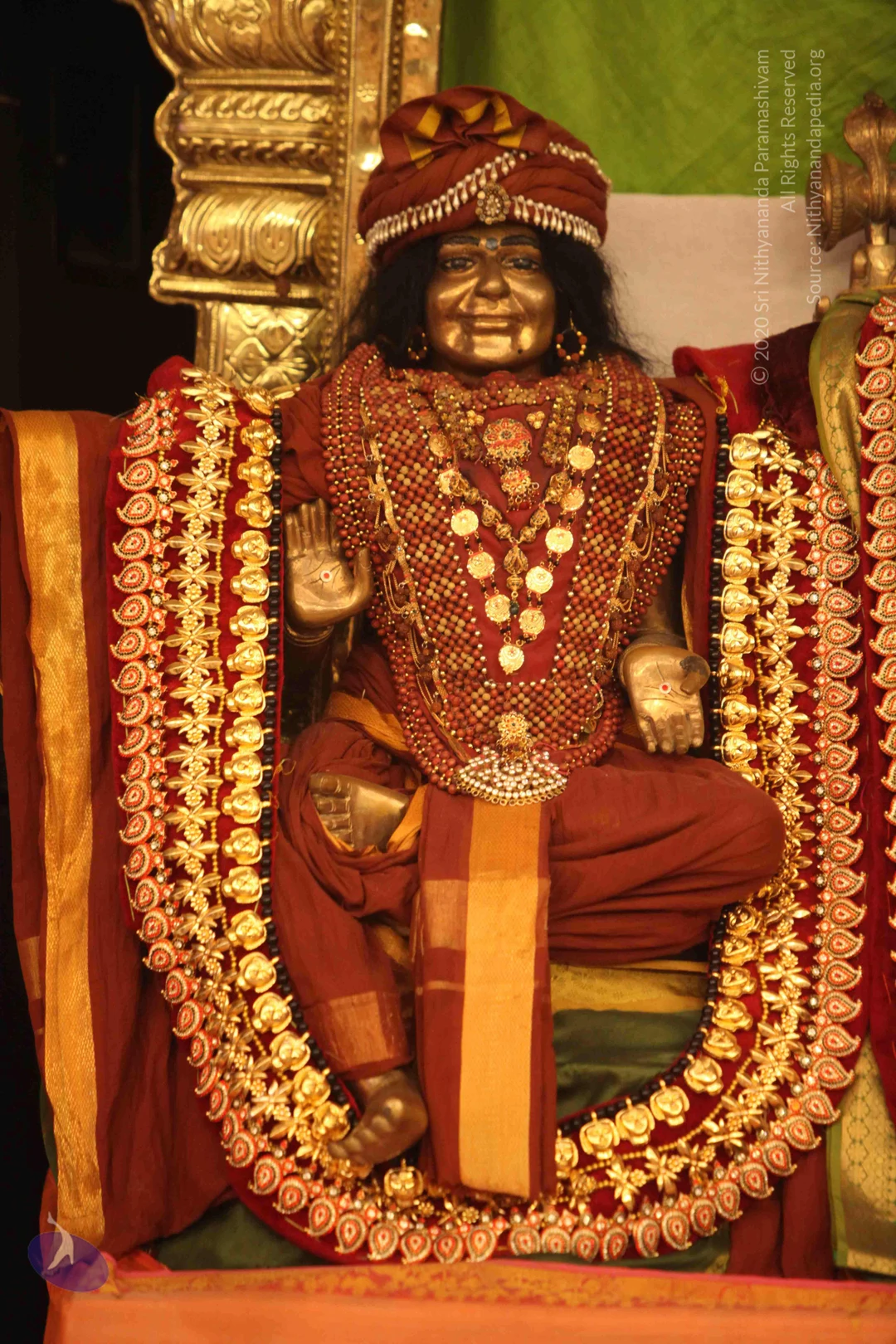
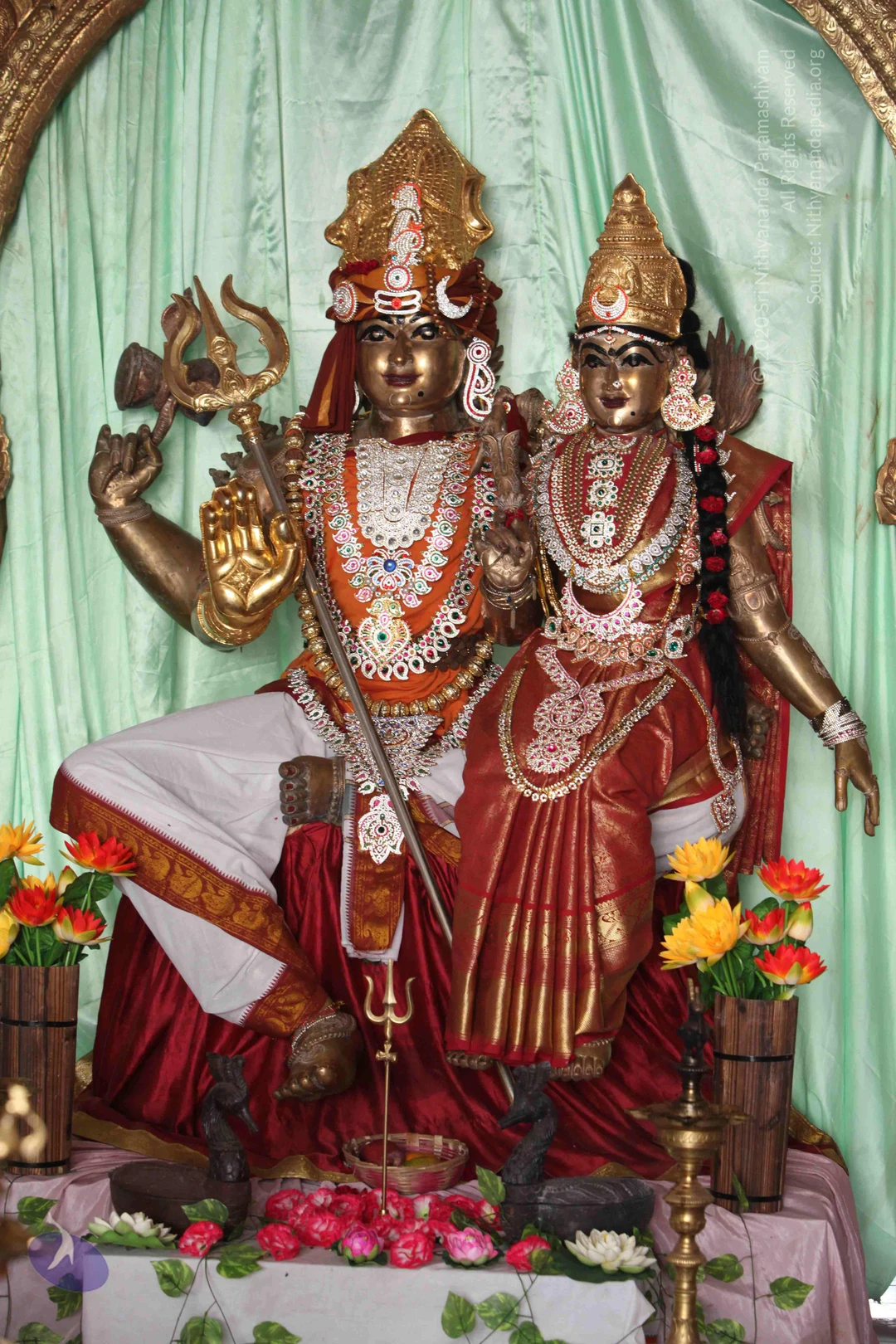
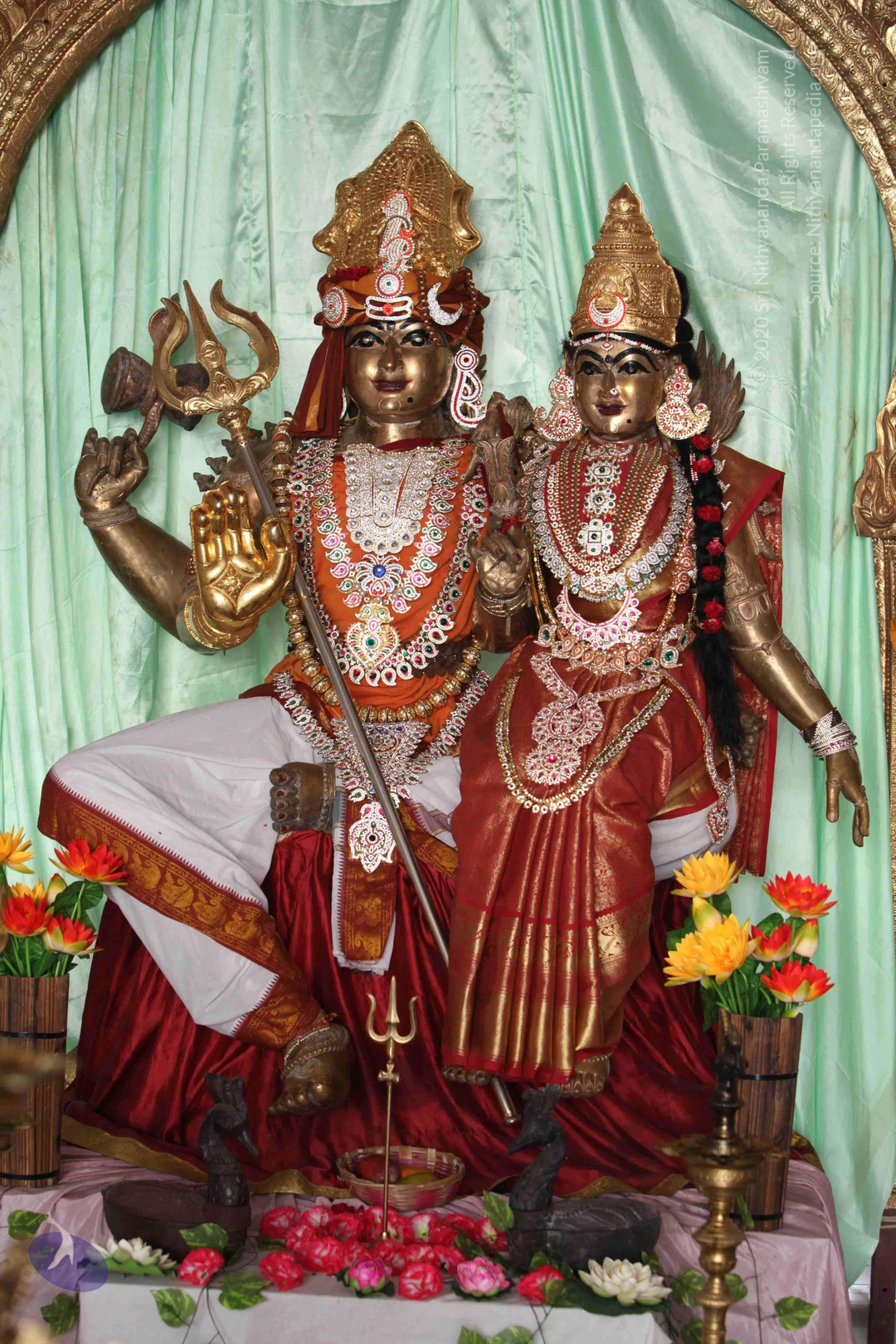
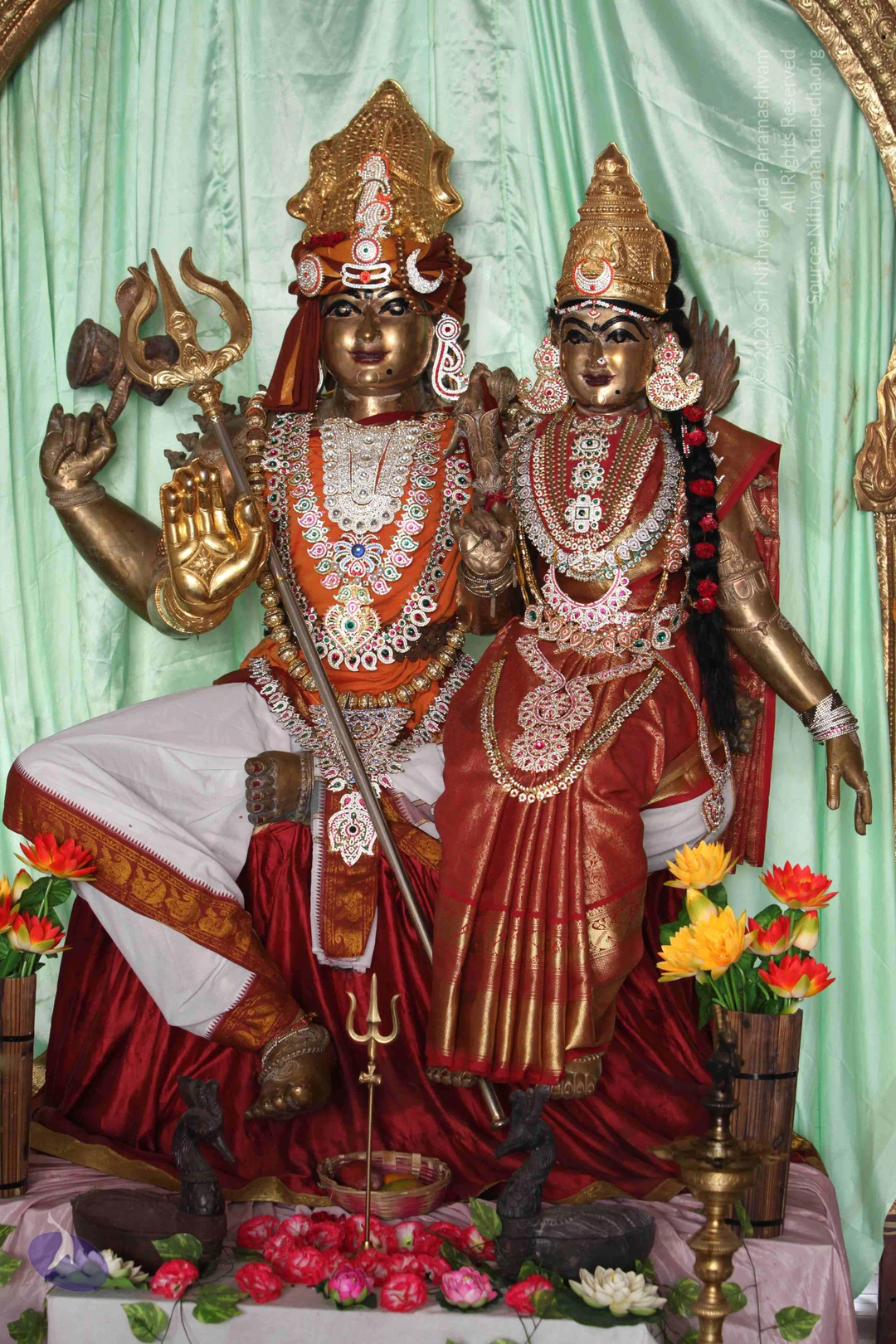
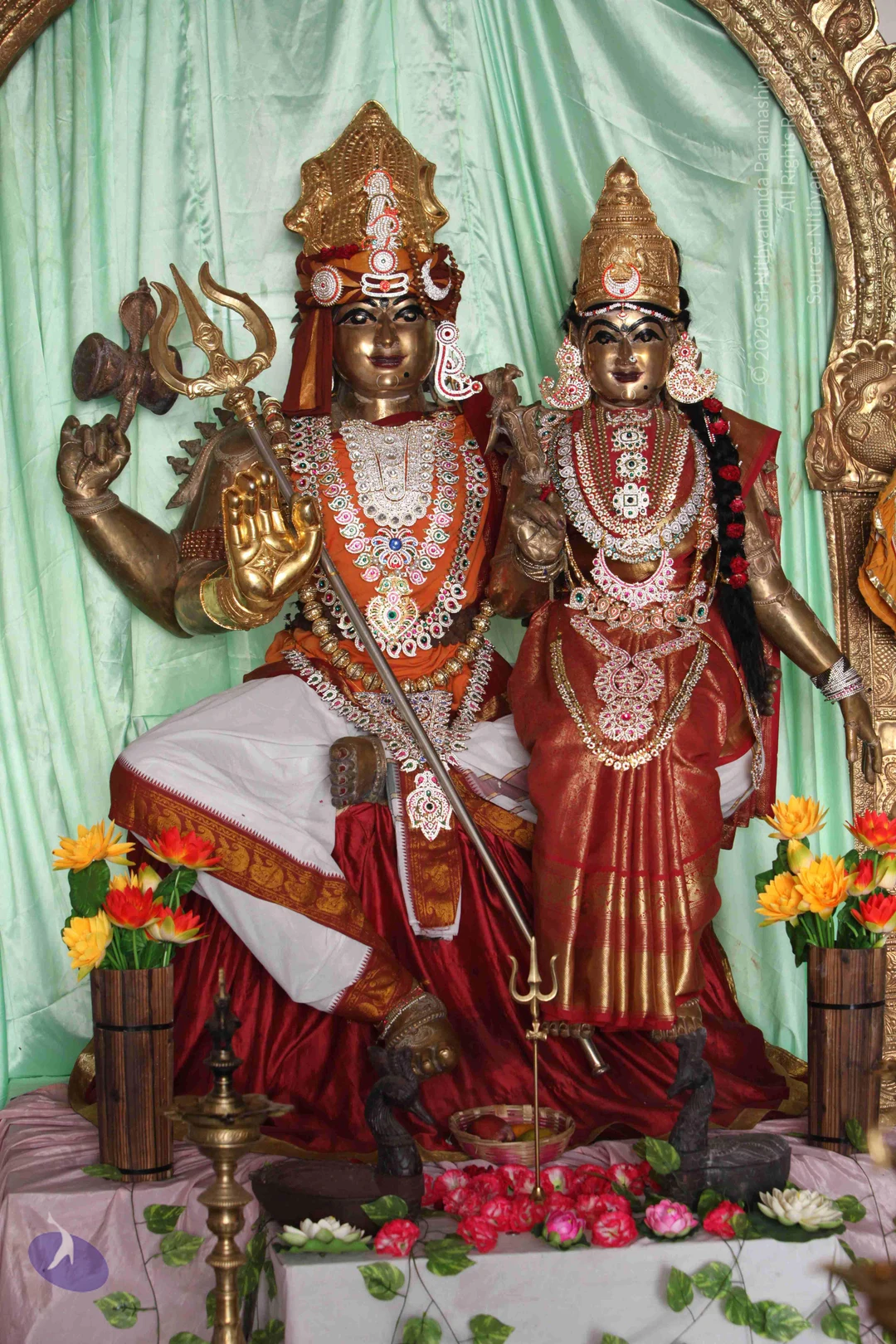
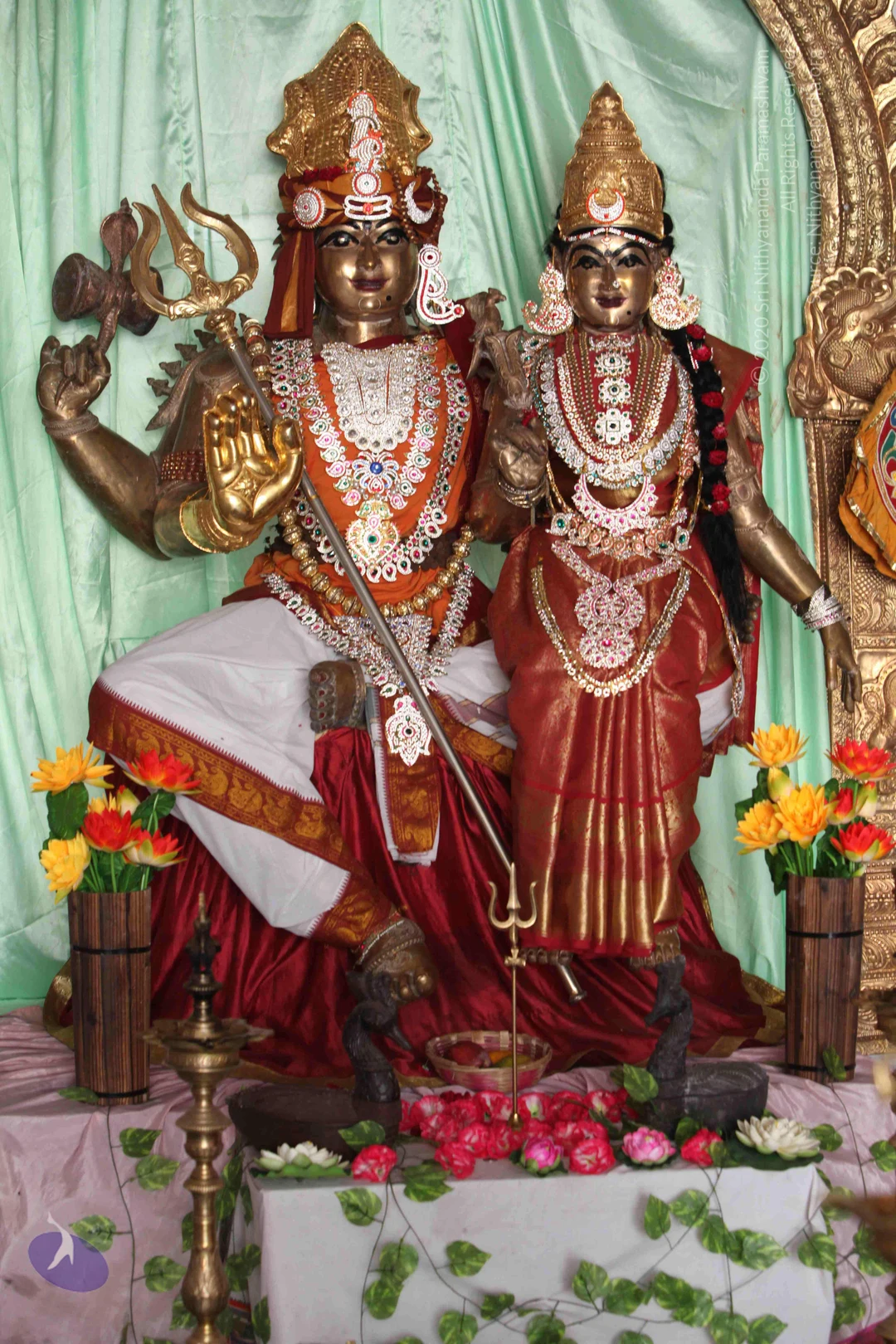
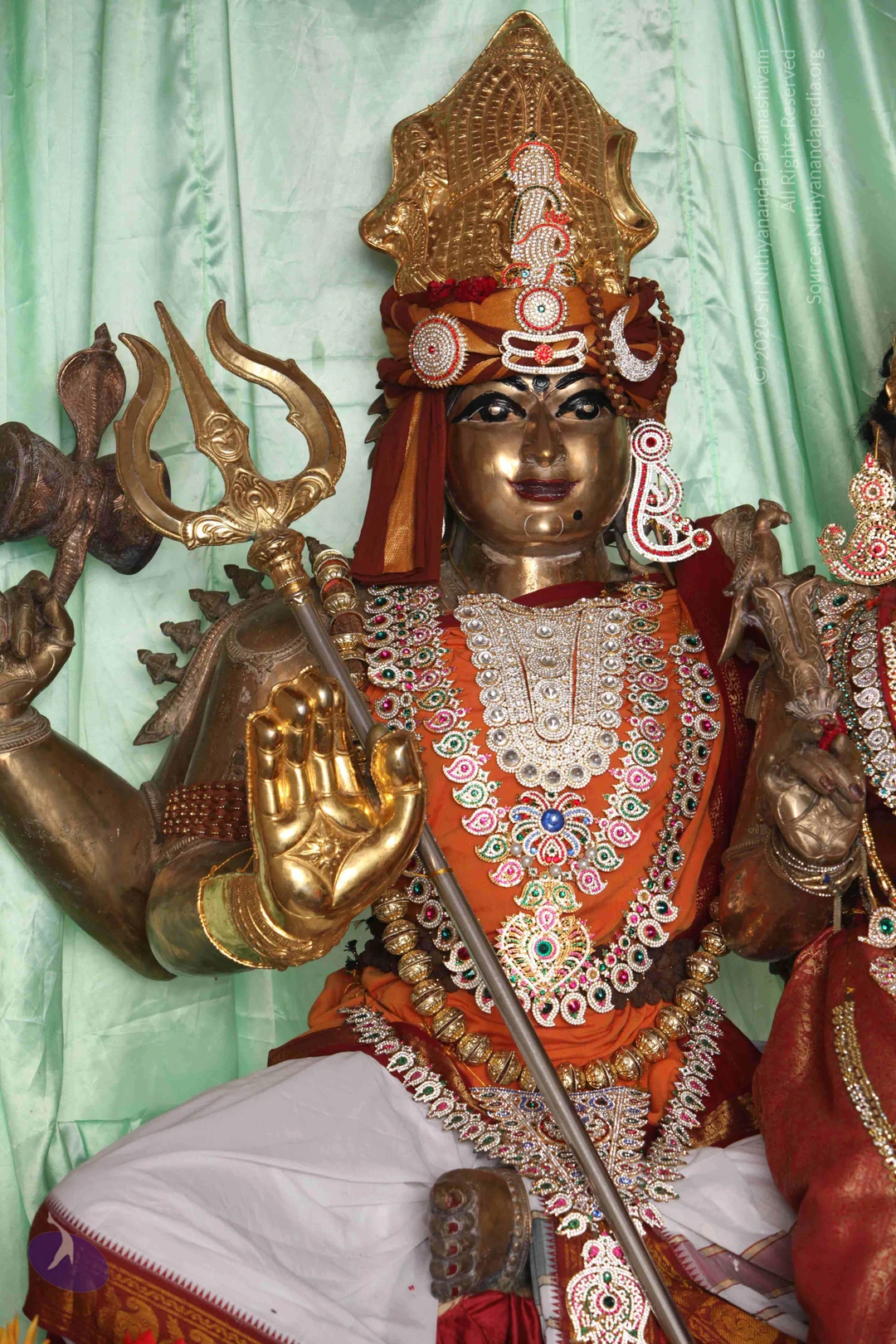
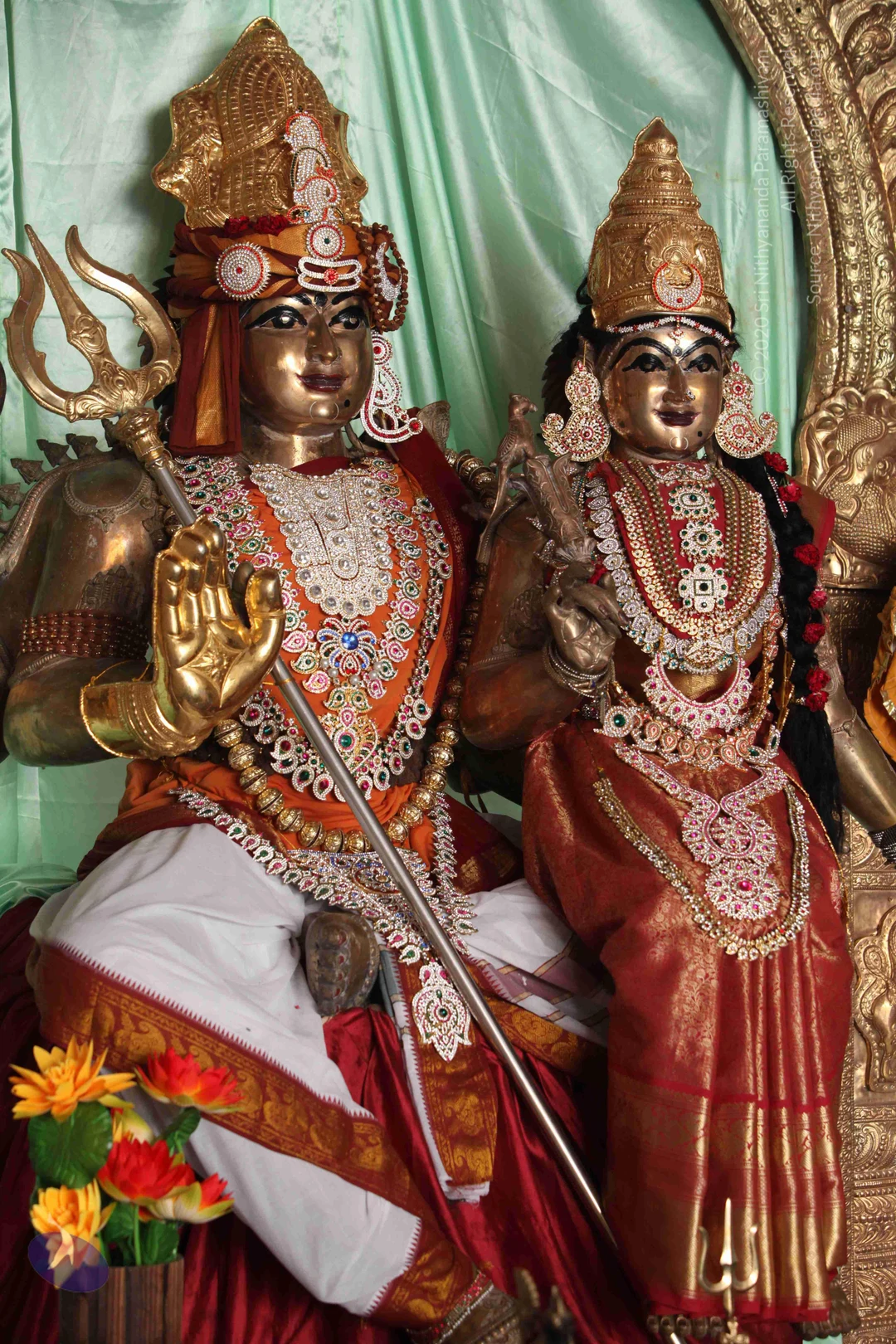
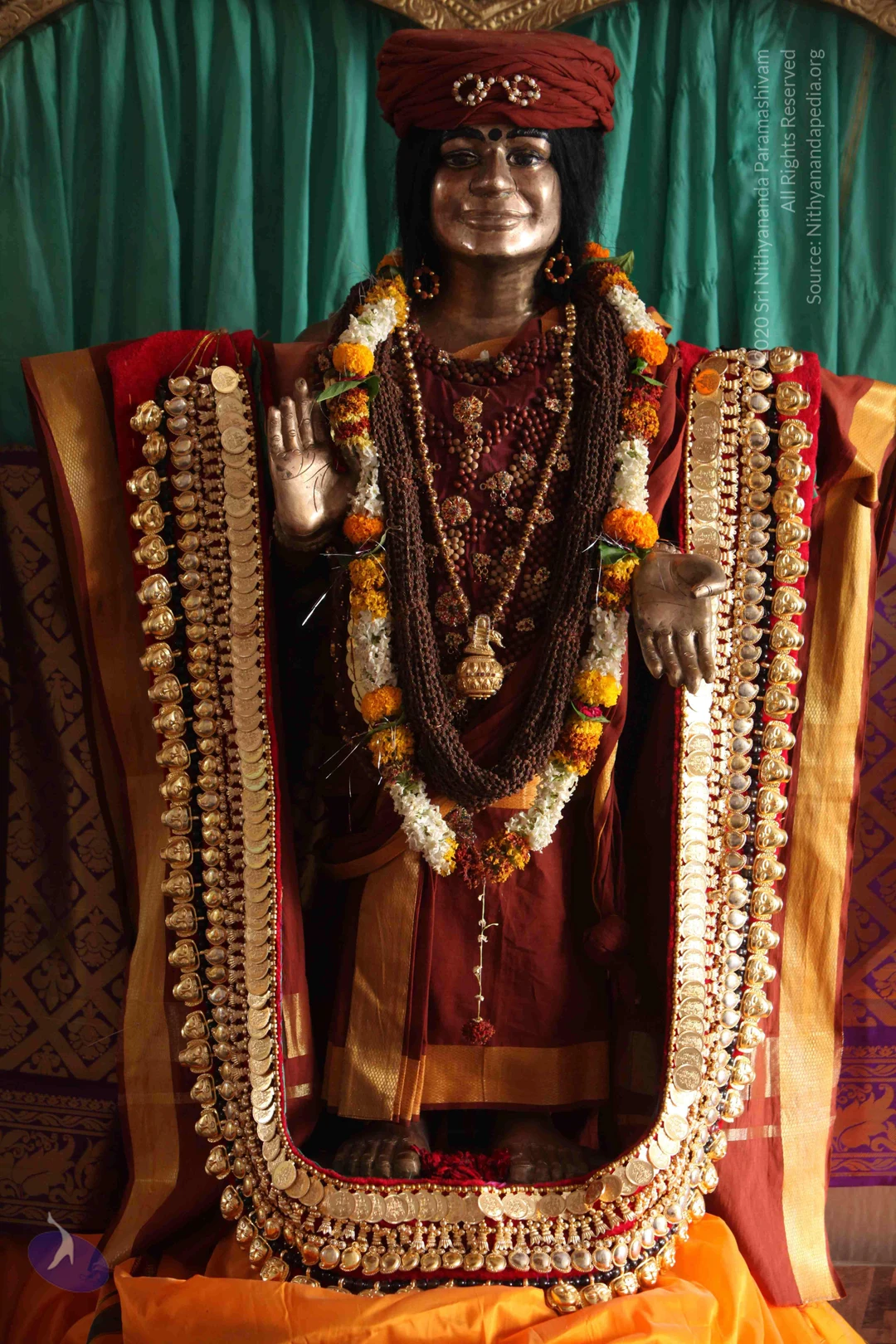
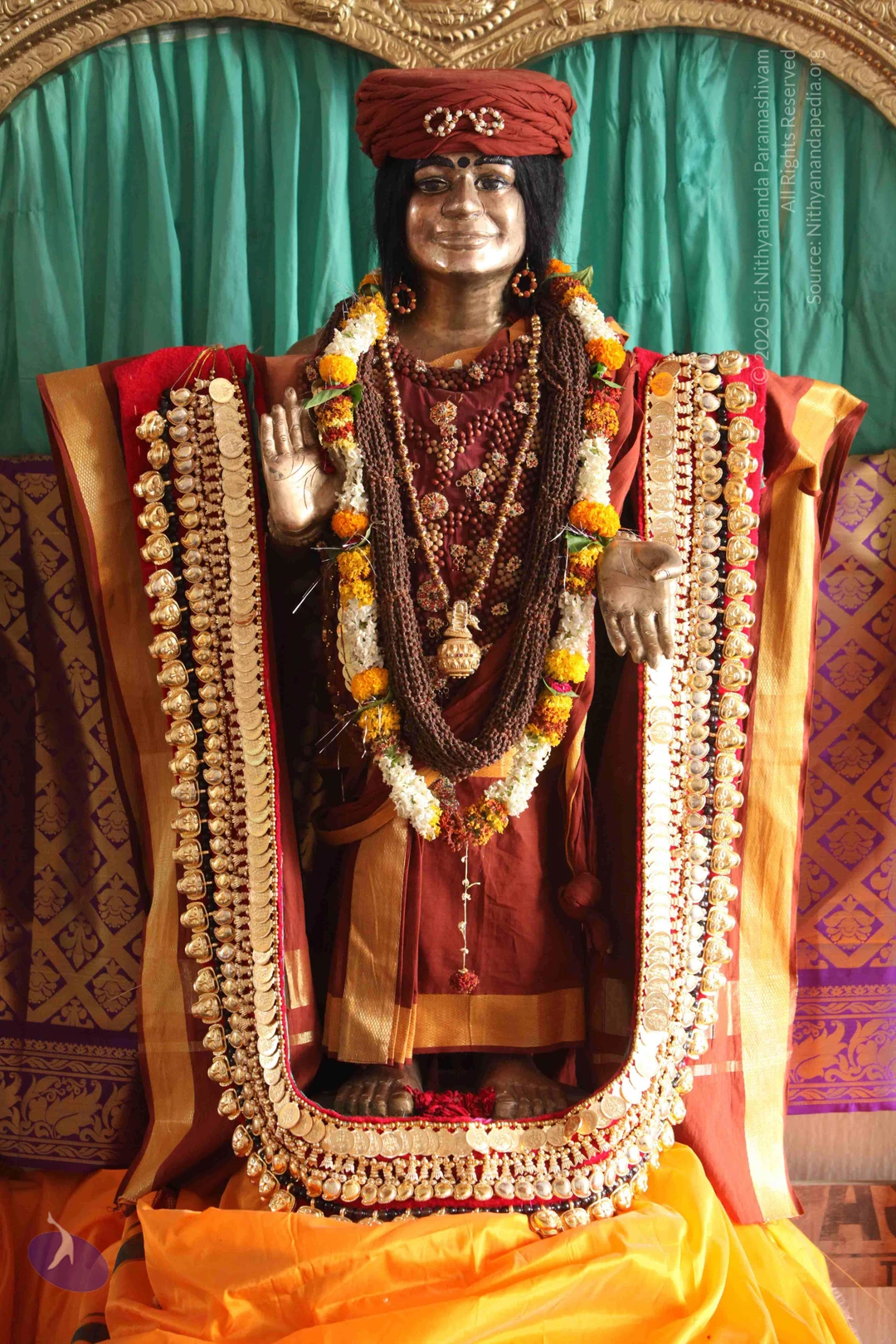
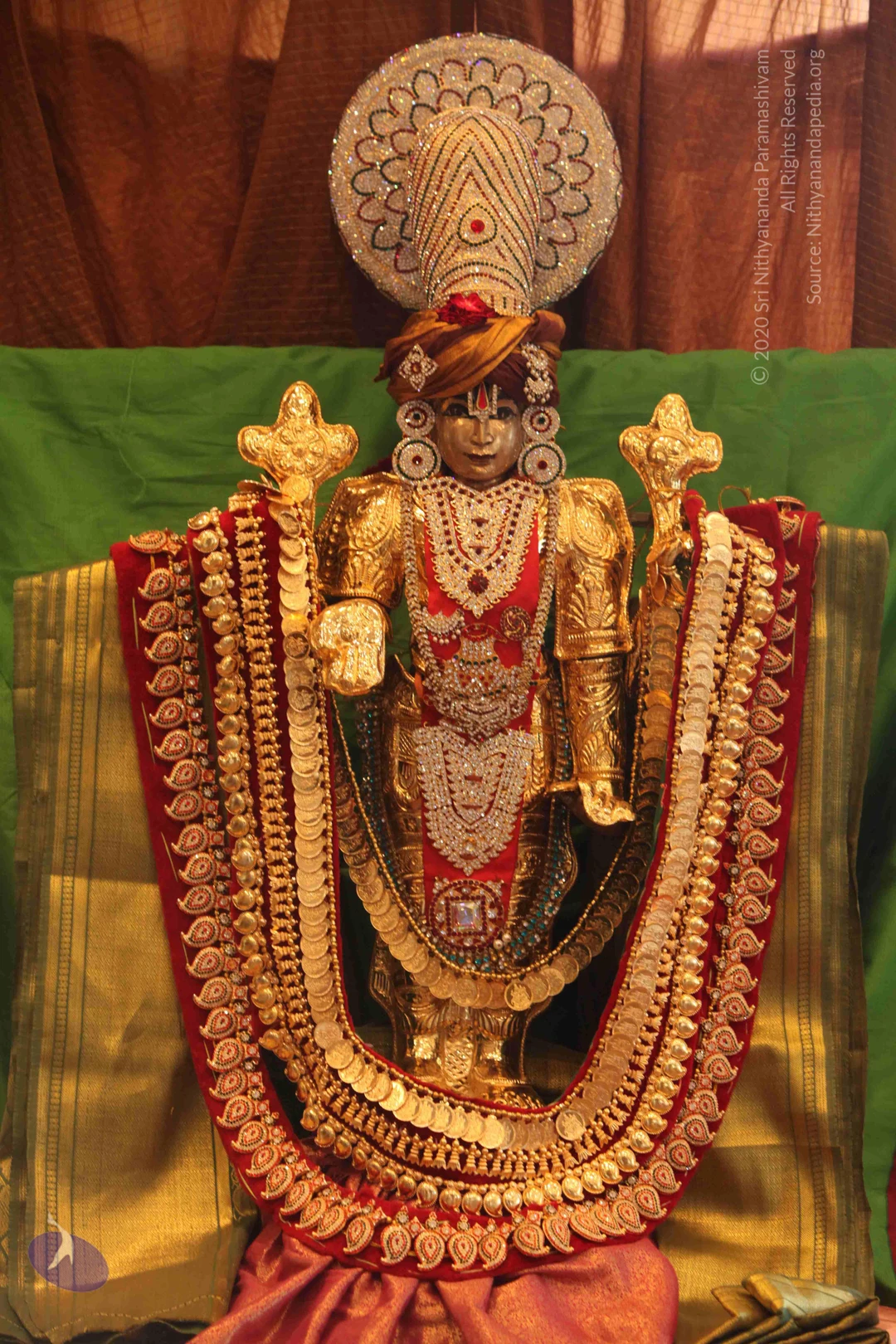
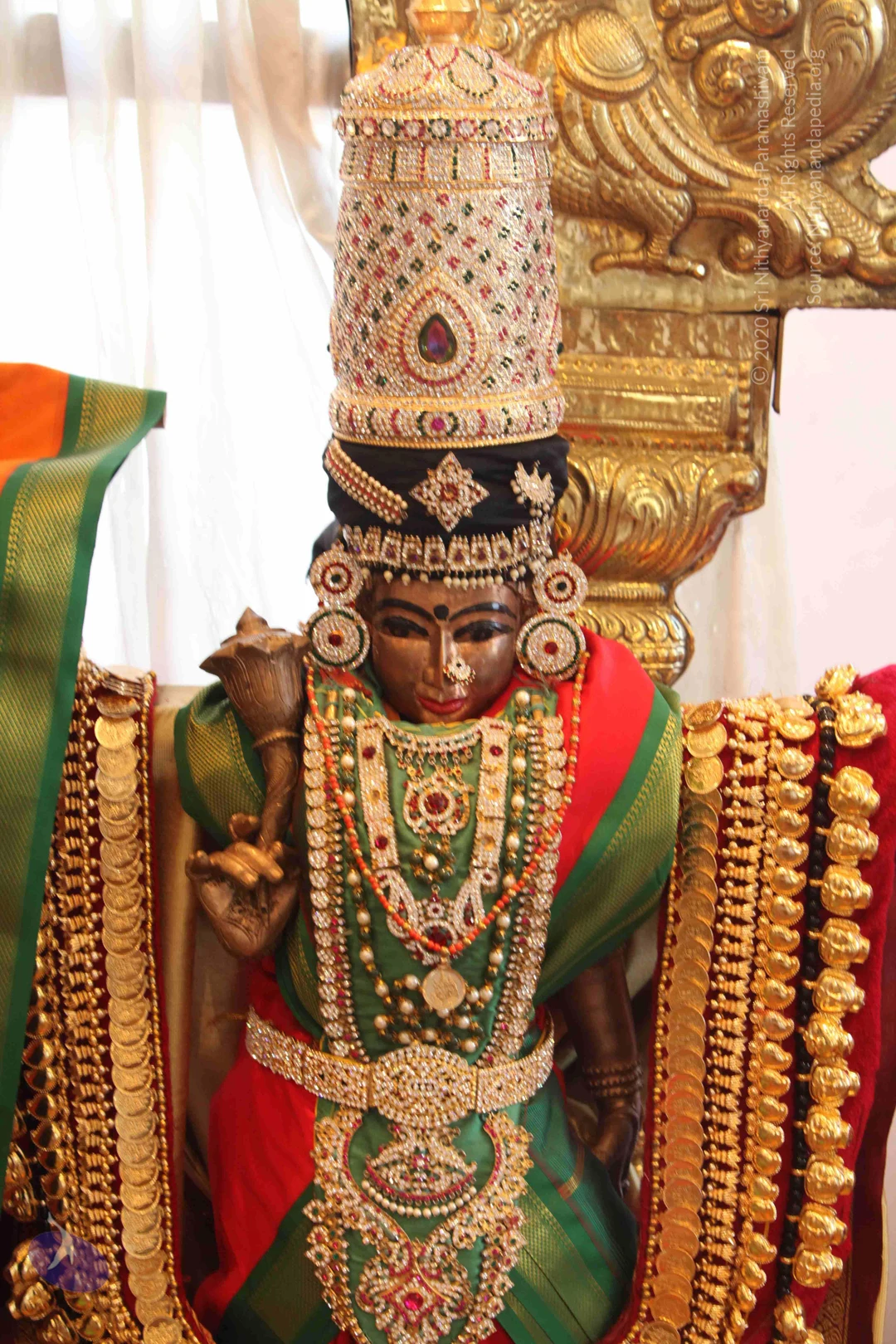
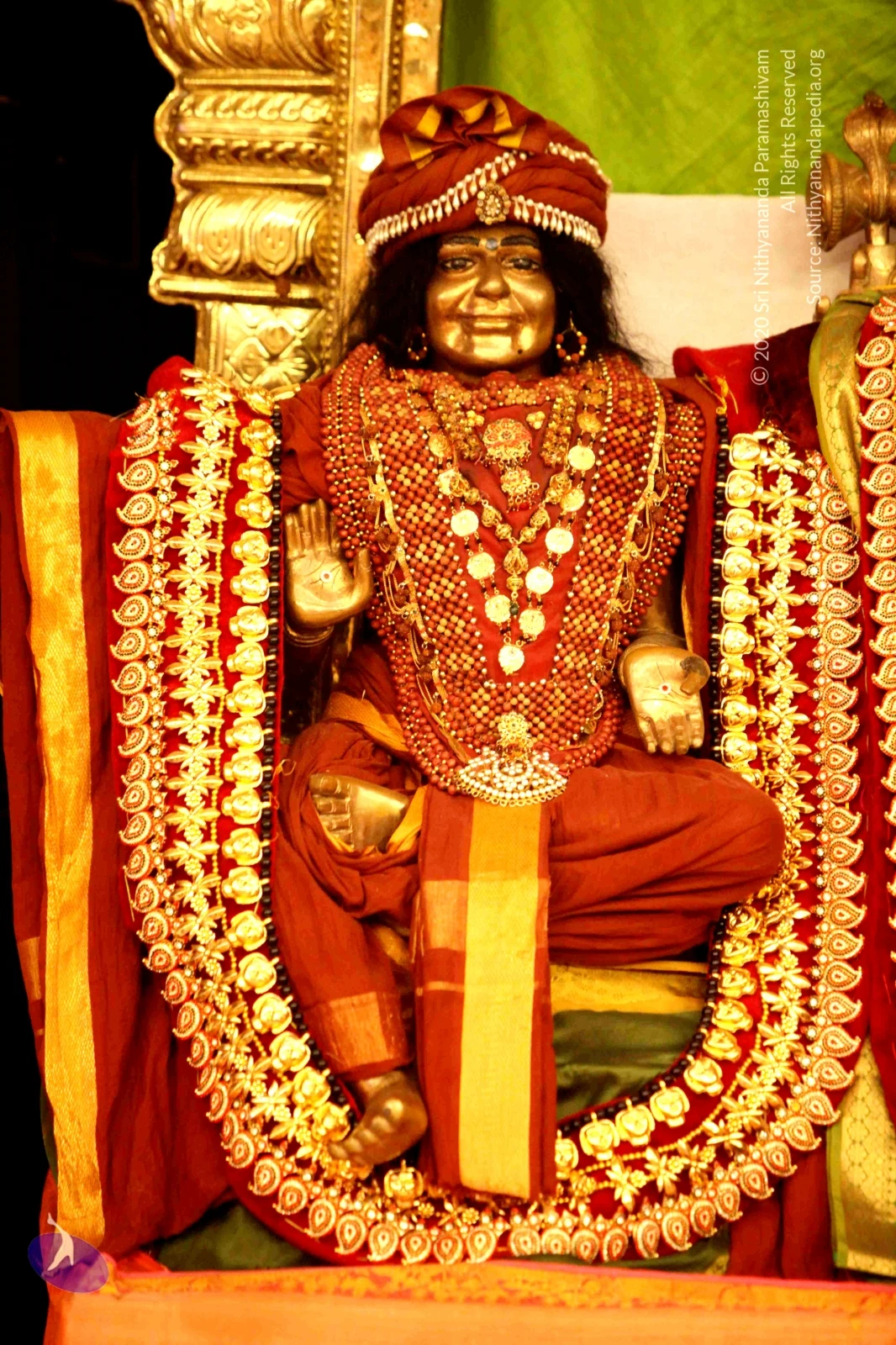
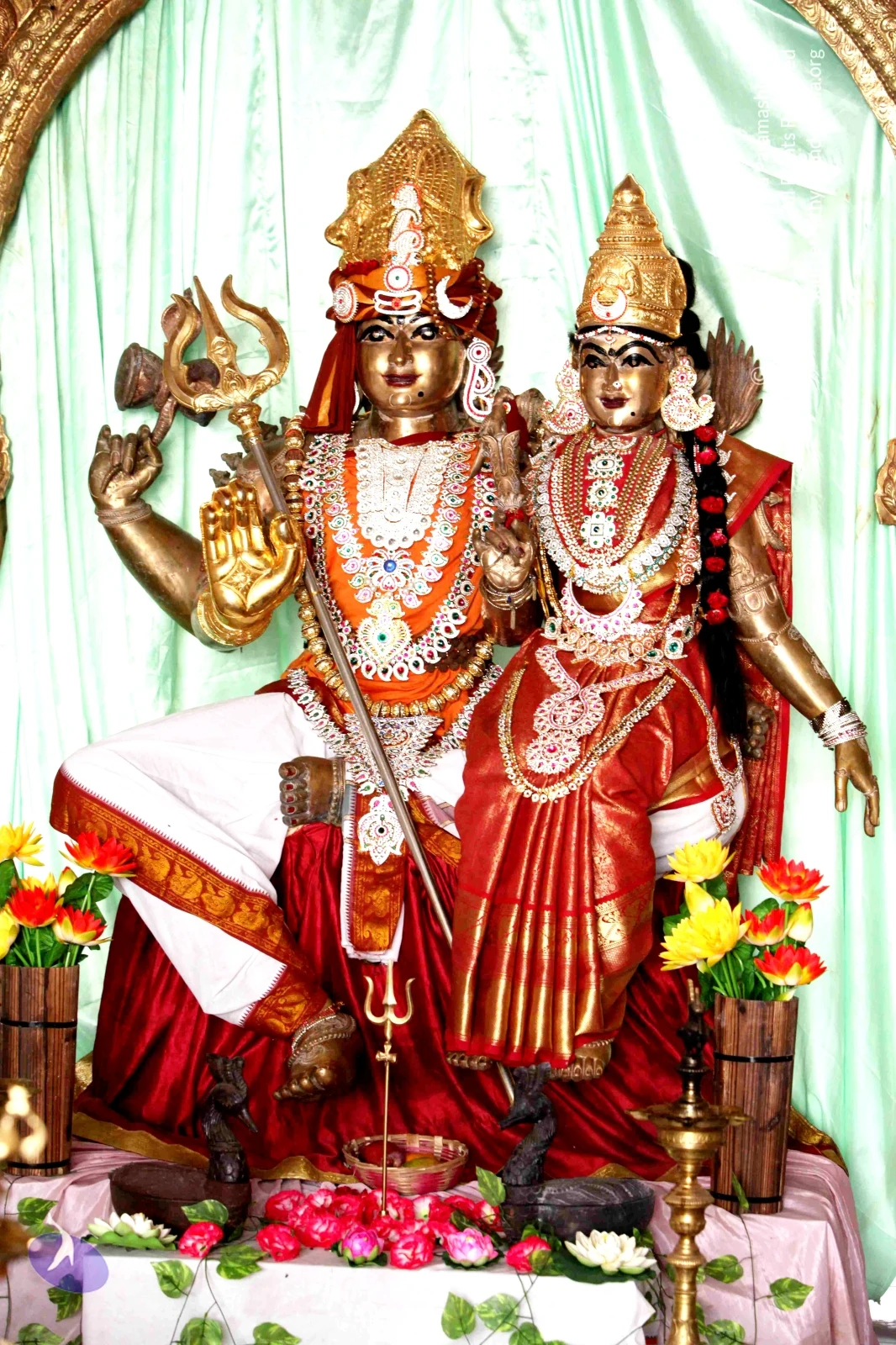
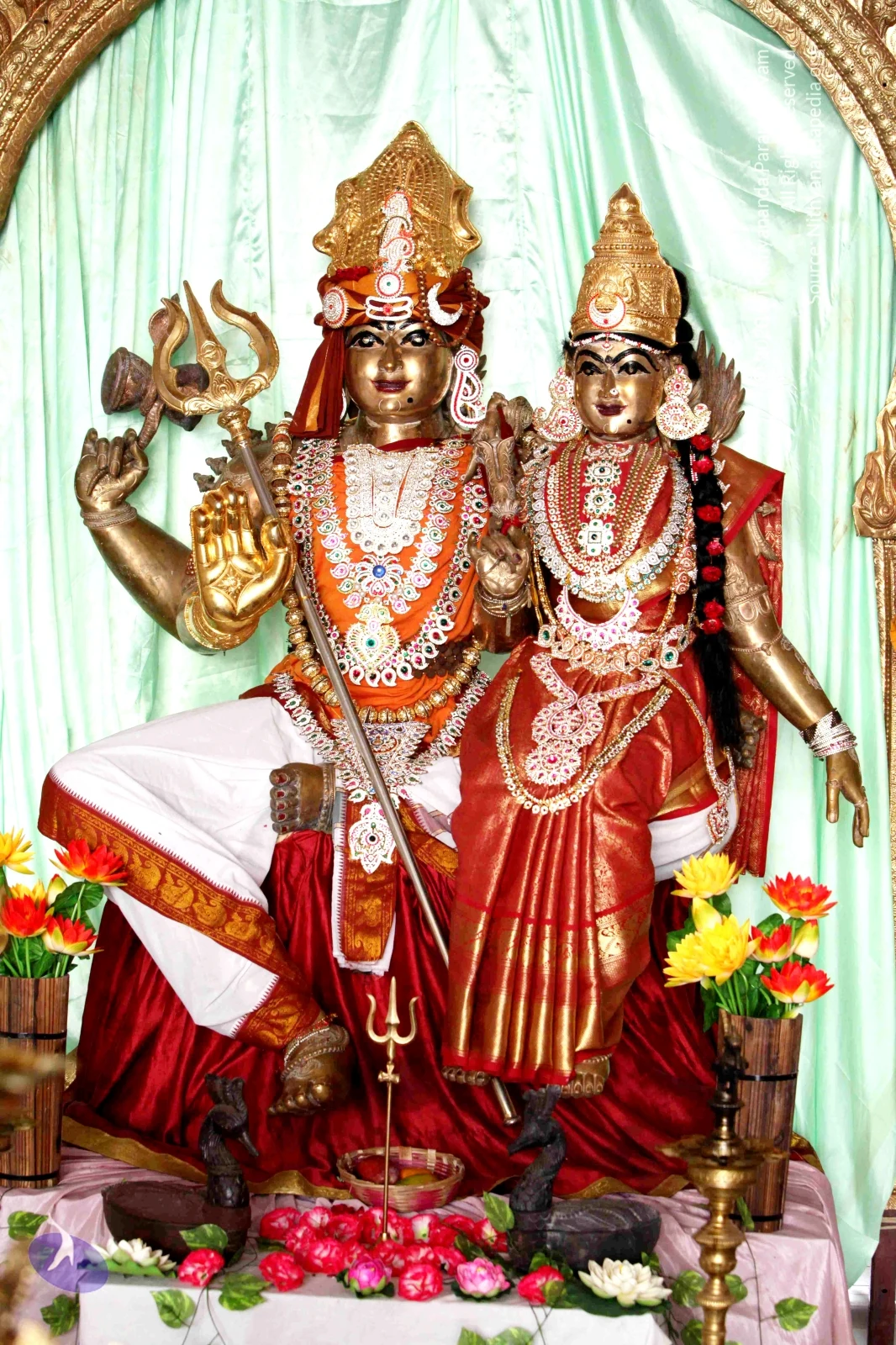
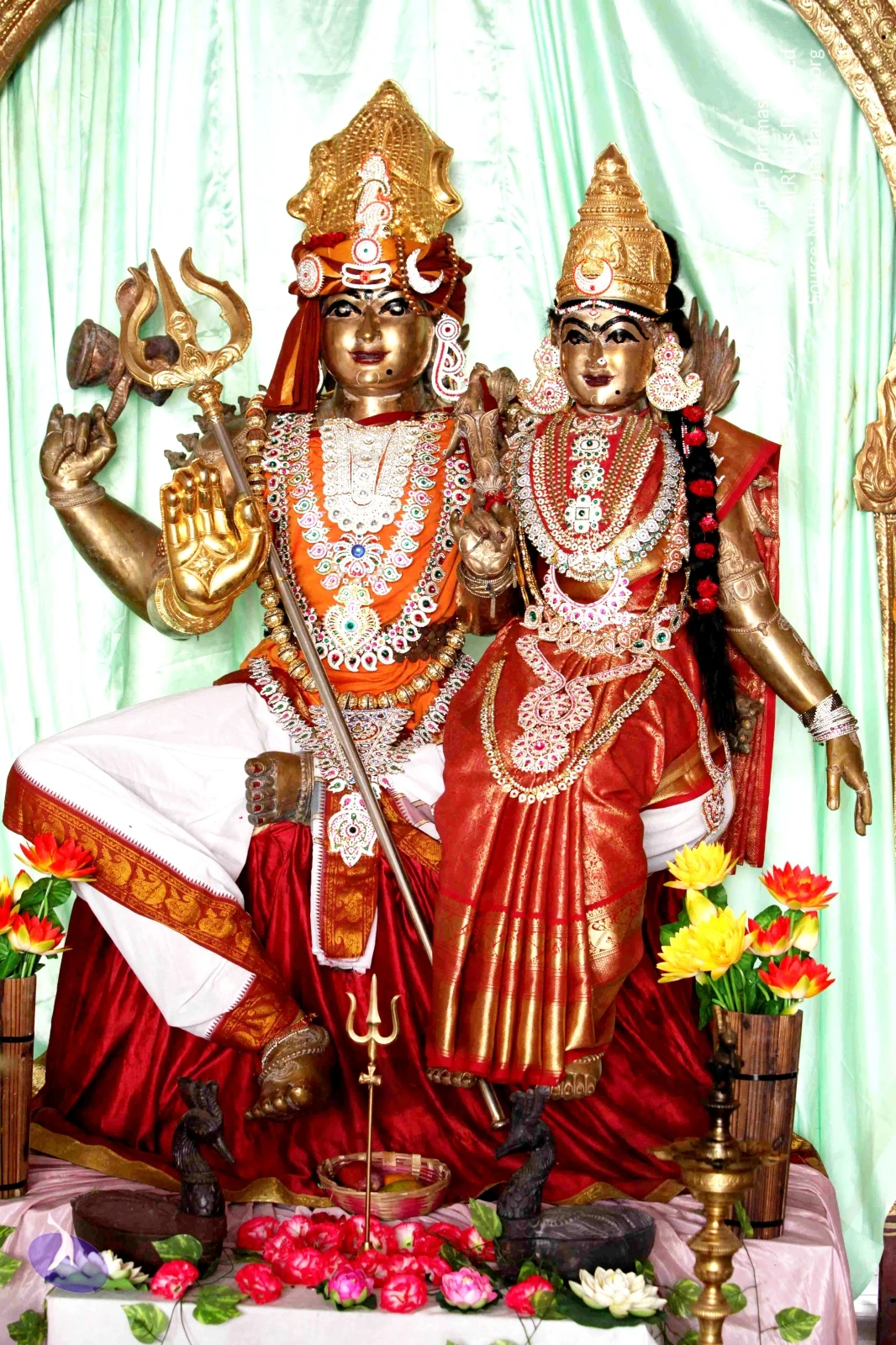
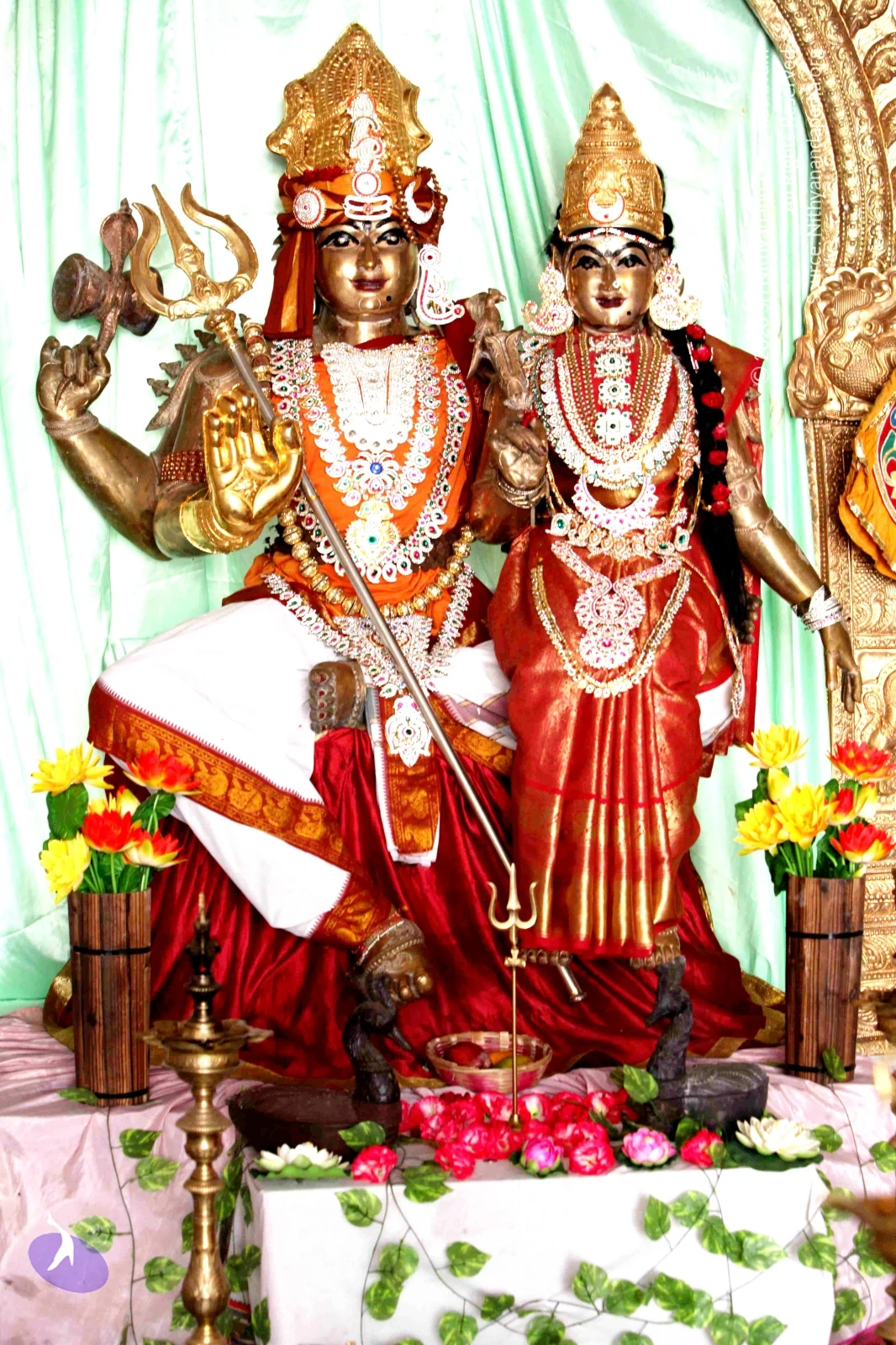
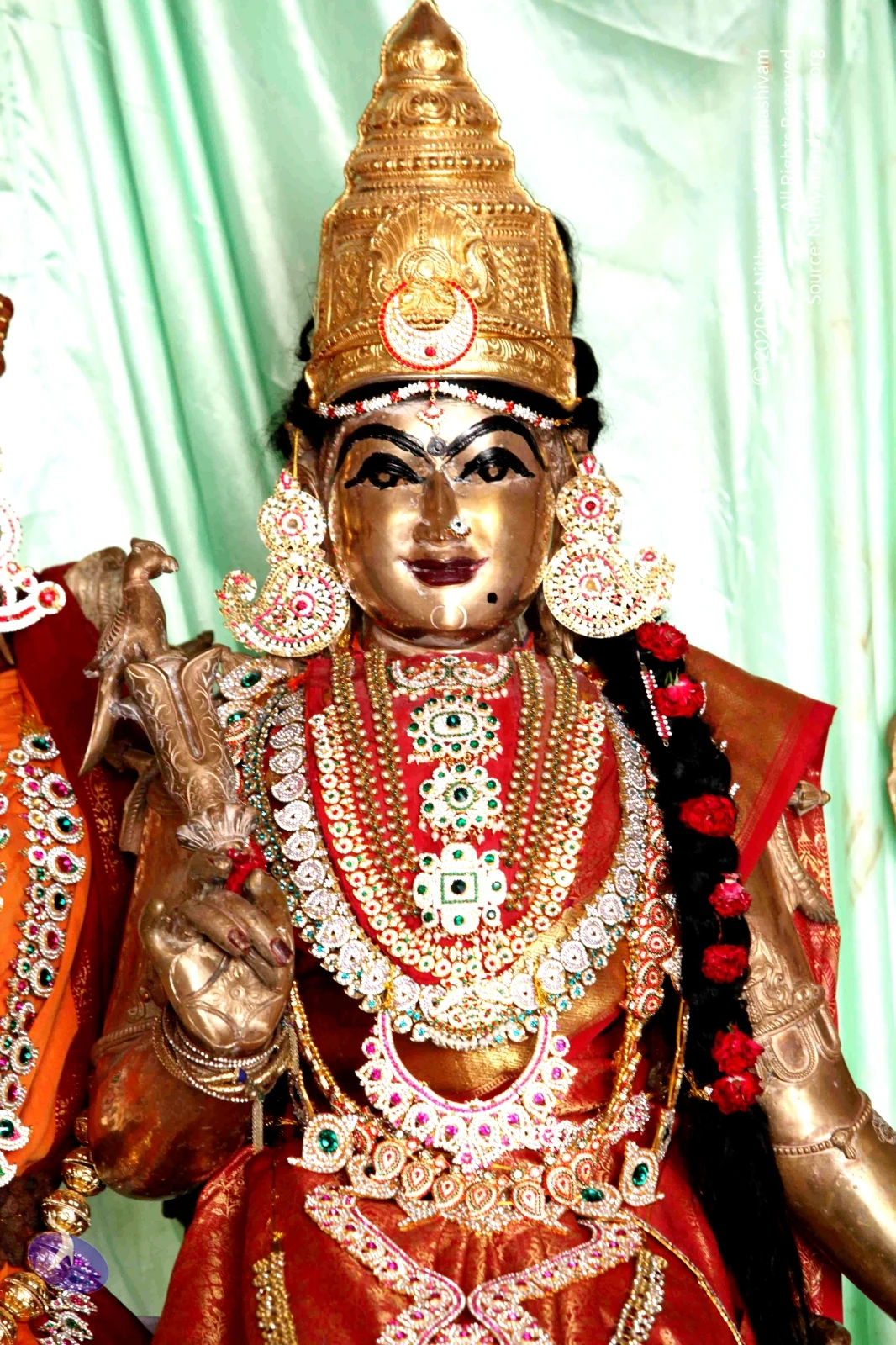
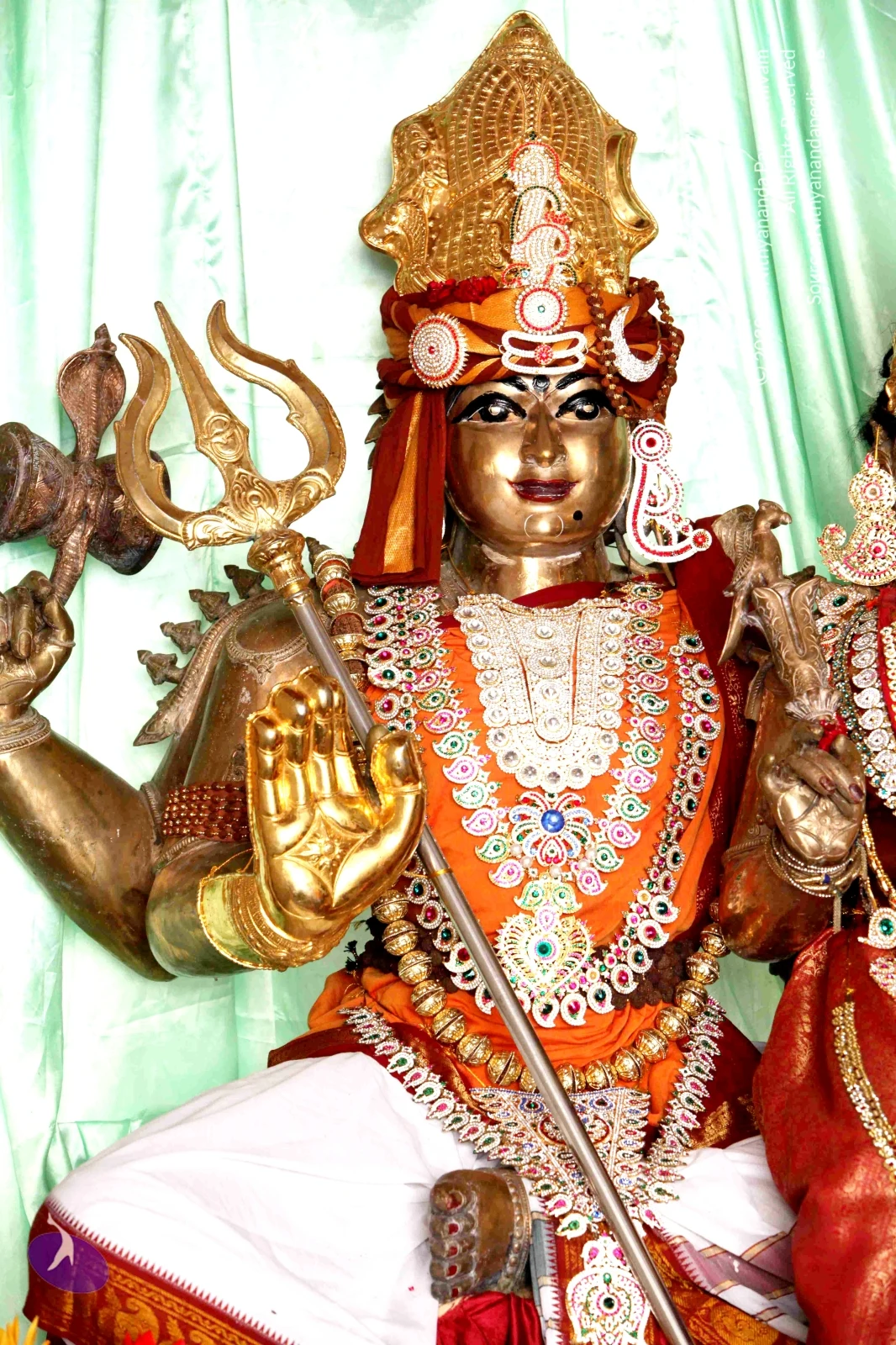
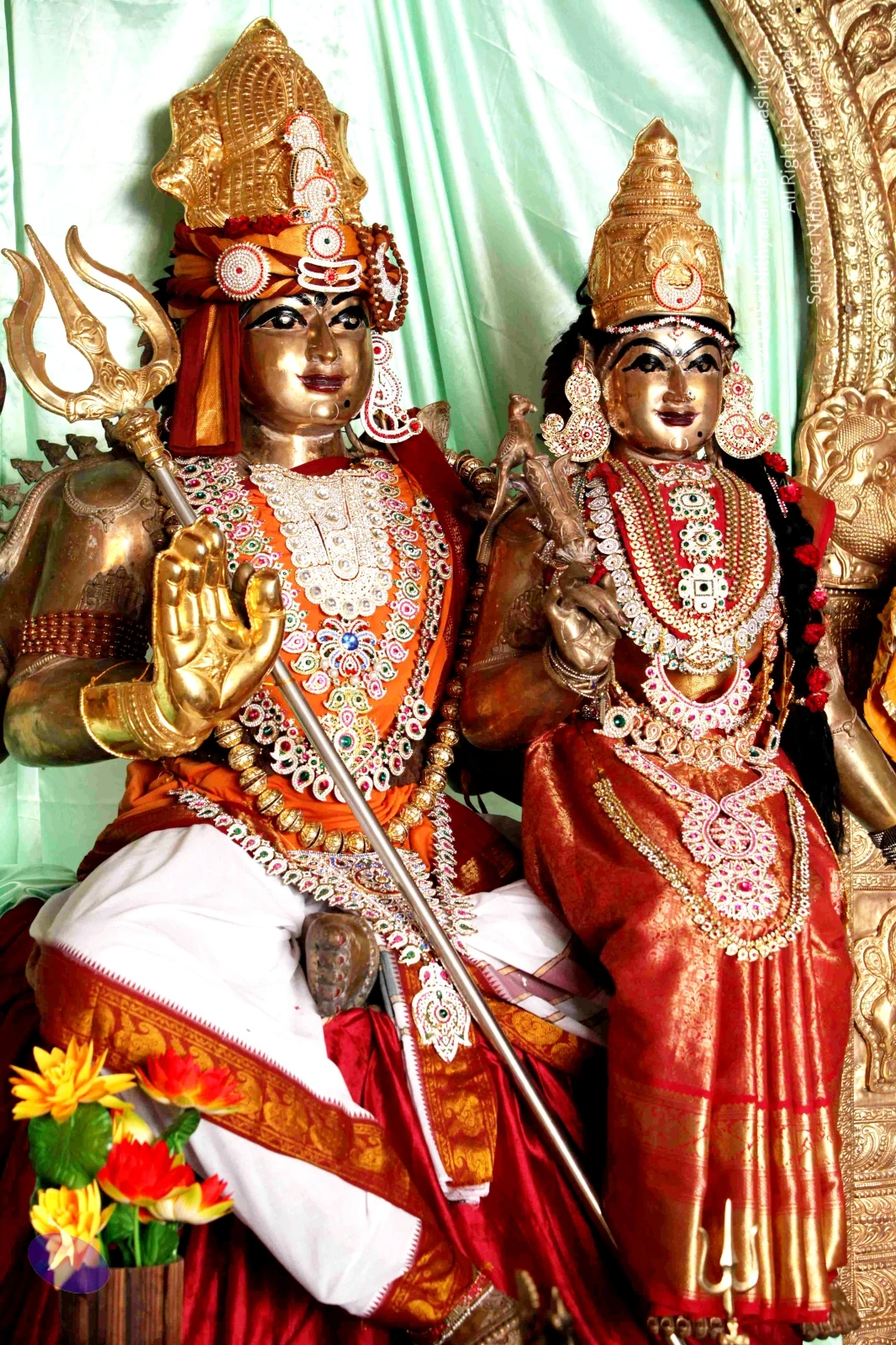
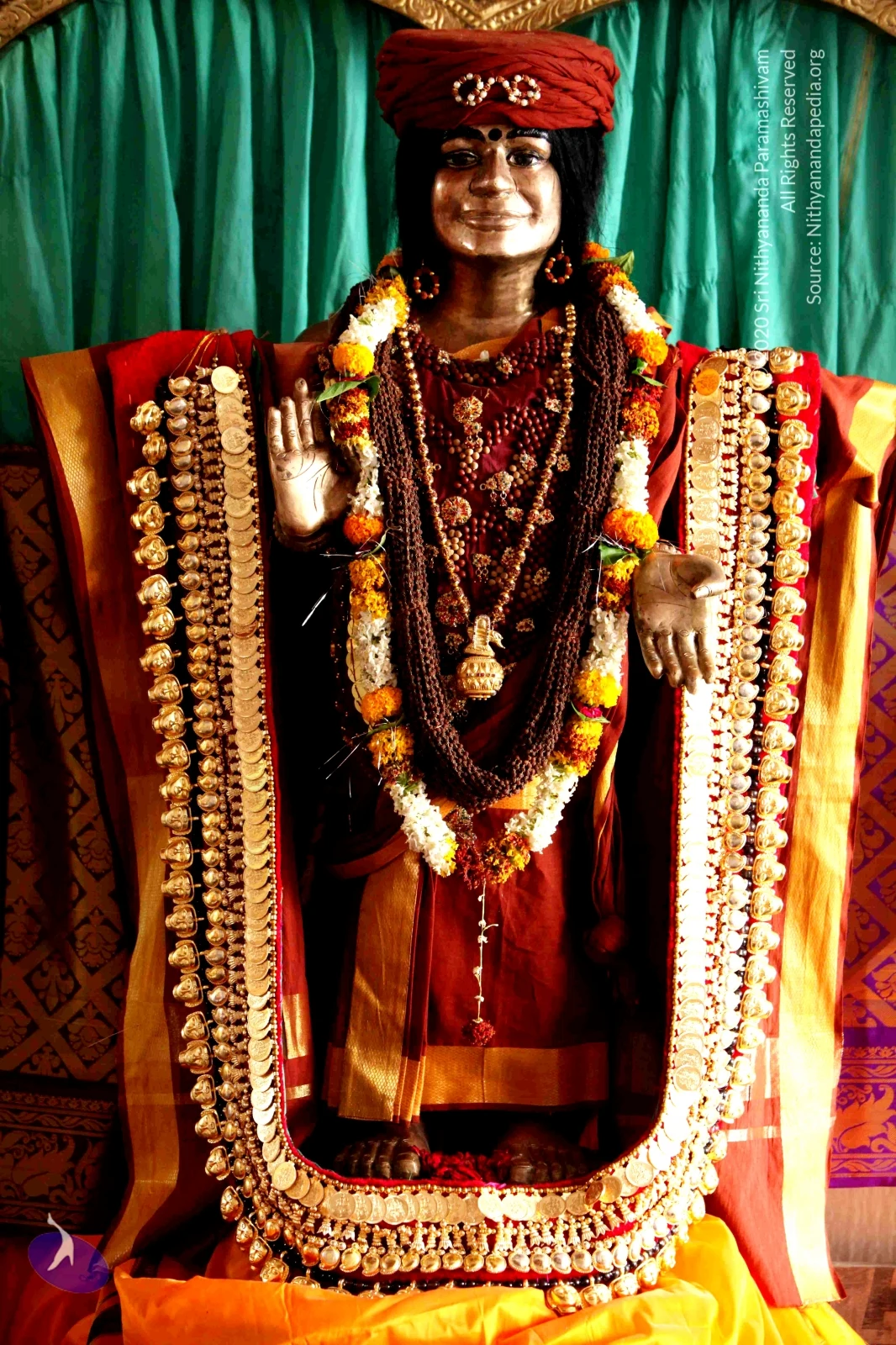
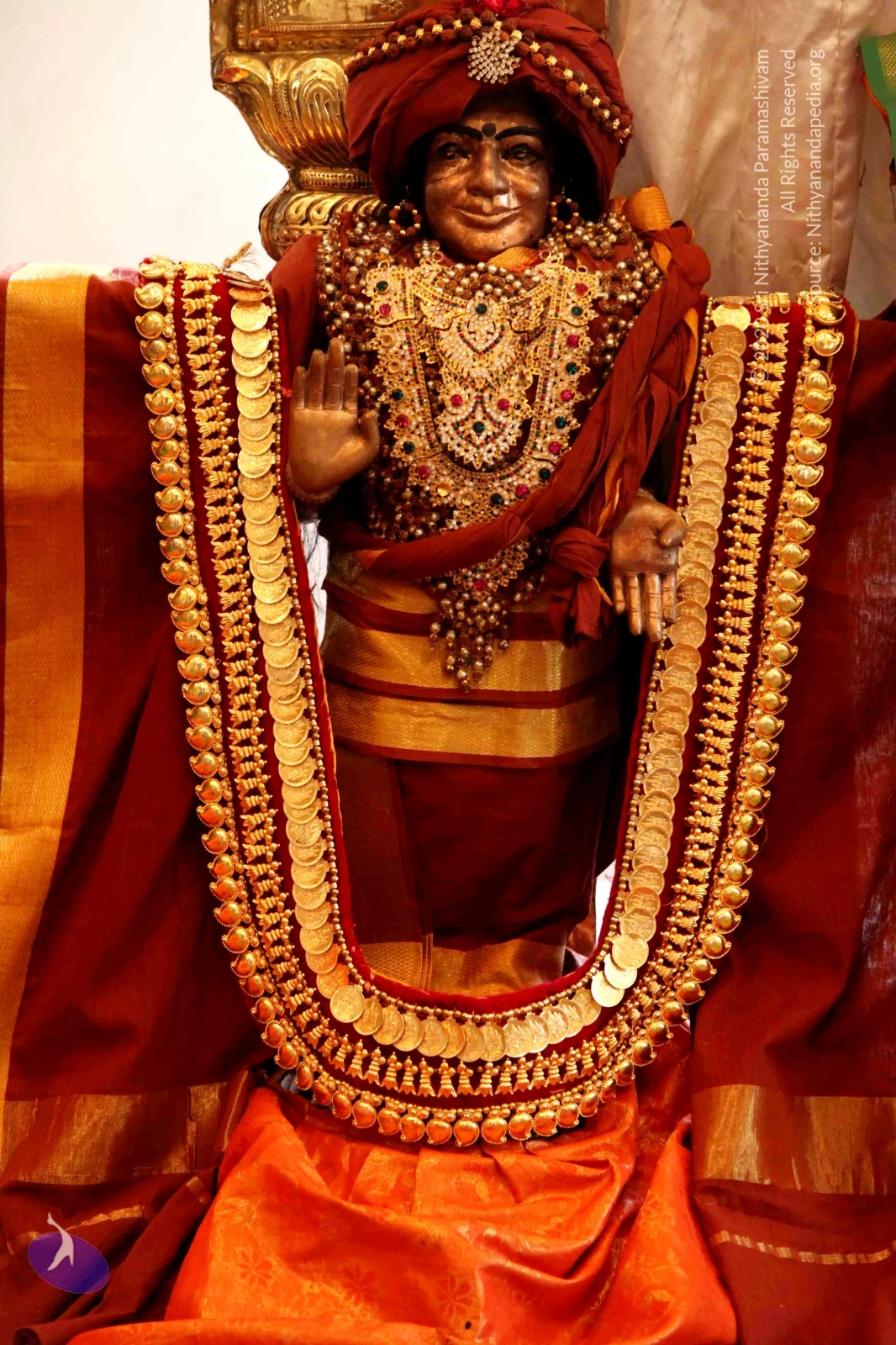
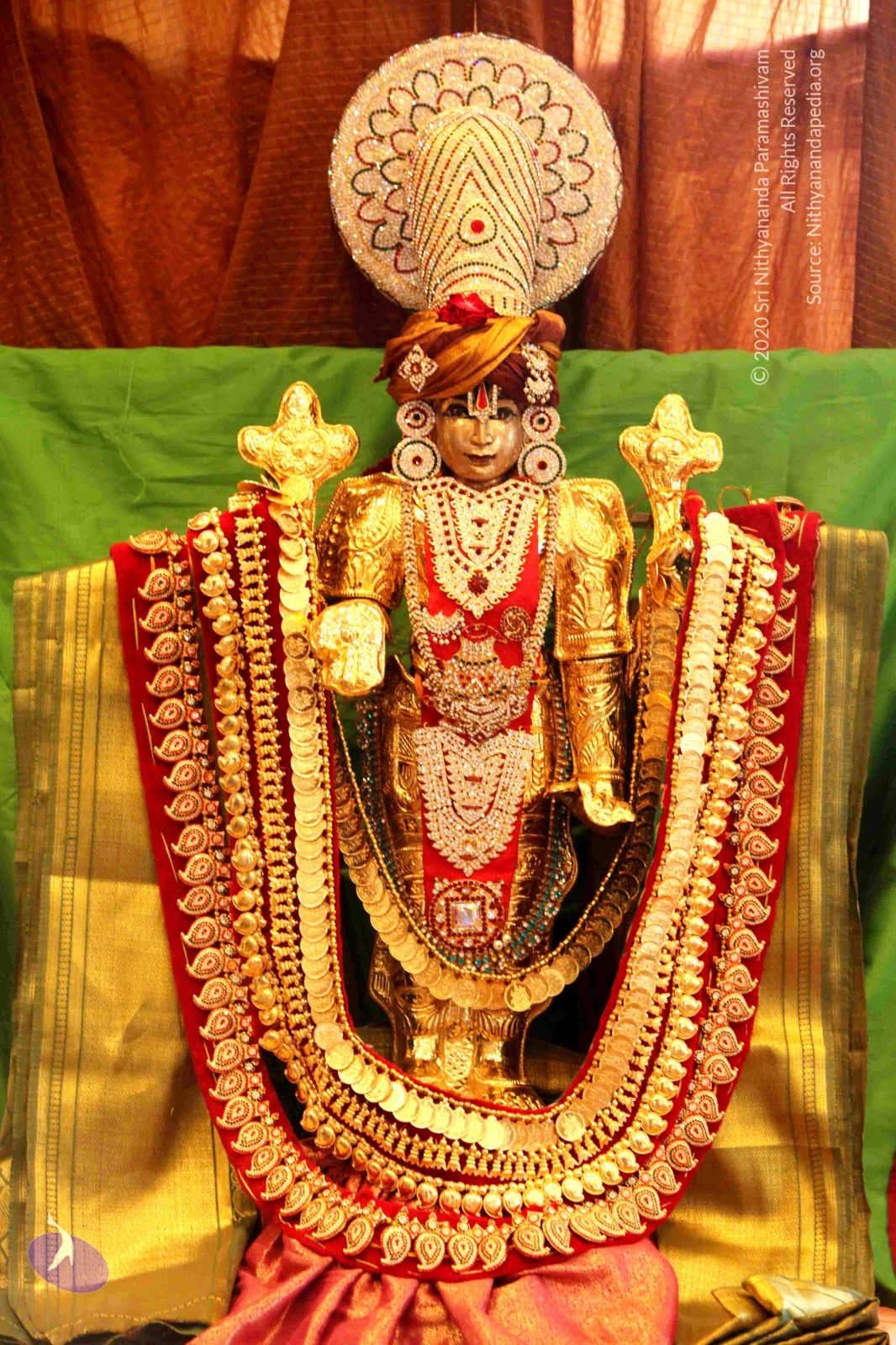
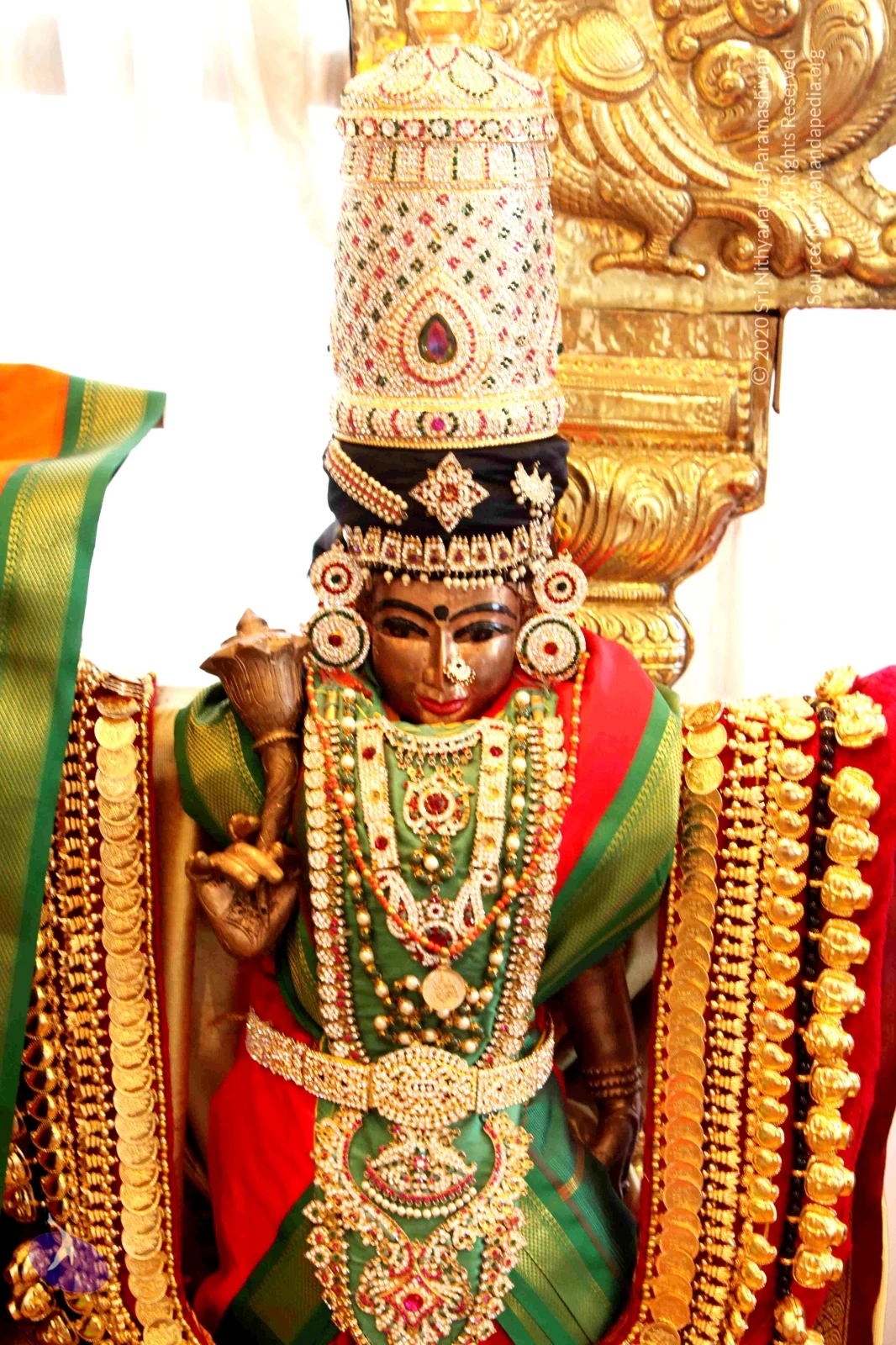
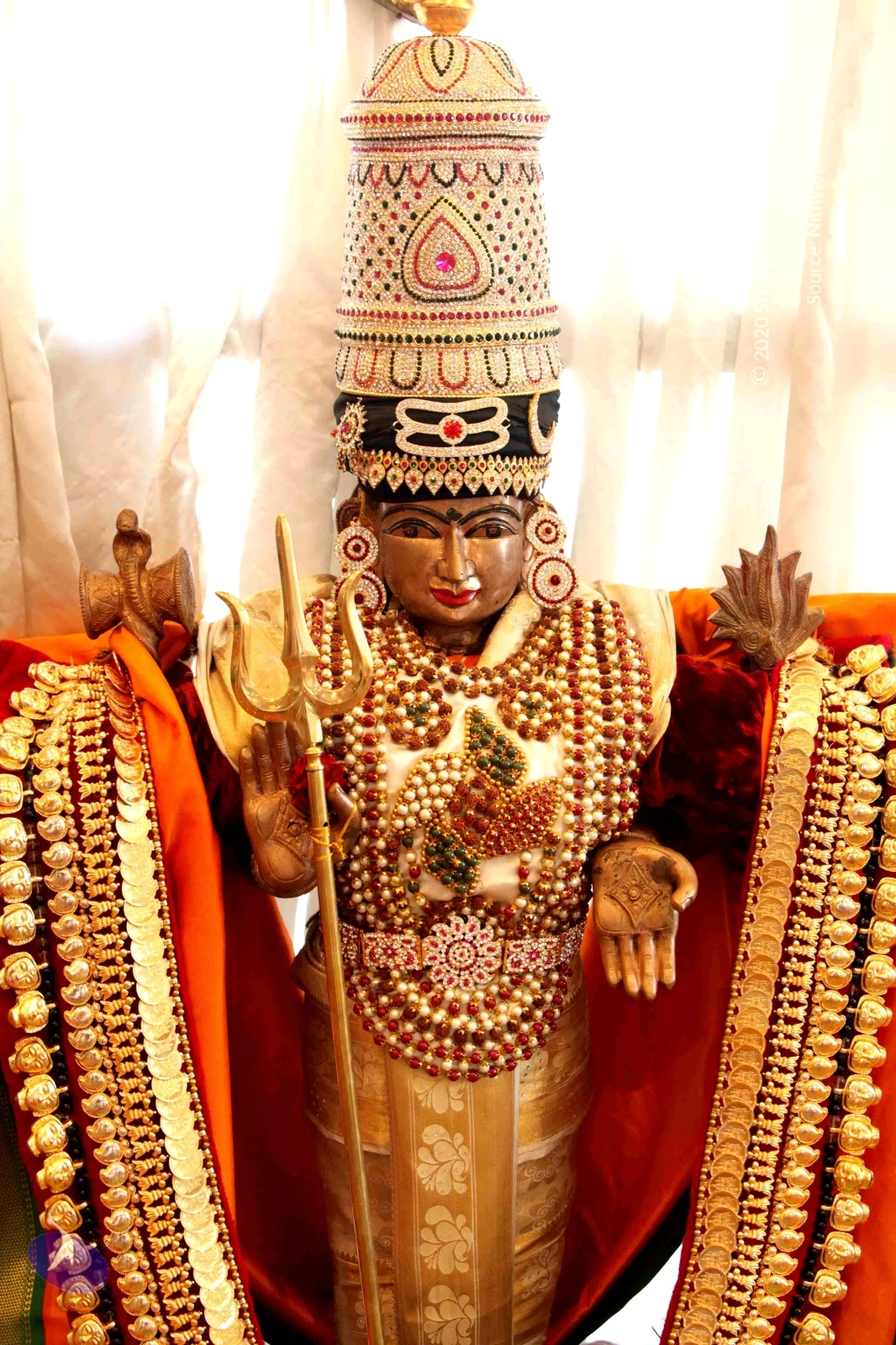
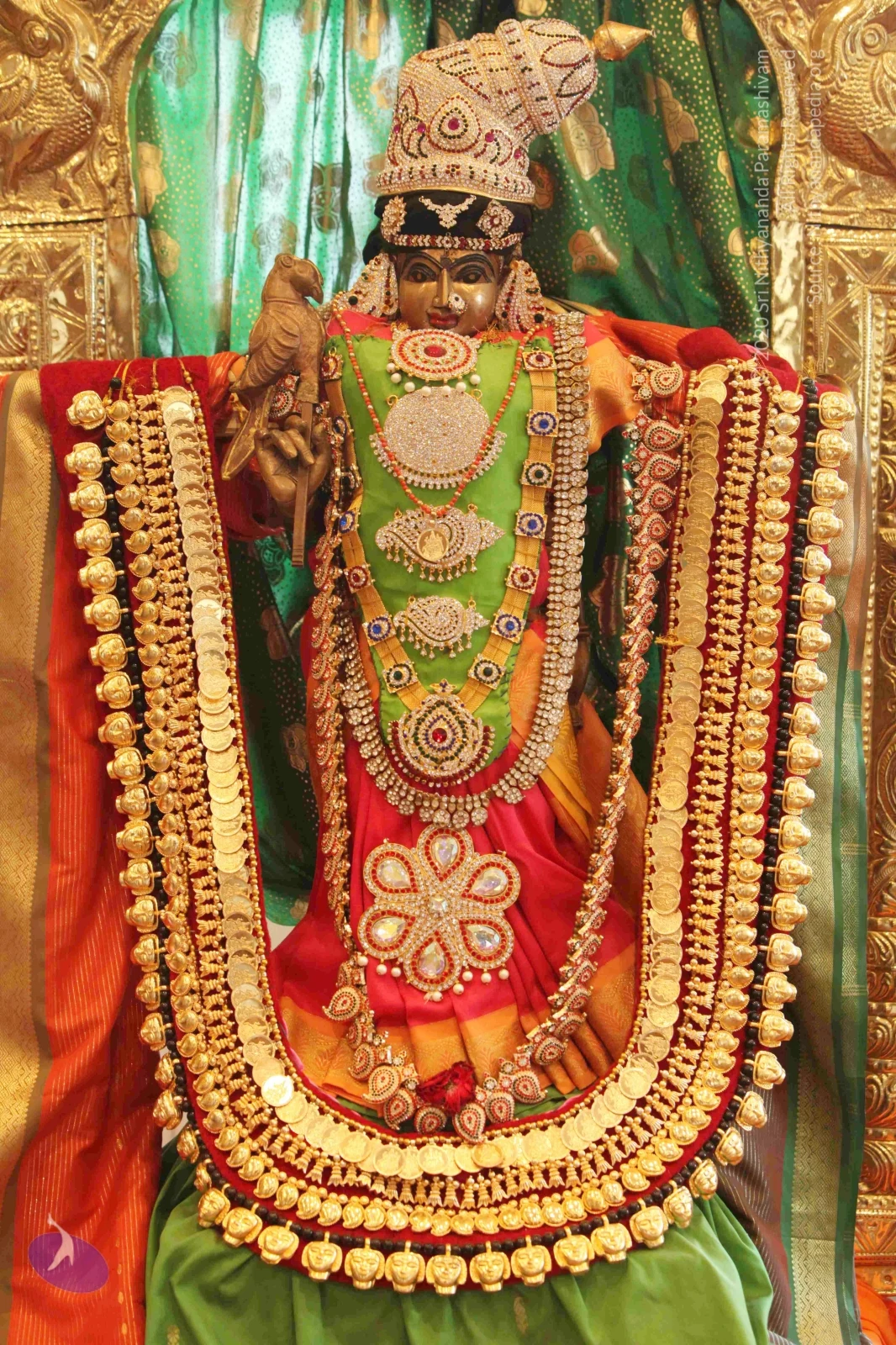
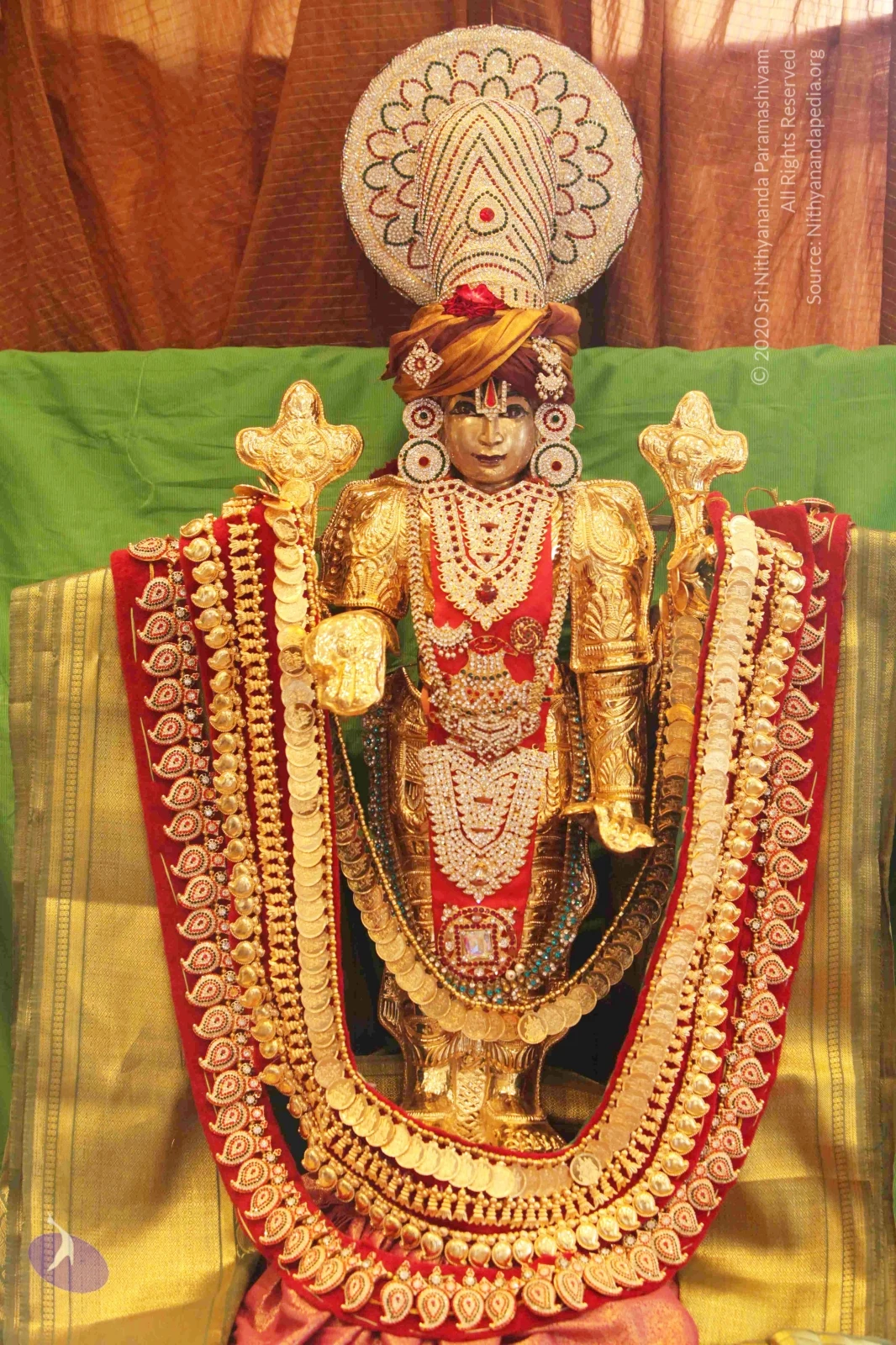
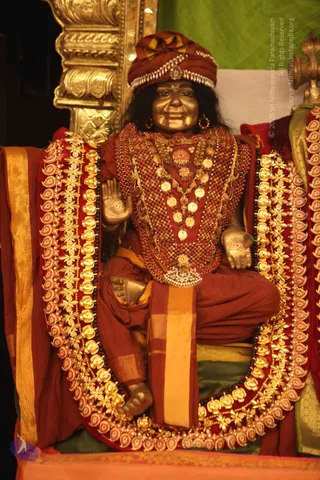
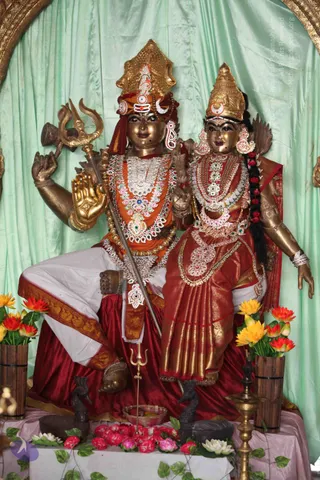
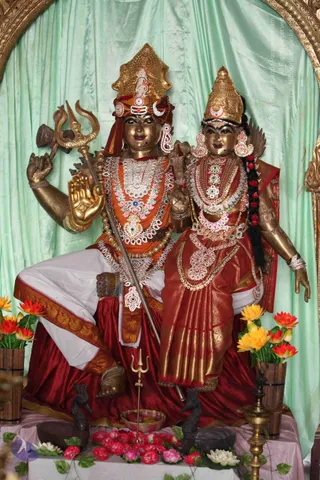
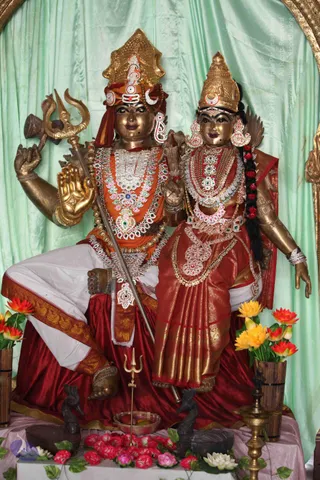
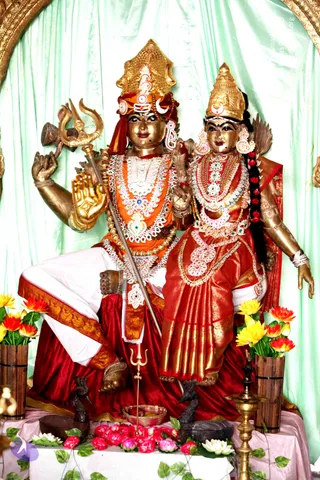
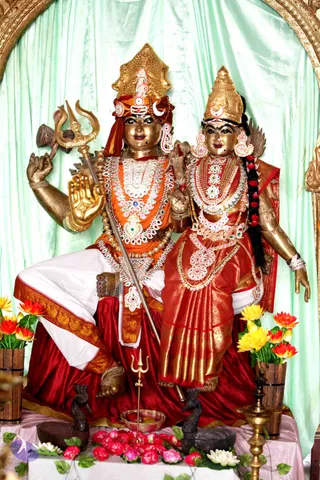
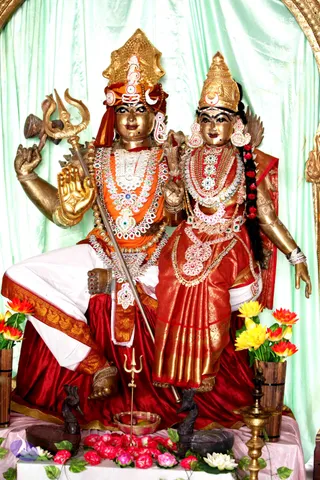
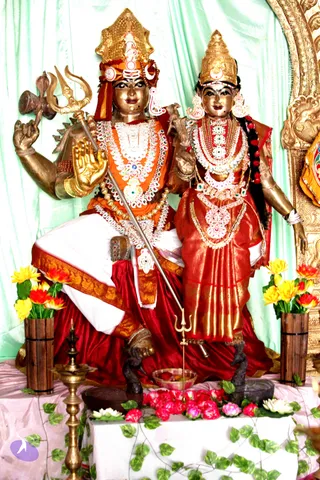
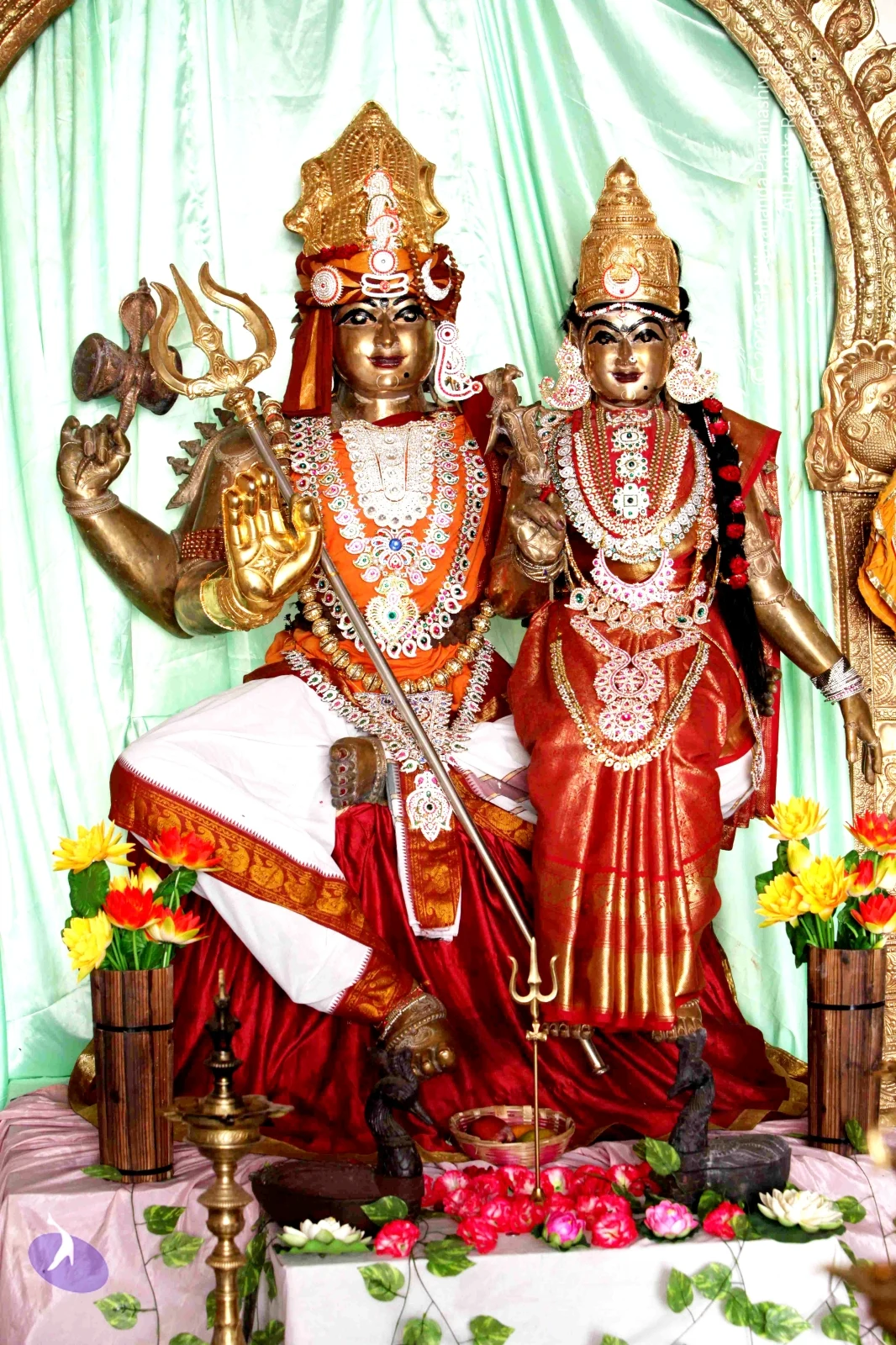
A golden deity murti seated in a padmasana-like pose on a throne draped in red and gold ornamental borders, against a green silk backdrop. The figure wears a tall layered gold crown set with red and green stones, a Shiva-linga-style forehead motif, and a Shaiva trident (trishul) and damaru-like staff at the sides. A green silk garment is adorned with heavy pearl and jewelled necklaces, a heart-shaped gem pendant, and long jewelled garlands across the lap. Hands are raised in abhaya/blessing gestures.A gilded metal murti of a deity seated on a throne against a green draped backdrop. The figure wears a tall golden crown set with red, green and blue stones, a black band with a white ornament, and a heavy white and jewelled necklace with green and red stones. A green garment covers the body, with a patterned dhoti and a jewelled waist garland. Golden ornate garlands drape the throne sides, and a trident and a ceremonial staff rest on either side. The right hand is raised in blessing. This is a deity murti, not a living person, and no physical people are visible.A gold-toned statue of a seated sannyasi-style figure, rendered as a sculpted murti, sits in a meditative cross-legged posture on a red-and-gold draped seat. The figure wears a maroon turban with white beaded trim, a dense multi-strand red coral bead necklace with gold coin pendants and gold chains, and a red-brown dhoti with a gold border. The right hand is raised in abhaya mudra with a red bindi on its palm, and the left hand rests on the lap. Large gold-and-red floral garlands drape over the shoulders, and a gold ornate frame and green fabric stand behind. The statue is a depiction, not a living person, so no physical person is present.A photograph of a metal murti of Shiva and Parvati seated together on a draped red cloth in front of a mint-green curtain. Shiva, on the left, has a gold crown with a tilak and crescent moon, holds a trident and damaru, and wears an orange garment, white dhoti and layered silver-and-jewelled necklaces. Parvati, on the right, wears a gold crown with a crescent, a red-and-gold silk sari, red flowers in her braid and jewelled necklaces. Yellow and red flowers stand in tall vases, pink flowers and lotuses are scattered before them, and a brass oil lamp and small trident stand at the base. Photographed by Nithyanandapedia; no physical people are present.Photograph of a golden-toned murti pair of Shiva and Parvati seated on a red draped dais before a mint-green silk backdrop with gilded arch edges. Shiva holds a trident and a damaru-like drum, wears an orange-red cloth, a heavy jewelled necklace, a crown with a crescent, and a red and gold dhoti. Parvati wears a red and gold silk sari, a layered jewelled necklace, and a long braid decorated with red flowers. Yellow and orange flowers in wooden vases flank the figures, with a small trident, a brass oil lamp, and a basket of red roses and lotuses in the foreground.Two large gilded statues of Shiva and Parvati stand against a mint-green draped backdrop in a temple-style shrine. Shiva, on the left, has a golden crown, a trident raised in one hand, and wears an orange-red garment with layered jewelled necklaces. Parvati, on the right, wears a gold crown with a crescent, a red-gold silk saraswati-style sari with jewelled necklaces and a long braid decorated with red flowers. Red and yellow lotus flowers, red rose petals, a small brass trident and an oil lamp are arranged on the altar below. No living people are visible.

02-Shivoham
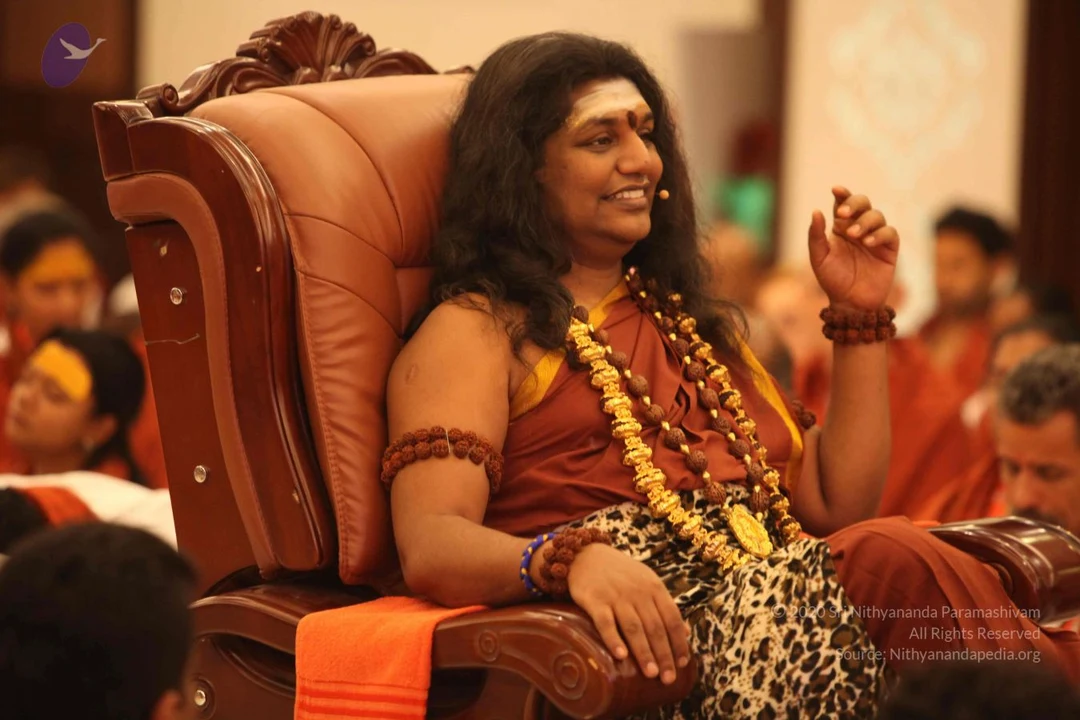
2 photosSource gallery
A seated speaker in a large hall addresses a seated audience. He wears long dark hair, a saffron-orange robe with a gold-edged shawl, a layered rudraksha mala and gold necklaces, and a tilak on his forehead; he holds up one finger while speaking into a headset microphone. He sits on a brown leather throne-style chair beside a tall silver trident. Around him, a crowd dressed in orange and red shawls and white clothing sits on the floor; many have yellow tilak marks. Lavender decorative panels stand behind the stage. Visible people are numerous and seated across the hall.A satsang hall where a long-haired man in an orange-red garment sits on a brown leather throne with a silver trident beside him. He wears layered gold and rudraksha malas and a gold necklace, with a red-orange wrap over his shoulders. Around him sit devotees in white and orange-red shawls, with some wearing yellow and orange tilaka and kumkum; a bald man in white sits in the foreground. Lilac-patterned walls and wood panelling frame the hall. Crowded with well over twenty people seated closely together, the scene reads as a discourse or satsang. The figure on the throne shows a probable Swamiji appearance by clustered cues of long swept-back hair, rudraksha malas, gold necklace and orange clothing, with him described in role here.

01-IA-VARANASI

21 photosSource gallery
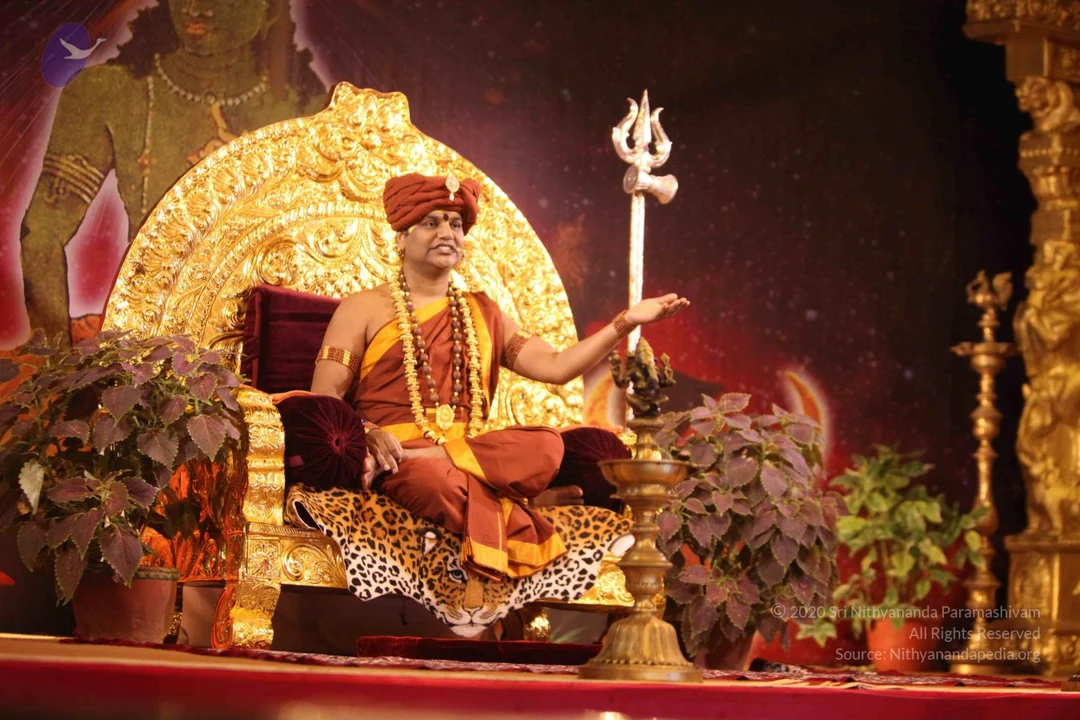
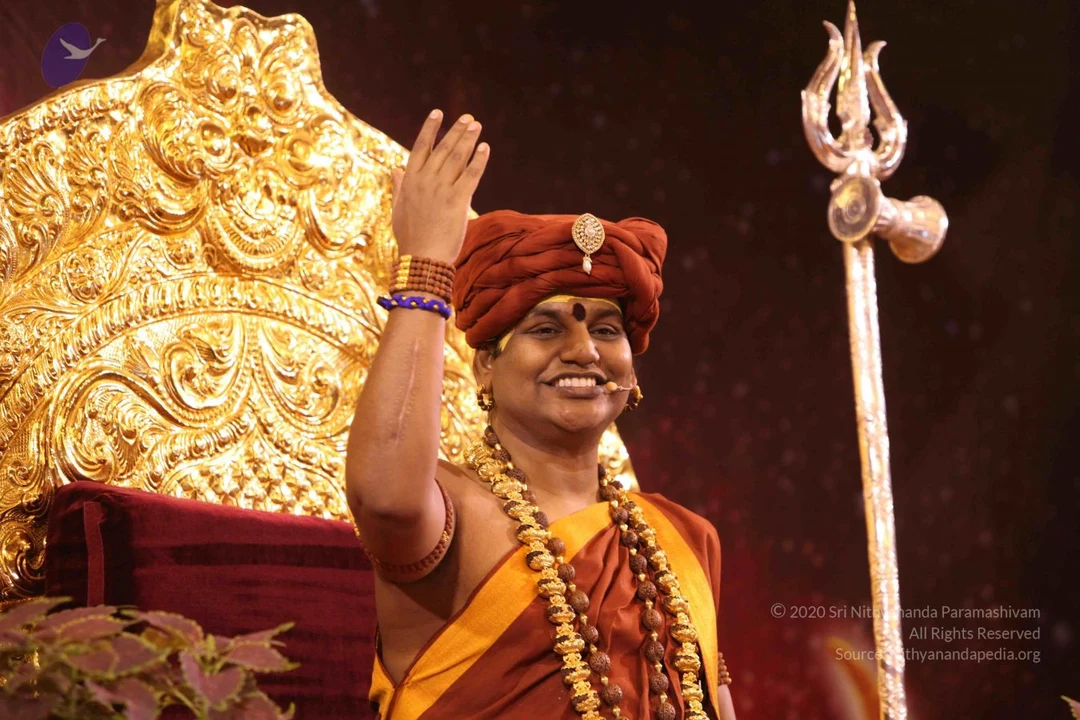
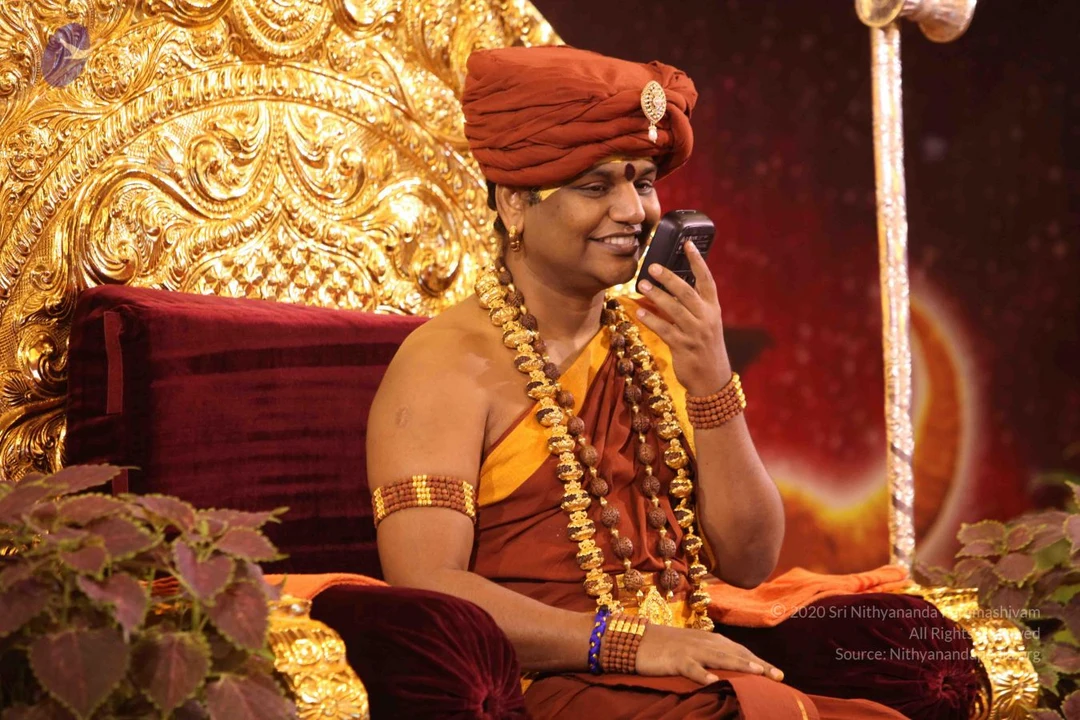
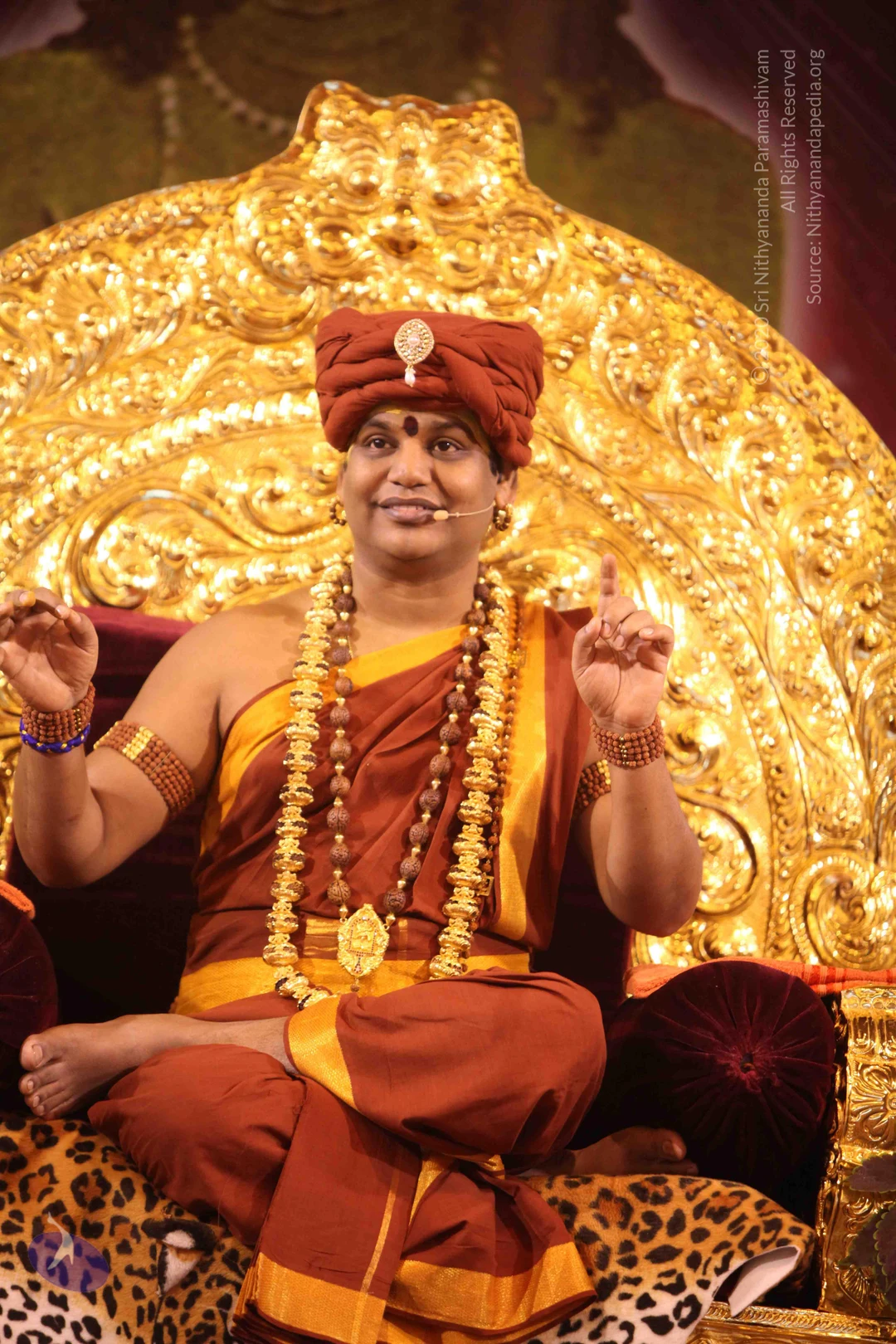
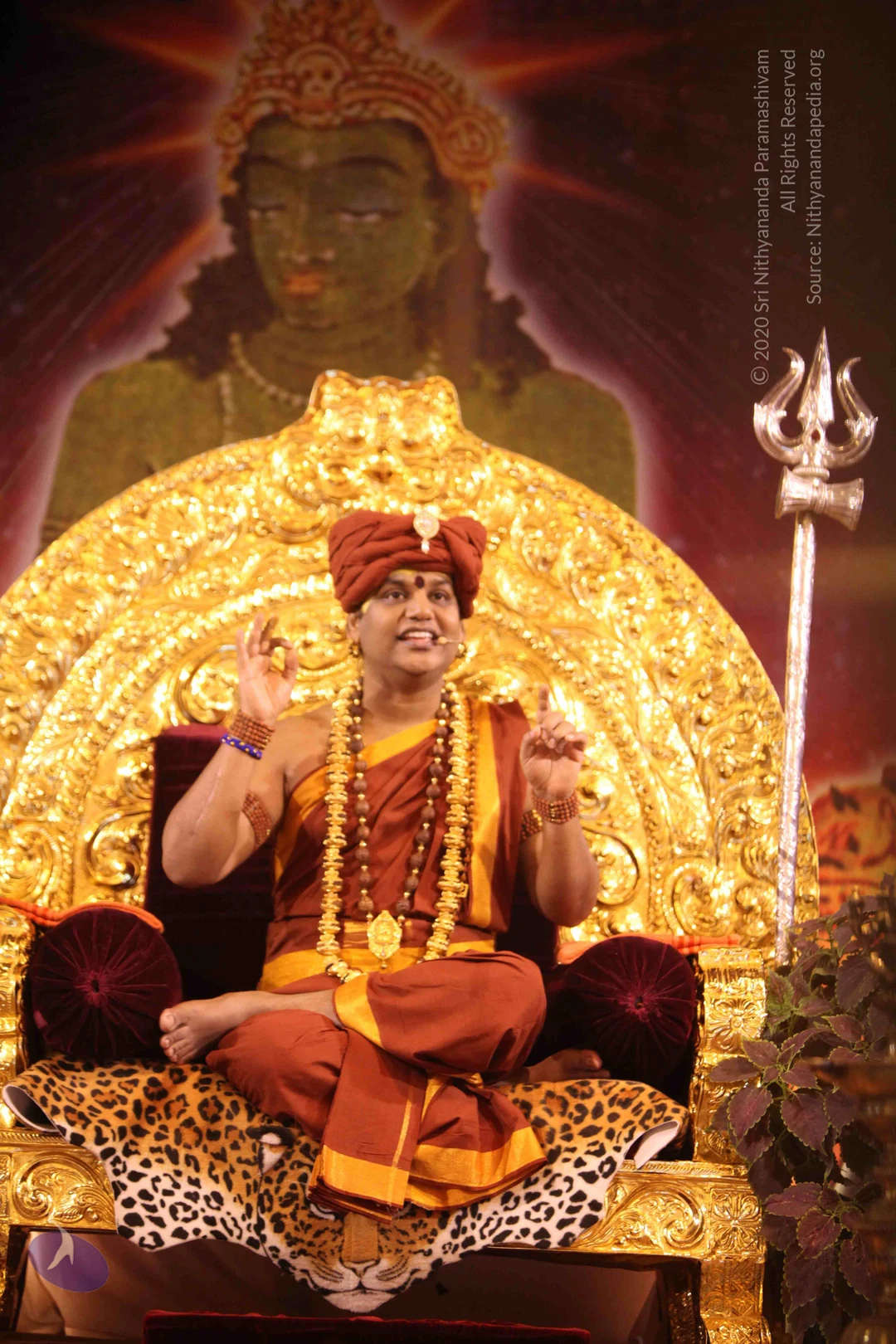
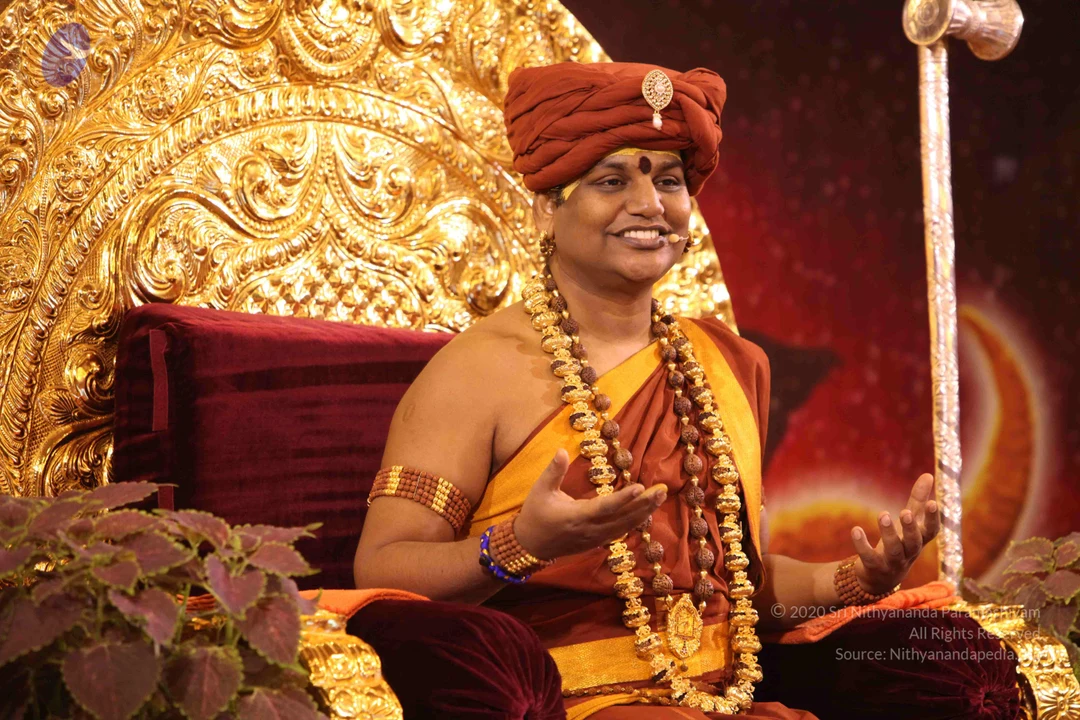
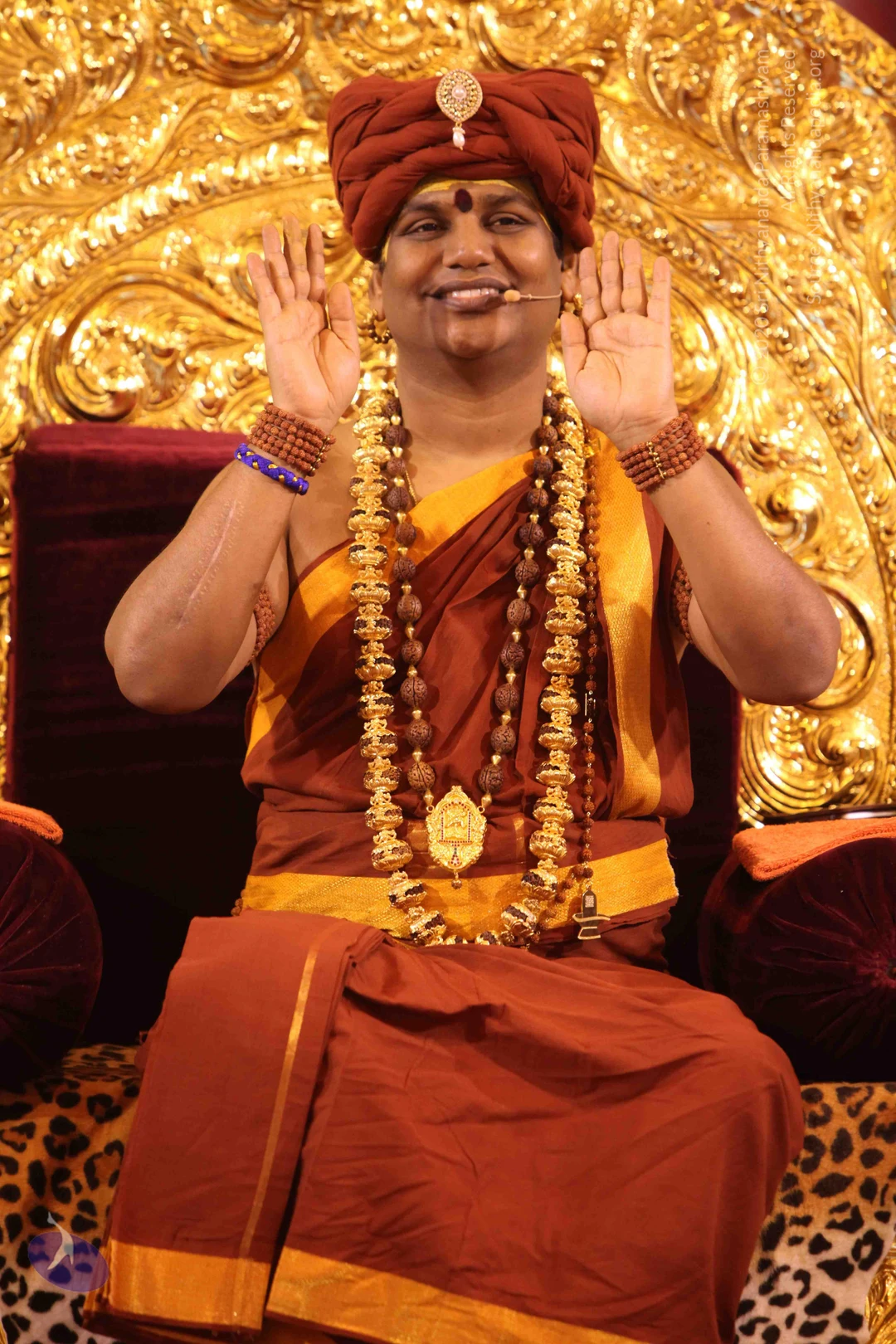
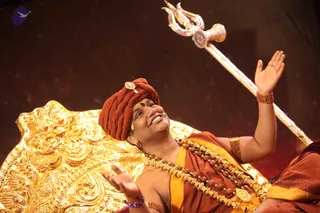
A seated man in an ornate golden throne with an arched gilded backrest, draped in a leopard-skin cover, serves as the central subject of a stage setting. He wears a rust-red turban with a small gold ornament, a rust-red and gold-bordered robe, layered gold and rudraksha necklaces, and gold armbands; a headset microphone is visible at his ear. Behind him a large glowing backdrop shows a green-faced deity bust with a crown and red radiating rays. A silver trident stands at the right and a brass lamp with a leafy plant sits at the lower right.A smiling man in a red-orange turban with a gold ornament sits cross-legged on a red velvet cushion before an ornate, highly carved gold throne. He wears an orange-and-gold shawl over a rust-coloured garment, multiple rudraksha and gold bead necklaces, rudraksha armlets and bracelets, and has a red bindi on his forehead and a small microphone clipped near his mouth. Swamiji (probable) appears as the seated speaker, appearance-based cues being the turban, ornate gold necklaces and saffron-toned clothing; the image is a single photograph with one physical person visible.A seated man in a rust-red turban with a jewelled brooch and a red bindi sits cross-legged on a leopard-print cushion before an ornate gold throne. He wears a rust-red and gold-bordered robe, layered gold beaded necklaces with rudraksha malas, and rudraksha bracelets, and a headset microphone. He raises both hands in an expressive gesture while speaking to an audience.A seated man in a rust-red turban with a small white jewel and red bindi sits cross-legged on a large ornate gold throne with a leopard-print cloth draped over the seat. He wears rust-red and gold garments, a long gold garland, and beaded rudraksha malas, with red-beaded bracelets on his wrists. He raises both hands in mudra gestures while speaking into a headset microphone. Behind him a gilded halo-framed deity image with a green face and crown glows against a red backdrop, and a silver trident stands to the right beside a plant with purple leaves.A smiling man sits cross-legged on an ornate gold throne with carved floral scrollwork, wearing a rust-orange turban with a gold ornament, a rust-orange and gold-bordered robe, multiple rudraksha malas and gold necklaces, and beaded armbands. A headset microphone is at his face and he sits on a leopard-print cushion with maroon bolsters. Behind him a large painted golden figure of a deity with a crown and radiant red rays fills the backdrop.A photograph of a man seated on an ornate gold throne against a dark red backdrop, smiling and raising one hand upward while the other hand is extended outward. He wears a rust-orange turban with a small silver ornament, saffron-orange robes with a yellow sash, and multiple strands of rudraksha beads and gold necklaces. A silver trident rises diagonally behind him, and a bright red bindi marks his forehead. A figure in orange robes is partly visible at the right edge. A wide-angle stage setting suggests a satsang or discourse. Swamiji (probable): the seated man wears a turban, saffron clothing, rudraksha malas and gold ornaments on a throne, matching the page's description of a satsang led by Paramahamsa Nithyananda.

02-Shivoham
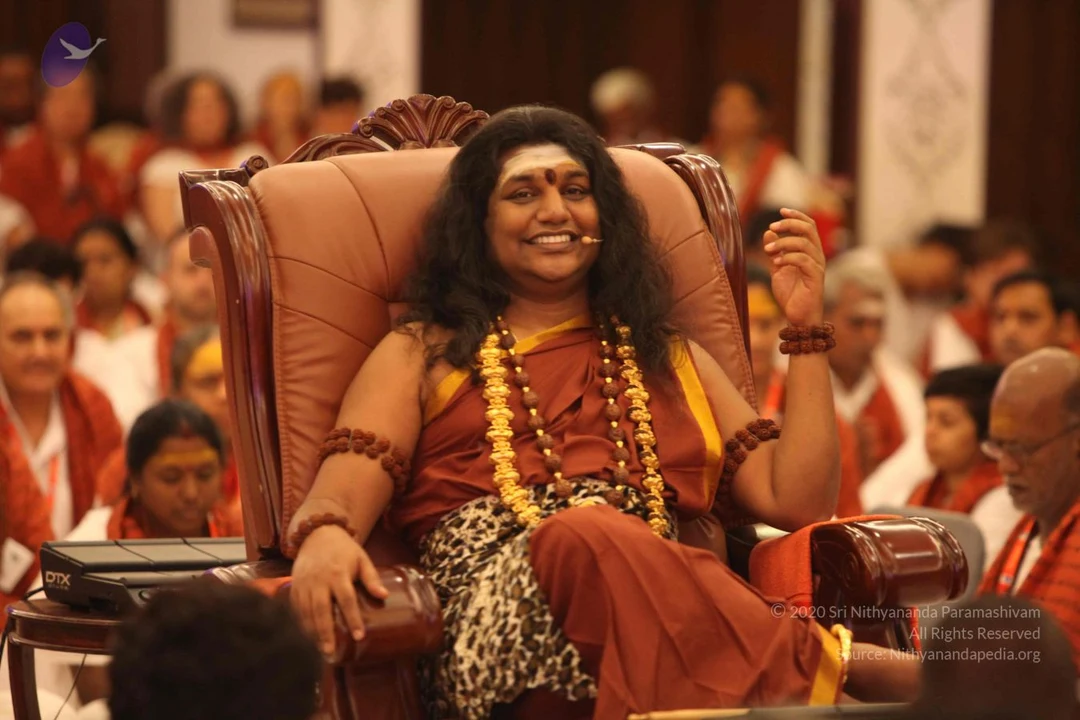
2 photosSource gallery
A long-haired figure in an orange-red saffron garment with a gold-yellow edge sits in a large brown leather throne-style chair at the centre, hands folded in his lap, wearing layered ornate gold necklaces and rudraksha malas and a small microphone at the ear. A silver trident stands to the right beside the chair. Behind him, a dense audience of seated devotees in white with orange-red shawls fills the hall, many with vibhuti or kumkum marks, and magenta patterned panels decorate the upper wall. a person is the central figure seated on the throne, presiding over a satsang with an audience of many people.A crowded satsang hall with a purple and white patterned wall panel behind a crowd of devotees in white and orange-red shawls. In the centre, a long-haired man with a red and gold garment, a beaded mala and a leopard-print lower wrap stands near a brown leather chair, while a bare-chested man in orange garments with a shawl stands nearby, and devotees kneel or bow on the white floor. Many people press in around them, some with hands folded in namaskar, some carrying small items, and a few kneeling figures in the foreground. The long-haired central figure, shown with distinctive long swept-back hair, a beaded mala and ornate clothing, fits the Swamiji (probable) cues, so he is treated as a probable candidate present in person.

2-Shivoham
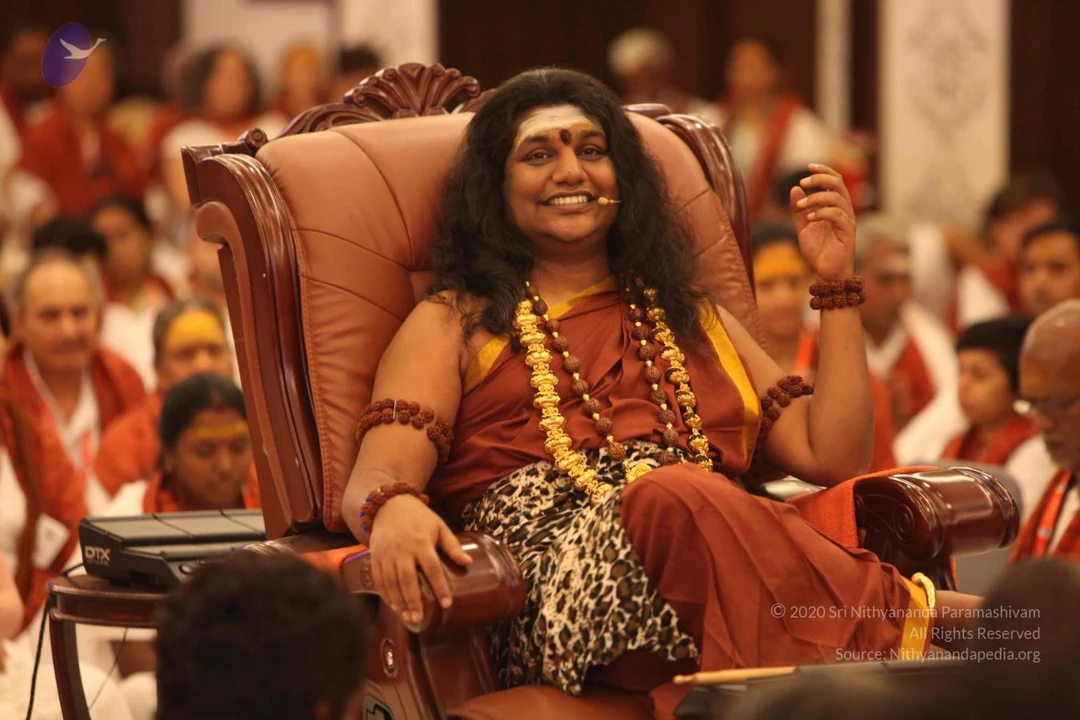
20 photosSource gallery
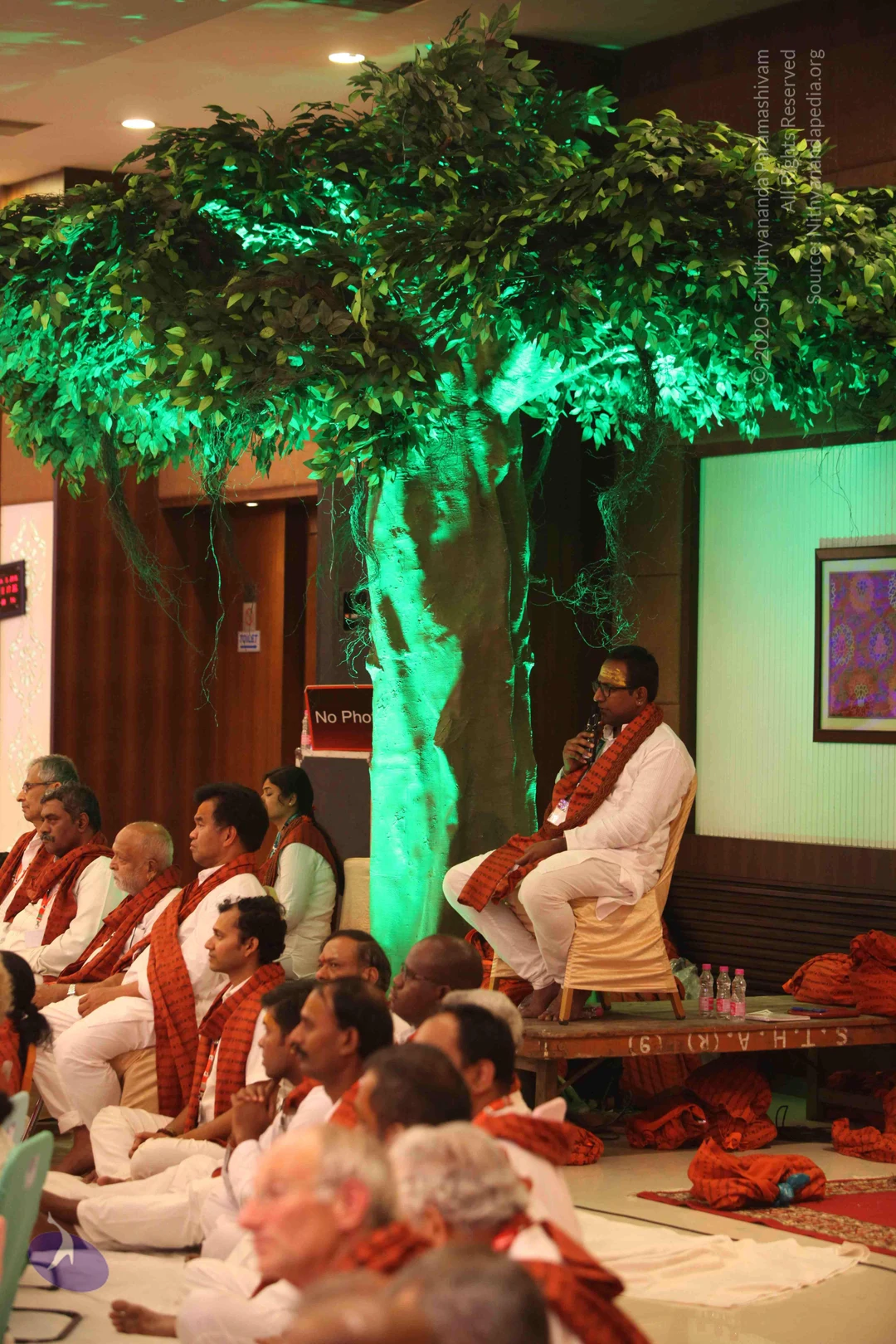
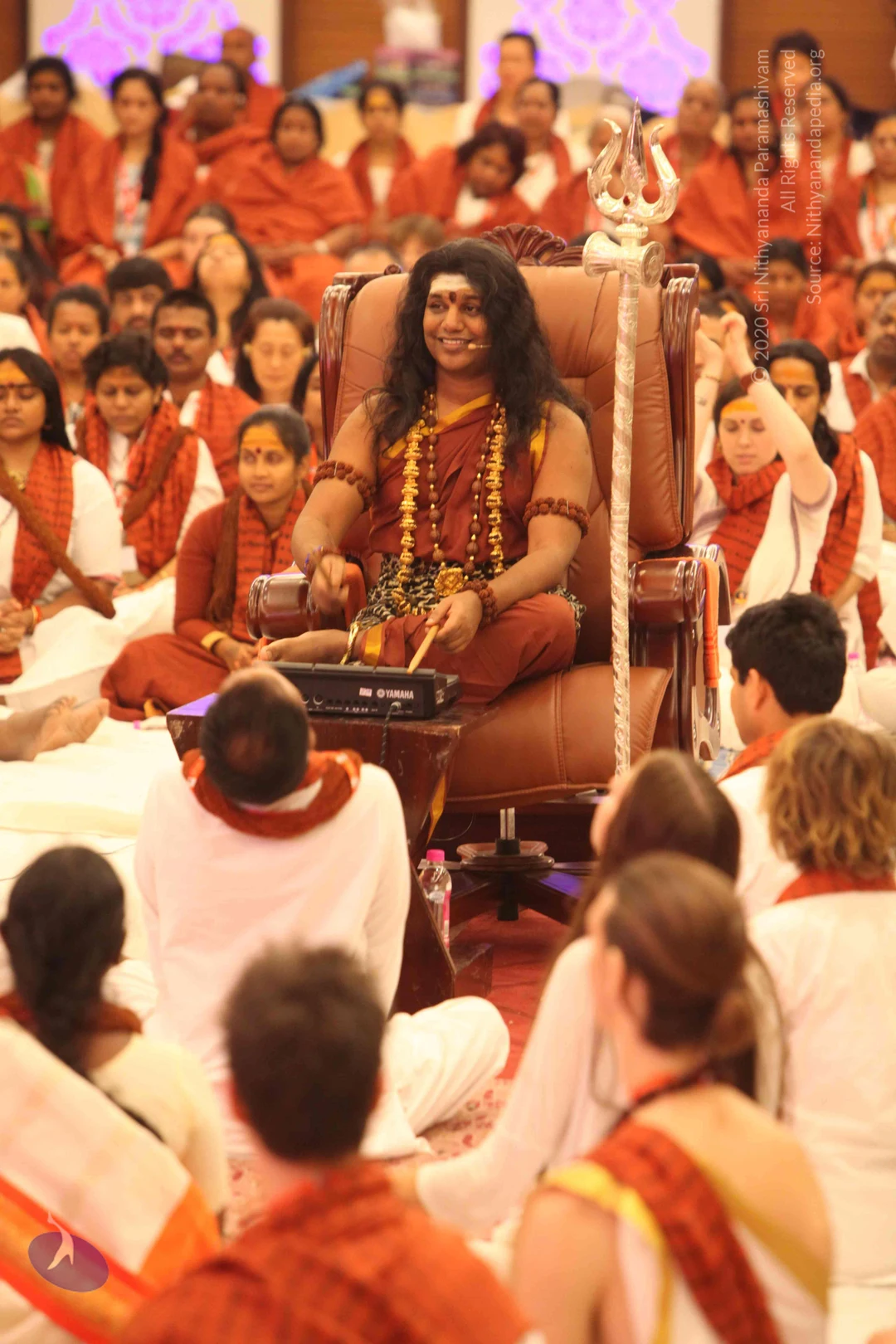
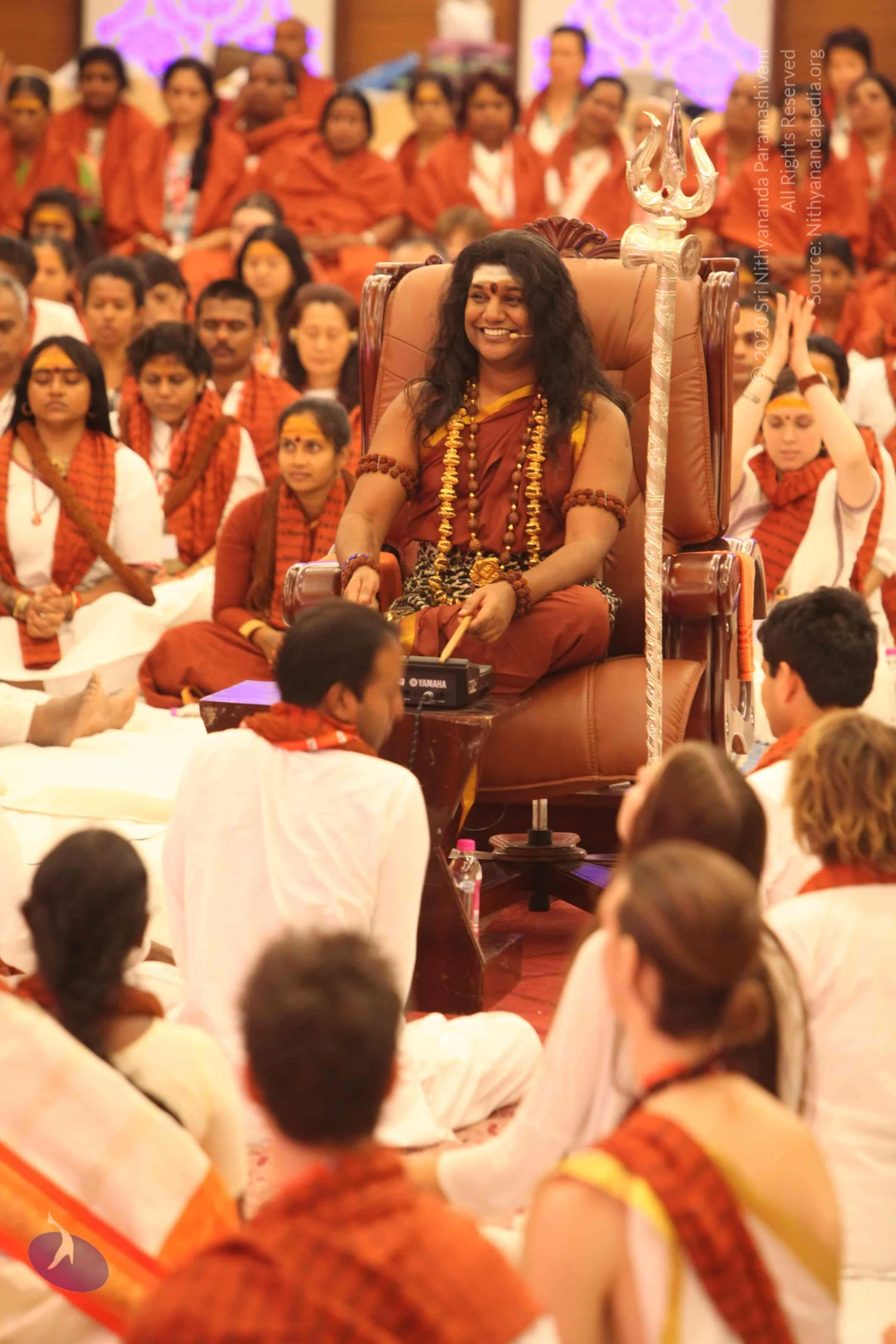
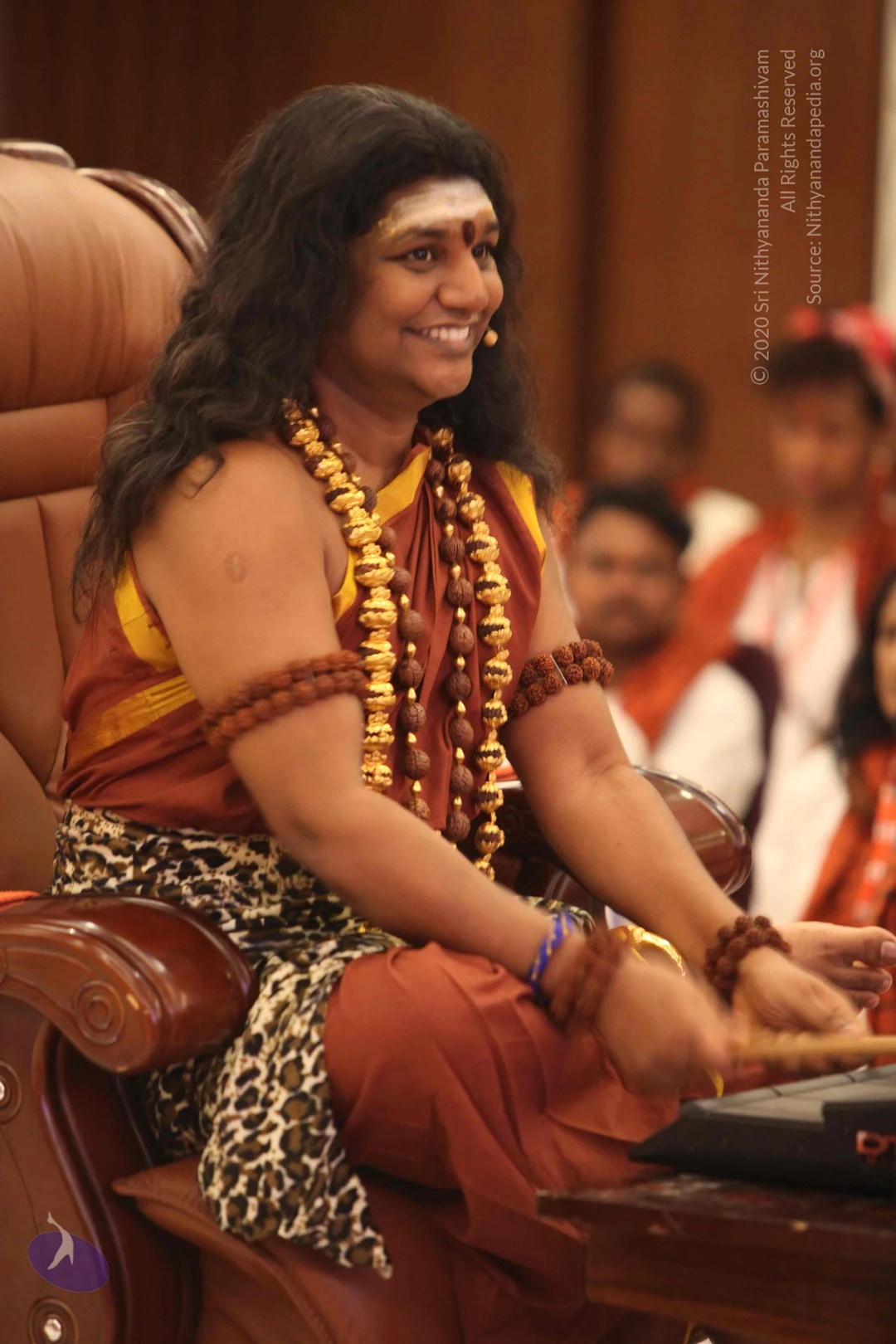
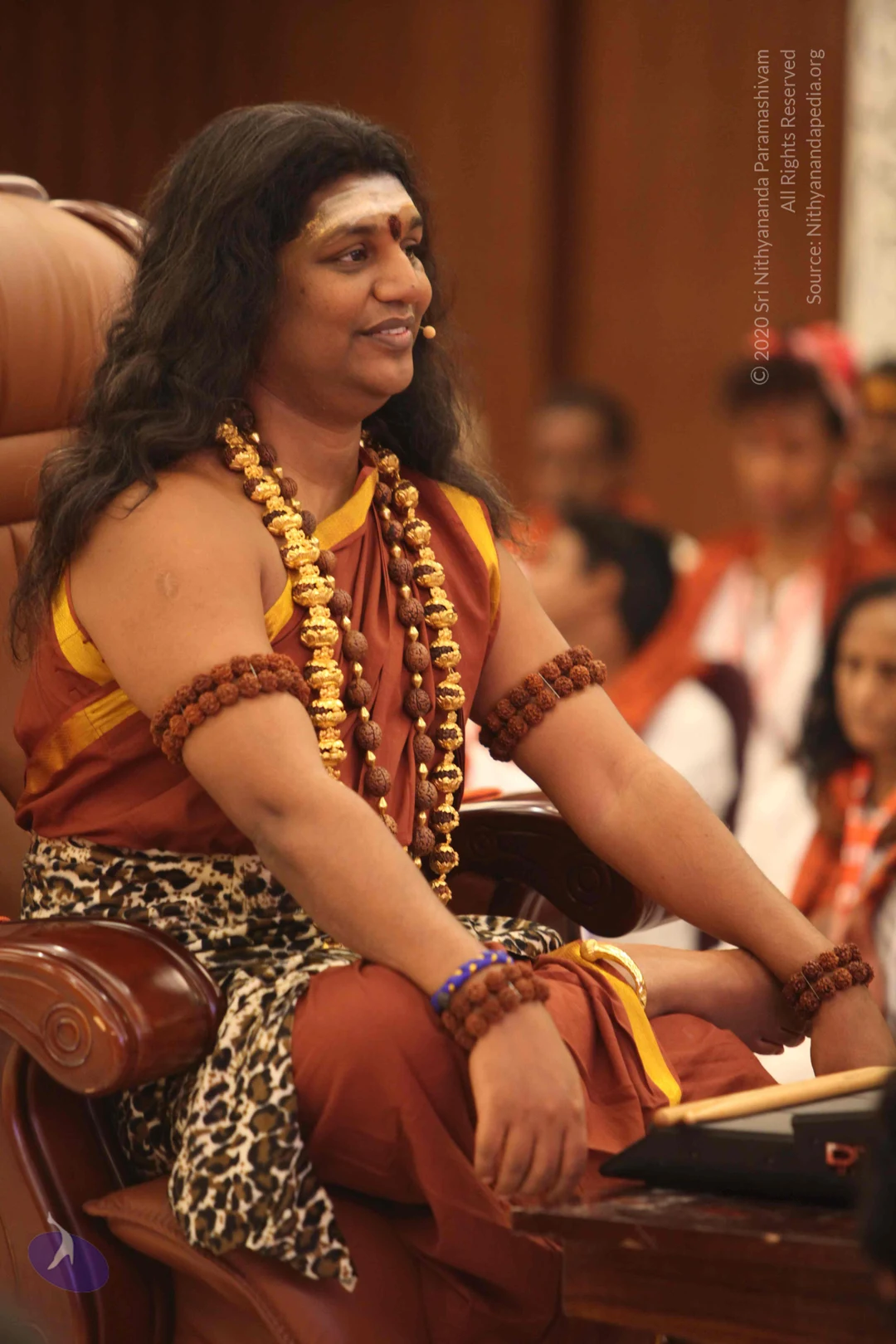
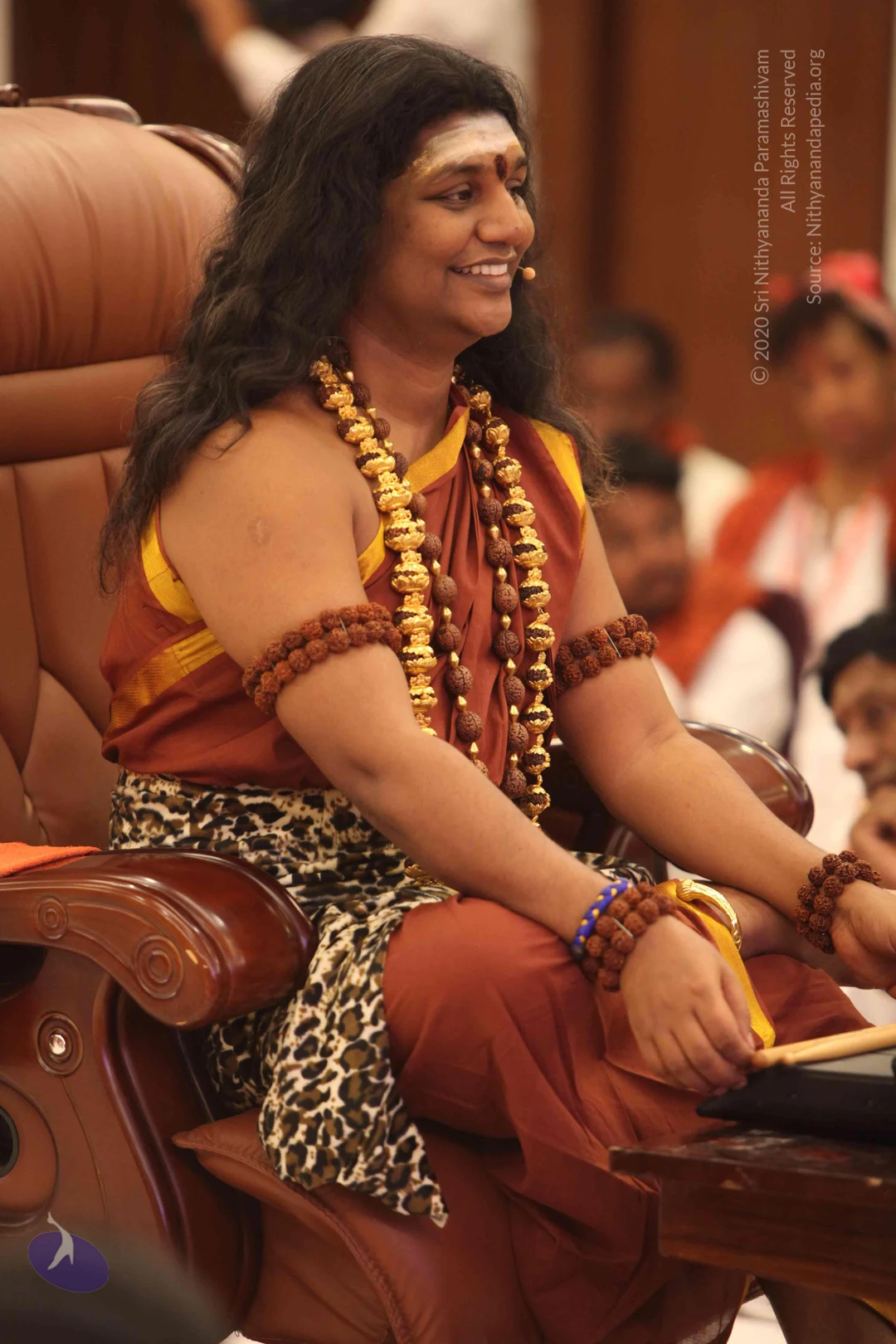
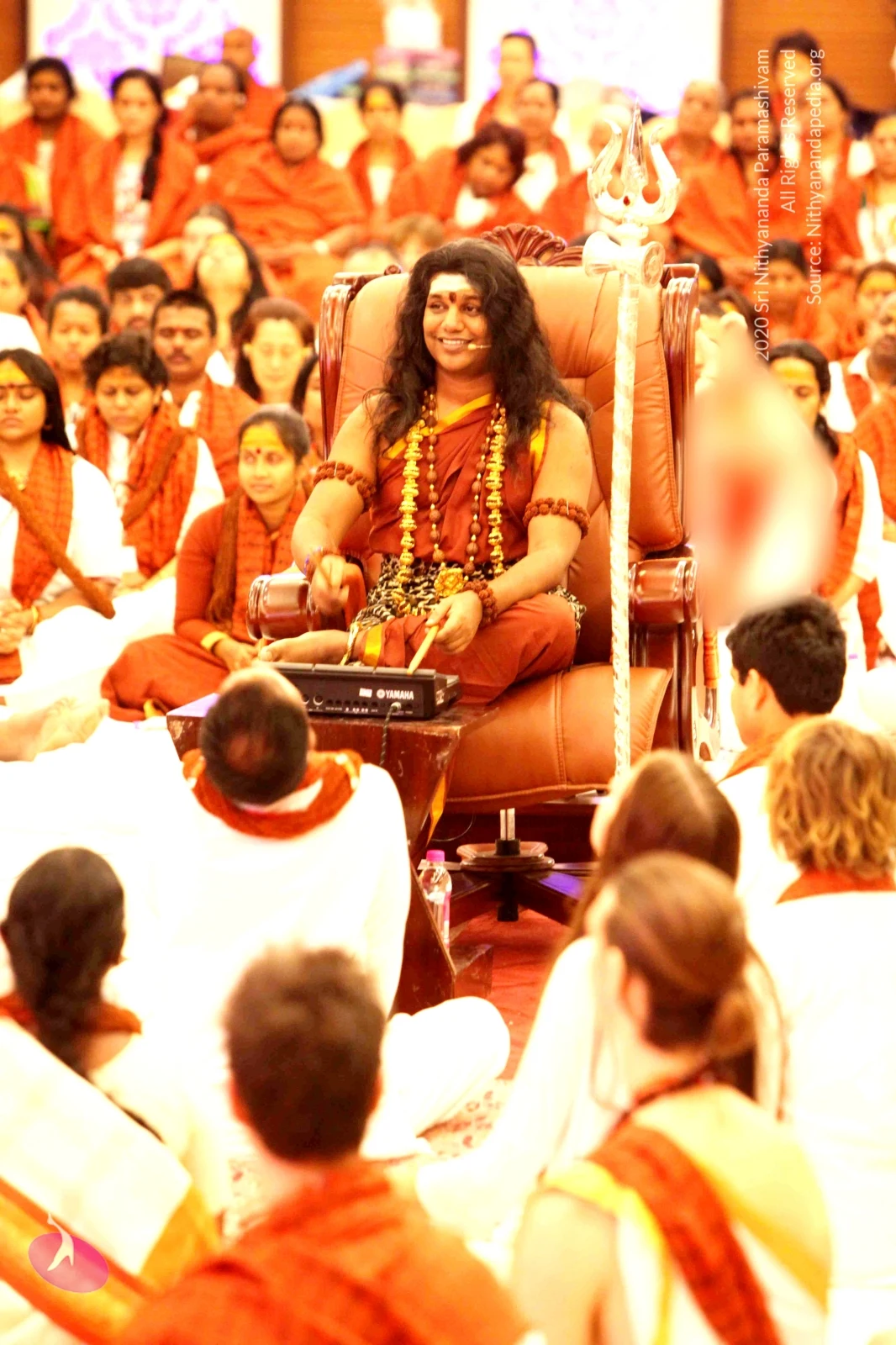
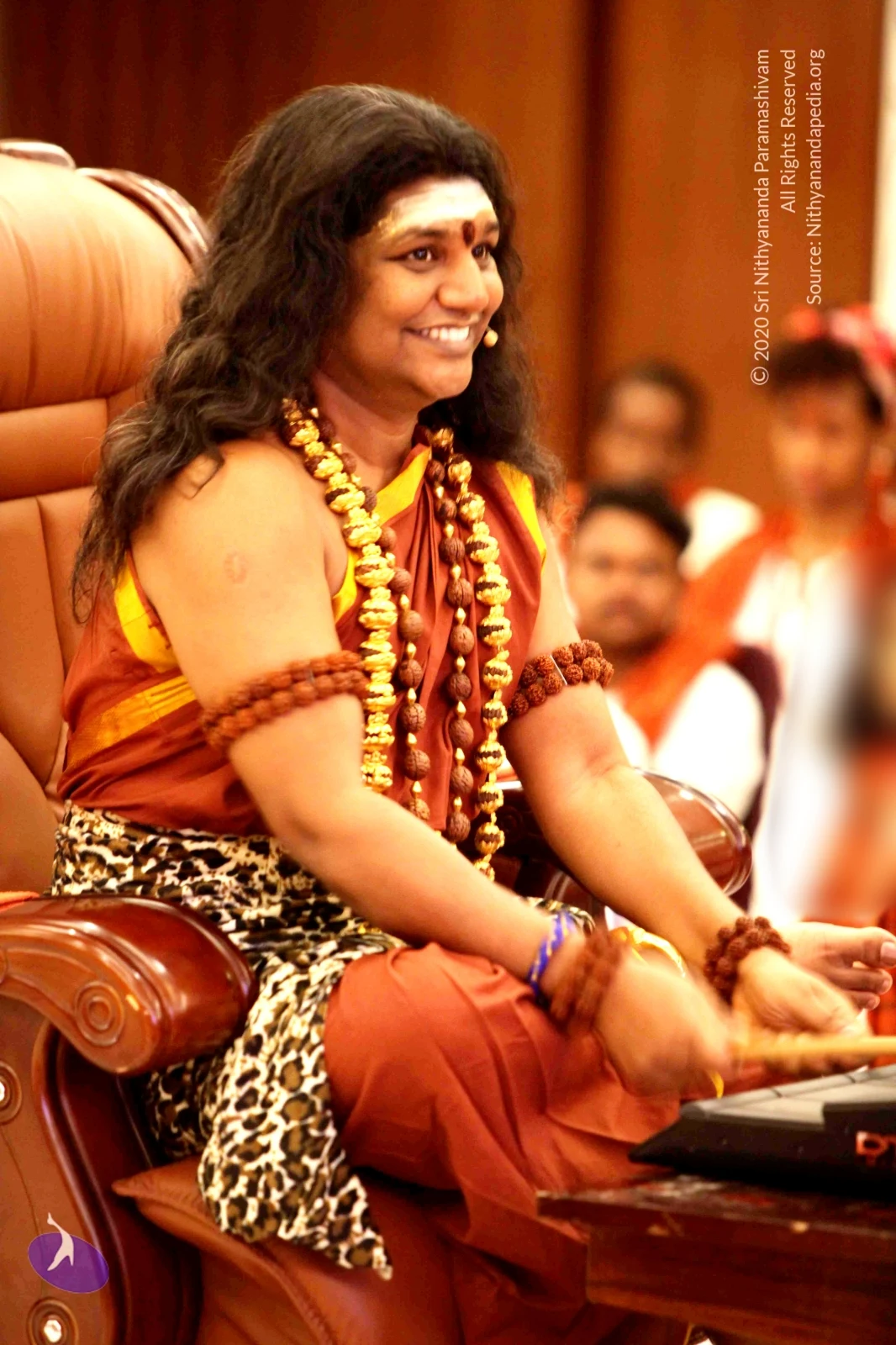
A photograph from a satsang hall where a long-haired figure in rust-red and saffron garments stands centrally with eyes closed, wearing a thick gold-and-yellow flower garland, rudraksha-style beads, a white forehead mark, and a leopard-print lower wrap. a person: the centre figure has long swept-back hair, a white forehead mark, ornate gold garland and beads, matching the page's Shivoham album context. Around him devotees in red shawls and white clothing stand with palms pressed in anjali. Two men in white kurtas with red shawls receive an offering from a silver trident-topped ritual object held in front. Audience members in the foreground face the stage, and a violet-patterned backdrop fills the upper background.A satsang hall with a large artificial banyan tree, its trunk and canopy lit green, dominating the stage area. A man in white clothes with an orange-red shawl sits on a light wooden chair on a raised platform, holding a microphone and speaking, with a small white forehead mark. Seated audience members in white clothes and orange-red shawls fill the foreground and left, many sitting on the floor. Water bottles sit on the platform, and a sign reads "No Photo" beside the tree. A framed patterned artwork hangs on the right wall.A photograph of a satsang with a seated teacher in a large brown leather chair at the front, long swept-back dark hair, white forehead marking, rudraksha bracelets and beads, a gold ceremonial necklace, and a saffron-orange wrap over a leopard-print garment. Swamiji (probable): the seated figure has long swept-back hair, rudraksha malas, a gold necklace and saffron-orange clothing, and is seated on a throne-like chair, with a silver trident standing beside him. Audience members in saffron and orange shawls and white clothes sit in rows on the floor and in the background, some with the back of their heads facing the camera, while a small Yamaha amplifier sits on a wooden table in front of him.A seated man in a large brown leather throne-style chair leads a satsang before a seated audience of devotees. He has long dark hair, a red-orange robe, multi-strand gold necklaces with rudraksha beads and rudraksha bracelets on his arms, and a forehead marking. He holds a small drum-like instrument and smiles while speaking into a headset microphone. A silver trident stands beside the throne. Most of the audience wear orange and red shawls and sit cross-legged, some with forehead markings. A Yamaha keyboard sits on a small table in front of the throne. Swamiji (probable): the seated speaker has long swept-back hair, ornate gold necklaces and rudraksha malas, and sits on a throne with a trident, consistent with the page's description of a satsang.A photograph of a satsang hall where a long-haired figure in saffron-orange clothing sits on a large brown leather throne-style chair, smiling, with a trident (trishul) standing beside the chair. The figure wears layered rudraksha malas and ceremonial gold-and-orange floral necklaces, with rudraksha bracelets and a yellow tilak. Seated before the chair are rows of devotees in orange and red shawls and white clothing, many with yellow tilak marks, some sitting in meditation with eyes closed, one holding a wooden stick. A small Yamaha audio mixer sits on a table in the foreground. Several people in the foreground are seen from behind. Watermarked overlay text along the bottom reads as an archive credit line.A photograph of a satsang discourse in a hall with pink-patterned panels. A man with long dark hair and a red tilak sits smiling in a large brown leather throne, wearing an orange-red wrap, a gold ceremonial necklace with rudraksha malas, rudraksha armbands and a leopard-print skirt, with a microphone at his face. A silver trident stands beside the throne and a Yamaha mixer sits on a wooden stand in front. Dozens of seated devotees in orange-red and white clothing fill the foreground and background.
3-Deities
17 photosSource gallery
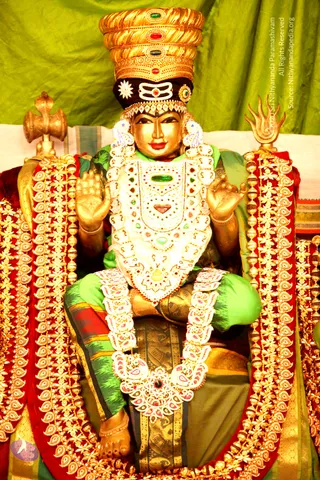
A gilded statue of a deity murti seated on a throne draped with gold and red ornamental garlands. The figure wears a tall golden crown set with red and green stones and a white bead-and-stone-studded necklace, with a green silk garment and a green-and-gold textile around the waist. Its hands are raised in mudra gestures, and a trident and cobra-hood finial flank the throne against a green fabric backdrop.A gilded deity murti seated on a decorated throne against a green draped backdrop. The figure wears a tall golden crown set with red and green stones, a black band marked with a white tripundra, a white jewelled chest garment, and green silk clothing with a gold-bordered dhoti. Multiple garlands of white and gold beadwork hang from the neck and arms. One hand is raised in abhaya-style blessing and the other holds a gesture near the chest. A gold cobra-hooded staff and a trident flank the throne, which is draped in red and gold brocade. No living people are visible.Photograph of a golden-bodied Shiva and Parvati deity murti seated together on a draped ceremonial platform against pale green silk drapery. Shiva holds a trident and a damaru drum, wears an ornate gold crown, an orange wrap, rudraksha-like beaded jewellery and a white dhoti with red border. Parvati wears a red and gold silk sari, a gold crown and layered necklaces. Flanked by potted yellow and orange flowers, a brass oil lamp, a small trident, and a heap of pink roses and white lotuses on a pink cloth. These are statues, not physical people.A photograph of a golden metal murti of Shiva and Parvati standing side by side before a pale green silk backdrop framed by an ornate gold arch. The Shiva figure, on the left, wears a tall golden crown, an orange sash with jewelled ornaments, a white dhoti, and holds a trident. The Parvati figure, on the right, wears a golden crown, a red-and-gold silk saree, layered jewelled necklaces, and a long braid decorated with red flowers. Both murtis are adorned with garlands and ornaments. In front, a bed of red and pink flowers, white lotuses, a brass trident and a brass oil lamp rest on a pink cloth, with yellow and orange flowers in wooden vases at the sides. No physical people are visible.Two gilded deity murti stand side by side against a pale green draped backdrop, a Shiva and Parvati pair. The male figure wears an ornate golden crown with a crescent, an orange and red headcloth, a white dhoti, and an orange garment heavily embellished with jewelled beadwork. He holds a trident and a drum-like instrument in raised hands. The female figure wears a red and gold silk sari, layered jewelled necklaces, and a tall gold crown with a crescent, with a long braid decorated with red flowers. Red and yellow flower arrangements in bamboo vases flank them, with a pile of red roses and lotuses below, a small brass lamp, and a small trident in front.A photograph of a gilded murti pair of Shiva and Parvati standing side by side in front of a pale green draped backdrop. Shiva, on the left, wears an ornate golden crown, orange cloth, white dhoti with red border, and multiple garlands and necklaces; he holds a trident and a small drum-like damaru in raised hands. Parvati, on the right, wears a golden crown, red and gold silk sari, and layered necklaces and bangles, with a long braid. Brass oil lamp, pink and red flowers, a basket of offerings and yellow and red flower arrangements sit in front on a white draped table with leaf garlands. Deity murti, not living people.