Skip to content
Monday

14 May 2012

Leela - Play of Divine Consciousness

Dated photos
508
Source pages
1
Media
5
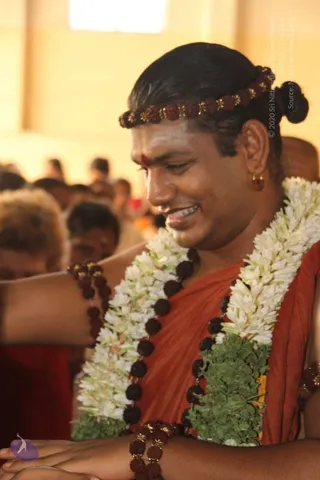
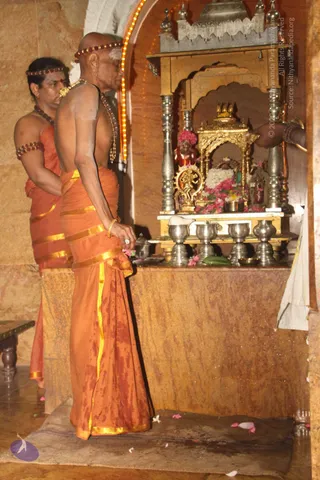
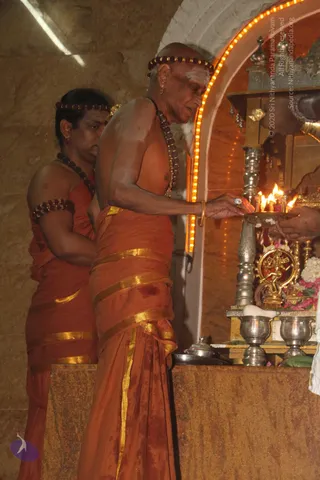
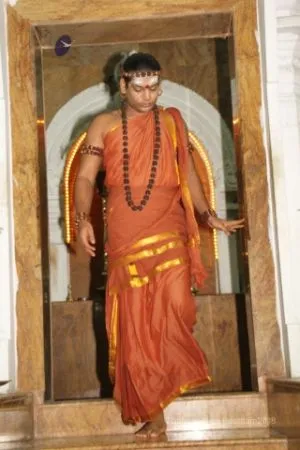
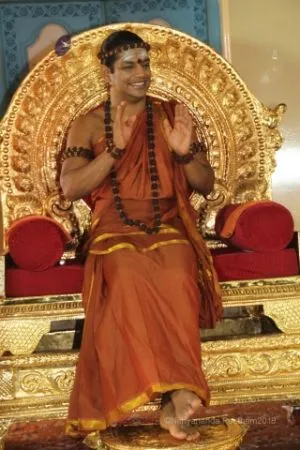
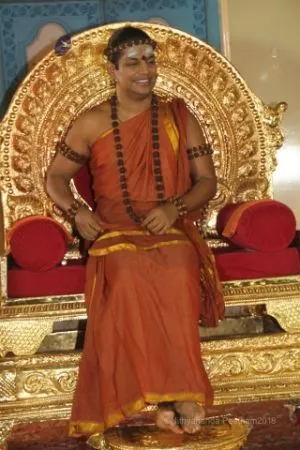
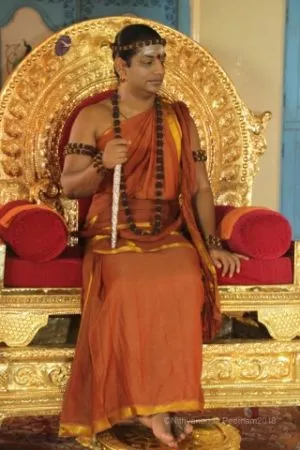
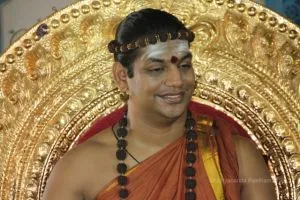
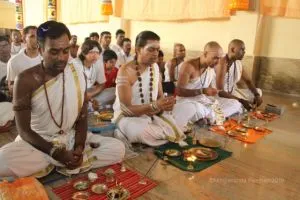
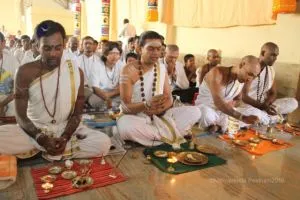
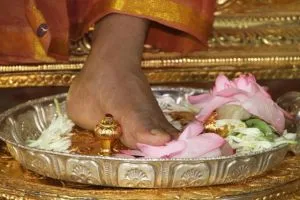
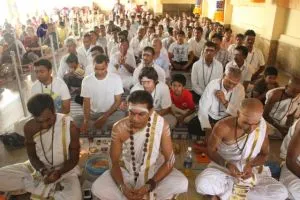
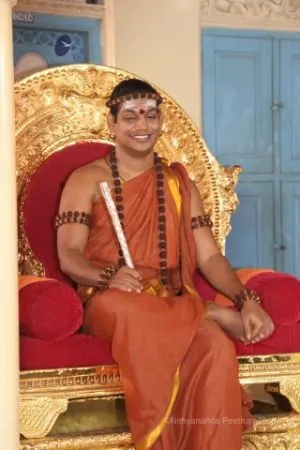
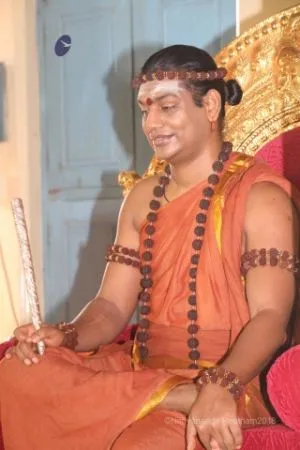
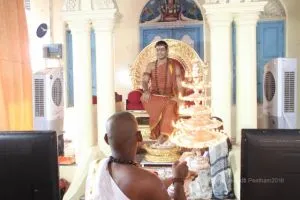
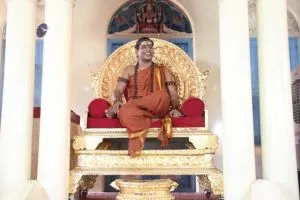
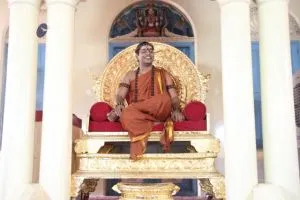
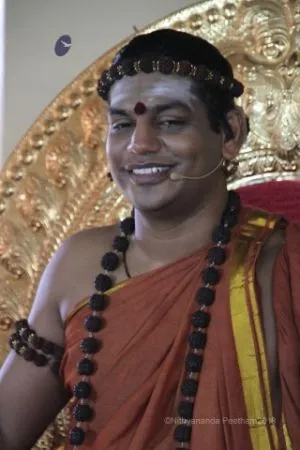
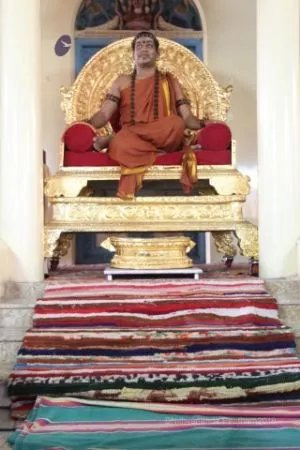
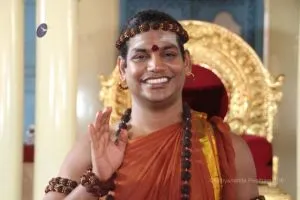
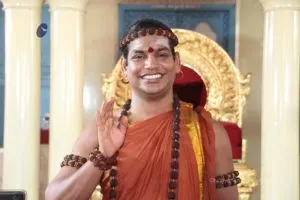
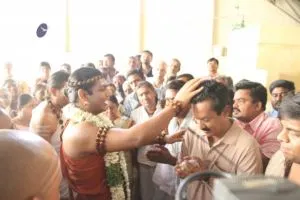
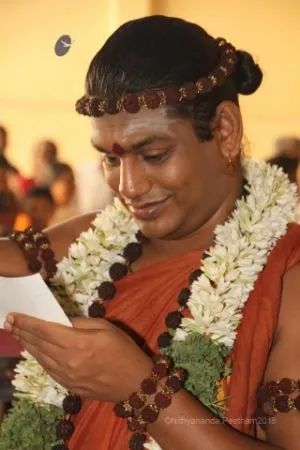
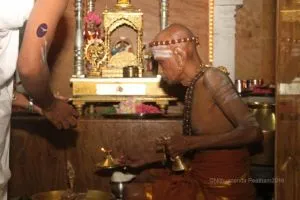
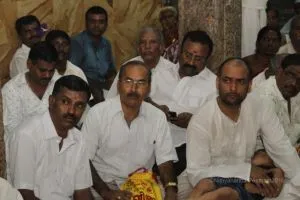
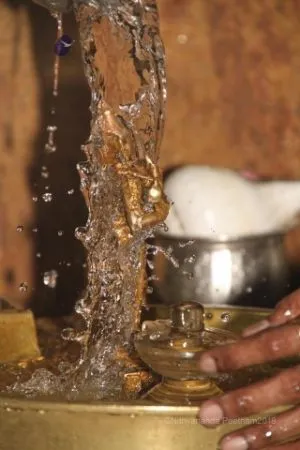
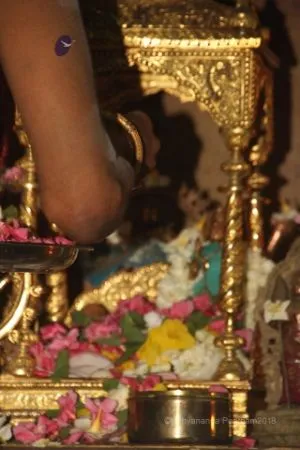
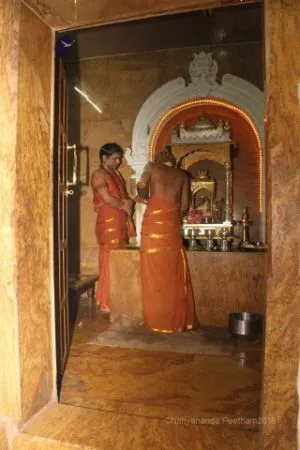
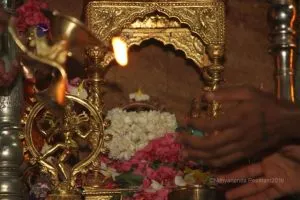
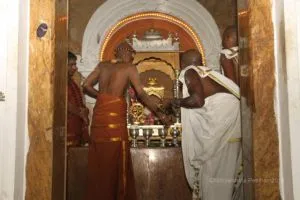
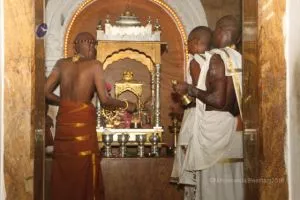
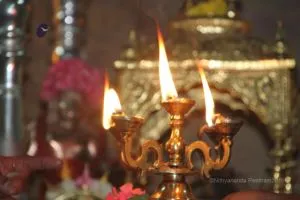
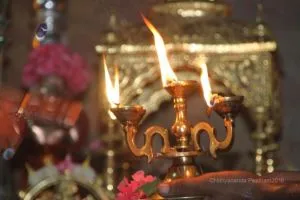
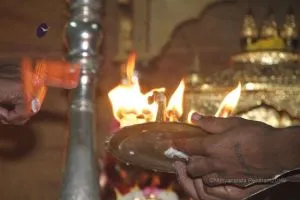
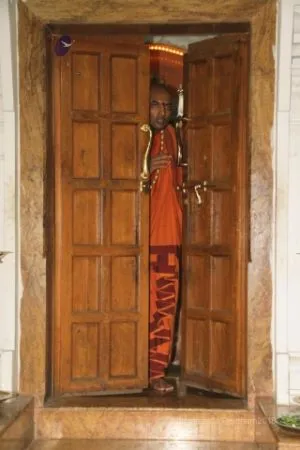
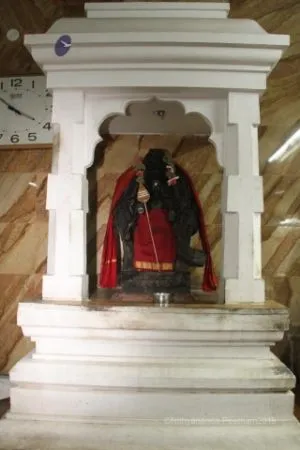
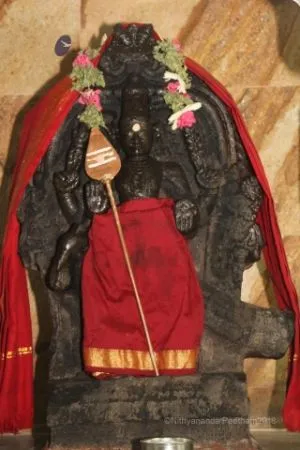
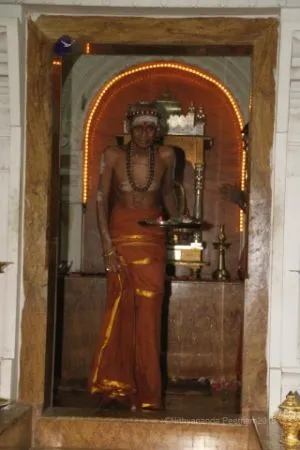
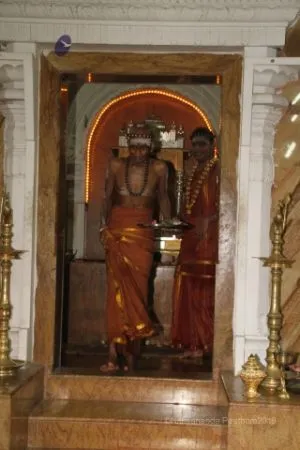
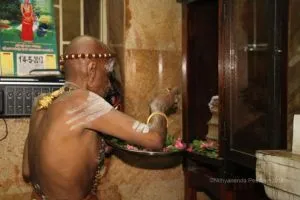
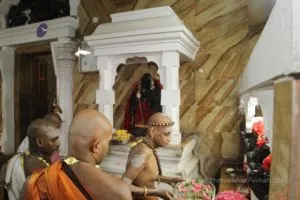
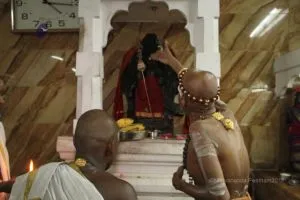
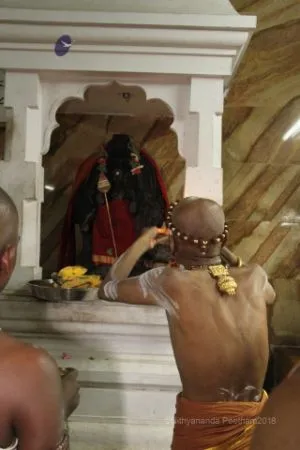
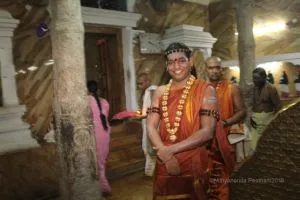
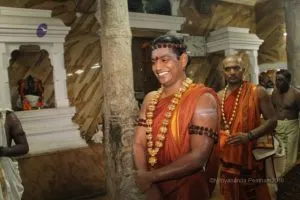
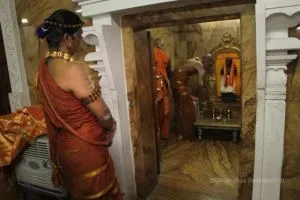
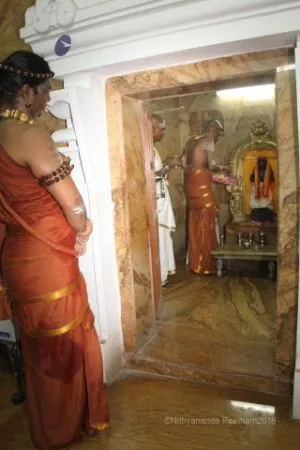
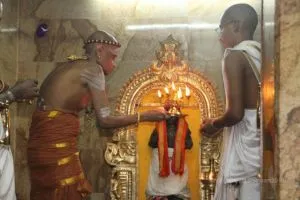
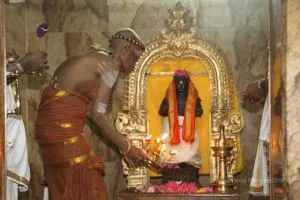
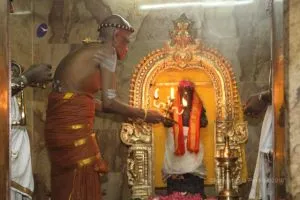
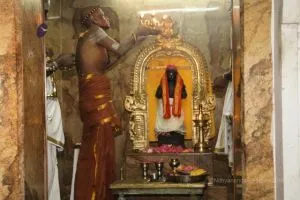
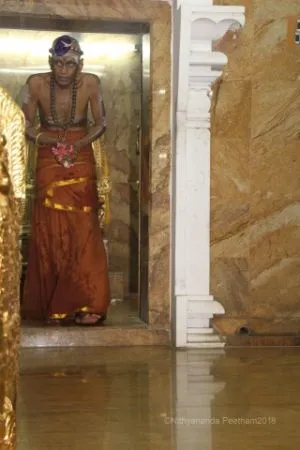
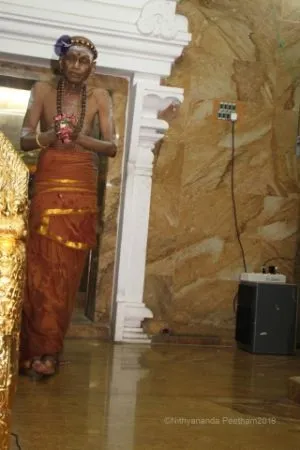
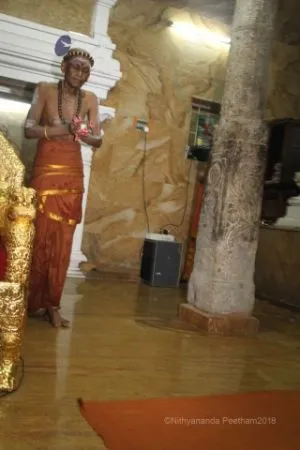
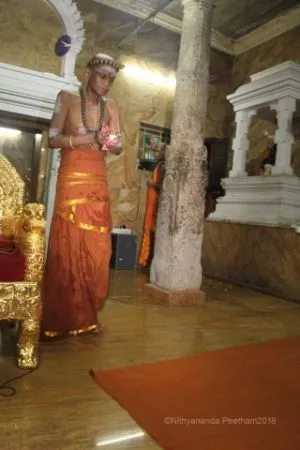
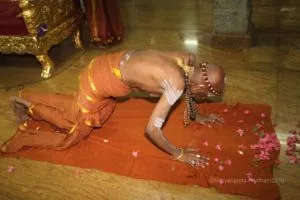
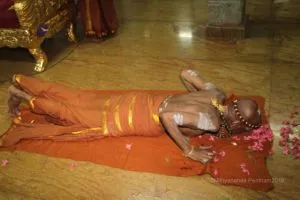
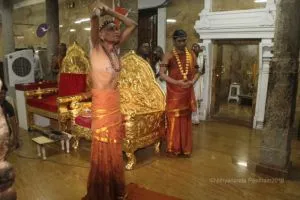
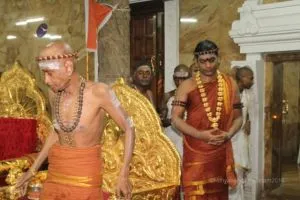
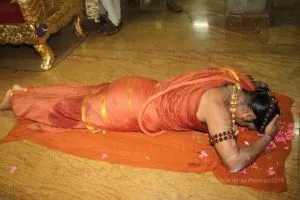
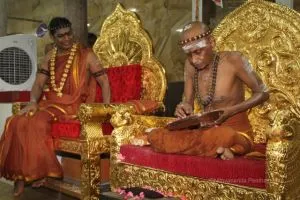
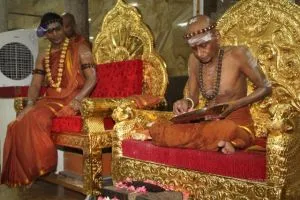
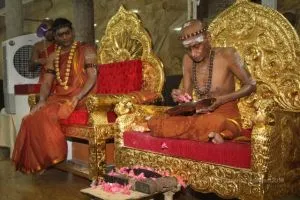
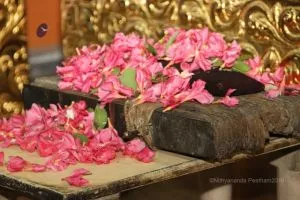
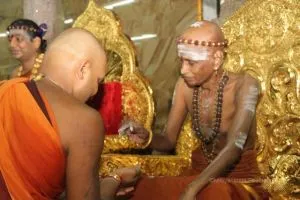
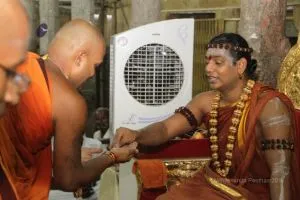
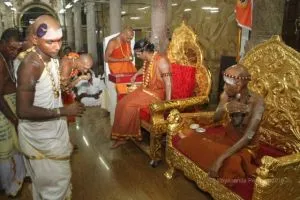
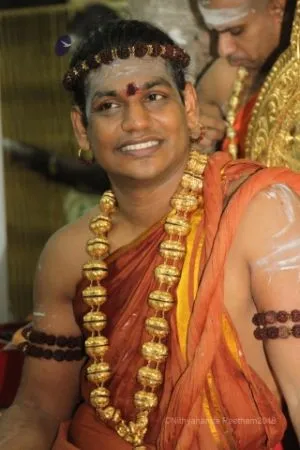
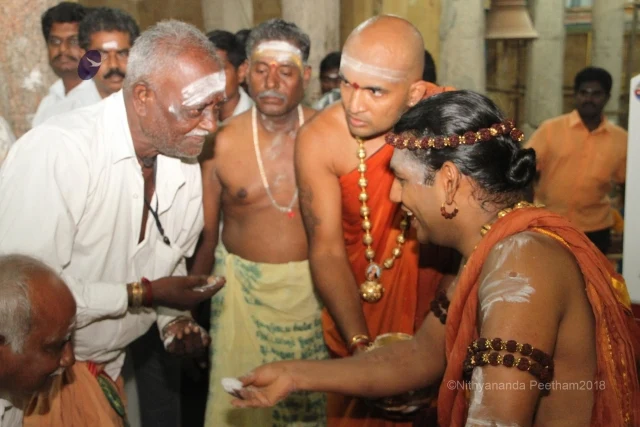
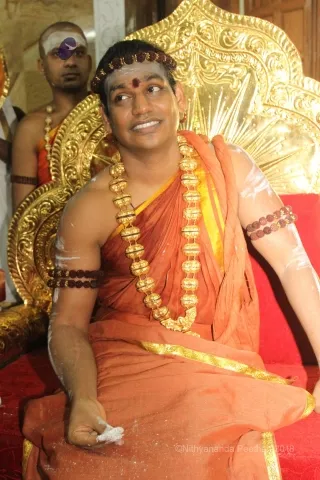
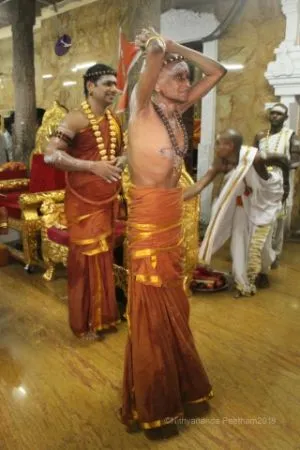
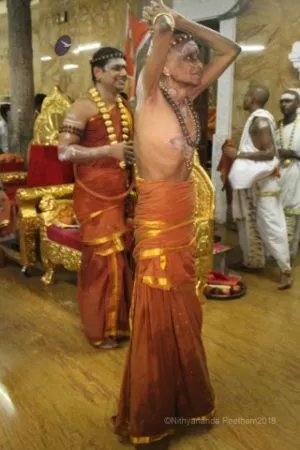
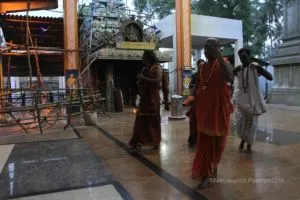
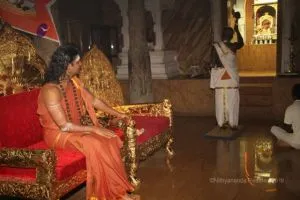
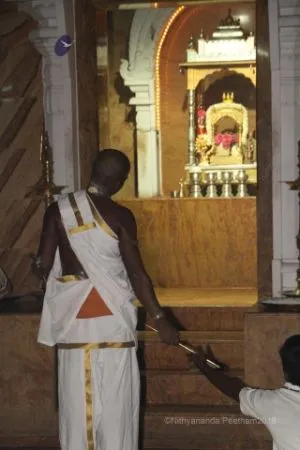
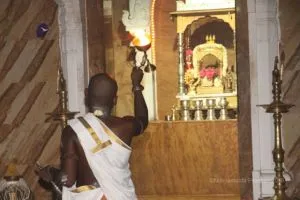
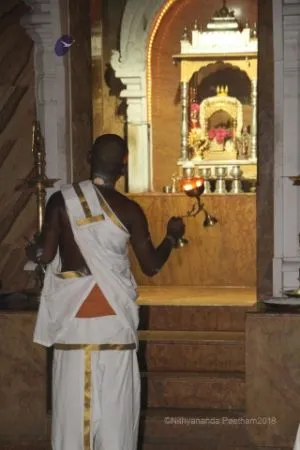
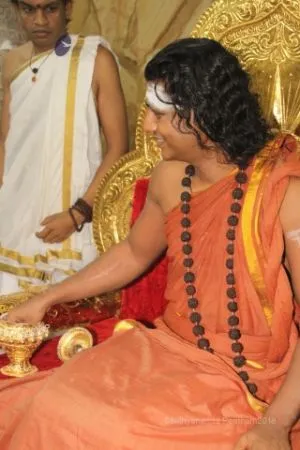
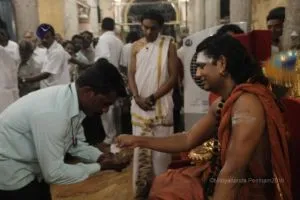
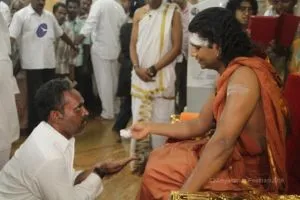
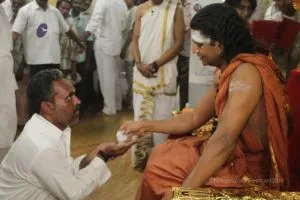
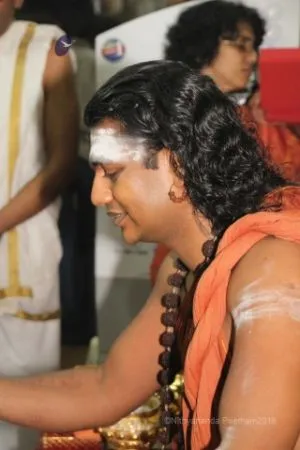
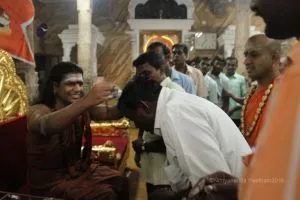
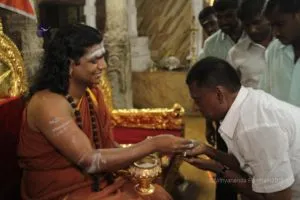
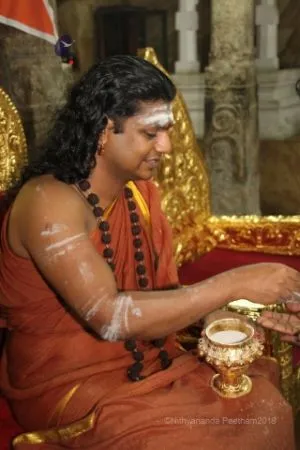
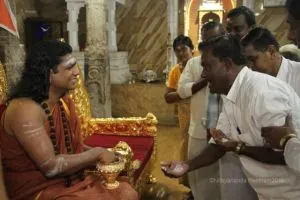
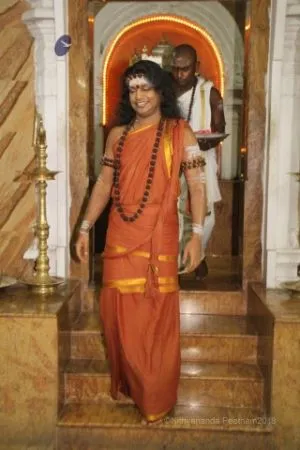
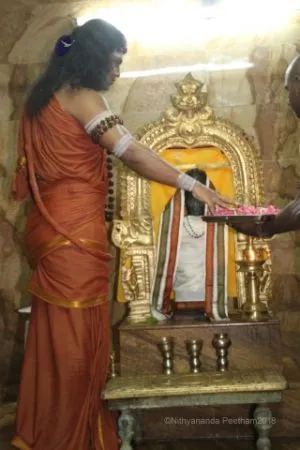
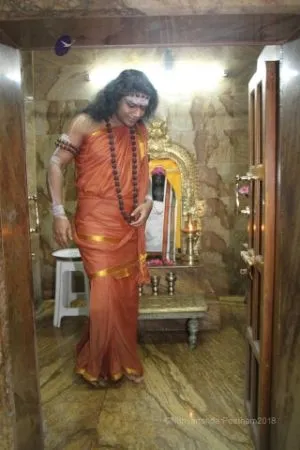
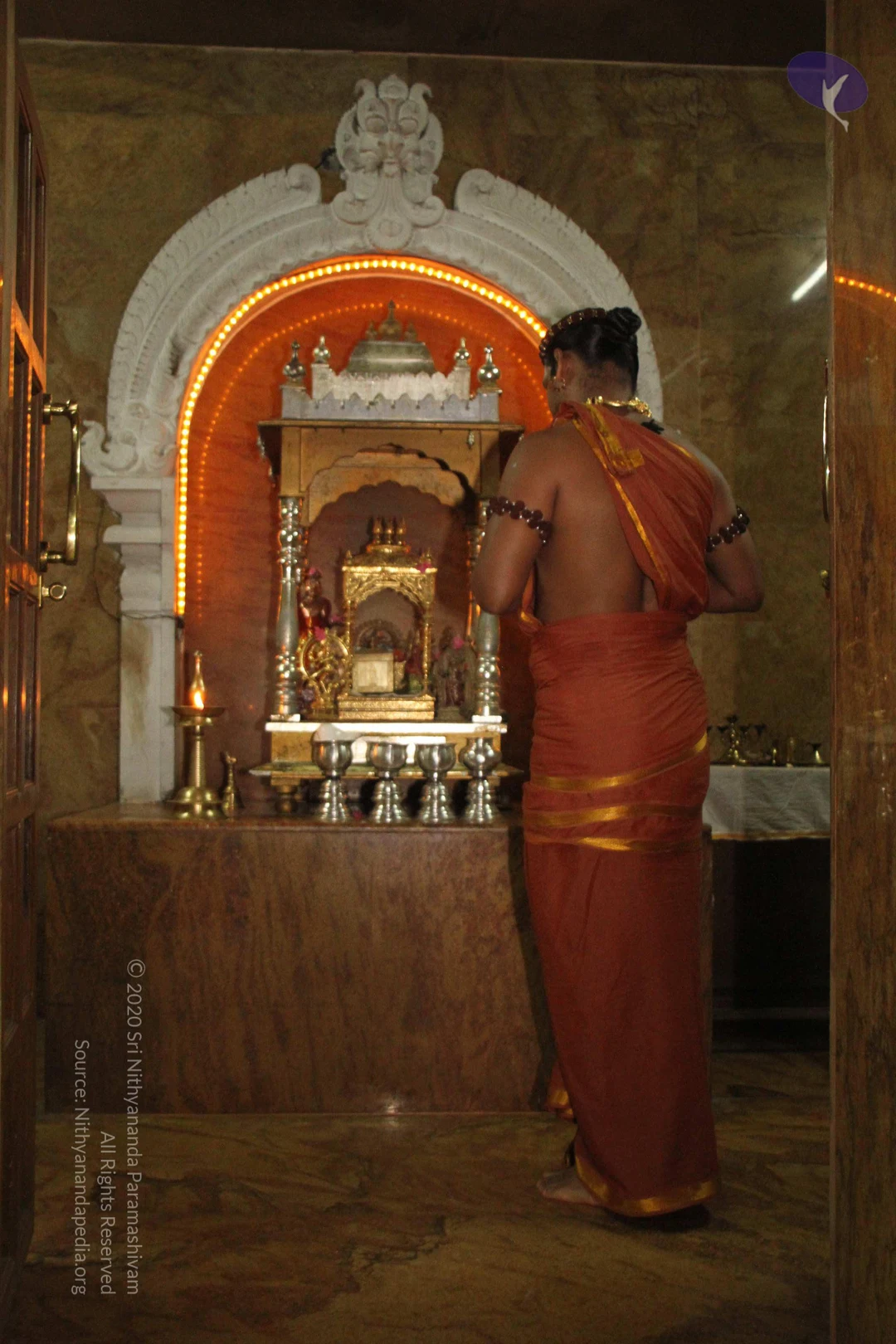
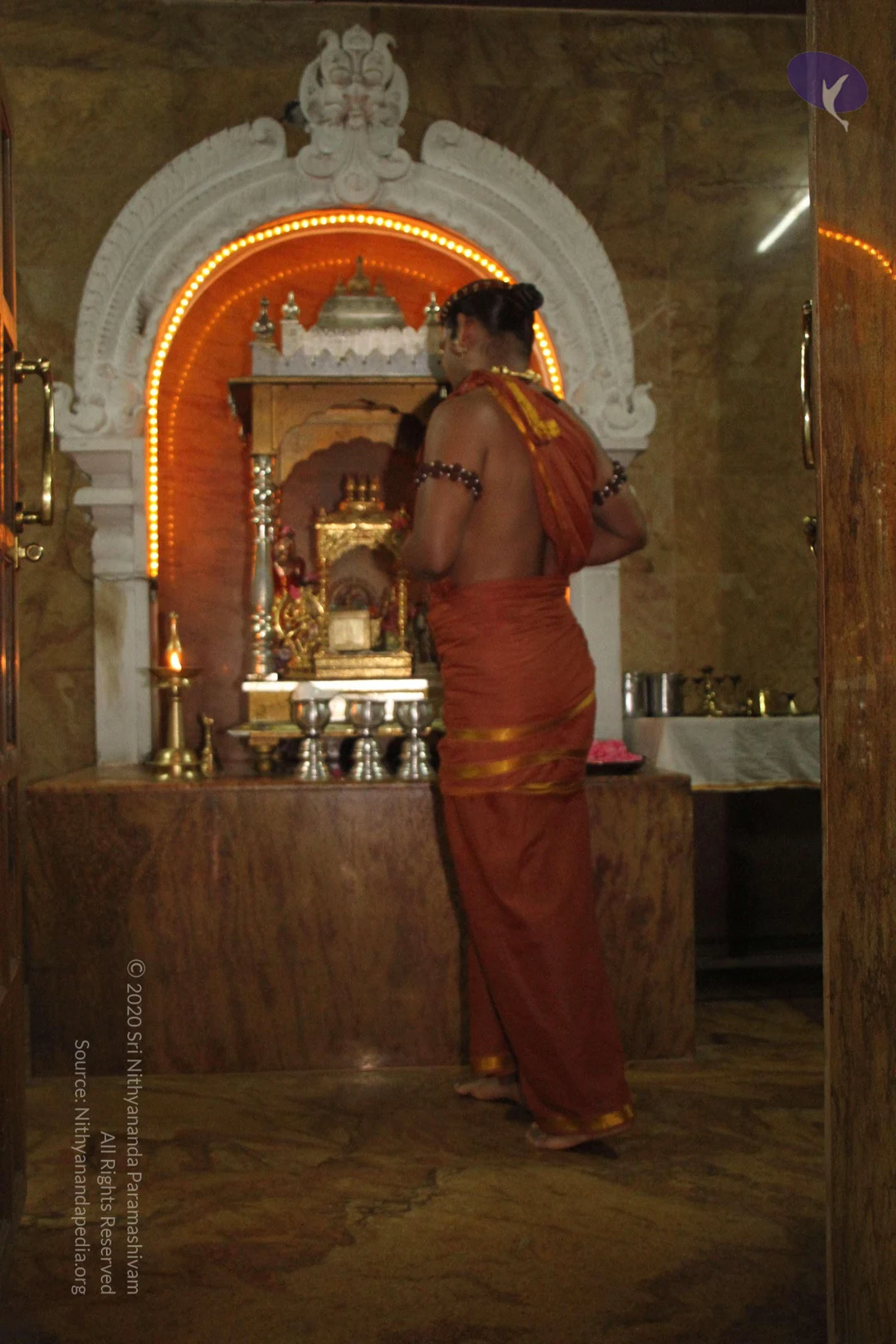
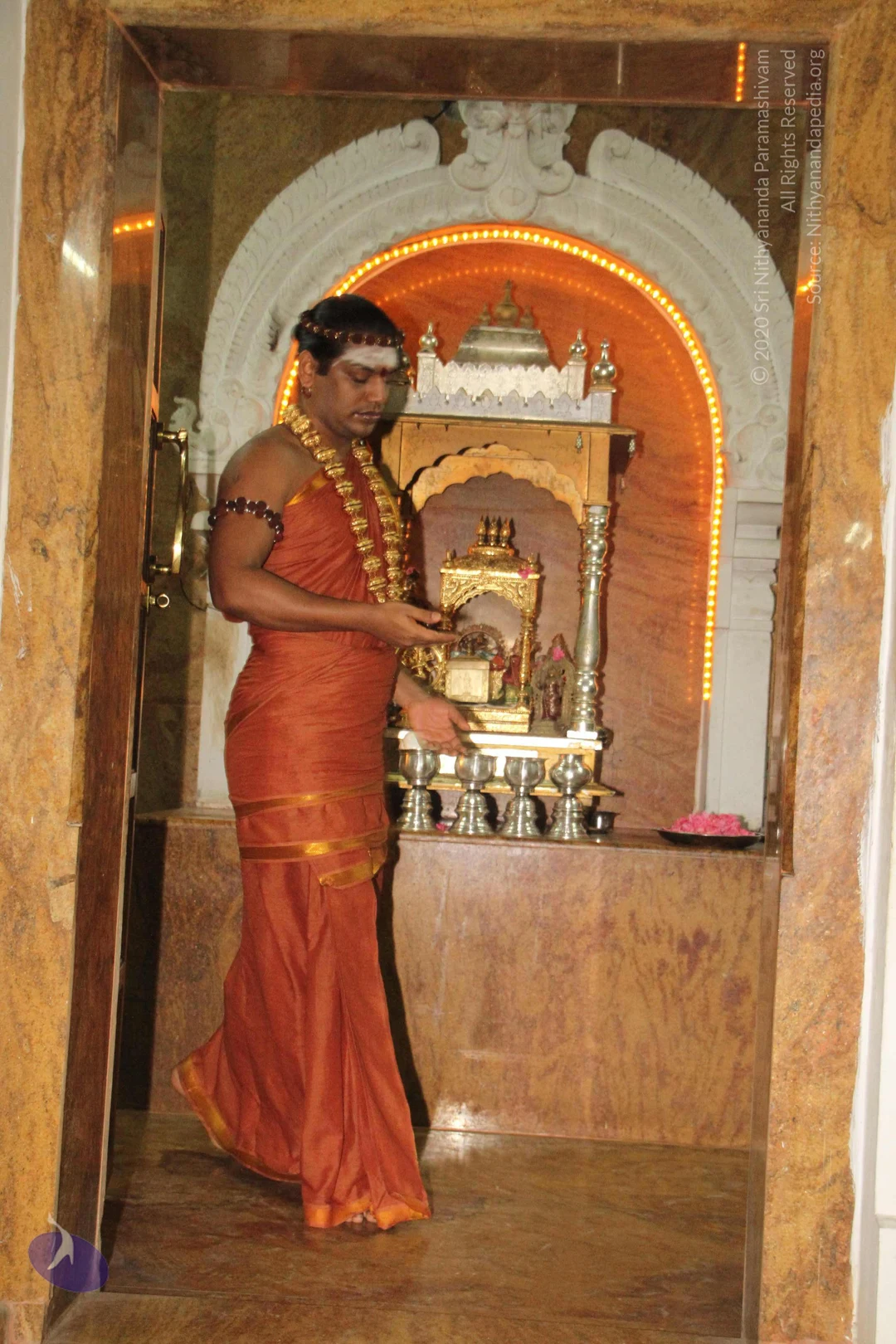
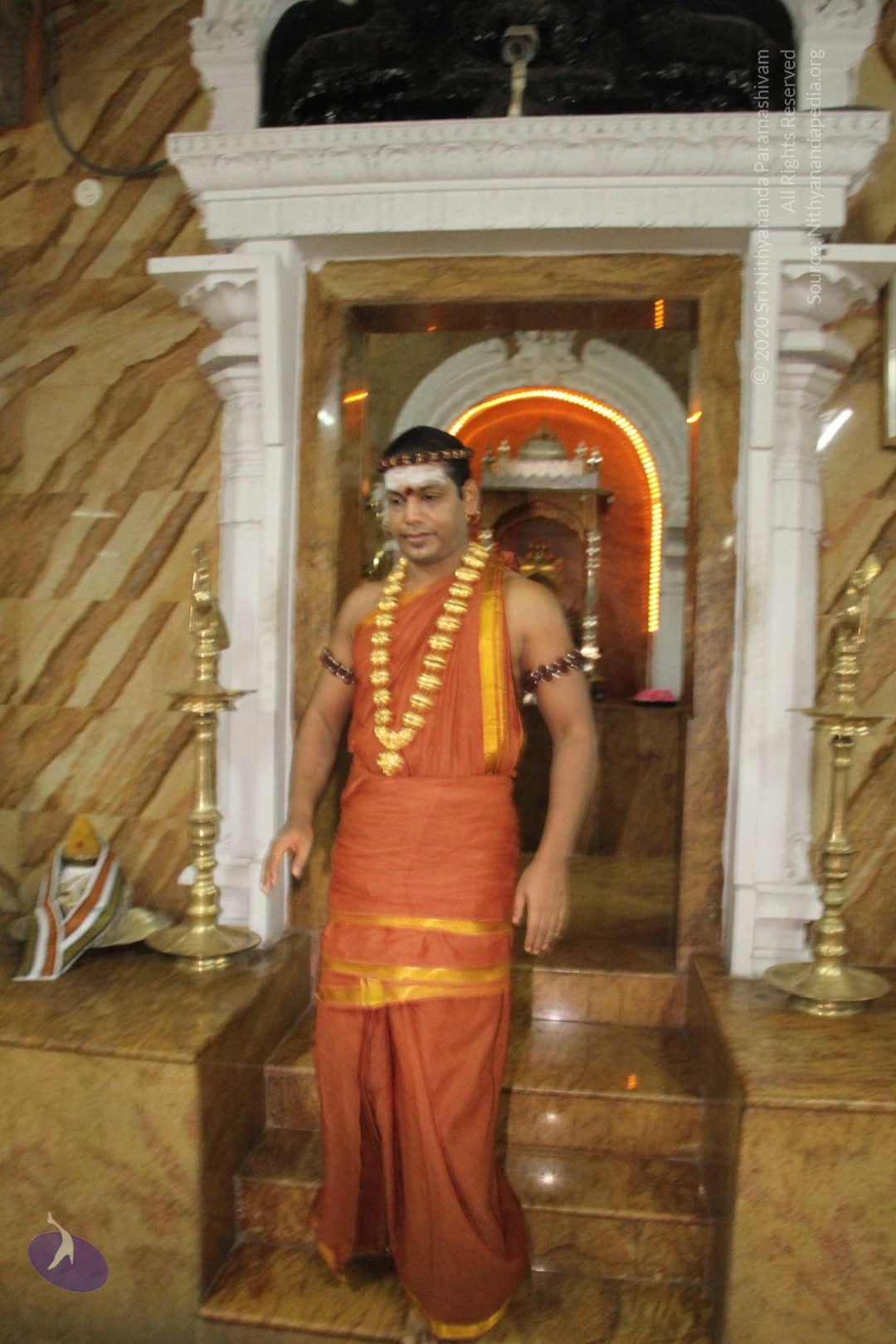
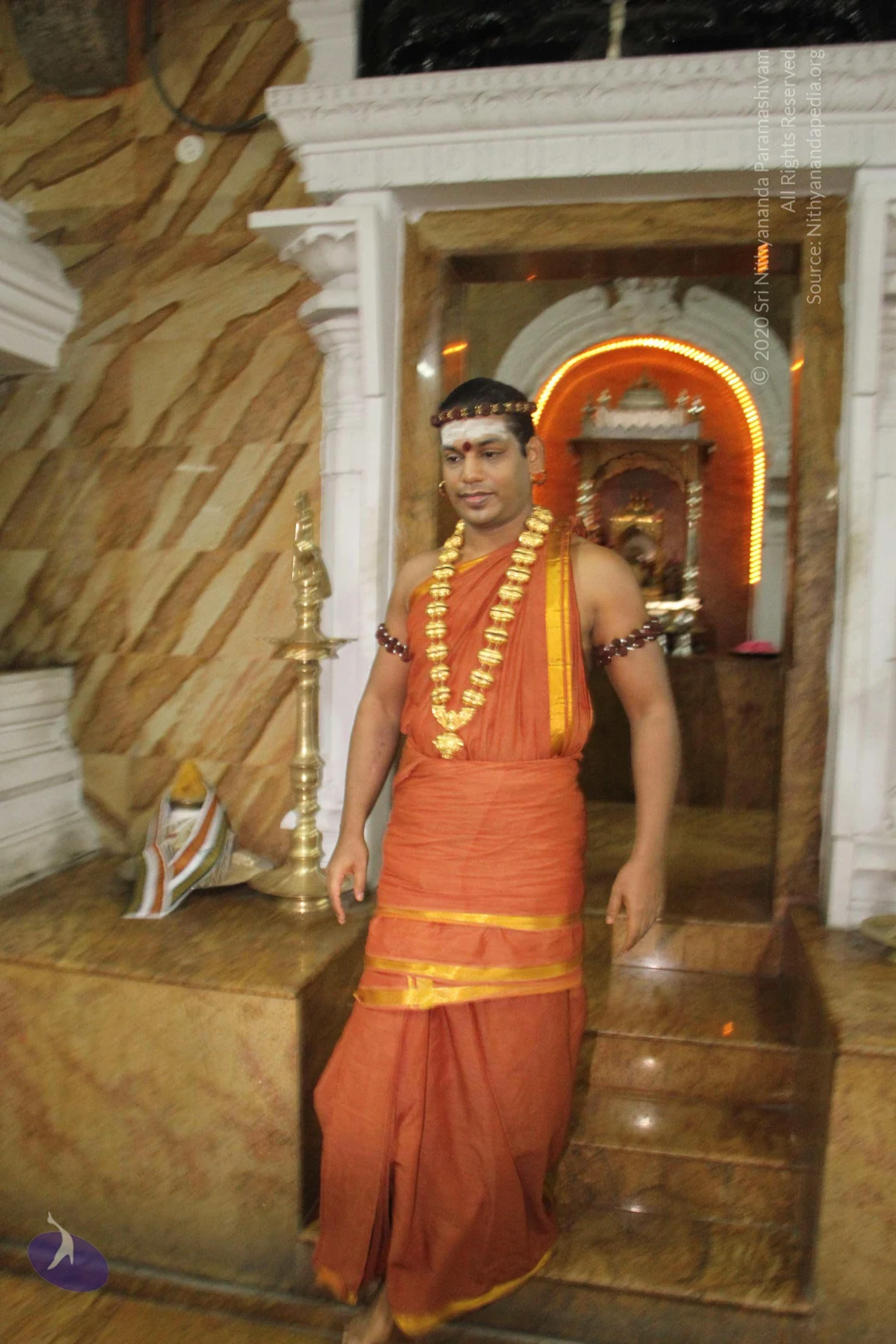
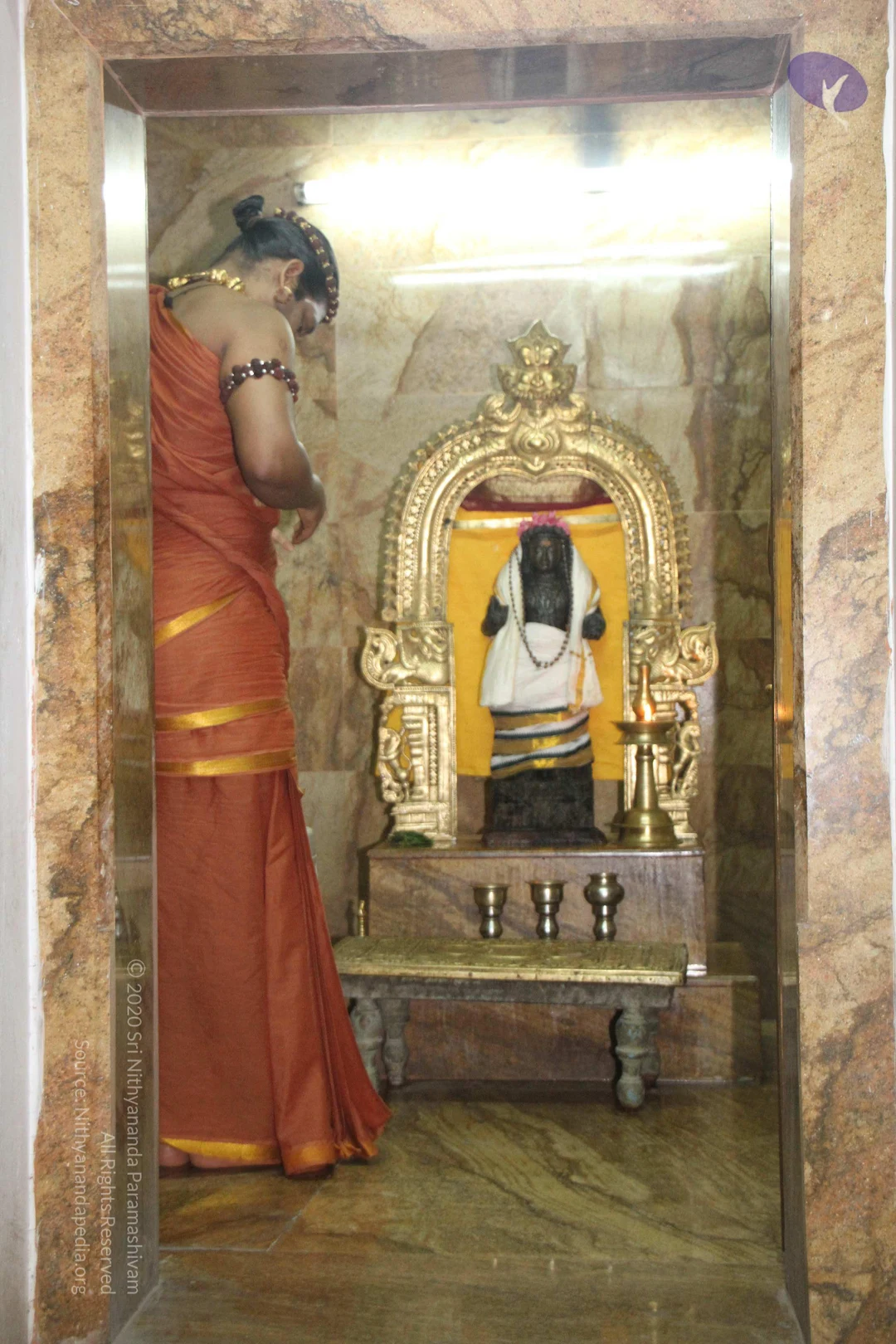
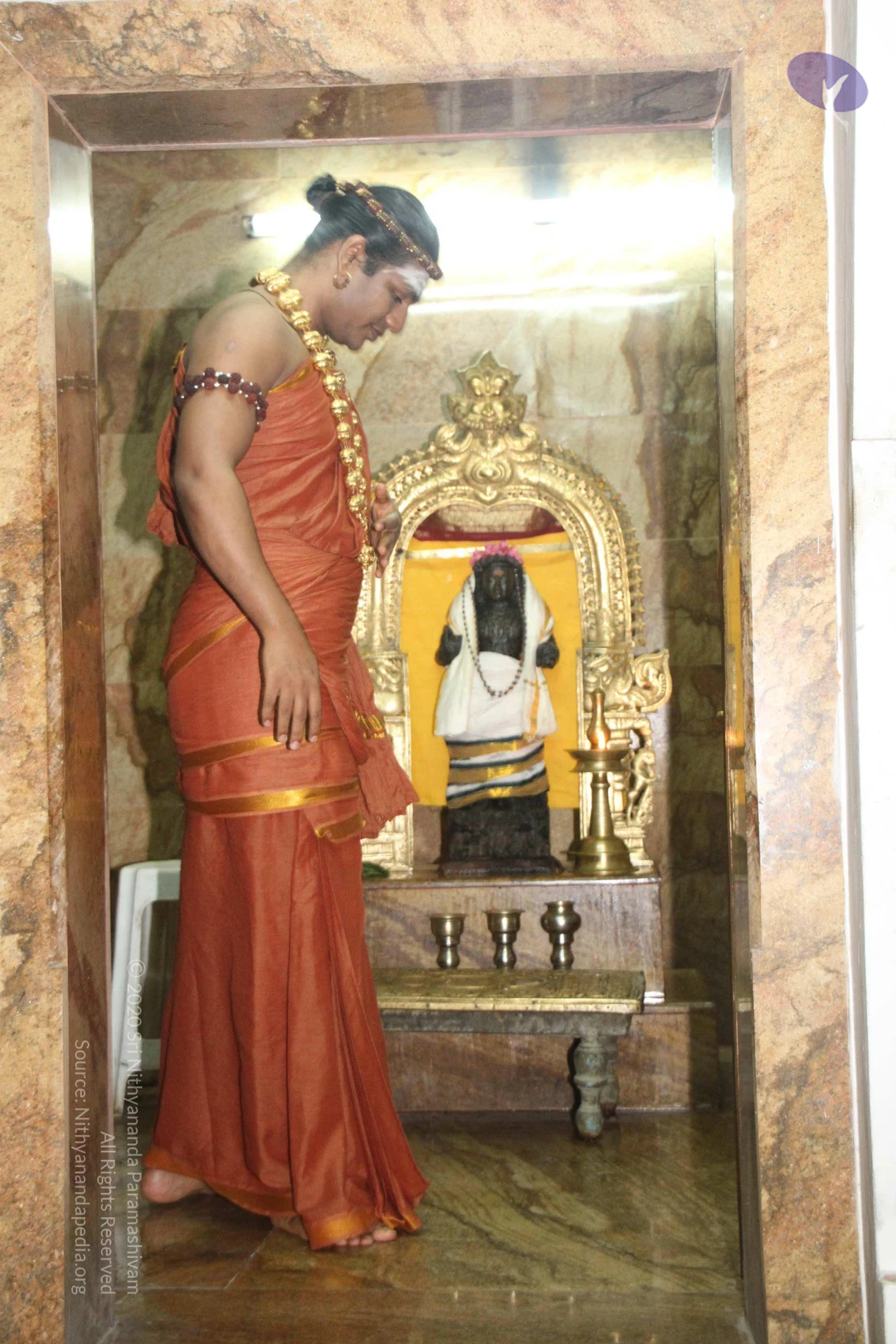
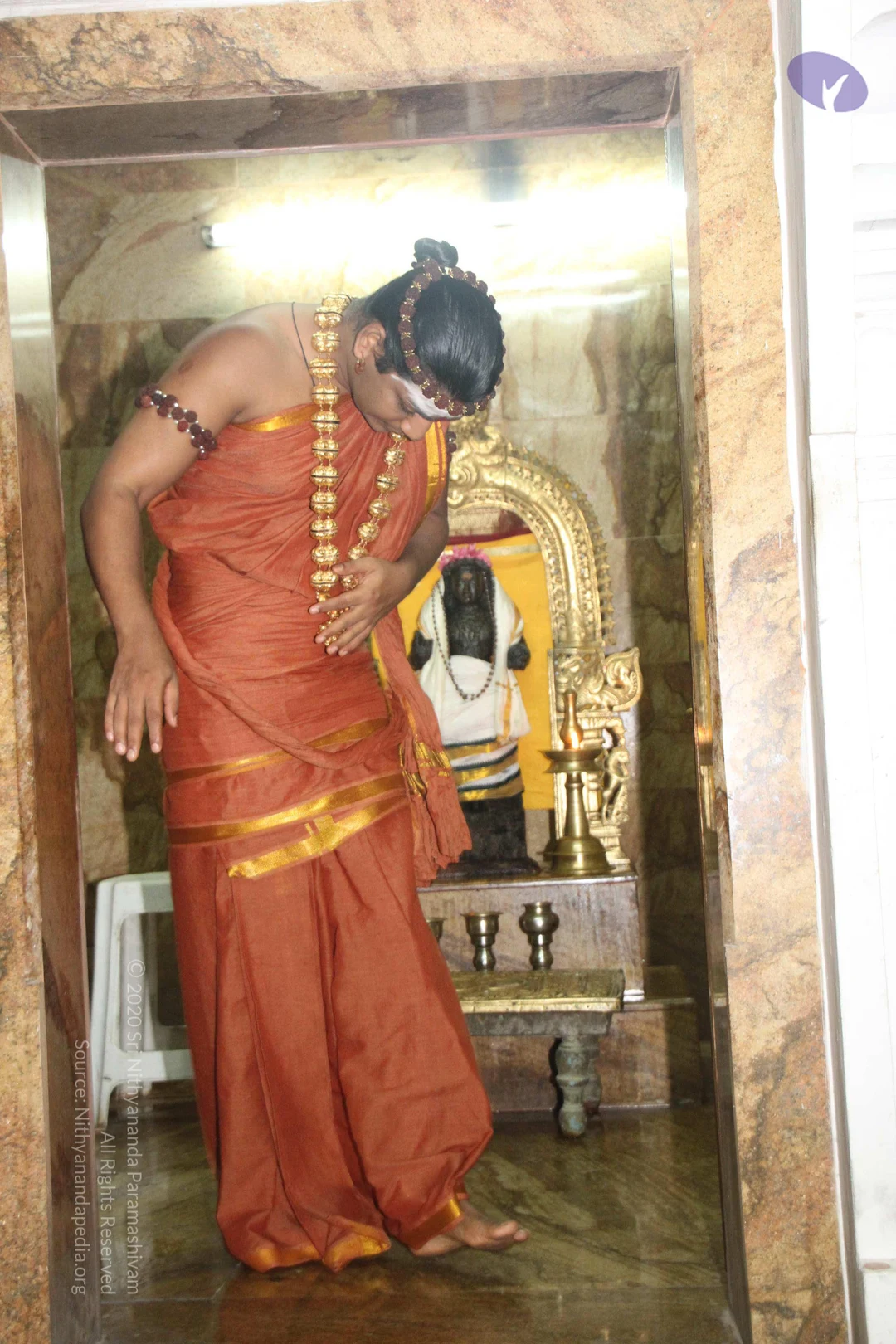
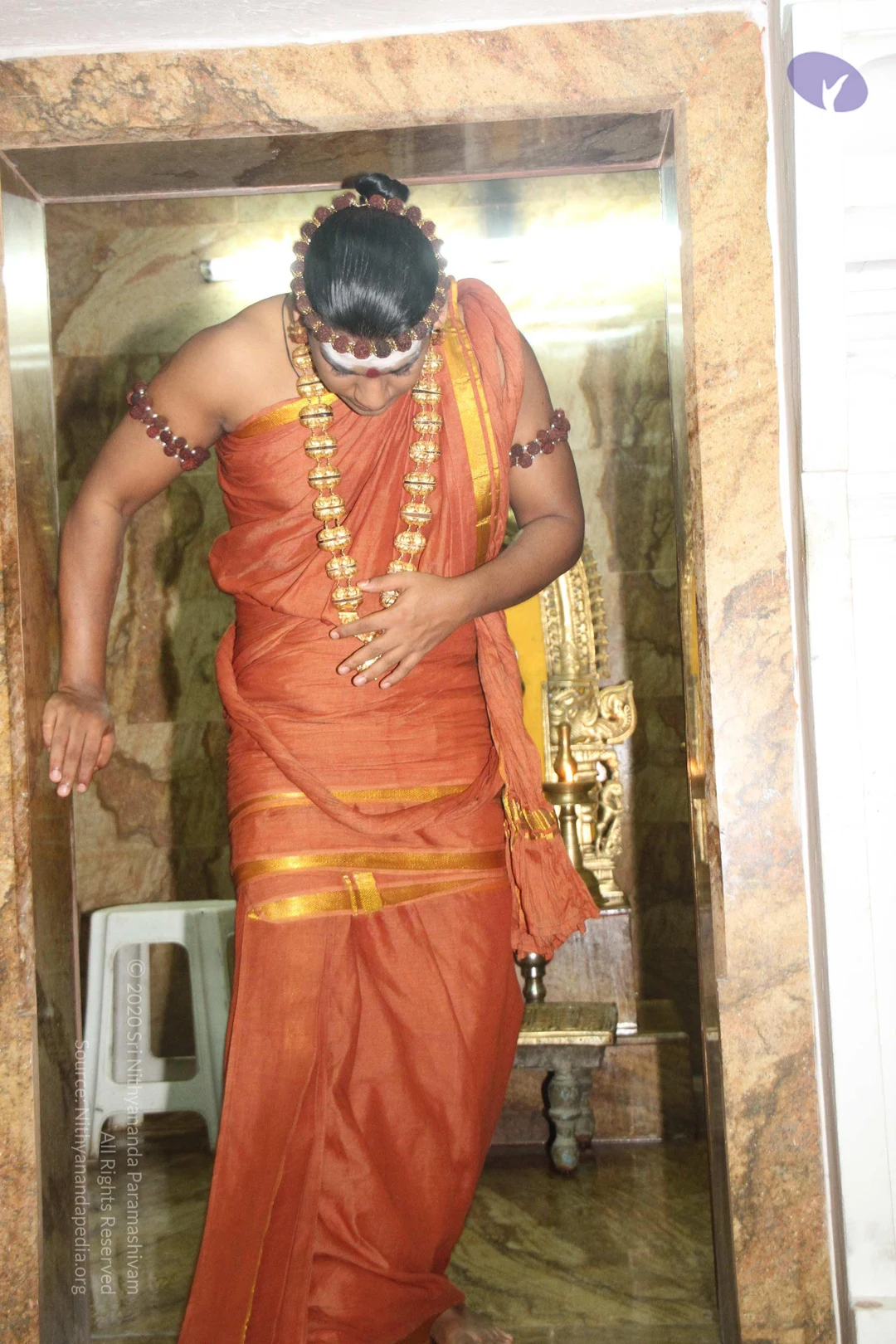
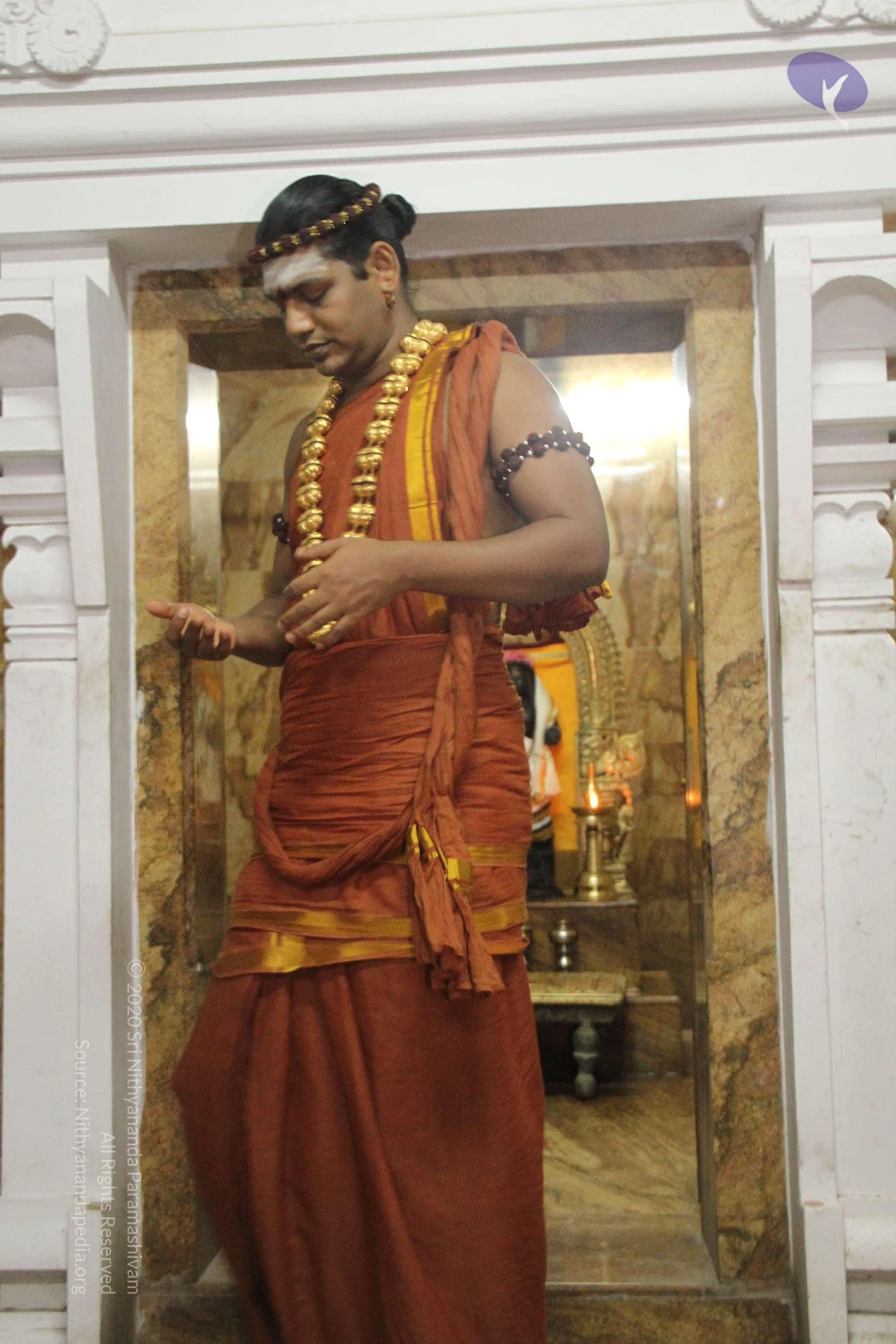
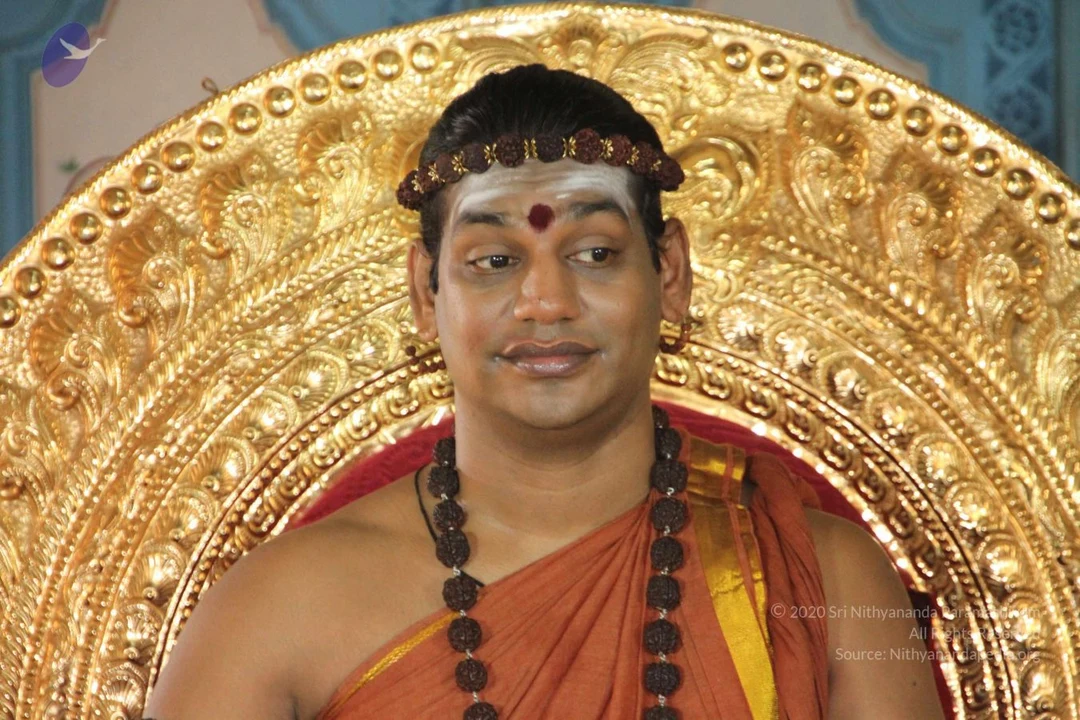
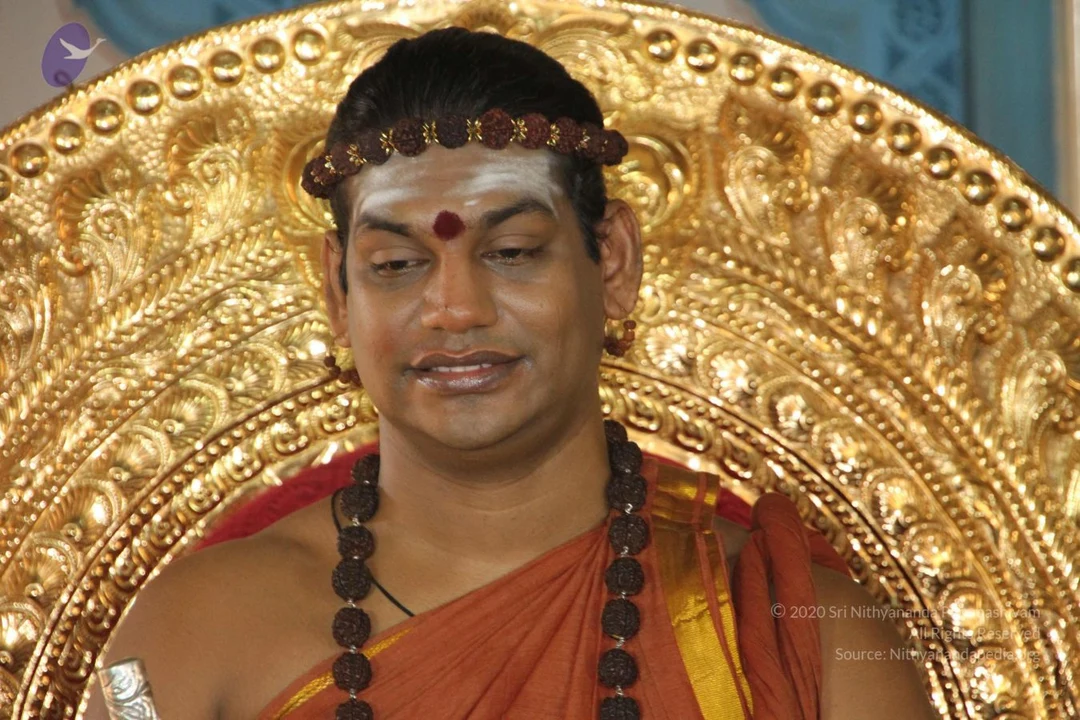
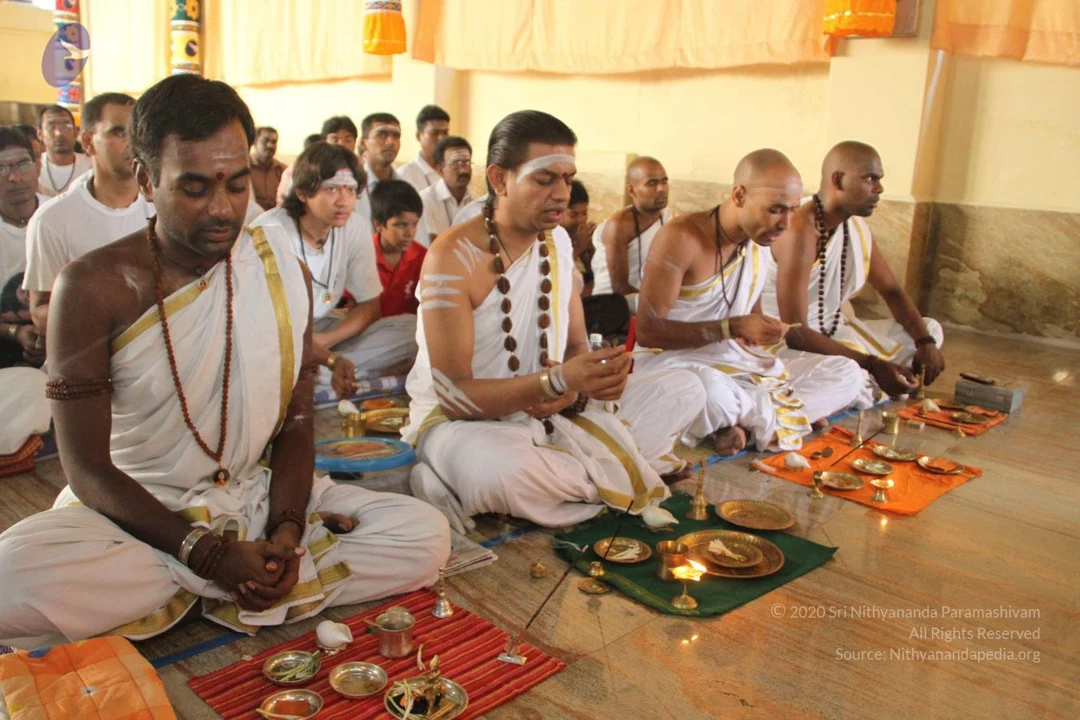
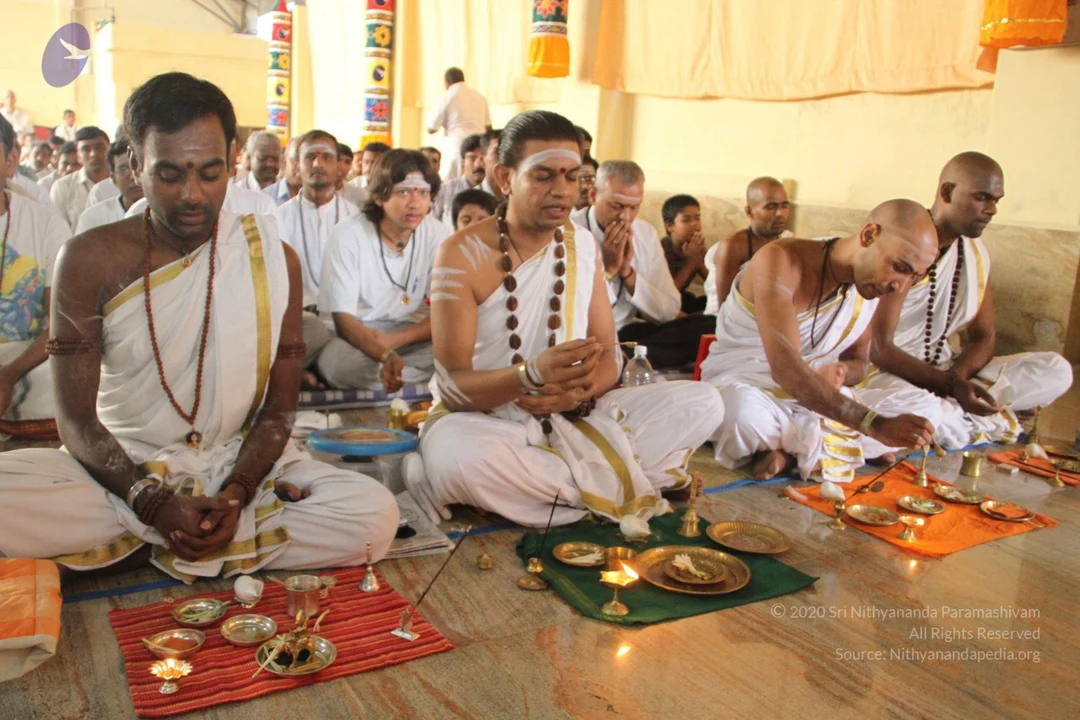
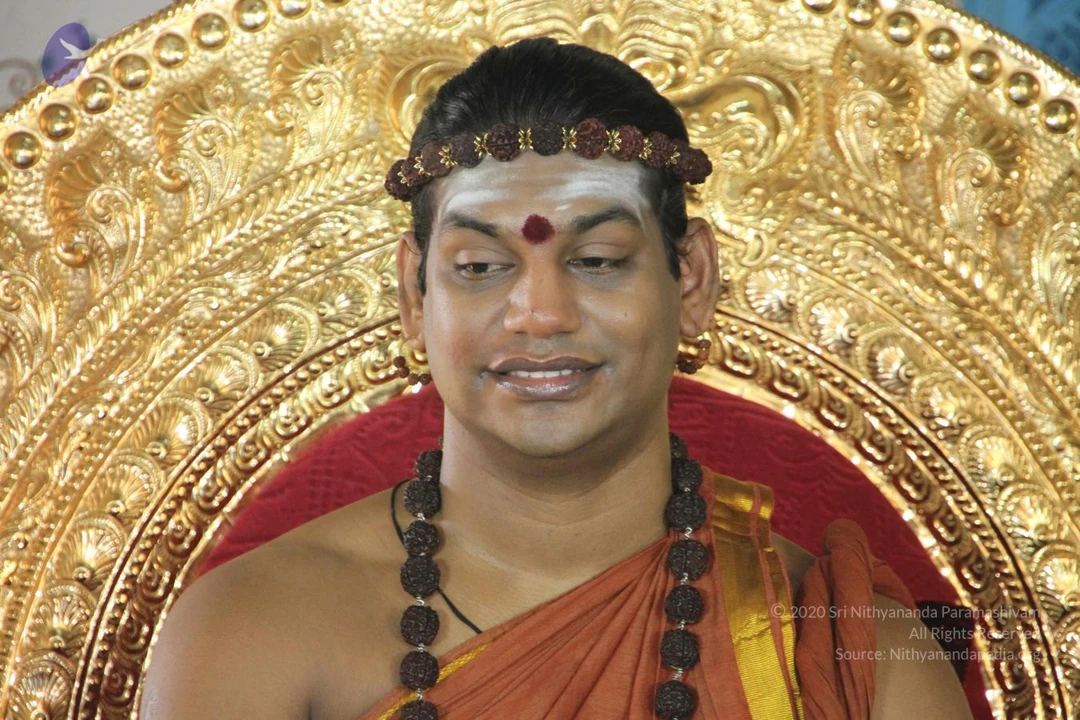
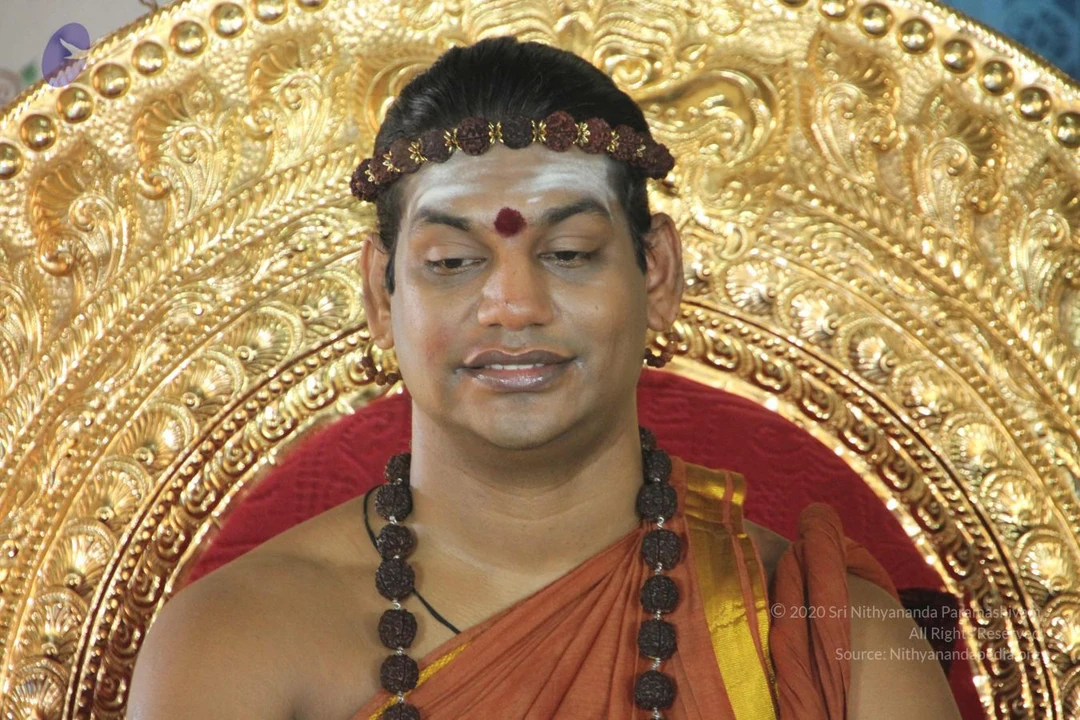
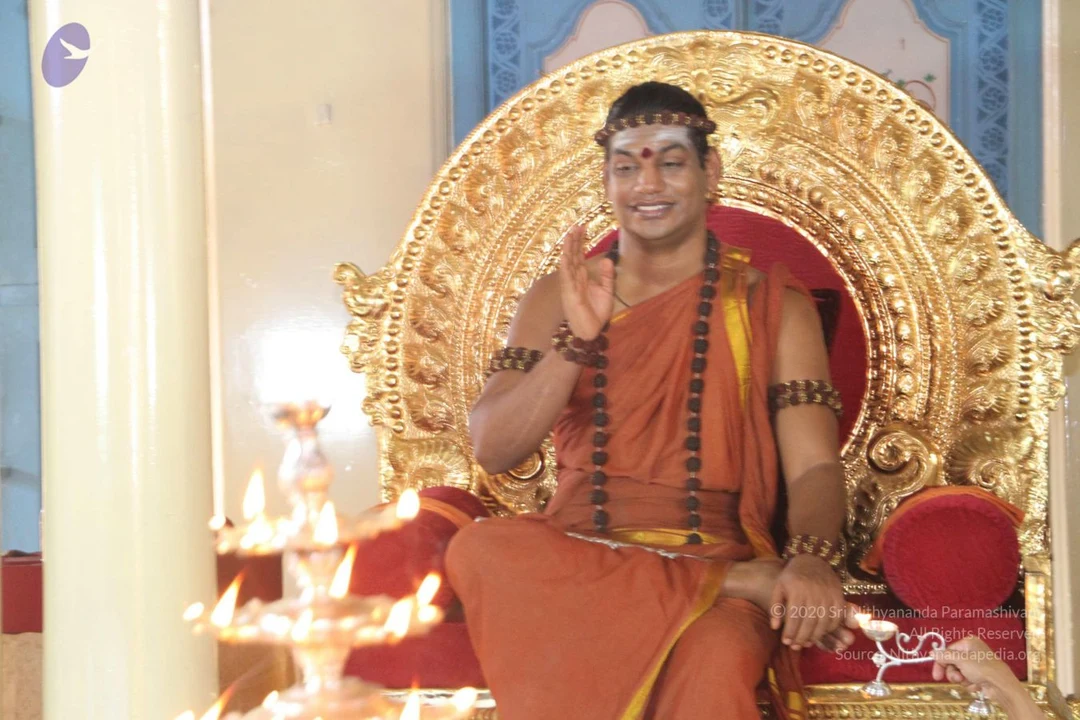
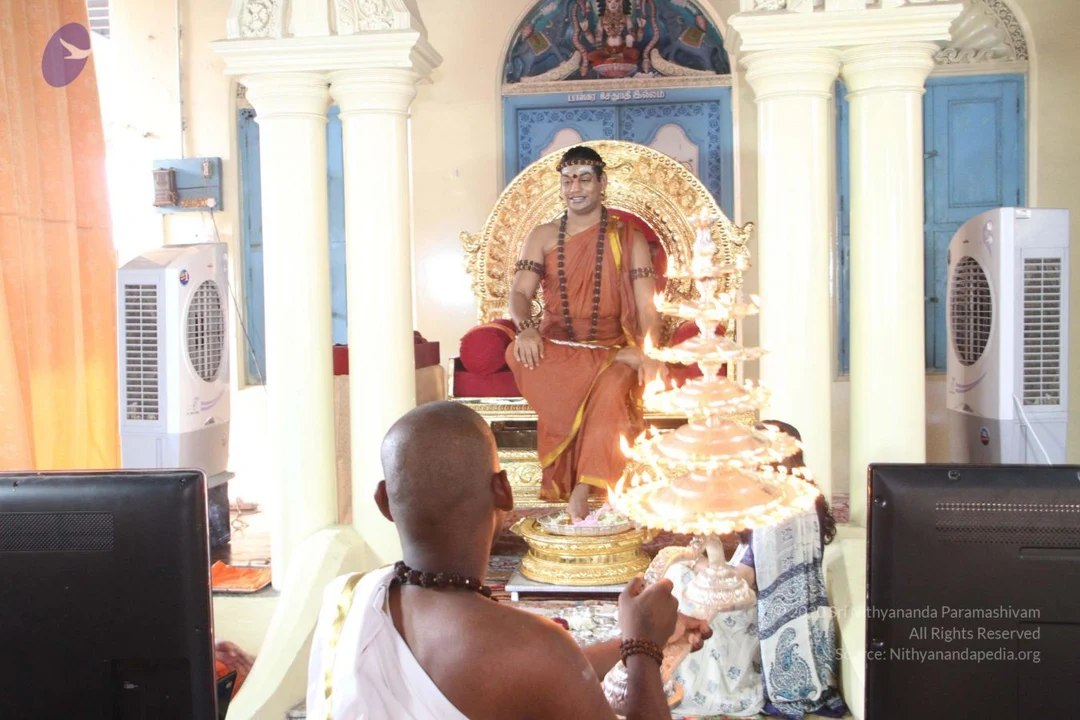
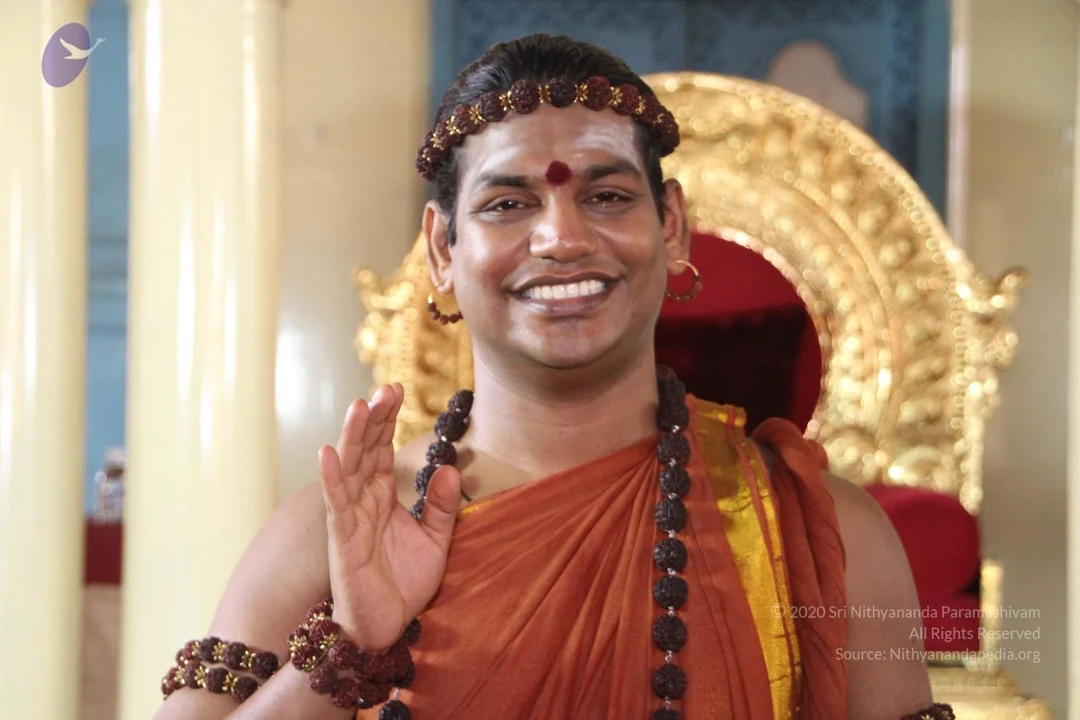
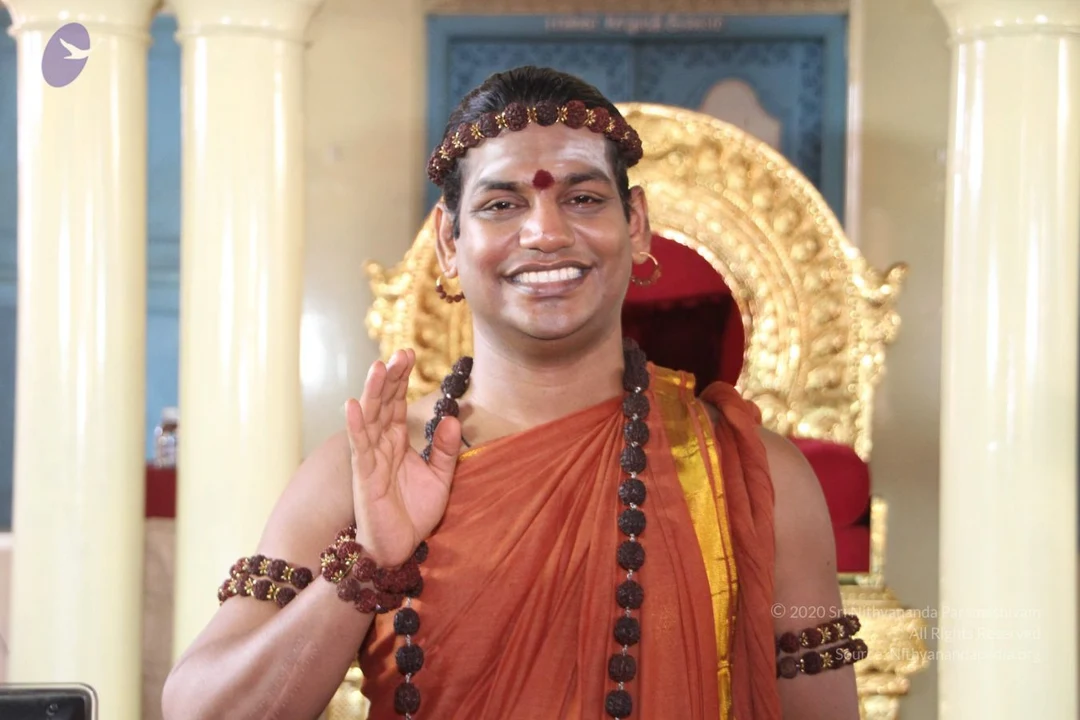
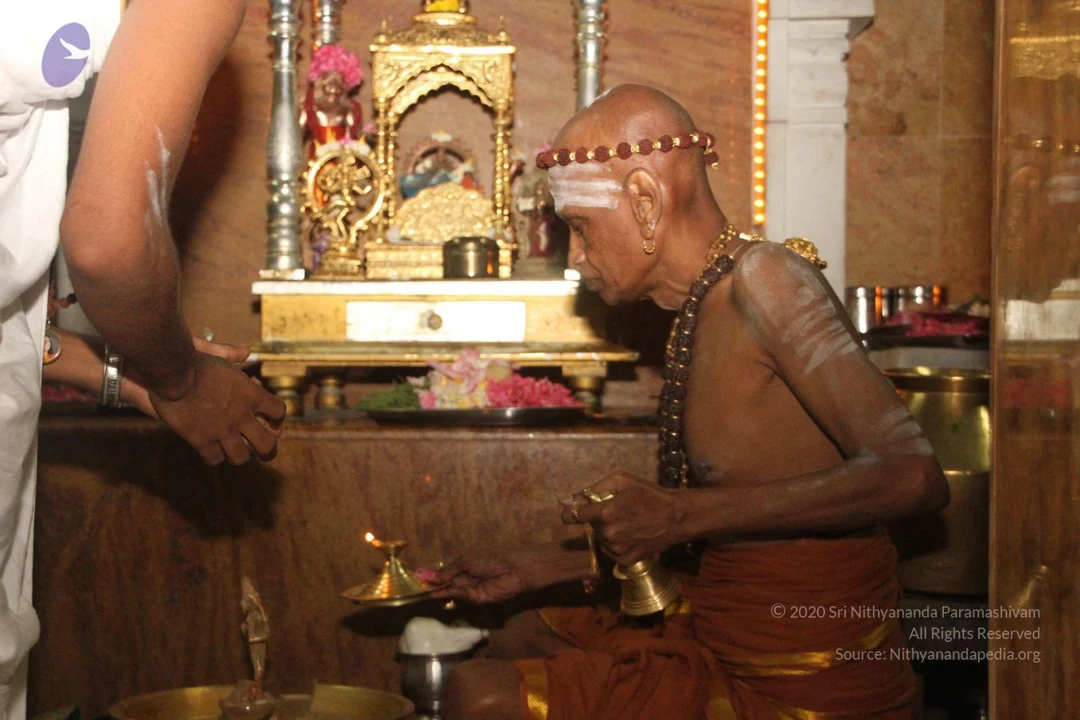
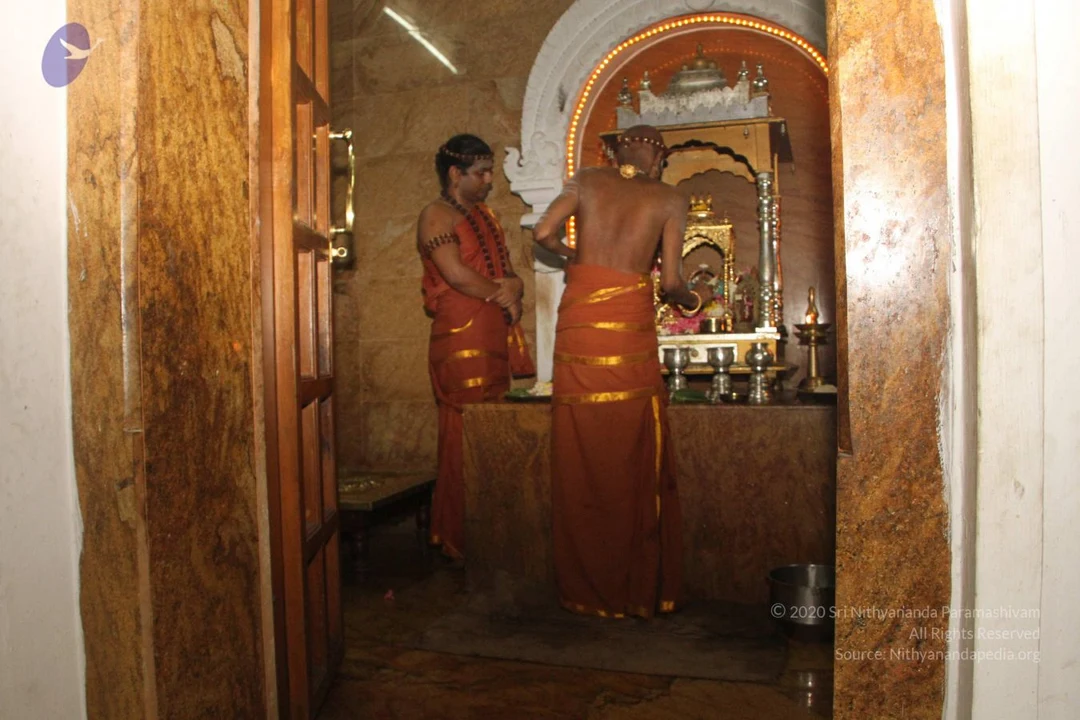
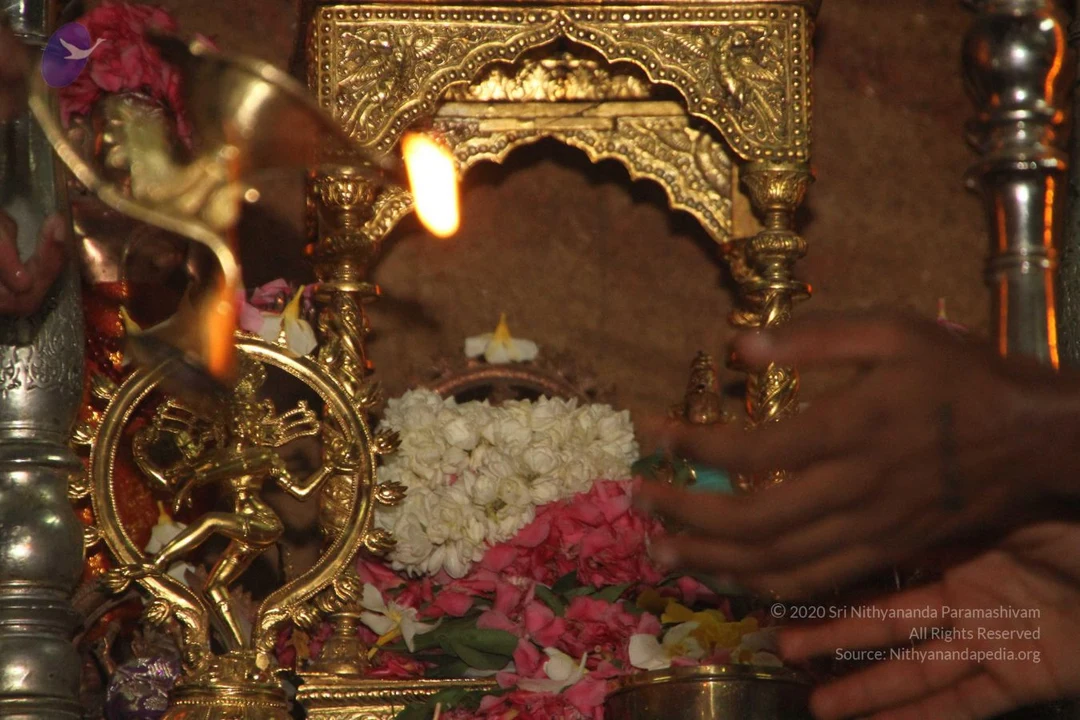
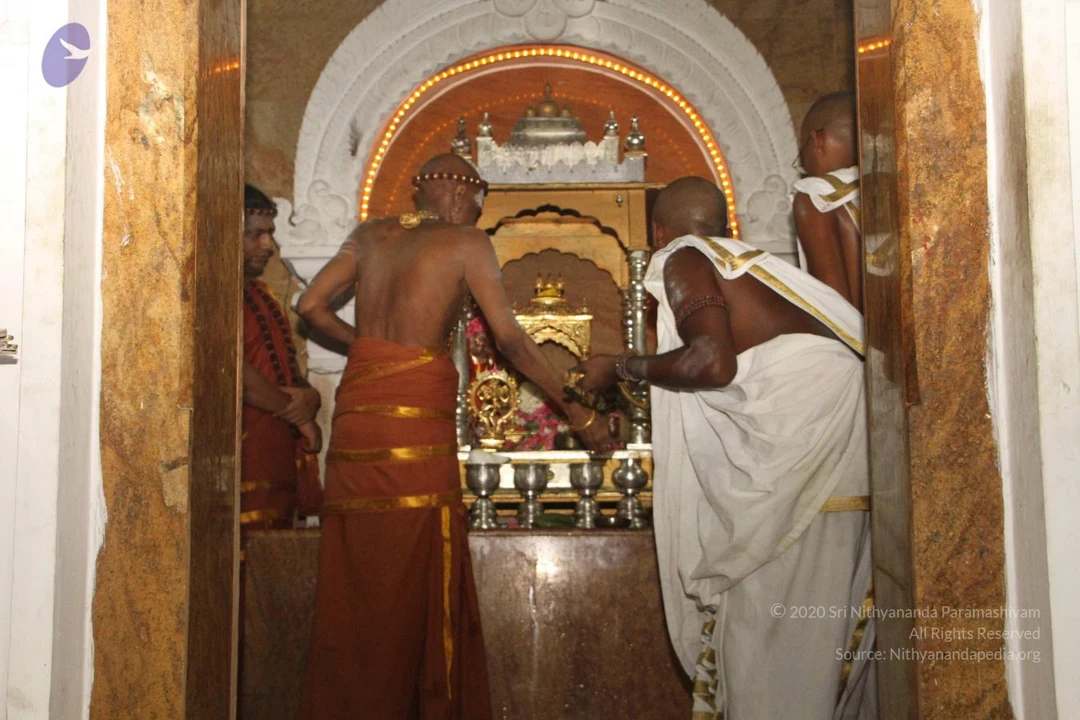
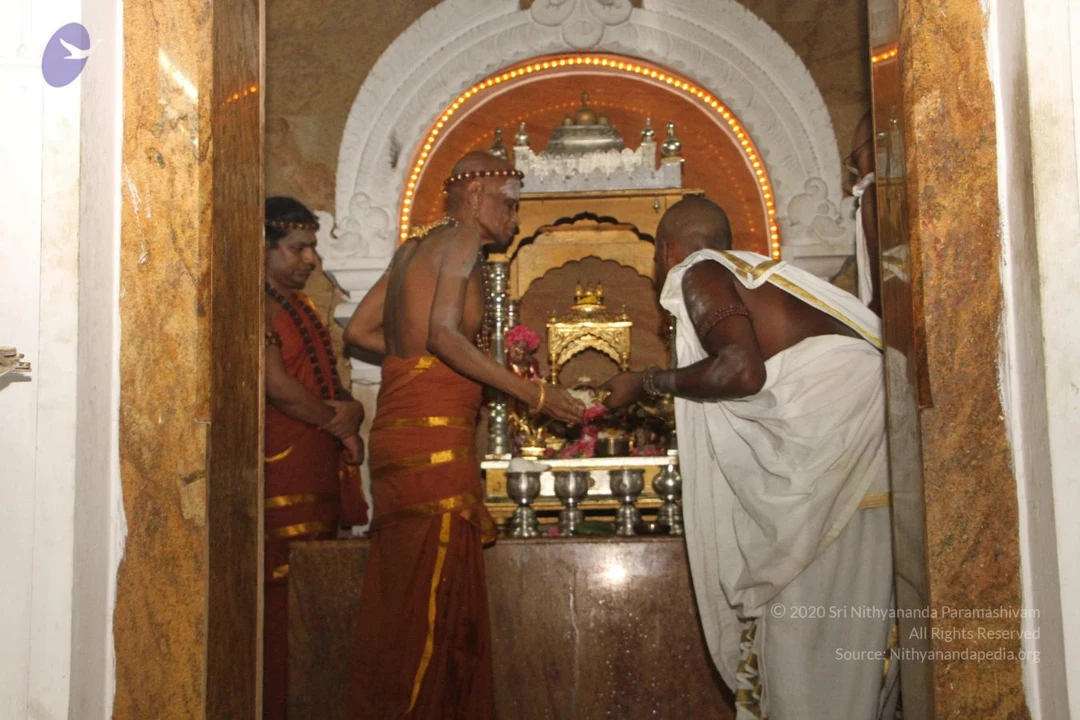
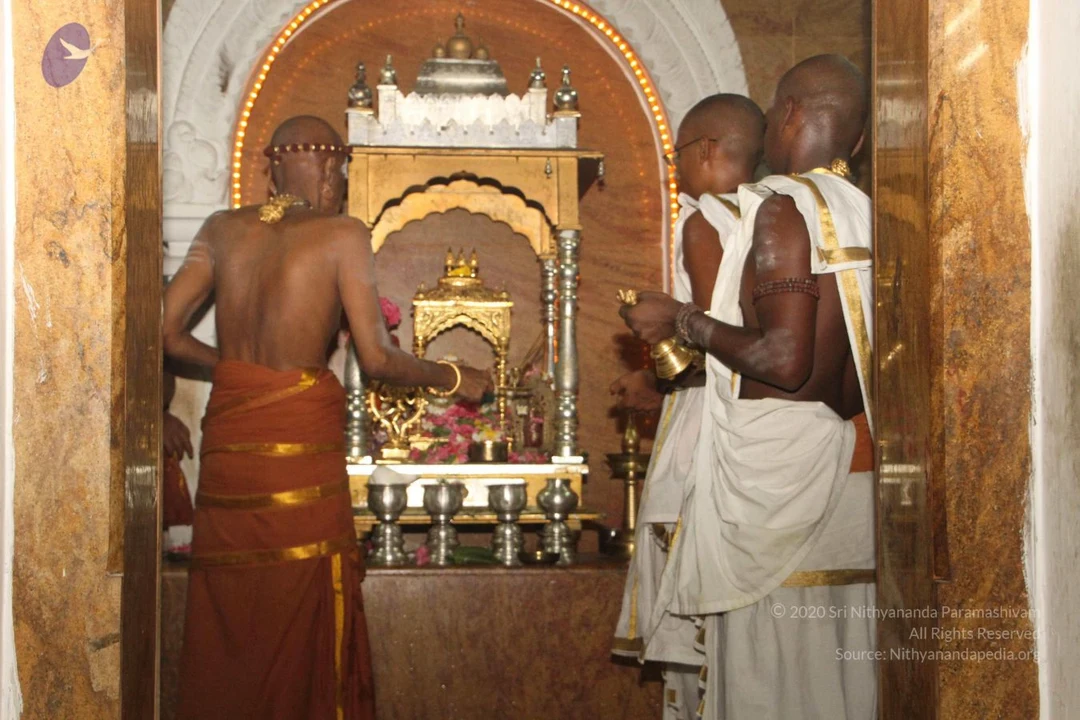
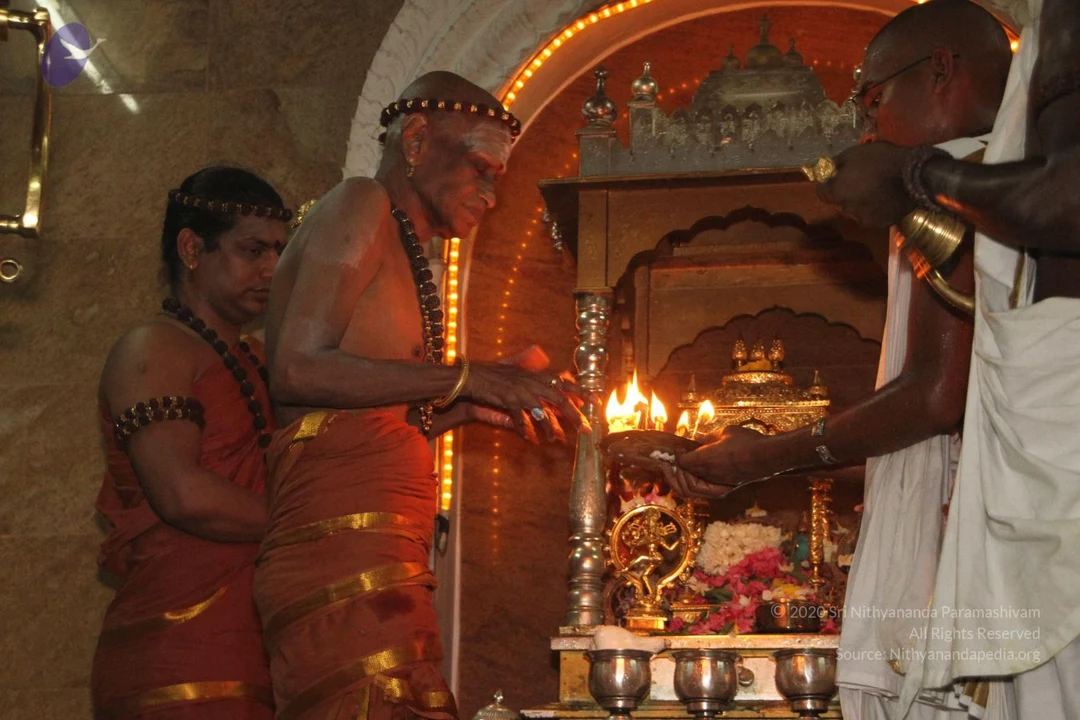
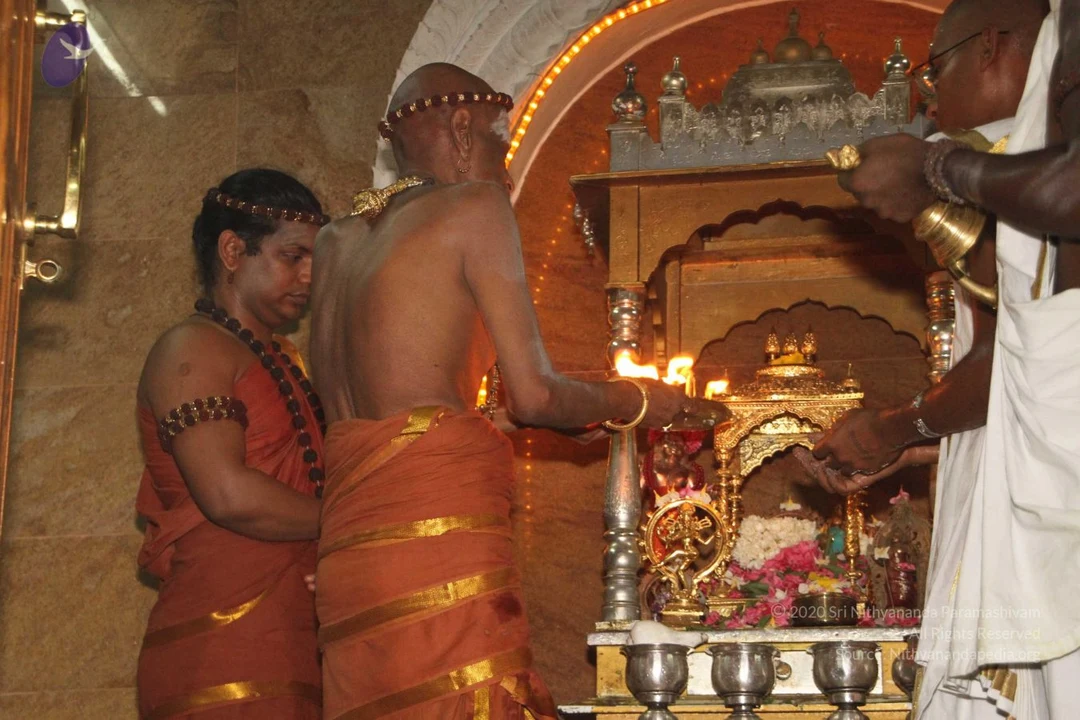
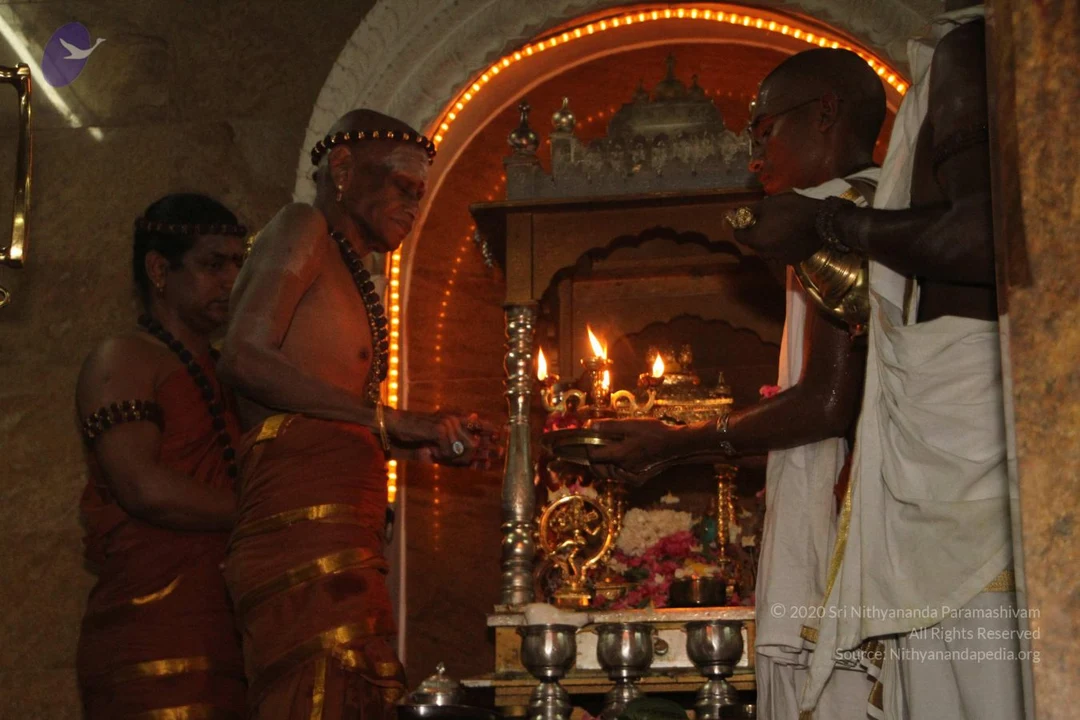
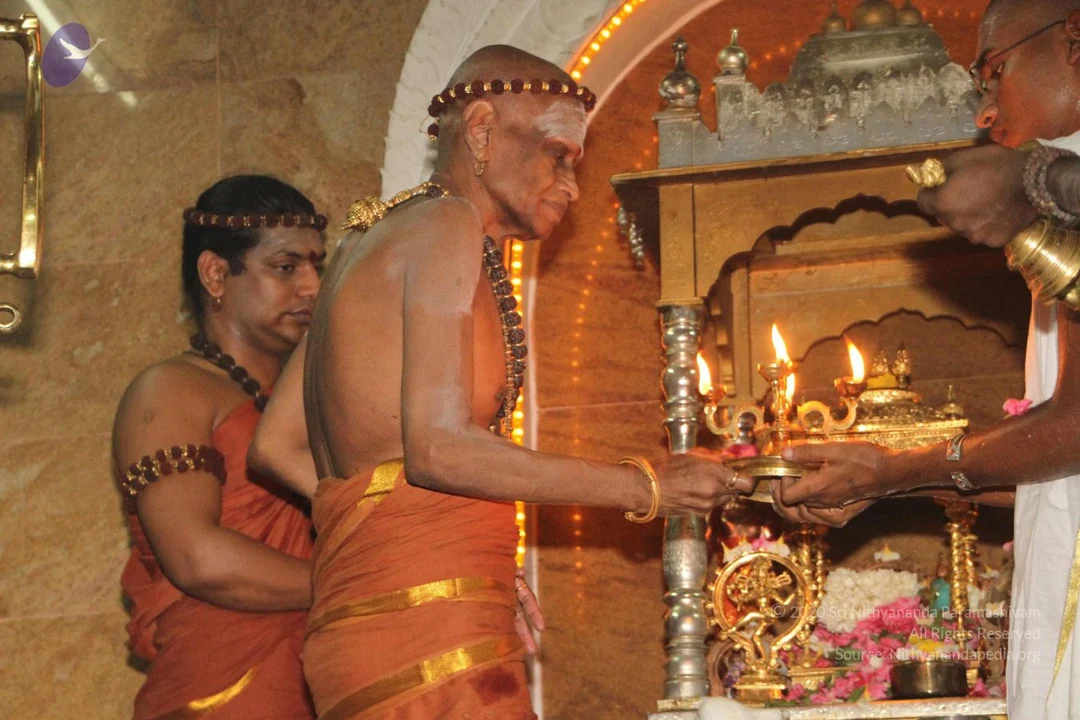
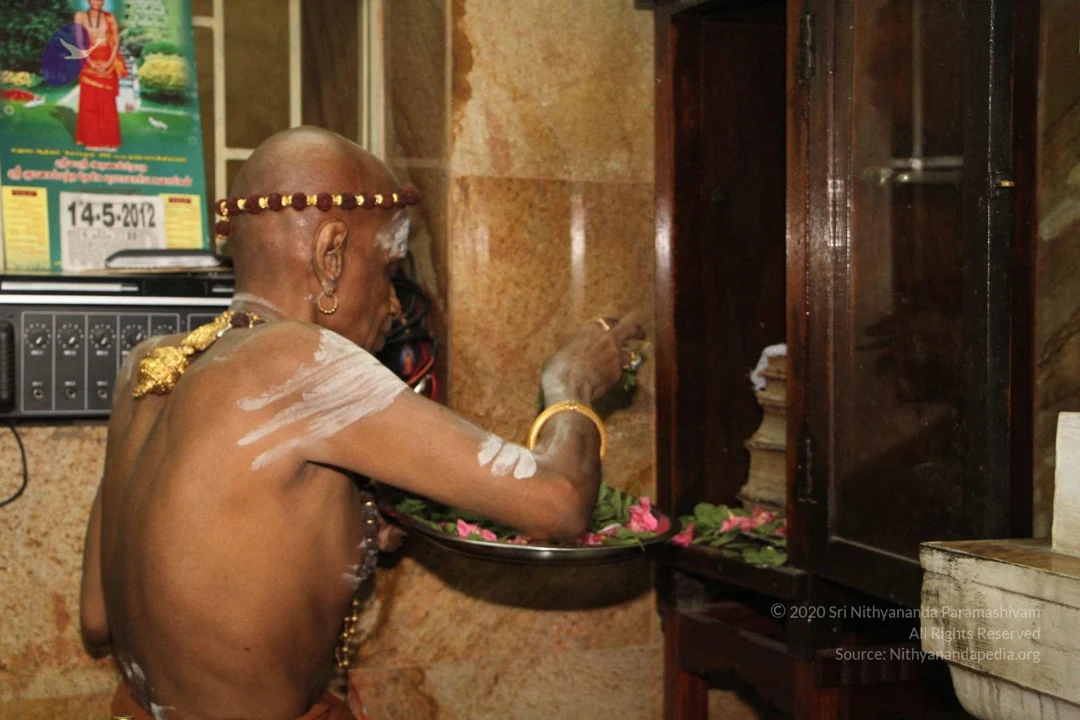
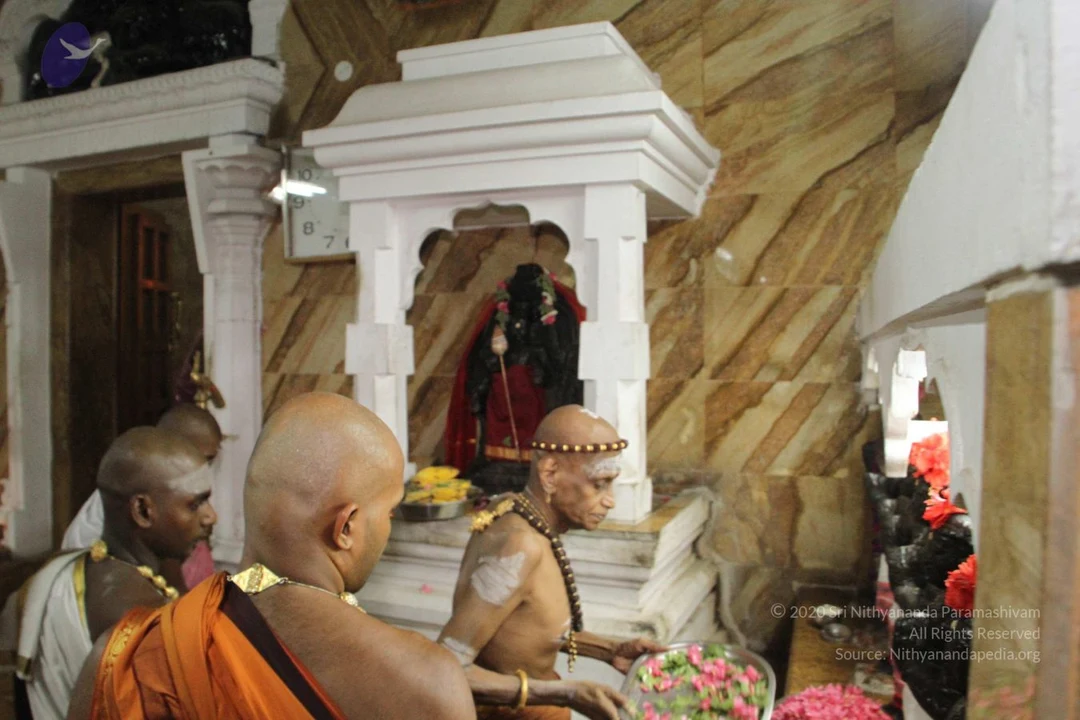
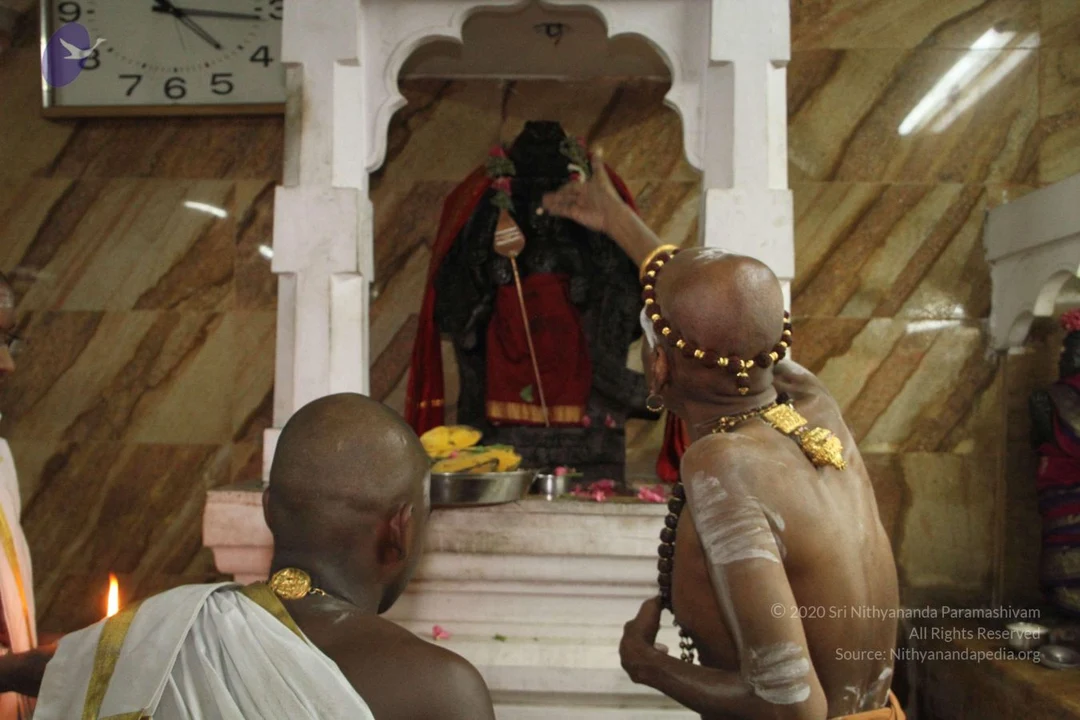
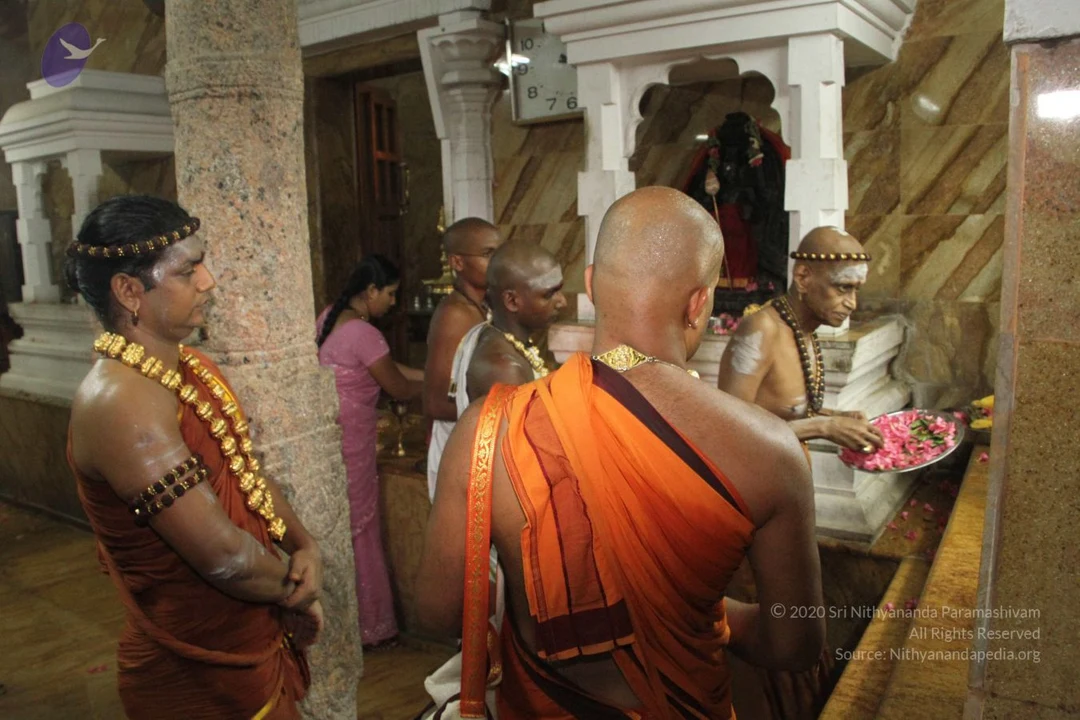
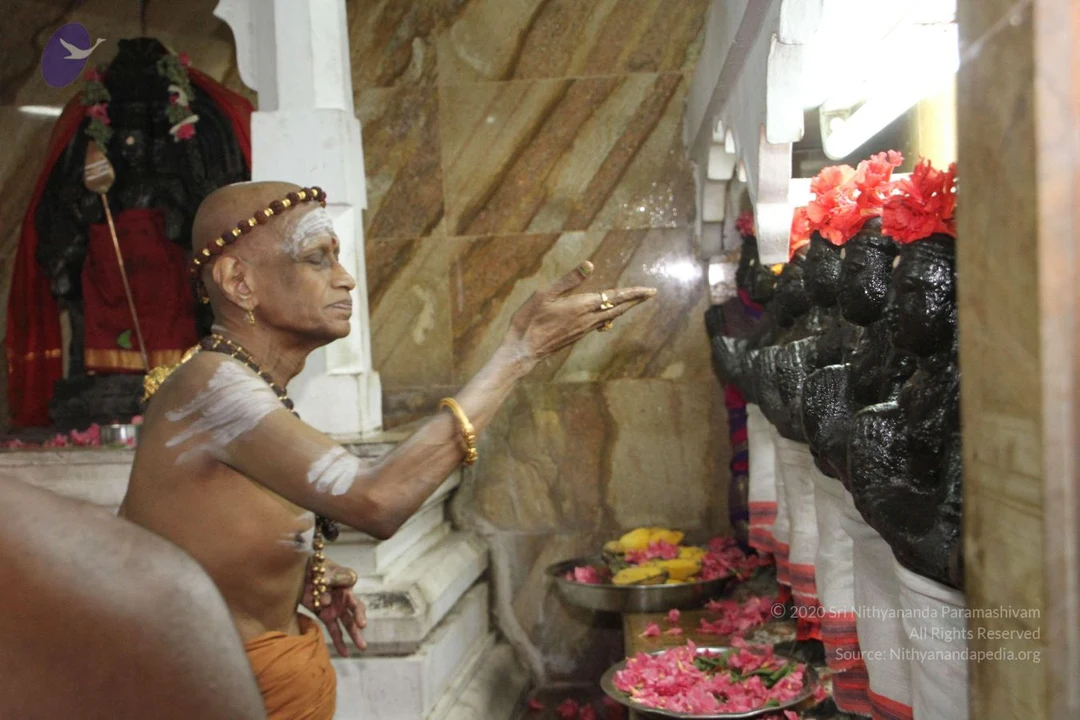
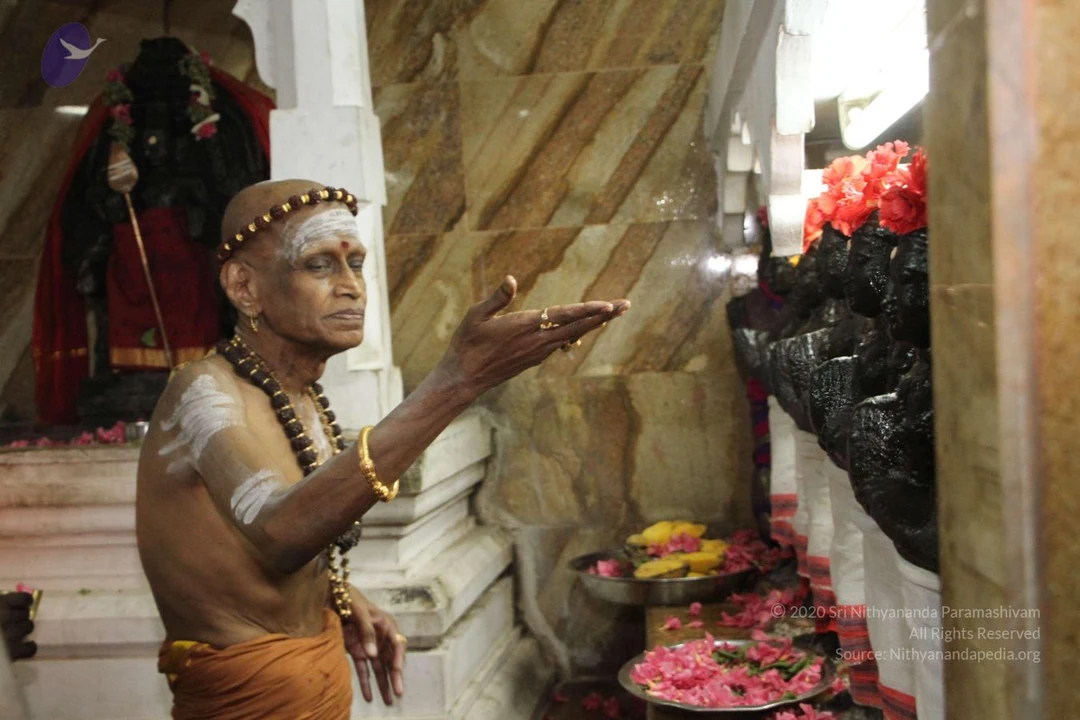
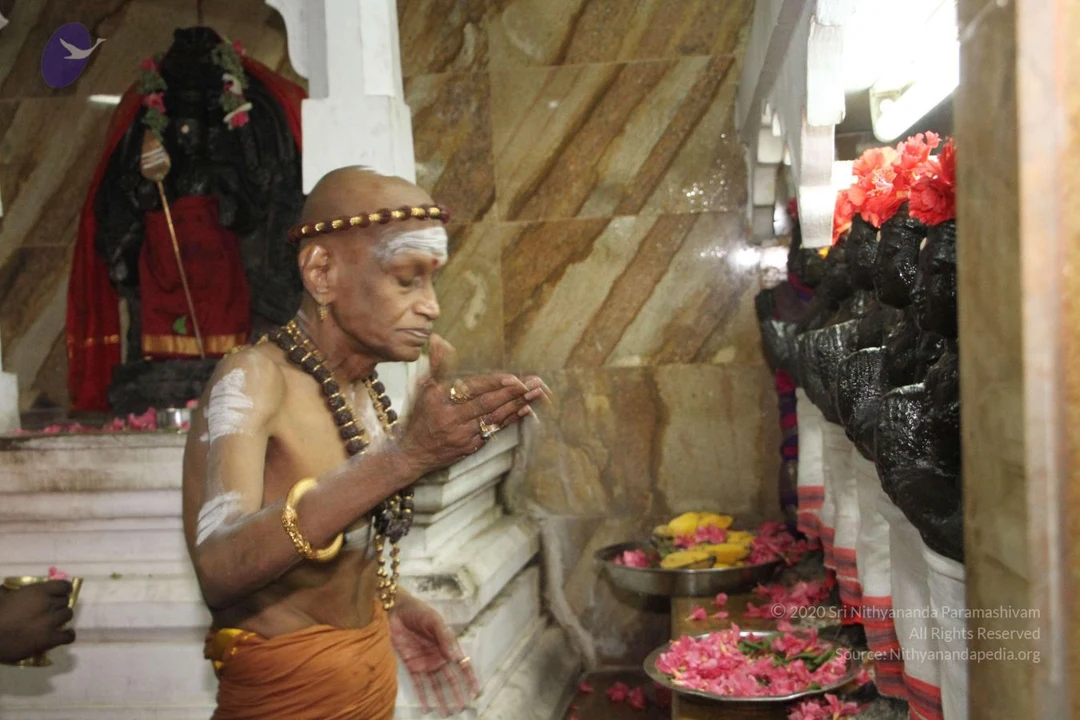
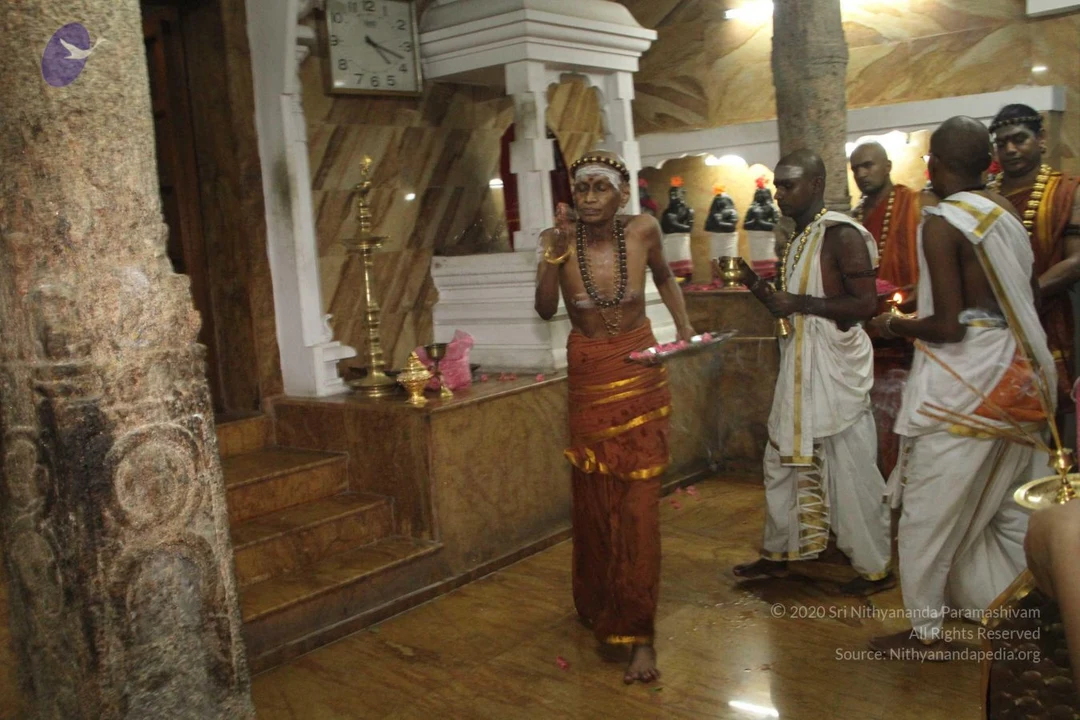
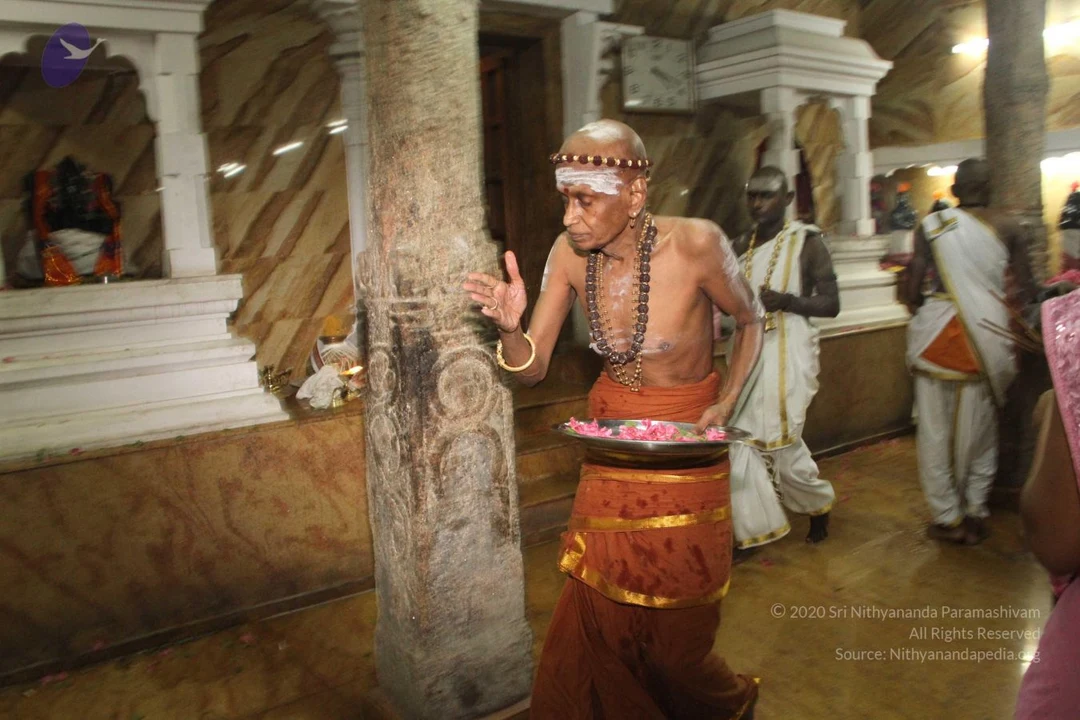
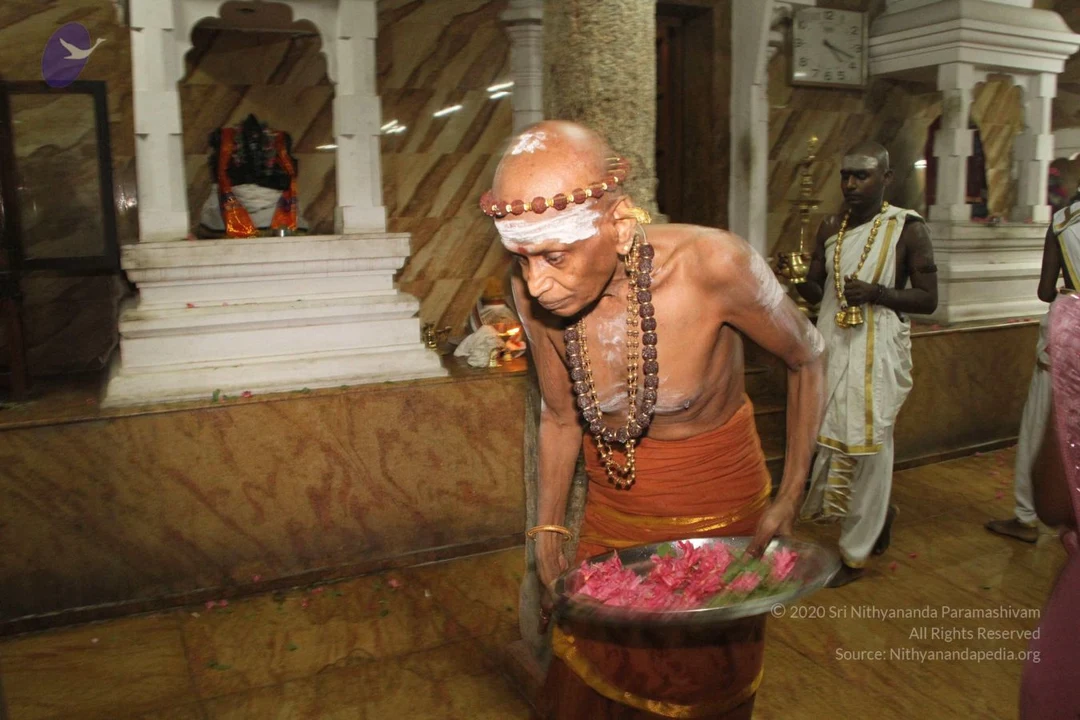
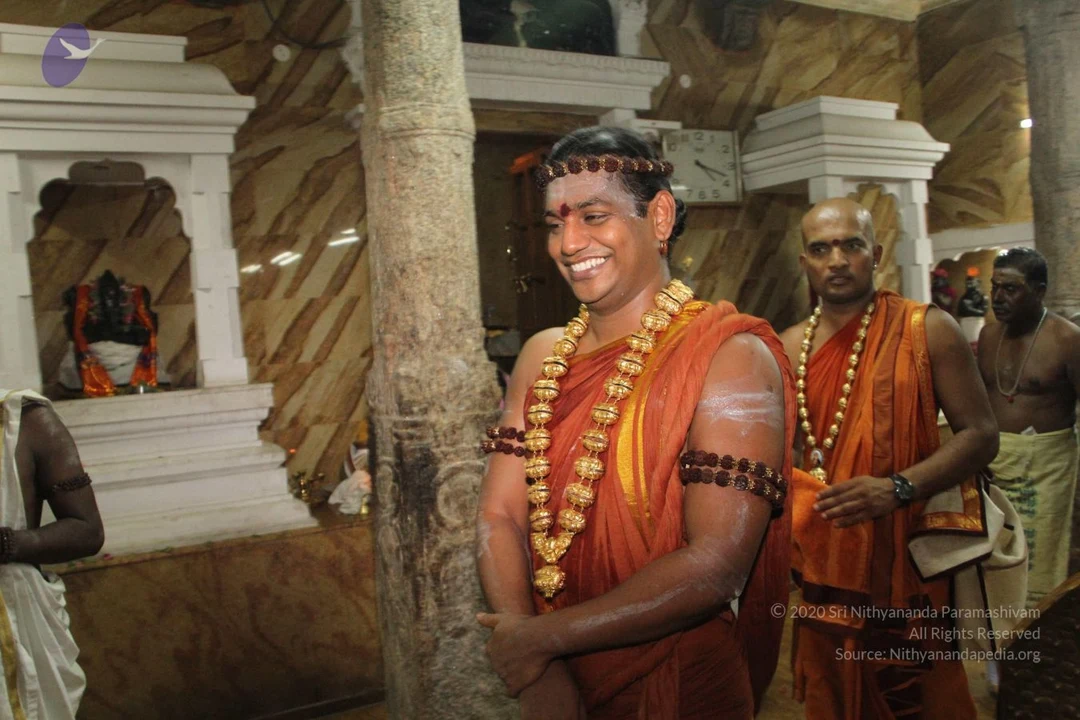
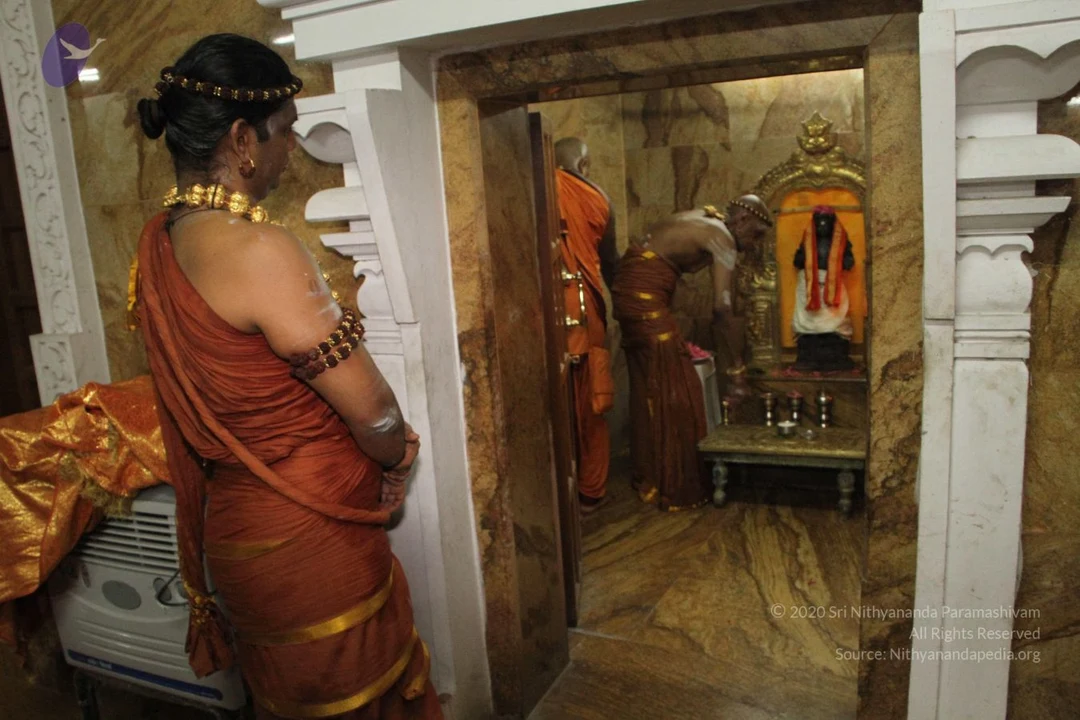
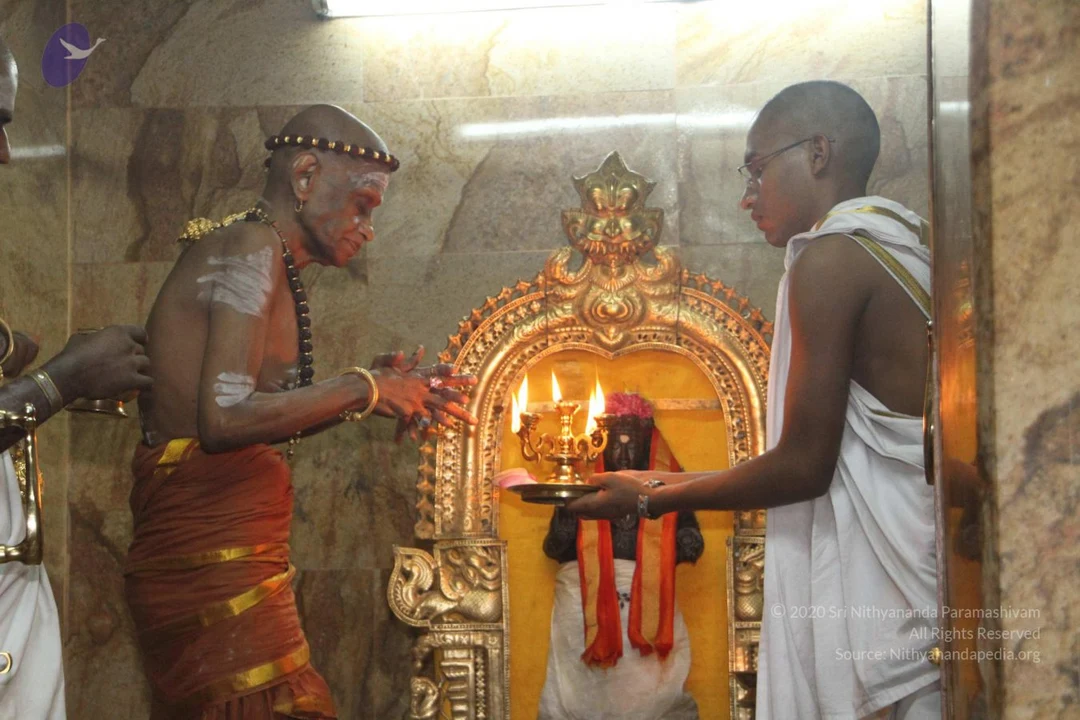
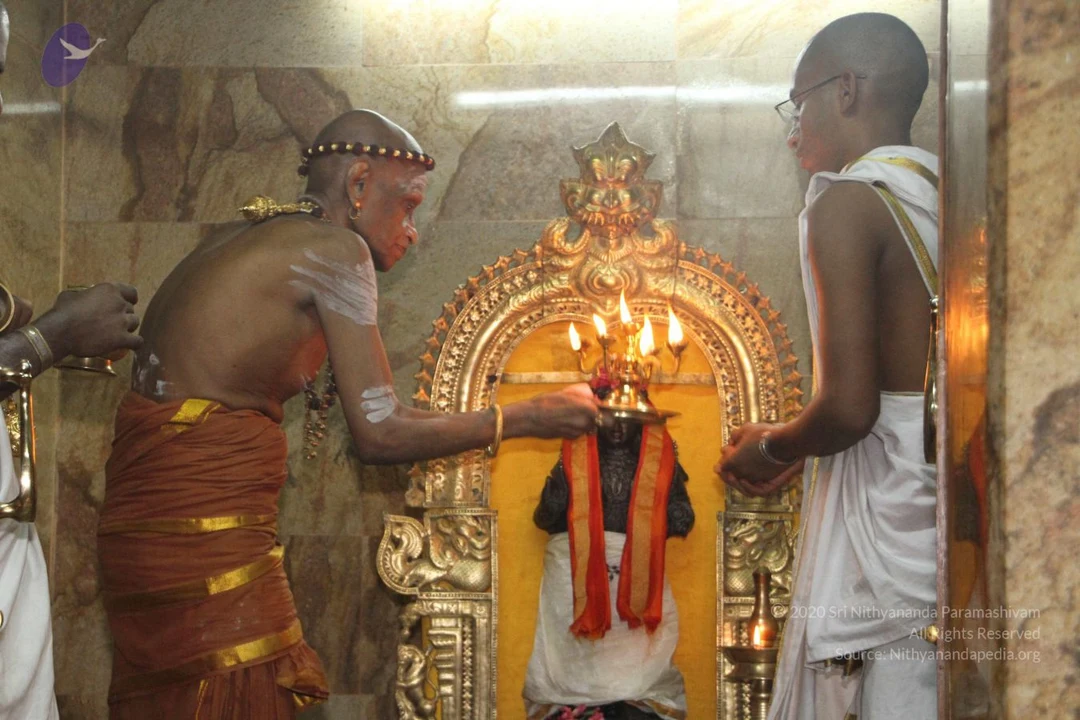
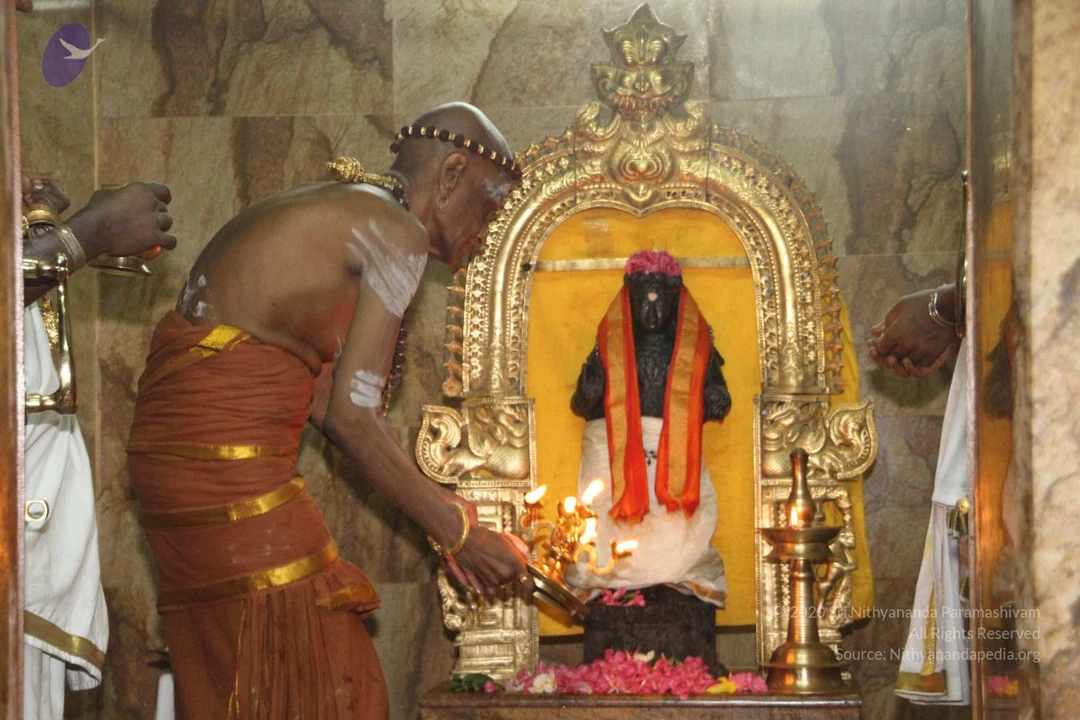
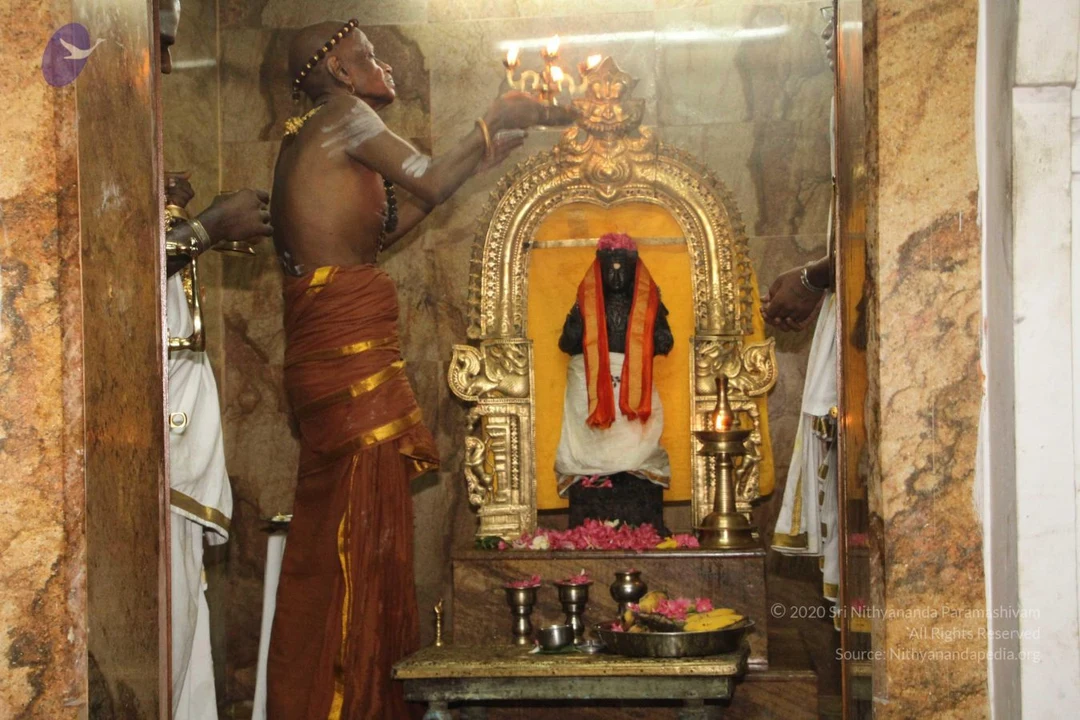
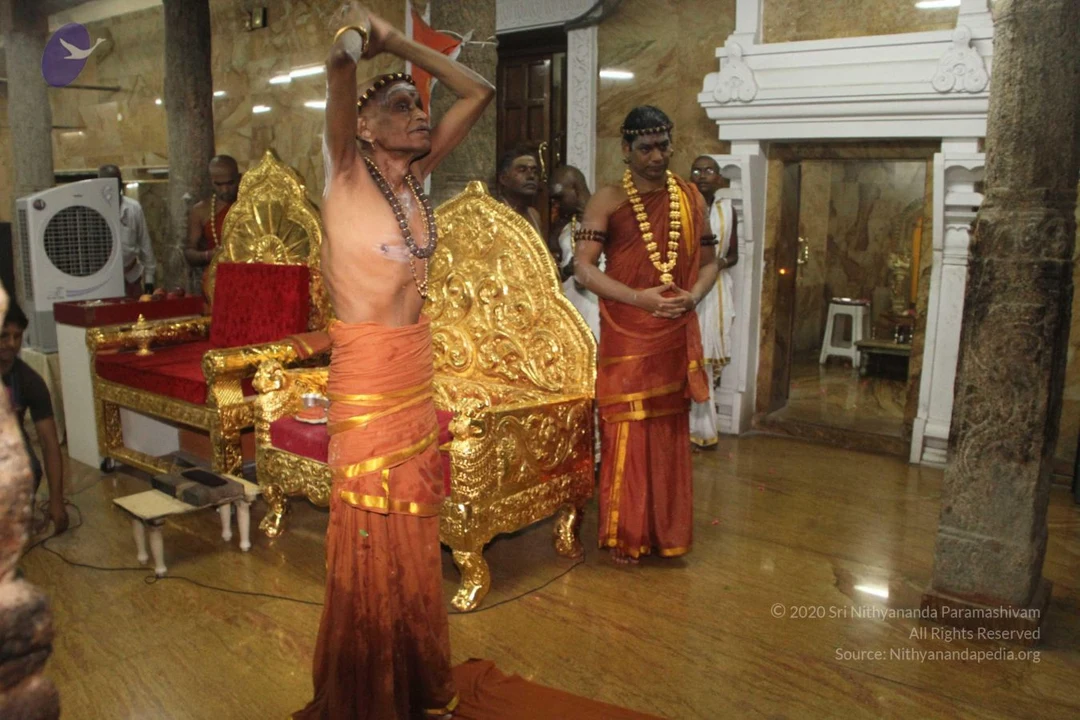
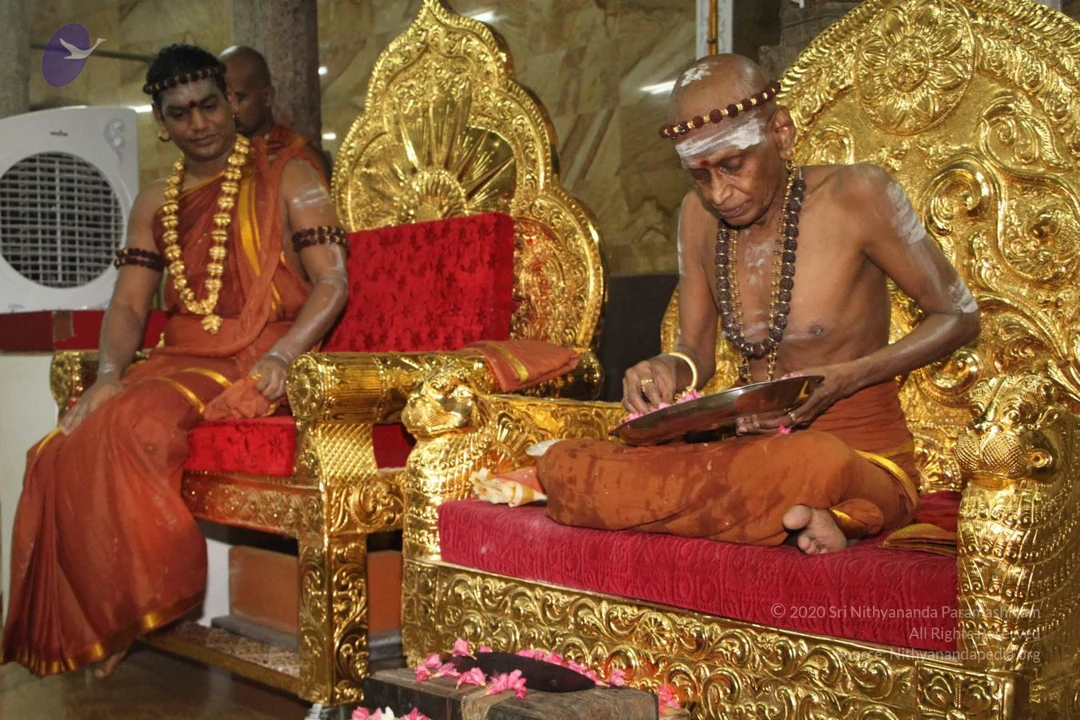
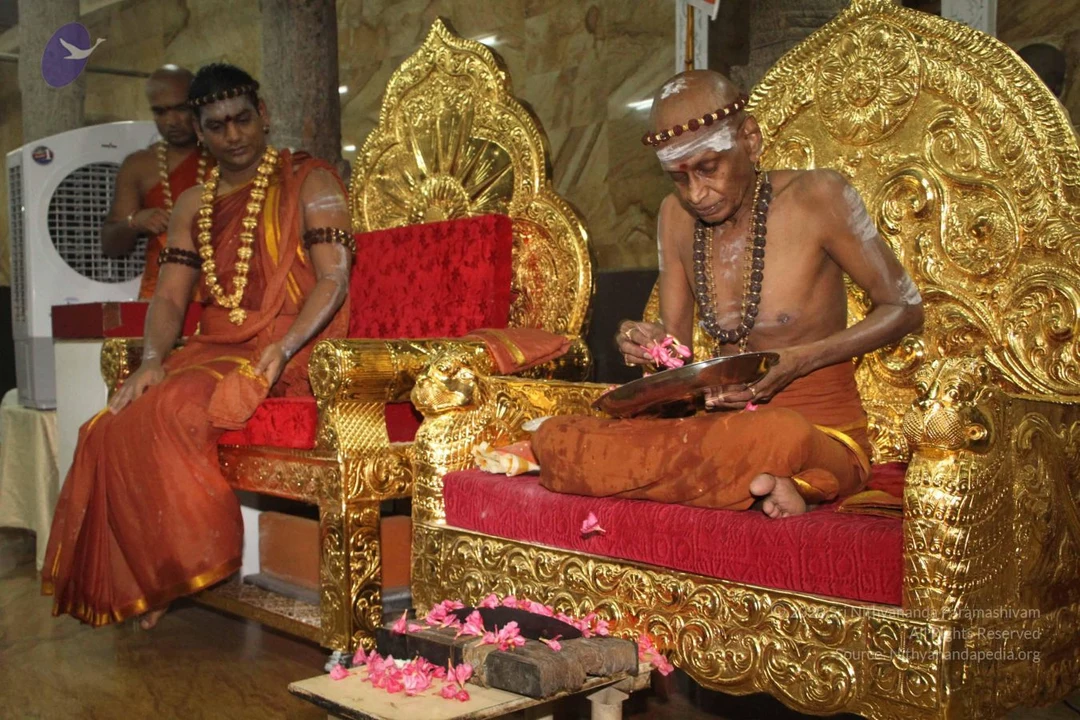
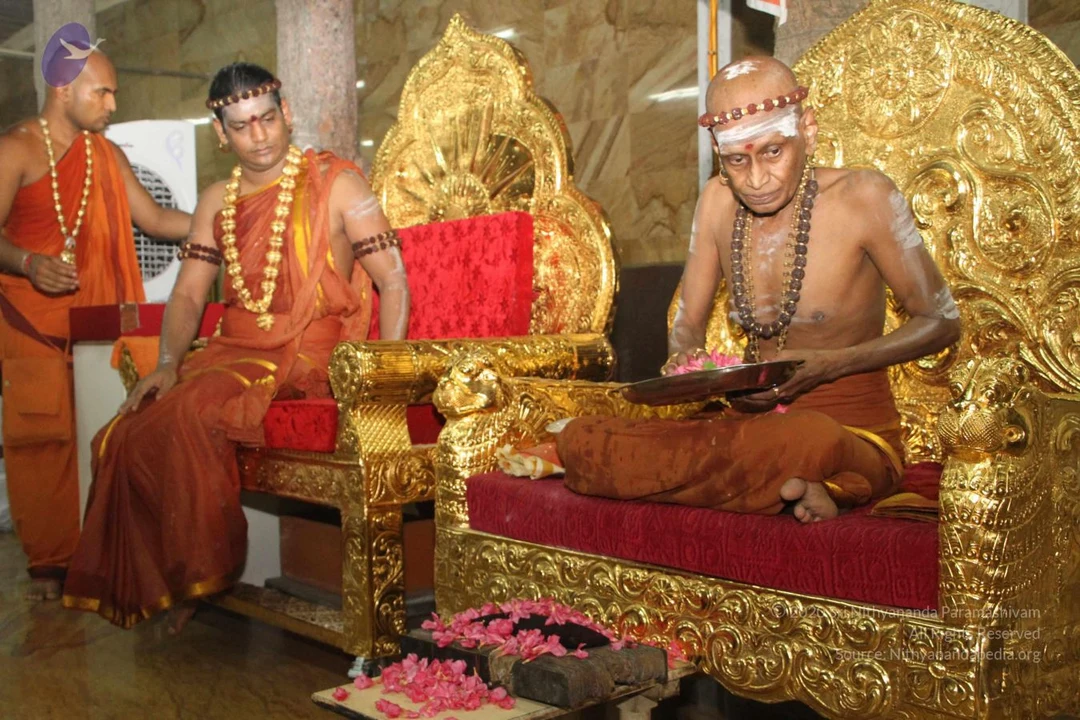
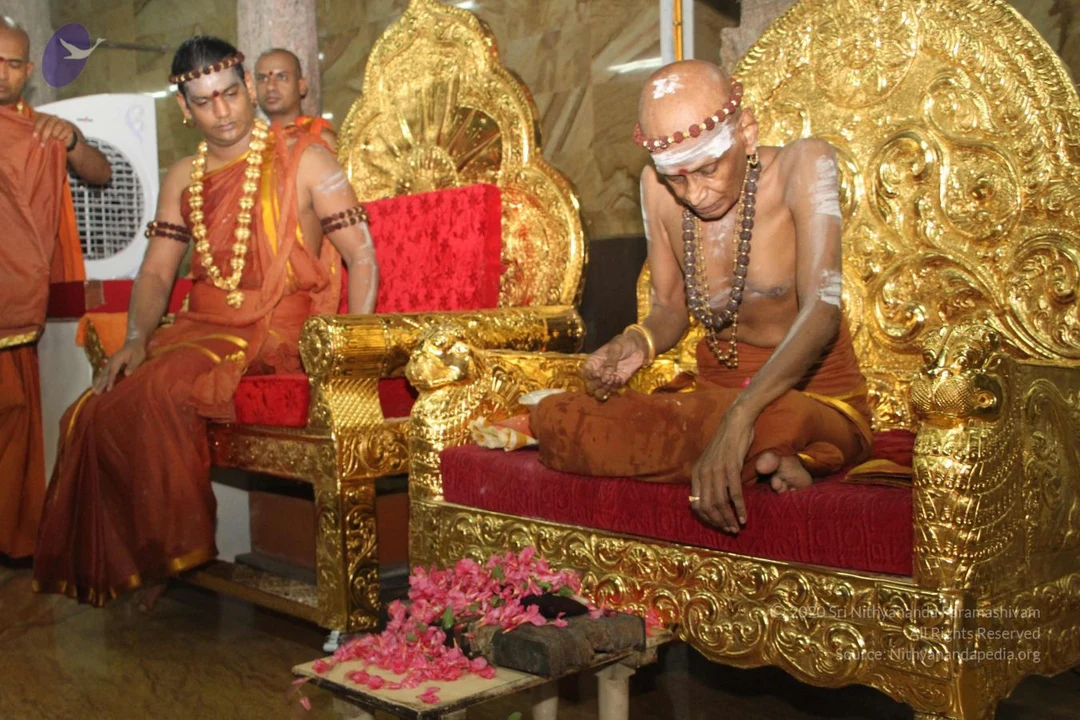
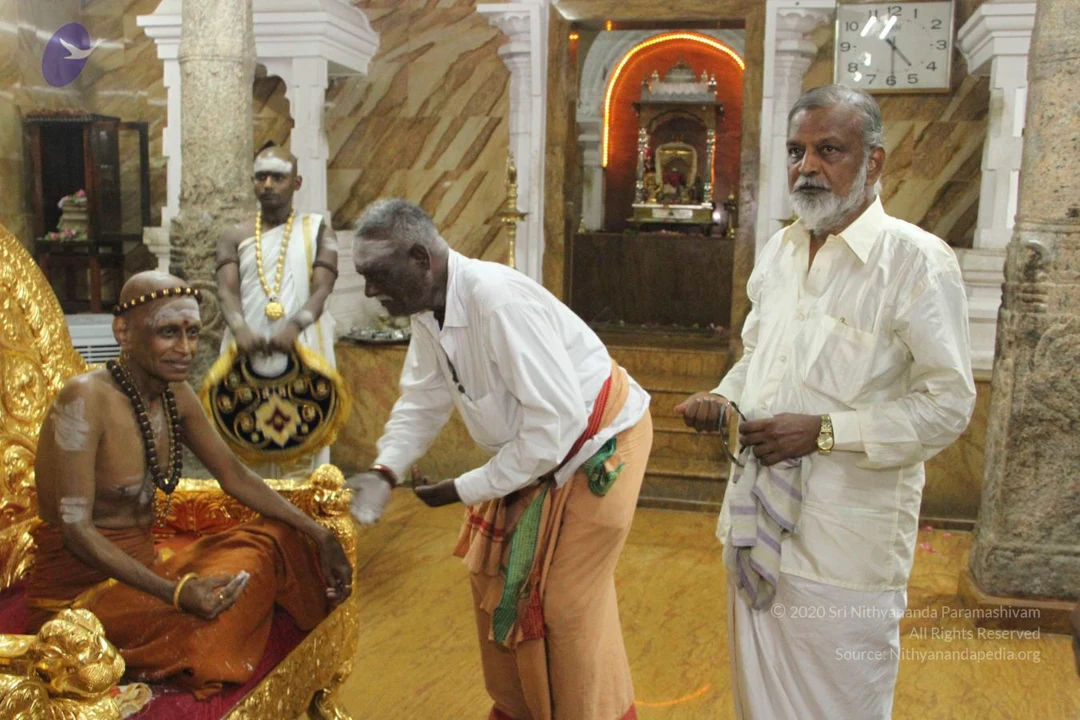
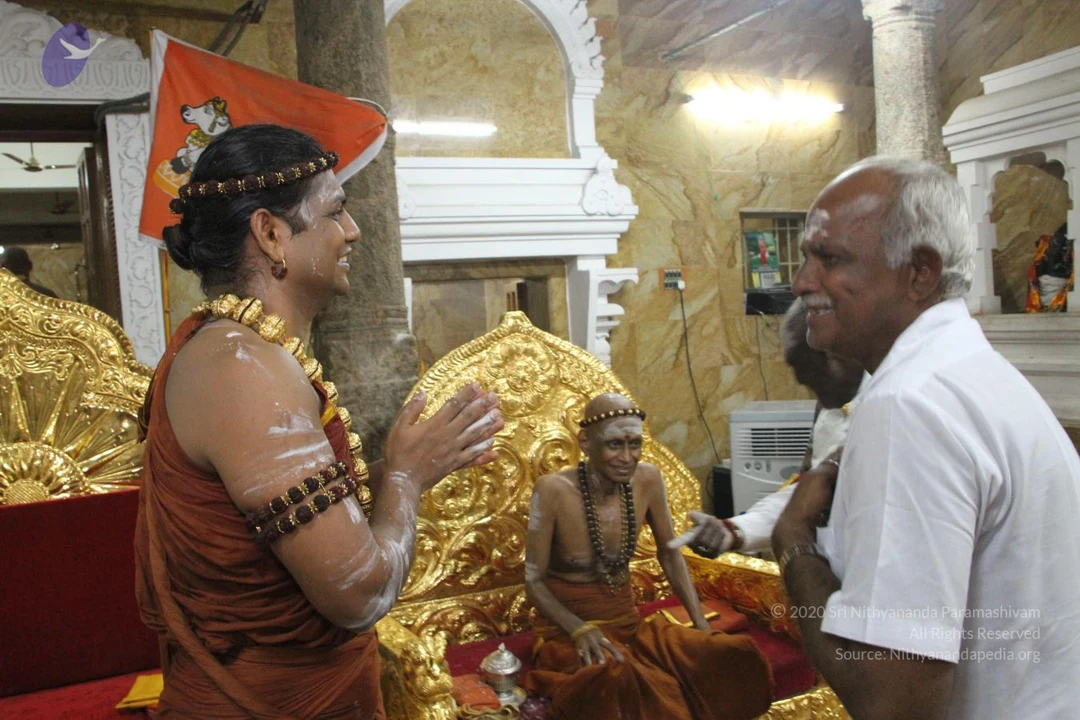
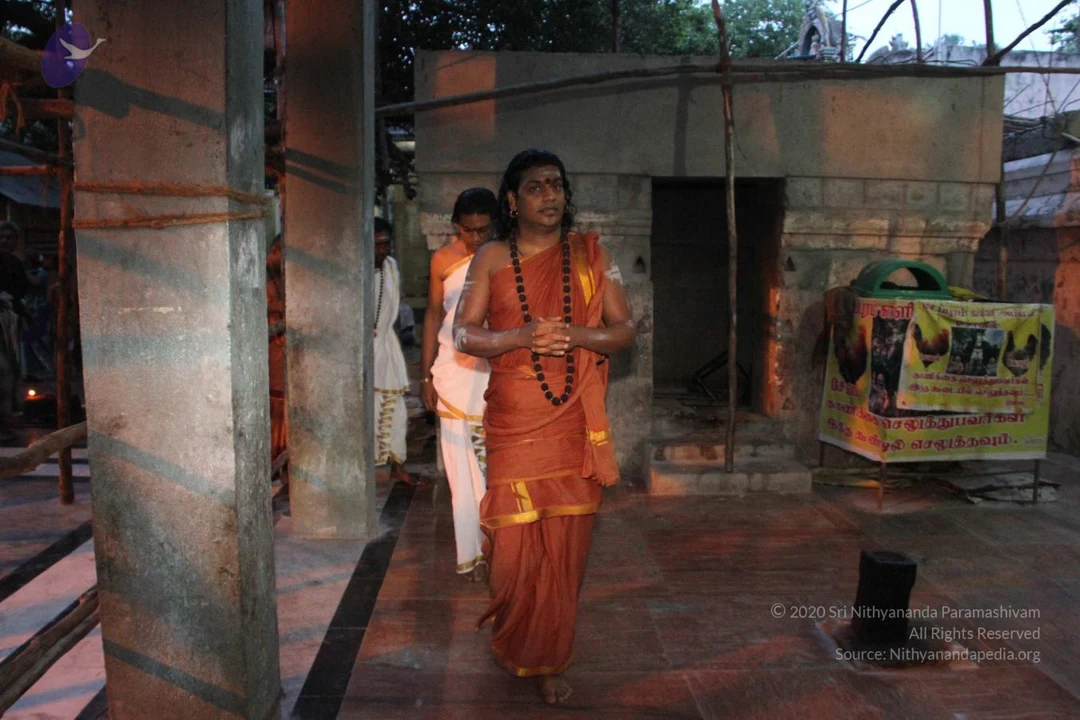
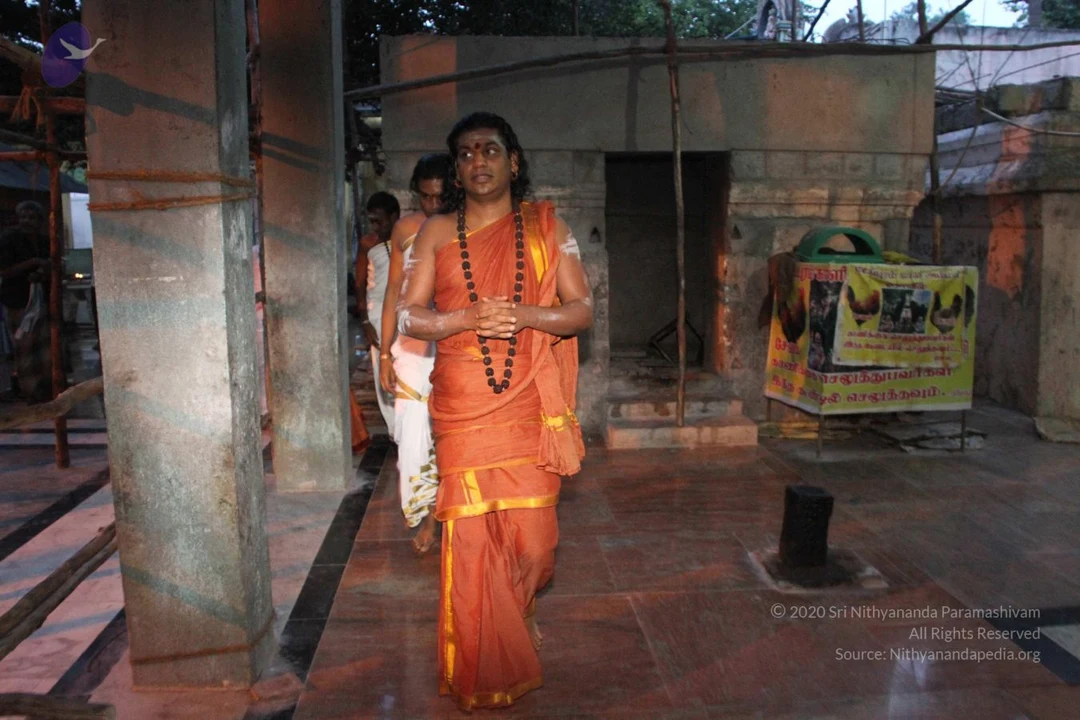
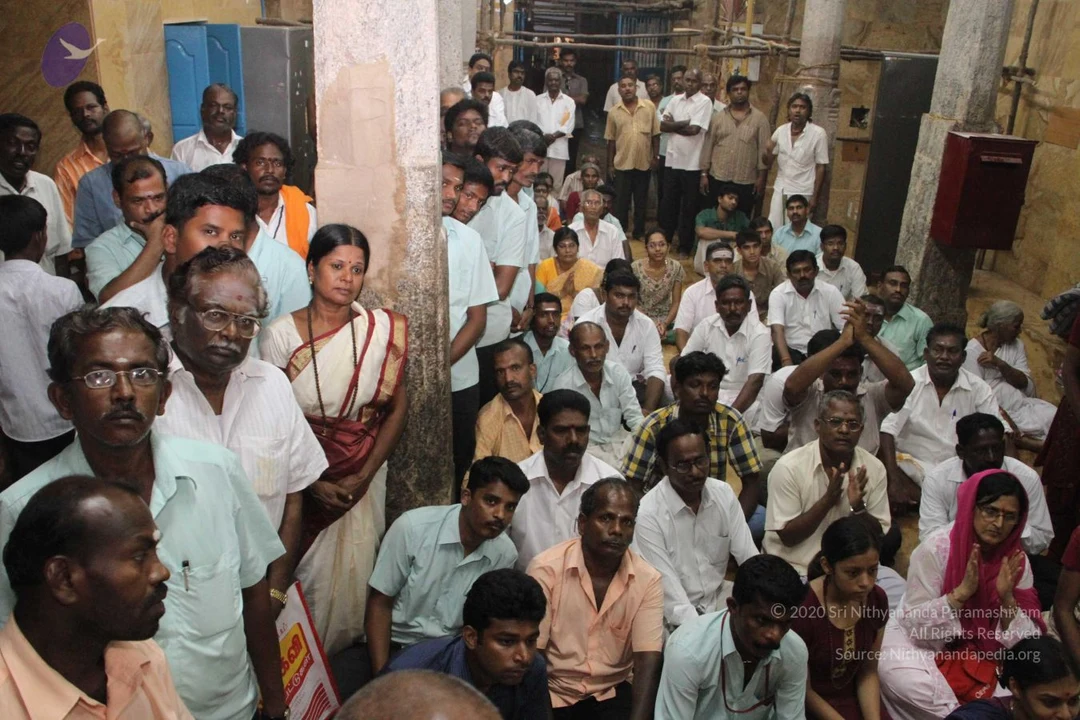
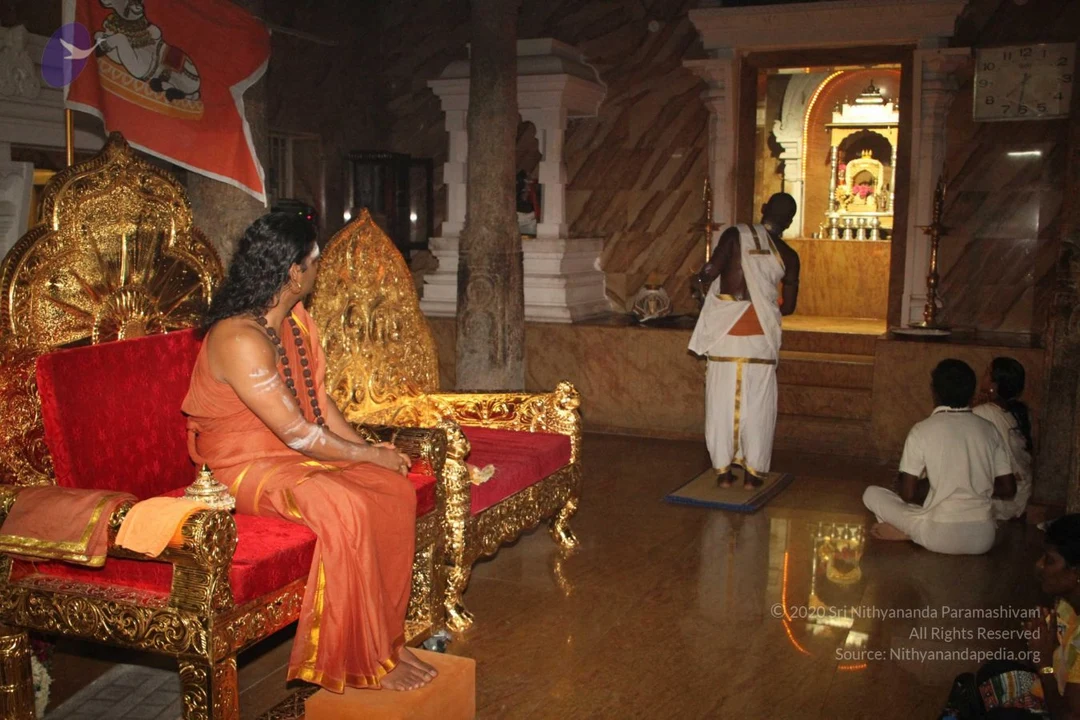
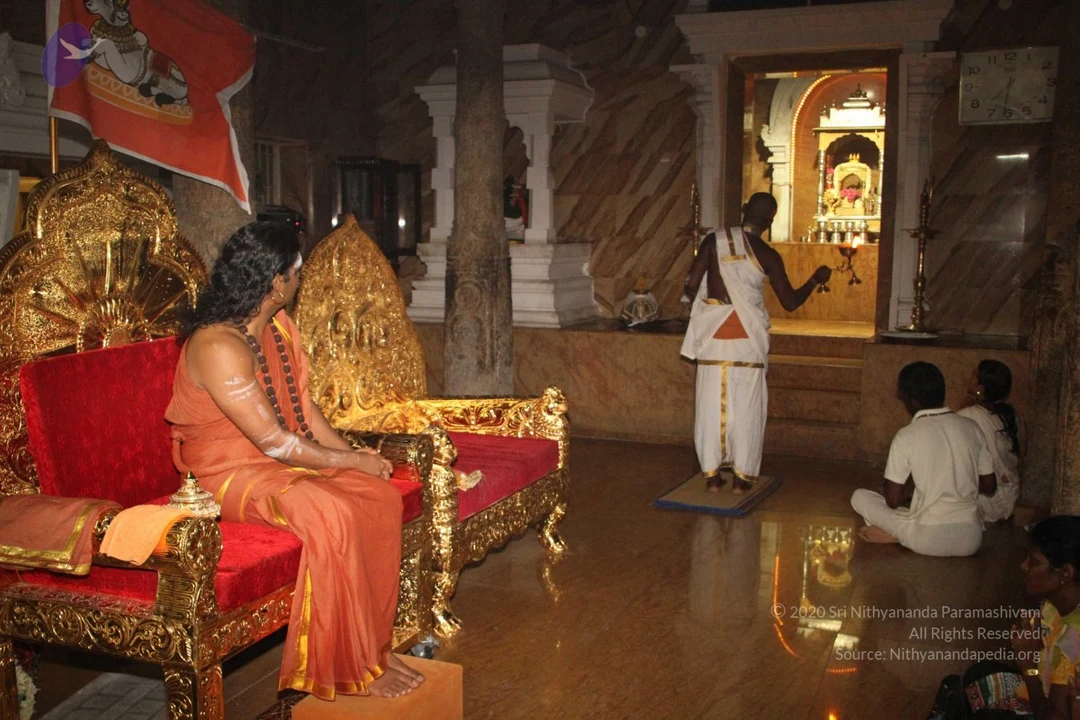
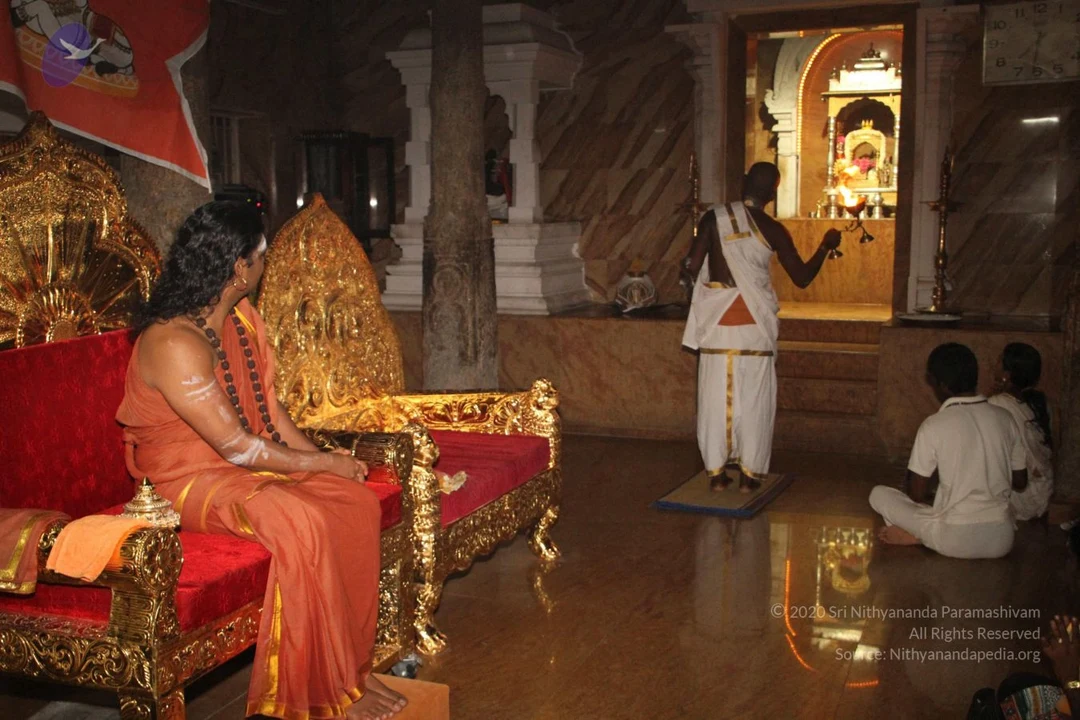
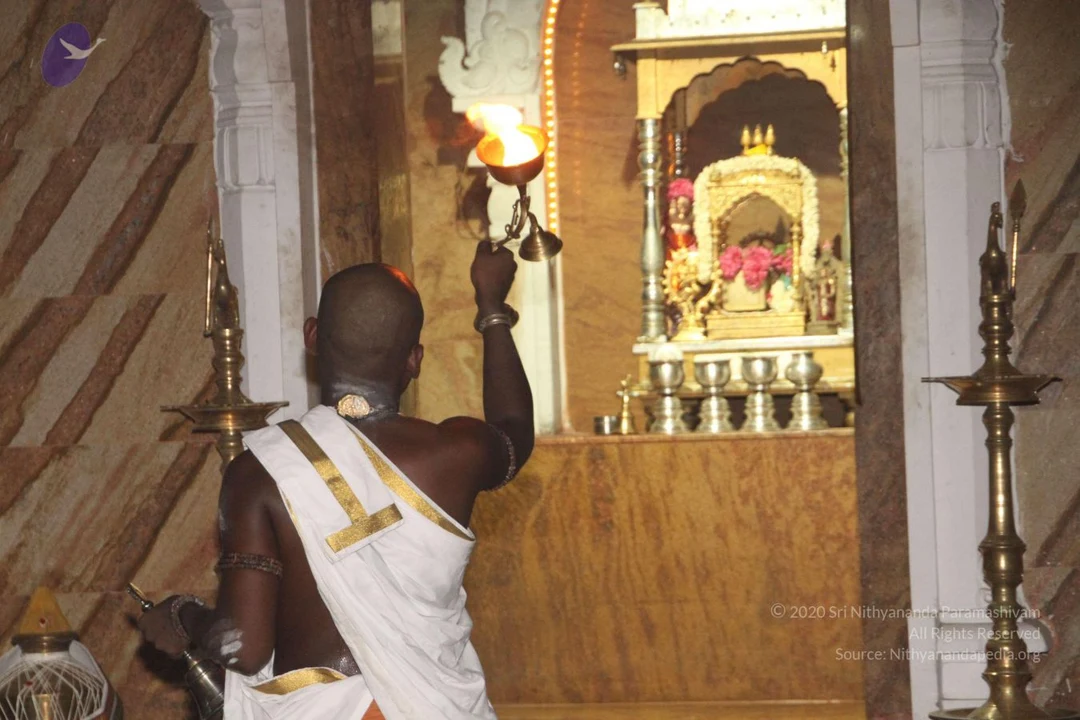
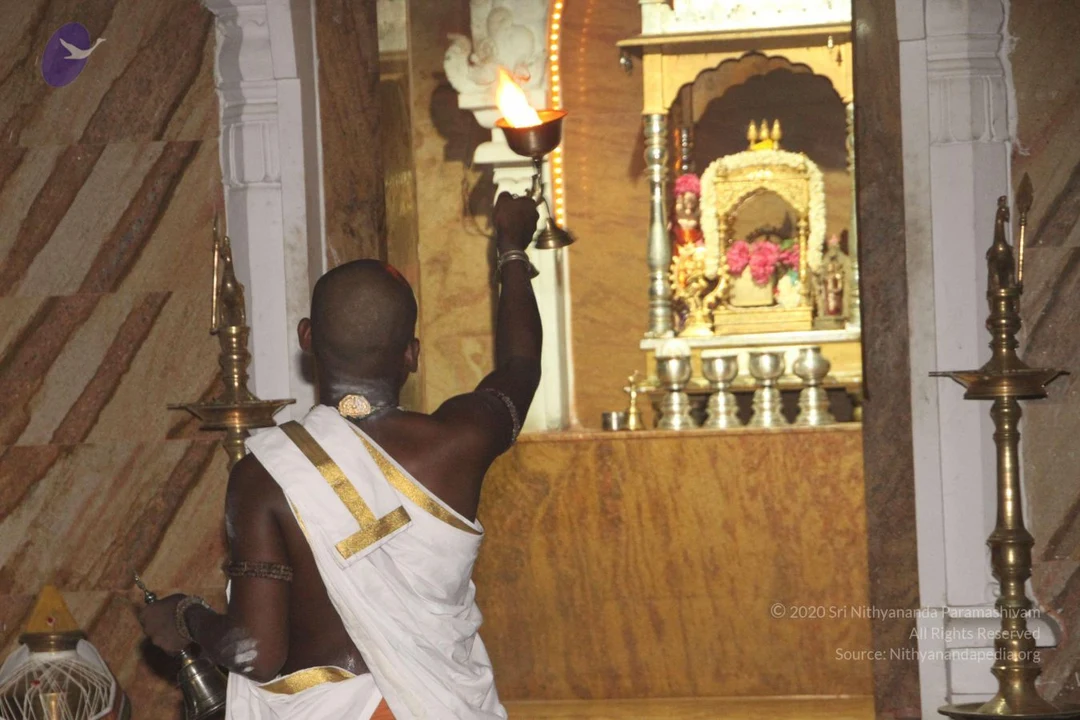
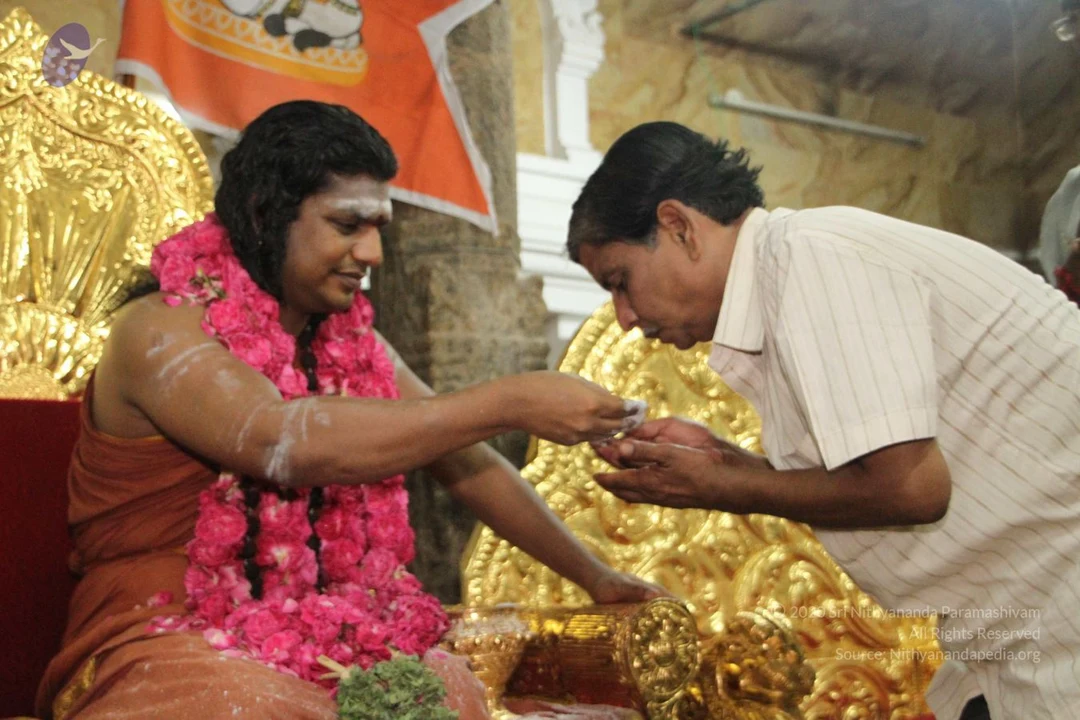
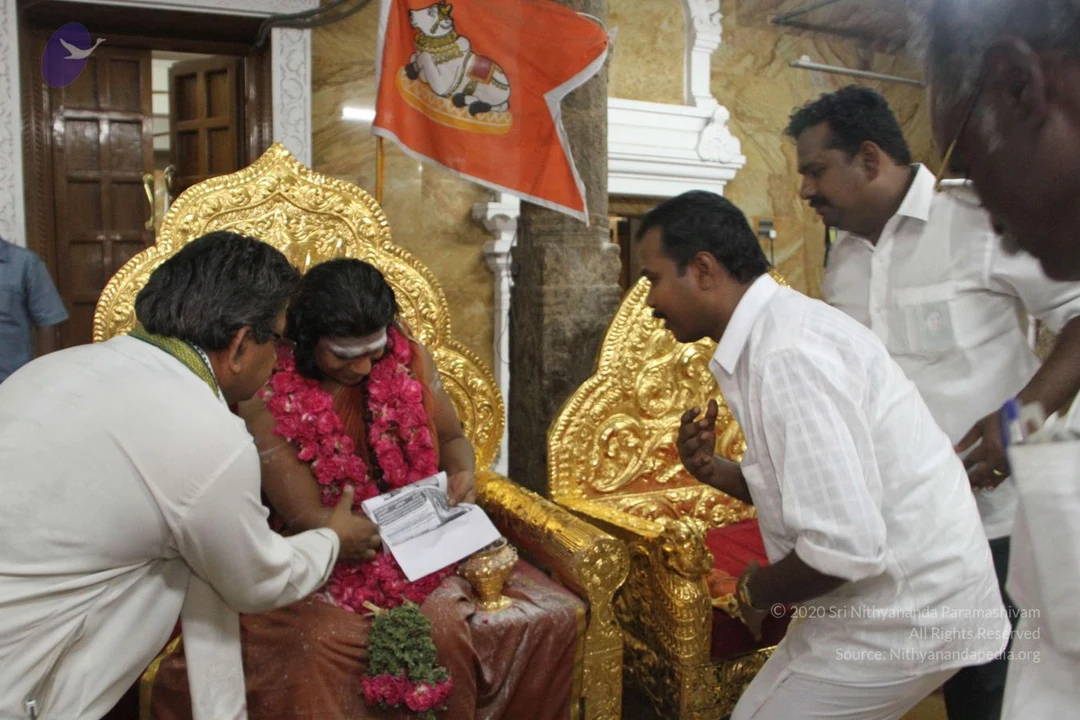
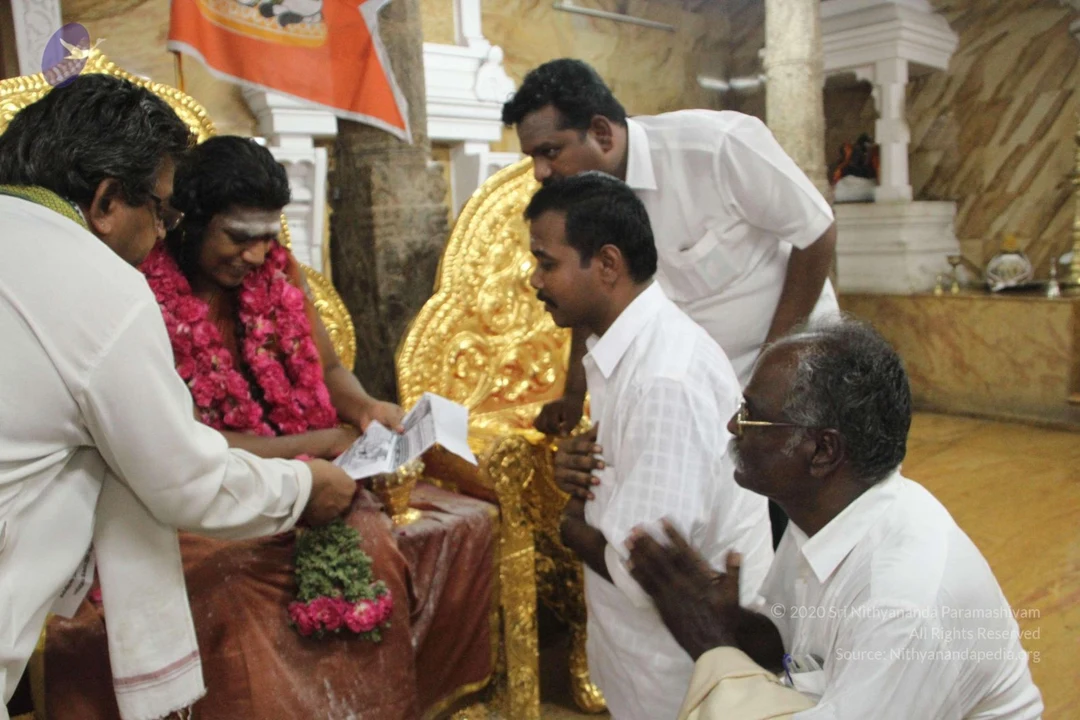
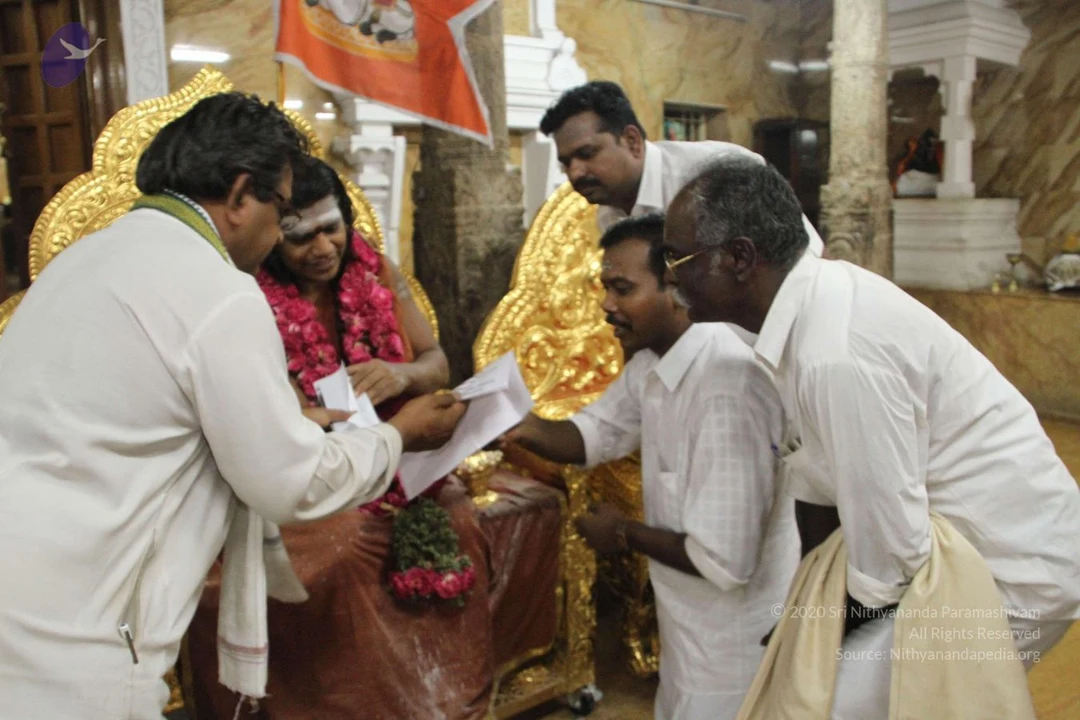
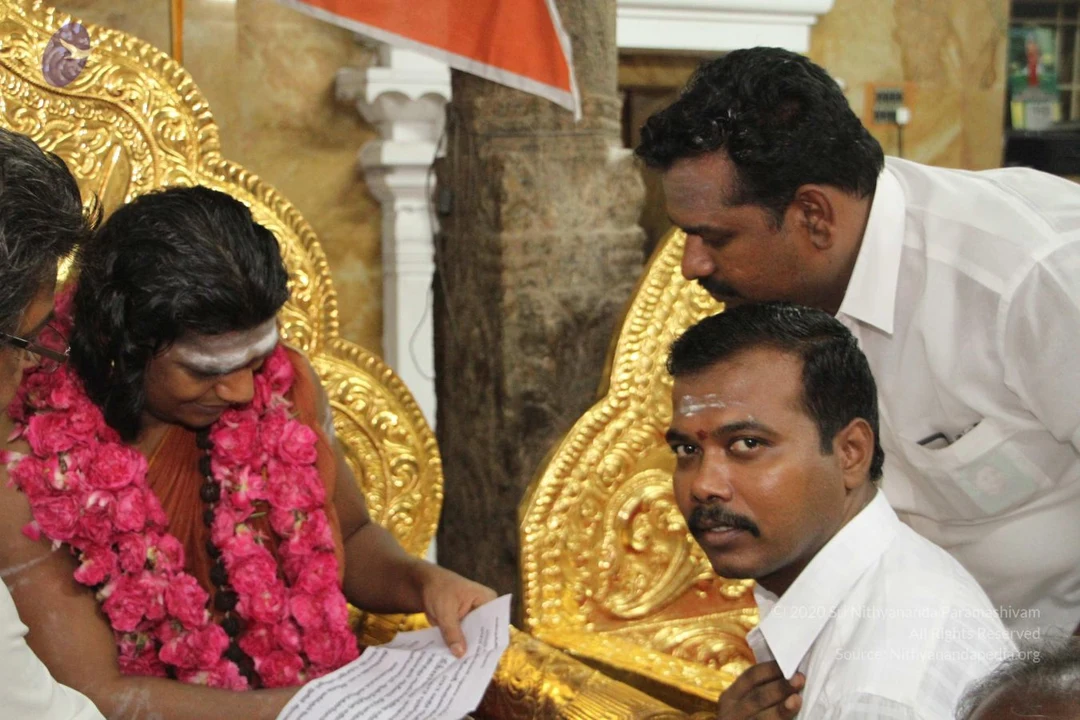
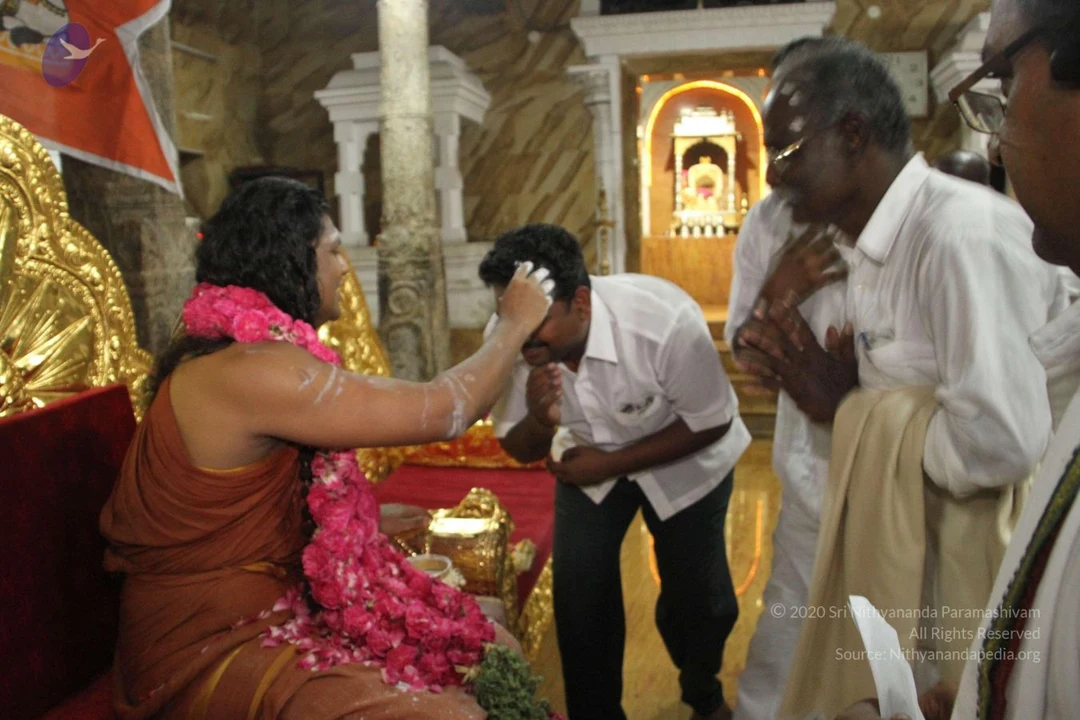
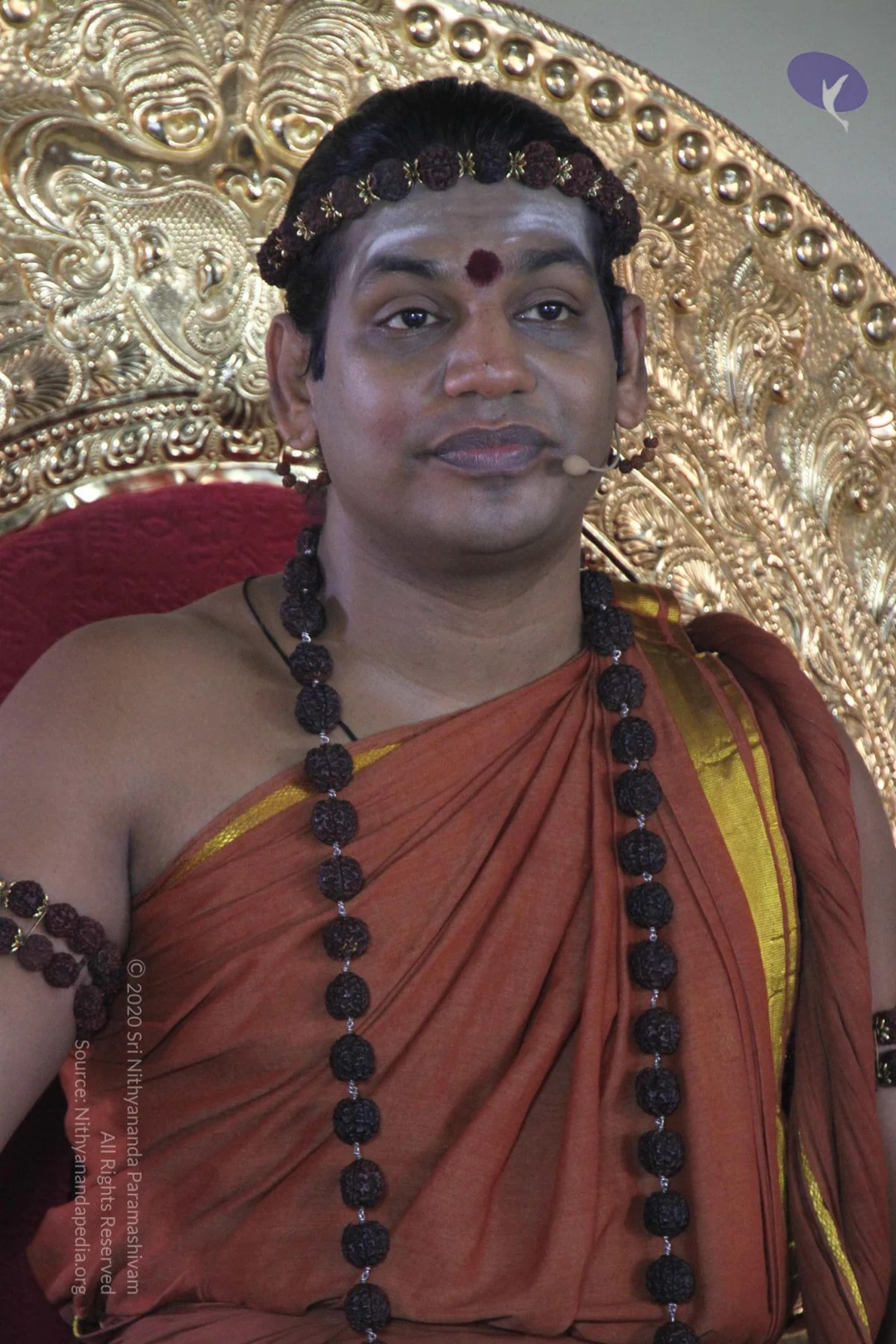
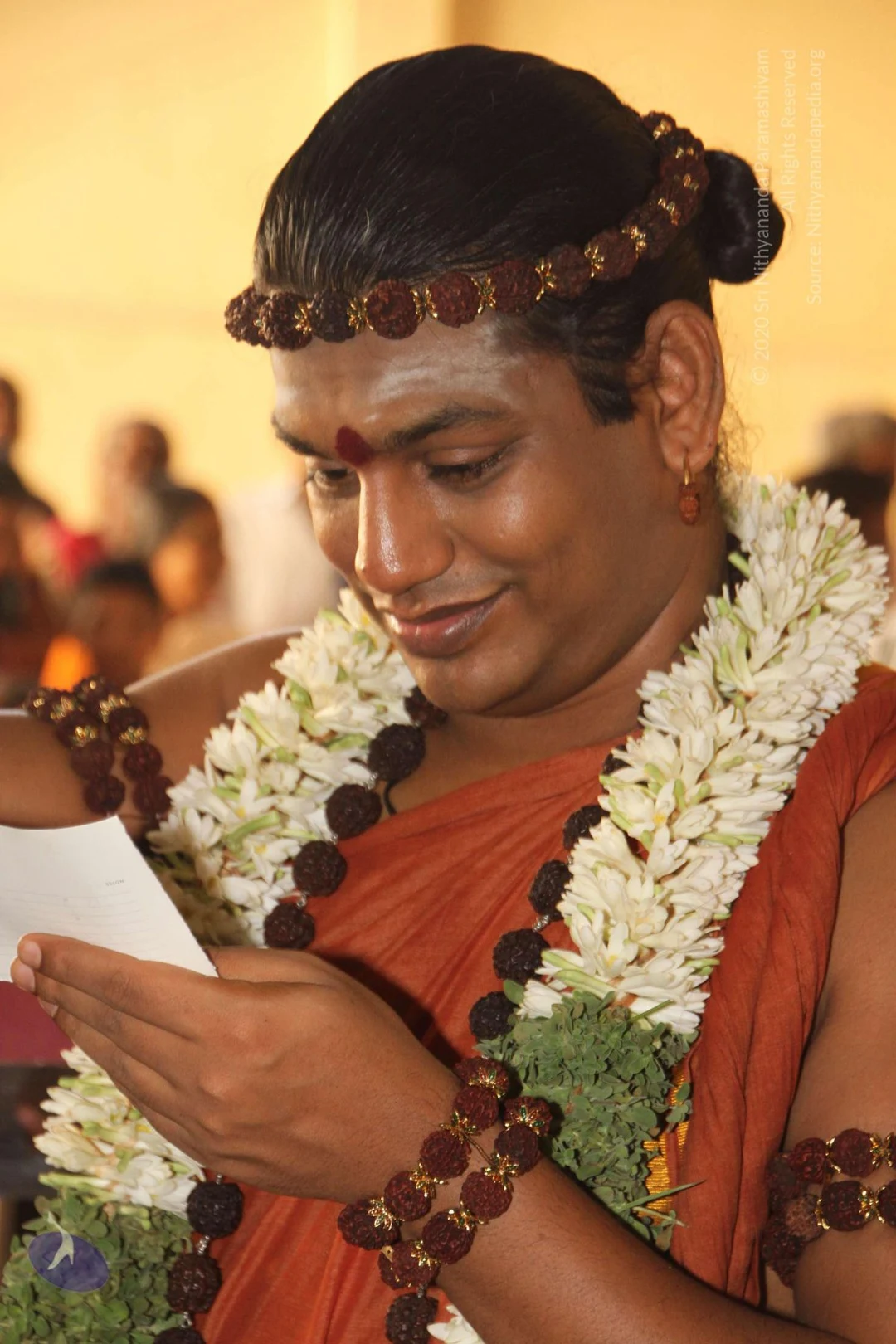
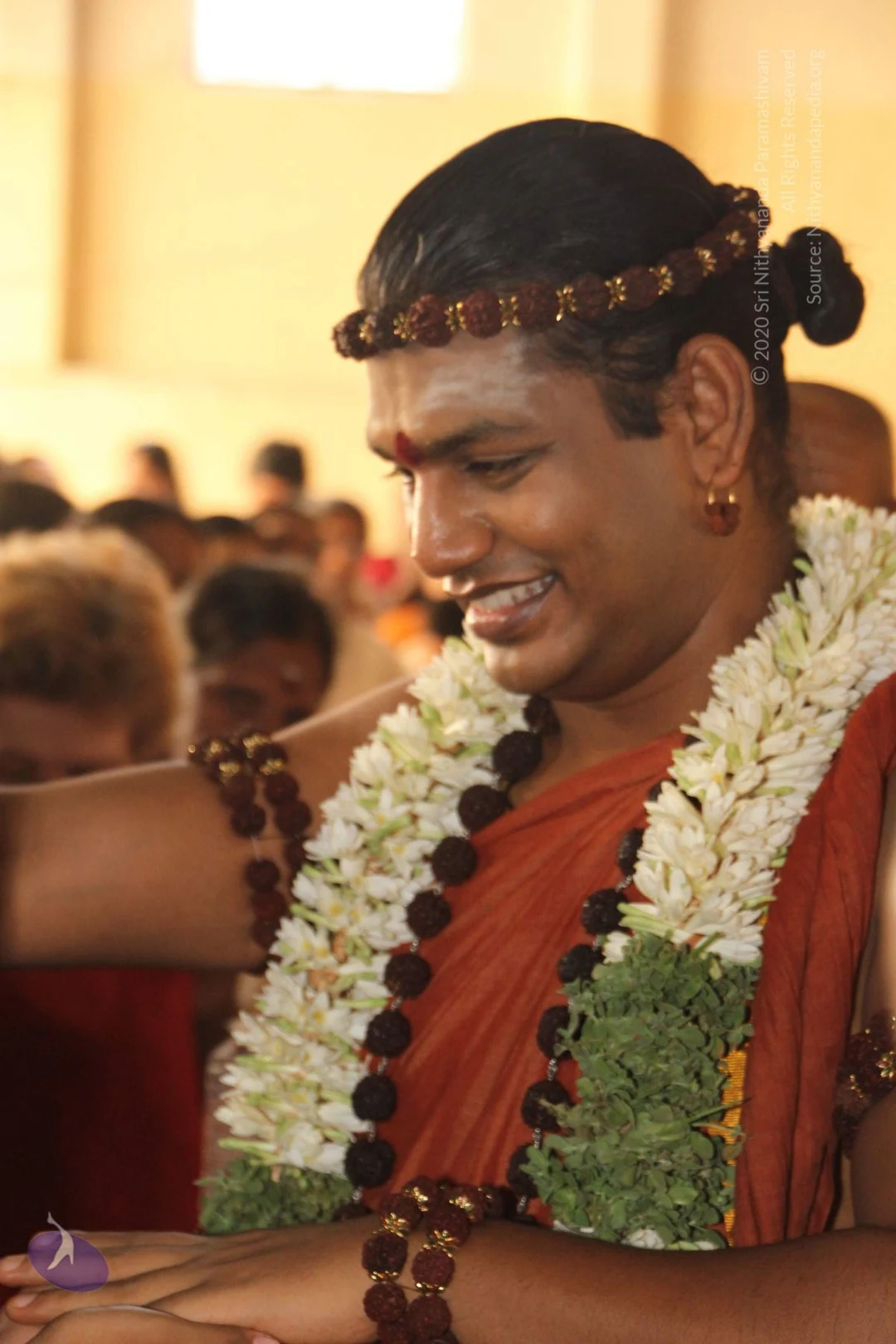
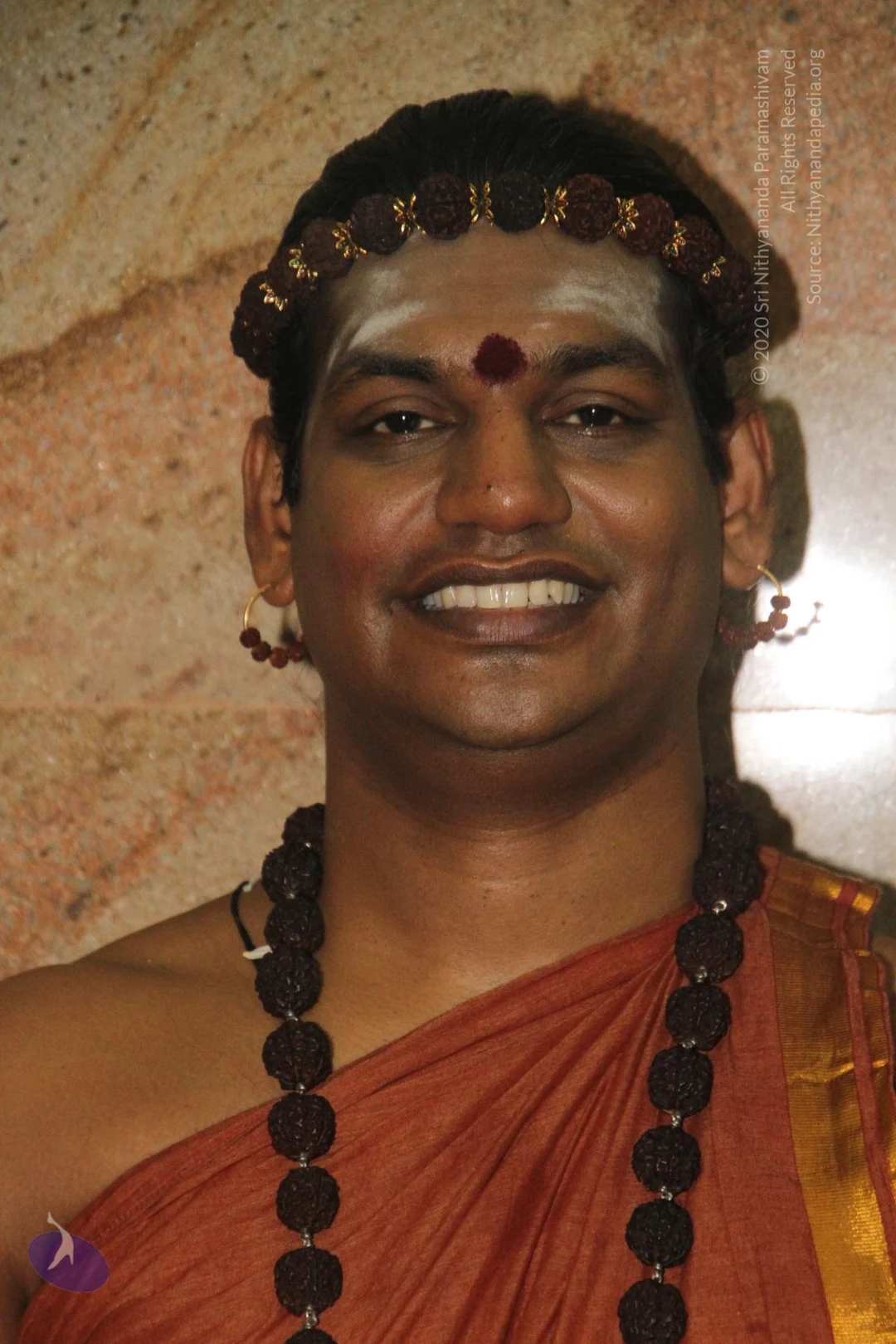
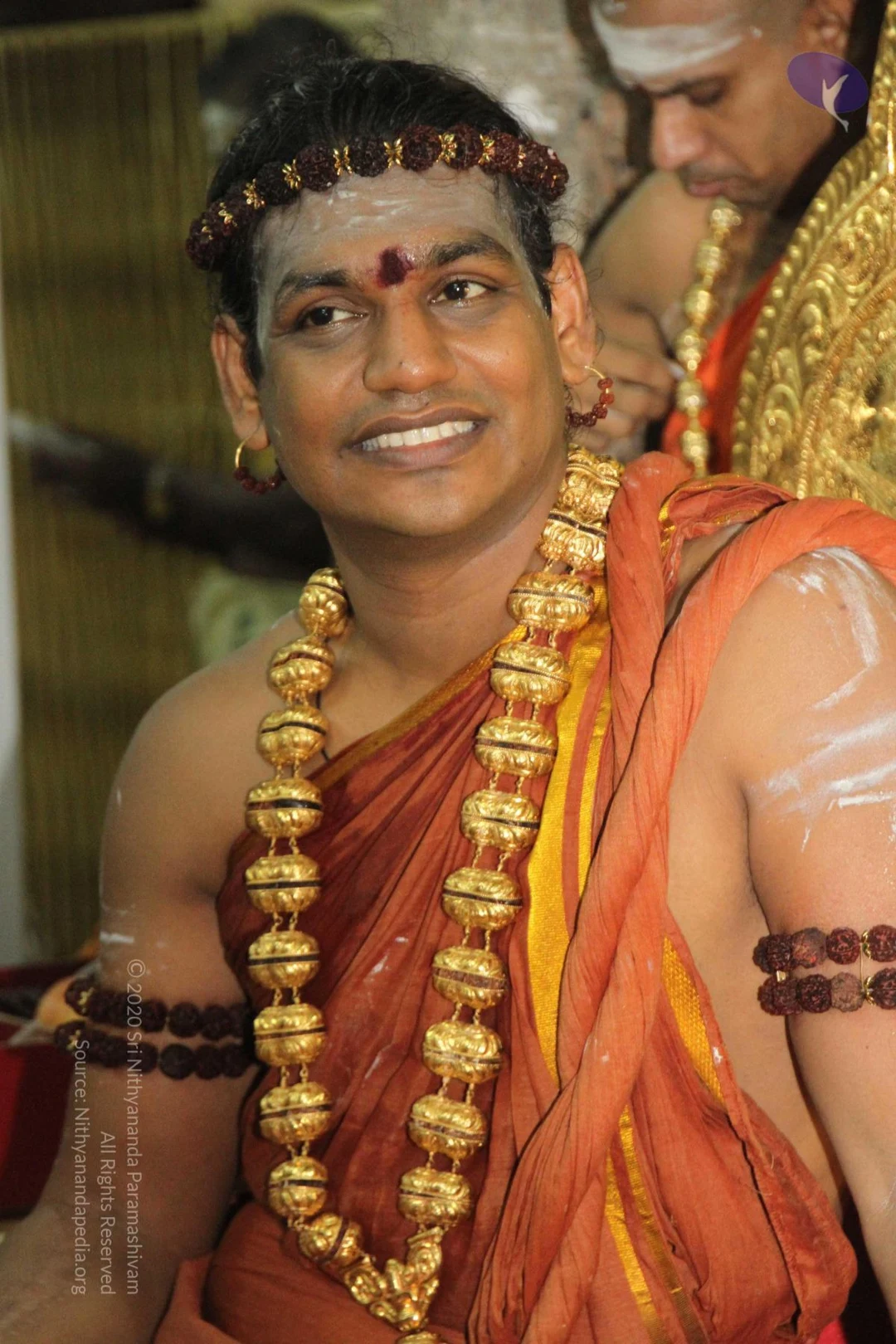
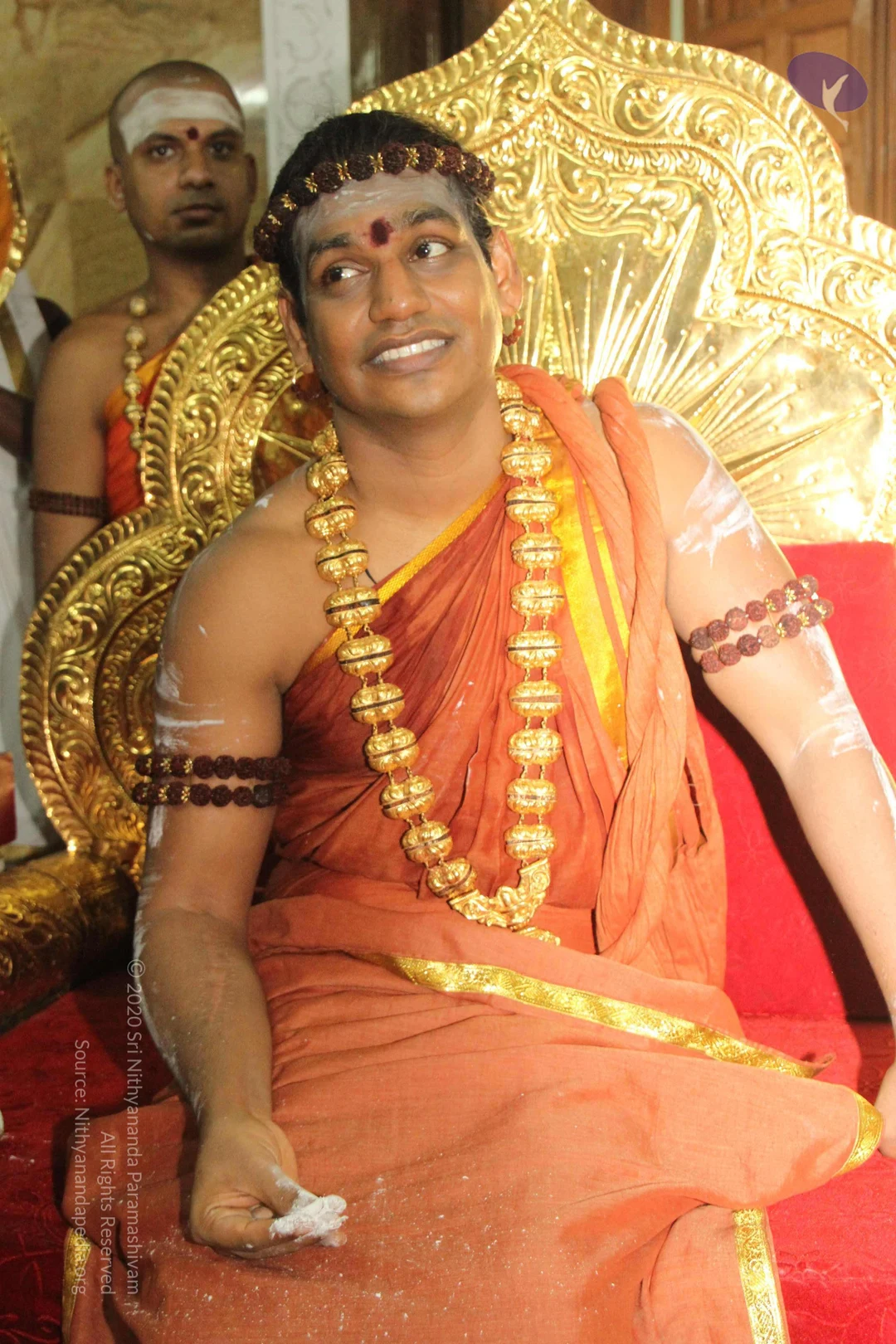
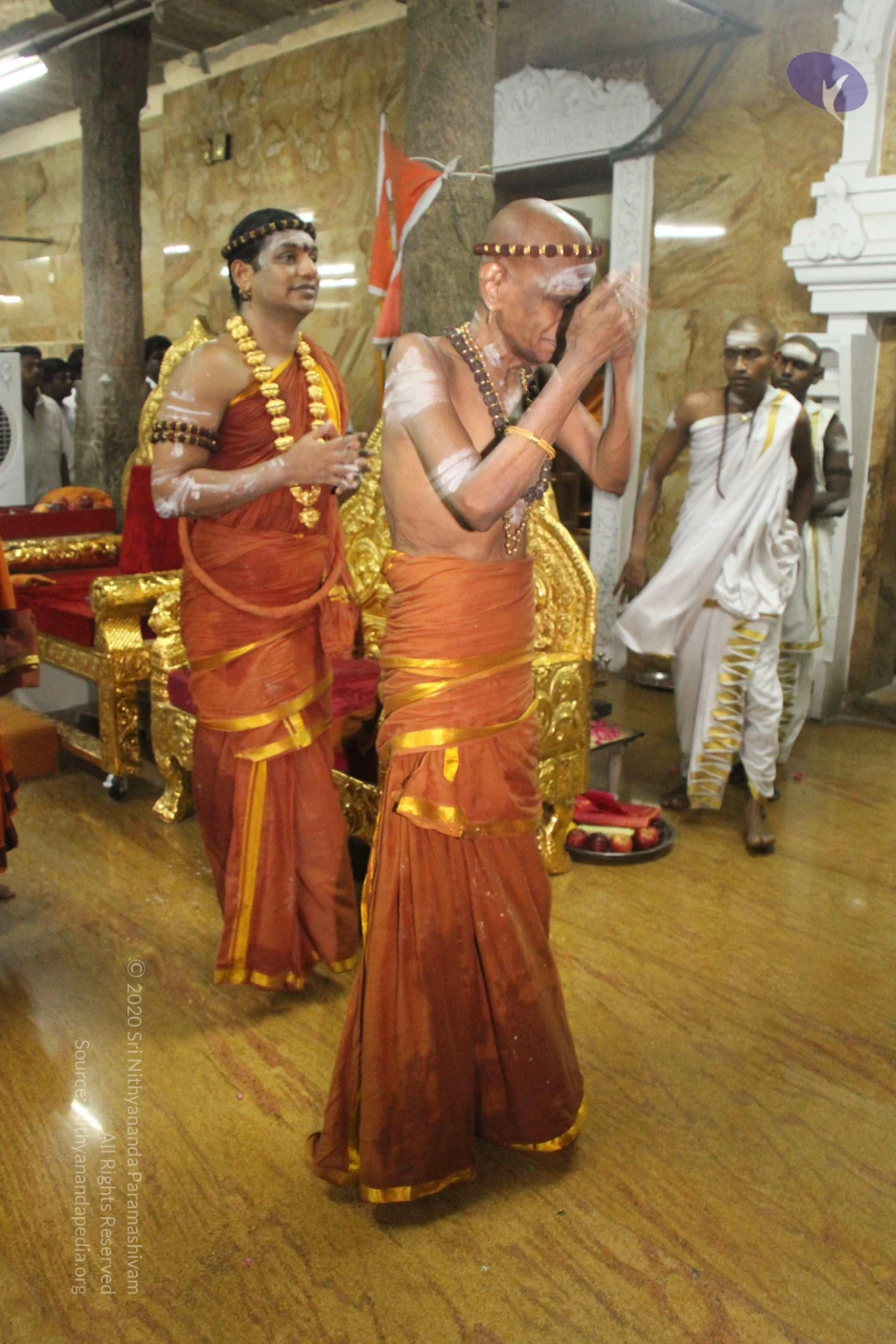
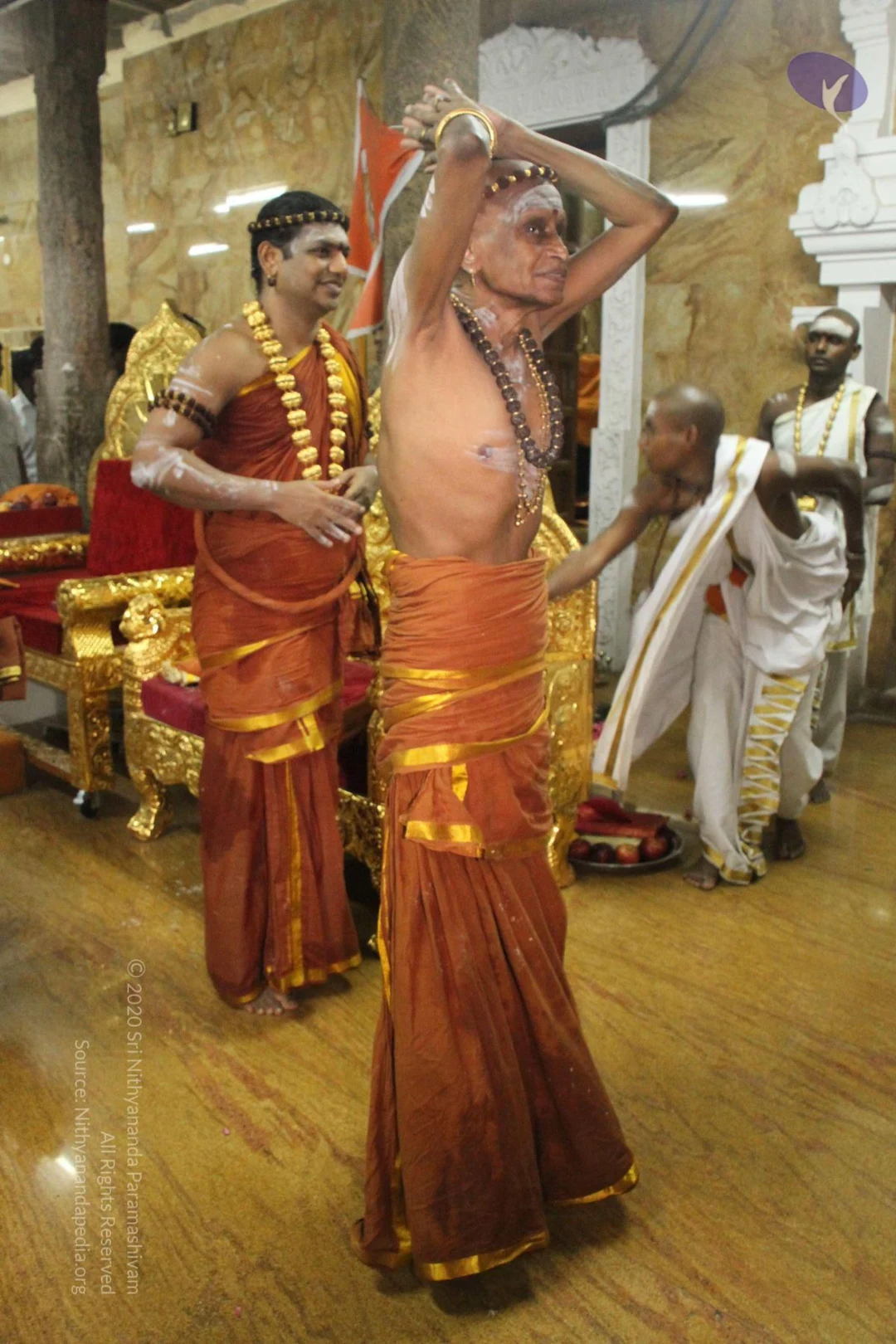
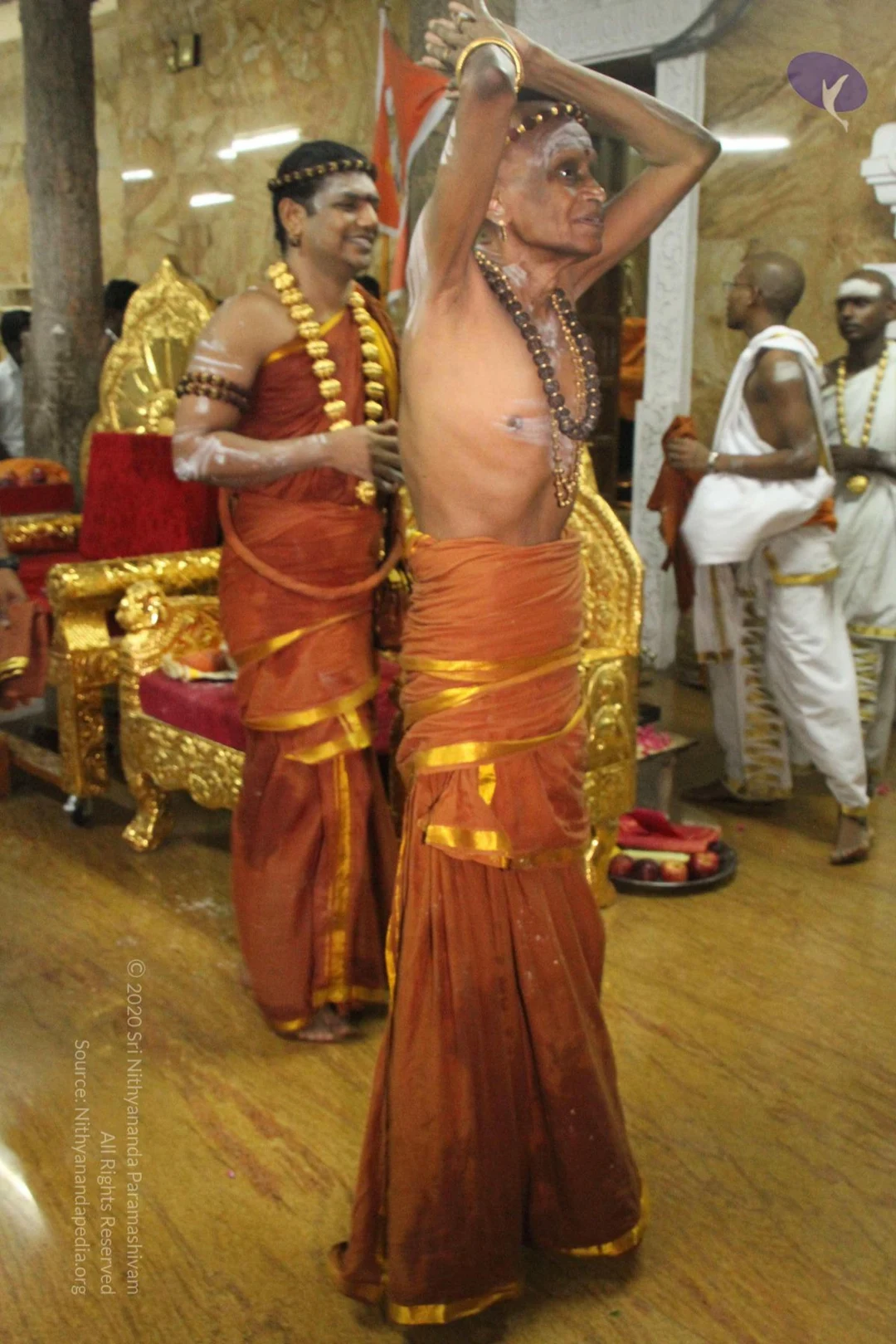
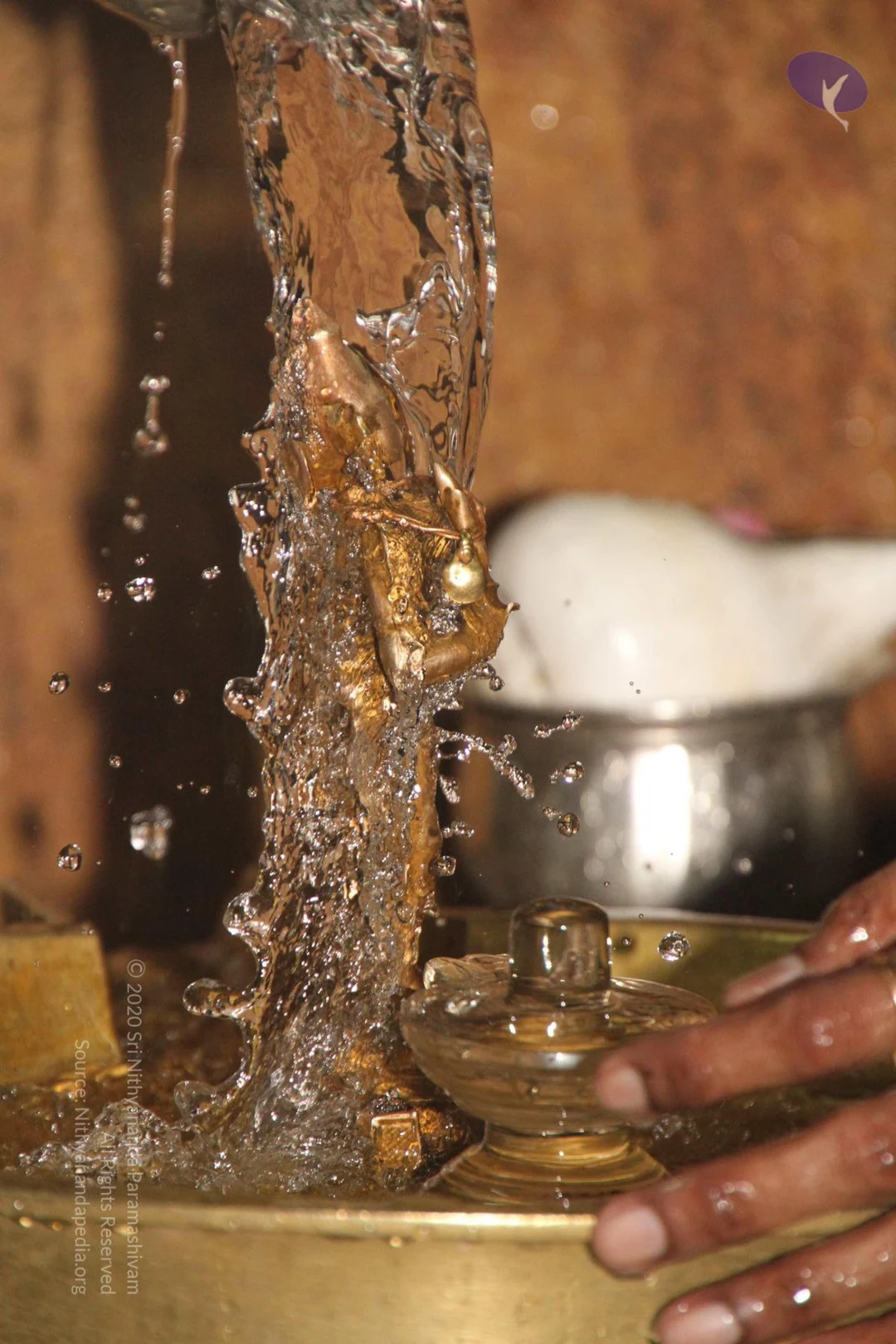
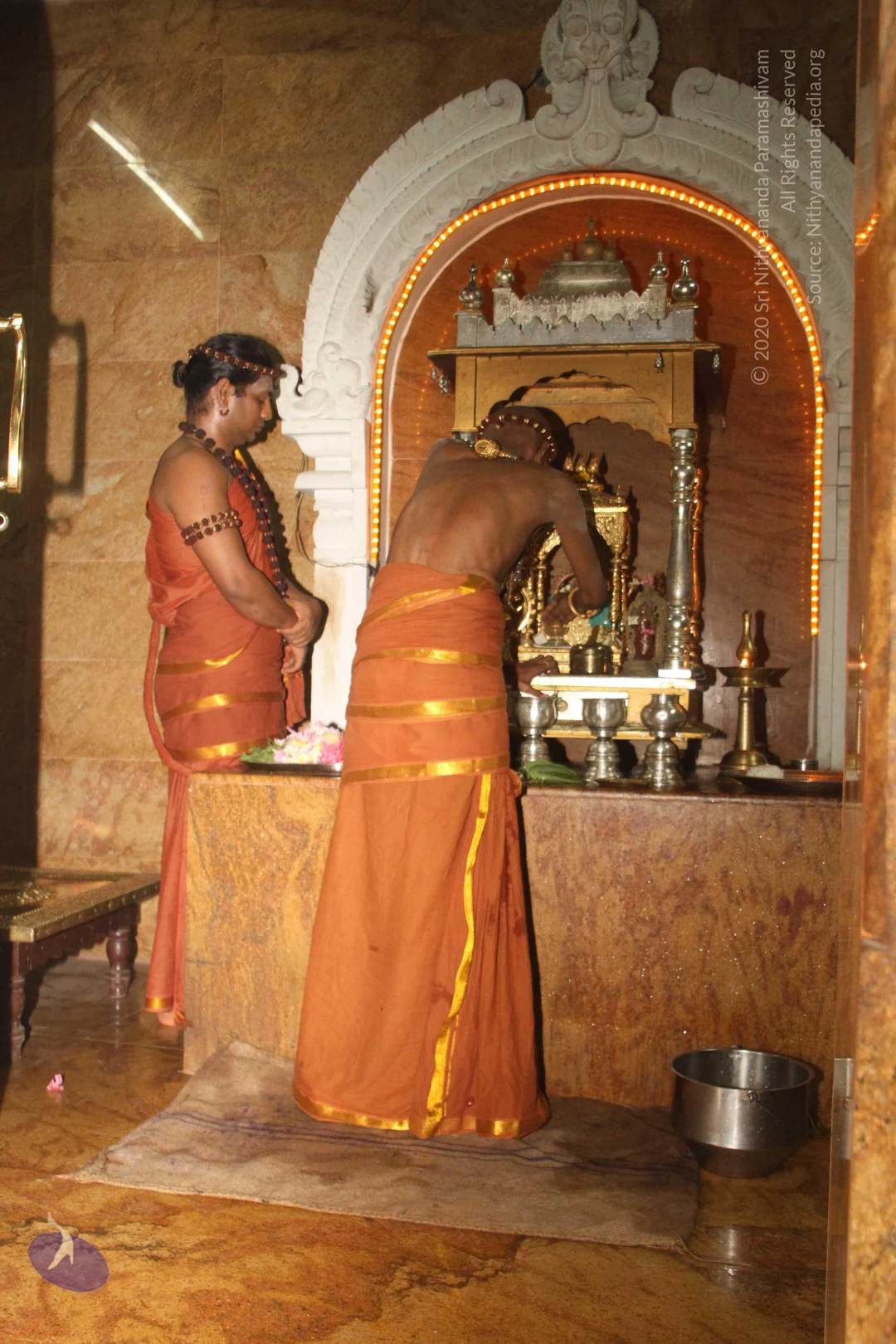
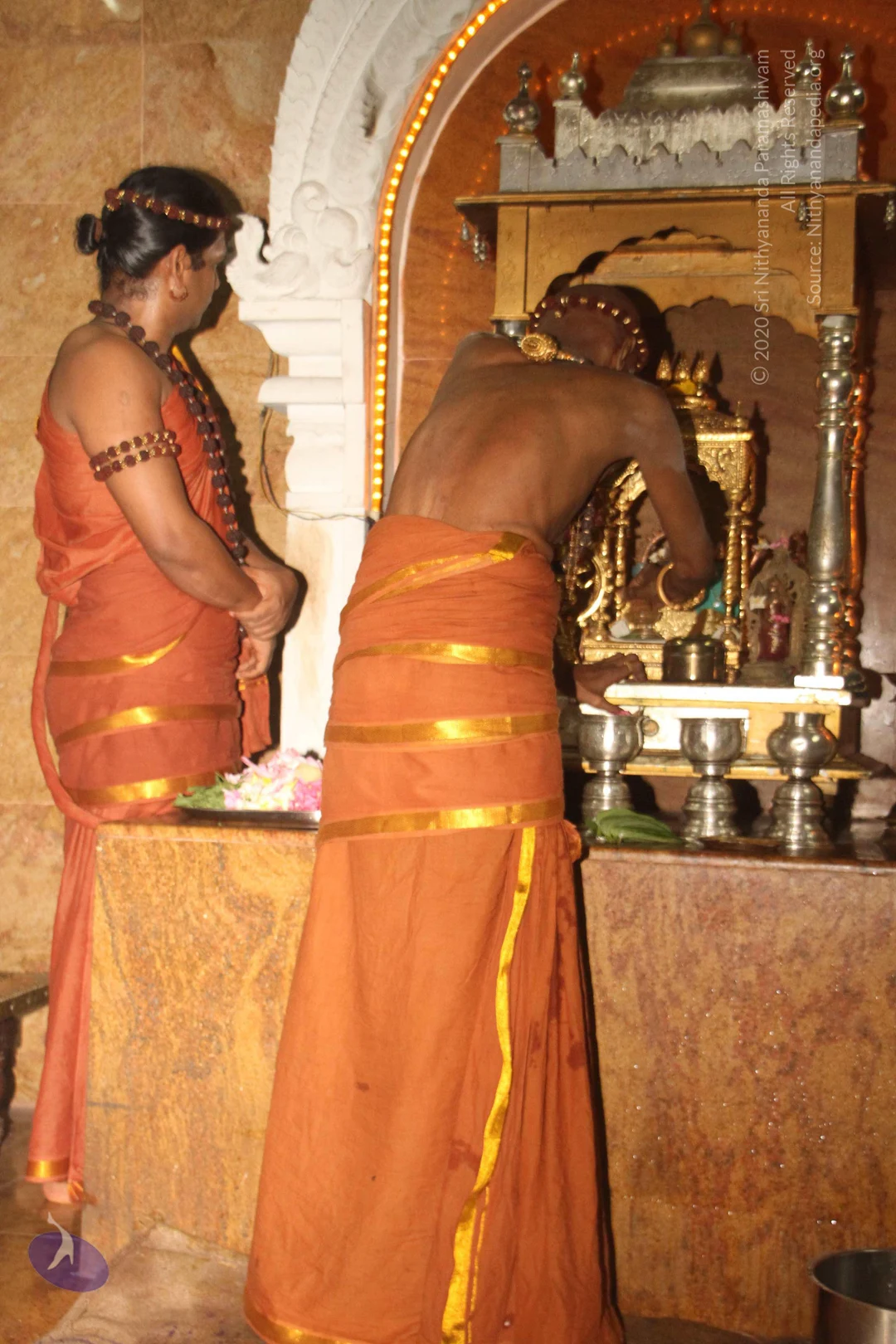
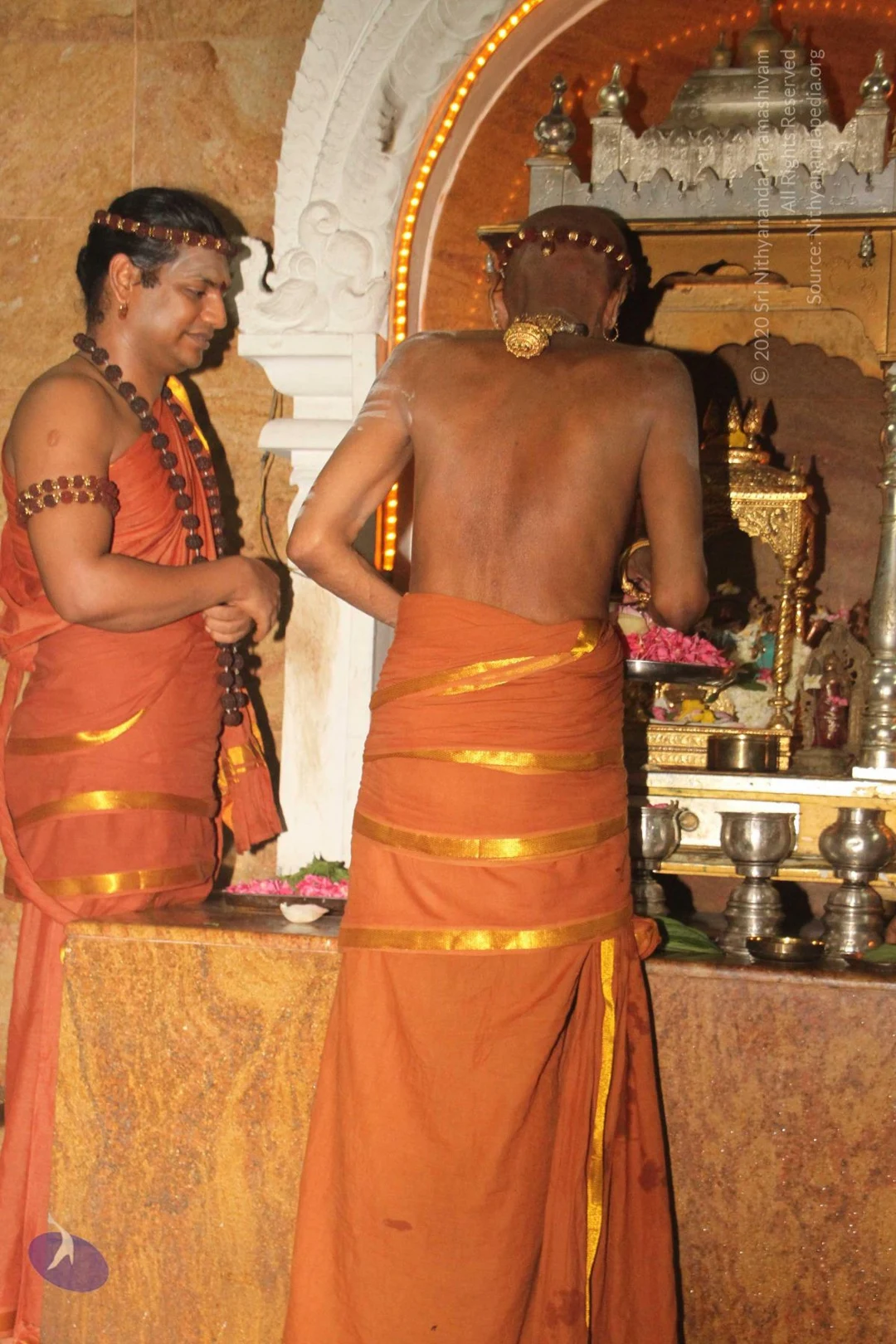
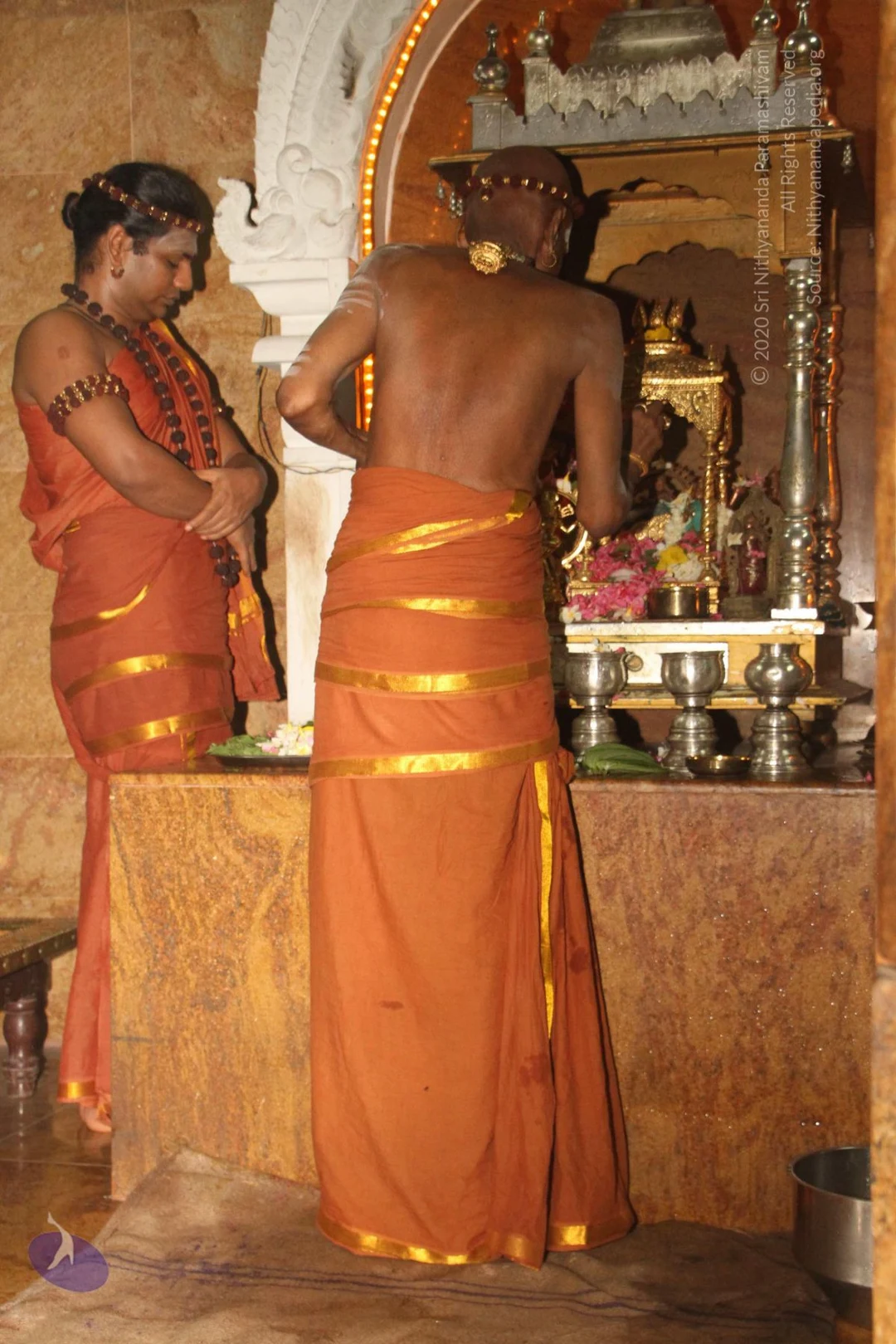
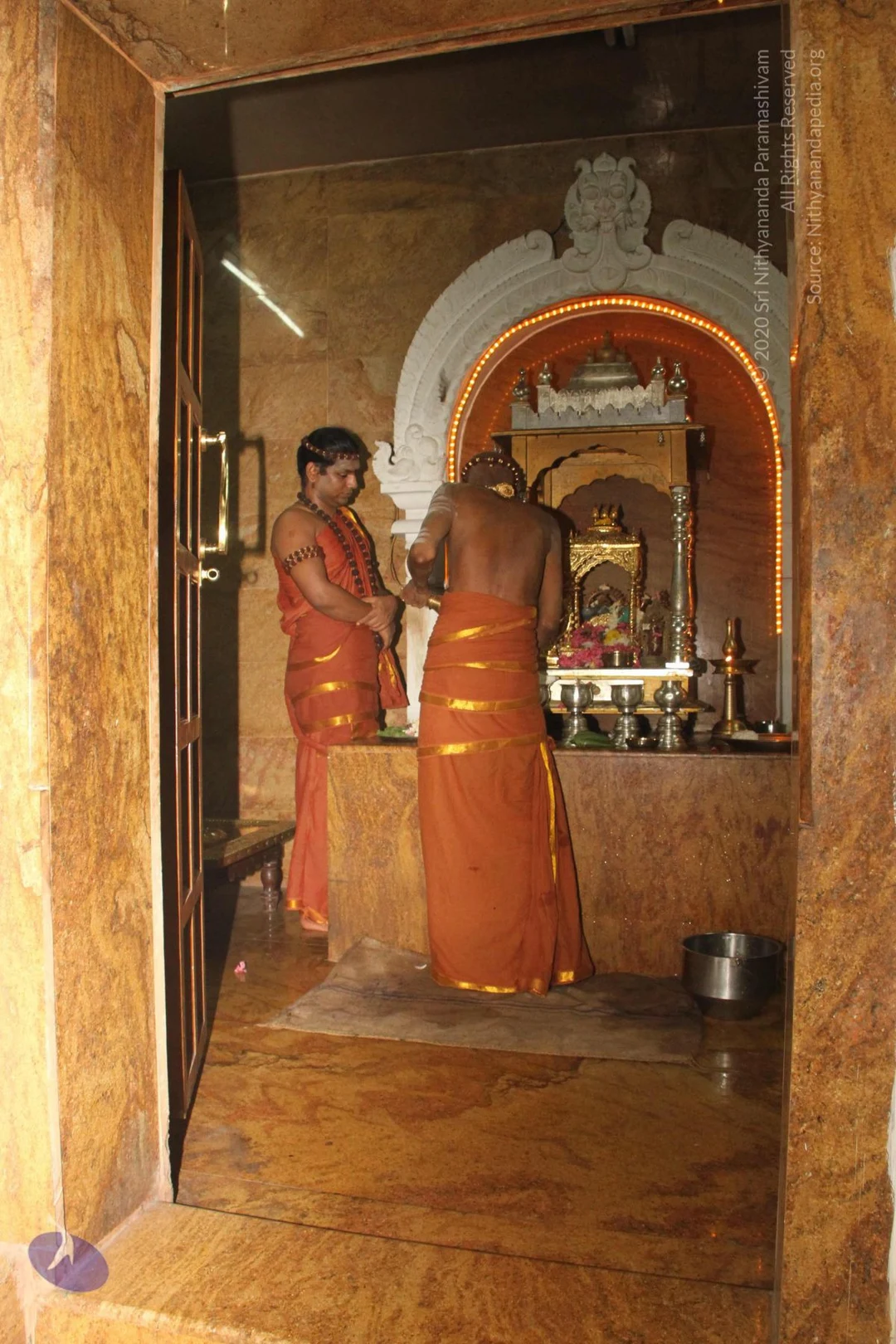
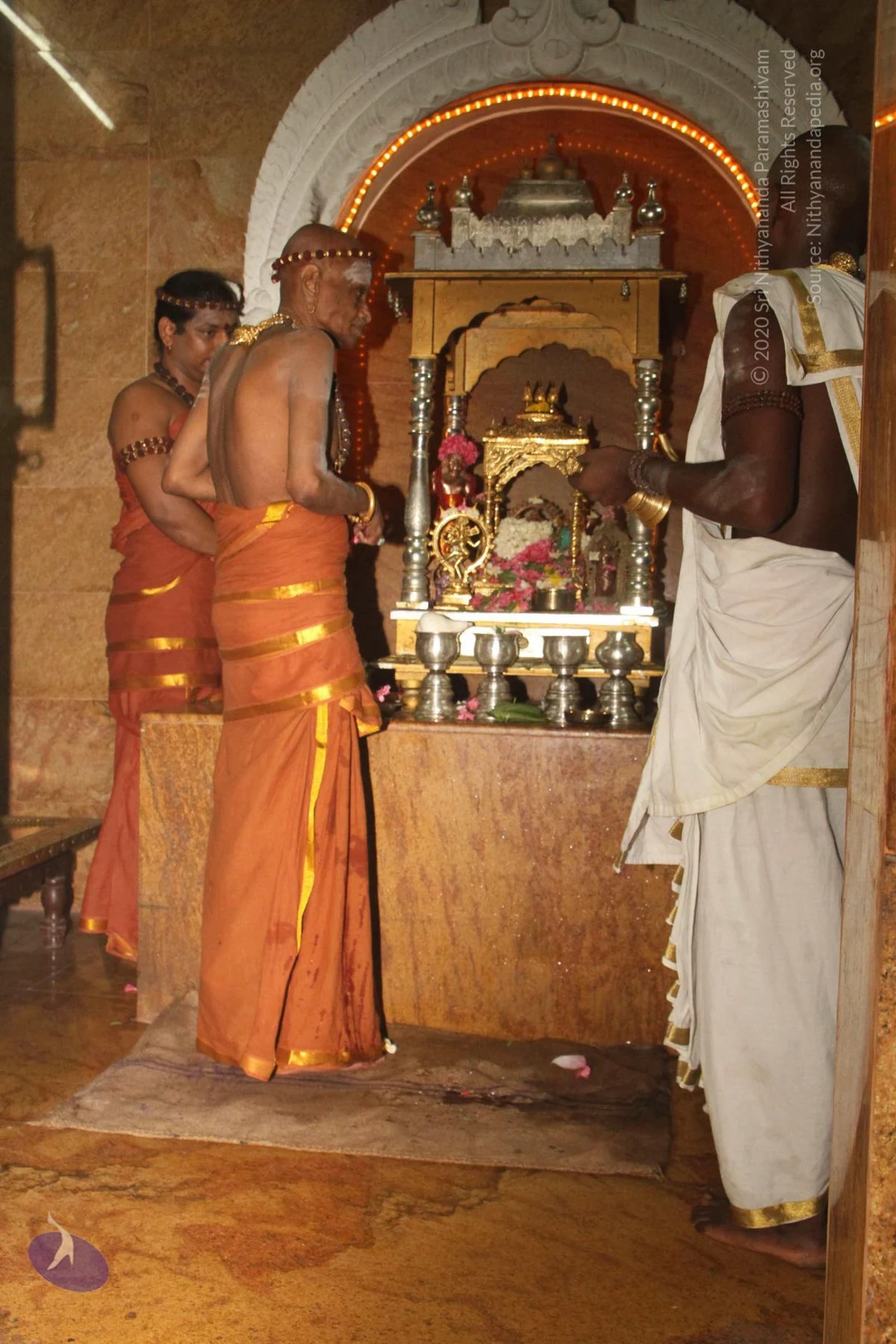
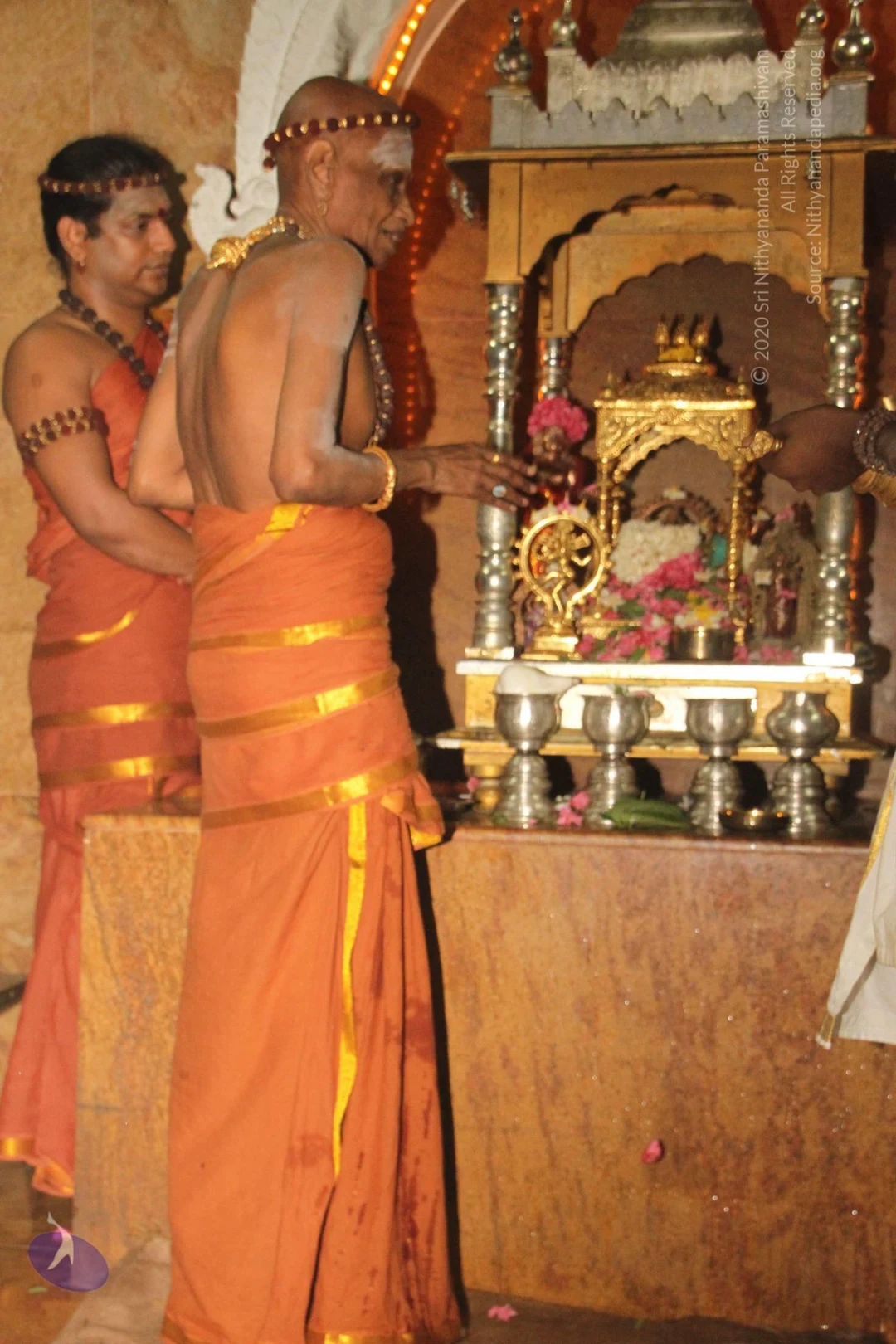
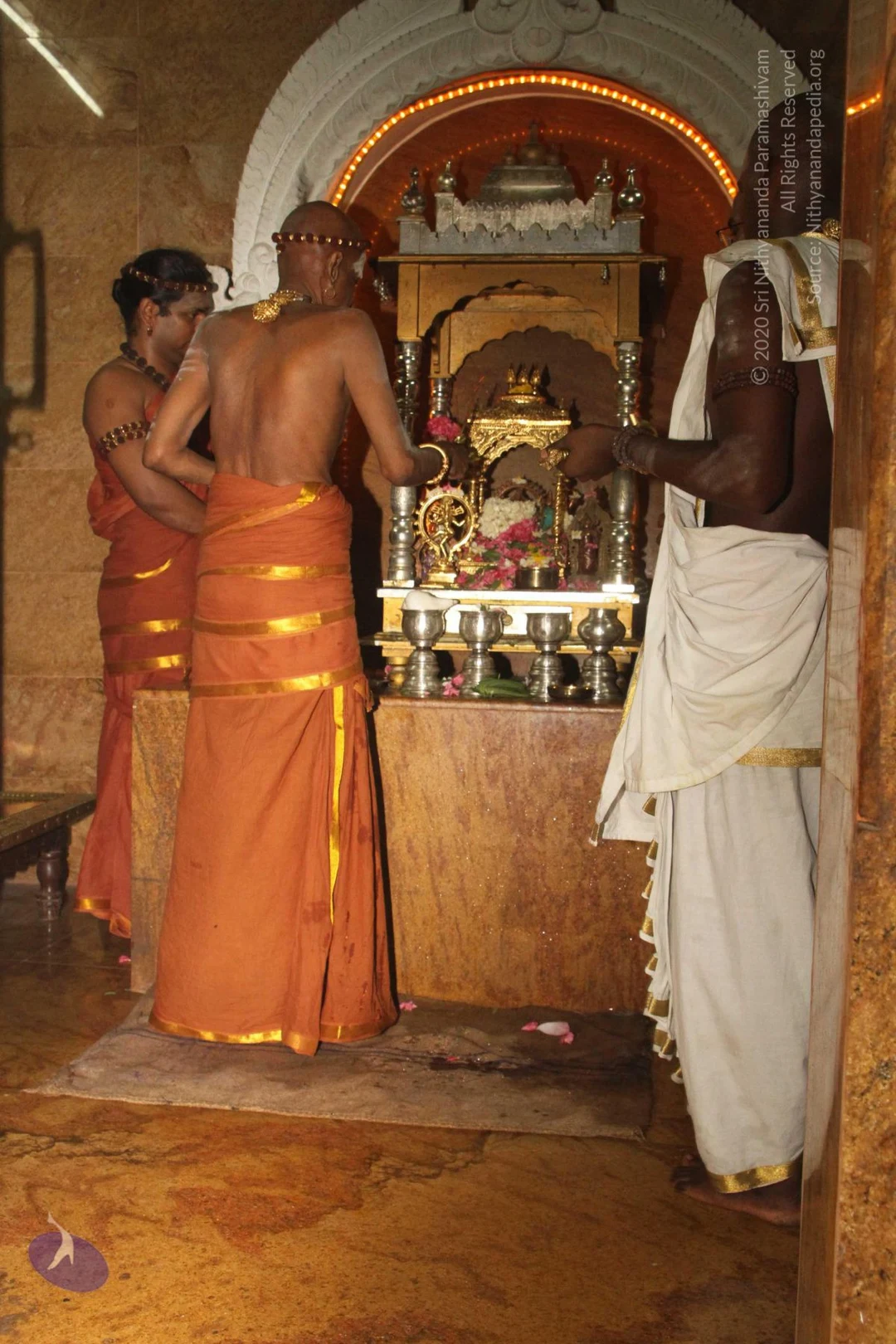
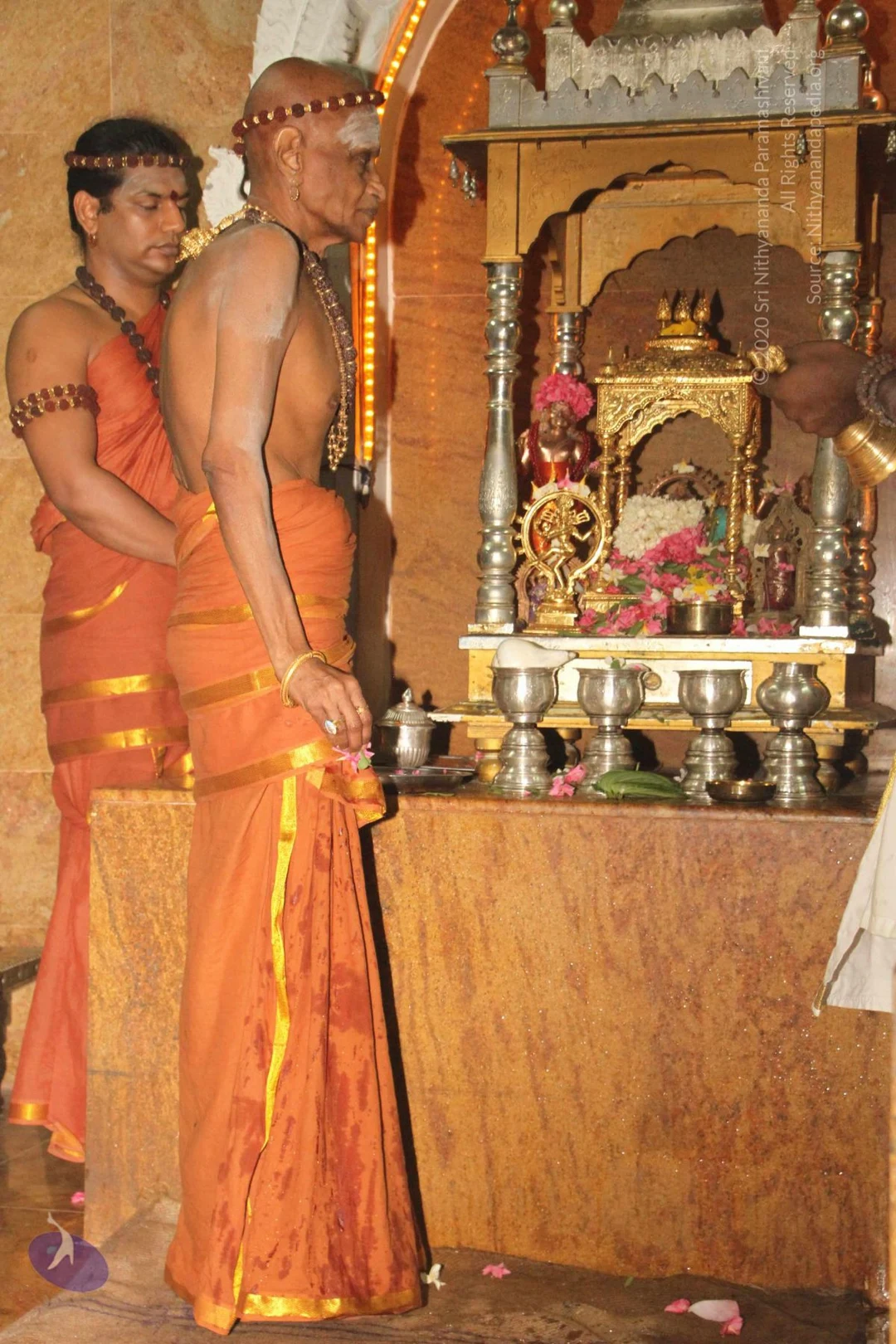
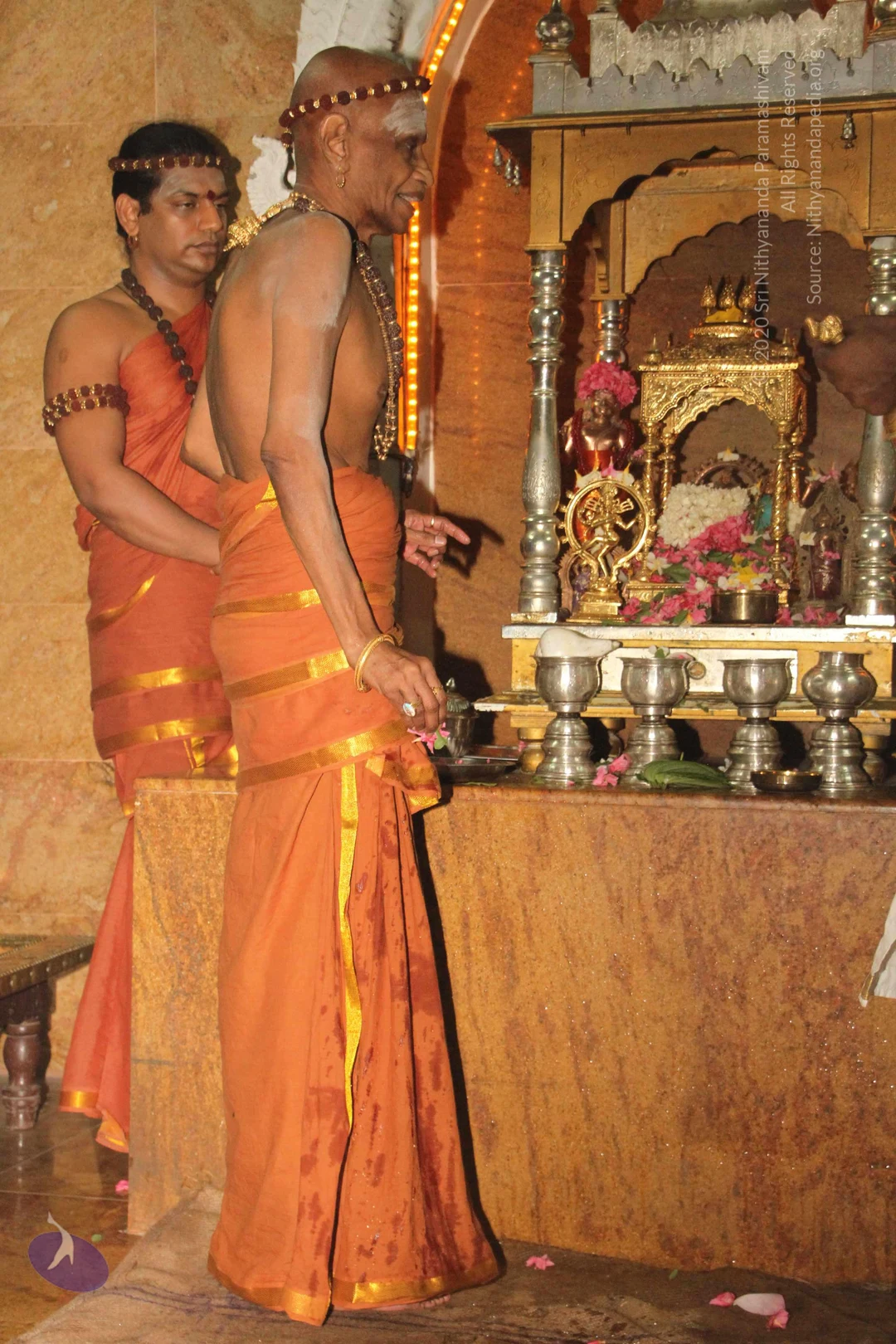
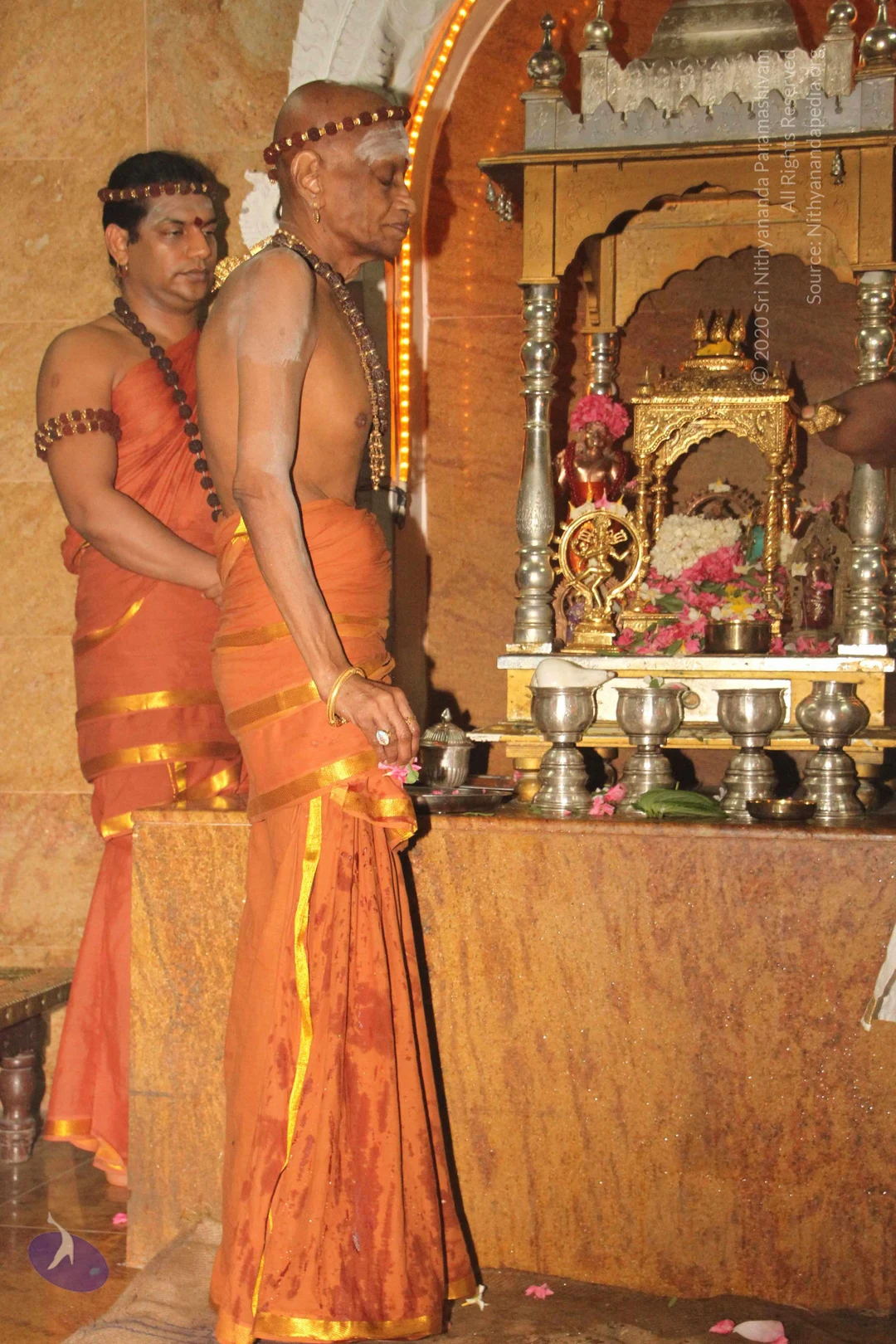
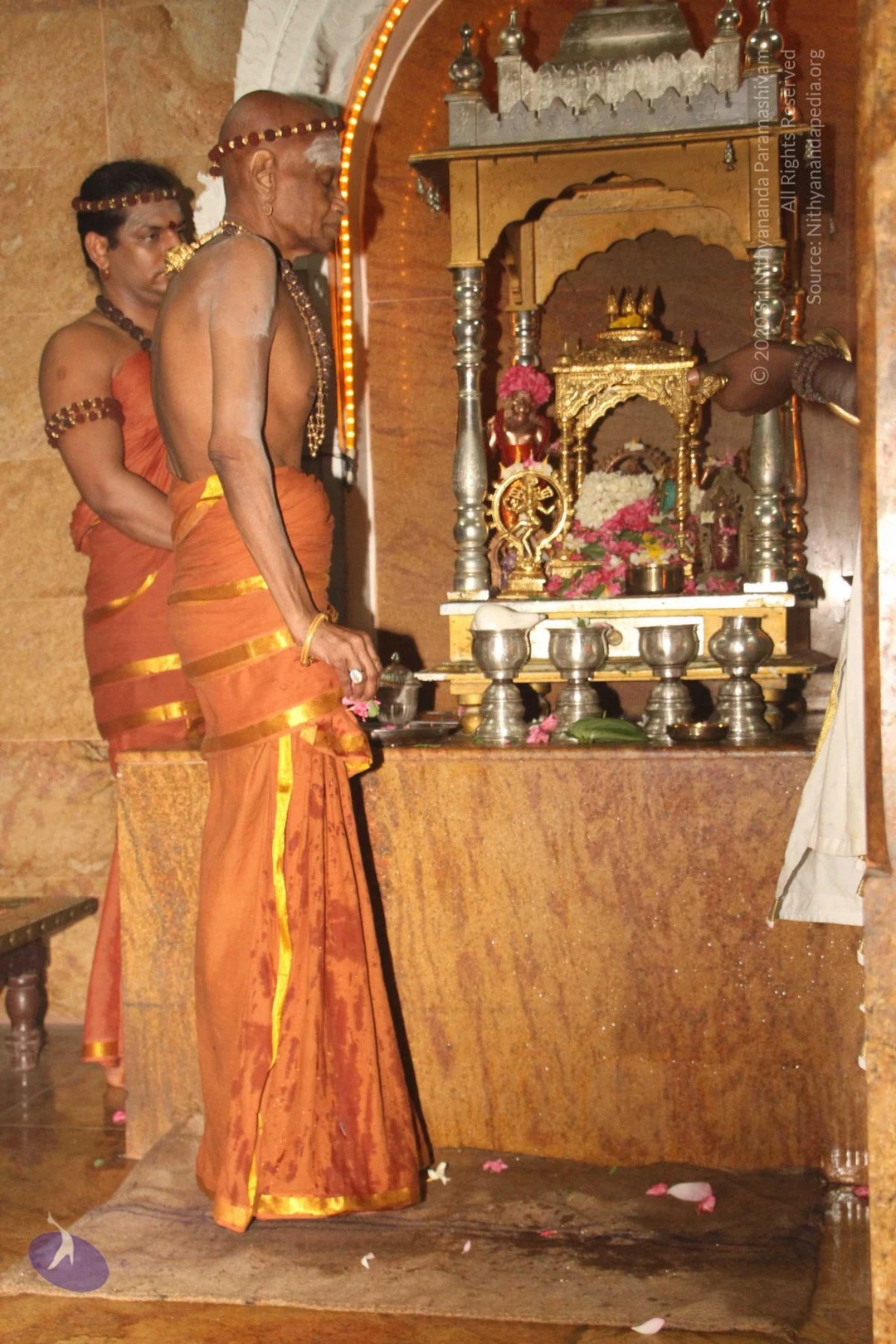
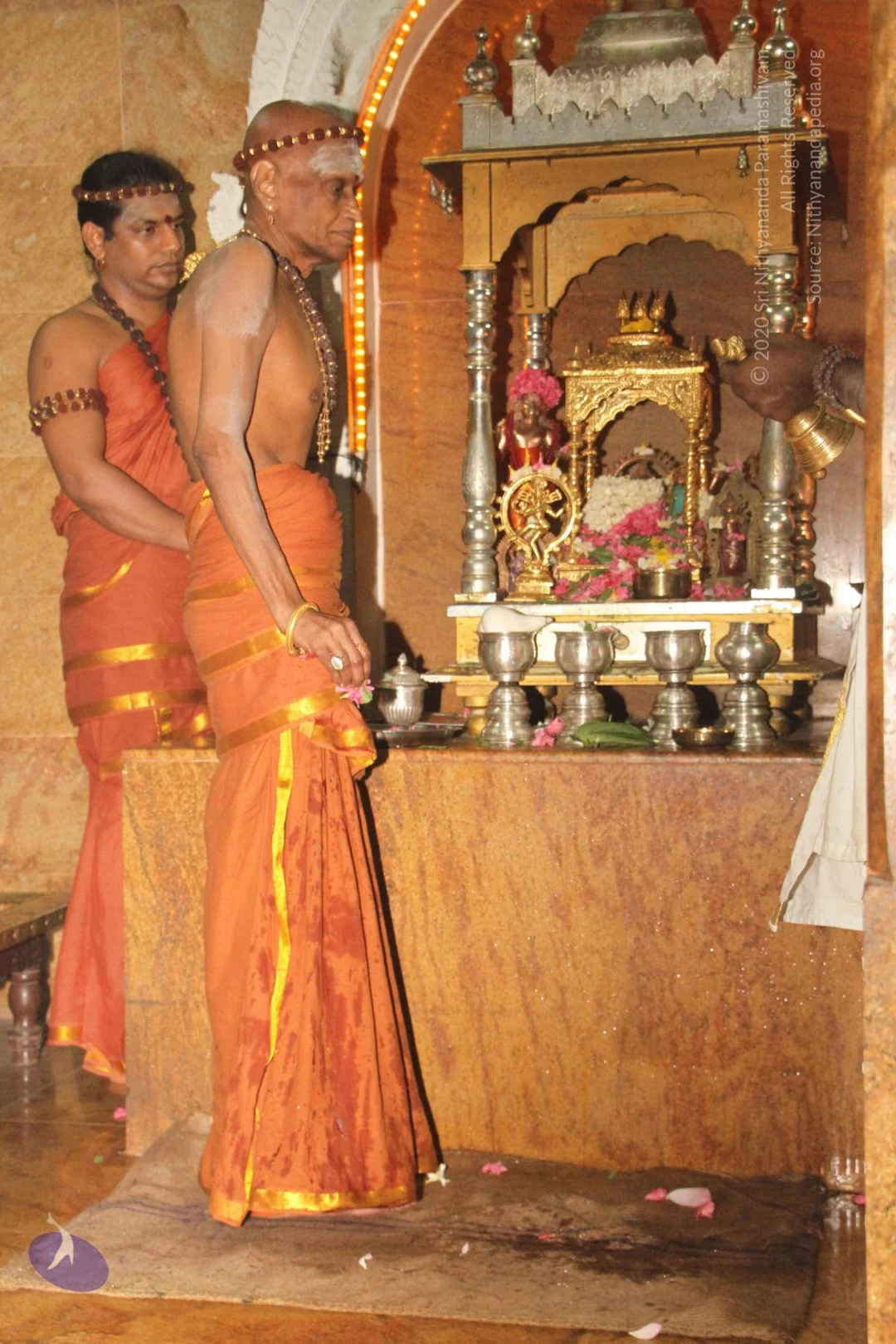
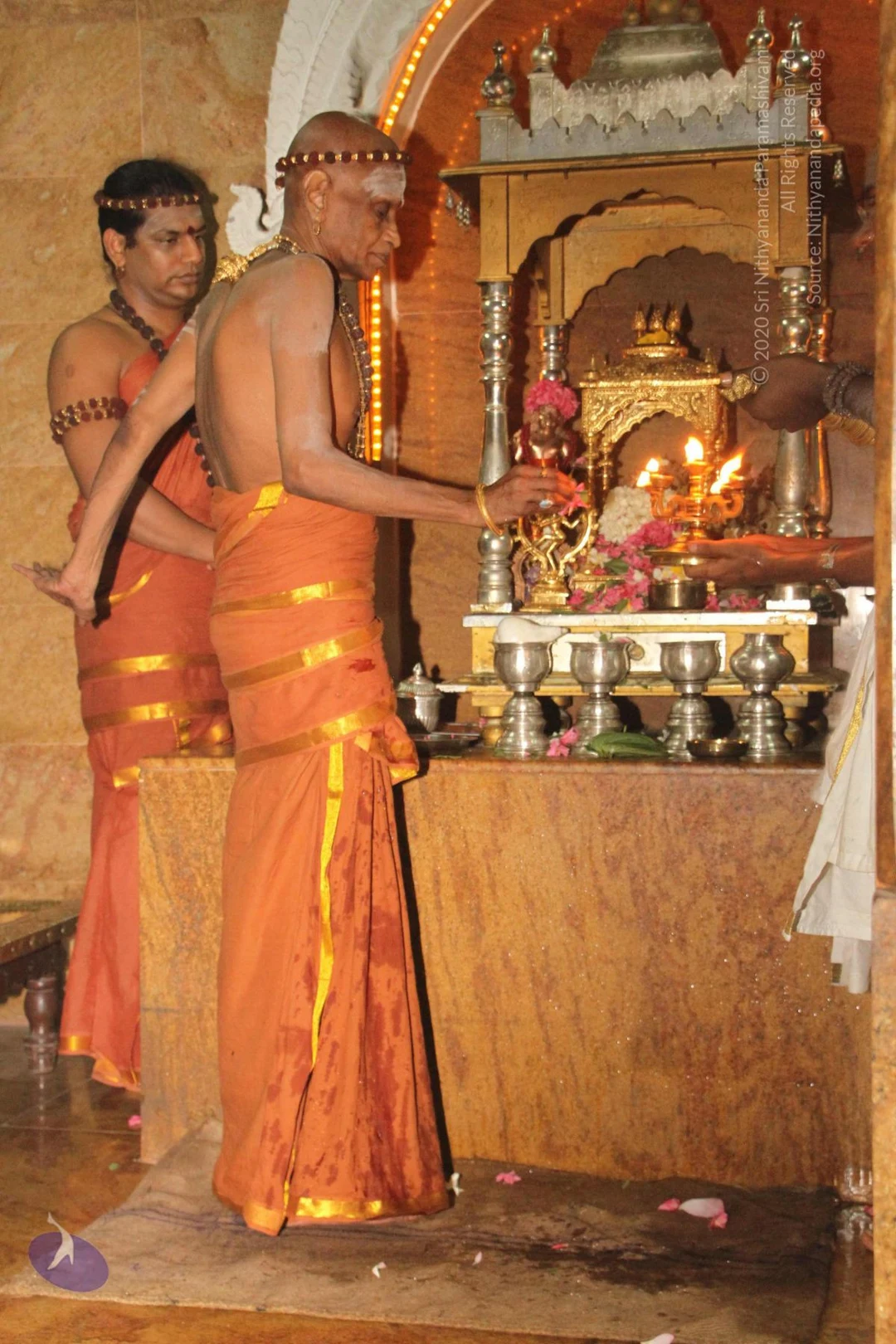
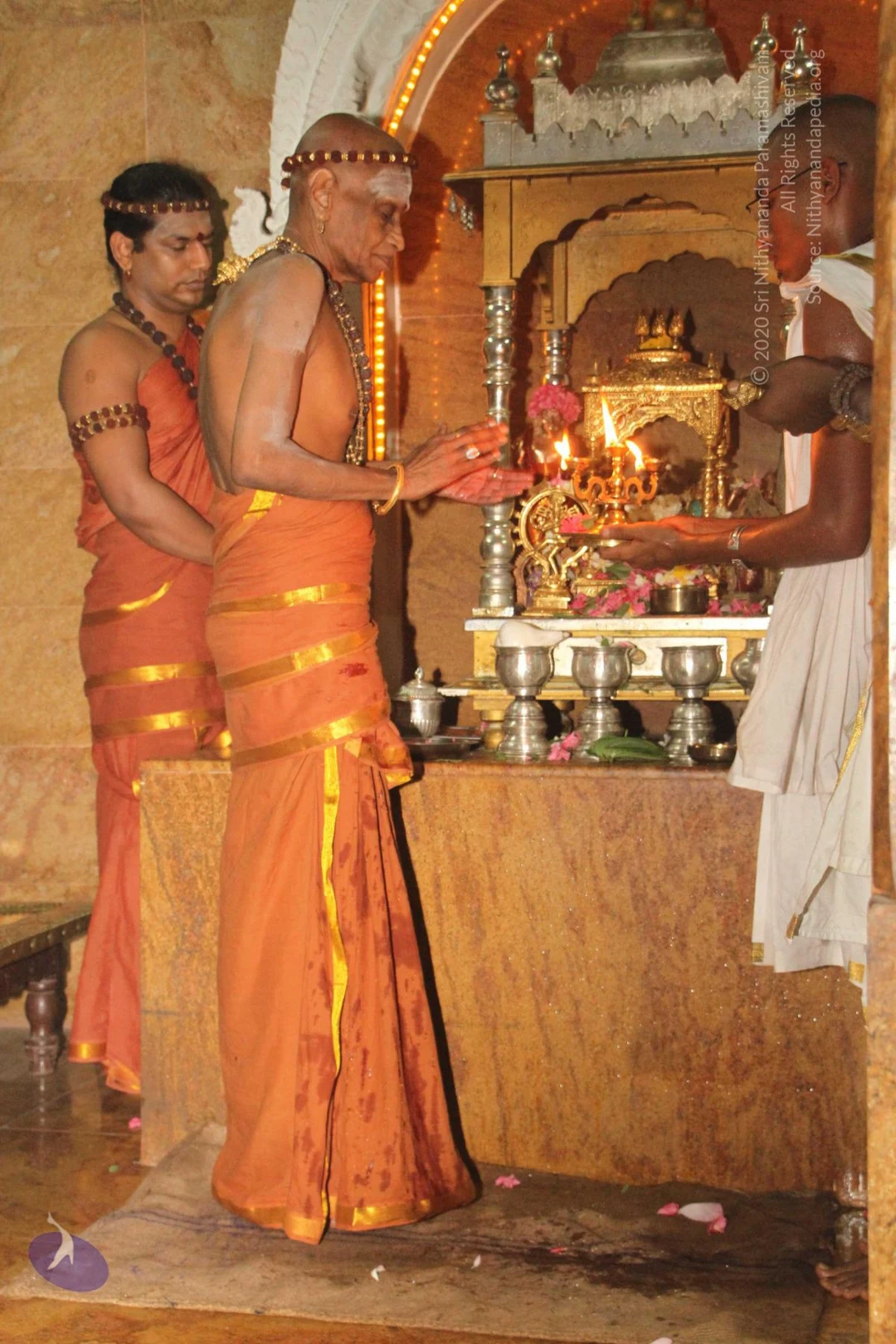
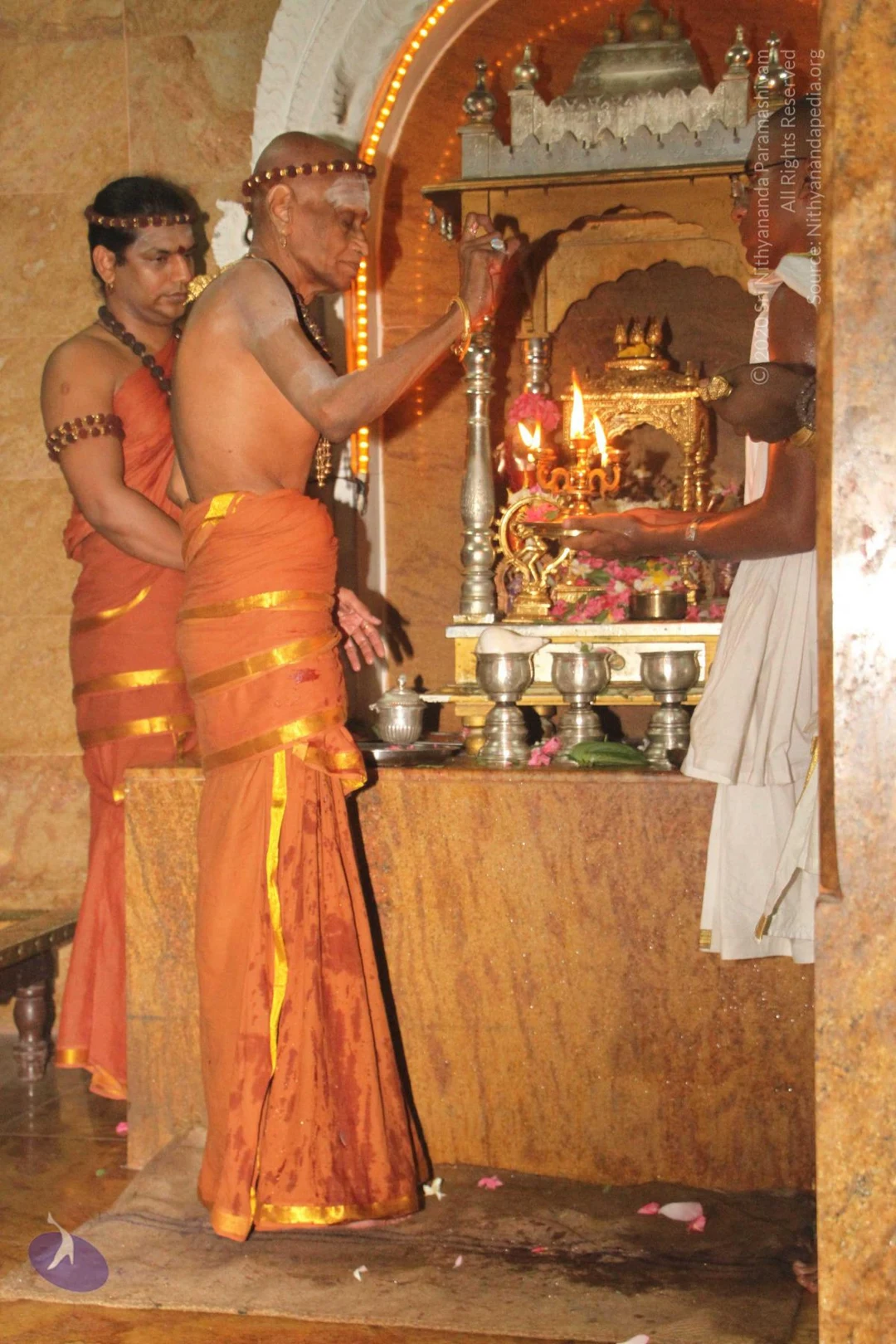
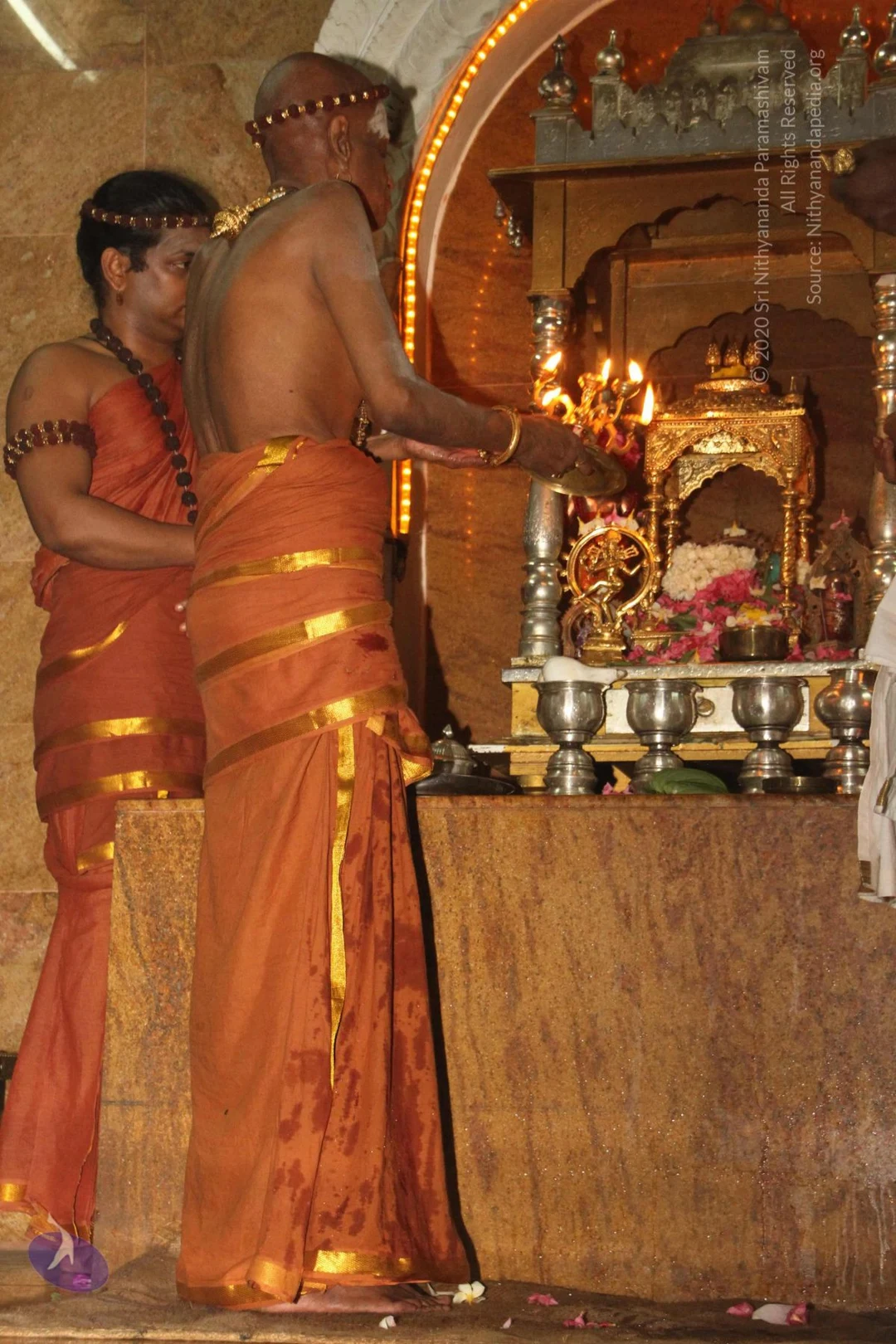
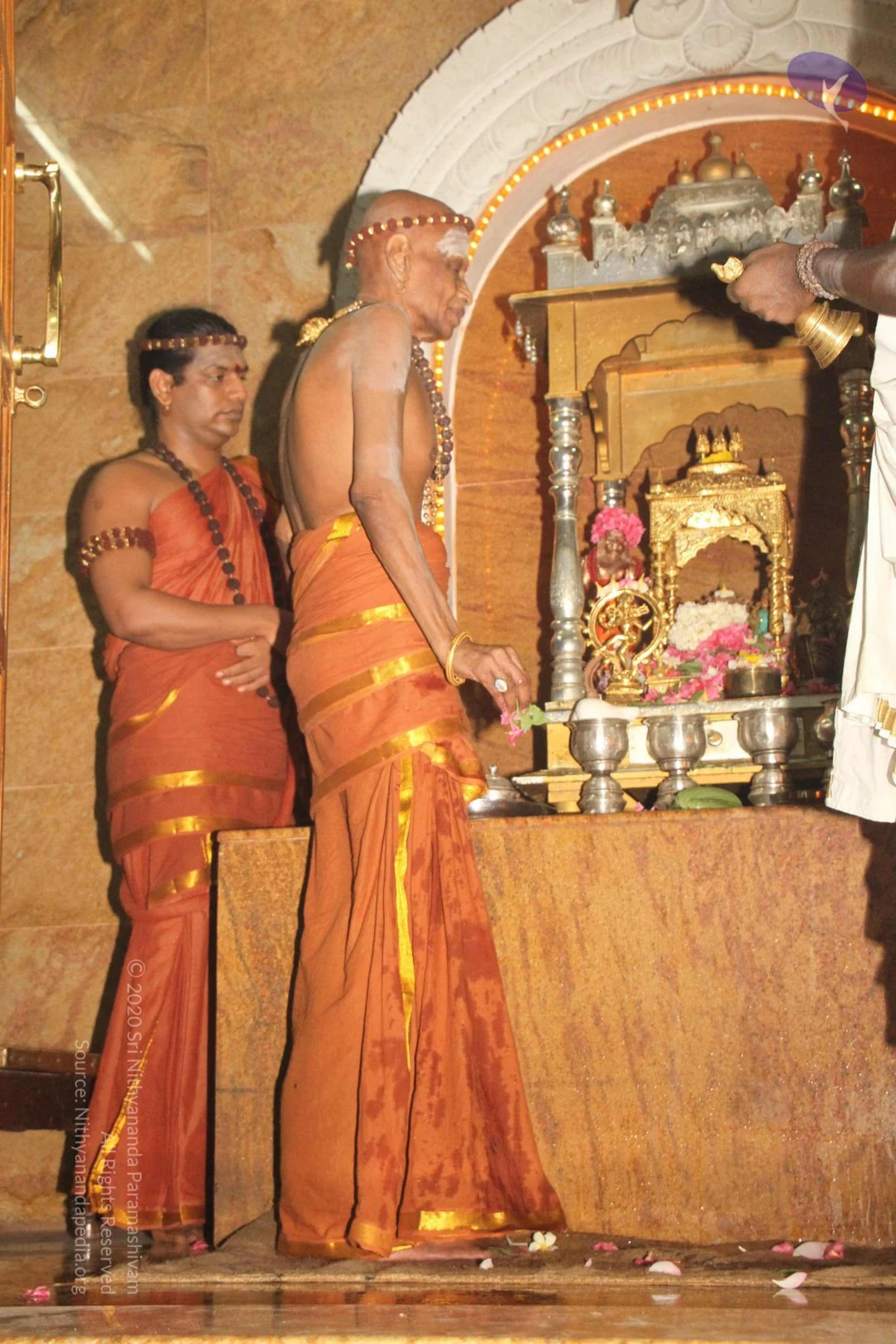
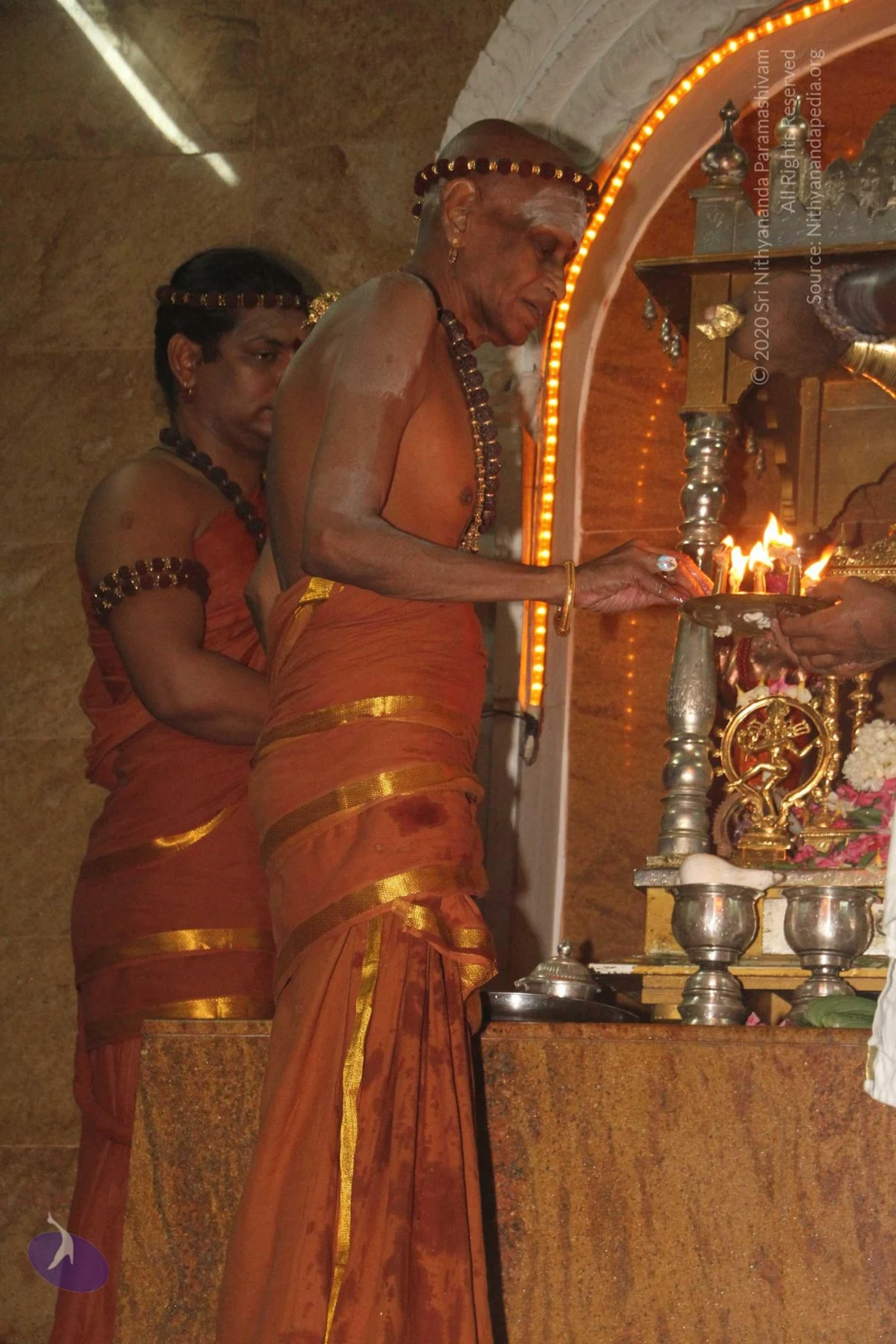
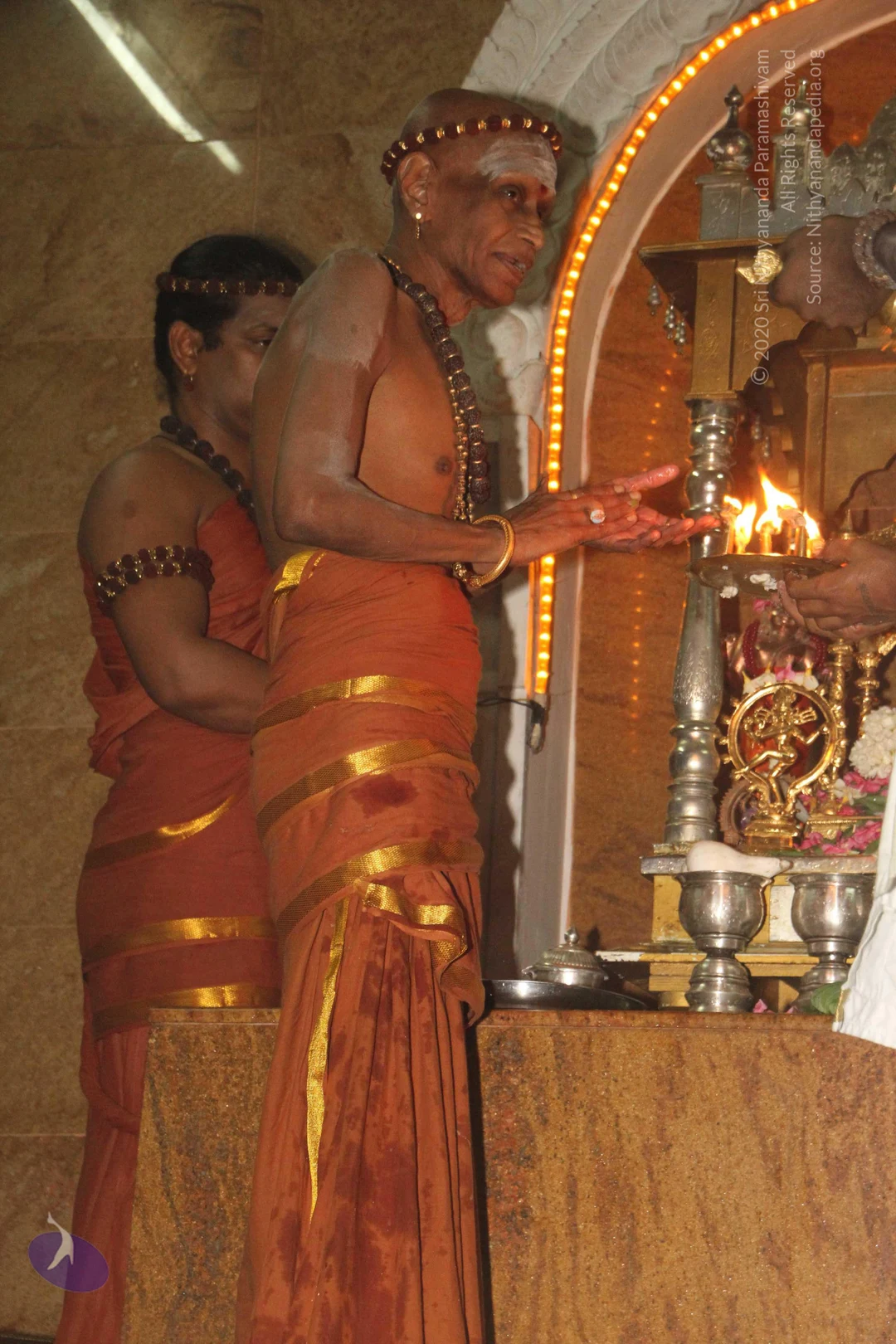
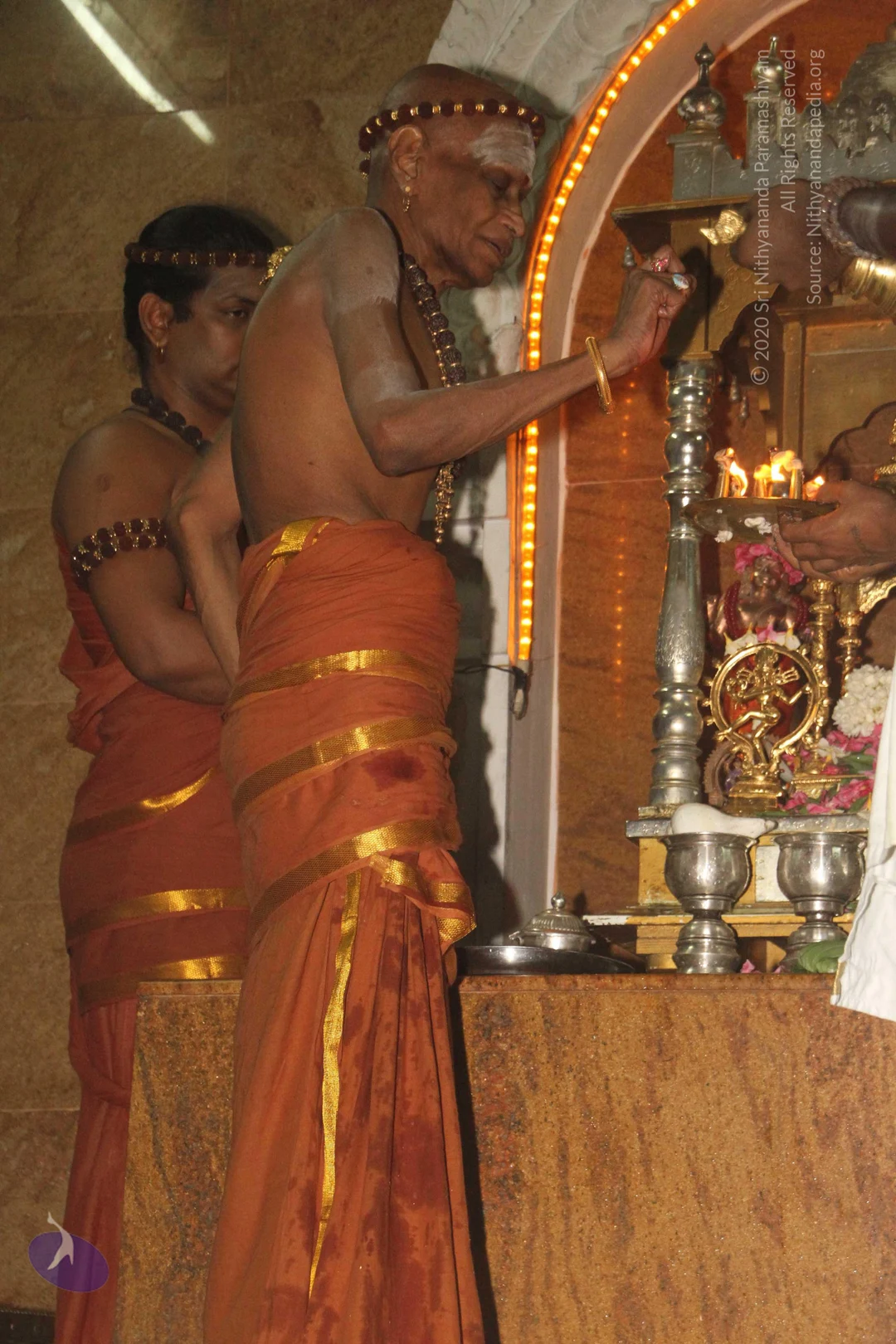
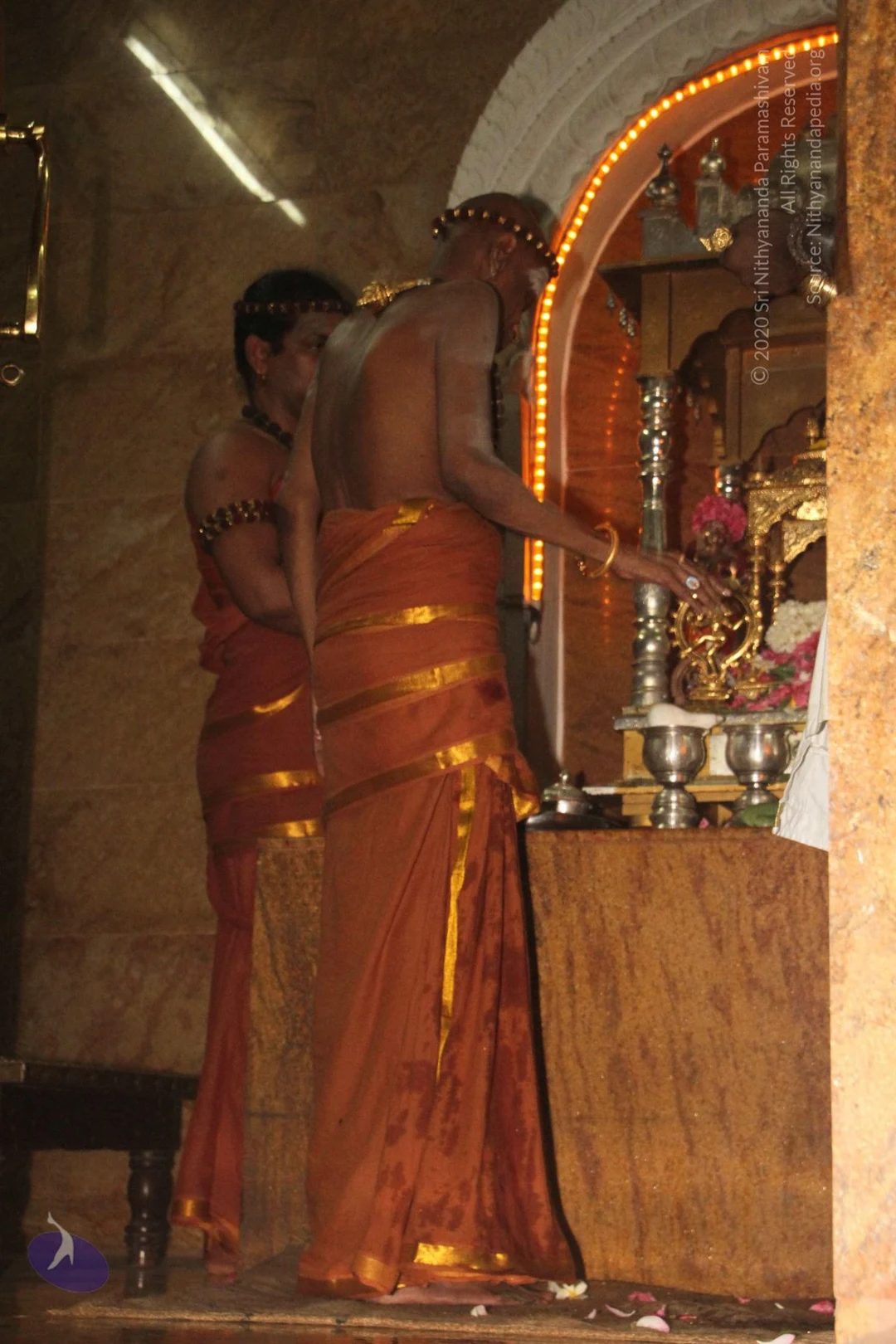
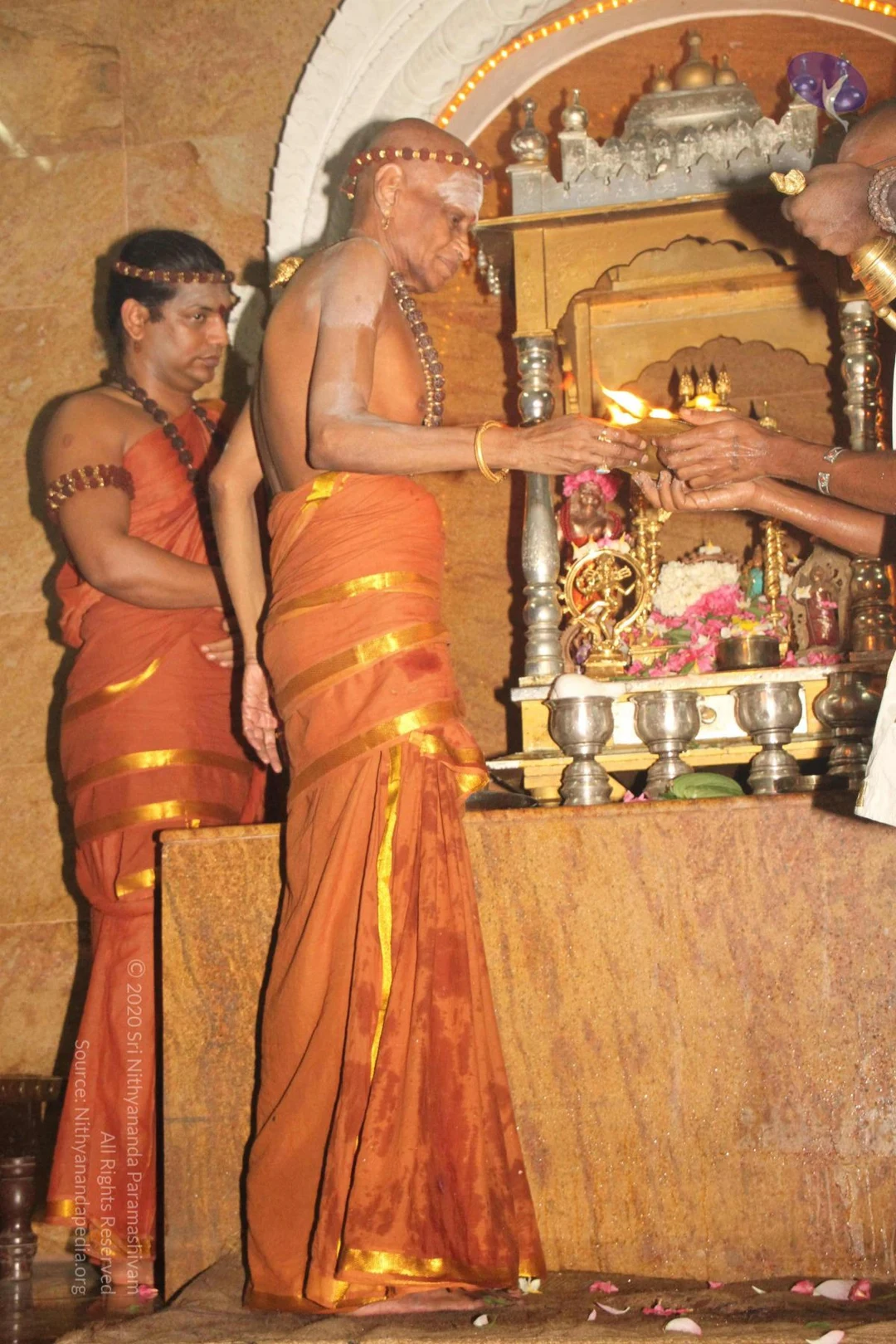
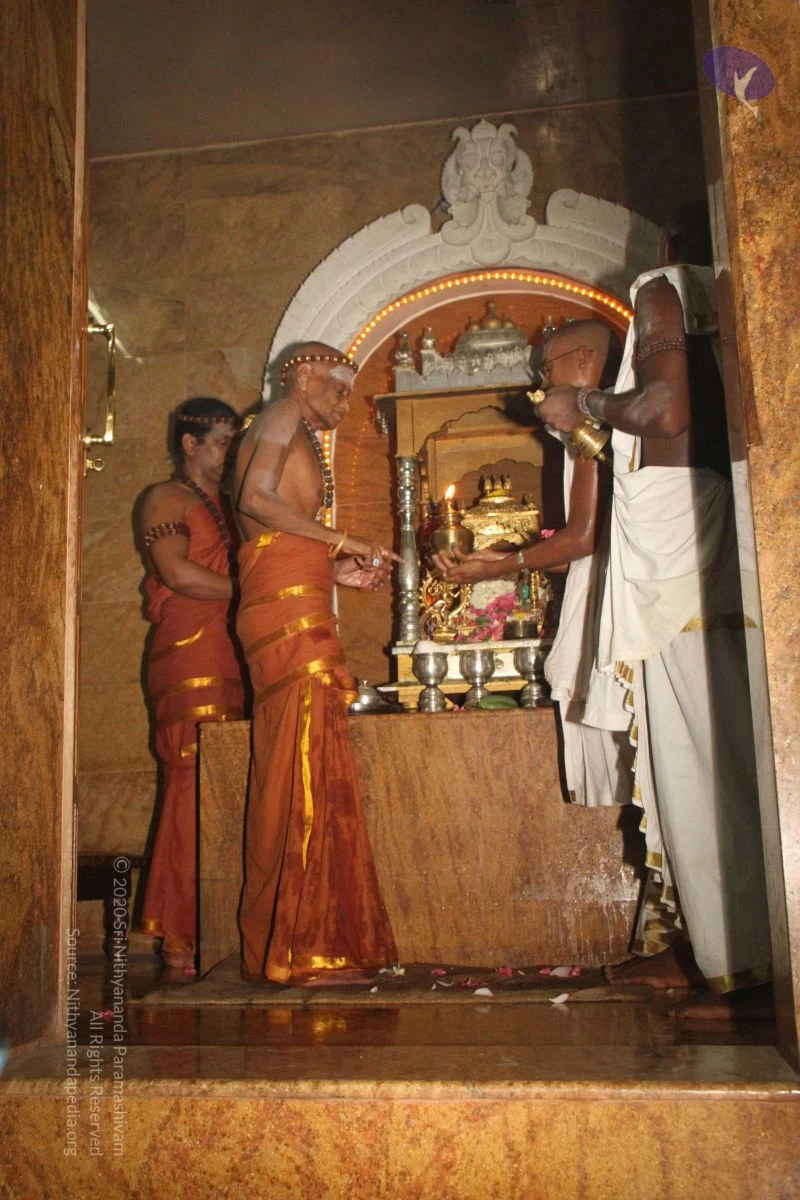
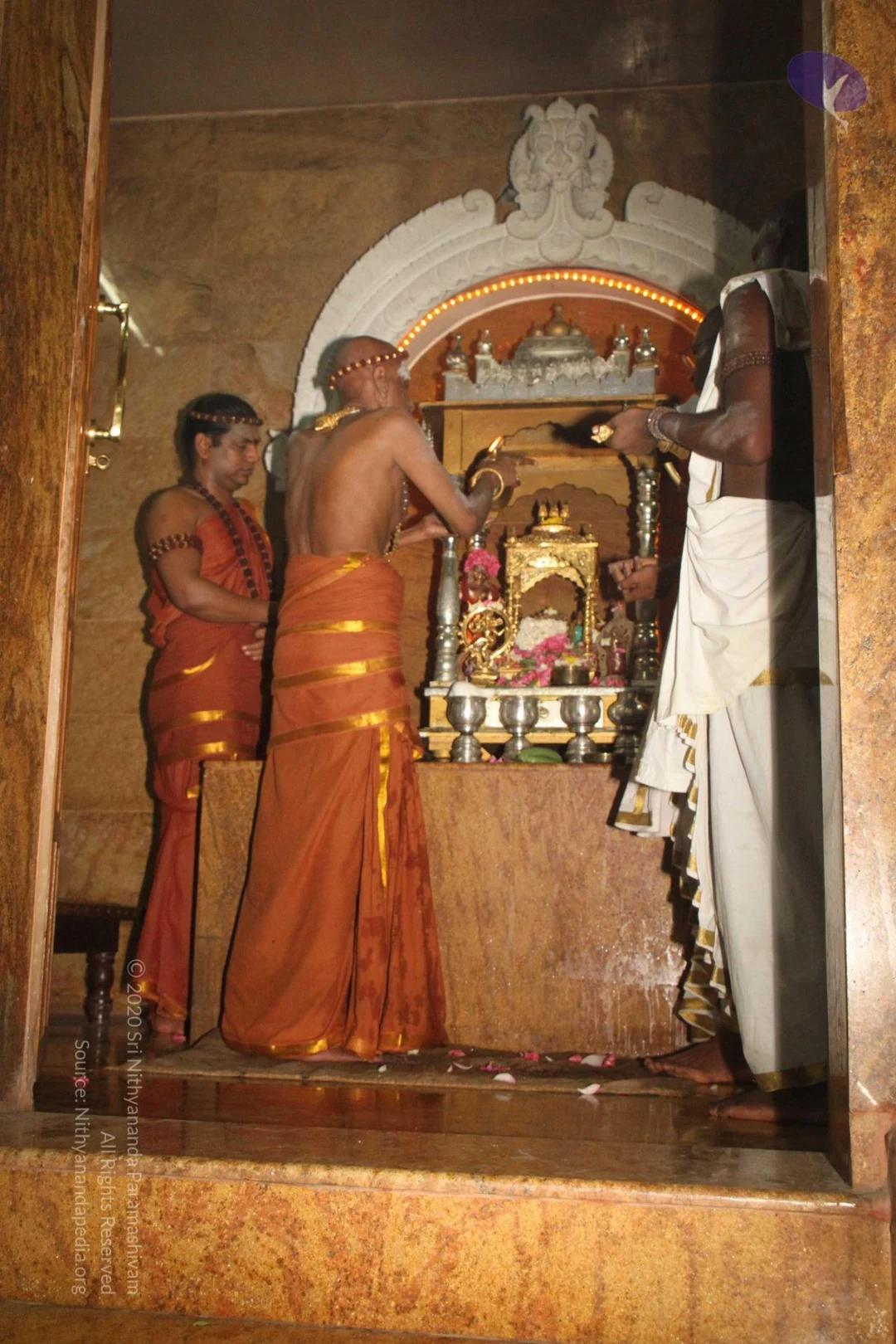
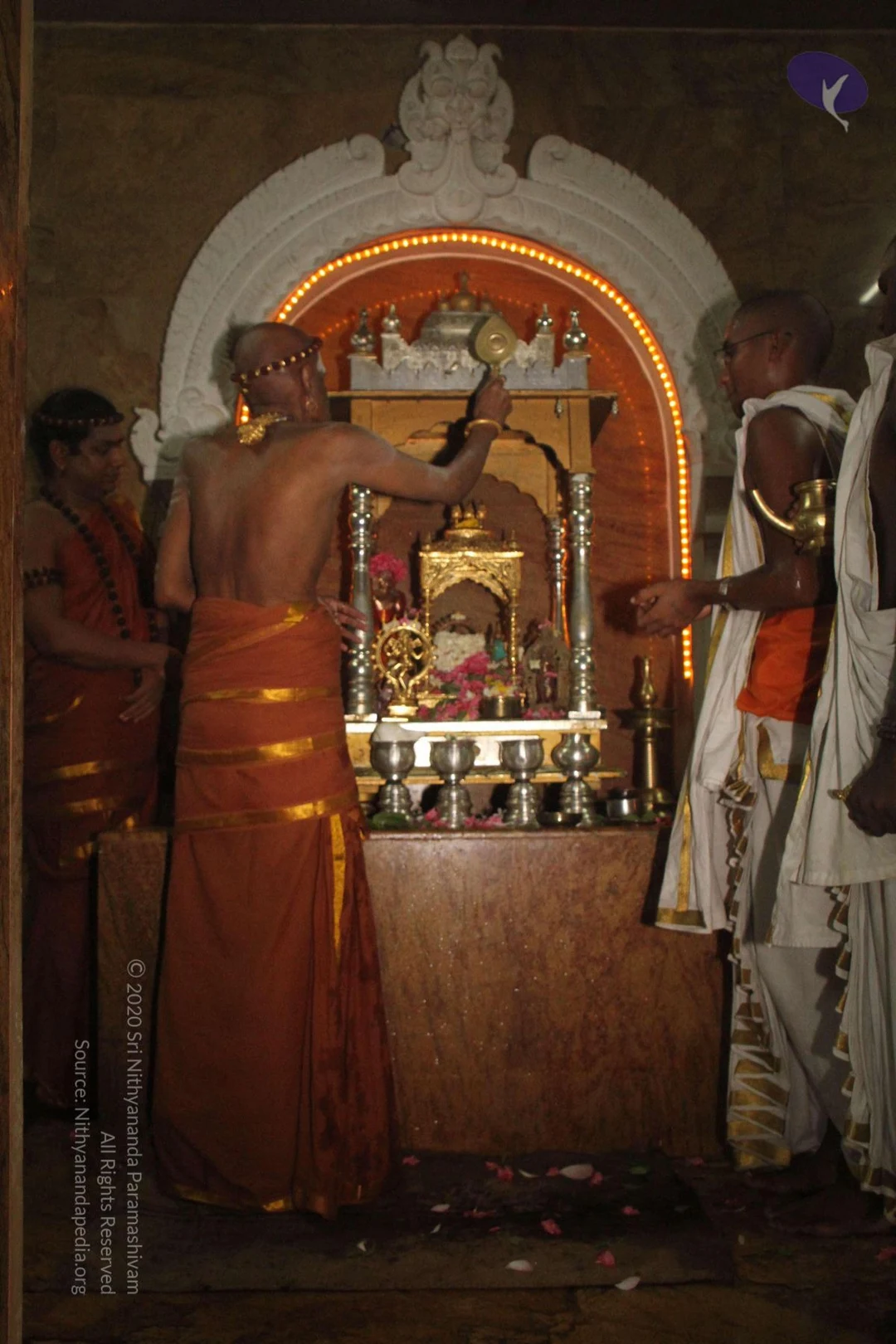
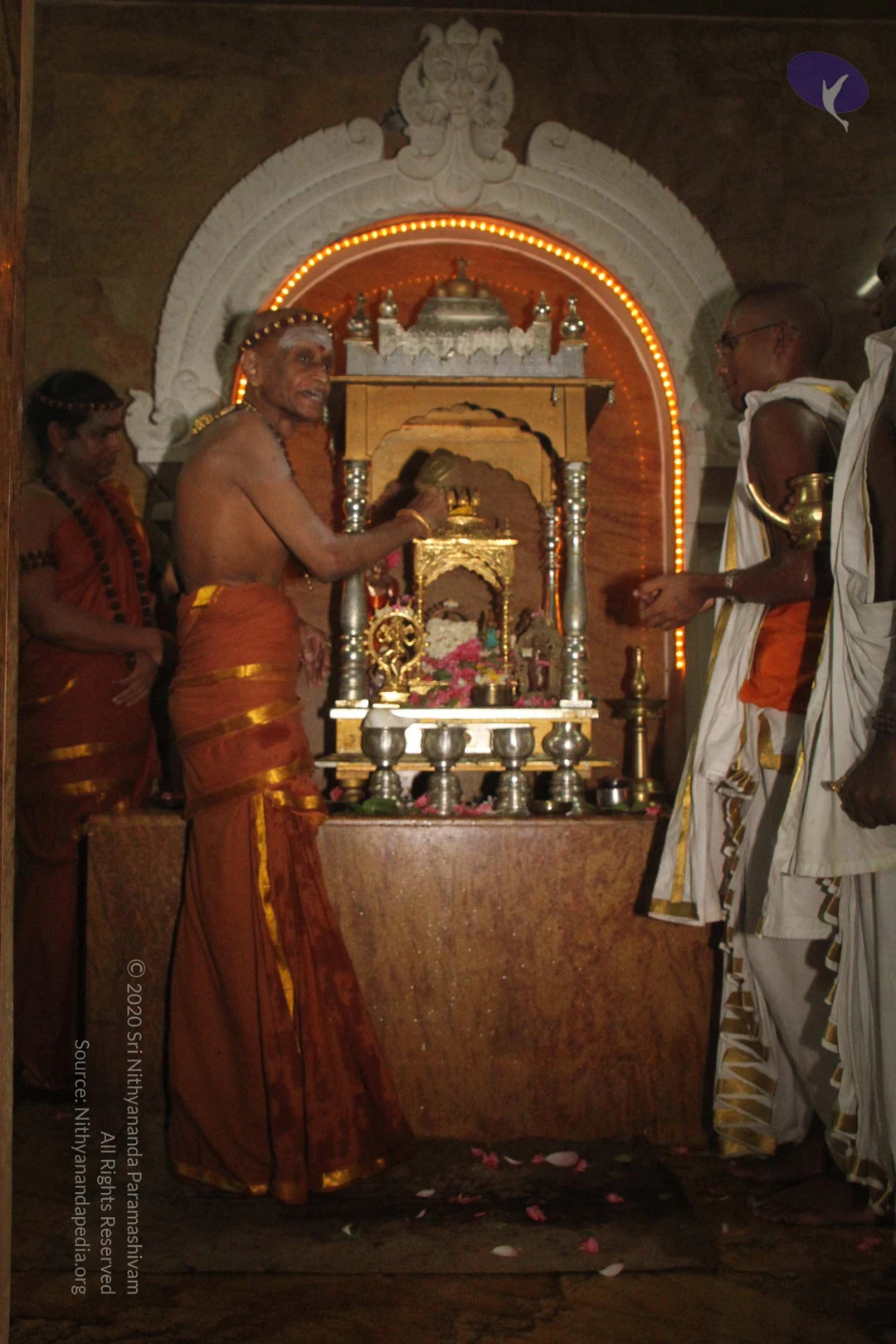
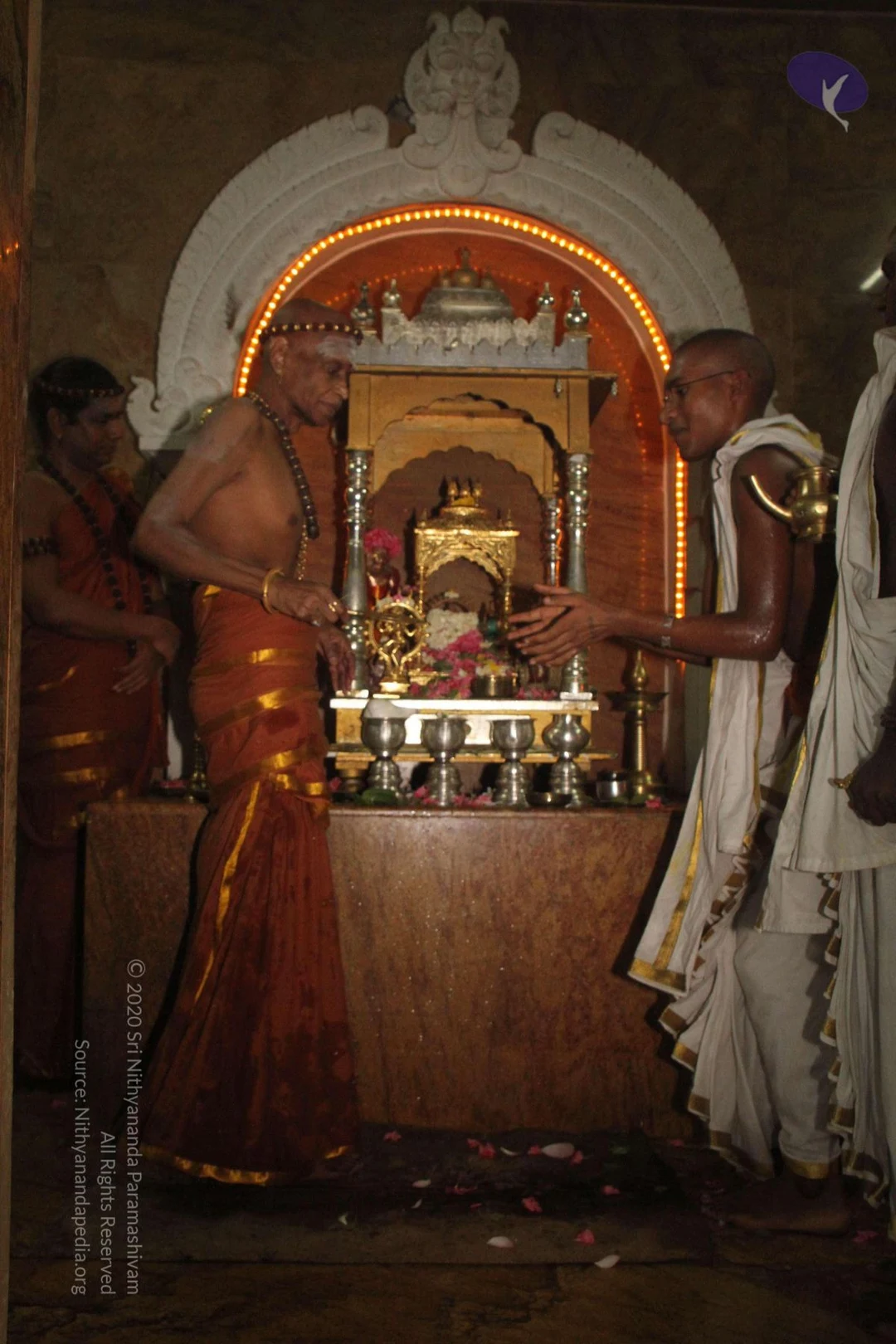
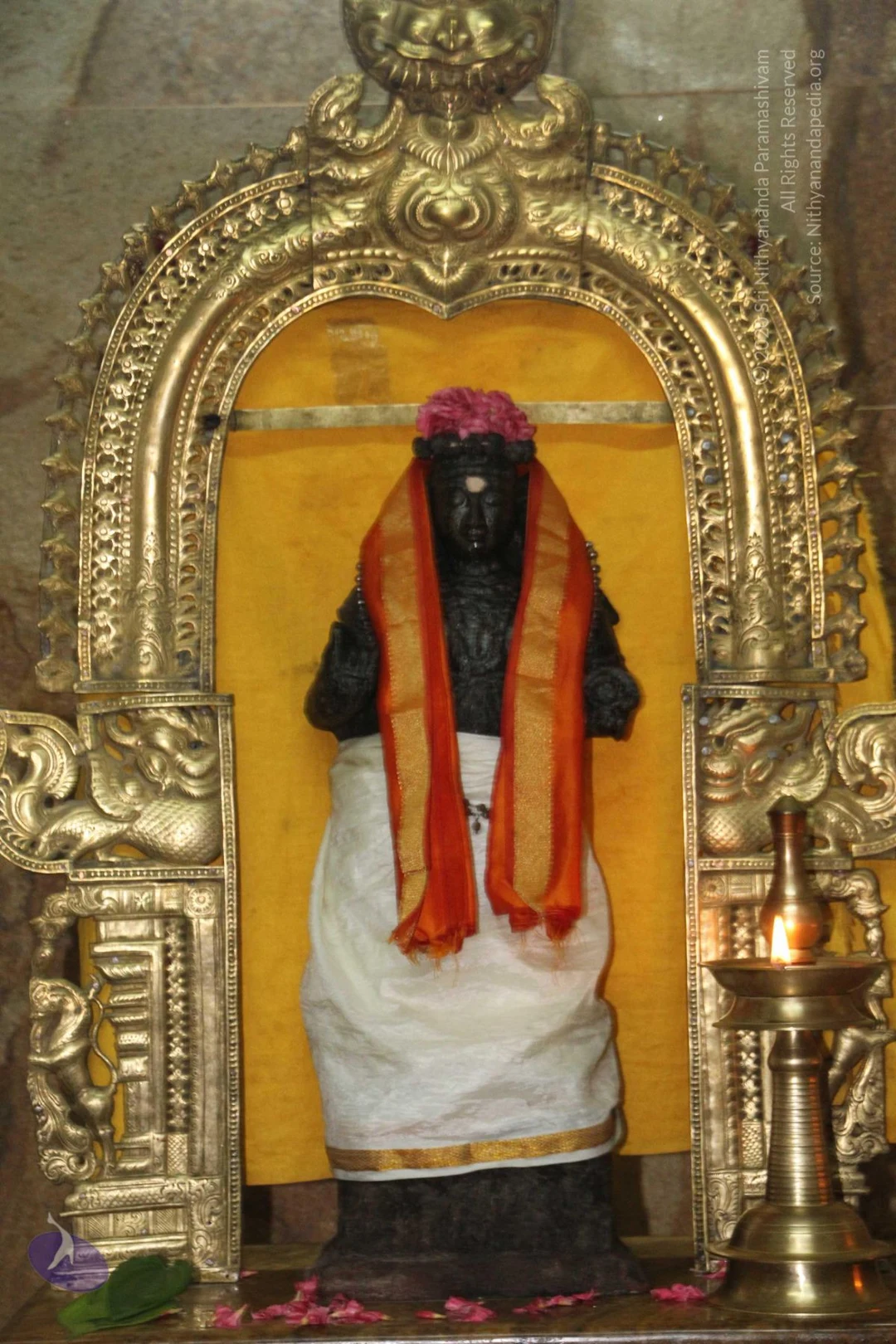
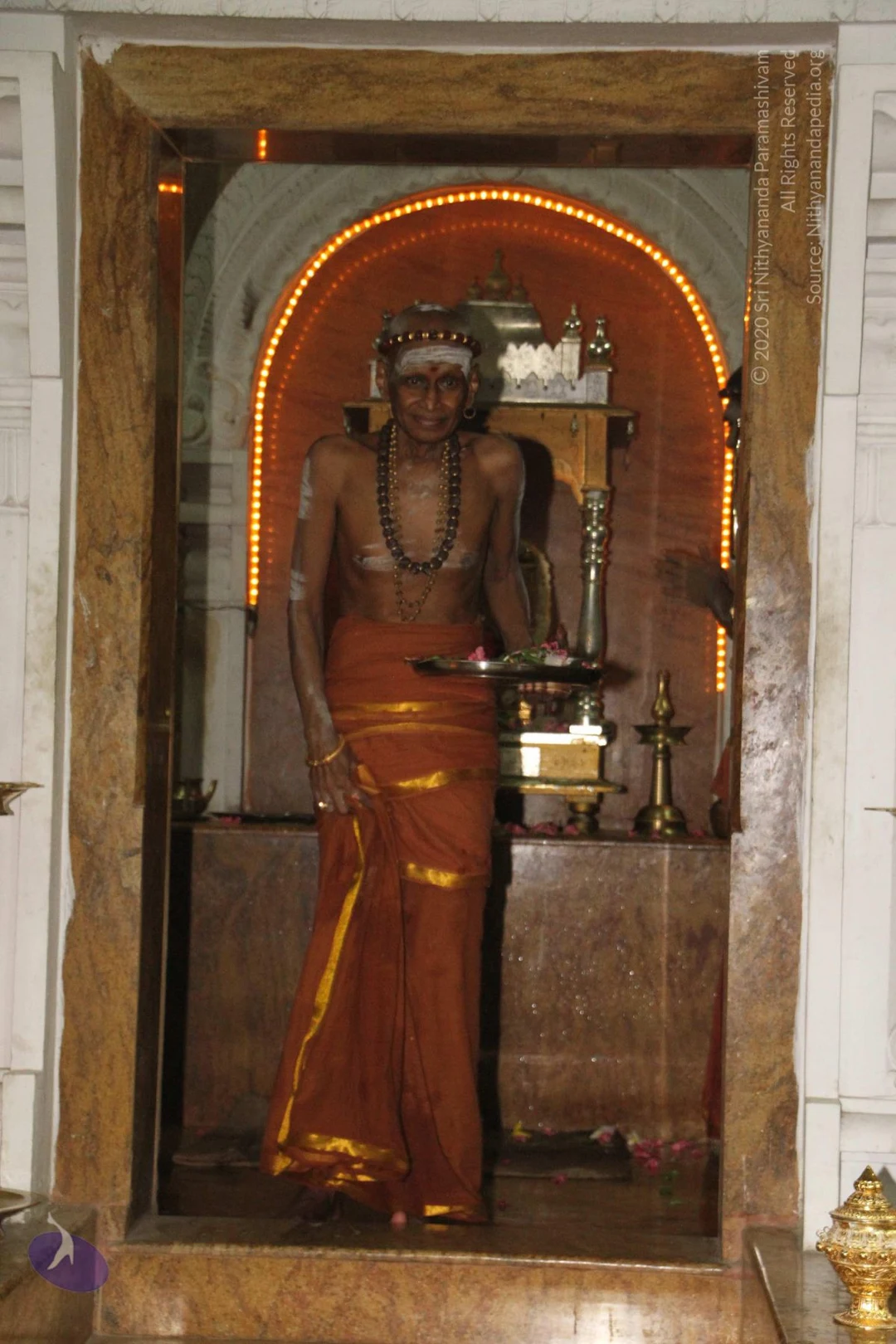
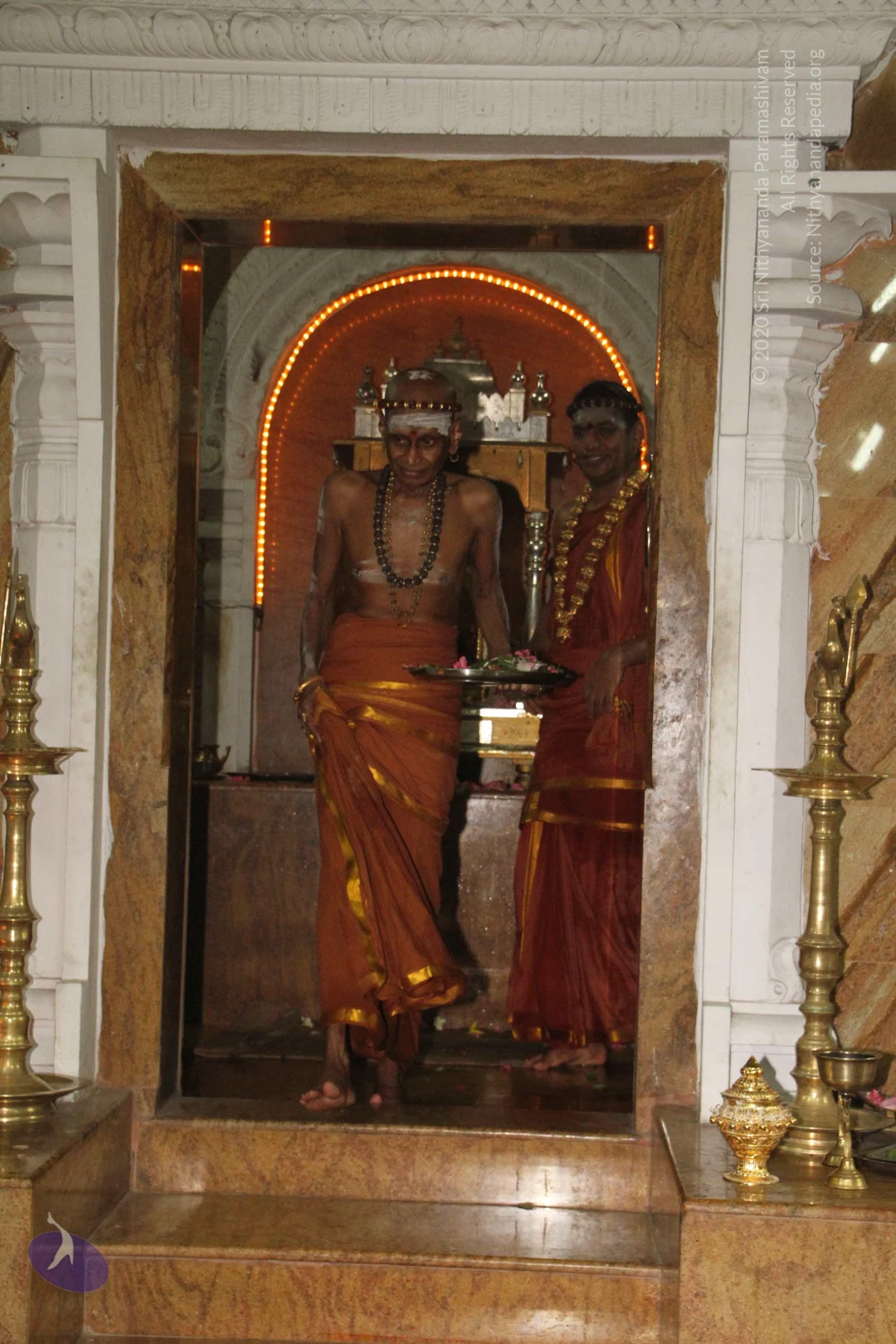
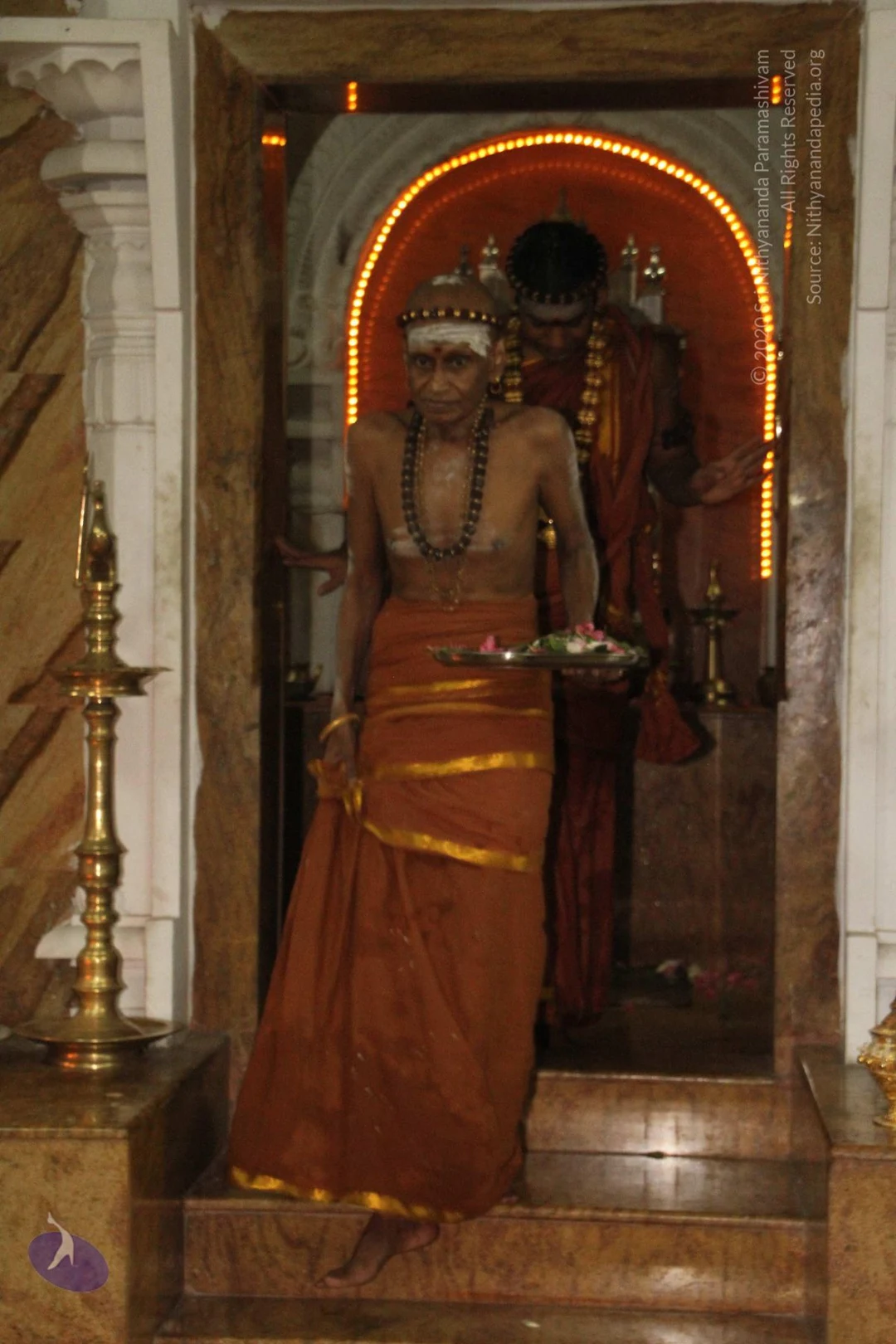
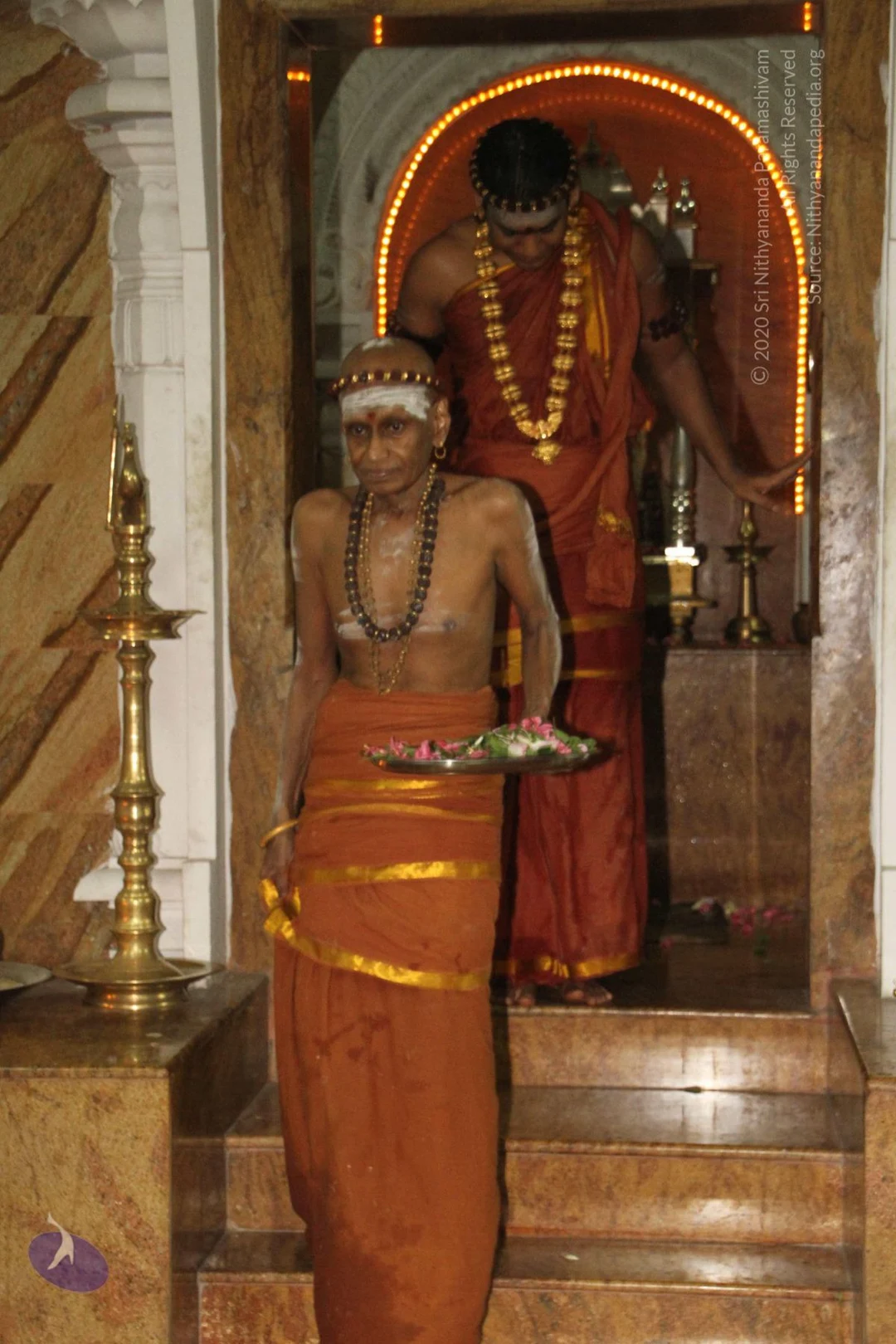
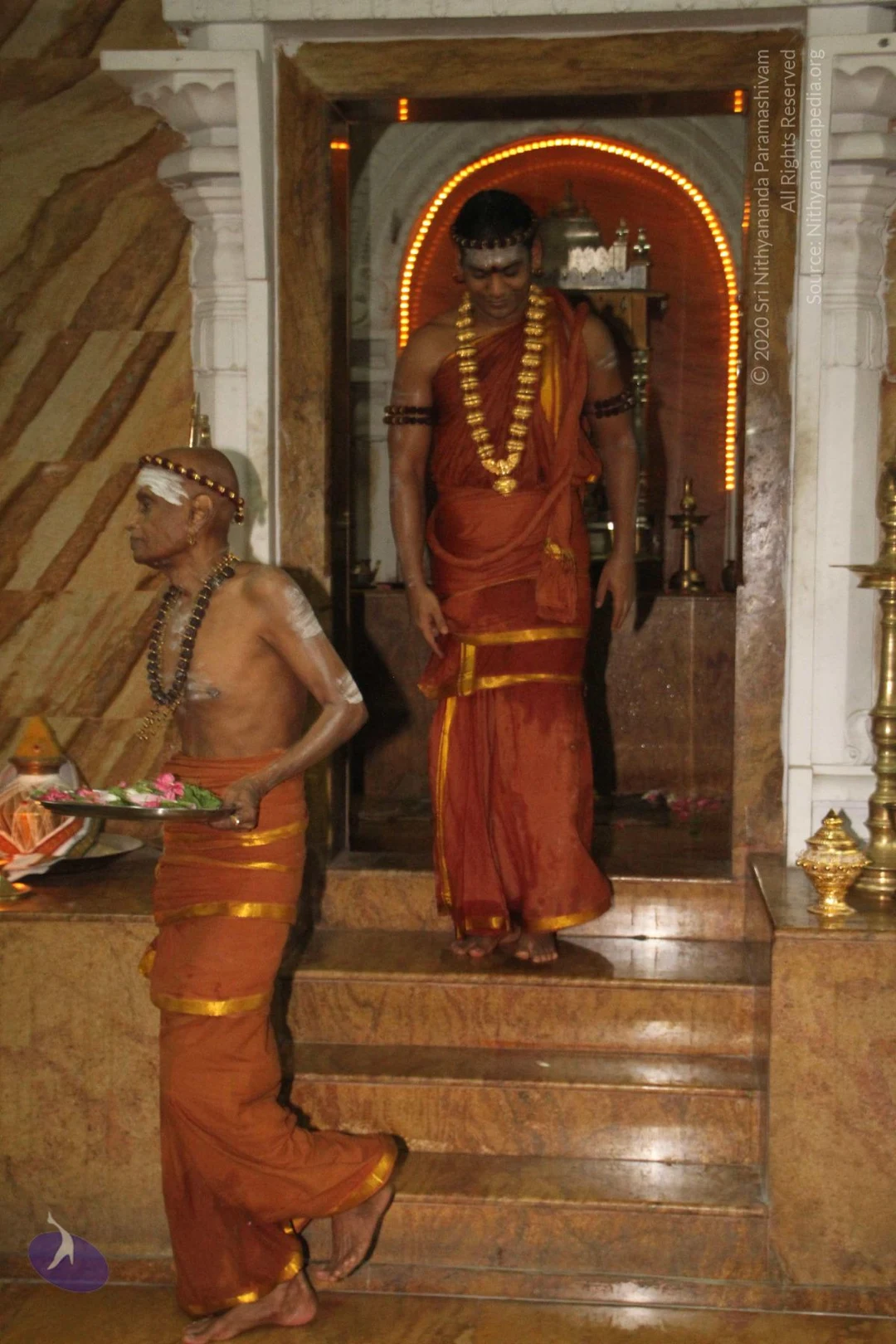
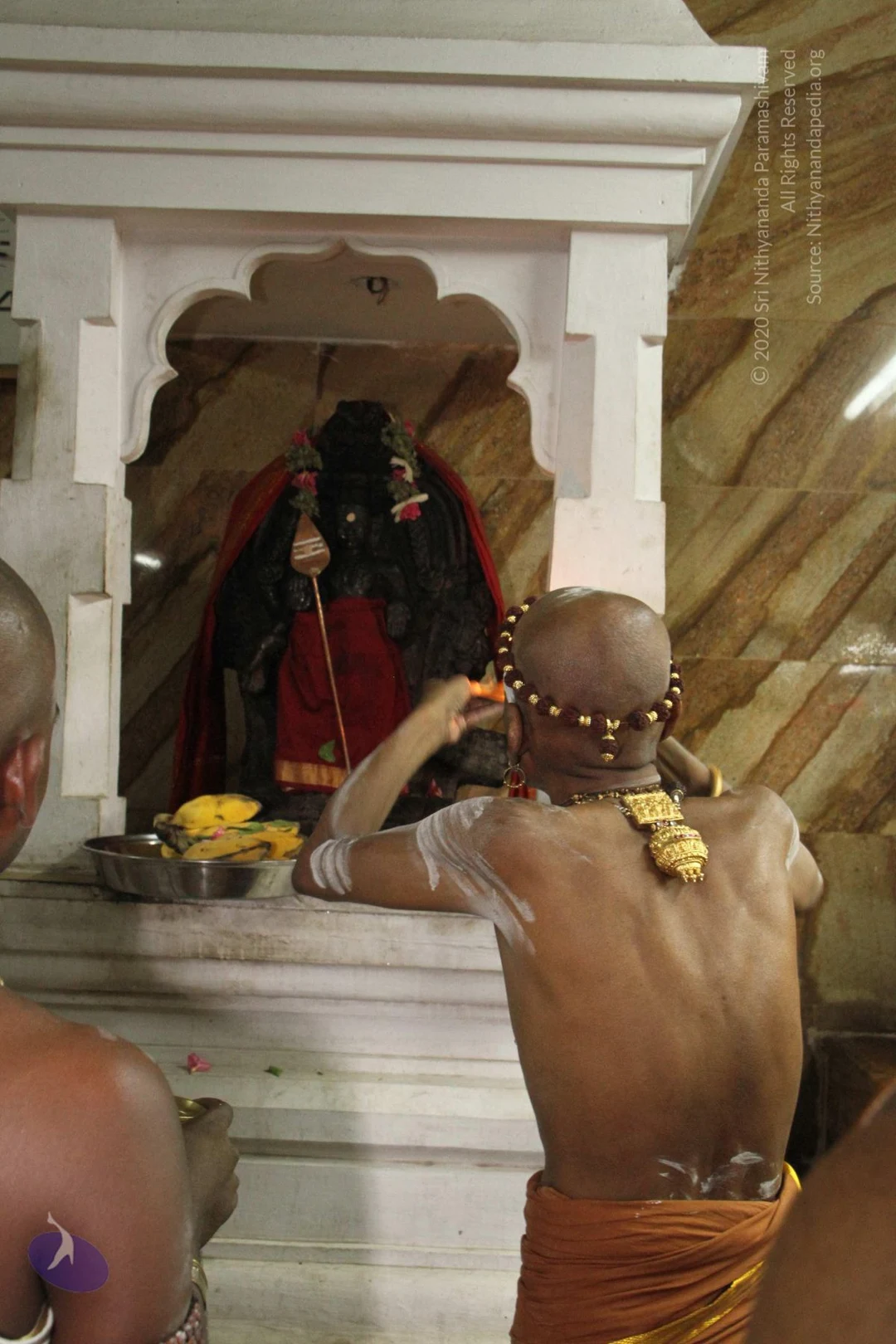
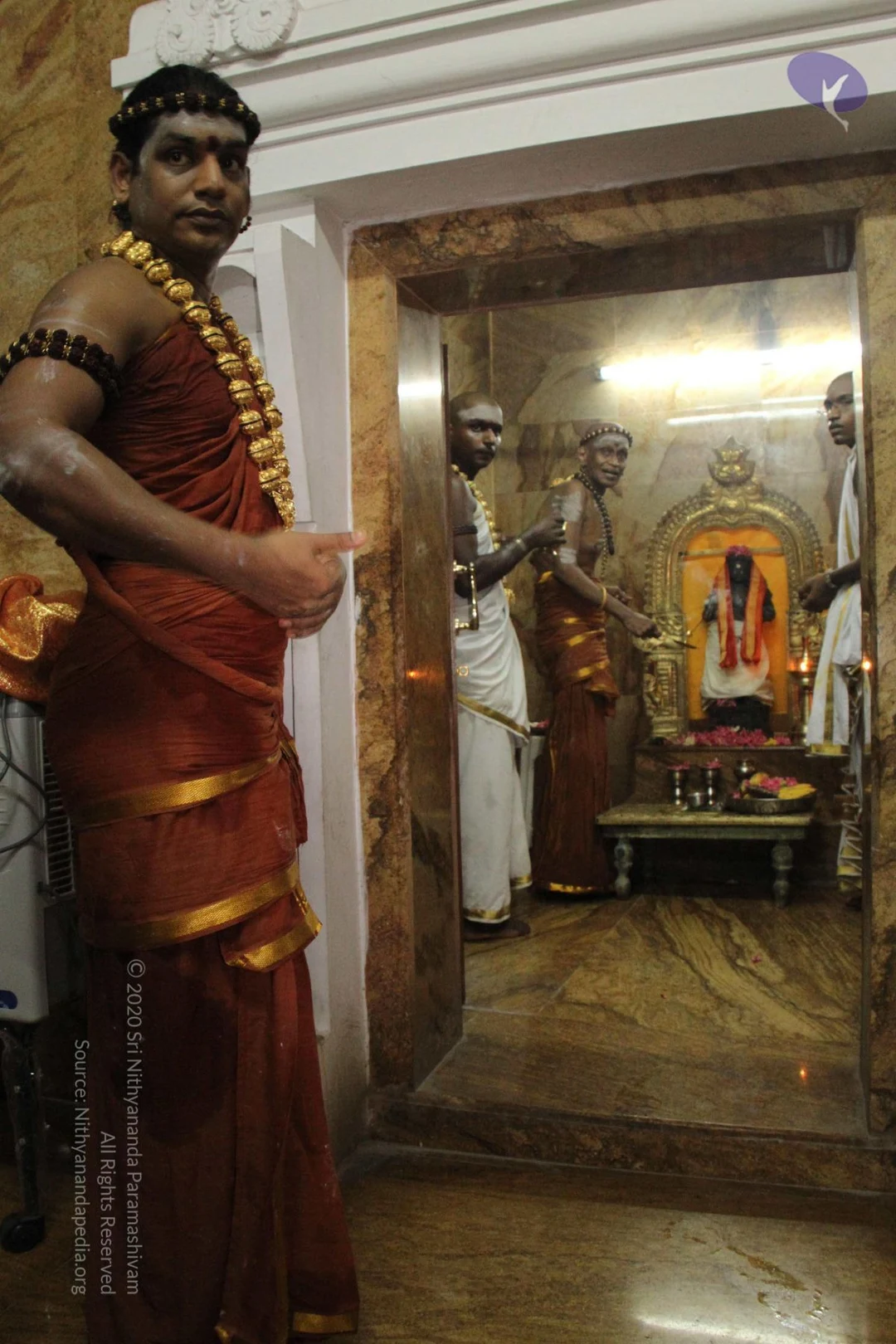
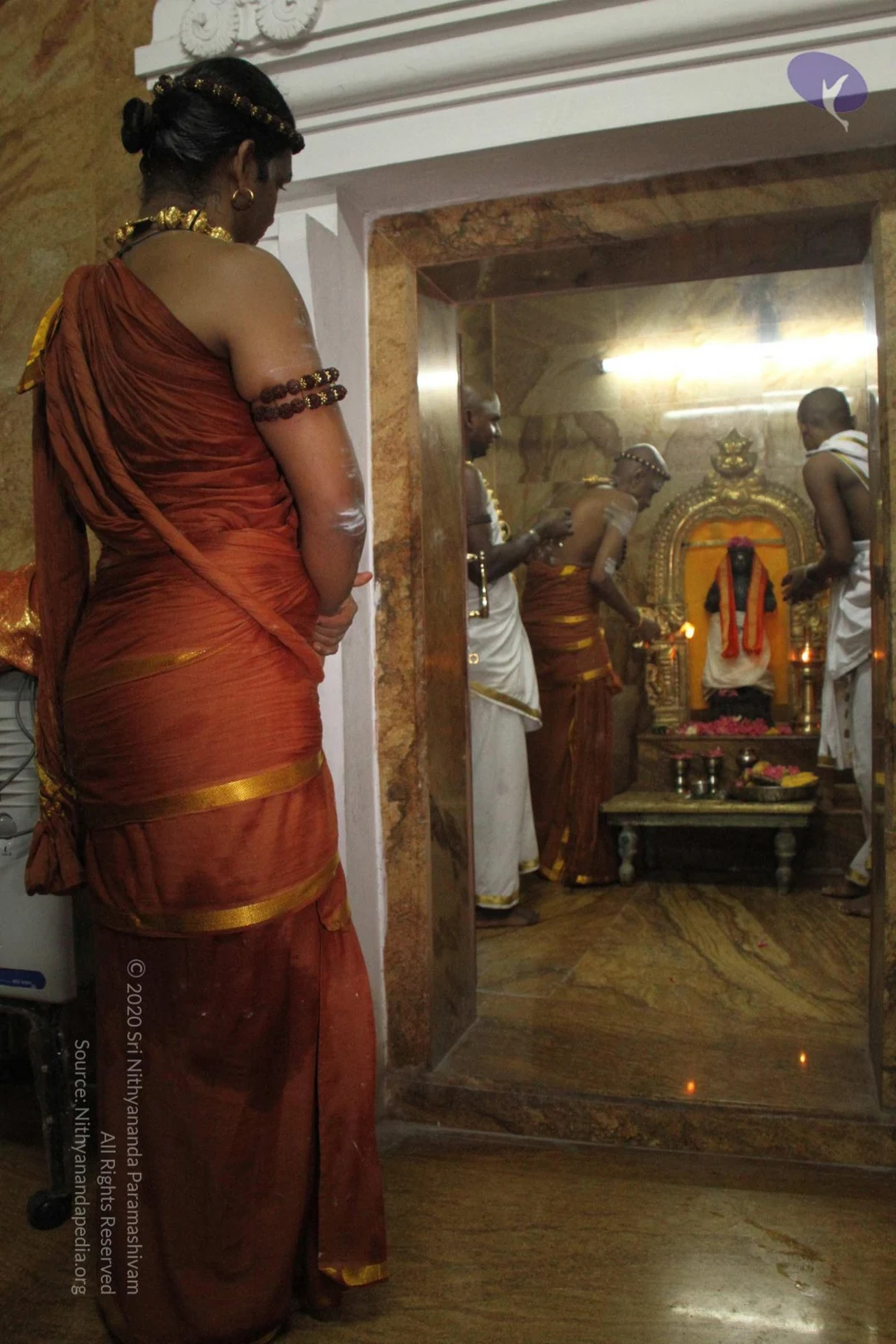
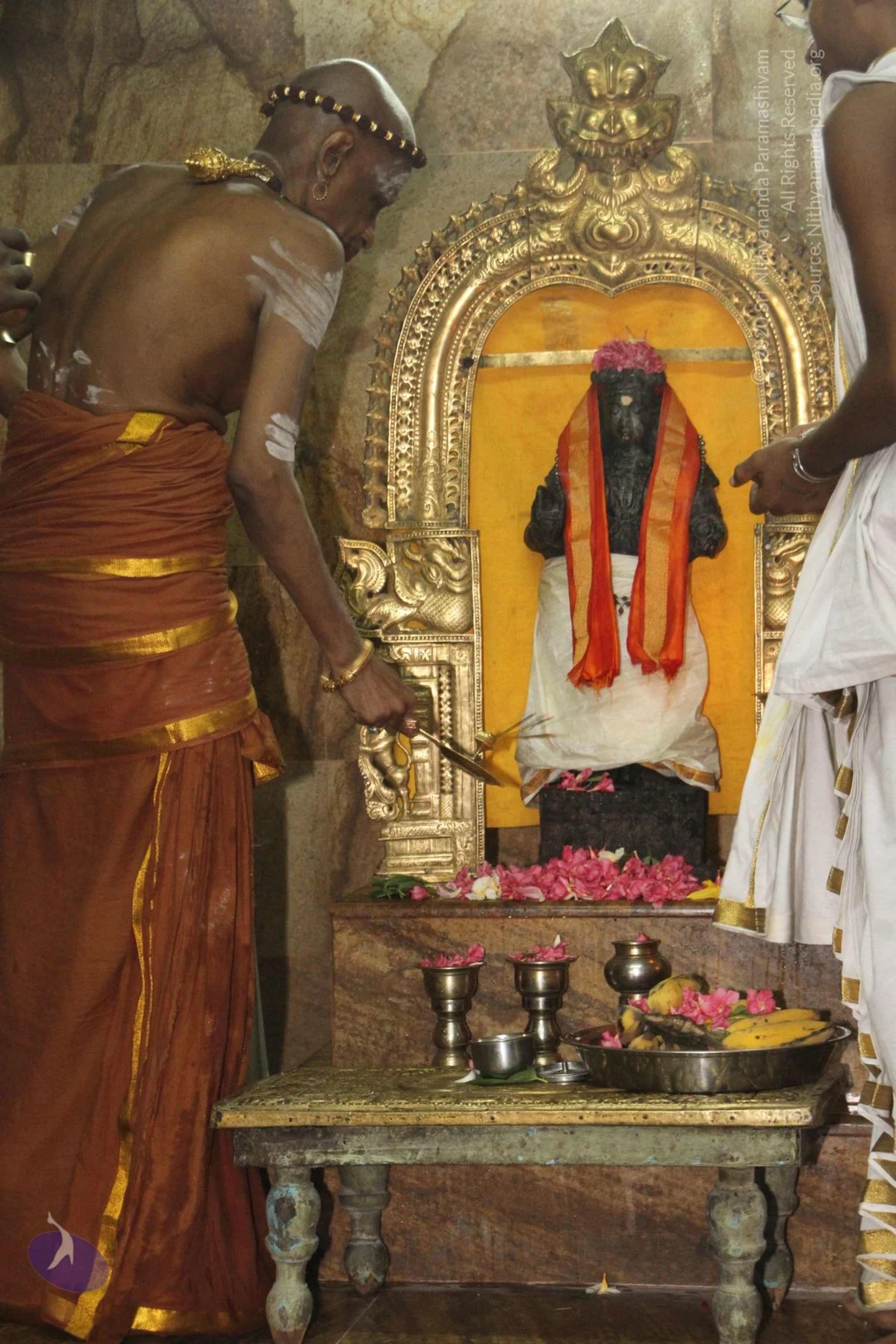
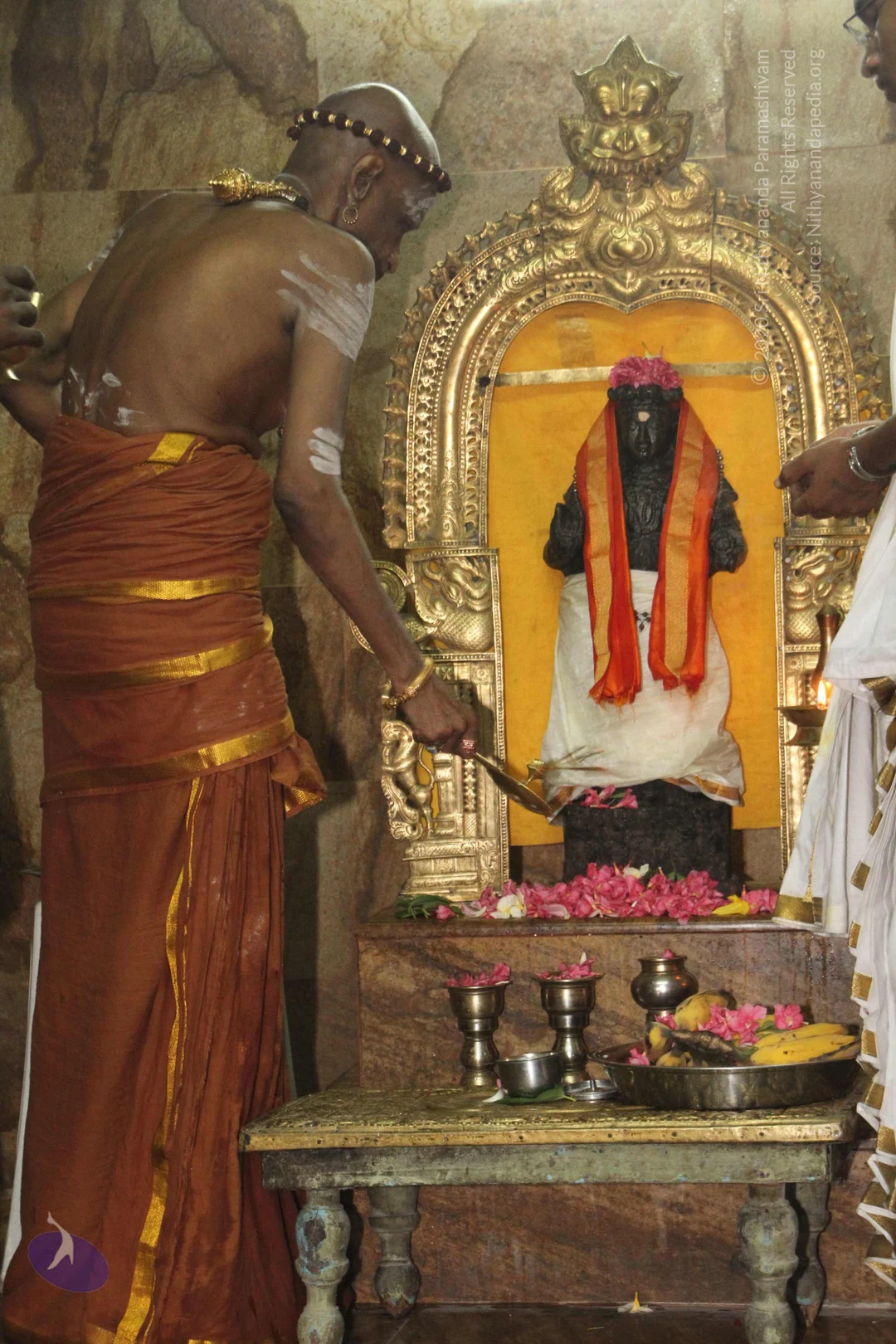
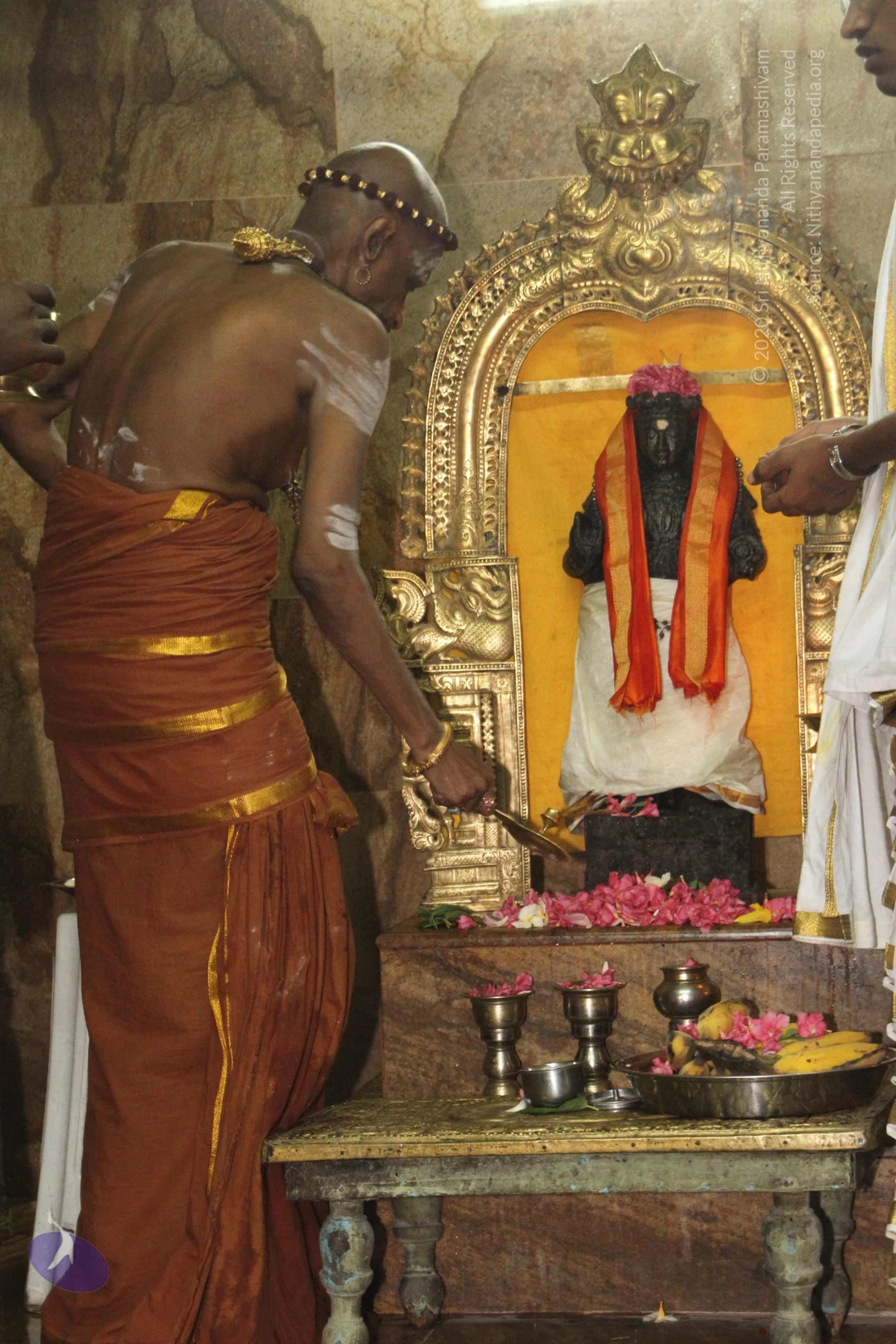
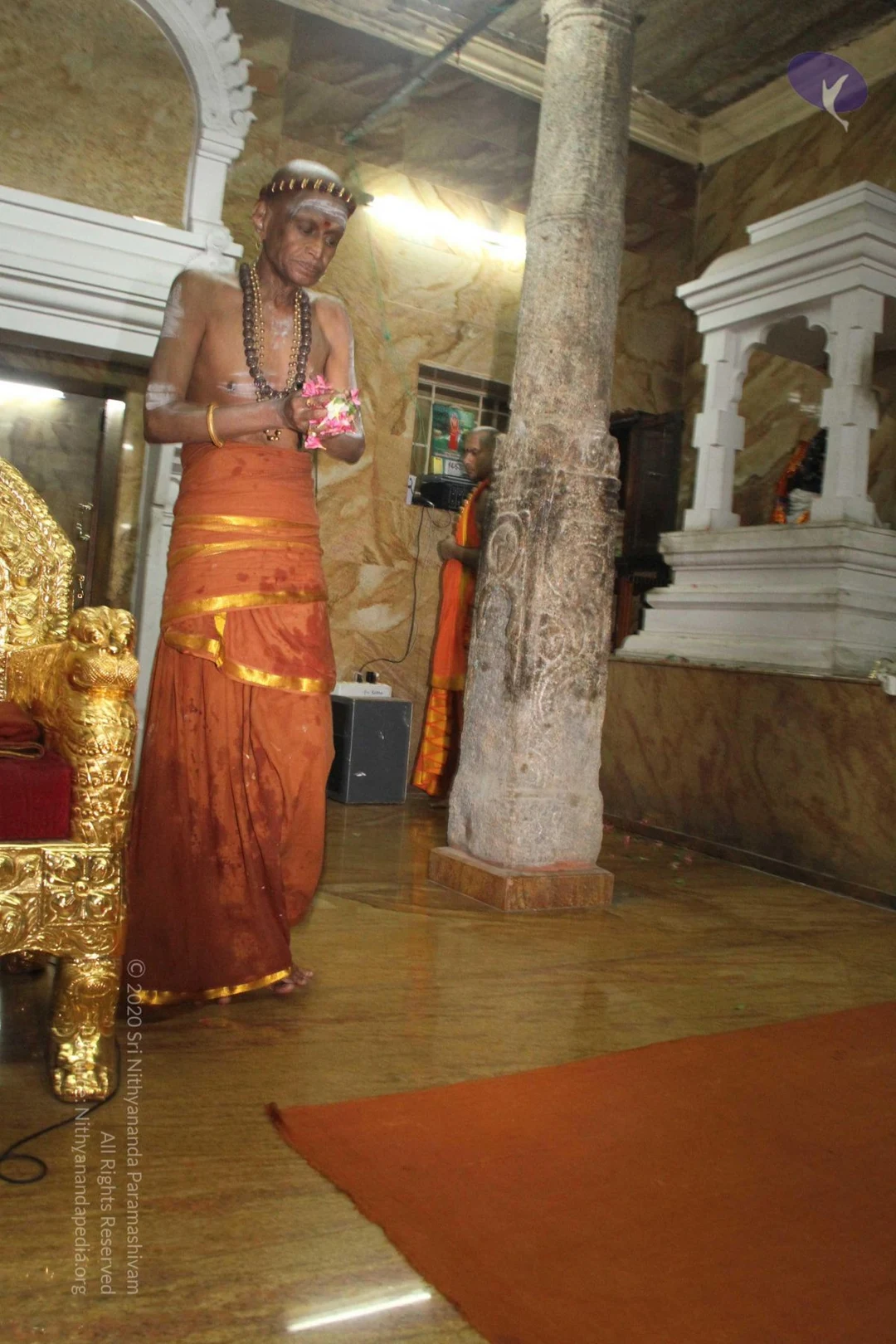
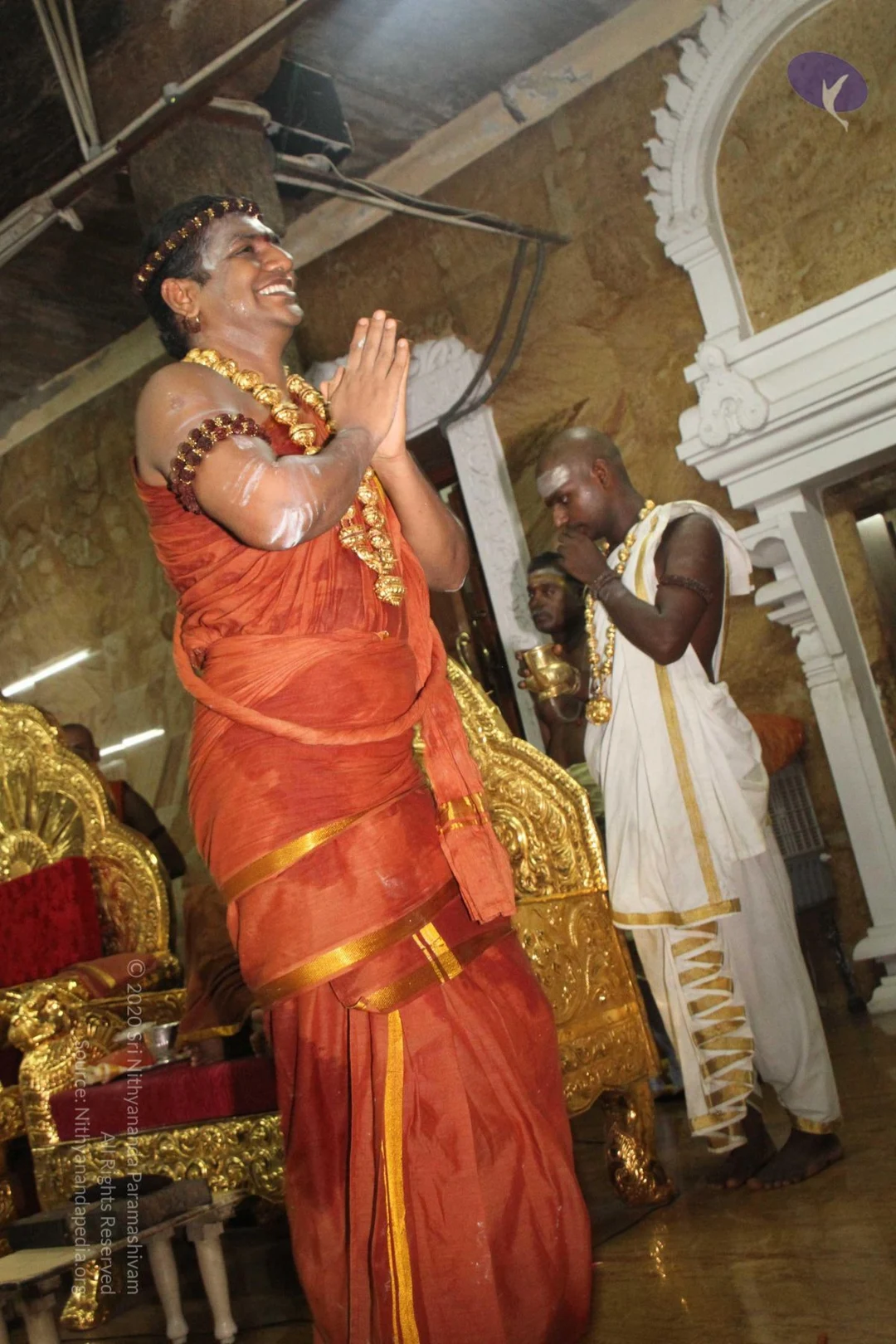
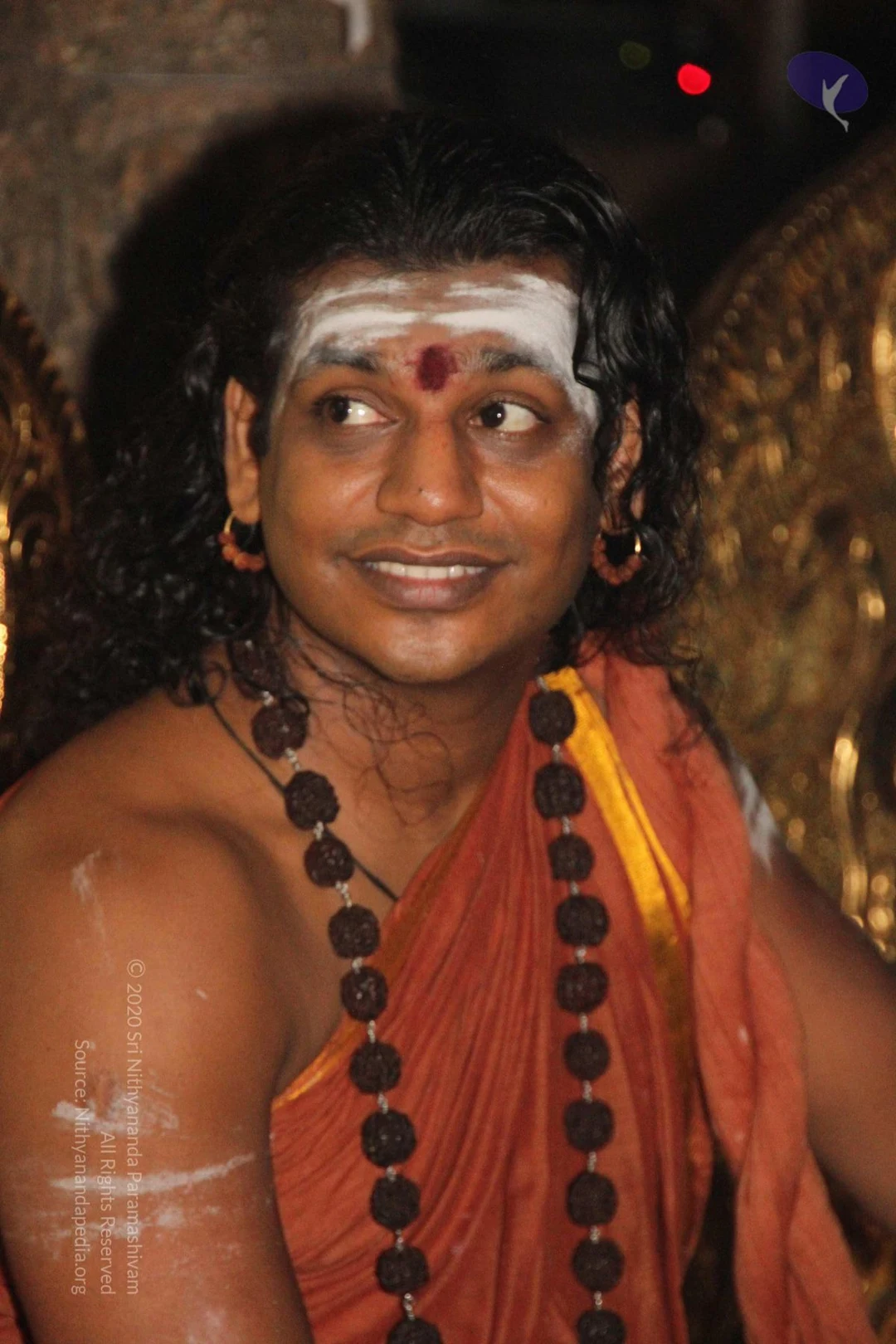
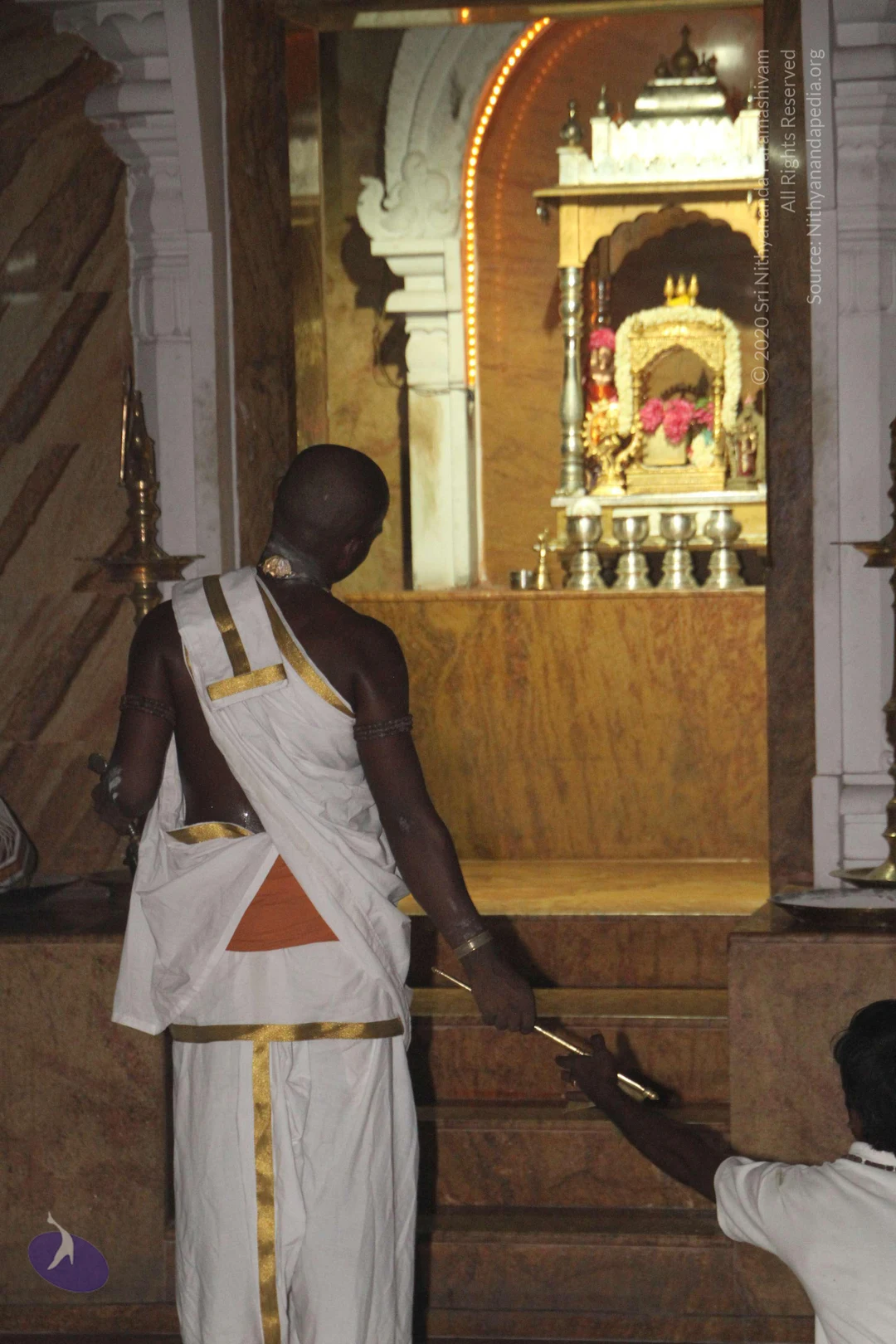
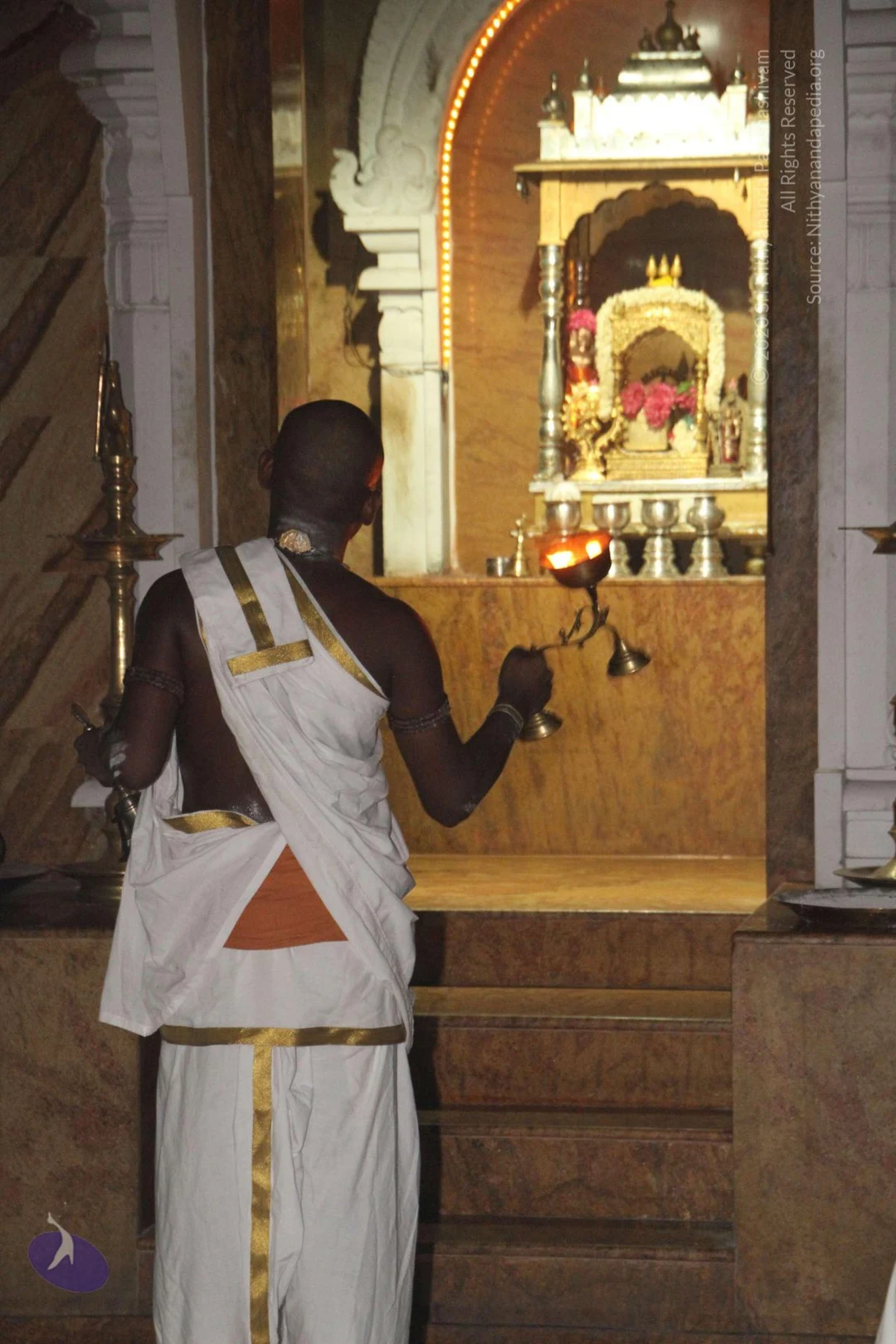
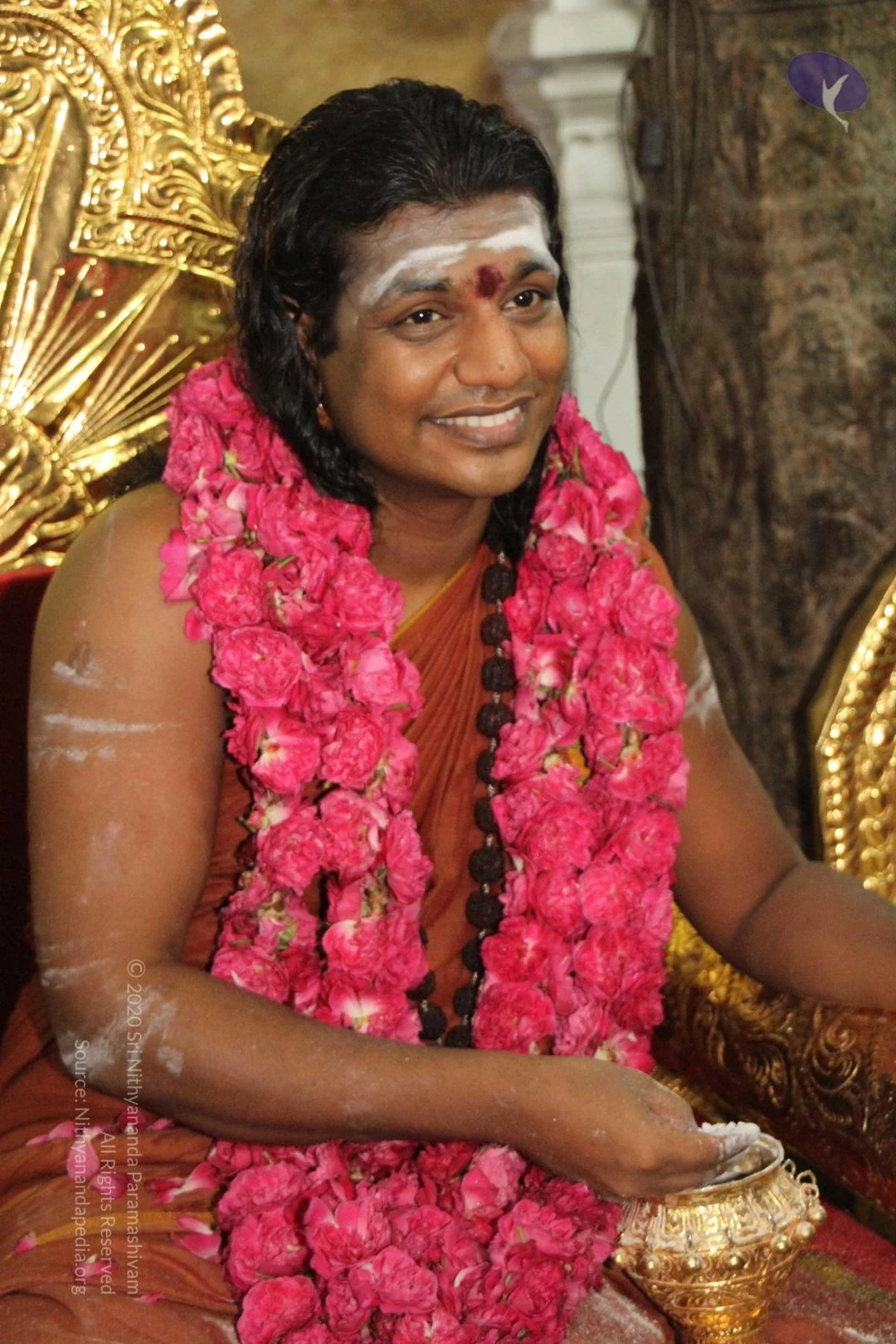
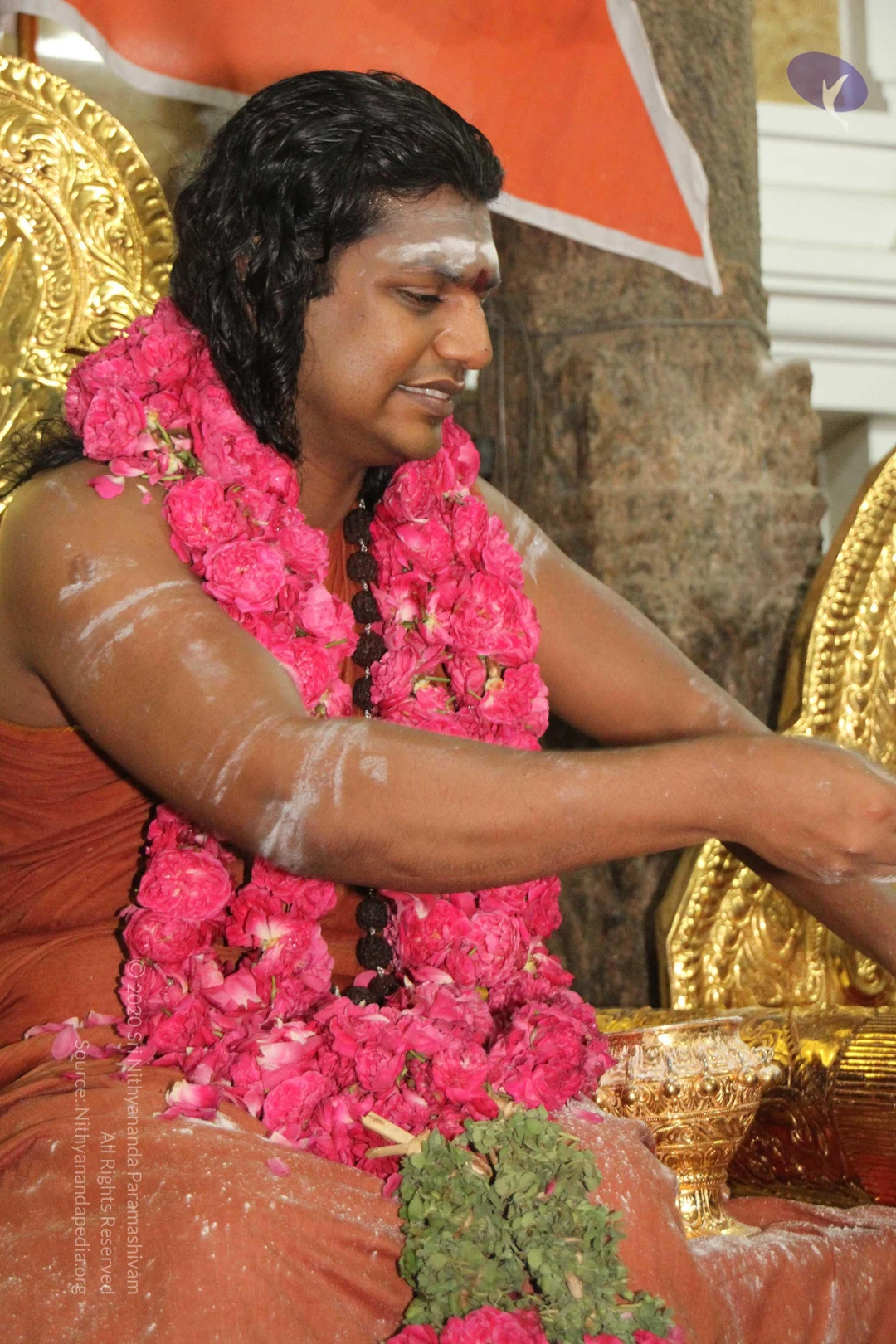
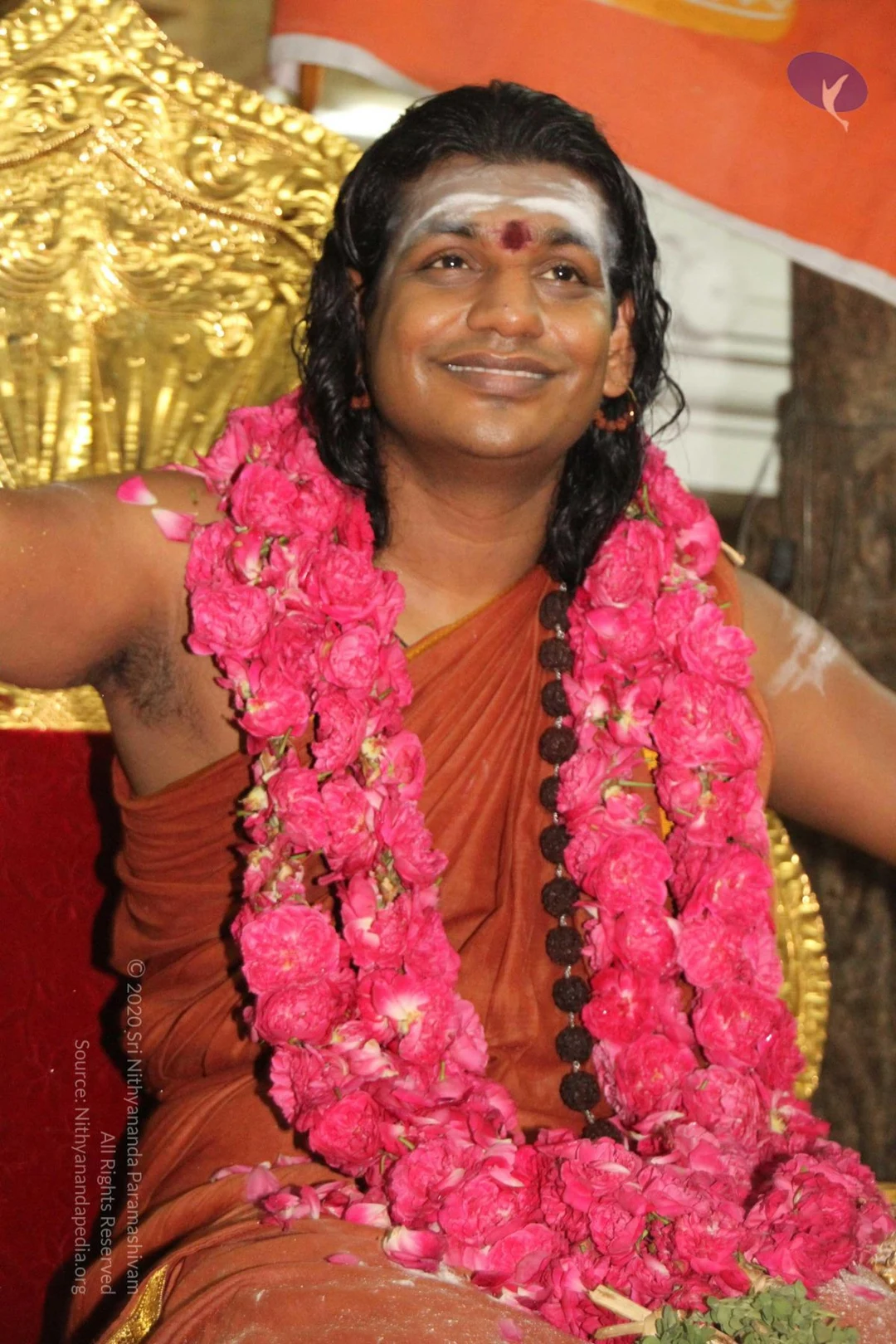
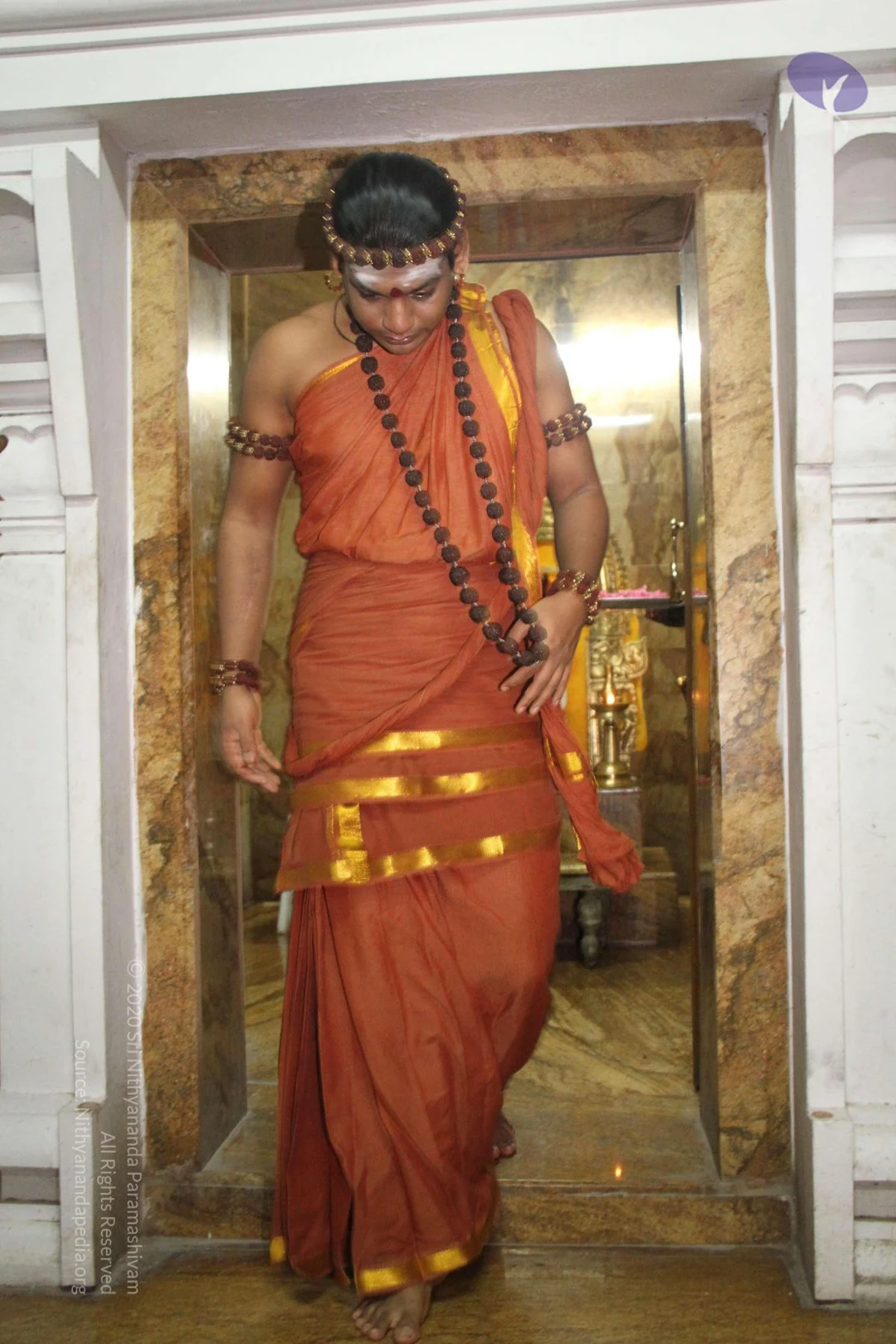
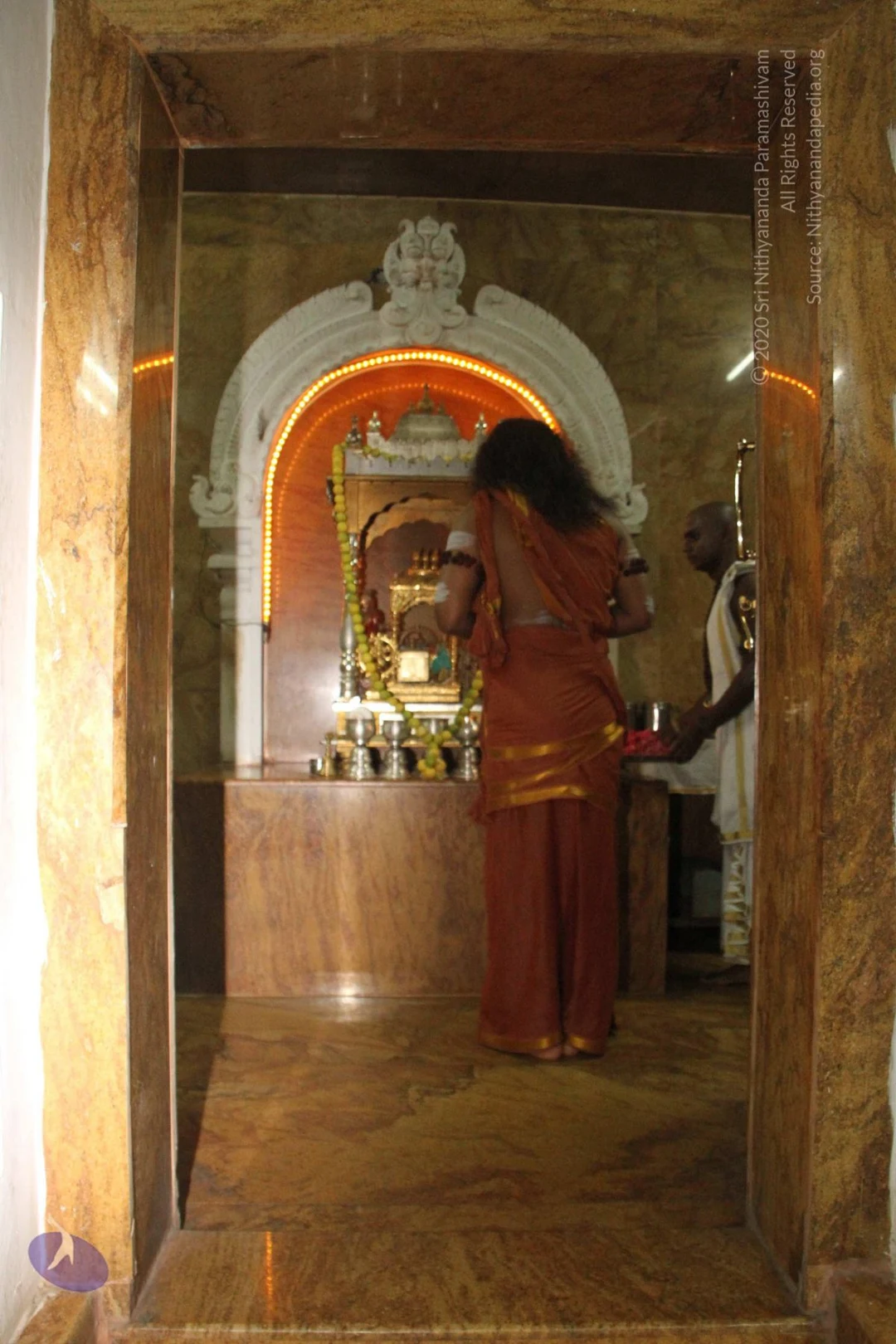
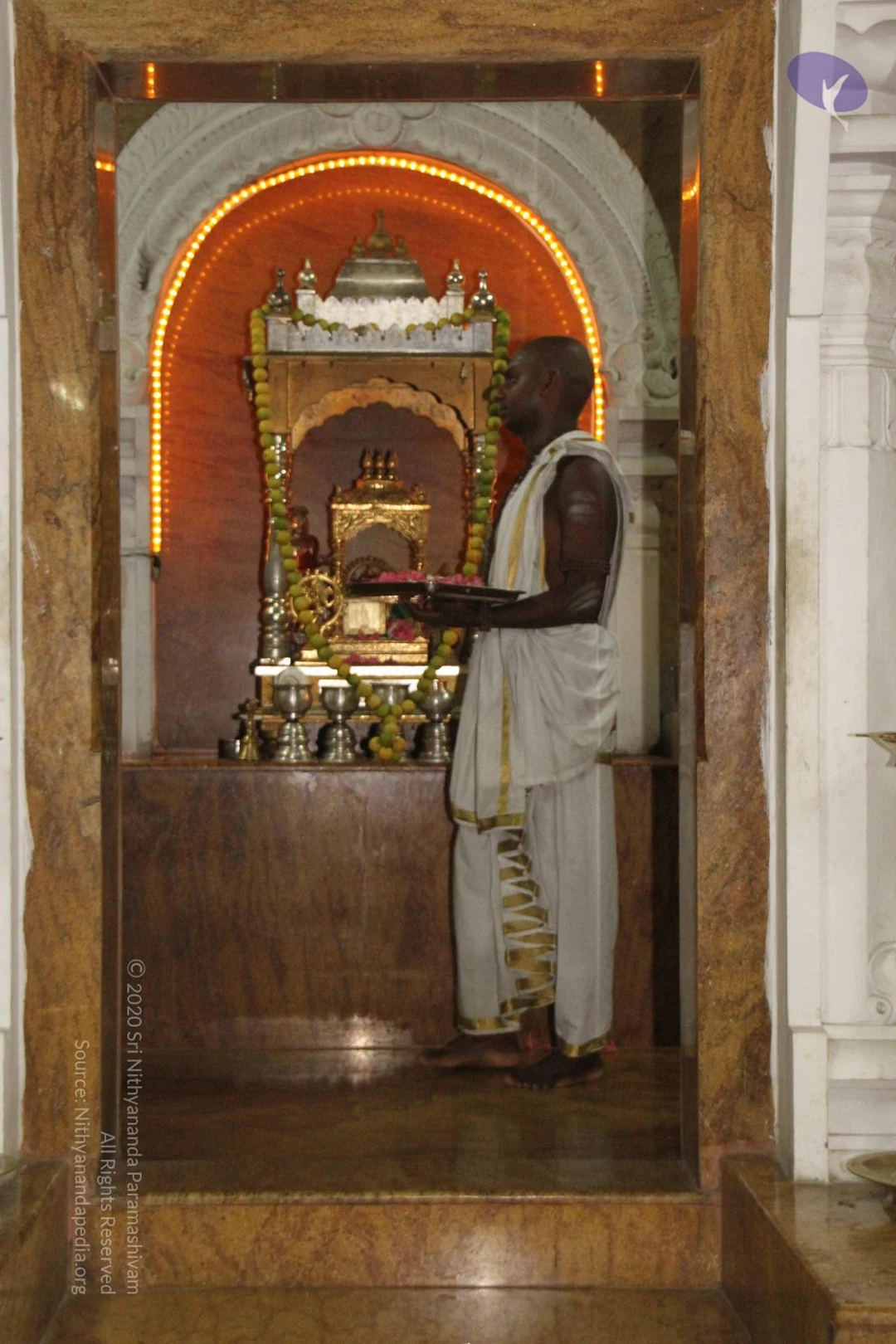
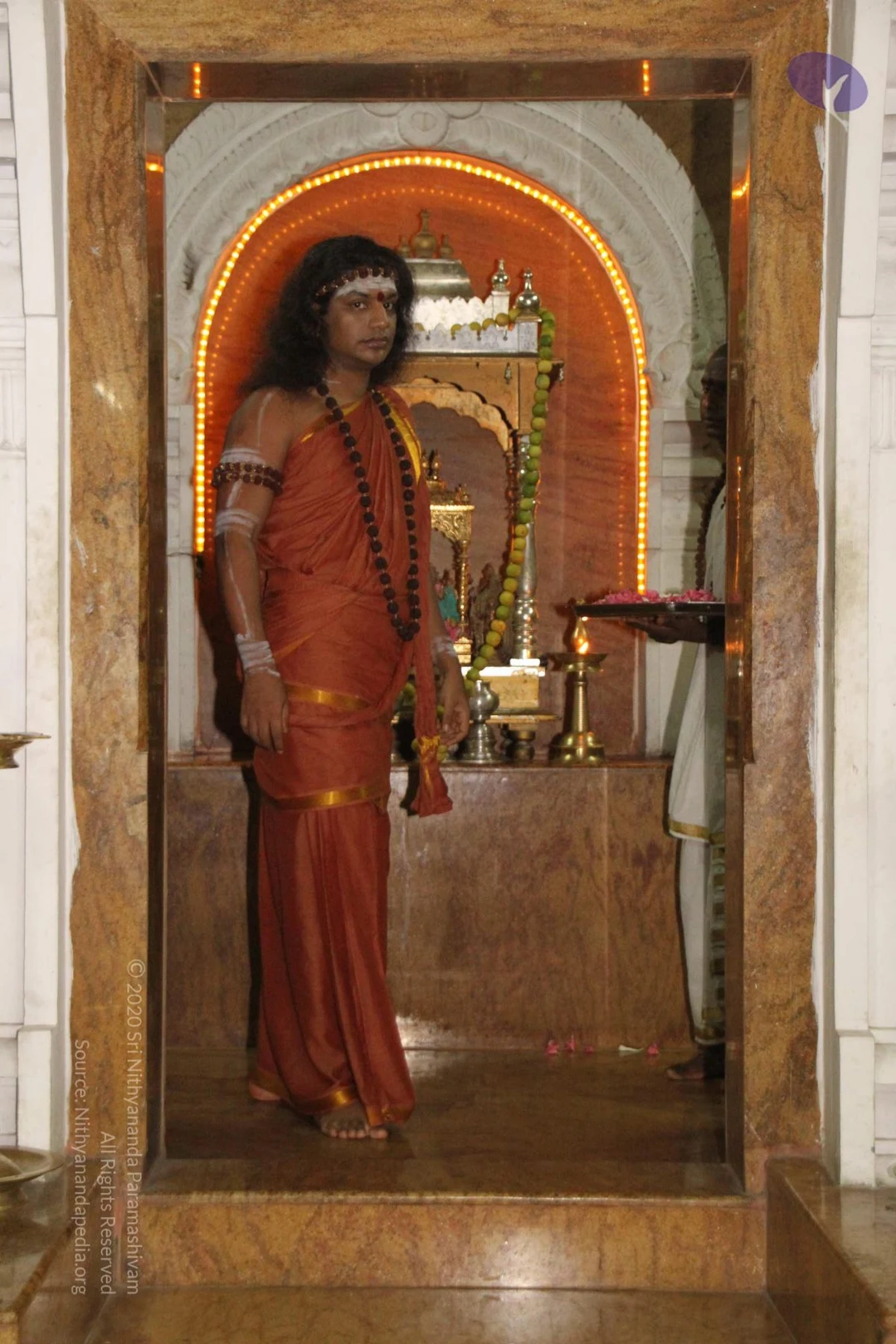
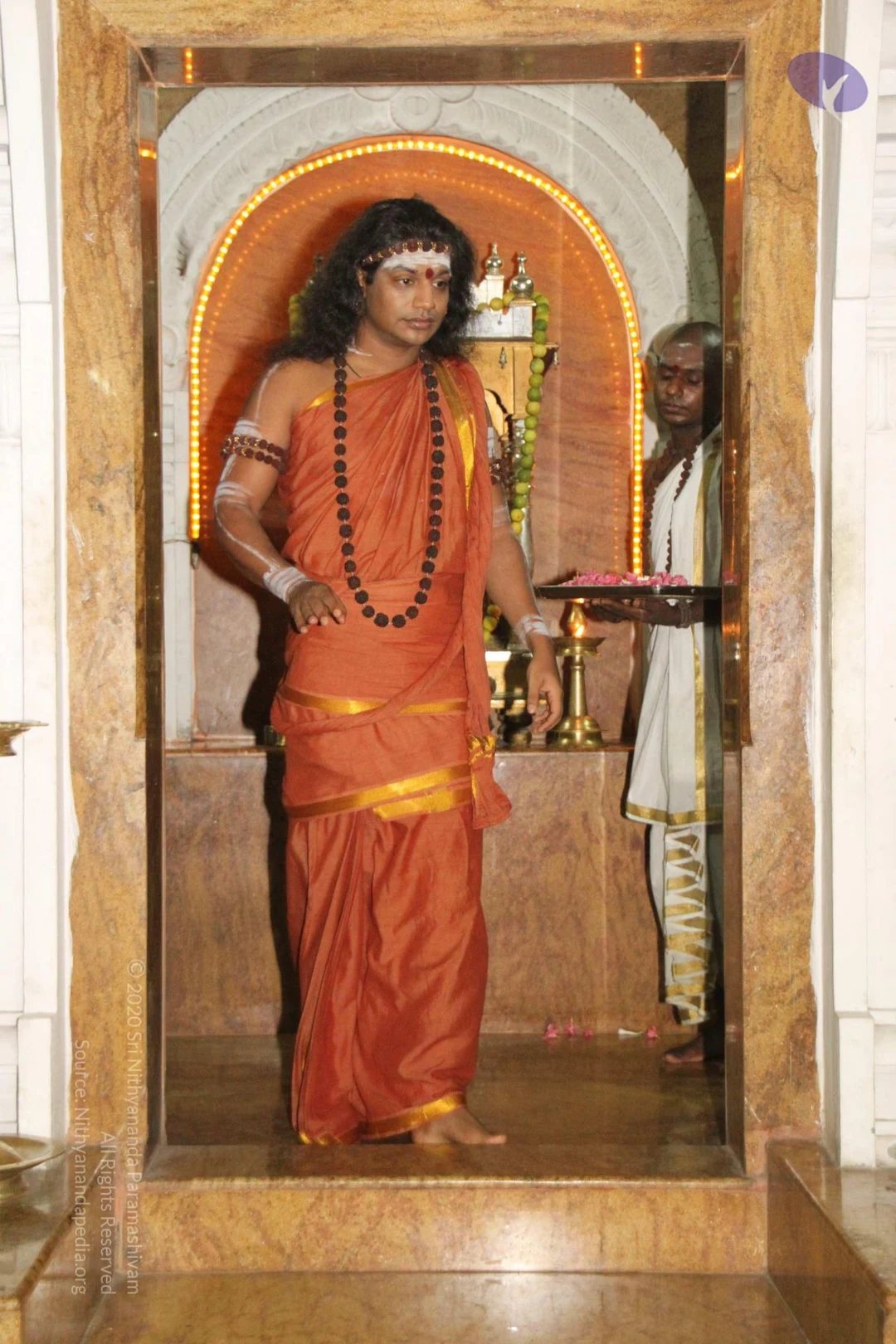
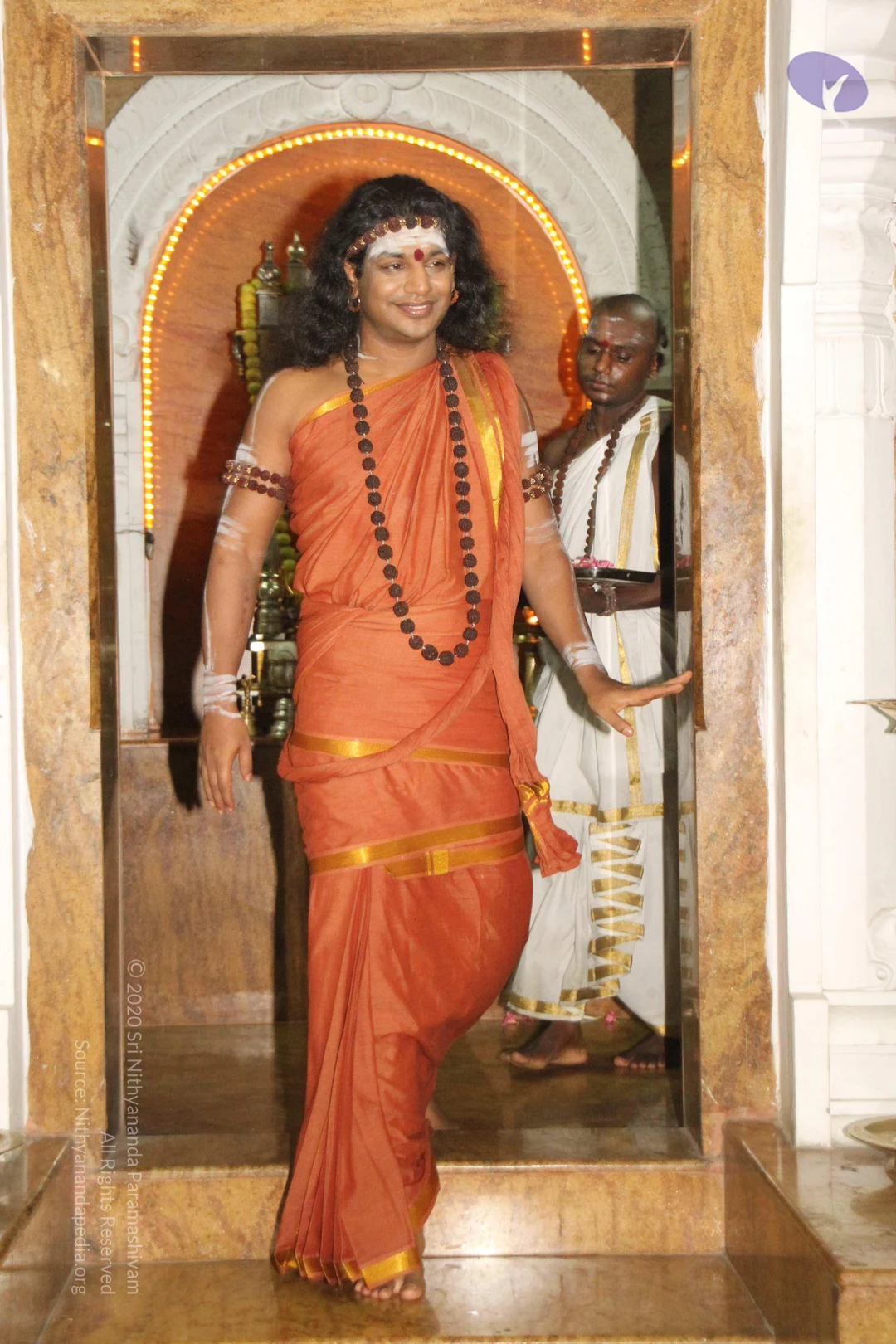
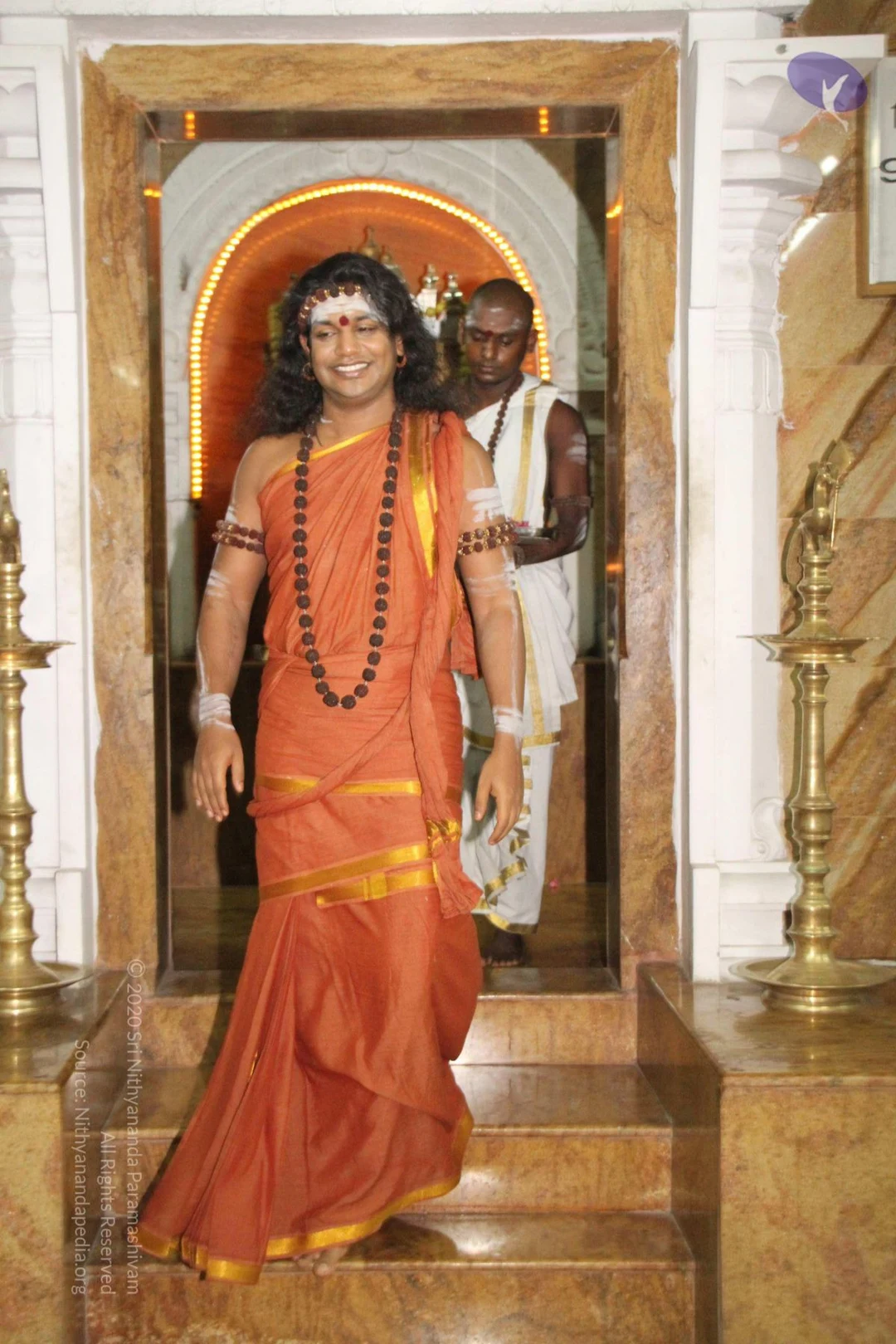
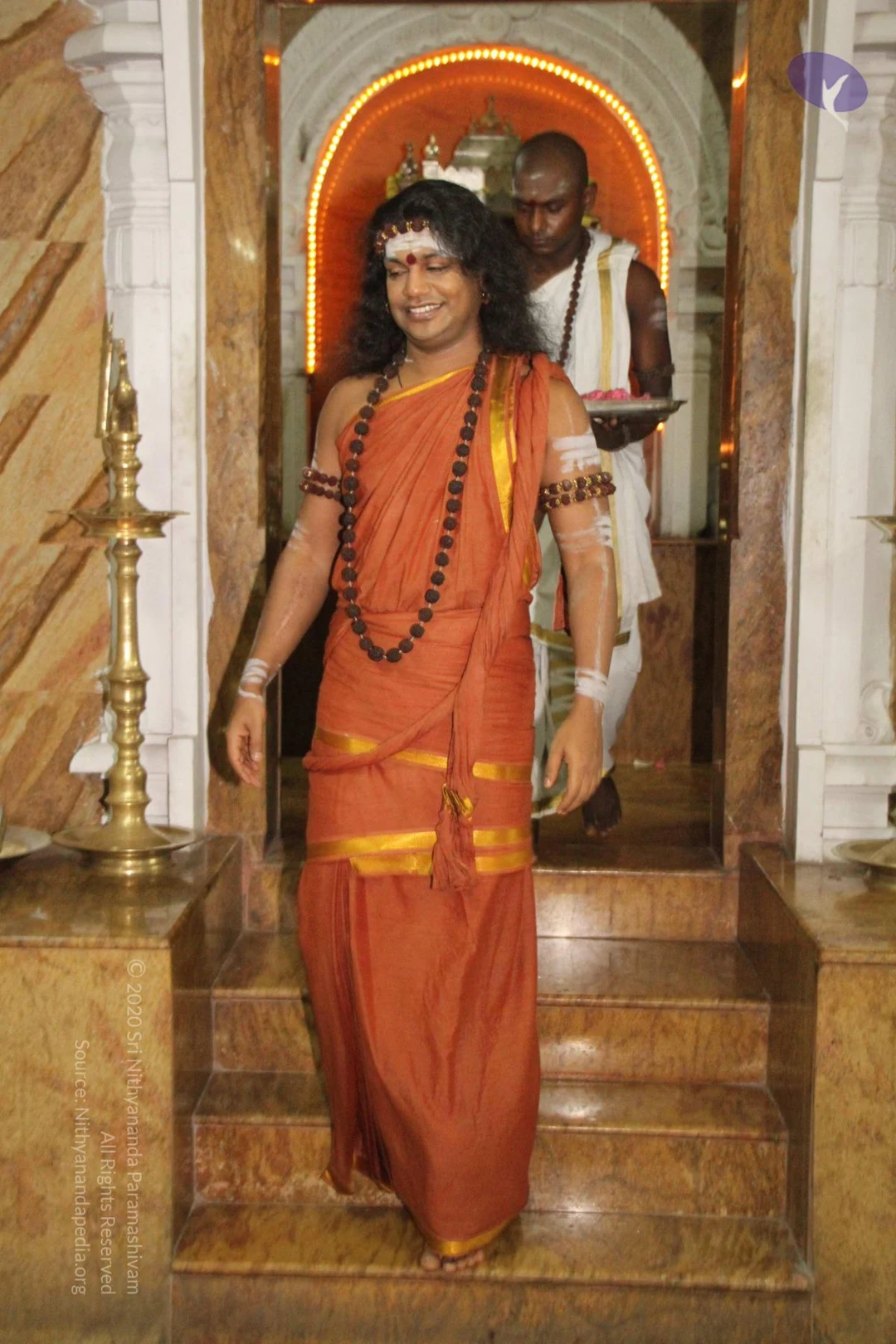
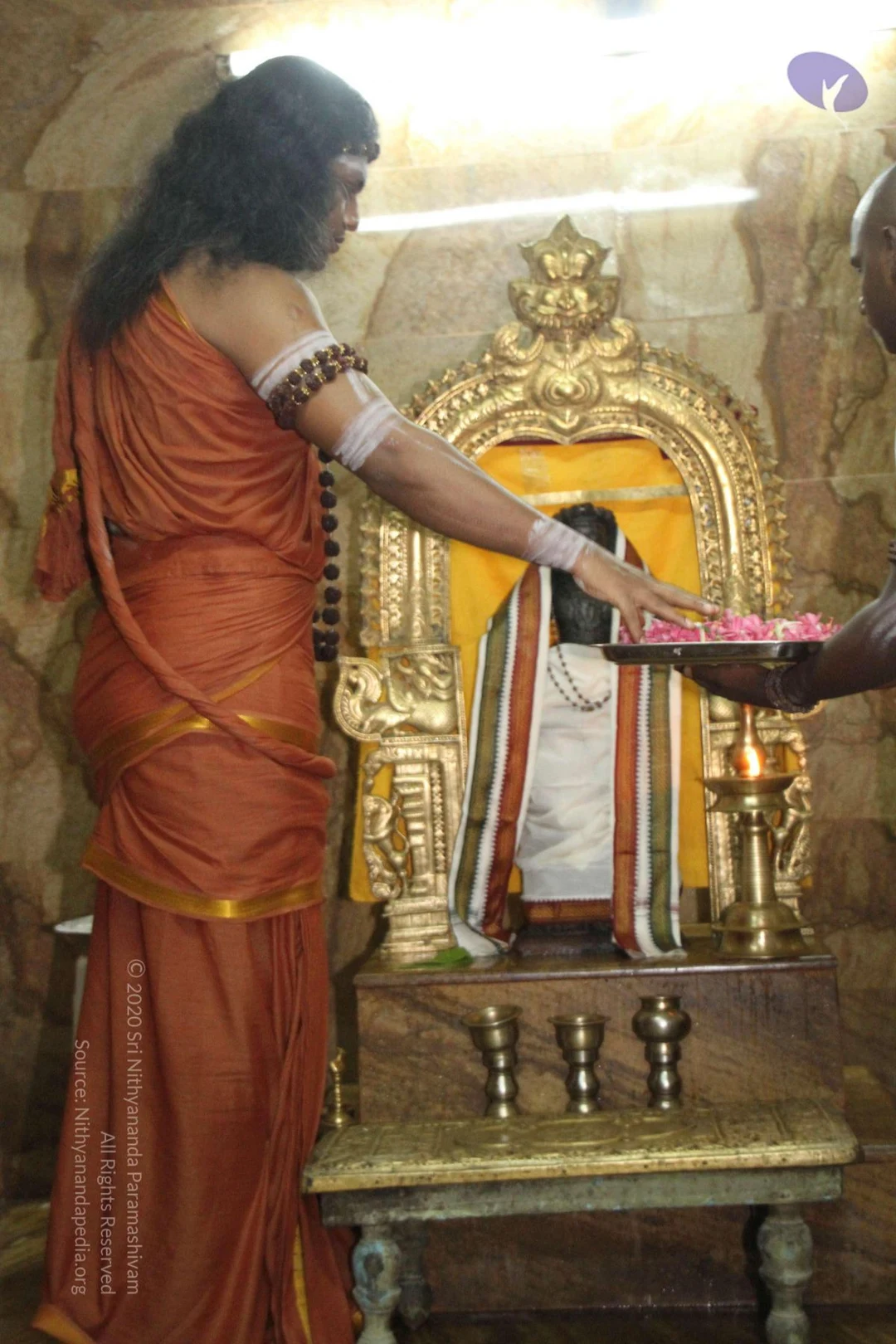
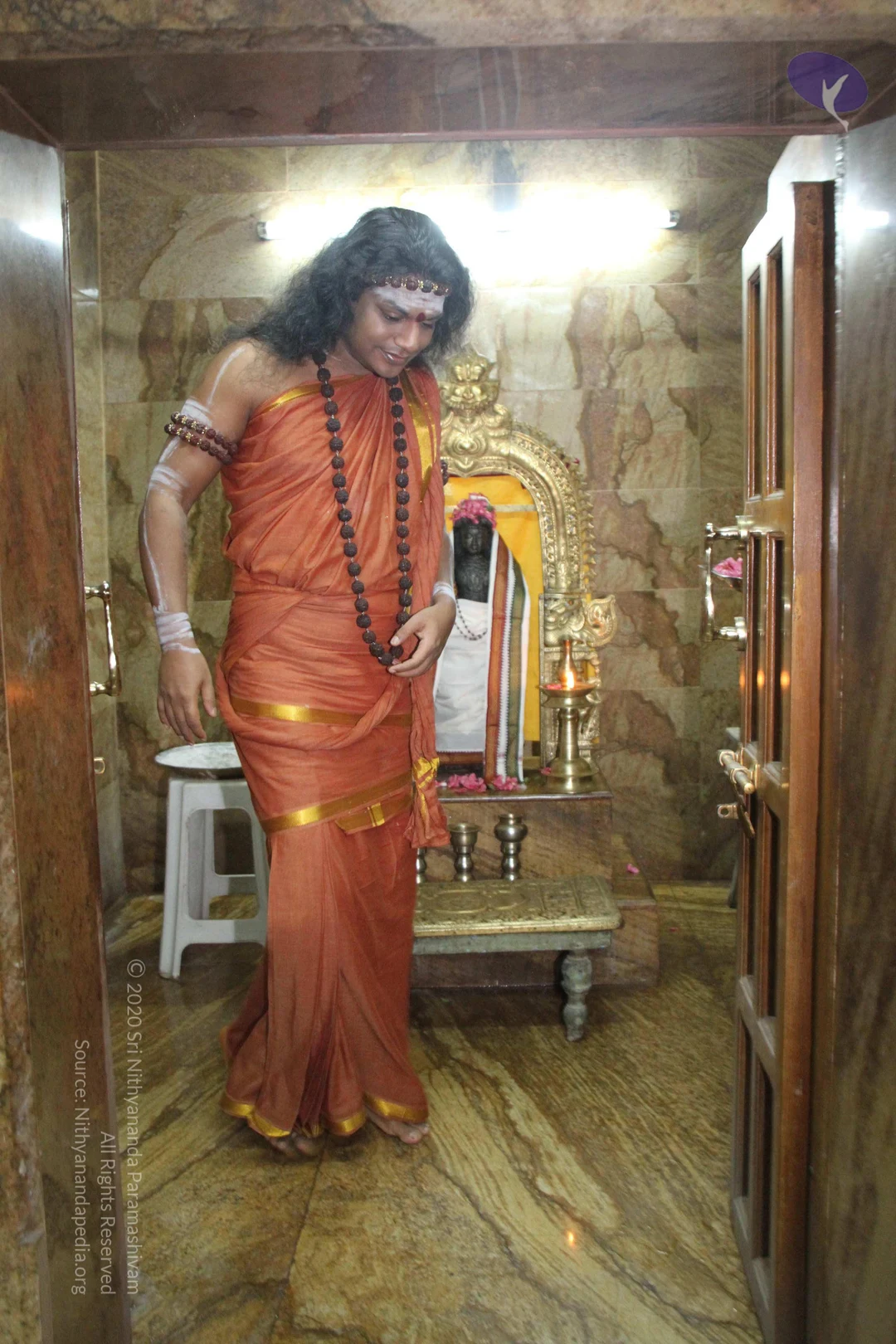
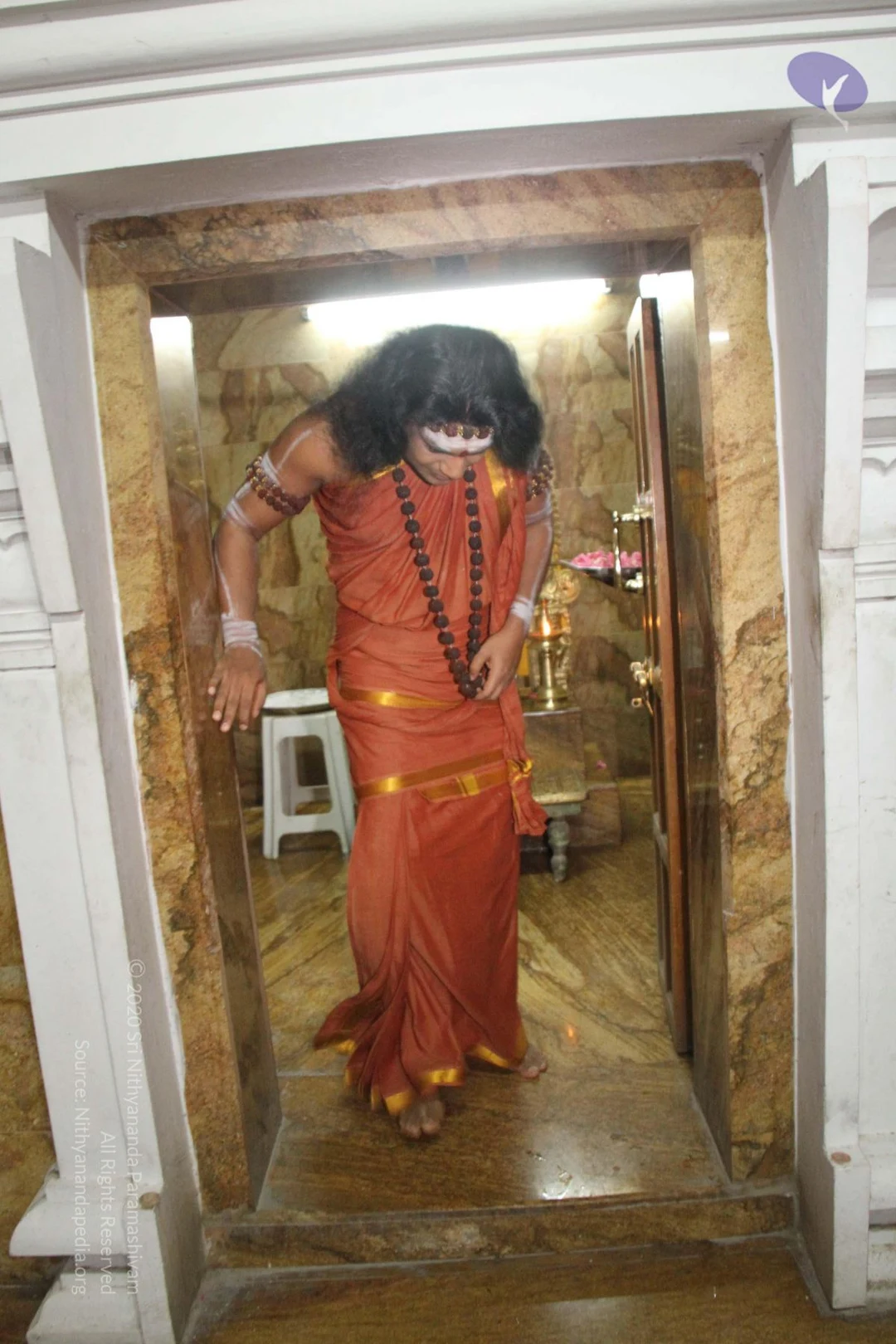
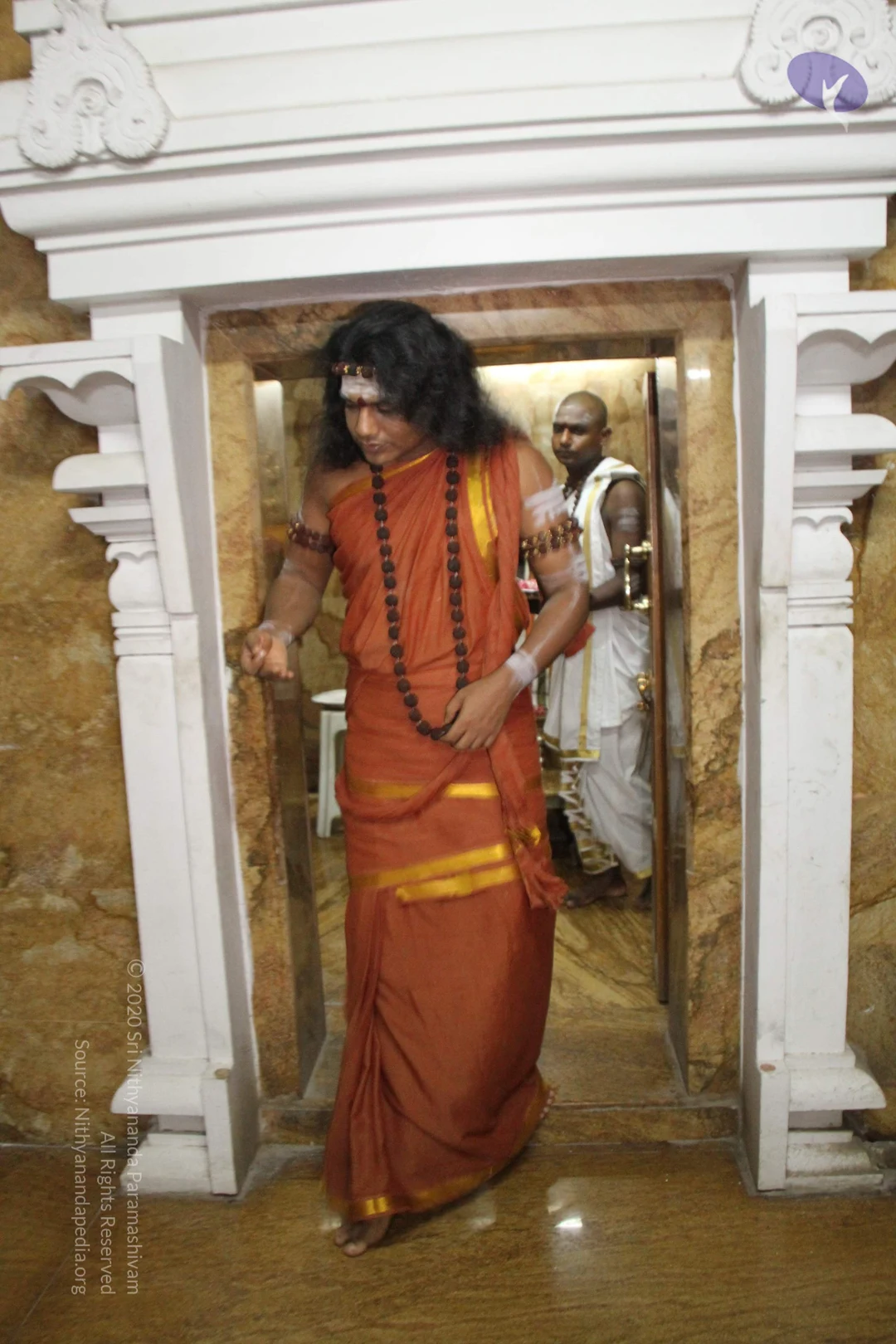
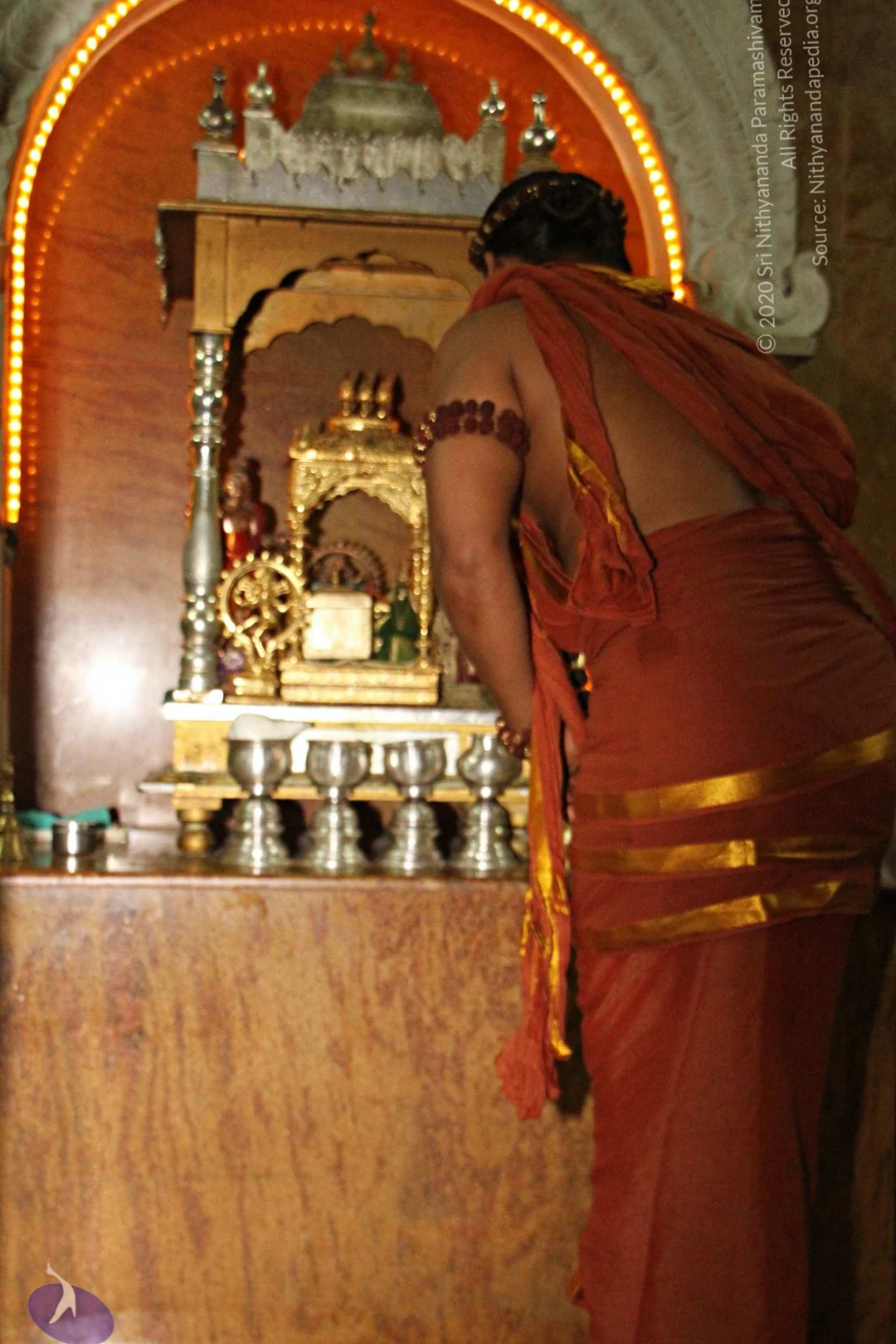
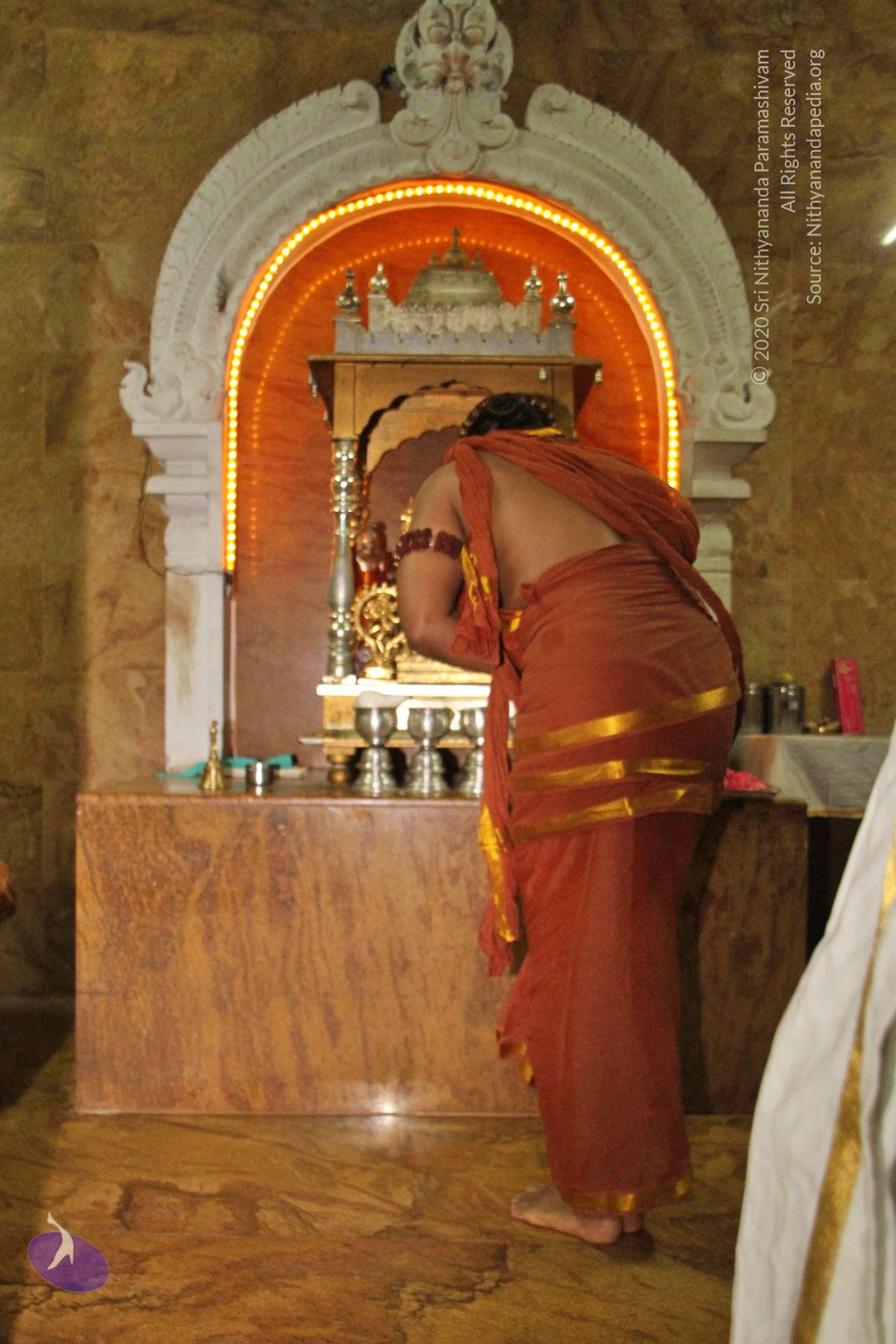
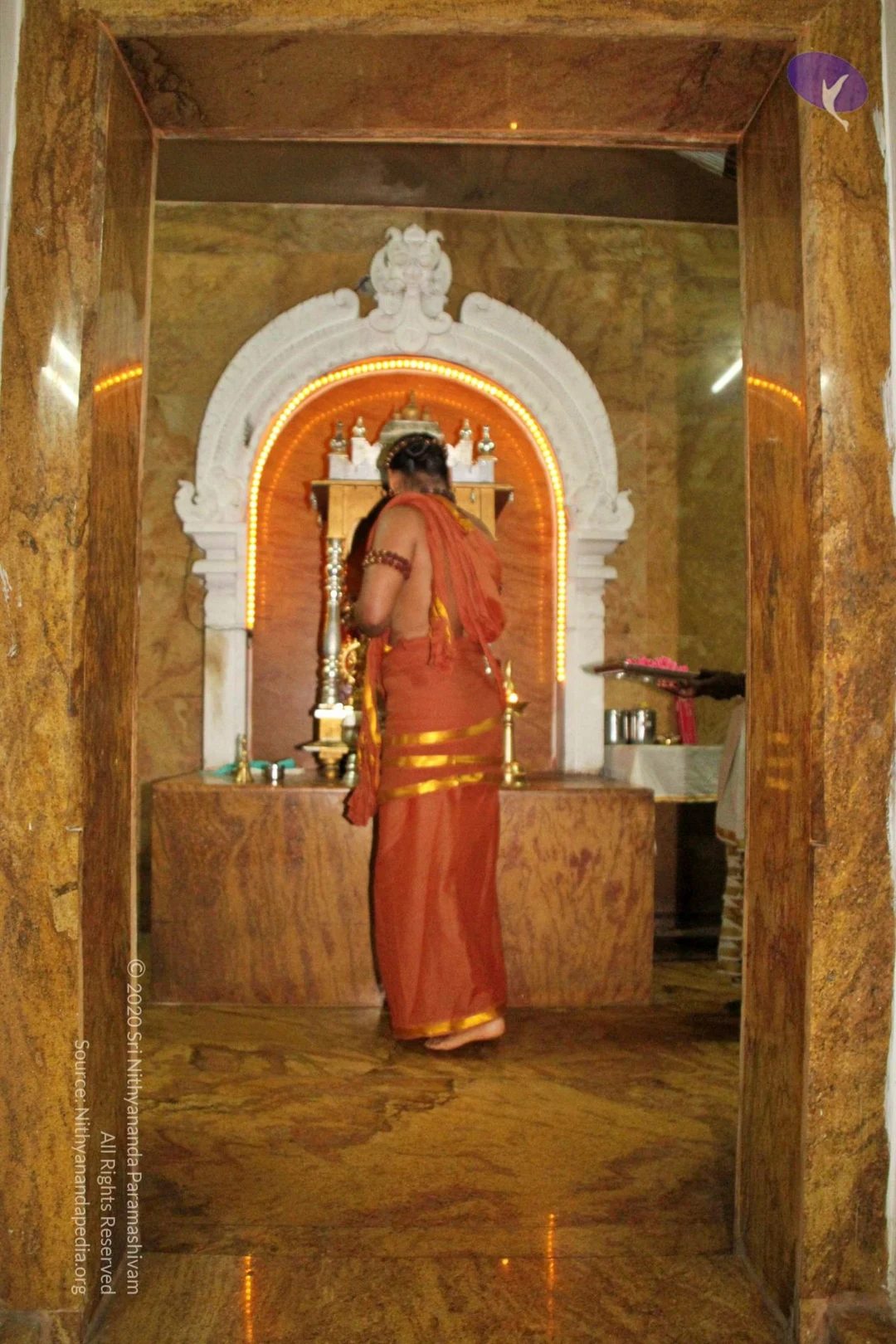
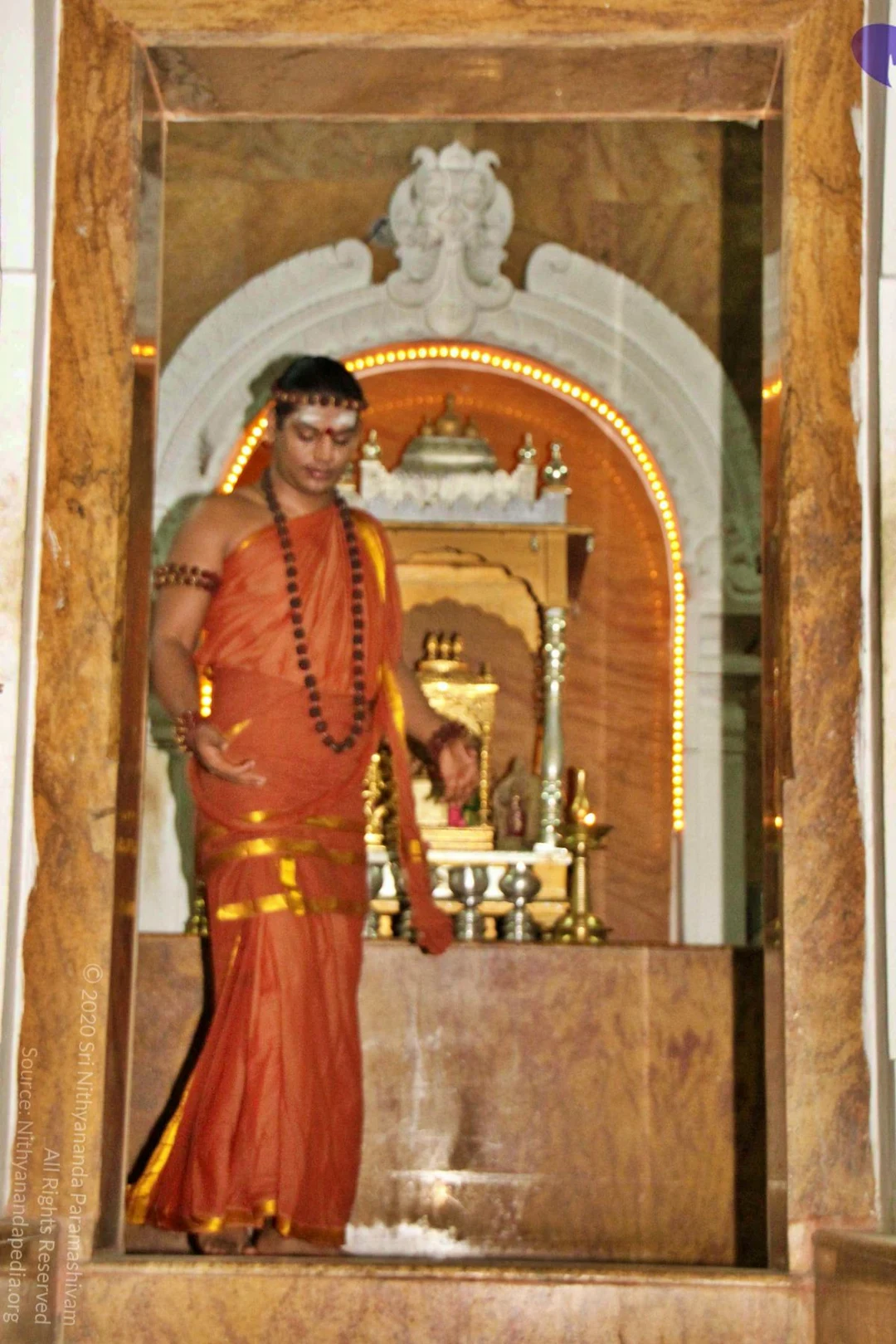
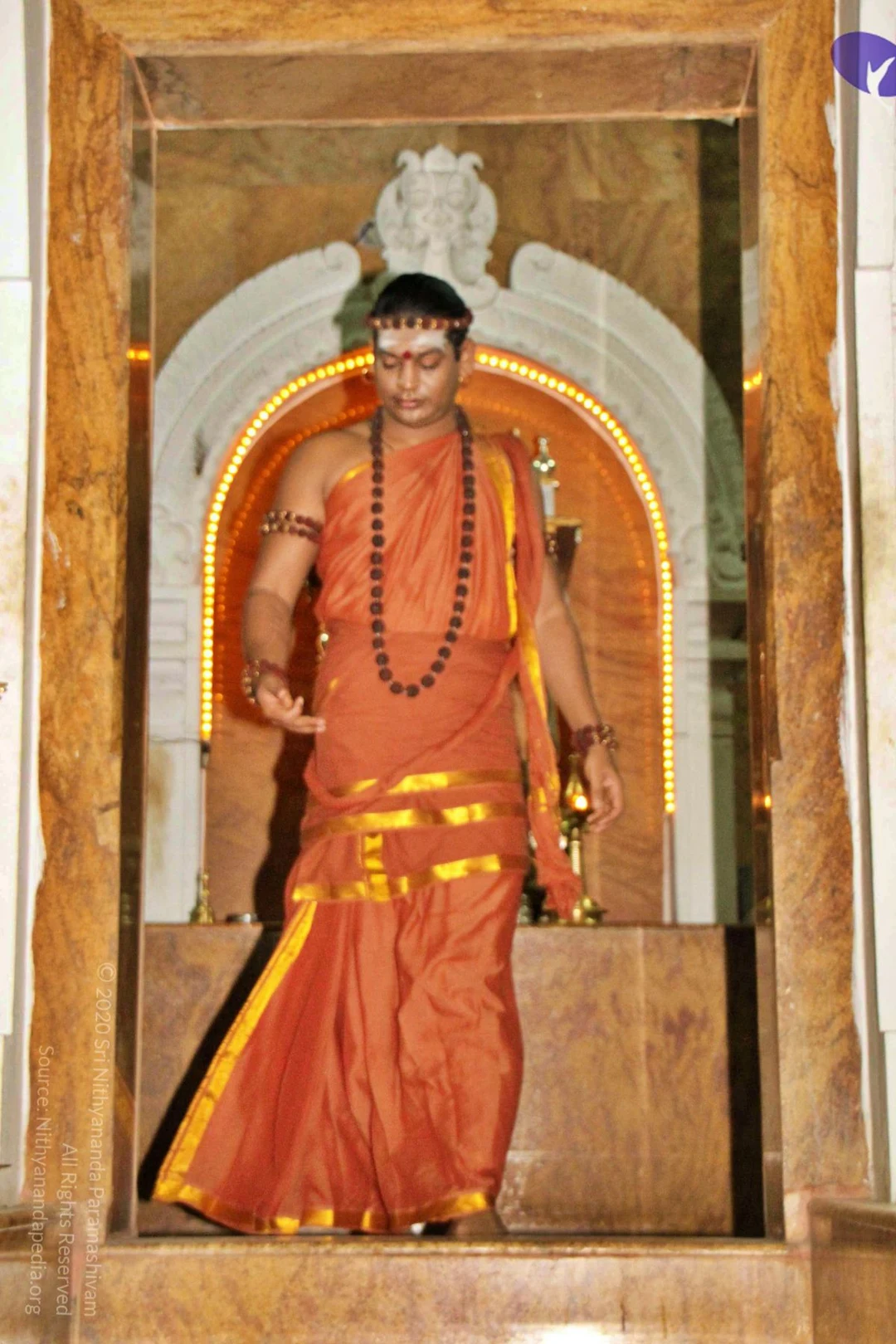
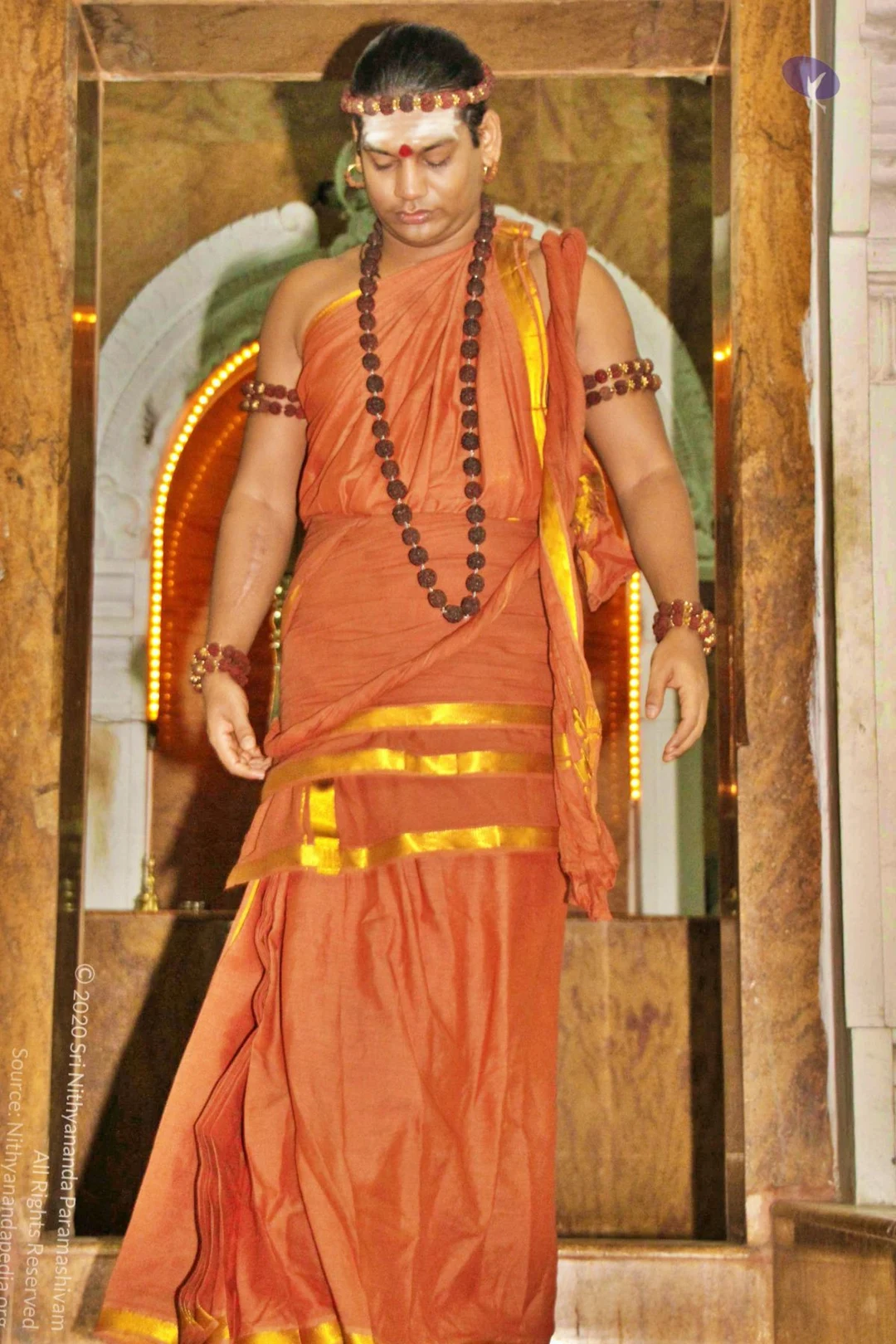
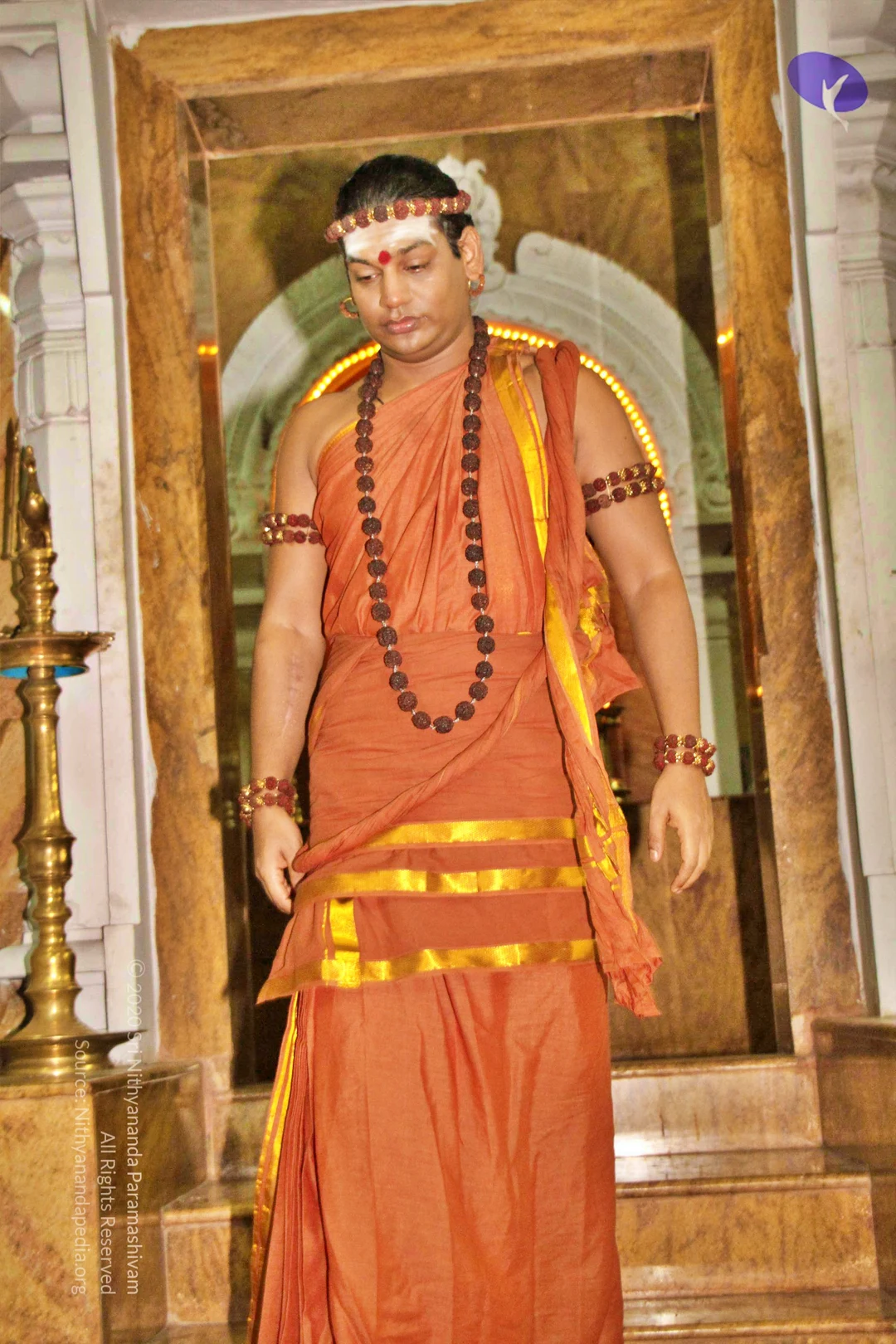
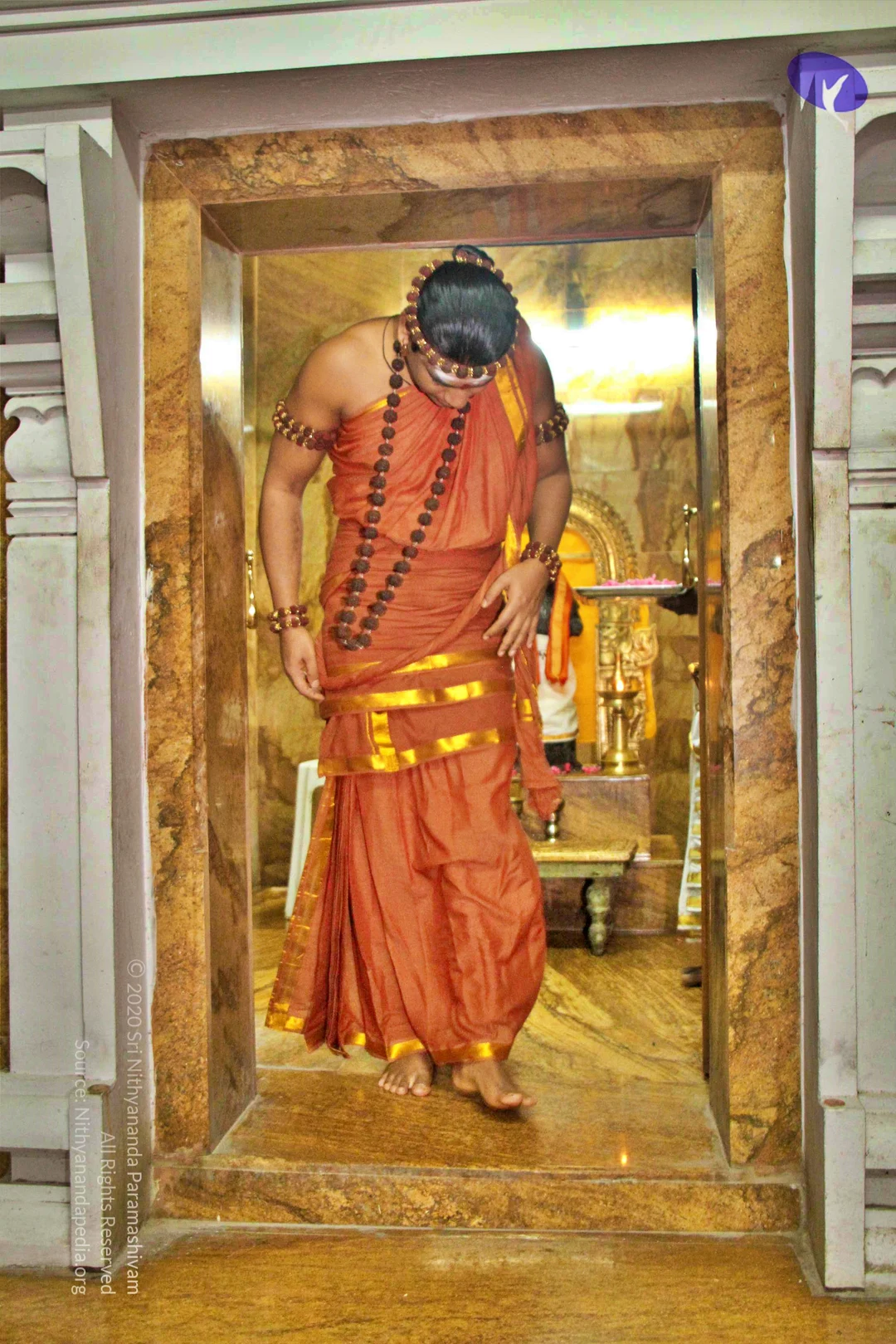
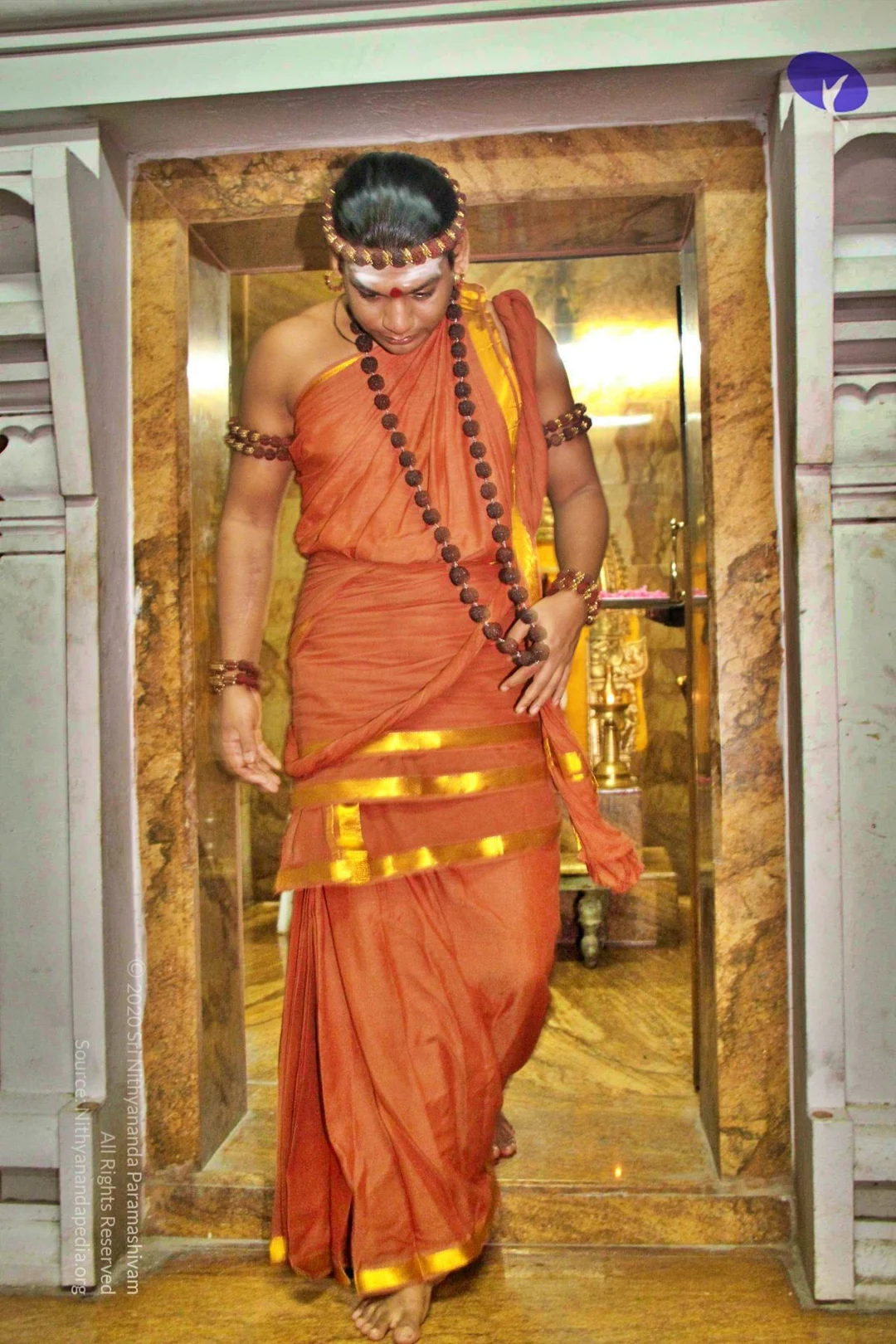
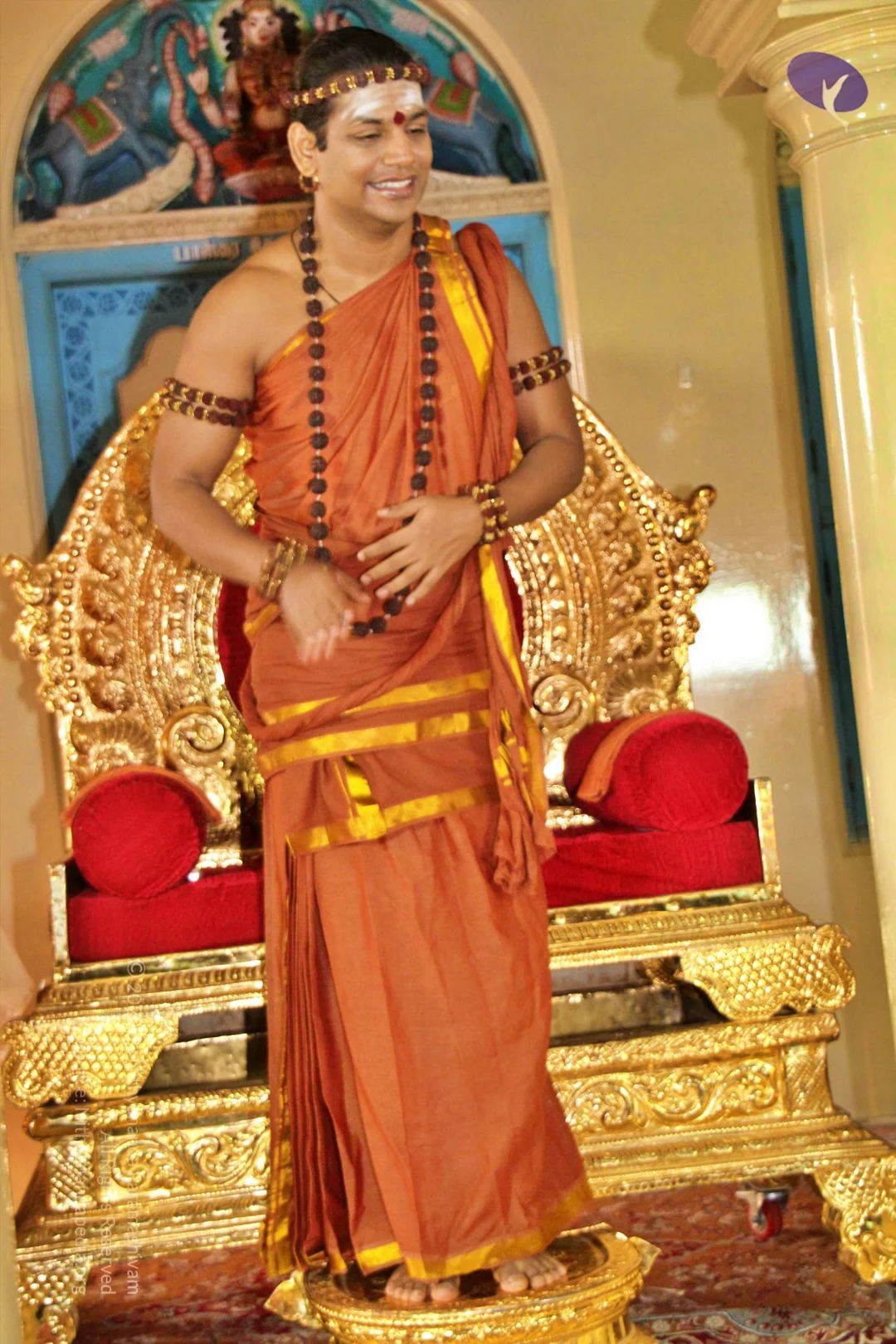
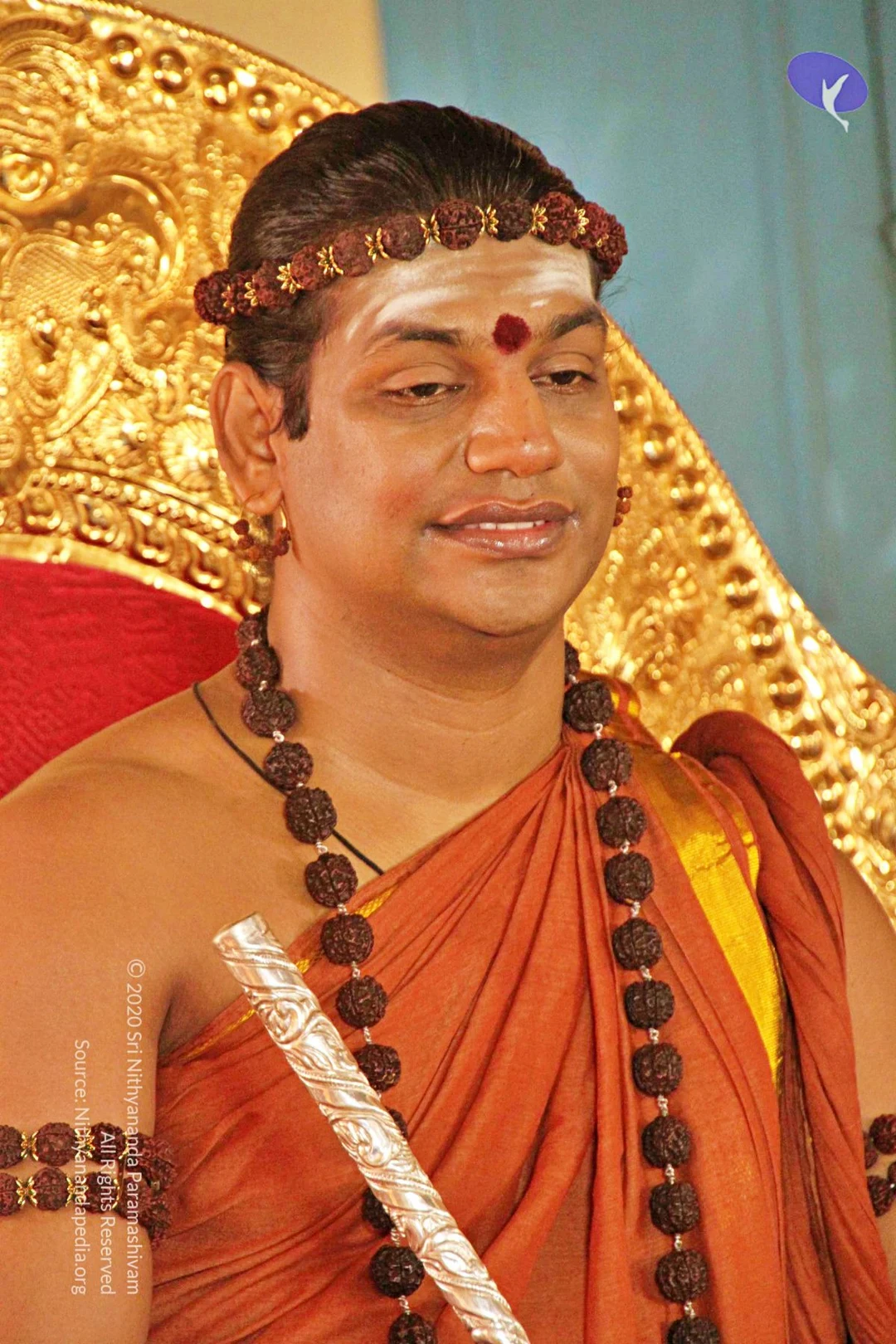
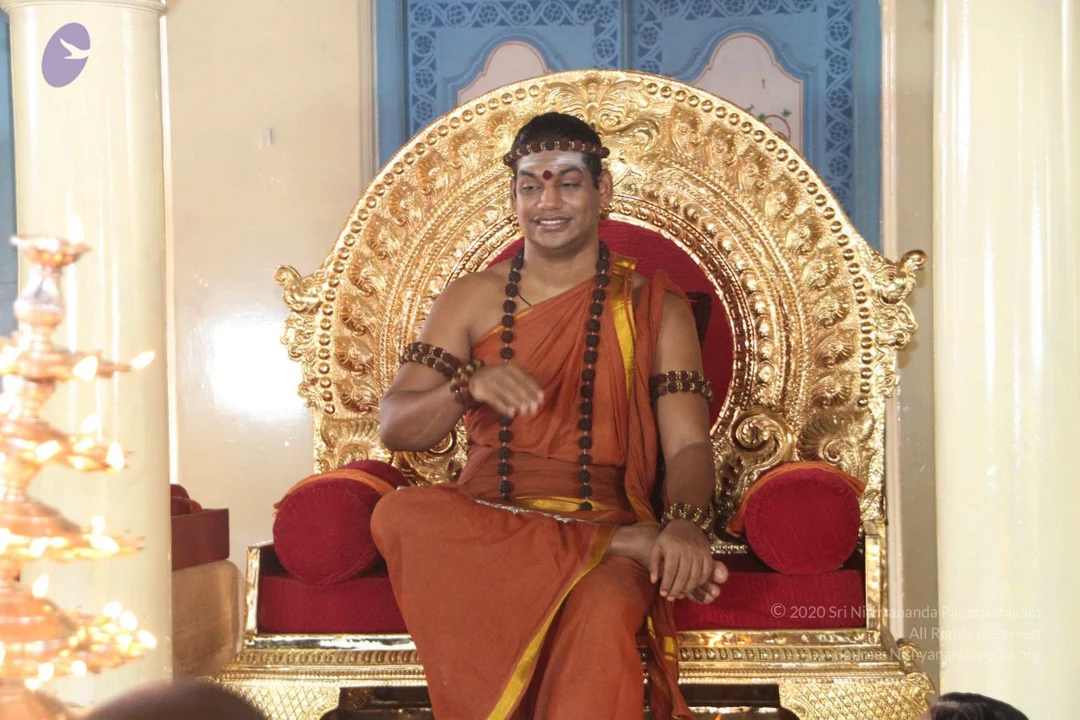
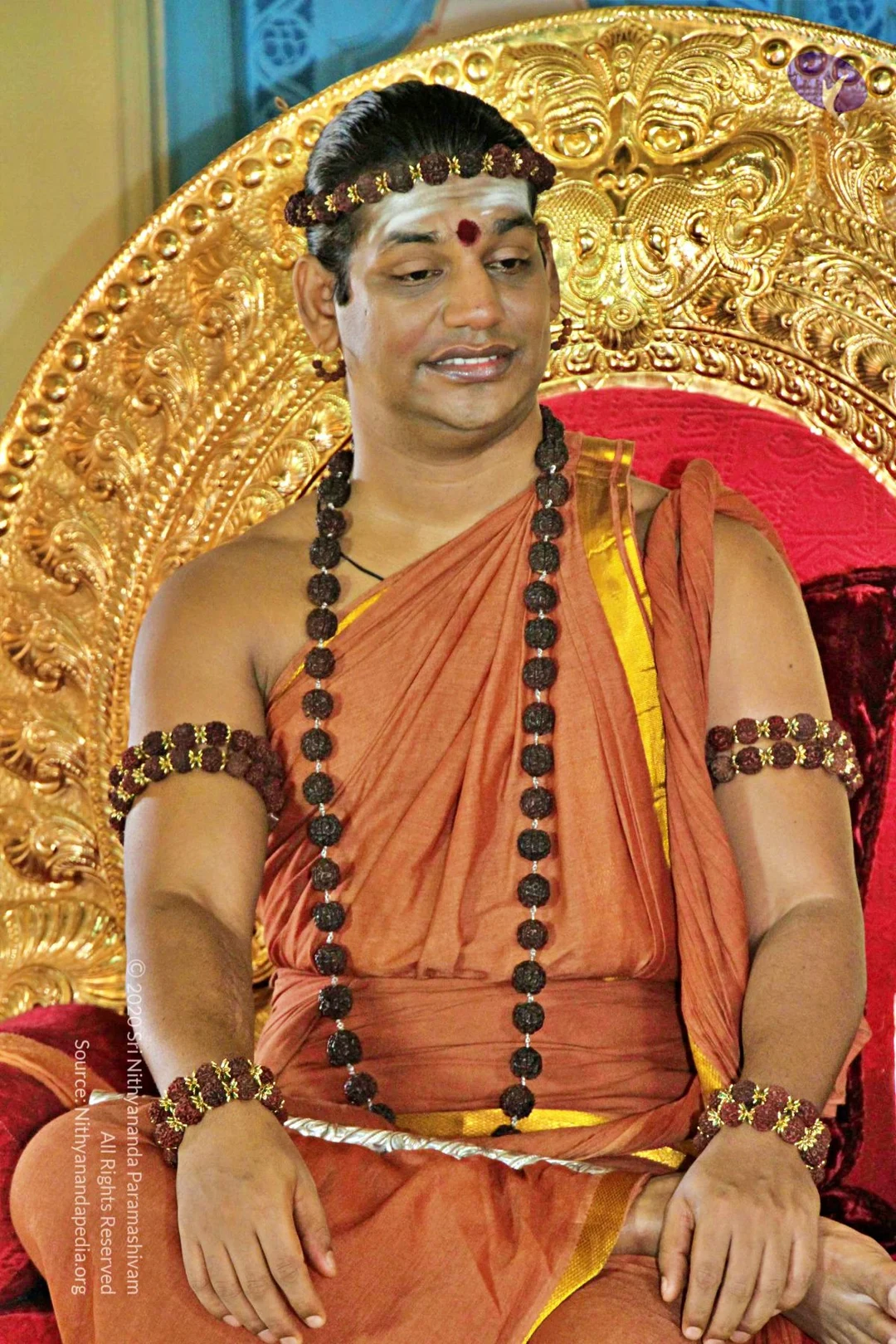
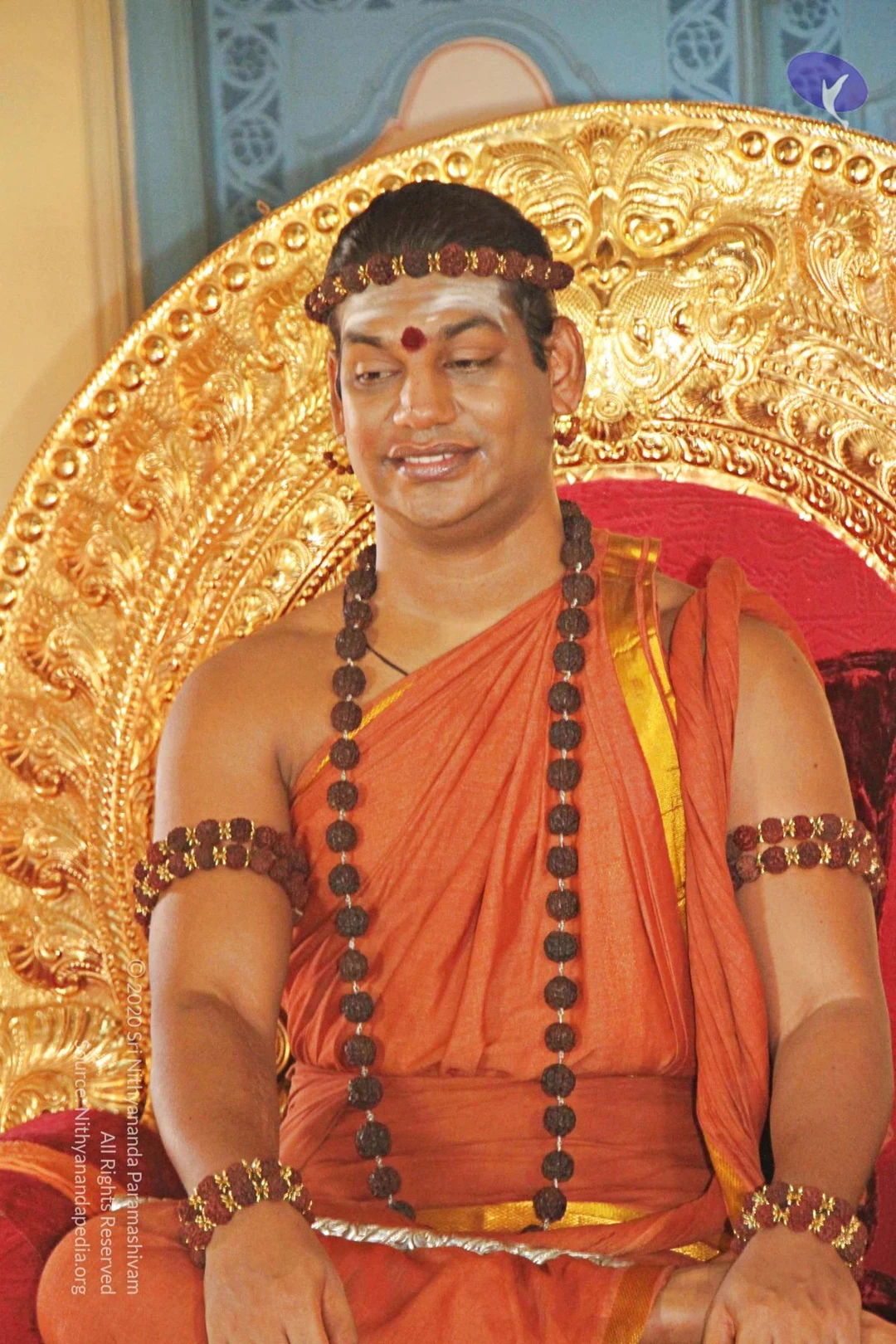
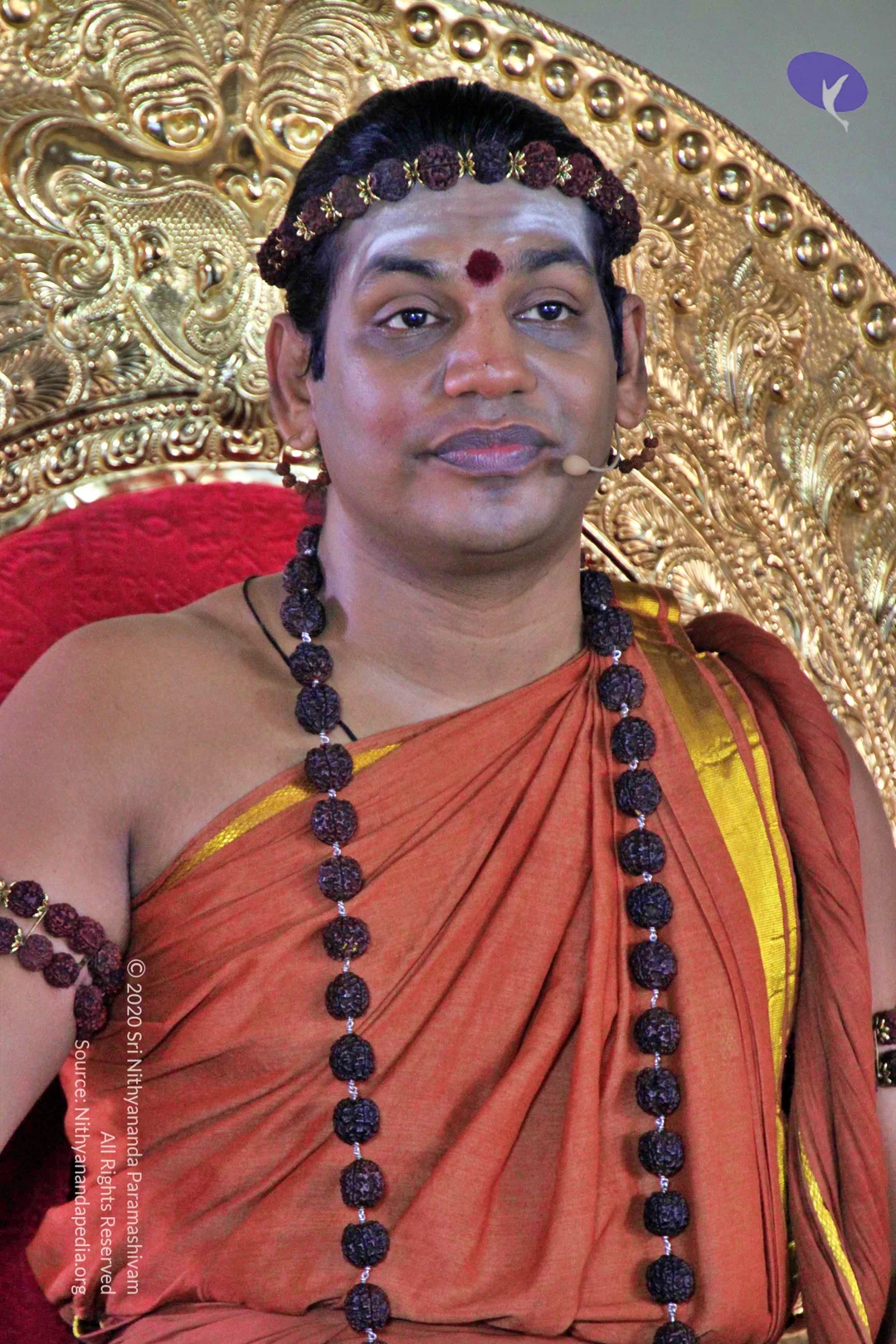
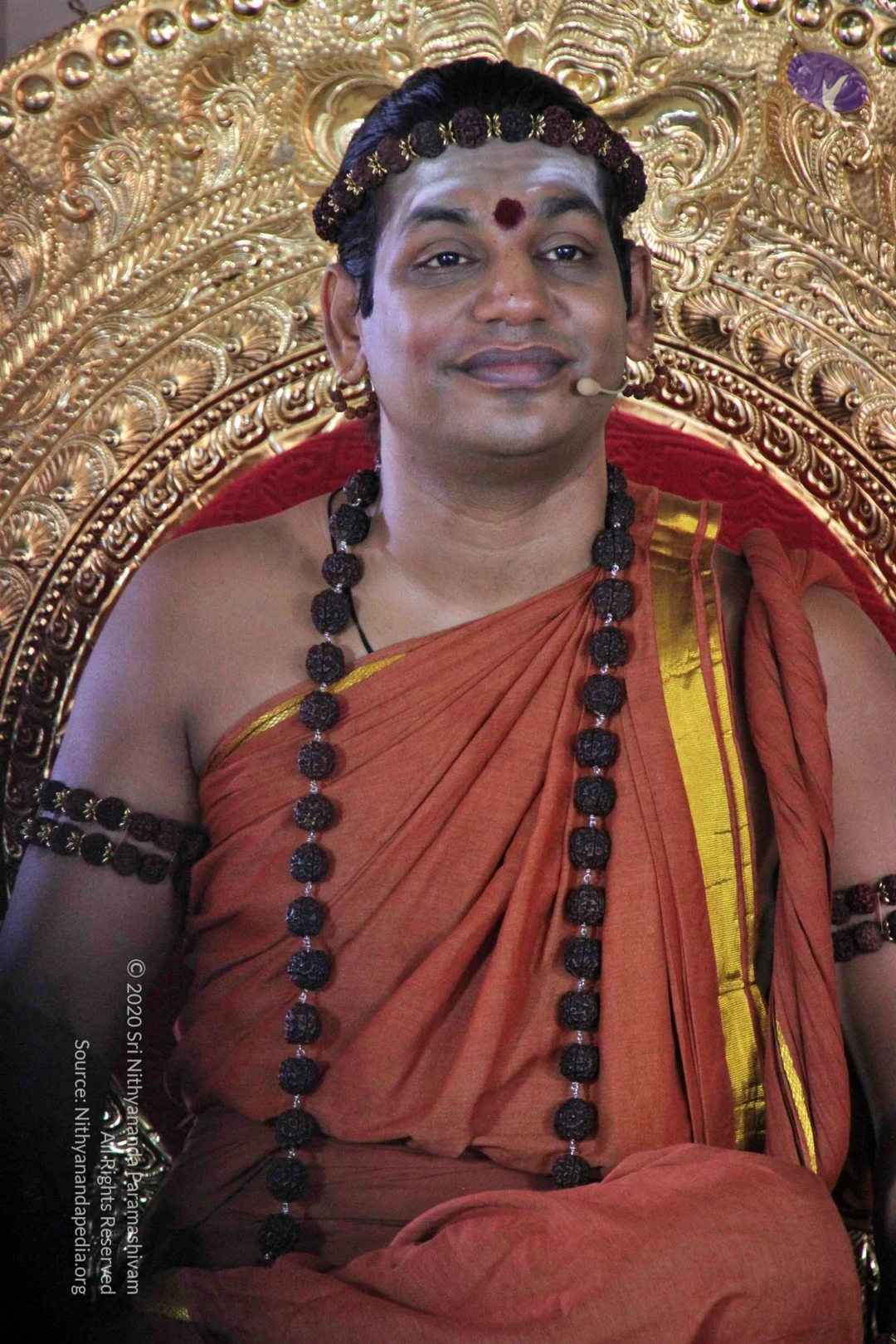
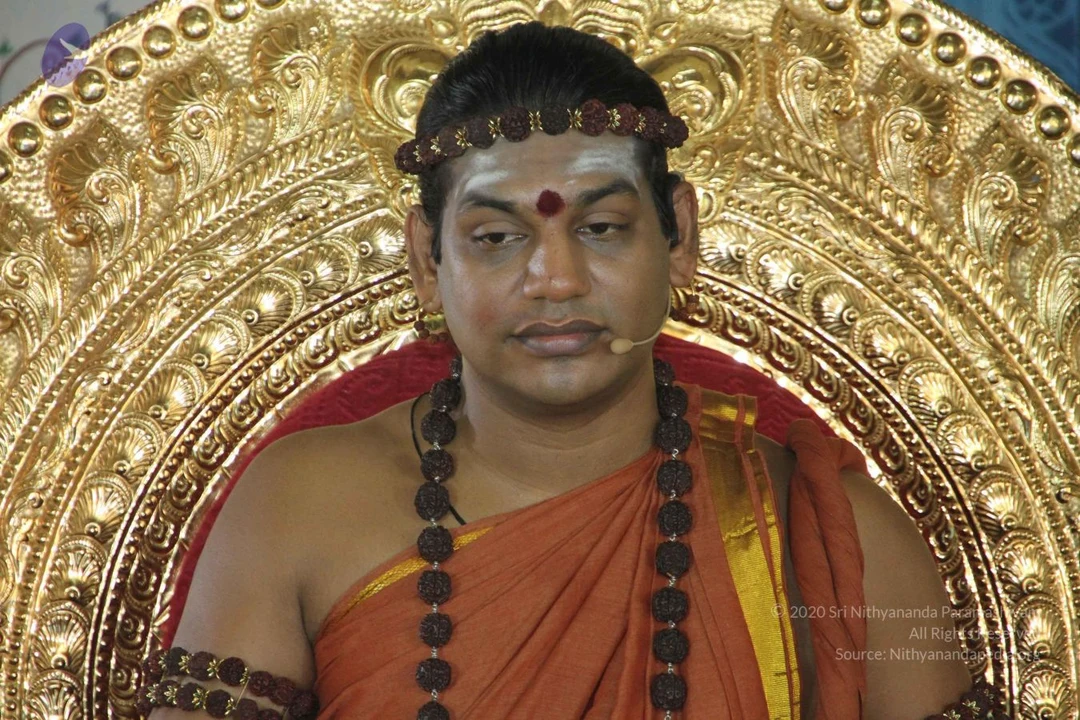
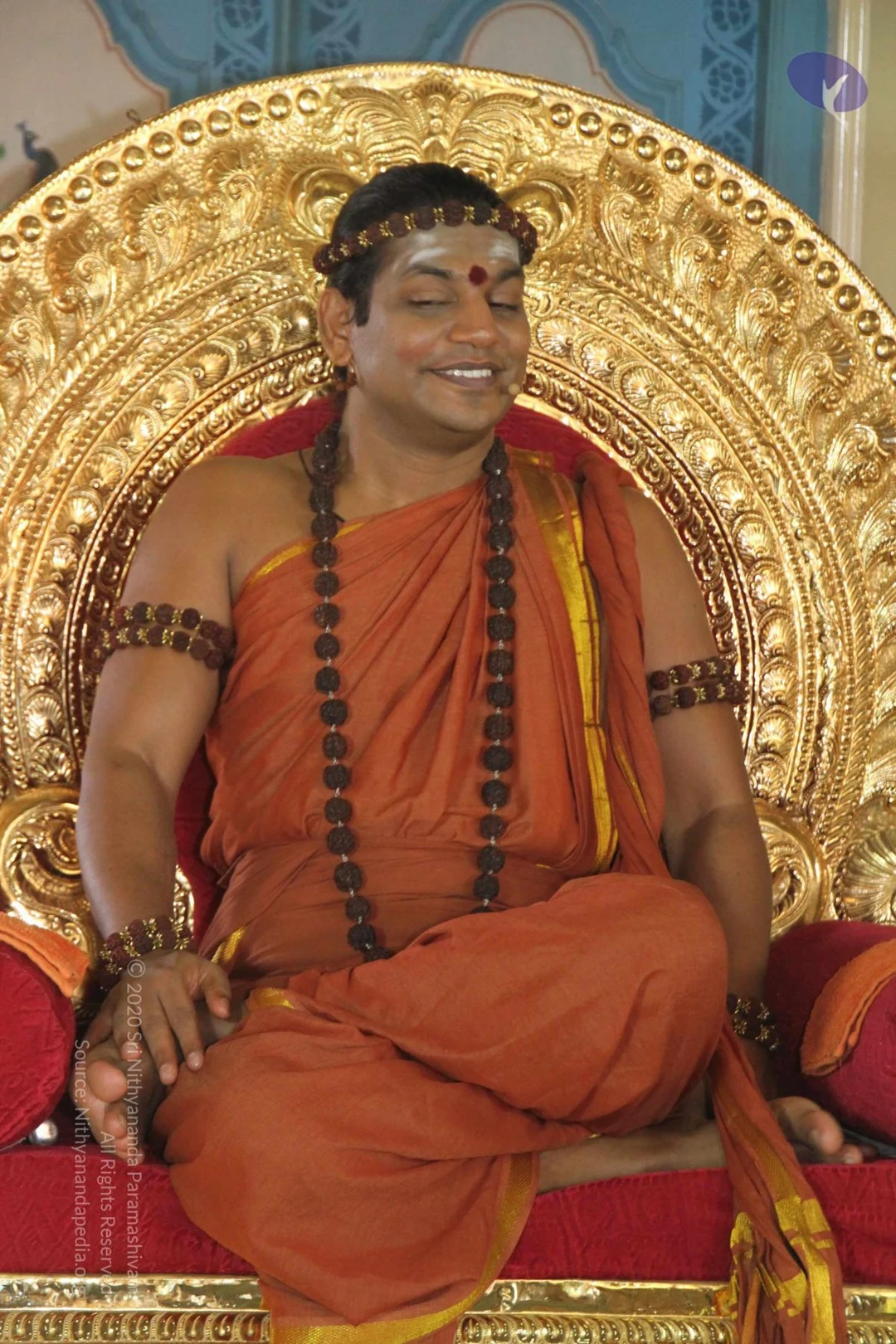
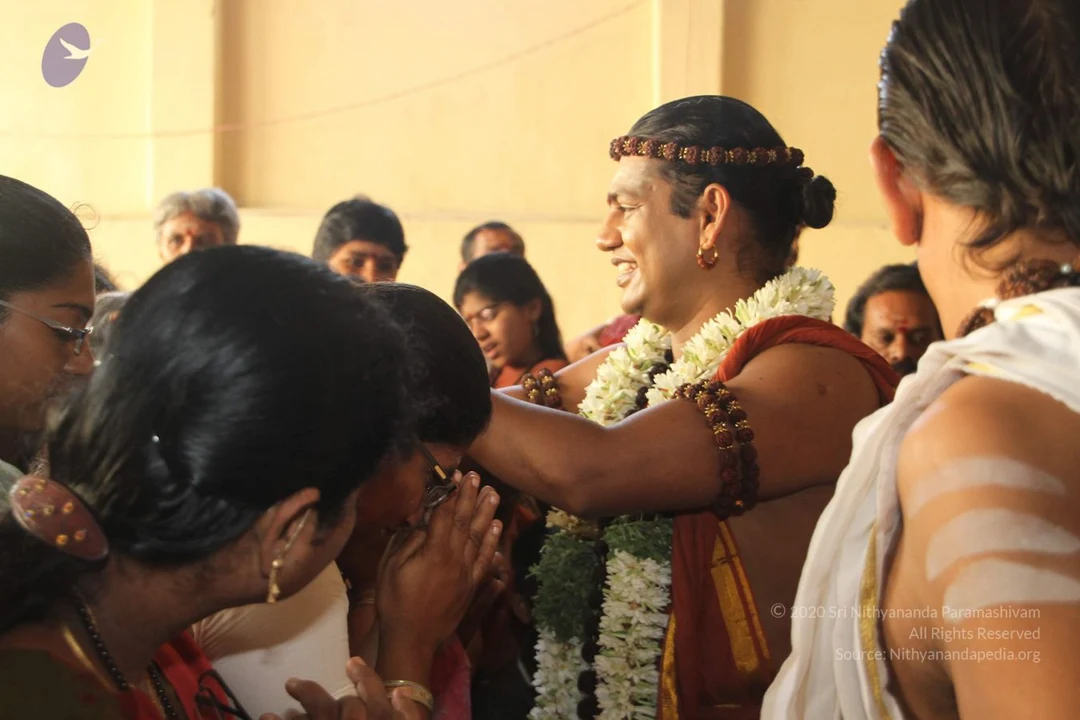
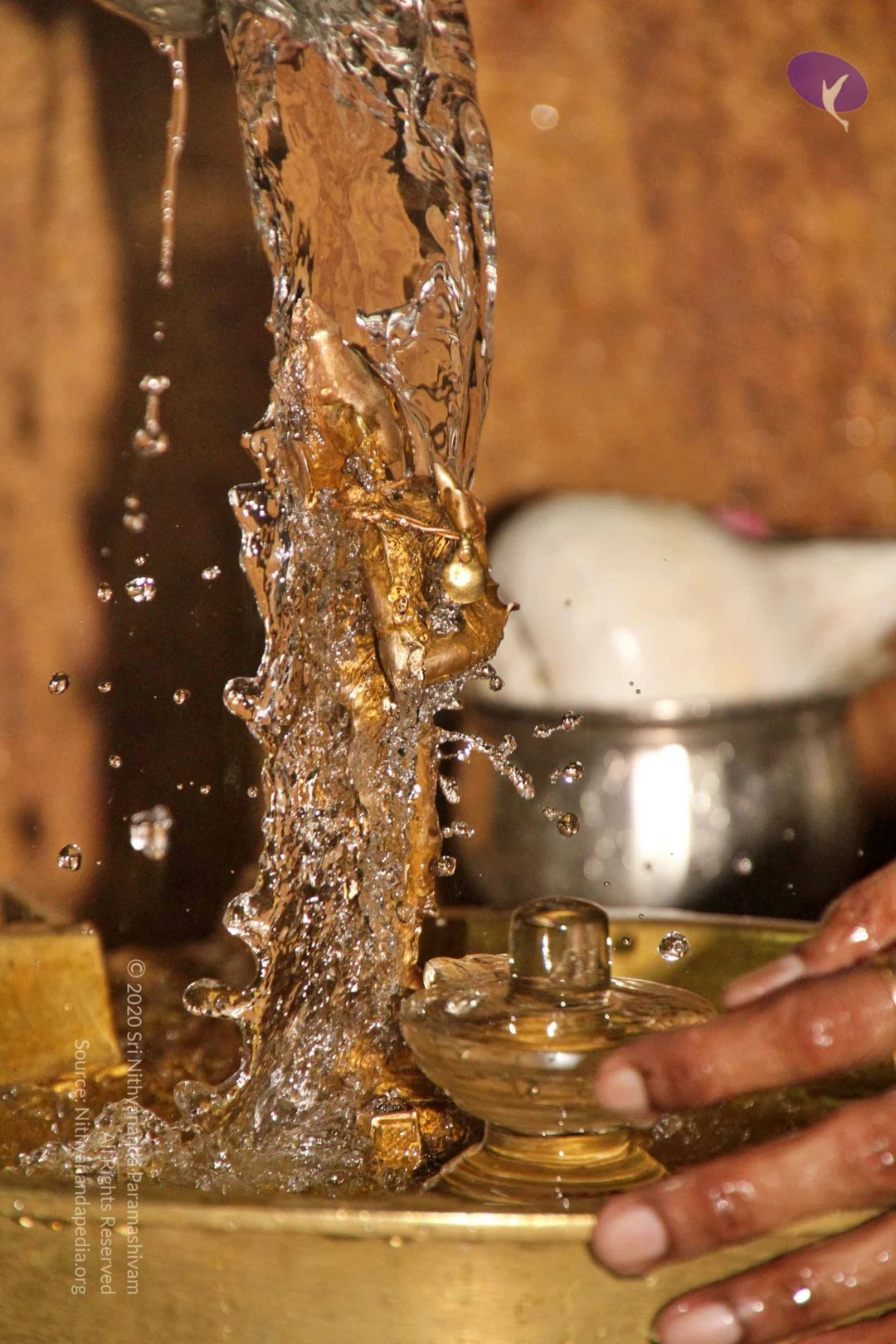
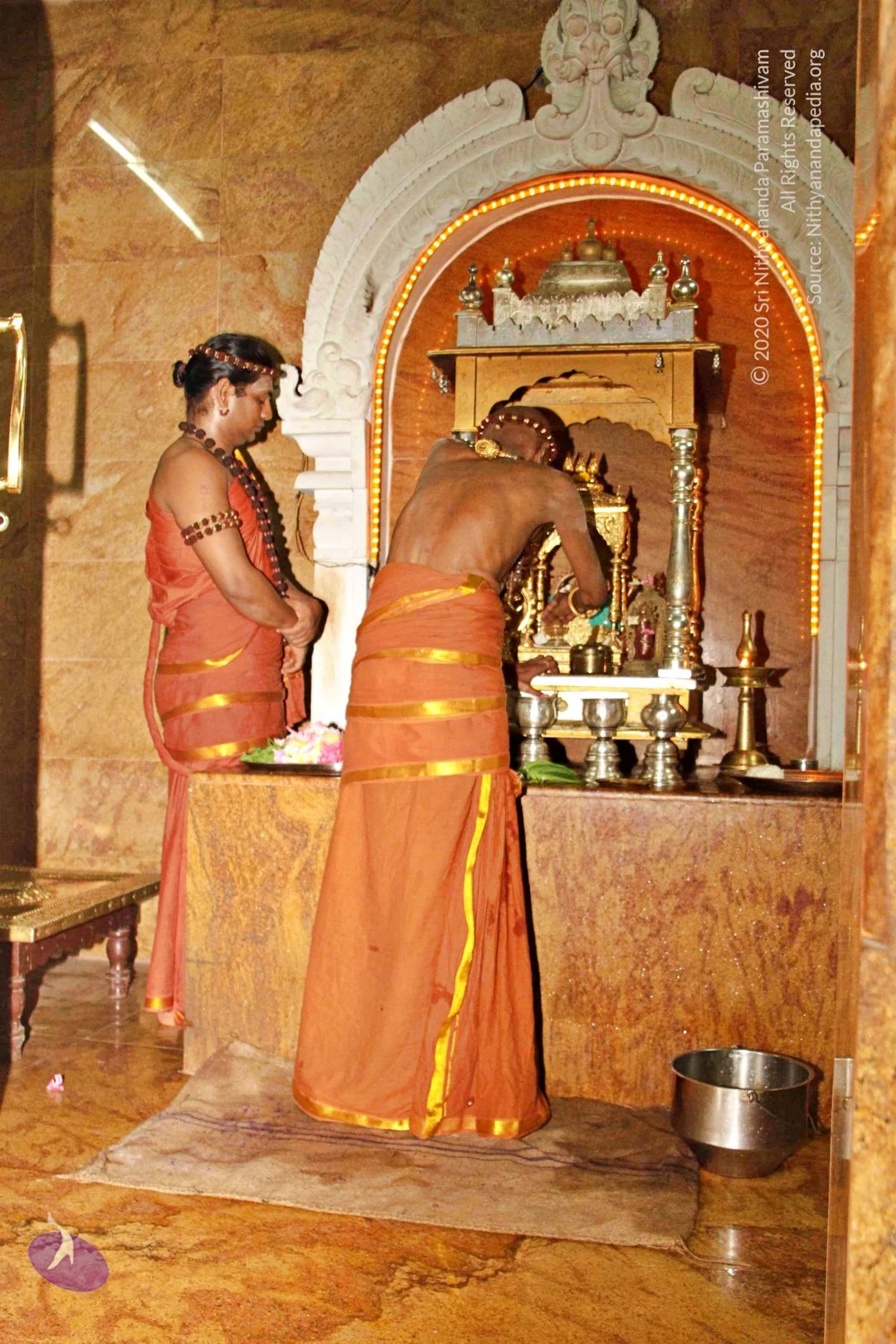
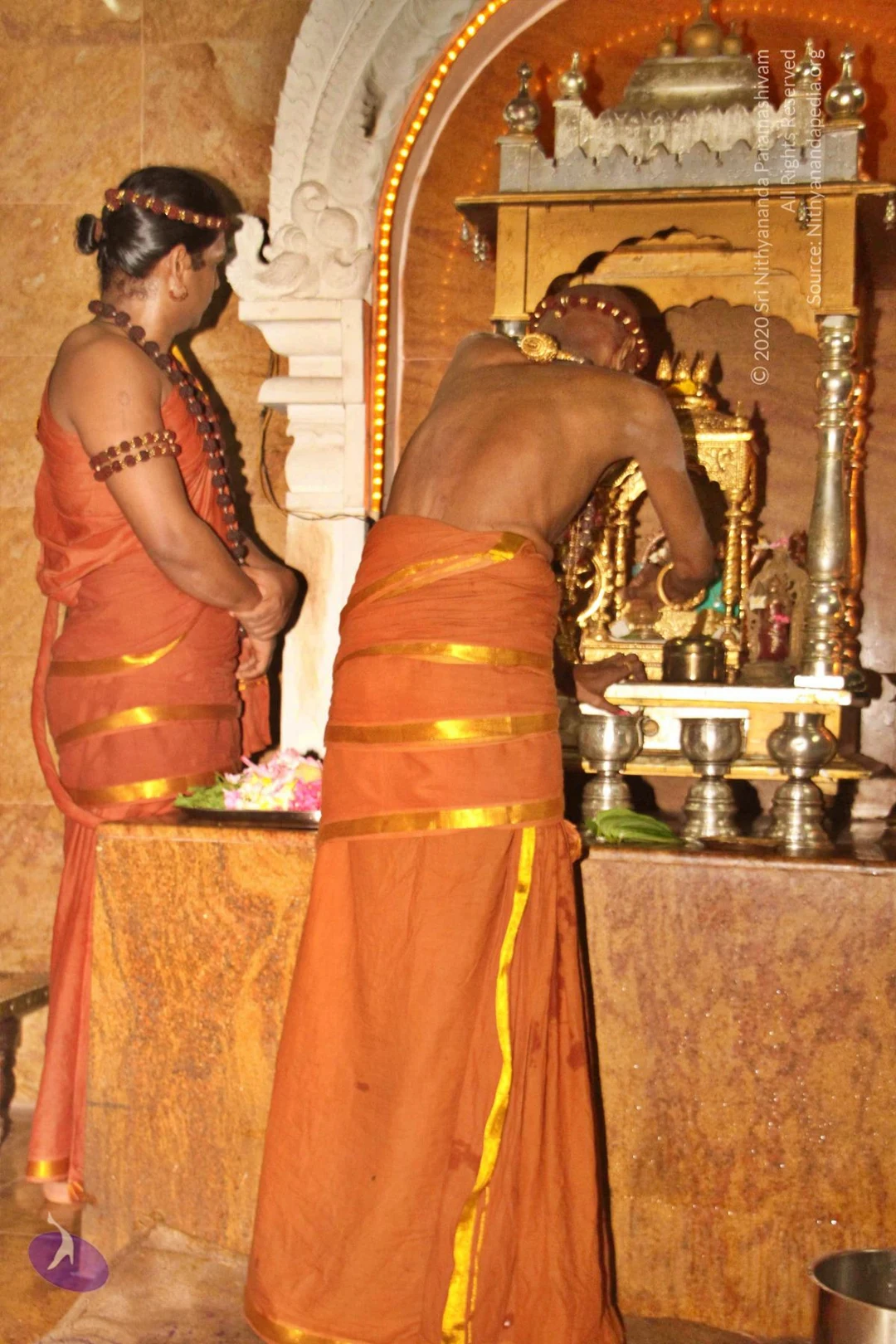
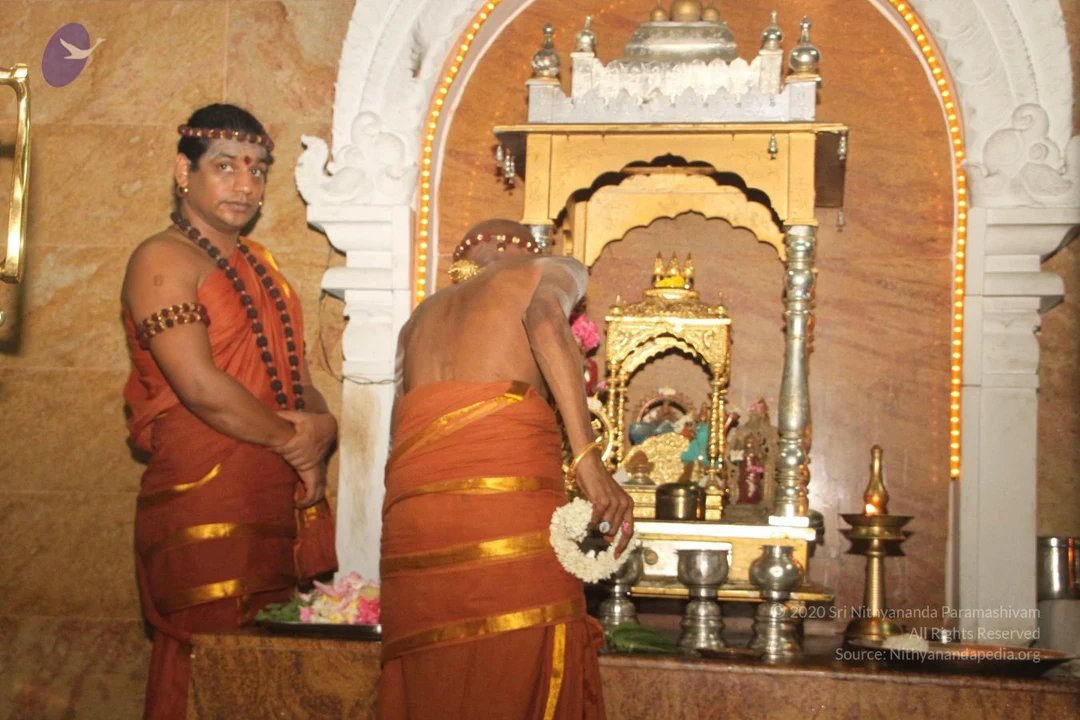
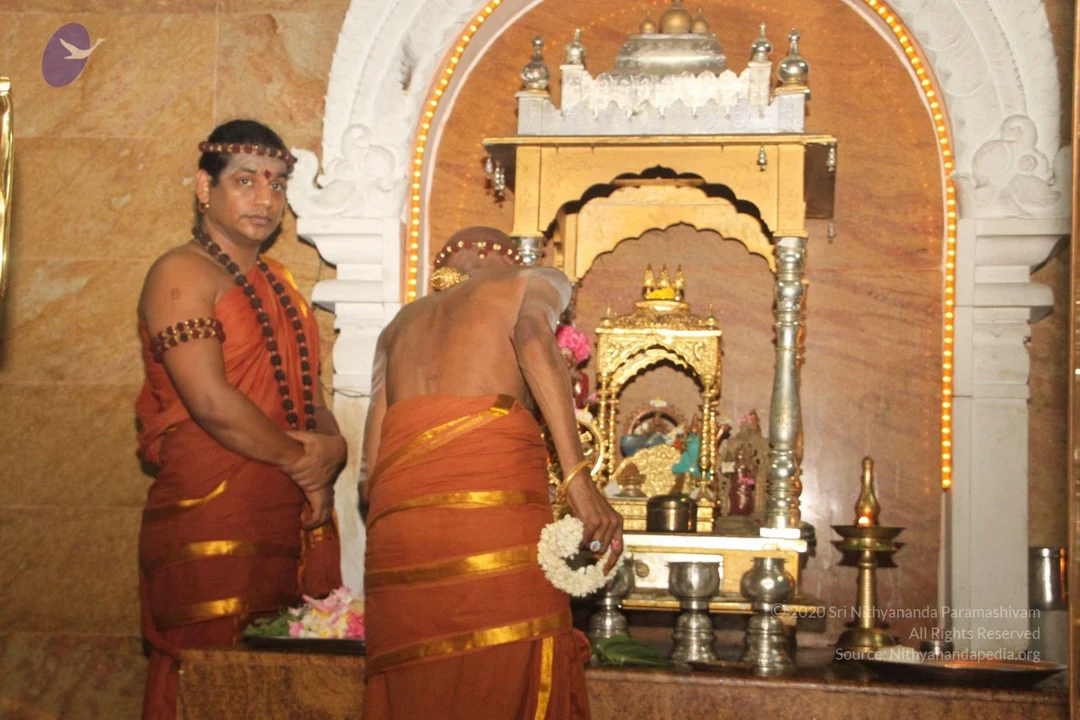
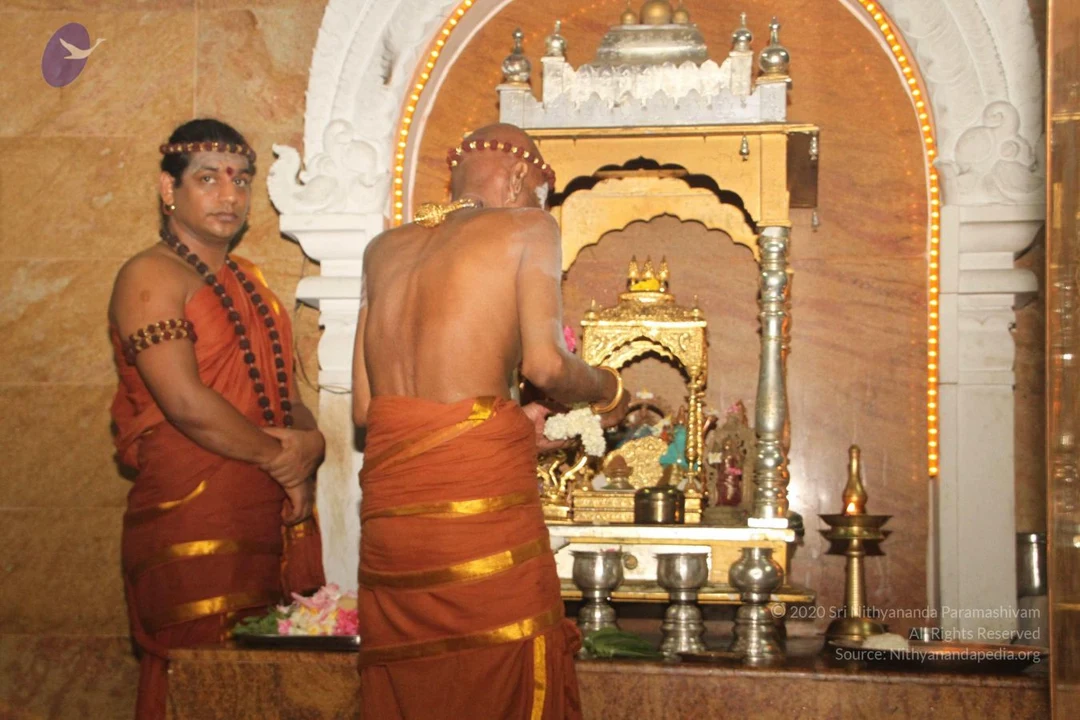
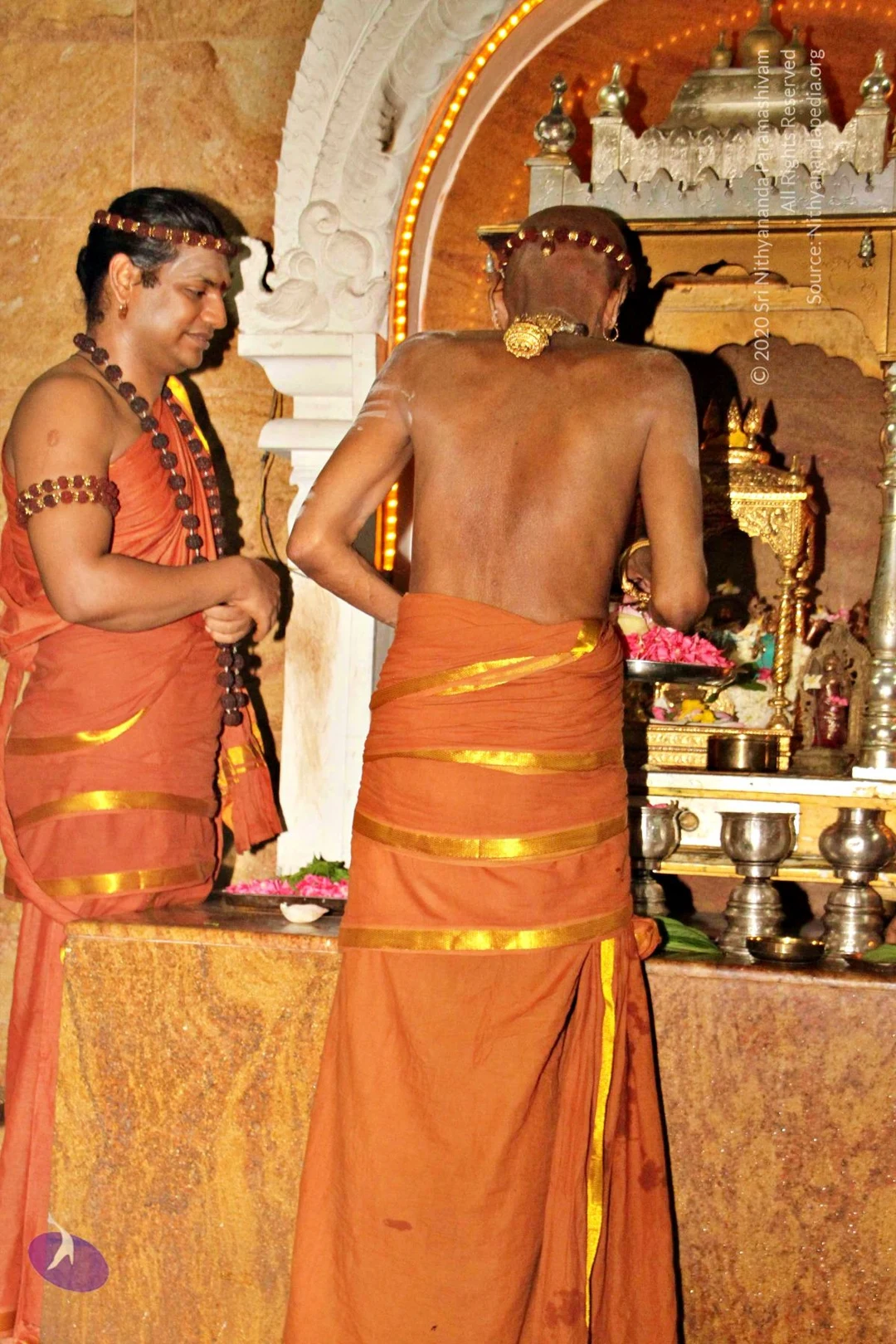
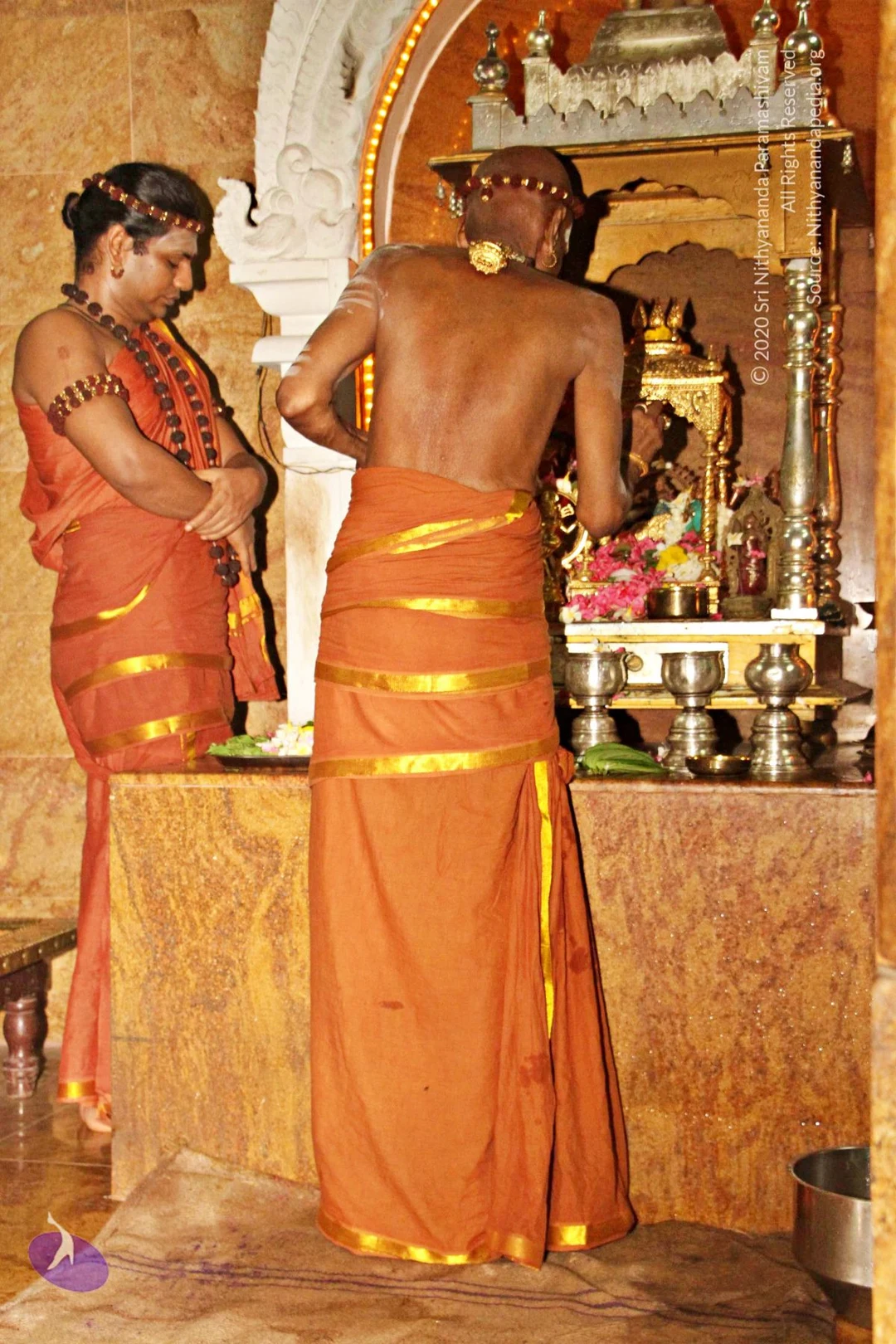
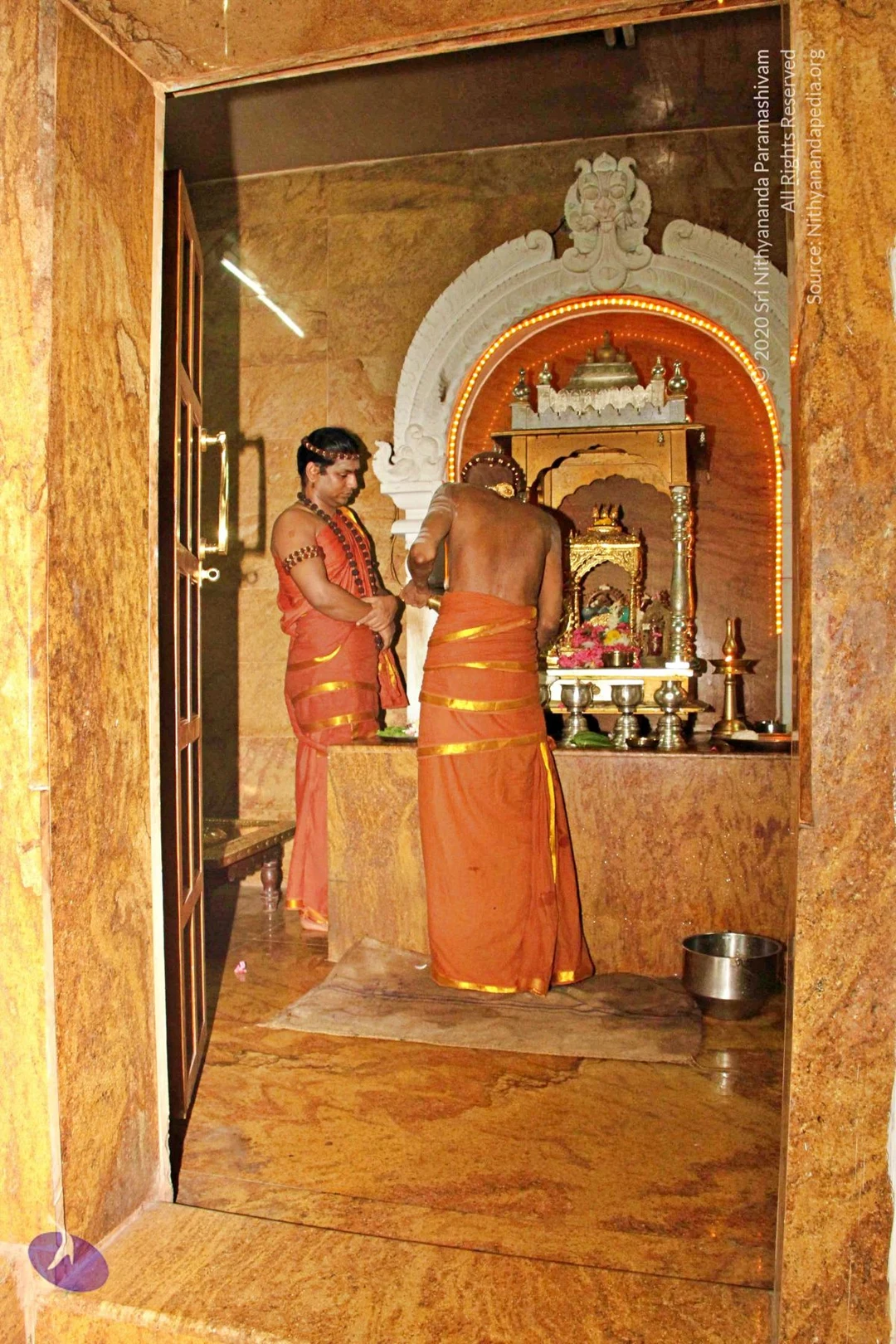
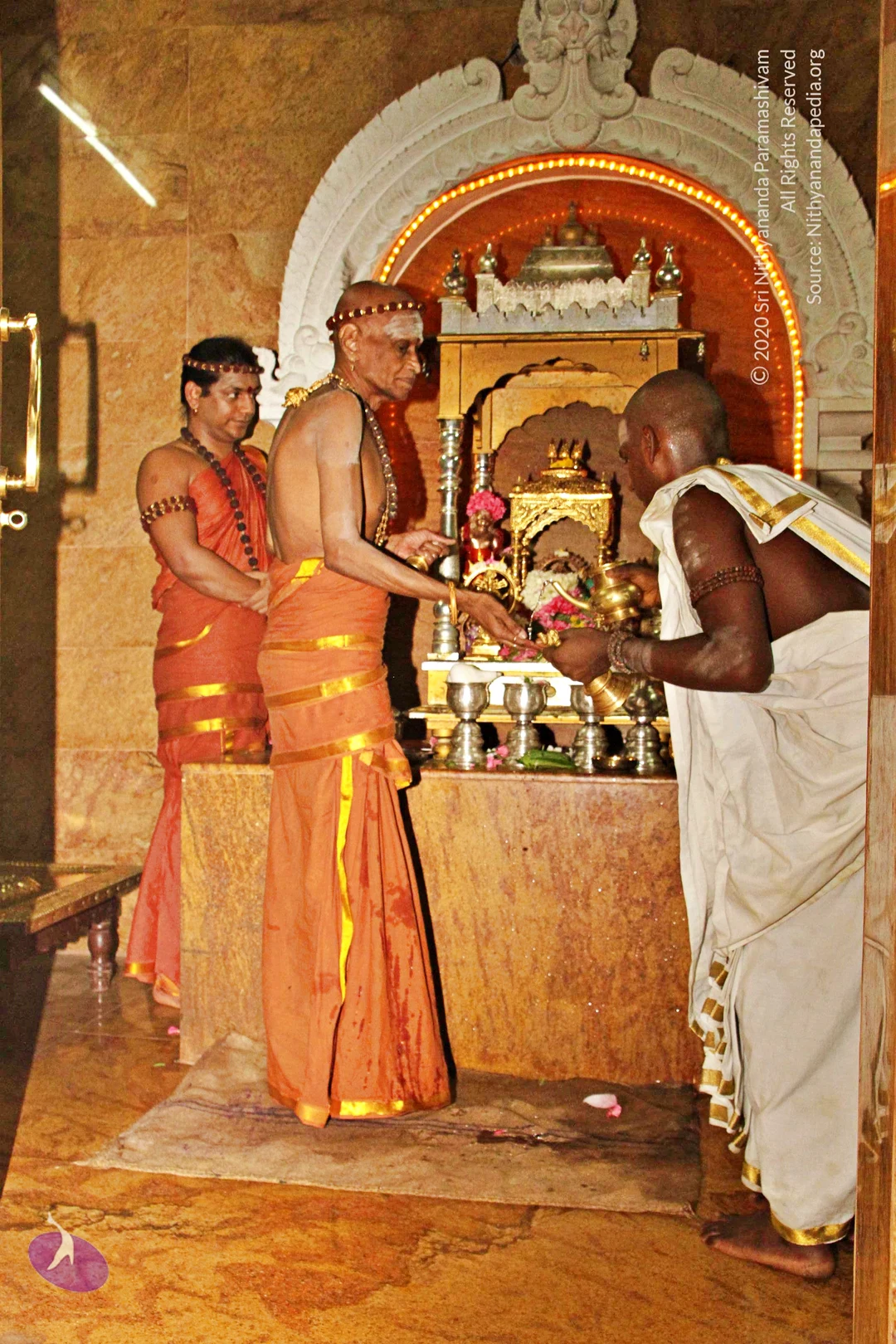
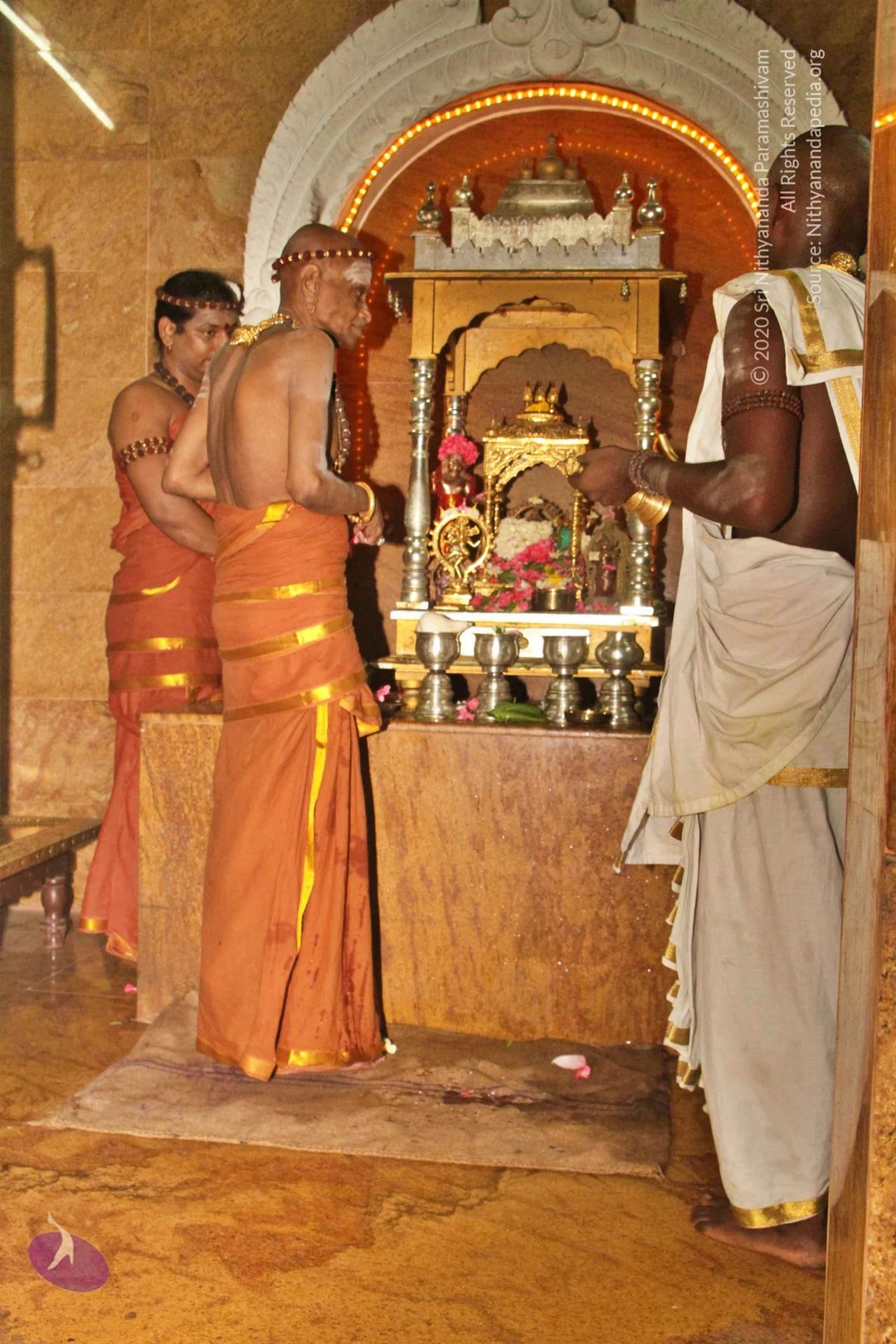
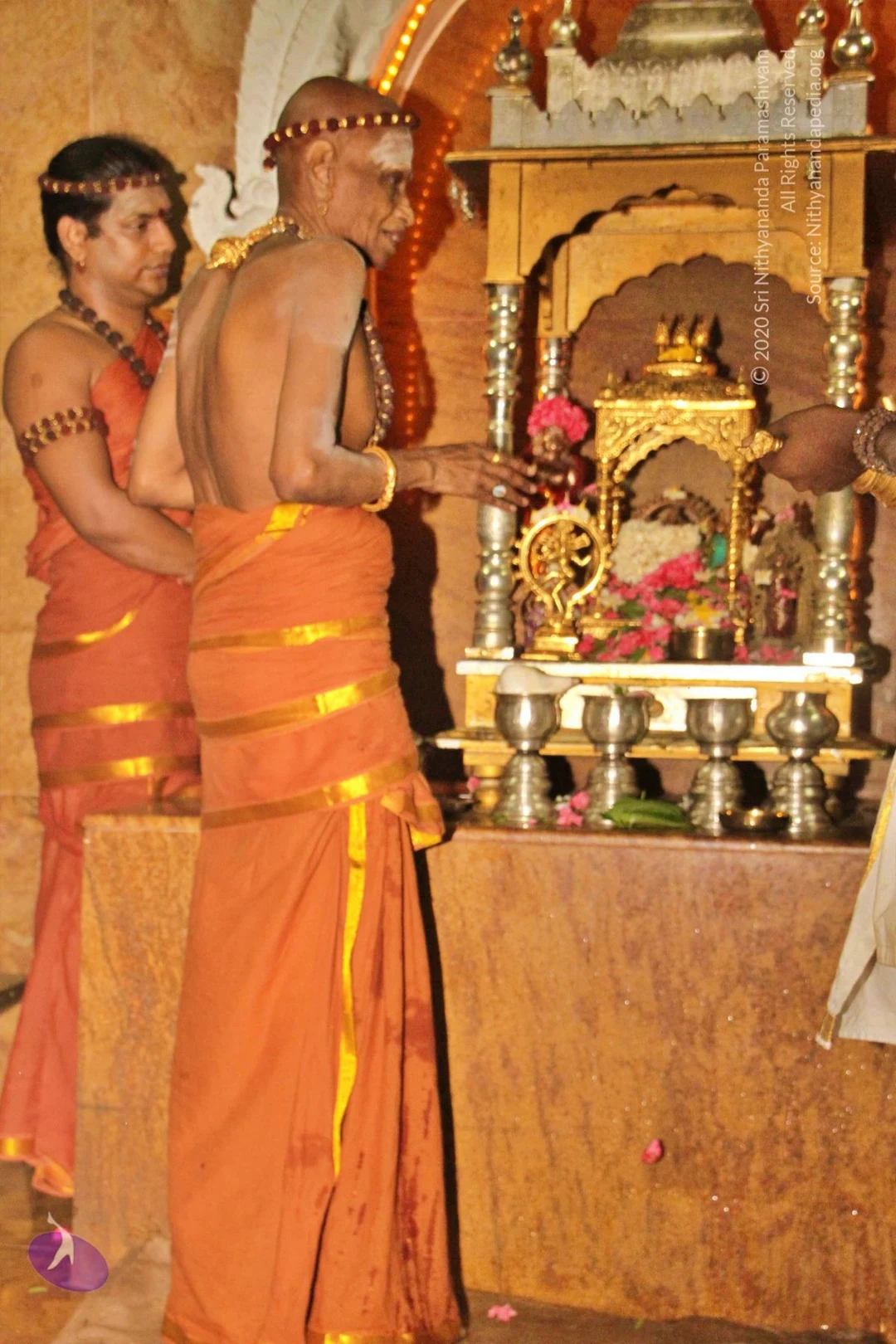
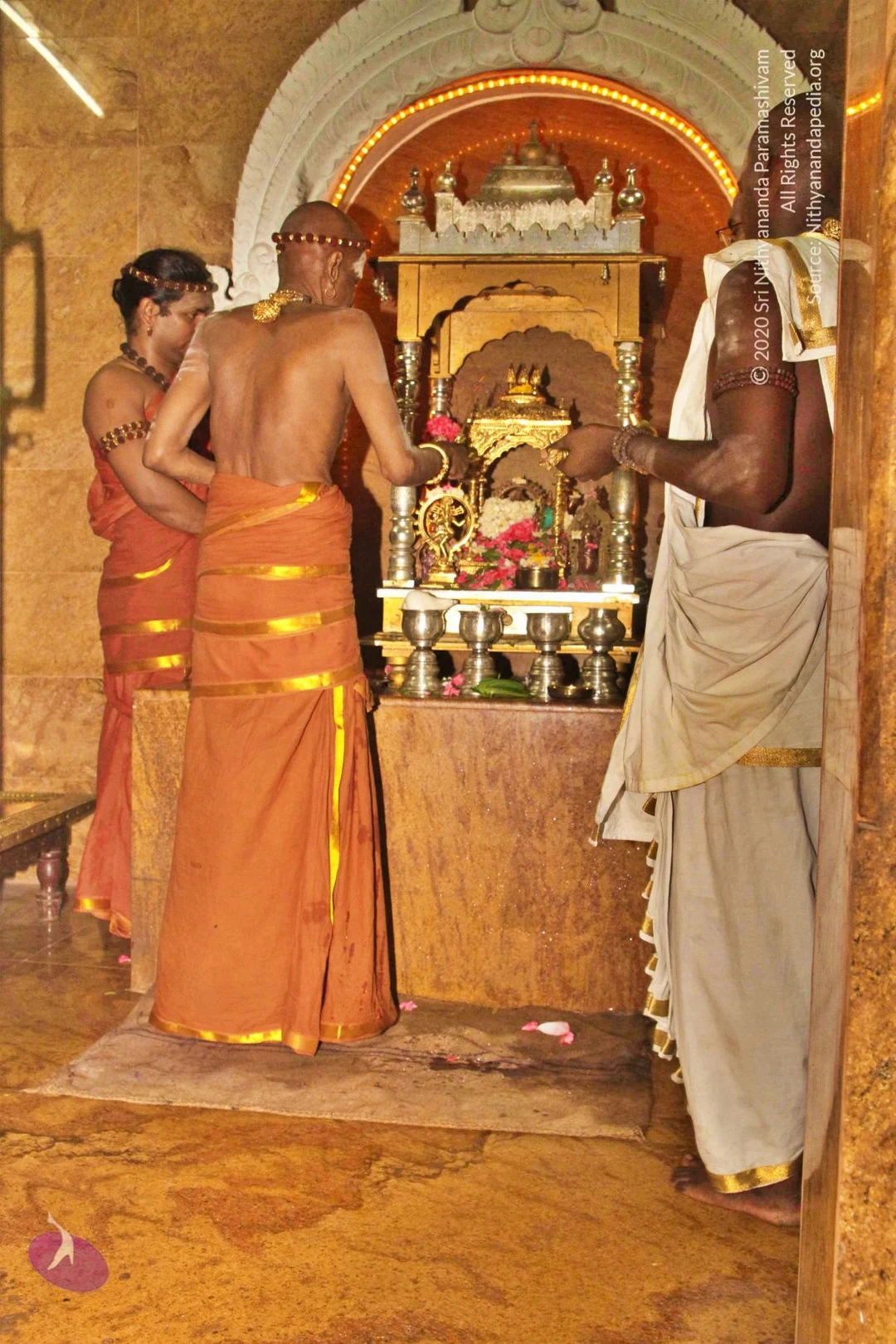
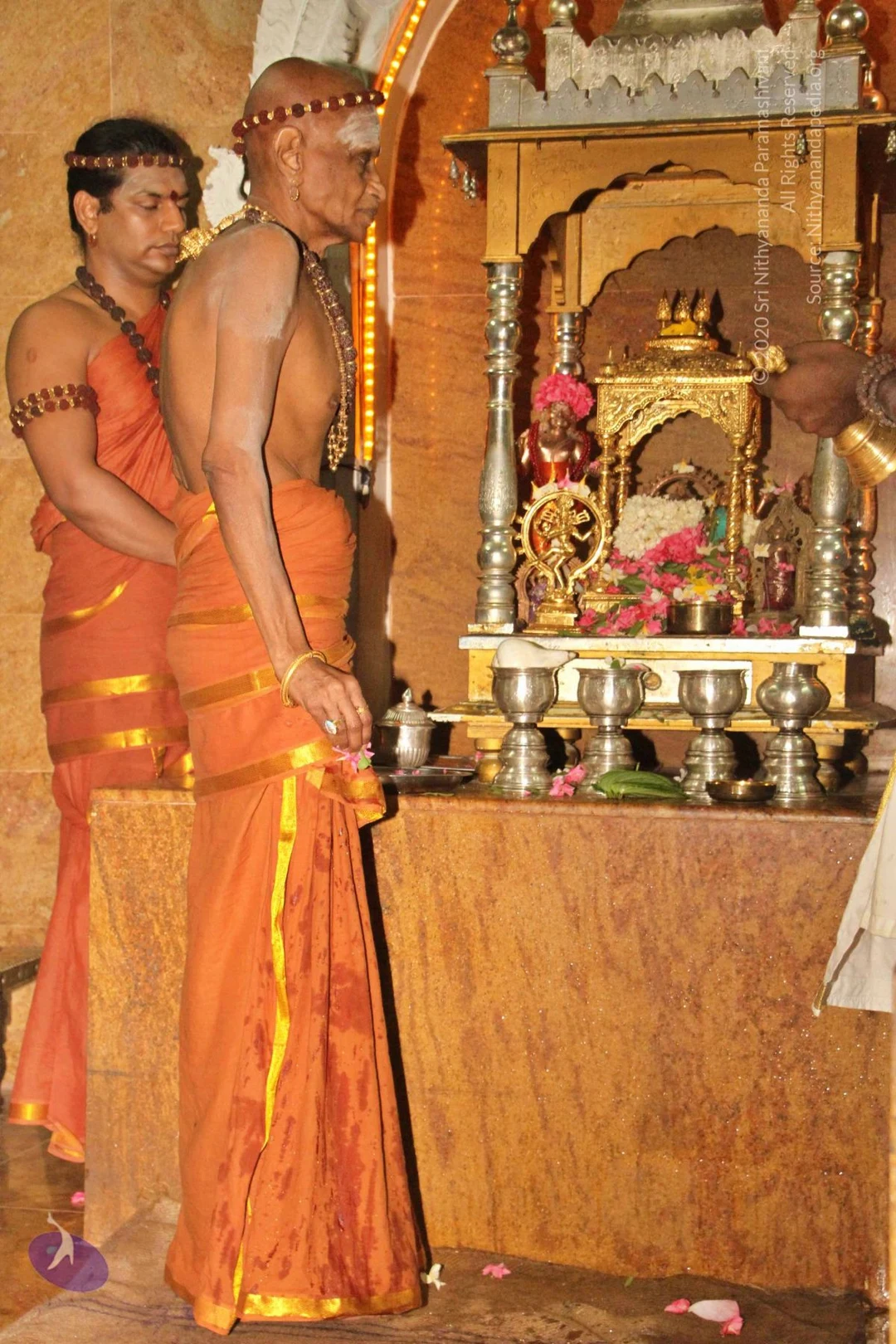
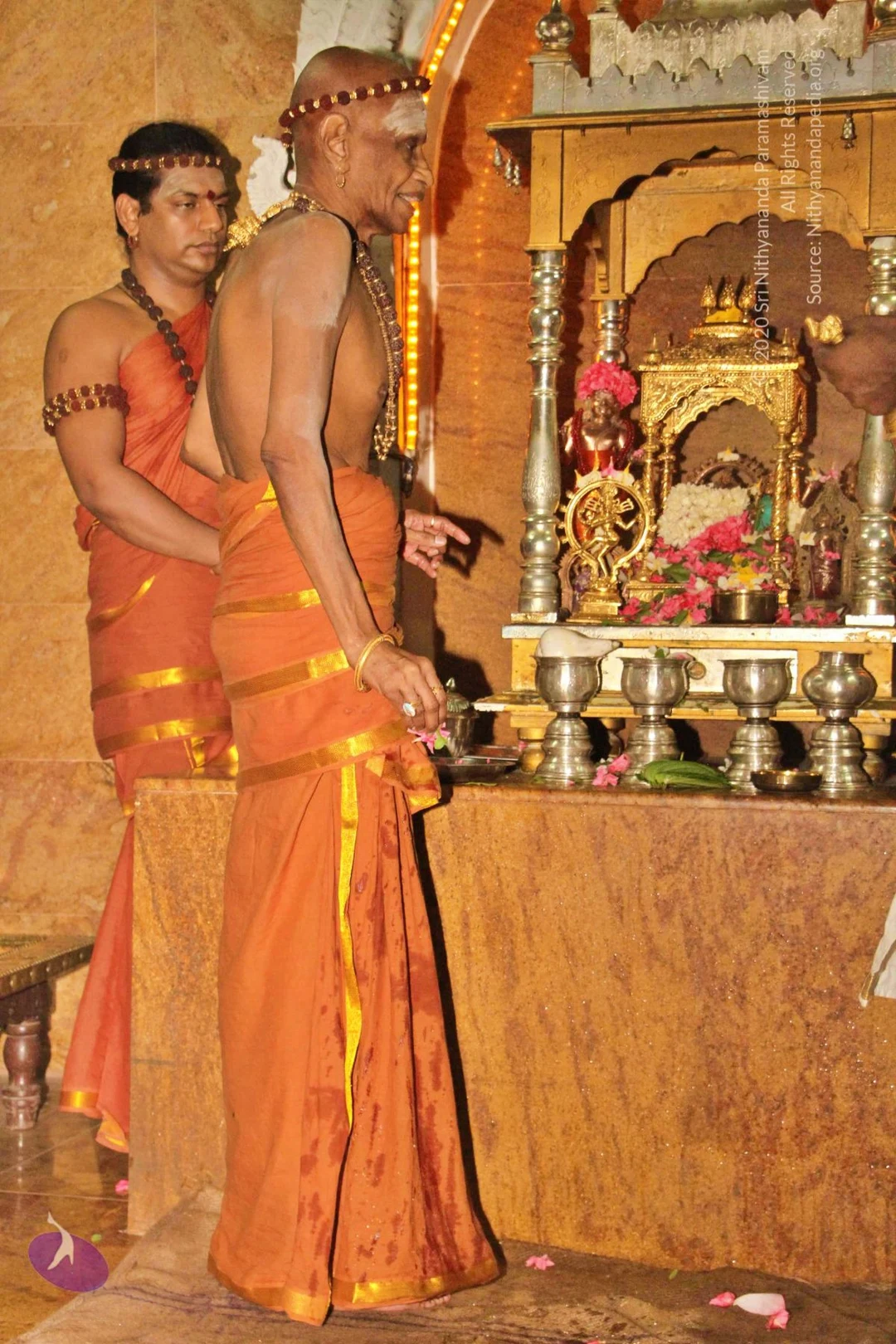
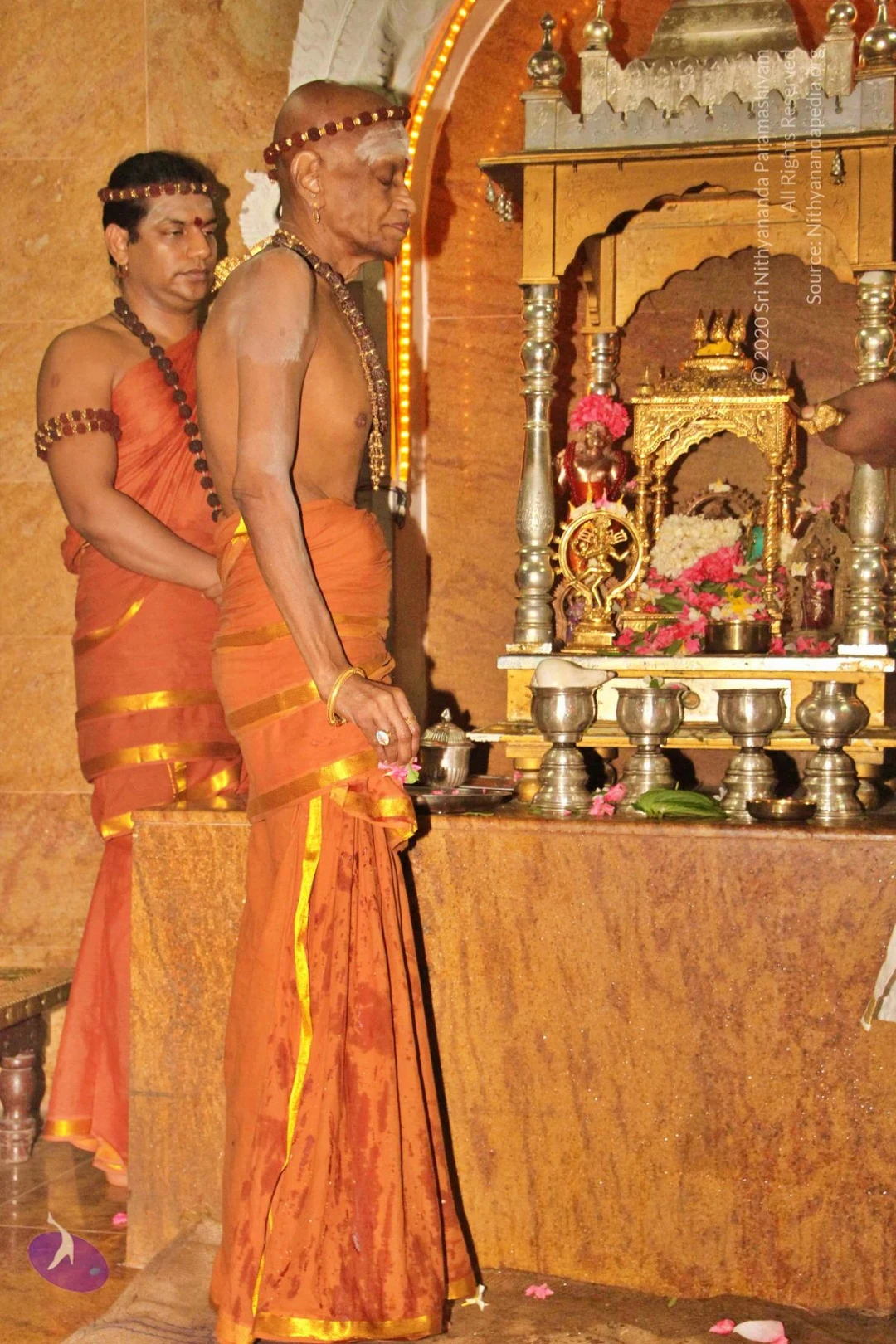
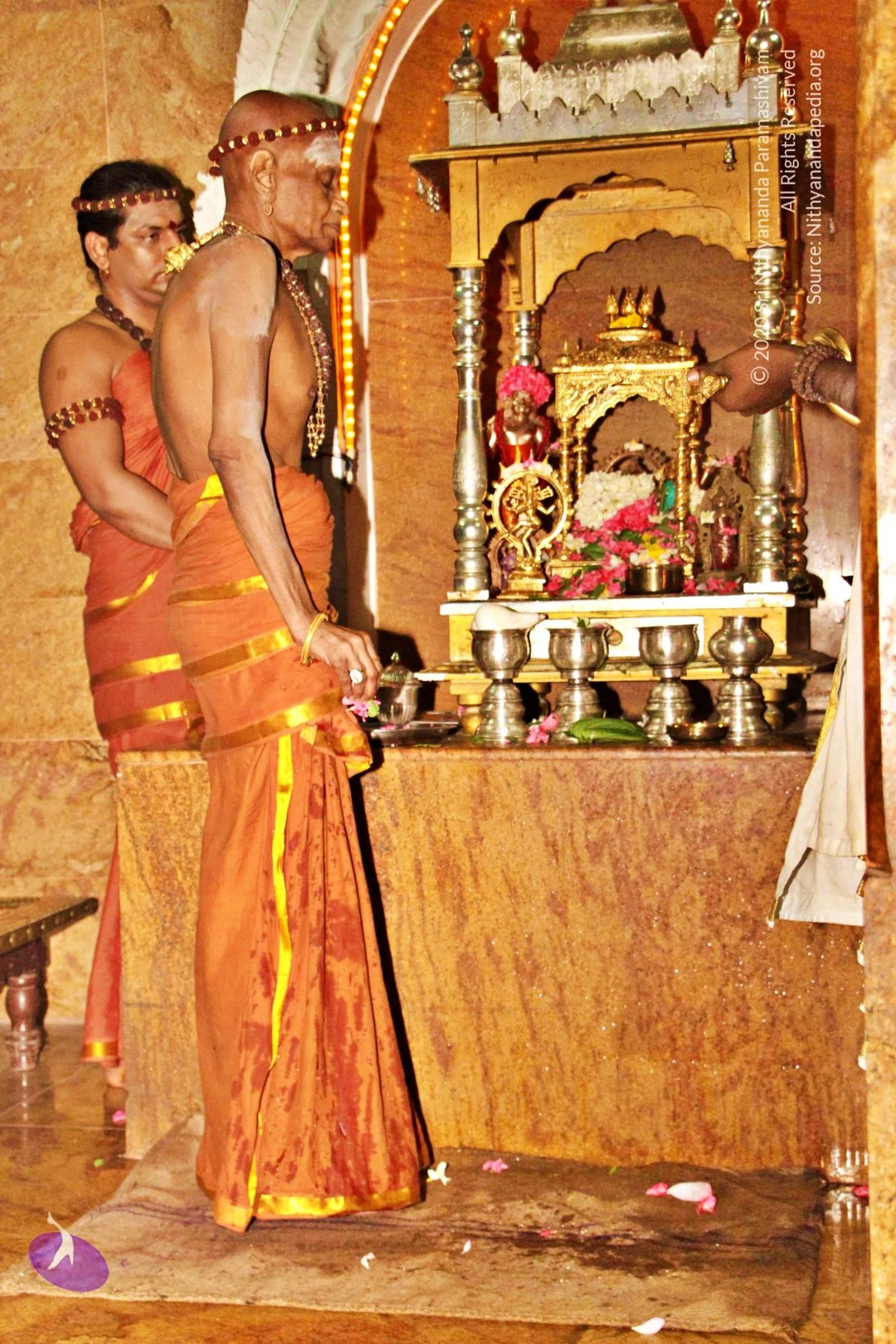
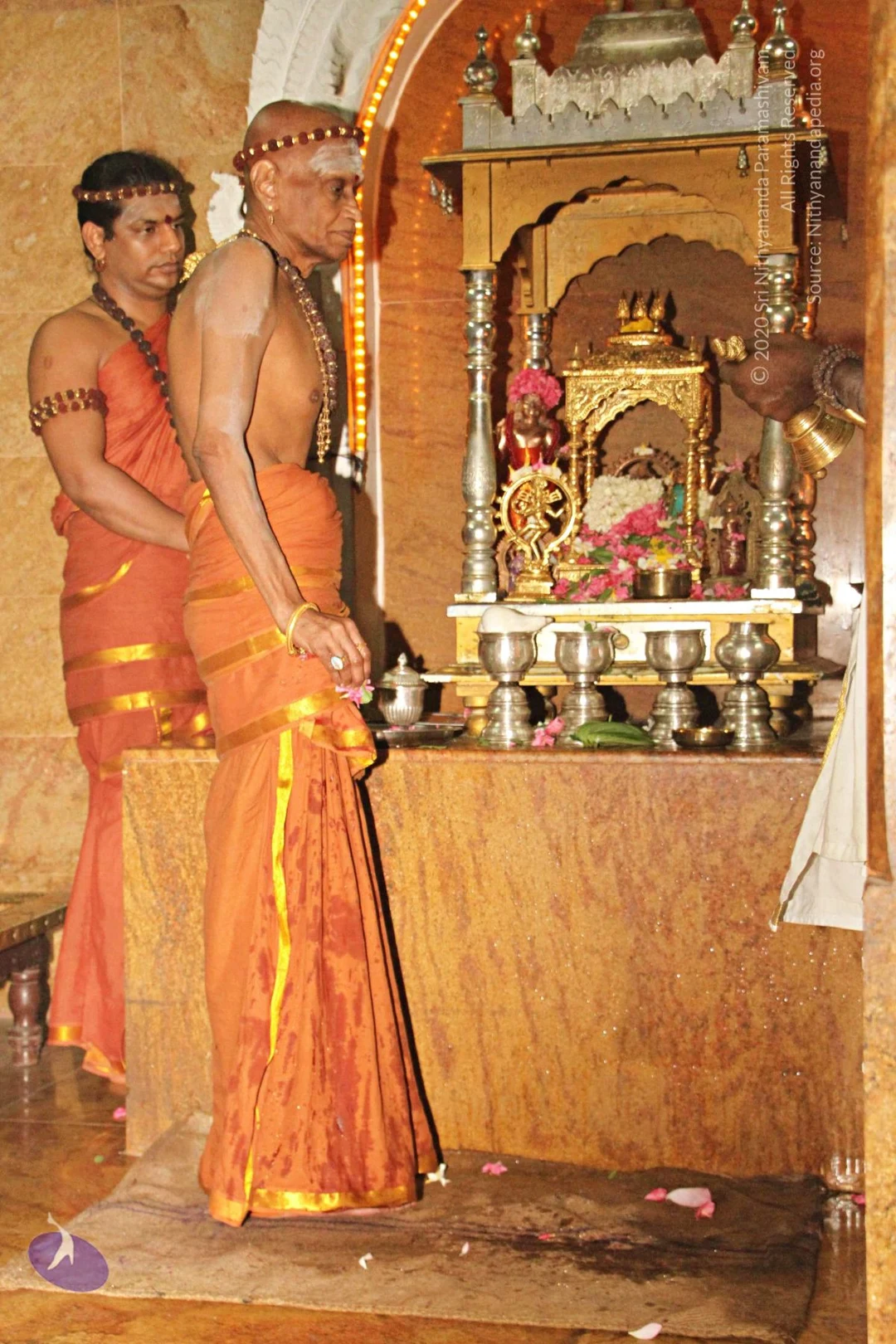
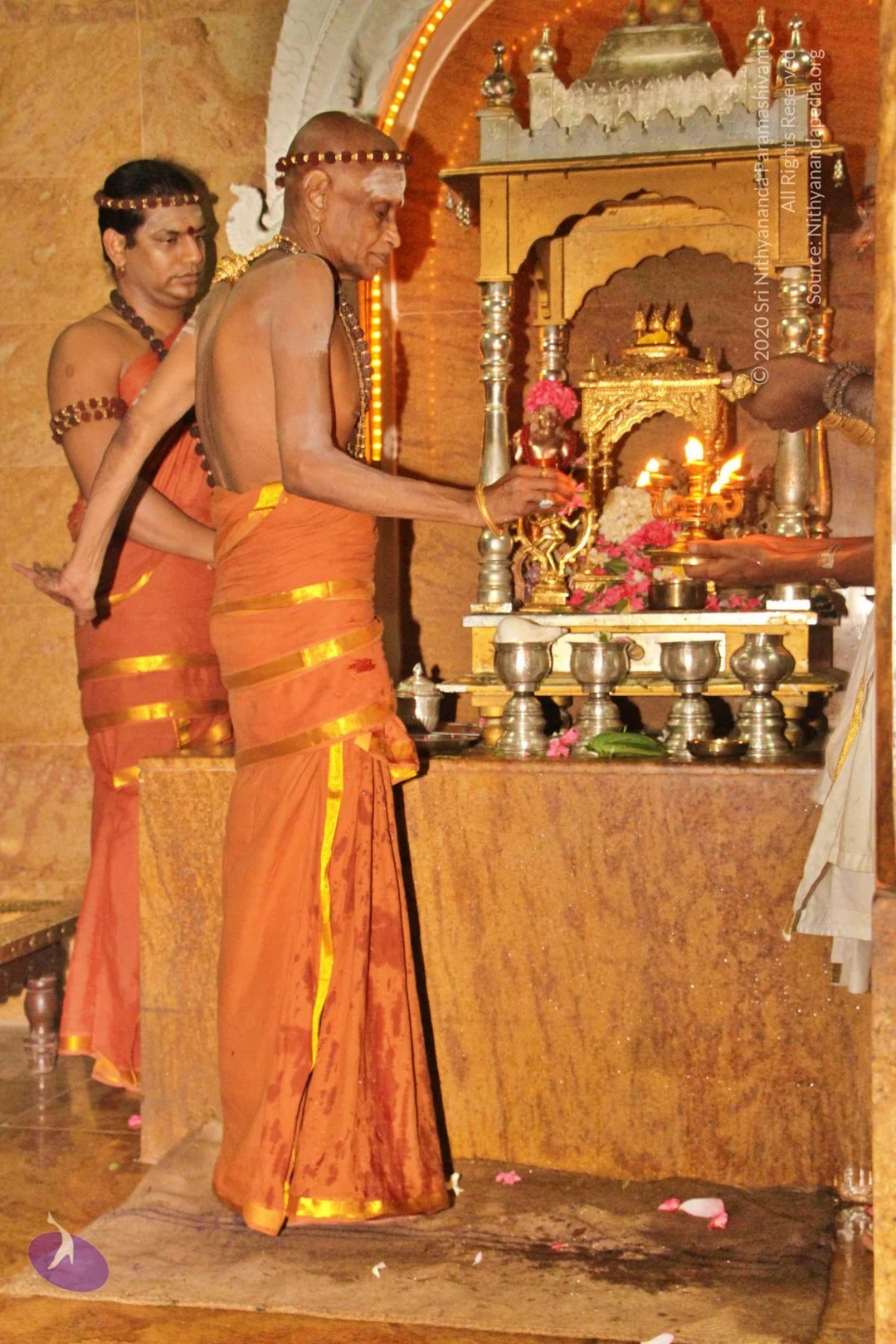
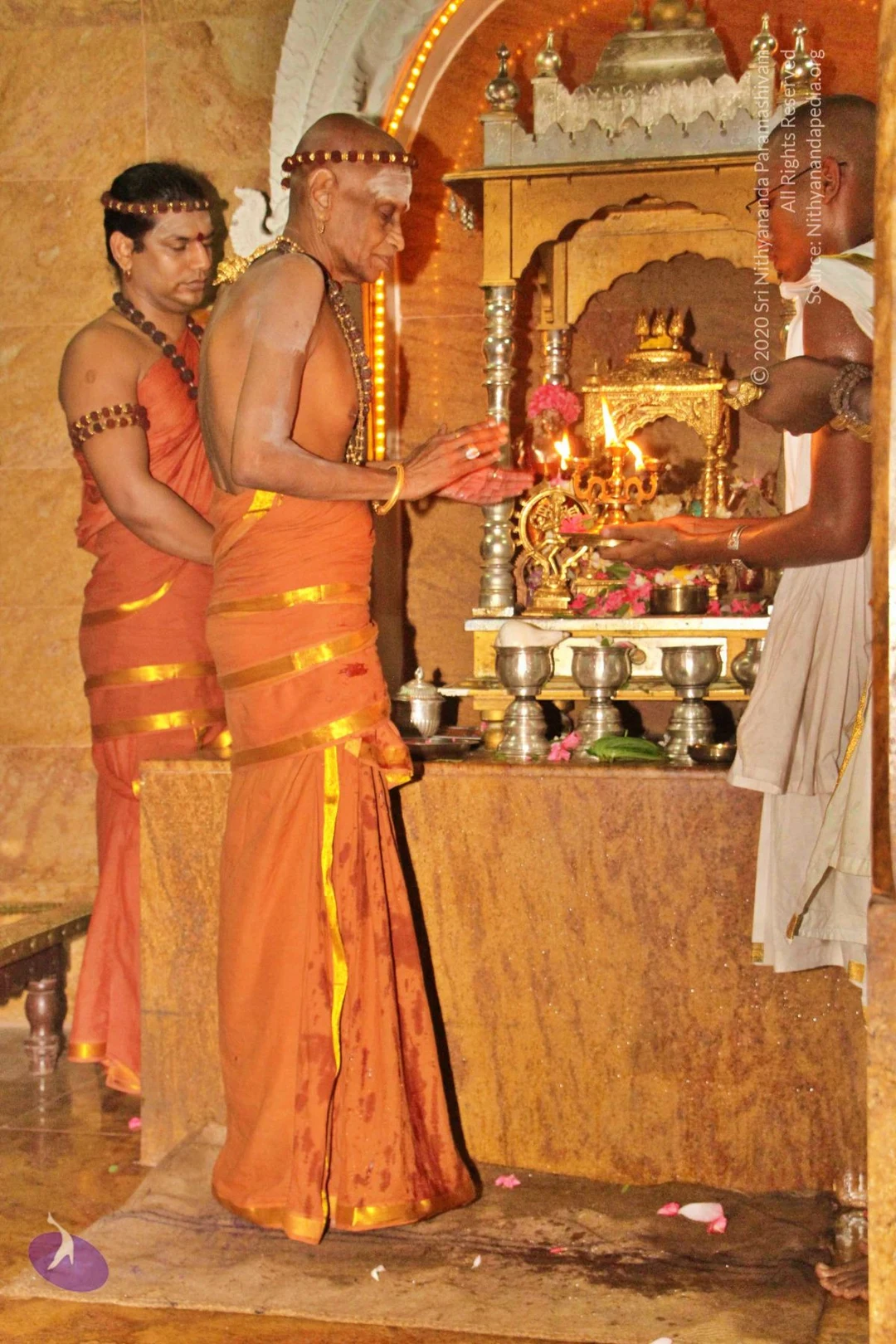
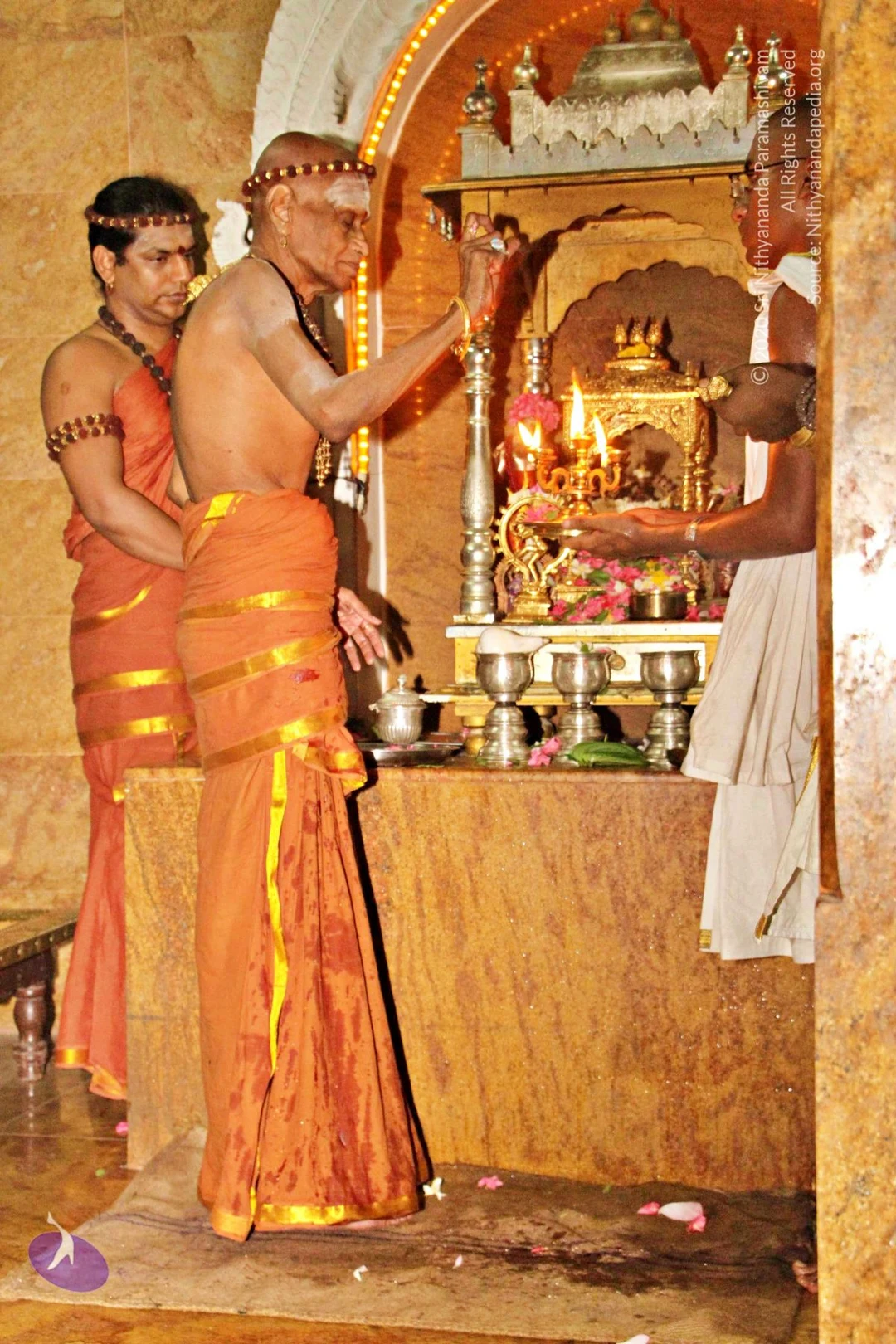
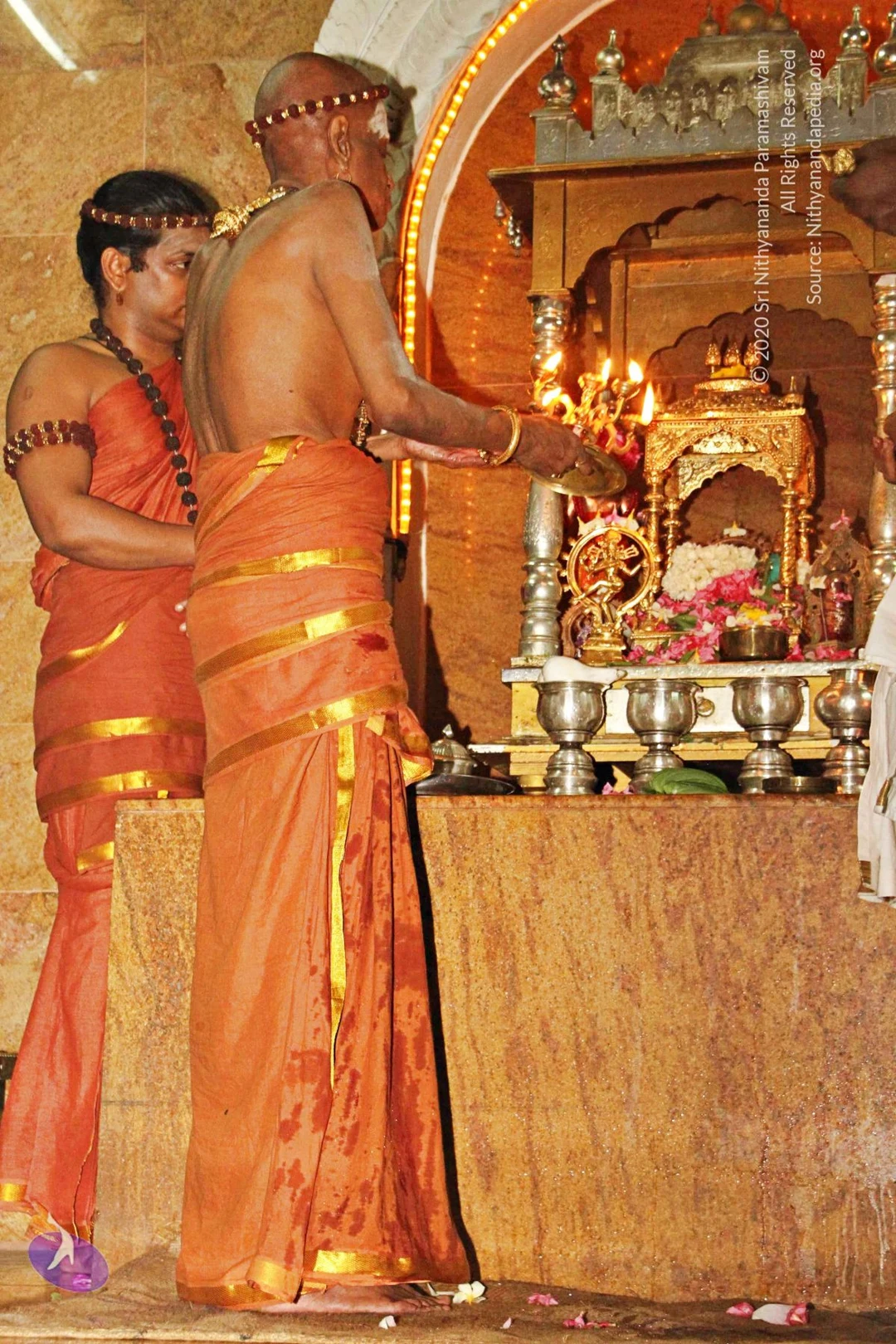
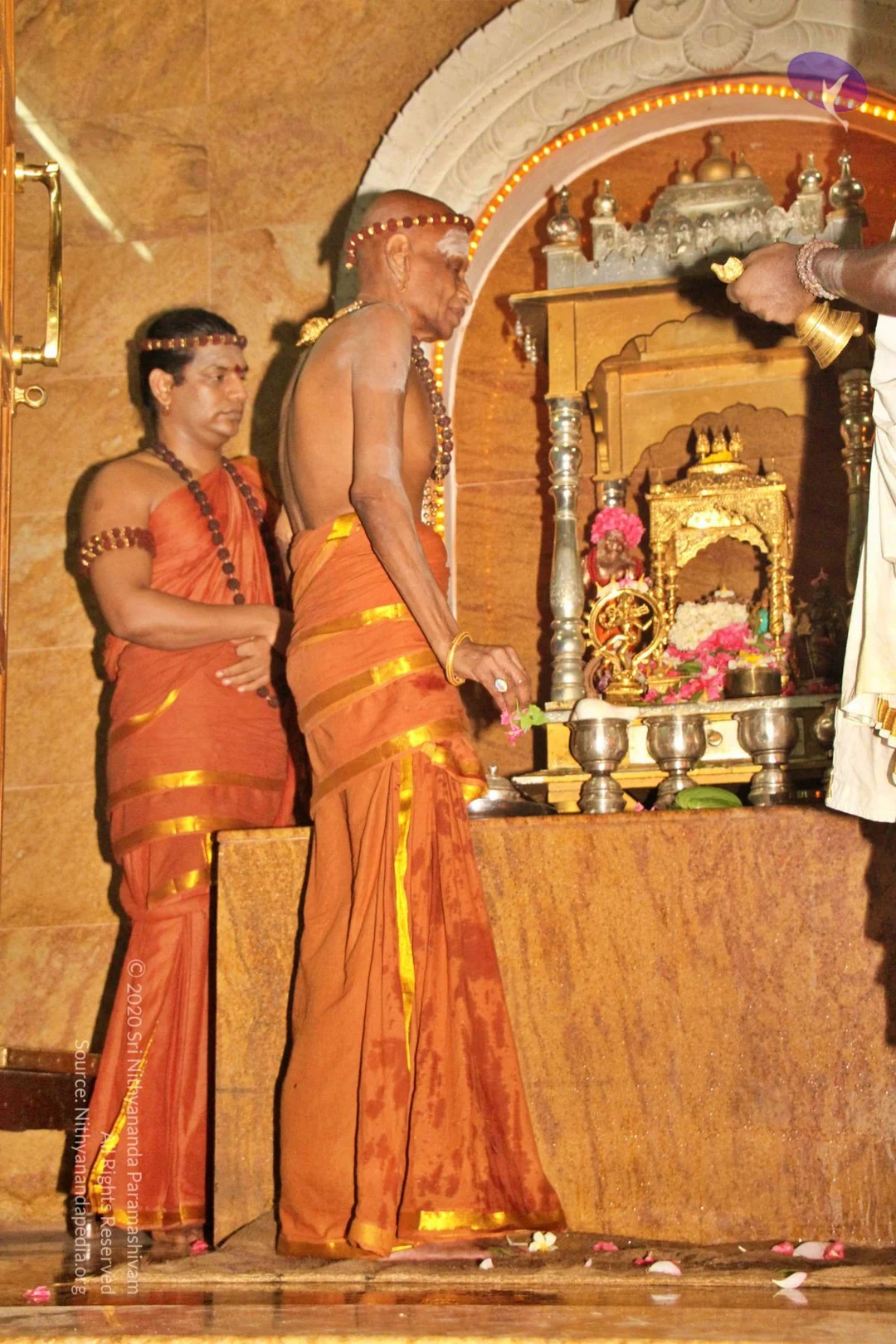
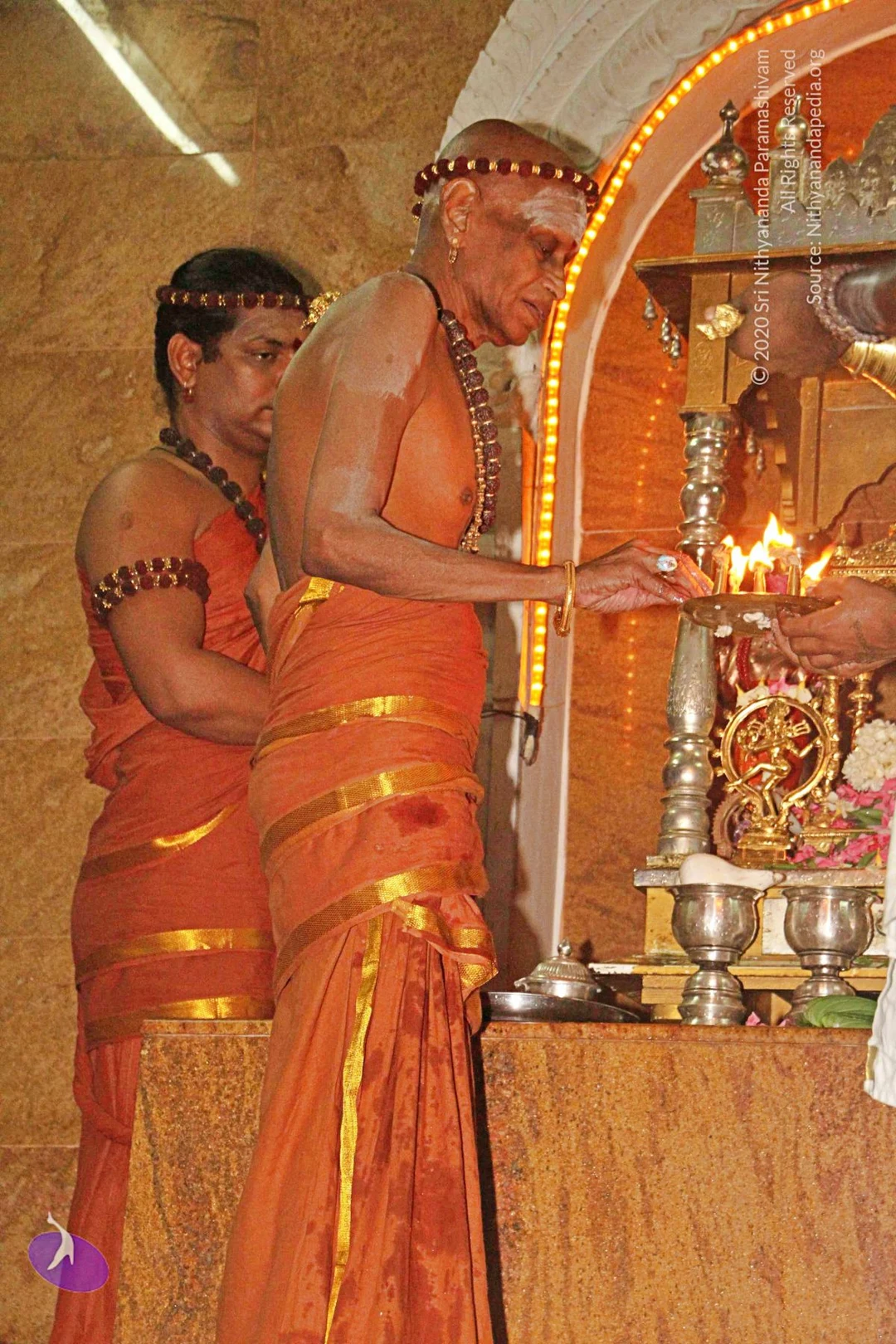
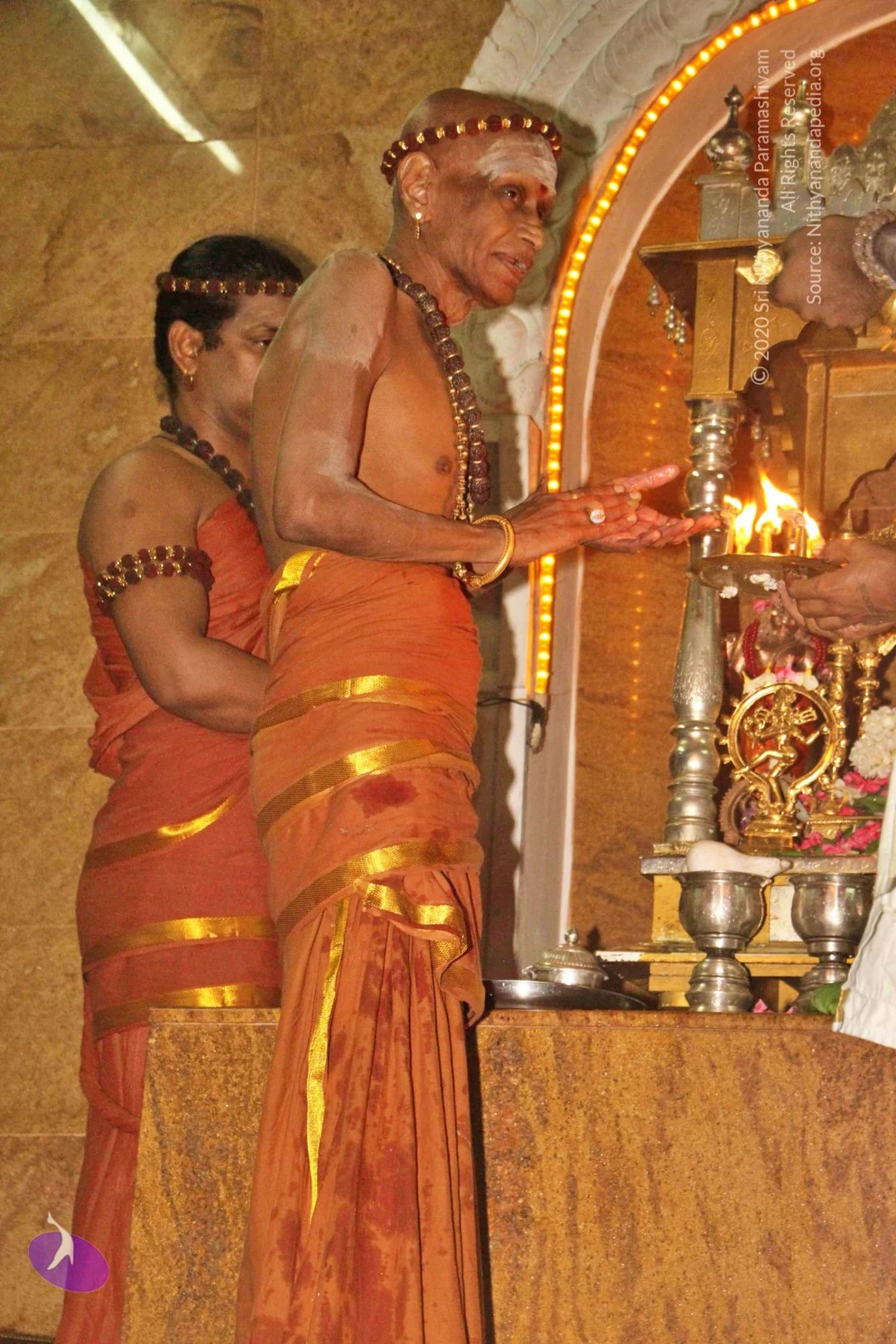
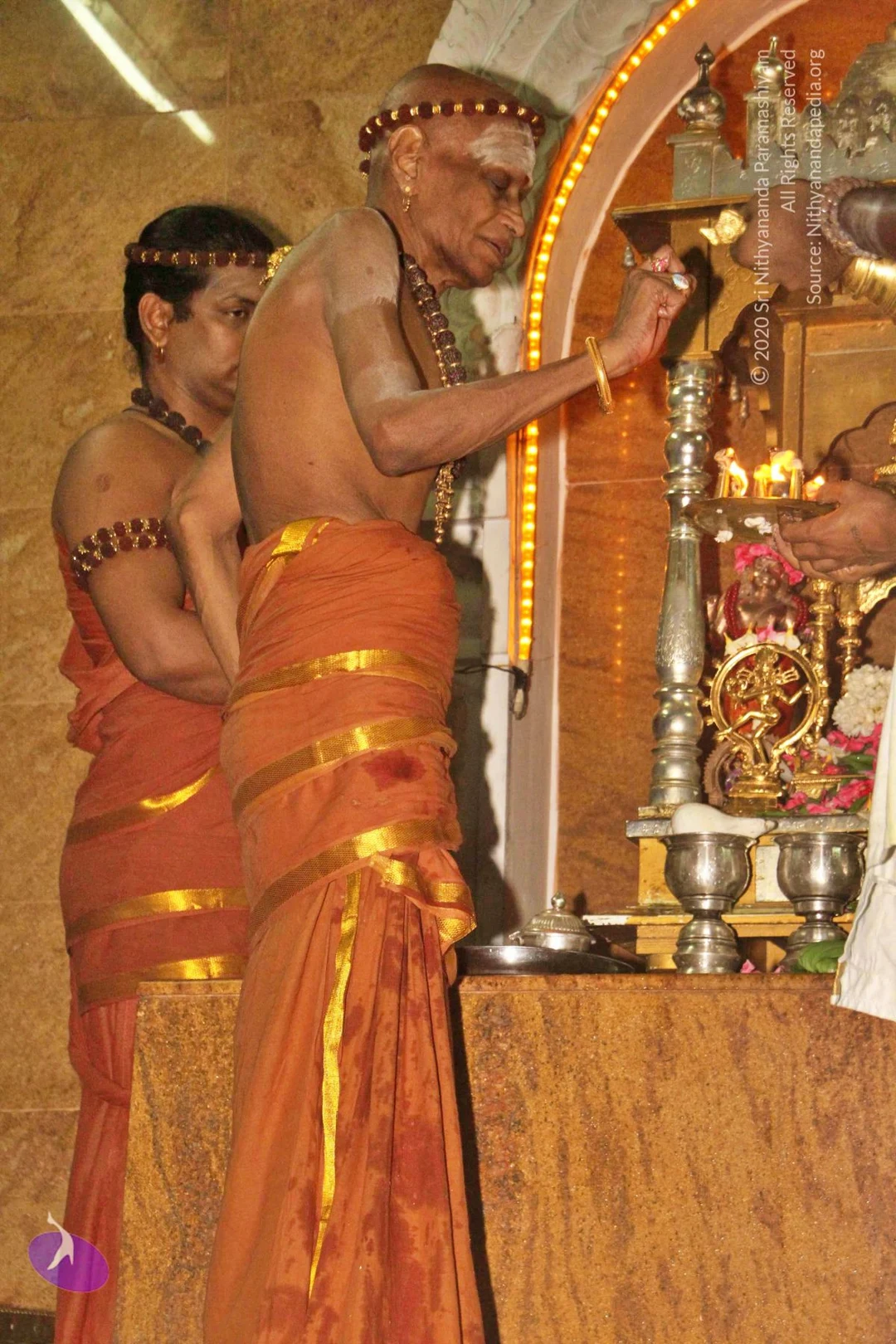
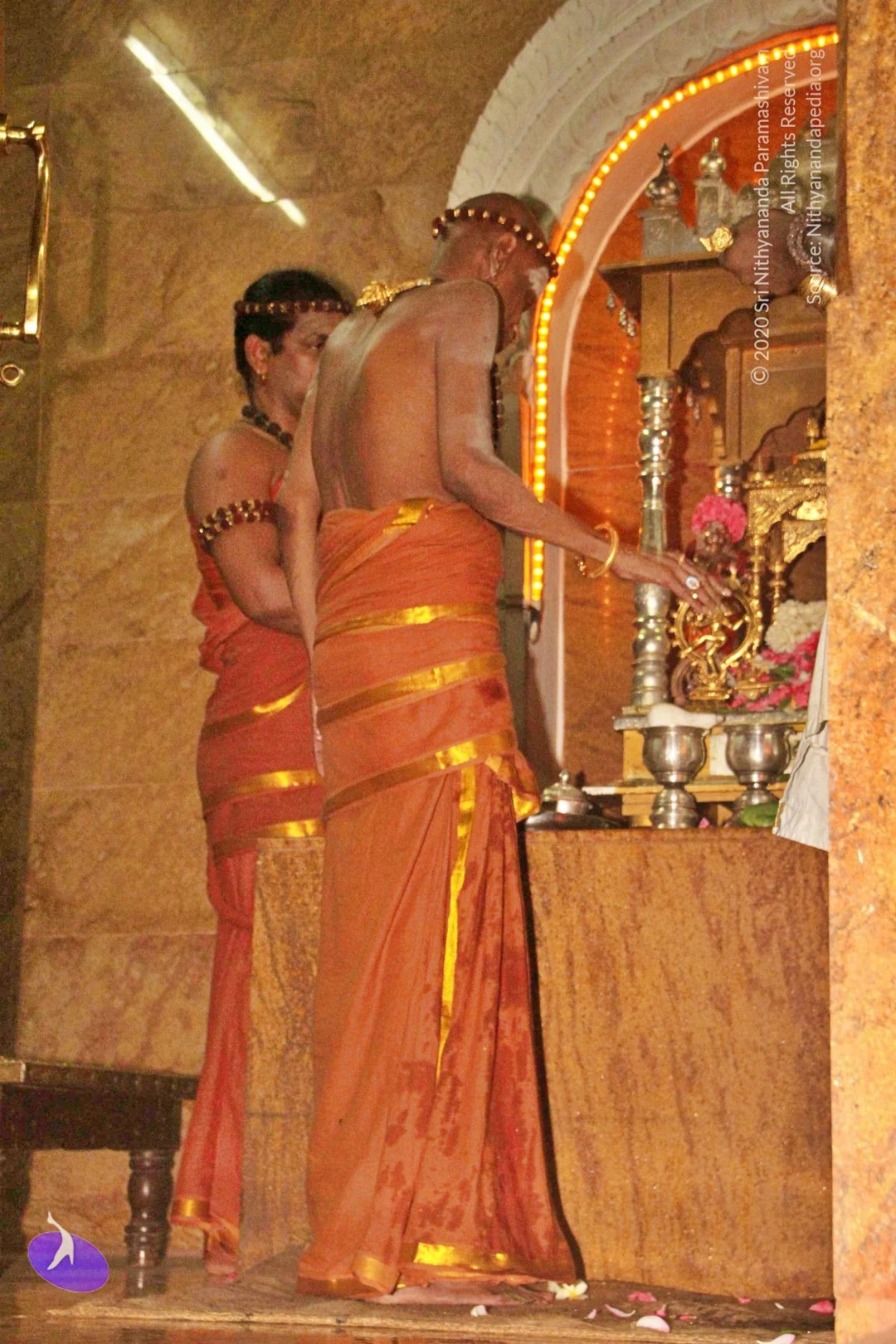
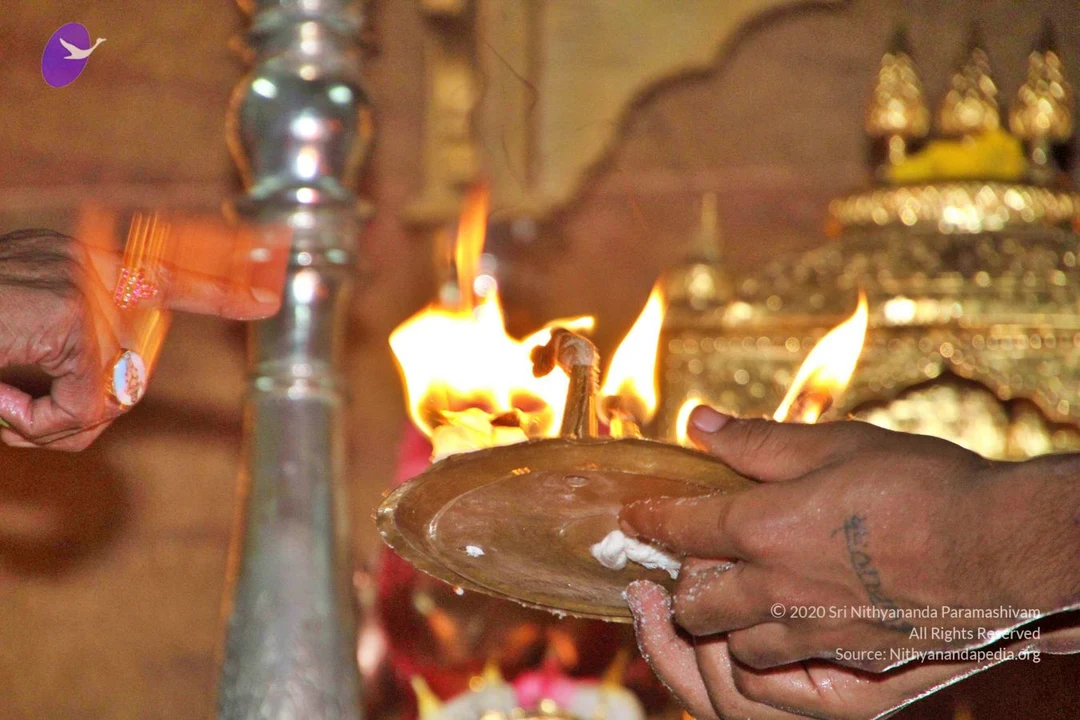
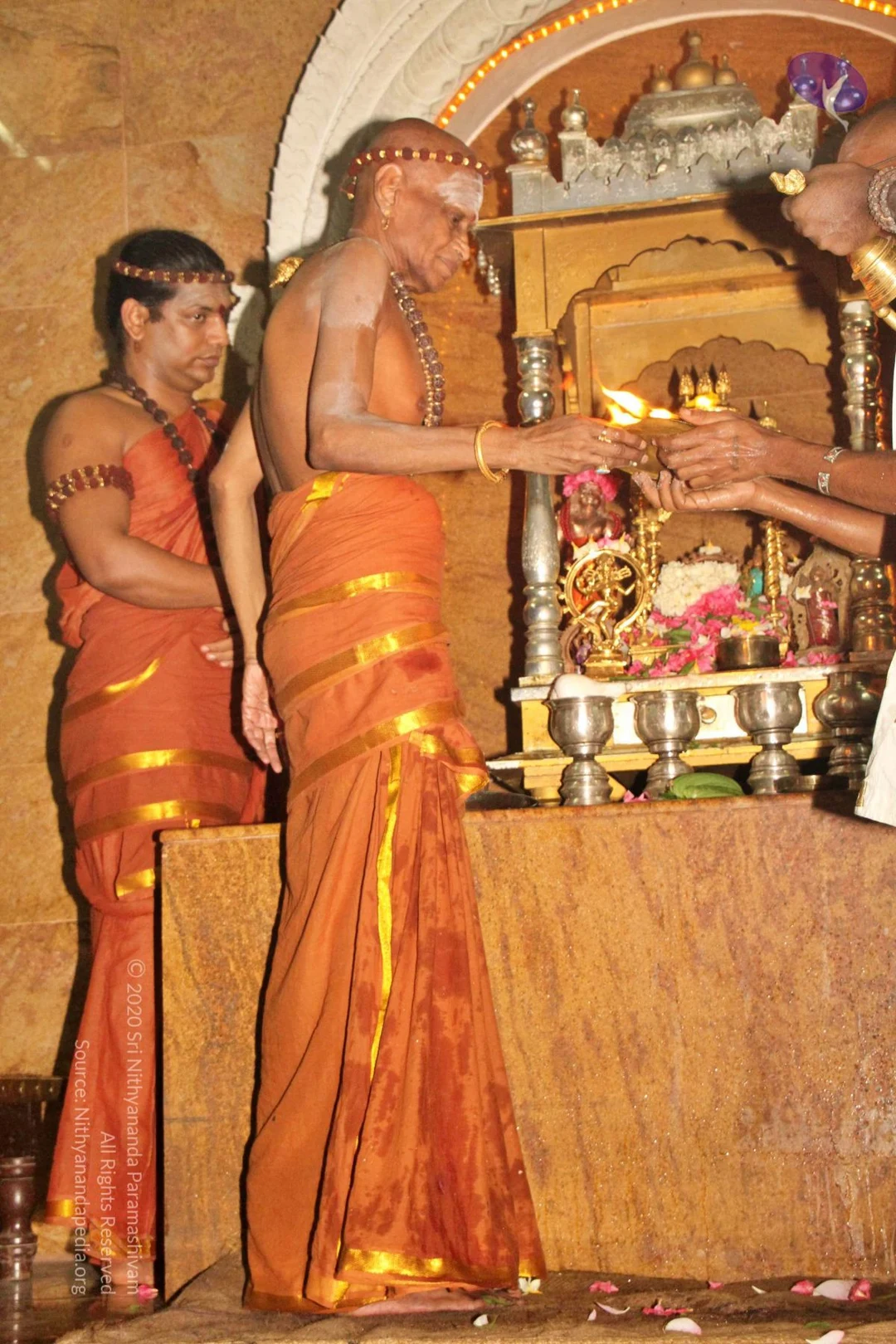
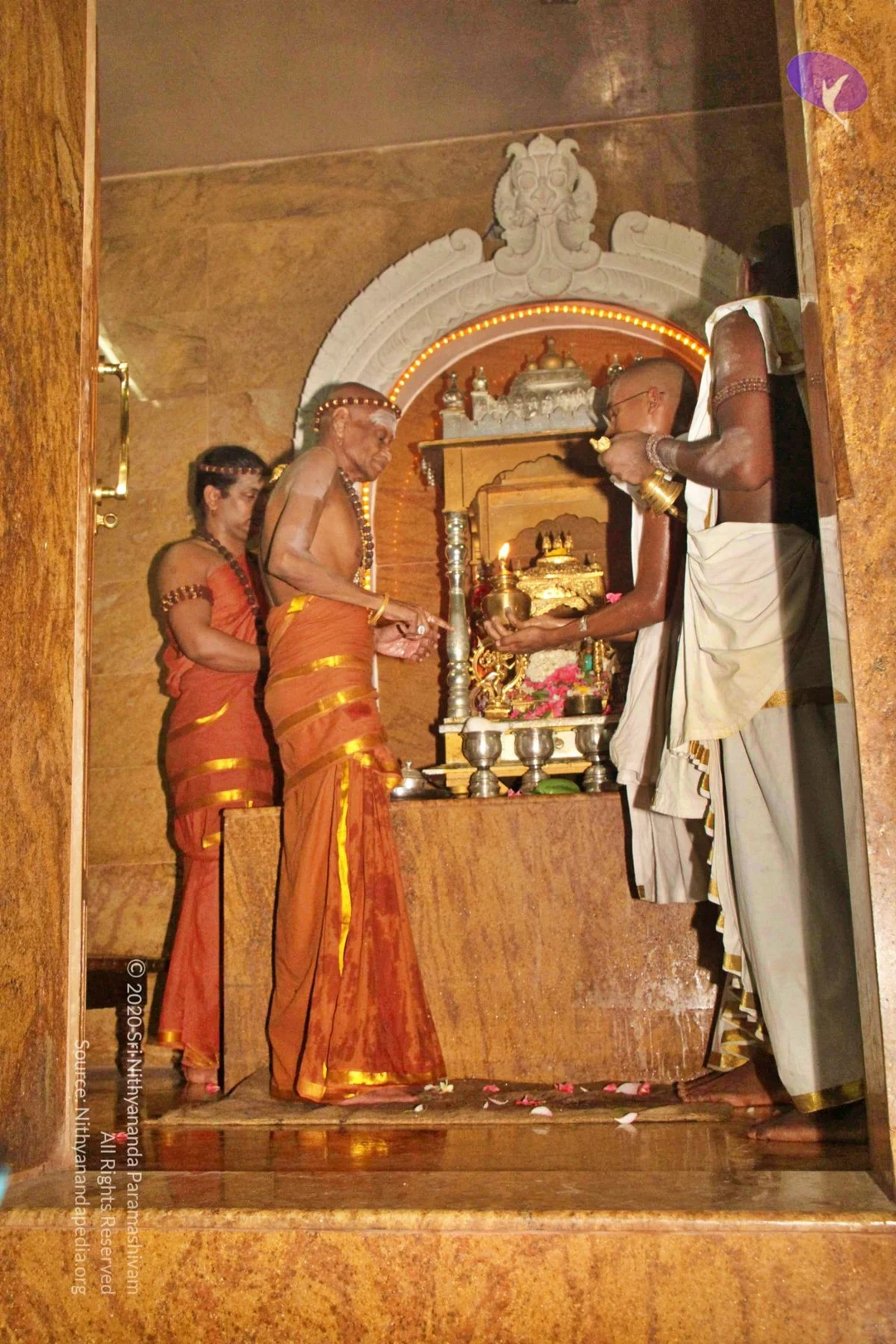
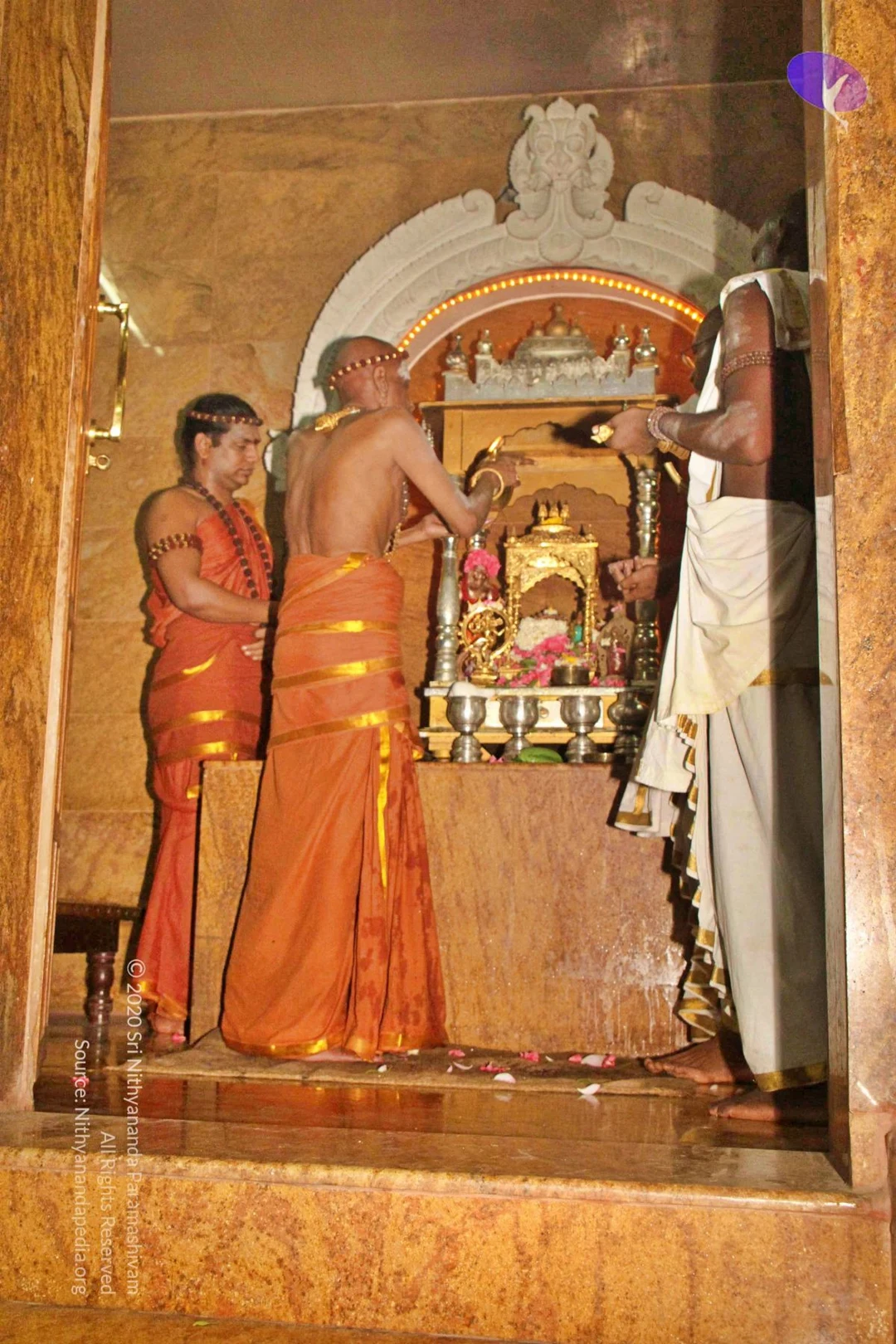
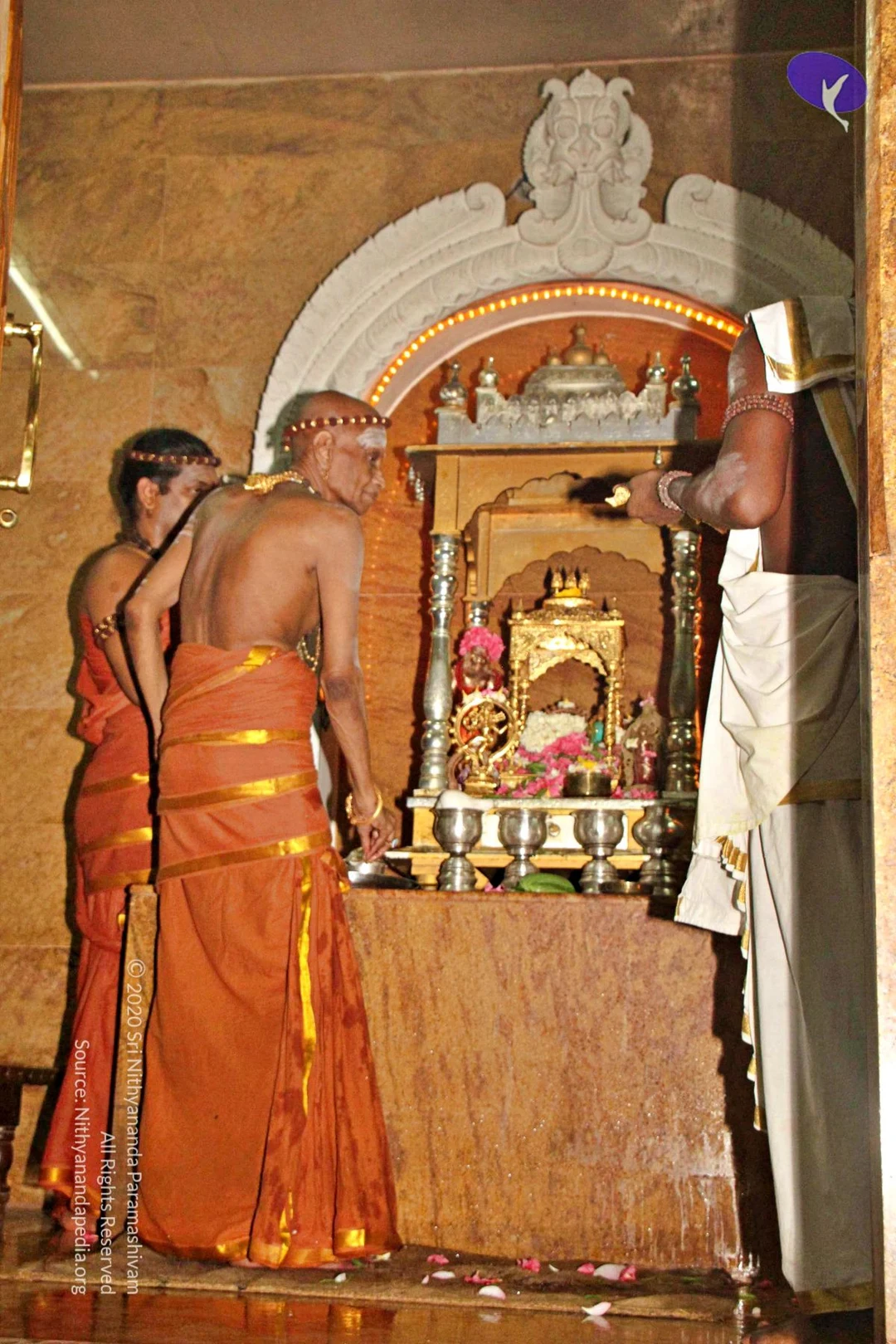
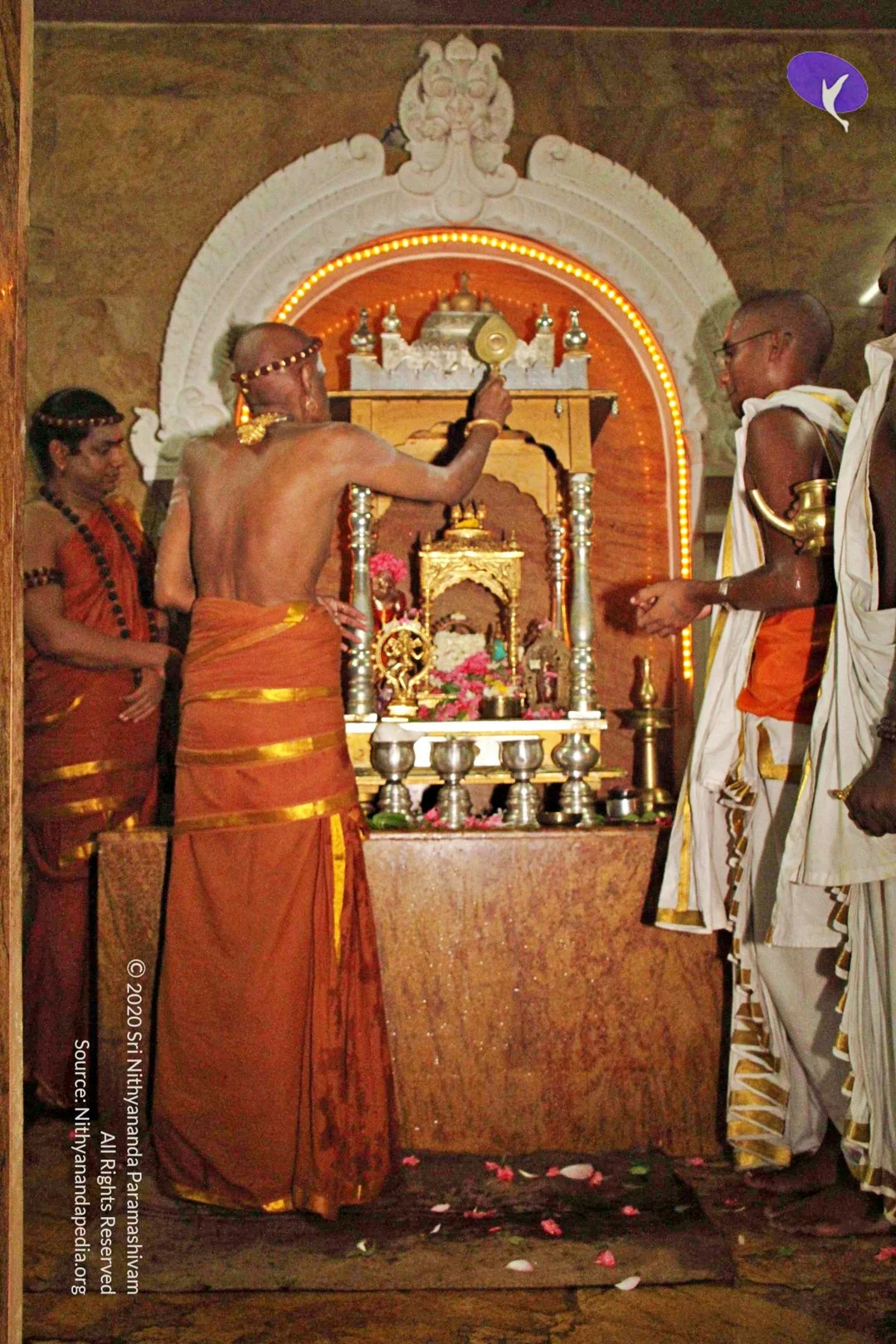
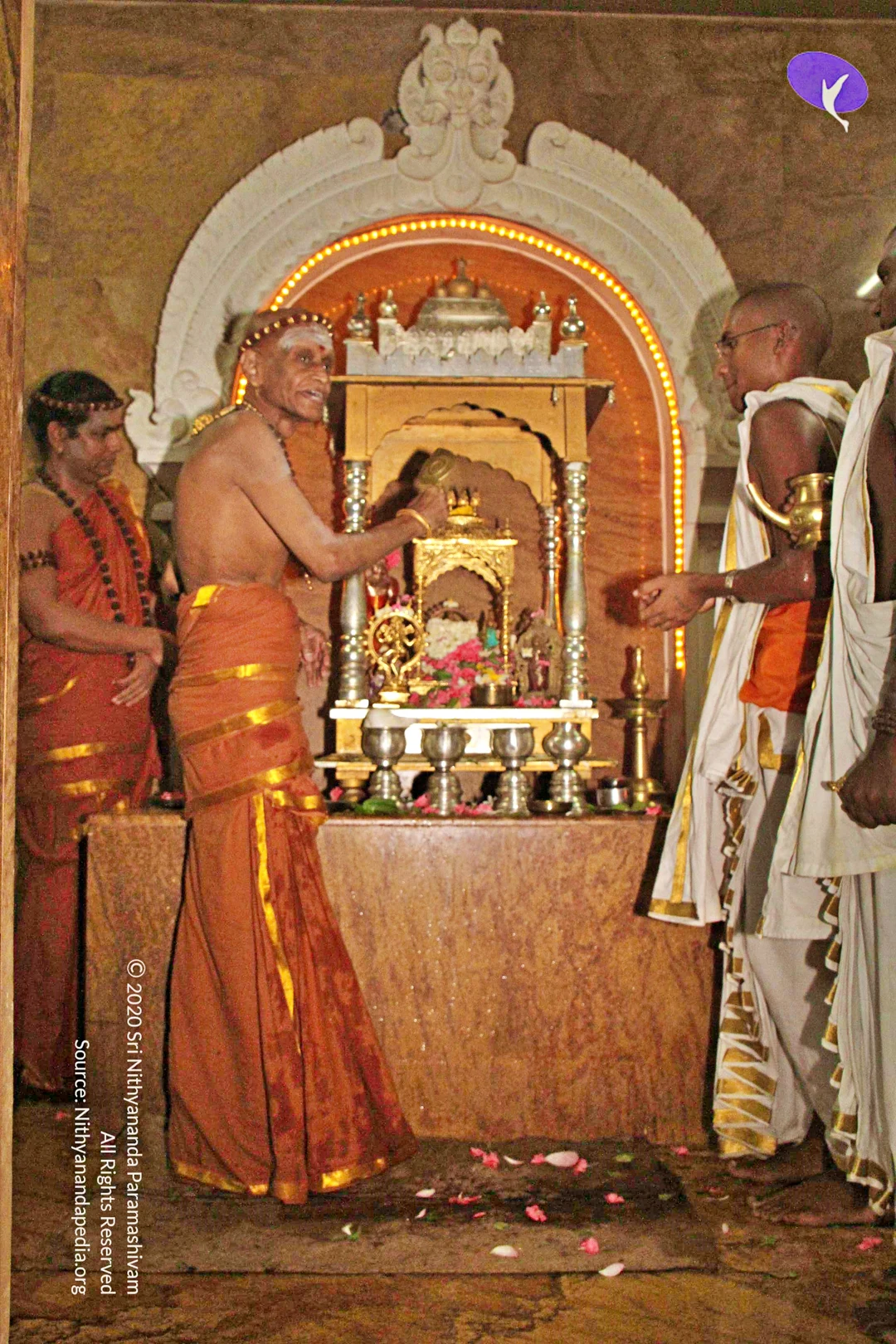
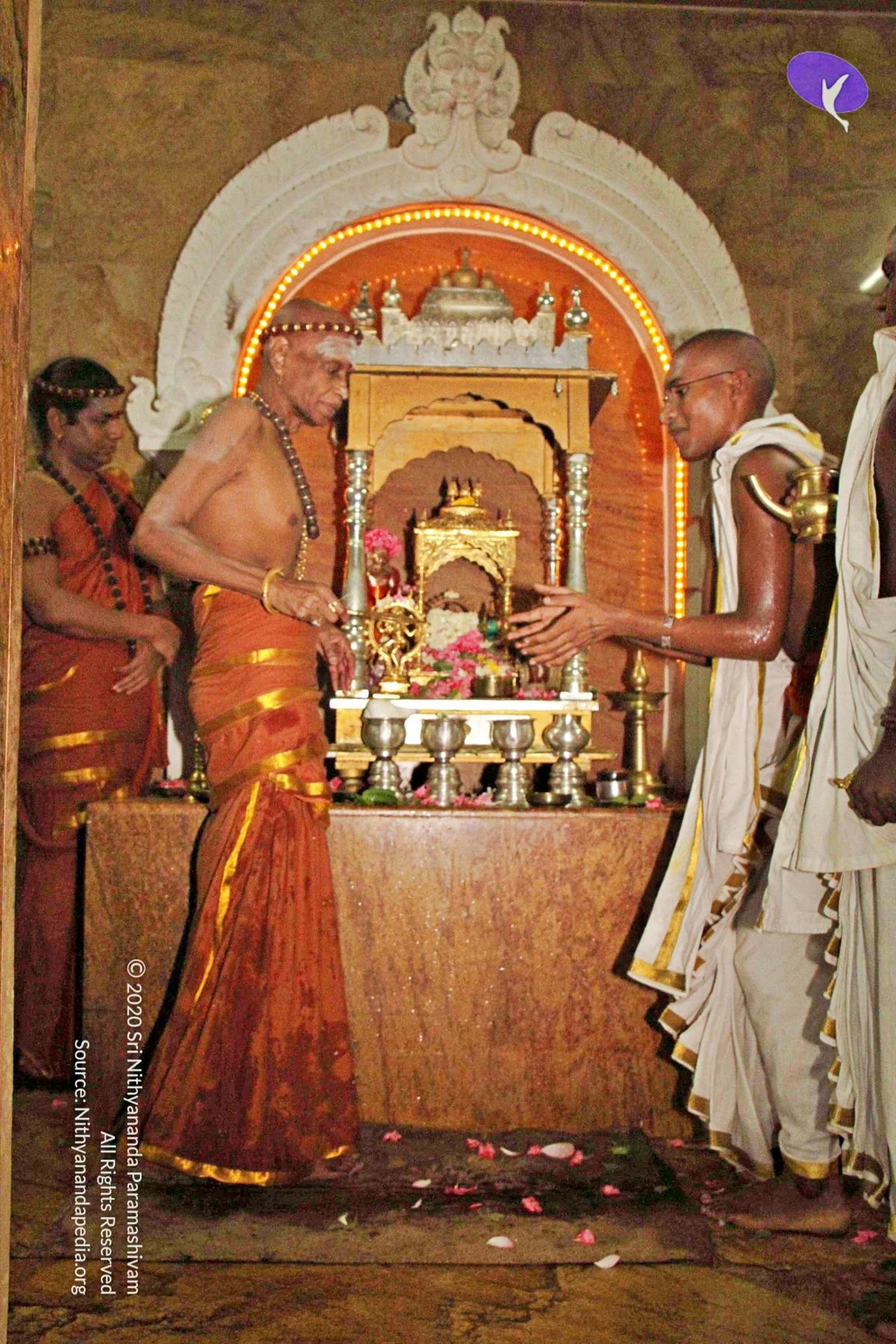
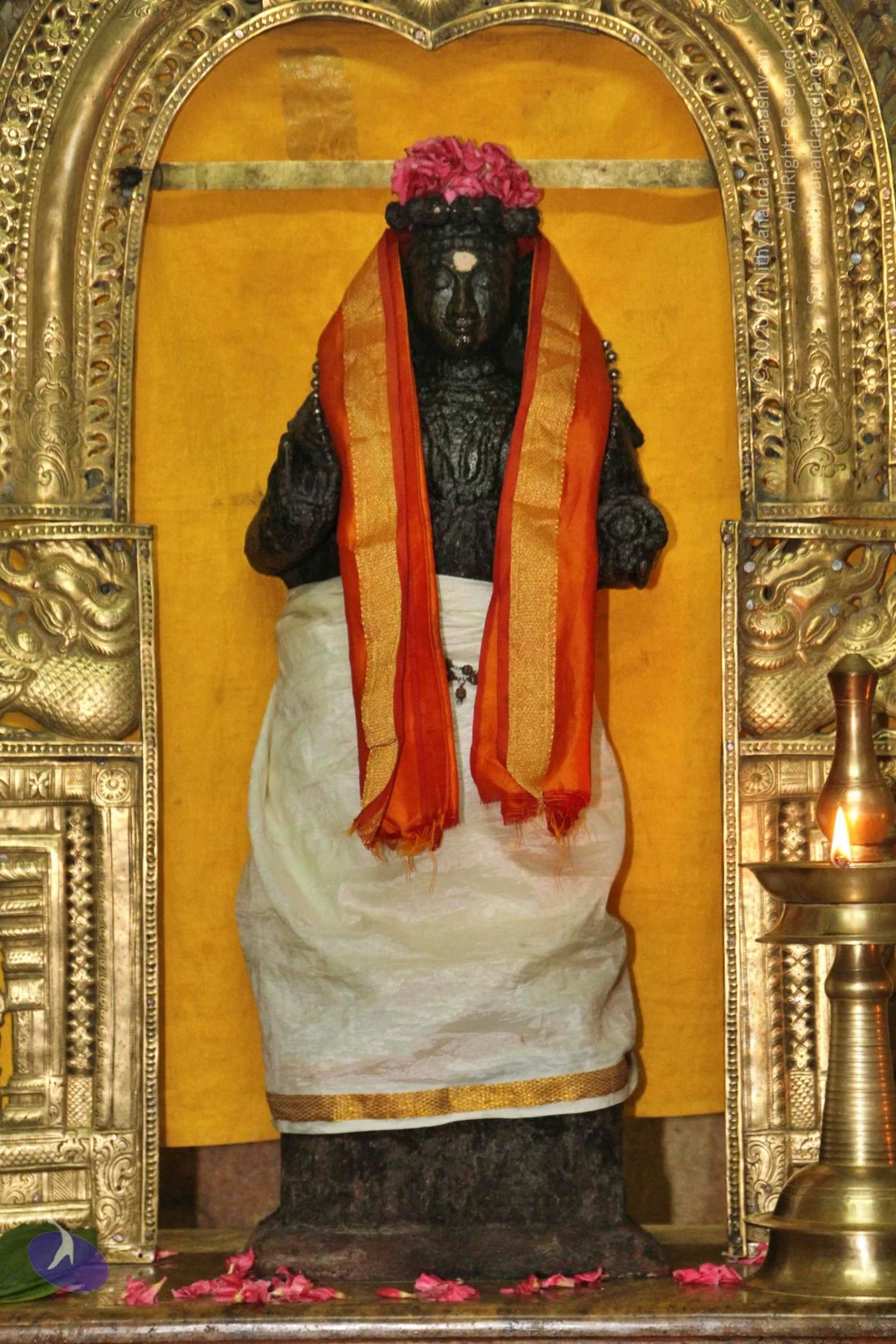
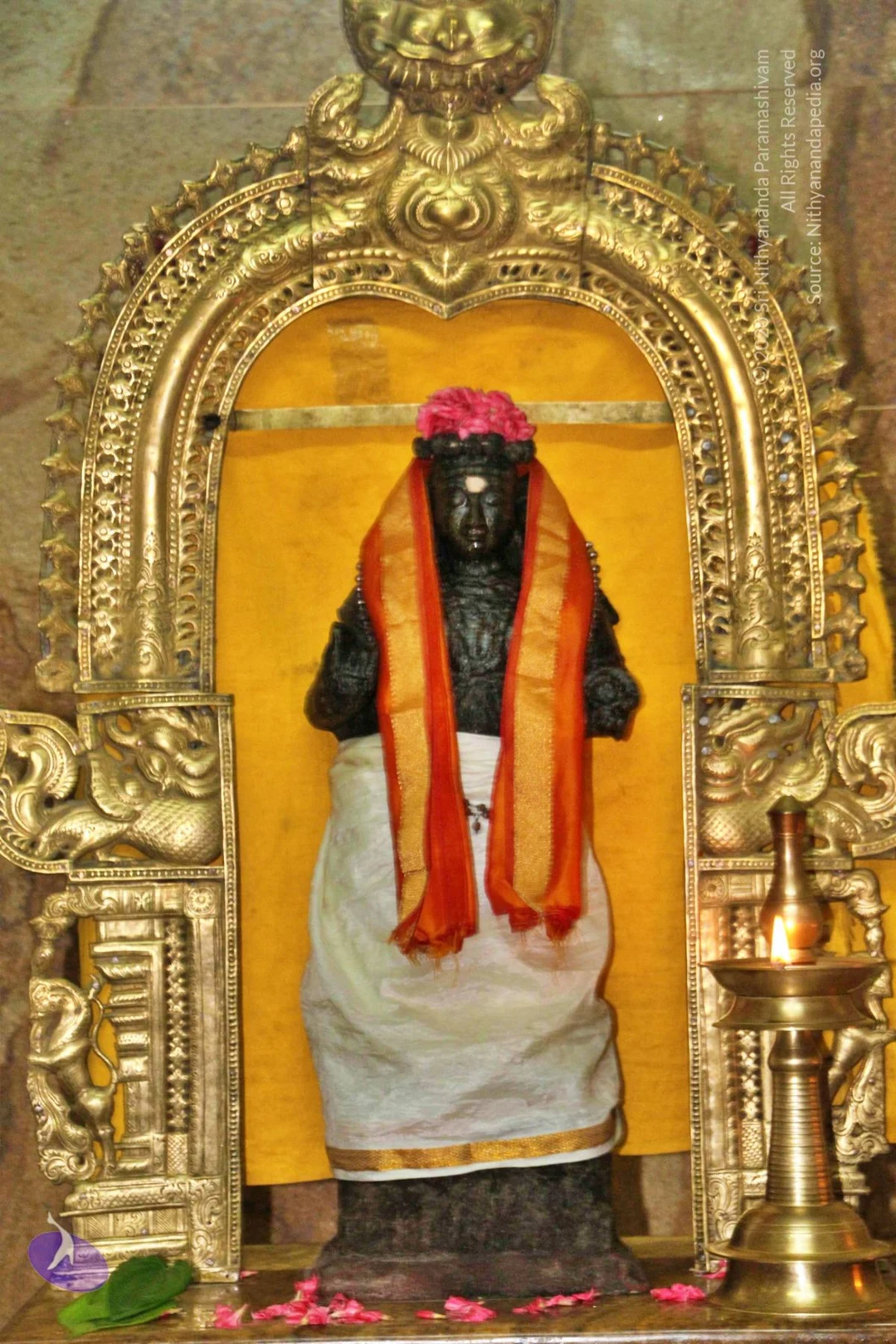
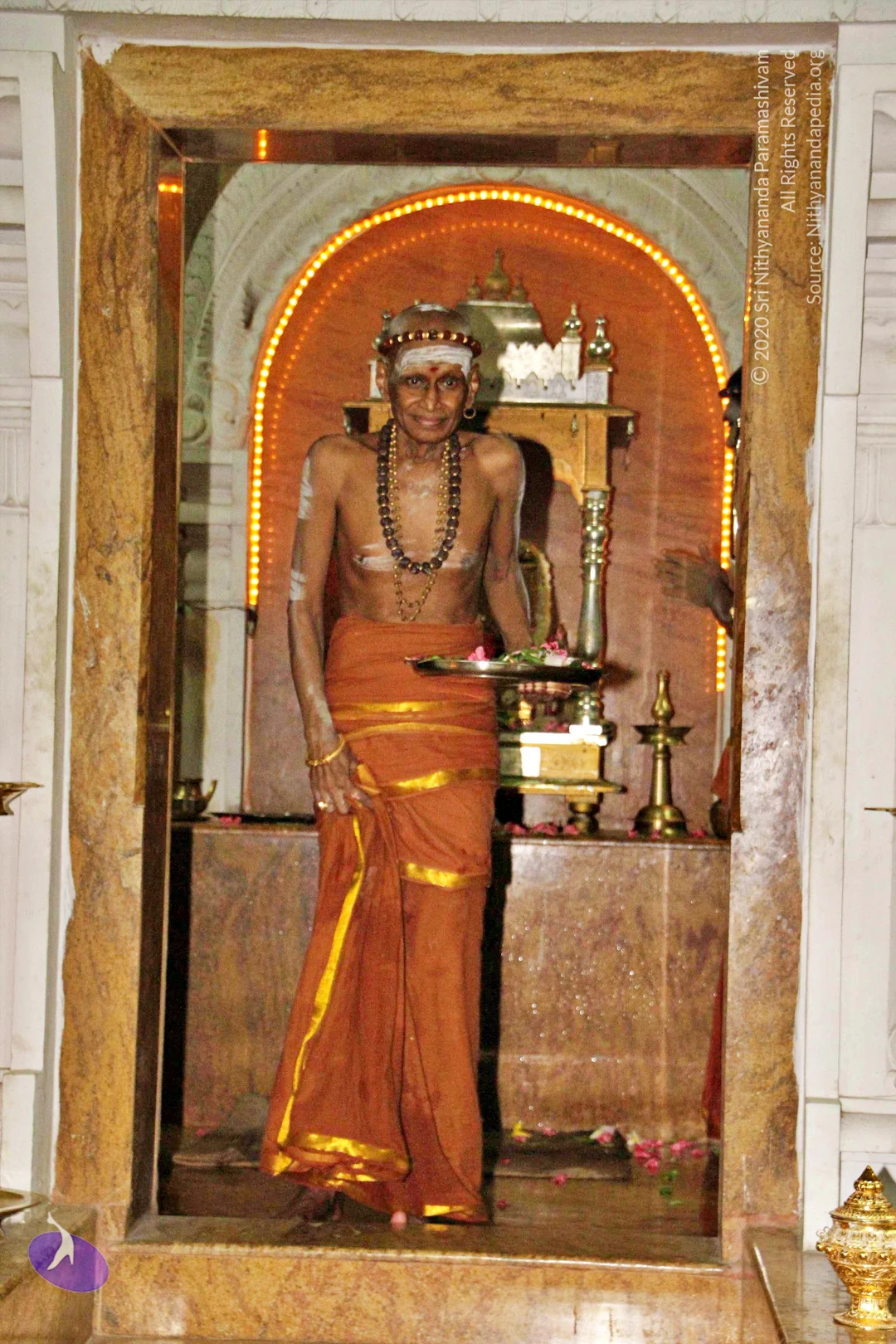
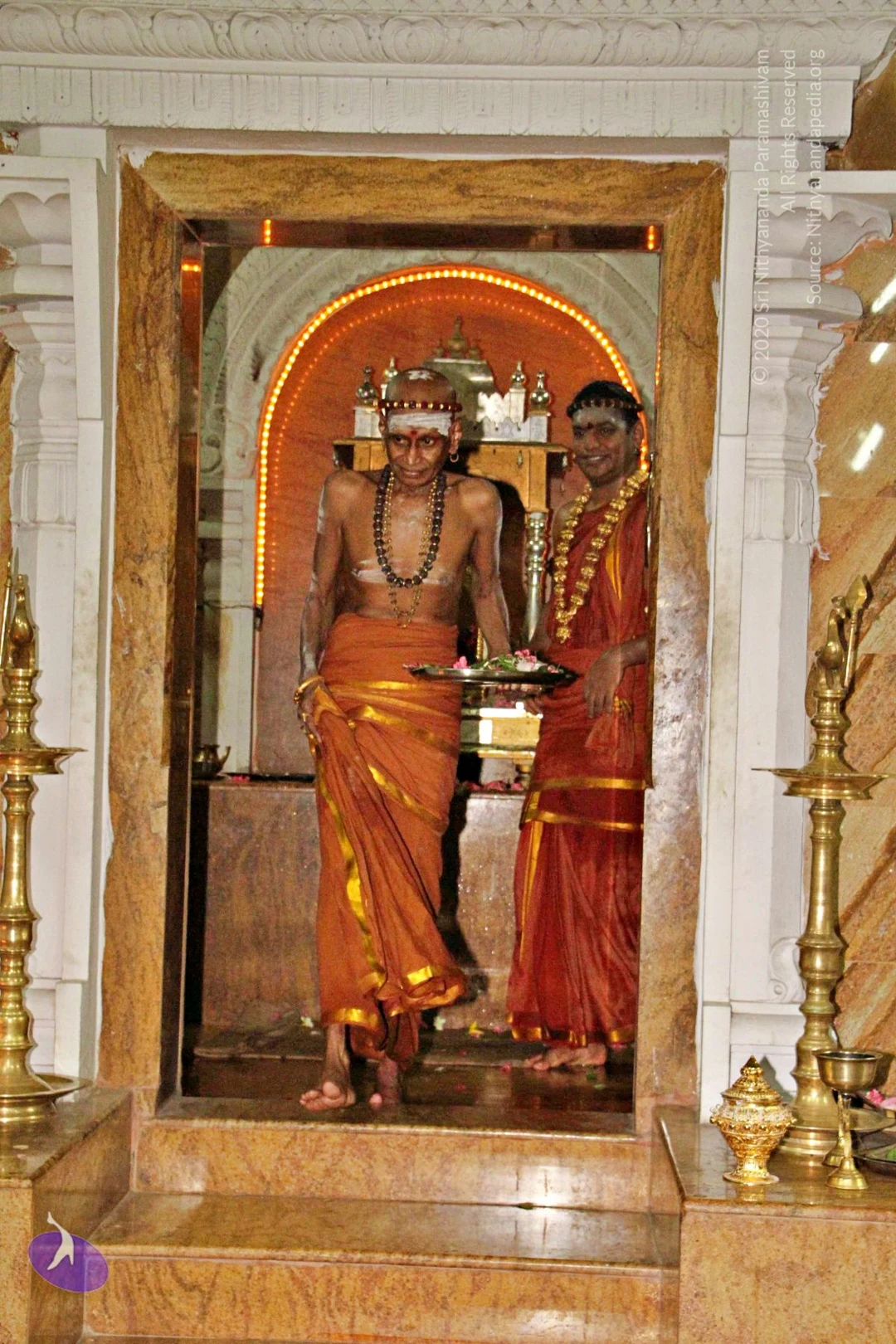
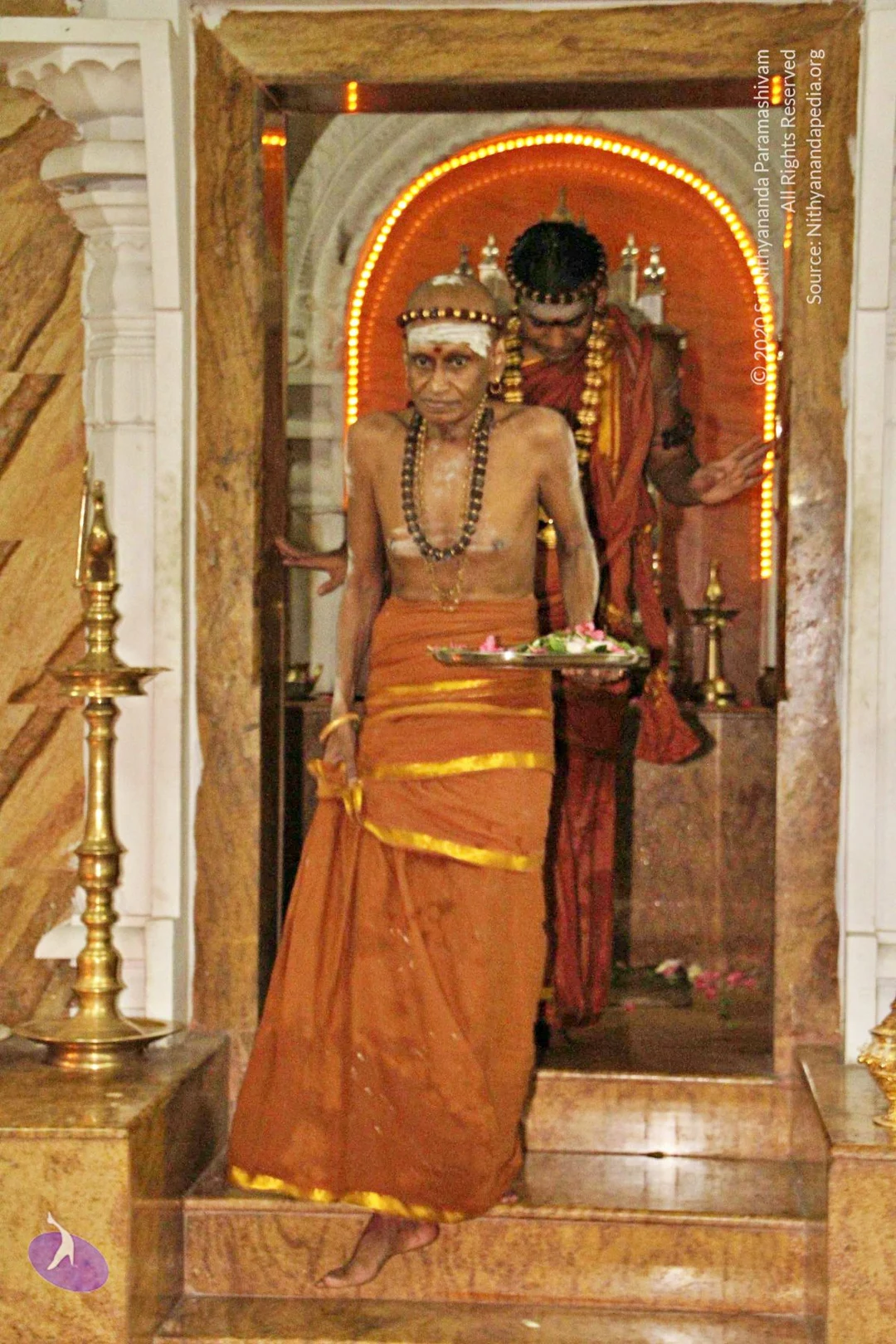
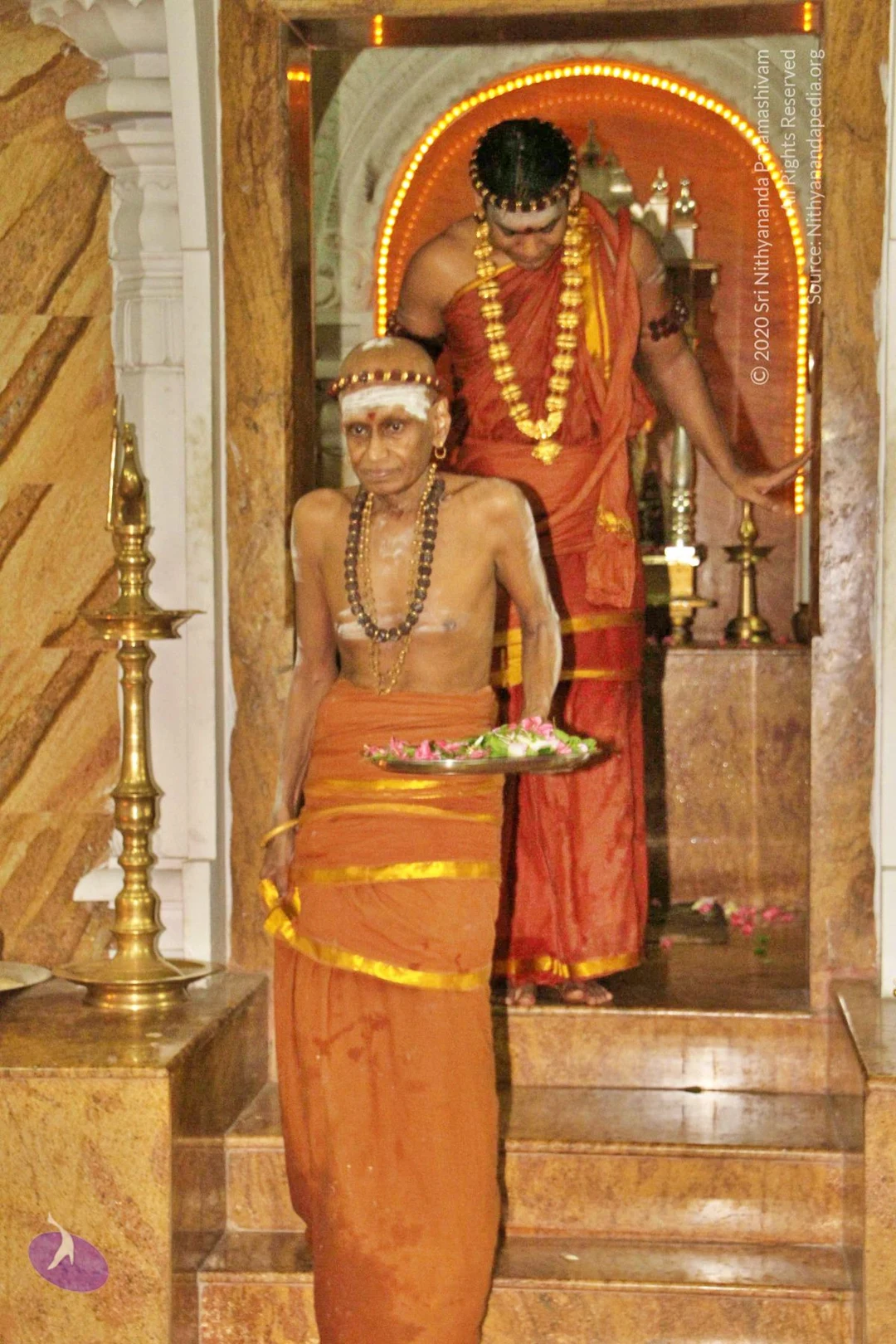
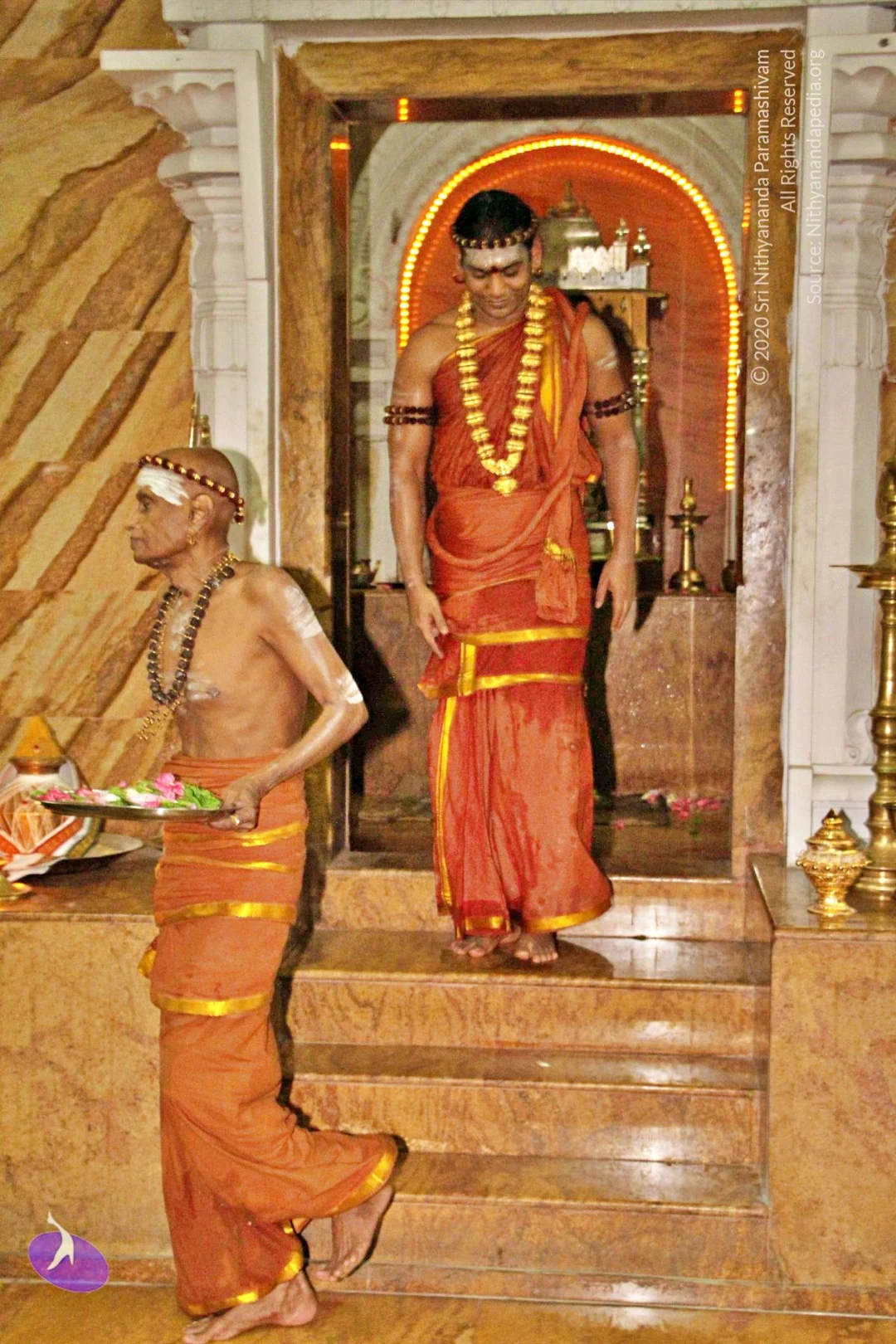
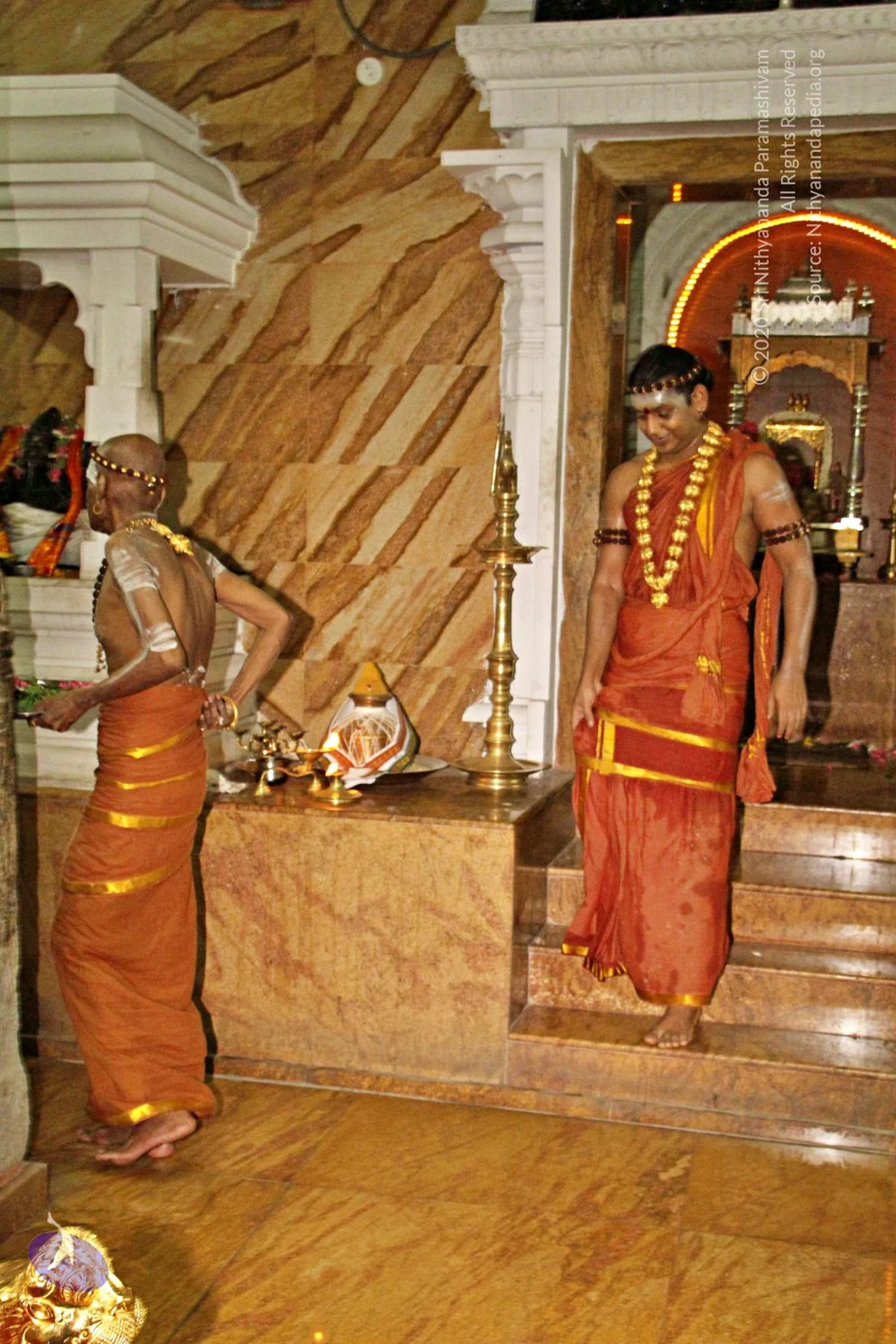
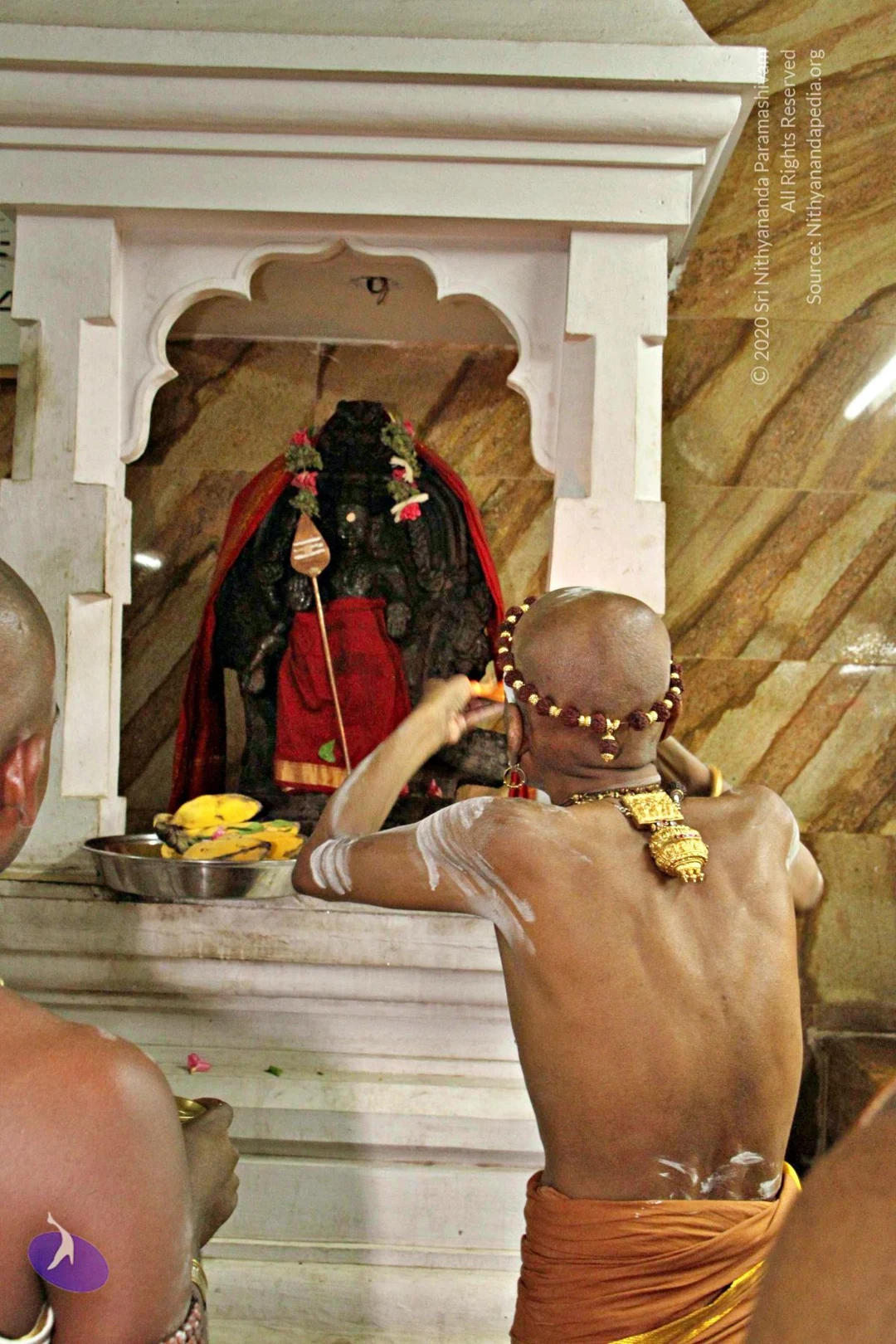
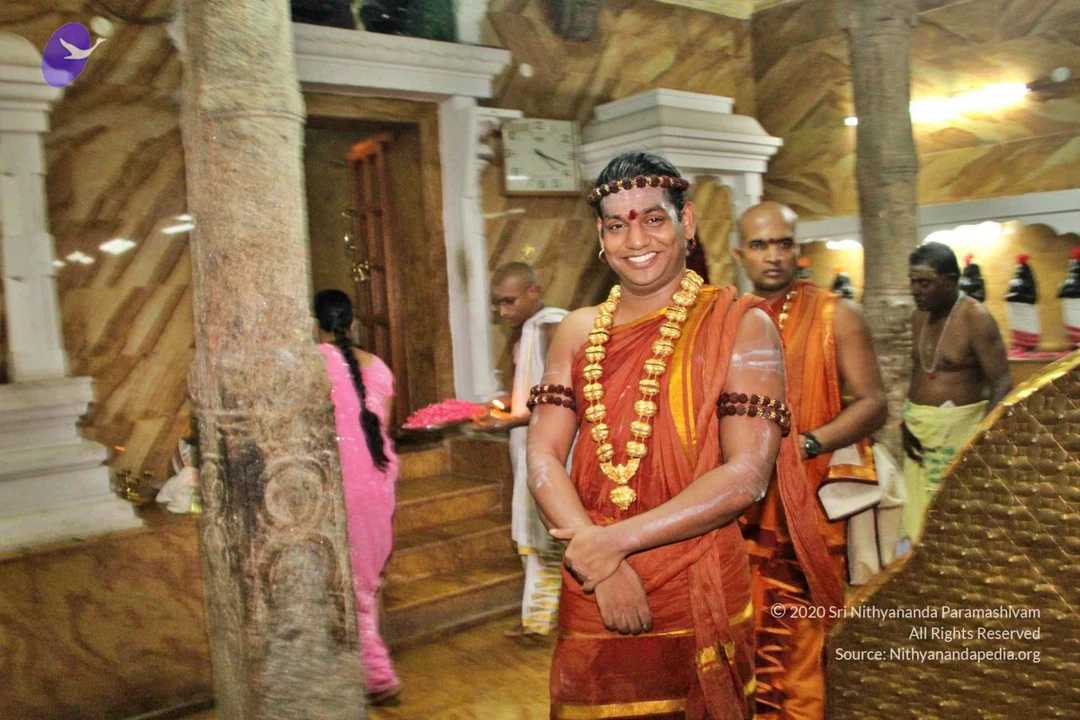
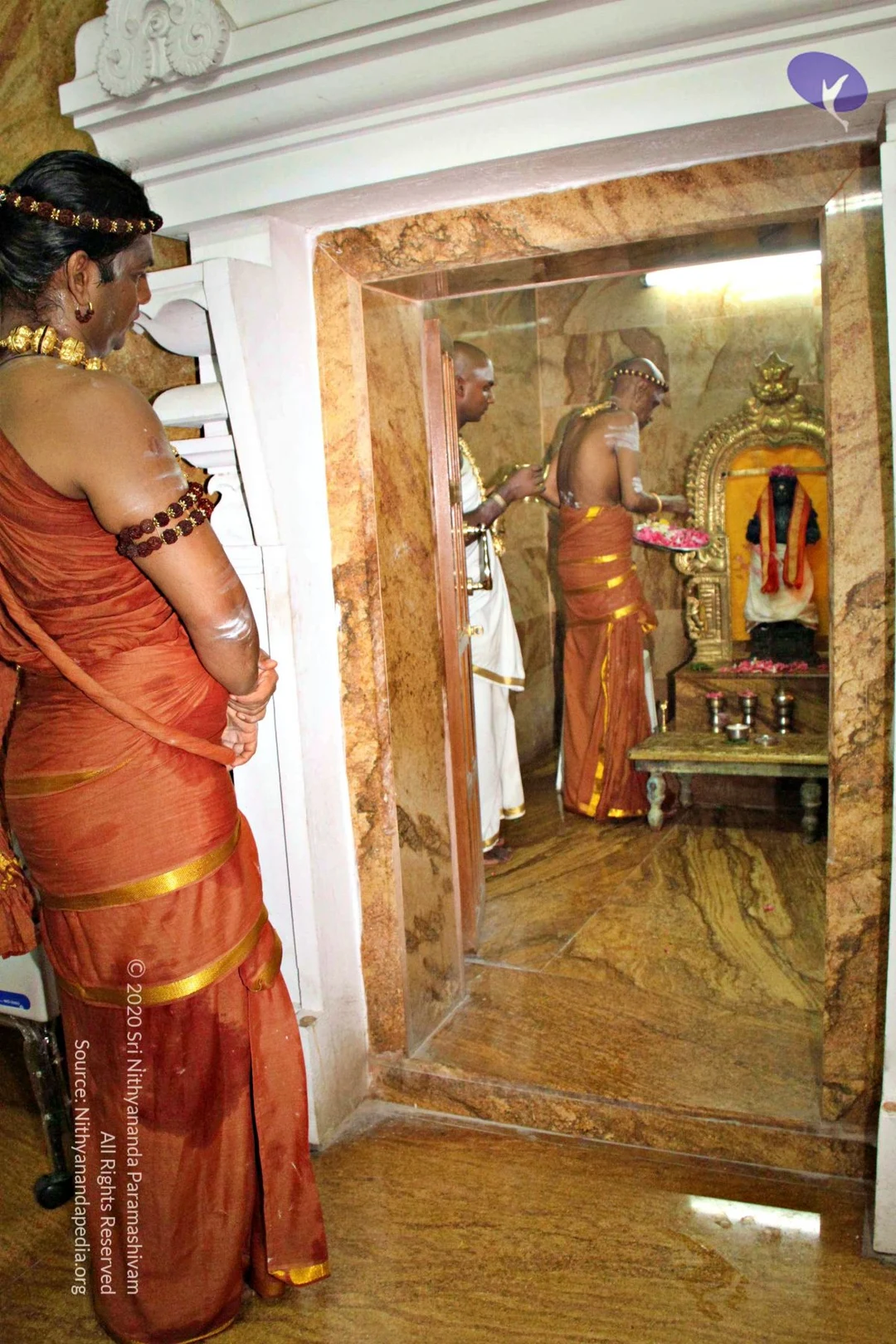
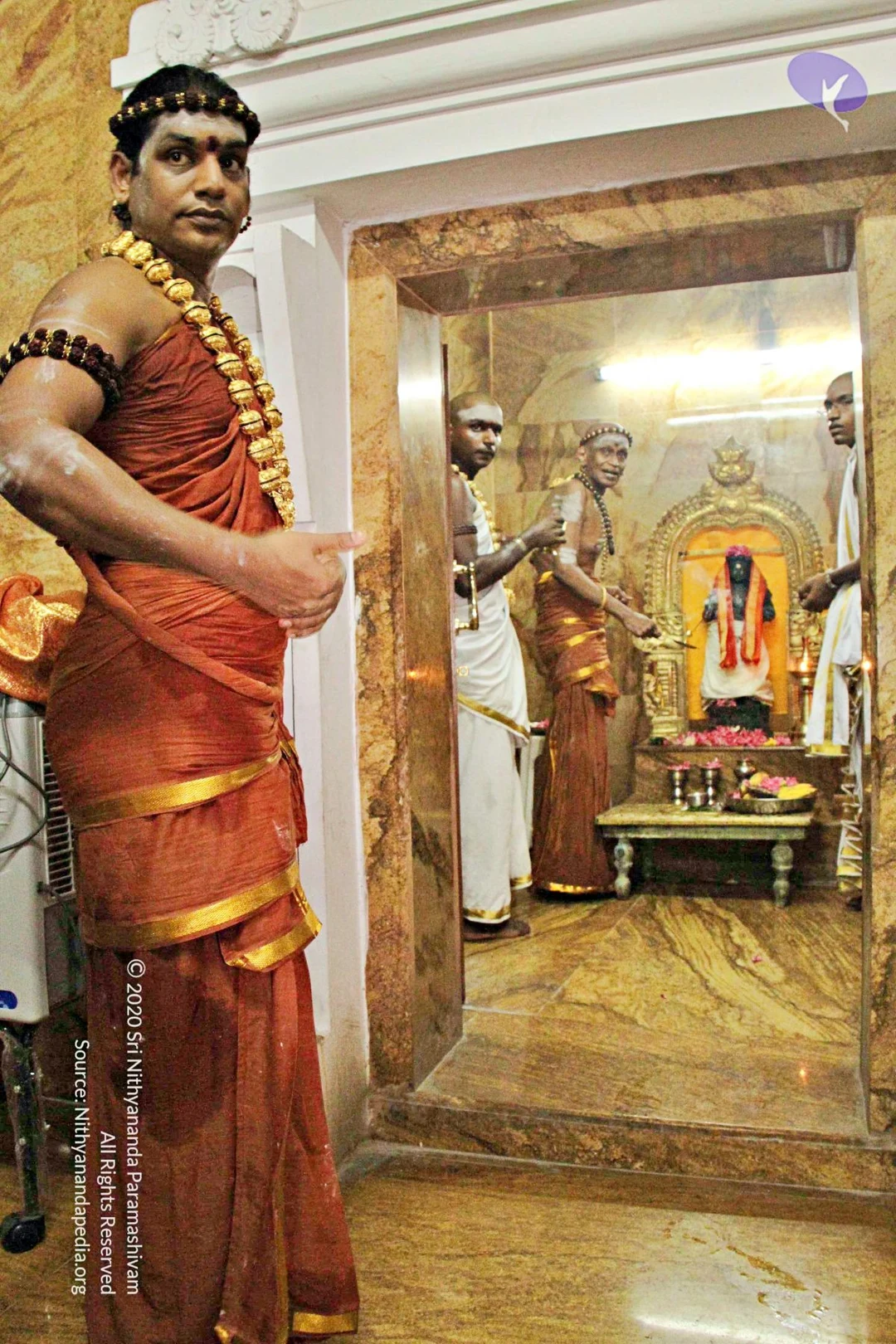
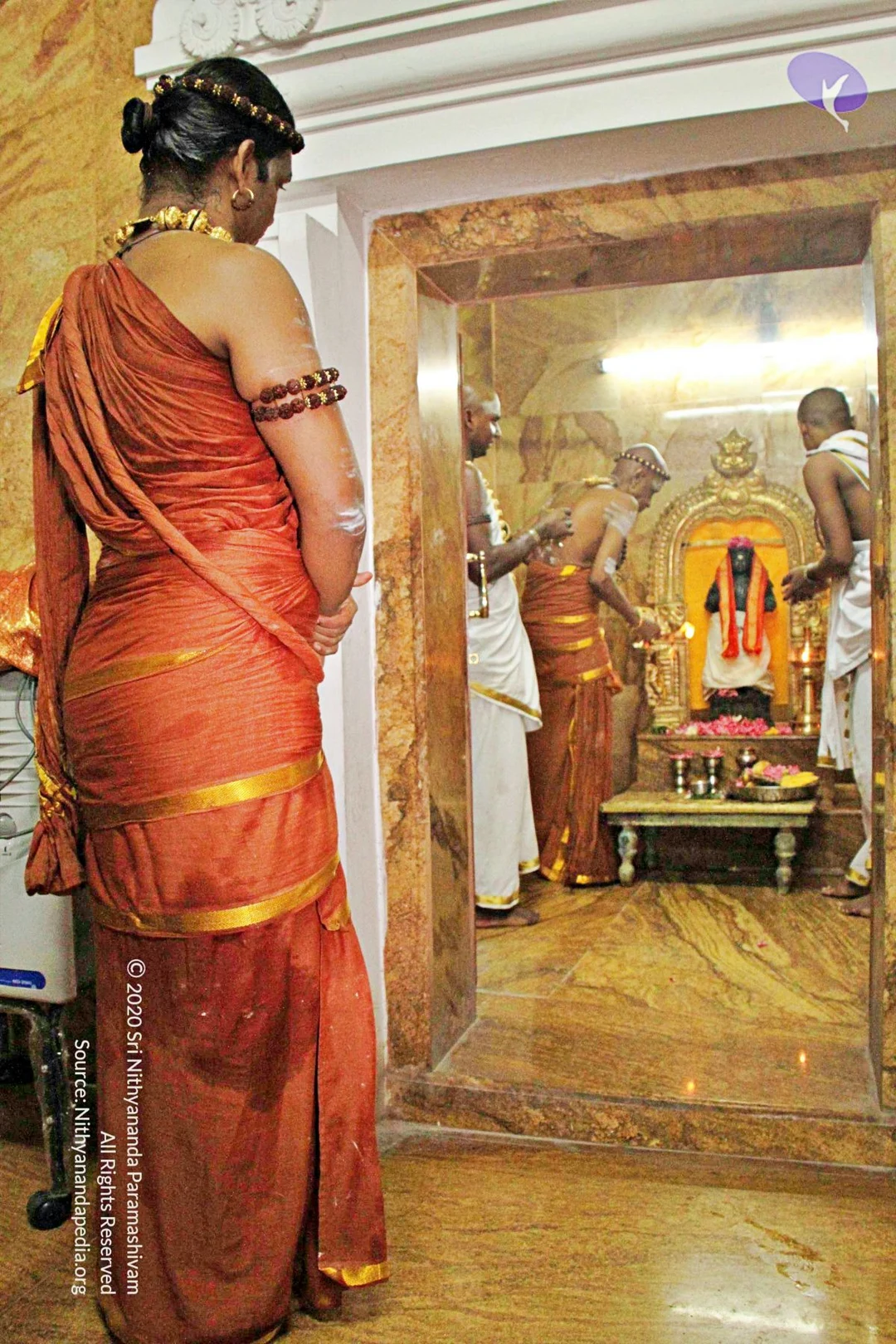
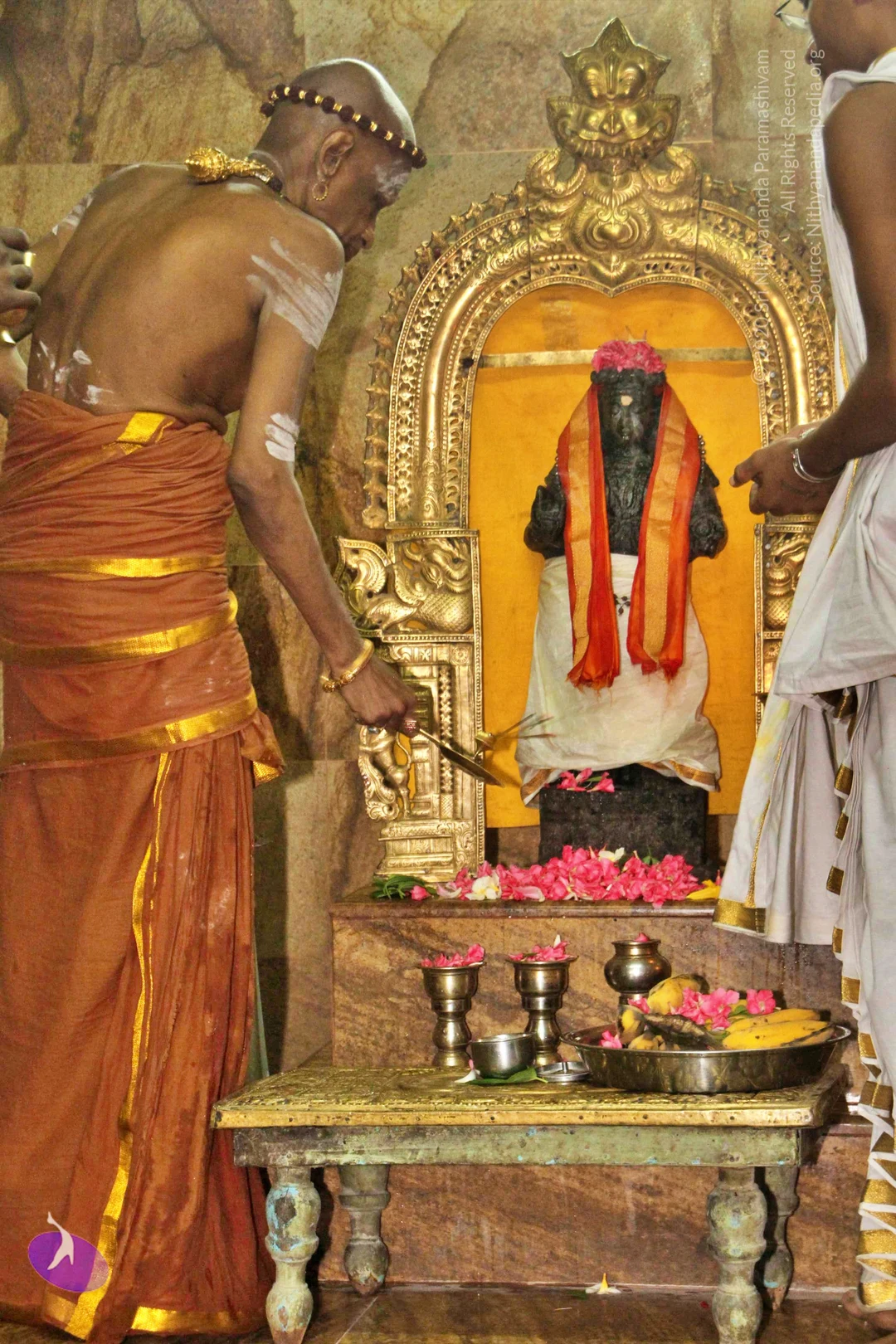
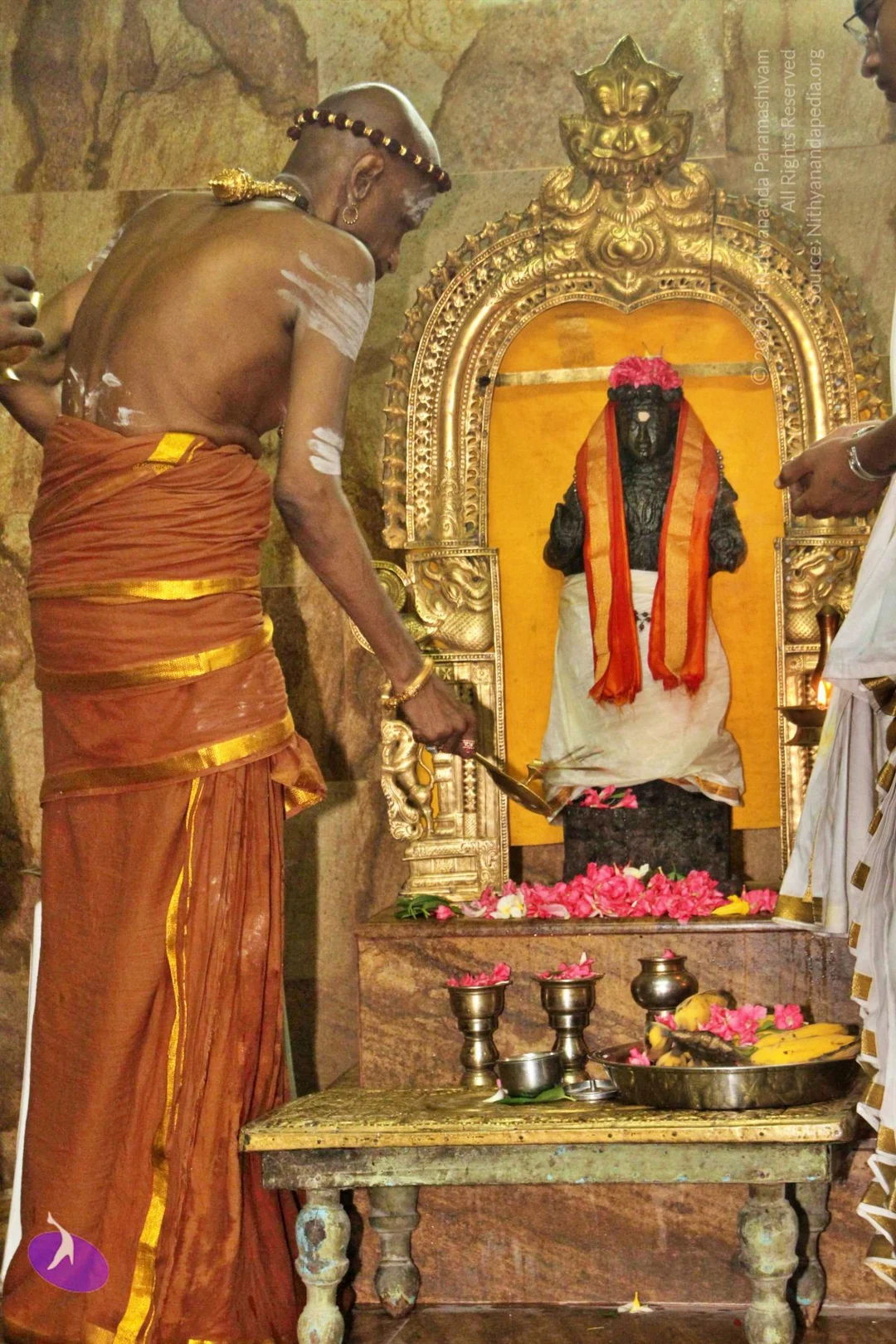
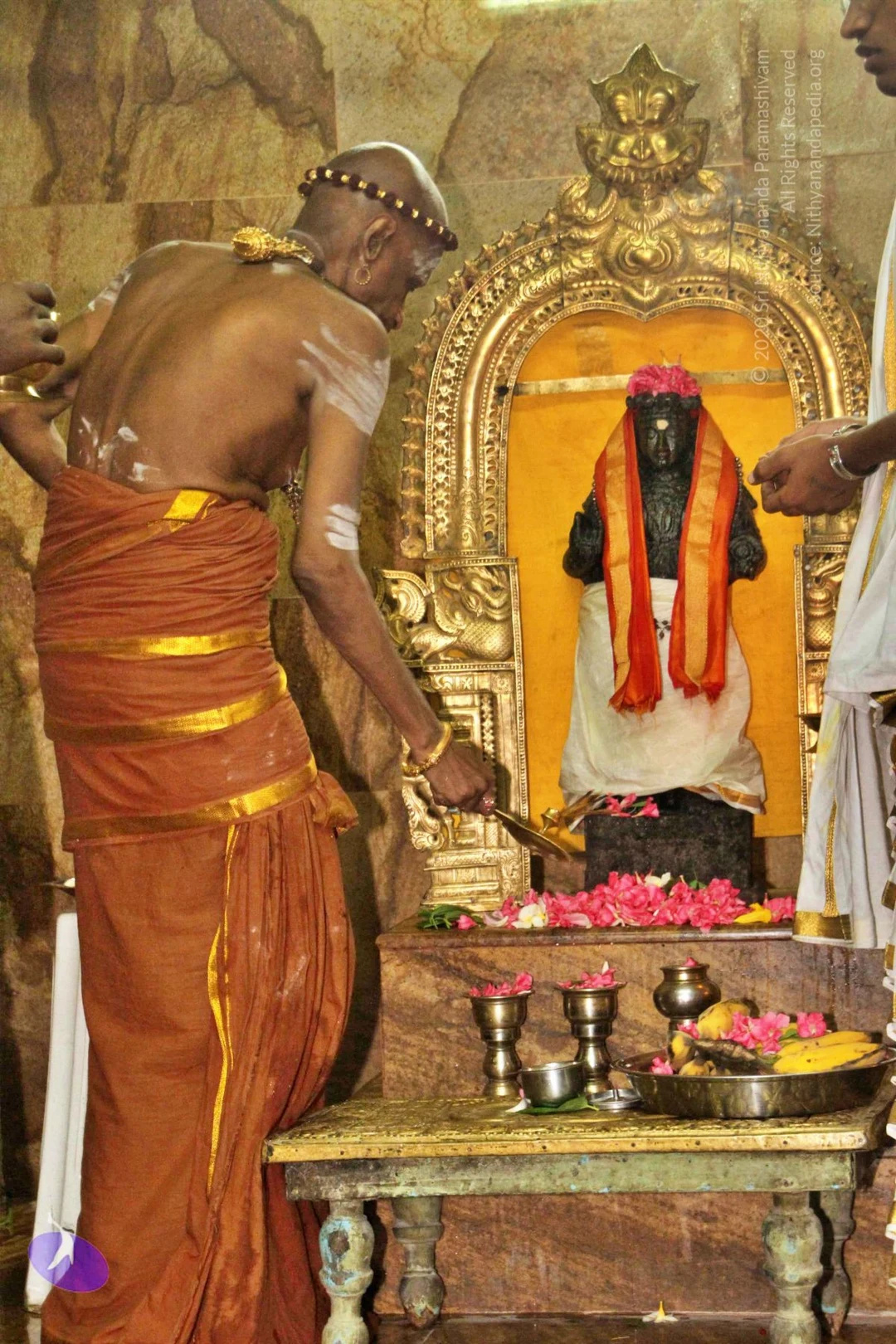
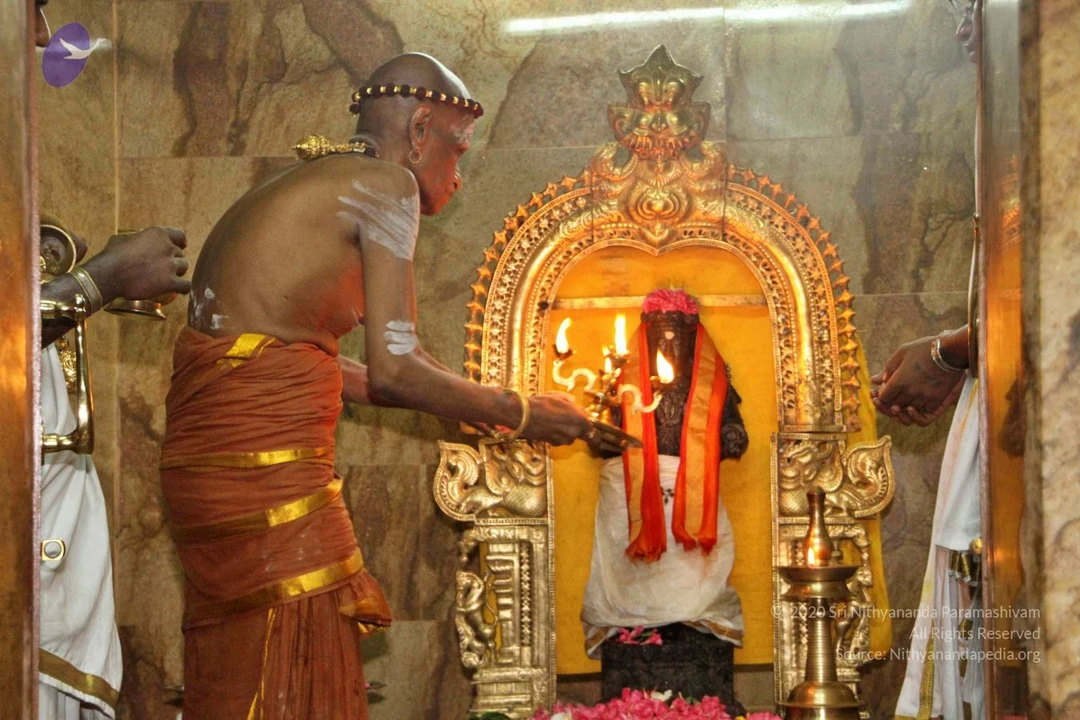
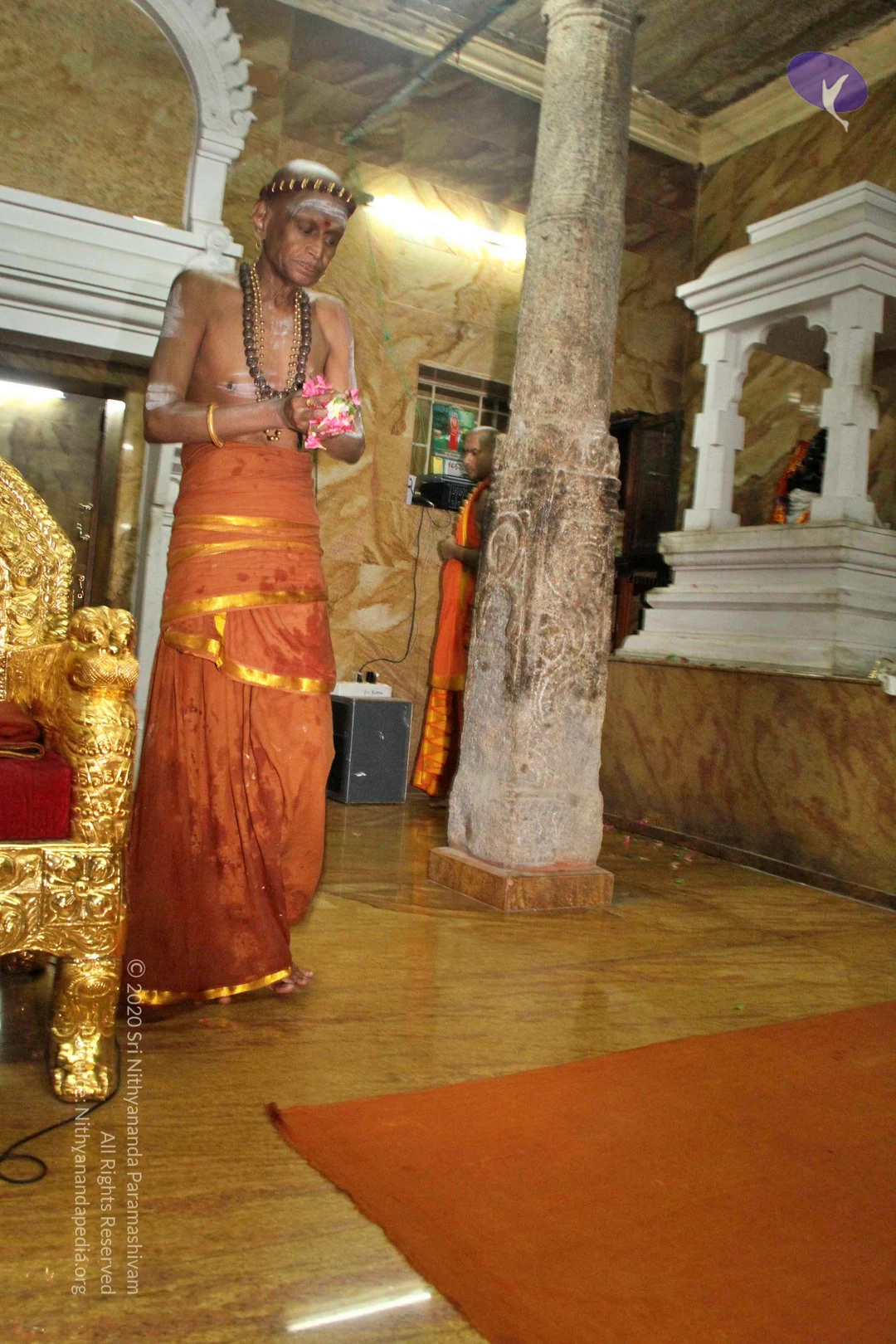
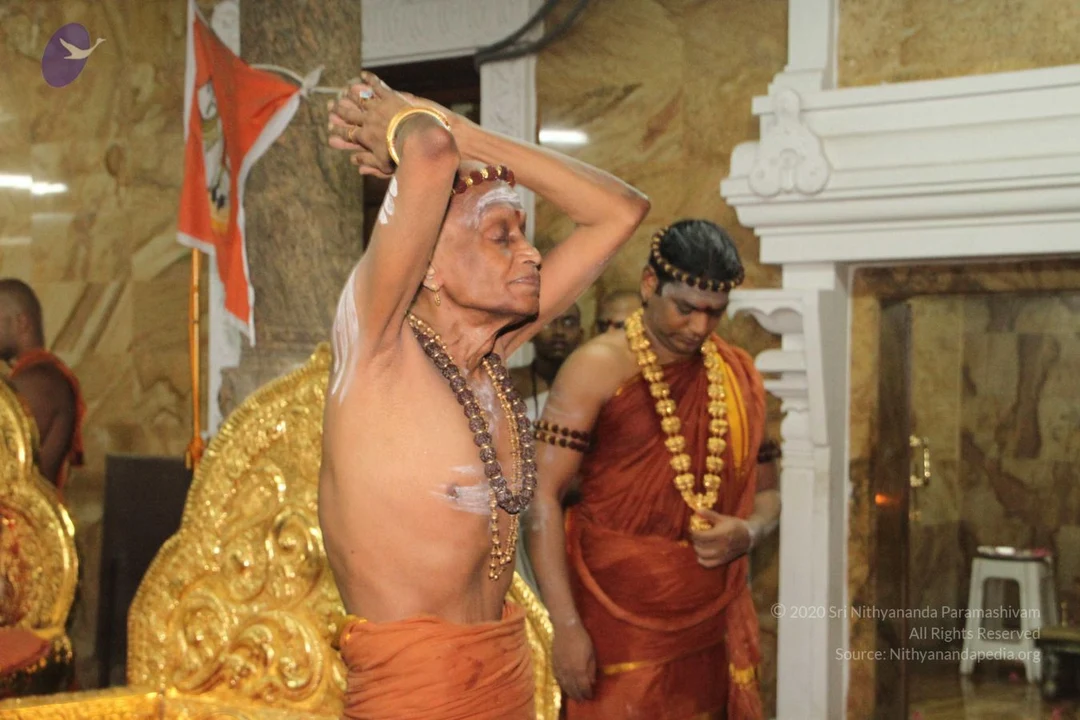
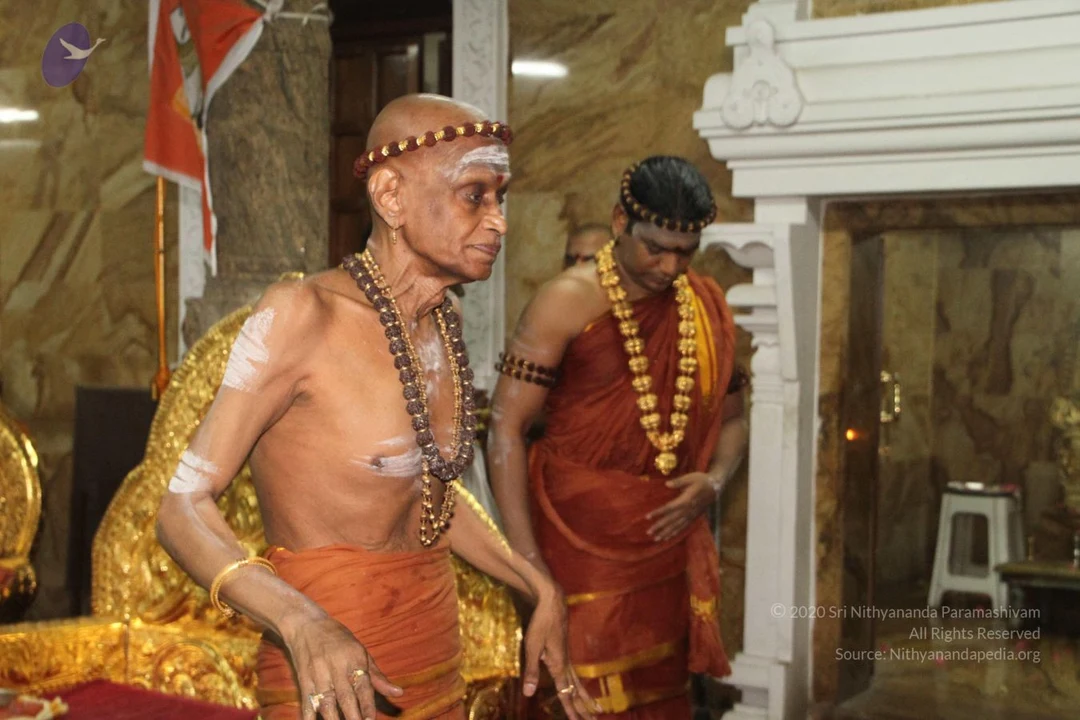
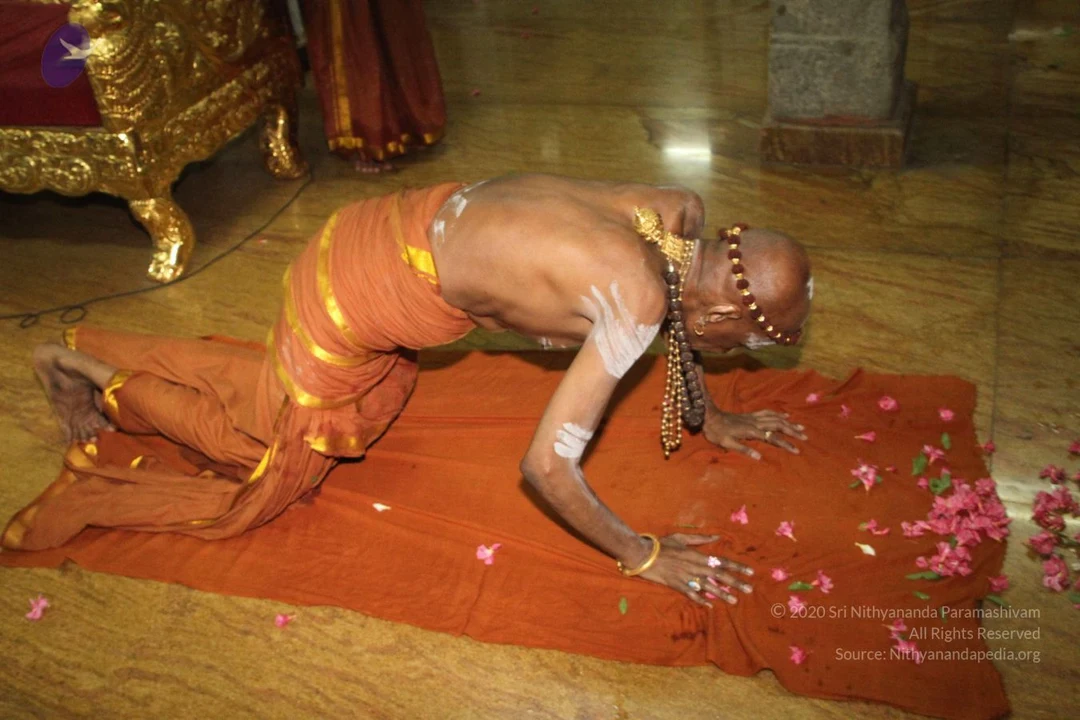
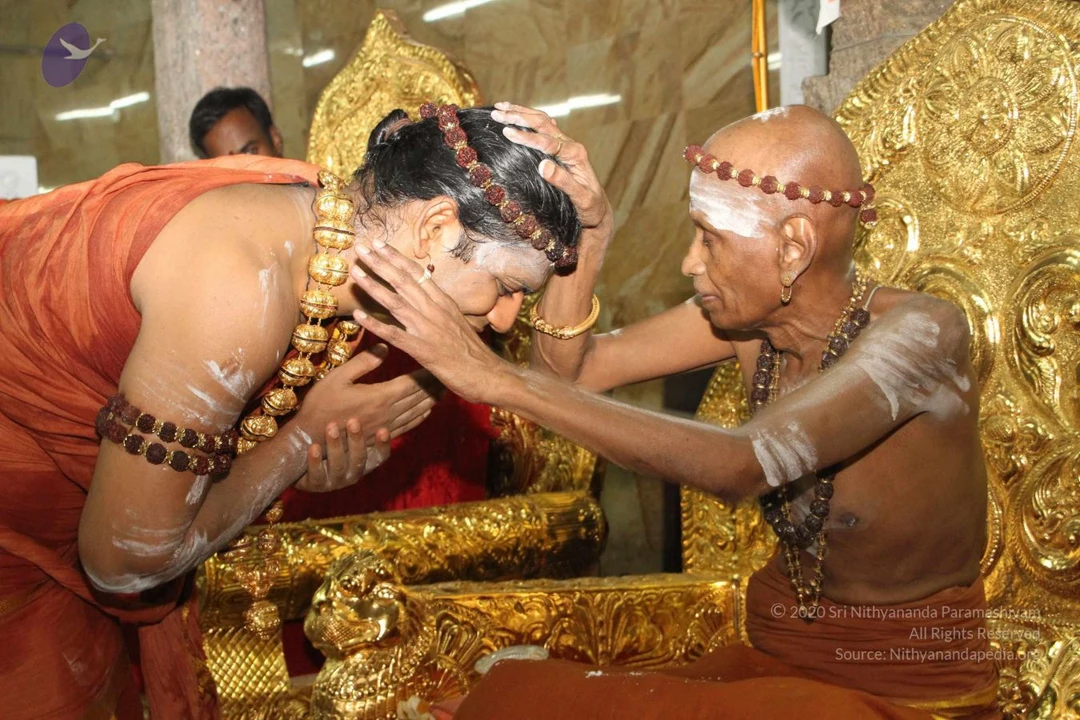
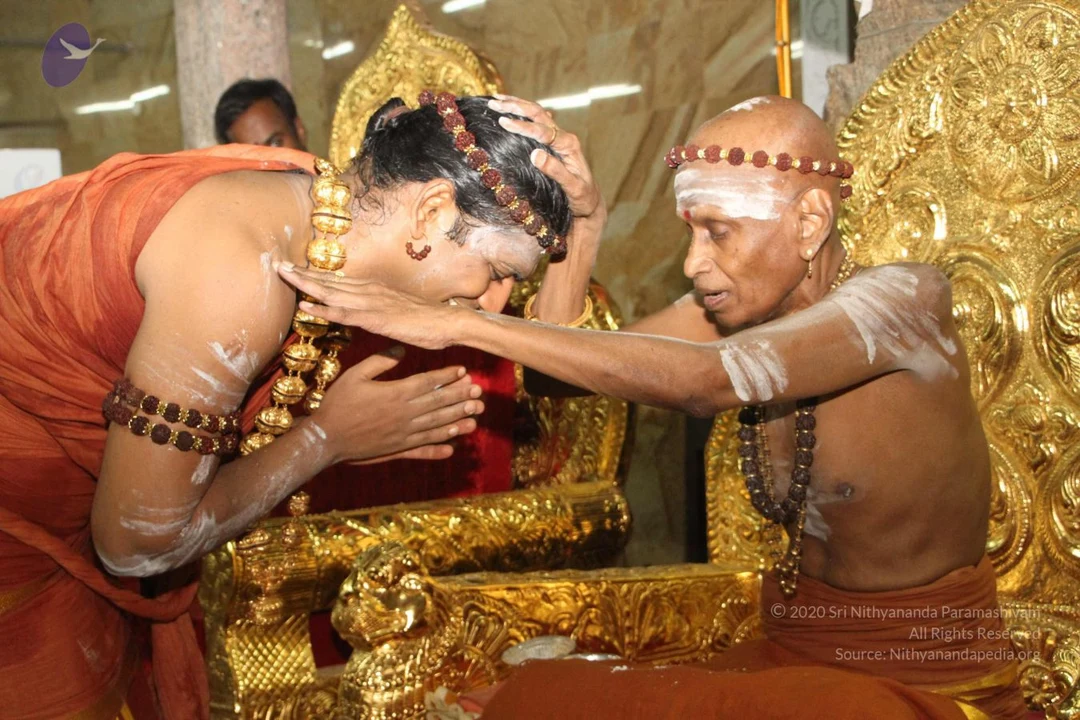
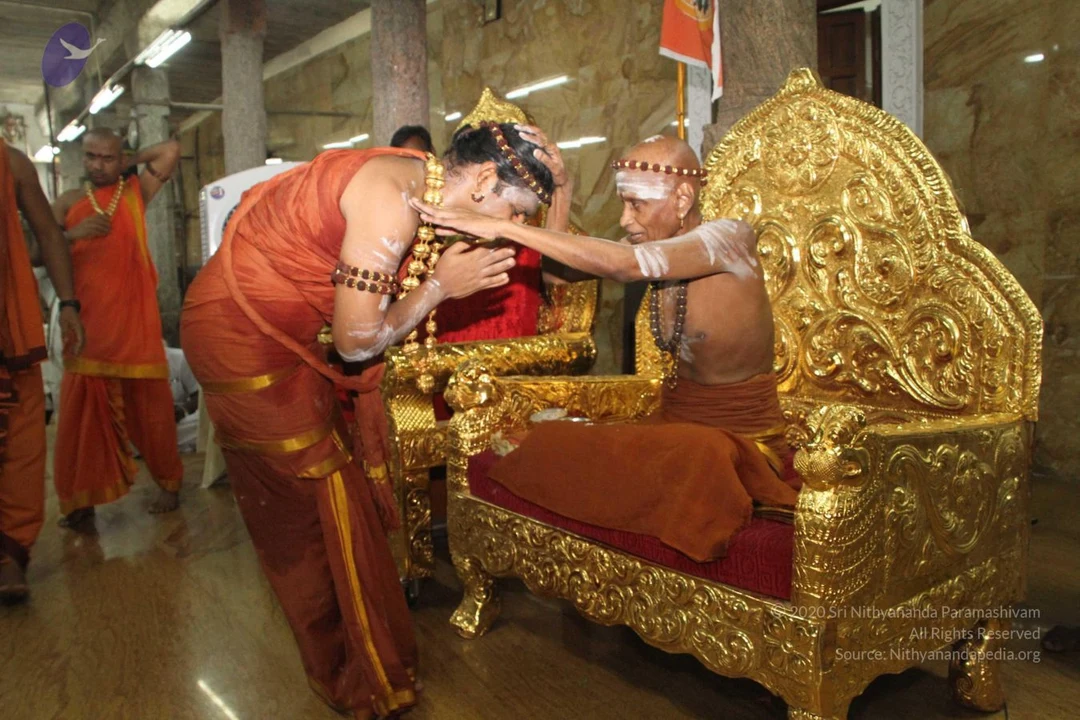
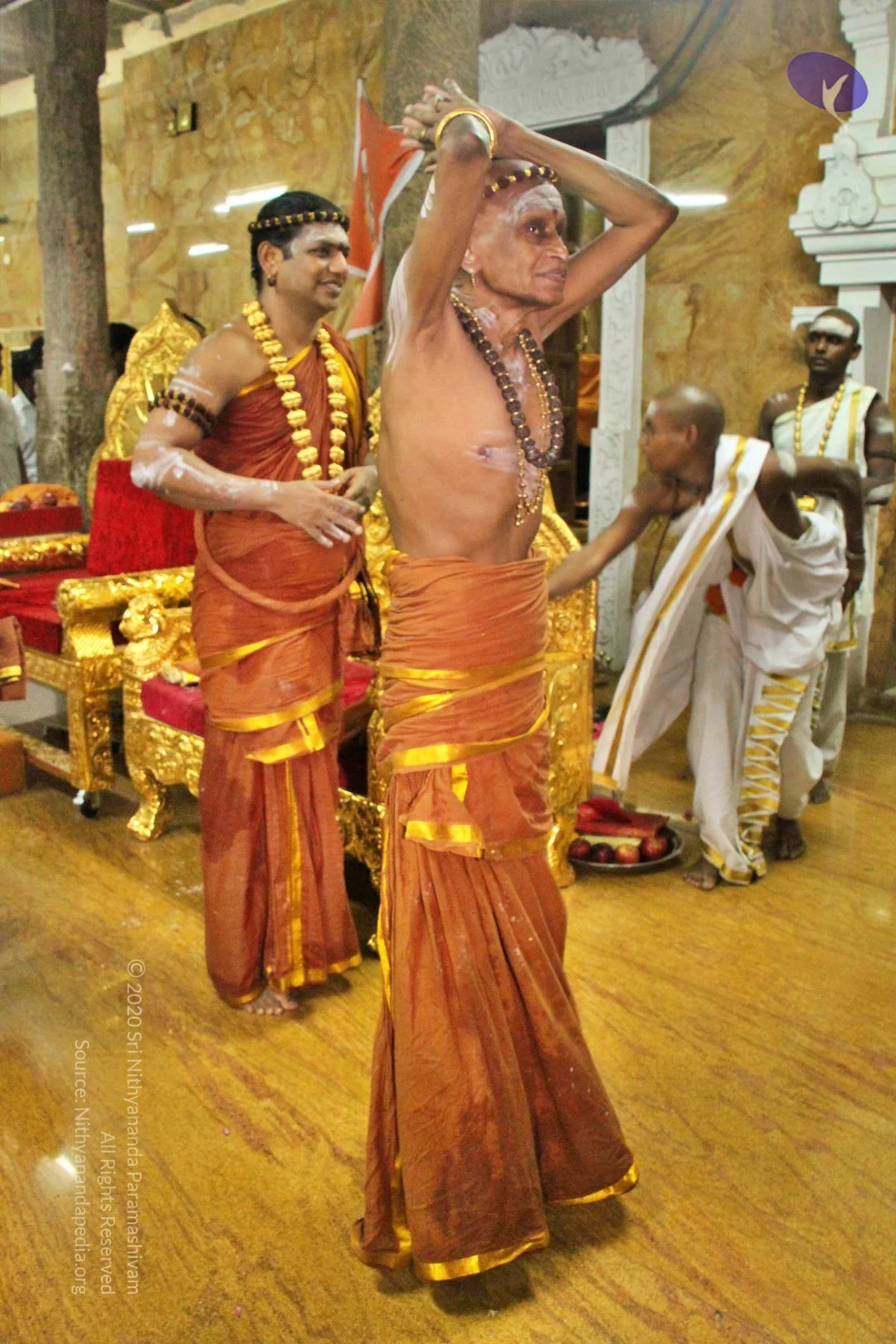
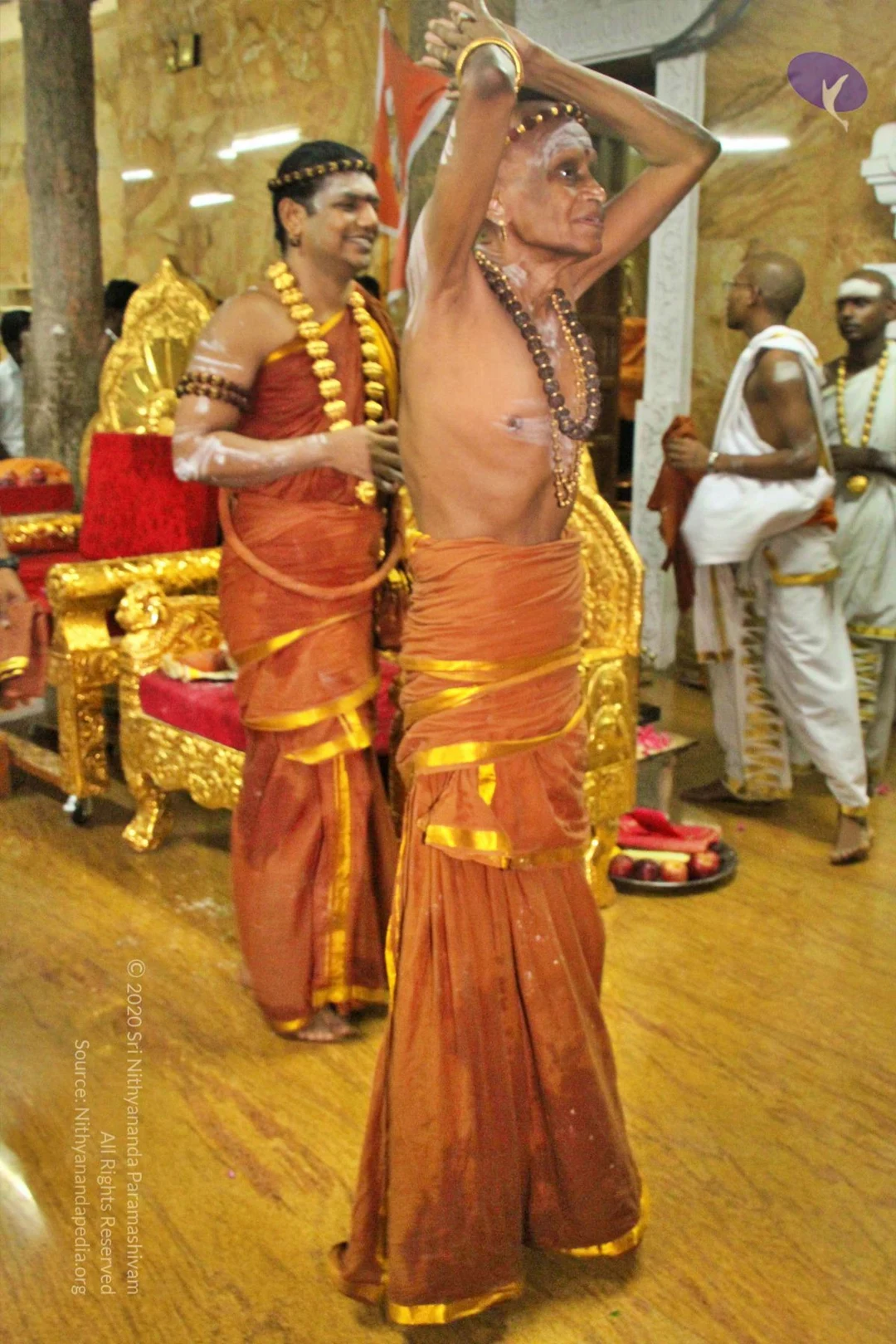
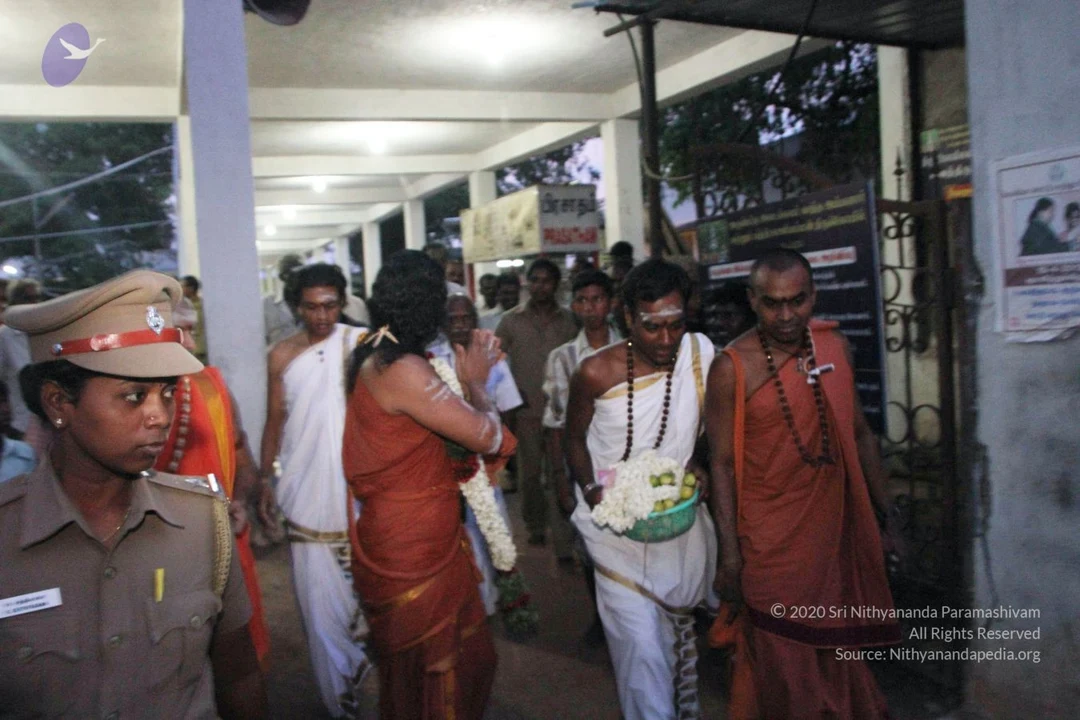
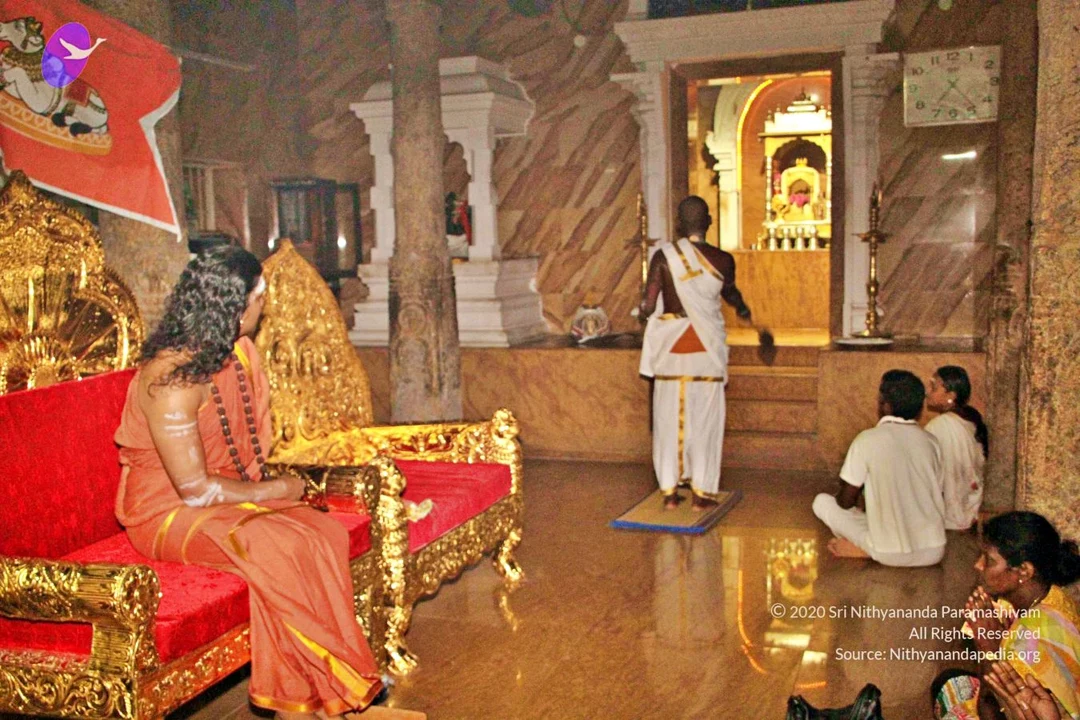
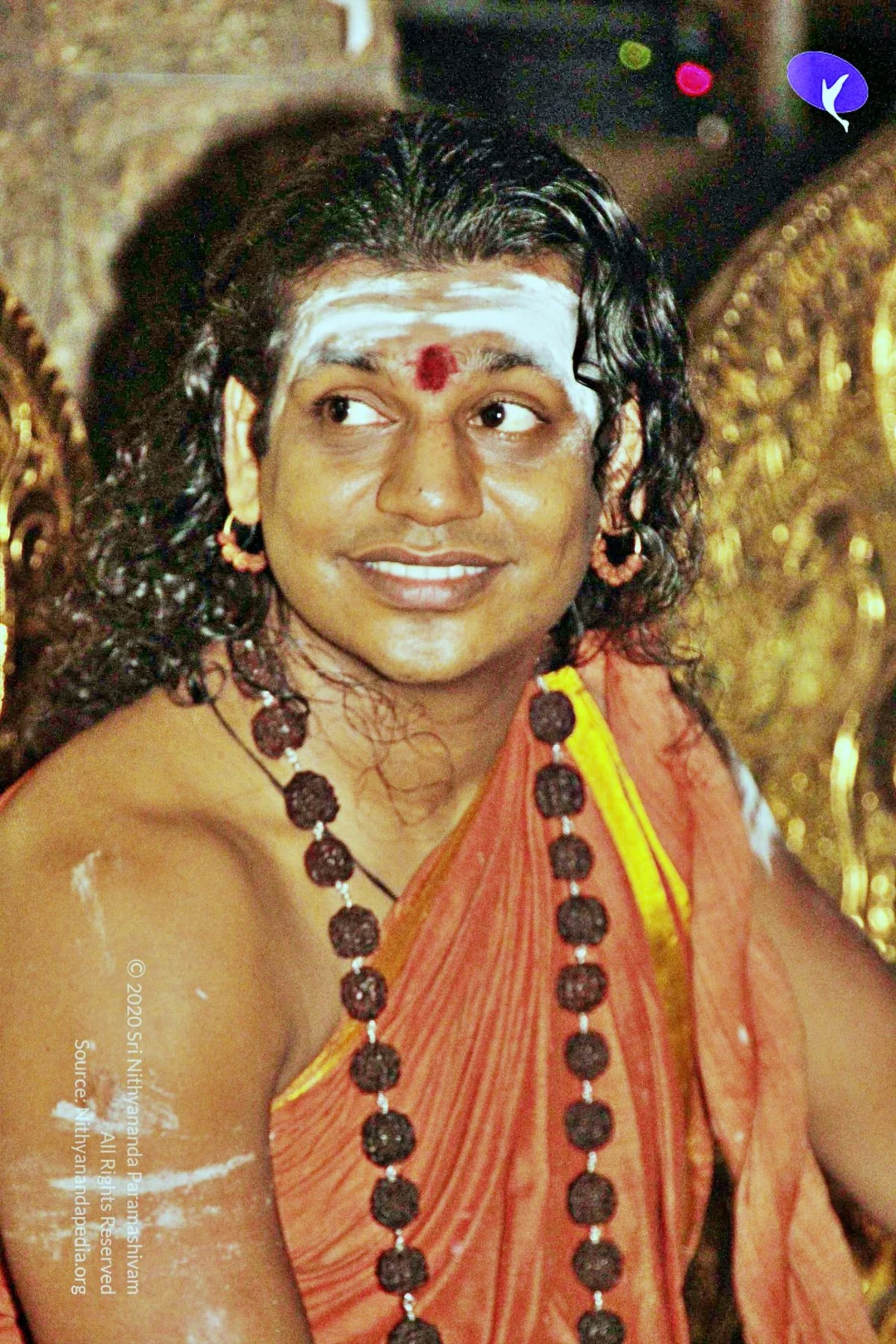
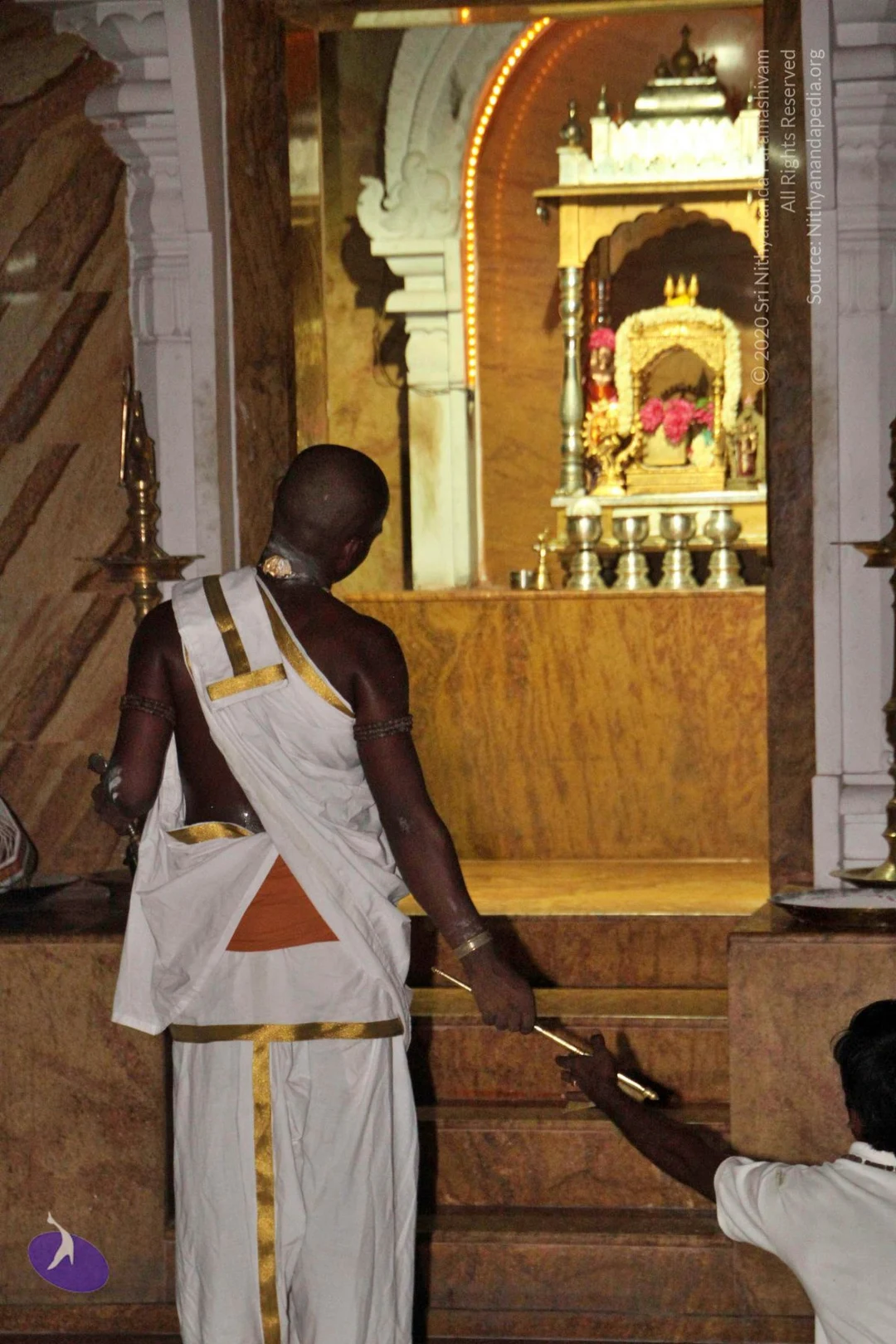
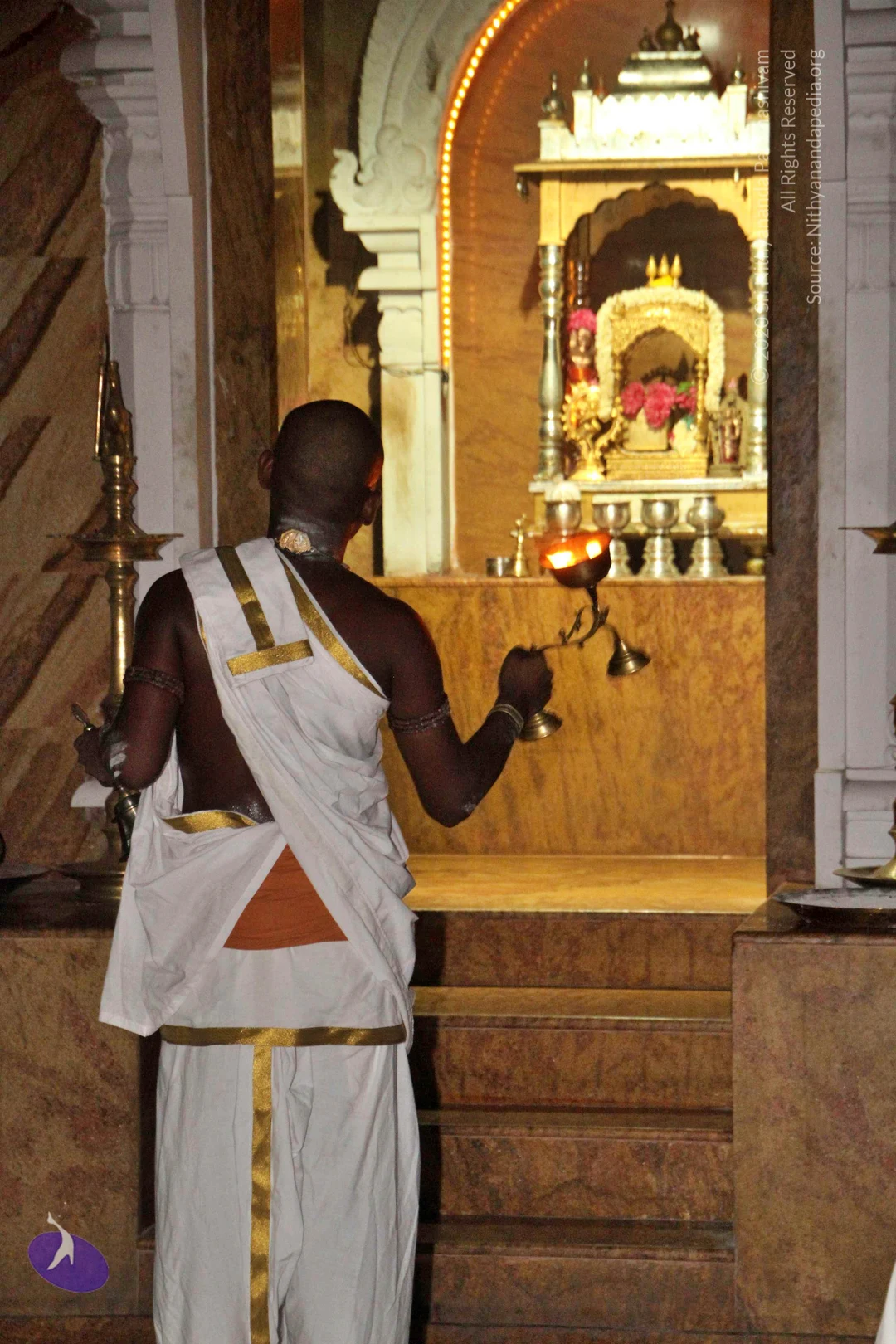
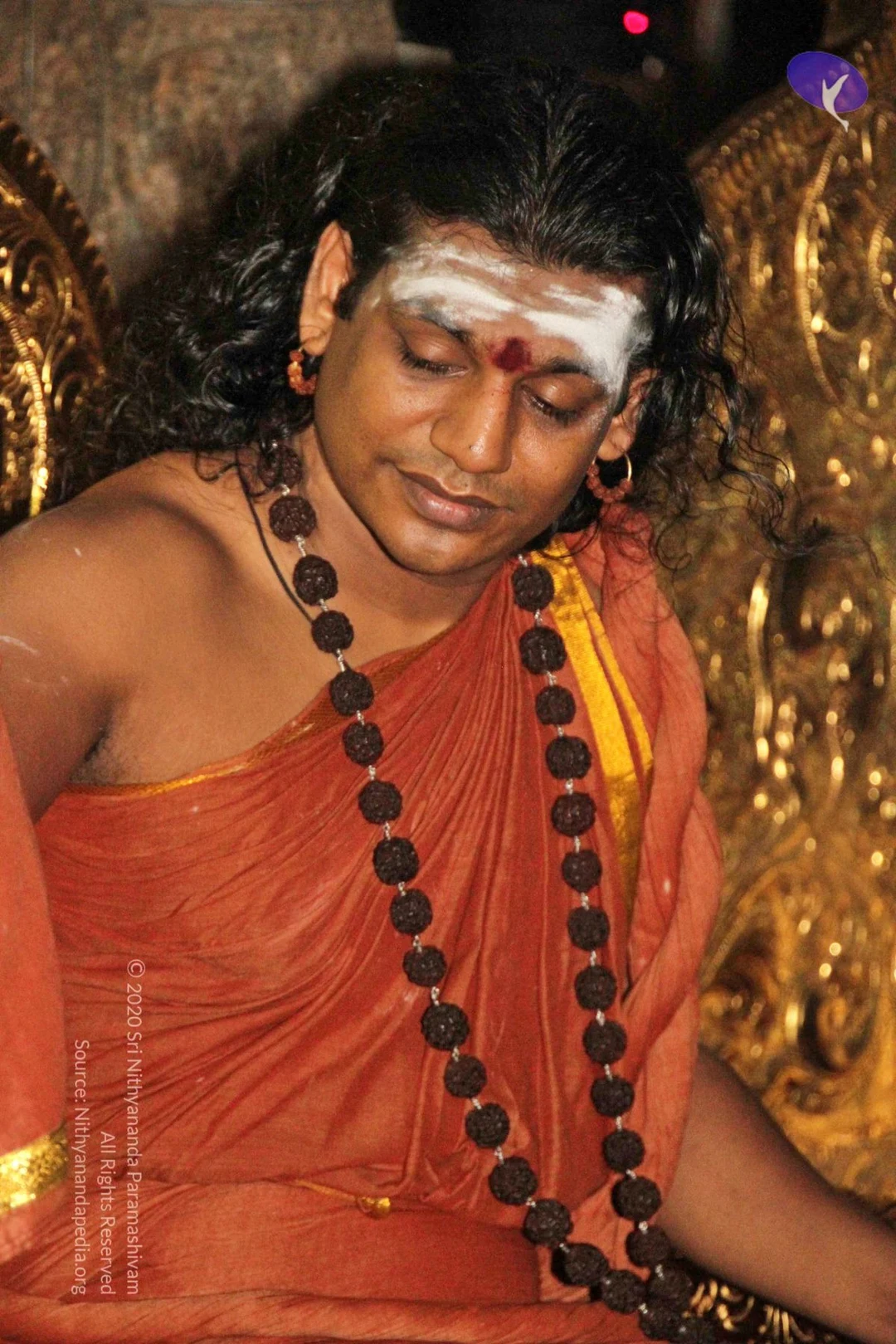
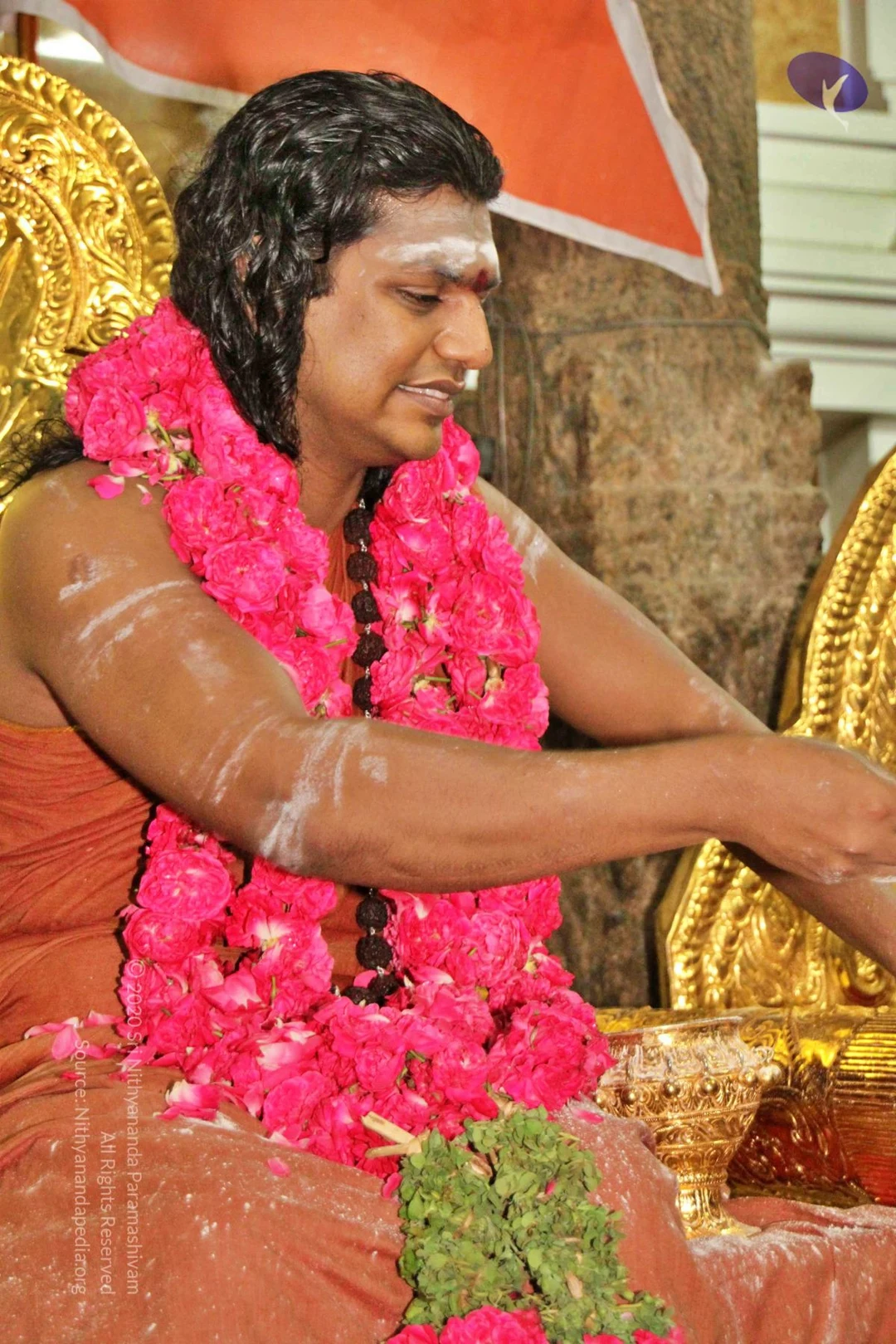
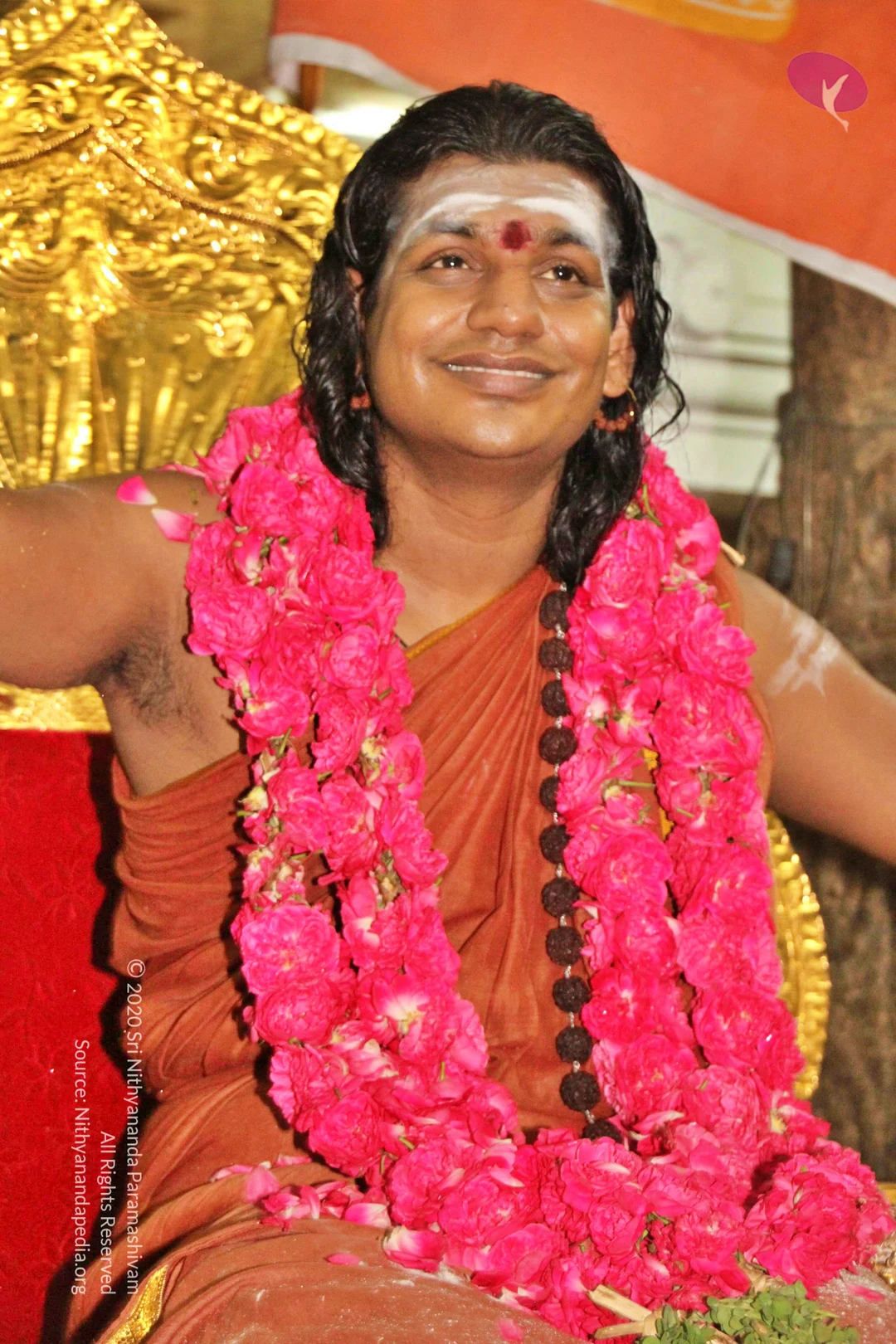
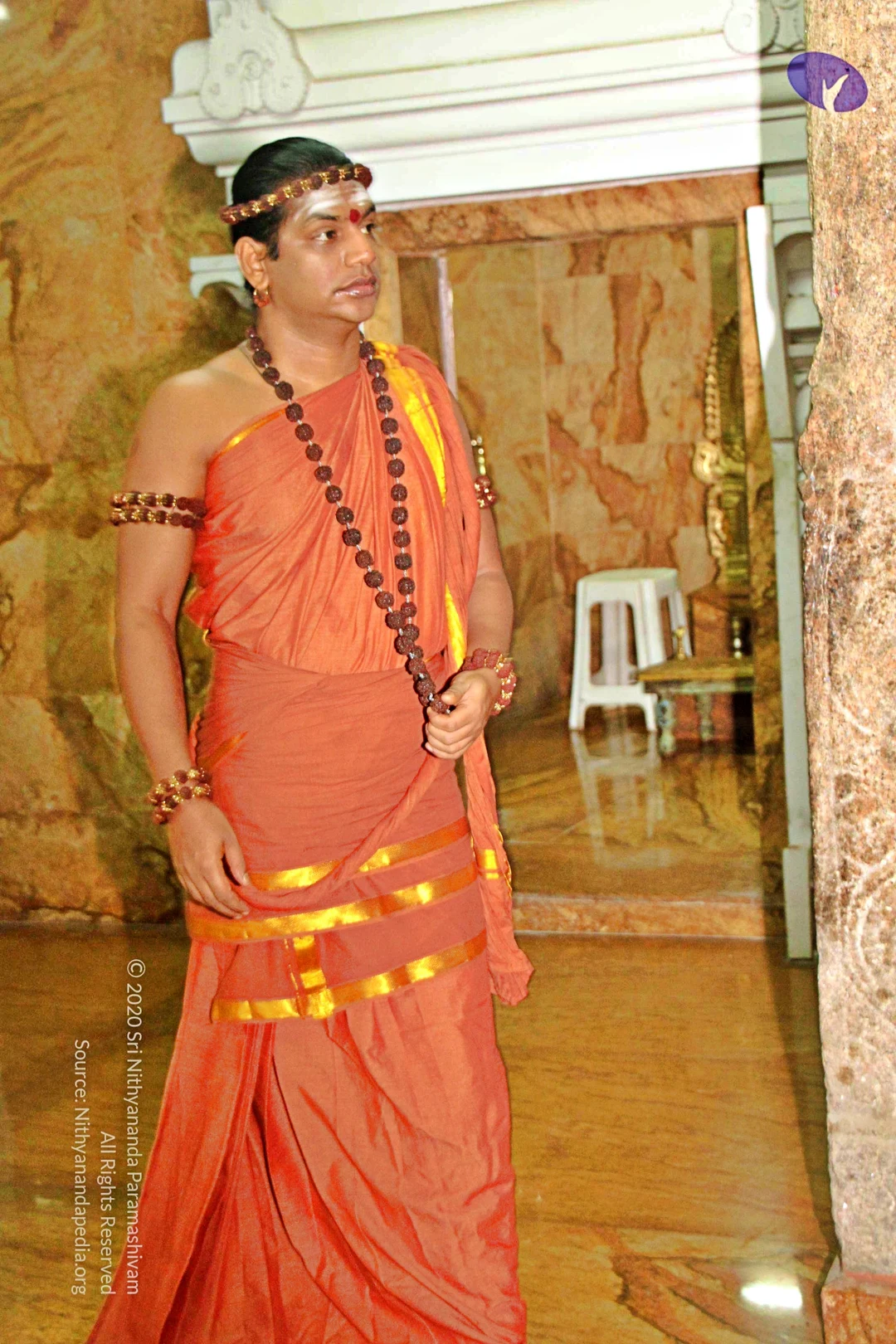
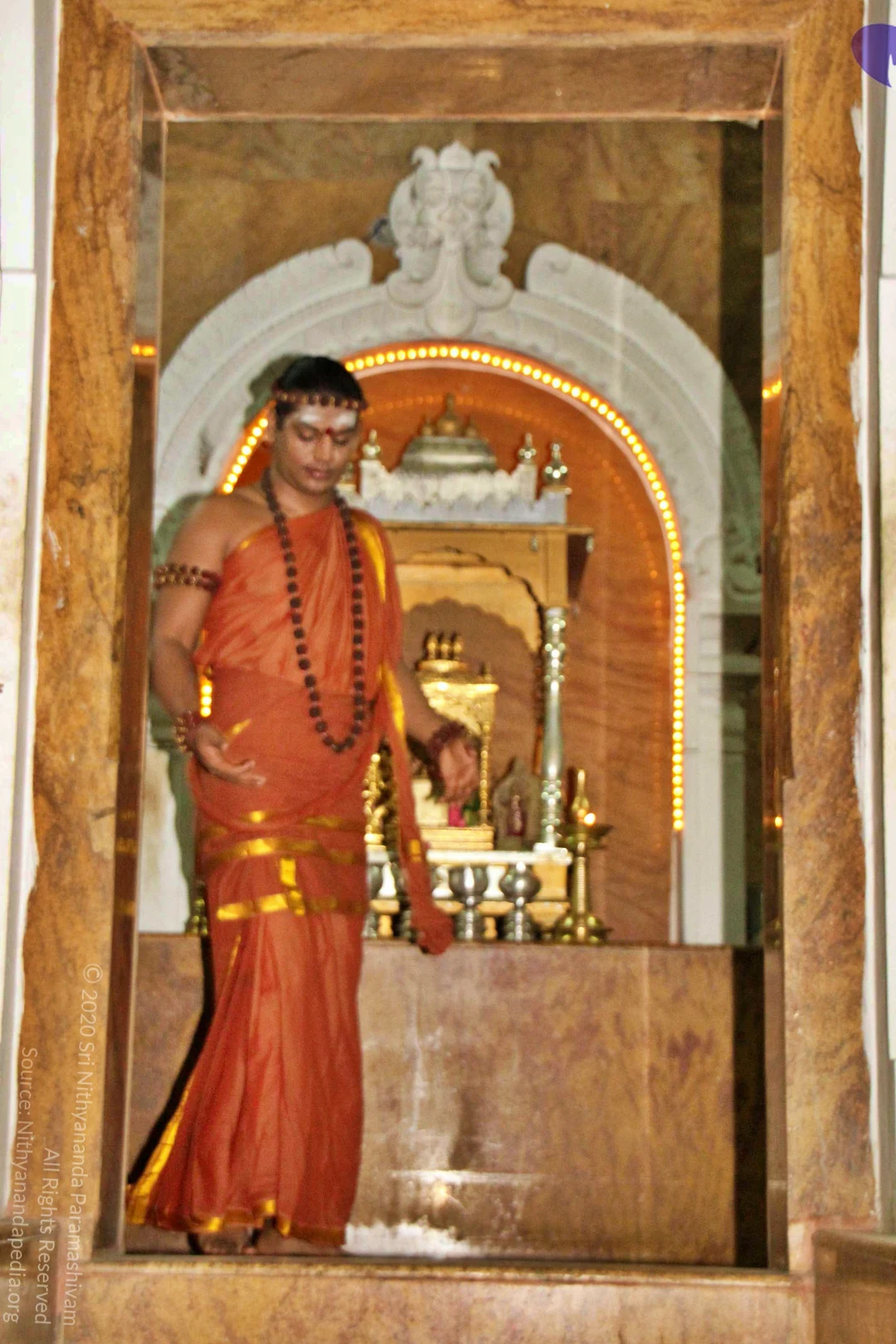
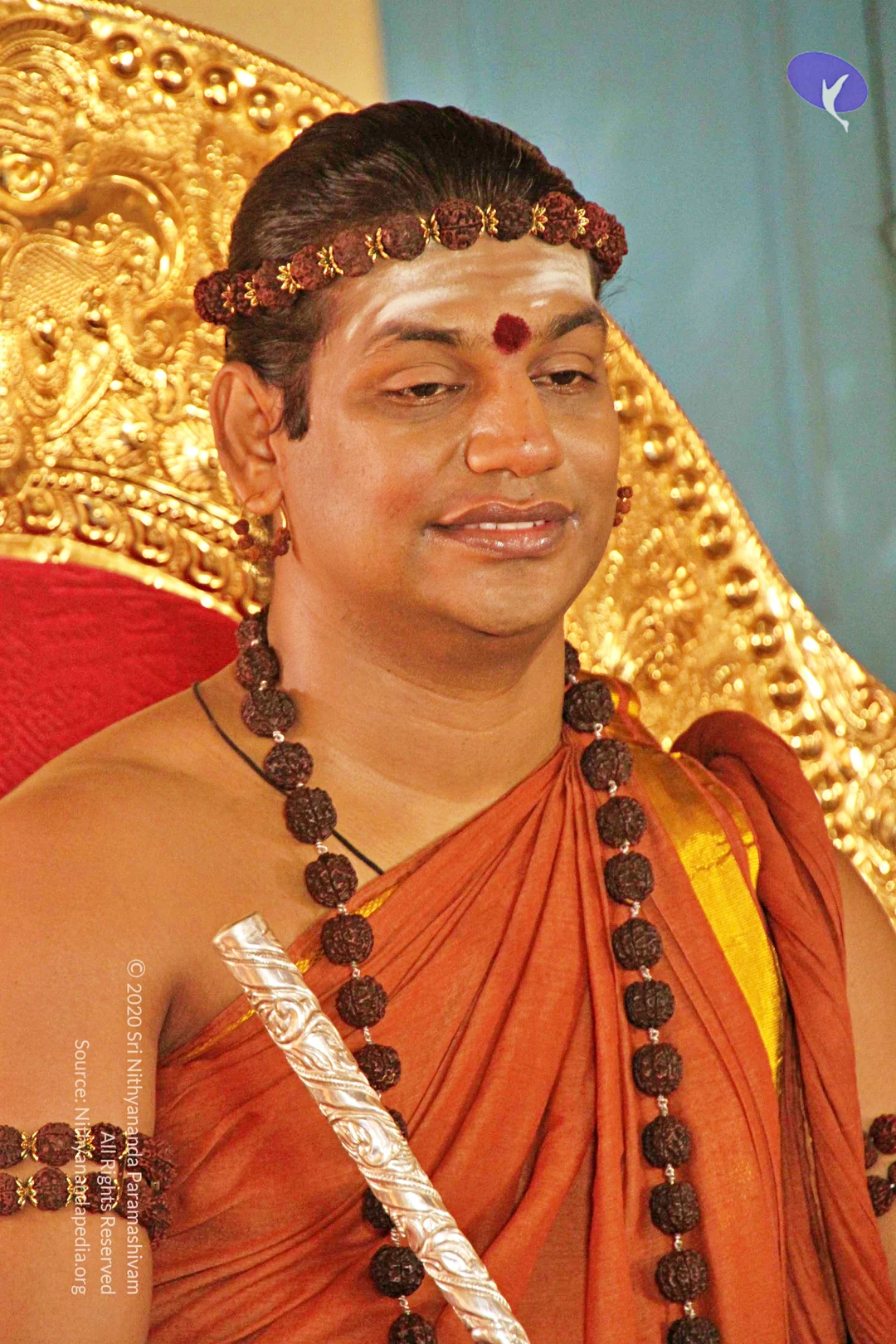
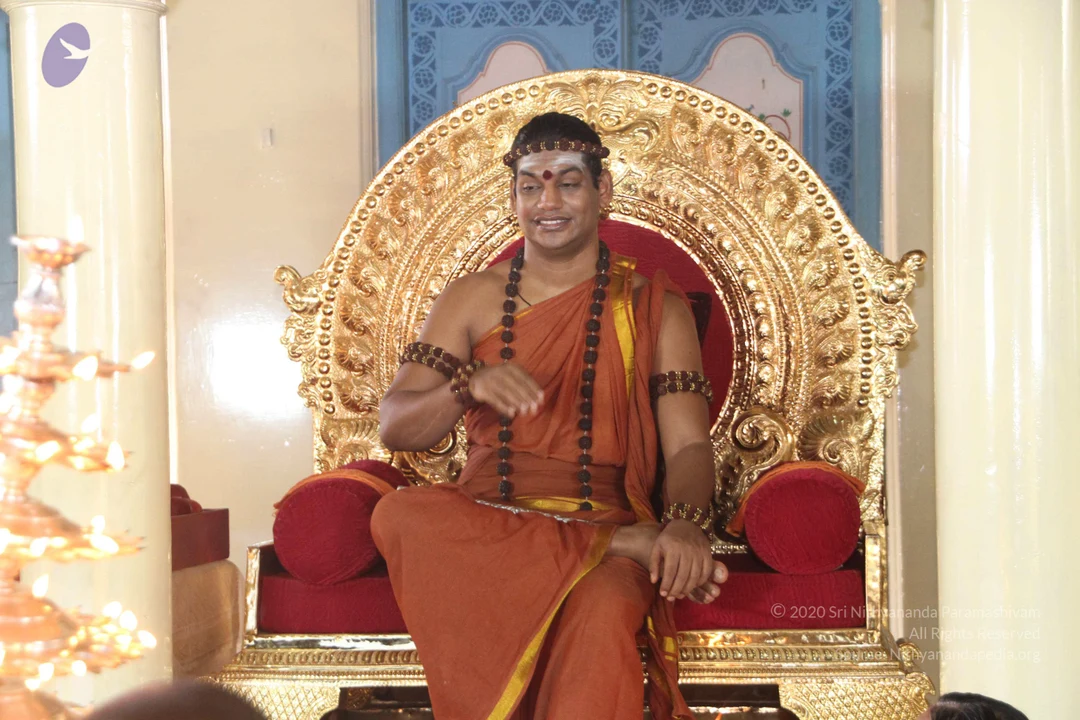
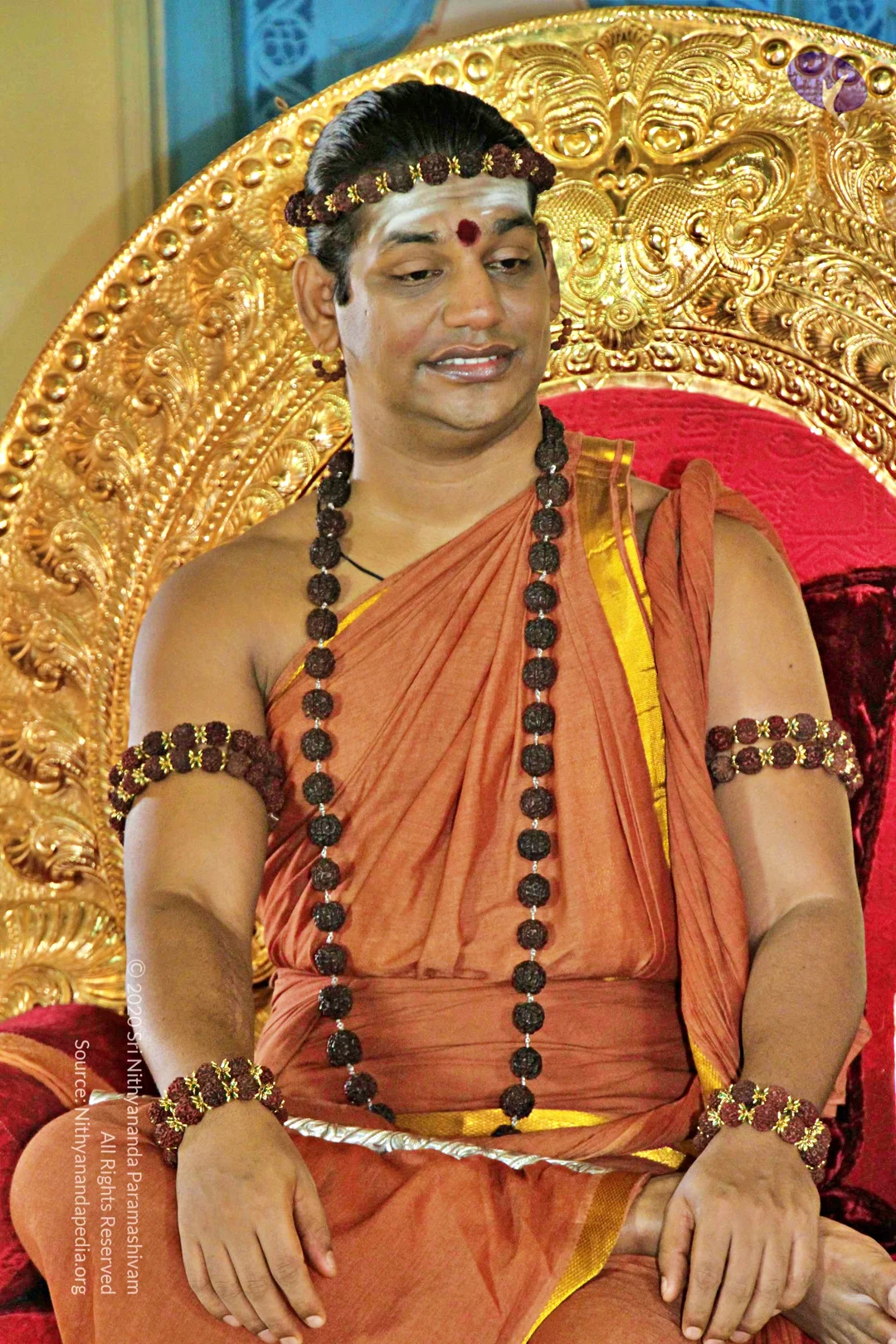
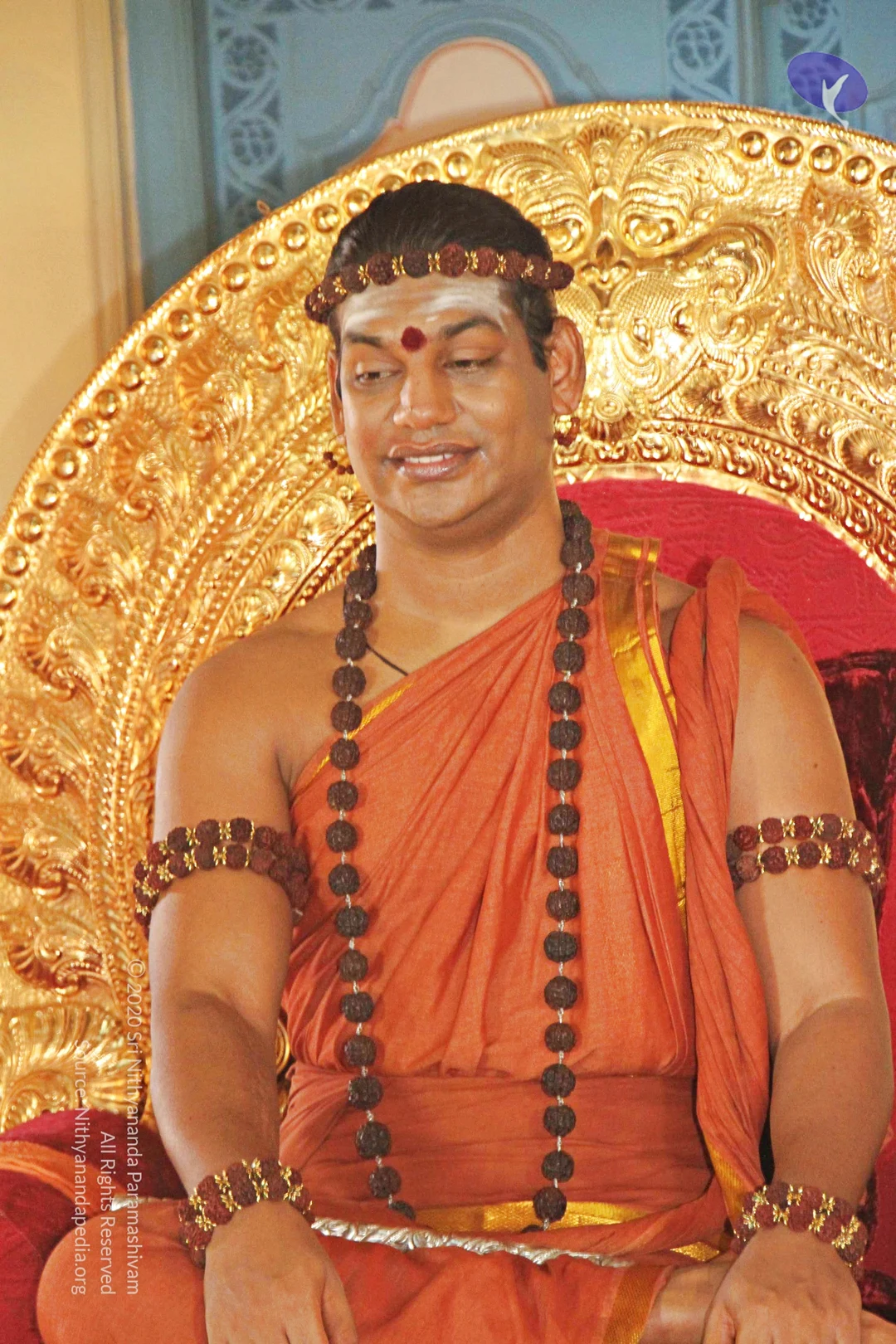
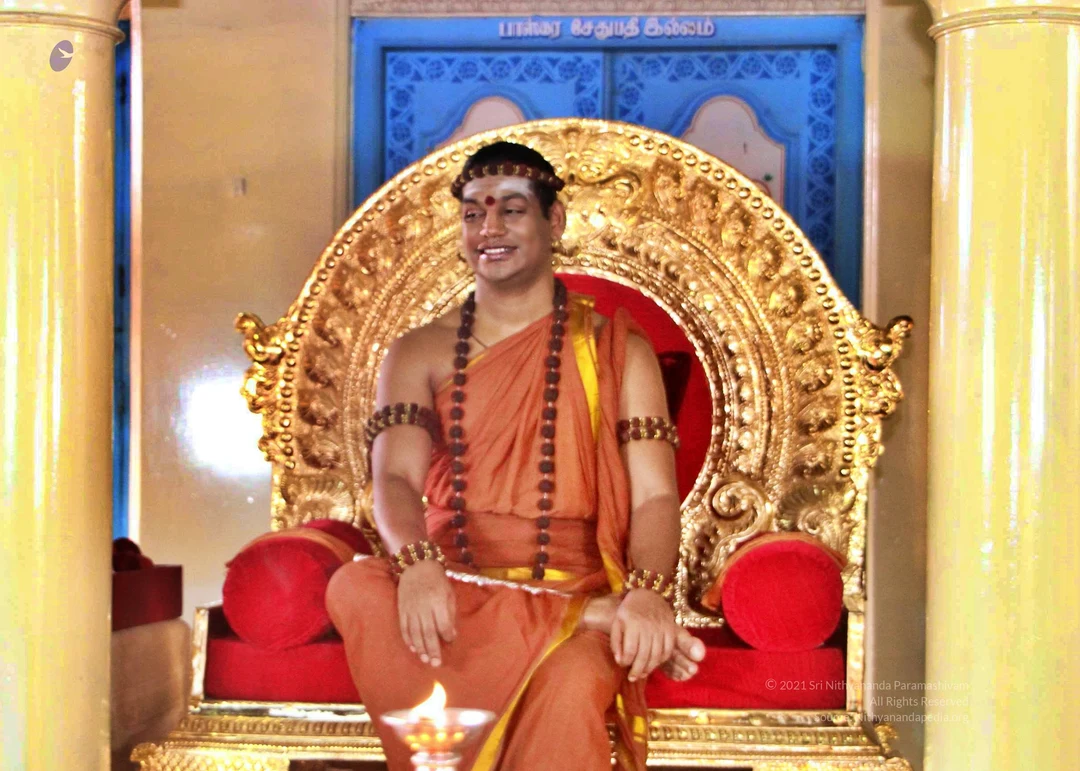
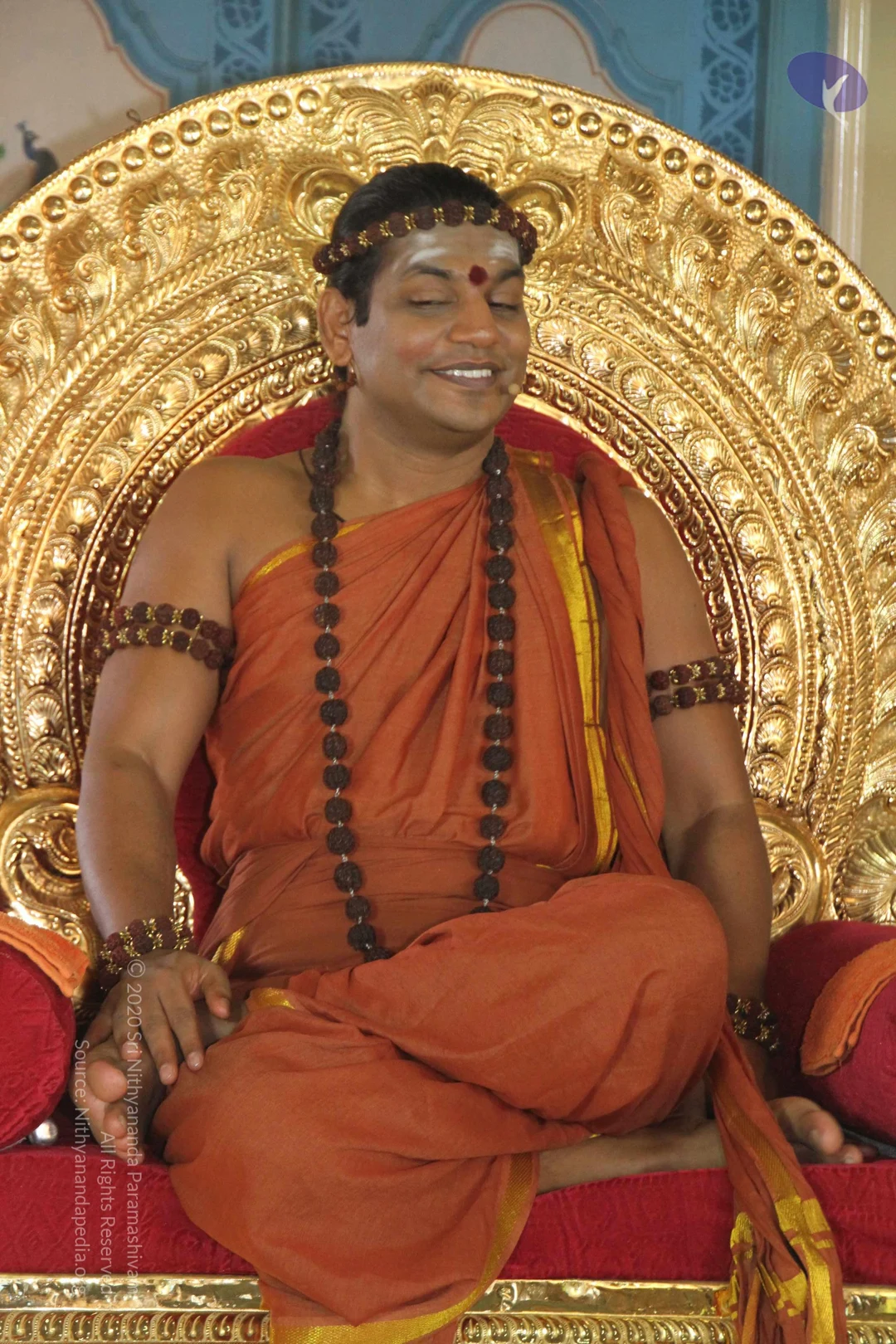
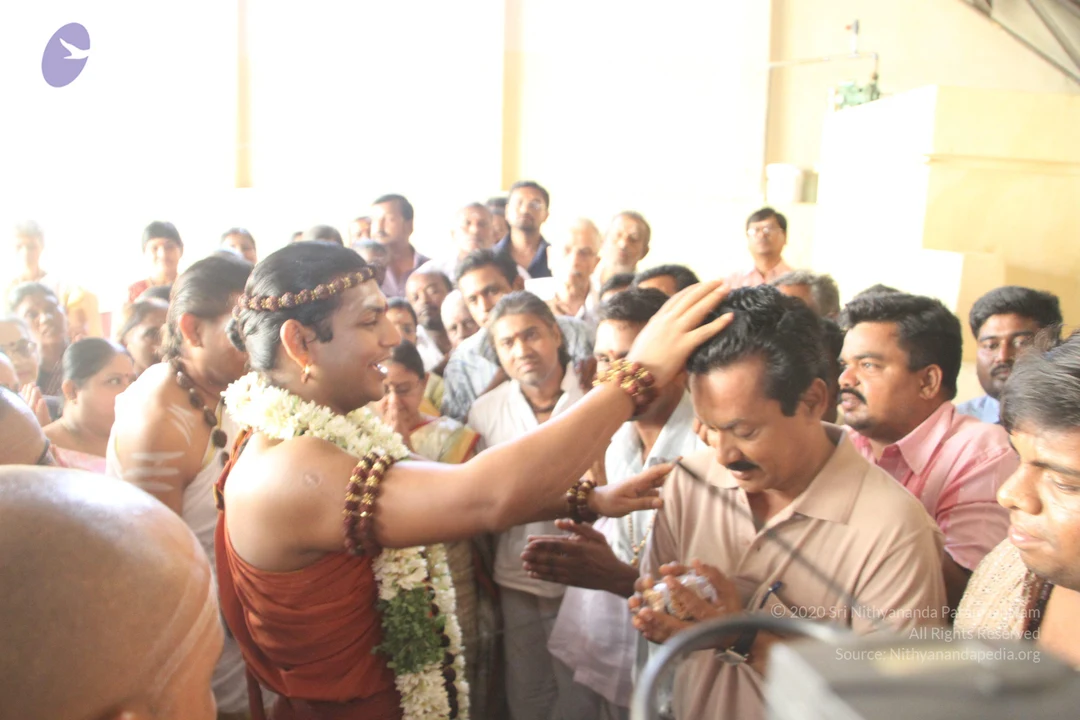
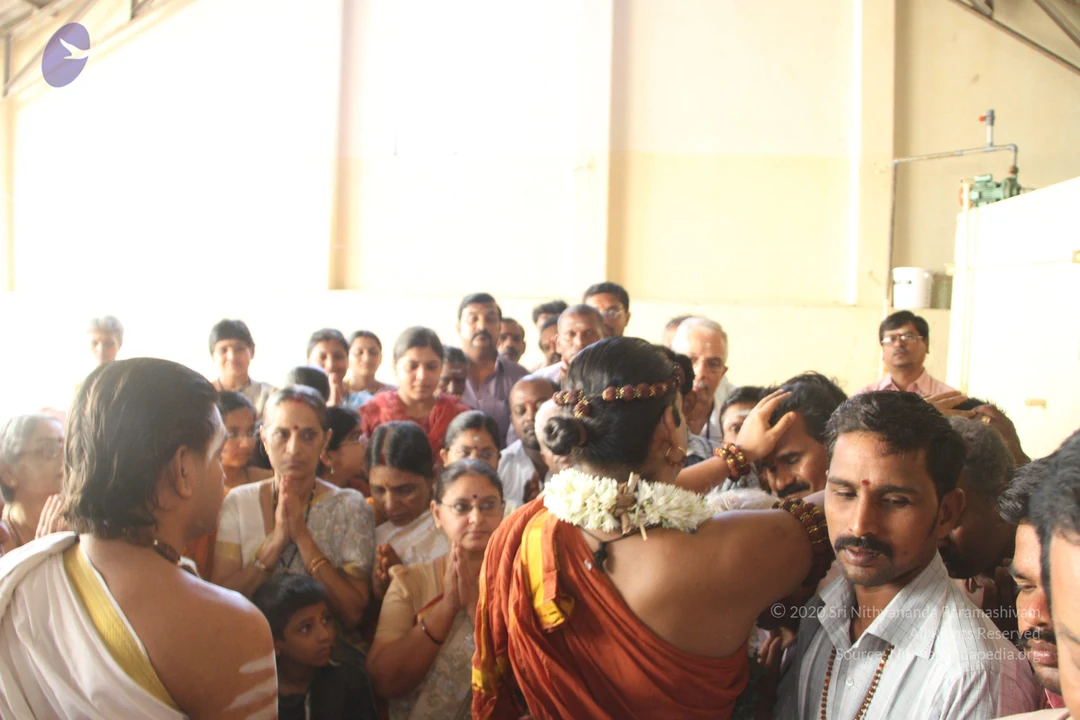
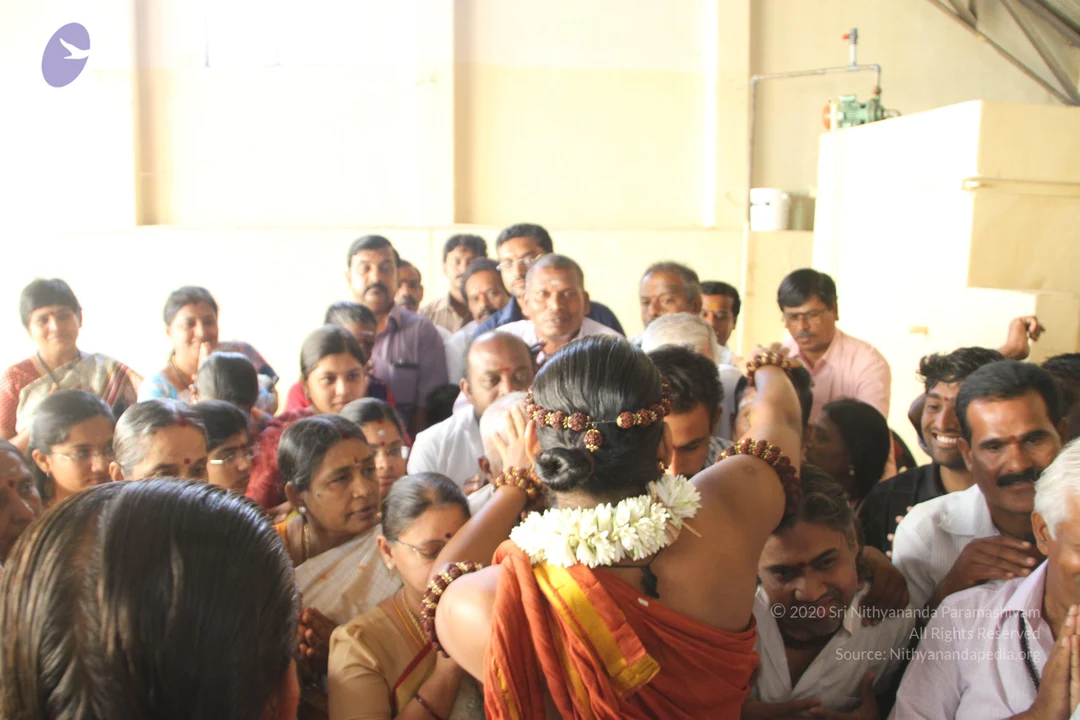
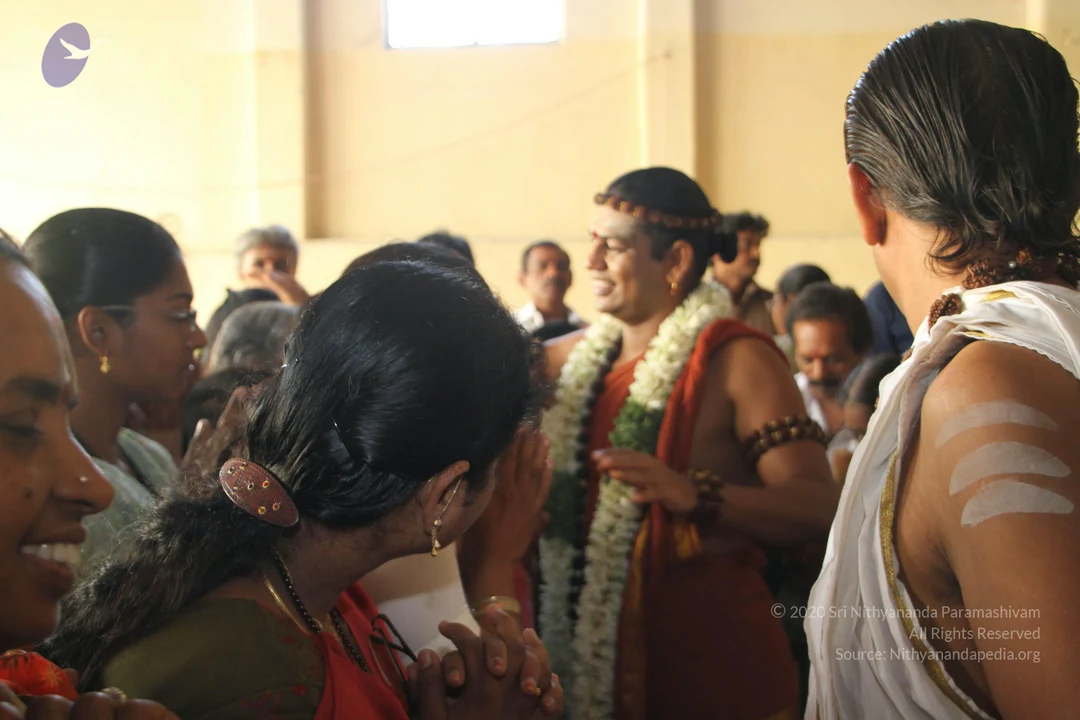
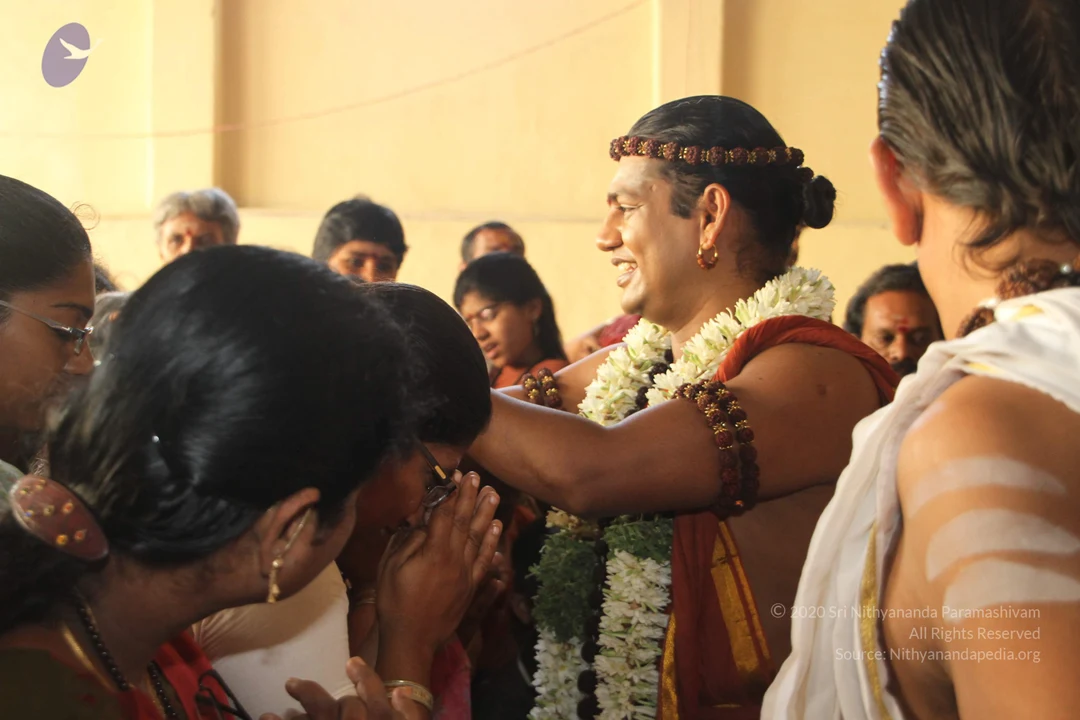
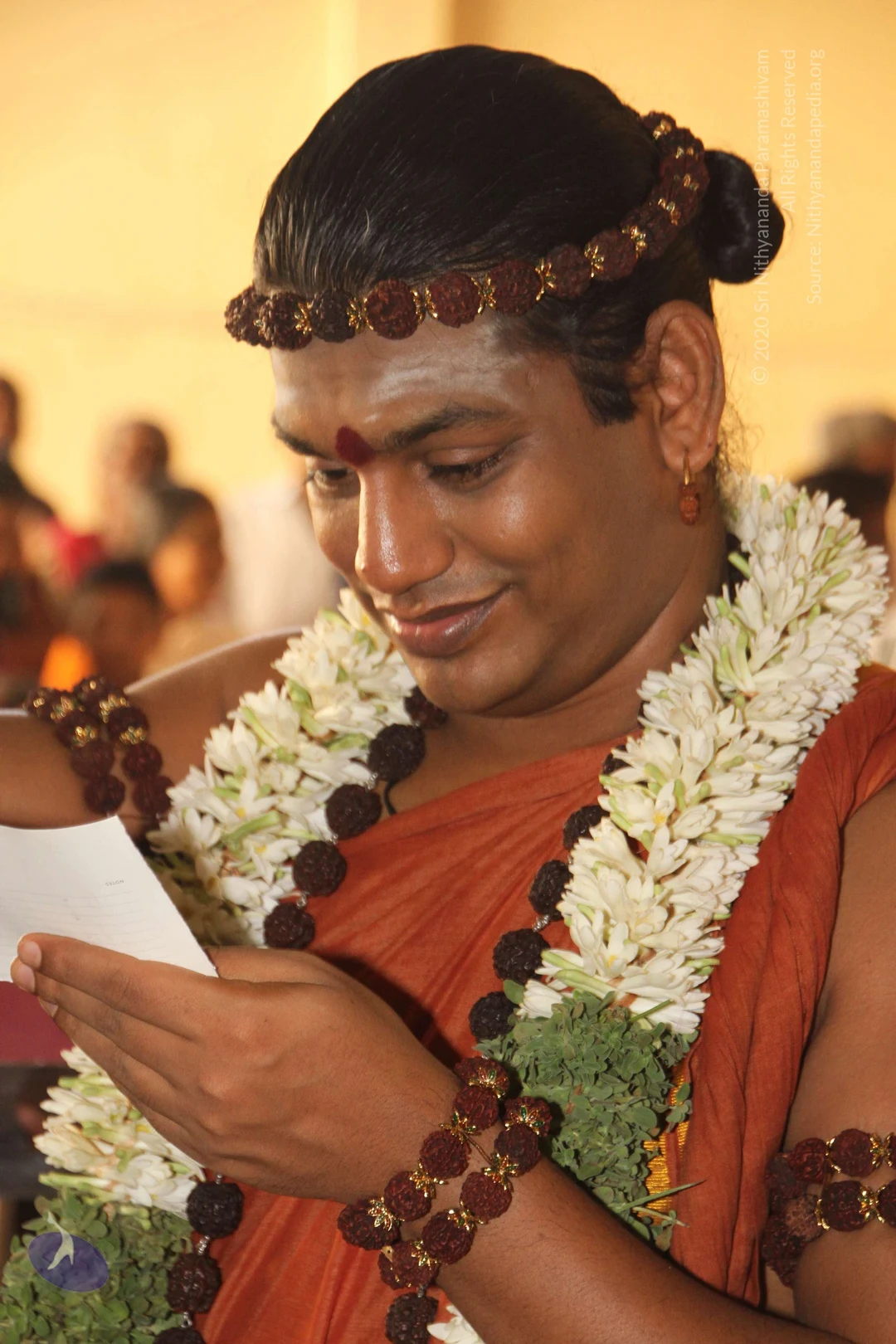
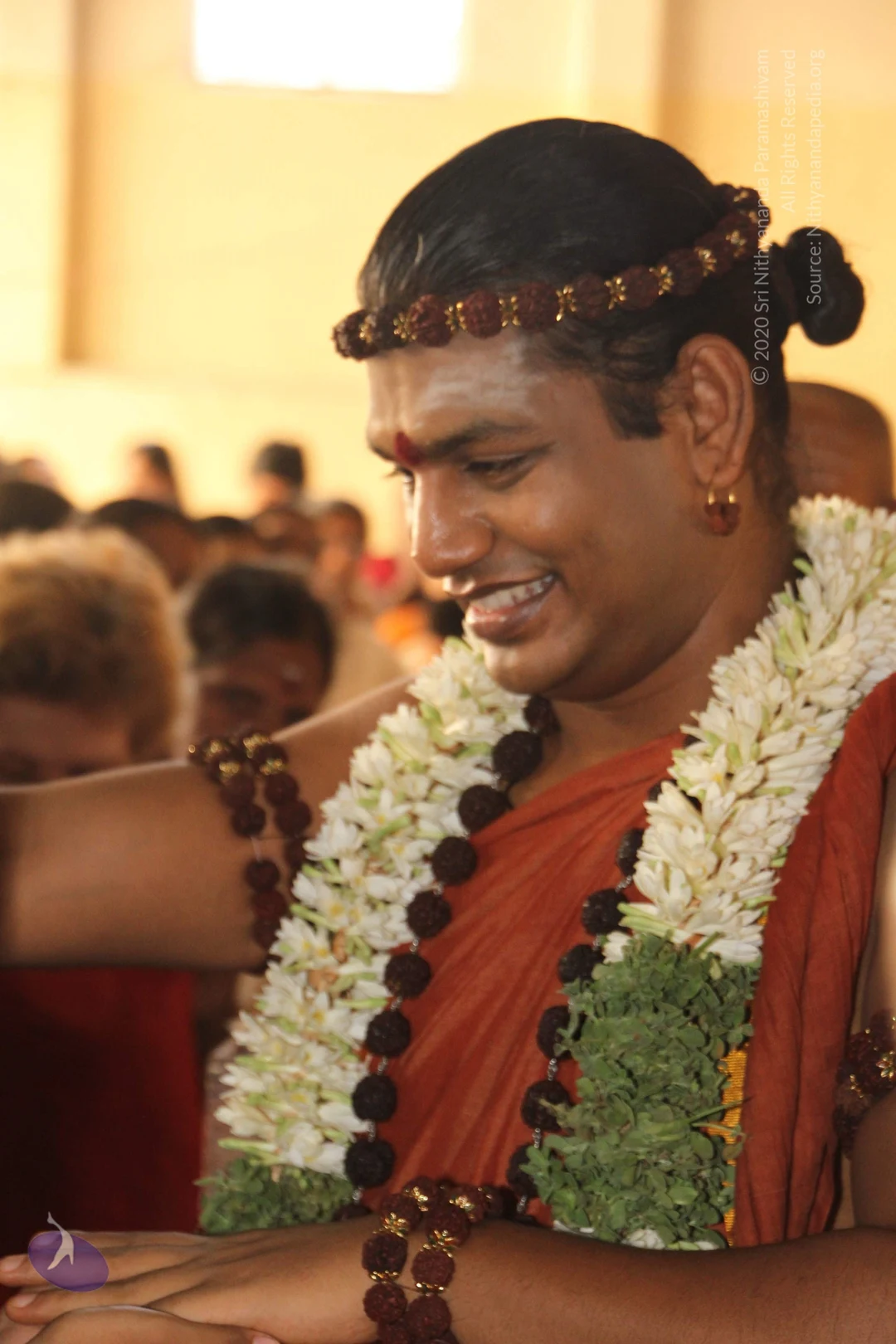
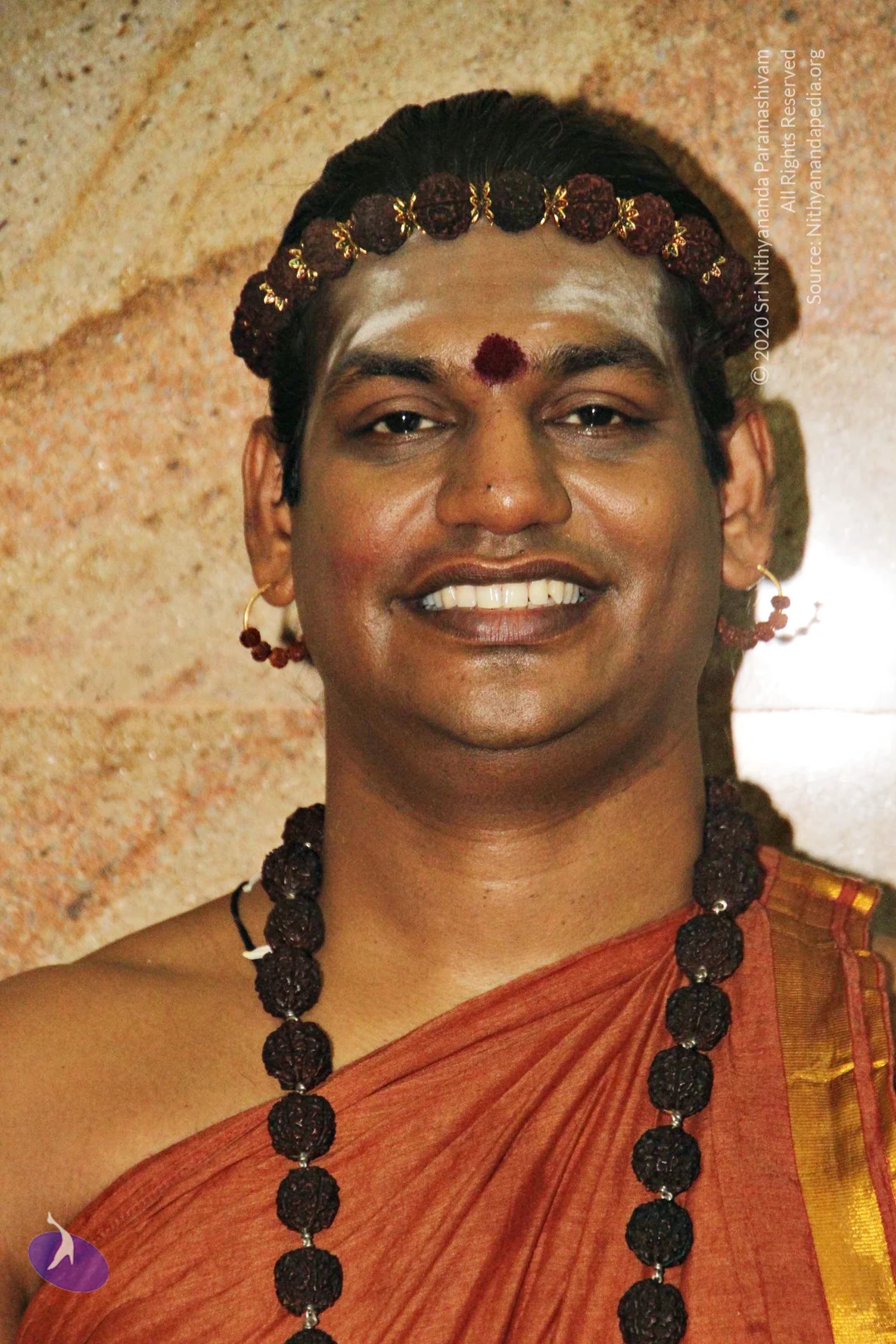
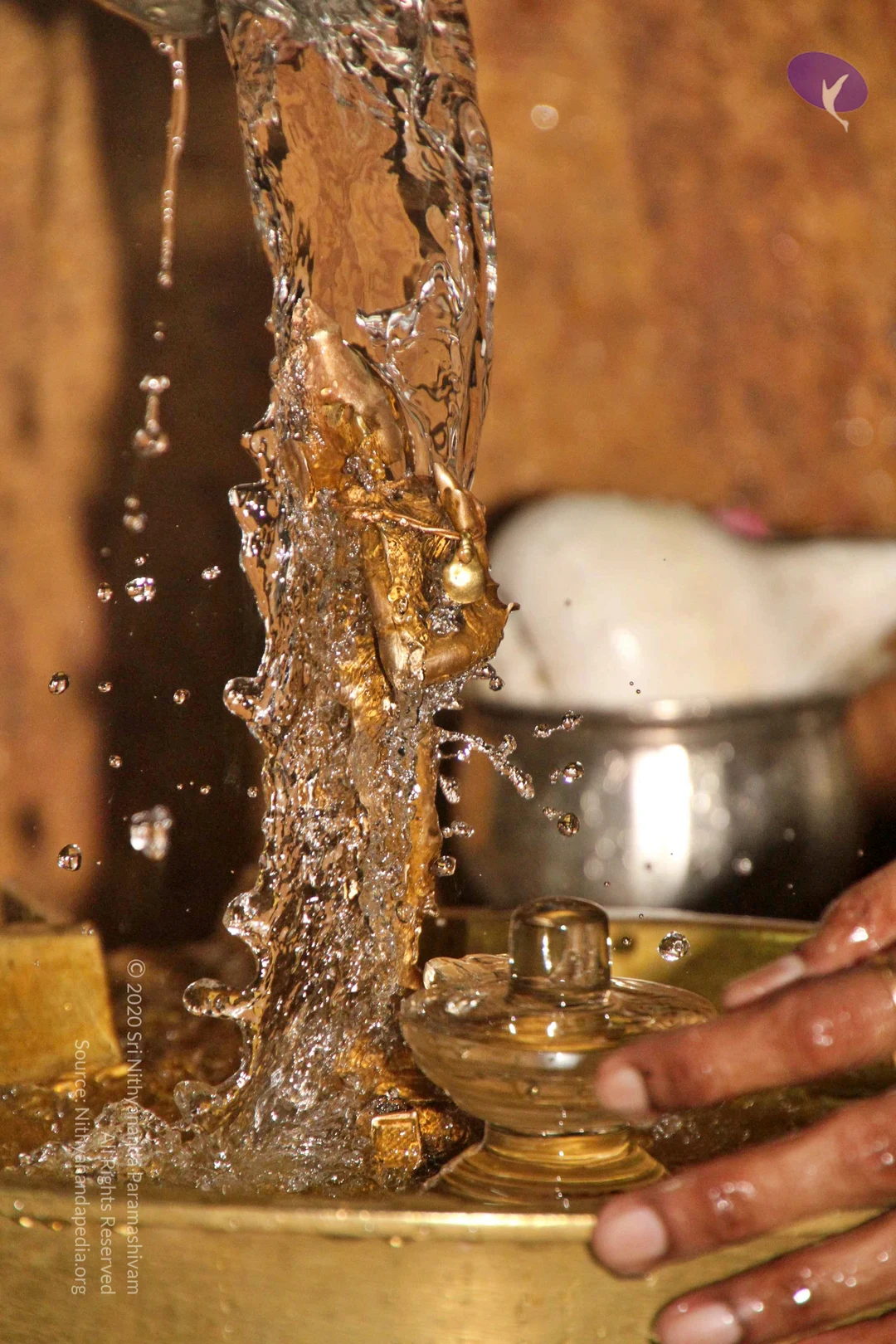
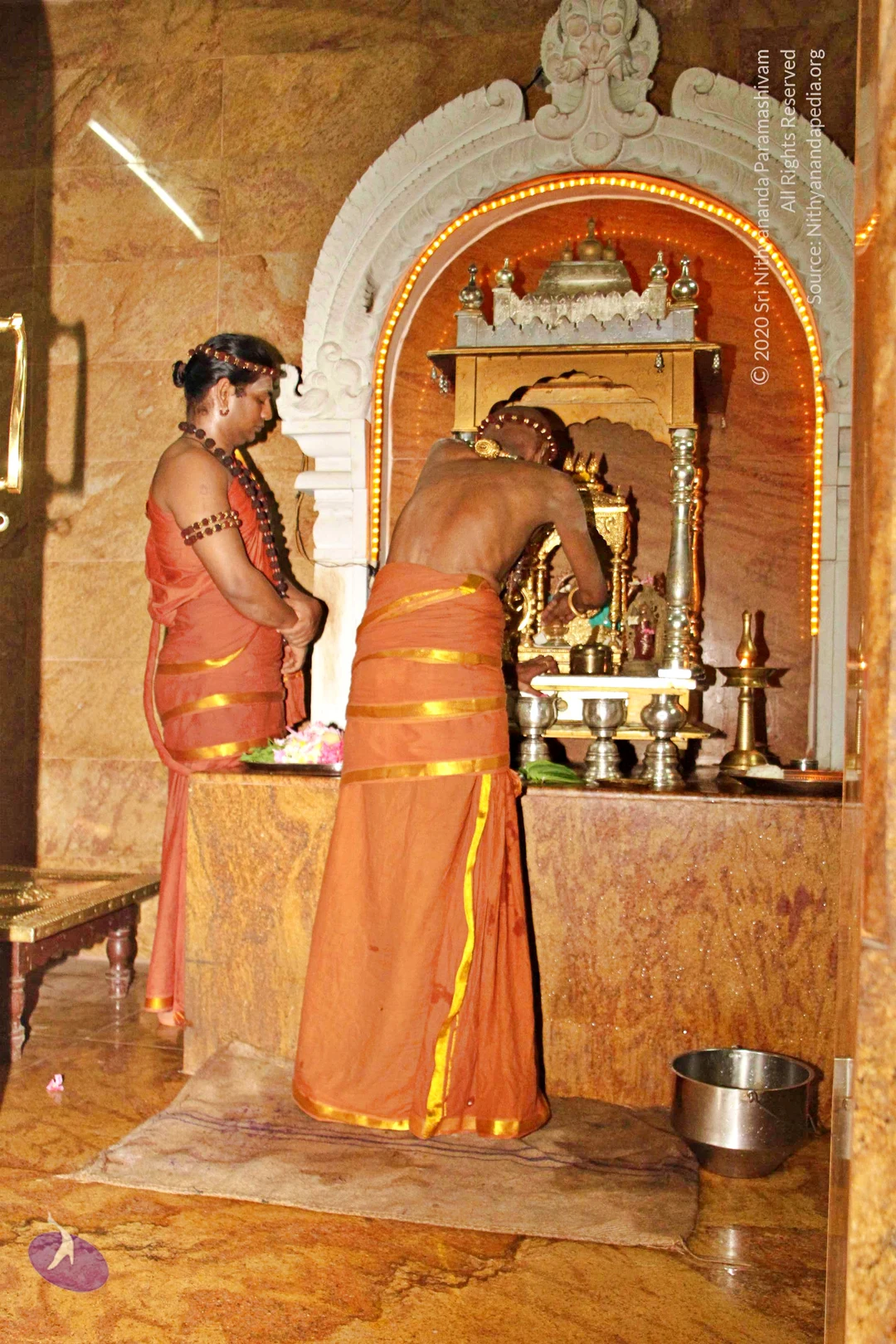
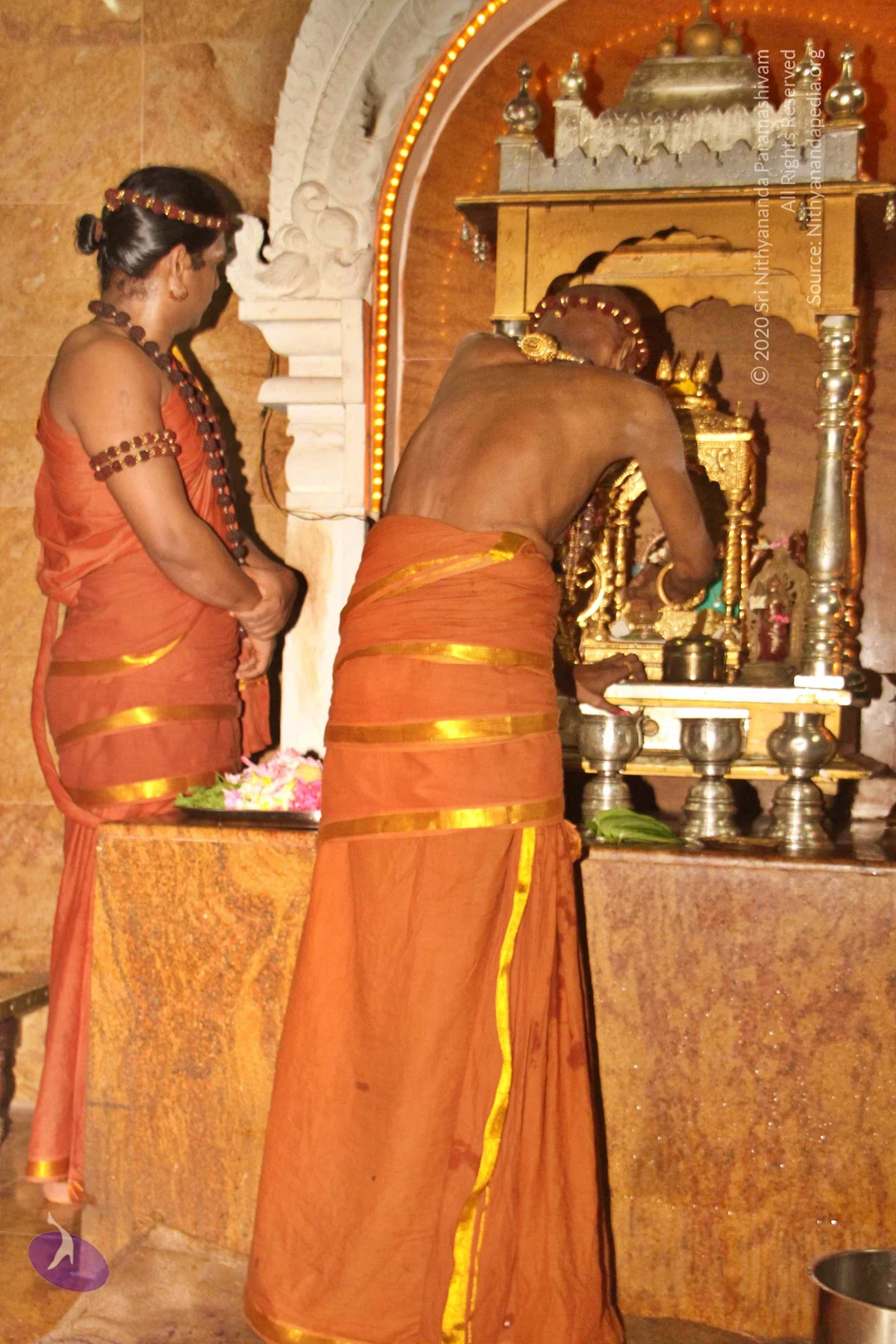
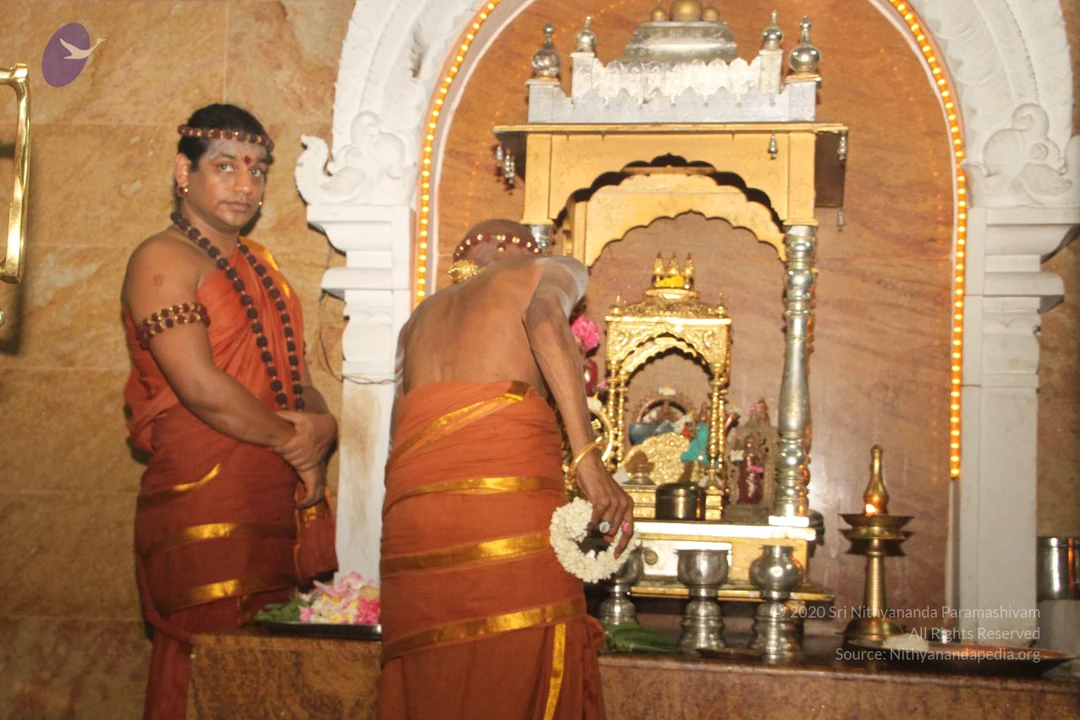
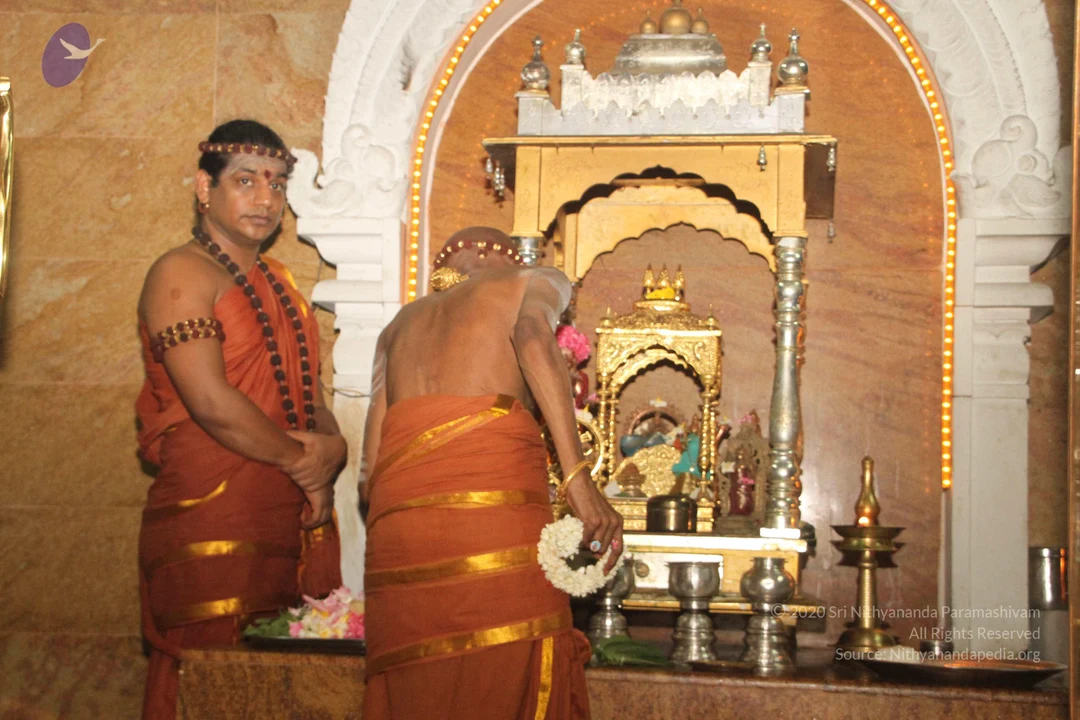
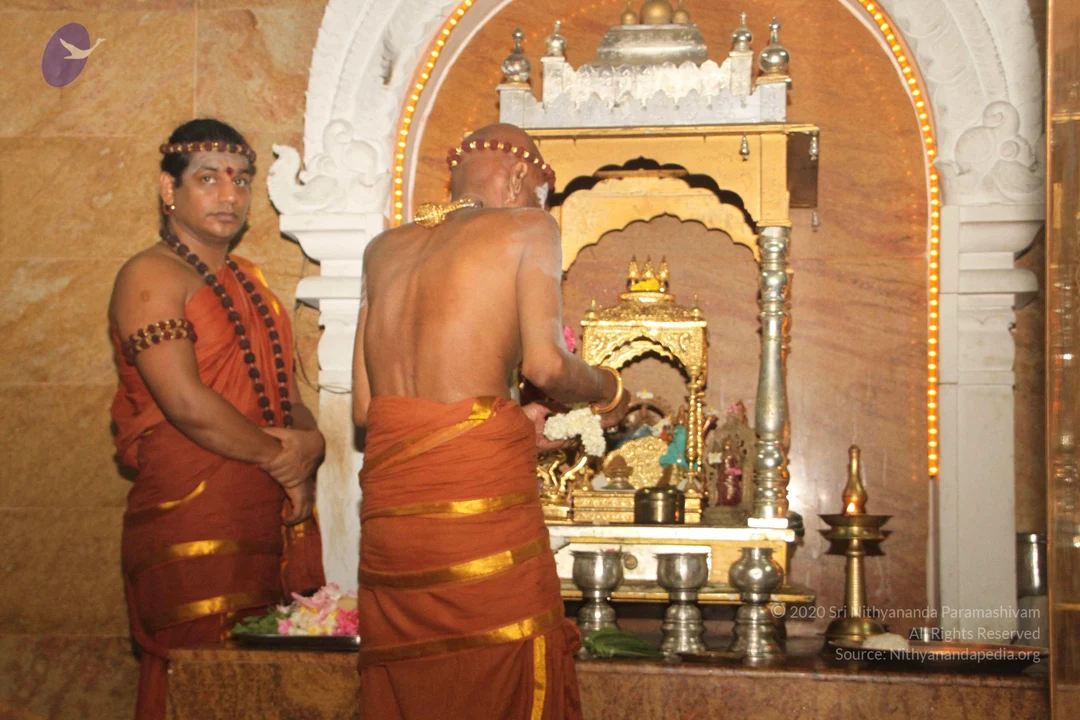
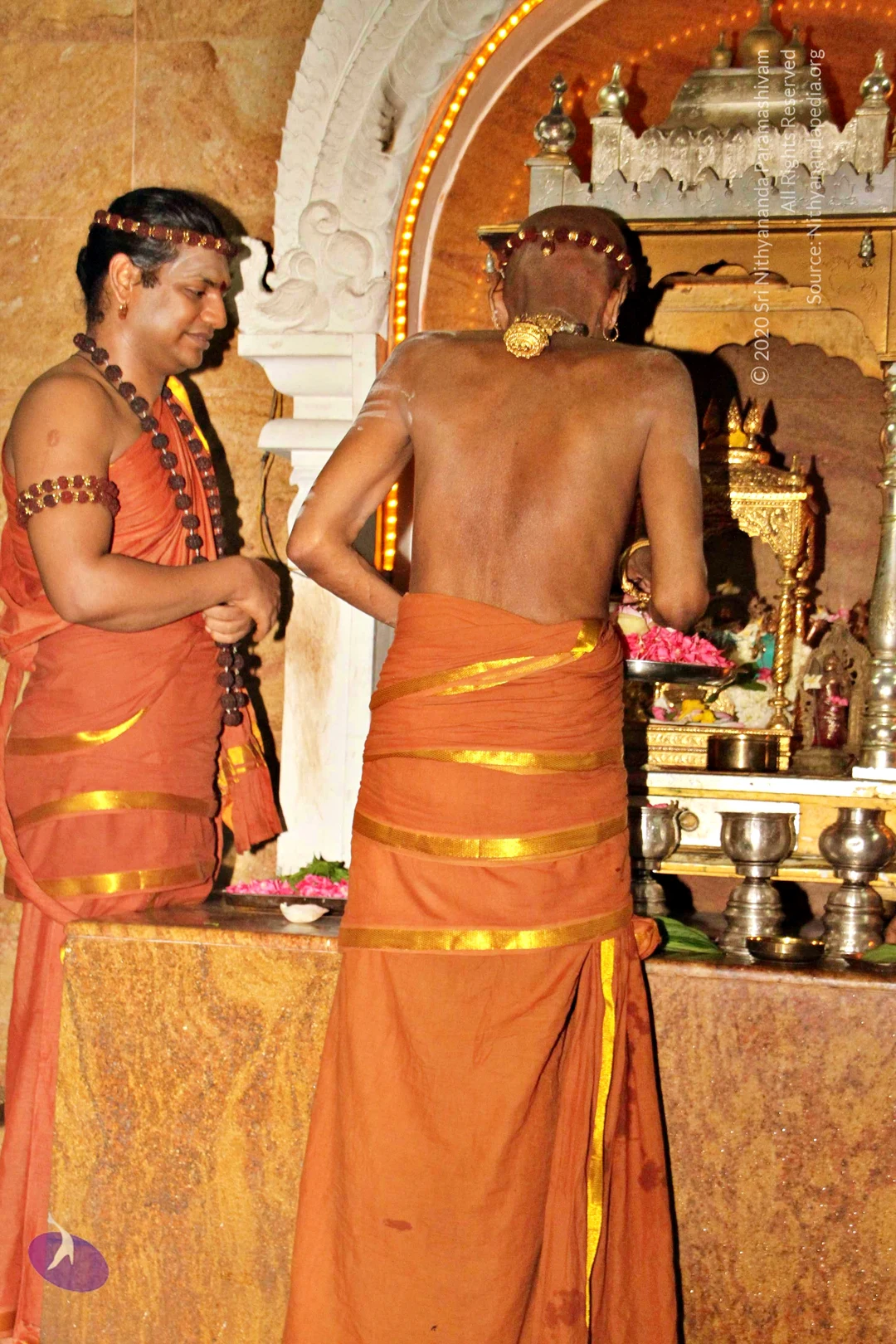
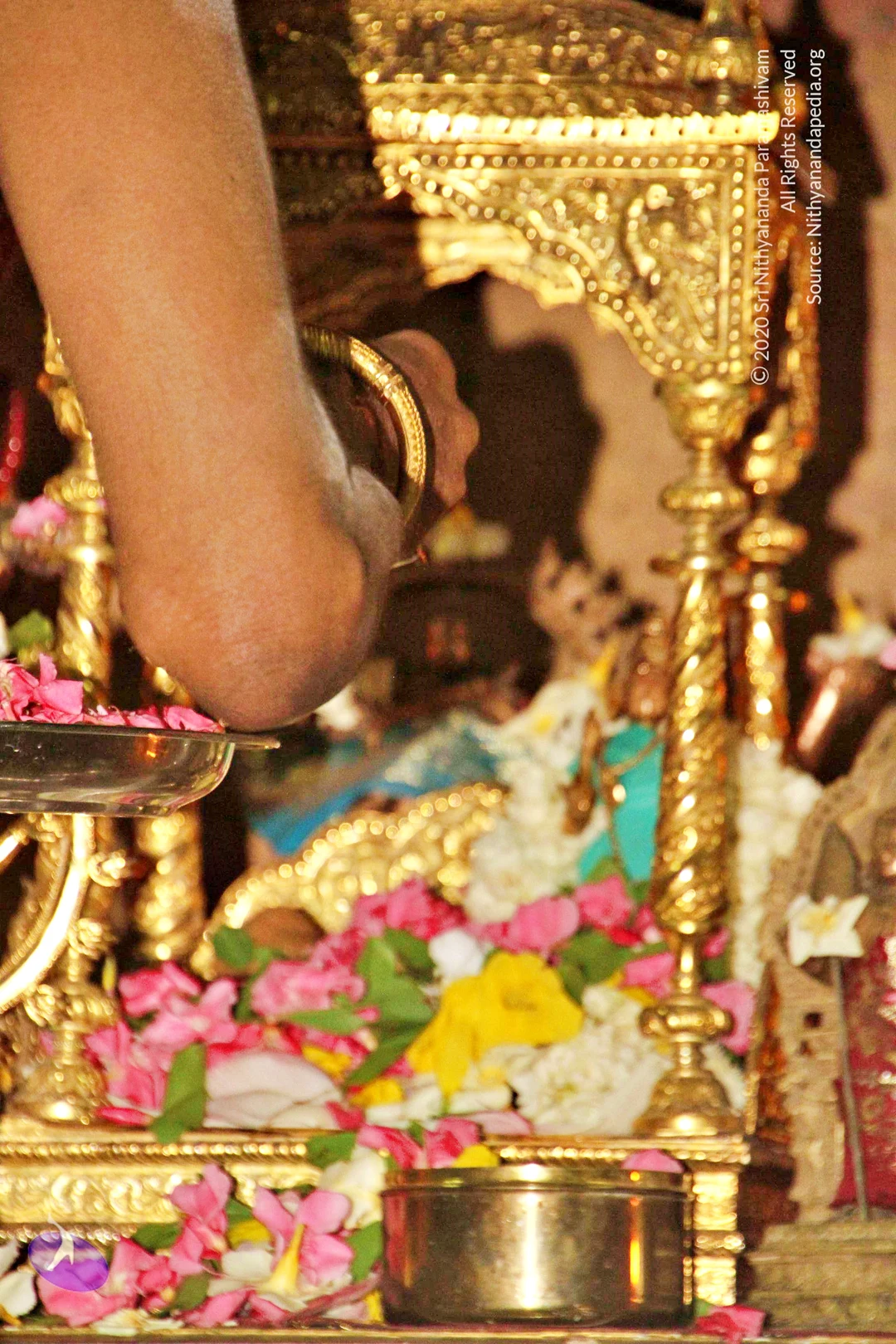
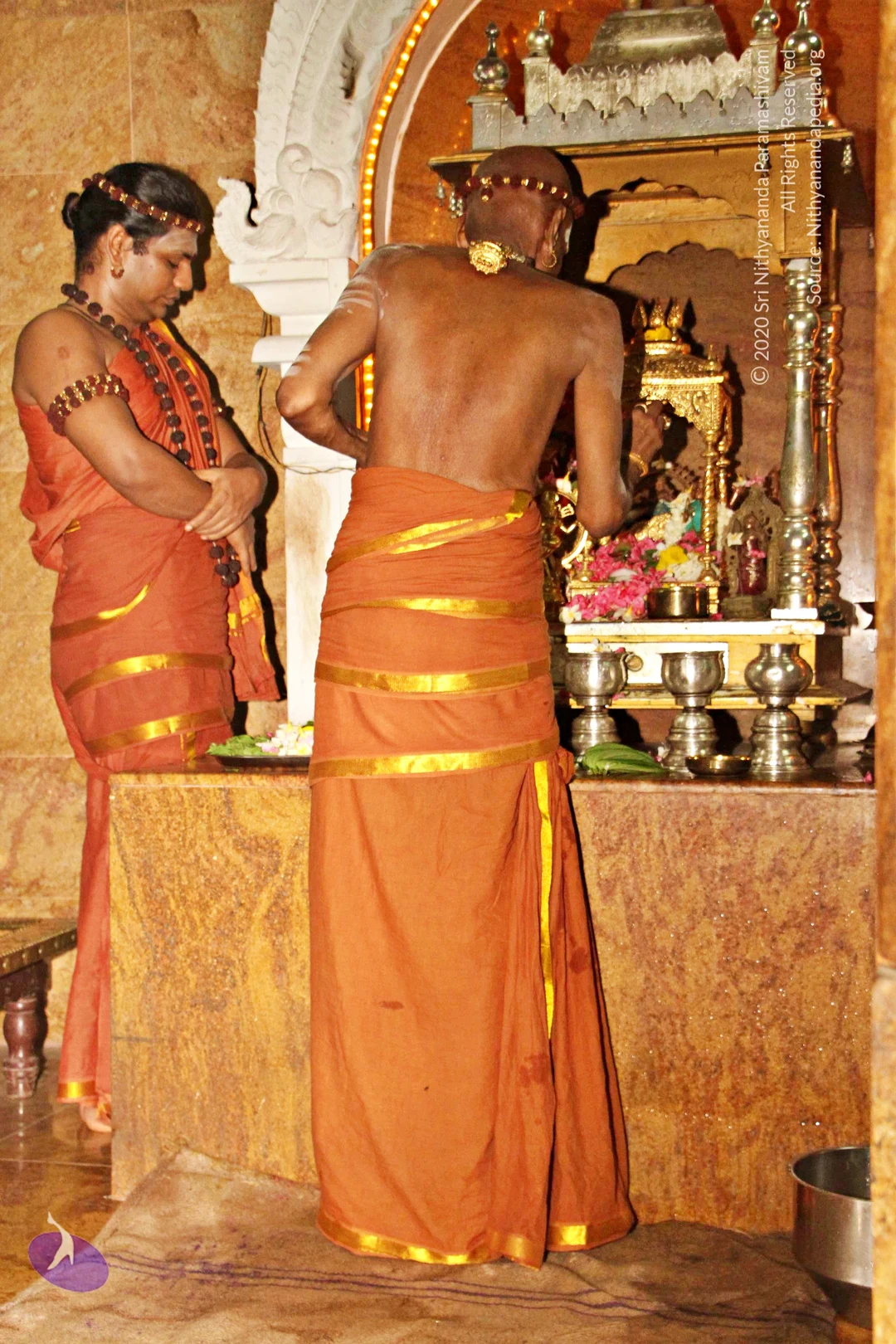
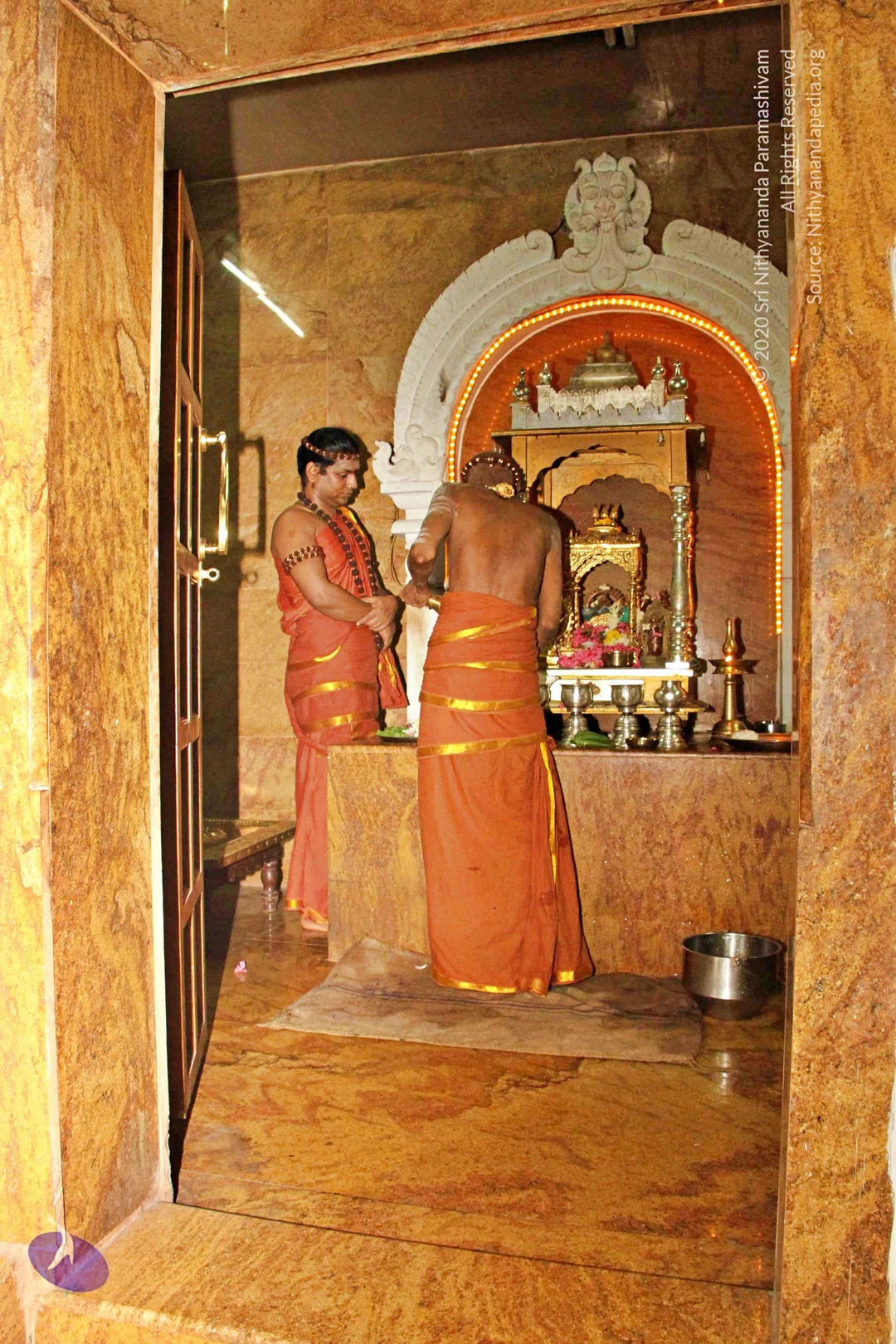
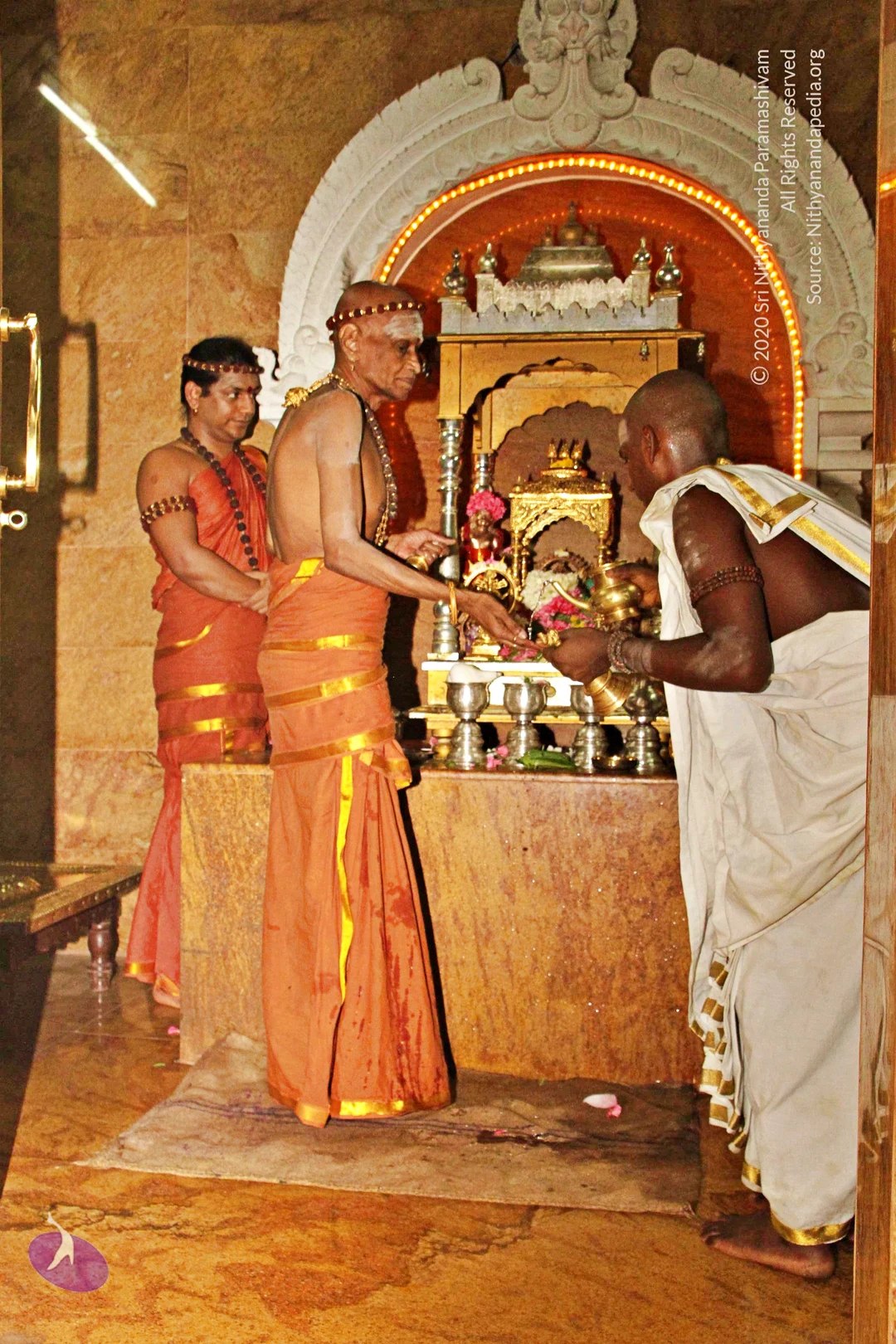
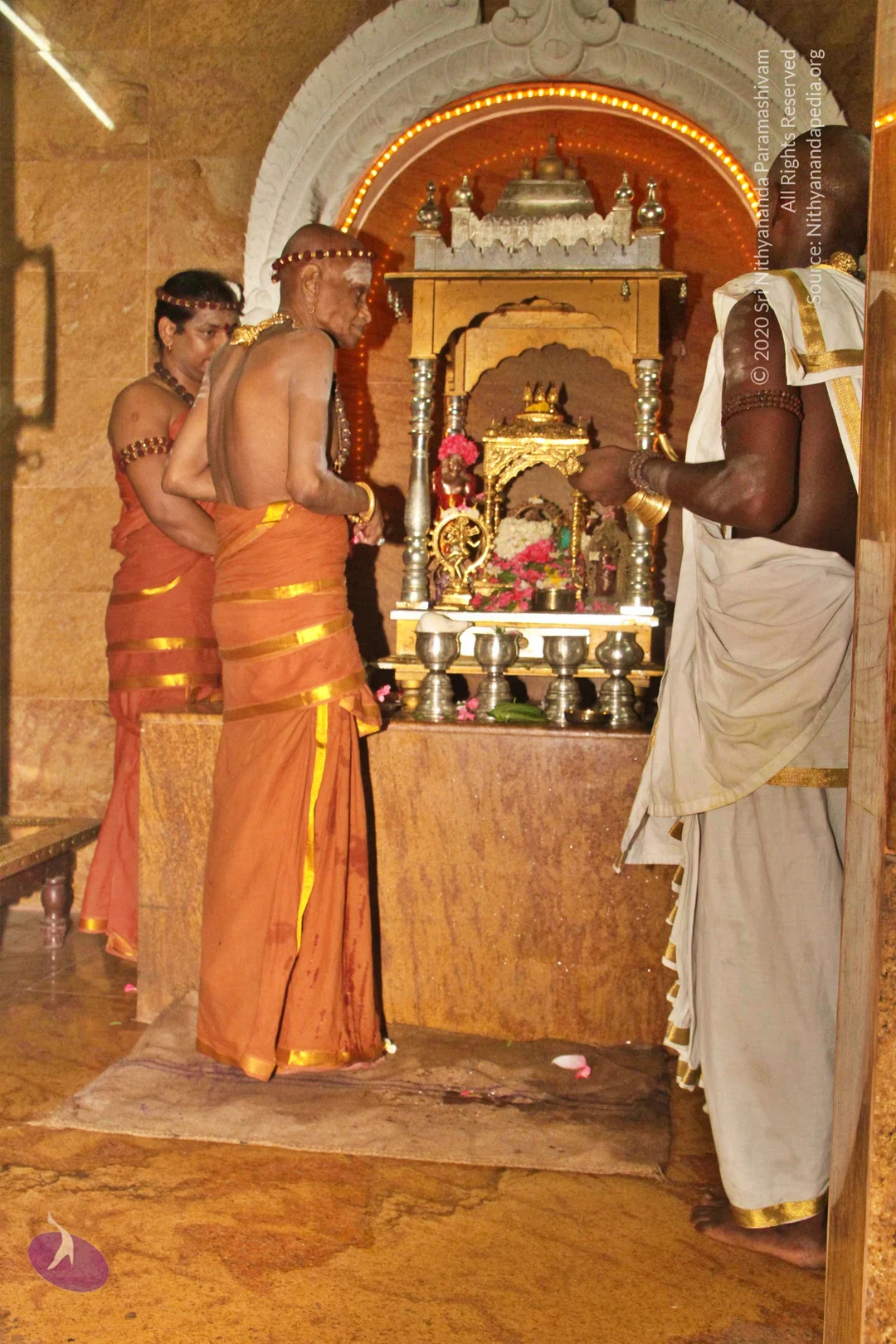
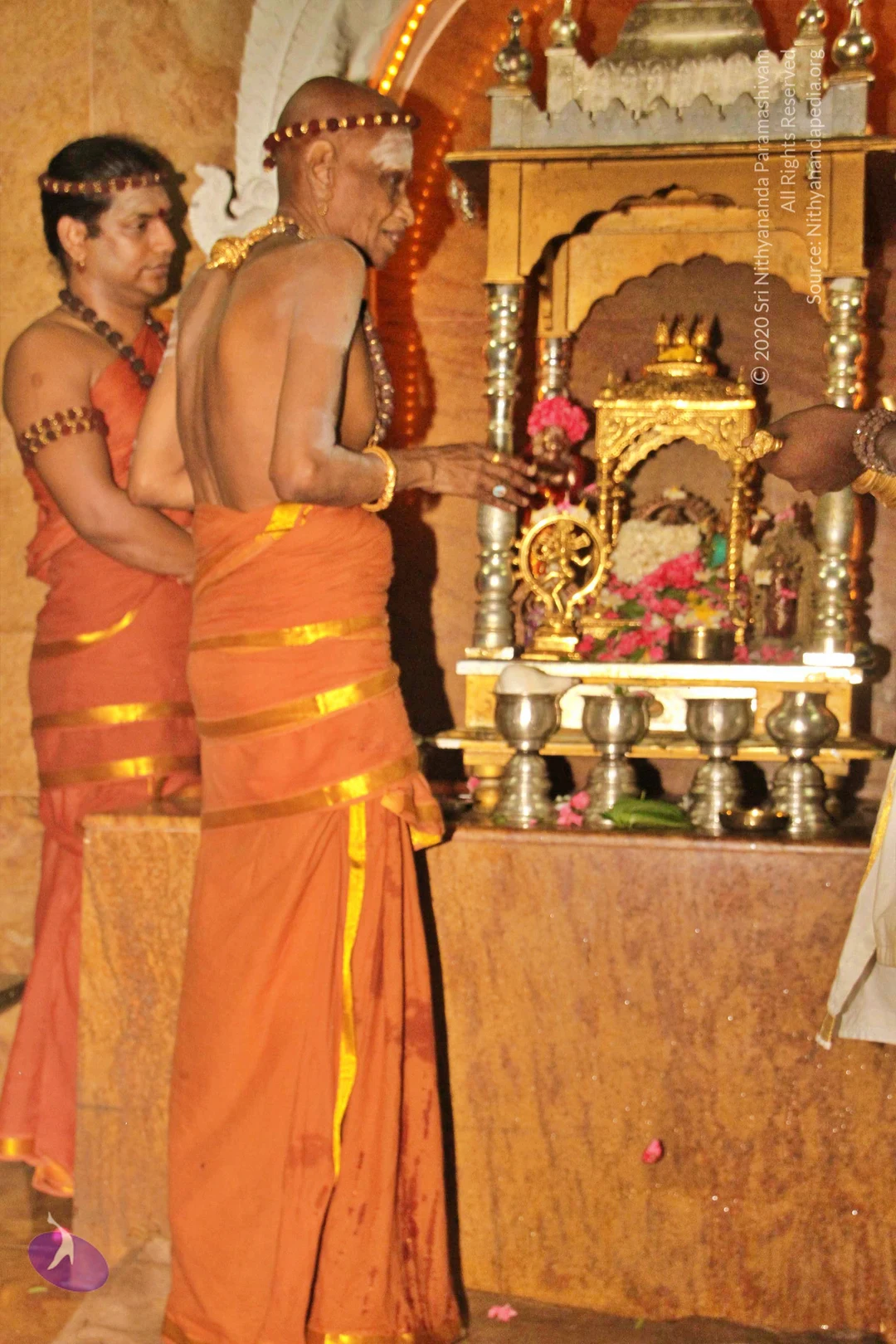
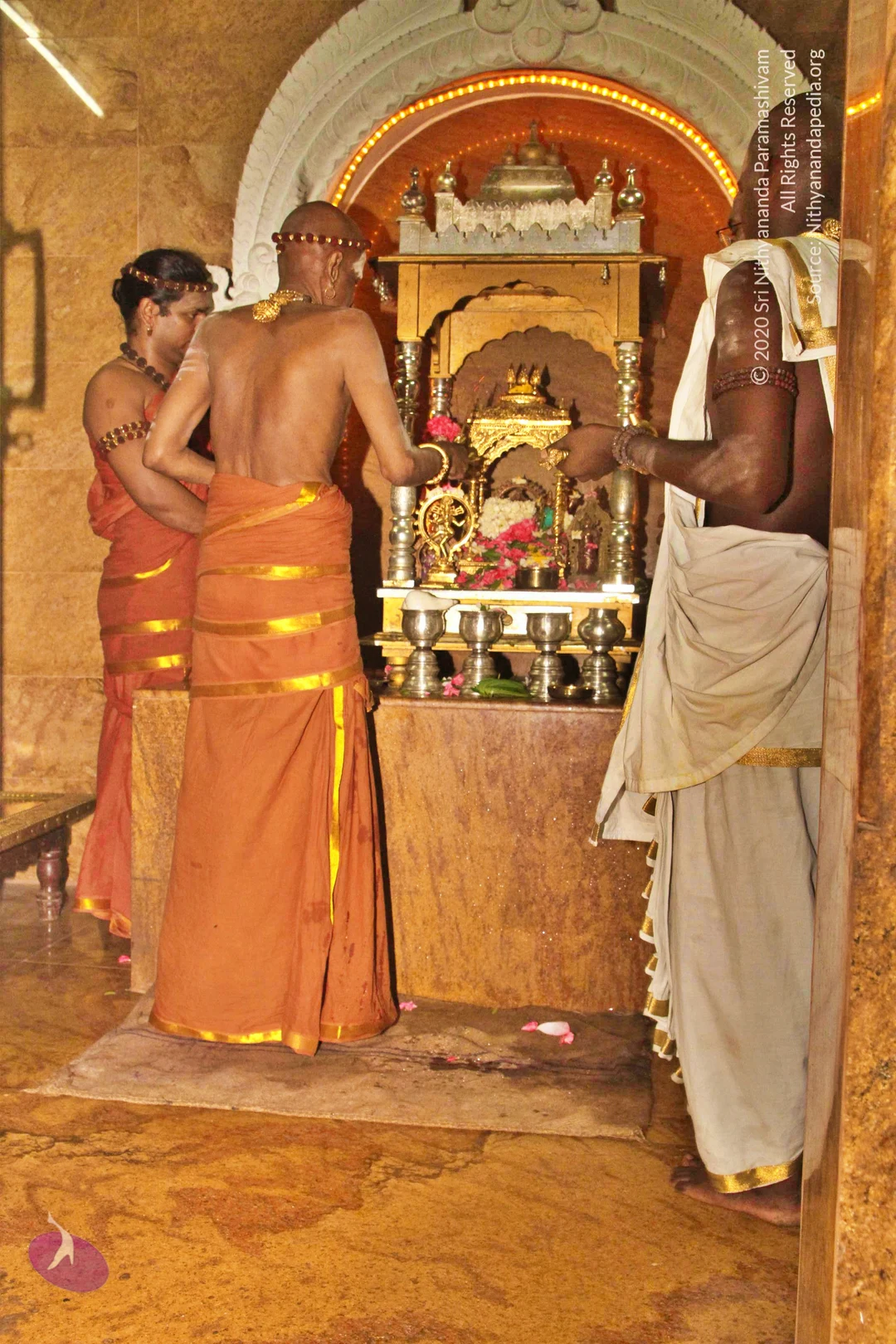
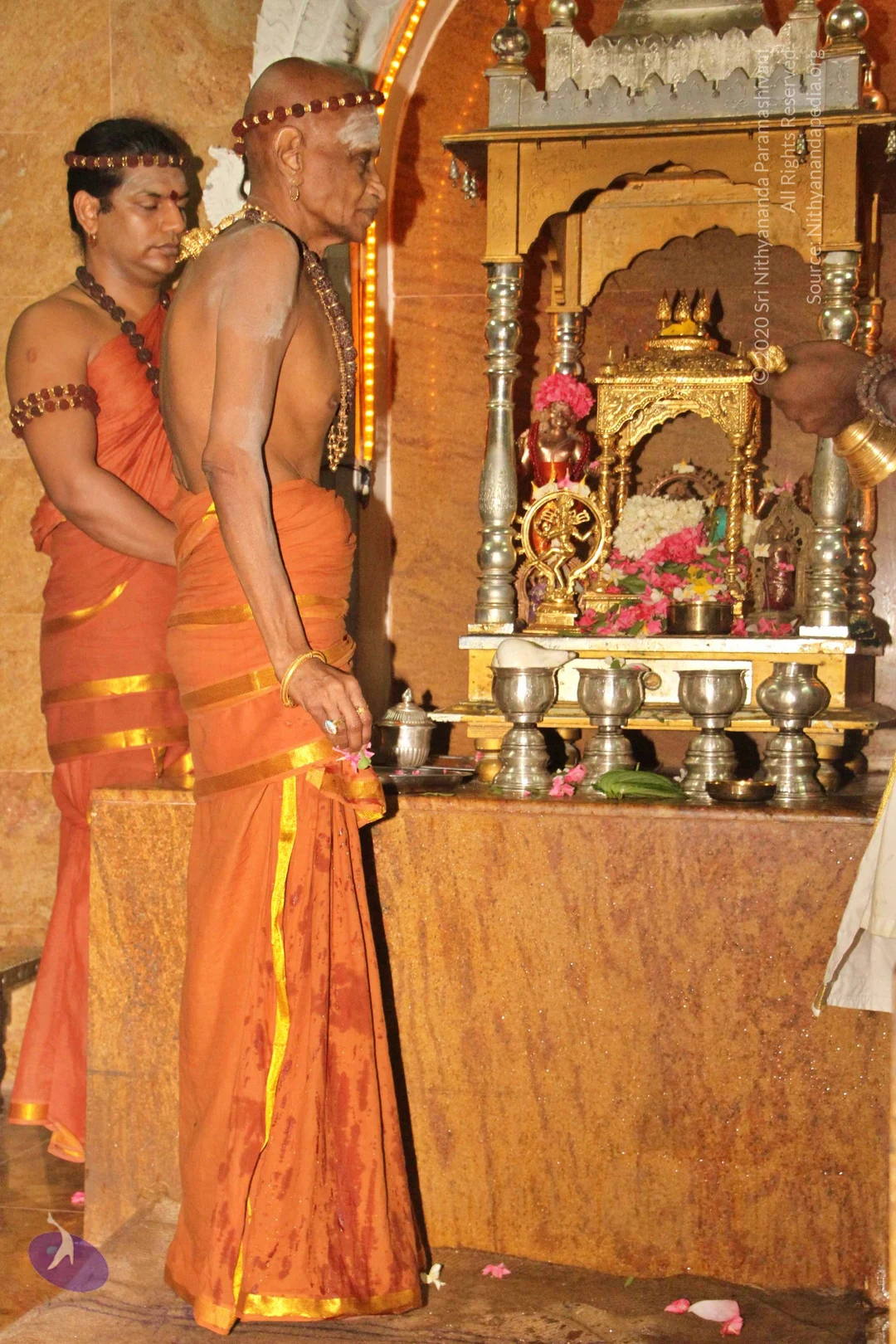
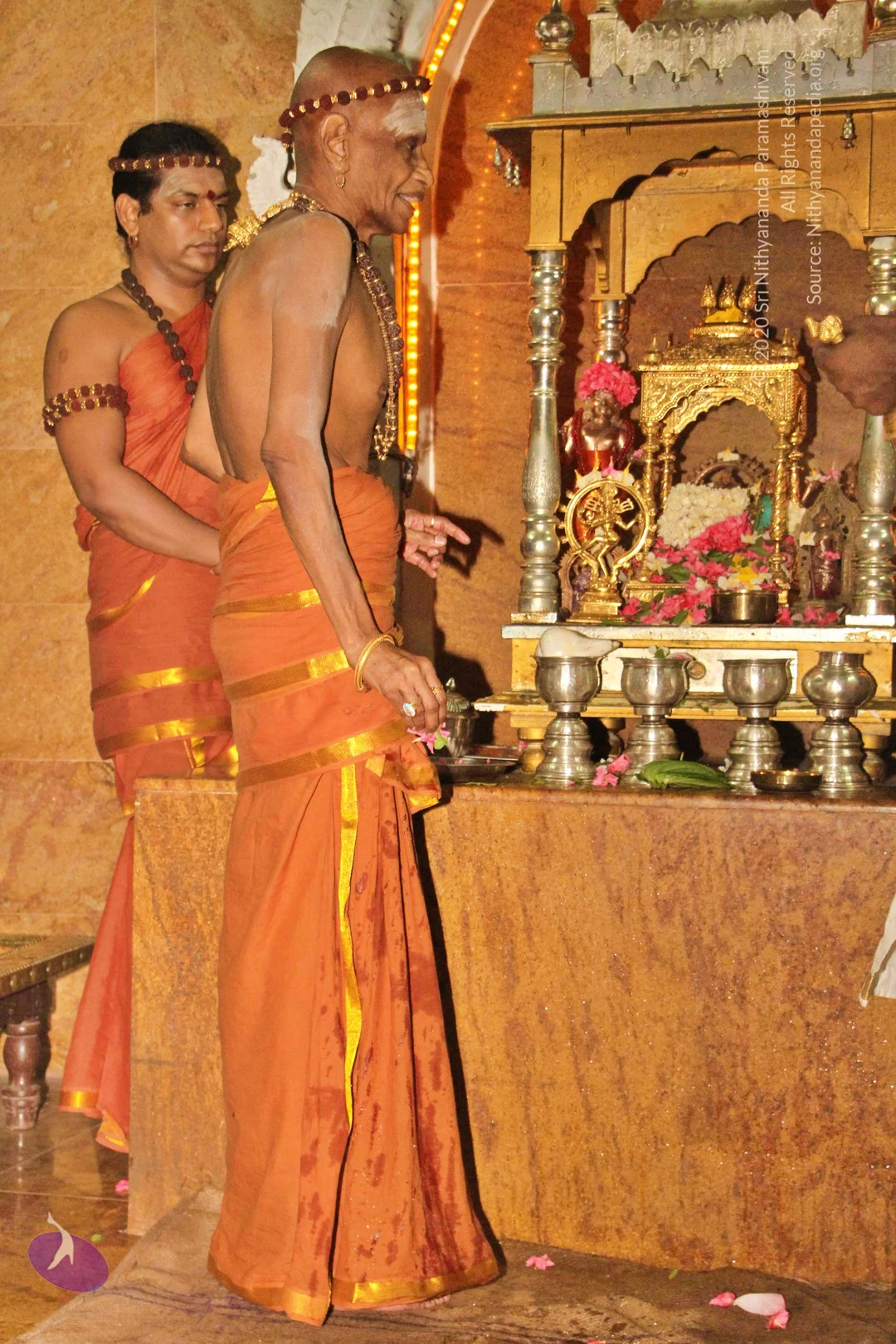
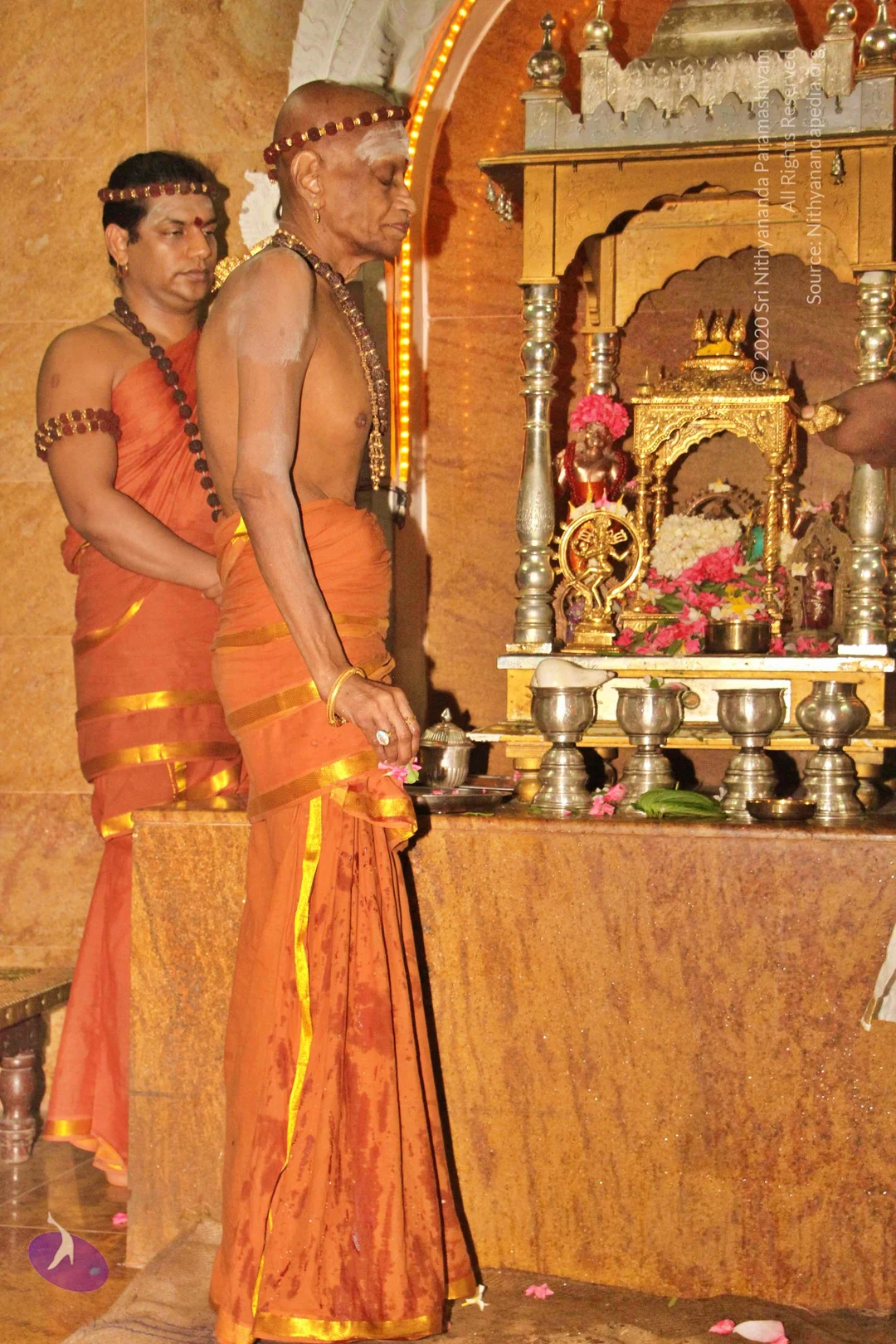
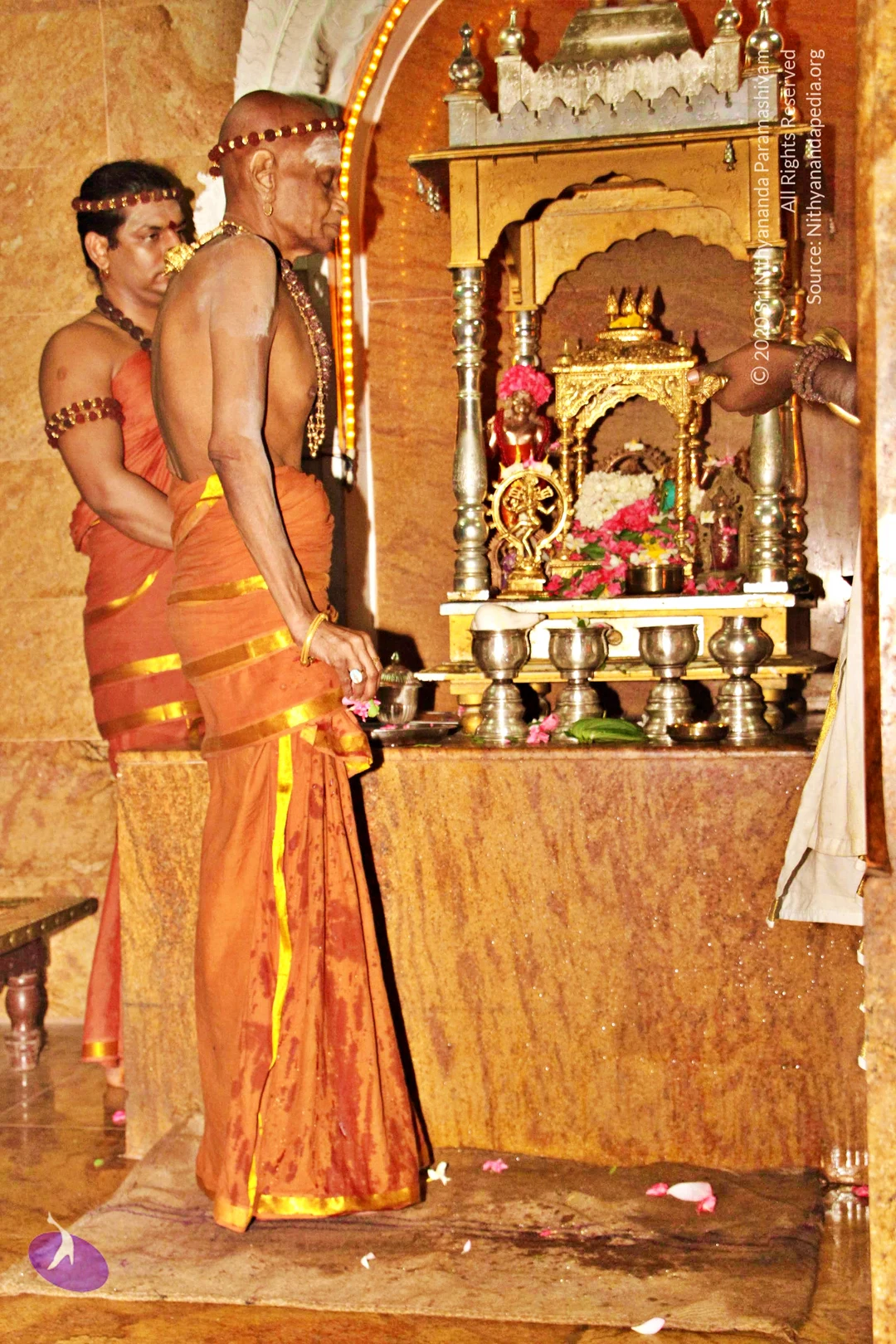
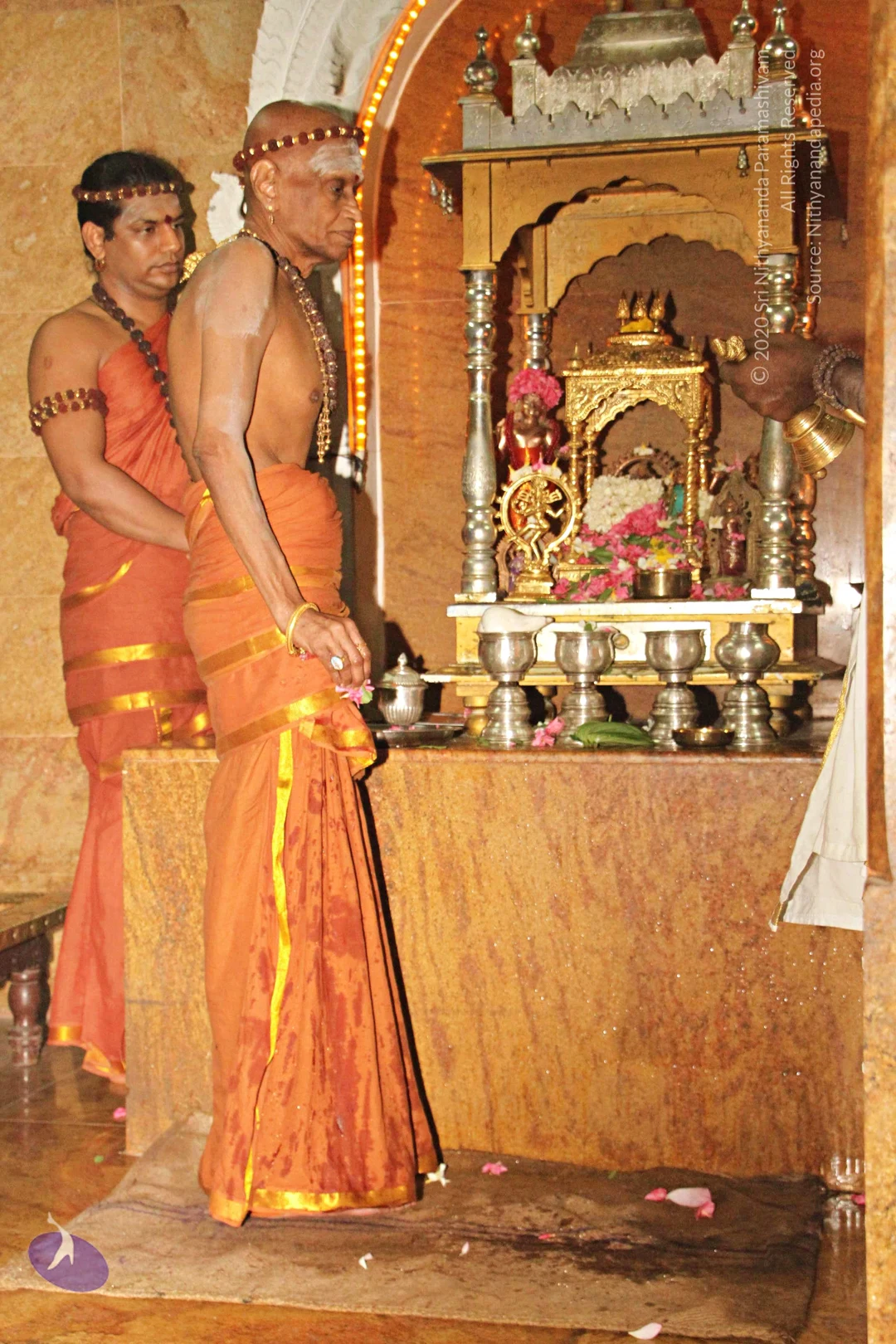
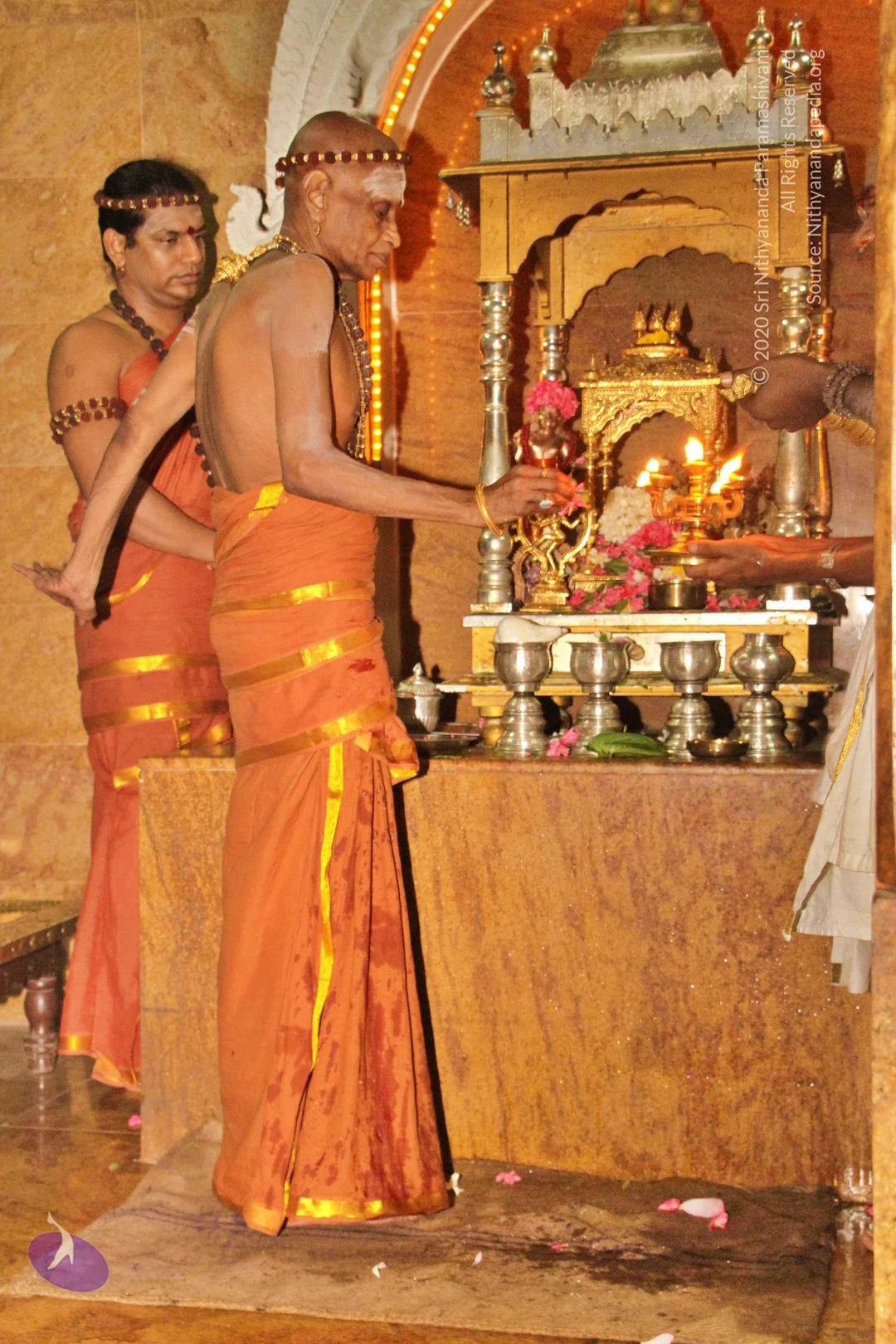
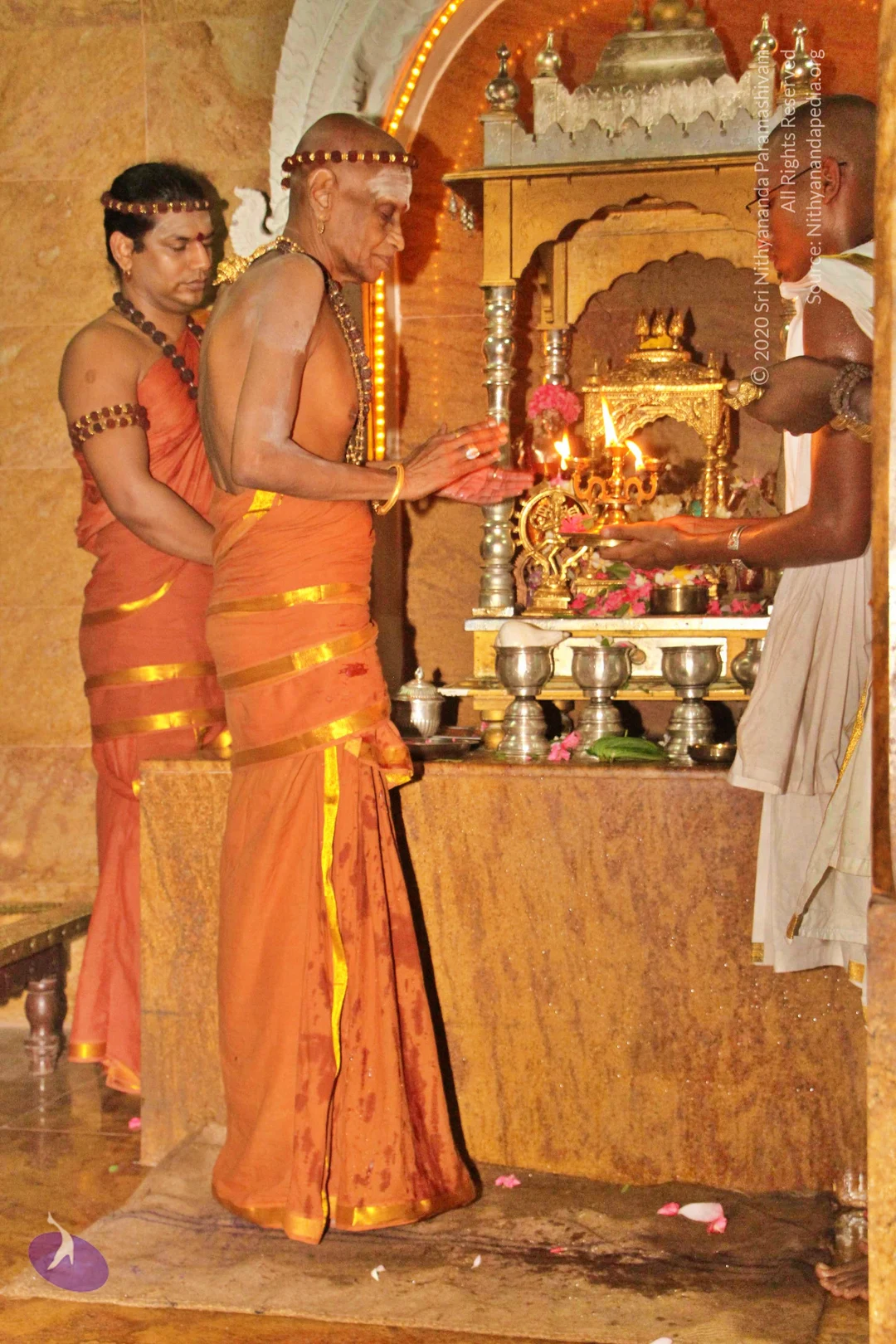
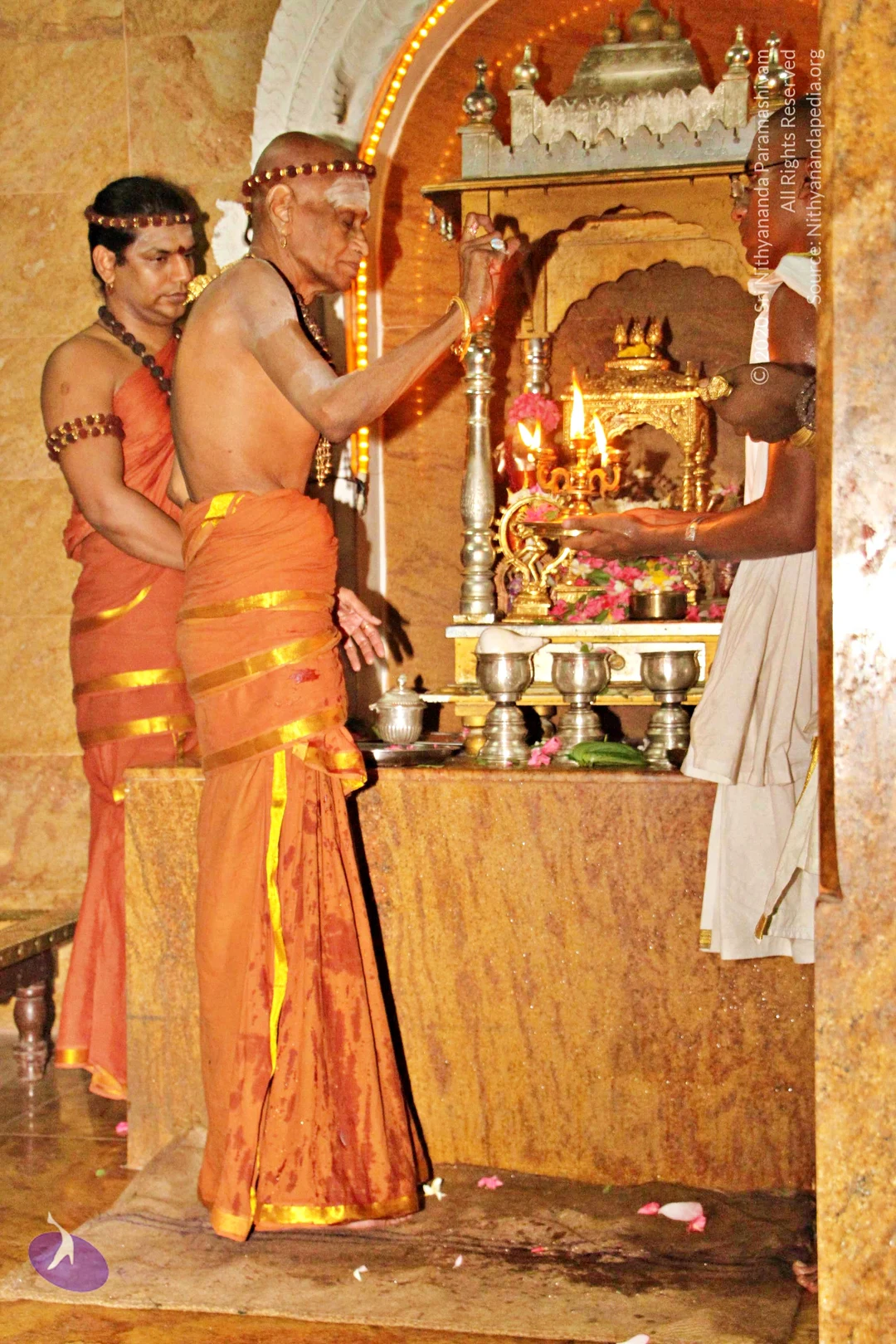
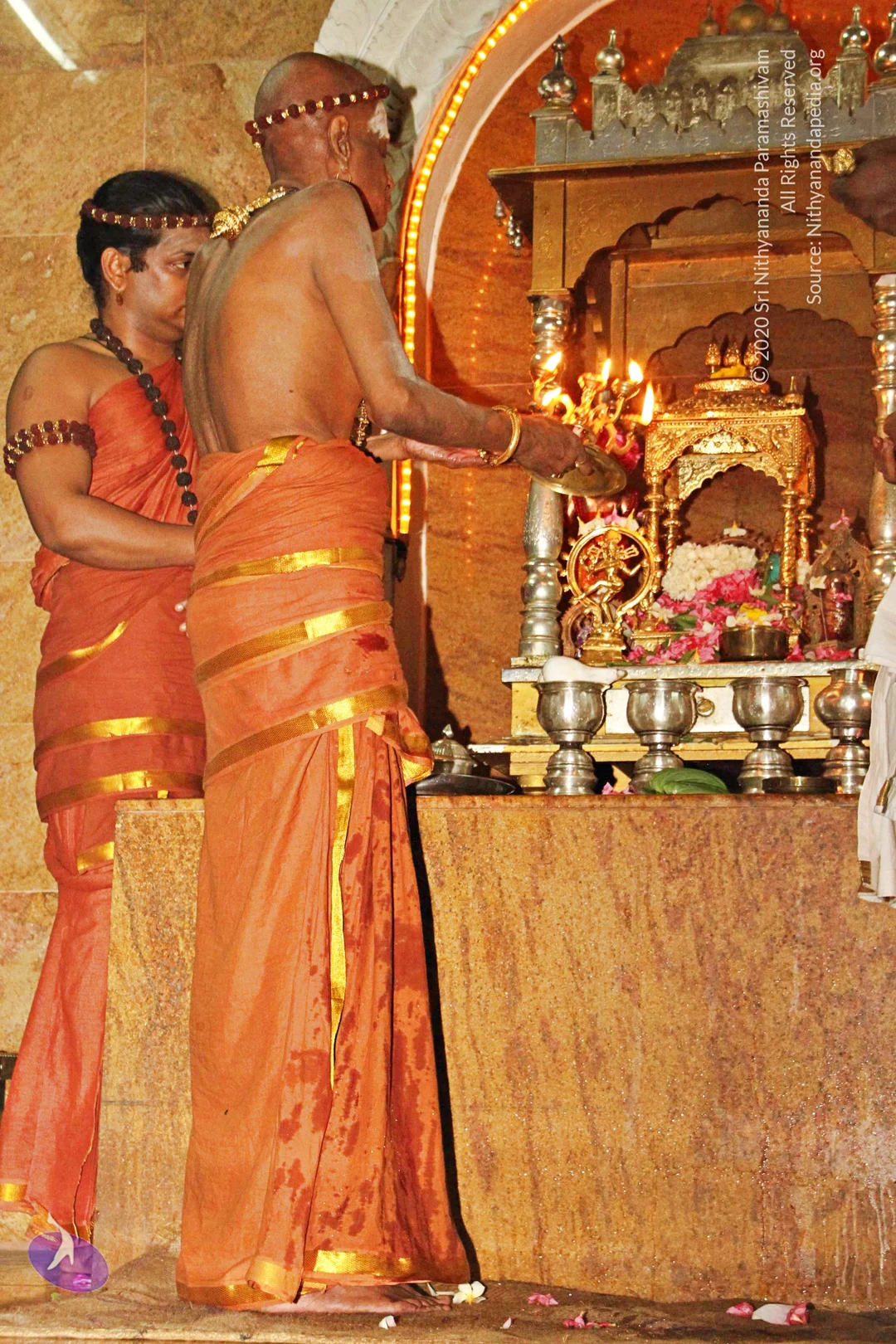
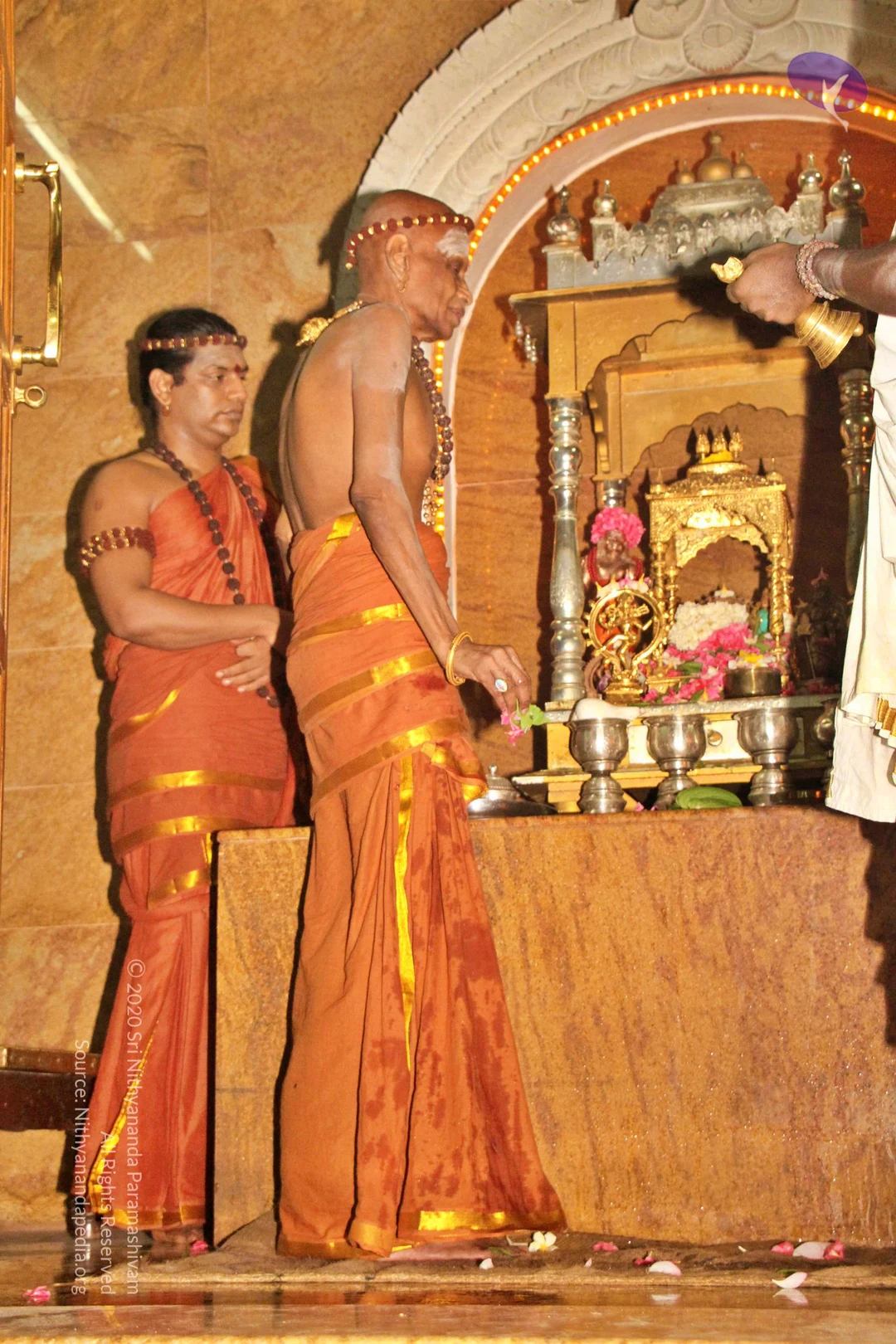
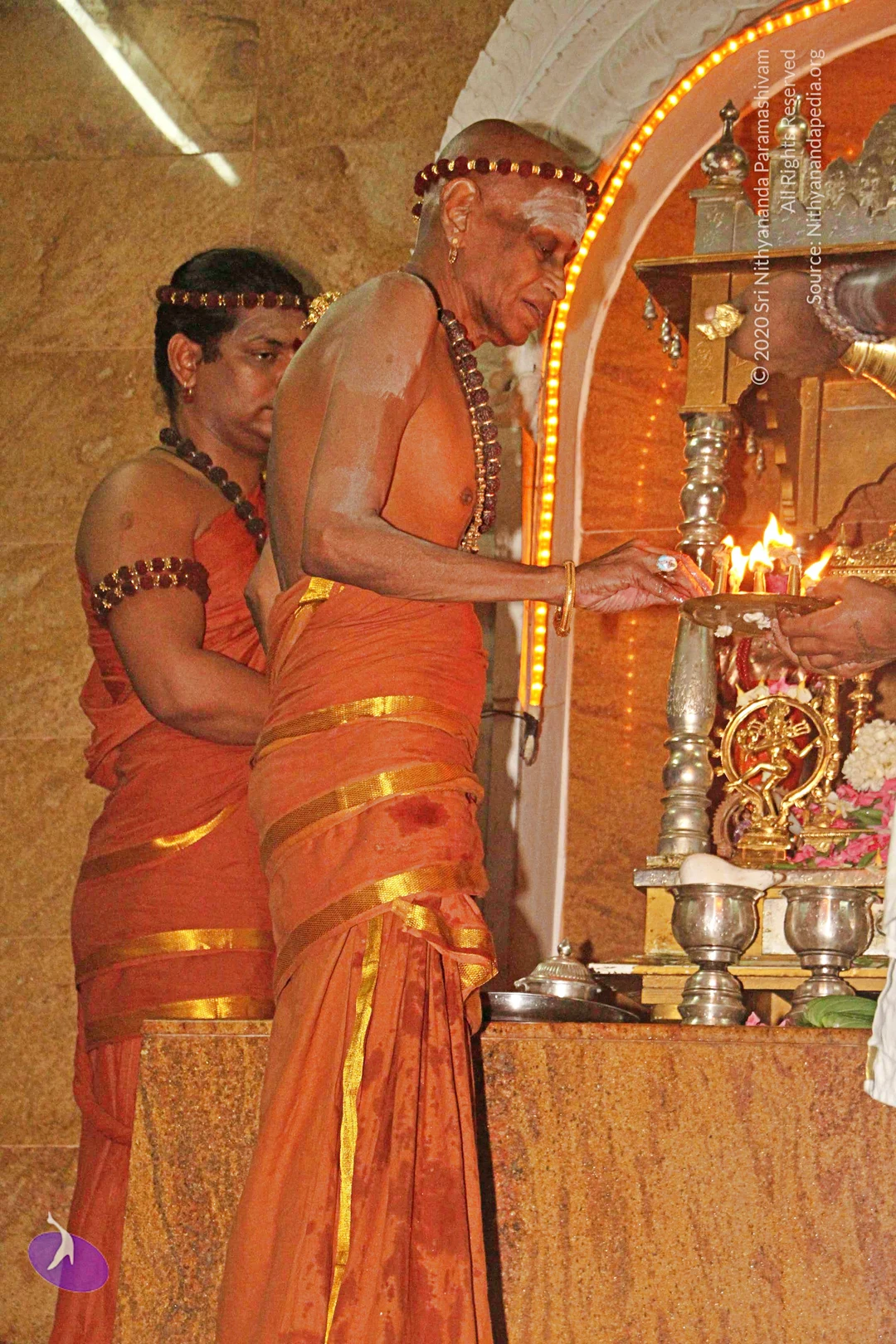
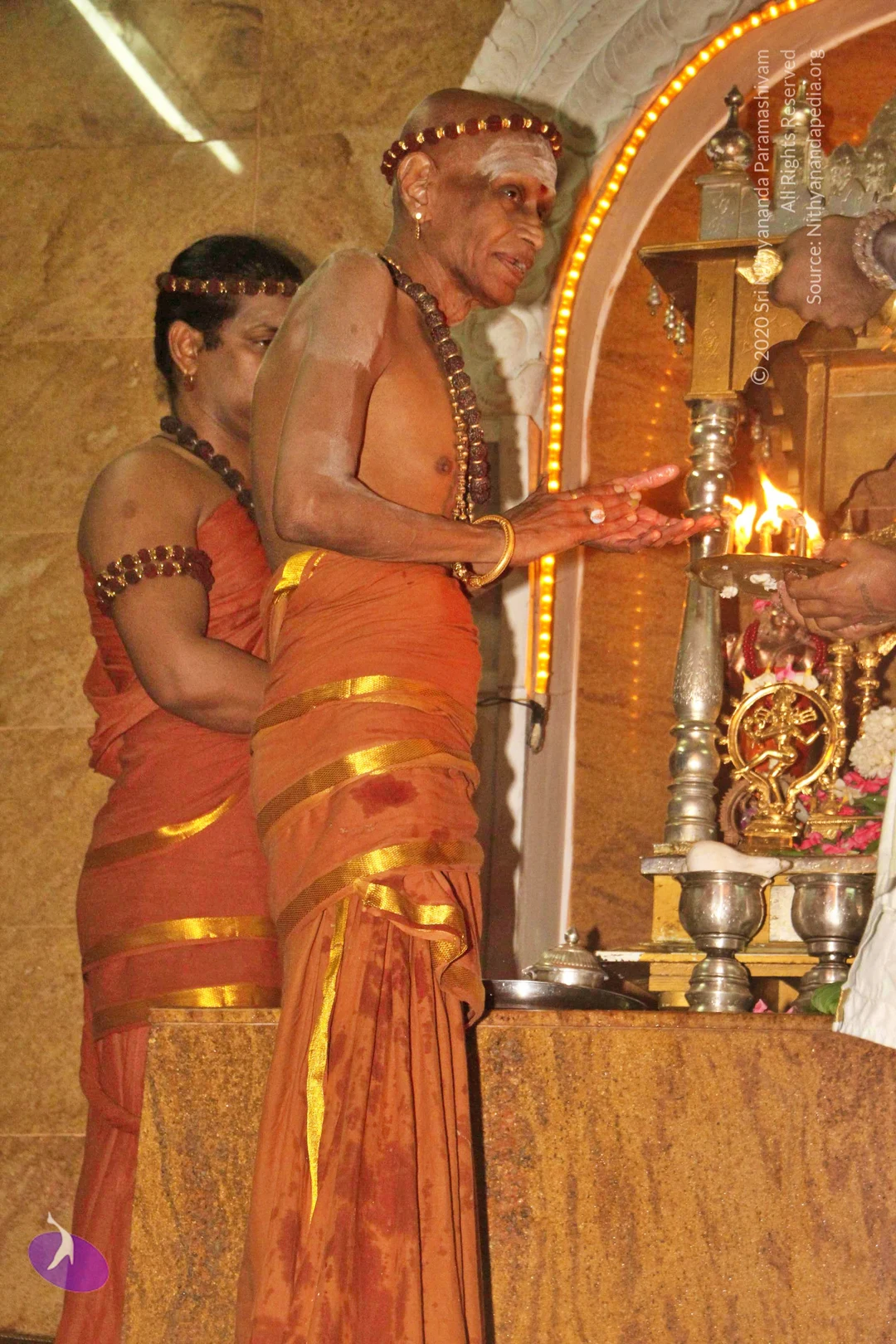
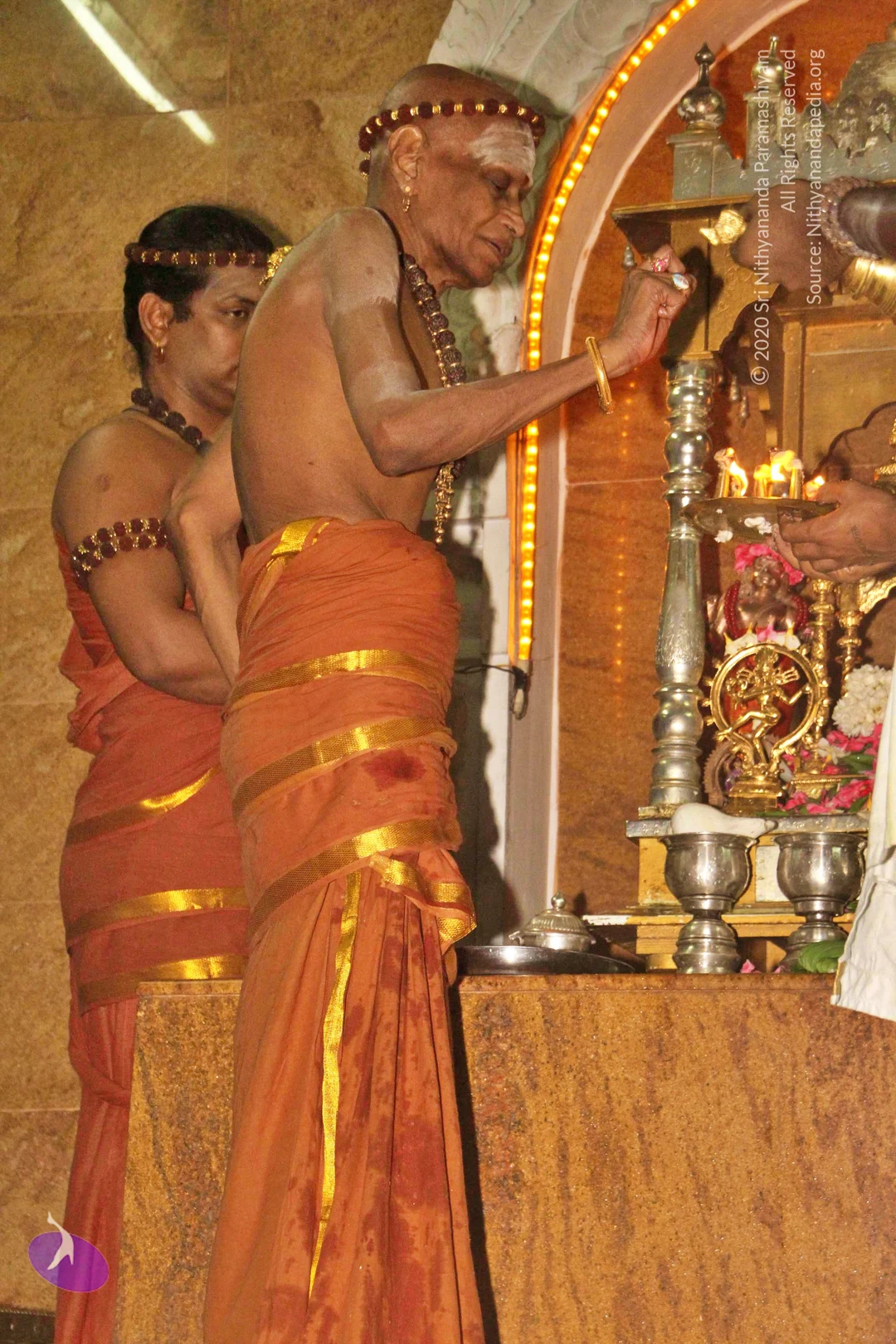
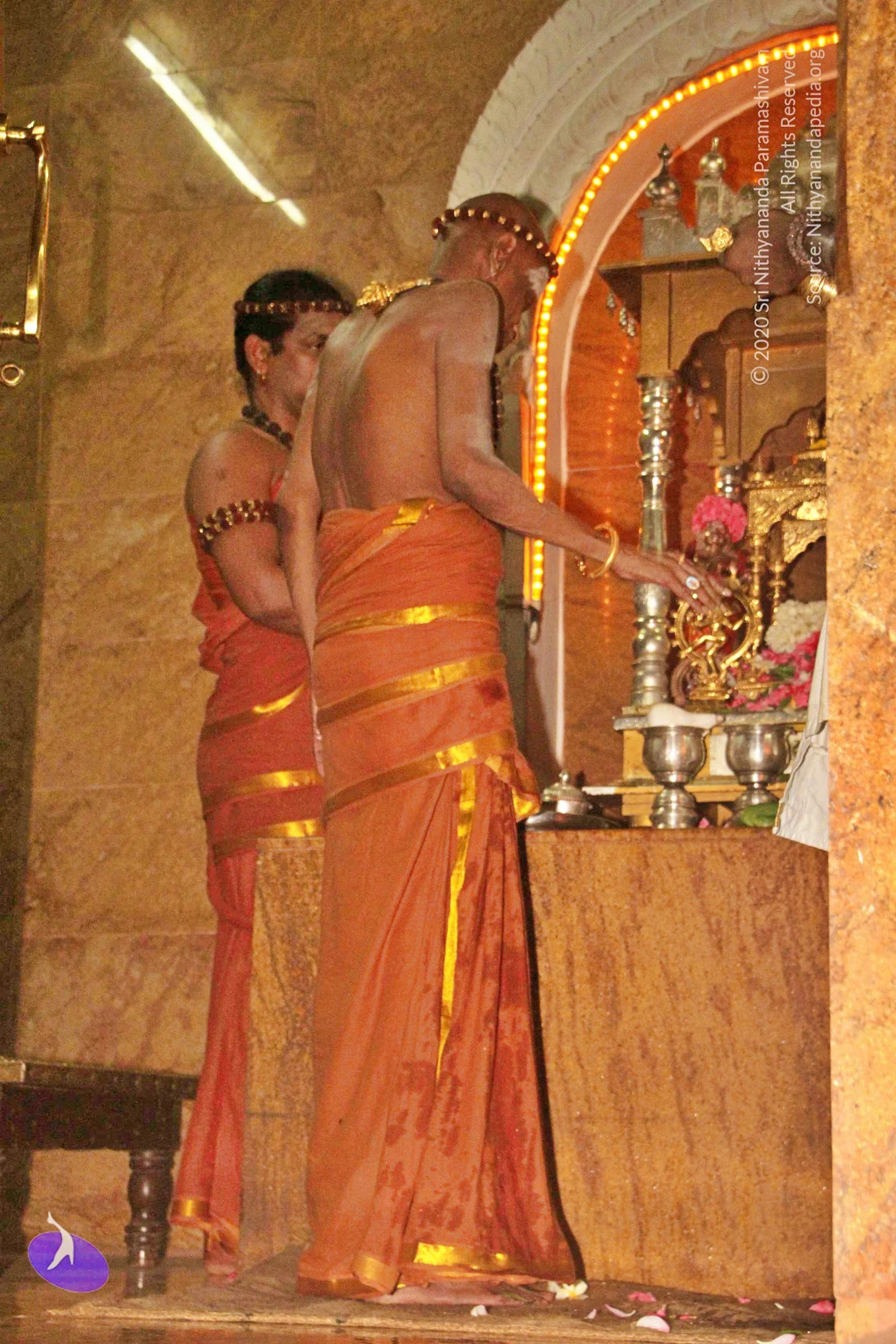
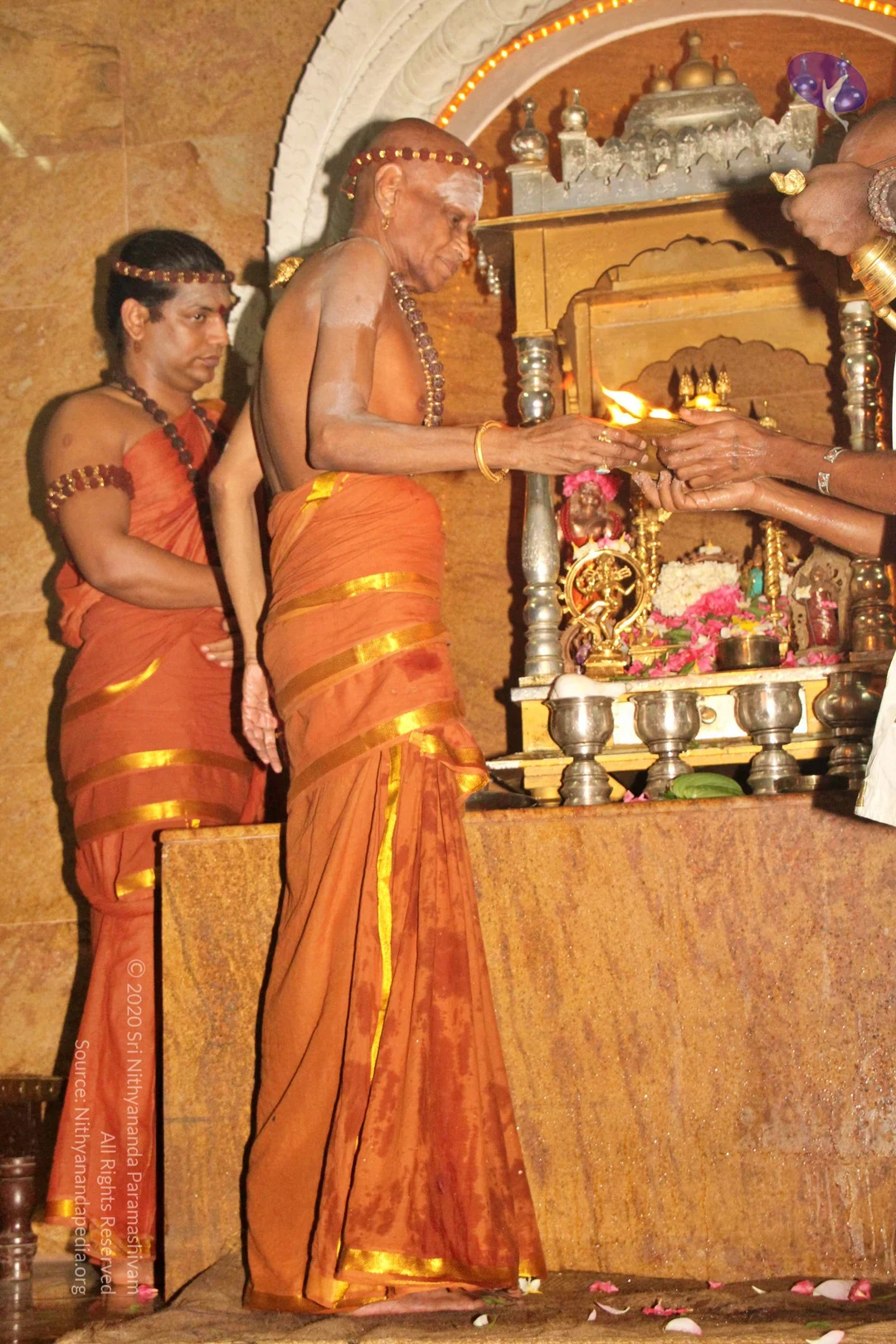
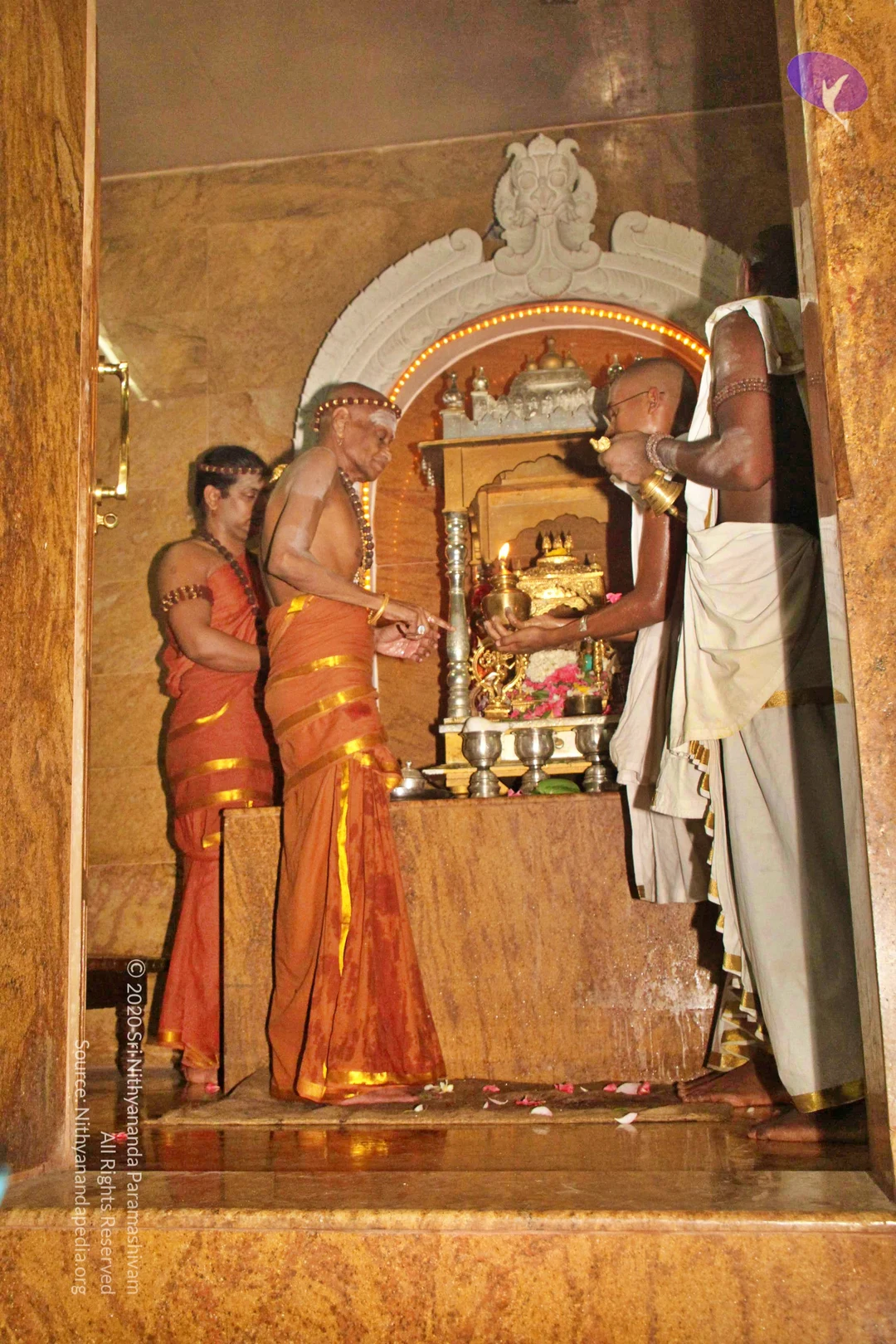
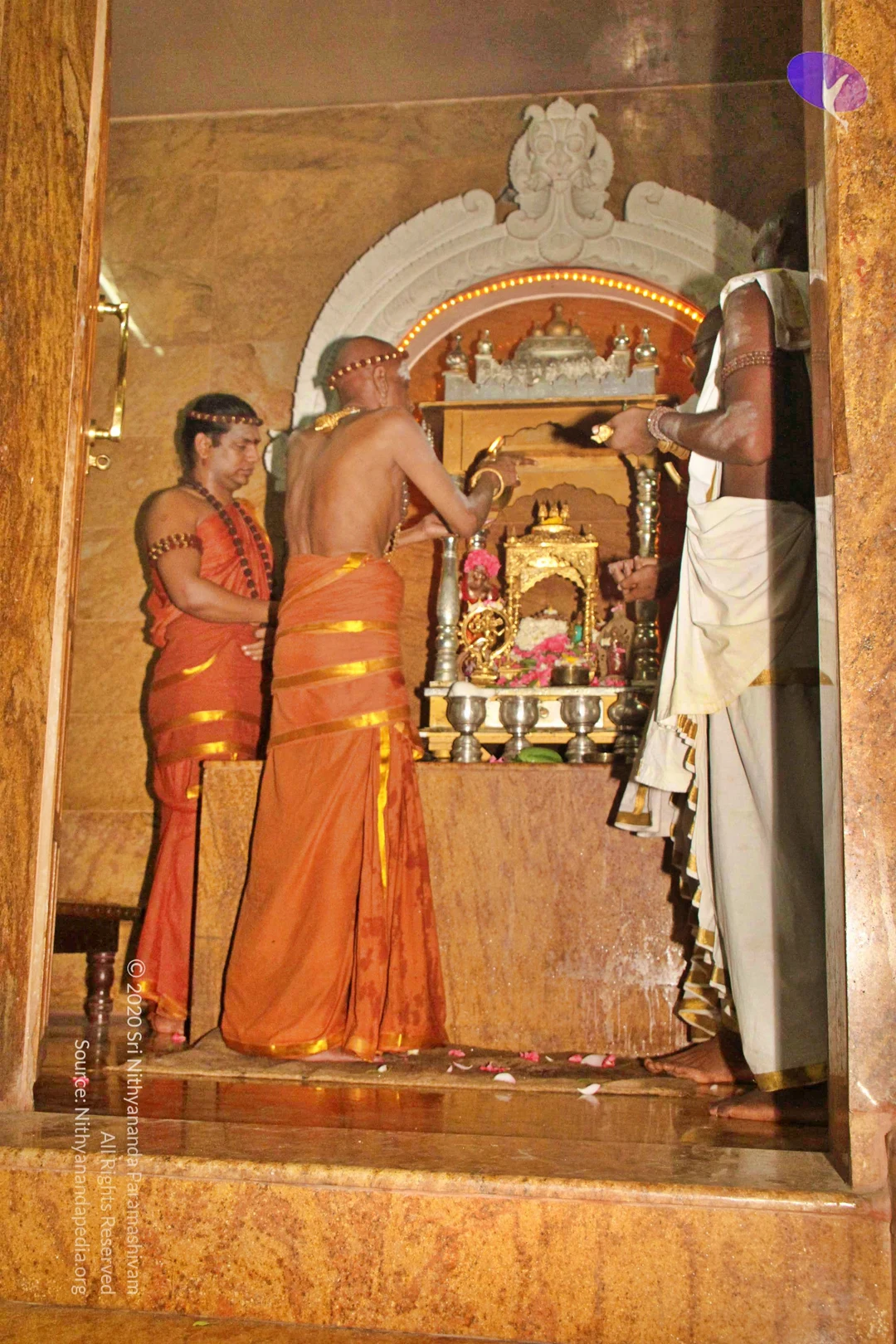
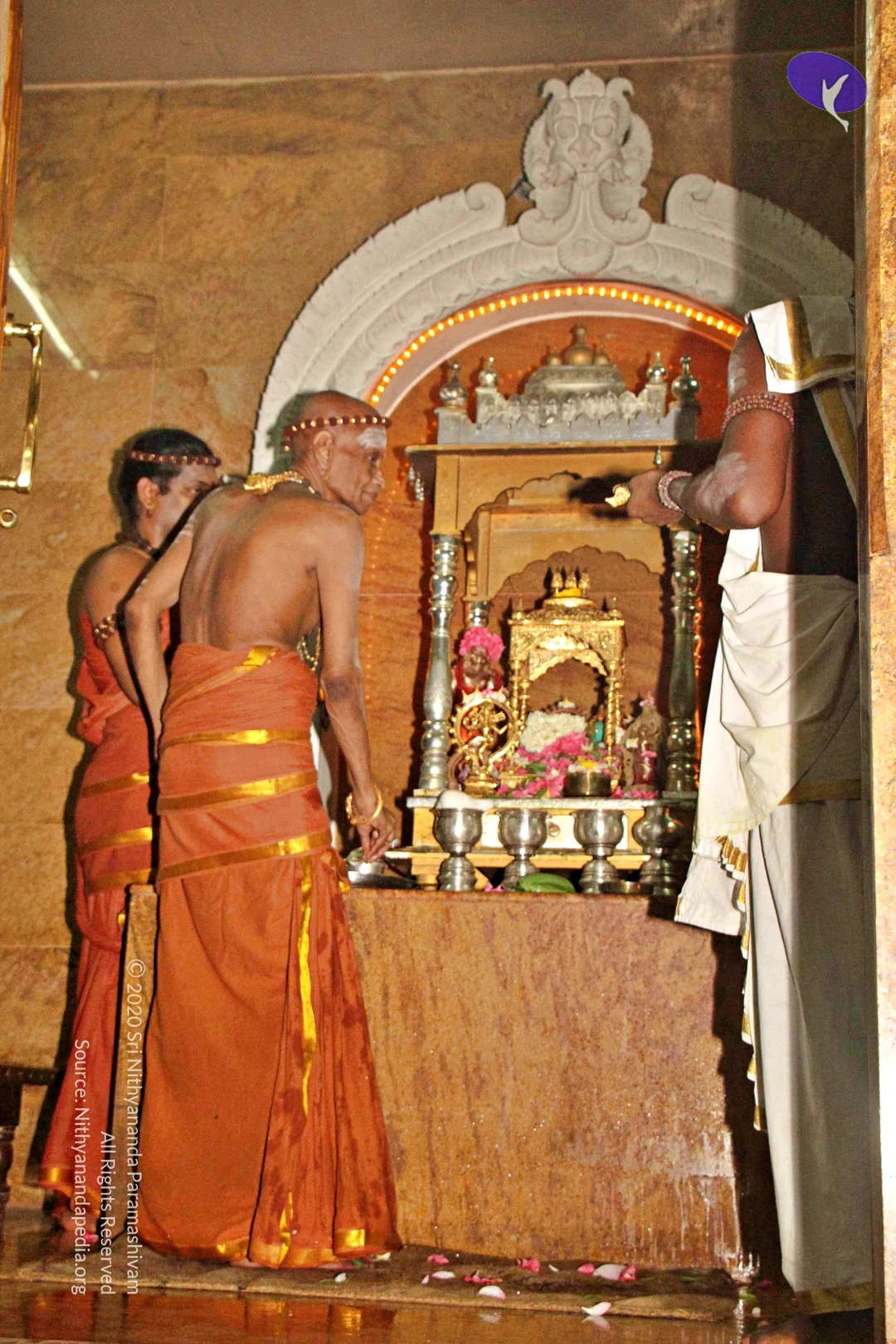
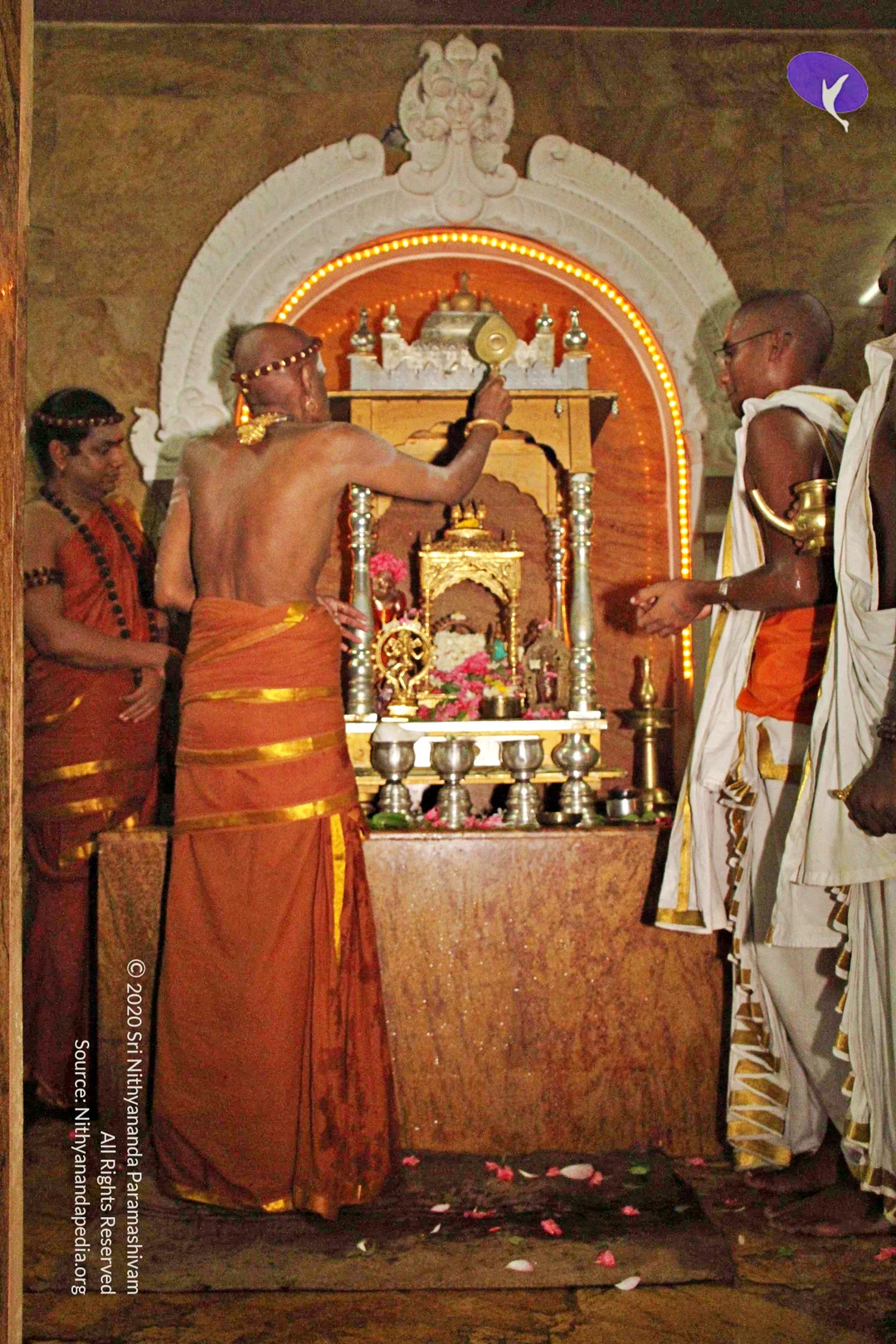
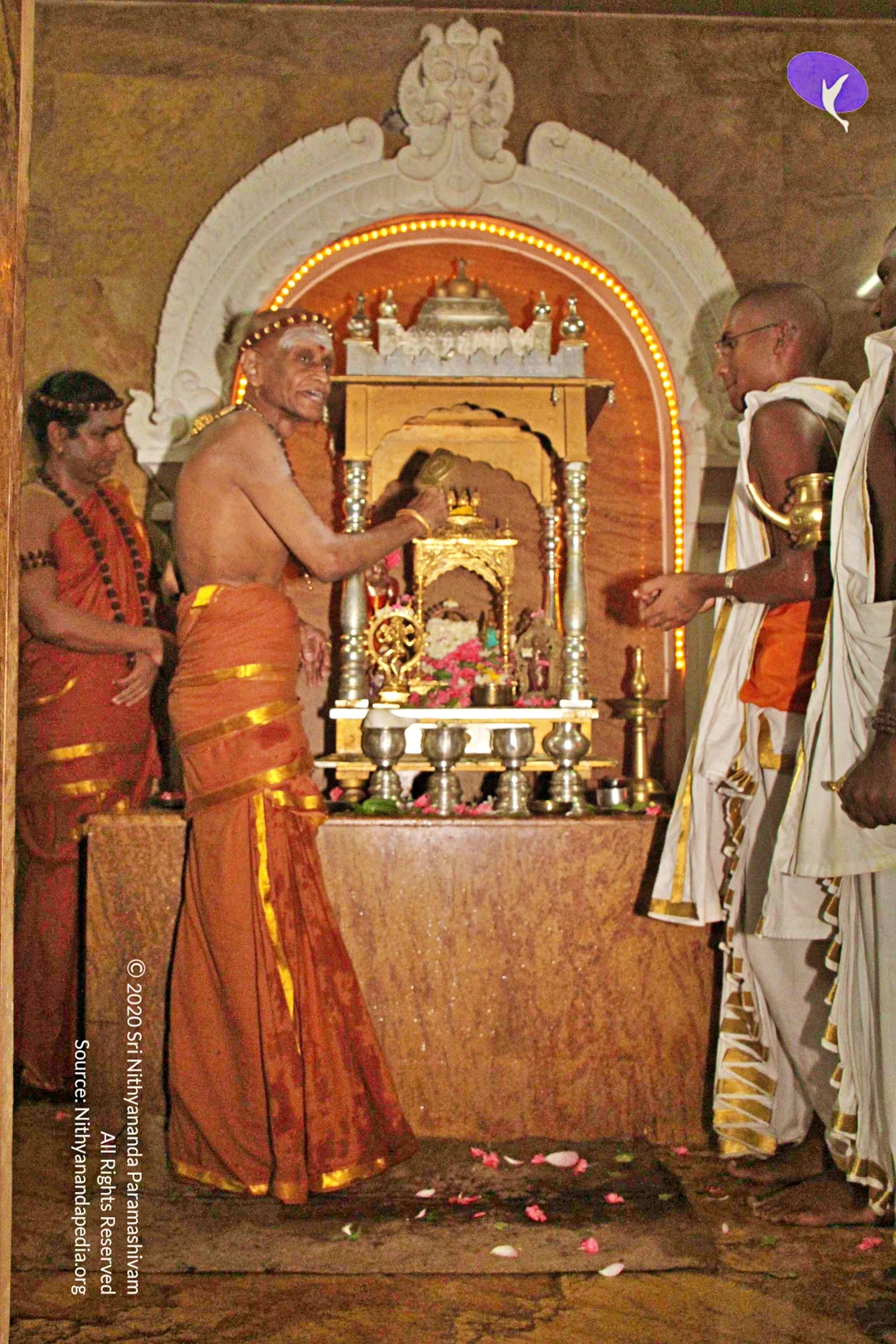
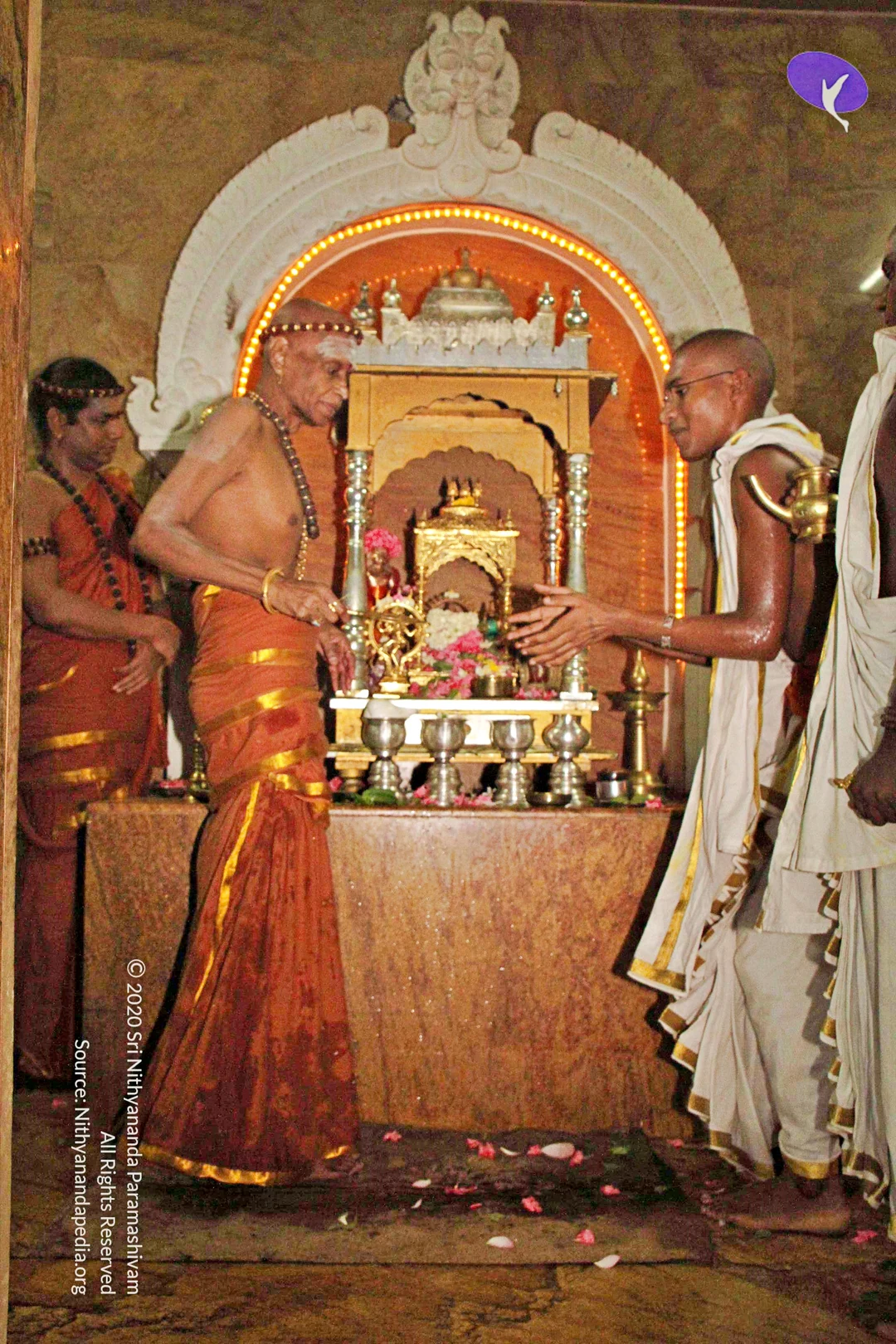
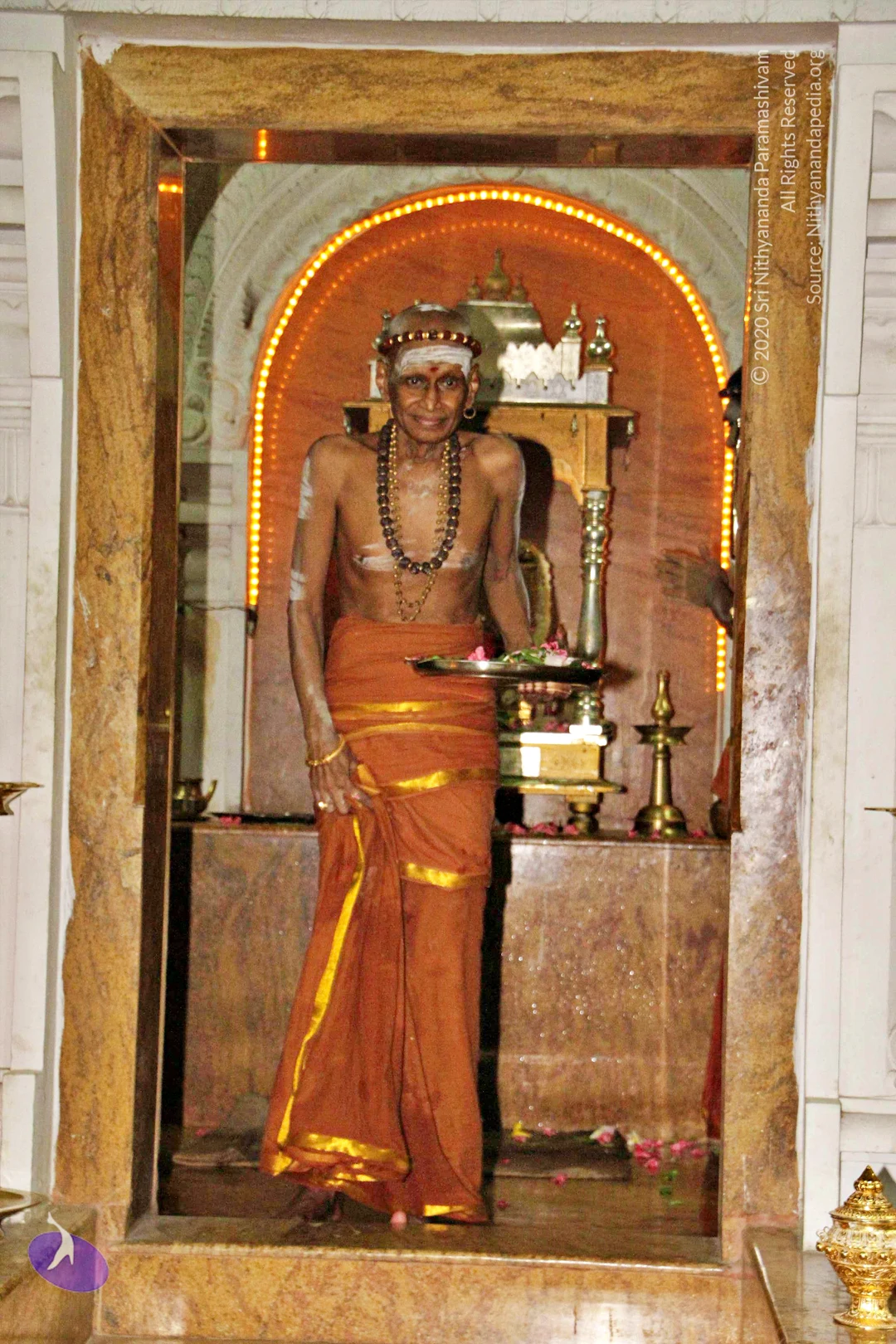
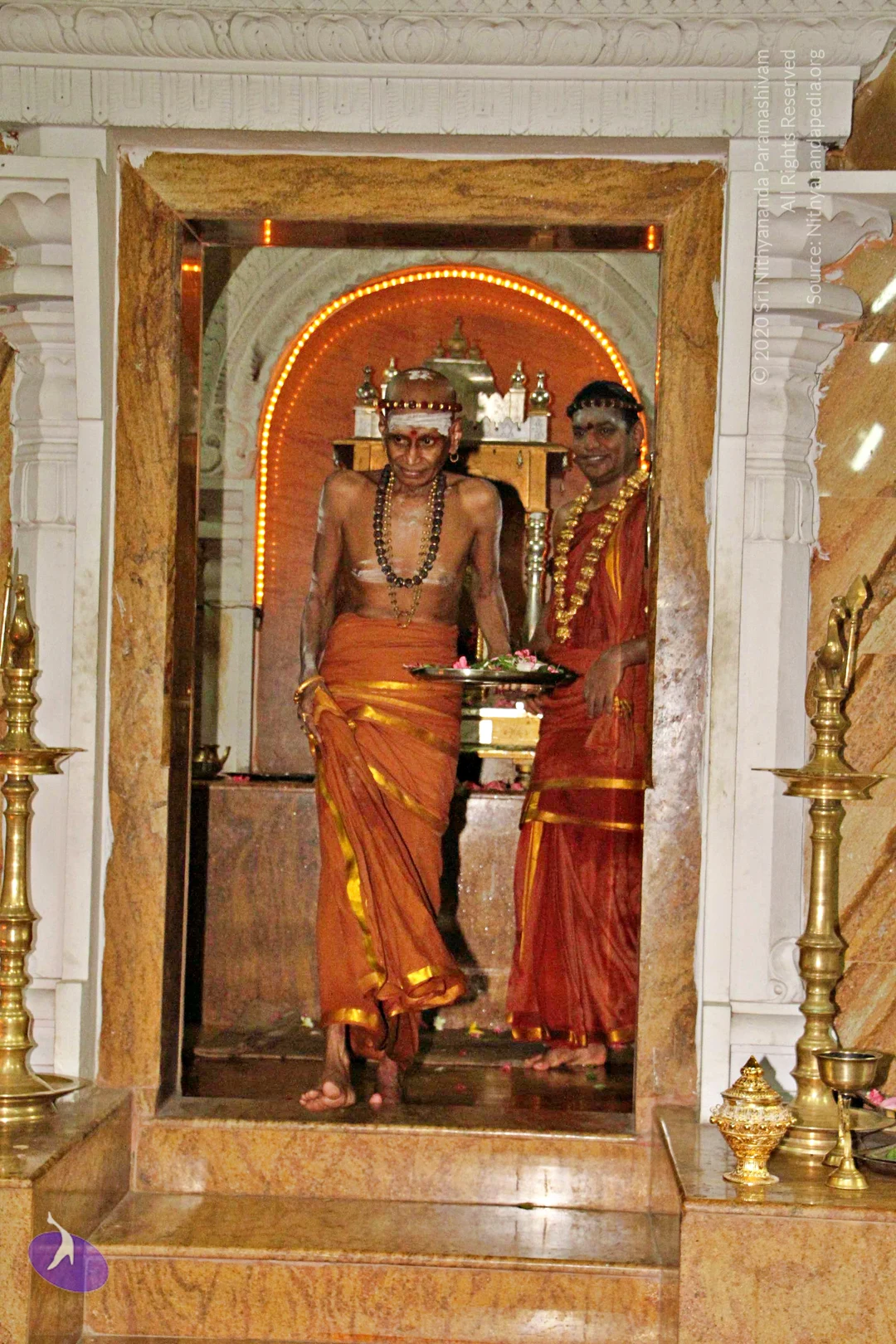
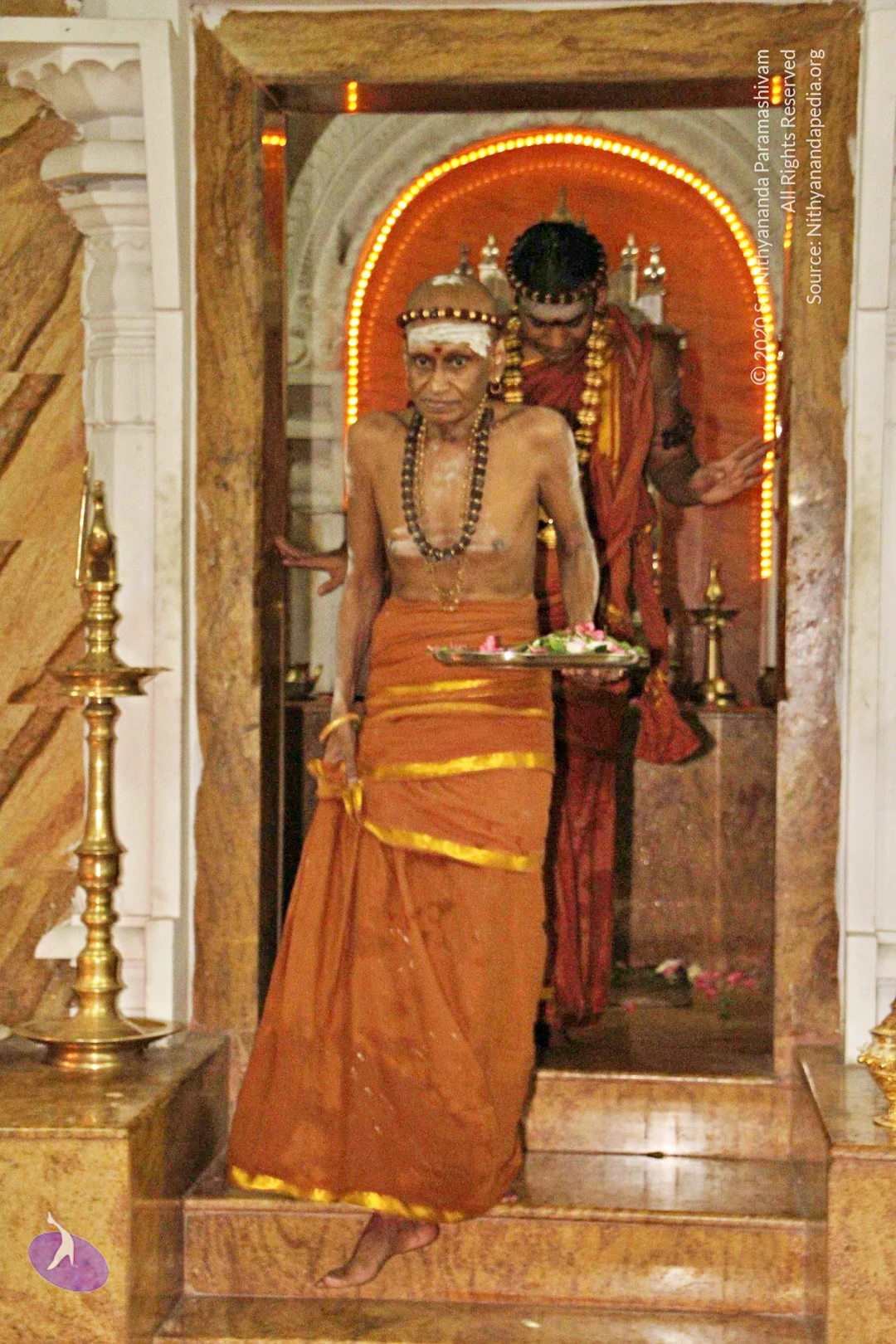
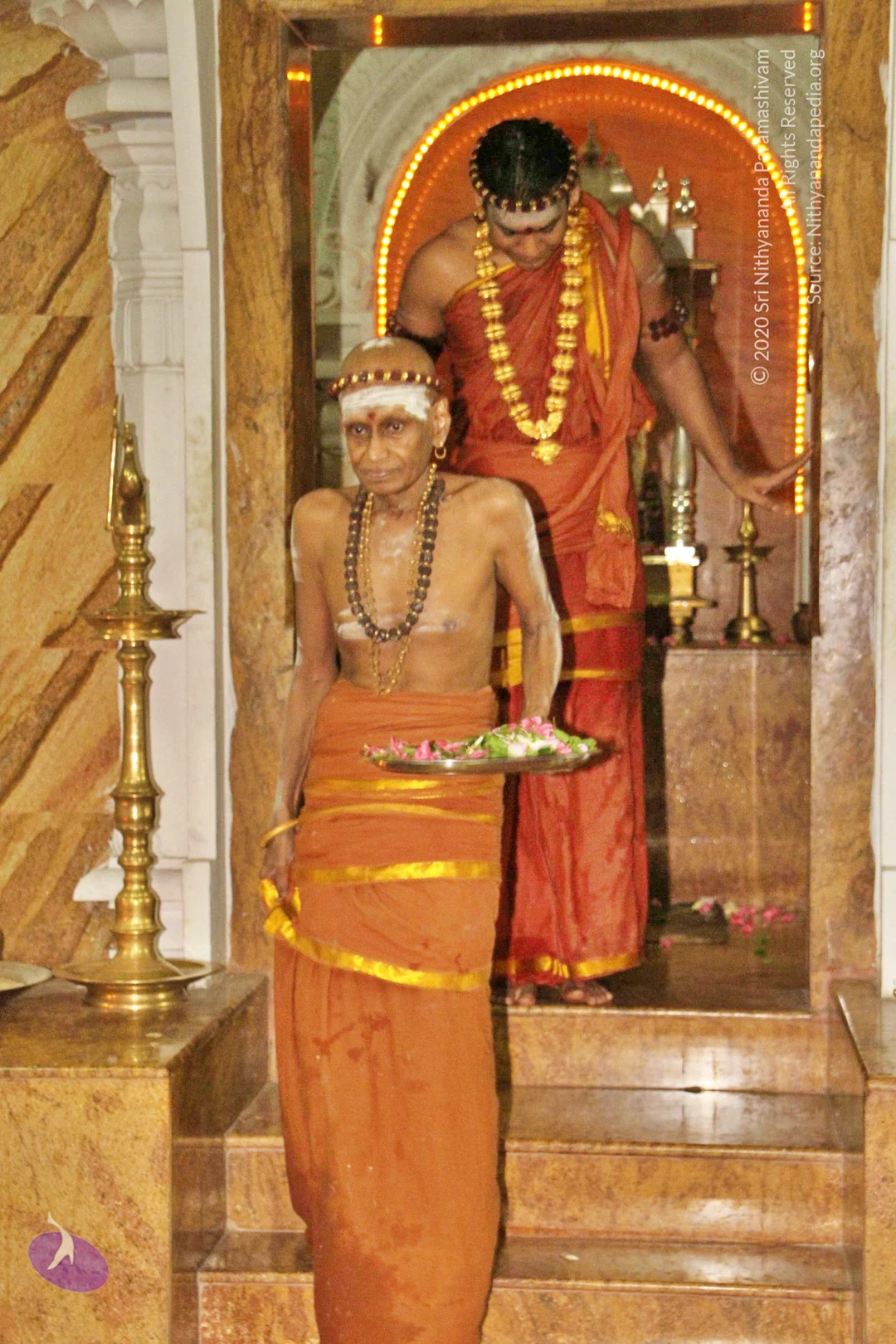
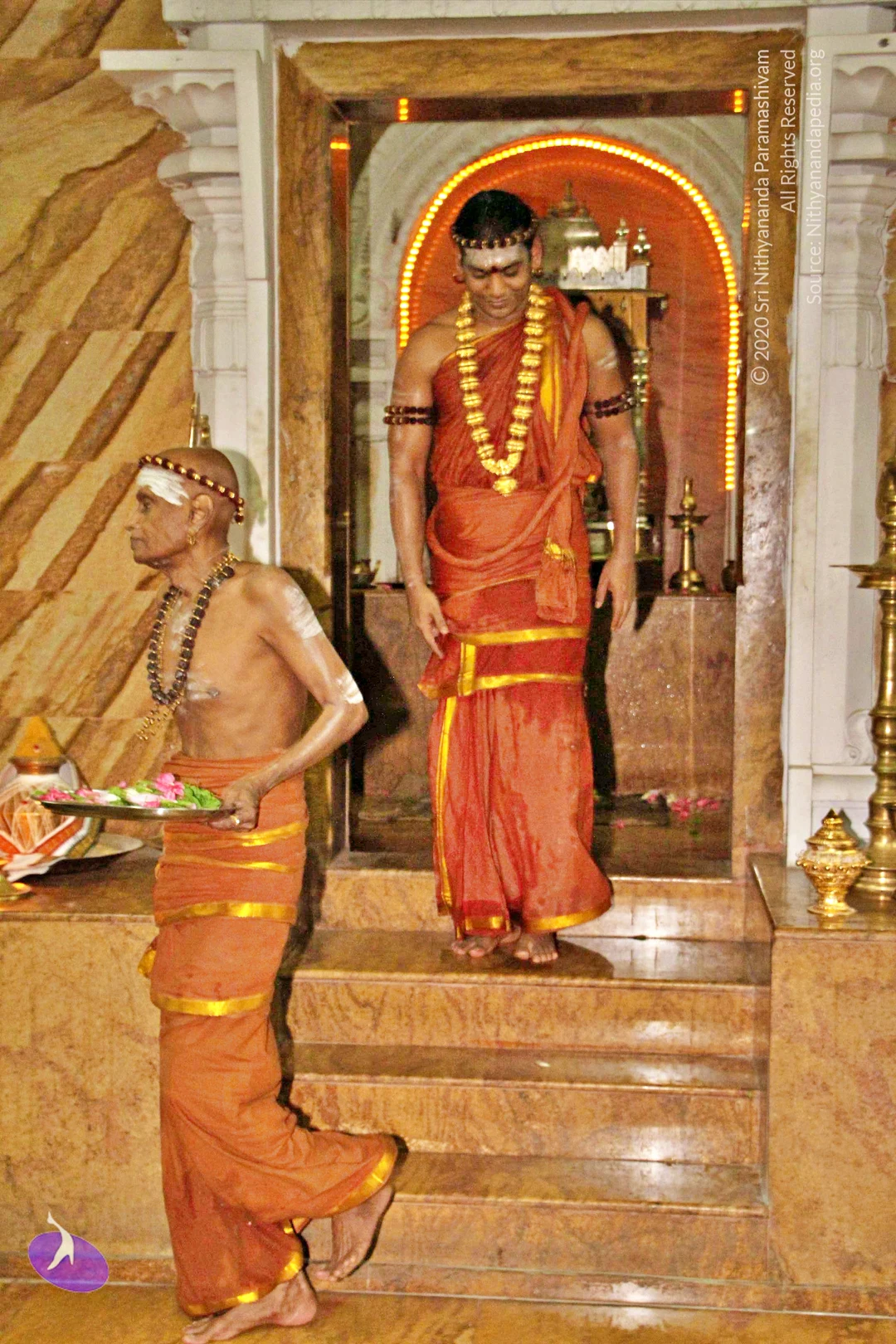
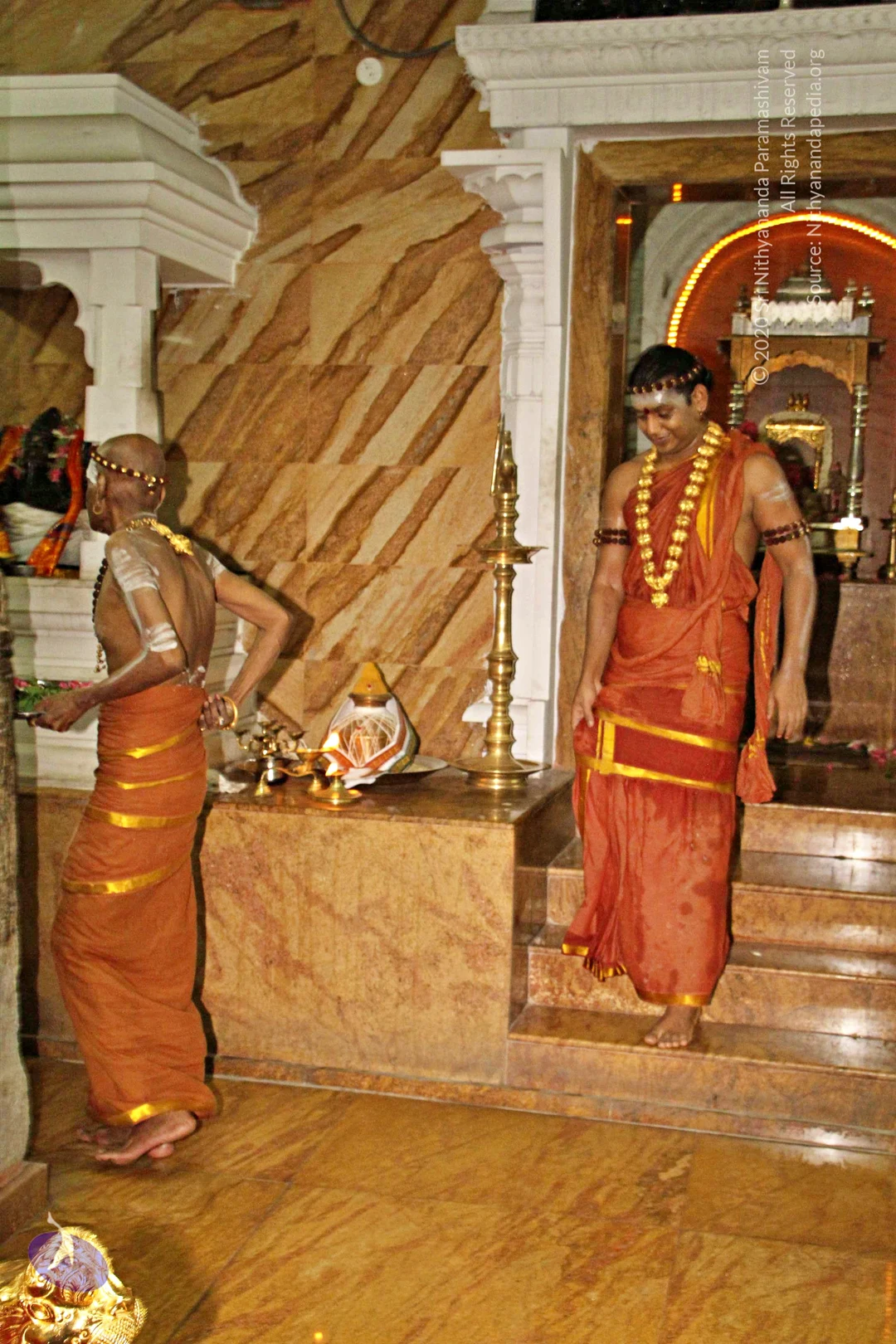
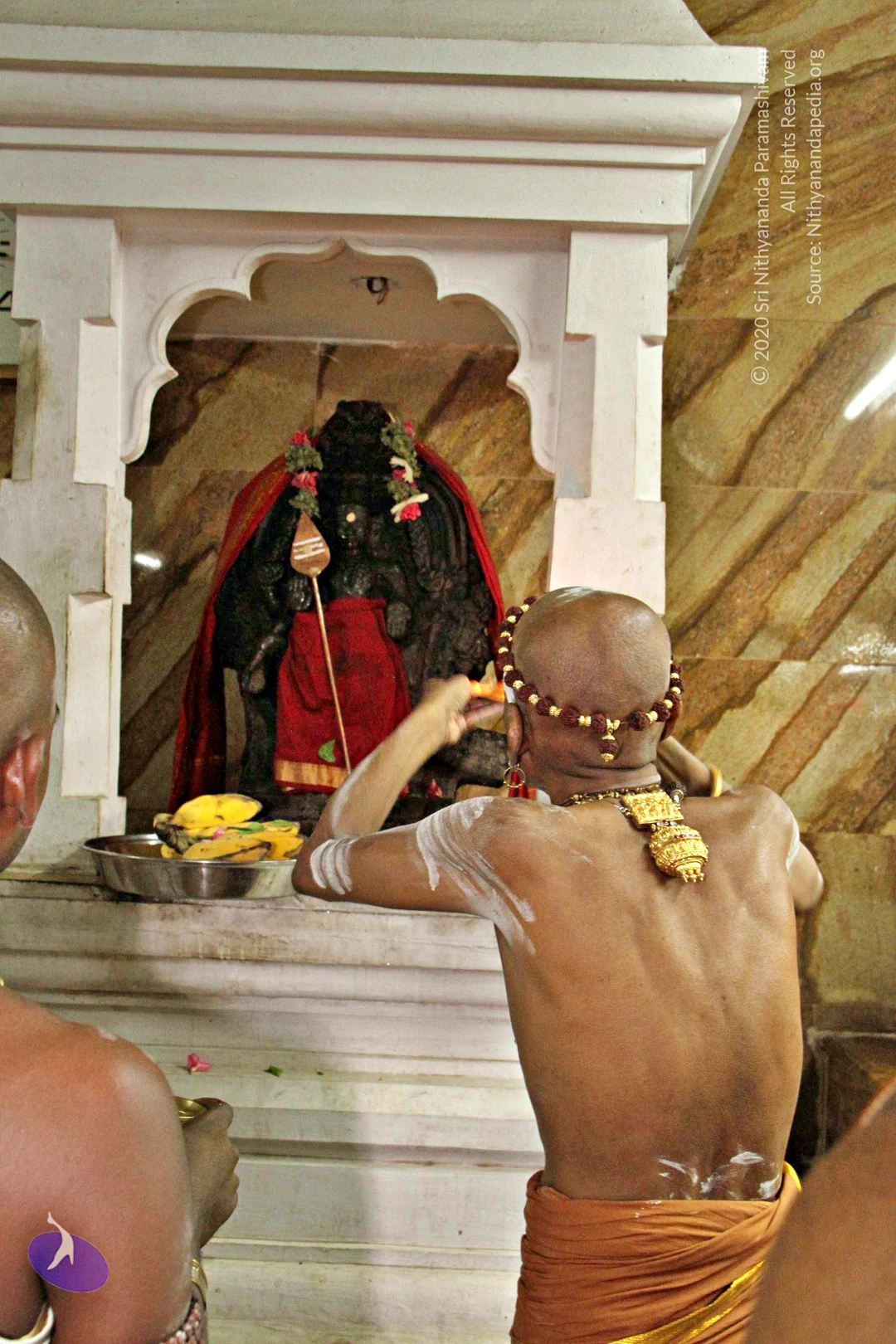
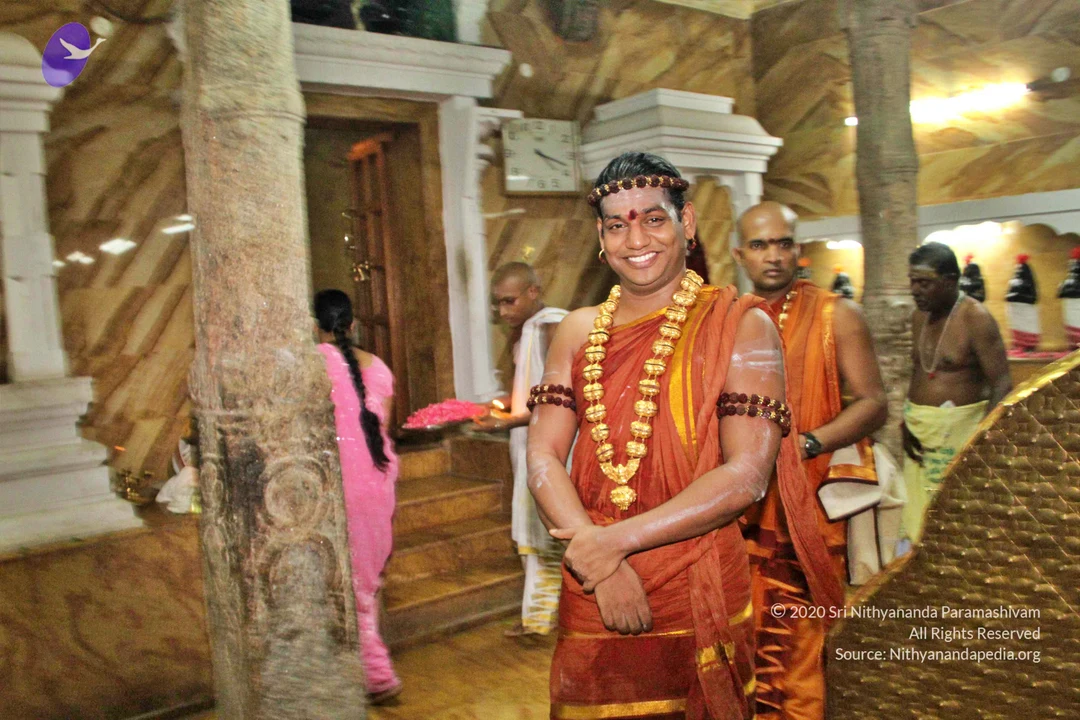
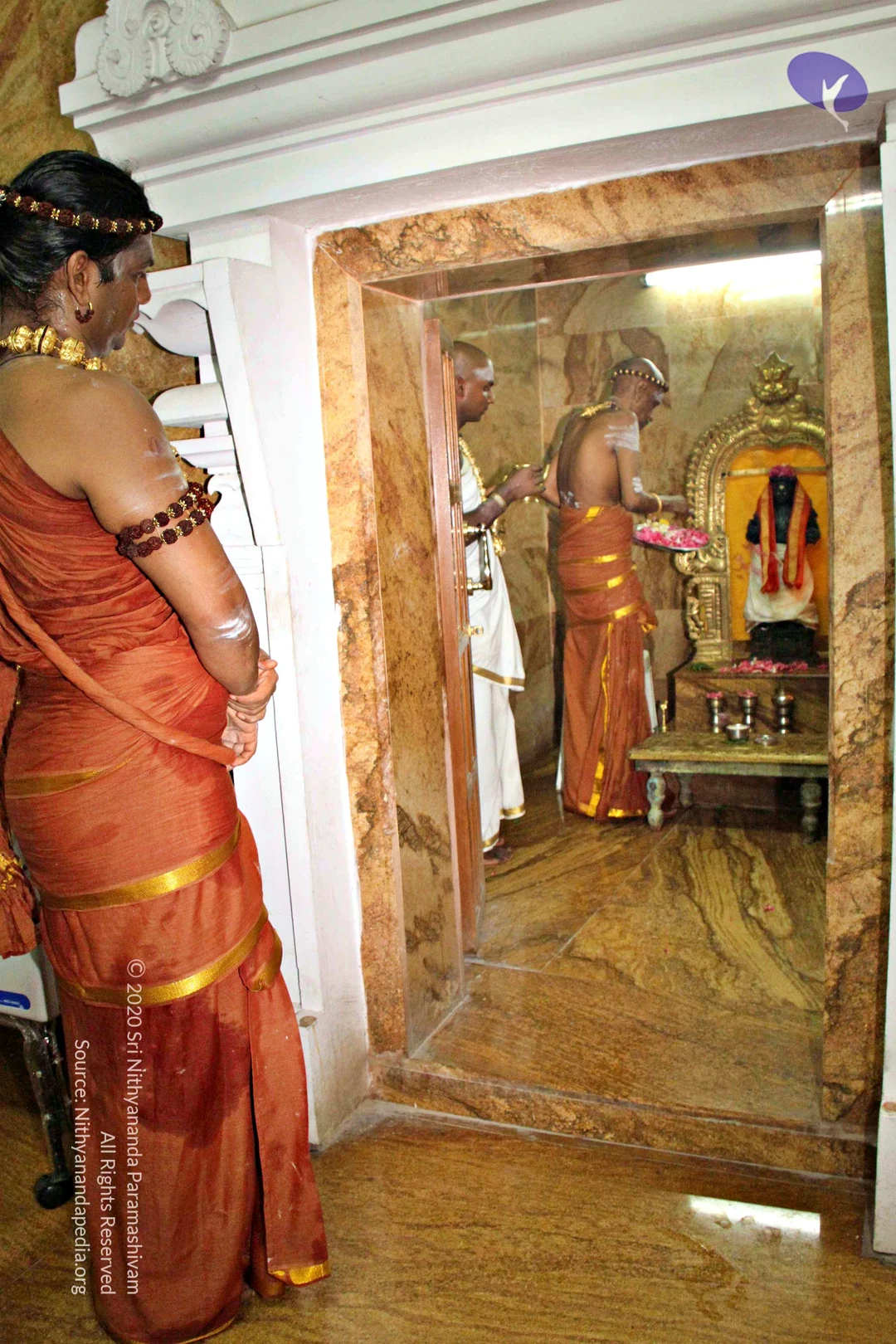
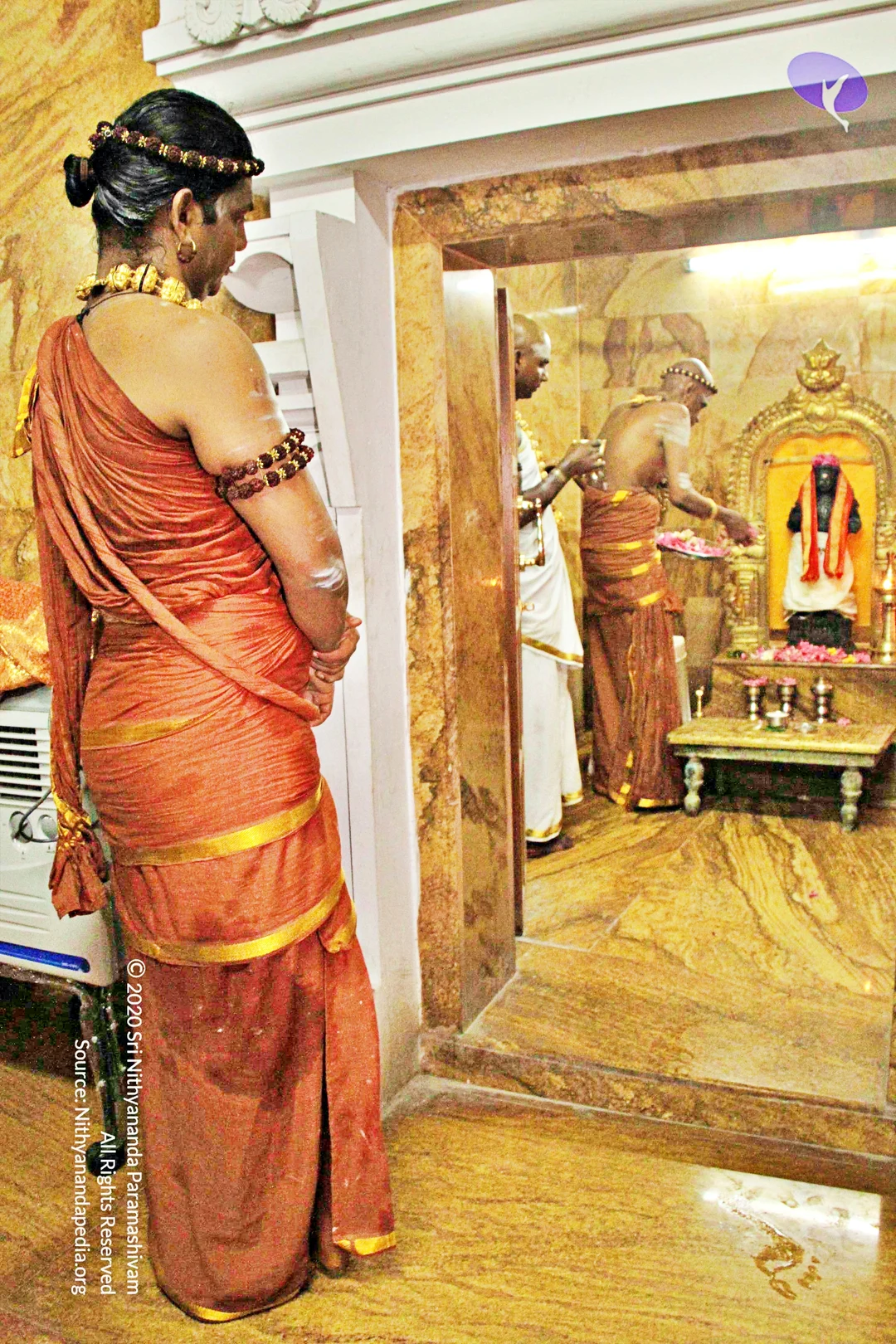
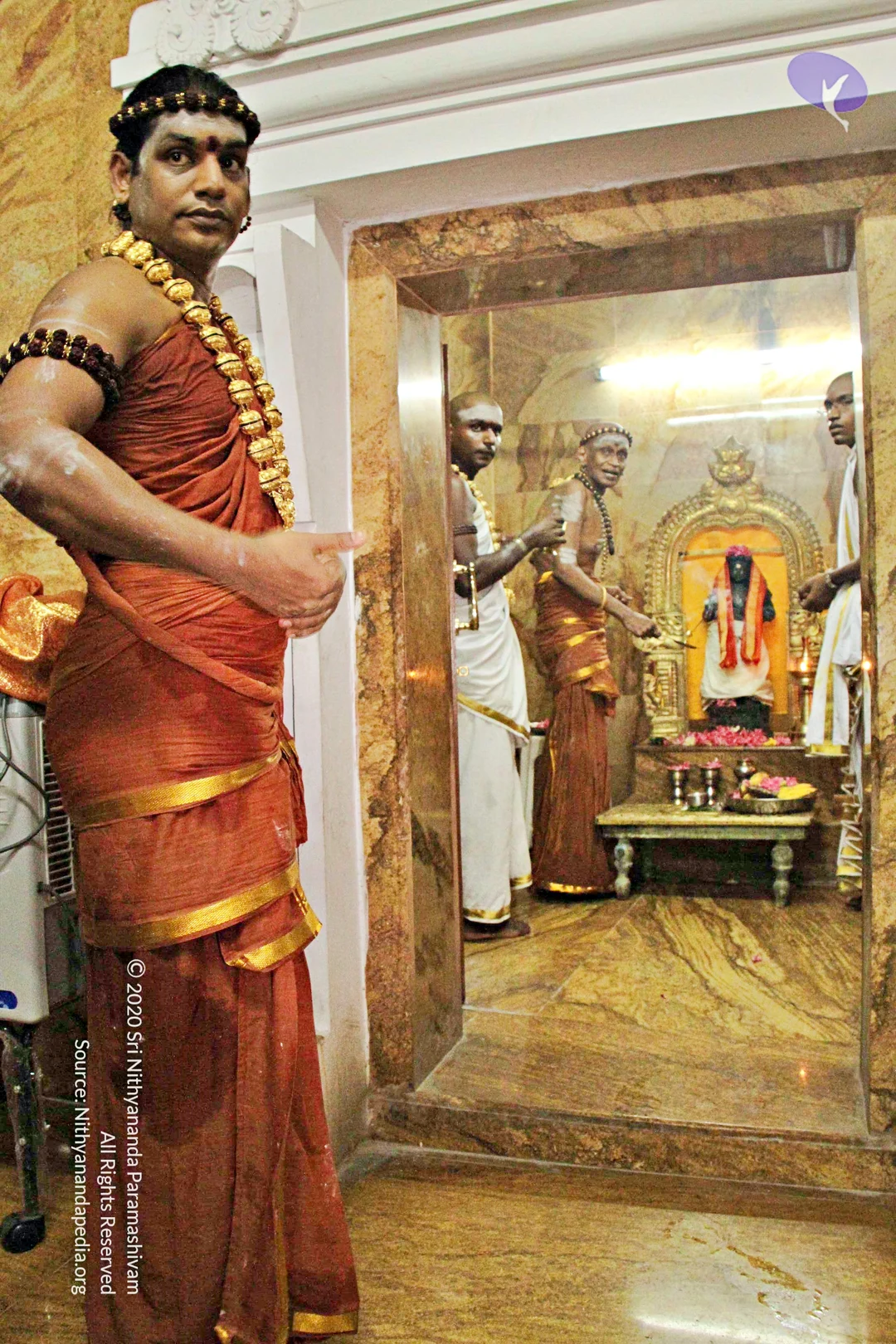
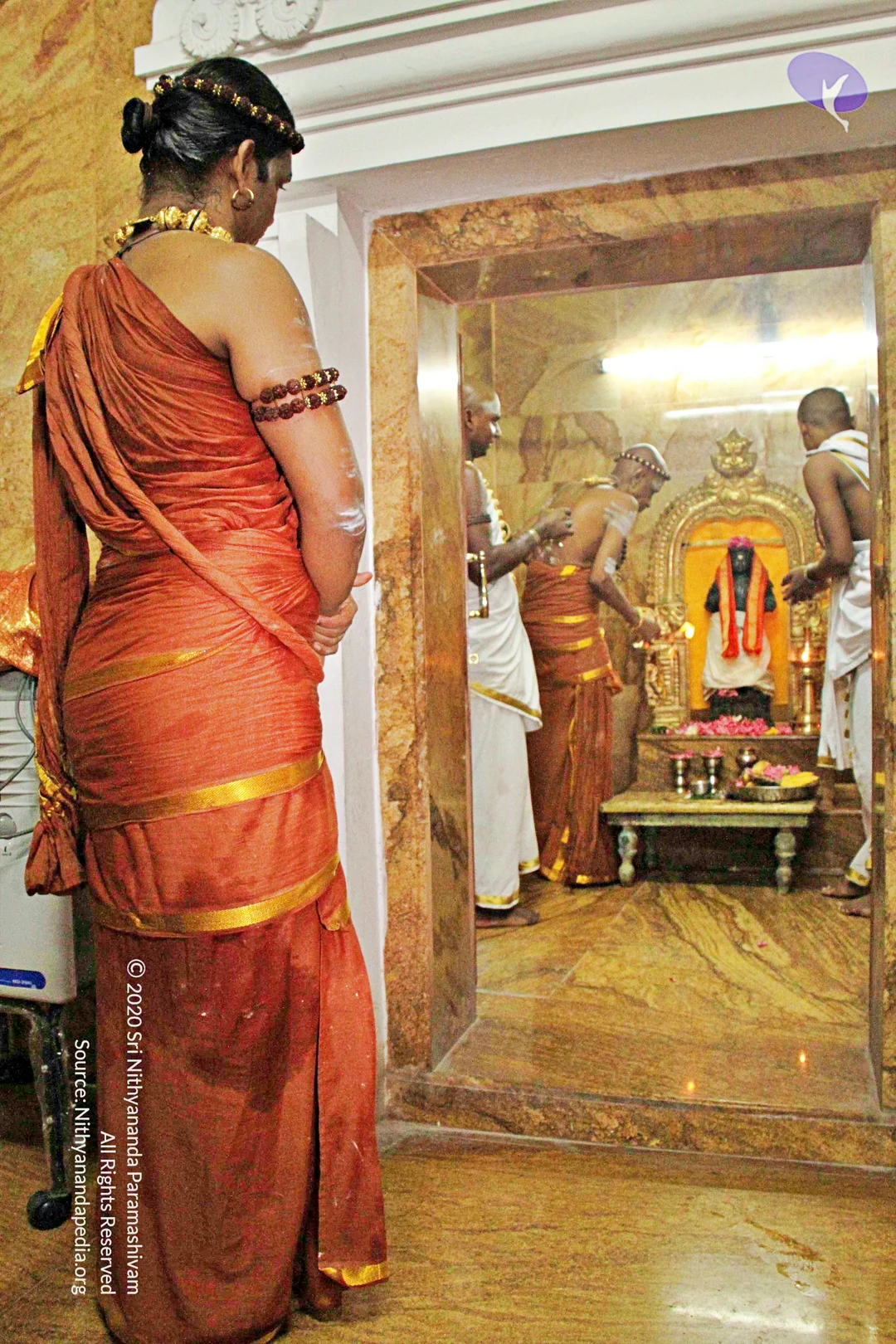
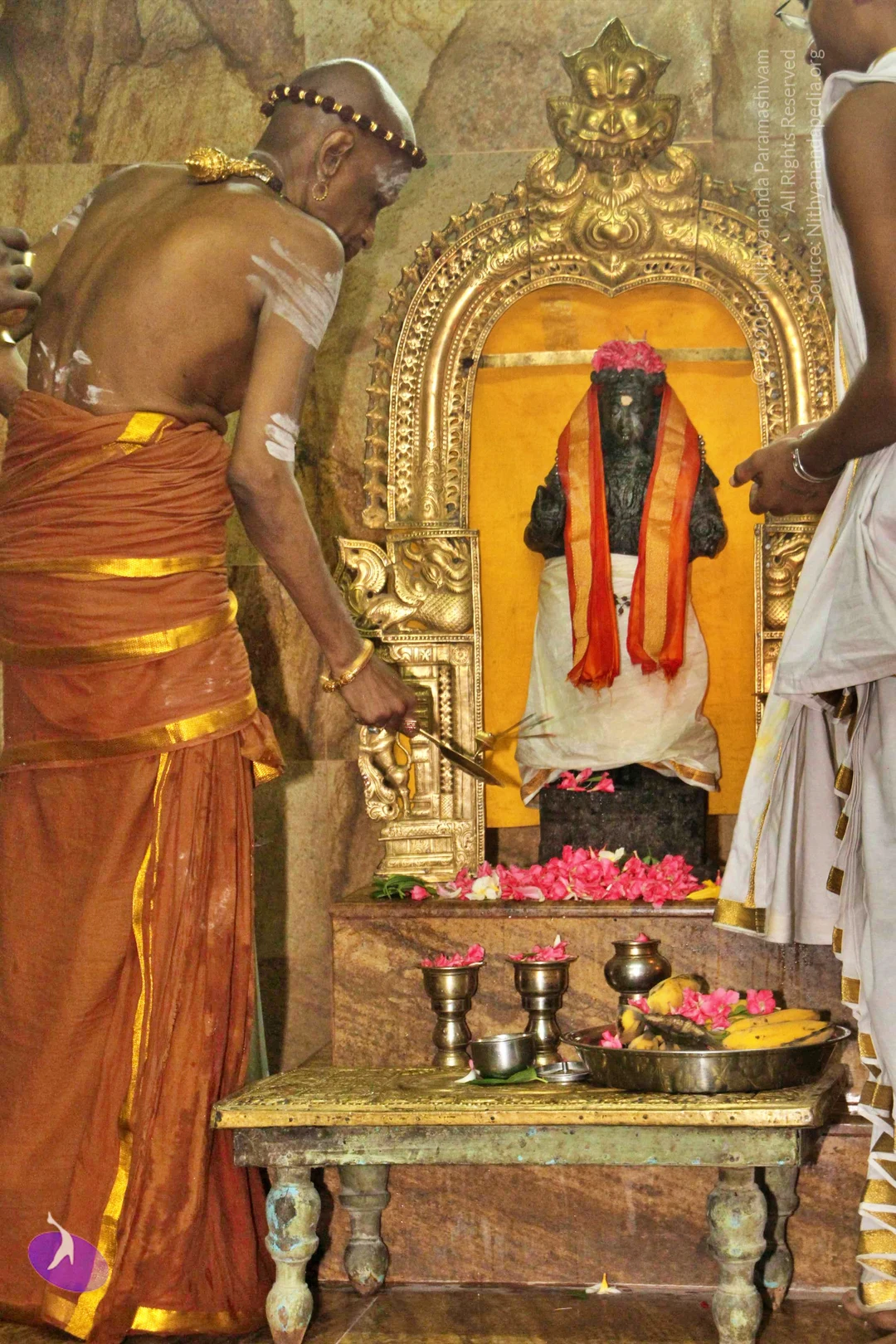
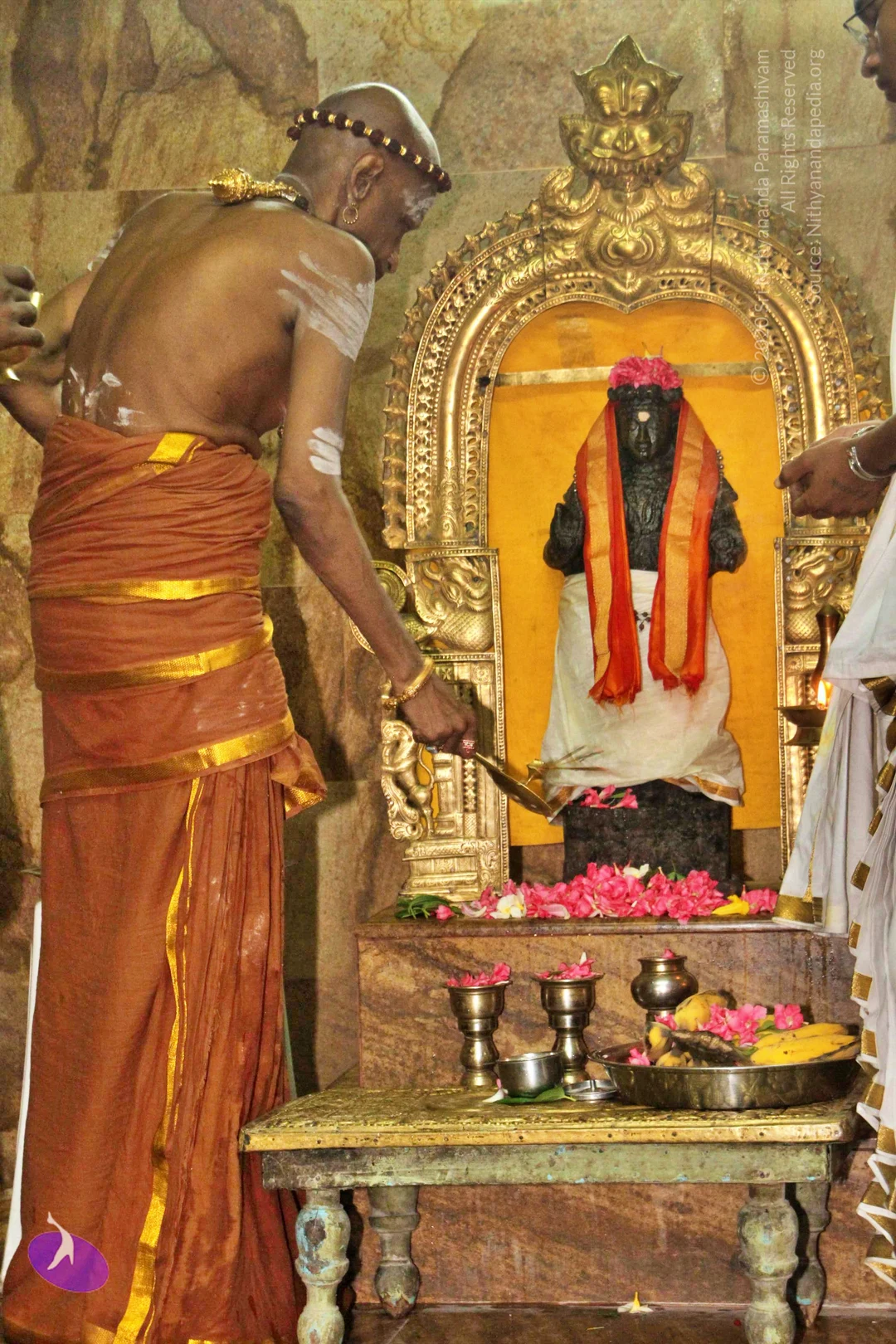
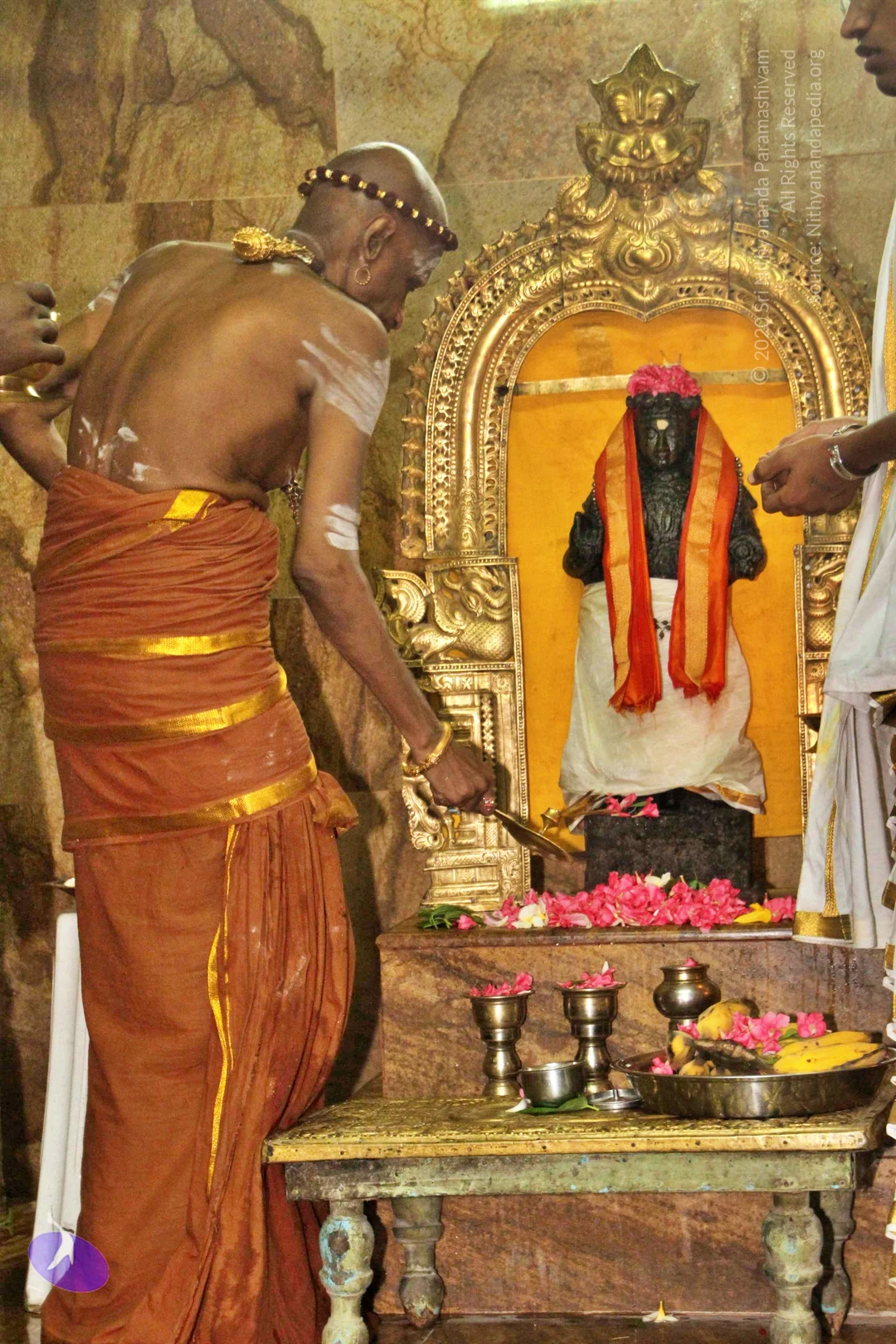
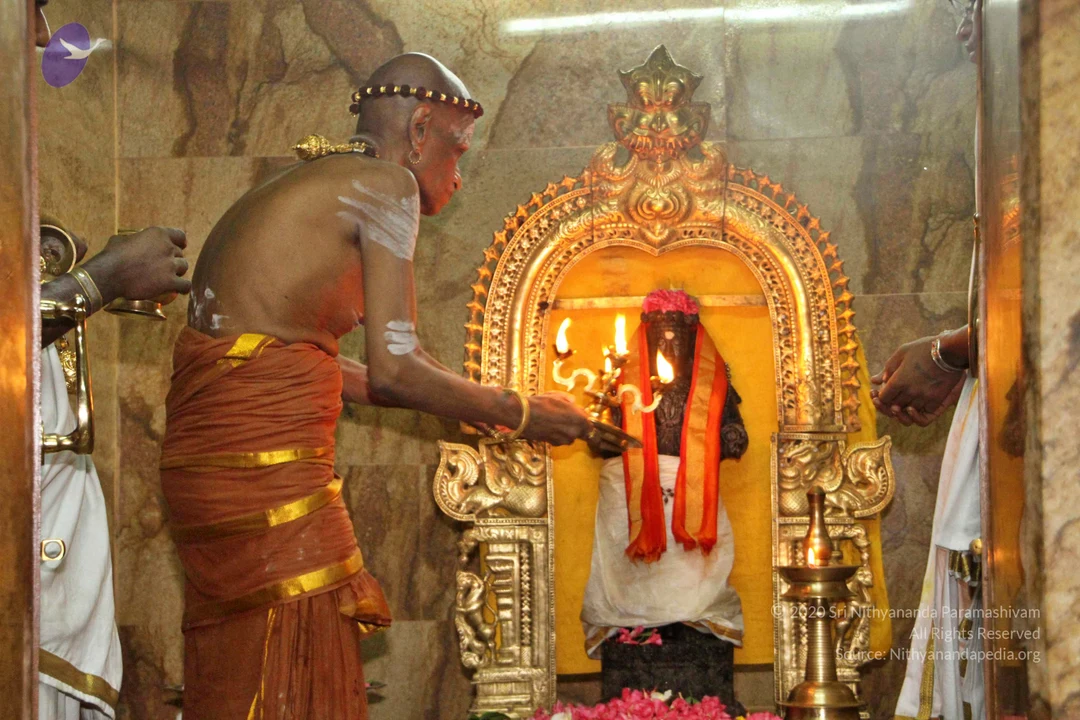
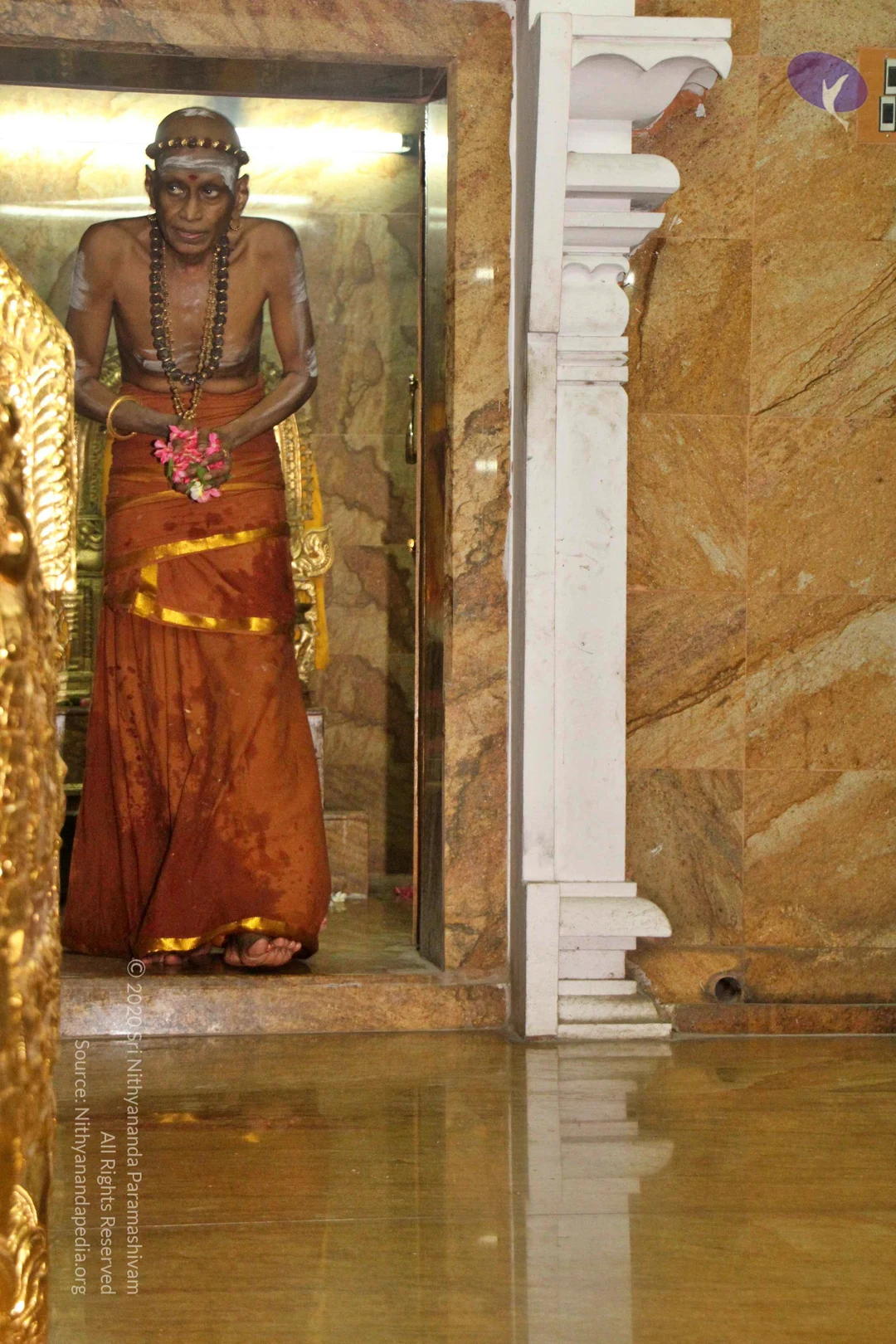
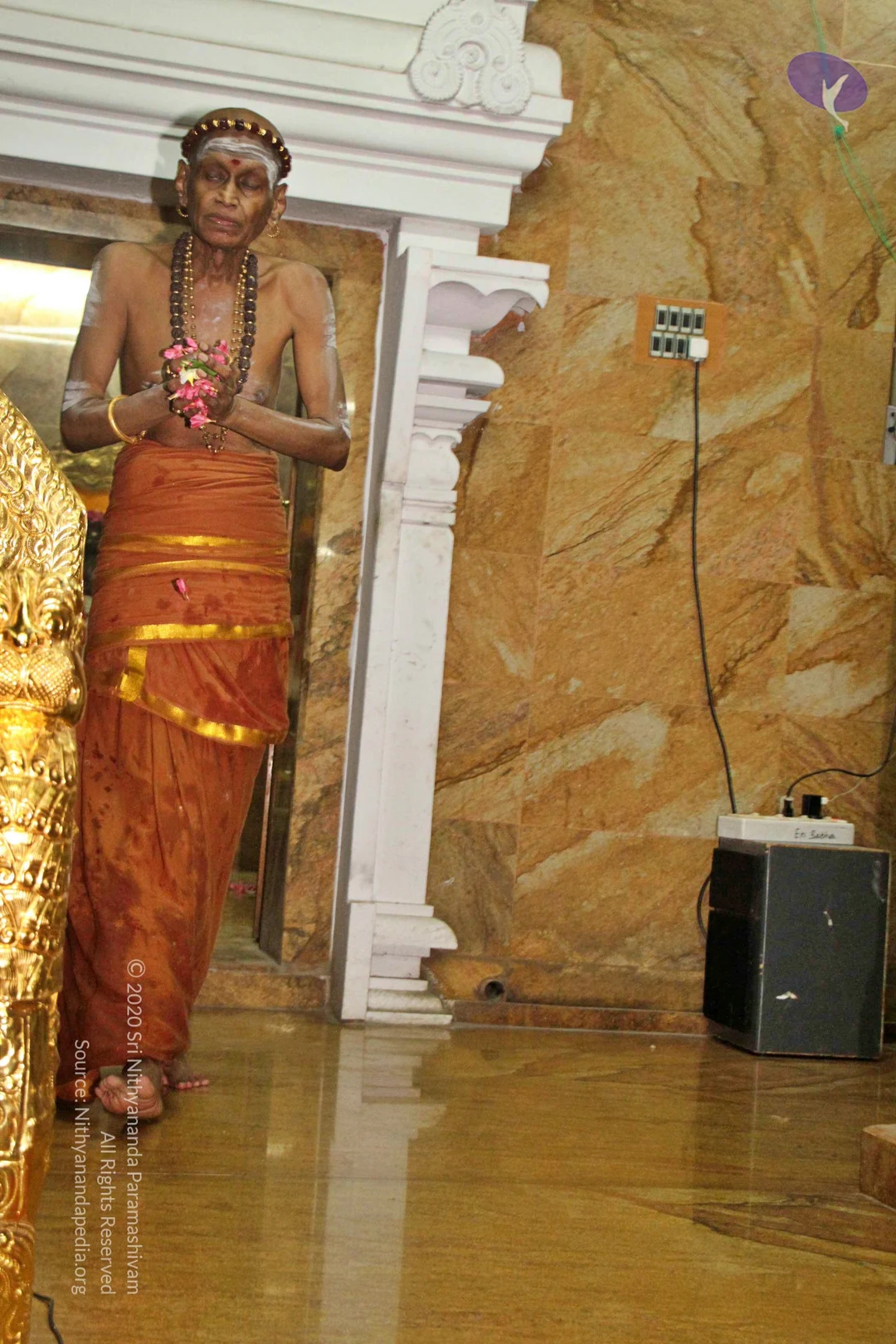
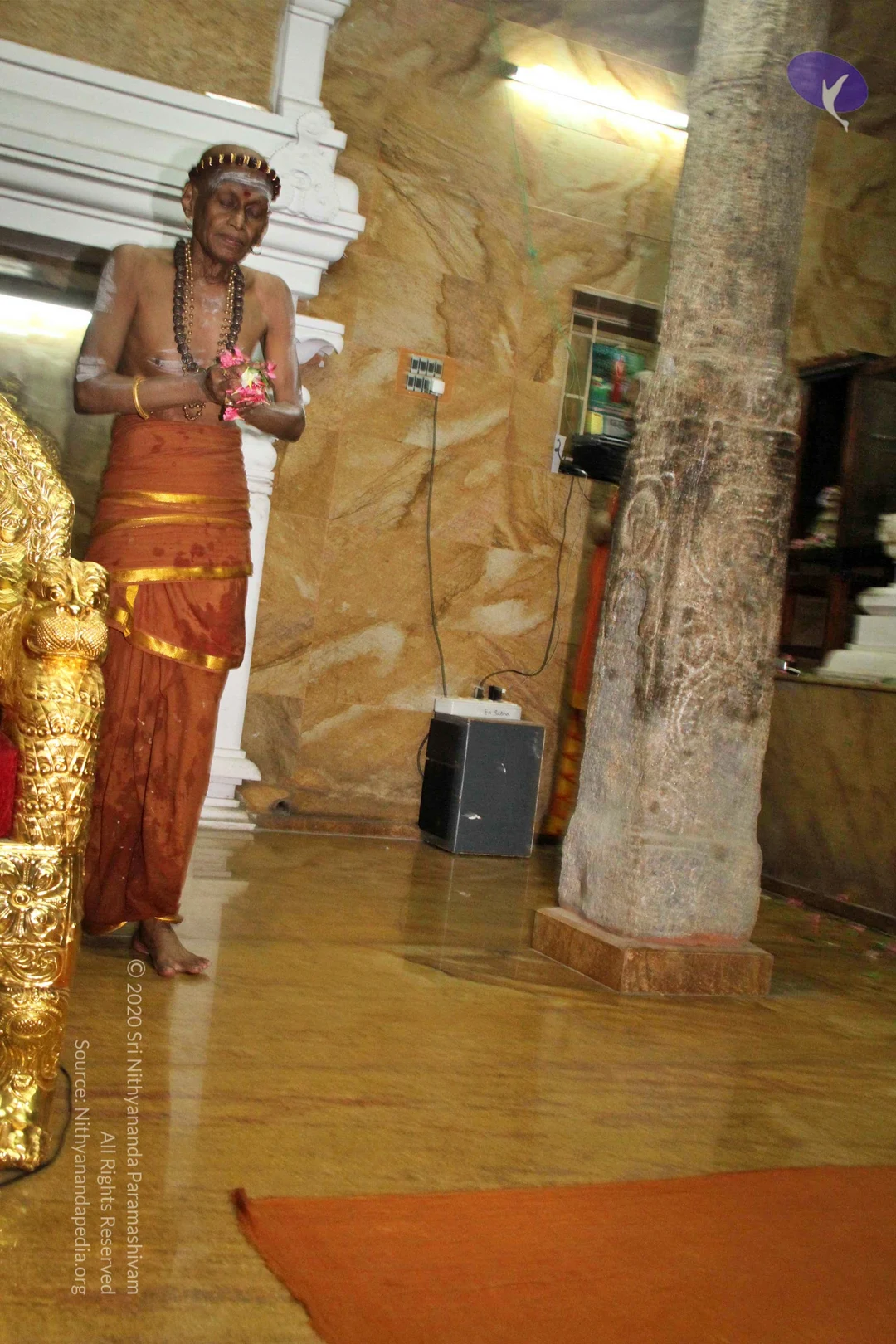
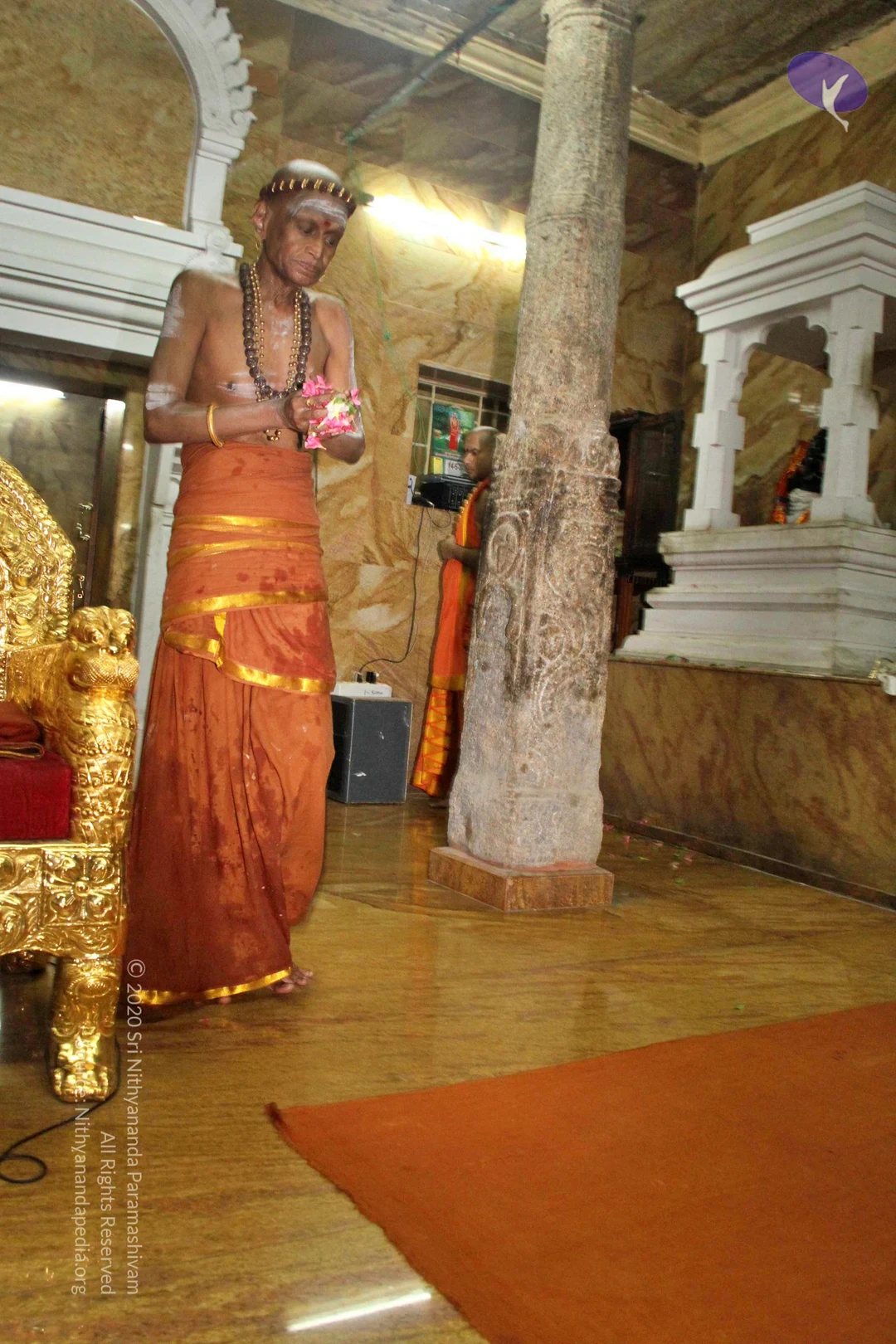
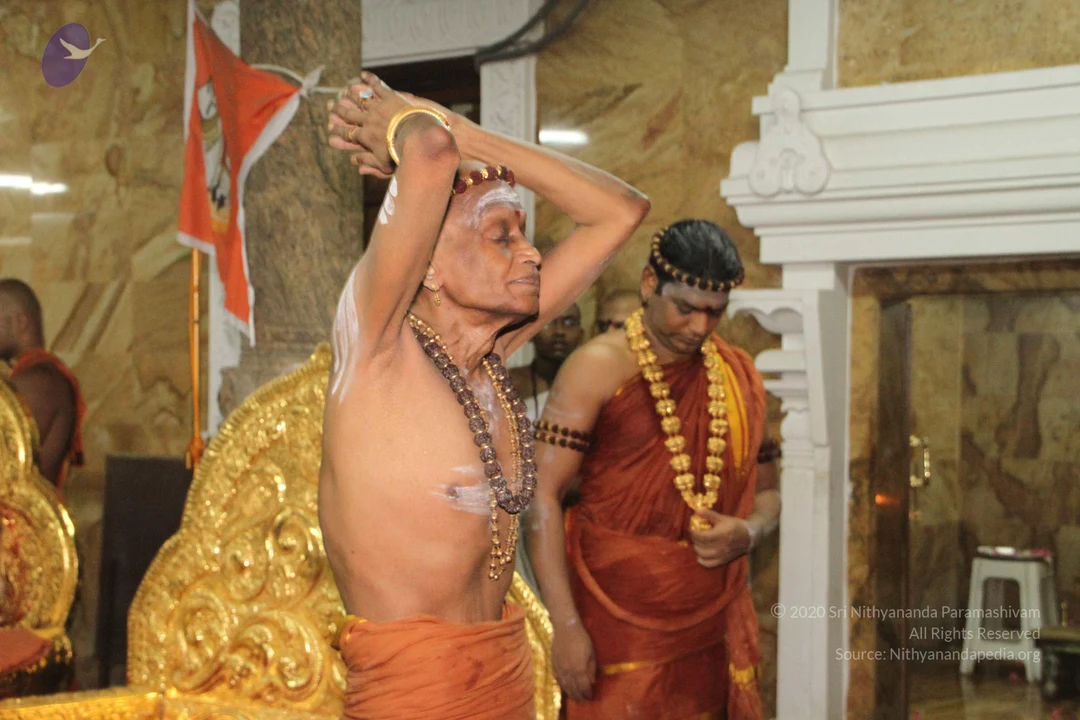
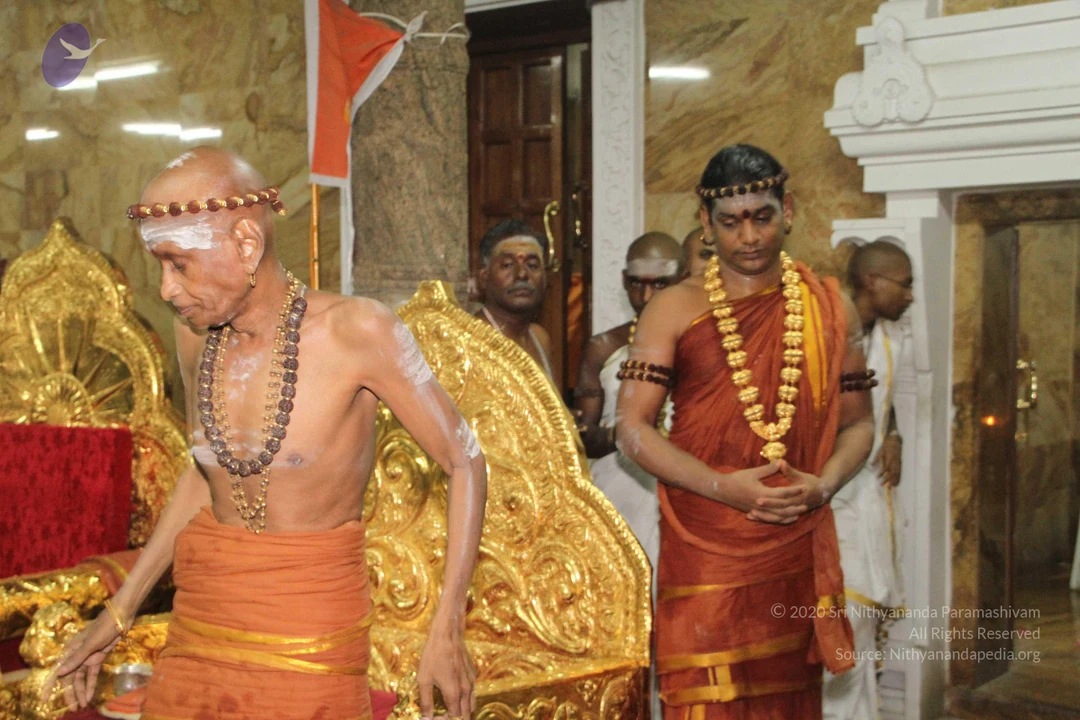
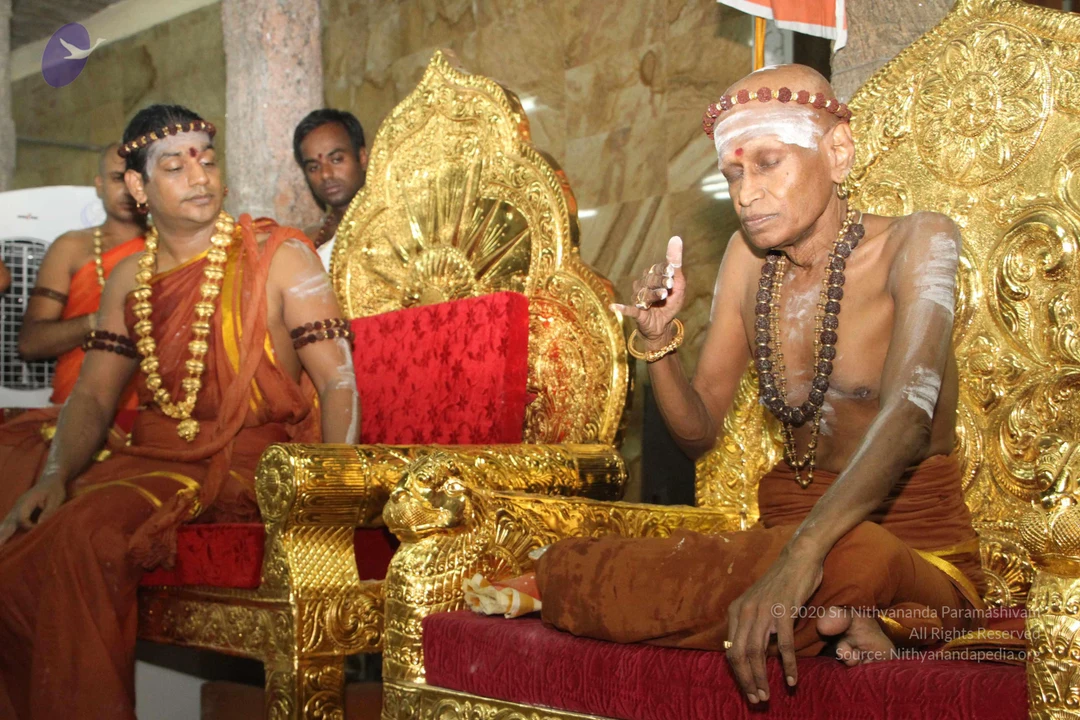
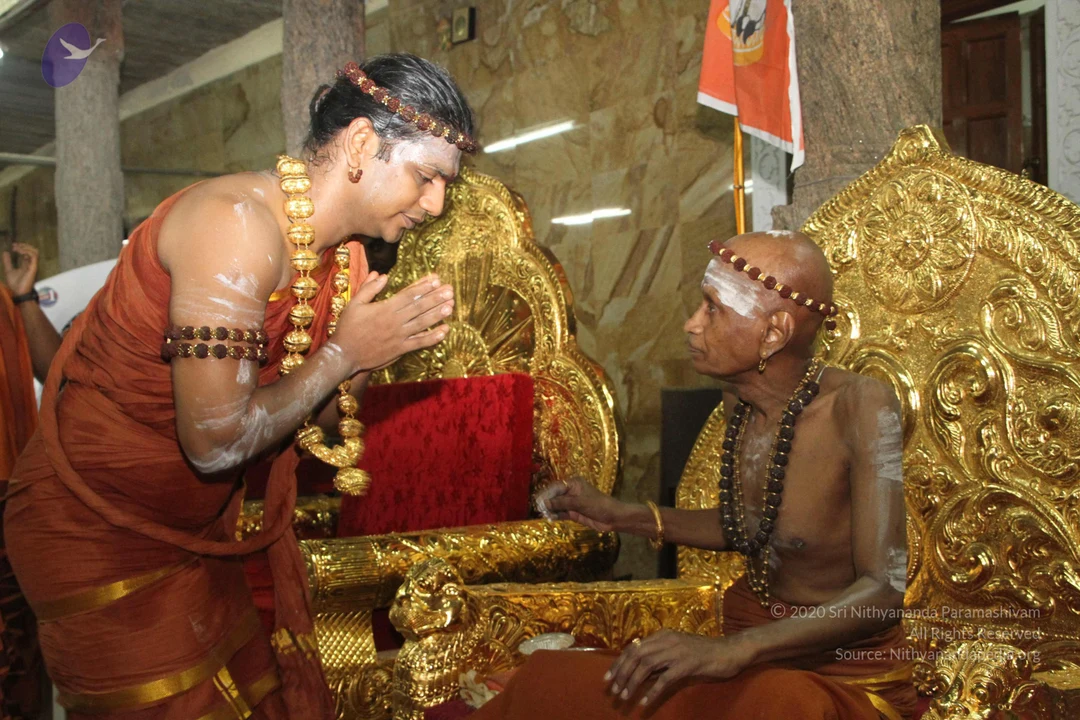
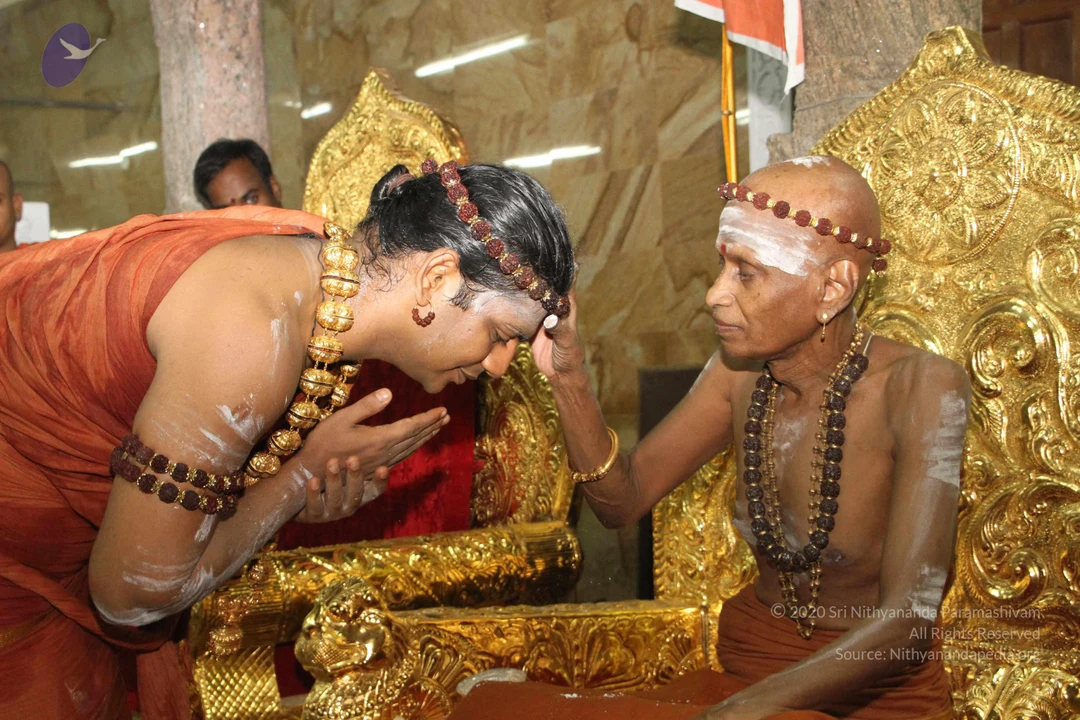
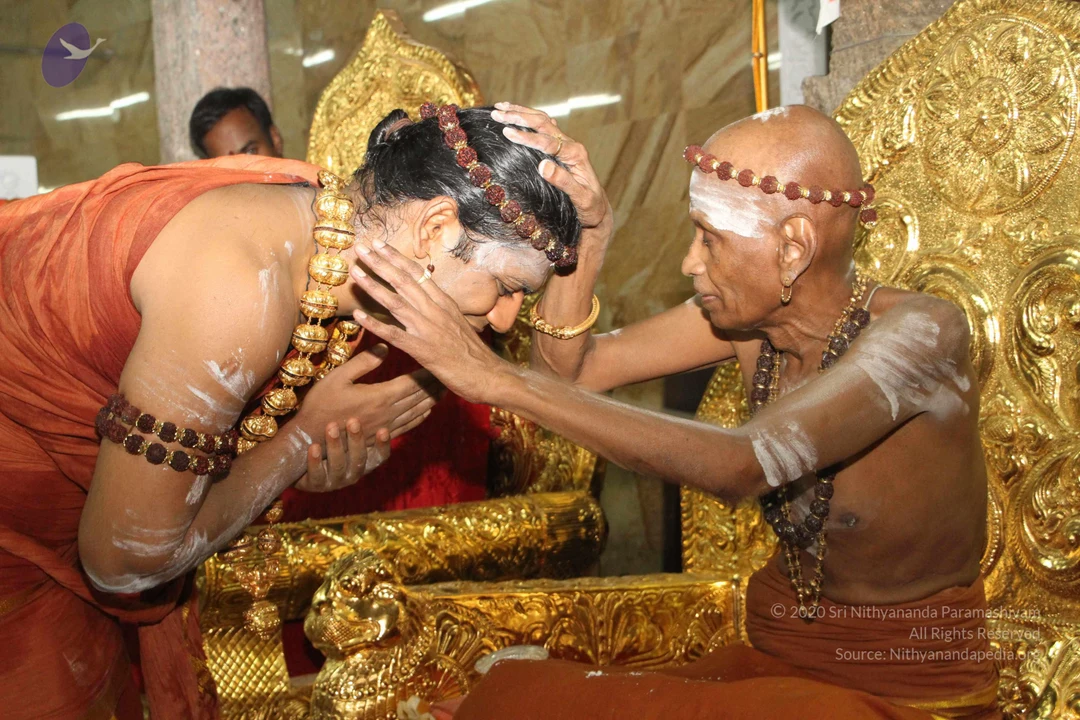
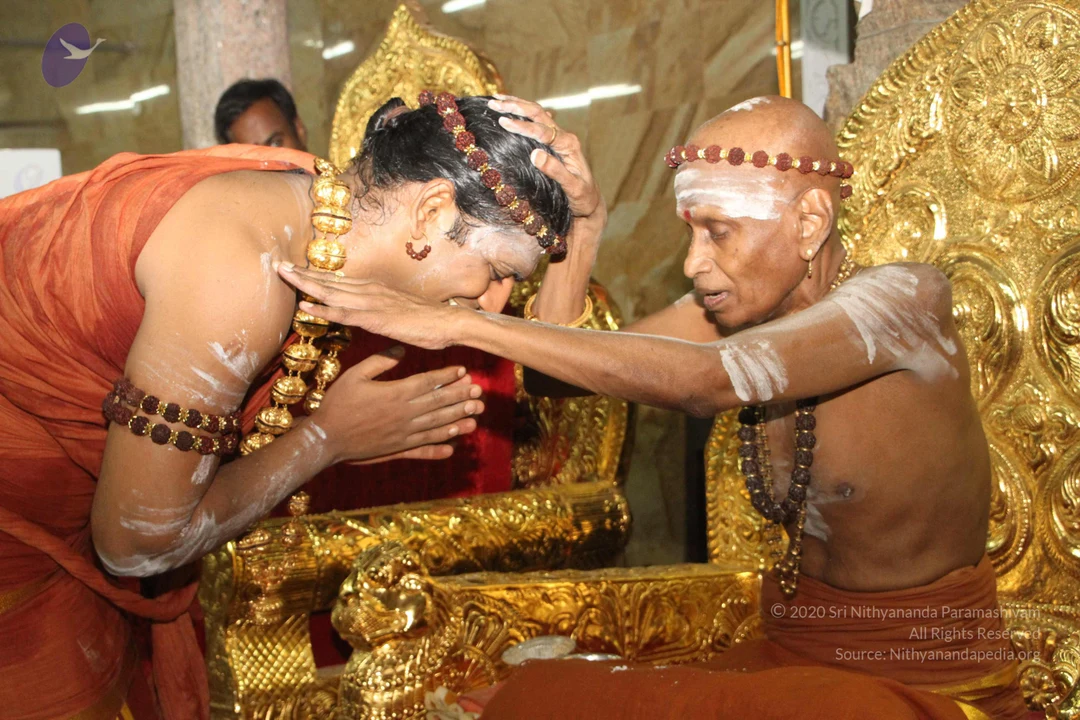
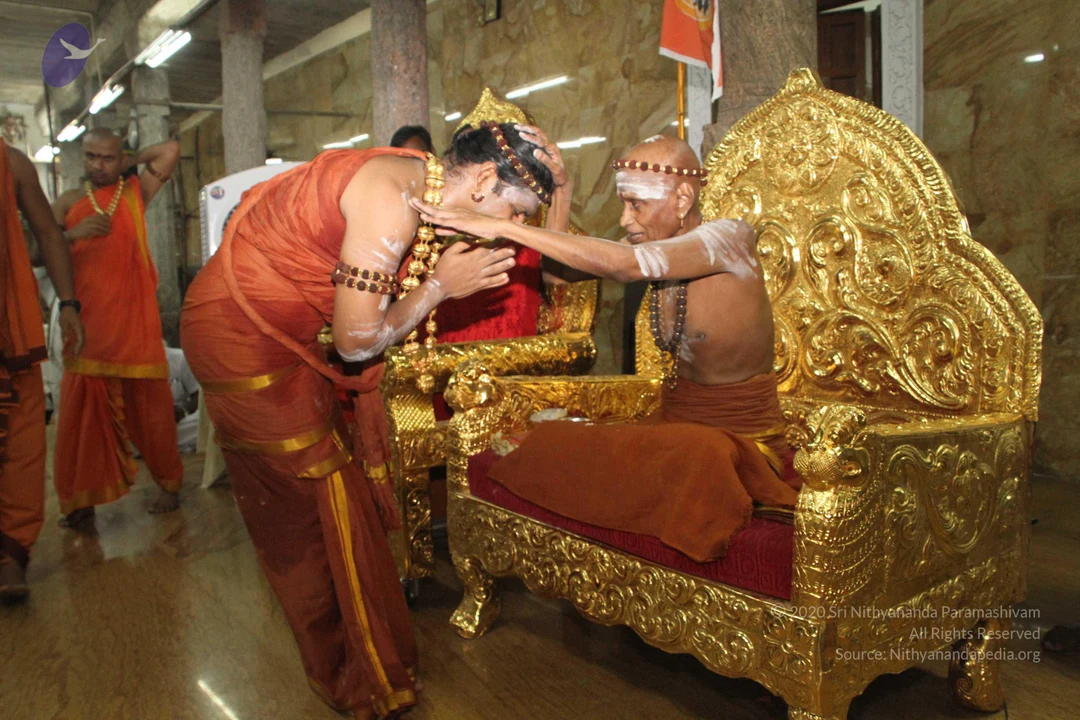
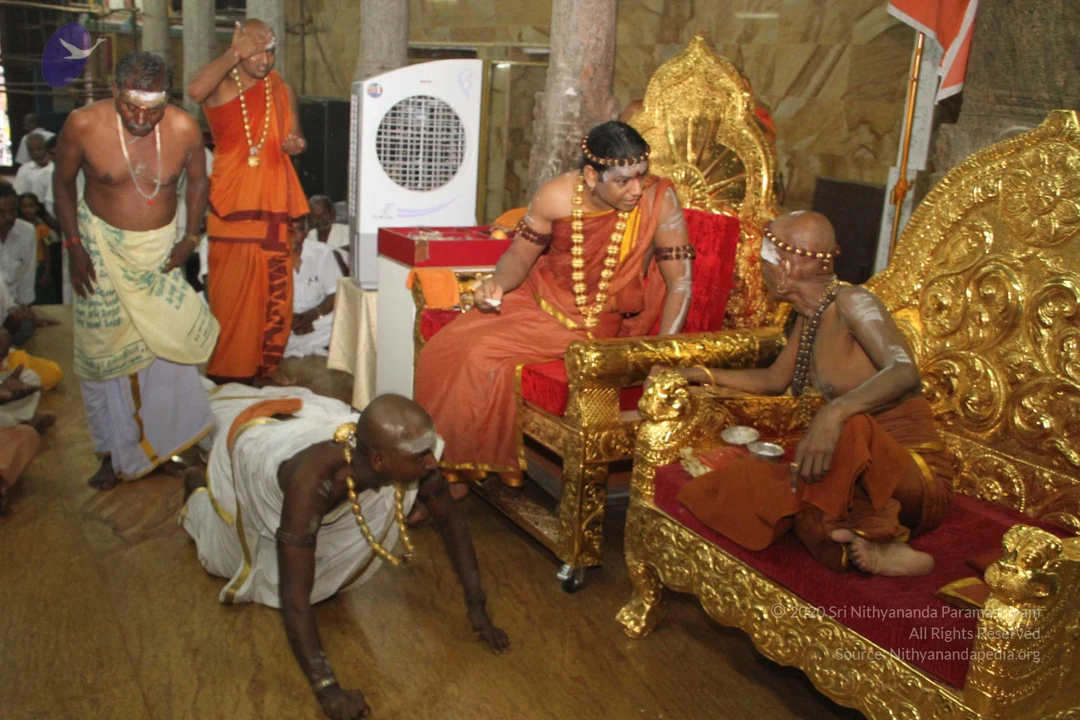
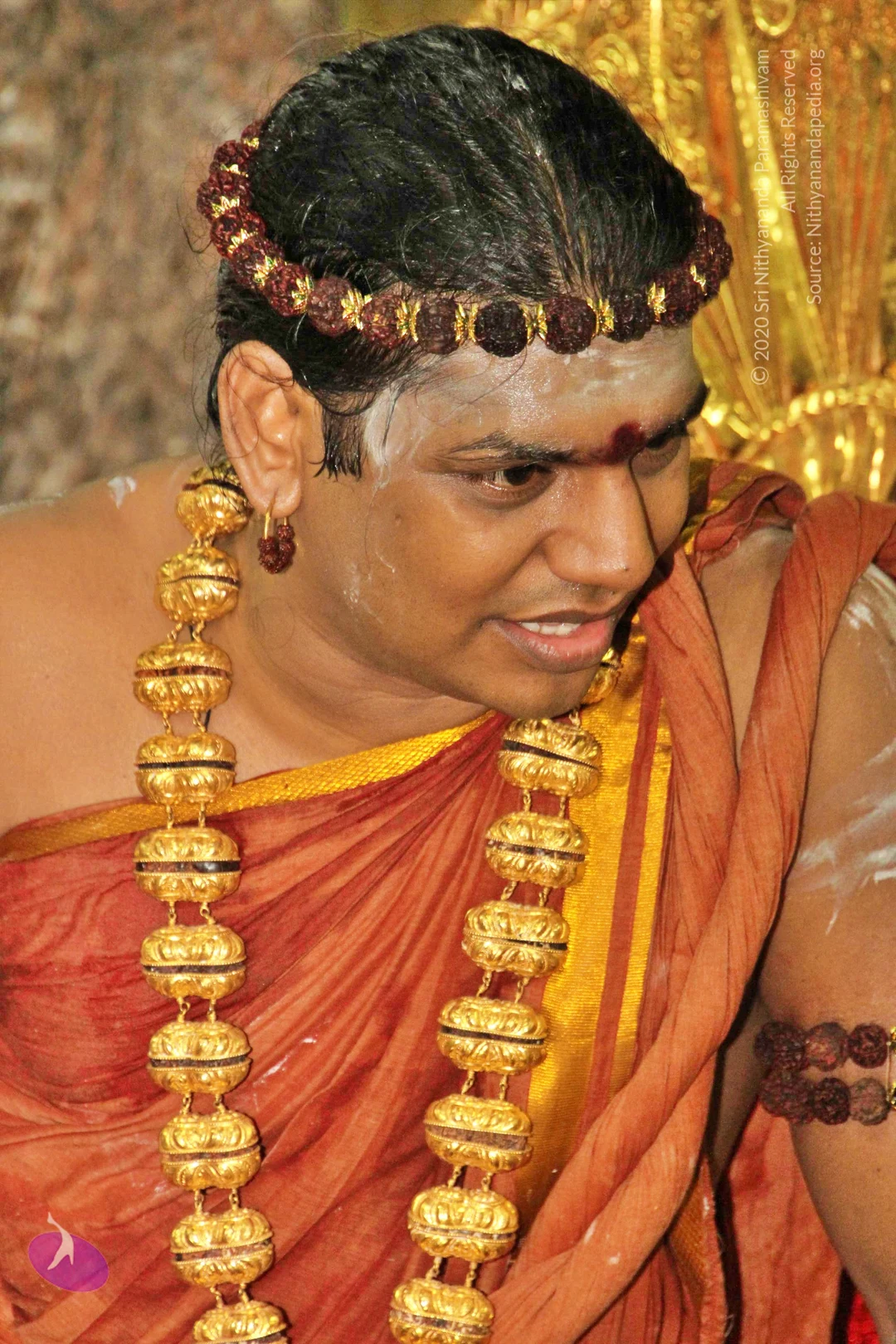
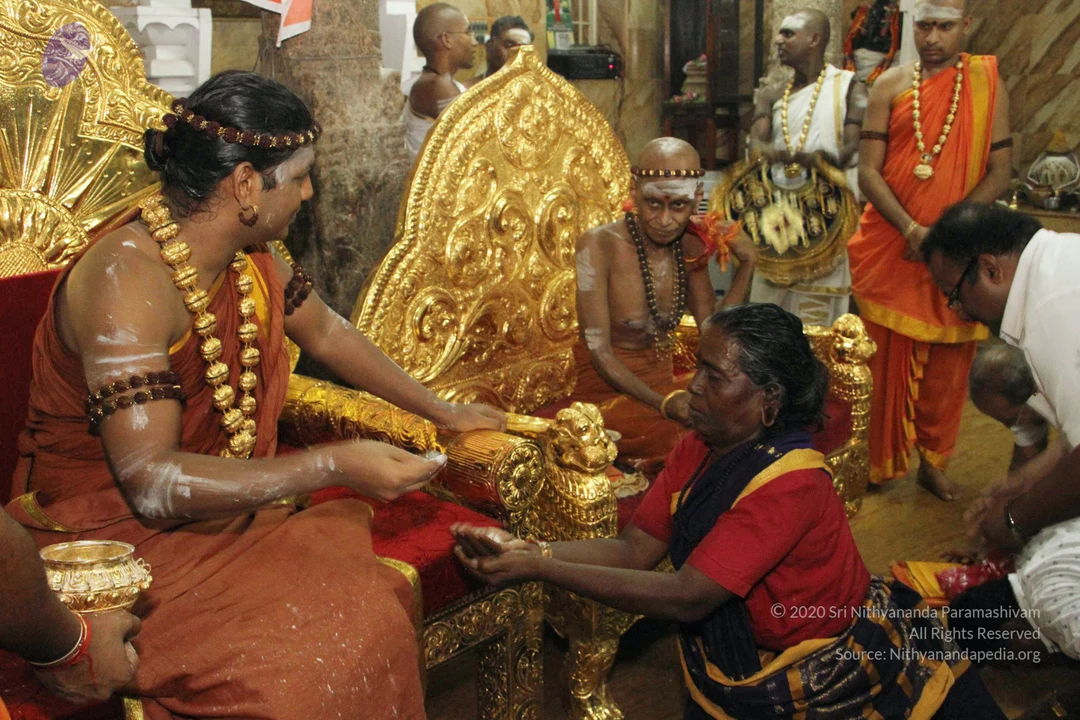
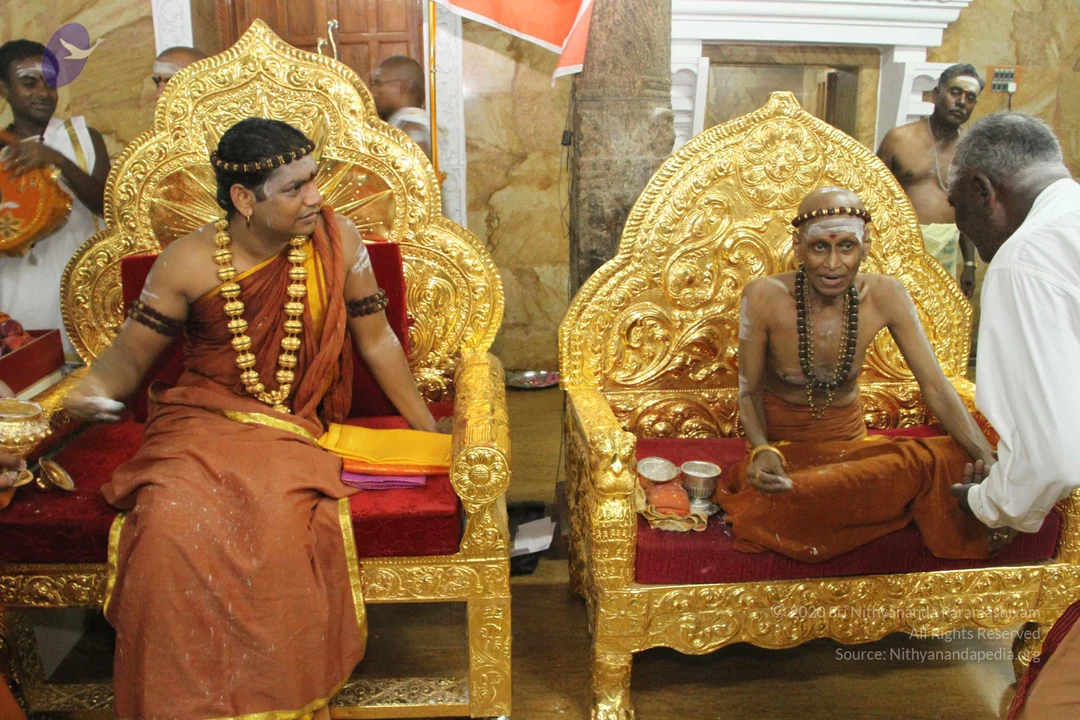
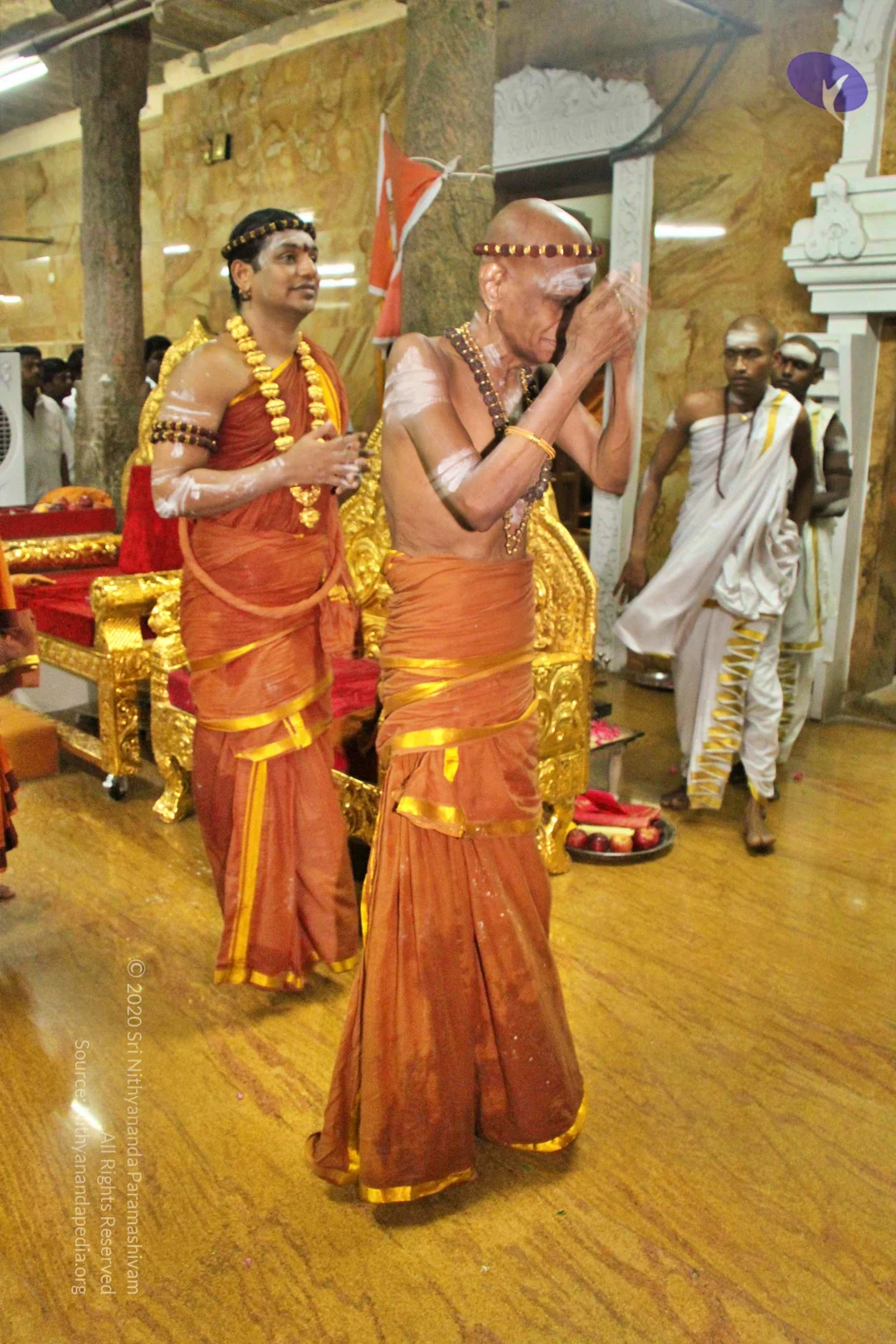
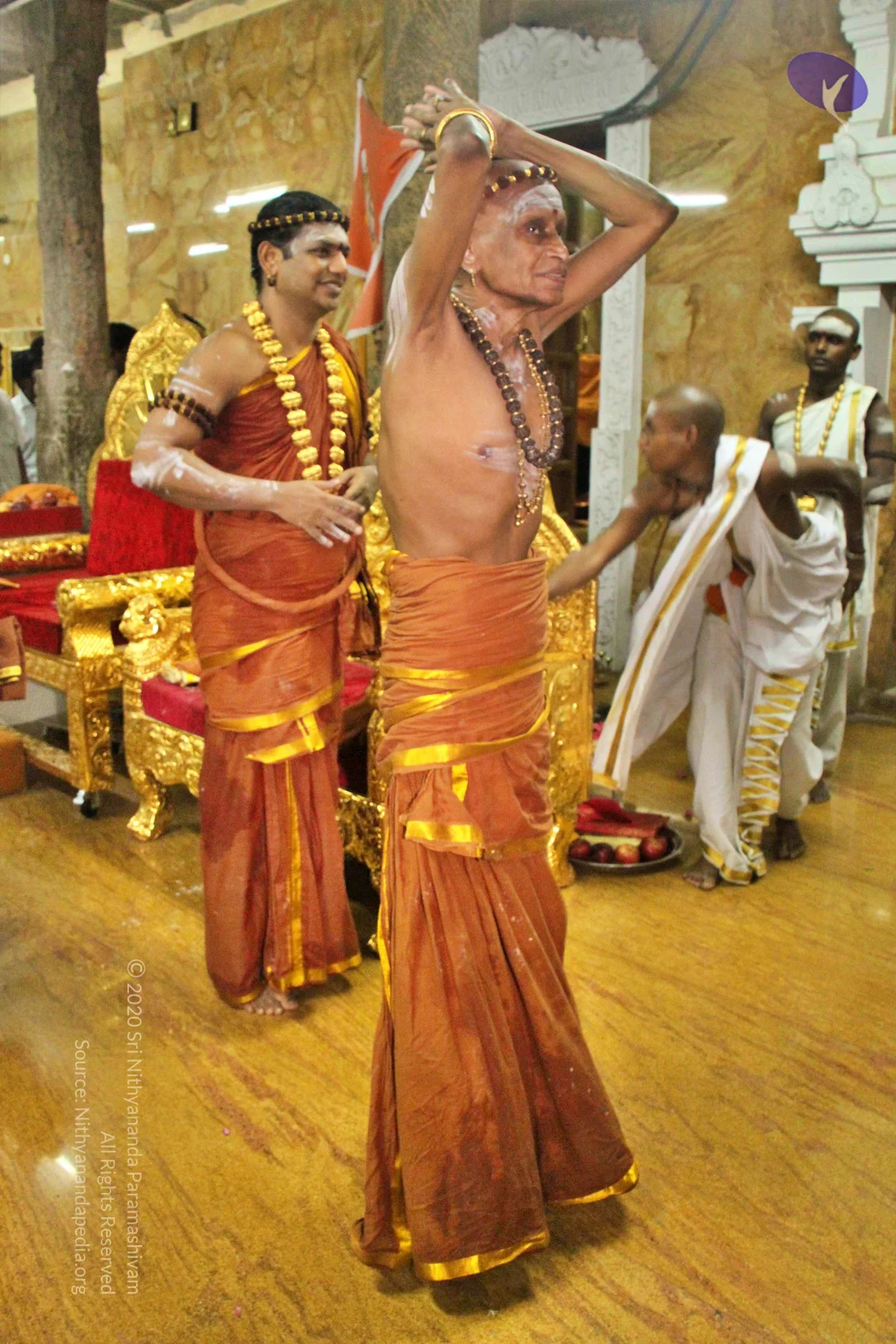
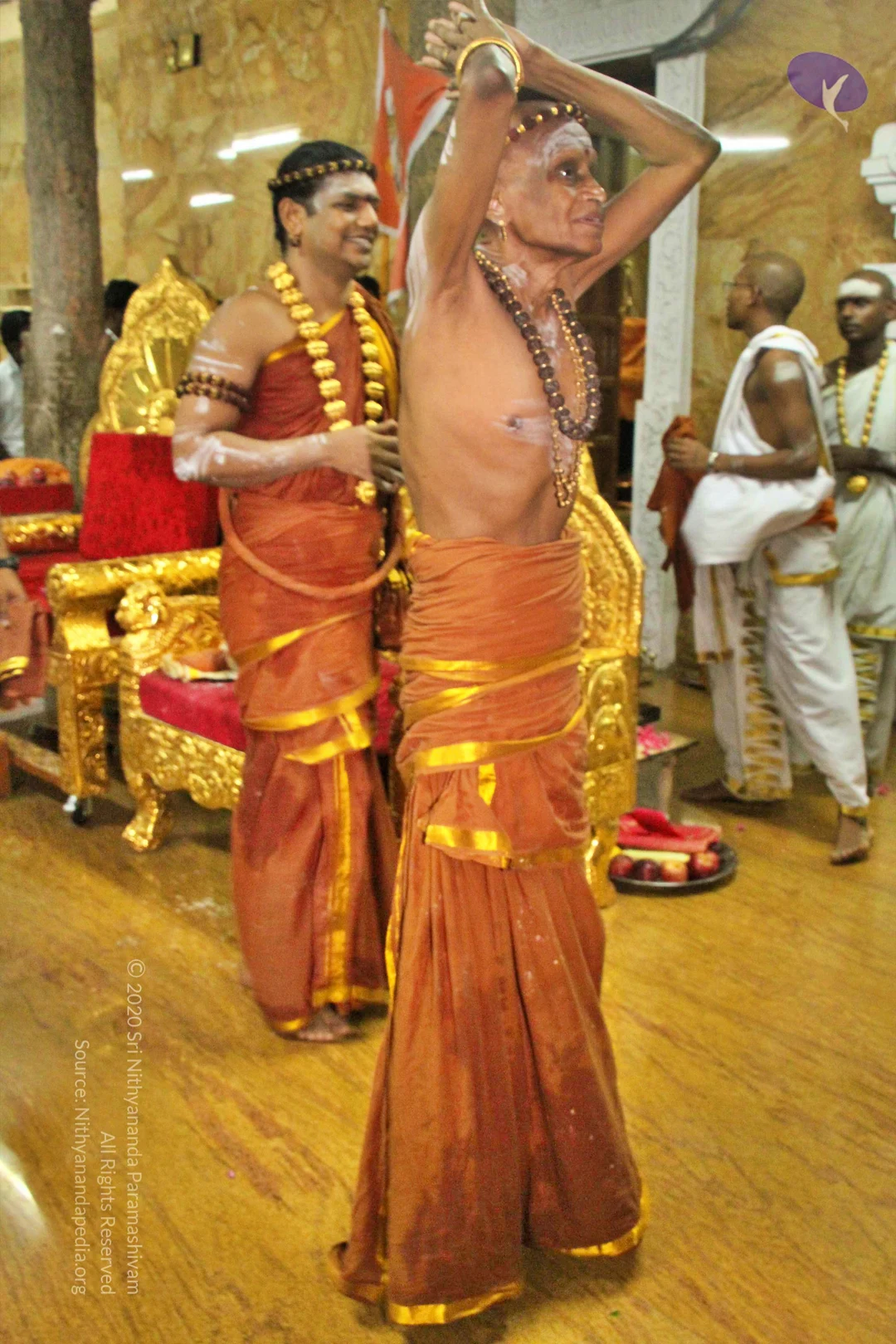
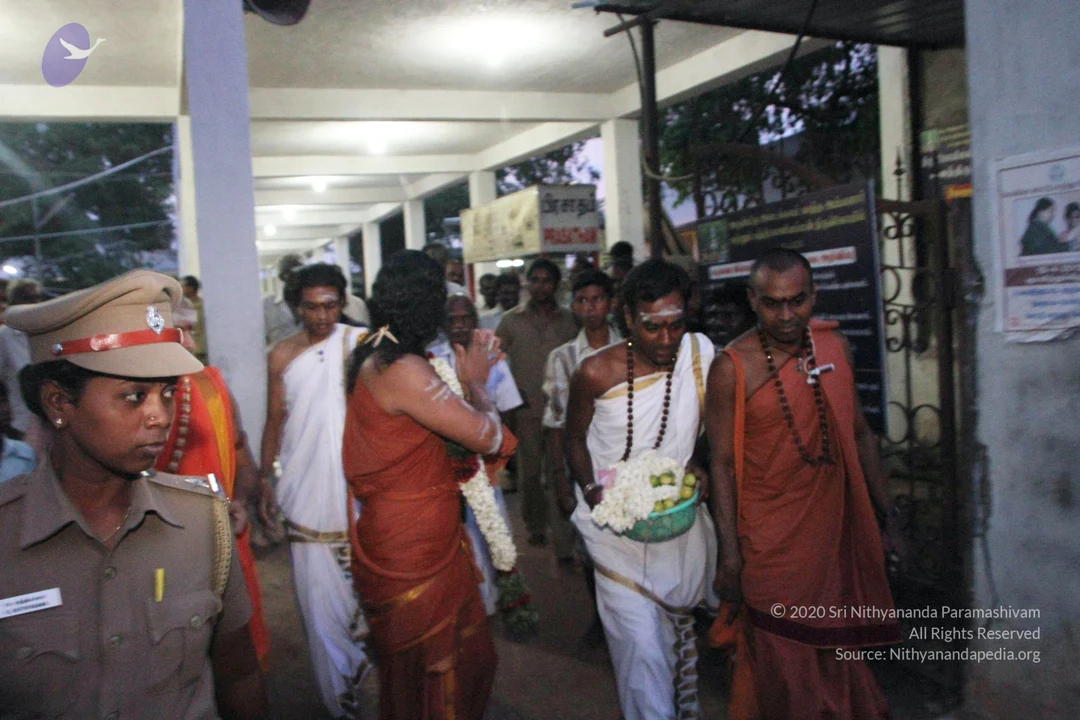
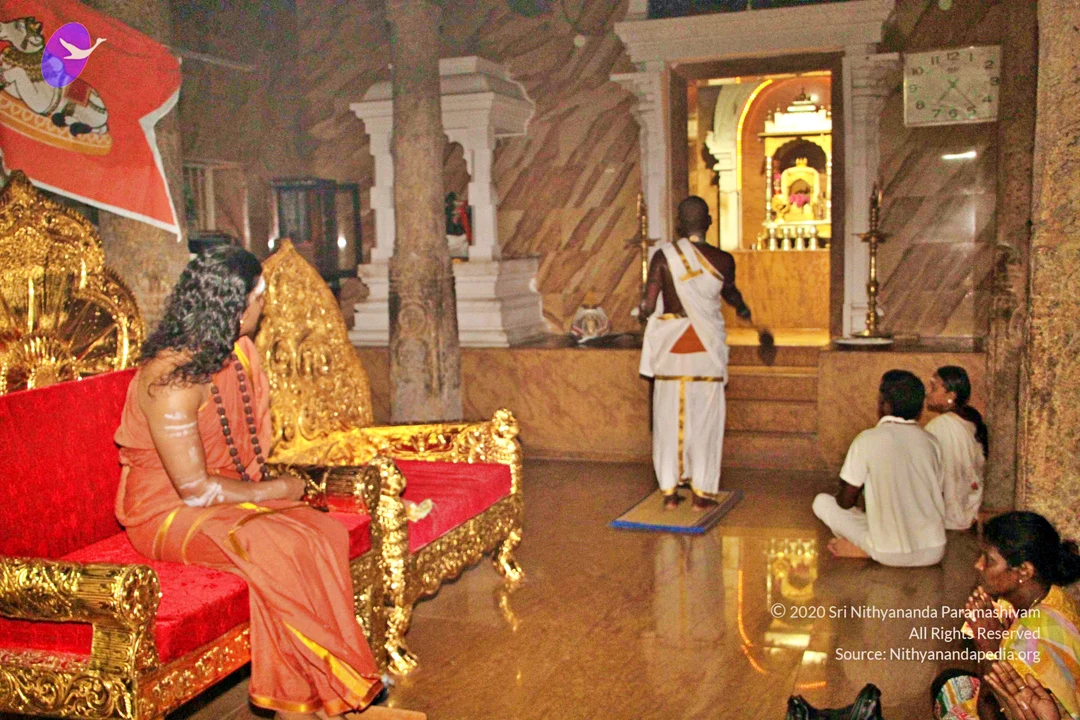
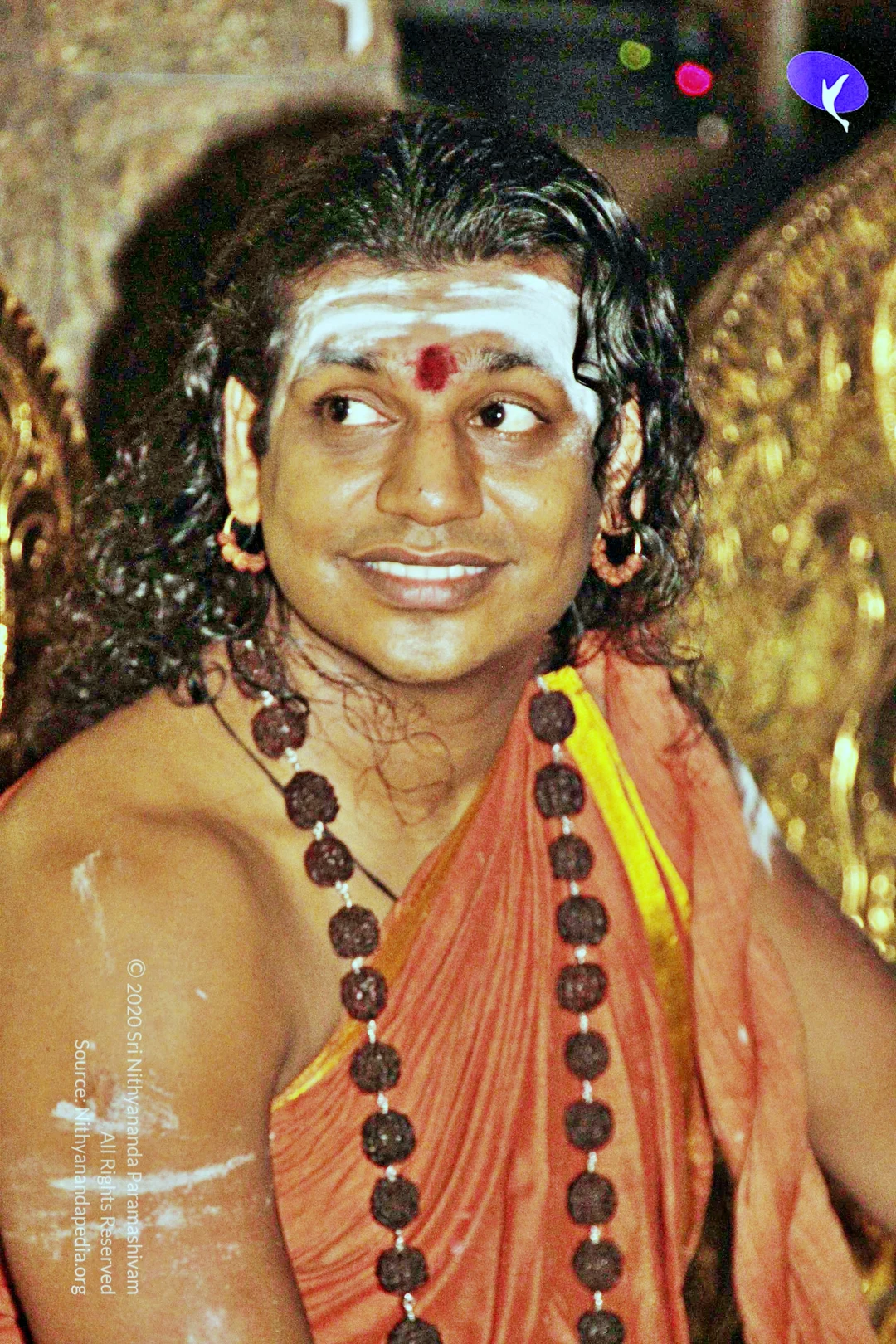
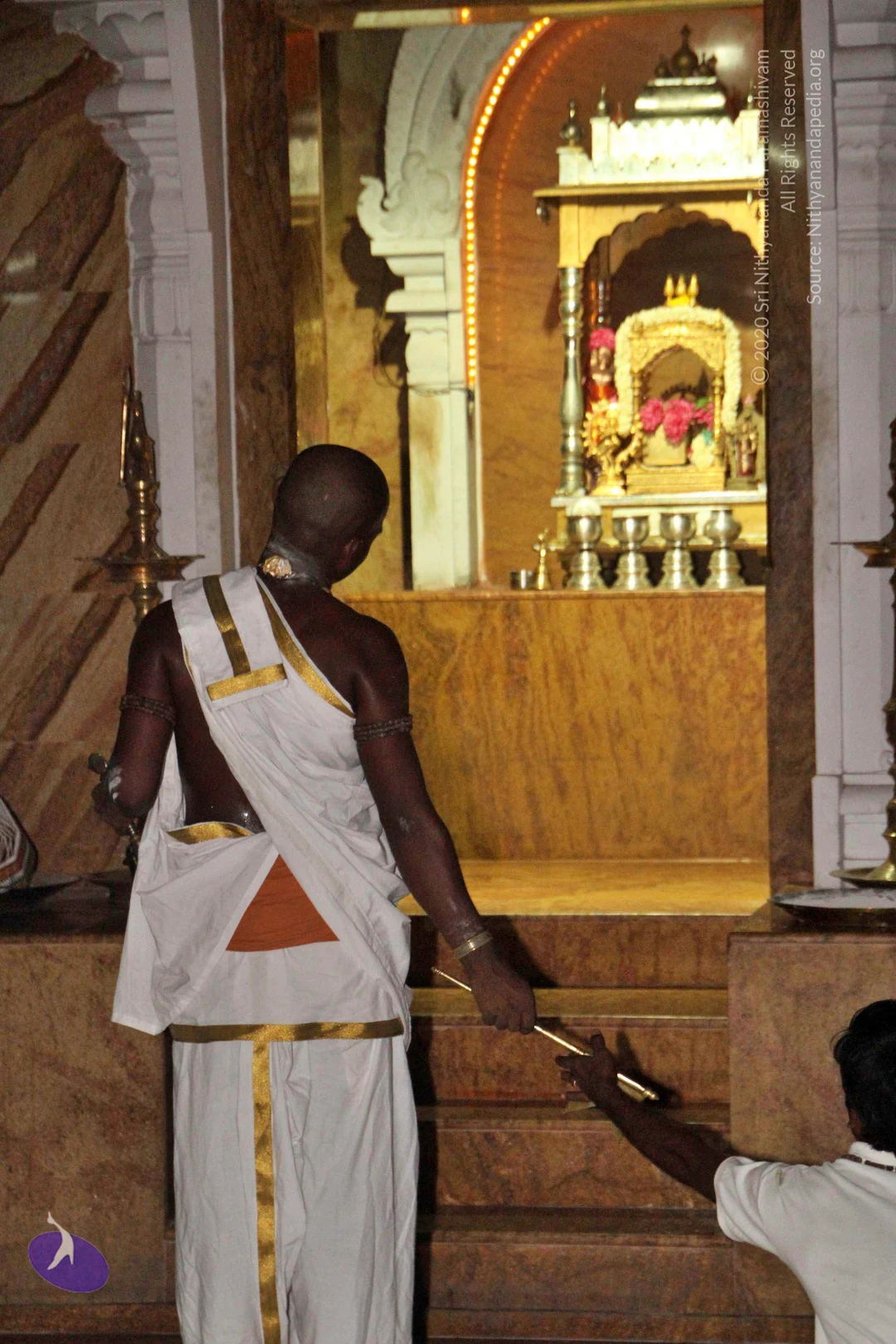
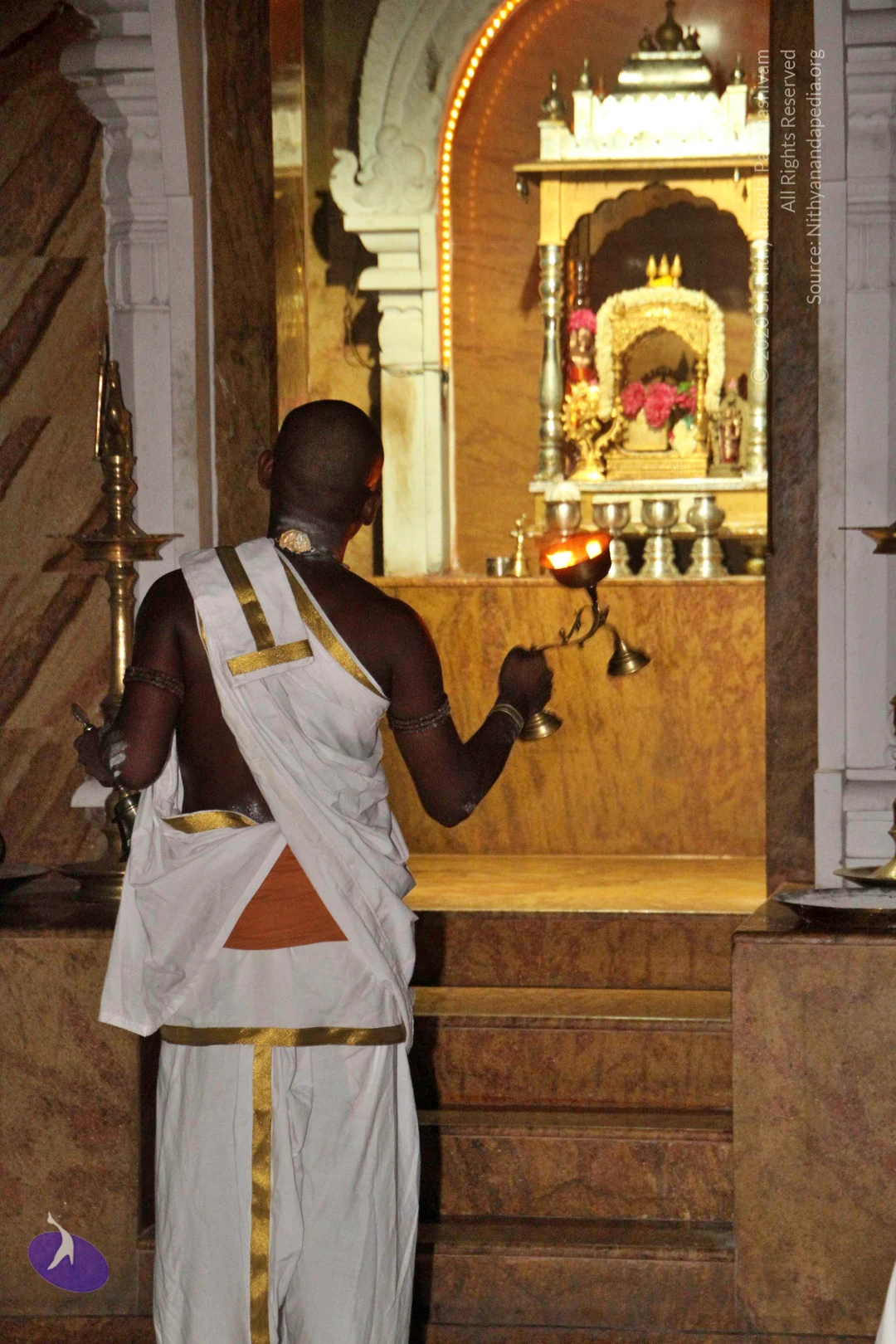
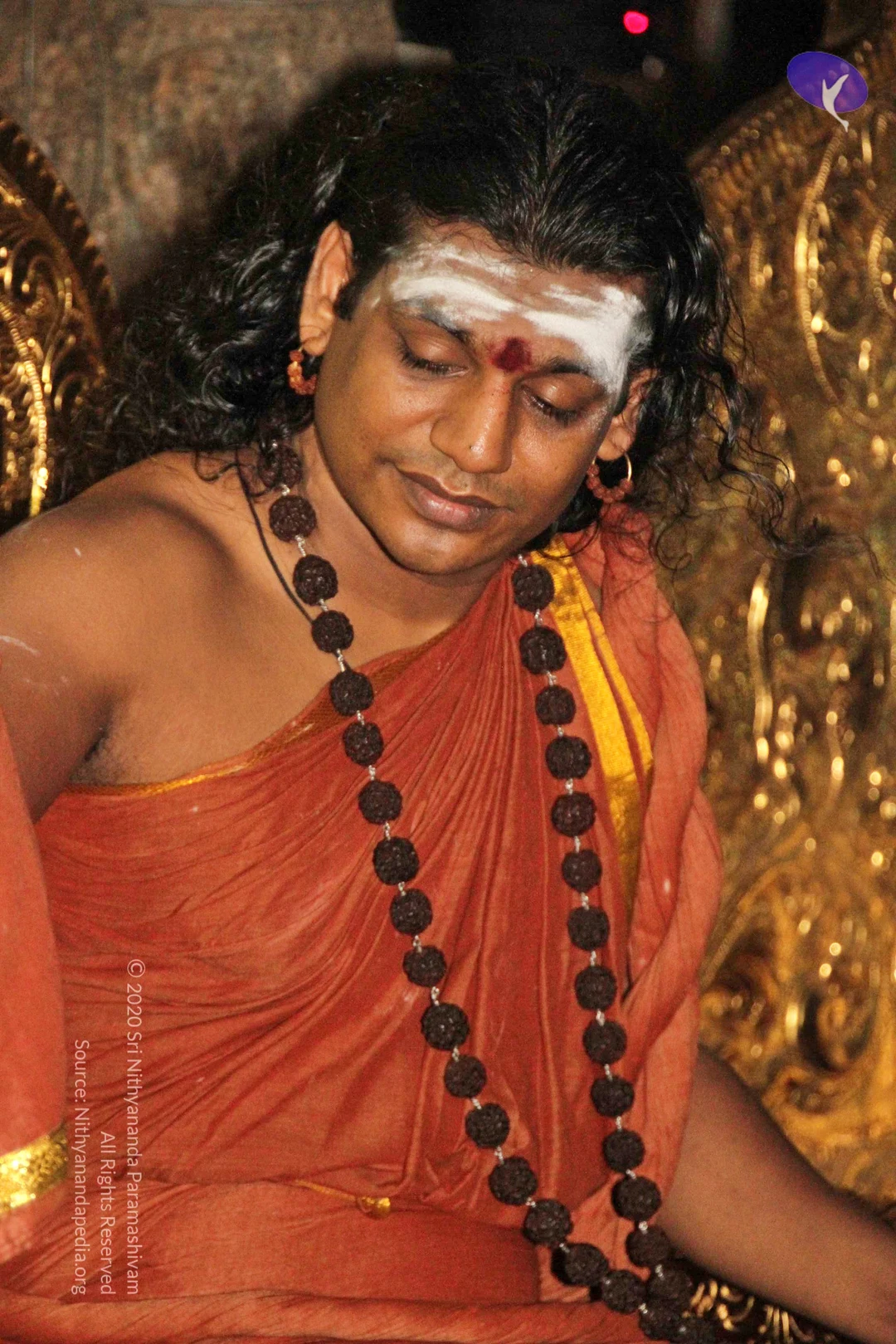
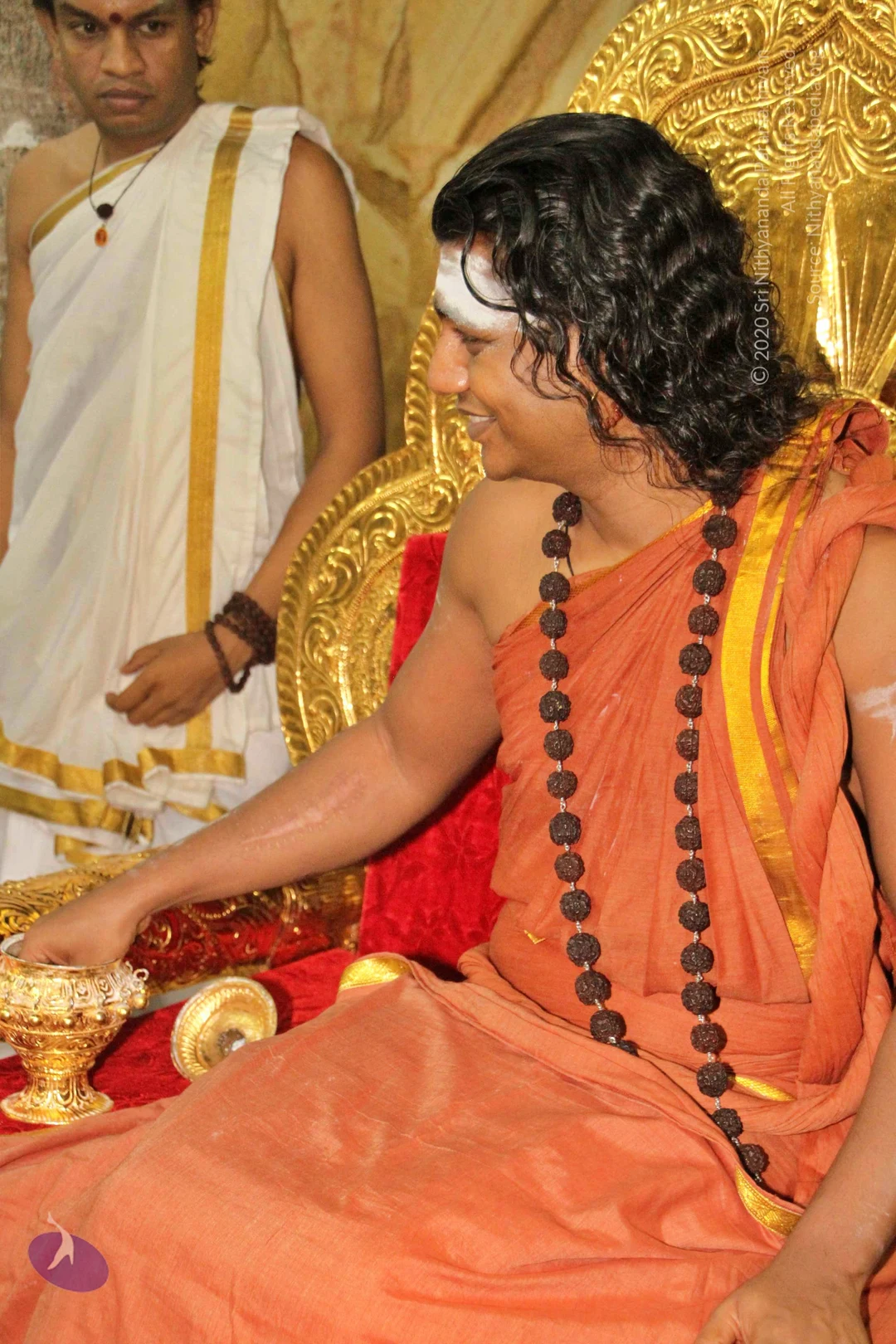
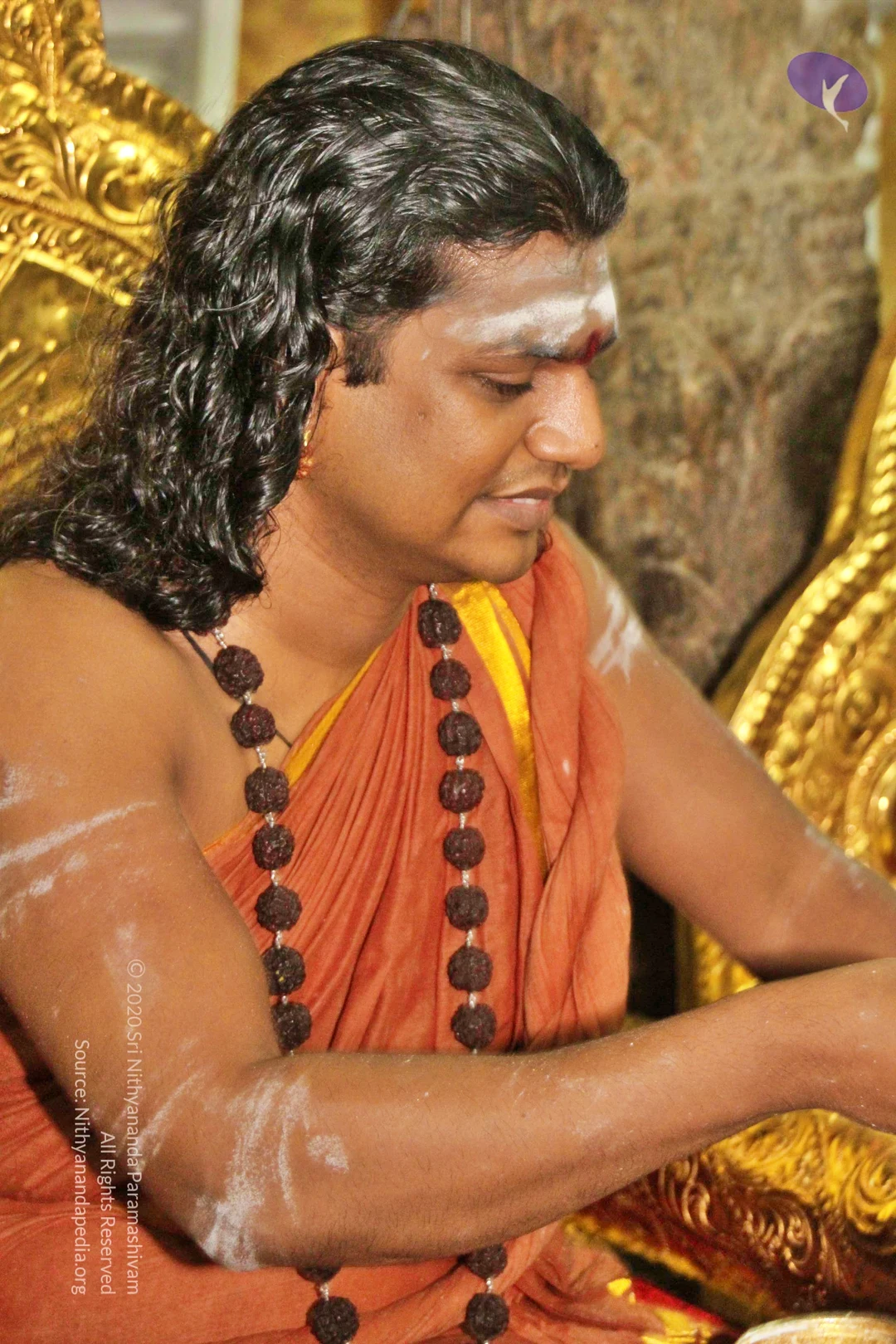
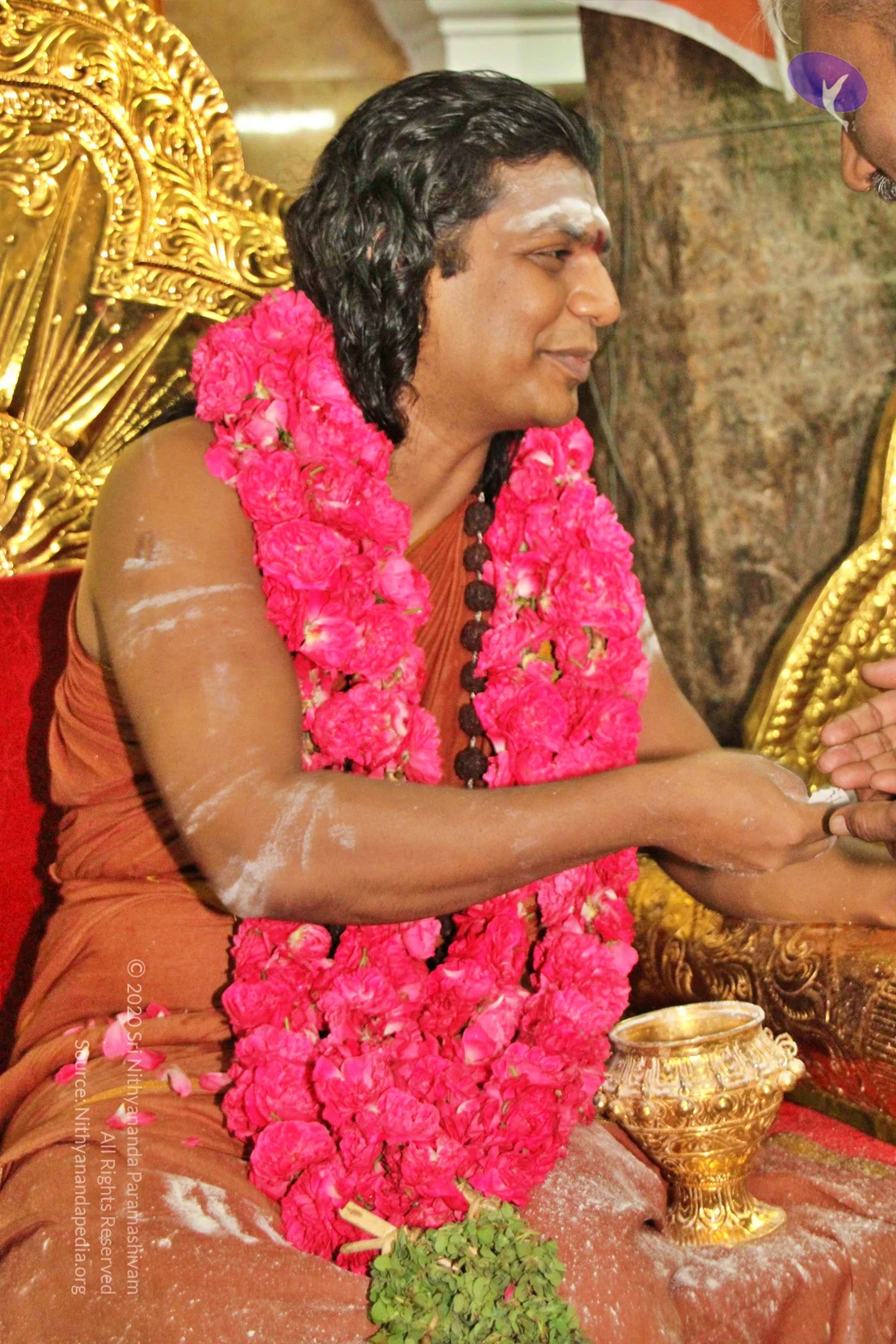
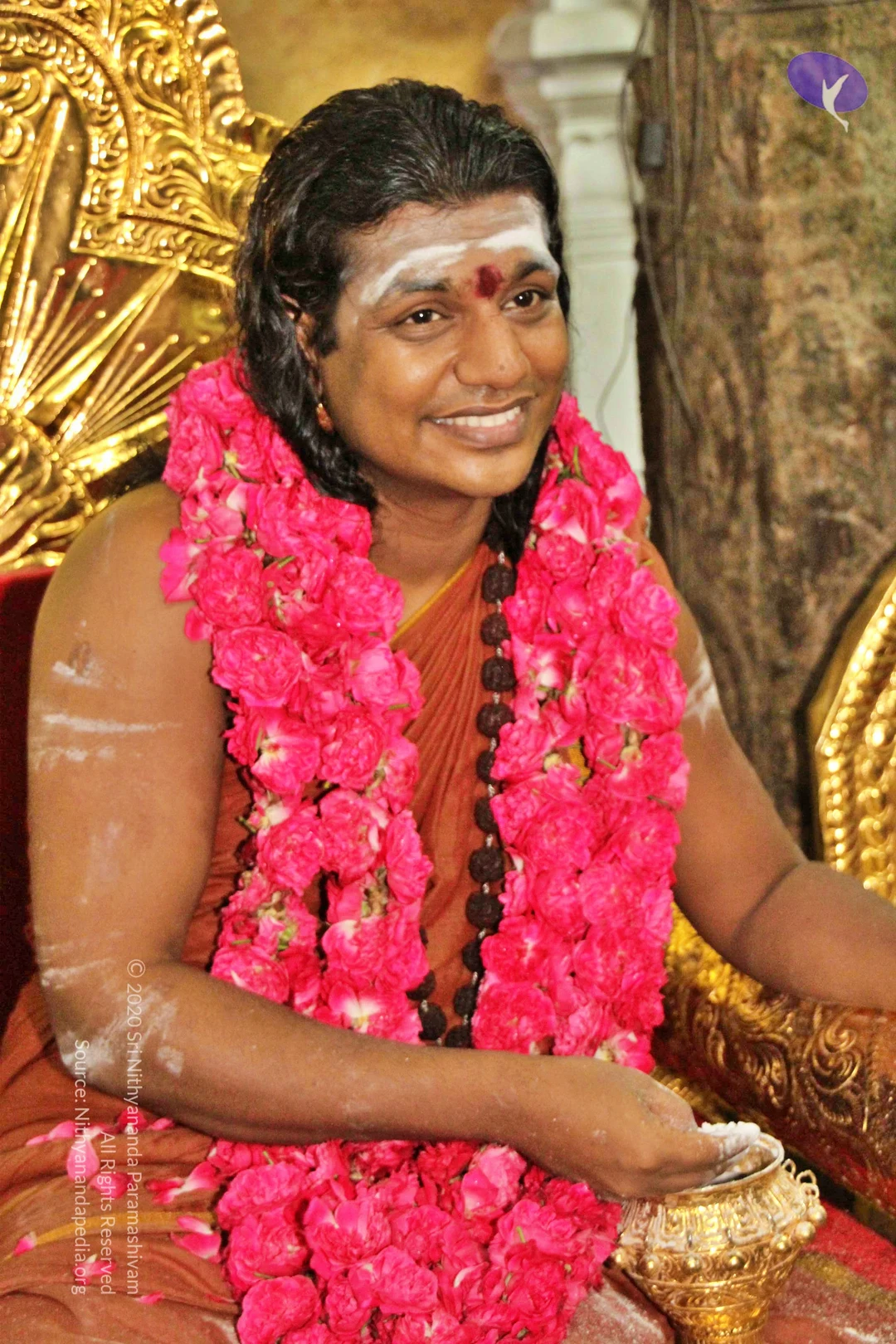
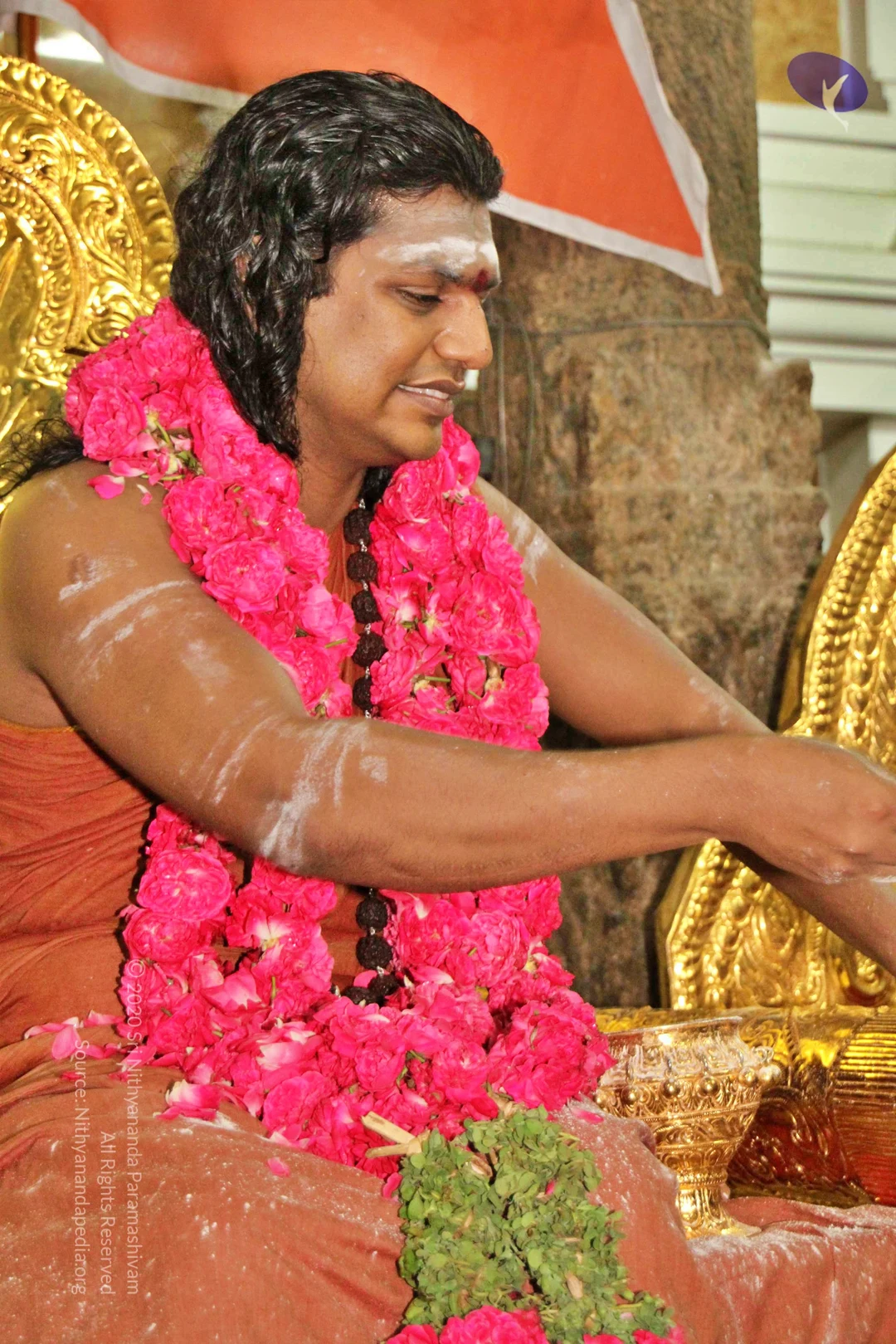
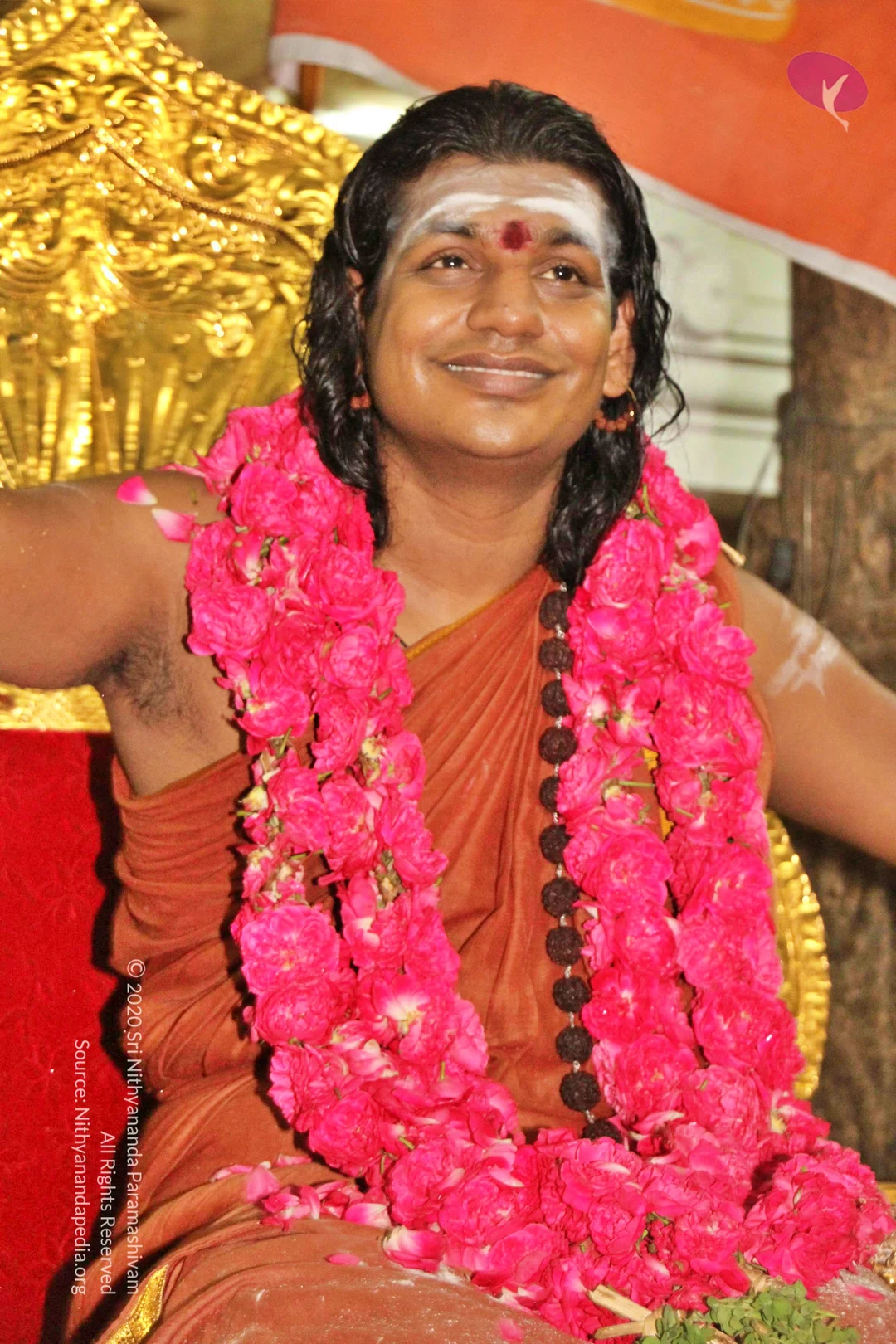
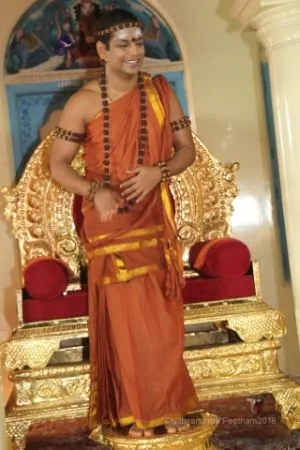
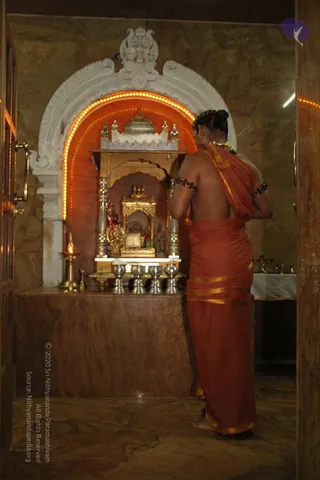
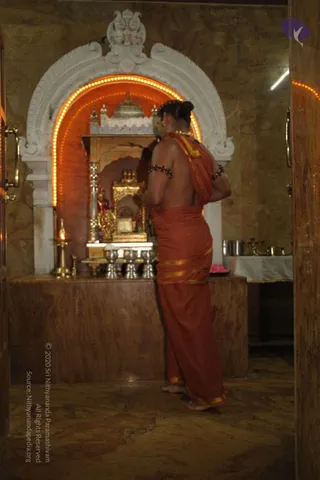
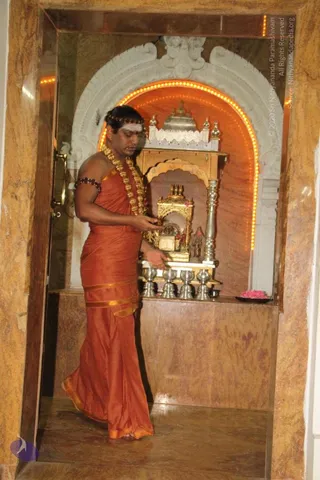
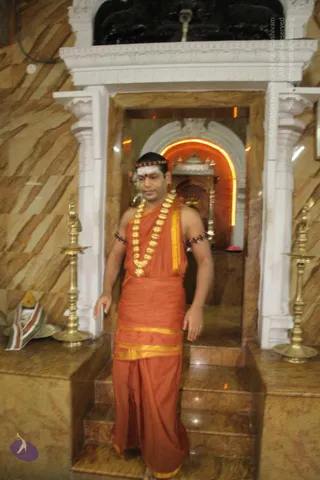
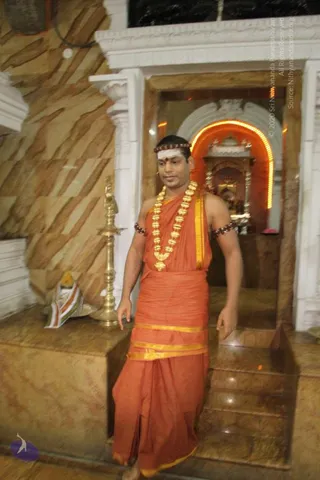
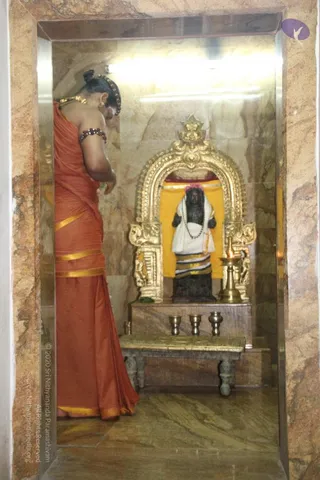
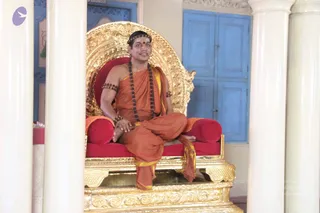
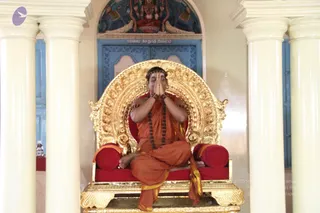
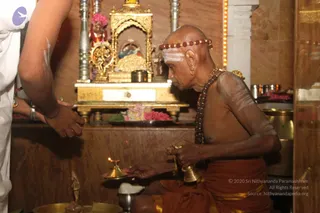
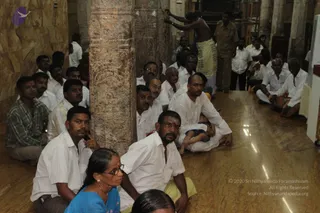
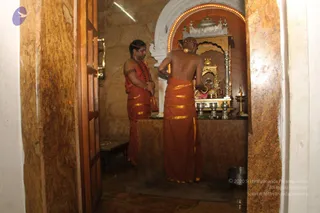
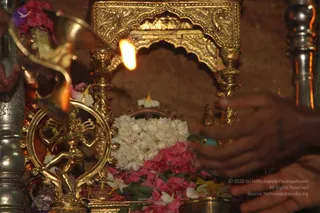
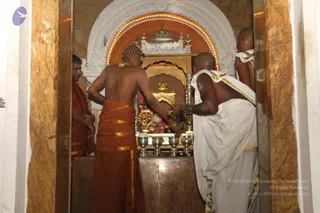
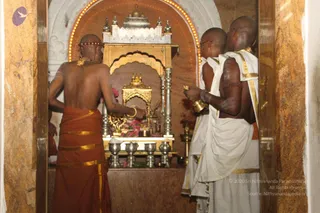
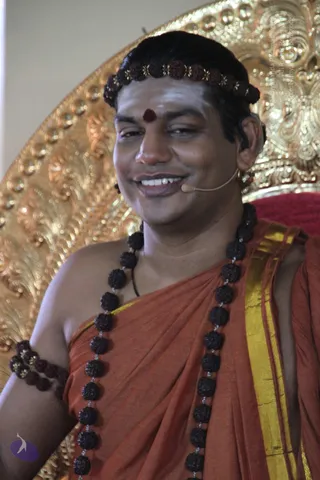
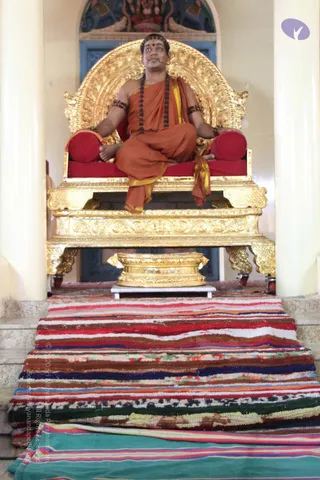
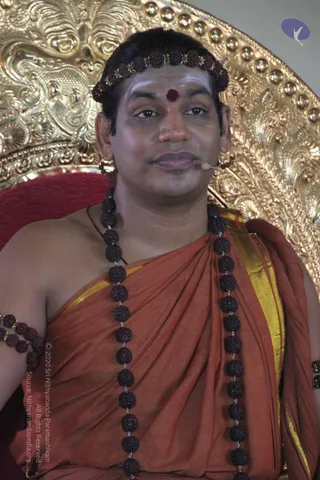
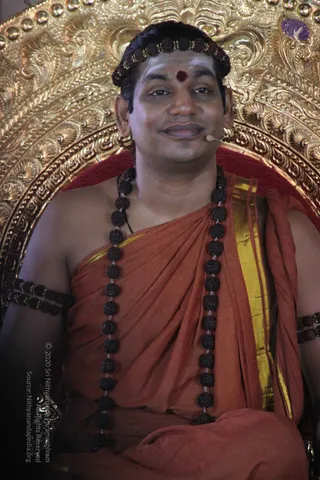
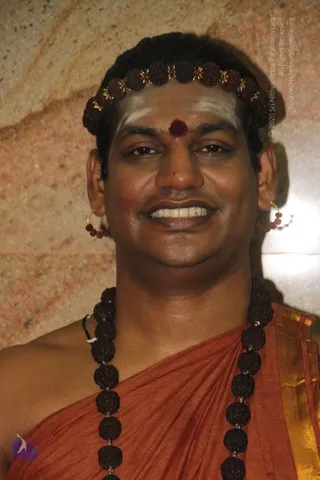
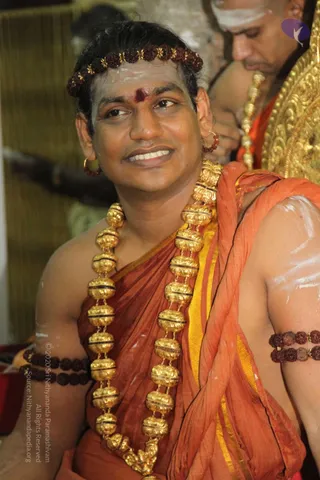
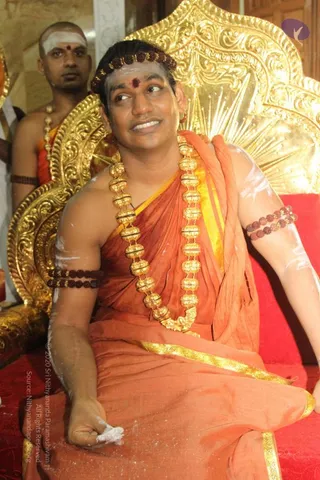
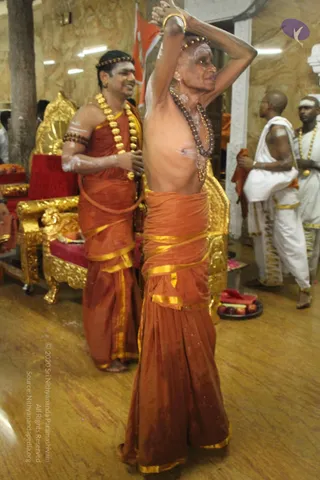
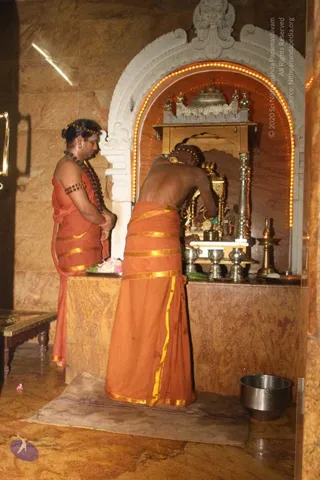
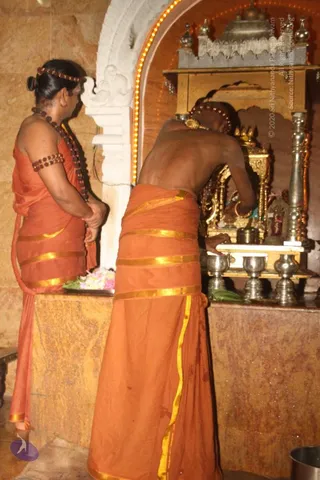
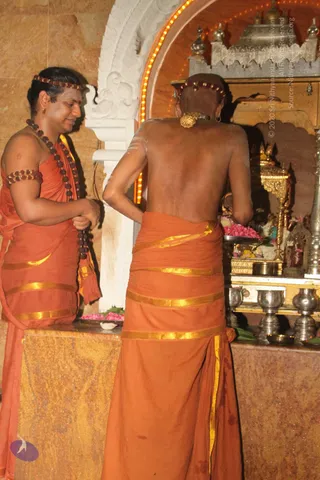
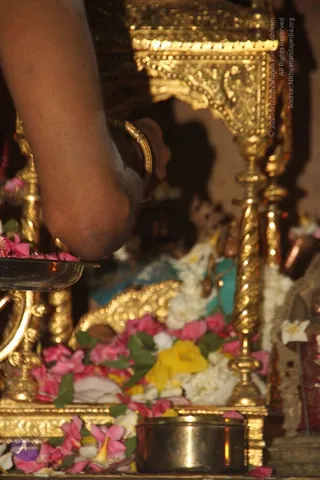
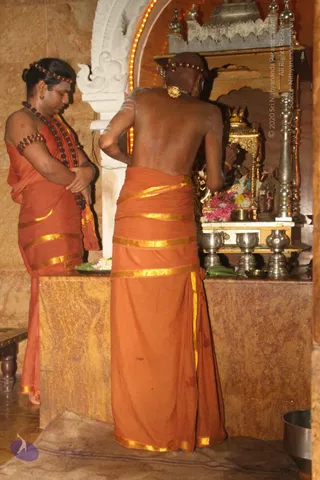
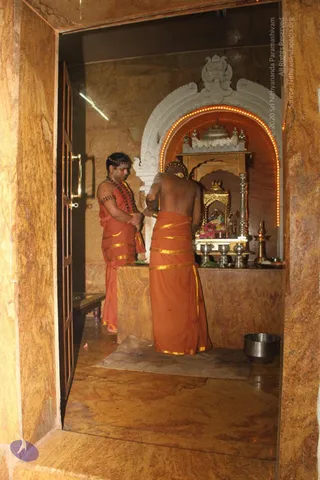
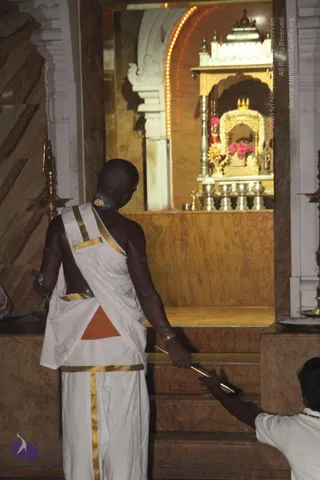
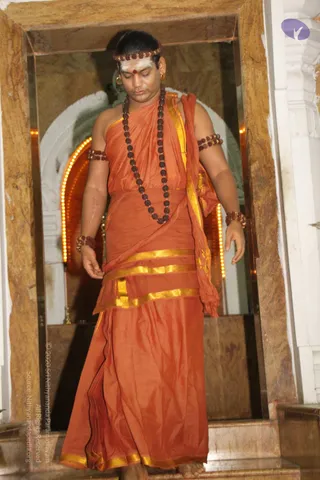
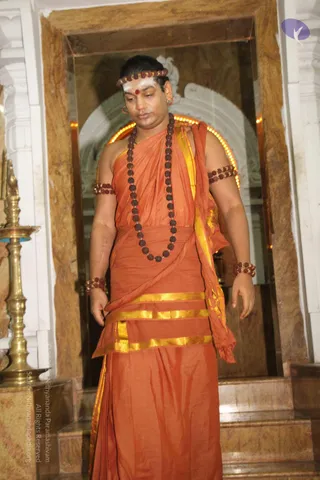
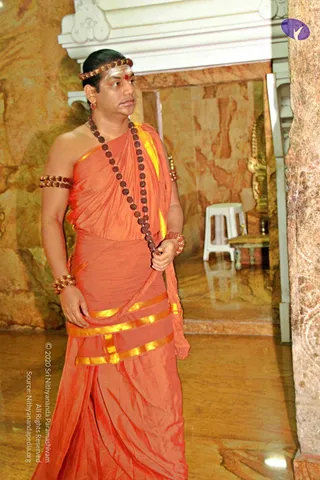
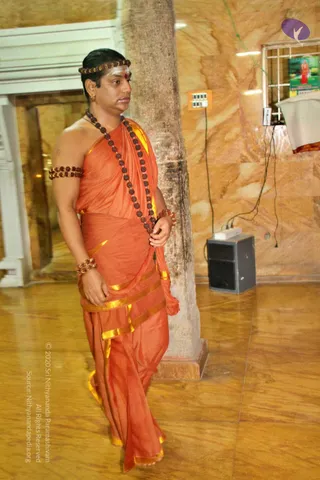
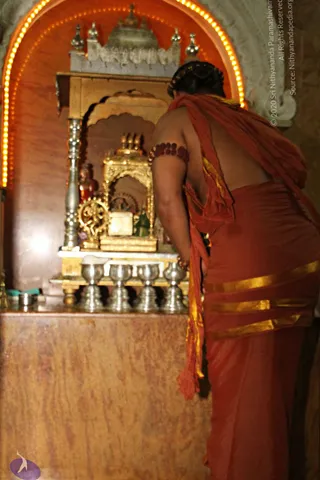
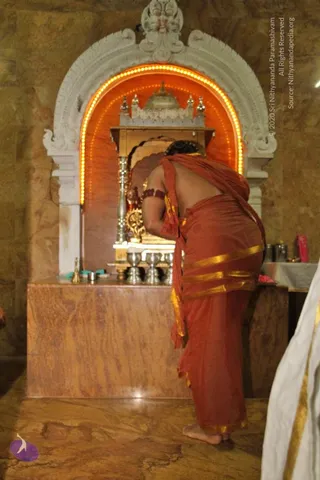
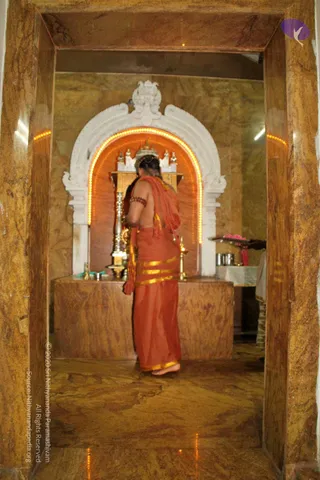
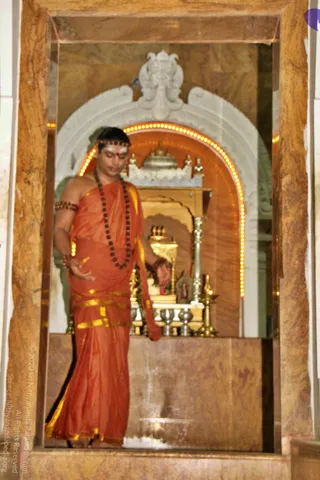
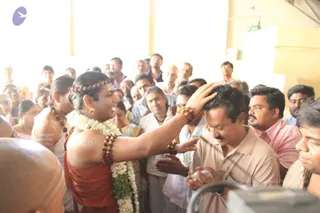
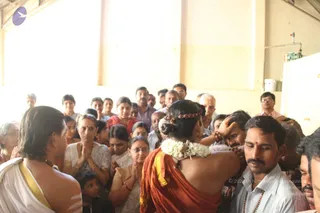
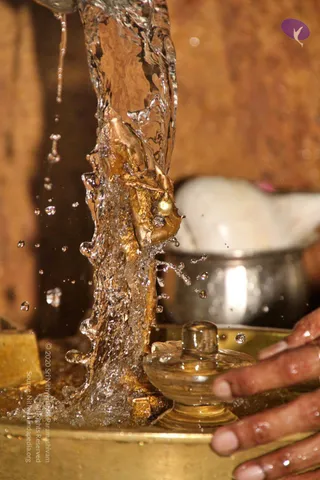
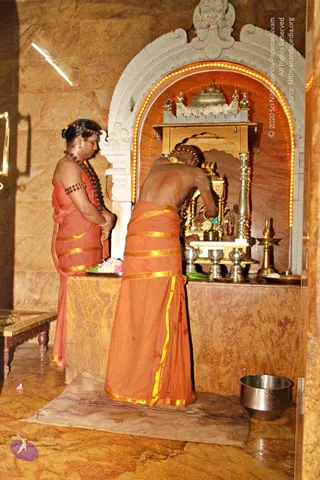
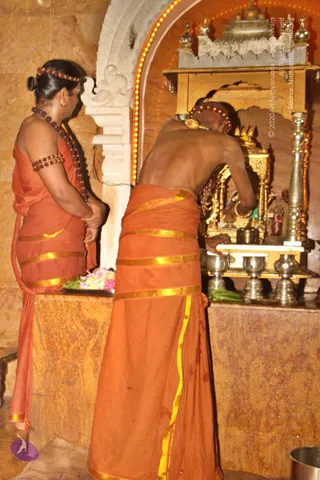
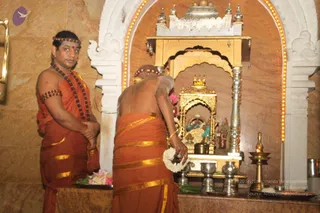
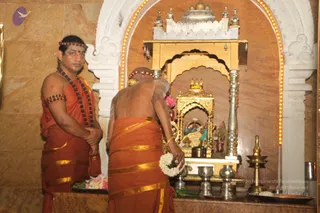
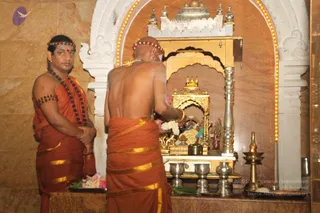
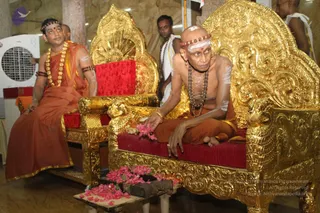
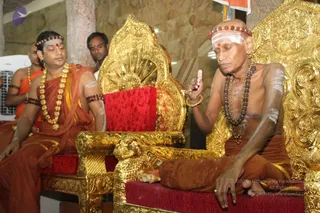
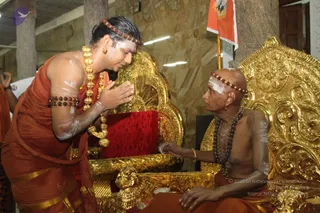
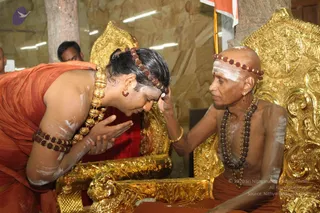
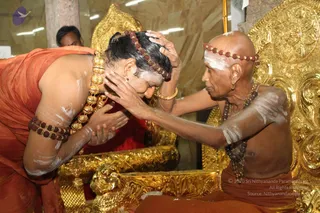
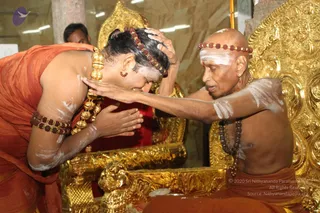
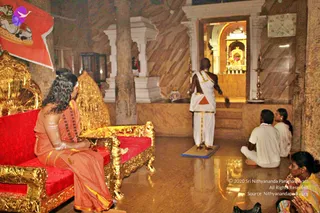
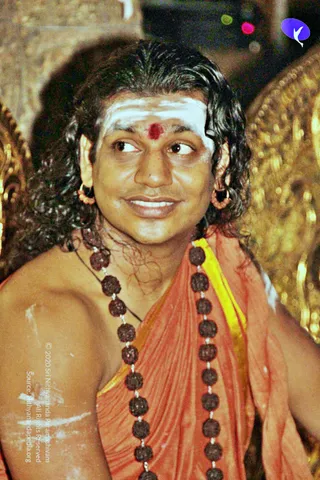
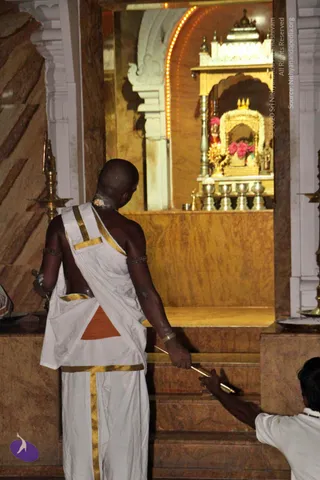
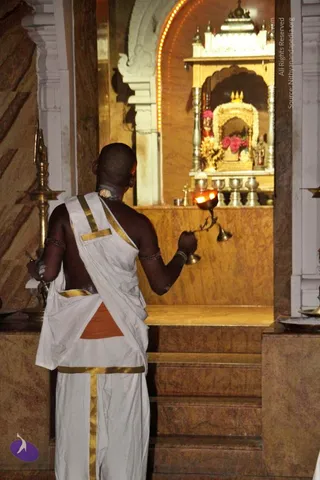
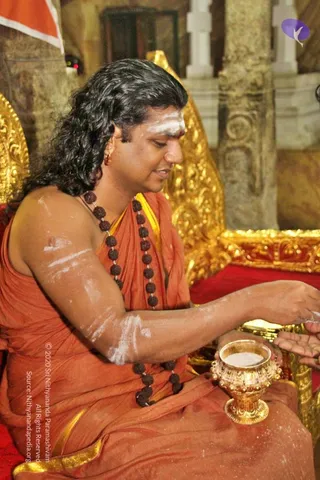
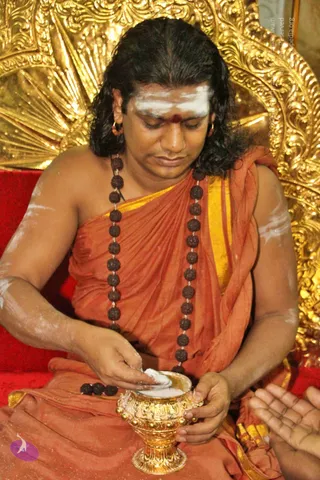
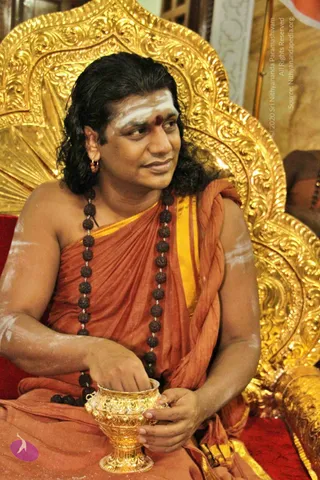
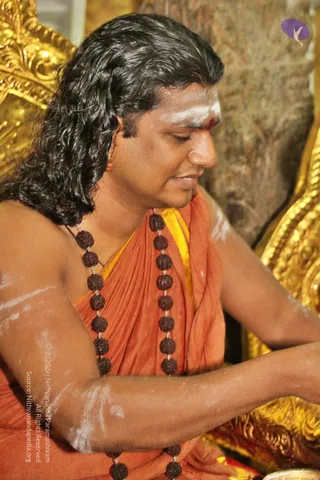
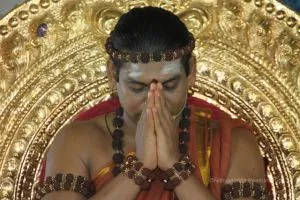
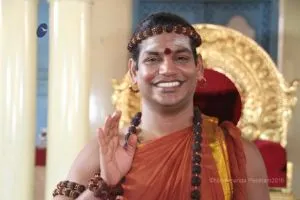
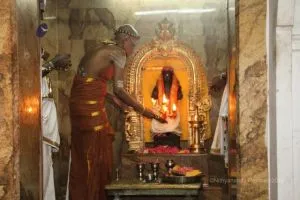
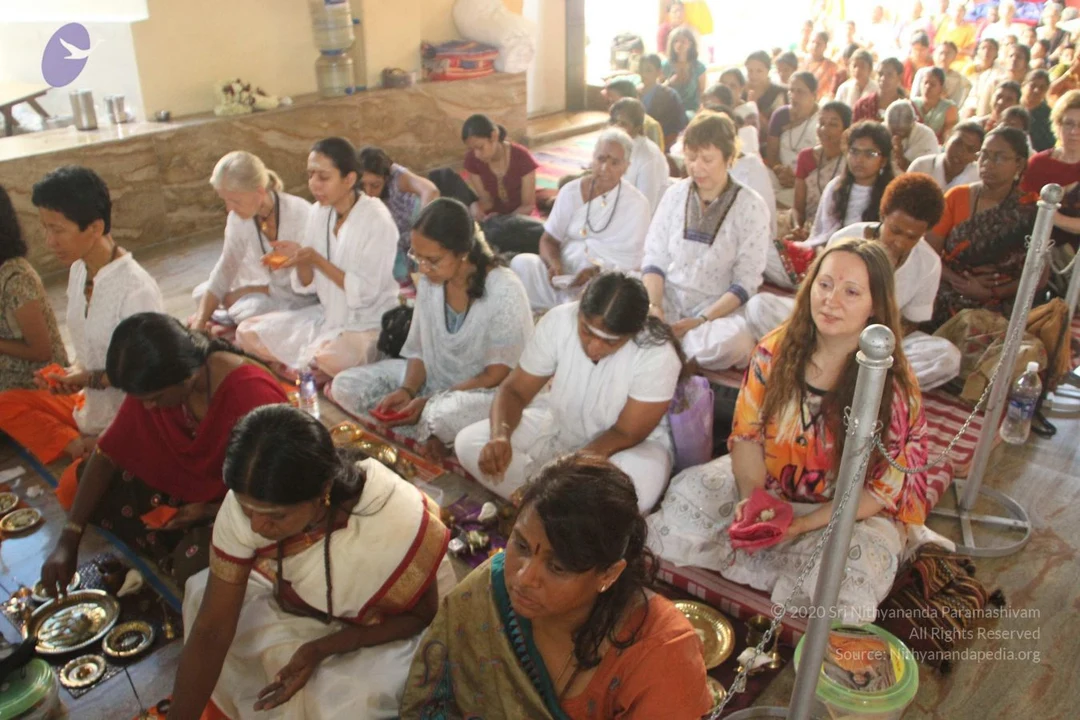
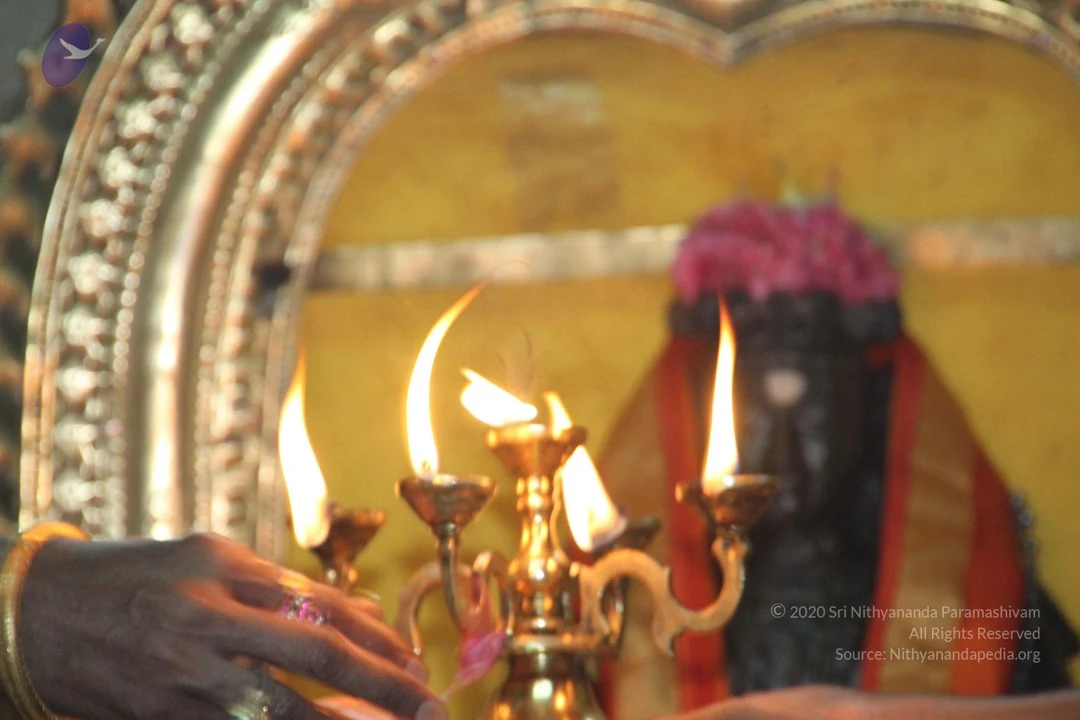
A smiling man in an orange-red saffron cloth sits in the foreground, wearing a rudraksha mala headband tied with gold beads, a red bindi and small gold-and-red earring. He wears a long garland of white jasmine flowers alternating with green leaves over his shoulders, and multiple rudraksha mala bracelets on his wrists. A hand from another person rests on his forearm at the lower edge, and blurred people stand in the background of a bright yellow hall.Two men in orange-saffron dhotis with gold borders stand before a shrine niche with a gilded canopy and silver pillars. The foreground man is bare-chested with a shaved head, white hair at the temples, a rudraksha-style beaded headband and a beaded necklace, holding a small silver bowl near the altar. Behind him, a second man wears a beaded headband, a beaded armlet and an orange cloth. The altar holds a brass Nataraja figure, a small pink-garlanded deity, white and pink flower garlands, silver kalashas and oil lamps, and scattered petals on the stone floor. A third person's arm reaches in from the right edge.A bald elderly priest in saffron-orange dhoti with gold border and bare torso wears a rudraksha mala around his neck and a rudraksha headband, holding a lit oil lamp with flames as an aarti offering before a shrine. Behind him stands a second person in orange garment with rudraksha ornaments on arm and head. A gilded Nataraja murti of dancing Shiva with a brass lamp stand and flower garlands occupies the shrine. Orange lights outline the arched niche. Visible text on the photo overlay reads Sri Nithyananda Paramashivam Source

May 14 2012

Original wiki page
Contents

Title:

Leela - Play of Divine Consciousness

Description:

Sadhana TV In (14th May 2012) morning satsang, Paramahamsa Nithyananda (Swamiji) expands his previous description of Sundareshwara, the embodiment of Shiva who founded Madurai Adheenam. Sundareshwara did not manifest as the classical image of Shiva the tapasvya (ascetic). He was jovial, outgoing and fun-loving, a blend of Shiva and Krishna. His accomplishments can truly be named as leelas. Paramahamsa compares the action of leela upon human awareness to a river flowing with life-giving water, endowing the land around it with lush fertility. As leela unfolds in a fountain of bliss and laughter, the dance of divine consciousness raises the vibration of the whole world to a higher frequency of well-being. Such was the first incarnation of Shiva -- Chokanathur, Soma Sundareshwara, the epitome of graceful beauty.

Link to Video:

VideoAudio

Title:

Leela - Play of Divine Consciousness

Description:

In today’s morning satsang, Paramahamsa Nithyananda (Swamiji) expands his previous description of Sundareshwara, the embodiment of Shiva who founded Madurai Adheenam. Sundareshwara did not manifest as the classical image of Shiva the tapasvya (ascetic). He was jovial, outgoing and fun-loving, a blend of Shiva and Krishna. His accomplishments can truly be named as leelas. Paramahamsa compares the action of leela upon human awareness to a river flowing with life-giving water, endowing the land around it with lush fertility. As leela unfolds in a fountain of bliss and laughter, the dance of divine consciousness raises the vibration of the whole world to a higher frequency of well-being. Such was the first incarnation of Shiva – Chokanathur, Soma Sundareshwara, the epitome of graceful beauty.

Link to Video:

VideoAudio

Transcript:

Leela-Play of divine consciousness

Alright, I will continue on the story of Thiru JnanaSambhandar. The 63 Leela’s of Shiva; please understand, 64 Leels’s are described, but one Leela is his presence; no action, that is why I am saying 63 Leelas; 63 are only actions. The word Leela can be attributed only to action, not for presence. So, in that 64, one is presence, no action, 63 are action.

In that 63 you will be surprised, the Leela done by Thiru Jnansambhandar, winning the Jain preachers through the fire test and water test is also added. Please understand, this means, Jnansambhandar was directly respected and accepted as Shiva’s incarnation; that is the reason, even though this Leela is done by Thiru Jnansambhandar it is added in the Leelas of Shiva. Please understand, in all other Leelas, Shiva directly comes down and executes the Leela. Shiva assumes the human body and does the actions, but this one, winning the Jain monks and establishing the Saiva tradition by the water test and fire test, it is done by Thiru Jnansambhandar, but it is added in that 64 Leelas, means even at that time, when he was living in the body, he was recognized, accepted, worshiped as directly Shiva’s incarnation. Leela’s done by Thirunavakarasar was never considered as Shiva Leela, it is done by Thirunavakarasar, through the grace of Shiva. Leelas done by Sundarar was never recorded as Shiva Leela’s. It is Leelas done by Sundarar, through Shiva, but Leelas done by Thiru JnanaSambhandar, directly recorded as Shiva Leela. Jnanasambhandar was widely accepted, recognized, revered, worshiped as an incarnation of Shiva Himself, Mahadeva Himself!

No other branch of Saivism, no other tradition in the Vedic religion, talks about Shiva’s Leela’s. Shiva was always considered to be the frozen Himalaya; frozen Kailaasa; only Krishna was considered as flowing Yamuna, doing all Leela’s; entering into the barren land, making it fertile; flowing through the valleys and hills reaching the ocean. Leela means, the pure consciousness entering into the matter, nature, maya, prakrithi and playing as it wants. It’s like, you’ve already completed PhD, but you casually enter the first standard class, and you just do any mathematics given in the first standard book and any syllabus given in the first standard book, you read everything, you master everything, you memorize everything, you show all your powers to the first standard students! What will that poor fellows do? Leela is like that! The ultimate enters into the lowest possible existence and plays with all the powers. So, naturally what will all the first class students do? They will all clap, “Ohhhhh, see this student, see this student, he knows everything written in our book”!! Eh, this fellow only can write like this many books, why he will not know whatever is written in the book?

Leela is the extraordinary consciousness landing in the lowest possible existence and playing. It was always attributed to Vishnu. The Leela aspect was never attributed to Shiva in Hindu tradition. It was always attributed to Vishnu. Only Vishnu takes 10 avataras, 10 incarnations; comes as Krishna, comes as Rama, comes as Narasimha. Does all Divine plays; Leelas! Never ever Leela was attributed to Shiva; never ever the Shiva’s Leela’s were absorbed, experienced, described, other than the tradition of Madurai Aadhenam: the ‘Veda Neri’. Only in the tradition of Madurai Aadhenam such beautiful, visual, detailed, factual, historical presentations of Shiva Leela is described. Shiva assuming the body of lower frequencies, like human body, pig body… so any lower frequency bodies He assumes and expresses the super-consciousness and plays with His powers.

I tell you, just reading that 64 Leela’s! I wanted all the disciples and devotees all over the world to watch the ‘Tiruvalayadal” movie once more. Only four Leela’s are described in that movie. I am not saying whatever is shown in the movie exactly factual, it’s not exactly factual. The Dharmi is shown like a comedian in the movie, but he is really a great devotee, he’s not a comedian, he’s a highly devoted, dedicated, disciple of Mahadeva, Shiva. He only wanted little bit of money to perform his religious rite. Please understand, in those days, only if you are married you will be allowed to touch the temple deity and worship. You can’t worship the temple deity if you are not married. Even now, in Chidambaram, the Dikshitar’s, if they have to touch the main deity and worship, they need to receive an initiation which will be given only after marriage. So, before marriage you will not be allowed to touch the main deity and worship. That’s why among the Dikshitar’s the child marriage is common. By the age of 12-13 yrs, even men get married, because if you don’t get married, you can’t receive that initiation and do the pooja directly. So, this Dharmi, he was supposed to be initiated, he need to start the pooja directly, before that he needs to get married, so for that marriage he did not have money, that is why he was asking Shiva to support him with a little bit of money; only then the whole Leela started. Anyhow, even if there are one or two factual errors, overall the movie presents a beautiful view of Shiva’s Leelas.

When I was reading this 64 Leela’s: continuously I am reading, whenever I am finding time, among all these Leelas, whichever I am doing, I have little time to read those Shiva Leelas. When I read those Leelas, Oh God!, I really feel even the Saraswathi which is in my tongue cannot describe the grace of His Leela! I really feel, no saliva, the mouth with saliva, cannot describe His pure grace. I can only try to give some few incidents.

Sundareswara, please understand, I am throwing a bomb! Sundareswara, is not Shiva, He is not Shiva as you understand, sitting in the Himalayas, frozen in the ice, in Samadhi. He is Shiva and Krishna put together, playing Leela’s so causally, so beautifully! PhD student sitting in his room is not a great thing. First standard students just sitting and struggling their own way to learn the Mathematics and English is not a great thing. PhD student coming to the first standard students and playing with them, showing his power and saying, tomorrow you can also do PhD is Leela! That is Leela! Inspiring those first standard students to become PhD’s is Leela! Sundareshwara, is such a powerful being, playing and expressing Leela’s. Still I am not able to think which Leela to tell first, which one to leave. “Aiyoo, onna, renda, aravathi naalu aache, aravathi naalu aache ,Eda chooluven , eda viduven, onu vanda innum onu thondela vikkude, innu onu vanda, innum onu thondela sikkude!! What will I tell, one, or two? 64!! If one comes to the throat, other one comes and stops, and that wants to come out first!

But, one thing I can be sure, He’s still available continuously, Just like when Dharmi went and cried in the temple, “Chokka”, He appeared and answered, even now you go and cry in the temple, He’s there and I promise you He assumes human body and relates with you, answers you, responds to you, raises, you. I am not lying and there is no need for me to lie. I am telling you exactly as He is, as She is! He stays in a frequency where He can immediately assume human body. When Thiru Jnansambhandar came in the human body and did all these Divine Leelas, Leelas of establishing this great religious tradition, this great spiritual tradition, every step, every inch, every word he uttered is Leela. When I remember, I am lost into this whole!

Spot Notes: Monday, May 14th, 2012

“Sadashiva samarambam, Jnana Sambandhaacharya madhyamam asmadacharya paryantam vande Guru paramparam!”

I welcome you all with my love and respects! I welcome all the devotees, disciples, Samajis, Satsangis sitting with around the world at this moment in places through 1042 Nithyananda TV, places in 22 places 2 way video conferencing having Nayana Deeksha, in 248 cities, 29 countries around the world!

Cities sitting with us in 2 way Video conferencing having Nayana Deeksha are – Scottsdale Arizona, New Zealand, Charlotte Srisailam, Oklahoma Somanatham, Tiruvannamalai Arunachala, Washington DC Sripuram, Hyderabad Bhaagyanagara, Mill valley California, Ohio Prayag, Ohio Centre, San Jose Madhurai, Malaysia Palani, St. Petersburg, Atlanta Ujjayini, Dallas Dwaraka, Vancover Puri, Nithyananda Nagara, Seattle Chidambaram, Singapore Singapuram, Toronto Kailasam, Los Angeles Arunachala, Mattakallapu Illangai, Oman Siva Gangai, Las Vegas, Austin, Burnaby Canada.

Dasarathi & Atma niranjani I accepted your paada puja. I will talk to you during Dial the Avatar.

Today again the delay of the Satsang paada puja because sme of these anti social elements have disconnected our water supply. So to get water from the corporation – 2 lorry water, that took time and naturally delayed all our devotees and disciples getting ready. That is how we got late. Anyhow we will solve the issue we will dig our own bore well.

Alright. We created Vaigai for Madhurai can’t we create a bore well? J It is okay! Like Jnaana Sambandar story they put the fire thinking that Jnaana Sambandar will run away. Now they disconnected water, thinking that I will run away. Jnaana Sambandar said the fire went and caught the Paandya king. Same way now I am saying whoever disconnected the water, let his body be completely dehydrated, you will see it! Let his body stop having water, you will see it. What are they thinking?. They think if they stop the water supply I will run away? Because of these fellows devotees are not able to get ready and paada puja and Satsang got delayed. I think exactly the Jnaana Sambandar story is repeating. What to do? Alright. I will also say – let it go slowly and catch it. Let this fellow at least understand and transform. Let him not die. It is okay. Let him understand and transform like Paandya king. Alright I will continue on the story of Tiru Jnaana Sambandar. Actually whatever is happening if I read out that is exactly the Tiru Jnaana Sambandar story. What happened 2000 years before now it is repeating that’s all. In 1st century it happened. Now again in 21st century it is repeating J

The 63 leelas of Shiva. Please understand 64 leelas are described. But one leela is his presence no action. 63 leelas that is why I am saying. The word leela can be attributed only to action not presence. 63 are actions, 64 is presence. In that 63 you will be surprised the leela done by Tiru Jnaana Sambandar winning the Jain preachers through the fire test and water test is also added. This means Jnaana Sambandar was directly respected as Shiva’s incarnation. That is why even though Tiru Jnaana Sambandar did this one leela it is added as Shiva’s leelas. Please understand all other leelas Shiva directly comes down and executes the leela. Shiva assumes the human body and does the actions. But this one winning the Jain monks and establishing the Shaiva tradition by the water test and fire test is done by Tiru Jnaana Sambandar and is added in the 63 leelas. Means even at that time when he was alive he was directly respected as Shiva himself. Leelas done by Tirunavukkarasar, leelas done by Sundarar was never recorded as Shiva leela. It was recorded as their leelas through Shiva. But Tiru Jnaana Sambandar’s leelas were directly accepted as Shiva leelas. Jnaana Sambandar was respected, revered worshipped as Shiva himself, Mahadev himself.

No other tradition in the Vedic religion talks about Shiva’s leelas. Shiva was always considered to be the frozen Himalaya, frozen Kailaasa. Only Krishna was considered as flowing Yamuna doing all leelas. Entering into the barren land, make it fertile, flowing through the barren lands in the ocean. Leela means the consciousness centering into the maya, prakruthi and playing as it wants. It is like you already completed the PhD and casually you enter into the 1st standard class and show different miracles in the 1st standard. Leela is like that. The ultimate enters into the lowest possible existence and does all kinds of miracles. So naturally what will the 1st standard students do? They will clap…

Leela is extraordinary consciousness landing in the lowest possible existence and playing. It was always attributed to Vishnu. The leela aspect was never attributed to Shiva in Hindu Tradition. it was always attributed to Vishnu. Only Vishnu takes 10 avatars, 10 incarnations comes as Ramas, comes as Krishna, comes as Narasimha, does all kinds of divine leelas. Never ever leela was attributed to Shiva. Never ever the Shiva’s leelas were absorbed, experienced, described other than the tradition of Ma – Veda Niri. Only in the tradition of Madhurai Aadeenam such beautiful, detailed, factual, historical presentations of Shiva leela s described. Shiva assuming the body of lower frequencies like human body, pig body, so many lower frequency bodies he assumes and expresses the super consciousness and plays with his powers. I tell you just reading that 64 leelas I wanted all the devotees and disciples all over the world to watch the Thiruvilayadal movie once more. Only four leelas are described in that movie. I am not saying whatever is shown in the movie is factual. It is not factual. The Dharmi is shown as a comedian in that movie. He is not a comedian but a highly dedicated devoted disciple of Shiva- Mahadev. He wanted only little rights to perform the rituals. Please understand in those days you cannot touch the main deity if you are not married. Even now in Chidambaram among the Dixitars they will get special initiation only after you get married. That is why in Dixitars they get married at age of 12, 14. So this Dharmi he needs to get married before he gets initiated. For that marriage he did not have money and he asked Shiva for money.

…overall the movie presents a beautiful view of Shiva’s leelas. Whenever I am finding time among all these leelas which I am doing, whenever I have little time I am continuously reading those Shiva leelas. The full movie is available on Youtube with subtitles. We will give you the link on Nithyananda TV twitter. As I assured all of you within next one year, I will take a complete TV serial with all the 64 leelas. I am already approaching the Devon Ke Dev team. The team which is doing the Devon ke Dev serial. If time permits, I myself will appear in some of the scenes as Sundareshwara and Meenakshi. I wanted people to see visually. Please understand I also promise all of you I will not show anything in the TV serial which is not happened factually. I will verify the Akashik Records and give you only exact facts. Even background what type of chair, what building everything I will give you exactly. Leelas of Shiva as it happened by the cosmic director! When I read those leelas – oh God! I really feel even the Saraswathi which is in my tongue cannot describe the grace of his leela. I really feel no saliva. The mouth with saliva cannot describe his pure grace. I can only try to give some few incidents.

Sundareshwara please understand I am throwing a bomb. Sundareshwara is not Shiva. He is not Shiva as you understand. Sitting in the Himalayas, frozen in the ice in Samadhi. He is Shiva and Krishna put together. Playing leelas. So casually. So beautifully. PhD student sitting in his room is not a great thing. 1st standard students just sitting and struggling in their own way to learn math and English is not a great thing. PhD student sitting with 1st standard student and showing them you can also become PhD is leela. Inspiring 1st standard students that you can also do PhD is leela. Sundareshwara is such a powerful being playing and expressing leelas! Still I am not able to think which leela to tell first, which one to leave. What will I tell? One or two – 64? If one I start, the other one comes to the throat and that wants to come first. But one thing I can be sure. He is still available continuously. Just like when Dharmi went and cried in the temple Chokka! He appeared and answered. Even now if you go and cry in the temple he is there and I tell you he assumes human body, answers you, responds to you raises you. I am not lying. There is no need for me to lie. I am telling you exactly as he is. As she is! He stays in a frequency where he can immediately assume human body. When Tiru Jnaana Sambandar came in the human body and did all these divine leelas, leelas of establishing this great religious tradition, this great spiritual tradition, every step, every inch every word he uttered is leela. When I remember I am lost into this whole. But I will continue today and tomorrow. Today whole day I will continue to speak on the Madhurai Aadeenam’s history and philosophy. I will give some sessions in Tamil also. I have a good news for you guys. Today I am going to be doing the puja J Puja of Sundareshwara and Meenakshi. Our Guru Maha Sannidhaanam has already told me yesterday. Today he may ask me to do the Puja or tomorrow. Today he may do all that formal kind of a giving all those procedures. We will be having it live on Nithyananda TV. That deity was given directly by Meenakshi and Sundareshwara. I touched those deities and saw their finger prints are there! Just like how I give my own photo or deity energize to keep in your house, like that Meenakshi and Sundareshwara gave these deities to all their siddhas. 40 siddhas lived with Meenakshi and Sundareshwara. All the classes were conducted by Meenakshi and initiation was done by Sundareshwara. So they themselves have given these two deities as their energy and representation.

We are also planning to go to one of our temples in Tanjore district – Kachanam under the Madhurai Aadeenam. Whoever wants to join you can join tomorrow with us. Now I will move to the next segment of the morning satsang – Dial The Avatar.

1) E-pada puja Dasarathi & Atma Niranjani from San Jose Madhurai.

See the Meenakshi what is her job! In one of the Brahmotsavams she made us the Aadeenam J

Today’s minutes to be entered in minutes4peace website - 70 minutes.

I bless you all who are sitting with us at this moment around the world in 1058 places through Nithyananda TV, in 25 places through 2 way Video conferencing having Nayana Deeksha, in 265 cities, in 29 countries! Let you all achieve, experience, live, express, radiate and share and explode the eternal bliss, Nithyananda. Thank you!

Photos
Sakshi Pramana:

Sharing from Inner Awakening - healed after 3 days

Tags:

Paramahamsa Nithyananda, expand, description, embodiment, Shiva, manifest, classical, image, jovial, outgoing, fun-loving, Krishna, accomplishment, compare, action, human, awareness, flow, life, fertility, bliss, laughter, dance, divine, consciousness, vibration, world, higher frequency, well-being, epitome, graceful, beauty.

Photos Of The Day:
Garbha-Mandir

Photos Of The Day:
Morning-Puja-in-Madurai

Morning-Satsang-in-Madurai

Puja-with-Sannidhanam-in-Madurai

Darshan-with-Sannidhanam-in-Madurai

VIP-Visit-in-Madurai

Temple-Visit

Evening-Aarti-in-Madurai

Public-Darshan-in-Madurai

Photos Of The Day:
Paduka-Puja-Bidadi

Deity-Darshan-Bidadi

Yoga-Camp-Bidadi

Pada-Puja-Madurai-Adheenam

Satsang-Madurai

Sarvadarshan-Madurai

Public-Darshan

Daily-Parartha-Puja

Evening-Public-Darshan

Swamiji-at-Madurai-Adheenam

Photos Of The Day:
Morning-Puja-in-Madurai

Morning-Satsang

Puja-with-Sannidhanam

Darshan-with-Sannidhanam

Temple-Visit

Evening-Arti

Public-Darshan

01-Morning-Puja-in-Madurai

02-Morning-Satsang

03-Puja-with-Sannidhanam

04-Darshan-with-Sannidhanam

06-Temple-Visit

IMG_0508_CMP_WM

07-Evening-Arti

08-Public-Darshan

Photos from this day
View all 508 photos
Photos
110 photosSource gallery
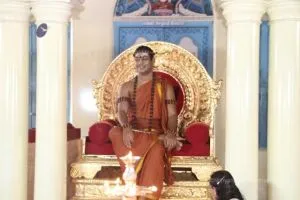
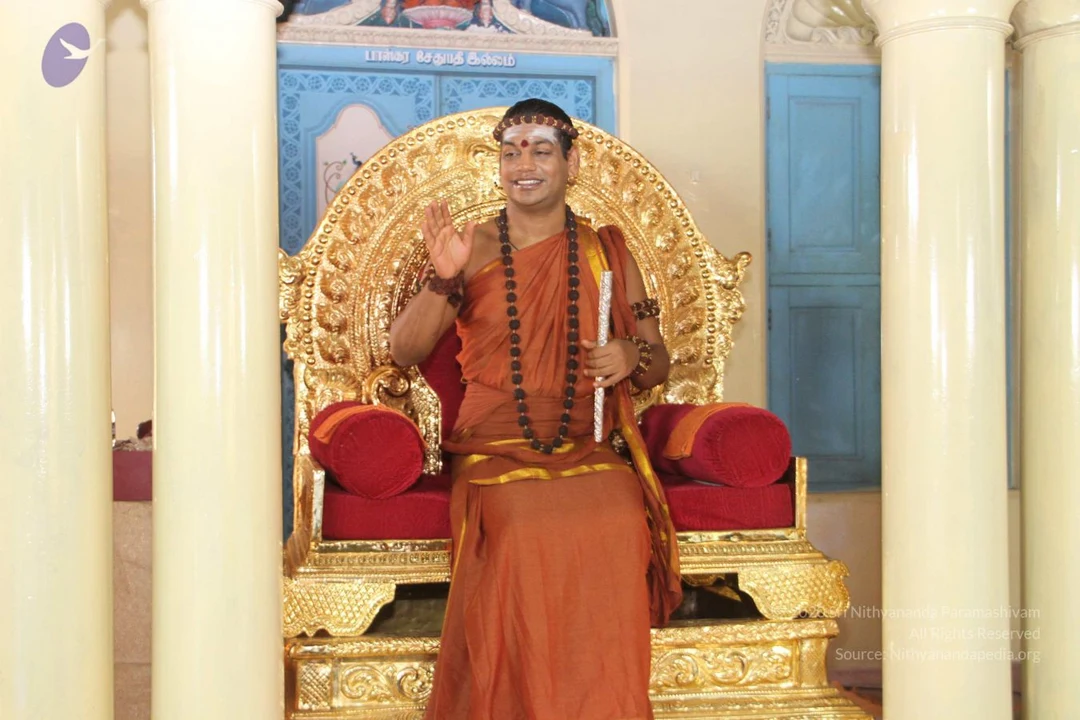
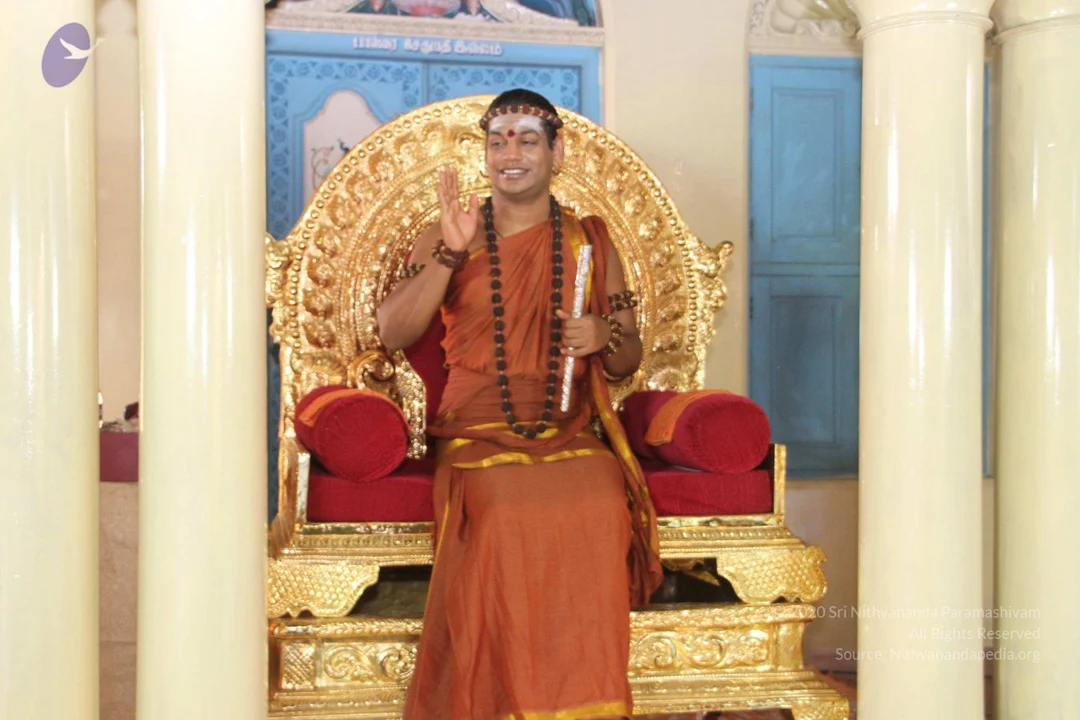
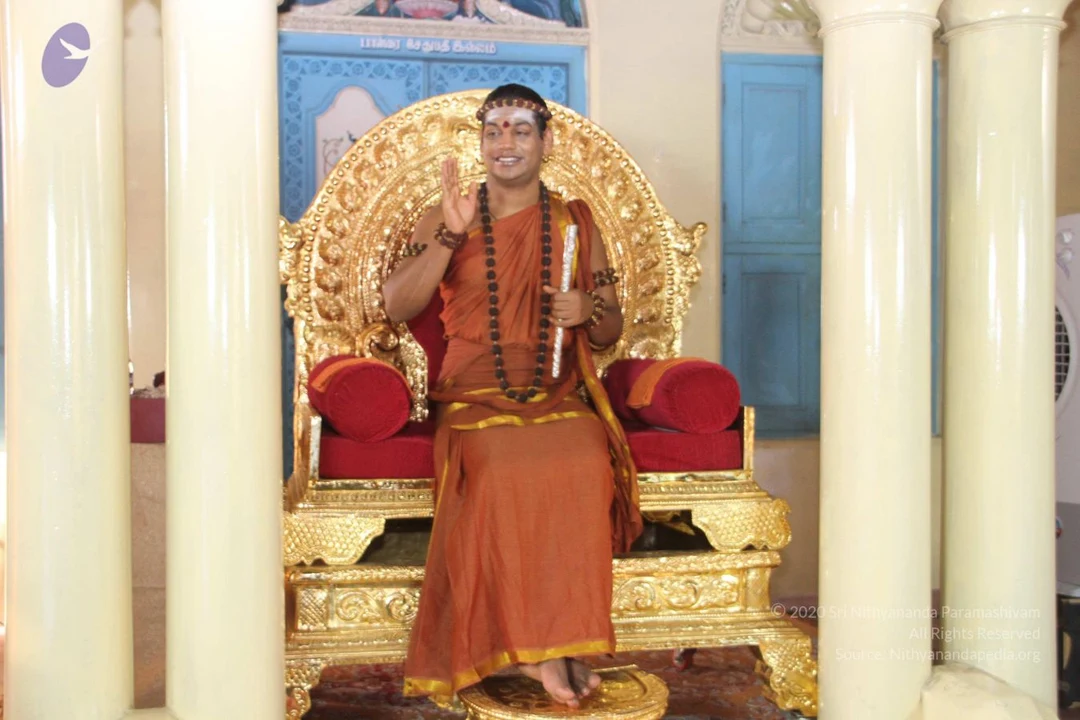
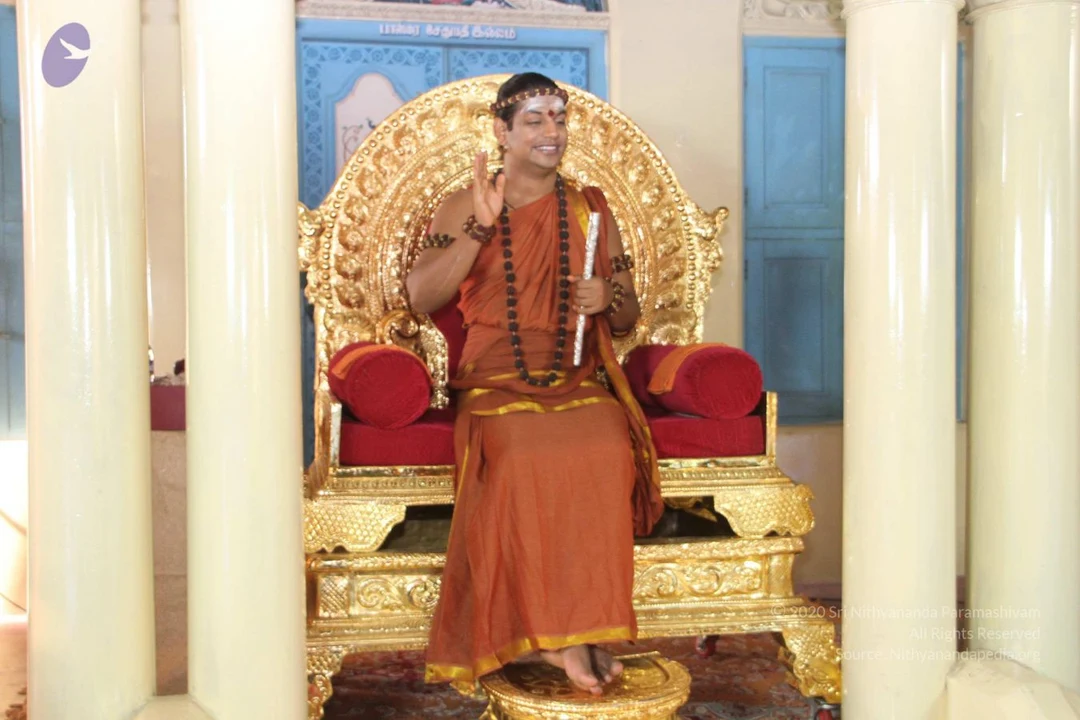
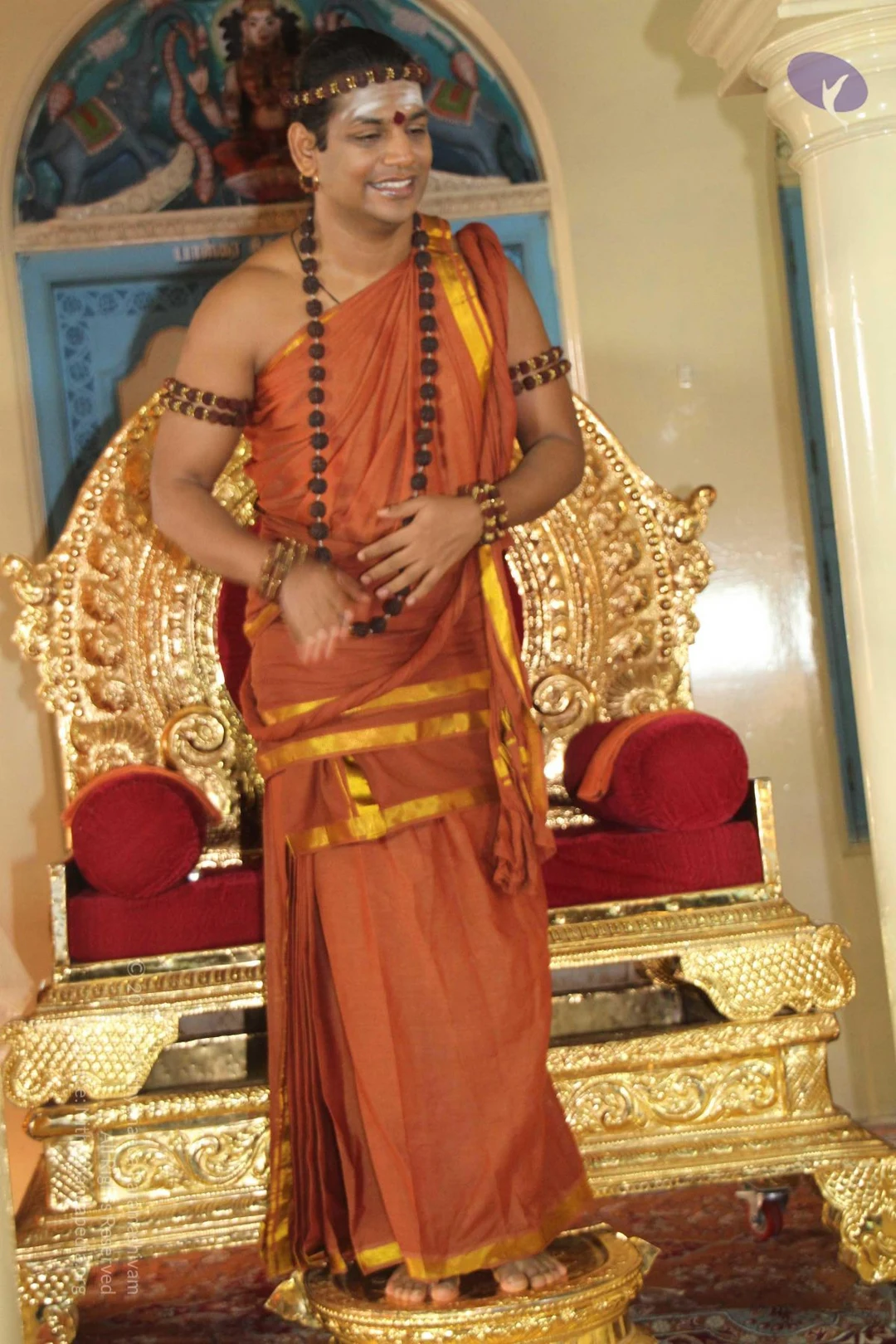
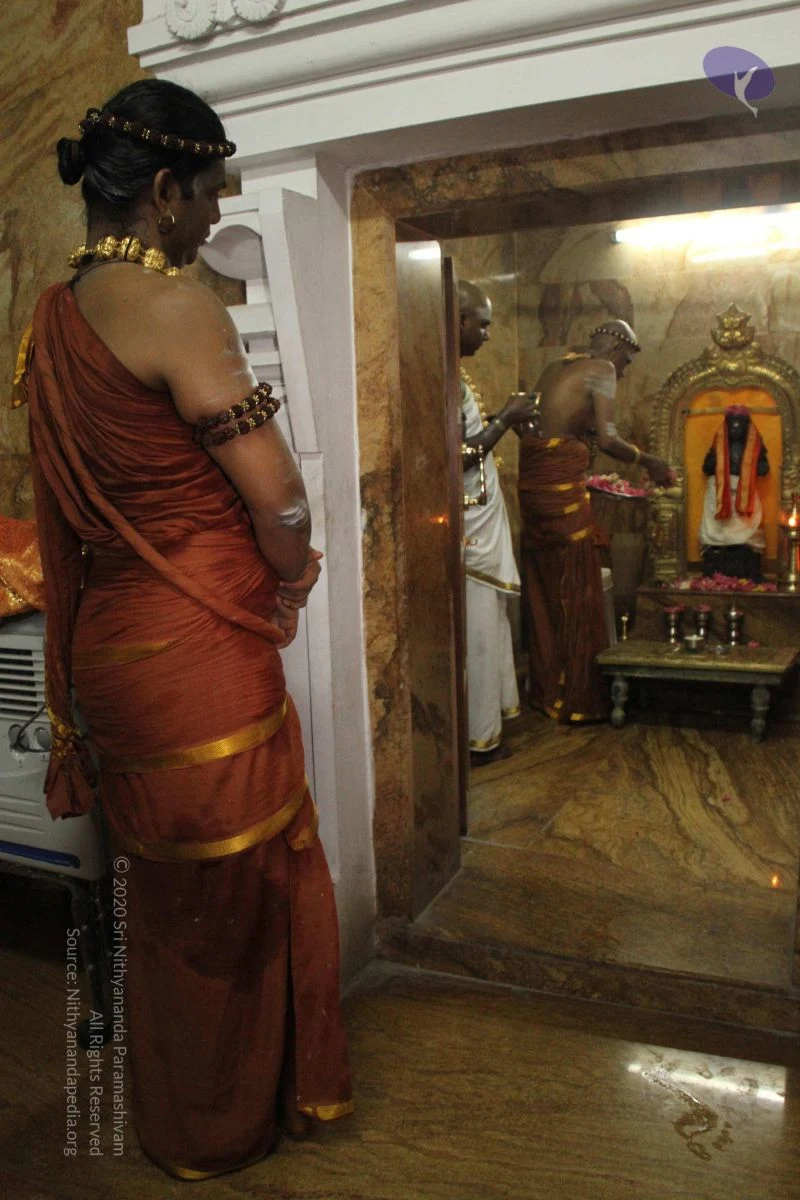
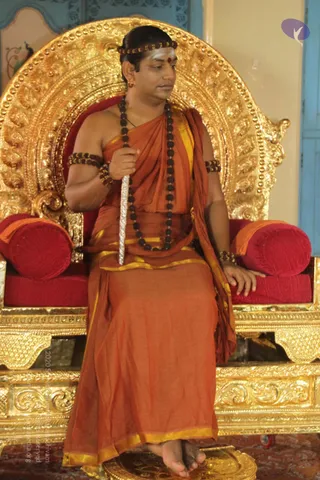
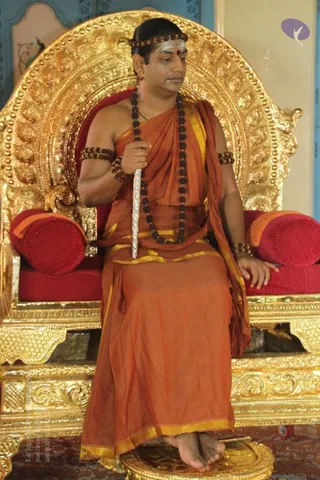
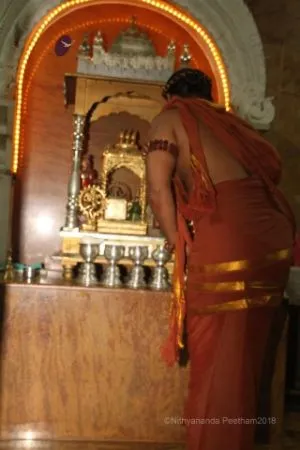
A woman in an orange-red sari stands with her back to the camera before an illuminated shrine niche with a white arched frame and carved white ornament. Inside the niche, a deity murti is visible with brass lamps and a brass kalasha-style vessel on a stone platform. Walls are polished brown-gold stone. The woman appears to be performing worship or darshan at the shrine.A standing man in an orange-saffron dhoti and matching shawl draped over his left shoulder stands in a doorway framed by polished stone, looking toward an inner shrine. He wears a rudraksha mala around his neck and a sacred thread-like cord, with a crown-like tilak mark on his forehead. Behind him, an arched white-and-gold niche holds a silver-trimmed lamp stand and brass lamps flanking an ornate deity murti under a gold-lit arch. The visible appearance is consistent with a person, given the saffron clothing, rudraksha mala and ornate adornments, though this is an appearance-based label only.A man in saffron-orange robes stands before an ornate gold-and-red throne with carved gilded armrests and a cushioned red seat, in a white-pillared hall with blue wall panels. He wears a rudraksha mala, a dark-beaded necklace and a gold chain, with his right hand raised in blessing and his left hand near his chest. The a person cues are the orange robe, the rudraksha mala and the ceremonial throne, with the person presented as a seated-throne guru figure. No other people are visible.A man in a saffron-orange robe stands before an ornate gold-and-red throne with carved gilt armrests and cushioned red seats. He wears a long rudraksha mala and a gold necklace, holds a ceremonial staff in one hand and a small object in the other, and has long dark hair swept back. White columns and a blue-and-white painted wall frame the room. Based on appearance cues, this is.A man in orange-saffron robes sits on an ornate gold-and-red throne with carved gilded arms and red cushions, between white pillars in a hall with pale walls. He holds a long wooden staff or rod upright in his right hand and wears a rudraksha mala and a dark cloth wrap over his shoulder. He has long dark hair and is barefoot on a small raised platform with a decorated mat. The setting suggests a satsang or discourse. Appearance-based label: Swamiji (probable), seated in the role of a discourse speaker on a throne, with long hair, saffron robes and rudraksha beads as cues.
Garbha-Mandir

10 photosSource gallery
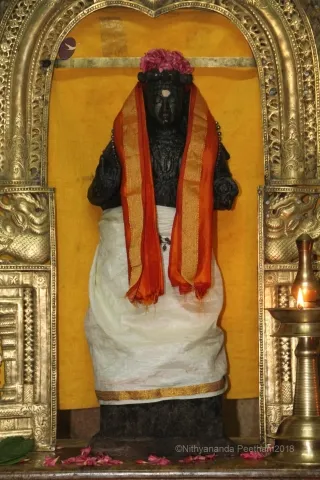
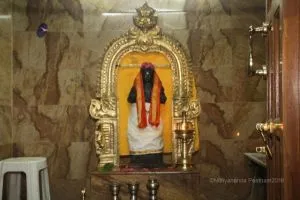
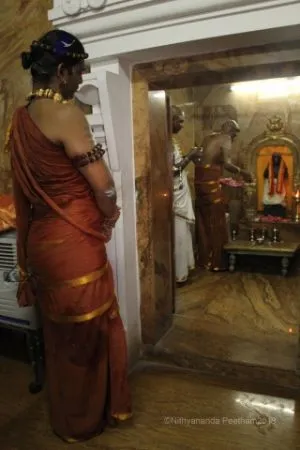
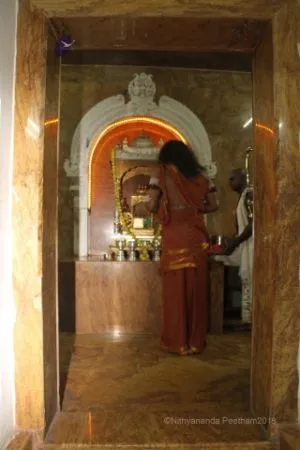
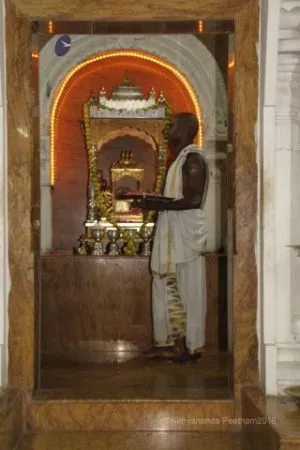
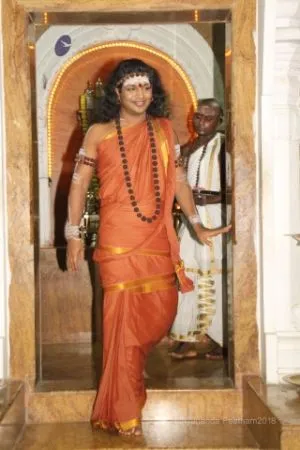
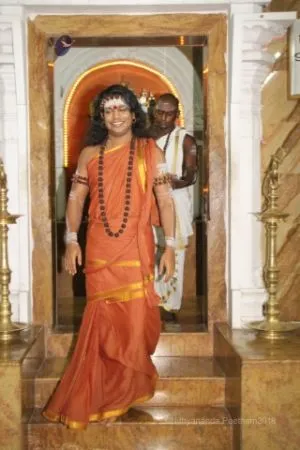
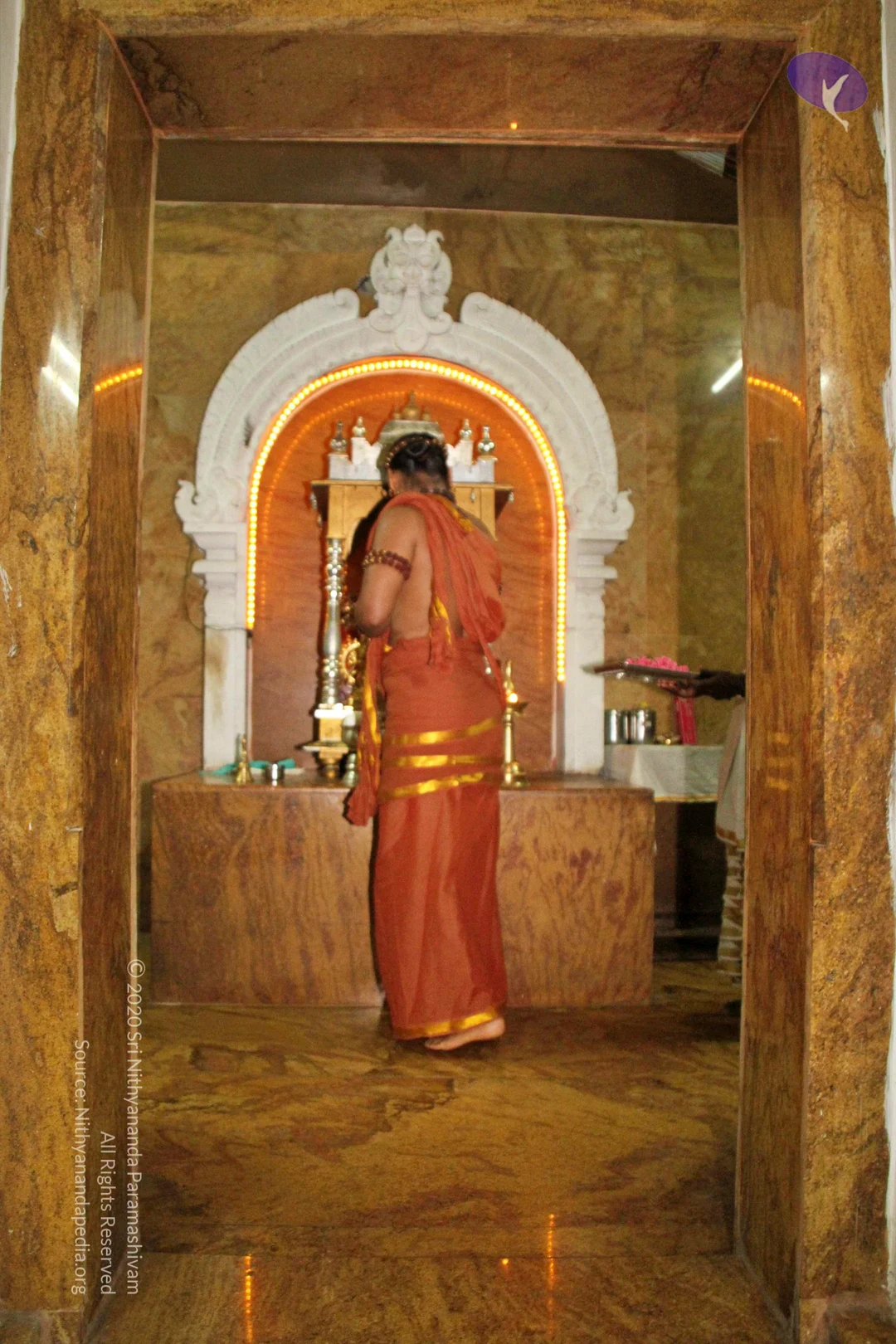
A woman in a saffron-orange sari with gold border stands with her back to the camera, hands joined in prayer before a lit shrine niche. The arch is white carved stone framed by warm LED lights, and inside is a gilded shrine with small deity figures, silver lamp stands and a brass oil lamp with a flame on the left. The woman wears rudraksha bracelets on her arms and a gold necklace, with her hair pinned up. The scene suggests puja at a home or temple shrine.A person seen from behind stands before a lit shrine niche framed by an arched white carved surround with orange LED lights. The figure wears a red-orange garment with gold border, bare-shouldered, with rudraksha beaded bracelets on the upper arms and hair tied in a bun. Inside the niche are a gold-coloured deity murti, a brass oil lamp to the left, and silver bowls and offerings on a wooden altar. The floor is polished stone and the room has brass vessels on a side table.A man stands in a doorway of a marble-lined shrine niche, wearing an orange-red draped garment with gold border, a gold-bead necklace, a rudraksha band on his upper arm and a rudraksha headband with a white forehead mark. He reaches toward a small gilded shrine with a golden arched canopy and a deity murti, surrounded by lit orange lights. Brass oil lamps and a plate of pink flower petals sit on the ledge below. The figure has long swept-back hair and ornate attire matching visible cues, so this is a person presence performing a shrine puja in person.A man in saffron-orange ceremonial dhoti and shawl with gold-yellow borders stands on marble steps descending from a shrine doorway. He wears a thick gold bead necklace, beaded red-brown armlets, a dark beaded headband, and white and red tilak marks on his forehead. Brass oil lamps stand on either side of the doorway, which is framed by white carved pillars and an arch with orange lights, leading to an inner shrine area. The background shows a black carved stone structure above.A man in an orange-saffron dhoti and upper cloth with a gold border walks down a step inside a temple-like hall with polished marble walls. He wears a gold bead necklace, rudraksha bracelets on his upper arms, a rudraksha headband, white tripundra lines and a red bindi. Behind him an arched doorway glows with orange lights and shows an ornate shrine containing a deity murti. A brass oil lamp stands on a marble platform at left, next to a folded cloth.Photograph of a person in a stone-lined shrine niche standing at left, wearing an orange-red sari with gold borders, gold neck ornament and rudraksha bracelets, hair in a bun with rudraksha strand, head bowed in prayer. Facing them is a gold-framed arched niche holding a dark stone deity murti draped in a white cloth with a rudraksha mala and a pink flower garland on its head, set before a yellow backdrop. A brass oil lamp burns to the right, and three brass offering cups sit on a stone ledge in front, with a gold-topped bench in the foreground. The person is one physical individual; no identity cue is visible beyond attire.

Morning-Puja-in-Madurai
24 photosSource gallery
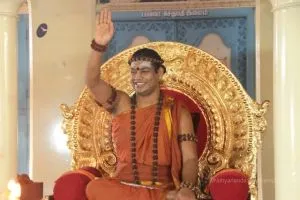
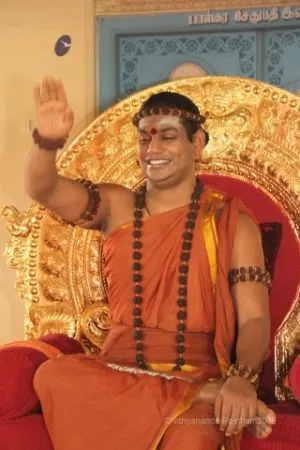
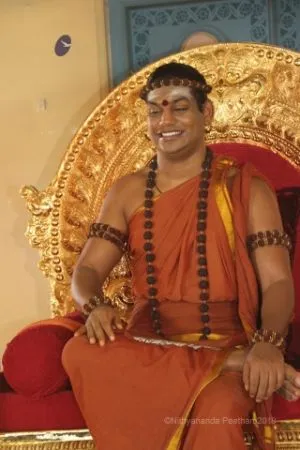
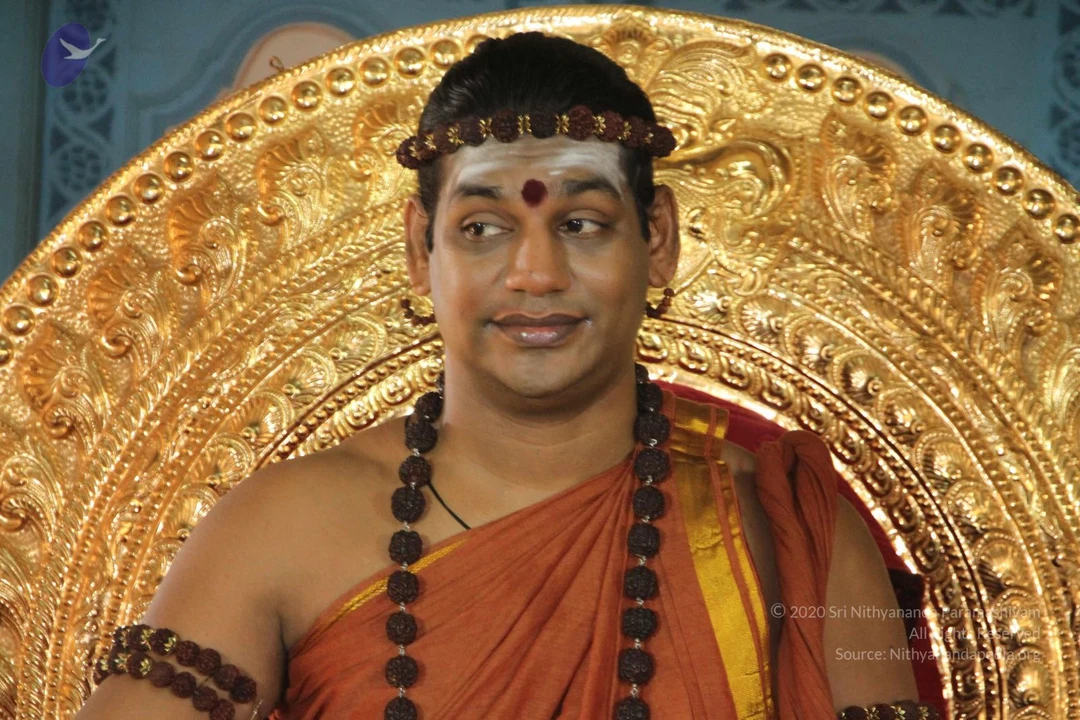
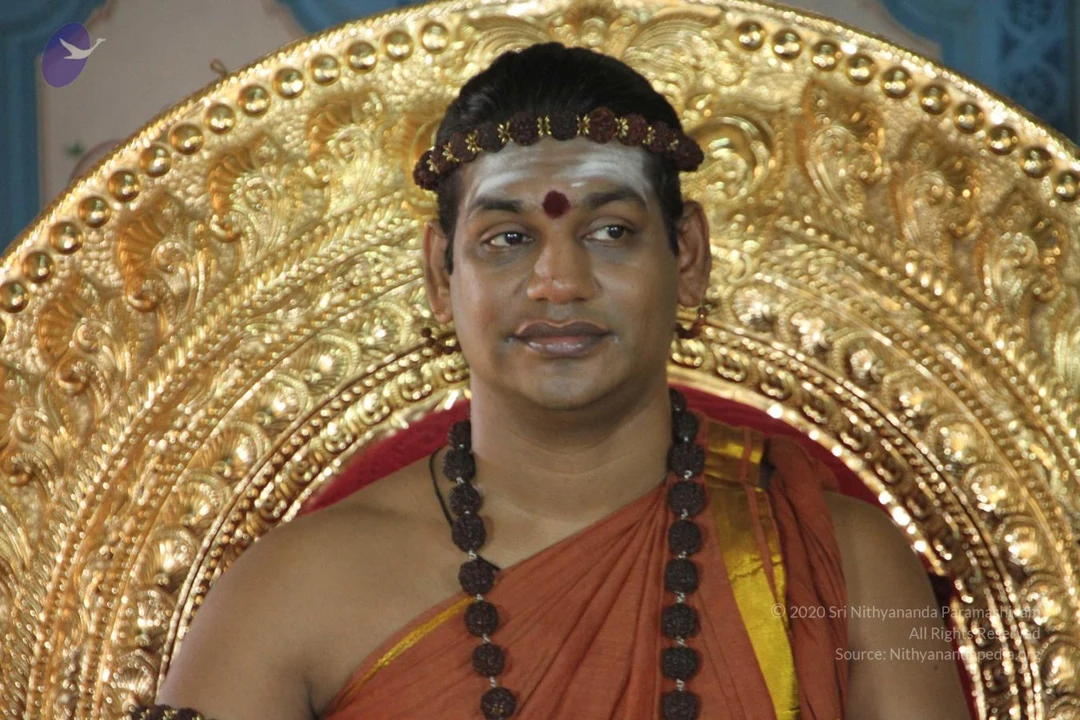
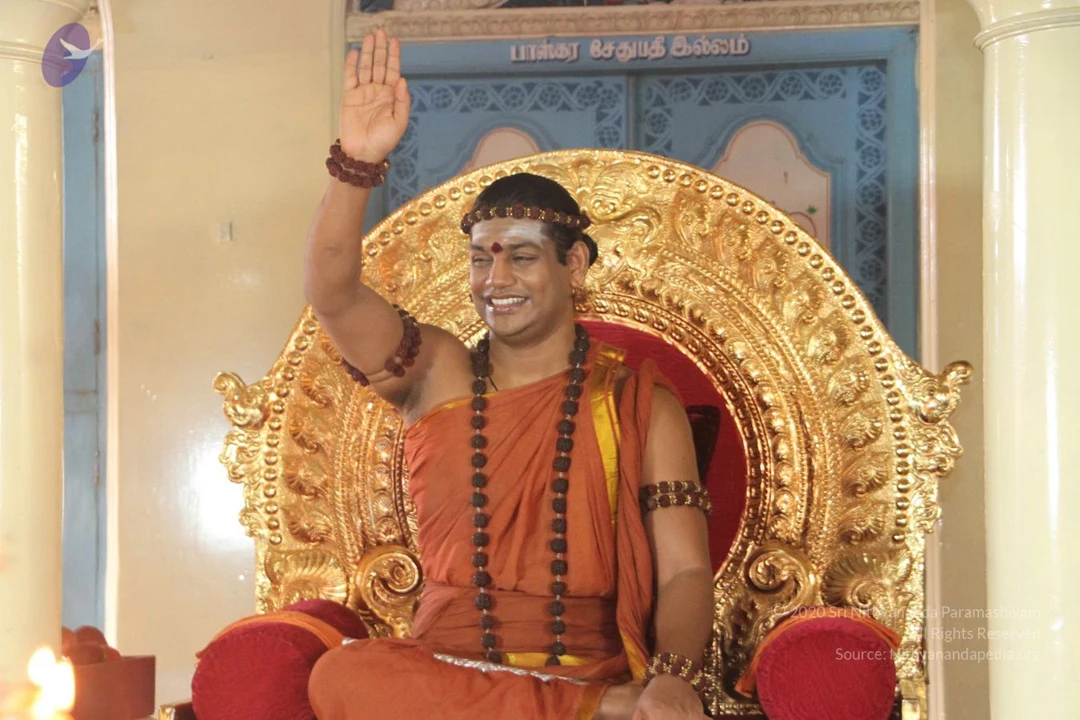
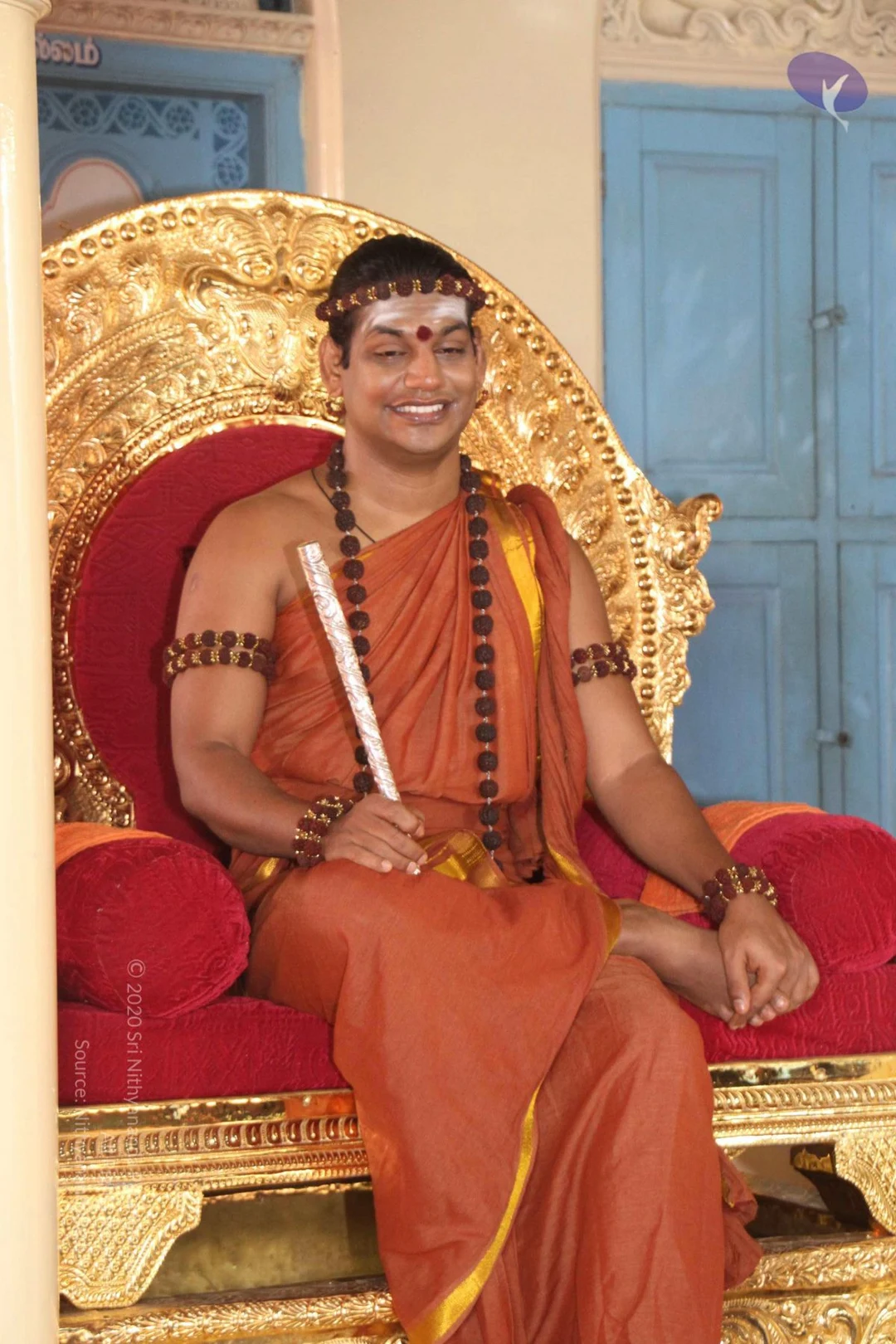
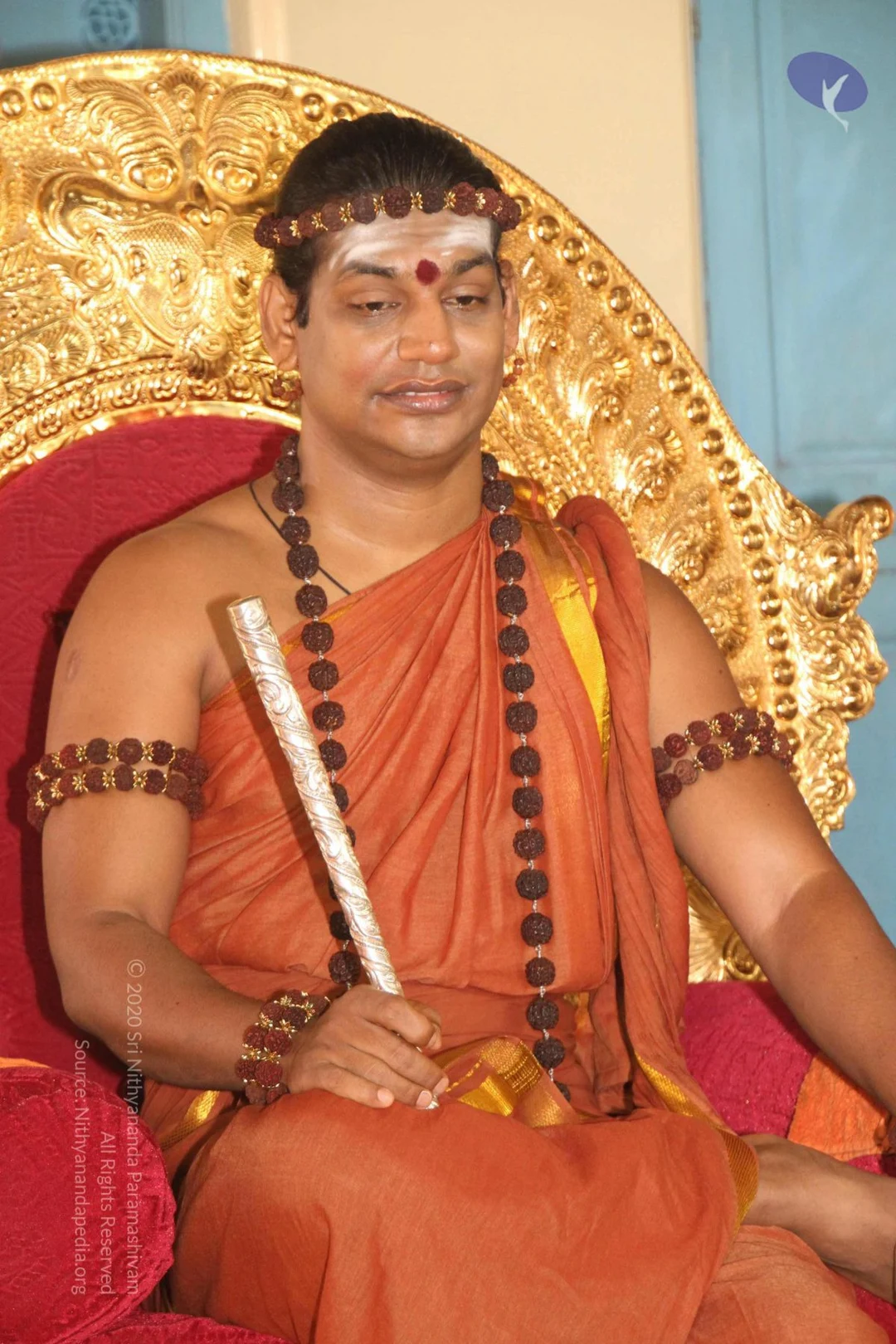
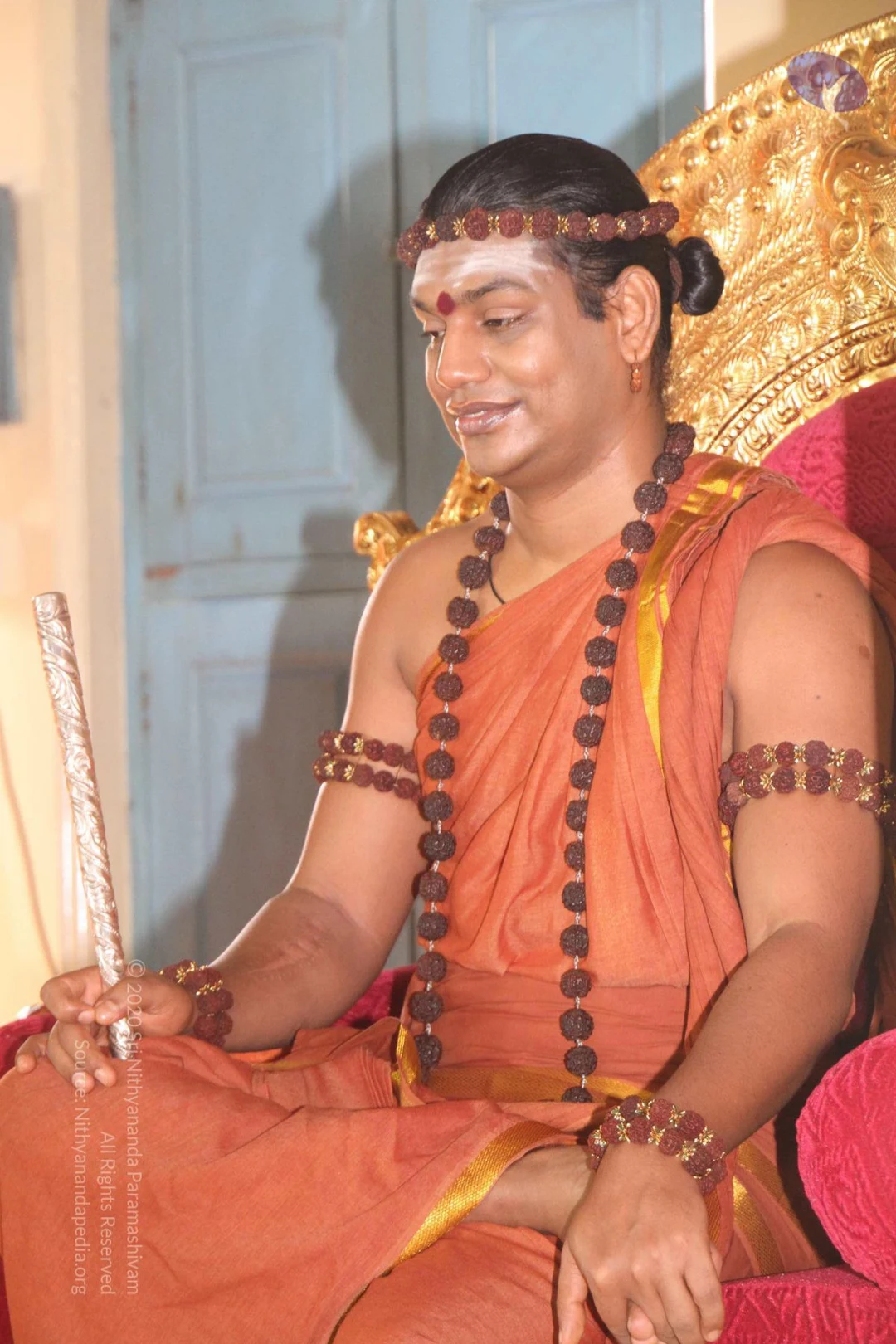
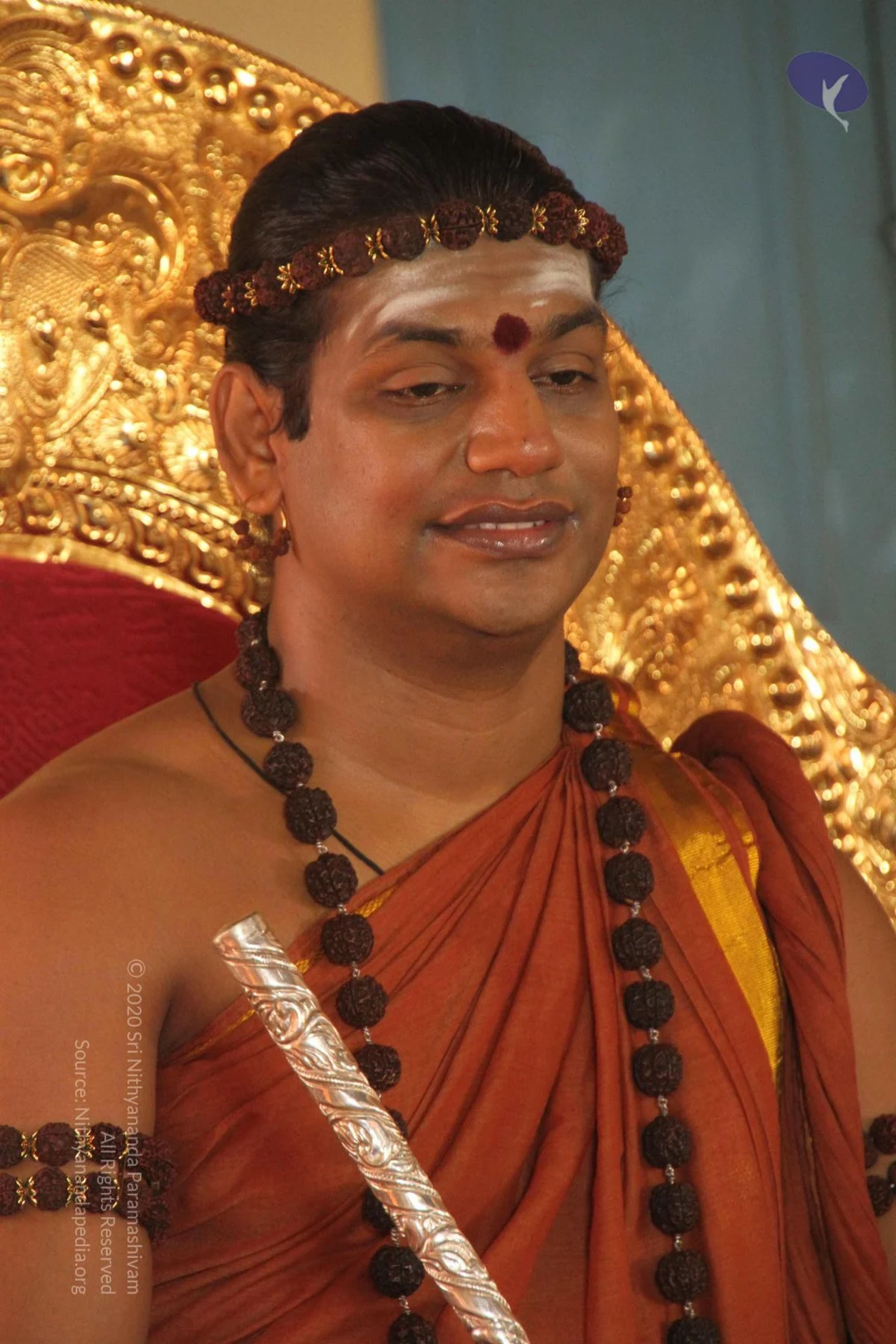
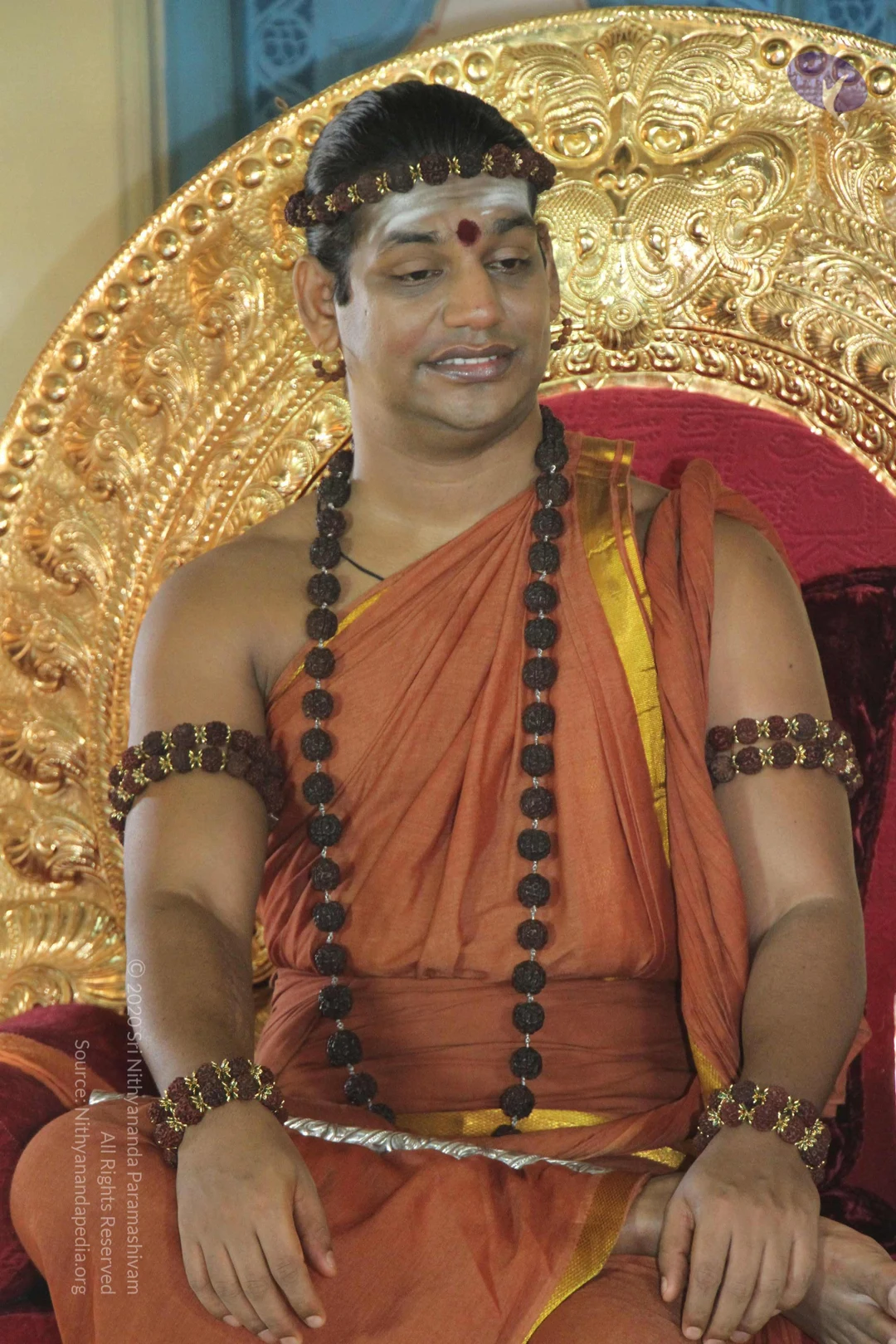
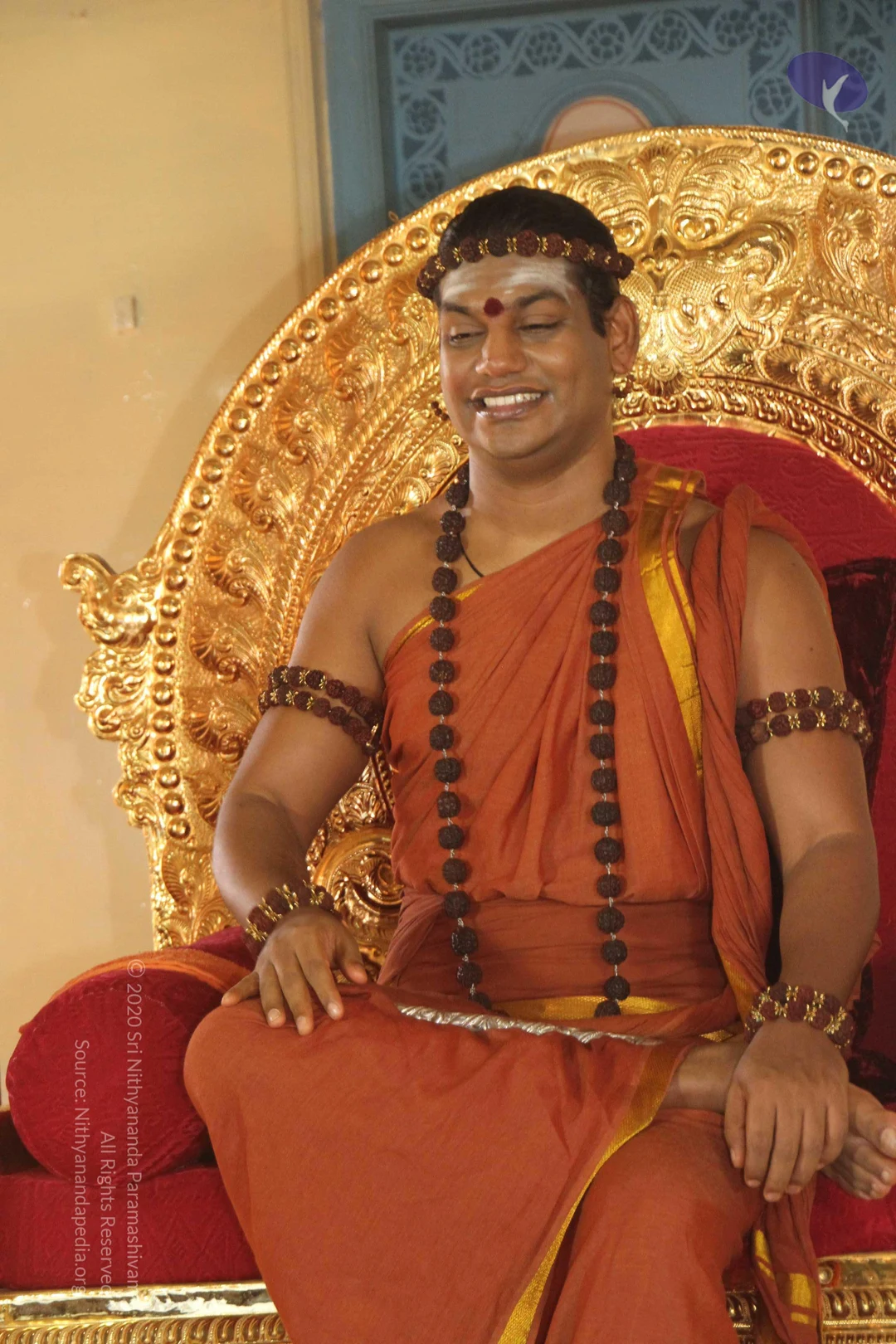
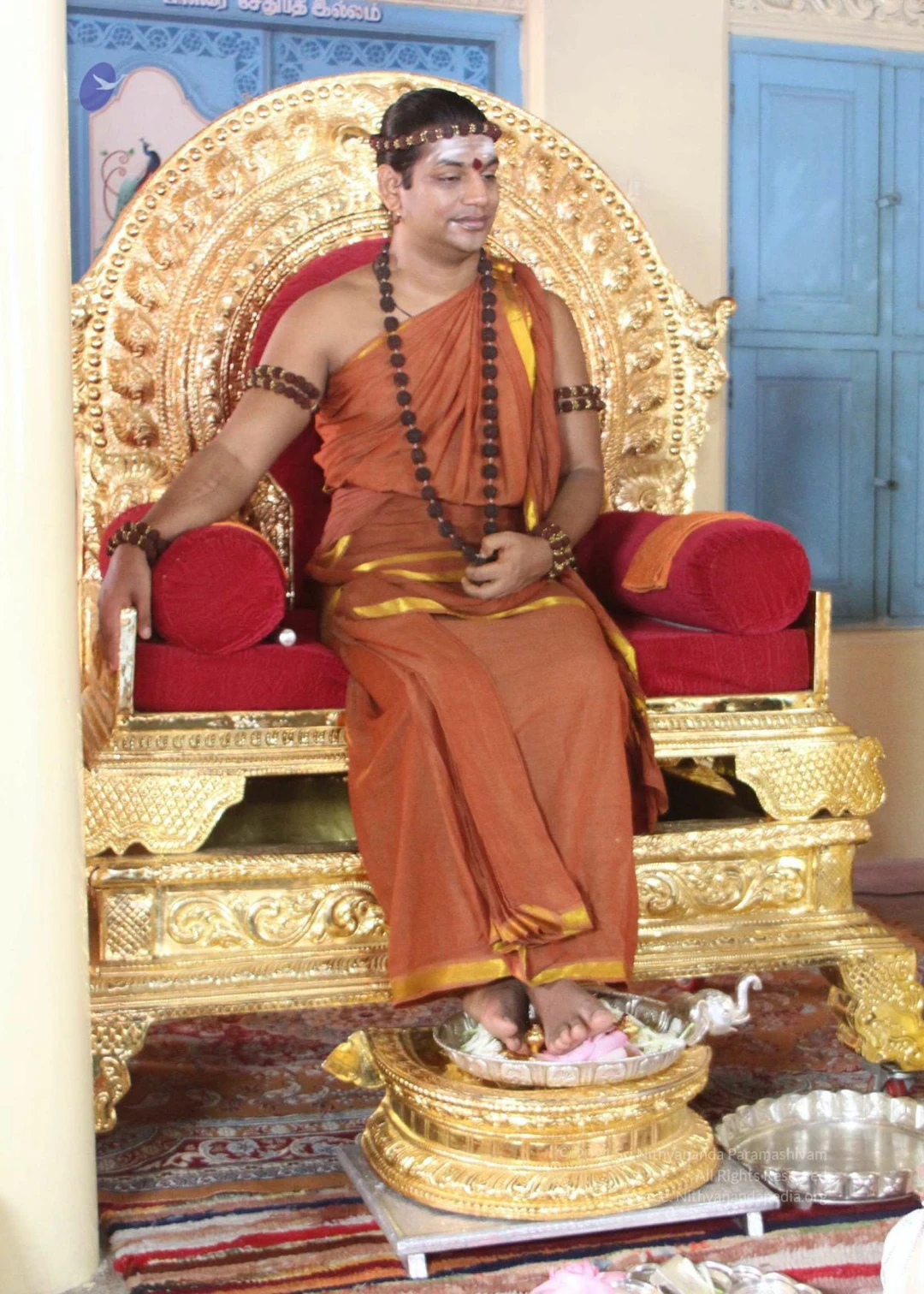
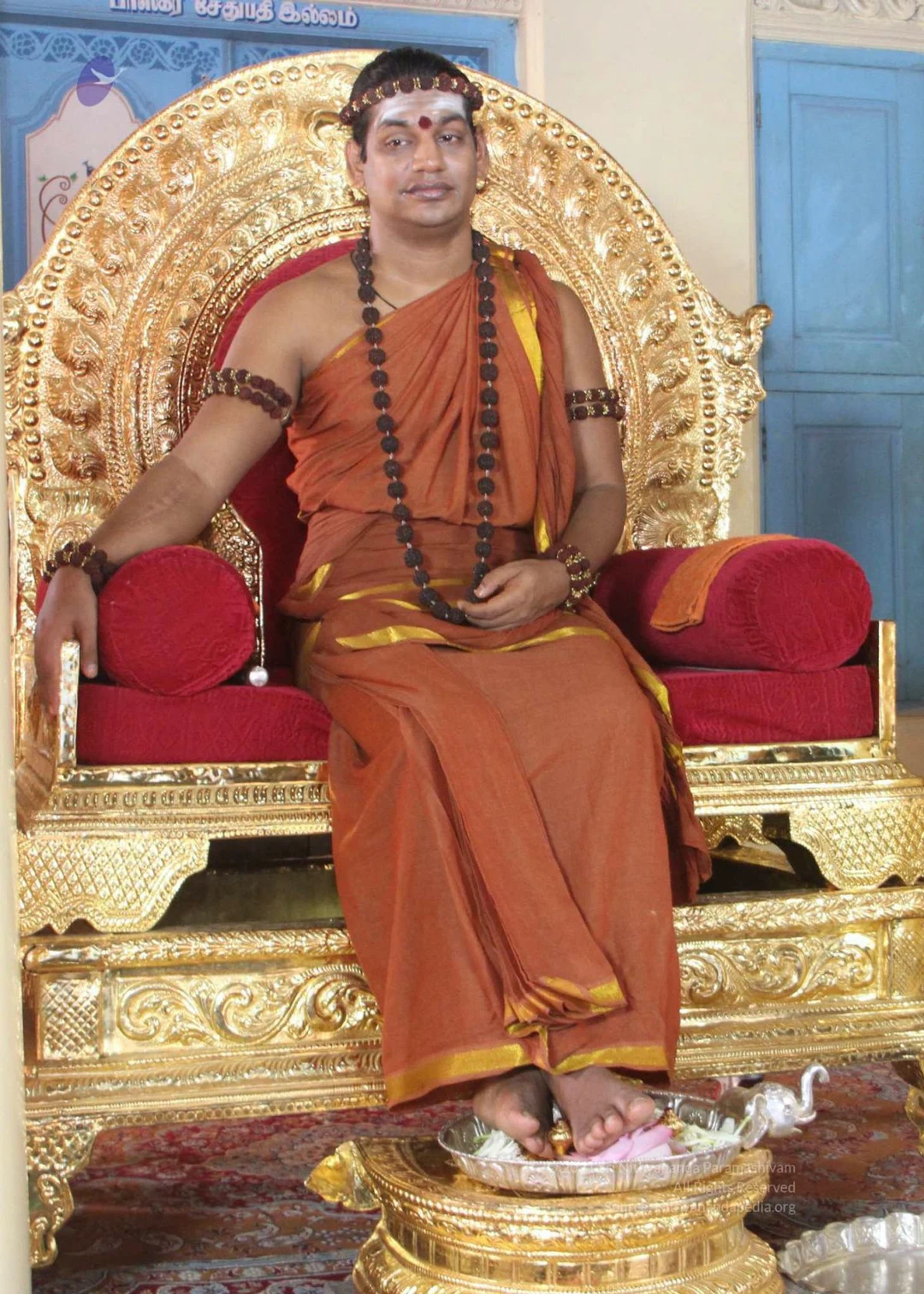
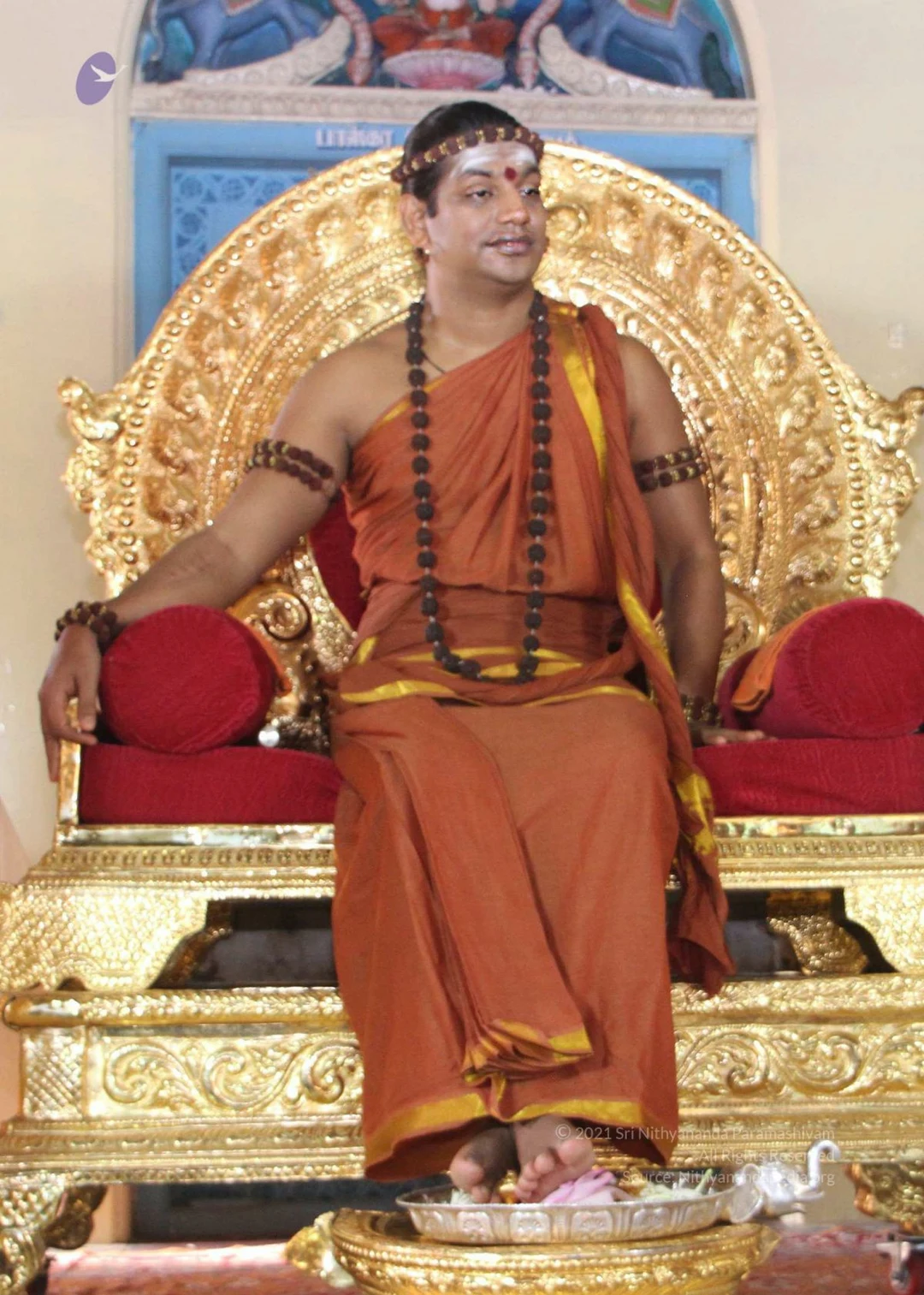
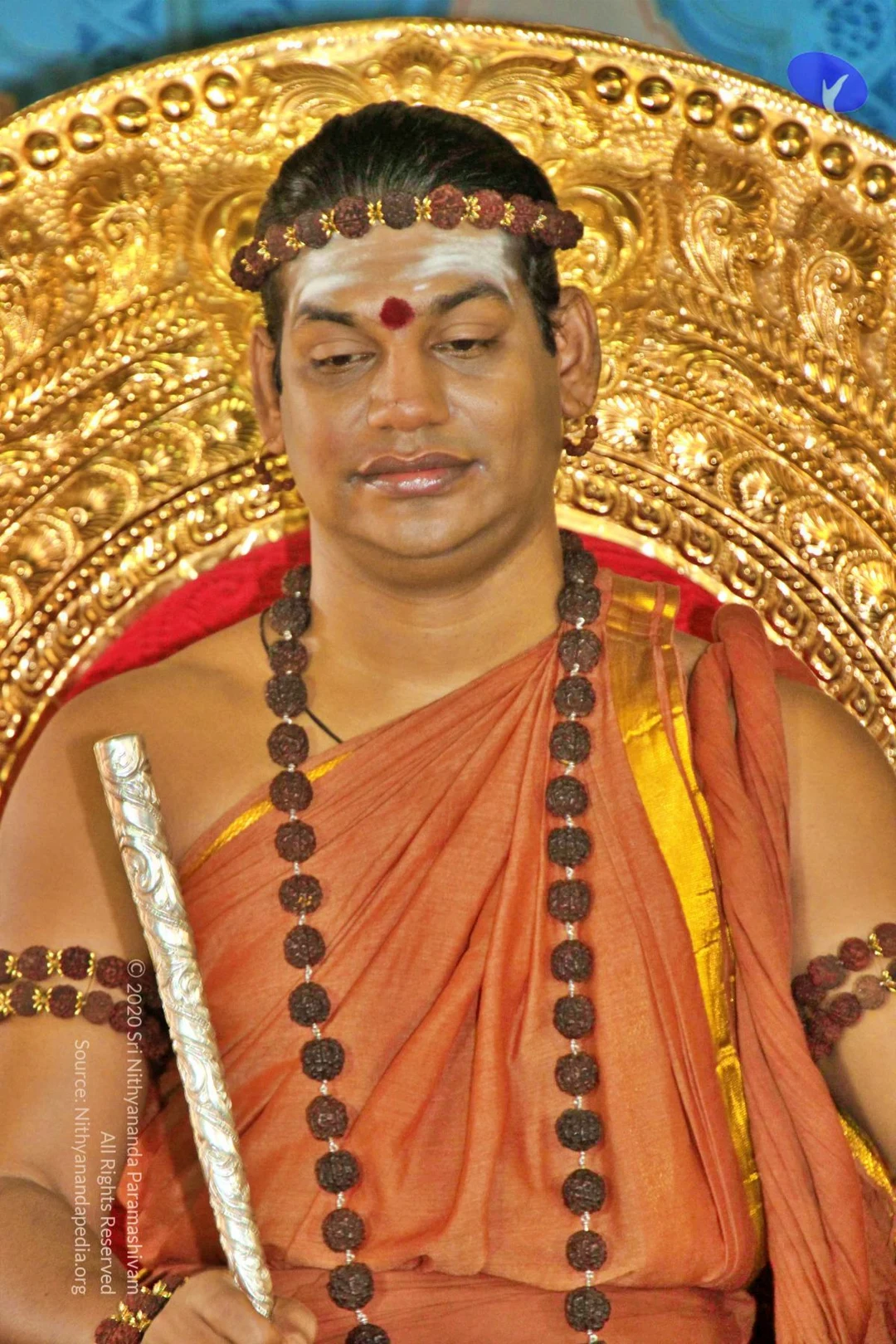
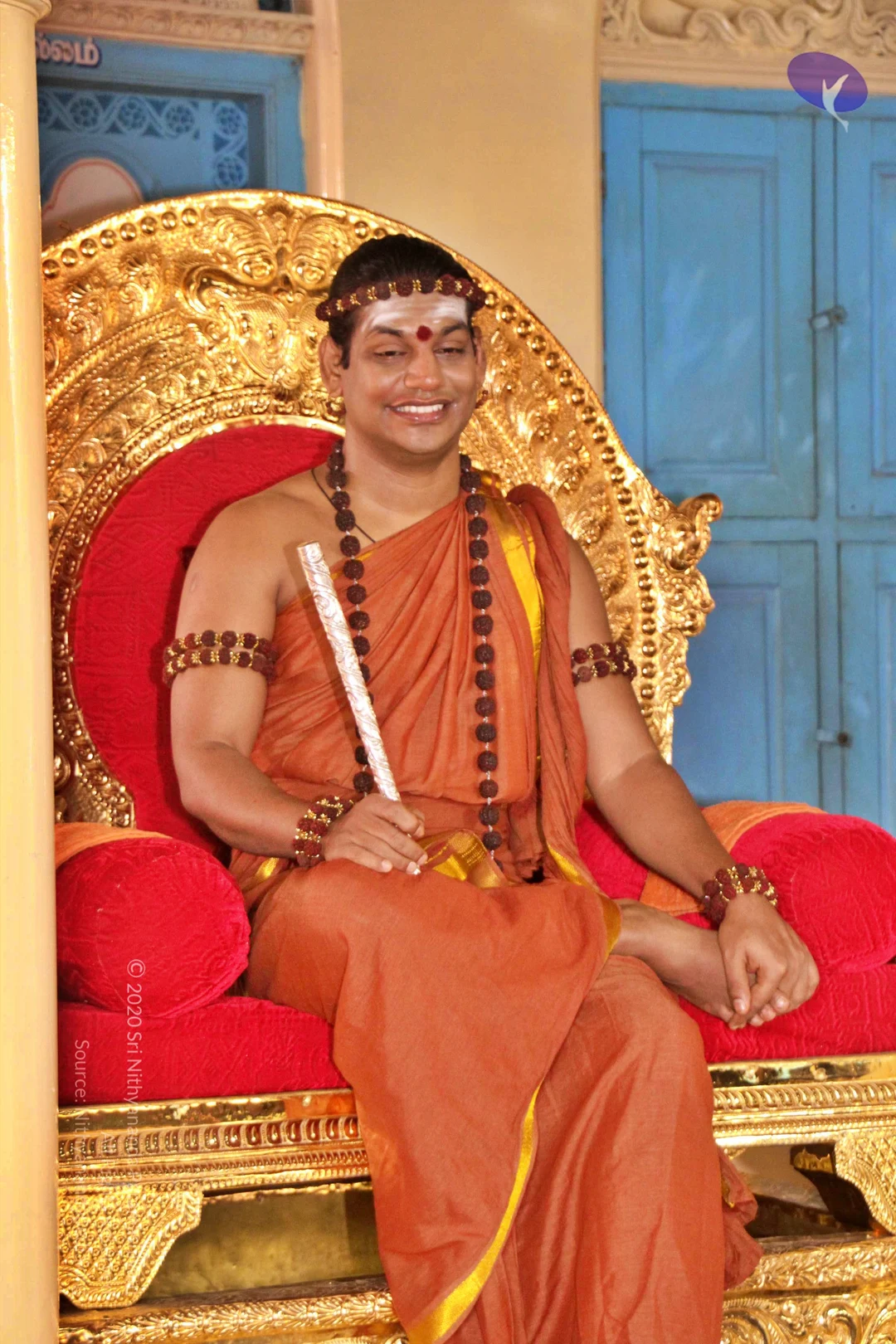
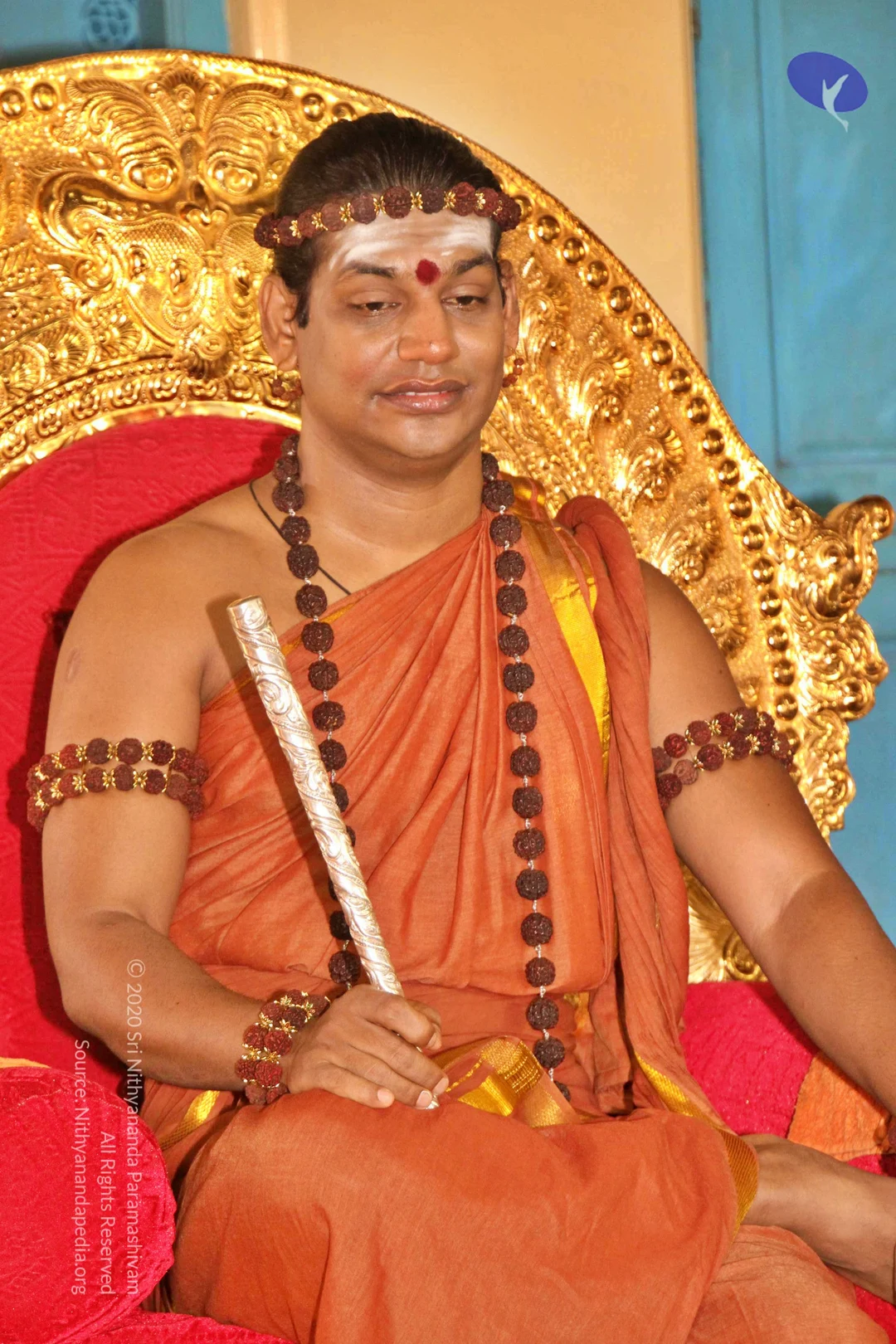
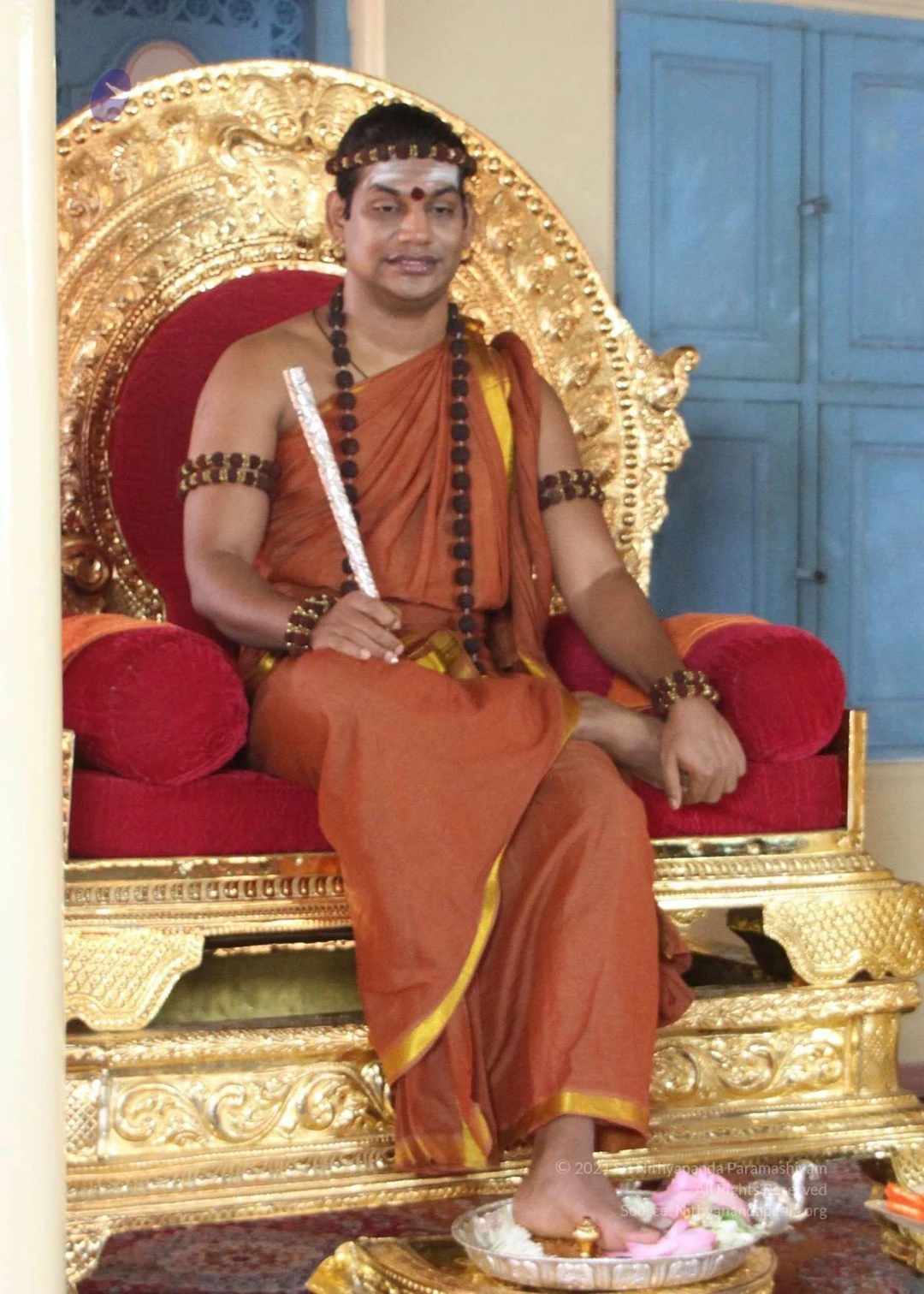
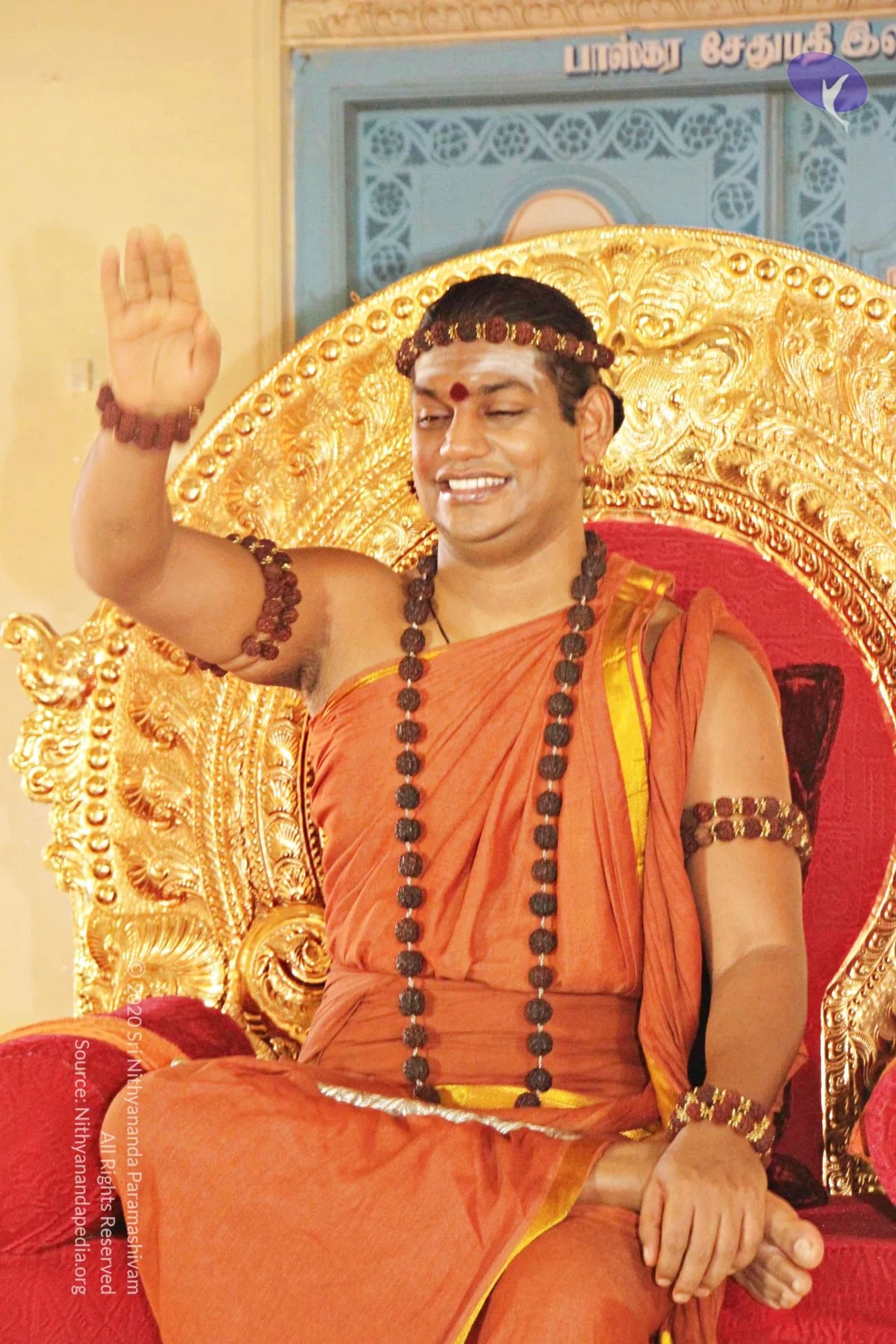
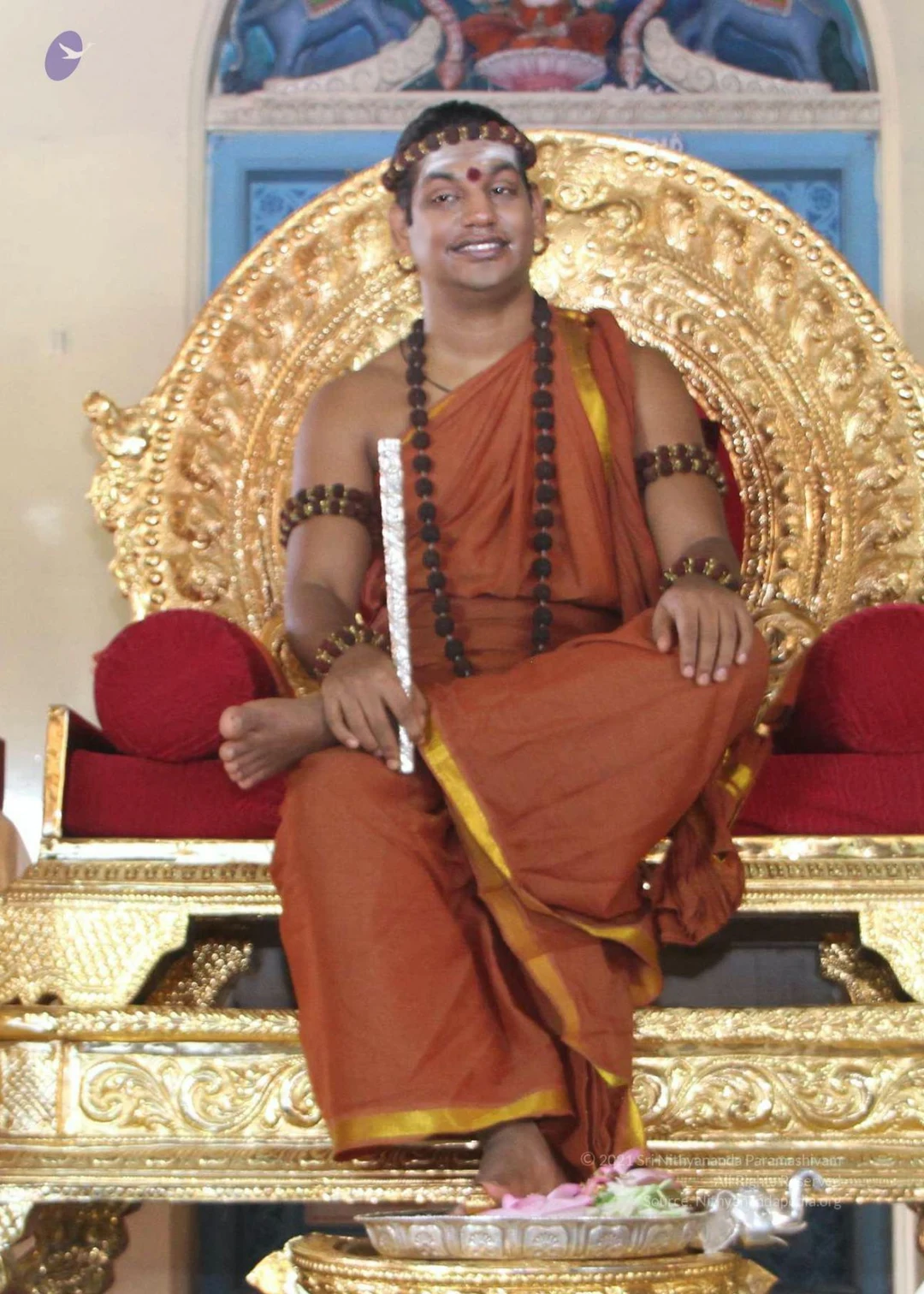
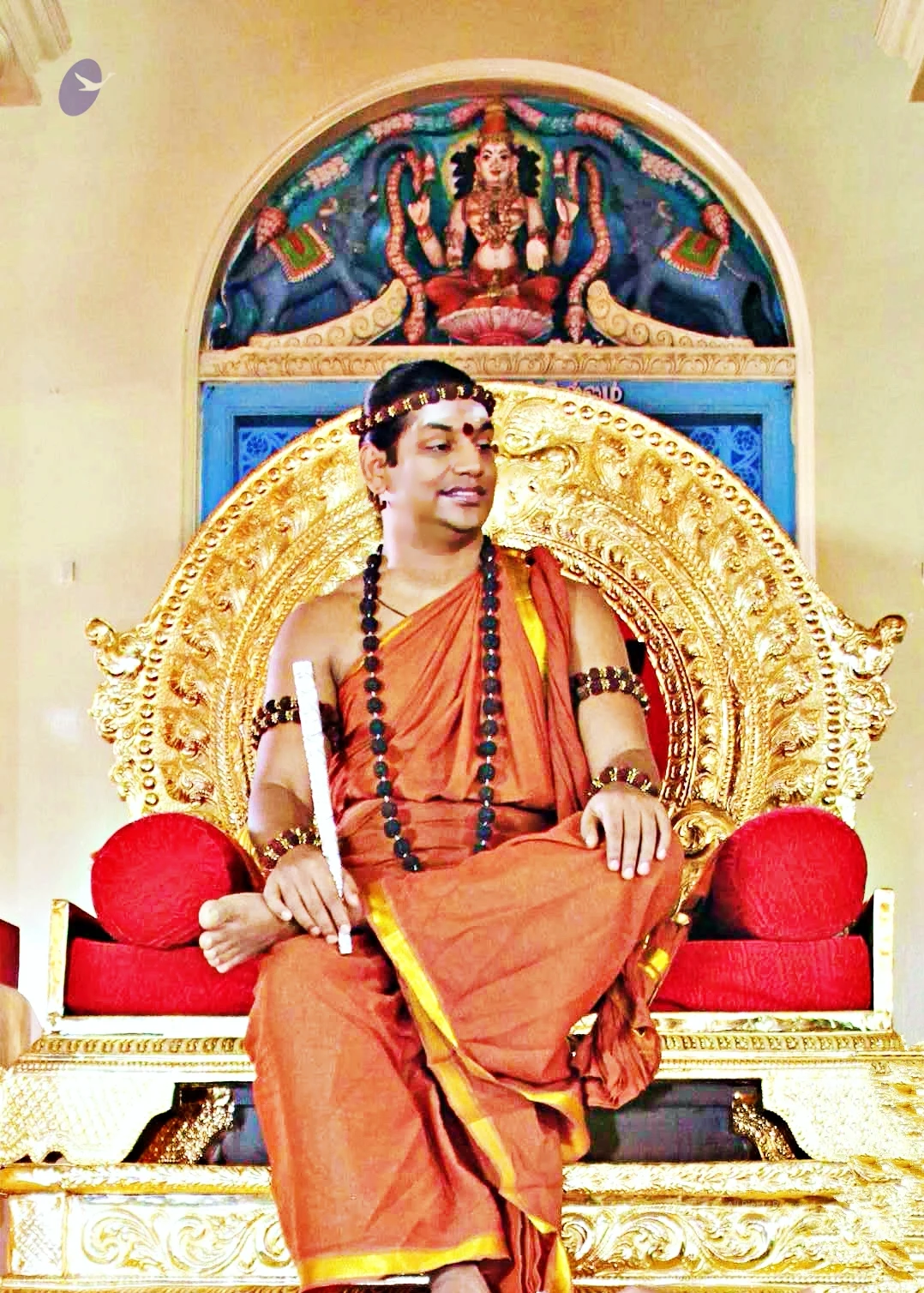
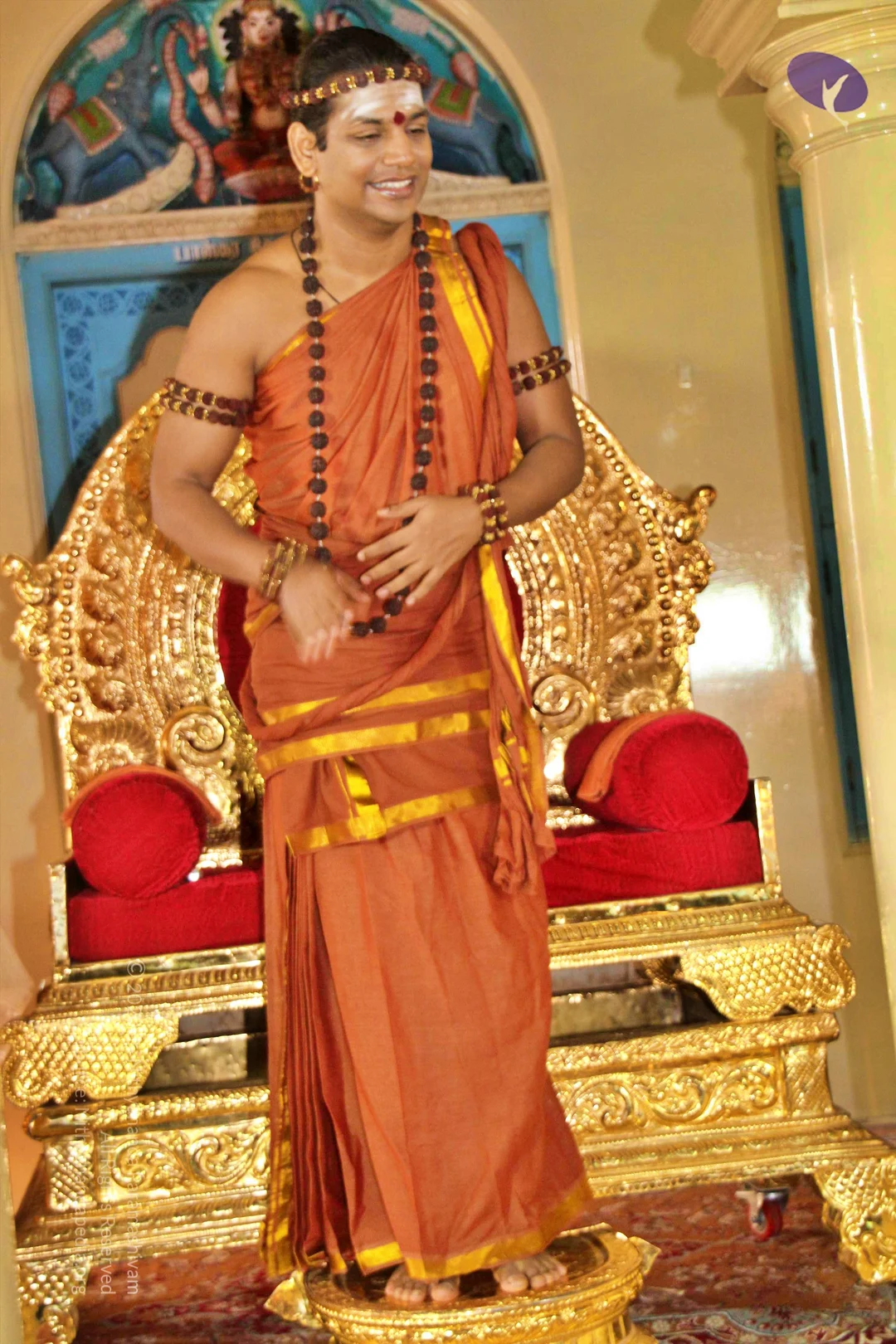
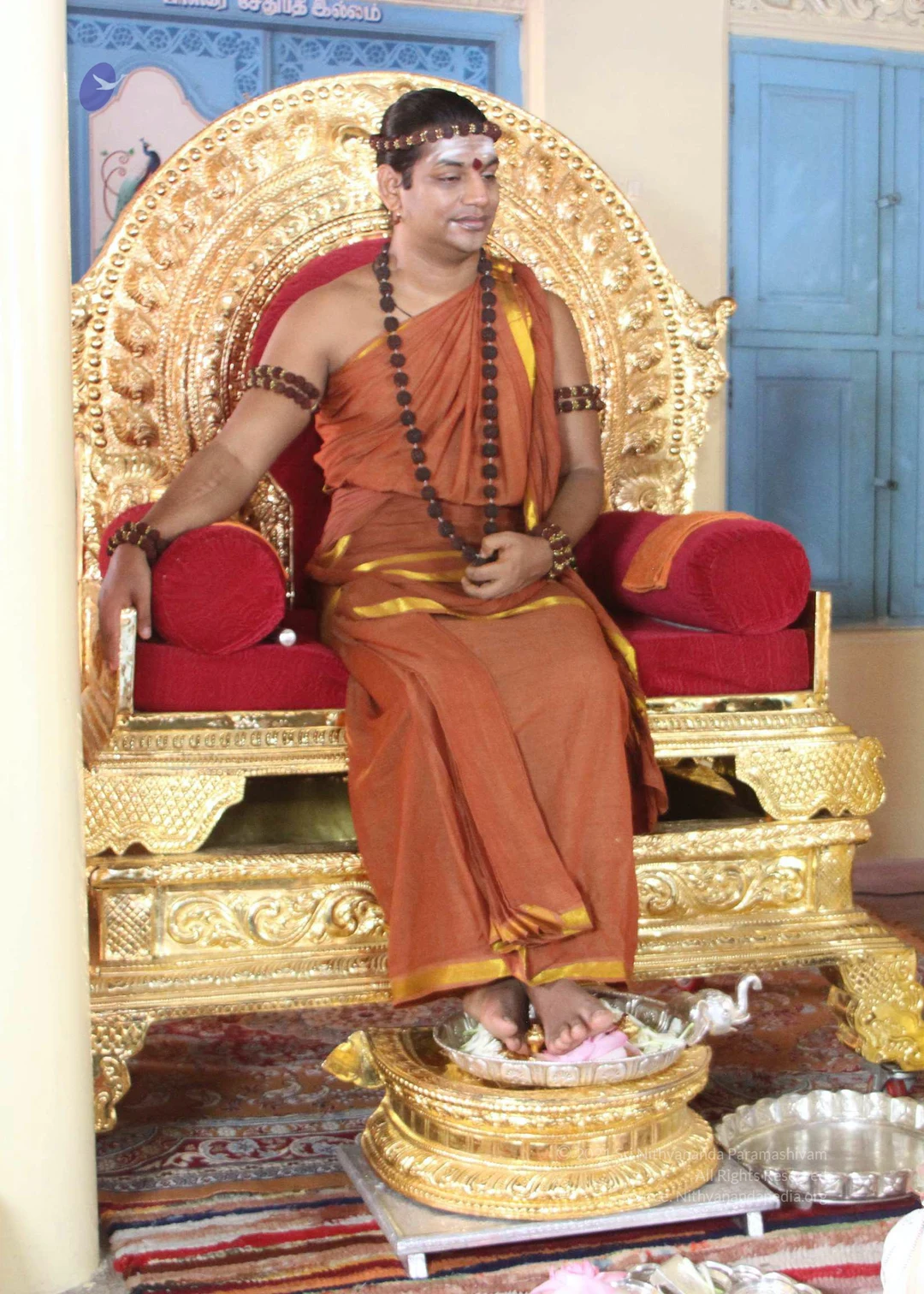
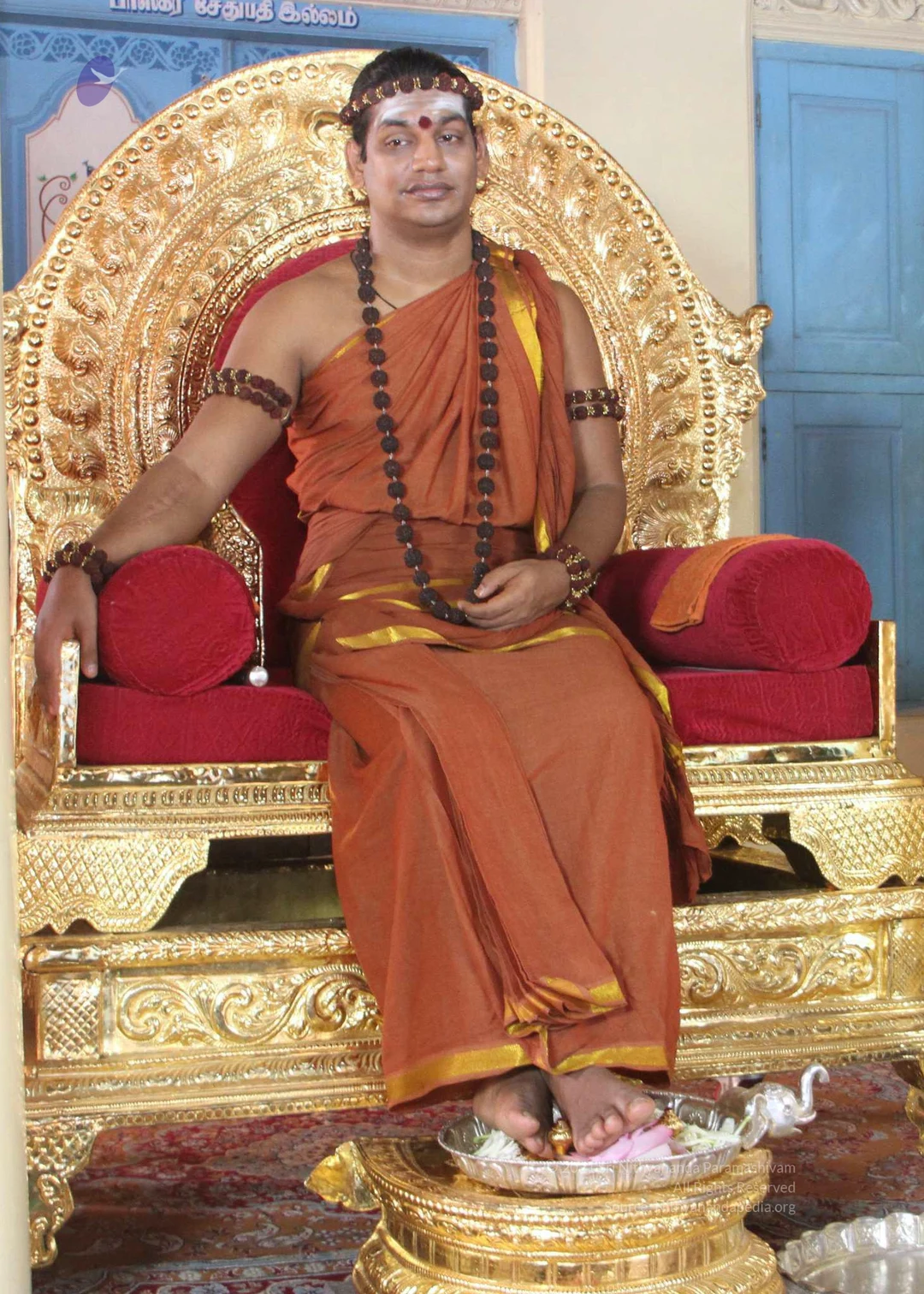
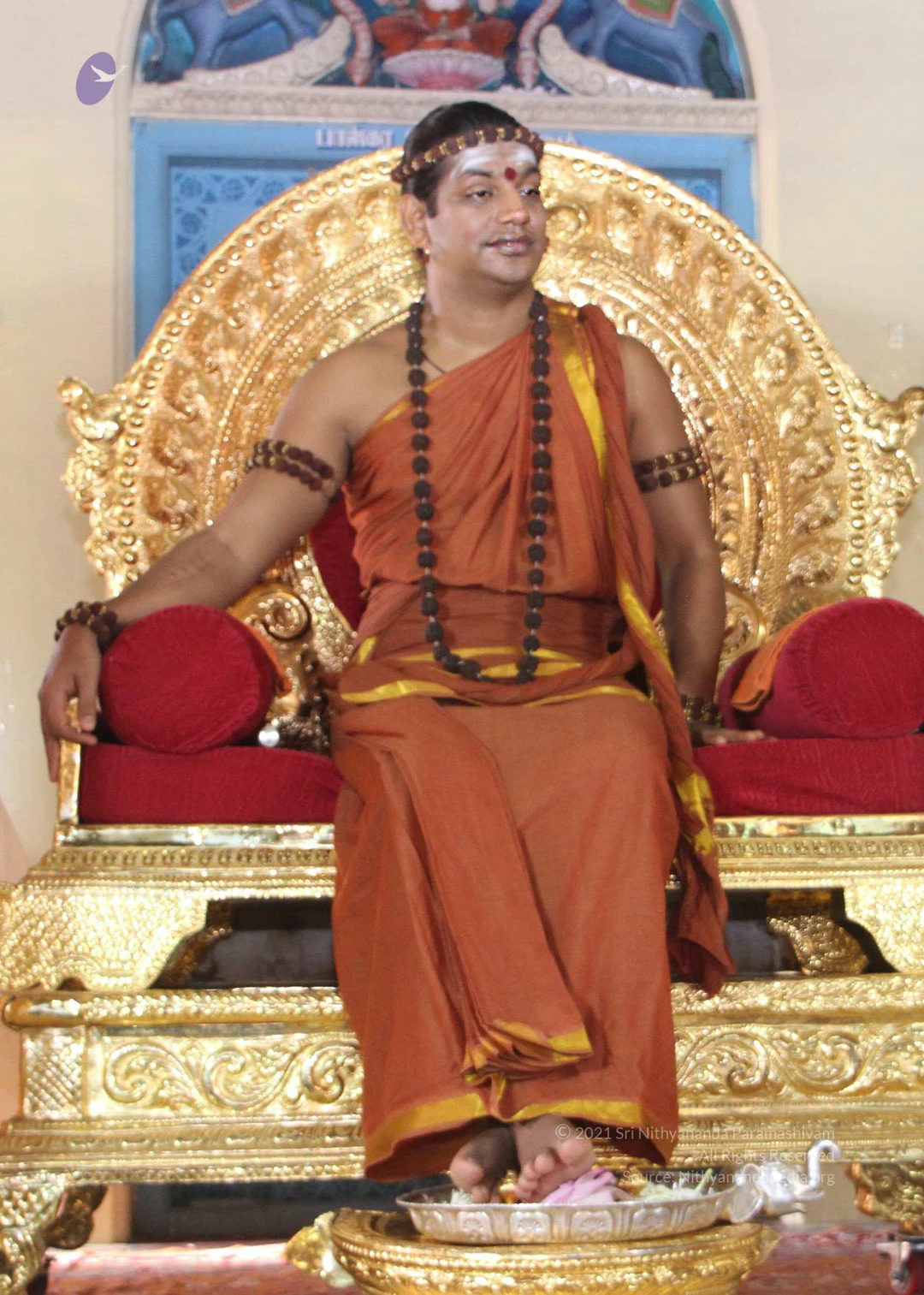
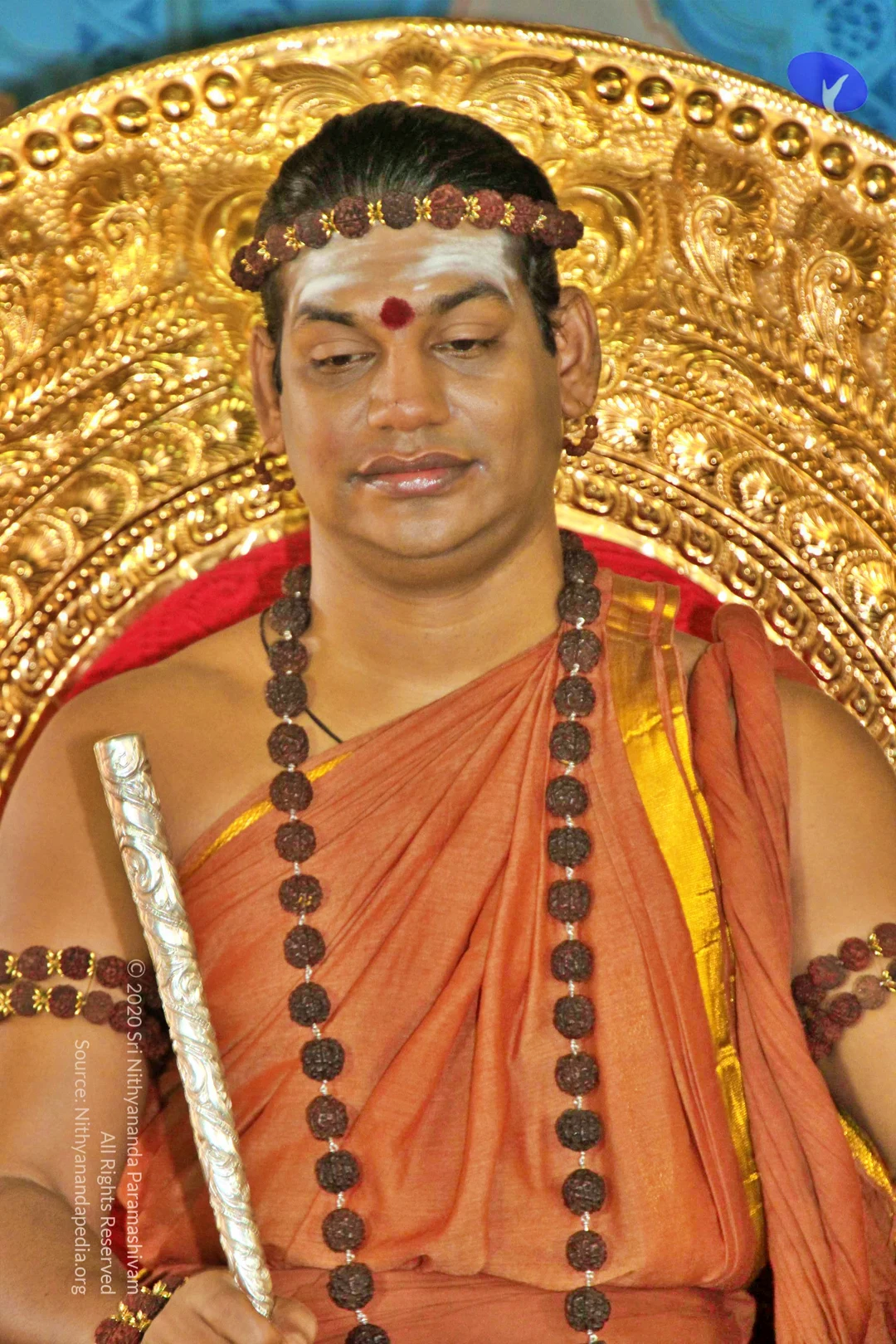
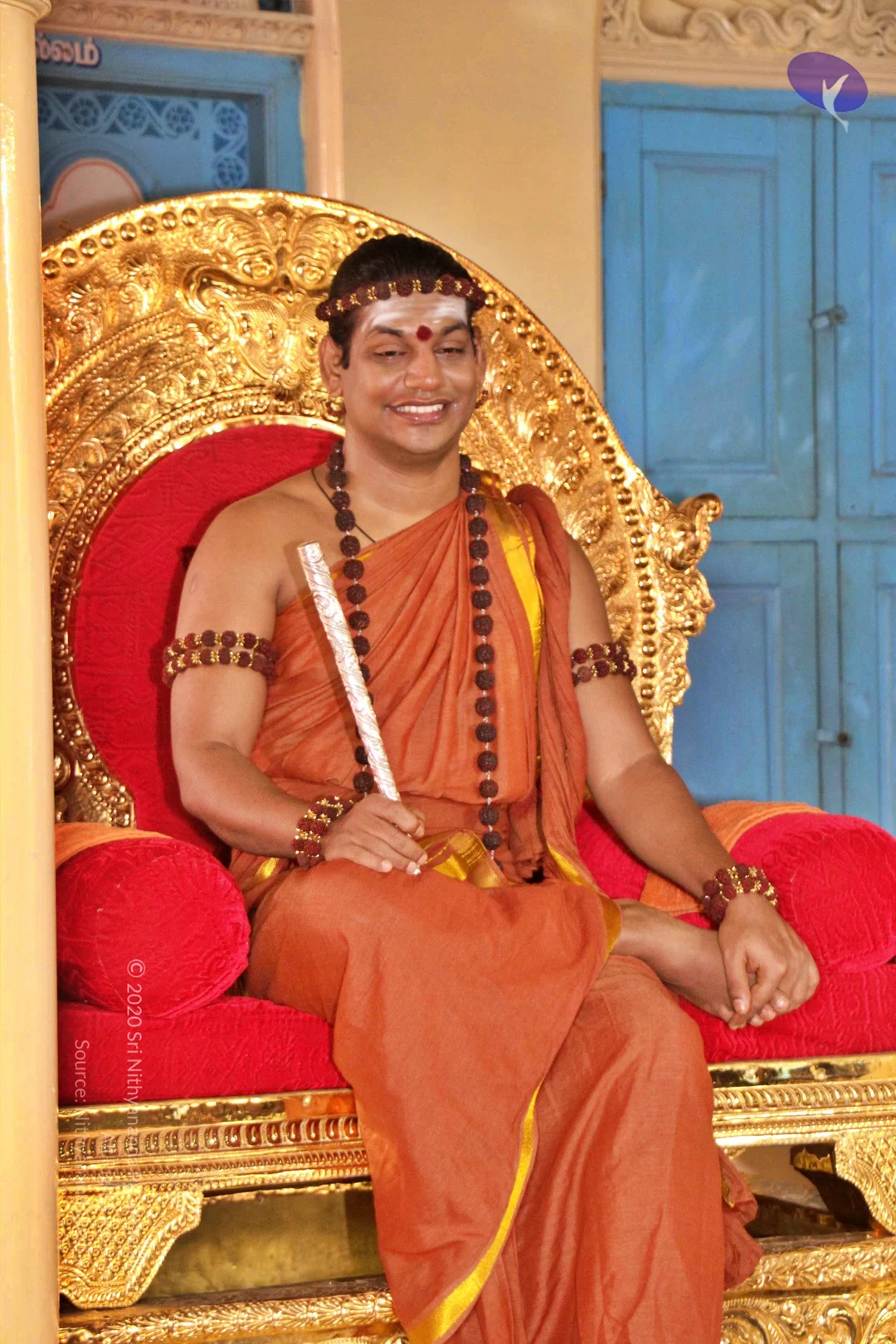
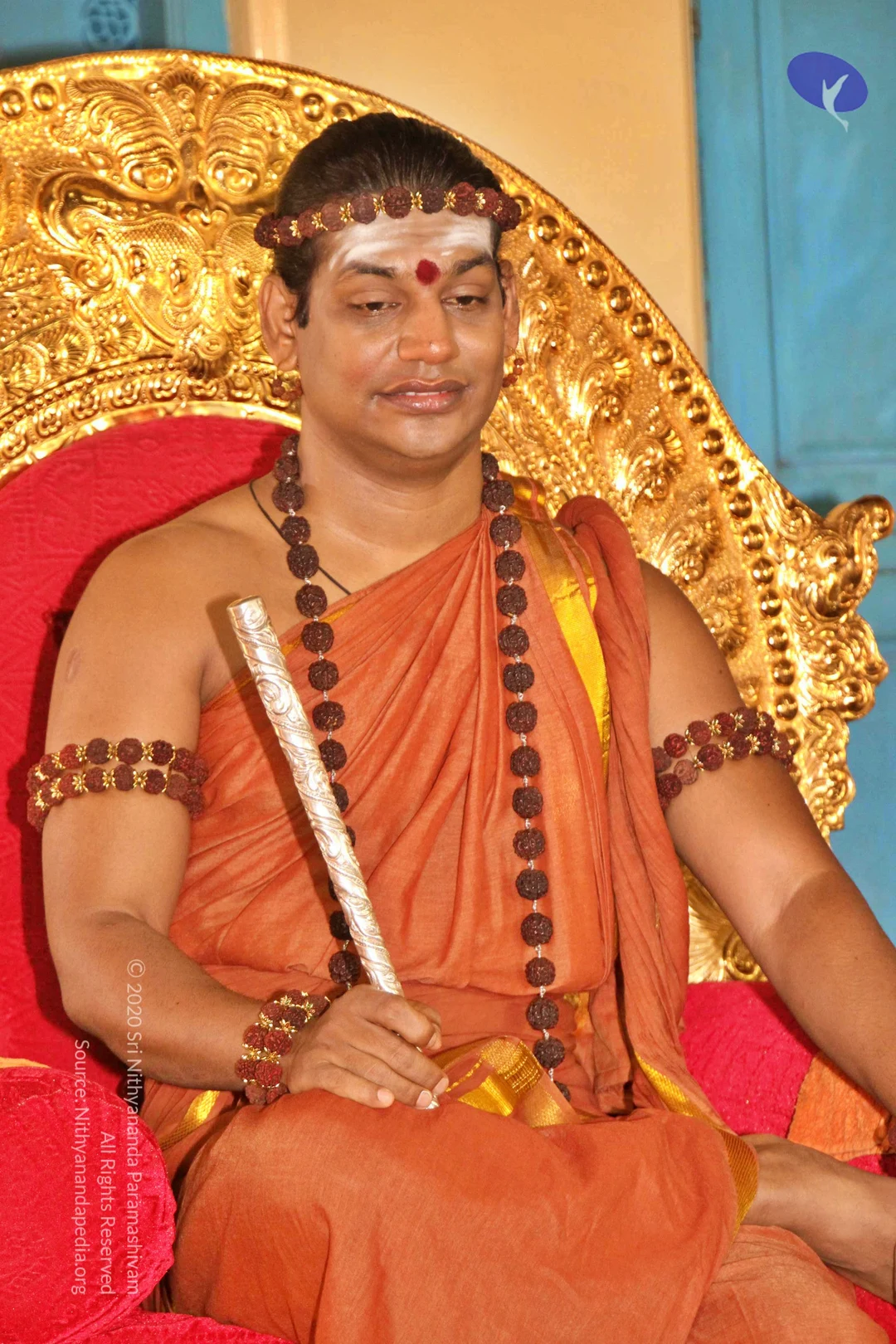
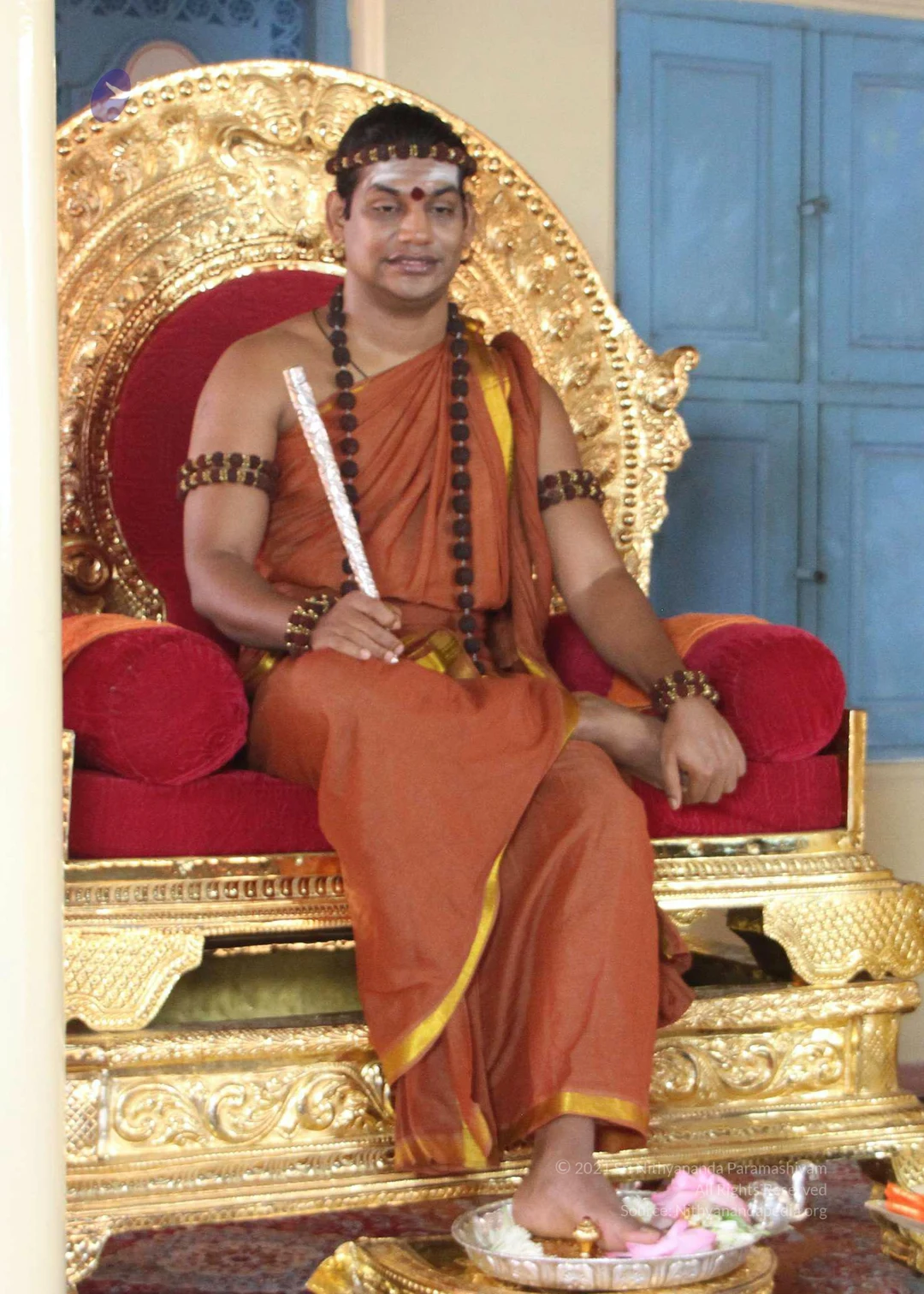
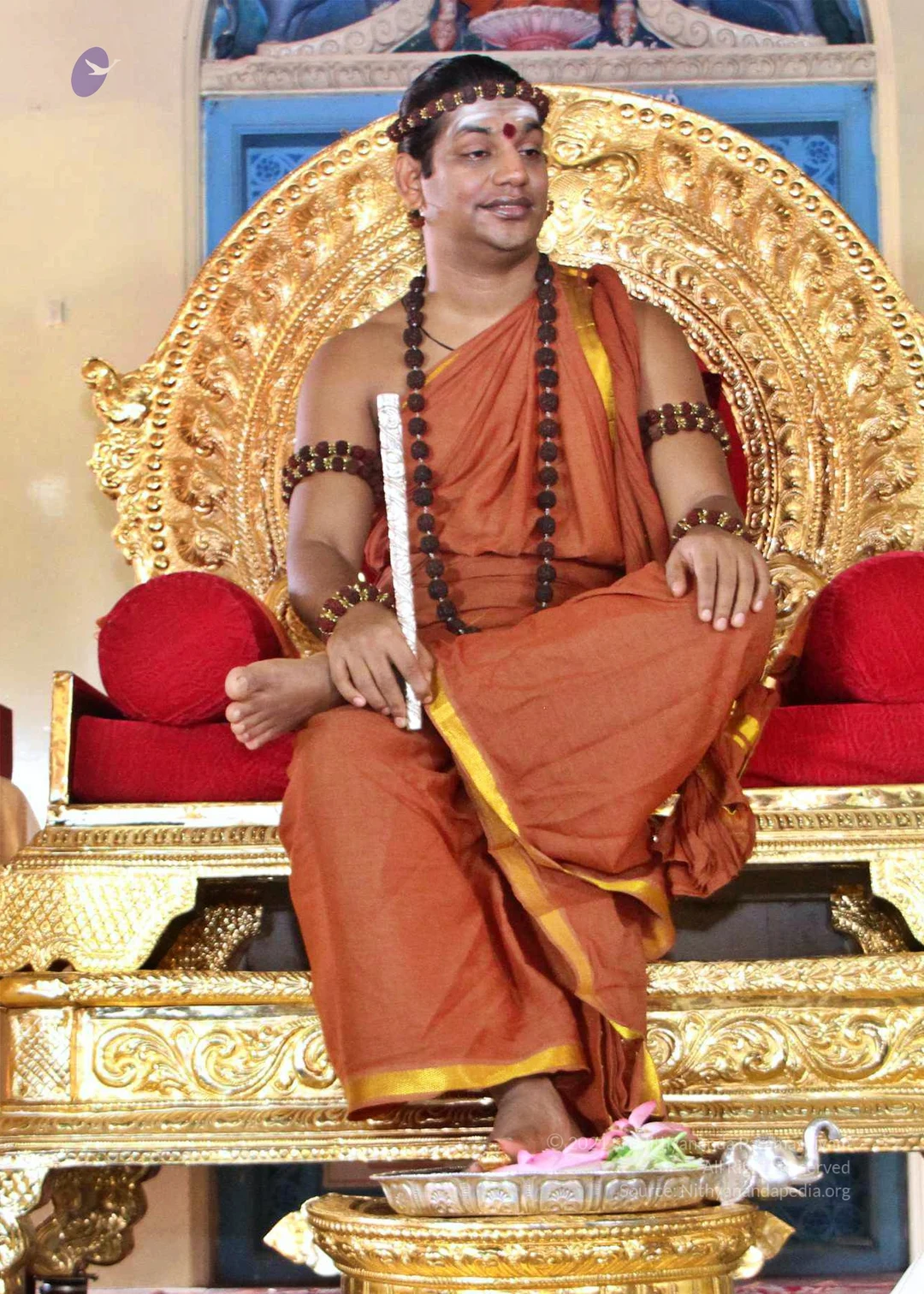
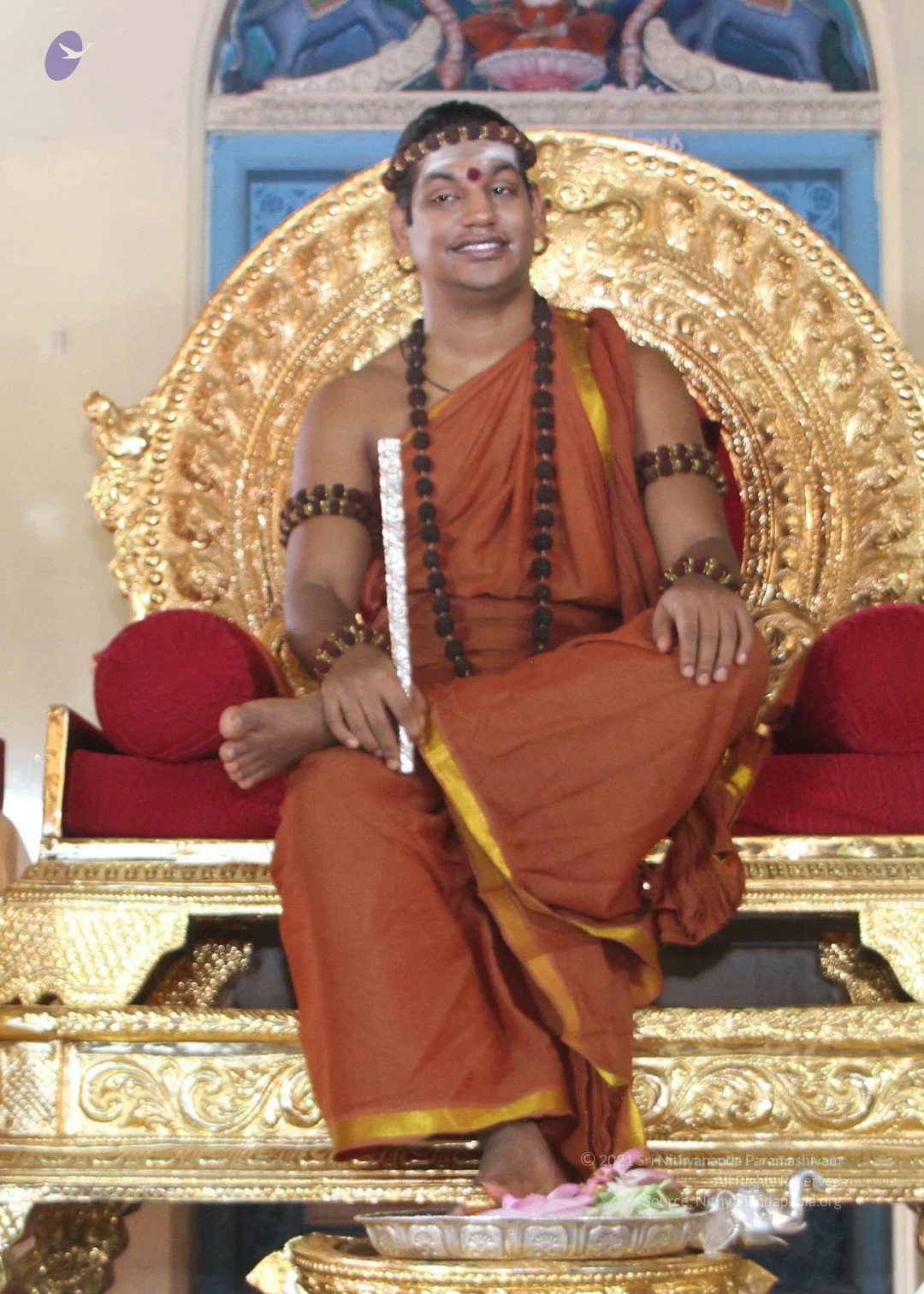
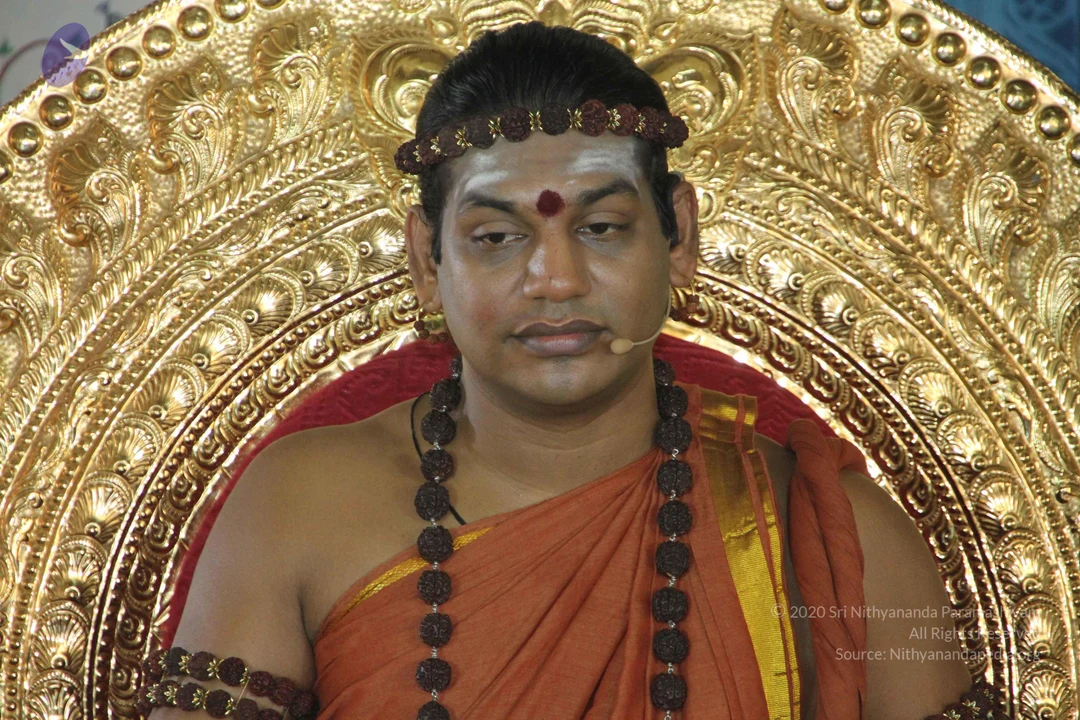
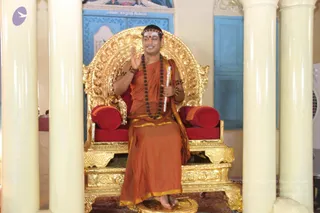
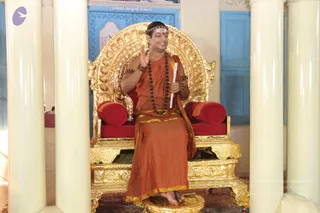
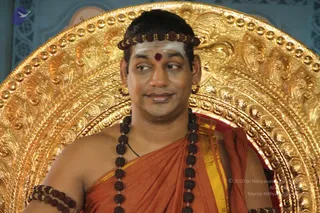
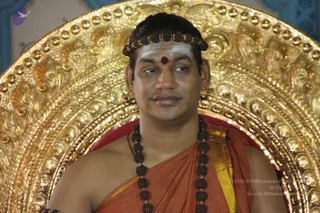
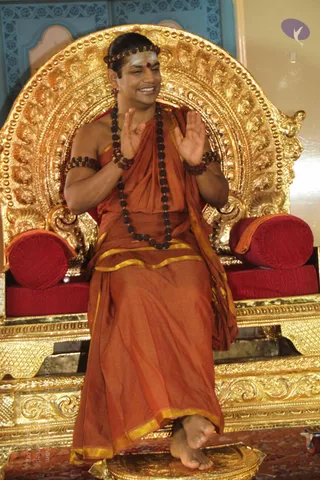
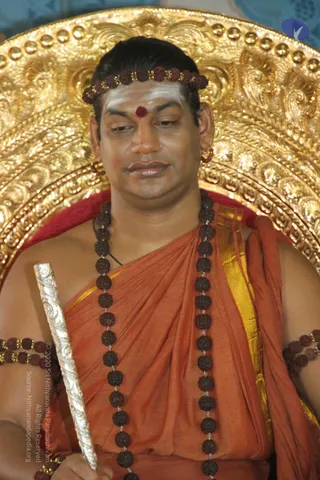
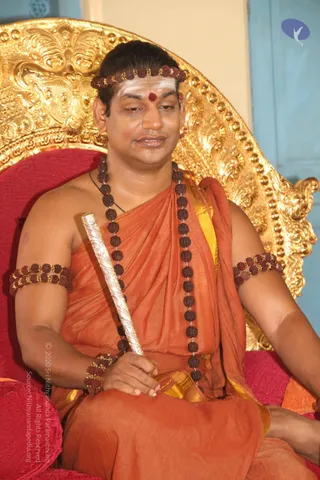
A man in saffron-orange robes sits on an ornate gold throne with red cushions, raising his right hand in a blessing gesture while holding a silver staff in his left. He wears a rudraksha mala necklace, beaded bracelets, and a white and red forehead marking with a red headband. Behind him are cream pillars, a blue-framed doorway, and a painted panel with a temple-style emblem. The setting appears to be a satsang hall.A man in saffron-orange robes sits on an ornate gold throne with red velvet cushions, raising his right hand in a blessing or teaching gesture while holding a white rolled scroll in his left. He wears a rudraksha mala, gold armlets and bangles, and a vibhuti tripundra with a red bindi on his forehead. Pale cream pillars frame him, with a blue panel and door behind. a person appears in this photo, seated in the discourse posture.A man seated on an ornate gilded throne with red cushions, raising his right hand in a blessing gesture while holding a white staff in his left hand. He wears a saffron-orange dhoti and shawl with gold borders, a dark rudraksha mala necklace, beaded bracelets, a red forehead mark, and a headband. Cream pillars frame the scene, with a blue wall panel behind. A gilded foot-stool rests below. a person: the figure wears saffron clothing, rudraksha malas and a headband on a throne, consistent with the page's reference to a person at the satsang.A man in an orange-saffron robe with a gold border sits on an ornate gold throne with red cushions, raising his right hand in a blessing gesture and holding a white ceremonial staff in his left. He wears a rudraksha mala necklace, rudraksha bracelets, a red-banded headband and a tilak on his forehead. He is barefoot, with his feet resting on a small gold footstool. White pillars and a blue wooden door frame the scene, with a Tamil-script sign above the door.A man seated in front of an ornate gold repoussé throne with scrolled floral and shell-like patterns. He wears a dark rudraksha headband, white vibhuti on his forehead with a red kumkum dot, and a long chain of dark rudraksha beads over an orange-saffron garment with a gold border. A rudraksha bracelet is on his arm. He gazes off to the side with a faint smile. a person appears as the seated figure with rudraksha malas and saffron robes, though the image is only a photograph of a seated man and identity is uncertain from appearance alone.A seated man in a saffron-orange garment with a golden shawl edge wears a rudraksha bead headband and long rudraksha mala necklaces. He has a white vertical tilak with a red dot on his forehead and sits before an ornate gold throne with repoussé floral and bead-edged carving. A blue-and-white logo appears at the upper left.

Morning-Satsang-in-Madurai

13 photosSource gallery
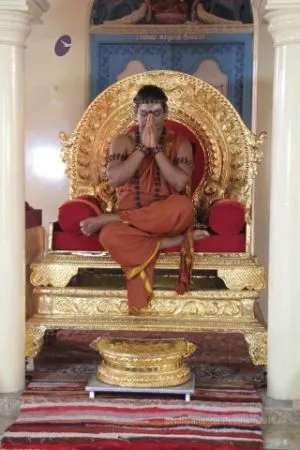
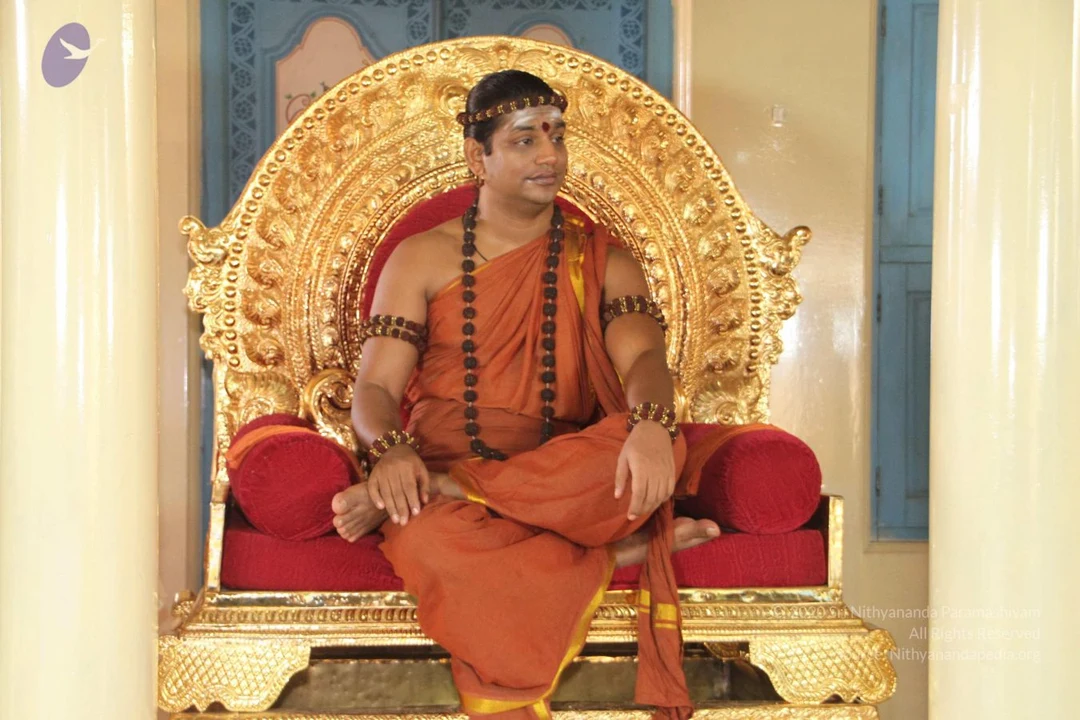
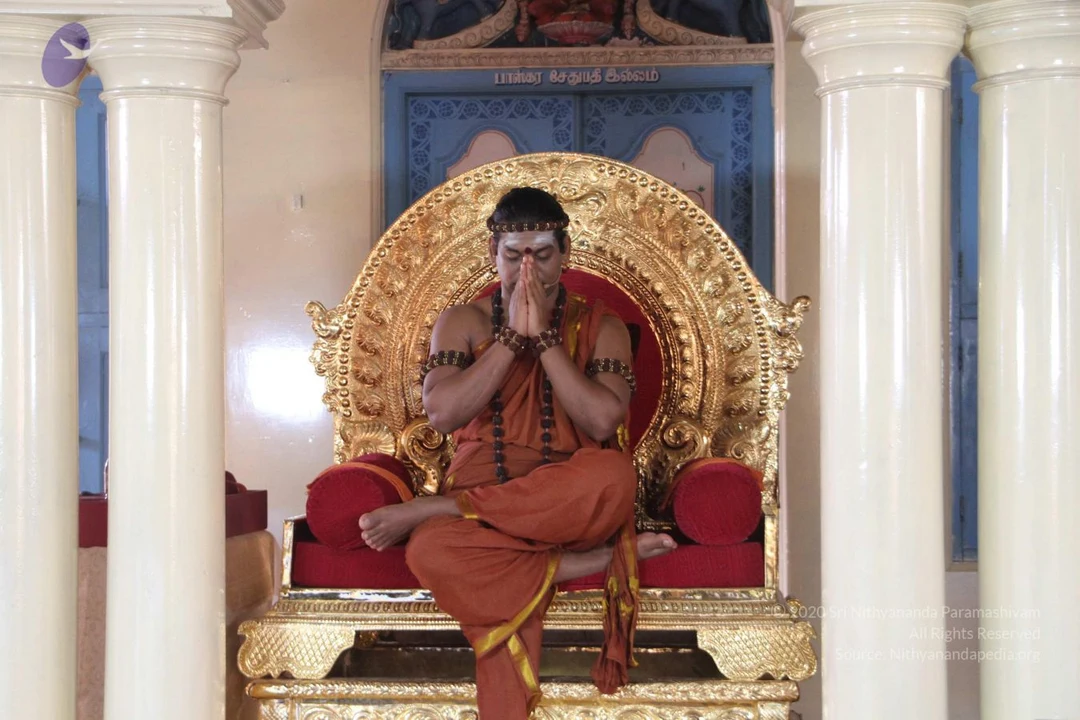
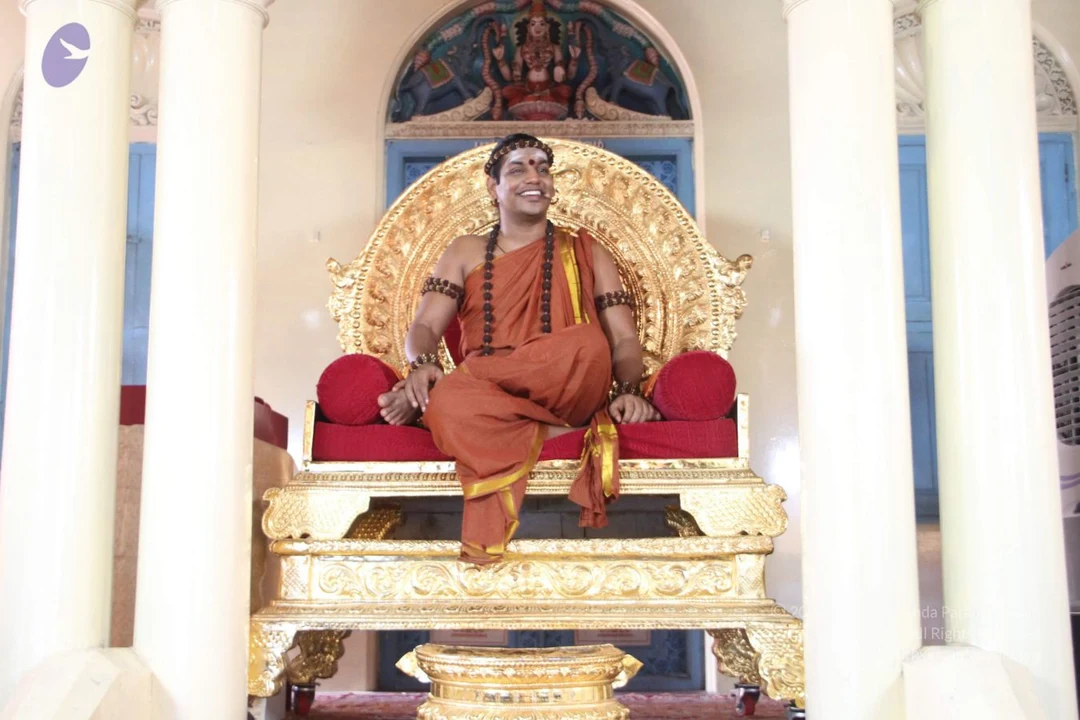
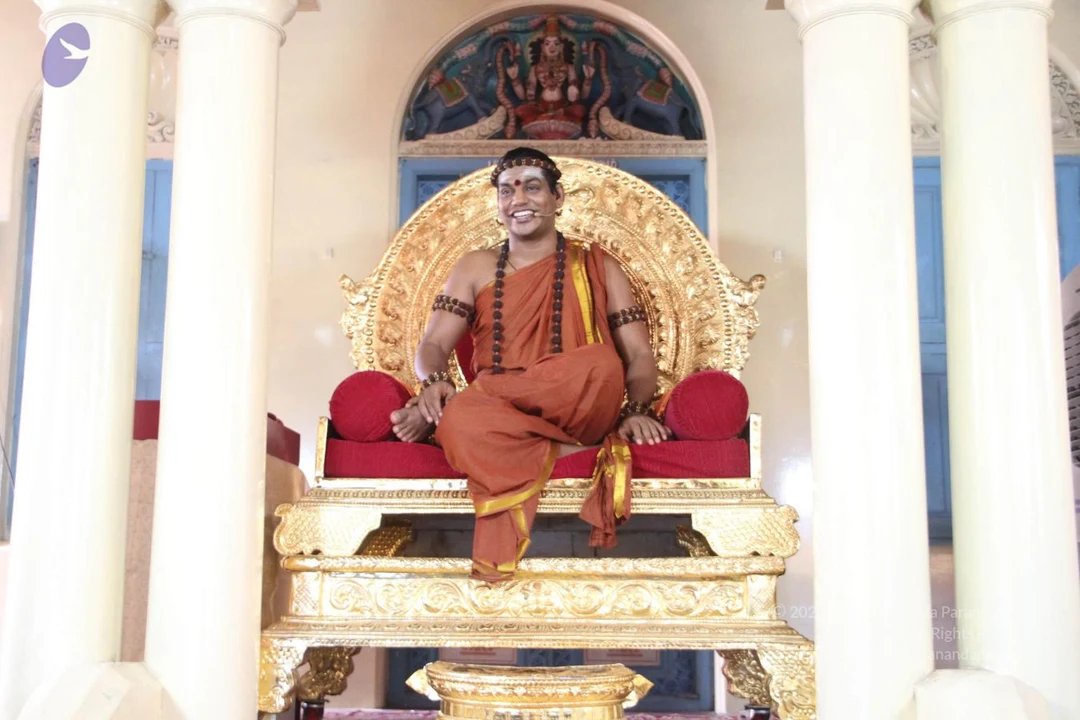
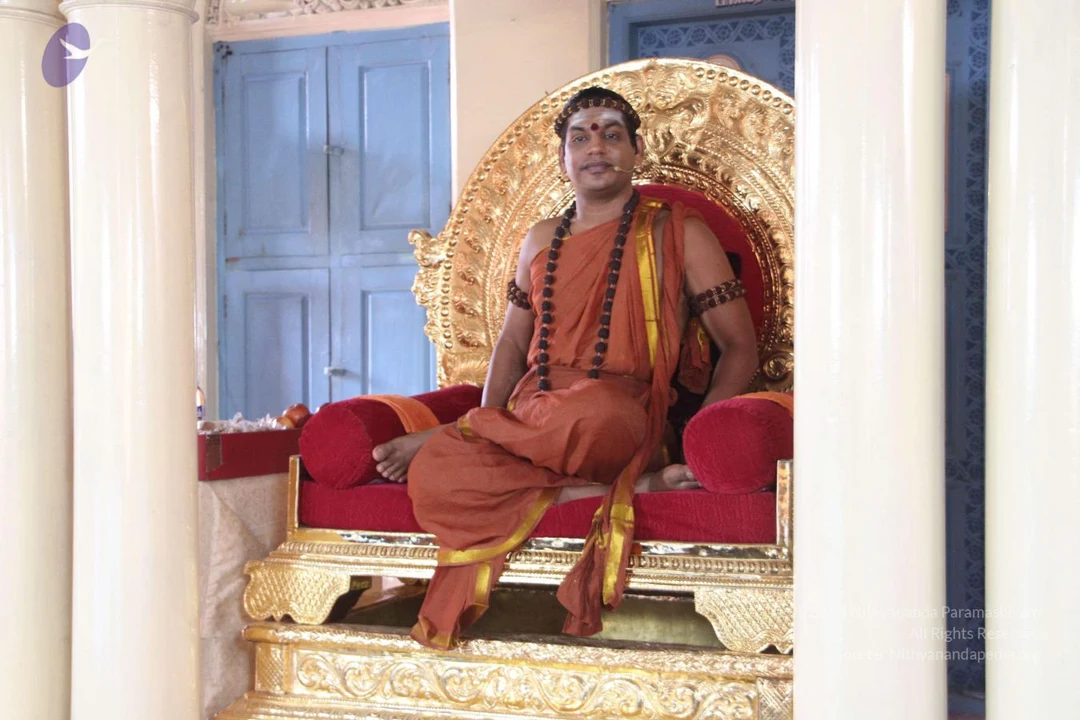
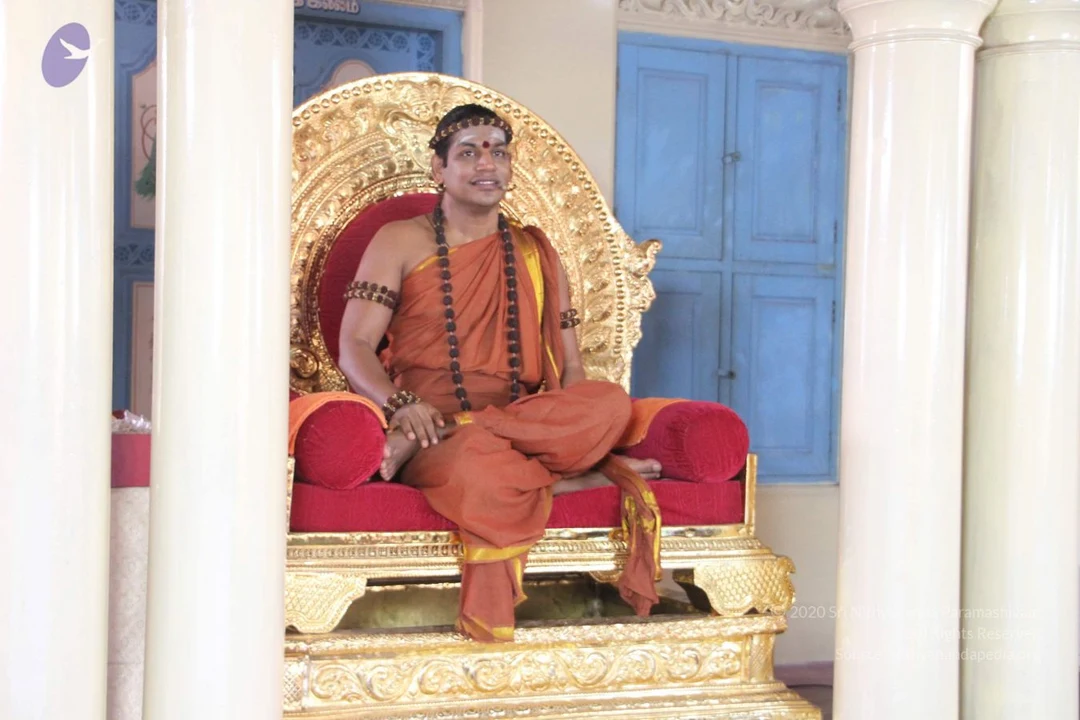
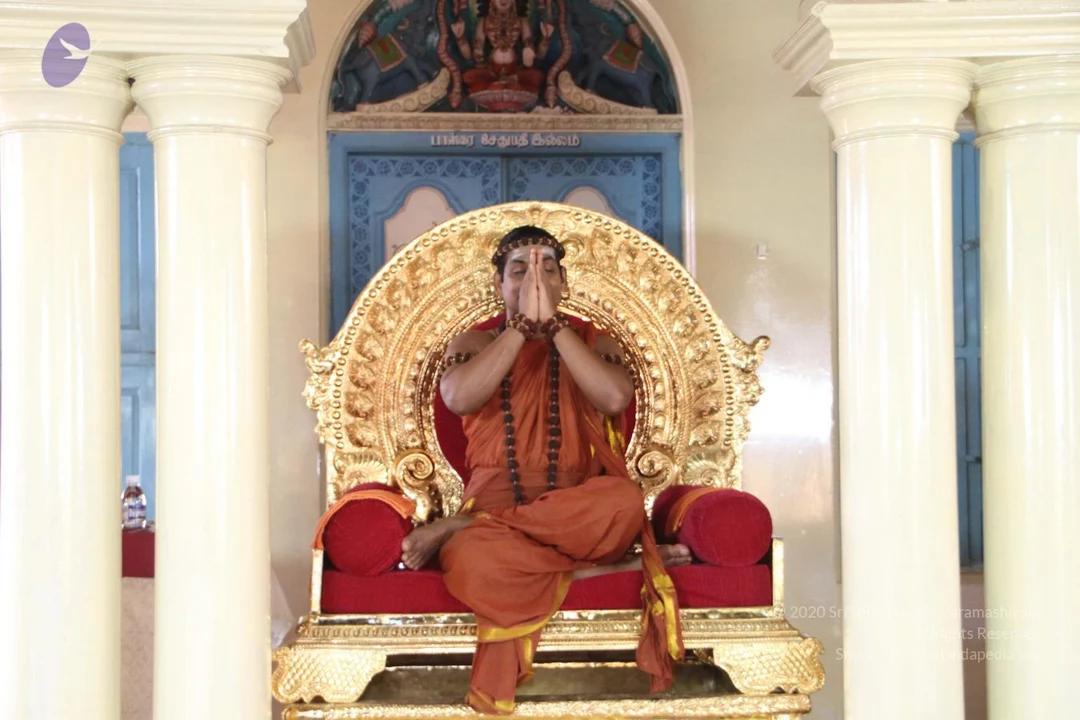
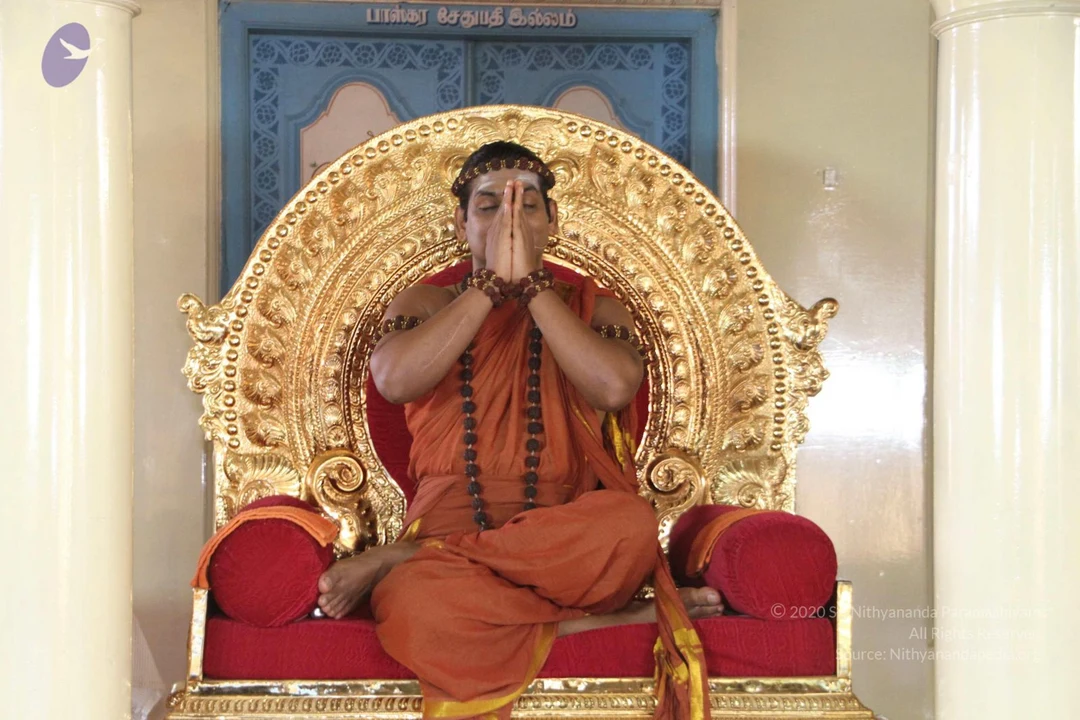
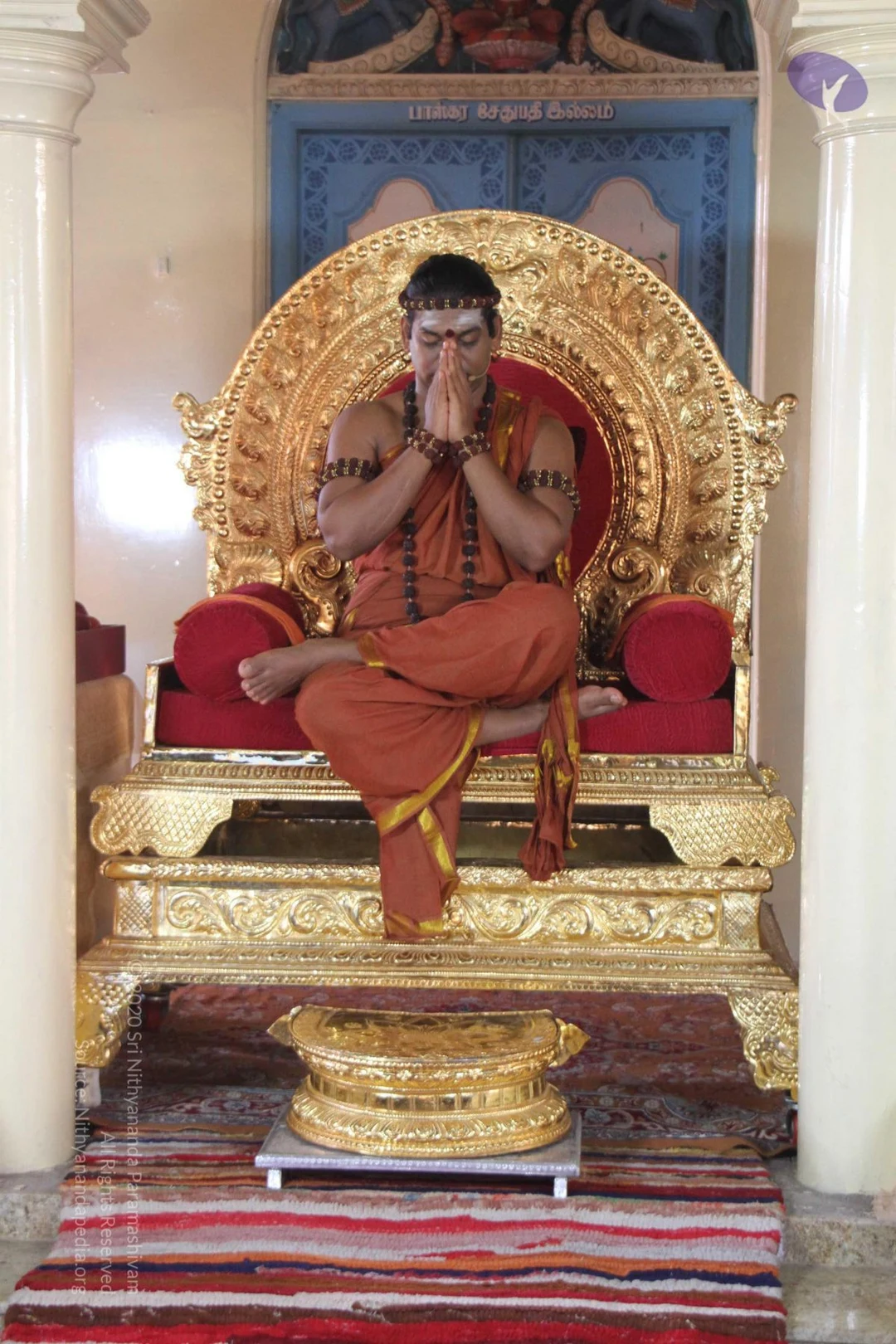
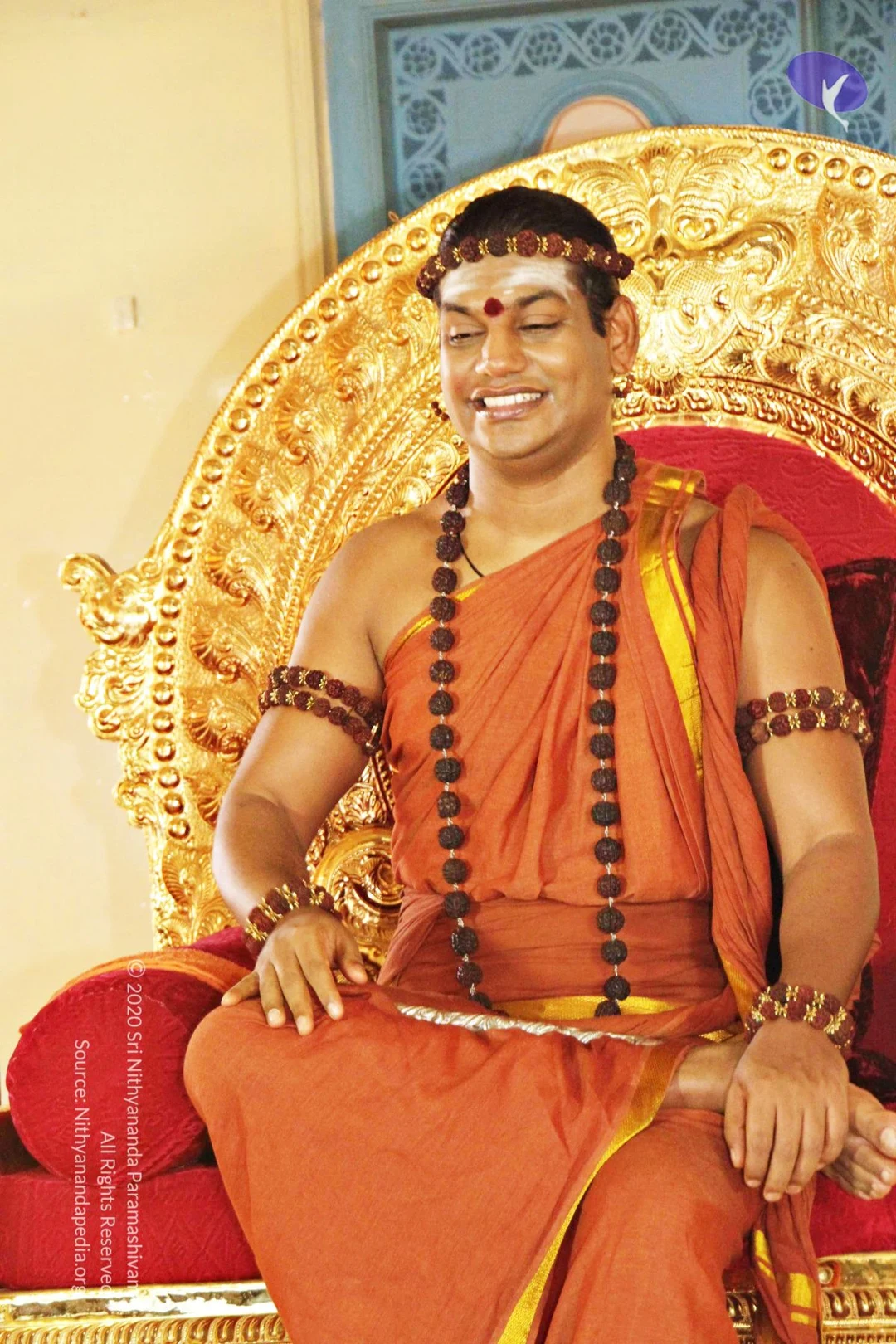
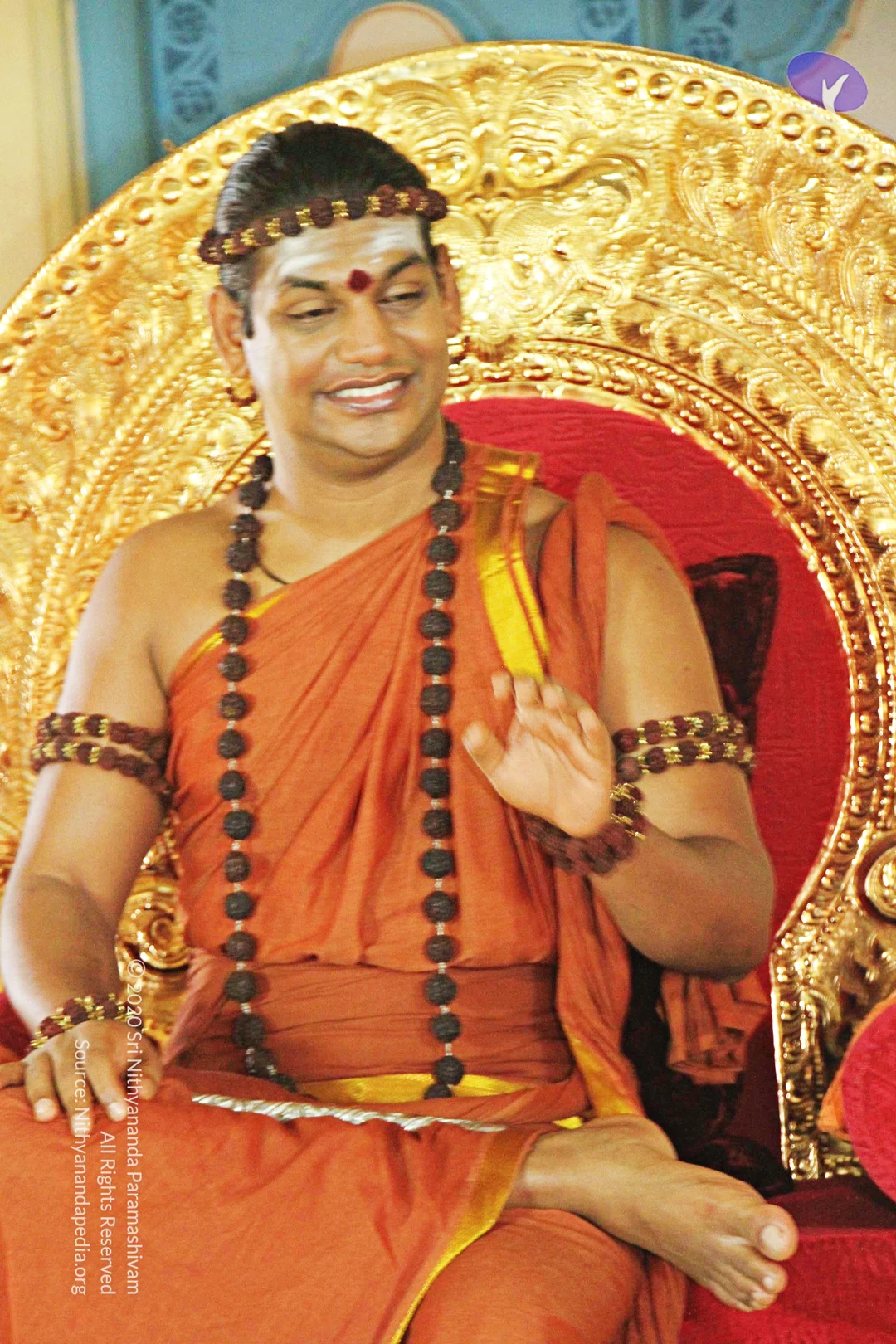
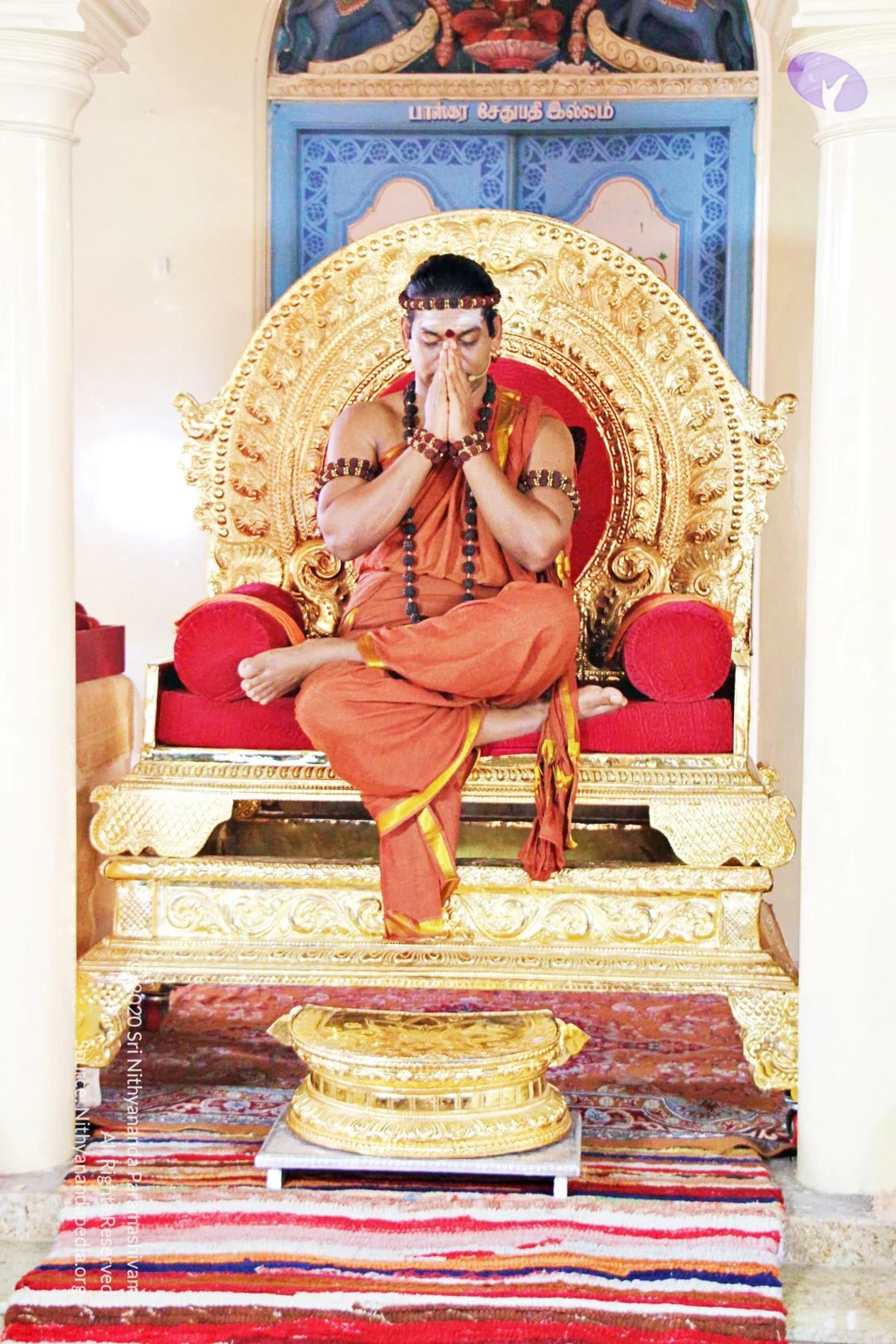
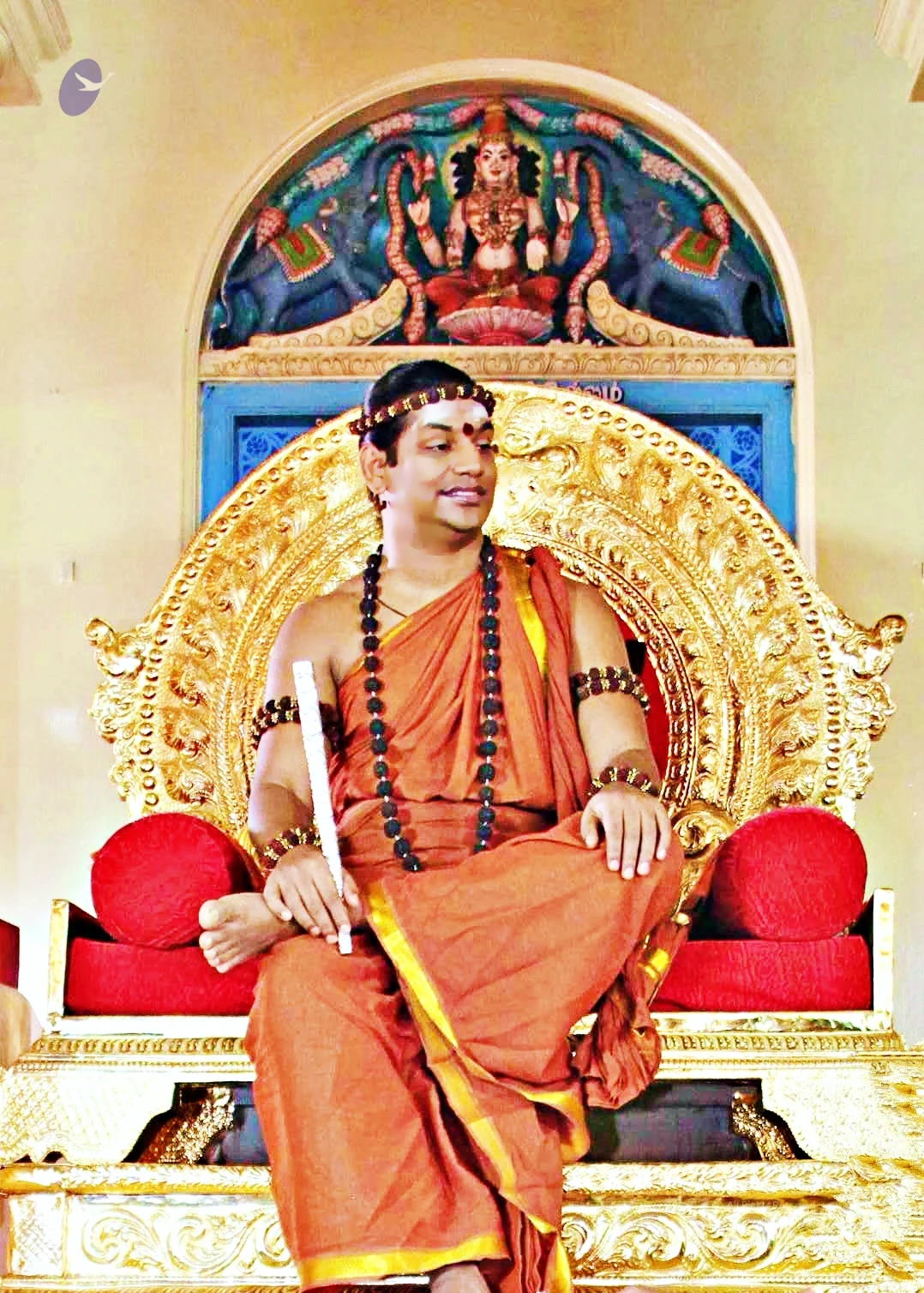
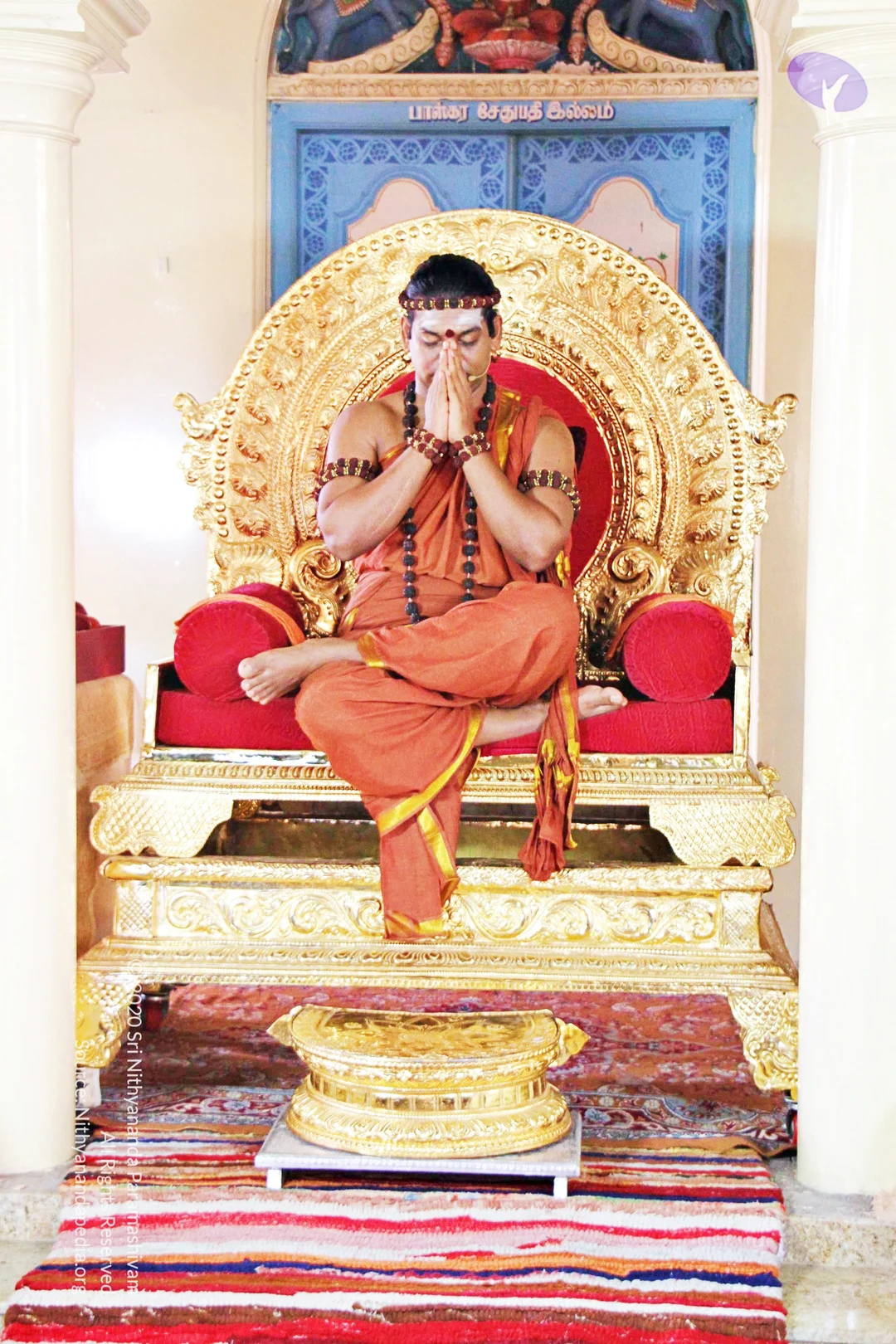
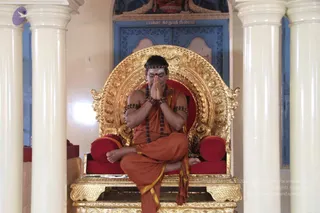
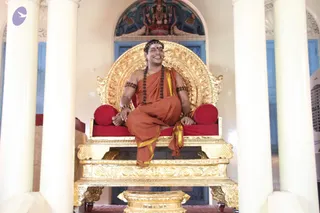
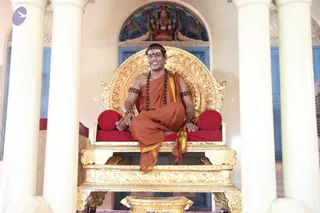
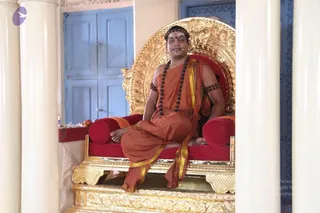
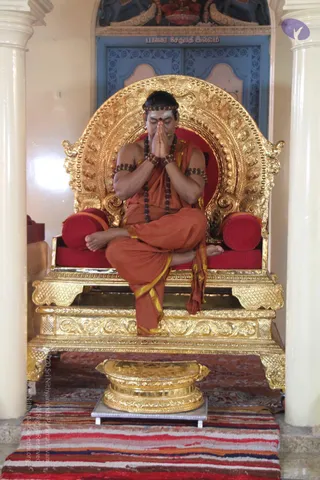
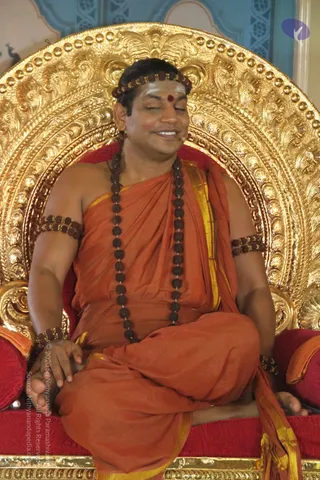
A man sits cross-legged in padmasana on an ornate gold throne with red cushions, hands pressed together in anjali mudra at his chest. He wears an orange-saffron dhoti with a yellow border, a red headband, a rudraksha mala, bead bracelets and gold armlets. Cream columns frame the scene, and behind him a blue panel has a Tamil inscription above it.A seated man in an ornate golden throne with red cushions, wearing an orange-saffron dhoti and shawl with gold border, rudraksha malas across the chest and on the arms, and a rudraksha headband with a small red-and-white tilak on the forehead, smiling broadly while looking to the side. Golden carved throne with an arched halo-like back stands between white pillars, with a painted deity in a blue niche above. The seated figure shows distinctive ceremonial cues of saffron clothing, rudraksha adornments and a throne, so the page's a person claim is noted as an appearance-based candidate (a person), seated on a golden peetha as the central figure.A man seated cross-legged on an ornate gold throne with red cushions, set between white pillars in a hall with a painted arch above showing a seated deity murti. He wears an orange-saffron cloth draped over the body, a dark rudraksha mala across the chest, rudraksha bracelets on the upper arms, a headband, and a tilak mark on the forehead. He is smiling and looking to the side. The appearance matches the Swamiji (probable) cues of ornate saffron clothing, a crown-like headband and rudraksha malas on a throne, so he is labelled as a probable depiction of the Swamiji candidate in person.A seated man in orange-saffron robes sits on an ornate gold throne with a red velvet cushion and red bolsters, a golden arched backrest behind him. He wears a dark rudraksha mala necklace, gold-toned armbands, a shawl draped over one shoulder with a yellow border, a headband, and a red bindi. Blue wooden doors and white pillars frame the setting. a person seated in a saffron robe with rudraksha mala, gold throne and headband.A man sits cross-legged on an ornate gold throne with a red cushioned seat and red bolsters, in front of blue wooden doors and white pillars. He wears an orange-saffron robe with a gold border, a rudraksha mala necklace and rudraksha armlets, a beaded headband, and a red tilak on his forehead. The setting appears to be a hall during a satsang or discourse. a person is seated in this appearance-based identification. One person is visible.A seated man in saffron-orange robes sits cross-legged on an ornate gold throne with a red cushioned seat and red bolsters. He has his palms pressed together in namaste at chest level, eyes closed, and wears rudraksha malas around his neck and wrists. A gold-and-red headband is visible. Behind him, cream pillars frame a blue doorway, and above it a painted panel shows a deity in a red and gold scene. A plastic water bottle sits at the left edge. The scene looks like a temple or ashram hall. a person: the man has the saffron robes, rudraksha malas and ceremonial throne cues associated with the a person, and the page's satsang context supports this, so he is labelled as a probable identification.

Puja-with-Sannidhanam-in-Madurai

38 photosSource gallery
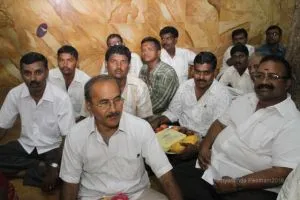
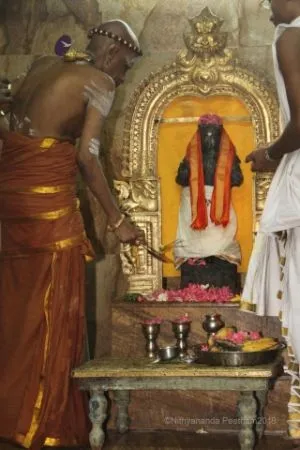
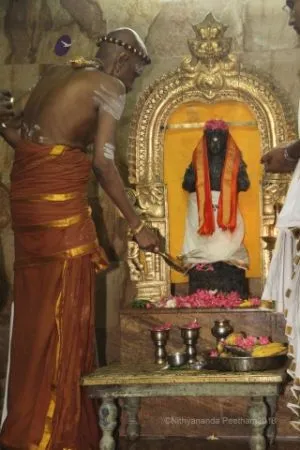
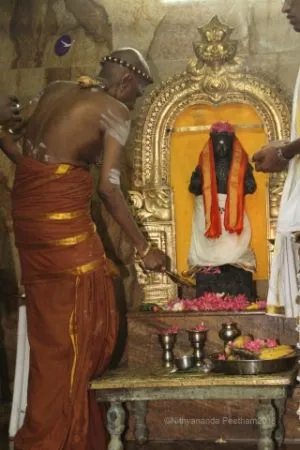
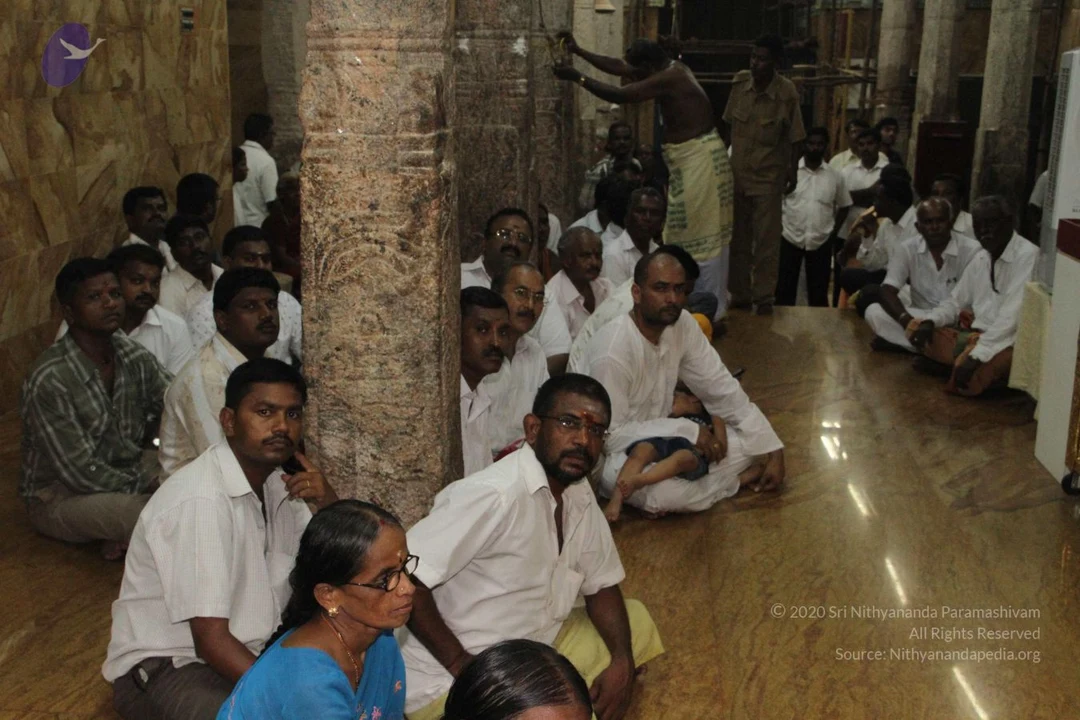
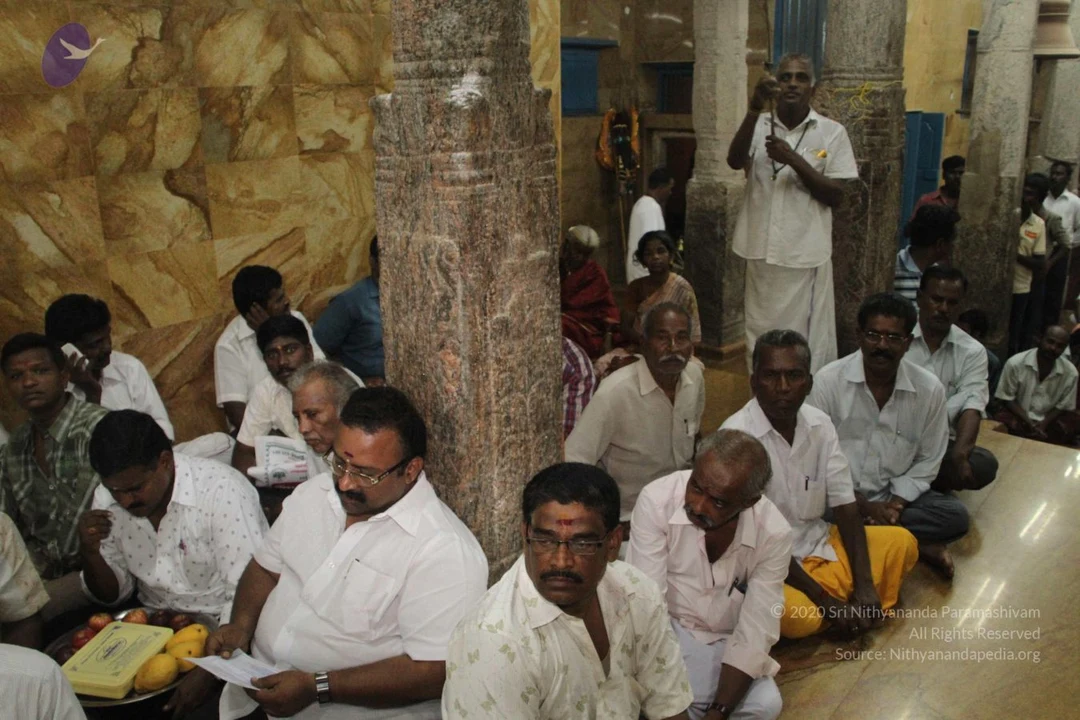
A seated shaved-headed priest in an orange-saffron dhoti and bare upper body, with white sacred ash on his forehead and shoulders and a dark rudraksha mala and gold necklace, performs puja before a gilded shrine. He holds a brass bell in one hand and extends a small brass oil lamp with a lit flame toward a deity murti; pink flowers and offerings lie on the shrine ledge. A person in white stands at left, partially visible. Brass vessels and a gold-framed altar surround the scene.Seated devotees fill a polished stone-floored hall beside large carved granite pillars, listening to a satsang. In the foreground a woman in a blue sari and glasses sits with gold earrings and a red bindi, while a man in a white shirt and cream dhoti sits beside her with a red tilak. Behind them men in white shirts and dhotis sit in rows, one holding a small child on his lap. At the upper left a shirtless man in a dhoti reaches toward the pillar, and a uniformed attendant in khaki stands nearby. No figure is clearly identifiable as a person, so the visible people are described by role and dress only.Two men in orange-saffron dhotis stand inside a stone shrine room with a wooden door at left. The man at left faces the altar, wearing a bare-chested saffron wrap with gold-bordered cloth and a rudraksha-style mala across his chest, hands clasped. The bare-backed man at centre, wearing a gold-bordered orange dhoti and a head band, stands before a small altar holding a lamp, with a deity murti and flower garlands in a niche lit by a glowing arch of lights. Brass vessels and an oil lamp sit on the altar ledge, and the shrine walls are pale stone. The scene suggests priestly puja in a temple sanctum.Close photograph of a temple shrine with a gilded ornate canopy above a small golden deity figure. A brass oil lamp with a bright flame sits at left beside a golden Nataraja dancing Shiva figure within a flame arch. Heaps of white jasmine and pink flowers and petals lie in front. Only hands are visible at right, one adjusting the flowers near the shrine, with no full person in view.Inside a narrow temple sanctum, priests perform worship before a deity murti decorated with flowers and a golden crown, under an arched niche lit with orange light strips. A bare-chested priest in saffron-orange dhoti with gold borders stands at left with a rudraksha-style bead band at his head, while another priest in white dhoti with gold border and a bracelet on his arm reaches toward the shrine. Silver lamps and a brass kalasha-like finial stand on the altar, and a younger priest in white stands at the far right. a person is not clearly identifiable among these priests, so the candidate is uncertain.Photograph of a temple shrine interior with a golden arched niche edged in orange lights and a silver-topped canopy. Three men perform worship at a golden deity murti or shrine seat decorated with pink flowers, with silver lamps and offering vessels on the stone ledge. The man on the left is bare-chested, wearing a saffron-orange dhoti with gold borders and a gold armlet and necklace, his head shaved. Two men on the right wear white dhotis with gold borders and white shawls; one holds a brass bell-shaped vessel and a lamp is lit beside them. No clearly distinctive a person cues are visible, so the identity is unsure.

Darshan-with-Sannidhanam-in-Madurai

12 photosSource gallery
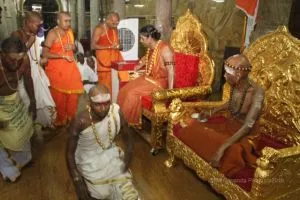
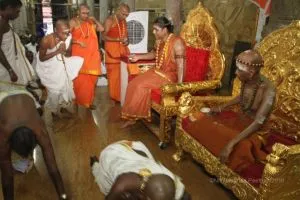
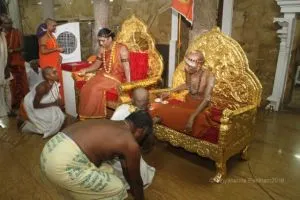
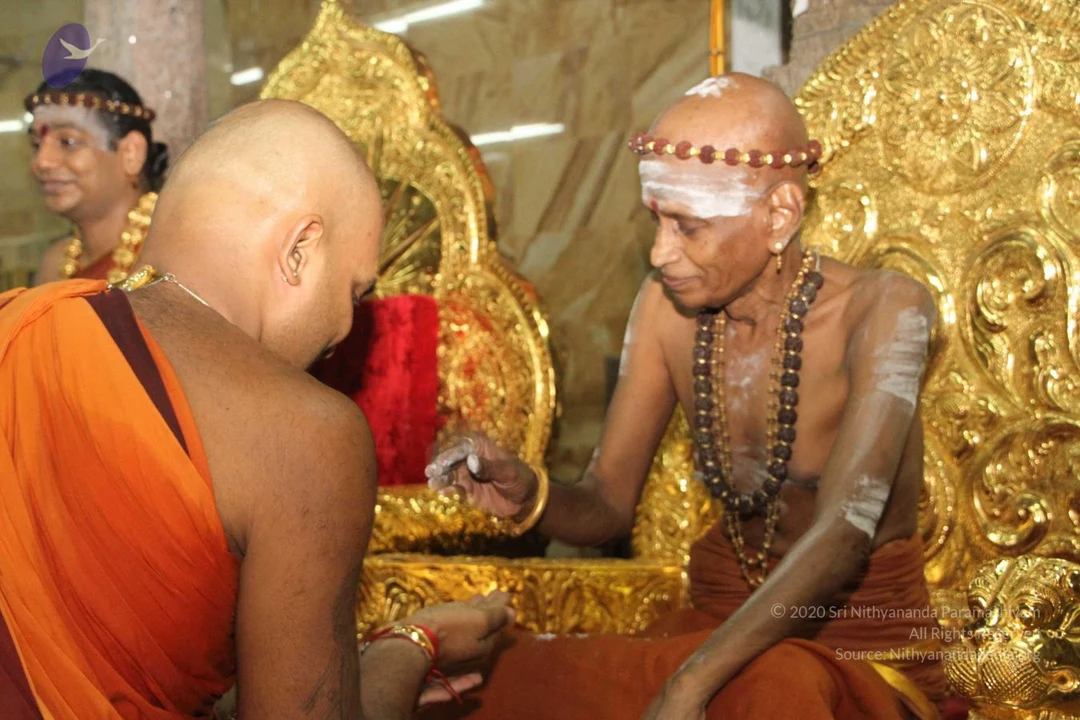
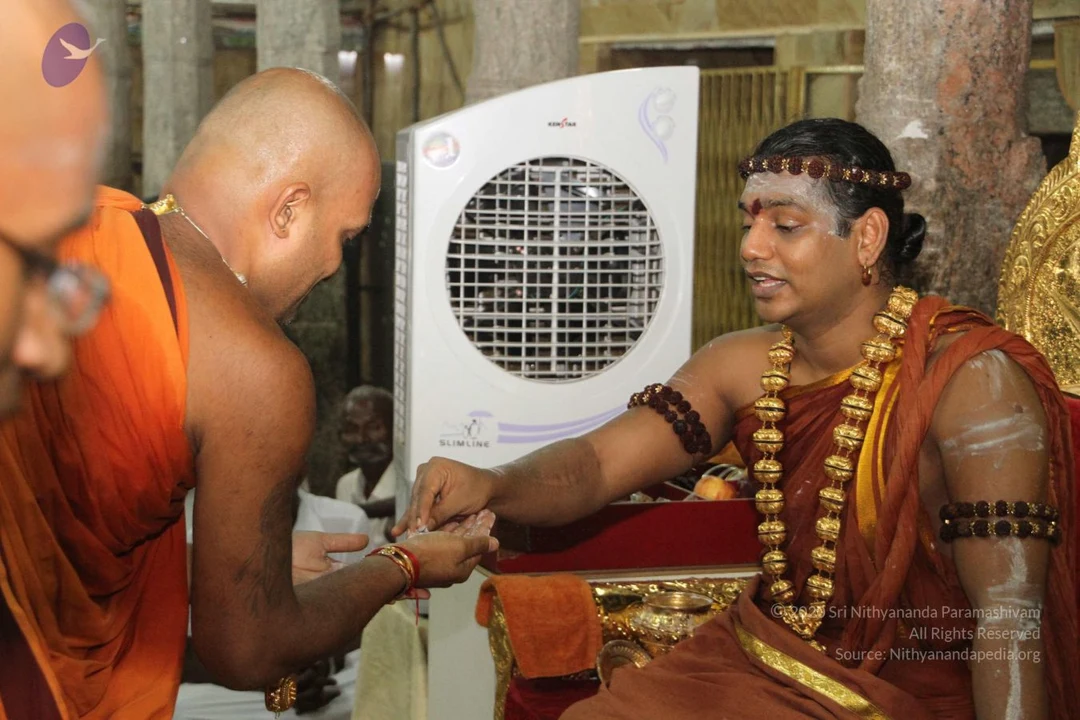
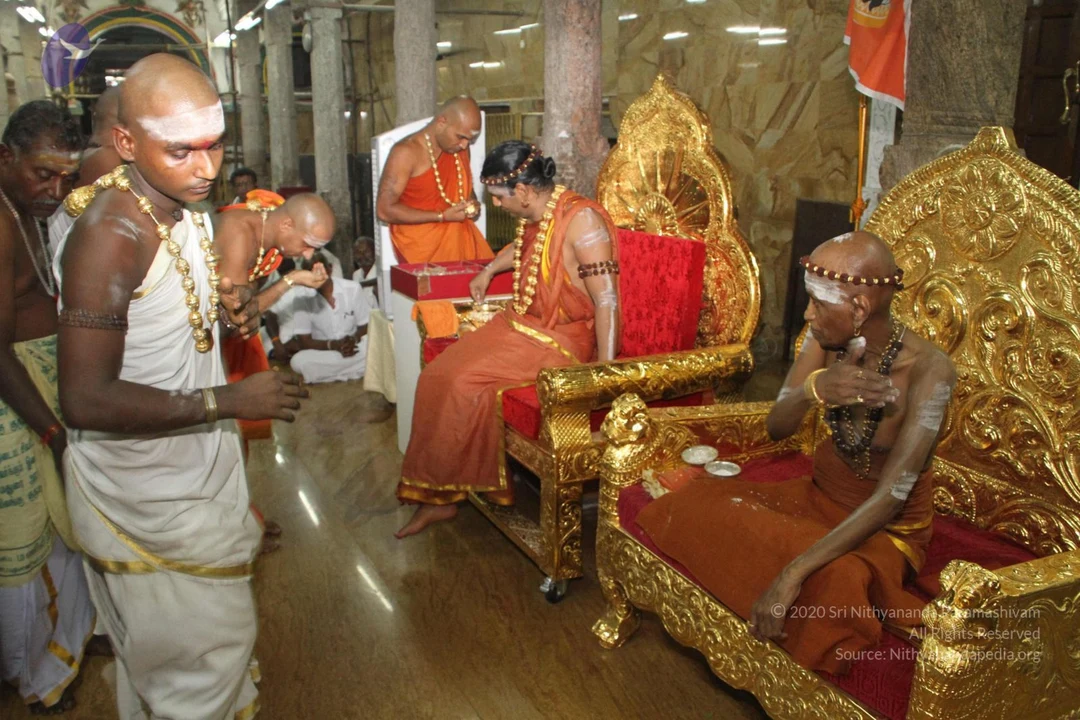
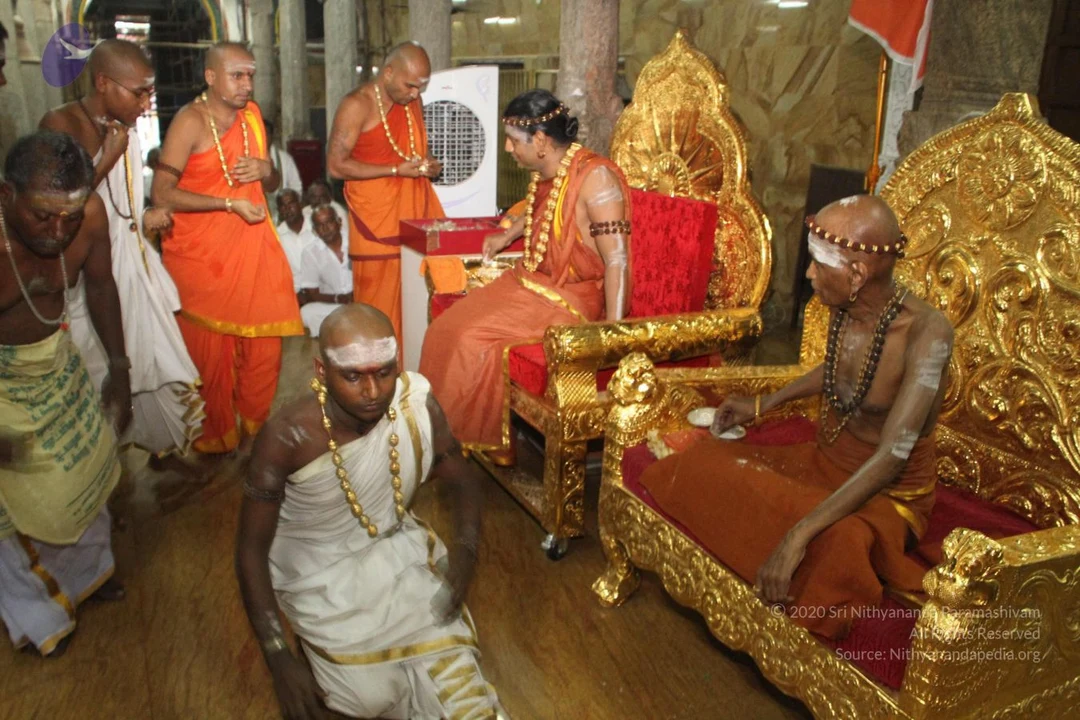
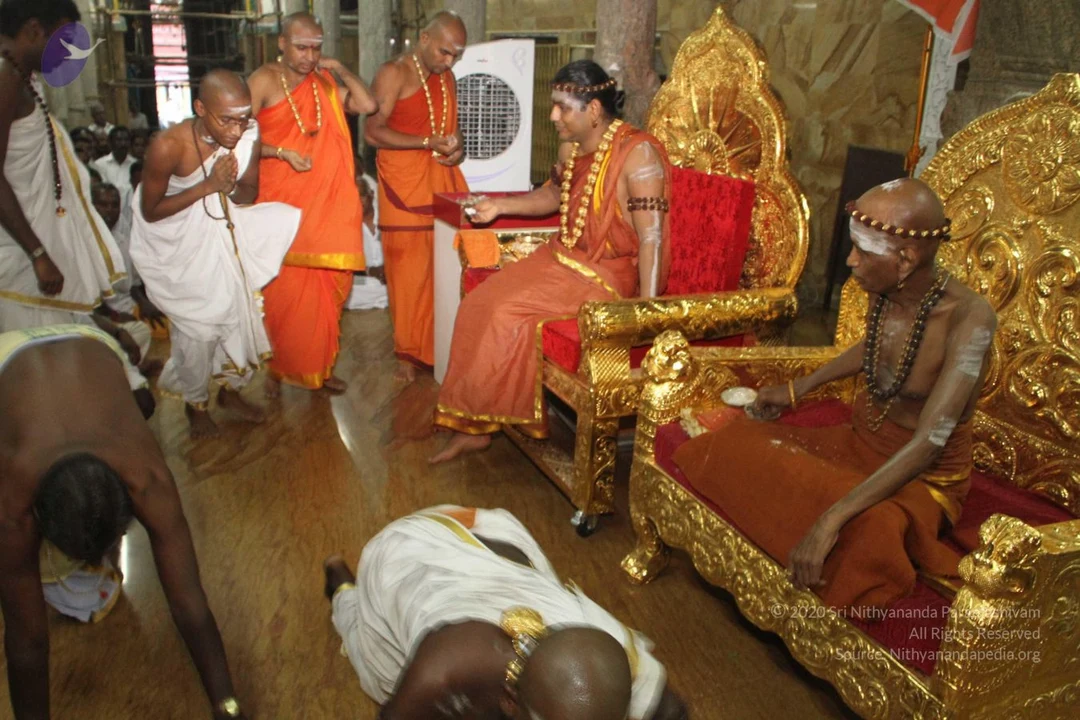
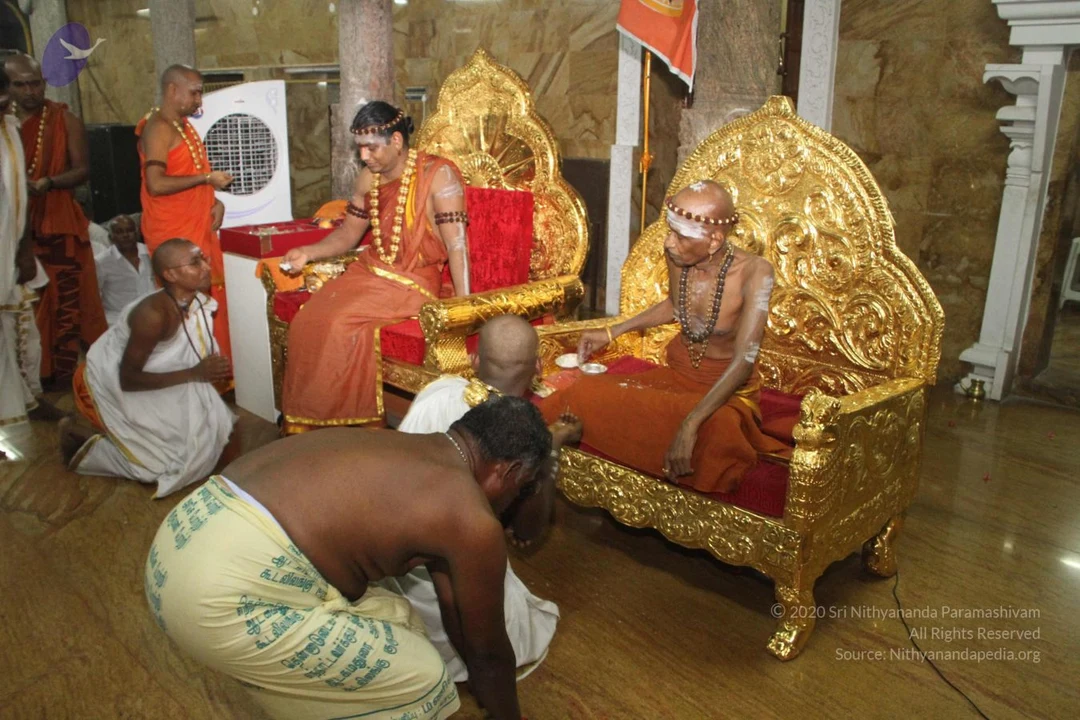
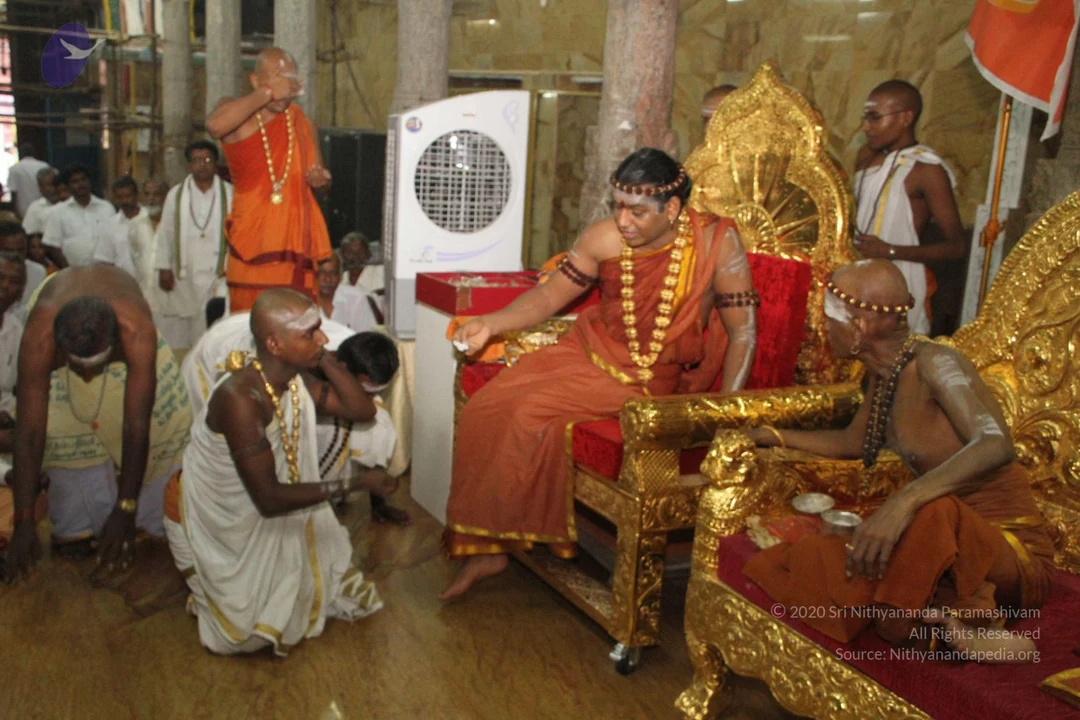
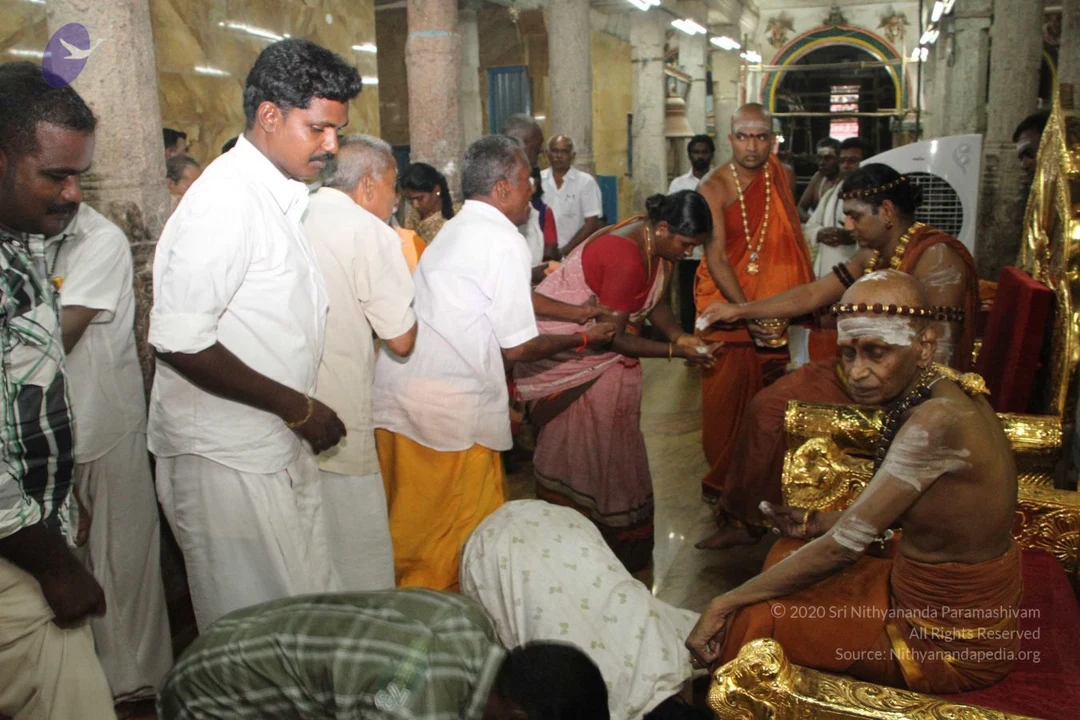
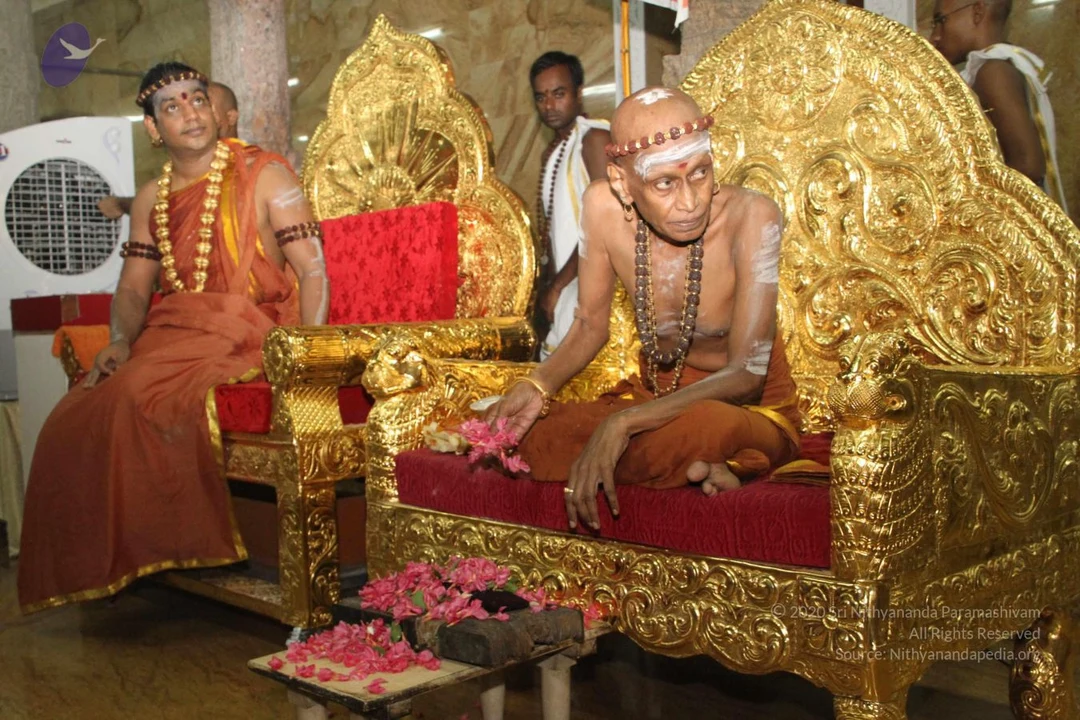
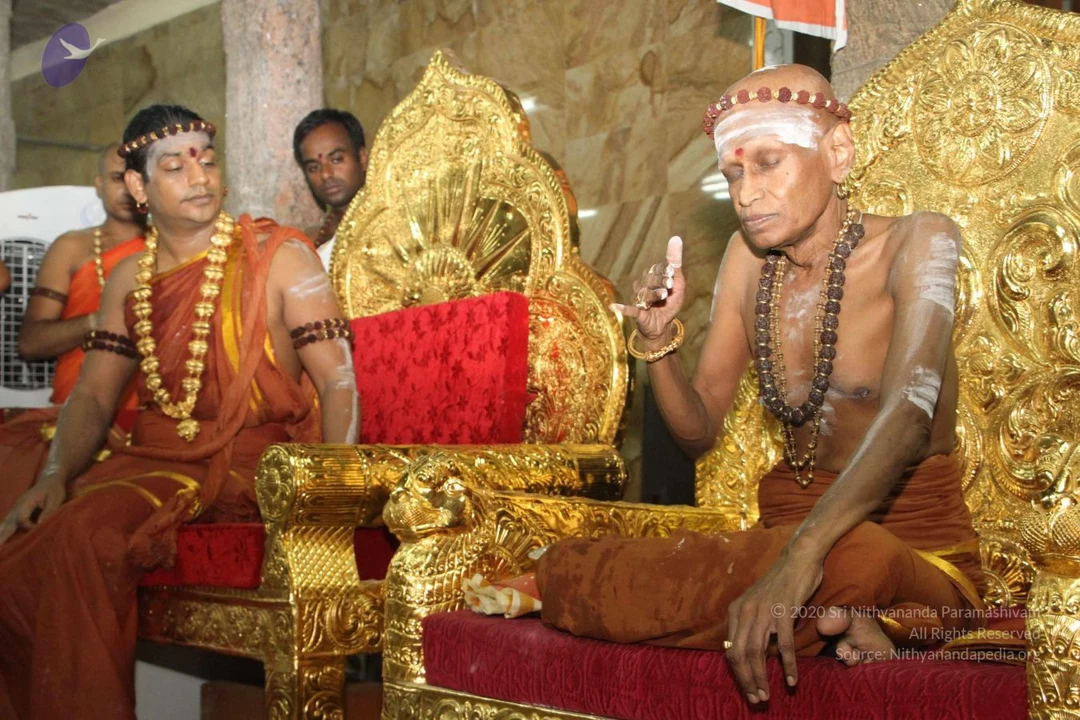
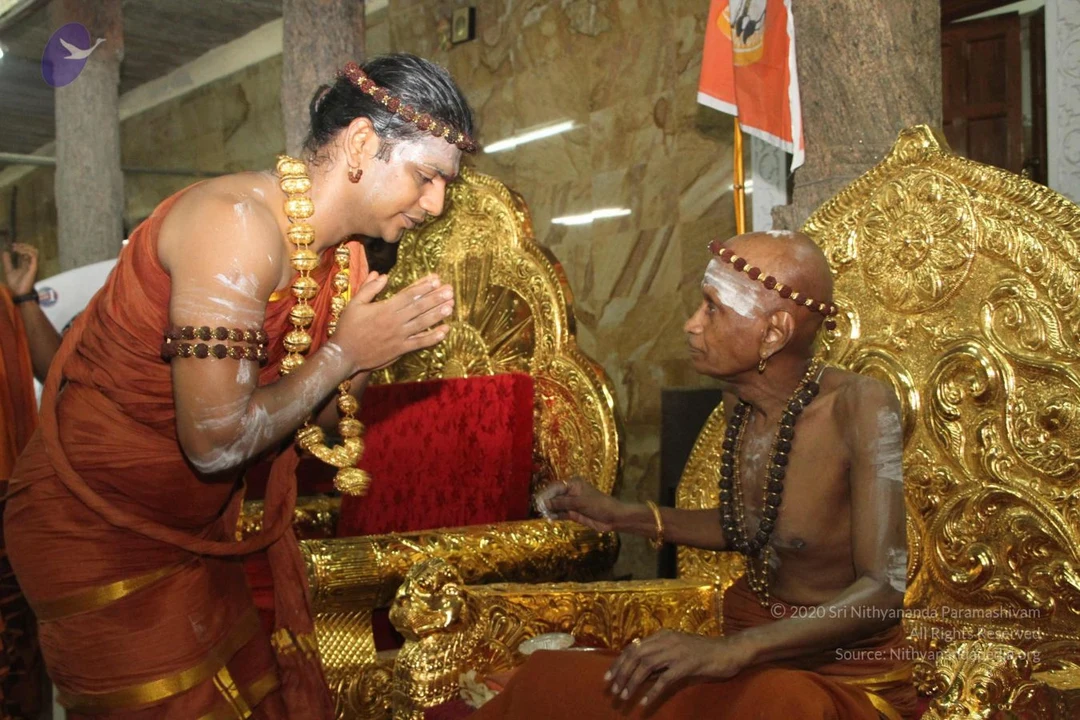
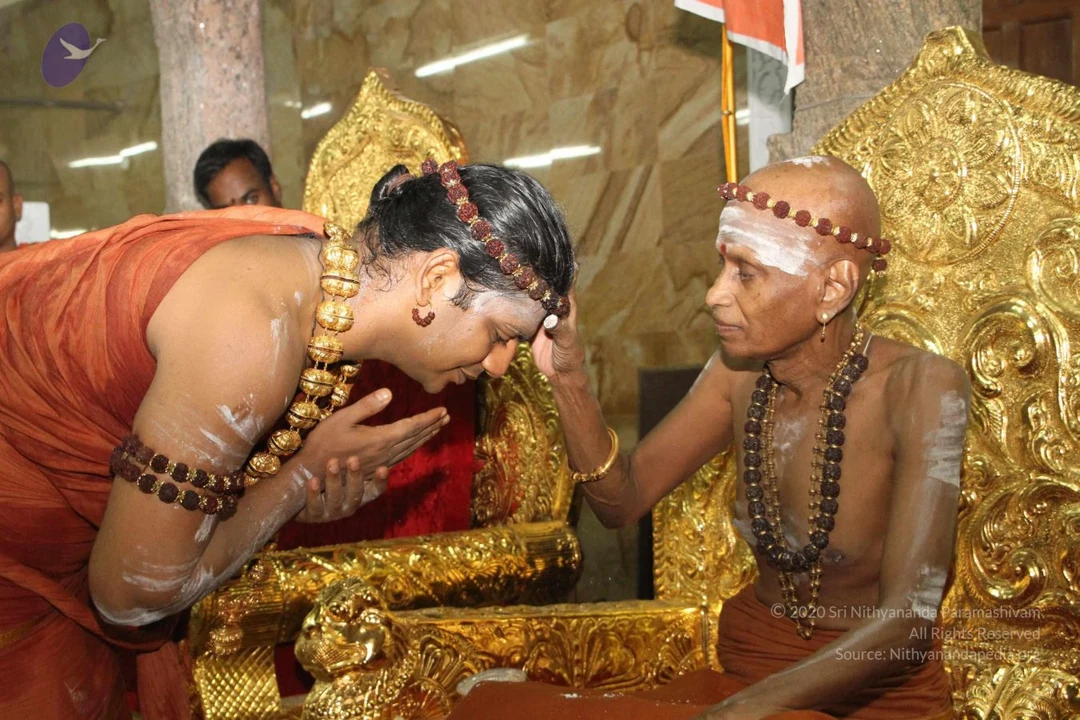
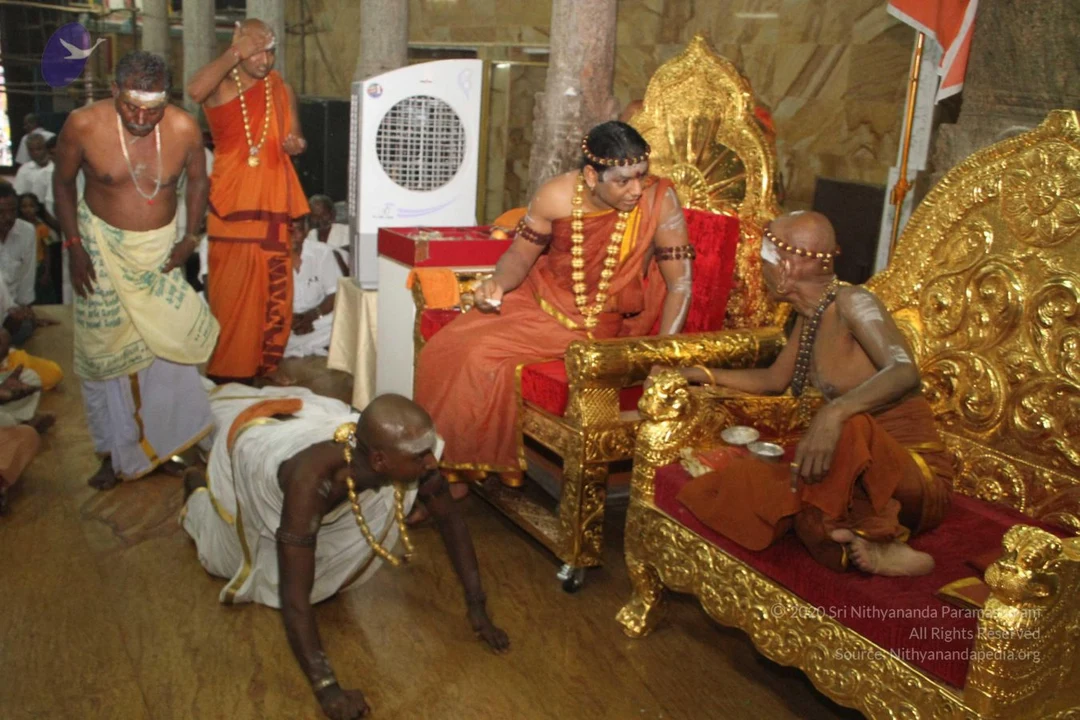
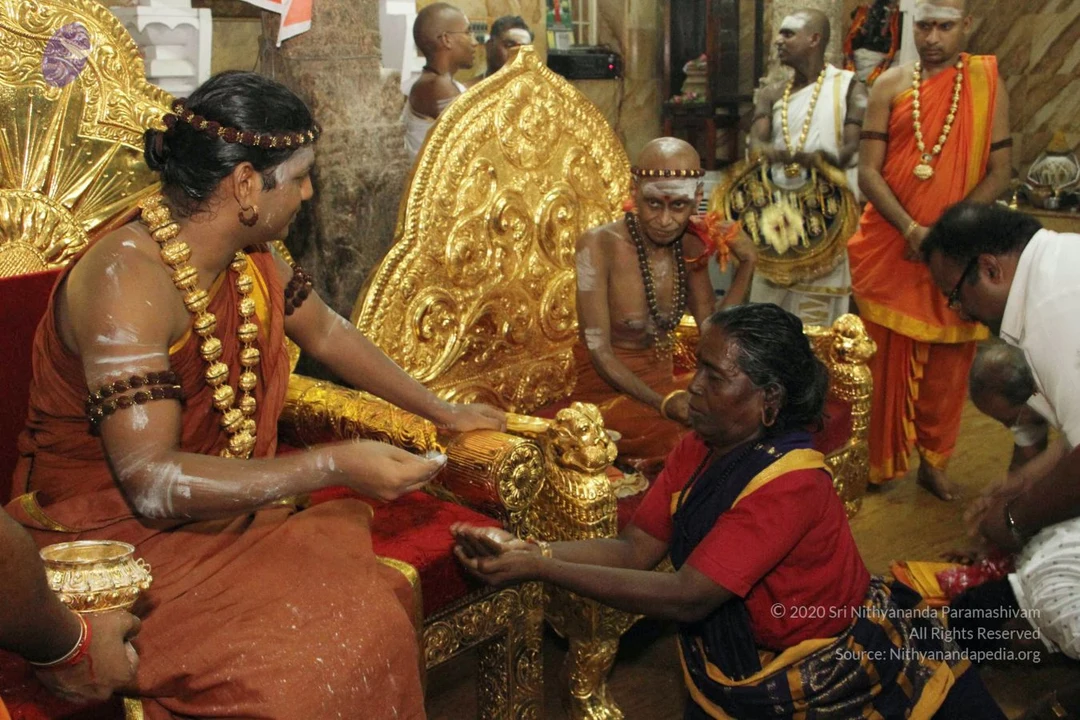
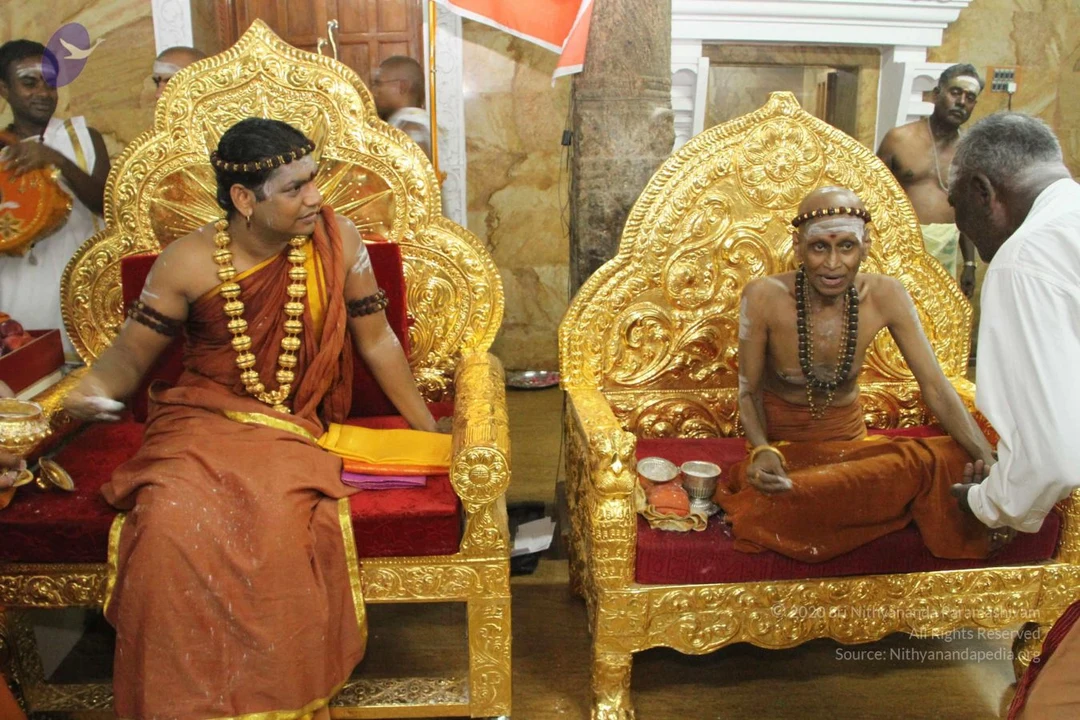
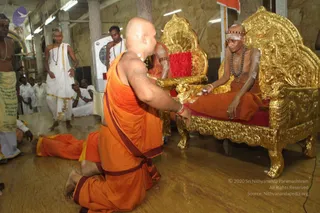
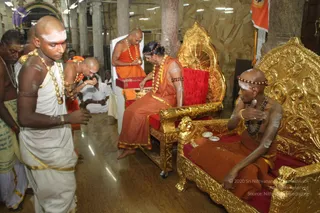
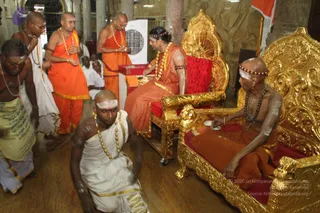
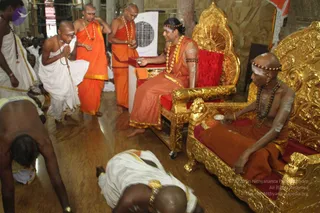
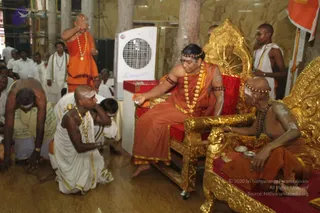
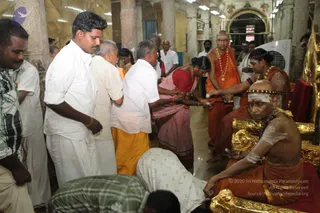
Photograph inside a hall with a sandstone-textured wall and a visible fan and lights. A seated elder on an ornate gold throne with red cushions wears orange robes, rudraksha beads, white forehead markings, and a headband, with white markings on his arms; he is receiving an act of homage. A bald man in orange robes with a maroon waist cloth kneels before the throne, offering something with his hands. Behind them, another orange-robed figure sits on a second gold throne, and several men in white dhotis and shirts stand or sit along the sides, some with hands folded. A figure at left wears a yellow-and-white dhoti and a cloth draped over his shoulders. The seated elder has long swept-back hair, a crown-like headband, and ceremonial garlands, consistent with the a person label; the kneeling devotee is a devotee.Photograph inside a temple hall with a polished stone wall and a golden throne in the foreground. A shaved-headed man in white dhoti with white vibhuti marks and gold necklaces stands at left, hands folded. Centre, a figure in saffron-orange robes with long swept-back hair, a rudraksha-style necklace and a red-and-gold headband sits on a red-cushioned gold throne, with a red box and tray before him. At right, a bald man in saffron cloth with white markings and rudraksha beads sits on a gold throne with small offering plates. Other saffron-clad and white-clad men attend in the background, and an orange flag hangs at top right.Photograph inside a stone-walled temple hall of a ceremony with ornate gold thrones. On the right, a shaven-headed priest in orange robe with sandalwood paste on forehead and arms and a rudraksha mala sits on a gold throne with red cushions. Beside him, a figure in an orange sari with long dark hair, a gold necklace and a rudraksha mala sits on a second gold throne, holding a small object. In the foreground, a man in a white dhoti with a gold border and gold beaded necklace sits on the floor with paste on his forehead. Several saffron-robed attendants stand behind, one holding a tray, and white-clad men watch from the left. A red-and-gold flag stands behind the thrones. a person's presence is unclear from appearance alone, so no candidate is marked as probable.Photograph inside a temple hall with a polished wooden floor and stone walls. Two ornate gold thrones with red cushions dominate the scene. On the right, a bald man with white tilak markings and a headband sits in a saffron-orange garment, wearing a rudraksha mala, with a small plate in his hand. On the left throne, a man in an orange robe with a gold-and-orange shawl and ornate gold necklace sits and holds a small cup. Standing around them are men in saffron-orange robes wearing beaded malas, and a man in white dhoti with hands folded in namaskar. In the foreground, two devotees bow low to the floor, one in white with a gold armband. A white cooling unit stands in the background.Photograph of a ceremony in a hall with a stone floor and pillars. A man in orange robes with a rudraksha mala, a flower garland, and a headband sits on an ornate gold-and-red throne, pointing toward a red box on a stand. A bald elderly man in orange cloth with a beaded mala sits on a second gold throne at right, with small silver bowls before him. In the foreground, a shaved-headed attendant in a white dhoti with a gold-chain garland kneels and bows, while a man in yellow and white kneels with his forehead to the floor. Another orange-robed man stands behind with a raised hand, and devotees in white stand in the background. A white cooler stands near the throne.Photograph inside a temple hall with pale marble floor and columns. A bald, white-bearded elder seated on a gilded throne-like chair with a red cushion, his forehead and arms marked with white sacred ash, wears a beaded necklace and an orange-saffron cloth. A younger man in an orange-saffron robe with a beaded necklace stands beside him, and another person in orange stands behind. Devotees in white shirts and dhotis, a woman in a pink sari with a red blouse, and a man in an orange cloth bow forward and reach toward the seated elder, offering or receiving something, while a kneeling man in white and a standing man in a checked shirt watch. A decorative arch and a white wall-mounted air conditioner are visible in the background.

VIP-Visit-in-Madurai

8 photosSource gallery
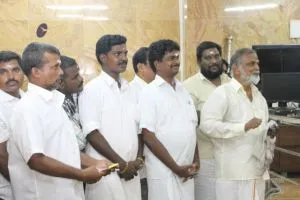
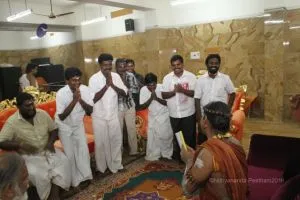
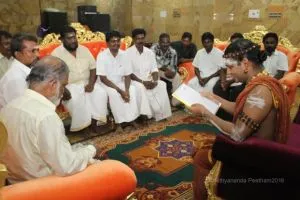
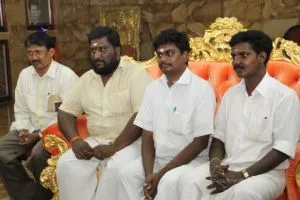
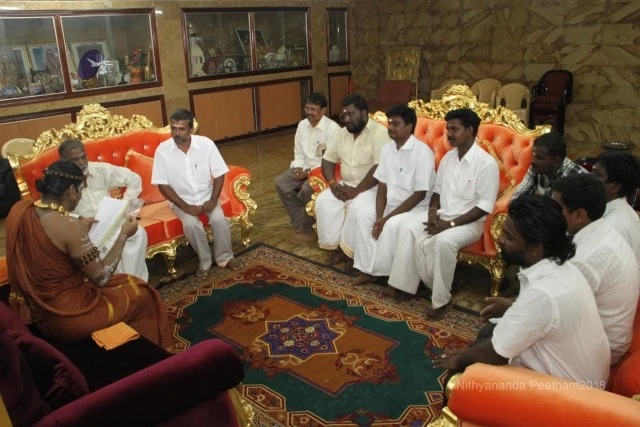
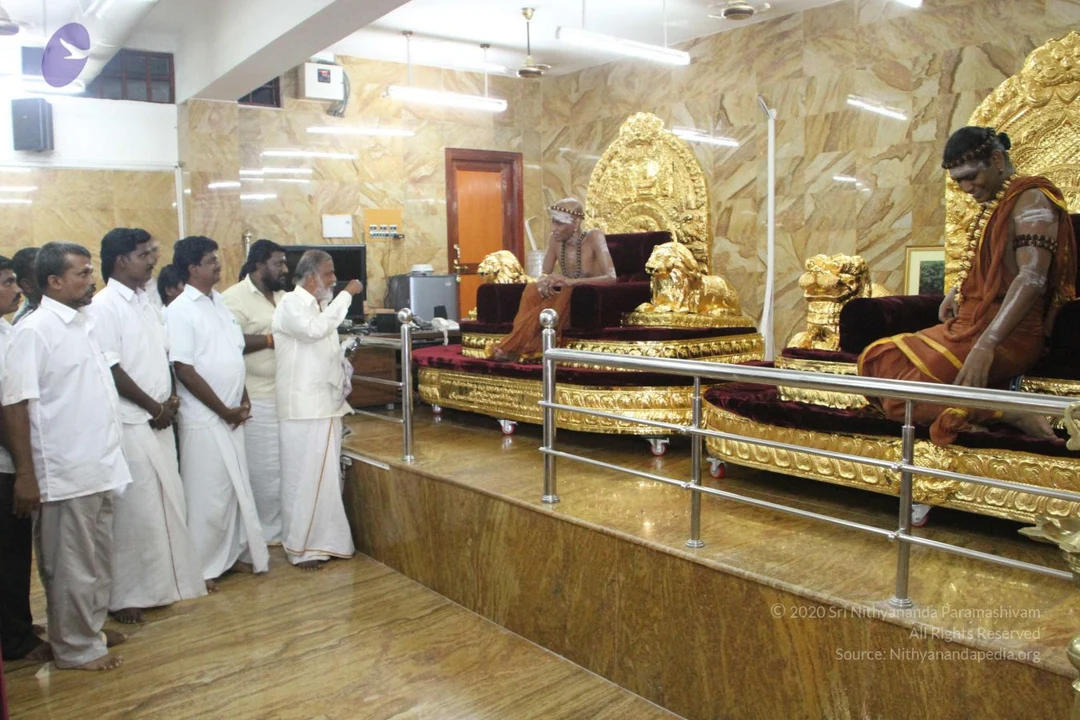
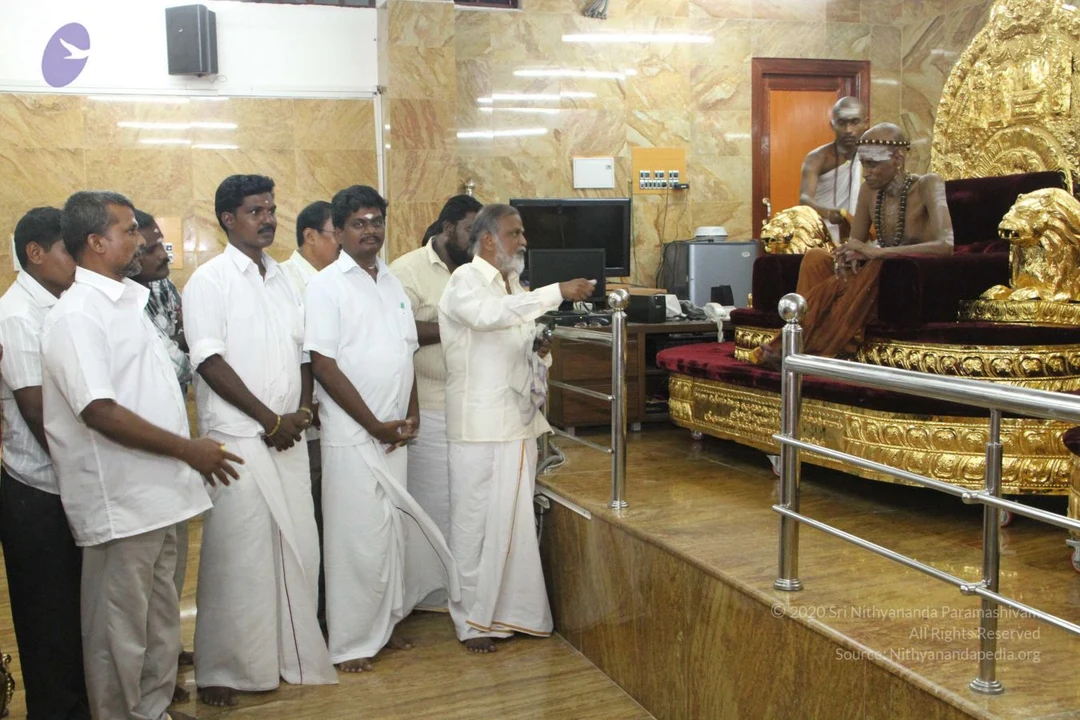
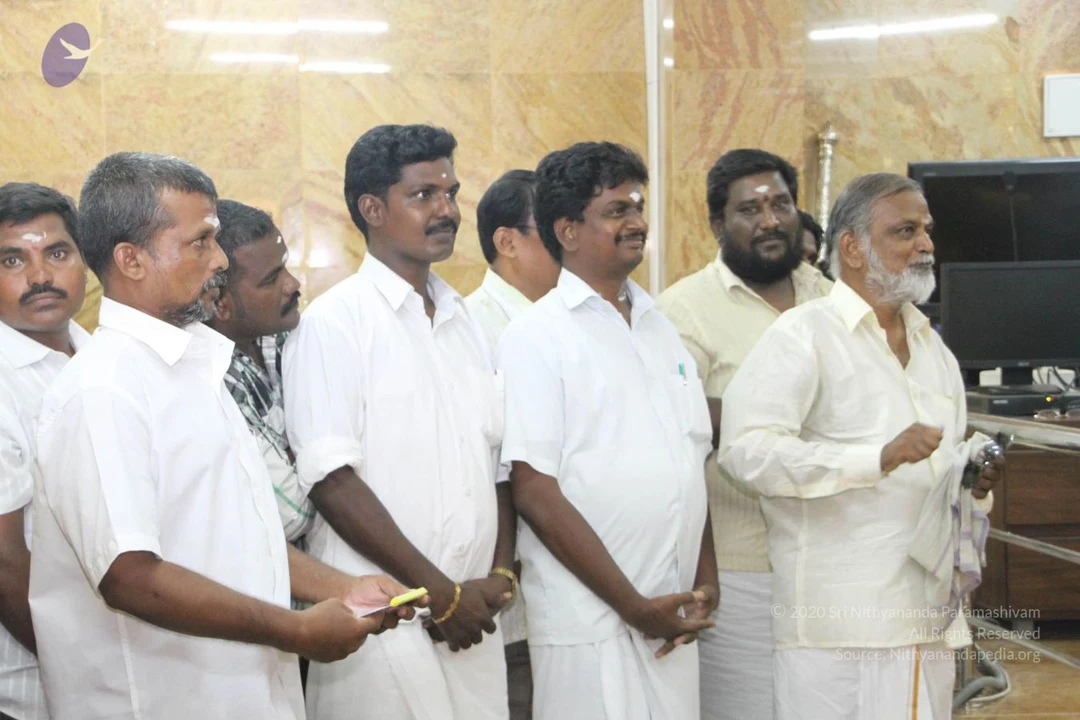
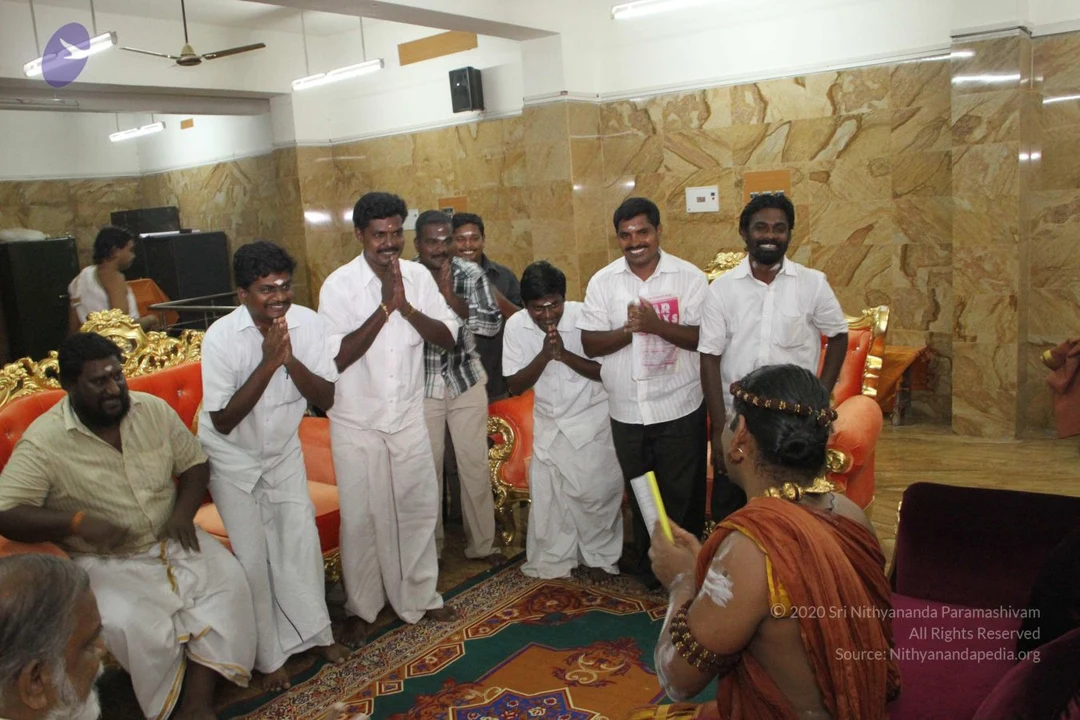
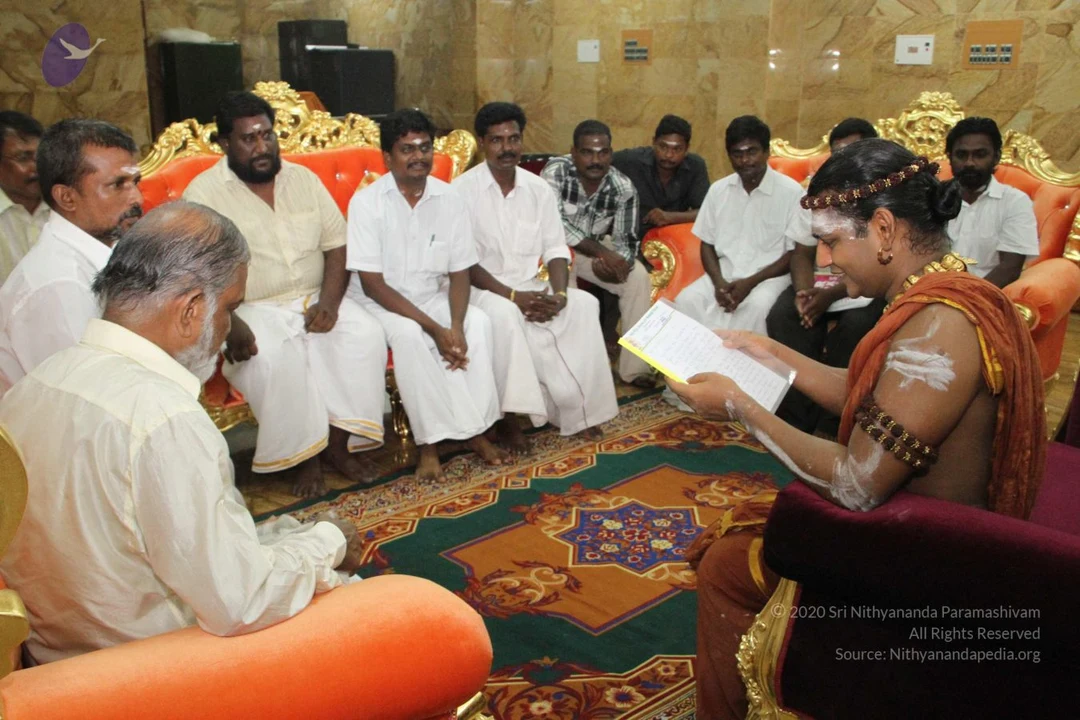
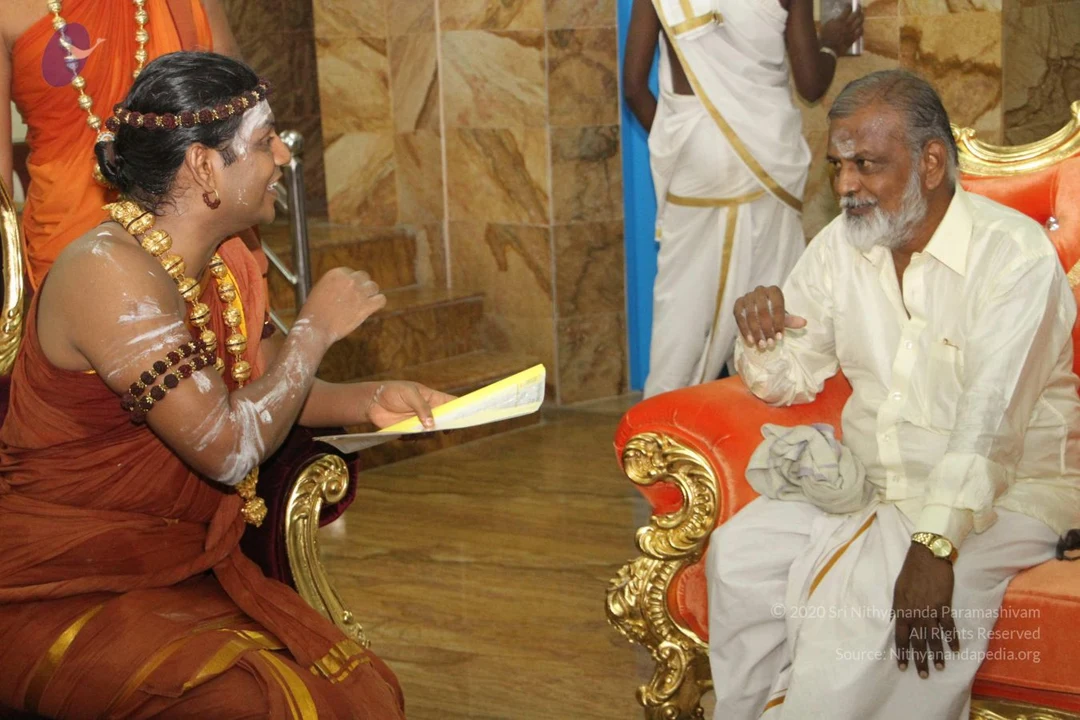
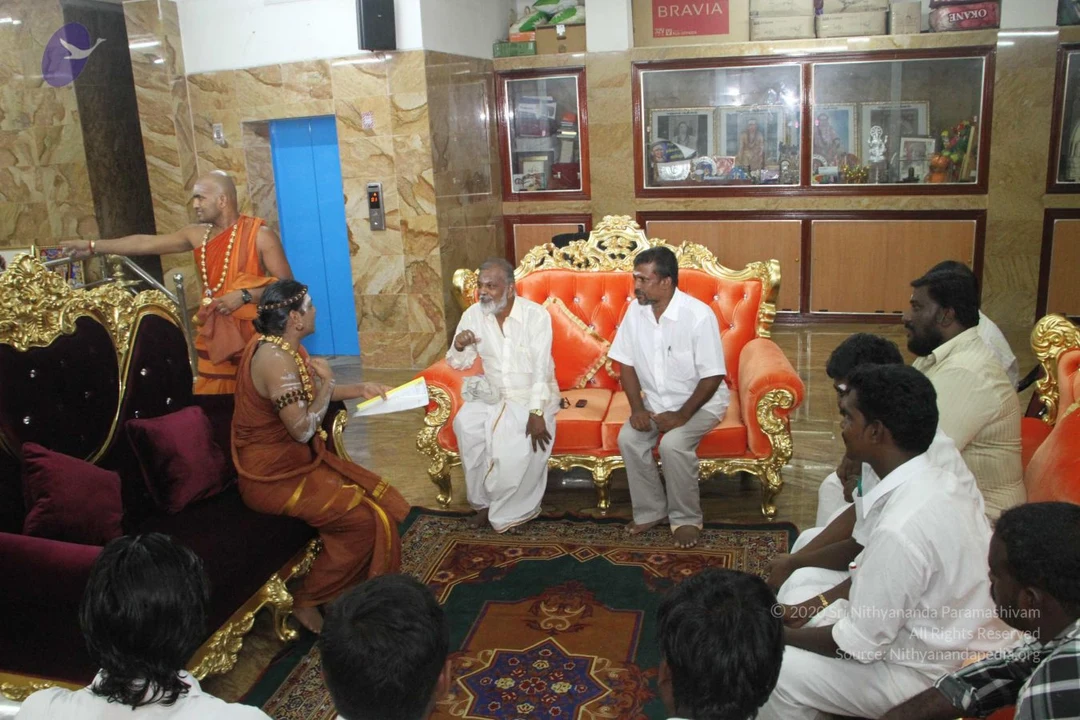
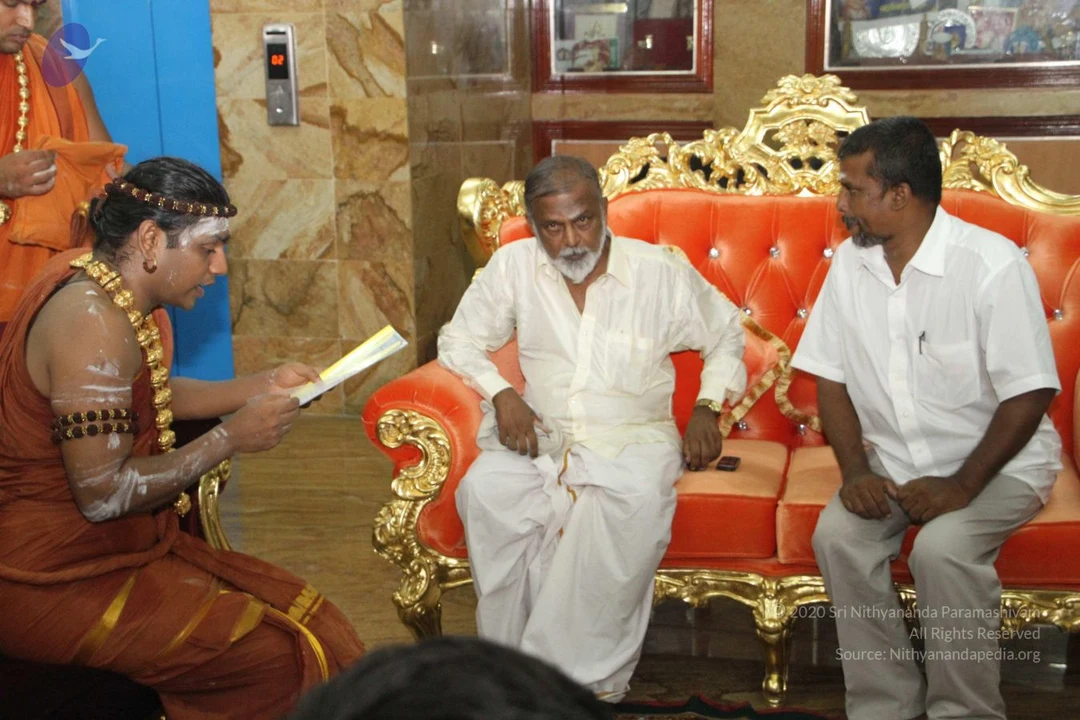
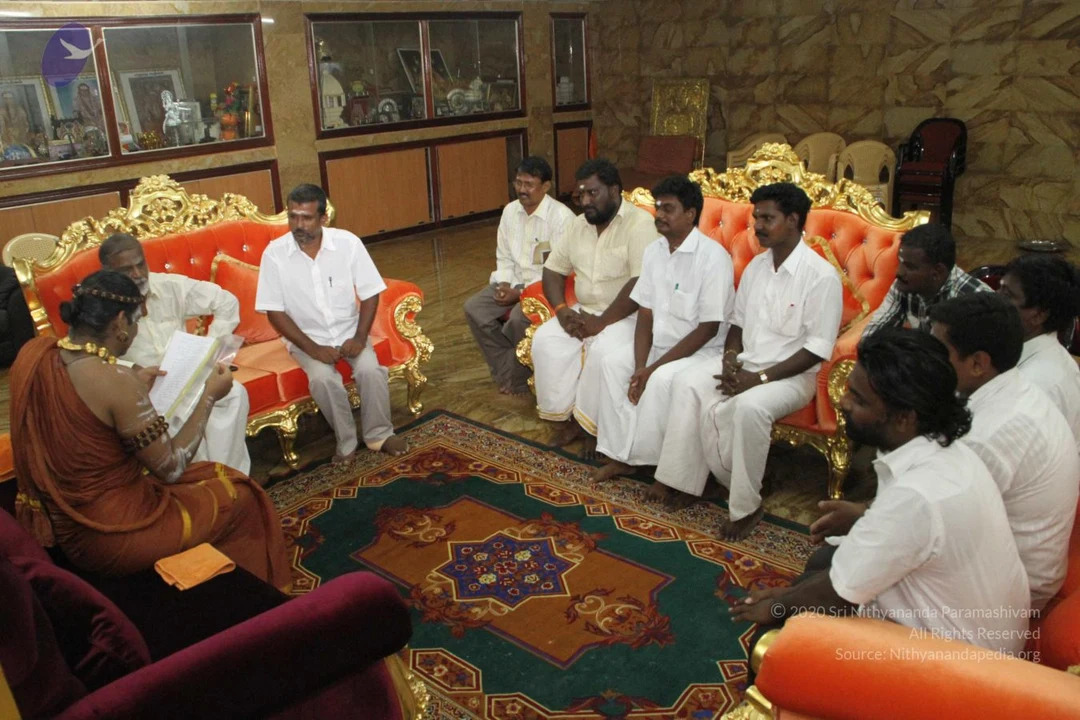
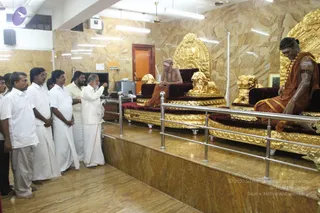
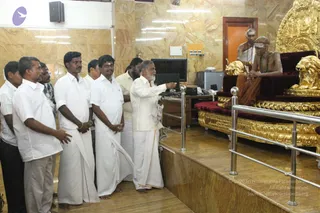
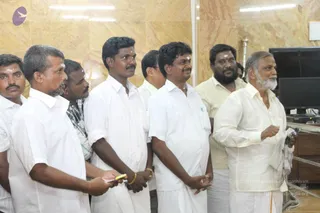
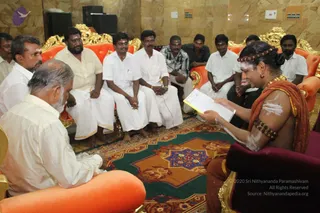
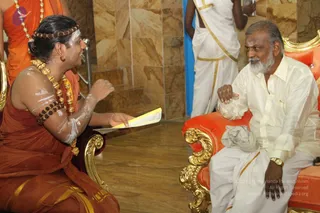
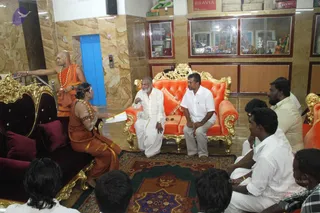
Photograph inside a marble-walled hall with ornate gold thrones lined with maroon cushions and gold lion figures. On the right, a figure in a saffron-orange robe with a crown-like headband, rudraksha-style beaded necklaces and white markings on the arms sits on a gold throne. On the left, a bald figure in white, seated on a second gold throne, wears a saffron garment and beads and has a white headband. Five to six men in white dhotis and shirts stand at a railing, one in a white dhoti with a white beard pointing toward the seated figures. A wall-mounted television, fluorescent lights and a framed picture appear in the background. a person is the saffron-robed figure on the right, with the crown, beads and ornamented arms cues.Photograph of a marble-walled hall with a large gilded throne of carved lion-armed design, cushioned in deep red velvet. A seated bare-chested man with a long beaded necklace and a white headband sits on the throne's right side, with a standing man in white clothing beside him. On the lower level, a group of about nine men in white shirts and white dhotis stand in a row on the left, while a bearded man in a white kurta and white dhoti points toward the throne. A desk with a computer monitor and a small cabinet sit beside the throne platform. Steel railings line the raised platform. The seated figure's appearance does not clearly match the page's identification cues, so the identity remains uncertain.A photograph of a group of men standing in a row in a marble-walled room with a glass partition and wall-mounted monitors. Most wear white shirts and white dhotis, with sacred ash marks on the forehead. The man at the right, with white hair and a white beard, wears a cream shirt and white dhoti, and holds a cloth in his hand. Another man in the middle row has a white shirt and folded hands. A bearded man in a pale shirt stands behind them. No candidate is distinctively identifiable as a person by appearance alone, so the identity is left uncertain.Indoor satsang in a room with gold-trimmed orange and red armchairs and a patterned green-and-orange carpet. A bare-chested figure seated at right, wearing rudraksha malas, a beaded headband, an orange wrap and a white-painted torso, holds an open printed booklet and reads aloud; the figure is an appearance-based a person candidate, seated on a red throne-like chair. Facing this figure, a grey-haired elderly man in a cream shirt sits with hands joined. Around them, about nine men in white dhotis and shirts, one in a checked shirt, sit on the chairs and floor listening attentively, some with hands clasped. A speaker and wall panels are visible behind.Two men sit facing each other on ornate gold-and-red upholstered chairs in a marble-walled hall. On the left, a person in saffron-orange robes, with a rudraksha mala and ceremonial gold necklaces, a white-painted forehead and a dark headband, gestures while holding a yellow paper. On the right, an older bearded man in white shirt and white dhoti with a gold wristwatch listens with his hand resting on a folded white cloth. A standing attendant in white dhoti with gold border stands behind. The left figure's appearance fits the a person cues of saffron clothing, rudraksha and gold necklaces, consistent with the page's a person flag.Indoor photograph in a marble-lined hall with a glass display cabinet of framed portraits and deity figures behind. A bearded man in white dhoti and shawl sits on an orange velvet gold-trimmed sofa, gesturing, beside a man in a white shirt and grey trousers. On the left, a man with shaved head in saffron robe and orange shawl with rudraksha mala points while standing near a dark throne-like seat occupied by a figure in orange and ochre robes with white body markings, holding a white fan. Seated devotees in white shirts and dhotis listen on a red and blue patterned carpet in the foreground, with a lift door in the background.

Temple-Visit

13 photosSource gallery
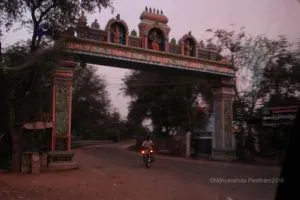
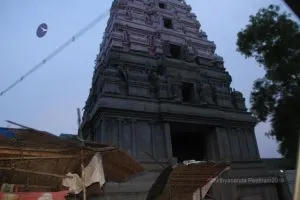
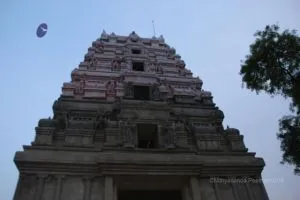
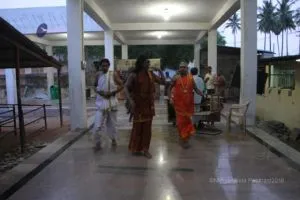
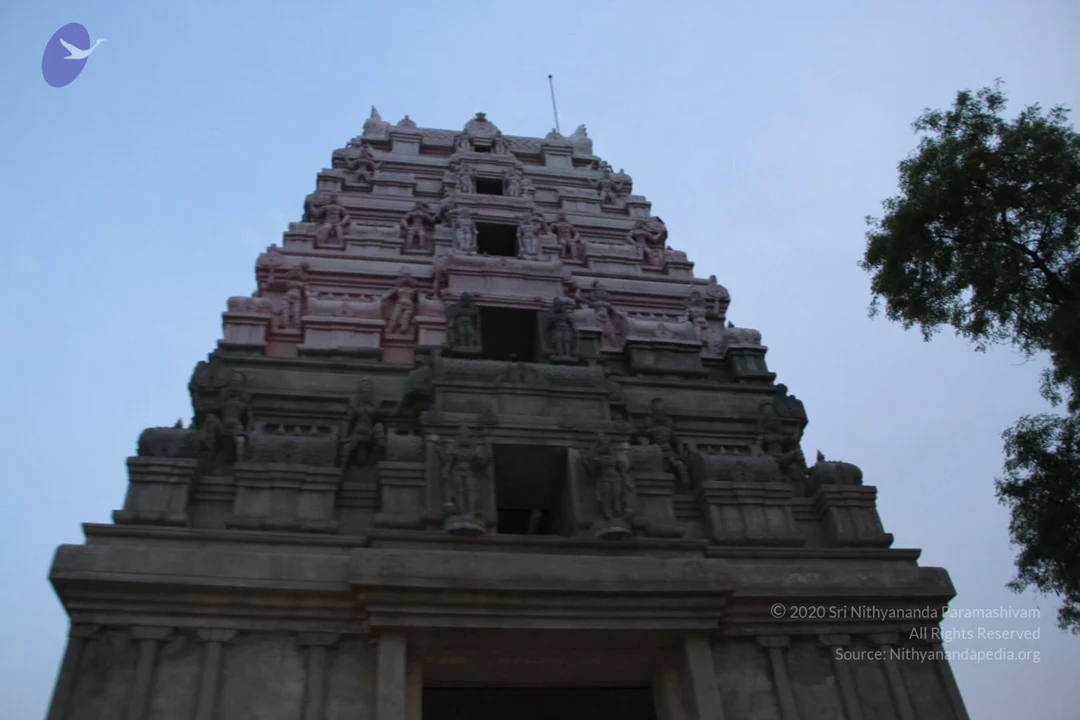
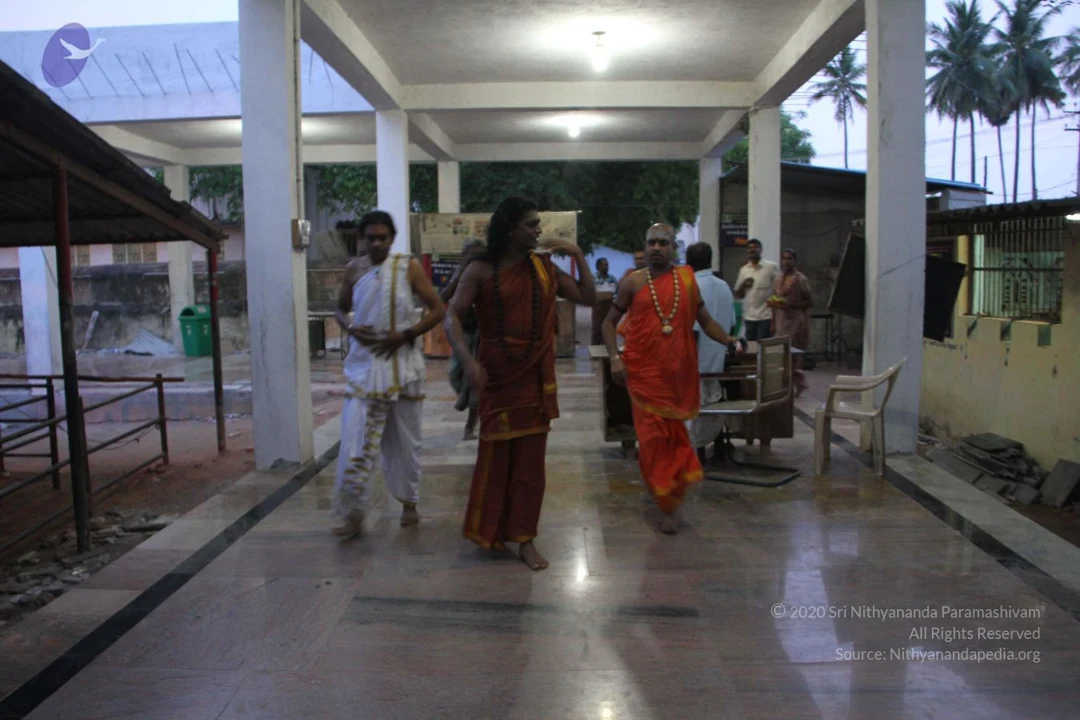
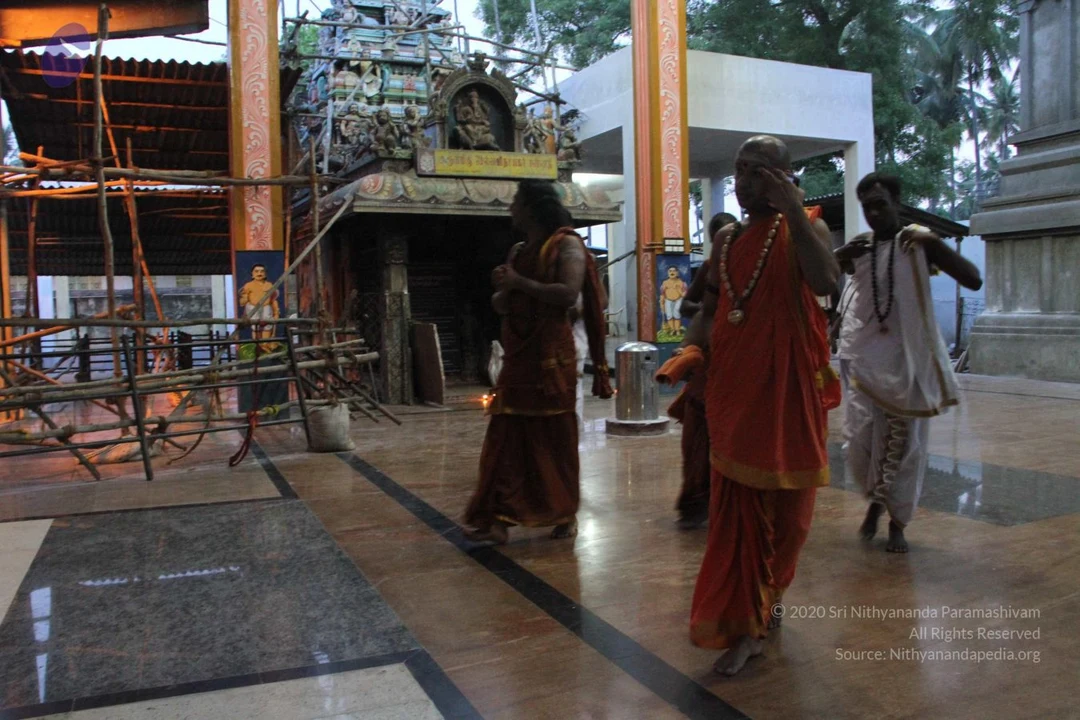
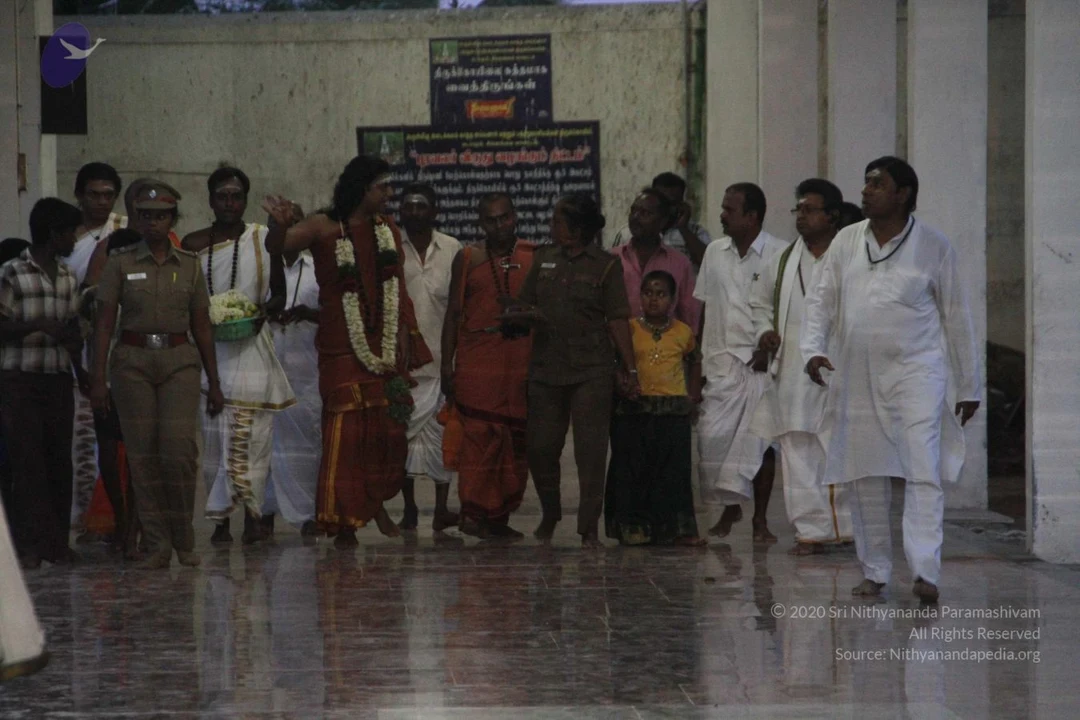
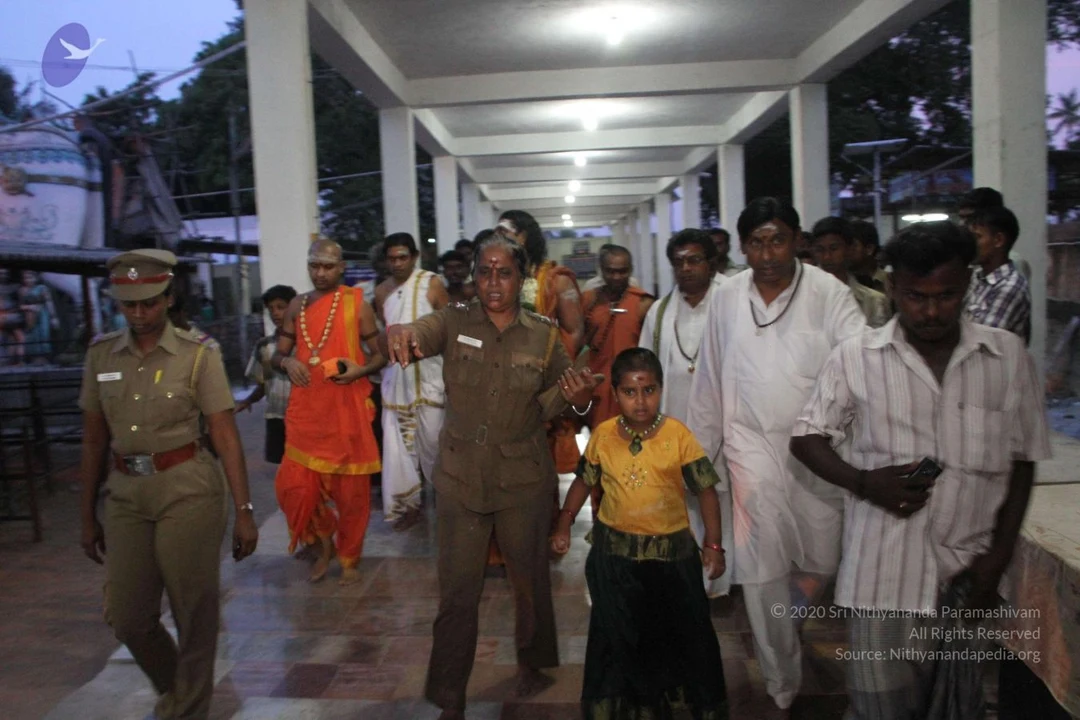
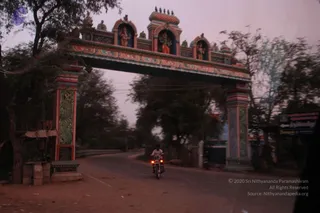
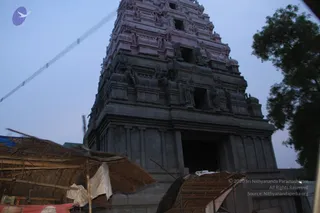
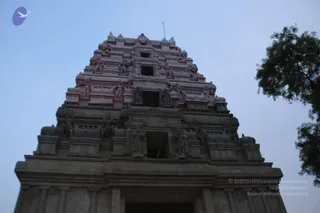
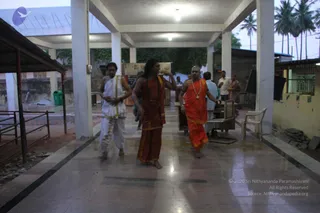
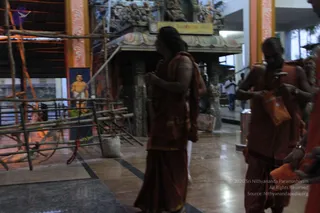
A blurred photograph taken through a vehicle window of a flat, dusty riverbank at dusk under a pale pink sky. A broad, pale grey river or water channel runs across the middle, with reddish-brown sandy banks on either side, scattered low shrubs and a line of distant trees along the horizon. A small dark object sits on the sandy bank in the lower left. No people are visible in the scene.A photo taken from a vehicle at dusk of a colourful ornamental village gateway over a road. The arch is painted in red, green, cream and gold, with niches holding painted deity figures and small finials on top. A single motorcyclist rides toward the camera, wearing a light shirt, with the headlight on. Trees line the road and a signboard is visible at the right edge. No a person candidate is visible; the only human is the rider.Low-angle photograph of a tall, tiered gopuram-style temple tower at dusk, its grey stone surfaces carved with rows of sculpted deity and figure niches and a pinkish-tinted upper section. Thatched palm-and-cloth awnings sit in the foreground at the base, and a tree and overhead wire frame the right and upper left. No people are visible in the scene, and no one is shown in a person's presence.Low-angle photograph of a tall, tiered South Indian temple gopuram rising against a pale evening sky. Its stucco and stone tiers are carved with rows of deity and figure sculptures in niches, with pinkish-painted upper tiers. A green tree stands at the right edge. No people are visible in the scene.Photograph of three men walking barefoot along a polished marble corridor under a covered colonnade in an Indian temple-style compound, with palm trees and a low wall visible outside. The central figure wears a rust-red garment with a red shawl draped over the shoulder, a long rudraksha mala and his long dark hair swept back; he holds a hand near his face. The man on the right wears a saffron-orange robe and a ceremonial gold necklace, with a white marking on his forehead. The man on the left wears white ritual dhoti and shawl with a striped border and carries a small object. Behind them a wooden chair and a brown bench stand near a pillar, with a few onlookers in the background.A photograph inside a temple hall with polished marble floors and bamboo scaffolding on the left. A figure with long dark hair and a reddish-brown wrap walks toward the centre, a bare-shouldered devotee in ochre clothing. Beside them a shaved-headed man in saffron-orange robes carries an orange cloth bag and a small object. Behind them an ornately carved shrine with sculpted deity figures and a temple signboard stands above. A painted portrait of a standing man in white dhoti hangs on a pillar. Several people are blurred in the background. The image is motion-blurred.

Evening-Aarti-in-Madurai

9 photosSource gallery
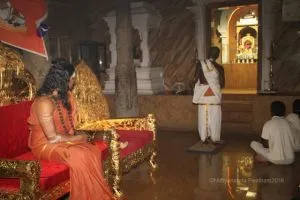
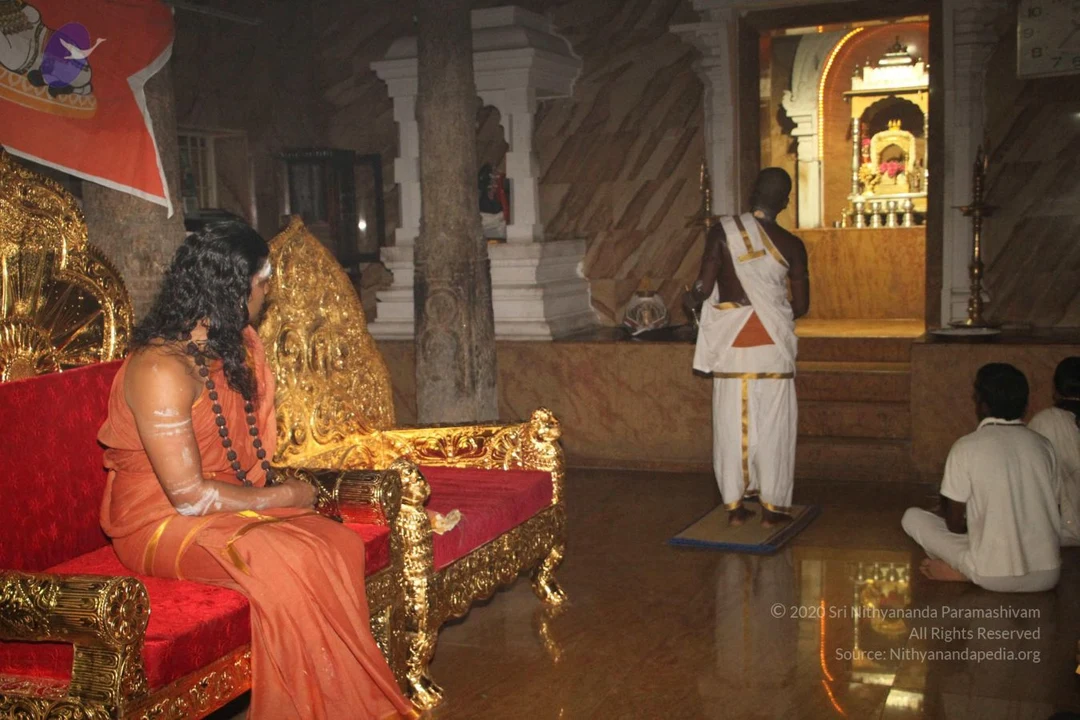
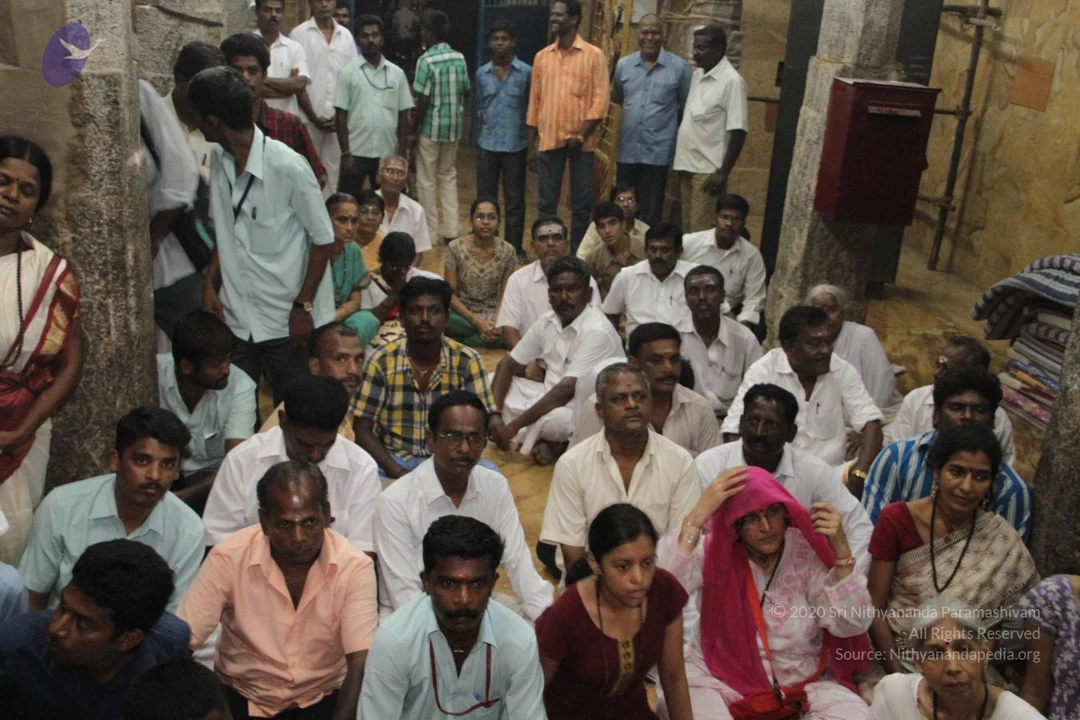
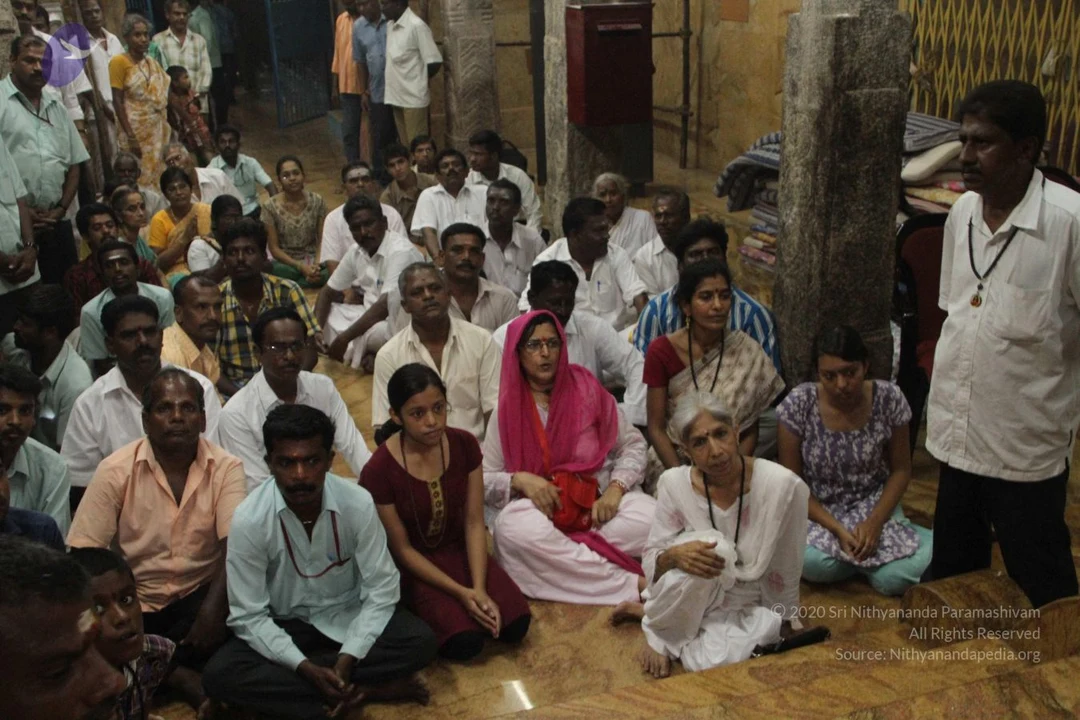
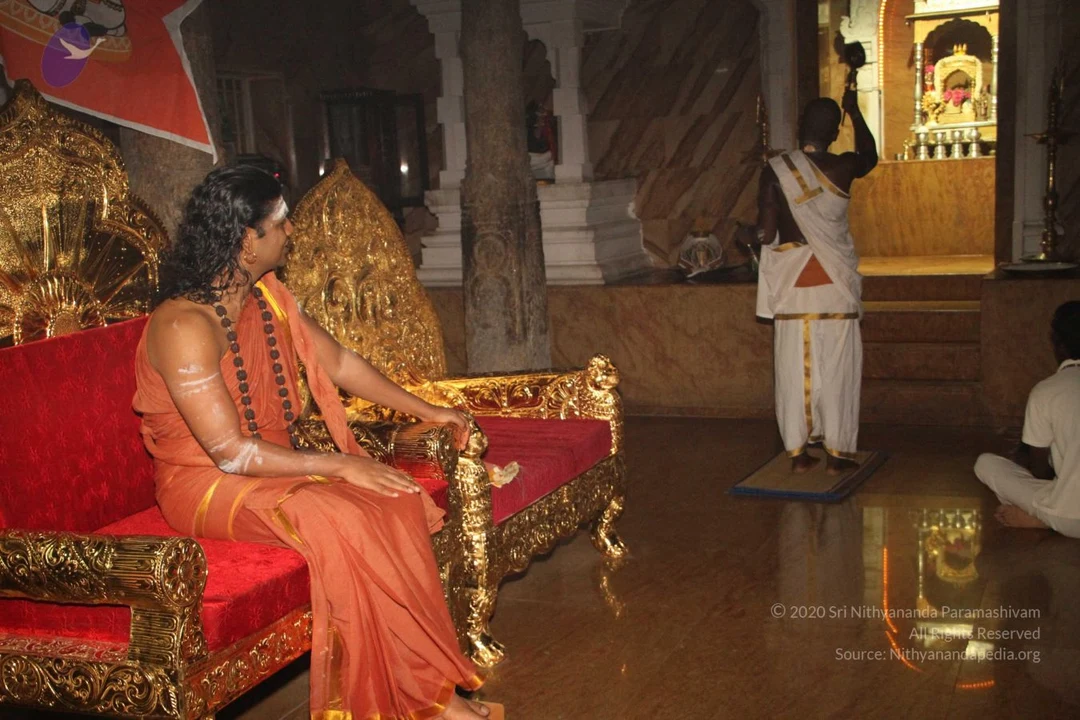
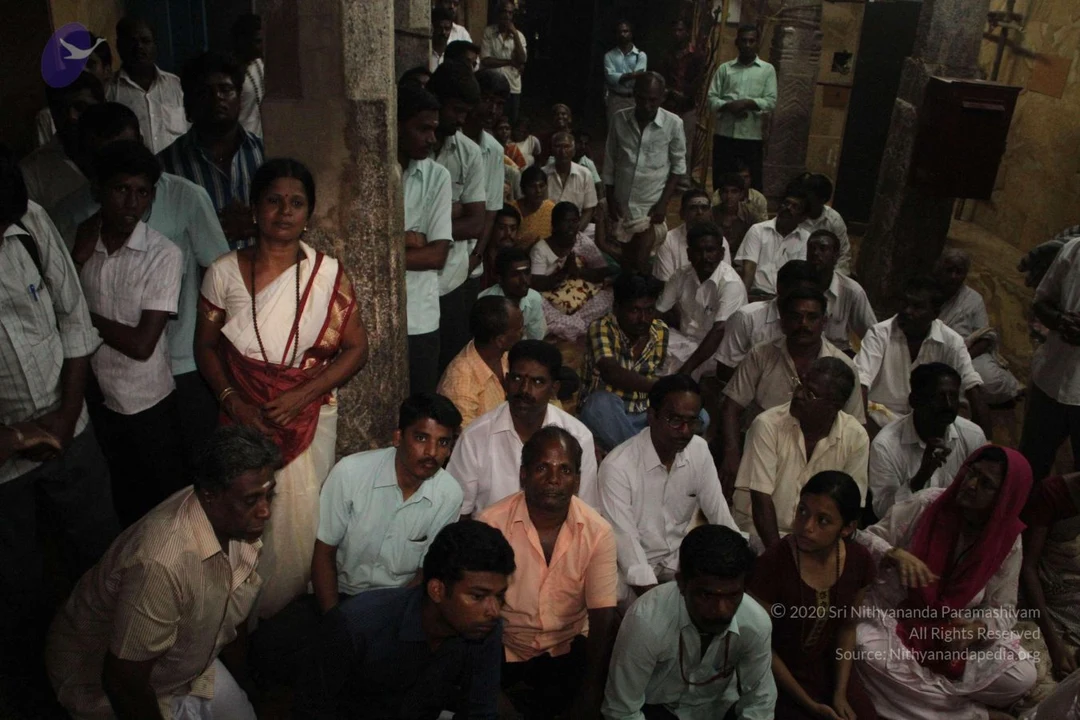
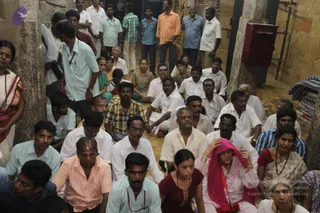
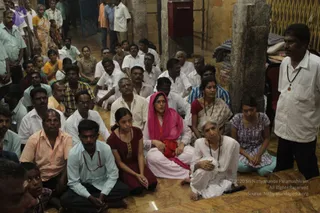
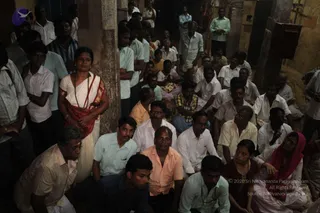
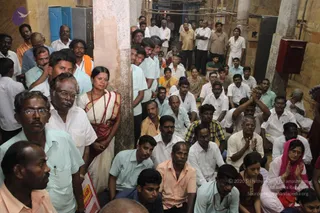
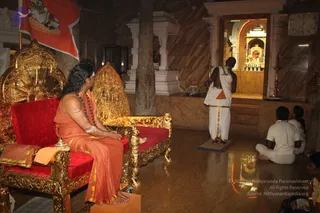
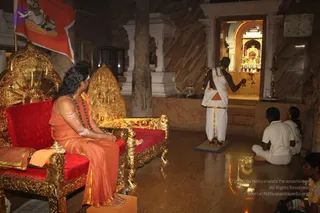
A crowded indoor scene inside a stone-walled temple corridor, with a dense group of devotees seated on the floor and standing along the sides. Many men wear white shirts and dhotis or trousers, some in pale green or yellow checked shirts. A woman on the left wears a white and red sari, and a woman at lower right wears a red sari with a dark blouse. A woman in the centre foreground wears a pink sari draped over her head, with an orange shawl. A red metal donation box is mounted on the pillar at upper right, and folded cloth lies stacked against the wall. No clearly identifiable a person figure is visible, so the scene is described by roles only: devotees attending a gathering.A seated crowd fills a stone-pillared hall with polished stone floor, where devotees sit close together listening. In the foreground a woman in a pink headscarf and pink-bordered saree sits cross-legged beside an elderly woman in white clothes with a white shawl. Behind them a woman in a red-maroon saree and a young girl in a maroon top sit among men in white shirts and light-coloured shirts. On the far right a standing man in a white shirt wears a rudraksha-style mala and watches the gathering. Shelves of folded cloth and a red box are visible in the background. No identifiable a person candidate is visible.Crowded interior of a stone-walled temple hall at night, with many devotees seated on the floor and standing along pillars, all gazing forward toward an unseen focal point. A woman in a white sari with a red-and-gold border and a beaded necklace stands near a pillar on the left. Men wear white shirts and light blue or cream shirts, and a woman in a pink headscarf sits on the right.A dense crowd of devotees packed into a stone-pillared hall with a red wall-mounted box and blue doors behind them. Most wear white or pale shirts and dhotis; a woman in a white sari with a red border and a mala stands near a pillar, and a woman in a pink headscarf sits at right with hands folded in namaste. Several men on the left wear white and light green shirts, one man in a saffron-orange shirt stands in the back, and a man in a peach shirt sits in the foreground. Many seated devotees in the front row clap or fold their hands, while others stand watching attentively toward a point off-frame. No a person candidate is clearly identifiable in the visible crowd.A seated figure in an orange-saffron robe sits on a red-cushioned golden throne in a marble temple hall, with white ash markings on the arms and a rudraksha mala visible at the neck, long dark hair swept back. A priest in white dhoti and shawl stands on a mat before a shrine containing a deity murti lit by oil lamps. Two seated devotees in white clothes sit on the marble floor at right. A red-and-saffron flag hangs at upper left and a wall clock is at upper right. Swamiji (probable) is the seated figure on the throne, identified by appearance cues of long hair, saffron robe and rudraksha mala, with the priest and devotees as supporting participants in a darshan or puja setting.Interior of a temple hall with polished brown stone floors and a shrine niche lit by lamps on the right. A seated figure in an orange-saffron robe with a rudraksha mala and white markings on the arms sits on an ornate gold-and-red throne with a cobra-hood backrest, facing the shrine. A standing priest in white dhoti and shawl with a red and gold border performs worship at the shrine, with a small offering dish before him. Two devotees in white sit on the floor at right, and a child is partly visible at the lower right edge. A red flag with a yellow emblem hangs at the upper left. A clock is mounted on the right wall.

Public-Darshan-in-Madurai

31 photosSource gallery
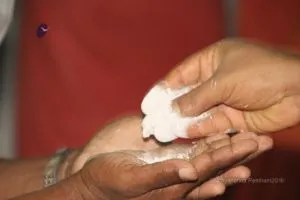
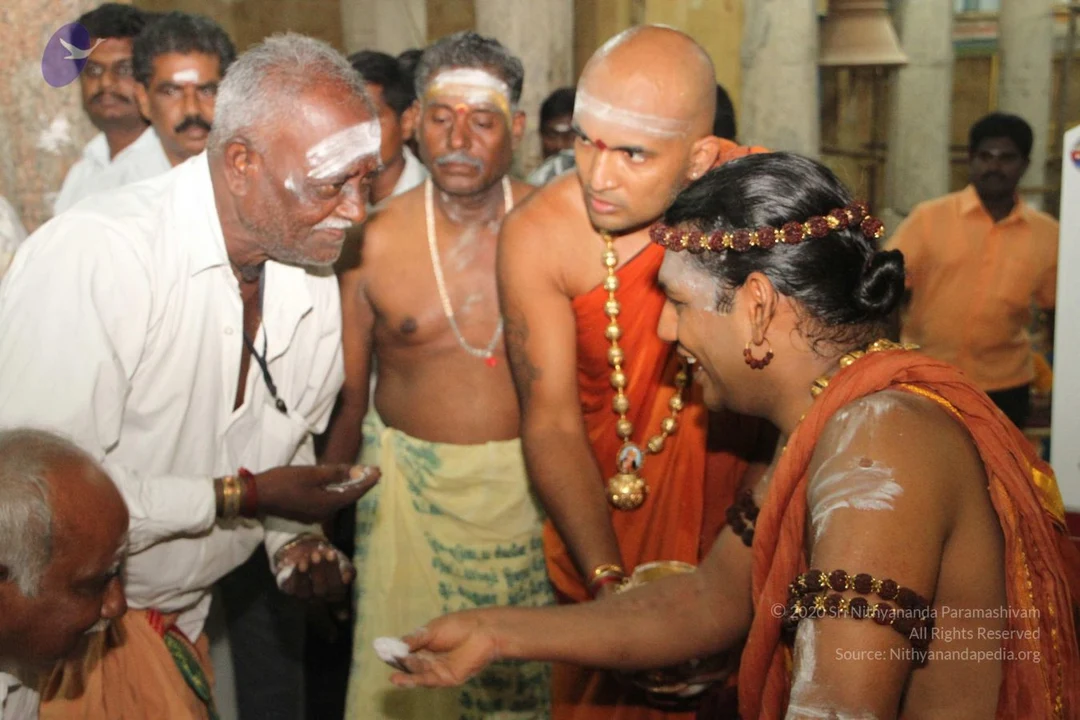
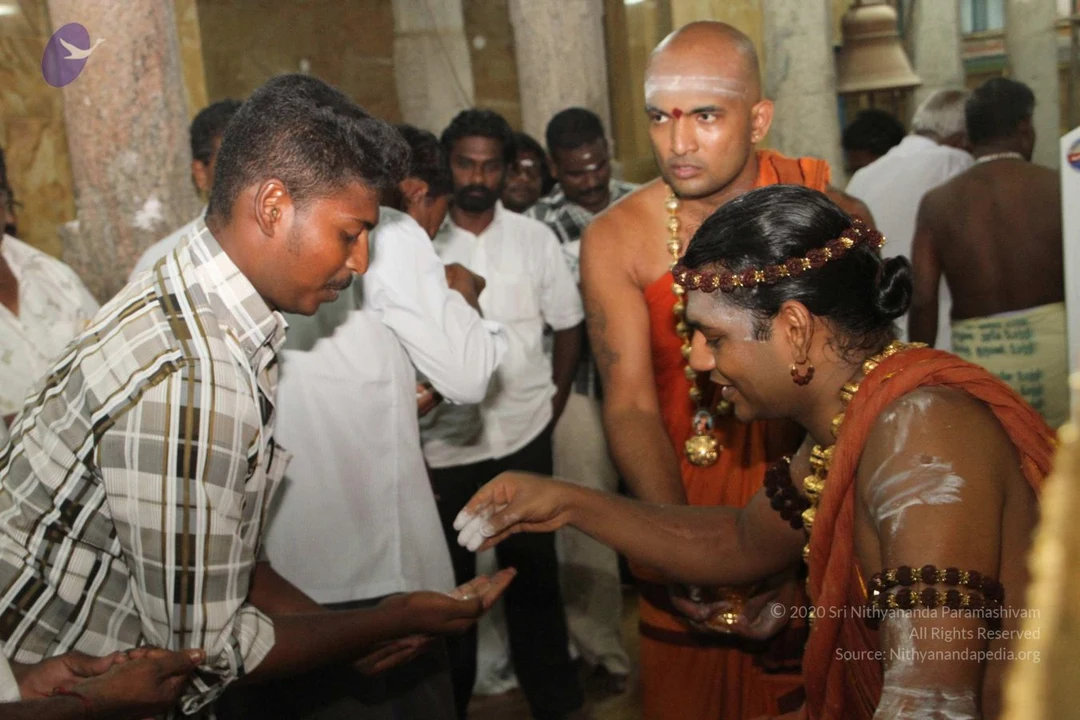
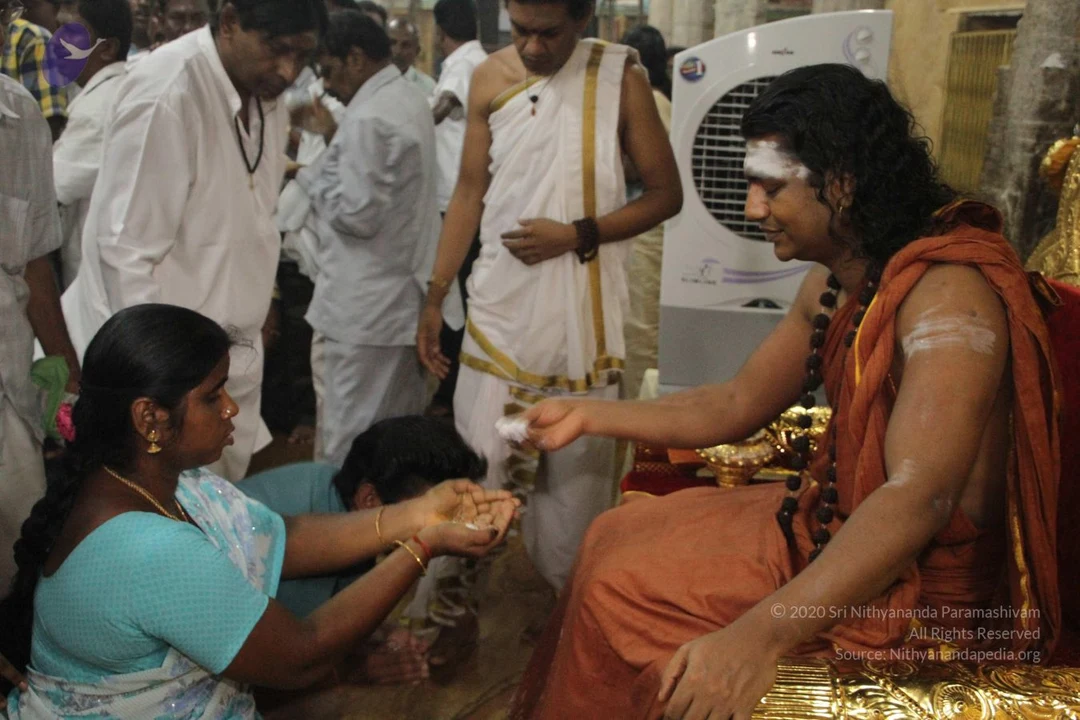
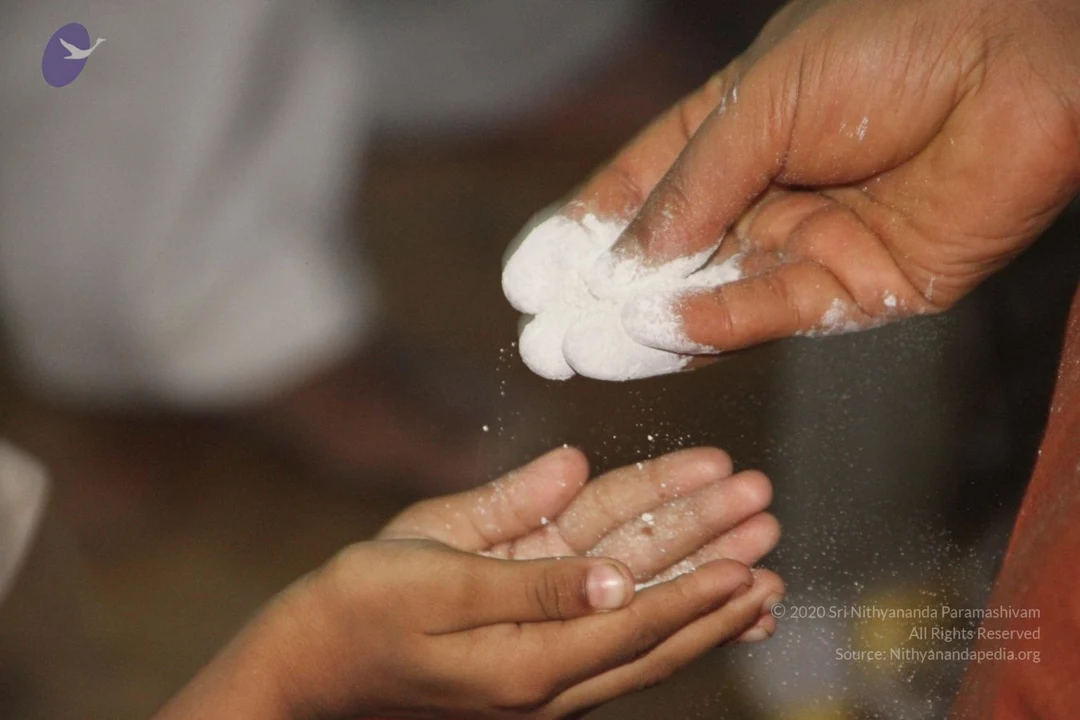
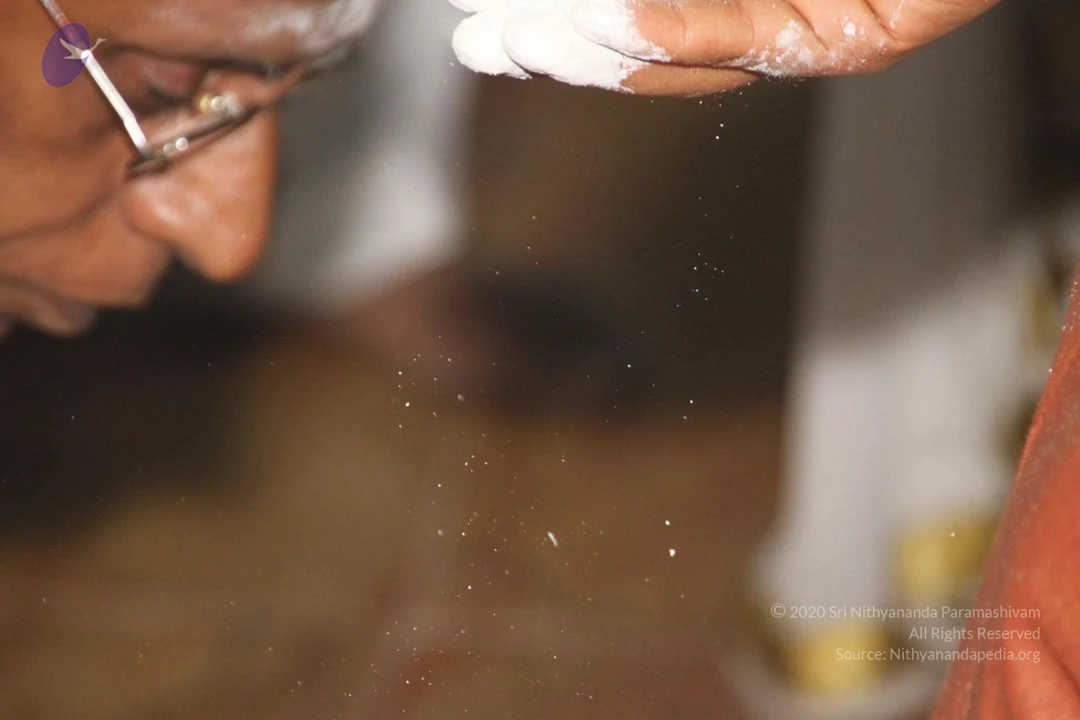
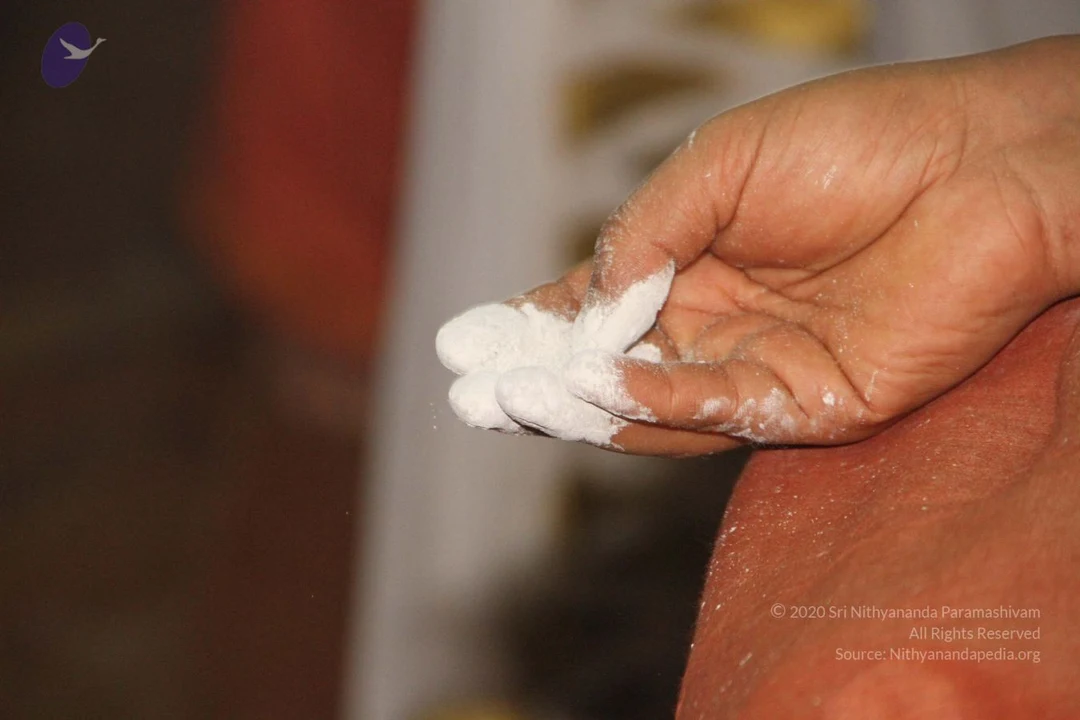
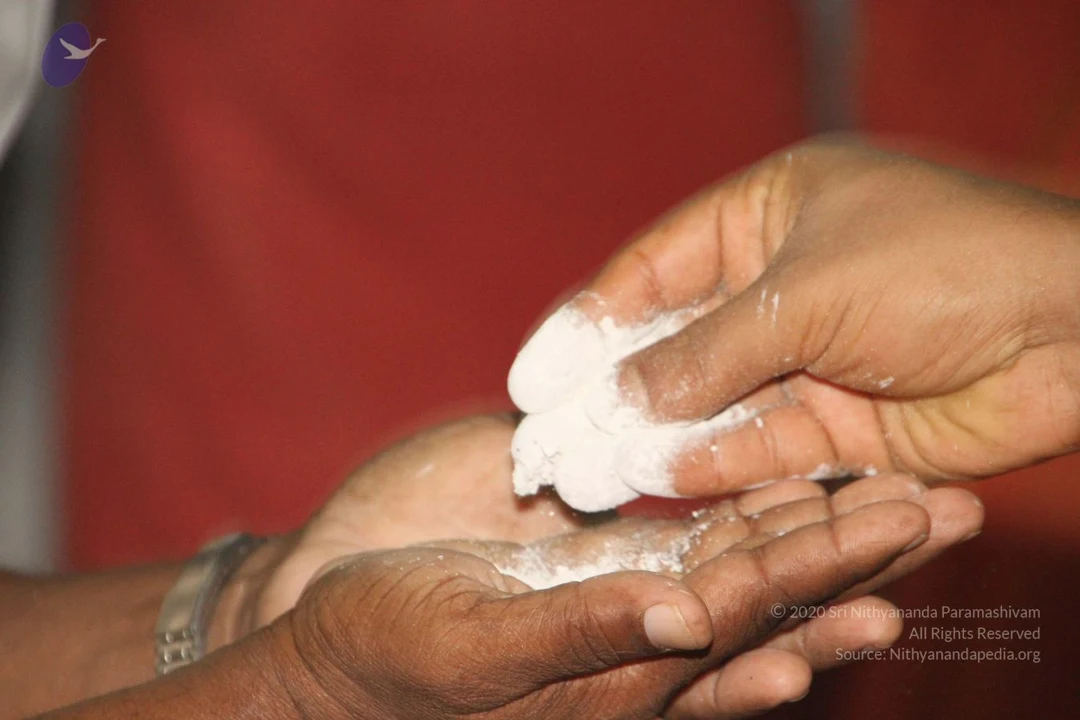
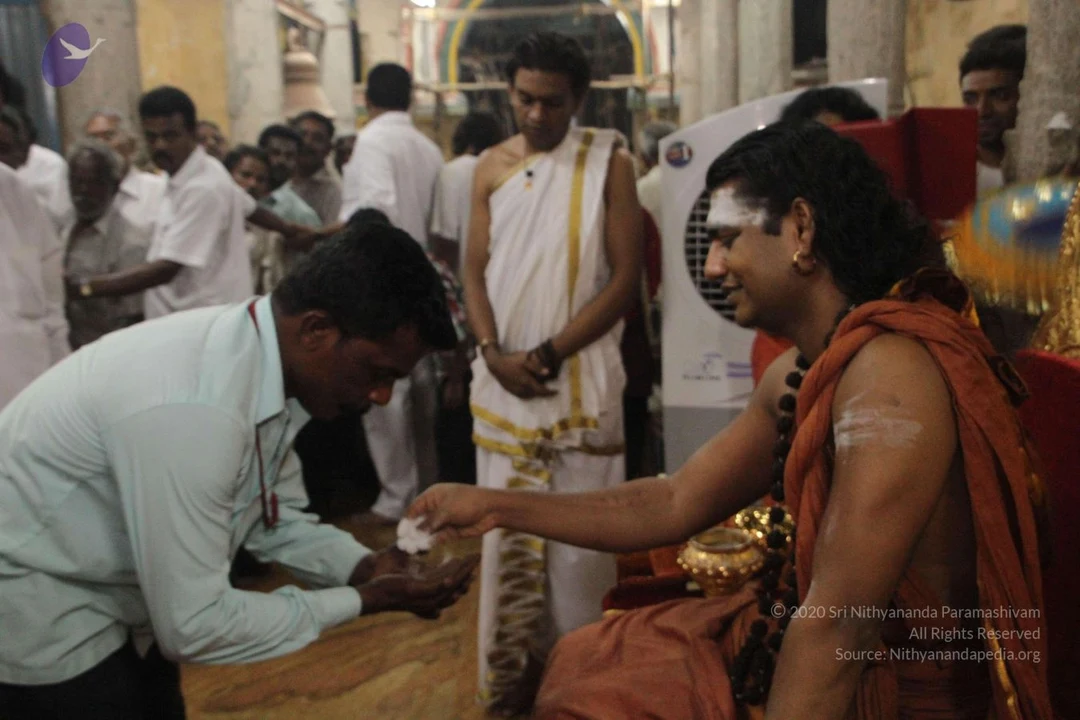
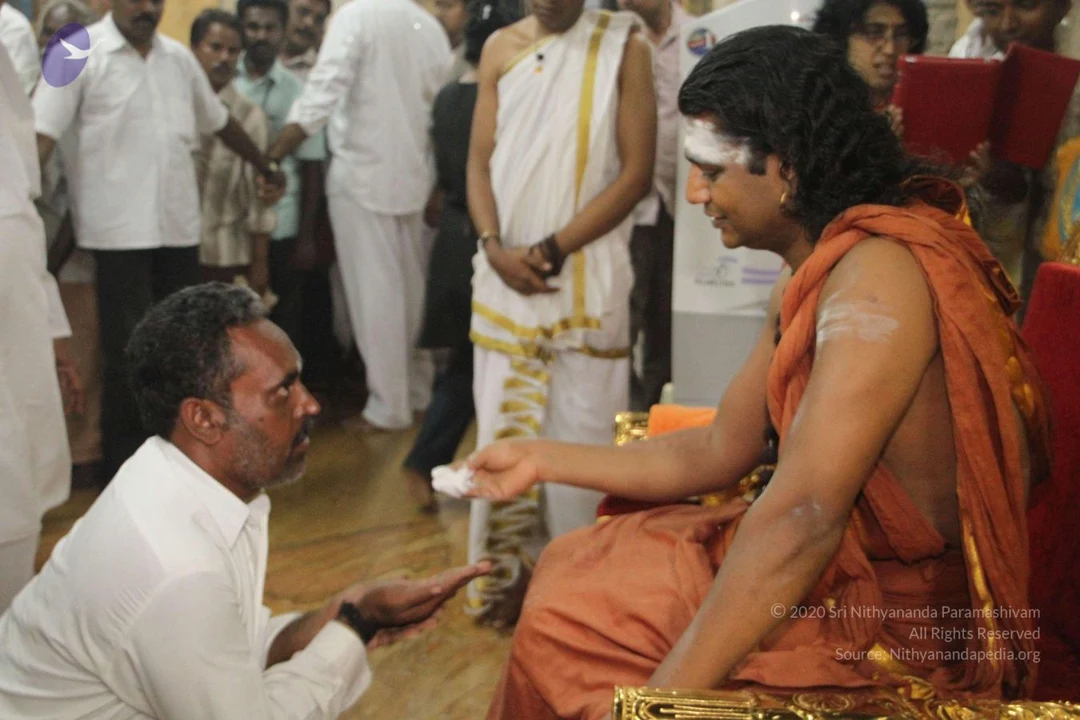
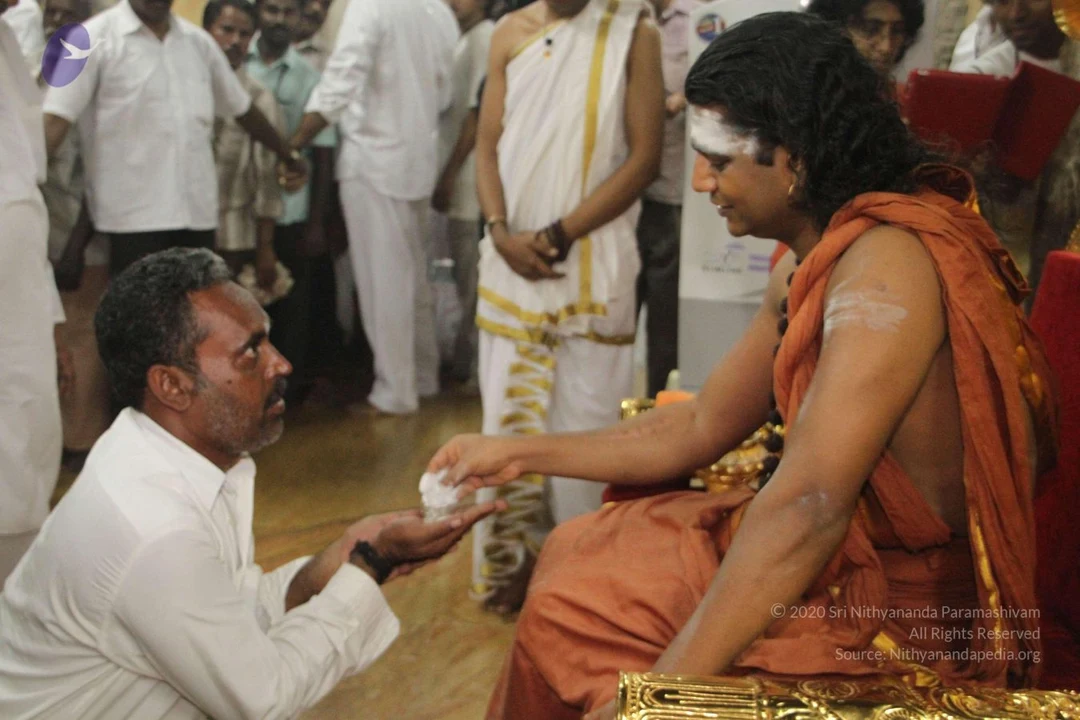
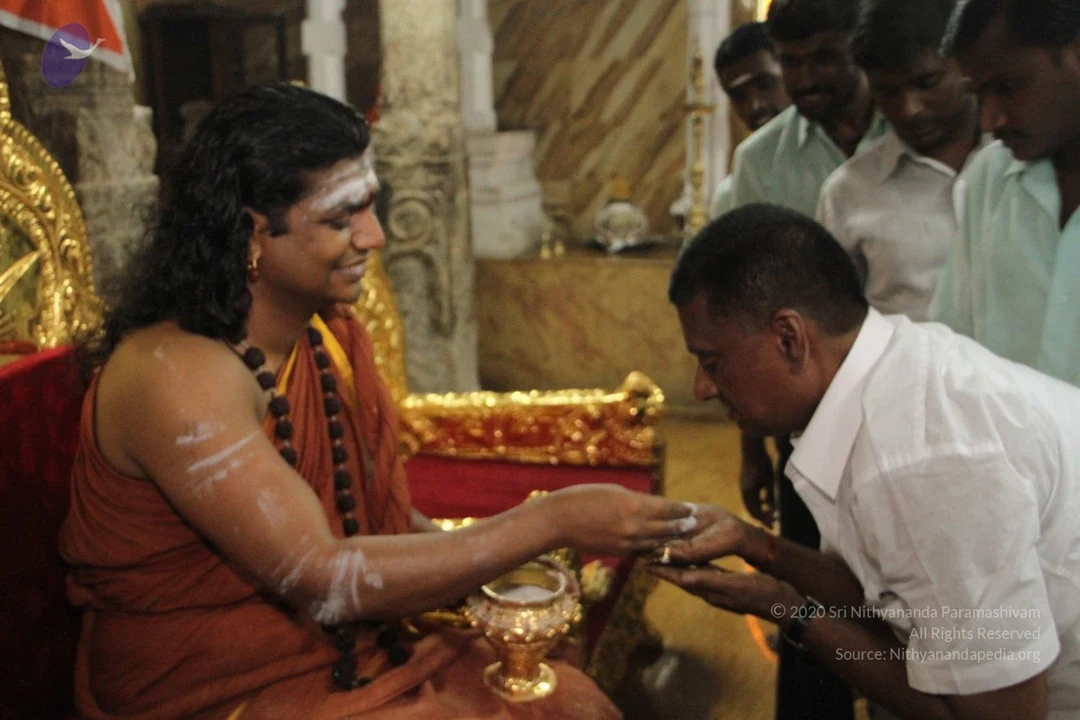
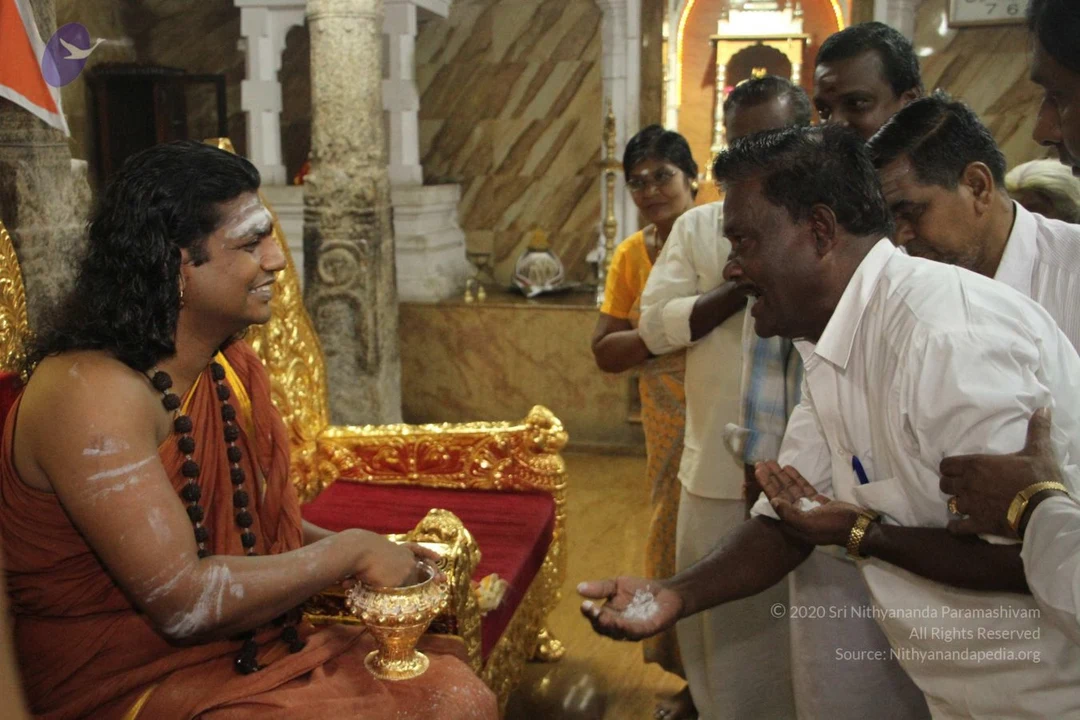
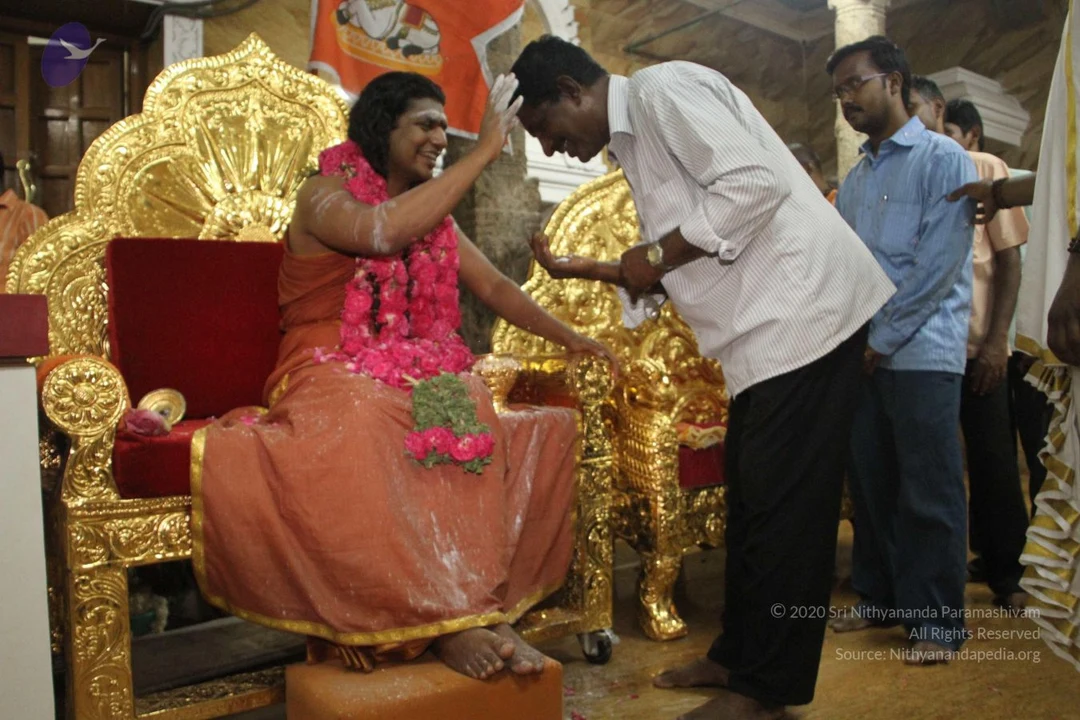
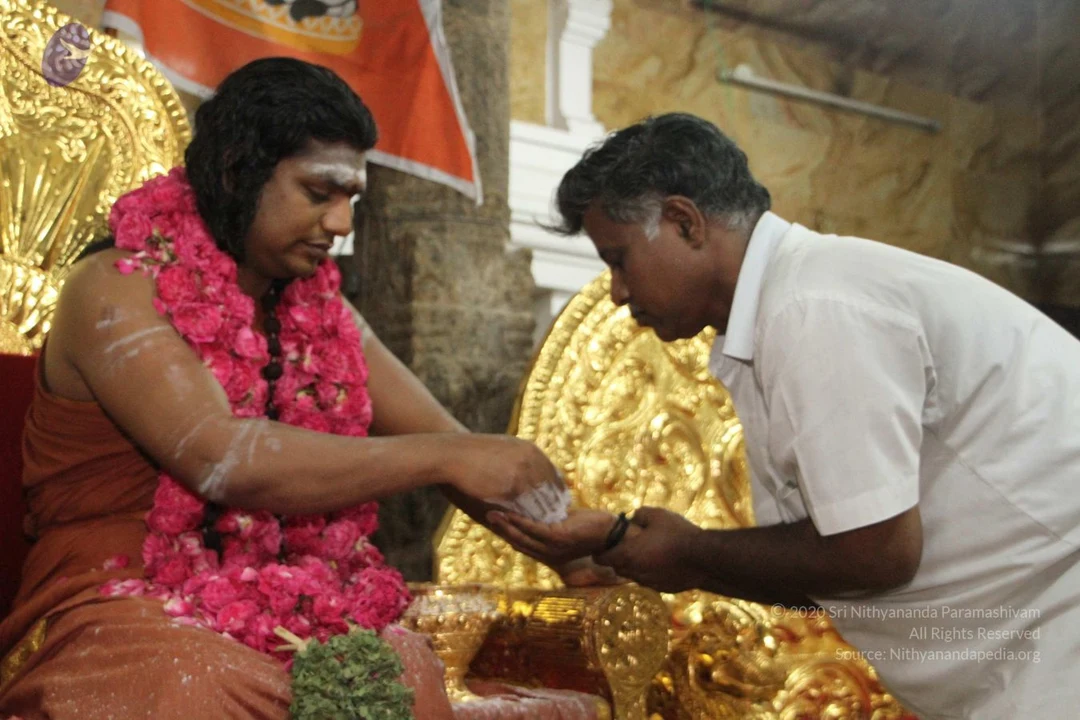
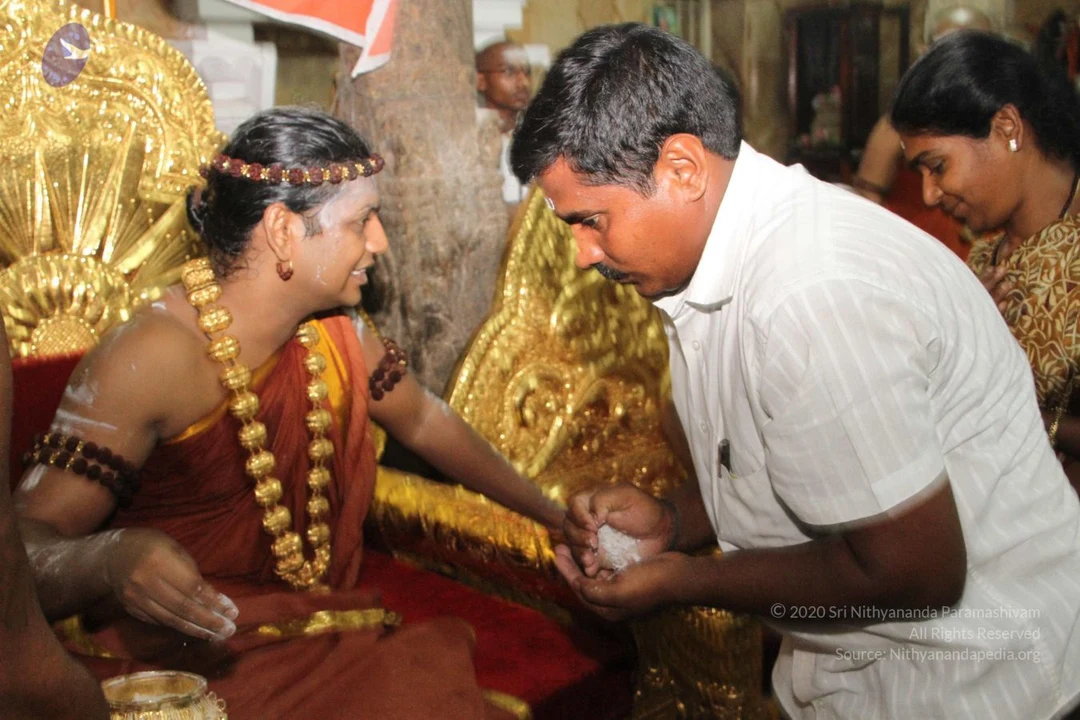
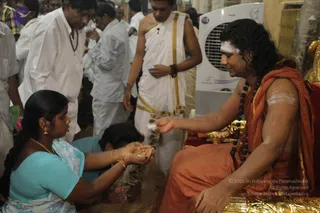
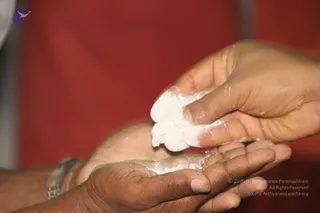
Close-up photograph of a lit brass oil lamp on a stone ledge. A tall orange flame rises from a shallow metal cup on a short stand, set against a warm, blurred stone wall and a sandy-toned background. No people are visible.Photograph of a temple or ashram ritual hall where a seated figure in an orange-red shawl and white ash markings on forehead and arms, with a dark rudraksha mala, receives offerings from devotees. A woman in a turquoise blue sari with gold bangles cups her hands toward him while a second devotee bows low at her side. Behind them, men in white dhotis and shirts stand, one in white with a gold-bordered dhoti. A white room cooler and a brass lamp or offering plate sit beside the seated figure on a gold-and-red throne. The seated man appears to be the presiding figure, and his identity is not established from appearance alone.Close-up photograph of an elderly man with rimless glasses leaning forward, his face in profile at the left edge. His raised right hand, dusted with white powder, scatters fine white particles downward through the air. He wears orange-red clothing at the right edge. The background is softly blurred, showing dim interior surroundings with a white-clad figure and warm yellow objects. A small purple logo appears in the top-left corner.Close photograph of a hand held palm-up, dusted with fine white powder. The forearm is draped in orange-red cloth, and the background is a soft blur of red and white with a dark frame at the left. No face is visible and no other people appear, so this is a ritual detail shot rather than a full scene.Close-up photograph of two pairs of hands: one set cupped palms-up at the bottom, the other above pressing and crumbling a soft white powdery substance. A wristwatch is visible on the lower wrist. The background is a blurred red fabric. No faces are visible, and no identifiable a person appearance is shown.Close-up photograph of two hands held open and cupped, palms up, in a gesture of offering or receiving. The hands are dark-skinned, with the foreground hand partly overlapping the other. The blurred background is red and orange cloth. No face is visible and no identifiable person is shown.

Paduka-Puja-Bidadi

3 photosSource gallery
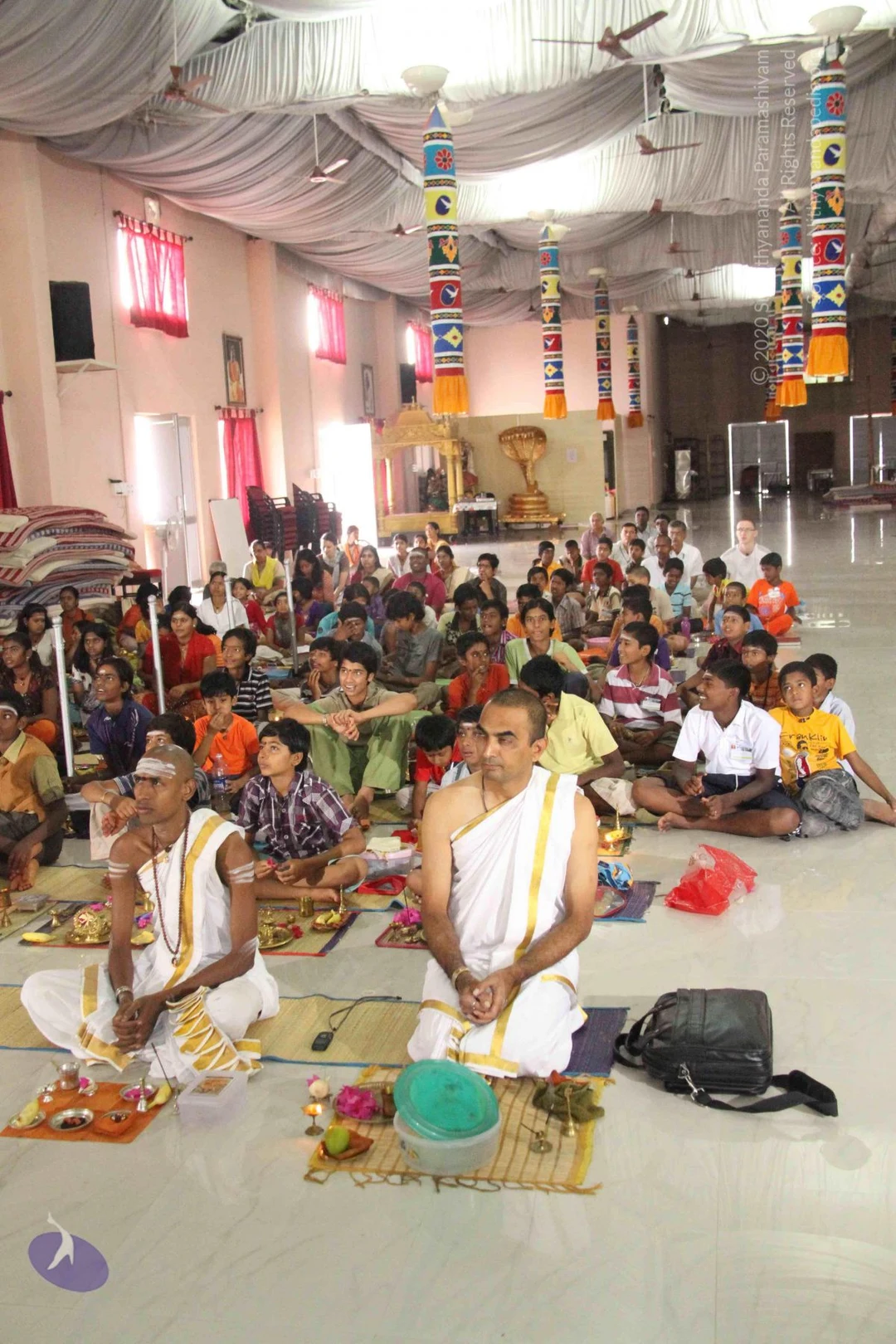
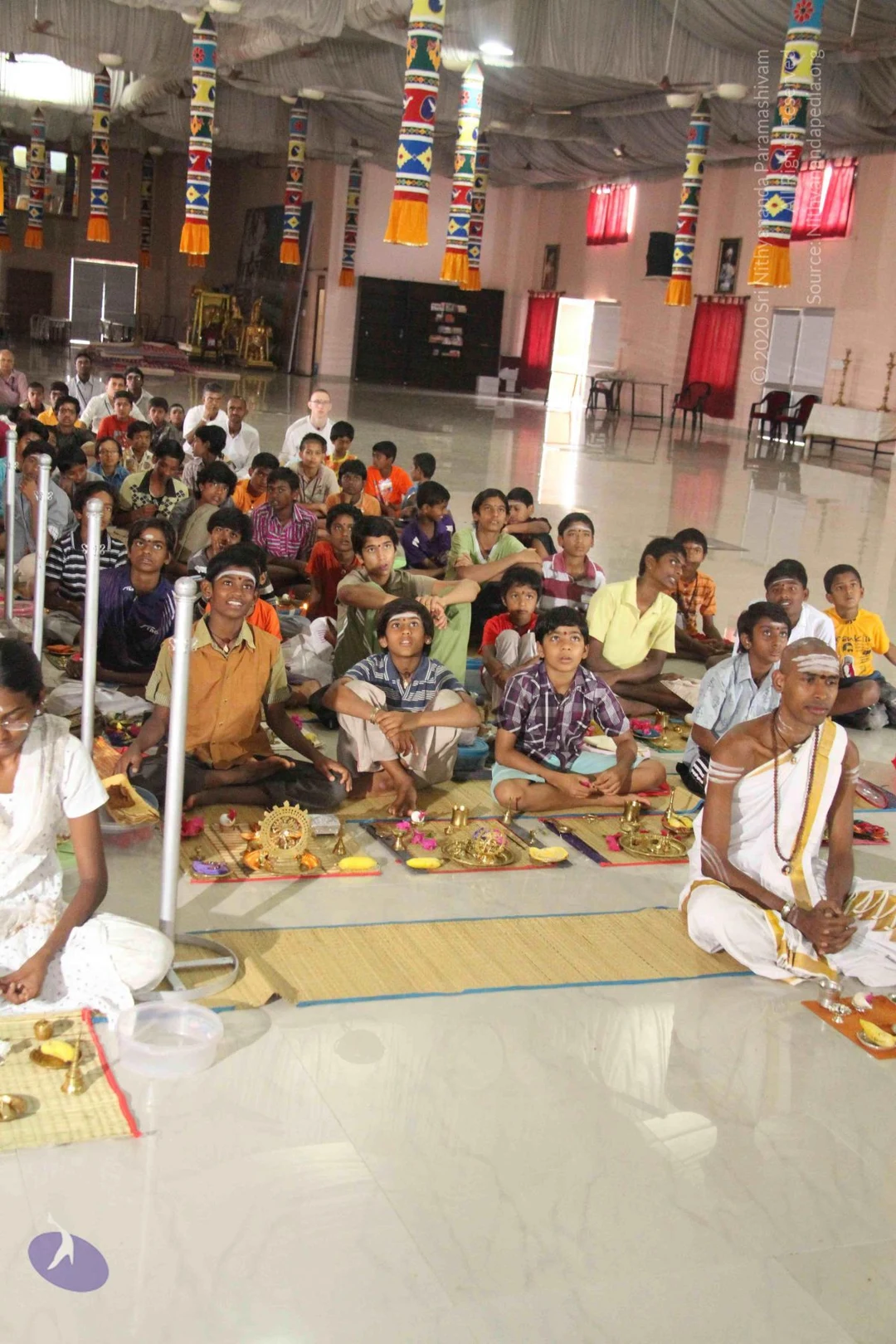
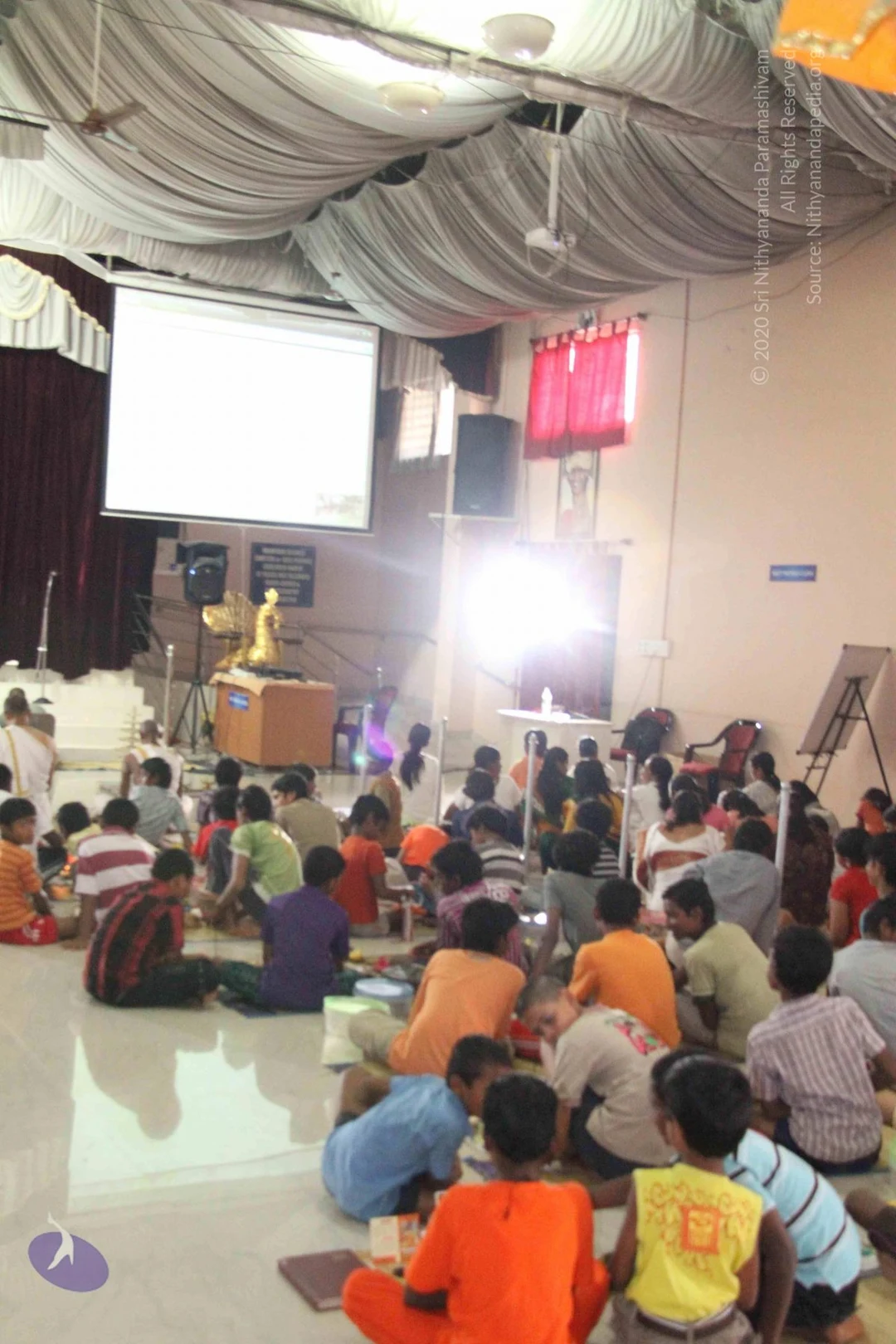
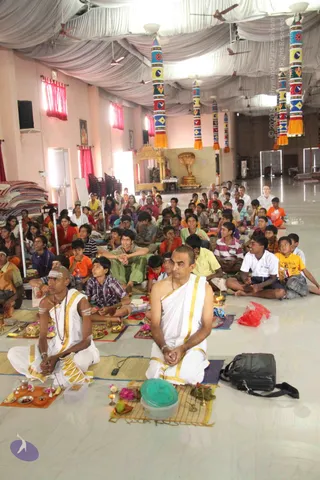
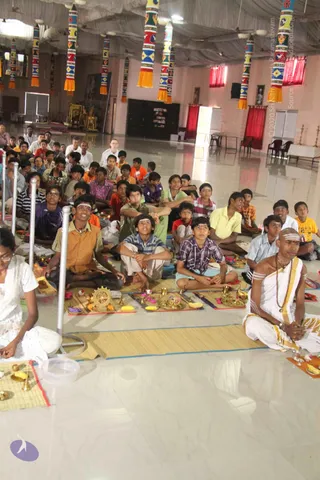
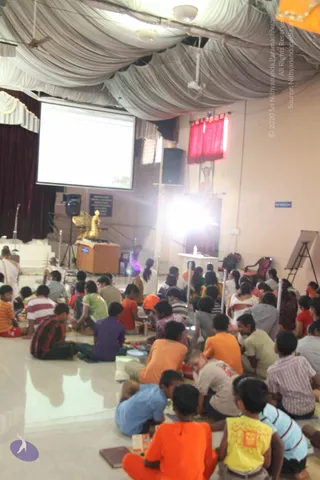
A large hall with white draped ceiling and colourful striped pillars hangs above a seated audience of many young people, mostly boys in orange, yellow, red and white shirts. In the foreground two men in white dhotis with gold borders sit on mats before brass puja items, flowers, fruit and small oil lamps. The man on the right has a shaved head with white tilak and bare arms. The man on the right wears a white shawl with gold border and sits with hands folded. A golden deity murti and a golden throne-like seat stand at the far end of the hall beside red curtained windows.A large hall with cream walls, a polished white floor and colourful hanging tassel decorations overhead; many boys and young men sit cross-legged on mats watching something upward. In the foreground a bald young priest in white dhoti with gold border and a rudraksha mala sits with hands folded, forehead marked with white ash and kumkum, beside brass puja plates with flowers, a brass nataraja-style lamp and kalasha. A woman in white sits at left. No one matching the presentation cues of a person is clearly visible.Wide photo of a satsang hall with a draped white ceiling and a large projection screen on the back wall. Thirty-odd children and adults sit cross-legged on a white marble floor, many in orange, yellow and striped clothing. At the front, a wooden lectern stands before a golden deity murti, with a robed person in white near the steps and a small figure in orange seated beside them. A red curtain hangs by a side window and a portrait is mounted on the wall. Stage lighting glows at the right. Audience members are partially visible, some cut off at the frame edges.

Deity-Darshan-Bidadi

3 photosSource gallery
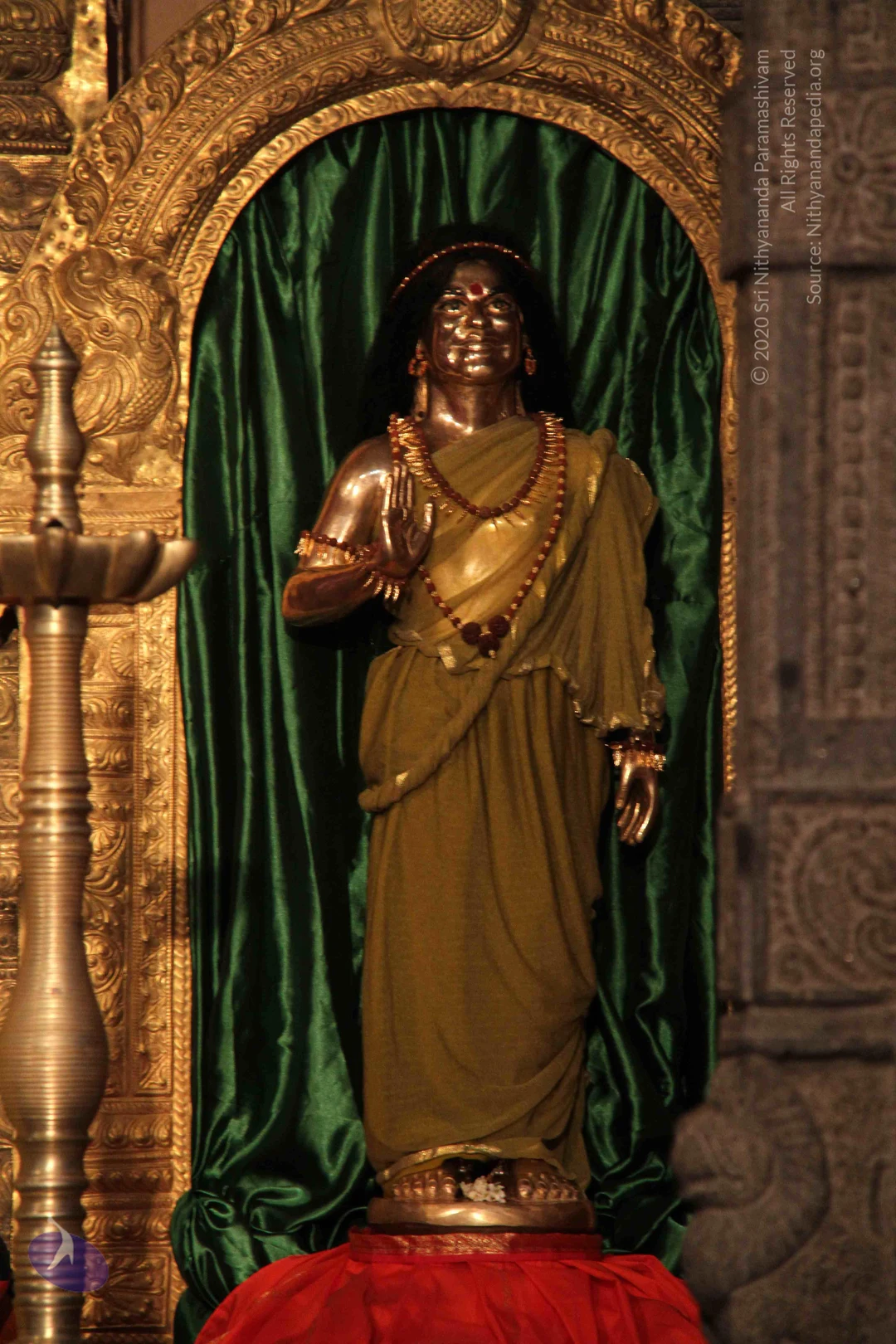
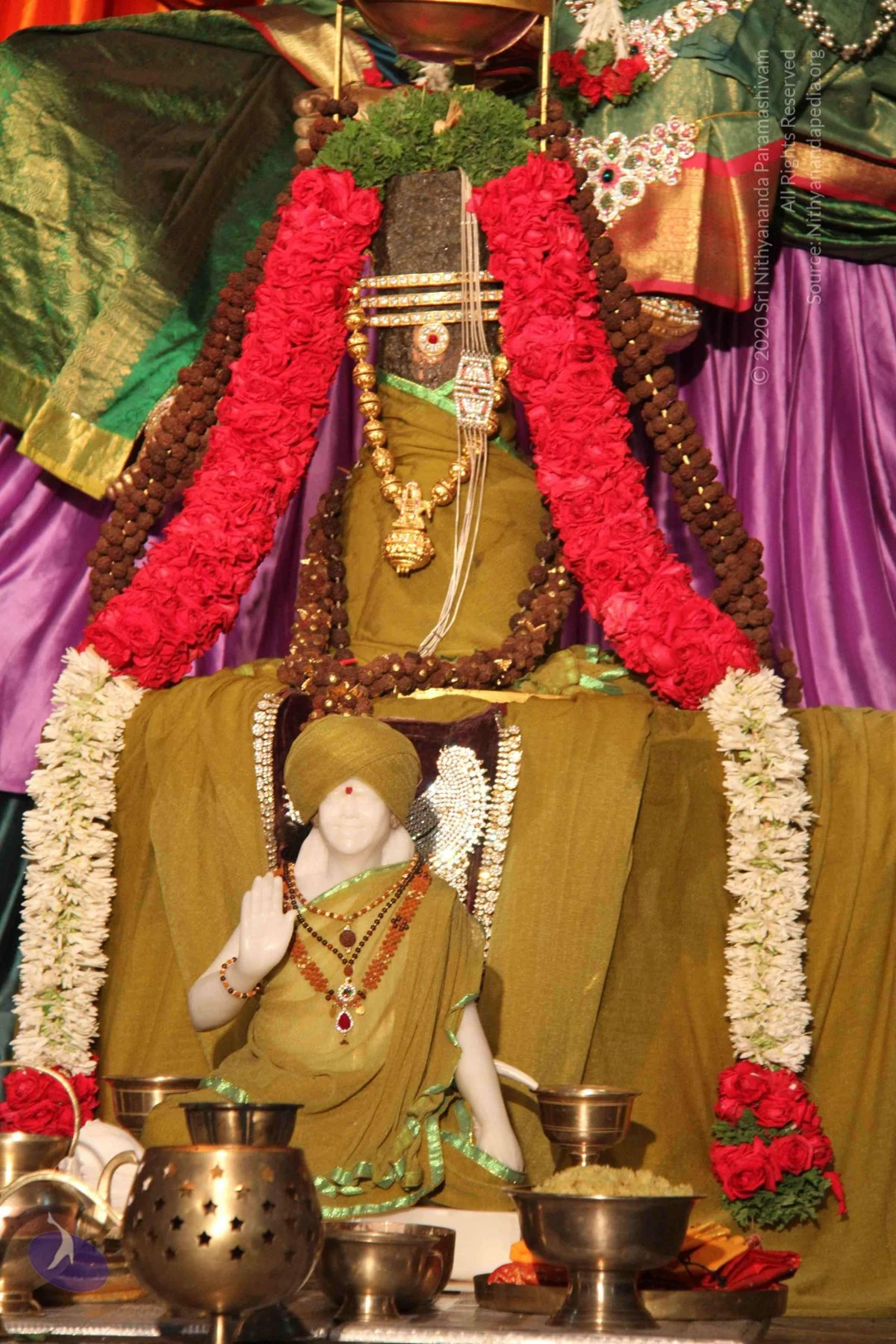
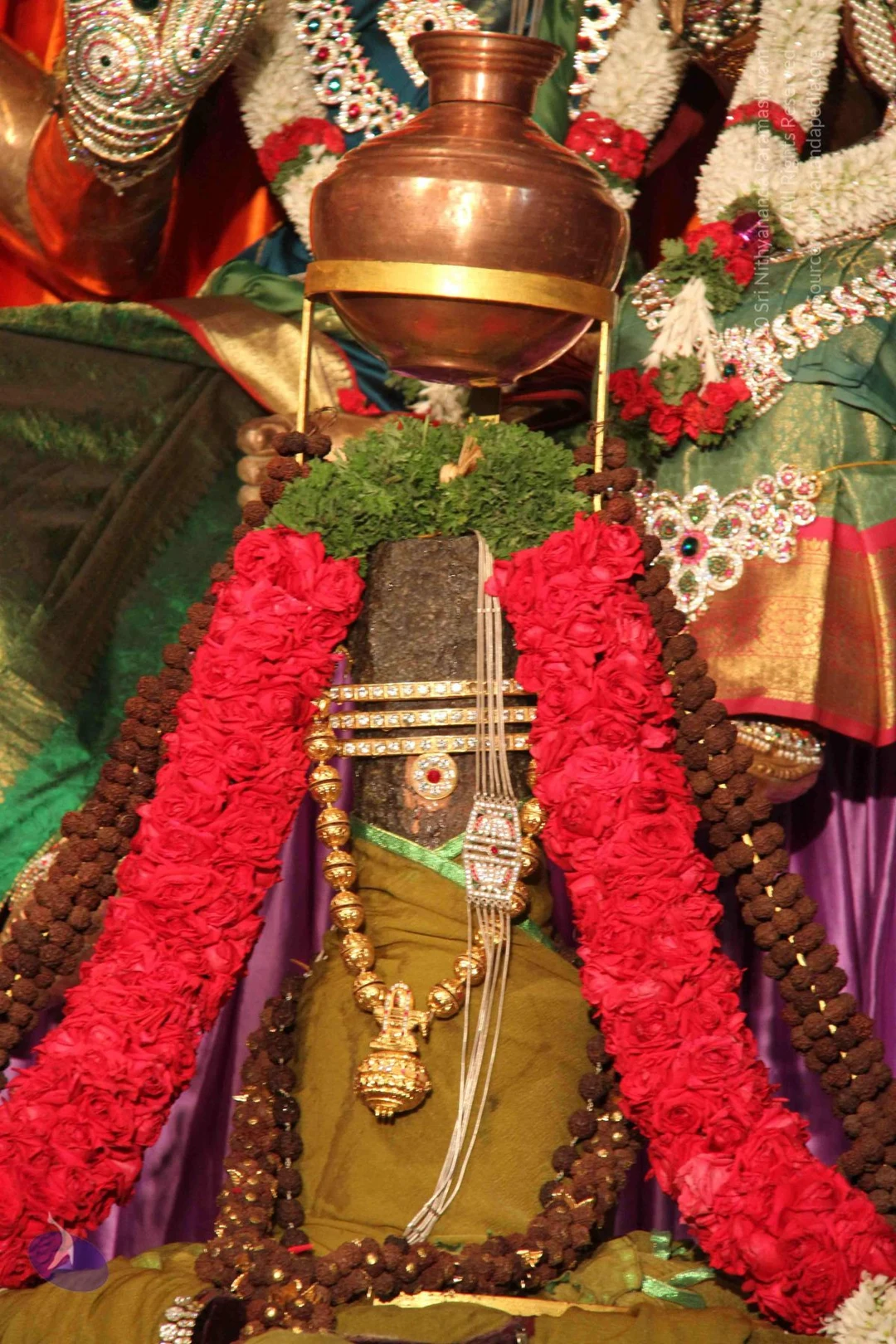
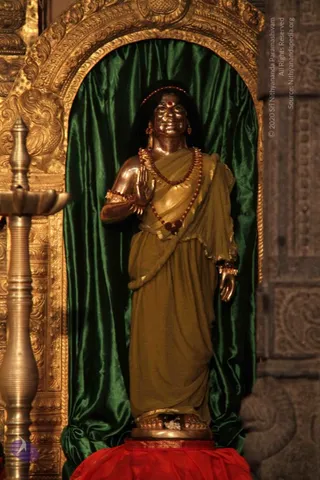
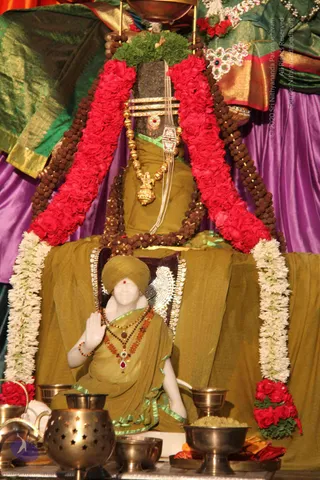
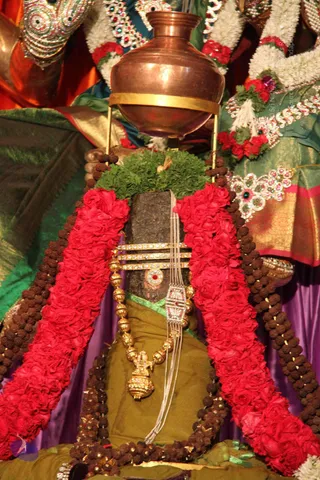
A metal statue of a standing female figure in a gilded arched niche lined with green satin drapery. The statue has a copper-bronze finish, a red tilak on the forehead, a red ribbon in the hair, and rudraksha beads layered around the neck, with a shawl of olive-gold cloth draped over the shoulders. Its right hand is raised in abhaya mudra and the left hangs at the side. Flowers sit at its feet on a red cloth-covered pedestal. An ornate brass oil lamp stands to the left, and carved stone pillars frame the right edge. No living people are visible.A decorated shrine with a tall dark stone linga-like form wrapped in green foliage, red rose garlands and rudraksha beads, set against draped green and purple cloth. In front sits a white marble statue of a seated figure in a green-olive robe and matching green turban with a red bindi, holding its right hand raised in blessing and wearing layered rudraksha and red-stone necklaces. Brass vessels, a perforated brass incense burner with star cut-outs and a bowl of rice sit on the altar. No physical people are visible; the figures are statues.A dark stone Shiva lingam is adorned for worship, wrapped with a green cloth and draped with red rose garlands and rudraksha malas. A copper kalasha hangs suspended above it on a brass frame, and a gold-and-stone ornament and gold beaded necklace decorate its front. Behind it stand larger deity figures in teal and green silk with jeweled ornaments and white flower garlands. No people are visible; this is a decorated deity murti during ritual dressing.

Yoga-Camp-Bidadi

1 photoSource gallery
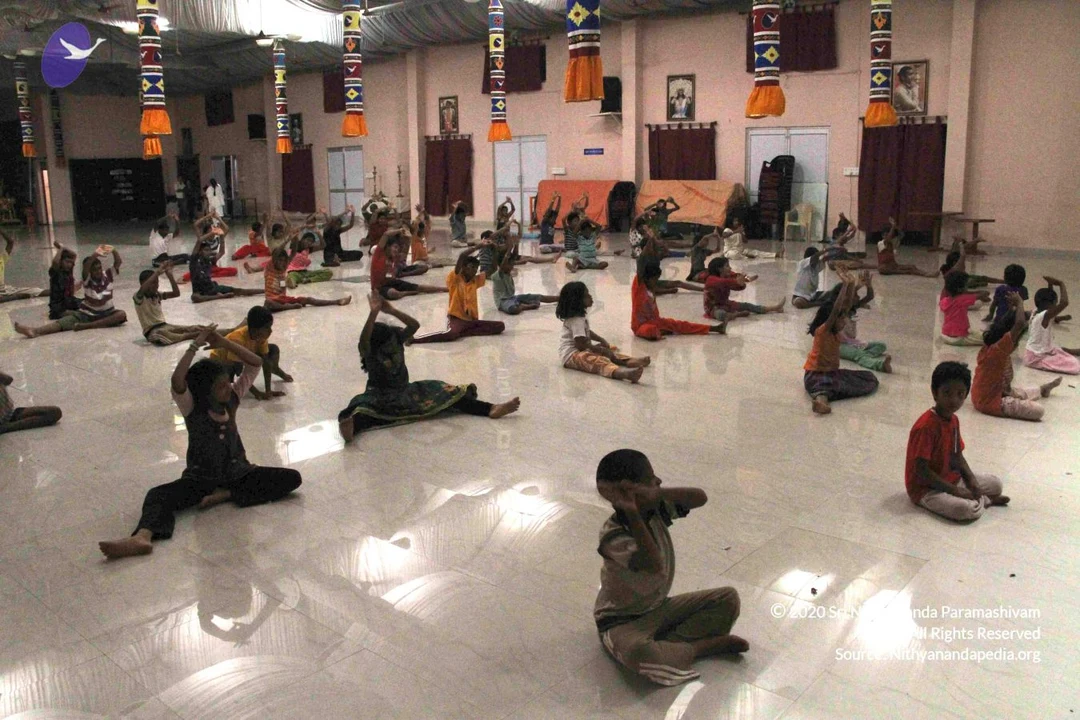
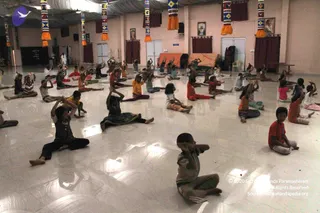
A large hall with a polished white marble floor where a group of children, mostly boys and girls in casual clothes, sit and stretch in a yoga or exercise session. Many children in red, orange, yellow, dark and pastel outfits sit with legs extended, arms raised or bent toward the head and feet. Decorative hanging cloth columns with orange tassels line the room, and framed portraits hang on the back wall. Orange and maroon curtains frame the doors and windows, and a few adults stand near the back.

Pada-Puja-Madurai-Adheenam

10 photosSource gallery
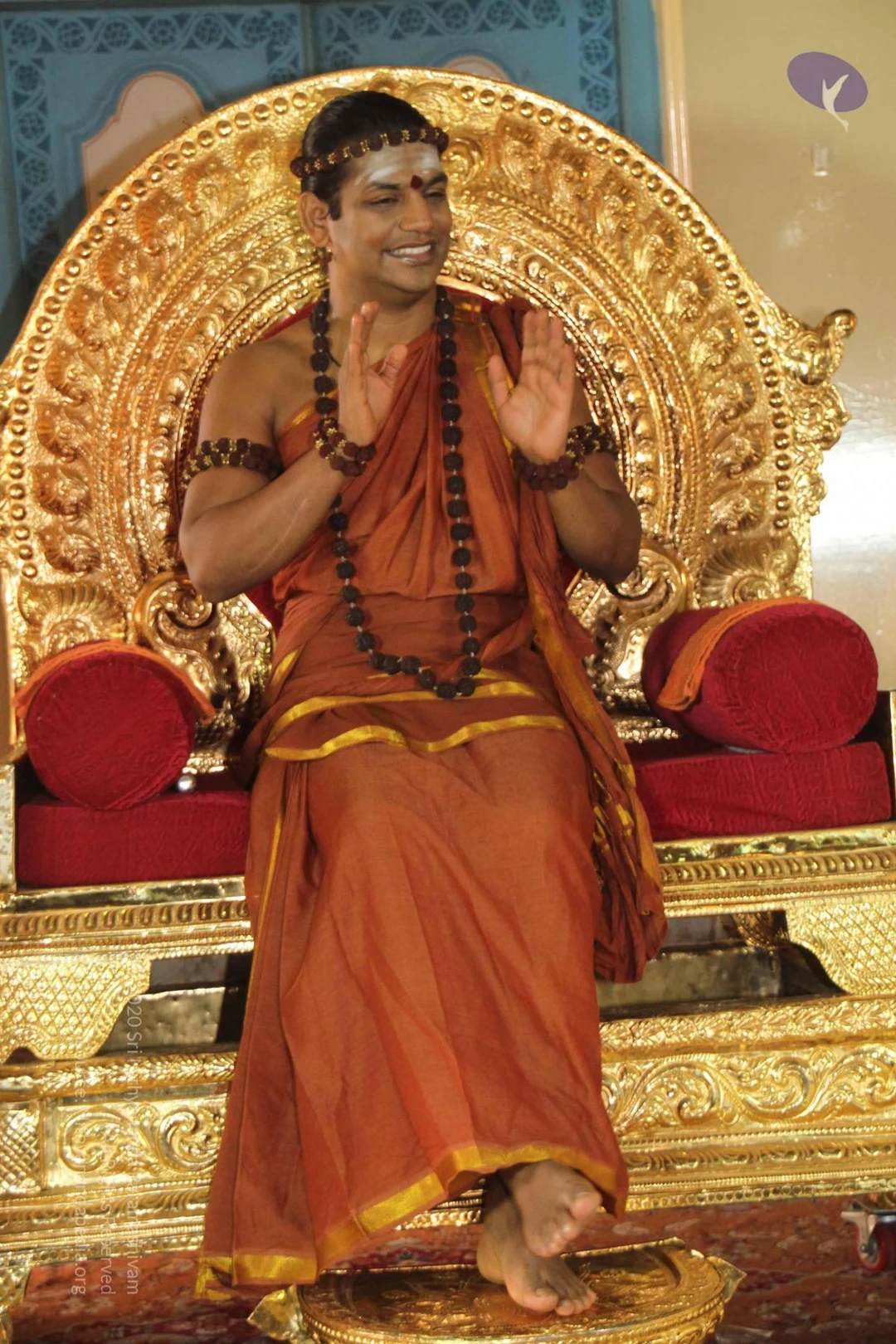
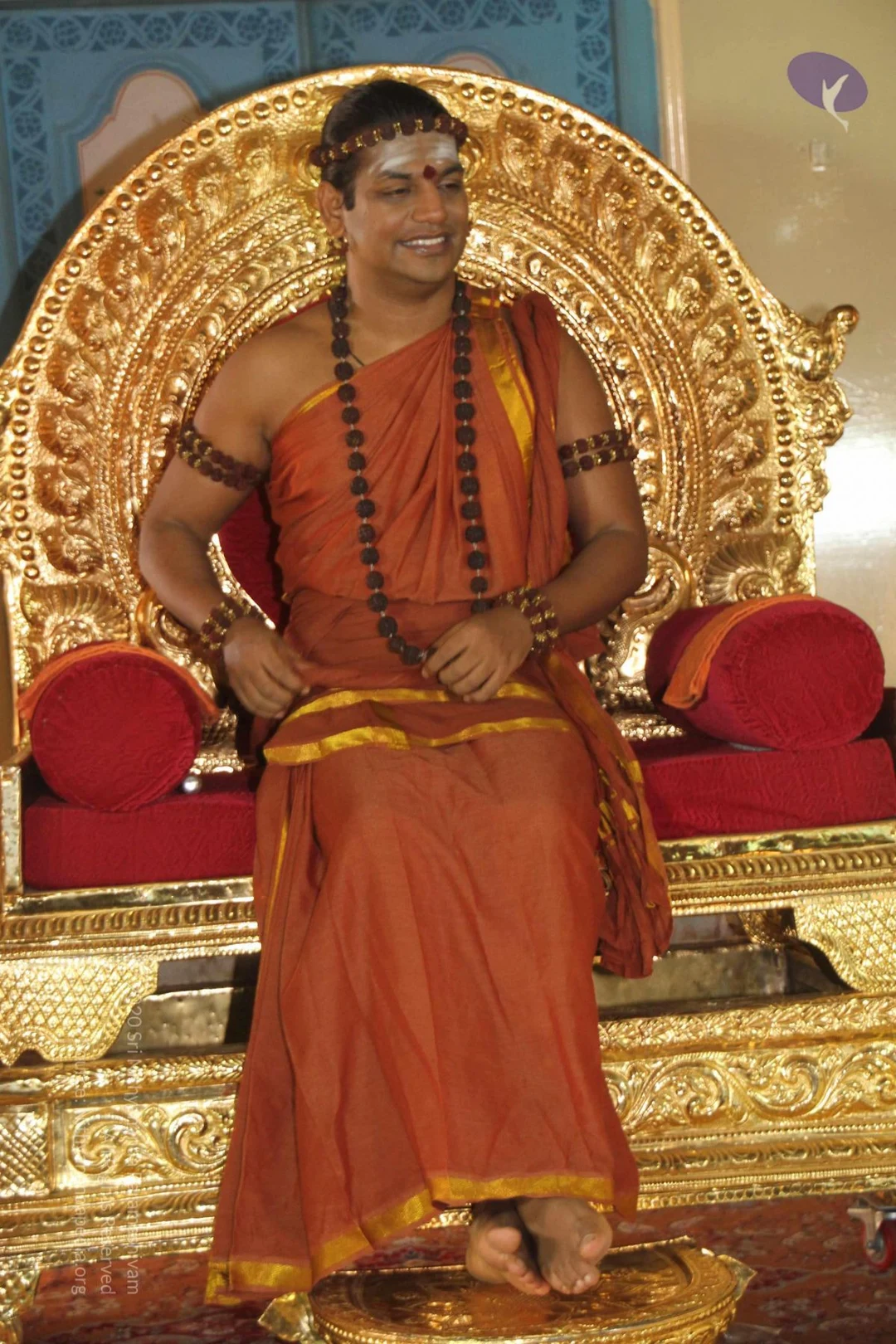
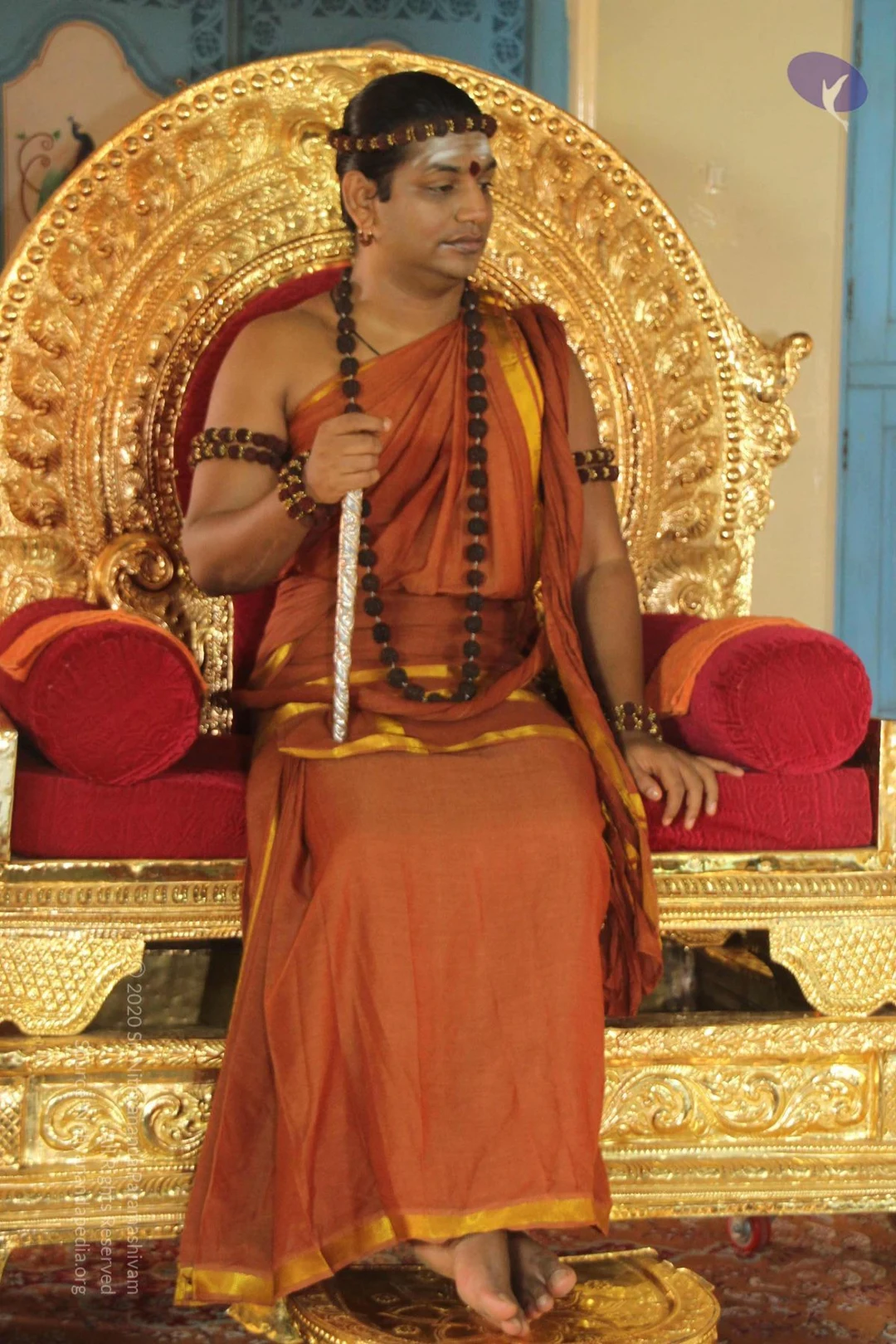
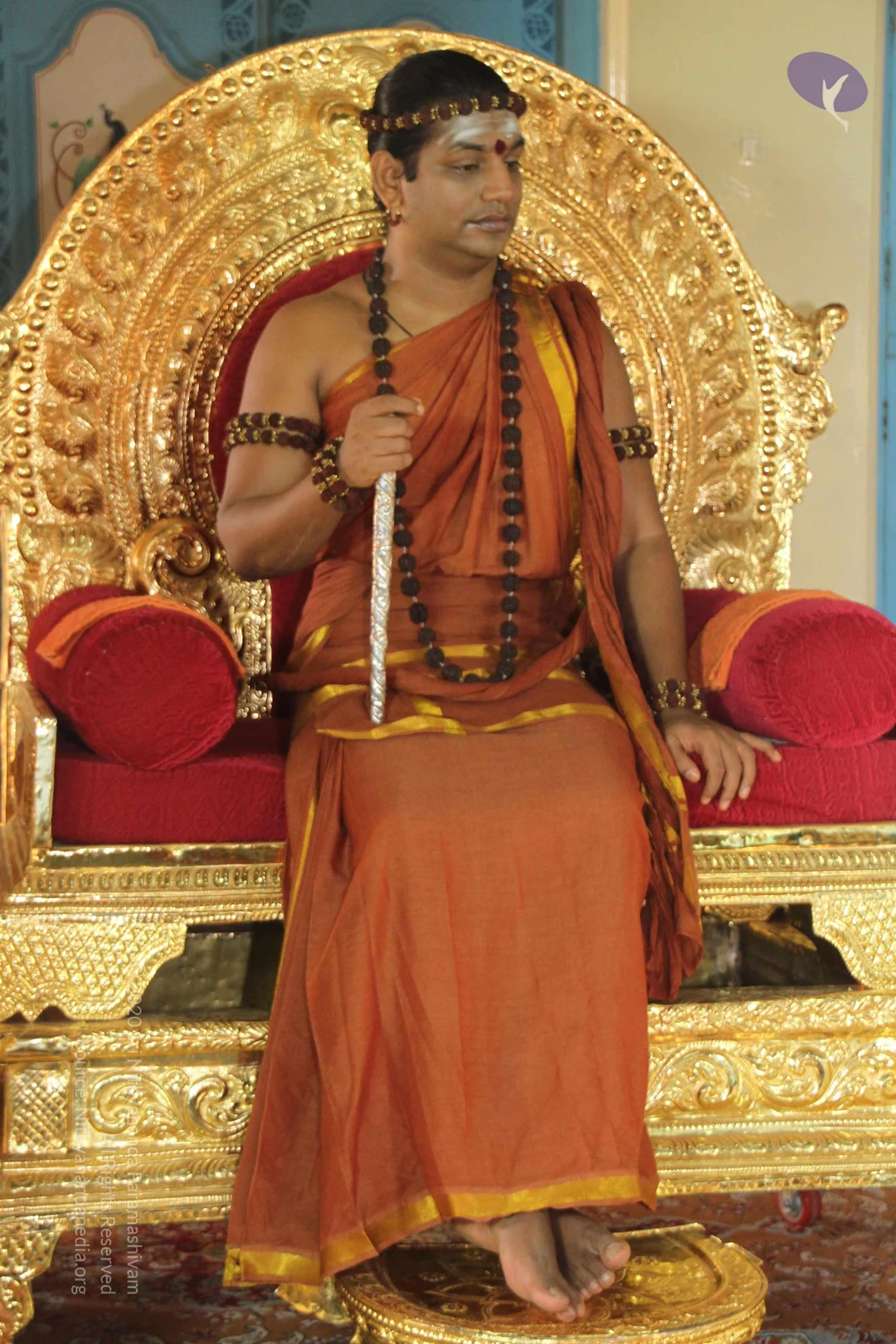
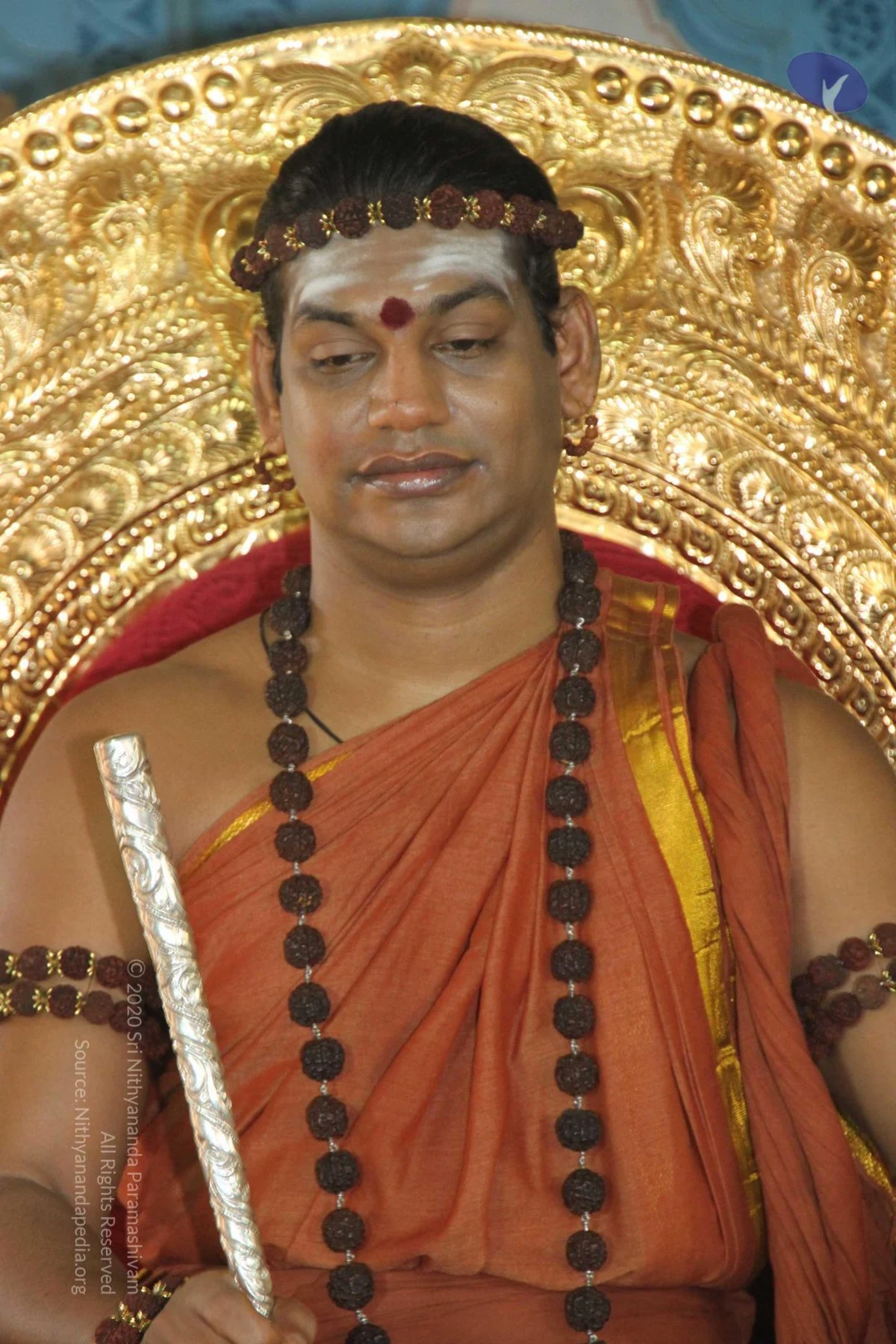
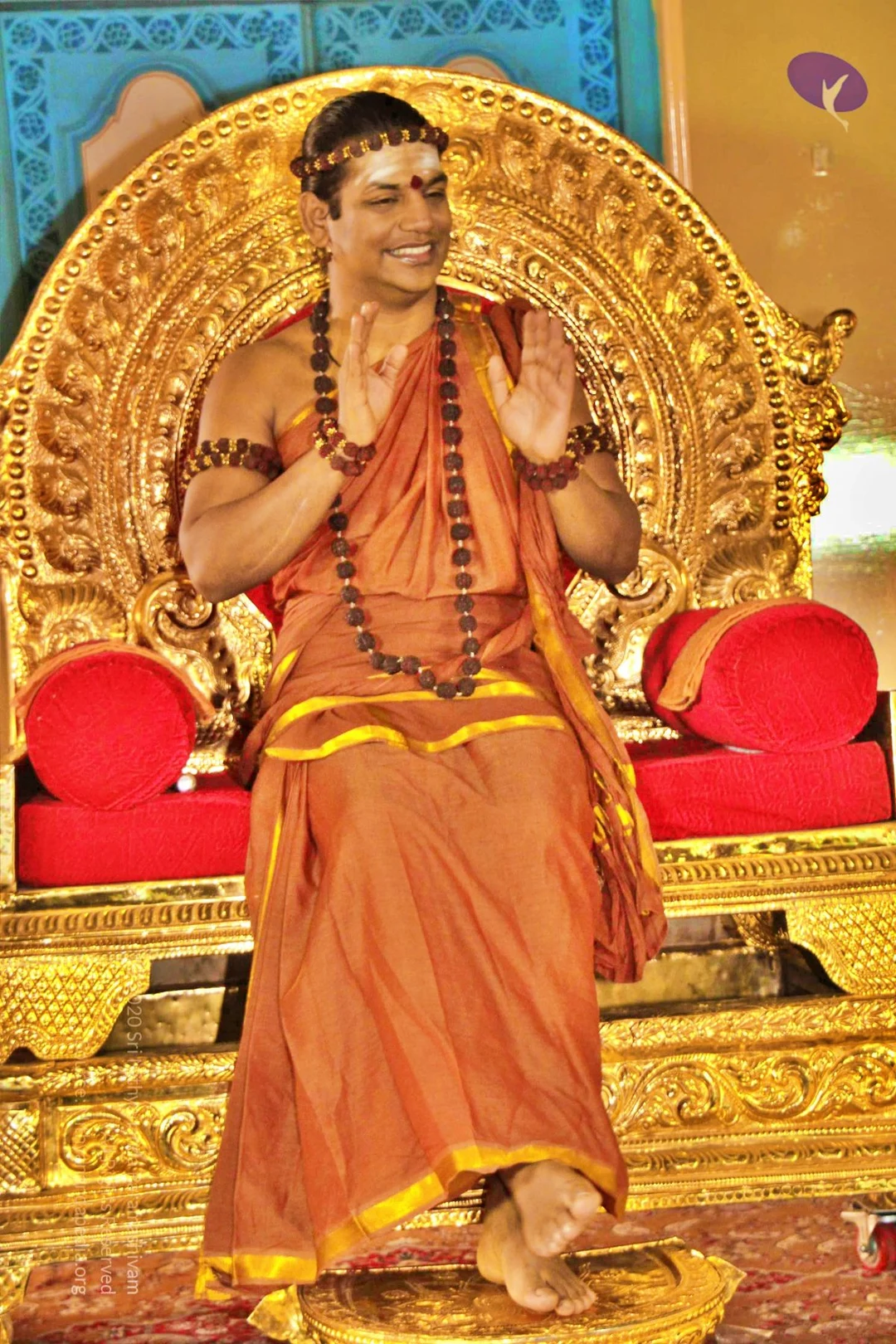
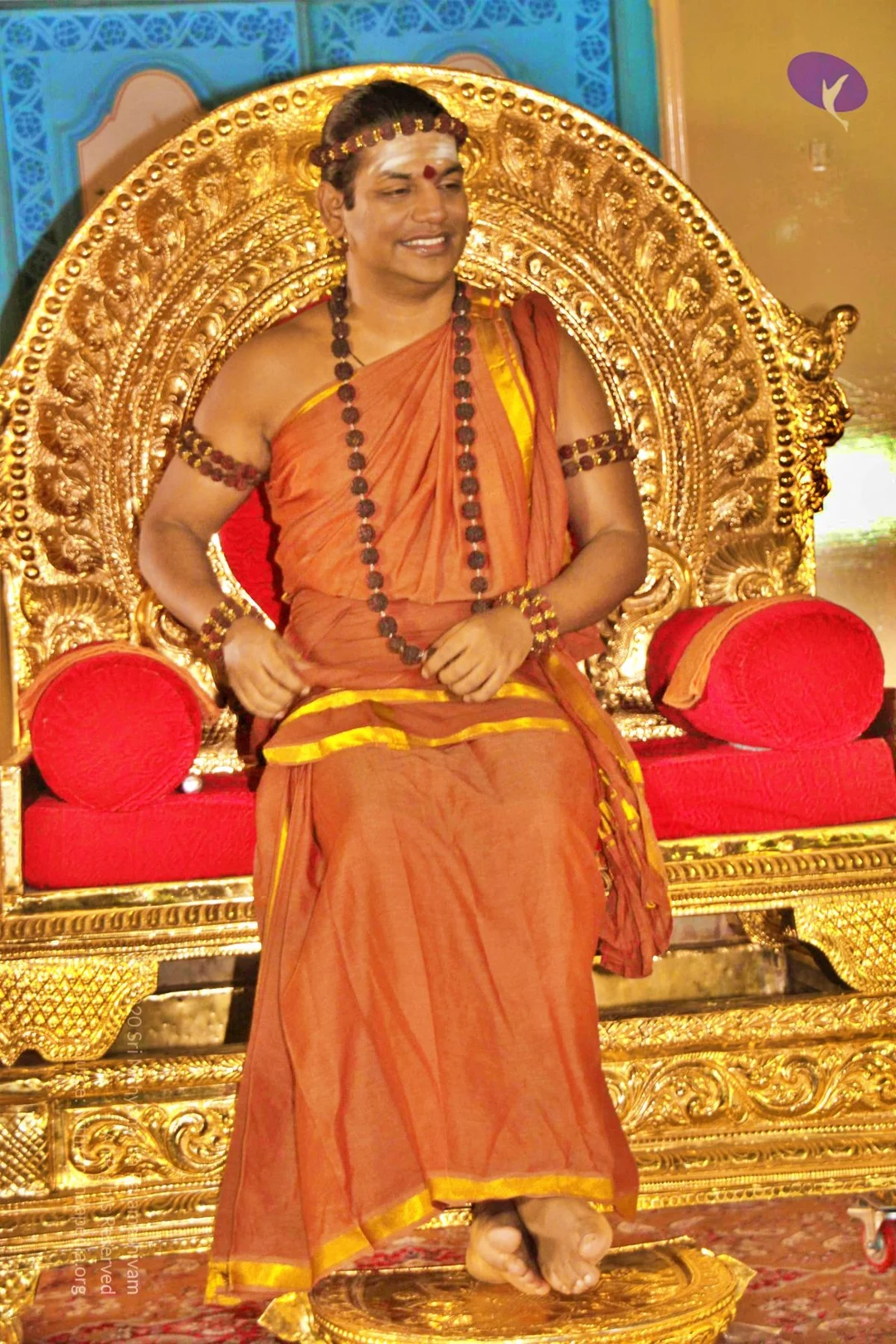
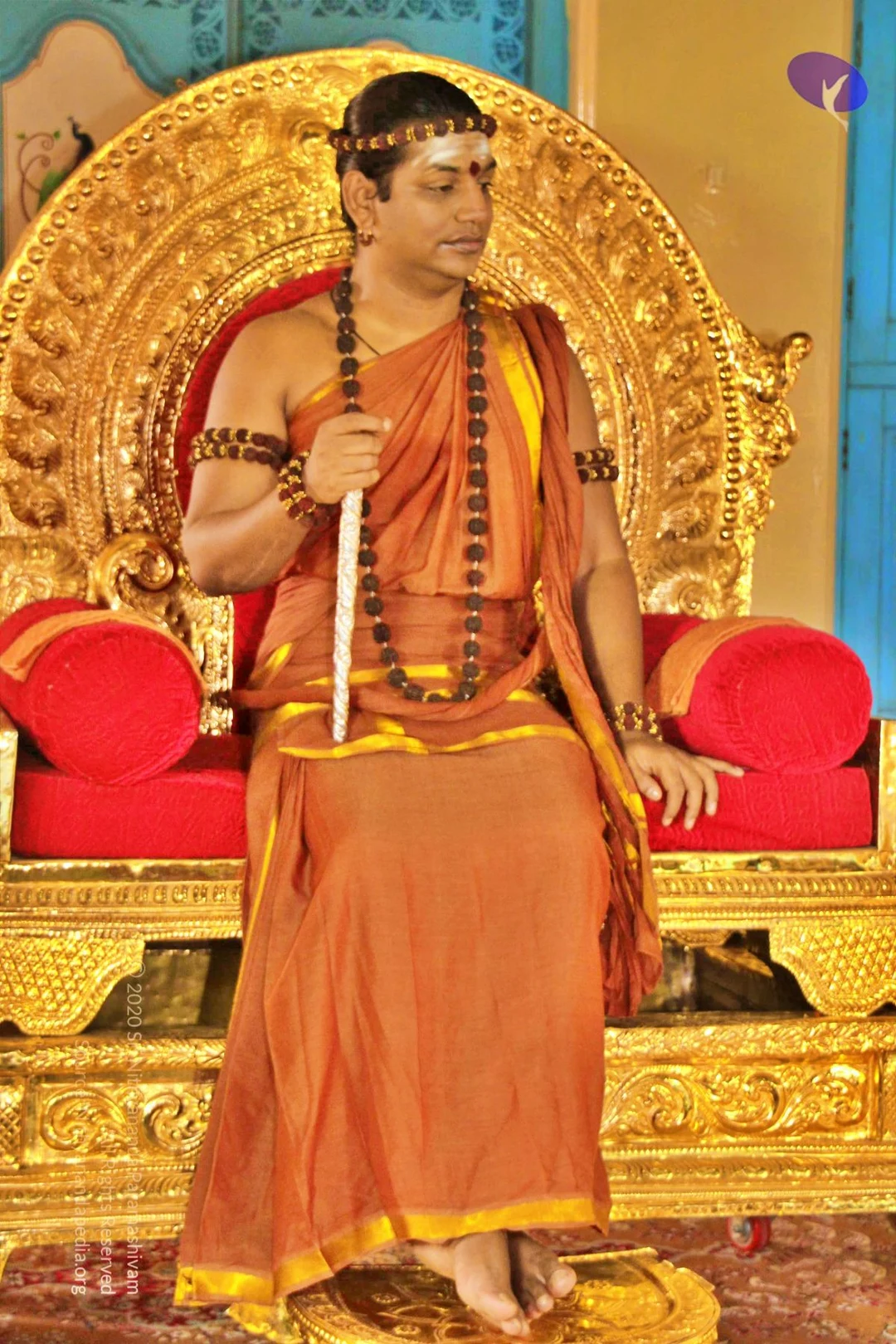
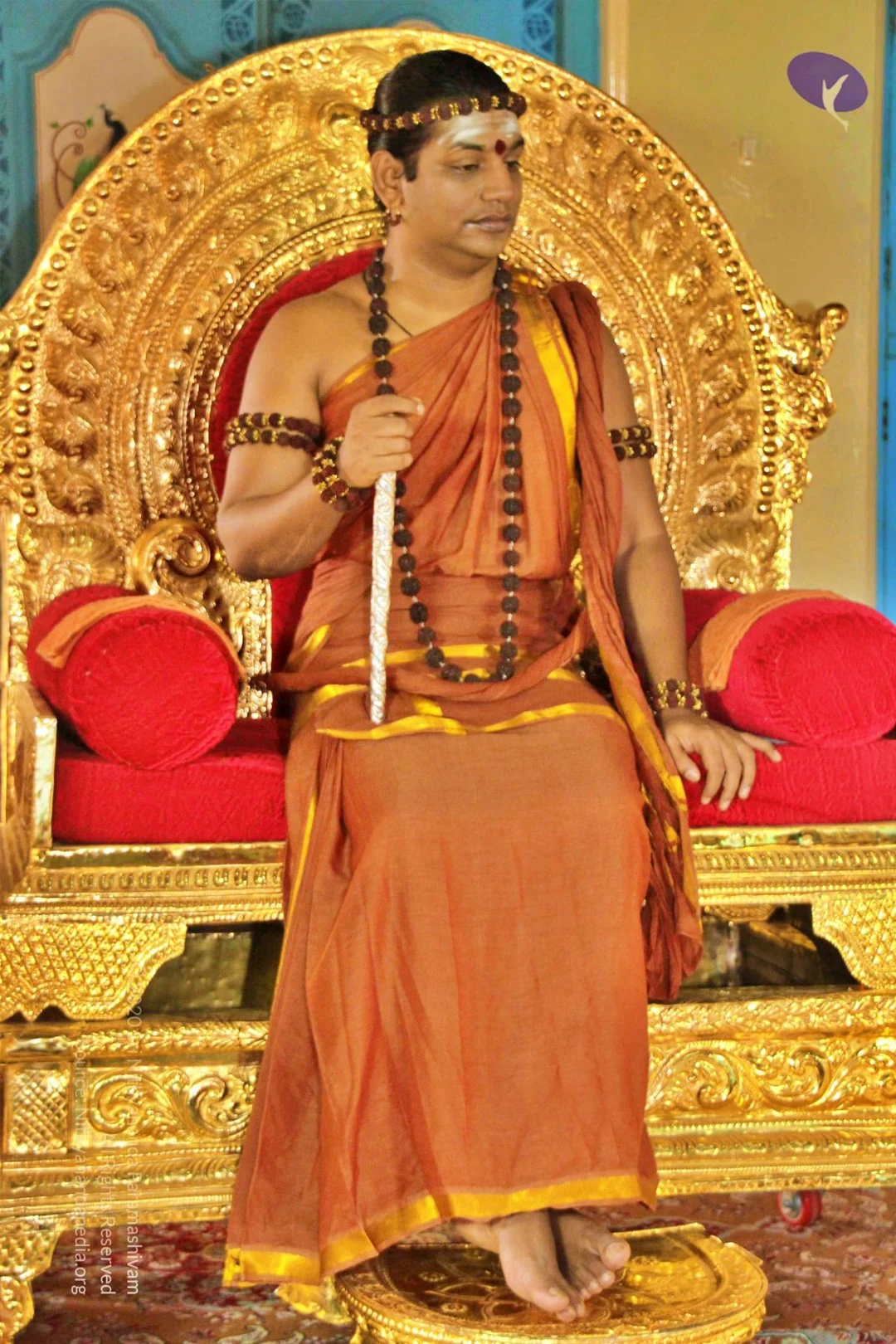
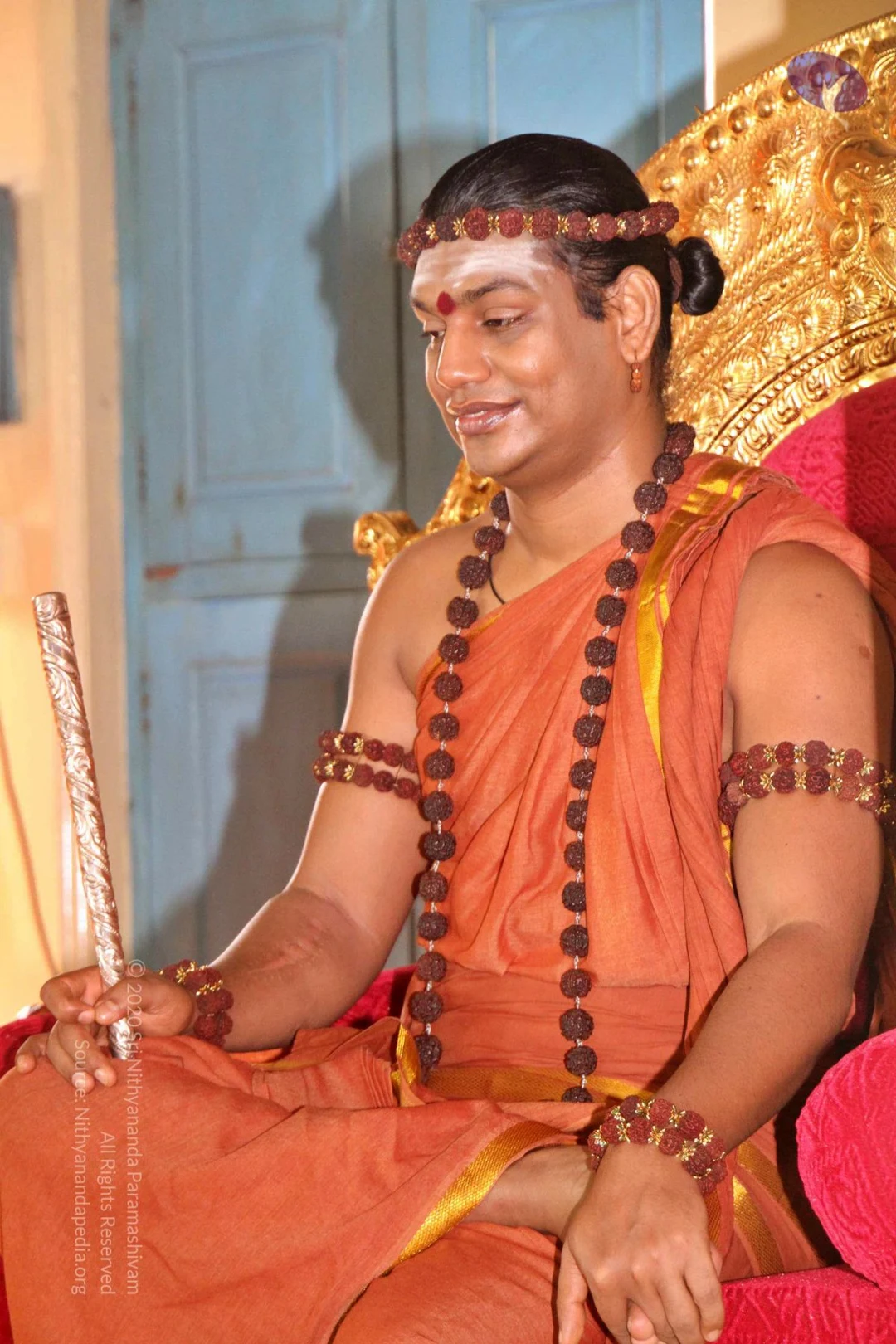
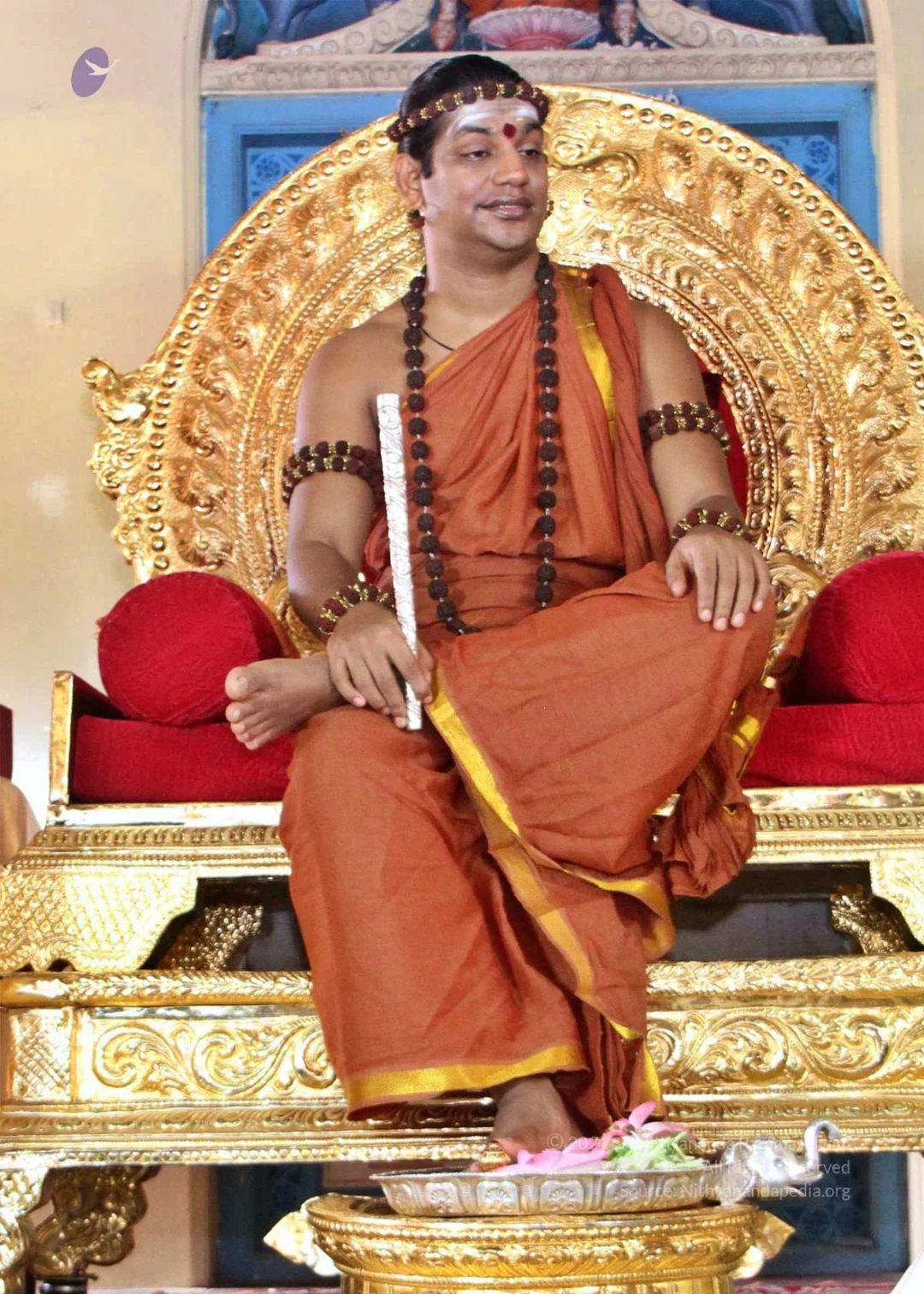
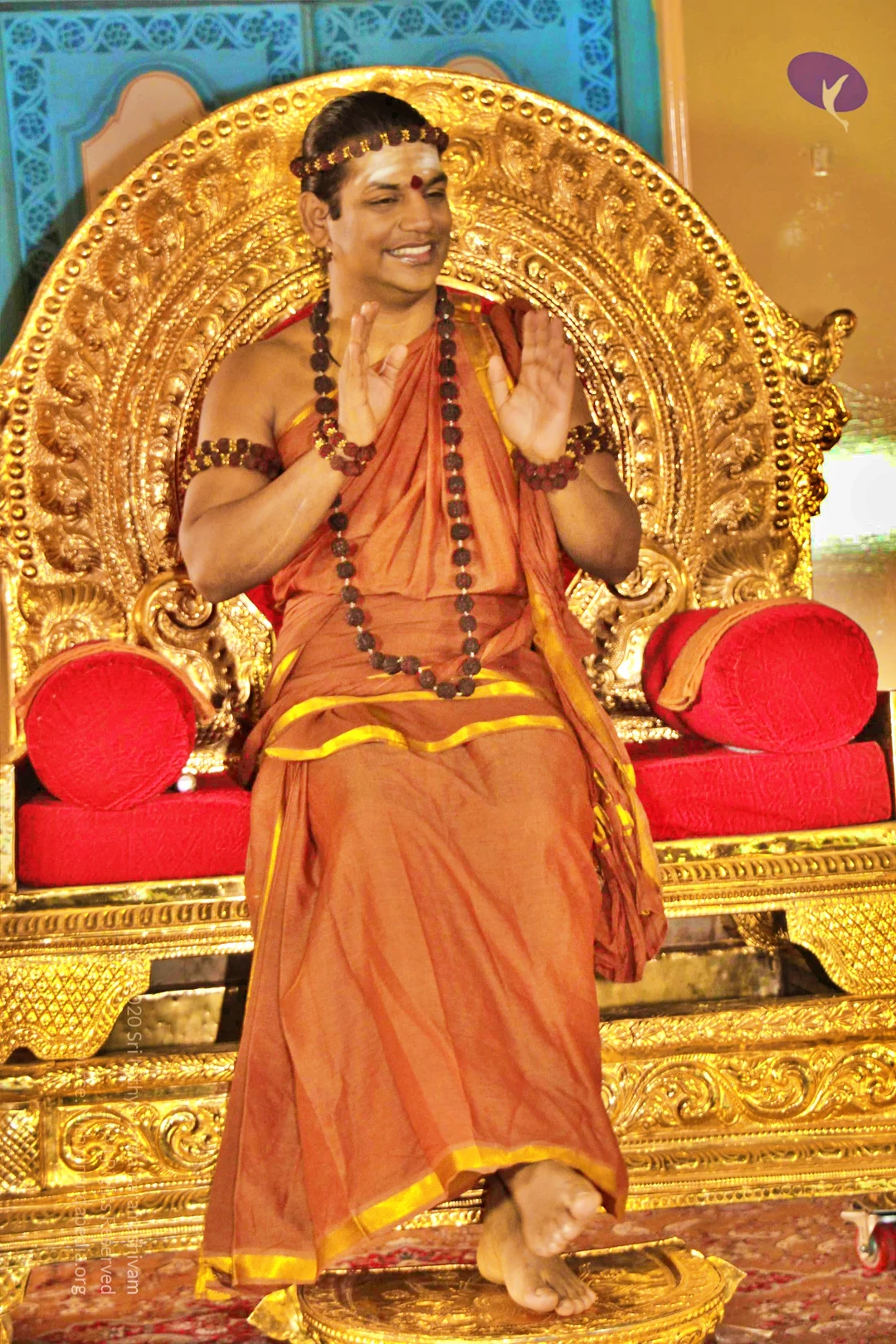
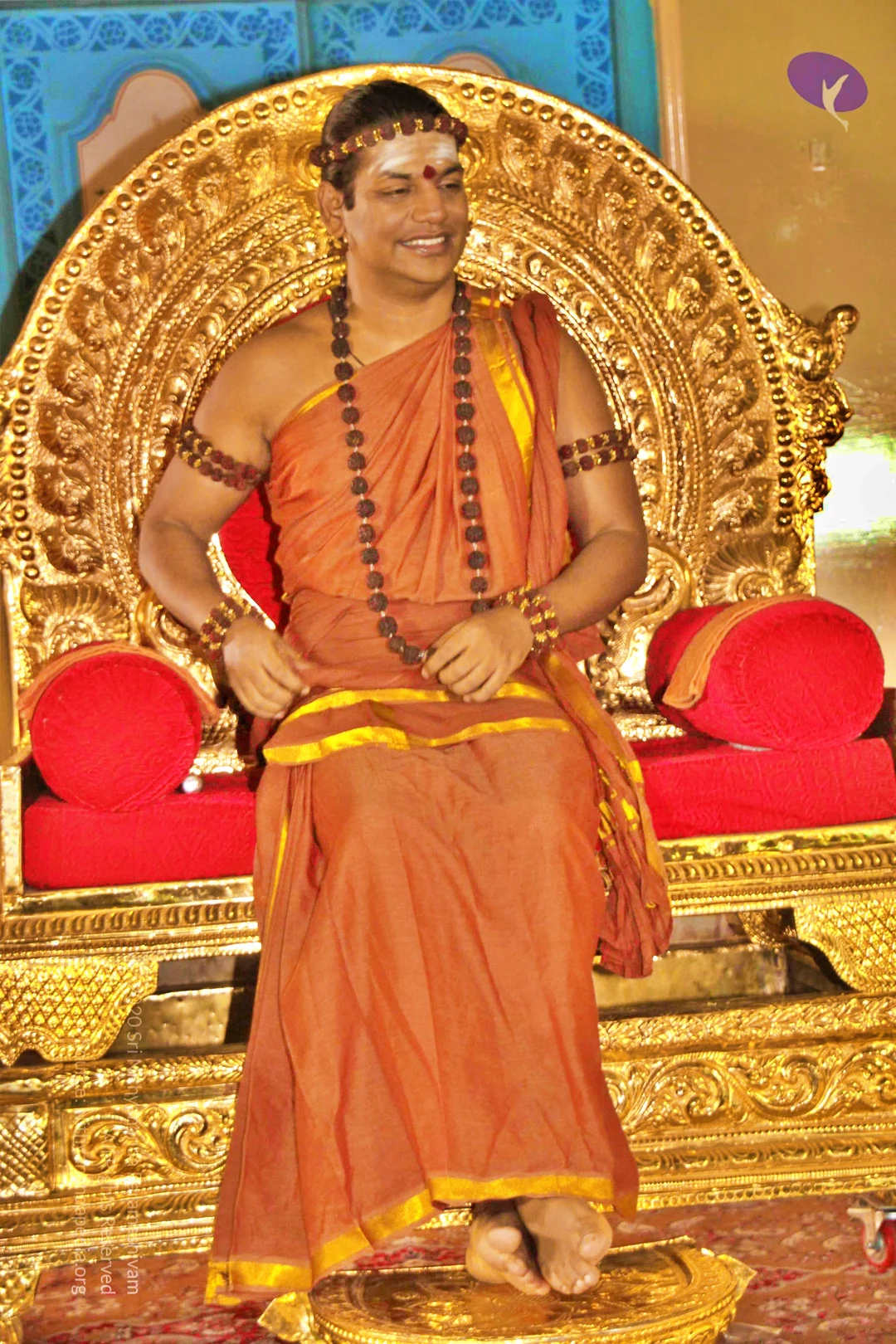
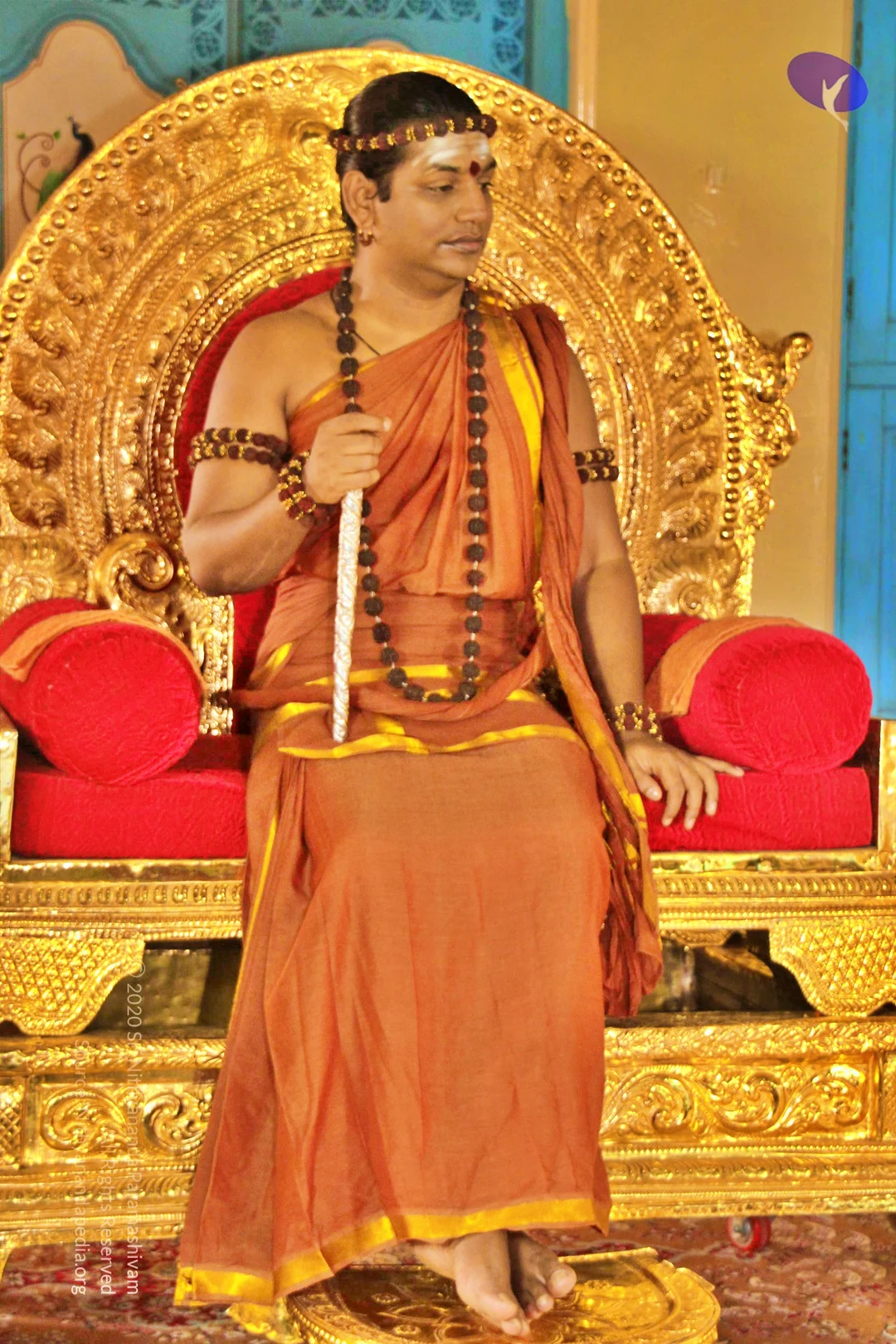
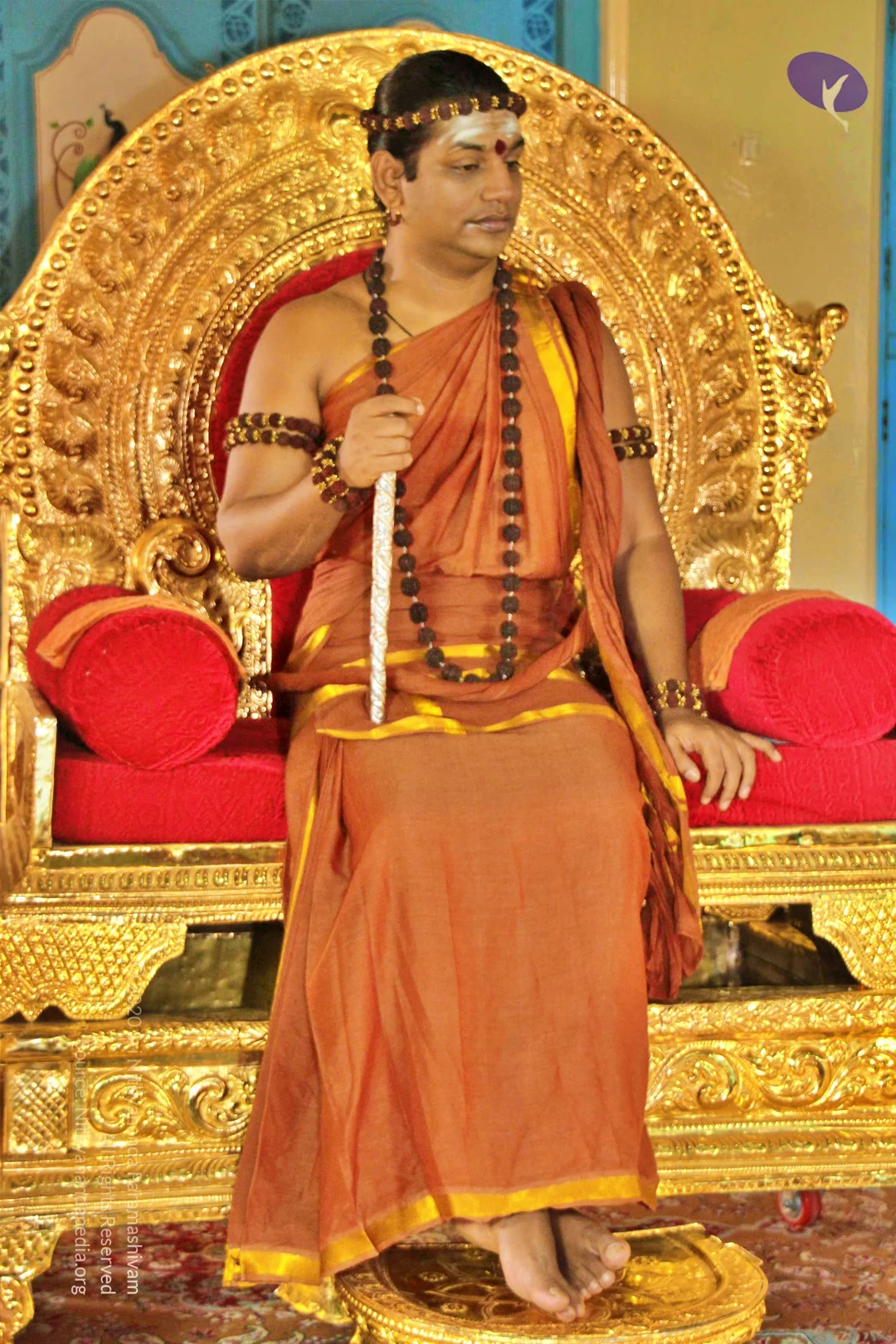
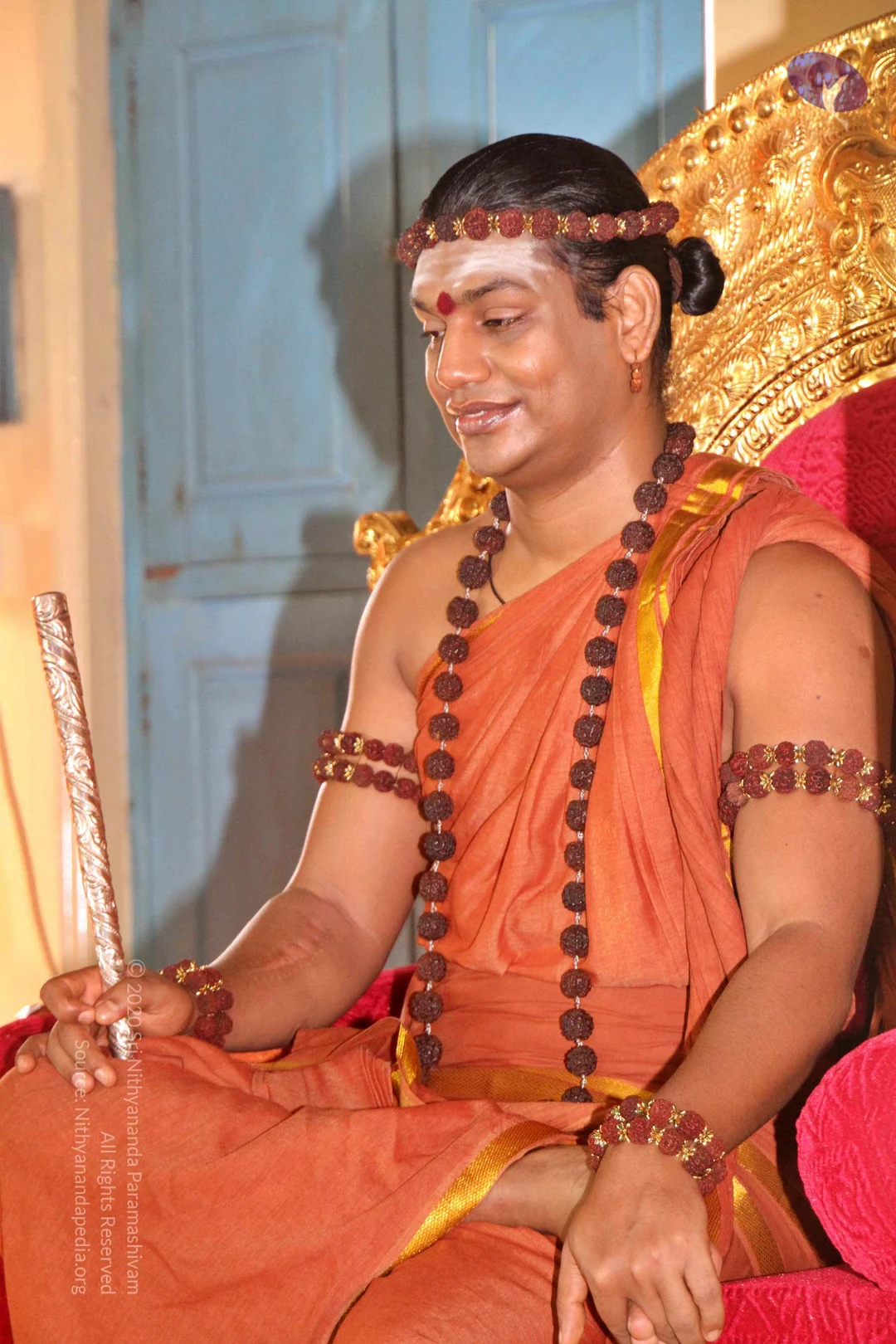
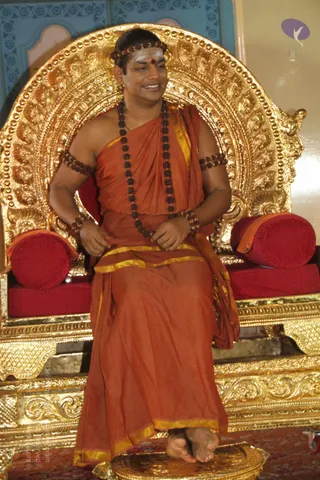
A smiling man sits on an ornate gilded throne with a high arched back carved in floral scrollwork, with red velvet cushions on the seat and armrests. He wears an orange-saffron cloth draped over his body with a gold border, a dark rudraksha mala around his neck, rudraksha bracelets and an armband, and a dark beaded headband. A red kumkum dot and white vibhuti marks are on his forehead. He raises both palms in a gesture of speaking or blessing, and his bare feet rest on a gilded footstool. The setting appears to be an indoor hall with a blue patterned wall behind him.A man sits on an ornate gilded throne with a carved arched back and red cushions, wearing an orange-saffron draped garment with gold border, multiple dark rudraksha malas across the chest and on both upper arms and wrists, a dark headband of beads, a white vibhuti forehead mark with a red bindi, and bare feet resting on a gold footstool. He smiles and looks to his side. Behind him are blue patterned panels. The cues of orange clothing, multiple rudraksha malas and a ceremonial throne with distinctive adornments match the page's a person flag, so the seated figure is recorded as a person in person.A man with short dark hair and a red bindi sits on an ornate gold throne with red cushions. He wears a saffron-orange dhoti and shawl with gold borders, a long rudraksha mala, rudraksha armbands and wrist beads, and holds a silver staff. a person candidate by appearance: the rudraksha malas, saffron clothing and ceremonial throne are the qualifying cues. Behind him is a blue-painted wall with a peacock motif.A man sits alone on an ornate gold throne with a carved arched back and red cushions, dressed in an orange-saffron cloth with gold borders wrapped over one shoulder. He wears a long black rudraksha mala, rudraksha armlets and bracelets, a rudraksha headband, a red bindi and white vibhuti markings on his forehead, and holds a silver rod in one hand. His bare feet rest on a gold footstool. The setting appears to be a formal seated darshan or discourse, with a blue painted wall and a peacock motif behind him.A seated man in an orange saffron shawl with gold-edged border sits before an ornate gold repoussé throne with a red cushion. He wears a rudraksha mala headband, rudraksha necklaces and matching rudraksha armlets, a white vertical tilak with a red bindi on his forehead, and gold earrings. He holds a silver ornamented staff across his body.A seated man in saffron-orange robes with gold border sits on an ornate gold-embossed throne with red cushions. He wears a rudraksha mala headband, multiple rudraksha malas across his chest and rudraksha armbands, and a red kumkum dot with white vibhuti on his forehead. He holds a silver ceremonial staff across his lap and looks downward. A matching red-and-gold cushioned seat and a blue wall are behind him.

Satsang-Madurai

5 photosSource gallery
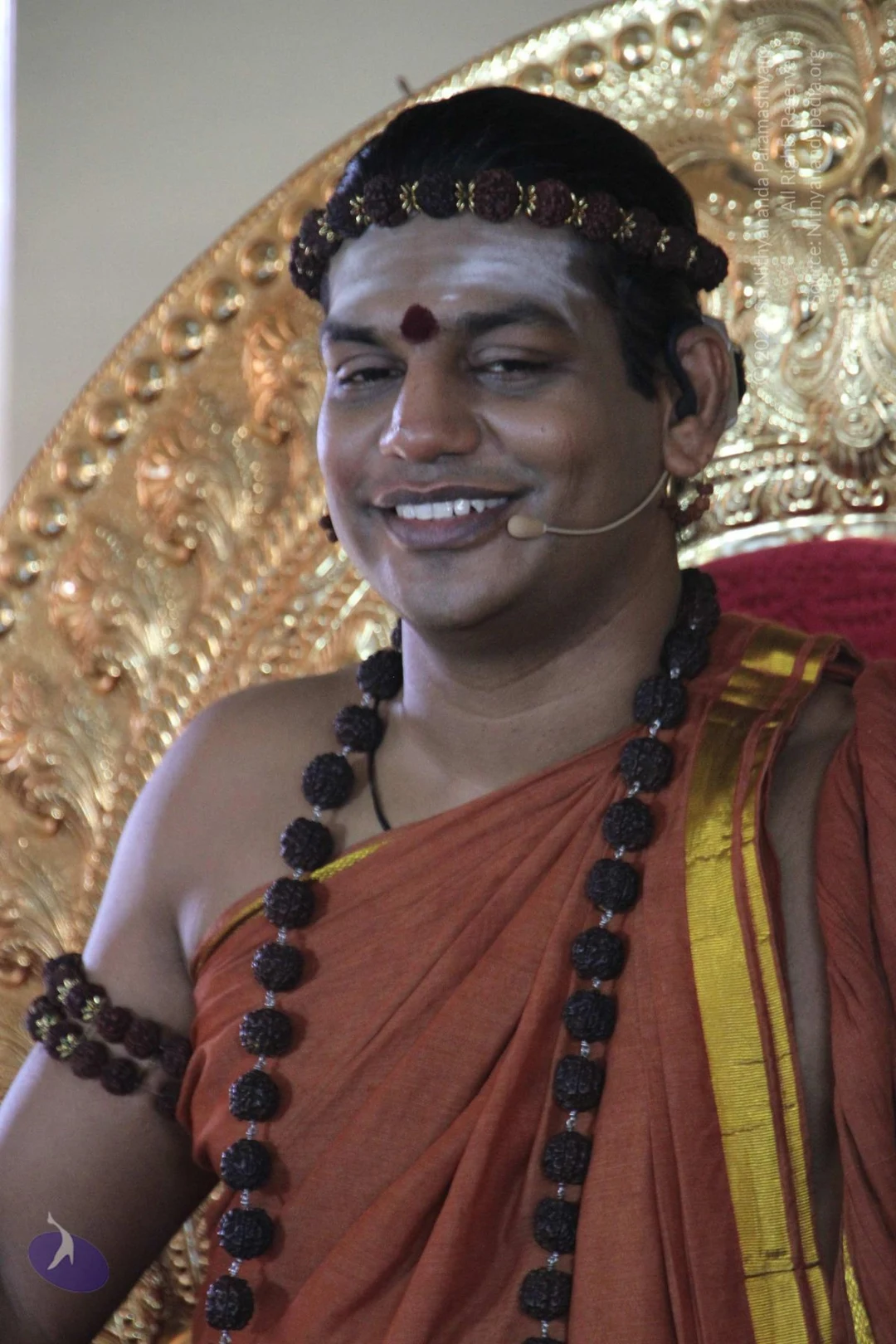
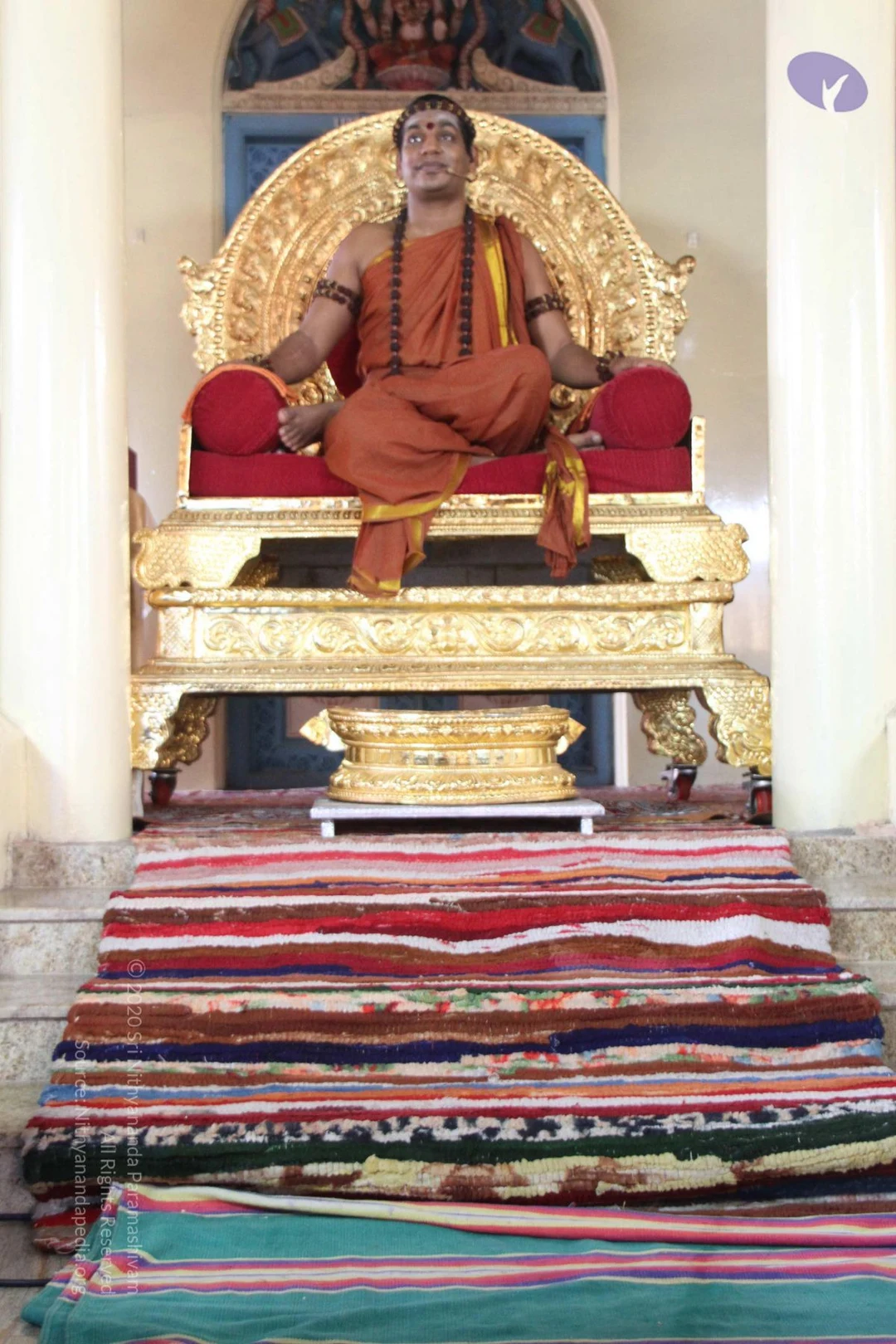
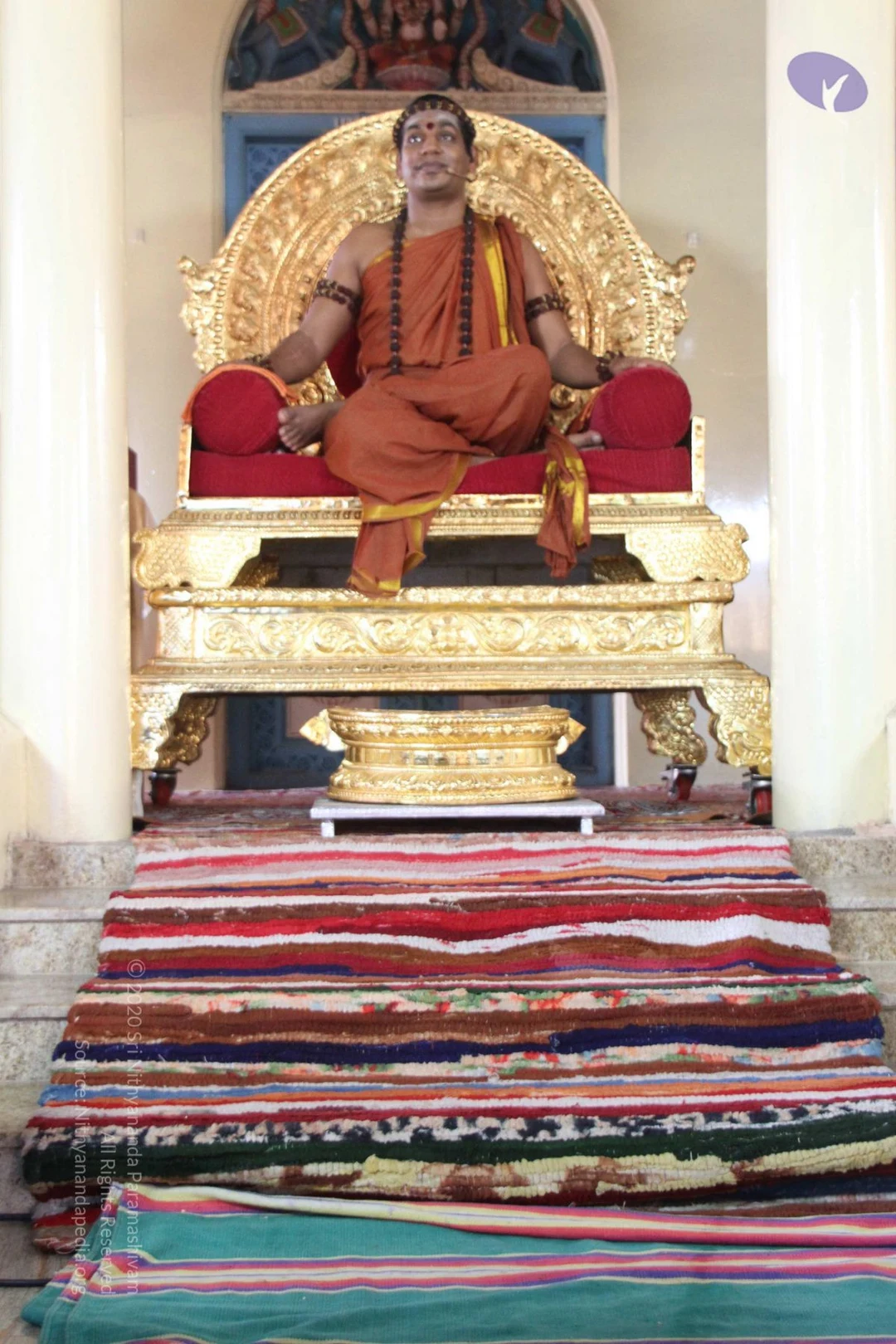
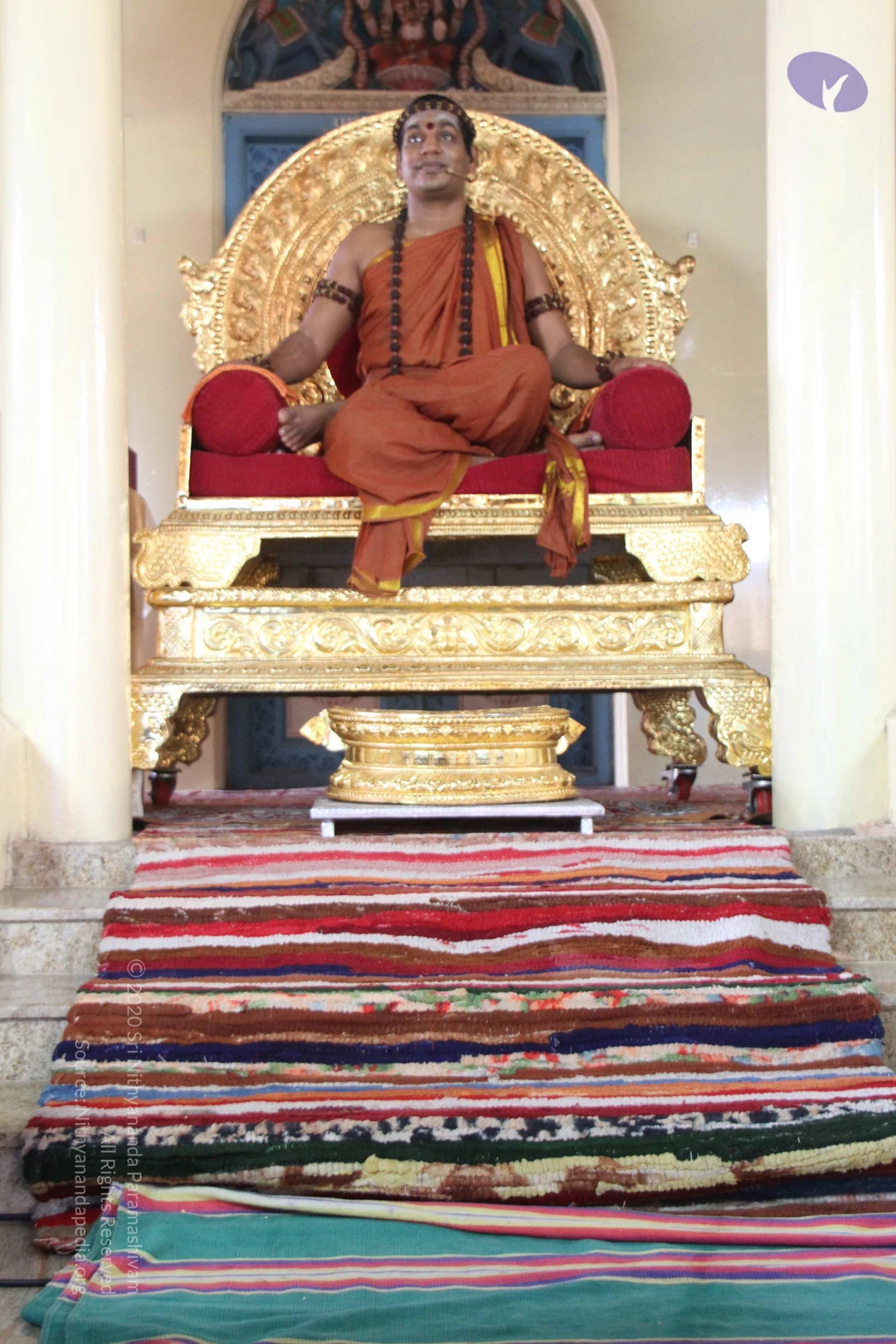
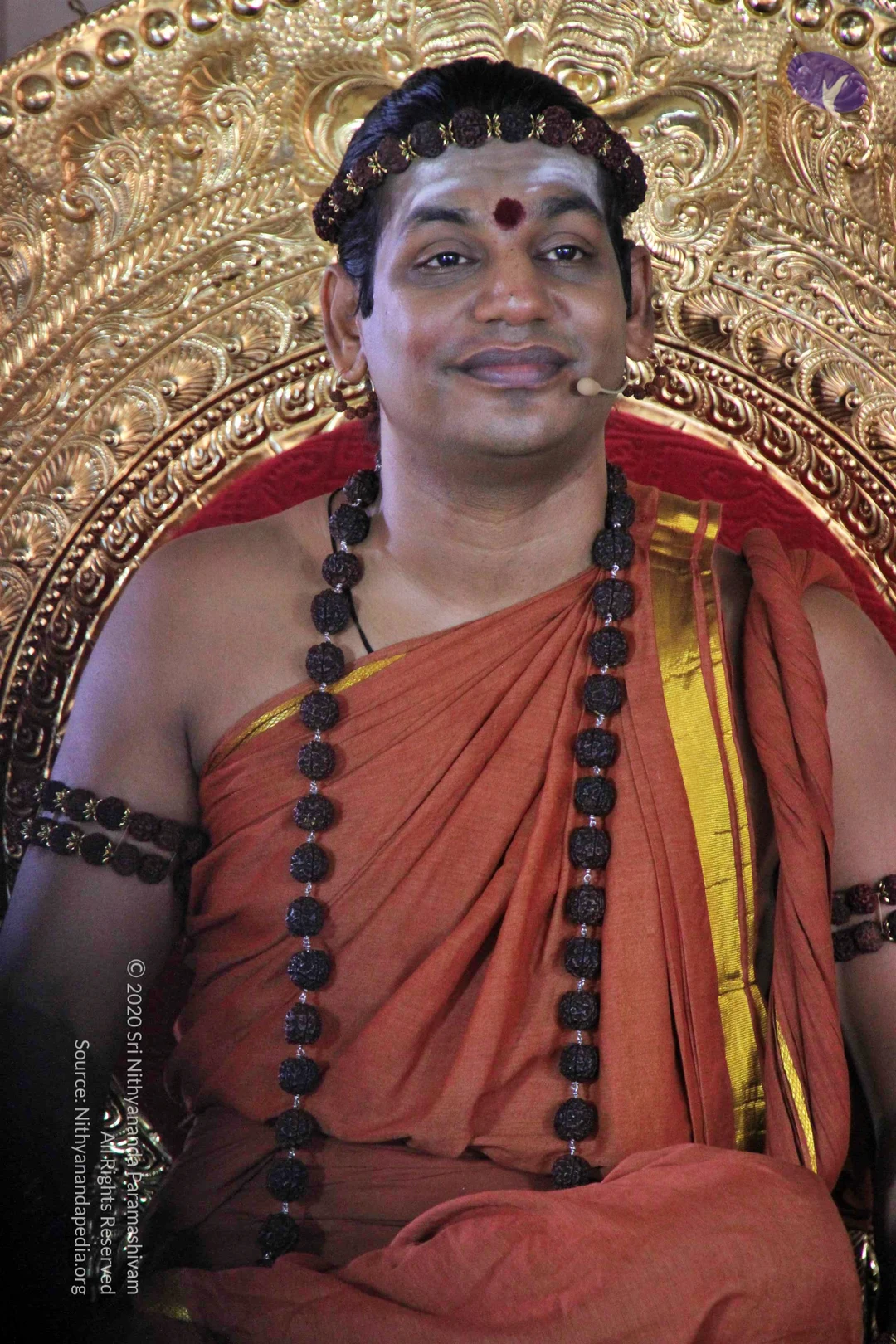
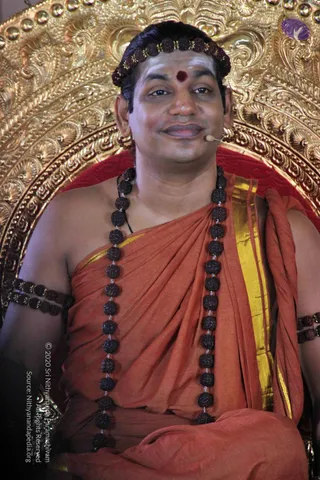
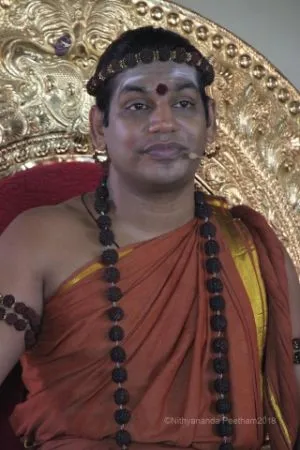
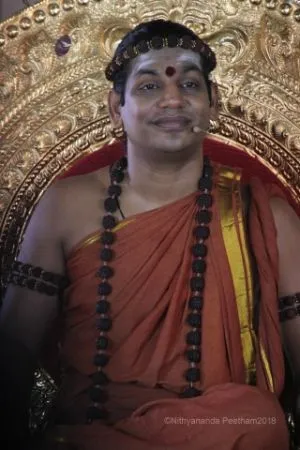
A seated man in an ornate gold throne with red cushions, palms pressed together in anjali mudra with eyes closed. He wears a saffron-orange dhoti and shawl with gold borders, multiple rudraksha malas, rudraksha armbands and a dark headband, with a red bindi and tripundra markings. A gilded footstool sits before the throne on a striped rug, flanked by white pillars and a blue wall panel with Tamil lettering above. The page indicates this is a person, but the appearance cues are not sufficient to confirm an identity, so the candidate is marked unsure.A smiling man sits before an ornate gold throne-back with floral repoussé carving. He wears a rudraksha mala headband with gold accents, a red bindi, a saffron-orange garment with a gold border draped over the shoulder, multiple dark rudraksha mala necklaces, and a rudraksha bracelet on his upper arm. A small headset microphone is attached near his ear.A seated man in an orange saffron wrap with yellow borders sits cross-legged on an ornate gilded throne with red cushions, beneath a golden arched backrest. He wears a rudraksha mala with dark beads, a red tilak on his forehead, a headpiece, and dark arm bands. A gold kalasha-like base sits on a marble stool before the throne, and a colourful striped rug runs down the steps in the foreground. The setting is an interior hall with cream pillars and a painted arch above.A man seated in front of an ornate gold-embossed throne back with red upholstery, wearing an orange-saffron shawl with gold border over the shoulders, many rudraksha mala beads across the chest and arms, a rudraksha headband with gold accents, and a red bindi on the forehead, with a small microphone near the mouth.A seated man in orange-saffron robes with a gold-bordered shawl sits before an ornate gold-leaf throne with red cushioning. He wears a rudraksha mala headband, multiple dark rudraksha necklaces, rudraksha armbands, and a red bindi on his forehead, and has a small headset microphone at his ear. He smiles calmly, hands resting in his lap.

Sarvadarshan-Madurai

1 photoSource gallery
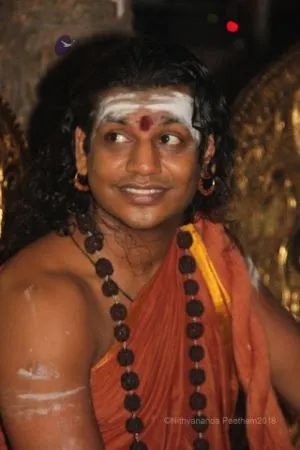
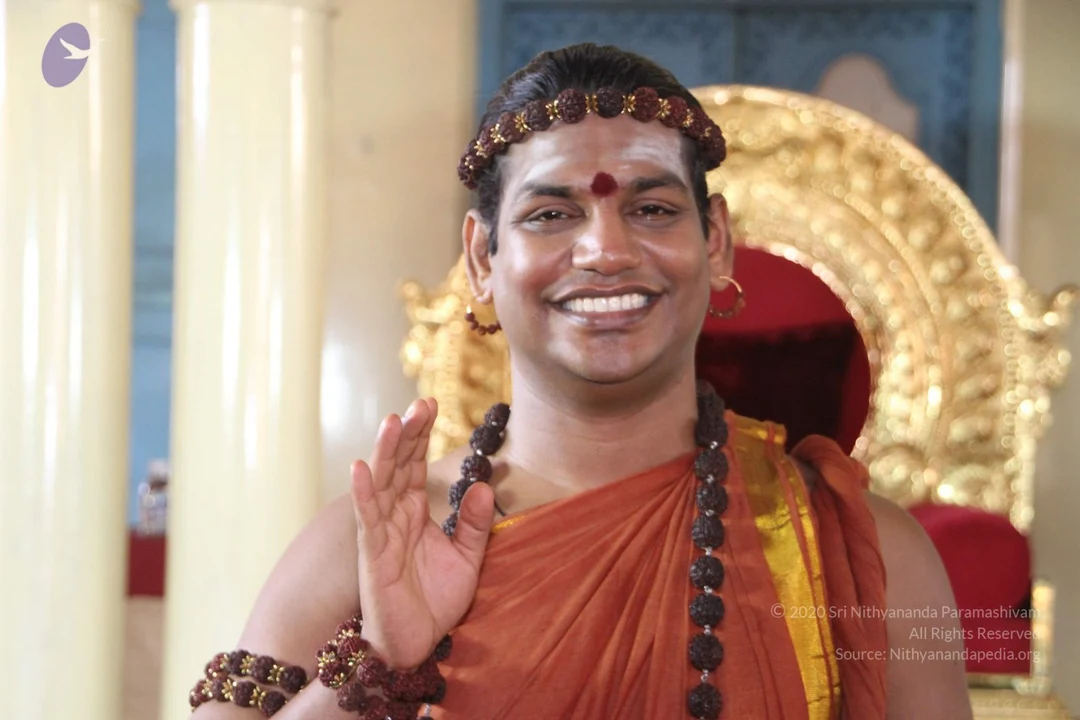
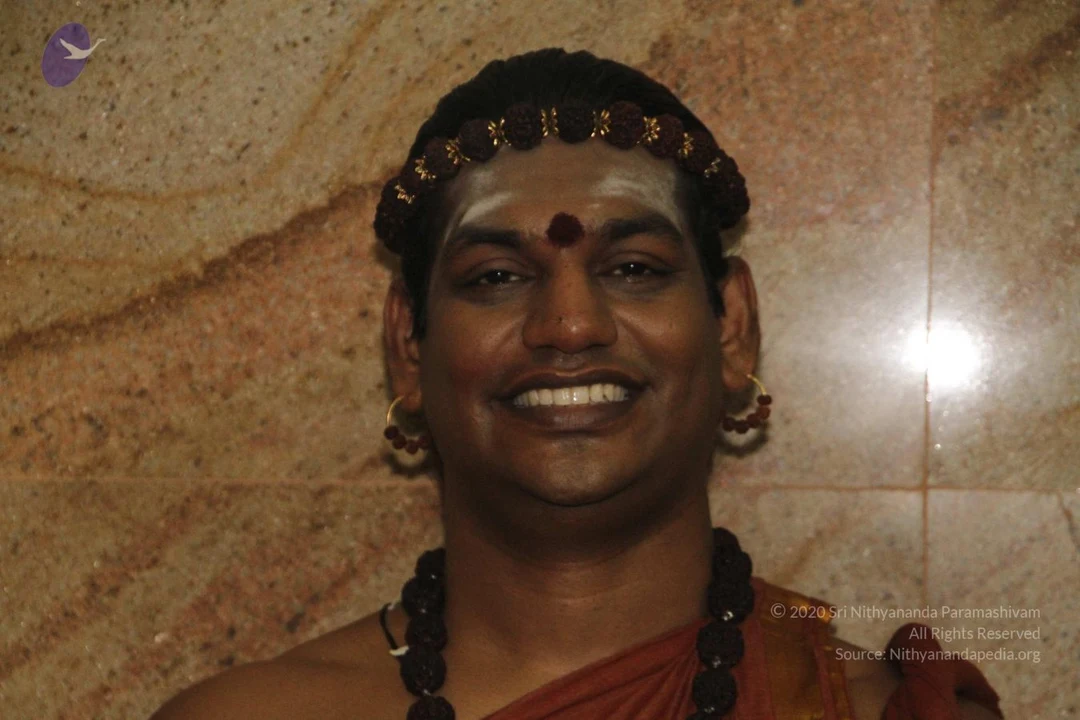
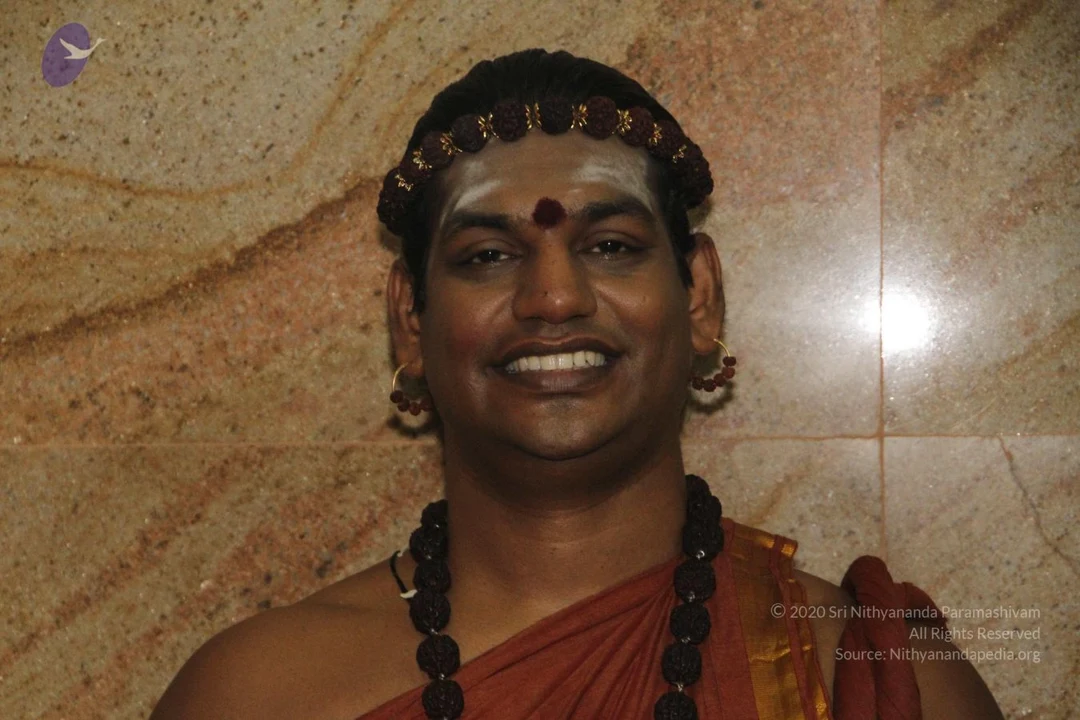
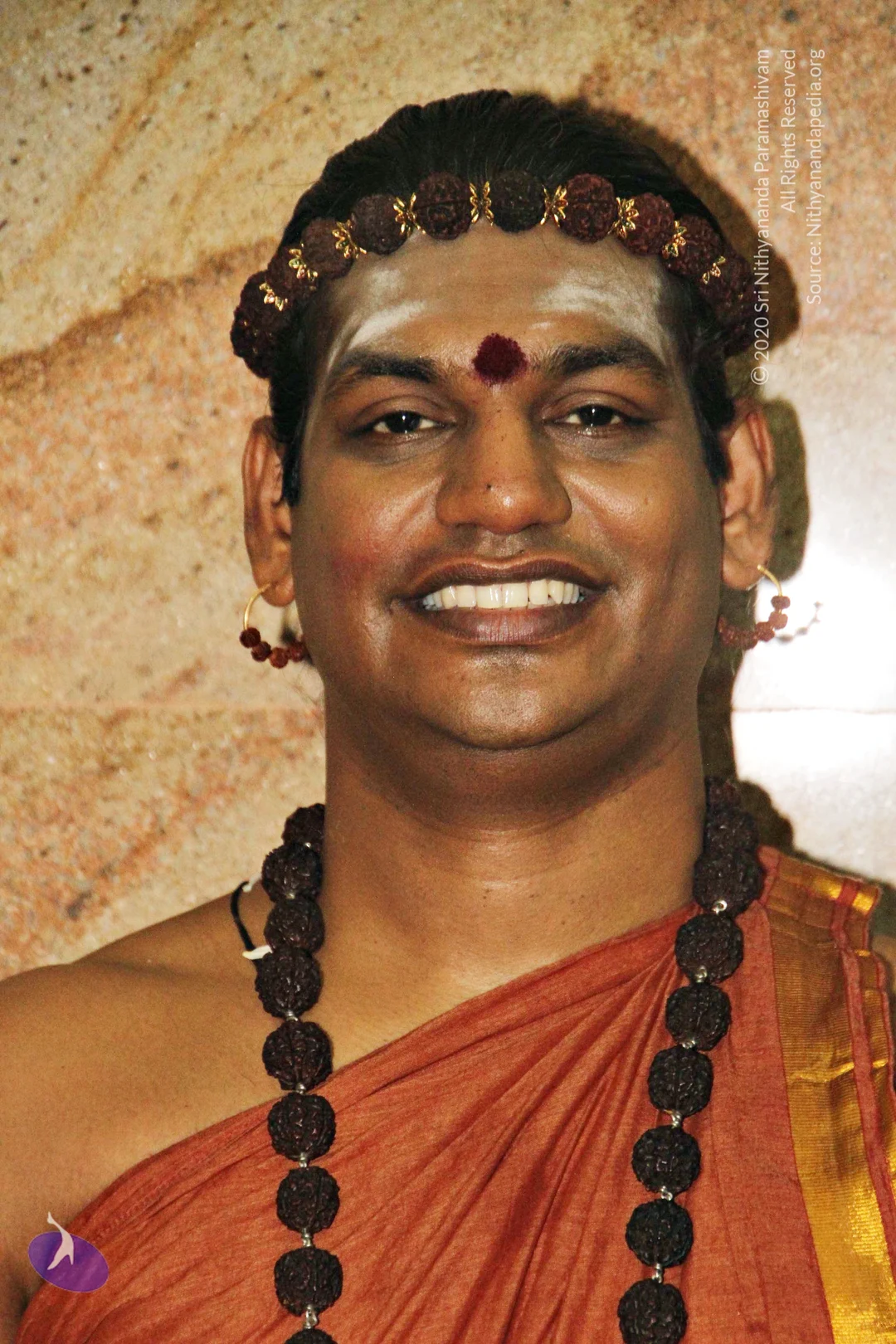
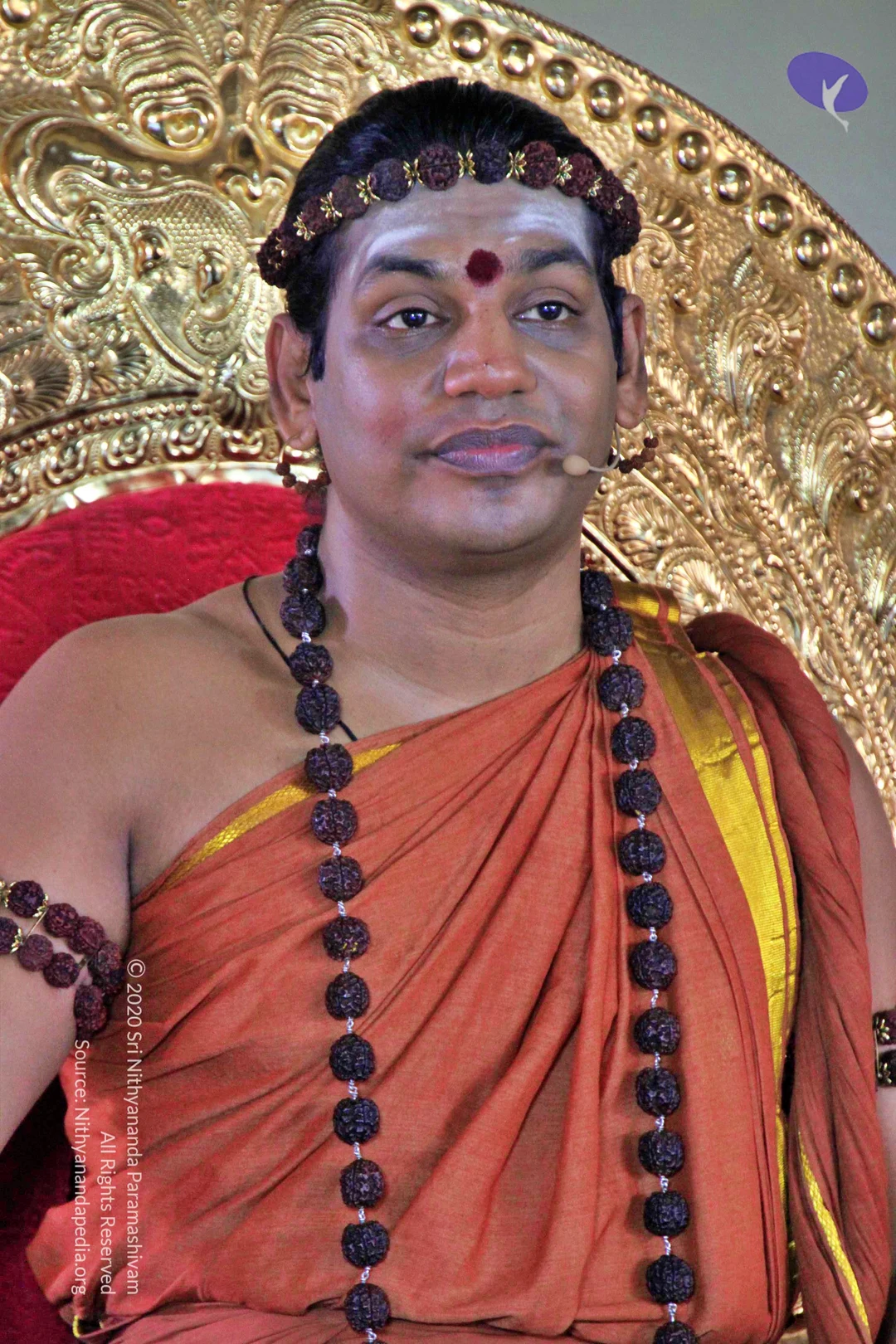
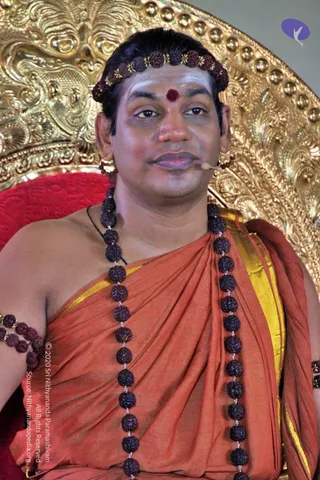
Close-up photograph of a smiling man wearing a rudraksha bead headband with gold accents, a red kumkum dot and white markings on the forehead, gold hoop earrings strung with red beads, and a saffron-orange garment with gold border over a long rudraksha bead mala. A pale stone wall forms the background.

Public-Darshan

3 photosSource gallery
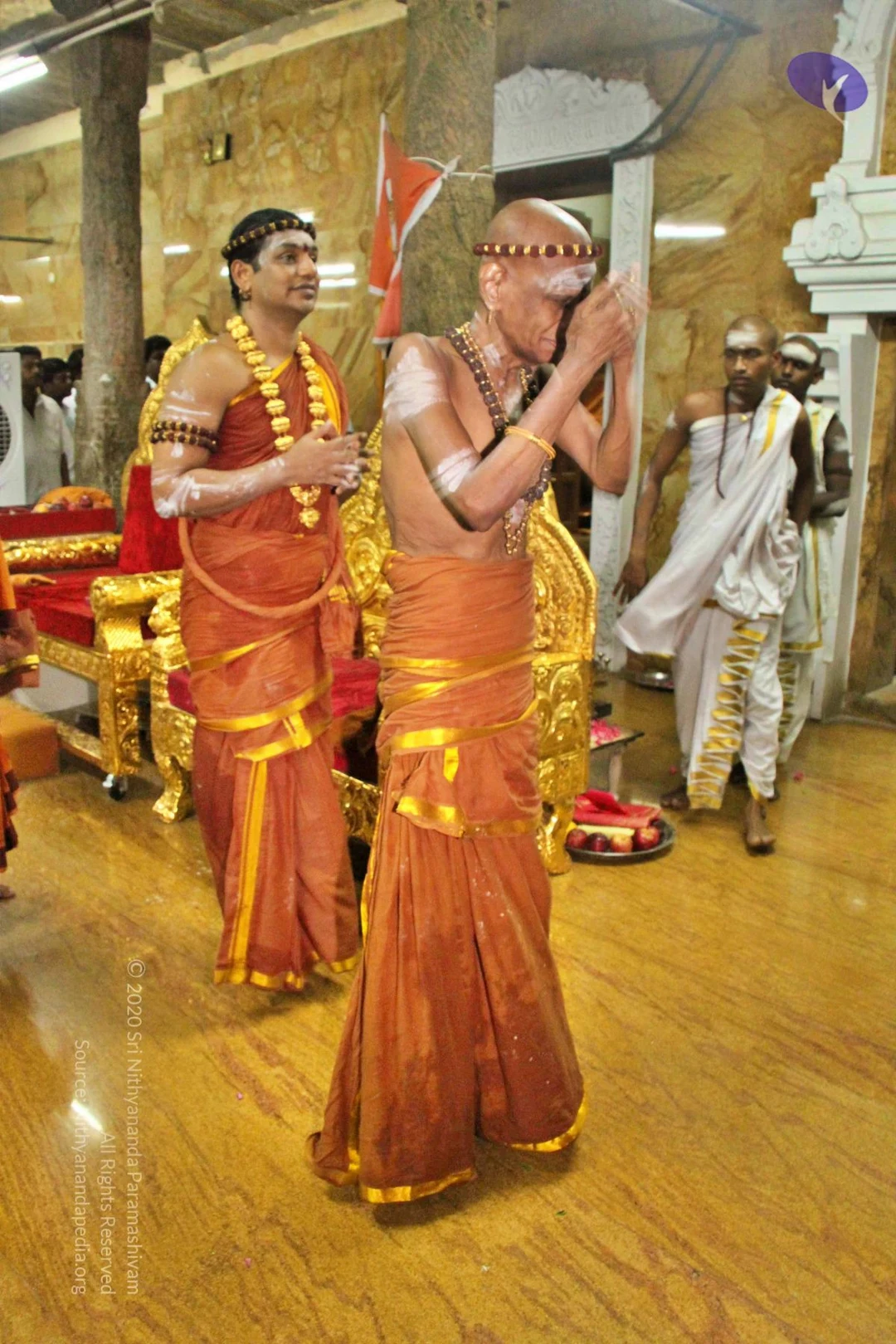
Close photograph of a smiling man in saffron-orange draped cloth with a gold-bead ceremonial necklace and rudraksha bands on his upper arms. He wears a rudraksha crown-like headband, a red bindi and white sacred ash on his forehead, and red-beaded earrings. Behind him, a person with white forehead markings and a gold ornate textile are partly visible.A seated man in an orange-saffron robe with a gold border sits on a red cushioned seat in front of an ornate gold throne. He wears a heavy gold bead necklace, rudraksha armbands and a rudraksha crown, with white ash marks on his forehead and arms and a red bindi. He smiles and looks to the side while holding a little ash in one hand. Behind him stands a shaved-headed attendant in white with a white forehead mark and an orange-edged cloth. A rudraksha mala and gold necklace suggest a ceremonial sannyasi role. a person appearance cues include the saffron robe, gold necklace and rudraksha ornaments.Indoor photo in a marble-walled hall with a wooden floor and gilded throne furniture behind. In the foreground an older bare-chested man with a shaved head and white markings on his forehead and body wears an orange-saffron dhoti with gold borders and a rudraksha mala, his arms raised overhead in a dance-like pose. Beside him a younger man in a saffron dhoti with gold trim wears a gold ceremonial necklace, rudraksha armband and a rudraksha headband, smiling. Two men in white dhotis and white shawls stand to the right, one with a gold necklace, and a plate of fruit sits on the floor near the throne. Orange flags are visible in the background.

Daily-Parartha-Puja

46 photosSource gallery
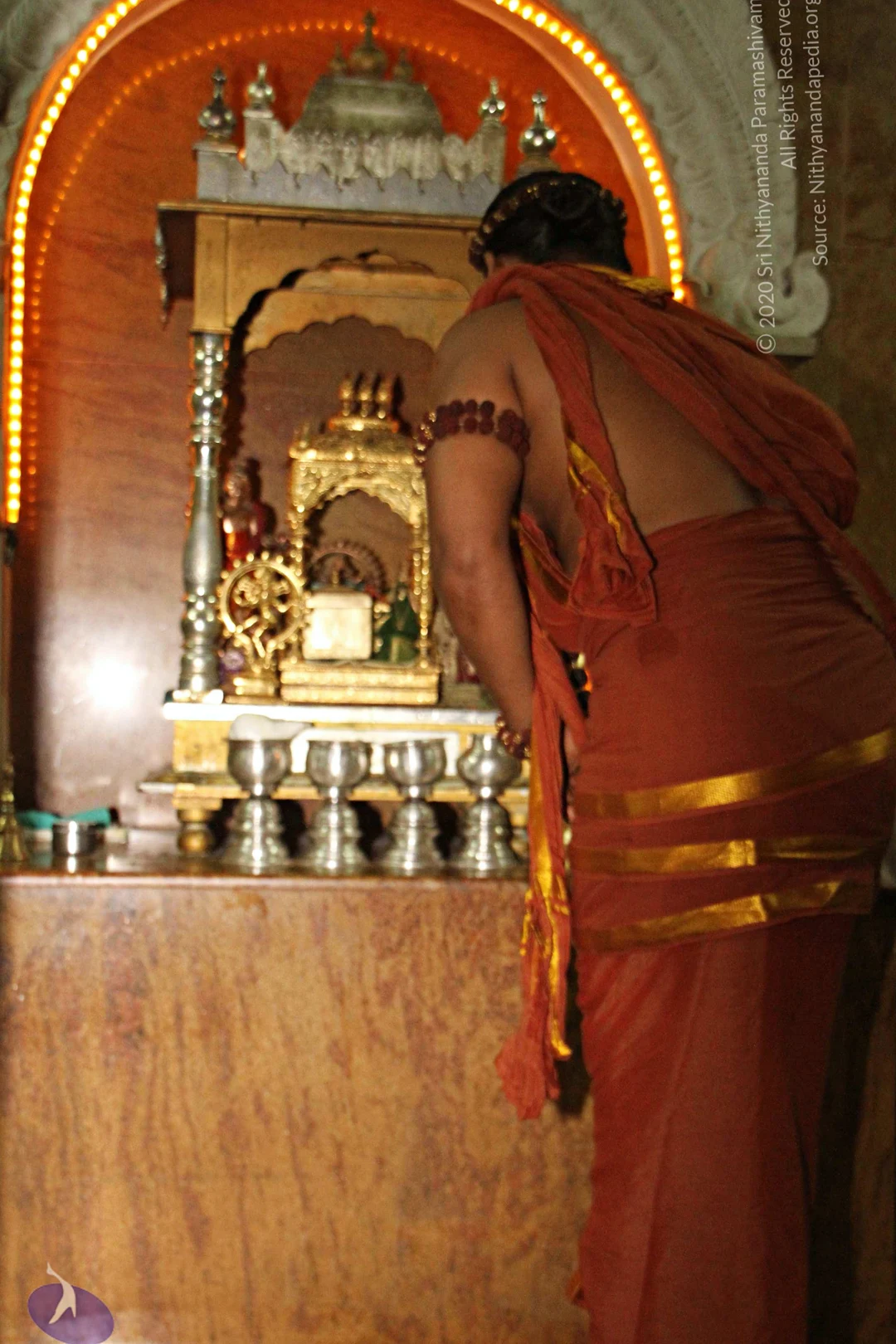
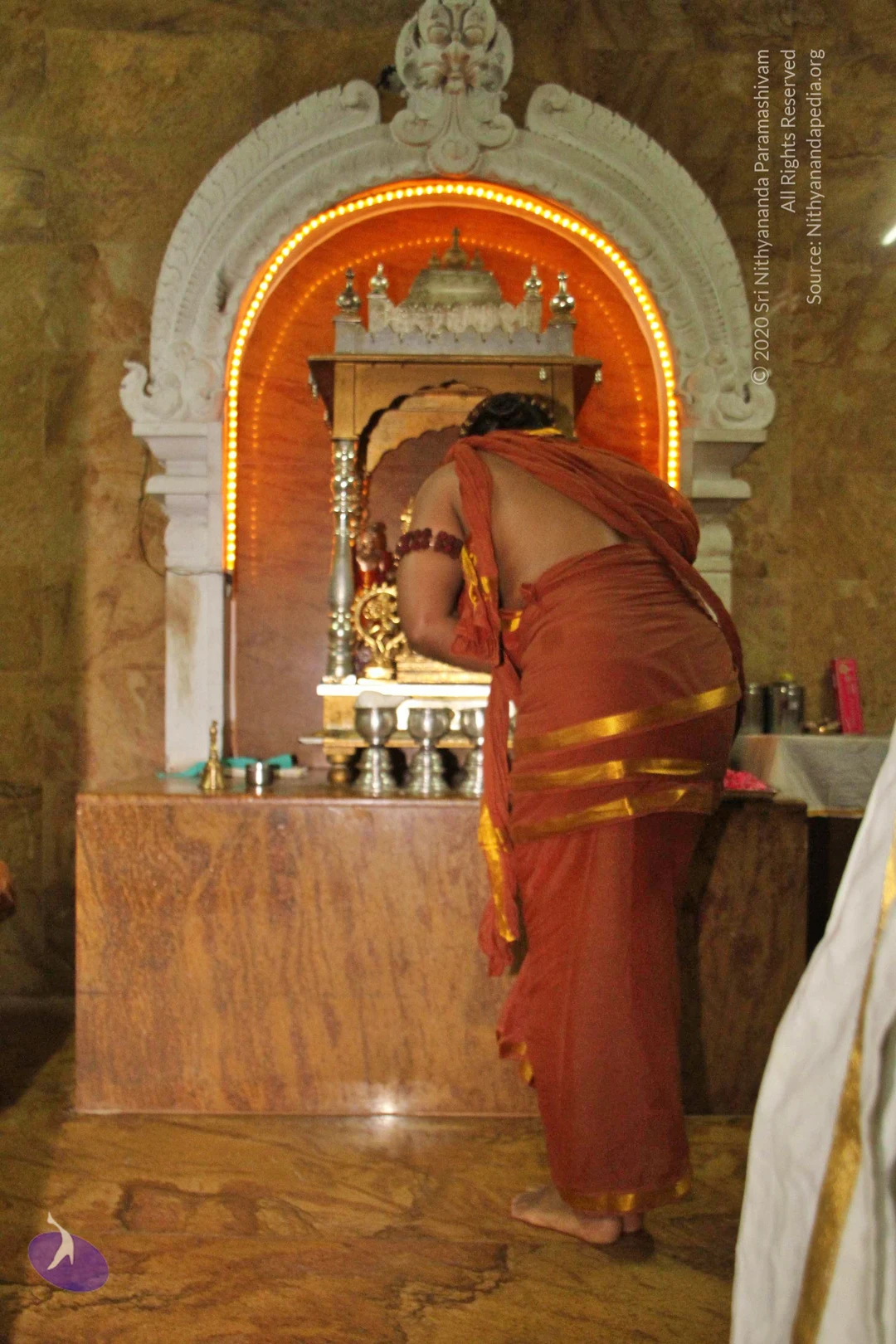
A photograph inside a stone shrine with a white carved arch outlined in orange lights. A bare-chested priest in an orange dhoti with gold borders leans forward at a gold-and-silver altar, tending a deity murti. Behind him stand silver pots, a brass oil lamp and a small gold shrine canopy. A second man in orange robes with a rudraksha mala across his chest and a bead headband stands at the left with hands folded, watching. Pink flowers rest on the stone ledge and a steel bucket sits at right.Photograph inside a shrine niche with a warm glowing arch of lights. A bare-backed man in an orange dhoti with gold borders leans forward at a gold and silver altar, bending over a small deity murti and offering items, with a rudraksha mala on his shoulder and wrist. Beside him stands a woman in an orange saree with gold border and rudraksha malas around her neck, arms and head, hands clasped before a tray of pink and white flowers and green leaves. Silver kalasha-style vessels and a tall brass lamp stand stand on the altar.Two men in saffron-orange dhotis with gold-bordered cloth stand before a shrine niche lit by a string of orange lights. The man on the left, facing right, wears a rudraksha headband, a long rudraksha mala and a rudraksha armlet, and holds his mala in both hands. The bare-backed man on the right, seen from behind, wears a rudraksha headband and a large gold ornament at the neck, and is making an offering at a gold-trimmed shrine. The altar holds pink flower petals on a tray, silver vessels and small deity figures under a silver canopy, consistent with puja. Two people are visible.Close-up photograph of a ritual scene at a gilded altar. A person's bare arm and wrist, wearing a gold bangle, reaches in from the upper left to place or adjust offerings. Ornate gold-colored metal stands and a gilded canopy frame the scene. Pink and yellow flowers, white blossoms and green leaves are heaped on a gold tray in front, and a small silver or brass bowl with a lit oil lamp sits at the lower center. Pale fabric and a deity murti are partly visible in the background. Only a partial arm is visible, so no full person is shown.Two men in orange silk garments with gold borders stand before a golden shrine in a stone-walled temple interior. The man on the left, with hair tied up and a rudraksha mala draped over his shoulder and arm, stands with hands folded and eyes lowered. The man on the right faces away, bare-backed, wearing a gold necklace, offering flowers and a leaf plate at a gilded altar niche with a kalasha-style finial, silver lamps and pink flowers. Their posture suggests a puja or abhishekam.A photograph of a temple shrine room with honey-coloured stone walls and a white carved arch outlined in orange lights. Two men in orange dhoti-style garments with gold borders stand before a small altar. The man on the left, with rudraksha beads on his arm and chest, stands with hands clasped. The man in front, shown from behind and bare-chested, holds an object while facing a deity murti decorated with pink flowers. Brass and silver lamps, a kalasha and a brass bowl sit on the altar and floor.

Evening-Public-Darshan

10 photosSource gallery
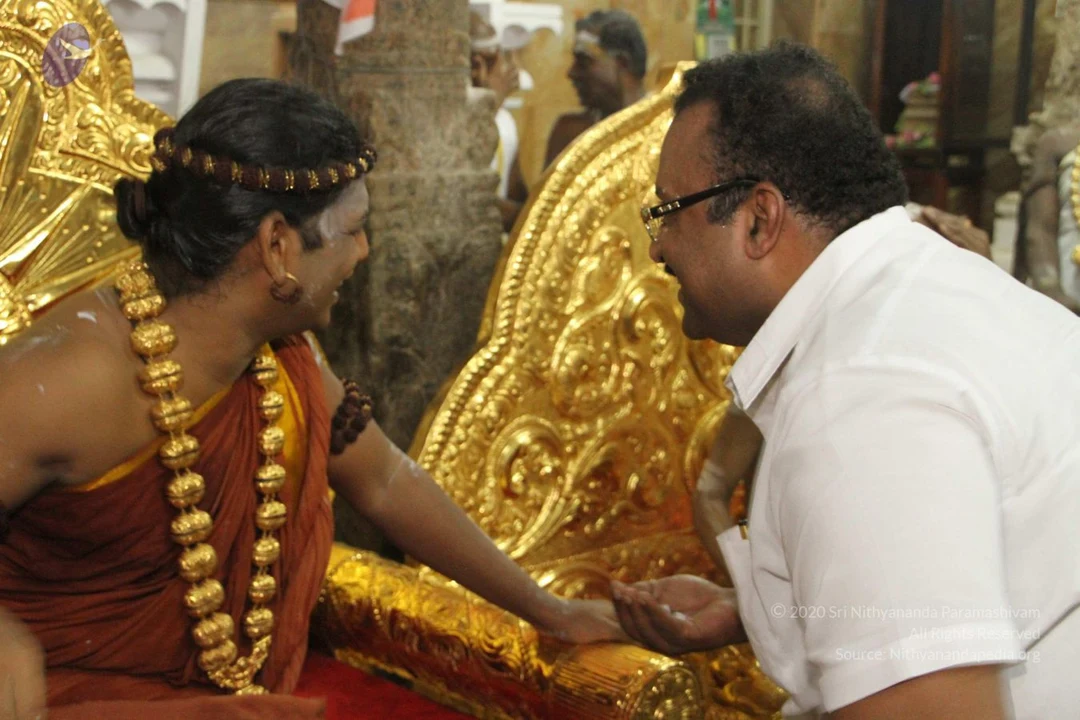
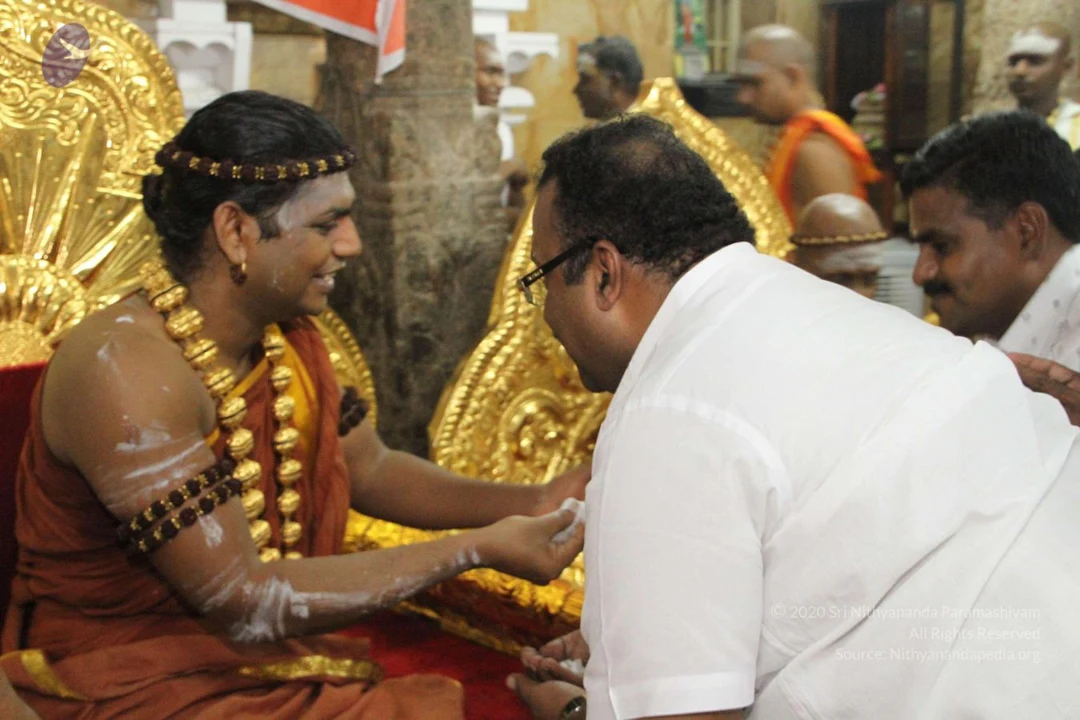
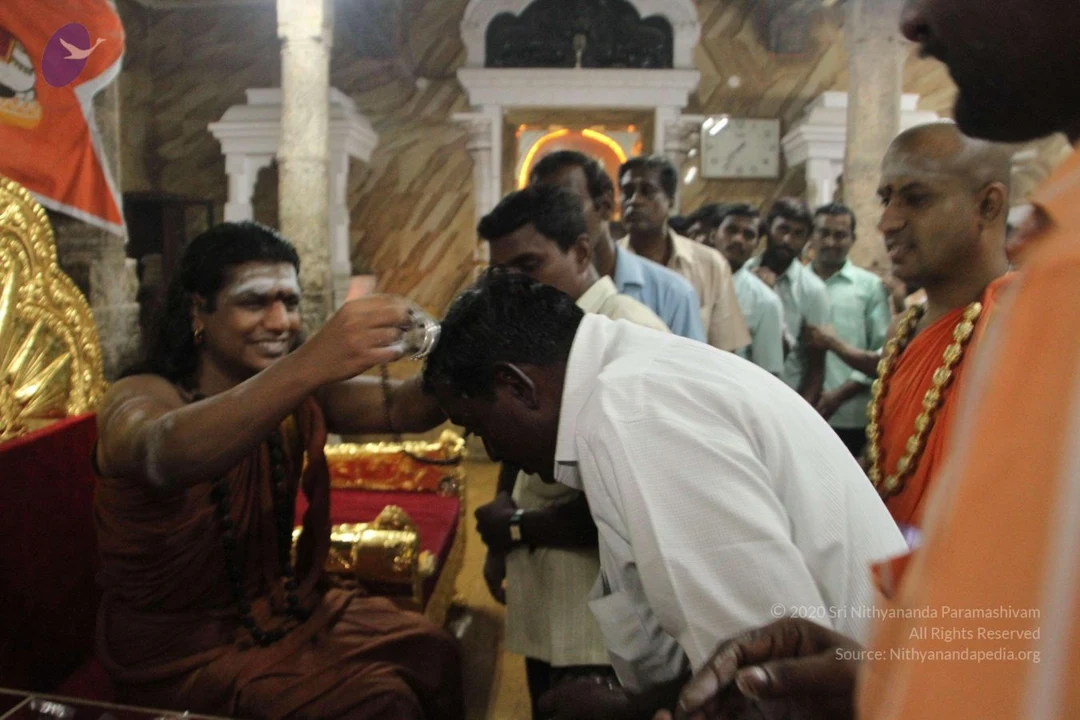
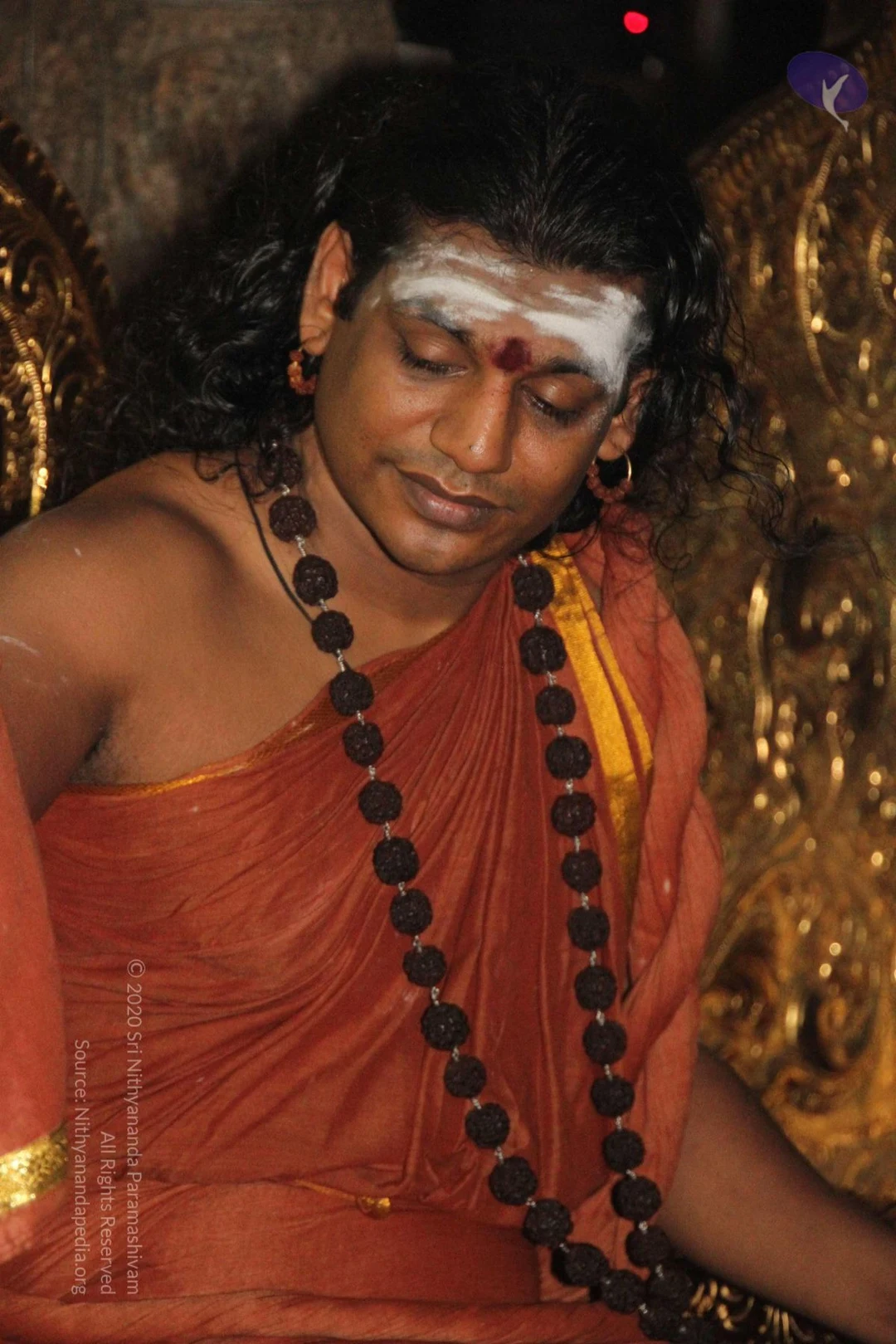
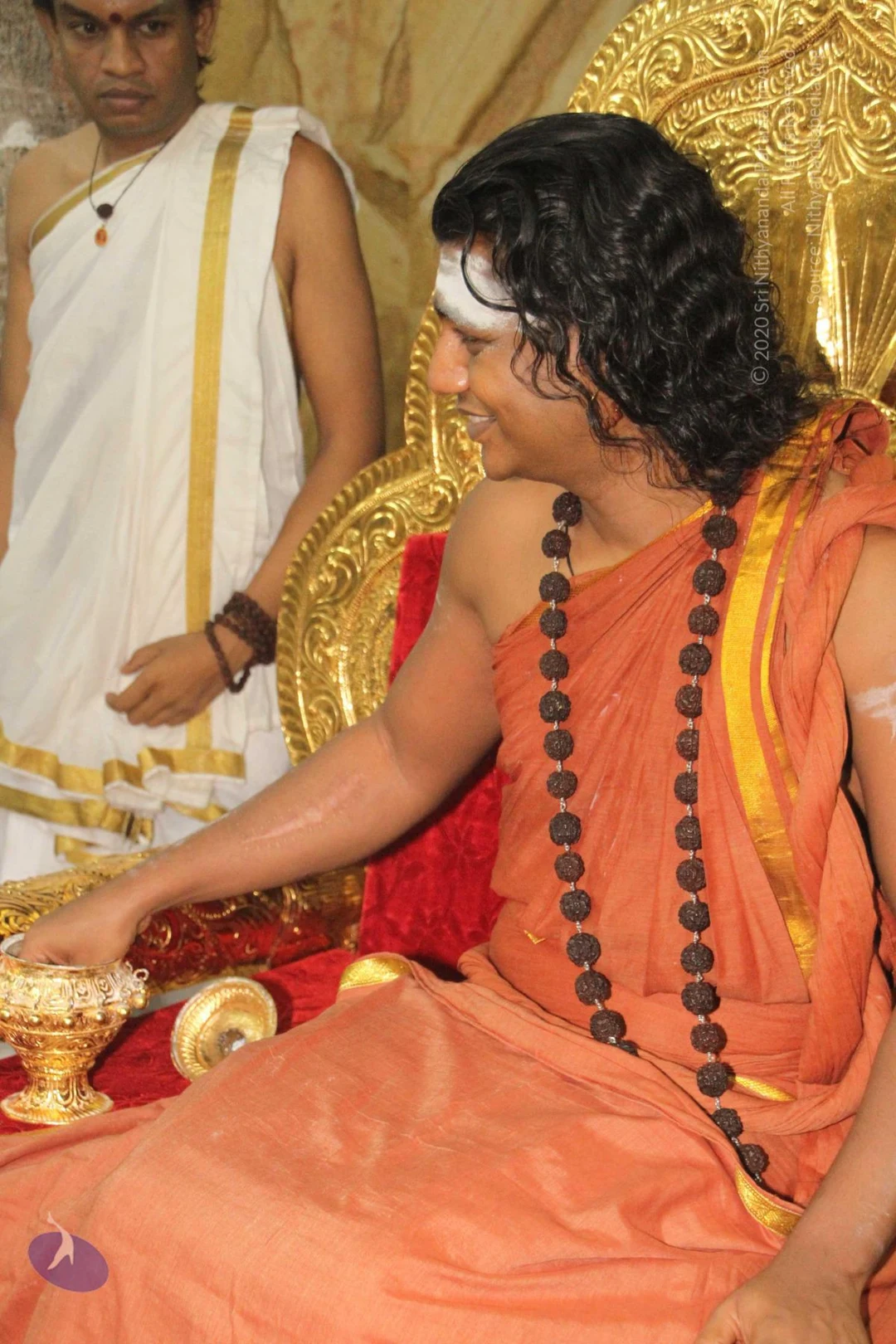
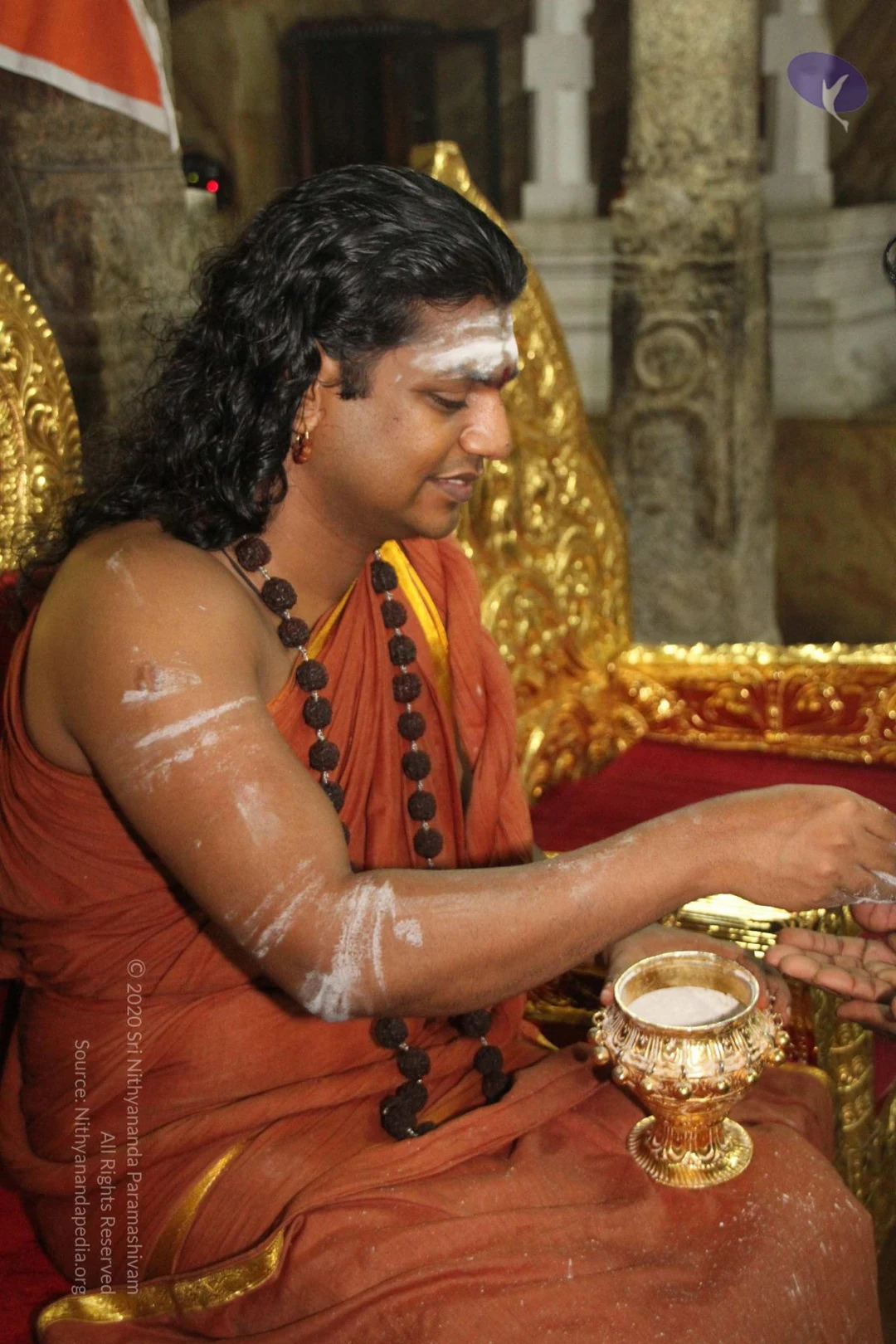
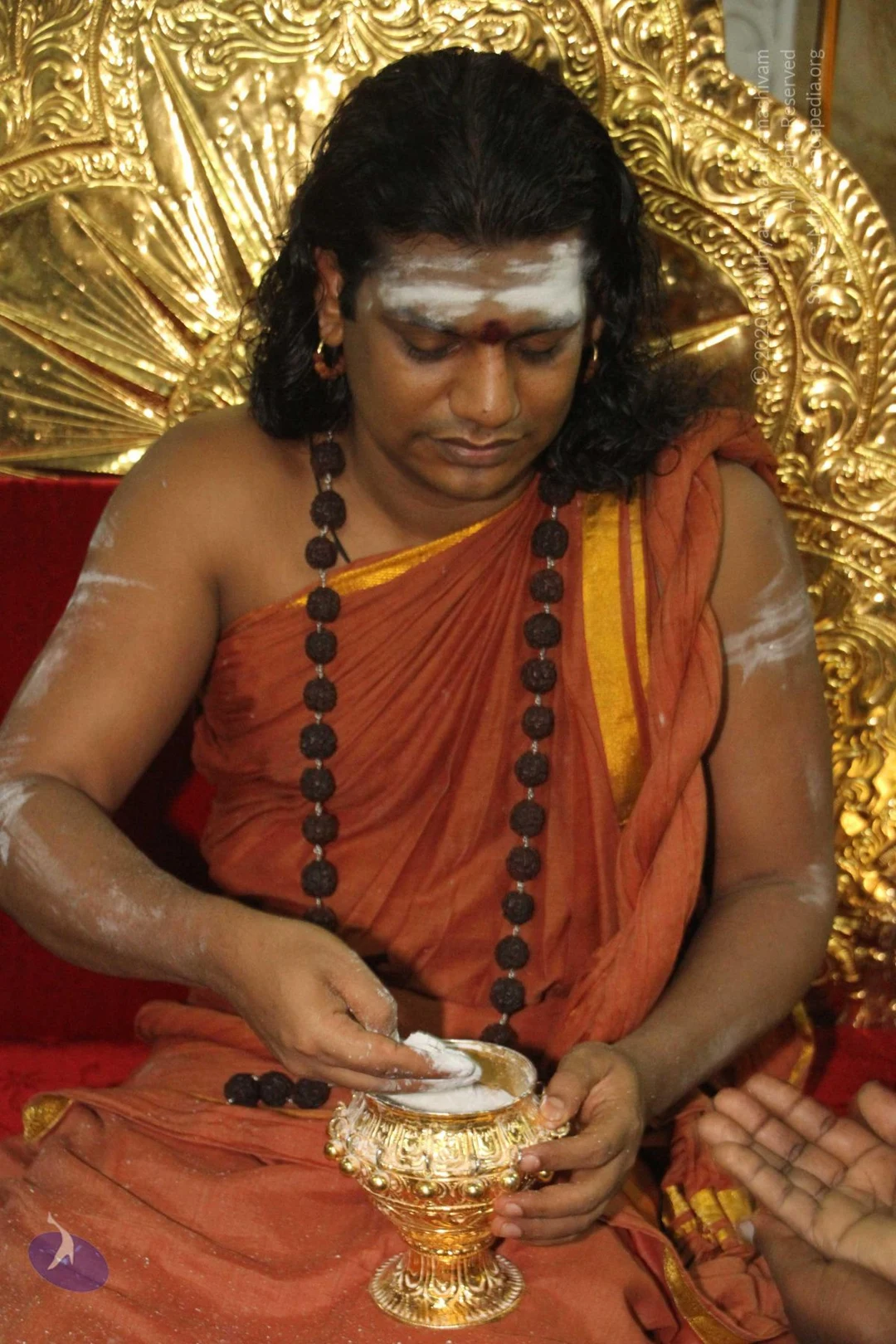
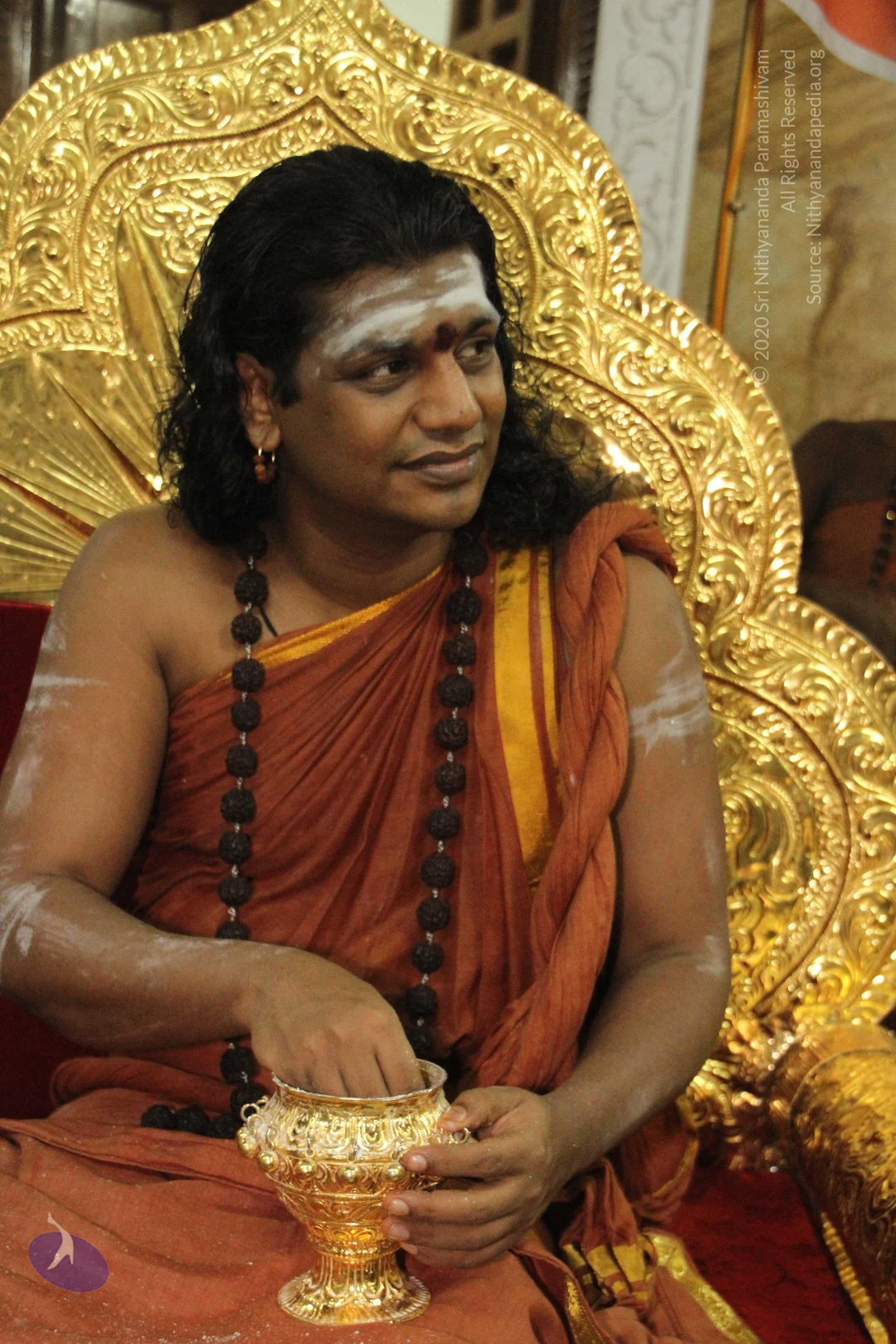
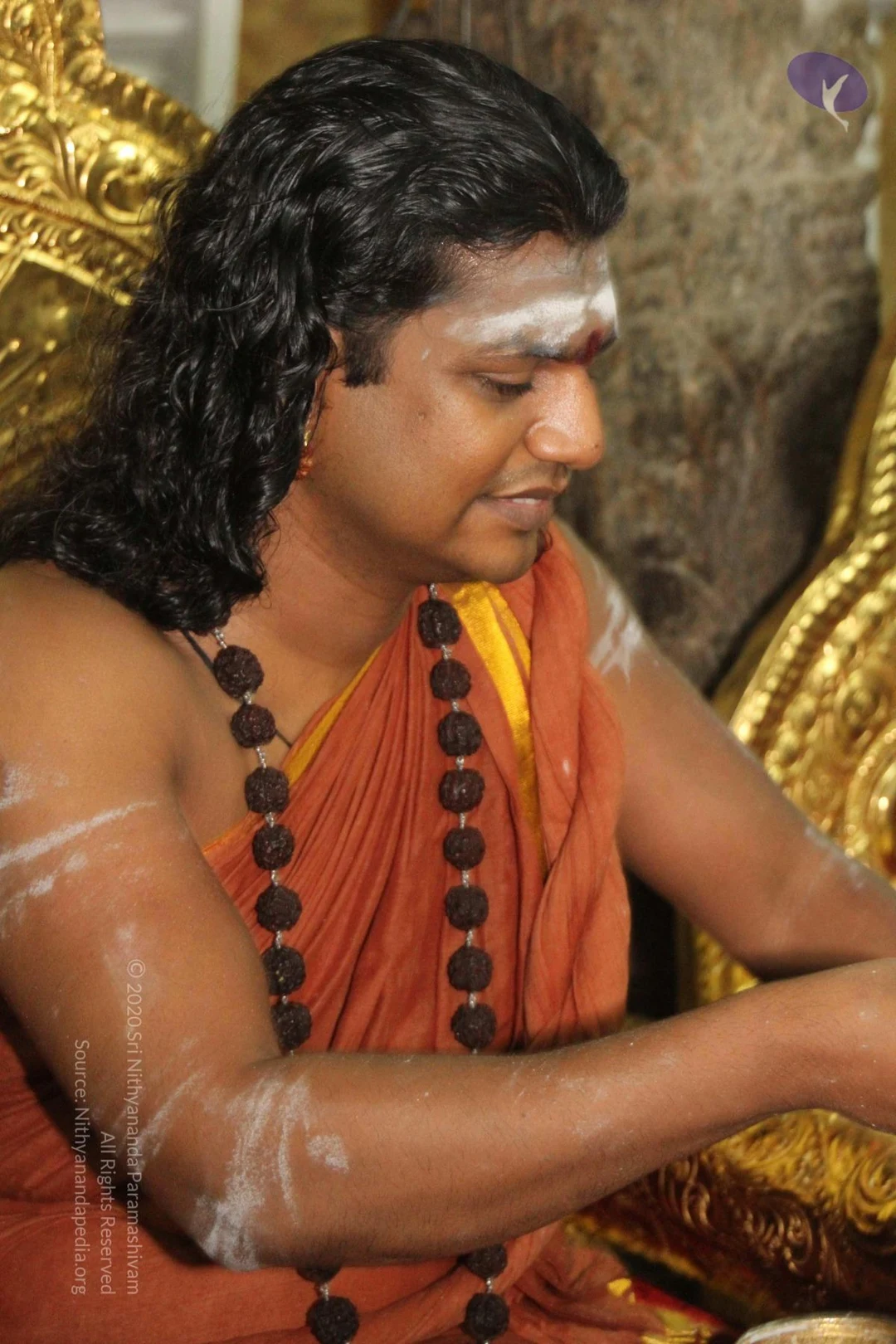
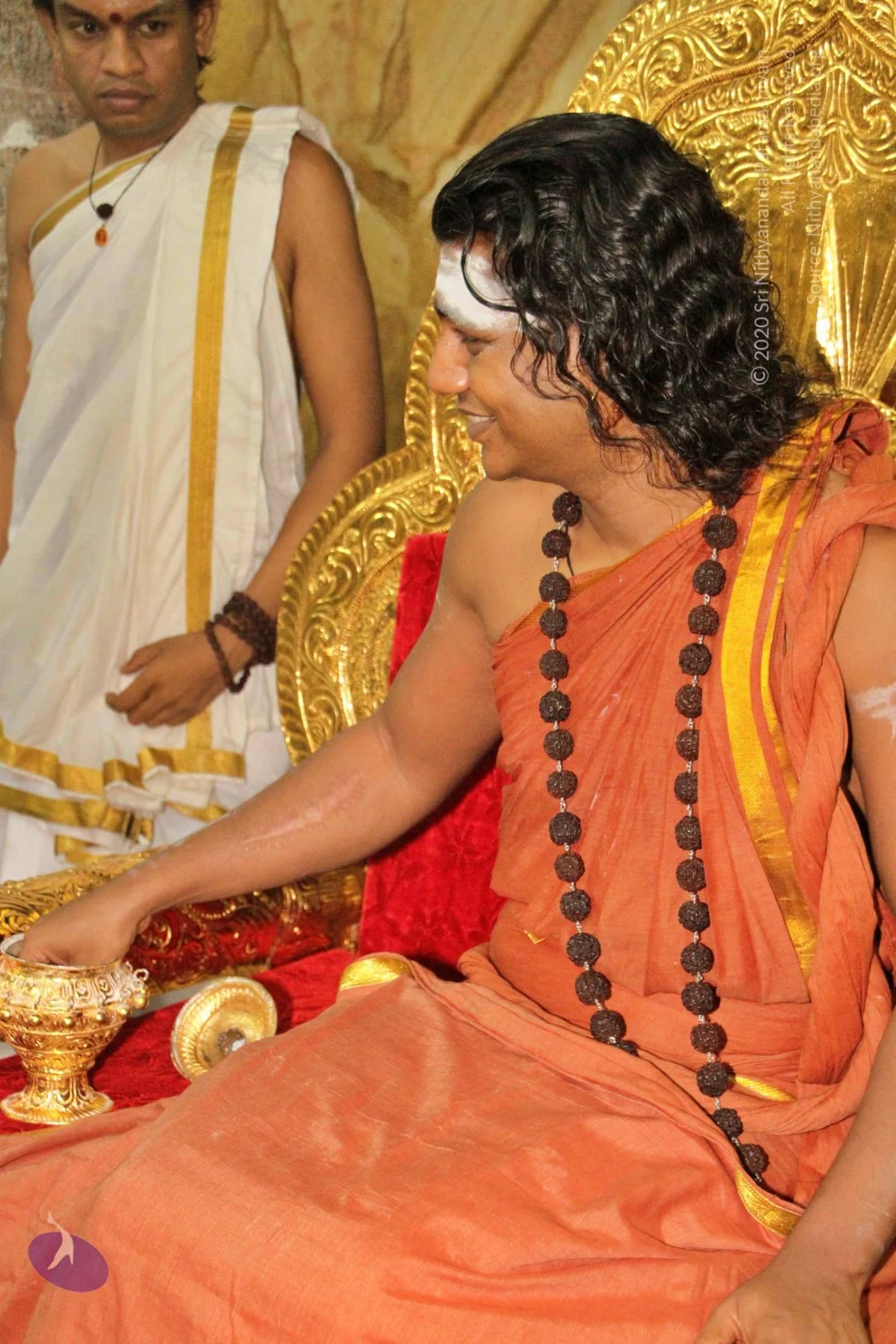
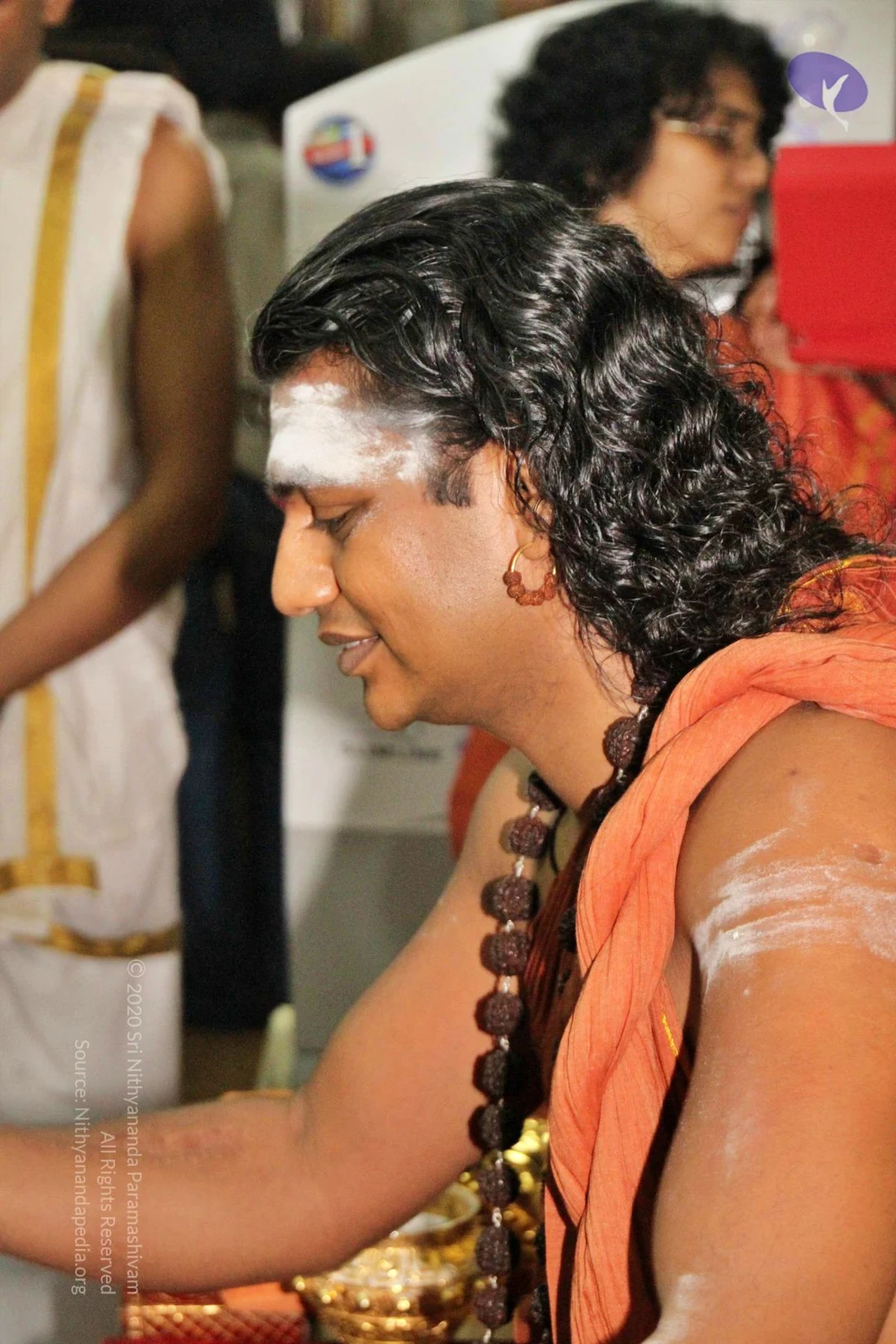
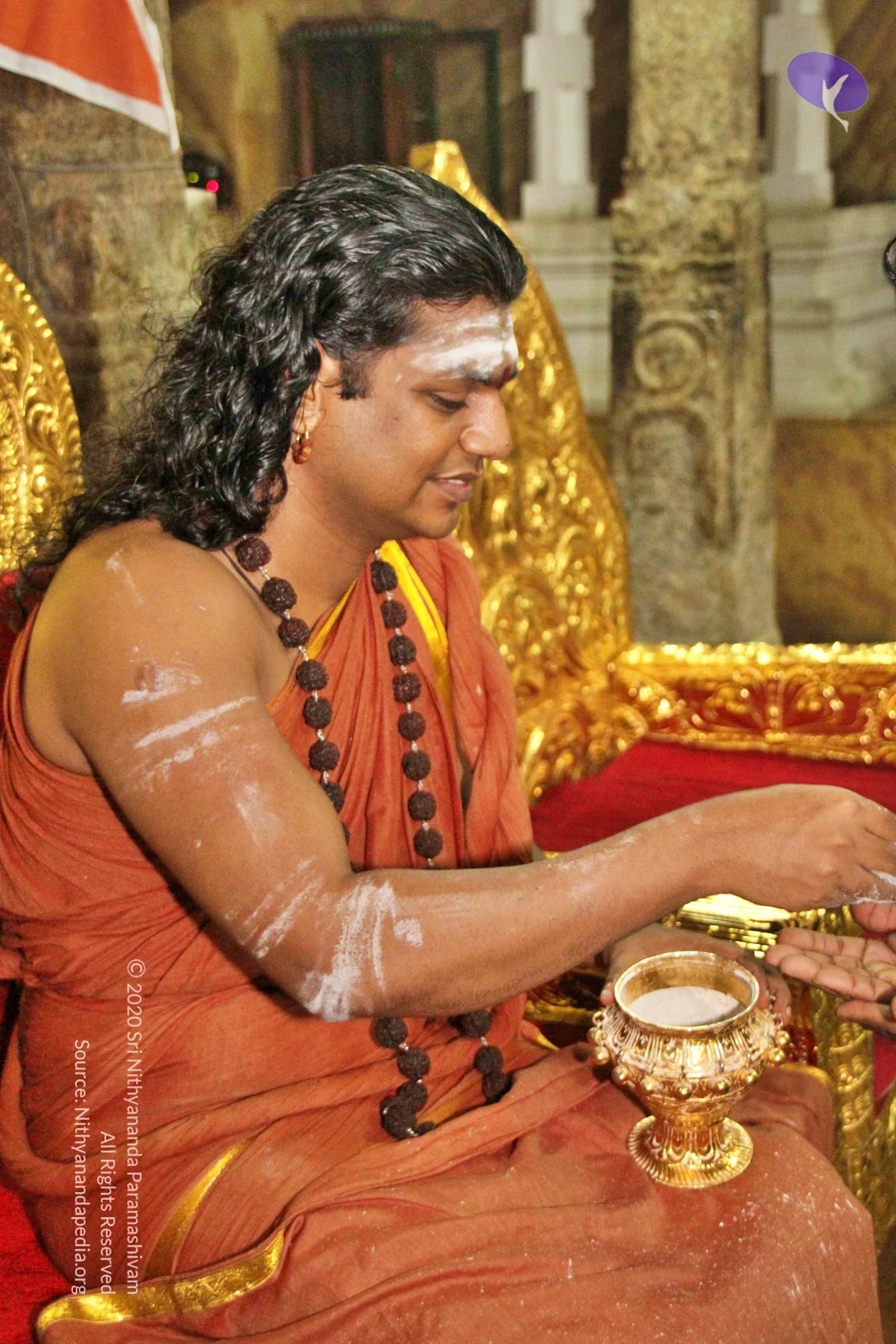
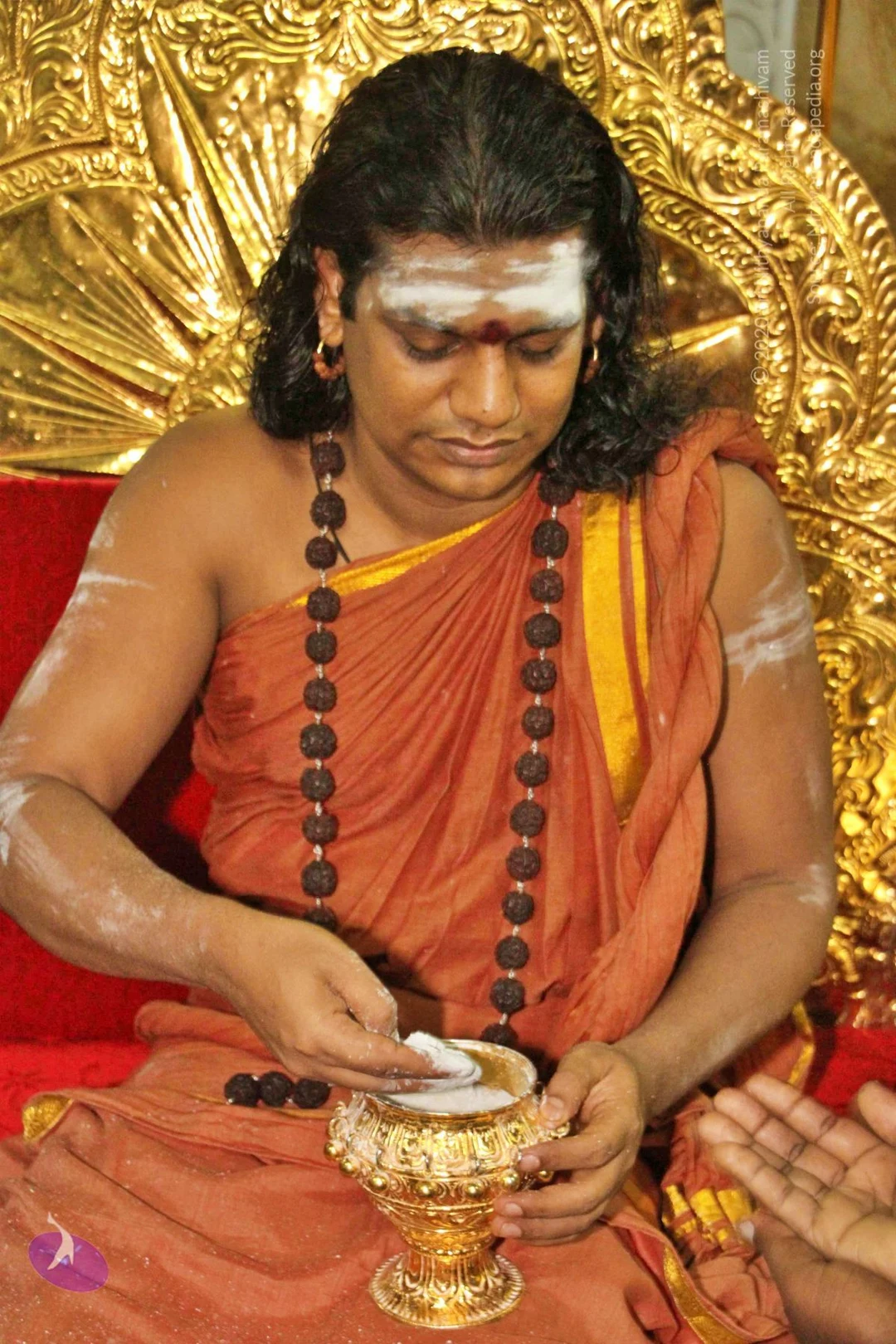
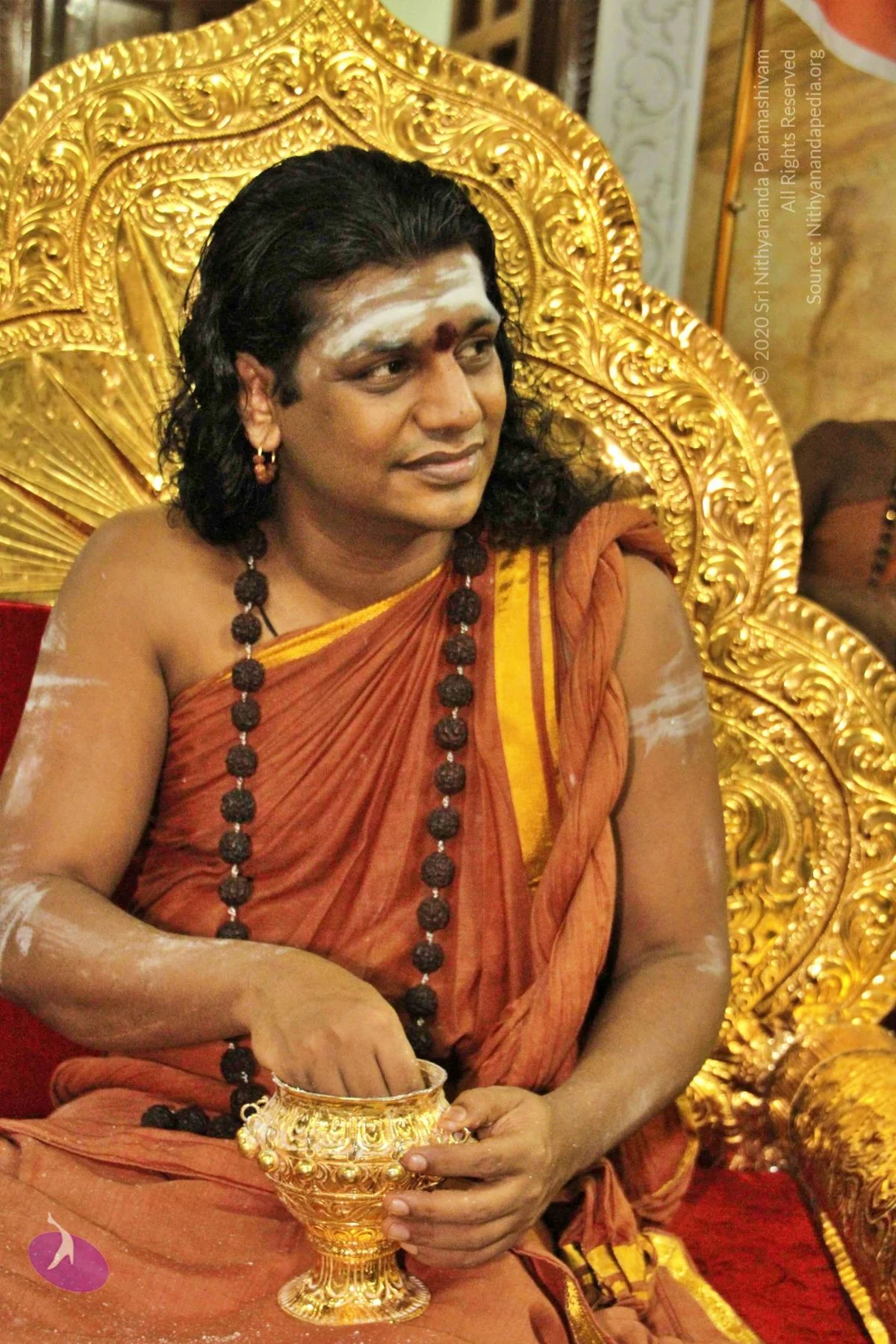
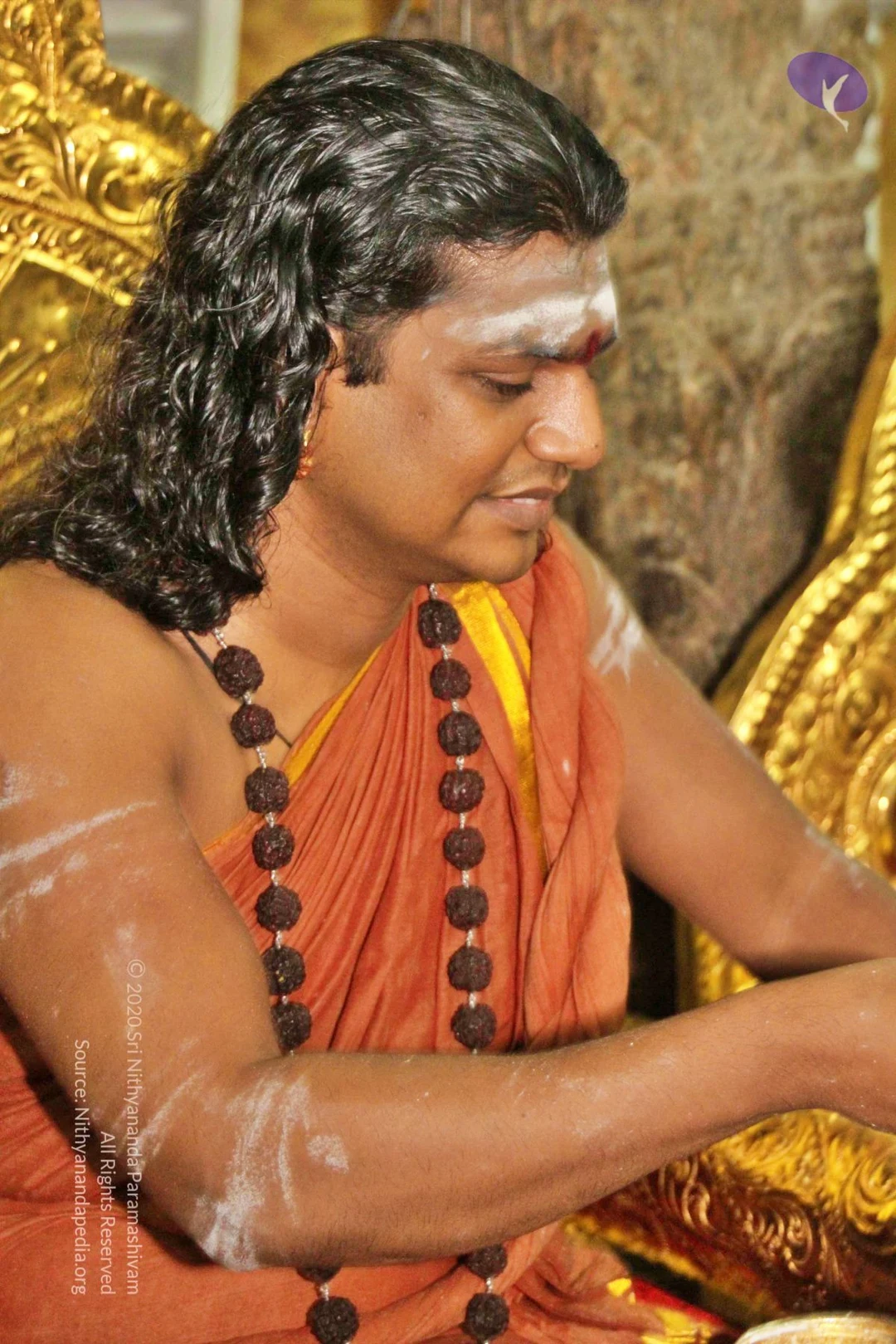
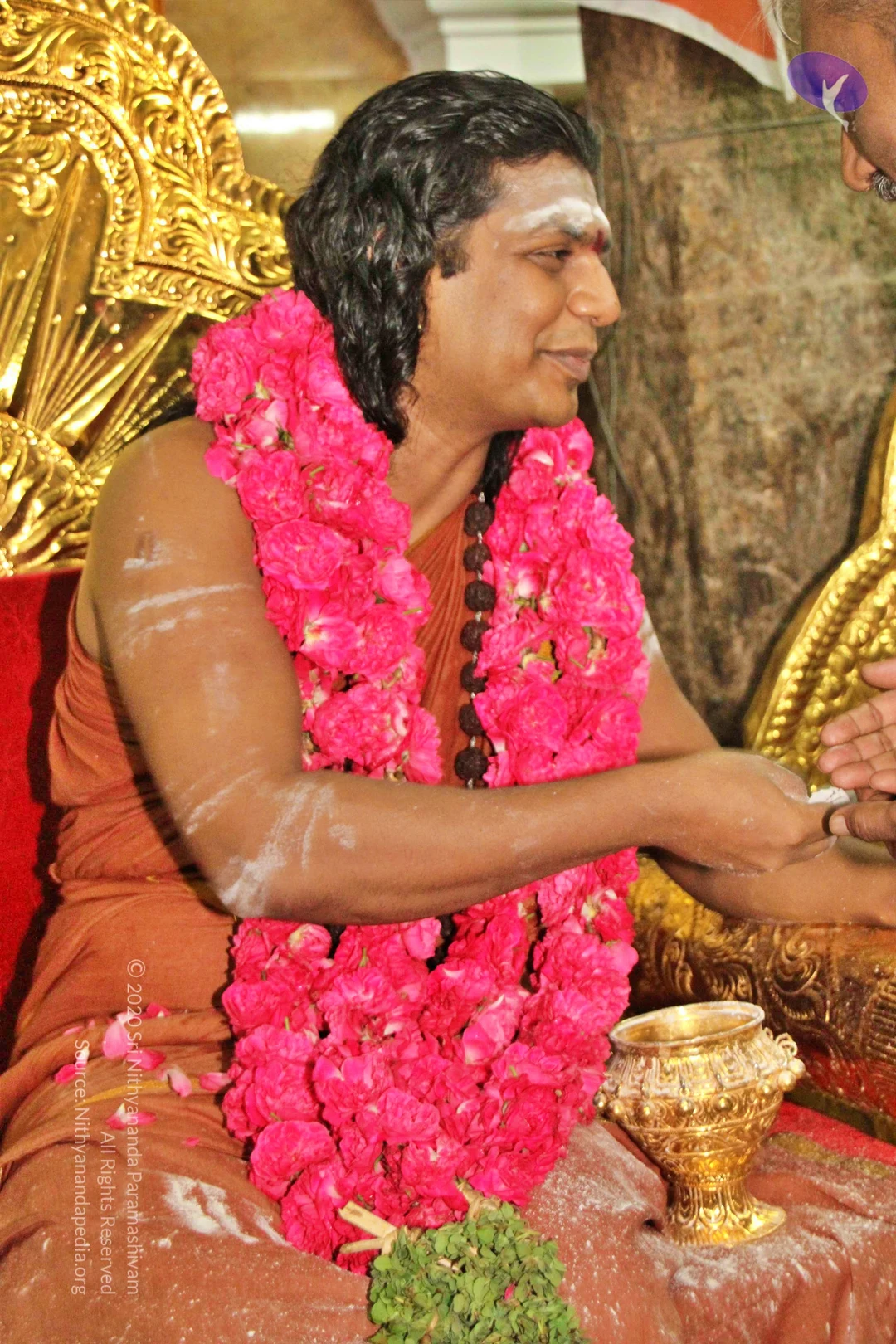
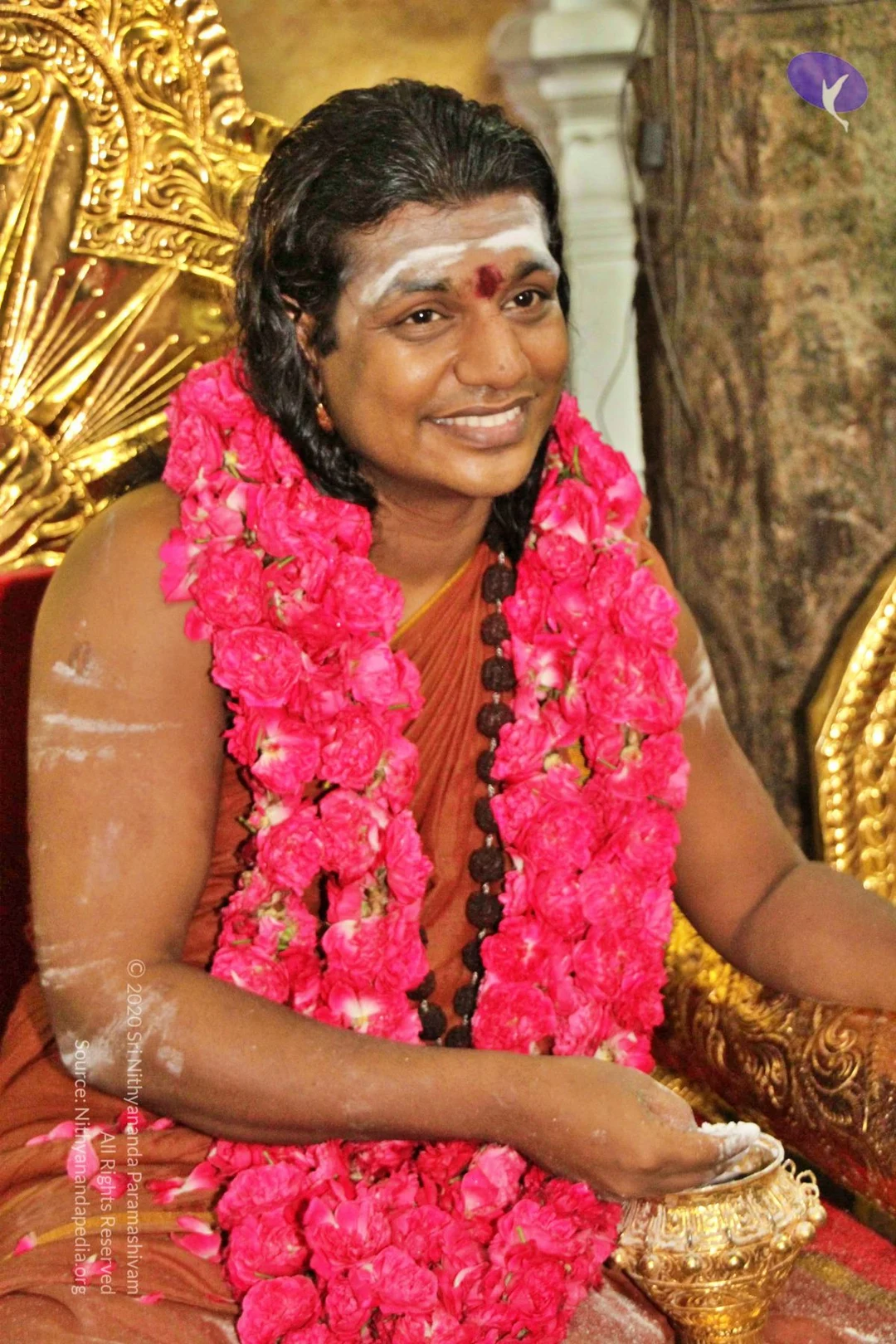
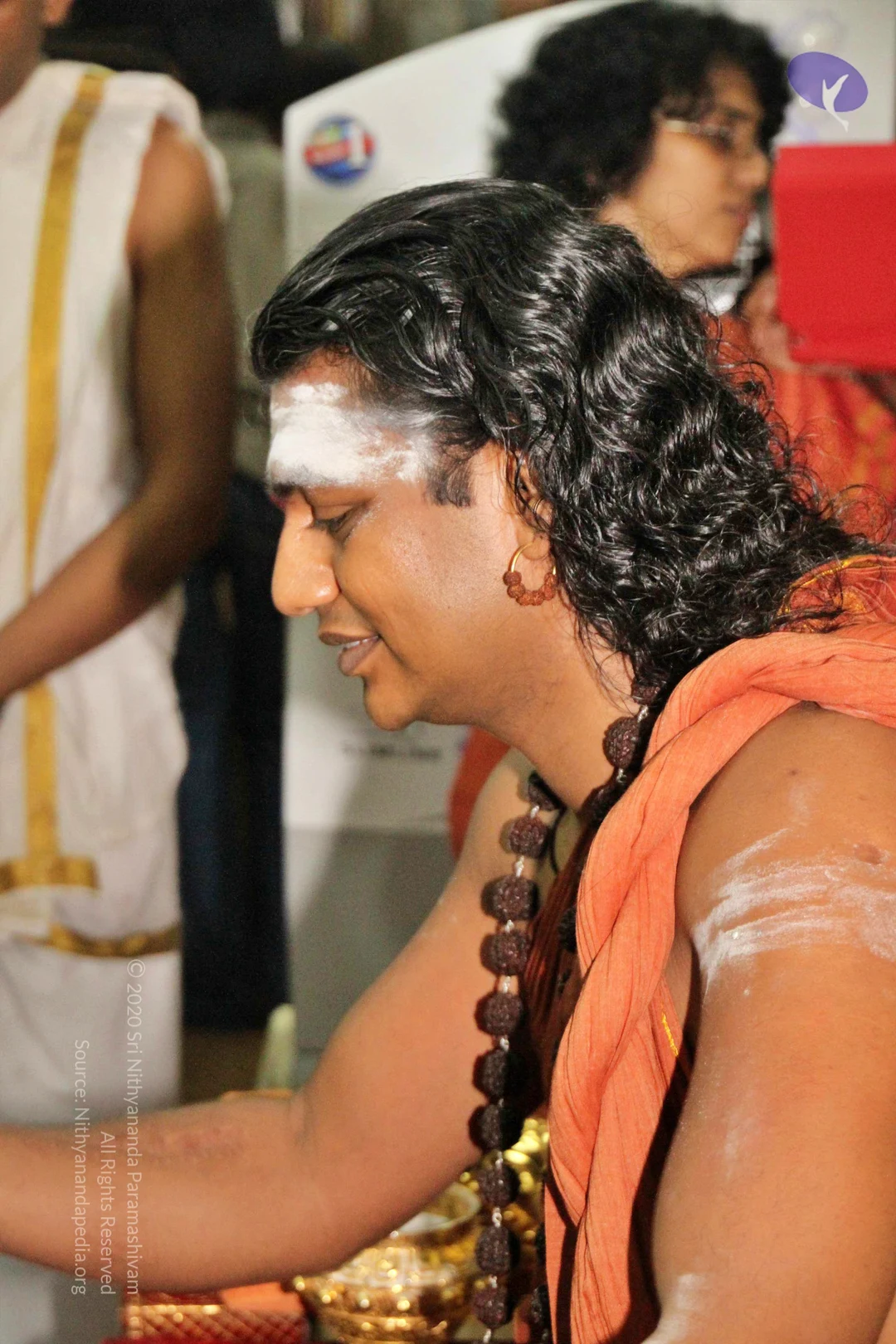
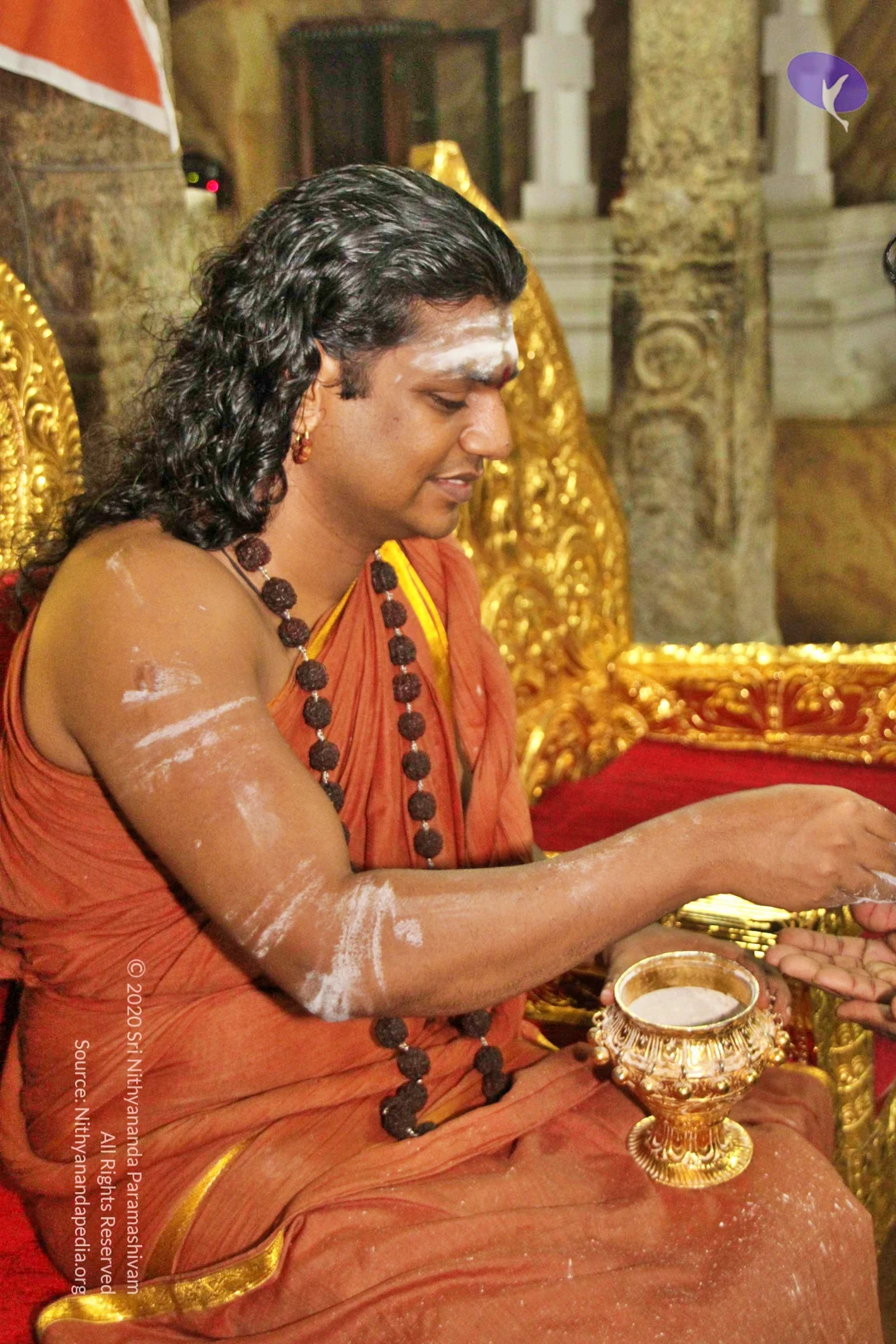
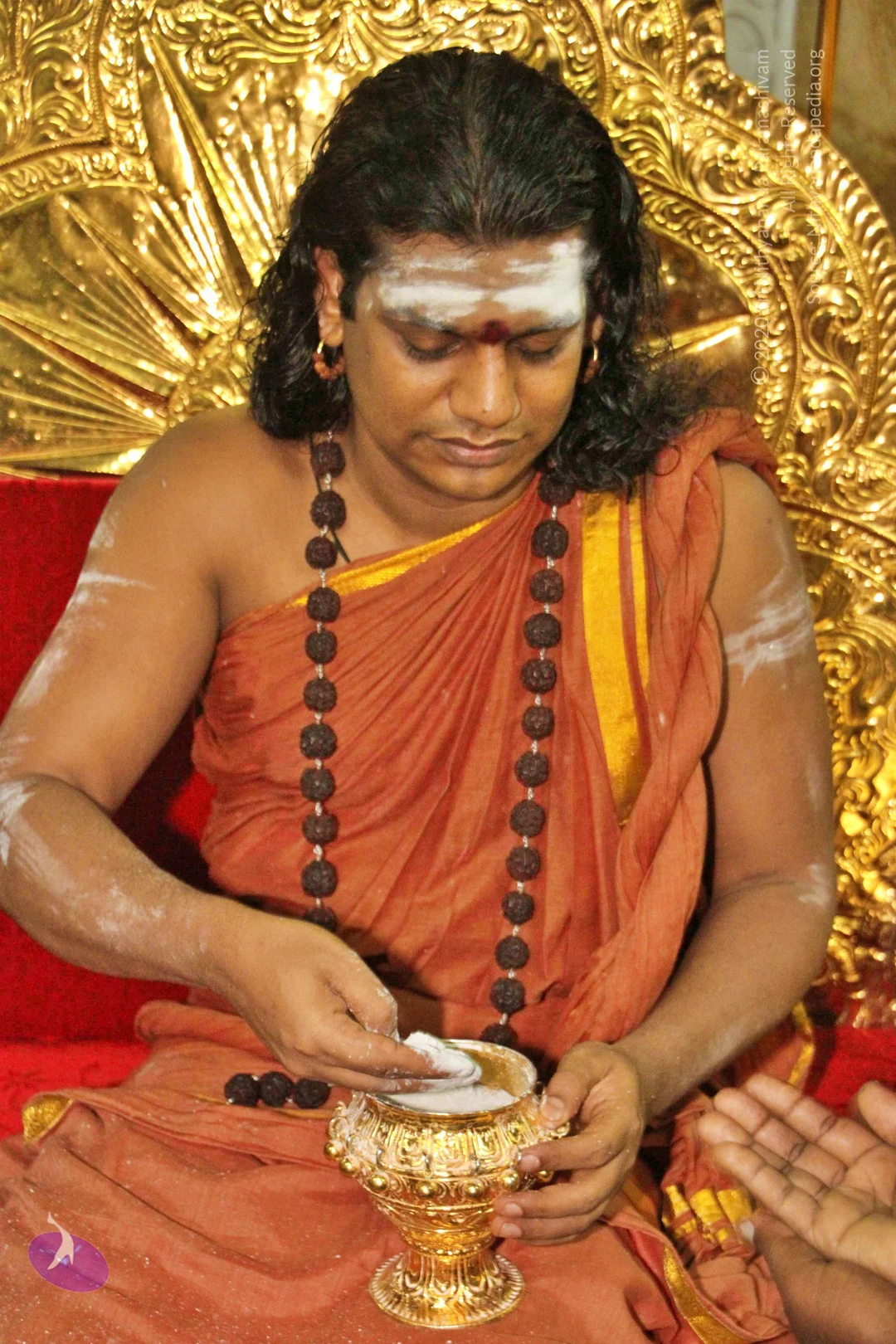
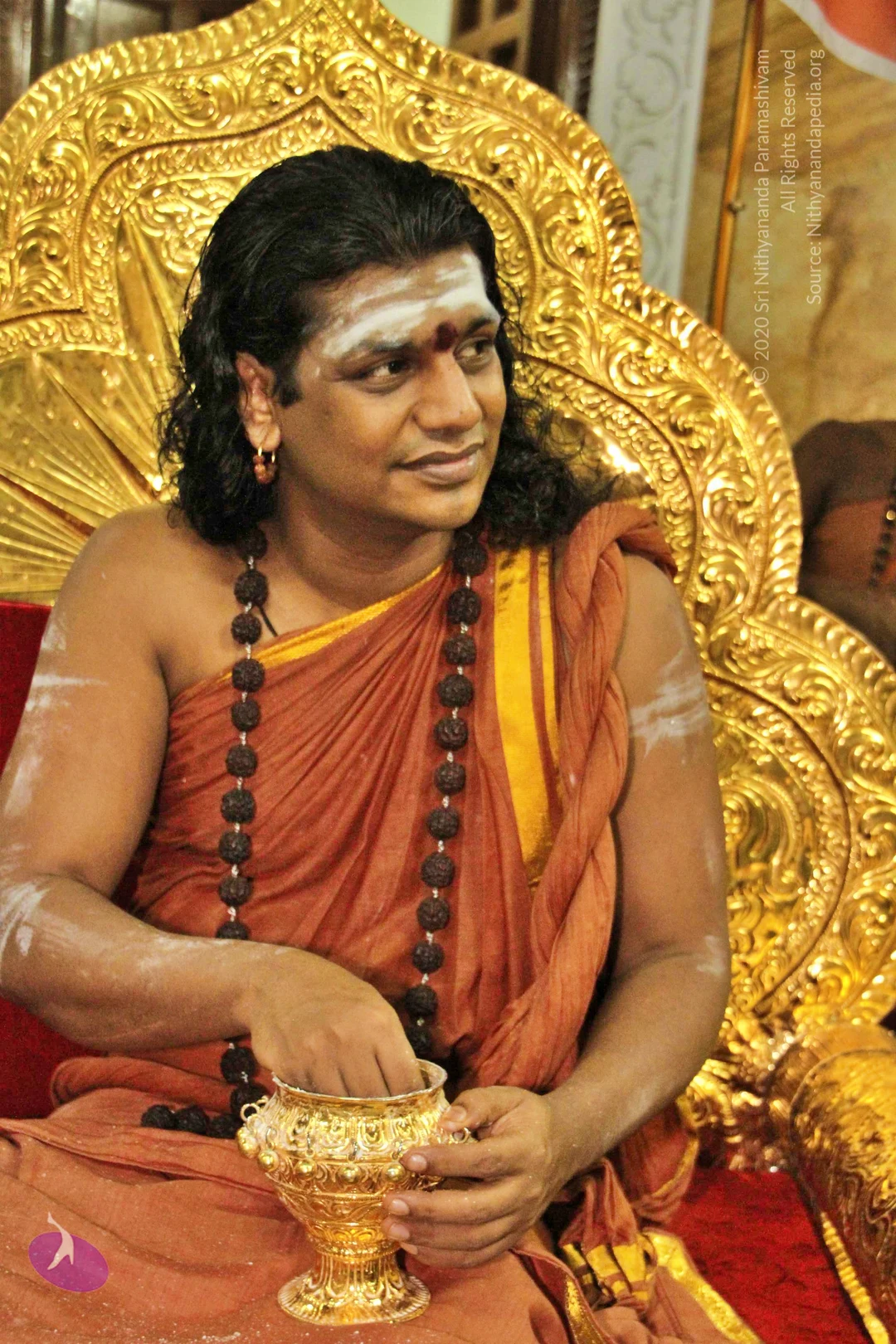
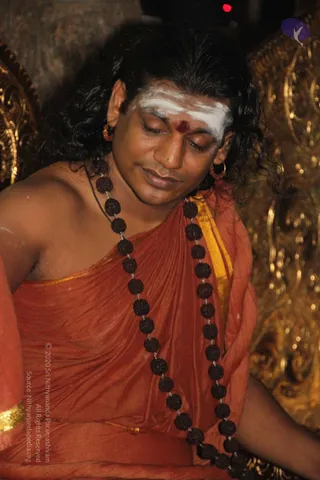
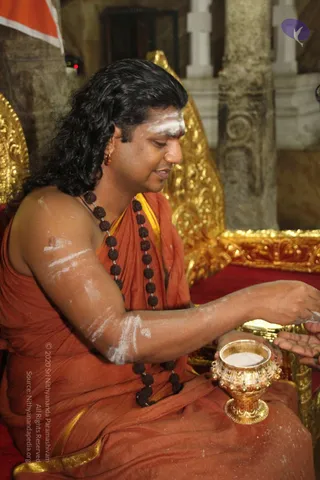
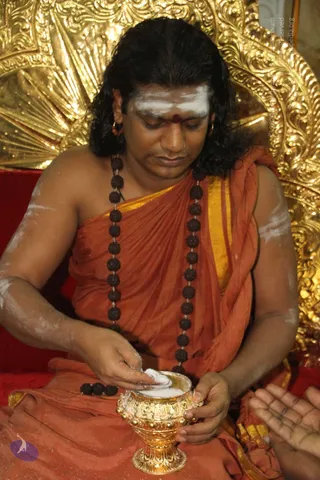
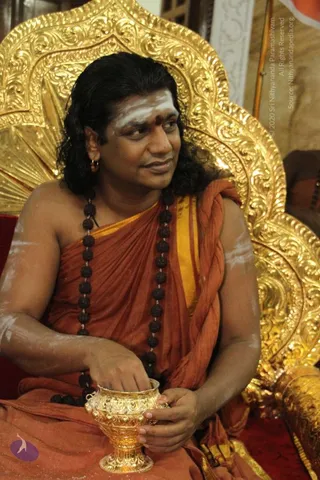
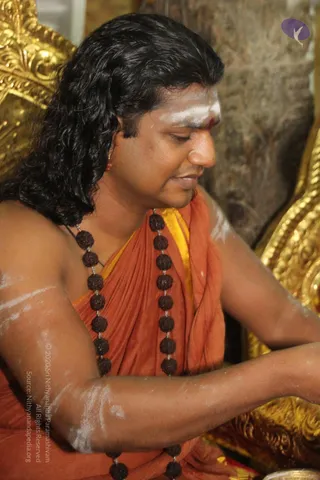
Photograph of a temple shrine interior. In the foreground a shaved-headed priest seen from behind wears white dhoti and shawl with gold borders, and an orange-red cloth at his waist, with a metal armlet on his upper arm. He stands on marble steps reaching toward a golden kalasha-style lamp stand and a small brass vessel held by a second person at the lower right, who wears a white shirt. Beyond, a gold-framed shrine niche with garlands and pink flowers holds a deity murti, with silver lamps and brass oil lamps set before it and a lit orange light border around the arch.Close photo of a man with long, dark, wavy hair seated with eyes lowered in a calm, meditative expression. He wears an orange-saffron shawl with a gold border draped over bare shoulders, a long necklace of dark rudraksha beads, and a white horizontal tilak with a red dot on his forehead. Gold-toned ornate carved decoration fills the background, and a red light glows at the top edge. The appearance and presentation are consistent with a person, with cues including long swept hair, saffron clothing and rudraksha mala, so this is a probable identification in an in-person setting.A seated man with long swept-back dark hair wears an orange-saffron cloth draped over his shoulder and a long rudraksha mala with dark beads around his neck. White vibhuti marks are on his forehead and arms, and a small gold earring is visible. He sits on a gold-ornate throne with red upholstery and holds a small ornate gold cup containing white powder, apparently pouring or sprinkling it into the outstretched hand of another person at the lower right. The background shows a stone pillar and a gold-framed backrest. Probable Swamiji cues: long swept-back hair, saffron clothing and rudraksha mala, seated in a throne-like setting. A partially visible second person's hand reaches in from the right.A seated man in saffron-orange robes with gold borders and a long rudraksha mala wears white horizontal tripundra marks on his forehead and arms and a red bindi. He sits before an ornate gold repoussé backdrop and, eyes lowered, scoops white powder from a hand with a gold ceremonial vessel with a footed base. Dark rudraksha beads lie on the red cloth at left, and an open hand of a devotee appears at the lower right. The man has long, swept-back dark hair and gold earrings, and wears a crown-like ornament absent here. Swamiji (probable): he is a long-haired figure in saffron and rudraksha, seated on a gold-decorated throne, performing a vibhuti or kumkum offering.A seated man in an ornate gold throne with intricate repoussé scrollwork. He wears an orange-saffron cloth draped over his shoulder with a yellow-gold border, and a long string of dark rudraksha beads hangs across his chest. He has long swept-back dark hair, white tilaka lines on his forehead and arms, a red bindi, and a small gold earring. He holds a gold ornate cup with both hands. Only one person is visible.Close photograph of a man with long, swept-back black hair seated before ornate gold carved throne-like panels against a stone wall. He wears an orange-red saffron shawl with a gold border over bare shoulders, a dark rudraksha mala with multiple strands draped across his chest, white horizontal tripundra lines on forehead and arms, and a red kumkum mark between the brows. He gazes downward with a calm expression, hands extended forward.

Swamiji-at-Madurai-Adheenam

15 photosSource gallery
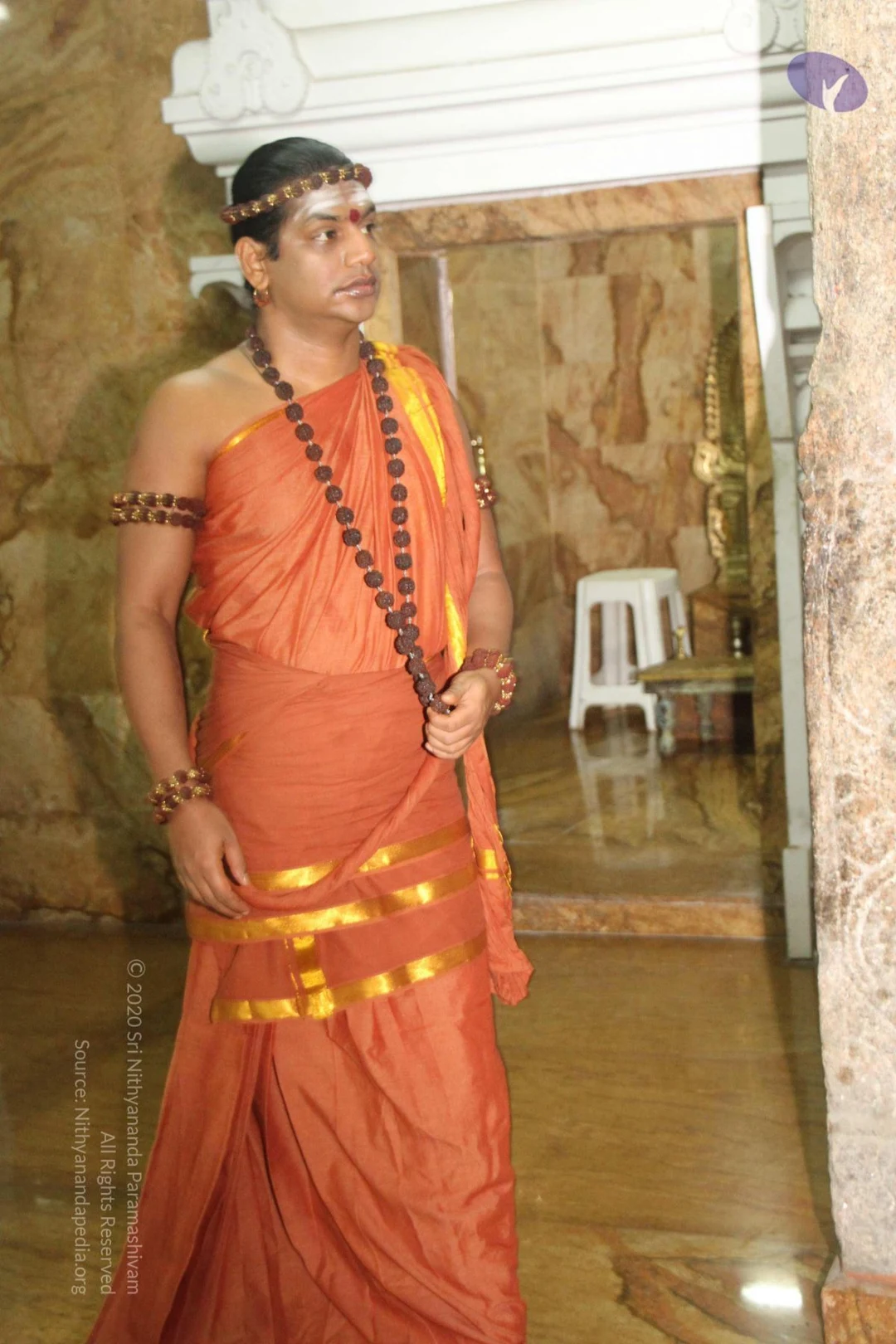
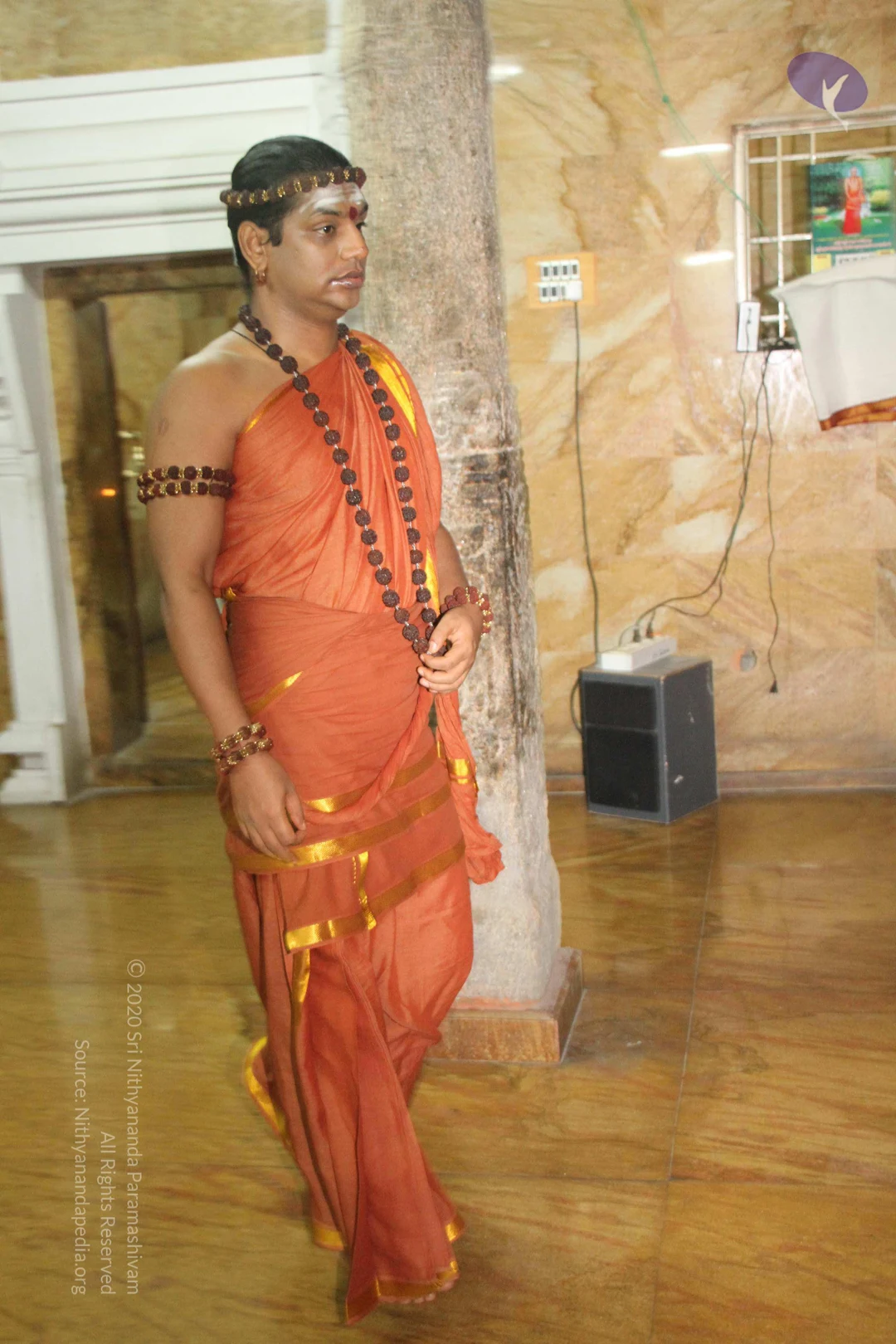
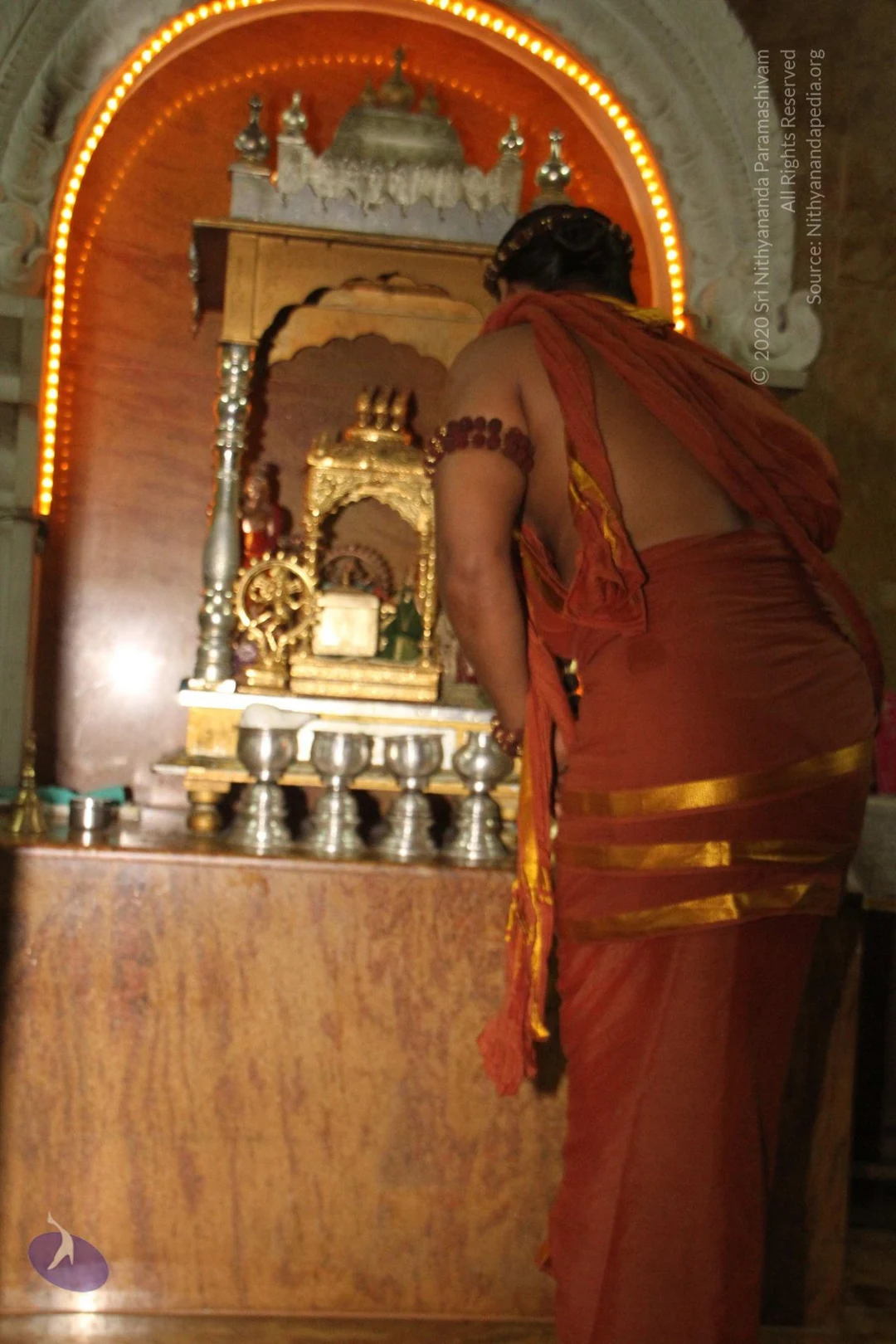
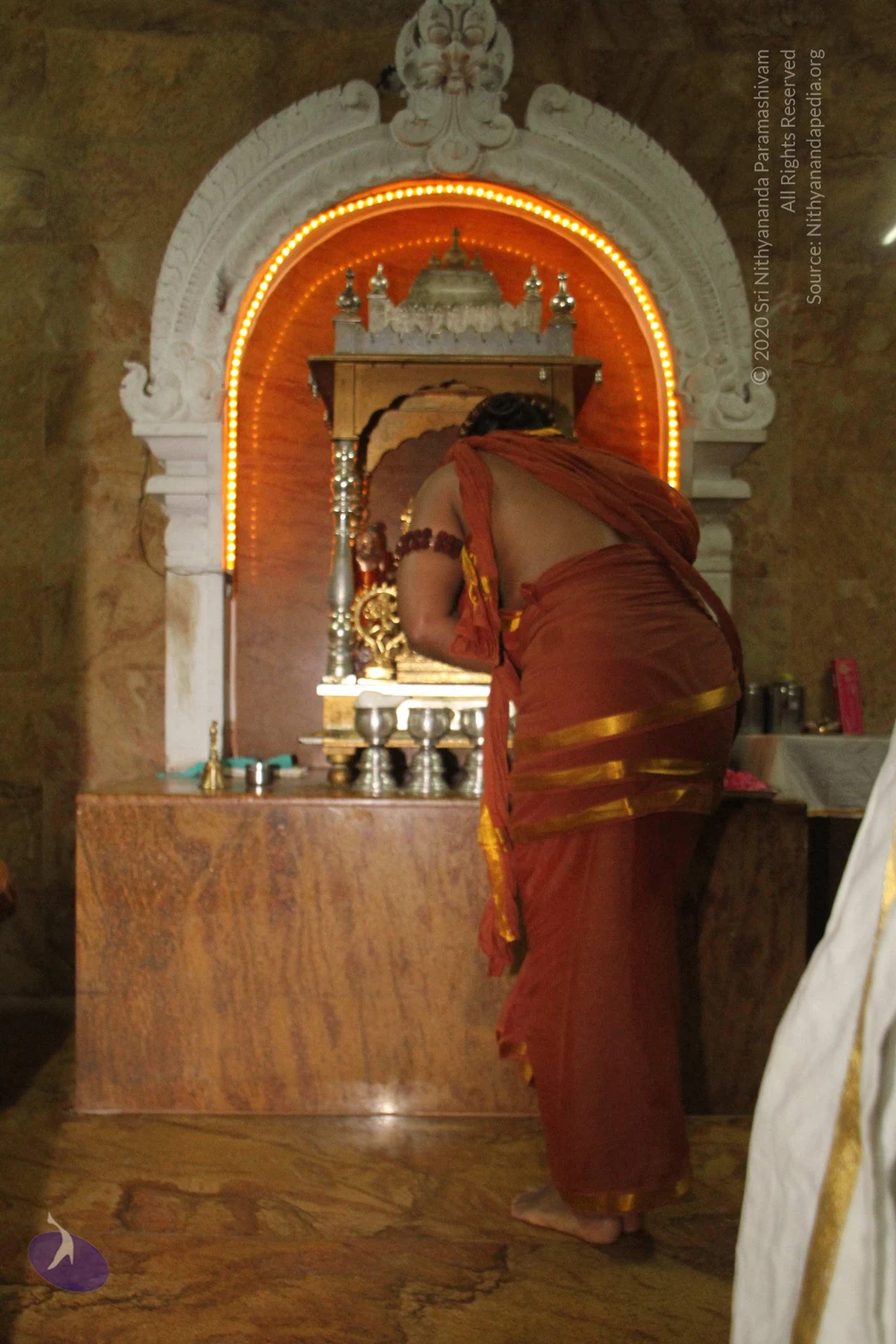
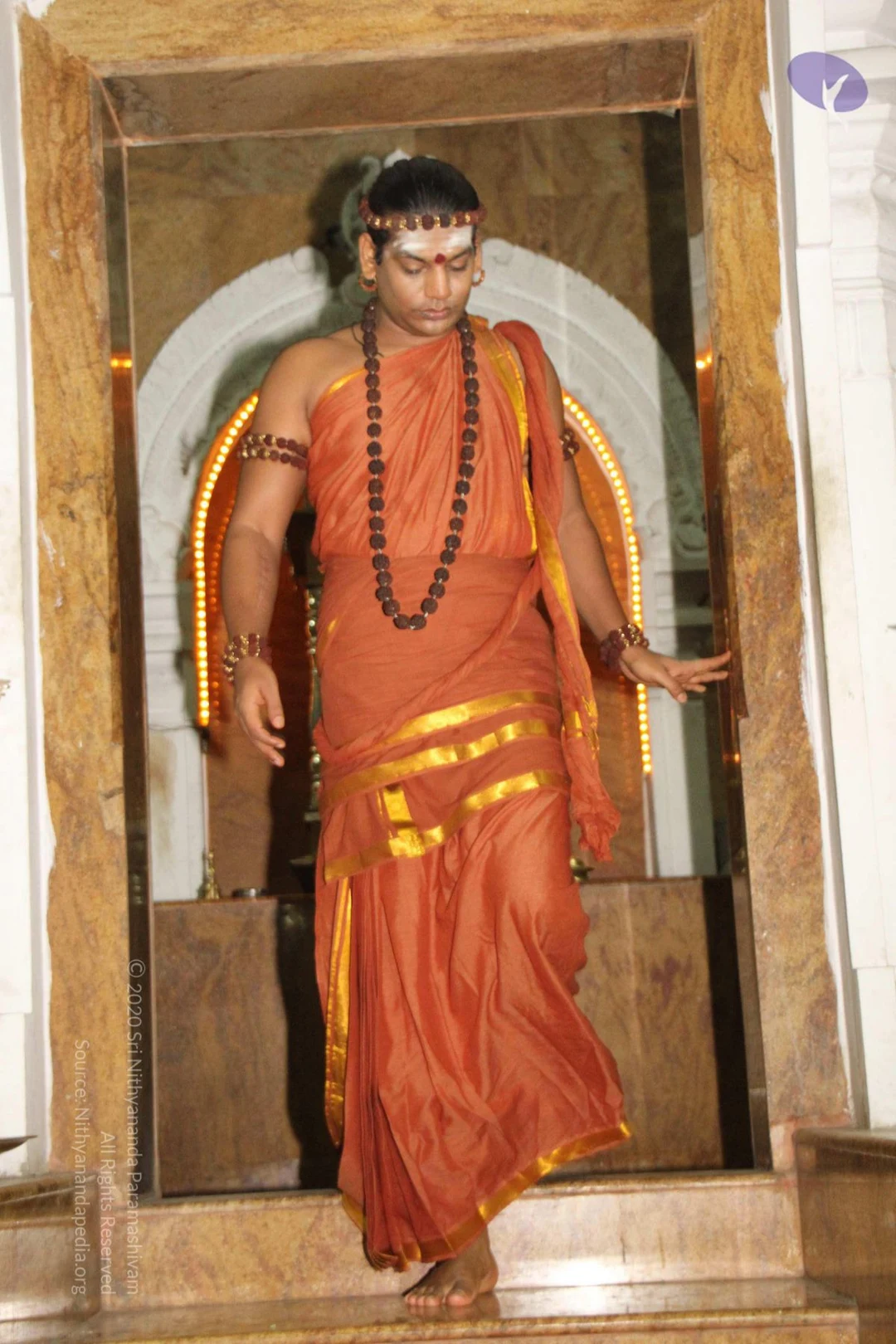
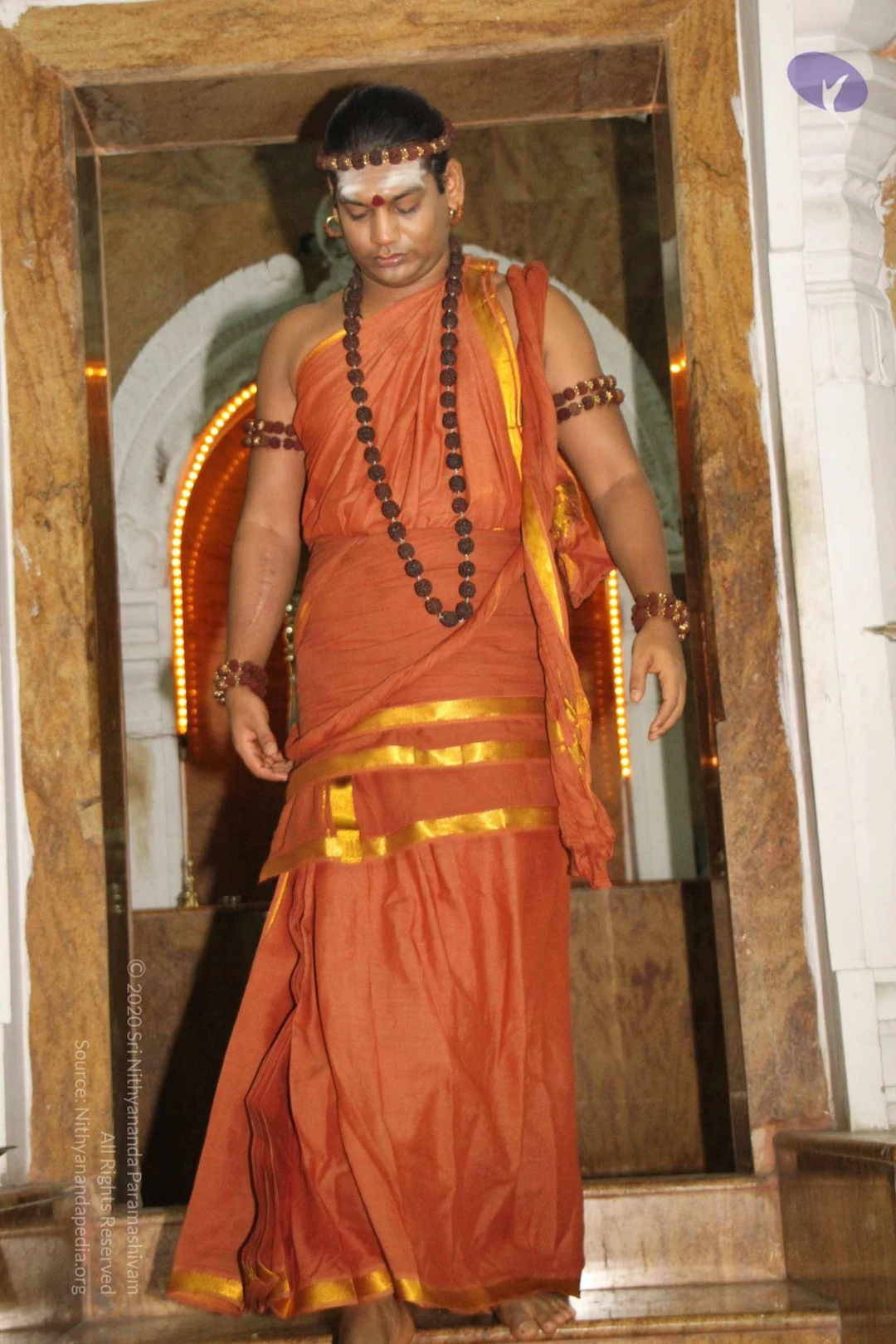
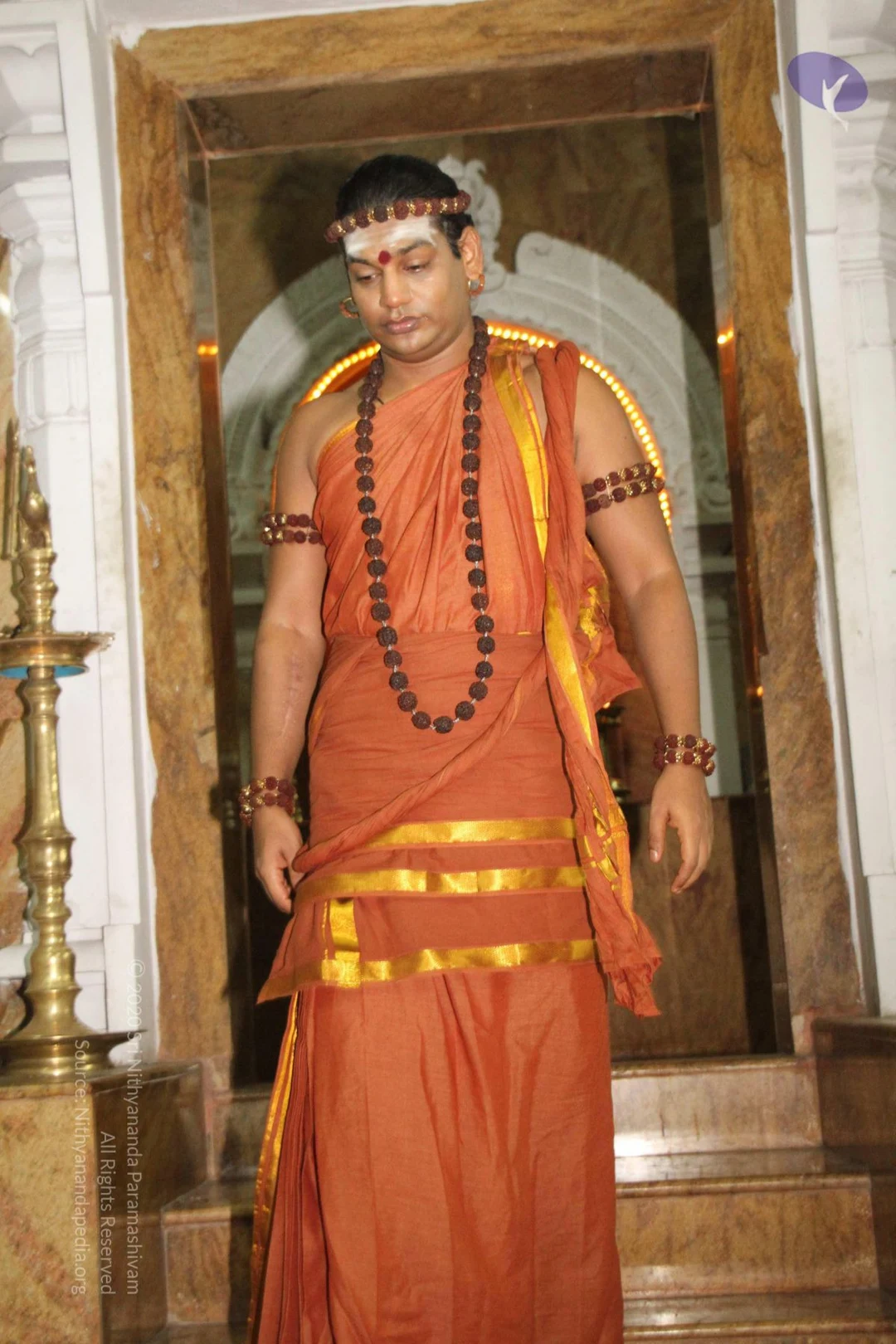
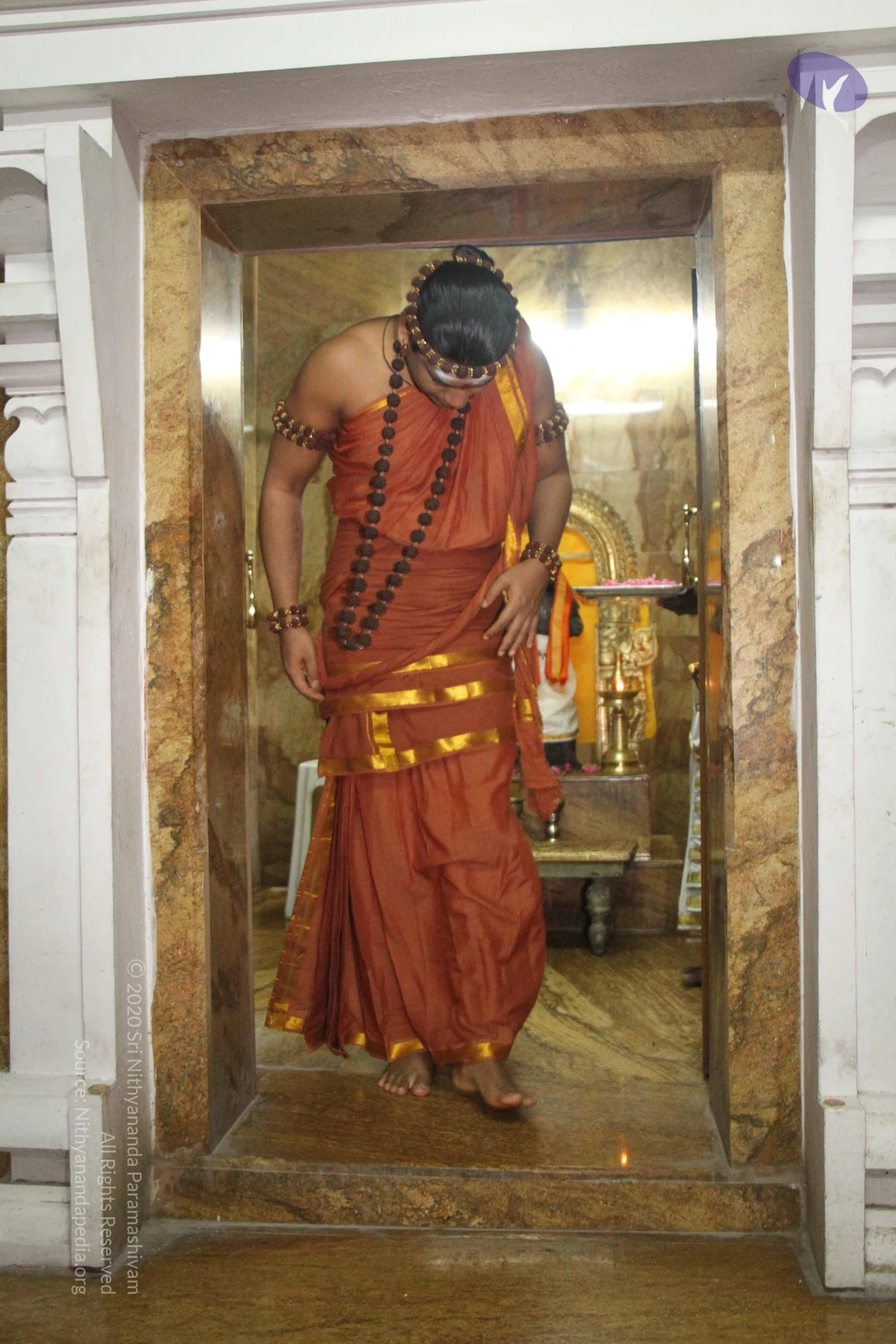
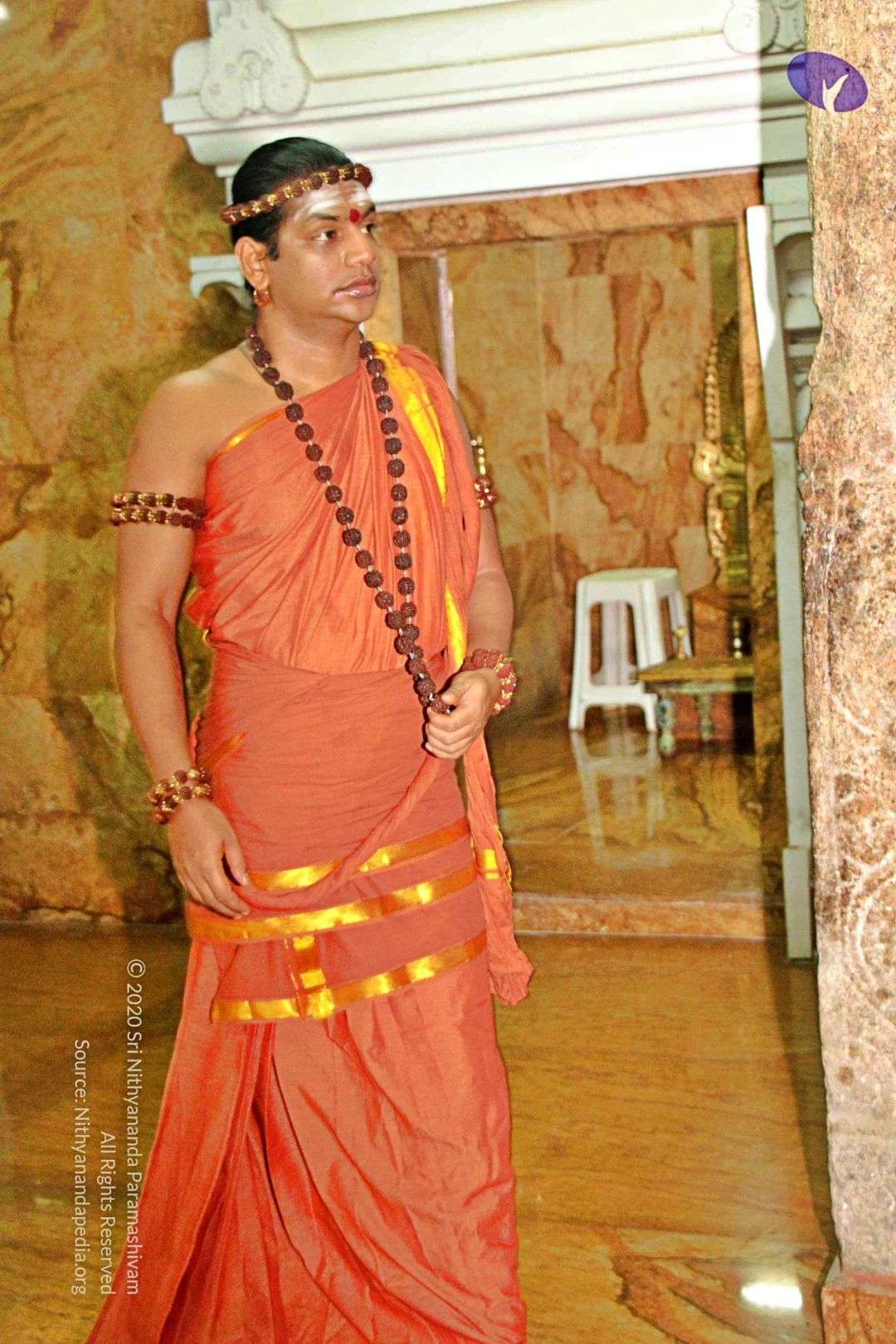
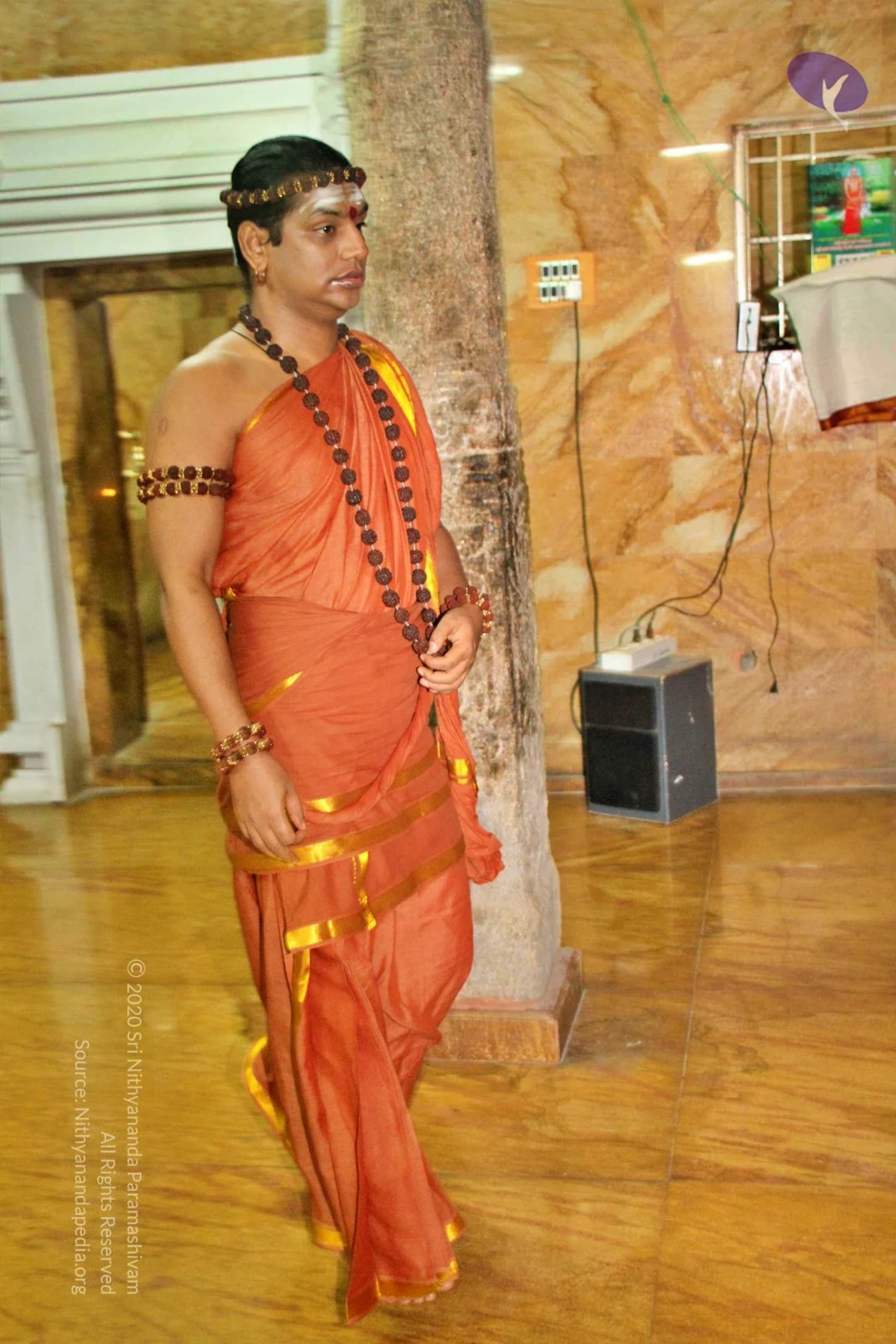
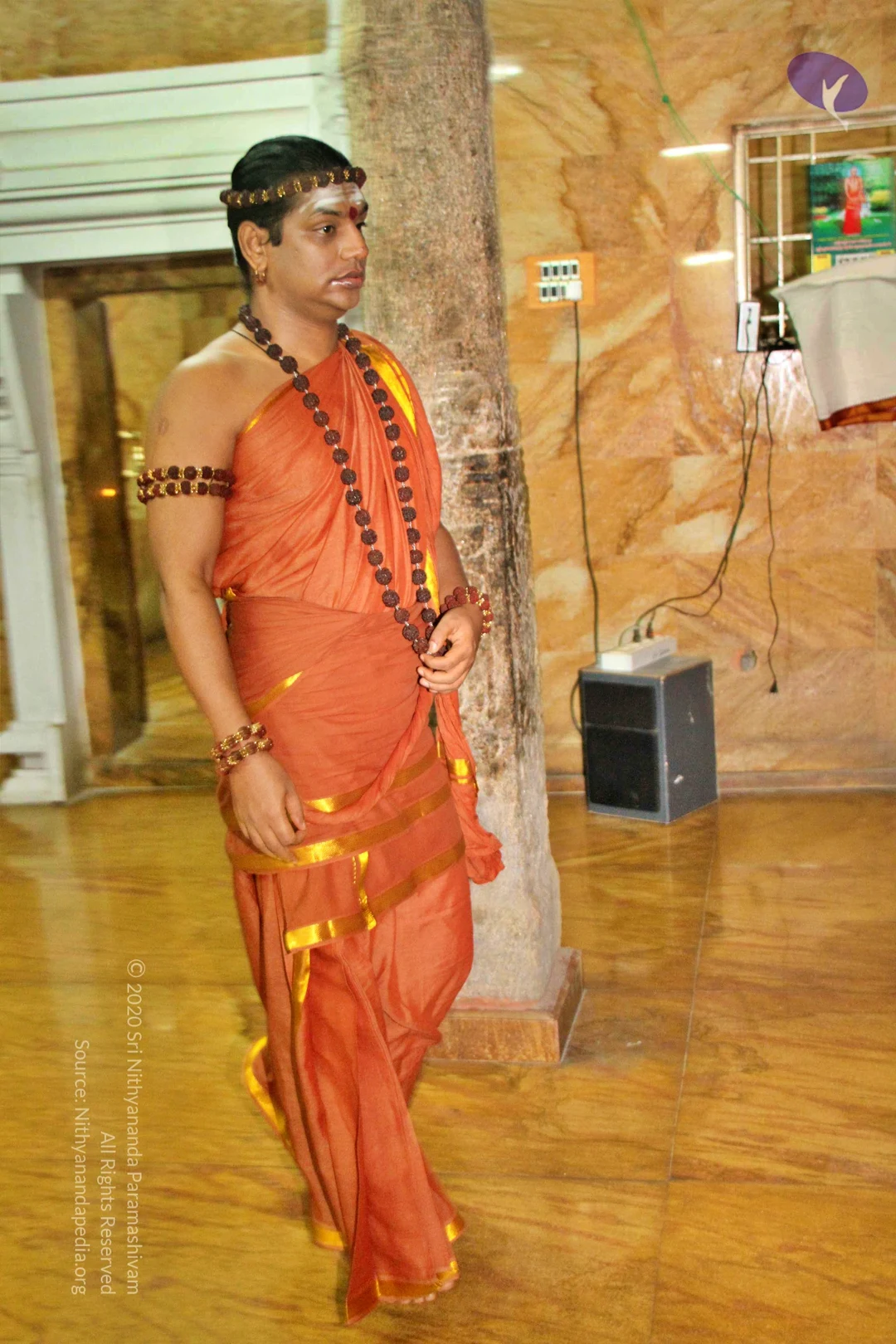
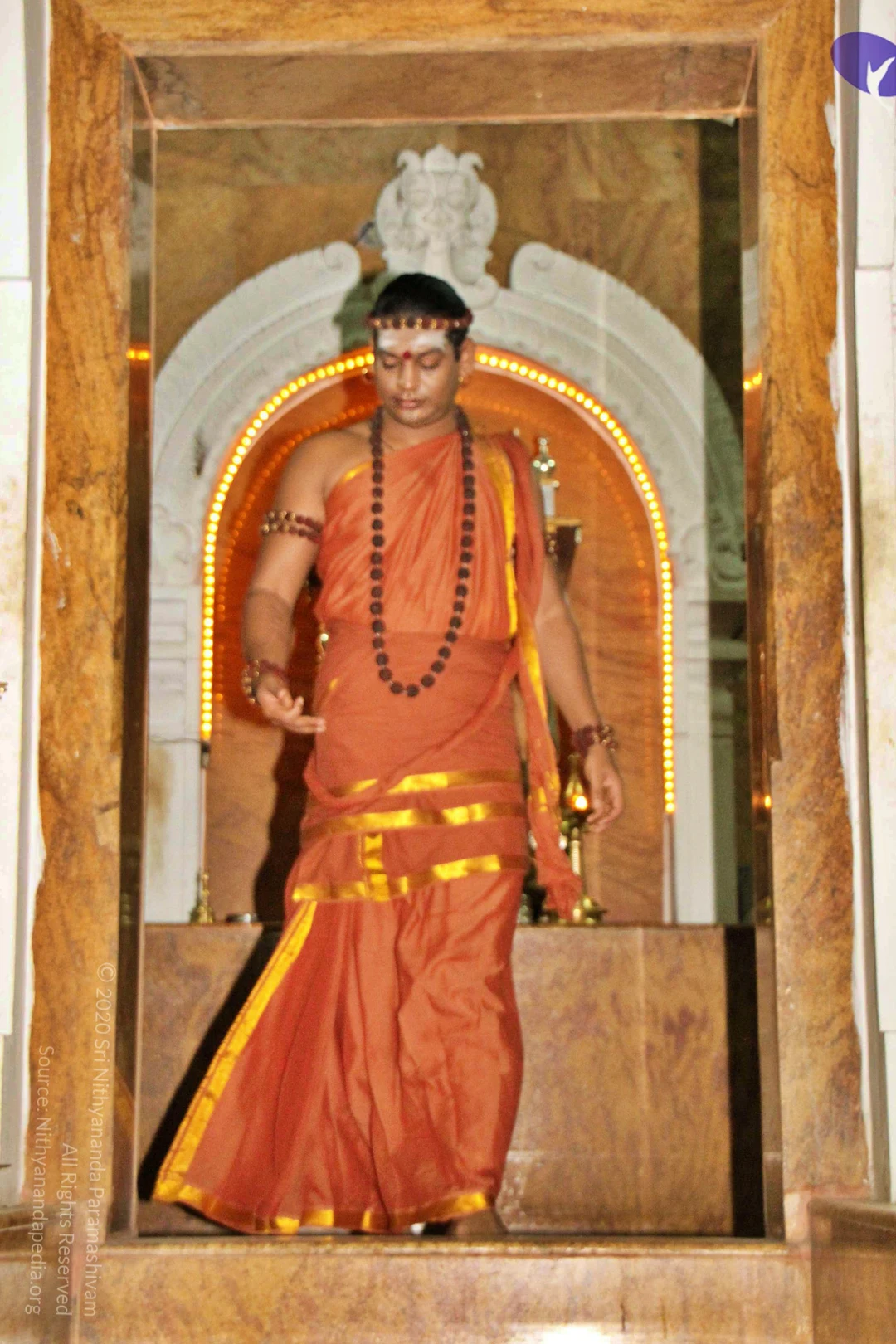
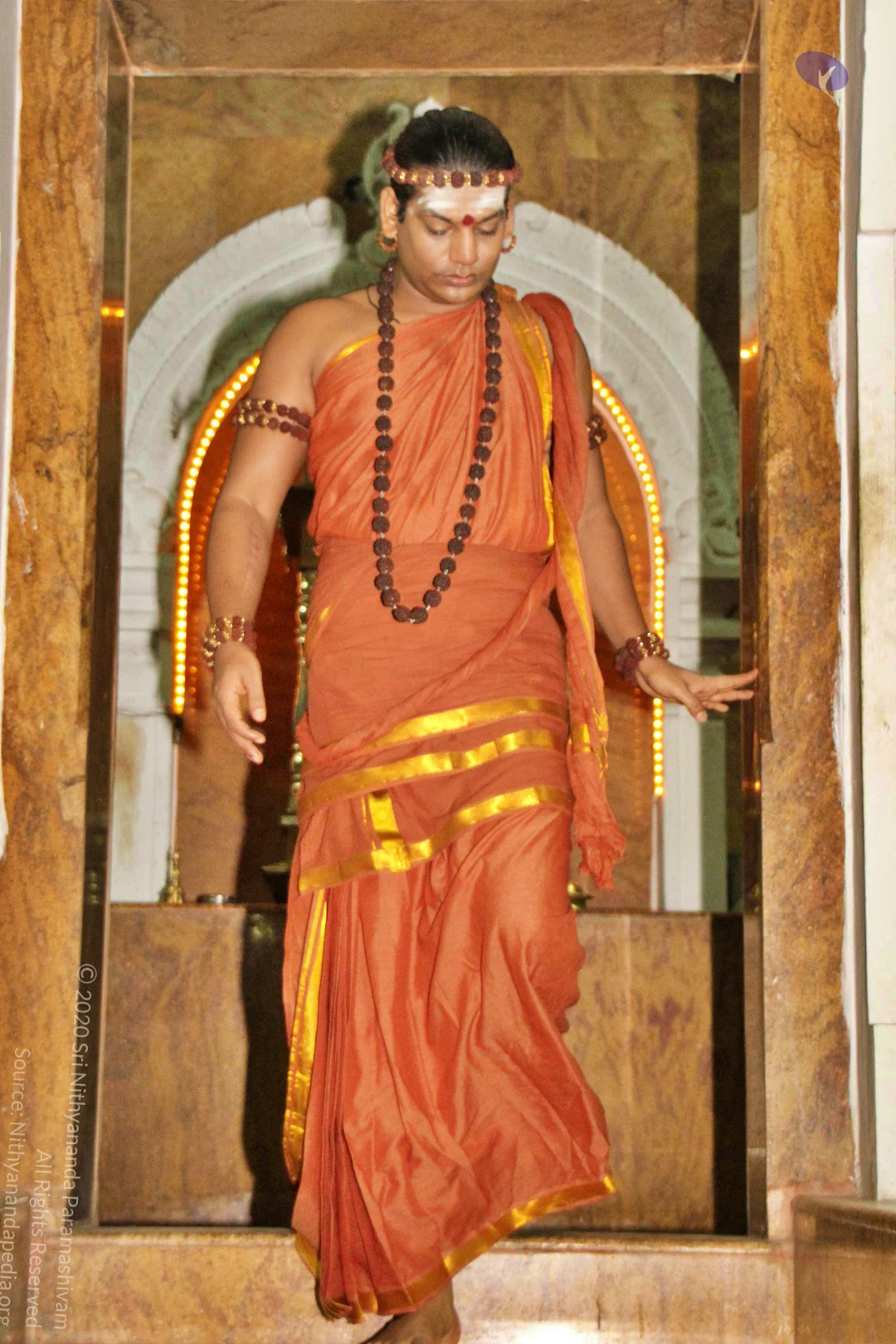
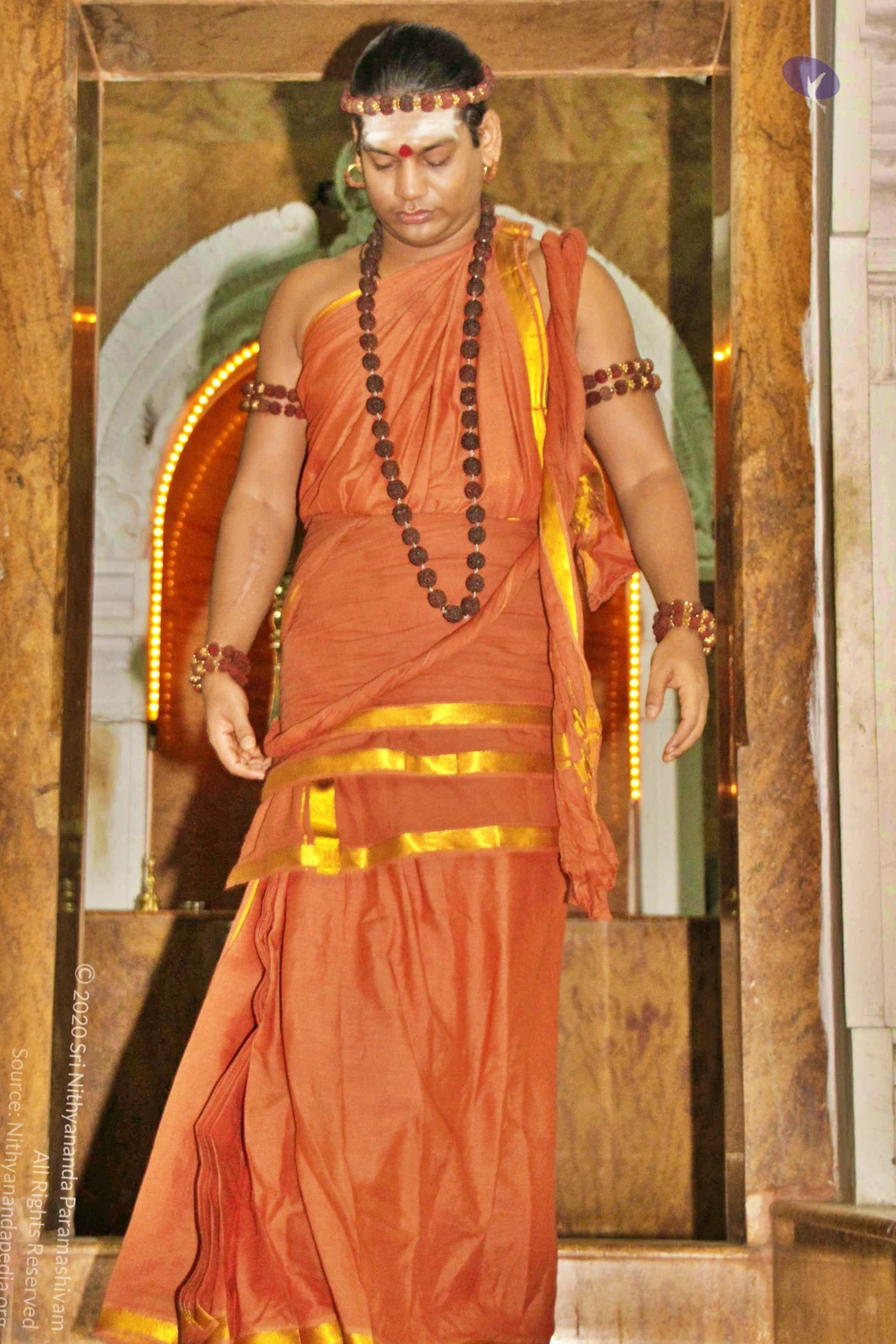
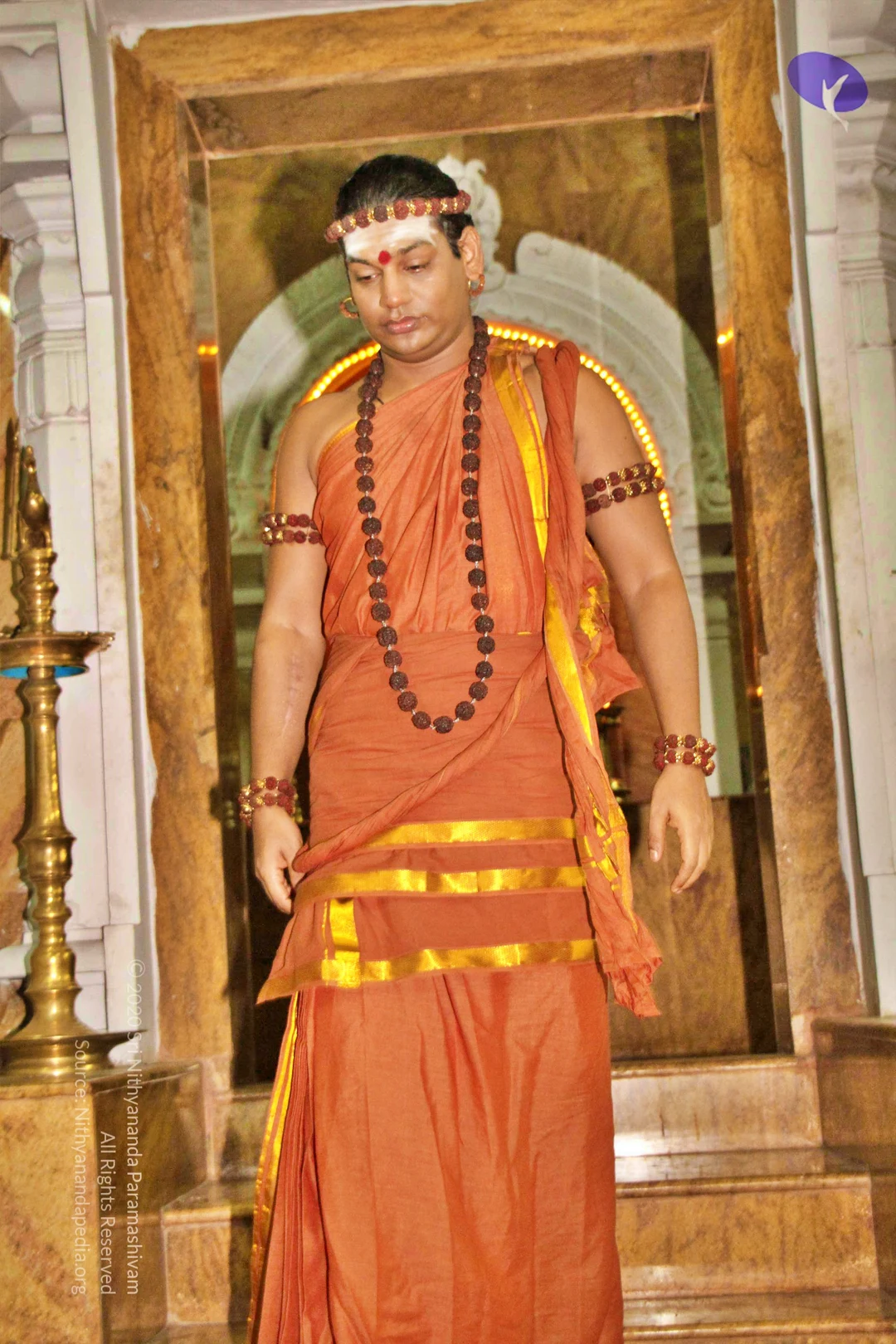
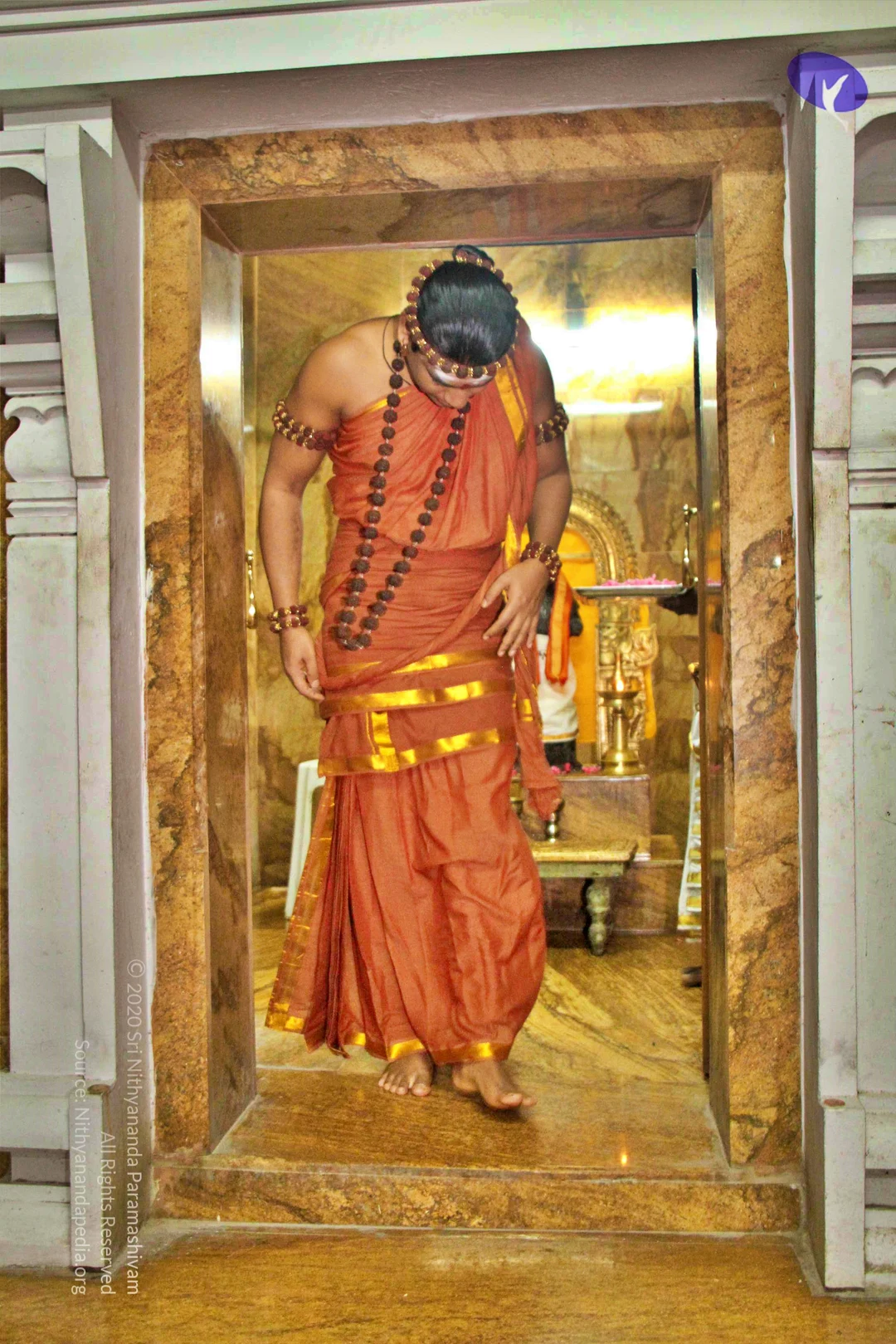
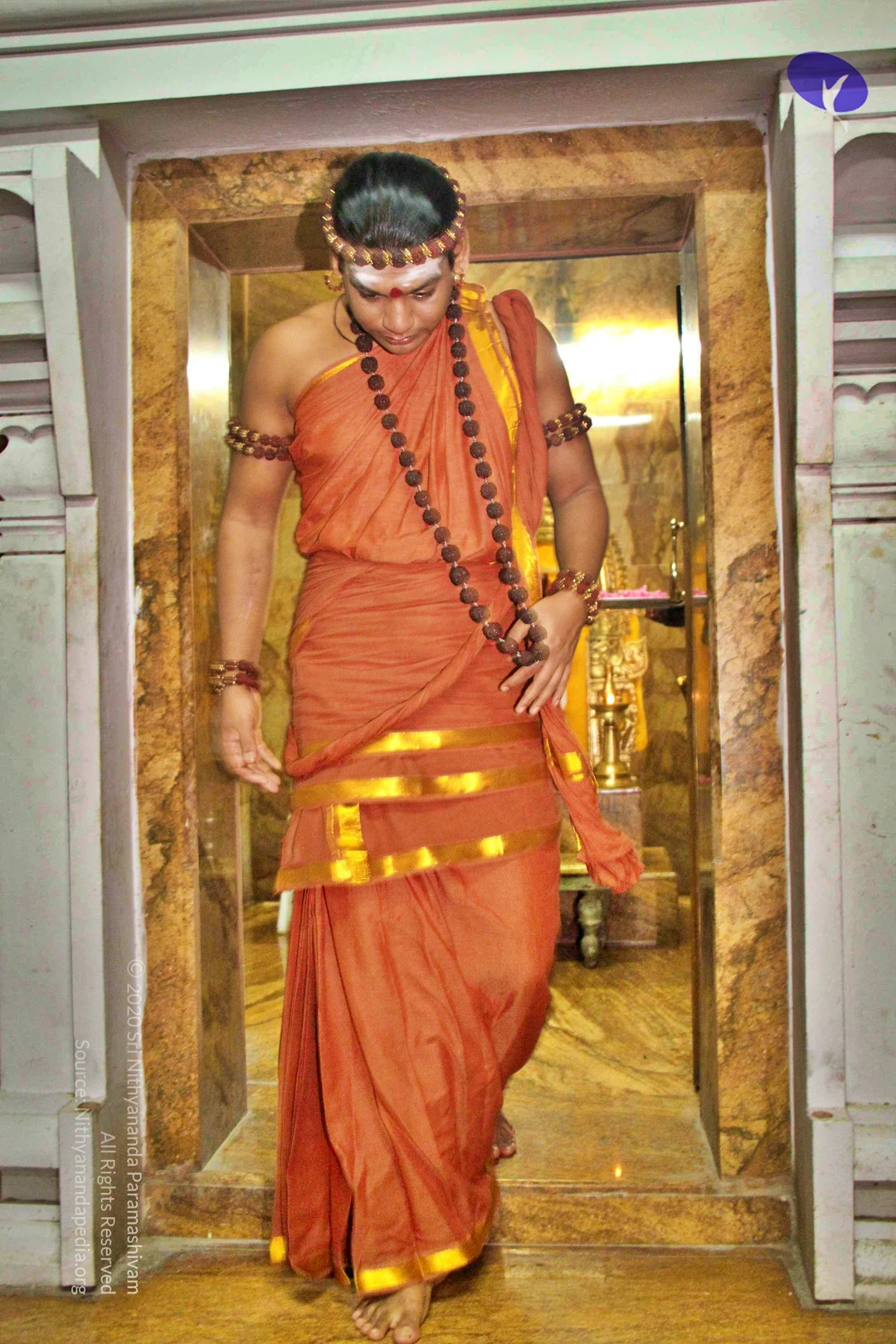
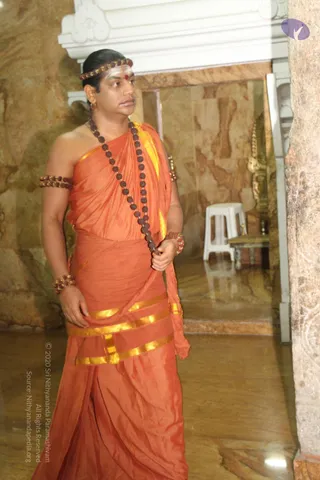
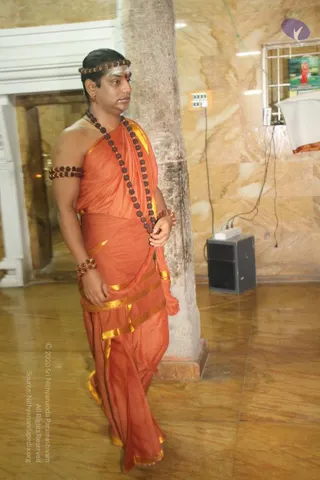
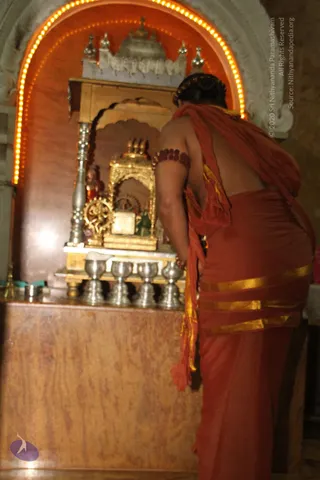
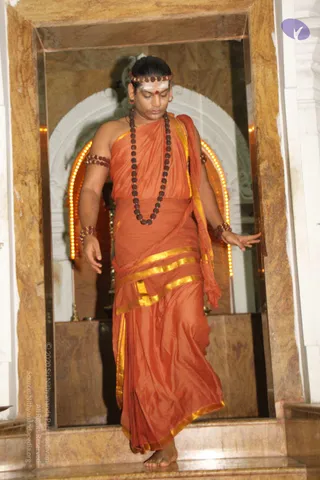
A standing man wearing an orange silk garment with gold borders wraps over his shoulder and waist, with a long rudraksha mala across his chest, rudraksha armlets and bracelets, and a rudraksha headband. A red bindi and white vibhuti mark his forehead. He stands in an ornate marble hall, a white plastic chair and a gilded deity niche behind him.A man walks across a polished wooden floor in a marble-walled hall, wearing a rust-orange dhoti and shawl with gold borders, draped over the left shoulder and tucked at the waist. He wears a rudraksha mala across his chest, rudraksha armlets and bracelets, a rudraksha headband, and a white-and-red sectarian forehead mark. A stone pillar stands behind him, a speaker sits on the floor, and a framed poster hangs in a window on the right.A person in an orange-red sari with gold border, seen from behind with dark hair pinned up and rudraksha bracelets on the upper arm, bends forward at a lit shrine niche. Inside the arch framed by warm LED lights sits a gilded shrine with a golden torana canopy and a deity murti, flanked by silver lamps and pots set on a wooden altar. Bronze lamps and small cups stand on the wooden counter in the foreground.A man in a saffron-orange draped garment with gold border stripes walks down a stone step within a golden-brown carved doorway, lit by a row of warm lamps in an arched niche behind him. He wears a rudraksha mala necklace, rudraksha armbands and bracelets, a rudraksha headband, a white tilak with a red dot, and is barefoot. His eyes are lowered and one hand is extended outward. a person: appearance cues include the rudraksha malas and saffron-orange ceremonial dress, but the identification is uncertain. Oil lamps glow behind him.A photograph of a man descending a stone step in a temple-like setting, wearing a rust-orange dhoti and shawl with gold borders. He has a rudraksha bead headband, a long rudraksha mala, rudraksha armlets and wrist bands, a white vibhuti line and red kumkum bindi on his forehead, and gold earrings. His eyes are lowered. Behind him are a carved stone arch and warm lit niche. The figure appears to be a sannyasi in ritual dress. Only one person is visible.Photograph of a man standing in a temple-style interior, walking forward with his gaze lowered. He wears an orange-saffron dhoti and upper cloth edged with gold borders, a rudraksha mala across his chest, matching rudraksha armlets and wrist bands, a rudraksha headband, a white vibhuti line with a red kumkum dot on his forehead, and small earrings. Behind him an arched niche outlined with warm lights and a brass oil lamp stand on the left.

Morning-Puja-in-Madurai
34 photosSource gallery
A standing man in an orange silk dhoti and shawl with gold borders wears a rudraksha mala across his chest, a rudraksha headband, rudraksha armlets and bracelets, and a red bindi with white vibhuti on his forehead. He stands in a marble-floored temple hall near a carved golden deity murti and a white plastic chair. A distinctive ascetic-style saffron dress and rudraksha adornments are visible, but the sole visible person's identity is not established from appearance alone.A man in saffron-orange ceremonial robes with gold-edged borders walks across a polished wooden floor in a marble-walled hall. He wears a band of rudraksha beads on his head, a long rudraksha mala across his chest, rudraksha armlets and beaded bracelets, and a red-and-white forehead mark. Behind him are a tall marble column, a black speaker, a window grille and a framed poster showing a figure in red. The robe's saffron and the rudraksha beads are the most prominent colours and cues. Visible cues are consistent with the page's a person reference, so the figure is labelled a person as a standing sannyasi in motion.A person with hair pinned up, wearing an orange-red draped garment with gold borders and rudraksha beads on the upper arm, bends over a wooden counter in front of an illuminated arched niche. Inside the niche stands an ornate gold shrine with a golden chakra-like wheel and a deity murti, flanked by silver lamp stands with small oil lamps. The scene is a temple puja setting.A figure in an orange-red sari with gold borders bows forward at a small shrine niche with an arched white stone frame and orange lamp-lit backdrop. Inside the niche sit a gilded deity murti and brass or silver ritual vessels on a stone ledge, with a small brass bell at left. The figure's bare back and upper arms are visible, with a rudraksha-style bead bracelet on one arm. Walls are warm-toned stone. A white-clad person stands partly visible at the right edge.A person in an orange-red ritual garment with gold border stripes stands with their back to the camera, facing a white arched niche illuminated by warm orange lights. Inside the niche is a golden shrine with a small deity murti, and a tall brass lamp stand with lit oil lamps stands before it on a polished stone platform. A rudraksha bracelet is visible on the upper arm, and a shawl drapes over the shoulder. To the right, a tray with pink flowers and small vessels rests on a white-draped table near the doorway. The walls and floor are polished golden-brown stone.A man in saffron-orange dhoti and shawl with gold borders stands in a carved stone doorway of a temple shrine. He wears a rudraksha mala necklace, rudraksha armband and a headband, with white and red tilak on his forehead. Behind him, an arched white niche is lit with a string of warm yellow lights and holds a brass kalasha, a gold-coloured murti stand, brass lamps and vessels, with a deity murti partly visible. The man is looking downward, hands gently gesturing near his waist.
Morning-Satsang

11 photosSource gallery
Close-up photograph of a man seated before an ornate gold repoussé backrest on a red cushioned seat, apparently addressing a satsang. He wears a headband of rudraksha beads with gold accents, a red tilak on the forehead, a small microphone at his cheek, and rudraksha malas across his chest and upper arm. His bare right shoulder is covered by an orange cloth with a gold border. A purple-and-white logo appears in the upper right corner.A seated man in a saffron-orange draped robe with a gold-bordered edge sits before an ornate gold repoussé throne back with a red cushion. He wears a dark rudraksha bead garland on his head, long rudraksha malas across his chest, and rudraksha armlets. A red bindi marks his forehead and a small headset microphone is clipped near his face as he smiles. Probable Swamiji by appearance: the saffron robe, rudraksha malas and crown-like headpiece are the qualifying cues, and he is seated in a ceremonial throne setting.A man seated on an ornate gold throne with a repousse floral and scroll backrest, wearing a rudraksha bead headband, a red kumkum dot and white vibhuti marks on his forehead, a small microphone clipped near his ear. He wears a saffron-orange garment over his shoulder with a gold-bordered edge, a long rudraksha mala draped down his chest and rudraksha bands on his upper arm. A red cloth is visible behind him.A seated man in an ornate golden throne with a large curved gilded backrest and red cushions, legs crossed in padmasana, smiling with eyes closed. He wears saffron-orange robes with gold borders, a rudraksha headband, multiple rudraksha malas across the chest and rudraksha armbands, a red bindi and white tripundra marks on the forehead. Behind him are blue and white painted walls with a peacock motif. Presentation cues consistent with a person: saffron robes, rudraksha malas, rudraksha headband and armbands, and a throne setting. This is an in-person photograph from a satsang-style setting.A photograph of a crowd gathered in a bright hall. In the centre, a man with long swept-back hair wearing a rudraksha headband, rudraksha malas, a white jasmine garland and a rust-orange cloth draped over one shoulder places his right hand on the head of a man in a beige collared shirt who bows with folded hands. Several devotees in white, pink and striped shirts and saris watch closely, and a bald man in white sits at the lower left. The appearance cues on the central figure (long hair, rudraksha, garland, orange cloth) are distinctive, and the page identifies Swamiji at this event, so he is labelled a probable Swamiji. A satsang or blessing setting is suggested by the gathering and the gesture of blessing.A crowd of devotees gathers in a bright hall with pale walls and a white cylindrical tank at right. At left, a shaved-headed man in white dhoti with a gold-bordered cloth and white markings on his body faces a woman seen from behind. She wears an orange-saffron garment with a yellow edge, a white jasmine garland, a beaded headpiece and rudraksha bracelets. Several older women in saris stand with palms pressed together in namaskar, and a man in a grey shirt with a rudraksha mala stands in the foreground. The scene is a darshan-style gathering, with the white-clad figure appearing to be a priest and no clear appearance-based cues to identify a person.

Puja-with-Sannidhanam

60 photosSource gallery
Close-up photograph of a water abhishekam being poured over a golden deity murti, most. A shiny silver vessel sits blurred in the background, and a bare hand with a ring rests on the brass base near a small clear lingam-shaped object. The warm amber backdrop and splashing droplets dominate the frame. No identifiable person is shown besides the hand; the purple logo appears in the upper right corner.Two men in orange saffron robes with gold-striped borders stand in a warm stone-walled shrine alcove framed by an arched white carved niche with lit orange LED trim. The man on the left, bare-shouldered with a wrapped orange shawl, rudraksha malas on his chest and arm, and a beaded headband, stands with hands folded. The bare-backed man in the foreground bends forward at a gilded altar, handling brass vessels and a flower offering while a brass oil lamp and a gilded deity murti sit in the niche. A brass puja tray with pink flowers rests on the stone ledge, and a steel bucket stands on the floor.A shrine interior with orange-clad ritual participants before a gilded altar. A bare-chested priest in an orange dhoti with gold border bends over the altar, performing puja near silver vessels and a small deity murti under an arched niche lit with string lights. A woman in an orange sari with rudraksha mala stands to the left beside a tray of flowers and green leaves. Silver kalasha-style containers and brass lamps sit on the stone counter. The priest appears to be offering or arranging items at the shrine.Two men in saffron-orange dhoti and shawl stand before a golden shrine niche with arched pillars and a row of amber lights. The man on the left, bare-shouldered with a rudraksha mala and an armband of beads, and a red mark on his forehead, stands with hands folded. The man in the centre, bare-backed and bent forward, is offering a white flower garland at a small gilded shrine holding a deity murti, with brass lamps, kalasha-style vessels and a plate of flowers in front.Inside a shrine with a cream arched doorway and warm lamp-lit border, a standing man in orange clothes with a rudraksha mala and a beaded armlet looks toward the camera while a second man, bare-chested with a saffron-orange dhoti bordered in gold, bends forward at a golden shrine holding a white flower garland. The shrine holds a golden canopy, a deity murti, pink flowers, brass vessels and an oil lamp on a stand. a person cues are weak in this view, so the bending figure is described as a priest performing puja.Photograph inside a shrine room showing two men in orange-saffron dhotis with gold-bordered cloth. The man on the left stands facing the camera, bare-chested with a shawl-like orange wrap, wearing a rudraksha mala necklace, arm band of rudraksha beads and a beaded headband, hands clasped. The man in the centre has his back to the camera, bare-shouldered and shaved-headed, with a beaded headband and a gold necklace, placing white flowers on a gold-toned deity murti and throne-like altar niche. Brass oil lamps, silver vessels and a kalasha-like pot sit on the altar ledge; pink and white flowers rest on a tray at the lower left. A lit arched border frames the shrine. Puja and temple worship setting.
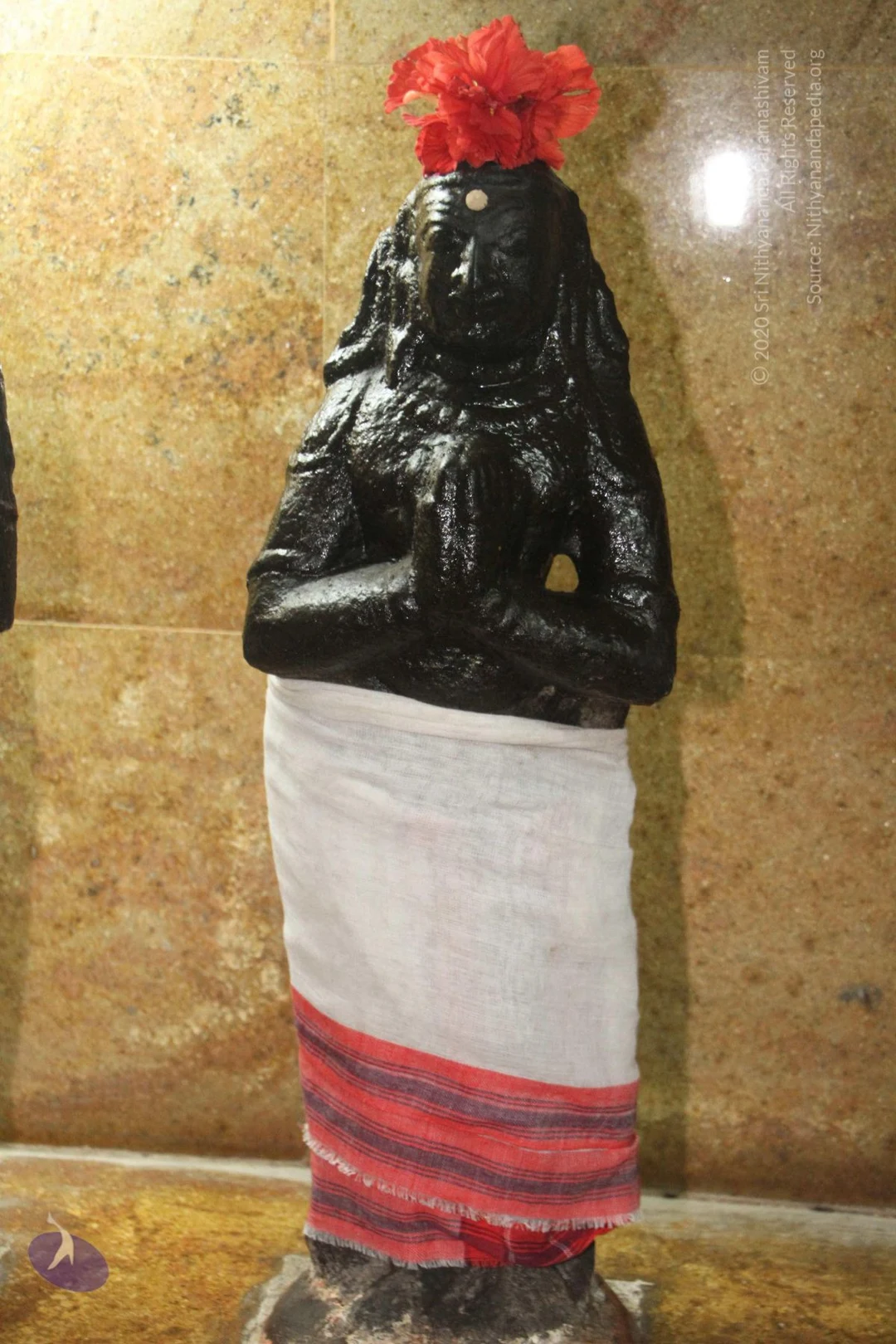
Darshan-with-Sannidhanam

14 photosSource gallery
Two seated men on ornate gold thrones with red cushions in a marble-walled hall. The seated figure on the right is bald with white ash markings, a red and white headband, a rudraksha mala and dark beaded necklace, and wears an orange cloth wrap; he rests one hand on a pile of pink flower petals placed on a low stand in front. Beside him on the left, a man wears a red headband, a long gold-beaded garland, bangles and an orange robe. A third man in white stands behind. Pink petals lie scattered on the floor in the foreground. Appearance cues for the right-hand figure are not sufficient to confirm an identity.Two saffron-robed men sit on ornate gold thrones with red velvet cushions in a stone-walled hall. On the right, an elderly bald man with horizontal white vibhuti on his forehead and arms, a red headband, a long rudraksha mala and gold bangles gestures with raised right hand while seated on the red cushion, mid-discourse. On the left, a younger man in orange robes with a gold garland and beaded armbands, with white markings on his arms, sits on a second throne beside him. A seated man in white stands behind, and a partial figure appears at far left. A gold lion-head armrest and a small offering stand nearby. Physical people visible: four.Two men sit facing each other on ornate gold thrones with red velvet cushions in a stone-walled hall. The man on the left wears an orange-saffron dhoti and shawl, a gold ceremonial necklace with large beads, a red beaded headband and a red-beaded armband, with white ash marks on his forehead and arms; he holds his palms together in namaskar toward the seated man. The bald man on the right, who sits on a gold throne with carved lion-head armrests, wears a rudraksha mala, a red beaded headband, white markings on his head and body, and an orange cloth wrap, and extends his hand toward the standing figure's joined palms. An orange saffron flag hangs on a pole behind them. Whether the man on the left is a person cannot be established from appearance alone, so the identity is left unconfirmed.A photograph of a ritual blessing in a temple-like hall with gold-ornamented thrones. On the left, a man with swept-back dark hair and a red-orange saffron garment bows forward with folded hands, wearing gold necklaces, bangles and a rudraksha headband. On the right, a bald, bare-chested elder seated on a golden throne places his hand on the bowing man's forehead, wearing a rudraksha mala and white ash markings on his forehead and chest. Behind them, an attendant stands near a gold pillar and a red cloth hangs in the background.Two men in a gold-decorated setting perform a blessing ritual. On the left, a man in an orange-saffron garment with swept-back dark hair, a gold ceremonial necklace, and rudraksha bands bows his head forward. On the right, a bald, bare-chested older man in an orange lower cloth, rudraksha mala and white vibhuti marks on his forehead and shoulders presses his hands to the bowed man's head and face. Behind them are ornate gold throne-like seats and carved gold lion-form details, with a standing figure partly visible in the background.A photograph of a ritual blessing on a gilded throne. On the left, a man with long dark hair in an orange-saffron cloth and gold ornaments on the upper arm bows his head forward, his hands pressed together, while an elder on the right, shaved-headed with white and orange sacred markings, rudraksha beads and a rudraksha headband, places his palm on the bowed man's head. The elder sits on an ornate gold throne with a carved gold lion-form base. A seated figure in the background wears red. The image shows a bowed devotee receiving a blessing, though the appearance of the bowed man is not certain enough to confirm an identity.
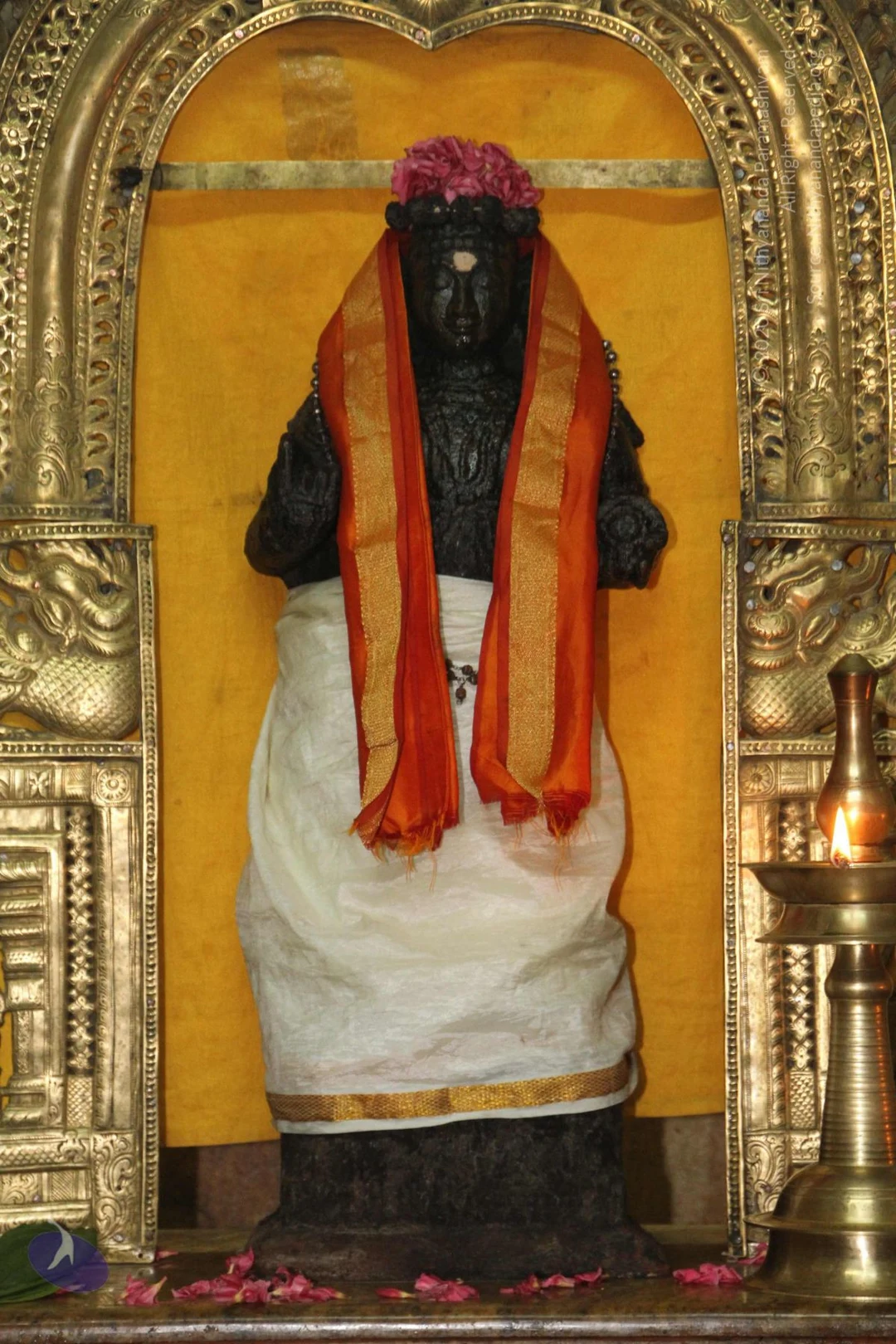
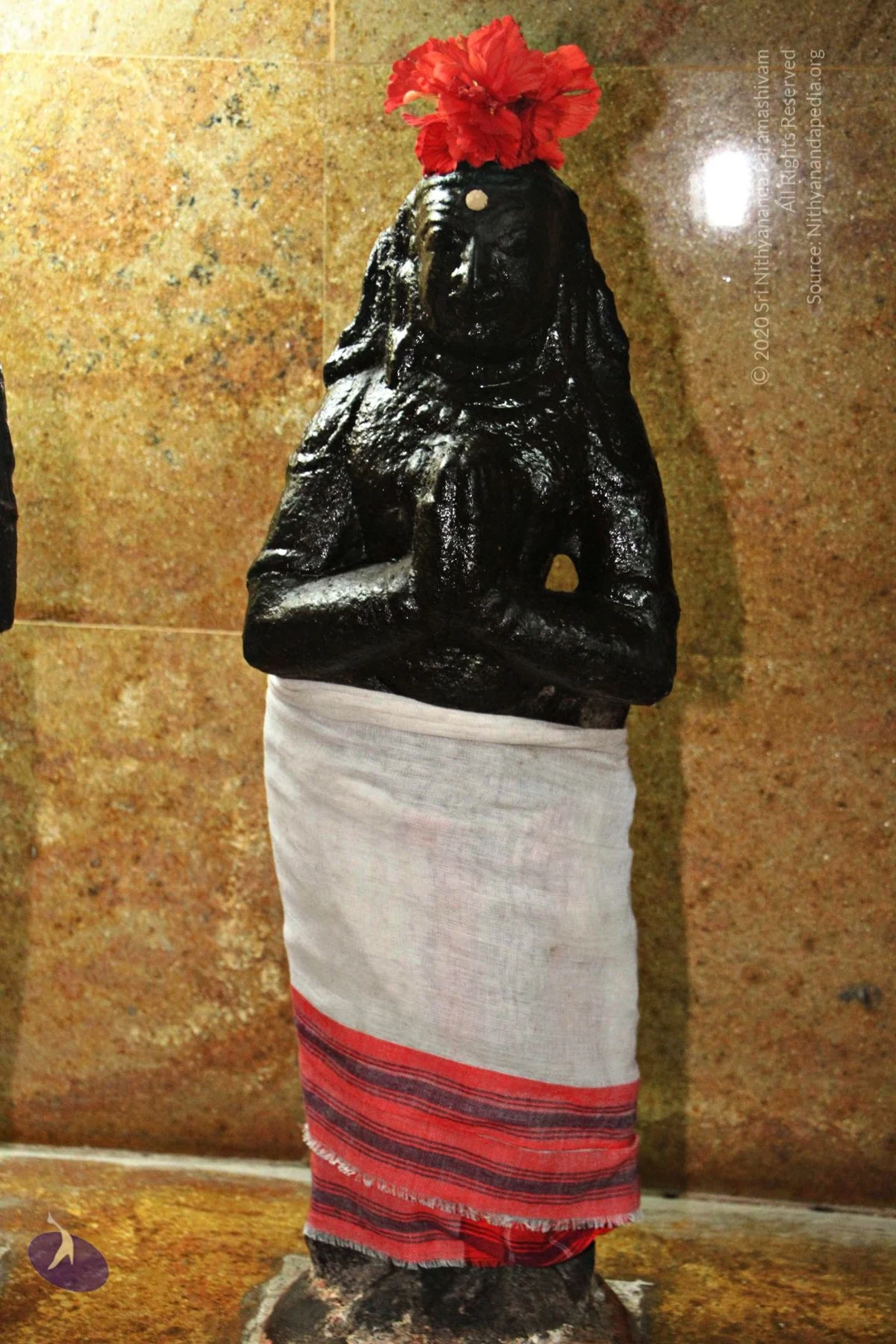
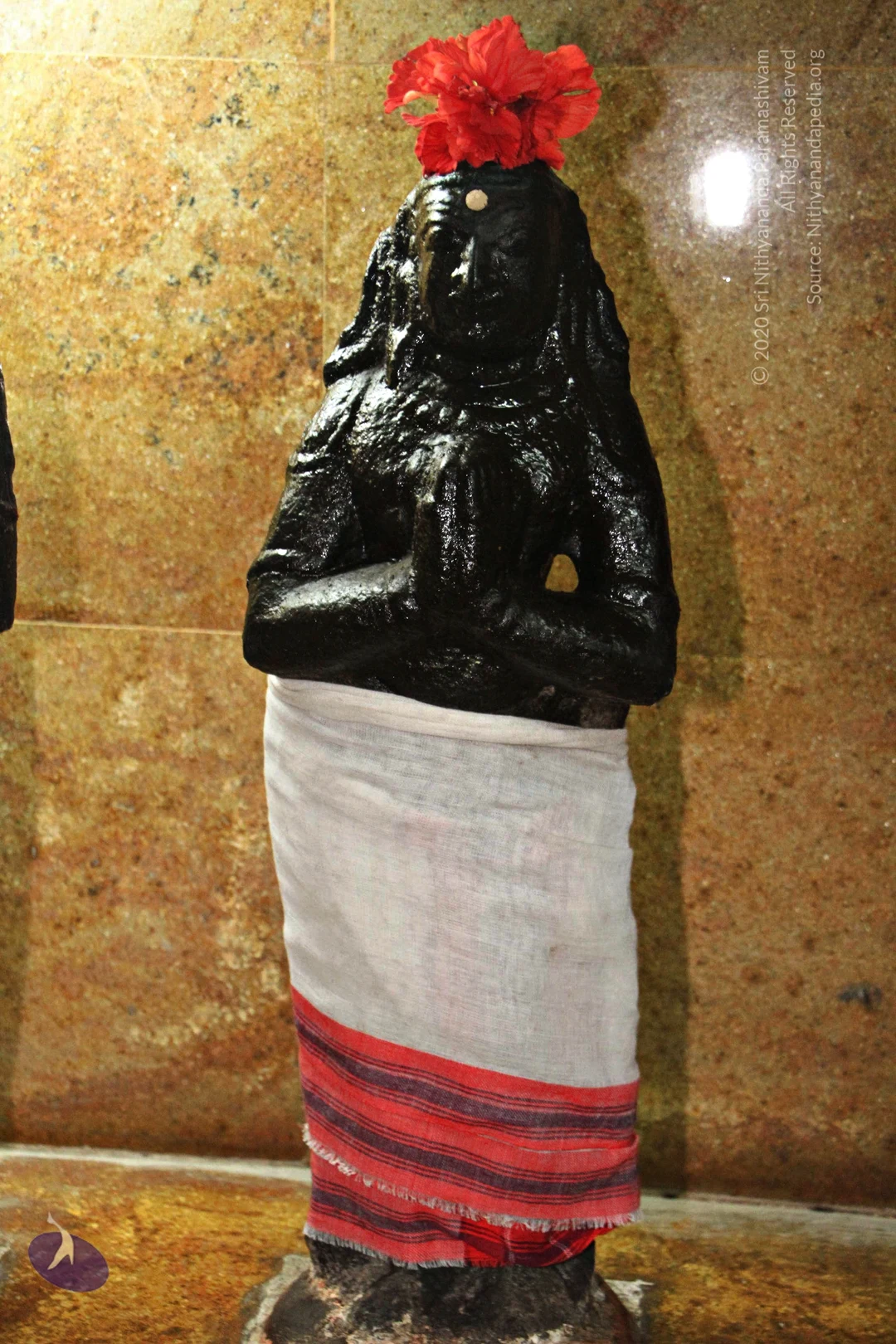
Temple-Visit

1 photoSource gallery
Photograph of a covered temple corridor at dusk with a crowd moving through. A uniformed woman police officer in a khaki cap with a red band stands in the left foreground. Behind her, a man in white dhoti and shawl with white sandalwood markings carries a green basket of white flowers, and a woman in an orange sari with a garland walks with hands folded. A bare-chested man in white with a rudraksha mala and forehead markings walks beside a man in an orange shawl wearing a rudraksha mala and a cross-shaped pendant. Signboards and a notice board hang on the walls behind them, and a few more people stand further back.

Evening-Arti

4 photosSource gallery
Interior of a temple shrine with polished marble walls and a gold-framed altar niche holding a deity murti lit by lamps. In the foreground a person in saffron-orange robes with white ash on the arms sits on a red-cushioned gold throne, facing the shrine, with a rudraksha mala visible on the chest. A priest in white dhoti and shawl stands on a blue mat at the shrine entrance, arms raised. Two seated devotees in white and a woman in a yellow sari with folded hands sit on the floor to the right. Brass oil lamps stand beside the shrine and a wall clock hangs above. A red flag with a painted figure hangs at the left edge.Close photo of a smiling man with long, wavy dark hair, a white horizontal tripundra with a red kumkum dot on his forehead, and small hoop earrings. He wears a rudraksha mala over bare shoulders and an orange-saffron wrap with a yellow edge, glancing sideways. Golden ornamental carving is blurred behind him. a person by appearance cues, shown in a photograph of a person in ritual setting.A photograph inside a temple shrine. A shaven-headed priest with his back to the camera wears white dhoti and shawl with gold borders and an orange-red panel, and holds a long brass implement, possibly a lamp or wand, while another man in white shirt reaches in from the lower right to hand or receive it. Before them, a gilded deity murti stands in a golden canopy decorated with white flowers and pink blossoms, flanked by brass lamps and kalasha-like vessels on a stone platform. Warm lamp lighting glows around the arched doorway.A shaven-headed priest seen from behind, bare-chested under a white dhoti and shawl with gold borders, holds a lit brass oil lamp in his right hand before a golden shrine niche. The niche is framed by a glowing arch of lights and holds a deity murti decorated with white garlands and pink flowers. Brass oil lamps stand on either side, and silver bowls sit on the shrine ledge. The priest appears to be performing an aarti or puja. He is not confidently identifiable as a person, so the figure is described by role only.

Public-Darshan

11 photosSource gallery
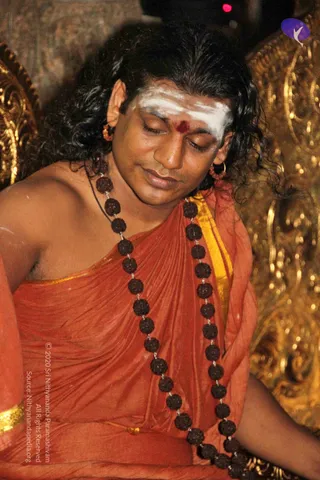
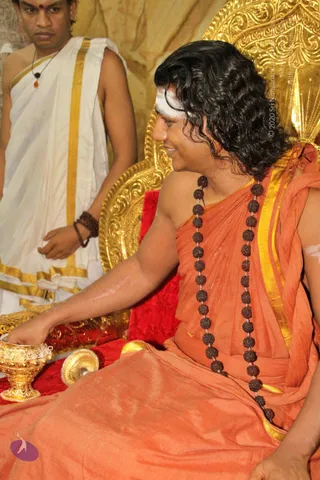
Close photo of a man with long dark wavy hair, wearing orange-saffron robes with a gold border draped over his shoulder, a dark rudraksha mala with multiple strands, and small hoop earrings. He has white and red tilak markings on his forehead and his eyes are closed in meditation. Behind him is ornate gold carved decoration. The clothing, malas and presentation are consistent with the a person candidate, shown in a meditative seated posture as a single person.A seated man in saffron-orange robes with a long rudraksha mala and white forehead marking sits on an ornate gold throne with red velvet cushioning, reaching toward an ornate gold vessel with a lid. He has long, swept-back dark curly hair and is smiling. Behind him stands an attendant in white dhoti and shawl with gold borders, wearing a rudraksha bead necklace and bracelets. Swamiji (probable): the seated man has long swept-back hair, saffron robes, and a rudraksha mala, matching the page's description of Paramahamsa Nithyananda in a seated ceremonial setting.Photograph of a seated man in an orange-red saffron cloth with a gold border, wearing a long rudraksha mala and a white vibhuti stripe on his forehead and arms. His long, swept-back dark hair and gold earring stand out. He is seated before a gold ornate throne with red upholstery, and he holds a gold footed bowl of white powder while another person's hand reaches in beside him. Swamiji (probable): the long hair, saffron clothing, rudraksha mala and ceremonial gold setting match the cues for the Paramahamsa Nithyananda presentation, performing a vibhuti-related ritual by the throne. A gold-framed pillar and a saffron flag appear in the background.Photograph of a seated man in an orange-saffron robe with a gold border, wearing long necklaces of dark rudraksha beads and gold earrings, with white vibhuti horizontal lines on his forehead and arms and a red kumkum dot between the brows. He has shoulder-length dark hair and looks down while scooping white powder from a small golden kalasha-style vessel held in his right hand. He sits before an ornate gold throne-like backdrop with red upholstery. Appearance-based candidate: a person, the figure in orange robes with rudraksha malas and vibhuti performing a ritual with a golden vessel; no printed caption names him. Fingertips of a devotee are visible at the lower right edge.A man with long swept-back dark hair sits on an ornate gold throne with repoussé floral carving. He wears an orange-saffron cloth draped over his shoulders with a gold border, a long rudraksha mala hanging to his waist, and a gold earring, with white horizontal tilak lines and a red dot on his forehead and white markings on his arms. He holds an ornate gold vessel in his hands and looks off to the side. Swamiji (probable): the saffron wrap, rudraksha mala, long hair and gold throne are the qualifying cues for the seated central figure, who is in person in the photograph.A close side-angle photograph of a man with long, wavy black hair sitting on a golden throne with ornate gold carvings behind him. He wears an orange-saffron cloth draped over his body with a yellow border, and a long mala of dark rudraksha beads hangs across his chest. He has white vertical tilak marks on his forehead with a red dot and white markings on his arms, and he looks downward with his eyes lowered. Based on the page's Swamiji reference and his saffron clothing, rudraksha mala, long hair and gold-carved seat, this is a probable Swamiji (probable) seated in person in a ceremonial setting. One visible person.