Skip to content
Sunday

15 May 2016

Align to The Divine through Mandala Process || Part 1 || Shuddhadvaitam || 15 May 2016

Dated photos
349
Source pages
1
Media
13
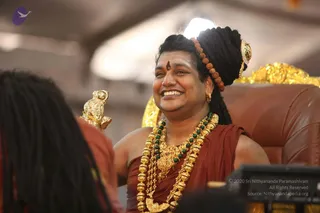
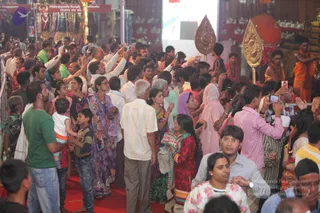
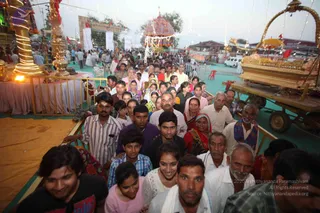
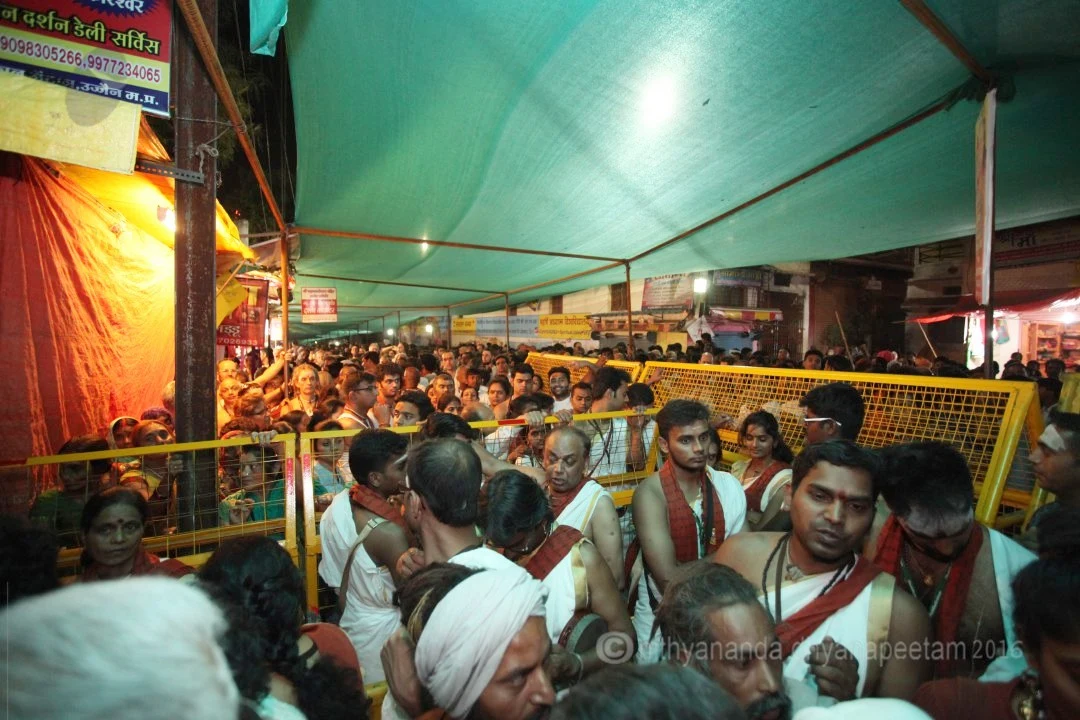
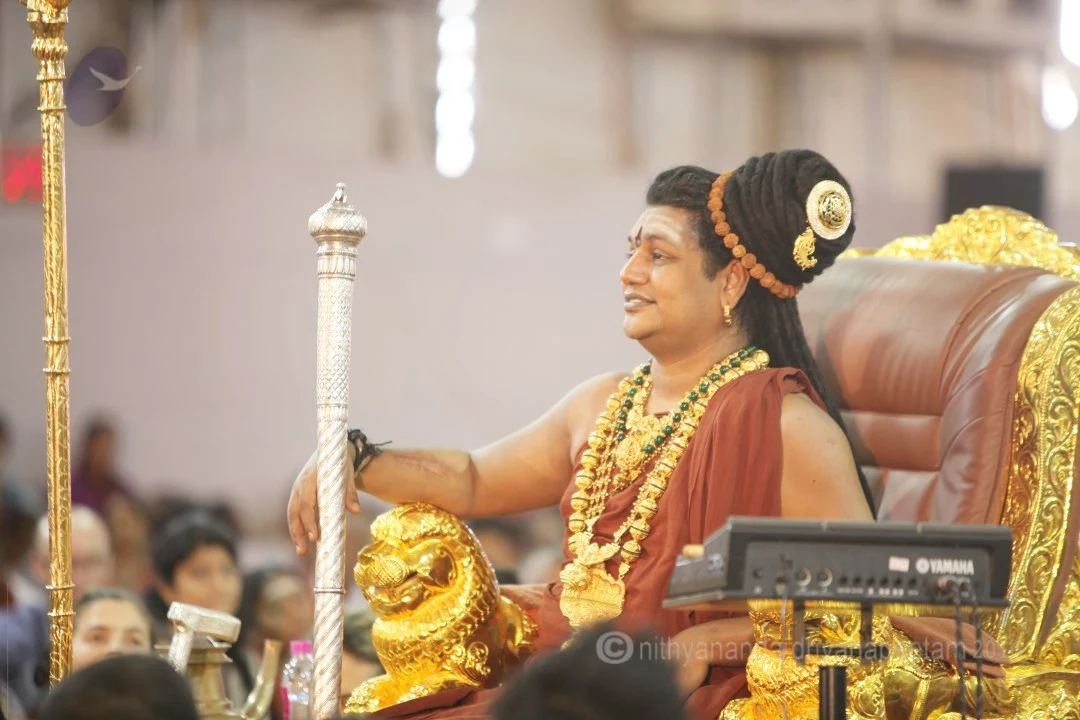
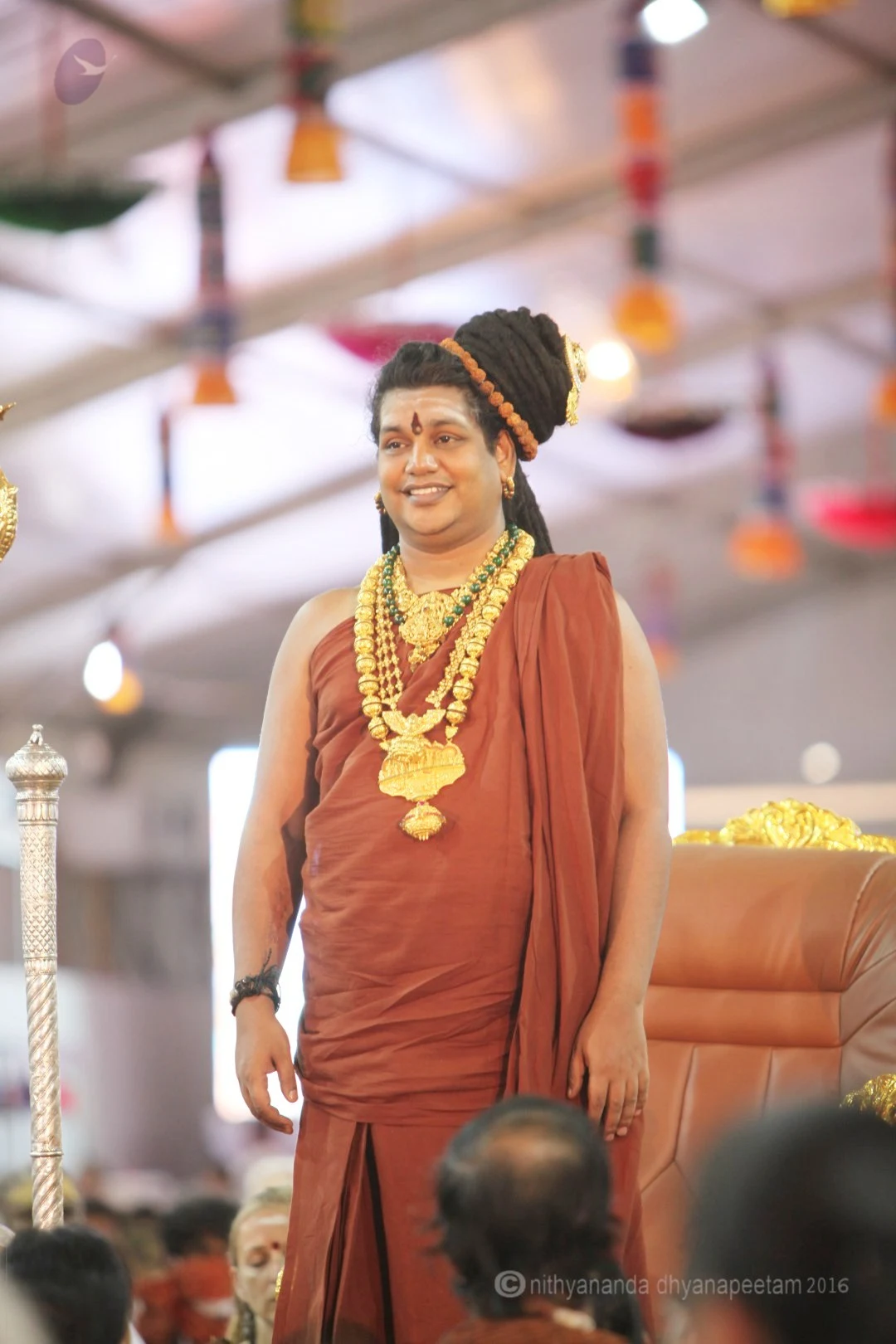
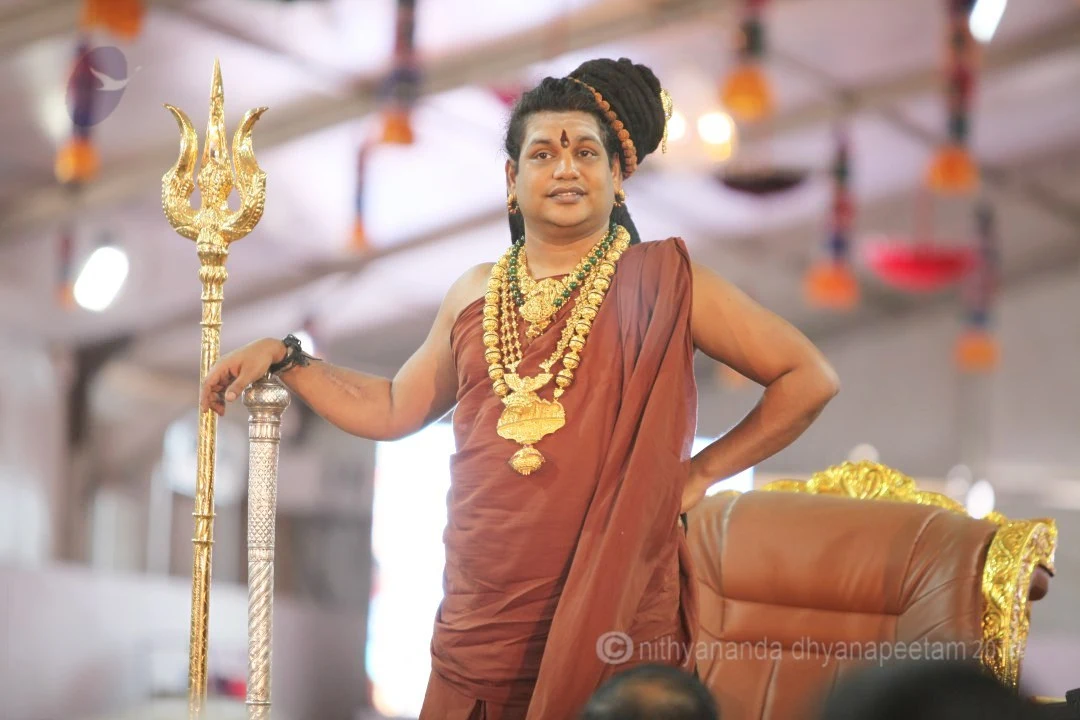
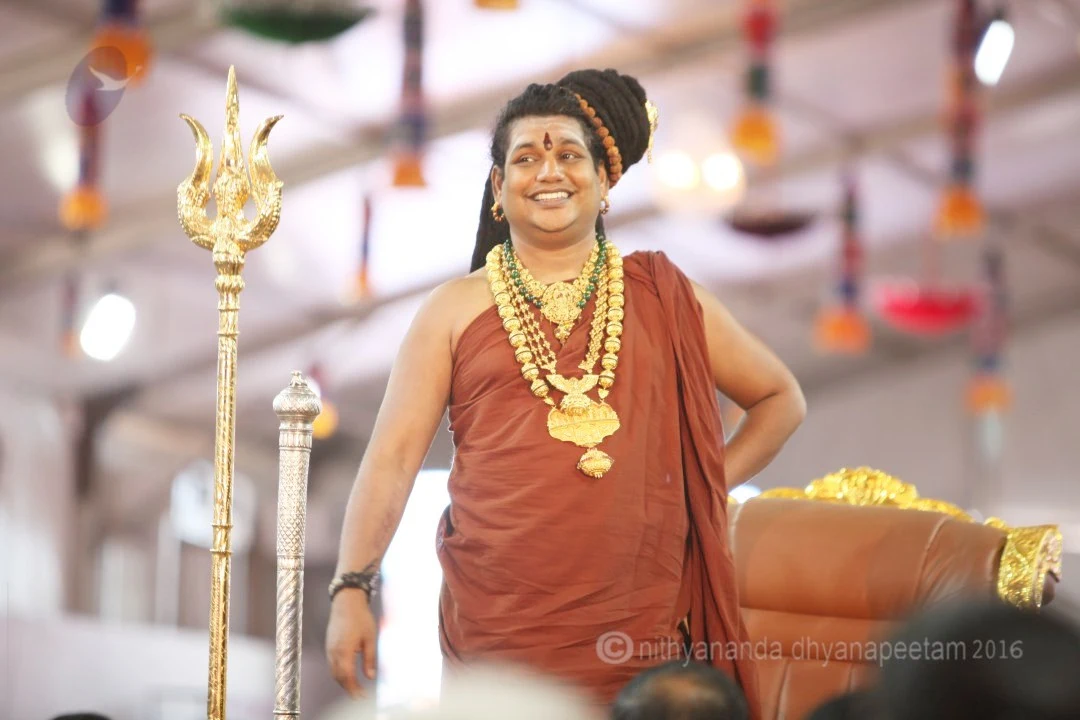
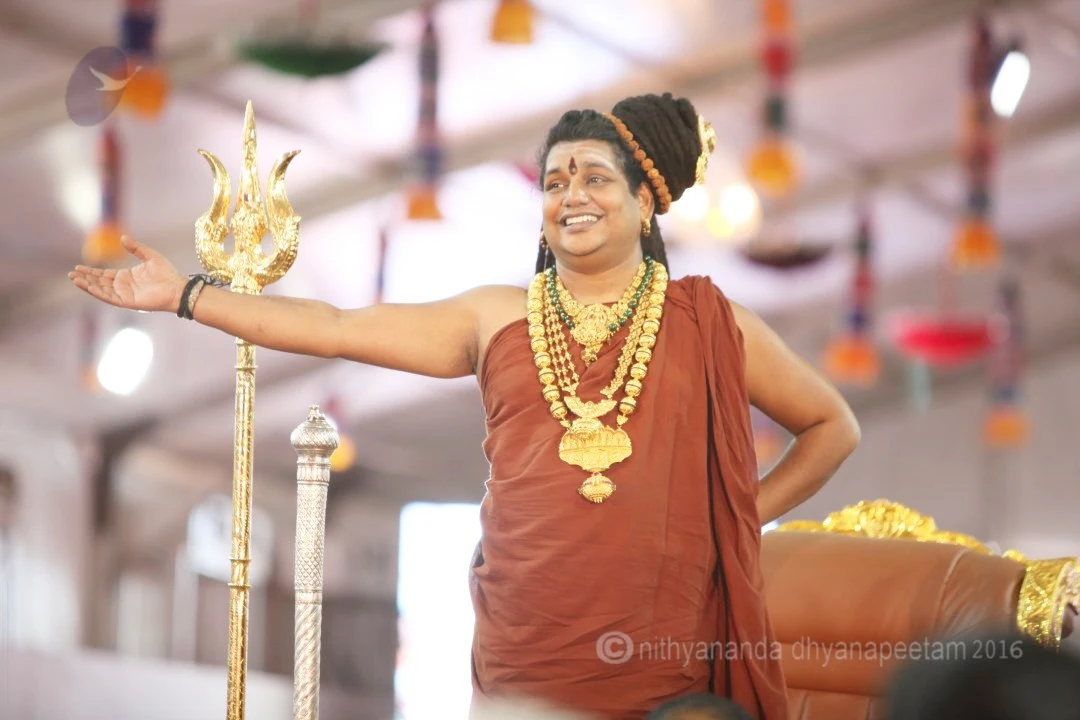
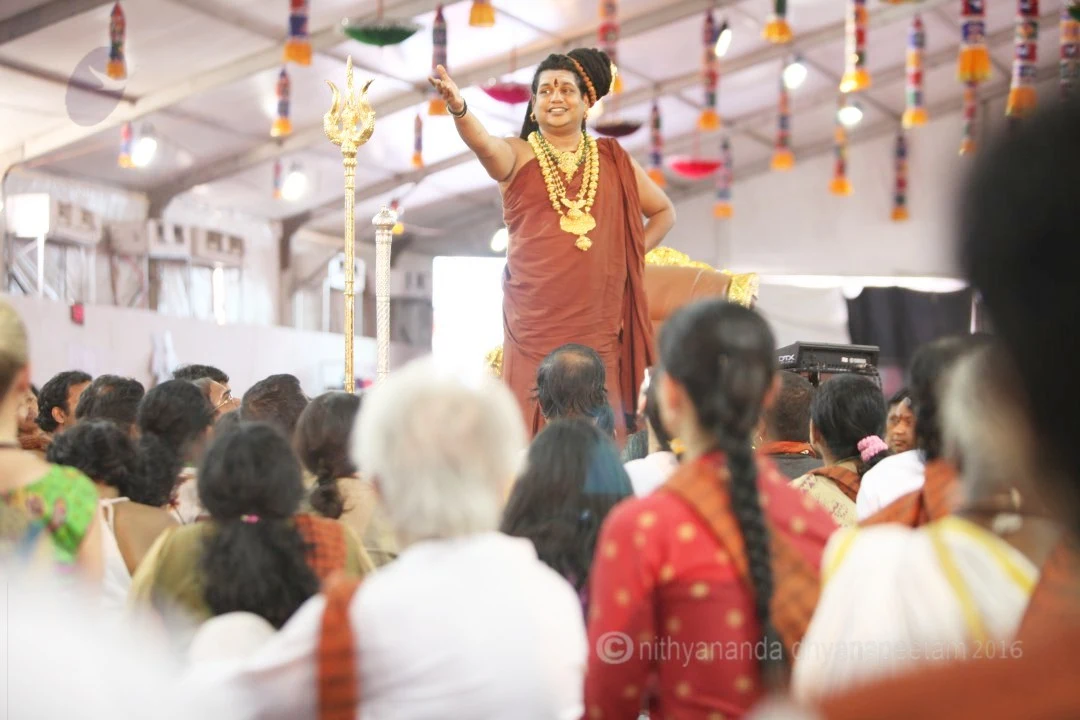
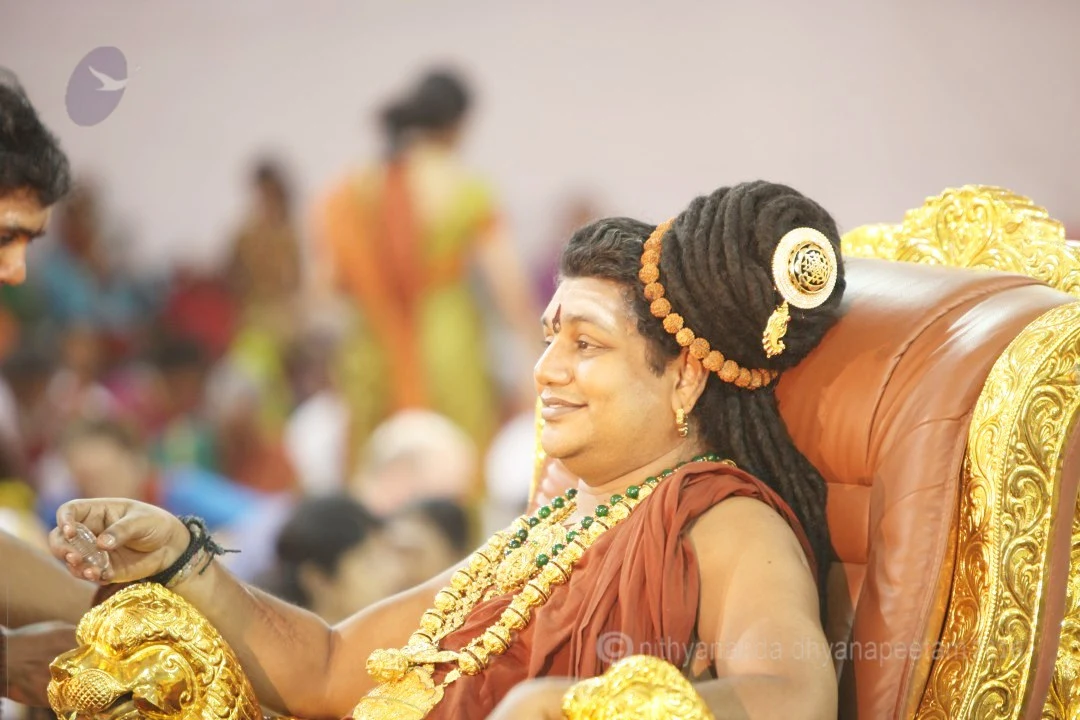
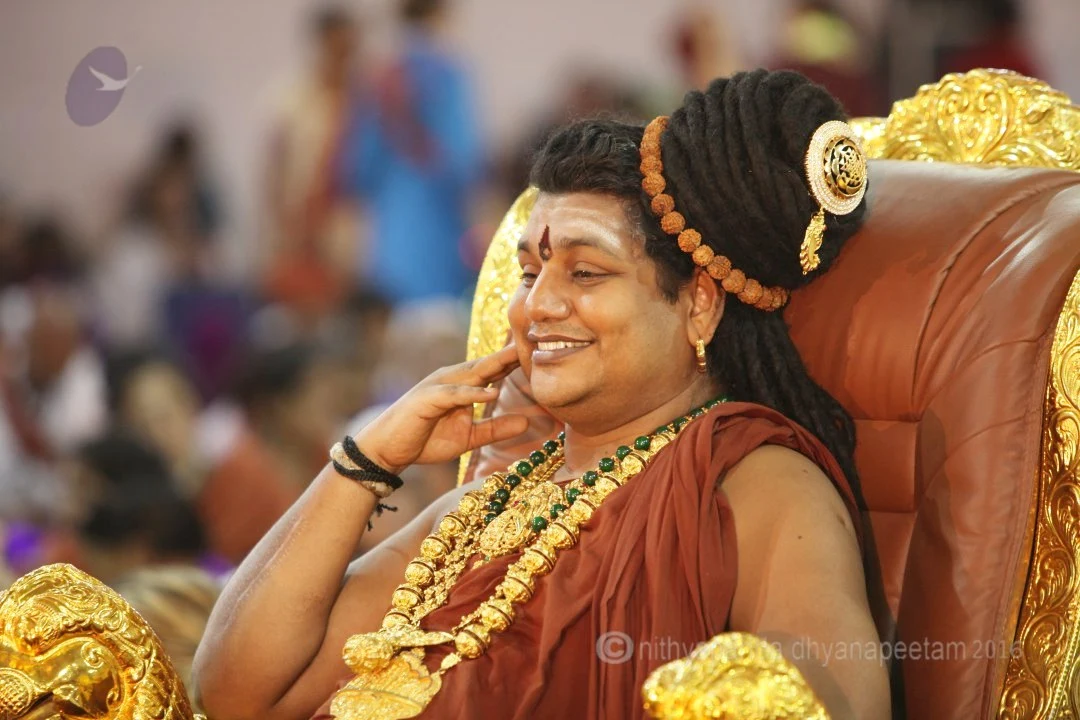
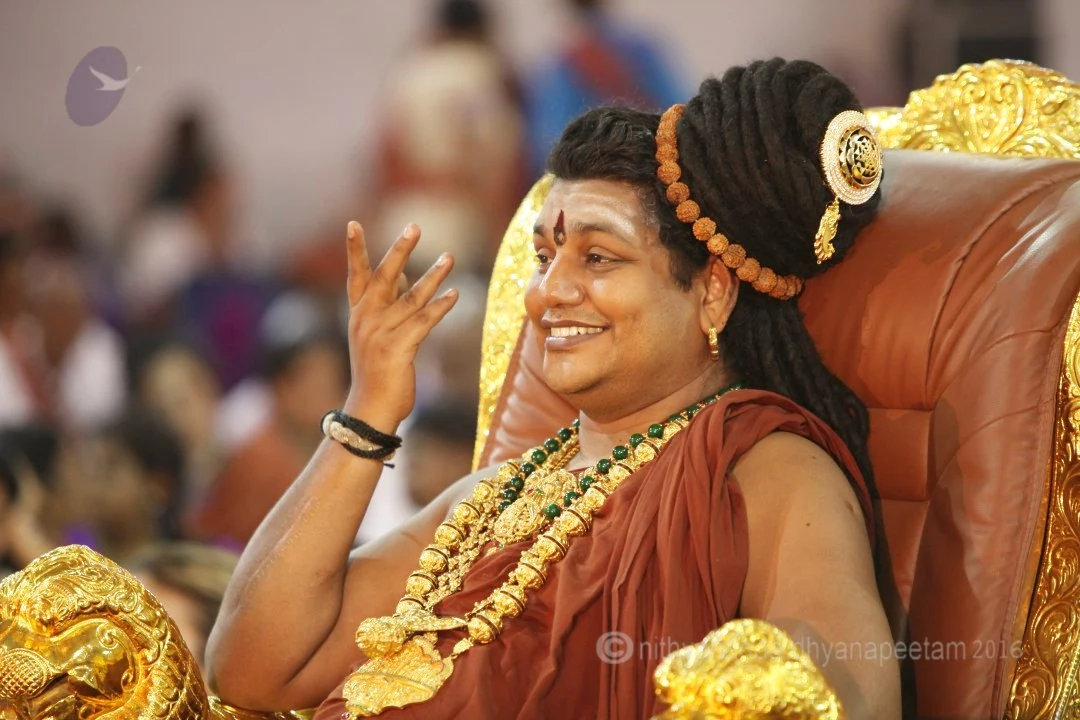
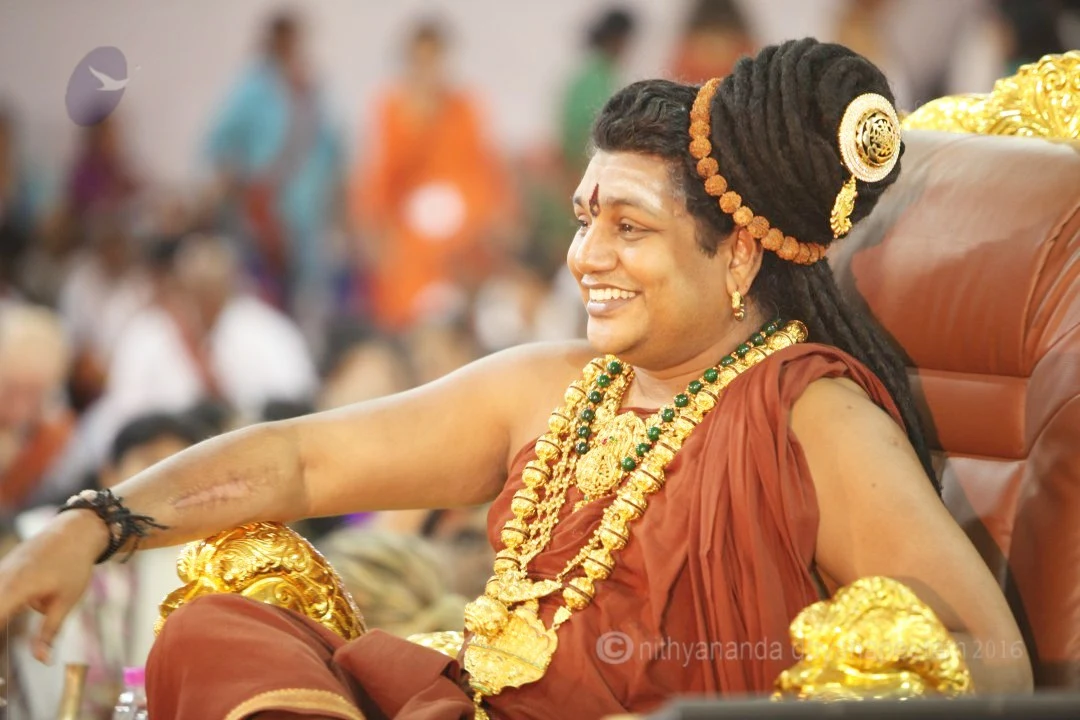
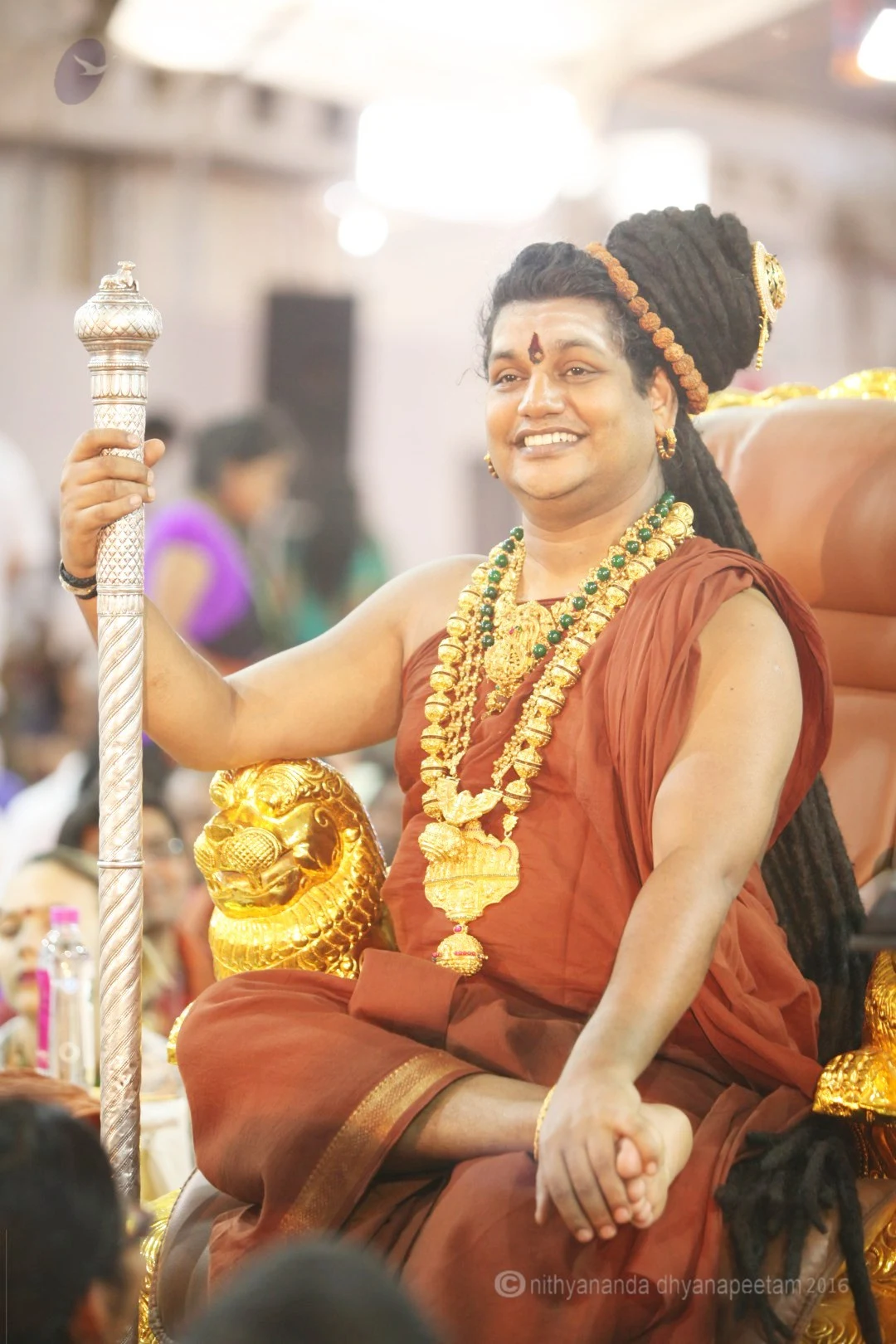
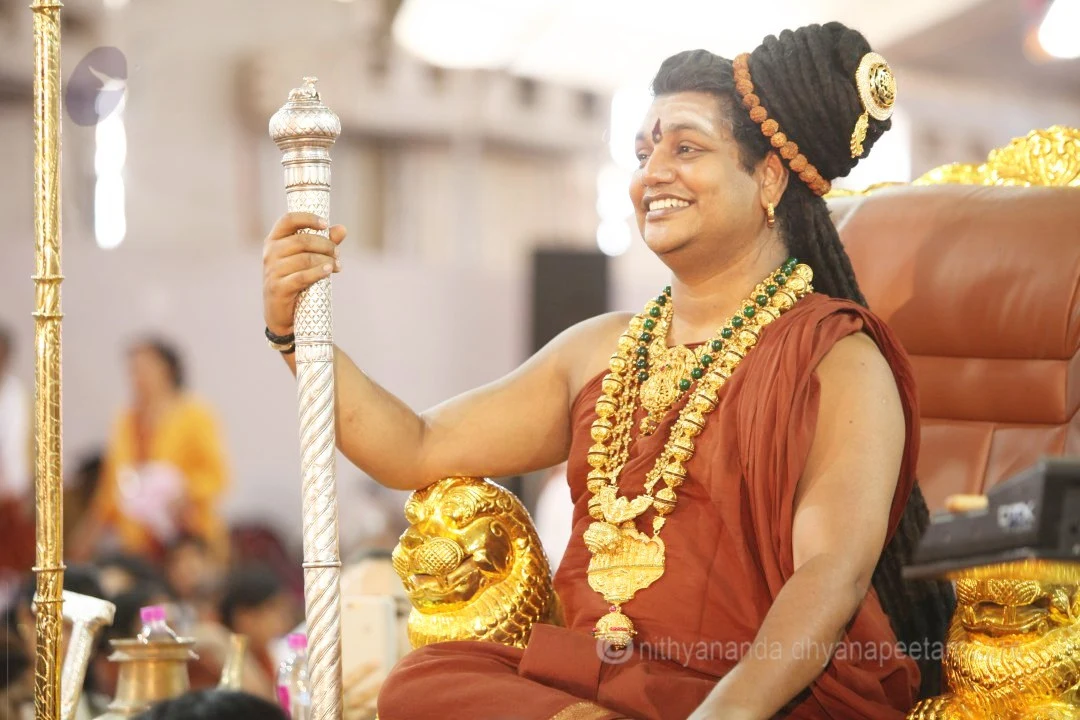
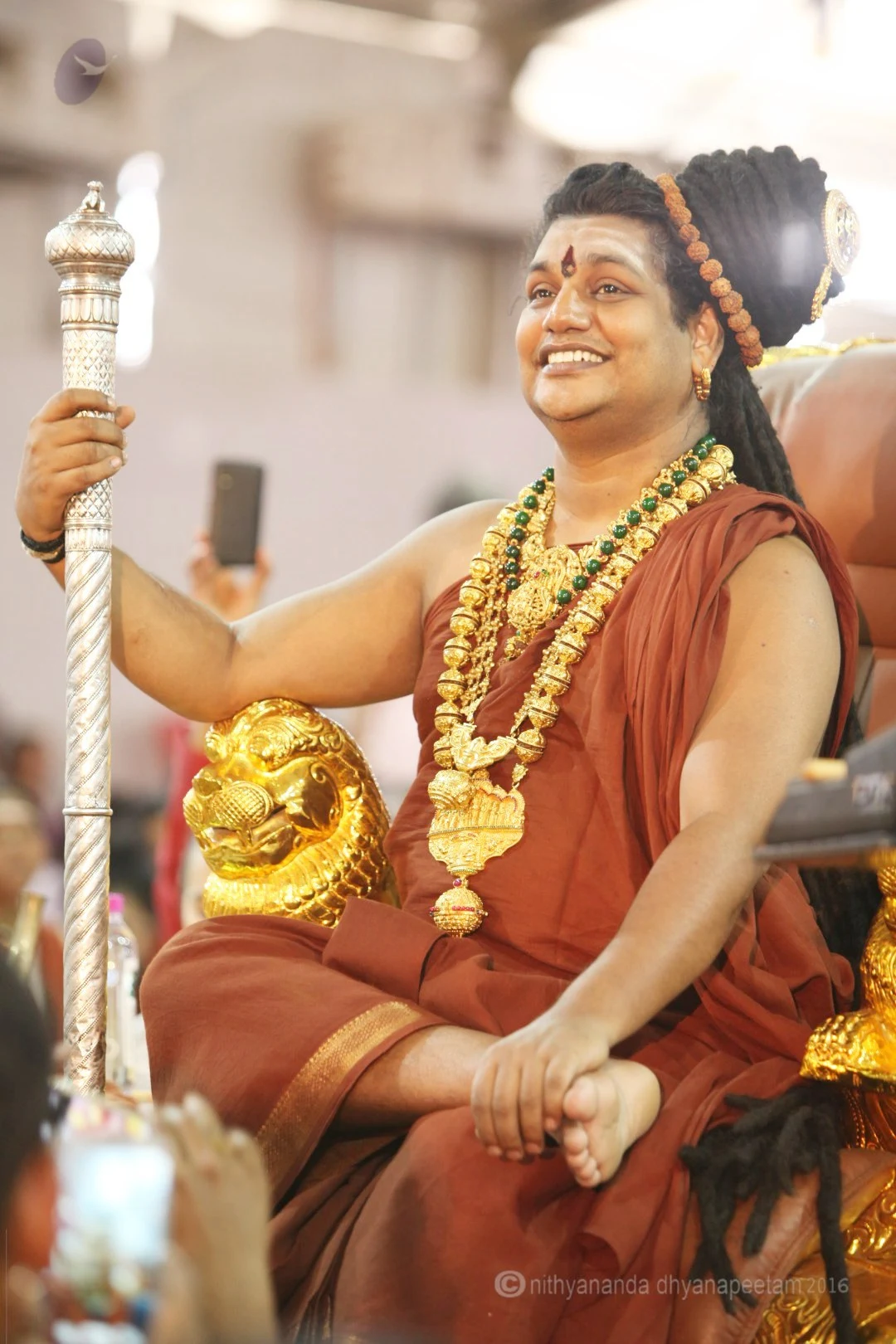
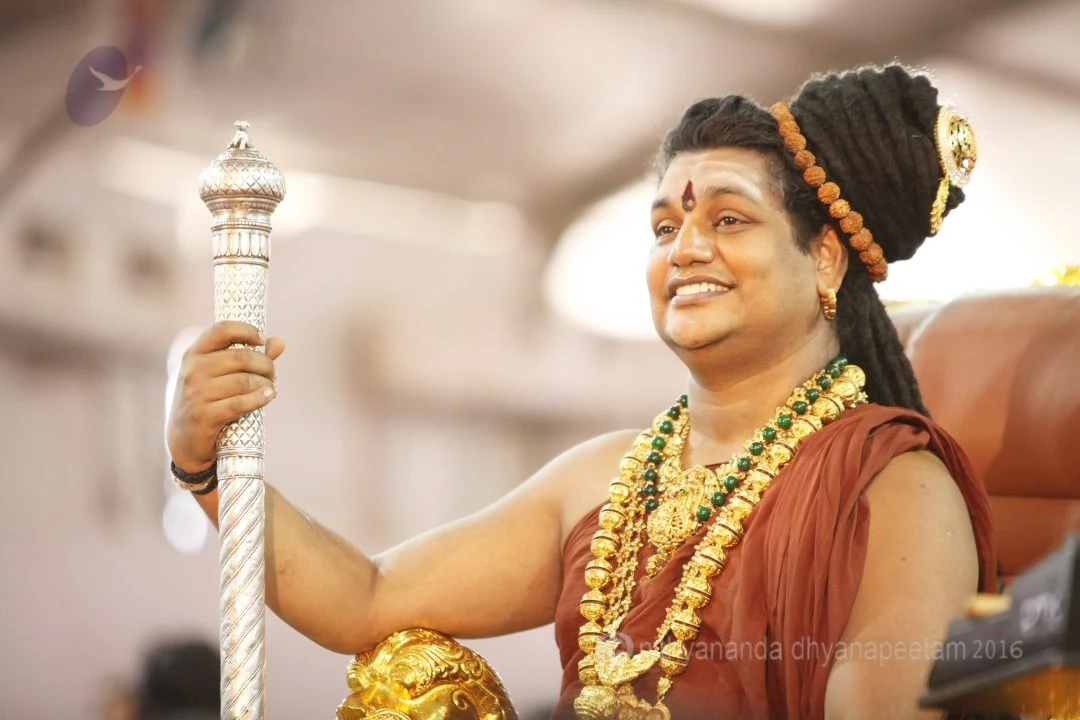
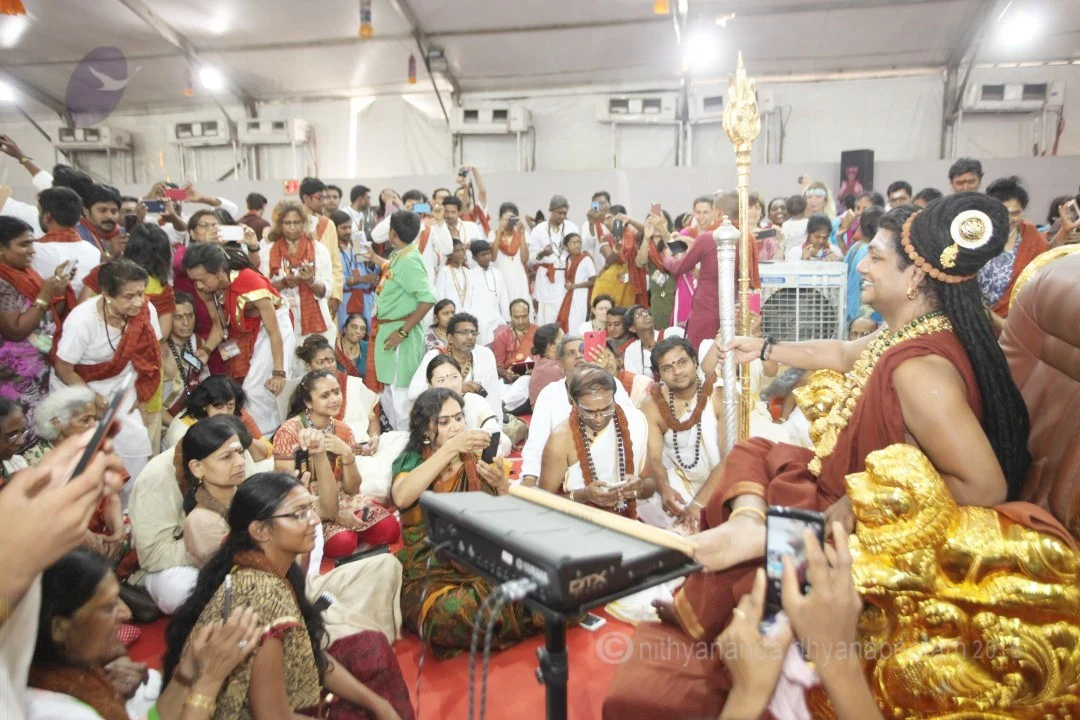
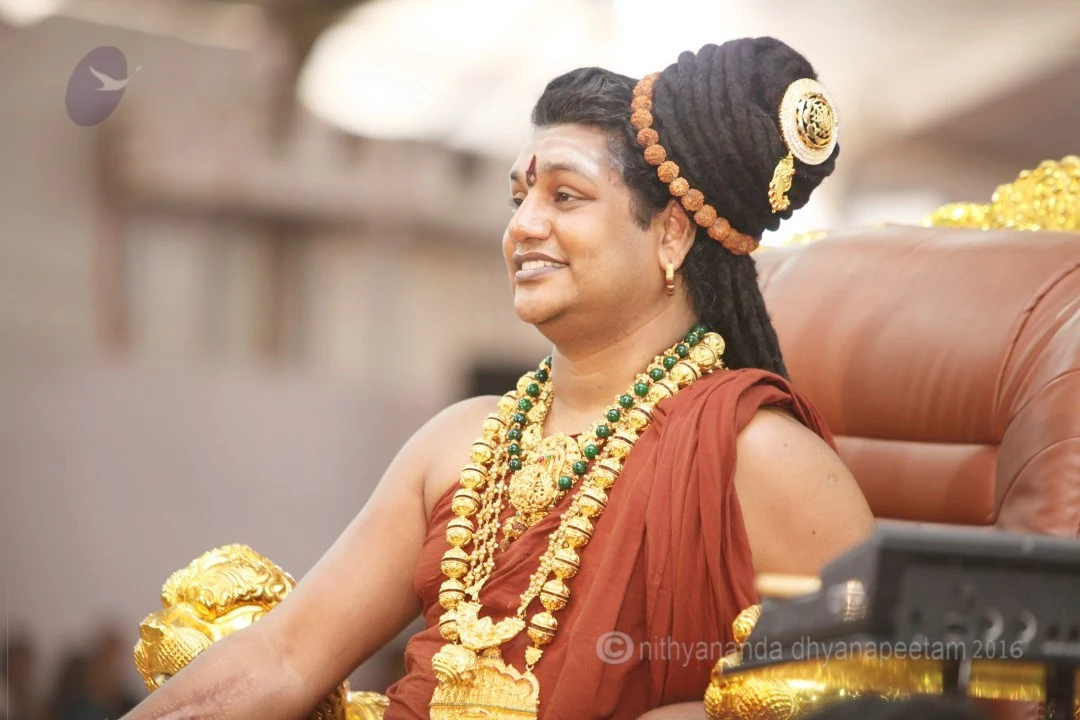
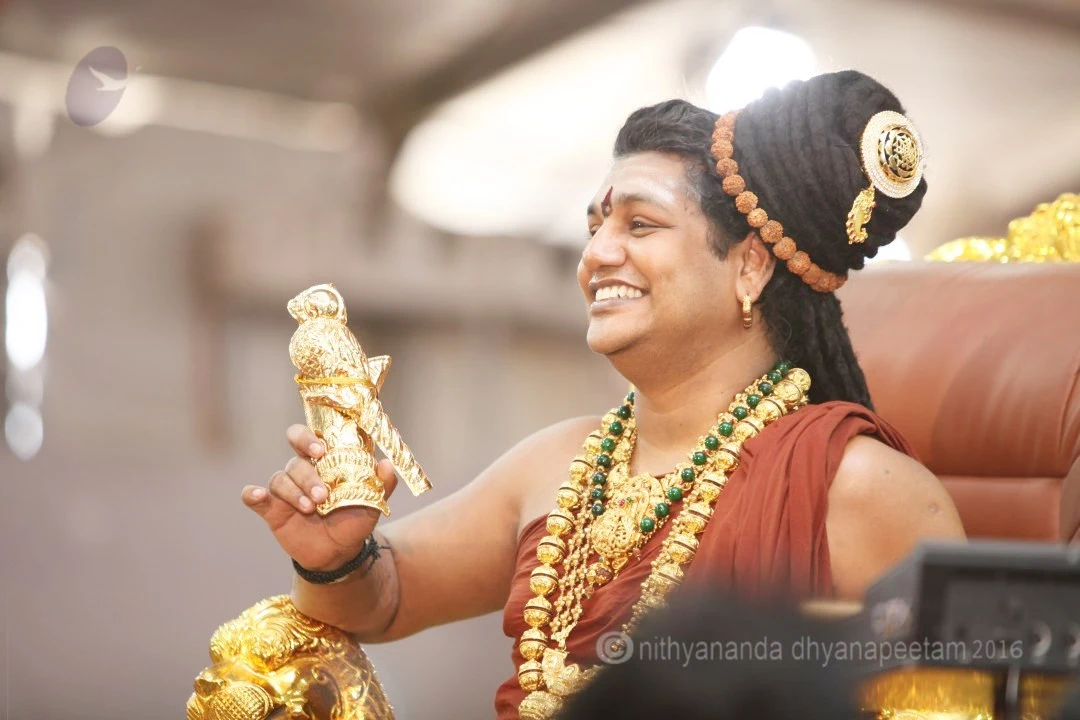
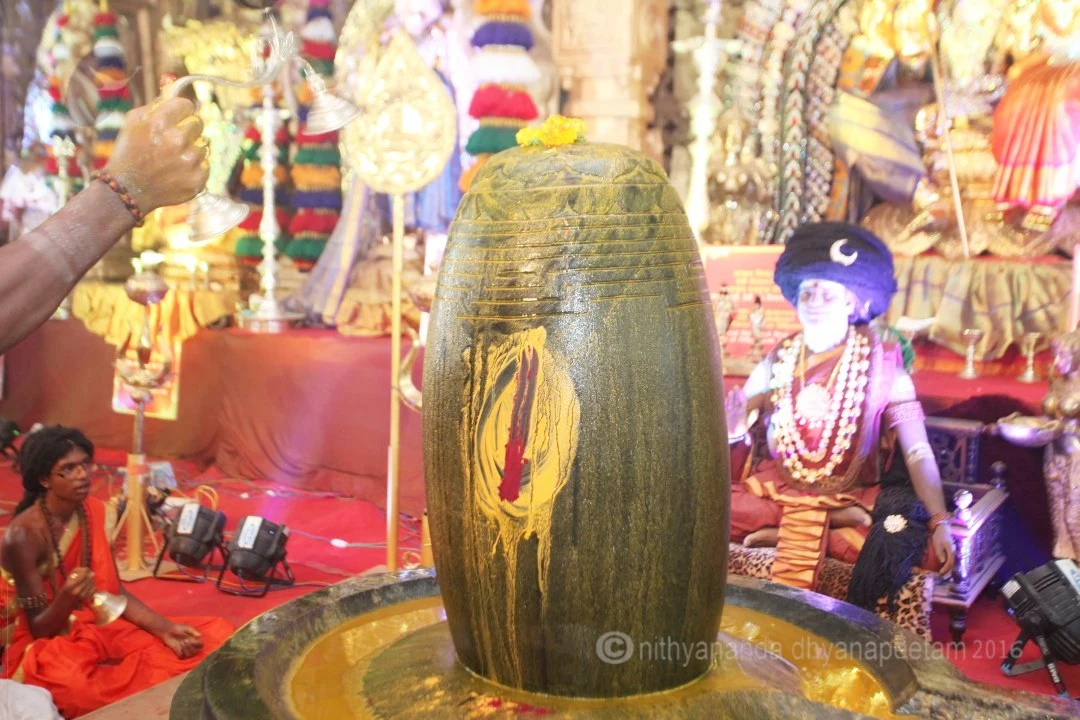
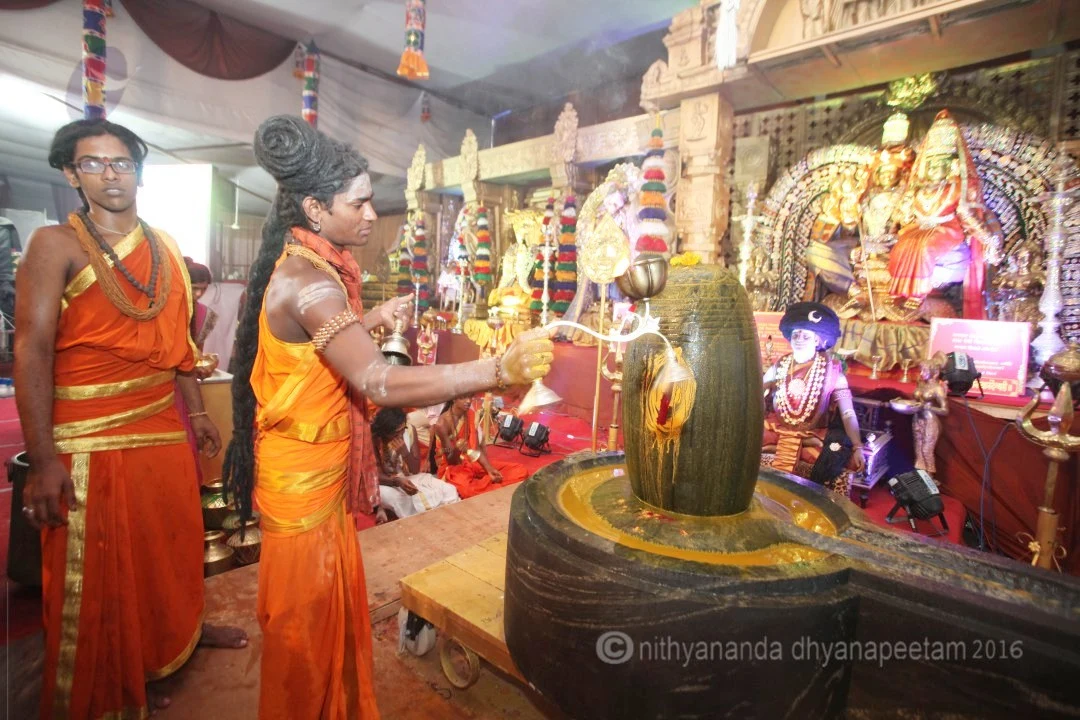
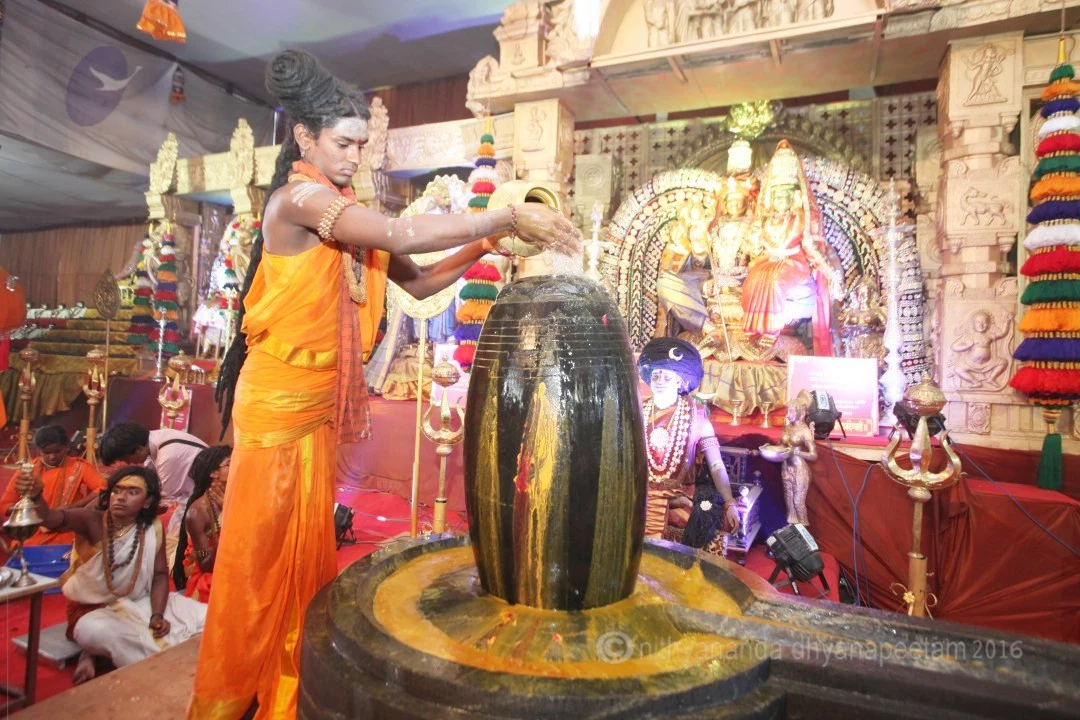
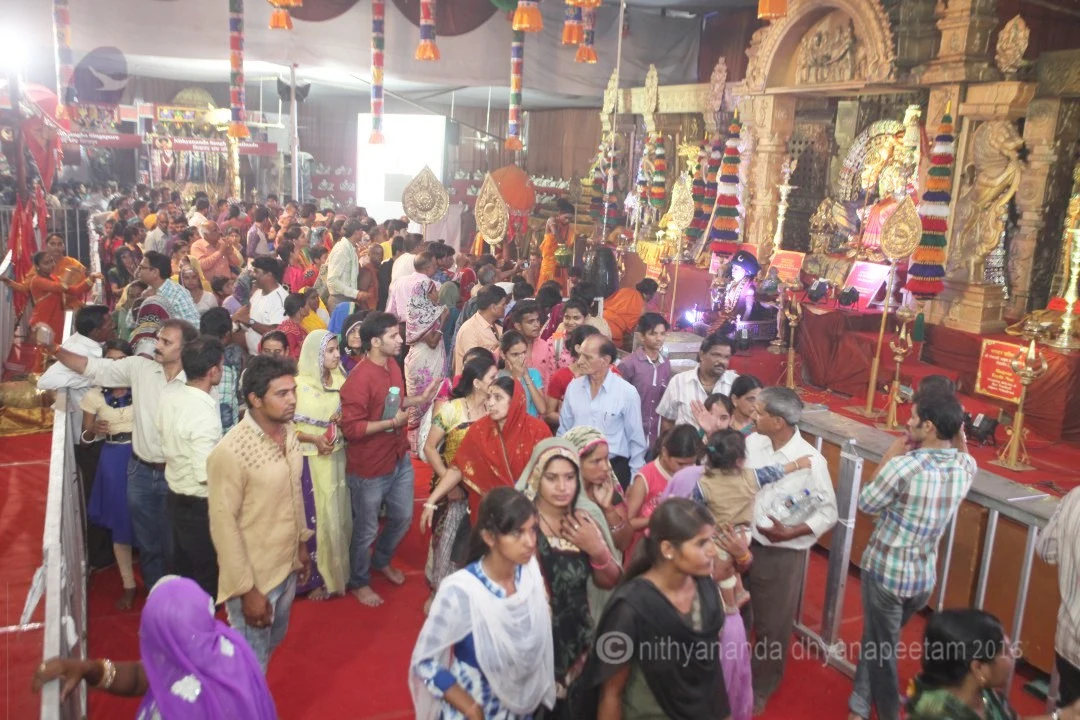
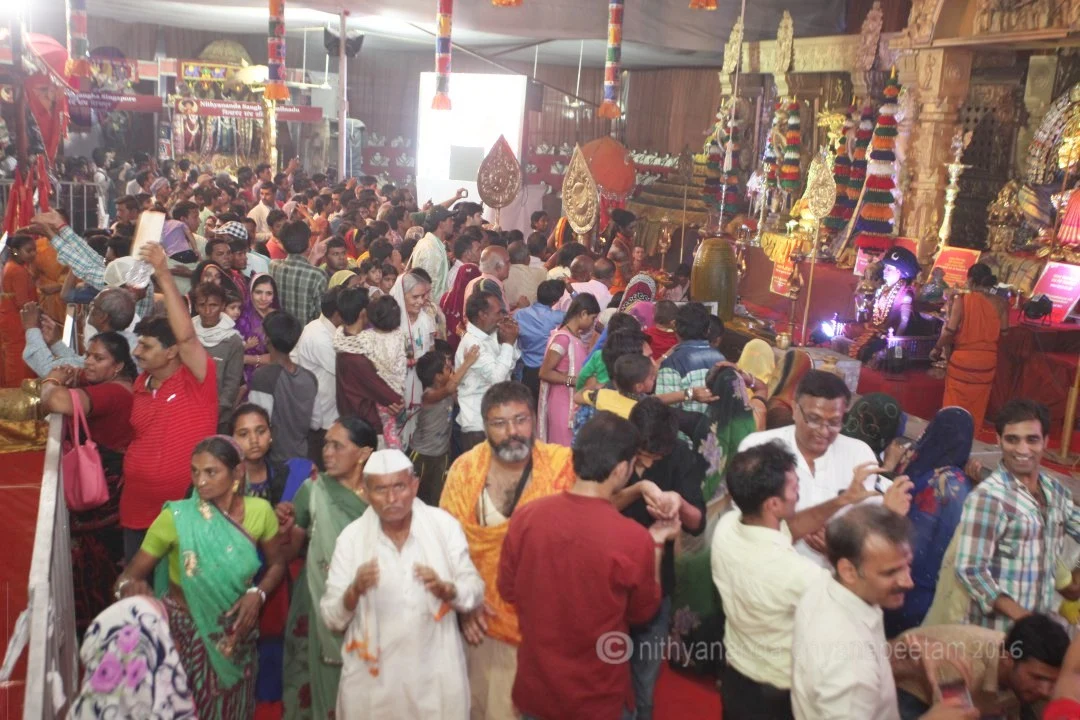
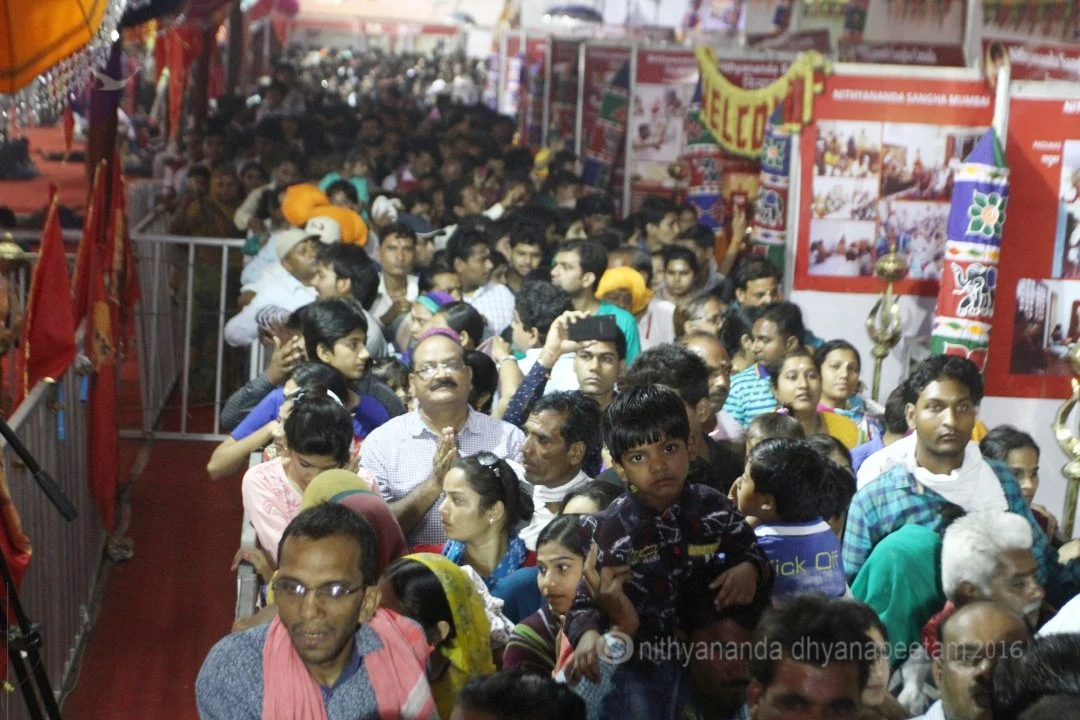
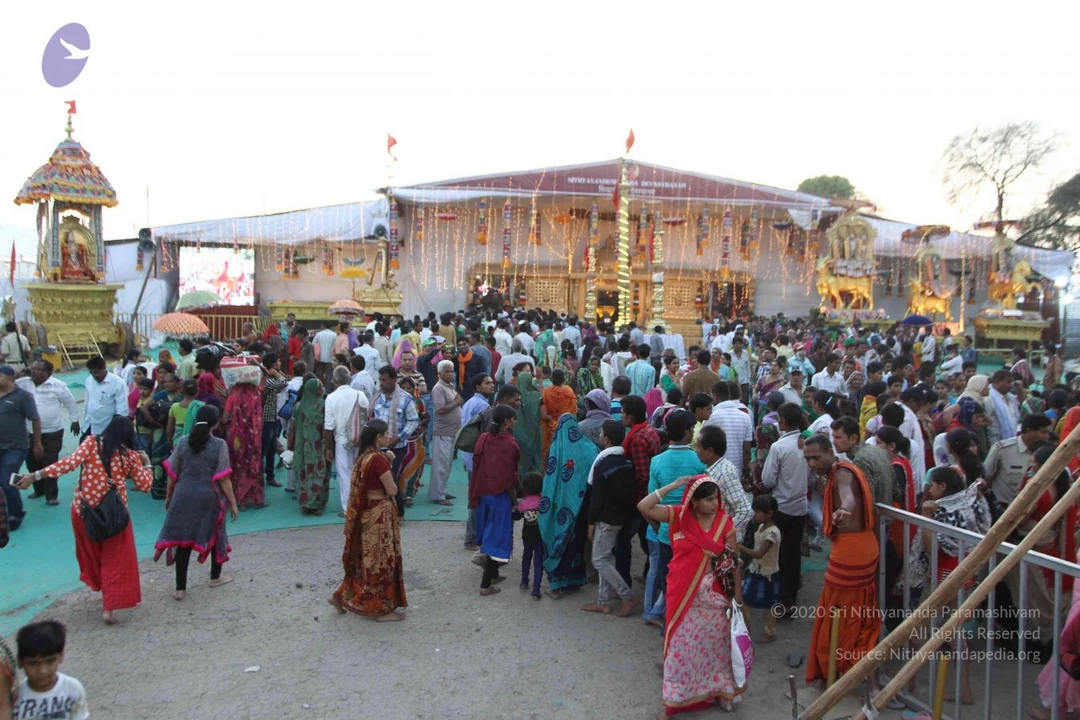
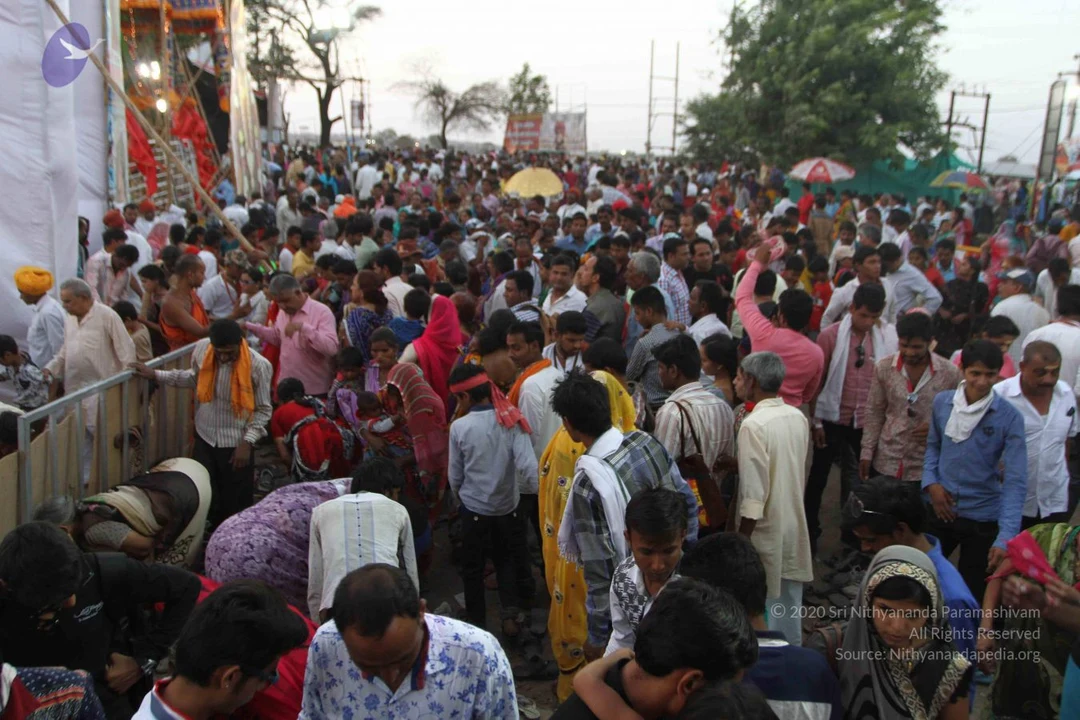
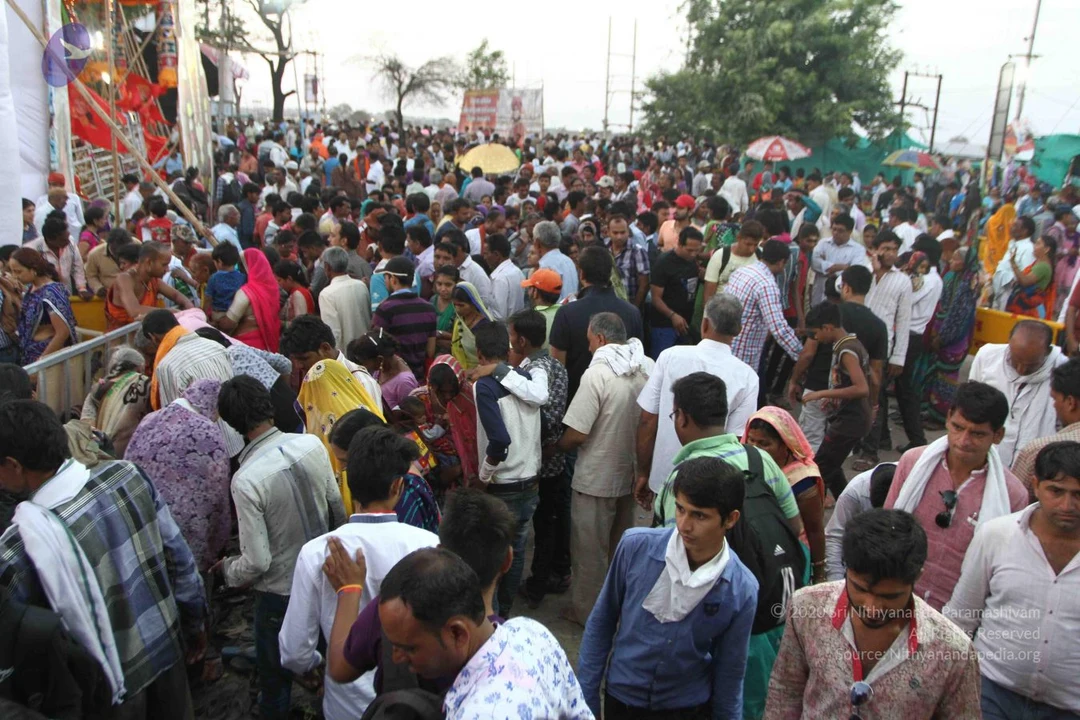
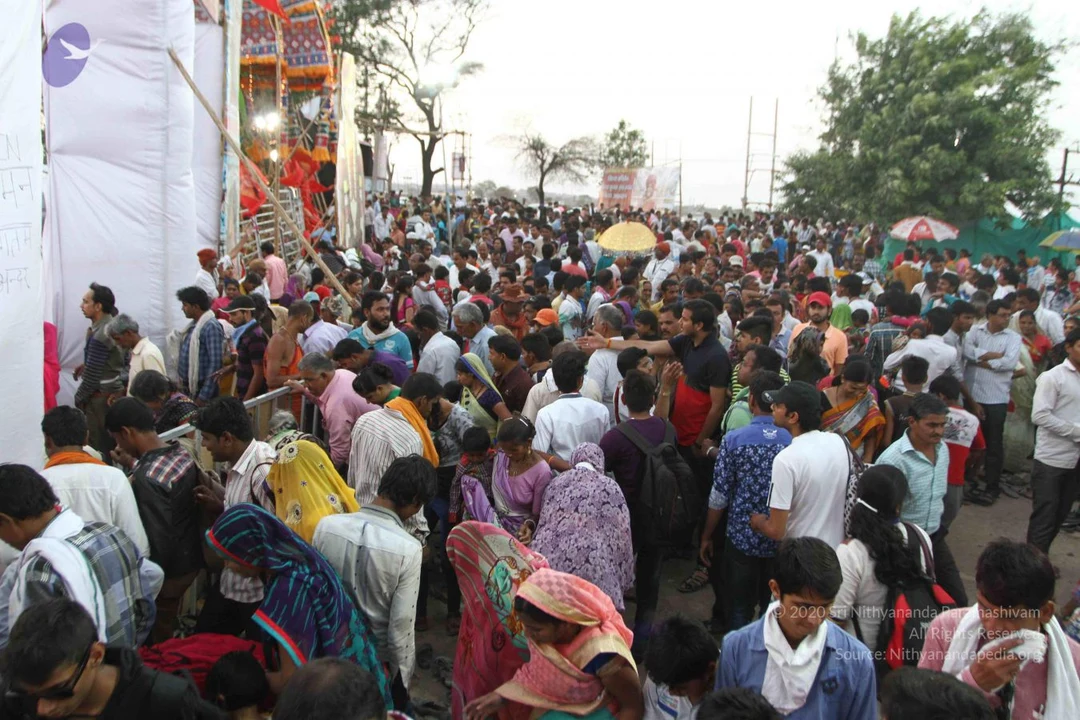
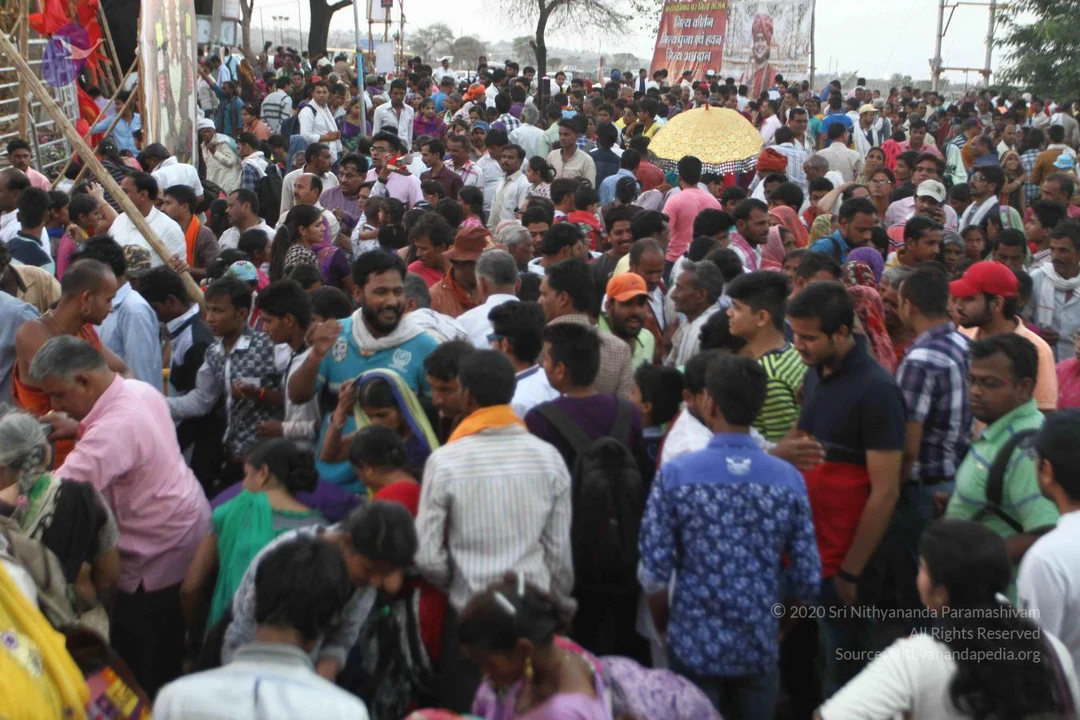
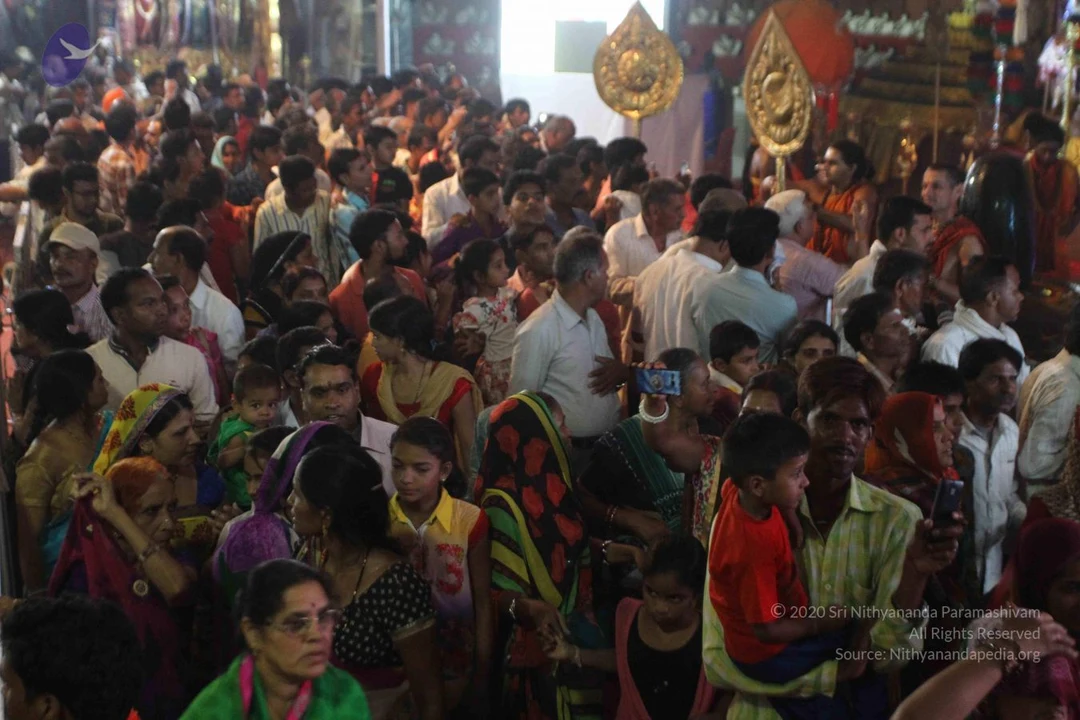
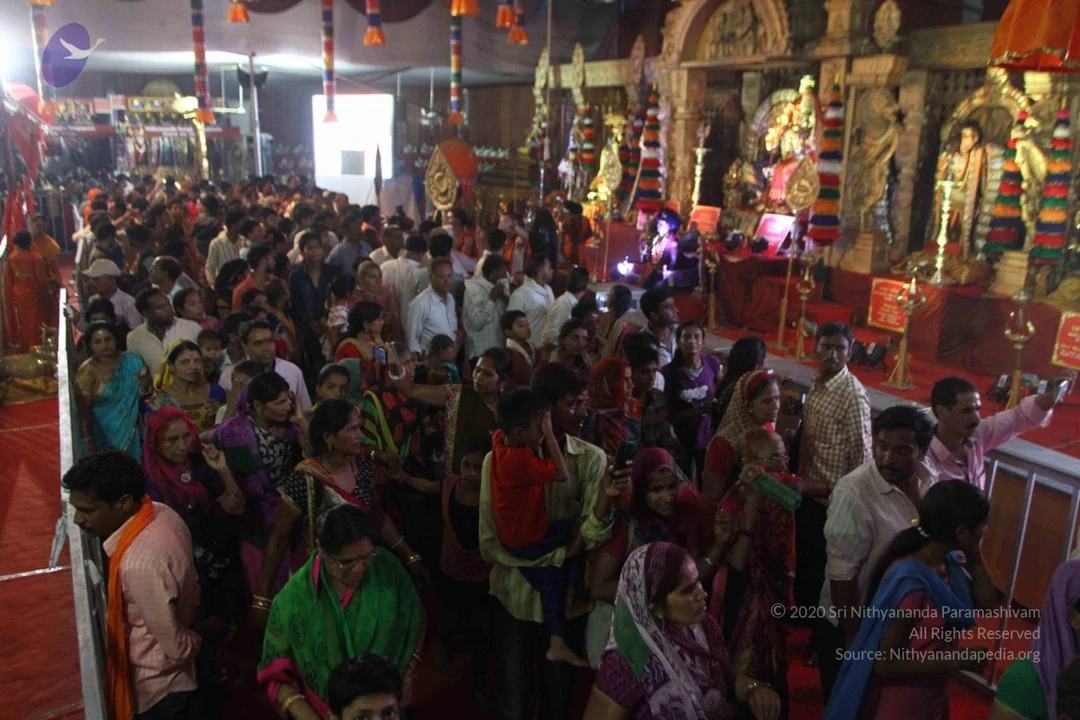
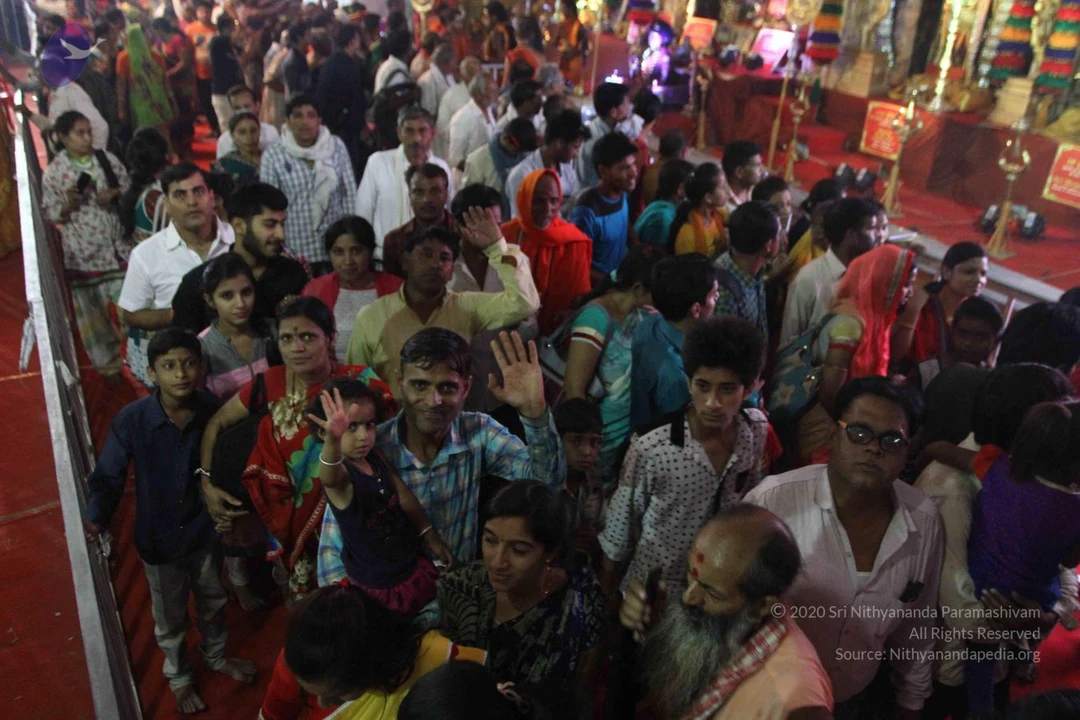
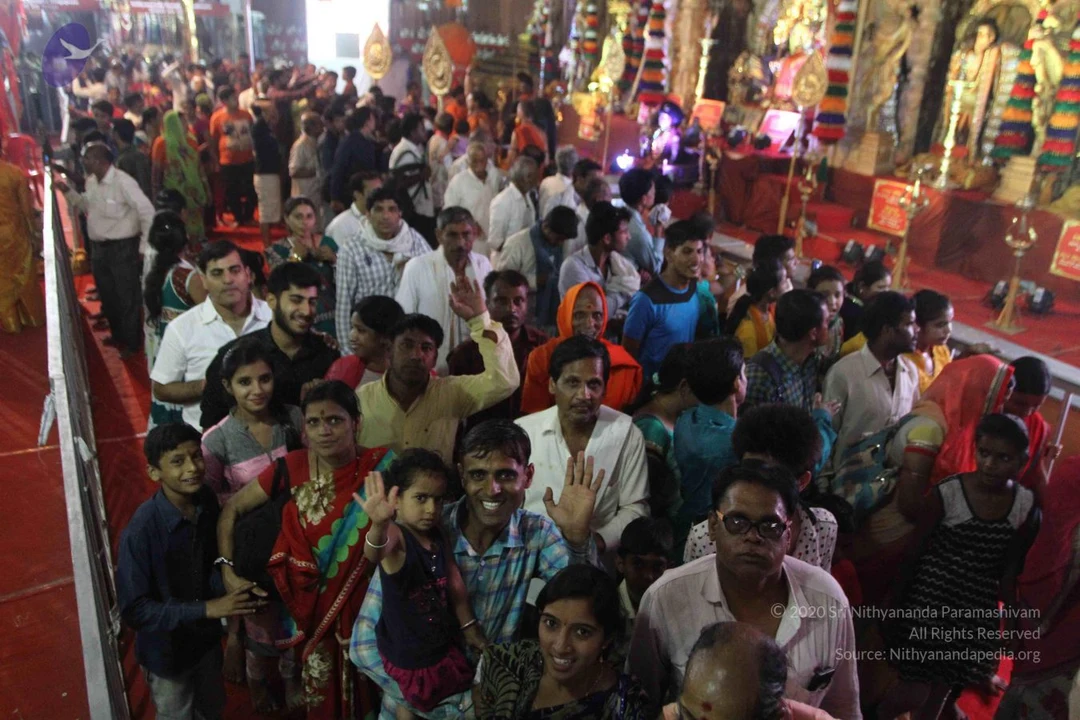
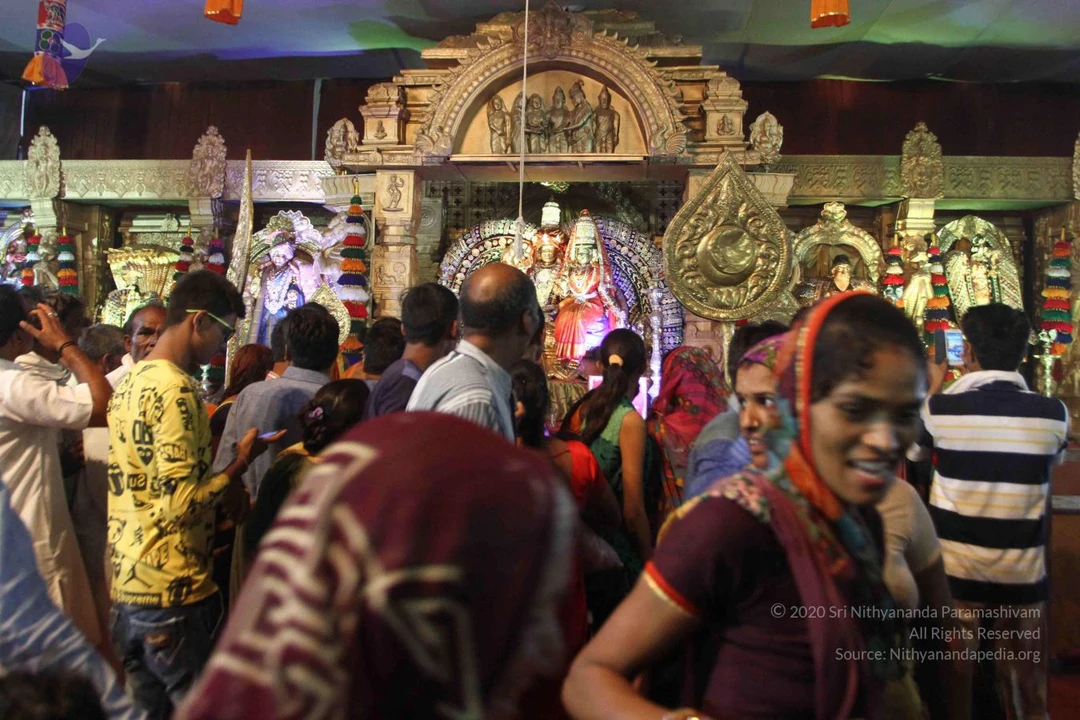
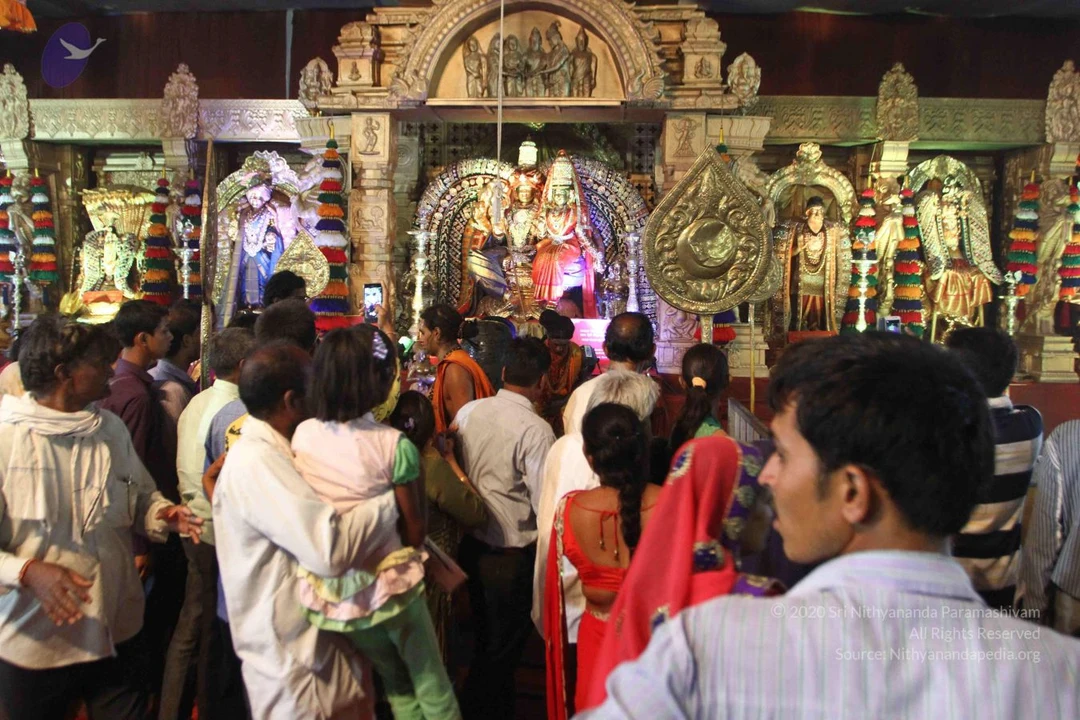
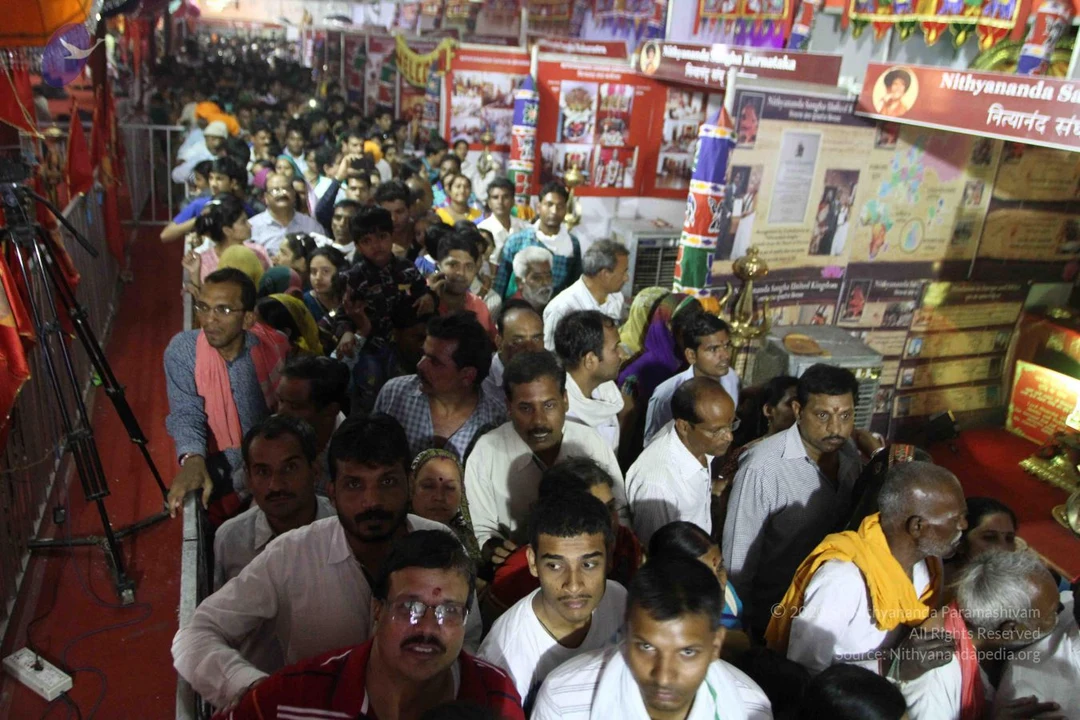
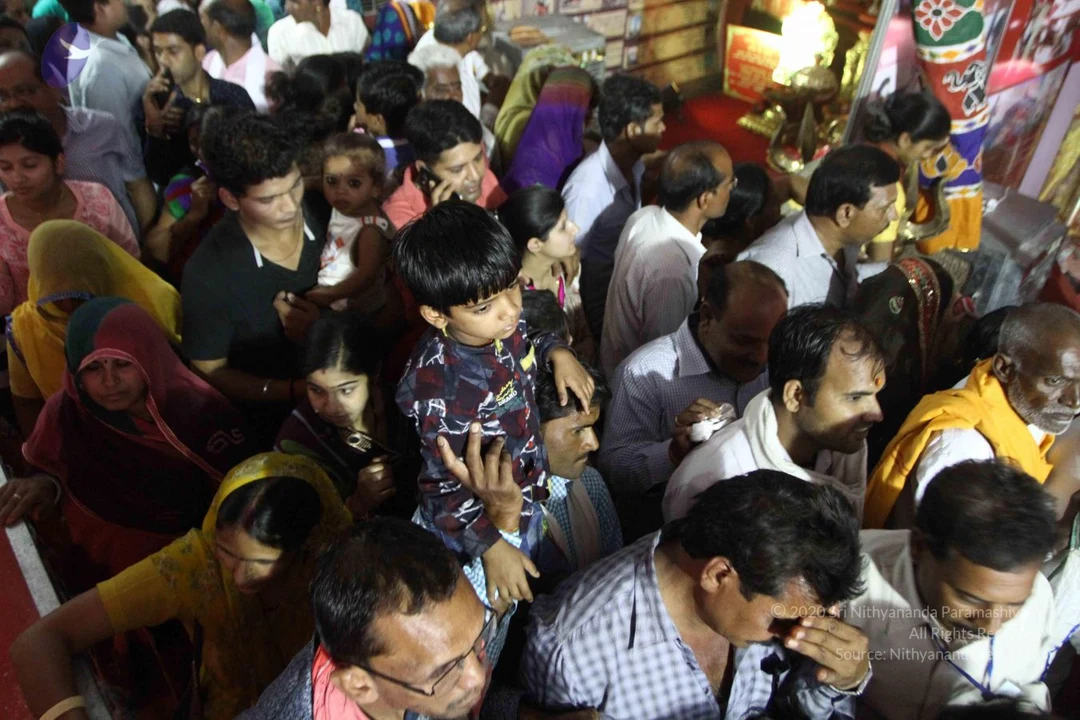
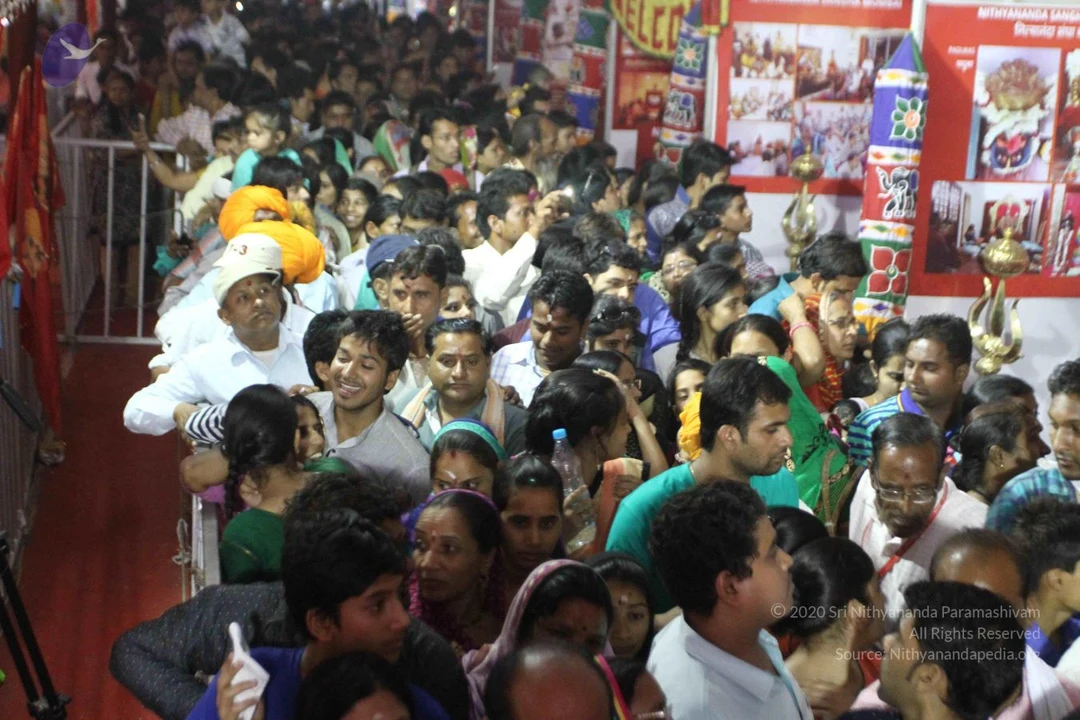
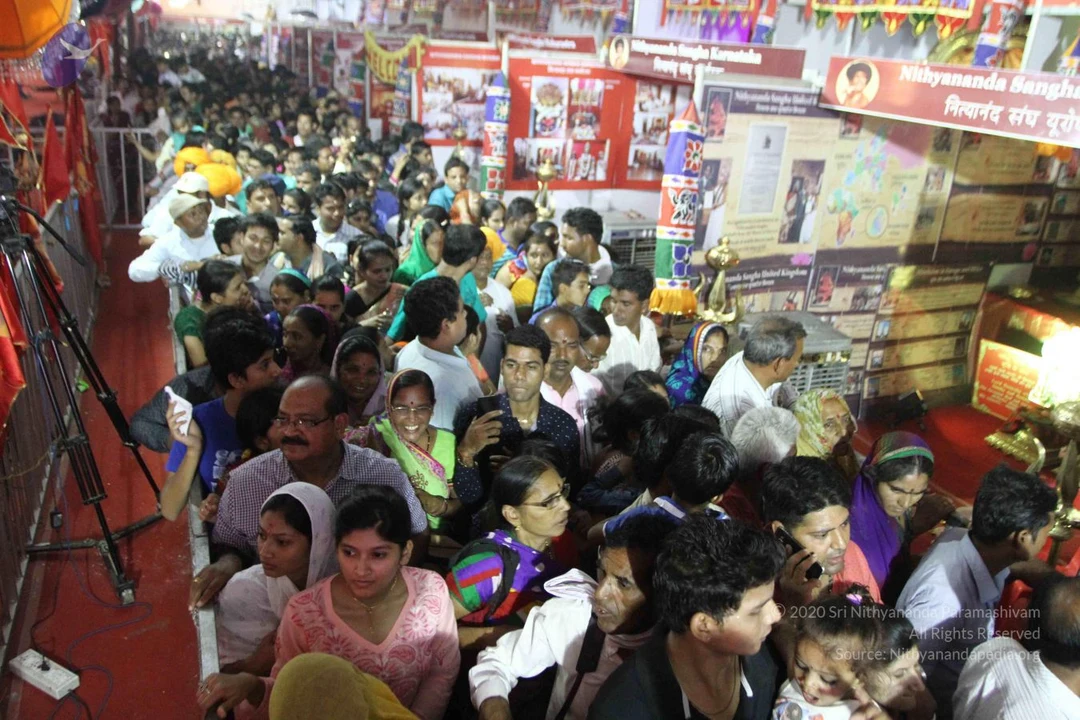
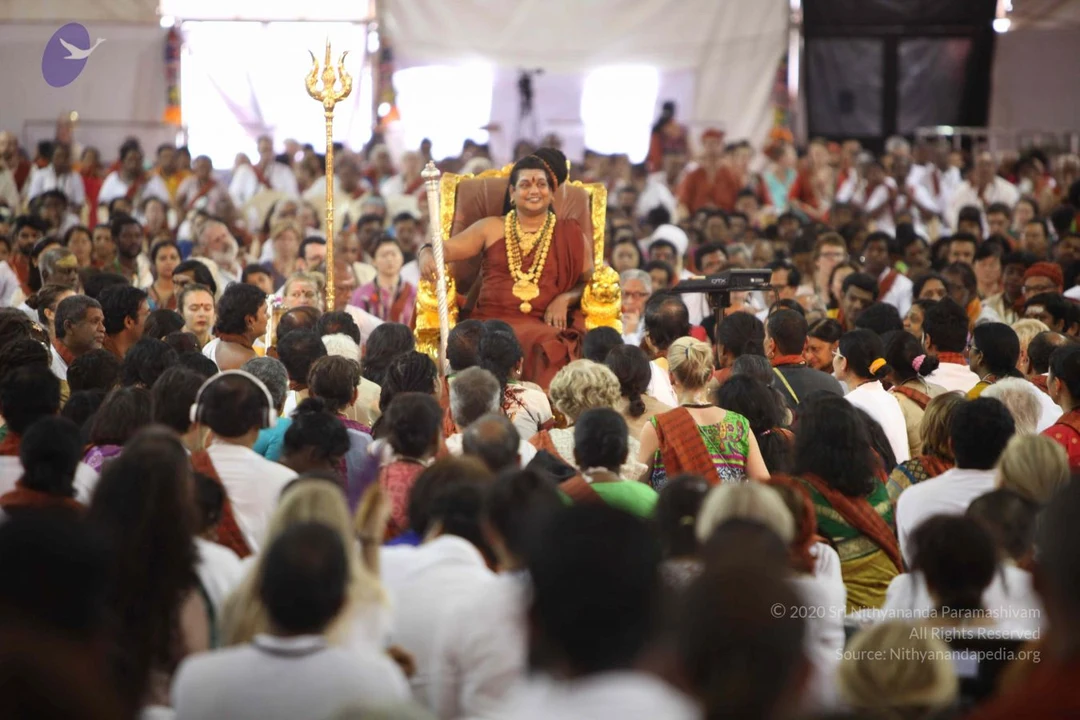
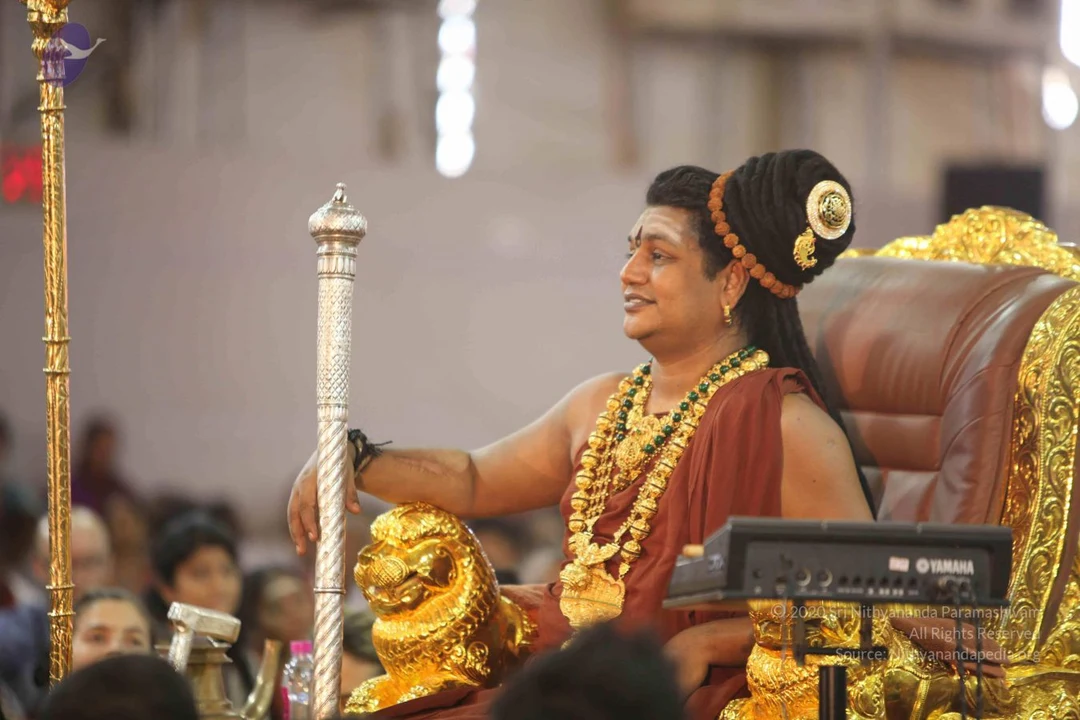
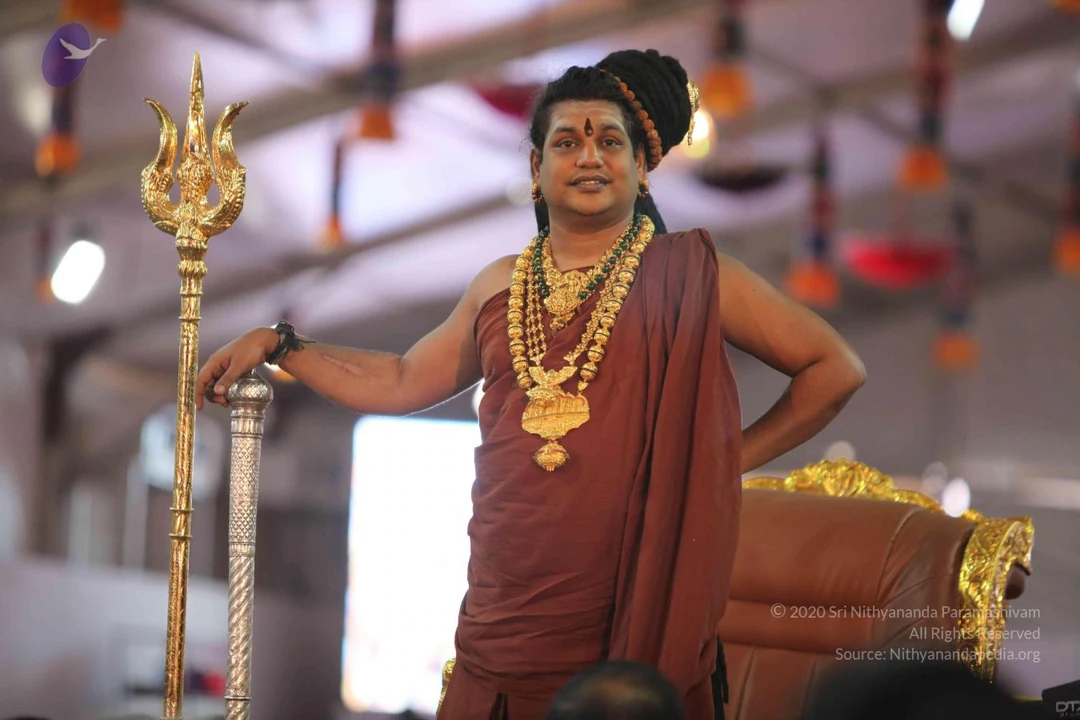
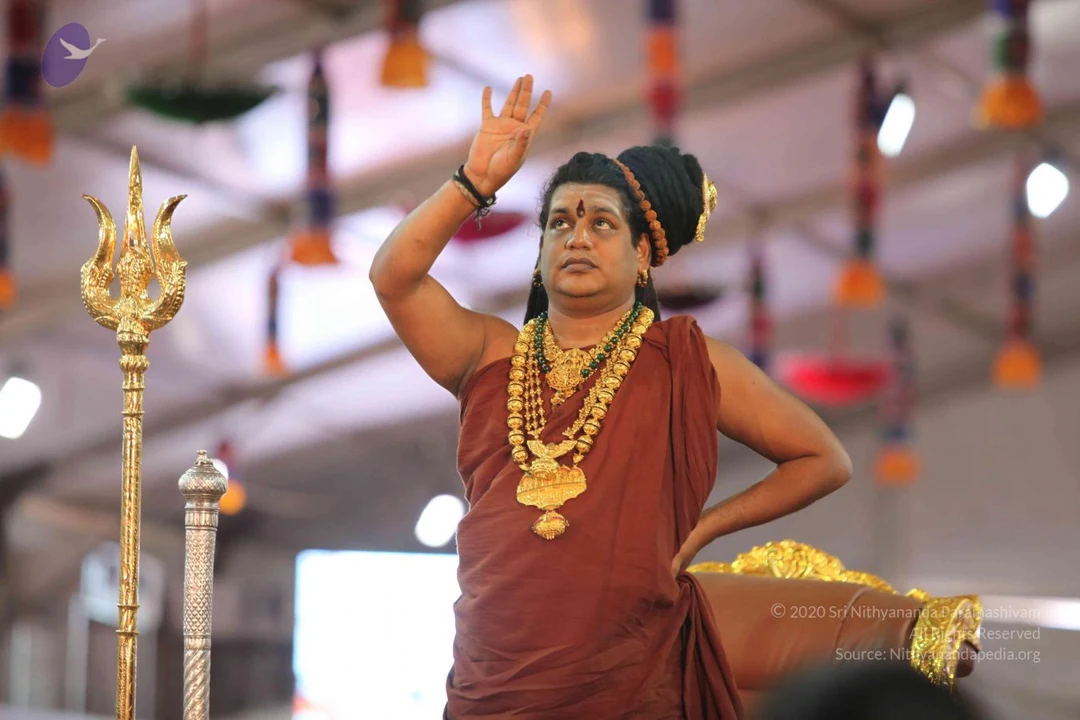
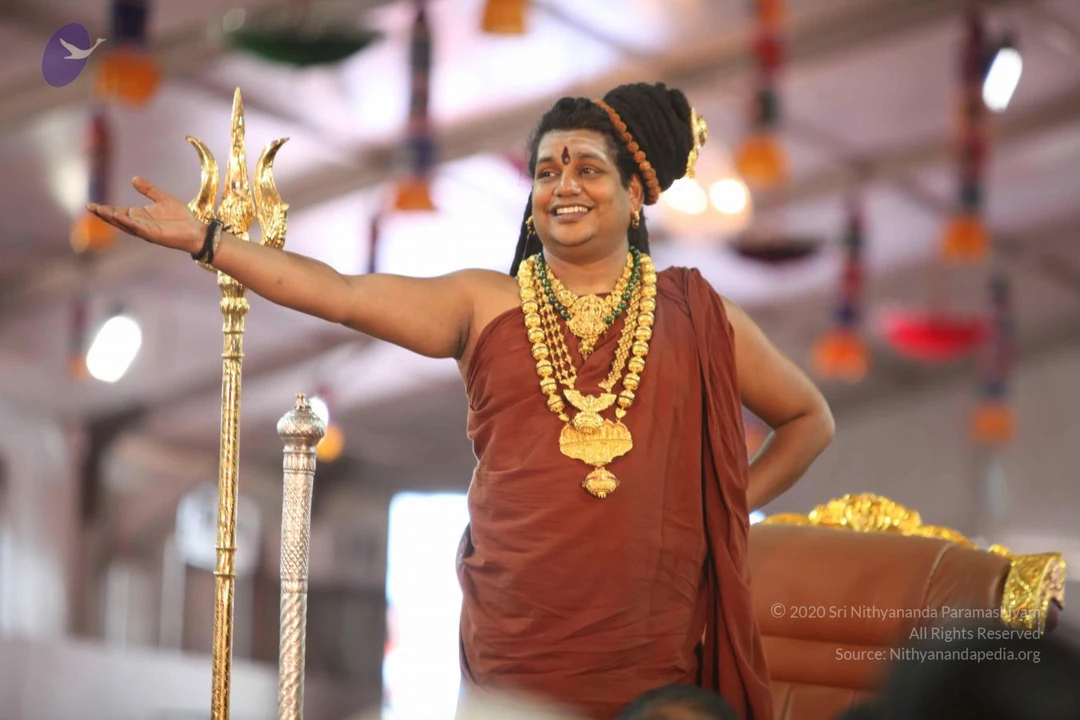
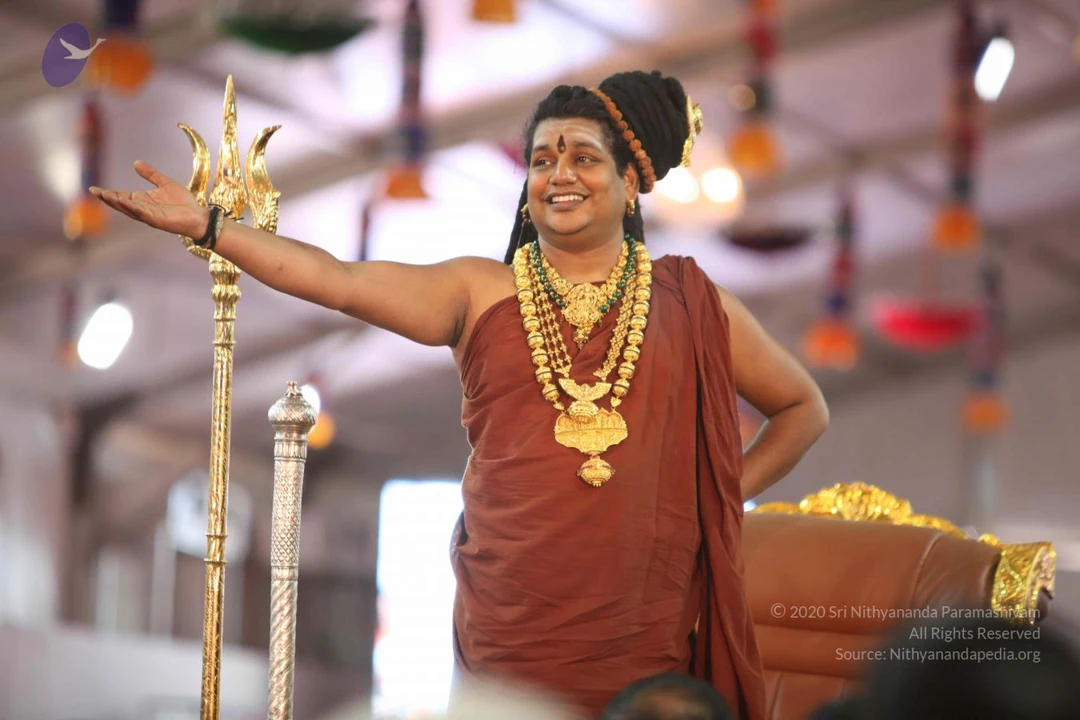
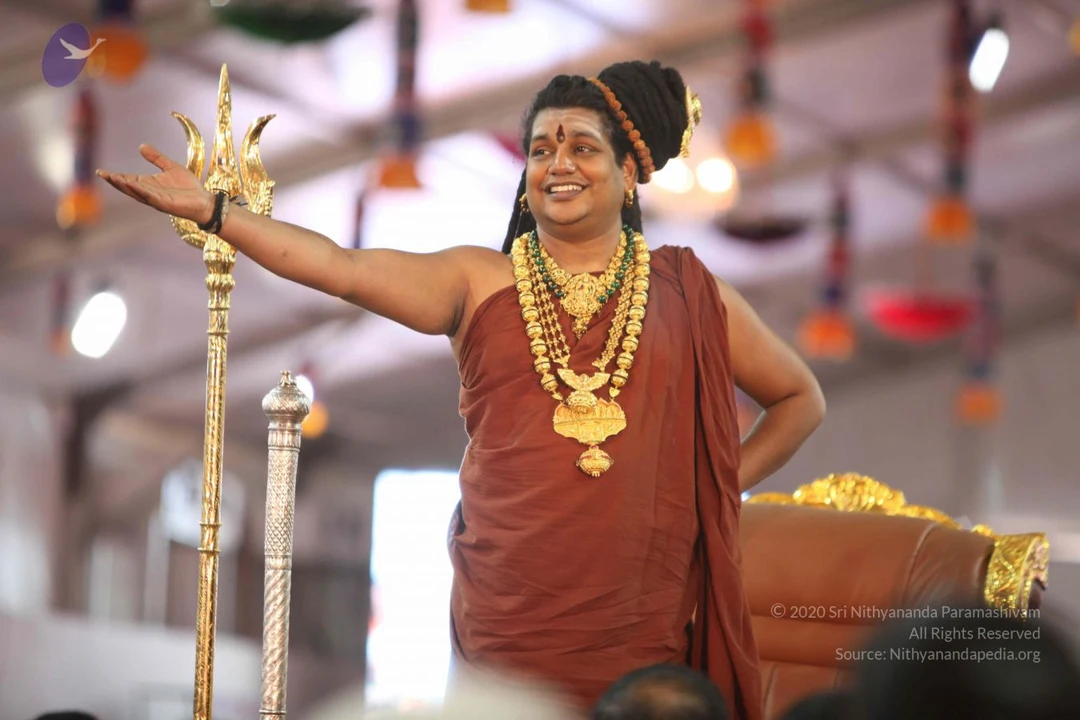
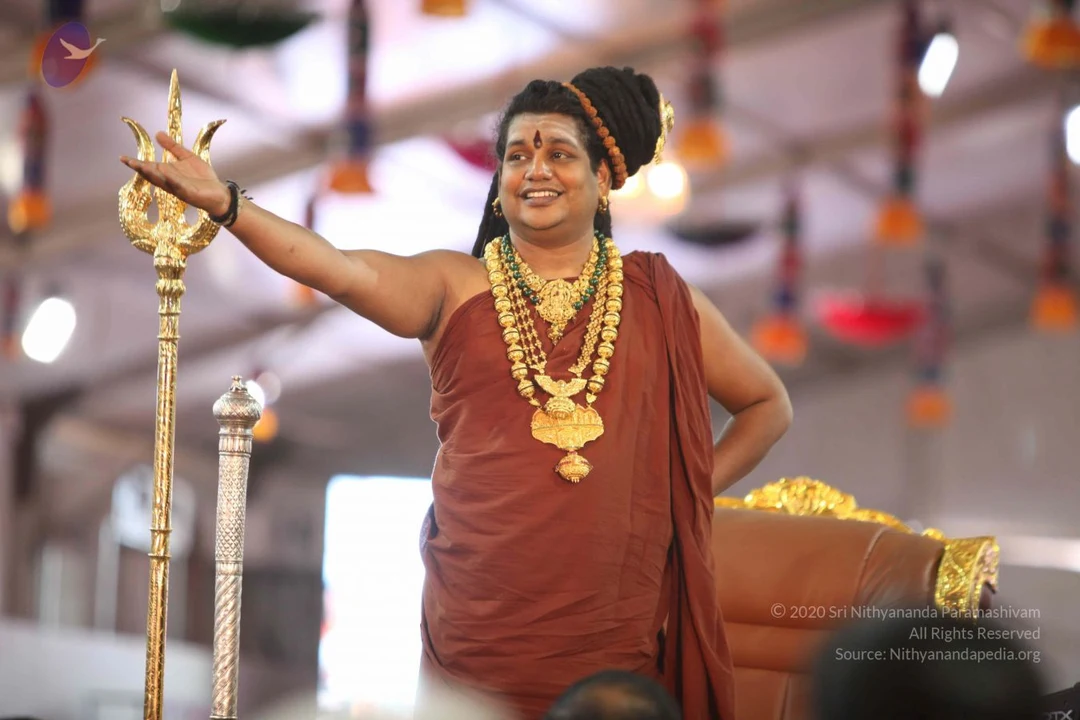
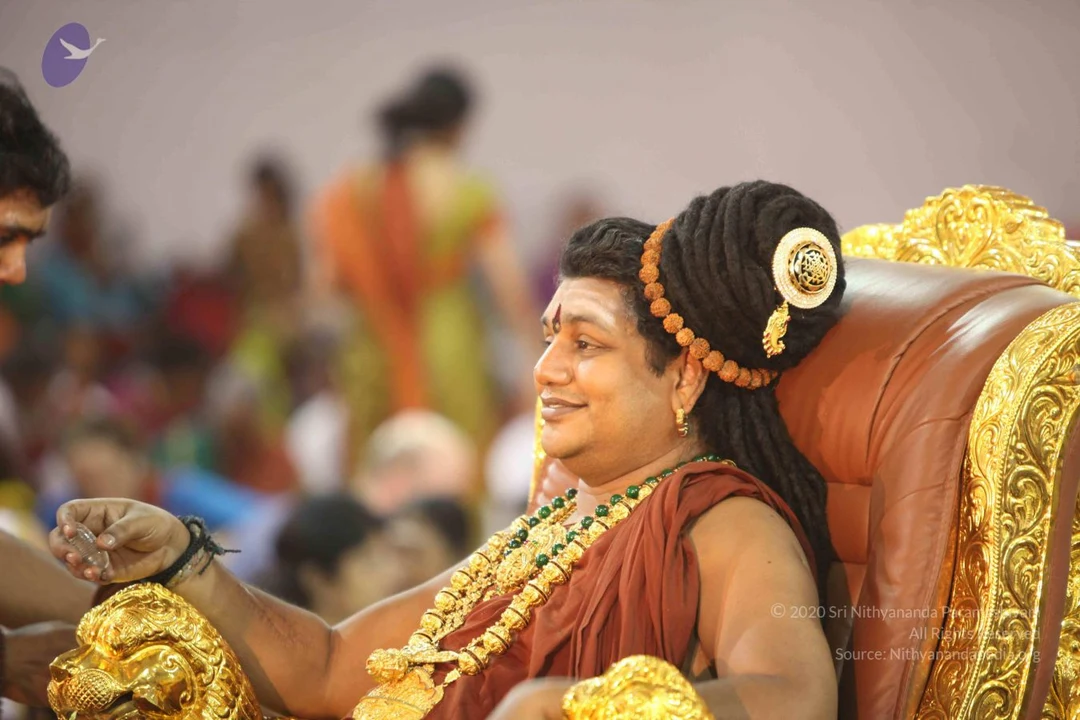
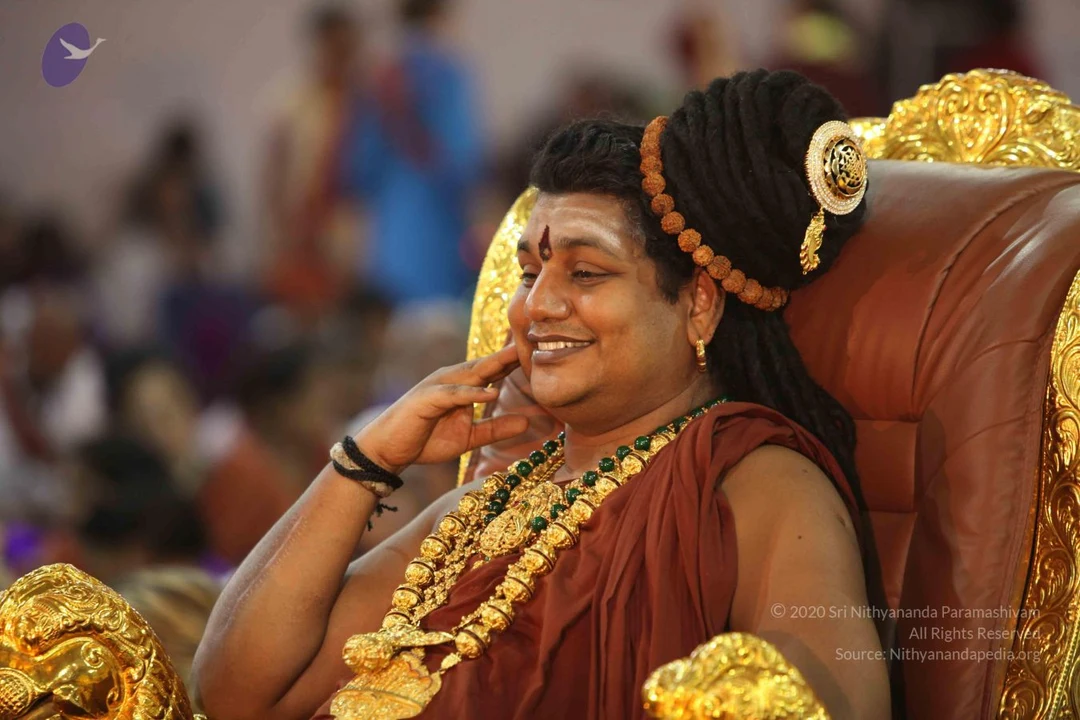
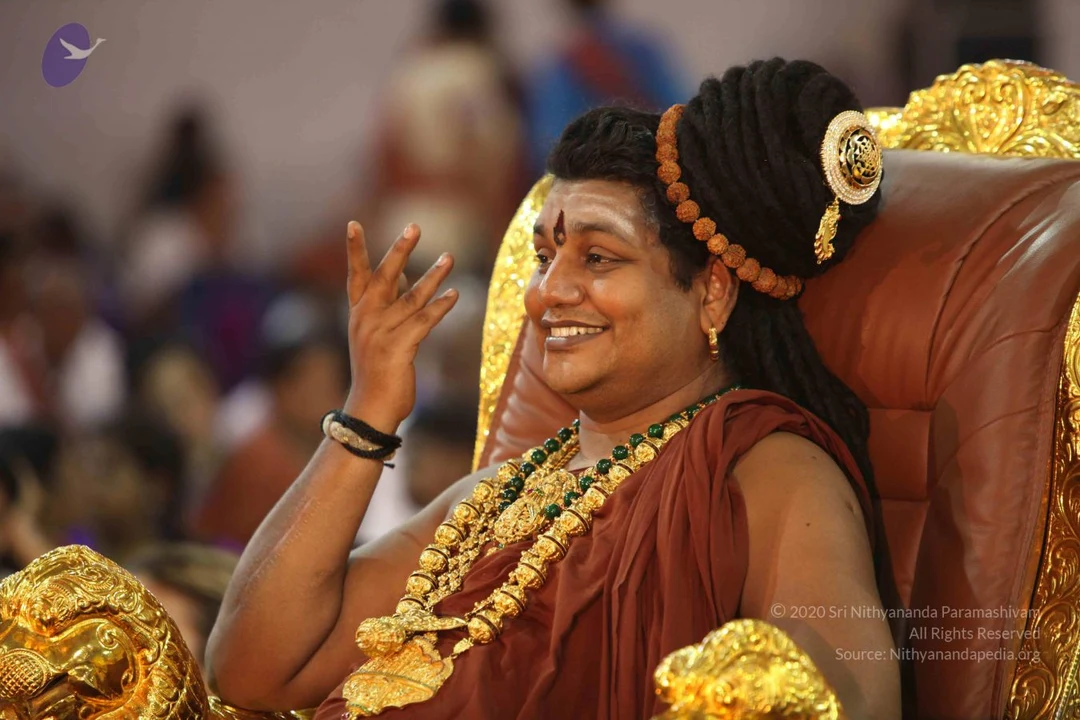
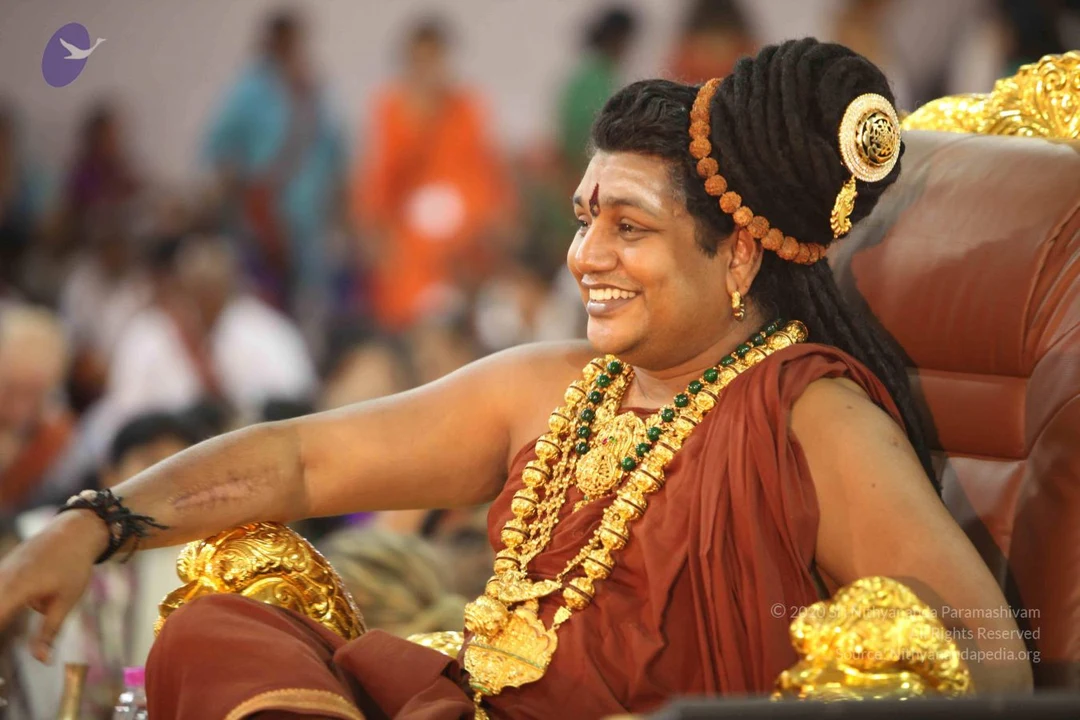
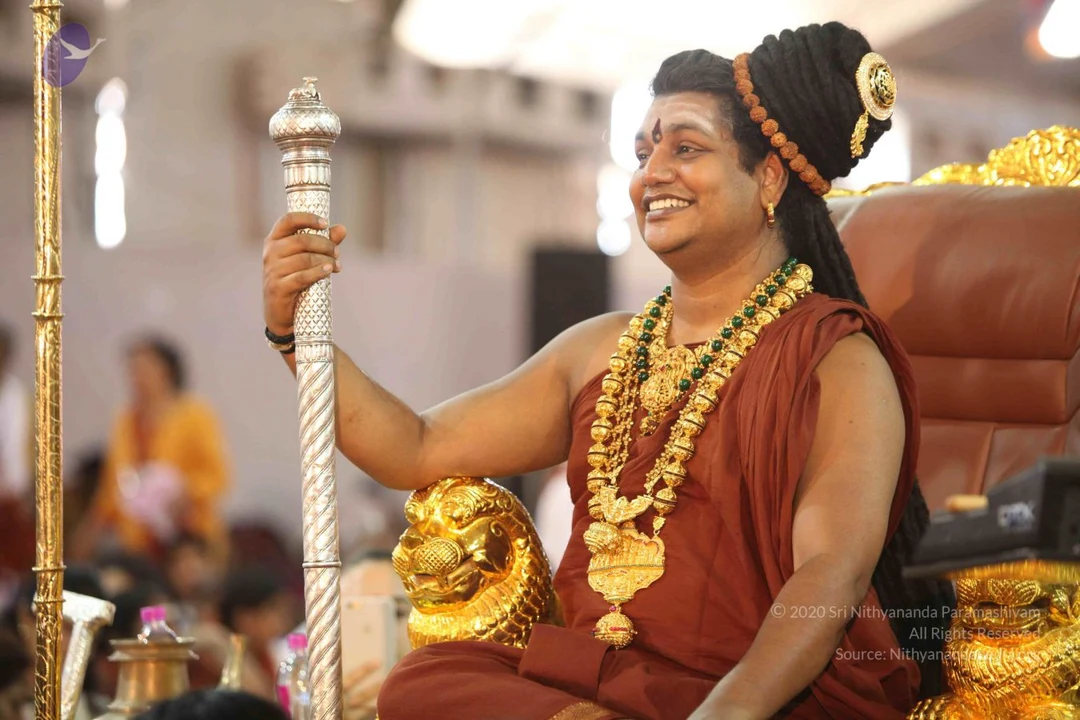
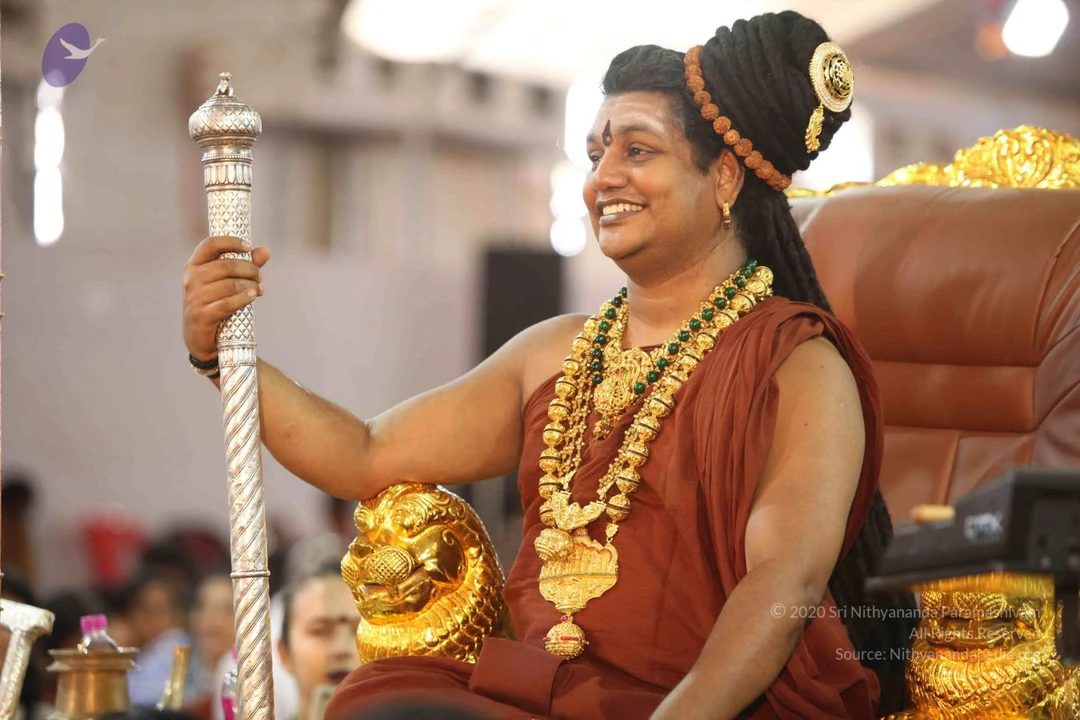
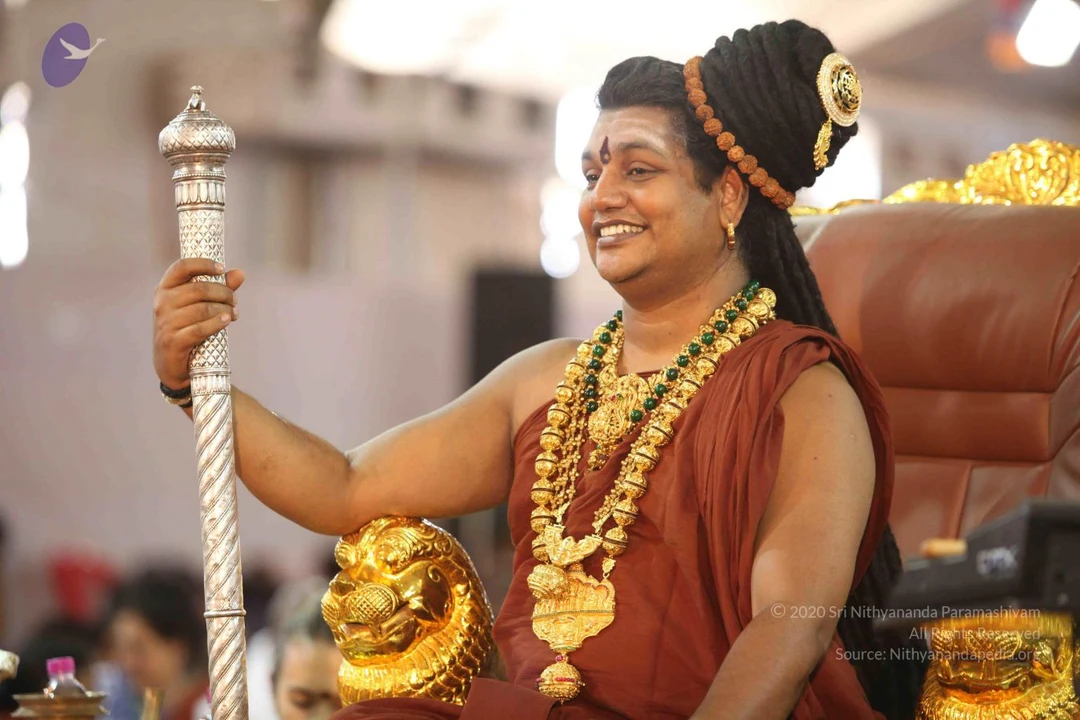
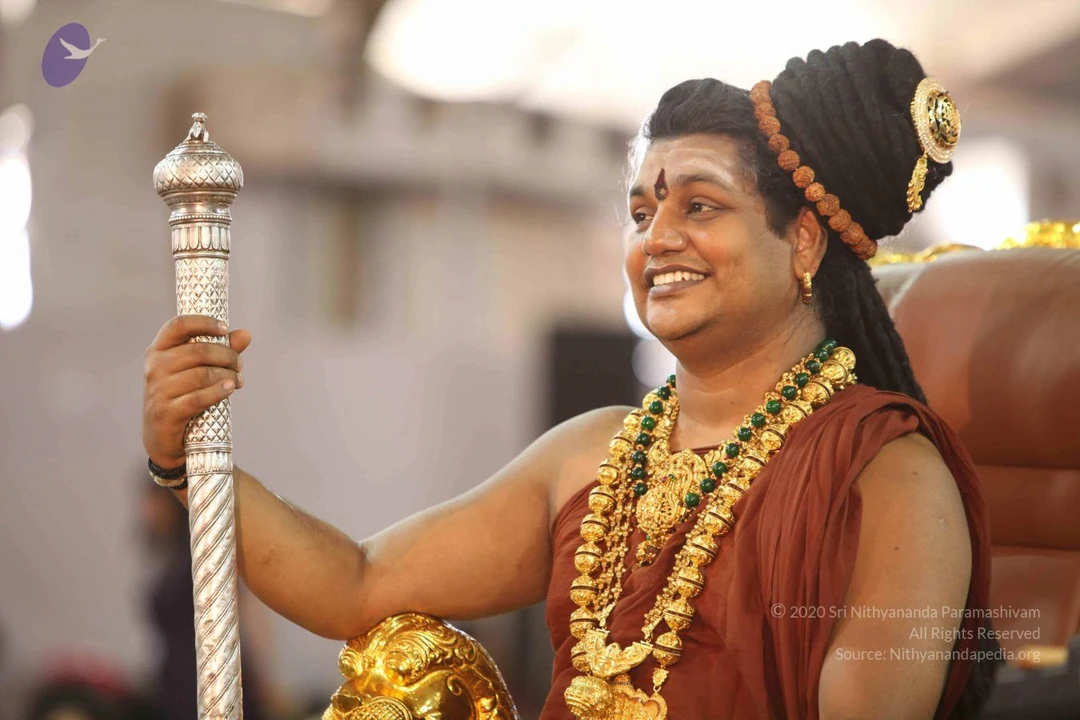
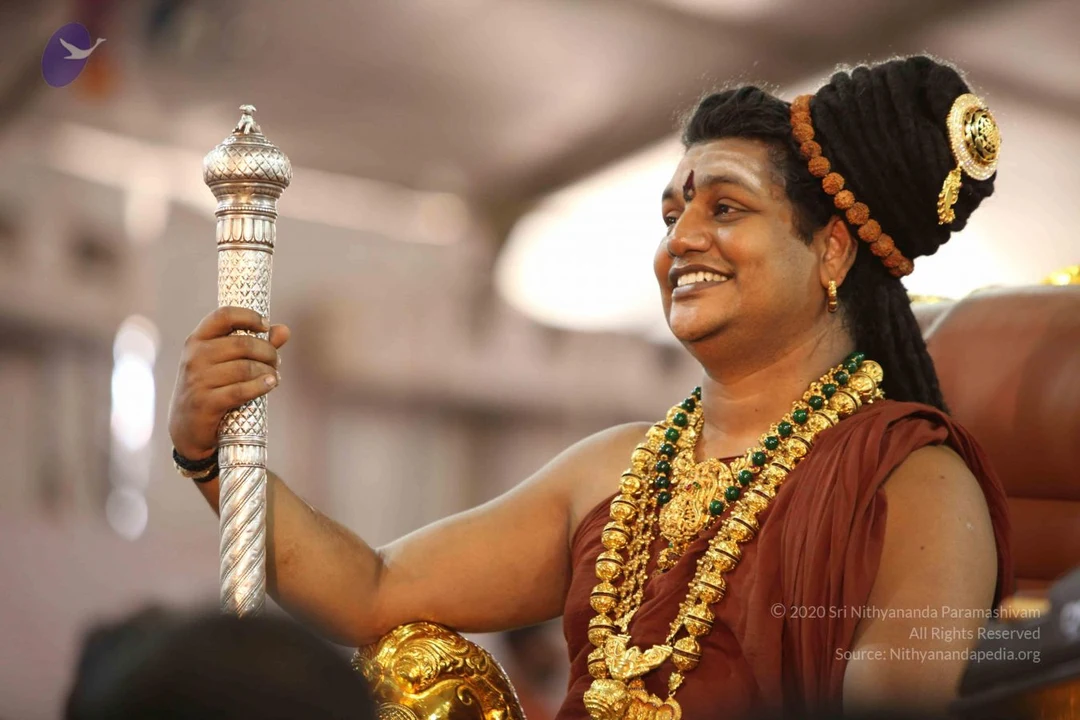
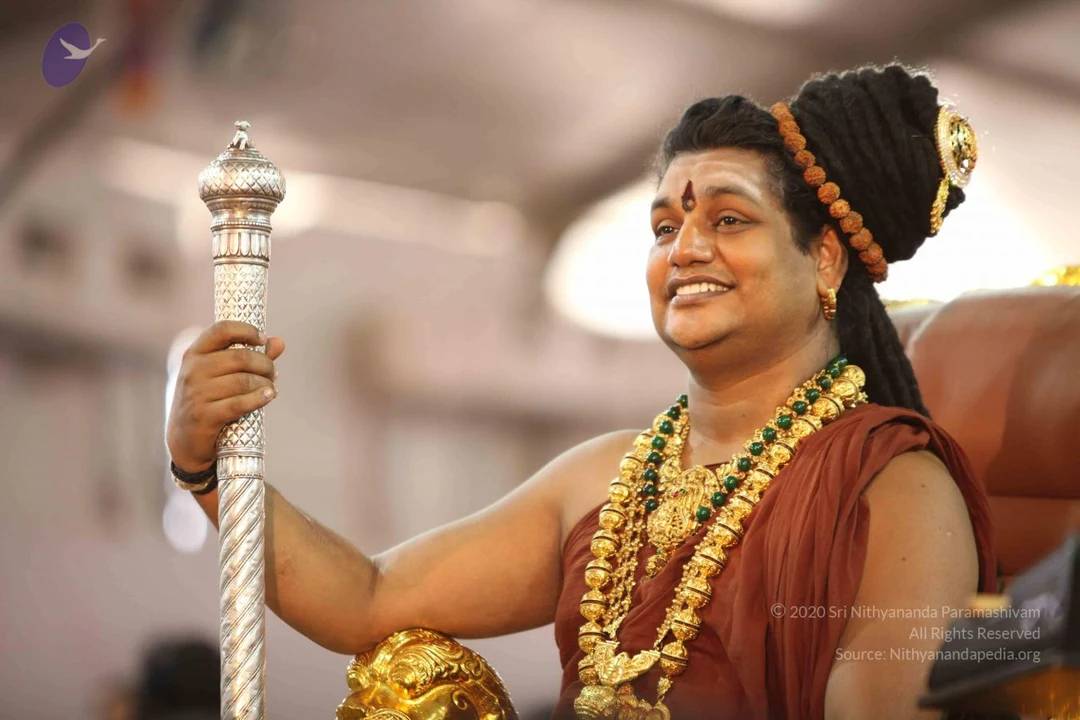
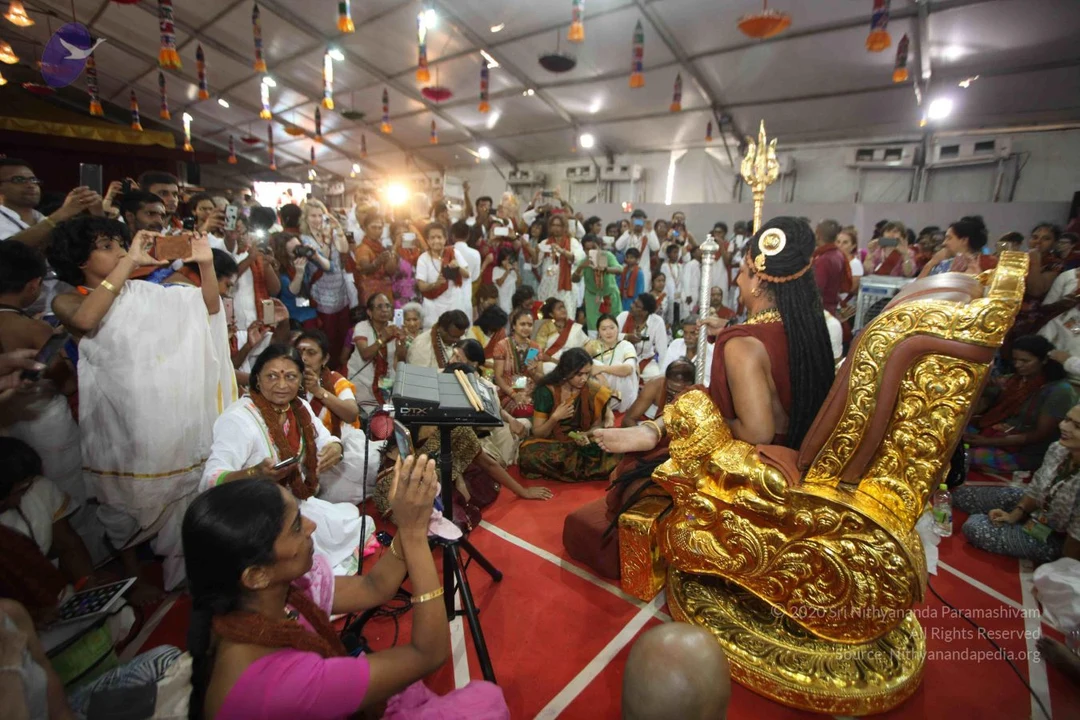
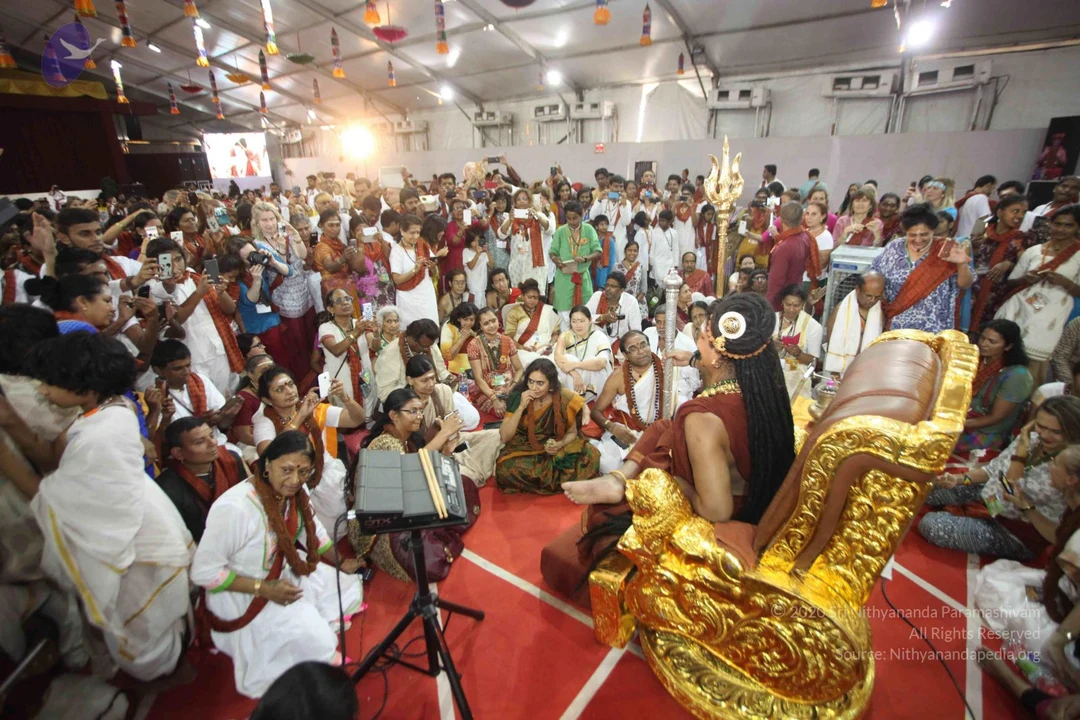
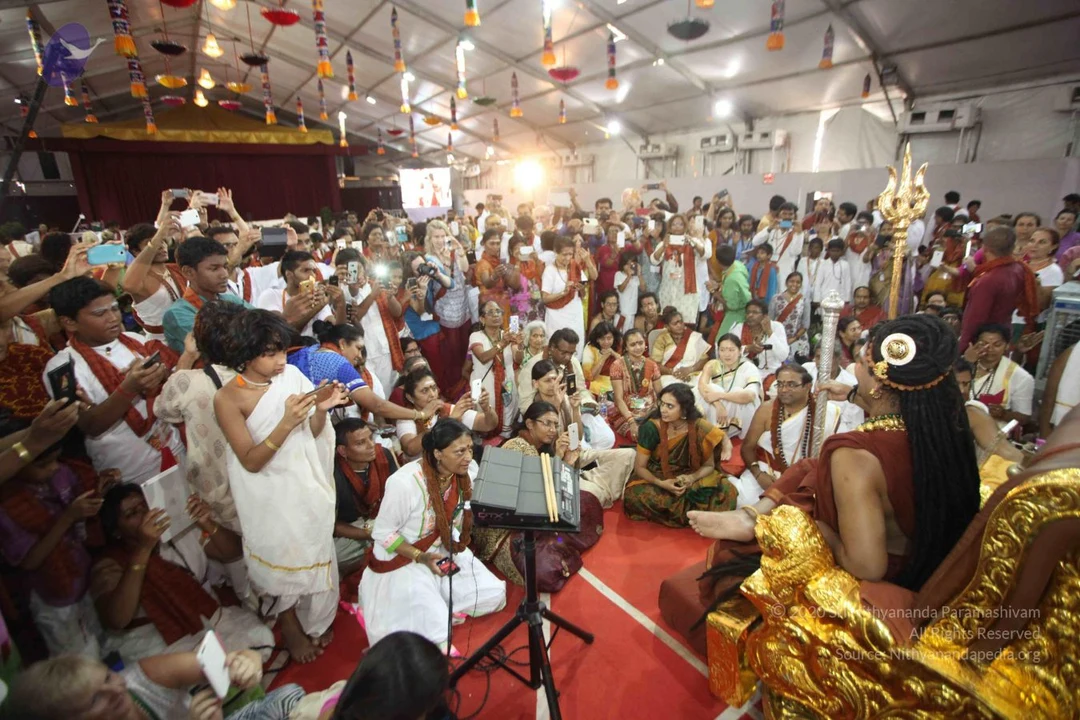
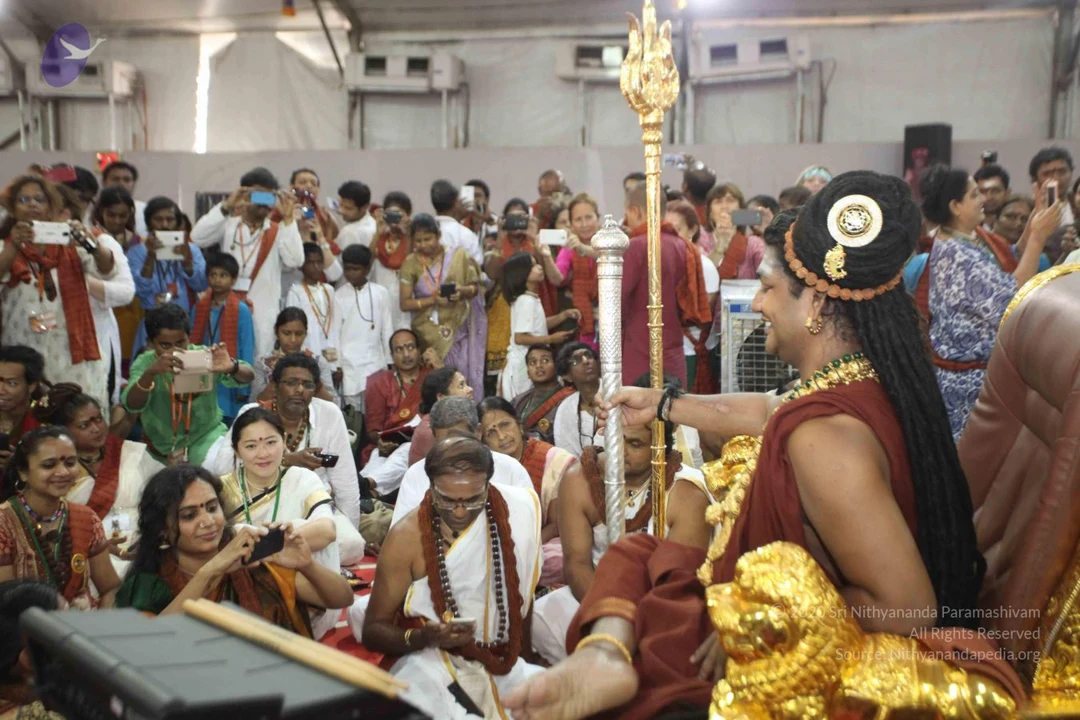
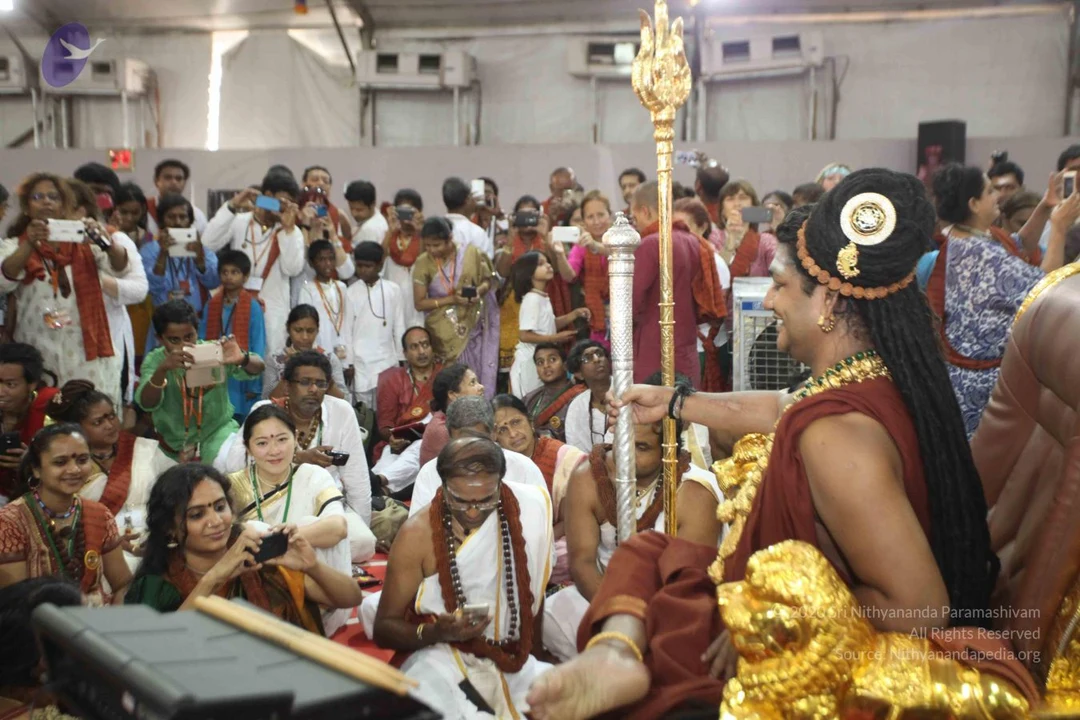
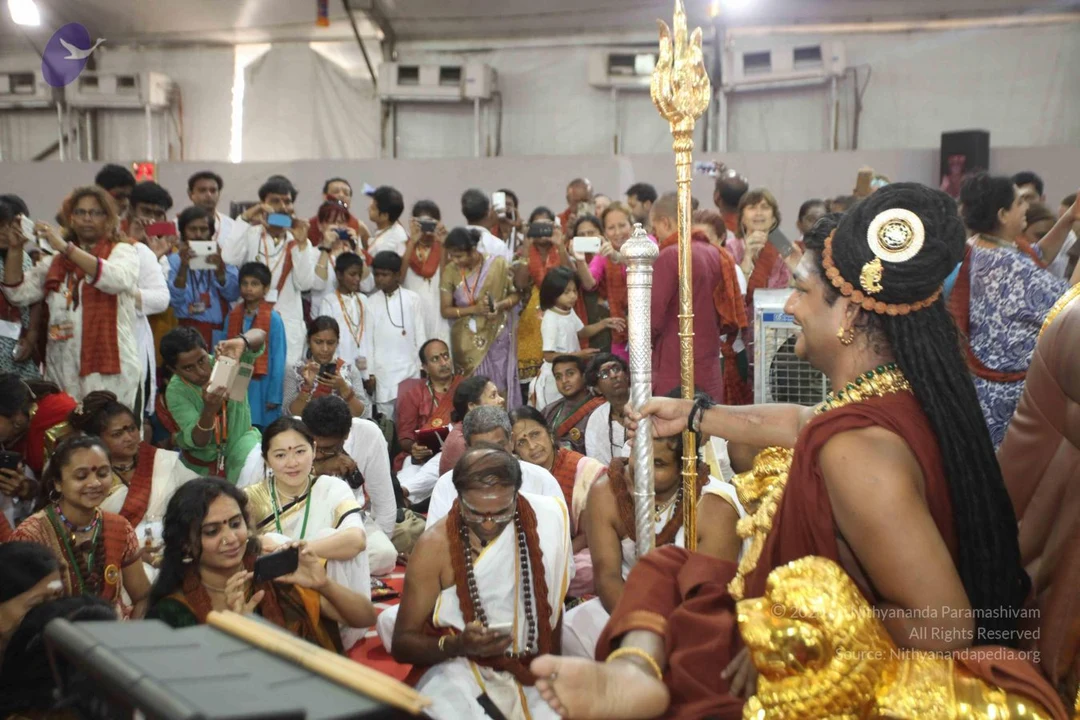
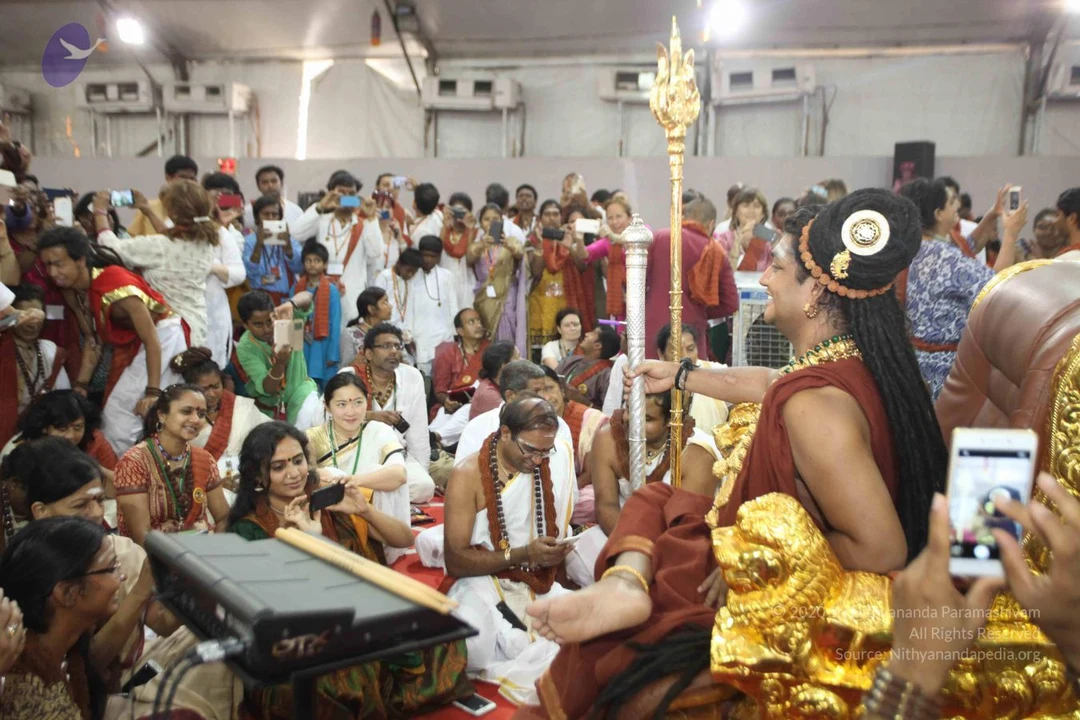
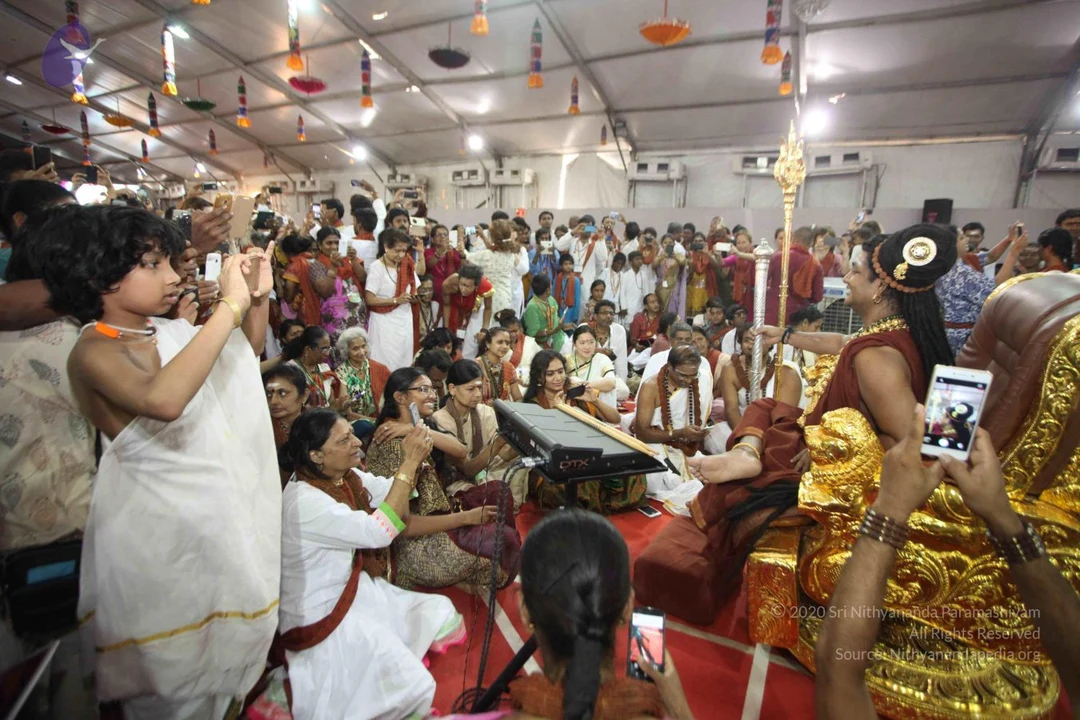
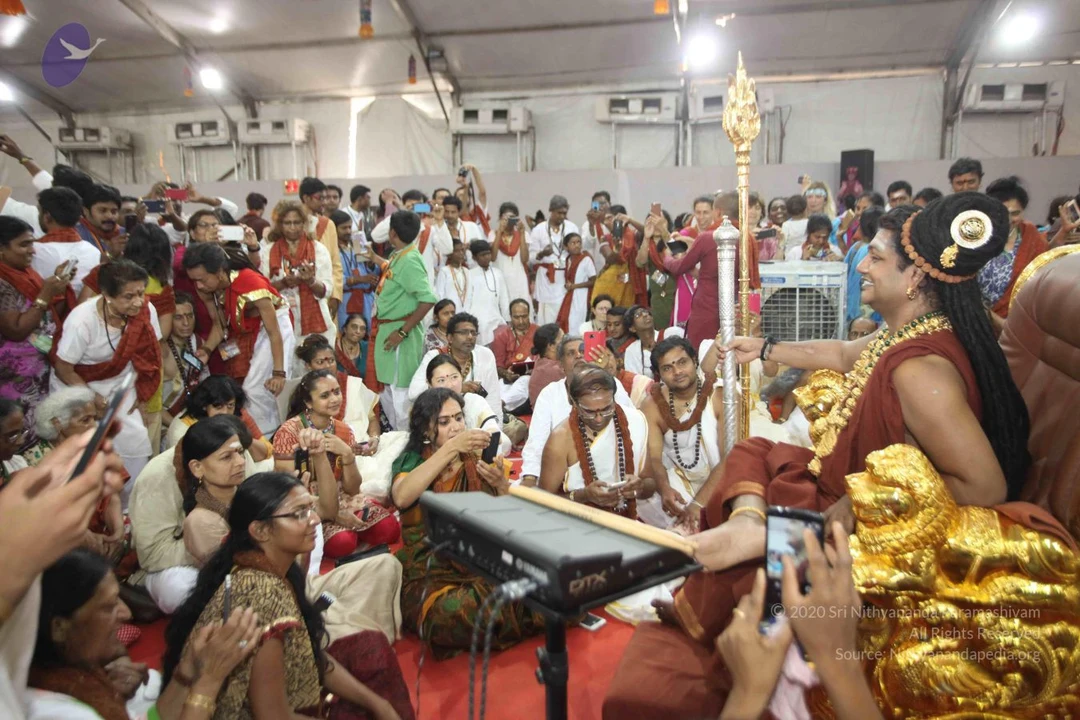
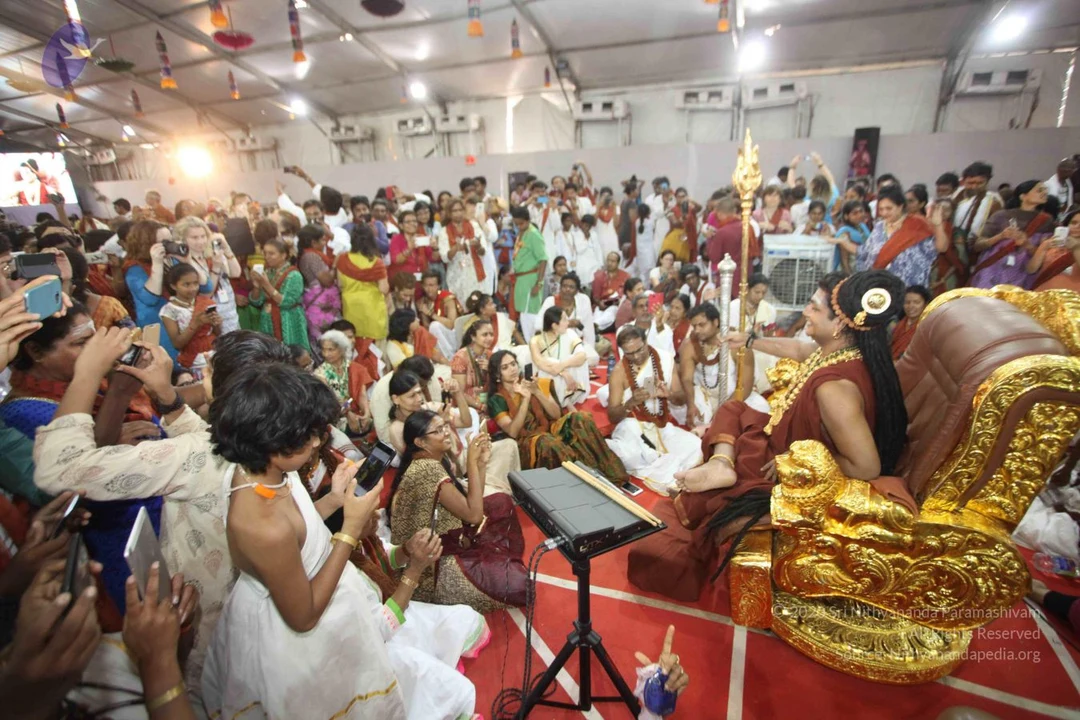
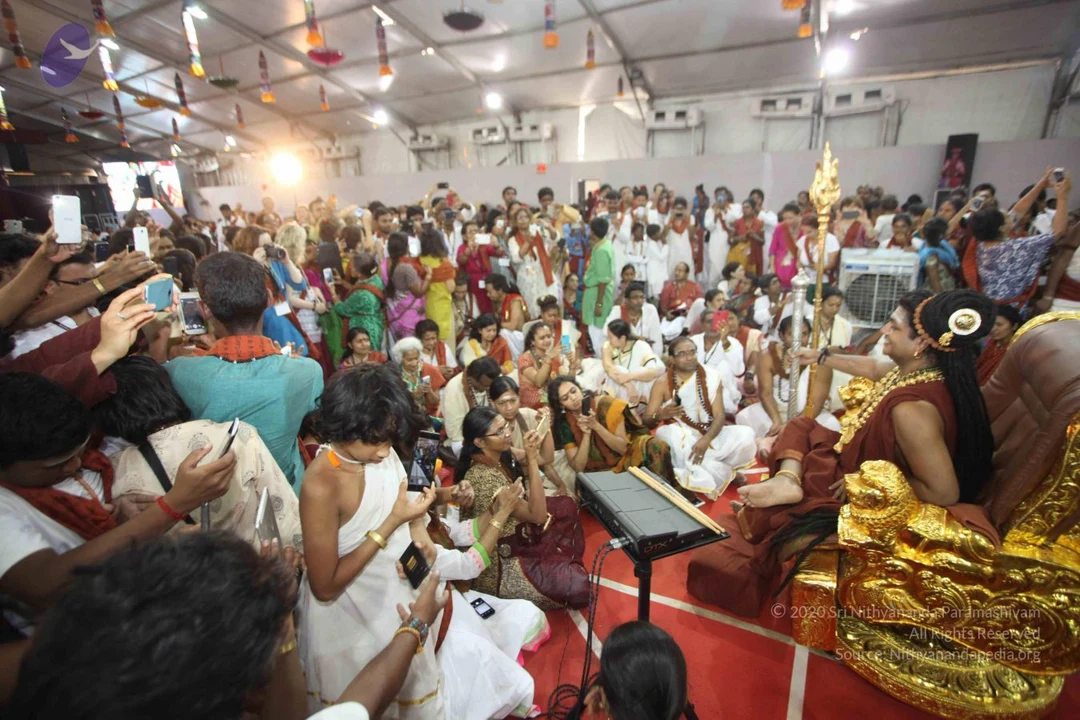
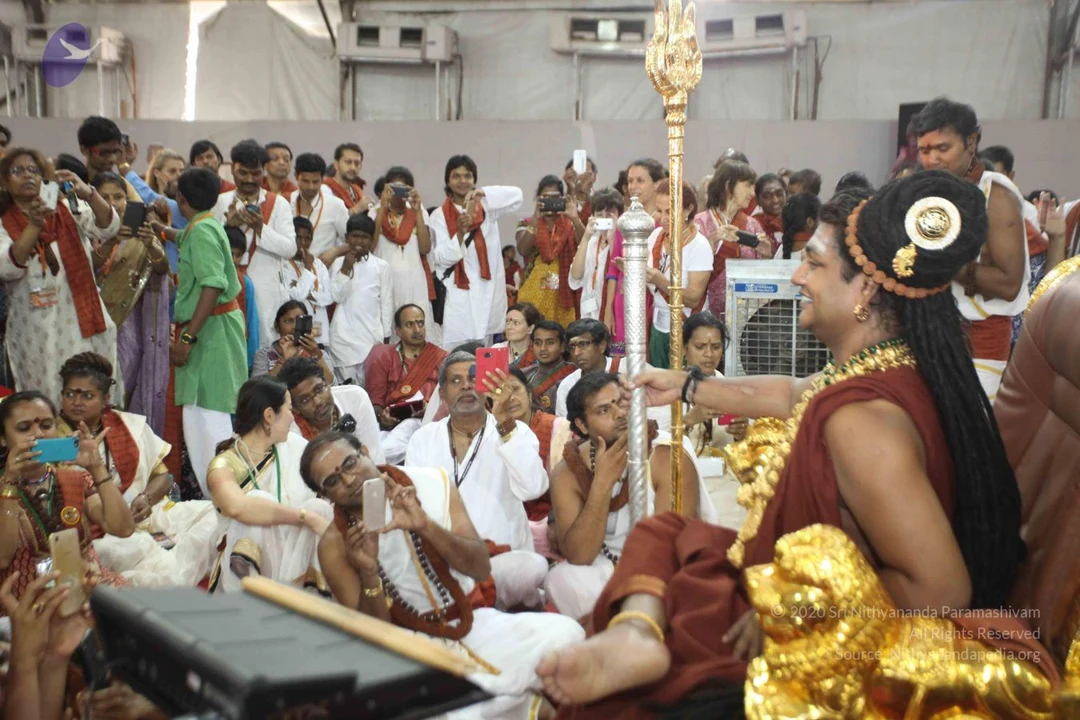
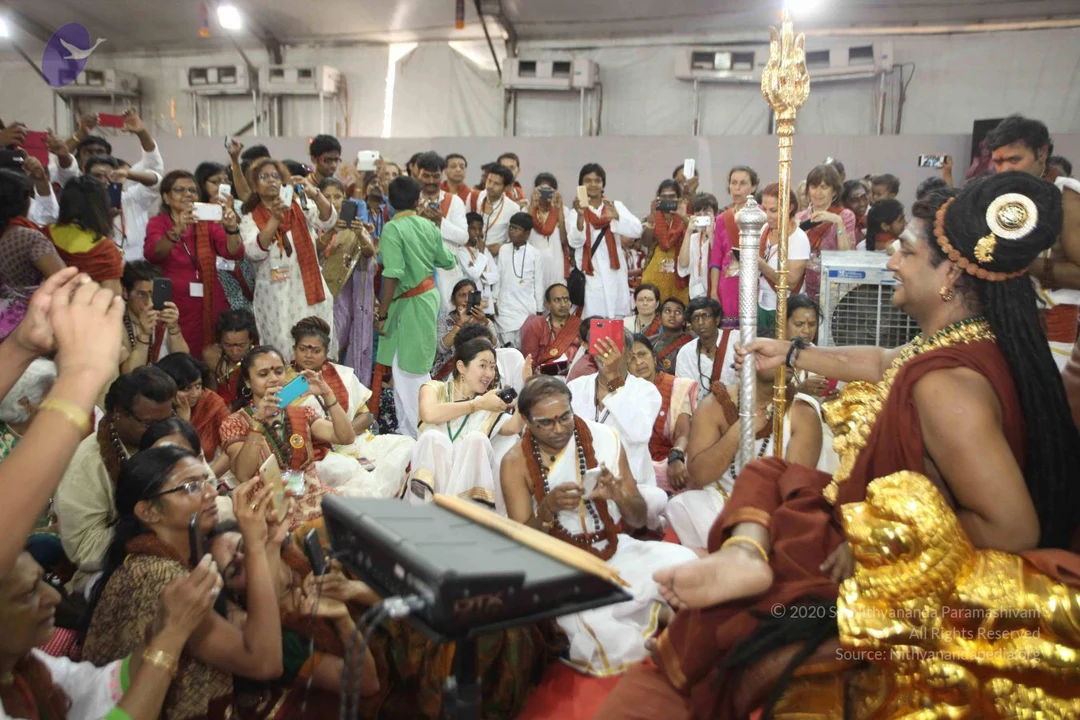
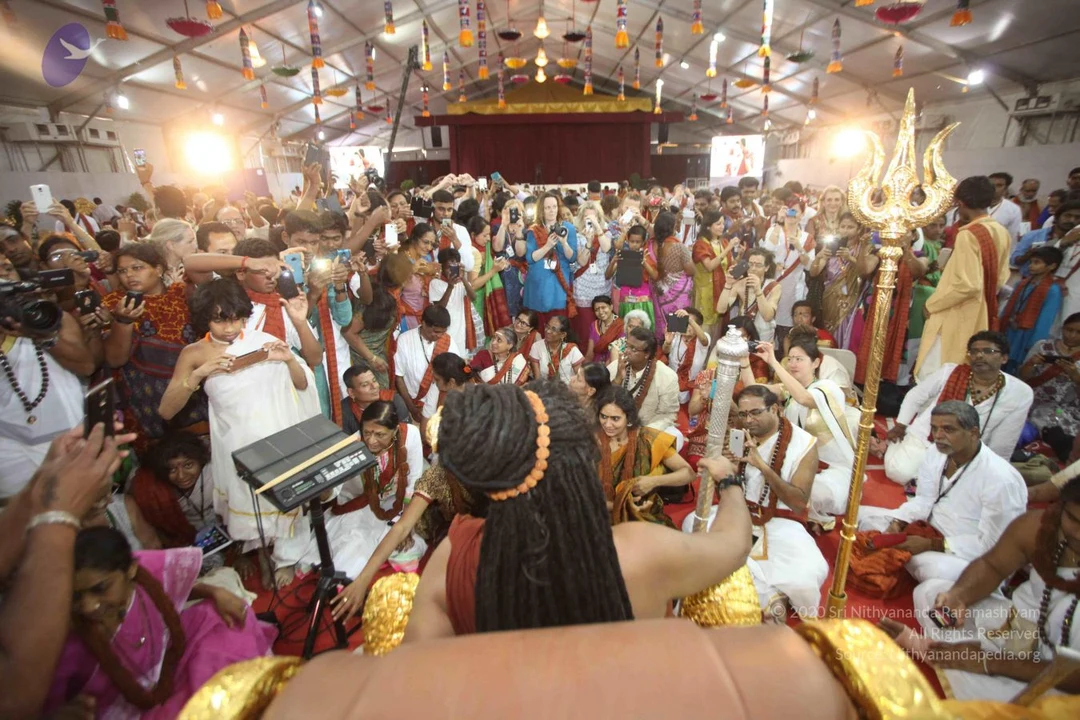
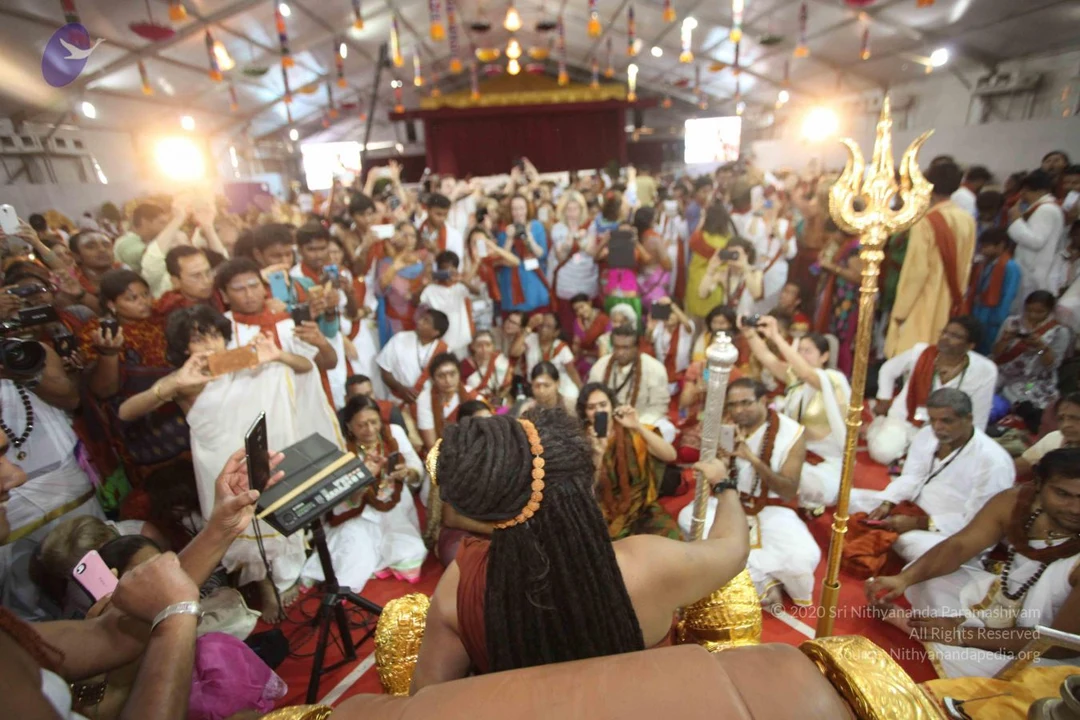
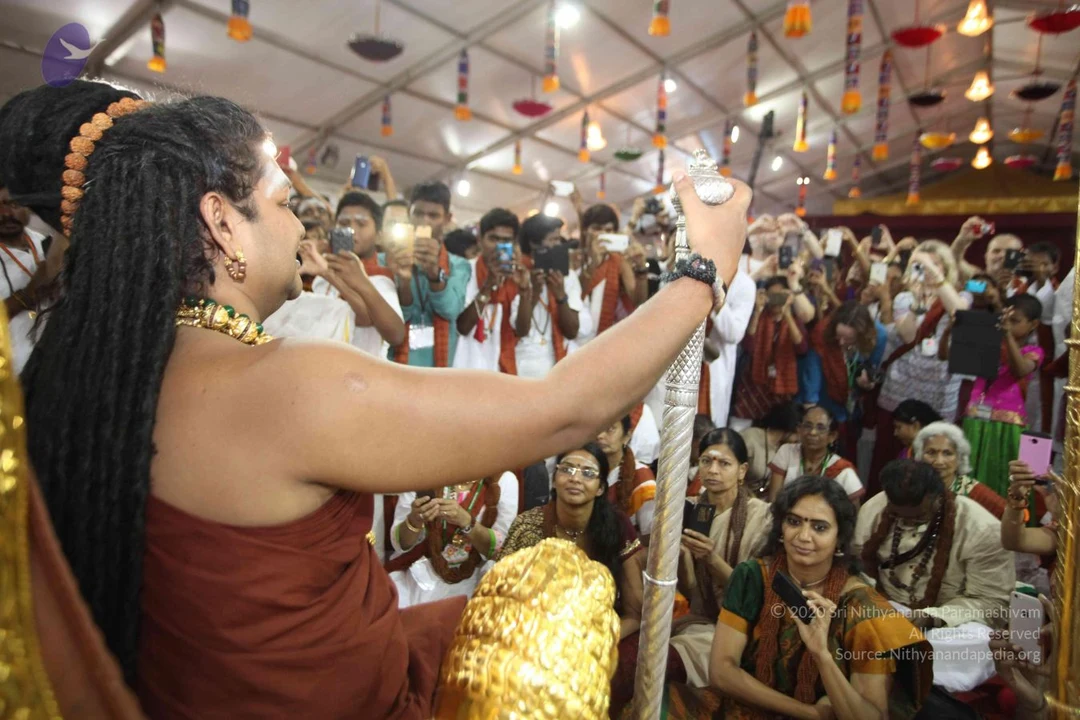
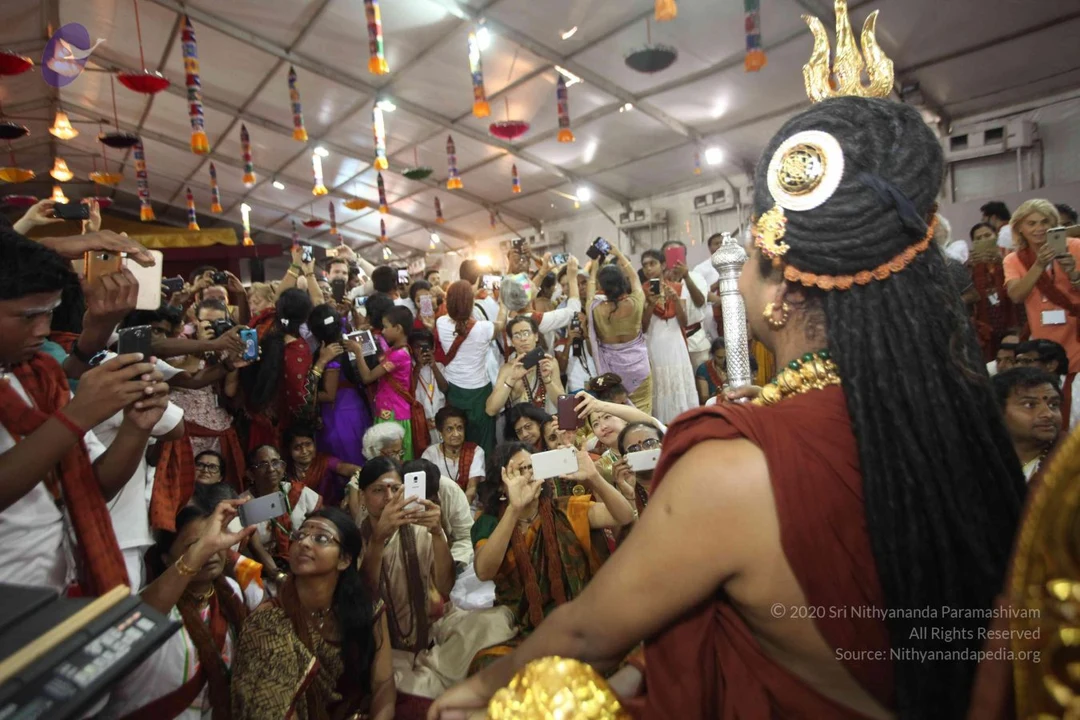
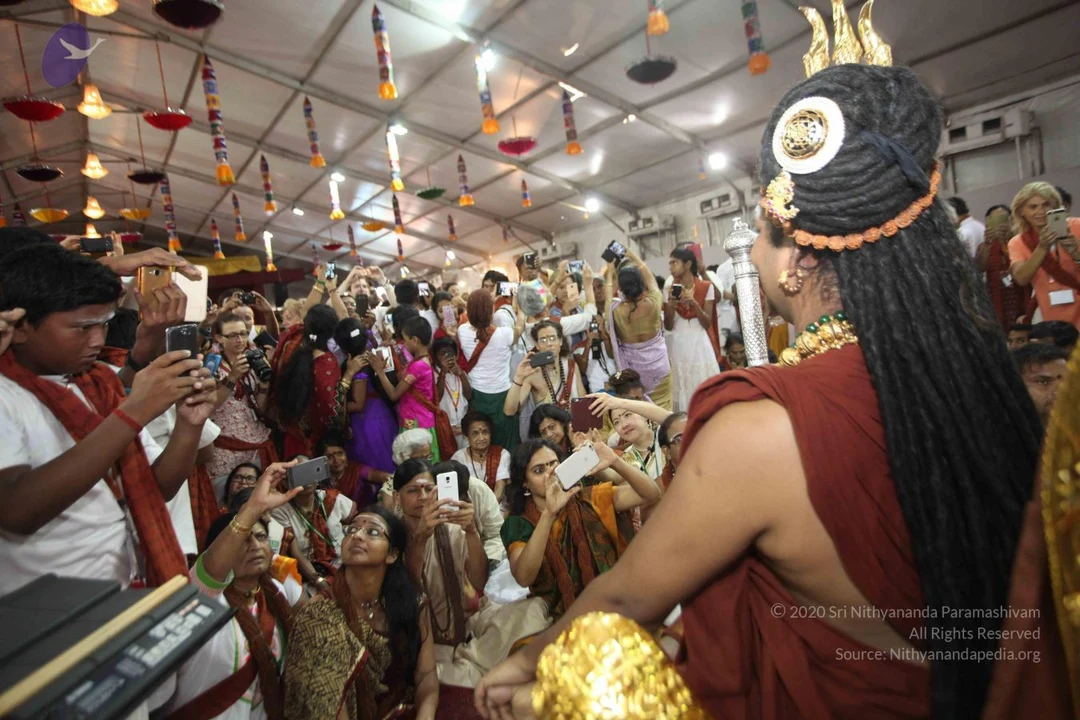
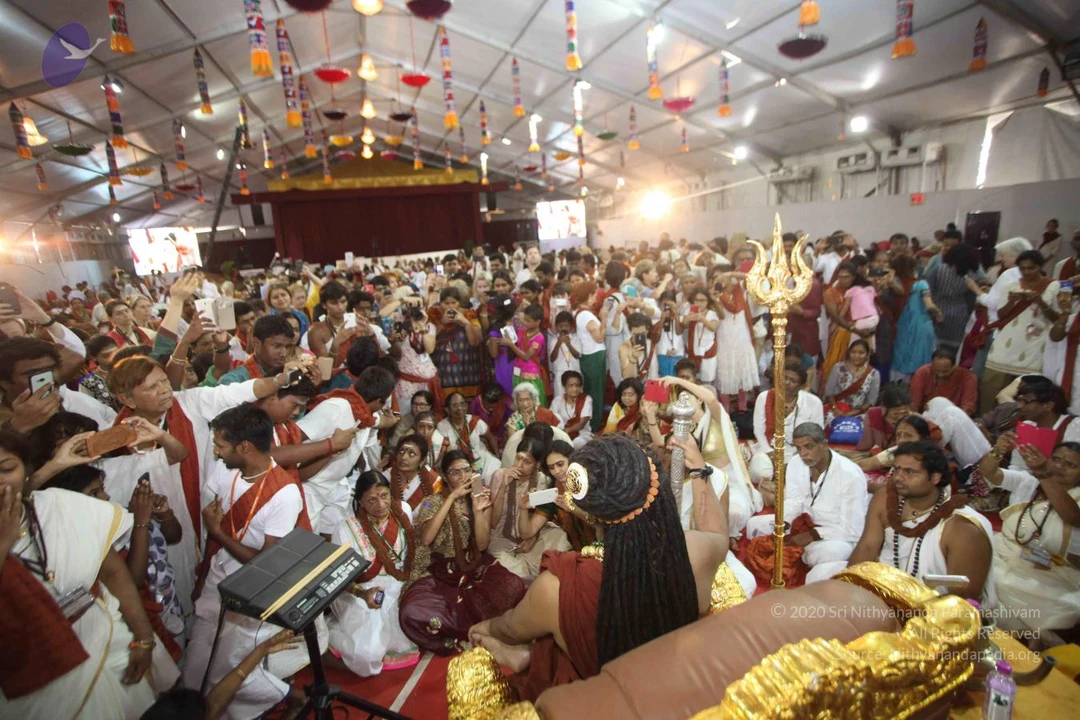
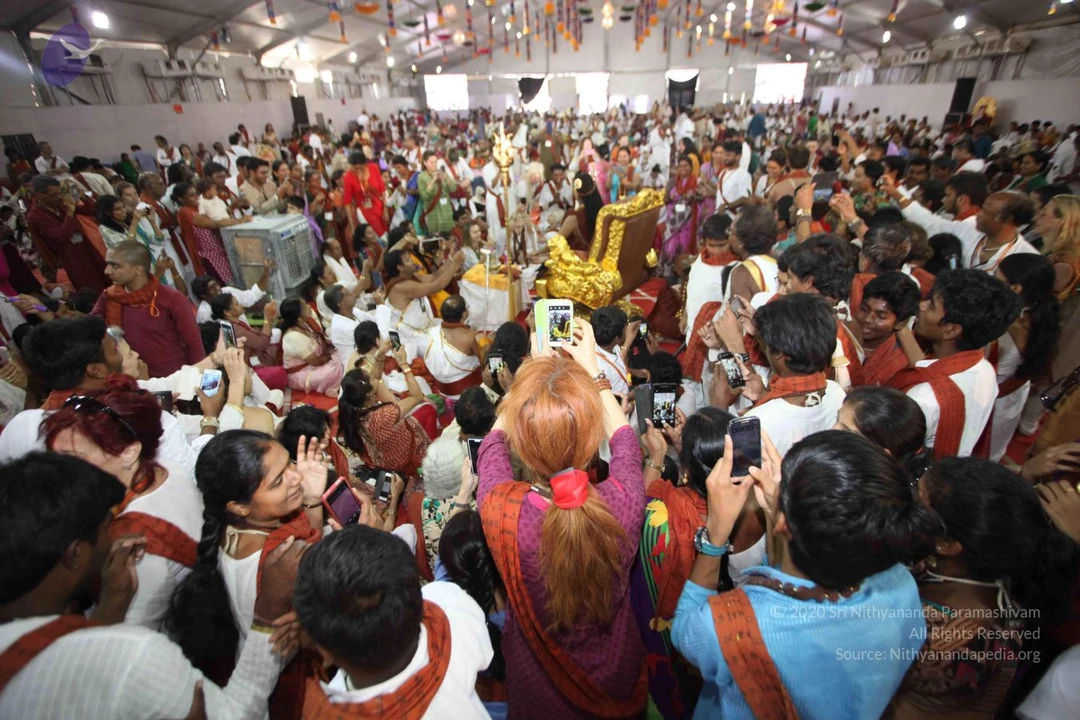
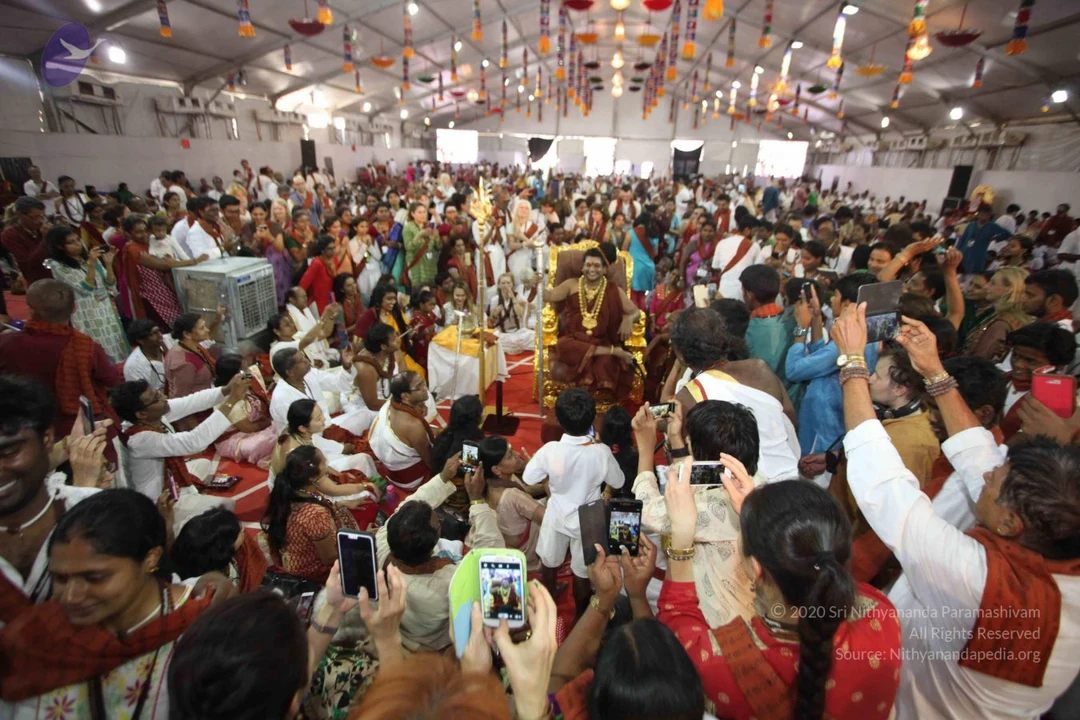
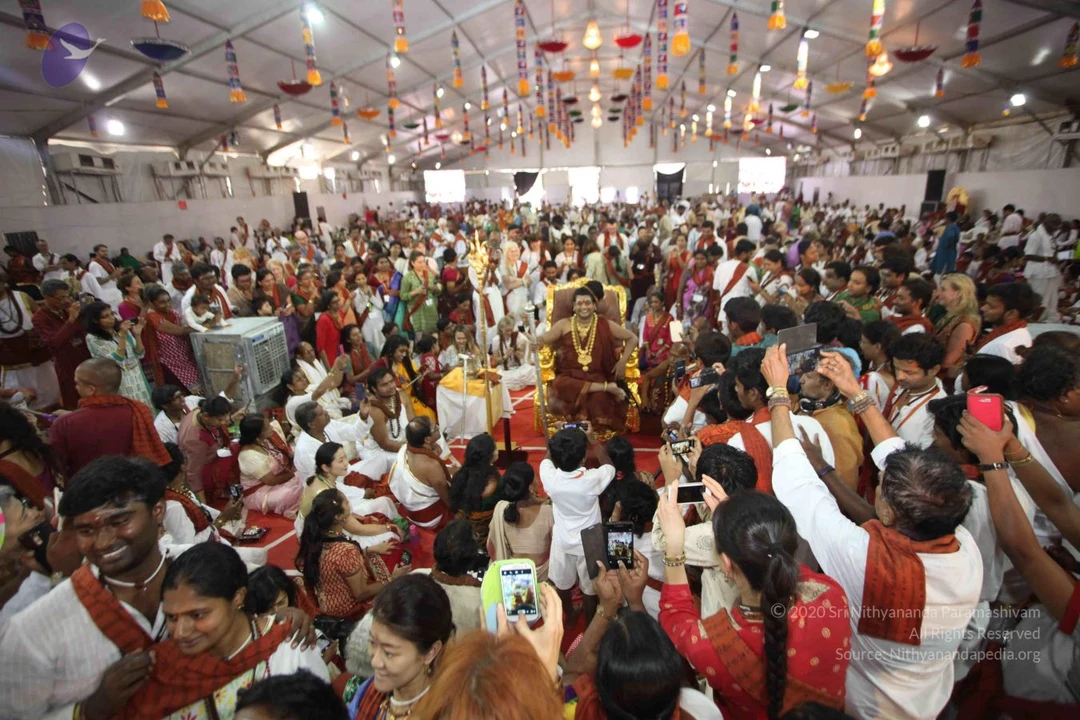
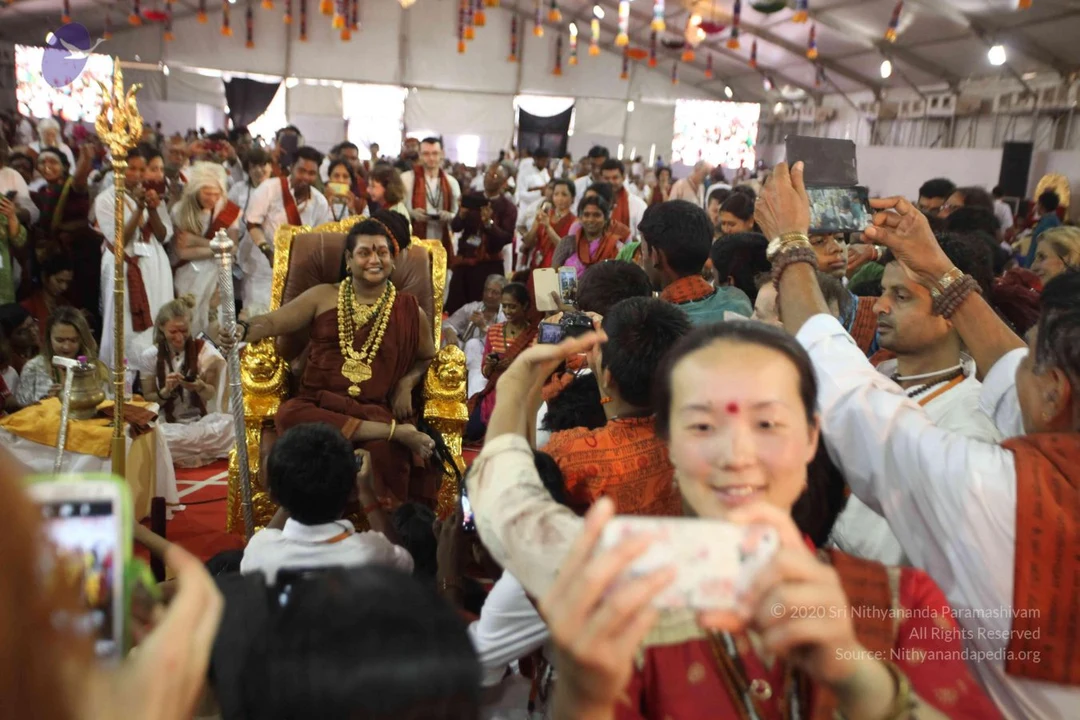
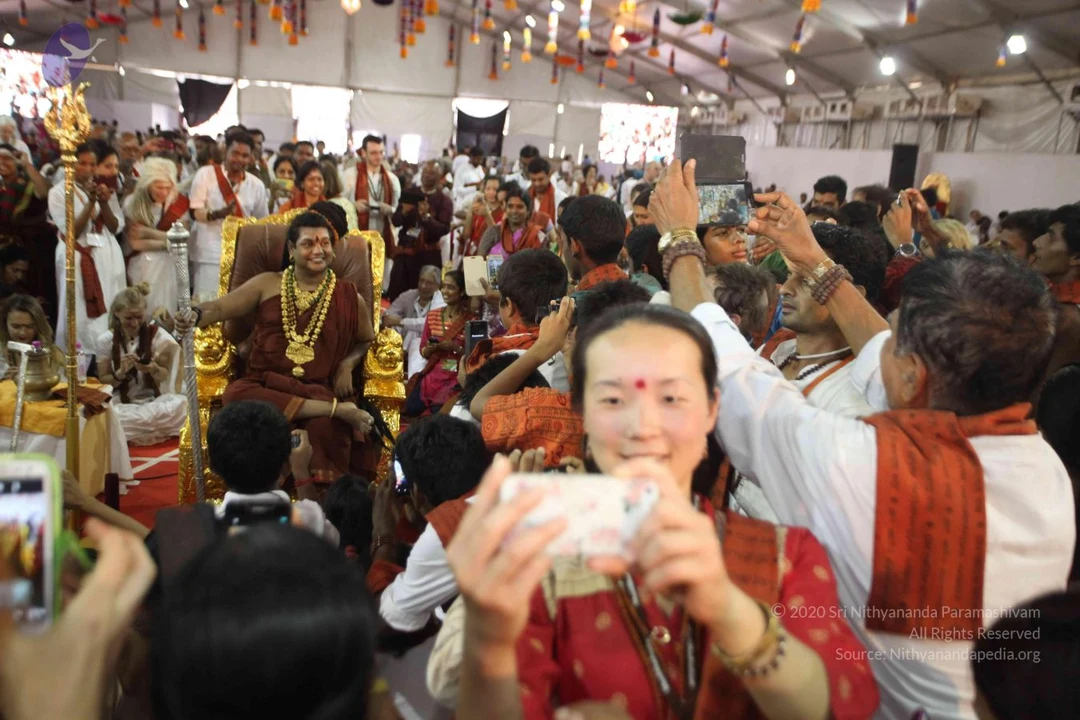
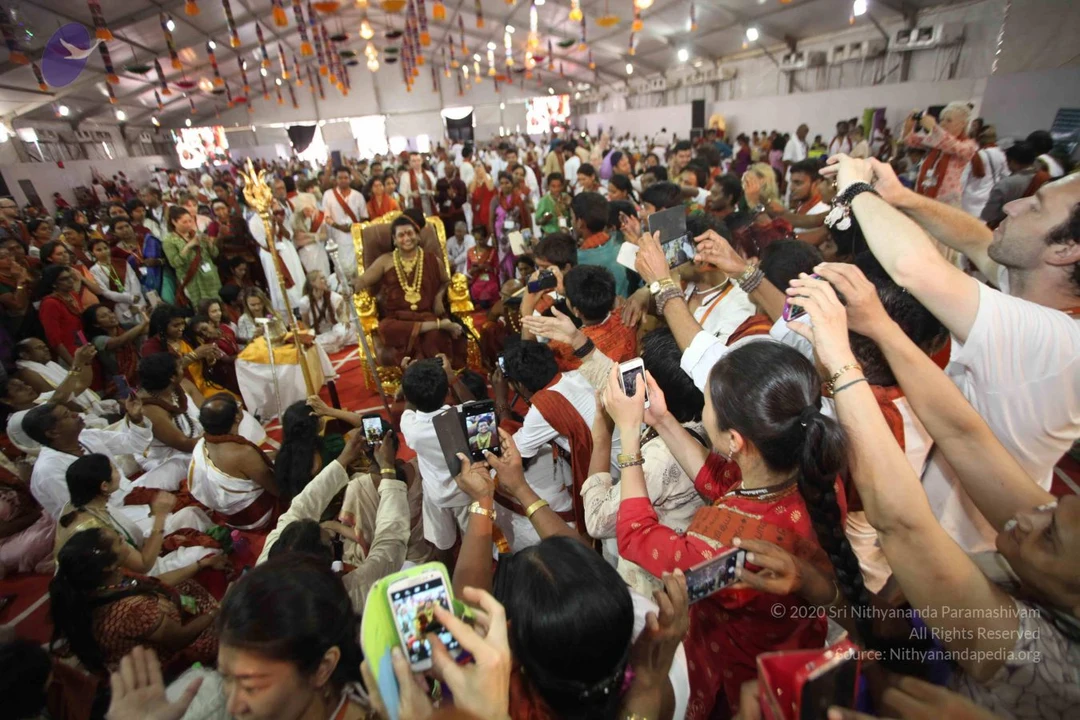
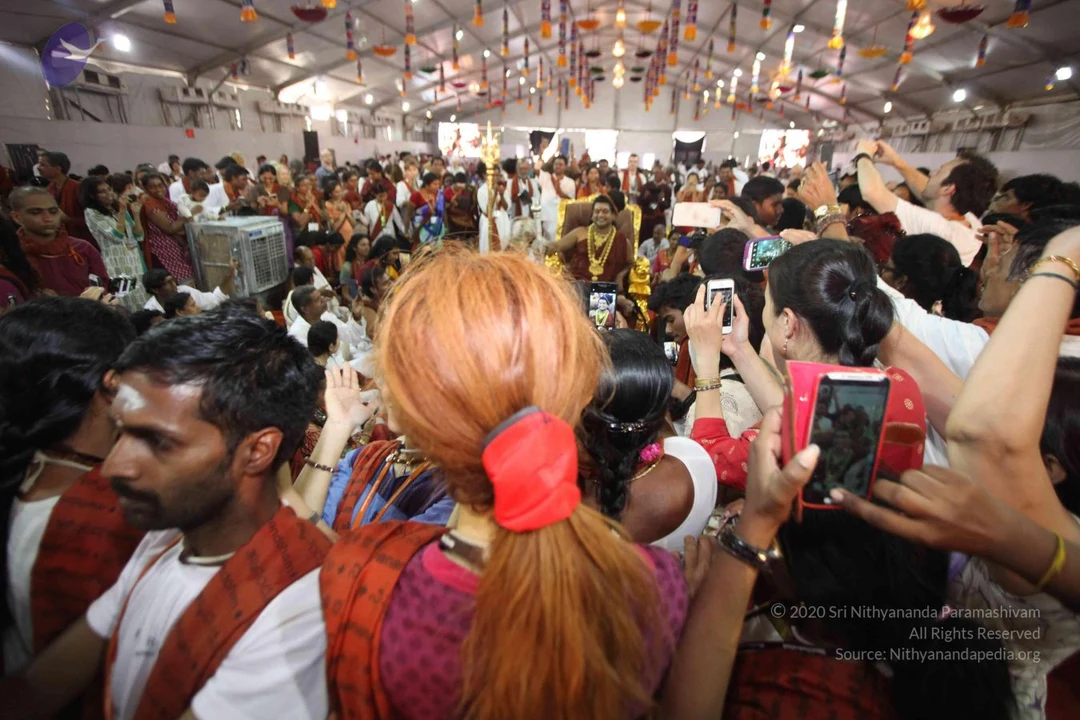
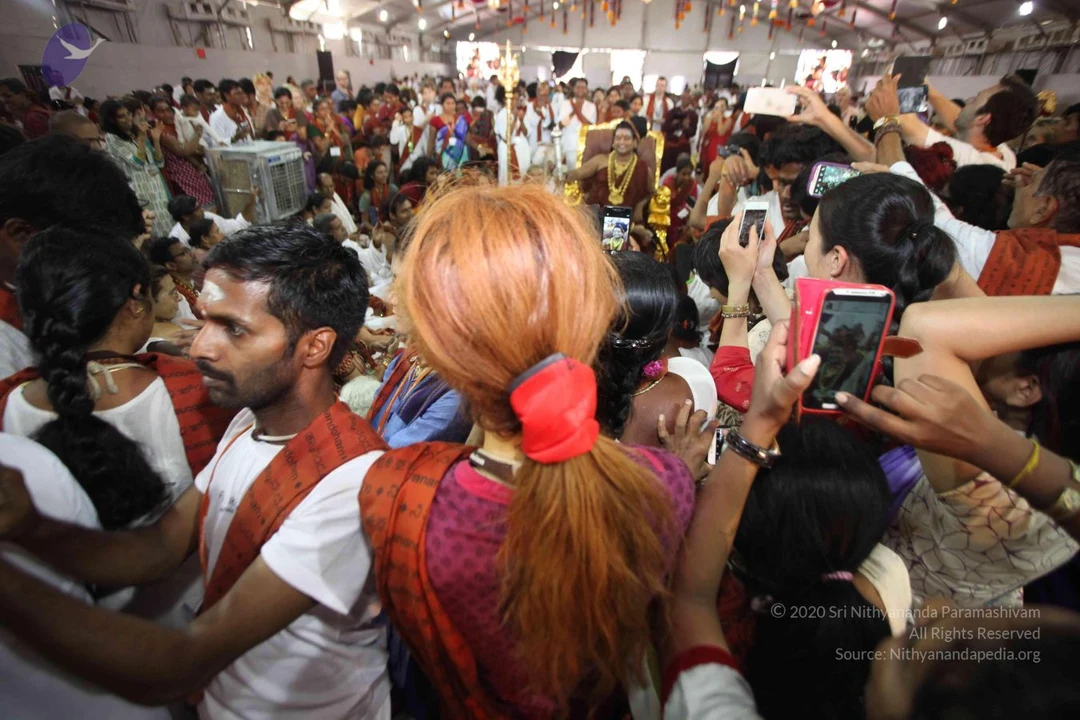
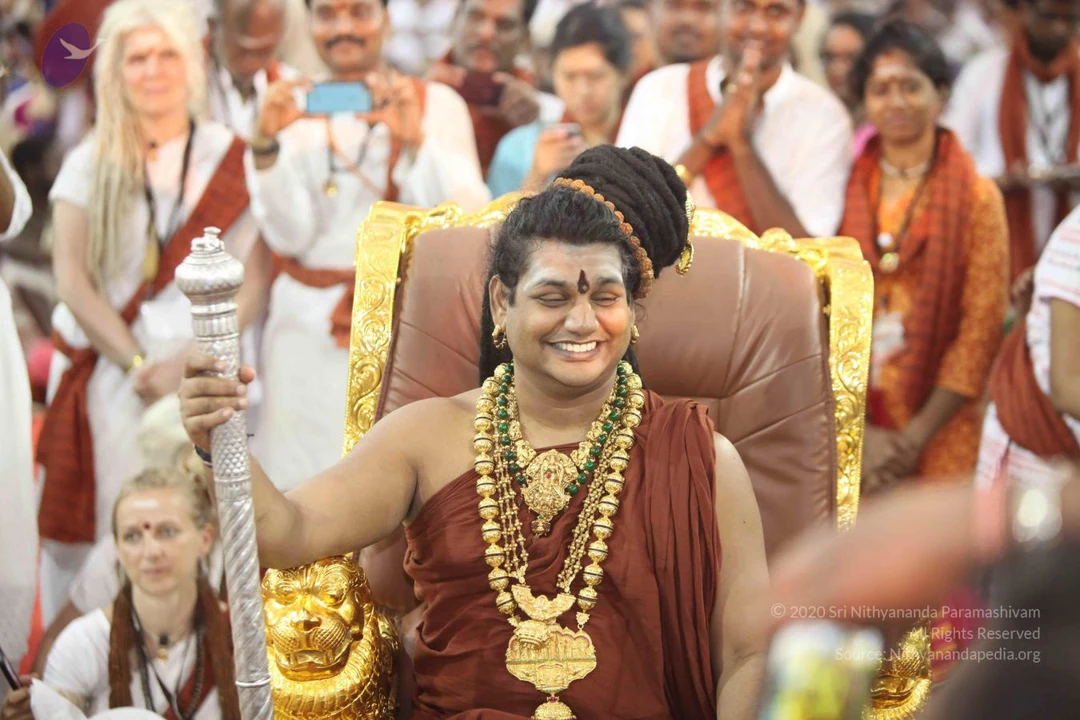
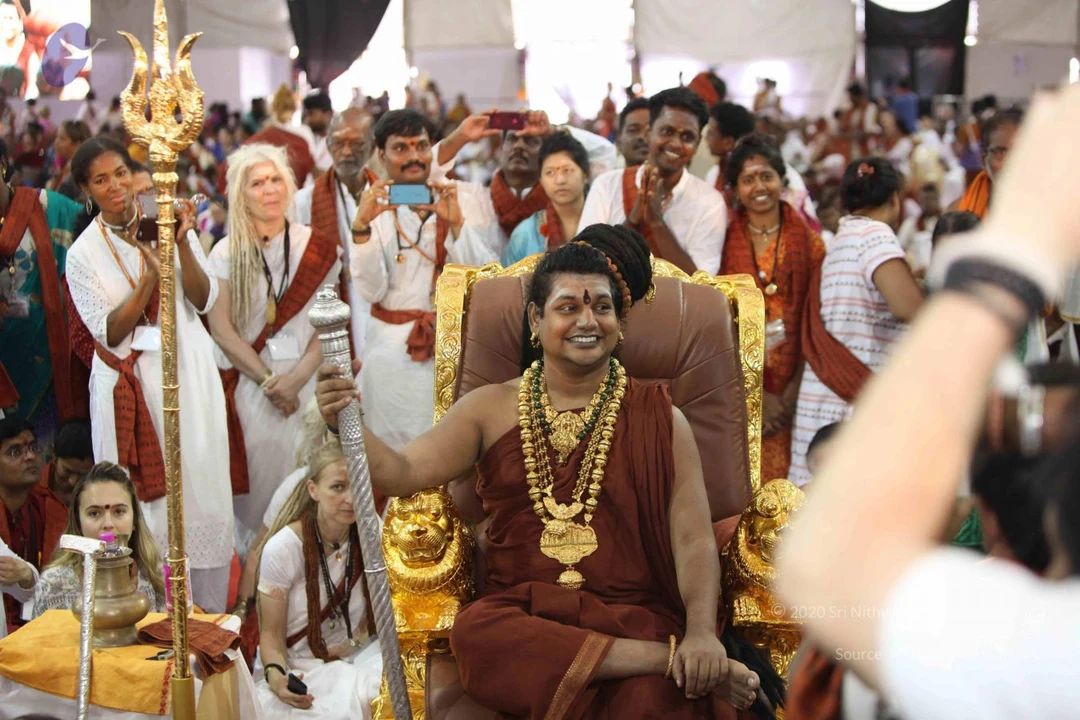
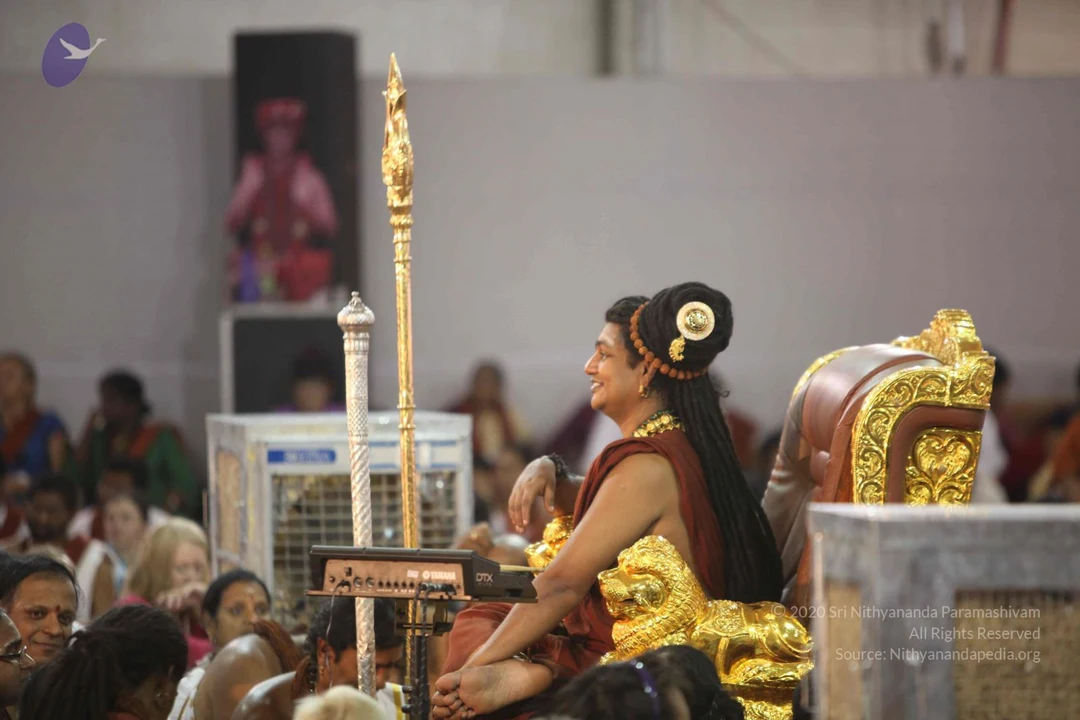
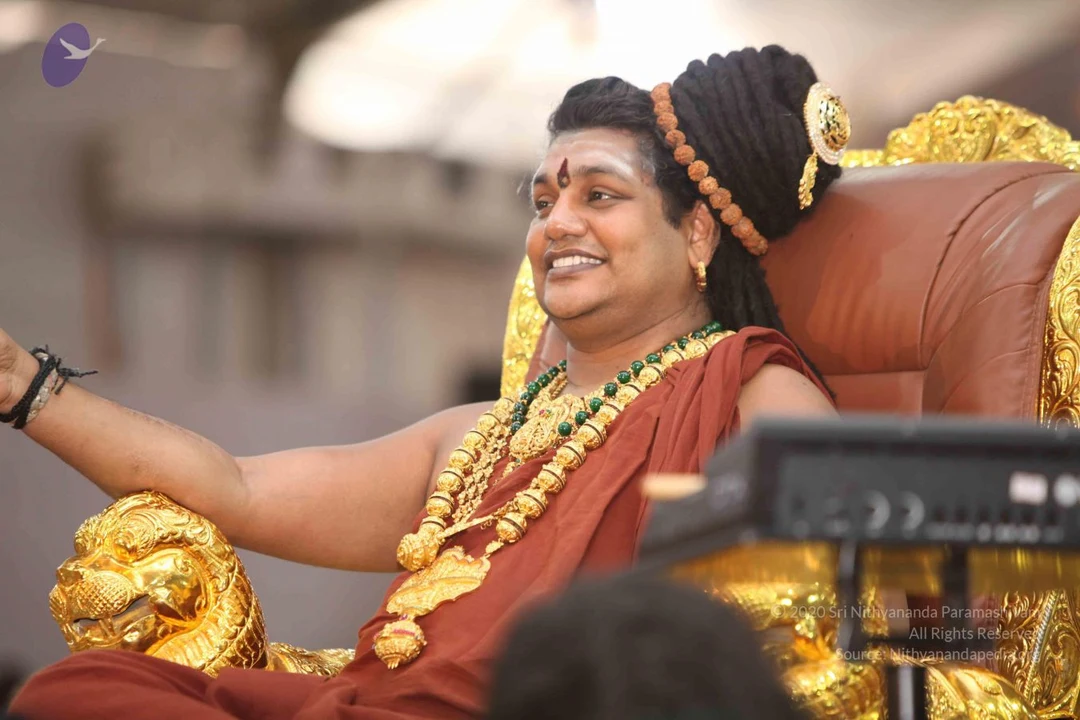
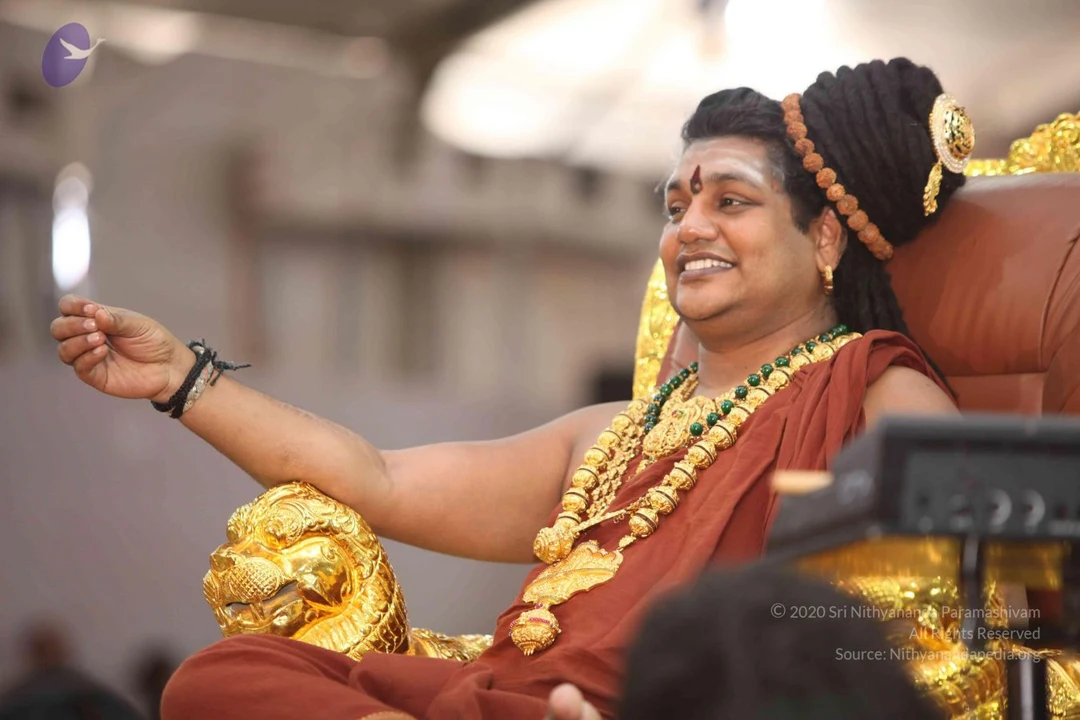
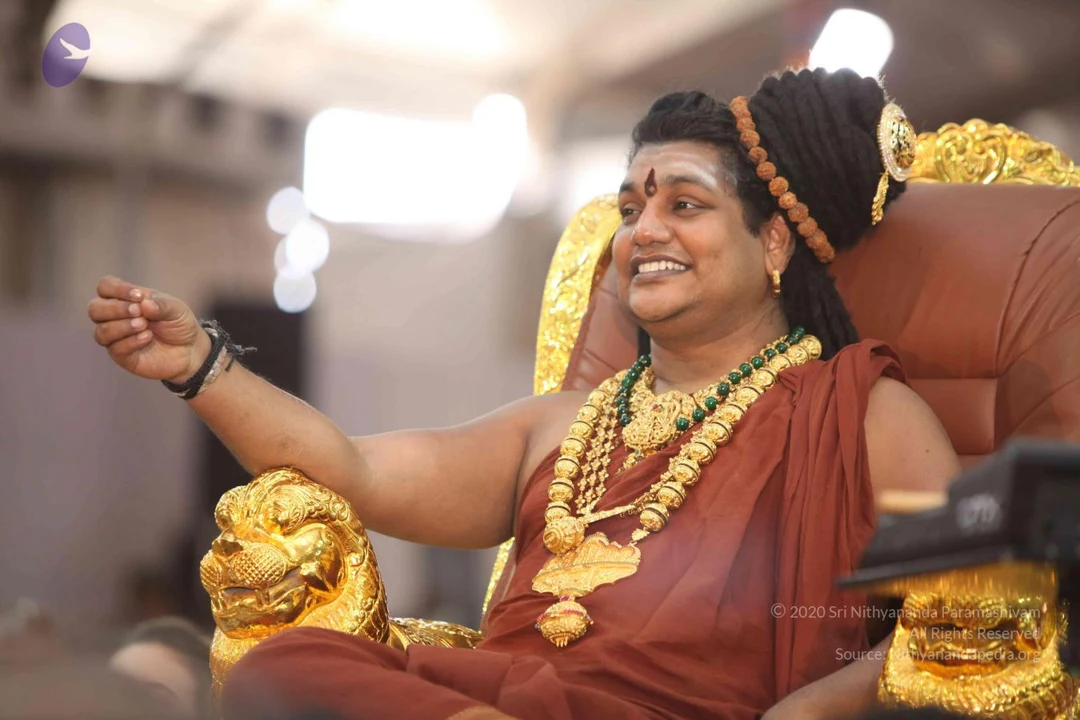
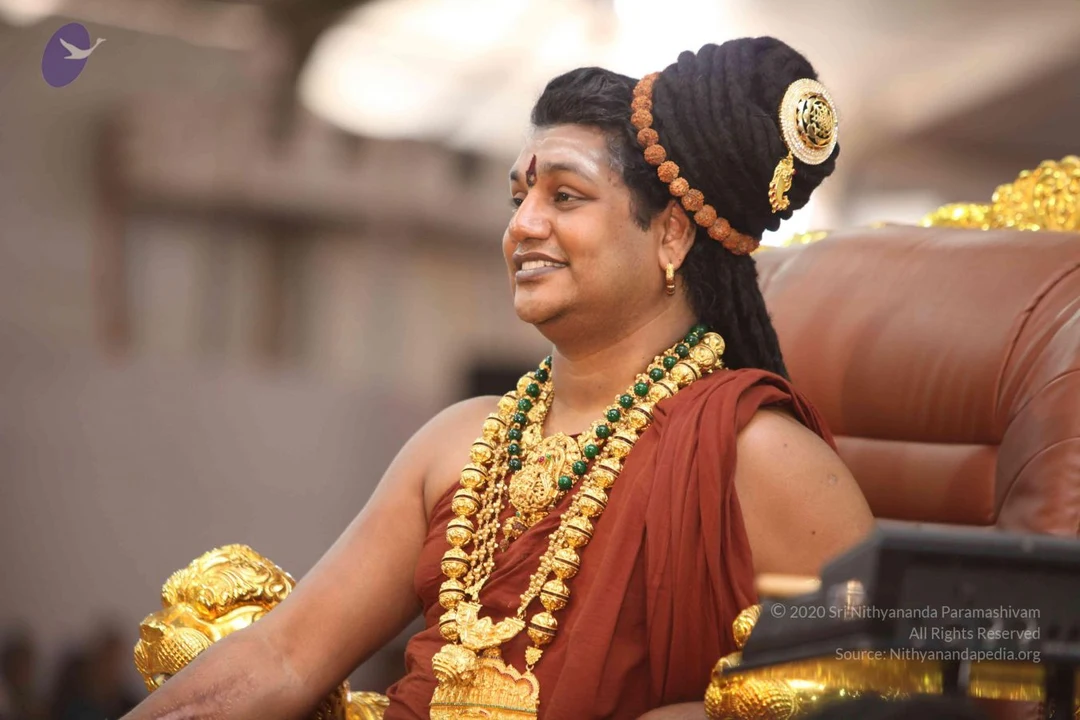
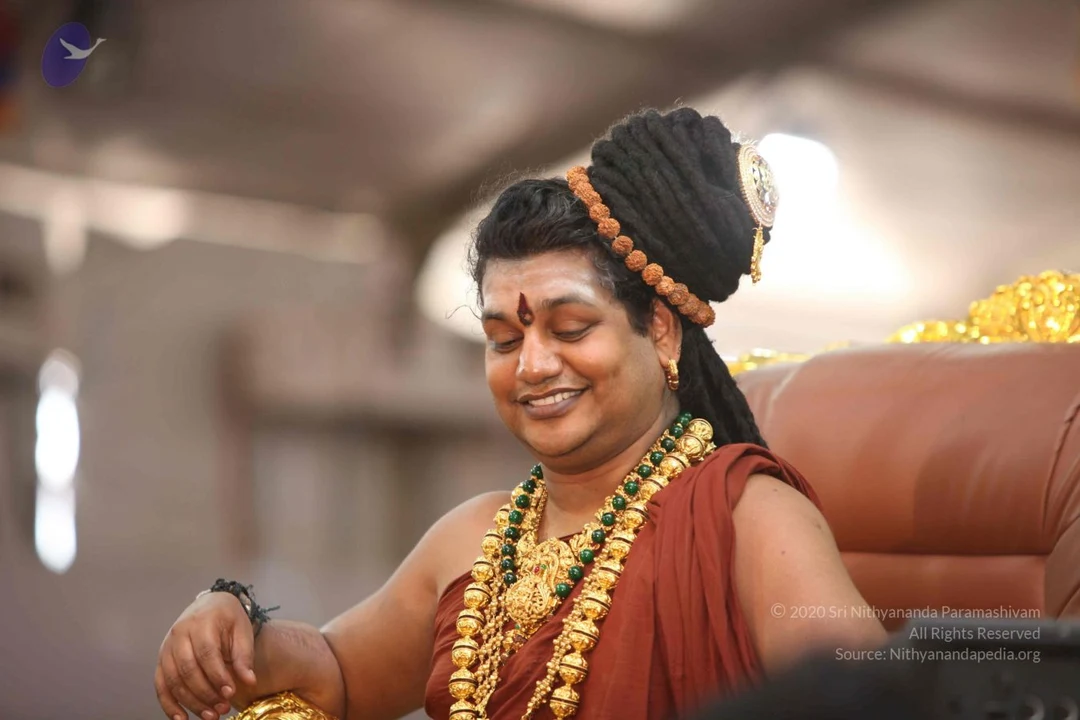
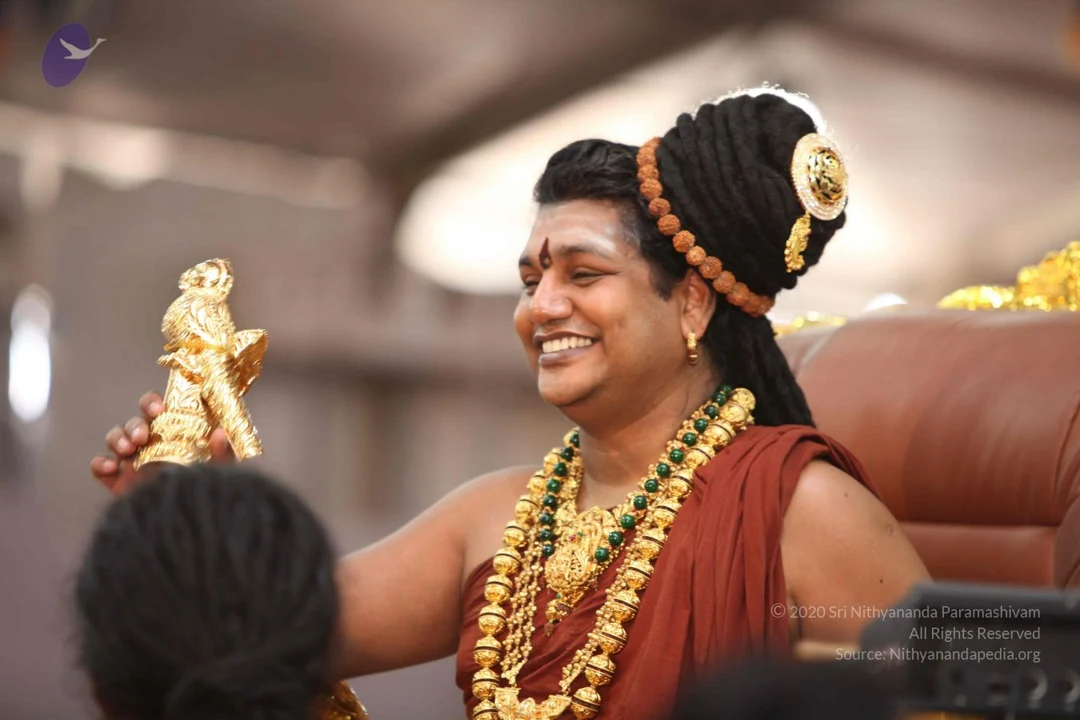
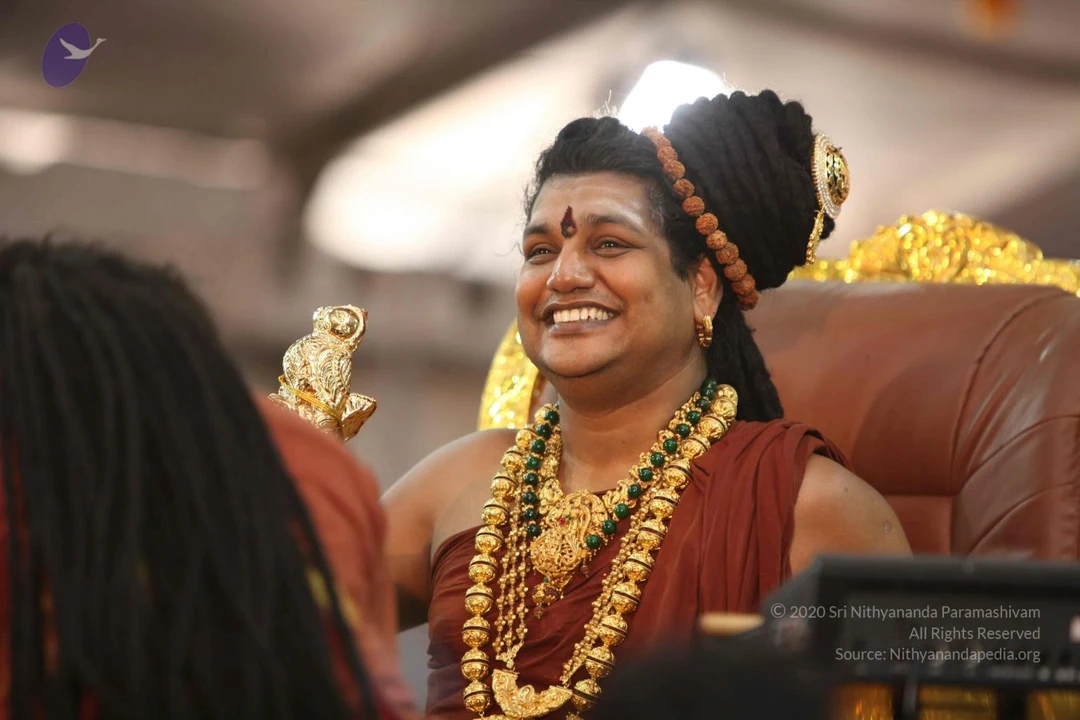
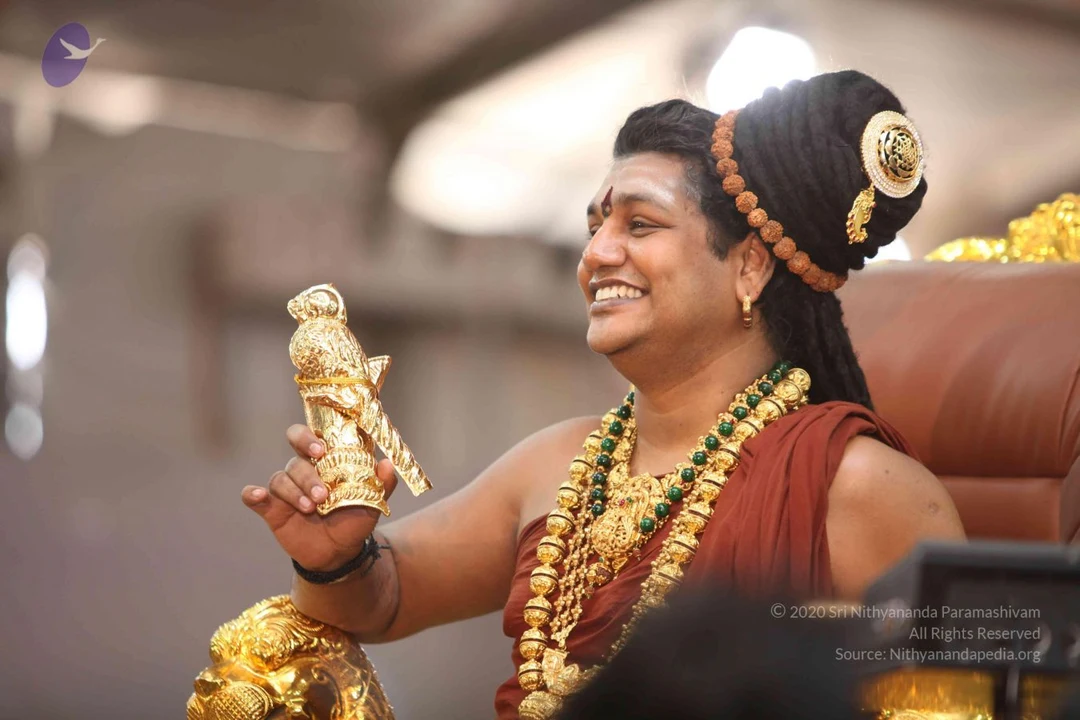
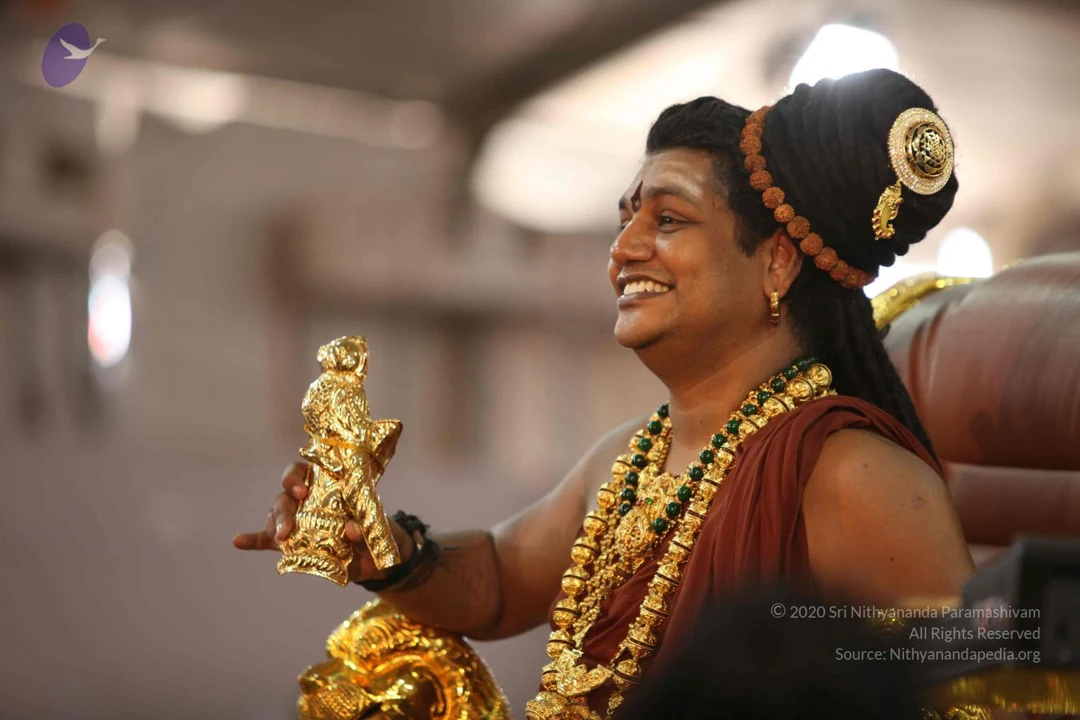
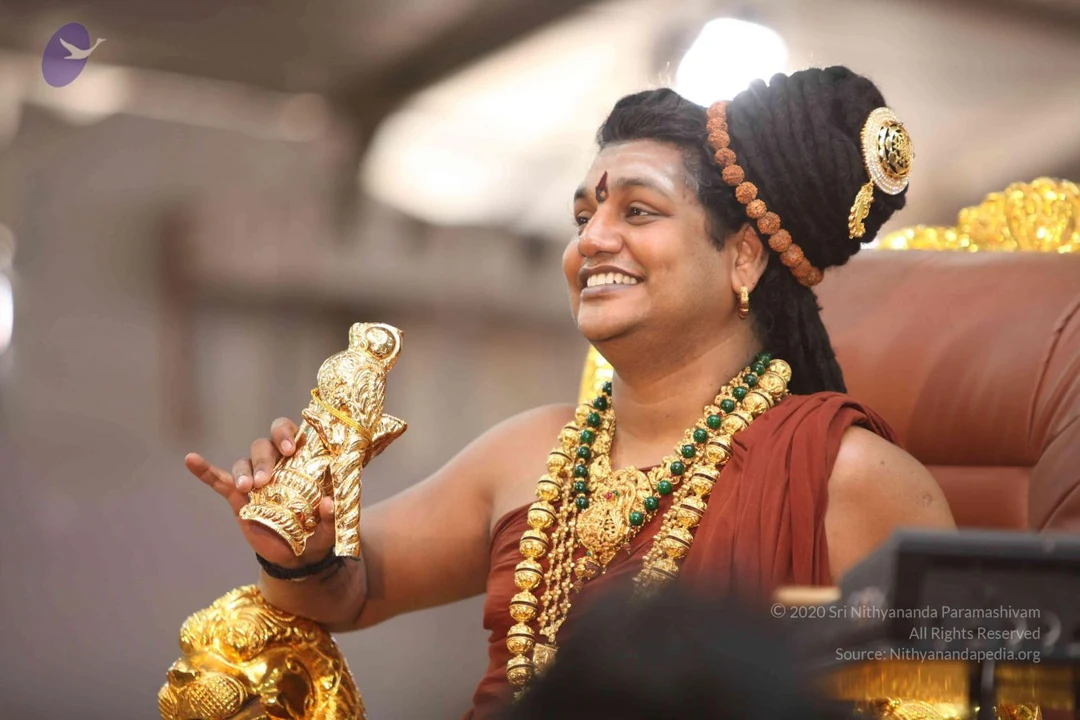
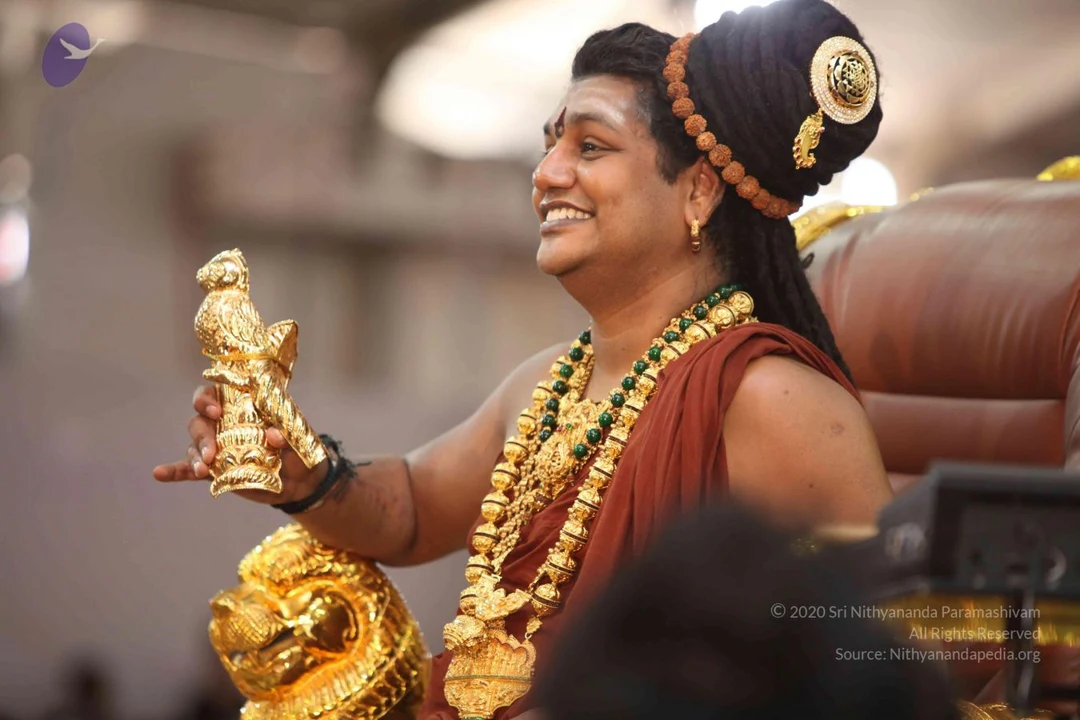
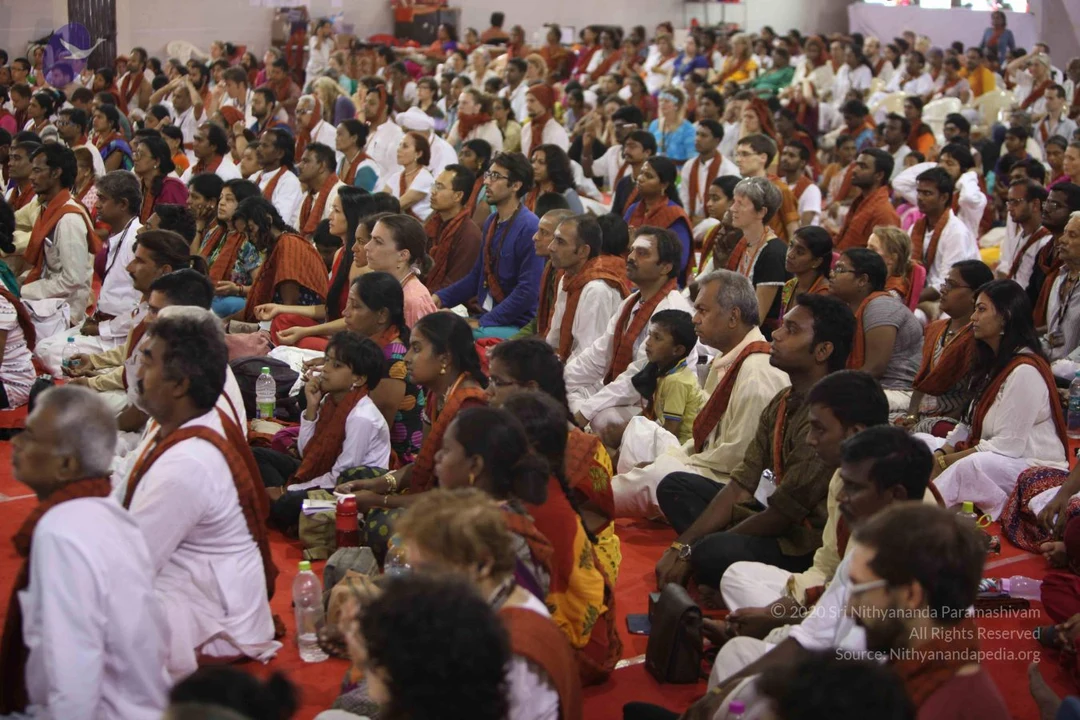
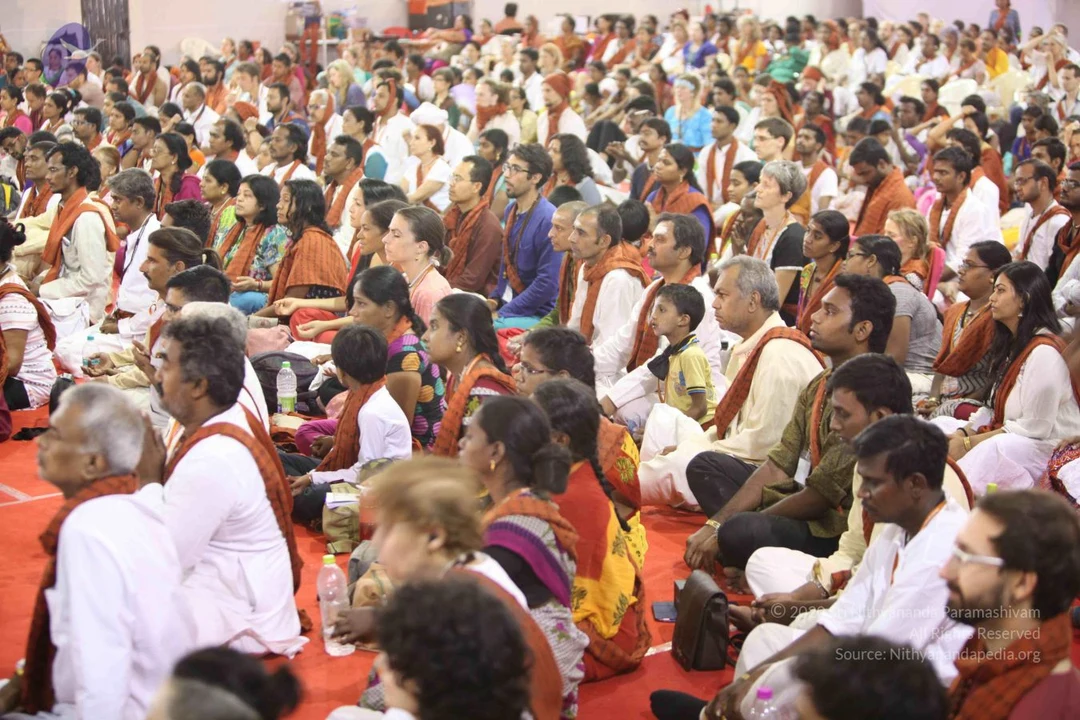
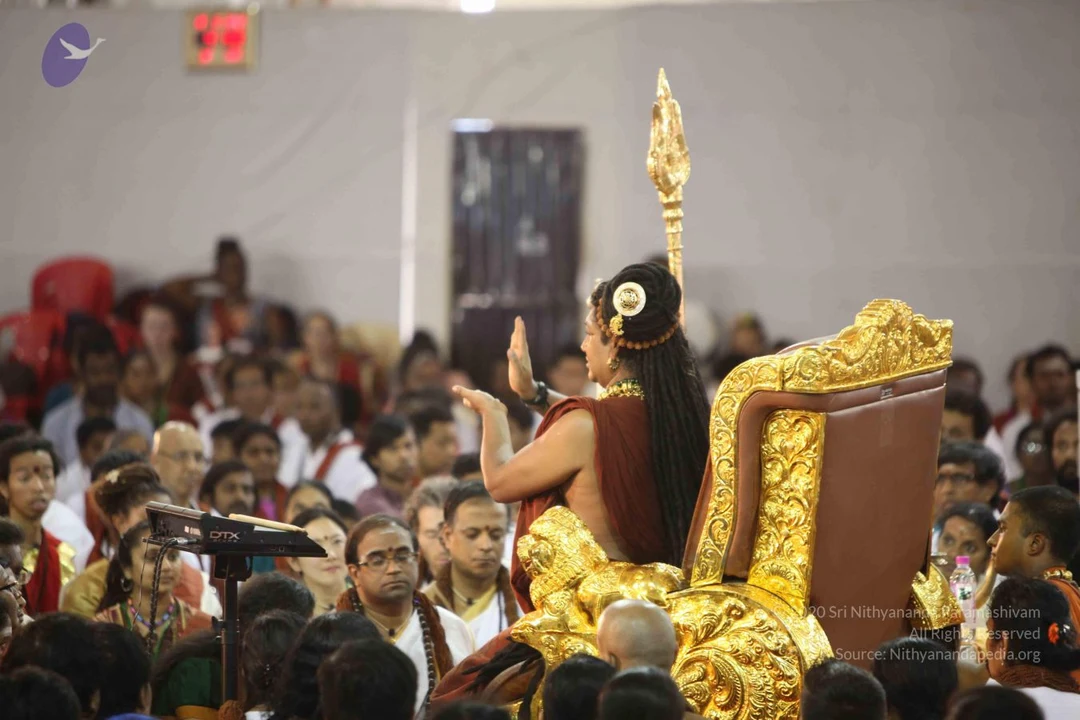
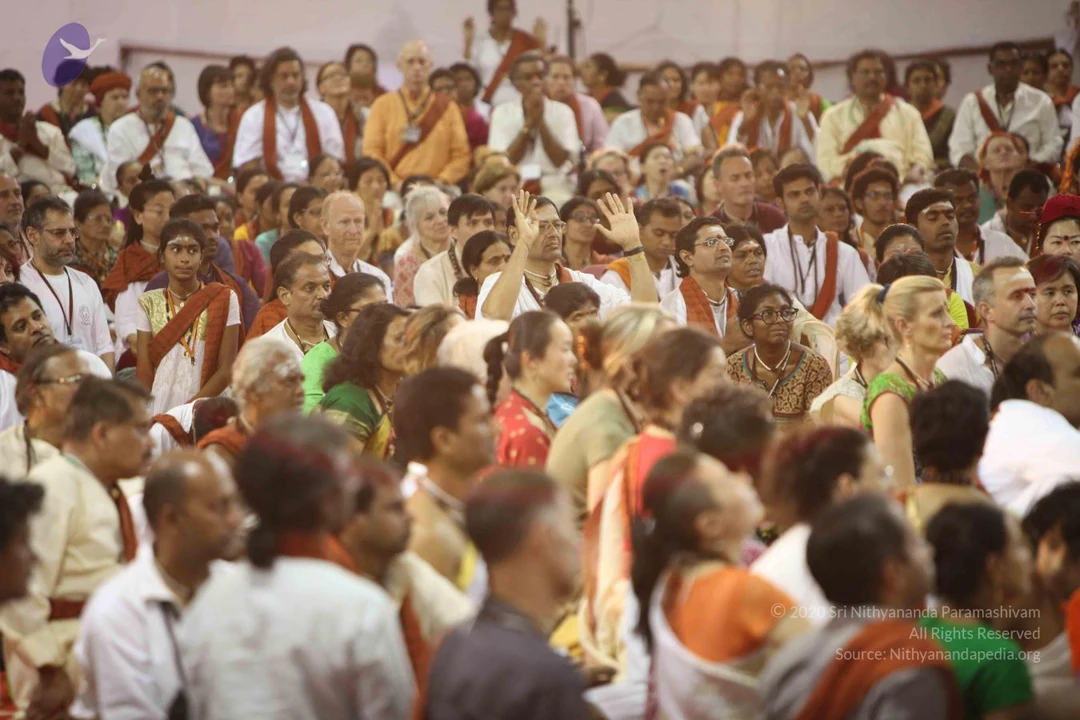
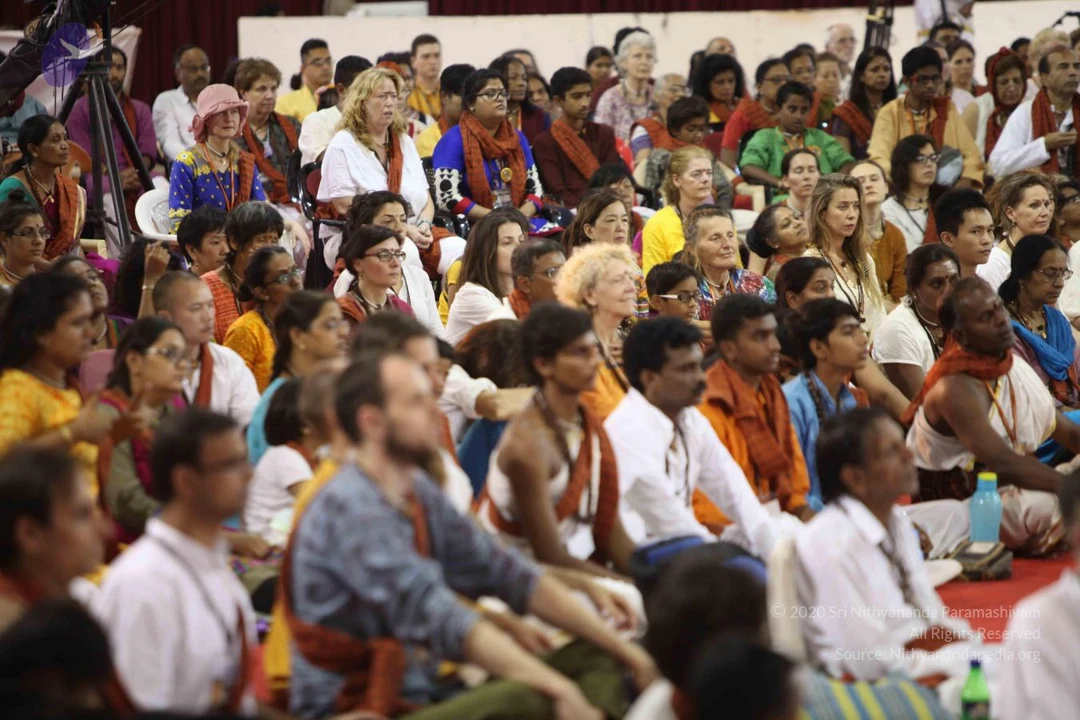
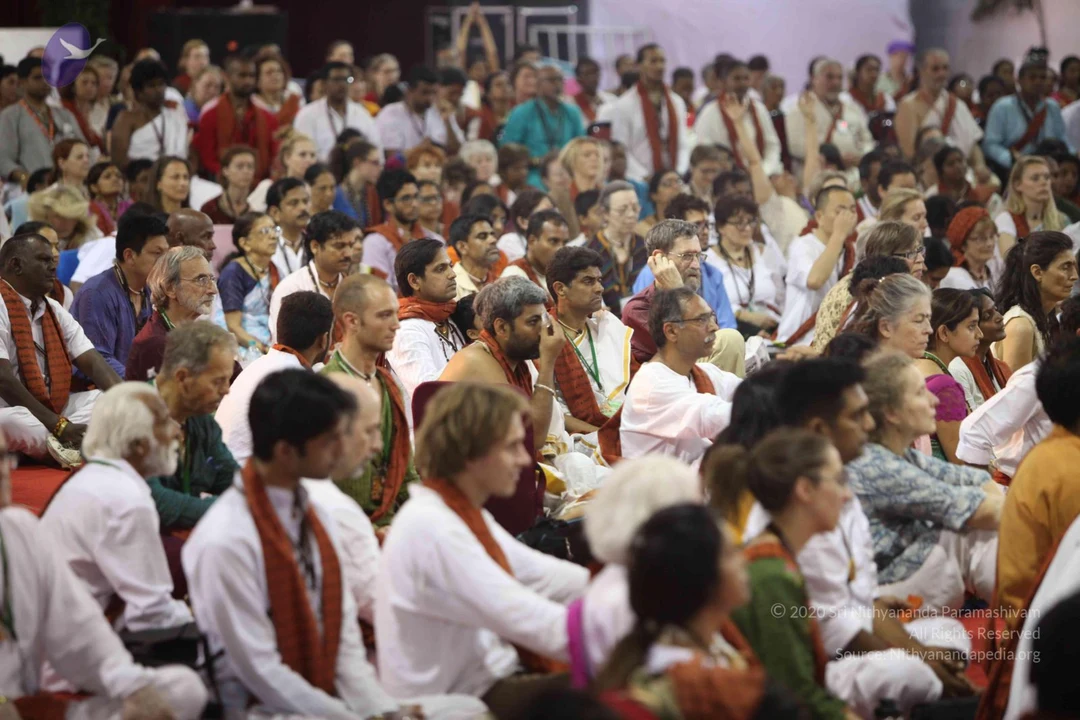
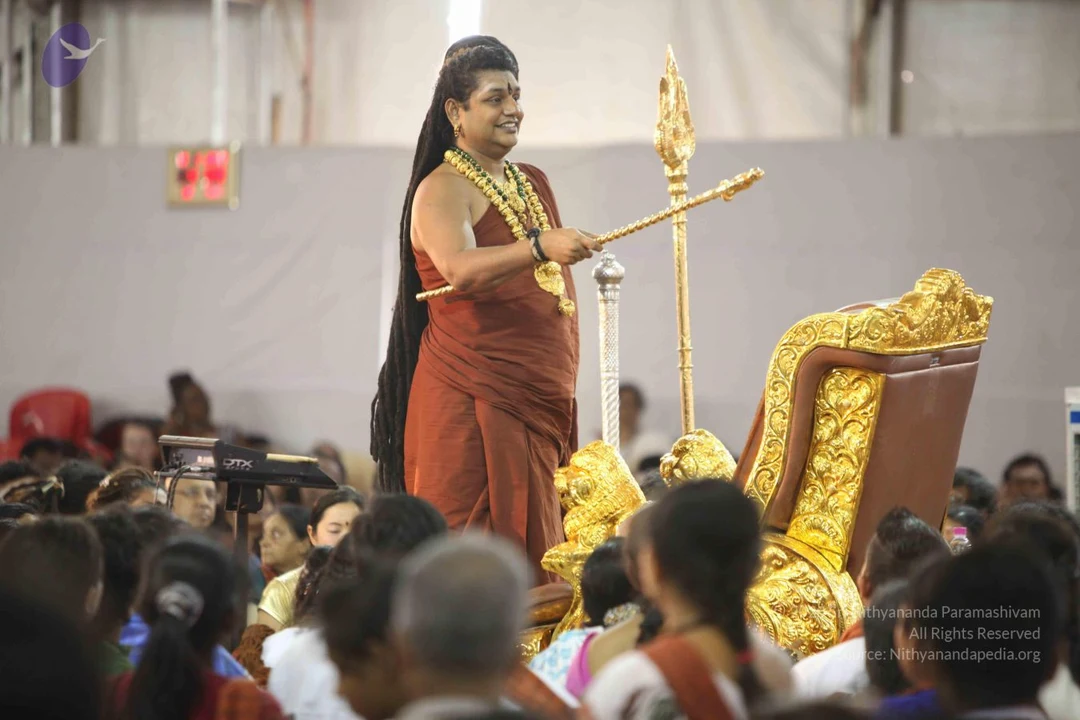
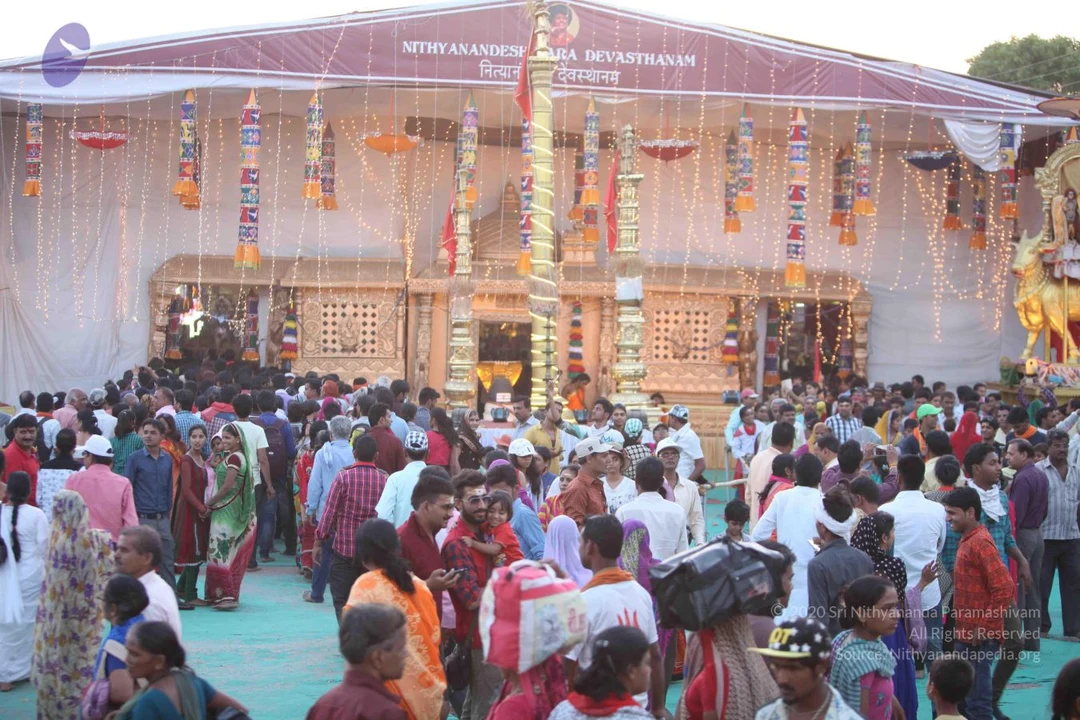
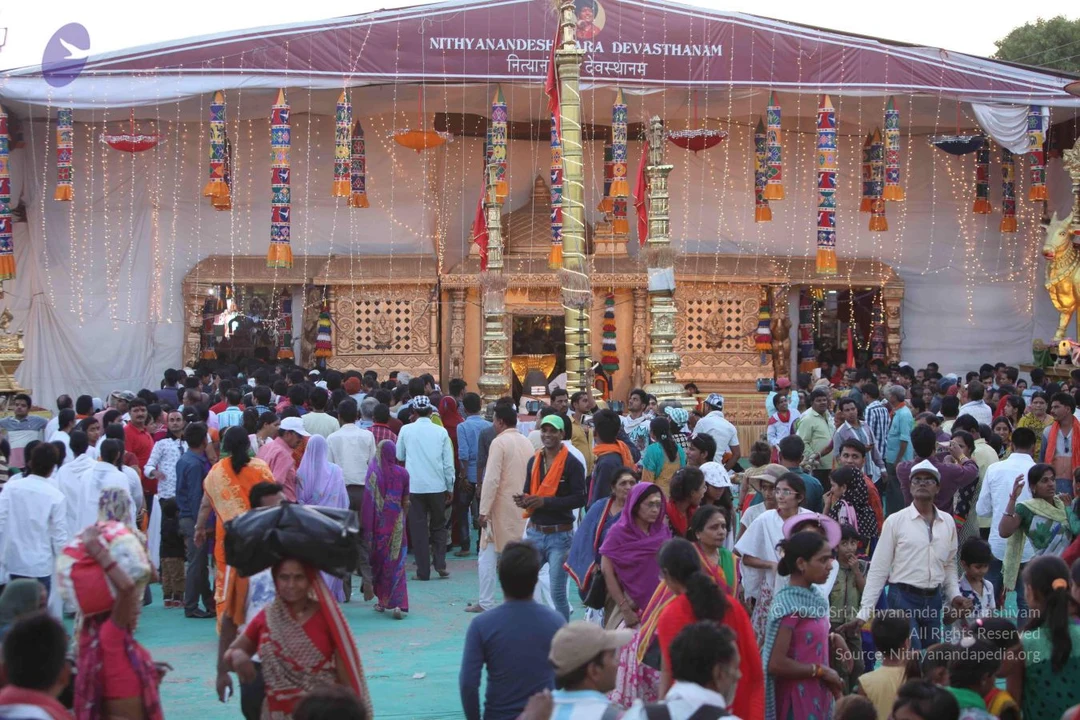
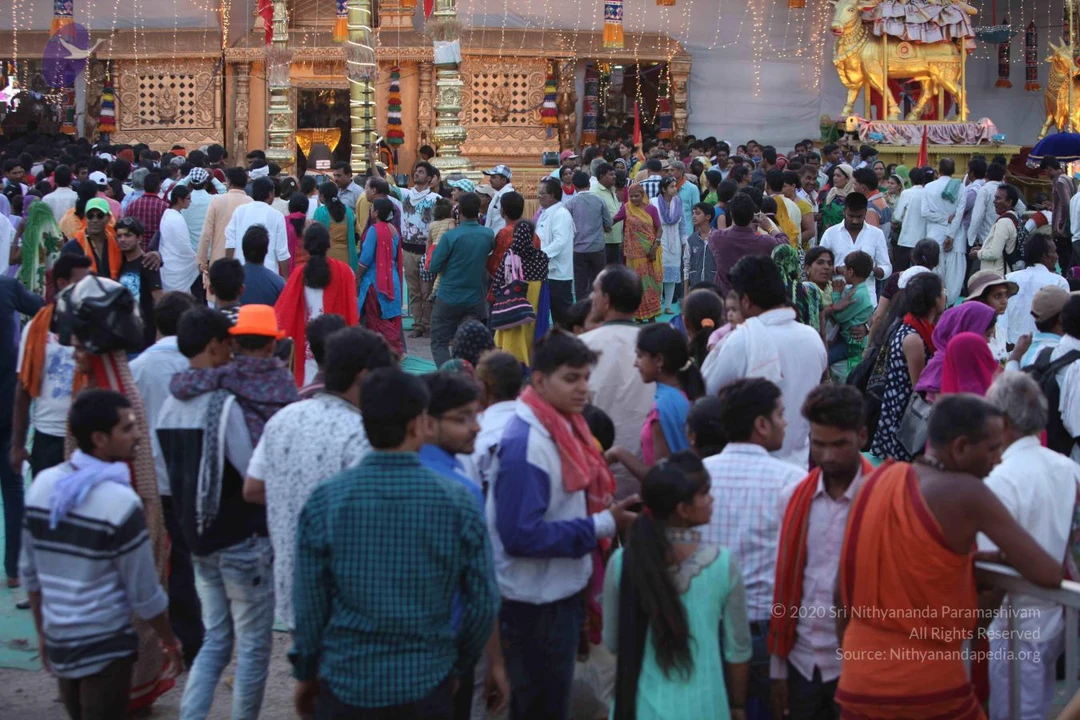
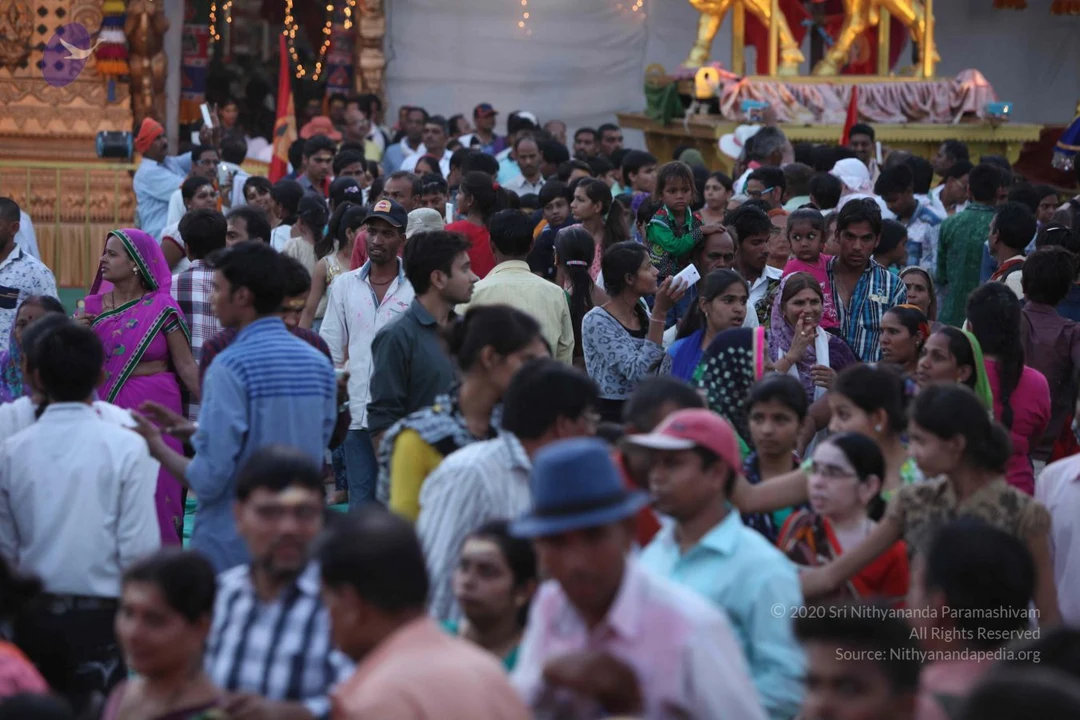
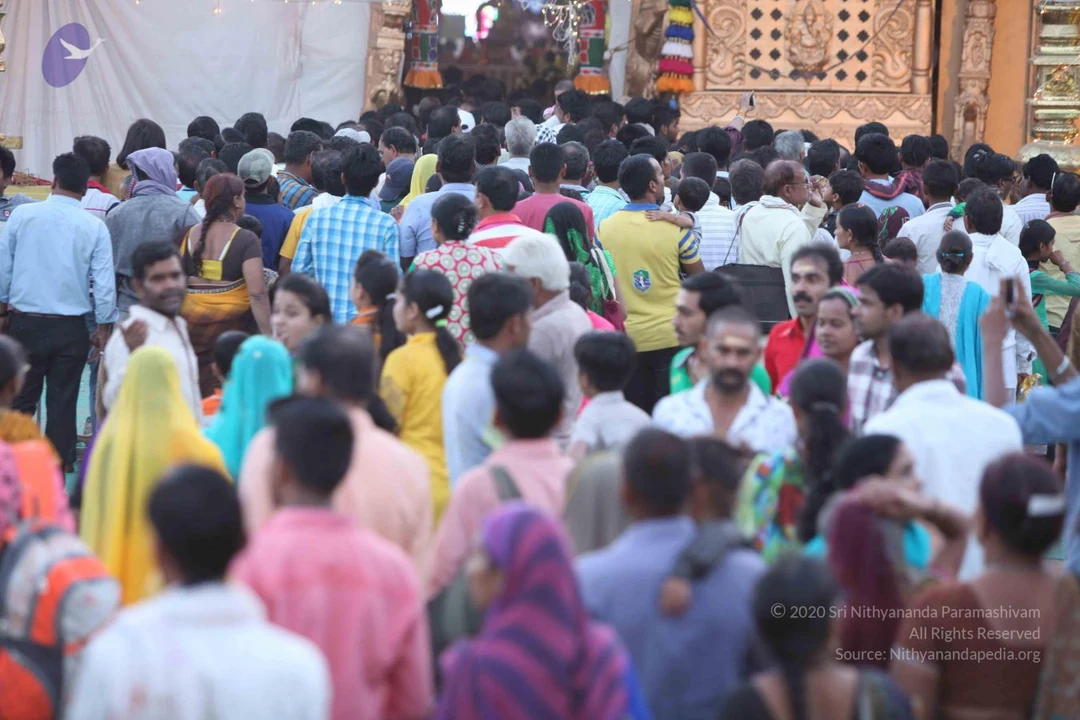
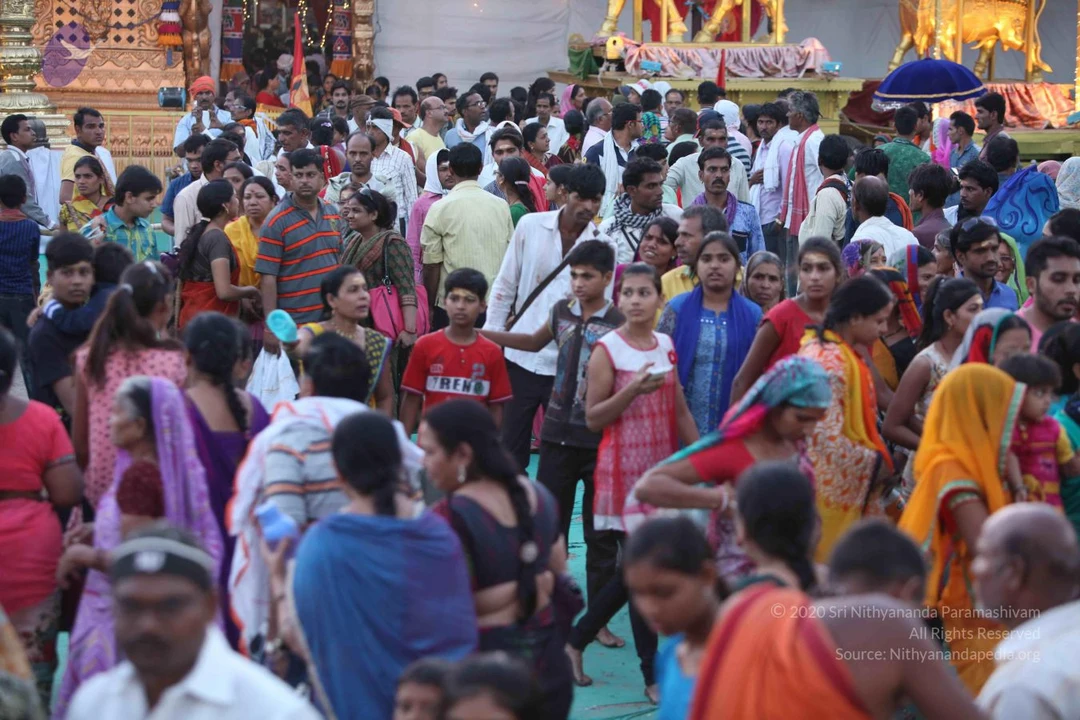
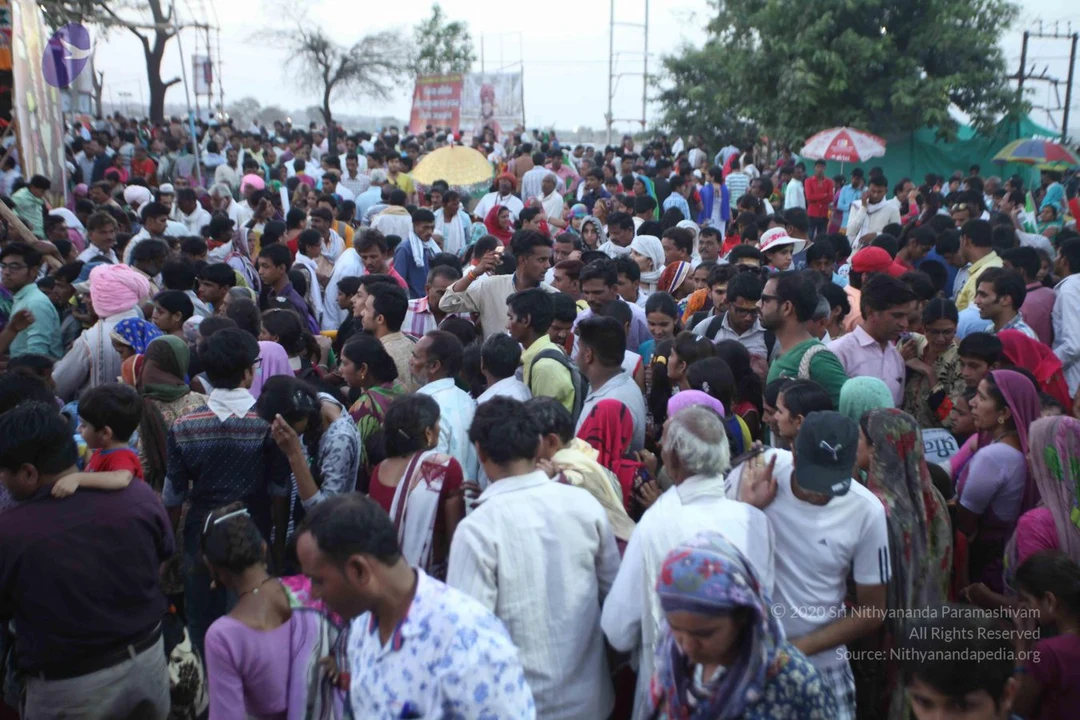
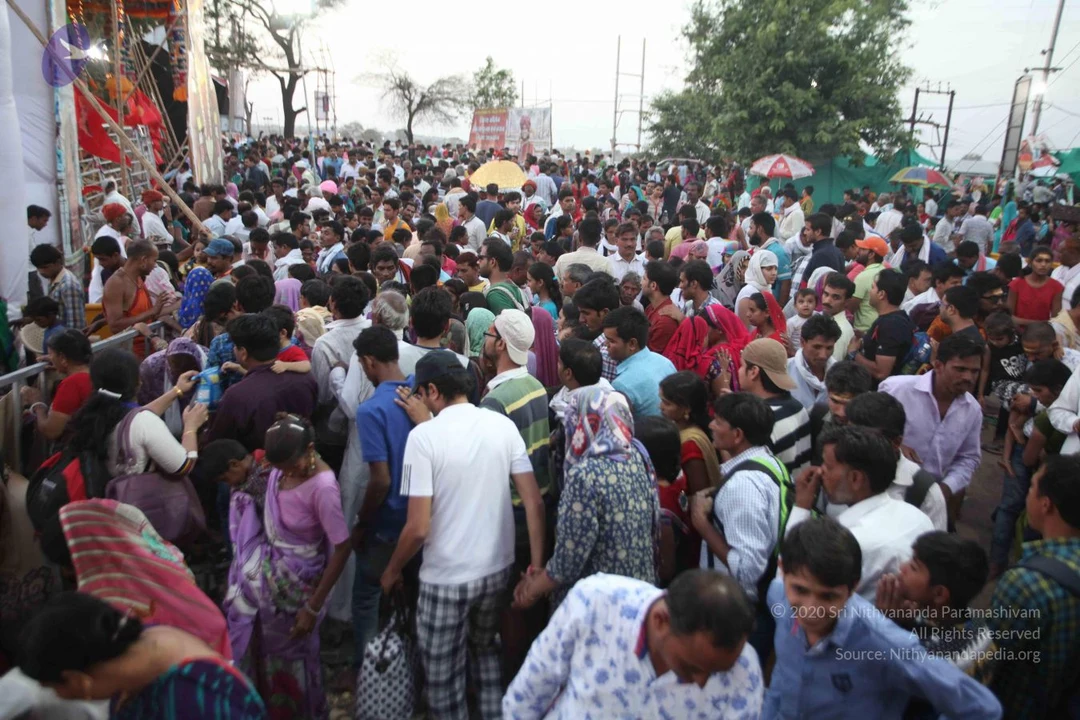
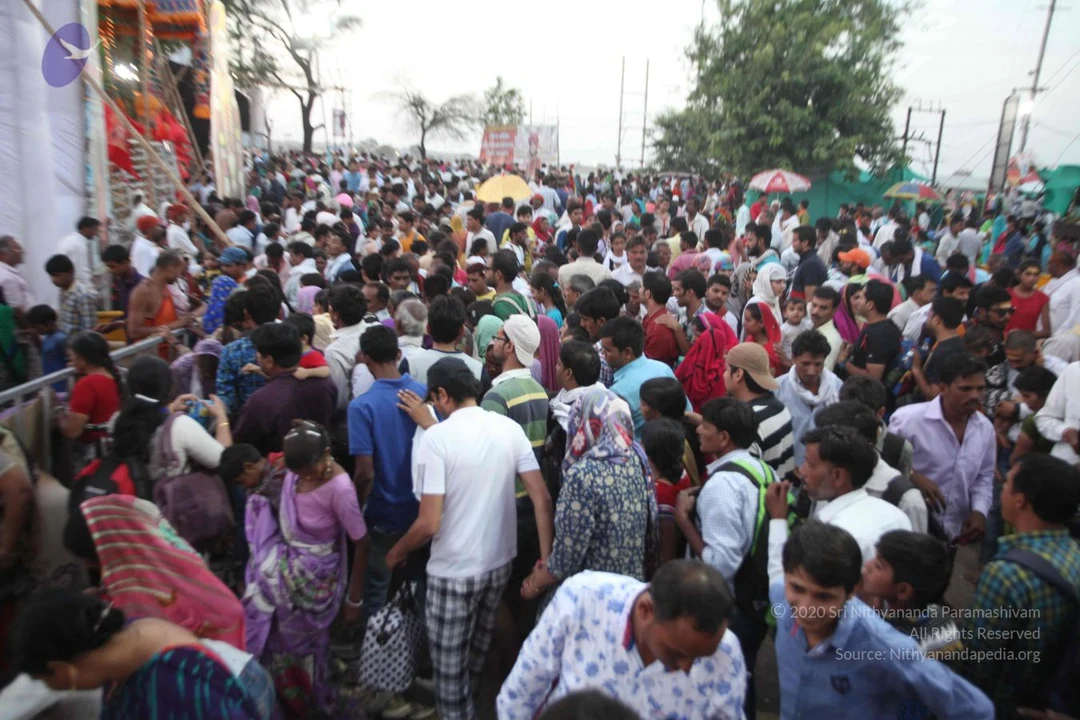
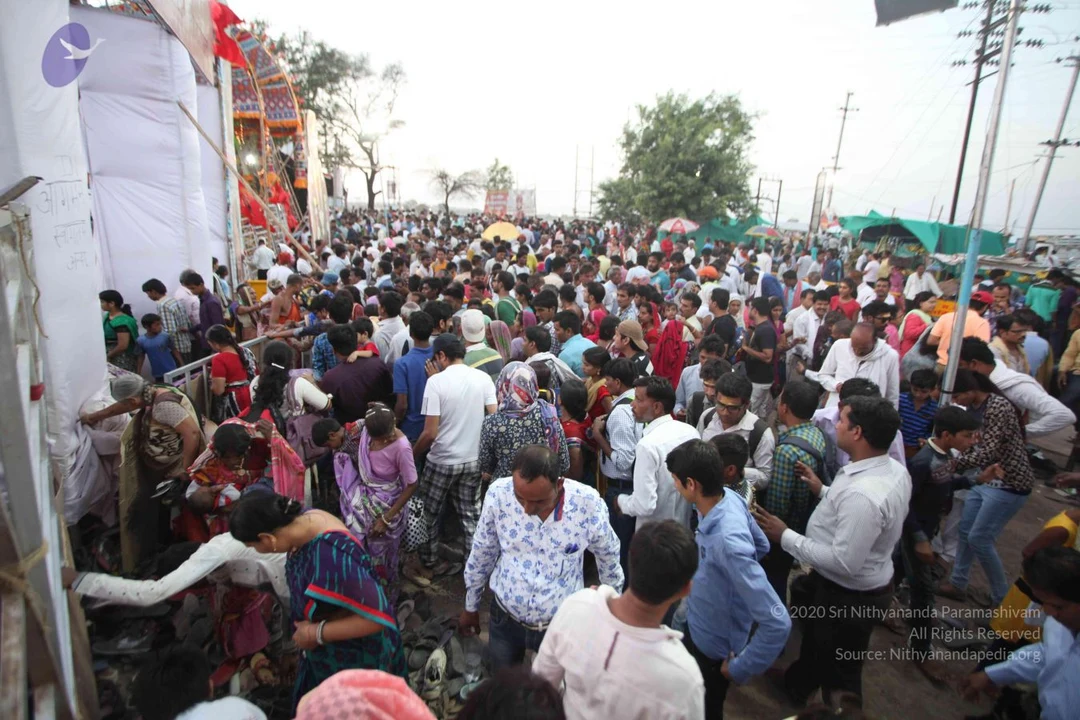
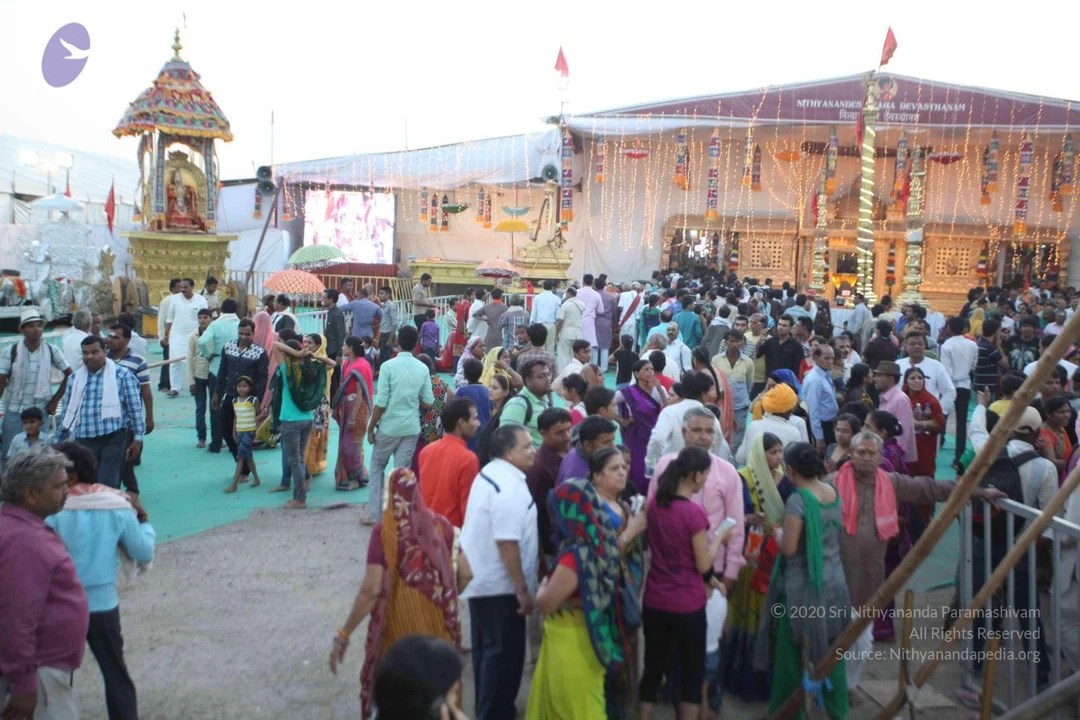
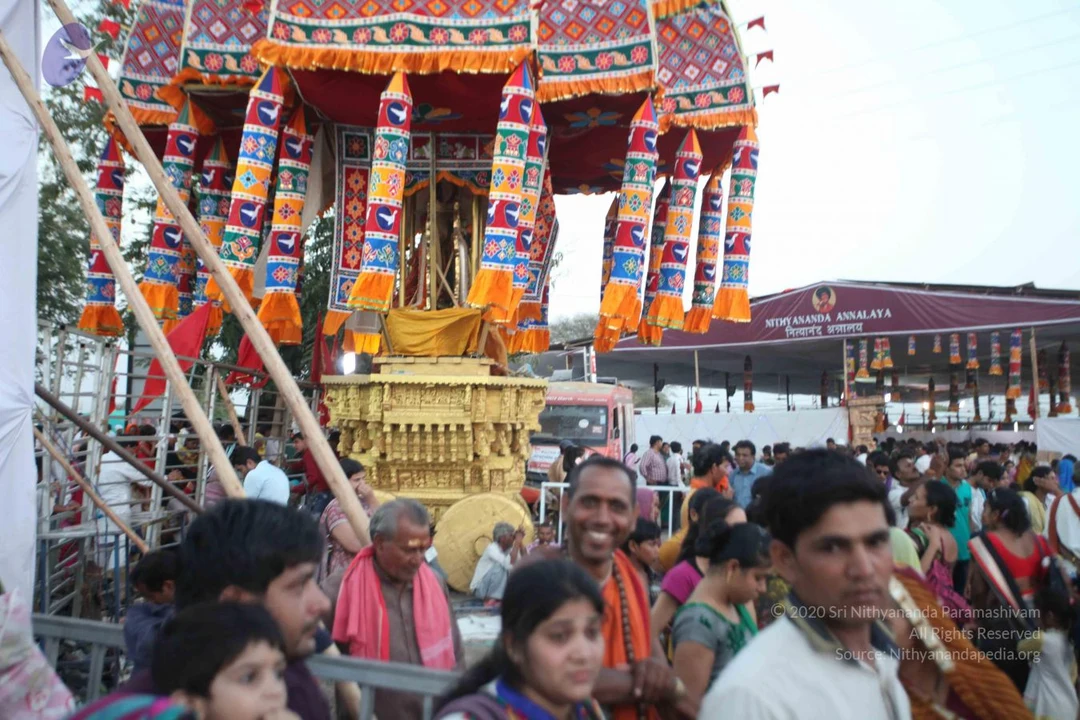
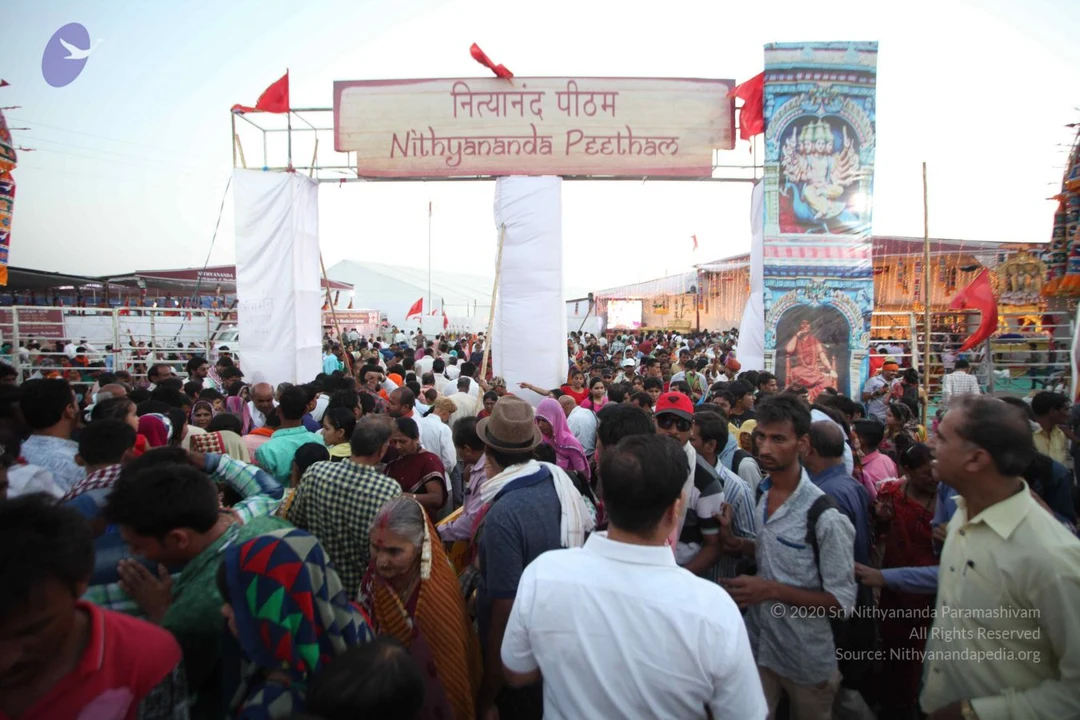
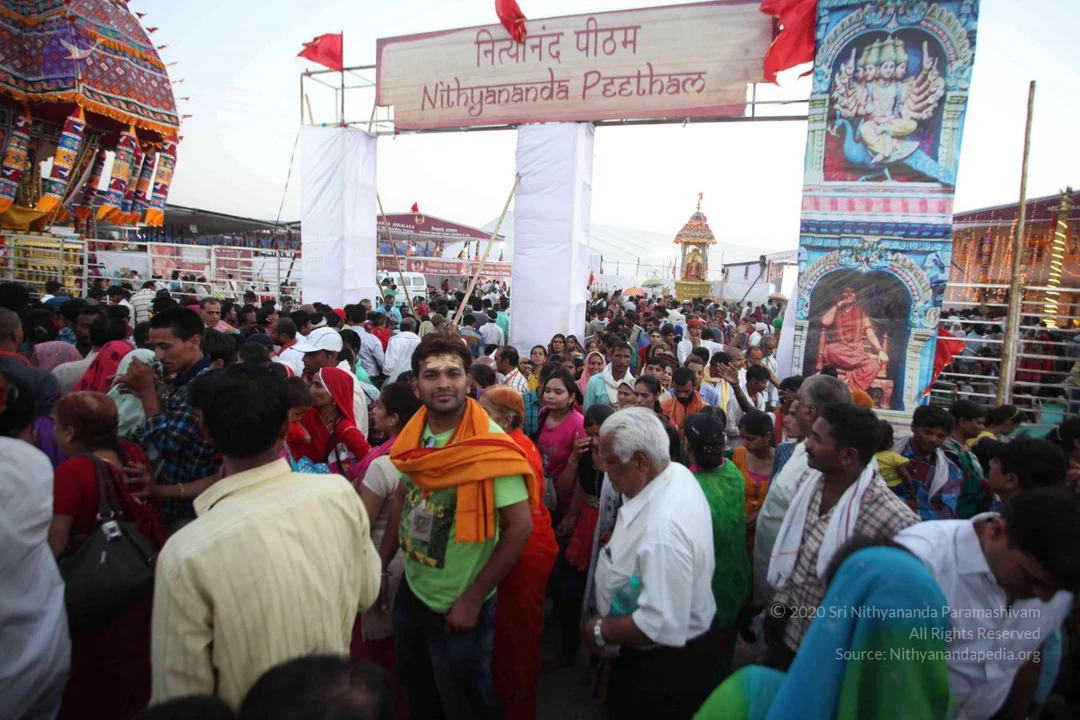
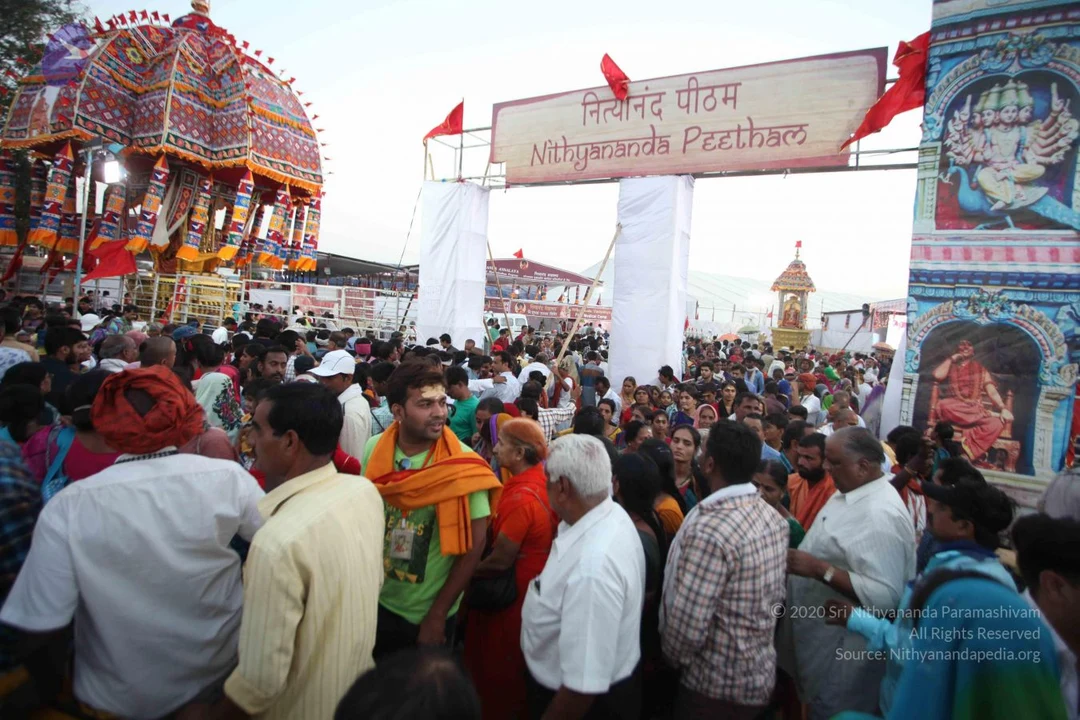
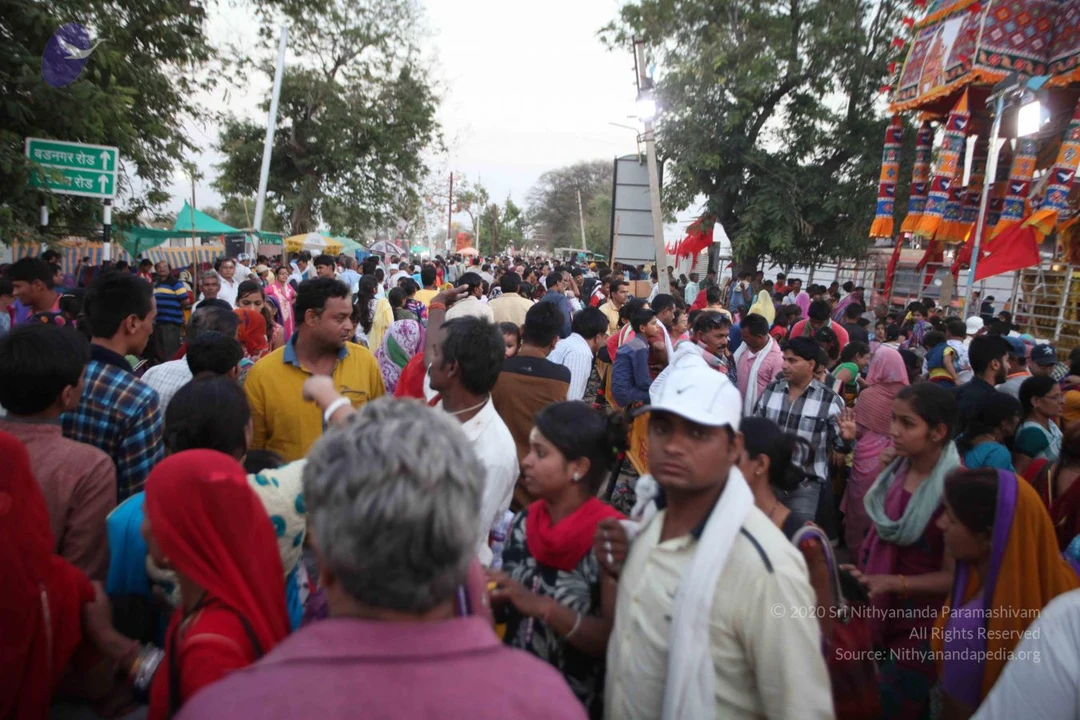
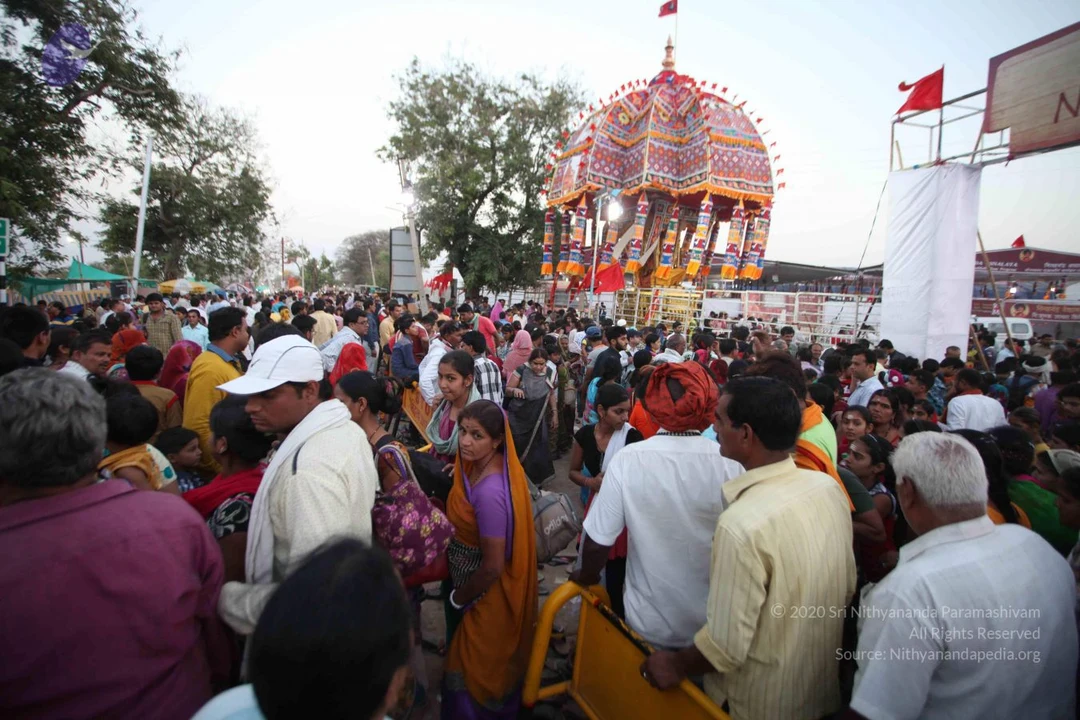
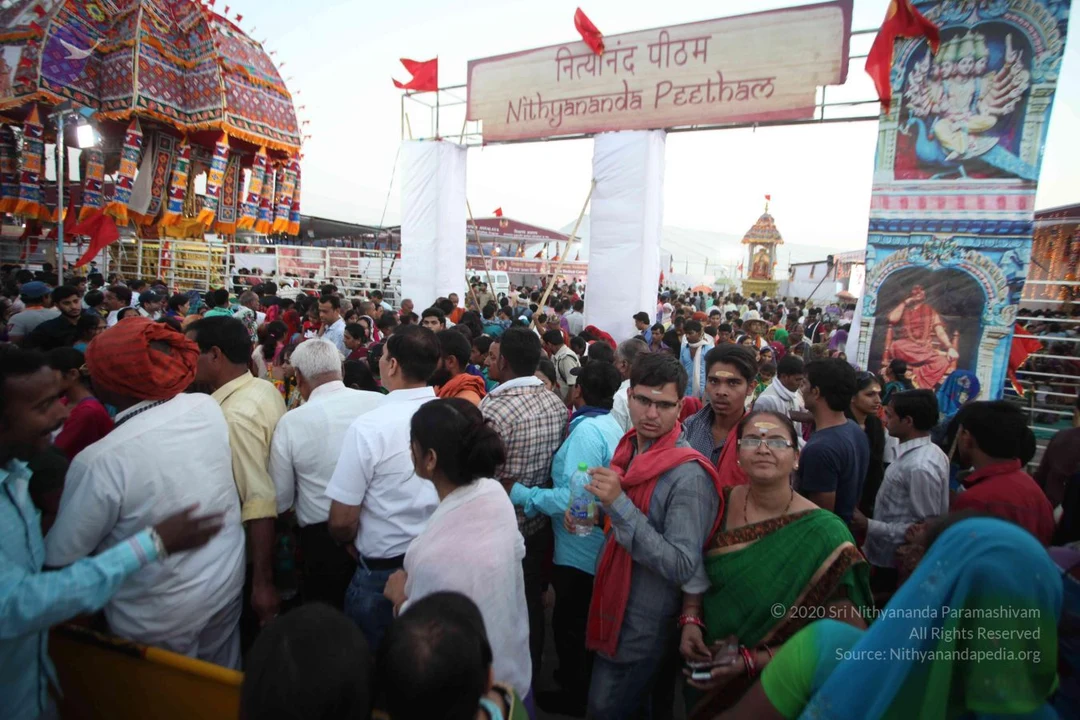
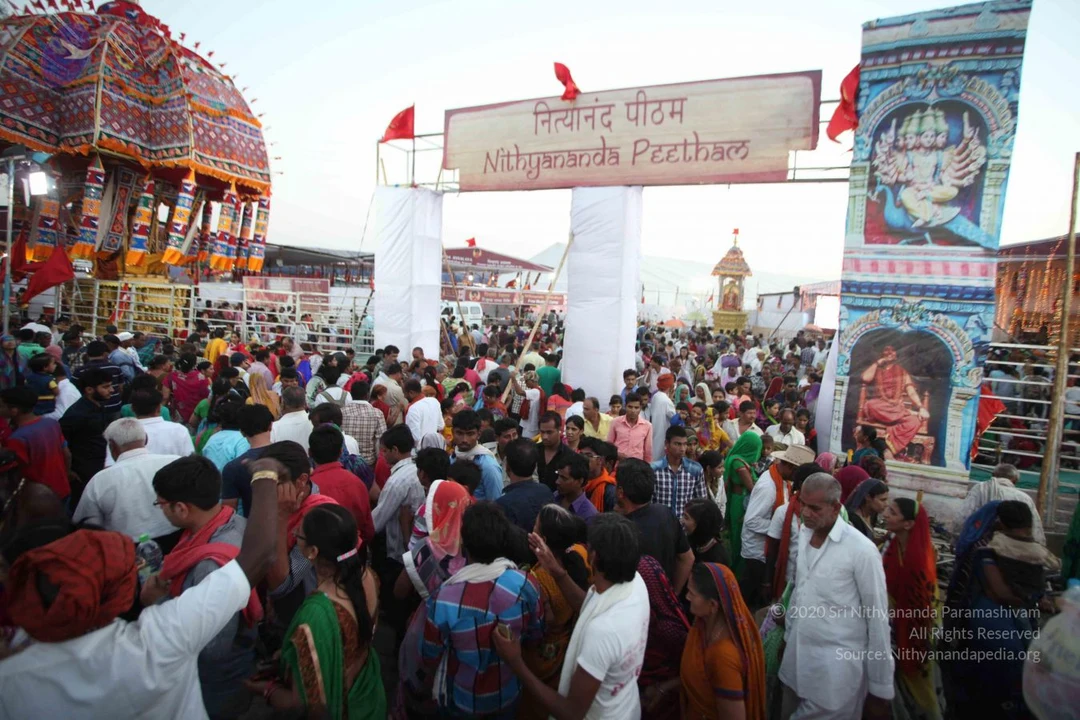
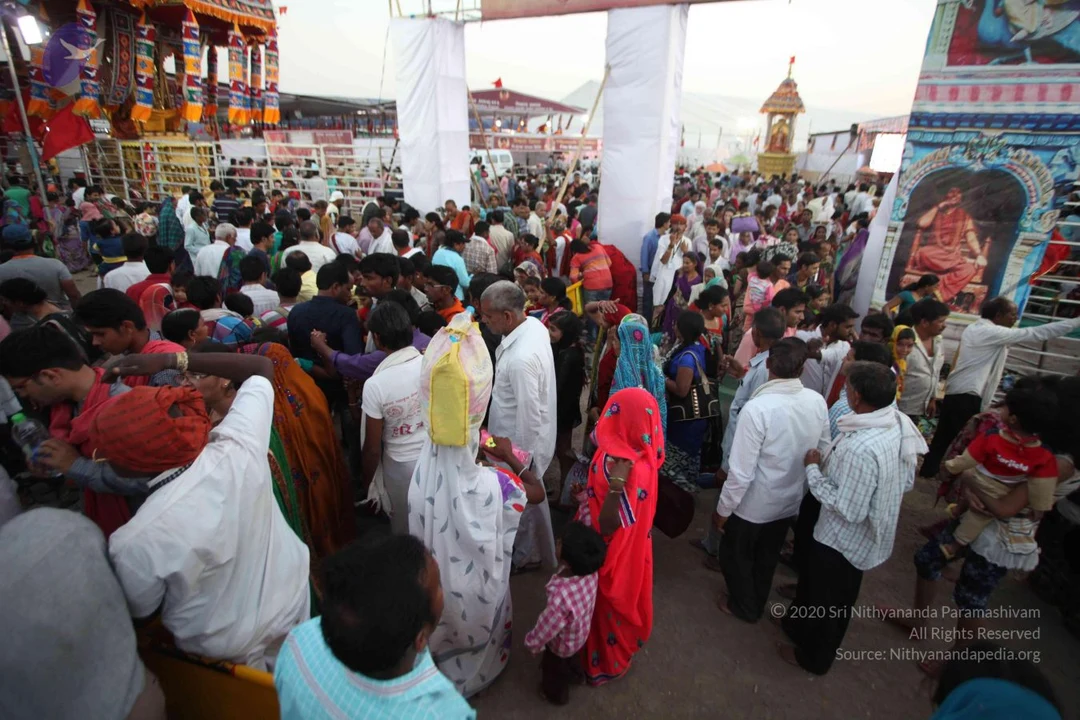
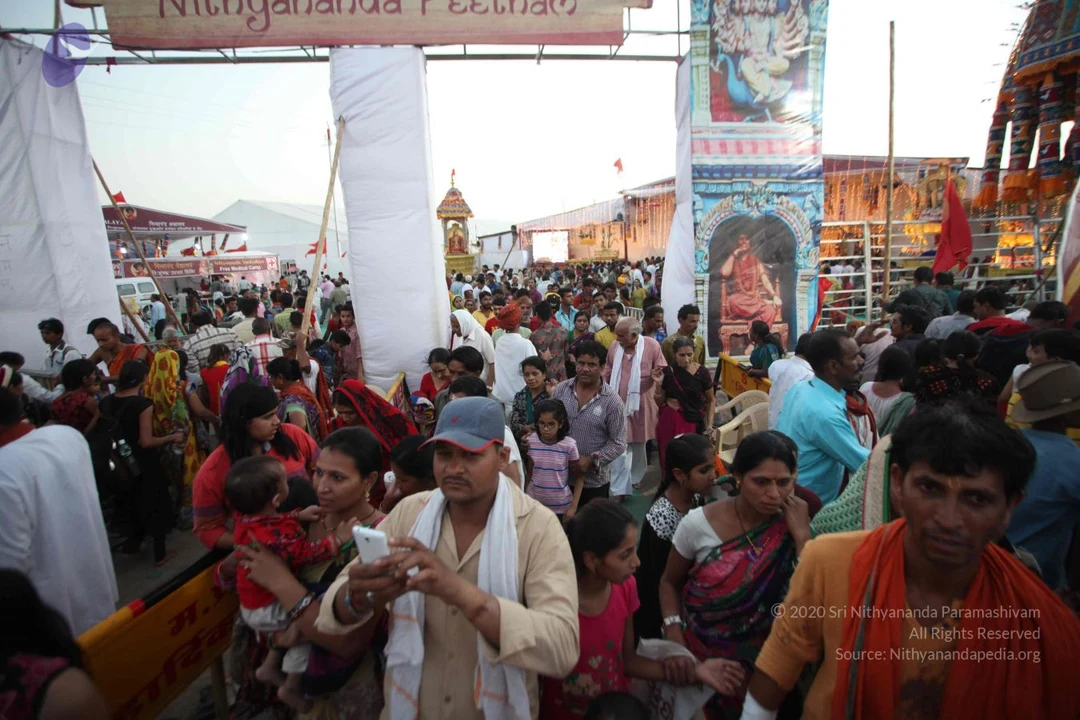
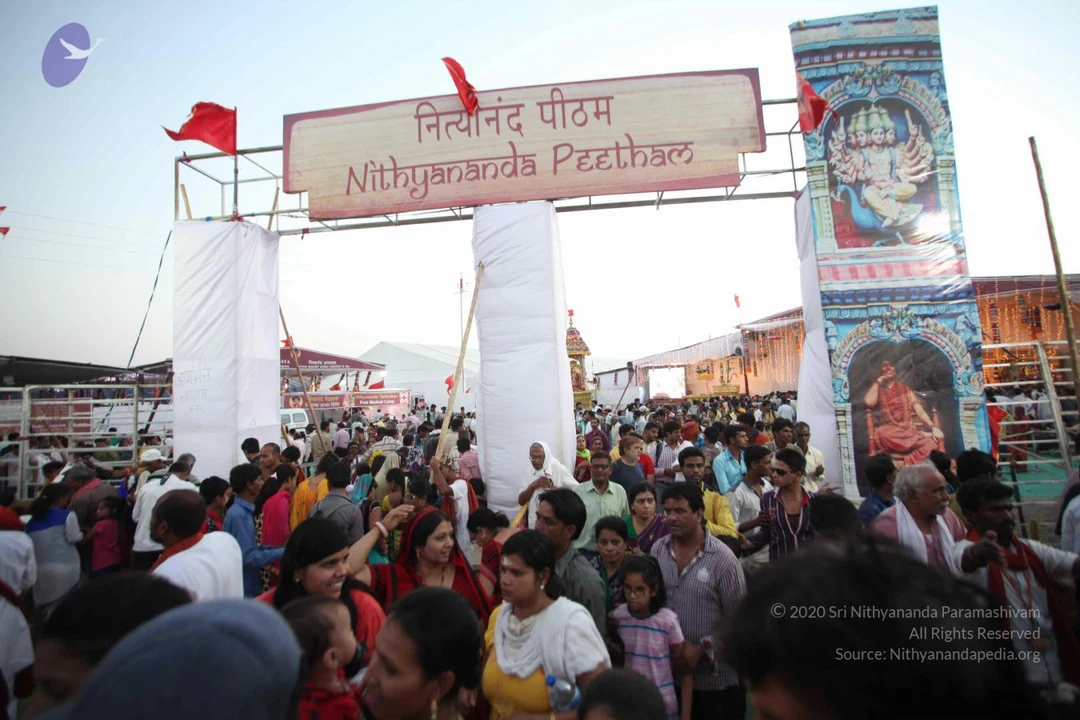
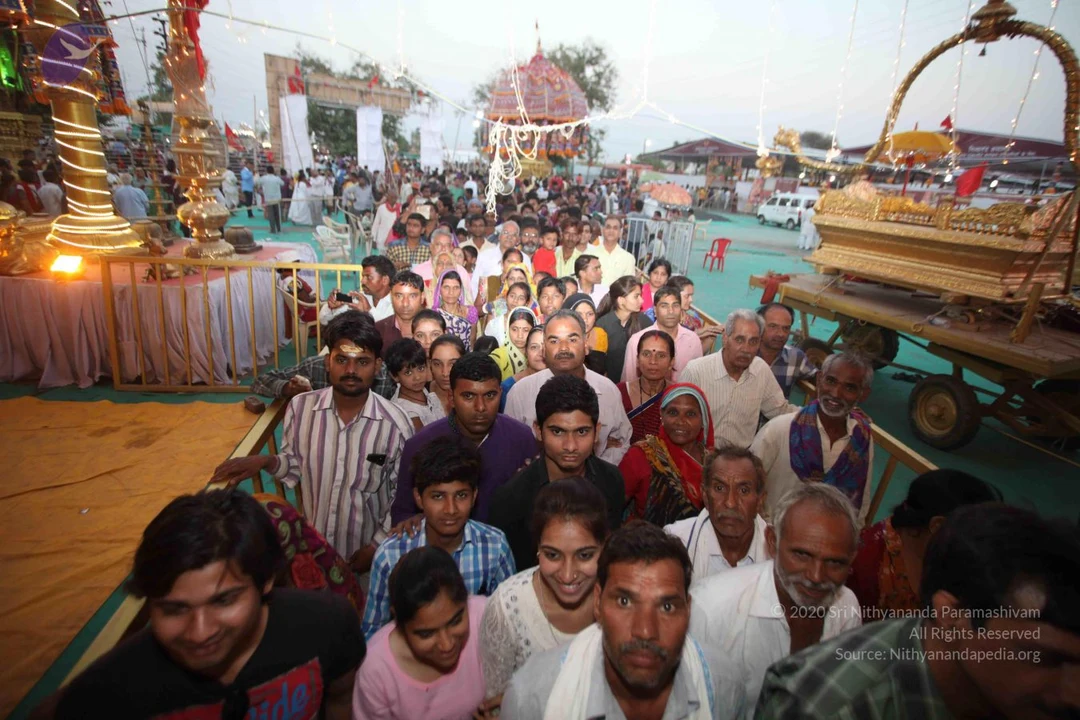
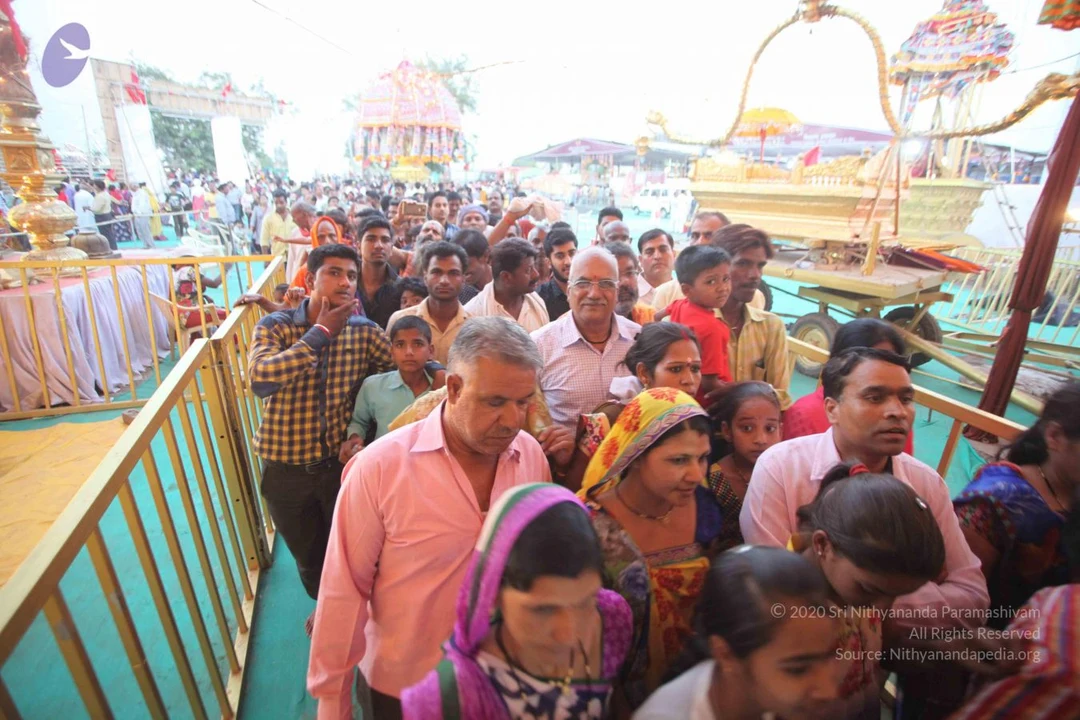
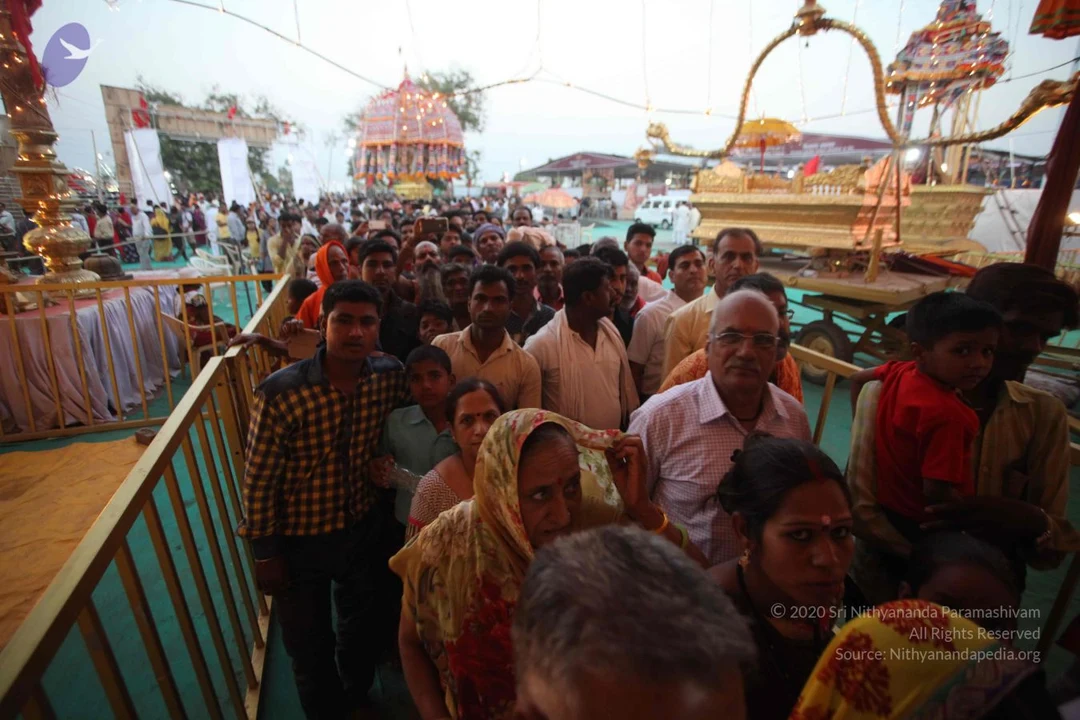
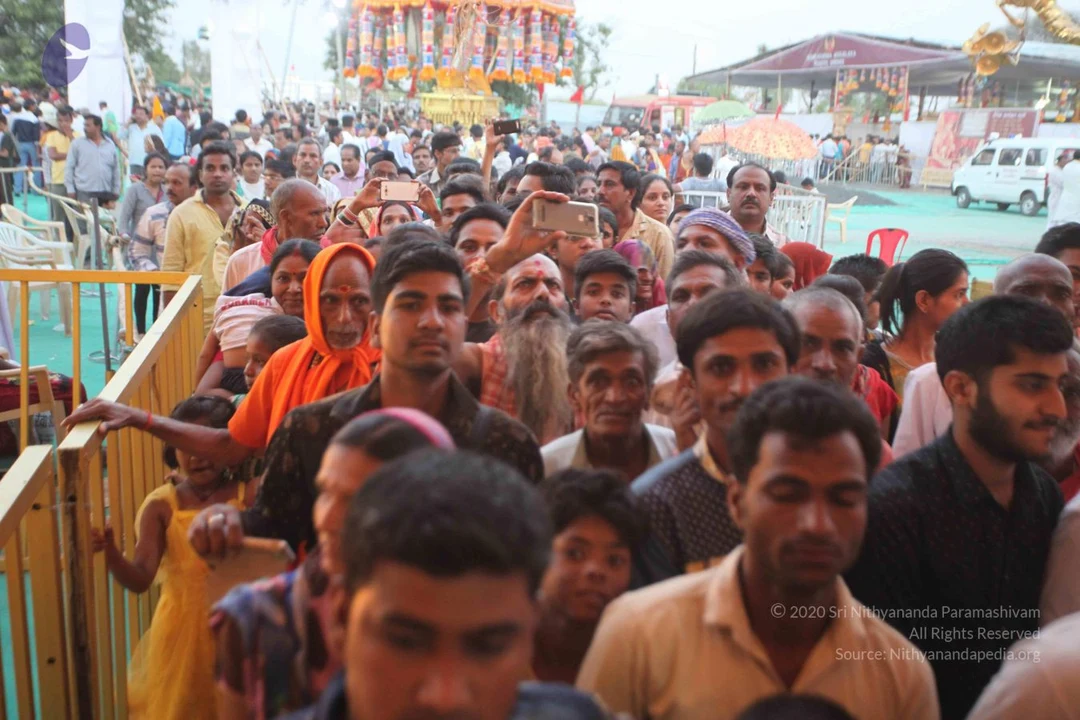
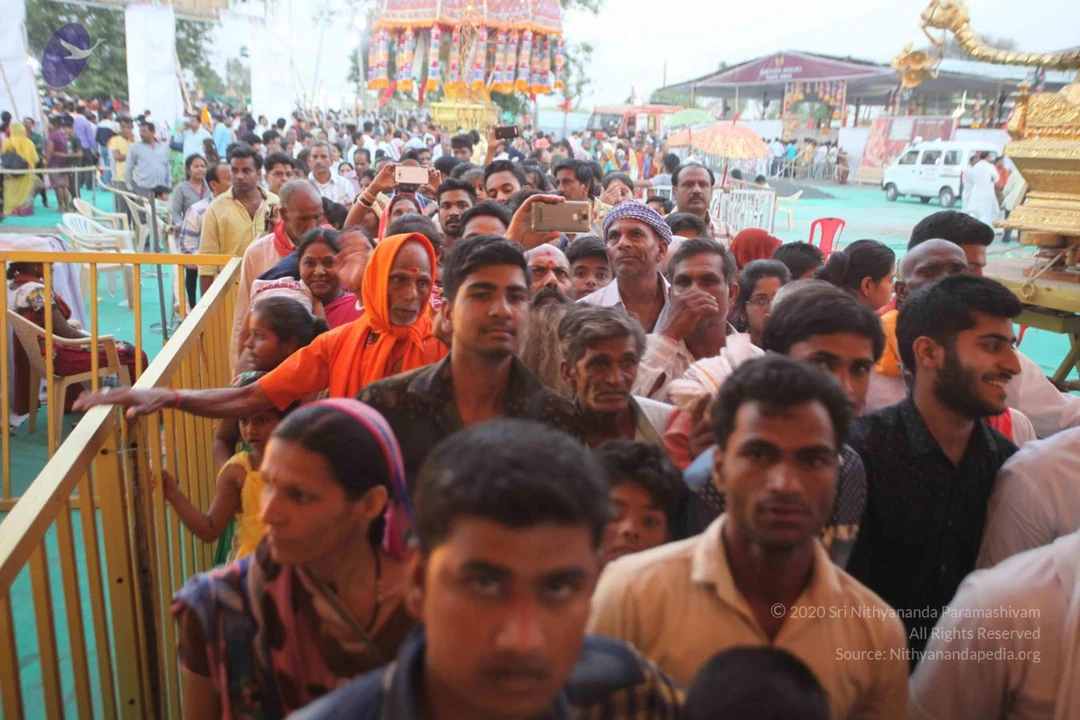
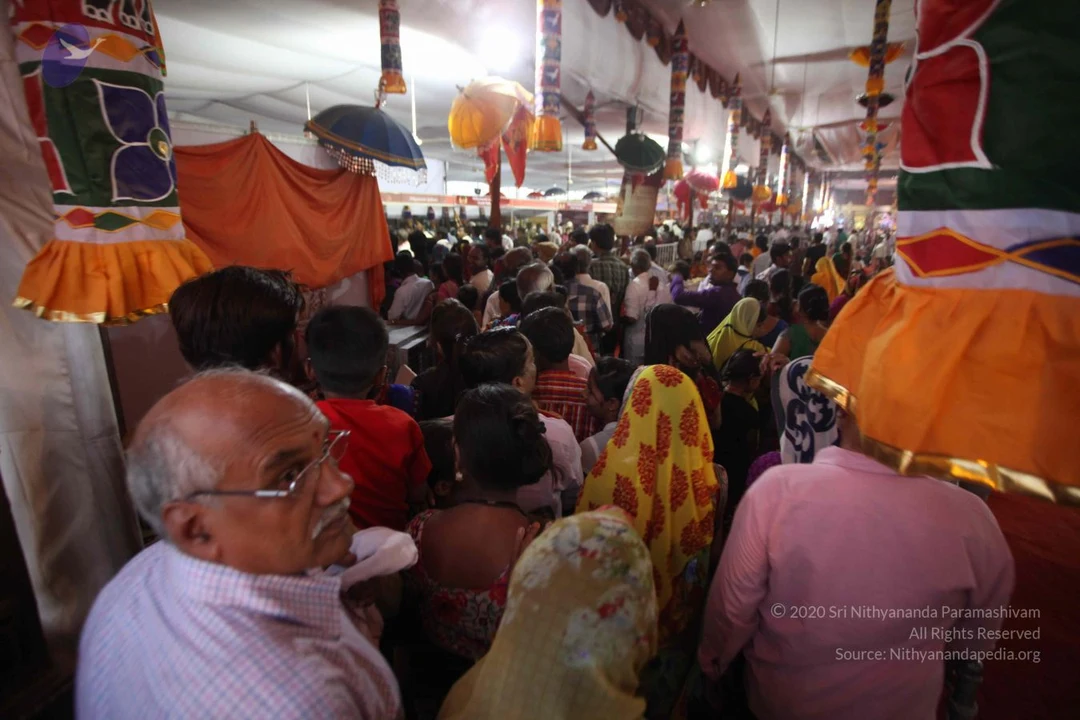
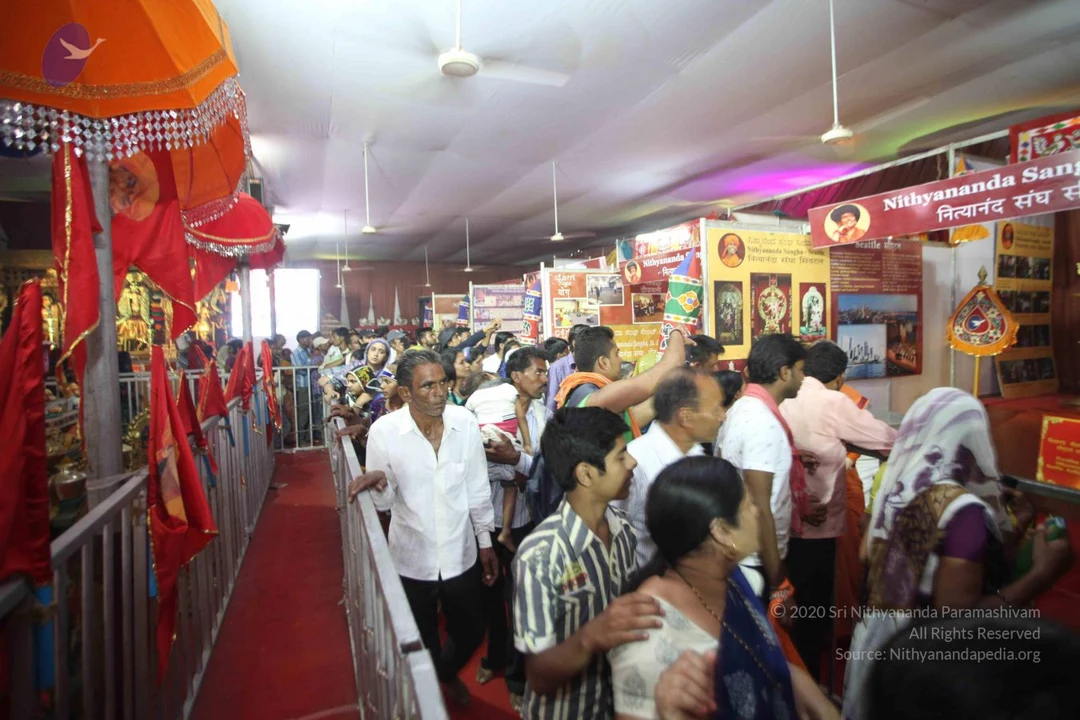
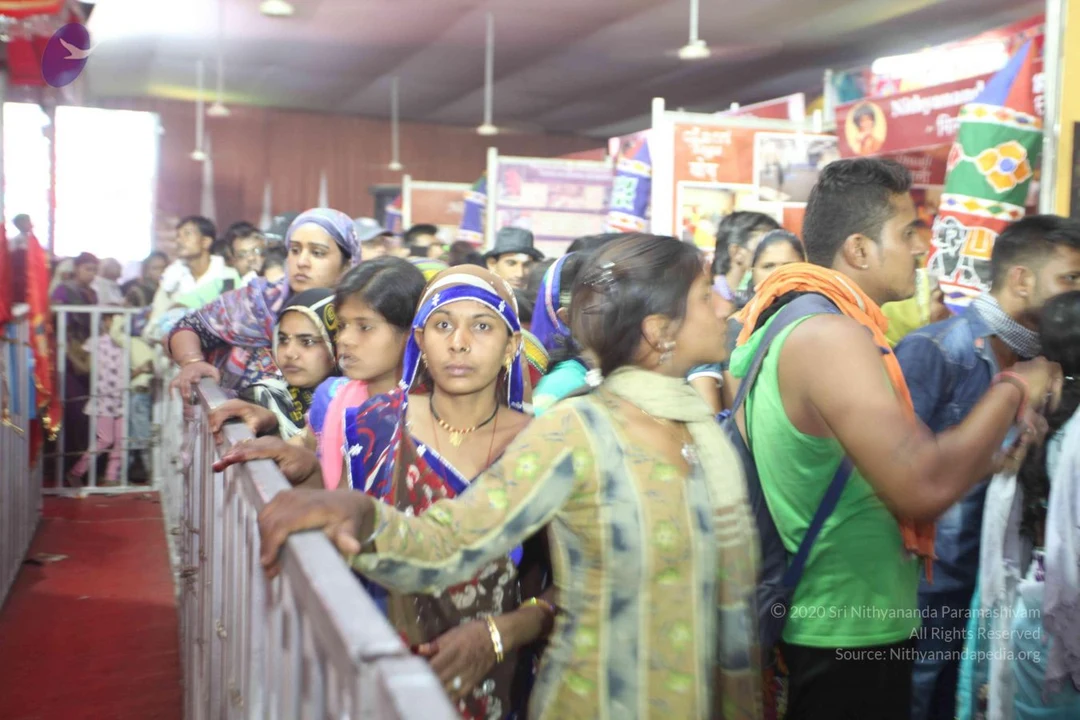
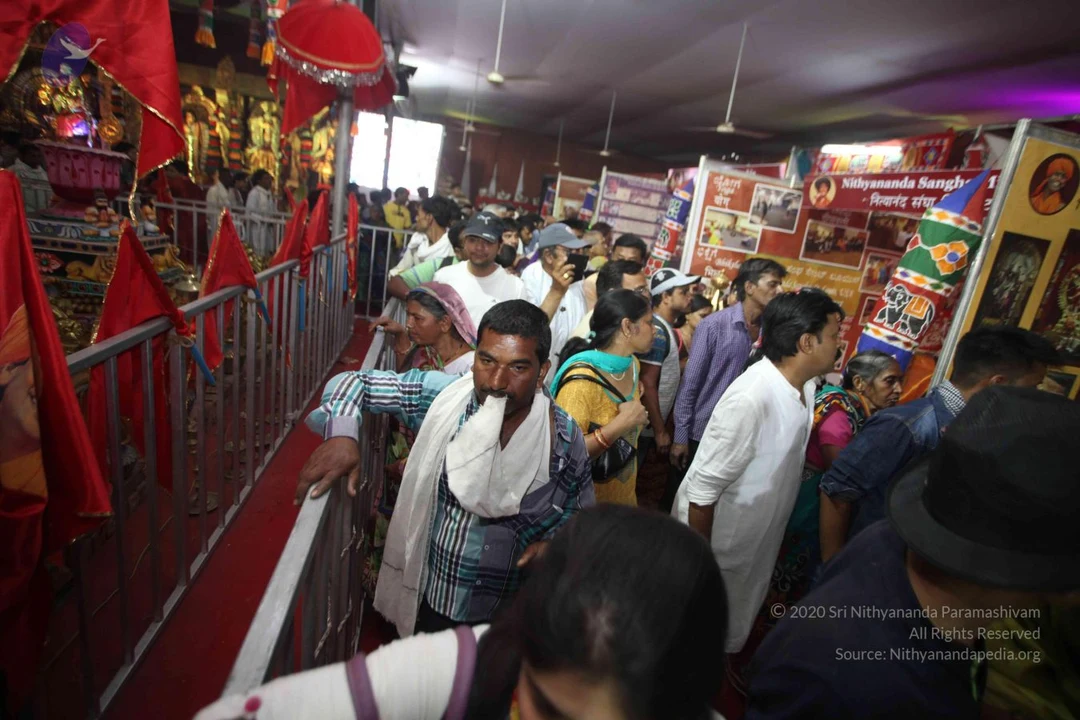
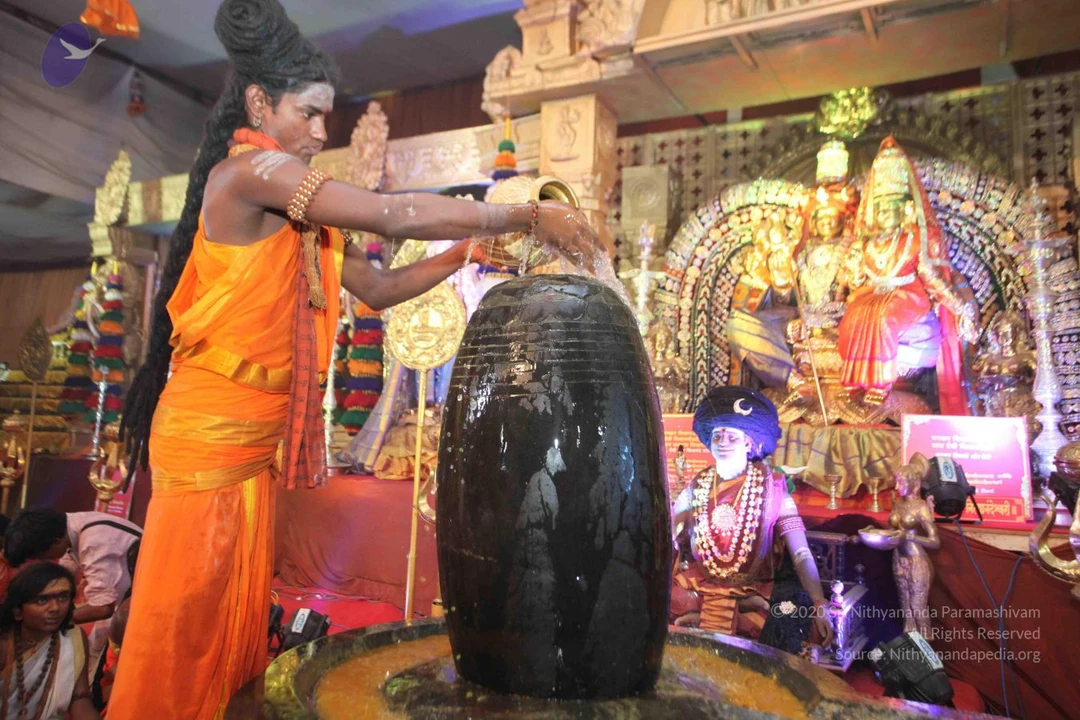
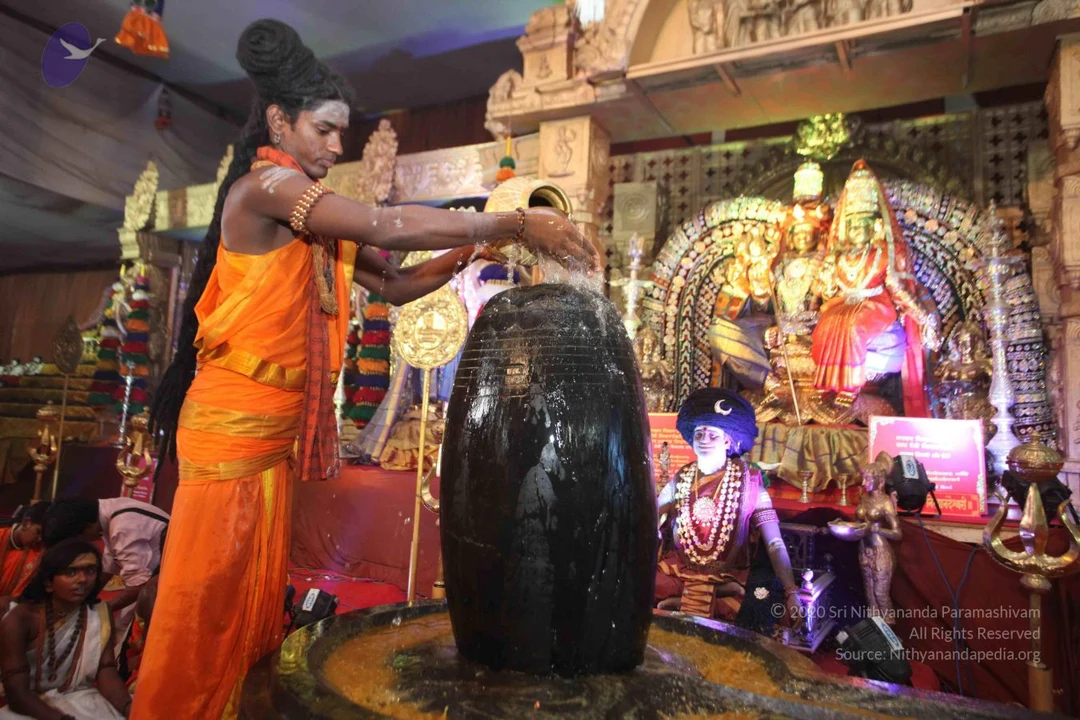
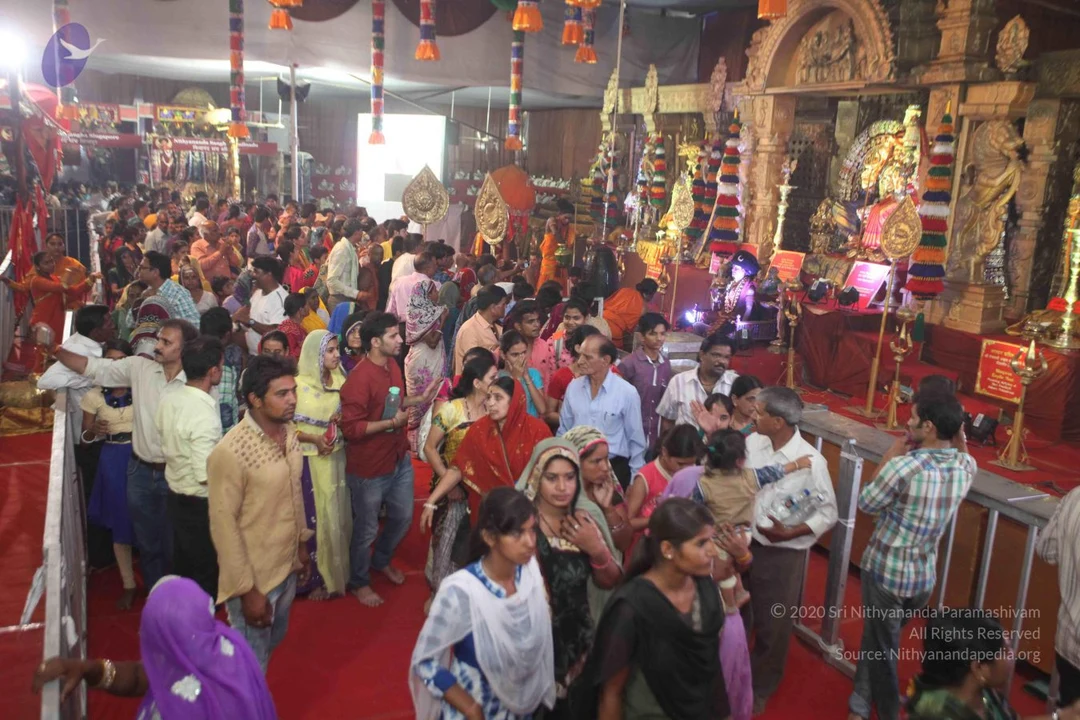
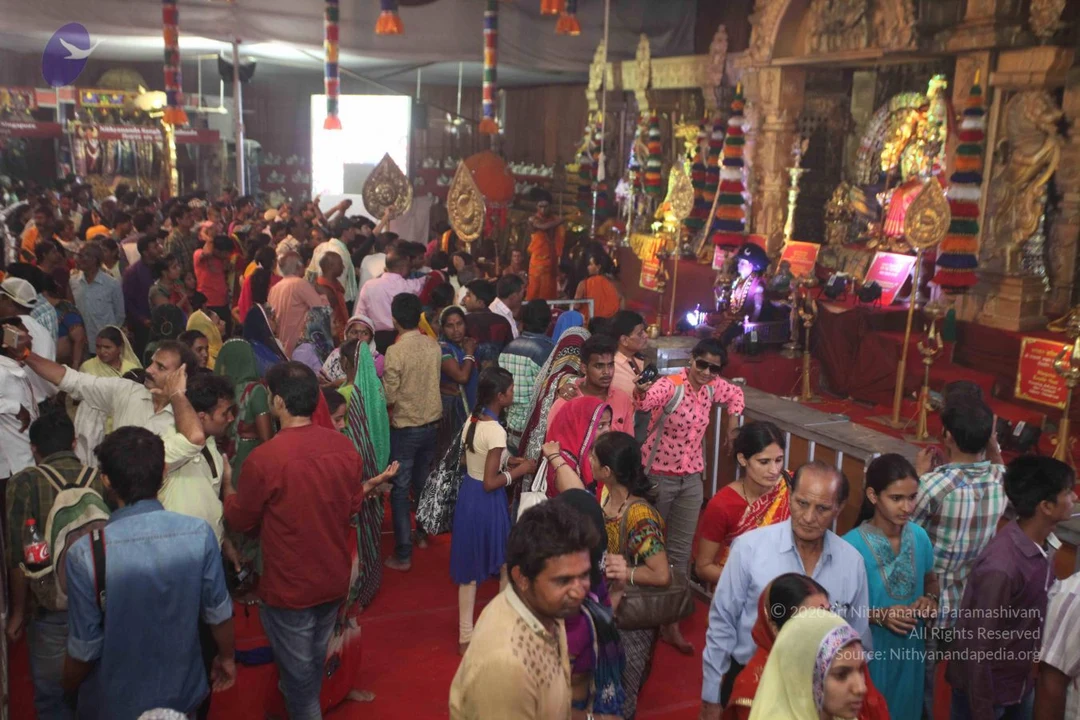
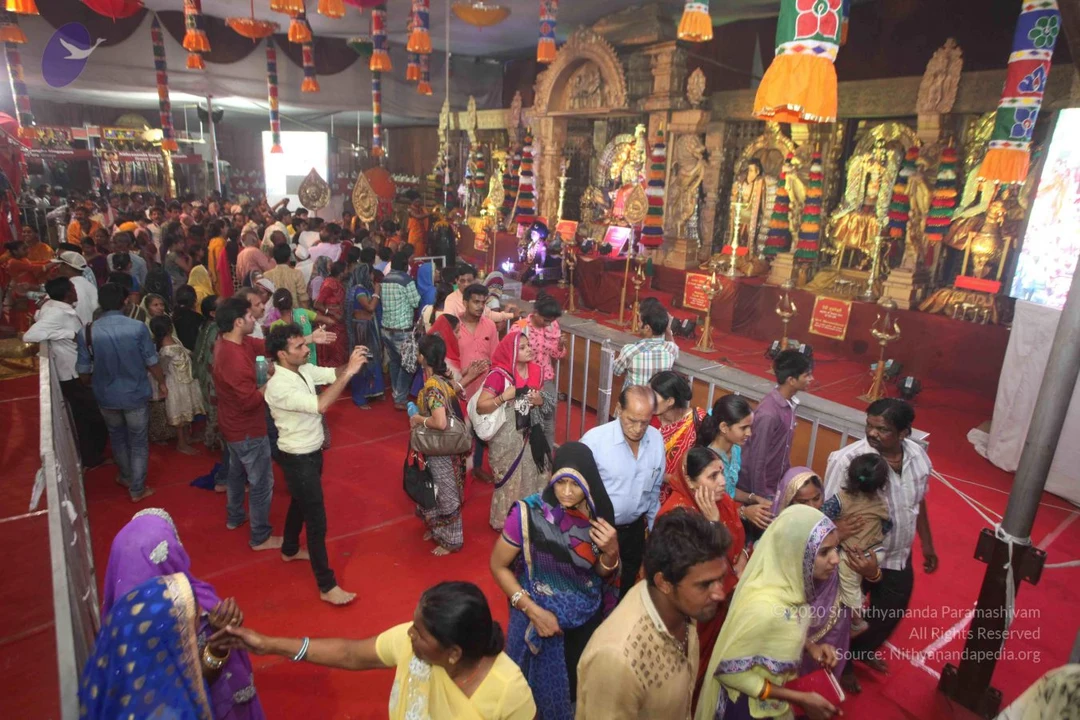
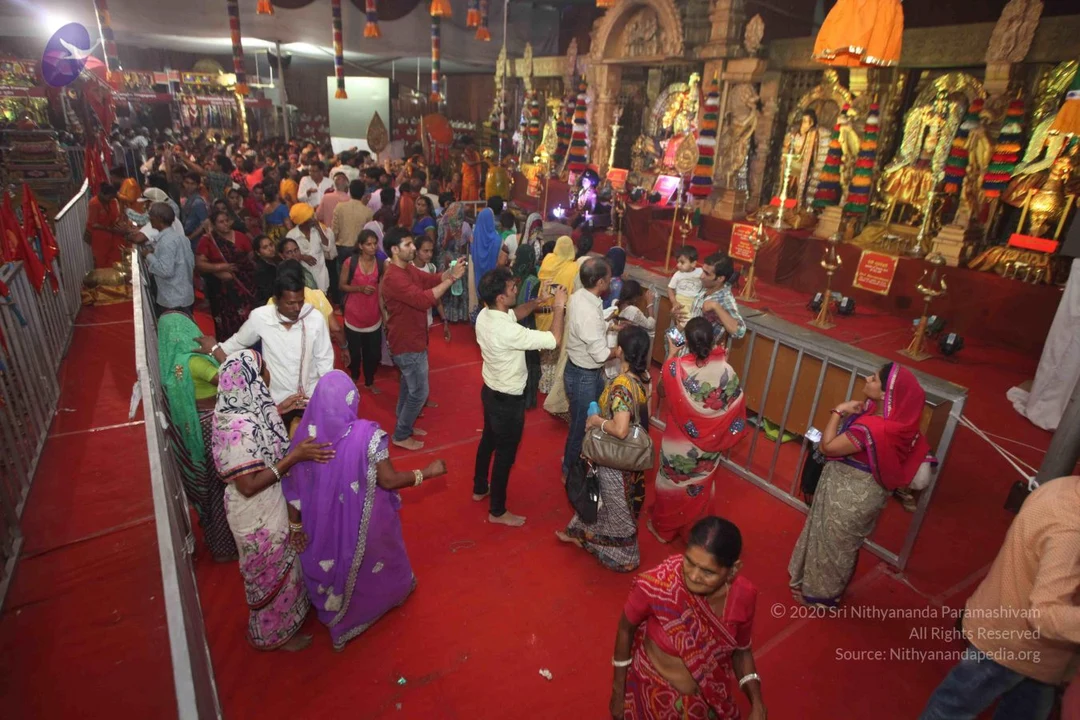
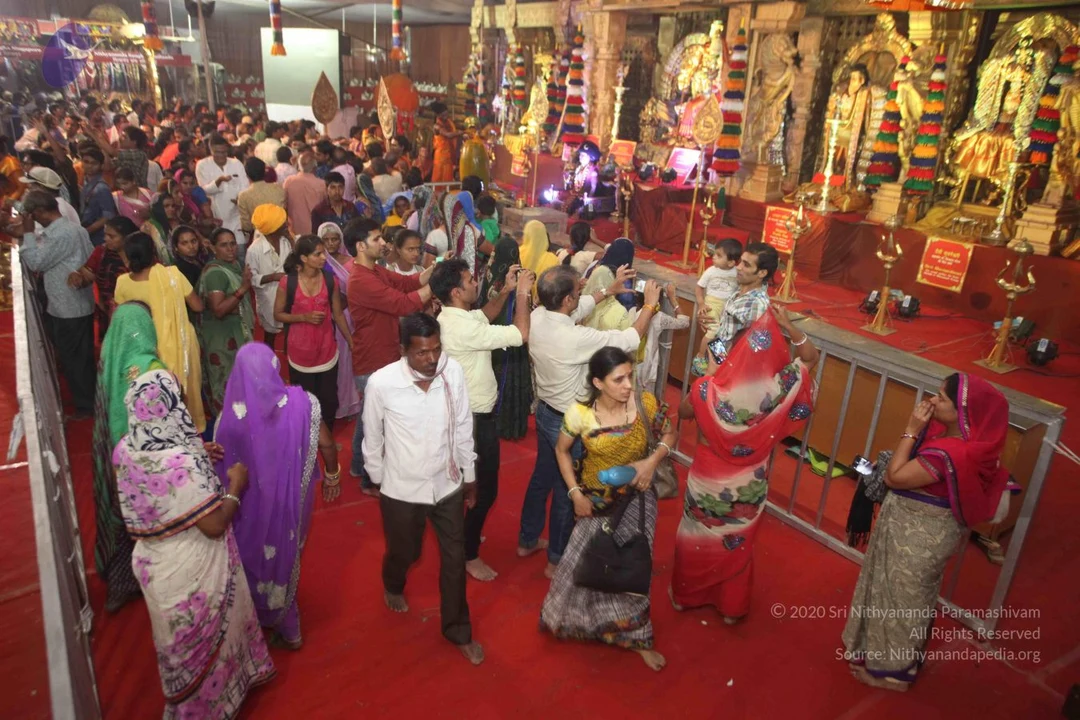
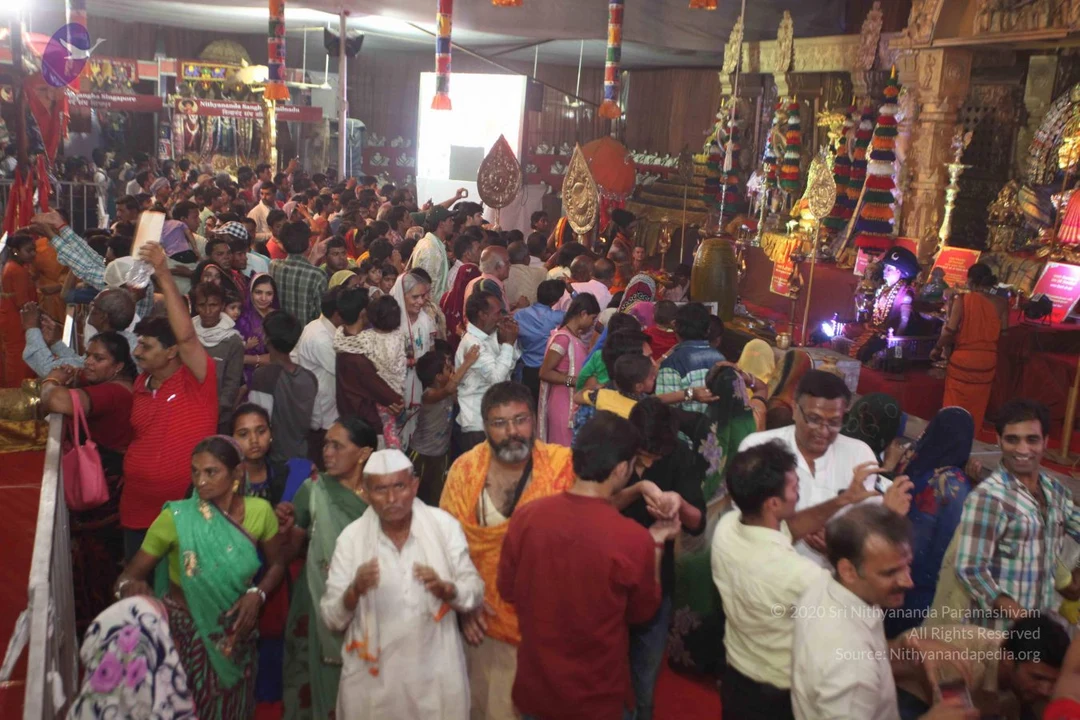
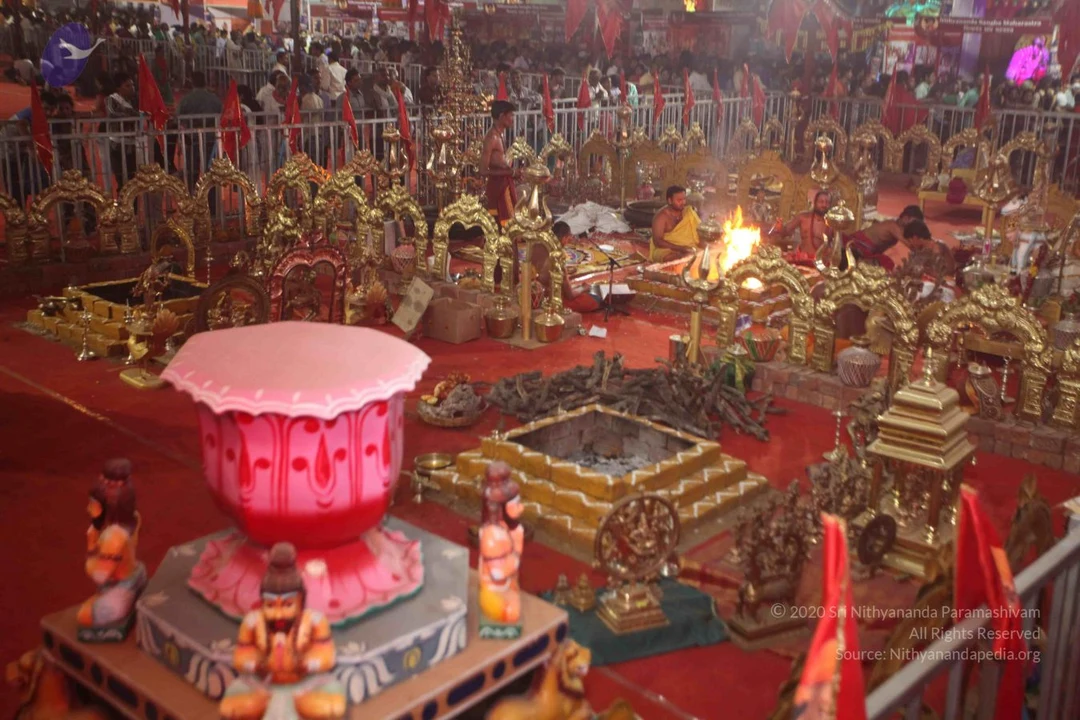
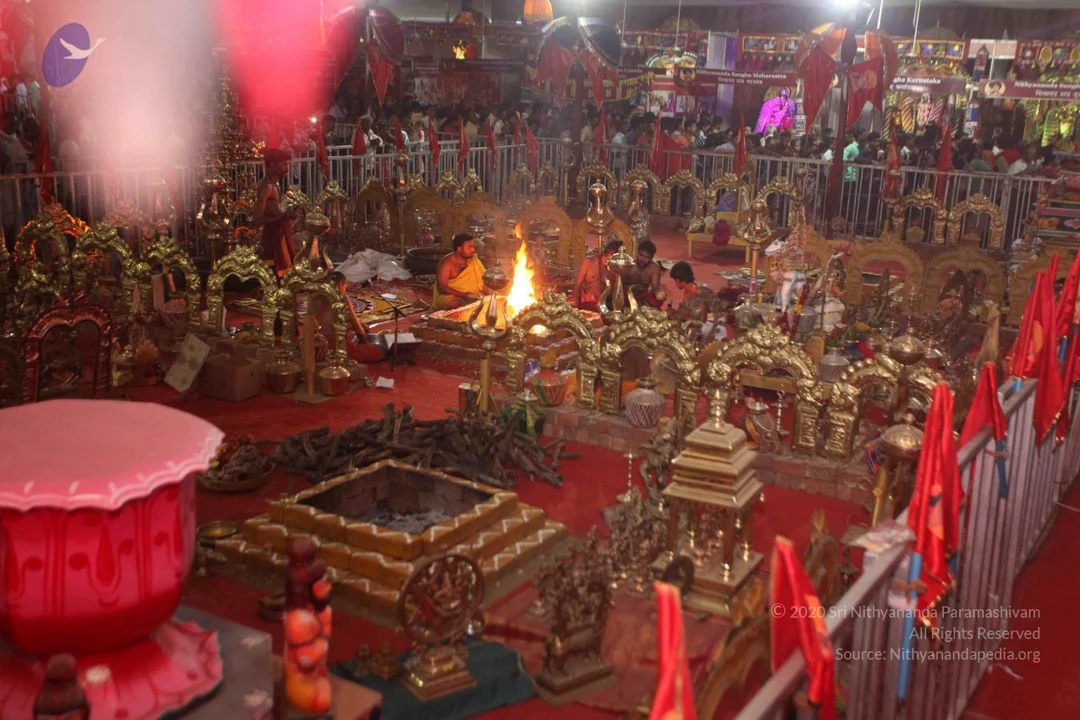
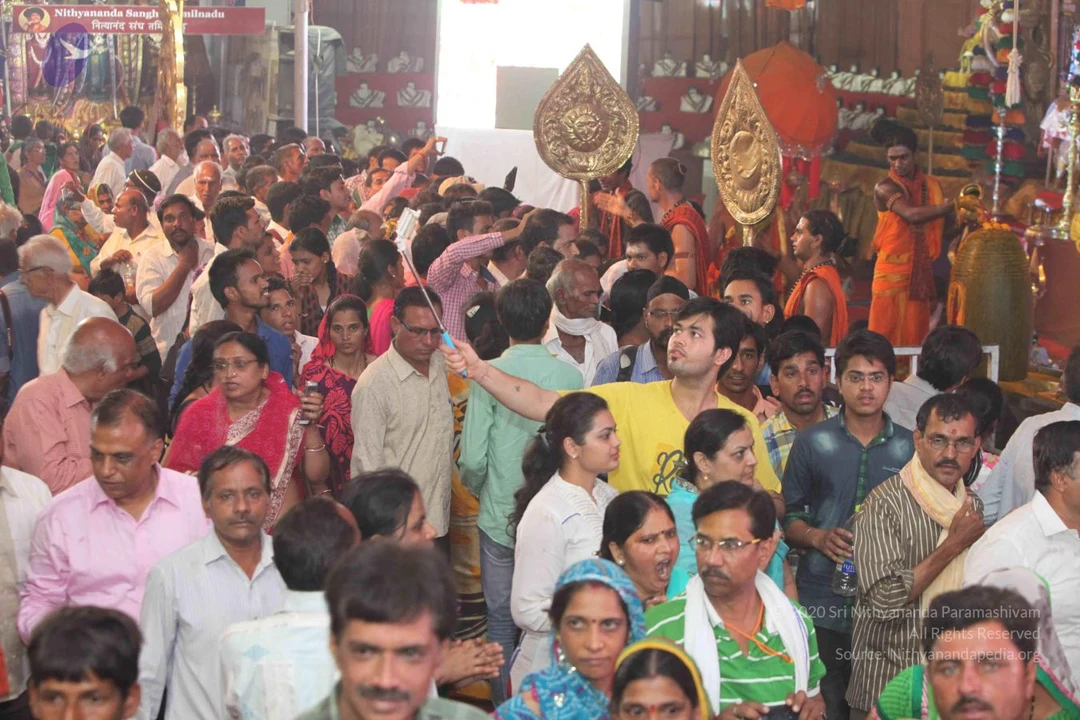
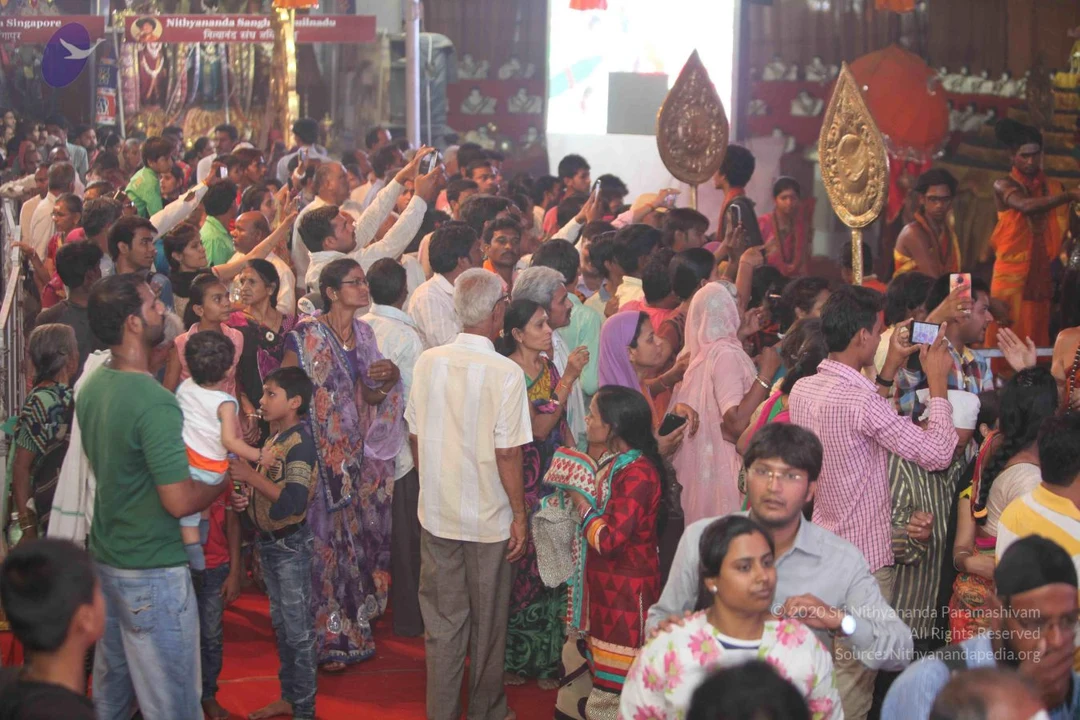
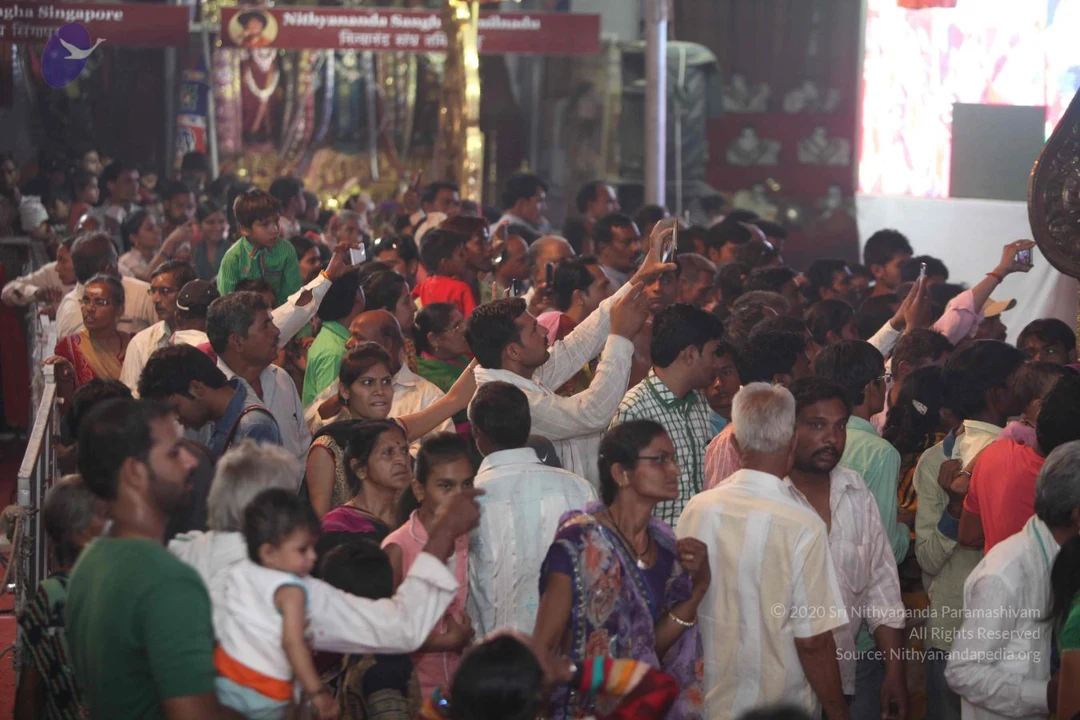
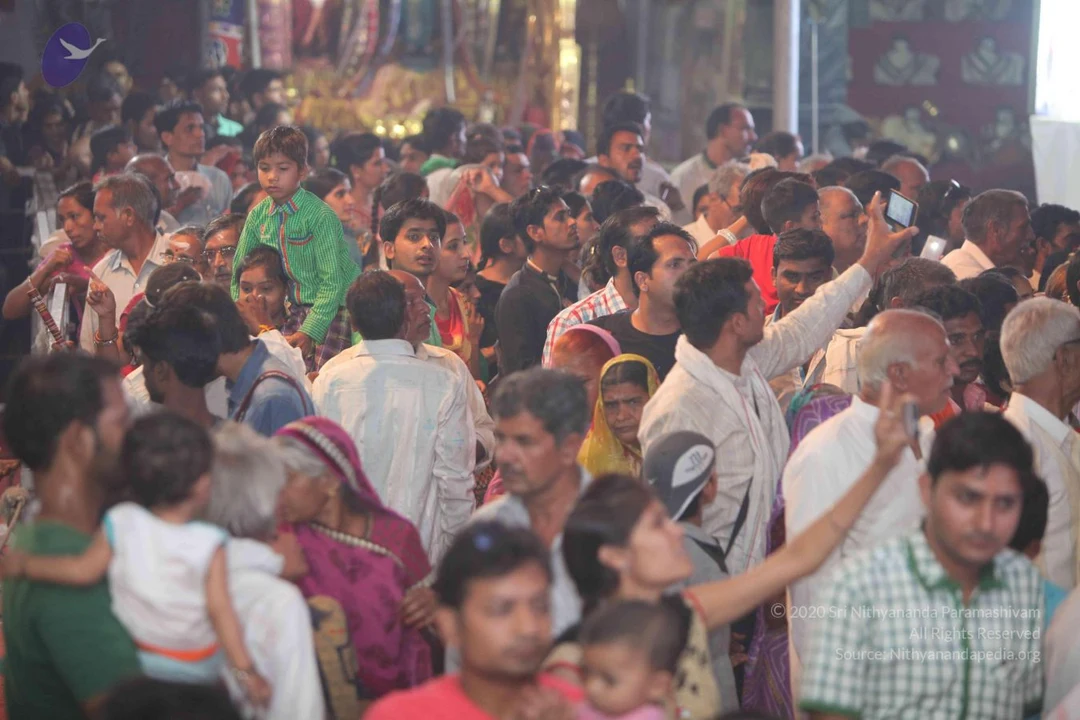
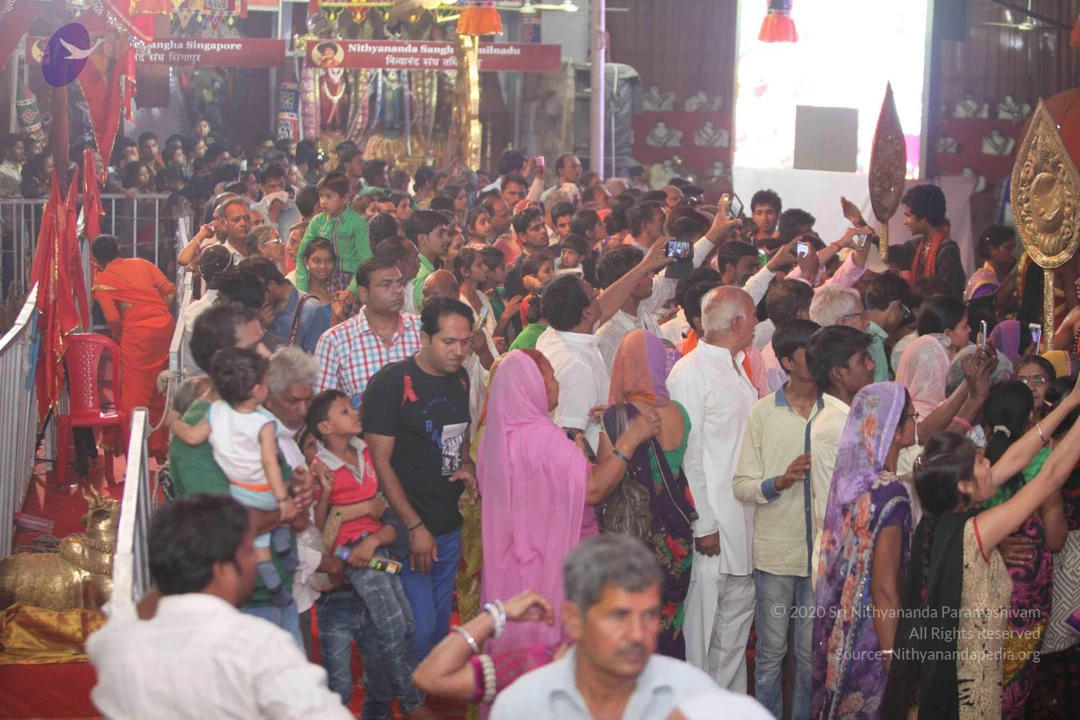
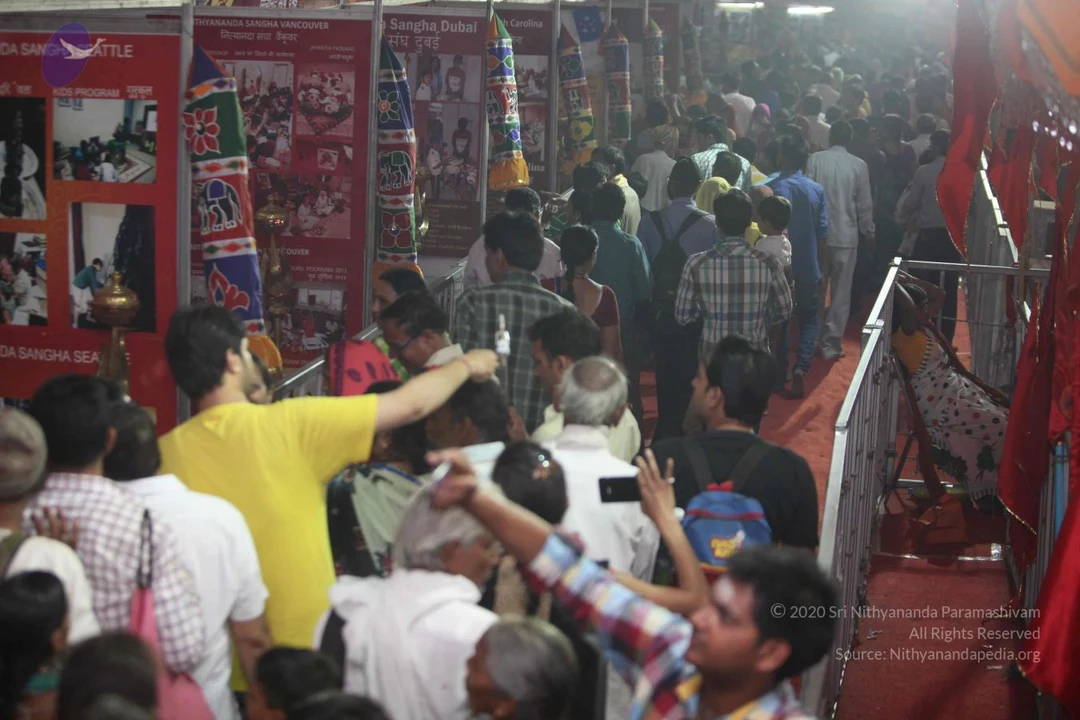
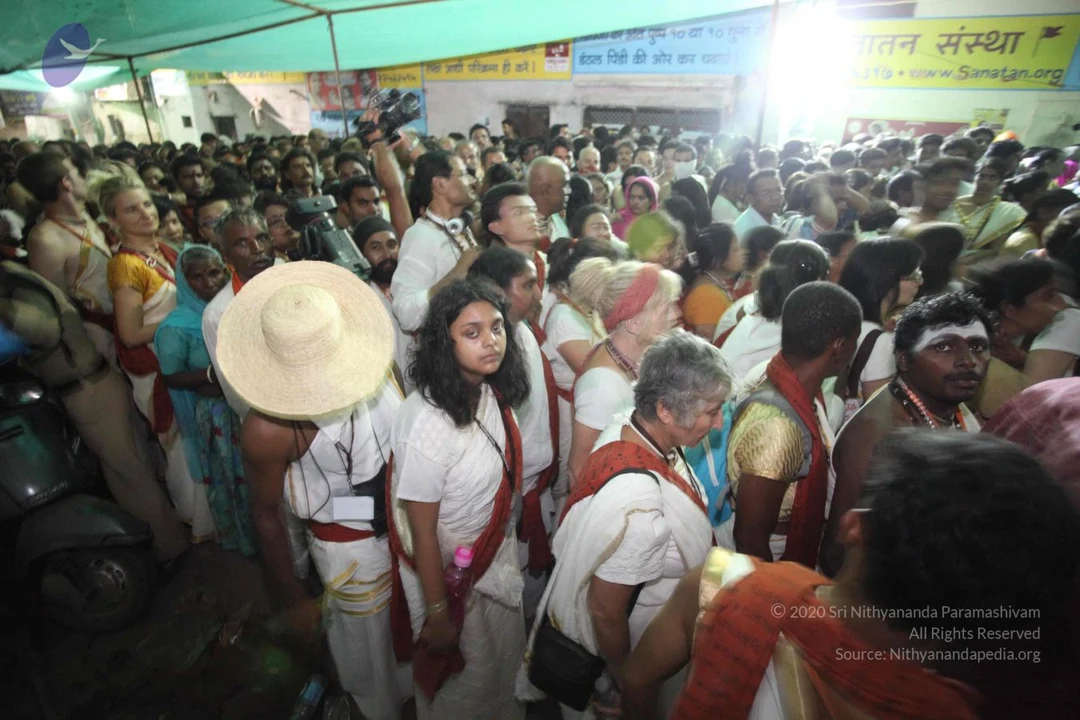
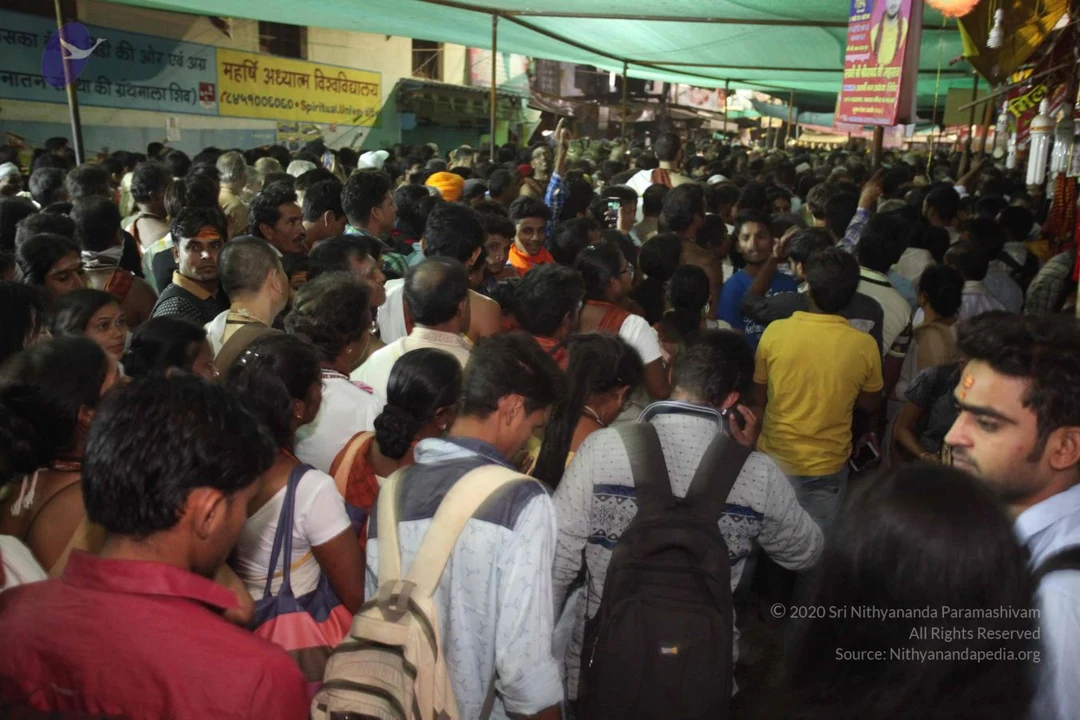
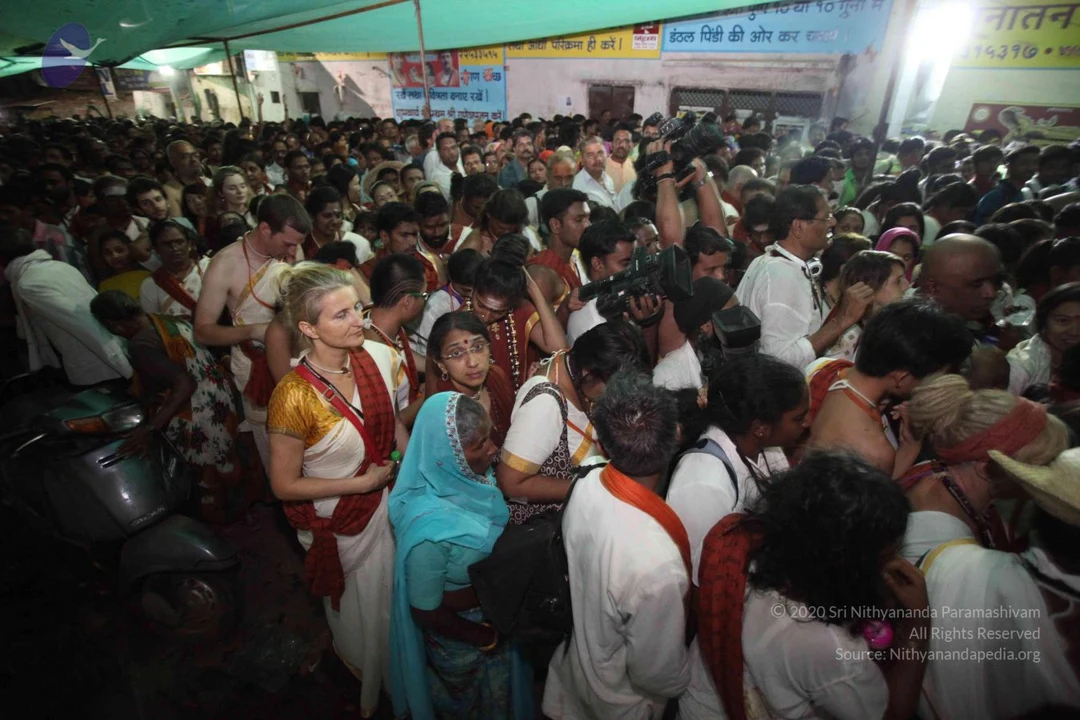
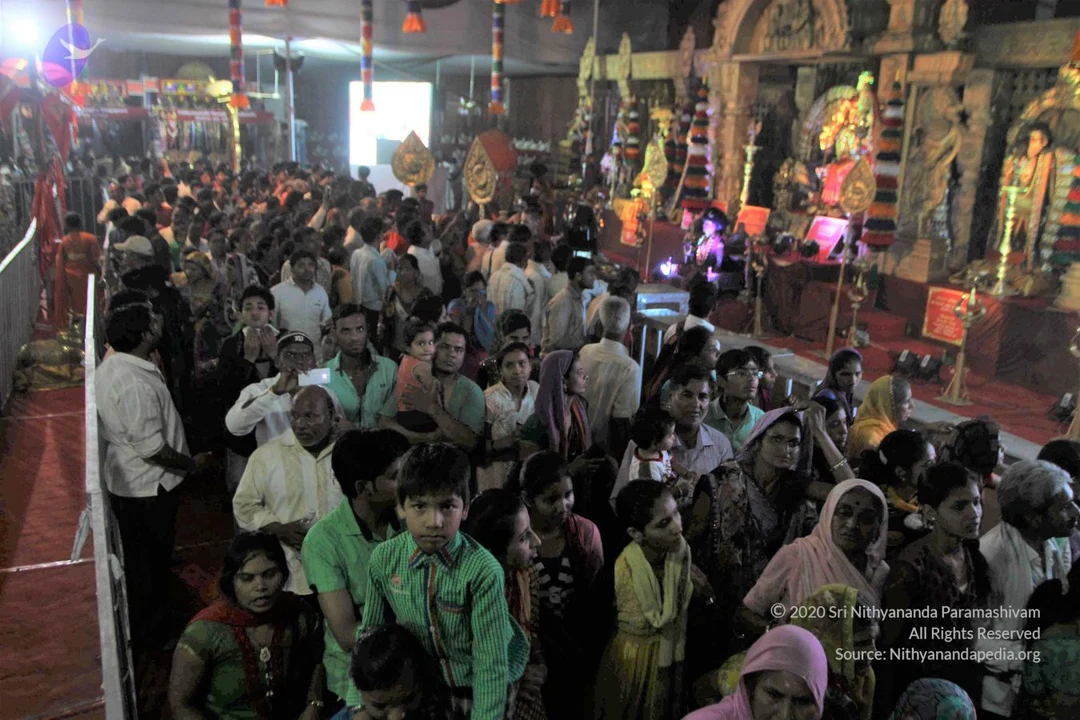
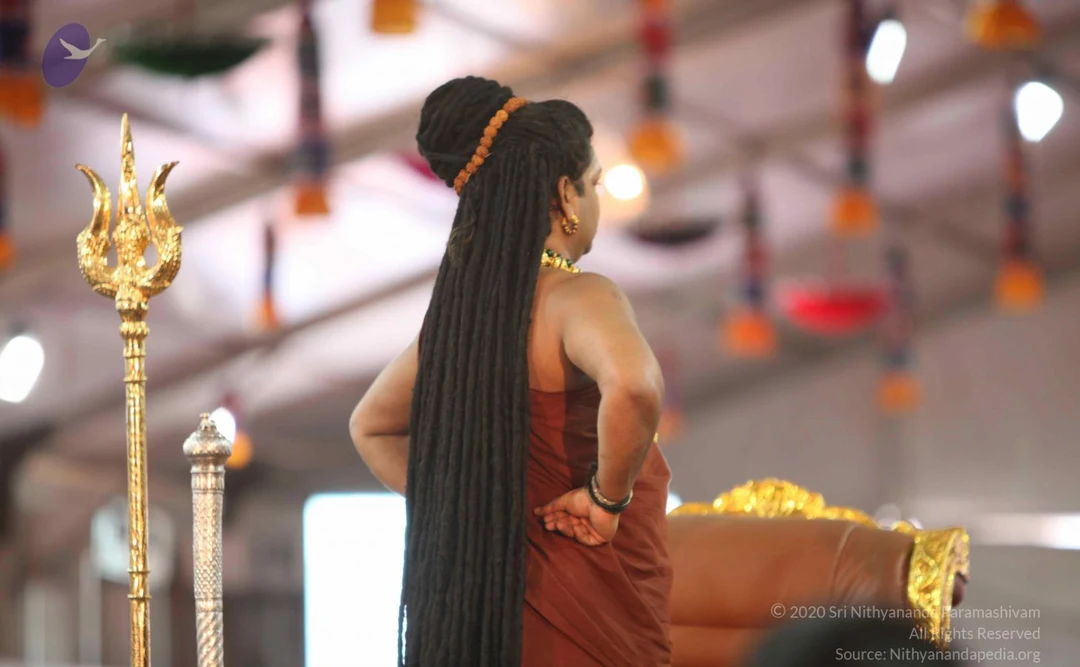
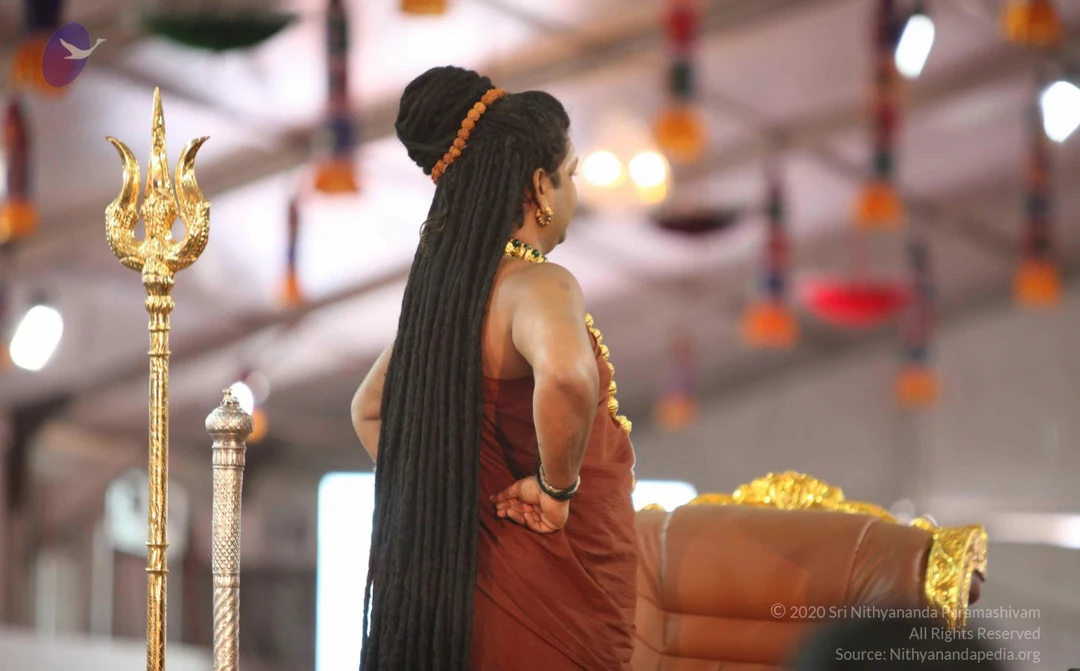
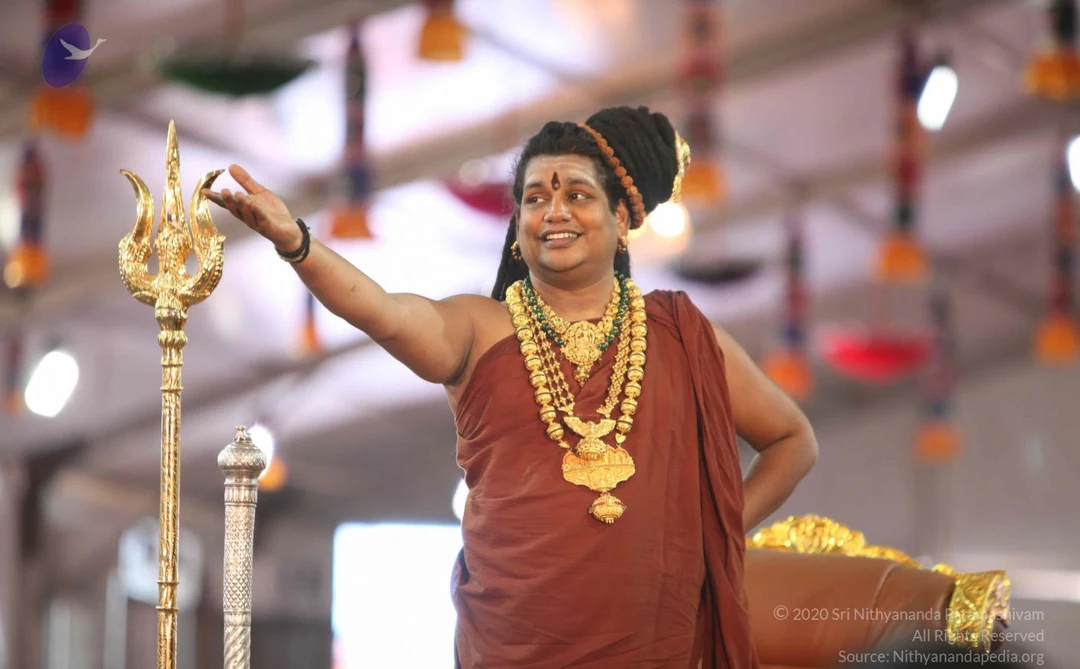
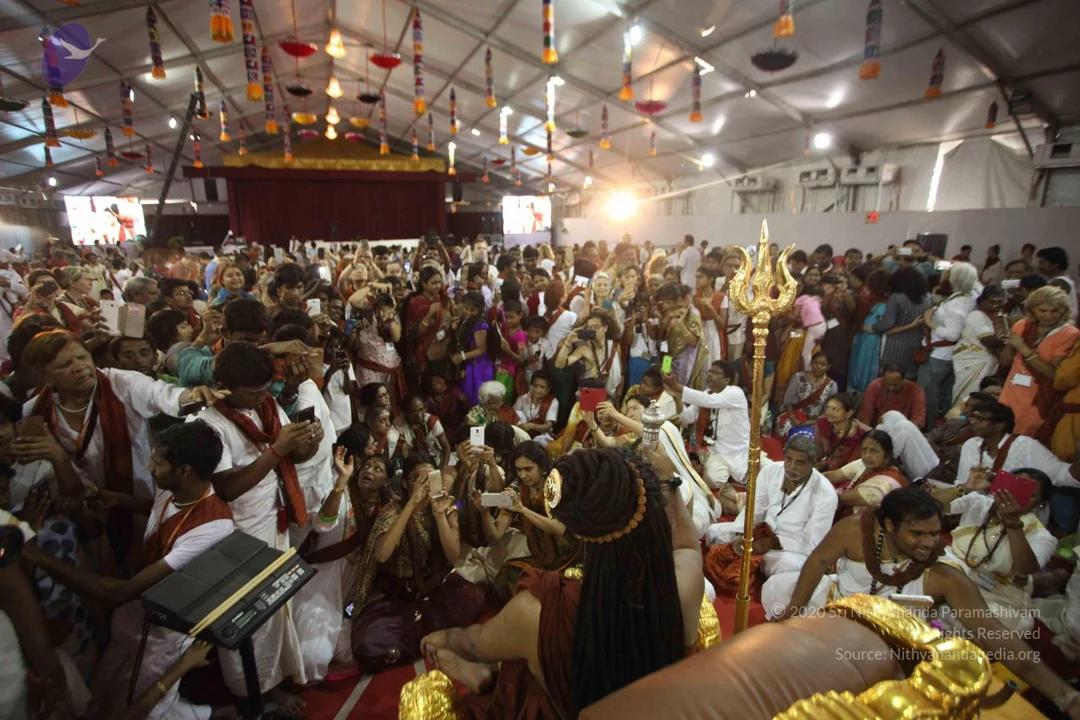
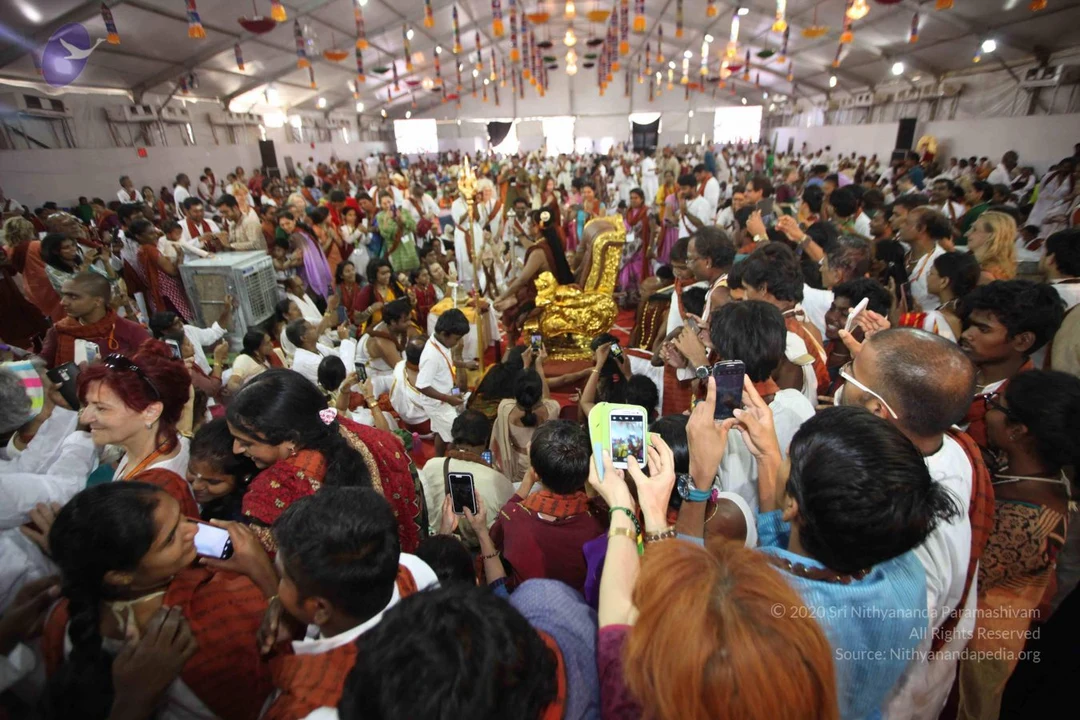
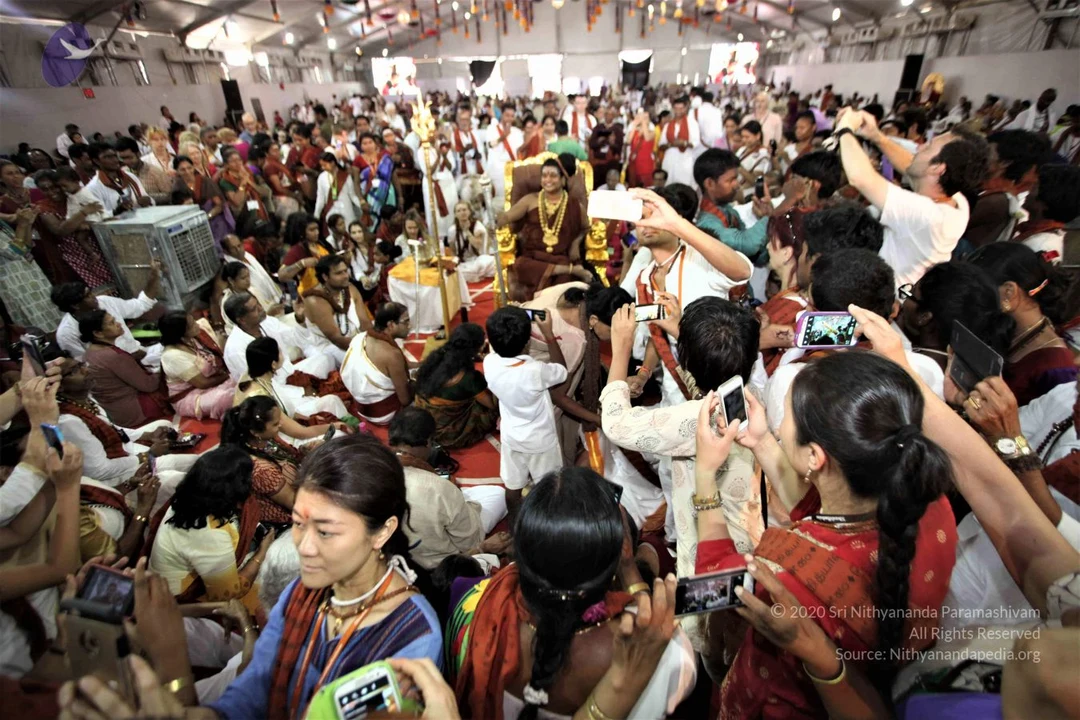
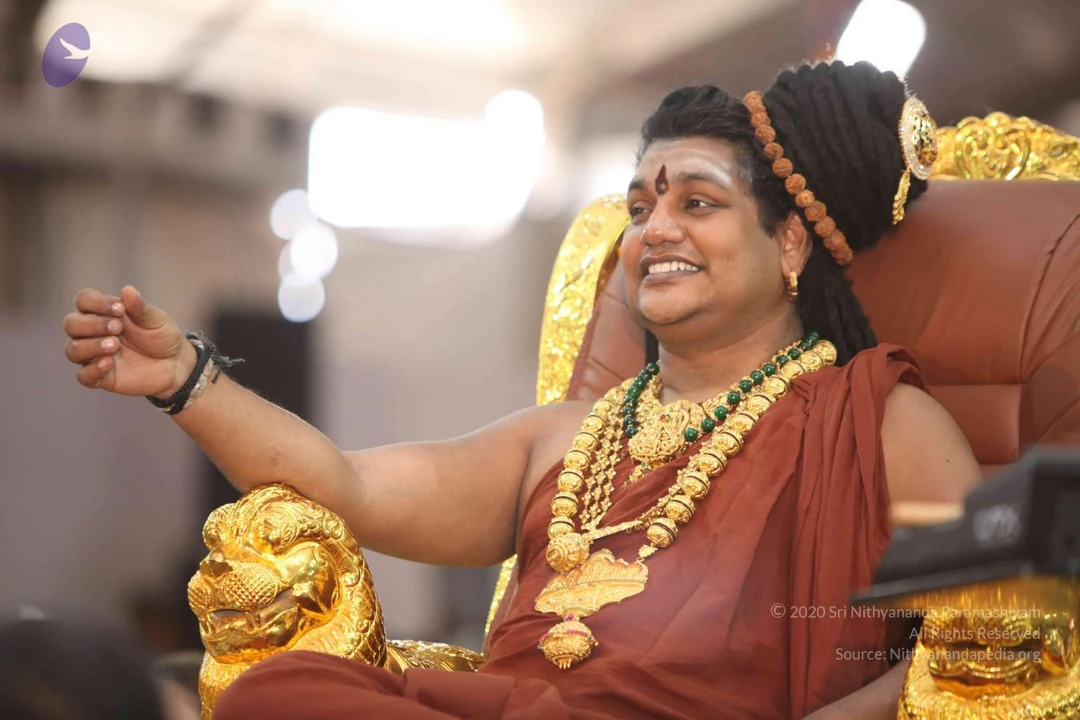
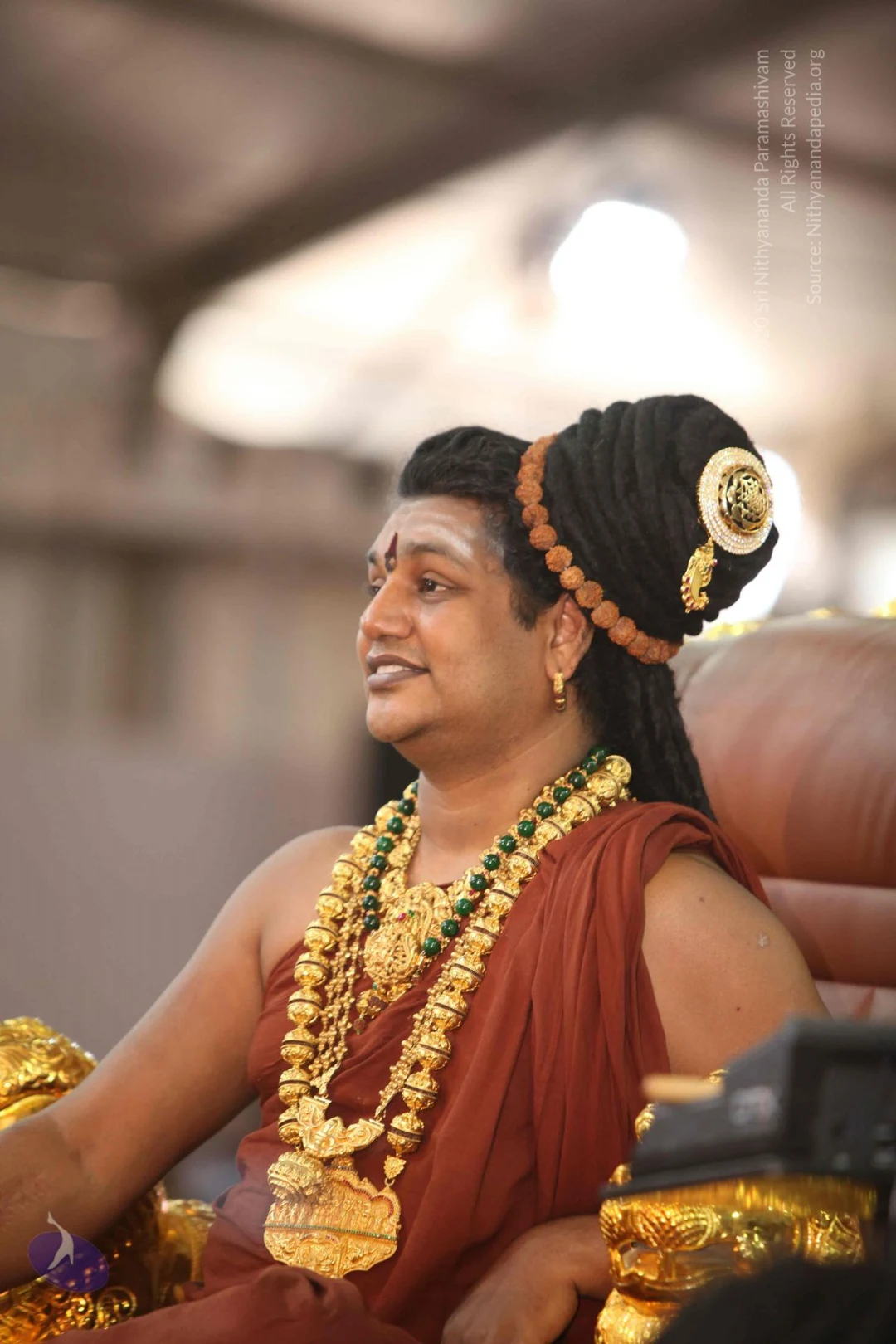
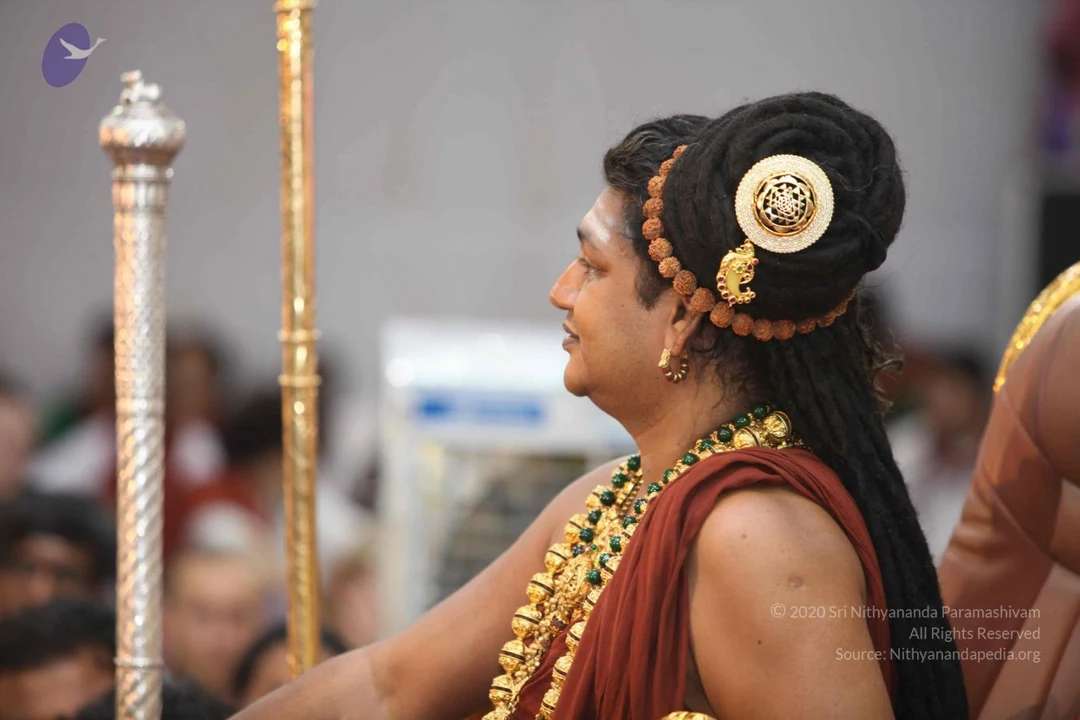
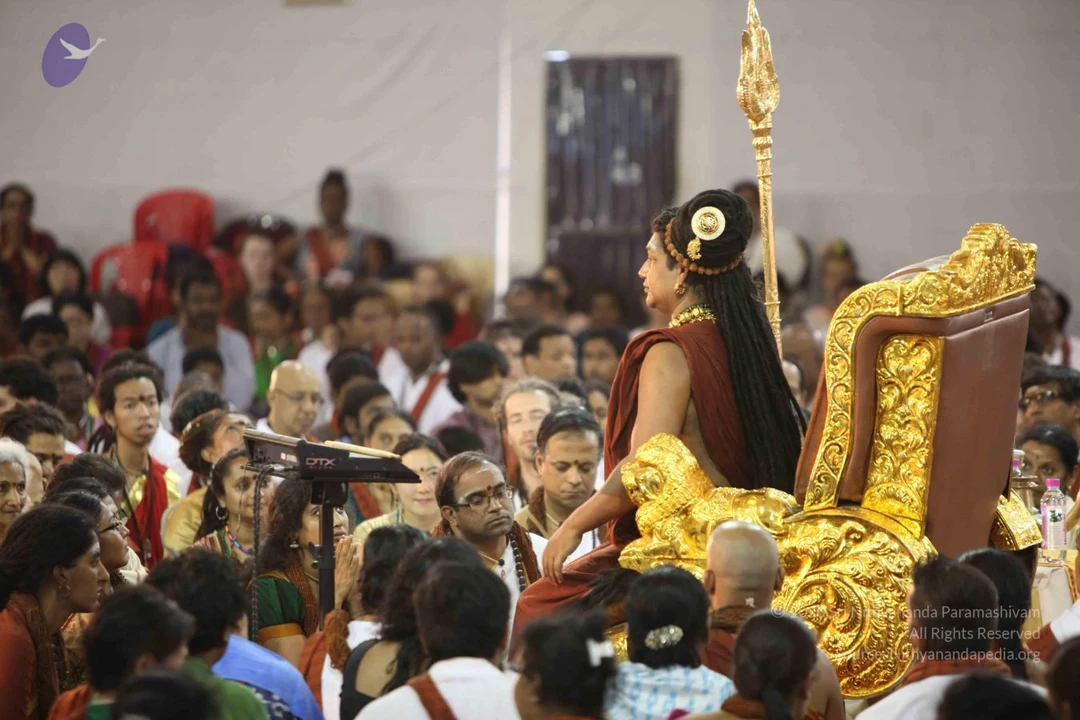
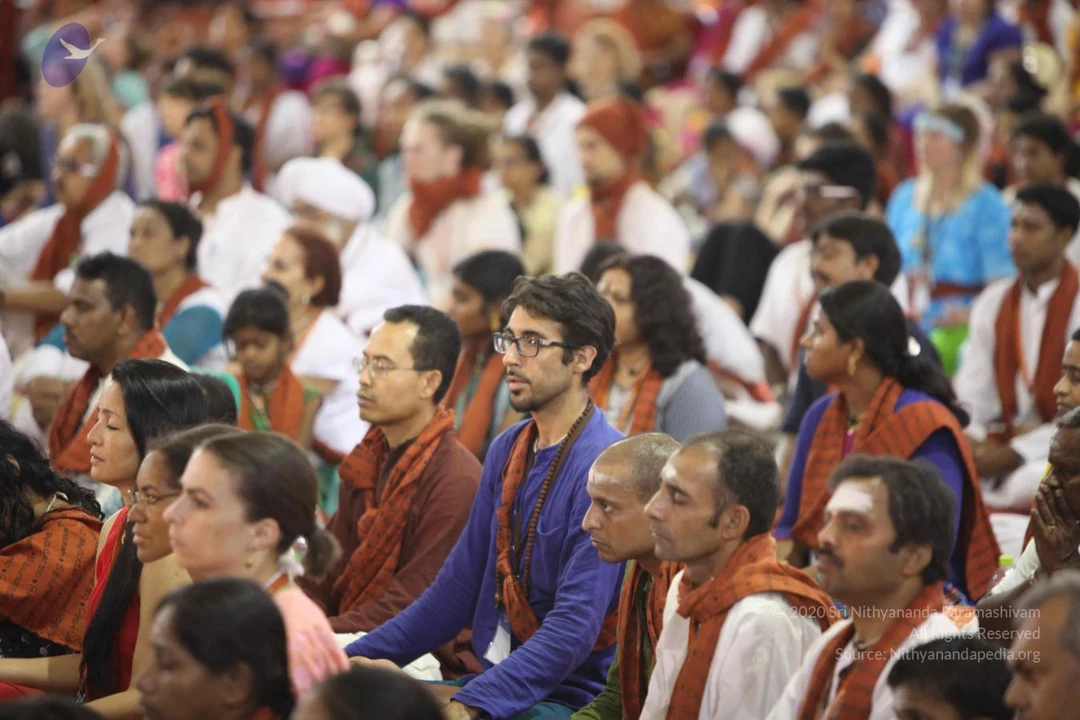
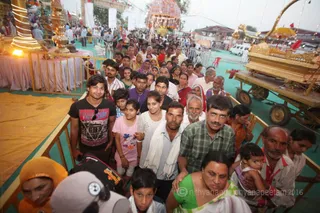
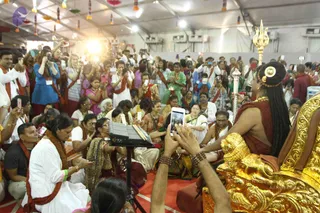
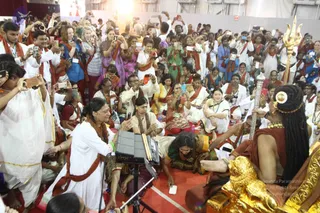
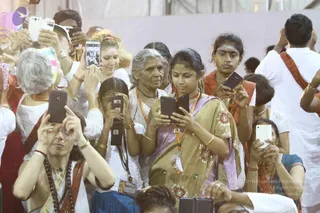
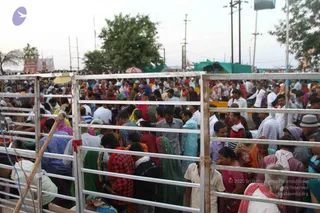
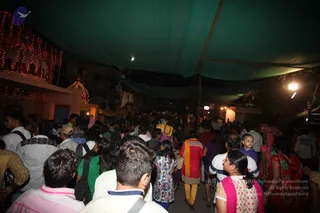
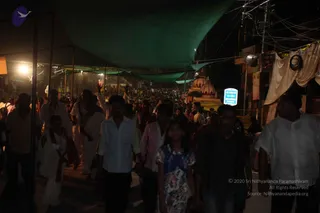
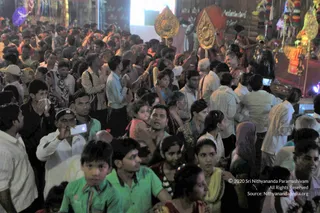
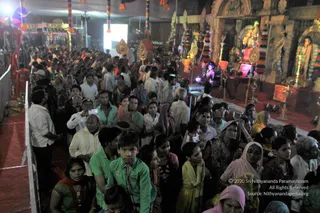
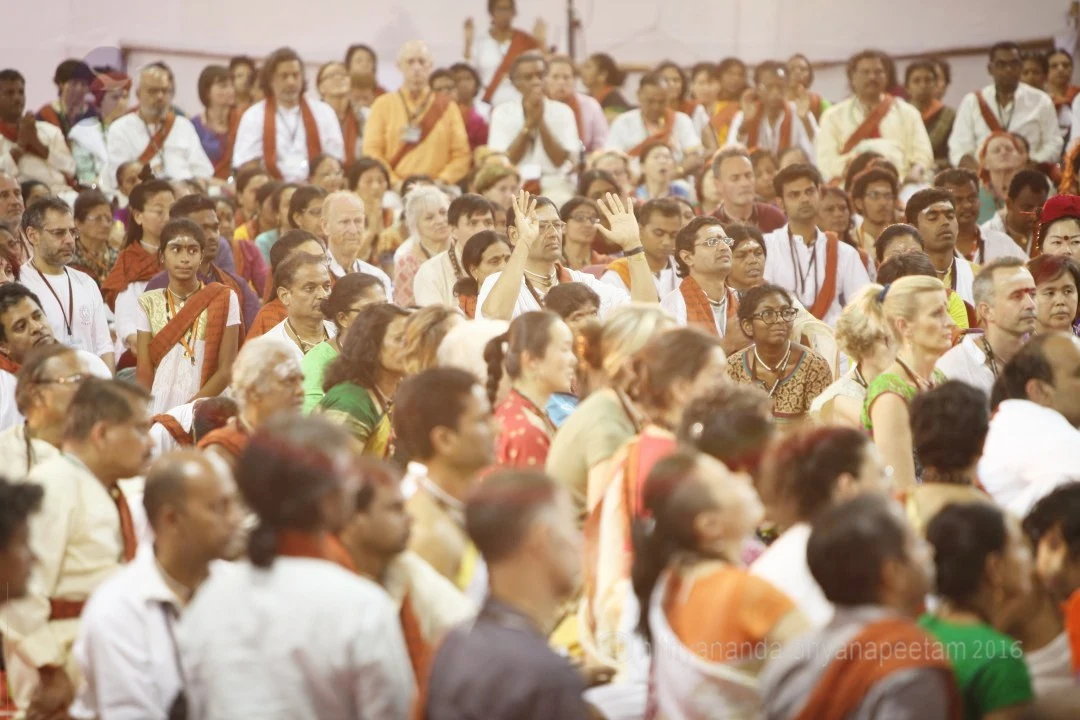
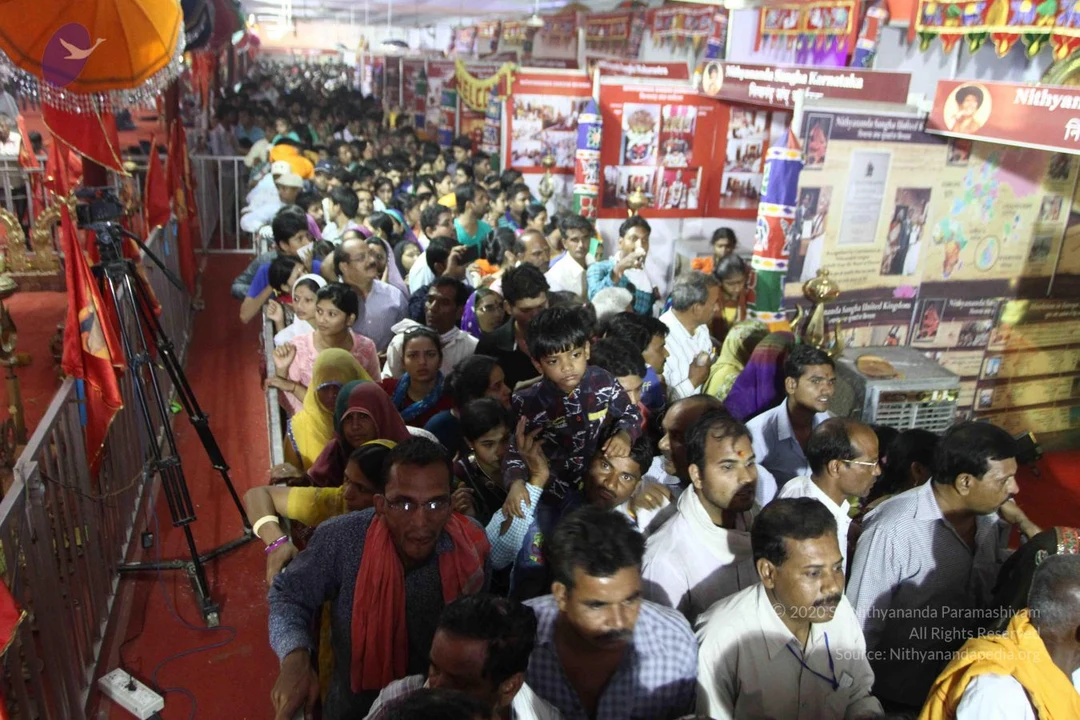
A smiling man with long dreadlocked hair swept up and wrapped with rudraksha beads and a gold hair ornament sits on a brown leather chair with gold trim. He wears a rust-red garment over the shoulder and bare shoulder, layered gold necklaces with green beads and a large gold pendant, a red bindi on his forehead, and gold earrings. A gold-coloured animal-headed finial is held nearby by a person with long dark dreadlocks seen in the foreground on the left. Swamiji (probable): the qualifying cues are the long swept-back hair with rudraksha and the ornate saffron-red clothing with gold necklaces, seated in an honorific chair. Stage lights and equipment are visible in the background.A dense crowd of devotees fills a hall with a red carpet runway, many people holding up mobile phones to record or photograph. Women wear saris and salwar kameez in purple, pink, red and green, and men wear shirts and jeans. On the right, a figure in orange-saffron cloth stands near a golden ornamental stand, with a white backdrop behind. Banners at the top read Nithyananda Sangha and Singapore, with a framed deity image visible at upper left.A crowd of devotees files through an outdoor festival ground at dusk, with string lights strung overhead. In the foreground a young man in a dark striped shirt and a younger man in a purple top look toward the camera; beside them a woman in a red-and-orange sari, an older man in white with a blue-and-white scarf, and an older bearded man in white stand among others. Behind them a golden ornate palanquin-style cart with a gilded canopy, a decorated golden arch and a golden pillar with white lights mark the ritual area, with a red and orange canopy structure and banners further back. The scene suggests a darshan procession with many onlookers packed along barriers.

May 15 2016

Original wiki page
Contents

Title

Align to The Divine through Mandala Process || Part 1 || Shuddhadvaitam || 15 May 2016

Description

Name Of The Convention : Shuddhadvaitam
Session on: Align to The Divine through Mandala Process Part 1
Date : 15 May 2016
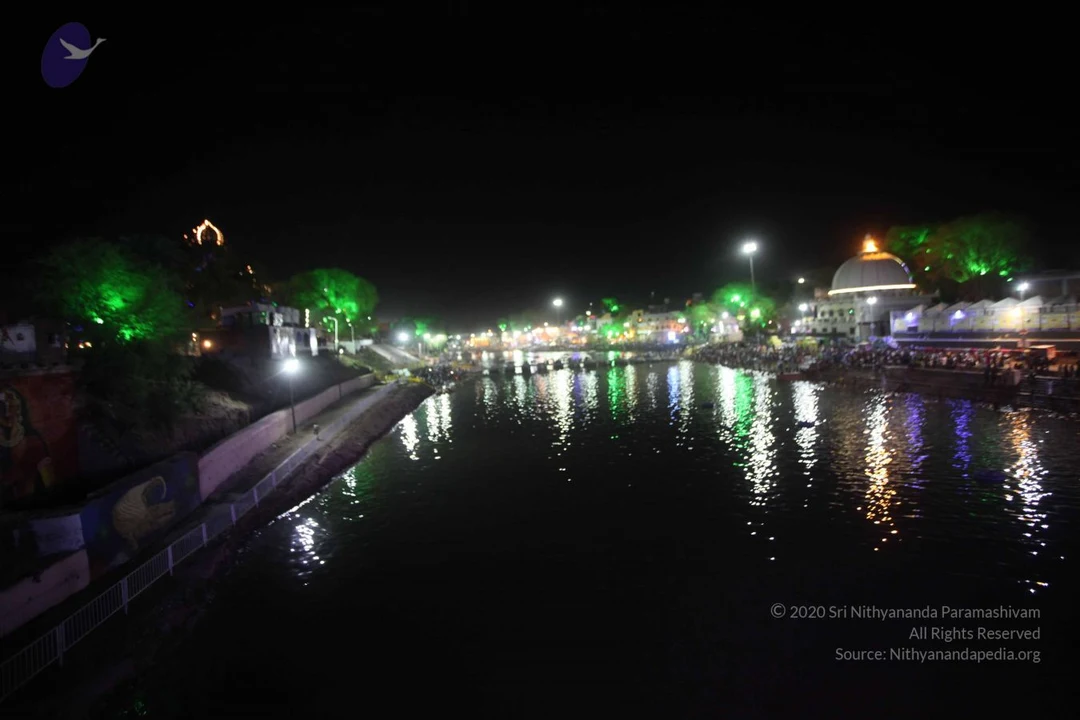
Venue : Ujjain, Madhya Pradesh, India

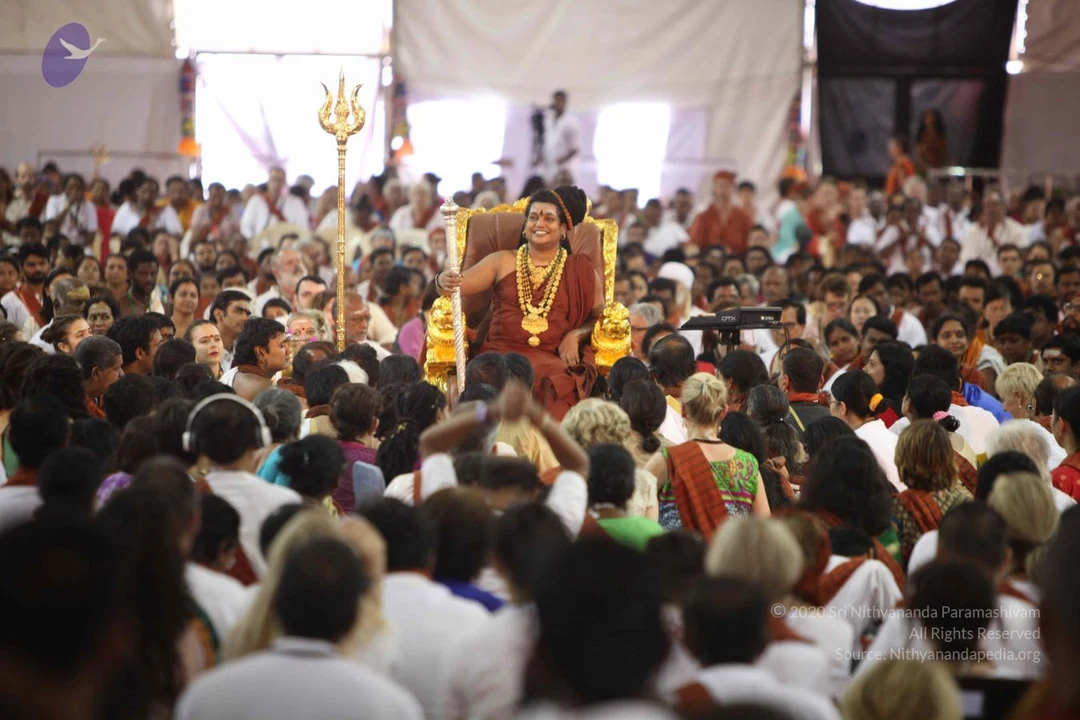
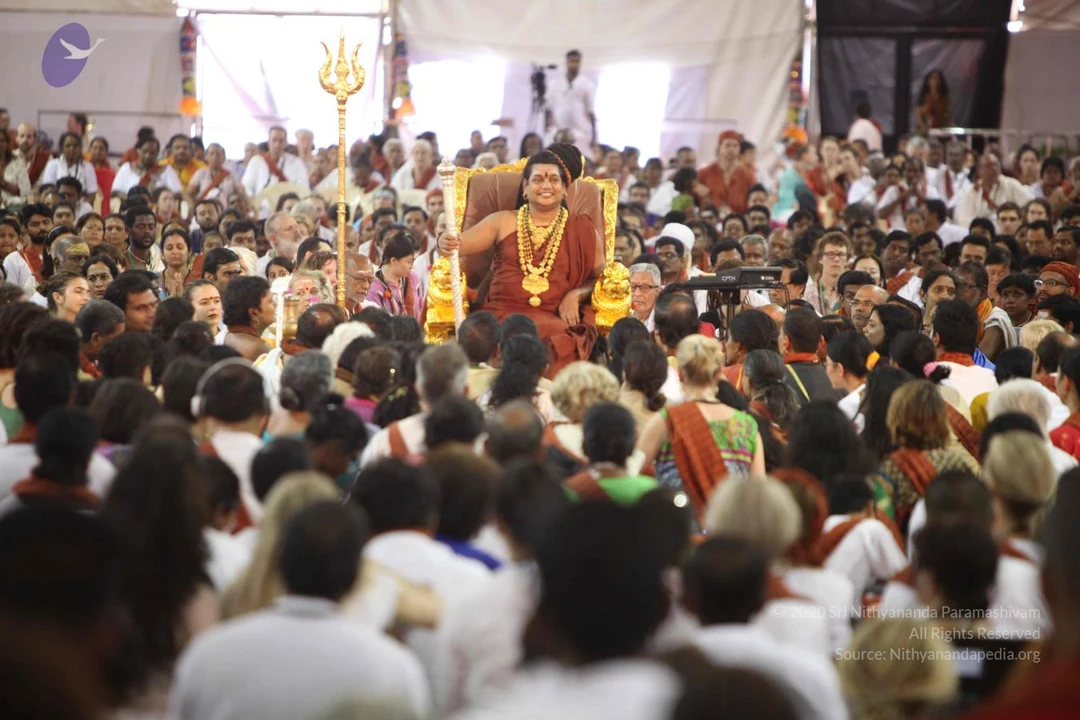
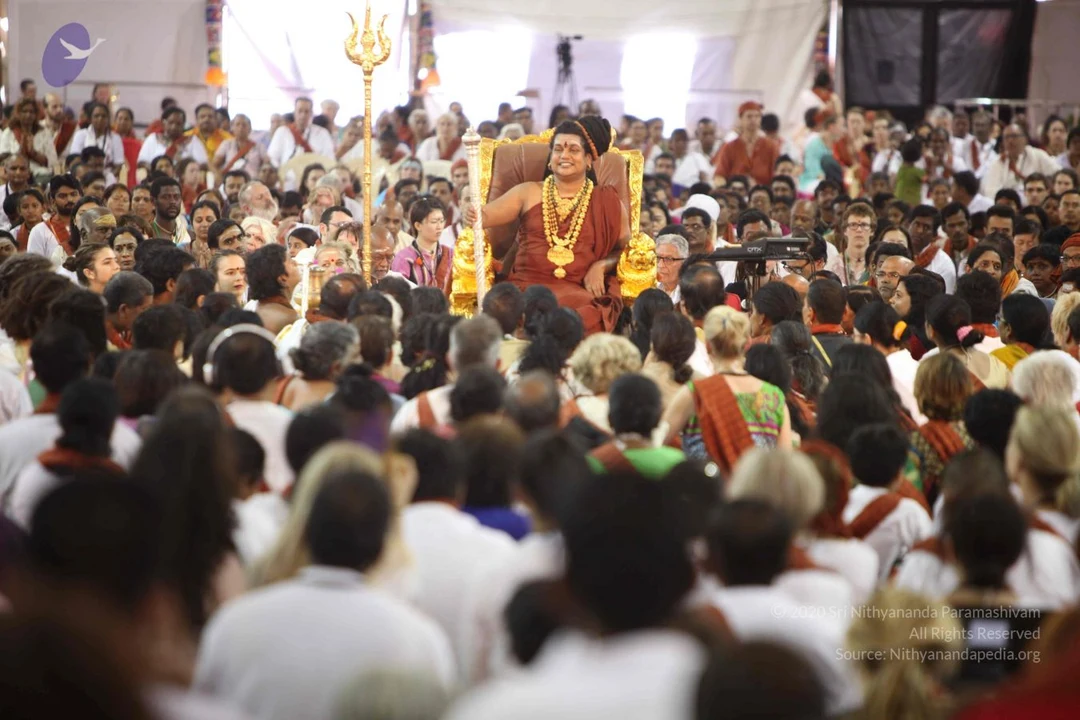
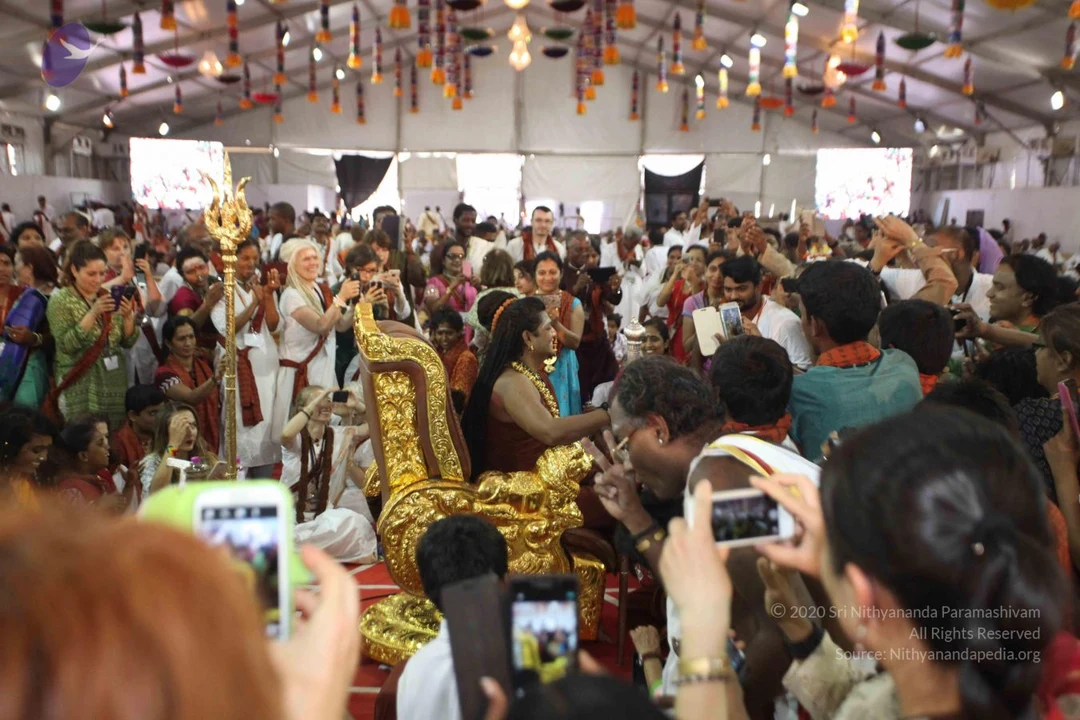
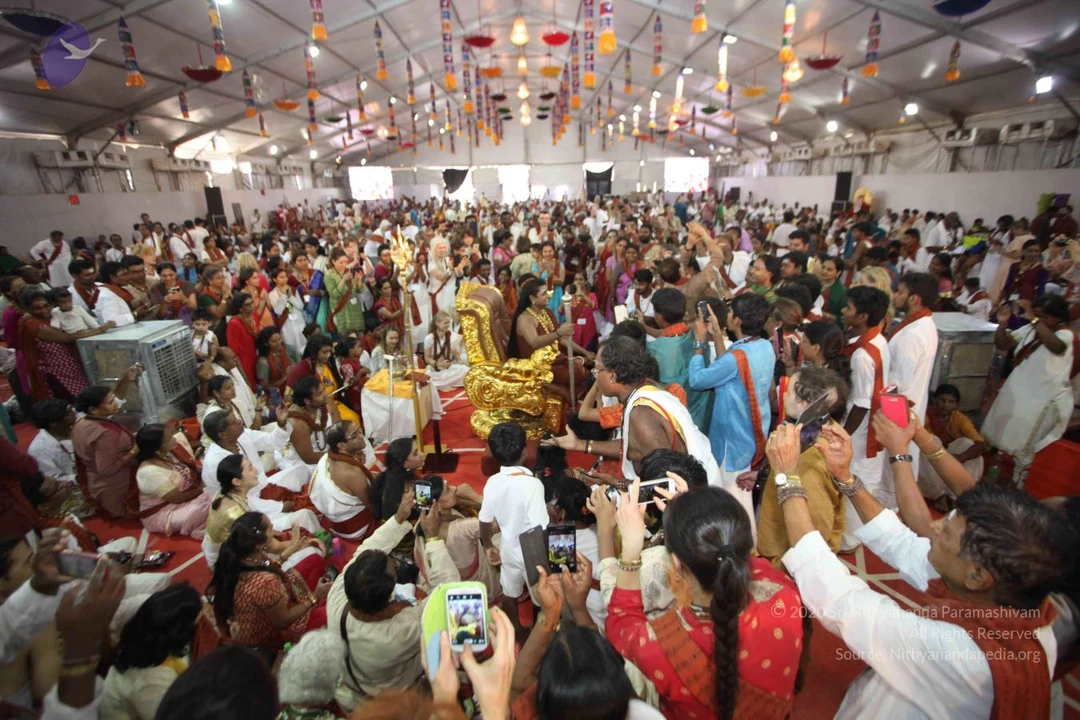
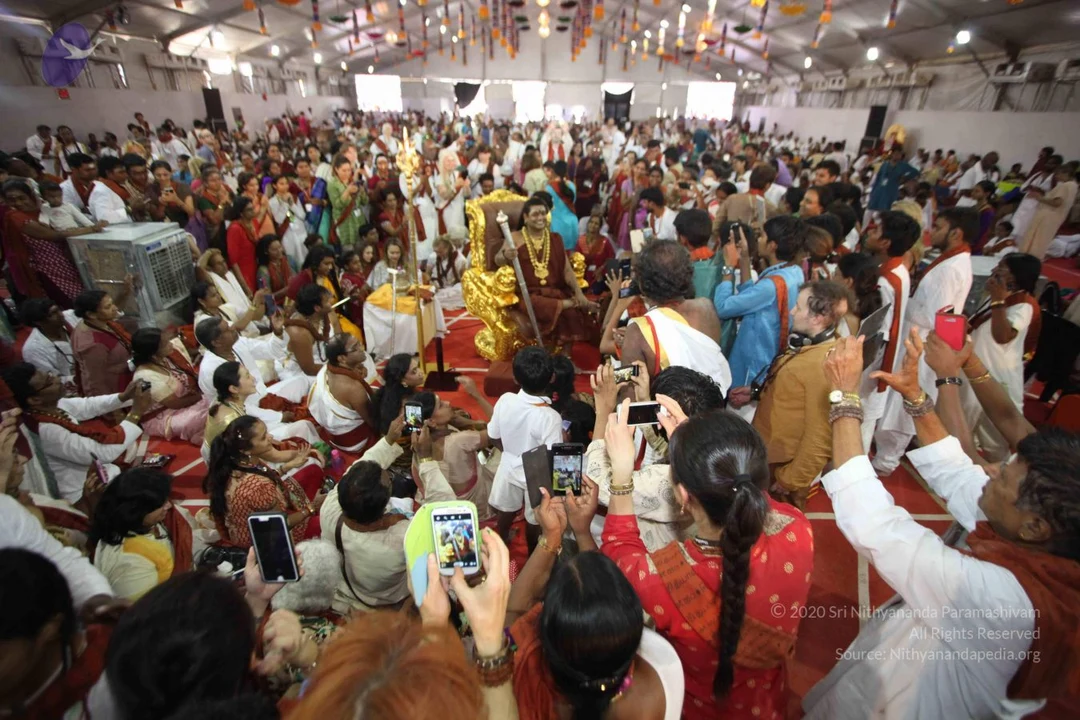
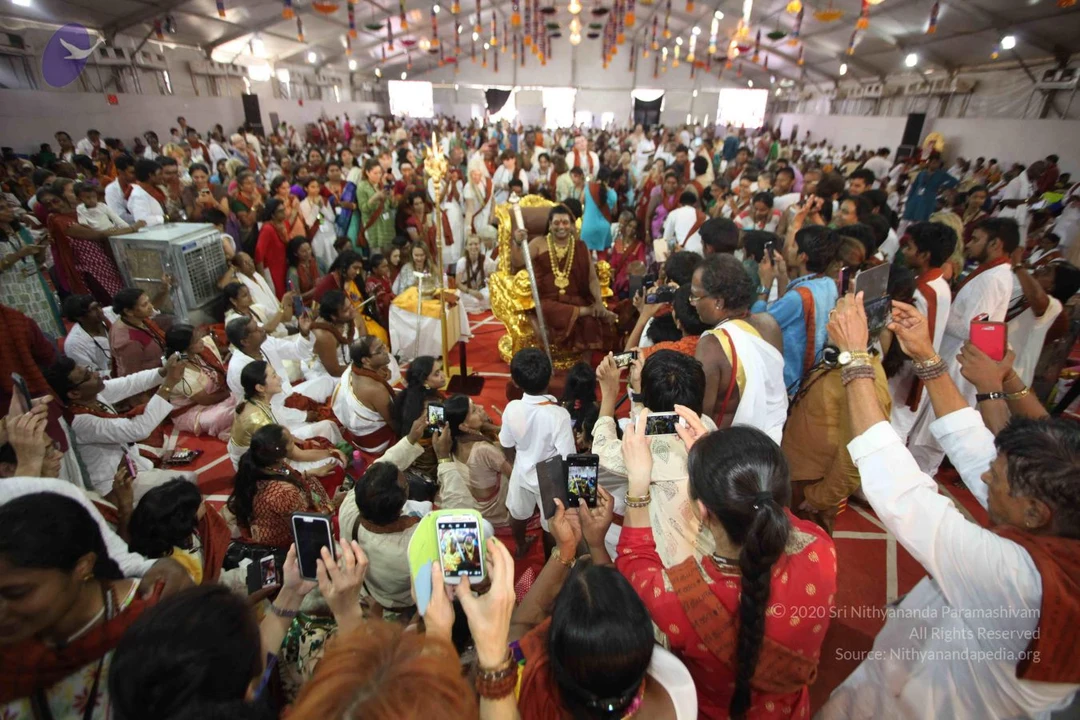
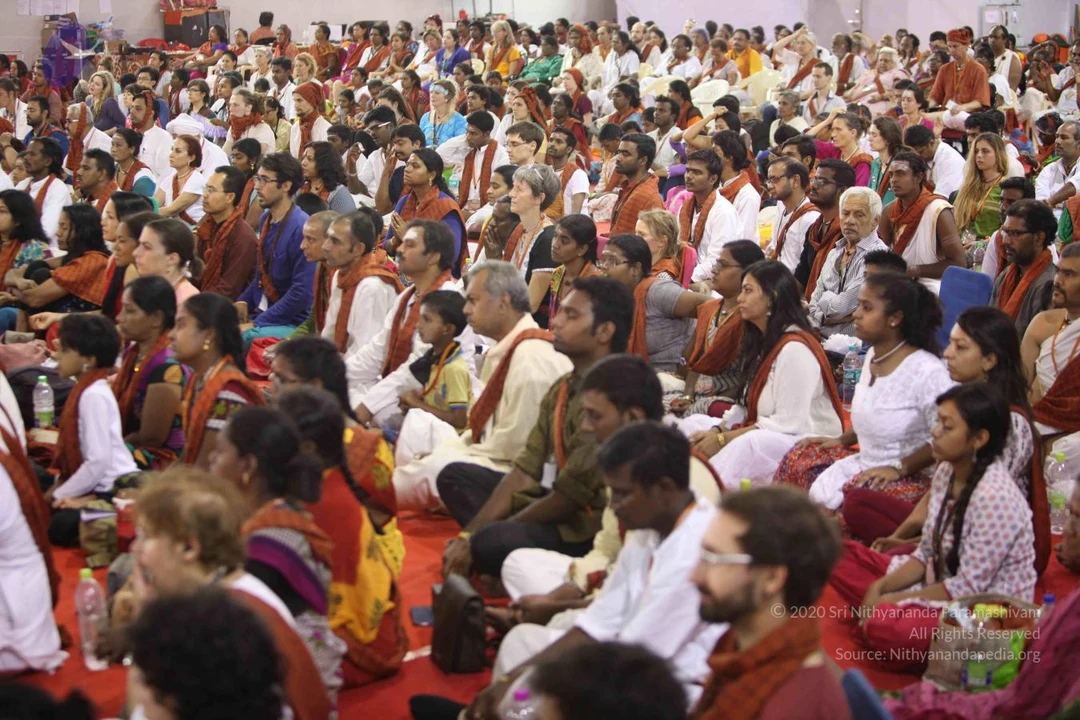
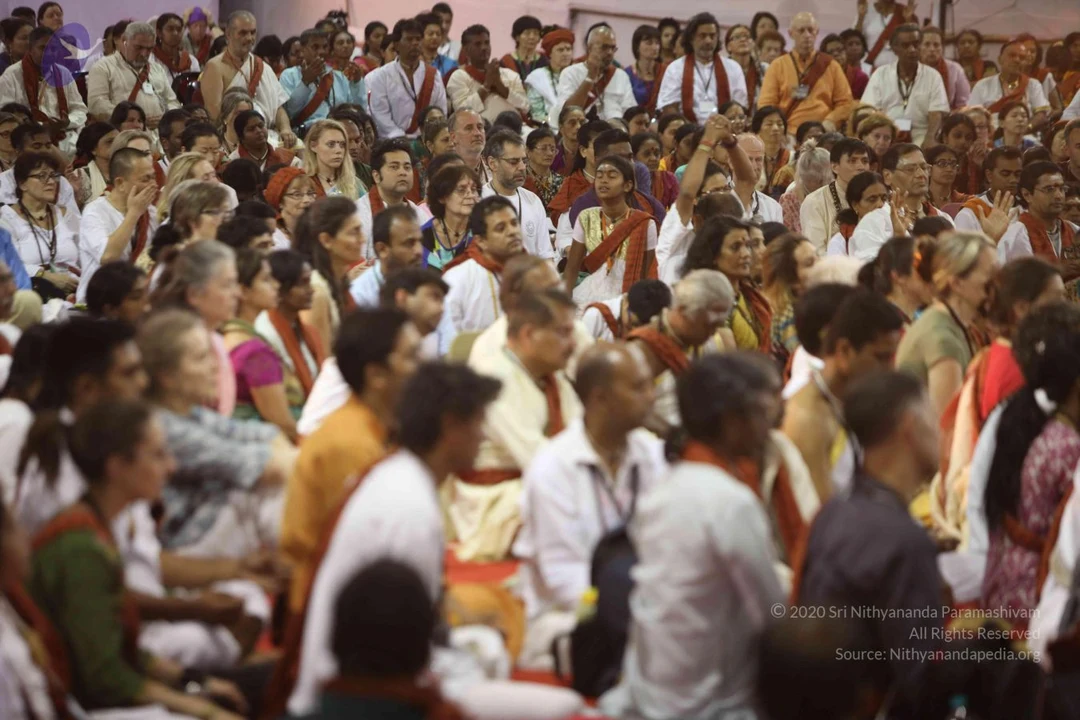
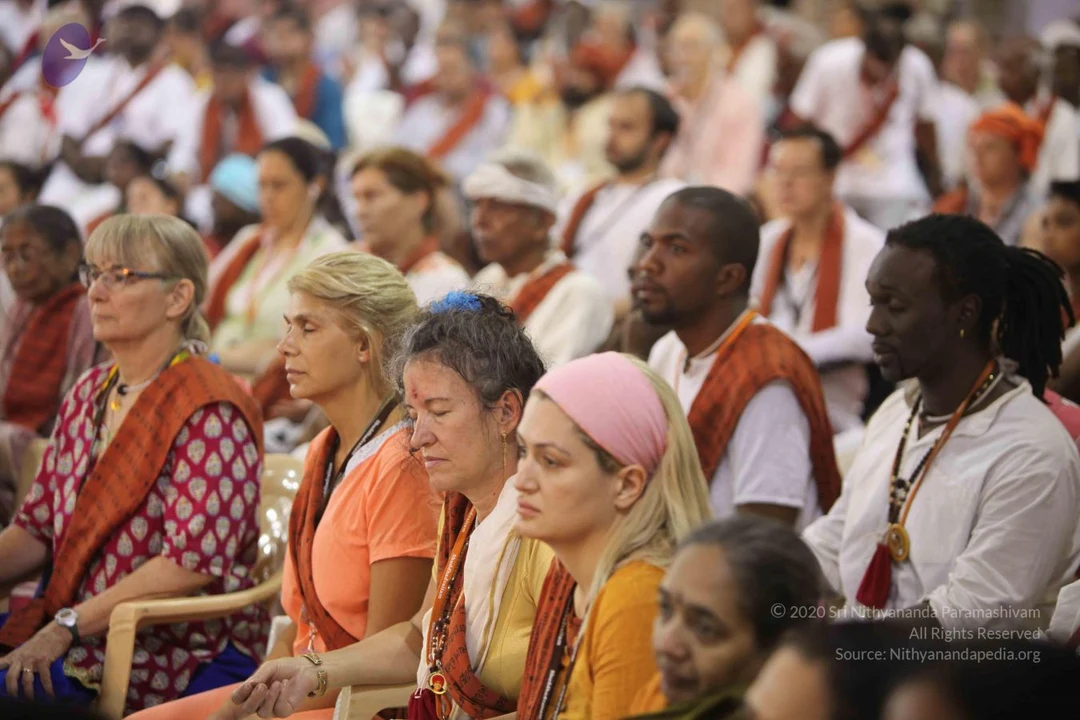
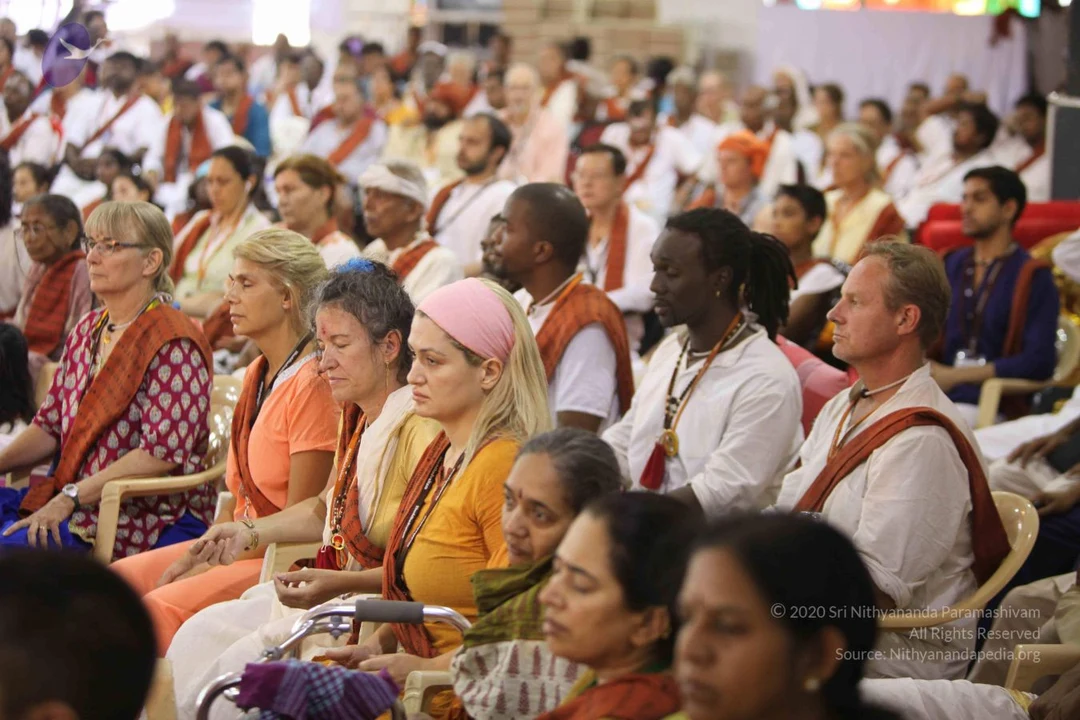
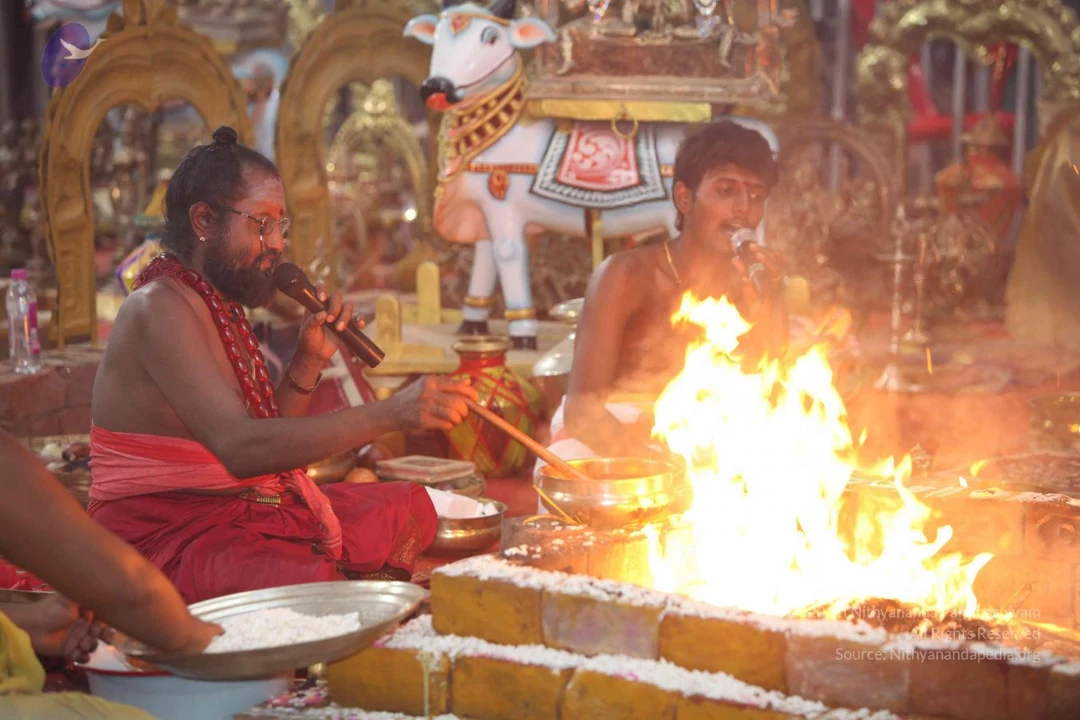
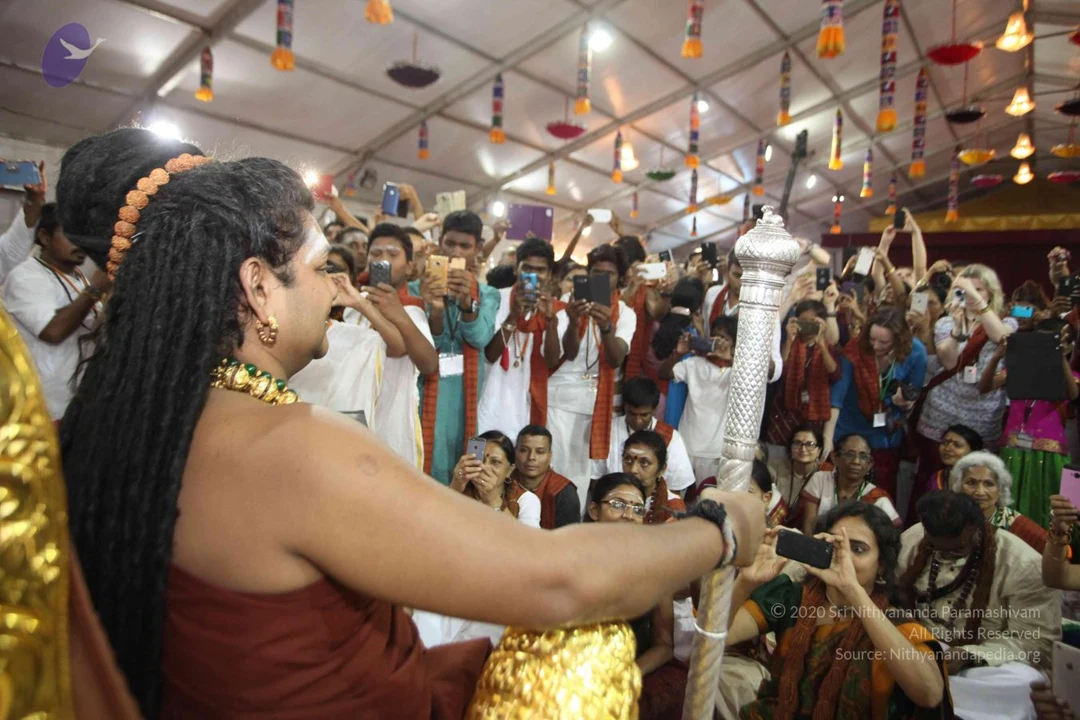
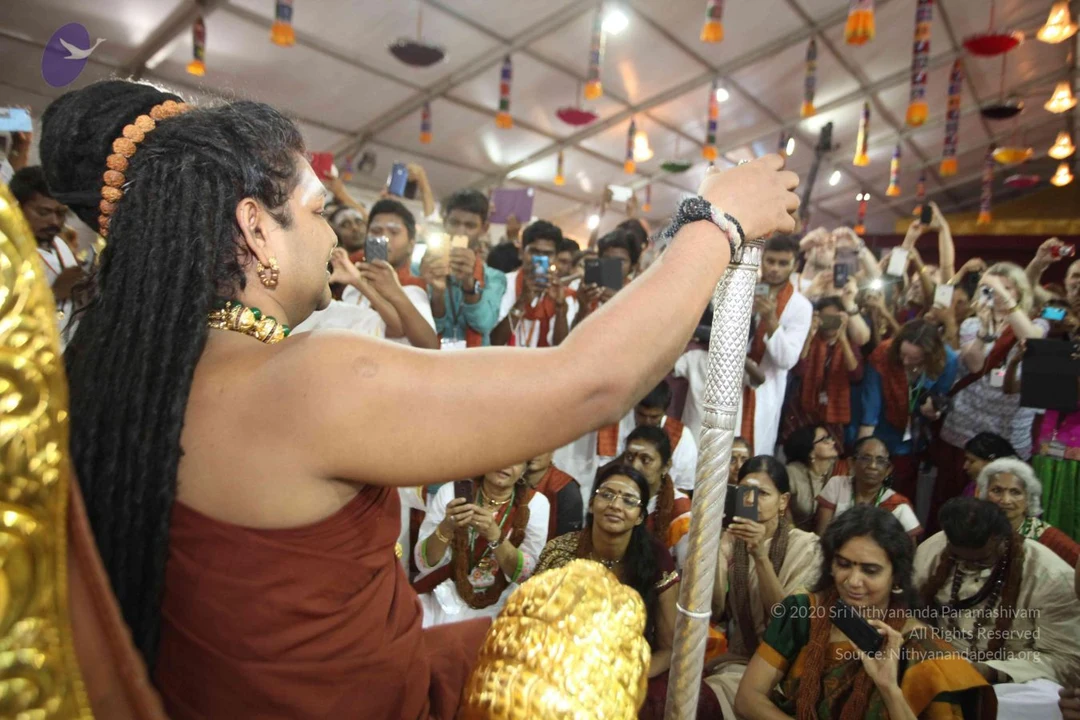
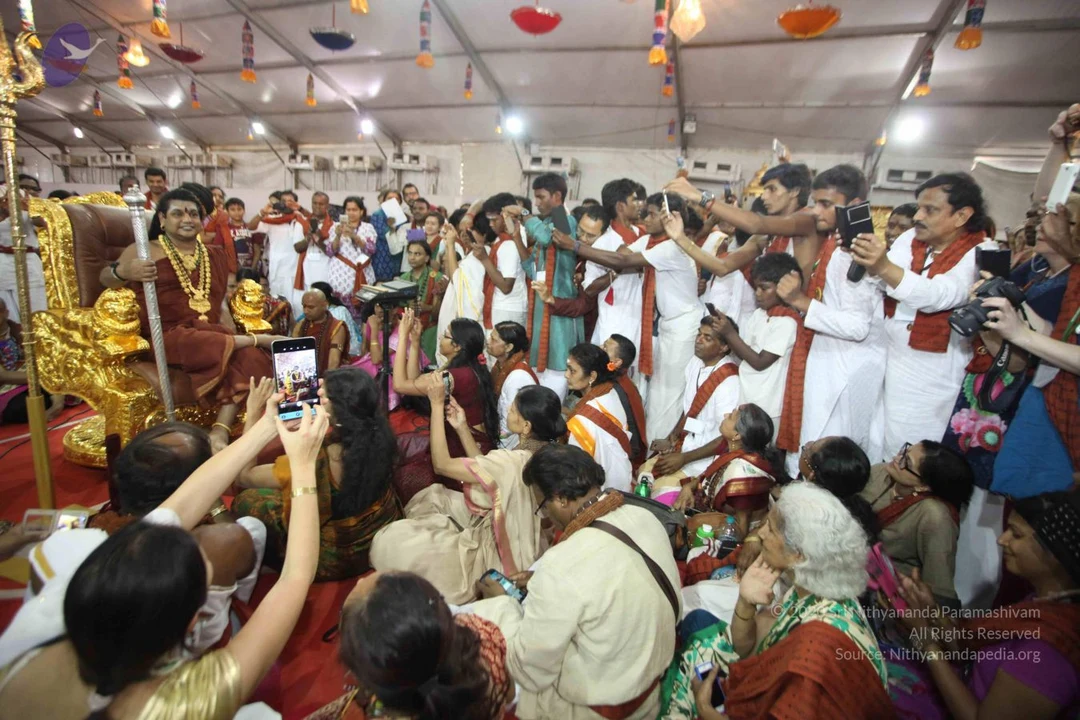
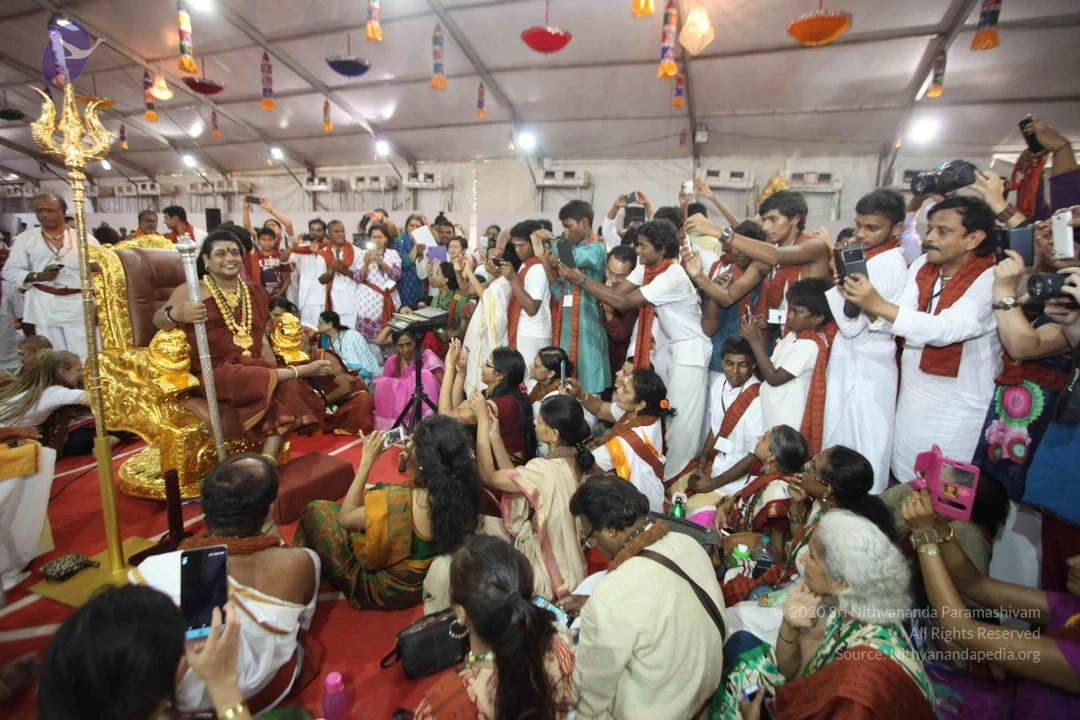
In this video, we see the Supreme Pontiff of Hinduism HDH #Nithyananda Paramashivam grace us with Darshan and then guide the delegates of the Shuddhadvaitam program through a Mandala Process. His Divine Holiness conducts a powerful process using the sacred geometry of Mandalas and the power of sacred syllables to initiate all delegates. Seated in the shape of specific Mandalas, or geometrical shapes that represent universal energies, and throughout this process, Swamiji is aligning everyone’s bio-memory and muscle memory to the fundamental lines and sounds of the cosmos.

The Supreme Pontiff of Hinduism Jagatguru Mahasannidhanam His Divine Holiness Nithyananda Paramashivam (HDH) is the reviver of #KAILASA - the ancient enlightened civilization and the great cosmic borderless Hindu nation. Revered as the incarnation of Paramashiva - the primordial Hindu Divinity, HDH has a following of 2 billion Hindus worldwide with de facto spiritual embassies in over 150 countries. He has worked untiringly for over 26 years for the revival of Kailasa, for global peace and to give super conscious breakthrough to humanity. He has survived the worst persecution of multiple assassination attempts on person and on character by anti-Hindu elements. He is collecting, organising, preserving, time capsuling, decoding, spreading and reviving 20 Million source books of Hinduism and the 64 sacred arts & sciences like Ayurveda, music, dance, sculpting, astrology, vastu and much more. Close to 20,000 hours of HDH’s timeless talks have been recorded till date (Sep 2020), which are a treasure trove of powerful cognitions to solve individual and global problems of any kind.

Link to Video:

VideoAudio

Title

Align to The Divine through Mandala Process || Part 2 || Shuddhadvaitam || 15 May 2016

Description

Name Of The Convention : Shuddhadvaitam Session on: Align to The Divine through Mandala Process Part 2 Date : 15 May 2016 Venue : Ujjain, Madhya Pradesh, India

In this video, we see the Supreme Pontiff of Hinduism HDH #Nithyananda Paramashivam grace us with Darshan and then guide the delegates of the Shuddhadvaitam program through a Mandala Process. His Divine Holiness conducts a powerful process using the sacred geometry of Mandalas and the power of sacred syllables to initiate all delegates. Seated in the shape of specific Mandalas, or geometrical shapes that represent universal energies, and throughout this process, Swamiji is aligning everyone’s bio-memory and muscle memory to the fundamental lines and sounds of the cosmos.

The Supreme Pontiff of Hinduism Jagatguru Mahasannidhanam His Divine Holiness Nithyananda Paramashivam (HDH) is the reviver of #KAILASA - the ancient enlightened civilization and the great cosmic borderless Hindu nation. Revered as the incarnation of Paramashiva - the primordial Hindu Divinity, HDH has a following of 2 billion Hindus worldwide with de facto spiritual embassies in over 150 countries. He has worked untiringly for over 26 years for the revival of Kailasa, for global peace and to give super conscious breakthrough to humanity. He has survived the worst persecution of multiple assassination attempts on person and on character by anti-Hindu elements. He is collecting, organising, preserving, time capsuling, decoding, spreading and reviving 20 Million source books of Hinduism and the 64 sacred arts & sciences like Ayurveda, music, dance, sculpting, astrology, vastu and much more. Close to 20,000 hours of HDH’s timeless talks have been recorded till date (Sep 2020), which are a treasure trove of powerful cognitions to solve individual and global problems of any kind.

Link to Video:

VideoAudio

Title

Align to The Divine through Mandala Process || Part 3 || Shuddhadvaitam || 15 May 2016

Description

Name Of The Convention : Shuddhadvaitam Session on: Align to The Divine through Mandala Process Part 3 Date : 15 May 2016 Venue : Ujjain, Madhya Pradesh, India

In this video, we see the Supreme Pontiff of Hinduism HDH #Nithyananda Paramashivam grace us with Darshan and then guide the delegates of the Shuddhadvaitam program through a Mandala Process. His Divine Holiness conducts a powerful process using the sacred geometry of Mandalas and the power of sacred syllables to initiate all delegates. Seated in the shape of specific Mandalas, or geometrical shapes that represent universal energies, and throughout this process, Swamiji is aligning everyone’s bio-memory and muscle memory to the fundamental lines and sounds of the cosmos.

The Supreme Pontiff of Hinduism Jagatguru Mahasannidhanam His Divine Holiness Nithyananda Paramashivam (HDH) is the reviver of #KAILASA - the ancient enlightened civilization and the great cosmic borderless Hindu nation. Revered as the incarnation of Paramashiva - the primordial Hindu Divinity, HDH has a following of 2 billion Hindus worldwide with de facto spiritual embassies in over 150 countries. He has worked untiringly for over 26 years for the revival of Kailasa, for global peace and to give super conscious breakthrough to humanity. He has survived the worst persecution of multiple assassination attempts on person and on character by anti-Hindu elements. He is collecting, organising, preserving, time capsuling, decoding, spreading and reviving 20 Million source books of Hinduism and the 64 sacred arts & sciences like Ayurveda, music, dance, sculpting, astrology, vastu and much more. Close to 20,000 hours of HDH’s timeless talks have been recorded till date (Sep 2020), which are a treasure trove of powerful cognitions to solve individual and global problems of any kind.

Link to Video:

VideoAudio

Title

Align to The Divine through Mandala Process || Part 4 || Shuddhadvaitam || 15 May 2016

Description

Name Of The Convention : Shuddhadvaitam Session on: Align to The Divine through Mandala Process Part 4 Date : 15 May 2016 Venue : Ujjain, Madhya Pradesh, India

In this video, we see the Supreme Pontiff of Hinduism HDH #Nithyananda Paramashivam grace us with Darshan and then guide the delegates of the Shuddhadvaitam program through a Mandala Process. His Divine Holiness conducts a powerful process using the sacred geometry of Mandalas and the power of sacred syllables to initiate all delegates. Seated in the shape of specific Mandalas, or geometrical shapes that represent universal energies, and throughout this process, Swamiji is aligning everyone’s bio-memory and muscle memory to the fundamental lines and sounds of the cosmos.

The Supreme Pontiff of Hinduism Jagatguru Mahasannidhanam His Divine Holiness Nithyananda Paramashivam (HDH) is the reviver of #KAILASA - the ancient enlightened civilization and the great cosmic borderless Hindu nation. Revered as the incarnation of Paramashiva - the primordial Hindu Divinity, HDH has a following of 2 billion Hindus worldwide with de facto spiritual embassies in over 150 countries. He has worked untiringly for over 26 years for the revival of Kailasa, for global peace and to give super conscious breakthrough to humanity. He has survived the worst persecution of multiple assassination attempts on person and on character by anti-Hindu elements. He is collecting, organising, preserving, time capsuling, decoding, spreading and reviving 20 Million source books of Hinduism and the 64 sacred arts & sciences like Ayurveda, music, dance, sculpting, astrology, vastu and much more. Close to 20,000 hours of HDH’s timeless talks have been recorded till date (Sep 2020), which are a treasure trove of powerful cognitions to solve individual and global problems of any kind.

Link to Video:

VideoAudio

Title

Shivoham in Shiva's Home || Shuddhadvaitam || 15 May 2016

Description

Name Of The Convention : Shuddhadvaitam Title: Shivoham in Shiva's Home Session on: Mandala Process & Q&A Date : 15 May 2016 Venue : Ujjain, Madhya Pradesh, India

In this video, we see the Supreme Pontiff of Hinduism HDH #Nithyananda Paramashivam answer questions from delegates of the Shuddhadvaitam Mandala Process. His Divine Holiness responds to questions about the Inner Awakening convention, giving delegates a glimpse of it and how it changes your being. Swamiji also explains how He is opening up the doors to those who wish to live in Bidadi, and explains the structure of the new order that is being awakened within the Nithyananda Sangha.

The Supreme Pontiff of Hinduism Jagatguru Mahasannidhanam His Divine Holiness Nithyananda Paramashivam (HDH) is the reviver of #KAILASA - the ancient enlightened civilization and the great cosmic borderless Hindu nation. Revered as the incarnation of Paramashiva - the primordial Hindu Divinity, HDH has a following of 2 billion Hindus worldwide with de facto spiritual embassies in over 150 countries. He has worked untiringly for over 26 years for the revival of Kailasa, for global peace and to give super conscious breakthrough to humanity. He has survived the worst persecution of multiple assassination attempts on person and on character by anti-Hindu elements. He is collecting, organising, preserving, time capsuling, decoding, spreading and reviving 20 Million source books of Hinduism and the 64 sacred arts & sciences like Ayurveda, music, dance, sculpting, astrology, vastu and much more. Close to 20,000 hours of HDH’s timeless talks have been recorded till date (Sep 2020), which are a treasure trove of powerful cognitions to solve individual and global problems of any kind.

Link to Video:

VideoAudio

Title

Title: A Vision for the Future || Shuddhadvaitam || 15 May 2016

Description

Name Of The Convention : Shuddhadvaitam Session on: A Vision for the Future Date : 15 May 2016 Venue : Ujjain, Madhya Pradesh, India Title: A Vision for the Future

In this video, we see the Supreme Pontiff of Hinduism HDH #Nithyananda Paramashivam speak largely on His great visions for the future of the Nithyananda Sangha, and it's structure.

The Supreme Pontiff of Hinduism Jagatguru Mahasannidhanam His Divine Holiness Nithyananda Paramashivam (HDH) is the reviver of #KAILASA - the ancient enlightened civilization and the great cosmic borderless Hindu nation. Revered as the incarnation of Paramashiva - the primordial Hindu Divinity, HDH has a following of 2 billion Hindus worldwide with de facto spiritual embassies in over 150 countries. He has worked untiringly for over 26 years for the revival of Kailasa, for global peace and to give super conscious breakthrough to humanity. He has survived the worst persecution of multiple assassination attempts on person and on character by anti-Hindu elements. He is collecting, organising, preserving, time capsuling, decoding, spreading and reviving 20 Million source books of Hinduism and the 64 sacred arts & sciences like Ayurveda, music, dance, sculpting, astrology, vastu and much more. Close to 20,000 hours of HDH’s timeless talks have been recorded till date (Sep 2020), which are a treasure trove of powerful cognitions to solve individual and global problems of any kind.

Link to Video:

VideoAudio

Photos From The Day:

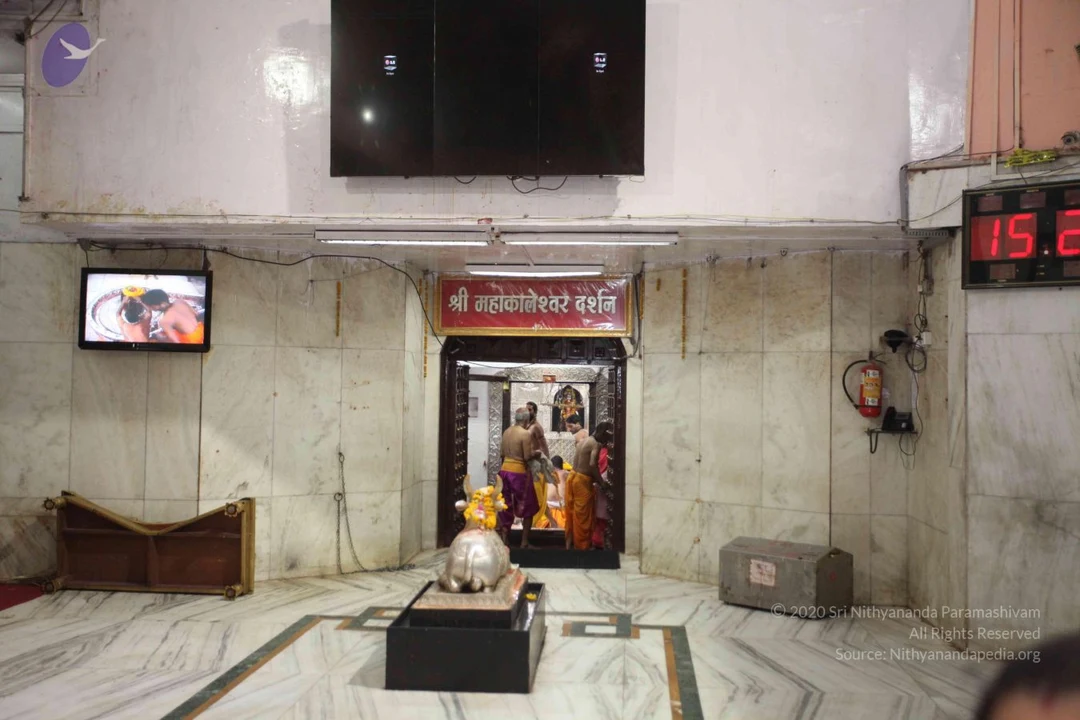
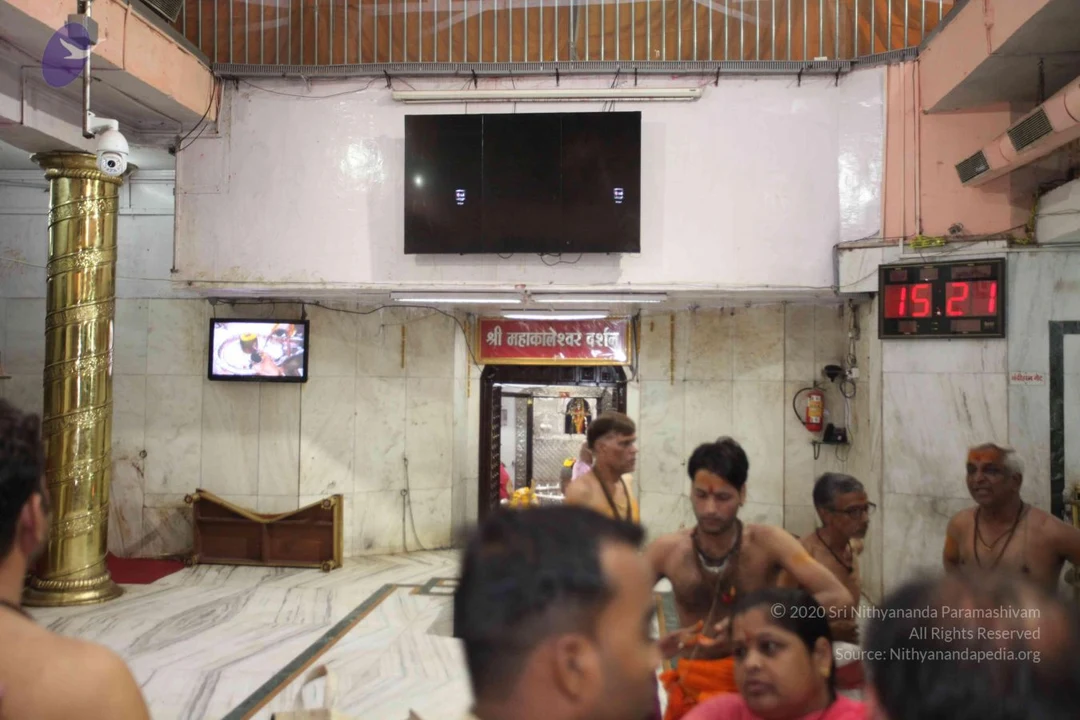
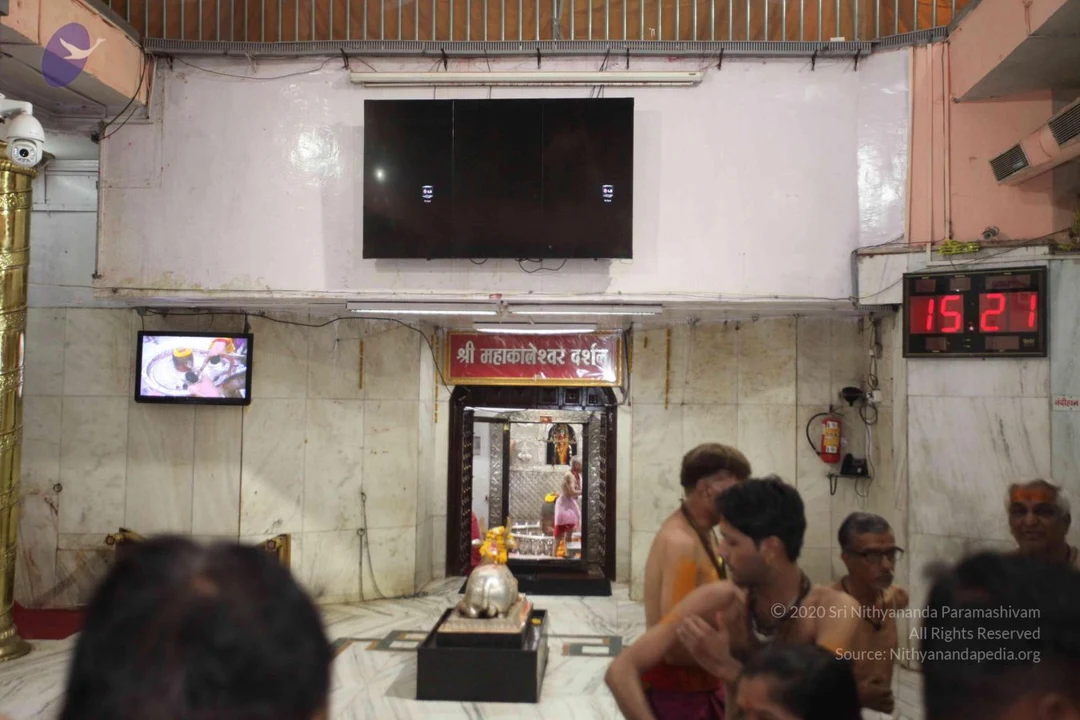
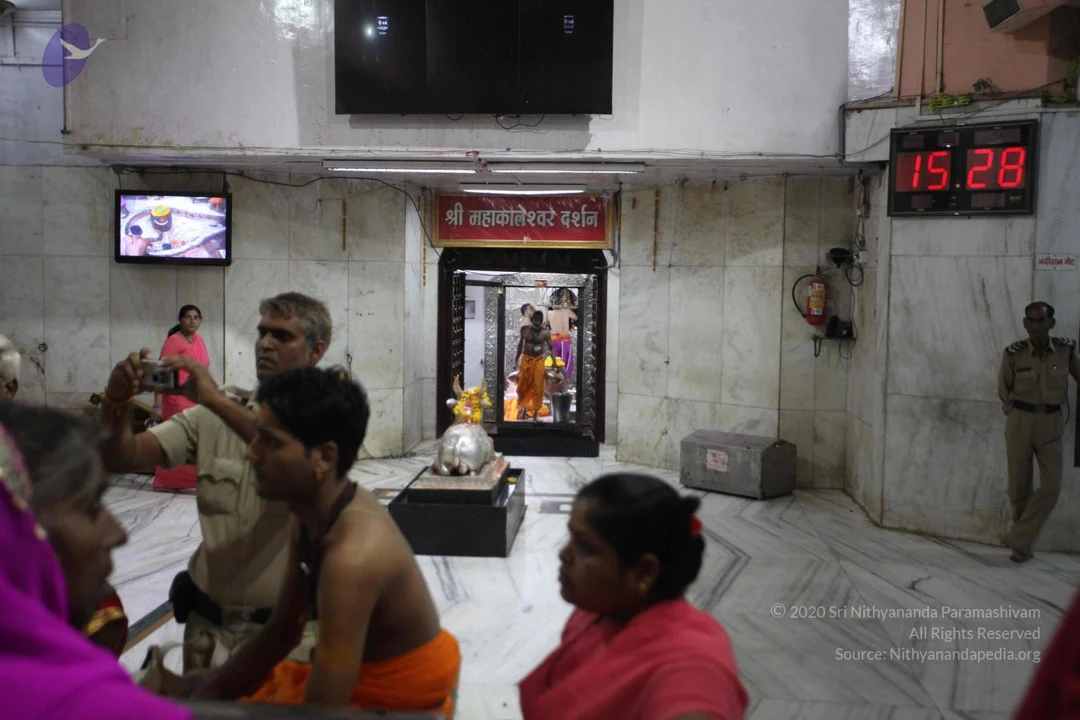
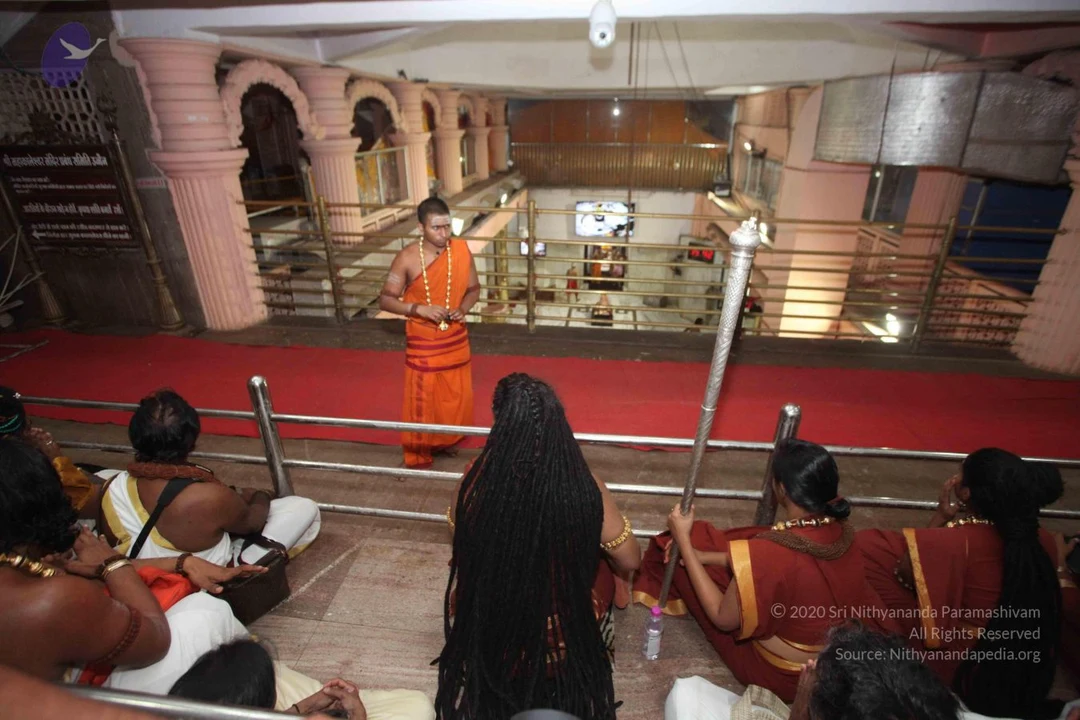
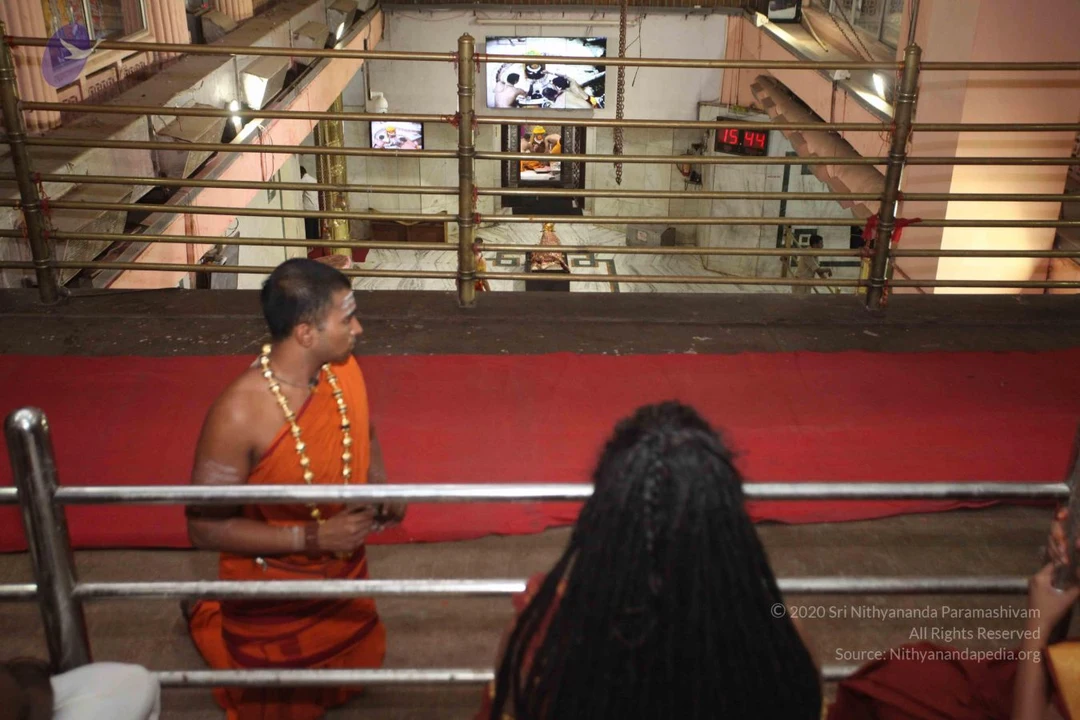
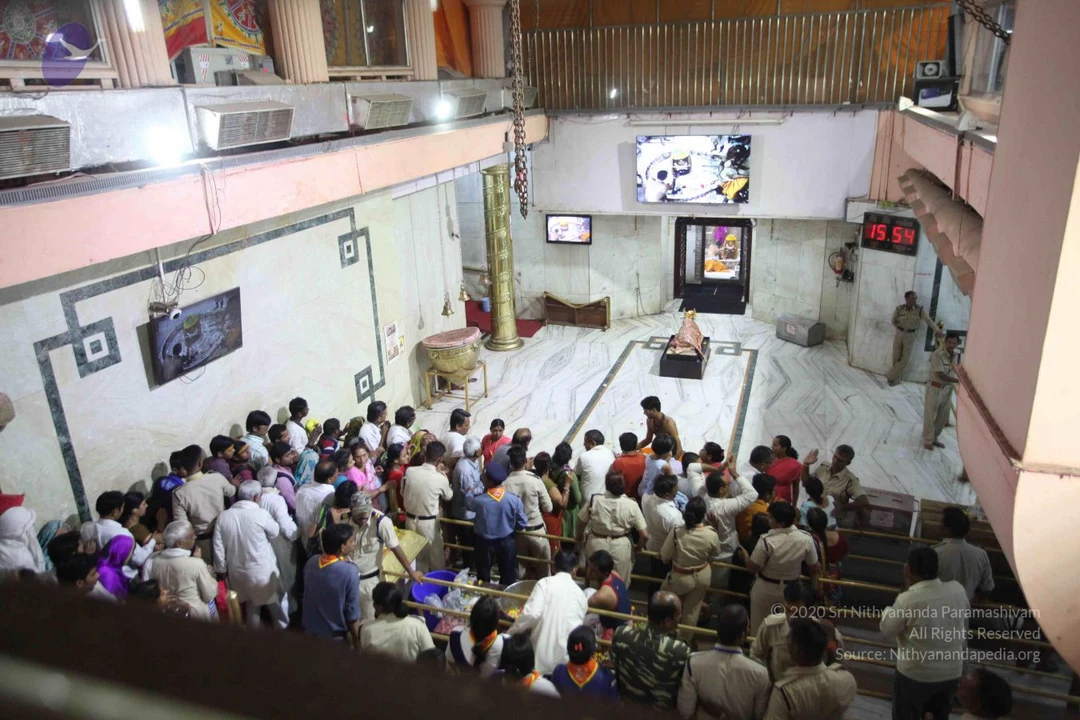
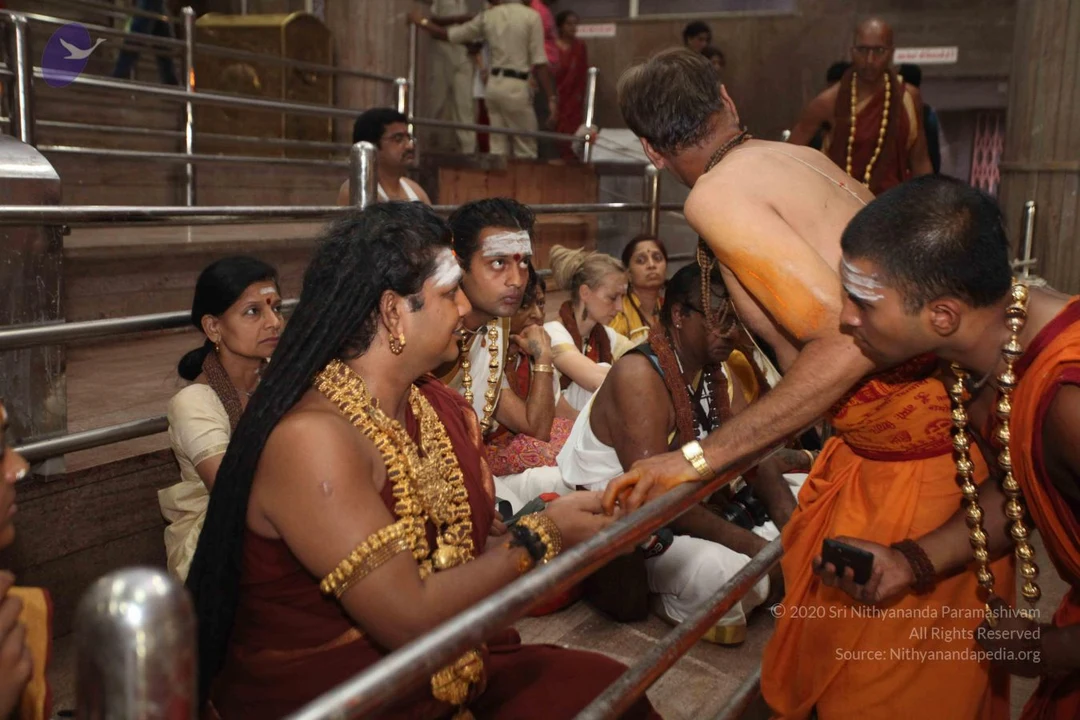
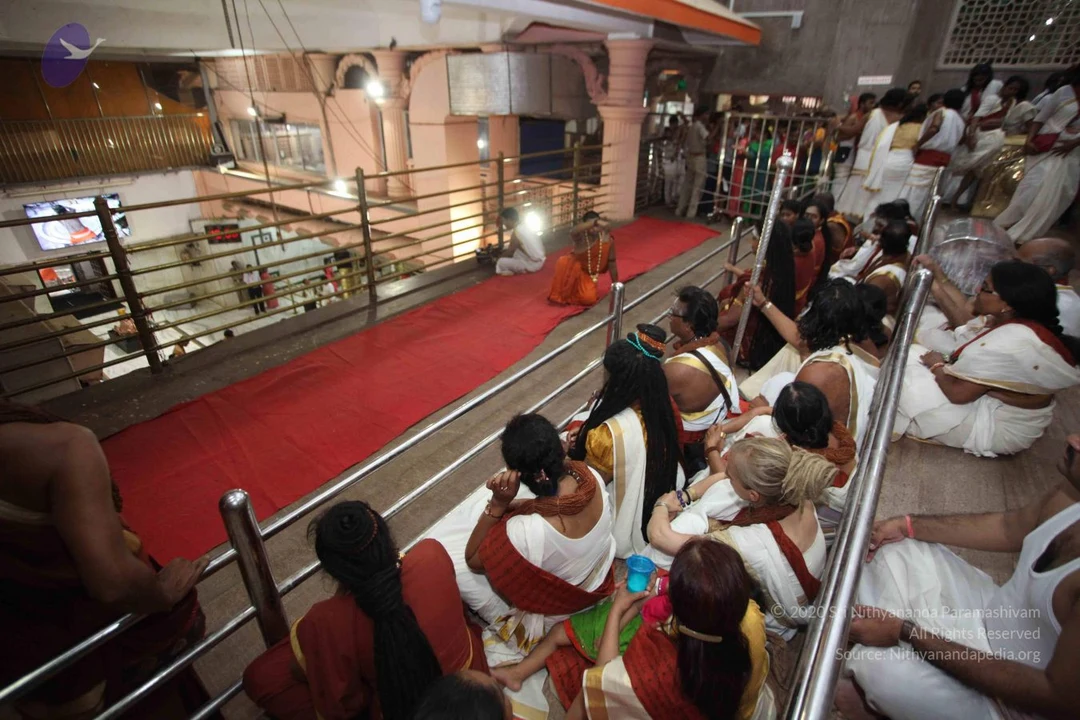
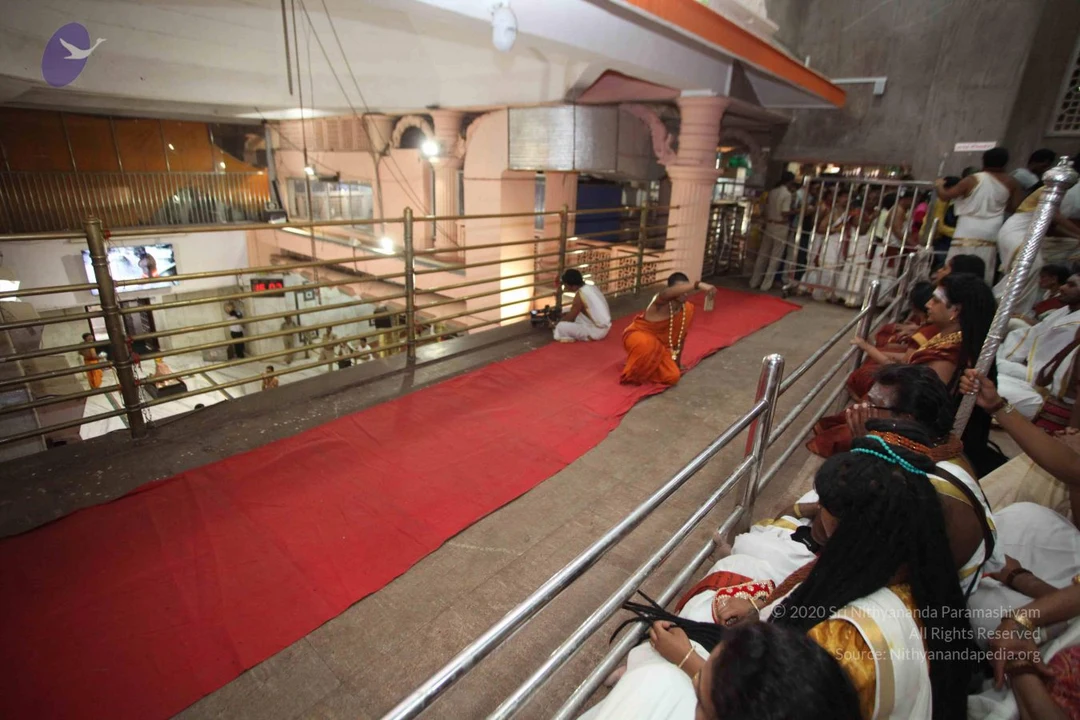
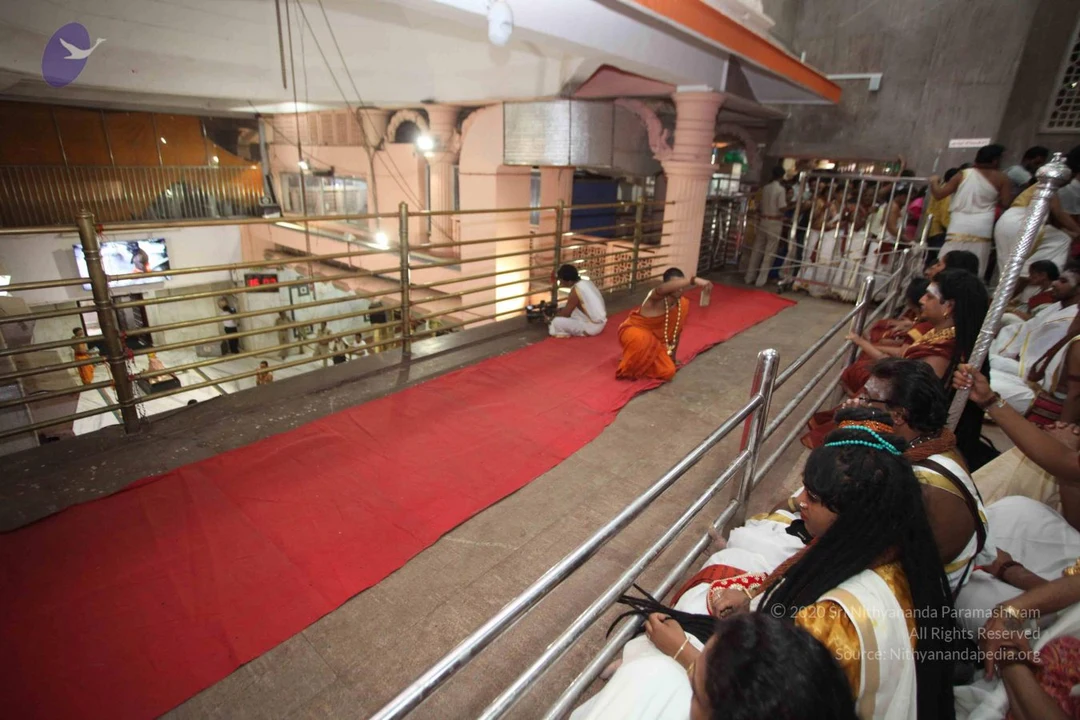
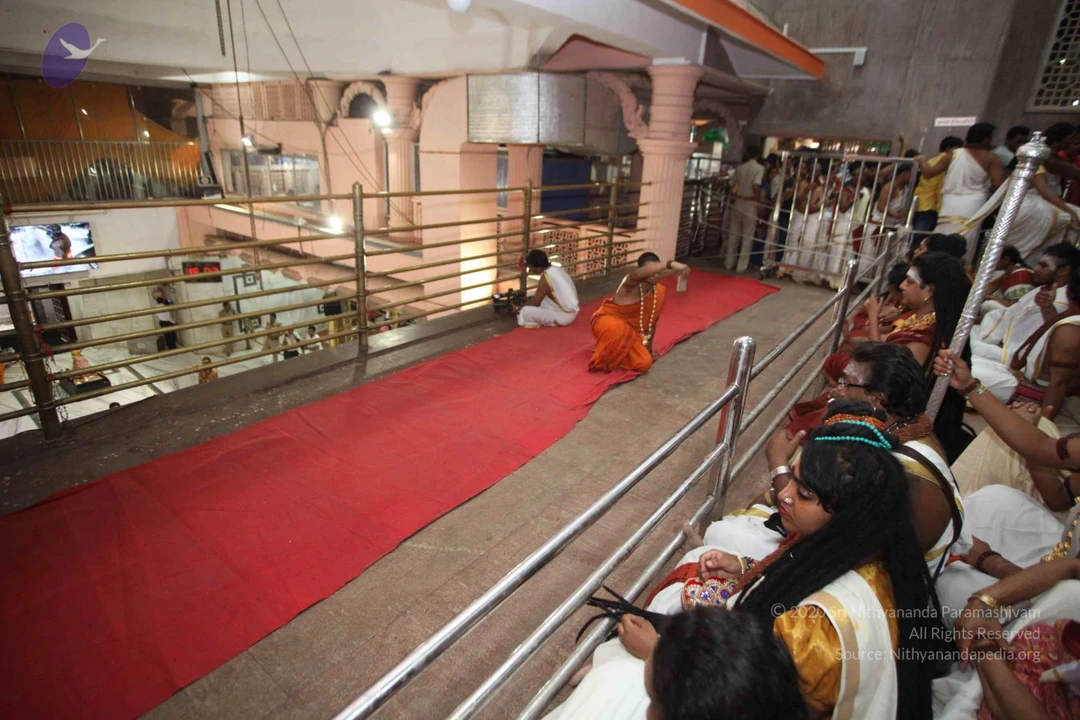
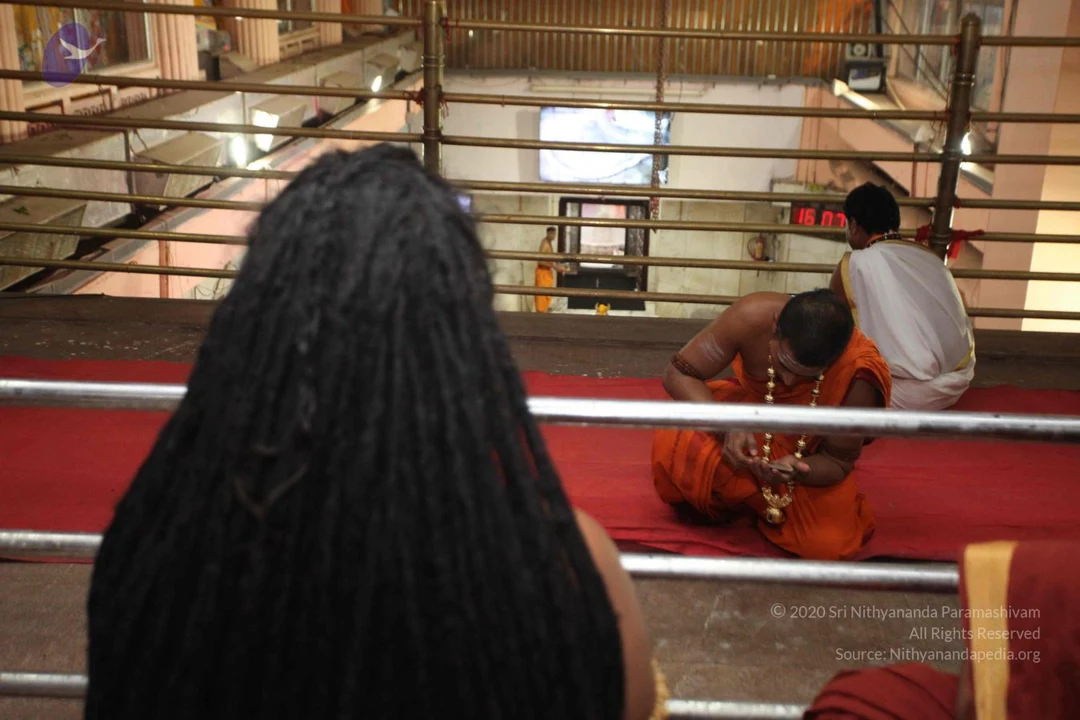
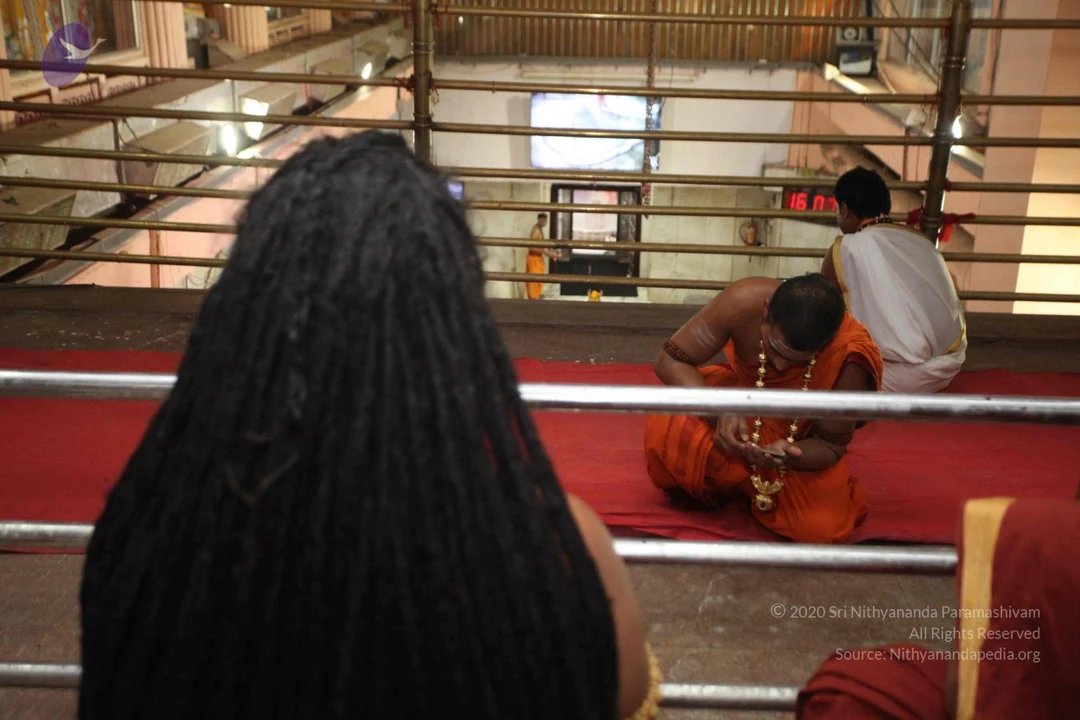
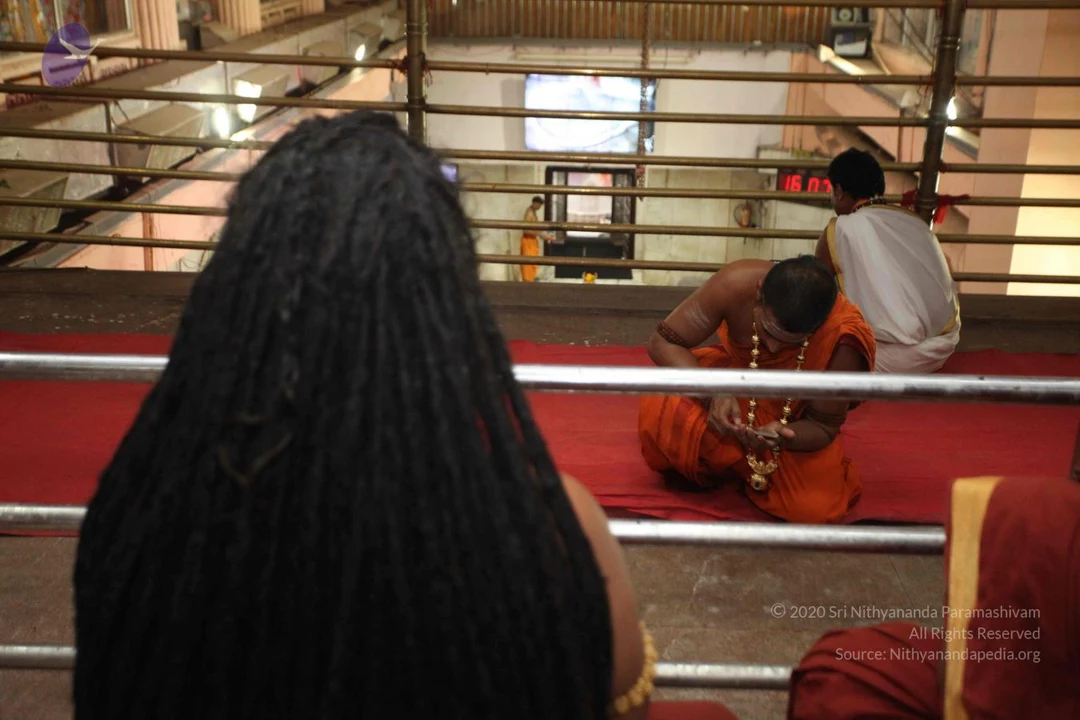
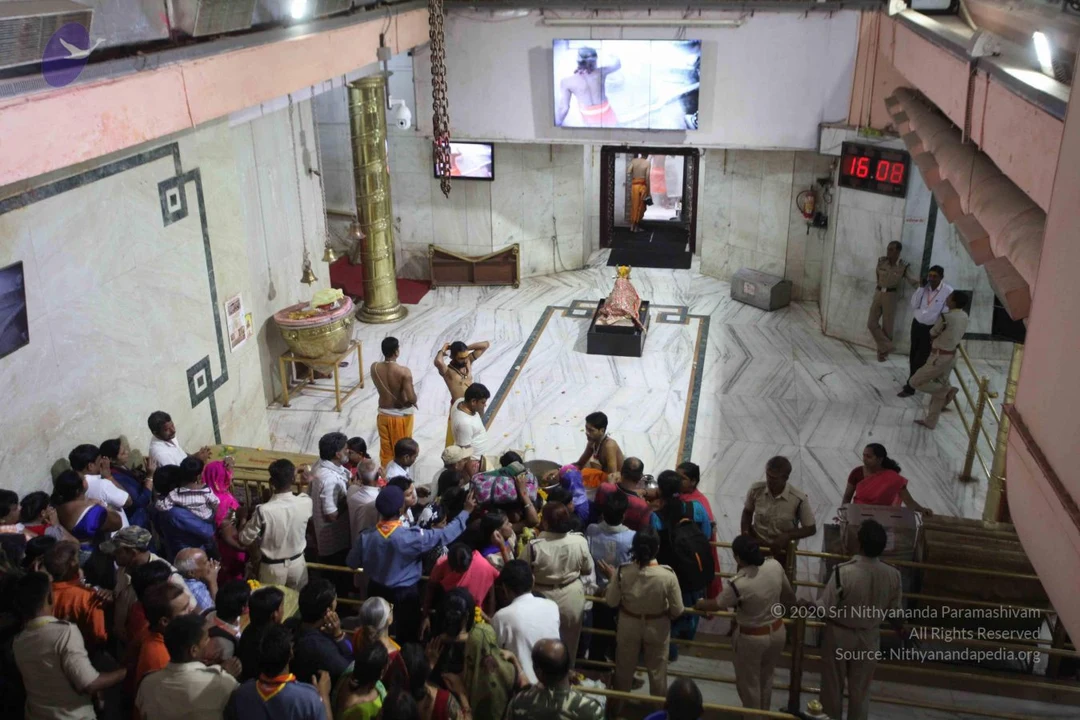
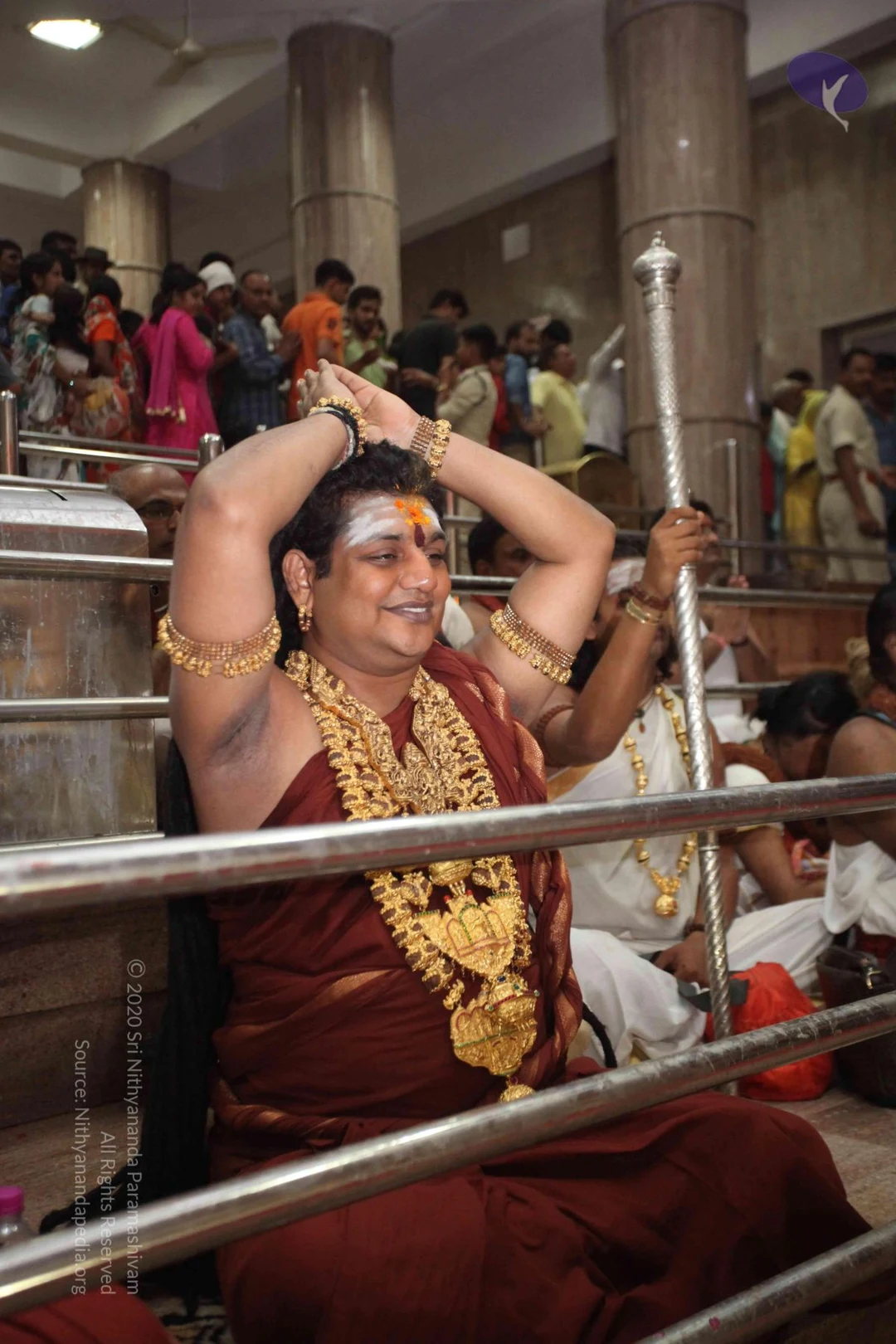
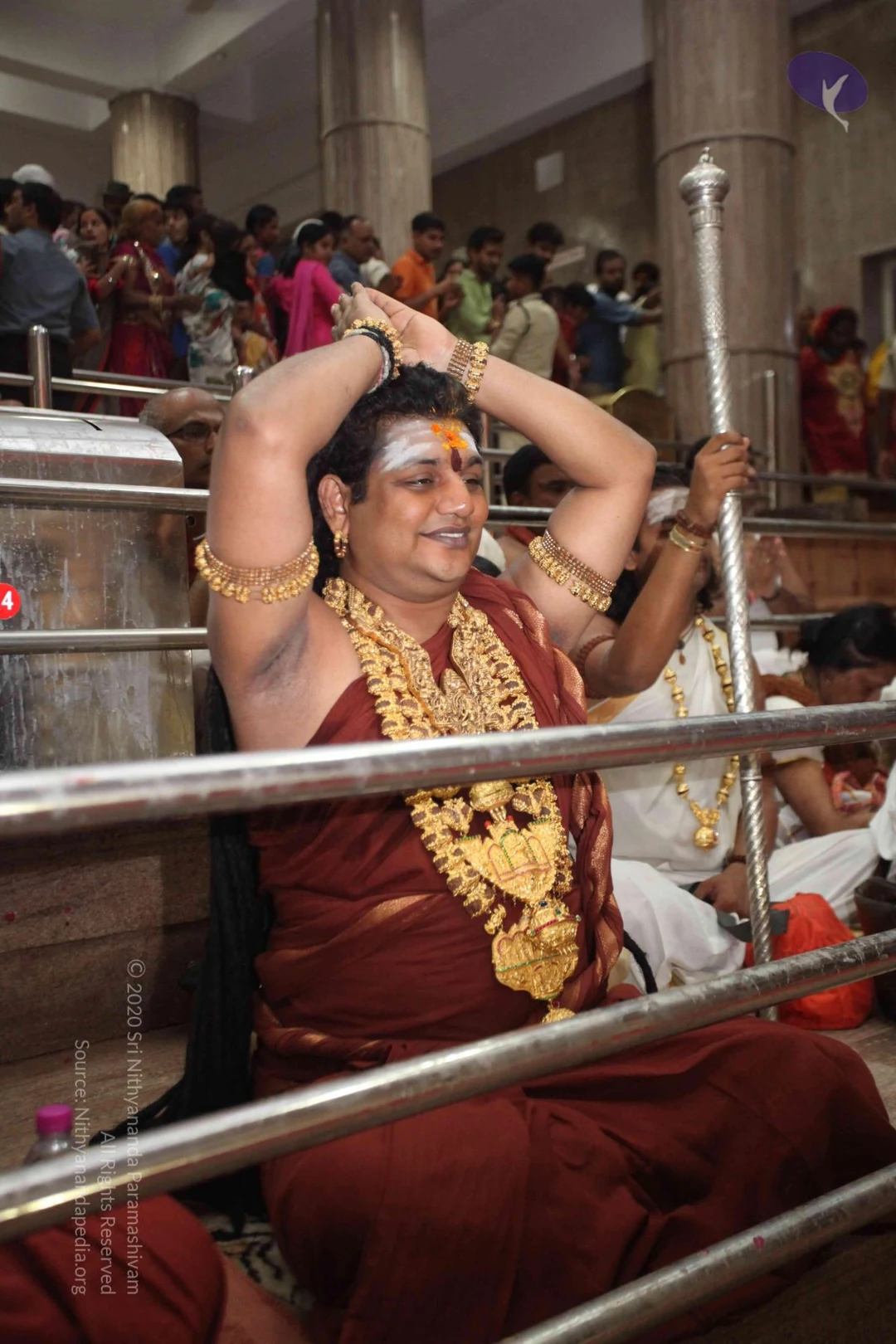
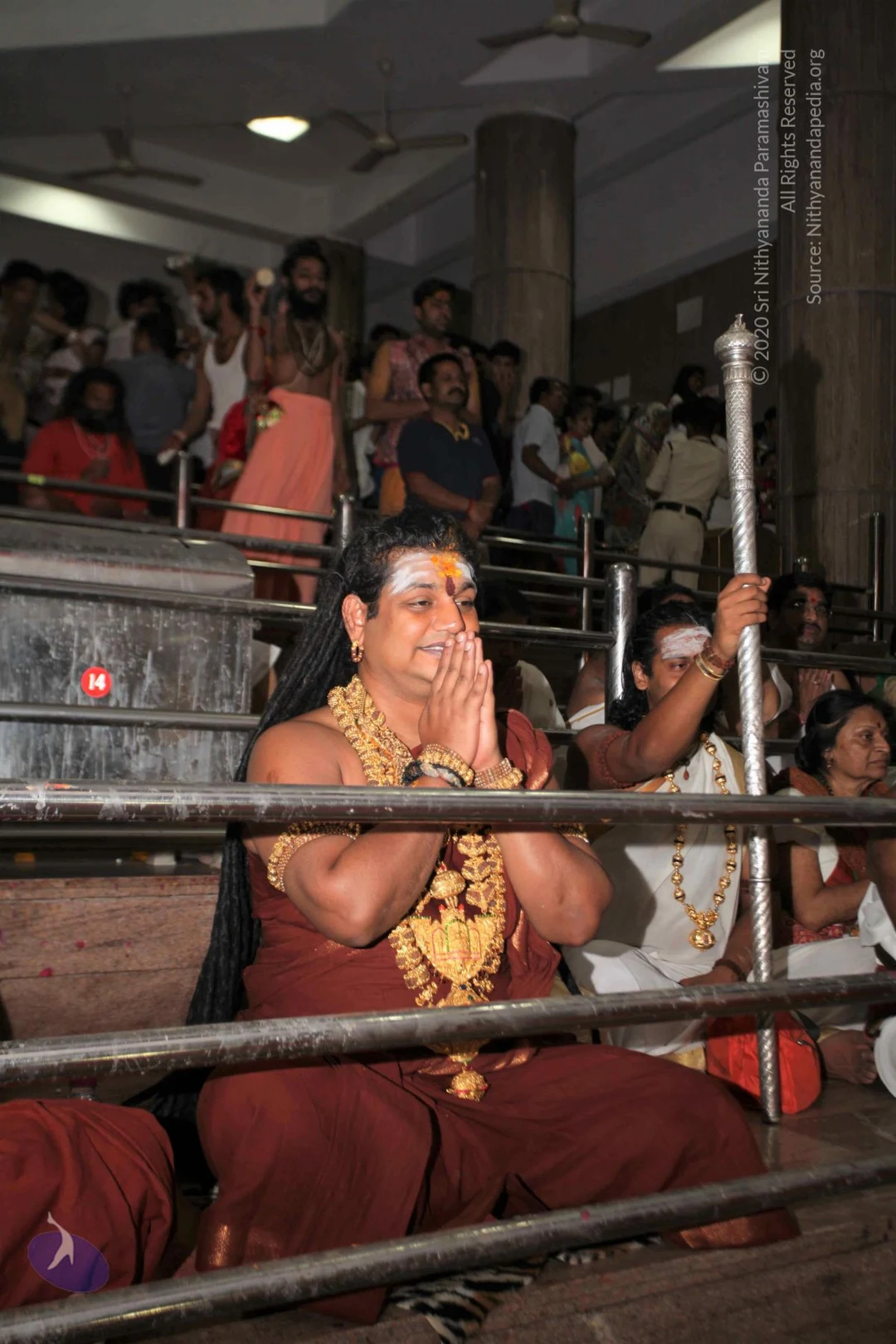
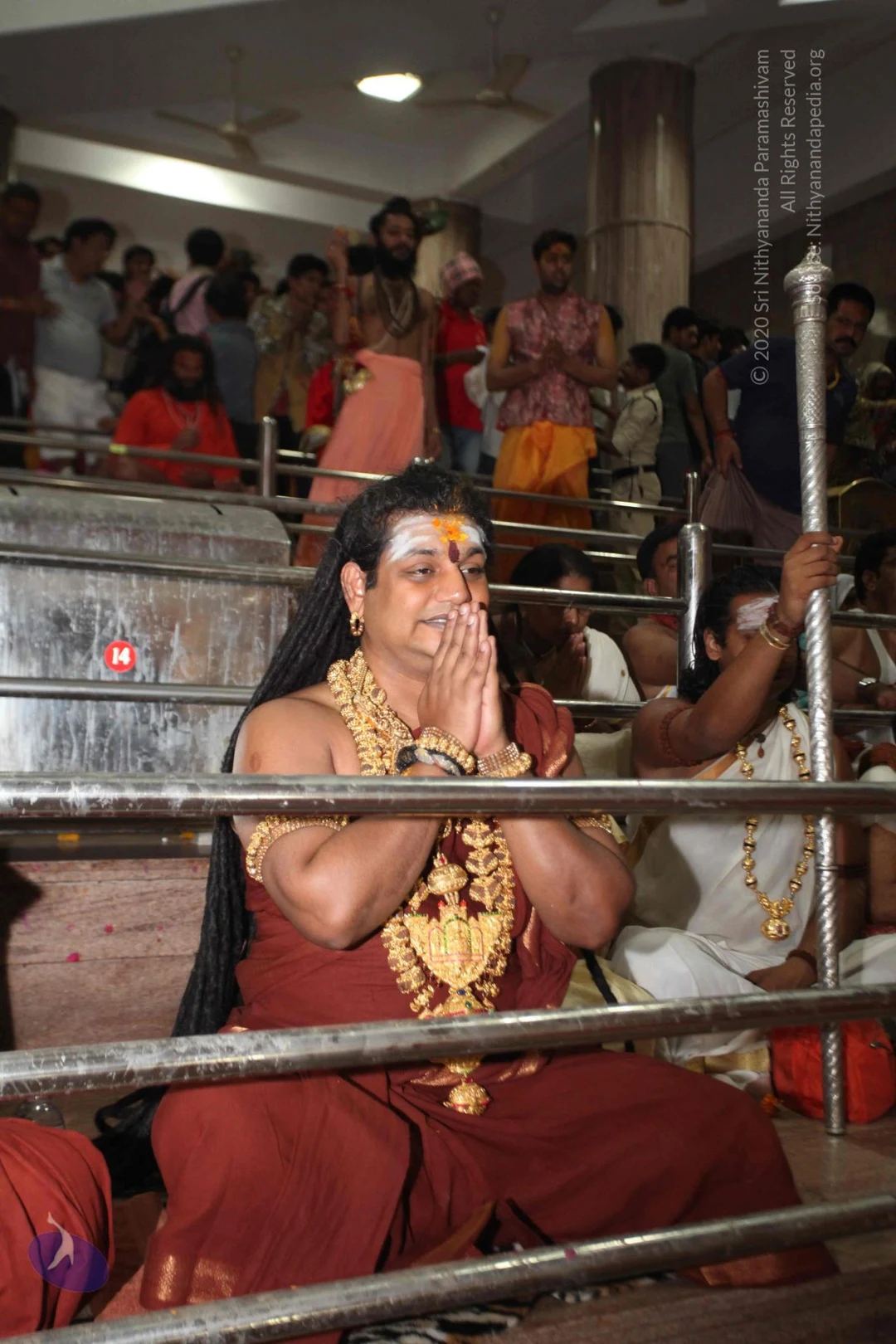
Temple Visit - Mahakaleshwar Temple
Mandala Process

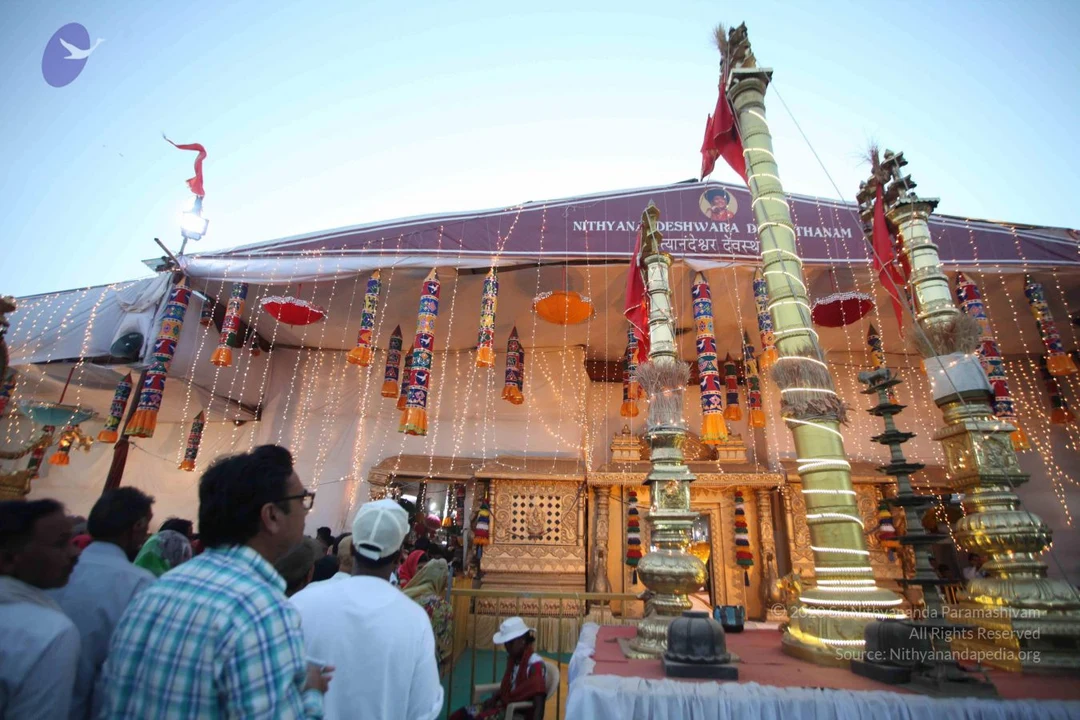
Temple- Nithyanandeshwara Devasthanam

Sakshi Pramana:

sharing from Kumba mela

Photos Of The Day:

Mandala-Process

Temple-Visit

Photos Of The Day:

Mandala-Process

Temple-Visit

Photos from this day

View all 349 photos

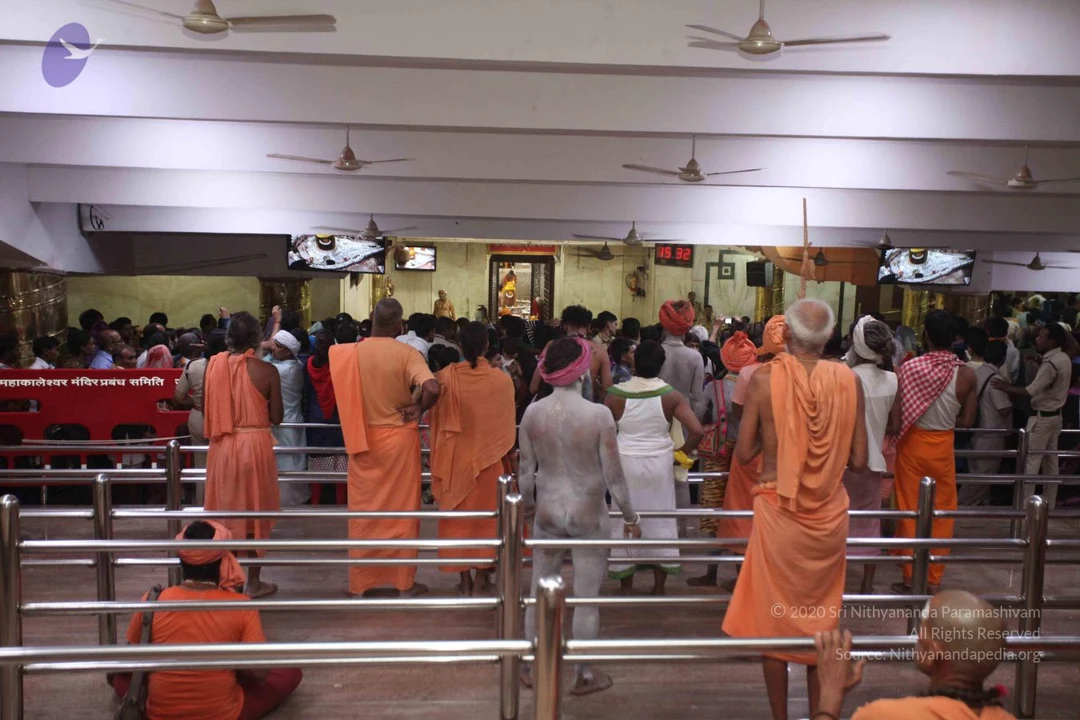
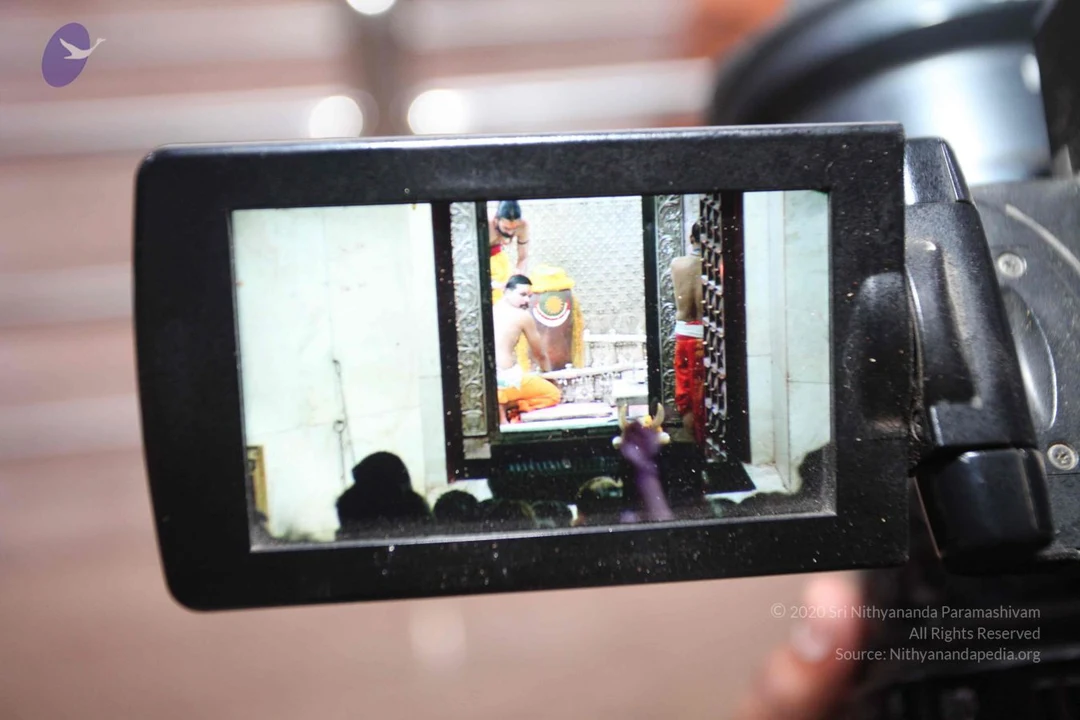
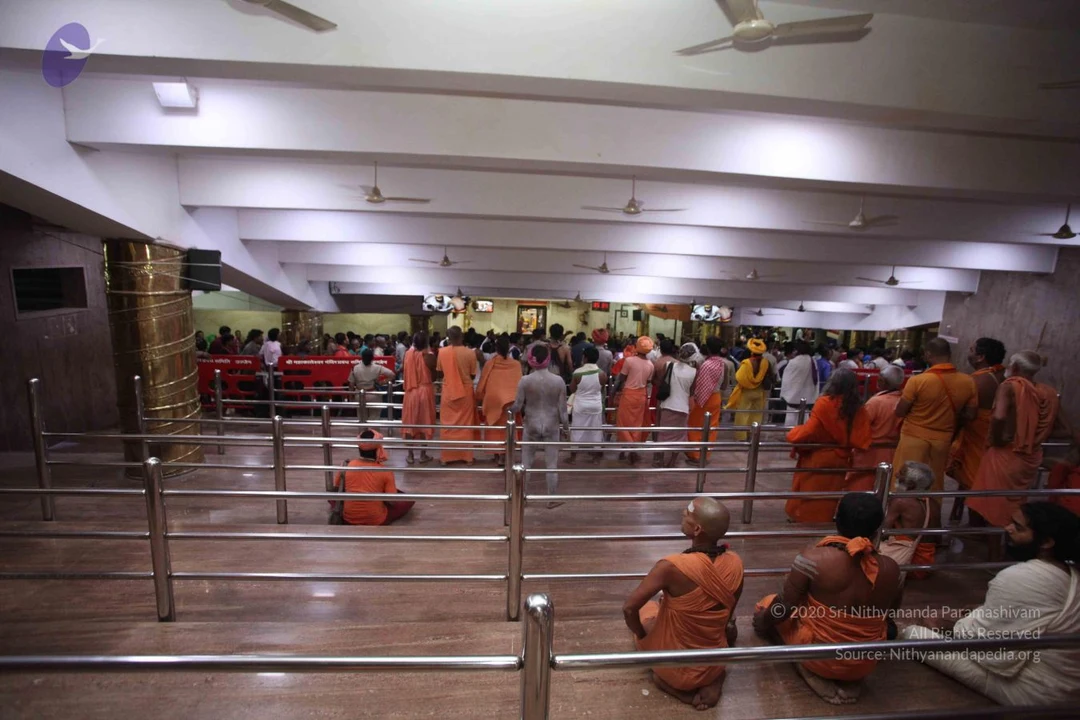
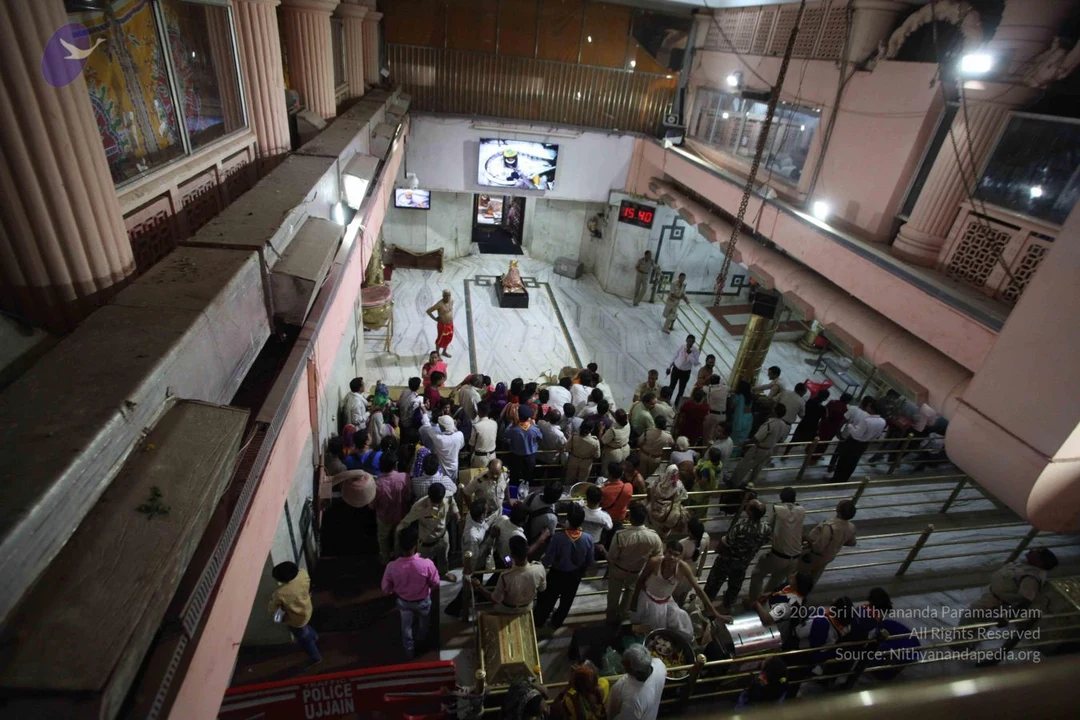
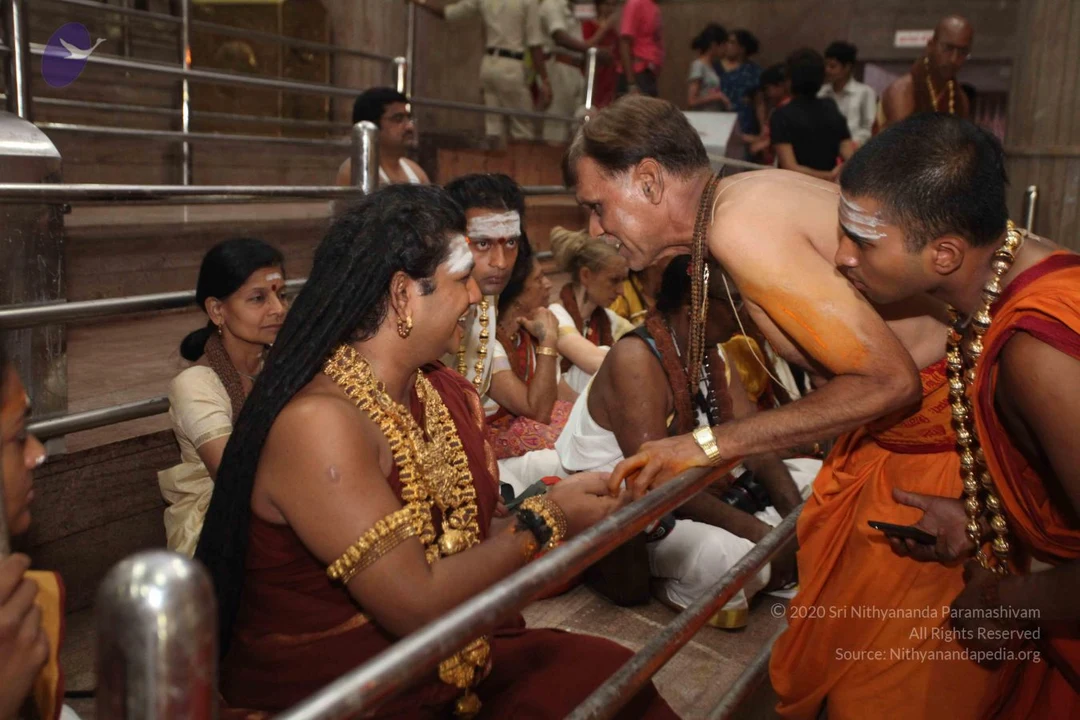
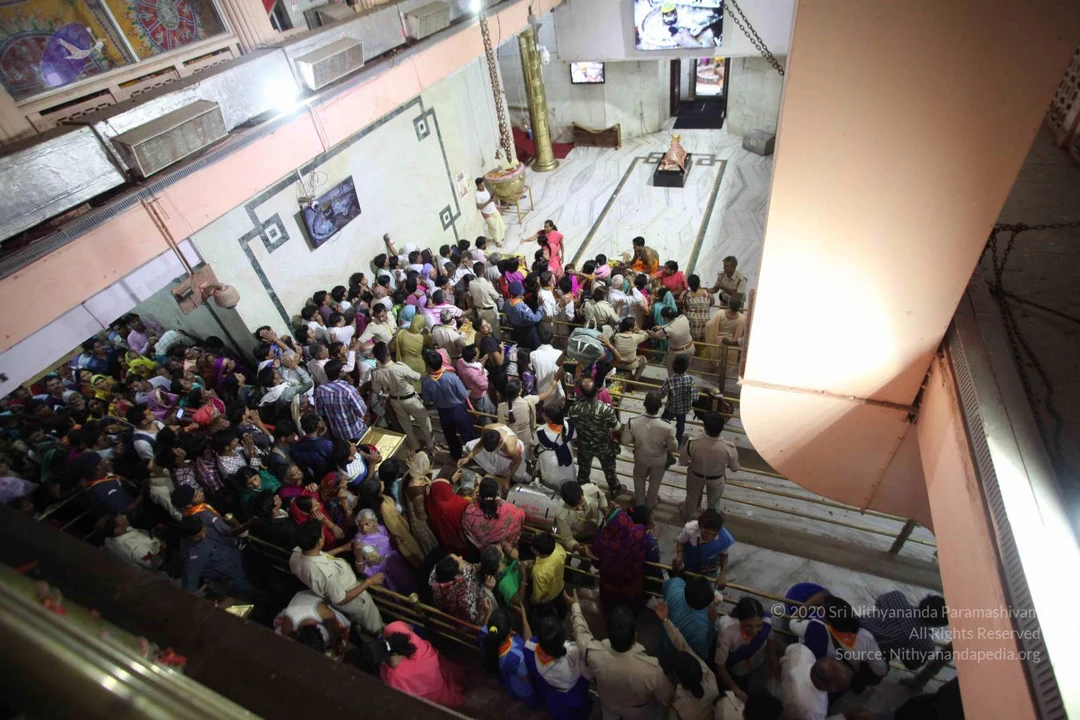
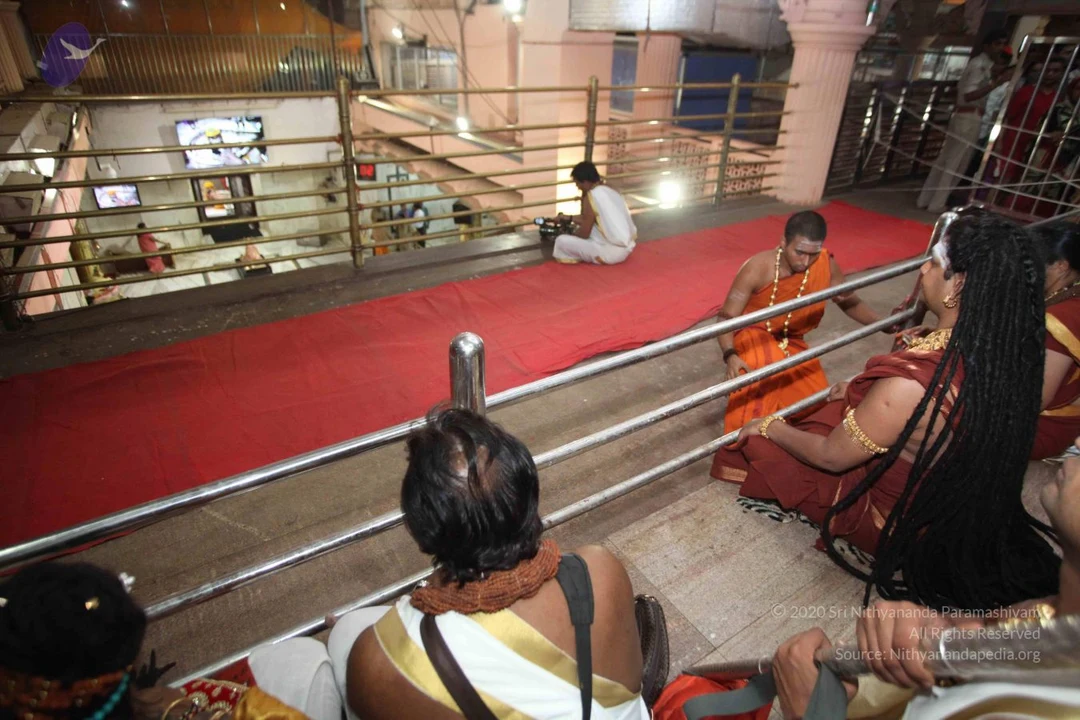
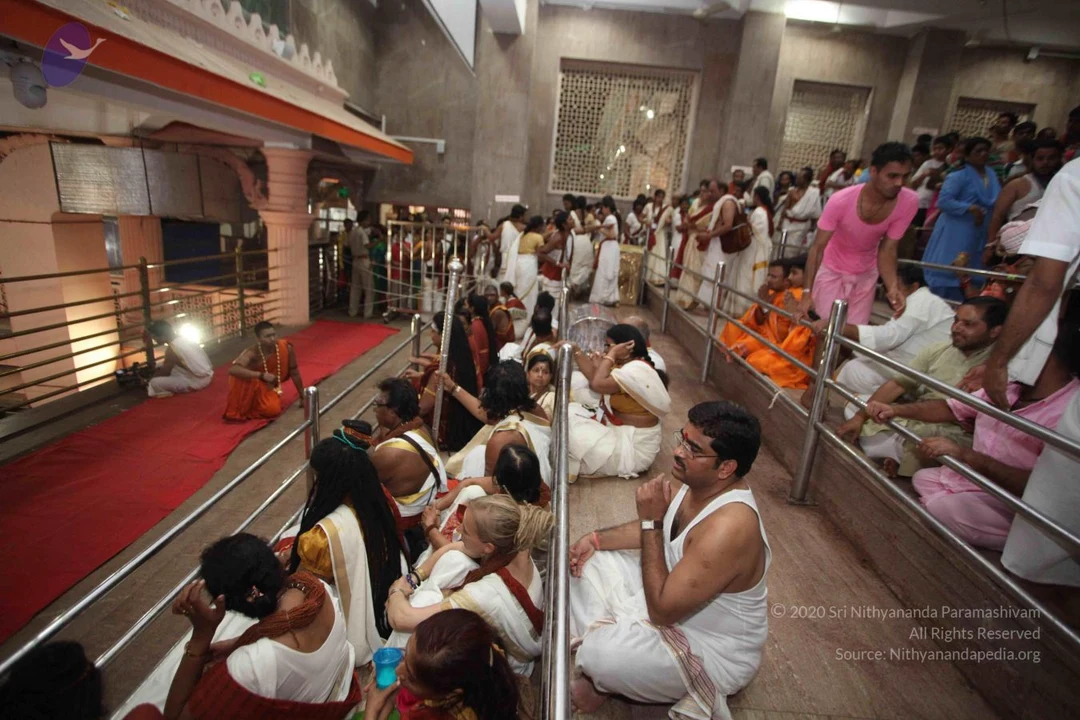
Temple Visit - Mahakaleshwar Temple
6 photosSource gallery
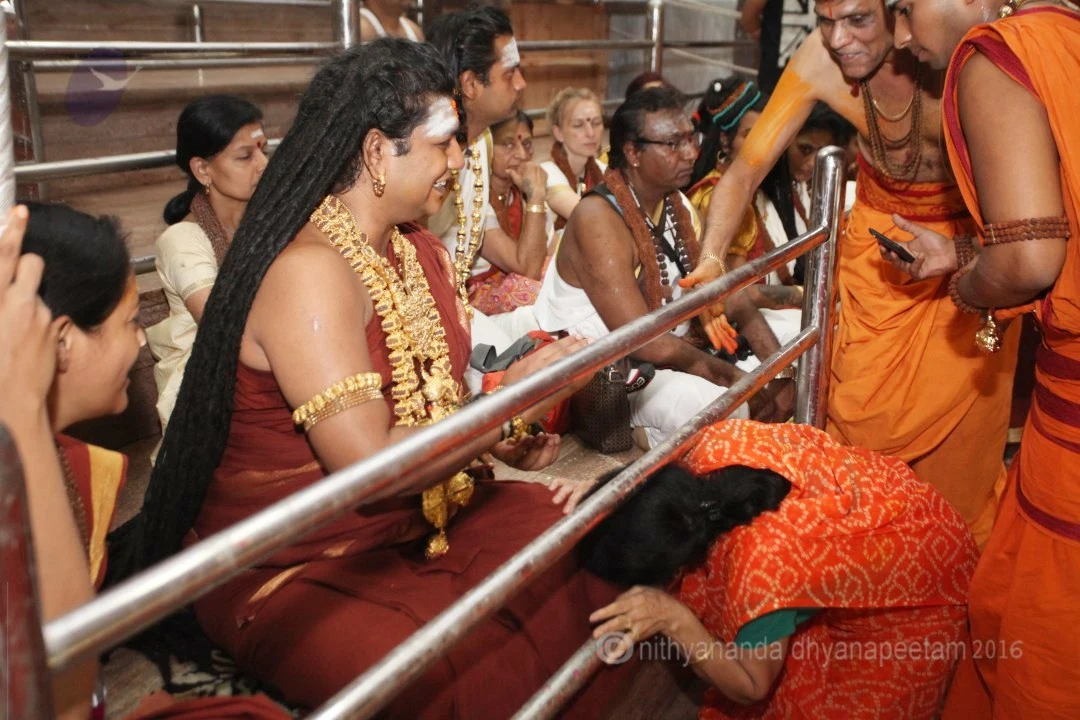
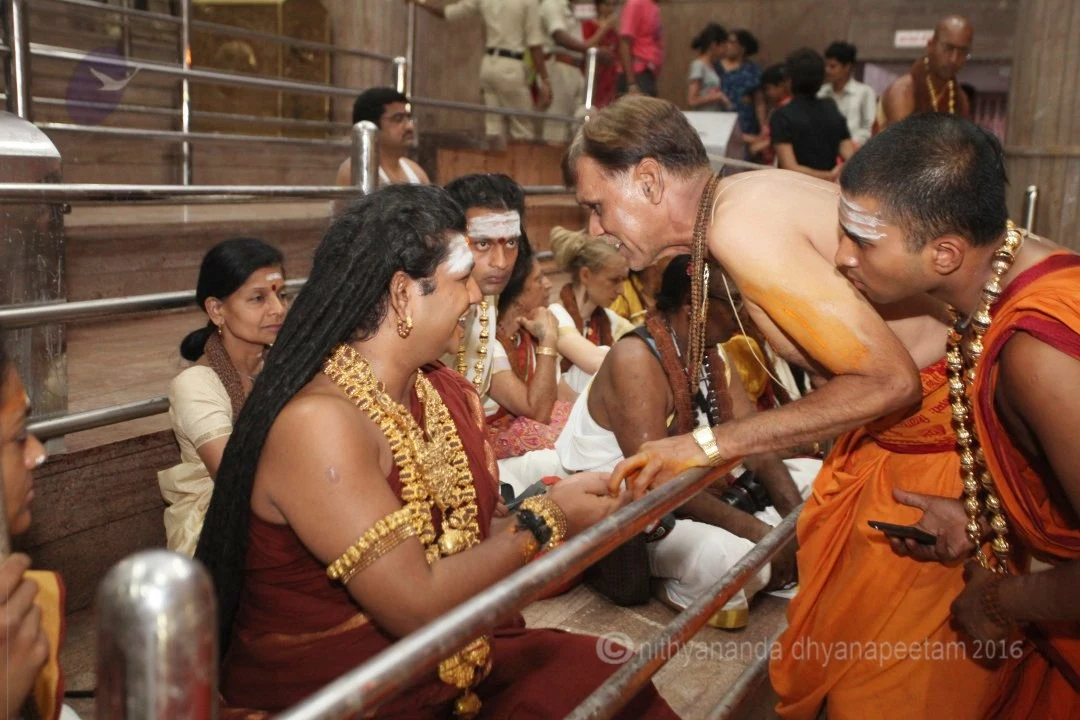
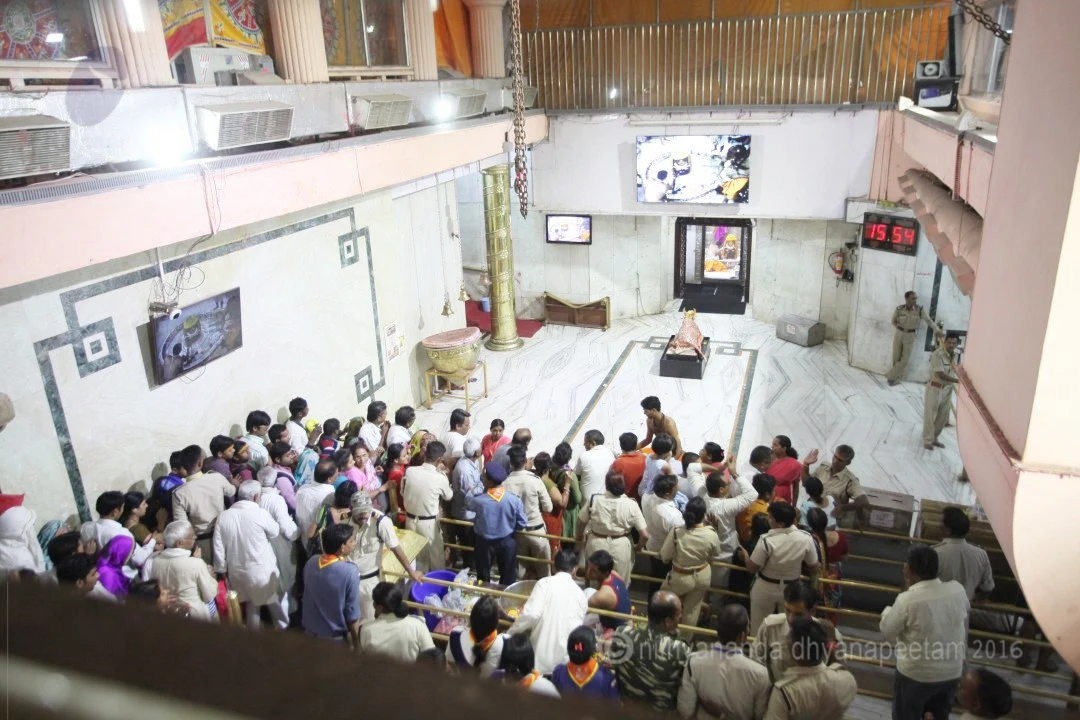
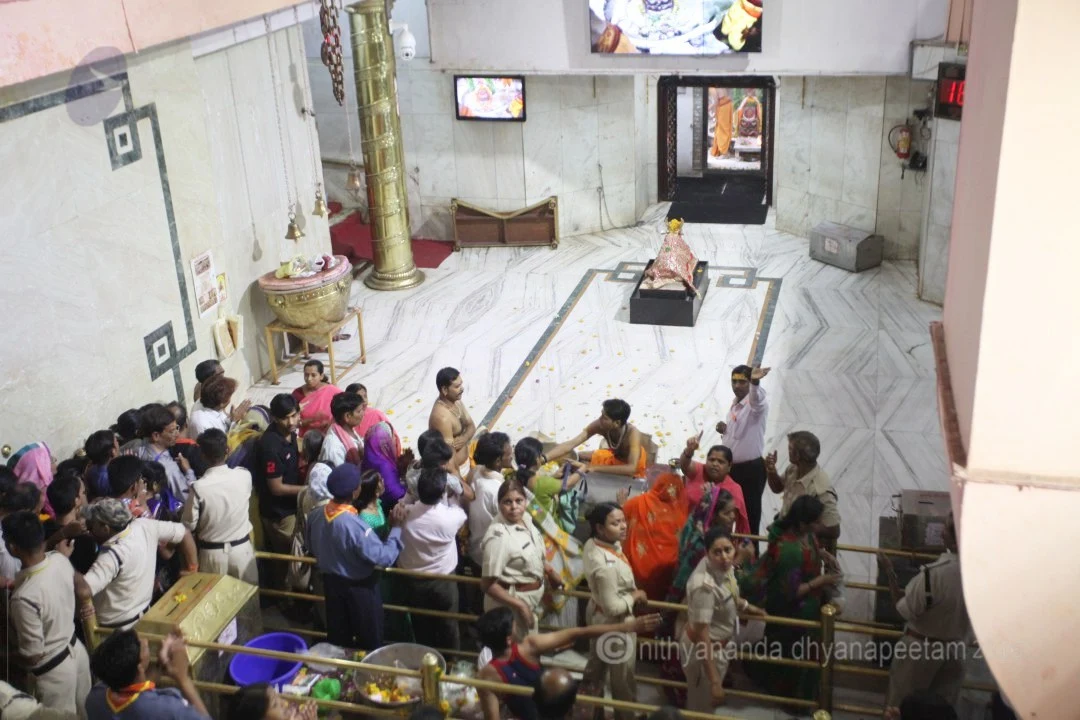
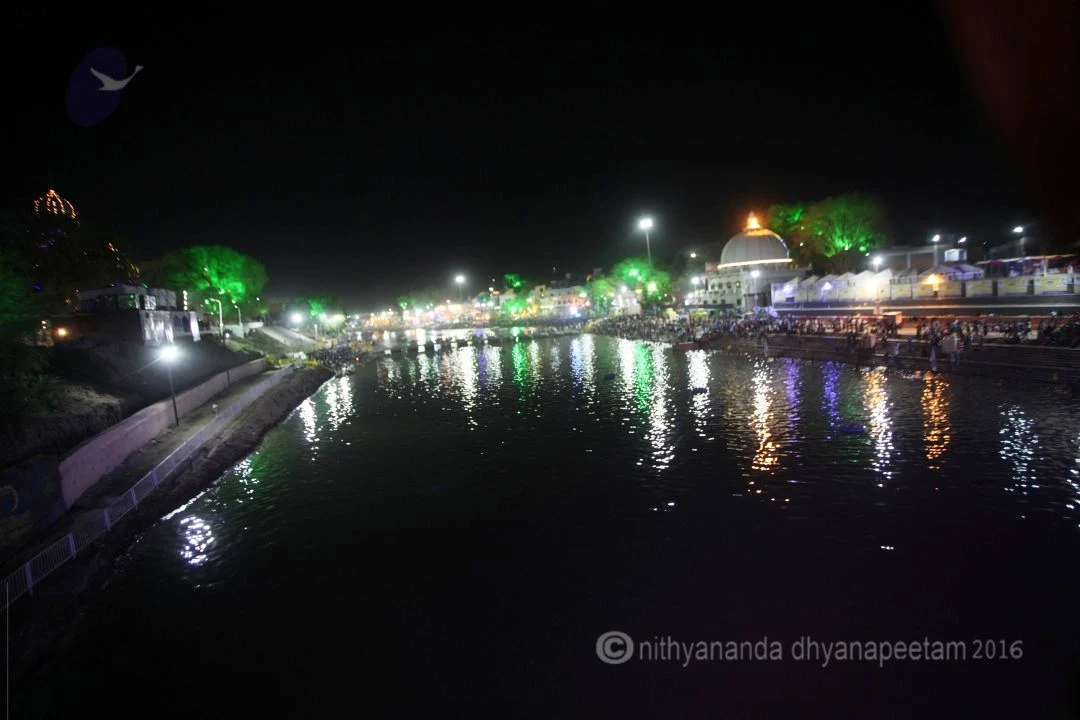
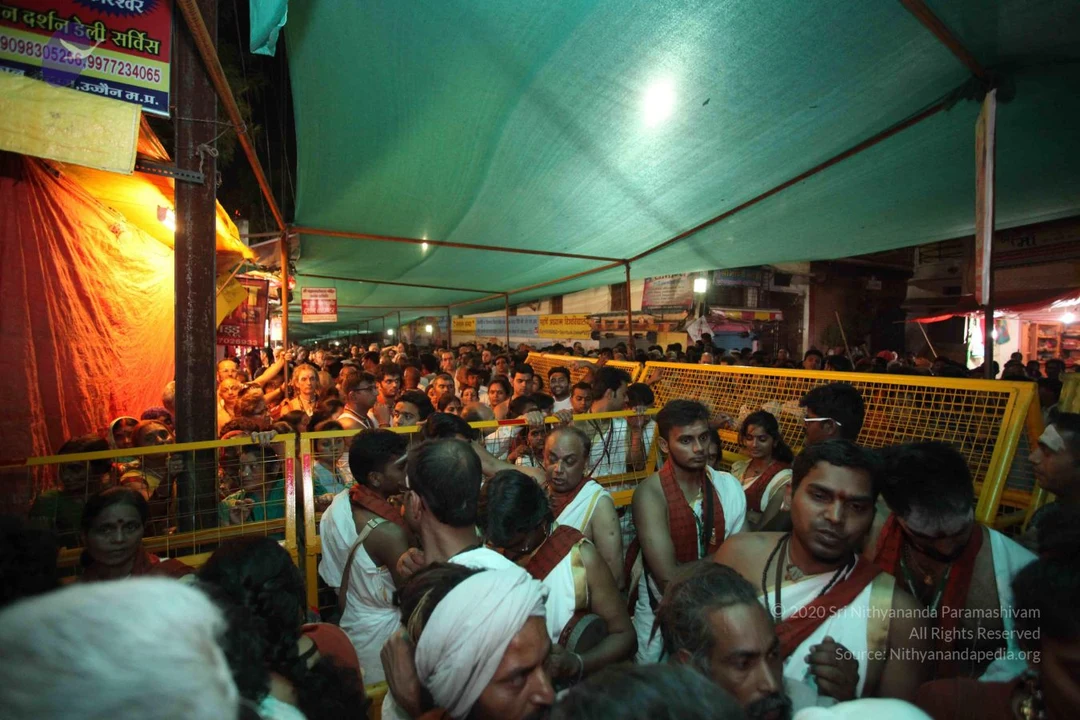
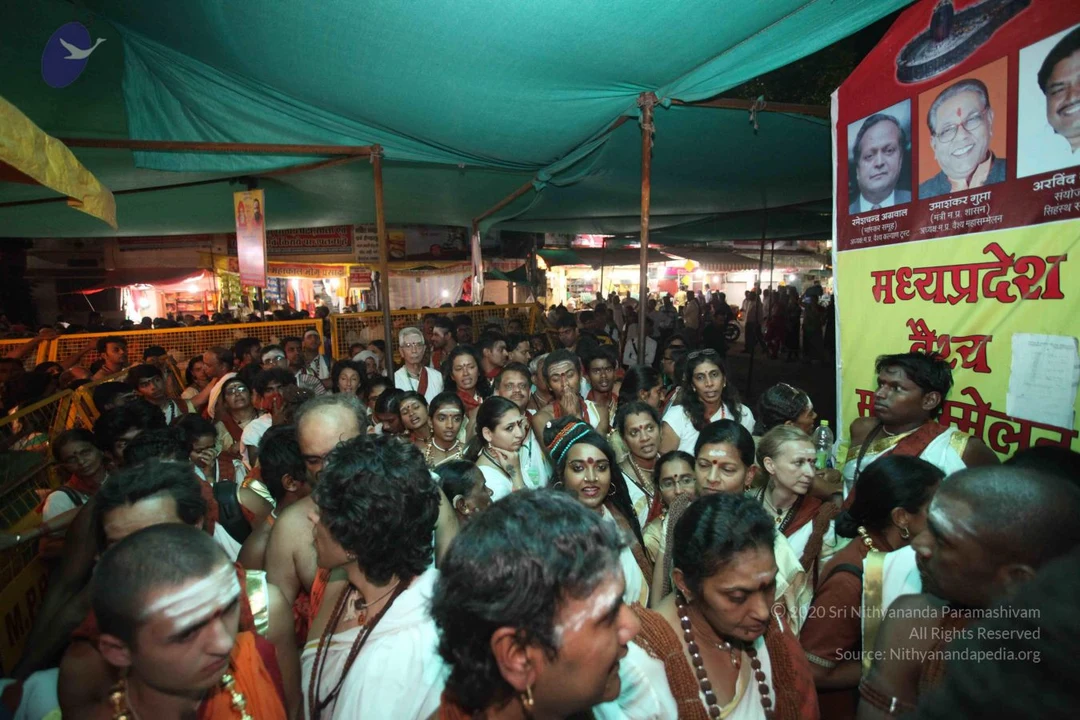
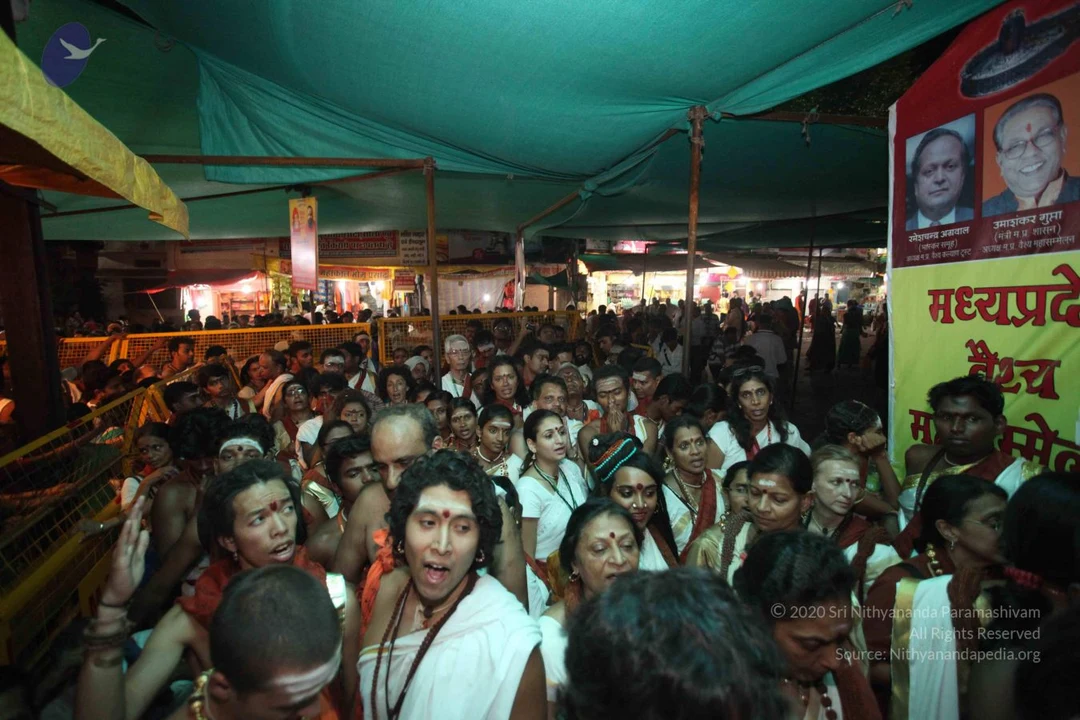
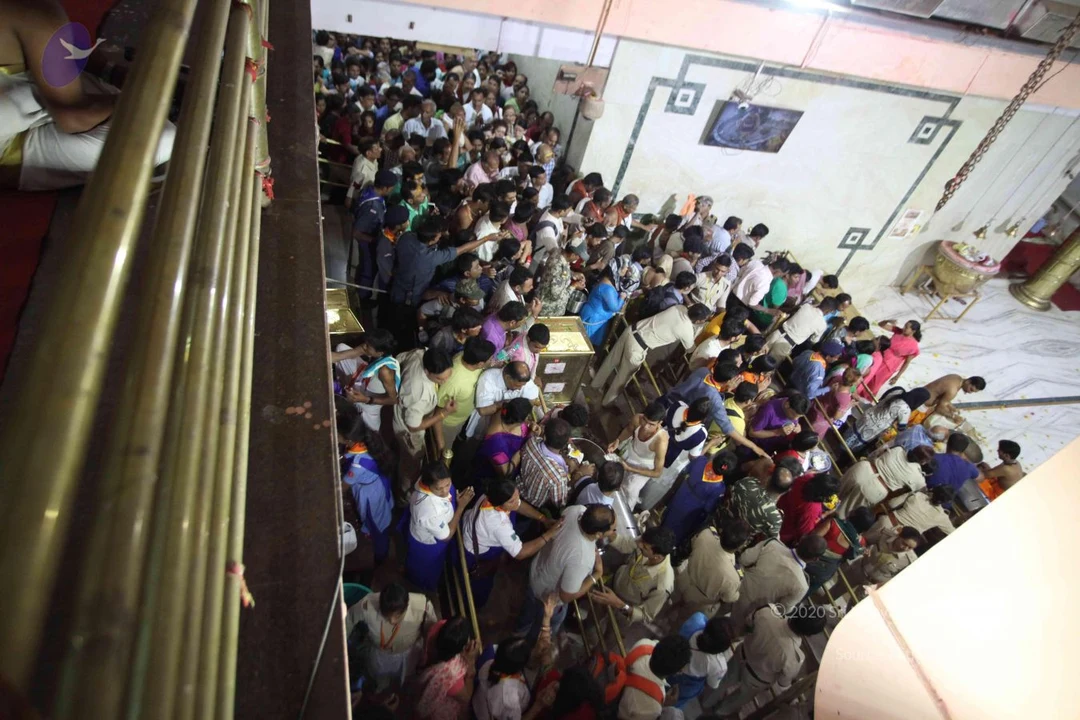
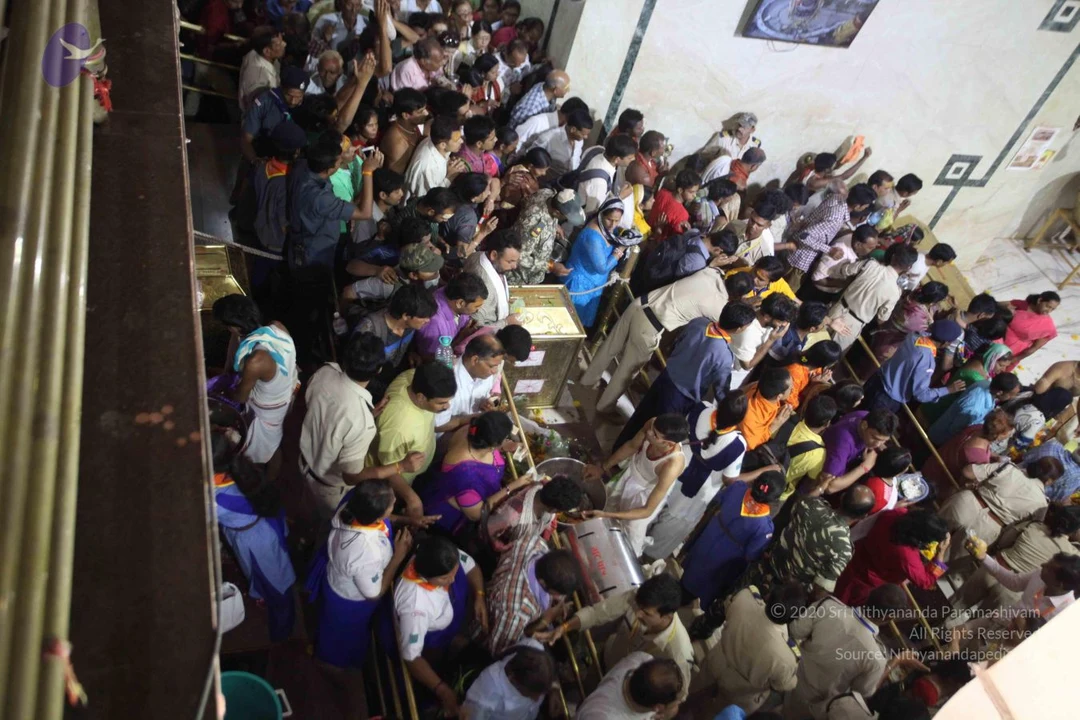
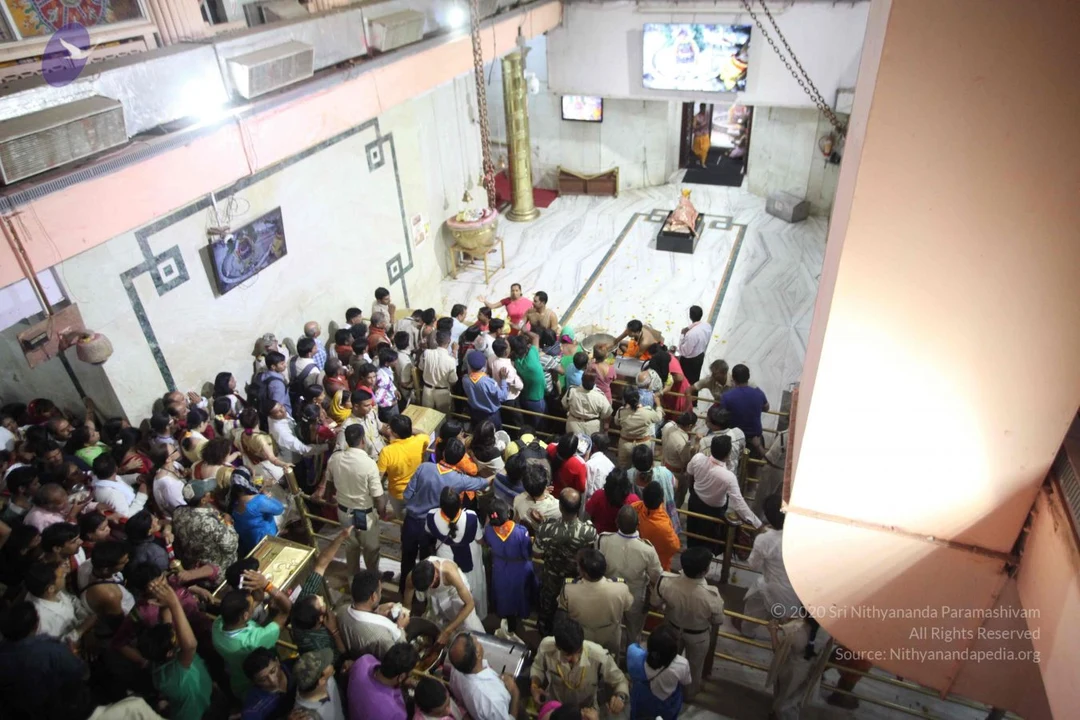
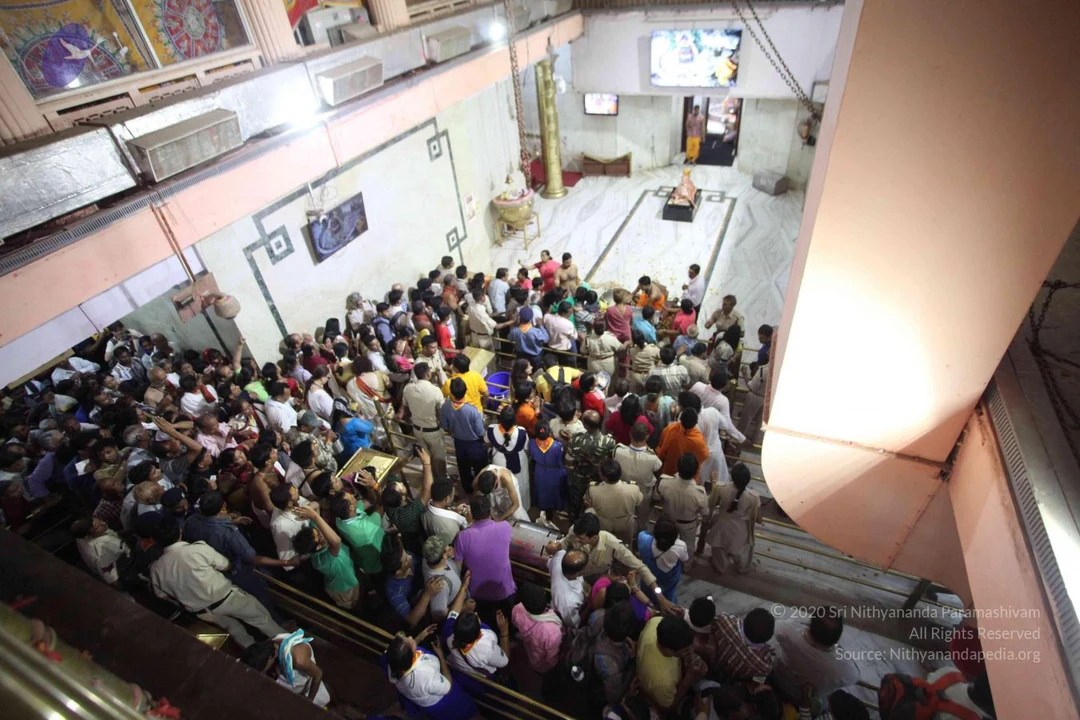
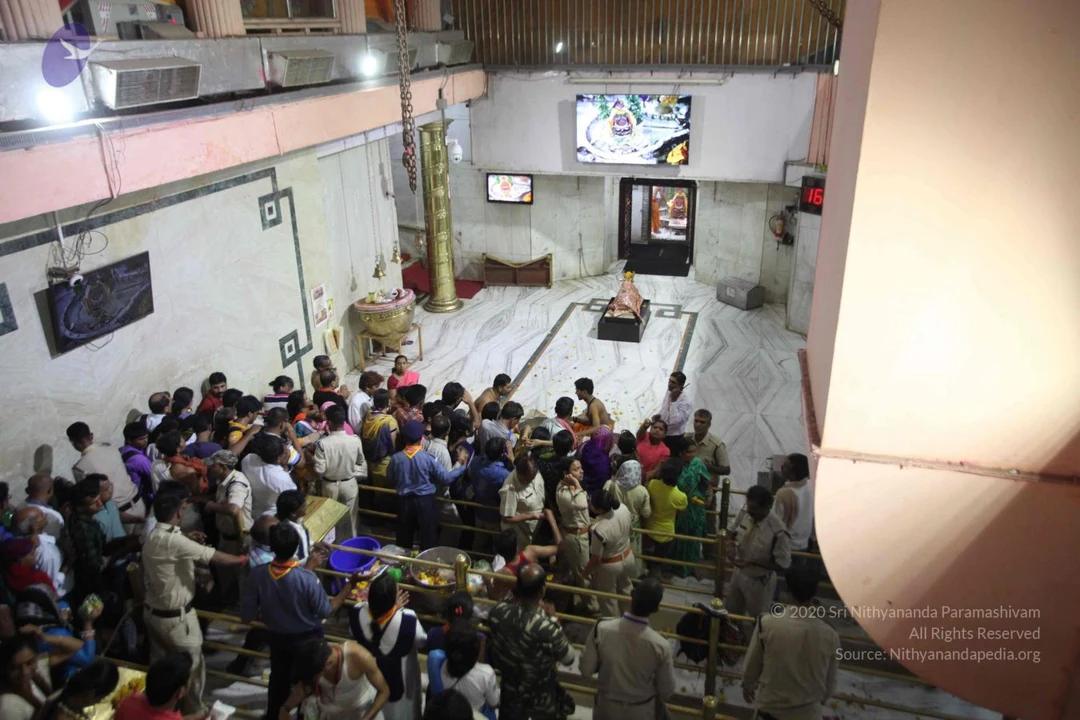
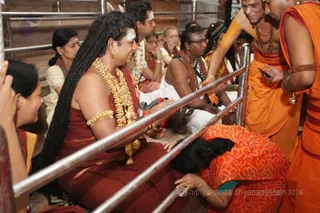
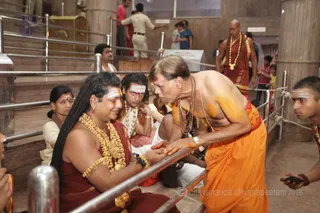
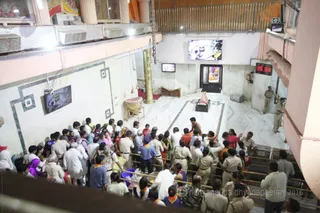
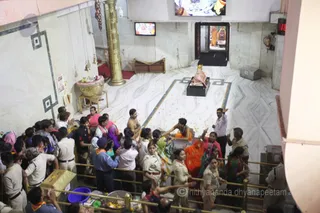
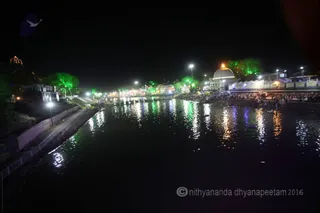
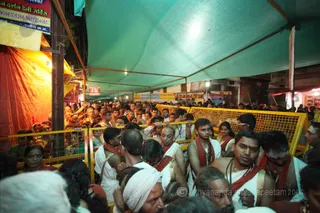
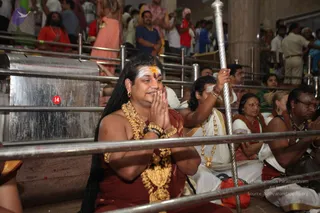
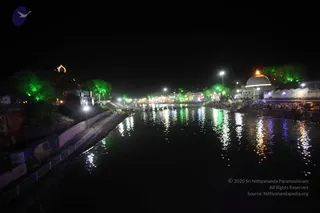
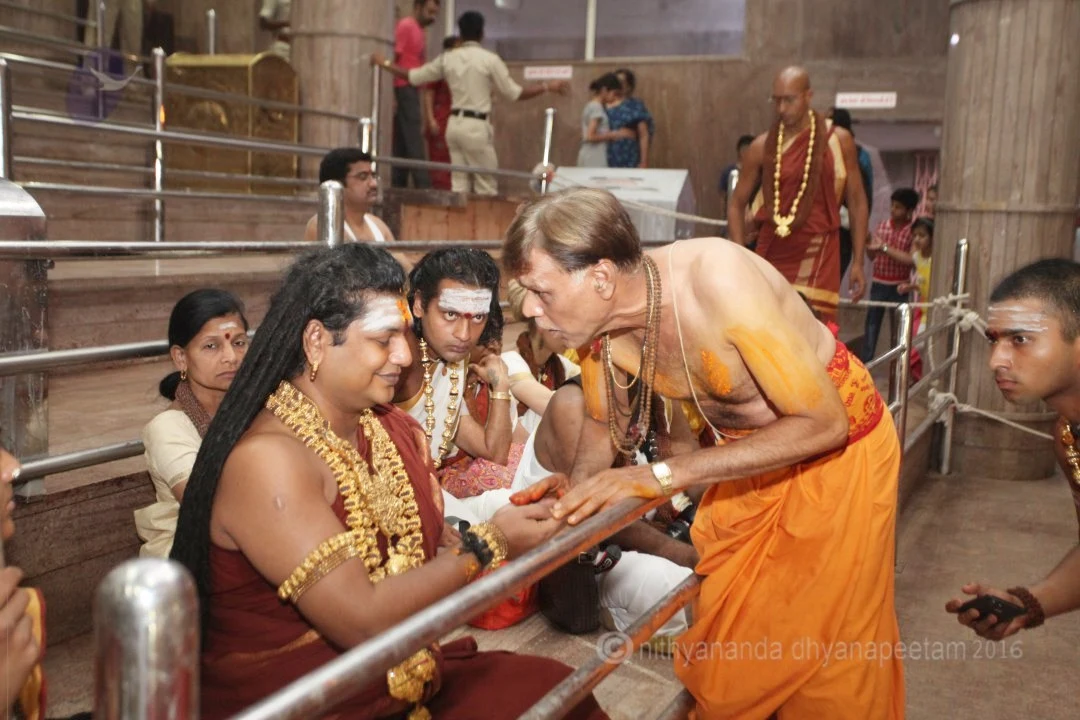
A photograph of devotees seated and standing around a metal railing inside a temple-like space. A long-haired man with a white forehead mark sits at left, wearing a gold ornate necklace, gold armlet and a rust-red garment, smiling. Beside him a man in a white forehead mark and white clothing sits near a bearded man in white with rudraksha beads. A woman in an orange patterned salwar bends forward with her head near the railing in a gesture of reverence. At right, a standing man in orange and saffron robes with rudraksha bracelets gestures toward a seated person, and another man in orange holds a phone. Several other seated devotees, women in white and red, fill the background.A photograph inside a stone temple interior with metal handrails and wooden-panelled walls. In the foreground, a man with long dark hair, a sandalwood forehead mark and a heavy gold necklace, wearing a dark red garment and gold armbands, sits and reaches to hold the hands of an older man bending toward him. The older man has a bare upper body with yellow-orange markings, a saffron dhoti, a rudraksha mala and a gold wristwatch. Behind them, a young man in white ritual cloth with a white forehead mark sits, and a woman in a cream sari sits on the left. Further back, a bald man in a saffron cloth and gold necklace stands, and a uniformed police officer and other devotees are visible. a person's presence is only a page claim, and no appearance cue confirms it, so the identity is uncertain.Elevated view of a marble-floored temple hall where a large crowd of devotees and uniformed police officers in khaki stands on a stepped area and along a brass railing, looking down toward a central deity murti on a dark pedestal under a canopy. Several people wear white kurtas and saris, some in orange and saffron tones. A tall brass lamp stand and a brass vessel stand near the railing. Flat-screen monitors are mounted on the walls, and a red digital clock reads 15:54. A large crowd of over twenty visible people fills the frame, with police officers standing watch at the edges.A photograph inside a marble-floored temple sanctum. A crowd of devotees and uniformed police or security personnel stand behind a brass railing along the left and foreground. A bare-chested priest in a white dhoti stands near the centre, and another man in an orange-saffron garment kneels or bows at a shrine. A woman in an orange sari stands at centre, with women in pink and green saris nearby. A deity murti dressed in red and pink garments sits on a black platform at the centre of a marble mandala-like floor pattern scattered with flower petals. A tall brass pillar and a brass lamp stand on the left, and small screens are mounted on the walls. Visible people number roughly 30 to 40.A night photograph of a riverside ghat in Ujjain, taken from a bridge or raised point. Dark water reflects strings of coloured lights in green, white and orange. Along the far bank stand illuminated buildings, a white domed structure with a golden finial on the right, and green-lit trees. Several streetlamps line the embankment and a row of lit stalls or tents runs along the shore. A crowd gathers on the steps at the right edge of the water, though individual people are too small and distant to count. A white railing runs along the near bank on the left.A dense crowd fills a covered, open-sided street at night under a green tarpaulin canopy, with yellow metal crowd-control barricades channelling people. In the foreground, several men wear white dhoti-style garments with red shawls and rudraksha-style beads, some with white head cloths, appearing to be devotees or temple attendants. A woman in a white sari with a red border stands at left among onlookers. Overhead tents and shop signs line the lane, and a sign at upper left reads a darshan service in Hindi with phone numbers. No single prominent figure stands out clearly enough to identify.

Mandala Process
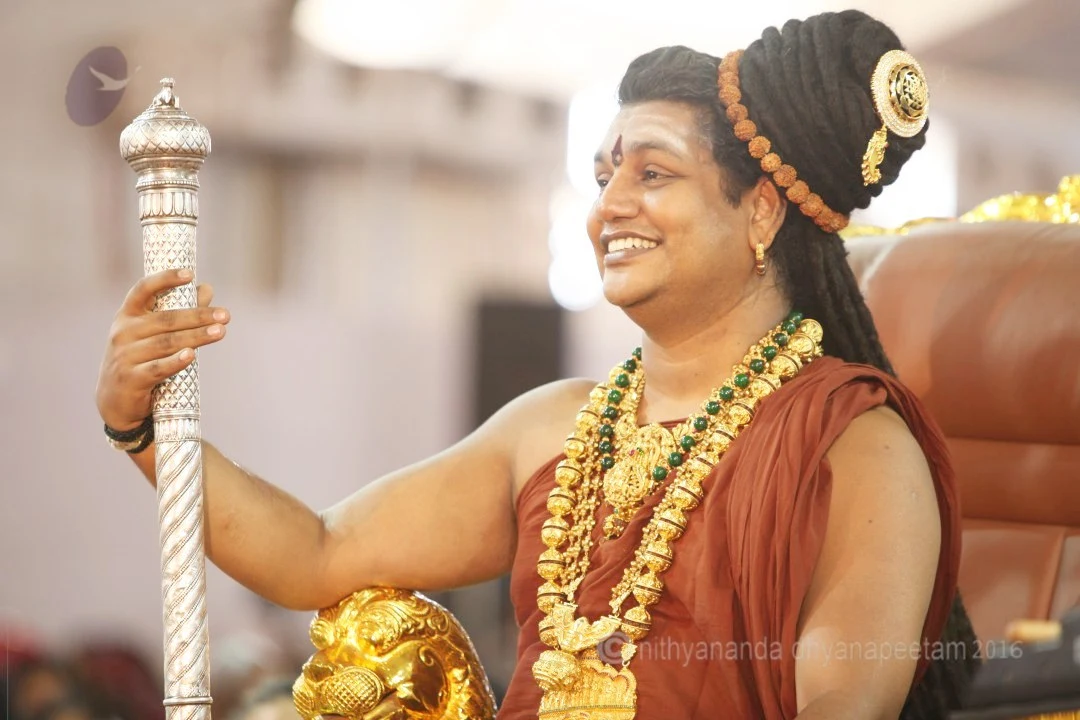
19 photosSource gallery
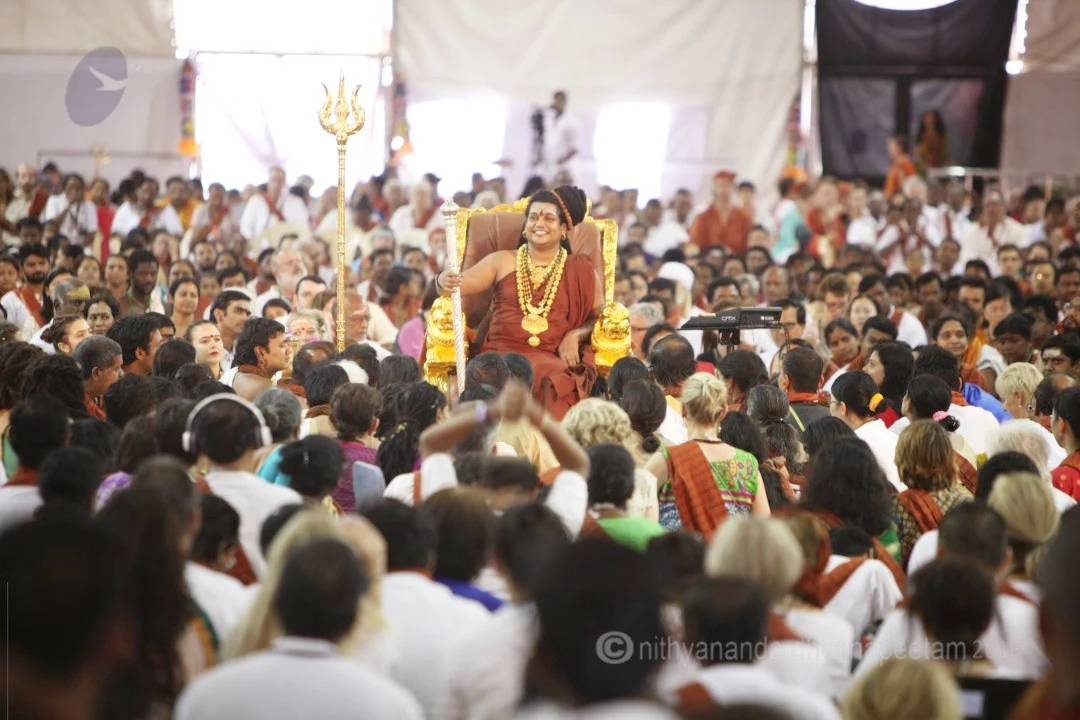
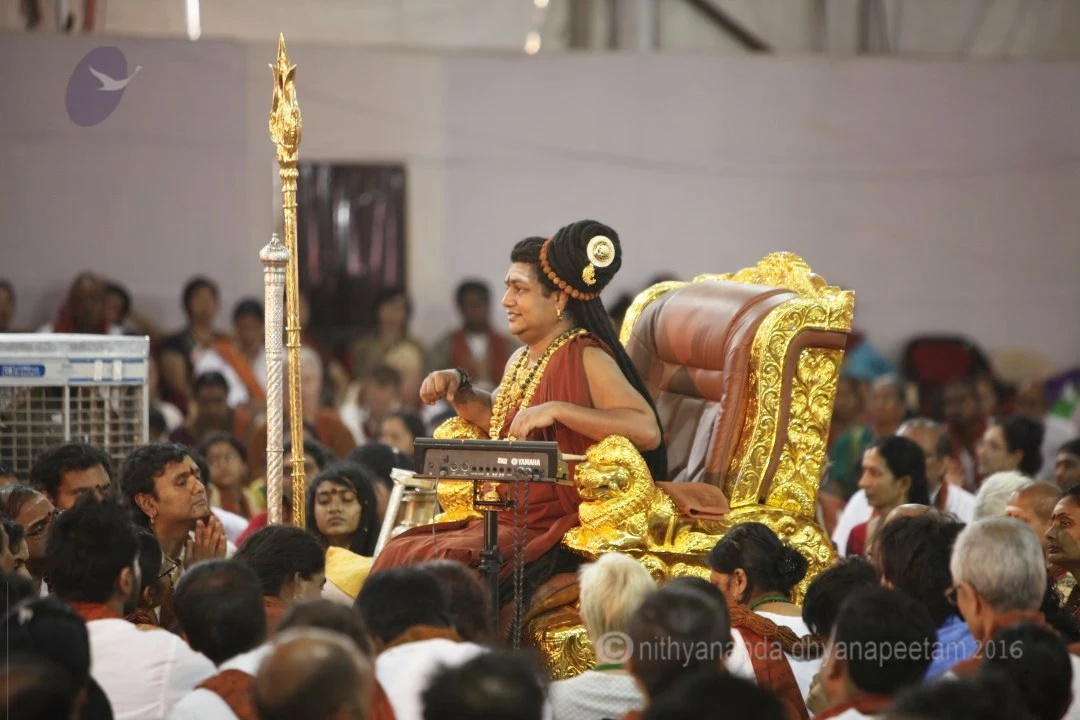
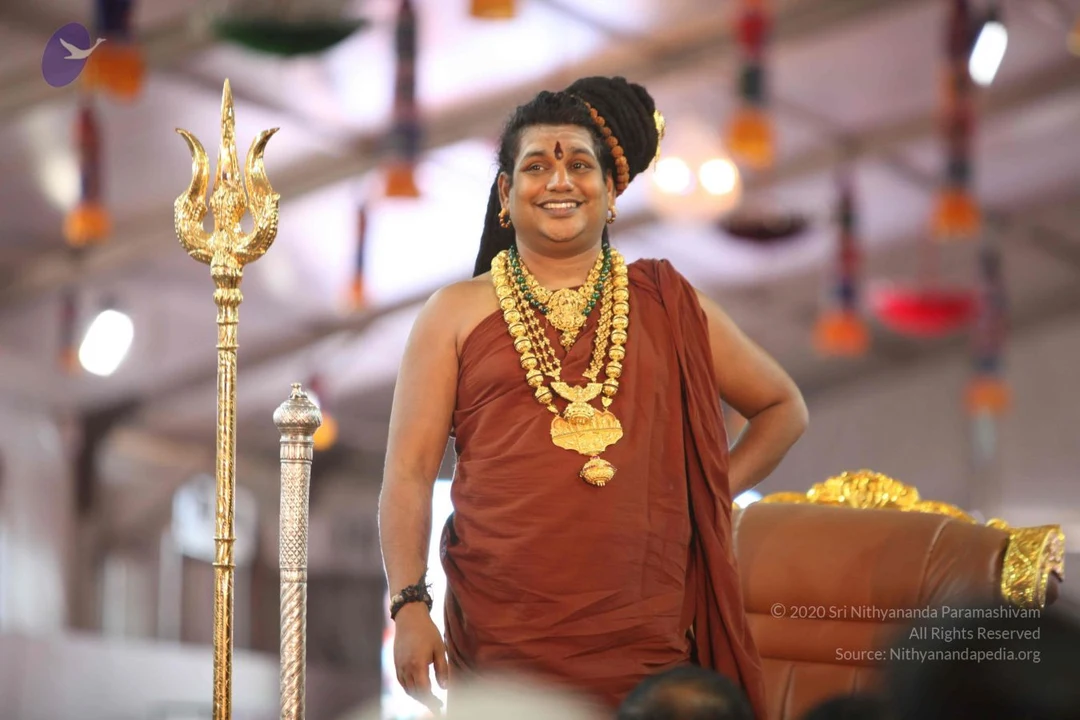
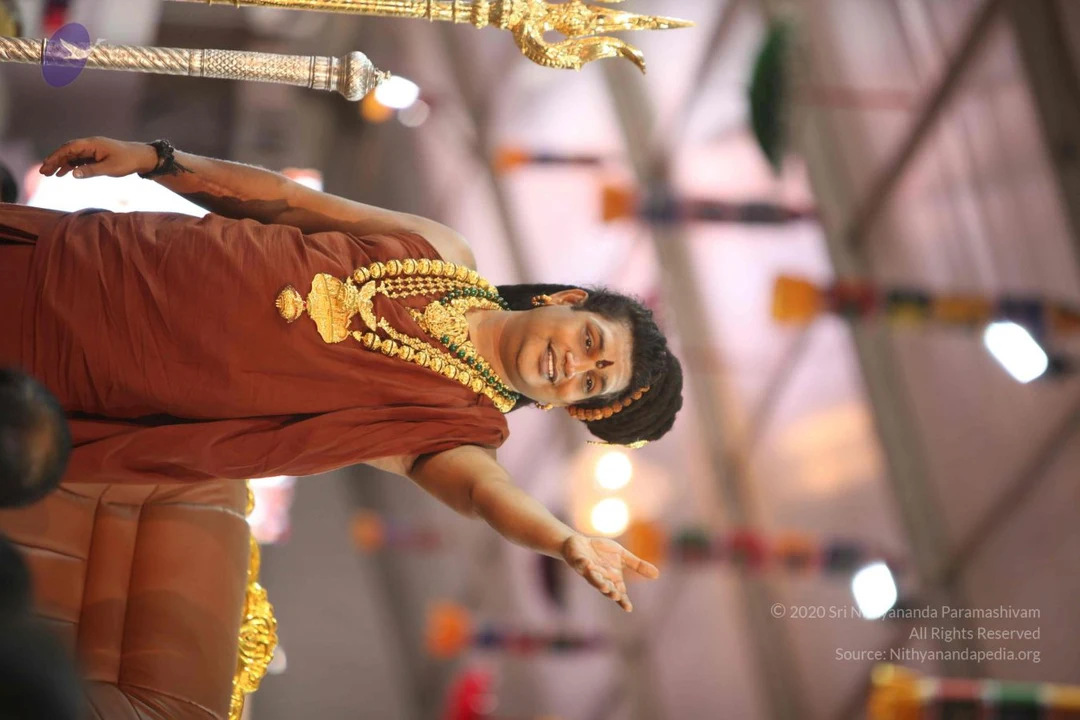
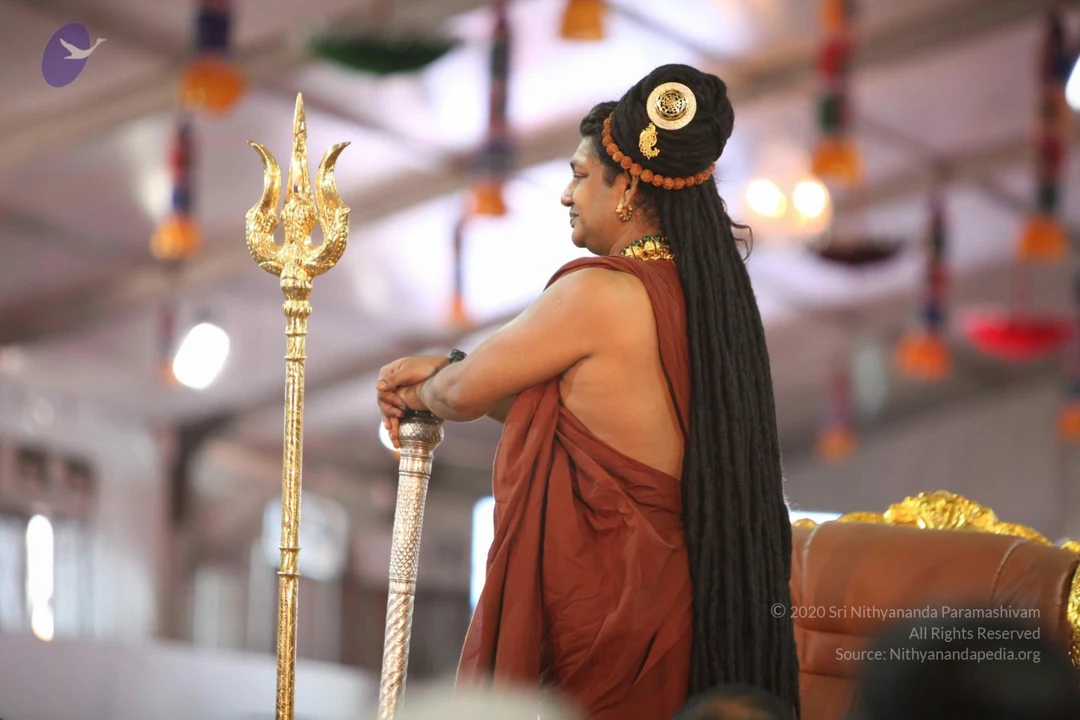
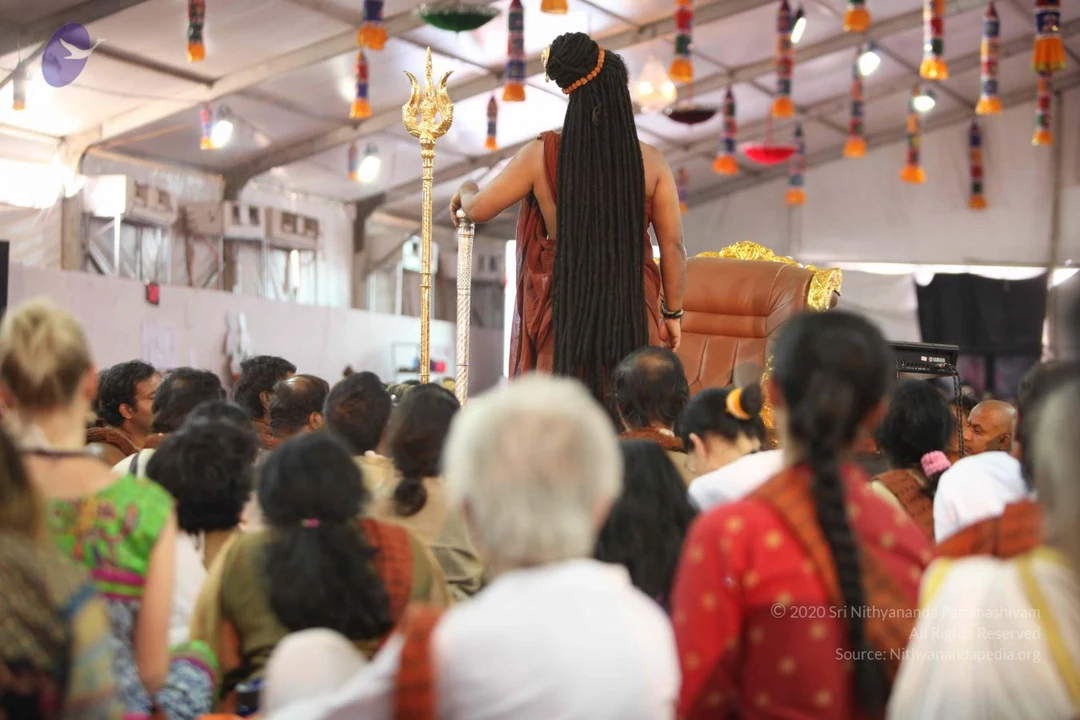
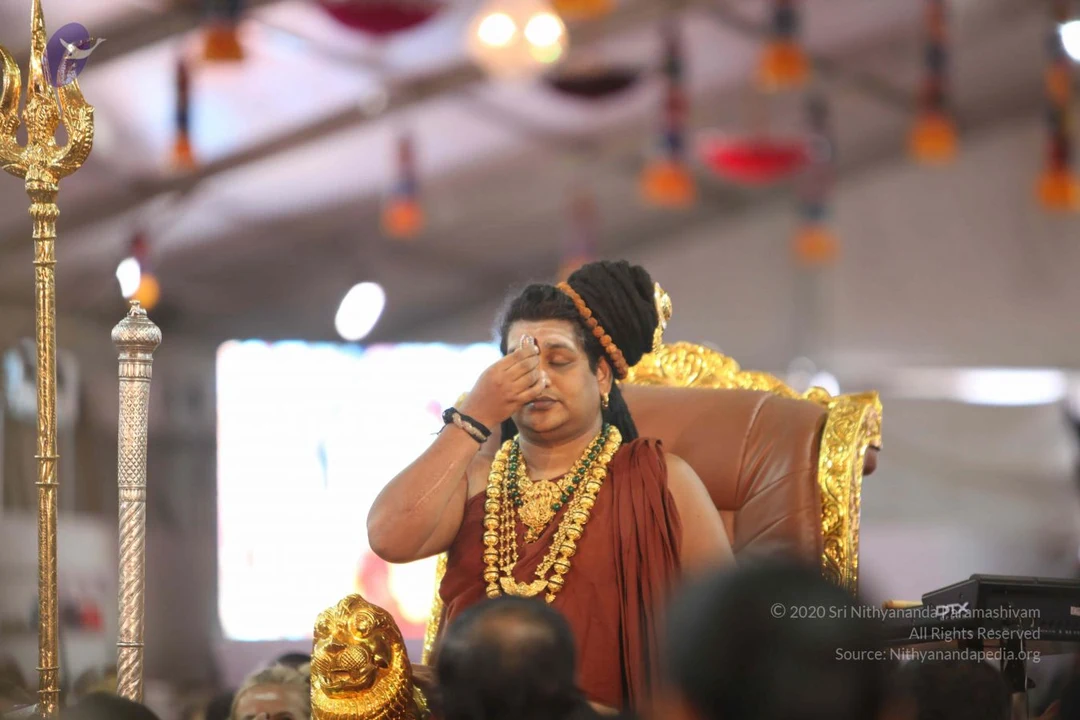
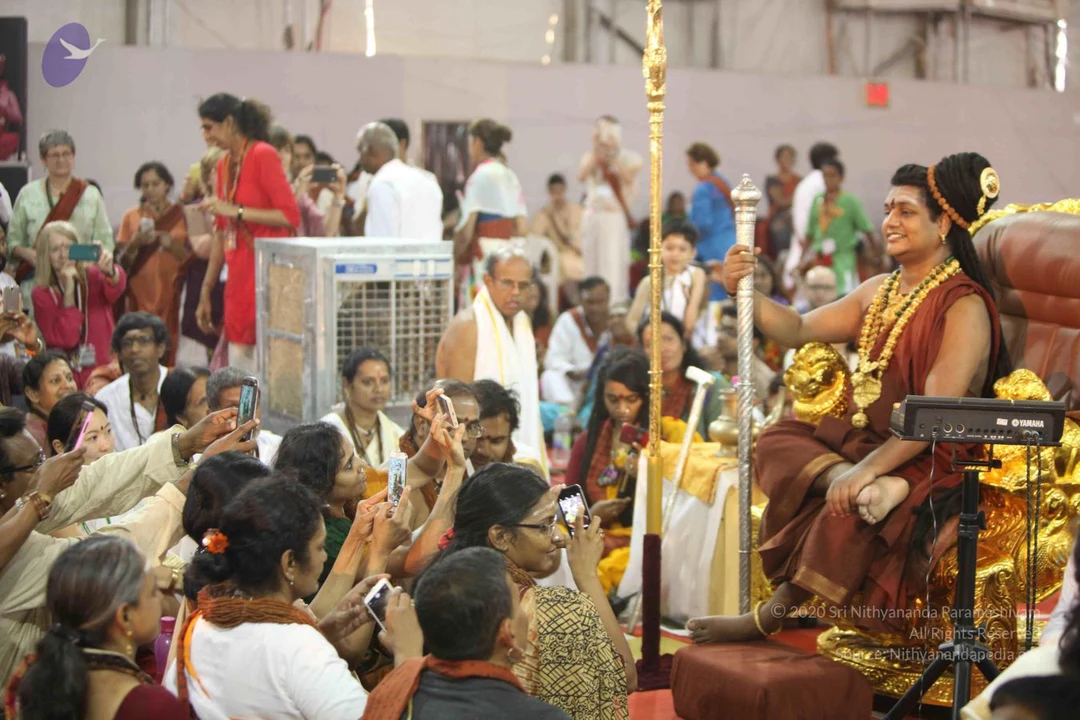
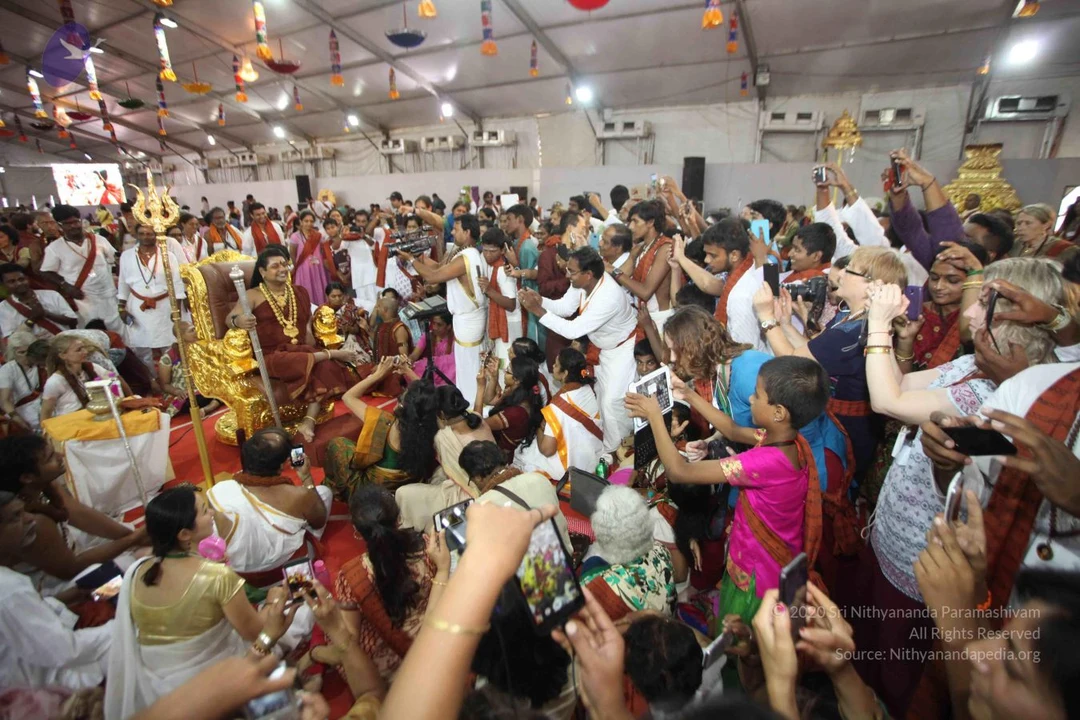
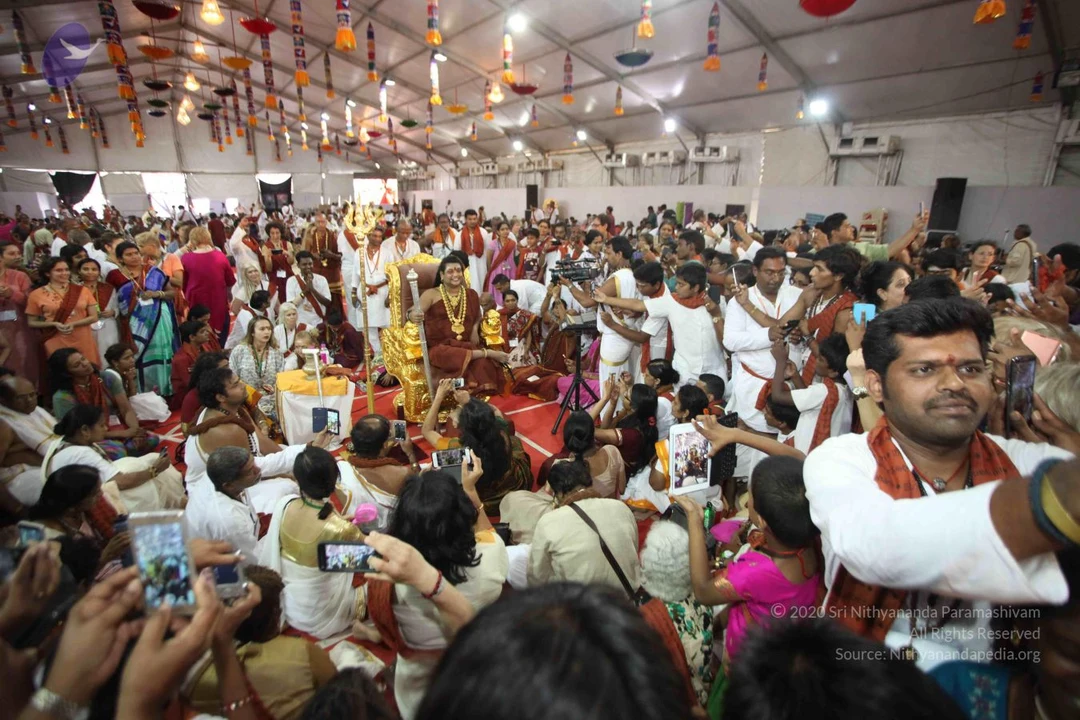
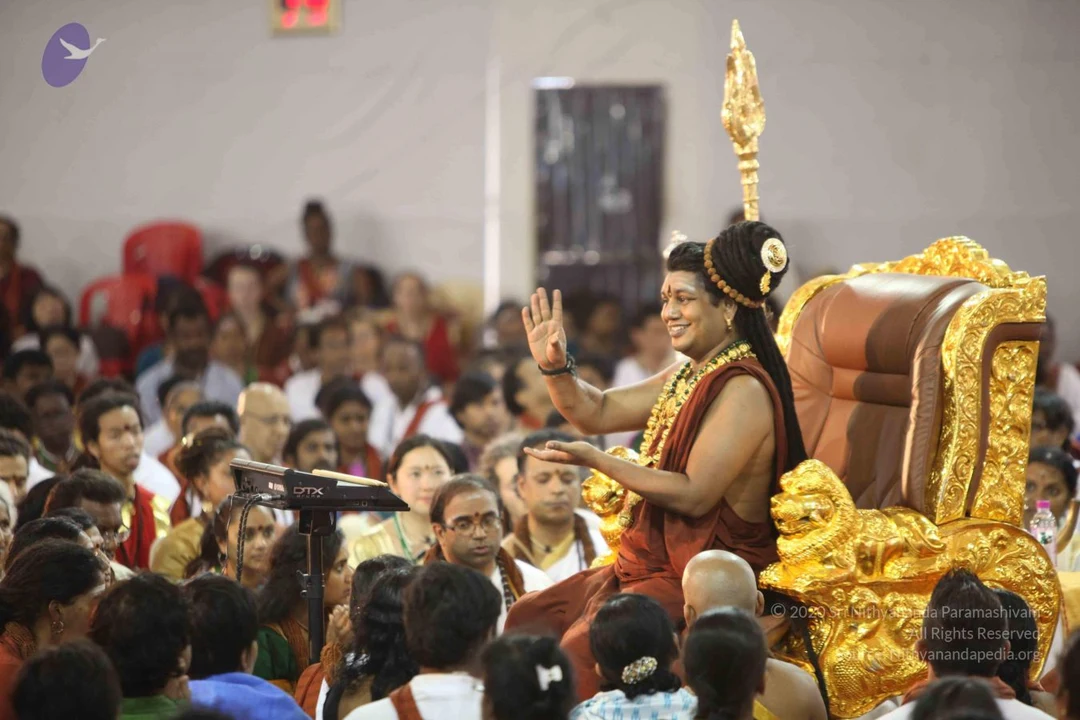
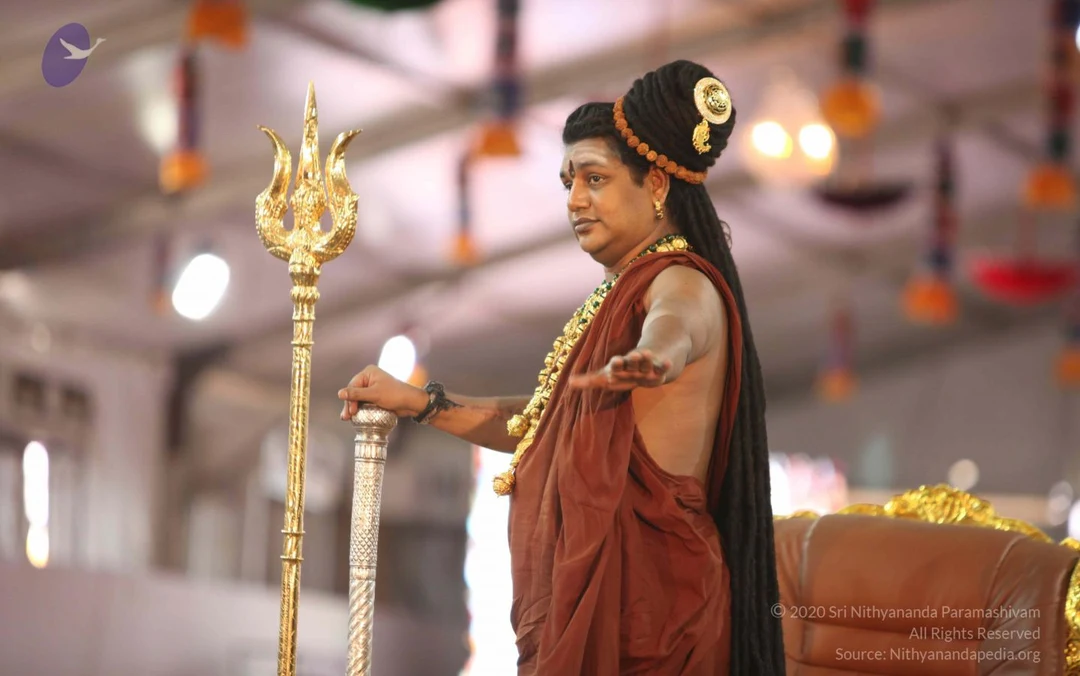
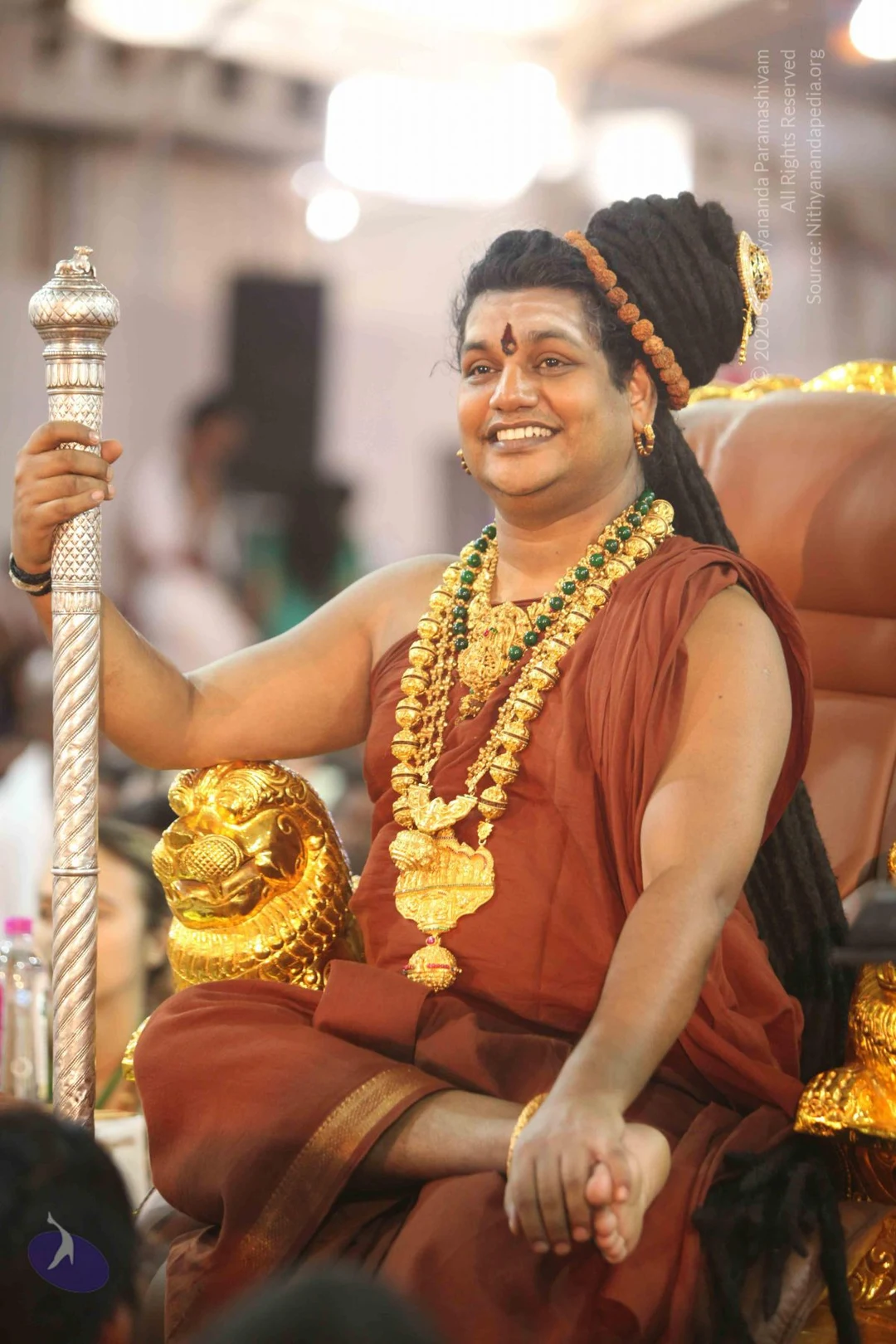
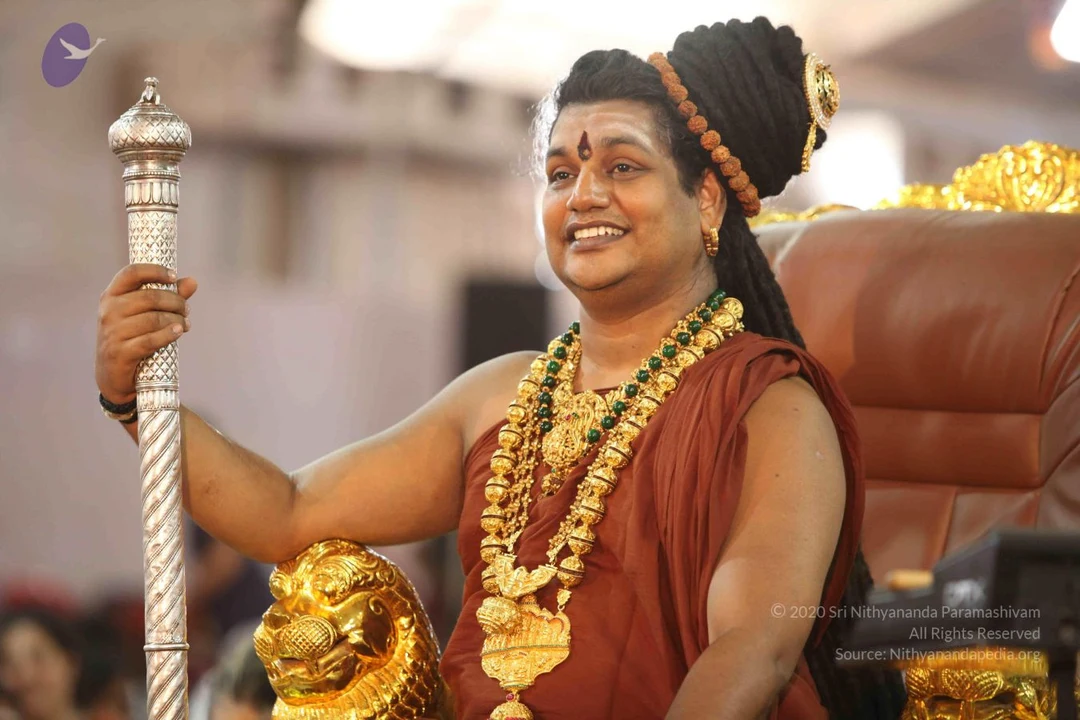
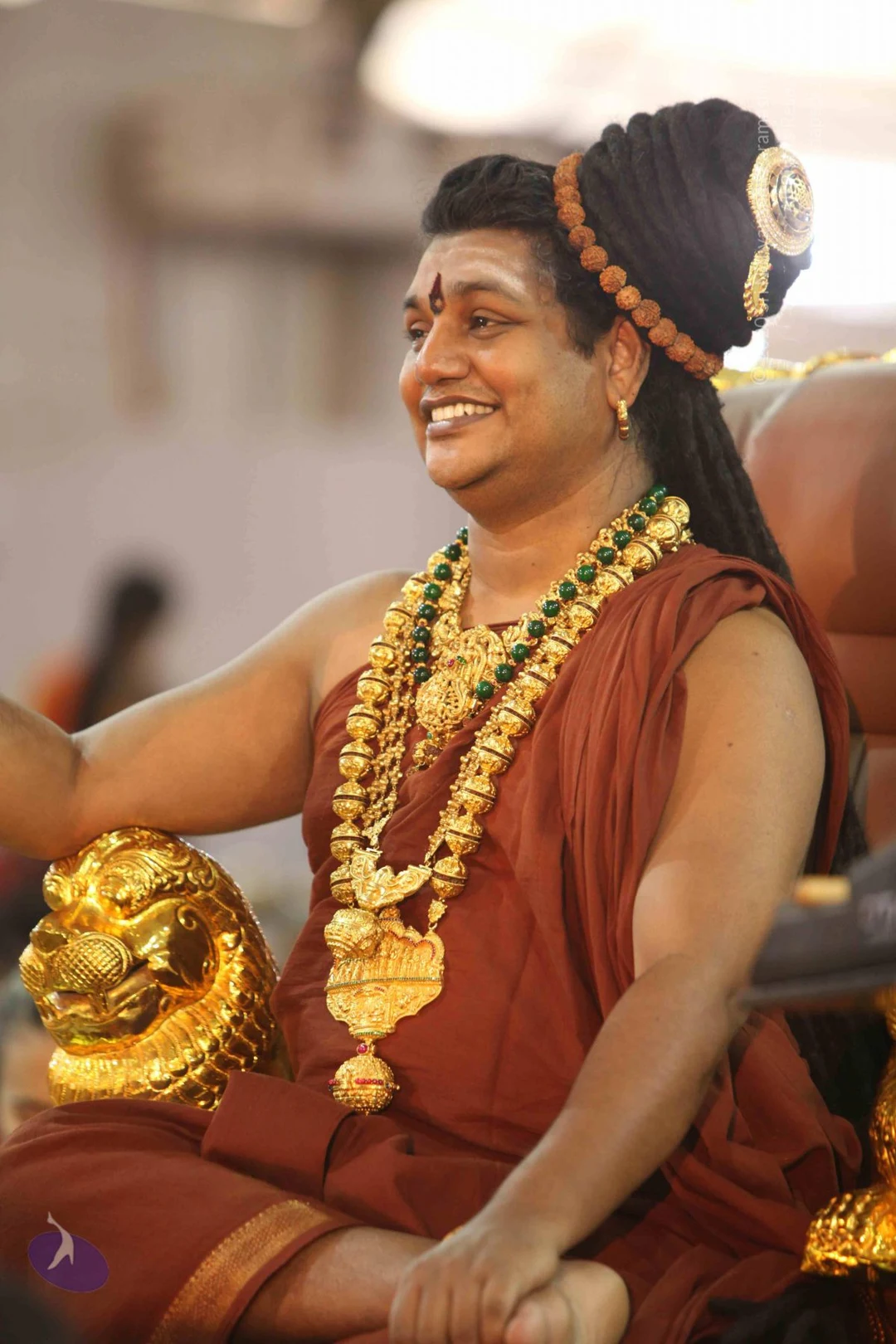
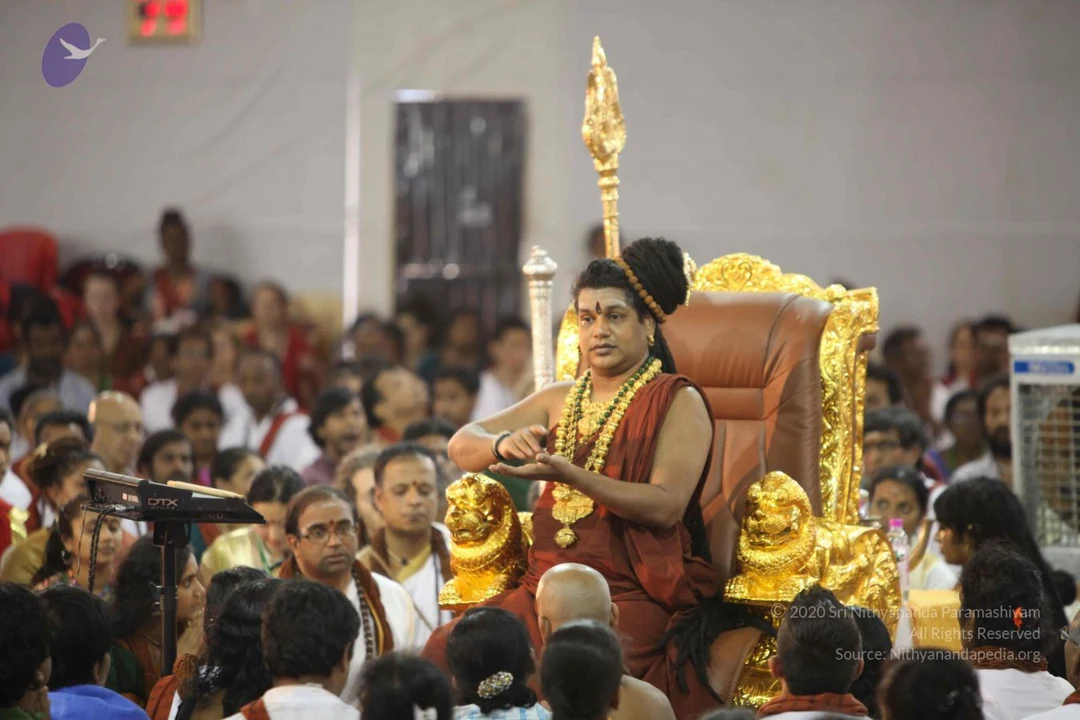
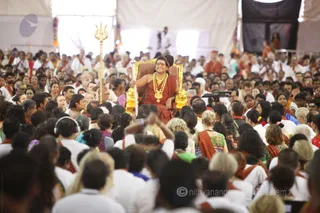
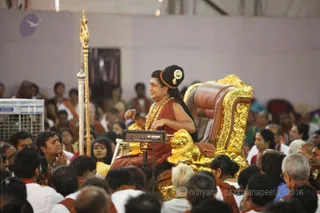
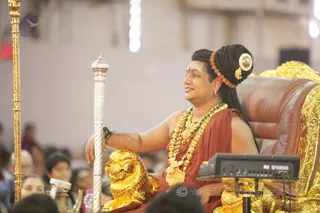
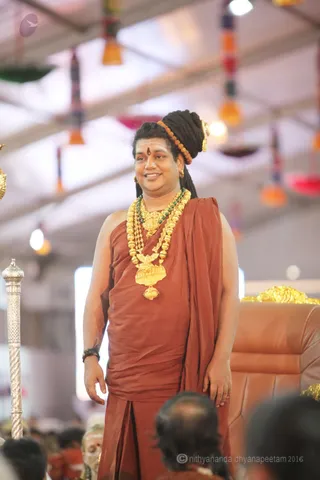
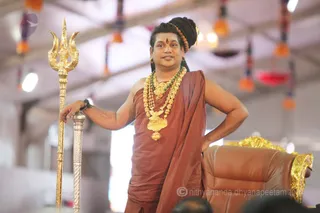
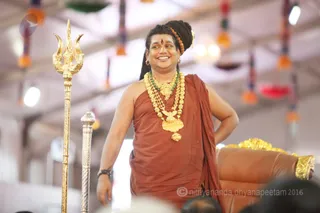
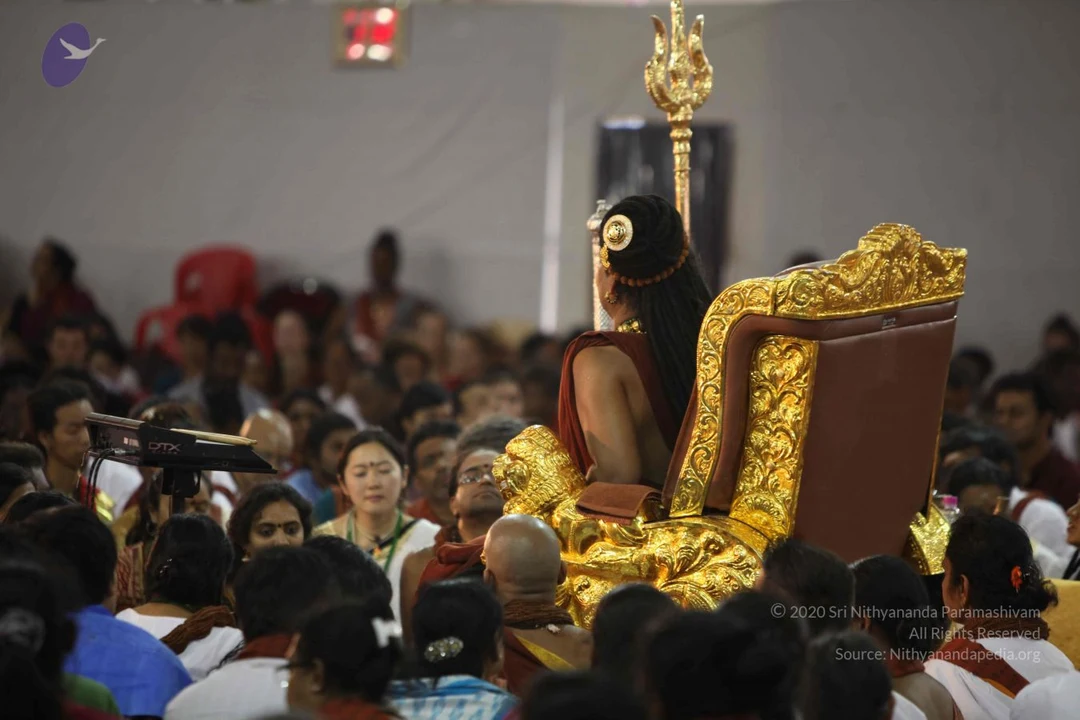
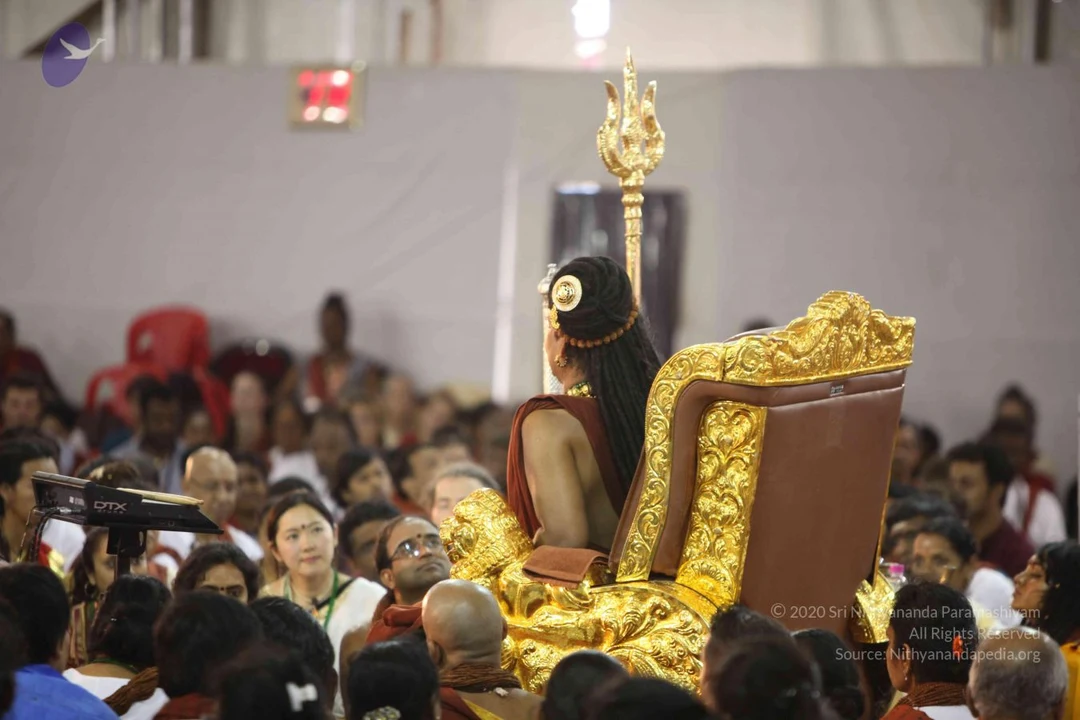
A large crowd of devotees fills a white-tented hall, packed closely in front of a central golden throne. A person with long dark hair, wearing a rust-orange robe and a heavy gold necklace, sits on the ornate gold-and-red throne holding a tall golden trident. The throne is framed by gold lion-like armrests, and a camera on a tripod sits among the audience. Many people wear white, orange and saffron clothing, and some wear rudraksha malas. The seated figure has distinctive long swept-back hair, ornate gold jewellery and orange robes, consistent with a probable Swamiji (probable) presiding over a satsang or darshan session.A photograph of a large indoor satsang hall where a man seated on an ornate gold throne with brown leather cushions addresses a dense crowd. He wears a deep maroon-red robe, a long rudraksha mala and a gold necklace, and his long hair is swept up into a topknot decorated with a gold ornament and rudraksha beads. He gestures with one hand while speaking into a microphone on a stand, and a tall gold ceremonial staff stands beside the throne. Many seated devotees in white and saffron-orange clothing fill the foreground and background, some with hands folded in prayer. Swamiji (probable) is seated on the throne, presenting a discourse, with his distinctive long hair, rudraksha mala and gold ornaments as visible cues. Roughly 50 to 100 people are visible in the hall.A seated man in a gold-trimmed brown-red robe sits on an ornate gilded throne with brown leather cushioning, beside a tall silver-and-gold staff and a carved golden lion armrest. He wears heavy gold necklaces with green beads, a golden hair ornament in a long braided topknot with rudraksha-style beads, and gold earrings. A Yamaha keyboard sits on a stand in front of the throne. Seated devotees fill the hall behind him, some in front rows and others further back, with a bottle of water on a floor table at left. The a person figure presents with a crown-like hair ornament, ornate gold regalia and rudraksha beads, while the robe, throne and jewelry are distinctive visual cues for appearance-based matching only. Several people are visible in the audience, roughly in the 21-100 range.A photograph of a smiling man standing at an indoor event under a white tent ceiling strung with orange and multicolored tassels. He wears a rust-red unstitched wrap over one shoulder, a heavy gold multi-strand necklace with green beads and a gold pendant, and a long hair bun wrapped with a rudraksha band and gold hair ornament. A red-and-white tilak marks his forehead. A large brown leather throne with gold trim sits behind him, and a silver staff stands to the left. Blurred heads of seated attendees fill the lower foreground. Appearance-based label: Swamiji (probable), based on the long hair bun, rudraksha band, ornate gold necklaces and saffron-toned clothing.A man stands on a stage beside a gold trident (trishul) and a silver-banded staff, one hand resting on the staff and the other on his hip. He wears a rust-brown draped cloth over the shoulder, a heavy gold necklace with green beads, a rudraksha-style mala and gold earrings, with dreadlocked hair piled up. A brown leather throne with gold trim sits behind him. Above, orange and red tassels hang from the ceiling and lamps glow. The page identifies this as a person; a probable appearance-based match with his distinctive long locks, ornate gold jewellery and trident, so a person is set to in_person. A couple of seated audience heads are visible at the bottom edge.Photograph of a smiling man with long dreadlocked hair swept up in a bun, wearing a rust-orange unstitched wrap over his bare shoulder, layered gold necklaces, a green and gold beaded mala, and a red bindi. He stands beside a golden trident and a silver staff near a brown leather throne with gold trim, under hanging orange and red decorations at a stage. Several blurred heads of audience members are visible at the bottom edge. Swamiji (probable): the appearance cues include the long swept-back hair, rudraksha-style mala, gold ceremonial necklaces and saffron-toned clothing, while the page indicates his presence at this event.

Temple- Nithyanandeshwara Devasthanam
12 photosSource gallery
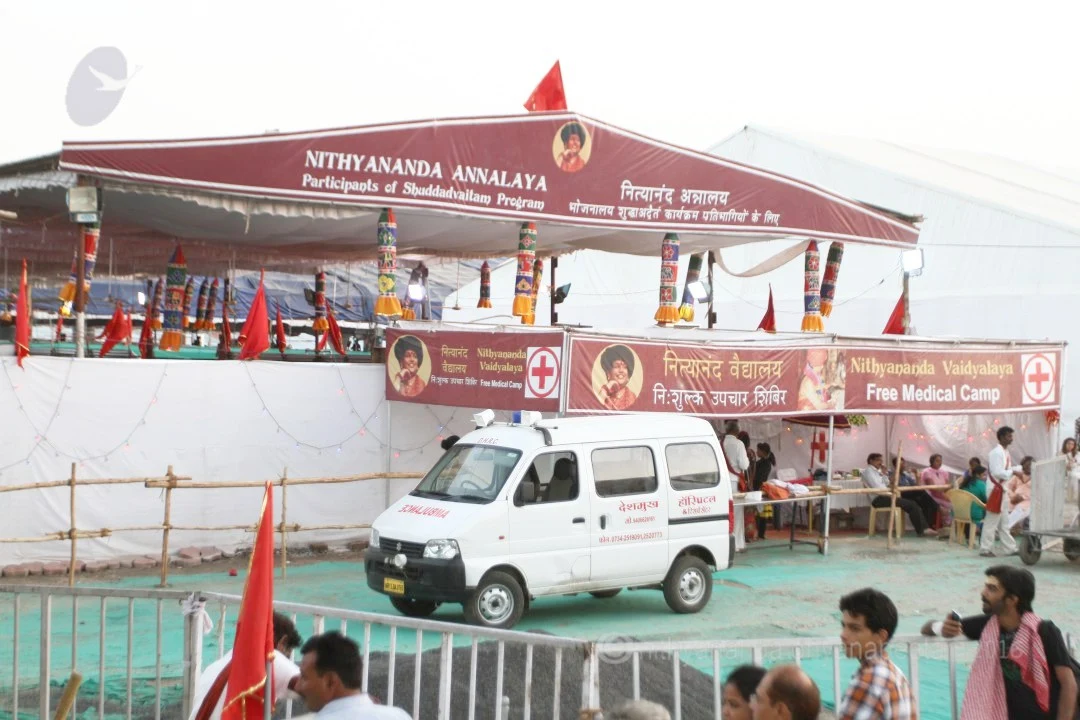
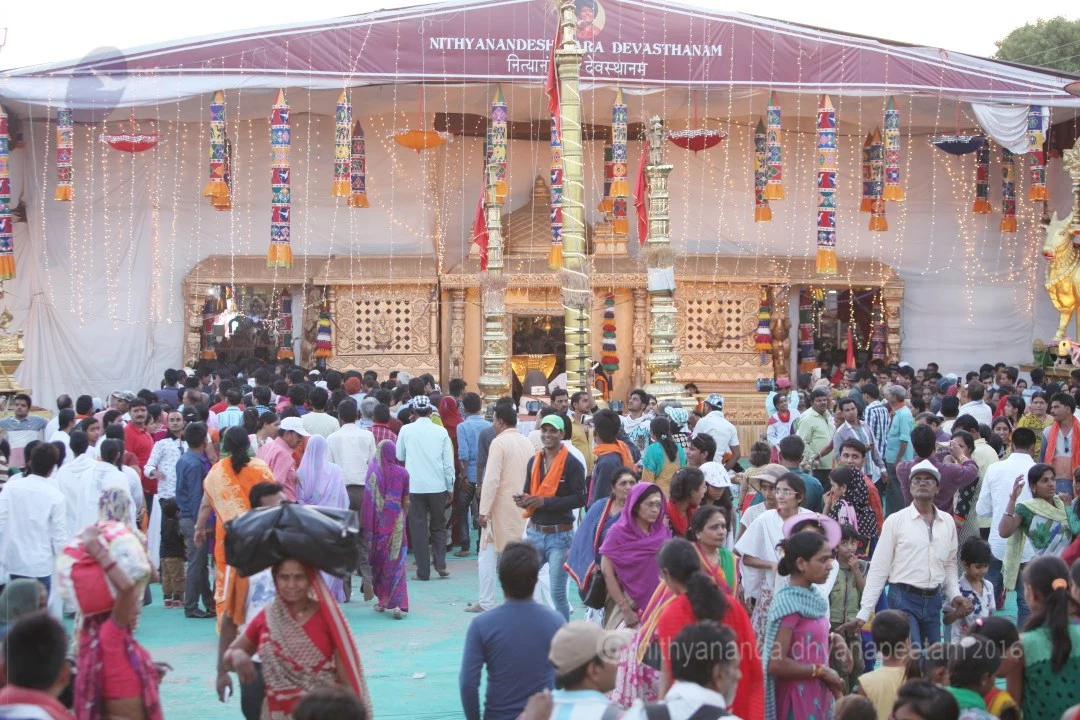
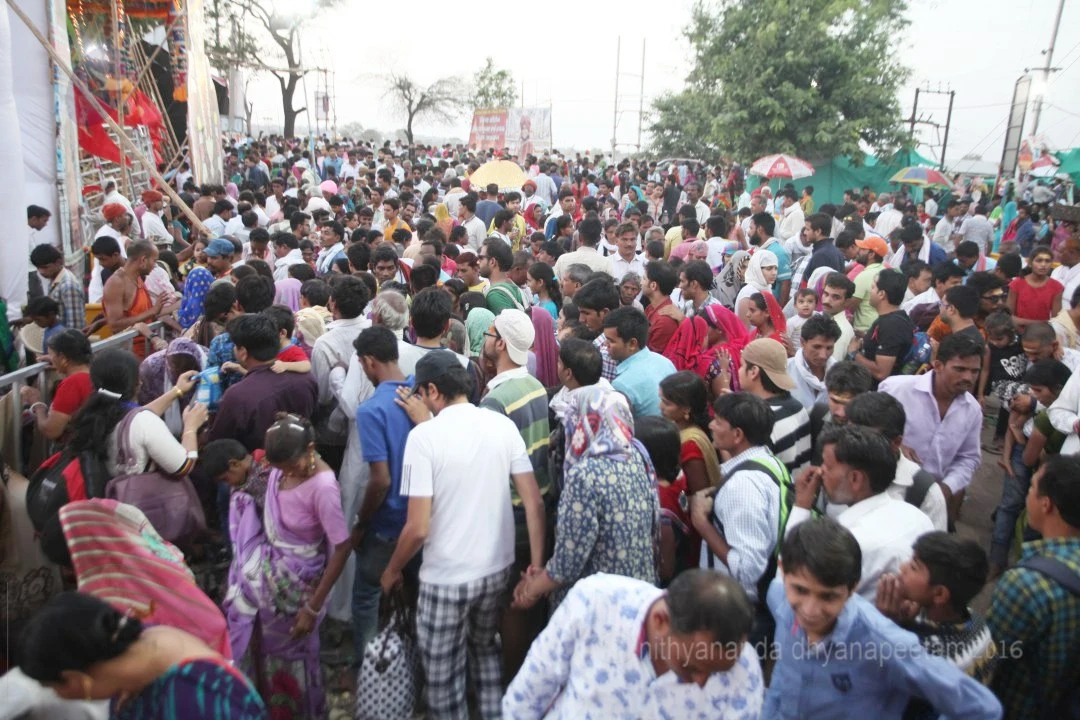
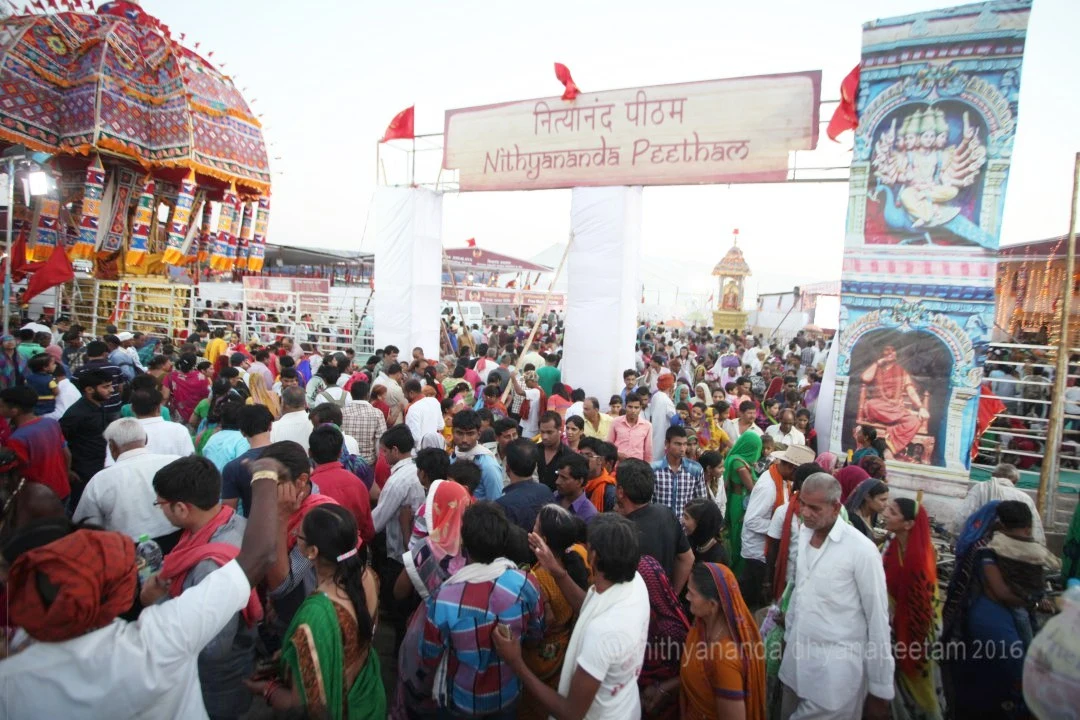
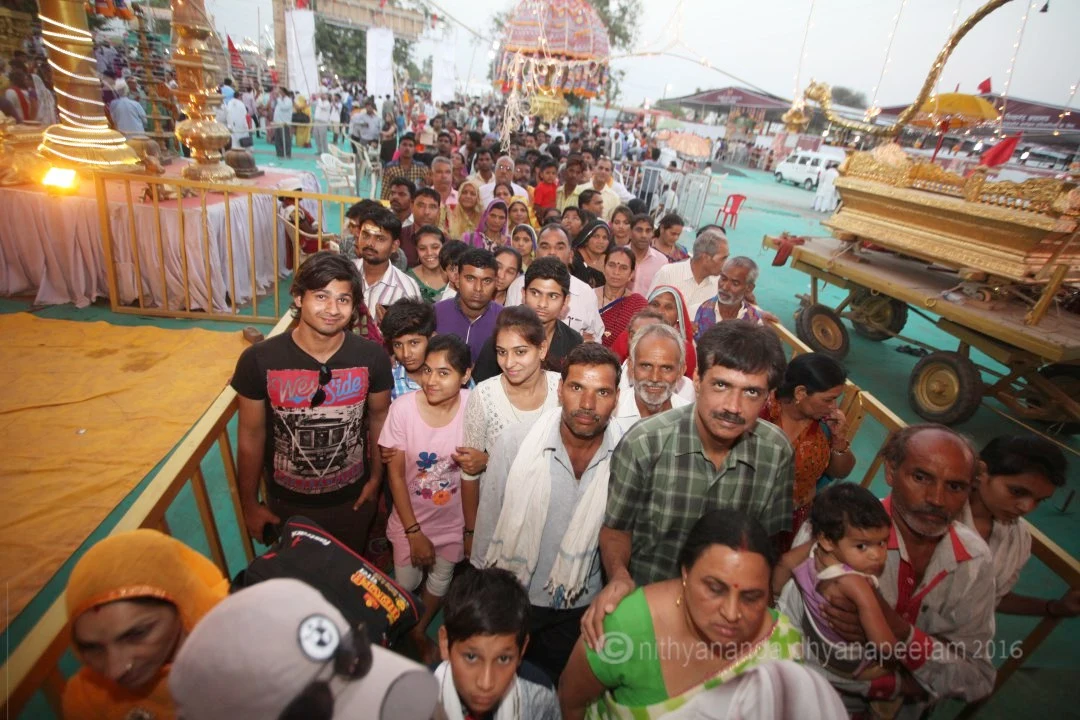
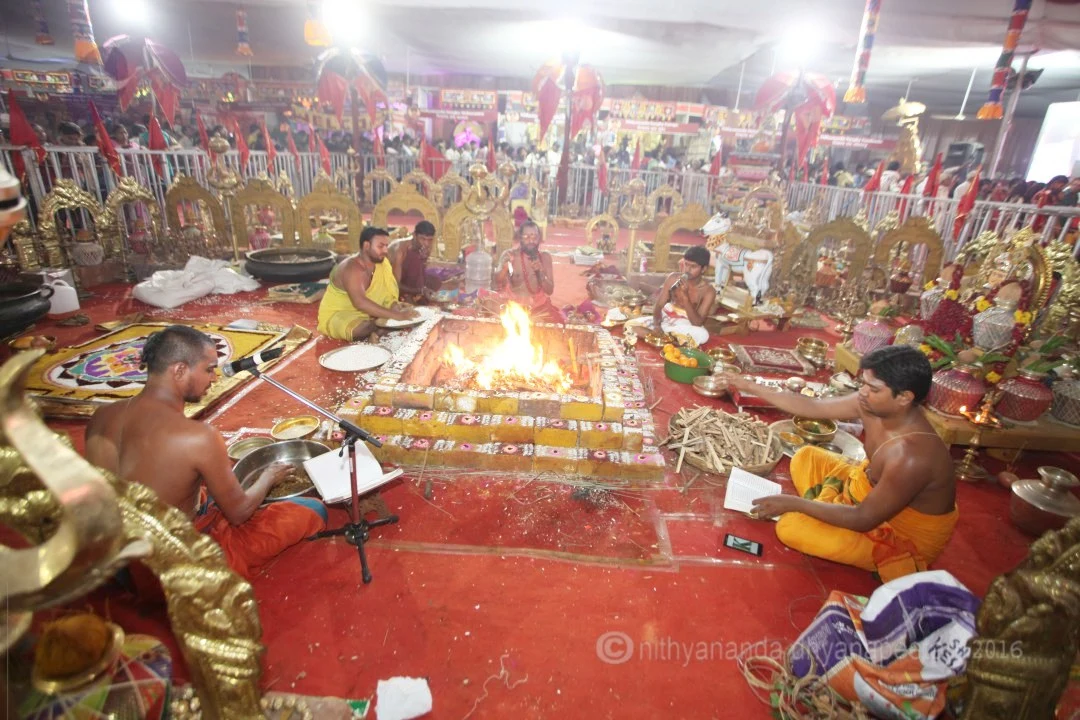
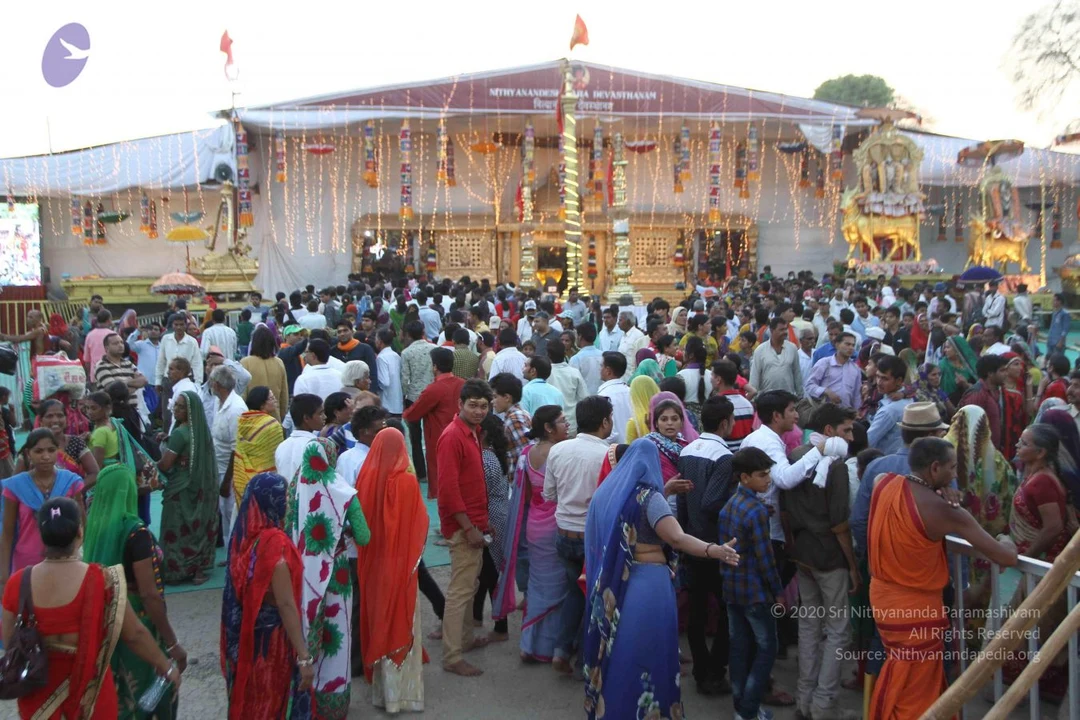
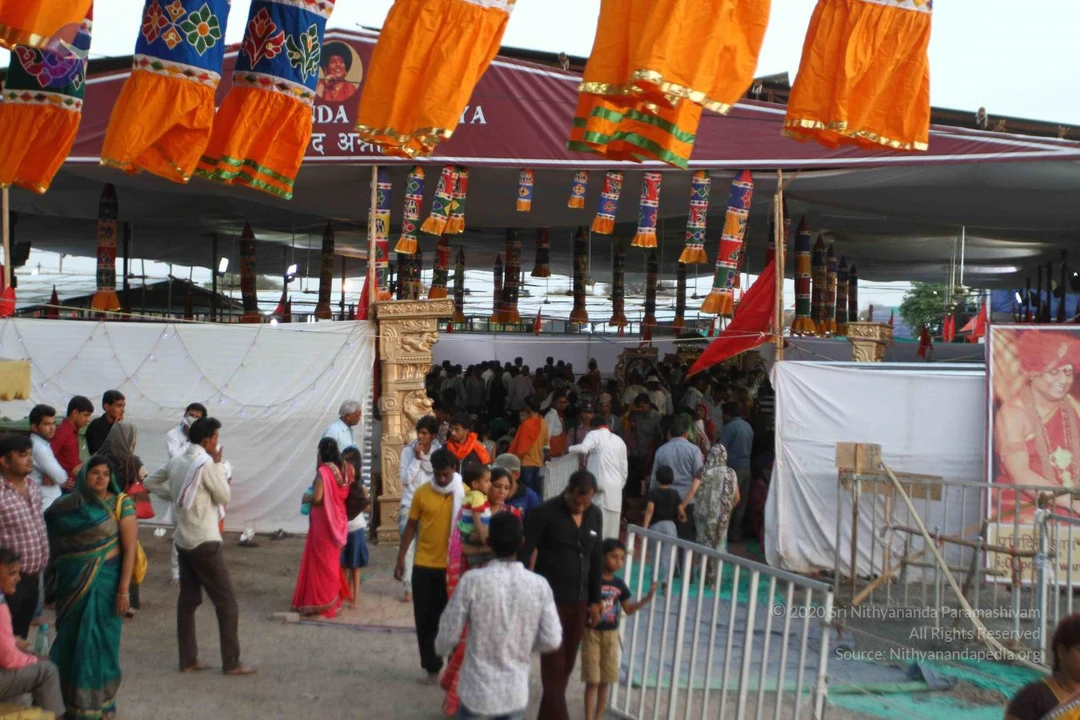
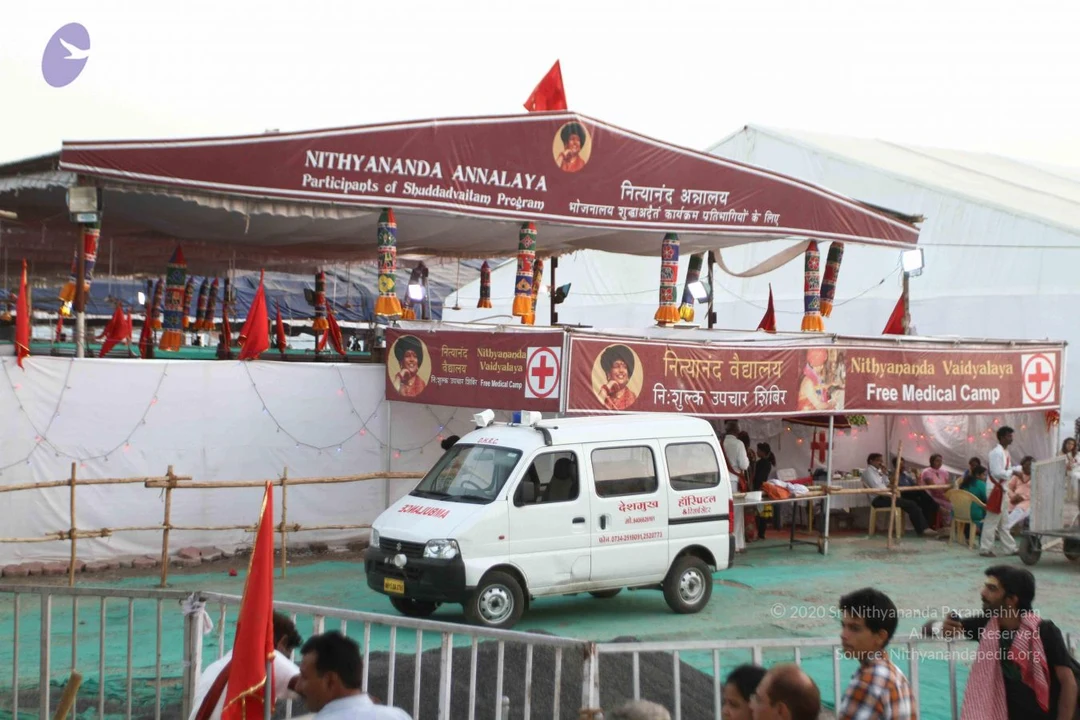
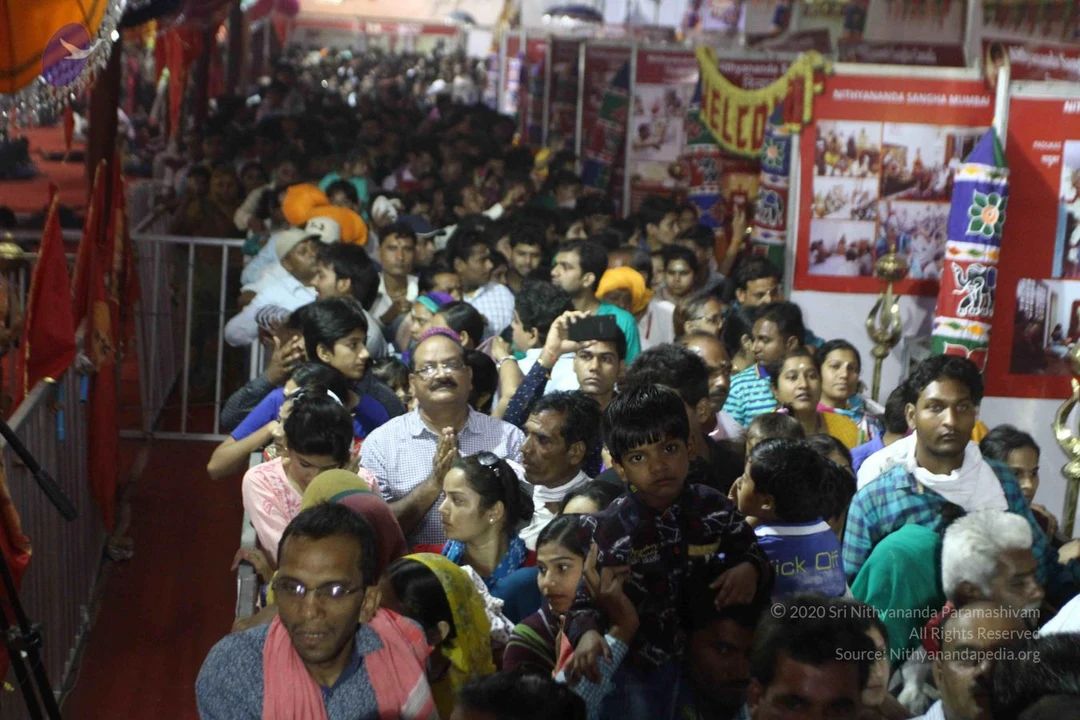
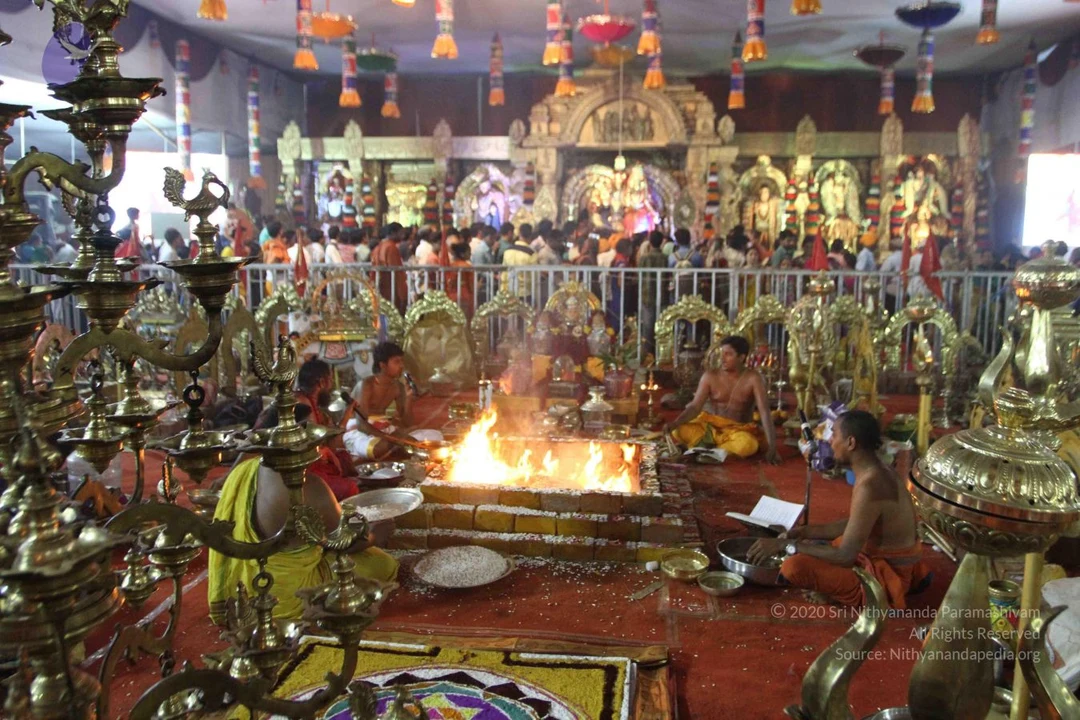
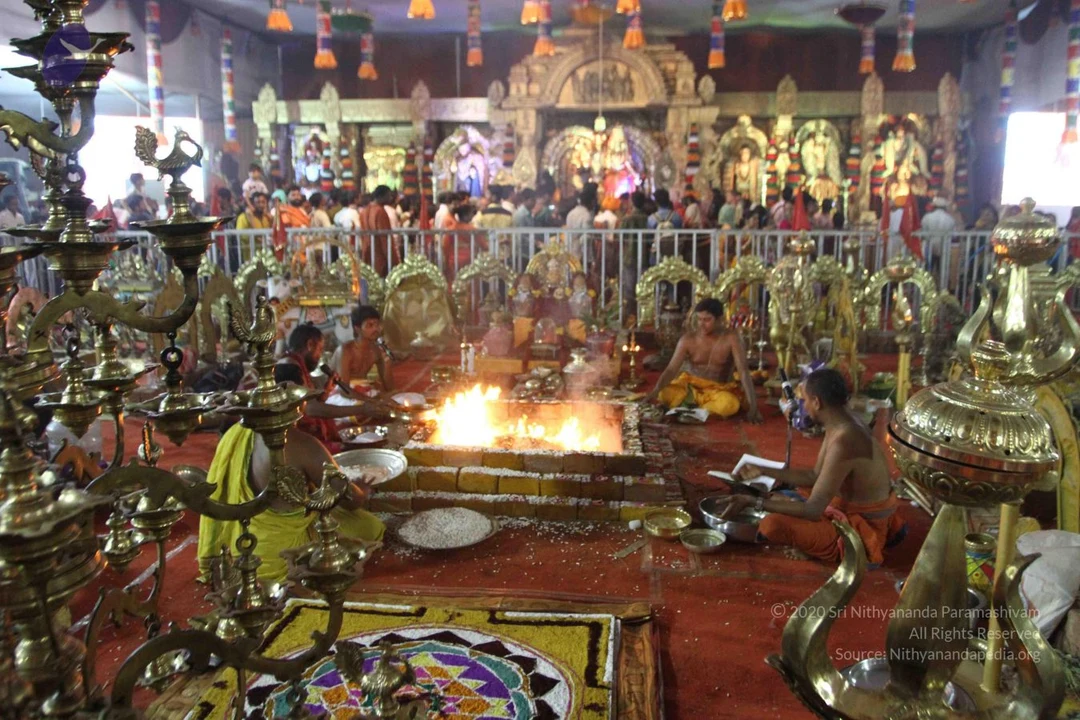
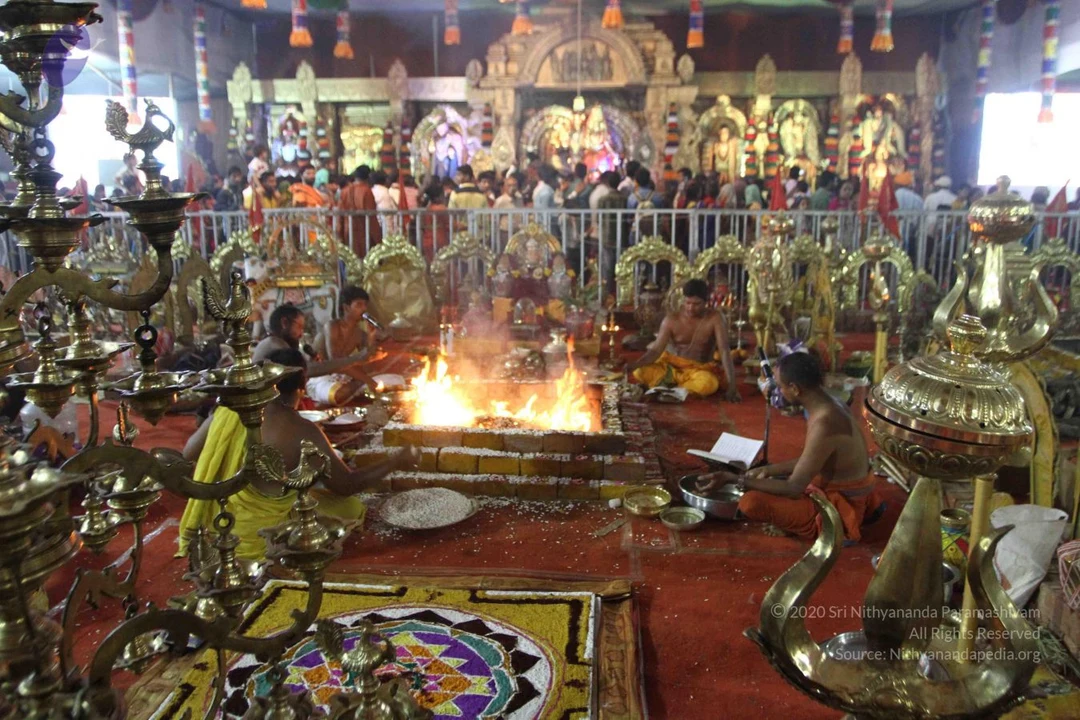
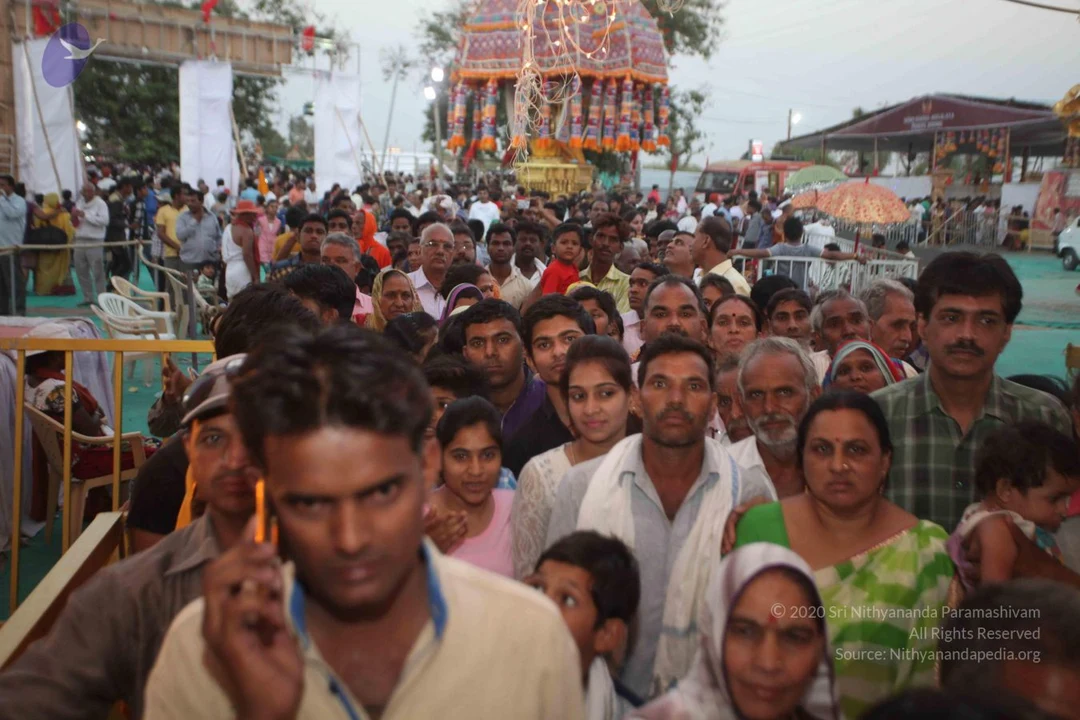
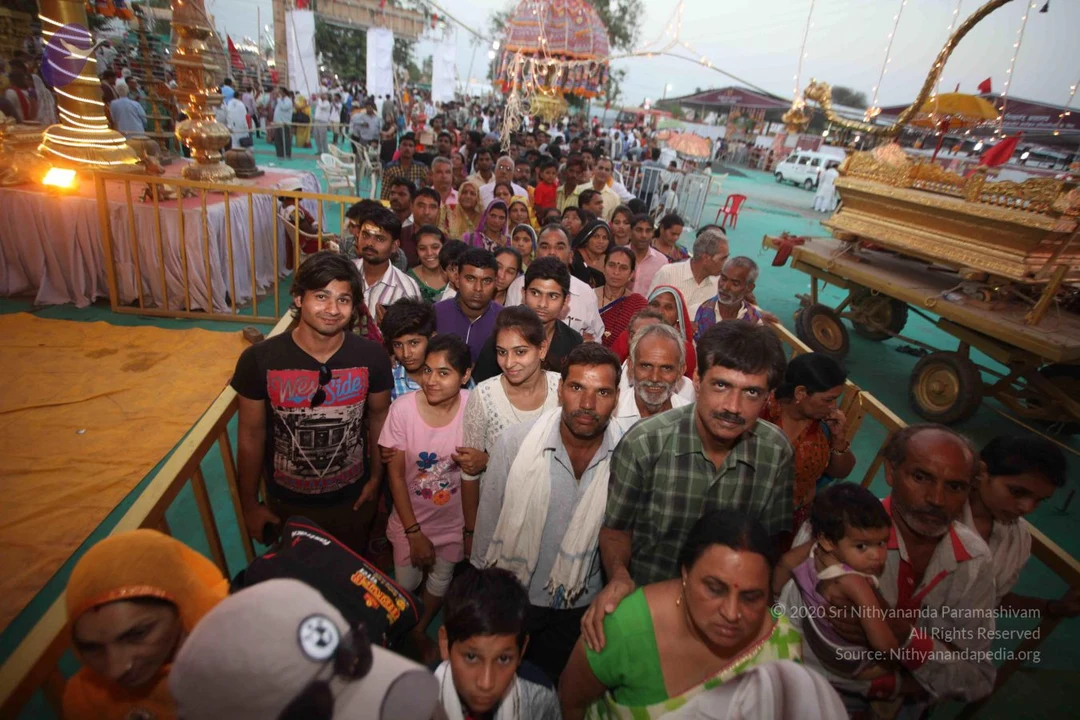
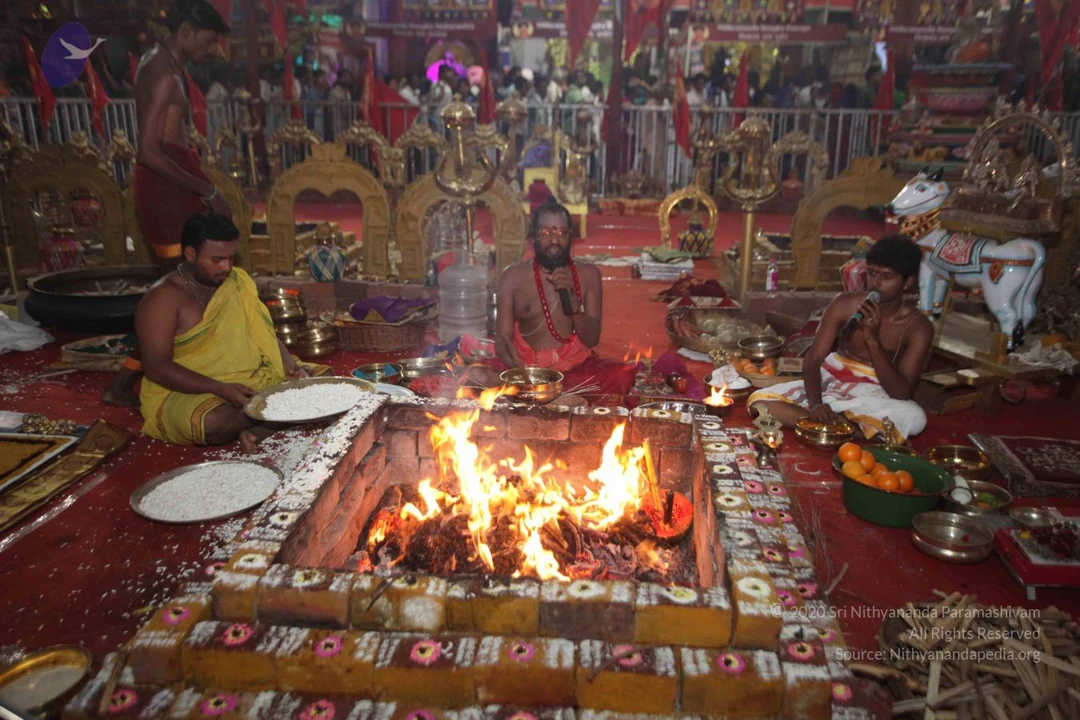
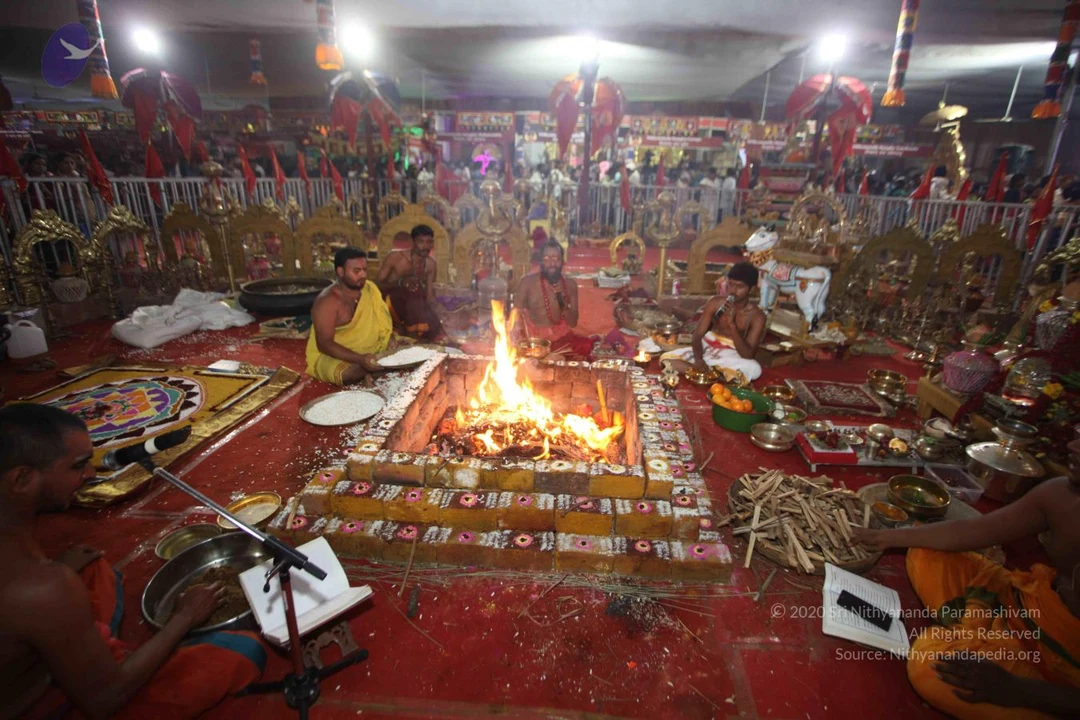
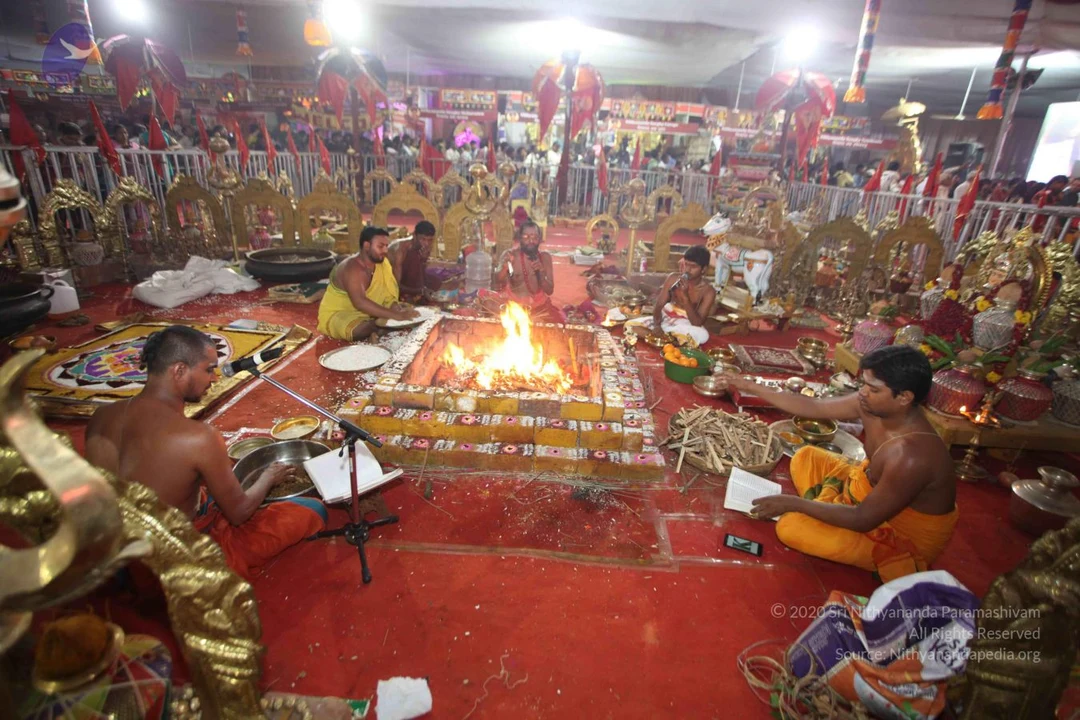
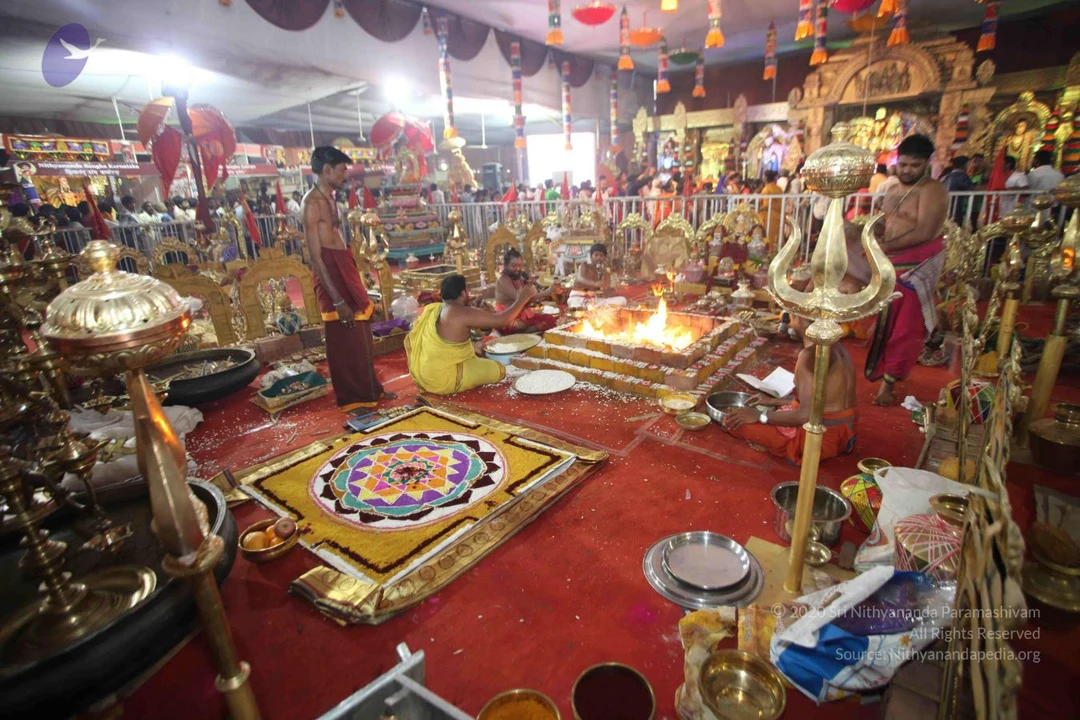
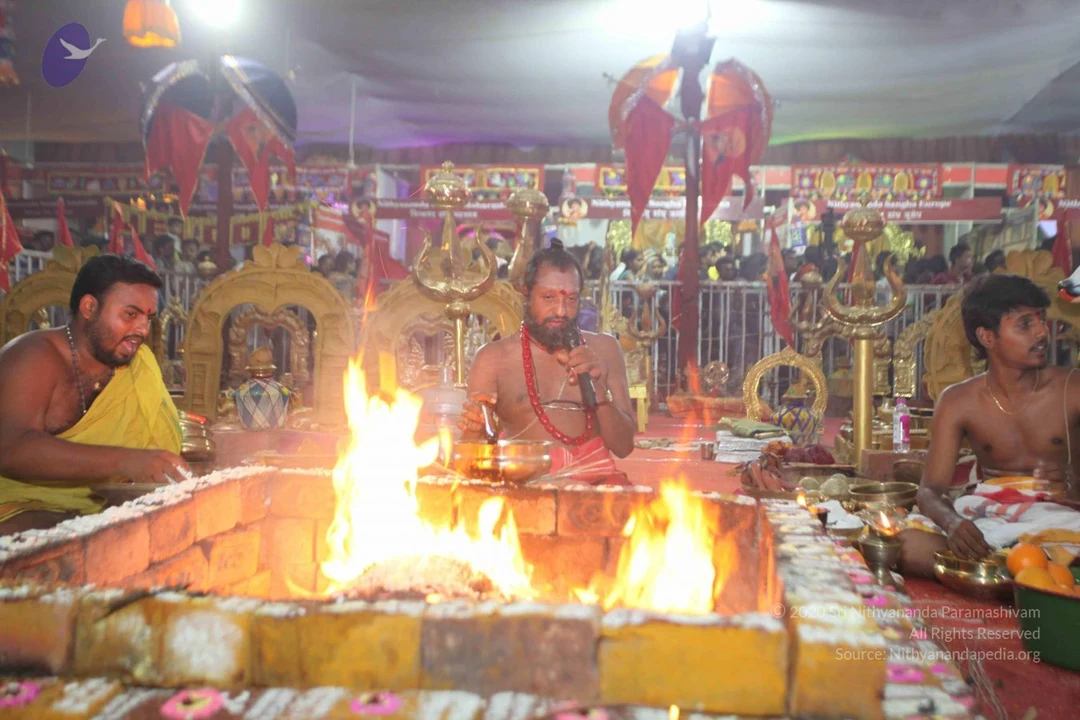
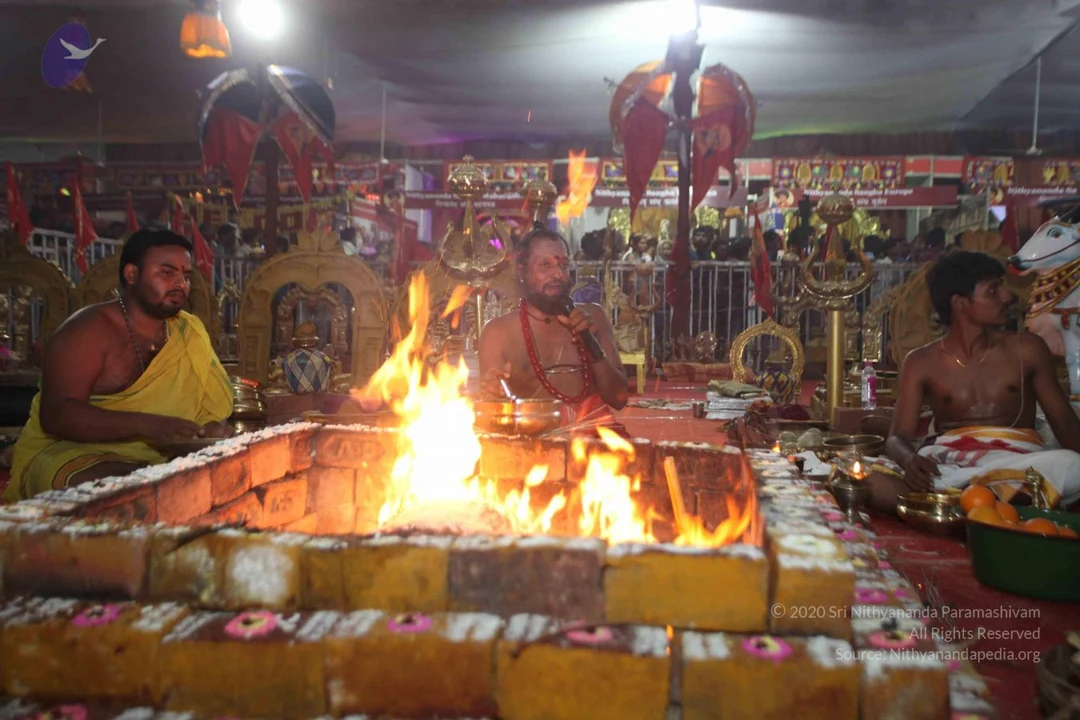
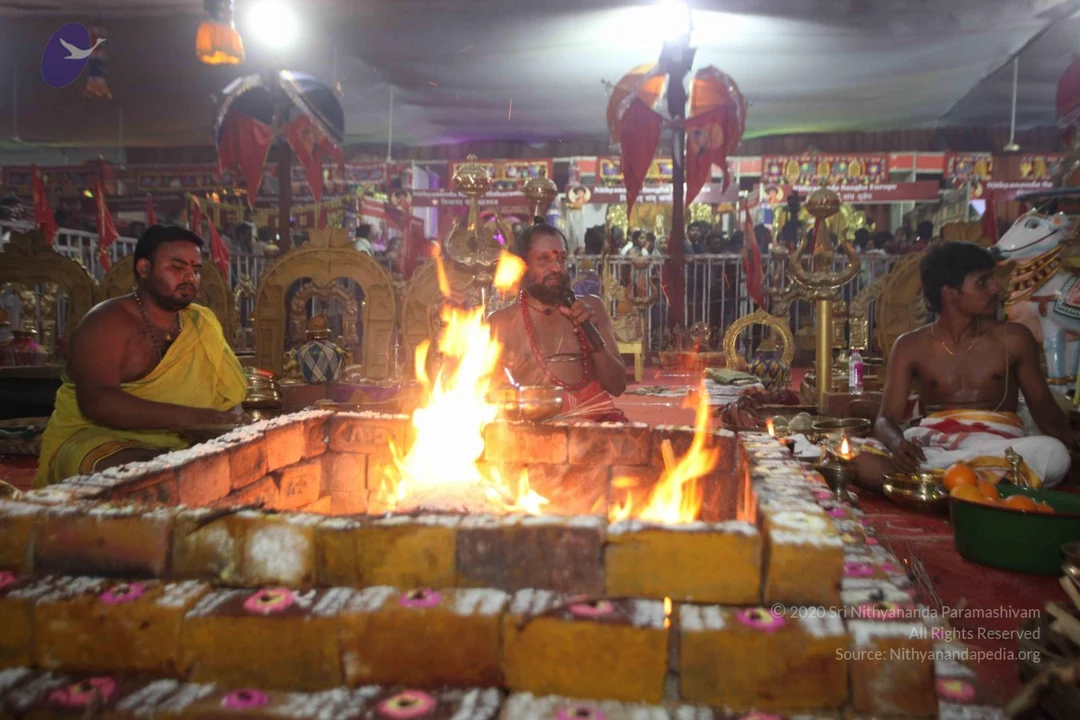
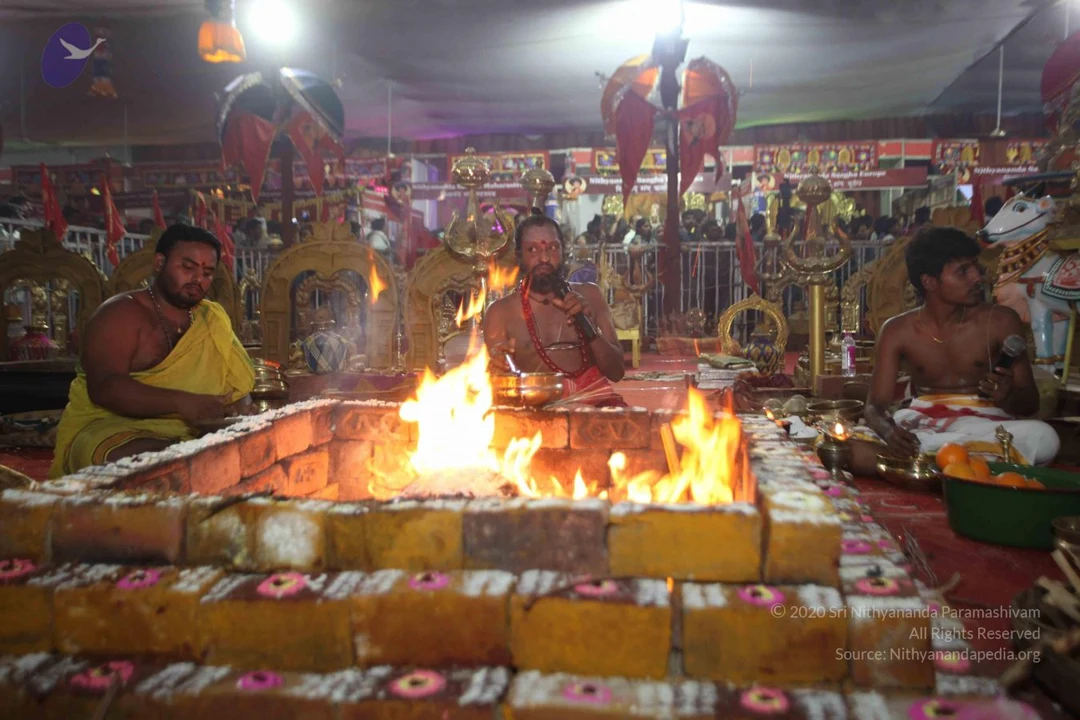
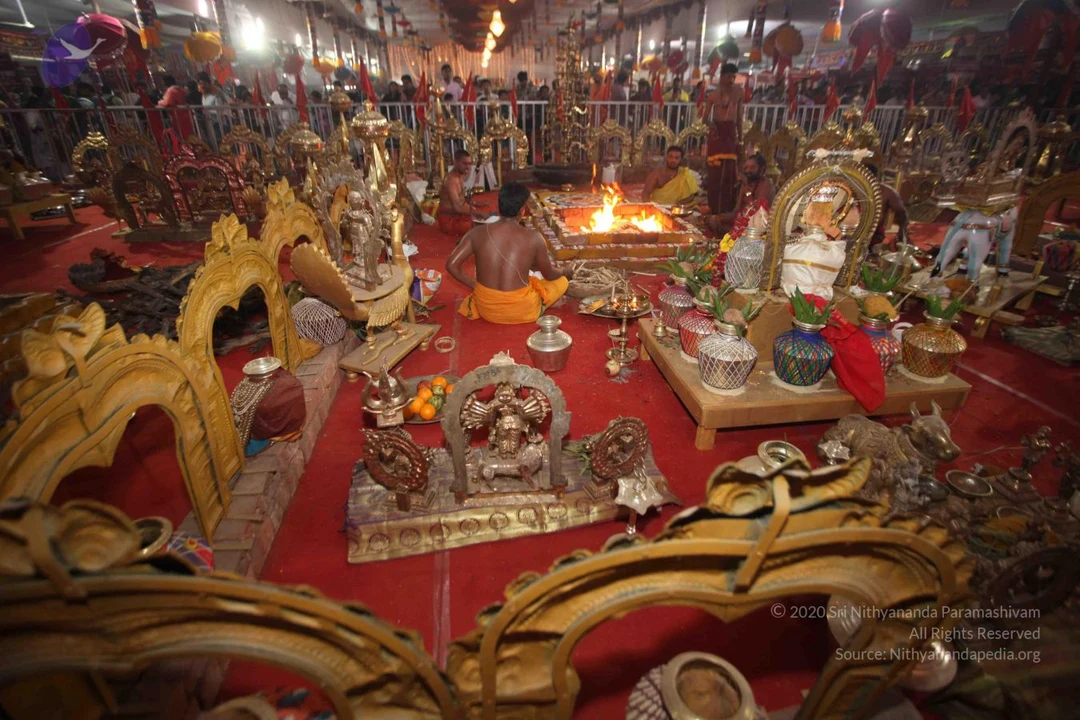
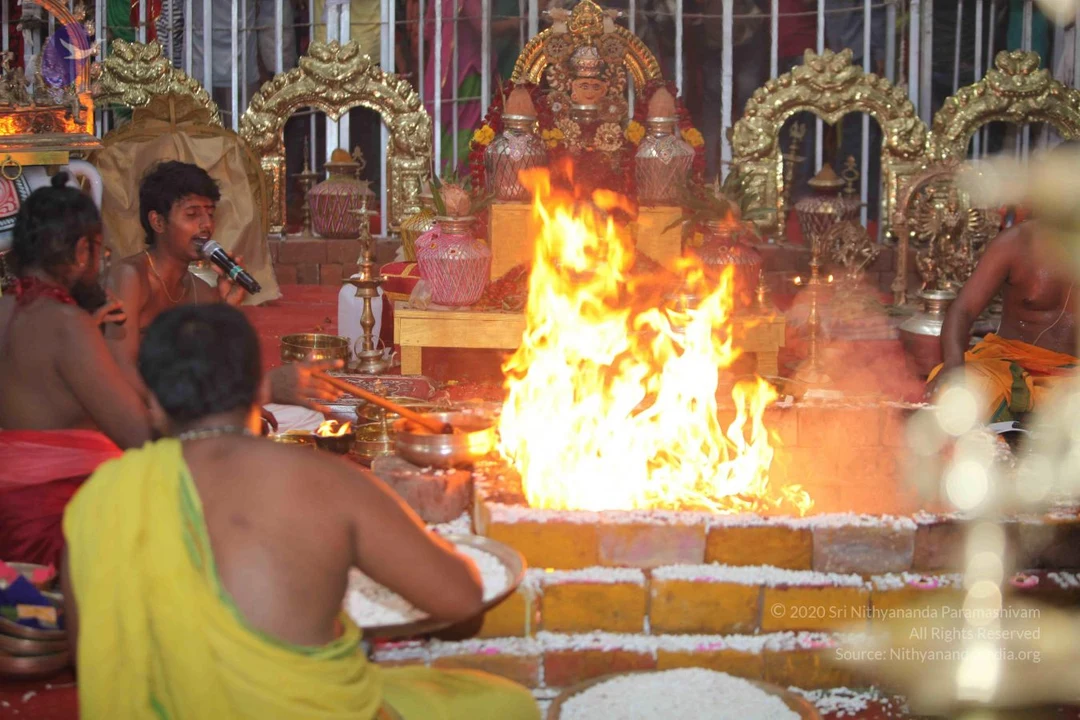
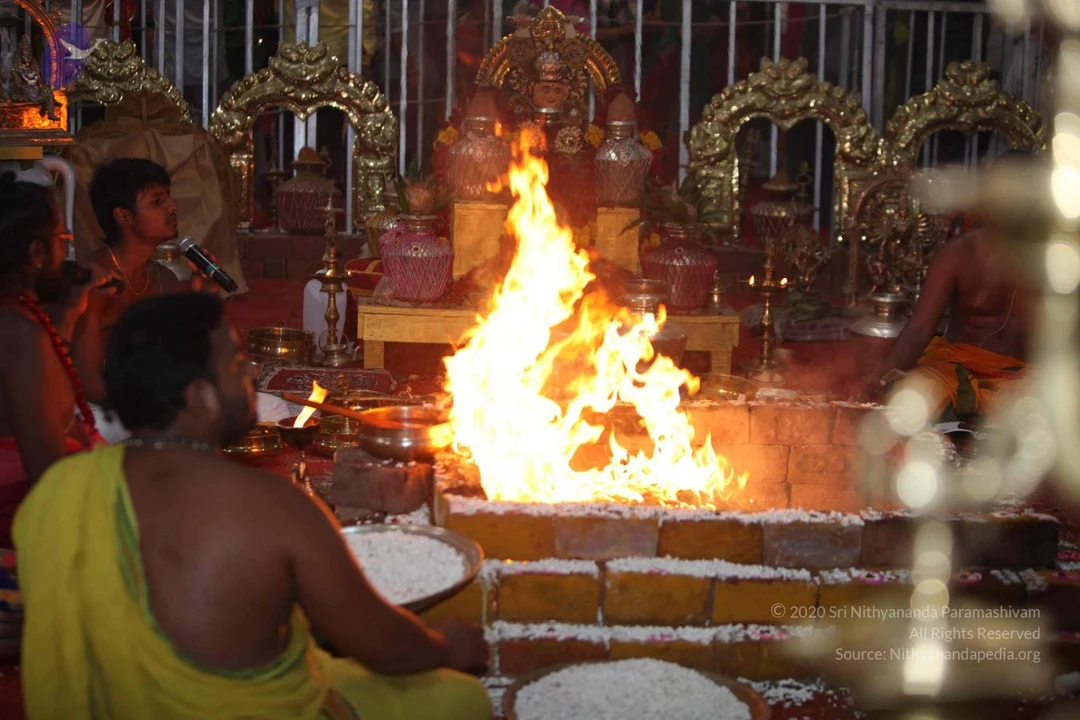
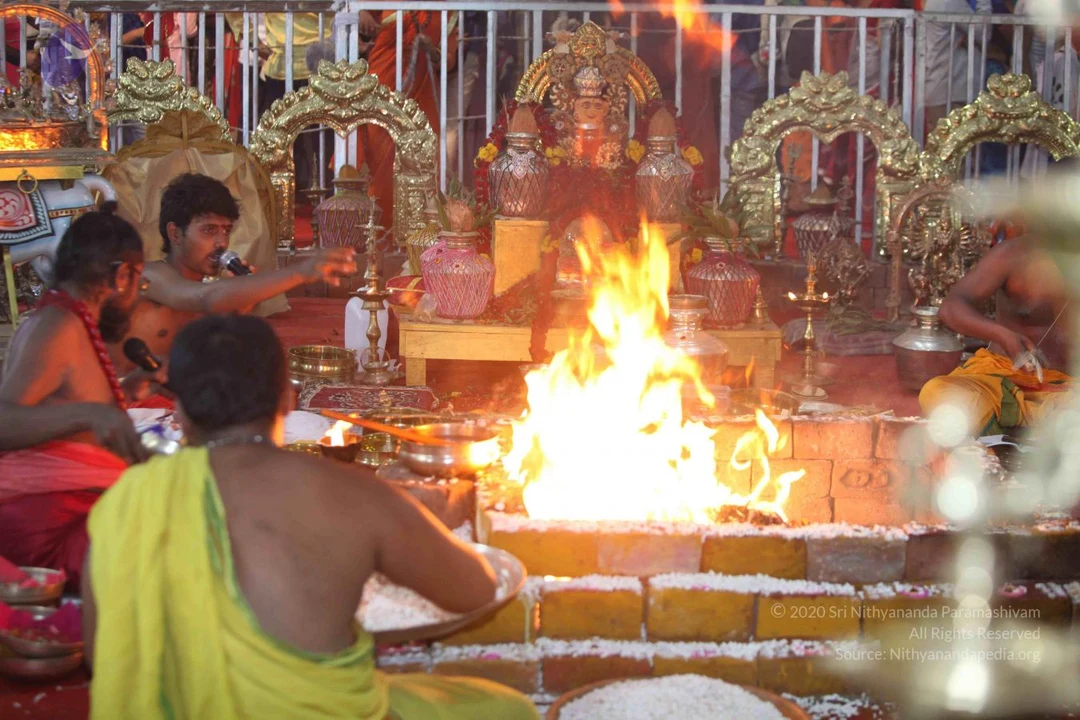
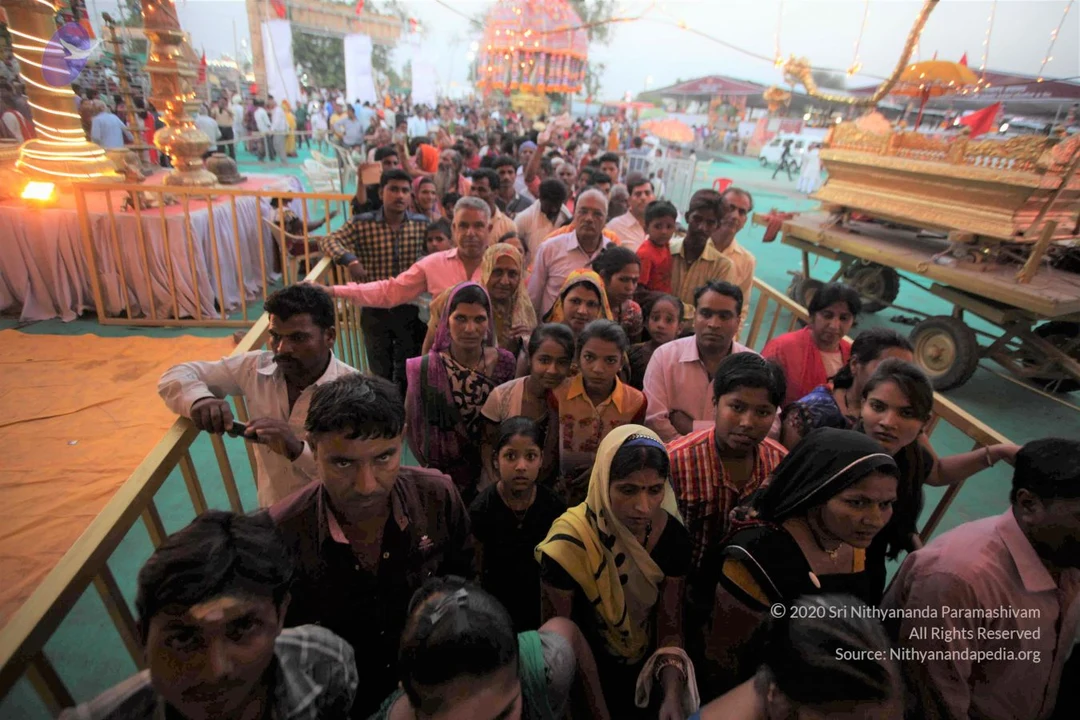
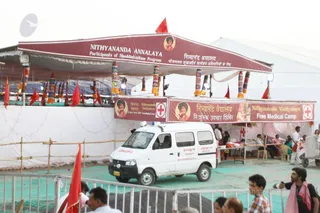
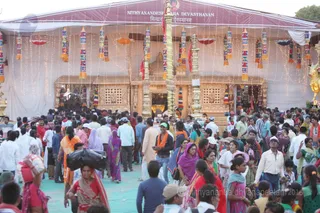
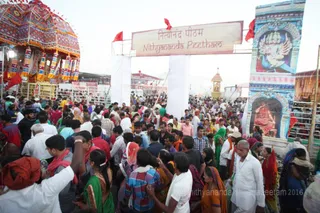
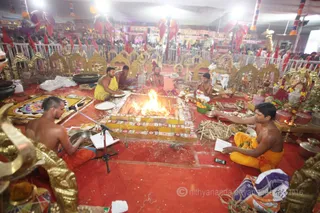
Outdoor festival scene at a medical and food camp with a maroon canopy banner reading Nithyananda Annalaya for Shuddhadvaitam programme participants. Below, a second banner reads Nithyananda Vaidyalaya Free Medical Camp, with red cross emblems and portrait images printed on both banners. A white Maruti-style van with a red cross and a roof light sits on a green-tarped ground in front of the stall. Red flags flank the structure, and colourful striped tassel decorations hang beneath the canopy. Several people sit at tables and benches inside the tent, some in white and light clothing, while a man in a white shirt and a red-and-white scarf stands near the barrier. Metal railings and a few onlookers occupy the foreground.A large crowd of devotees moves through a festival camp beneath a white tent canopy decorated with hanging colourful tassels and string lights. A banner reads NITHYANANDESHWARA DEVASTHANAM with Hindi text beneath. Behind the crowd stands a gilded temple shrine with golden pillars, carved lattice panels, and a deity murti visible inside. Many people wear white, saffron and orange garments, and women wear saris in red, pink and purple. A man in a white shirt and a woman carrying a large black bundle on her head are prominent. A golden figure of a sacred animal stands at the right edge. The ground is covered with teal matting.A dense outdoor crowd fills a roadside walkway at a festival camp, with many people pressing forward between metal barriers. Men in white shirts, striped shirts and checked trousers stand near women in headscarves, saris and salwar kameez, and children are visible in the throng. On the left, a saffron-robed sadhu and a person in a white dhoti stand by a tall decorated structure with red flags and bamboo scaffolding. Pale umbrellas and red-and-white parasols shade people, and banners hang in the background against trees and a green tent. No clearly identifiable a person is shown in this crowd view.A large crowd of devotees presses through a festival gateway at the Nithyananda Peetham camp, with a wooden arch reading Nithyananda Peetham in Hindi and English above the entrance. Many people wear white kurtas, saffron and orange shawls, pink, green and red saris, and red head cloths. A decorated ratha or palanquin with colourful fabric trim stands at left, and tall blue painted panels at right show a deity figure and a seated goddess. Red flags fly above the arch and a small shrine structure appears in the distance. The people are walking and mingling; no clearly identifiable a person figure is visible.Photograph of a large crowd of devotees queued behind a gold-coloured railing at an outdoor temple camp, with a golden palanquin-style cart and ornate golden pillars with lights at the left and right edges. Foreground figures include a young man in a dark red graphic t-shirt and sunglasses, a girl in a pink top, a woman in a green sari and a man in a green checked shirt, plus an elderly man in white and a woman in green. A bare-headed devotee holds a toddler at right, and an orange-clad woman appears at lower left. Teal ground mats, white tents and bright pennants fill the background. No identifiable a person figure is visible.A photograph of a homa at a large tented ceremonial hall, with a rectangular fire pit lined with yellow and multicoloured decorative bricks at the centre of a red carpeted floor. Several shirtless male priests sit cross-legged around the fire: one in a yellow dhoti at right offers wood sticks, one in orange at left holds a bowl and a small notebook on a stand, and others in orange and saffron cloth tend the ritual. Brass vessels, a kalasha, a silver tray and a ceremonial brass lamp surround the altar, with gilded golden arches and carved ornaments placed around the sacred area. Behind a metal barrier, a crowd of devotees watches, and red and orange banners hang from the tent ceiling. a person is not clearly identifiable among the seated priests.

Mandala-Process
229 photosSource gallery
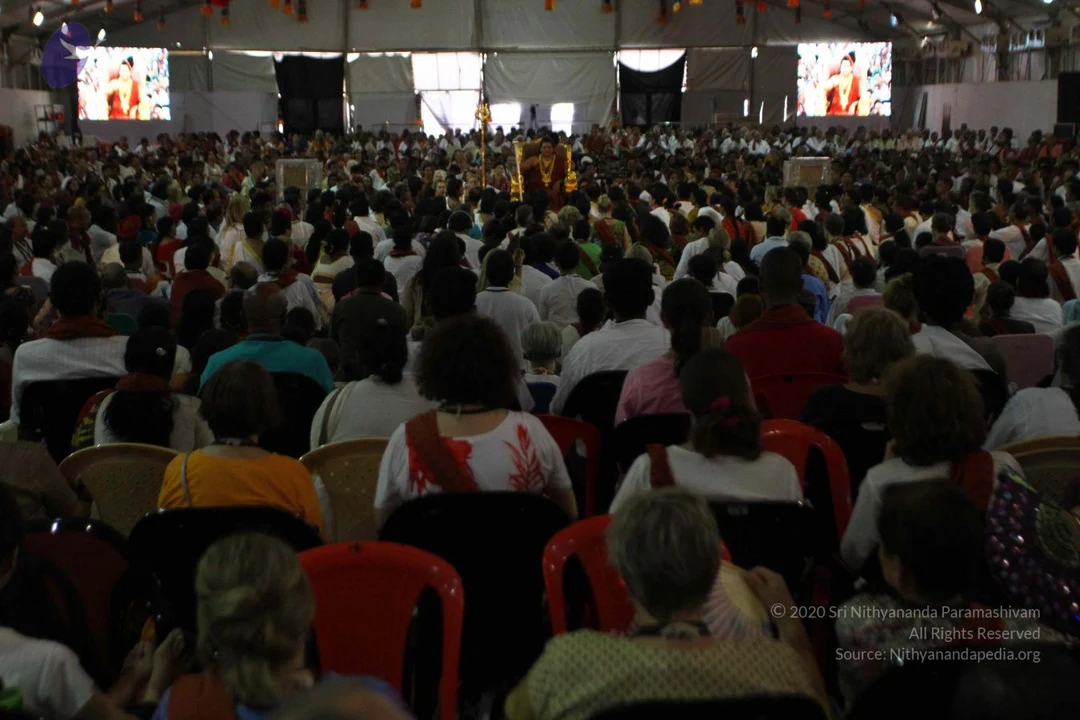
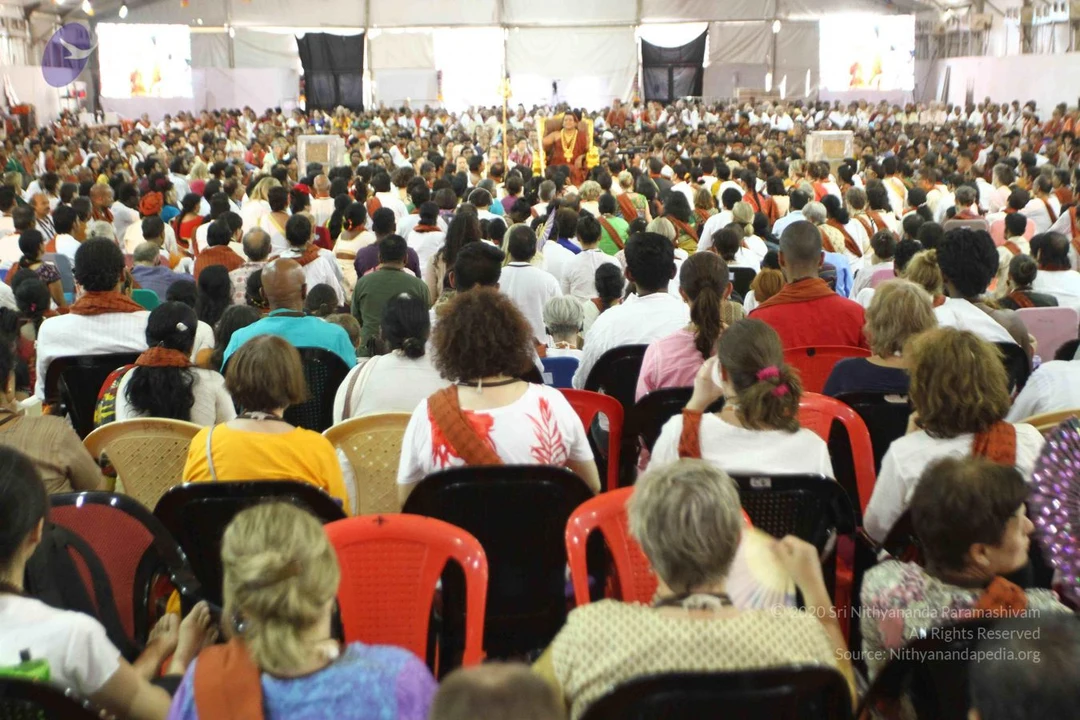
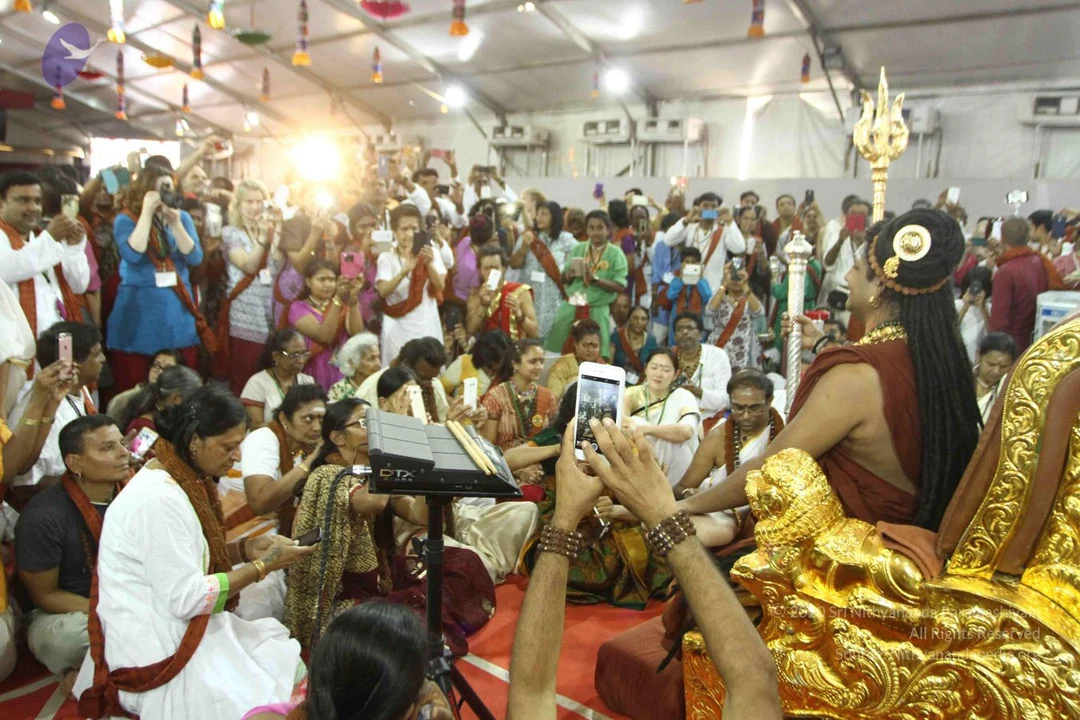
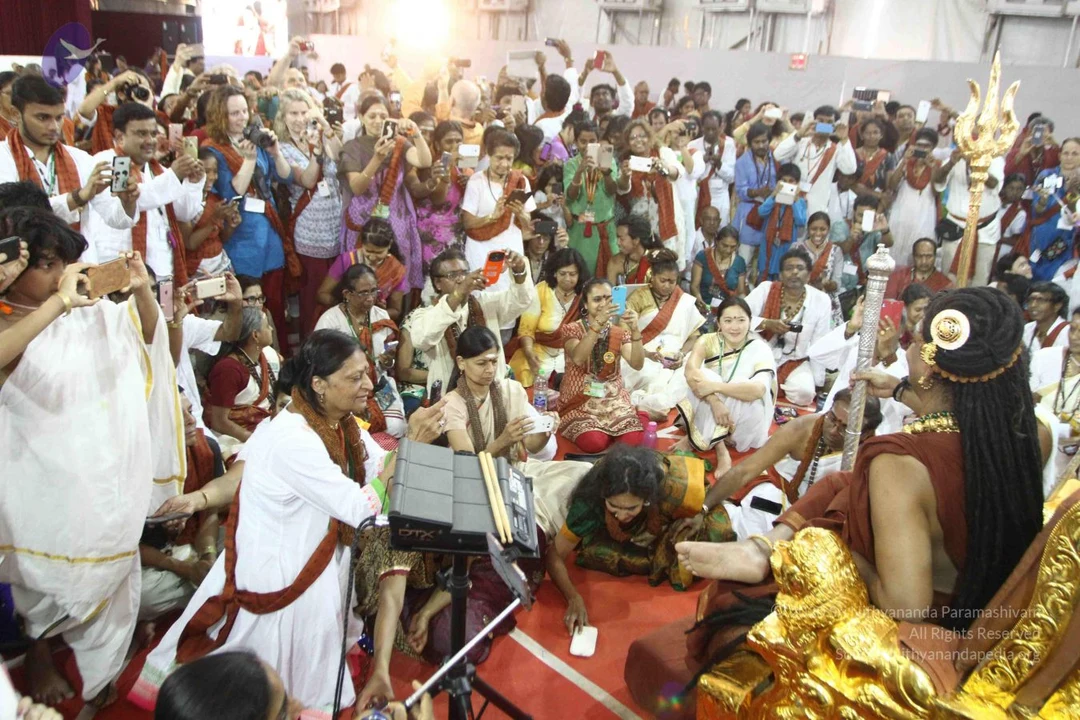
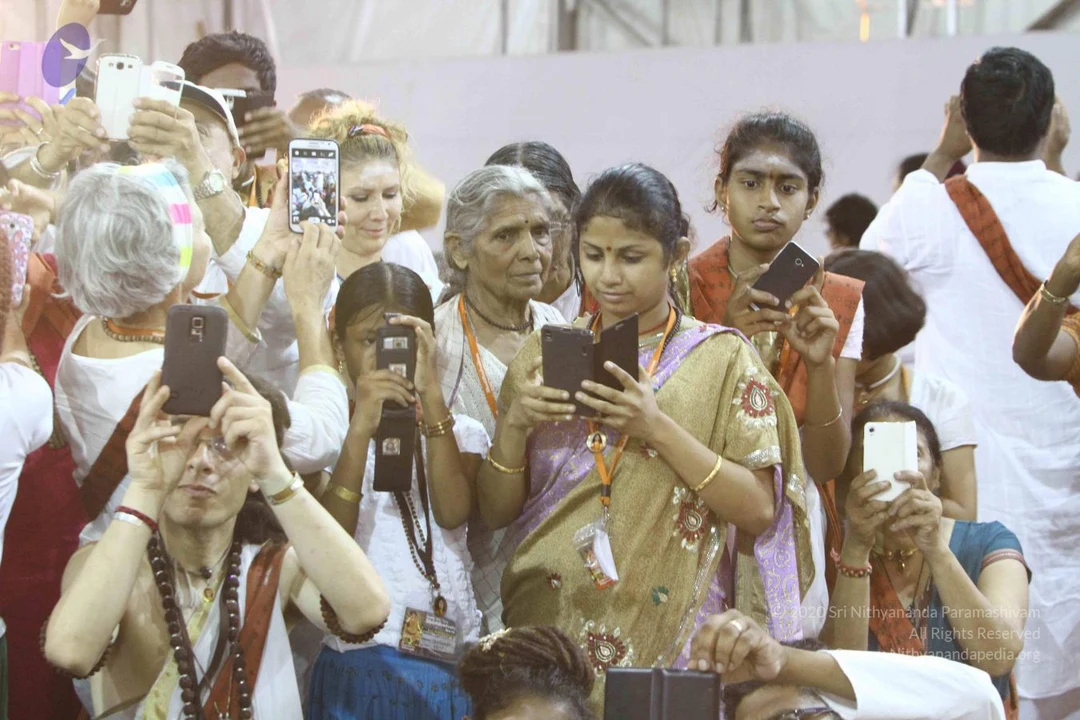
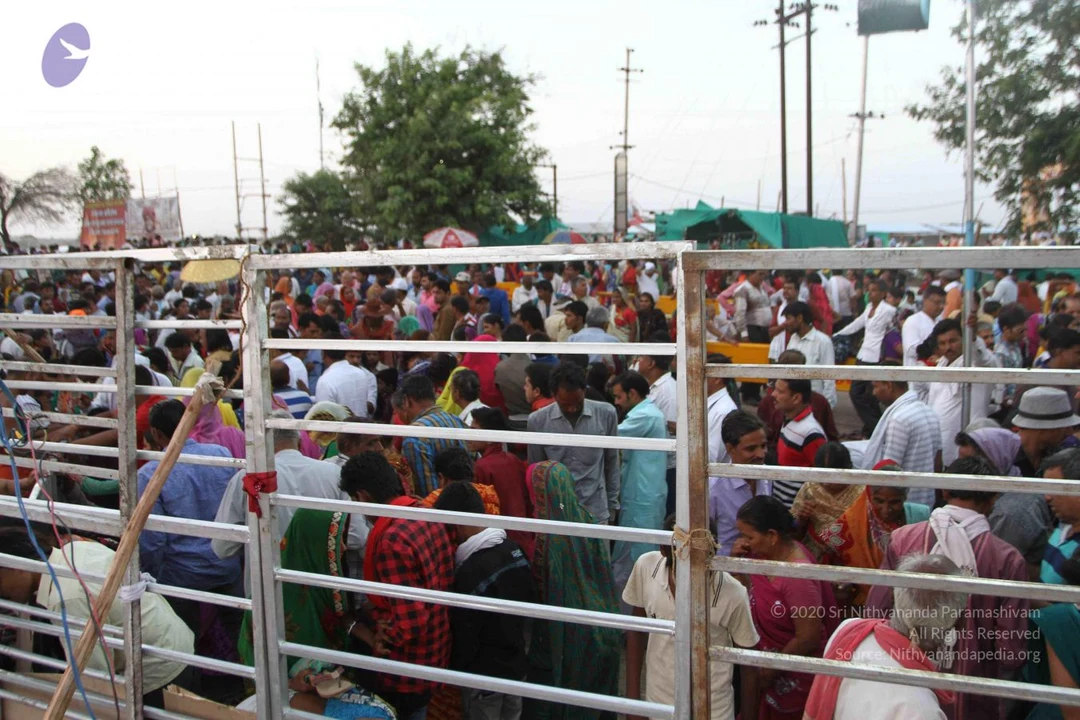
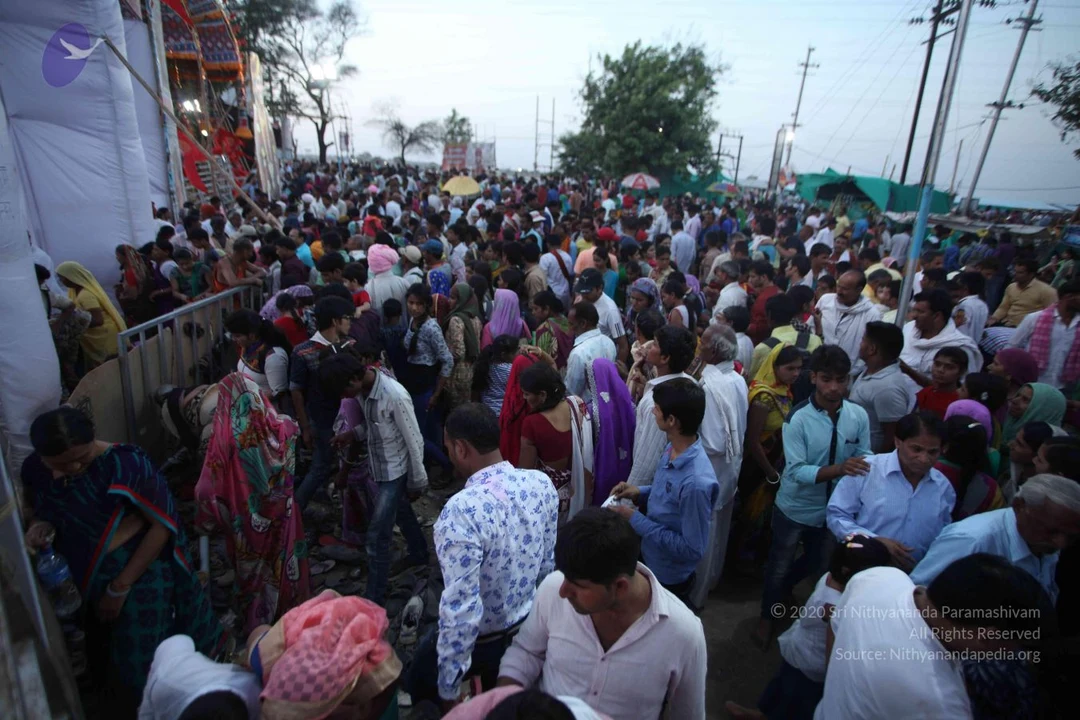
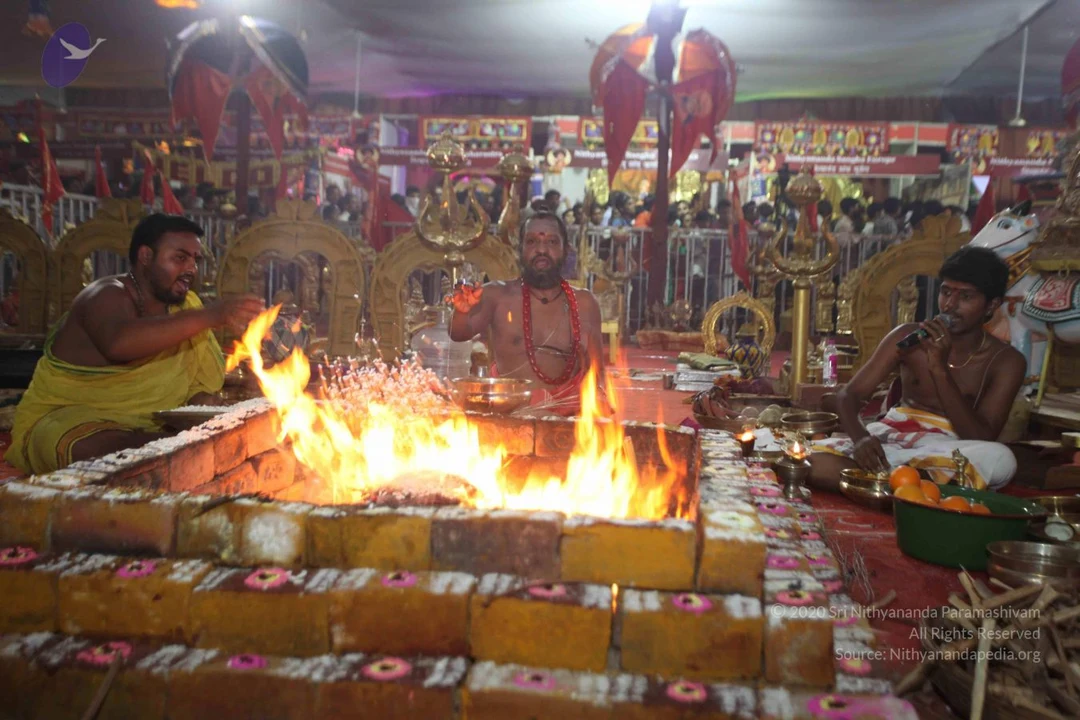
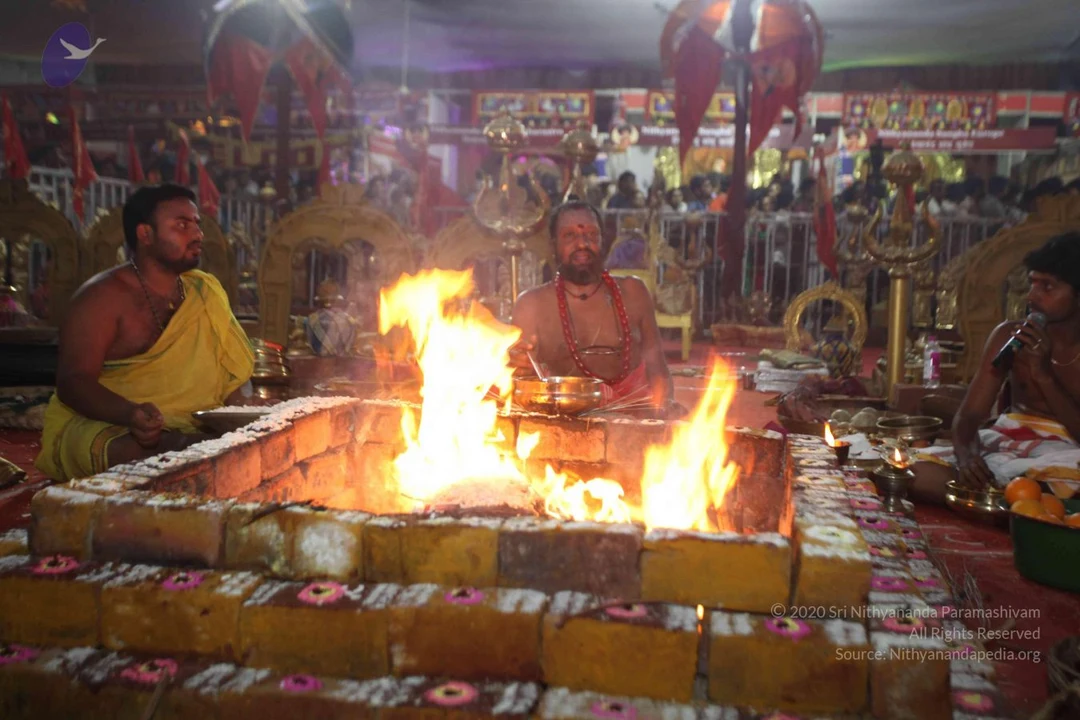
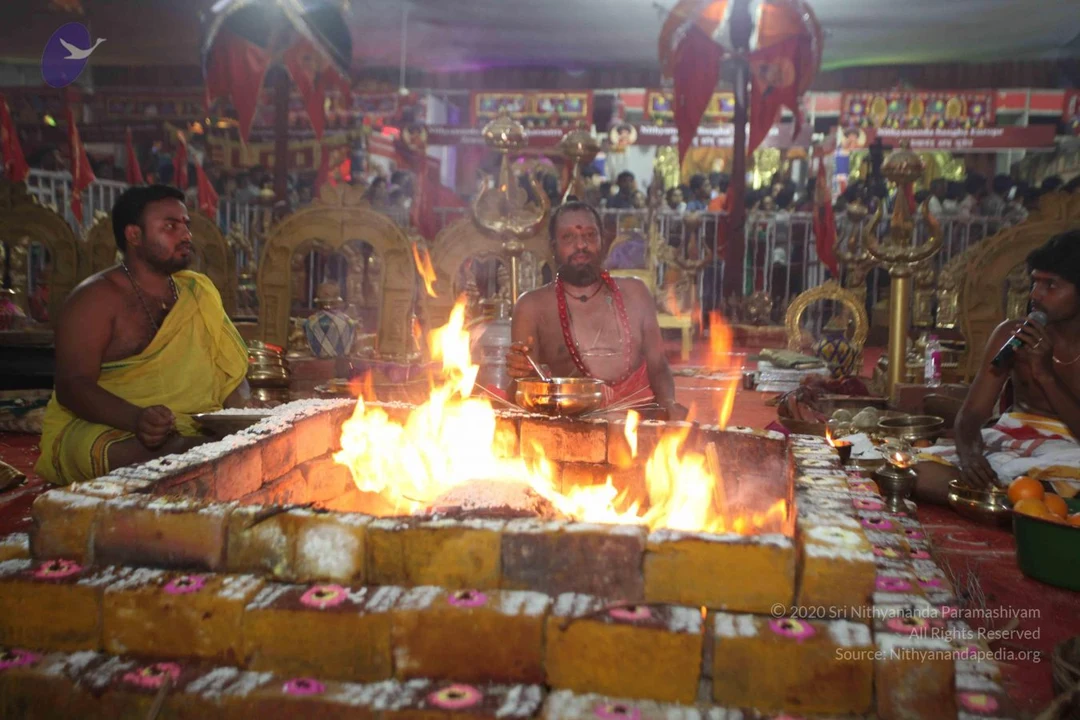
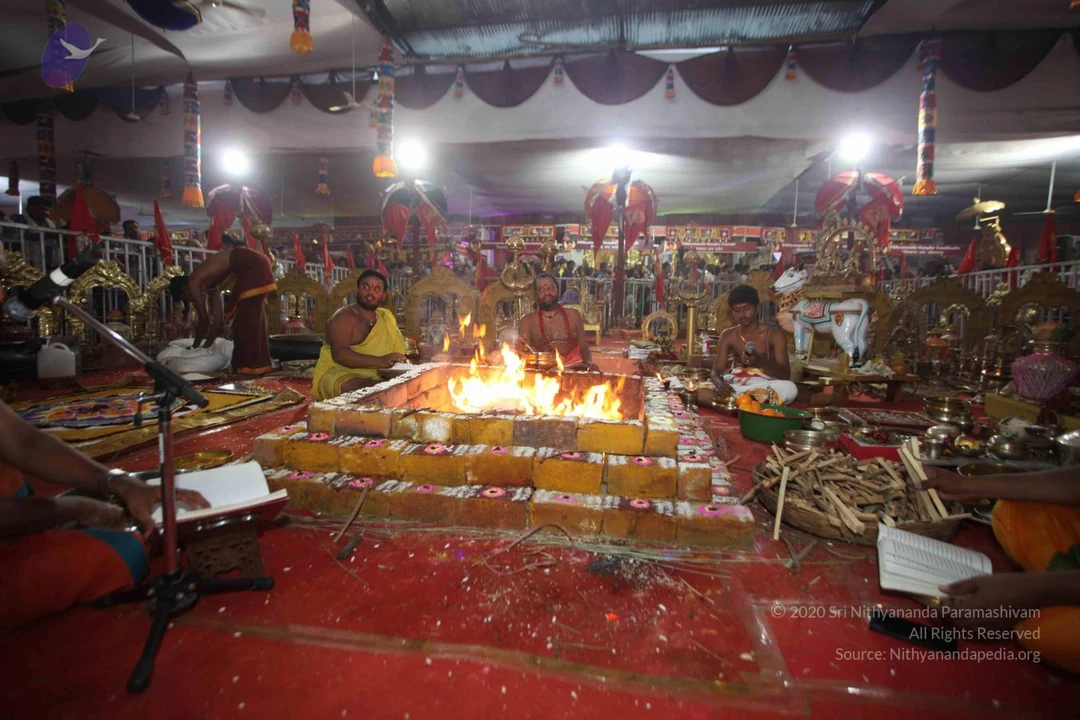
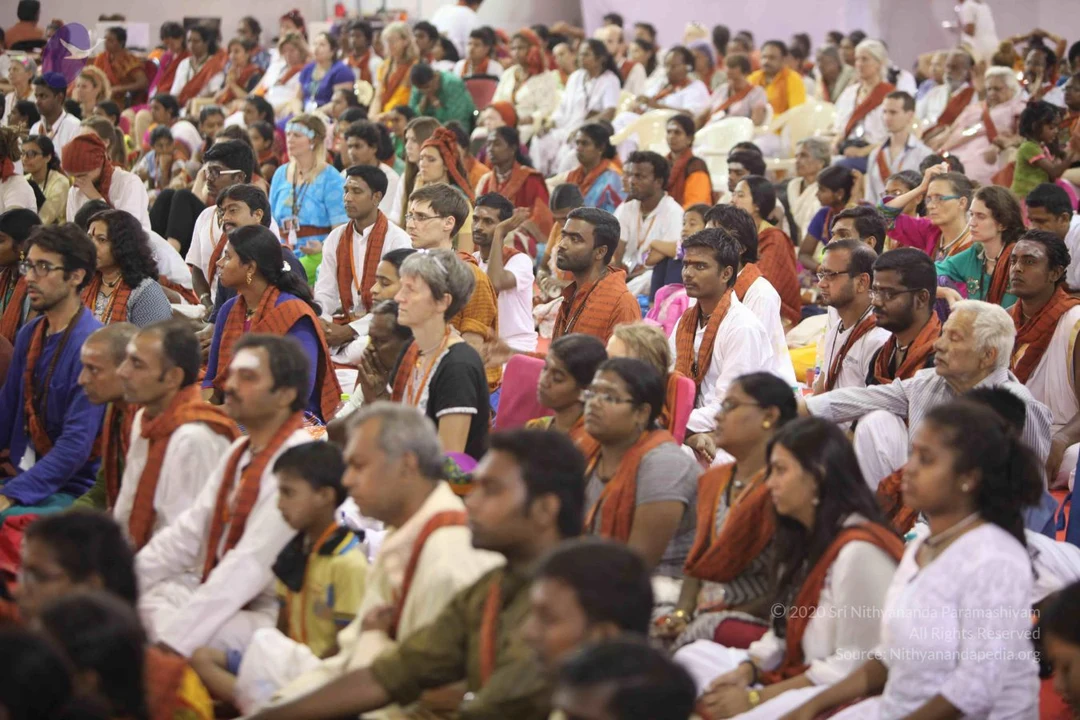
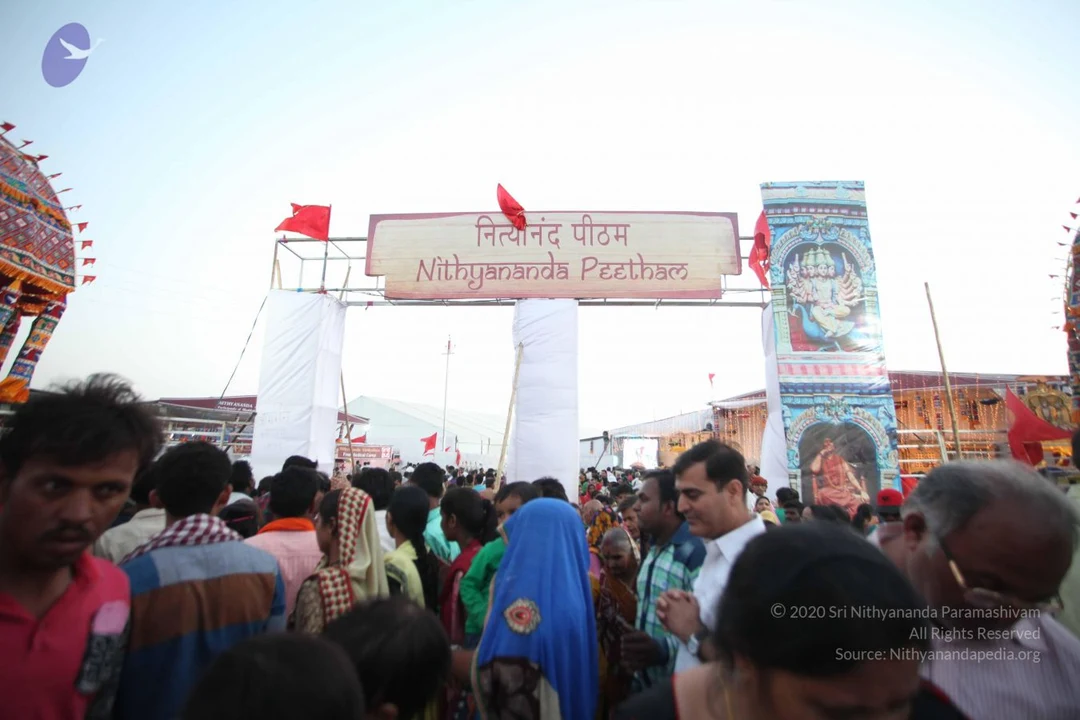
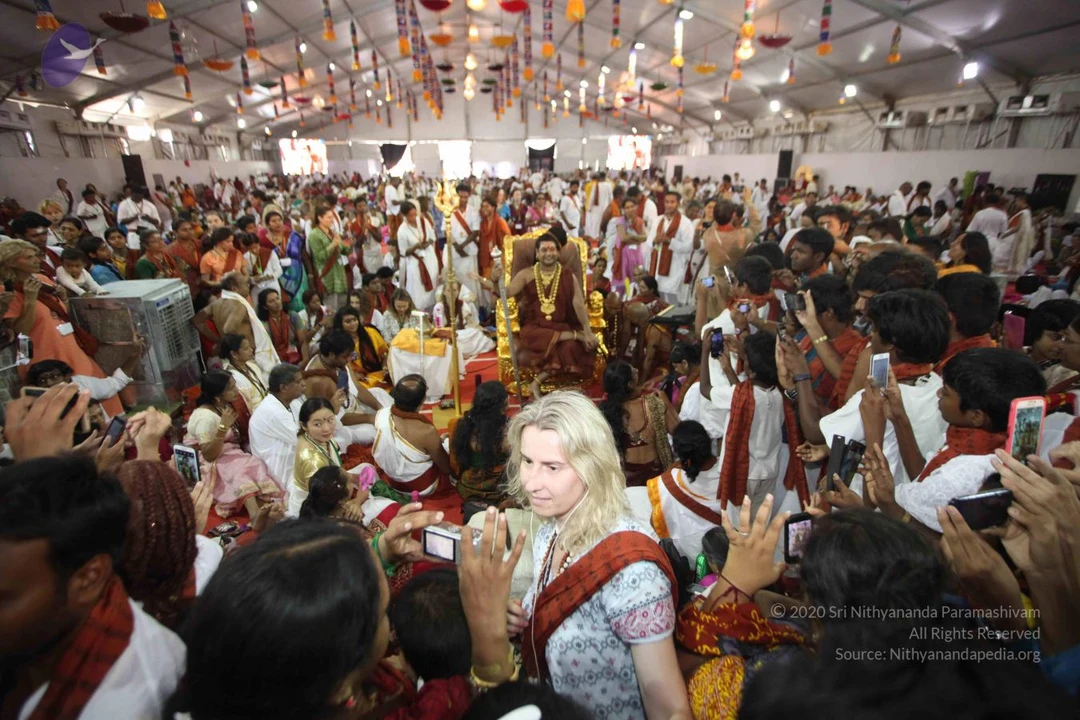
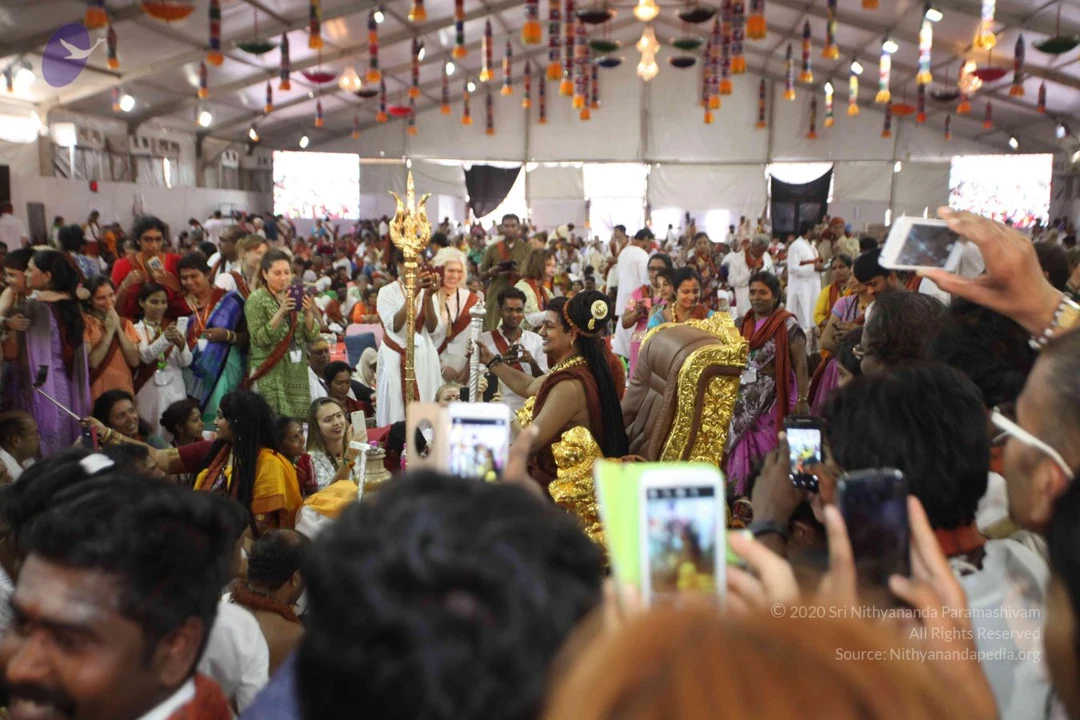
Large photograph of a crowded indoor tent event seen from the back of the hall. Rows of attendees sit on red and black plastic chairs, many with white or red clothing and some wearing red shawls. At the far end, a seated figure in orange-red robes sits on an ornate gold throne-like seat beneath a gold standard, flanked by two large screens showing the same figure in red. The people in the foreground are seen from behind, and the hall has white tent walls and hanging orange decorations.A large indoor tent event with a dense crowd of several hundred seated delegates facing a distant stage. Most attendees wear white, orange or saffron-toned clothing and orange shawls, with plastic chairs in red, black and beige. In the centre, far off, a figure in orange robes sits on an elevated golden-framed seat before a backdrop, with flanking white boxes and large screens showing images. Viewers in the foreground include a person in a white top with a red leaf motif and a woman in a pink-and-white outfit fanning herself. Many people are seen from behind, and the background tent is white with draped black fabric.A large crowd of devotees fills a white tented hall, many holding up smartphones to photograph a seated figure on an ornate gold throne at right. The central figure wears a rust-red robe, long dark hair swept back, and gold jewellery, with a golden trident standing behind the throne. Seated devotees in white, red and saffron clothing surround a small red-carpeted area, and a black electronic keyboard on a stand sits in front. Paper lanterns and bunting hang from the tent ceiling, and a bright light flare glows near the top left.A large crowd of devotees fills an indoor hall, many holding up phones to photograph a seated figure at right. In the lower right, a man in a rust-coloured shawl and ornate gold-and-crown headdress with long dark hair sits on a gold lion-armed throne, with a gold trident behind him. Women in white and rust-orange shawls, and others in pink, green and yellow saris, sit on red mats in front of him, several taking photos. A woman in white with a rust shawl at left gestures toward a black electronic device on a stand. Swamiji (probable): the seated man wears a rust shawl, long swept-back hair, a crown-like headdress and gold ornaments, consistent with the page.A crowd of devotees at an indoor event holds up mobile phones to photograph something off-frame. In the foreground, a woman with grey hair and a rudraksha mala wears white with an orange shawl. Beside her, a young woman in a gold and lavender saree with an orange lanyard raises a black phone. An elderly woman in a white sari with an orange border stands behind, and a girl in white with an orange shawl holds a phone at right. Others wear white and orange shawls, with rudraksha malas and bangles. Many are clearly filming or photographing.A large outdoor crowd of devotees and onlookers pressed behind white metal barricade gates at an open event ground. Many people wear everyday clothing, including saris in green, pink, orange and yellow, checked shirts and white kurtas, with some older men in white and a man in a light hat at right. Behind them stand green tents, a red-and-white banner, tall utility poles and trees under a pale sky. No single person is clearly identifiable as a person in this view, and the crowd is dense rather than individually countable.

Temple-Visit

46 photosSource gallery
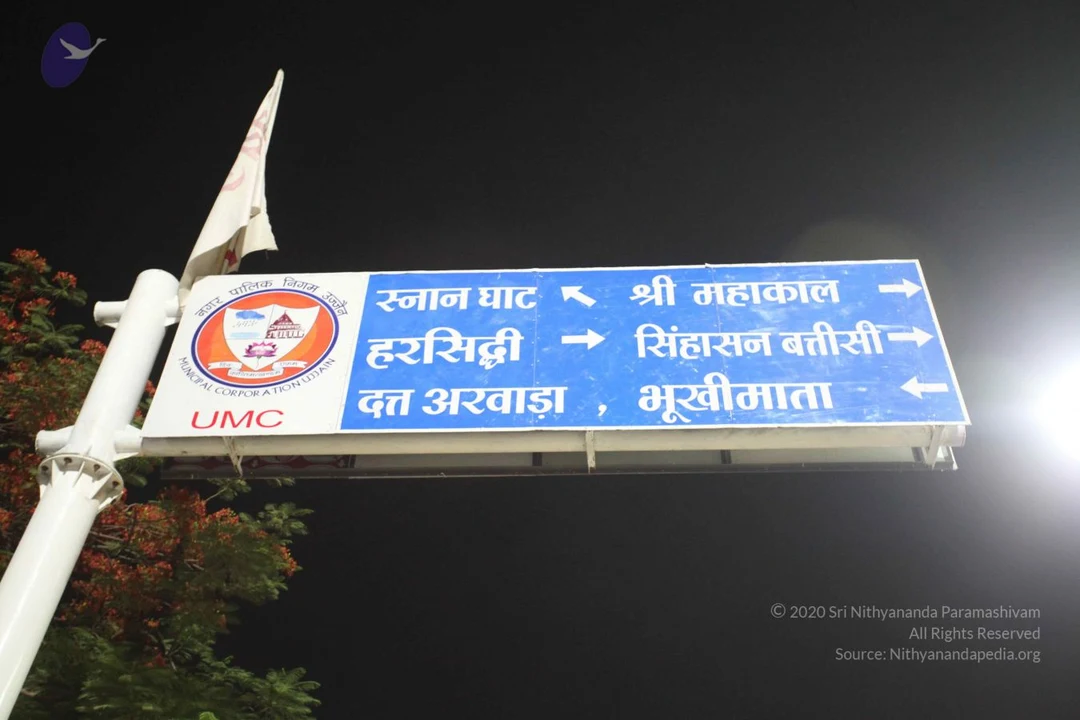
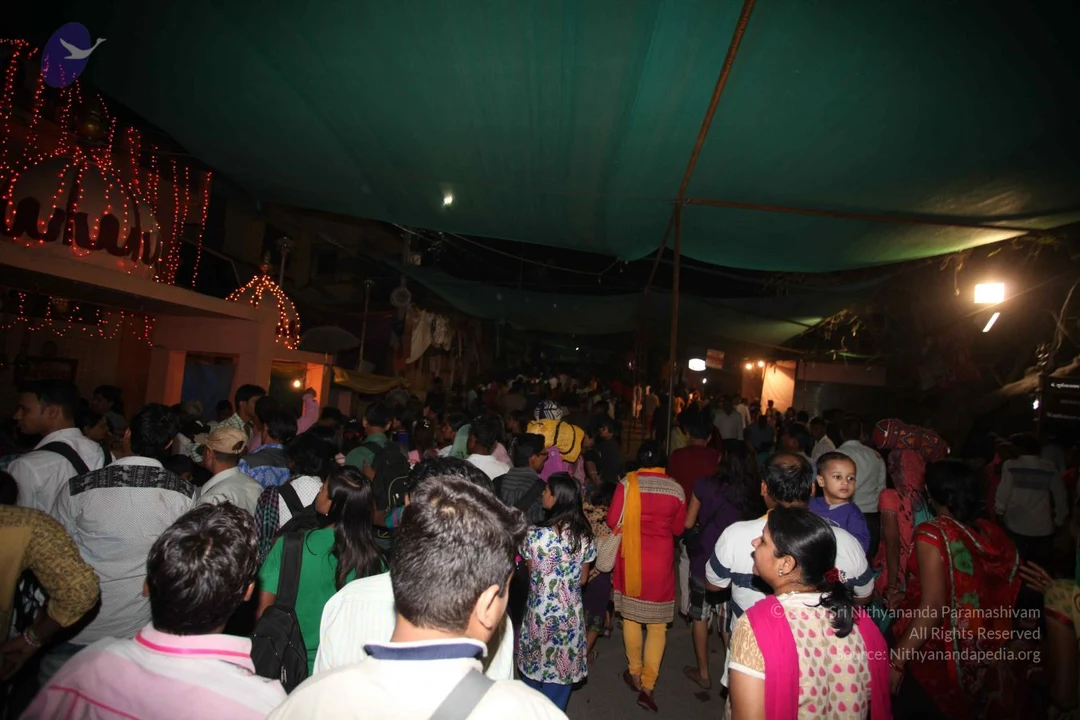
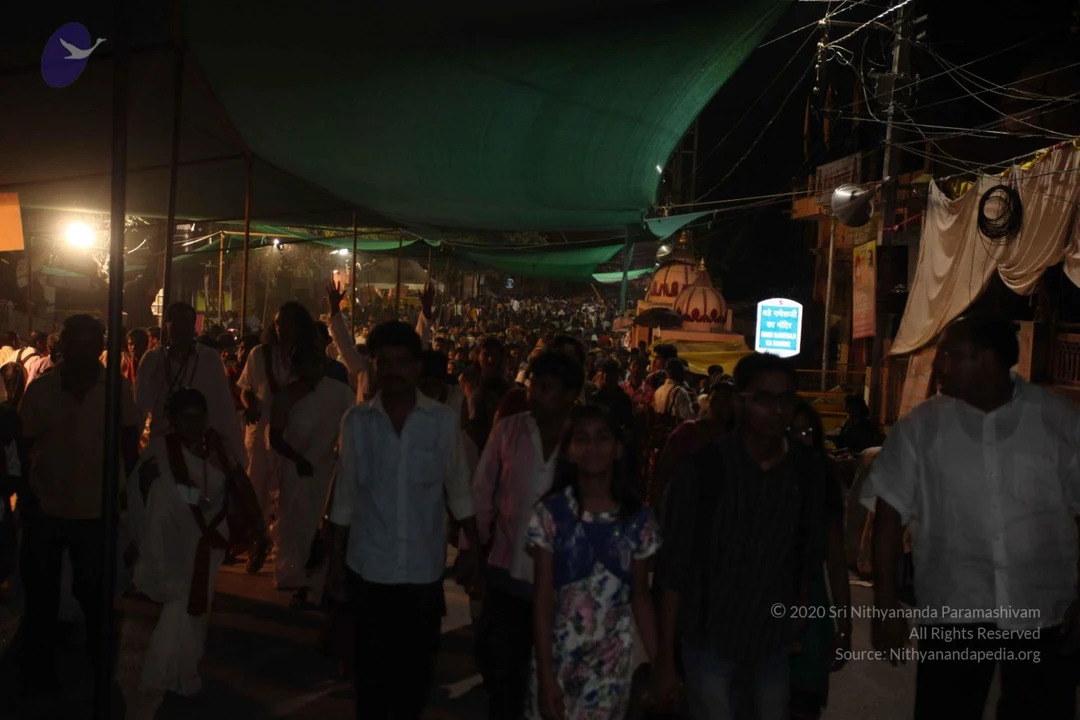
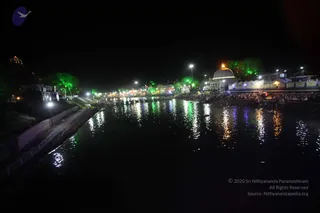
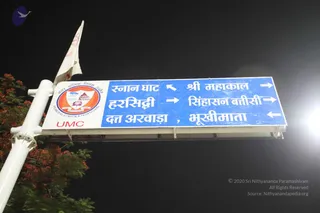
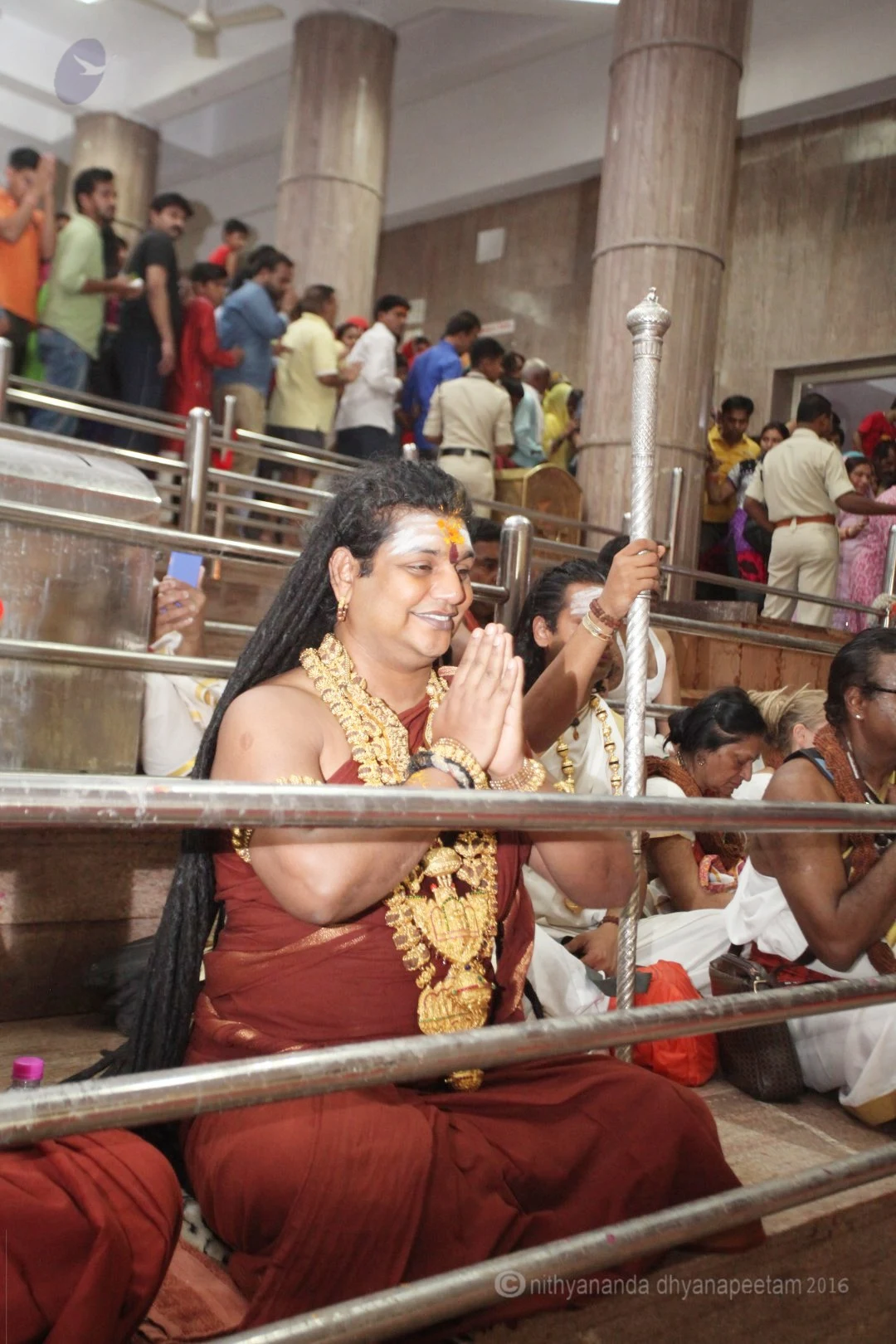
A photograph of a temple interior with a crowd behind metal railings. In the foreground, a man with long dark hair, a white and red tilak on his forehead, and a gold-coloured ornate necklace and bangles sits with palms pressed together in a namaste gesture, wearing a deep red-brown garment. Behind him, a man in white ritual clothes holds a silver staff, and a woman in a white sari with a red border sits nearby. Other devotees in white, orange and red garments and a man in a blue shirt stand or sit along the rails. Numbered red markers and a steel container are visible at left.A night photograph of a riverside or lakeside ghat in an Indian town. Green-lit trees, strings of white and coloured lights and street lamps line the far bank. A white domed structure with a golden finial stands at right, with a lit shrine-like tower at left. Many small figures of people gather along the stepped embankment at right, but they are too distant and indistinct to count individually. Their reflections and the illuminated buildings shimmer on the dark water in the foreground, and a metal railing runs along the near bank.Night photograph of a riverside ghat in Ujjain, India, with a dark, reflective water body in the foreground. Green and white lights reflect on the water surface. Along the far bank, illuminated buildings, lamp posts and trees line the shore, with a white domed structure and a lit spire on the right. A crowd of people gathers along the steps and embankment, though individuals are too small and distant to count precisely.A night photograph of a blue road direction sign mounted on a white pole, with a small white flag fluttering beside it and red flowering tree foliage at left. The sign lists destinations in Hindi and Marathi-style Devanagari with white arrows, and a Municipal Corporation Ujjain (UMC) crest sits on the left. No people are visible.Night crowd of many devotees and visitors walking and standing in a covered street lined with string lights, under a large green tarpaulin canopy. Men in shirts and backpacks, women in salwar kameez and saris with pink and red dupattas, a young child in a purple top held by an adult at right. No clearly identifiable figure is shown at the centre of the crowd, and no appearance-based a person candidate is visible. Red fairy lights and a red-lit sign edge the left side; hanging cloth and bare lamps are visible overhead.A nighttime street procession moves through a crowded Indian town under a large green tarpaulin canopy strung on poles. Many people walk along the road in mixed white and light clothing; a few figures near the left wear white kurtas with saffron or orange shawls draped over their shoulders. A young girl in a blue floral dress holds hands with an adult in the centre. Bright white lights and strings of electric wires overhead illuminate the scene, and a white domed shrine structure with a decorative sign stands in the background. A blue-lit sign reads in Hindi. The overall atmosphere is a devotional crowd walking in a street procession after dark.

Mandala-Process
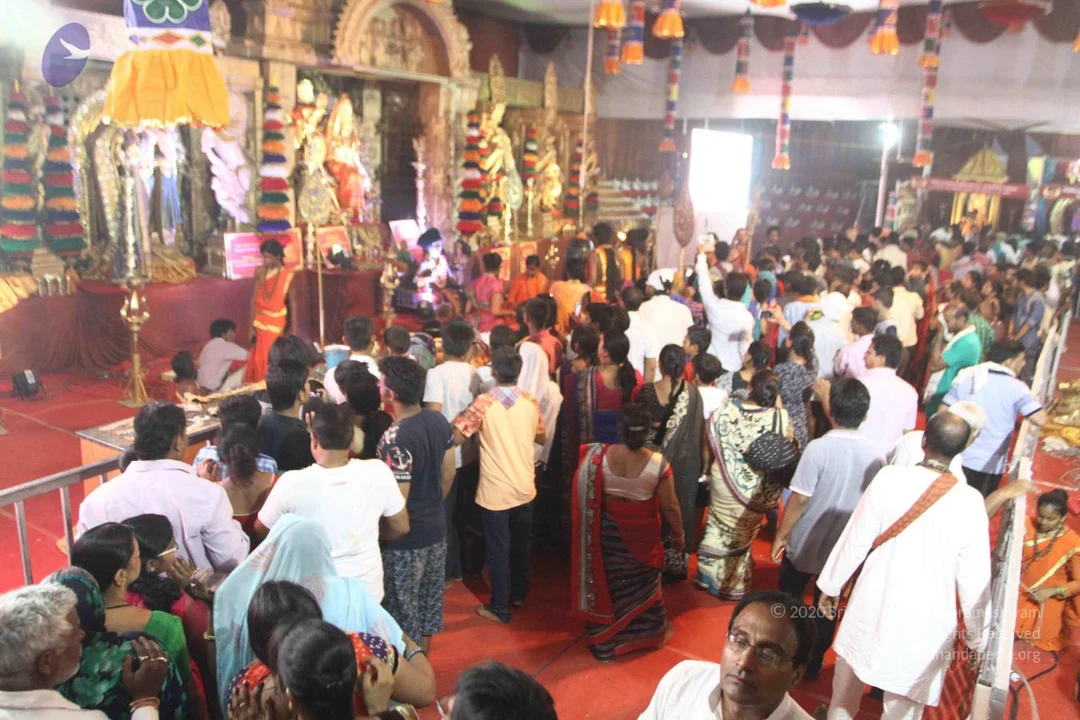
28 photosSource gallery
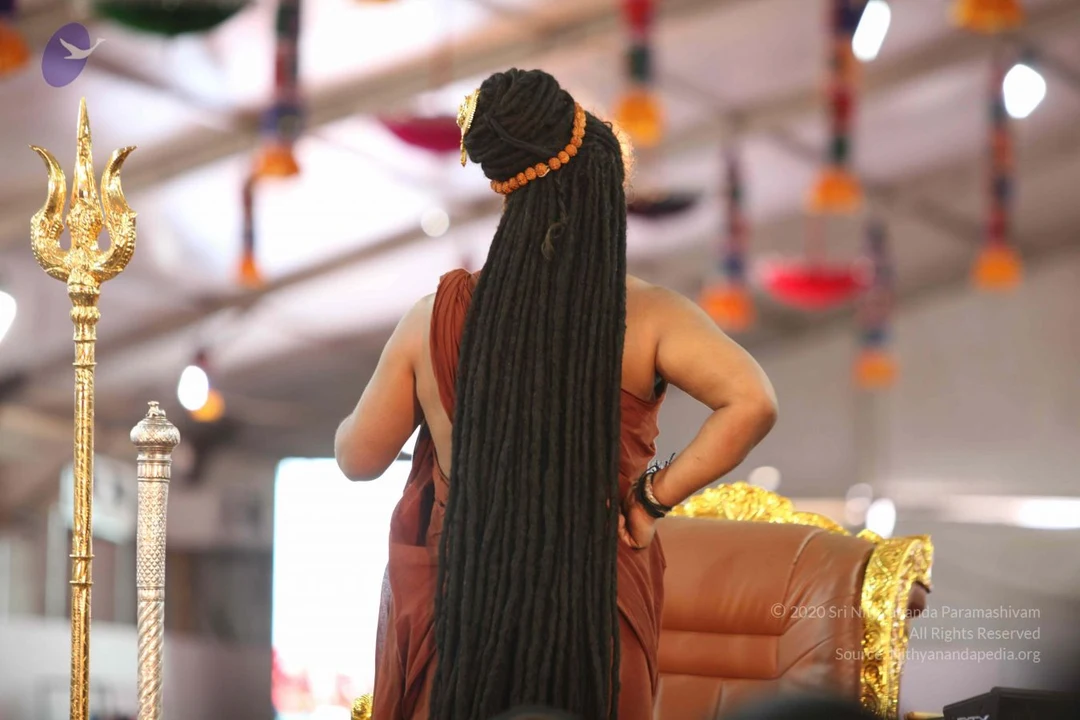
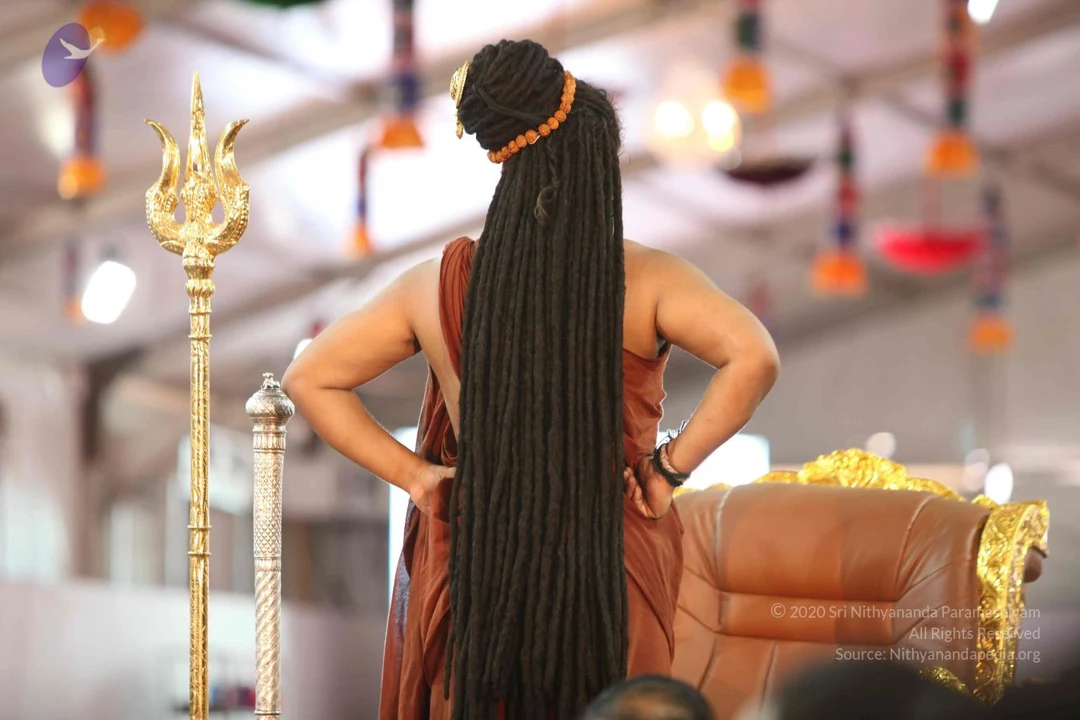
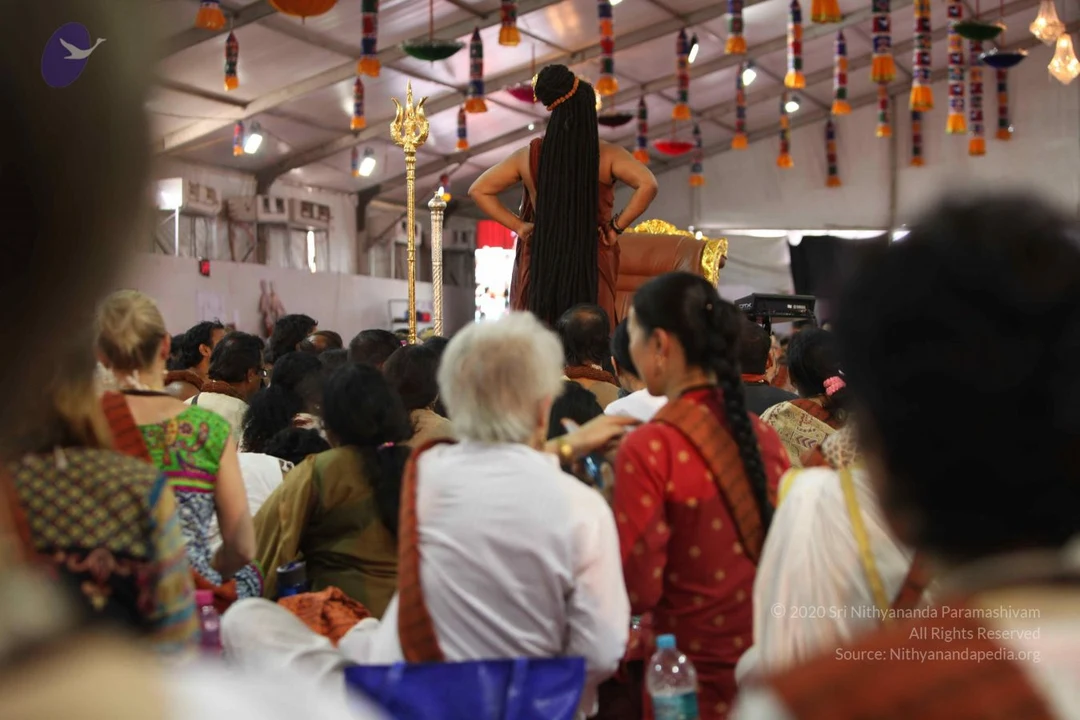
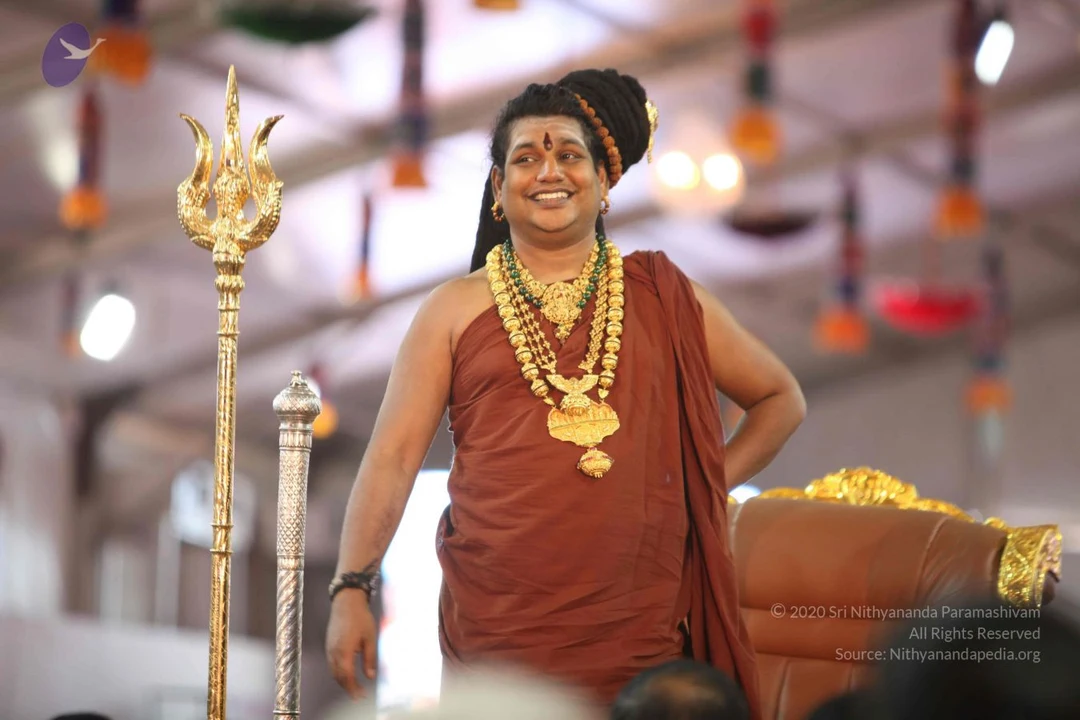
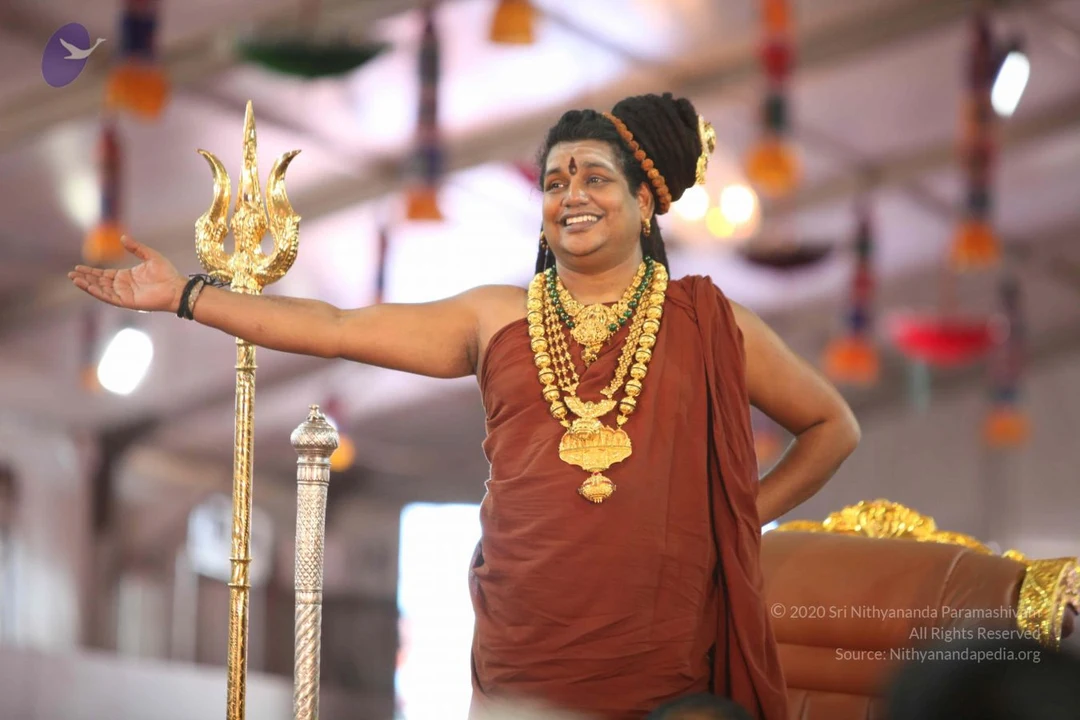
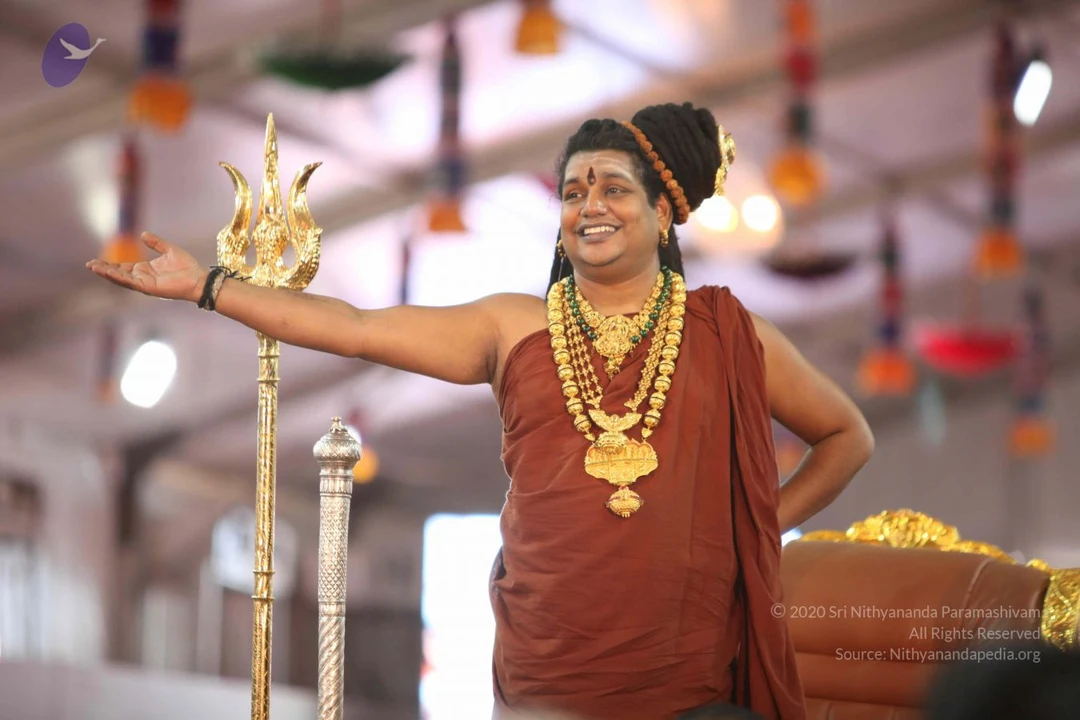
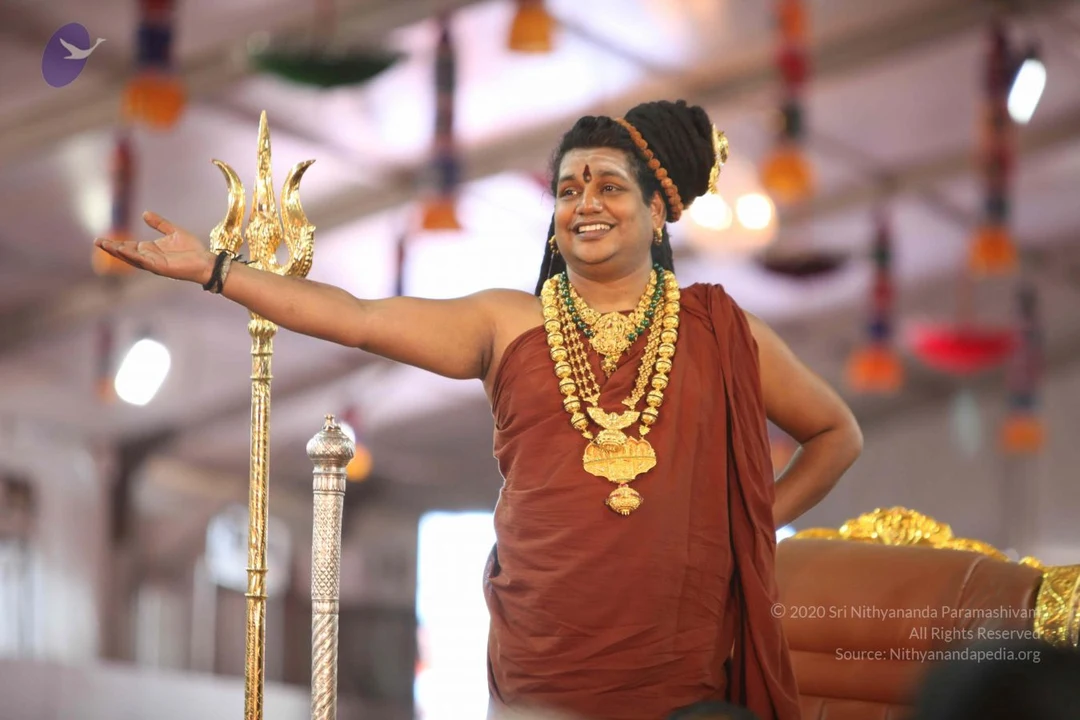
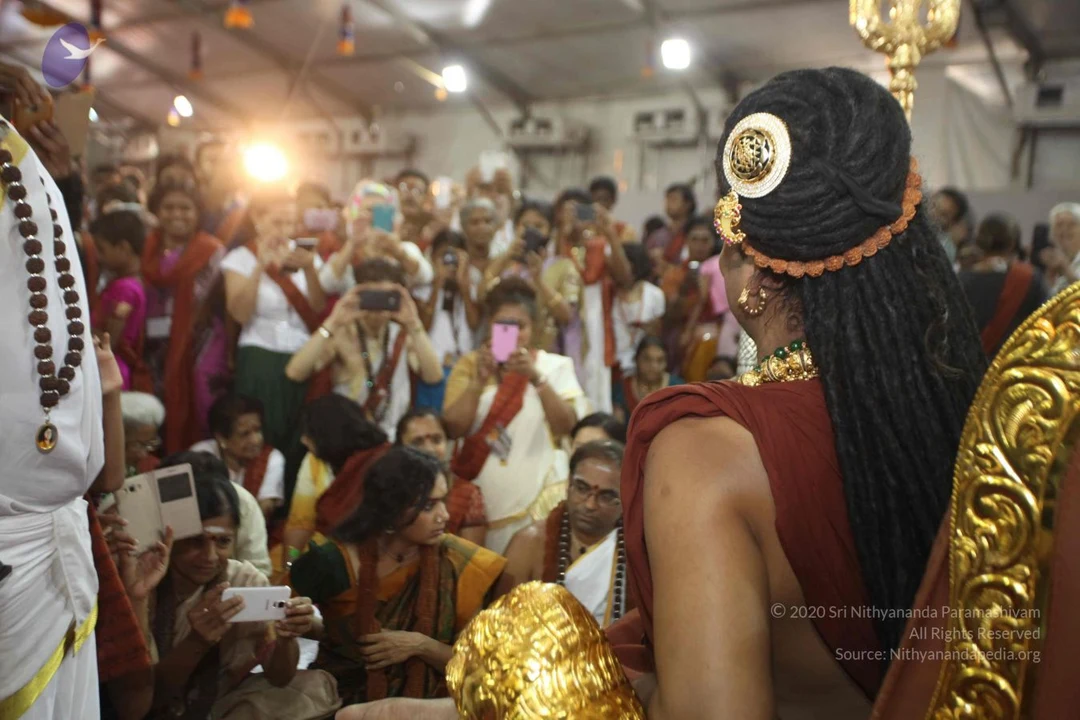
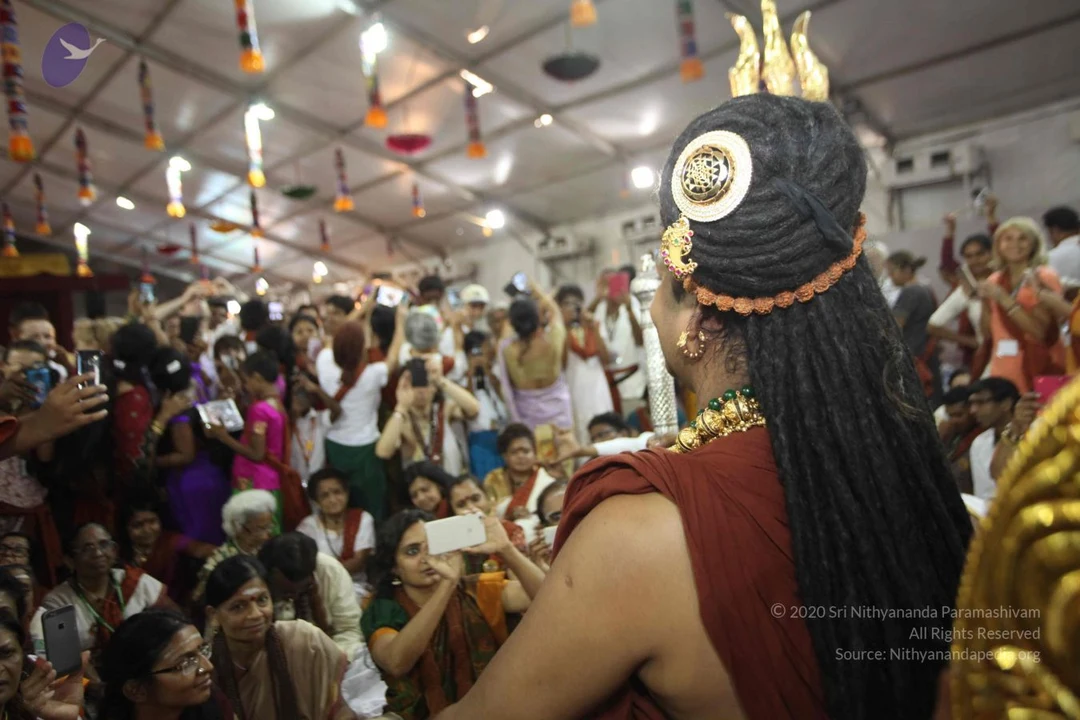
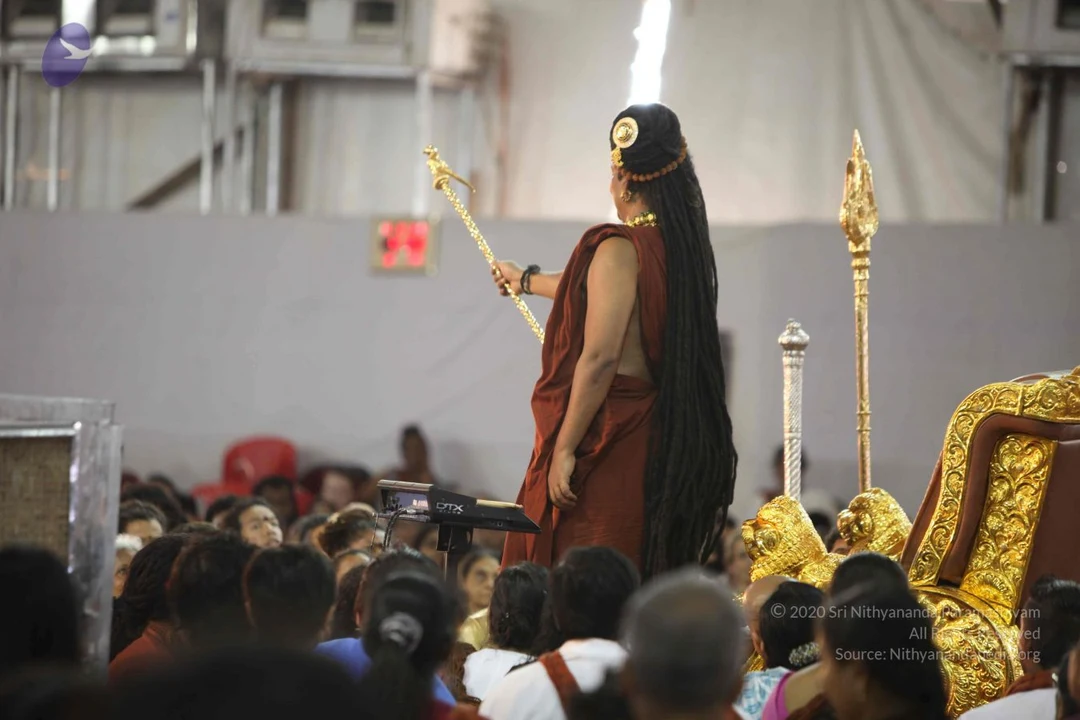
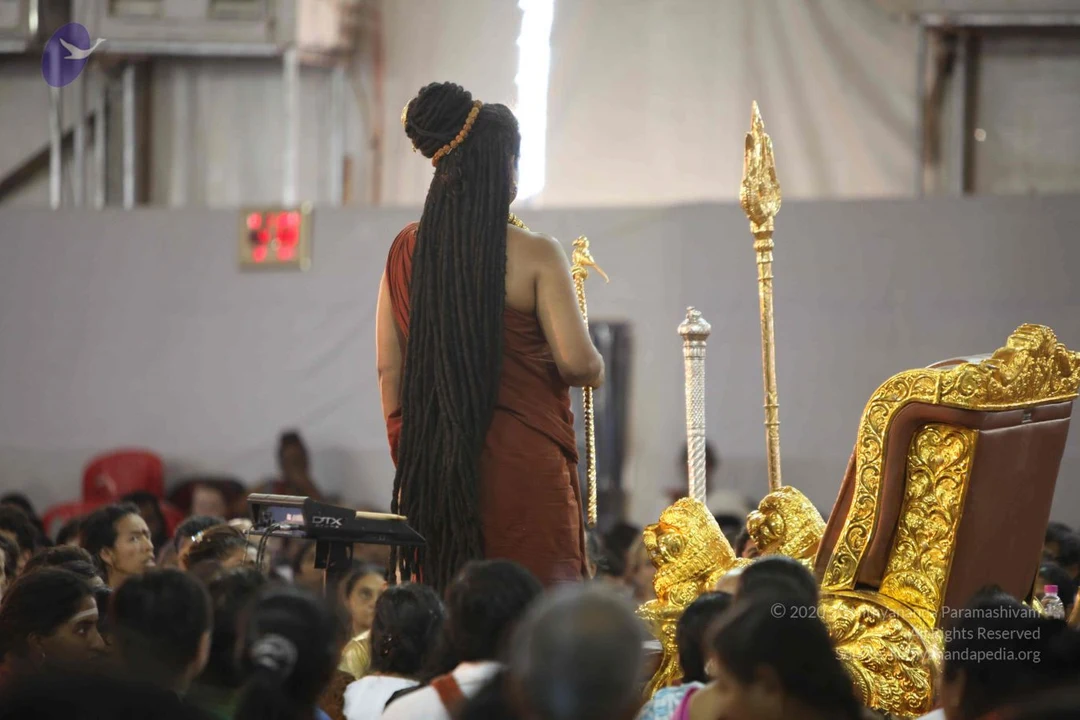
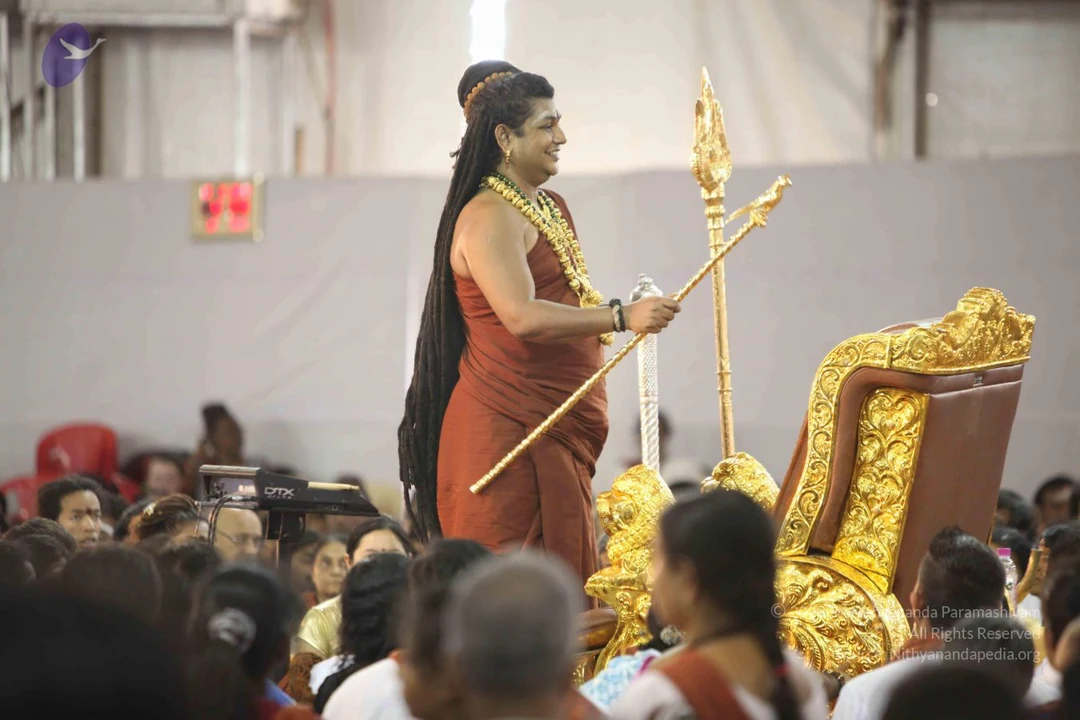
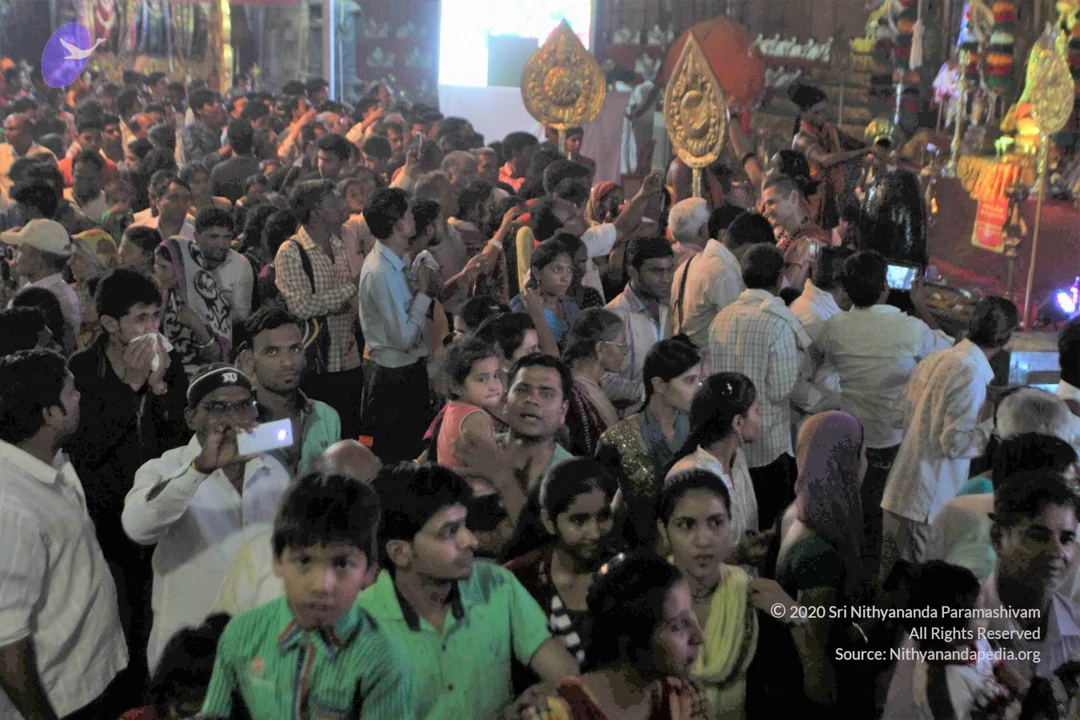
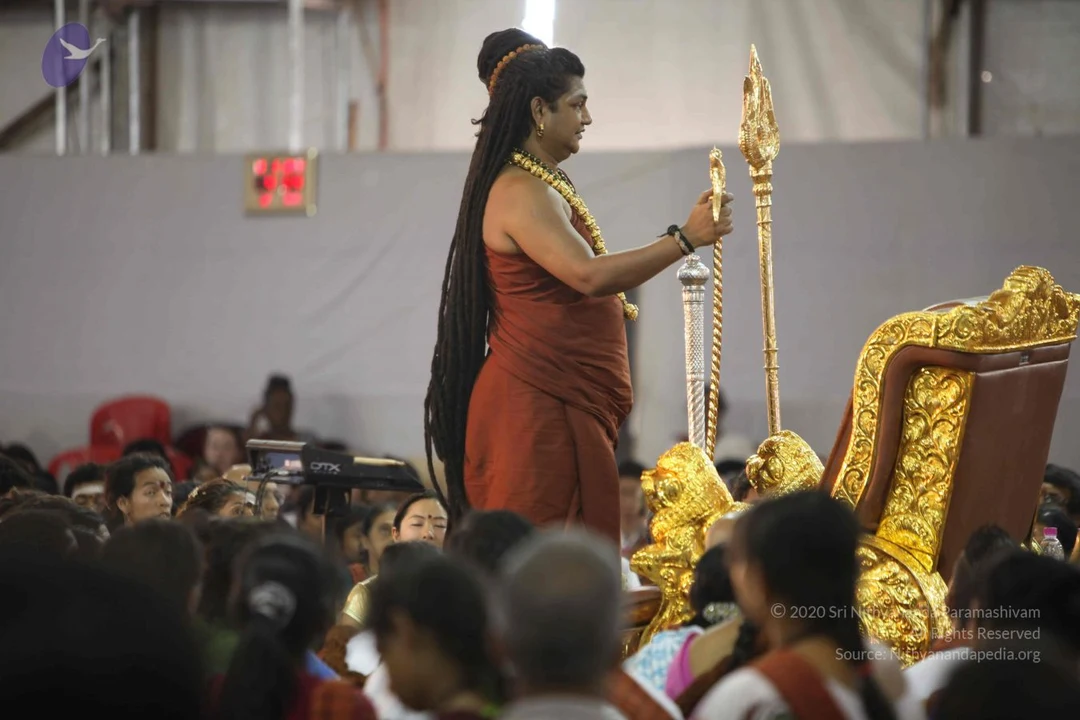
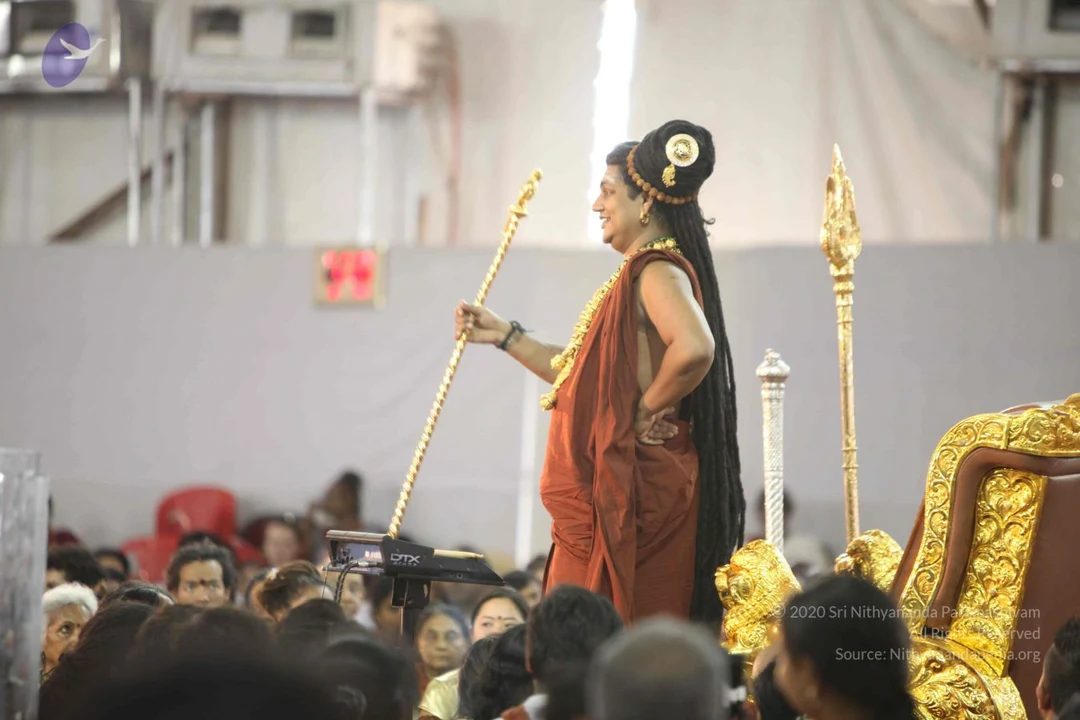
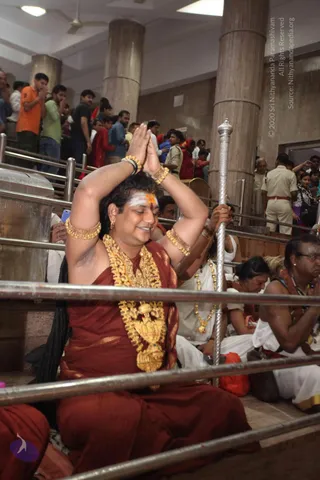
A dense crowd of devotees fills an indoor hall at night, many pressing forward and raising hands or phones to film or photograph. In the foreground a boy in a green shirt and a young girl in a red top look toward the camera, and a man in a white shirt and black cap holds up a phone. Behind the crowd, gold ceremonial ornaments shaped like leaves and a decorated red-and-gold stage area with flowers hang near a large screen. Many women wear saris and shawls in bright colours. The scene suggests a darshan or program gathering, with the central figure not clearly visible.A dense crowd of devotees fills a temple hall at night, many people pressed shoulder to shoulder in a long queue moving toward a decorated shrine on the right. Men wear white shirts and a green checked shirt, women wear pink, yellow and maroon saris and shawls, and children stand near the front. Overhead hang colourful striped and tasselled garlands. On the right, an ornate stone shrine holds deity murtis, brass lamps and a kalasha-like altar with flowers, and a lit oil lamp sits on the altar. The setting suggests darshan line at a temple.A figure seen from behind stands on a raised platform beside a gold-finished trident and a silver-toned staff. The person has very long dark hair gathered up and fastened with a rudraksha mala, wears a rust-brown wrap, and has gold ornaments with a gold necklace. The right hand rests on the hip and the left hand holds the wrap at the back. A gold-carved seat with cushions sits behind. Orange and red tassels hang from the tent ceiling overhead, with lights glowing in the background. Swamiji (probable): the long hair, rudraksha mala, ornate gold jewellery and dramatic setting match the presentation of the Swamiji candidate.A figure with long dark dreadlocks gathered in a high topknot, wearing a rudraksha mala across the head and a rudraksha bracelet, stands with back turned toward the camera beside a brown leather throne with gold trim. The person wears a rust-red drape over the shoulders, gold earrings and a gold-beaded necklace. A large gold trident stands at left beside a silver staff, and hanging orange and purple tassels decorate the blurred hall ceiling. The figure has clothing and adornments consistent with the a person cues: long swept-back hair, a rudraksha mala and ceremonial gold necklace, so this is a person standing in the hall during the Shuddhadvaitam session.A man with long dark hair swept up and secured with a rudraksha mala stands on a raised ceremonial platform, smiling and extending his right arm toward a large golden trident on the left. He wears a rust-brown shawl draped over one shoulder, layered gold necklaces, a green bead mala, and a red bindi on his forehead. Behind him a golden-trimmed brown cushioned seat is visible, with hanging orange, red and yellow decorations and a bright white ceiling in the background. A silver staff stands beside the trident. The setting appears to be a large indoor hall. a person is shown as the seated presenter in a rust shawl, gold necklaces and a rudraksha mala, with a golden trident in the scene, consistent with a satsang setting.A standing figure in a rust-red draped garment with a bare upper torso, wearing a gold-and-green beaded necklace, small gold earrings, a rudraksha-style orange bead headband with a gold ornament, and long dreadlocked hair. The figure holds a tall gold trident in one hand and rests the other hand on a silver-banded staff, extending the free arm outward. Behind is a brown leather chair with gold trim, and orange and red hanging decorations with warm lamps in a hall setting. Appearance-based label: a person, shown in a ceremonial stance beside a trident.
Temple-Visit
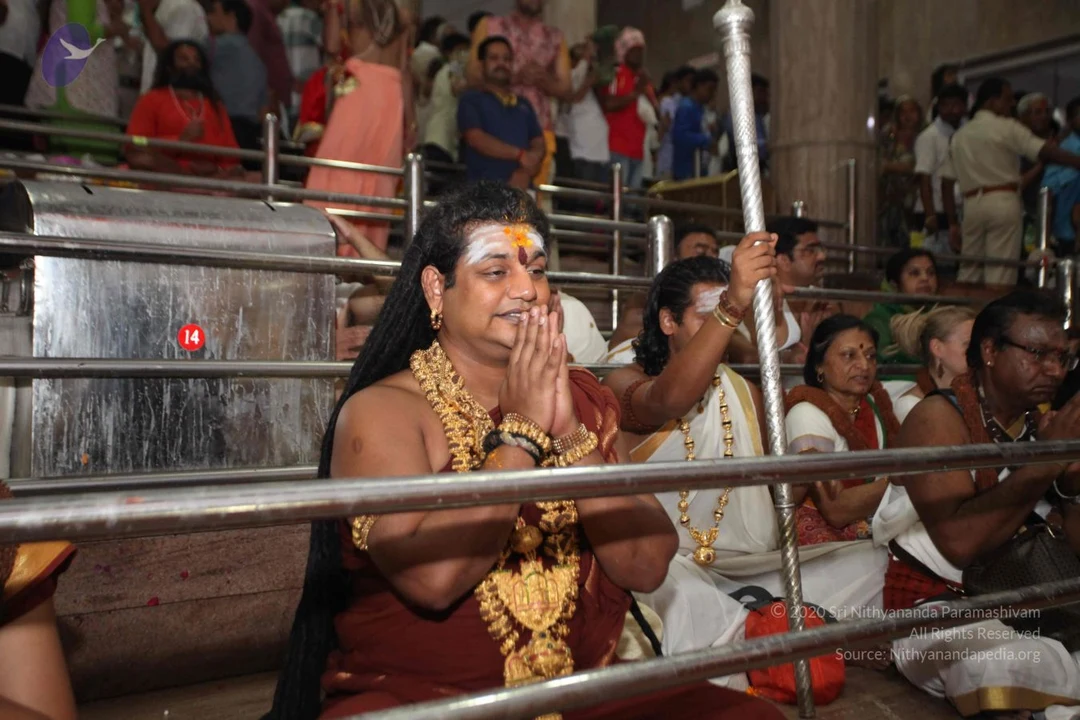
9 photosSource gallery
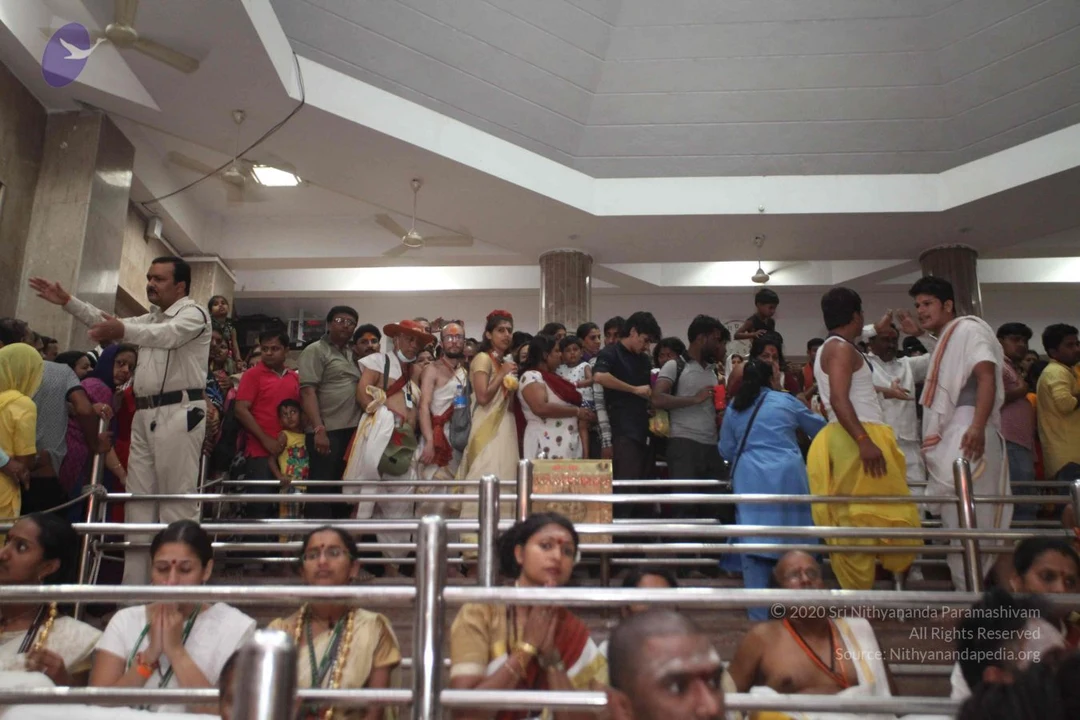
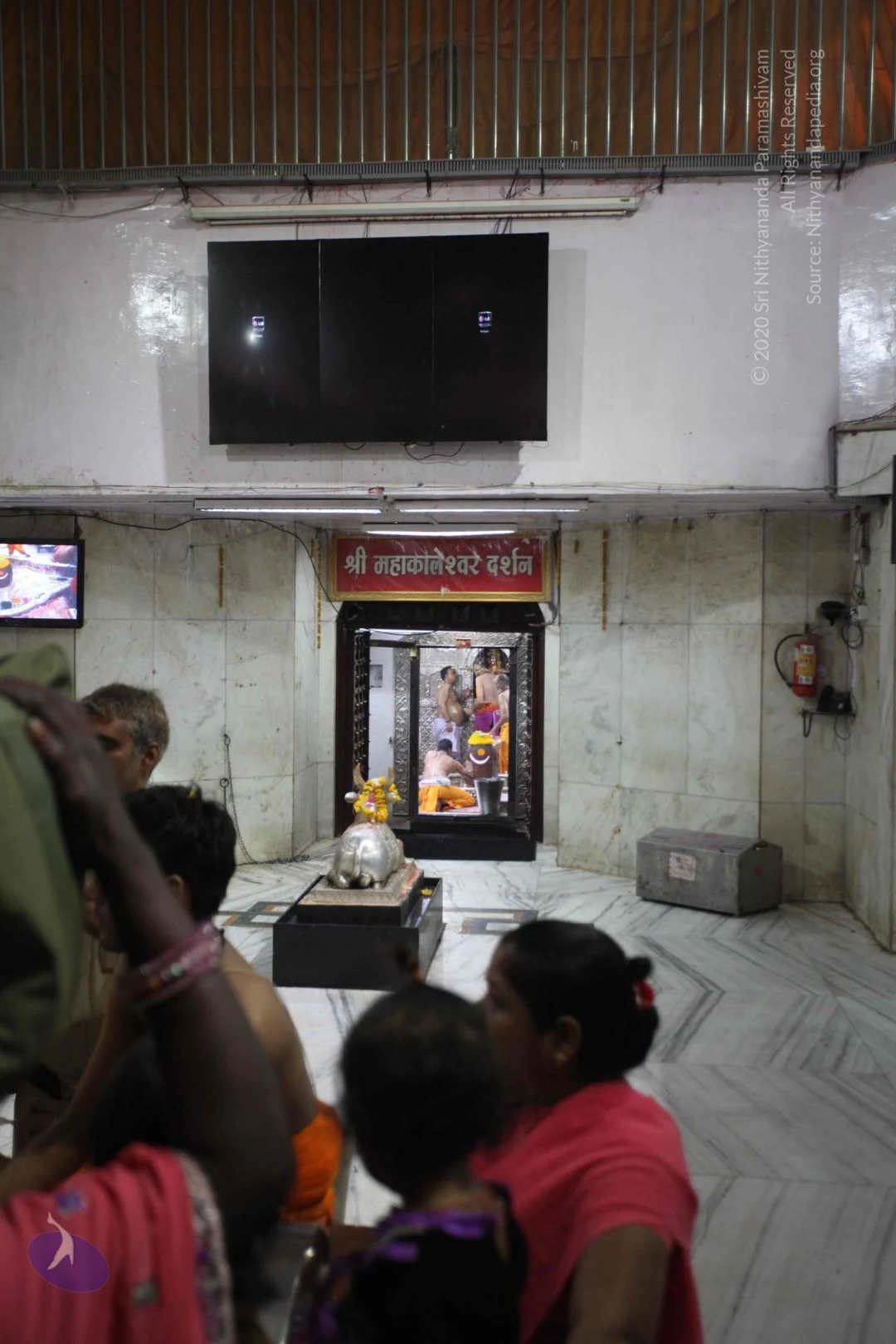
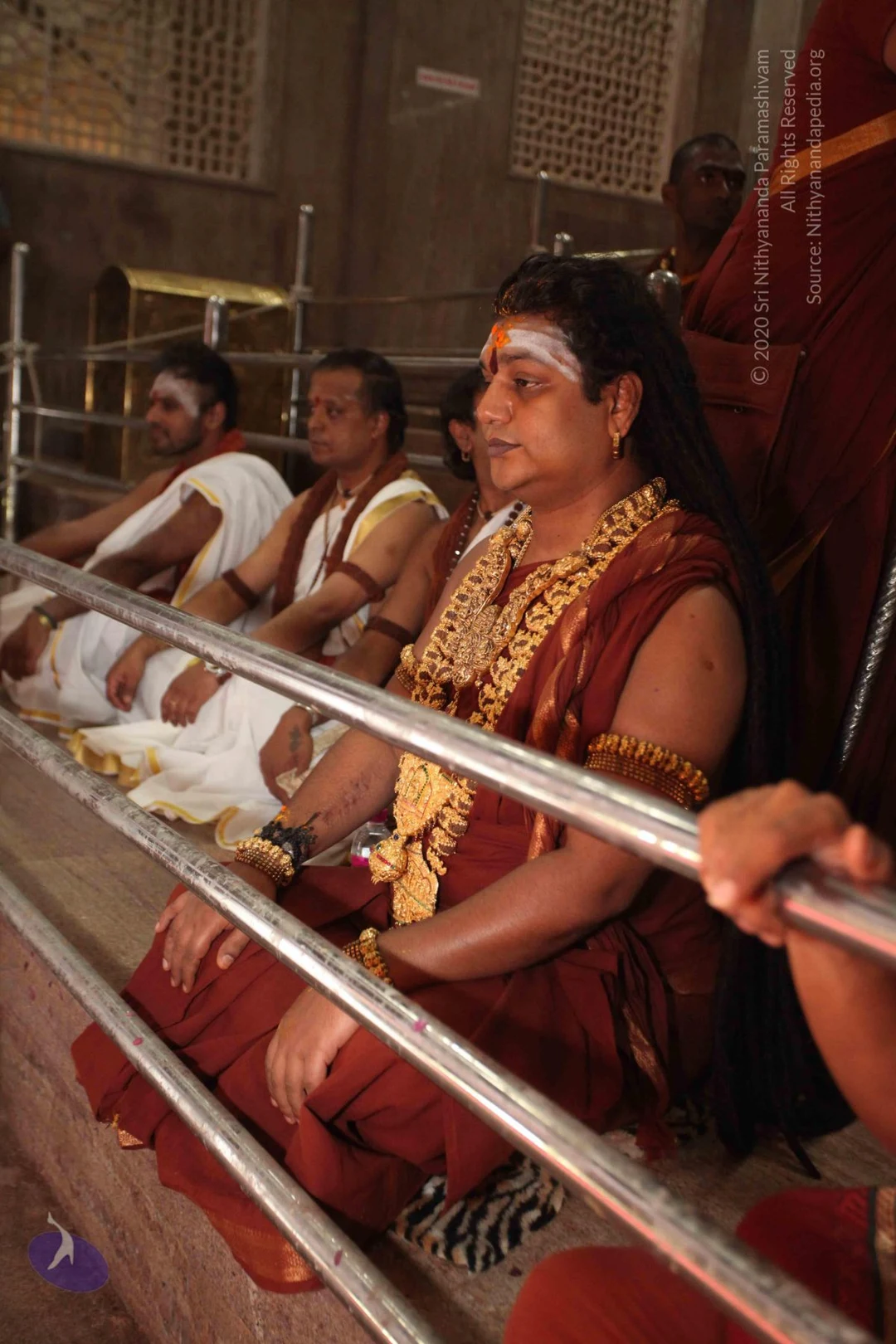
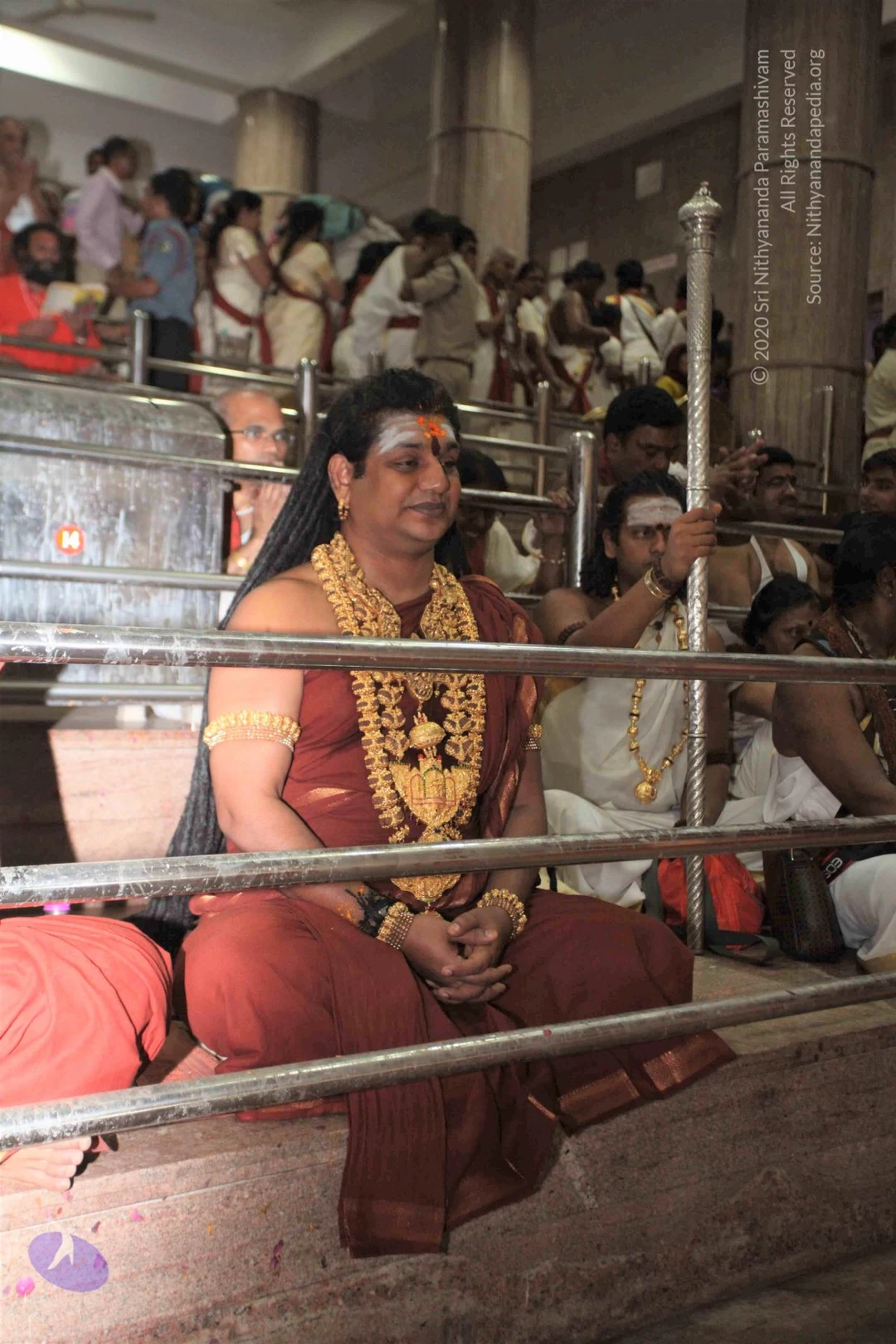
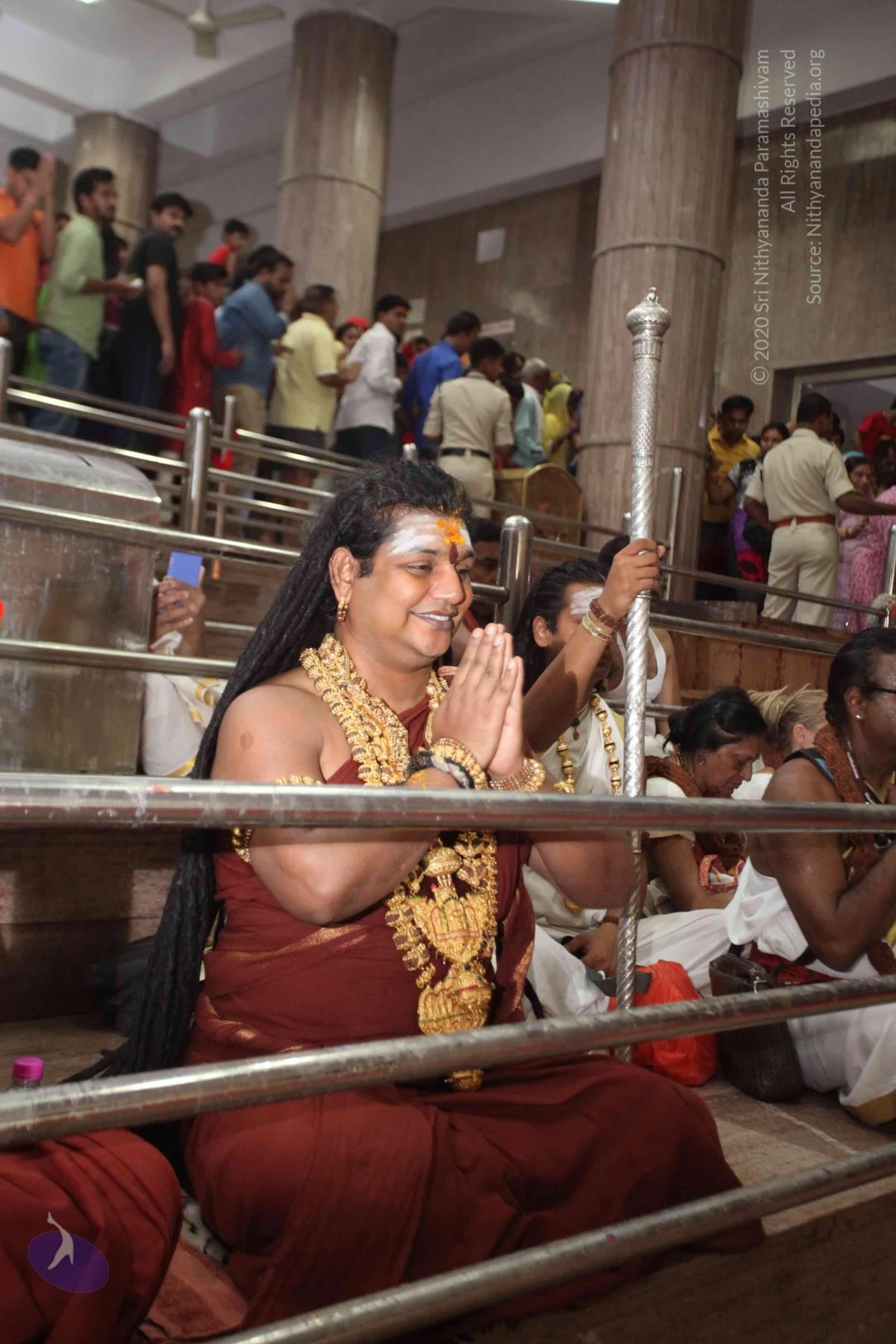
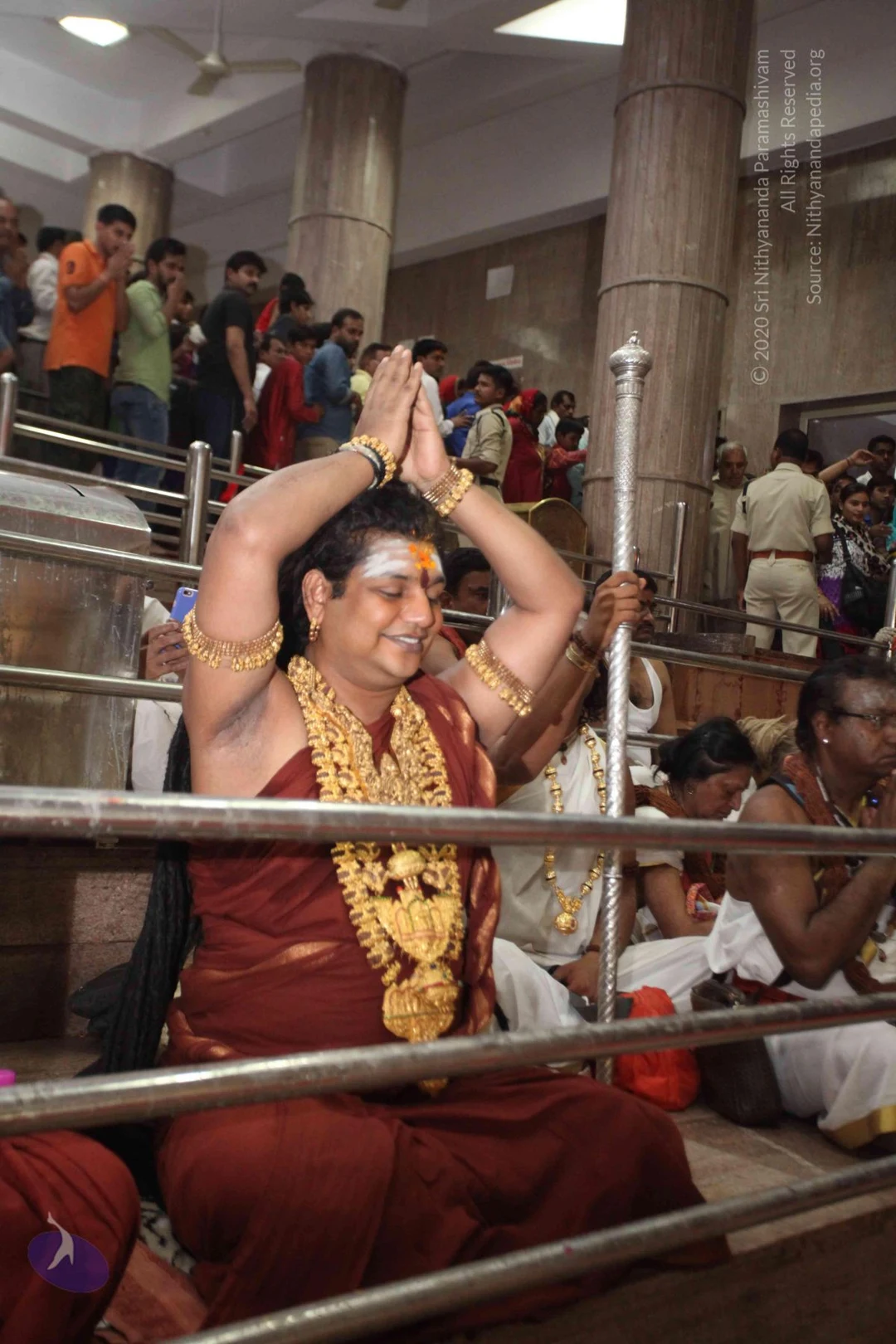
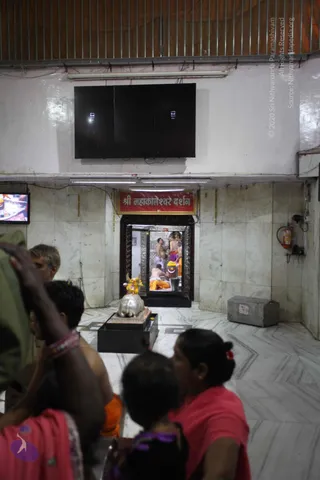
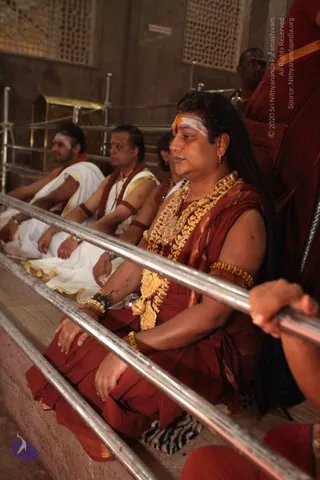
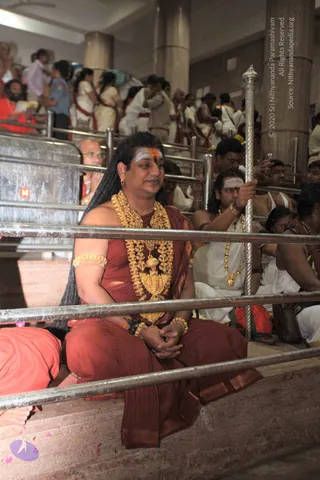
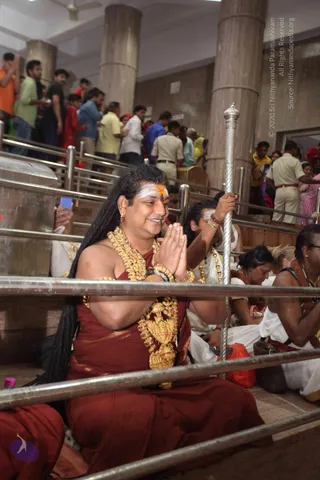
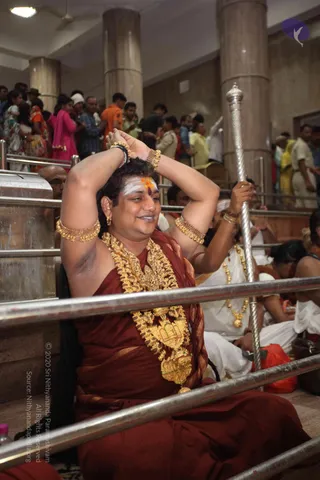
A marble-floored temple interior at the Shri Mahakaleshwar Darshan shrine. Through a silver-framed doorway, priests in orange and white clothes perform abhishekam on a lingam while a figure in orange kneels before it. A silver nandi bull sits in front with yellow-orange flower garlands. Several devotees in the foreground, including a woman in a red top and a child, watch the ritual; a man with grey hair is partly visible at left. Wall-mounted televisions and a fire extinguisher are visible on the walls.A seated woman in a dark red-maroon robe with gold-brocade edging sits on a stone step behind metal railings, wearing a heavy gold necklace with pendant, gold armlets and bangles, a red bindi and white tilak on her forehead, and long dark hair falling down her back. Behind her, several men in white dhotis with gold borders and maroon shawls sit in a row, one with white tilak markings; a standing attendant in maroon robes stands at the upper right. A carved stone lattice window is visible behind them in a temple-like hall, and a tiger-striped cloth lies on the step. Appearance-based candidate: Swamiji (probable), seated in the foreground with long hair, gold ornaments and maroon robes.A seated man in a rust-red shawl and dhoti wears a heavy gold necklace, gold armlets and bangles, and a red-and-white tilak on his forehead. His long dark hair falls past his shoulders. He sits with hands folded on the step beside a silver railing, with a silver staff standing against his shoulder. Behind him, a crowd of devotees in white dhotis and shawls with red borders sits and stands along a tiered granite hall with concrete pillars. A man in a white dhoti and gold chain beside him also holds the railing. The setting is a crowded ceremonial hall.A photograph inside a crowded temple hall with stone columns and steel railings. In the foreground a smiling man with long dark hair, white and orange forehead markings, and layered gold necklaces and bangles sits with palms pressed together in namaste, wearing a maroon-red shawl draped over his bare shoulder. Behind him a second person holds a silver staff against the railing, and other seated devotees in white clothes and orange garlands sit nearby. Uniformed police officers and standing visitors in colourful clothes fill the background.A photograph of a seated man in a rust-red sannyasi robe with gold-toned broad necklaces and gold bangles, a white and orange forehead mark, hands raised in namaskar above his head while gripping a tall silver staff. Behind metal railings, seated devotees in white dhotis and rust-coloured shawls sit with folded hands, and a crowd of standing visitors and uniformed police fills a pillared hall. The scene appears to be a devotional gathering at a temple-like hall with concrete pillars and a ceiling fan.A photograph of a seated man in a maroon-red sannyasi-style garment with a heavy gold multi-strand necklace and gold armlets, hands raised to his head, smiling. He wears white vibhuti marks and a red kumkum dot on the forehead, and a silver-tipped staff rises beside him. Behind metal railings, a crowd of visitors and seated devotees in white fills a stone-columned hall. a person is the central figure, identified by the gold ornaments and the saffron-maroon robe; the page places him at this event.