Skip to content
Sunday

13 April 2014

Align to your highest identity

Dated photos
251
Source pages
1
Media
2
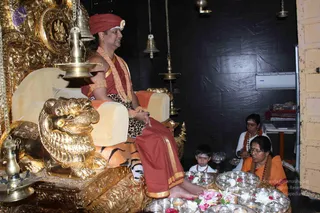
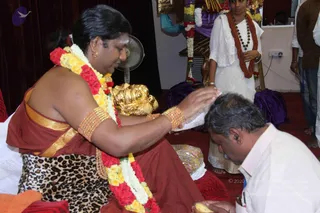
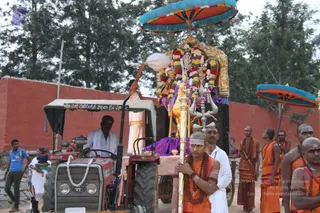
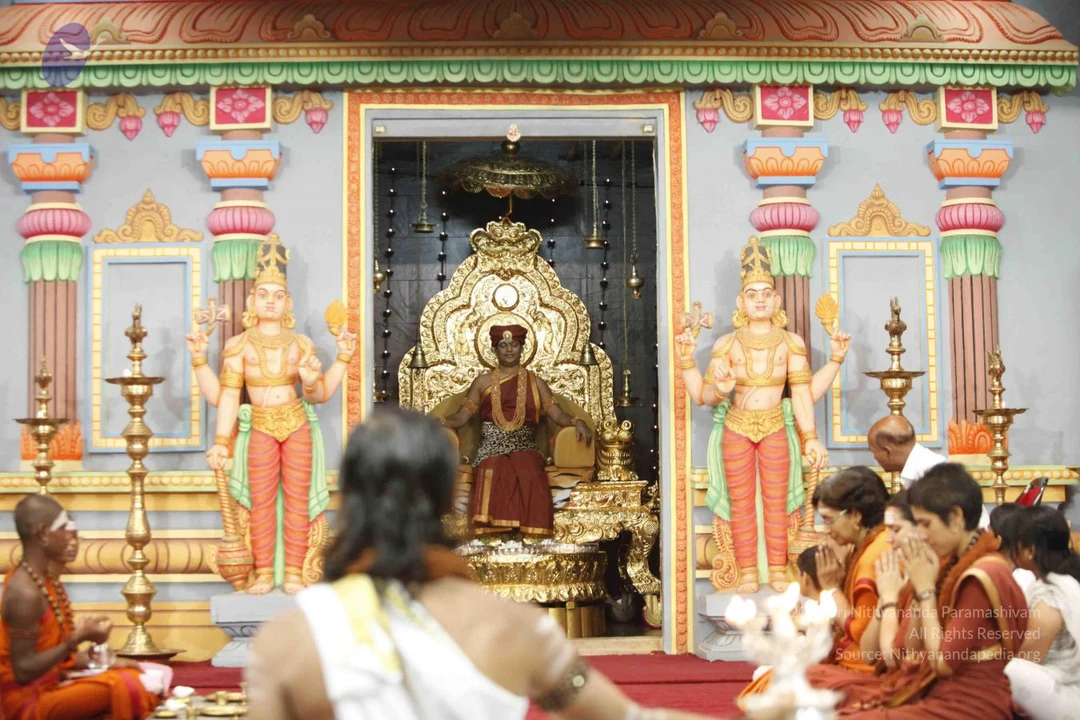
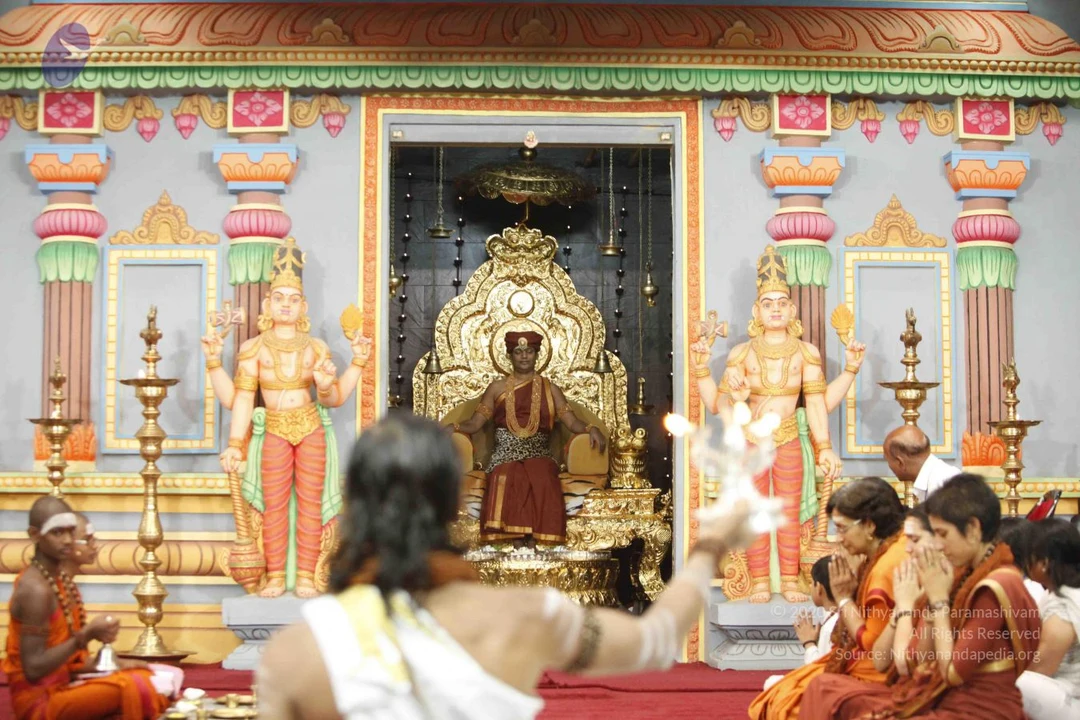
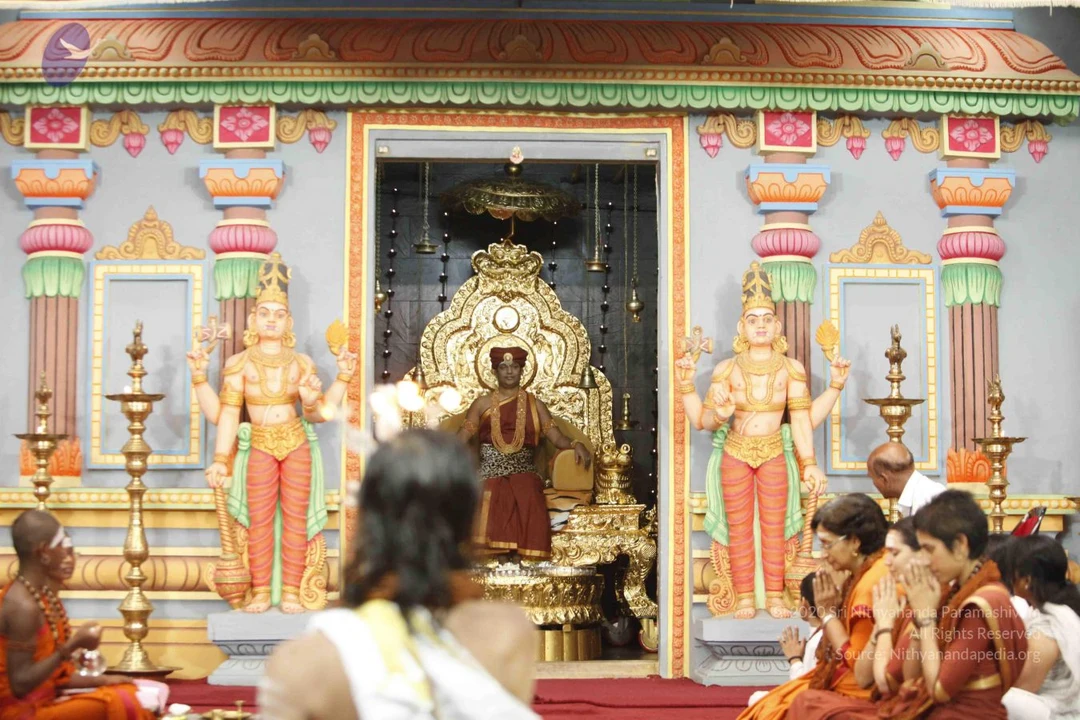
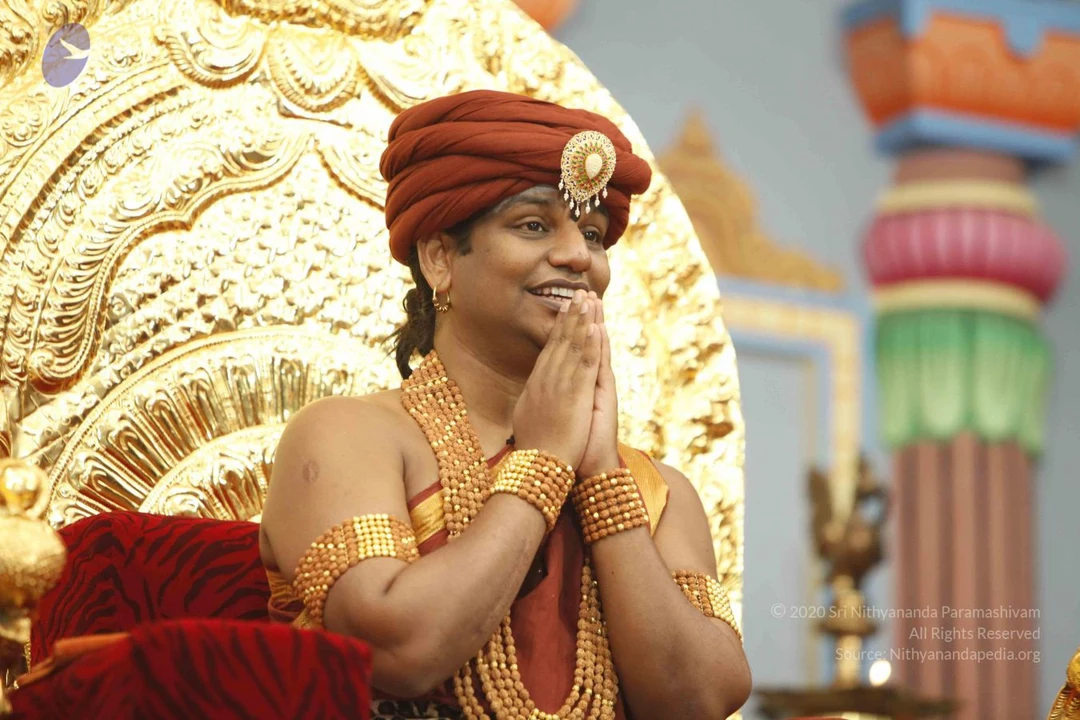
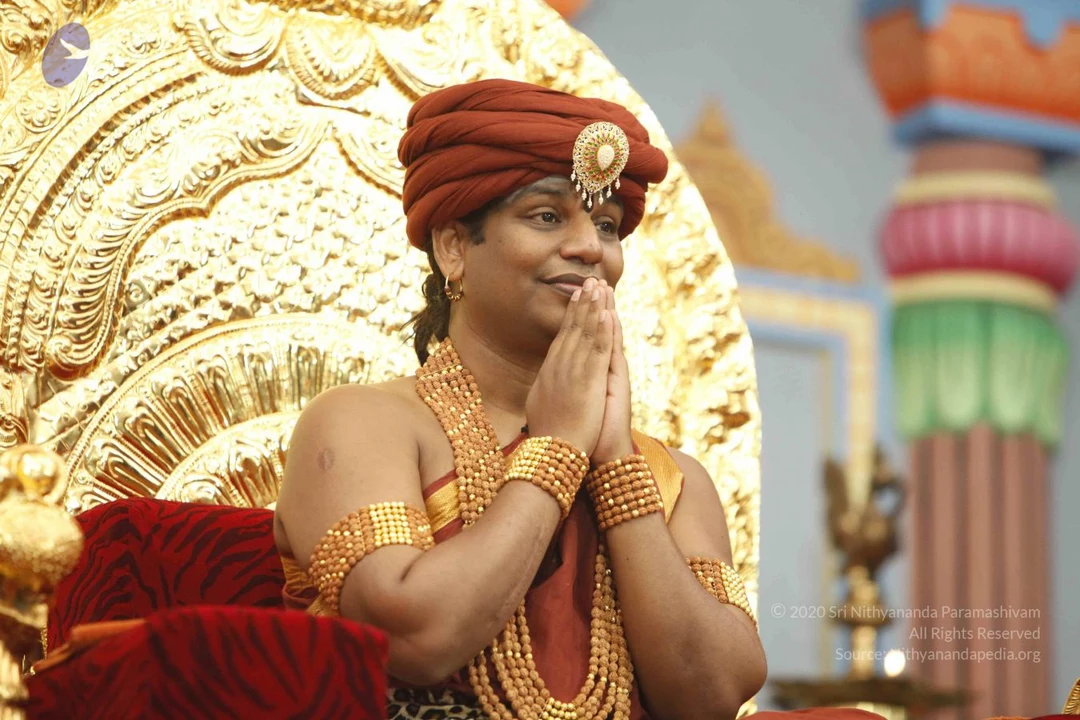
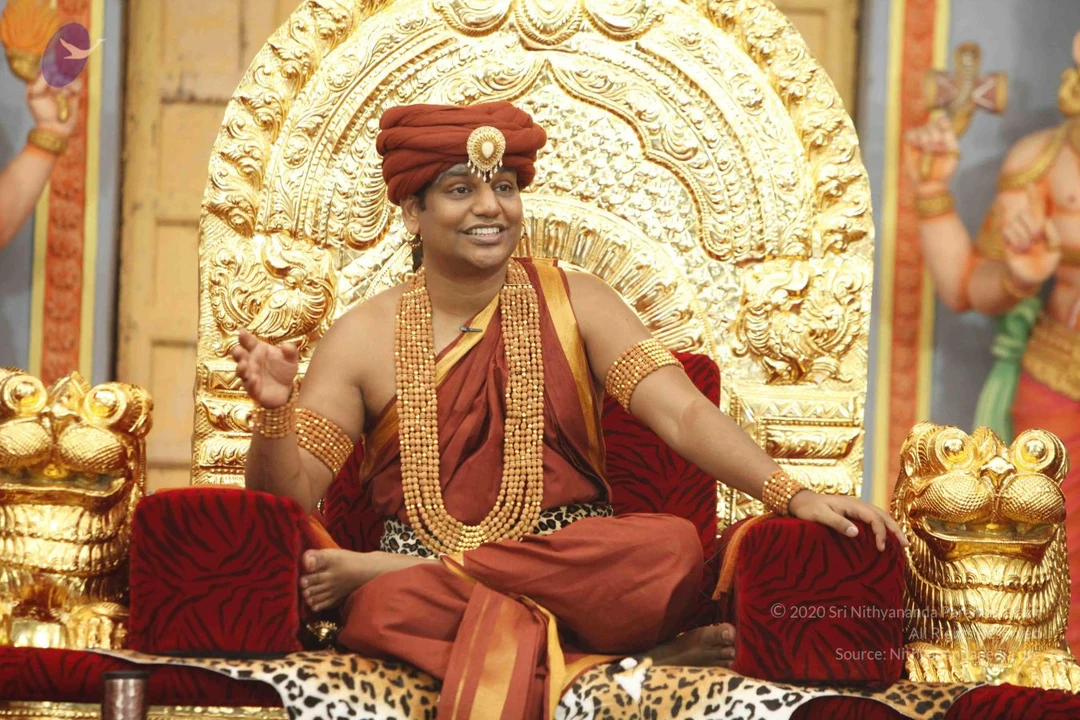
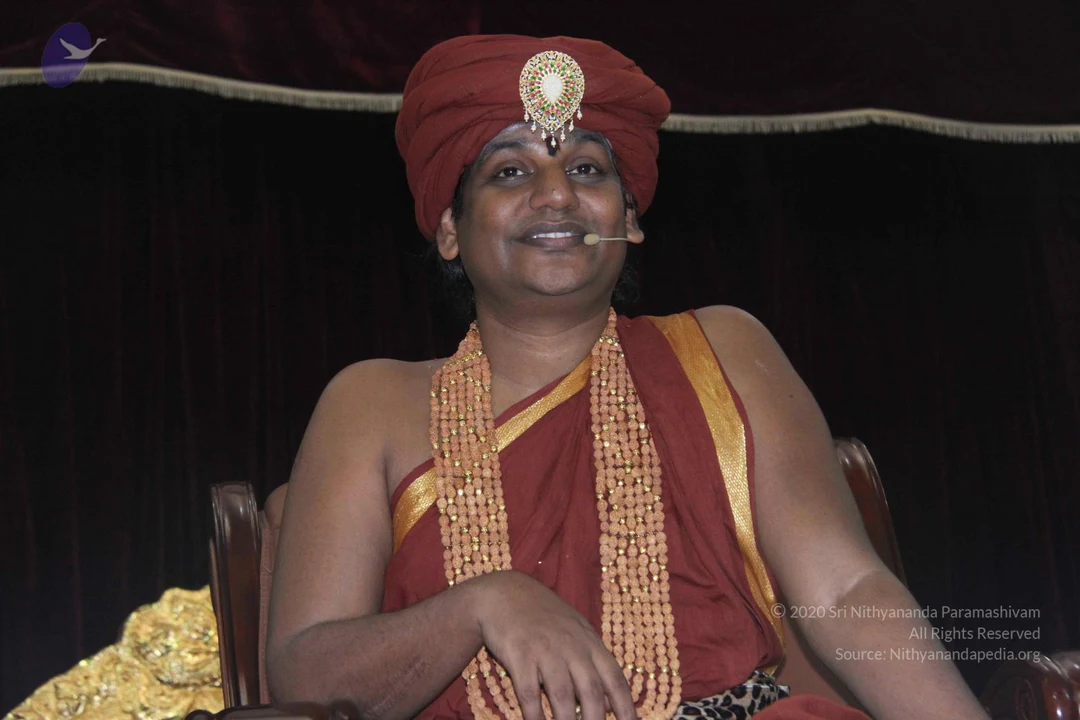
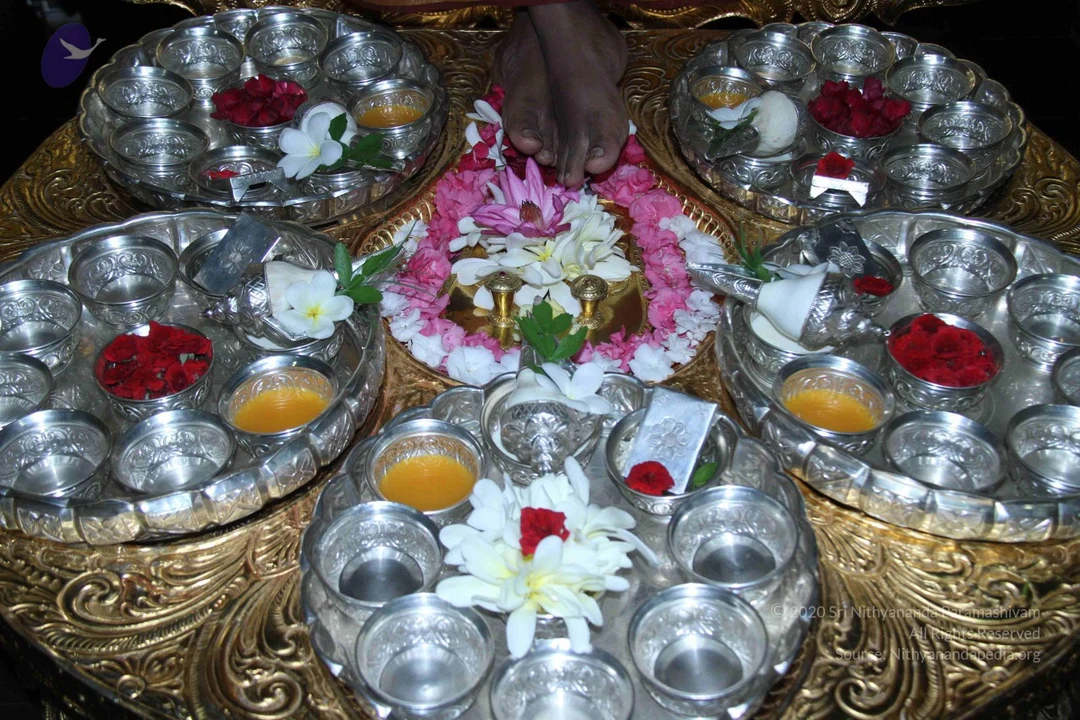
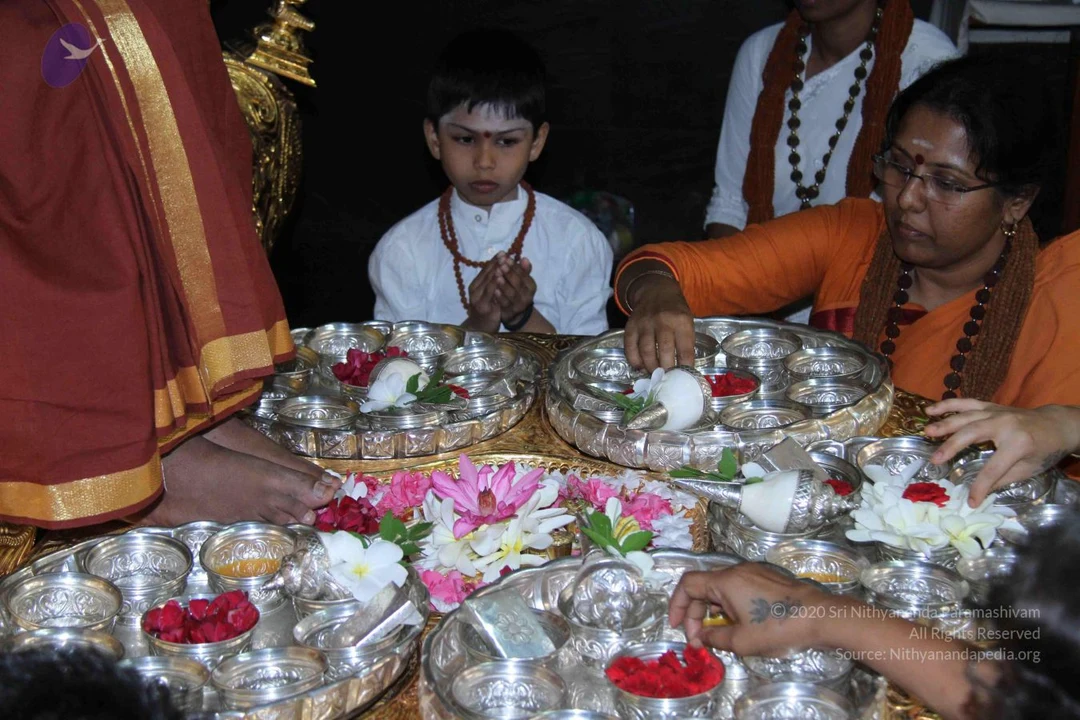
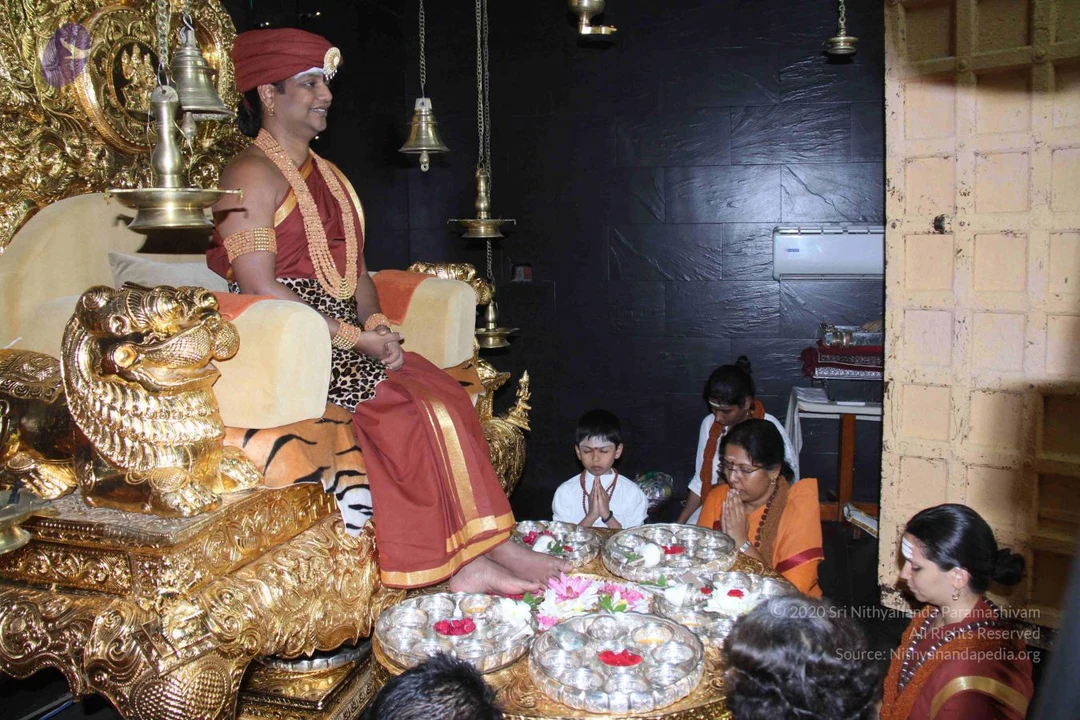
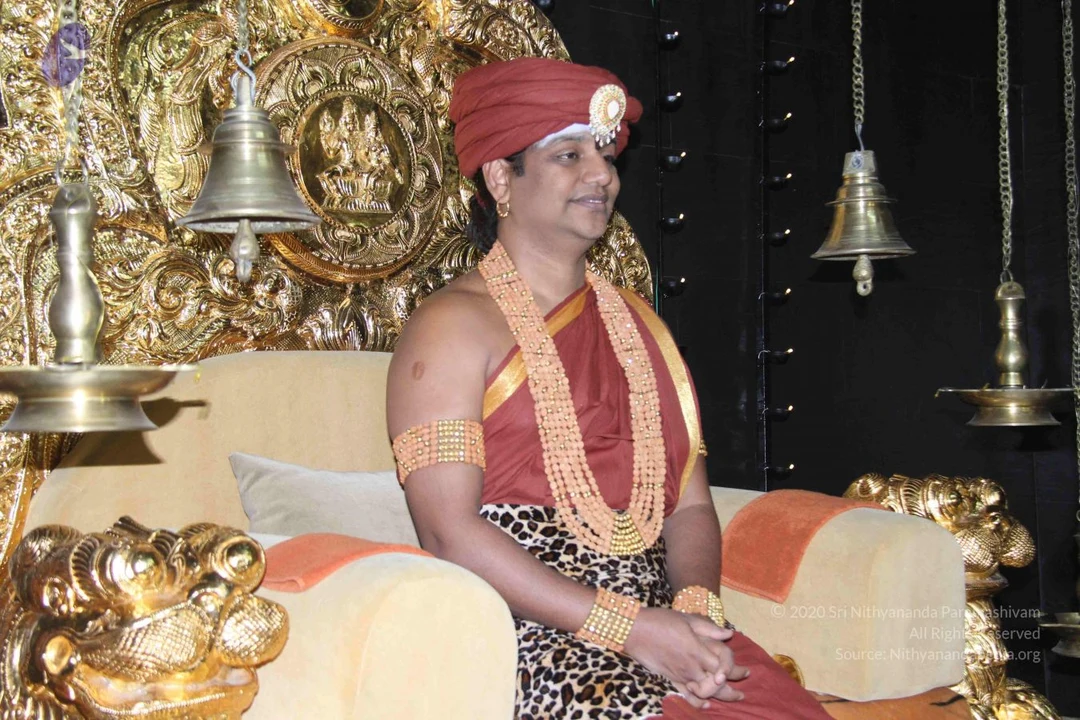
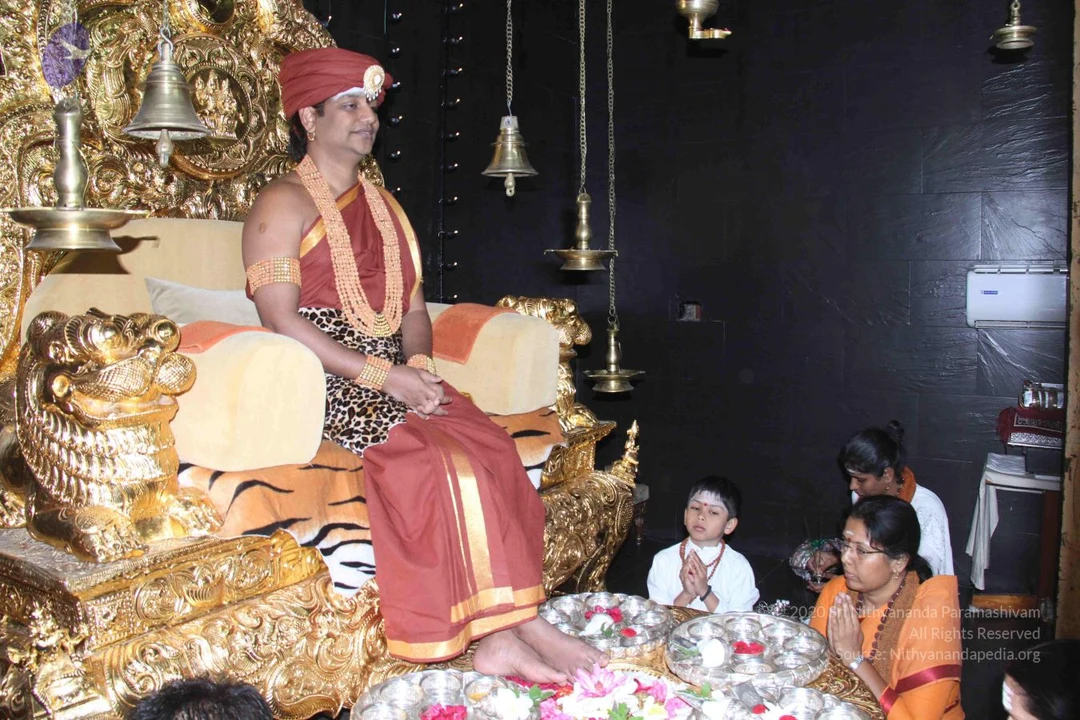
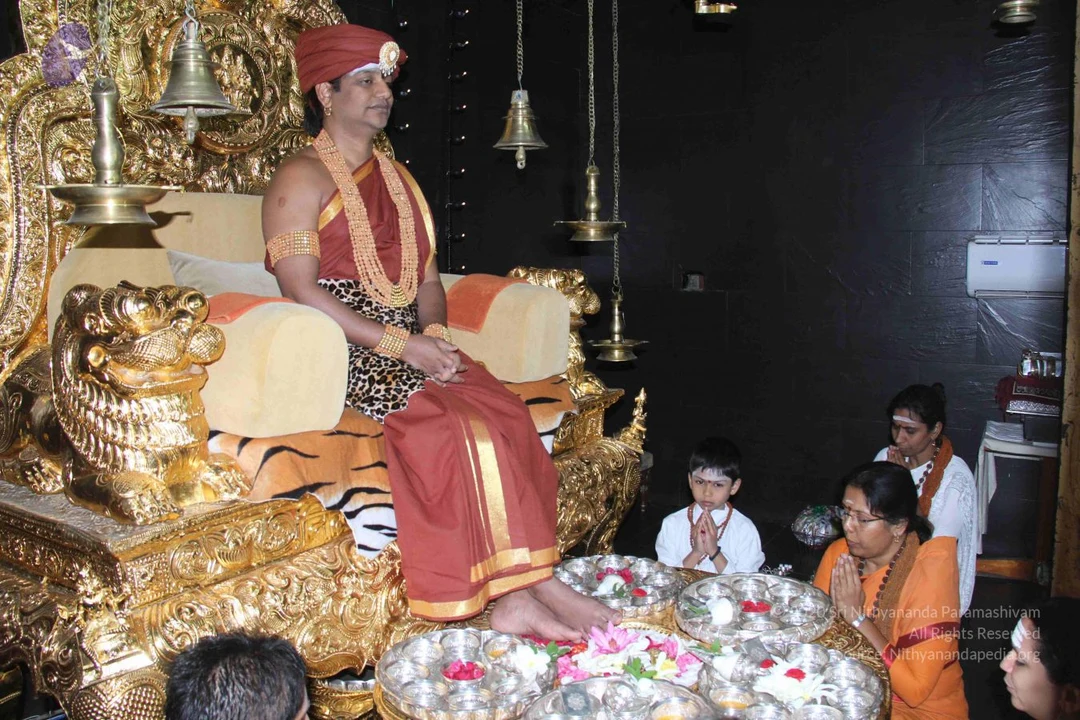
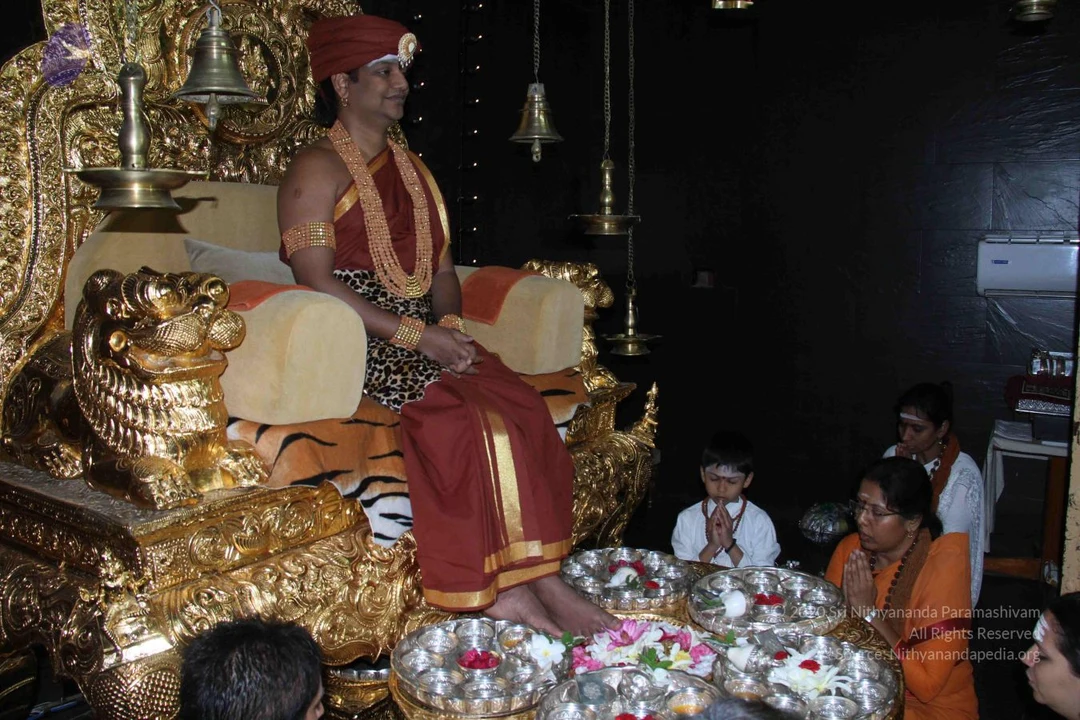
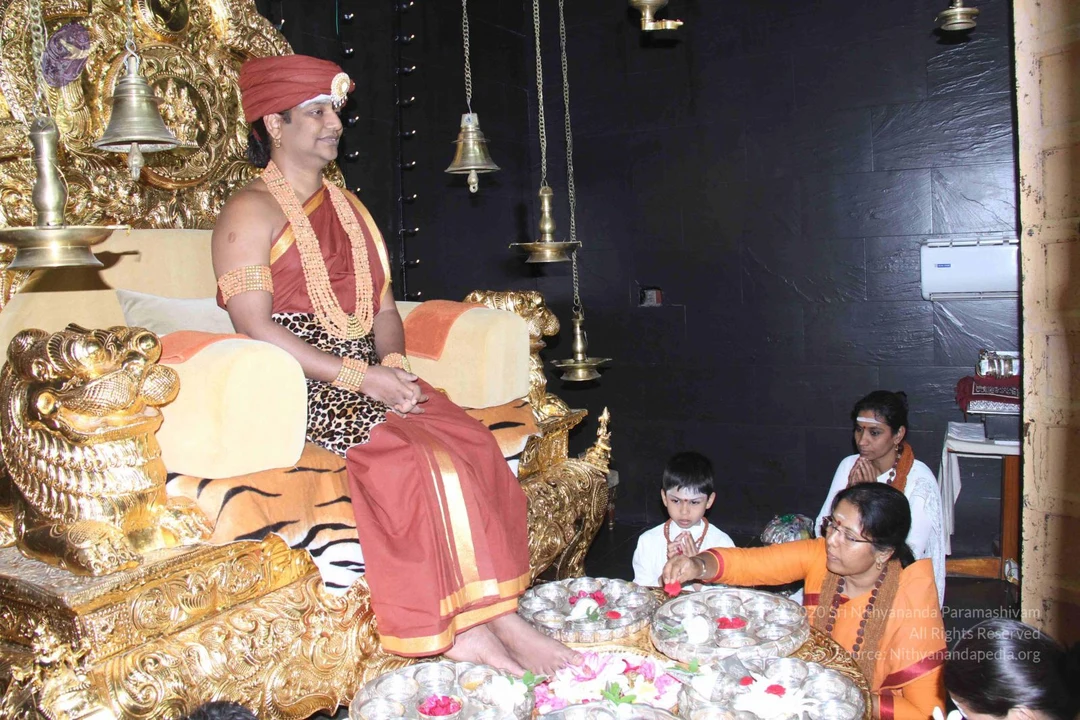
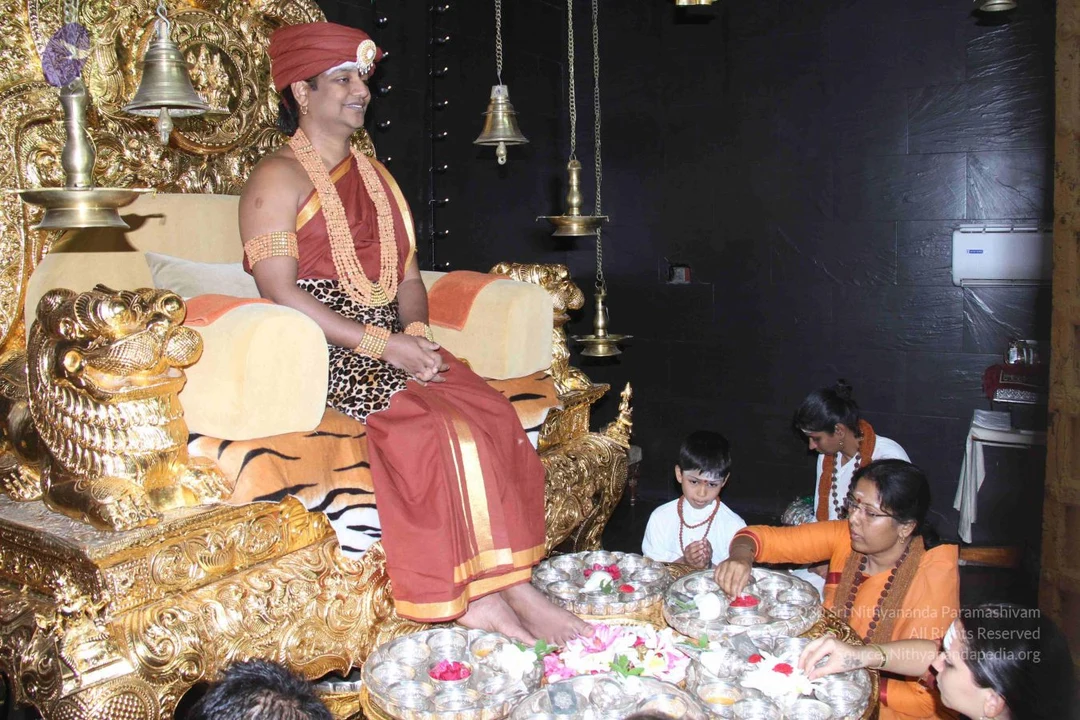
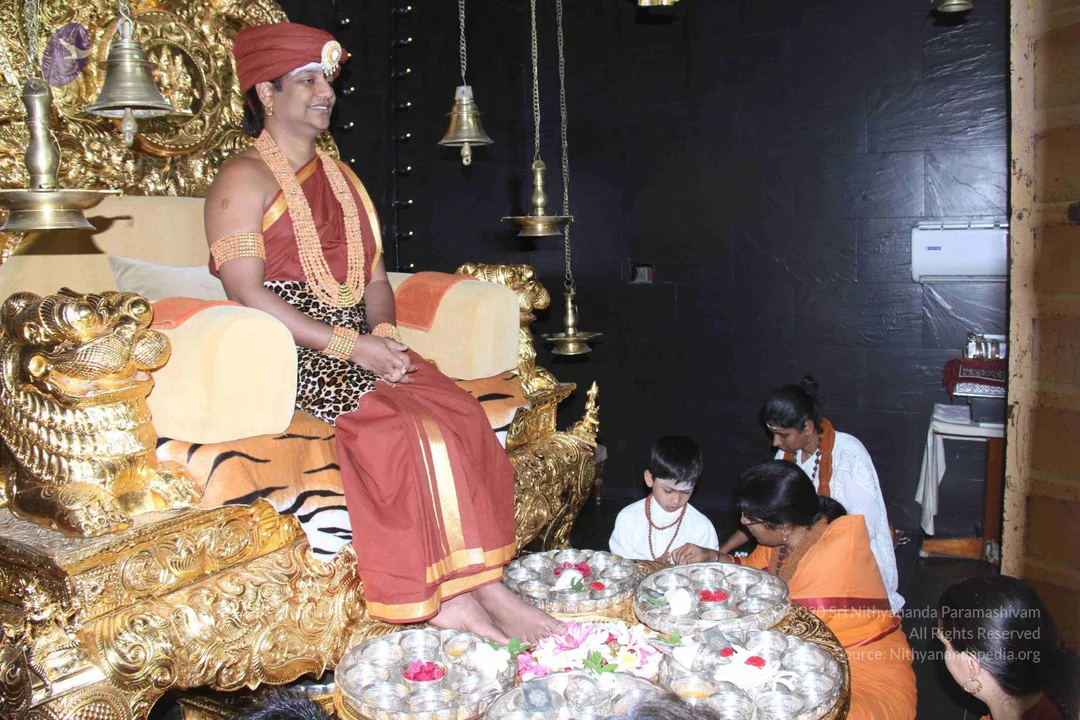
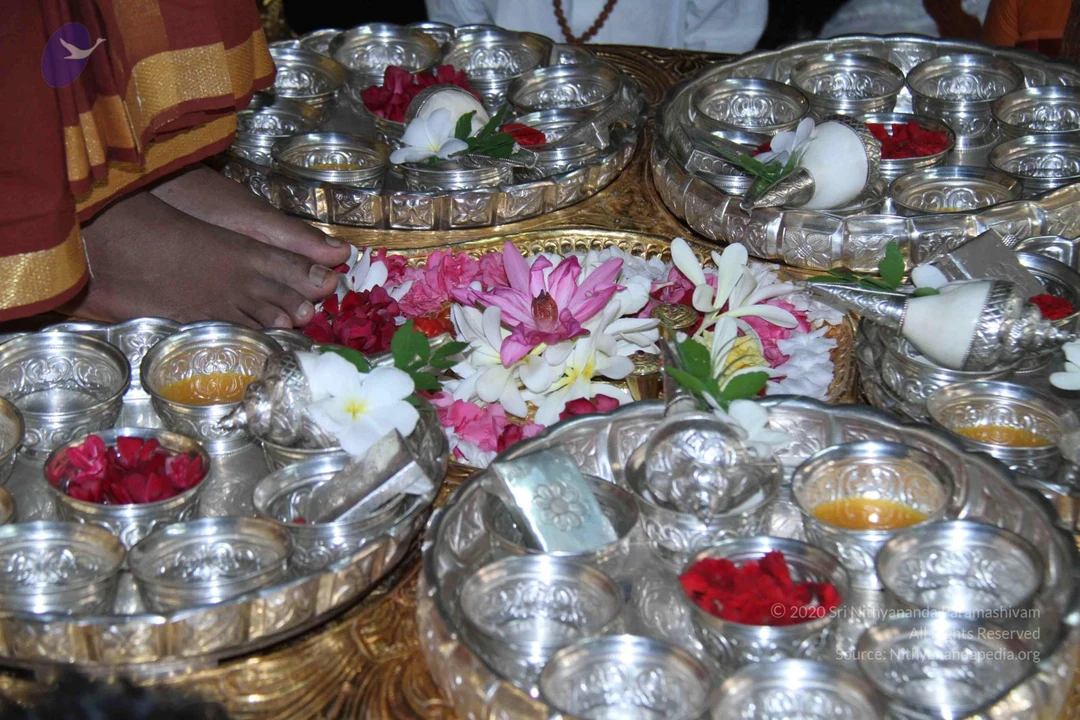
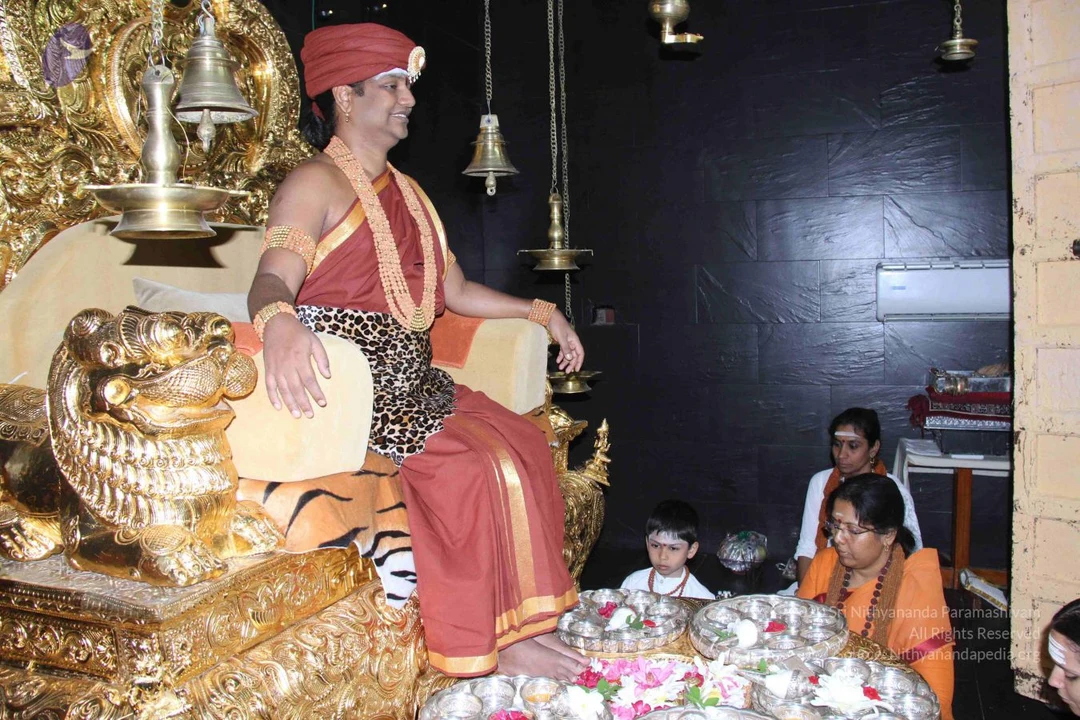
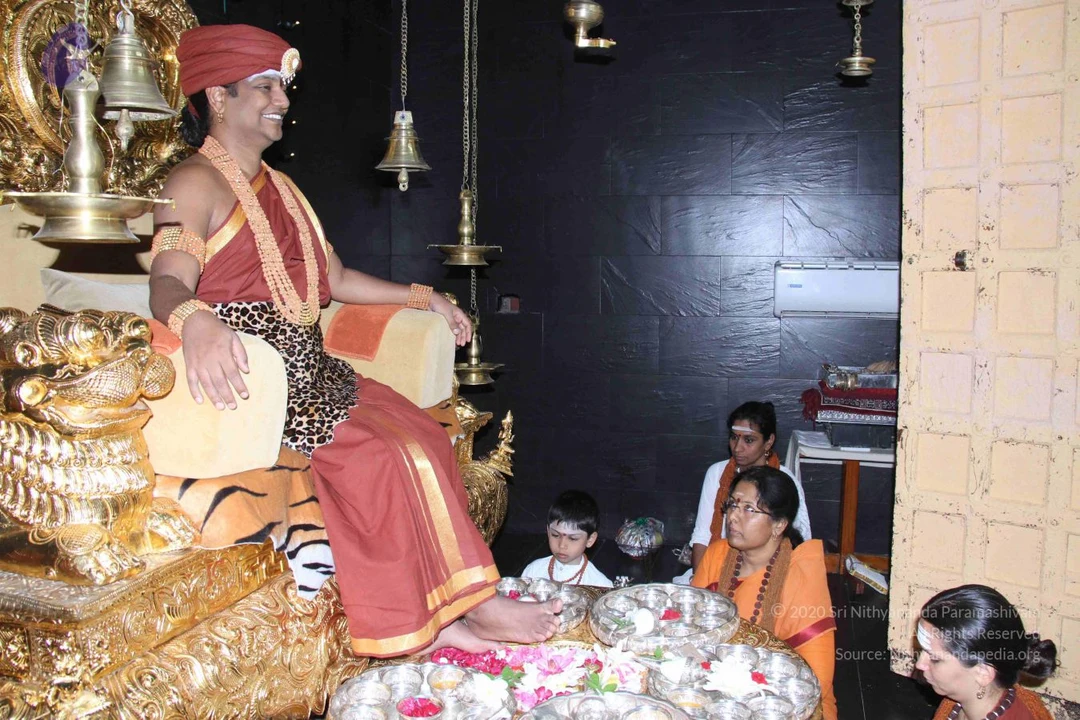
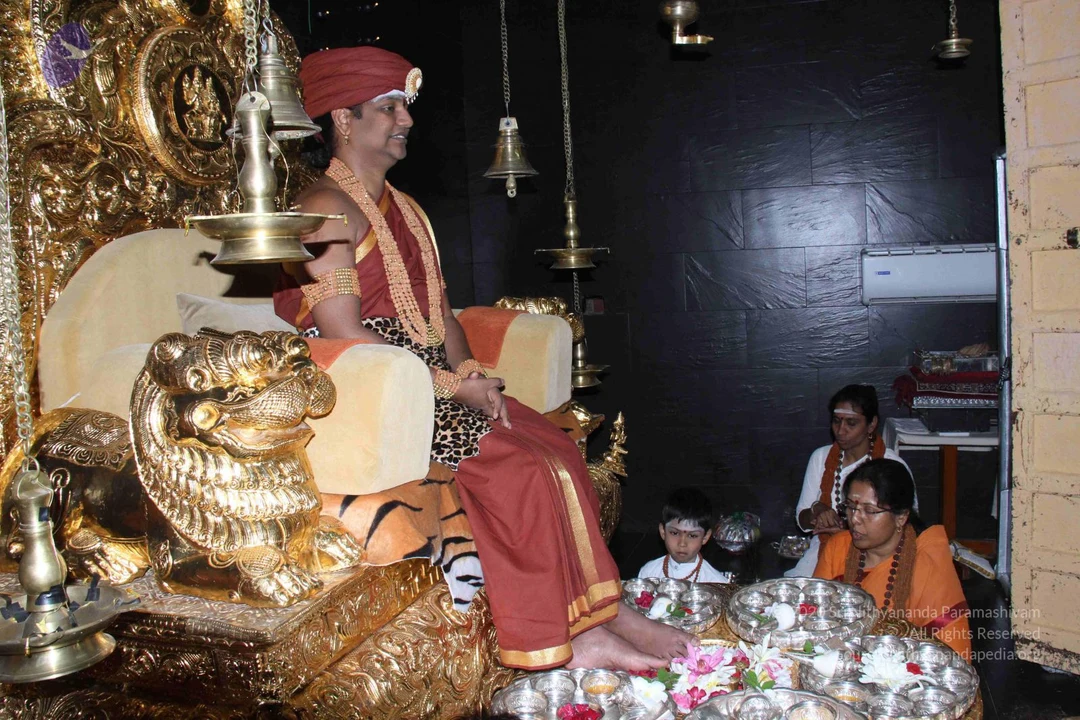
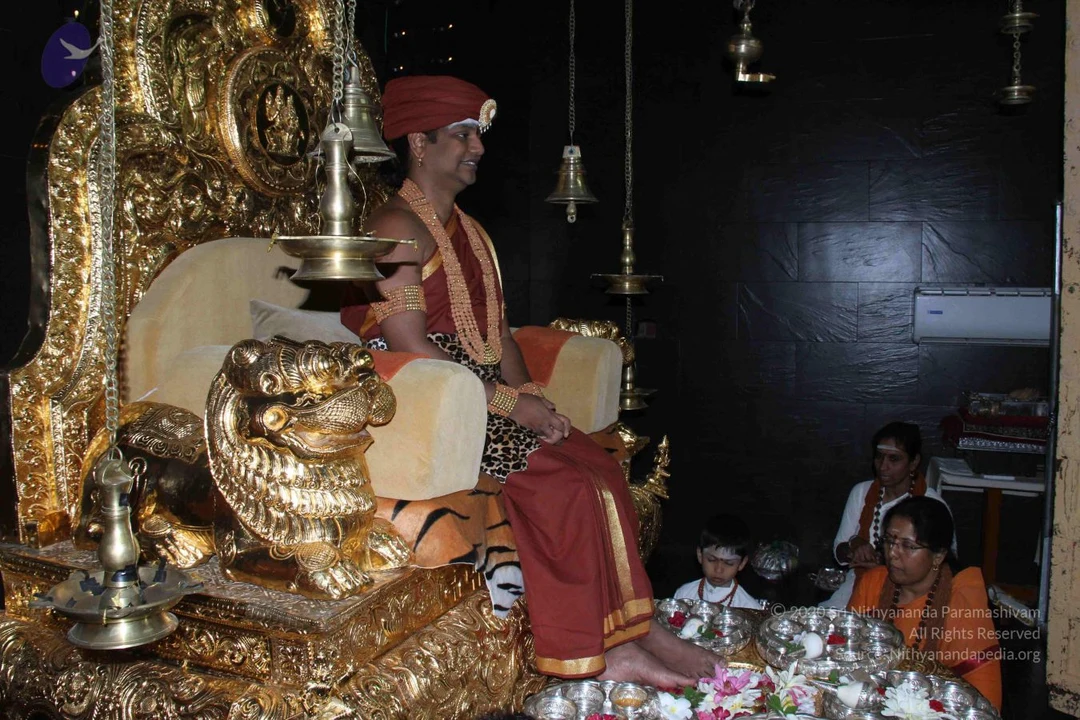
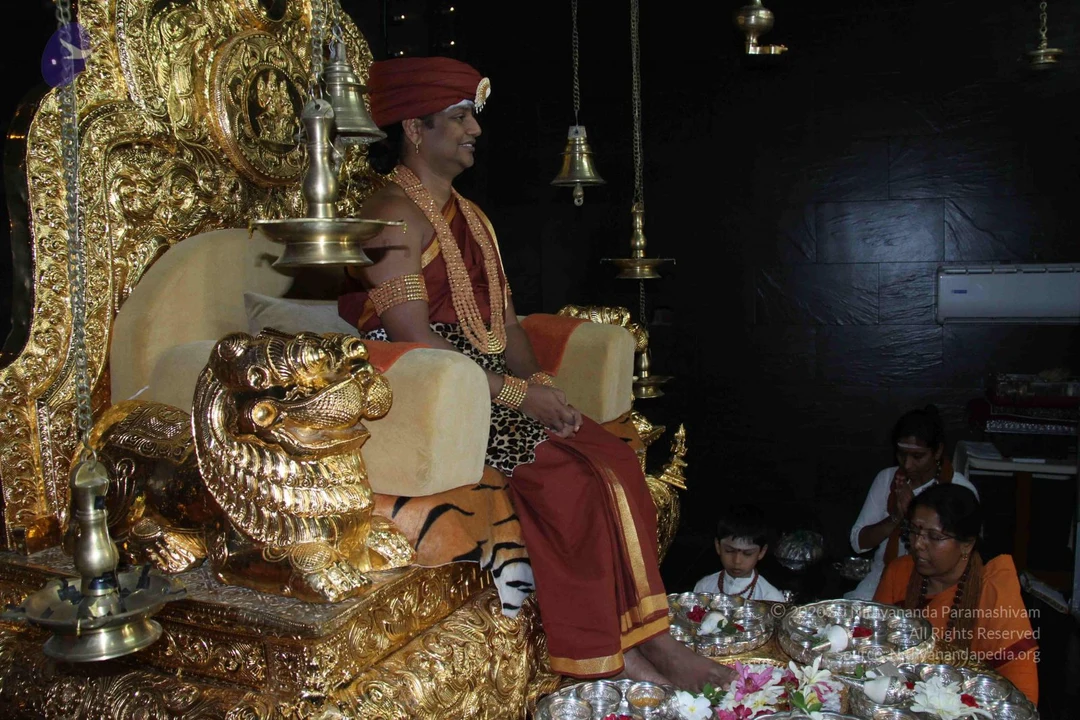
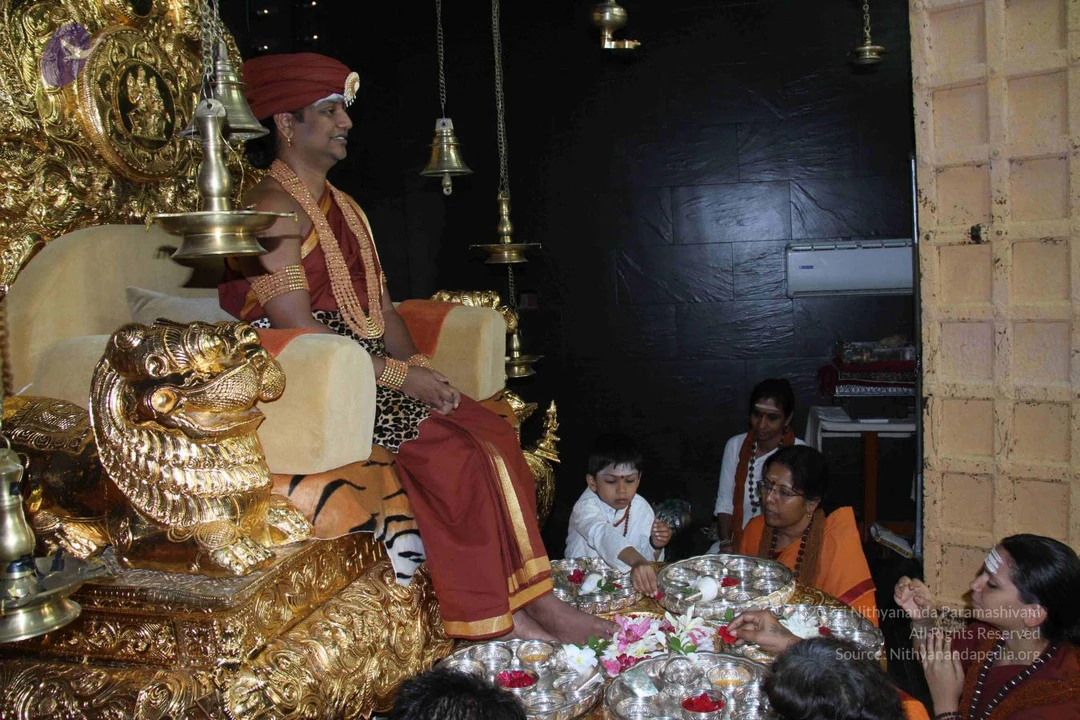
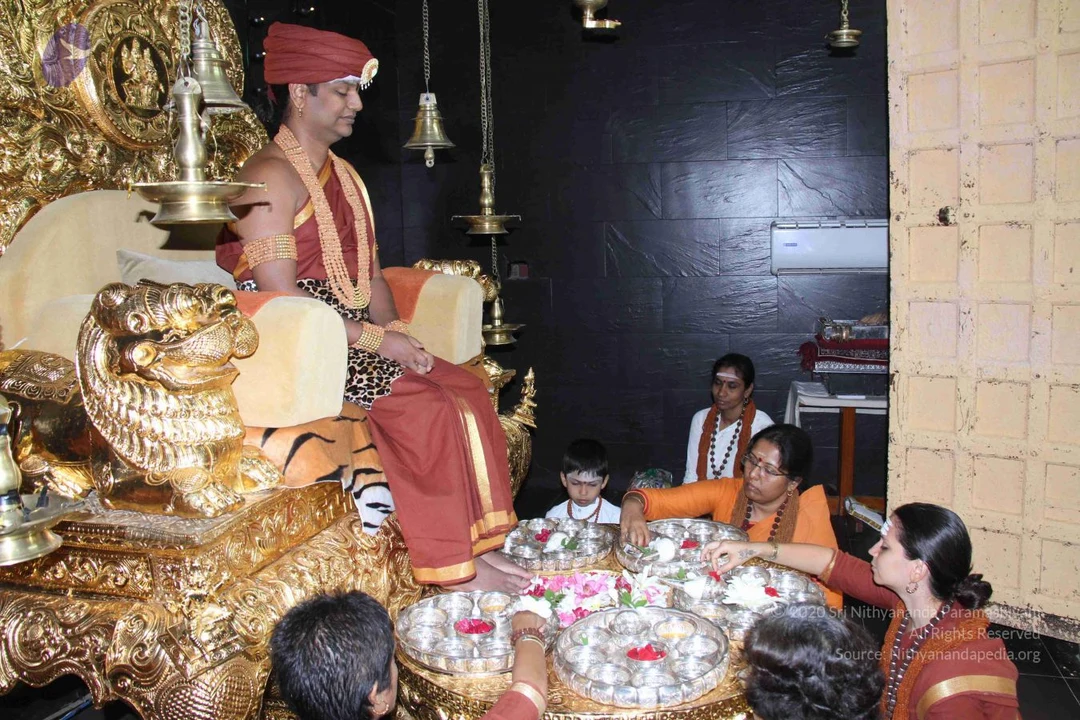
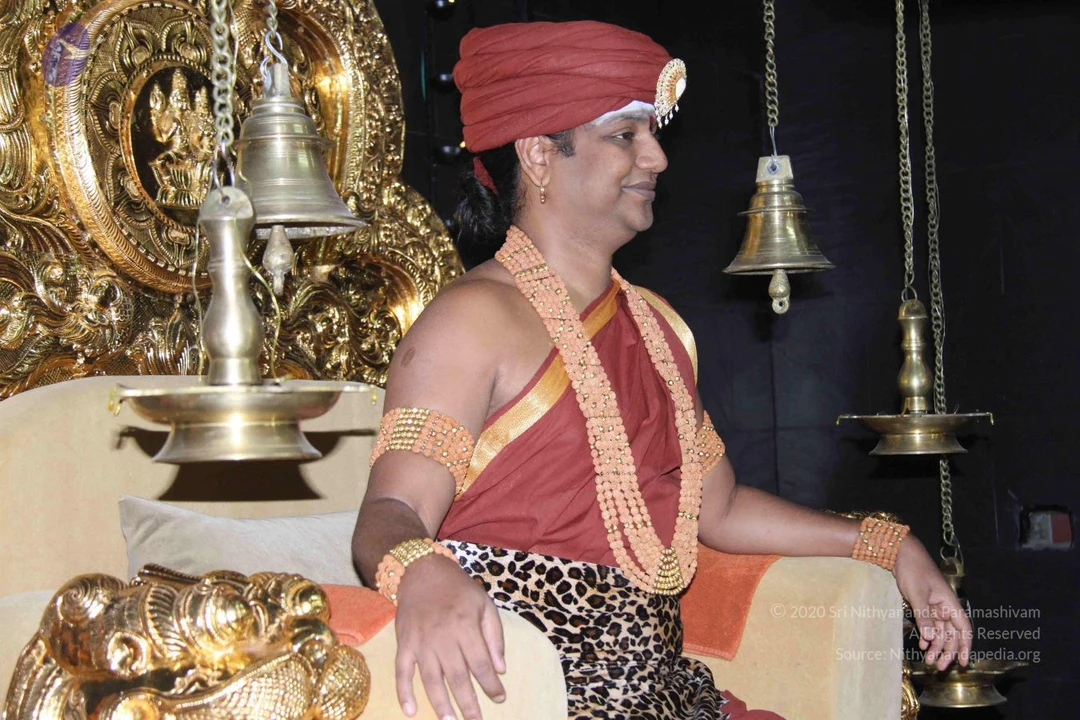
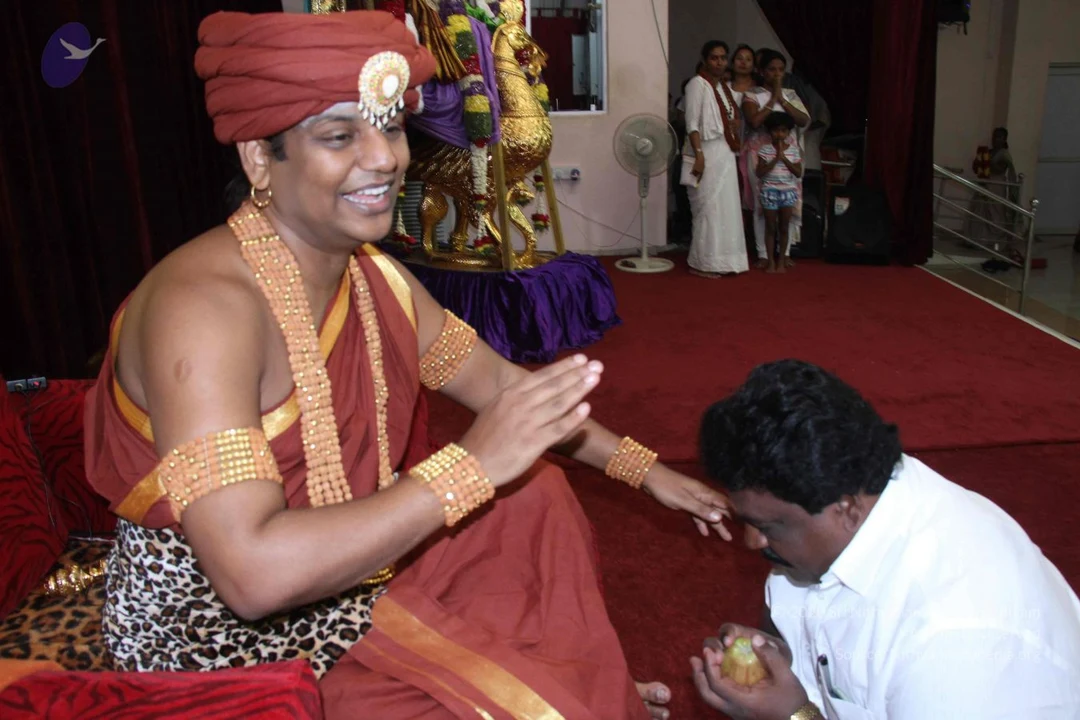
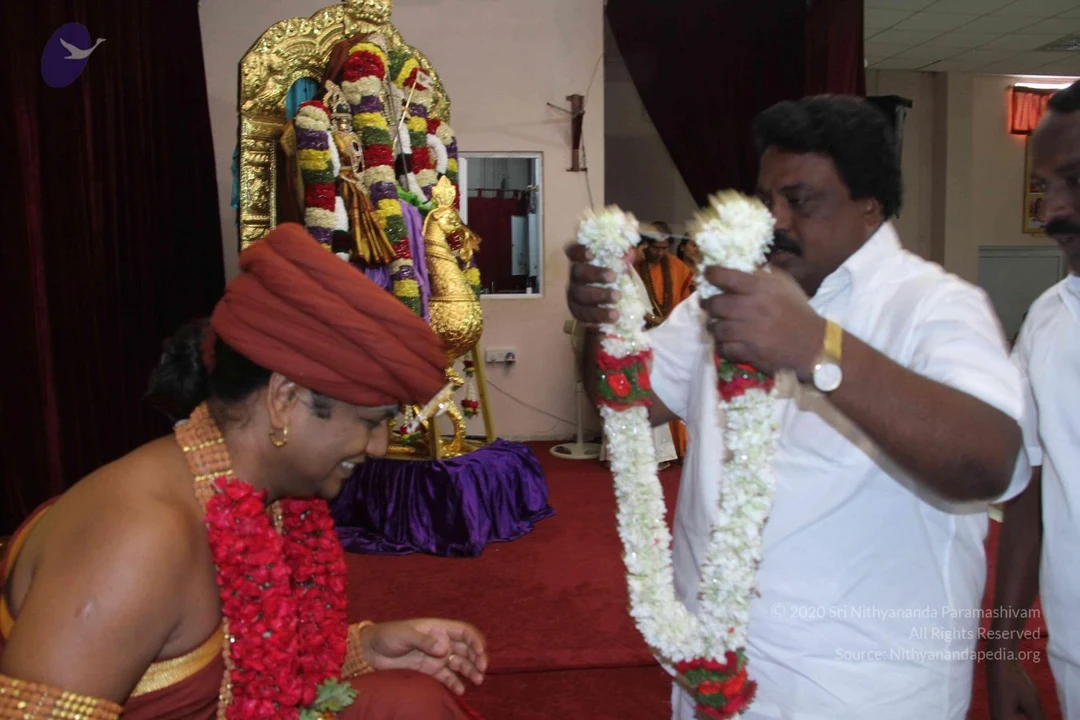
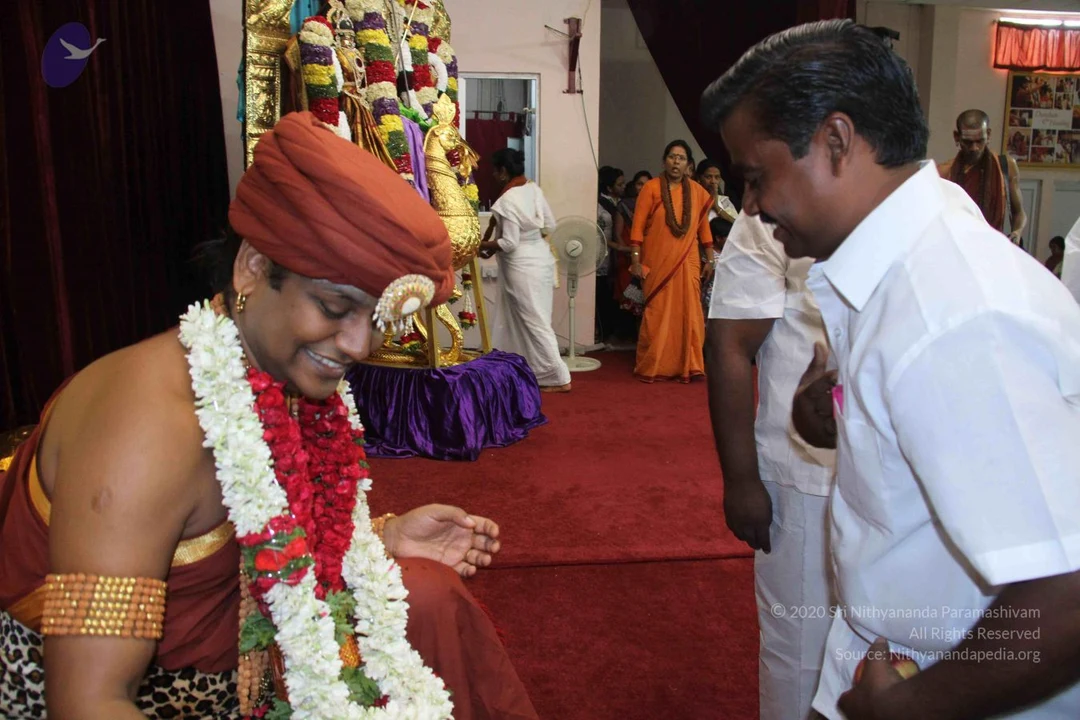
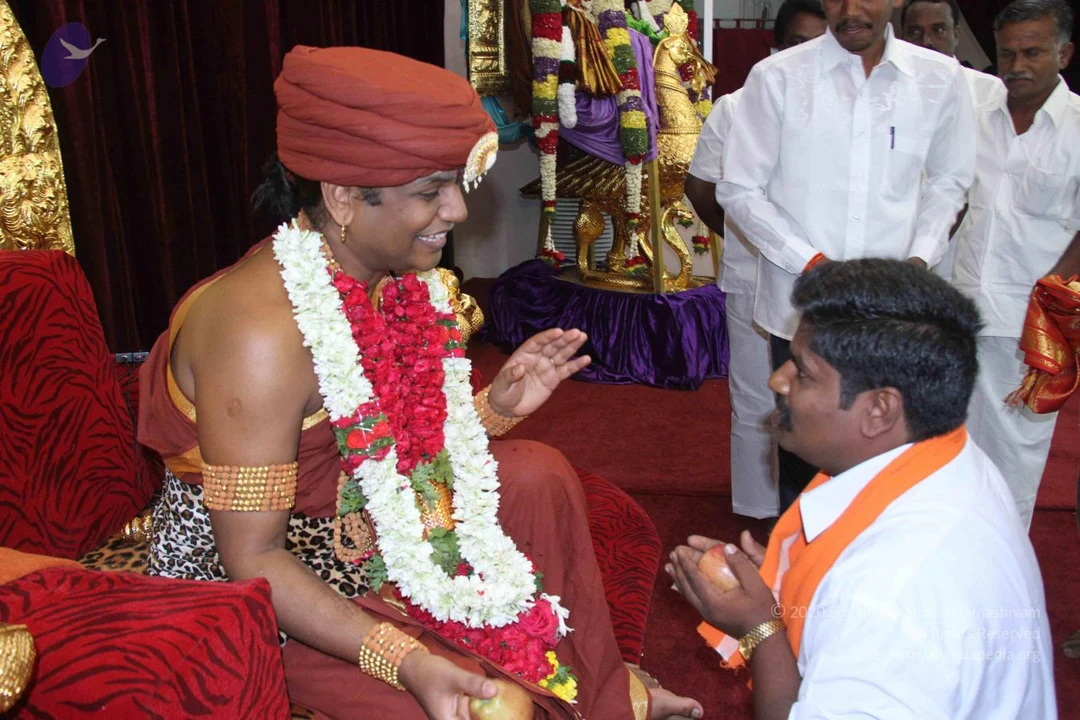
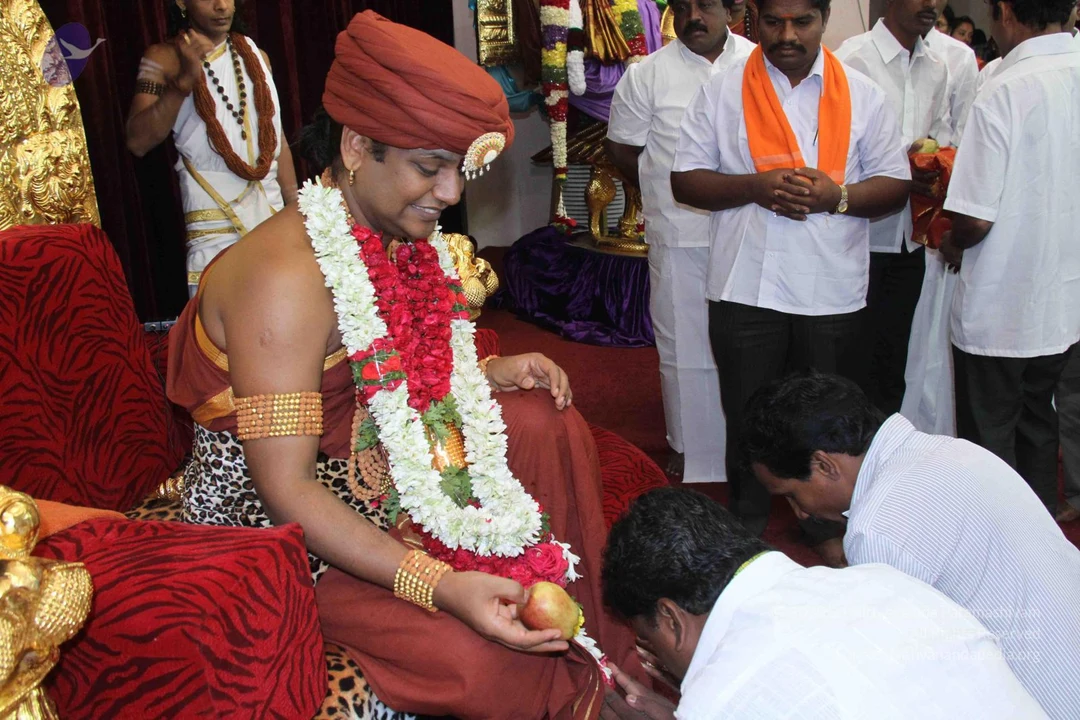
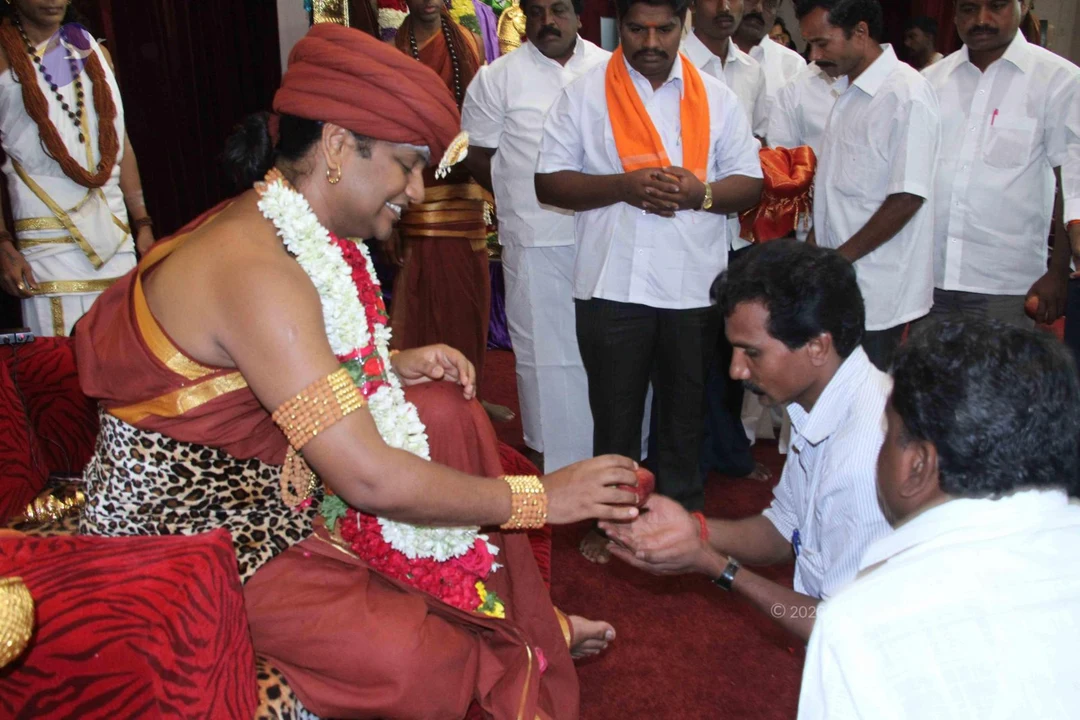
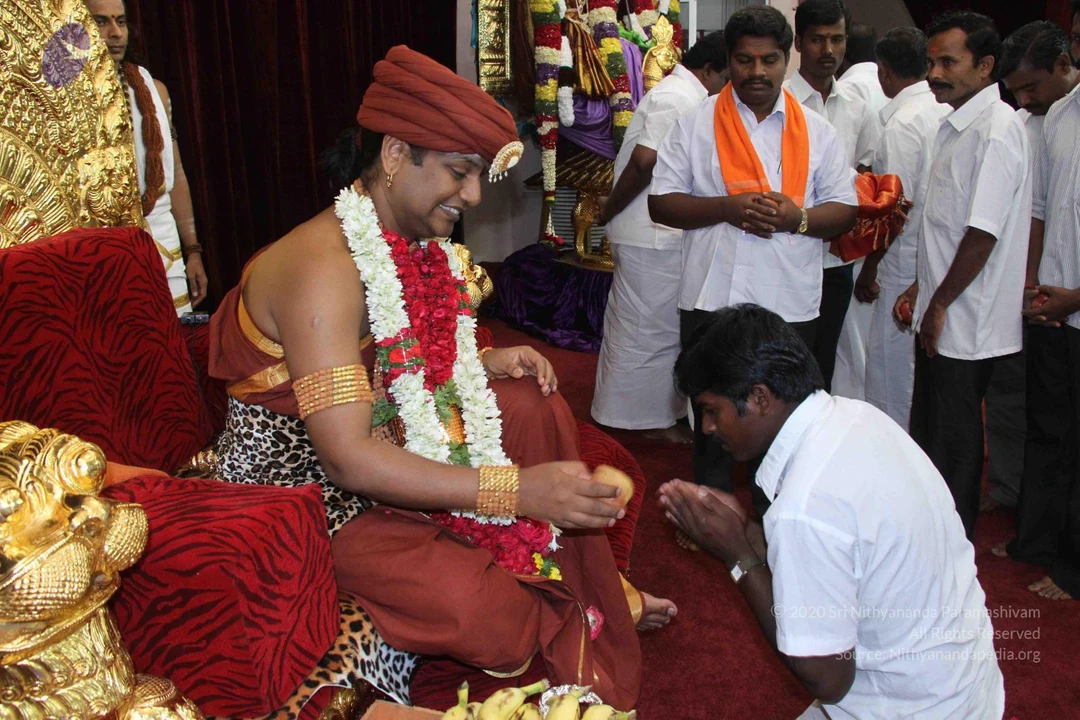
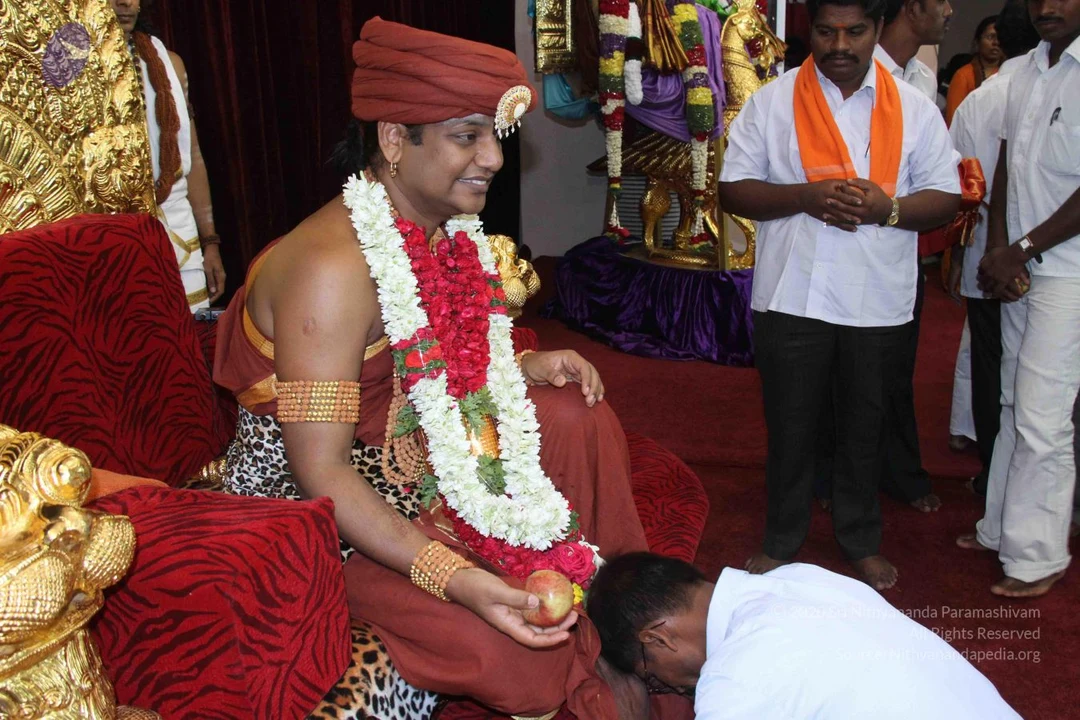
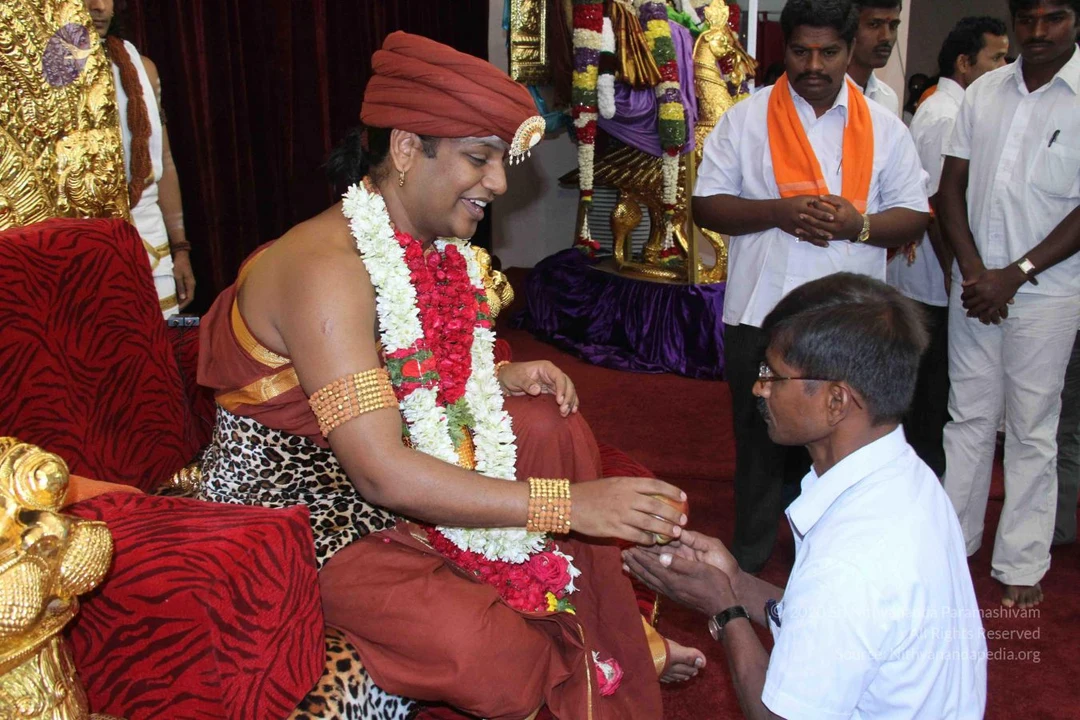
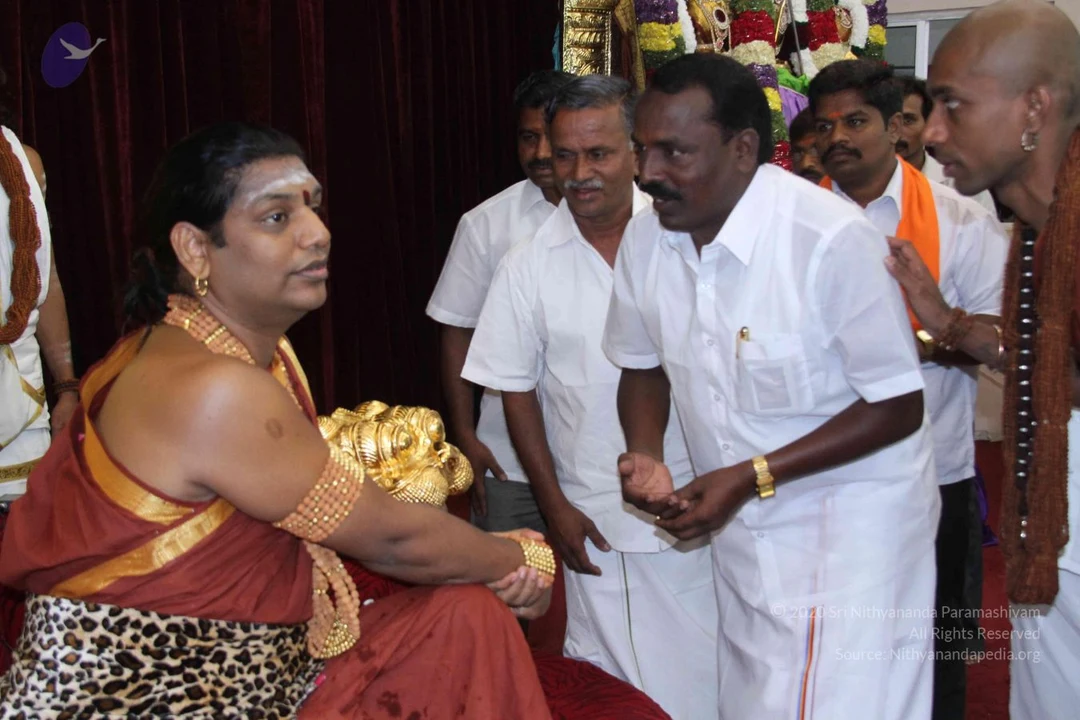
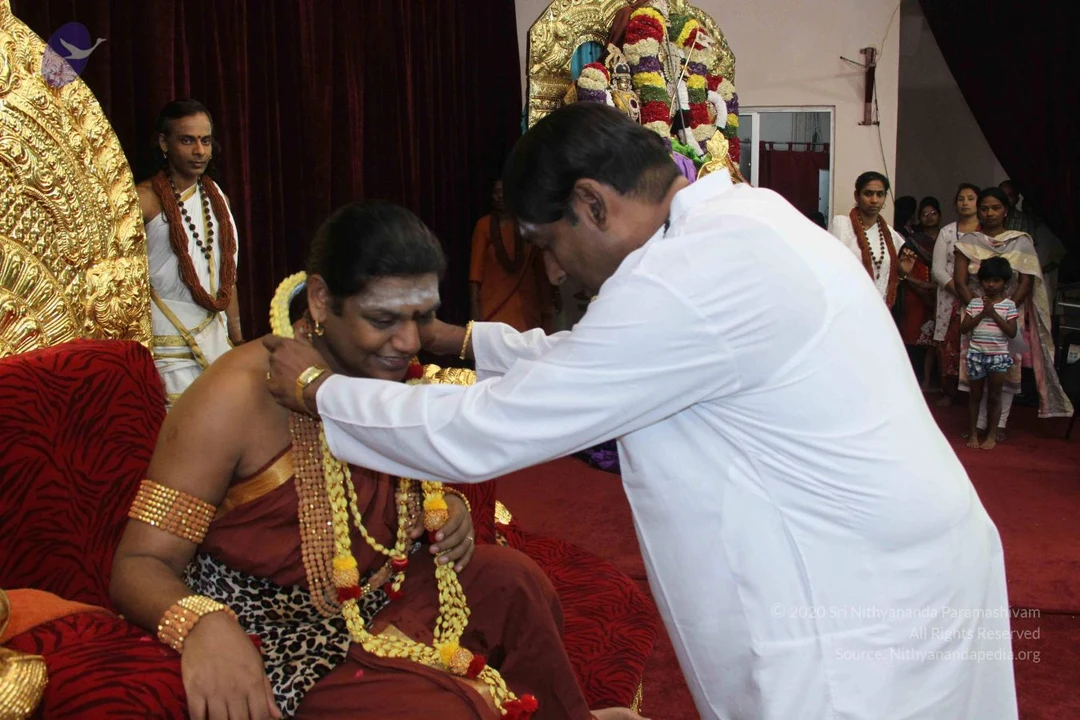
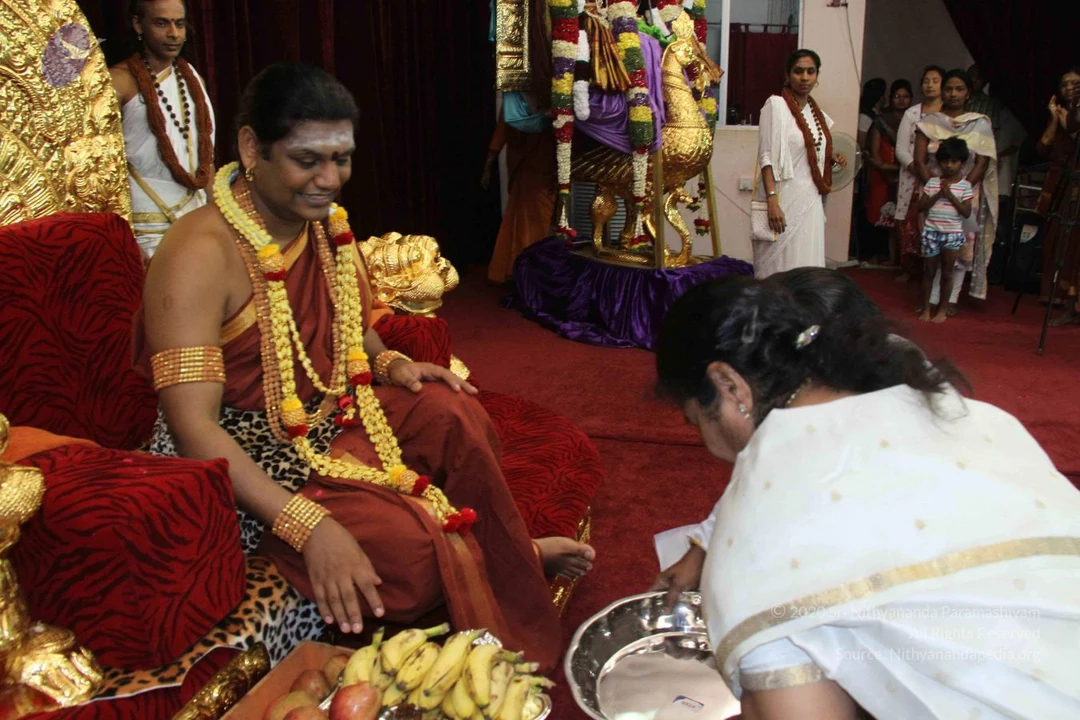
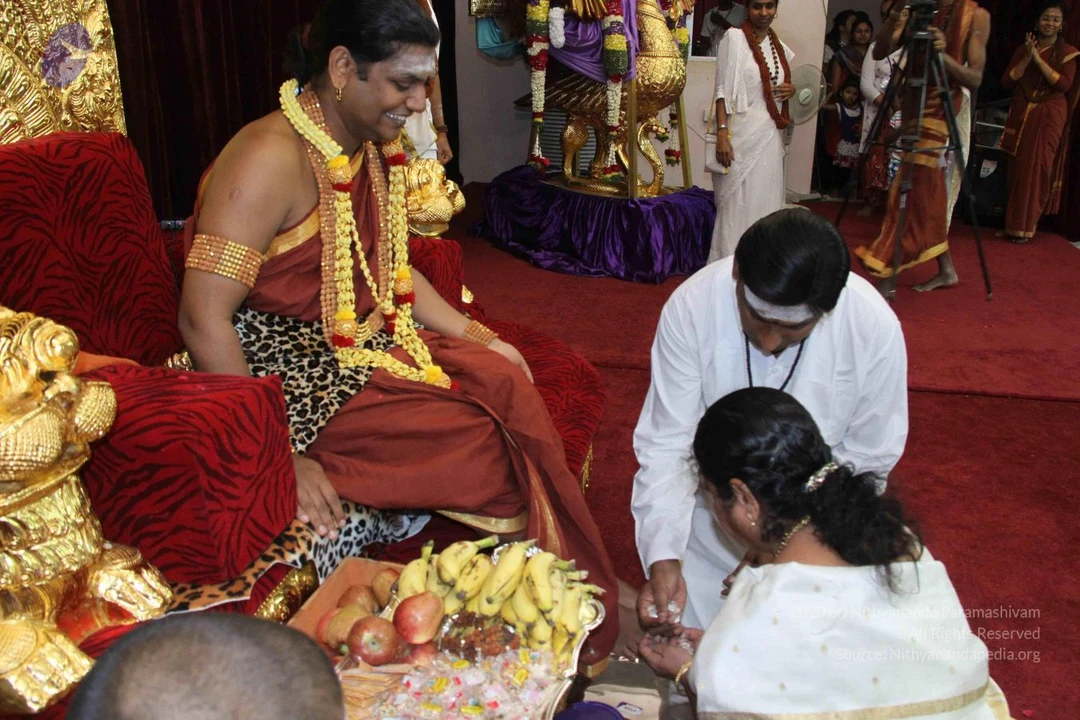
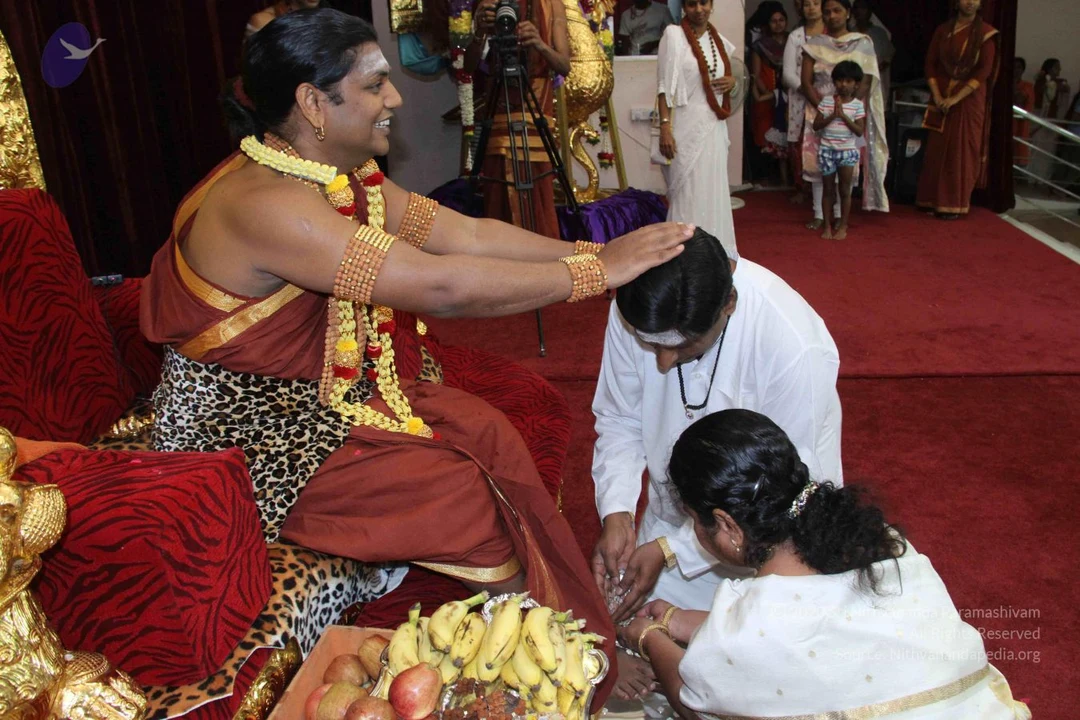
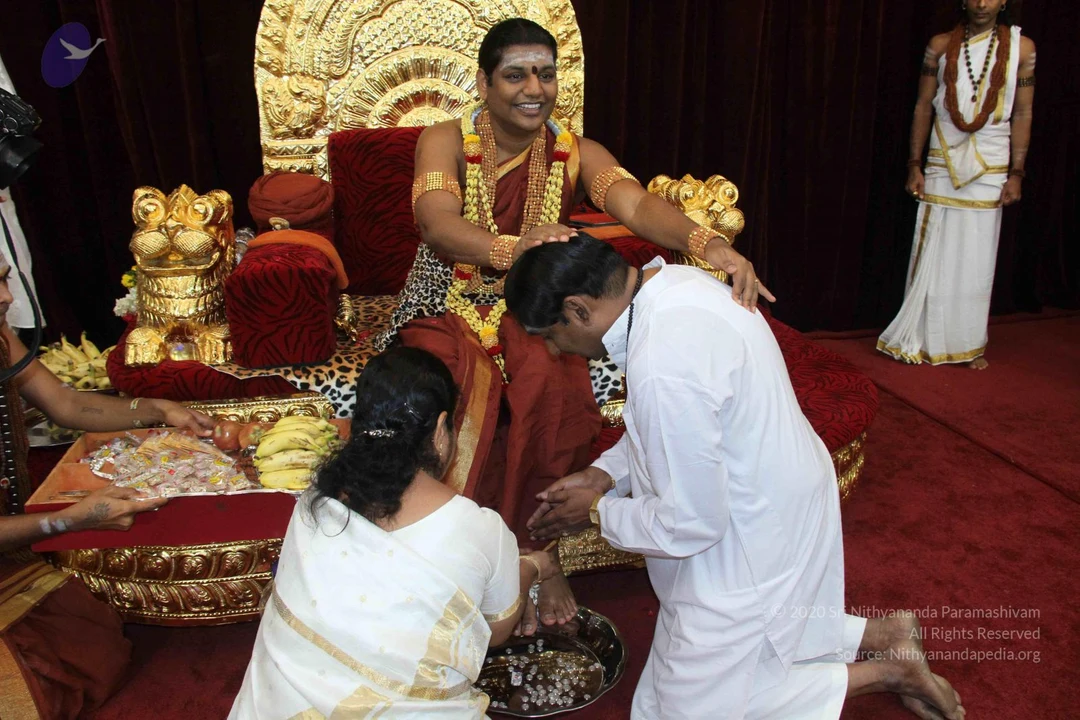
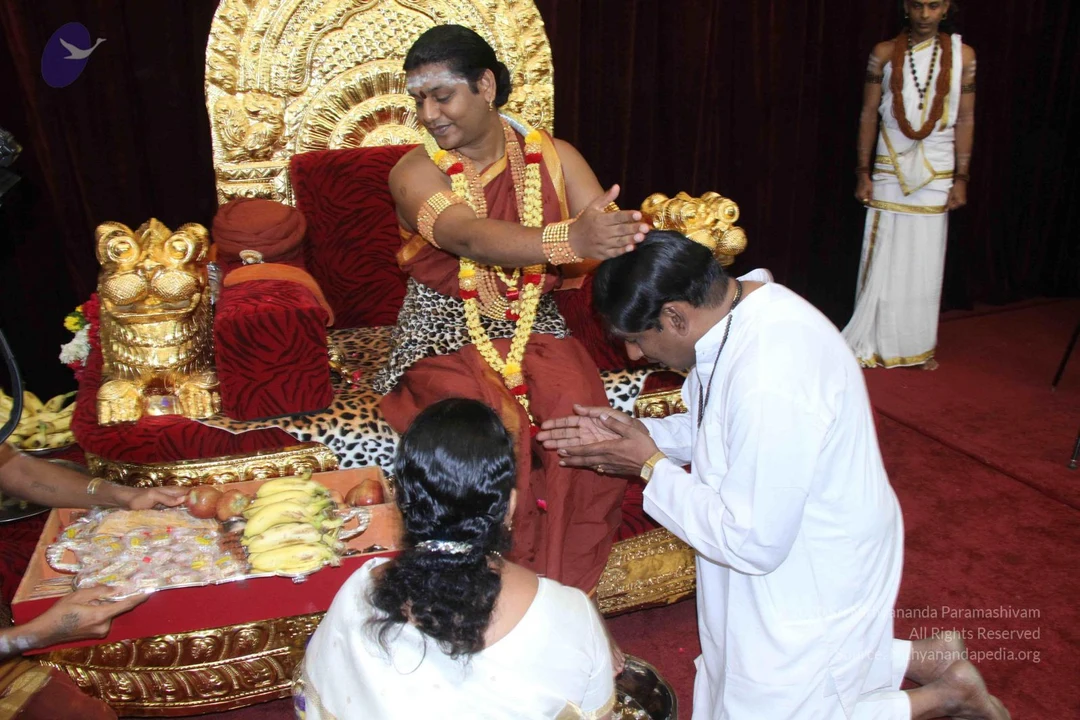
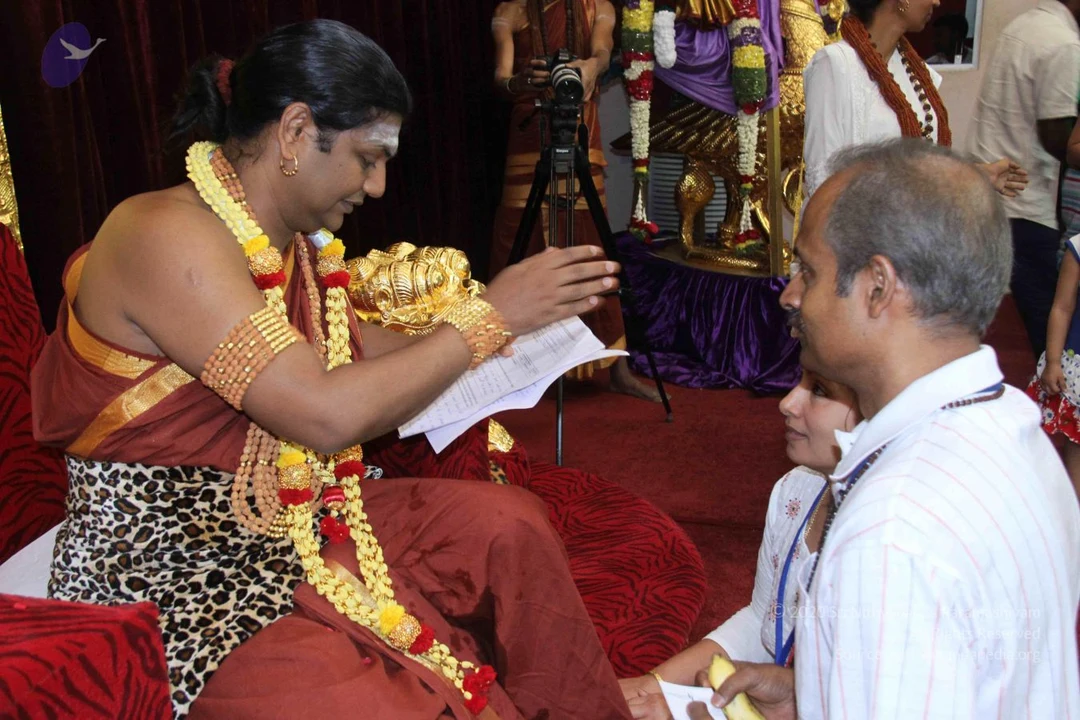
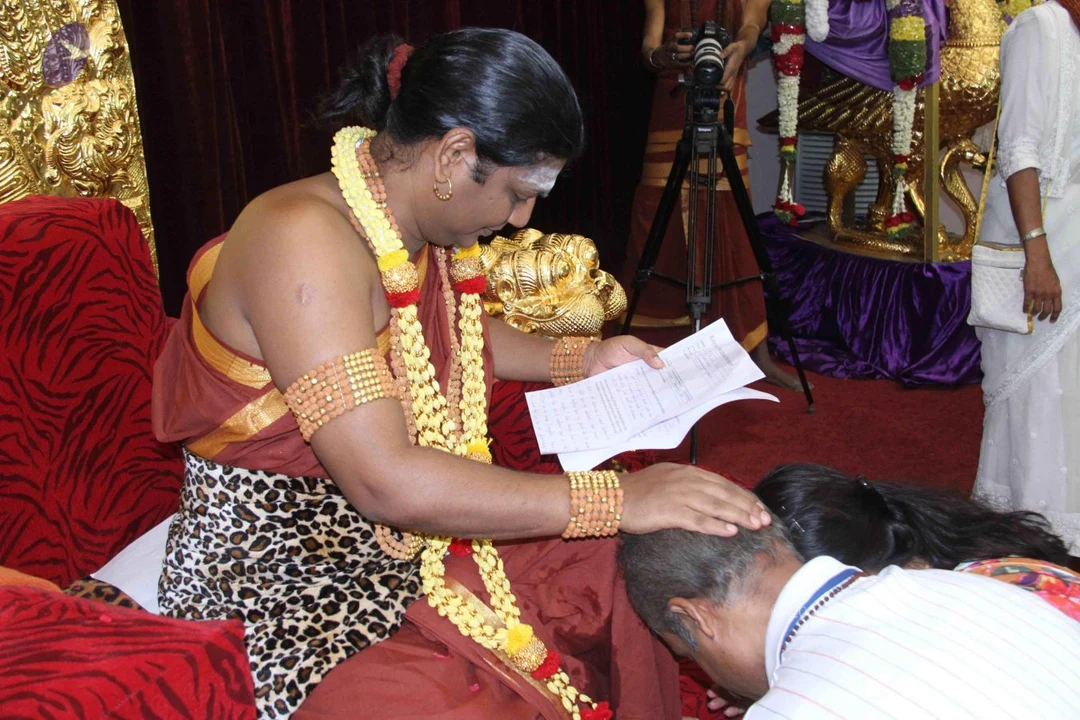
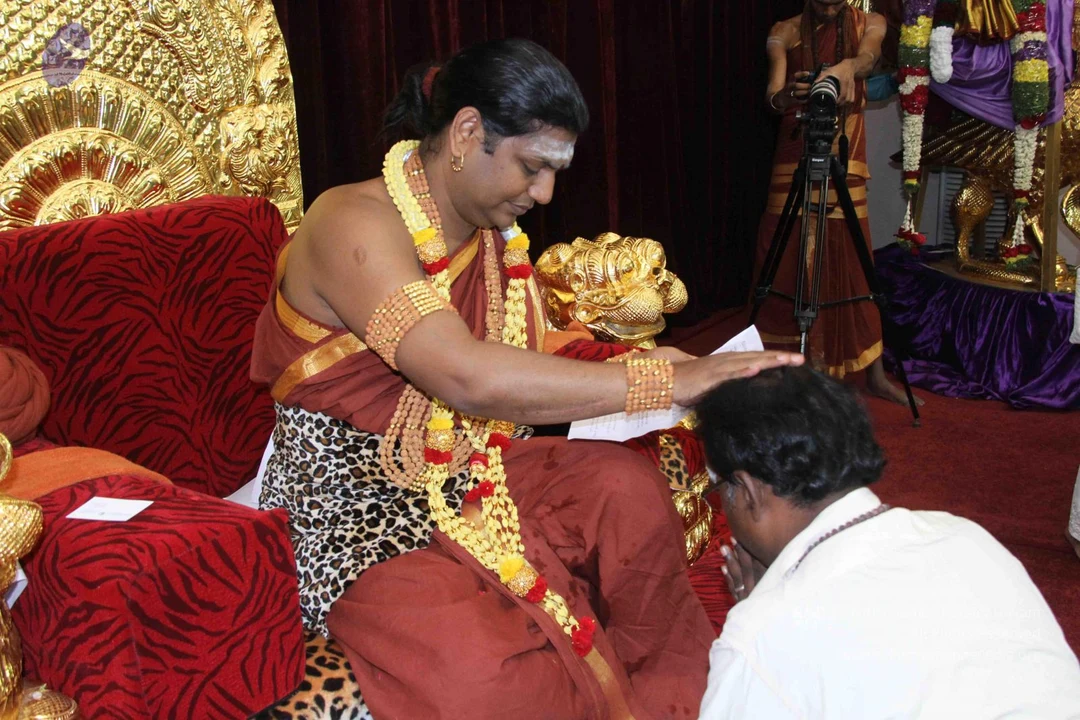
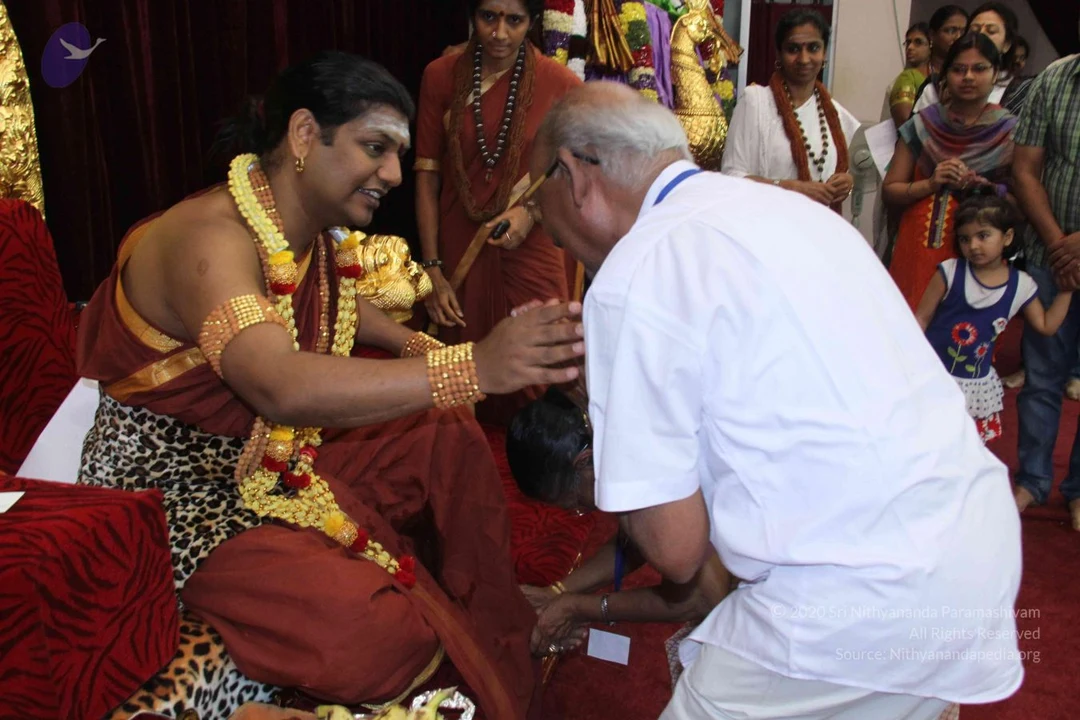
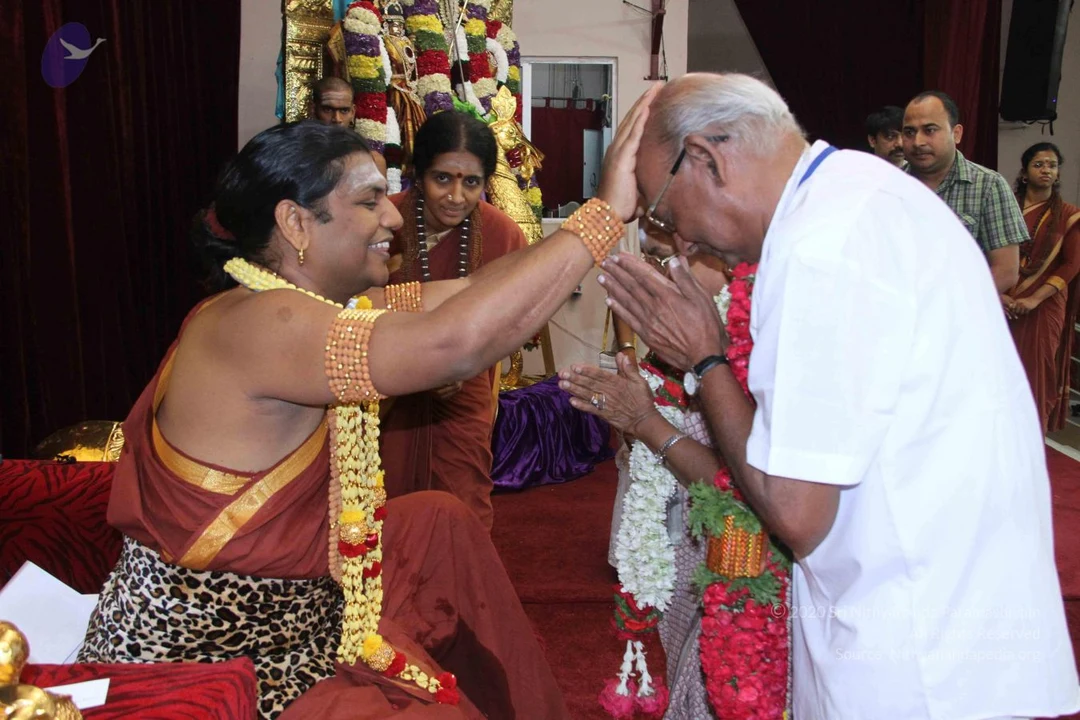
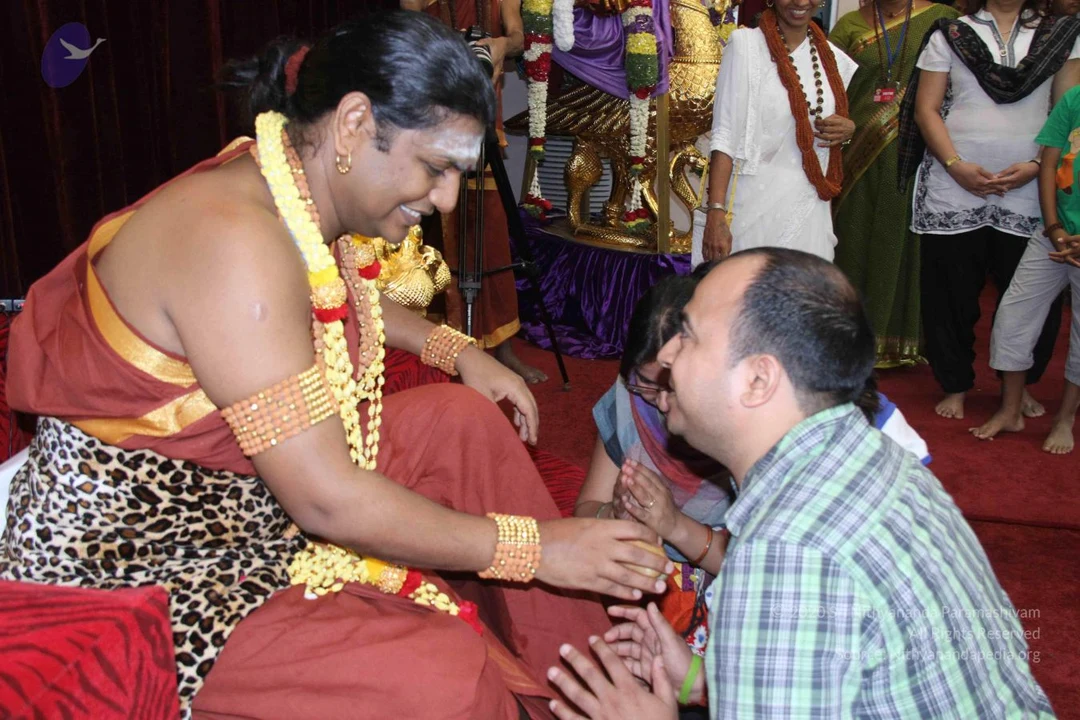
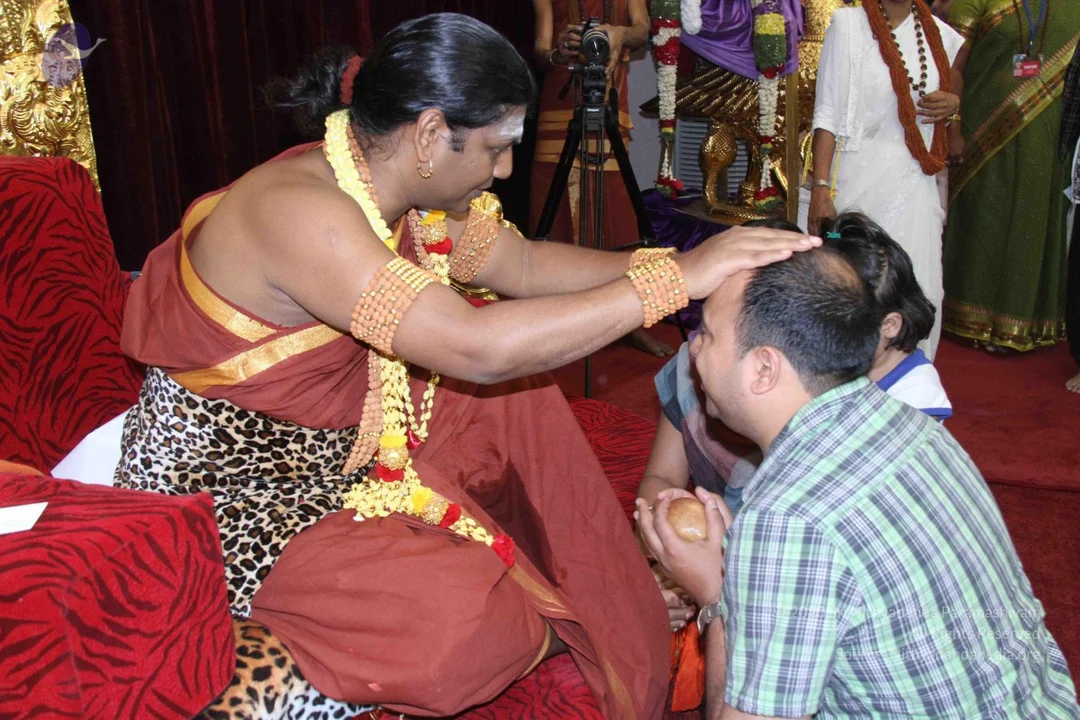
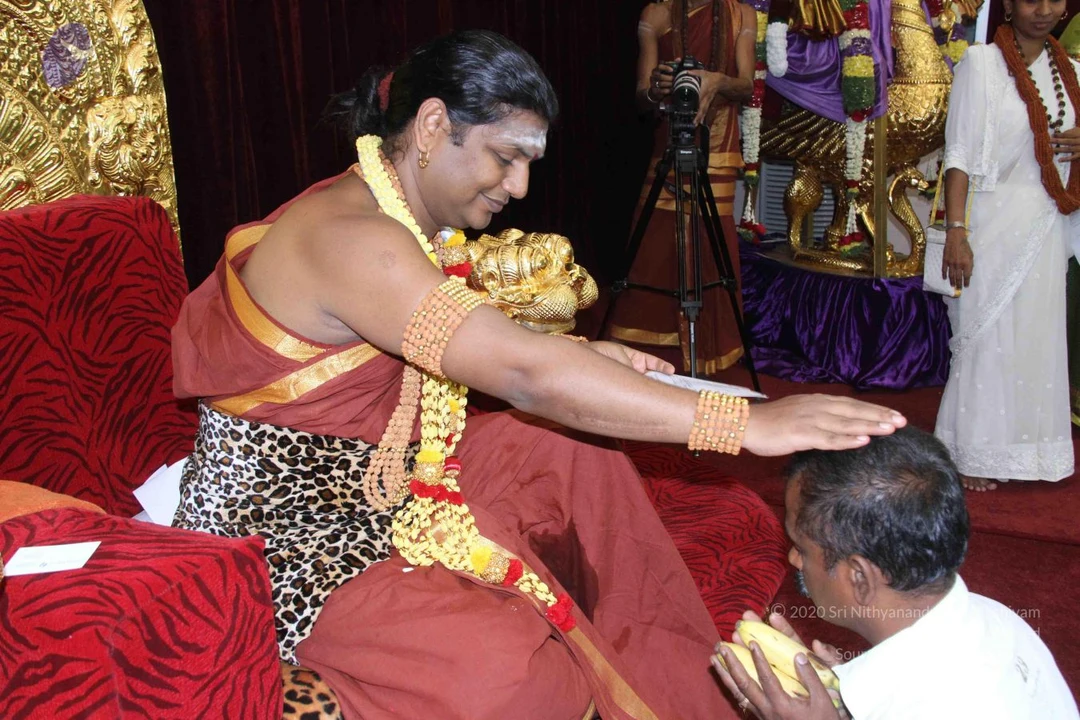
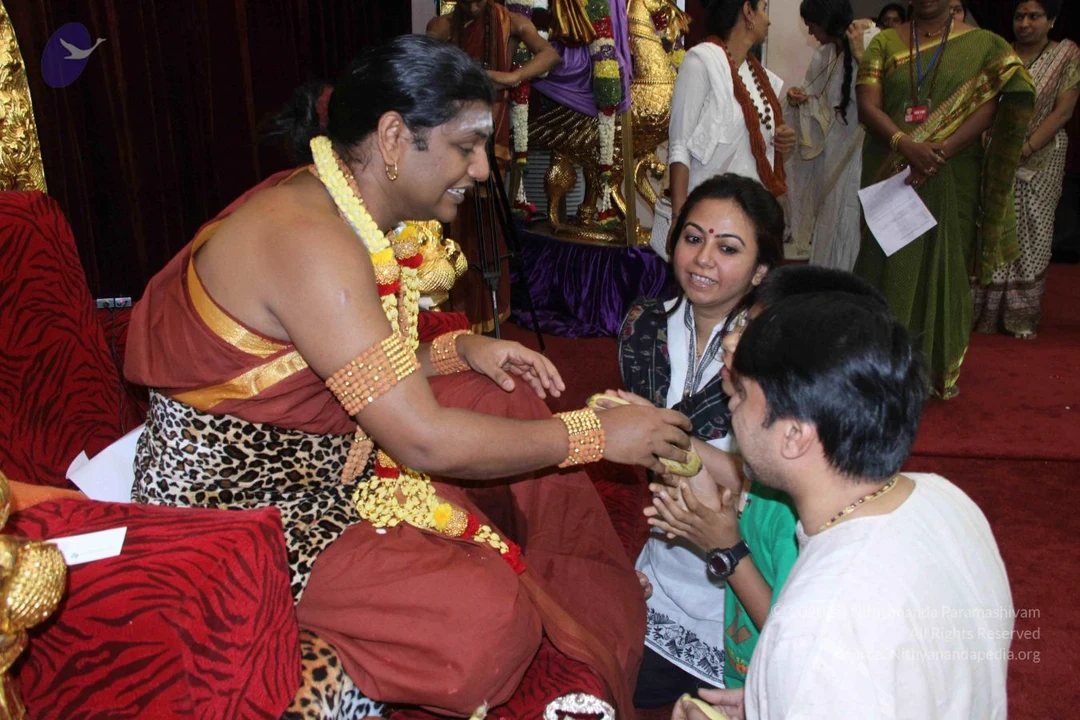
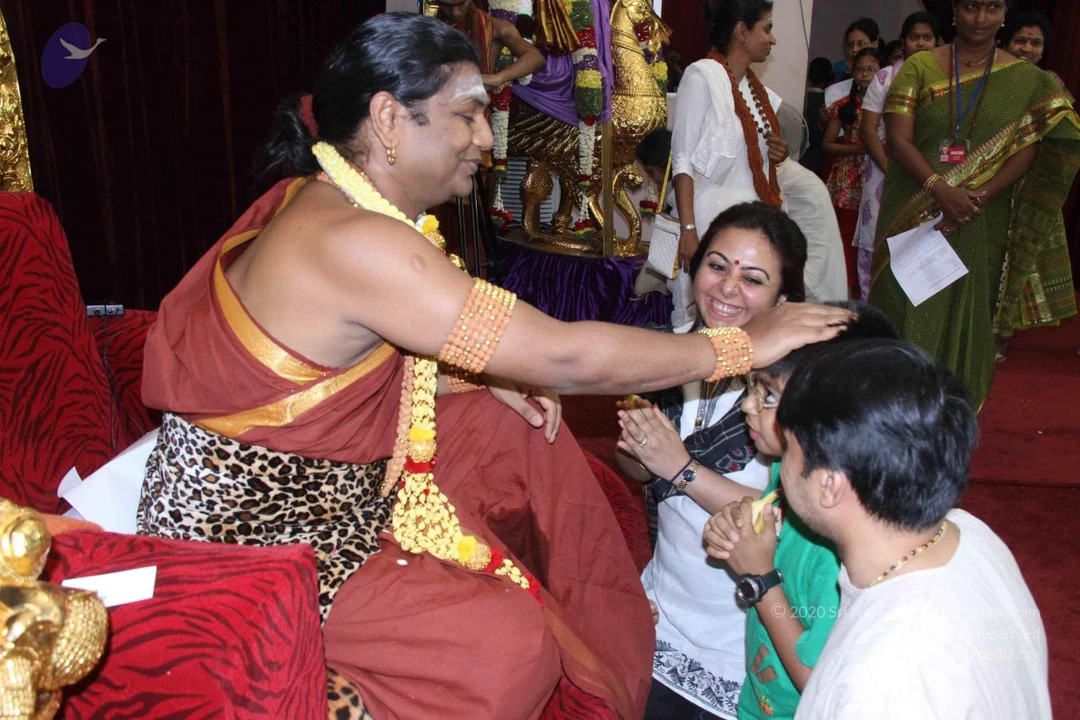
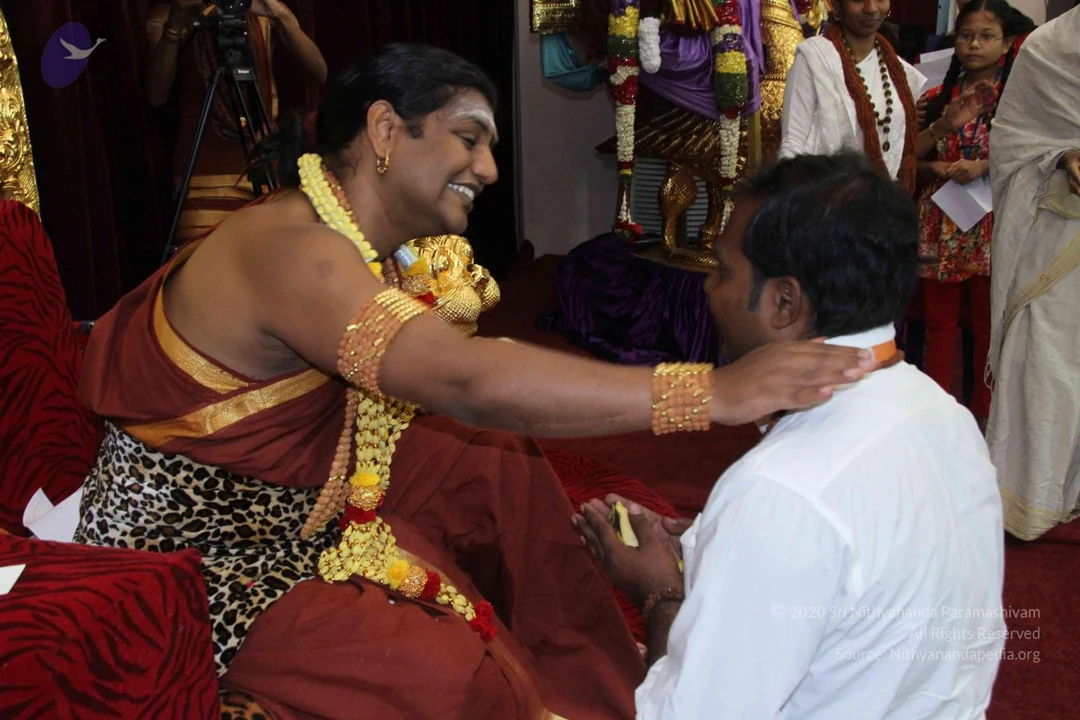
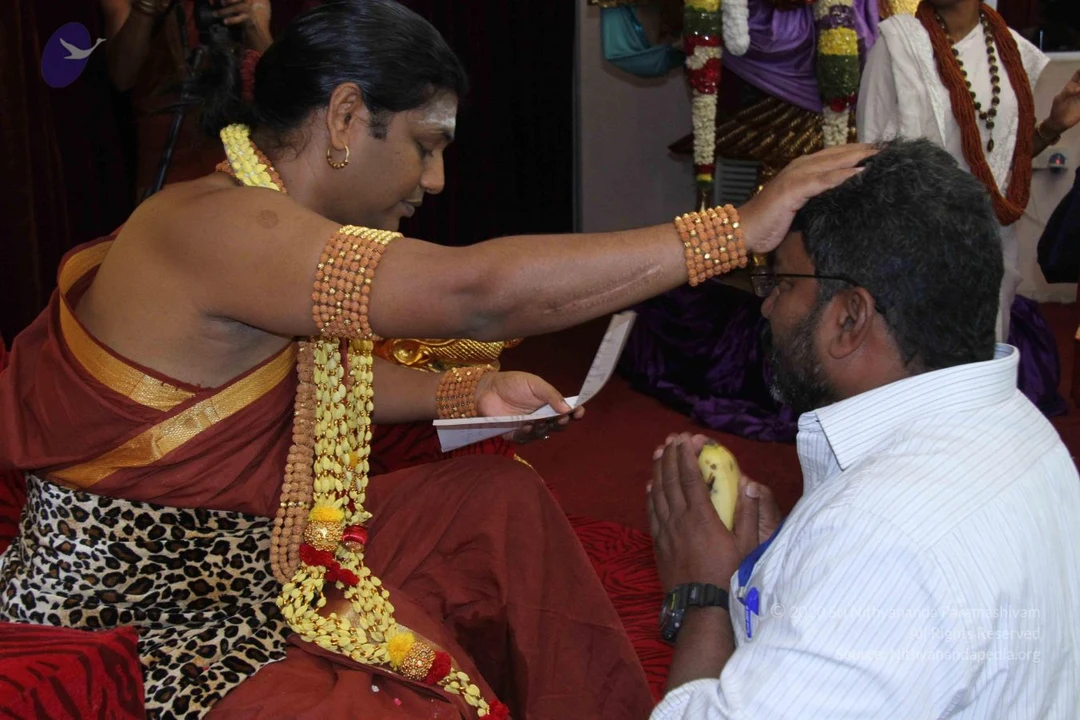
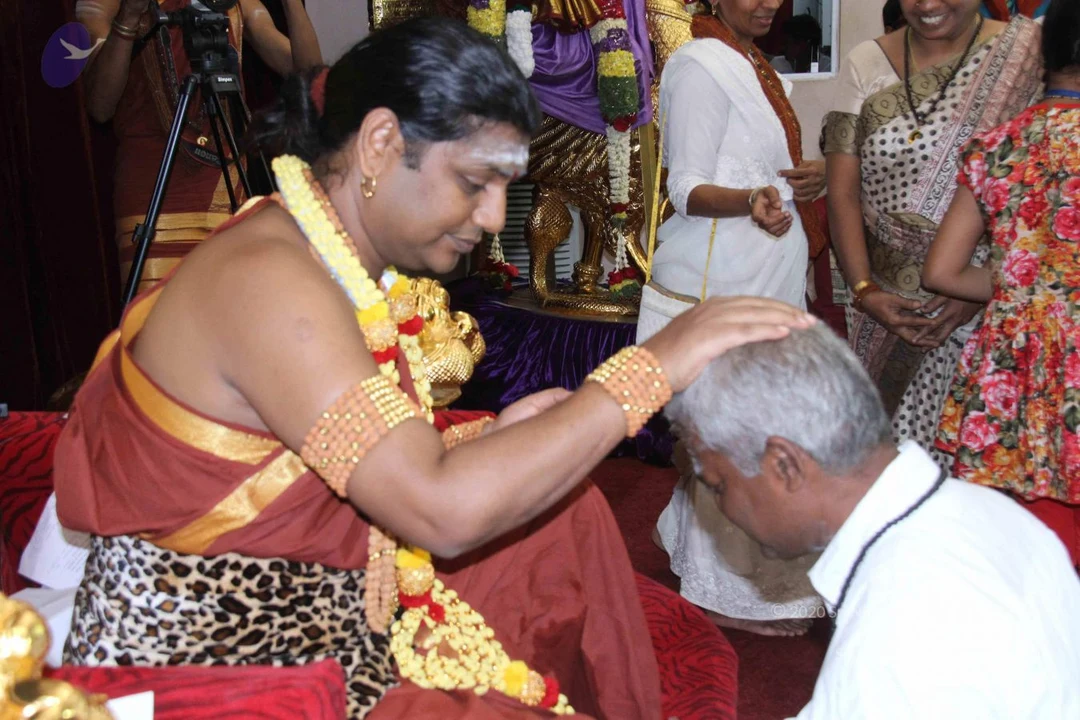
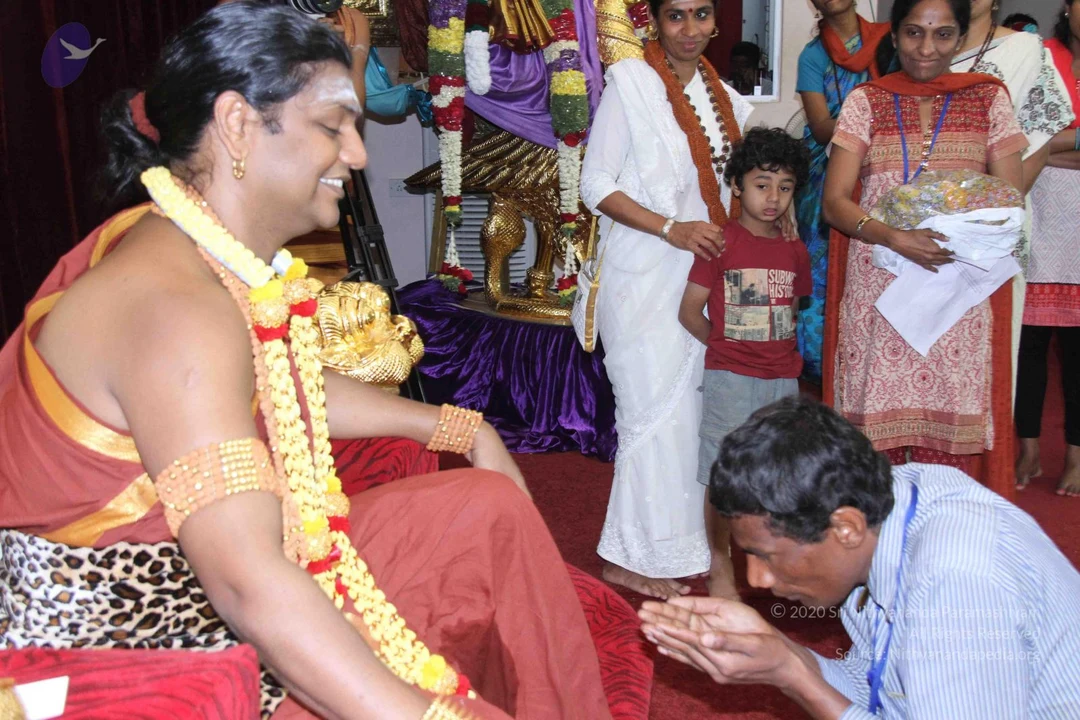
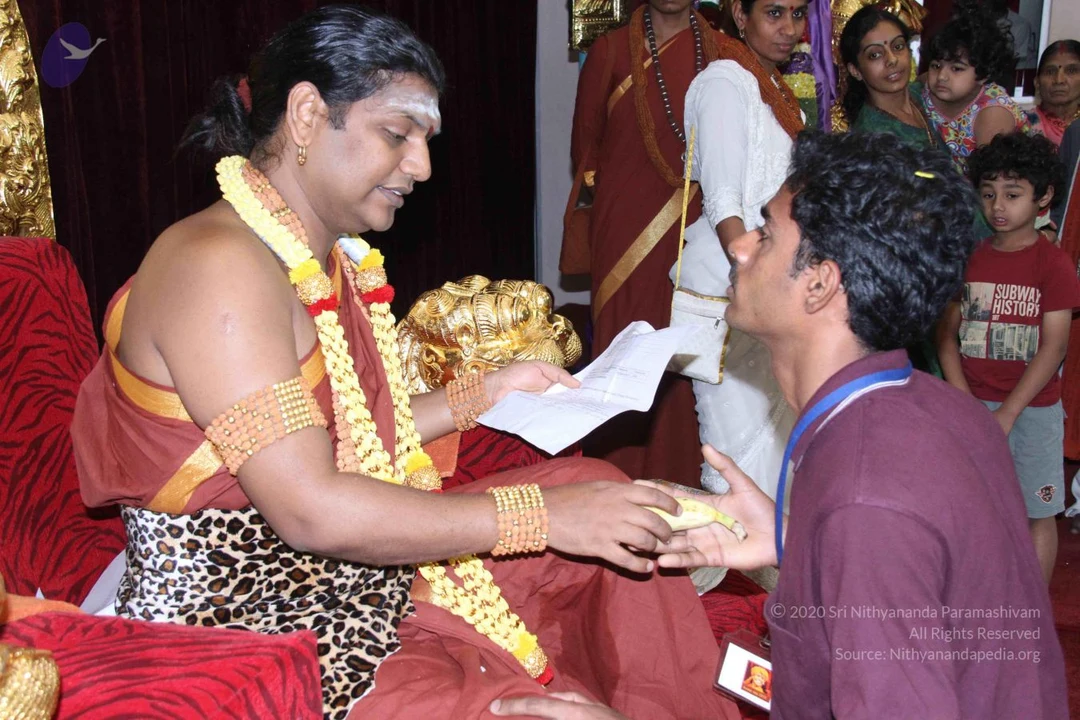
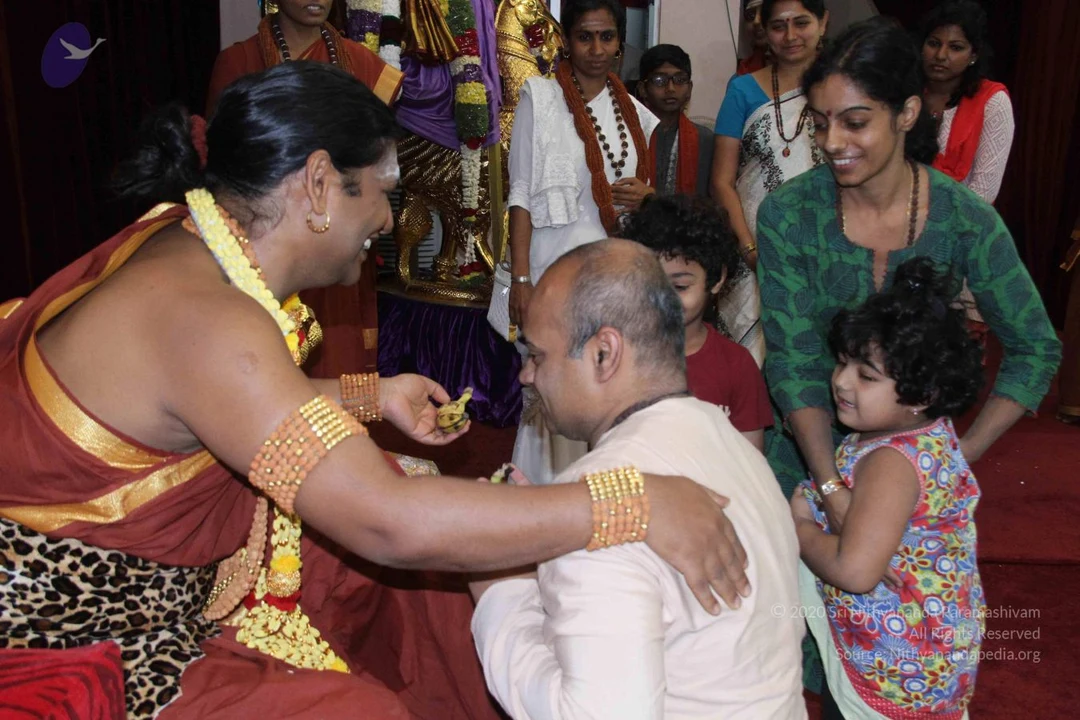
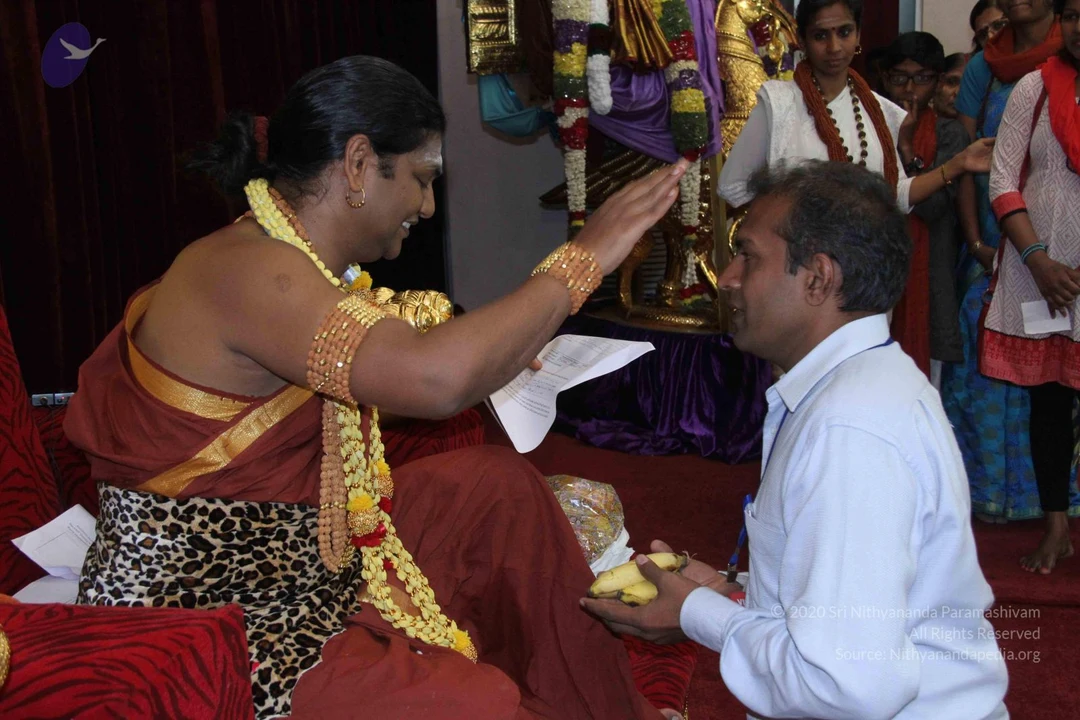
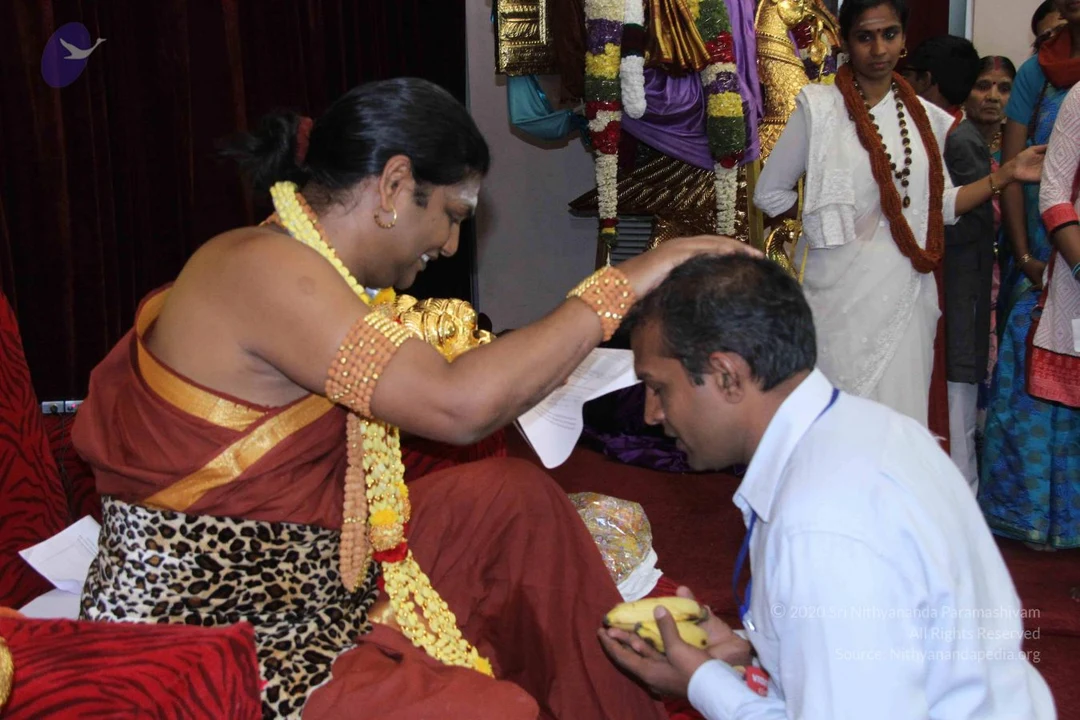
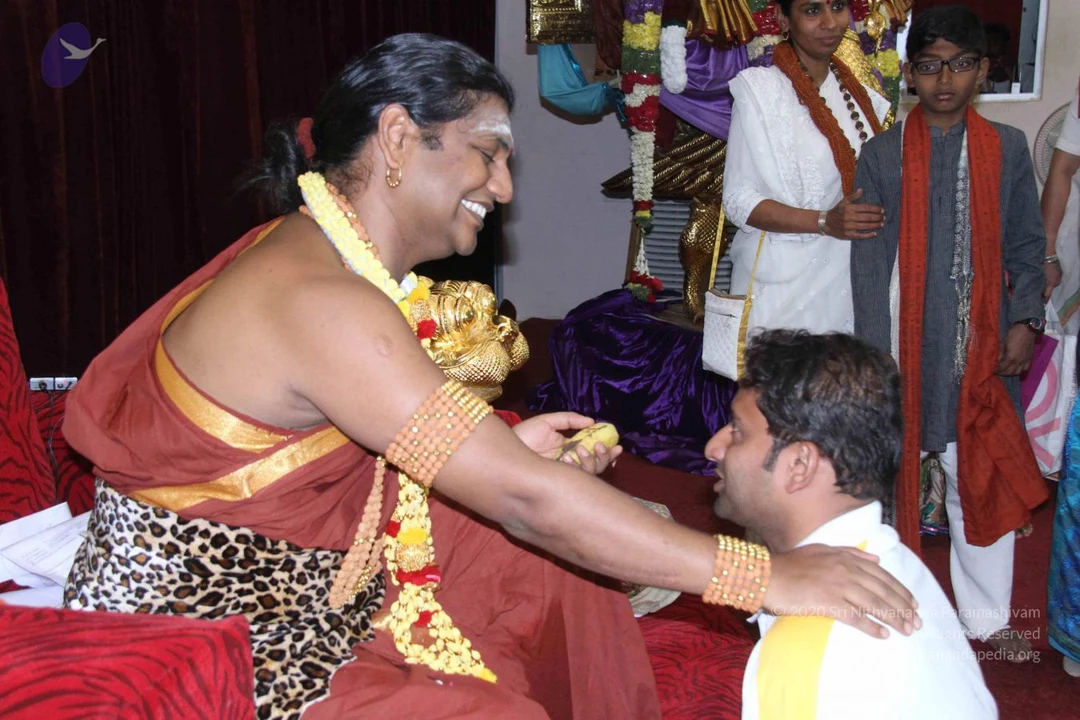
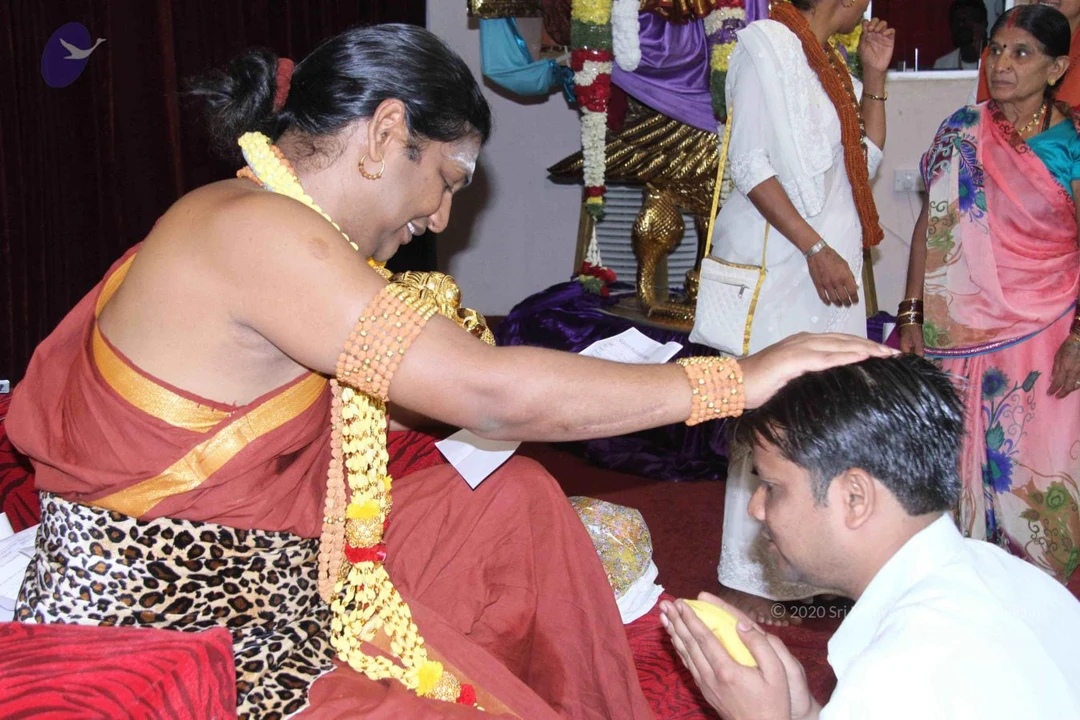
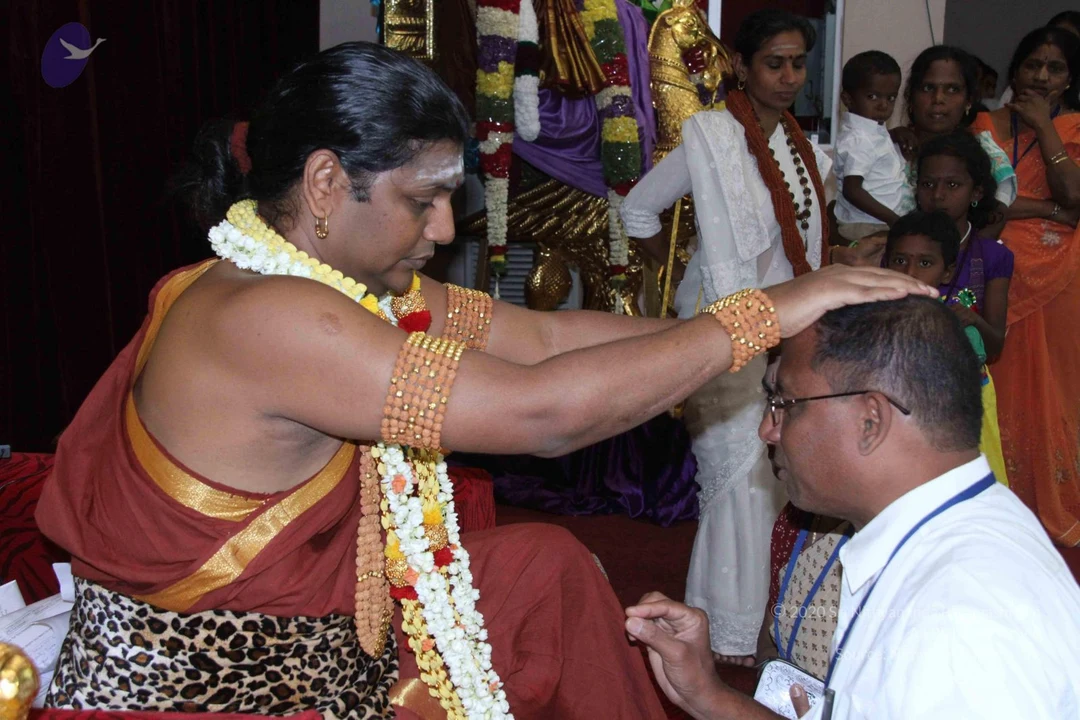
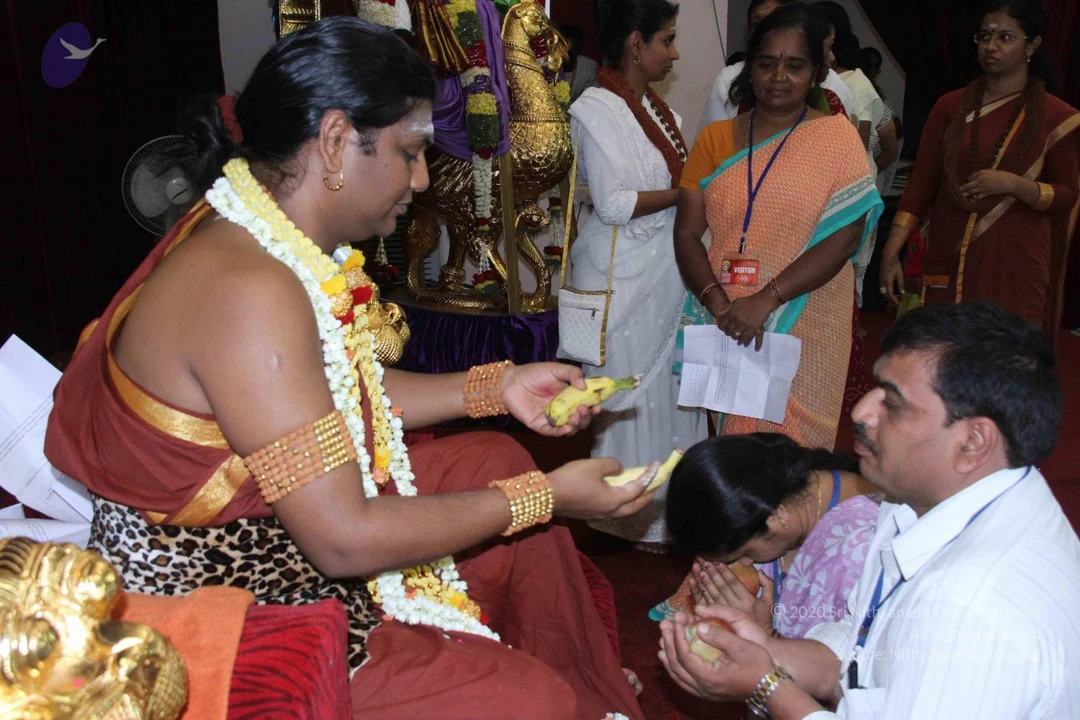
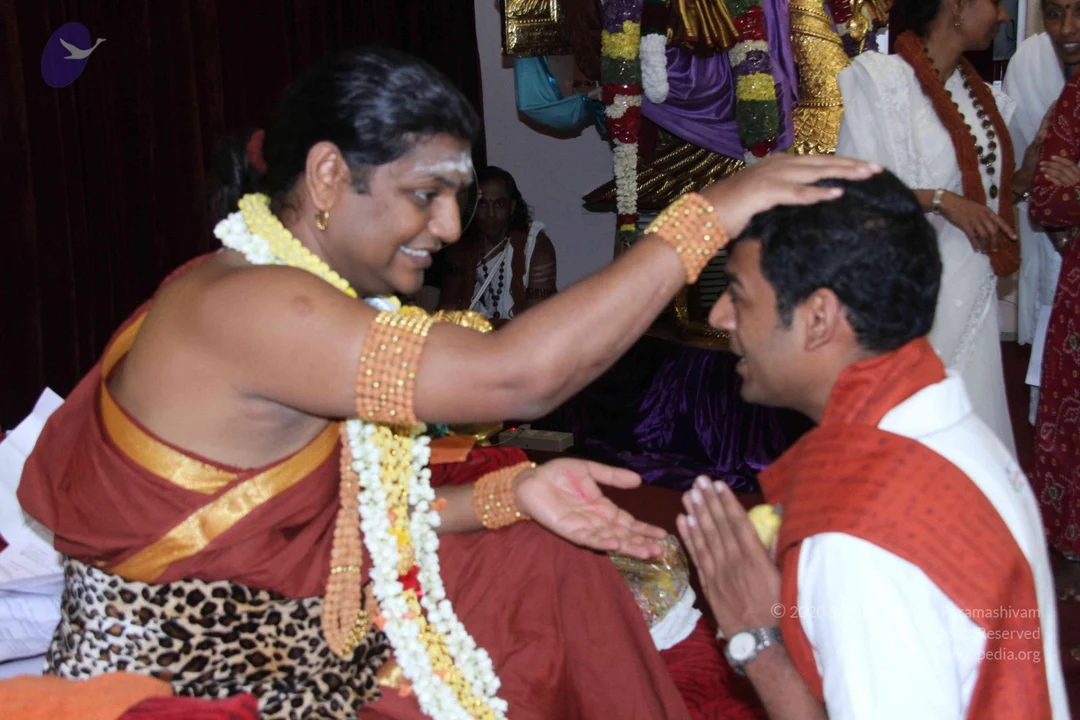
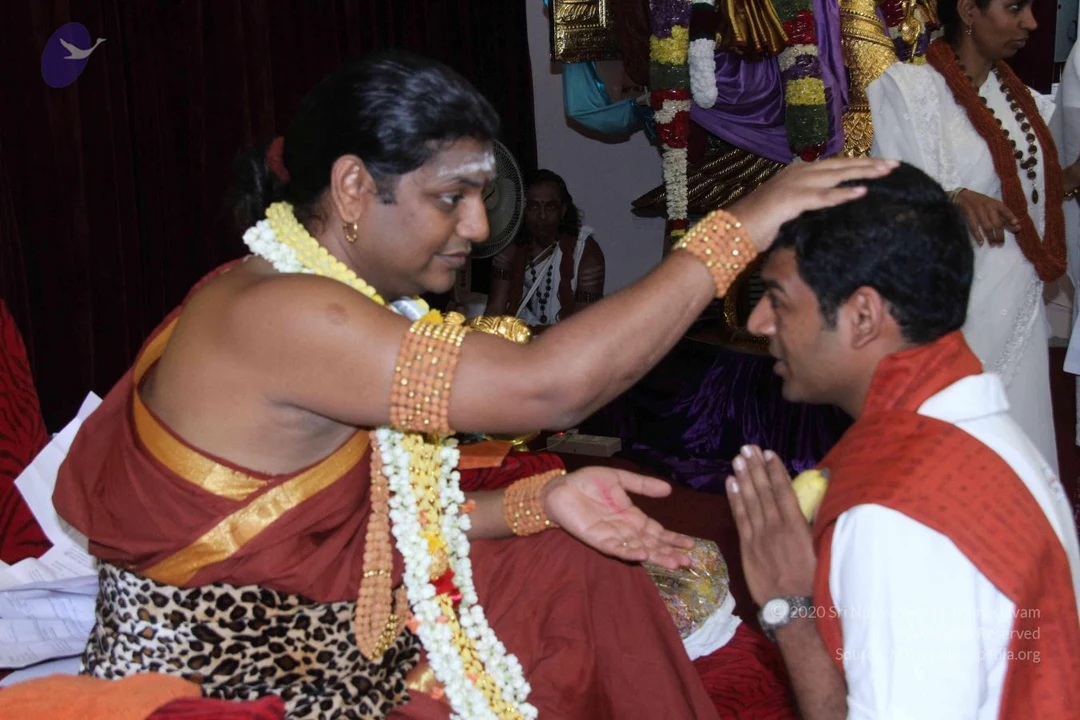
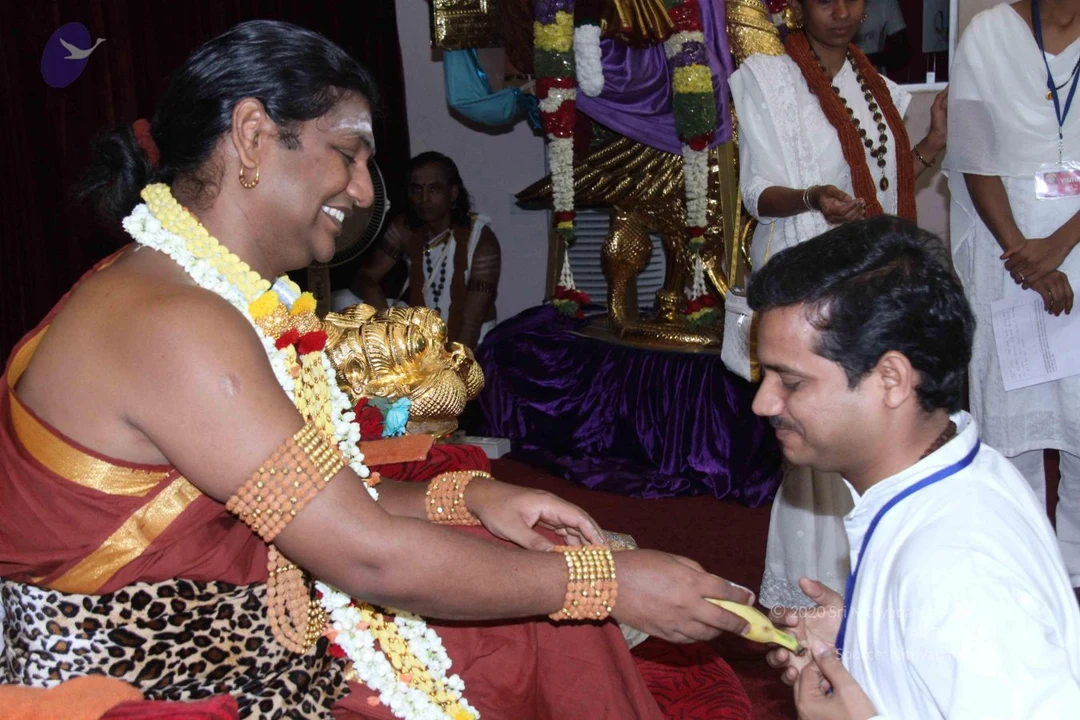
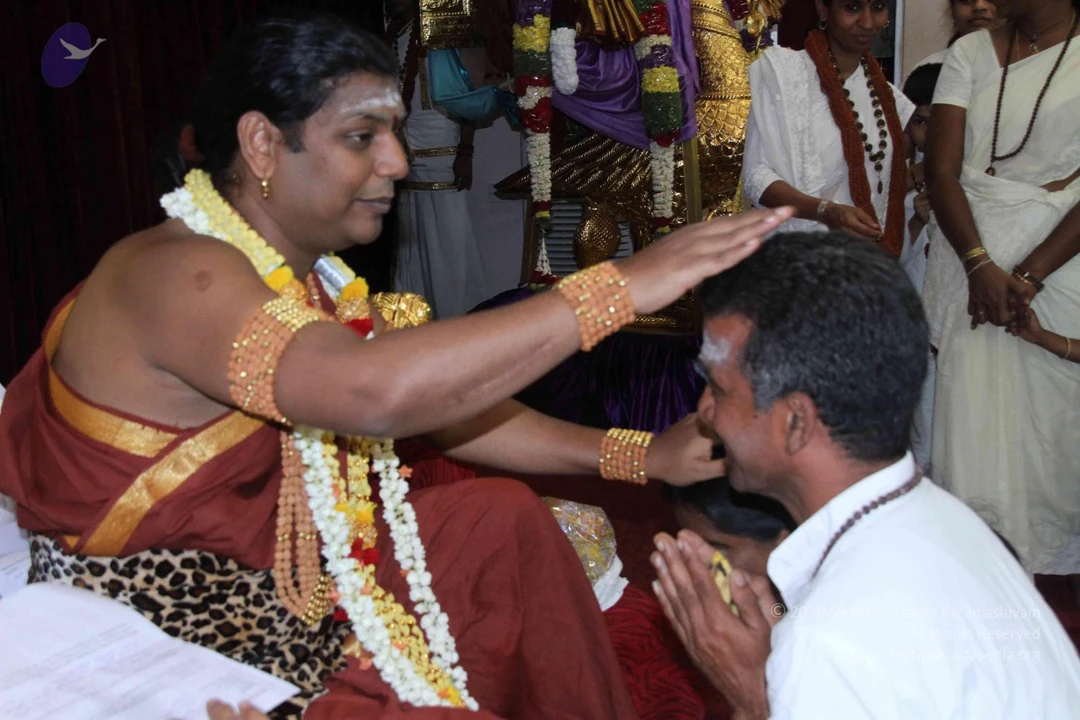
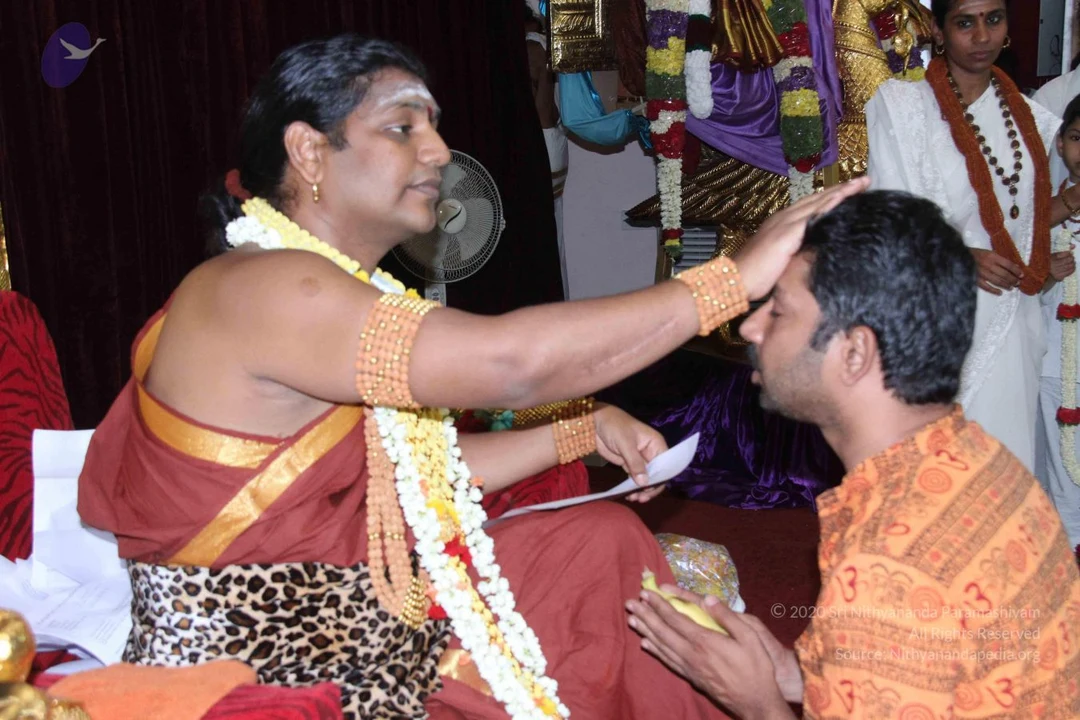
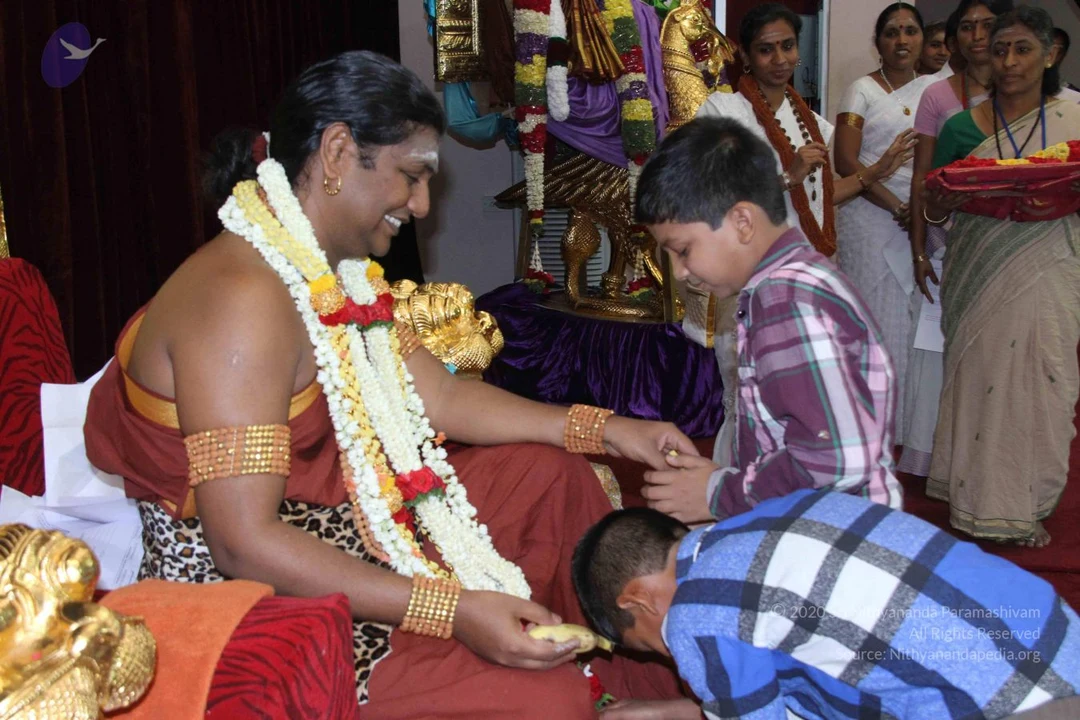
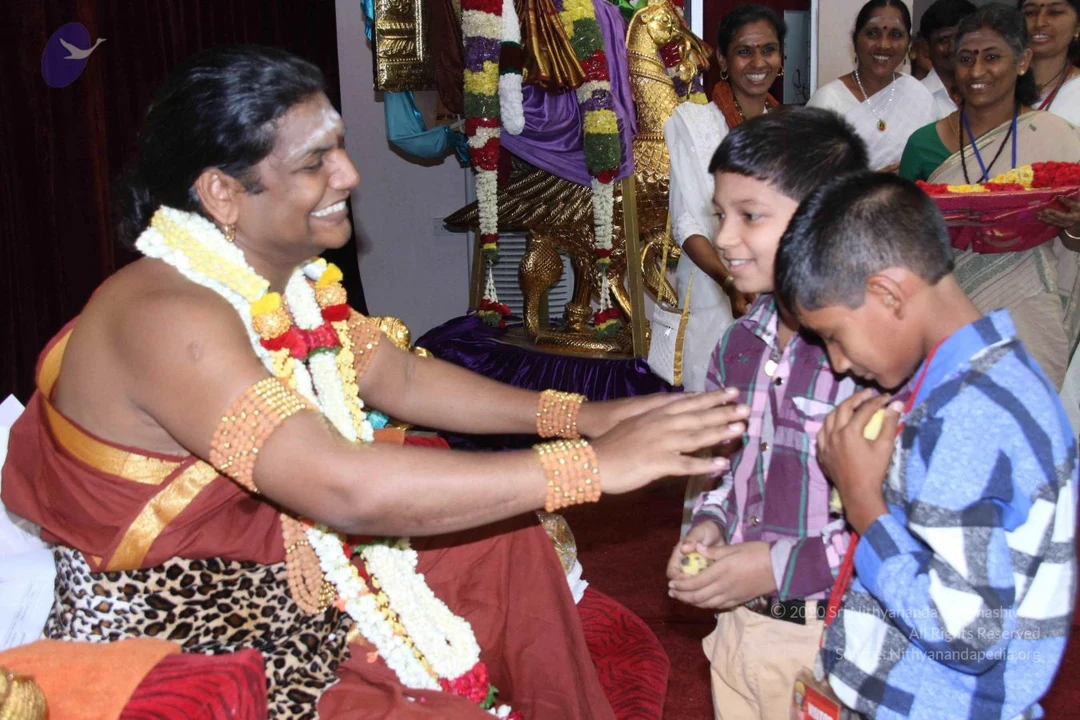
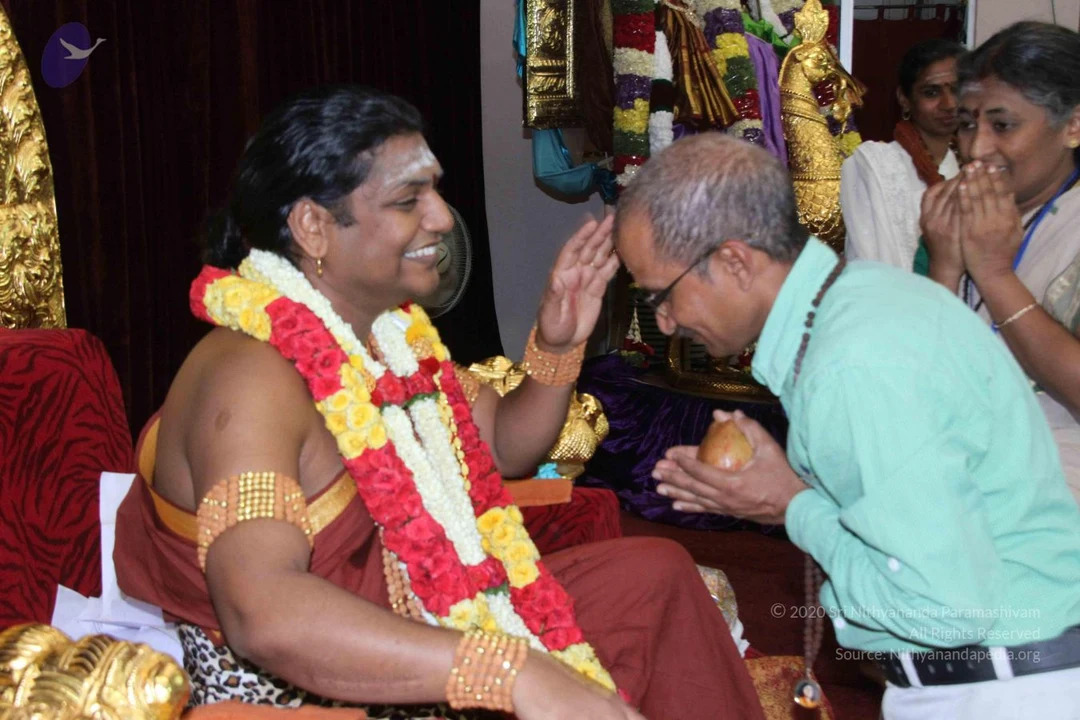
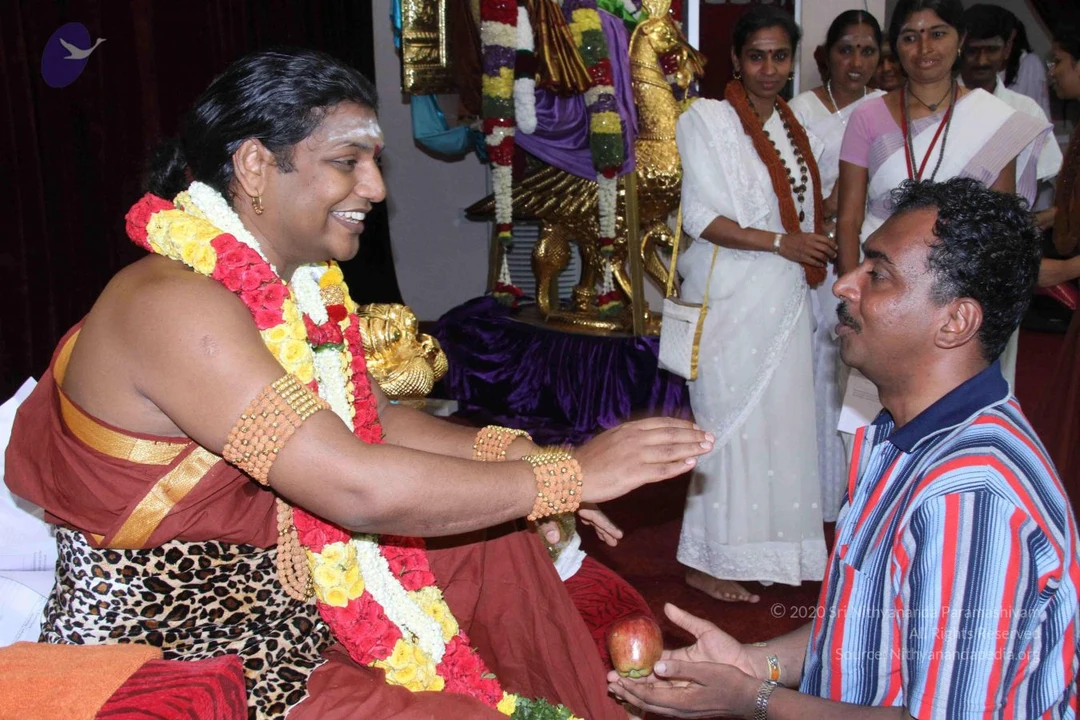
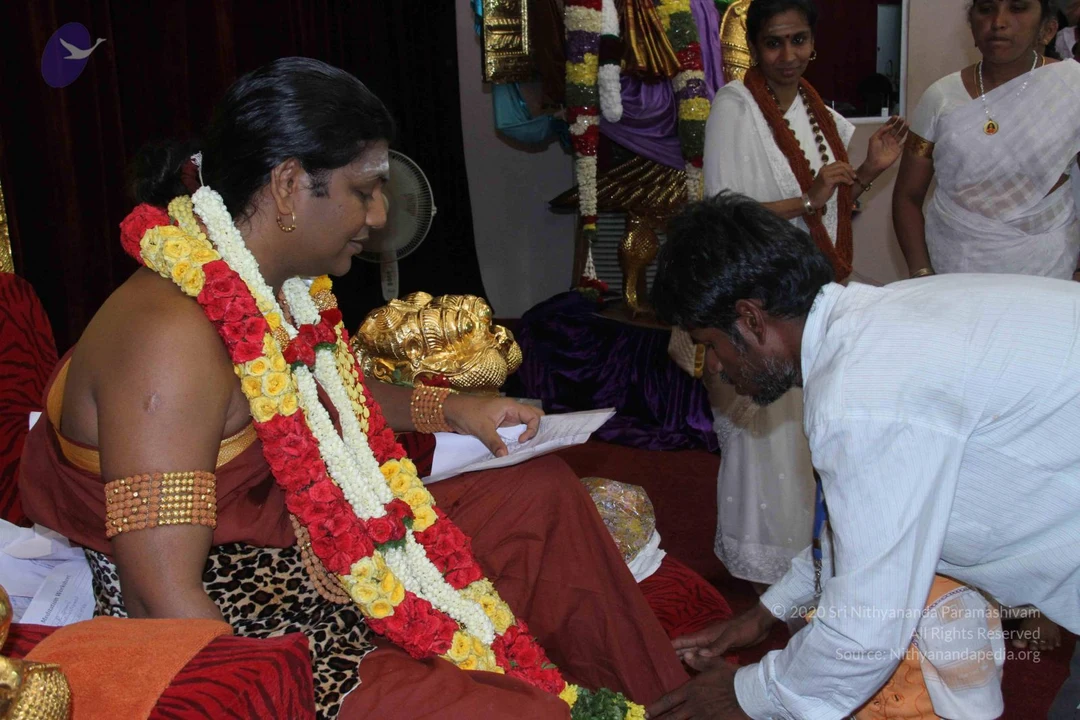
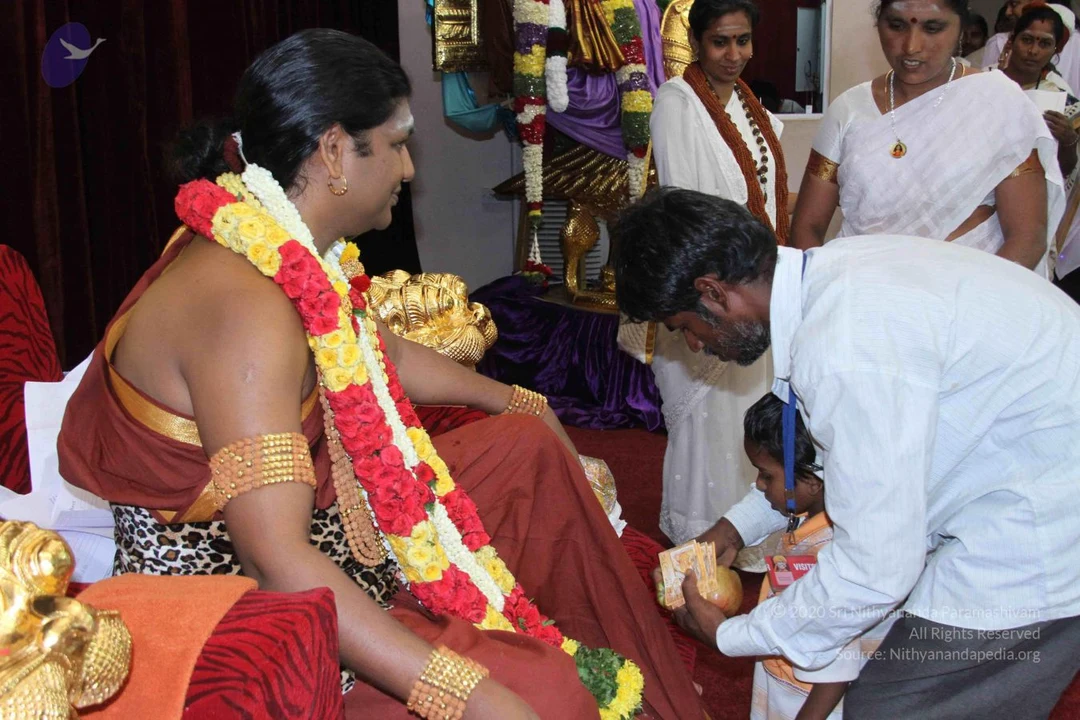
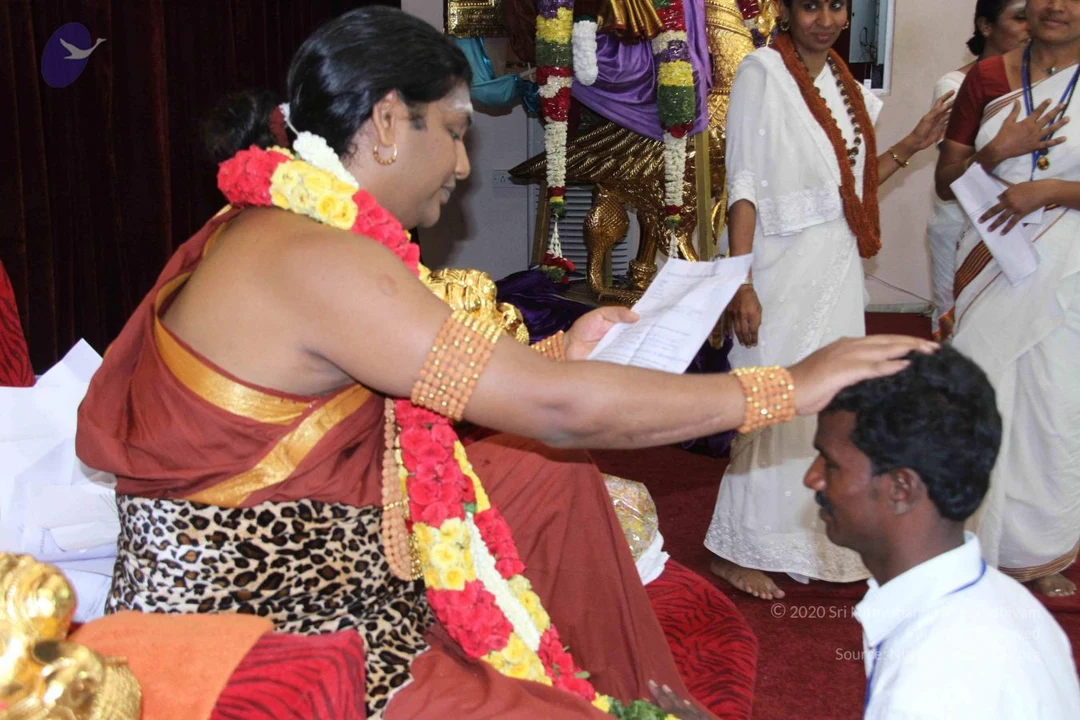
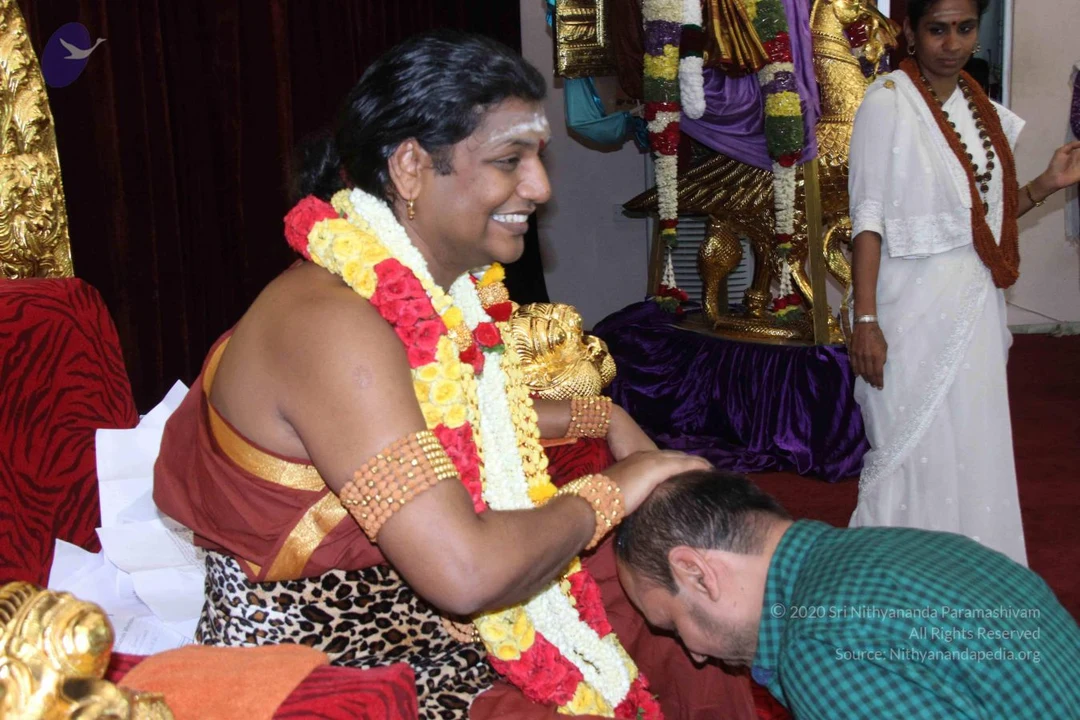
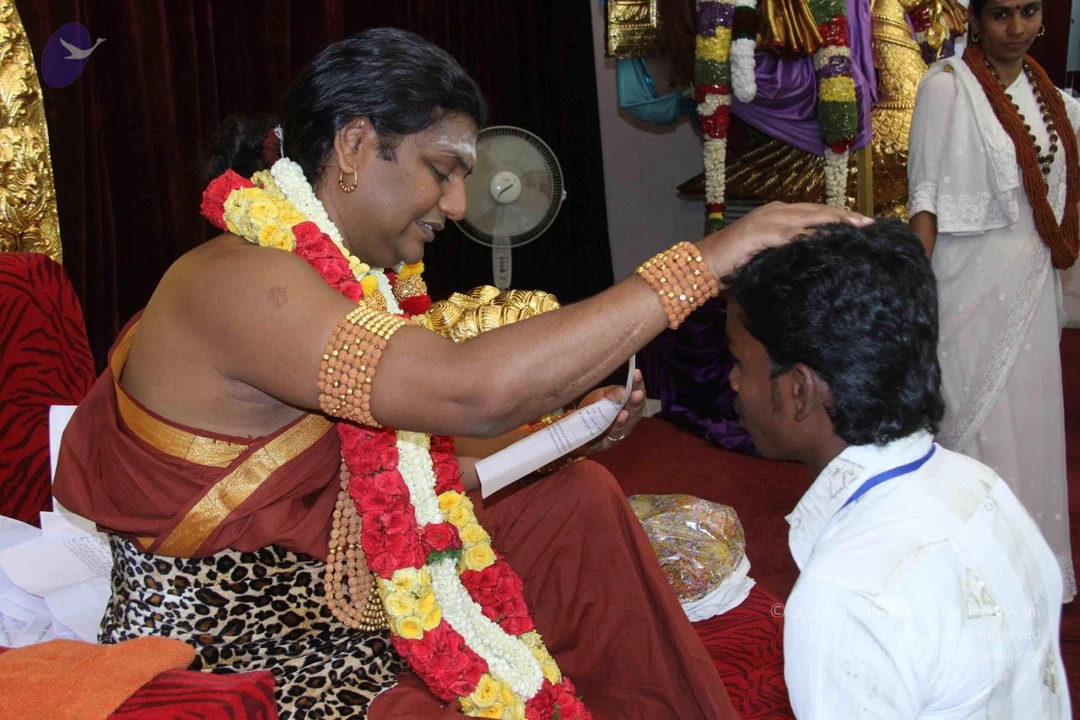
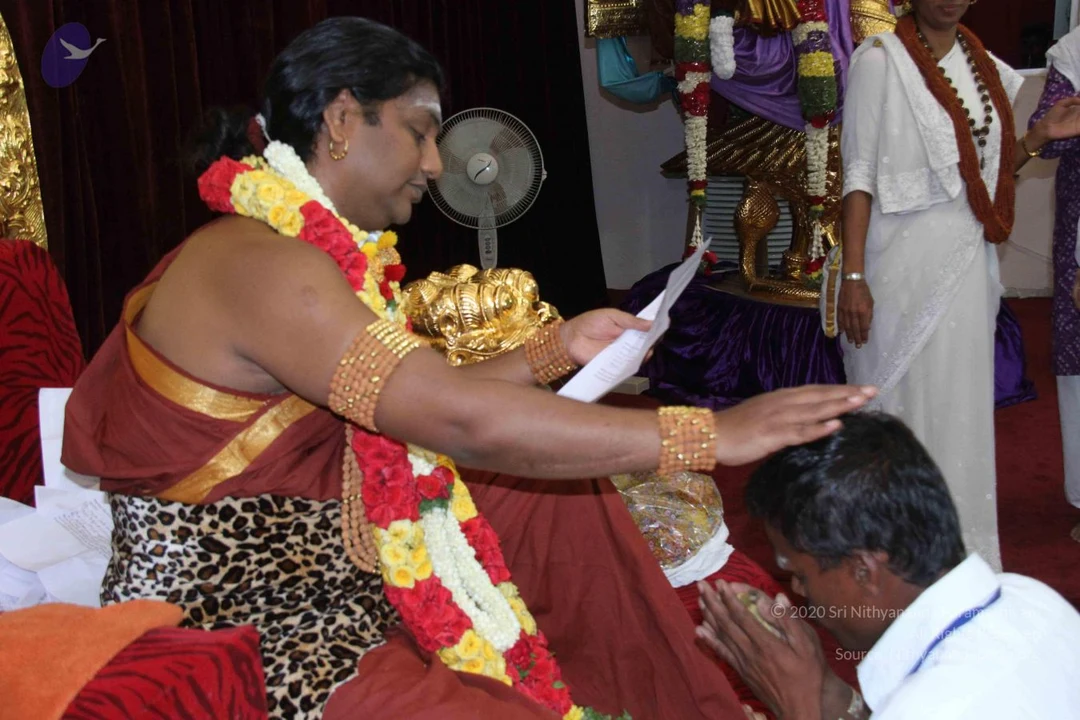
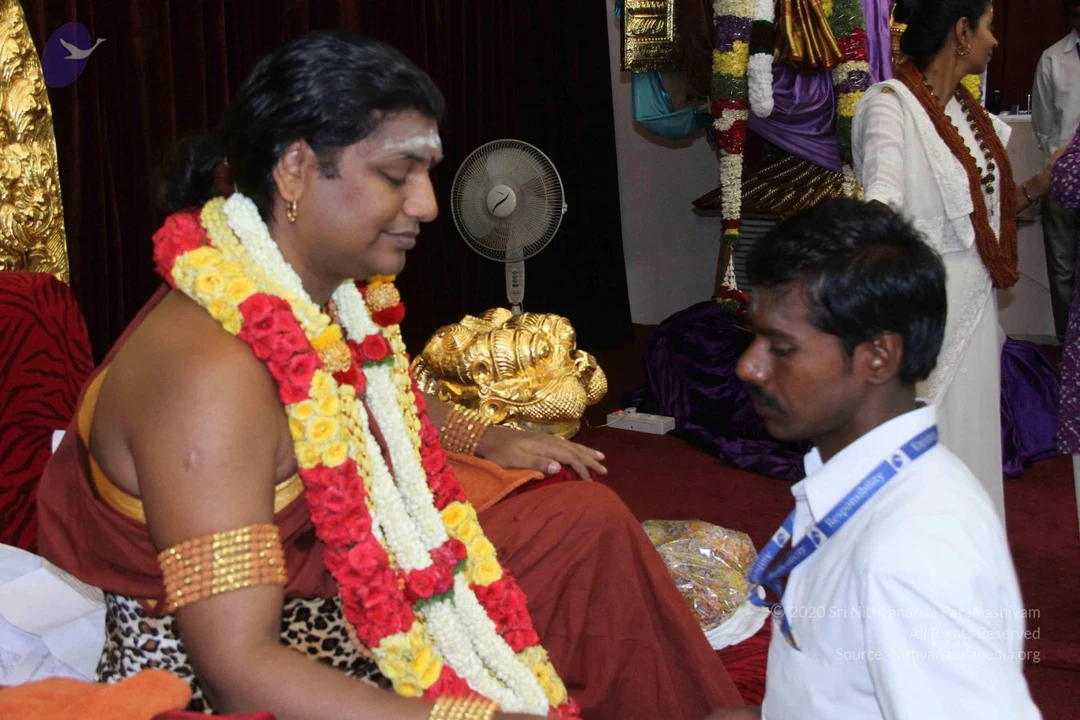
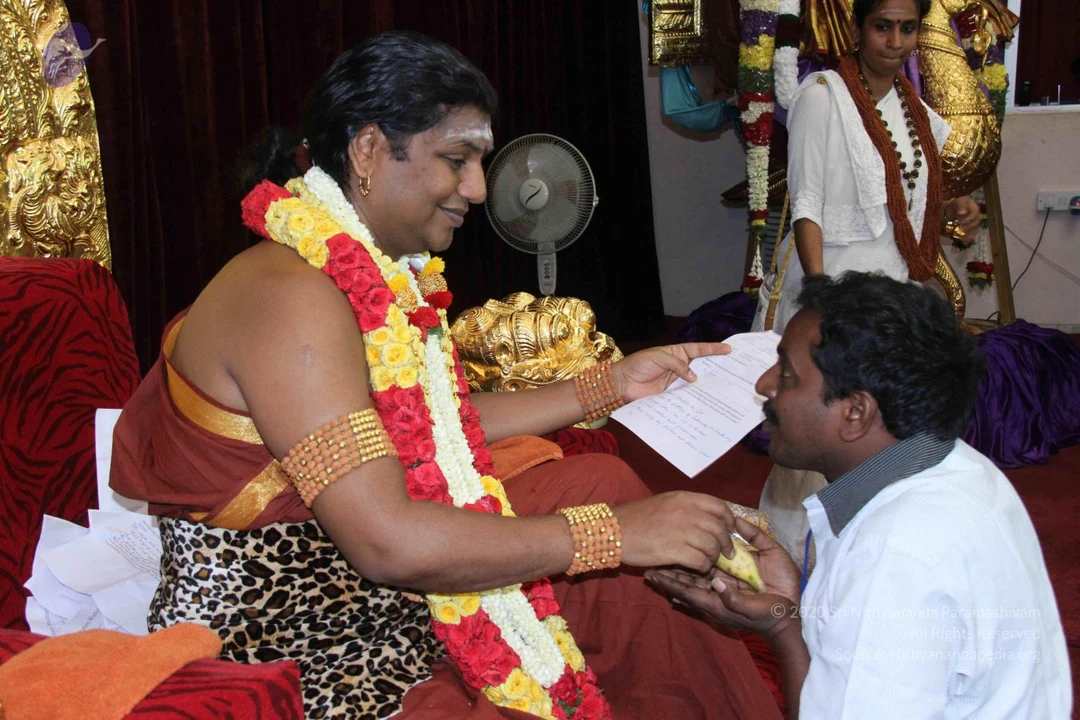
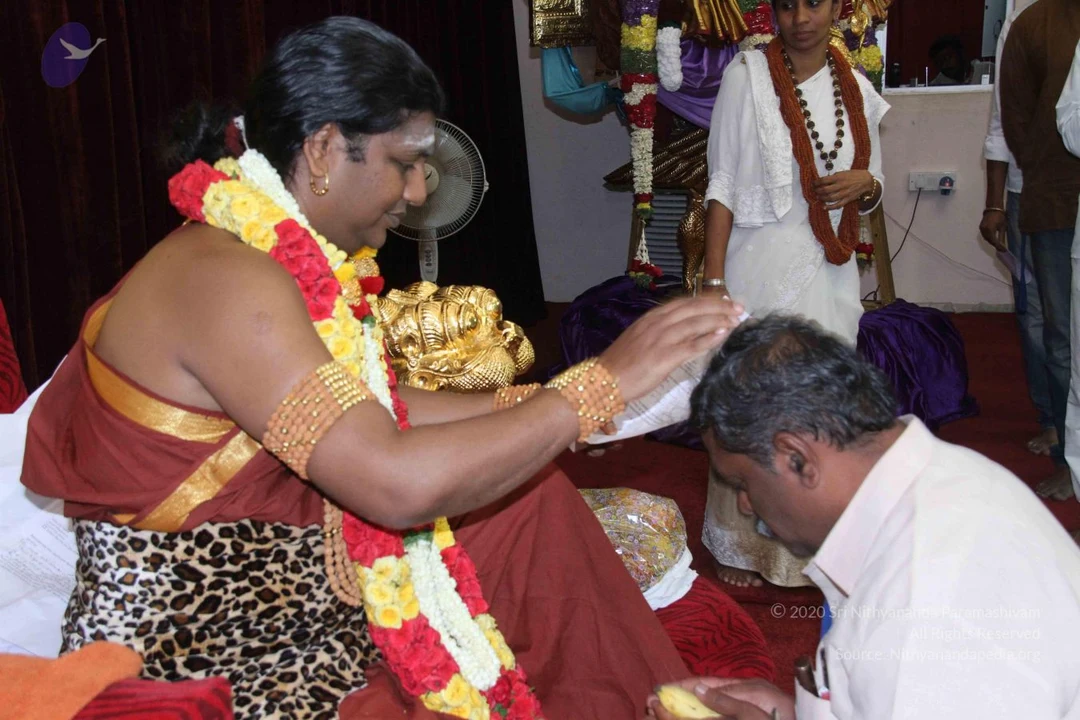
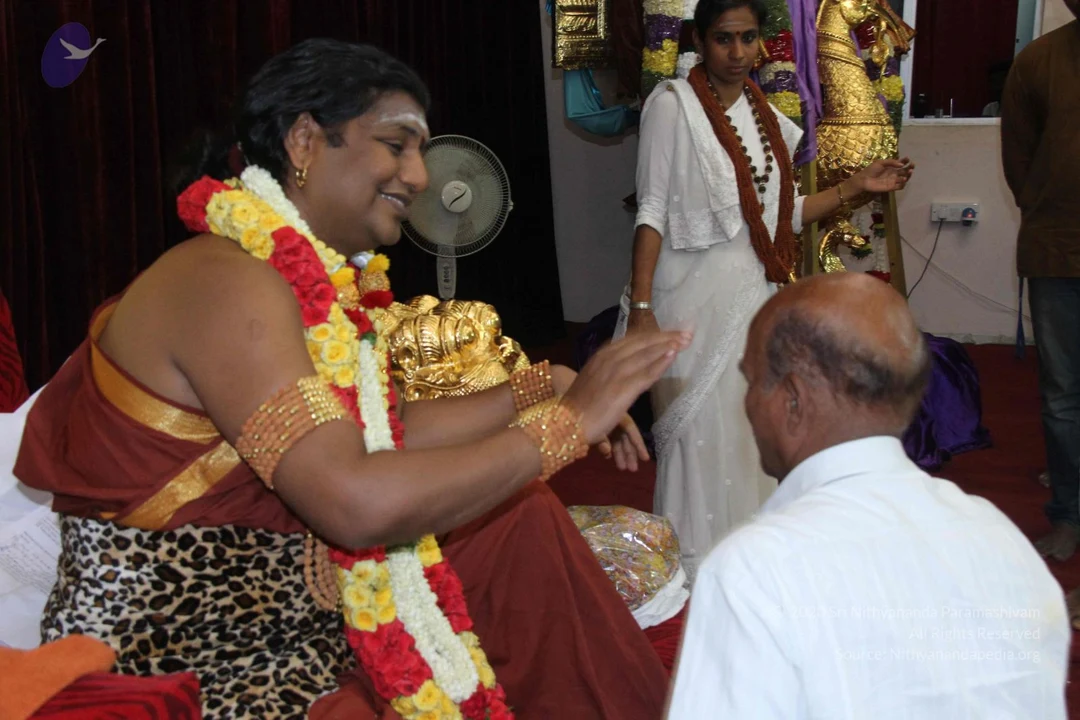
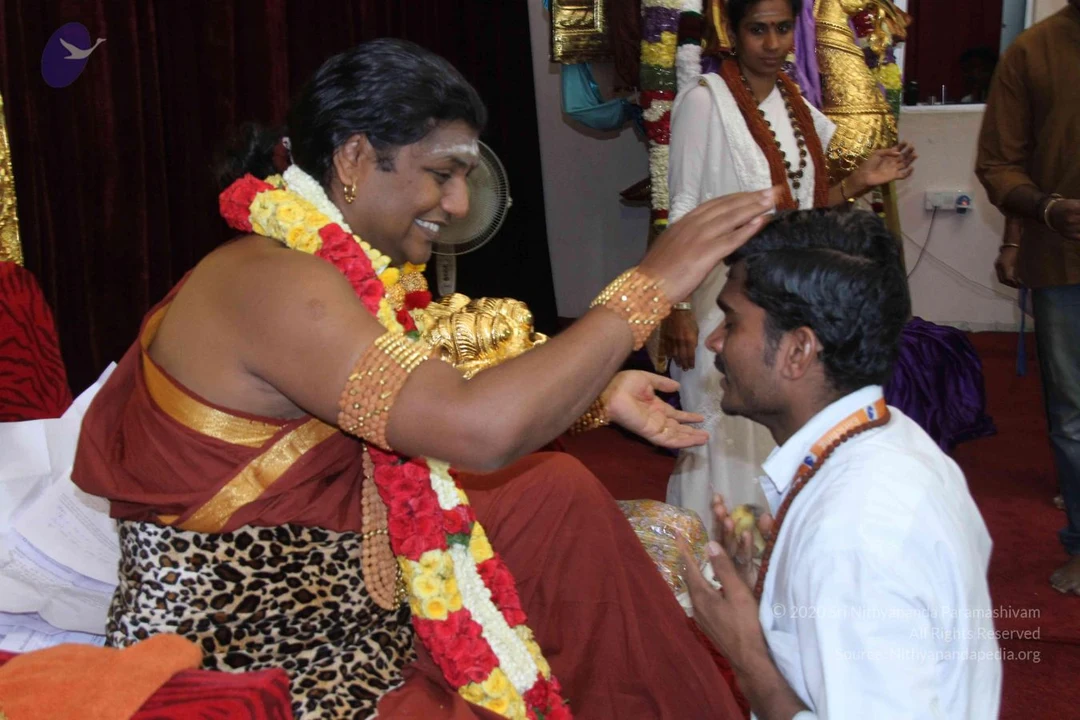
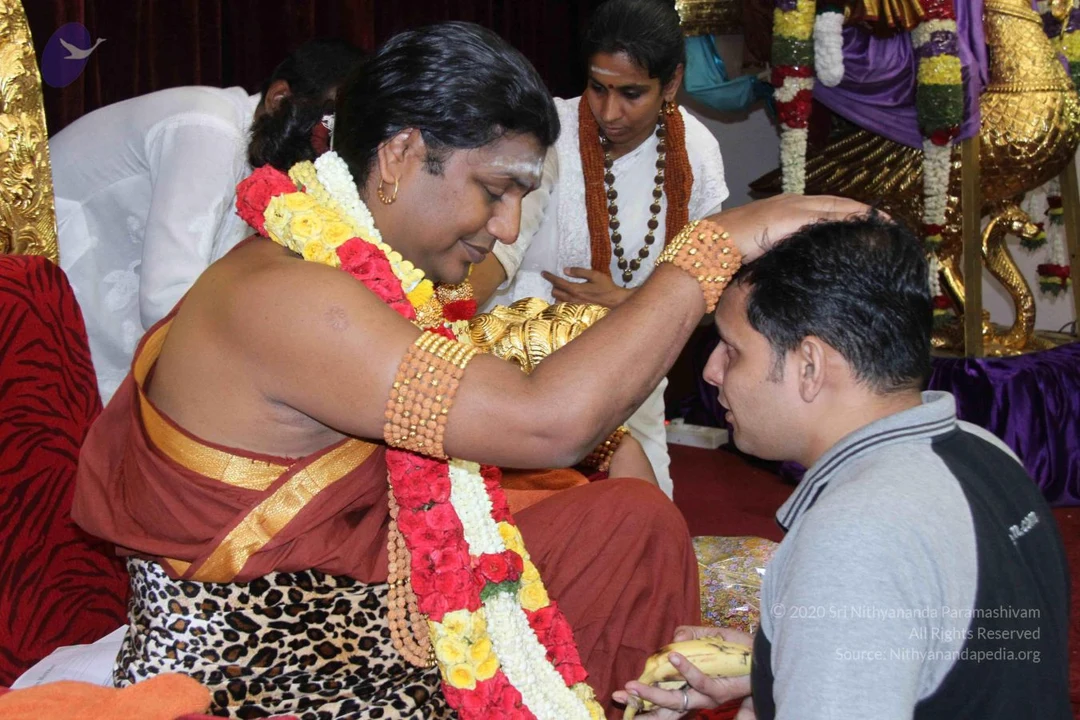
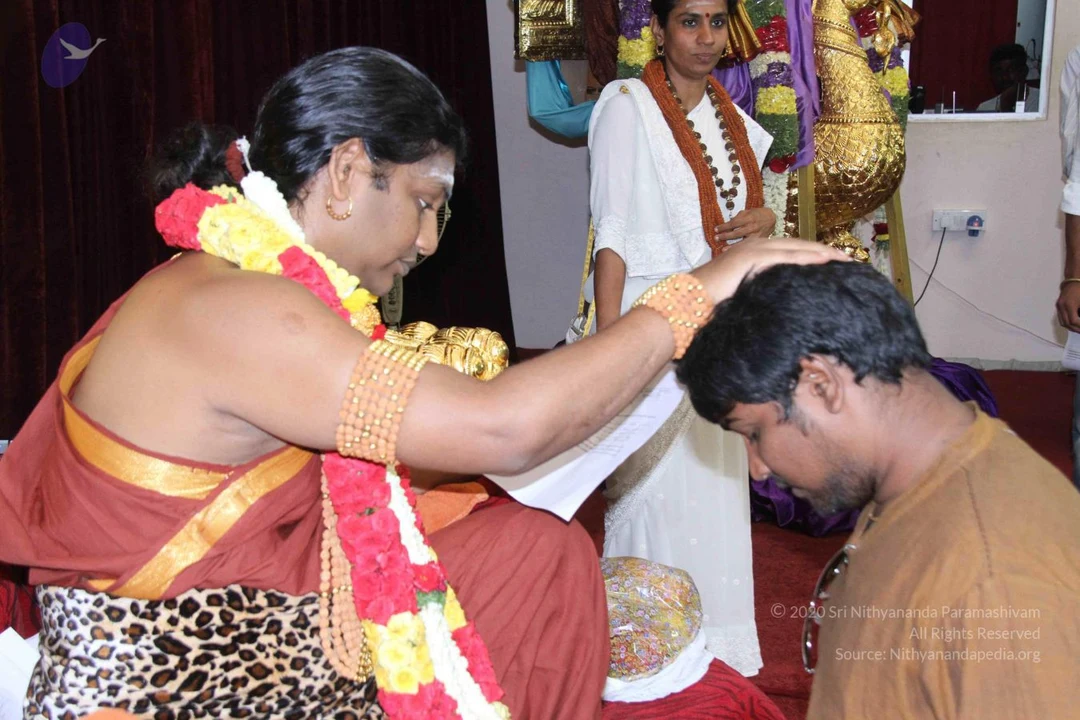
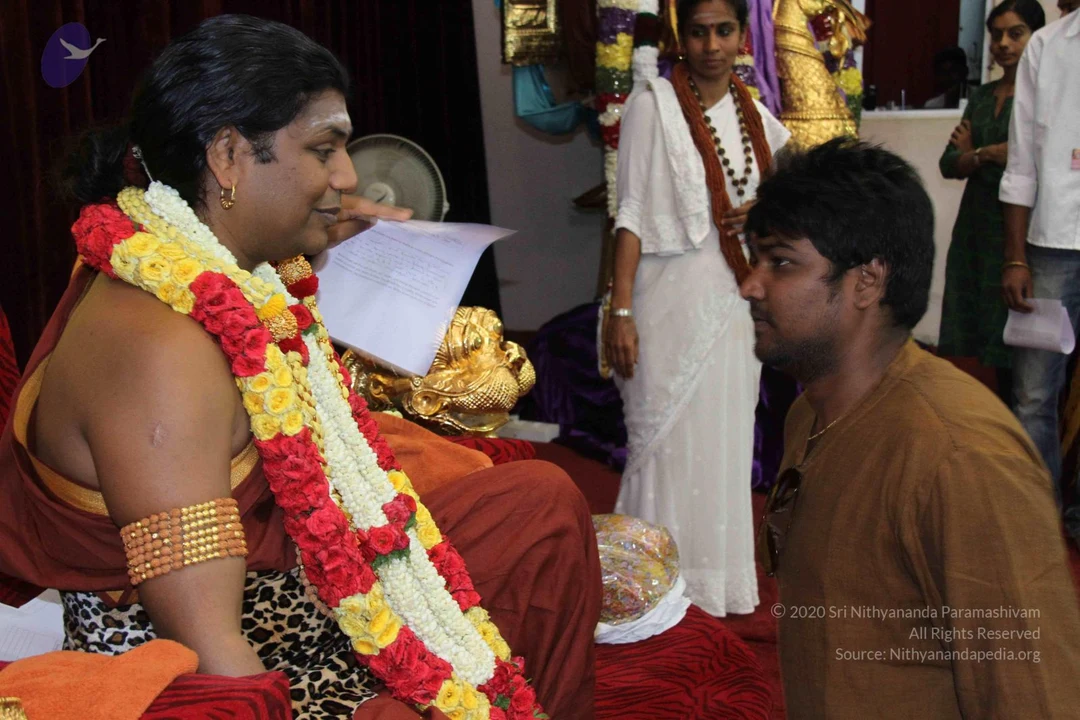
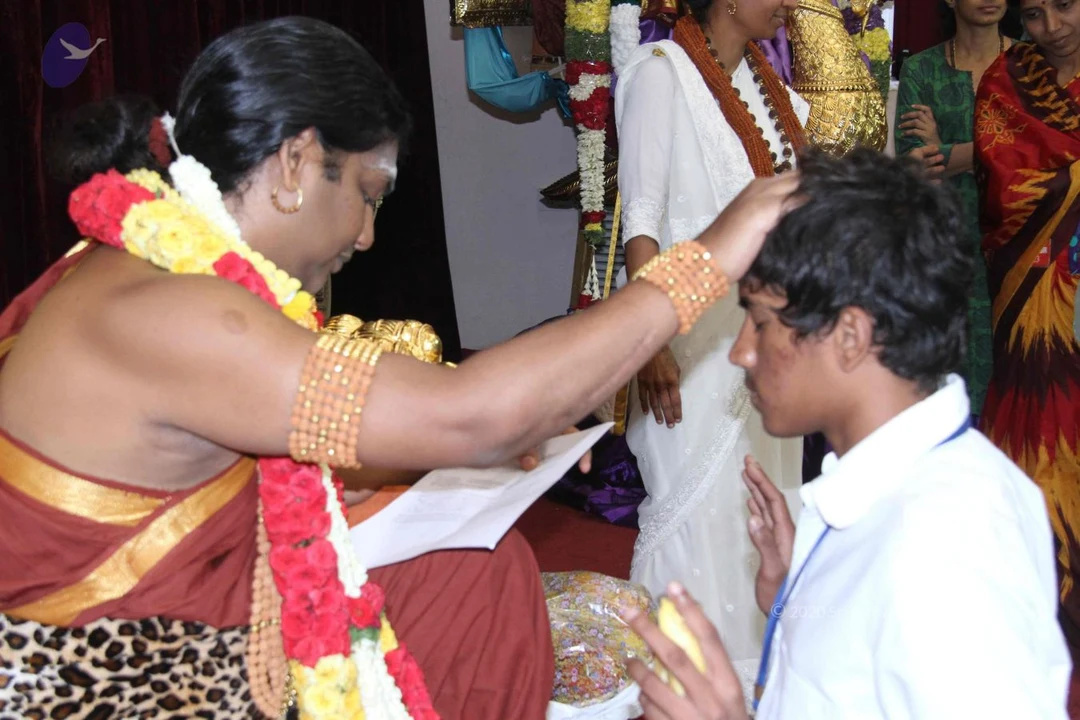
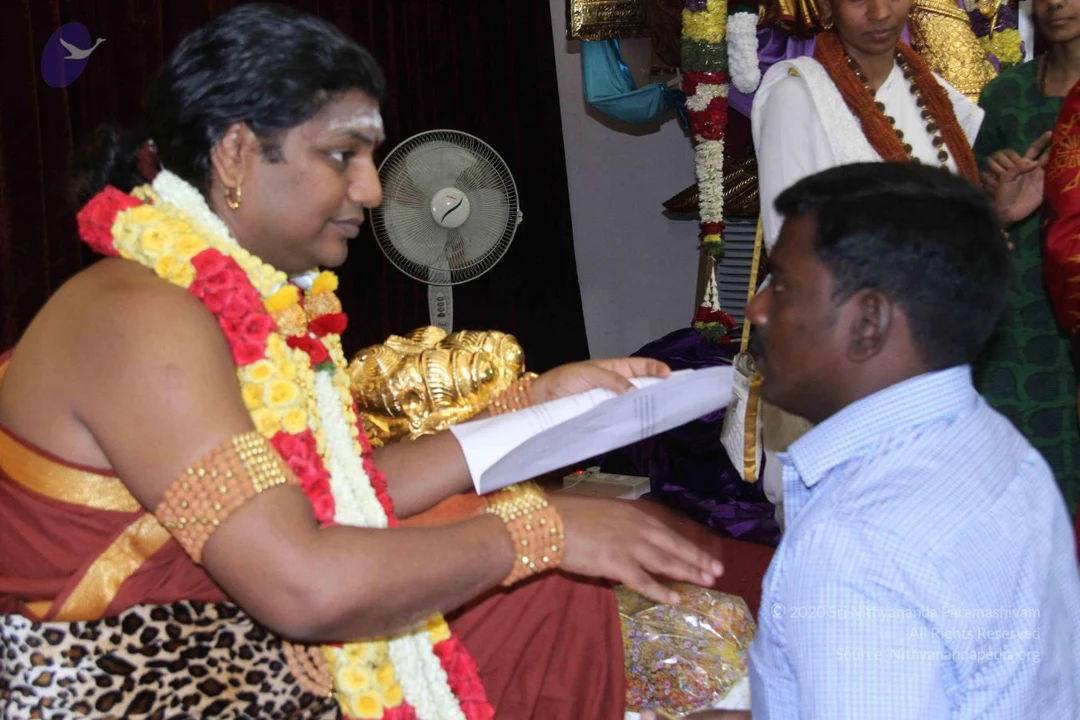
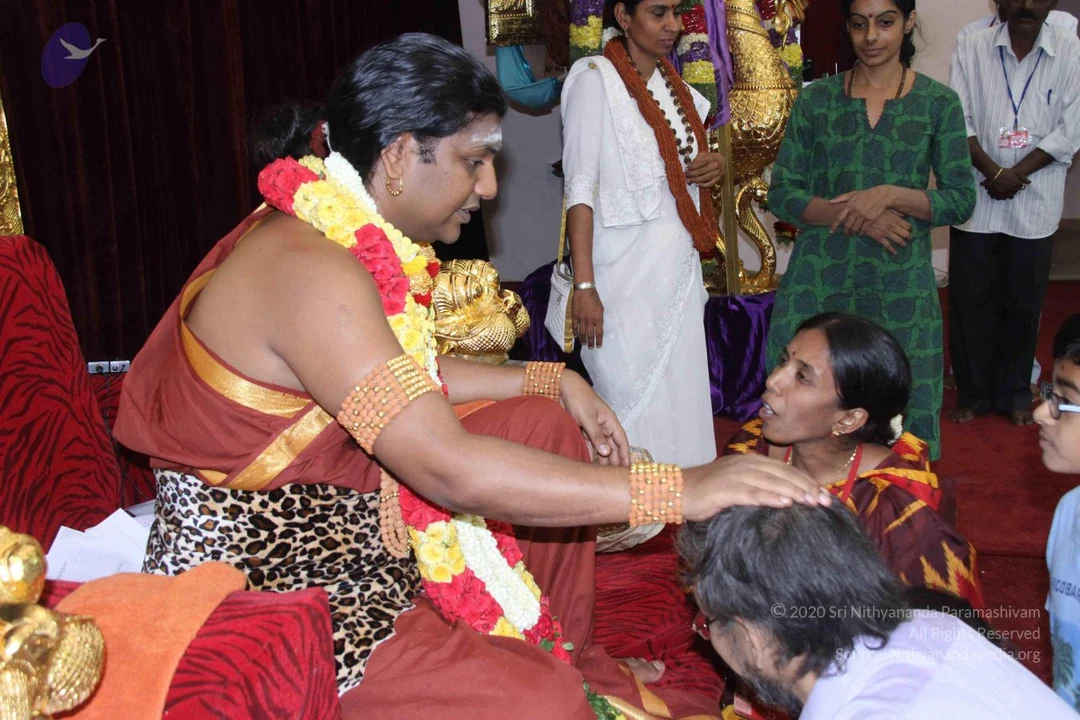
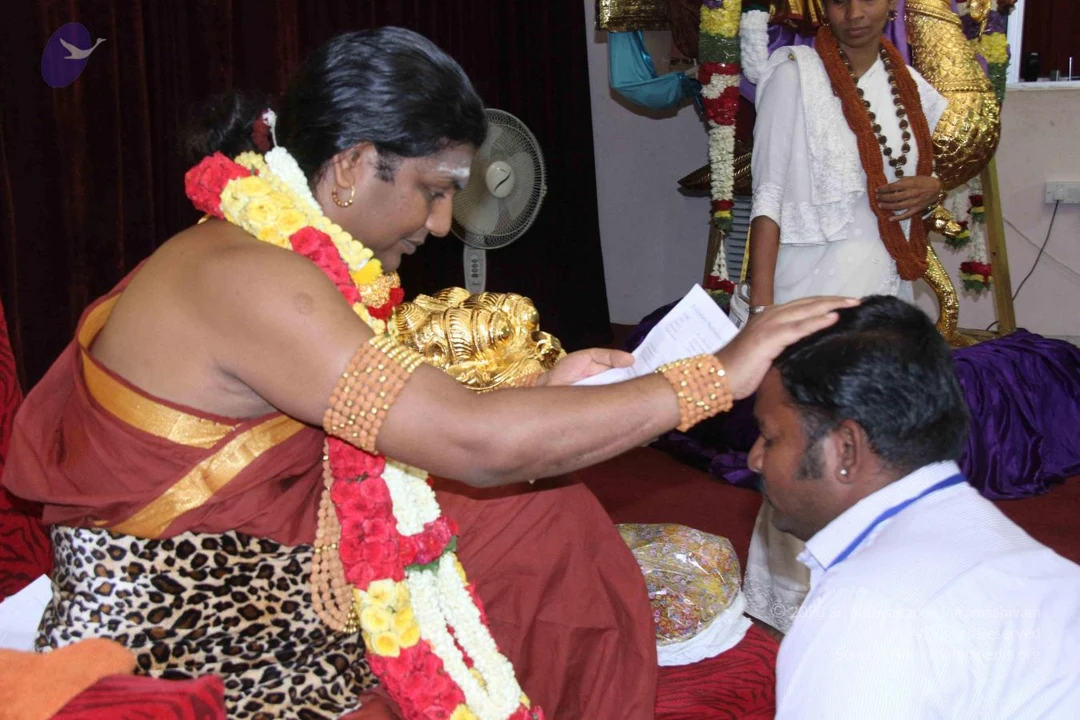
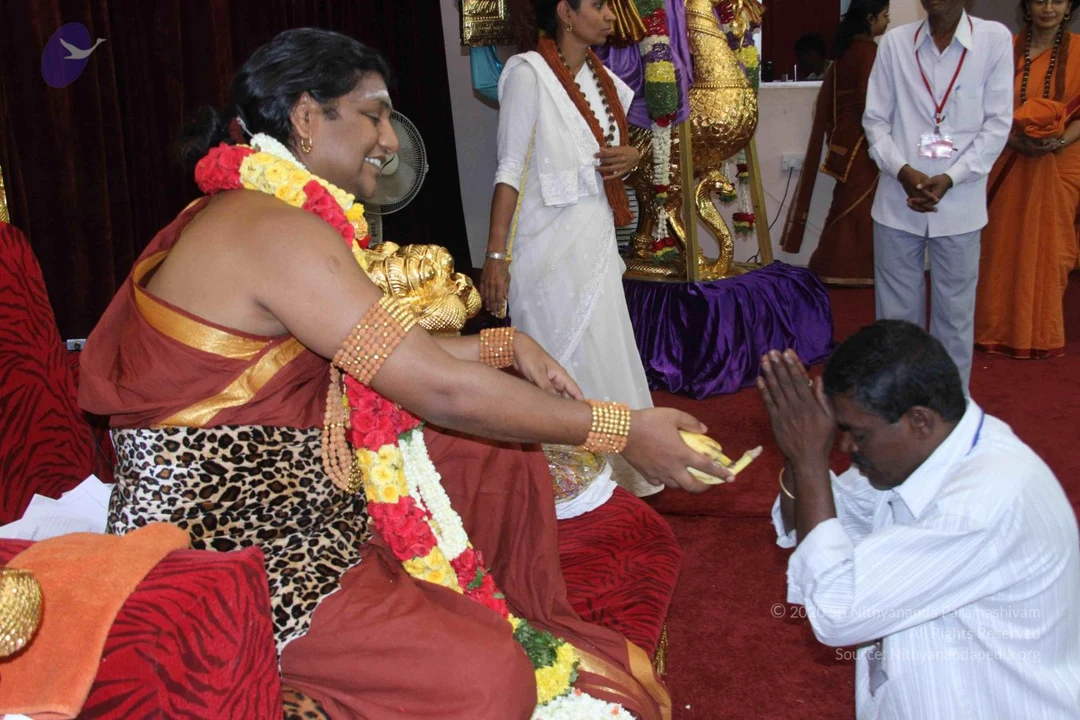
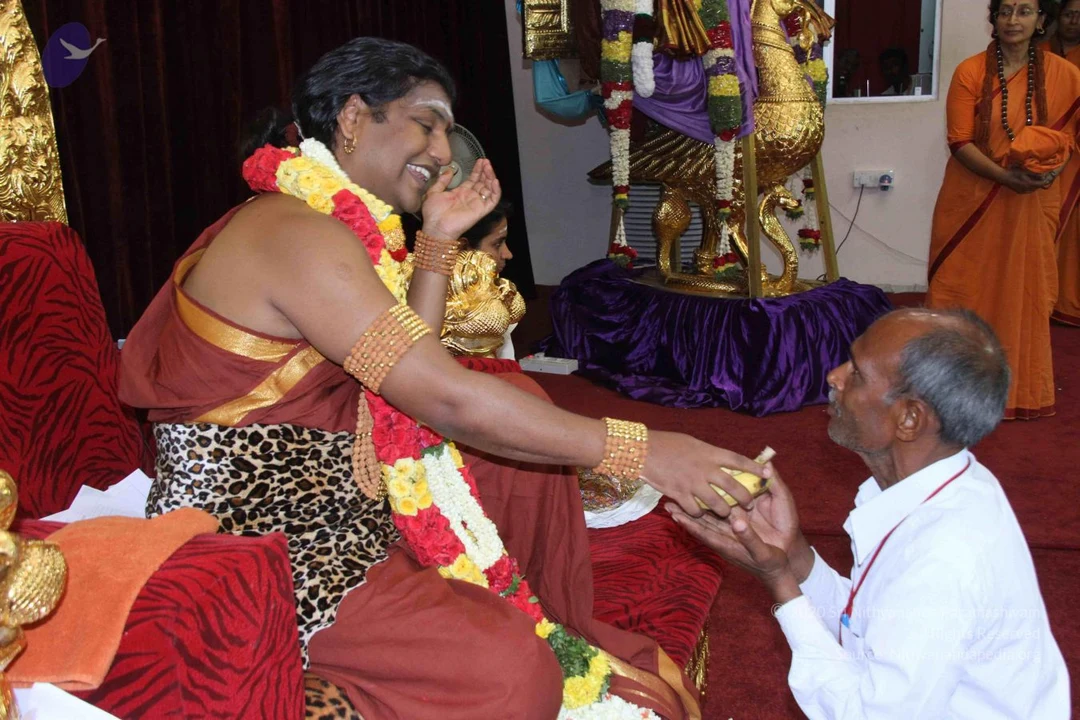
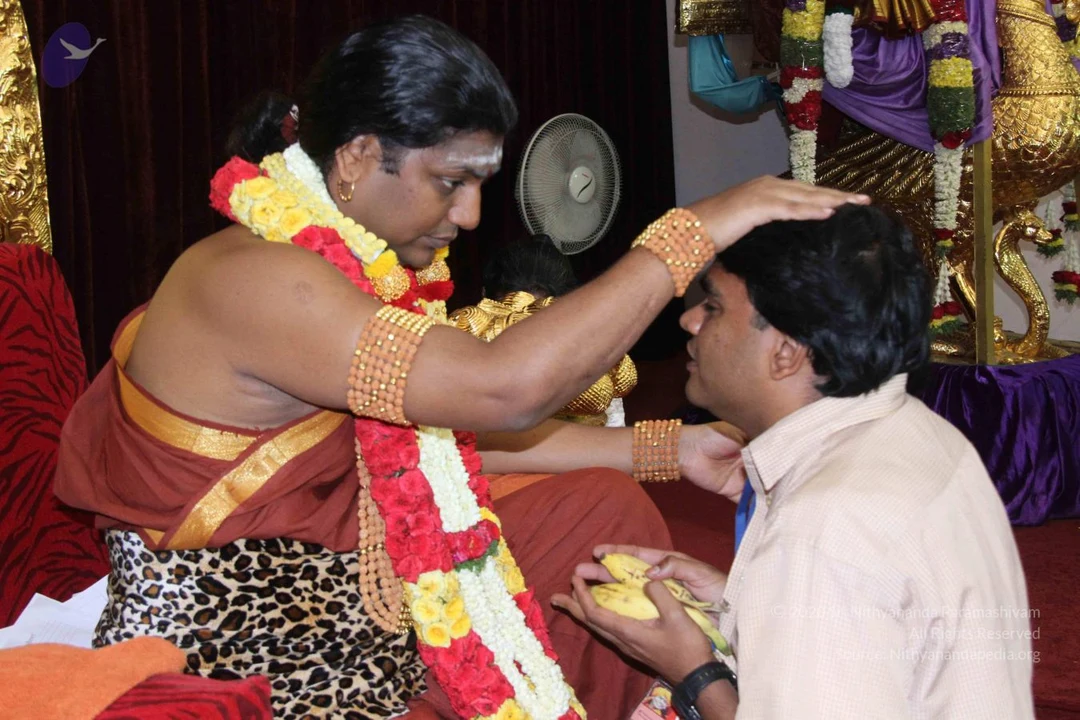
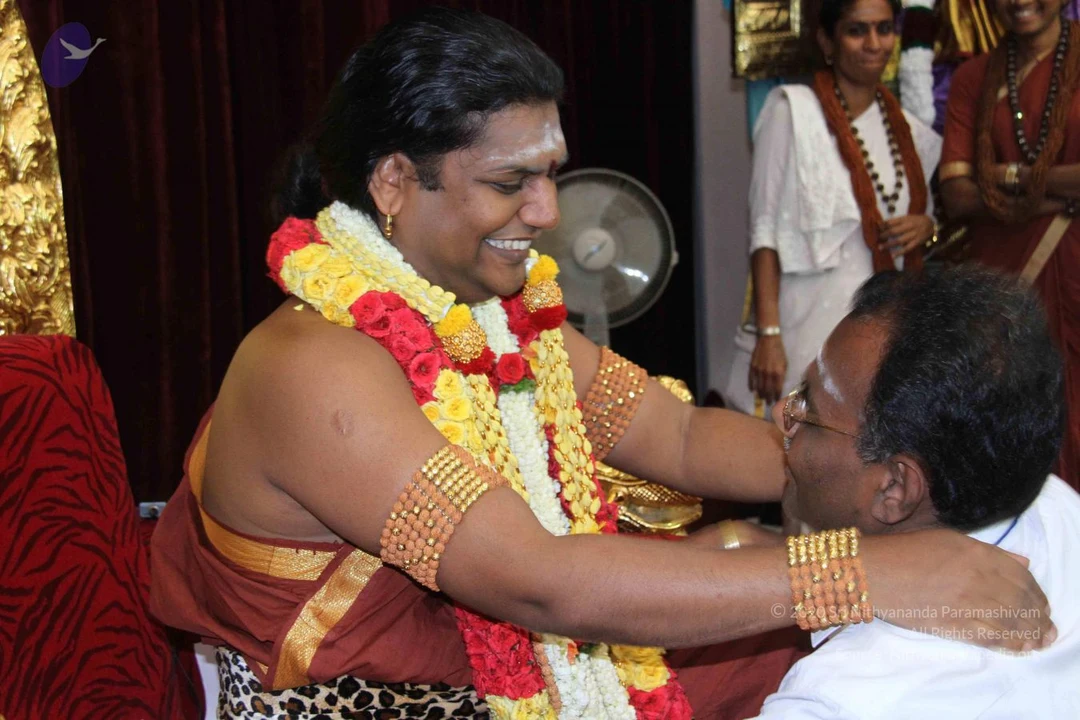
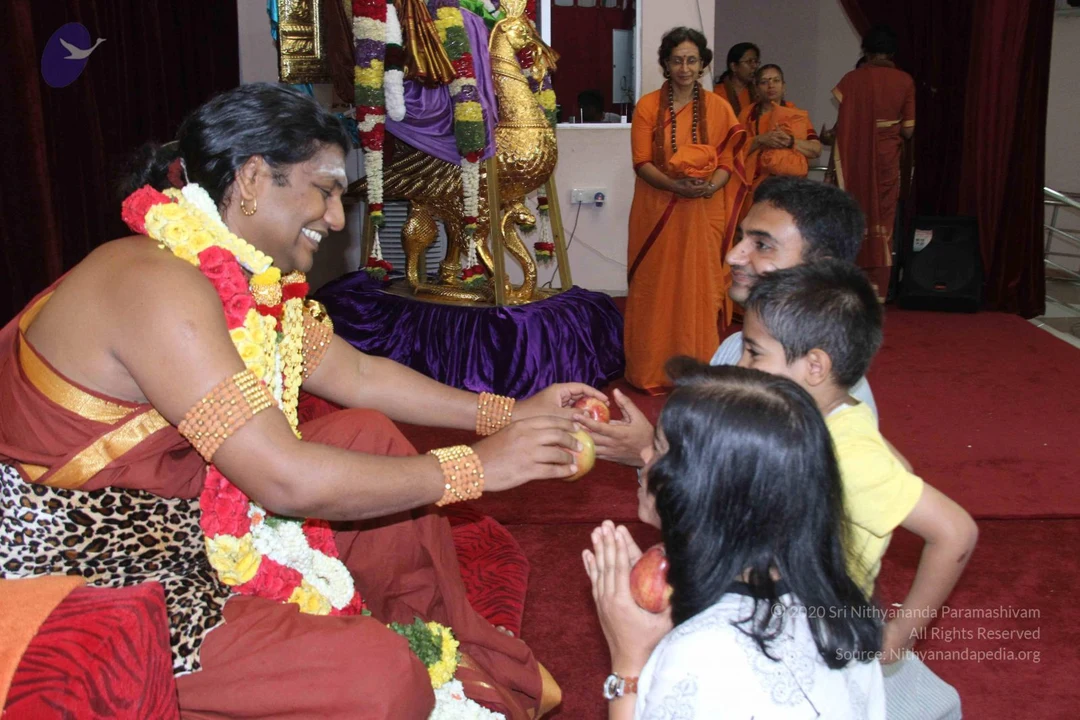
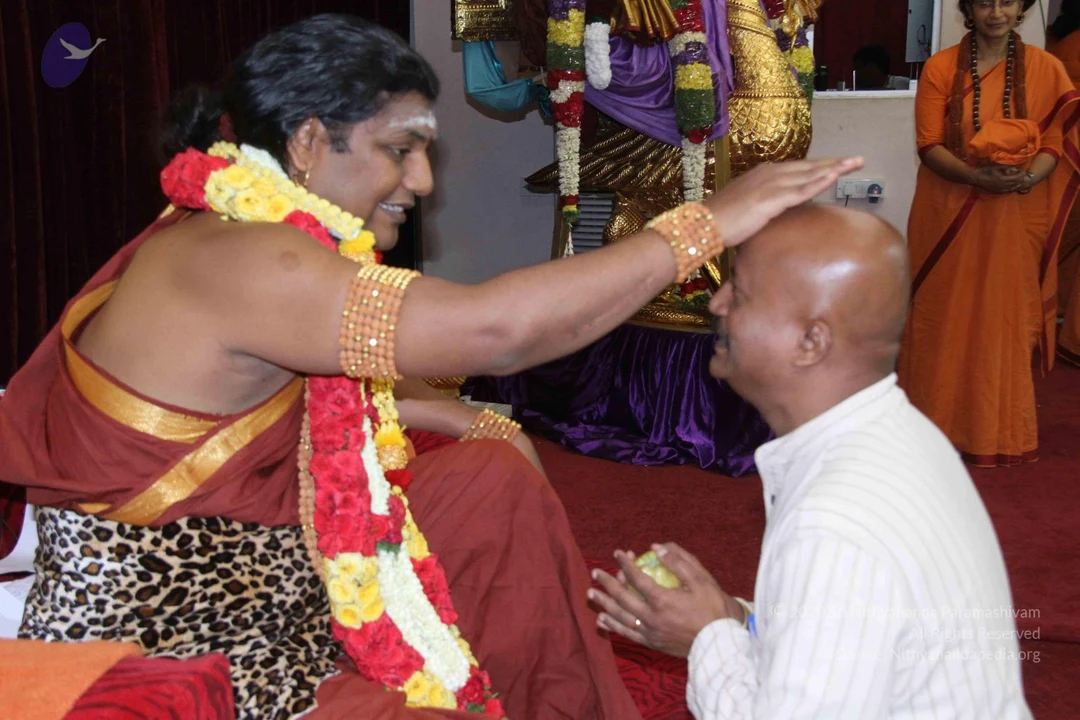
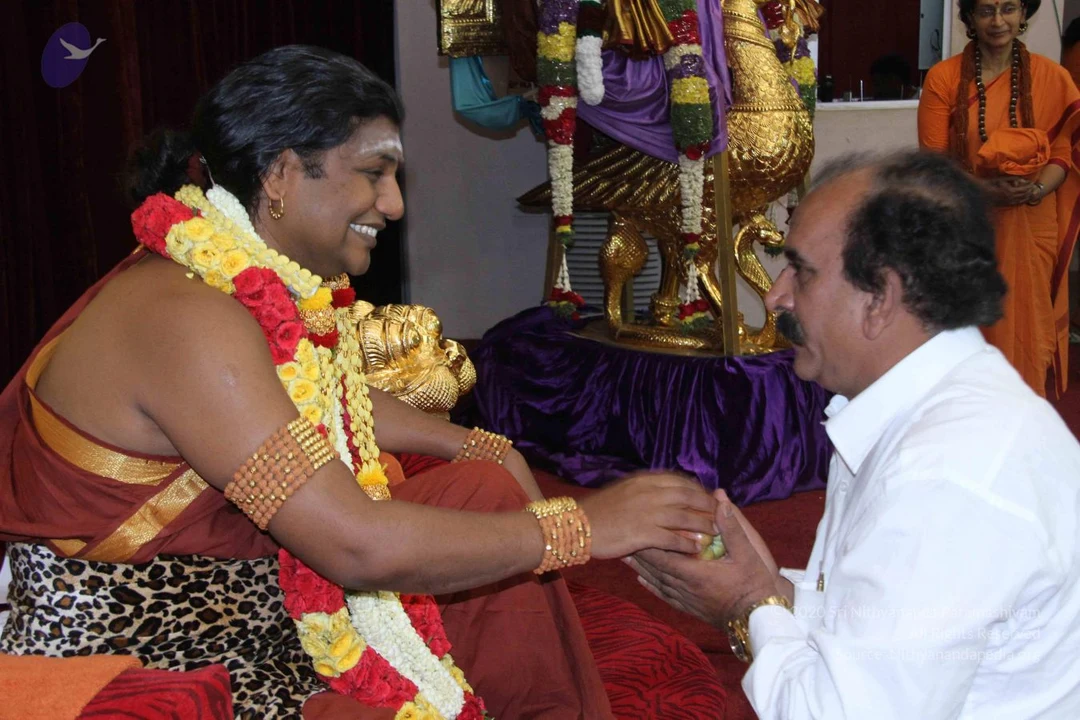
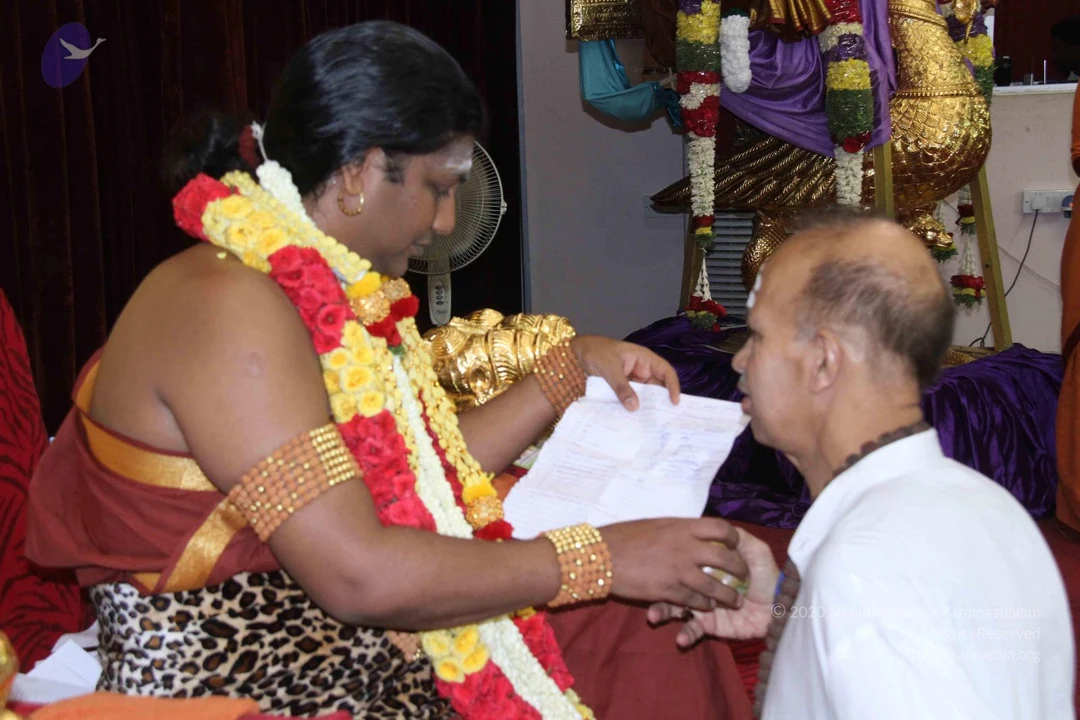
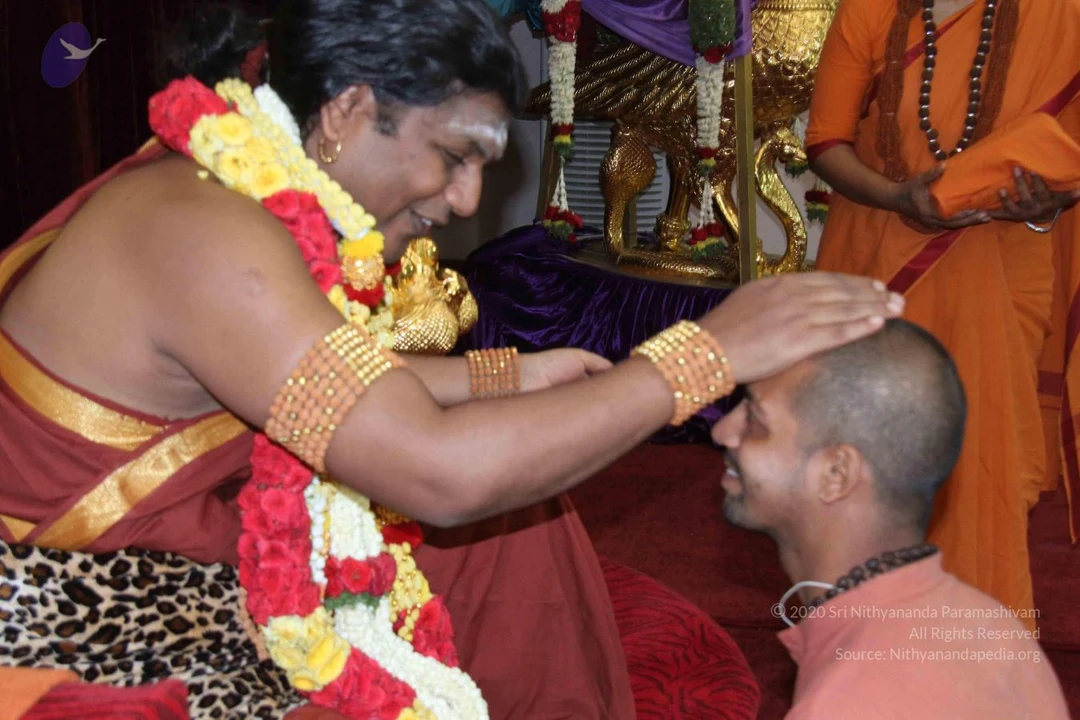
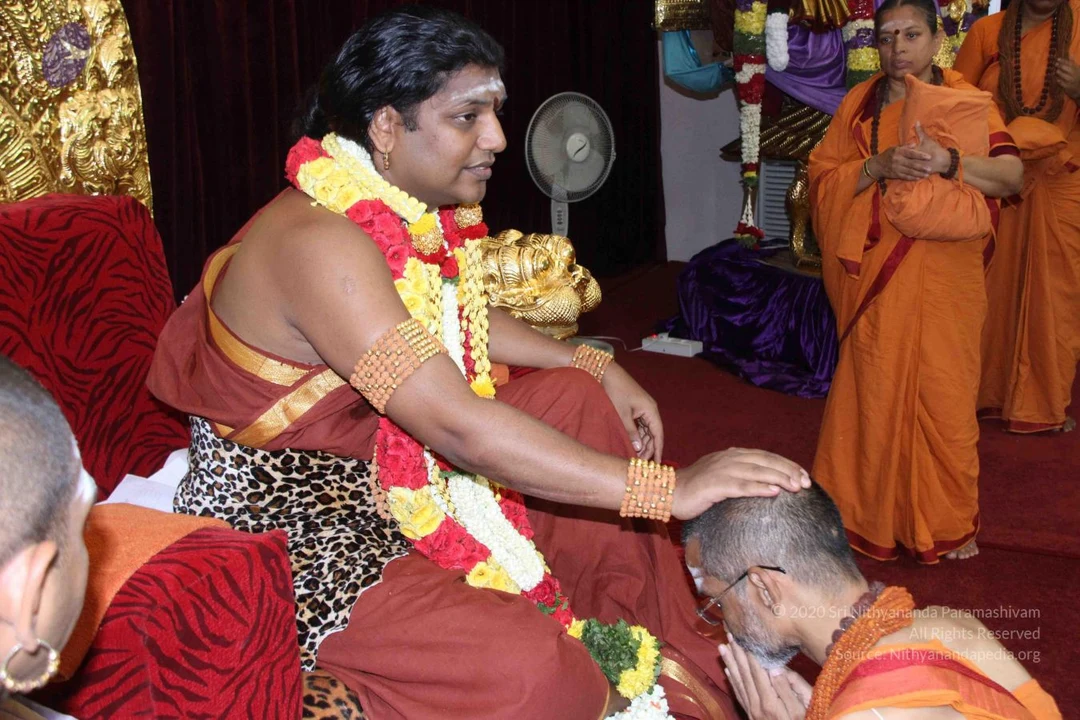
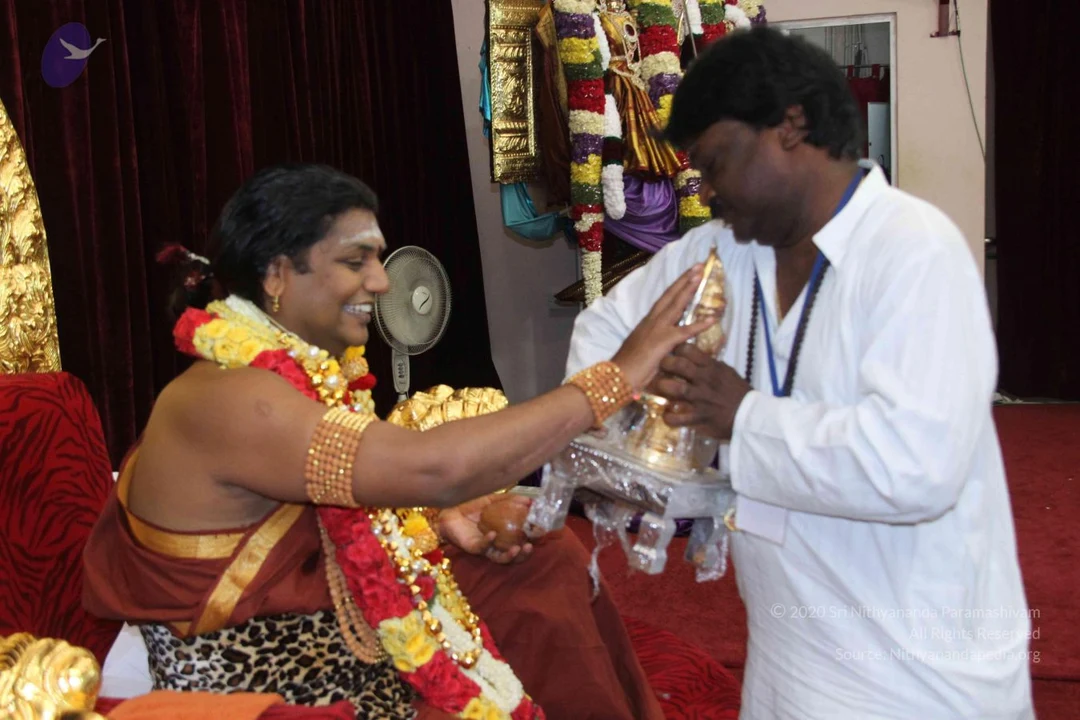
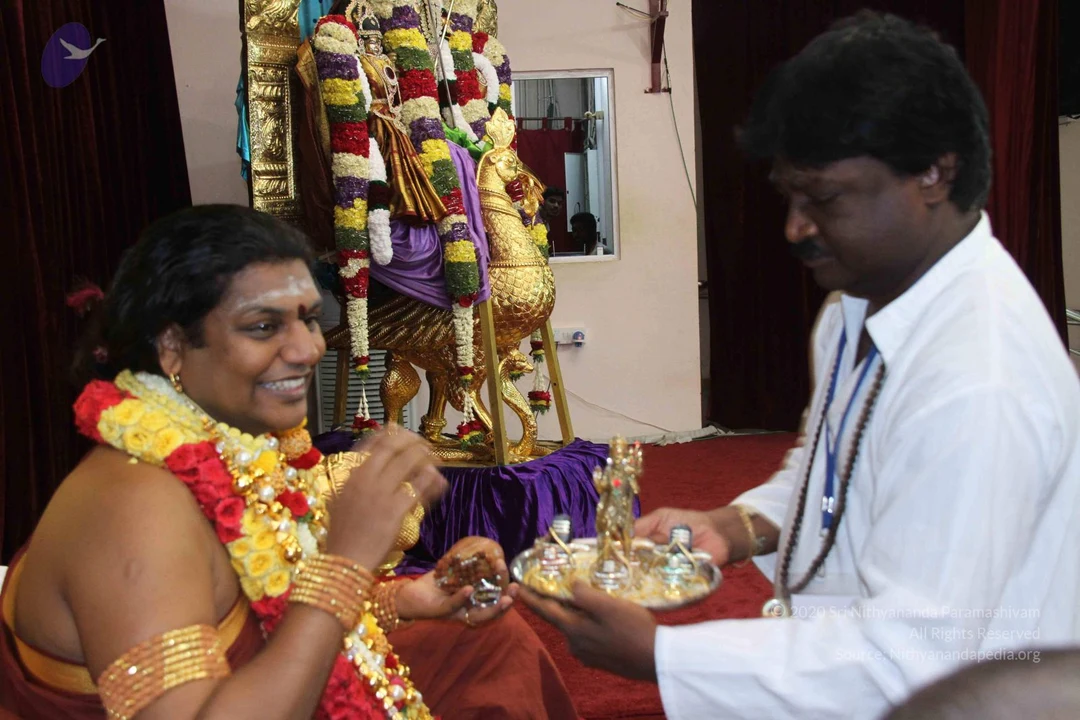
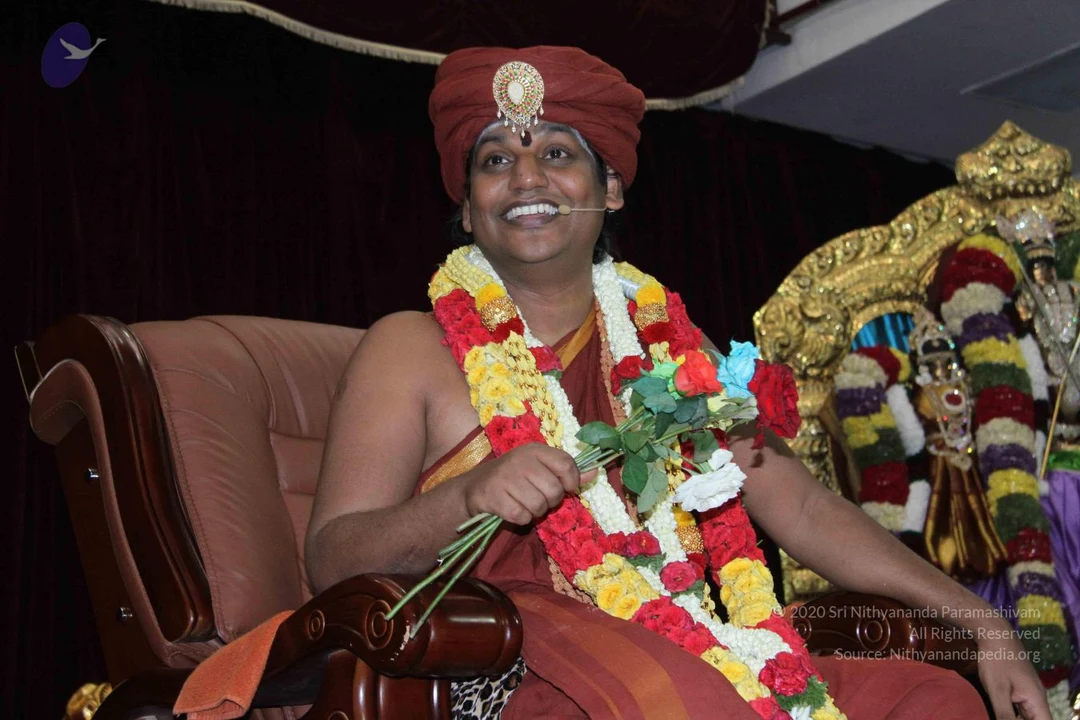
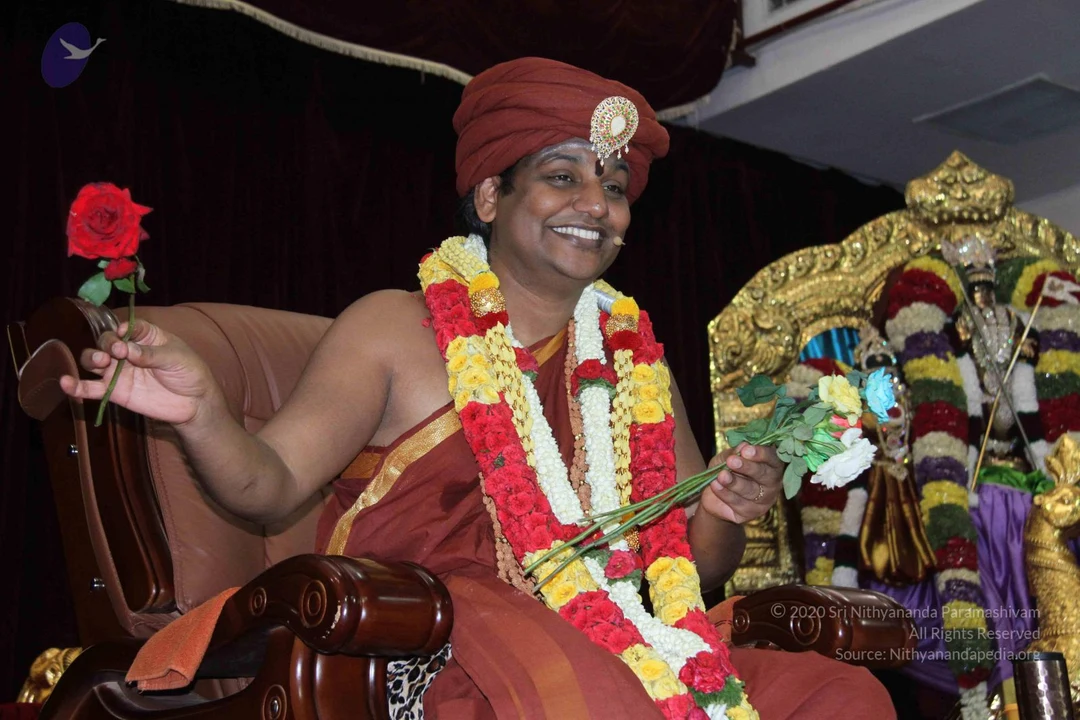
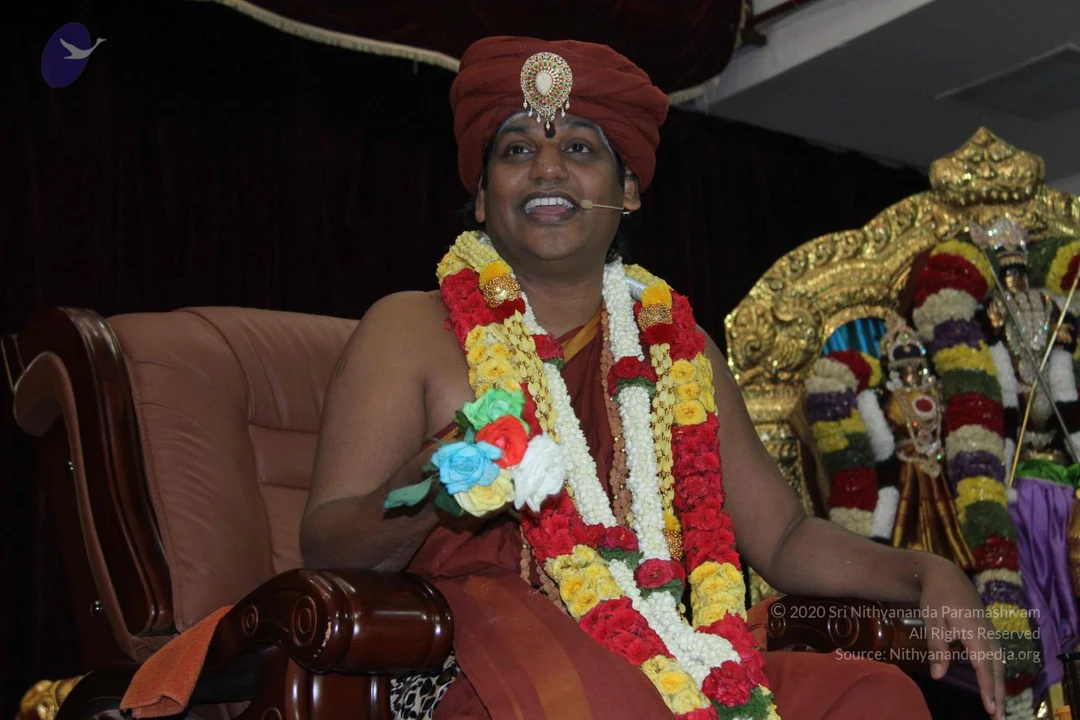
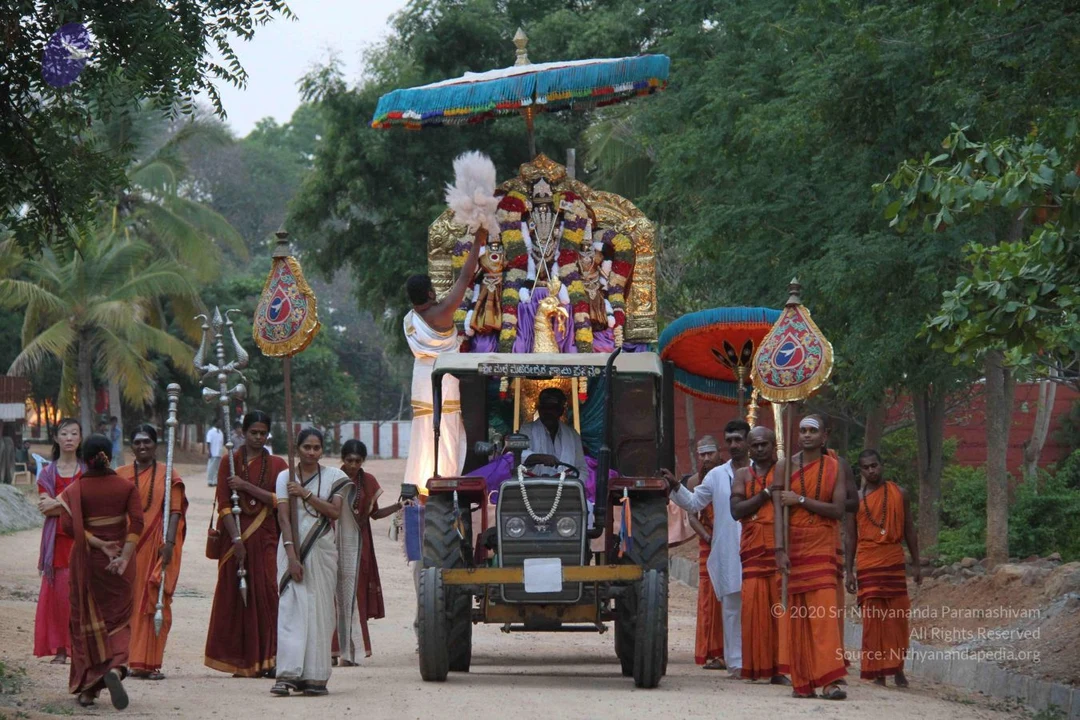
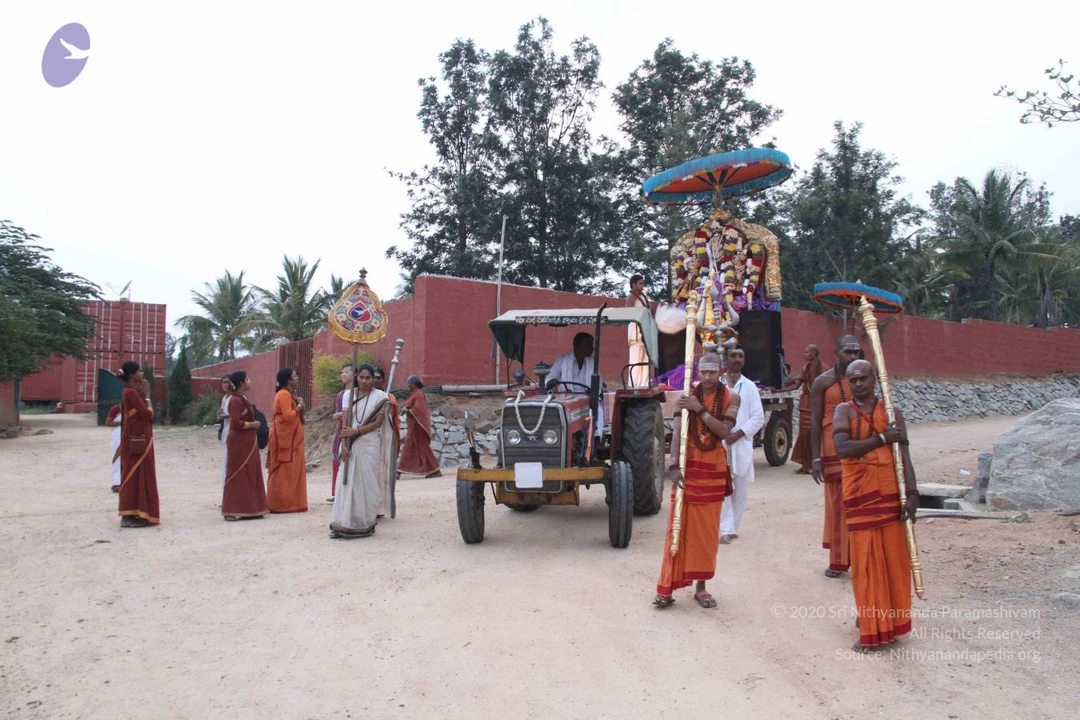
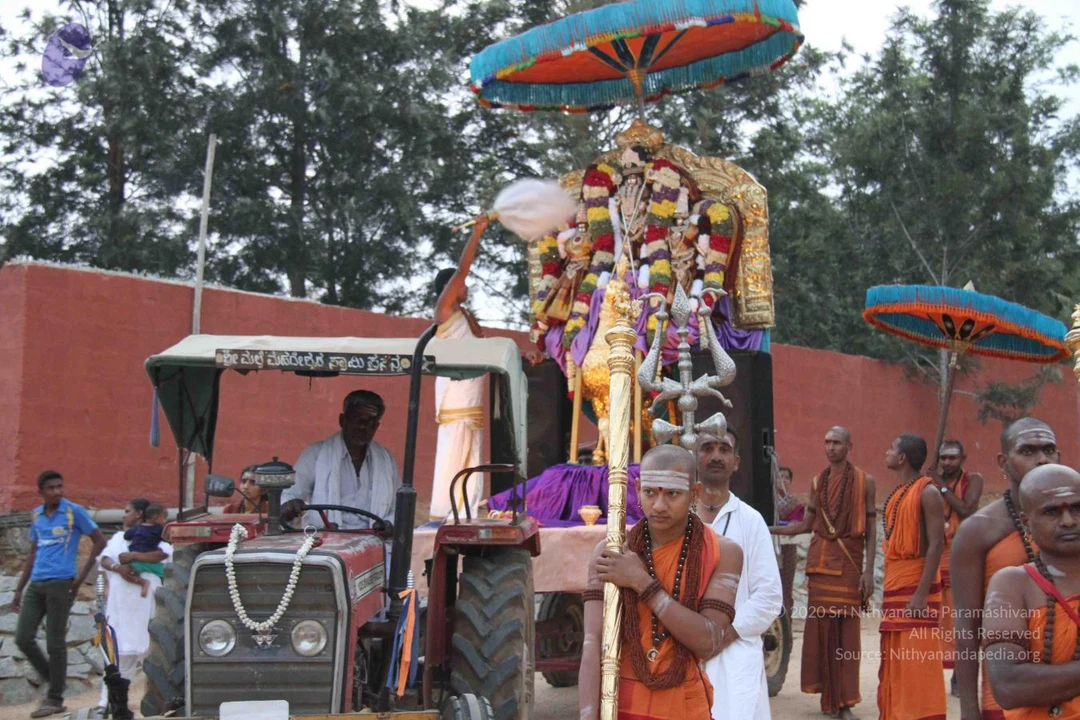
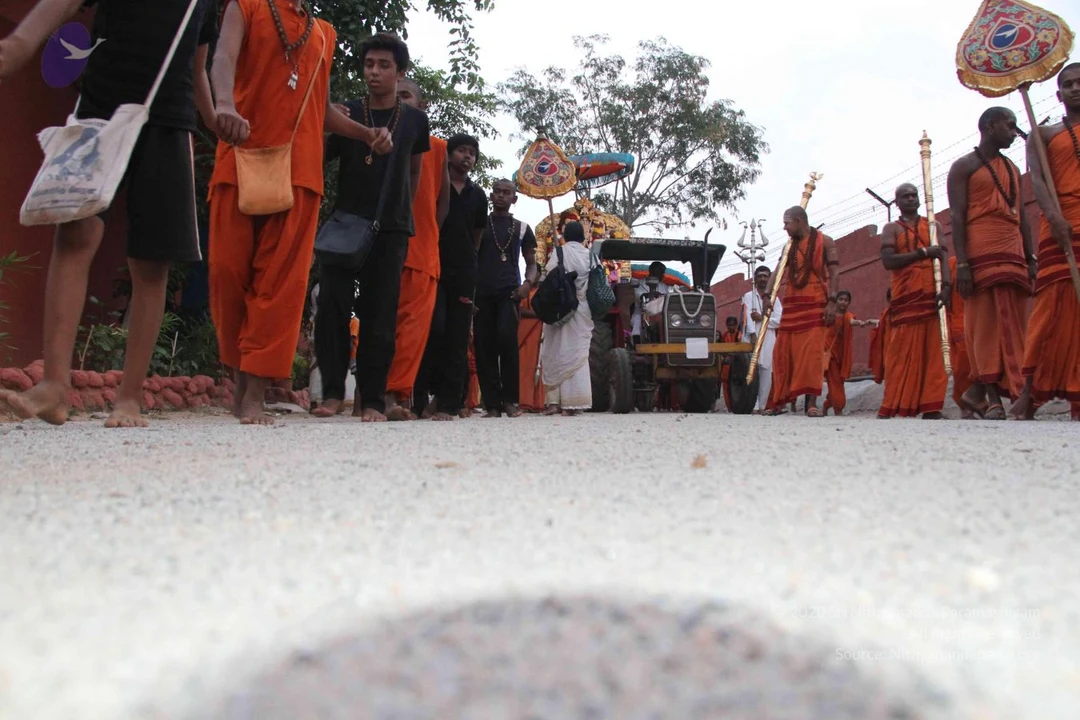
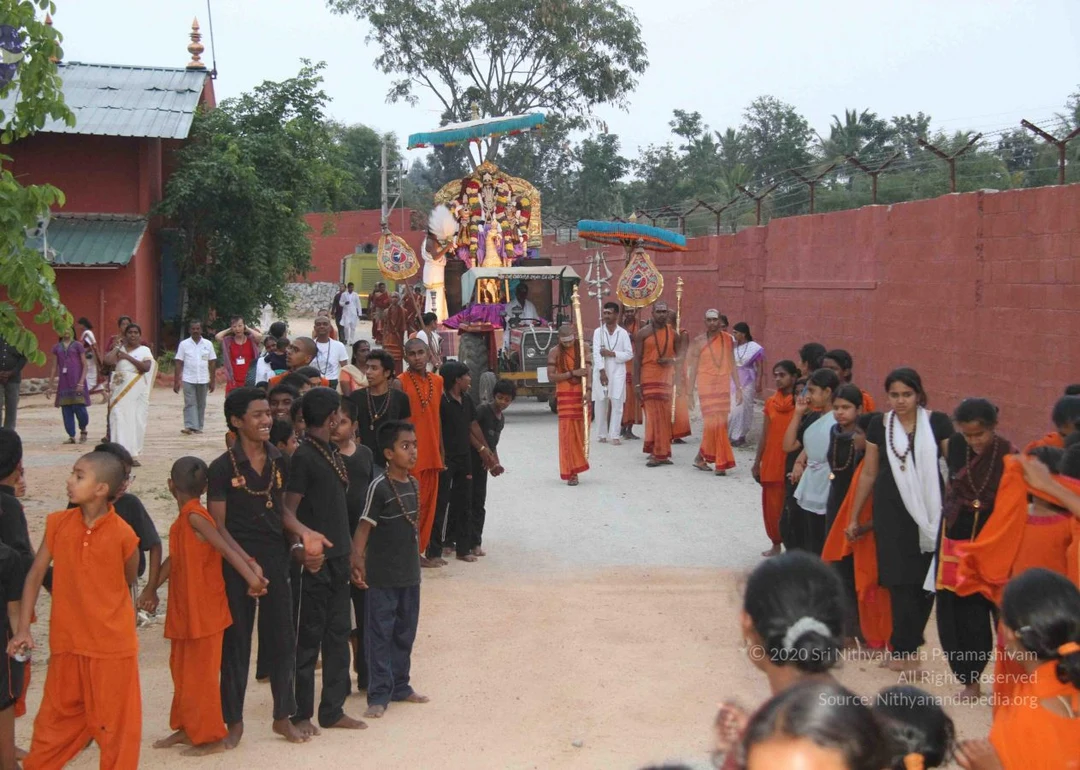
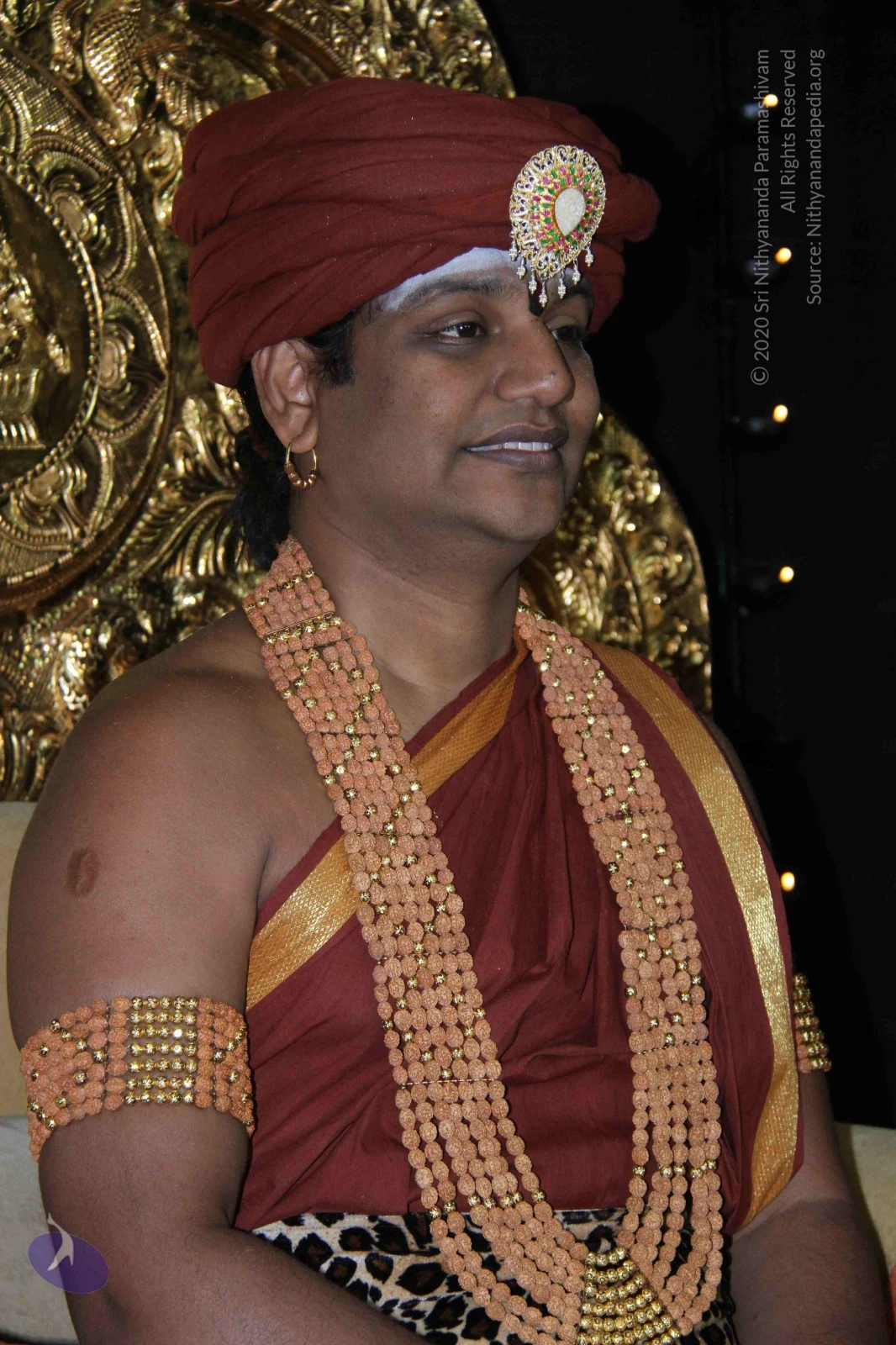
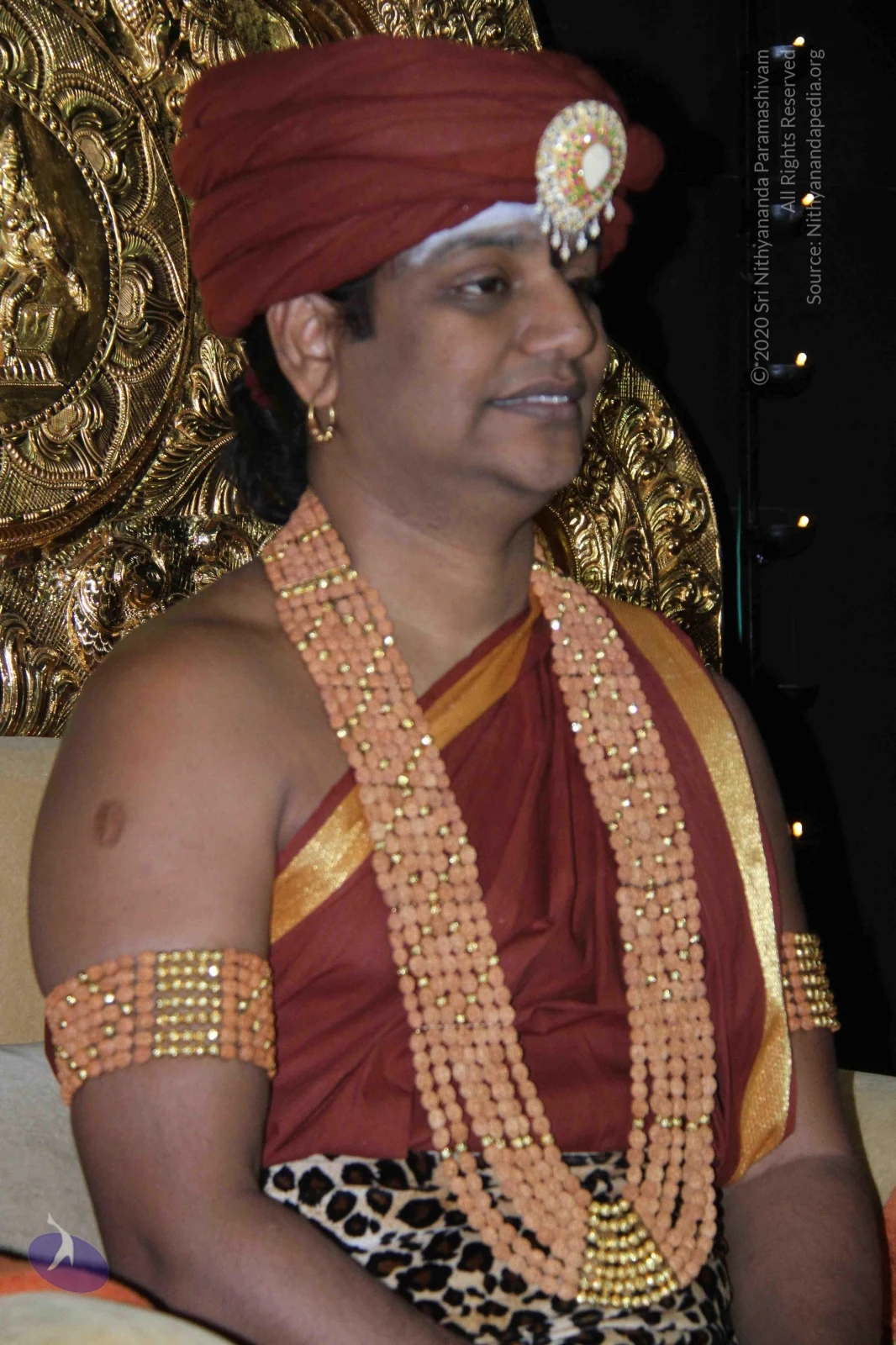
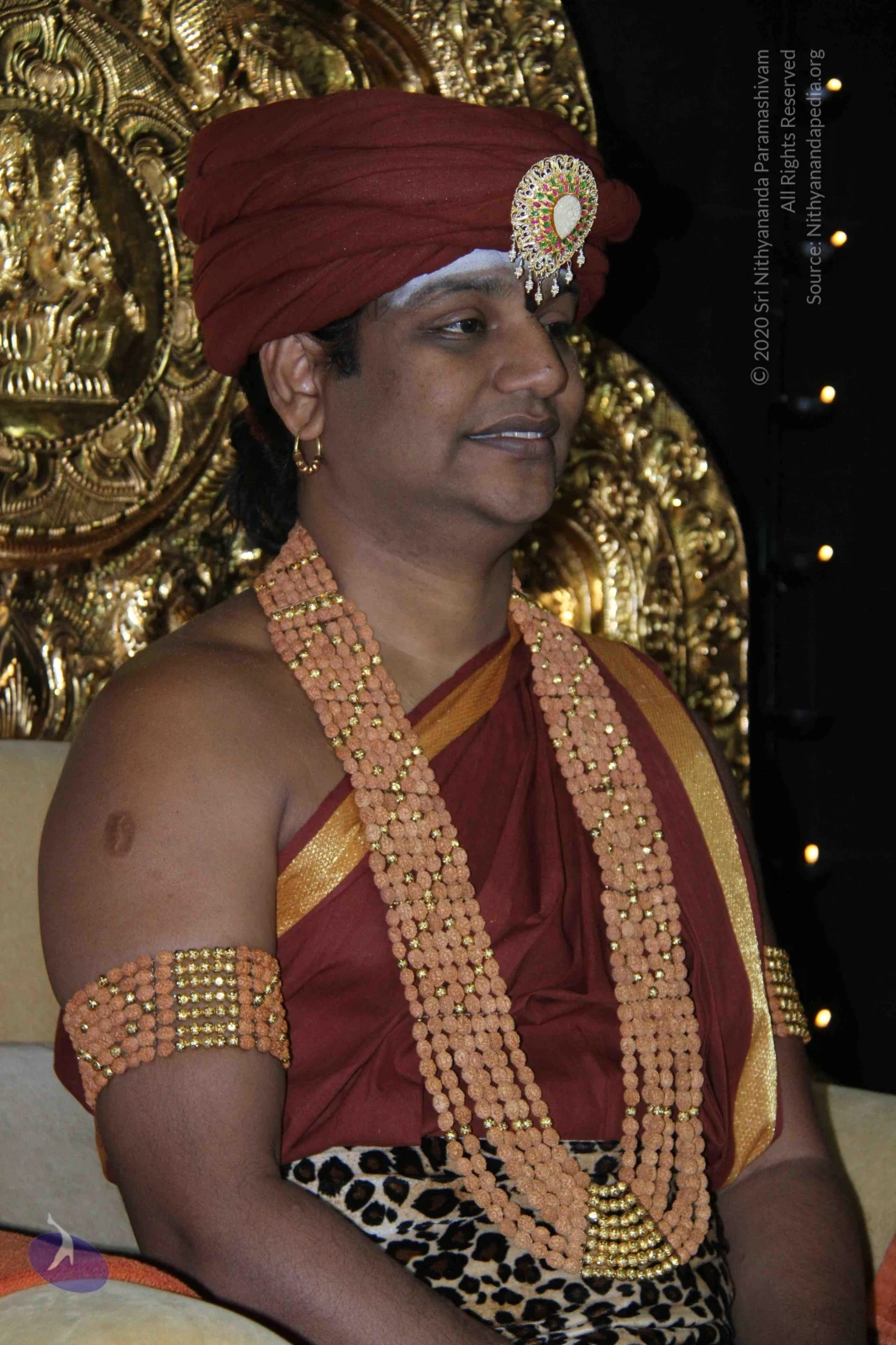
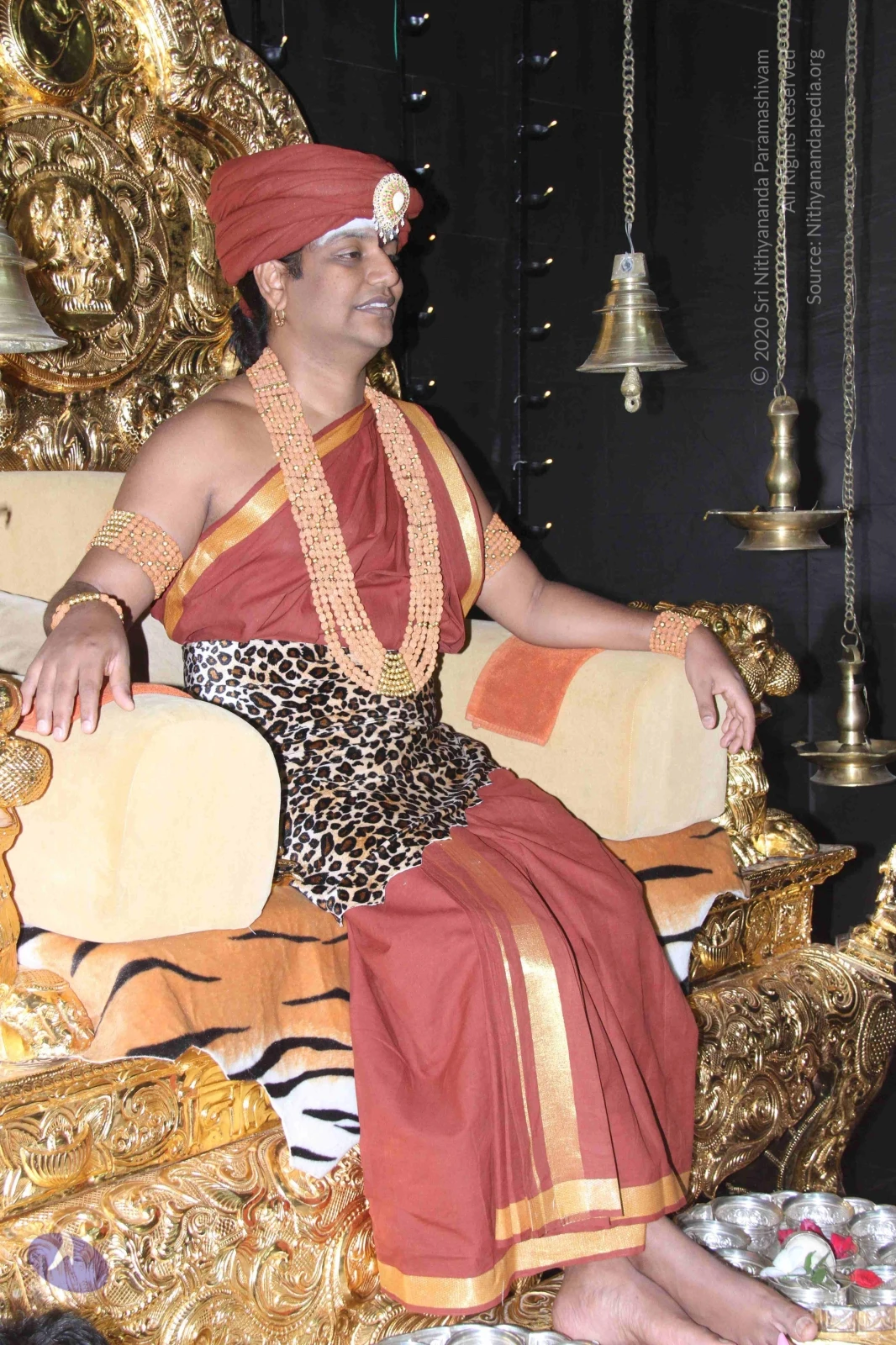
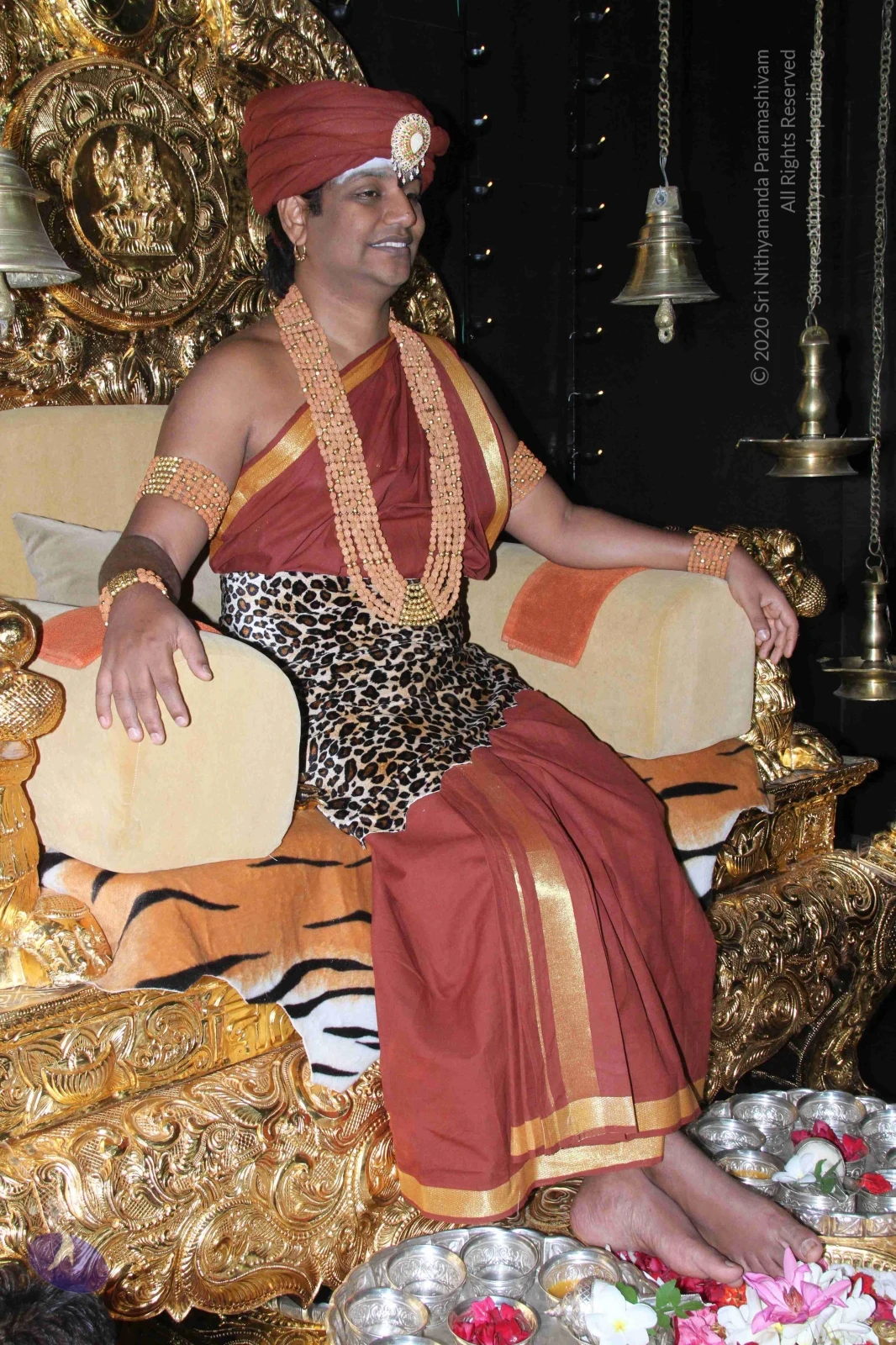
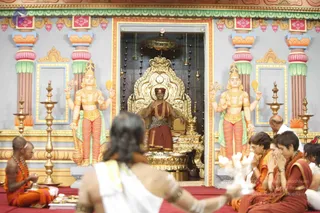
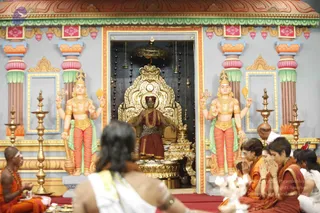
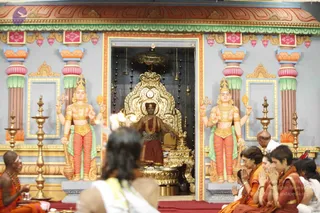
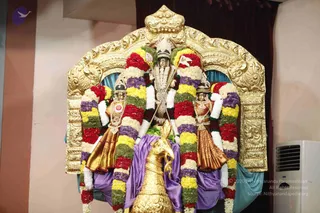
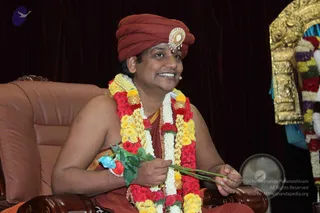
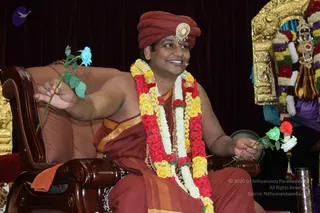
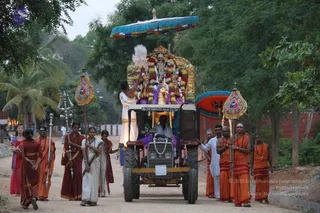
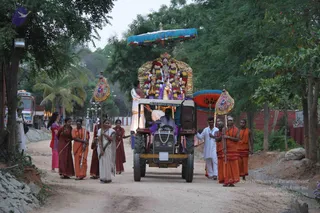
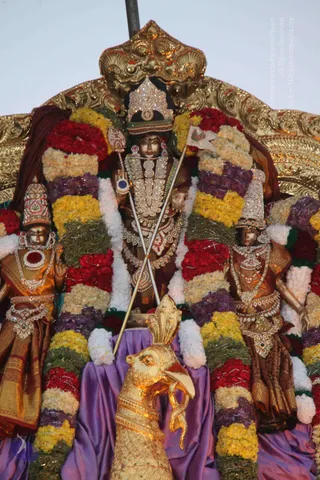
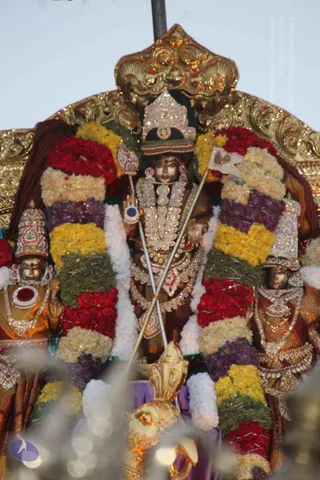
A photograph of a seated figure on an ornate gilded throne carved with lion-headed arms, with a tiger-striped cushion beneath. The seated person wears a deep red wrap with gold trim, a leopard-print blouse, a red turban with a gold crest, gold armbands and a long rudraksha-style mala with a gold necklace. Brass oil lamps hang from chains and brass bells hang nearby against a black stone wall. In front, a child in white stands beside a woman in orange and white, and another woman in orange sits with a rudraksha mala, with silver plates of flowers and offerings arranged on the floor.A photograph of a seated person in a maroon and gold sari-style garment with a leopard-print wrap, wearing a garland of red roses, yellow flowers and white jasmine, and gold bangles. Their right hand rests on the head of a kneeling man in a white shirt, who bends forward with his head lowered. Behind them a standing woman in white clothing wears a rust-orange beaded necklace and gold bangles, beside a golden deity murti, a kalasha-like gold vessel, a table draped in purple cloth and hanging flower garlands. A small standing figure with a shirt and light trousers appears at the right edge. The seated person appears to be giving a blessing to the kneeling devotee, possibly a darshan or padapuja setting.A festival procession outdoors past a red compound wall, with a decorated deity murti on a golden palanquin-style platform draped in garlands of orange, pink, white and purple flowers, under coloured fringed parasols. A red tractor with a driver in a white shirt leads, its front garlanded with white flowers. In front, a young sannyasi in saffron robes, rudraksha mala and white tripundra marks holds a tall golden staff with a trident-shaped top. Several saffron-clad sannyasis walk behind the platform, some with shaved heads and tripundra marks, and a man in white dhoti stands nearby. Several bystanders are visible at the left, including a child being carried. Trees and a pale sky fill the background.

April 13 2014

Original wiki page
Contents

Title:

Align to your highest identity

Description:

In today’s (13th April, 2014) morning Satsang, Paramahamsa Nithyananda emphasizes the importance of Authenticity. We are not defined by our birth or our wealth but instead by how much we are aligned to Authenticity. We are responsible for the perceptions we have about the world, how we project ourselves to others, how others view us and what we think about ourselves. The process of living in Advaita is to define and work to align the highest qualities we want in our lives to these four identities.

Link to Video:

VideoAudio

Transcript:

Nithyanandeshwara Samaarambhaam

Nithyanandeshwari Madhyamaam |

Asmath Aachaarya Paryanthaam

Vandhey Guru Paramparaam ||

I welcome all the devotees, disciples, samajis, satsanghis, Shrimahants, Mahants, Kotharis, Thanedars, sitting with us all over the world through Nithyananda TV, Lotus News Channel, Sadhna TV, Eshwar TV, Janashree TV, and two-way video-conferencing having Nayana Deeksha in so many countries all over the world.

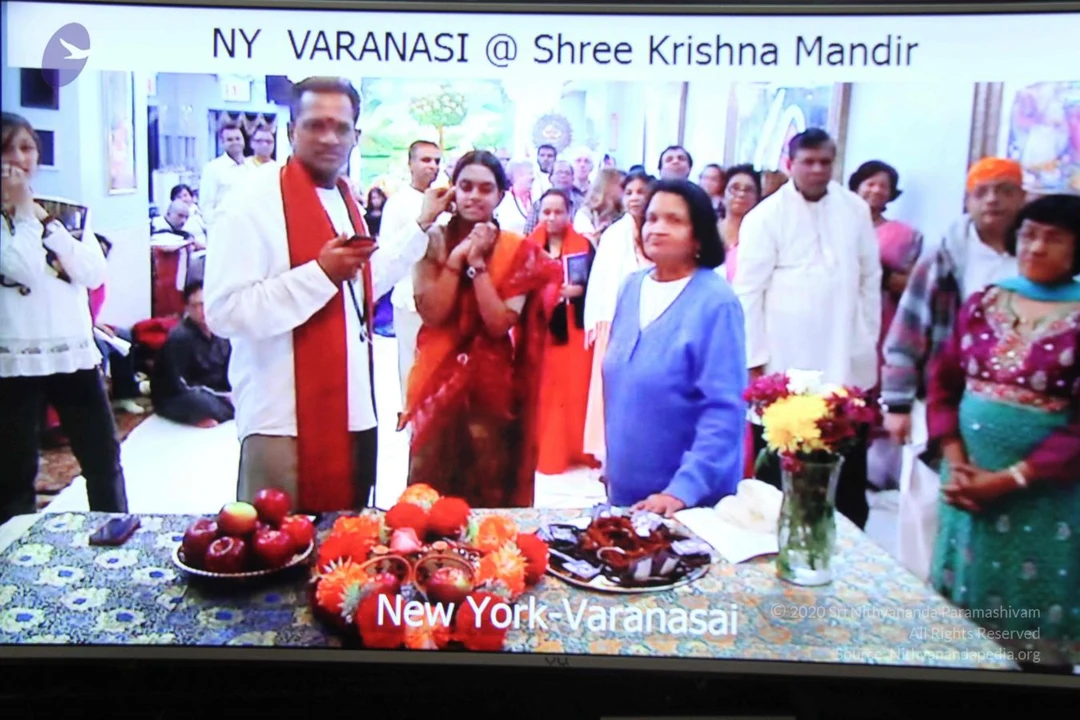
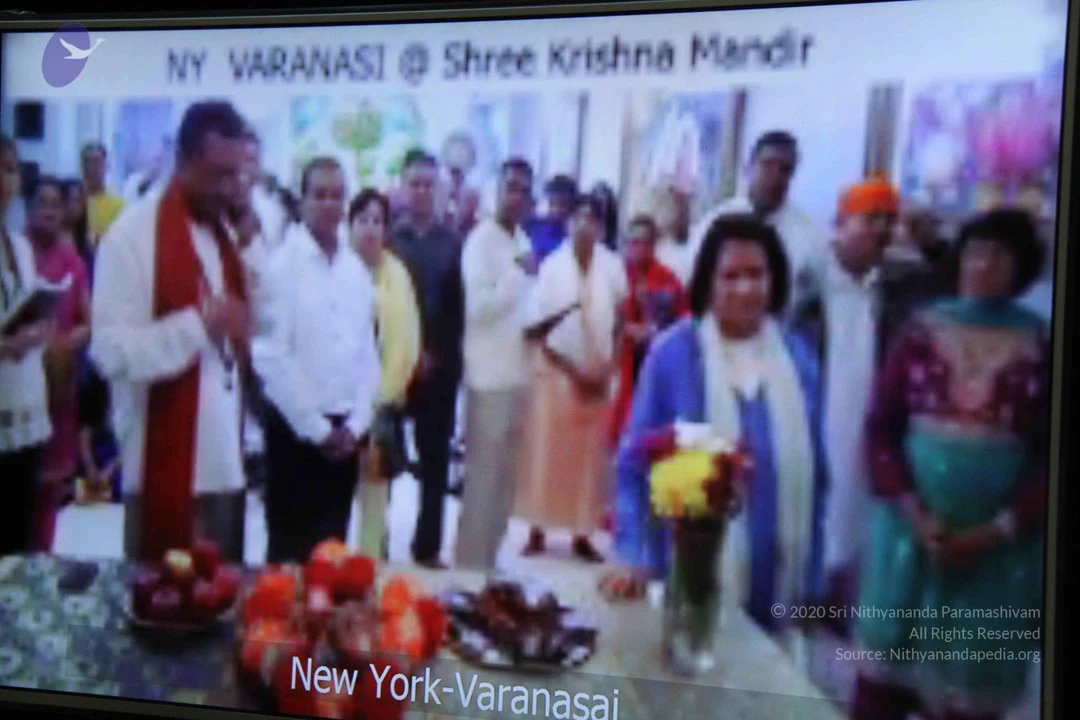
The cities sitting with us having Nayana Deeksha, gathered for today’s Kalpataru Darshan: New York-Varanasi, Yoga Den-California, Khar Road-Mumbai. I welcome all the three cities for Kalpataru Darshan.

Cities sitting with us: Seremban-Sivakasi, Toronto-Kailasam, Oklahoma-Somanatham, Washington DC-Sripuram, Seattle-Chidambaram, Vancouver-Bhubaneshwar, San Jose-Madurai, Nithyananda Nagaramu-Hyderabad, Singapore-Singapuram, Ohio-Prayag, Charlotte-Srisailam, Varanasi, Nithyananda University-Los Angeles, Nithyananda University-Paris, Simi Valley-California, Hyderabad-Gupta Kashi, Guadeloupe-Rameswaram, San Diego-Tirualavai, High Point-North Carolina, Toon Moon-Hong Kong, Bogota-Colombia, Jorpati-Nepal, New Zealand-Adi Arunachalam, China-Rose Li, Olympia-Washington, Selayang-Malaysia, Hyderabad-Gupta Kashi, Melbourne-Australia, Charlotte-Srisailam, Madurai Dhyanapeetam, St. Louis-Tirumala, Houston-Kalahasti, London-Kashi, Minot-North Dakota, Dubai-Vaidyanatham, Ottawa-Canada, Doncaster-UK, Colorado Springs-USA.

I welcome all of you with my love and blessings.

Today is one of the most auspicious days in Hindu Tradition – the grand marriage day! Almost all the great historical marriages happened in Hindu religion, including Mahadeva and Parvathi. Mahadeva and Parvathi, Subramanya and Devasena, Andal and Rangamannar, Narayana and Komalavalli, Rama and Sita, all these marriages have happened today.

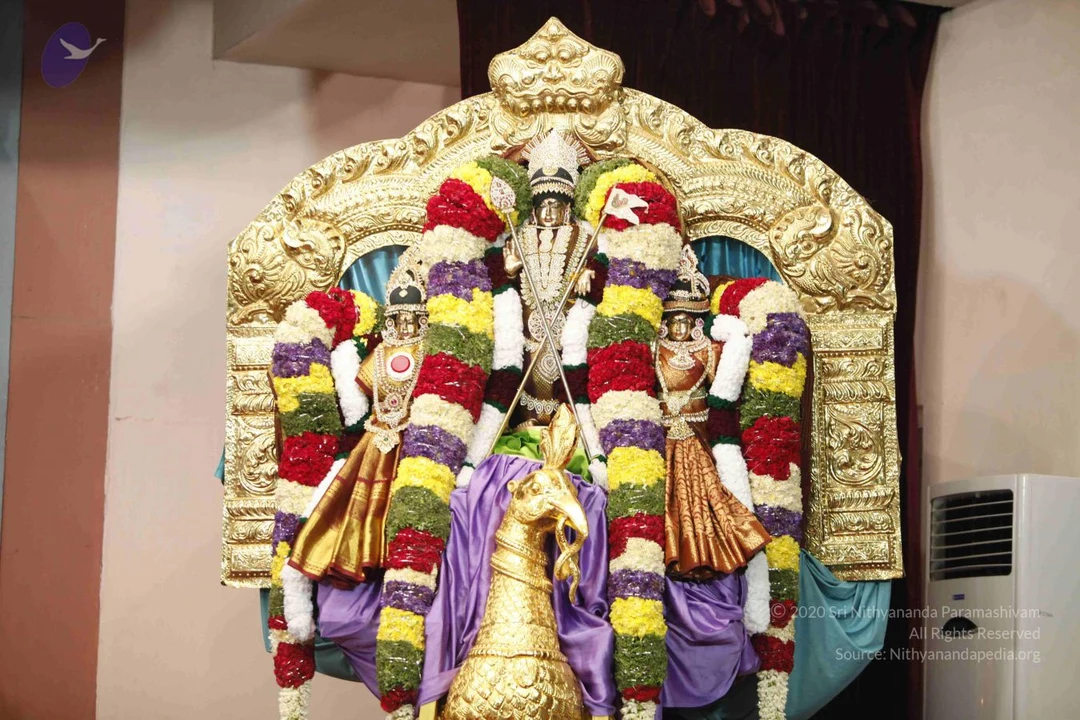
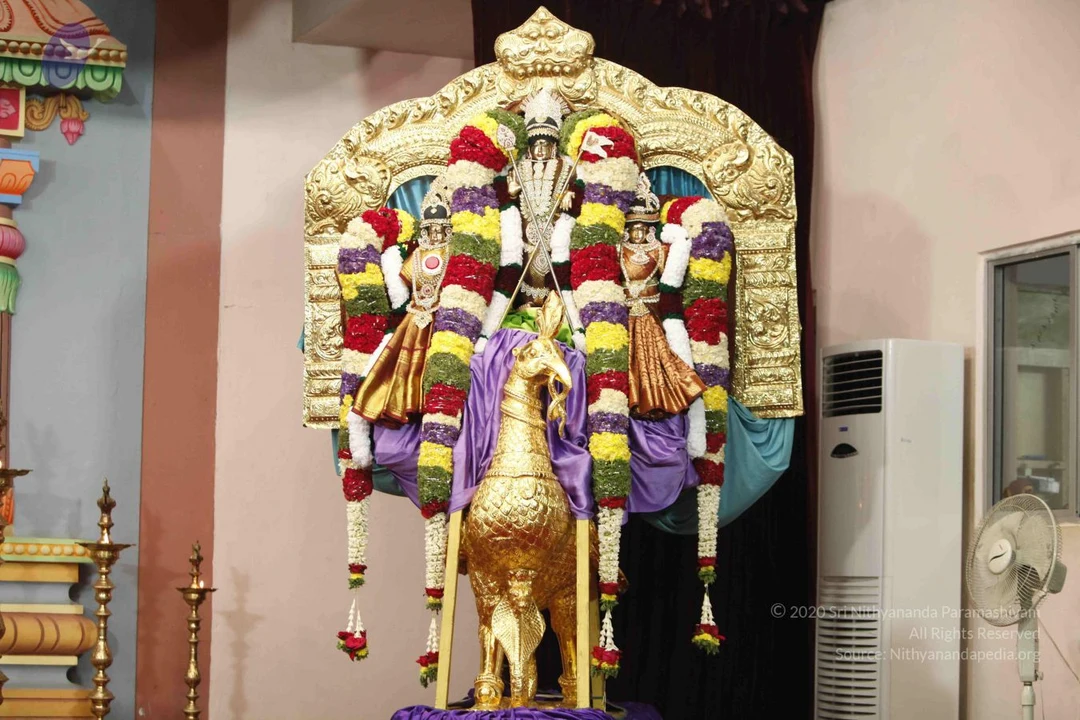
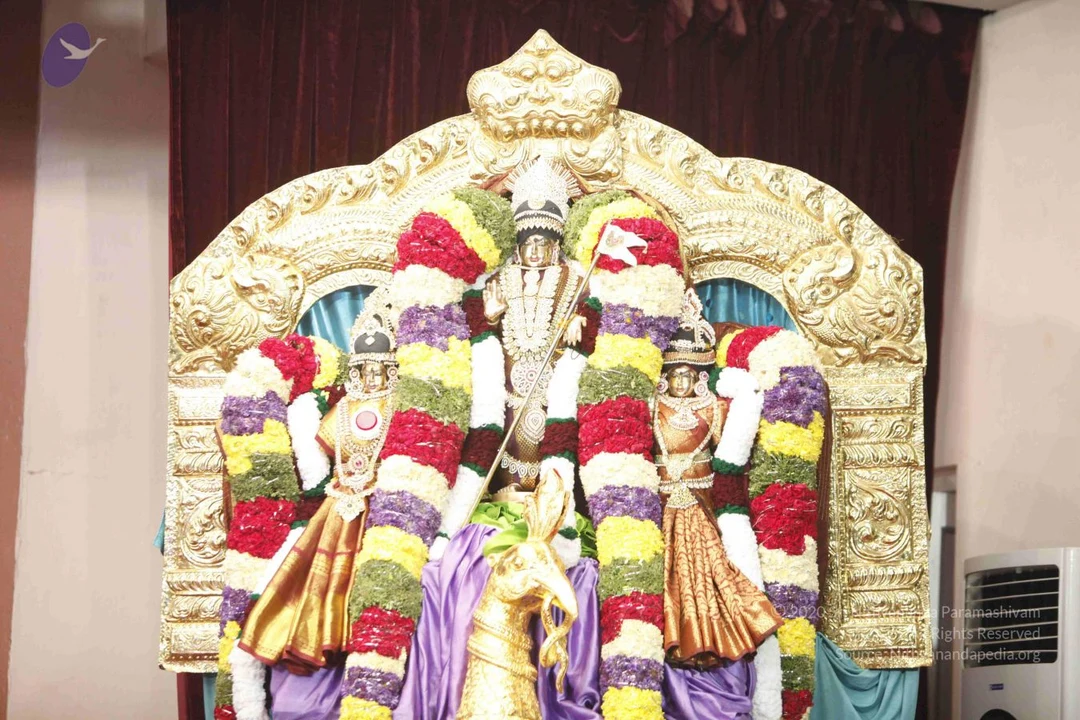
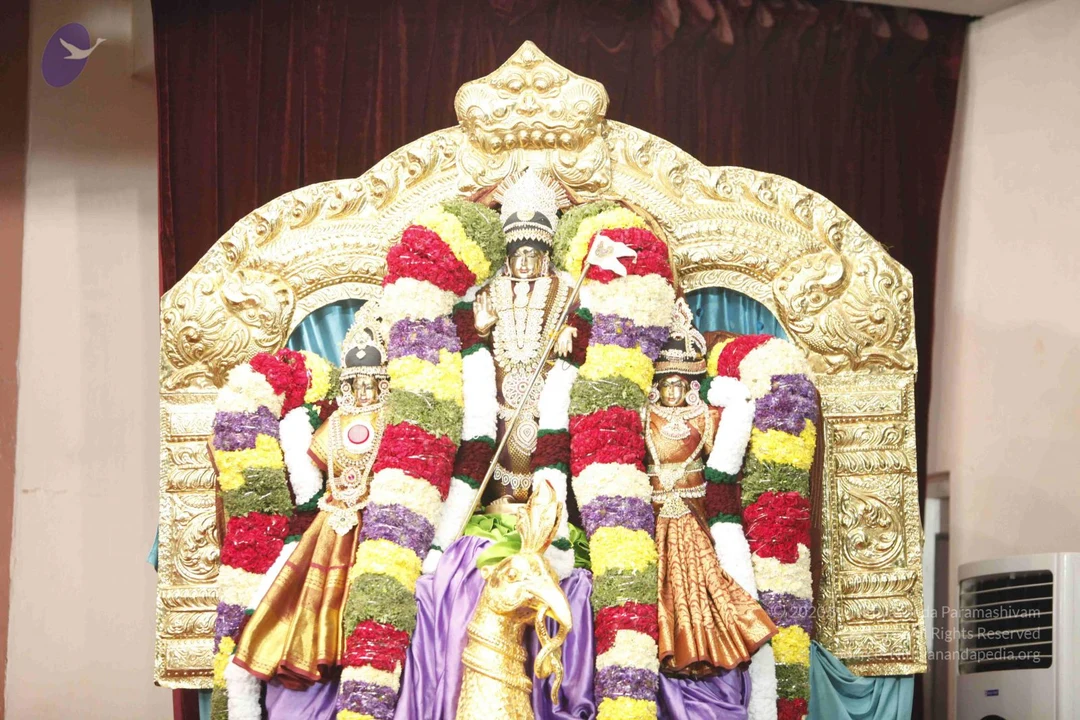
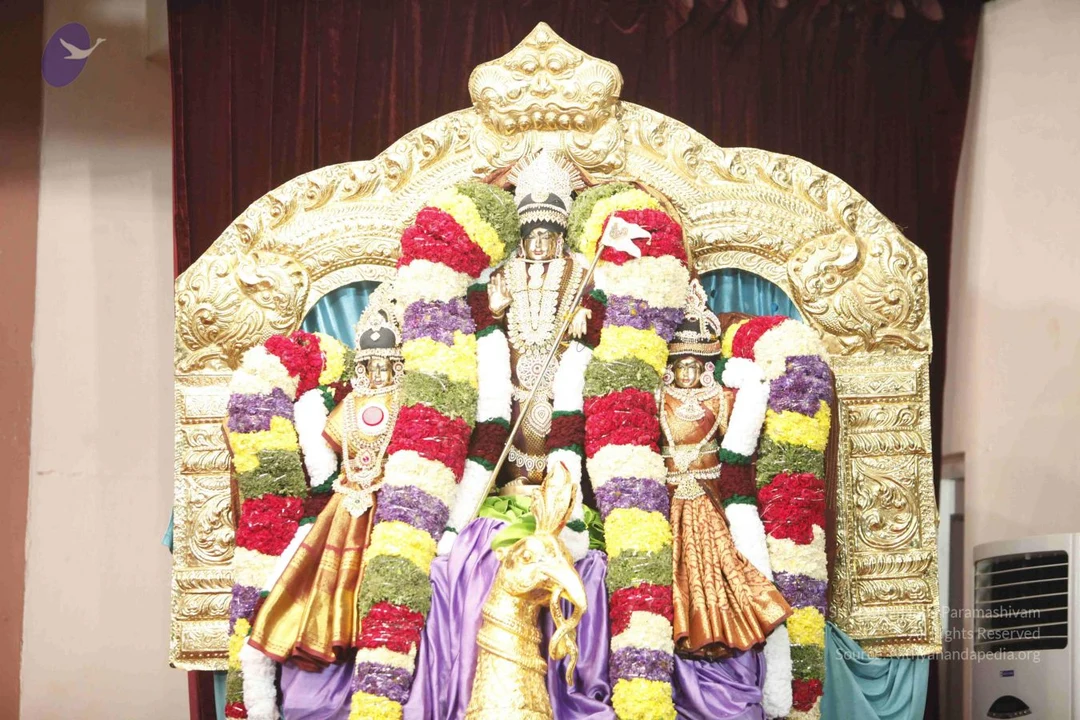
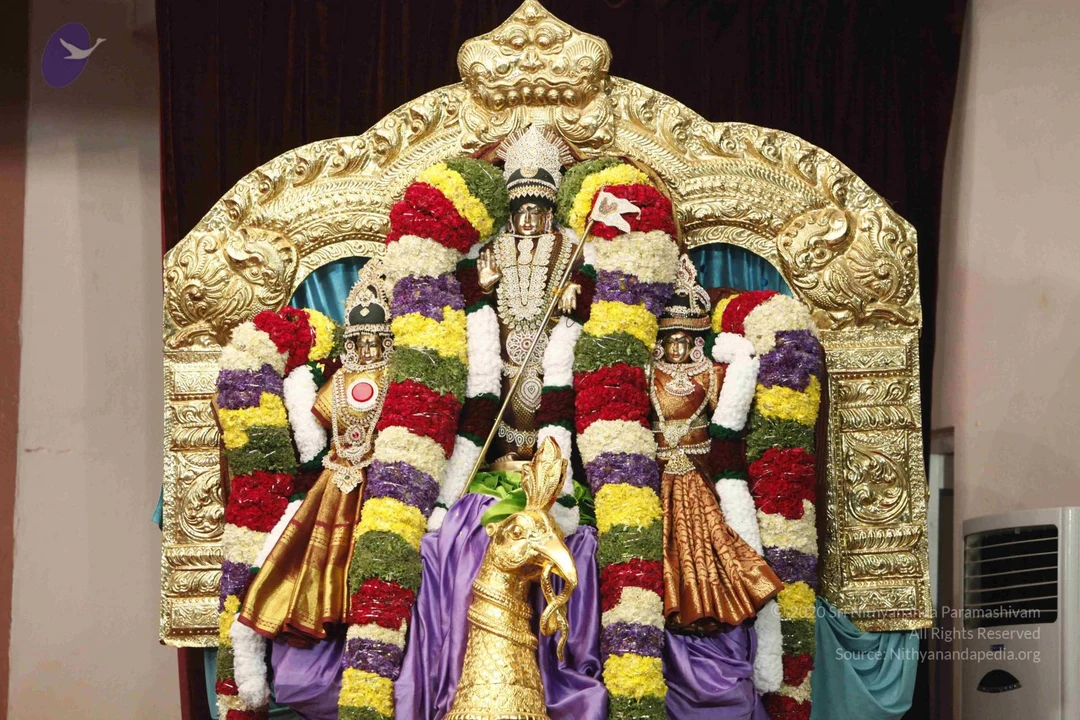
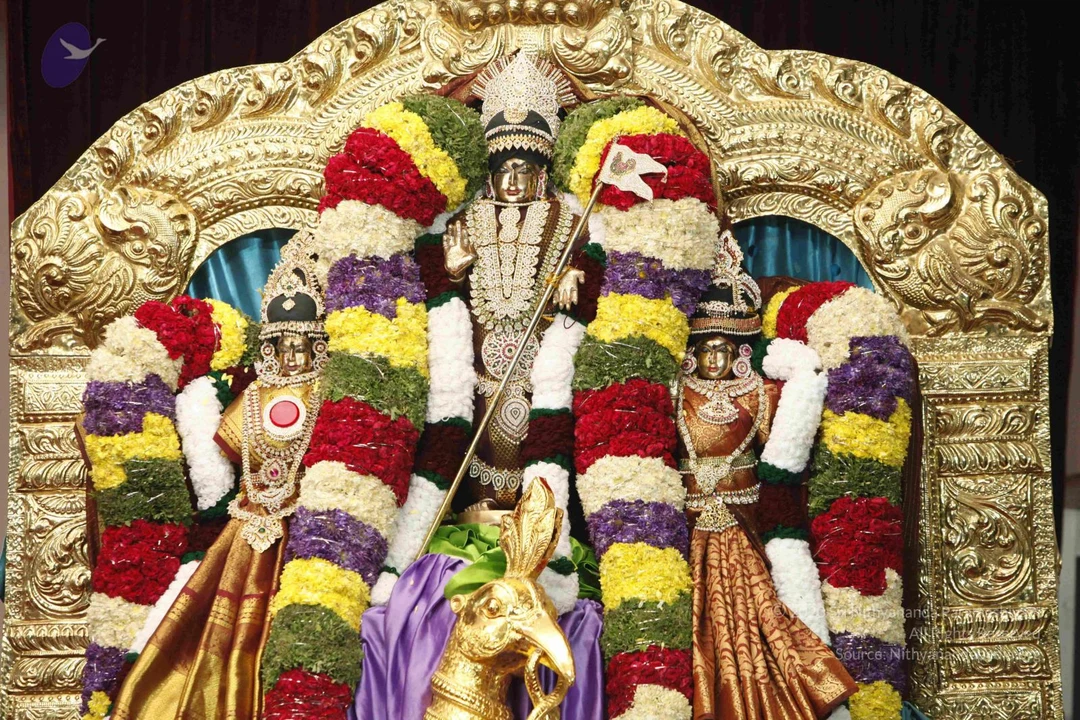
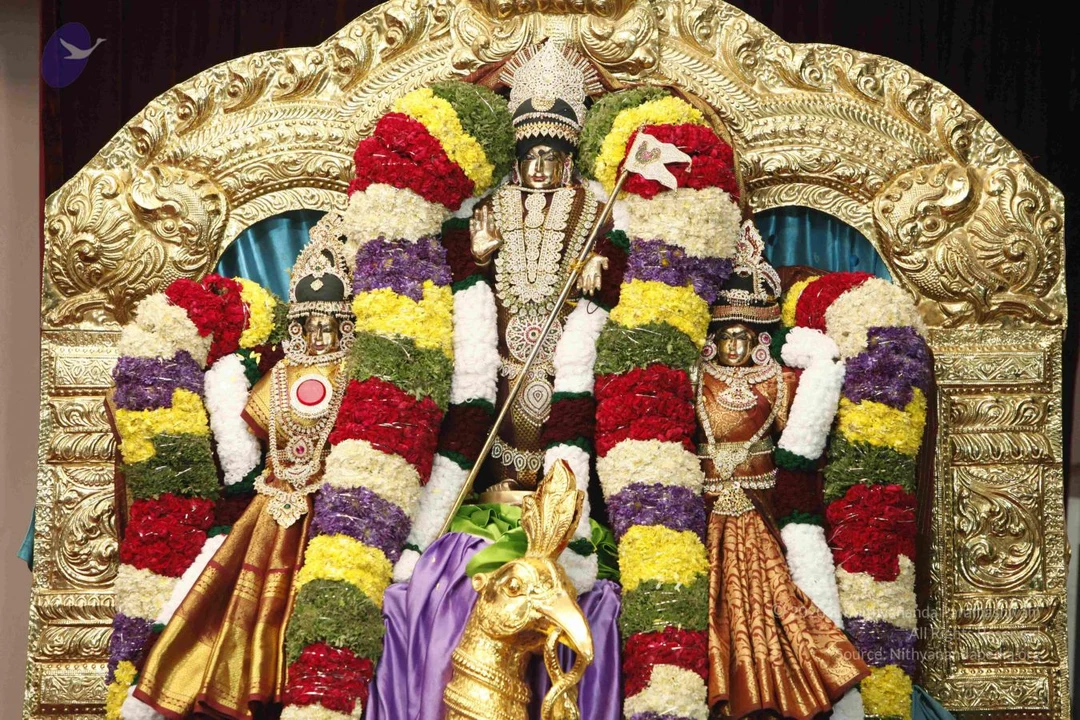
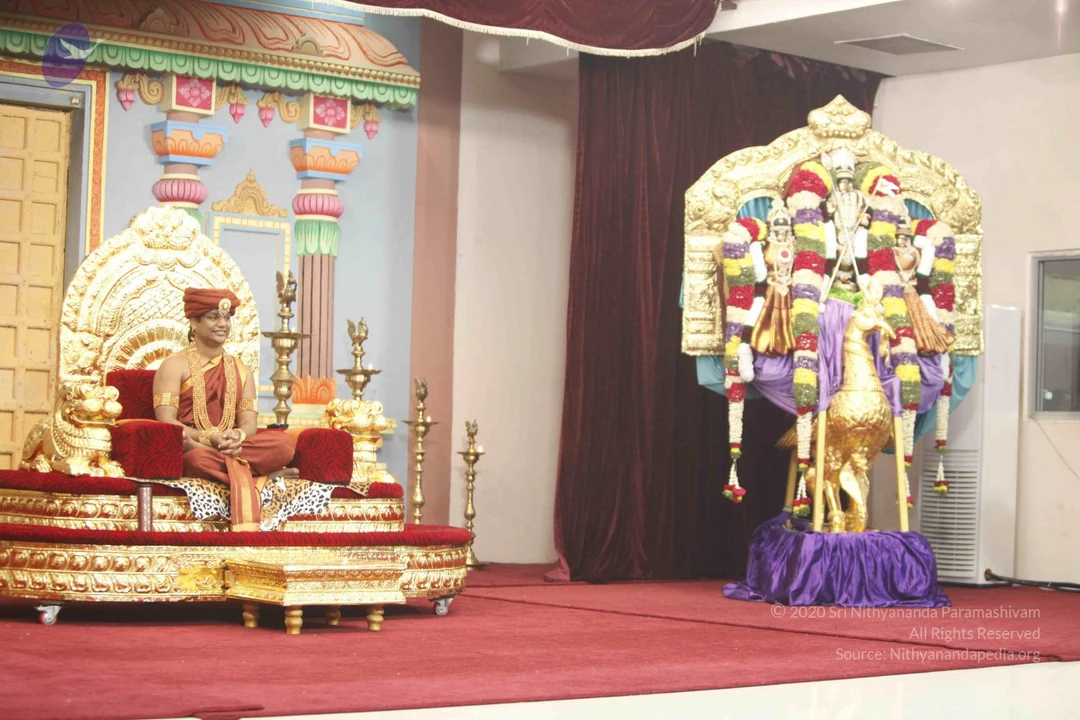
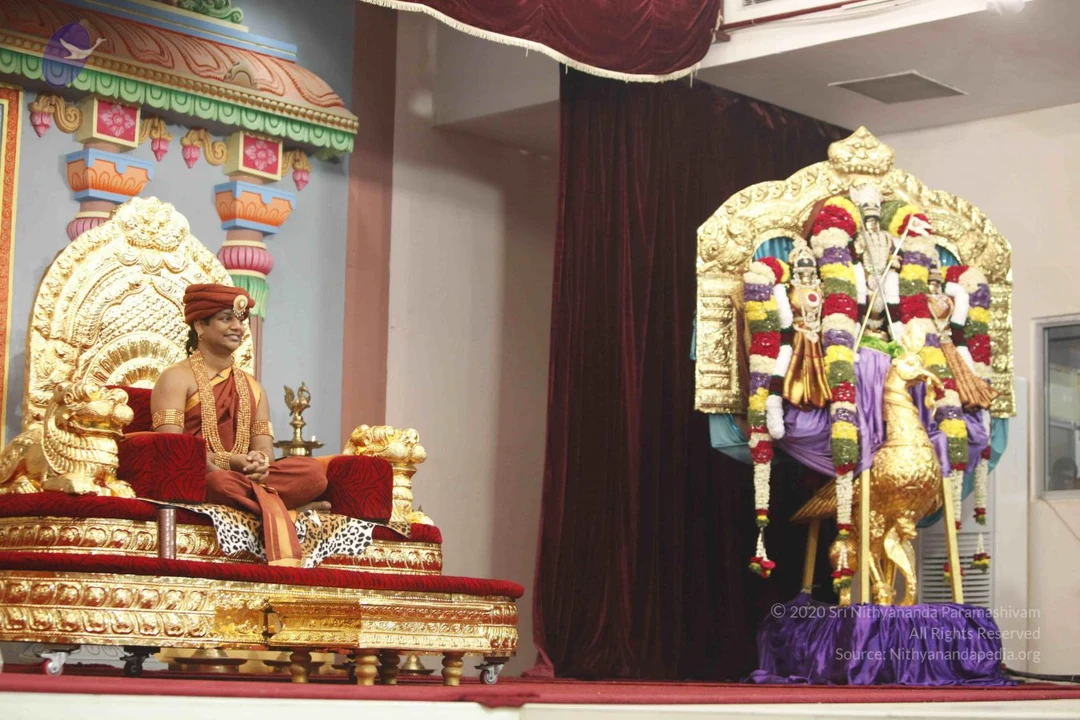
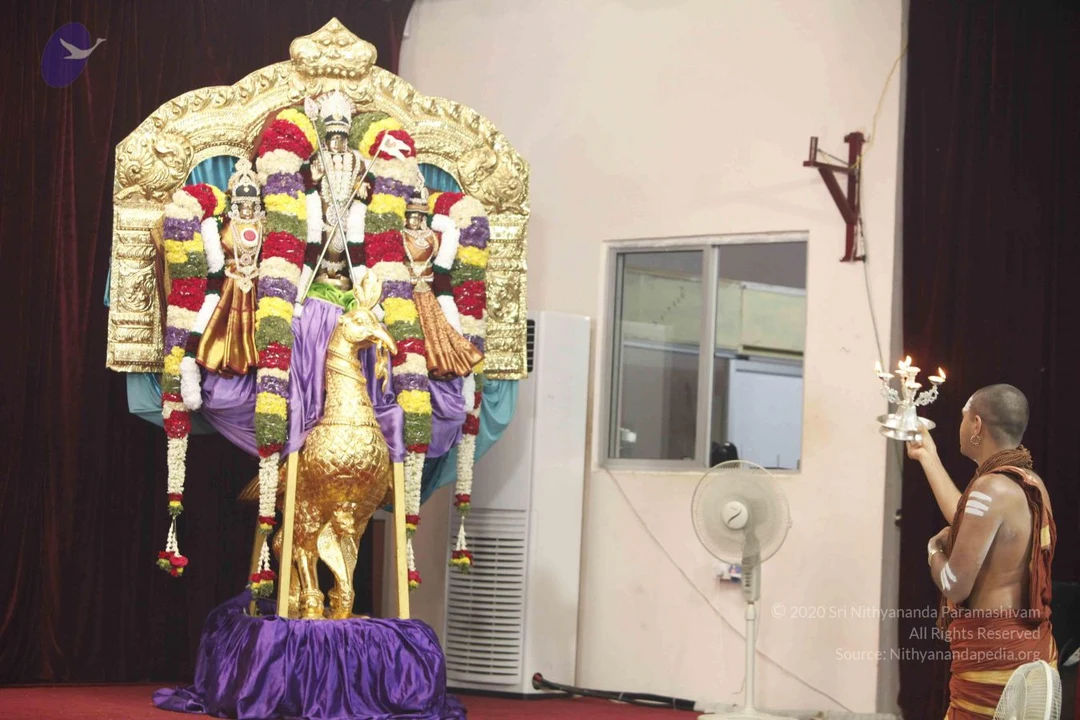
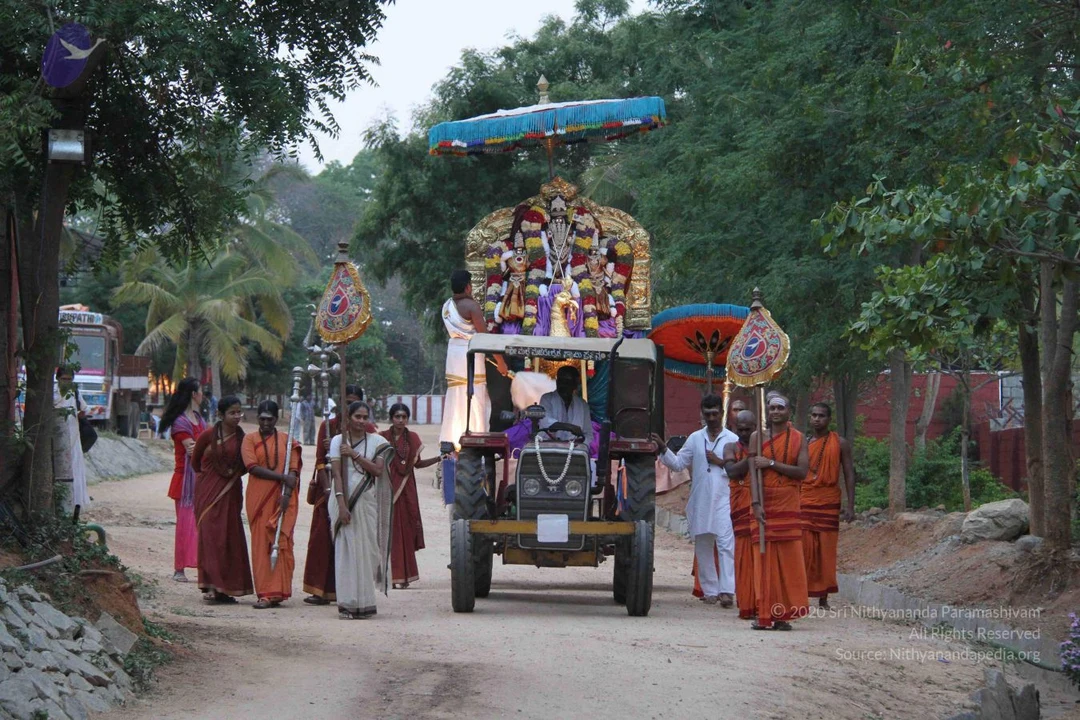
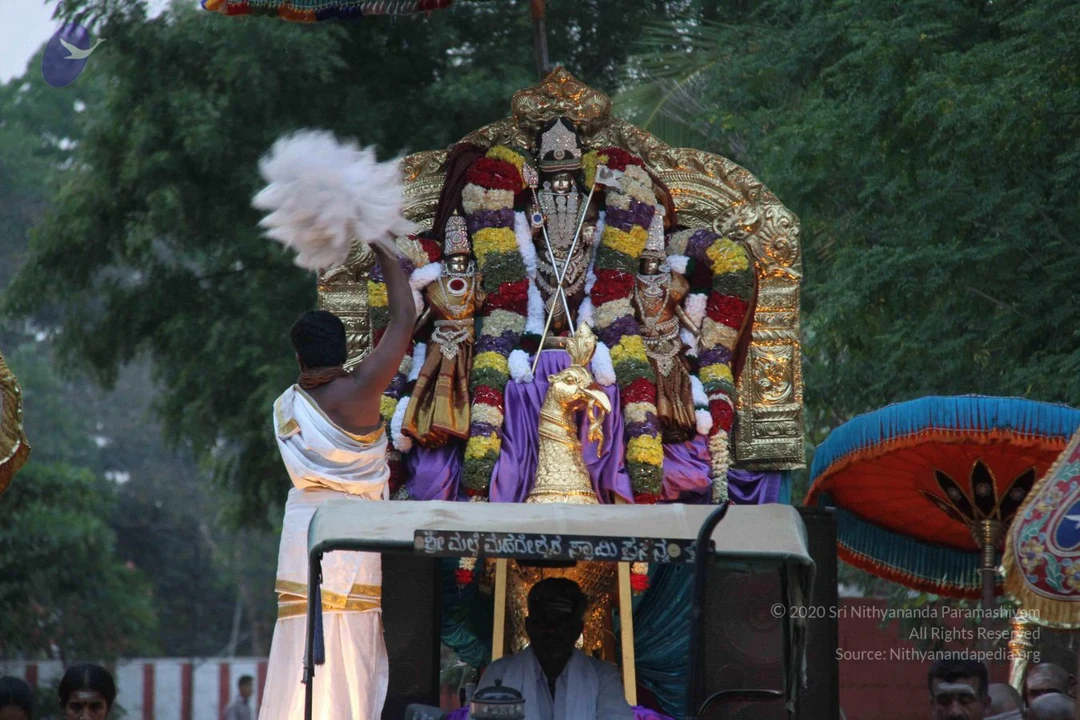
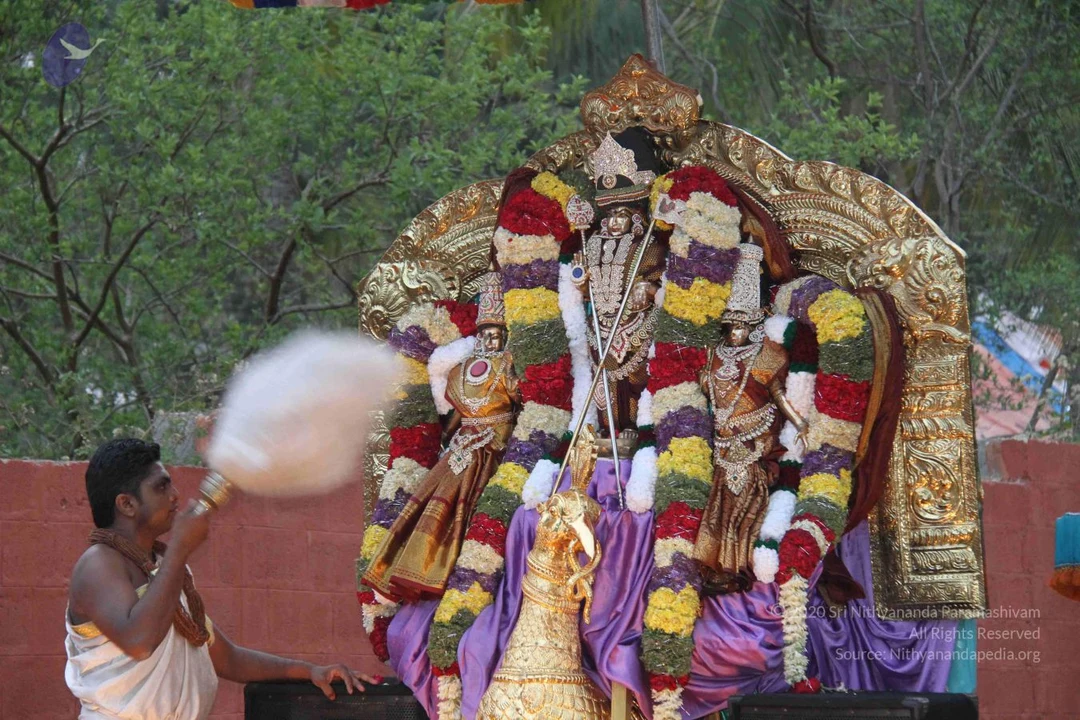
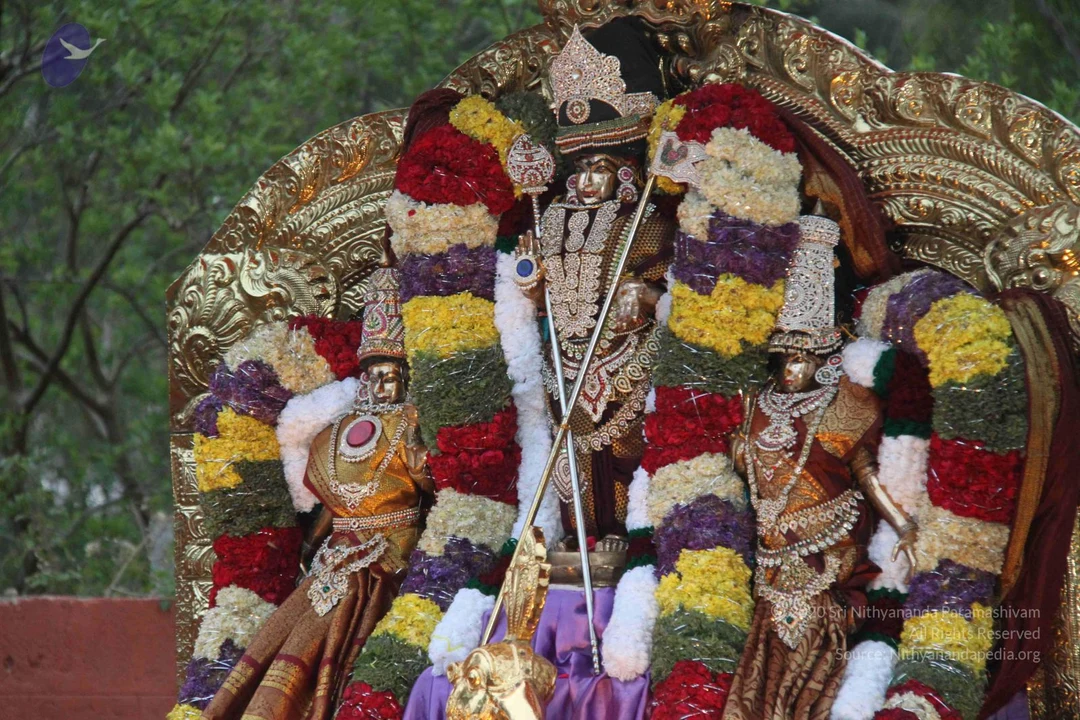
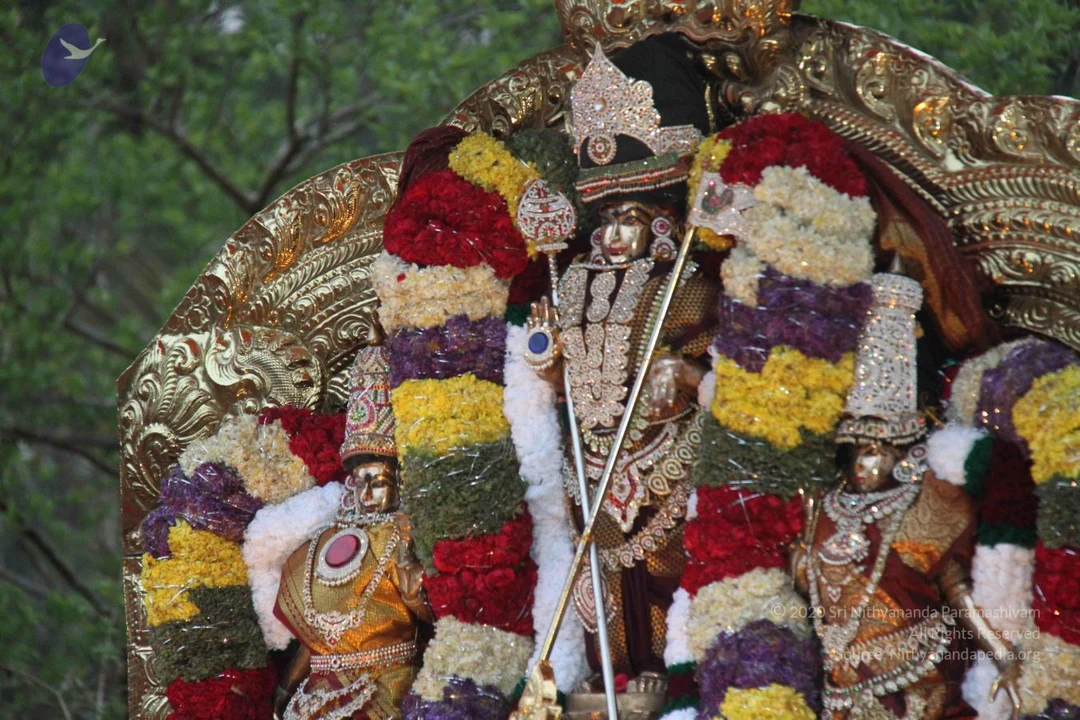
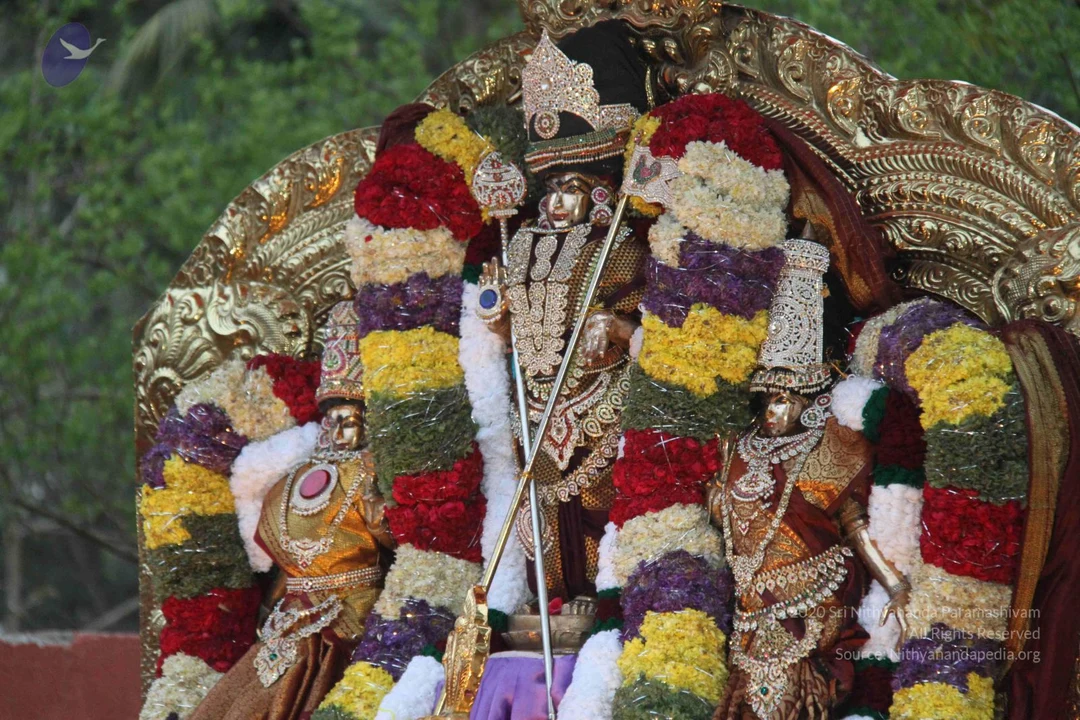
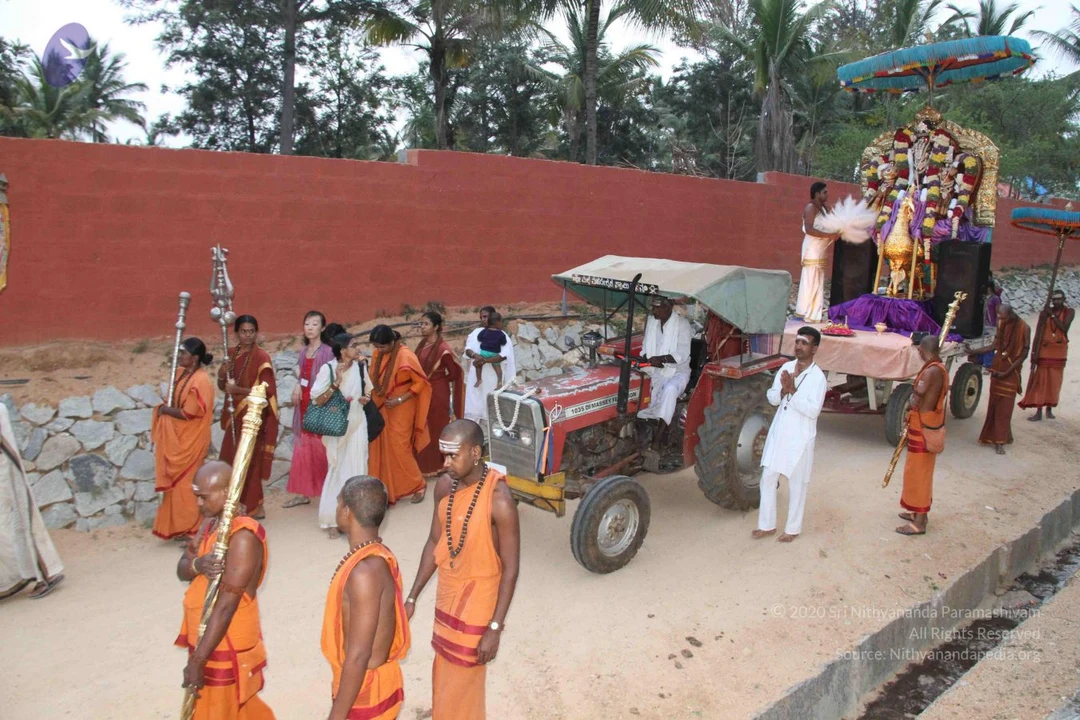
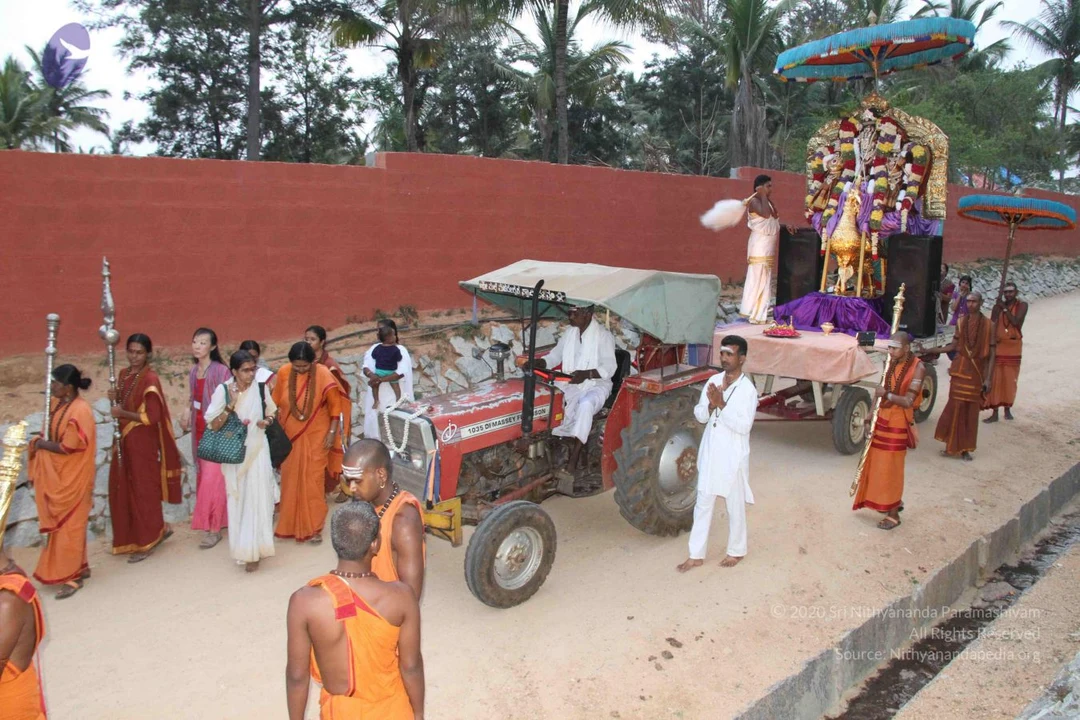
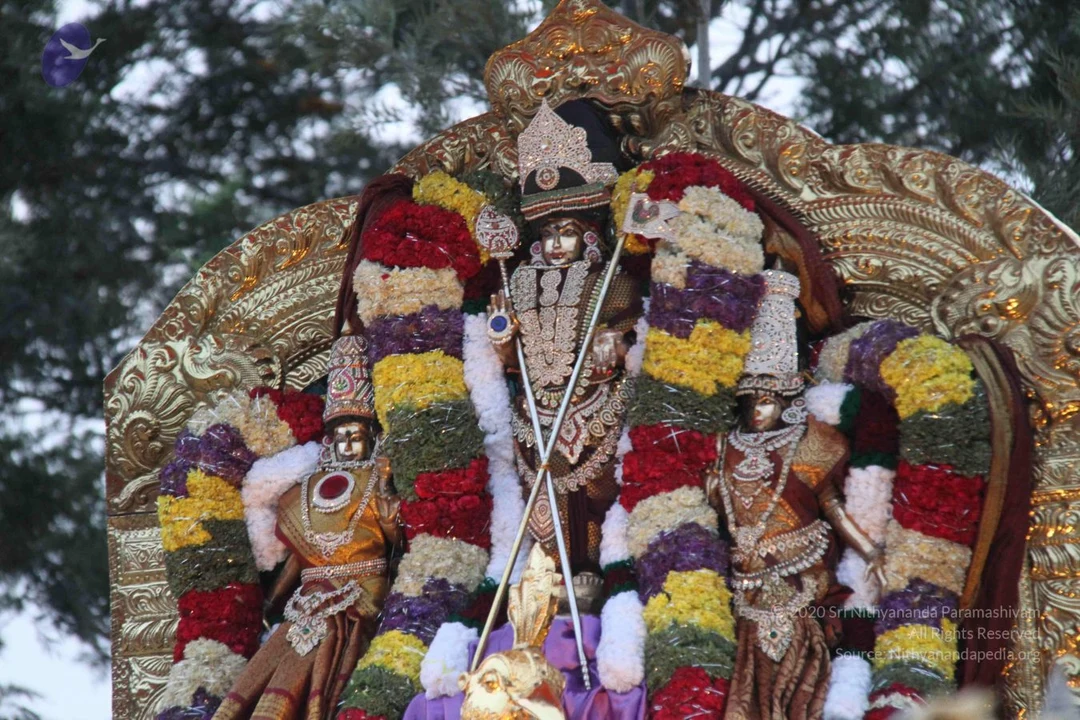
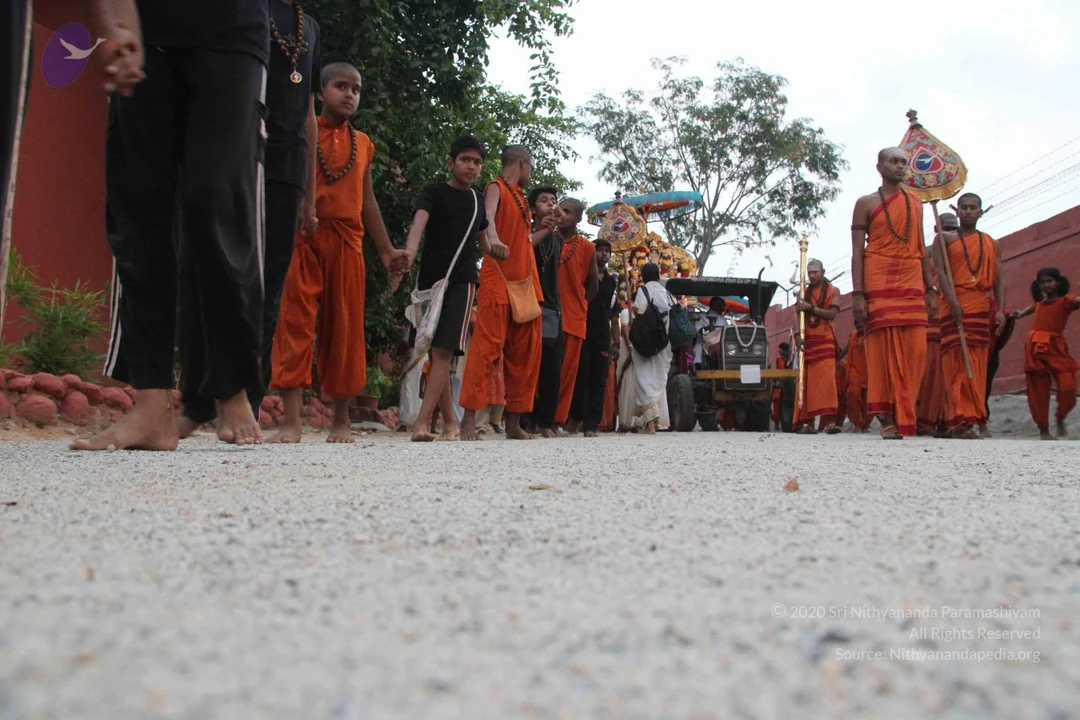
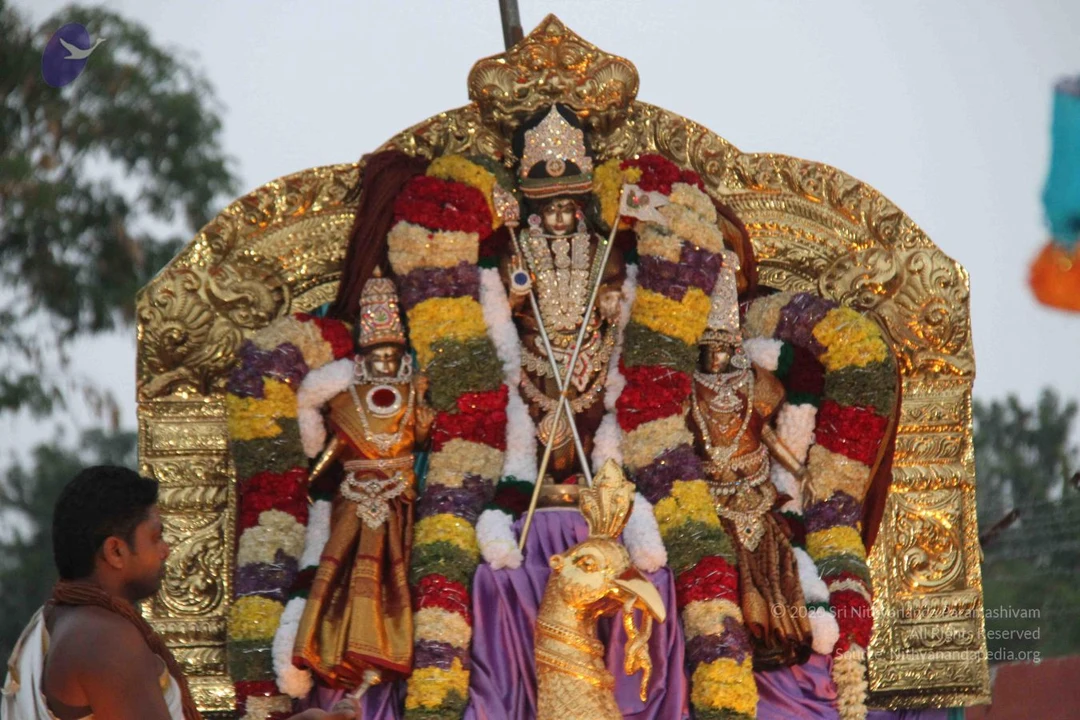
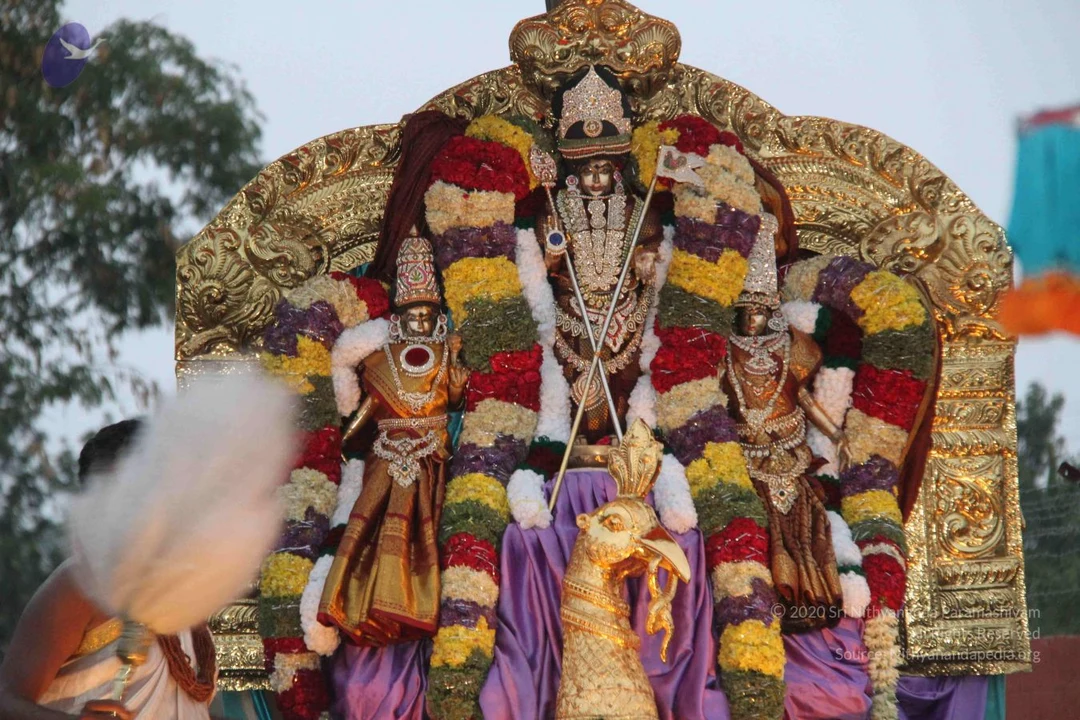
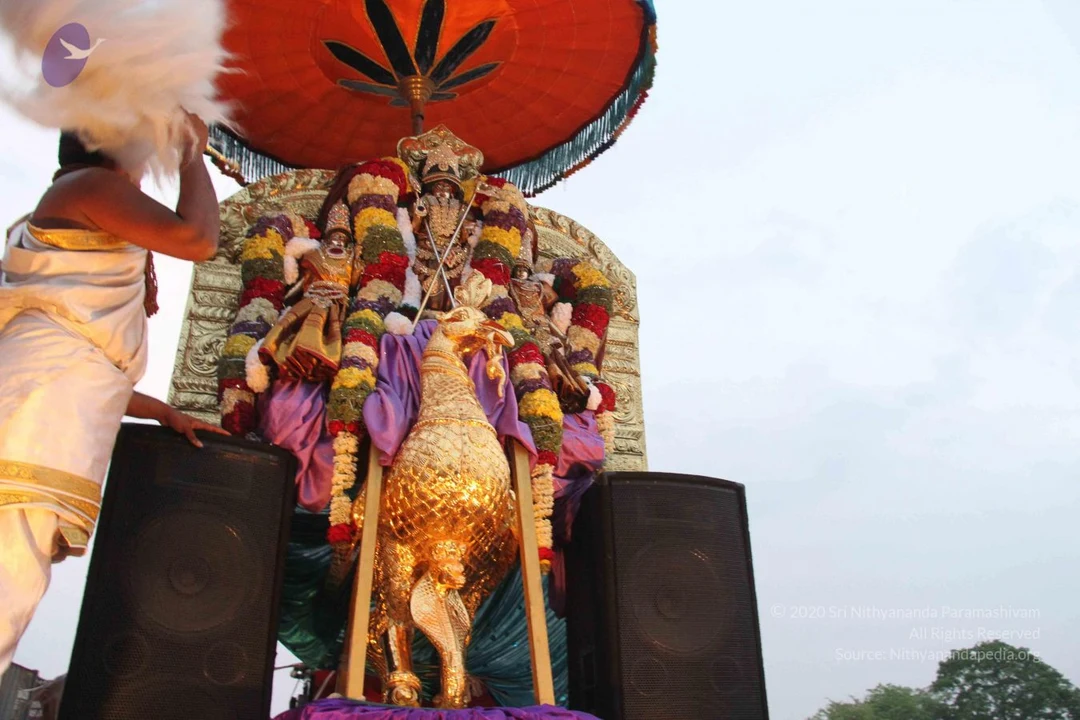
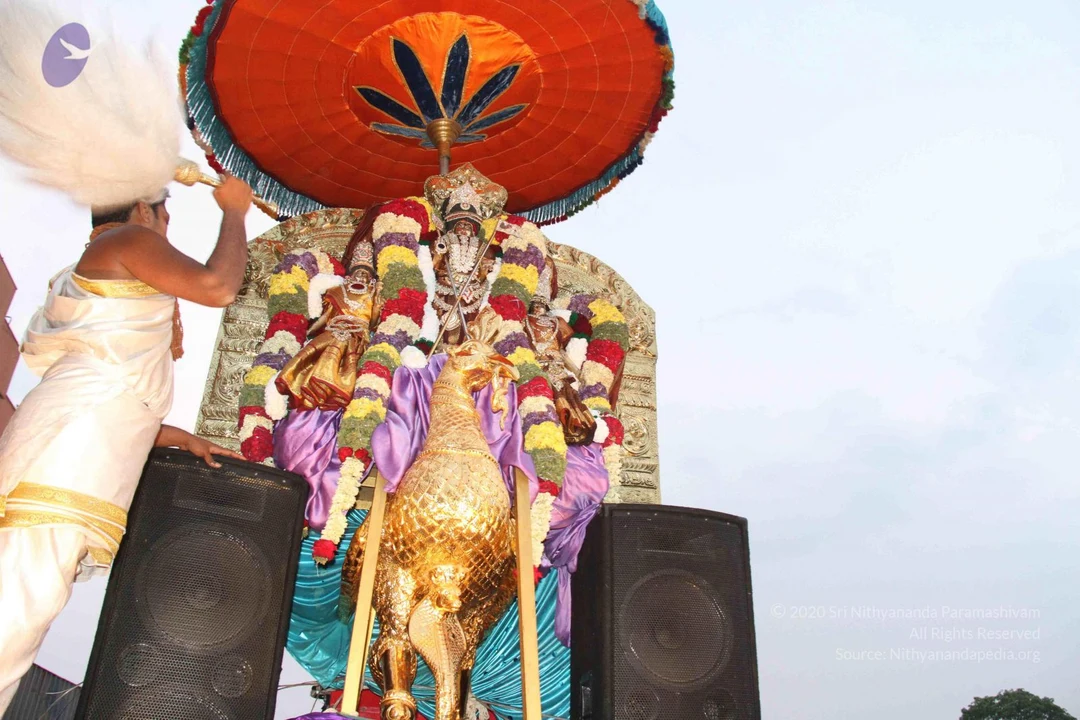
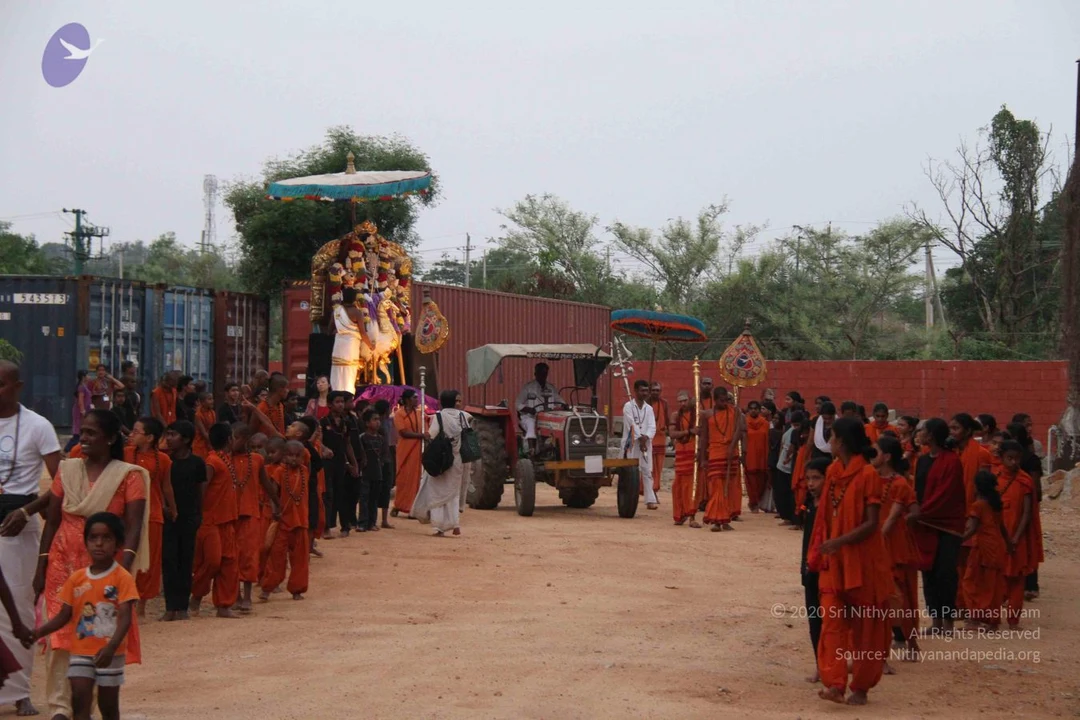
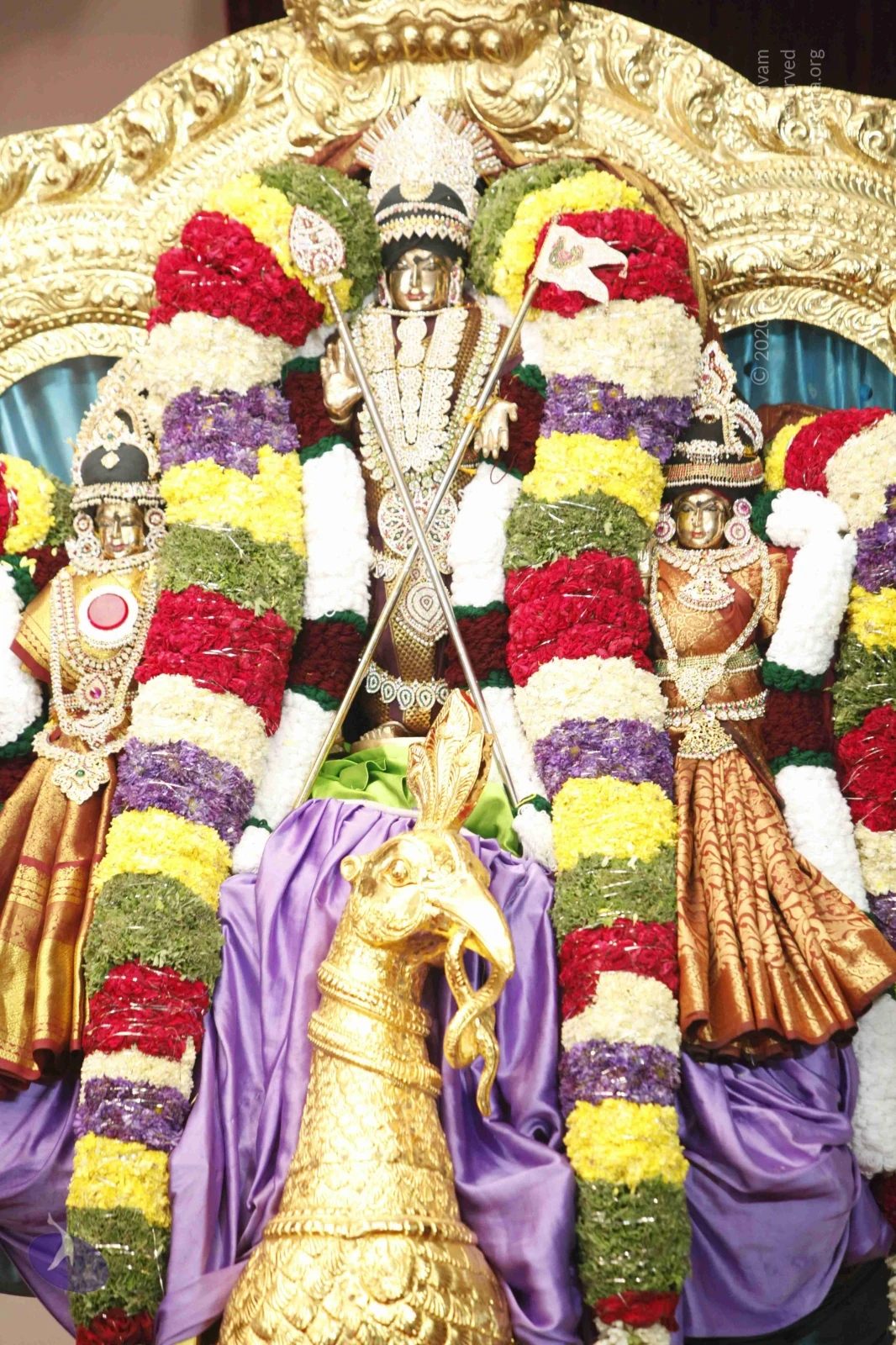
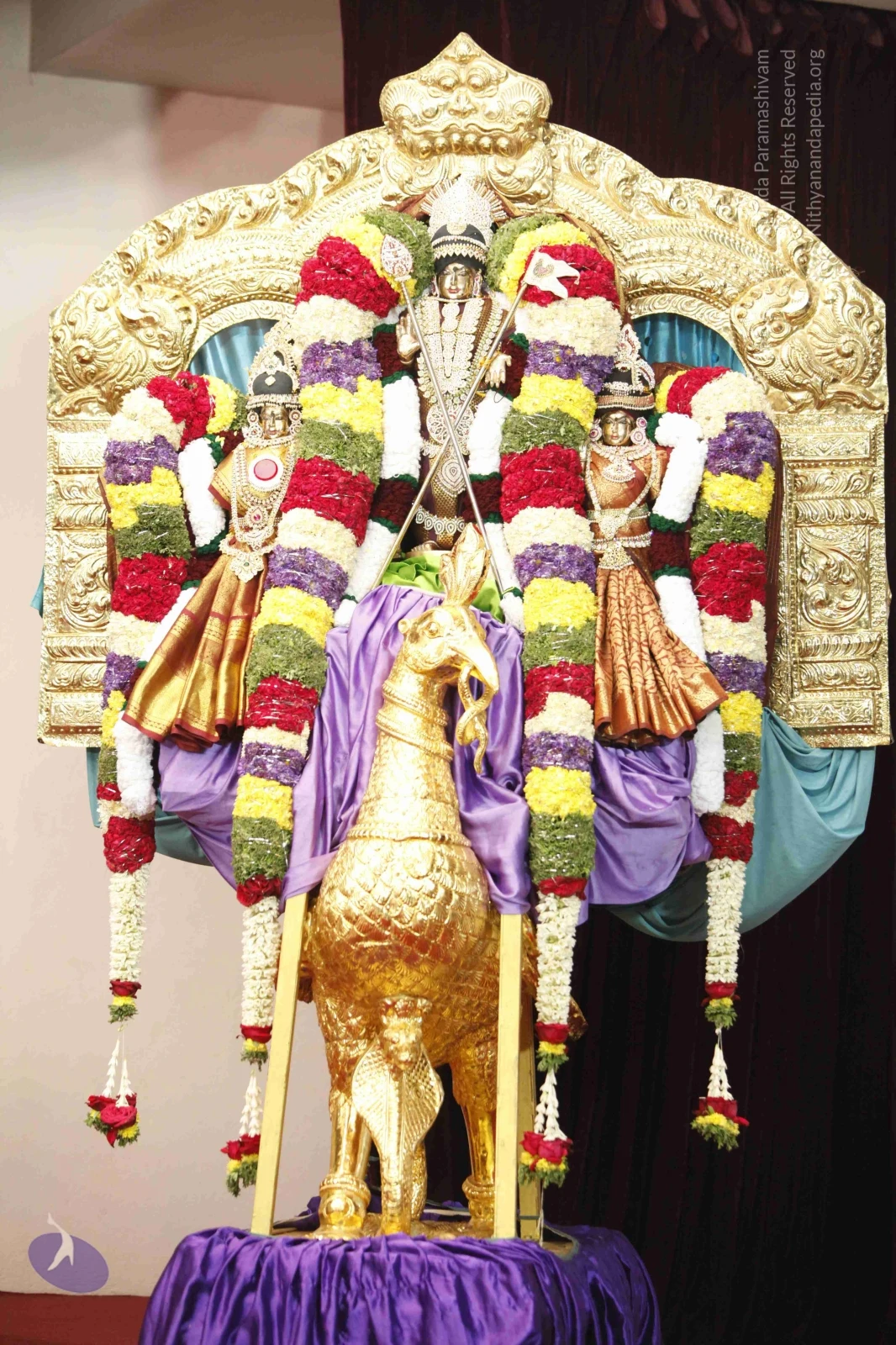
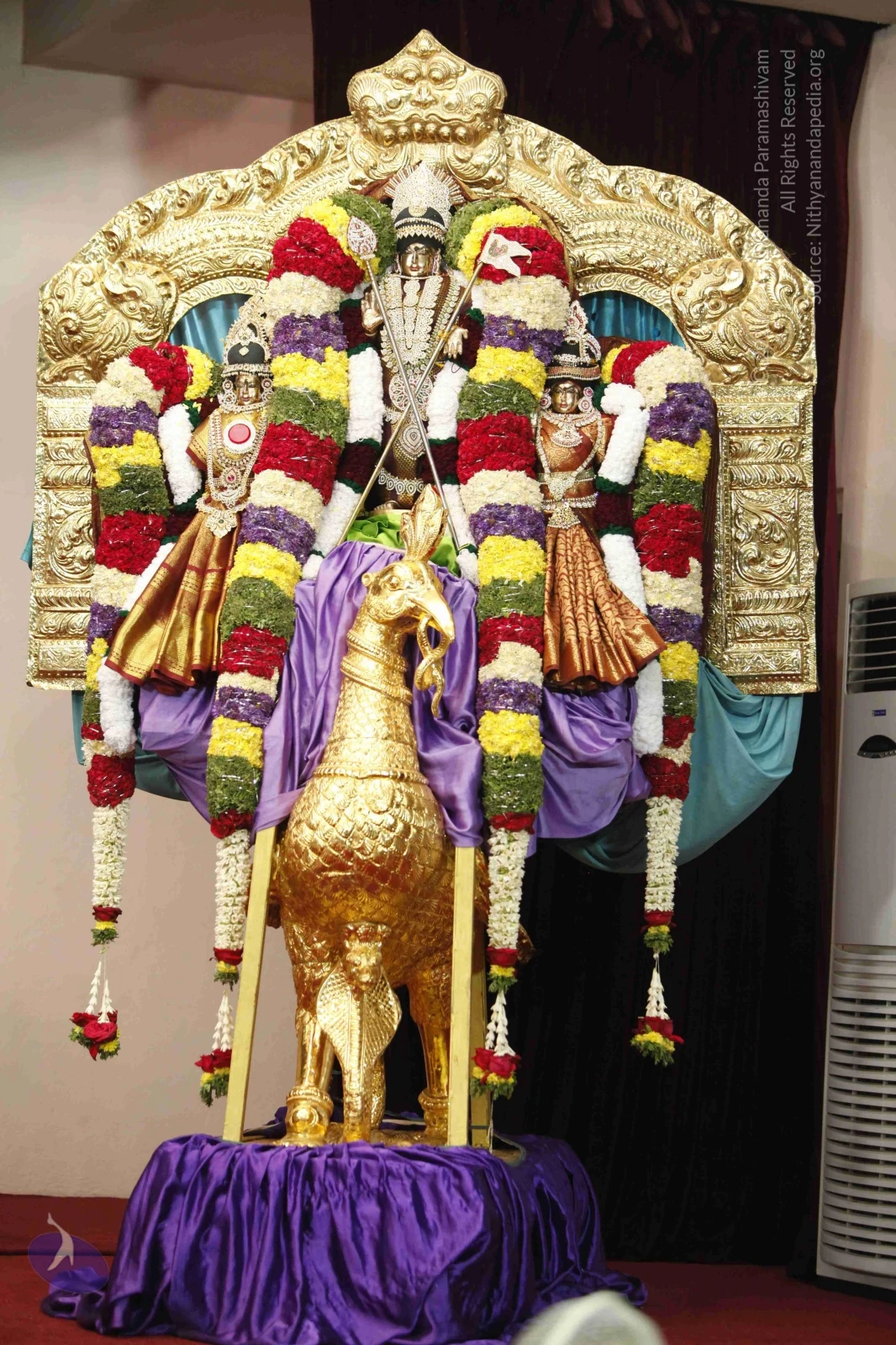
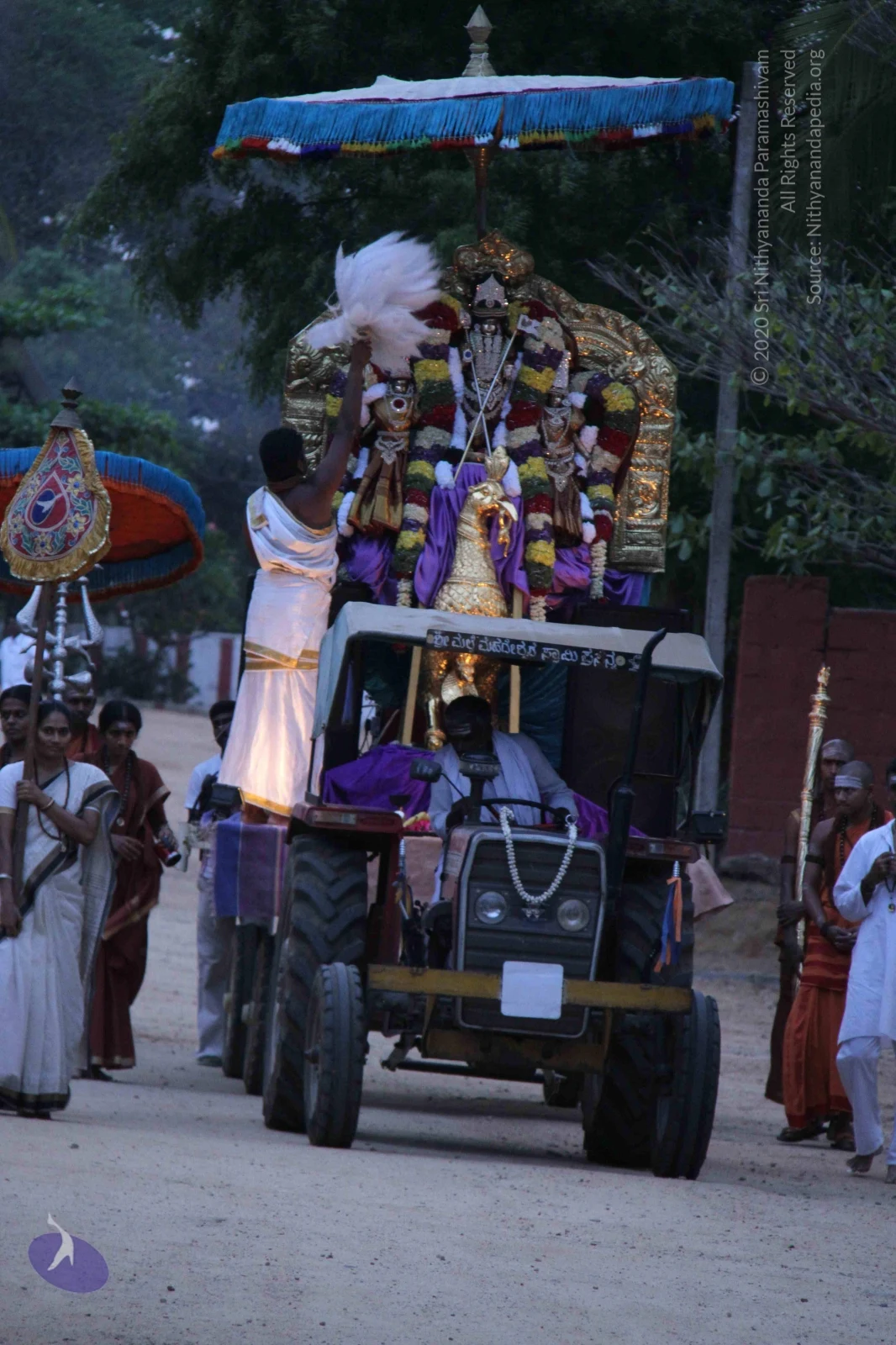
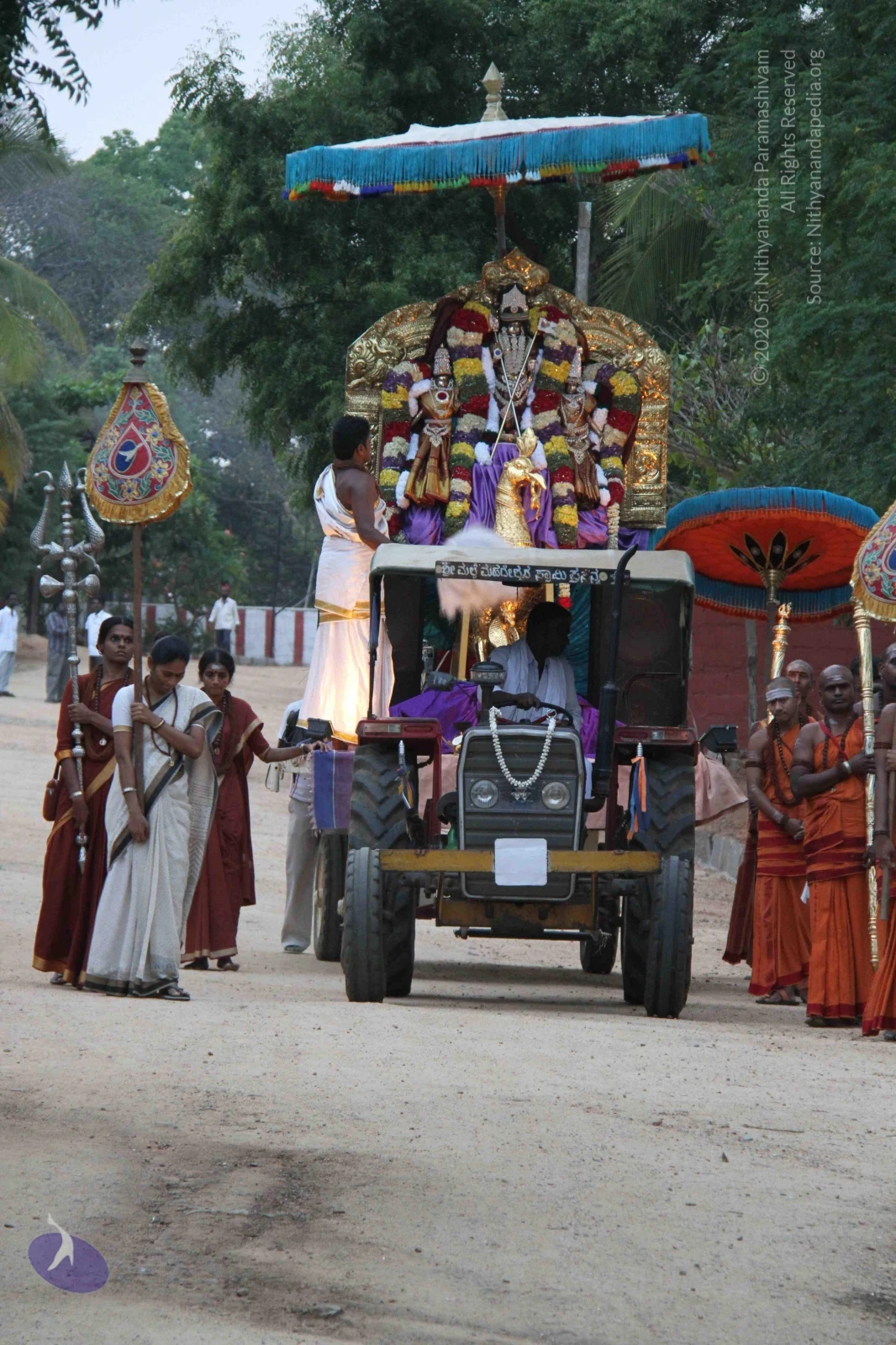
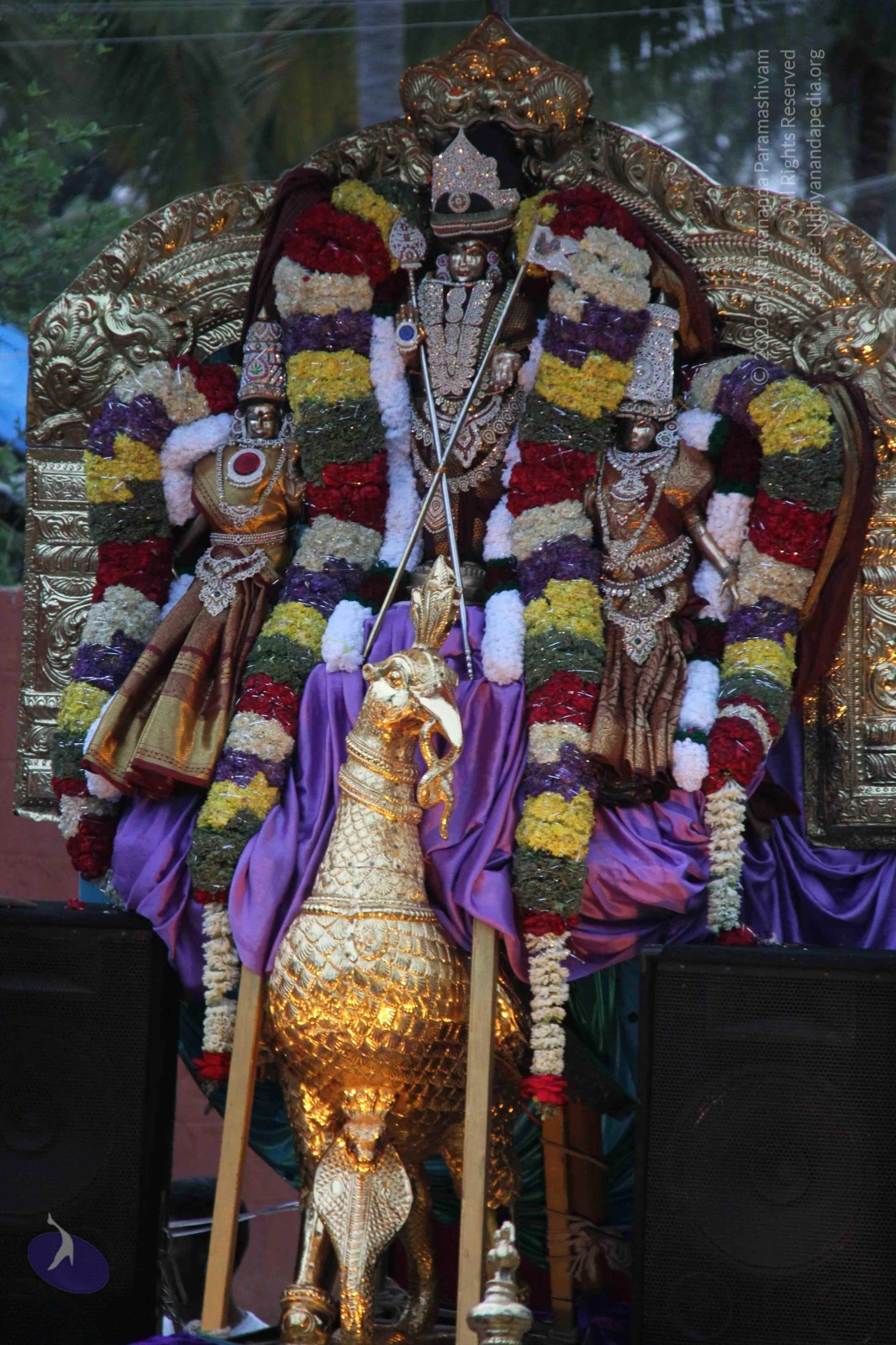
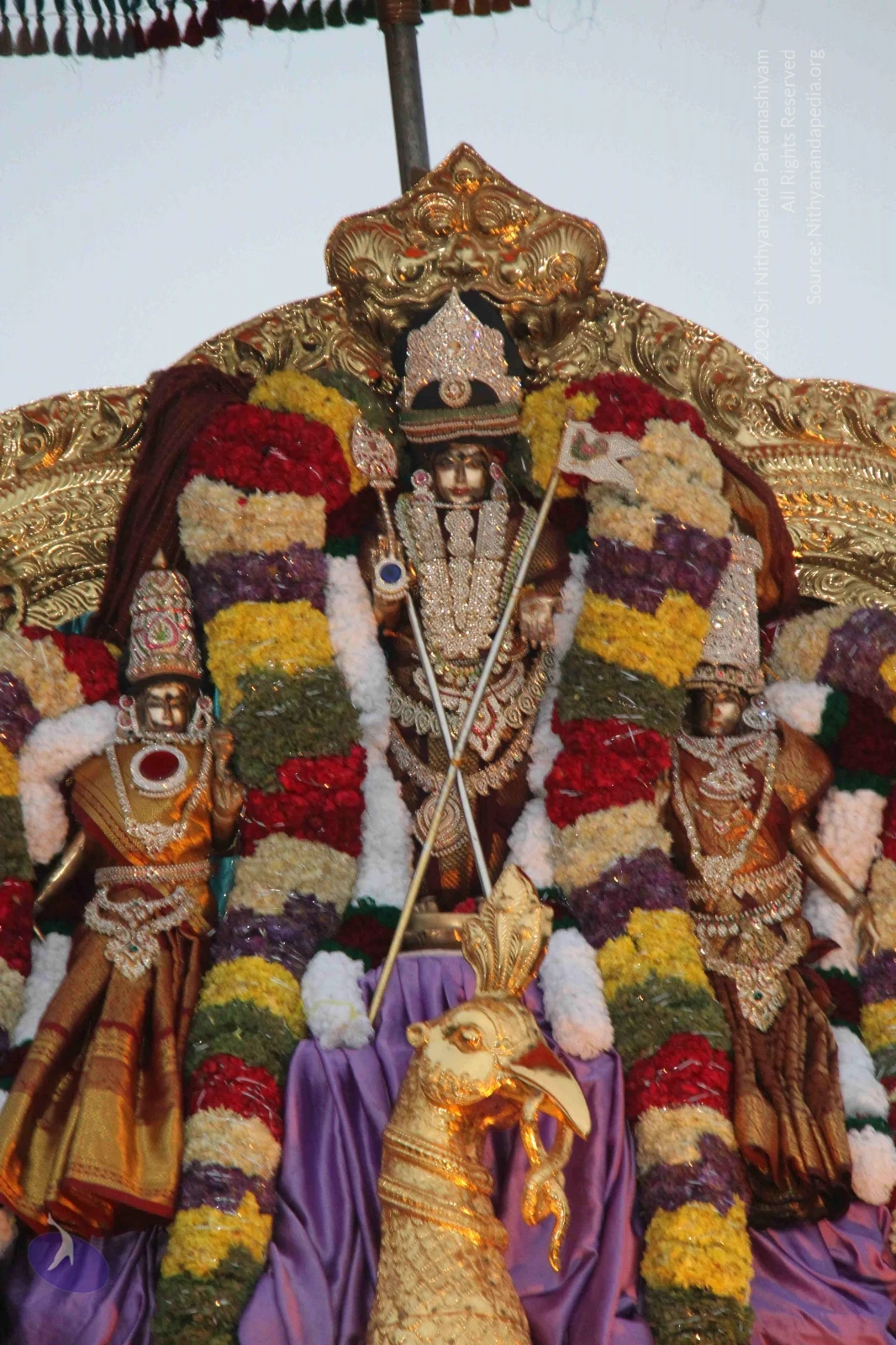
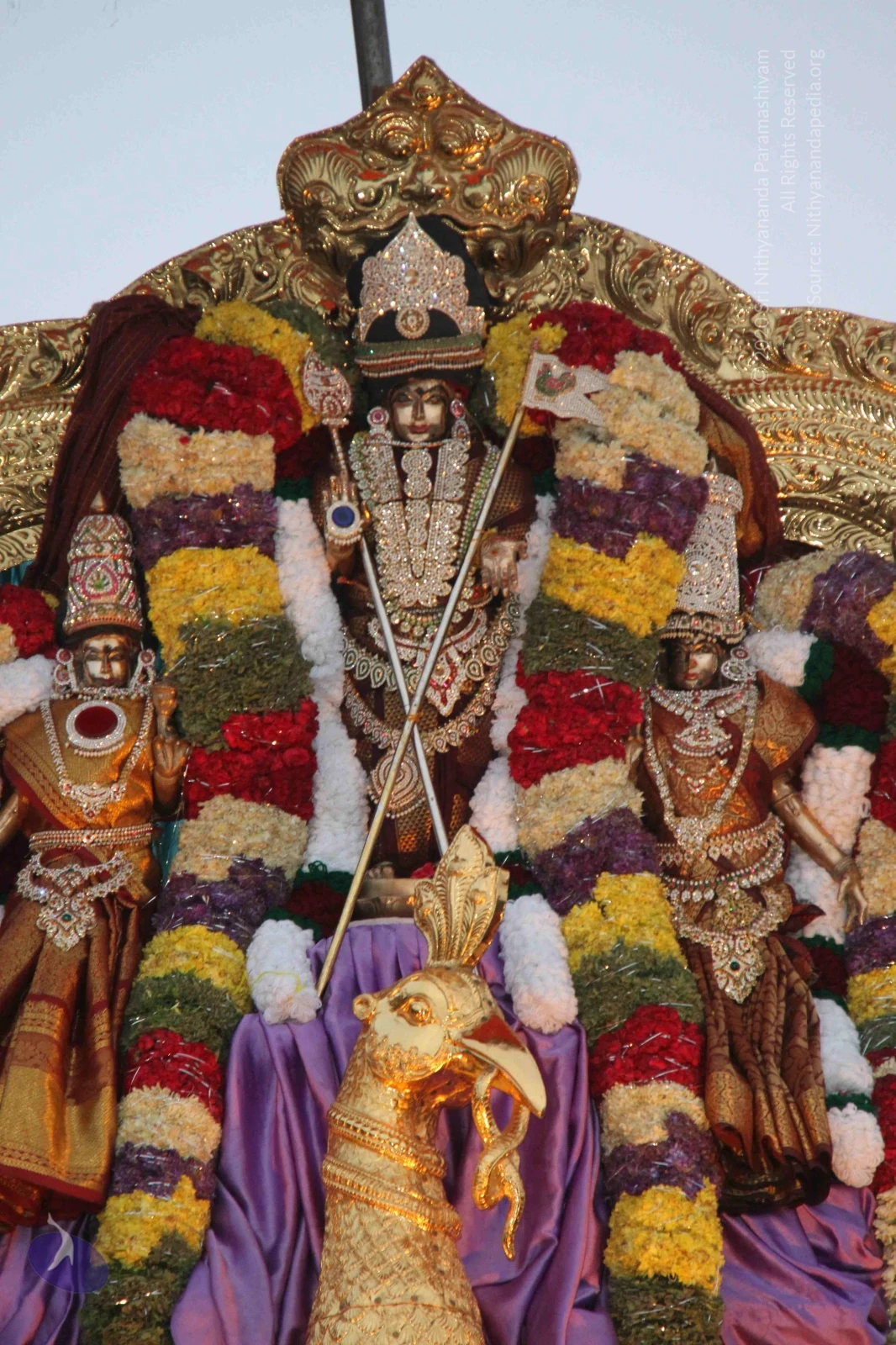
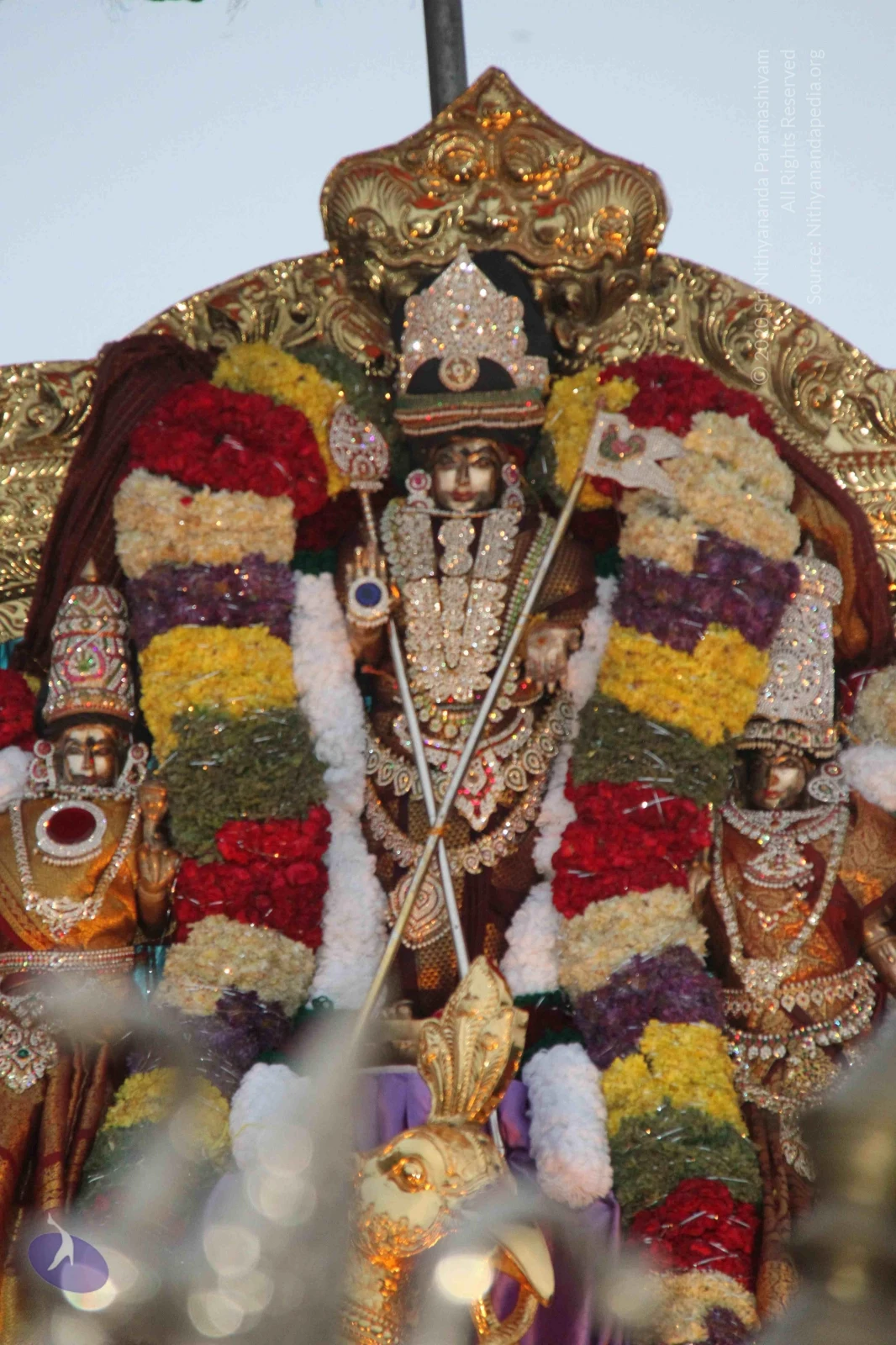
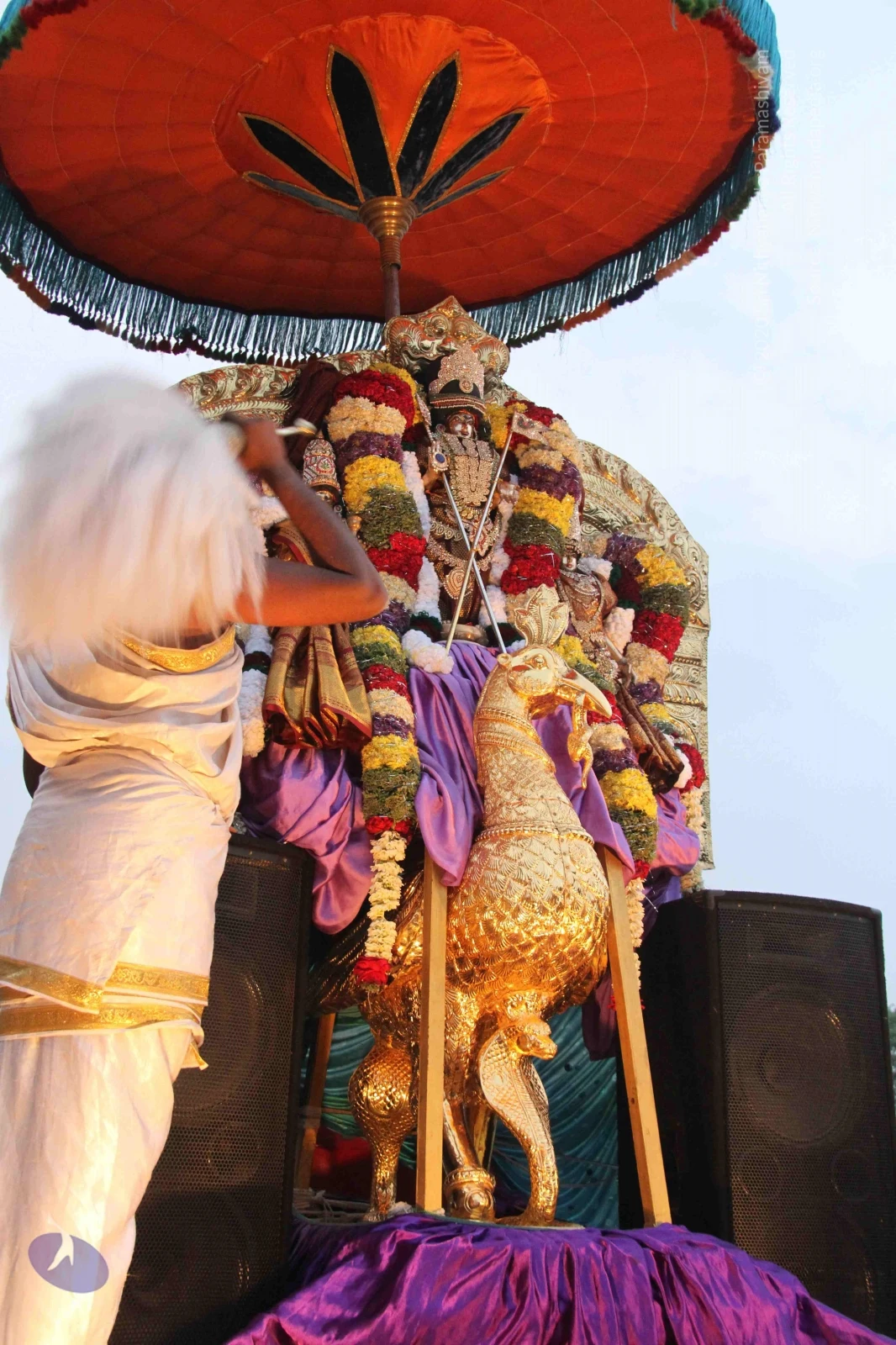
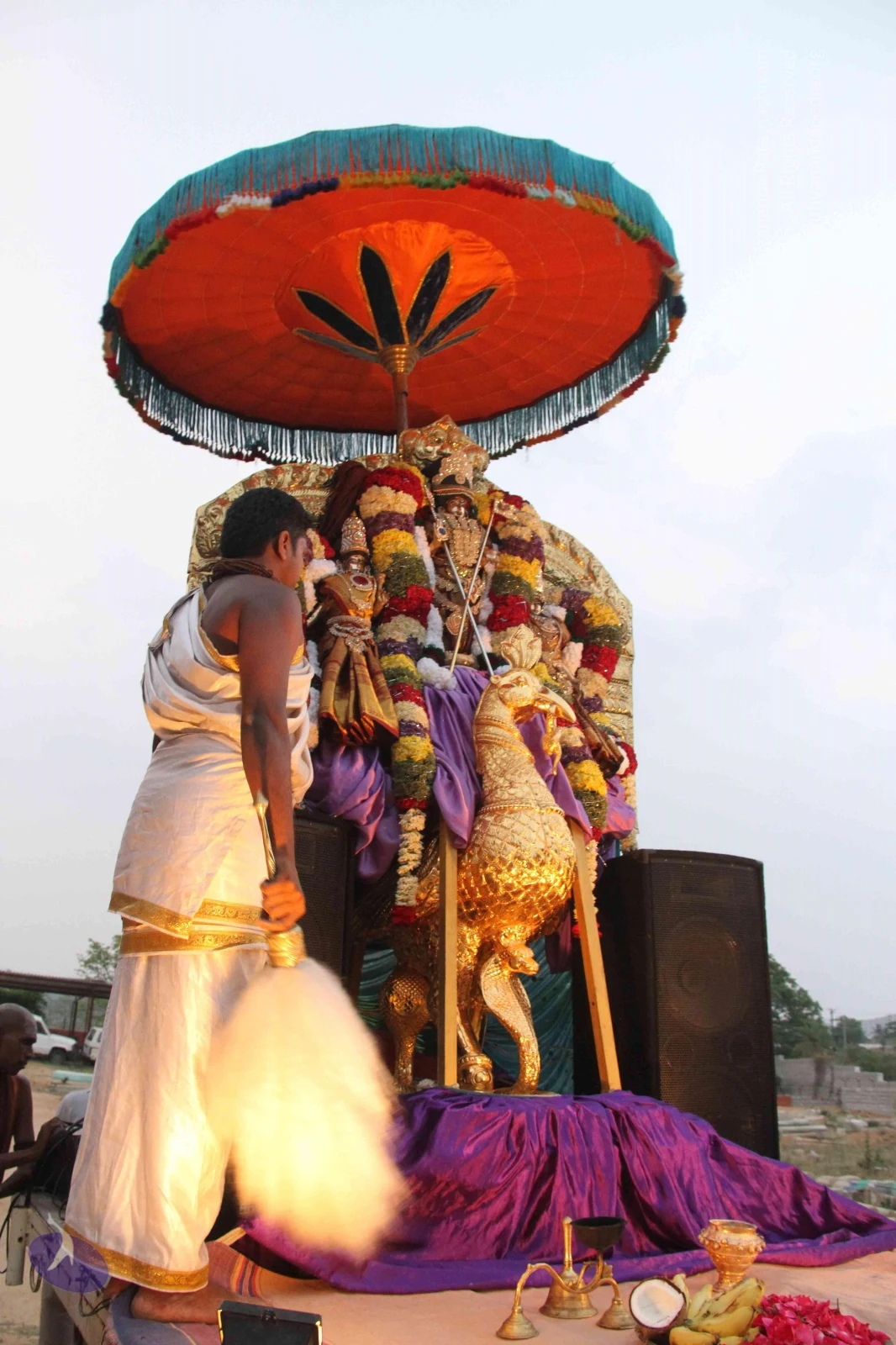
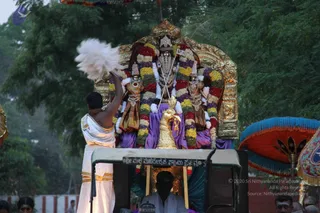
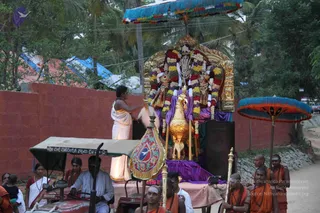
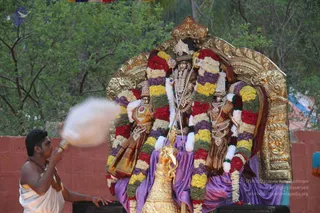
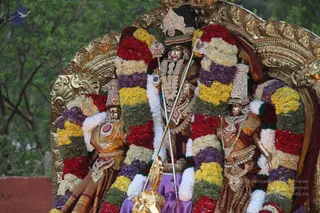
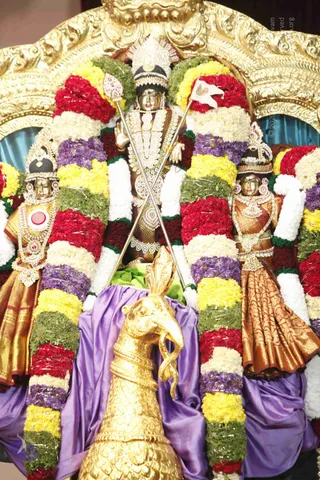
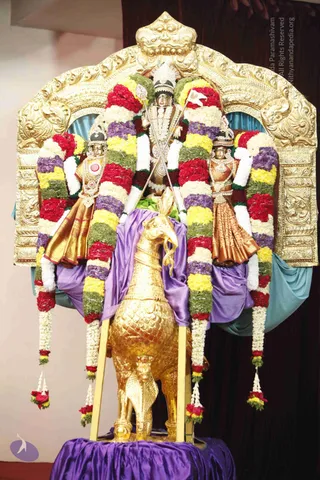
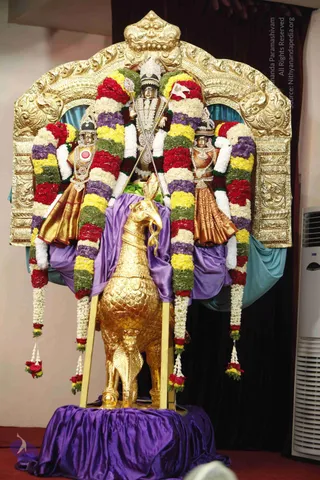
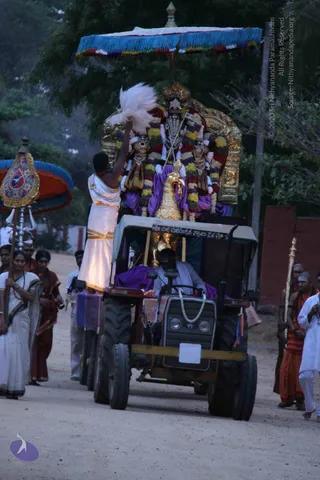
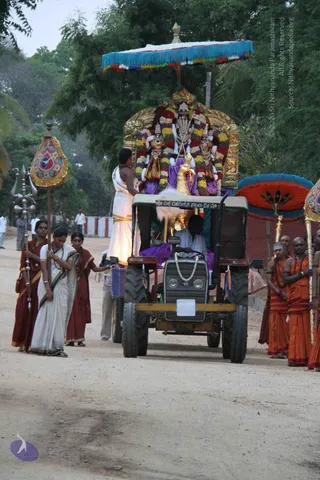
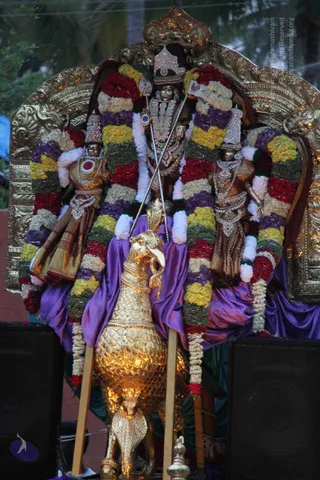
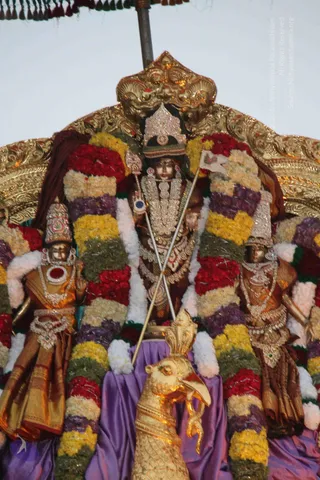
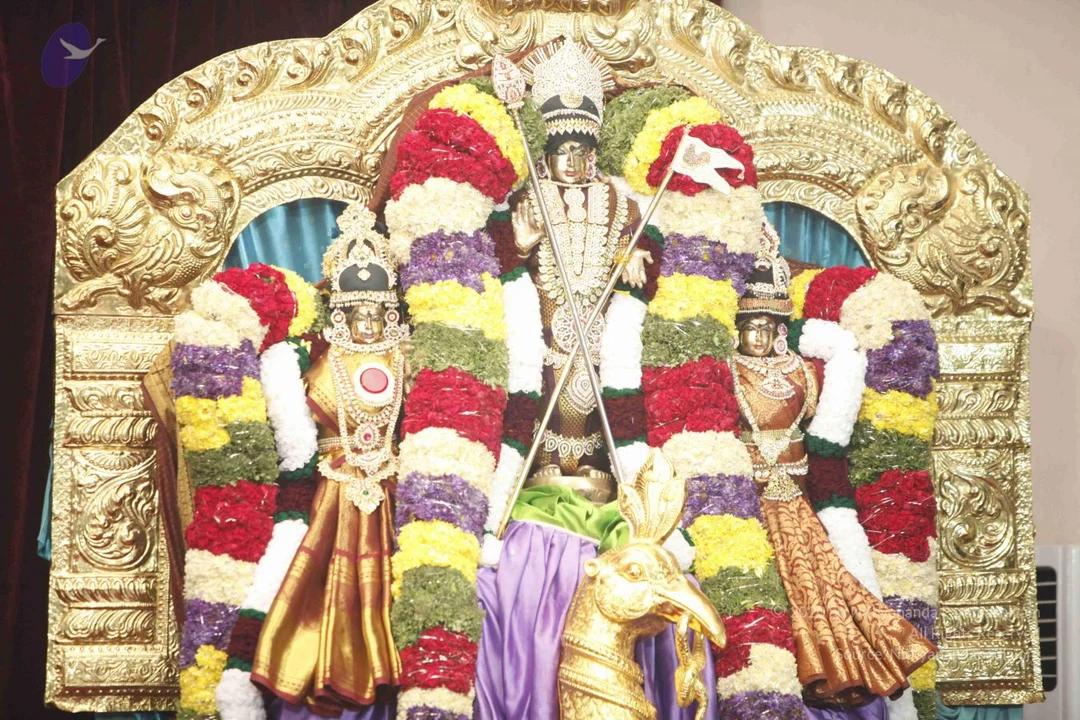
And, as part of the Panguni Utthiram celebrations, Subramanya is gracing with Valli and Devasena on Suvarna Mayura Vaahana.

We’ll start the satsangh.

I’ll expand on the power of Authenticity.

Please listen. It is Authenticity makes you man. Neither the birth nor the growth of your body, or the growth of your wealth makes you a man. It is Authenticity which makes you a man.

Please listen, all sufferings, all sufferings – when I say “all”, I mean capital letters “A-L-L” – all sufferings is because you forget your identity again and again and again. All the good things are showered on you when you become authentic. Again and again aligning yourself to Authenticity is “Tapas”.

From yesterday, so many participants of Living Advaitha process, participants of Living Advaitha process have started posting in the Facebook about their inner-image, outer-image, others-image and life-image.

Please listen. “Inner-image” is the idea you carry about yourself inside you. “Outer-image” is the way you project yourself. “Others-image” is how others perceive you, for which you are responsible. “Life-image” is how you perceive others and life.

Please listen, inner-image, inner-image is the idea you carry about yourself. Outer-image is the way you project you to others. Life-image is how you perceive about others and life. Others-image is how others perceive you, for which you are responsible.

So many participants who are participating in the Living Advaitha process, the teamily process through Facebook have posted. I wanted you to understand this one thing: When you are putting your inner-image and outer-image don’t try to describe in just one word. Some of the people have just put “Shivoham”, “Shivoham”, “Shivoham”, “Shivoham” for all the four. Understand, what do you know about Shiva? Describe the inner-image, inner-image you wanted to have. Even if you defined it overall under the title “Shivoham”, describe what you understand as “Shivoham”, because now whatever you describe as your inner-image, anything other than that if it is sitting inside you, it has to be completed and dropped. So the article title can be “Shivoham”but the article has to be written detailed way.

When you write inner image - Shivoham describe the detailed qualities, what you think as Shiva? Please listen. You will not know Shiva as on now, but at least pen down what you think as Shiva; let us complete all the incompletions other than your perception of Shiva. For example, if you perceive Shiva all-powerful, all-knowing, always compassionate, so now you have to complete with your ignorance, powerlessness, all-powerlessness, all-ignorance and all-violence. You have to complete and drop them. Then don’t think you will get only the three qualities of Shiva. Once you finish completing few incompletions, all the qualities of Mahadeva which you imagined and not imagined will break open as if the floodgates were open inside your system.

Understand the purpose for which I am asking you to describe the inner-image, outer-image, others-image, life-image. I am describing every single technical term for the convenience of the people who came today for the satsangh first time, or the people who are coming for the Kalpataru Darshan today in Khar Road-Mumbai, New York-Varanasi, and Yoga Den-California.

When you describe your inner-image should be like Shiva, what you think as Shiva, describe that. Somebody wrote their inner-image should be like eternally enlightened. Yes, great! What you describe as eternally enlightened, write your definition. Why you know? If you describe some two-three qualities which you think as enlightenment quality, or Shiva’s quality and complete with all the incompletions and drop, really the floodgate of Shiva’s energy will open in your system. You may describe Shiva as all-knower, all-powerful, omnipresent. Shiva himself may be having thousand qualities. You may be describing only three qualities. But that three qualities, whatever incompletions you have about that three qualities, if you complete and drop them, don’t think only that three qualities will open up in you; it will open the floodgates where all the qualities of Mahadeva will start expressing through you! Because, listen to this logic: There is a huge dam. There are now dams which are one kilometre in length. In the modern-day, even twenty kilometres length dams we are building. Even if it is one kilometre length dam to release the whole flood water you don’t need to break the whole one kilometre dam. Just poke one hole into the dam. One hole is enough. The whole flood will destroy the dam and come out. Same way, if you poke one hole into your thick ignorance, the “apasmara” in your thick forgetfulness.

Understand, there is a beautiful Upanishad in our Vedic Tradition where the Guru was asked by a disciple, the disciple asked the Guru, ‘Why don’t you initiate everyone into the great truth of Advaitha – “You are the Ultimate”?’

Guru says, ‘People won’t understand.’

The disciple says, ‘No, no, no, no, no....You are not that graceful you discriminate.’

The Guru says, ‘Alright, sit next to me.’ He makes him sit.

He calls the, all the demons, the asuras and gives them the Advaithic Upanishad – “You are the Ultimate”. Immediately they went back to the Asura Loka and declared, ‘We are everything. Eat, drink, be merry and destroy everybody else!’

He calls the human-beings. He says, ‘You are the Ultimate!’ He gives them the Advaithic Upanishad. They jump into the Planet Earth and say, ‘We are the Ultimate! Come on enjoy! Have pleasure! Pleasure is life! Pleasing the body is the goal!’

He calls the matured beings and says, ‘You are the Ultimate!’ They sit in Samadhi and get enlightened!

Understand, sometime the same truth, if you don’t live it with Authenticity can be dangerous. If you live with Authenticity, one truth is enough to completely make you enlightened. The truth about death, either it can make you more and more dharmic and enlightened, or it can make you more and more greedy and lusty. You can say, ‘Anyhow I am going to die. Why unnecessarily waste the life? Let me meditate and get enlightened!’ You can also say, ‘Anyhow I am going to die. Why waste life? Come on lets drink womanize, be in pleasure!’ Same truth with Authenticity works in a different way; without Authenticity works in a different way.

Without Authenticity, “You are the Ultimate” can make you a demon. Without Authenticity, the spiritual strength or the spiritual teaching which is given can make you a demon. Only with Authenticity, it makes you enlightened, understand.

The basic quality for life is Authenticity. The first and foremost quality for the life to start in you is Authenticity. So,

Describe what is your inner-image; elaborate, detailed way. And, describe what is your outer-image in elaborate, detailed way – how you want to project you. Describe others-image – how people should perceive you. Describe the life-image – how you want to experience life and others.

Describe all these four elaborately, because as elaborately as you describe, it will be easy for you to find the incompletions. Because, from today you are going to enter into the next step. Till today morning I have given you the time to finish the Completion with the whole teamily. Listen, today’s homework I am describing. From today, next few days, you will.....actually, today itself you should complete in a very detailed way your inner-image, outer-image, others-image, life-image. And circulate with your teamily and your each person in your teamily should suggest what all the incompletions you have to complete to achieve this identity, this authentic identity.

Listen, I am giving you an example. For example, if you describe, ‘All-knowing is my inner-image’, so now the incompletions you’re having is your ignorance, why you entertain ignorance. Ignorance is always made to look as cute in the name of innocence, which is not right. But society to keep you under its control celebrates your ignorant side. Please understand, whenever I walk into the Gurukul, the first thing I’ll remind them is, your ignorance is not celebrated here. One kid, all the time she will be confused whether to be here or go back to the house. And she will always think I’ll tolerate her ignorance. I will say, ‘No! Now tell, do you want to be here or go back? You can go back immediately now I will call your parents and send you back!’ She will say, ‘No, no, no...I don’t want to go back.’

See as a child itself you should not entertain this dilemma which is the root of ignorance. In our Gurukul, dilemma should never be allowed or celebrated. Even if you make the decision you are going back....great, decide! Because, decision moves the wheel of life. Indecisiveness keeps you stuck. Feeling stuck is adharma! Moving is dharma! Anywhere in life when you feel stuck, it is adharma. Whether you are a kid or grown up, ignorance should not be celebrated.

So you will have to find all the root of the ignorance in you and complete with them. If you declare yourself as all-compassionate, always for all compassionate, then you will have to be finding out all the incompletions like anger, violence, and complete with them. So the teamily - each one in the teamily will help the other persons to find their incompletions based on their declaration.

So, today from today onwards, within next few days, you should send your declaration about your inner-image, outer-image, others-image and life-image to your whole teamily. And please understand in your teamily if you have twenty-one people, other than you it will be twenty means, you will have to study the declarations of each one, spend time on it, put your intelligence on it and help the person to discover all the incompletions they have to achieve this identity, to reach this identity.

Understand first time ever on the Planet Earth, such a massive mass-level awakening process is happening, understand. Advaitha was always a solo game. First time becoming a Rock Band! It was always a solo game – a flute in the remote forest, or a veena in the innermost sanctuary of the temple, or a mild string instrument in some corner. Understand first time it is becoming chorus lifestyle! I am disproving the theory of ‘mass awakening is not possible.’ I happened, I am happening for mass awakening! Understand, I am making the process as simple as it can be, and as powerful as it should be, as truthful as it is. As simple as it can be and as powerful as it should be, as truthful as it is.

So, from today, the next few days, the homework is: You will send a detailed authentic description about your inner-image, outer-image, others-image, and life-image. I’ll describe these technical terms once more.

Inner-image is the idea you carry about you. Outer-image is the idea you project about you to others. Life-image is the way you perceive others and life. Others-image is how others perceive you, for which you are responsible.

Pen down these four as elaborately as possible. Send it to me in the Facebook wall. Again I am seeing a few people inboxing me saying they are not able to put it in my wall. Please understand my settings are open and anyone can put anything on my wall. That’s the way I kept my settings. See I am a philosophy-based being. I am not a geography-based being, understand? Philosophy-based beings will always be open and democratic. That is why I am saying, Bharat is not just geography; it is philosophy. Wherever Bharat is lived, it is Bharat! Wherever Bharat is lived, it is Bharat. We are not a geography-based religion; we are a philosophy-based religion. We are not a geography-based lifestyle; we are a philosophy-based lifestyle. Of course, I strongly wanted to defend geography also. I don’t want the geography to be lost. But I wanted all the nationalists to know just defending geography is protecting the body by holding the breath of the man. If you hold the breath of the man and defend him, you will have only dead body. Just defending geography is not going to be useful in any way. Defend geography and philosophy. I am an open, democratic being. Anybody can post in my wall. So, don’t inbox me. Send your message, send your authenticity definitions to my Facebook and circulate it to your teamily, whoever you chose as your teamily and ask them to guide you to complete with all the incompletions and align yourself to Authenticity. Align yourself to Authenticity!

Please listen from today, next few days, this should be the homework. You should also help every person in your teamily to find out their inauthenticity’s and incompletions. You should also get the help of your teamily members to find your inauthenticity’s and incompletions.

I bless you all. Let you all radiate with Integrity, Authenticity, Responsibility, Enriching and Causing eternal bliss, Nithyananda. Thank you.

Tags:

Paramahamsa Nithyananda, authenticity, birth, wealth, perceptions, world, Advaita, identities.

Photos Of The Day:

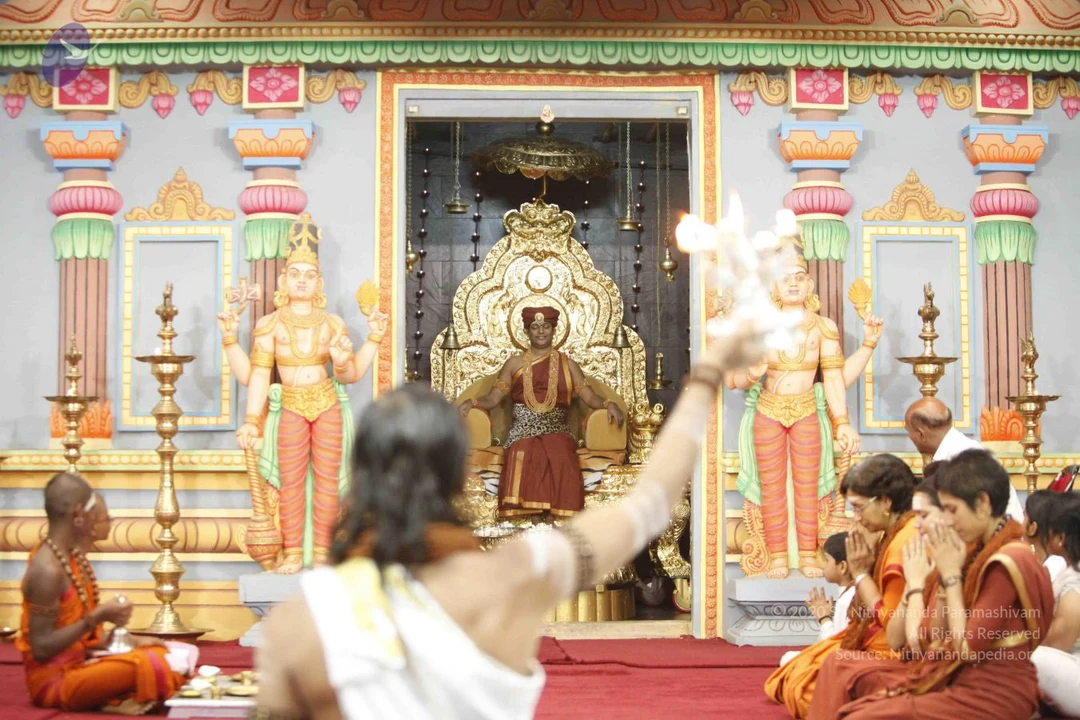
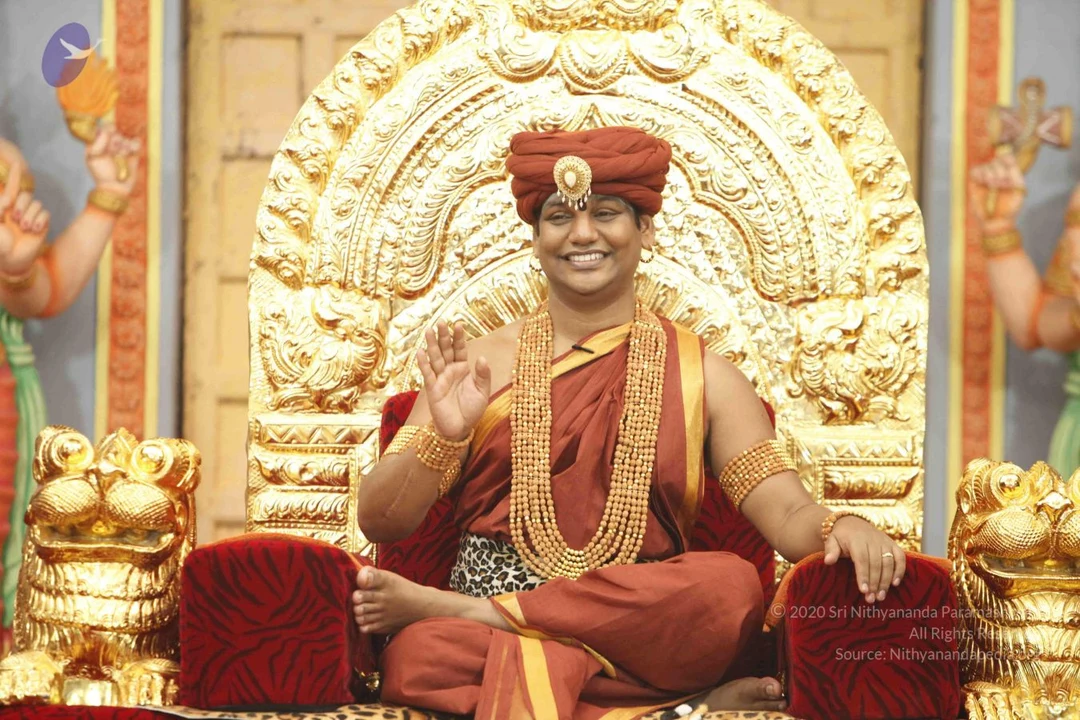
Padapuja-Satsang
Padapuja-kalapatharuDarshan

Subramaniaprocession-panguniutharam

1-Pada-Puja-and-Satsang

2-Pada-Puja-and-Kalpataru-Darshan

3-Subramania-Procession-Panguni-Uthiram

Photos from this day

View all 251 photos

Padapuja-Satsang
43 photosSource gallery
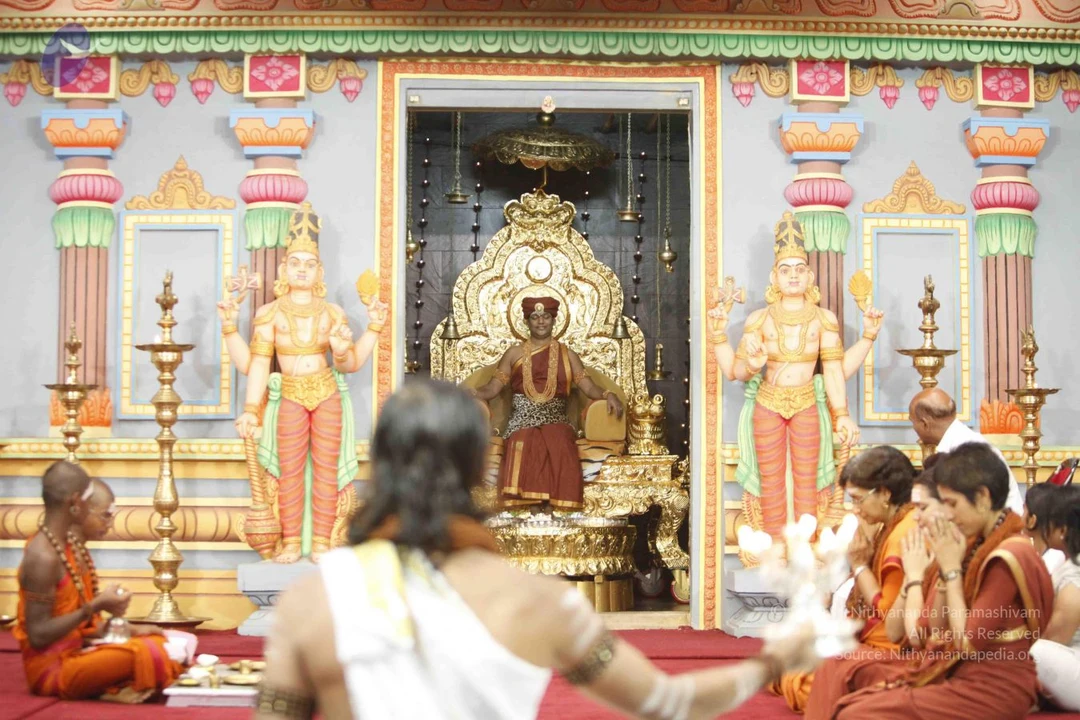
A photograph of a temple-style hall during a ritual. In the center, a seated figure in a red and maroon garment with a red headpiece and rudraksha-style mala sits on a golden throne with a tiger-skin cover, flanked by two tall painted deity murti figures in gold ornaments and green-and-orange lower garments. In the foreground, a person in a white and gold cloth raises a lit flame or camphor aarti toward the throne. At left, a shaved-headed priest in saffron-orange robes sits with a brass lamp. At right, several women in orange and saffron saris sit with hands folded in prayer, and a child is partly visible. Brass oil lamps stand along the red carpeted floor.A photograph of a temple-style hall with painted pillars in pink, green and gold, and two large painted standing deity murtis with multiple arms flanking a doorway. In the centre, a figure in a maroon and red garment and a maroon head wrap sits on an ornate gold throne with a gold canopy; the face is not clearly visible enough to identify, so this figure is treated as an uncertain candidate. In the foreground, a person in white with bare upper body faces the throne and holds white flowers. On the left, two people in saffron and orange robes sit on red mats beside brass oil lamps. On the right, several women in saffron and maroon saris sit with palms pressed together in namaskar, and a figure in orange robes sits beside them. Brass lamps stand around the throne area.Interior of a temple hall with pastel-painted pillars and a central gold-throne doorway. Two tall painted guardian figures with four arms and golden crowns flank the doorway, holding ritual items. A seated figure in a golden throne wears a maroon head covering, a red-and-maroon robe and a red beaded mala, with arms resting on the armrests. In front, a bare-headed priest in orange robes with white forehead markings sits at left beside brass oil lamps. Devotees in orange and maroon saris and robes sit with hands folded in namaskar, and a figure in white is seen from behind in the foreground. Brass lamps stand on either side and white flowers lie on the red carpet.A photograph inside a temple-style hall with painted columns and a golden throne. A seated figure in a maroon and red garment with a red turban and rudraksha-style necklace sits on the ornate gold throne between two tall painted deity murti figures with multiple arms and golden crowns. A person in white clothes with long dark hair stands in the foreground holding a lit lamp toward the throne. On the left, a shaved-headed priest in saffron sits near brass oil lamps. On the right, women in saffron and orange saris sit with palms pressed together in prayer. Brass oil lamps stand along the walls, and a red carpet covers the floor. The scene appears to be a satsang or darshan, with the figure on the throne the central focus.Photograph of a satsang hall with a golden ornate throne at the centre, set in a shrine-like doorway framed by painted pillars and two large colourful deity statues with four arms and crowns, one holding a lotus-like object. A seated figure in maroon and orange robes with a red head covering and a rudraksha-style beaded necklace sits on the throne; their face is partly unclear, so identity is uncertain. Brass oil lamps stand on both sides. In the foreground, a shaved-headed priest in orange robes with beads sits at left, and several women in orange and maroon saris sit with palms pressed together in namaste. Silhouetted heads of other devotees appear in the lower frame, with a vase or offering tray at the bottom edge.A decorated murti of Murugan (Subramanya) stands centrally in a gilded arched shrine niche, holding a vel spear, with a golden peacock vahana in front. Two smaller standing figures flank him, wearing gold crowns, gold jewellery and orange-gold silk saris or dhotis, and both are draped with long garlands of red, yellow, purple and green flowers with white blossoms. The deity wears a crown and white garlands with a gold-and-white necklace, and the front is covered with a purple silk cloth. Turquoise drapery frames the back. No people are visible; a white air conditioner stands at right.

Padapuja-kalapatharuDarshan

131 photosSource gallery
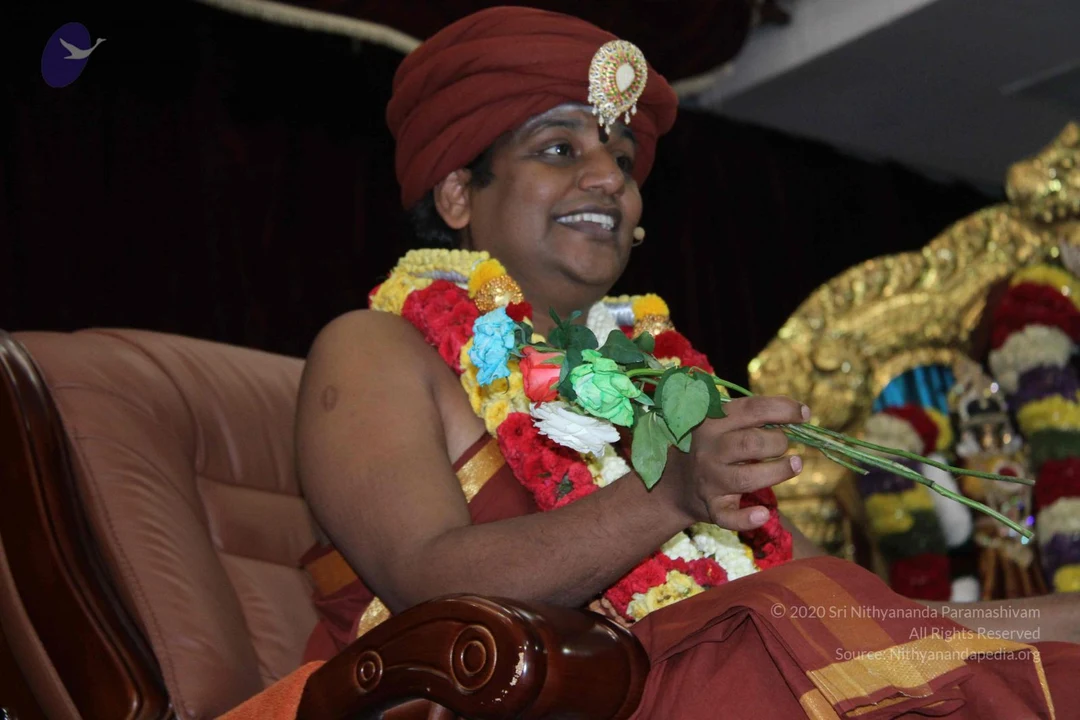
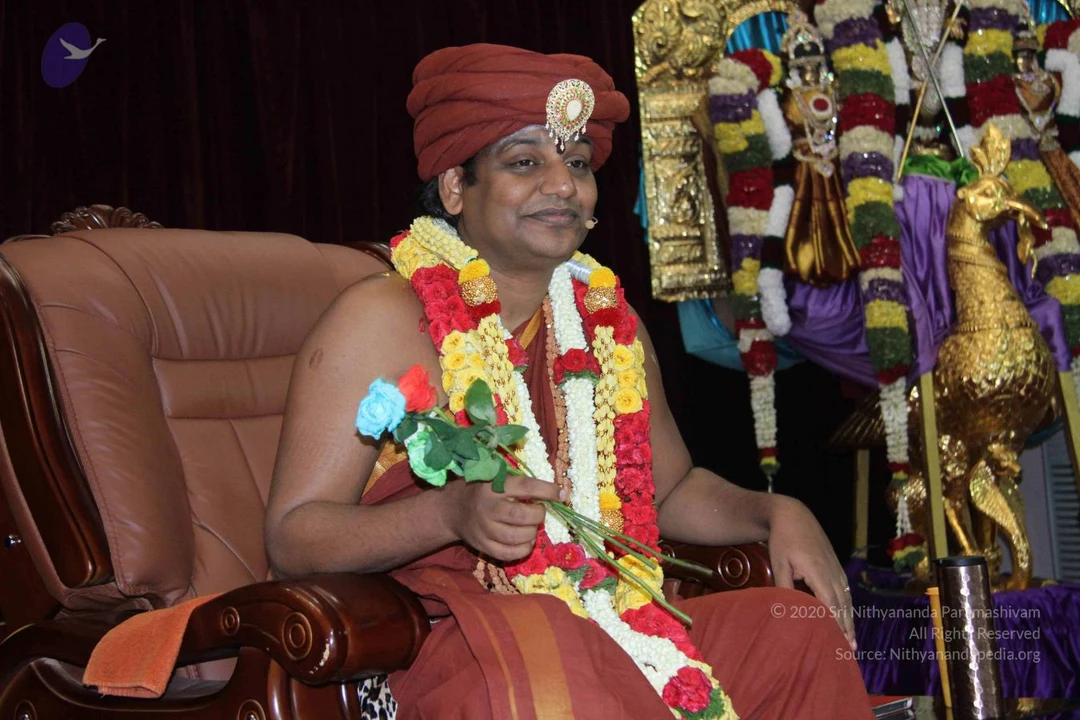
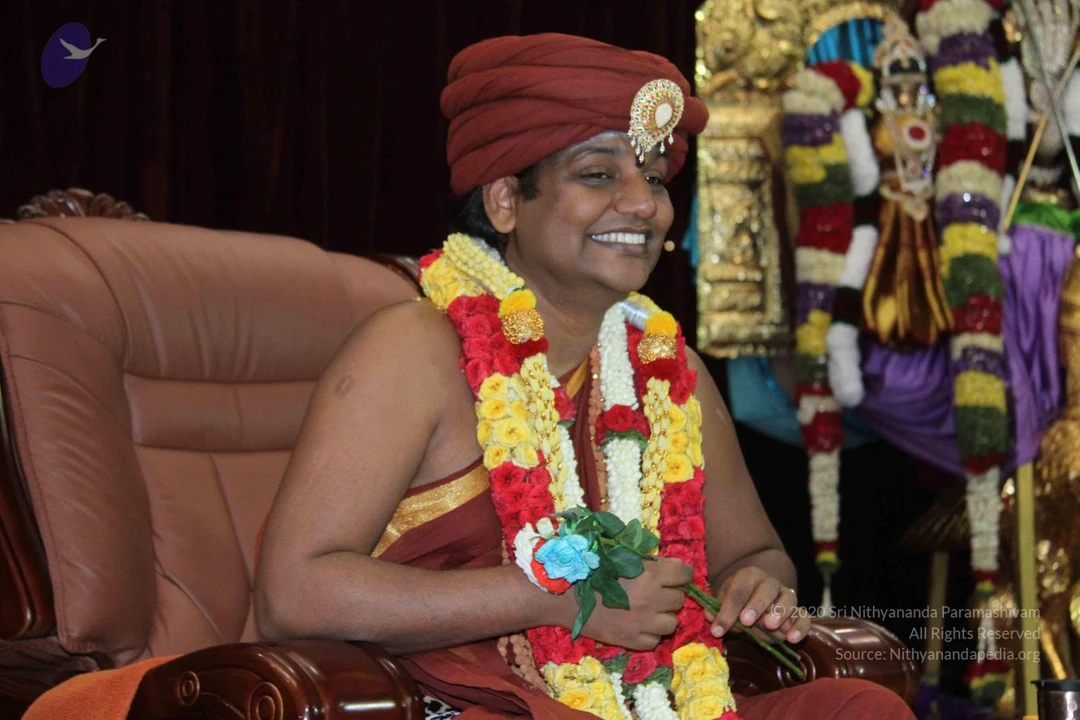
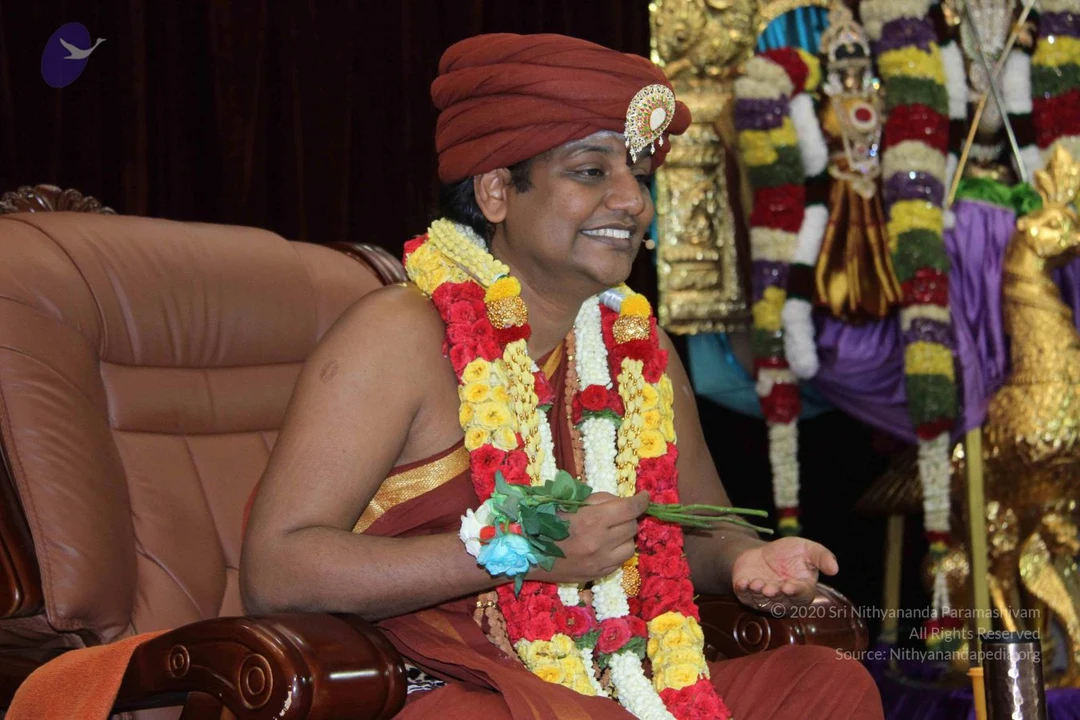
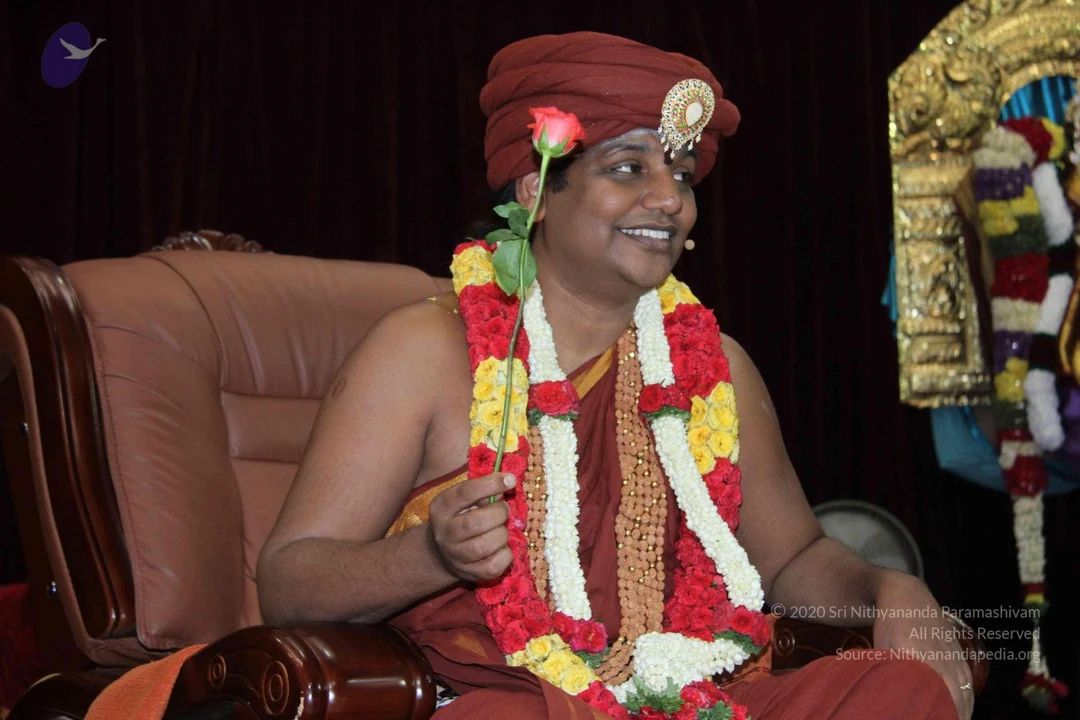
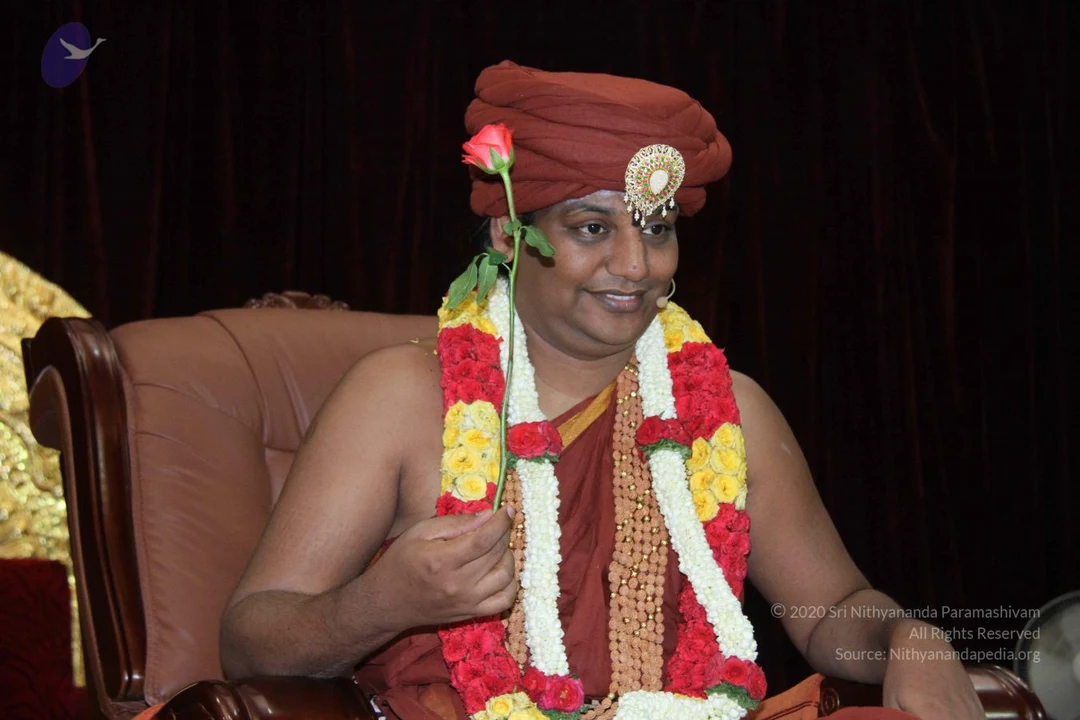
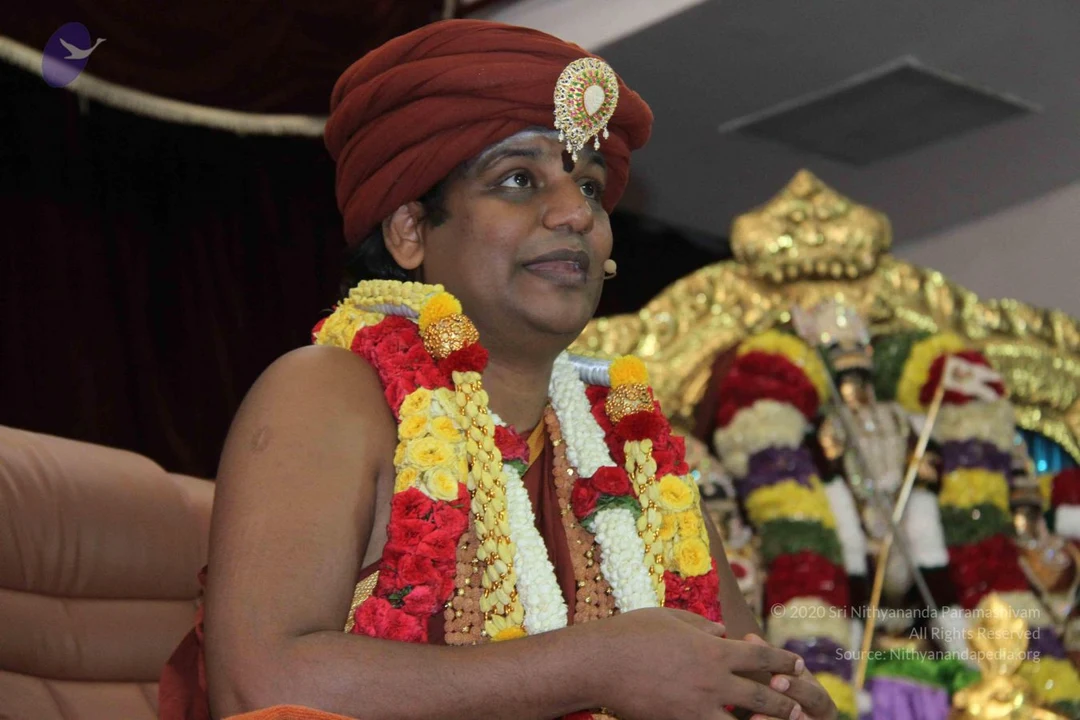
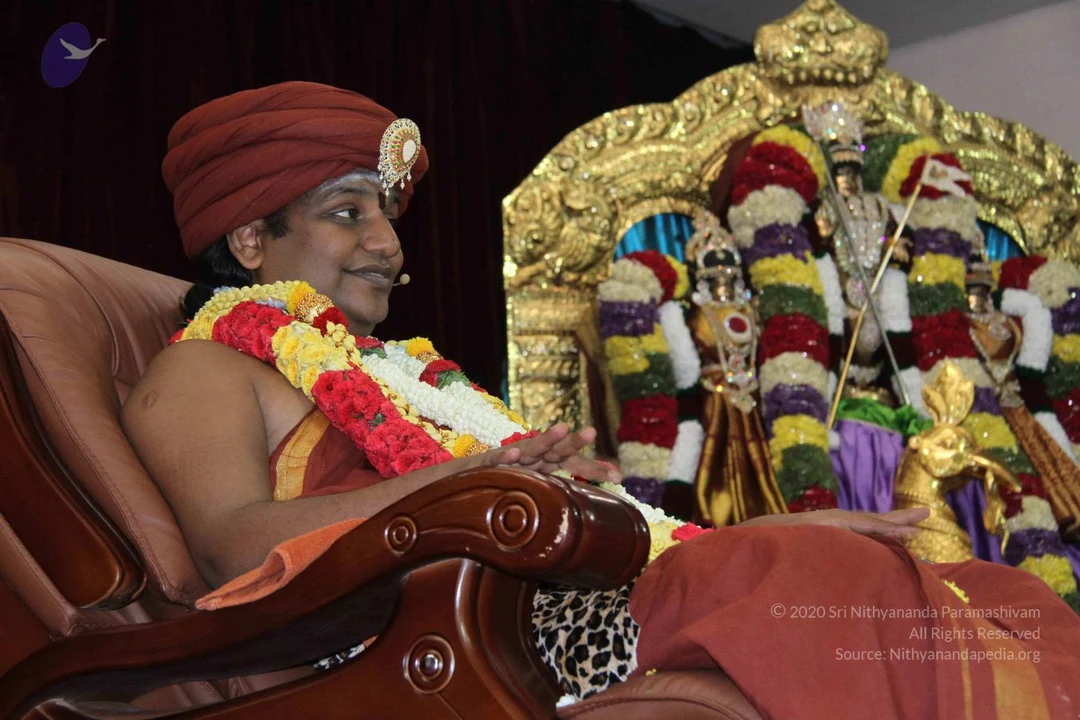
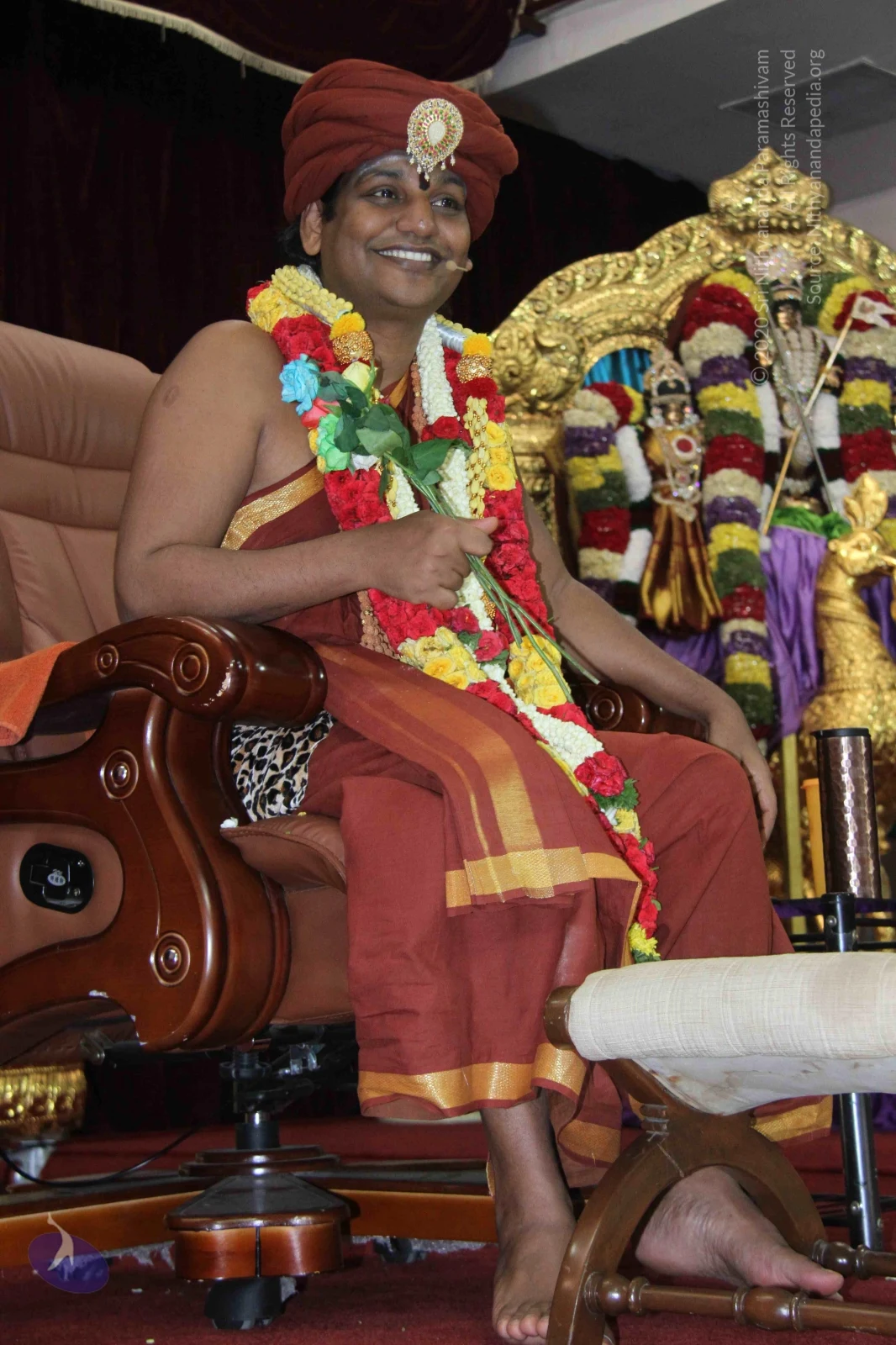
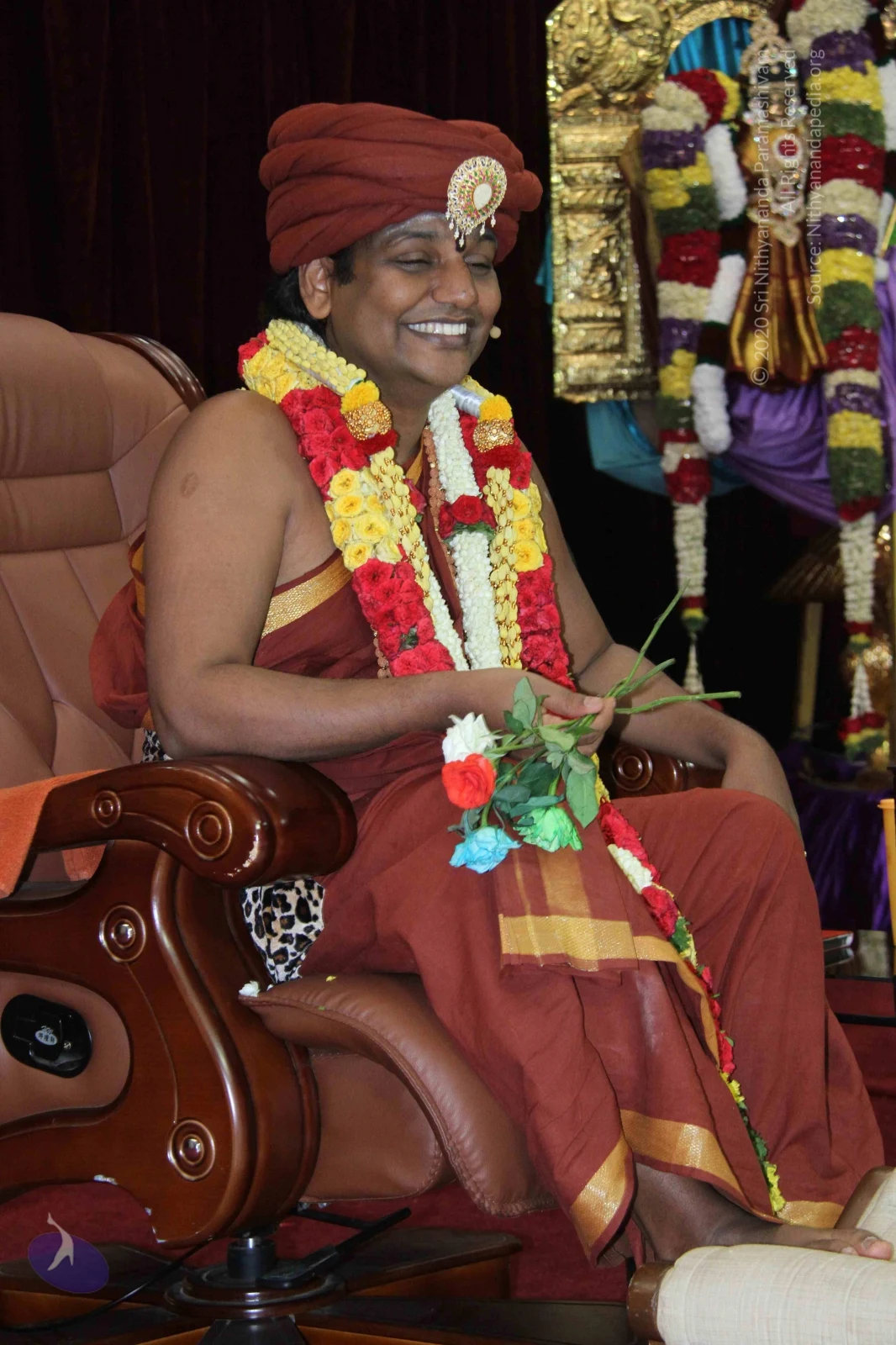
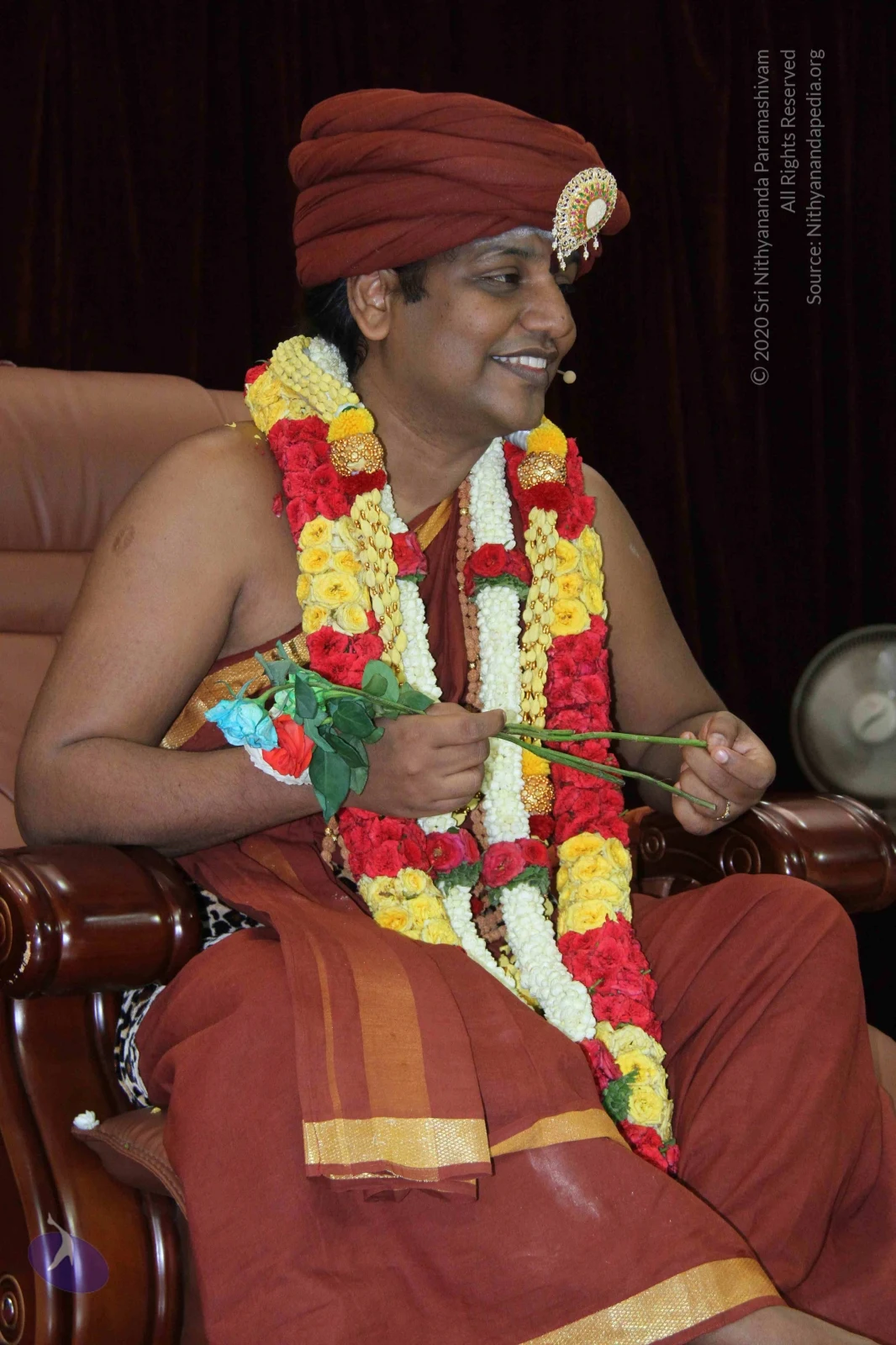
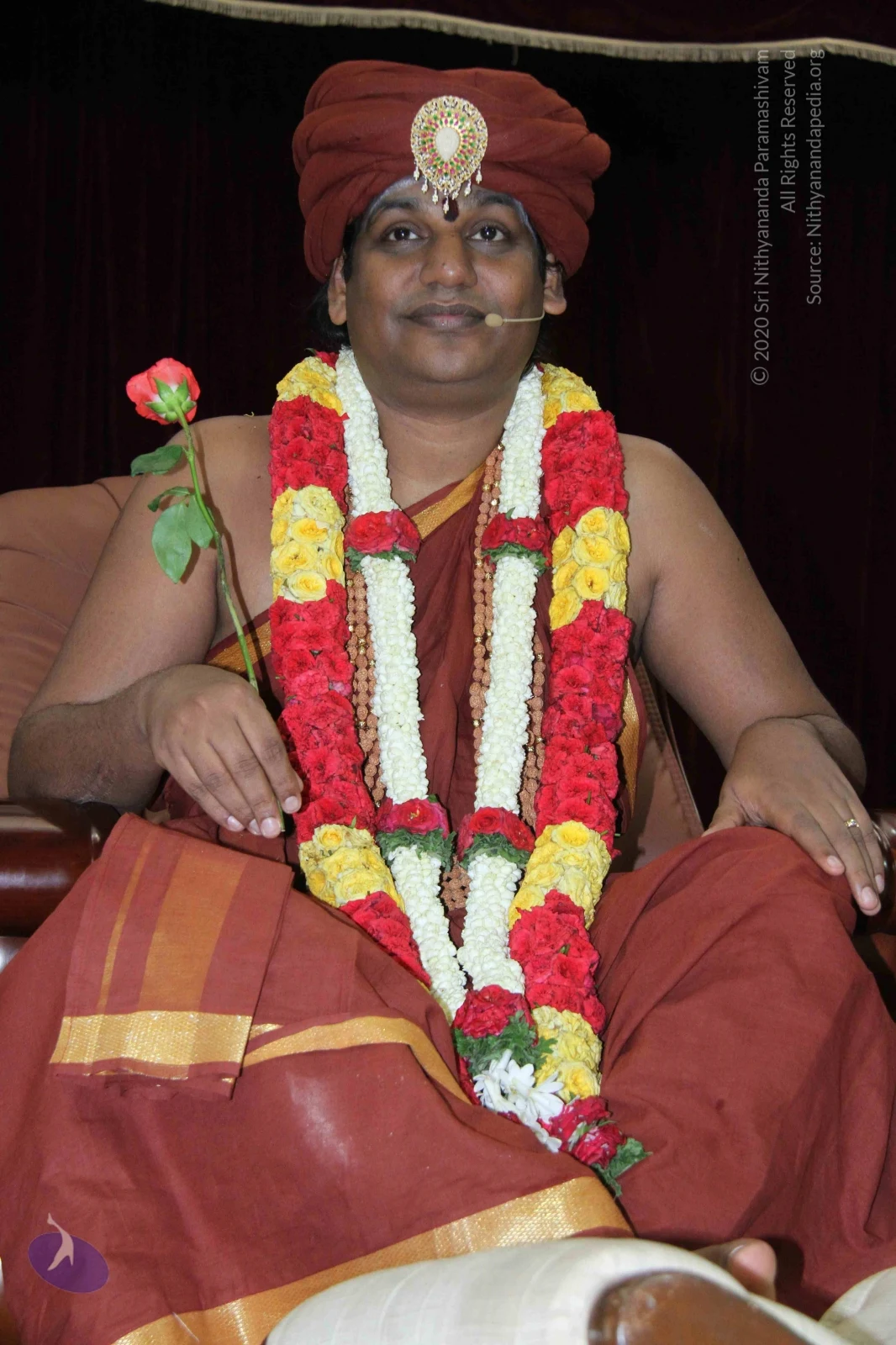
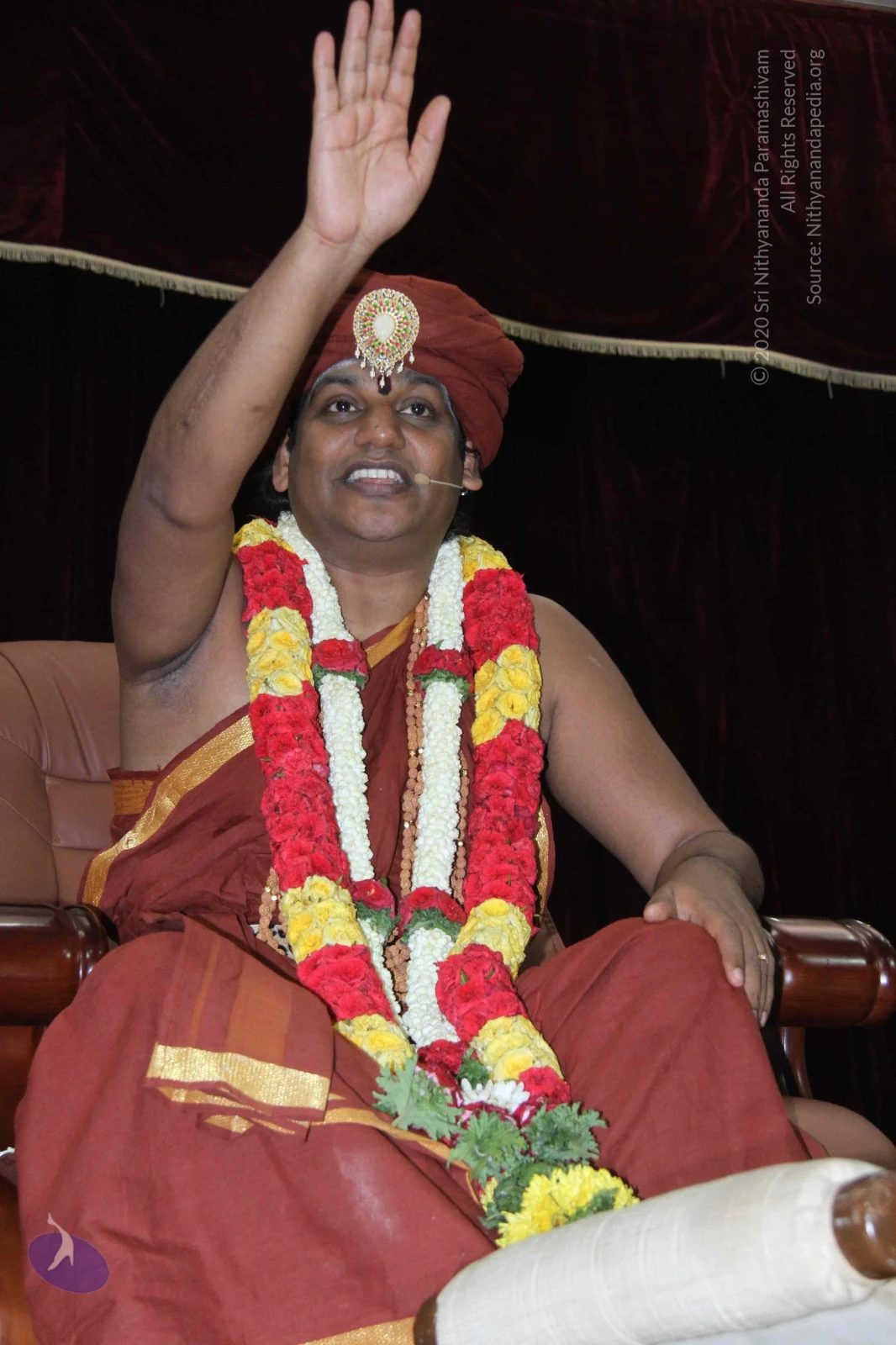
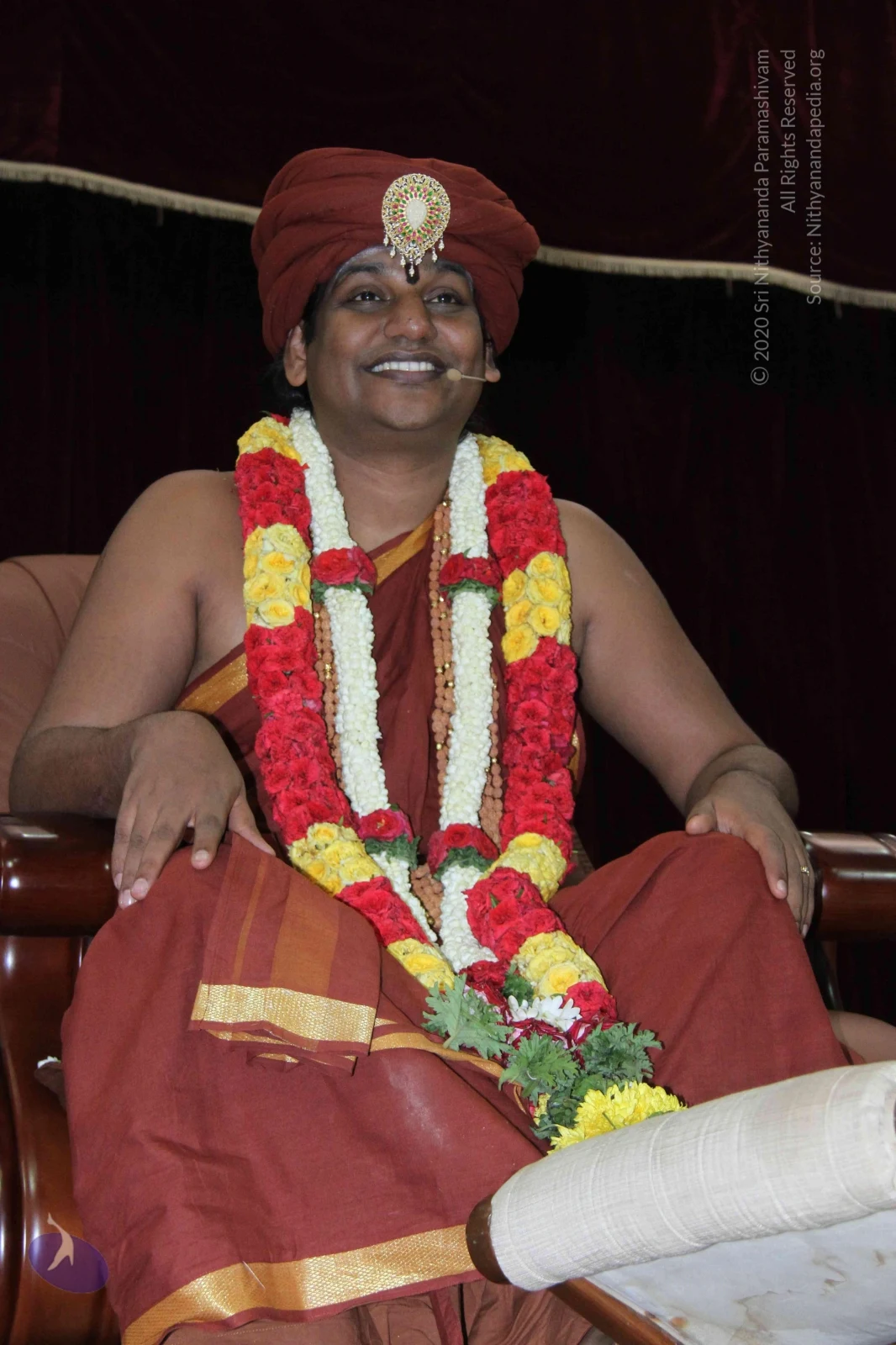
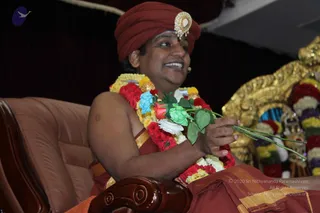
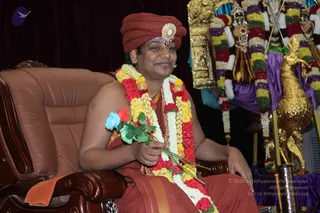
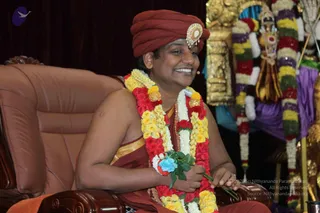
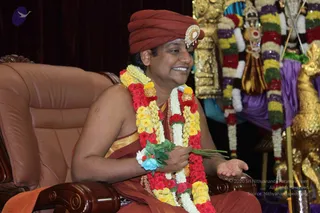
A man seated in a brown leather armchair smiles while holding a bunch of roses with green leaves. He wears a maroon turban with a gold ornament, a multicoloured flower garland of red, yellow, white and blue blooms, and a maroon-and-gold dhoti with a bare upper body. Behind him stand gold-framed ceremonial decorations and garlanded deity murti figures. Dark red drapery forms the backdrop. Appearance-based a person cues include the maroon turban, flower garland and seated throne-like position, consistent with the page's event context. A printedA man seated in a brown leather armchair, wearing a rust-red turban with a gold ornament and a bare chest draped in a red-orange shawl. He wears layered garlands of red, yellow and white flowers and holds a small bunch of blue, red and green roses. Behind him stand a golden deity murti in an arch and garlands of multicoloured flowers, with a purple drape. A golden peacock figure sits at his right side.A smiling man seated in a brown leather armchair, wearing a maroon turban with an ornate gold brooch, a maroon robe with a gold border, and layered garlands of red, yellow and white flowers around his neck. He holds a stem of a blue rose and green leaves in his hand. Behind him stand tall garlands in purple, green, yellow and red, a gold deity murti and purple drapery. Appearance-based cues of distinctive ornate turban, garlands and maroon robes are consistent with a person candidate in person, though identity remains uncertain.A man seated in a brown leather armchair, smiling, wearing a rust-red turban with a gold ornament at the front, a bare upper body draped in a rust-red cloth with gold border, and multiple garlands of red roses, yellow and white flowers around his neck. He holds a small bunch of flowers in one hand with a blue flower and extends his other hand open. Behind him stand gold decorative statues and hanging garlands in red, yellow, white, green and purple, with purple draping. a person, seated in a satsang setting, with a rudraksha-style neck adornment and ornate ceremonial dress cues present.A smiling man sits in a brown leather armchair against a dark maroon drape, wearing a deep red turban with a jewelled ornament and a maroon robe. He is draped with long garlands of red roses, yellow marigolds and white jasmine, and holds a few loose roses in his hand. Behind him on the right, a gilded carved arch and garlands of flowers are visible. The appearance matches the page's a person claim through the swept-back turban, ornate jewelled ornament, and garlanded maroon attire, so this is a probable in-person candidate.A seated man in a maroon turban with a gold ornament and a maroon robe with a gold border sits in a brown leather armchair, smiling. He wears a multi-coloured garland of red, yellow and white flowers and holds a blue rose in one hand and green and white roses in the other. Behind him is a gold arch and a deity murti adorned with colourful flower garlands and a dark purple cloth backdrop. The scene appears to be a satsang setting. Swamiji (probable): the seated man wears a turban, ornate gold ornament and garland, with a rudraksha-style mala visible at his neck, consistent with the page's Nithyananda context.

Subramaniaprocession-panguniutharam

23 photosSource gallery
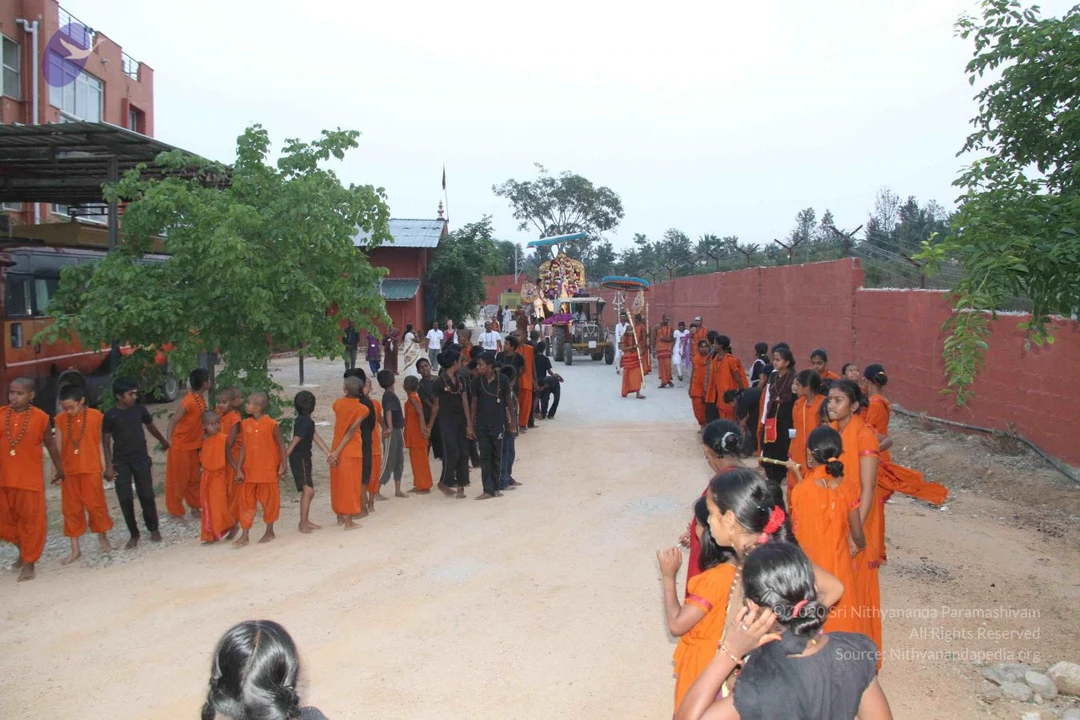
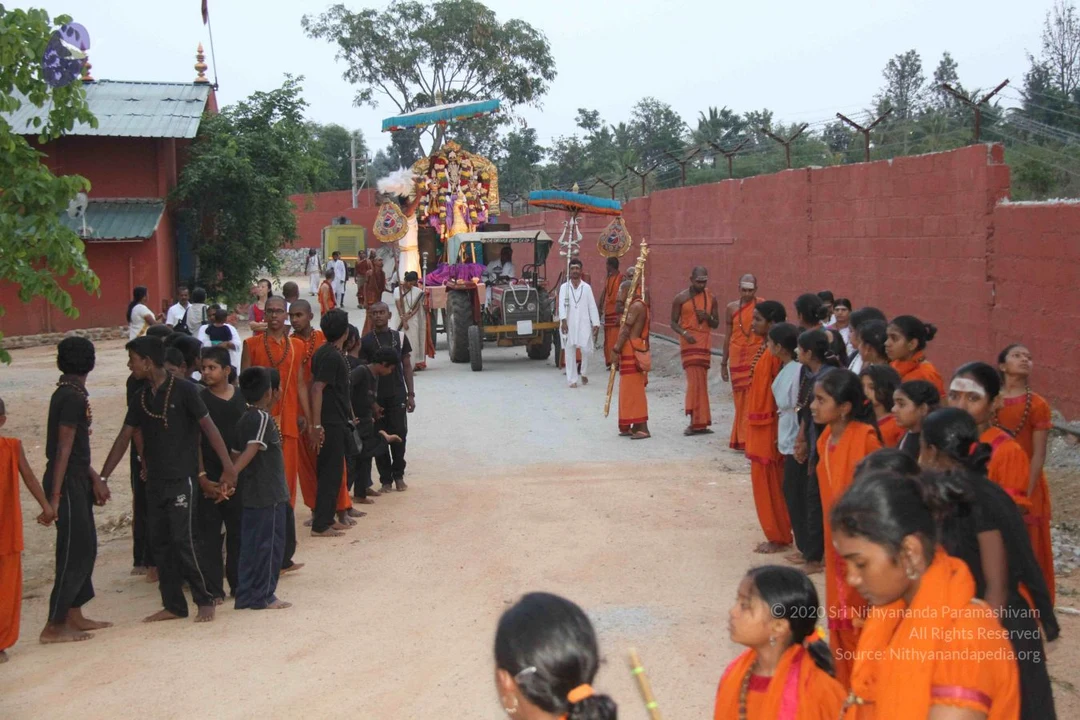
A rural procession on a dirt road lined with palms and trees. At the centre, a tractor pulls a decorated float carrying a large deity murti garlanded with marigolds and purple cloth, under a fringed blue canopy. A man in white dhoti stands on the float waving a white fan. The tractor driver wears a white shirt and a rudraksha-type bead necklace. Around it walk devotees in saffron and orange robes carrying tall ceremonial staffs with decorated ornamental banners and a trident, plus women in red and white saris. Several sannyasi-style figures in orange clothing with bead malas flank the cart, and a man in white walks beside the right side. Trees and a red wall frame the background.A procession on a dirt road lined with trees, led by a tractor carrying a decorated deity murti under a canopy with a blue fringed top, the murti adorned with flower garlands and gold ornaments on a purple cloth. A man in white stands on the tractor's back platform near the murti. A tractor driver in a white shirt sits at the wheel. Walking alongside are devotees in saffron and orange robes, several women in white and maroon saris, and a man in white dhoti holding a ceremonial staff with a decorated banner. Palm trees and a red wall appear in the background.Outdoor procession at dusk with a decorated vehicle carrying a deity murti under a gilded arch. The central figure wears a crown and an ornate gold and silver-toned chest adornment, flanked by two smaller attendant figures, all garlanded with thick bands of red, yellow, green and purple flowers. A golden swan-like vehicle figure and a purple cloth sit below. A standing man in a white dhoti with gold border waves a large white fan or chamara toward the deity. Two orange-and-blue ceremonial umbrellas frame the scene; trees and a seated person in white are behind the vehicle, and the vehicle carries a Kannada signboard.A street procession in daylight with palm trees and a red brick wall behind. Centre, a decorated palanquin carries a deity murti adorned with thick garlands in red, yellow, green and white, and a gold peacock-like vahana at its base, under a blue and orange fringed canopy. A woman in a white sari with orange border stands on the left, holding a fan-like object toward the murti. In the foreground, a rickshaw-style cart with a green canopy carries seated women and a child. Saffron-robed sannyasis with rudraksha malas and white forehead markings walk alongside, one carrying a gold staff.A photograph of a temple worship scene outdoors among green trees. A priest in a white dhoti with a rudraksha-style necklace stands at left, waving a white fan or chamara toward a deity murti. The murti is adorned with multicolored flower garlands in red, yellow, purple and white, and sits on a golden vahana-style base draped in purple fabric. Its gold arched backdrop is ornately carved, and two smaller attendant figures stand beside the central deity, which holds a trident-like staff. A red brick wall lies behind. No a person candidate is visibly present in the scene.A decorated metal murti of a deity seated on a lavender cloth-draped pedestal before a gilded arched backdrop, with a bull figure at the base. The central deity wears an ornate crown, a dense gold necklace and armlets, and holds a trident-like staff. Two smaller attendant figures flank it on either side, each in elaborate headdresses and jewelled ornaments with tall flower garlands in red, yellow, white and purple draped around them. Green foliage is visible behind the arch. No physical people are present, only statues.

1-Pada-Puja-and-Satsang
8 photosSource gallery
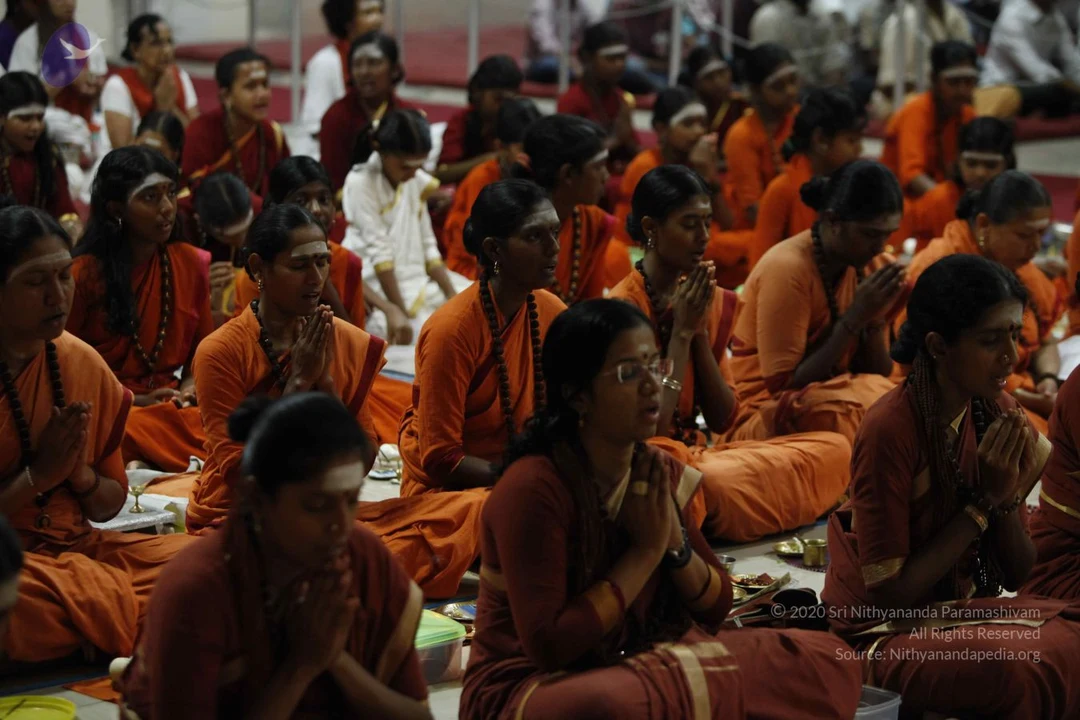
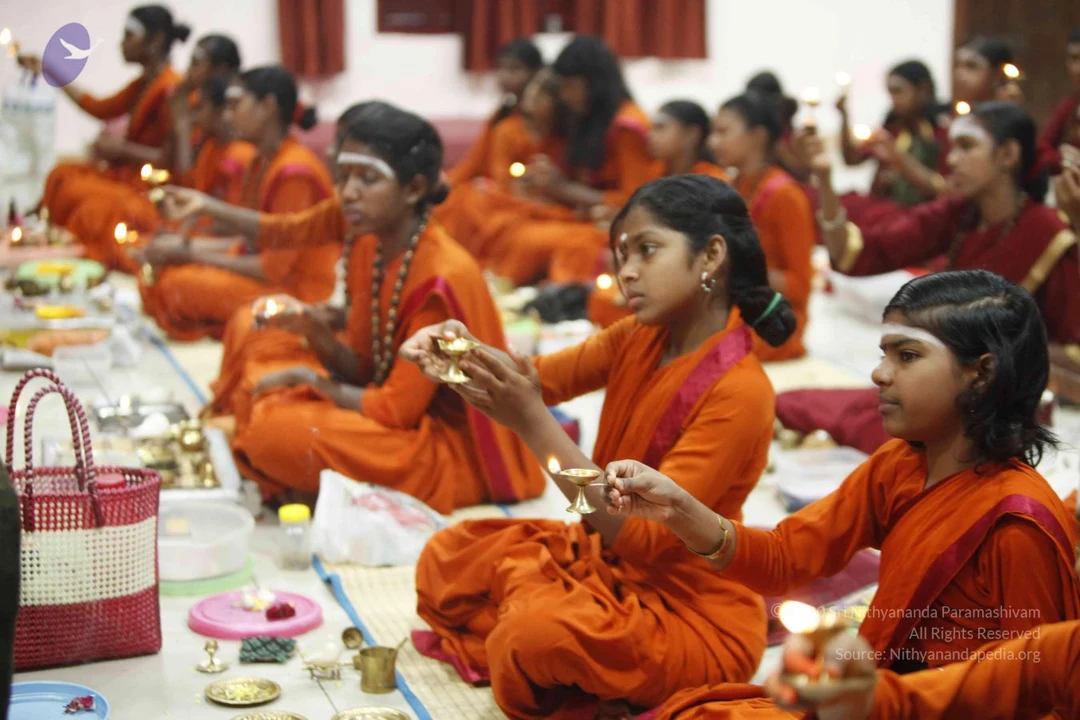
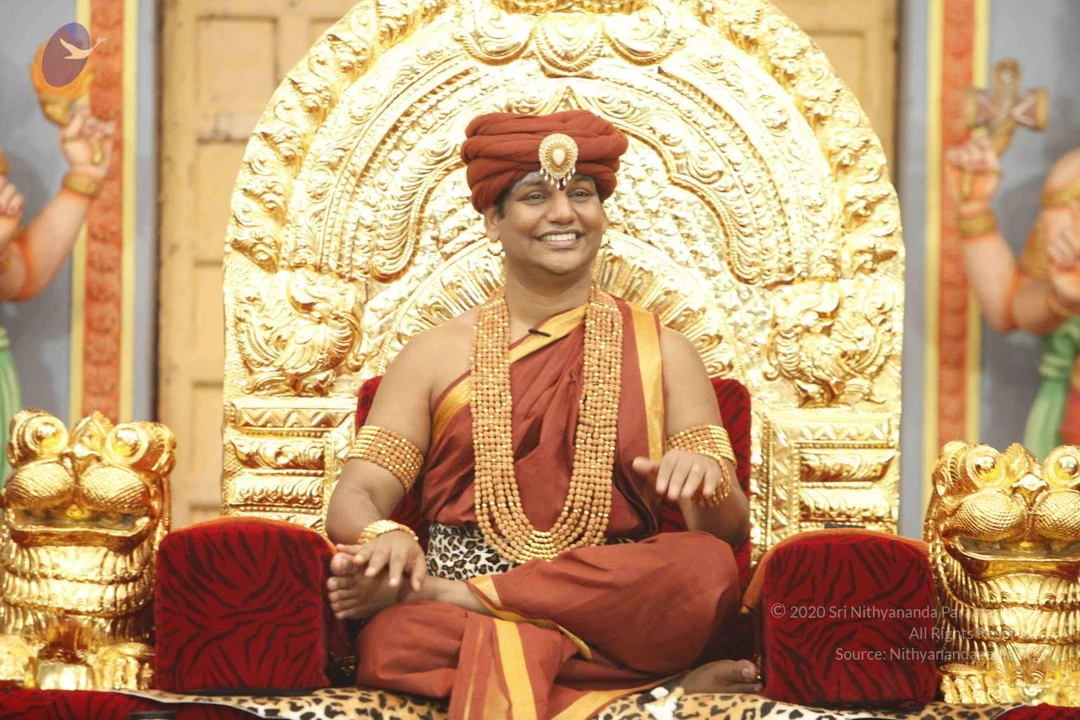
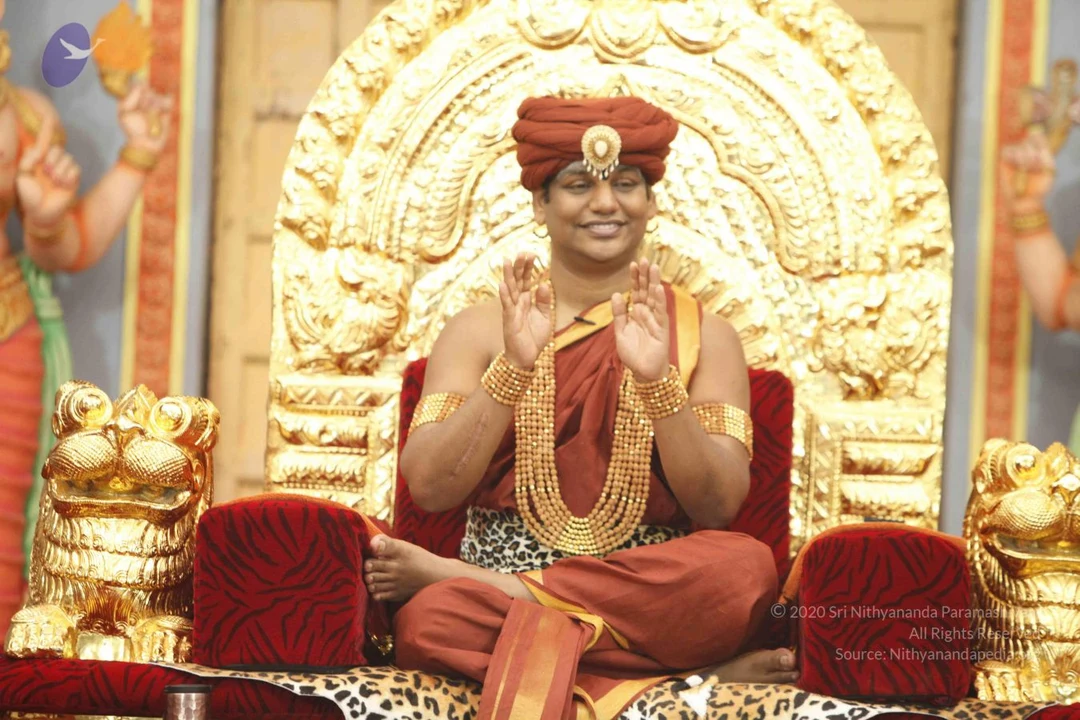
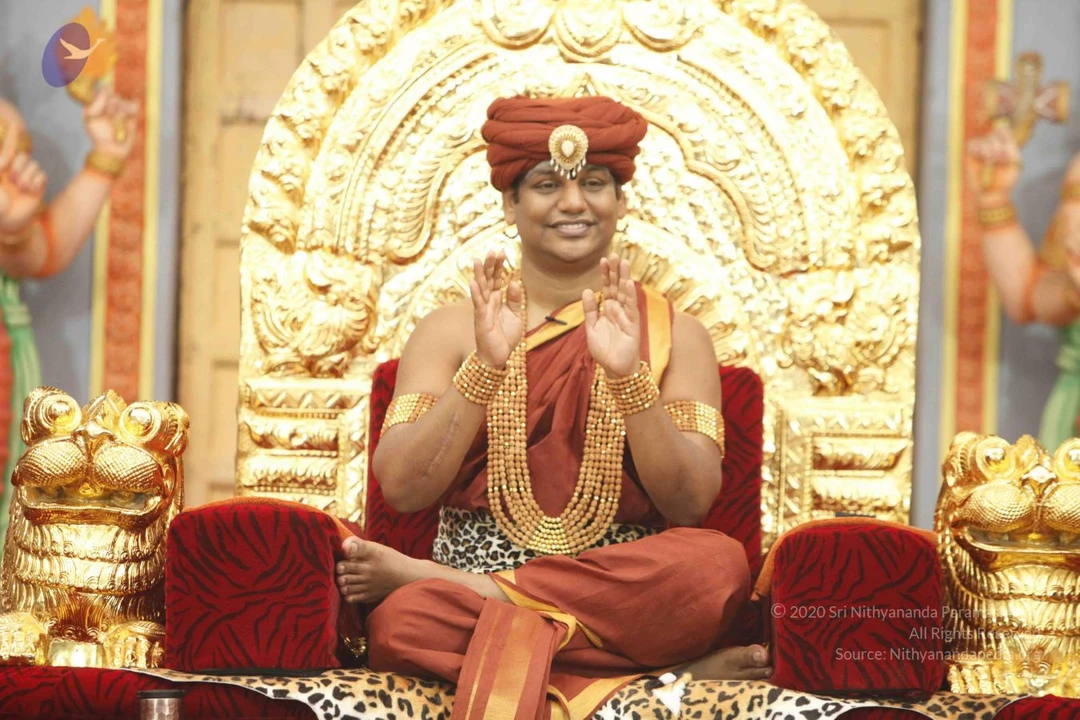
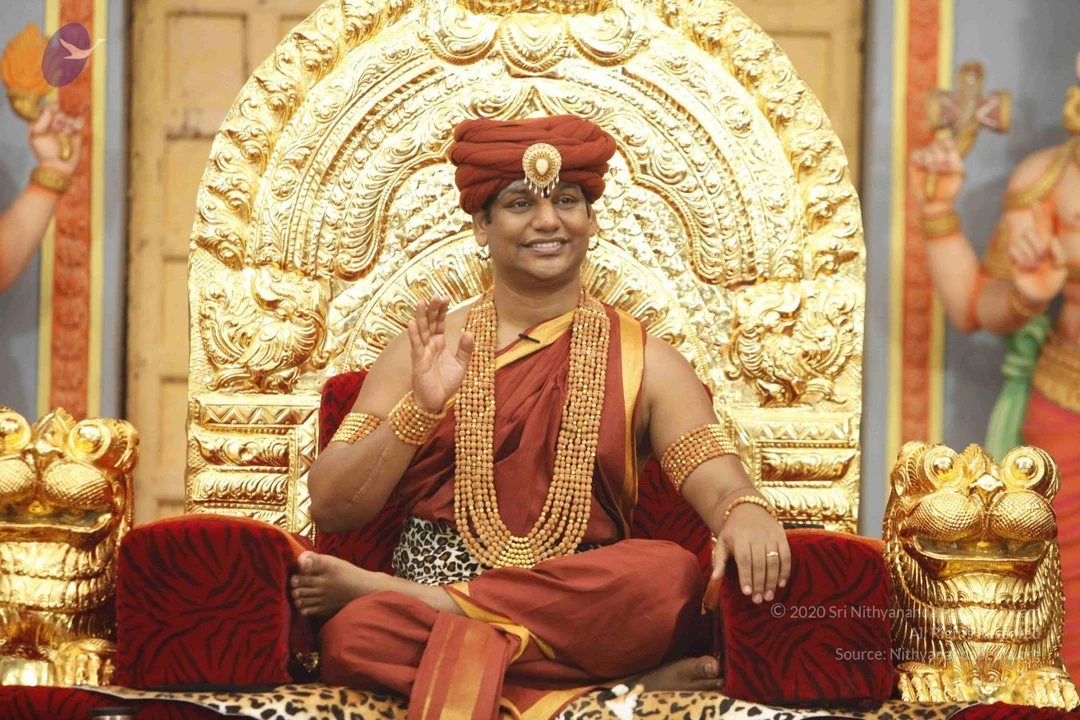
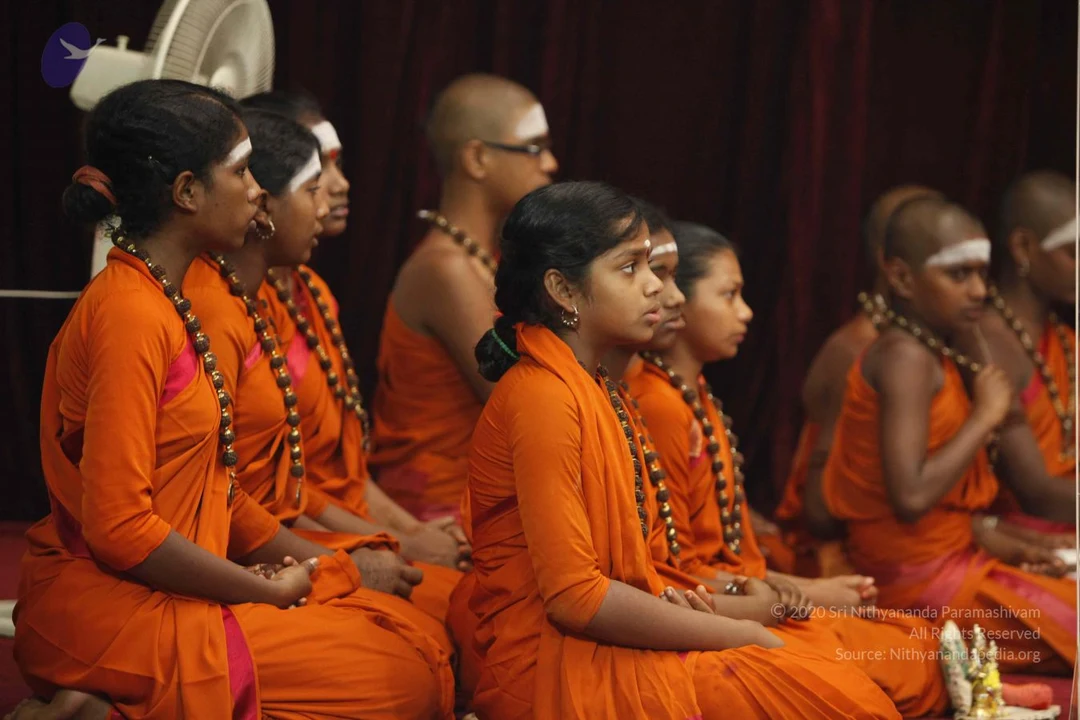
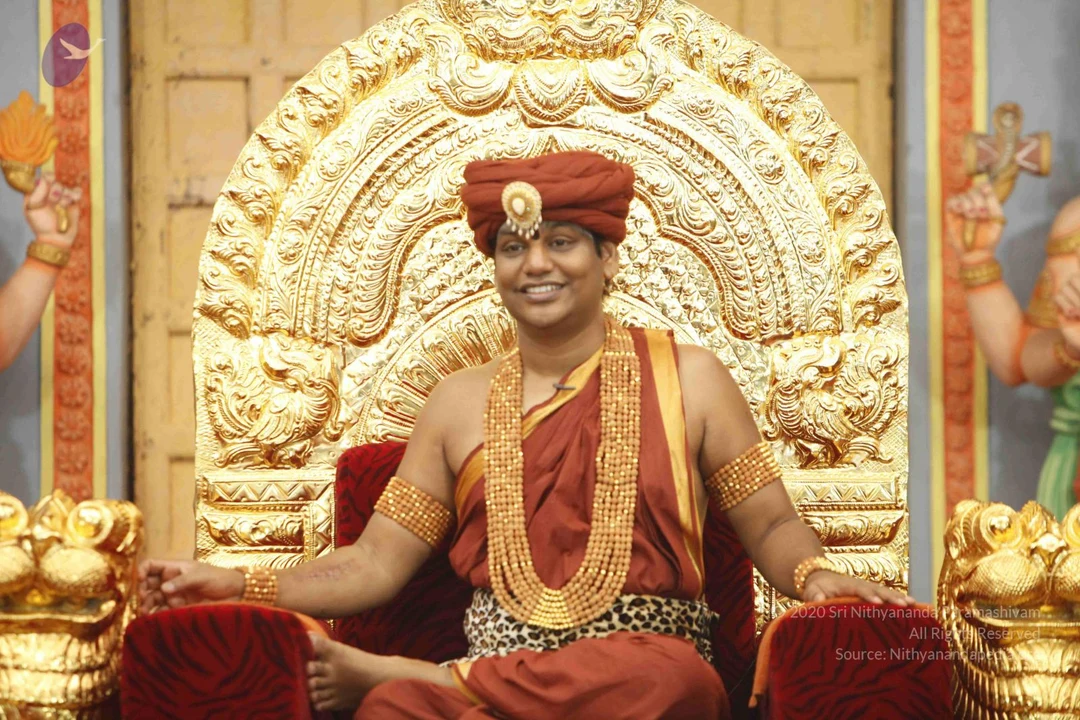
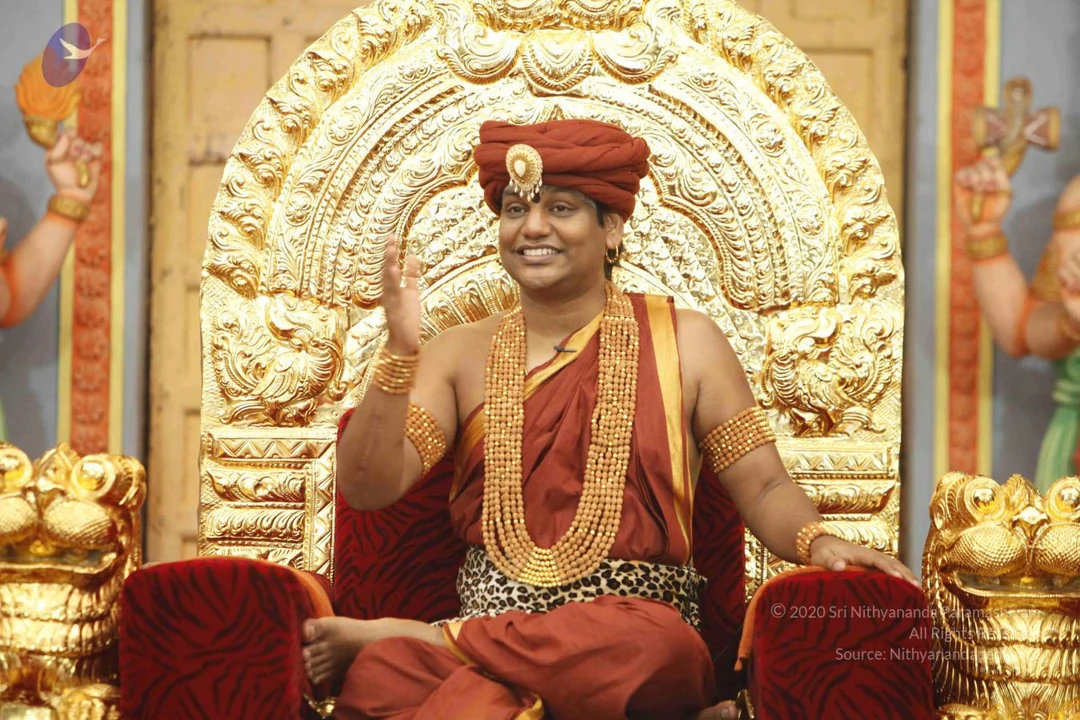
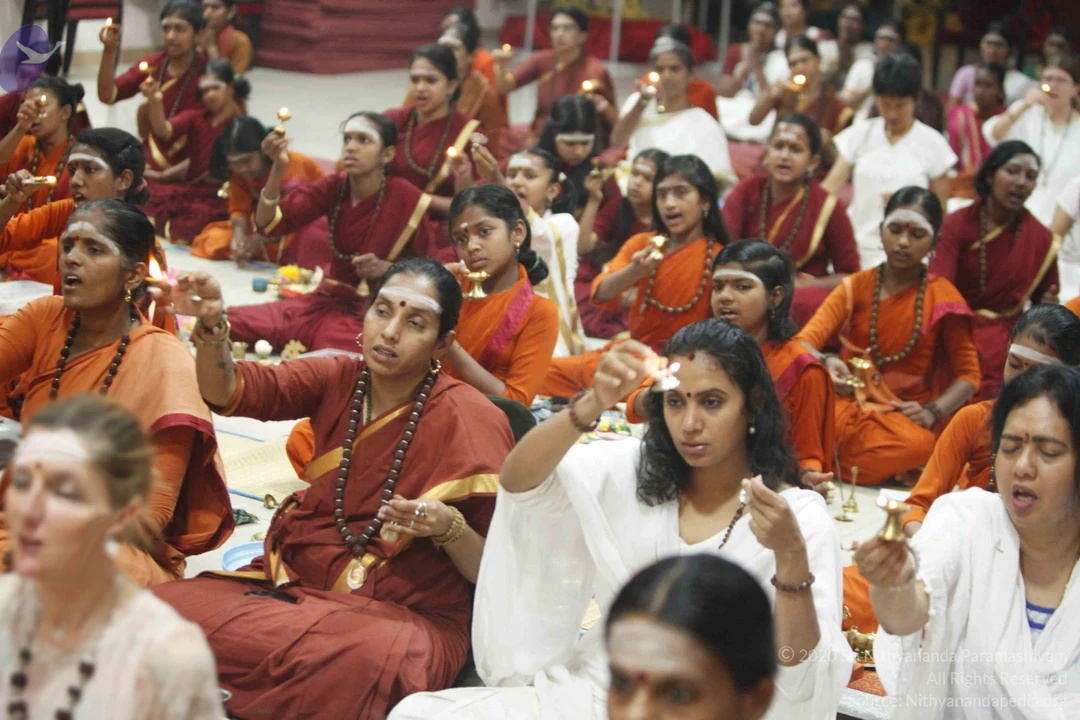
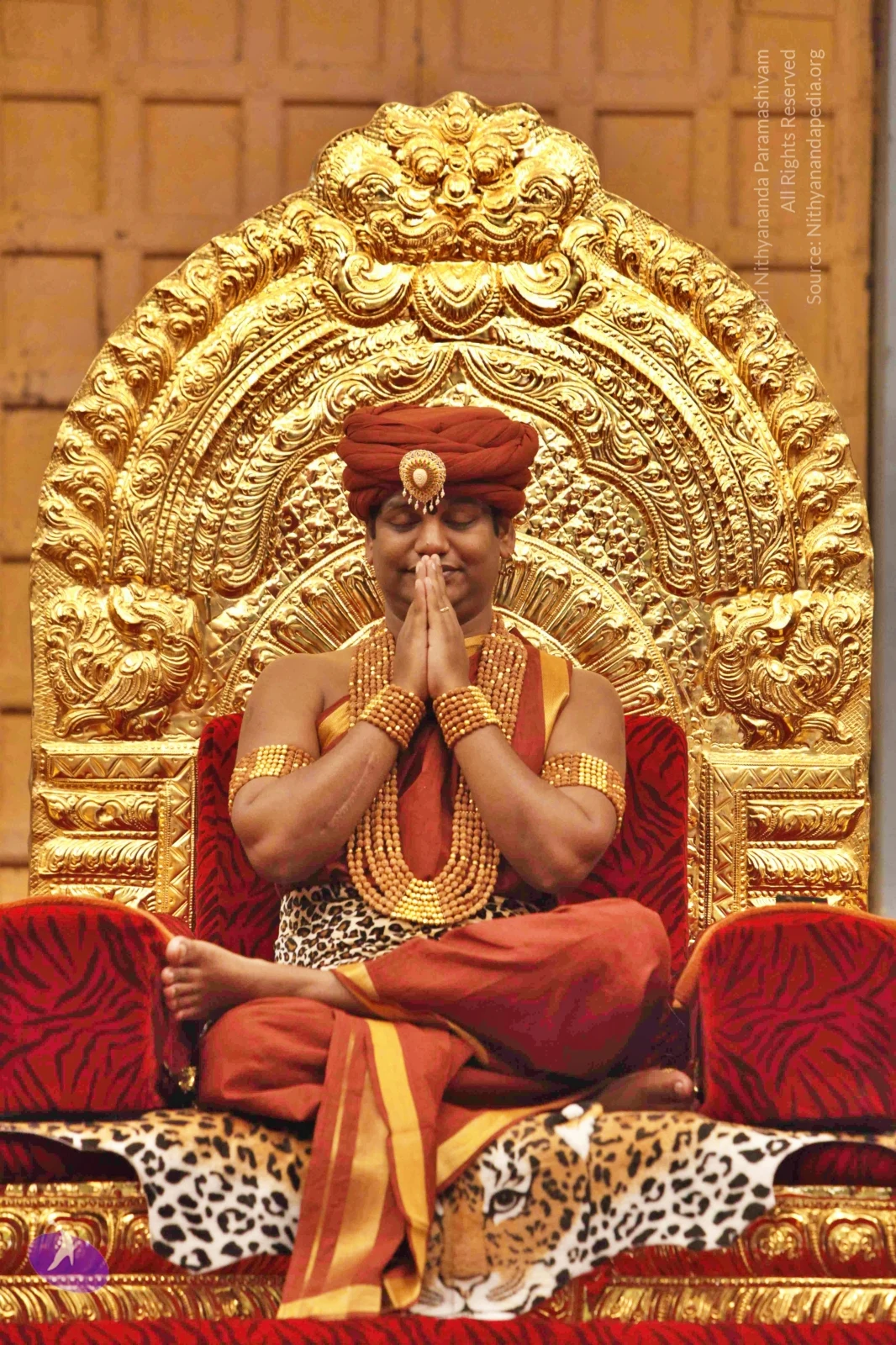
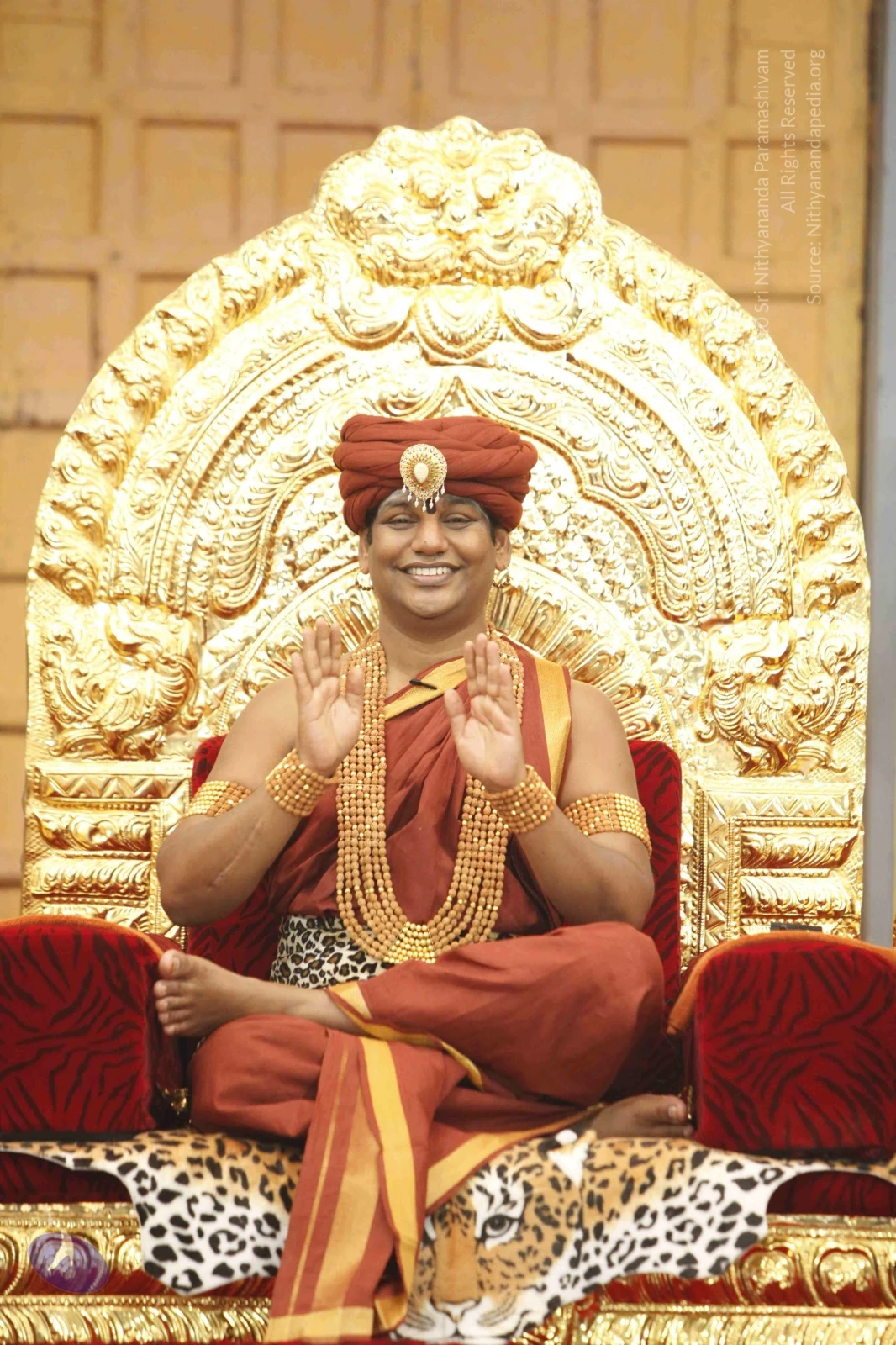
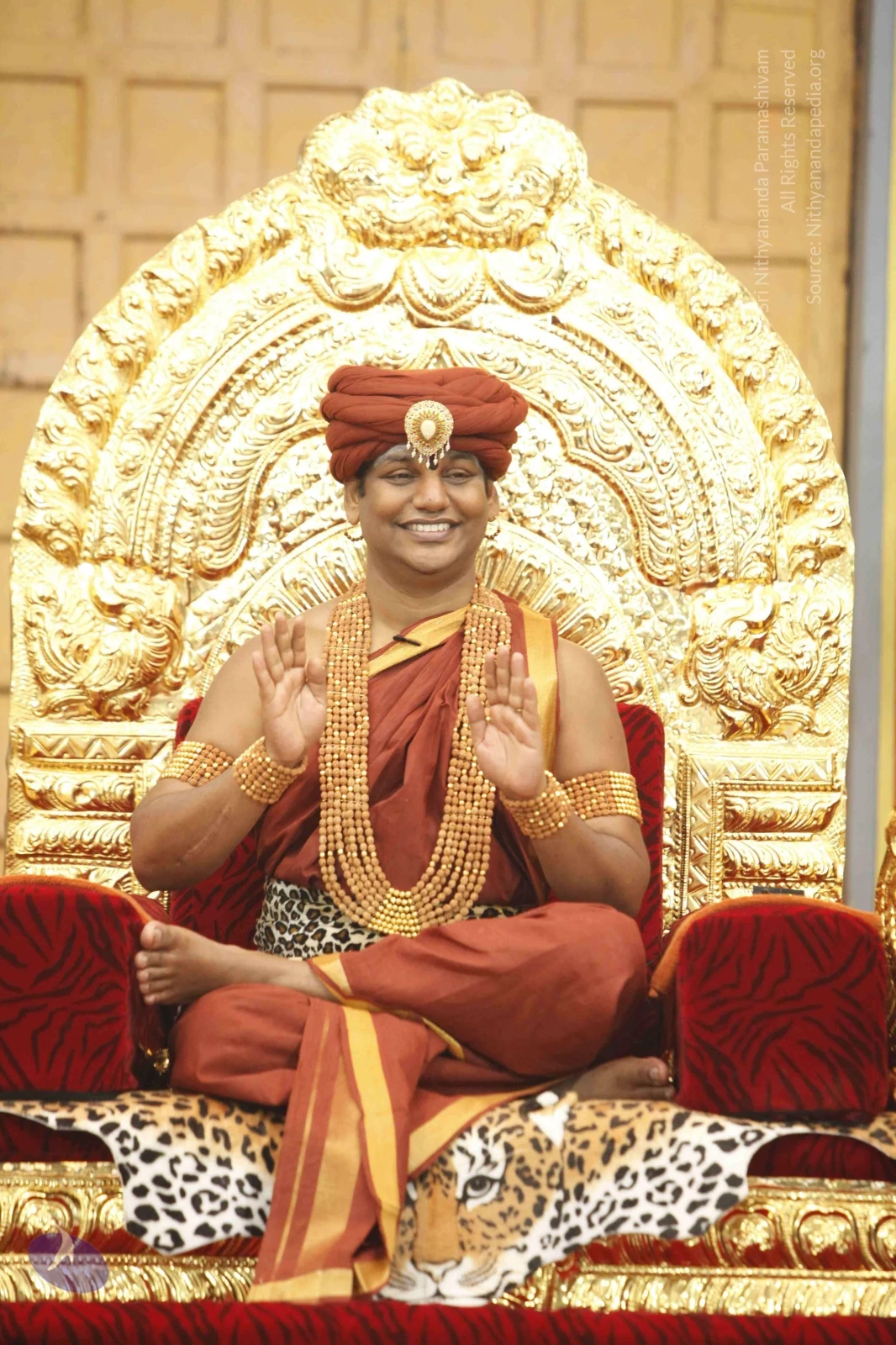
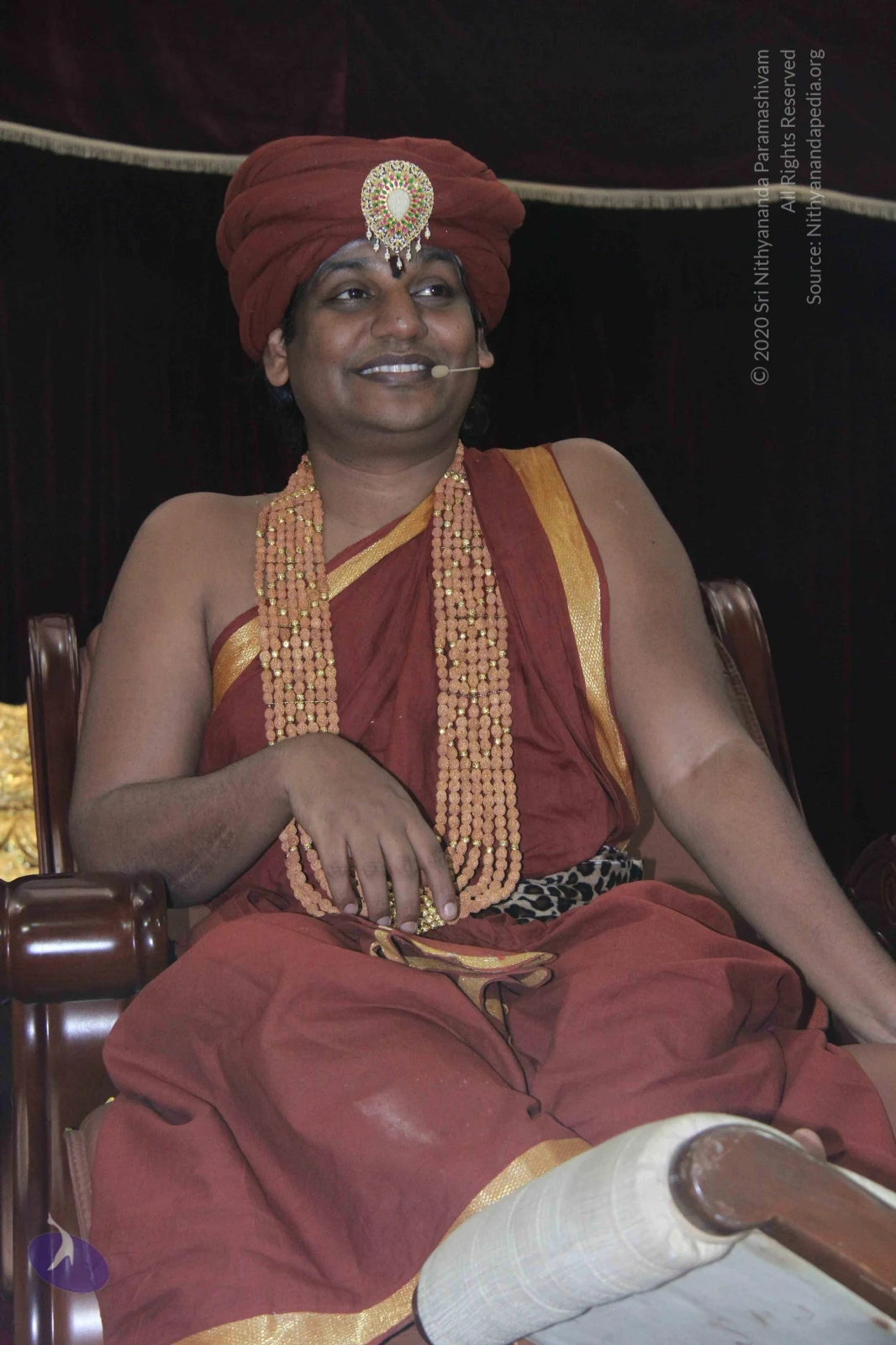
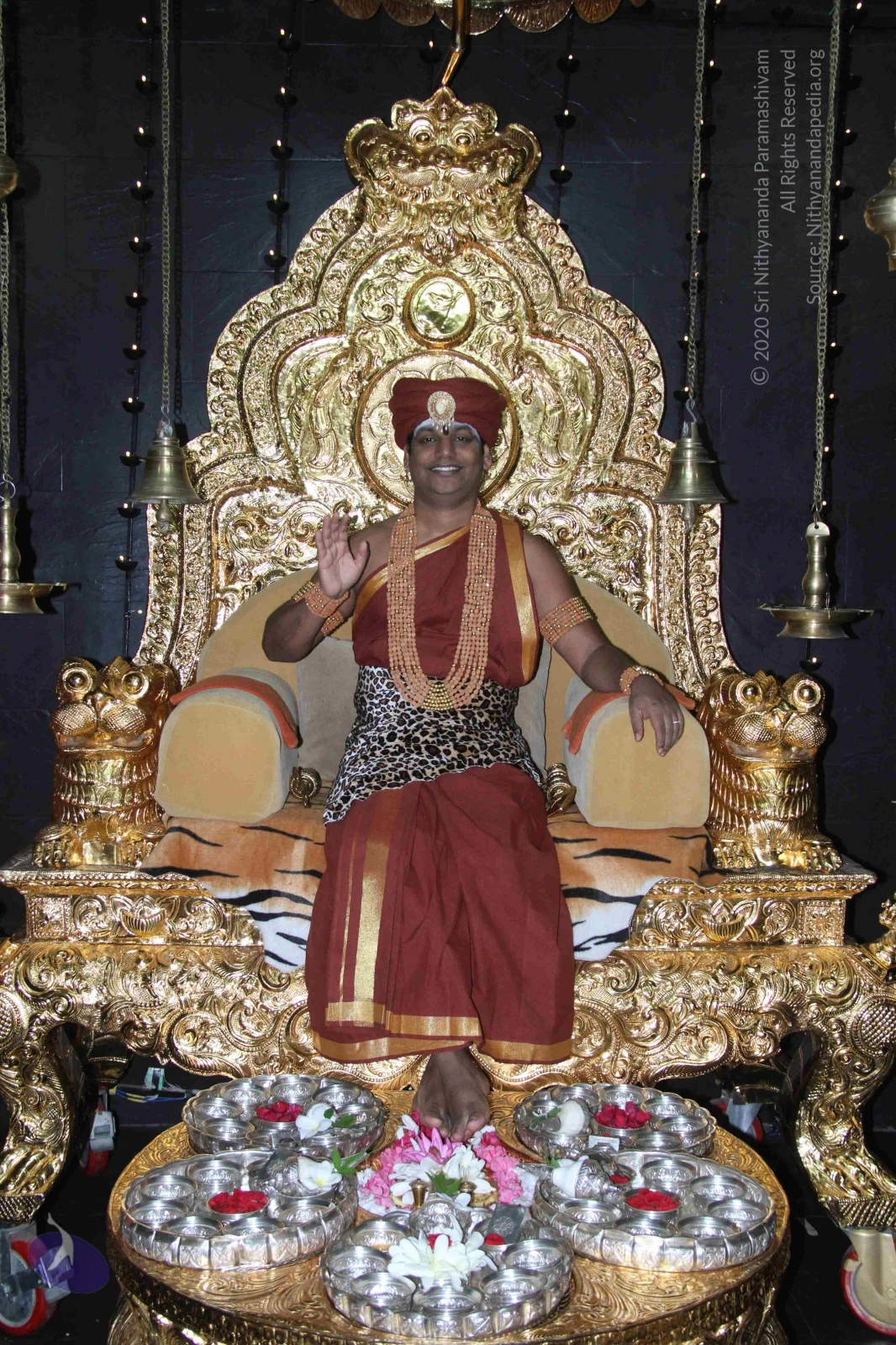
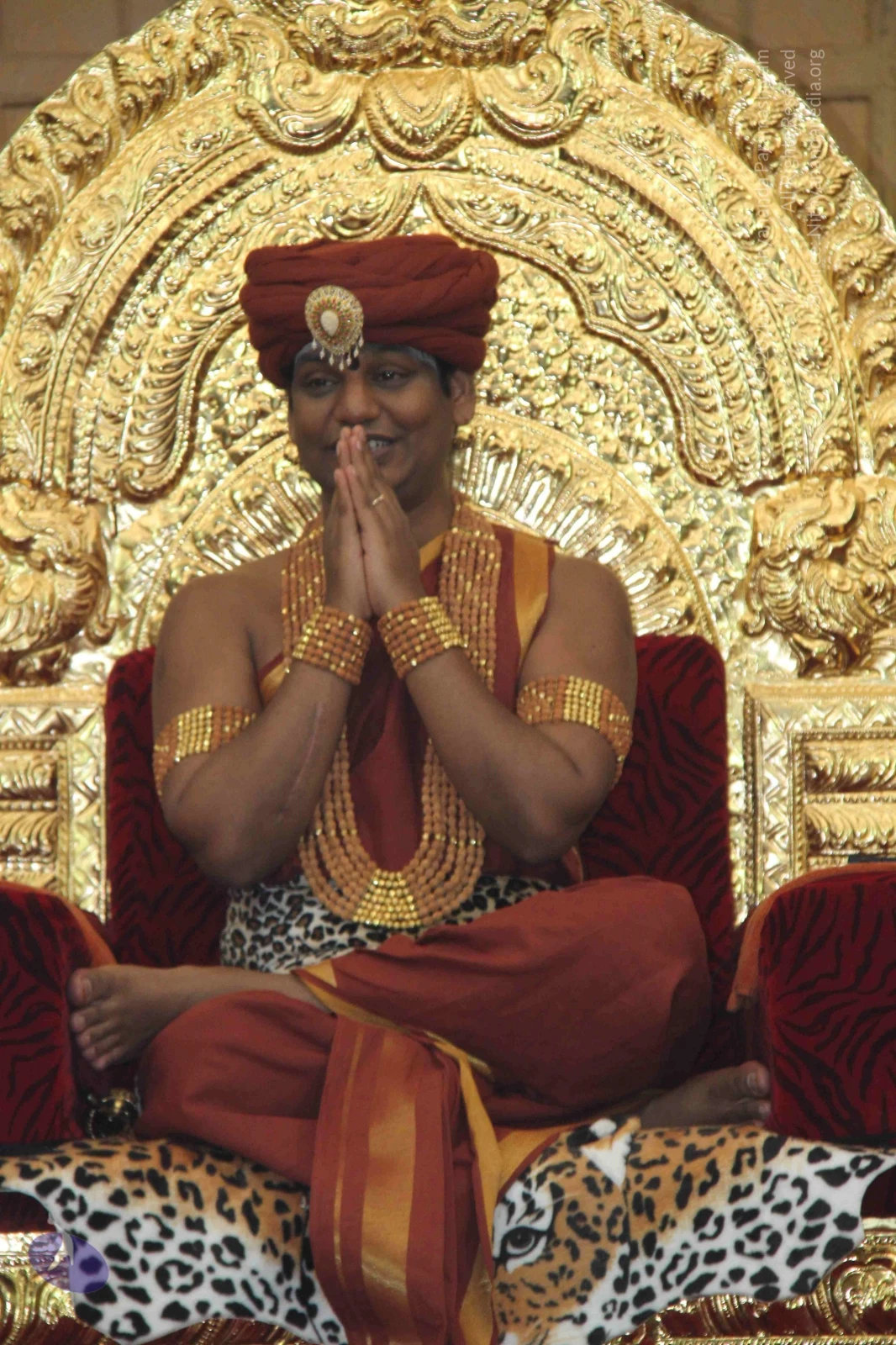
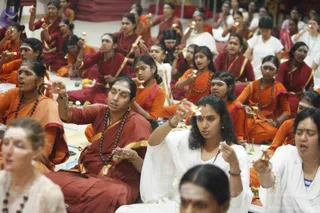
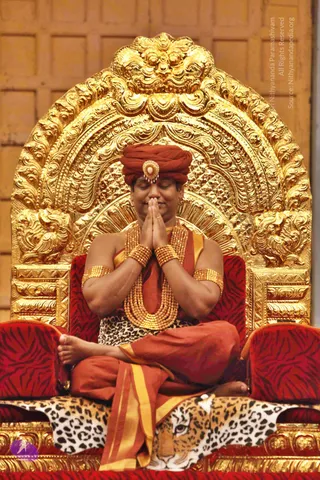
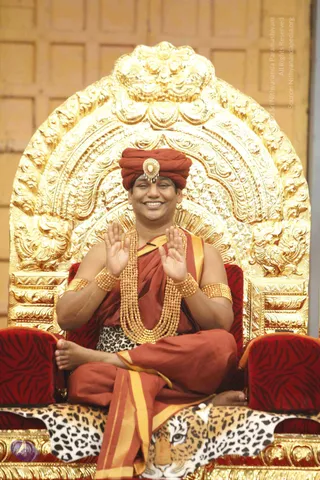
A decorated deity murti of a standing male figure flanked by two female figures, all in gold-toned metal with jewelled crowns and ornaments. The central figure holds a spear-like staff and a pennant-tipped rod, and wears an elaborate jewelled necklace. The two side figures wear gold and orange-brown silk saris with gold borders and jewelled necklaces. The whole arrangement is draped with long garlands of red, white, yellow, purple and green flowers, set before a golden ornate arch and a purple silk cloth with a golden bird-headed mount in front. No people are visible.A decorated deity murti of Murugan (Skanda) stands in a golden arched shrine frame, flanked by two smaller consort figures in gold and orange silk saris with ornate jewelry. The central figure wears a tall crown, holds a spear-like vel, and is draped in layered garlands of red, white, yellow and purple flowers. In front stands a gilded peacock vahana draped with a purple cloth, set on a purple-covered pedestal. No physical people are visible; the figures are statues. The scene is a flower-decorated altar display.A decorated deity murti of Murugan with two consorts stands in a gilded arch behind a golden peacock vahana on a purple draped platform. The central figure wears a jeweled crown and holds a spear, flanked by female figures in orange and gold silk saris with jewelry. Multicolored garlands of red, yellow, purple, green and white flowers drape the figures and the peacock. A white air conditioning unit and a dark curtain are visible in the background. No physical people are visible in the scene.A large group of women and girls sit cross-legged on the floor during a seated ritual gathering. Many wear rudraksha malas and white tilak or forehead markings. Several hold small oil lamps or diyas, and others hold brass bells and small ritual vessels. Foreground figures wear red and maroon saris with gold borders, while others wear saffron-orange garments and white clothing. Some participants are shown mid-chant with open mouths. A figure in white in the centre holds a lit lamp near a brass bell. Brass bowls and offerings sit on a cloth before them. The setting appears to be an indoor hall with a red-draped backdrop. No single figure is clearly identifiable as the a person in this image.A seated man with palms pressed together in namaste, eyes closed, sits cross-legged on an ornate gold throne with a red tiger-striped cushion and a leopard-print cloth draped over the seat. He wears a red-orange turban with a gold brooch, multiple strands of gold-coloured beaded necklaces, gold armlets and bangles, and a red-orange dhoti with gold-bordered edges over a leopard-print cloth. Swamiji (probable): the figure has a red turban with a gold brooch, ornate gold ceremonial necklaces, and a throne-seated posture typical of his darshan appearances, so he is treated as a probable candidate. The ornate golden arch of the throne rises behind him against a wooden panelled wall.A seated man on an ornate gilded throne with a carved arched back and red-and-black tiger-striped upholstery. He wears a rust-red turban with a jewelled brooch, rust-red robes with gold borders, multi-strand golden beaded necklaces, and gold beaded armlets. He sits cross-legged on a leopard-print cloth, smiling and raising both palms in a blessing gesture. The props and attire are consistent with the appearance-based Swamiji (probable) label: a turban, saffron/orange clothing and ceremonial gold beads, seated on a throne.

2-Pada-Puja-and-Kalpataru-Darshan

38 photosSource gallery
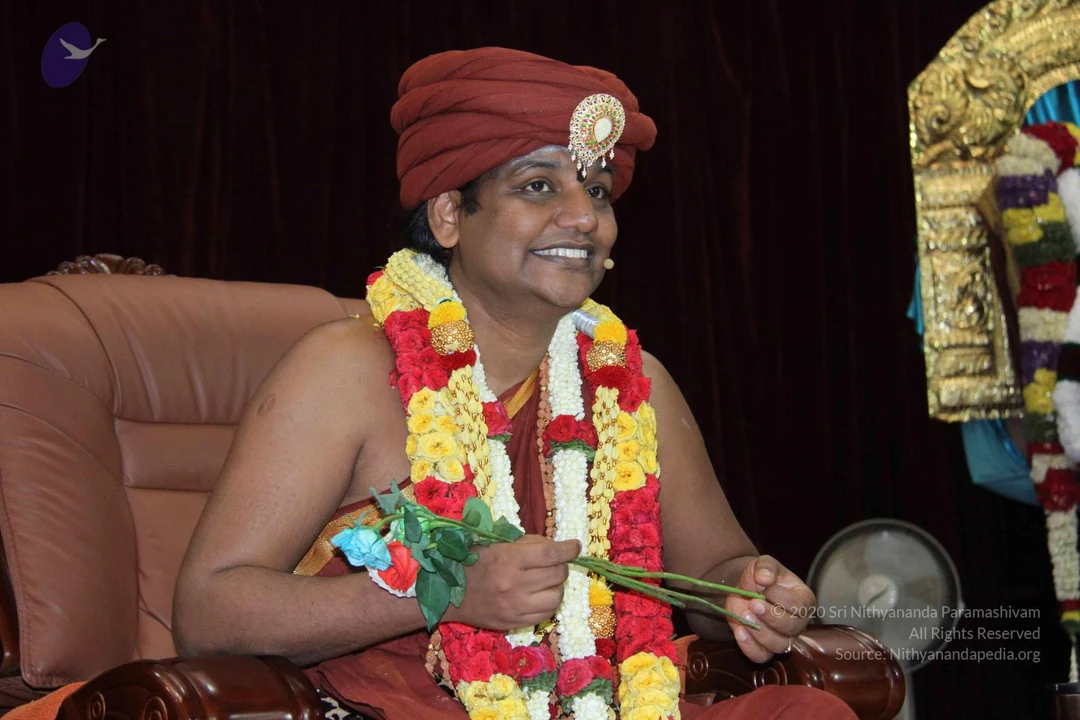
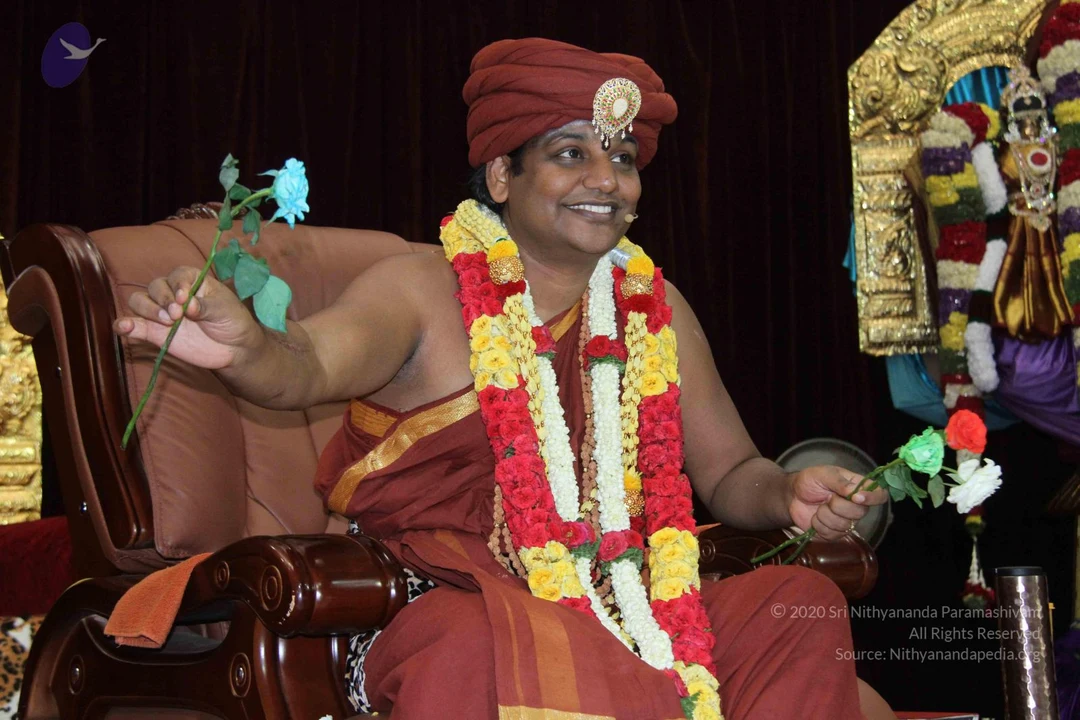
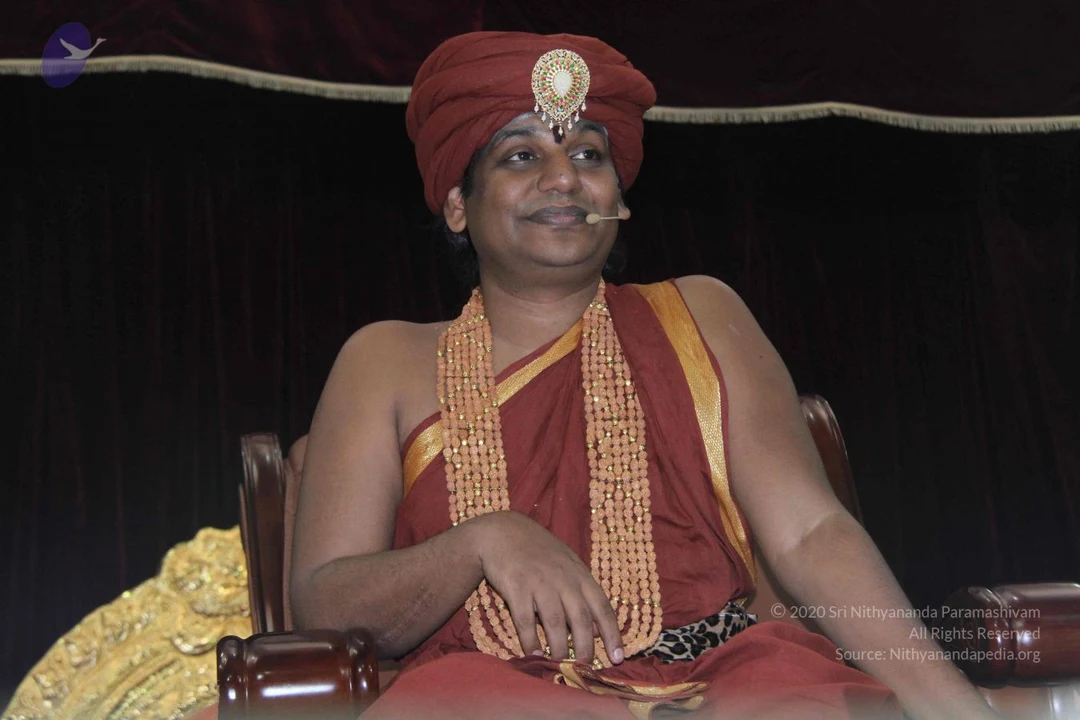
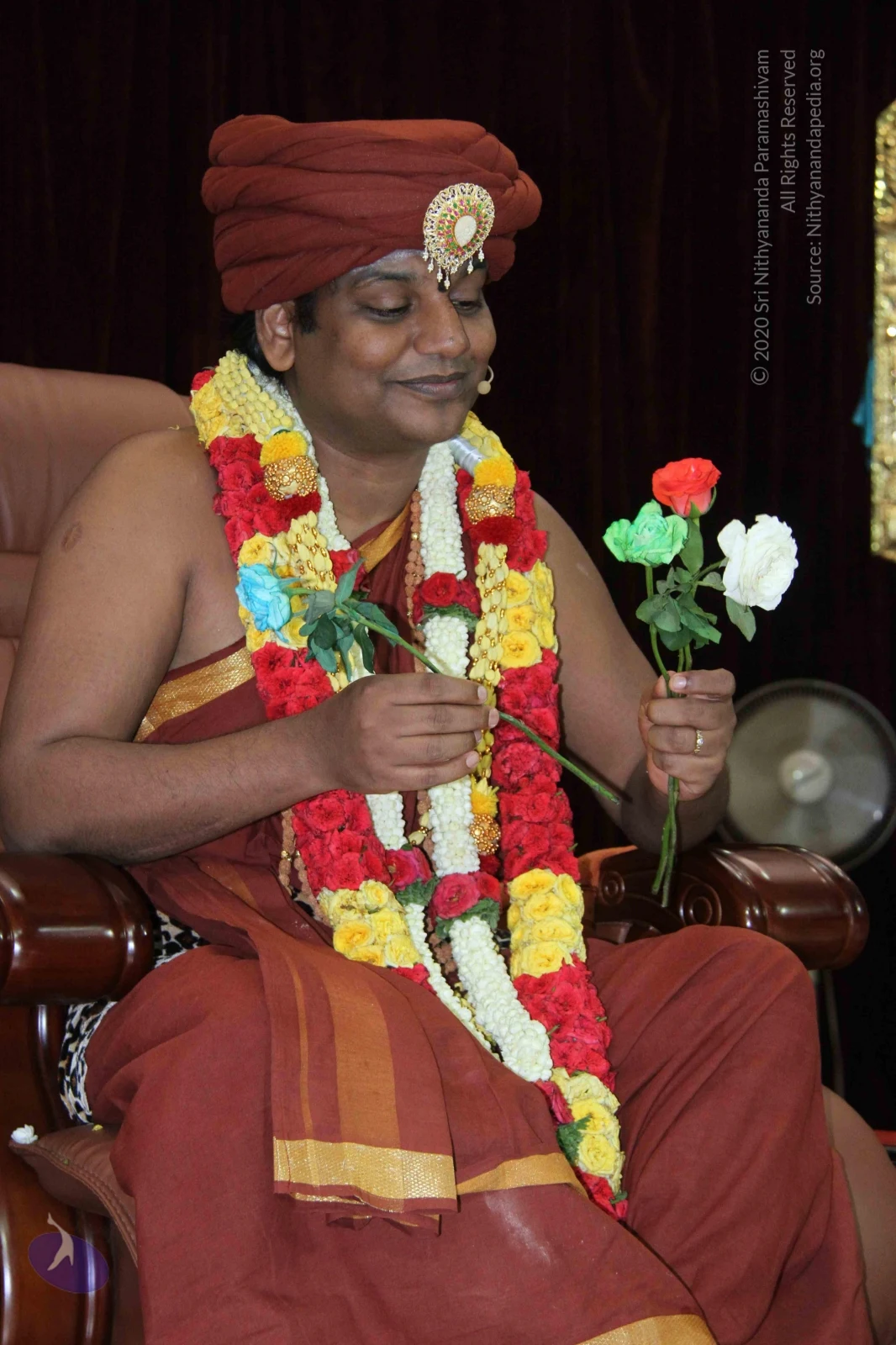
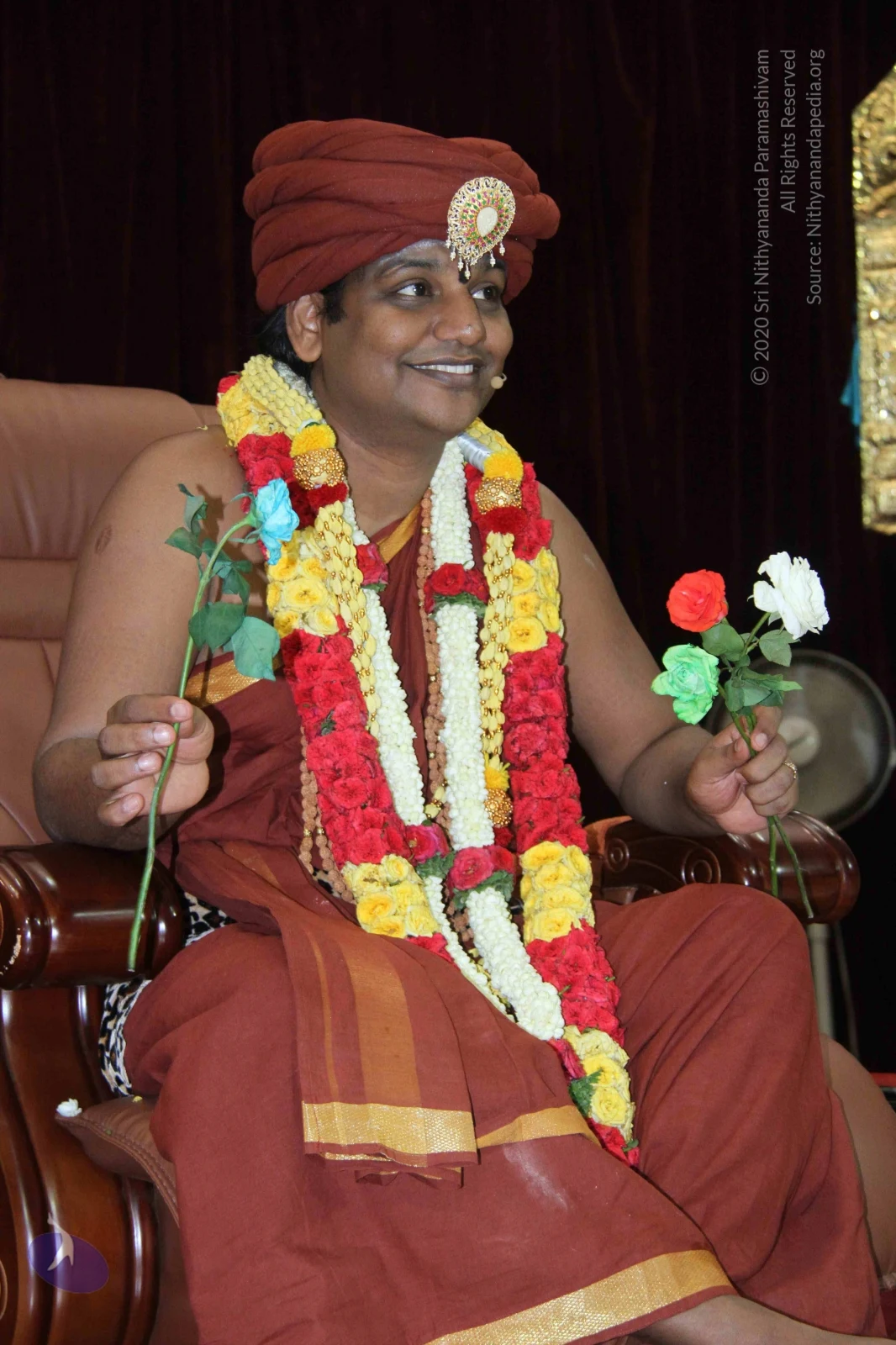
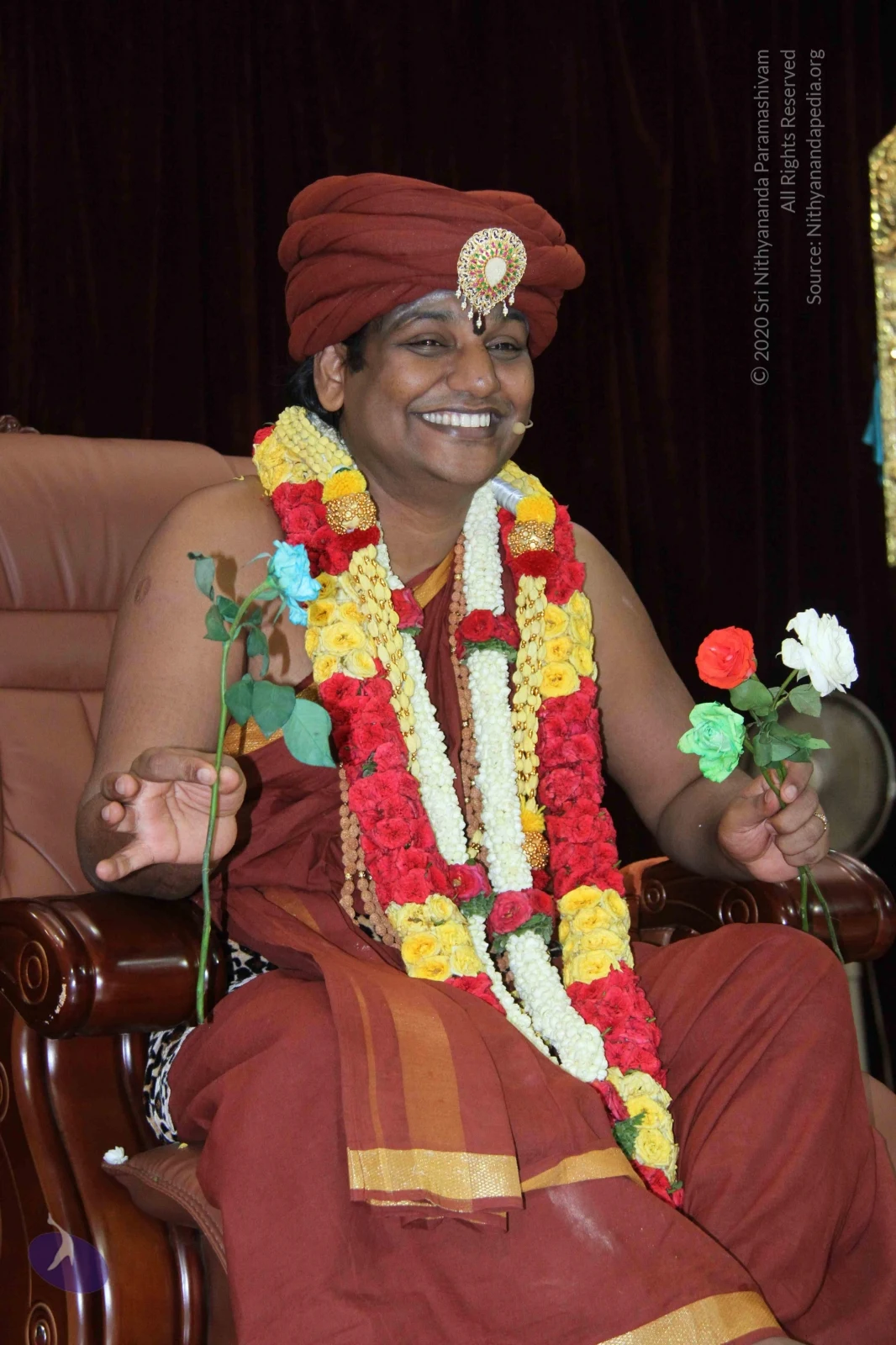
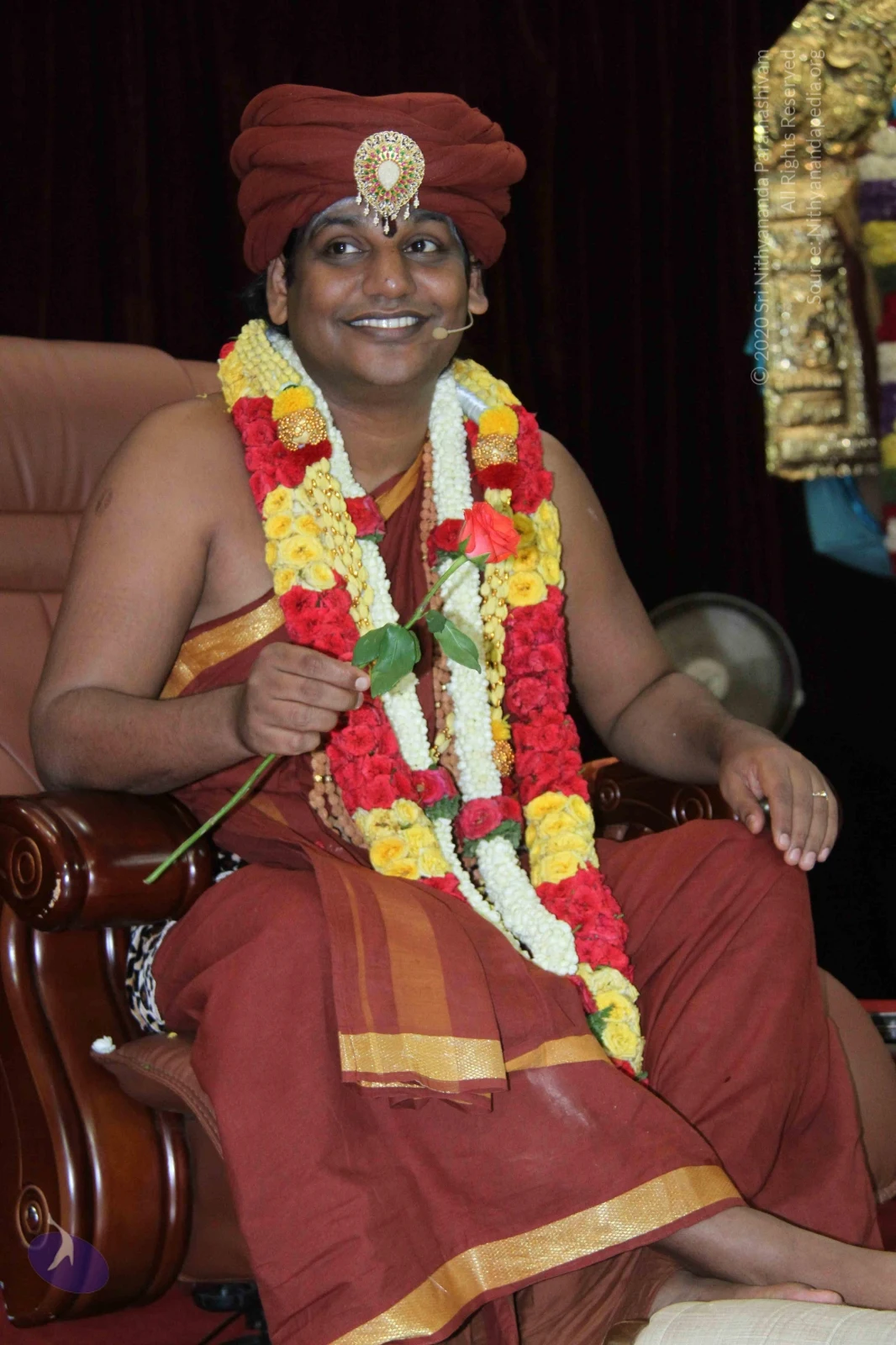
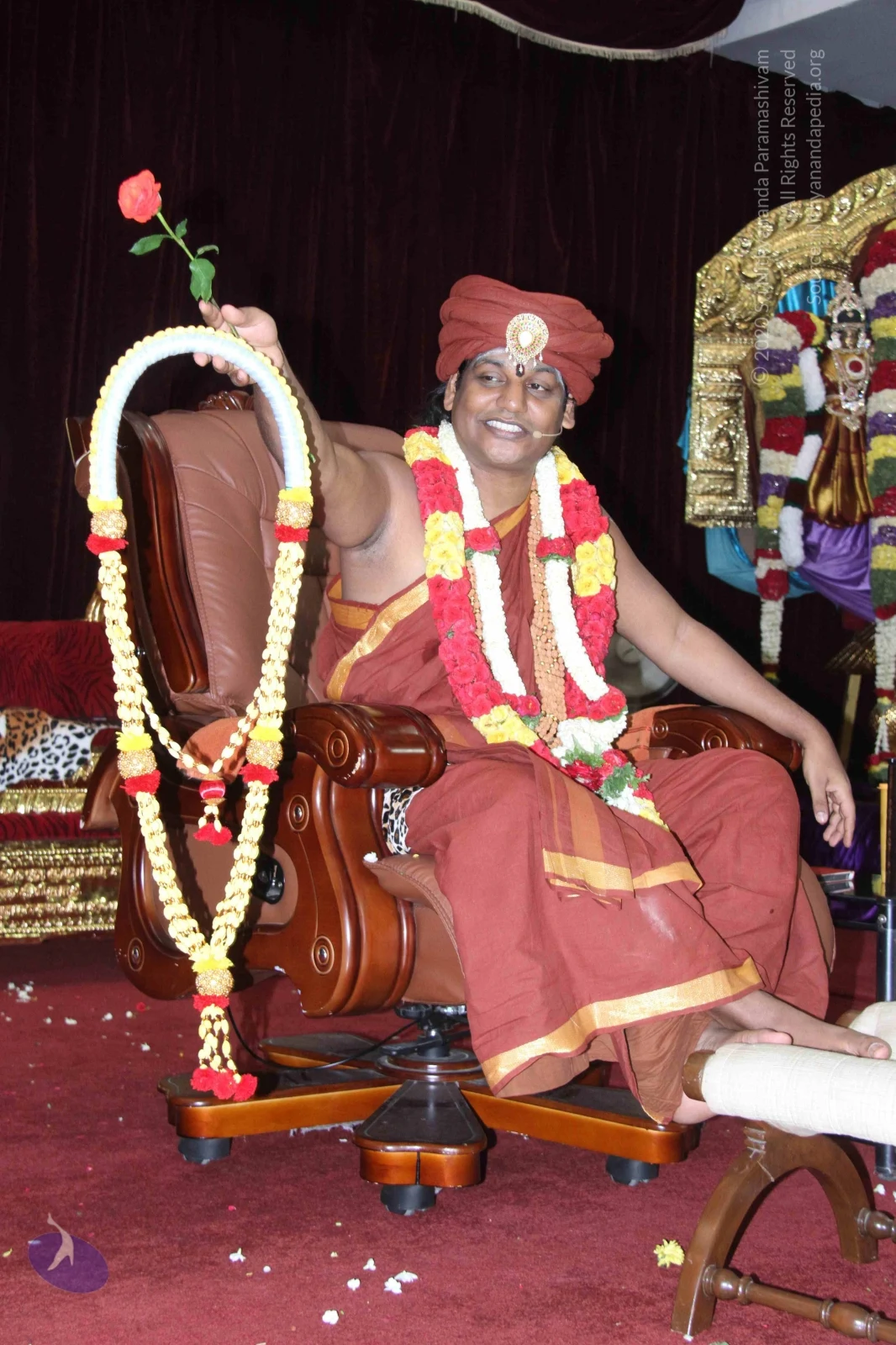
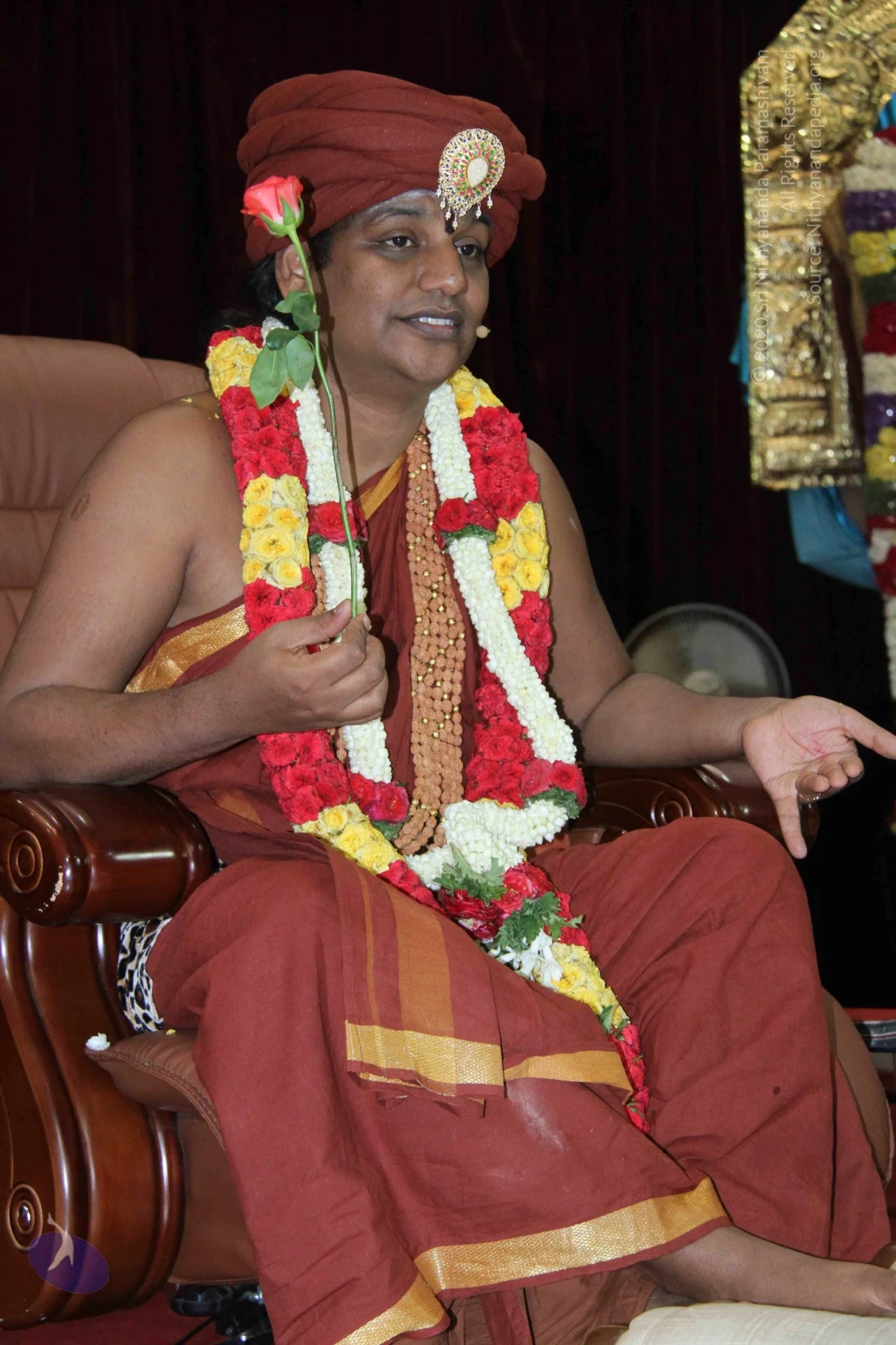
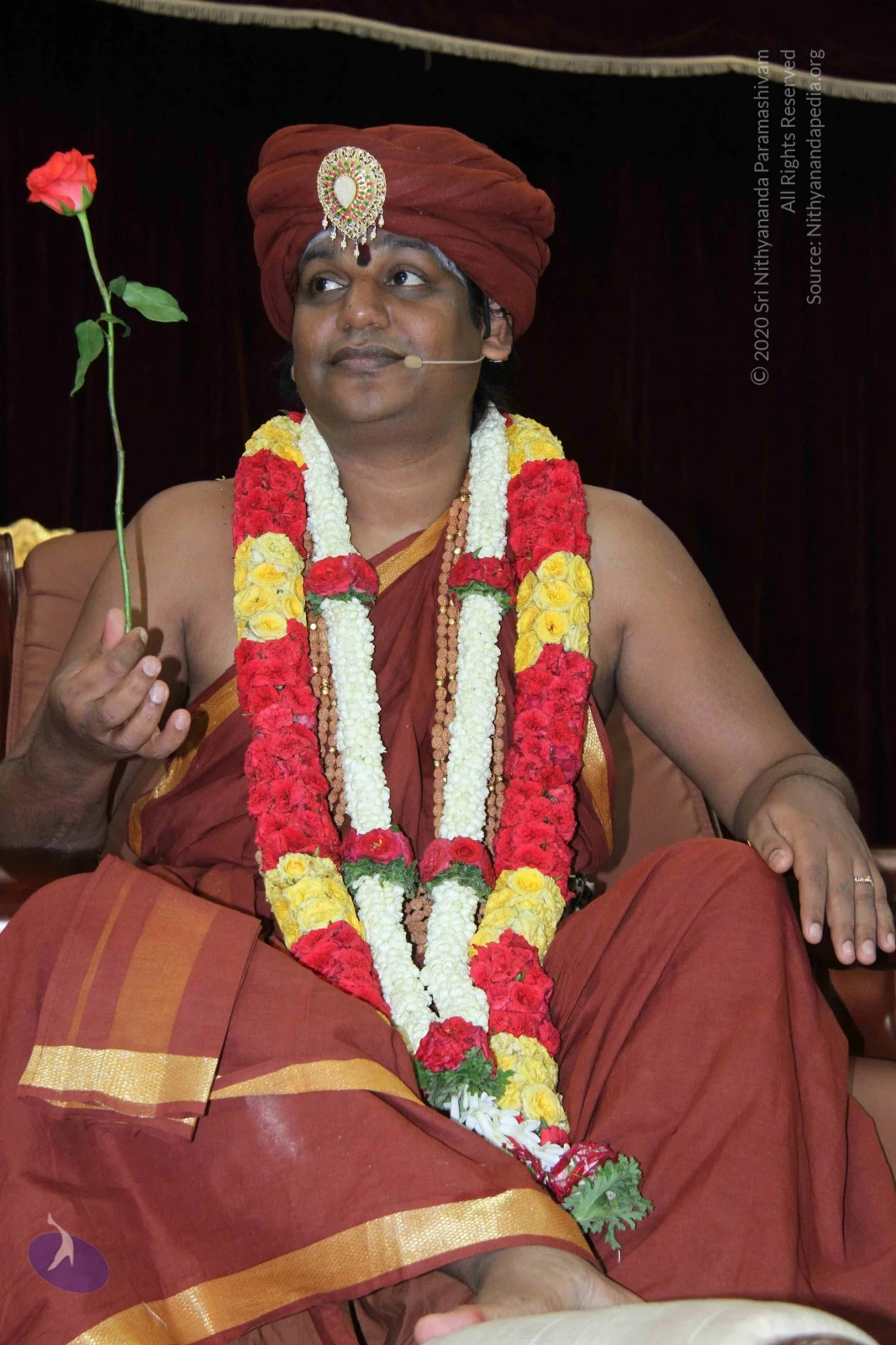
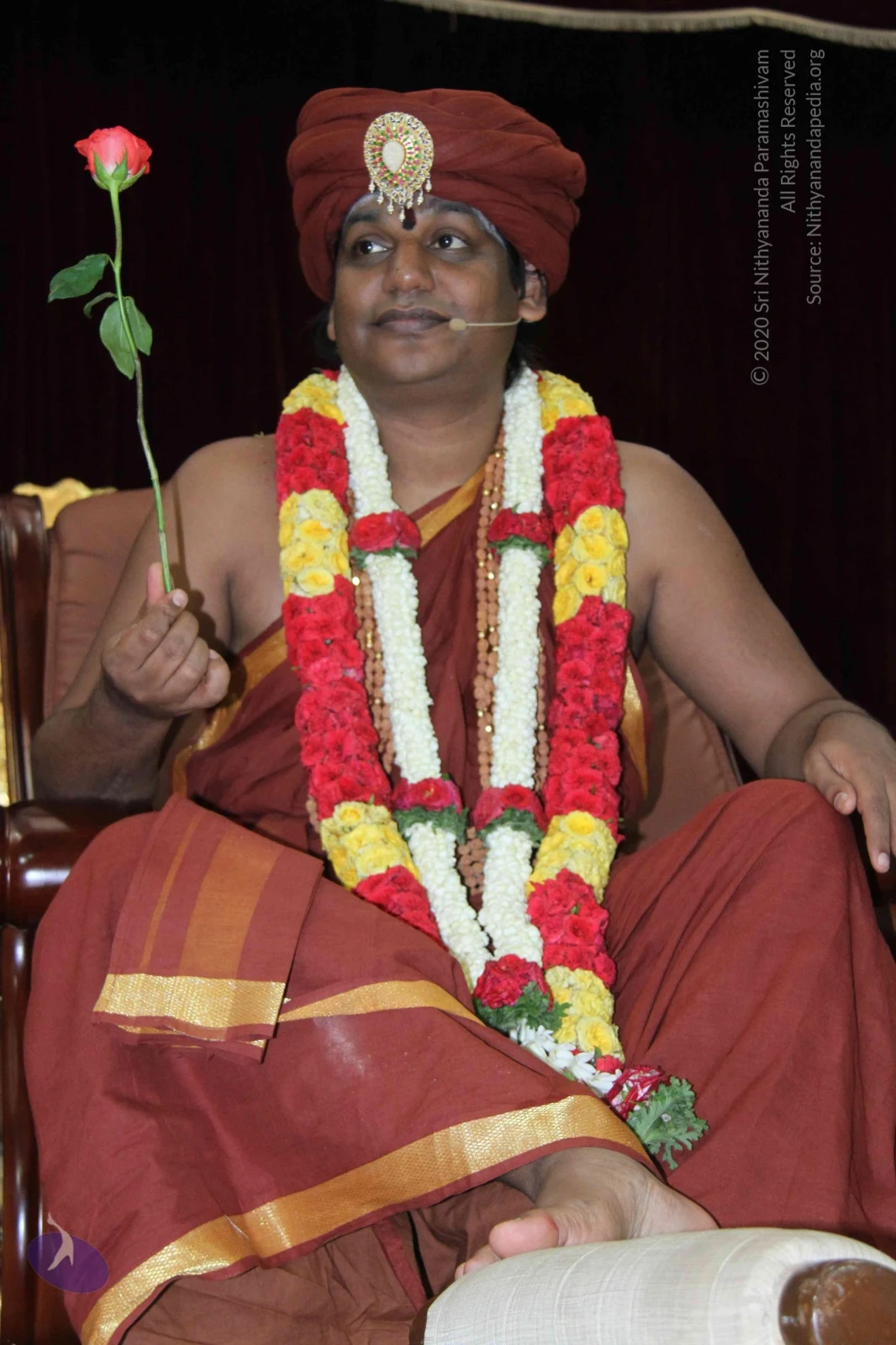
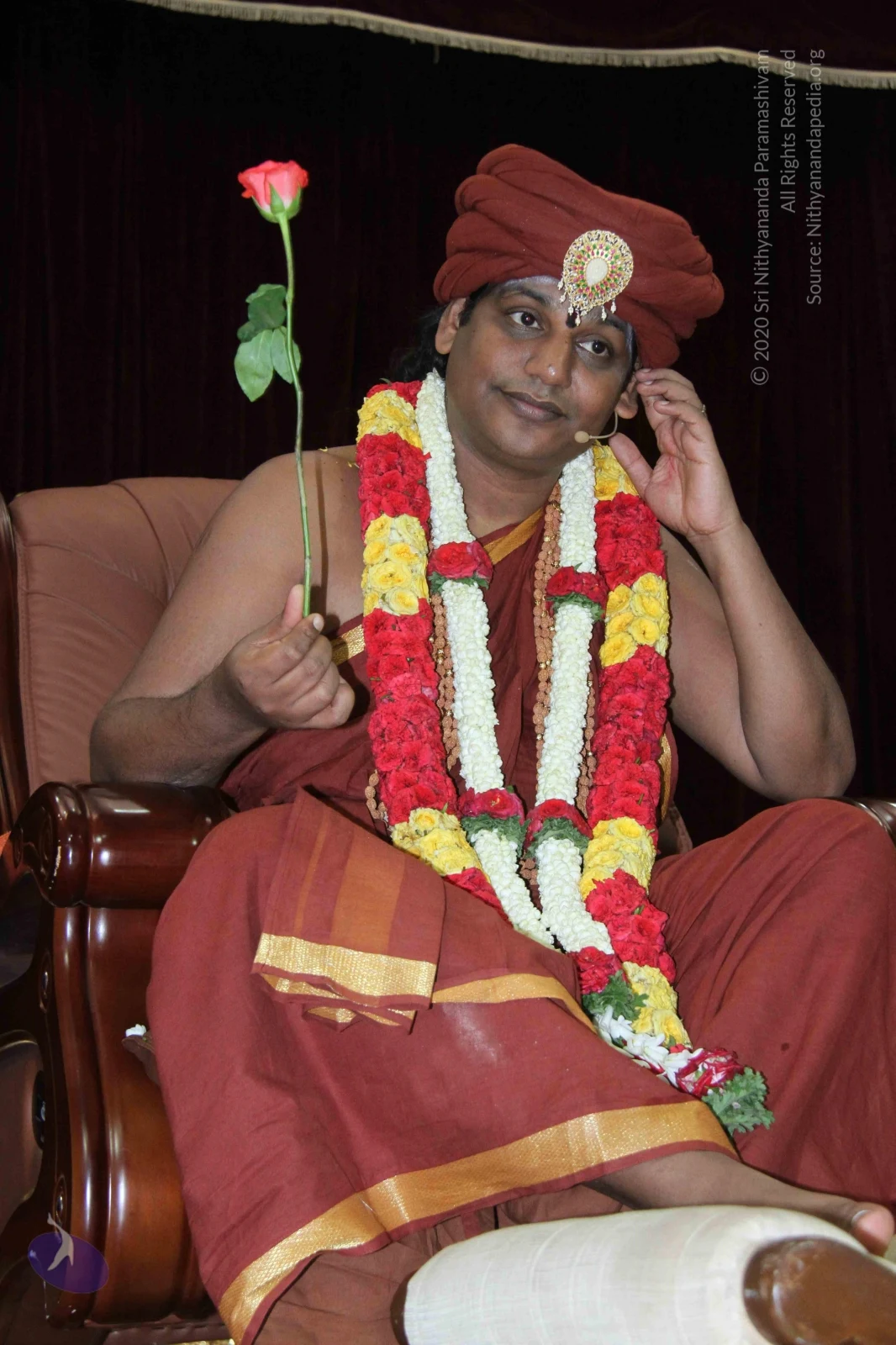
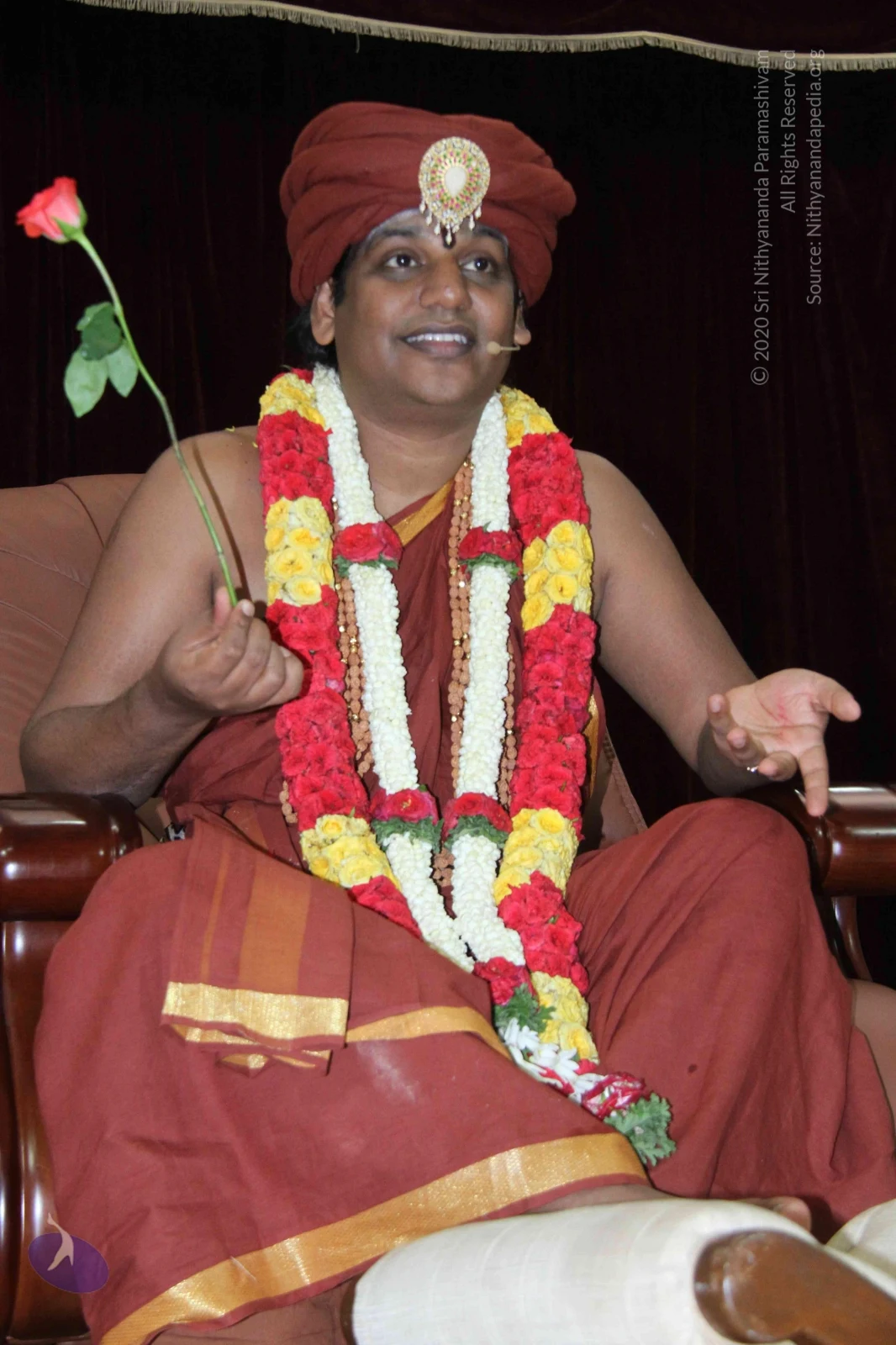
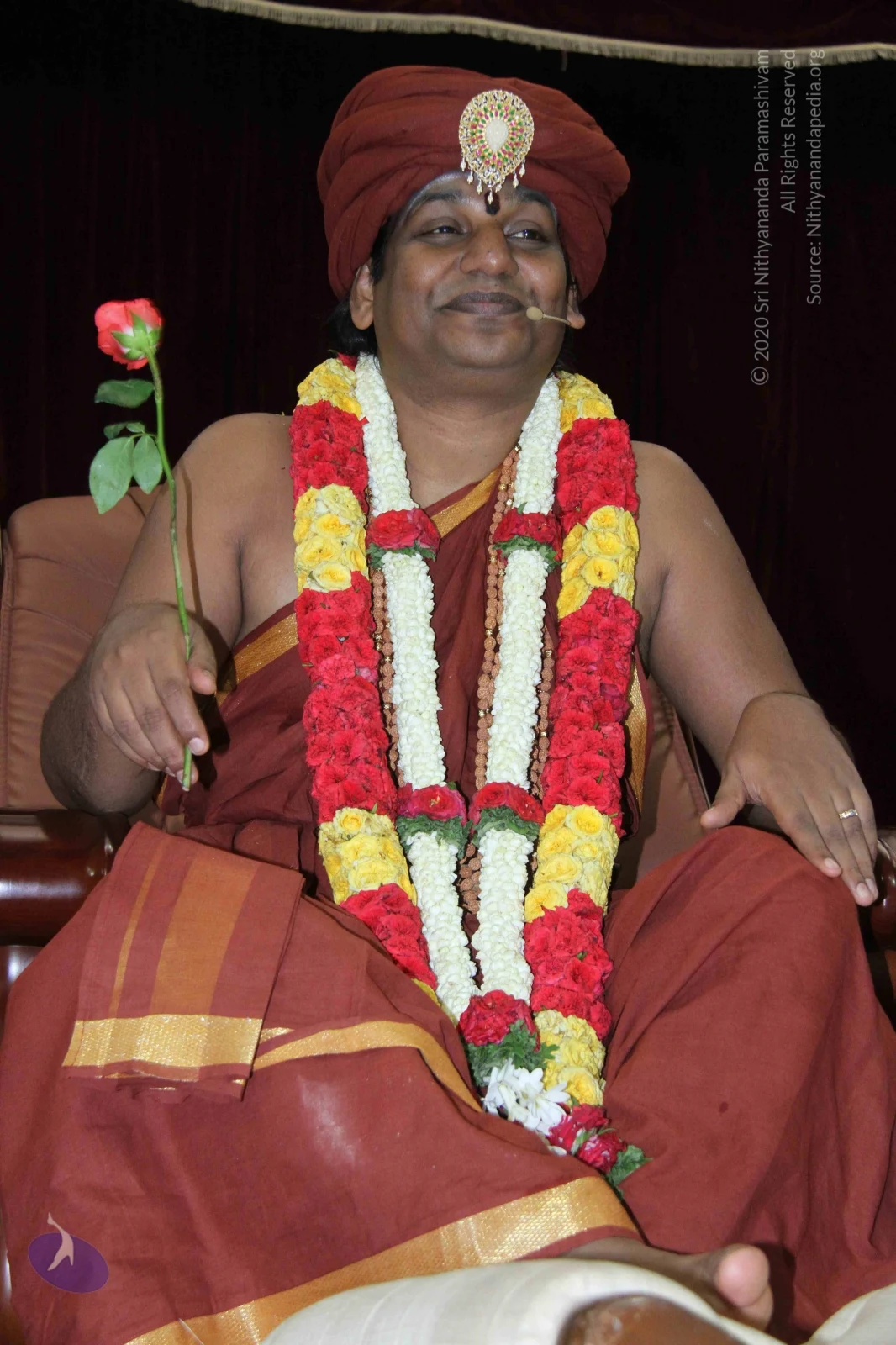
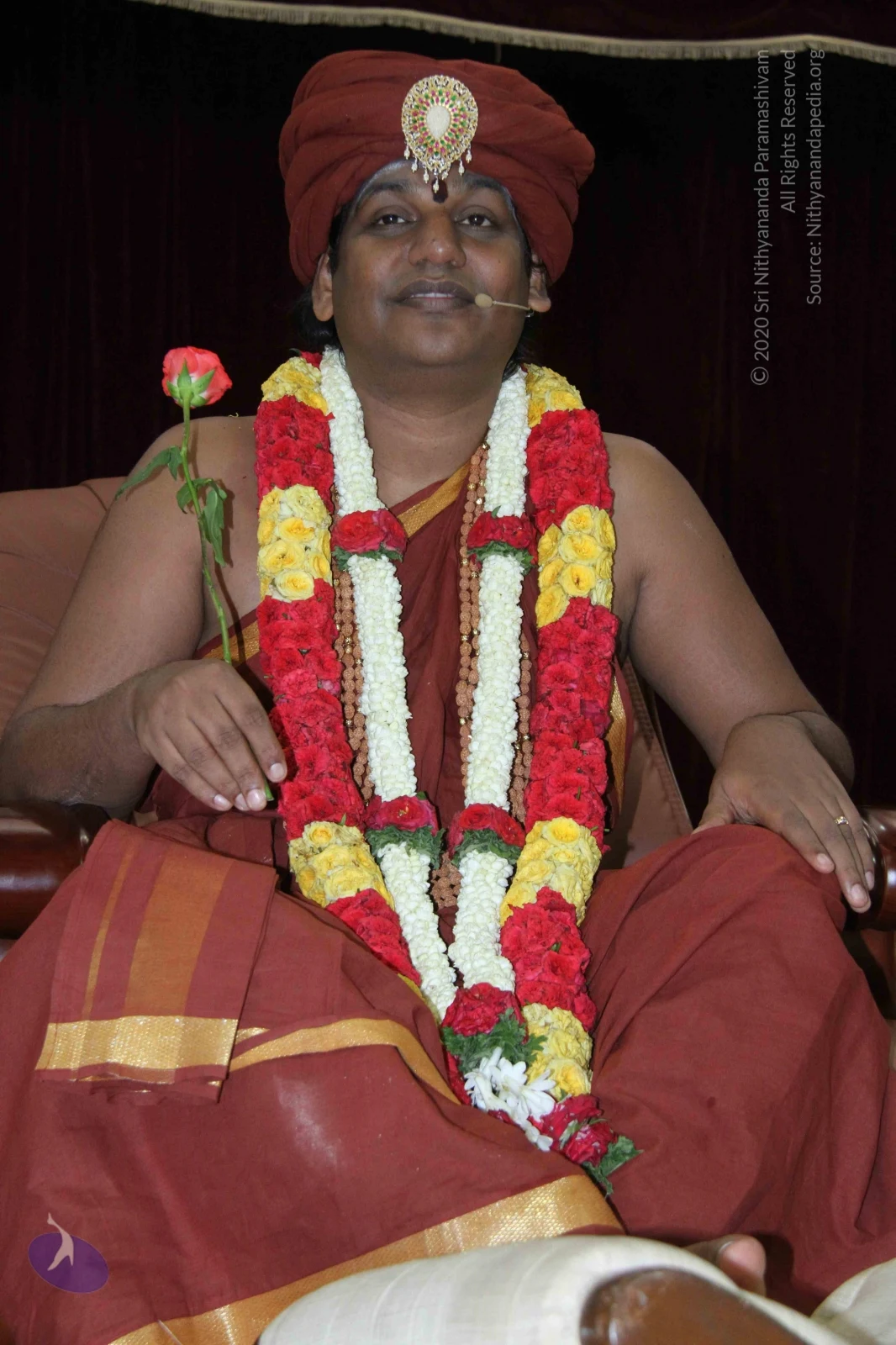
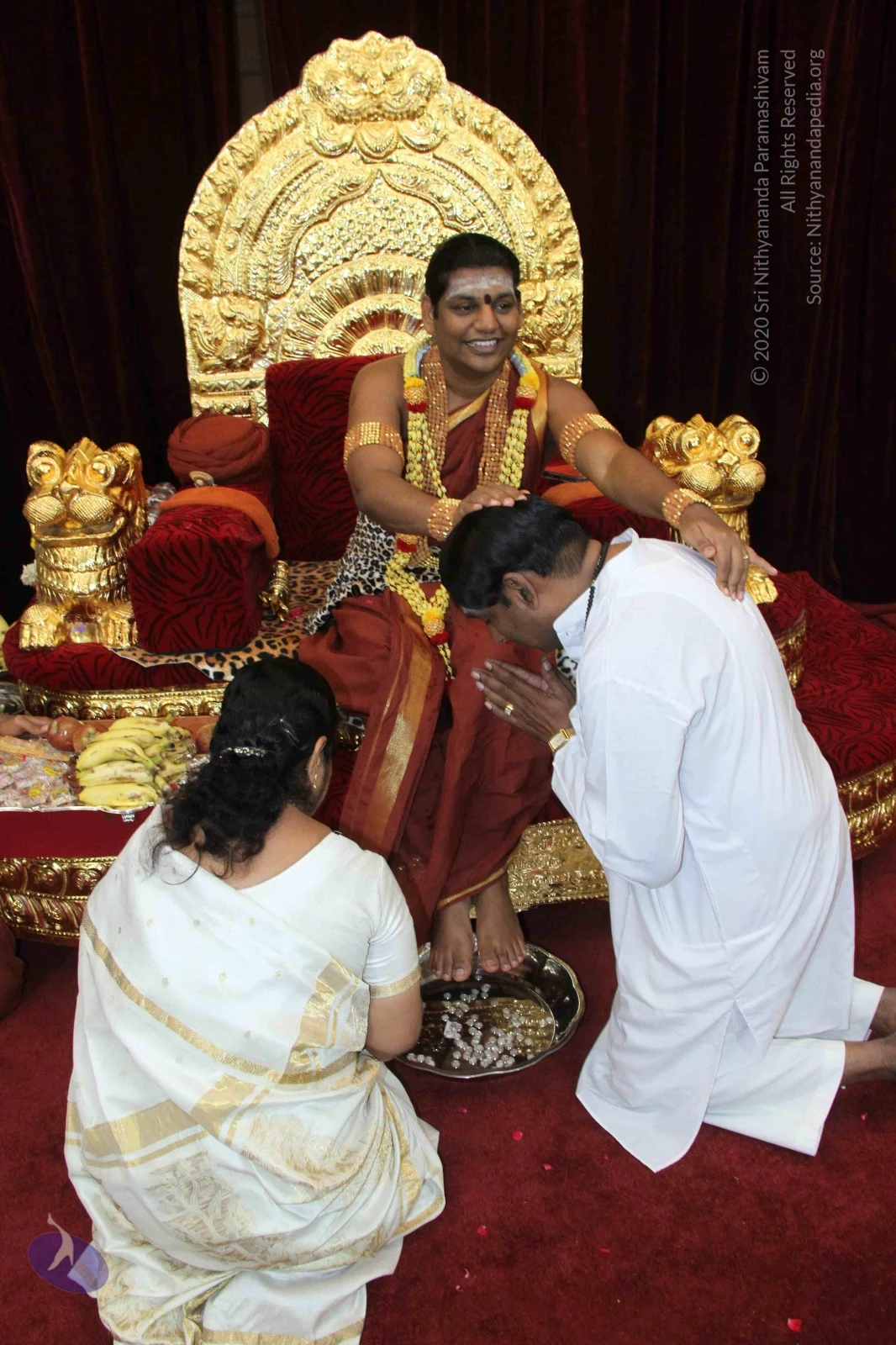
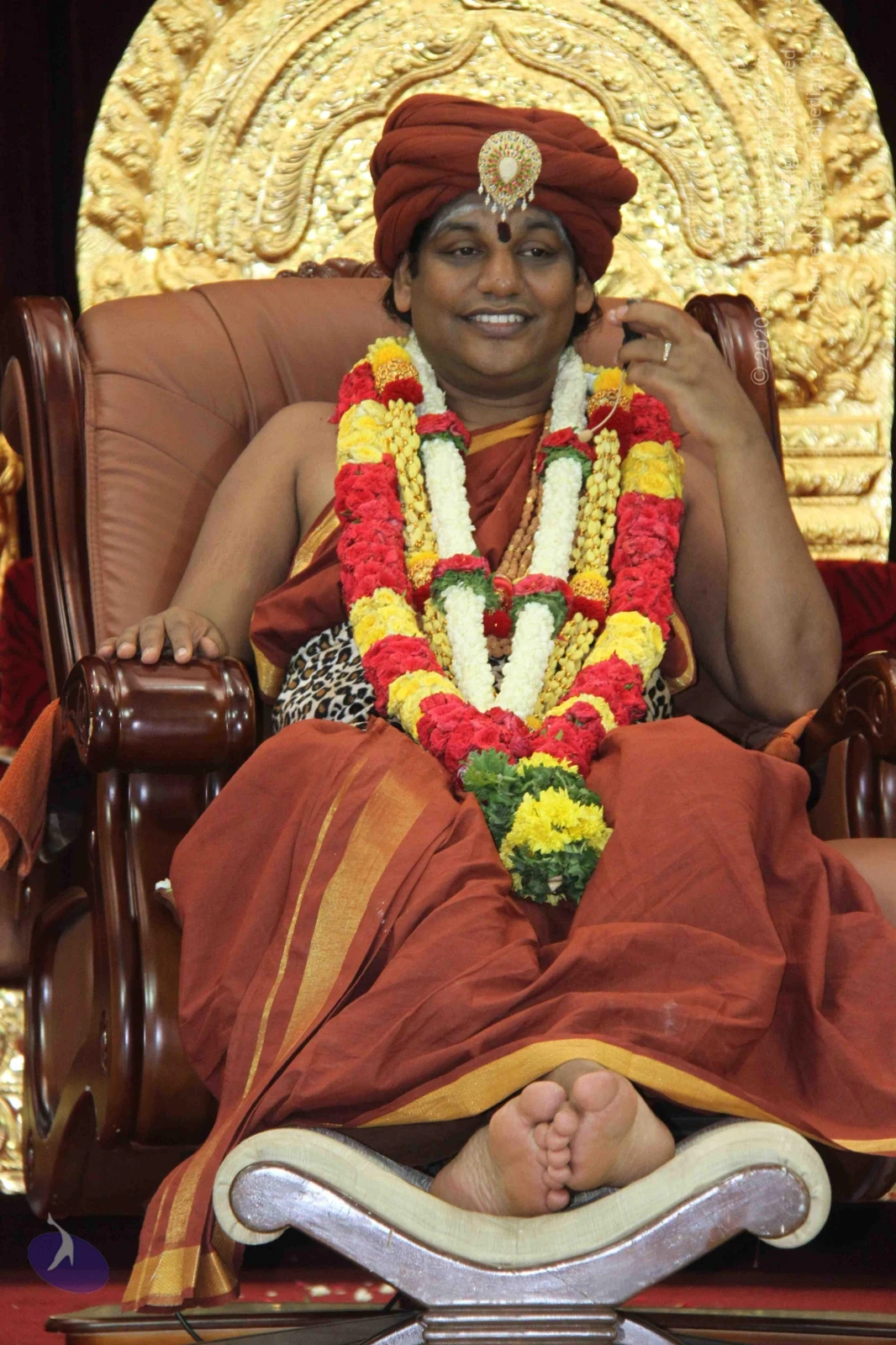
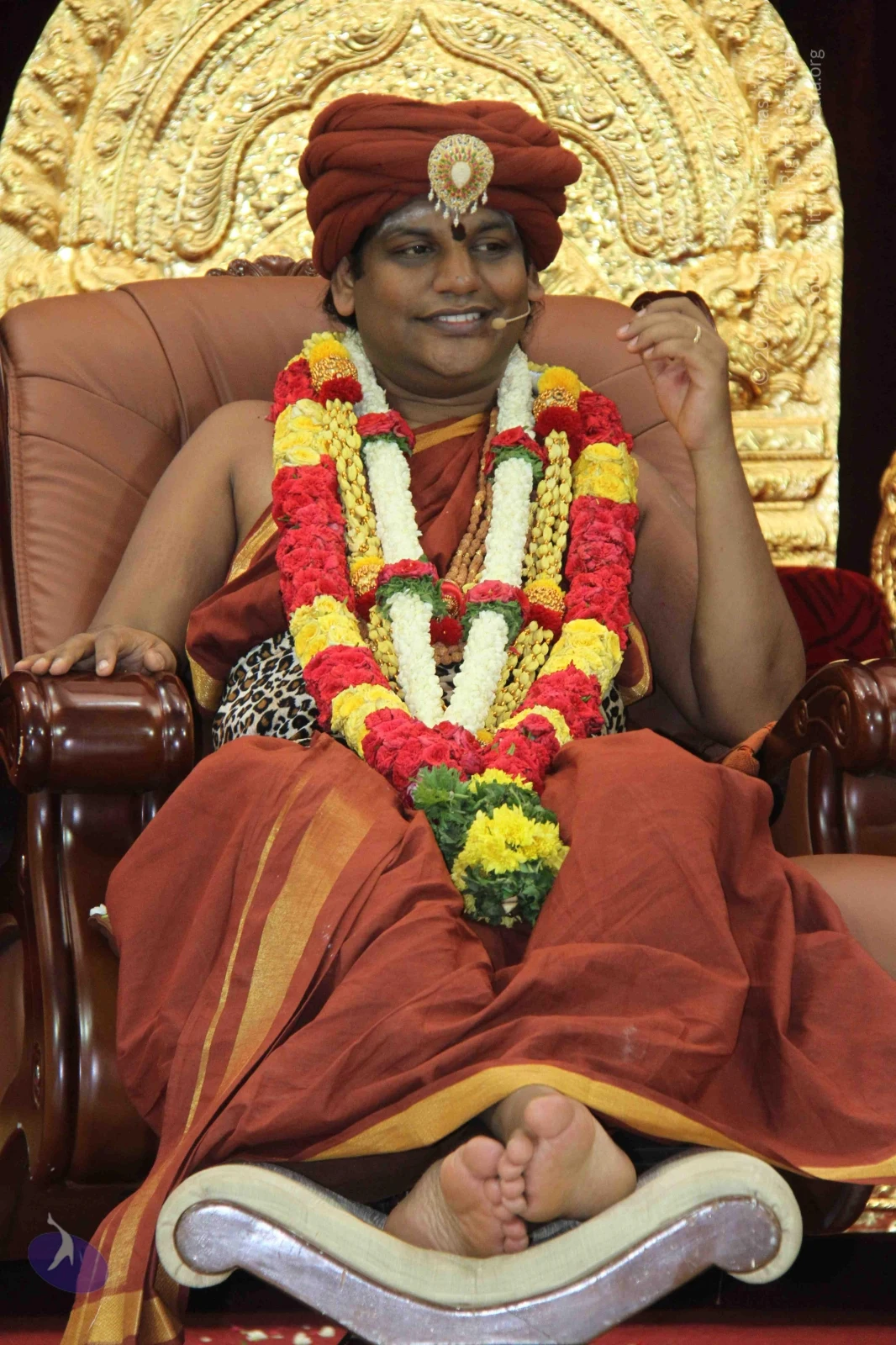
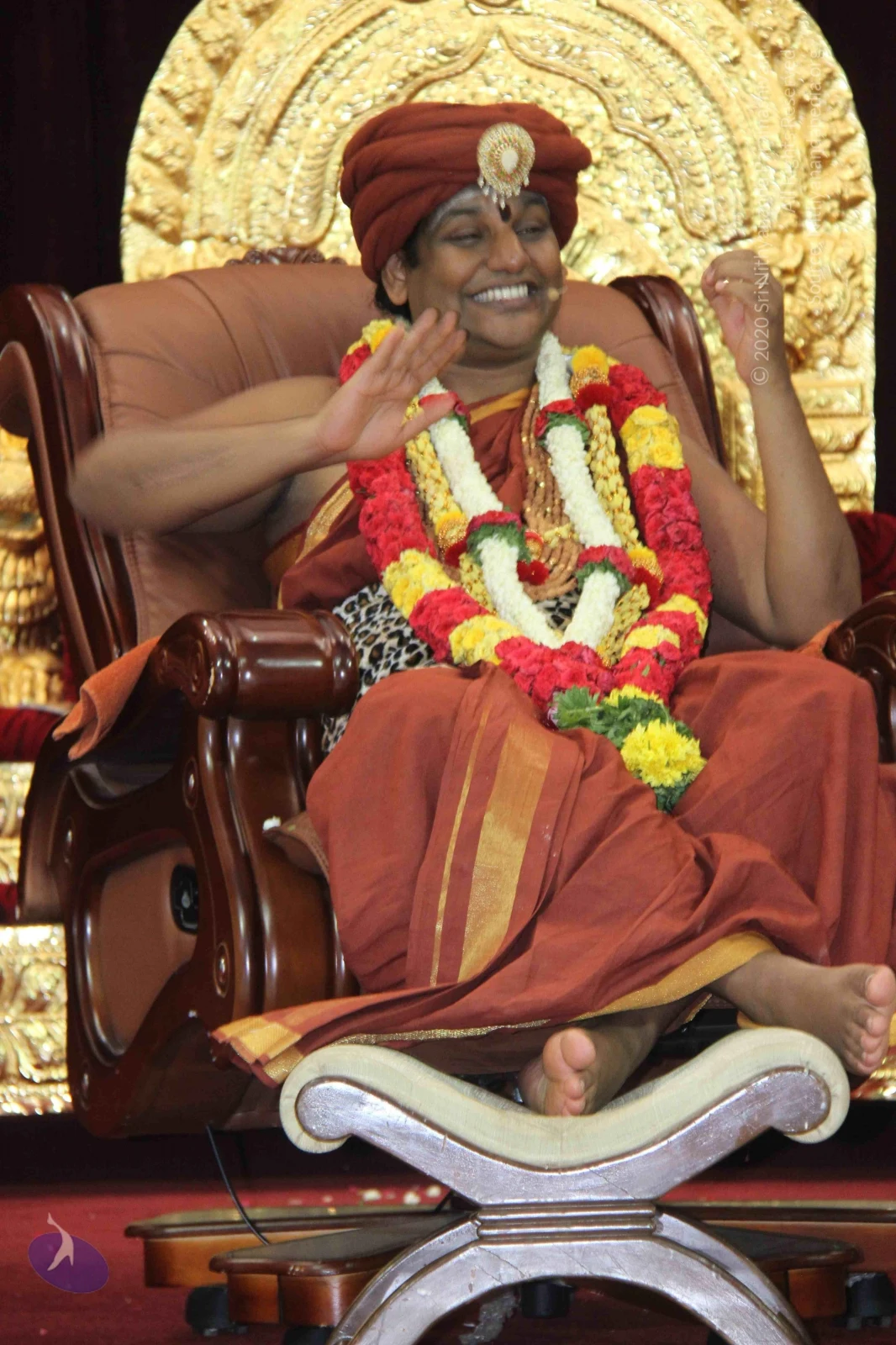
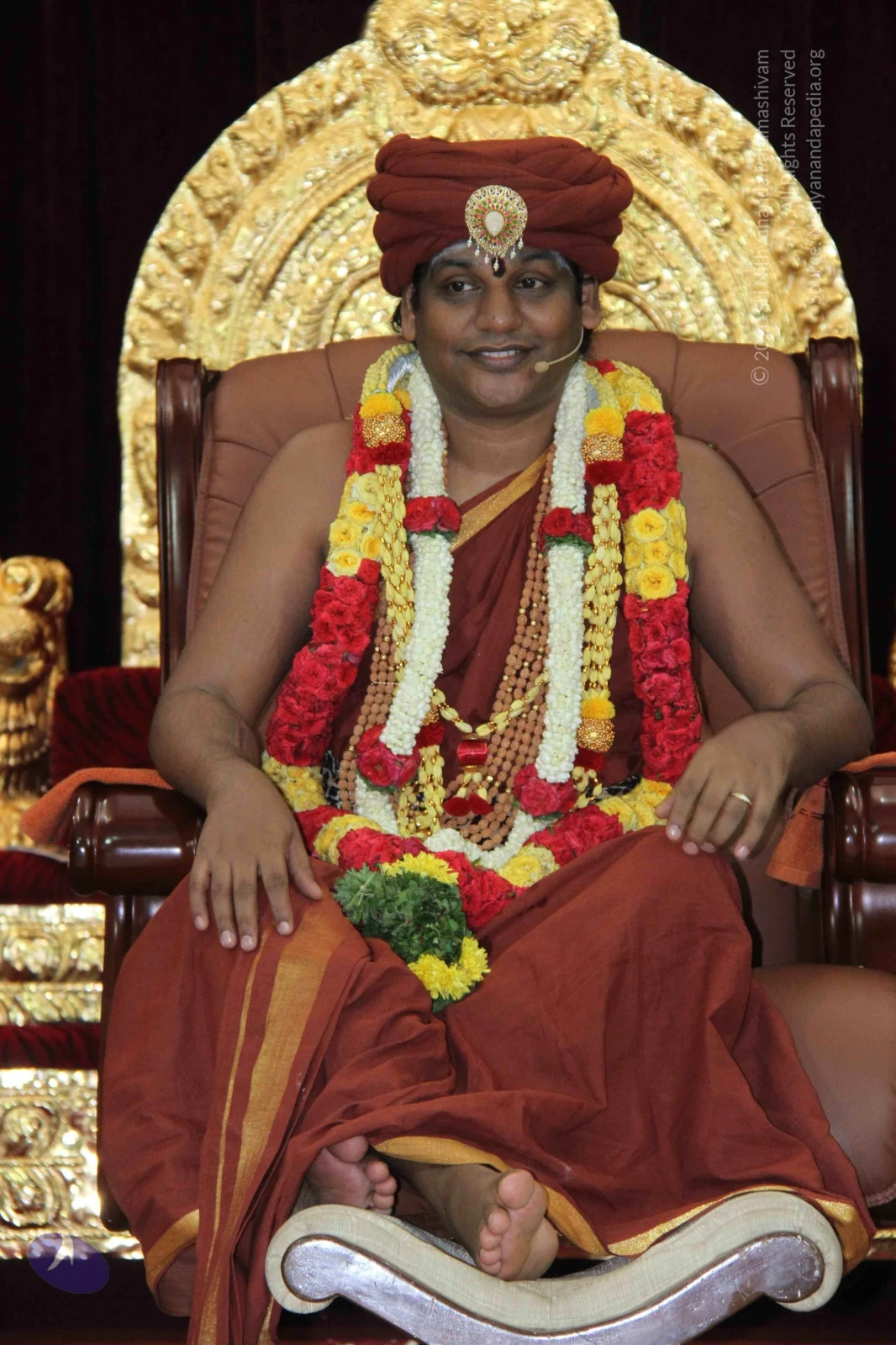
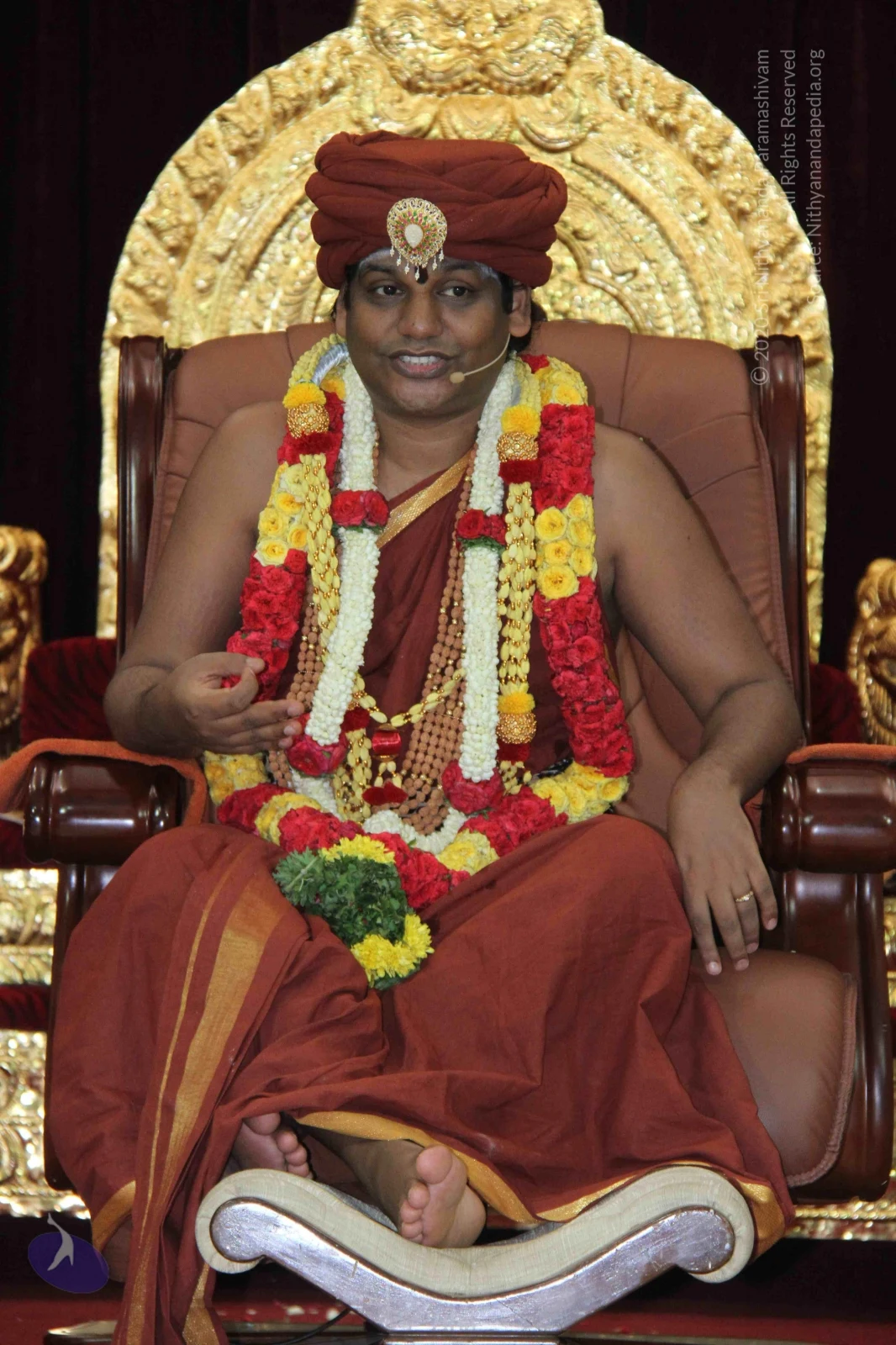
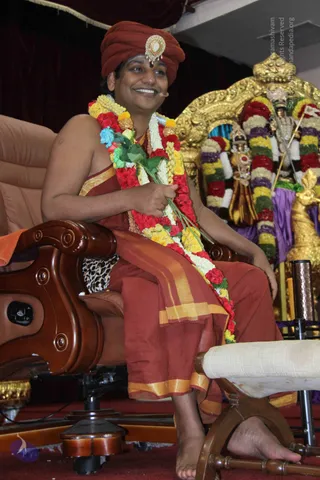
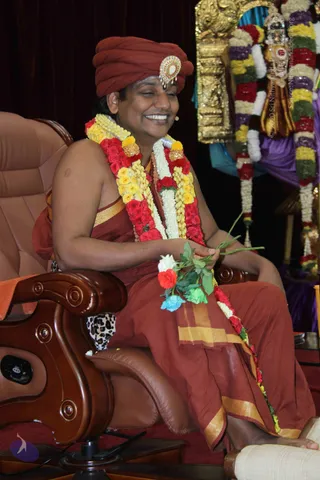
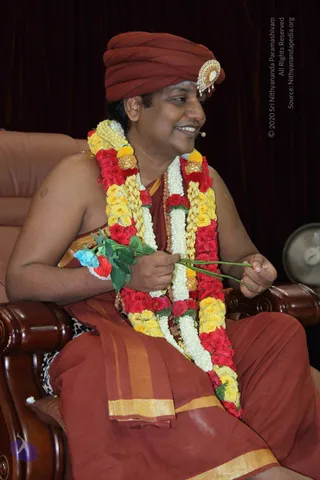
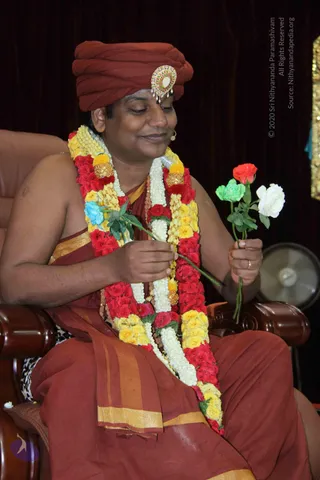
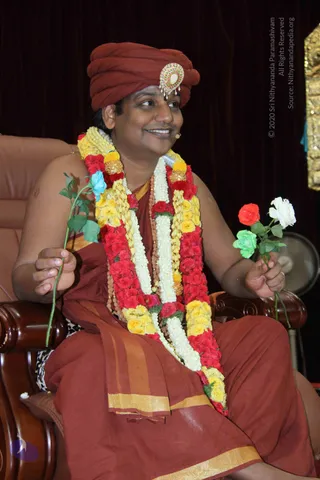
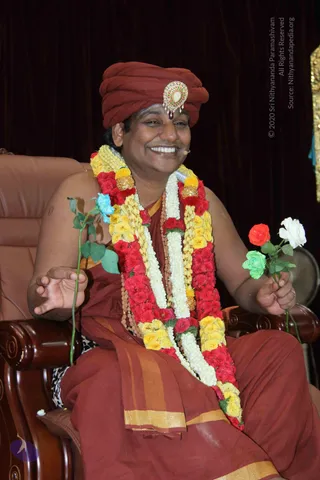
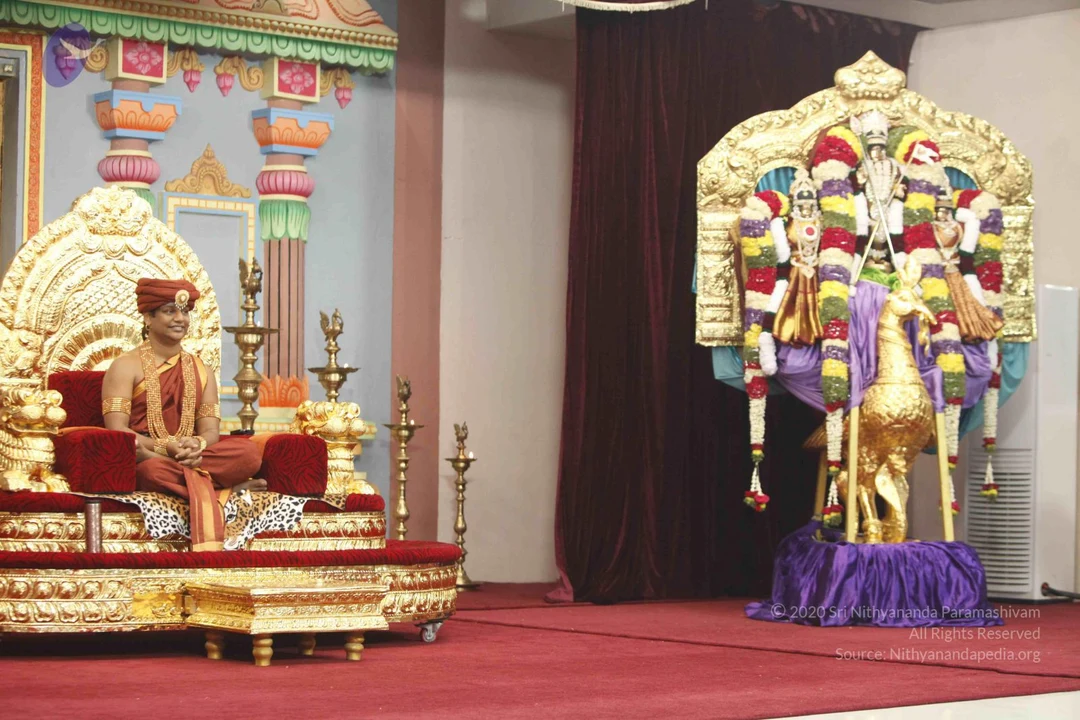
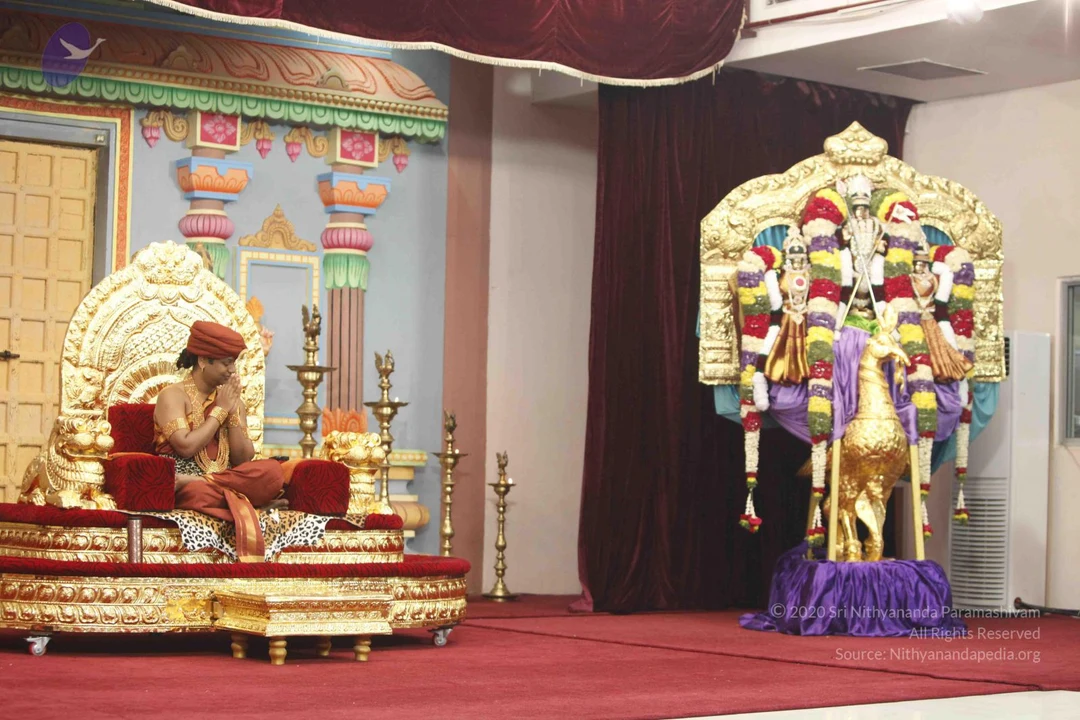
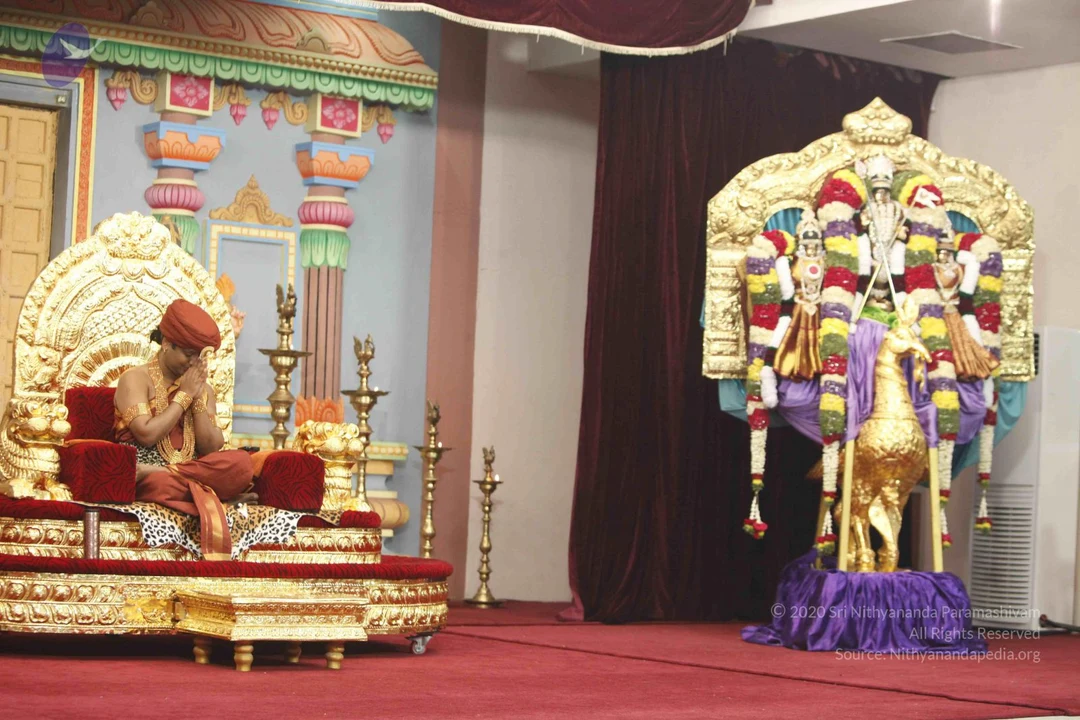
A smiling man seated in a brown leather swivel chair on a red-carpeted stage wears a maroon turban with a jeweled ornament and a maroon-and-gold dhoti with a bare upper body. He wears a thick garland of red roses, yellow marigolds and white jasmine, and holds a bunch of colourful roses. Behind him stands a gold-framed ornate throne-style backdrop decorated with multicoloured flower garlands and a golden deity murti. A microphone is clipped near his face. Appearance-based a person cues include the turban, jeweled ornament and ceremonial garlands, and the page indicates he is present.A smiling man seated in a brown leather armchair with wooden armrests, wearing a rust-red turban with a jewelled brooch and a rust-red robe with gold border. He wears a long multicolour garland of red roses, yellow marigolds and white jasmine, and holds a few loose roses in white, red, blue and green. Behind him stands a gilded carved arch and hanging garlands of red, yellow, white and purple flowers, and a purple drape. A small headset microphone is visible at his ear. Swamiji (probable) is identified by a red turban with a jewelled brooch, rust-red robes and a flower garland seated at a satsang-style event.A smiling man seated in a brown leather armchair against a dark curtain, wearing a rust-red turban with a jeweled brooch and a rust-red bare-shouldered wrap with gold border. He wears long garlands of red roses, yellow flowers and white jasmine, and holds a stem of red and blue roses in his hands. A microphone clip is visible on his face and a fan sits to the right. The photo appears to be from a satsang or darshan setting; the appearance cues of a turban, flower garlands and ceremonial wrap are consistent with the a person candidate.A seated man in a rust-red turban with a jewelled ornament at the front and a rust-red shawl with gold border sits in a brown leather armchair against dark drapes. He wears a long garland of red, yellow and white flowers with gold beads and holds several roses in red, green-tinted, and white, looking down at them. A small microphone is at his ear. Probable Swamiji by appearance cues: a turban, rudraksha beads visible at the chest, and an ornate gold-jewelled garland. He is the only person visible.A smiling man seated in a brown leather armchair wears a rust-red turban with a jewelled ornament at the front and a red-brown sannyasi-style wrap with gold borders. He is draped with a long garland of red roses, yellow roses and white jasmine strands, and wears rudraksha-style beads at his chest. He holds a red-and-white rose and a blue rose stem in his hands. Behind him are dark drapes, a gong and a gold-coloured carved panel. A visible copyright line runs vertically on the right.A smiling man seated in a brown leather armchair in front of dark draped curtains. He wears a maroon turban with a jeweled ornament at the front, a maroon robe with a gold border, and a thick garland of red roses, yellow roses and white jasmine with gold beads. He holds a red, white and green rose in his right hand and a blue rose in his left, with a small lapel microphone visible. a person appearance: the turban, garland and robe fit the presentation, but the features are not conclusively established, so the figure is described by role as a seated speaker. A copyright notice appears vertically on the right edge.
3-Subramania-Procession-Panguni-Uthiram

8 photosSource gallery
Evening procession on a dirt road: a tractor pulls a decorated float carrying a deity murti with a golden peacock vahana, draped in a purple cloth and garlanded with multicolour flowers, under a blue fringed canopy. A man in a white dhoti and shawl raises a white fan (chamara) over the deity. The tractor driver wears a white shirt and a pearl garland. Flanking the float, women in white and red sarees hold a decorated standard, and saffron-robed sadhus and devotees in white walk alongside. Trees and a red brick wall frame the scene.A festival procession on a dirt road under trees. A tractor pulls a decorated cart carrying a deity murti under a gold arch, draped in red, yellow and green garlands, with a golden peacock figure in front and a blue-and-orange canopy overhead. A bare-chested priest in white dhoti stands on the cart beside the murti, and a driver in white sits at the tractor wheel with a white garland. Walking alongside are women in saris and red-brown garments holding decorated staffs, and men in saffron-orange robes with rudraksha malas carrying tall ornamental poles and umbrellas.Festival photograph of a deity murti, Lord Subramania (Murugan) with a vel spear, flanked by two consort statues, seated on a purple satin cloth within a gilded arch. The central figure wears a jewelled crown, a heavy ornamental necklace and a vel held upright. Each figure is draped in rainbow-coloured garlands of red, yellow, purple, white and green flowers. In front stands a large gilded peacock vahana with a raised head. The setting appears to be an outdoor procession or temple stage, with greenery behind and speakers at the sides. No physical people are shown, only statues.A decorated deity murti of Subramanya (Murugan) is shown in a procession setting, seated under a gilded arch and a ceremonial umbrella. The central figure wears a jewelled crown, layered diamond-like necklaces and a red-stoned ornament, and holds a spear-like vel and a small flag. Flanking figures in gold and orange silk saris wear crowns and ornate jewellery. The murti is draped in bands of red, yellow, green, purple and white flower garlands, and a golden peacock figure stands in front on a purple silk cloth. No living people are visible.A decorated festival murti of a deity stands at centre on a golden ratha or palanquin-style setting, dressed in gold and silver jewellery with a jewelled crown, holding a spear-like staff with a small flag. Two attendant figures flank the central deity, each in gold and red silk with jewelled headdresses and necklaces. The figures are draped in dense garlands of red, yellow, white and purple flowers. A golden peacock-like vahana sits in front on a purple satin cloth. The ornate gilded arch behind is partly visible against a pale sky. Two of the murtis are clearly statues rather than living people.A decorated deity murti is carried in a procession, standing centrally on an ornate golden canopy with a silver jeweled crown and a tall decorative staff. The central figure wears a heavy jeweled necklace and holds a spear-like staff with a flag, while two smaller consort figures flank it, one in a red-and-gold sari with a red stone pendant and the other in a golden sari with jewelry. Garlands of red, yellow, white and purple flowers drape the figures.