Skip to content
Friday

13 April 2012

THE SUPREME PONTIFF OF HINDUISM HDH BHAGAVAN NITHYANANDA PARAMASHIVAM

Dated photos
93
Source pages
1
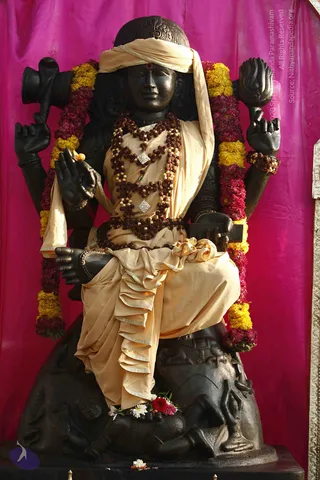
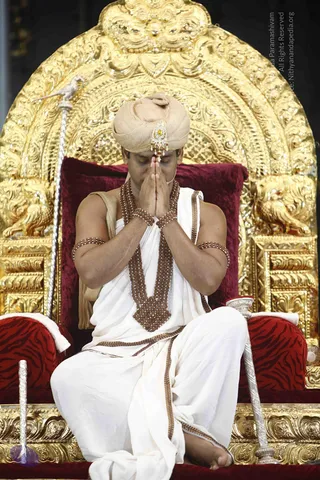
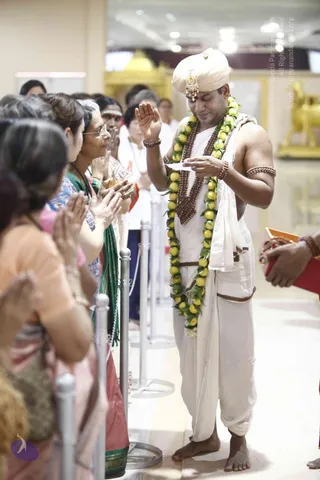
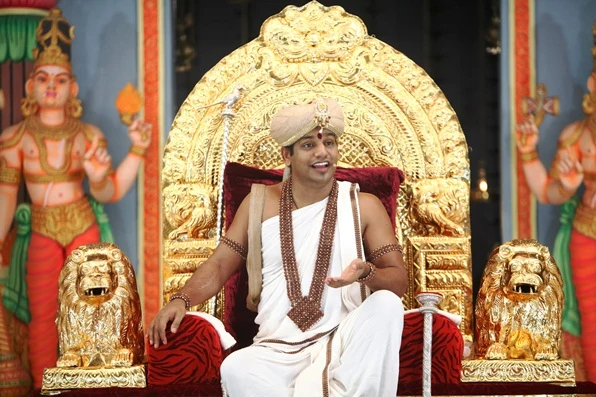
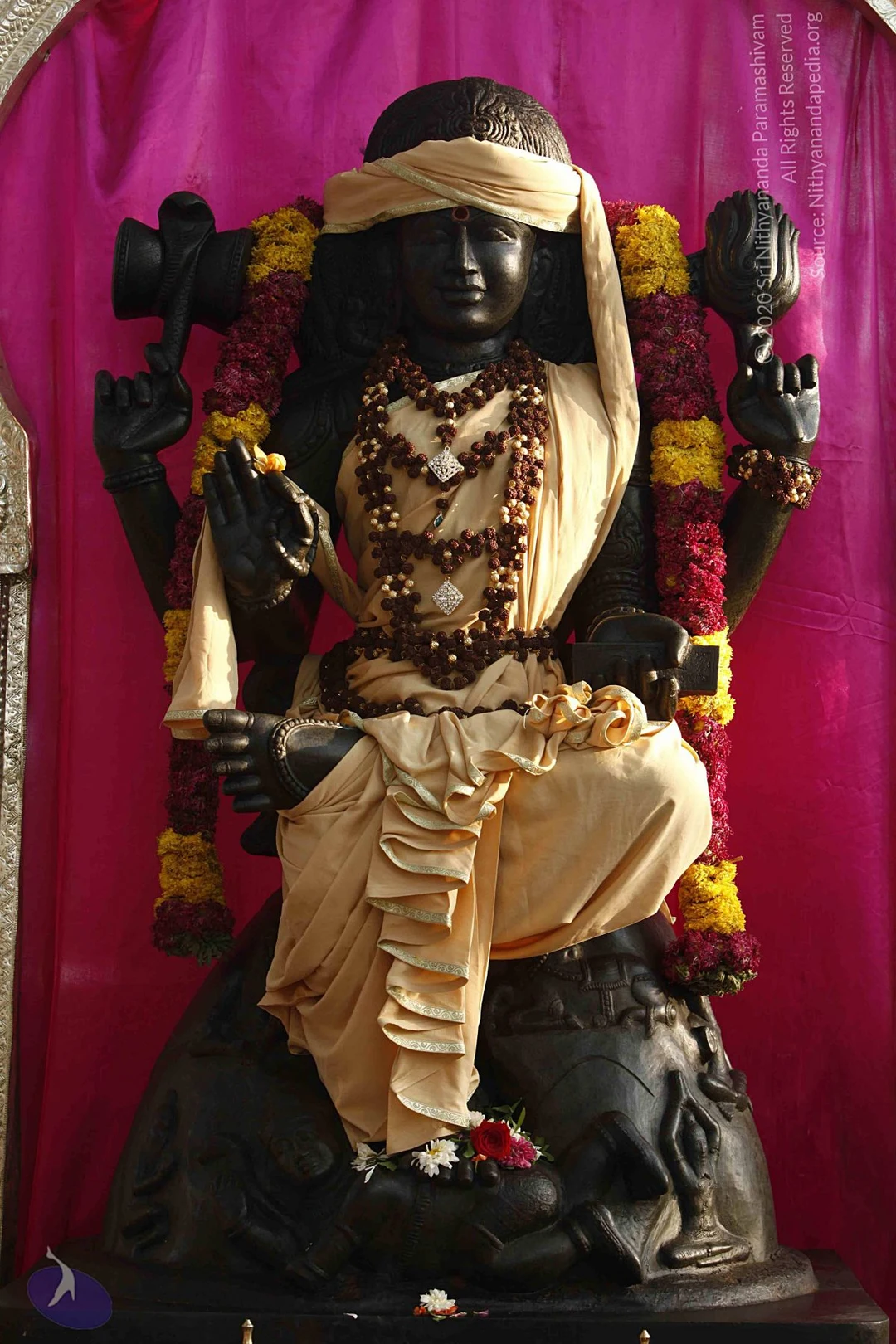
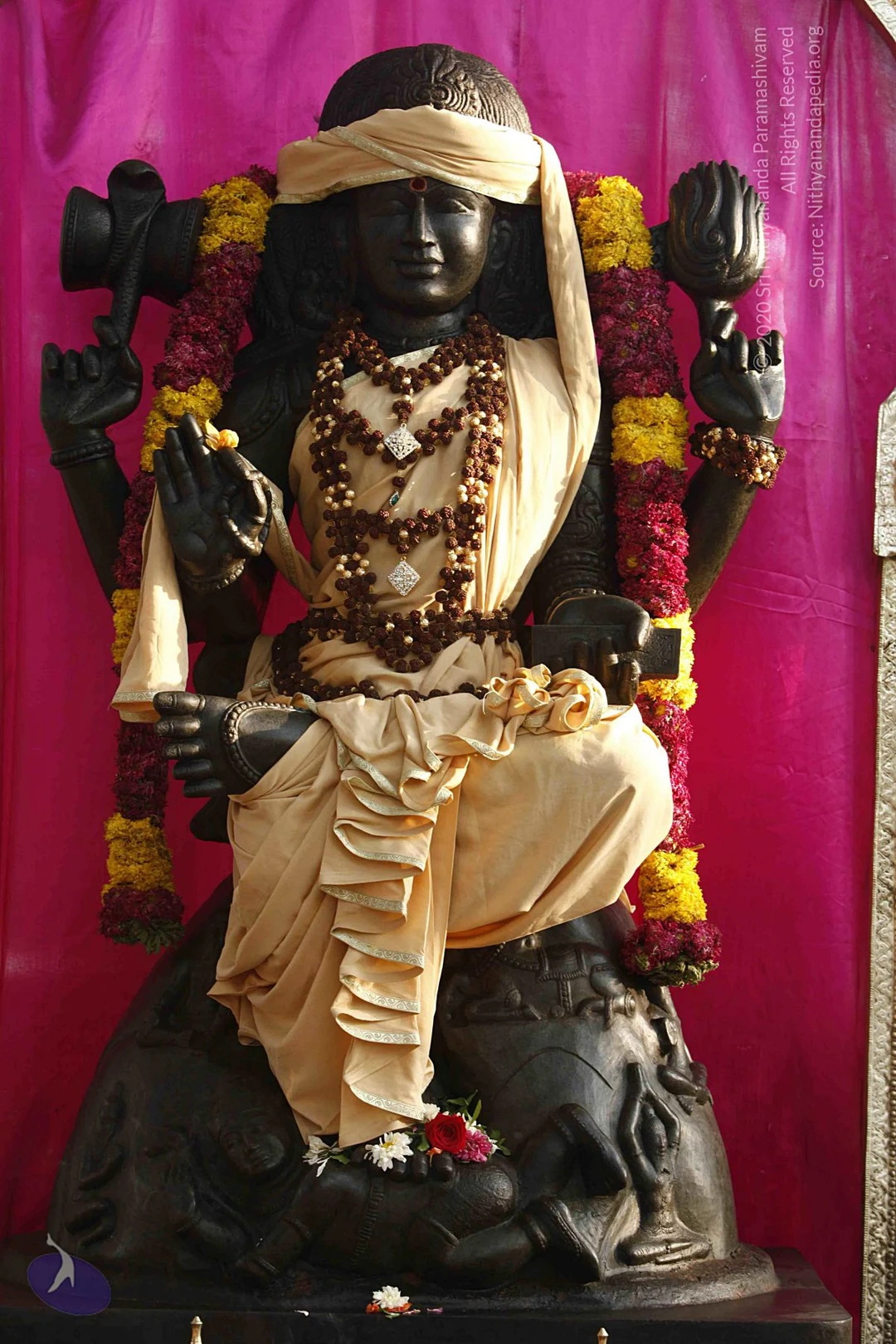
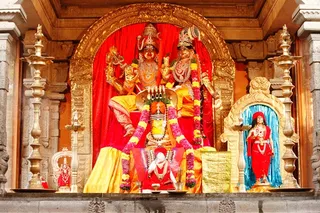
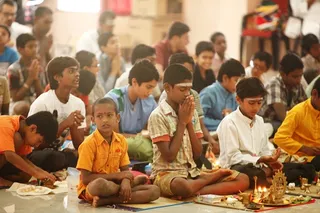
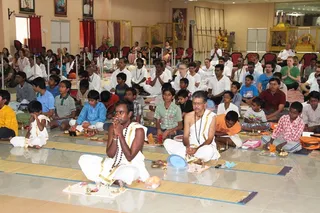
A dark stone murti of a multi-armed deity seated in a cross-legged pose on a rocky base, wrapped in a cream silk cloth with gold border and a matching turban-like headwrap with a red bindi. Four arms hold objects including a drum-like instrument and a flame-shaped item, with one hand raised in blessing. Rudraksha malas and pearl necklaces with a diamond-style pendant hang on the chest, and marigold and rose garlands drape over the shoulders. Fresh flower offerings lie at the base. The murti stands before a bright magenta cloth backdrop with a gold frame edge.A seated man in a cream-coloured turban with a jewelled ornament at the front, white dhoti-style garment with gold-brown border, and multiple strands of brown rudraksha malas around neck, wrists and upper arms, sits with palms pressed together in namaste and eyes closed. Behind him is an ornate gold throne with carved arch and lion figures, backed by a red velvet cushion, with silver rods and red tiger-striped armrests. The probable Swamiji cues are the turban, rudraksha malas and ceremonial throne; he is shown in person as a devotee-style seated figure receiving honour.A man in a white turban with a gold ornament and a white dhoti and shawl stands barefoot on a pale marble floor, wearing a long garland of yellow flowers and a rudraksha mala across his chest. He raises one hand in blessing and holds a small white card. Several women in saris and salwars stand behind a line of silver stanchions, palms pressed together in namaskar. A golden deity murti and gilded architecture appear in the background, and a red-wrapped box is held at the right edge. The man's appearance is not clearly distinctive enough to confirm a specific identity, so he is described by role as a priest or devotee.

April 13 2012

Original wiki page

Photos from this day

View all 93 photos

Photos From The Day:
36 photosSource gallery
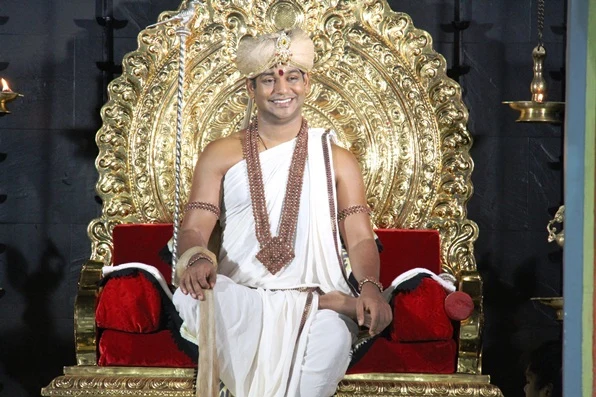
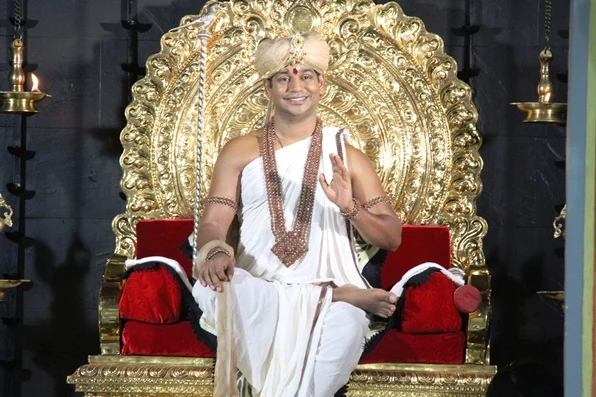
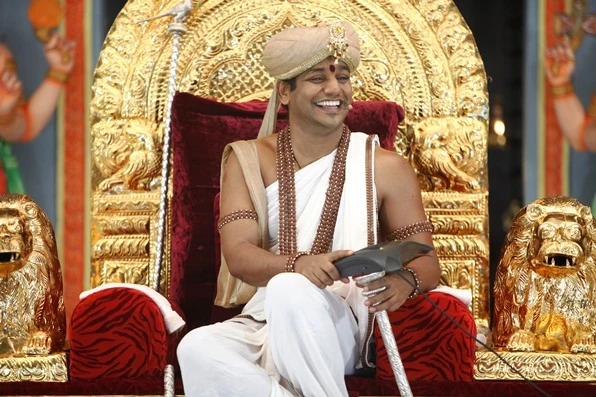
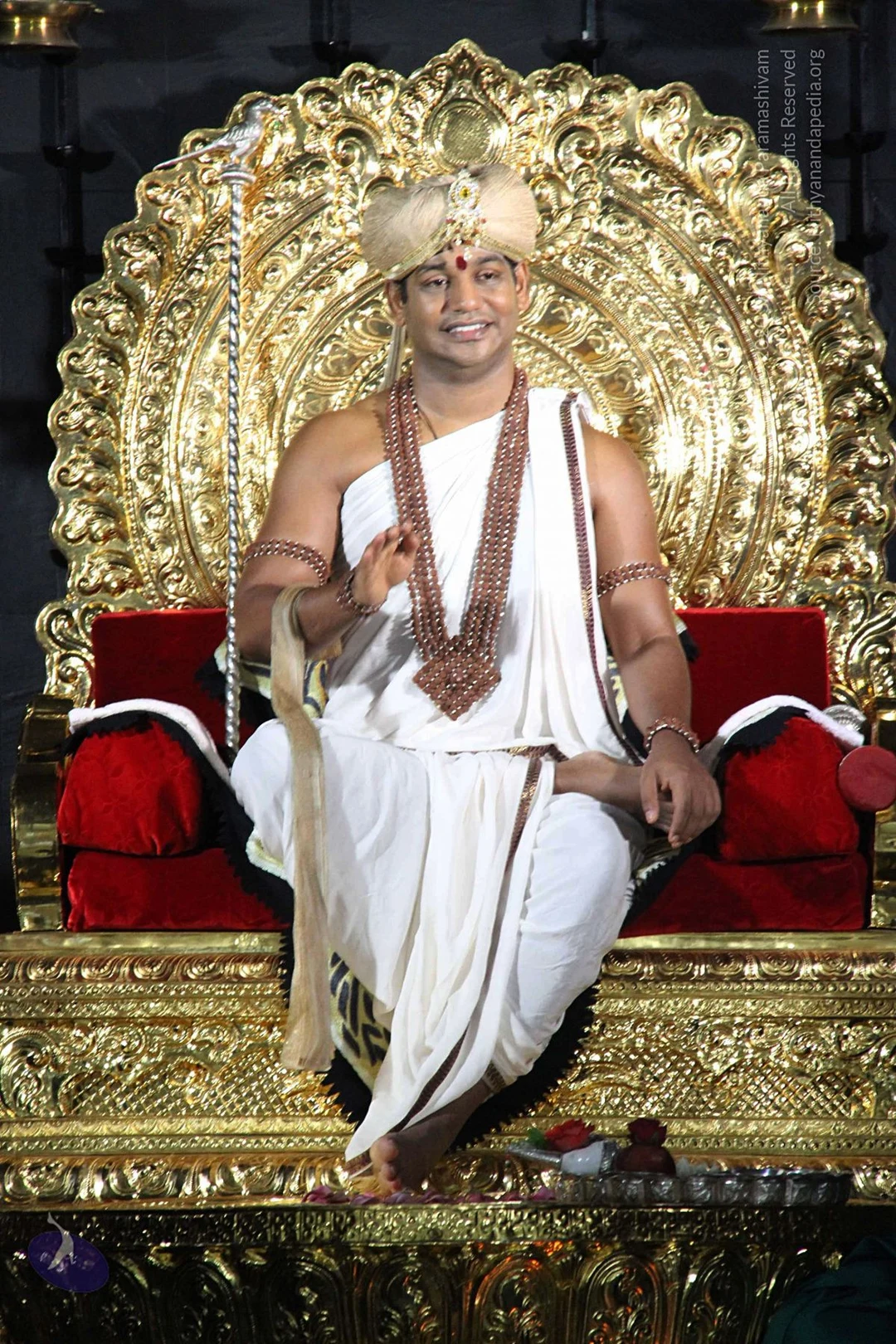
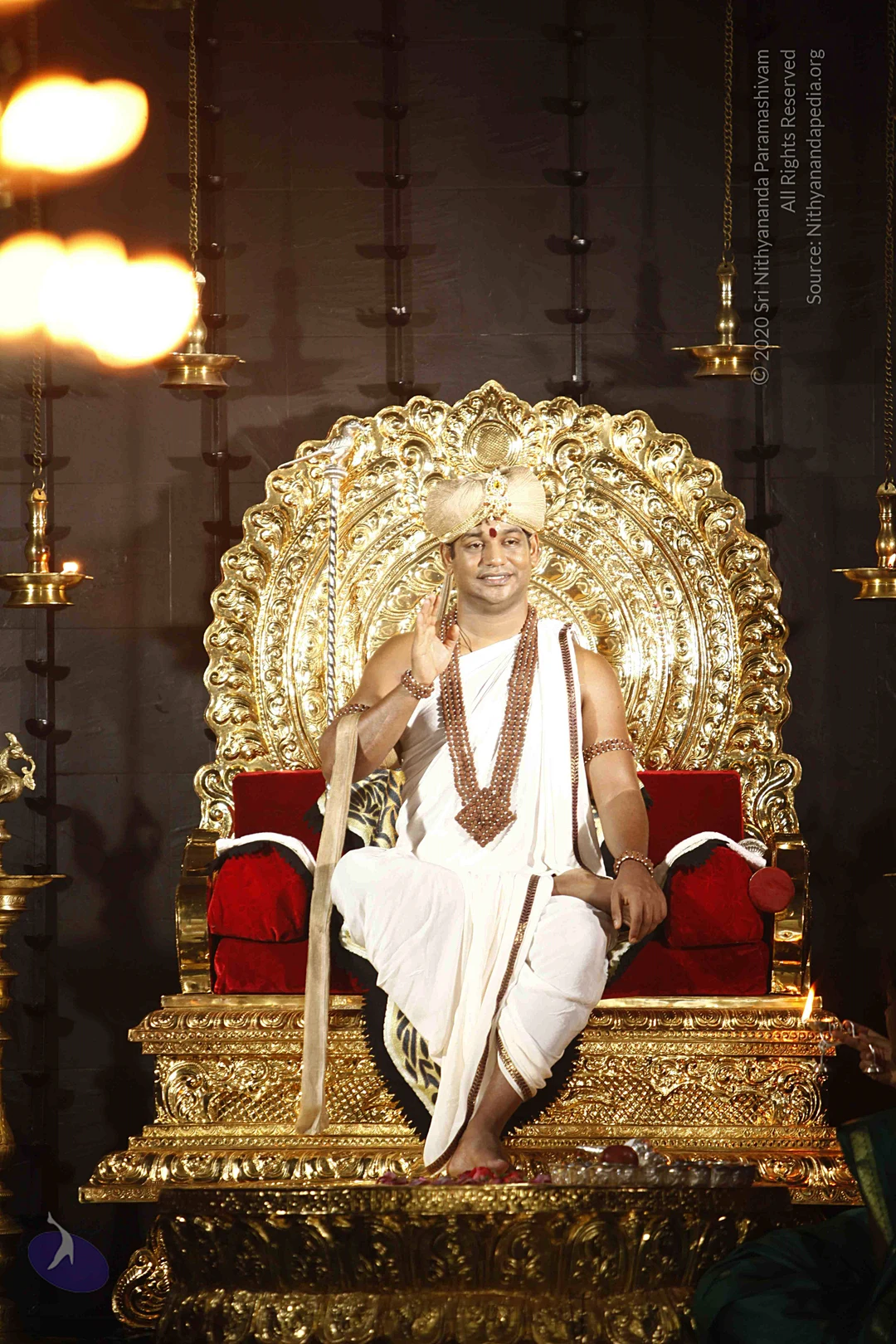
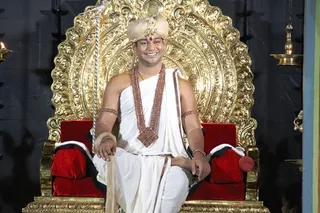
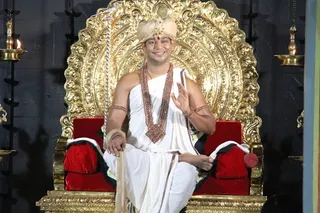
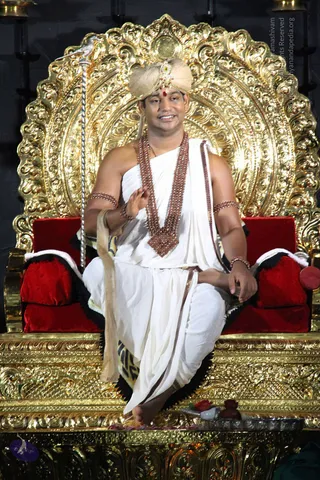
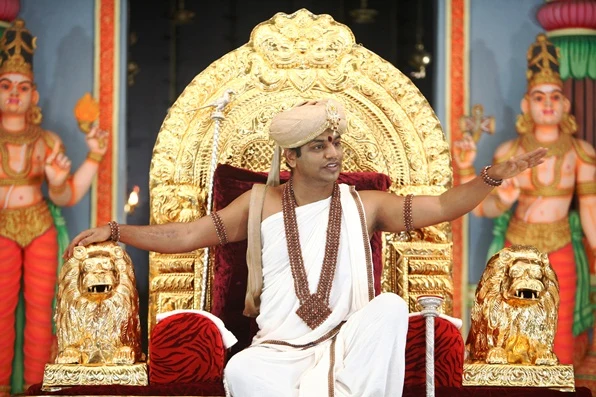
A man seated on an ornate golden throne with a tall, carved gold backrest and red velvet cushions, raising one hand in a blessing gesture and smiling. He wears a pale cream turban, a plain white dhoti-style wrap draped over his body, multiple rudraksha mala necklaces of brown beads, and gold armlets on his upper arms. A tall ceremonial staff leans against the throne on the left. Brass oil lamps stand on either side of the throne against a dark wooden backdrop. The figure is a single person seated in a formal stage-like setting. Swamiji (probable) appearance cues include the rudraksha malas and ceremonial turban with the throne seating.

Edit-Temple

11 photosSource gallery
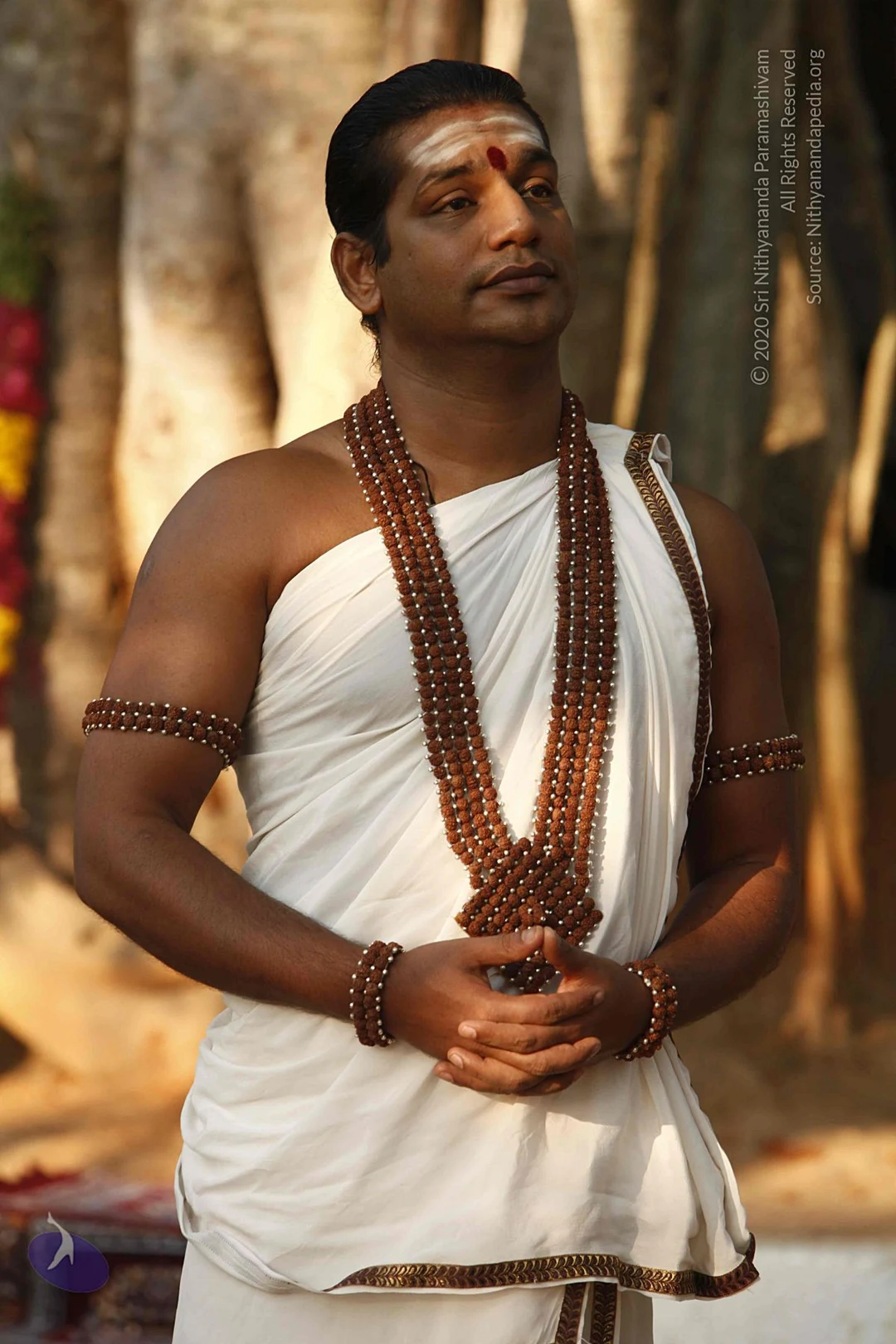
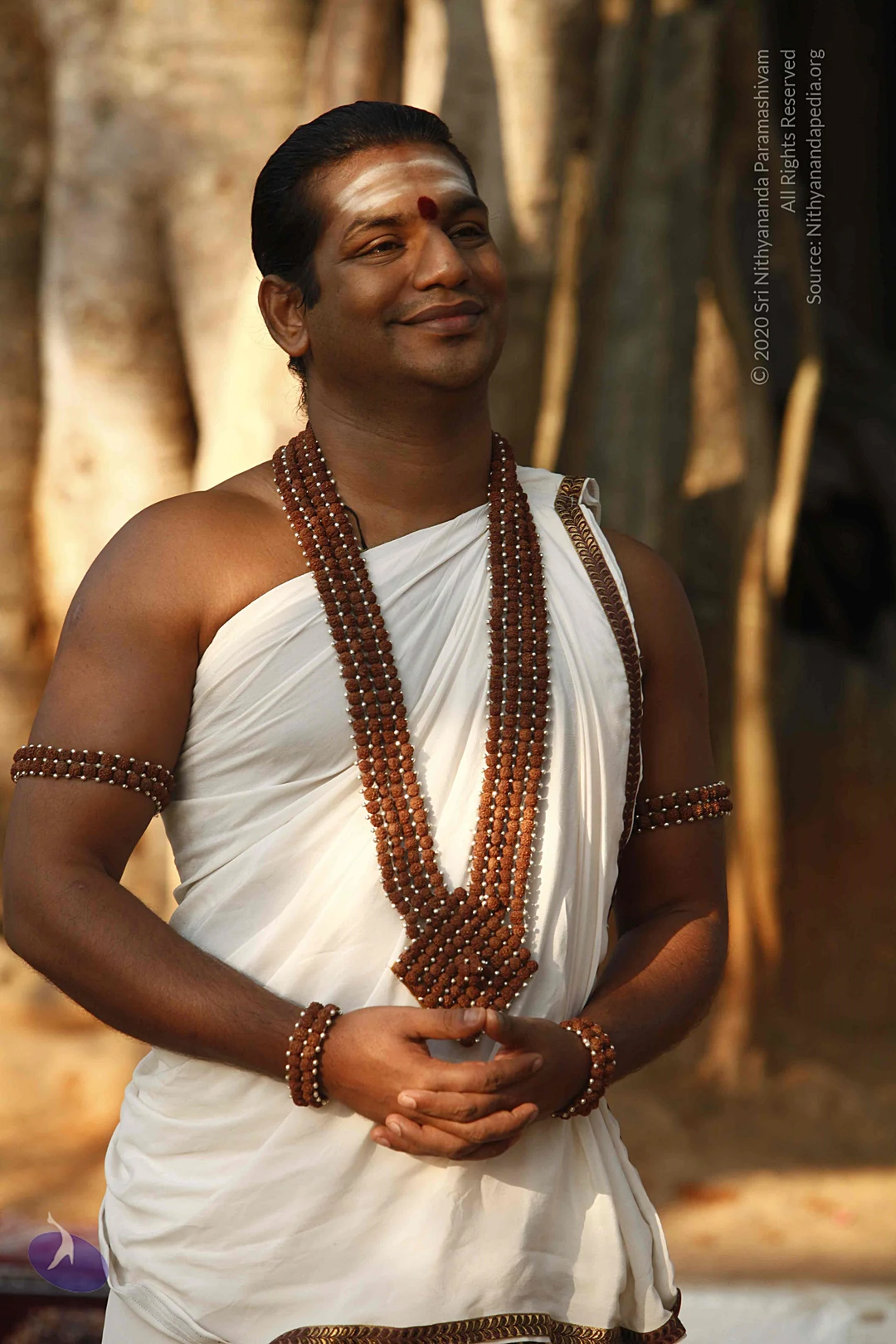
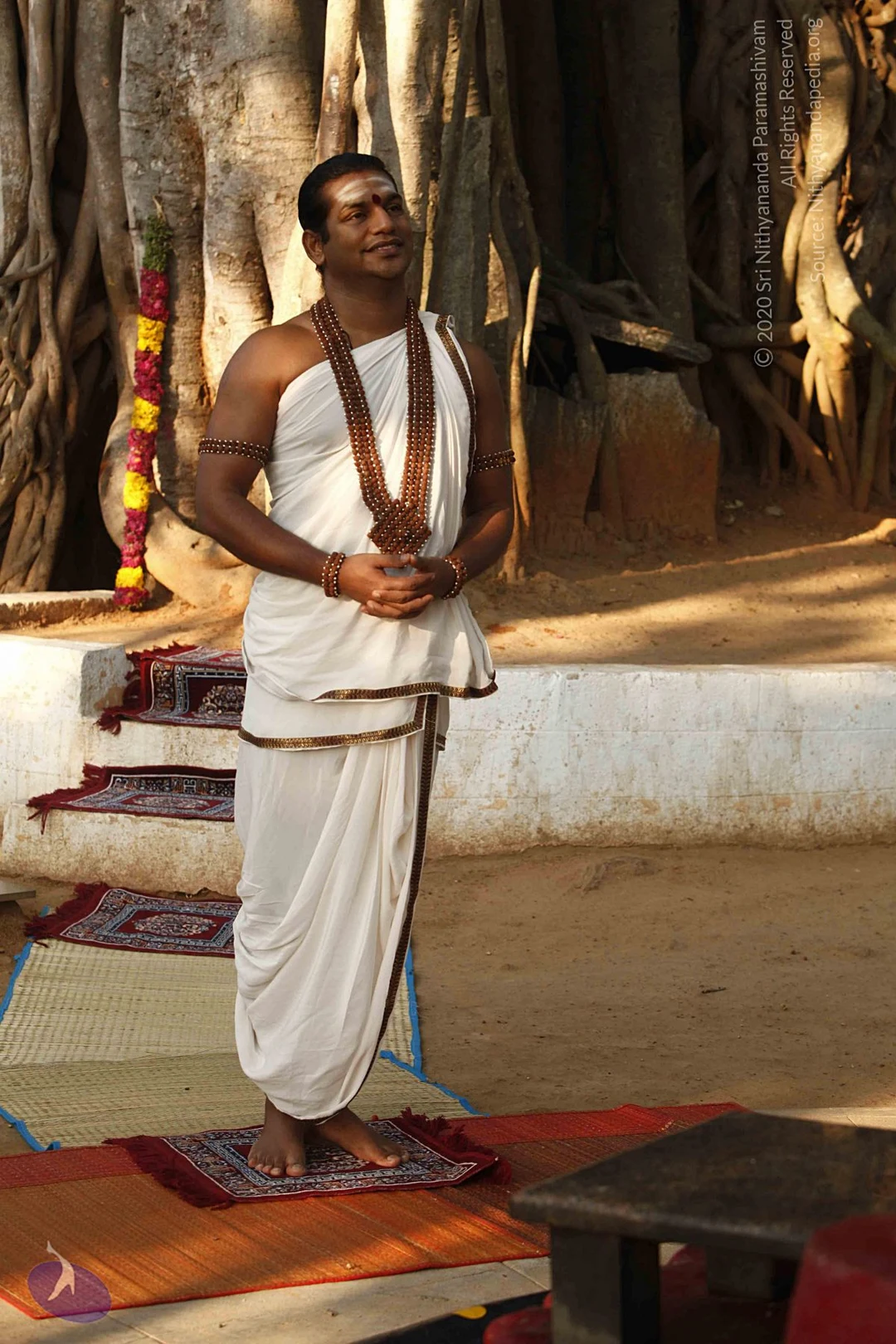
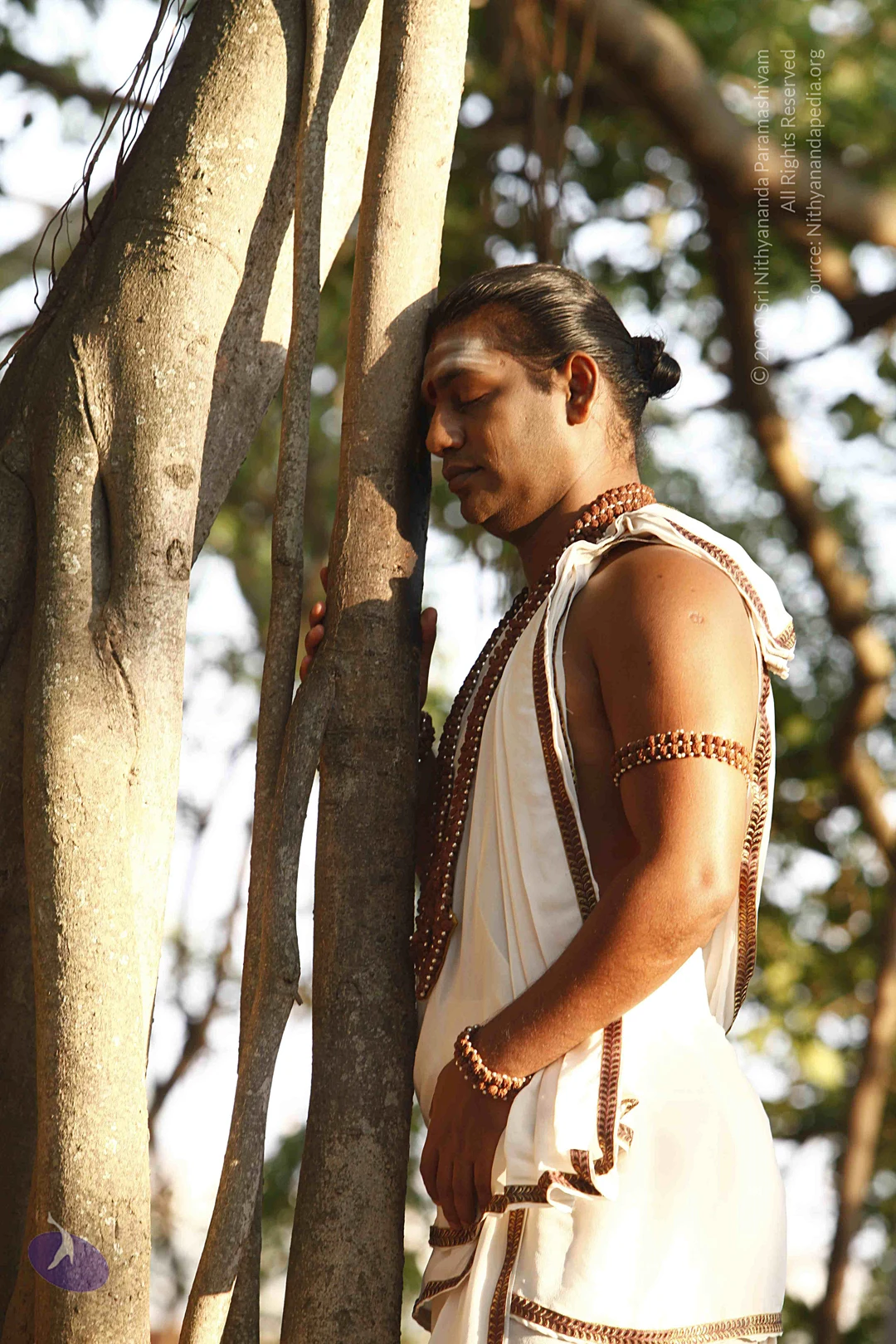
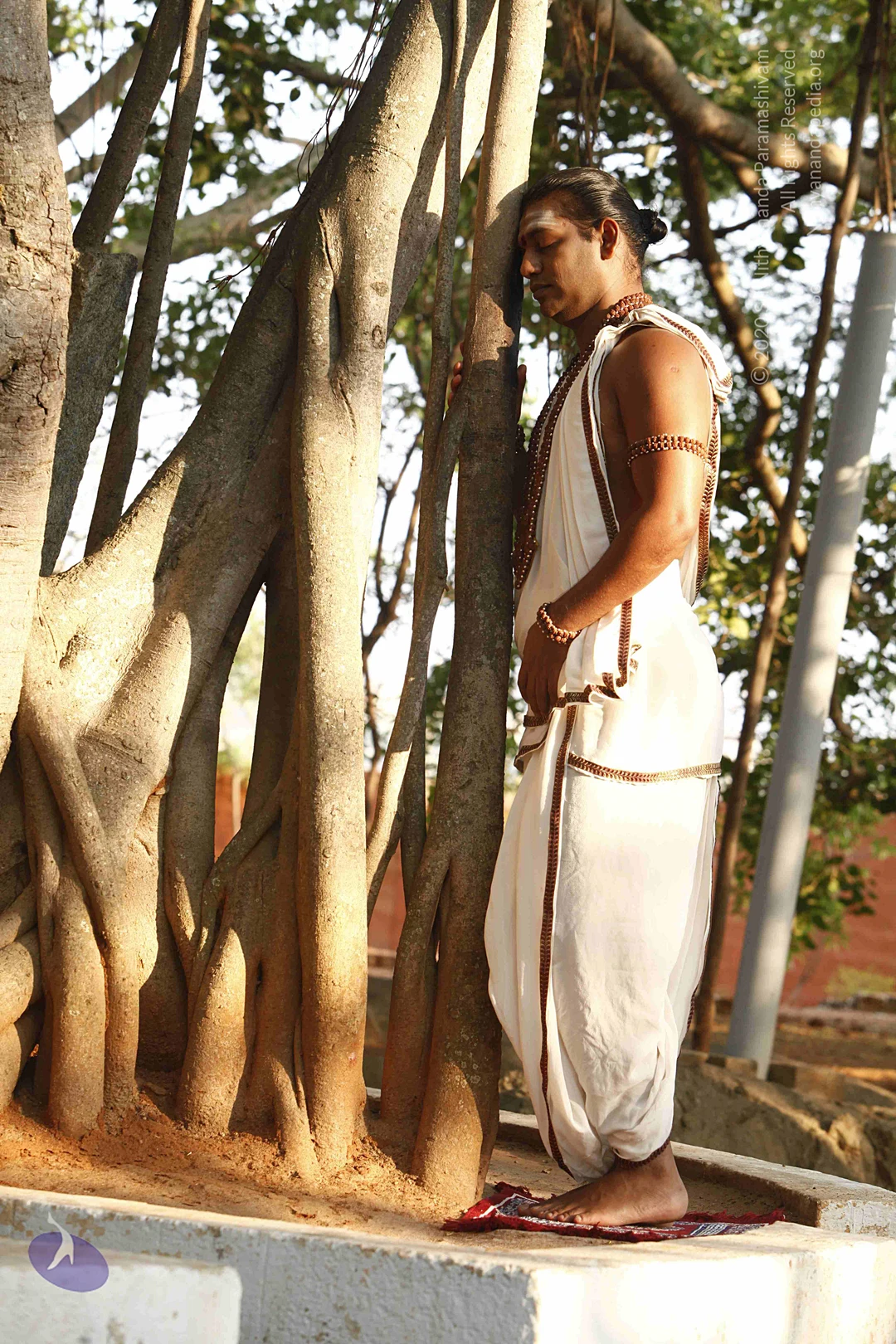
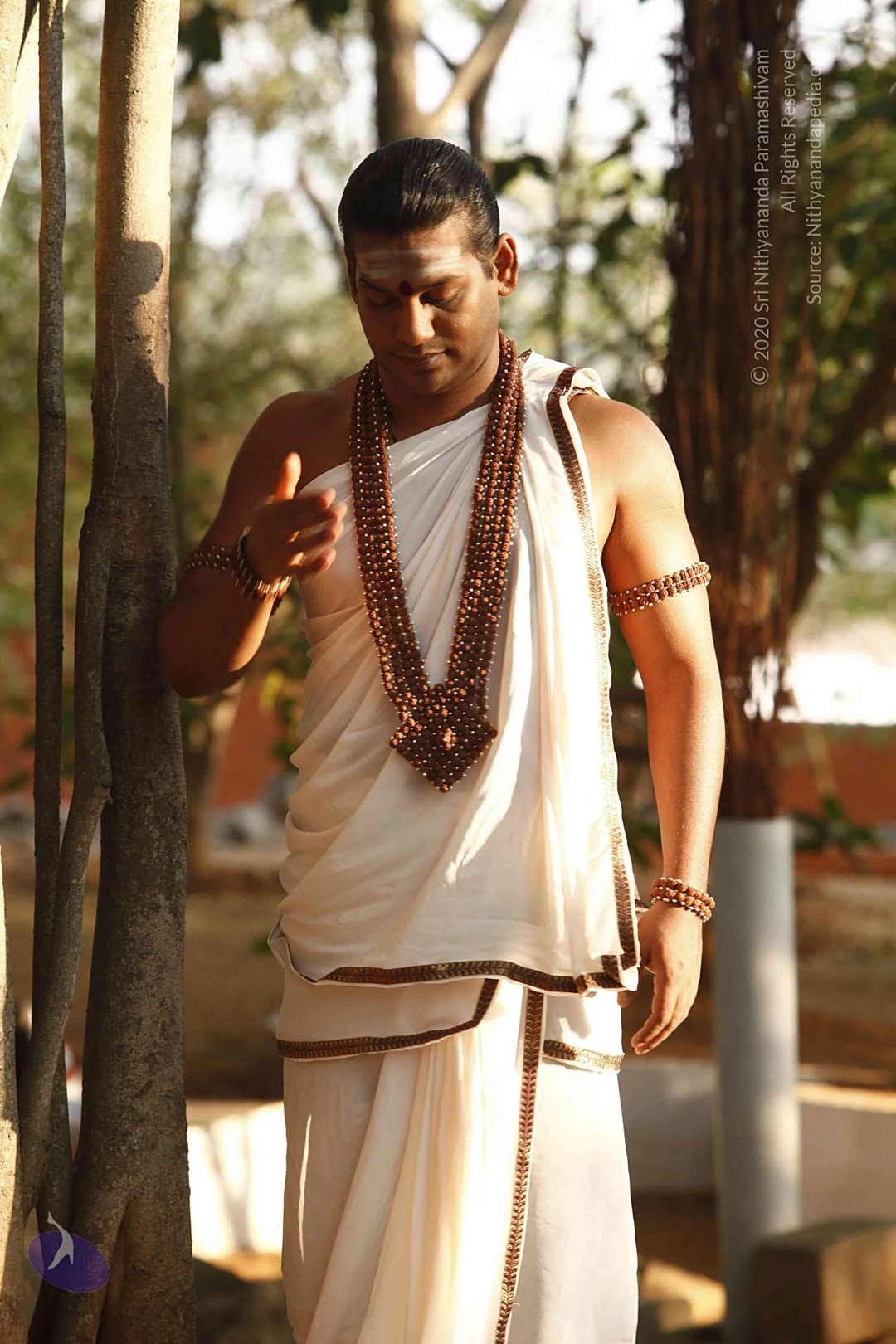
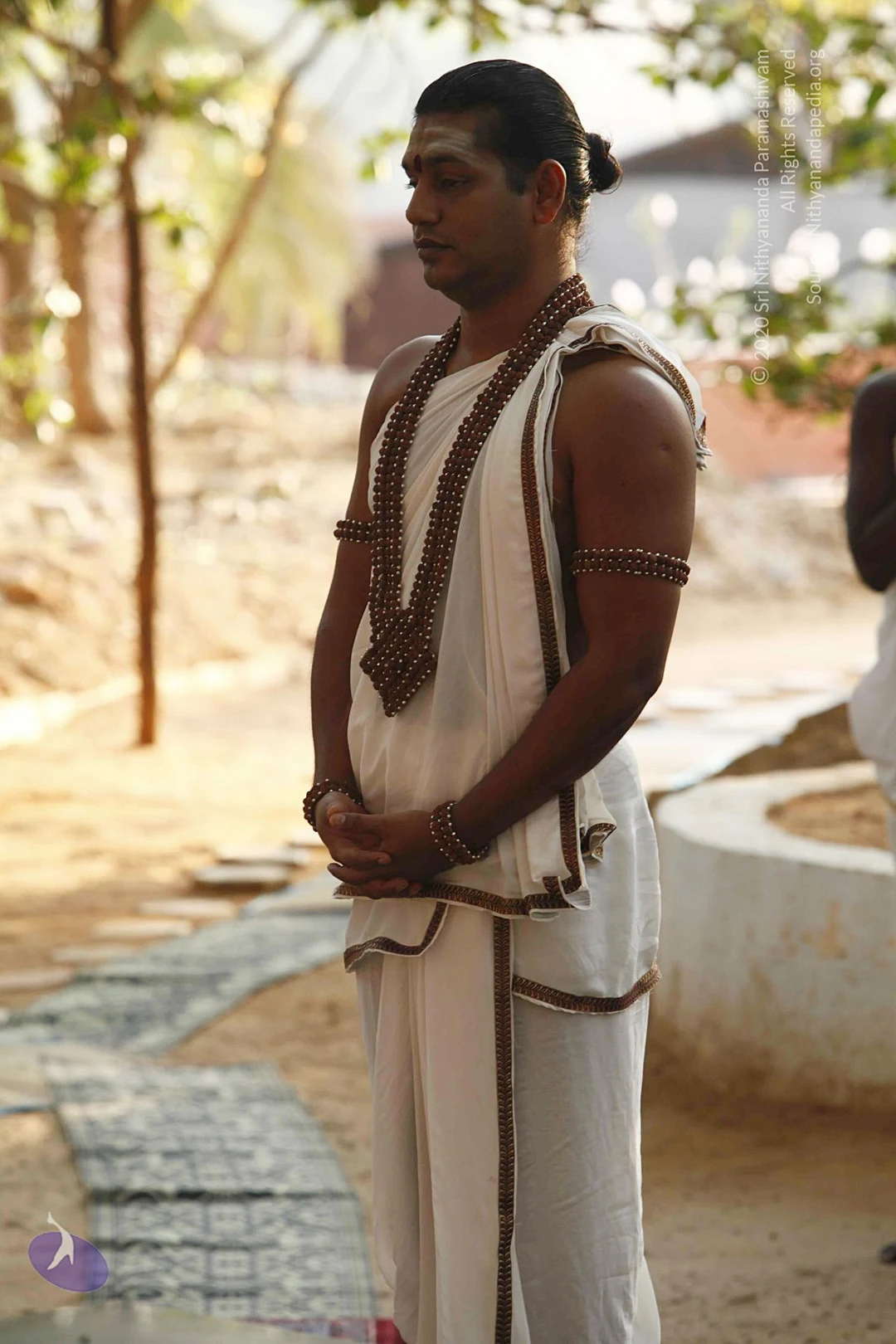
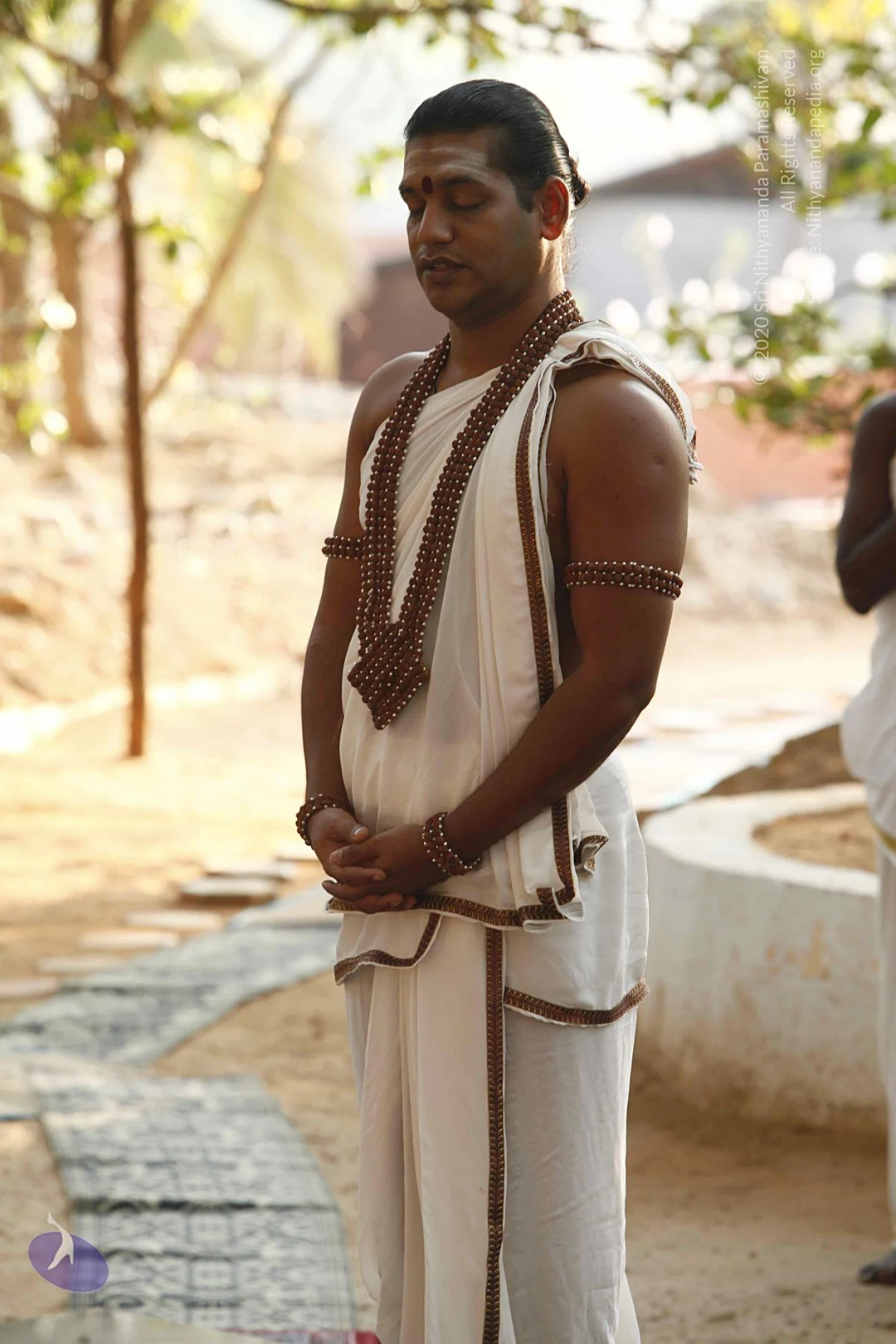
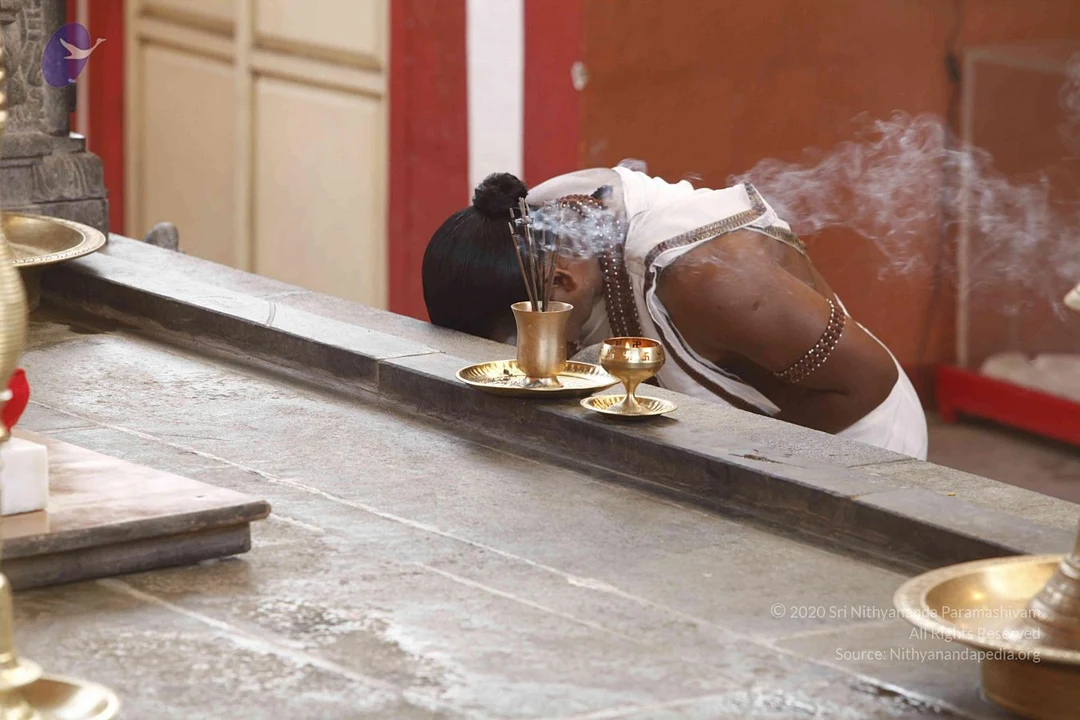
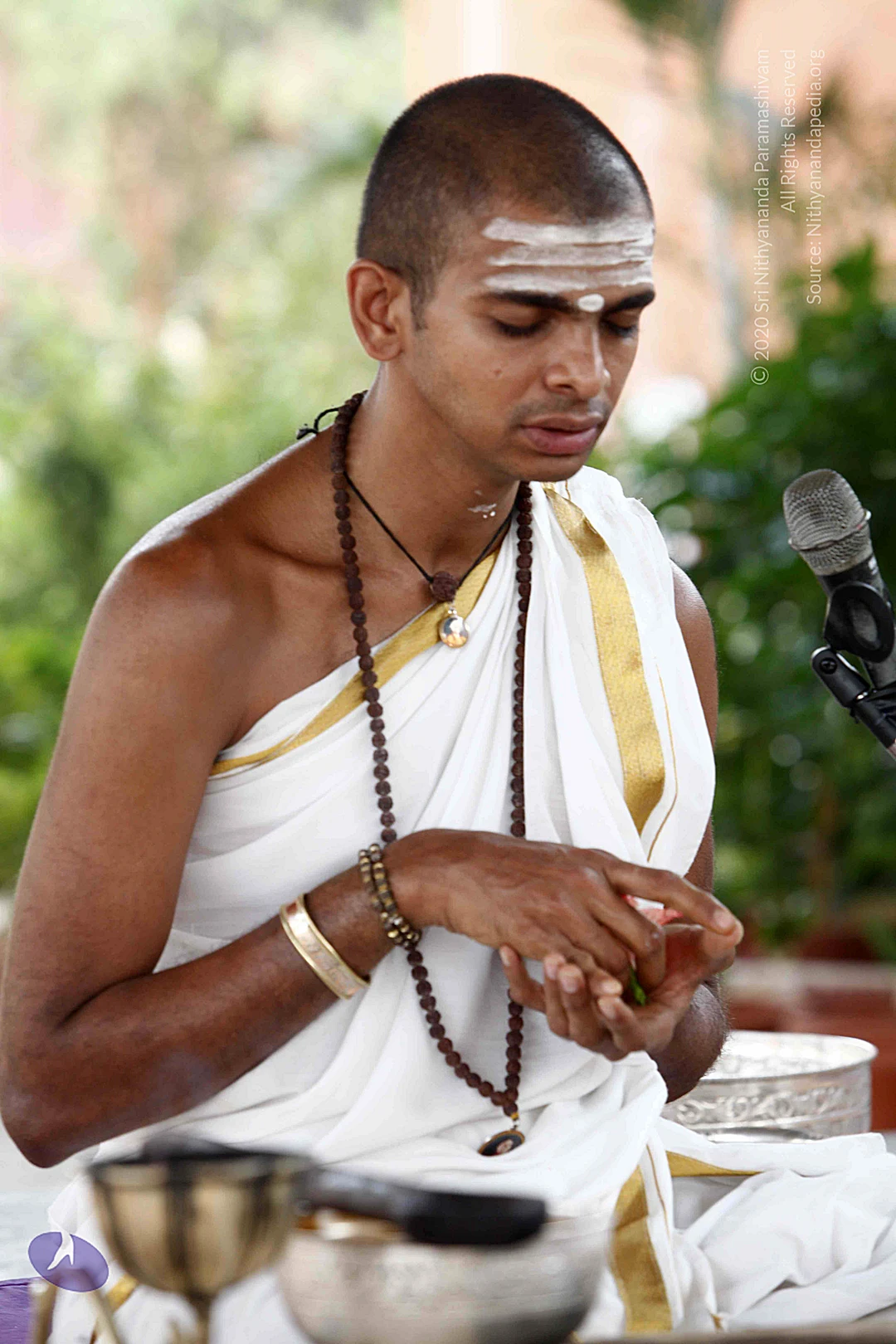
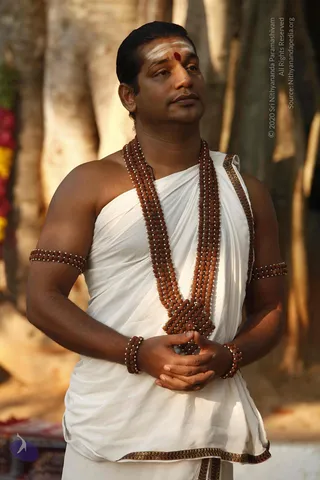
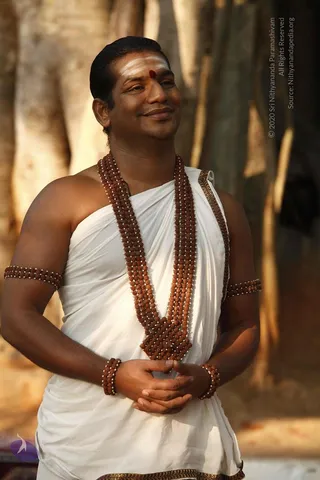
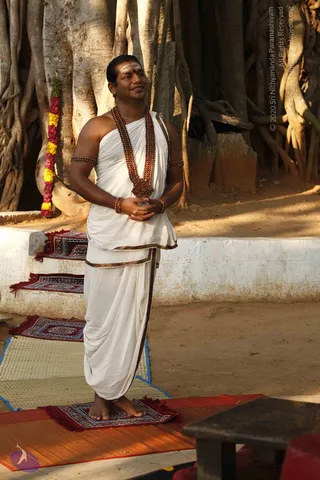
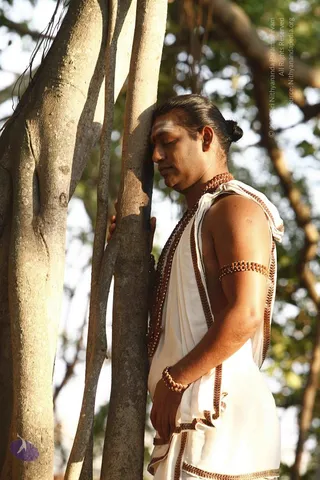
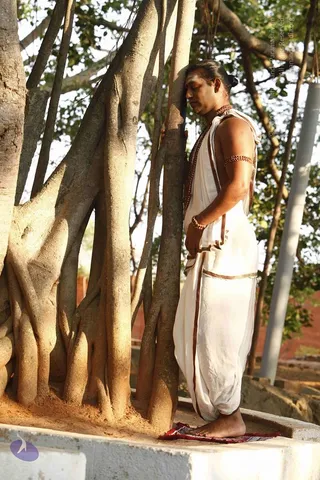
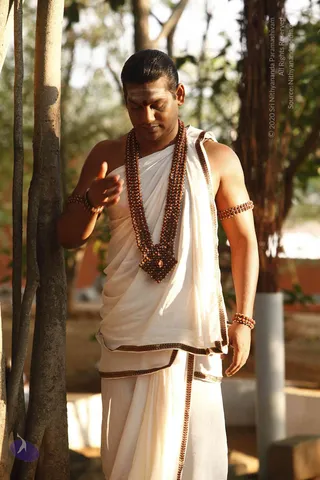
A man stands outdoors in front of a large tree trunk, hands clasped at his waist, gazing upward. He wears a white draped garment with a gold-edged border, multiple strands of brown rudraksha beads with silver spacers around his neck, and matching beaded bands on his upper arms and wrists. A white tripundra mark and a red dot adorn his forehead. Blurred garlands of red and yellow flowers appear at the left edge. No other people are visible.A man stands outdoors before a large tree trunk, smiling softly with hands clasped at his waist. He wears a white unstitched cloth draped over one shoulder and wrapped around the body, with a gold-bordered hem, and multiple strands of brown rudraksha beads with silver spacers around his neck, rudraksha bands on his upper arms and wrists. He has white vibhuti stripes on his forehead and a red kumkum dot between his brows, with hair slicked back. Warm golden light falls across the scene.A man stands barefoot on a woven mat and a small patterned red rug in front of a large banyan tree with thick hanging aerial roots. He wears a white dhoti-style garment with a white upper cloth edged in gold-brown border, multiple strands of rudraksha beads as a long necklace, beaded armlets and wrist bands, and has a white vibhuti line with a red kumkum dot on his forehead. His hands are clasped together at his waist and he gazes upward with a calm smile. A garland of red, yellow and white flowers hangs on the tree trunk behind him, and patterned mats lead up white steps. A dark wooden stool is in the lower right foreground.A man in white ritual dress stands outdoors with his eyes closed, resting his head against a large tree trunk with his right hand touching the bark. He wears a white dhoti and shoulder cloth edged with brown braided trim, long rudraksha mala strands across his chest, a rudraksha armband and a rudraksha bracelet. His hair is pulled back in a knot, and a vertical tilak marks his forehead. Sunlight falls warmly across his shoulder and the bark, with green foliage behind him.A man in white ritual dress stands barefoot on a red-and-white mat atop a low stone platform, leaning his head and forearm against the thick aerial roots of a large banyan tree. He wears a white dhoti with brown-beaded trim, a matching beaded armband and bracelet, and a brown beaded necklace; his hair is swept back into a topknot and he has a white forehead mark. His eyes are closed in quiet meditation or prayer. Sunlight falls warmly across the trunk and roots, with greenery and a pole in the background.A man with slicked-back dark hair stands outdoors among tree trunks, eyes lowered, one hand raised near his chest. He wears an unstitched white dhoti and shawl with brown-gold borders, a thick multi-strand rudraksha mala across his chest with a central bead cluster, rudraksha armlets and wrist bands, and a red bindi with white forehead markings. Sunlight and blurred greenery fill the background. a person by visible cues: distinctive rudraksha malas and armlets, with the page noting his presence at the event. Lower-body visibility is partial. Single person in the scene.
Edit-E-Pada-Puja

4 photosSource gallery
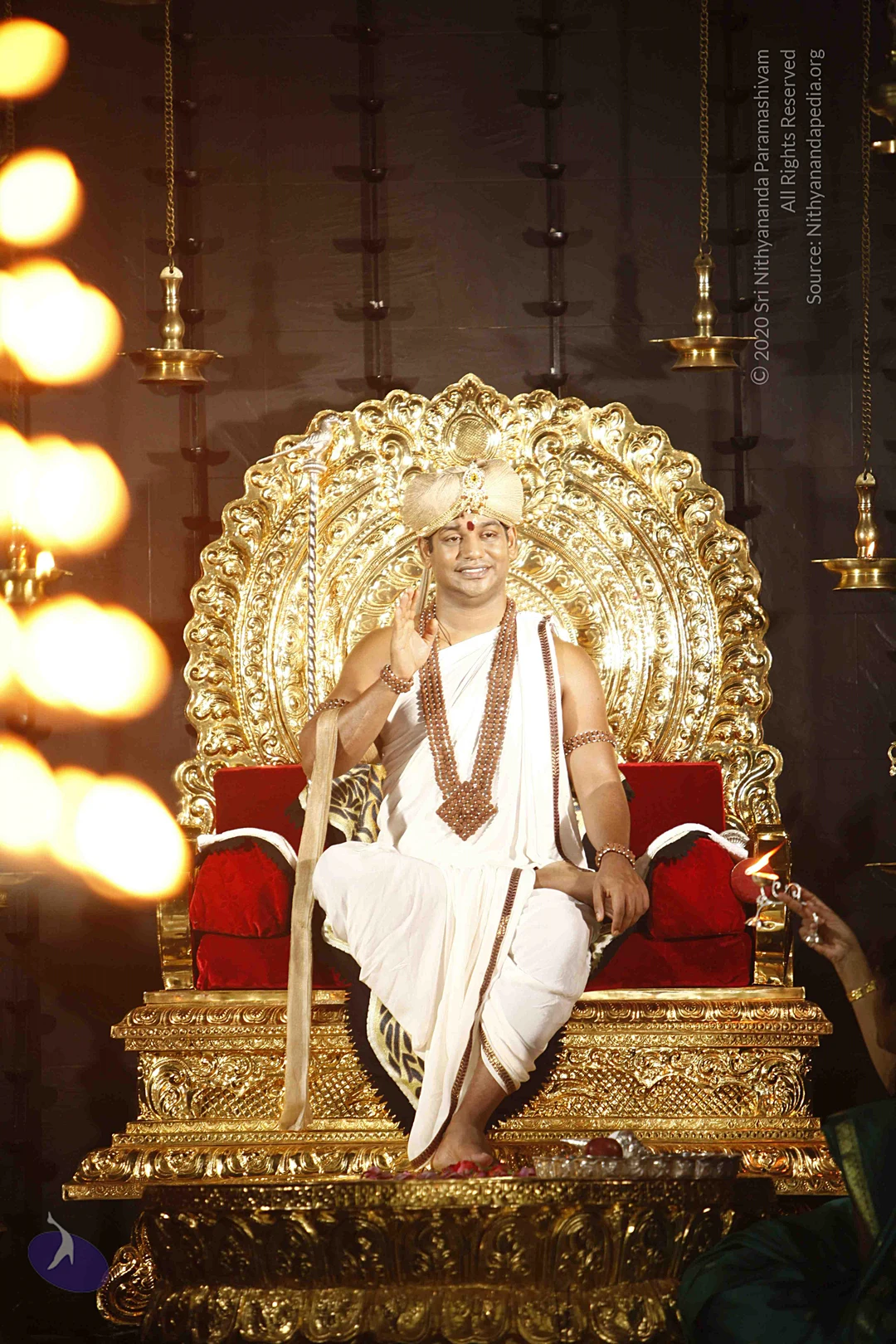
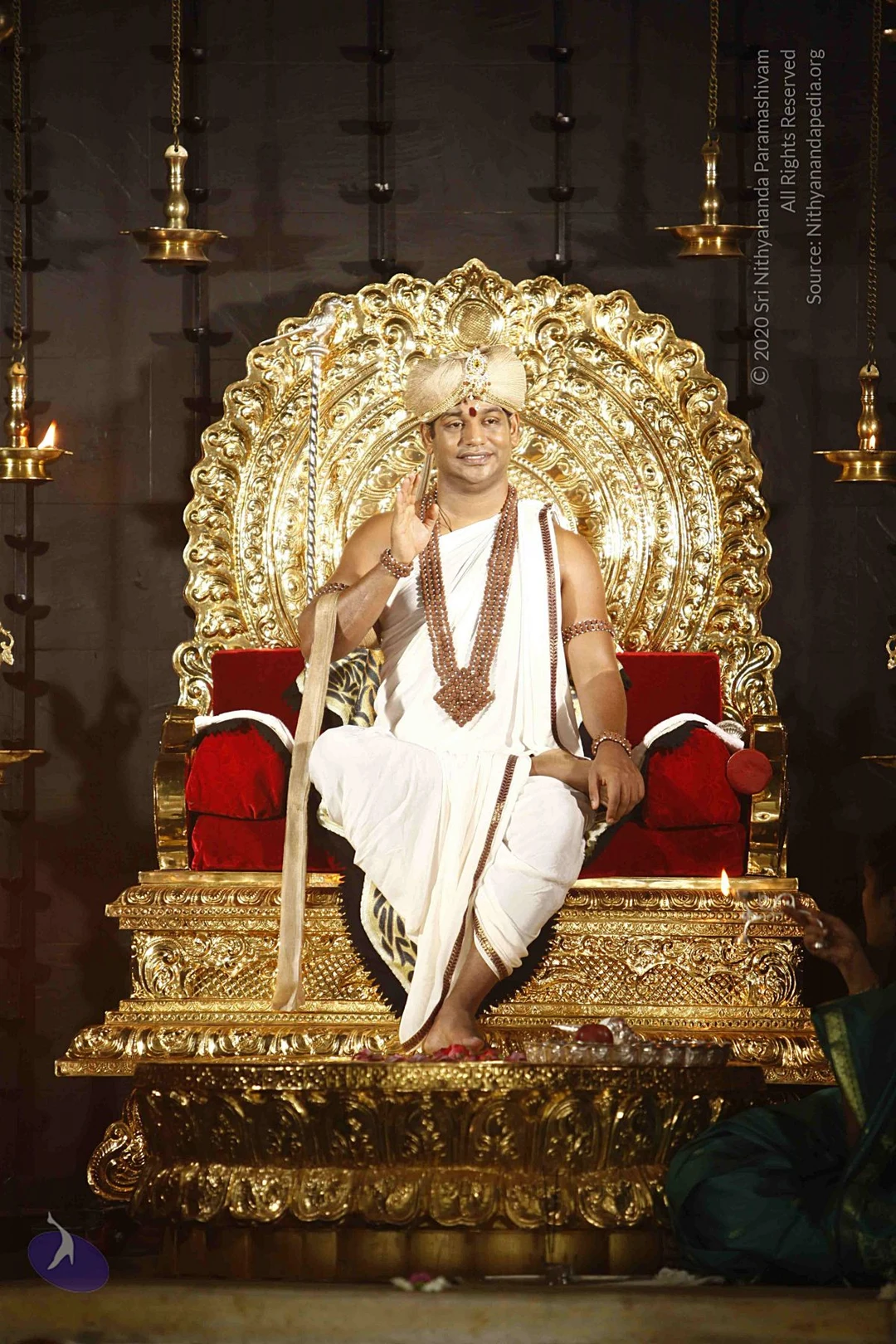
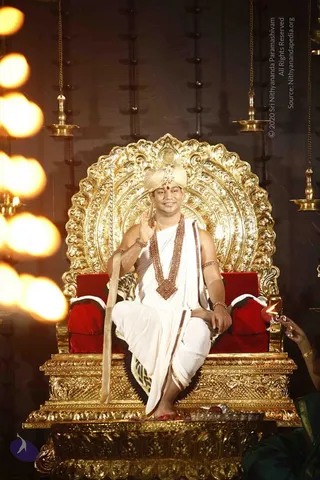
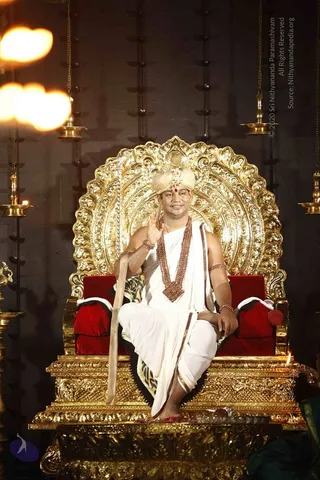
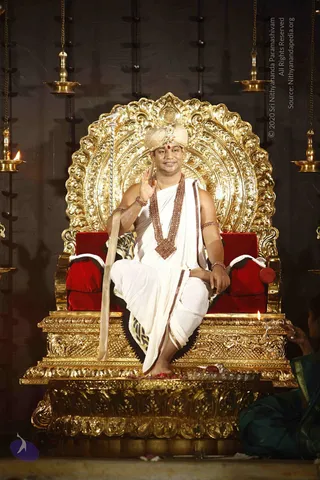
A seated man on an ornate gilded throne with a large gold repoussé backrest and red velvet cushions. He wears a cream turban with a jewelled ornament and a red tilak mark, white draped dhoti and shawl, long rudraksha malas across the chest, and beaded armlets. His right hand is raised in a blessing gesture while he smiles. A silver staff stands beside the throne, and a small offering tray with red flowers rests on the gold platform below.A man seated on an ornate gold throne with a large gilded carved back and red velvet cushions, raising one hand in blessing. He wears a cream turban with a jewelled ornament, white draped dhoti-style cloth, multiple strands of rudraksha beads, bead bracelets and armlets. A staff leans beside the throne. Brass oil lamps hang from chains behind him, and blurred lamp flames glow in the foreground. At the right edge, a woman in green holds a lit lamp near the throne. Swamiji (probable): the seated man wears a cream turban, rudraksha malas and ornate ceremonial clothing, and is seated on a throne. The throne-side attendant offers a lamp.A man seated on an ornate gold throne with a large gold repoussé backrest and red velvet cushions, raising his right hand in blessing. He wears a cream turban with a jewelled ornament and a red bindi, a white dhoti and shawl, multiple strands of brown rudraksha mala, and bangles on both wrists. Brass oil lamps hang from chains behind him, and a lit lamp is visible at the lower right edge. Swamiji (probable): the seated figure has a turban, rudraksha malas and ceremonial dress consistent with the page's identification, and sits on a throne with a raised blessing gesture, placed in a temple-style setting. A printed copyright line runs vertically at the right edge.A man seated on an ornate gold throne with red velvet cushions, raising his right hand in blessing. He wears a cream turban with a jewelled ornament, a white dhoti and shawl, multiple rudraksha malas, and bangles. A brass oil lamp burns beside the throne, a woman in a green sari sits at the lower right, and petals lie on the throne base. Hanging brass lamps frame the dark background.

Edit-Bagavad-Gita-Satsang
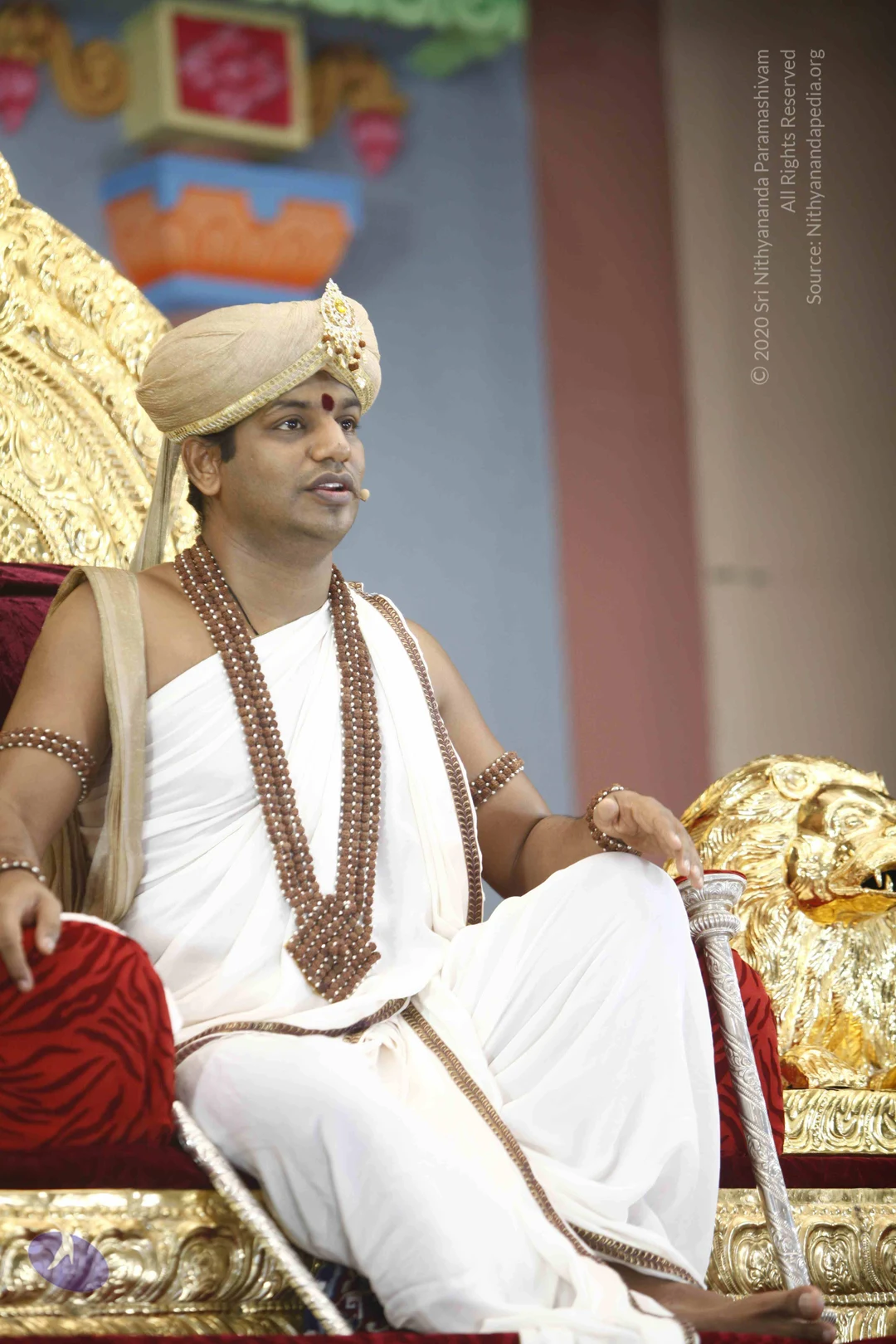
16 photosSource gallery
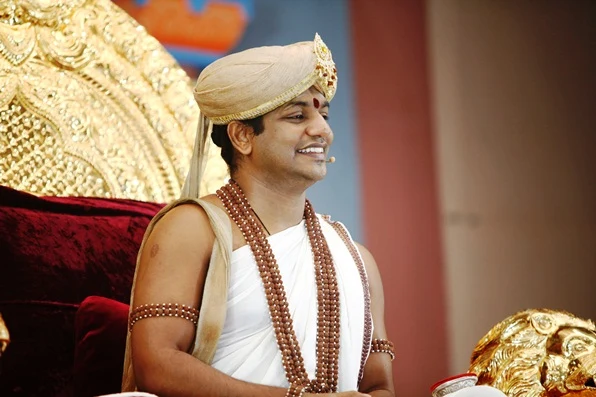
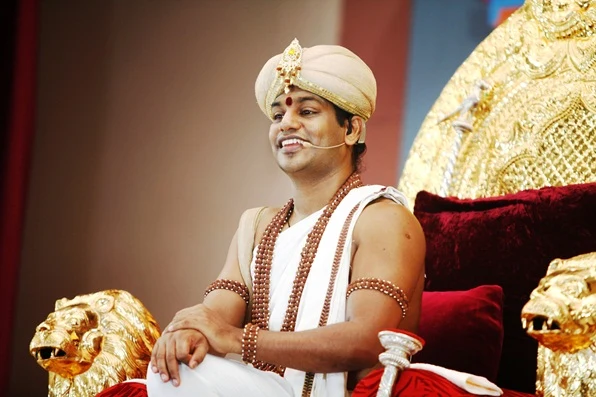
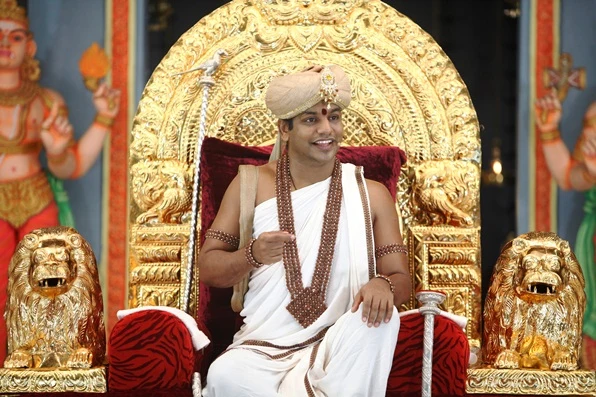
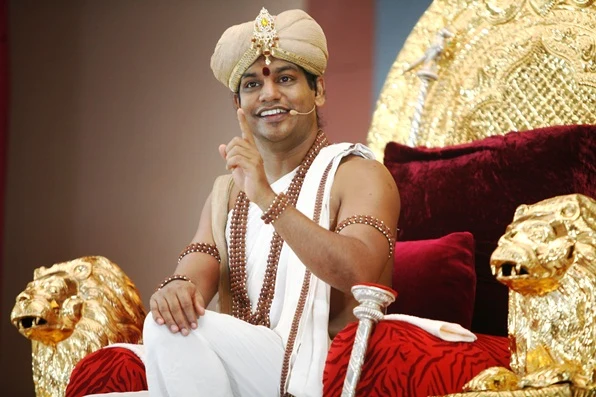
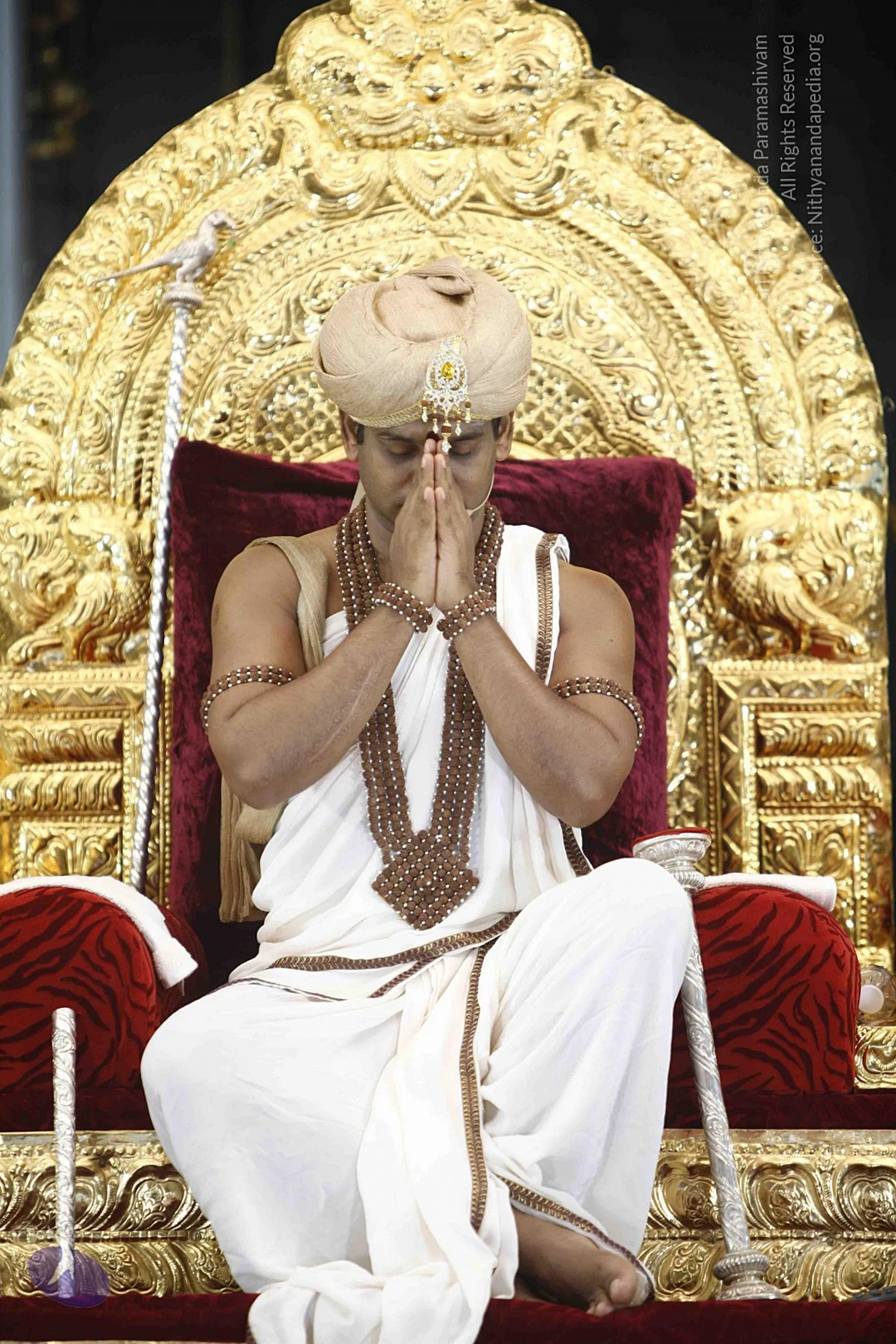
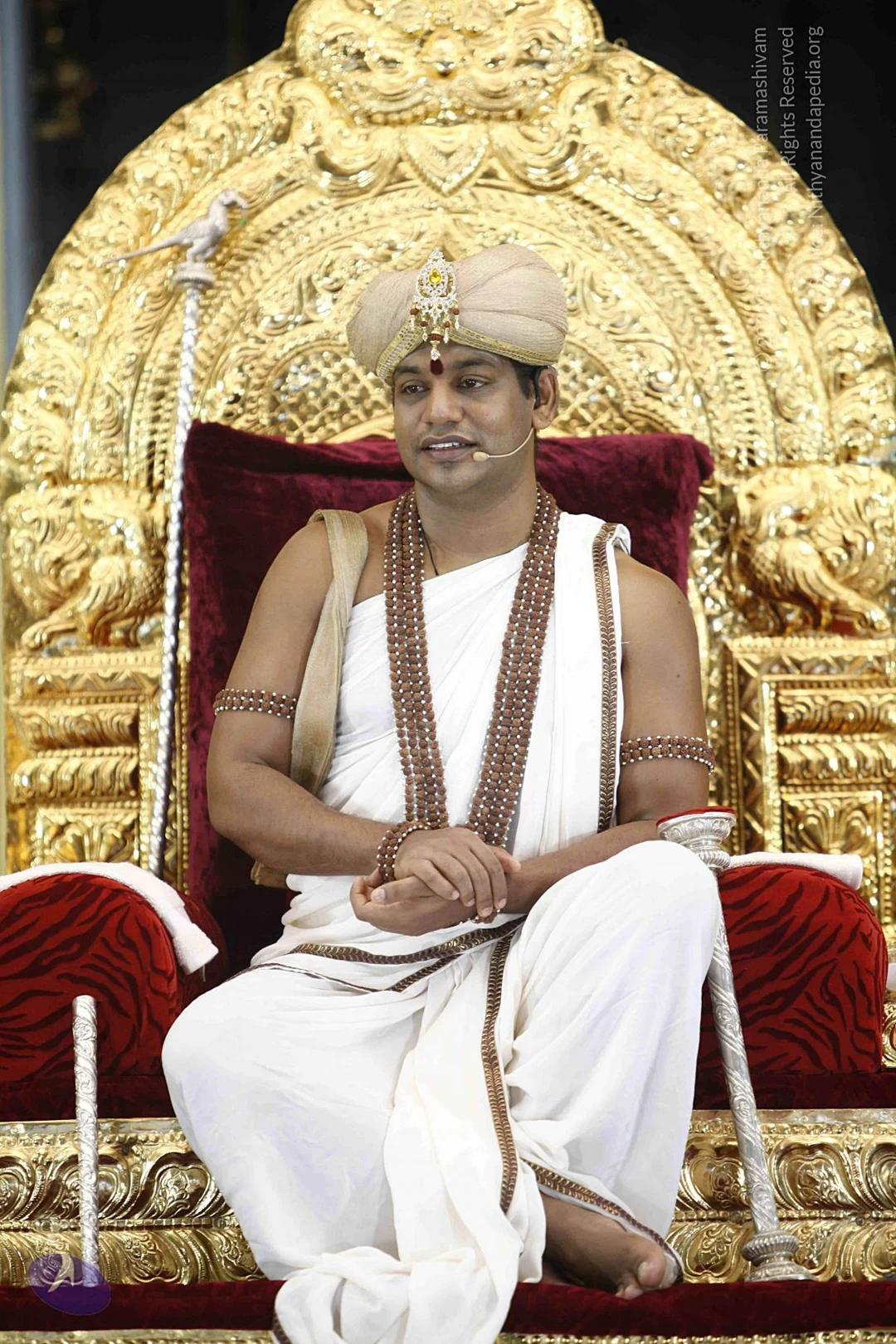
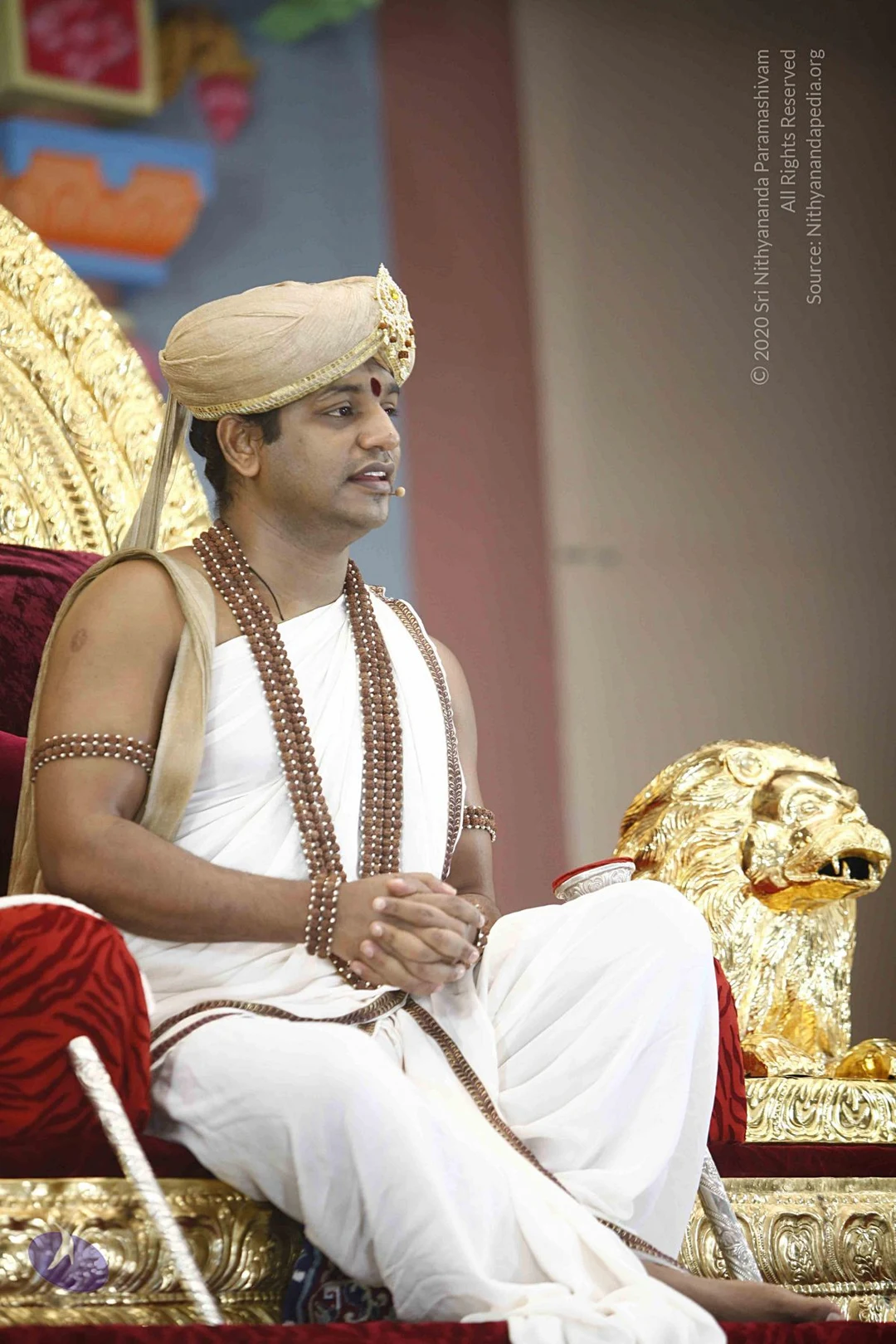
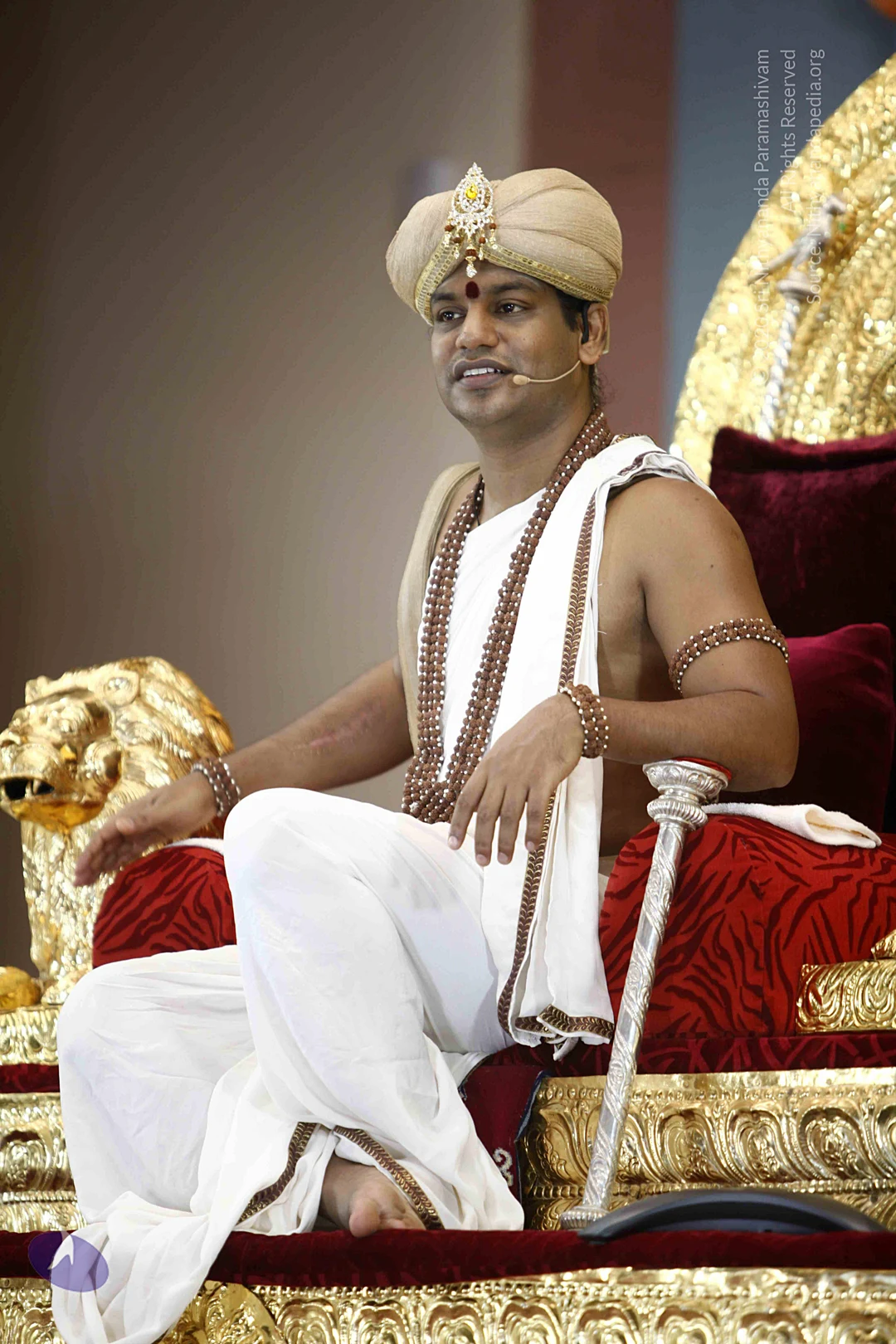
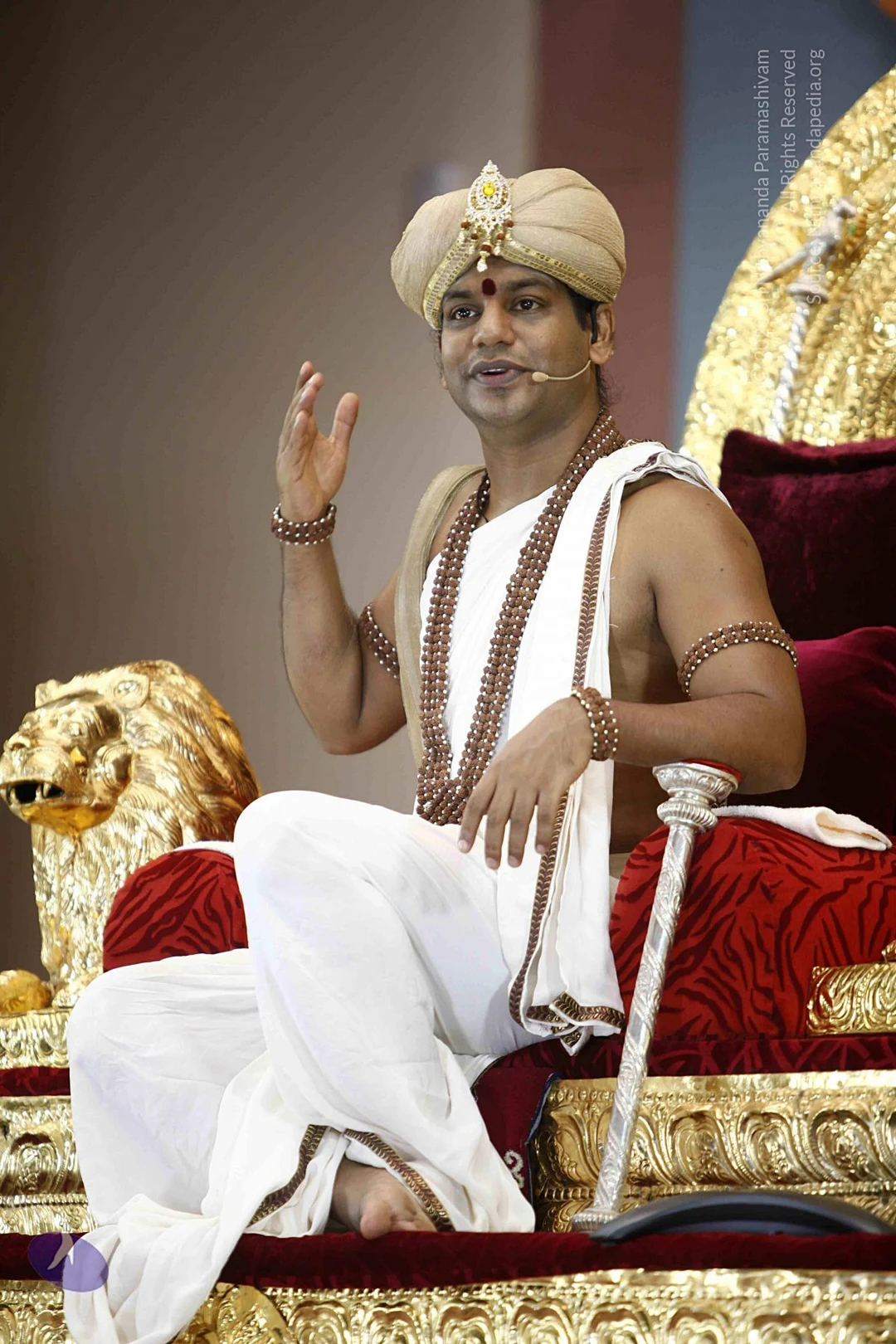
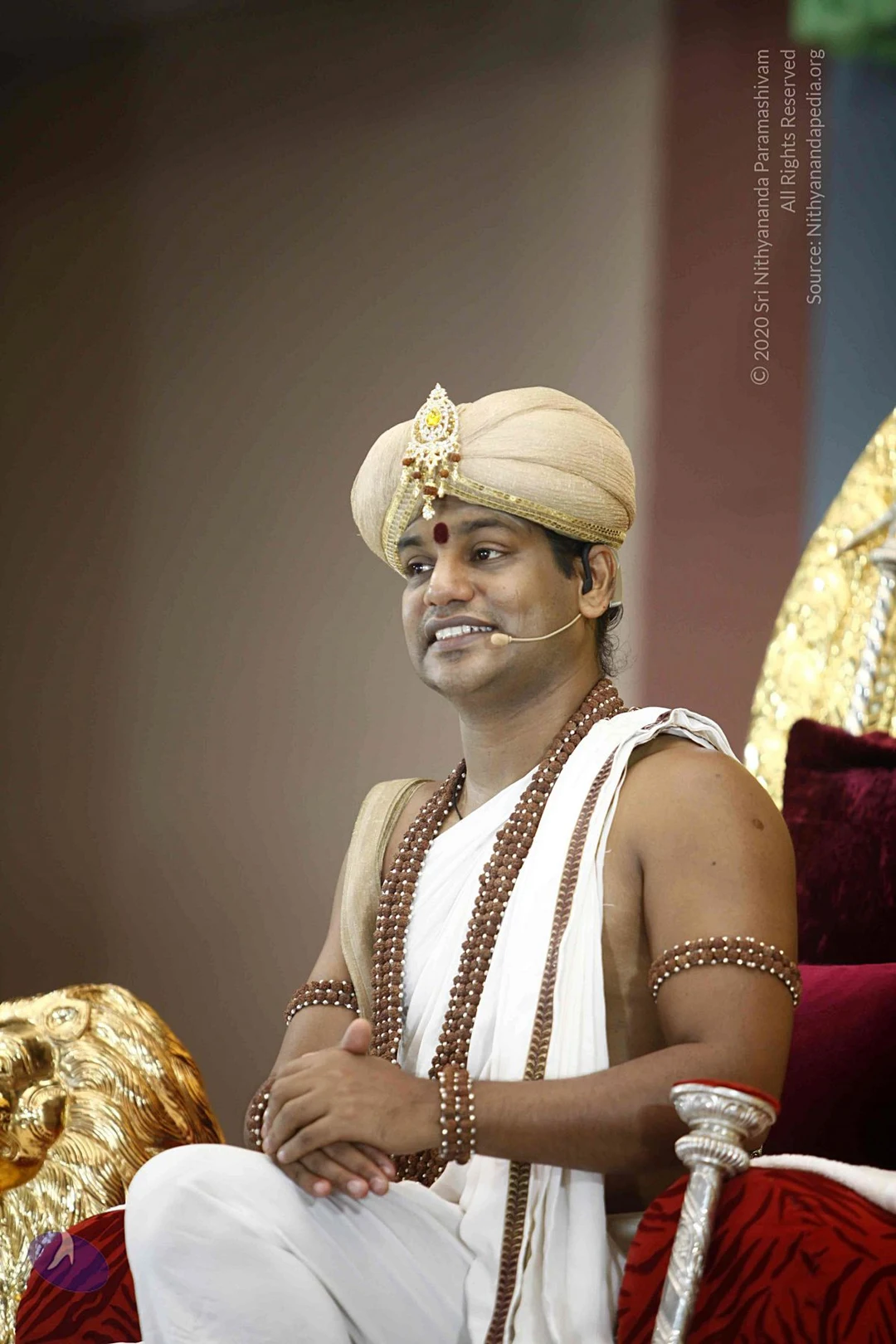
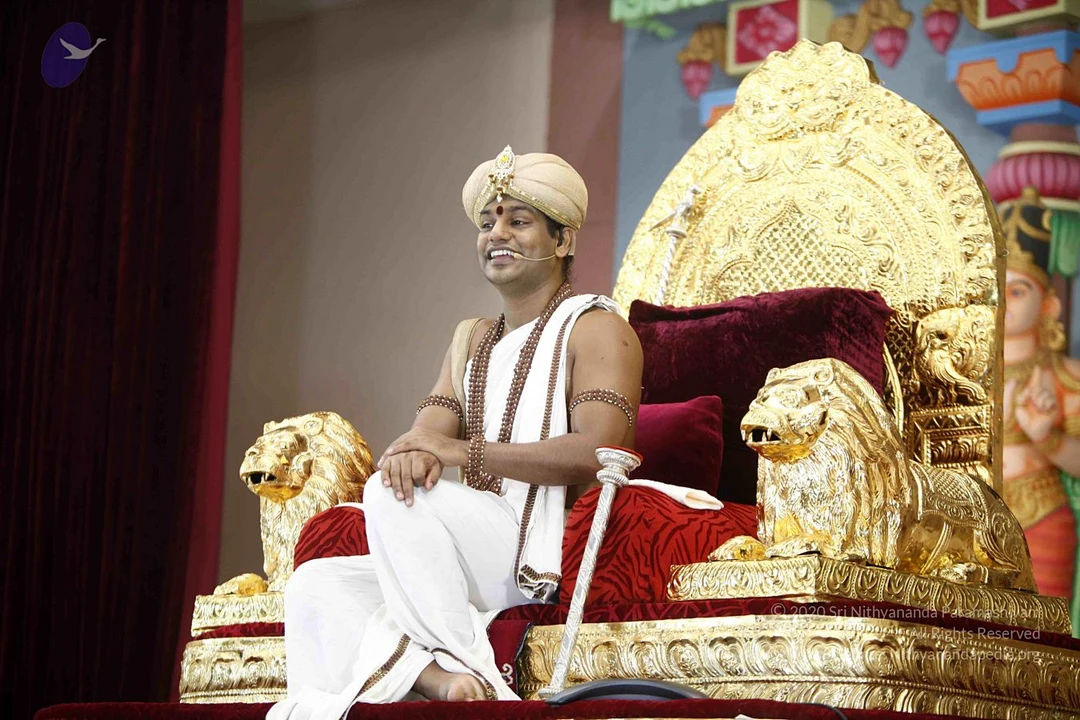
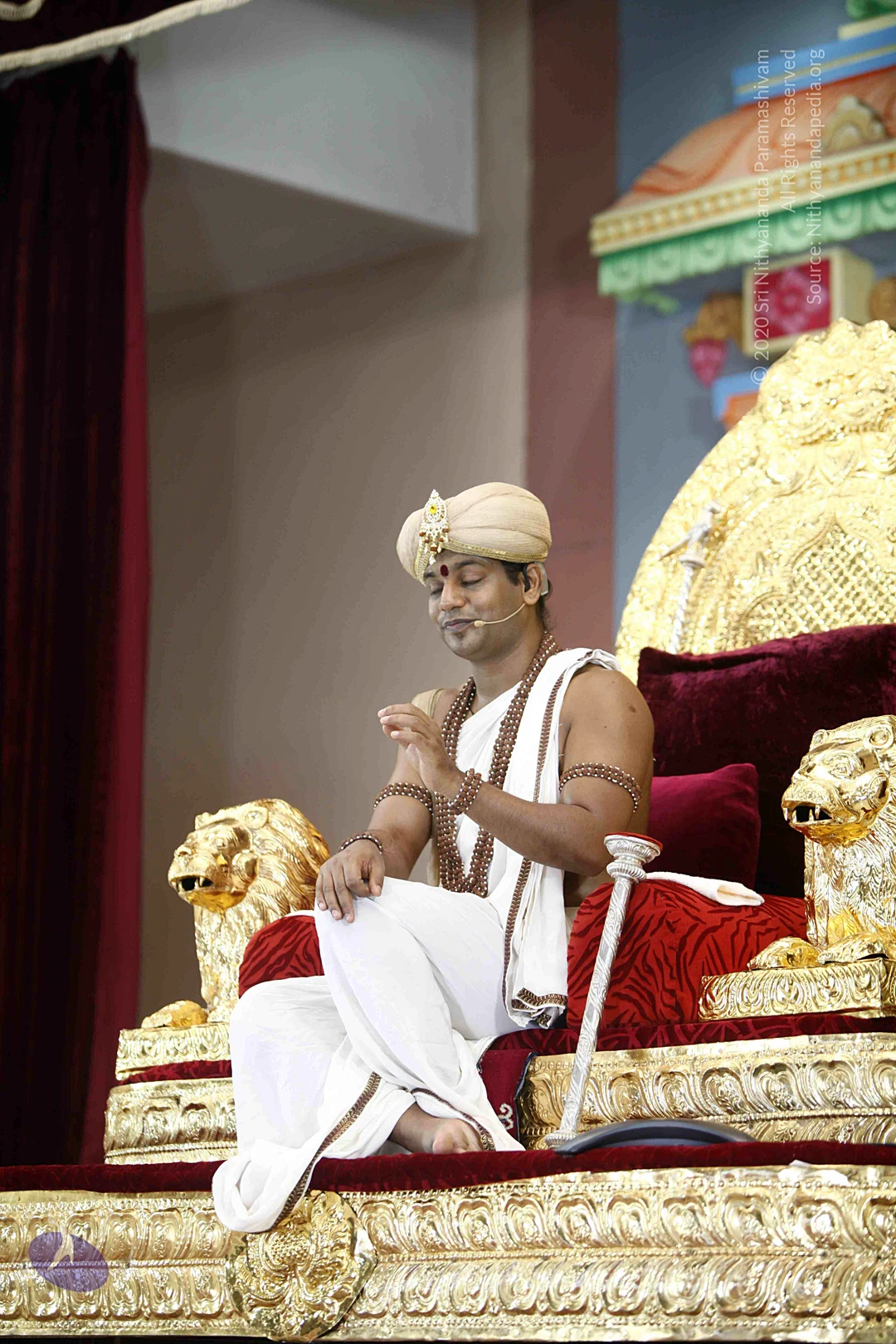
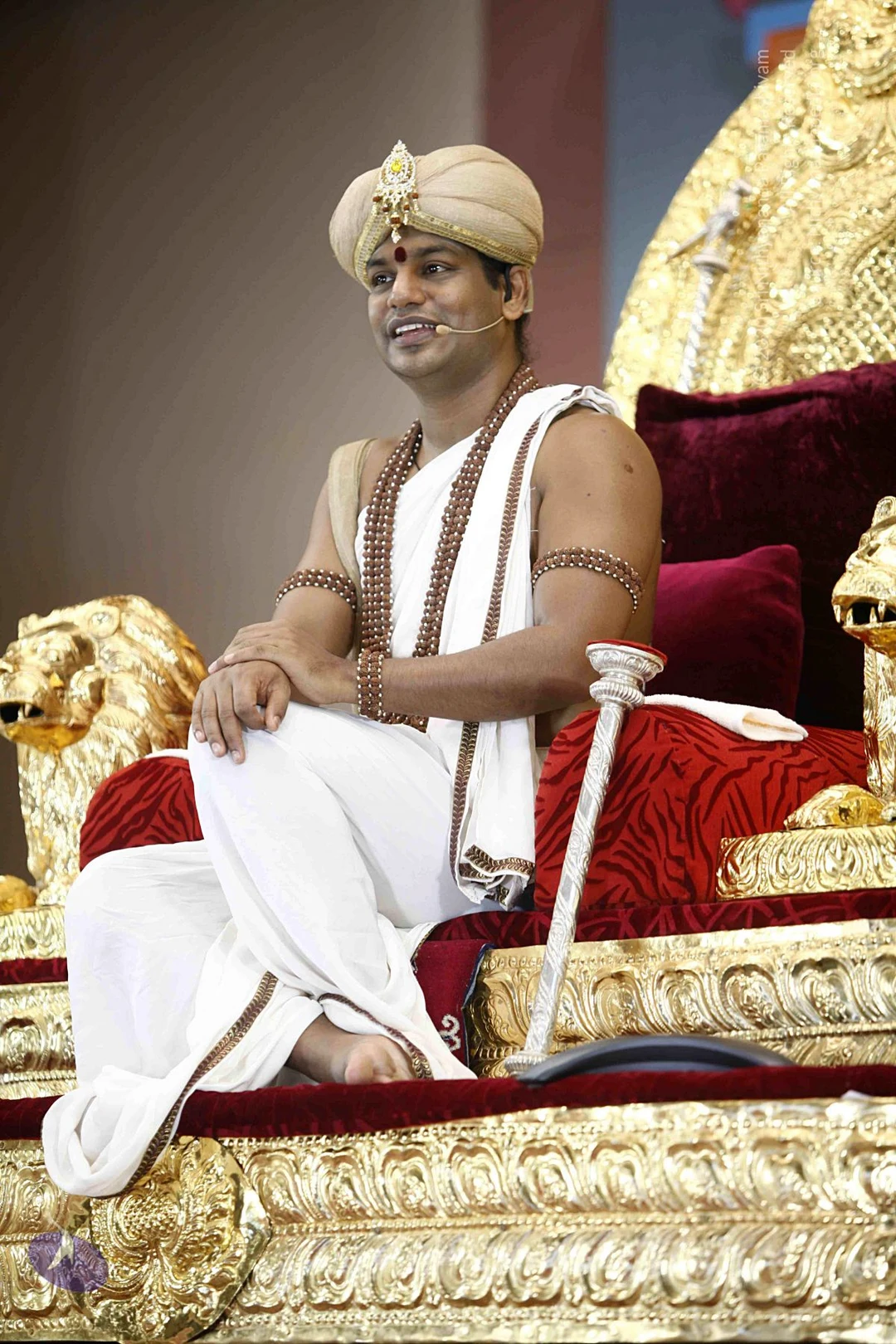
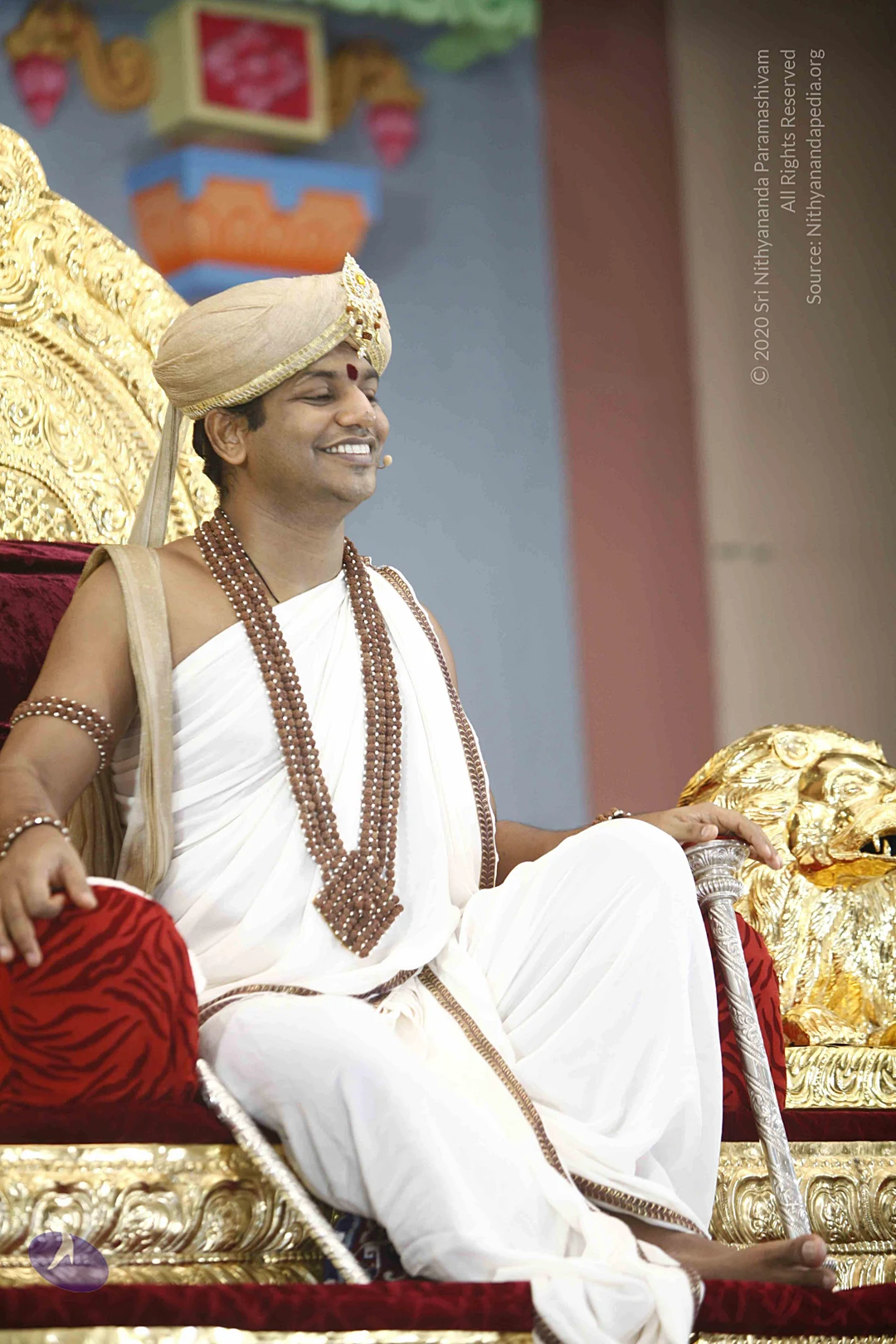
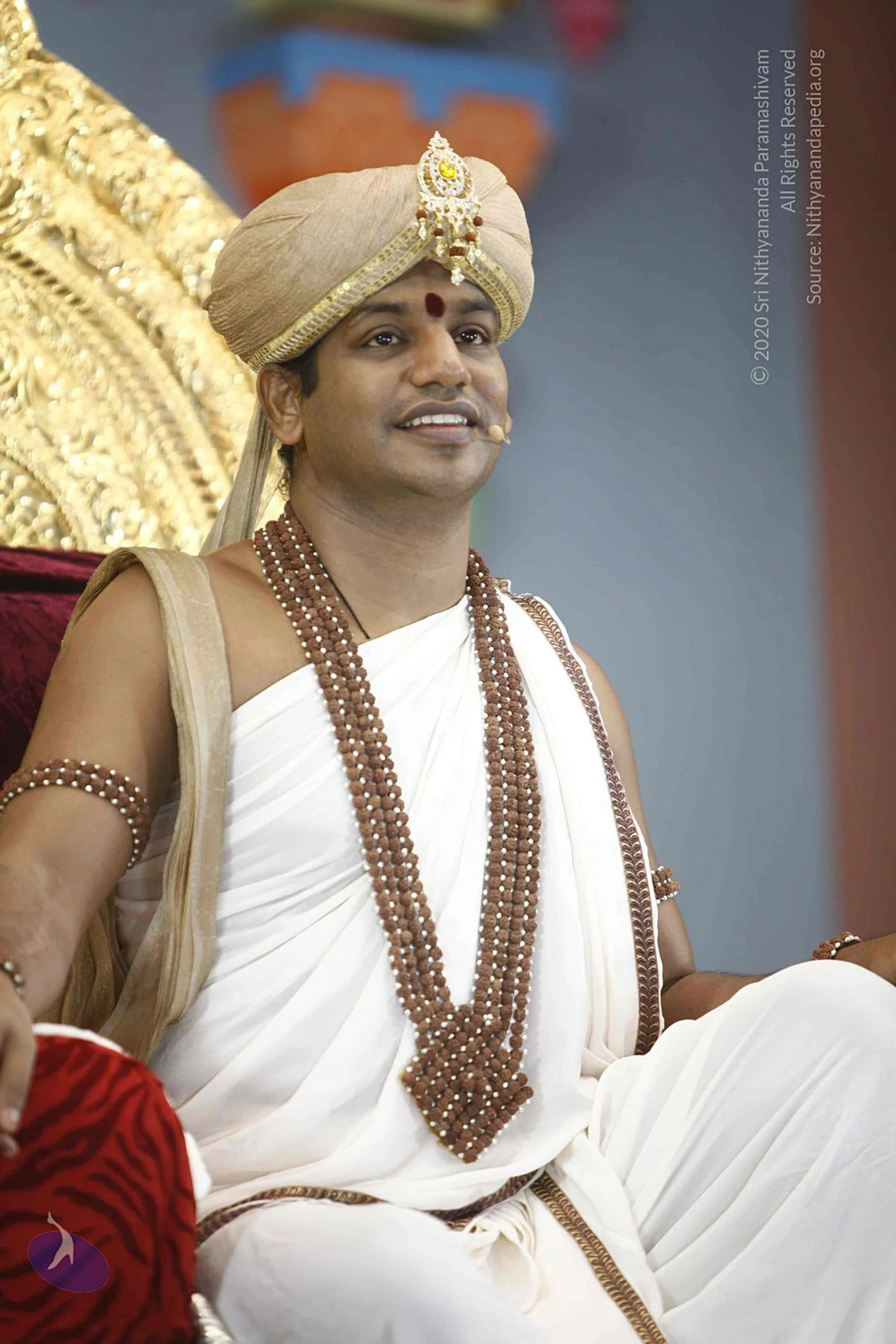
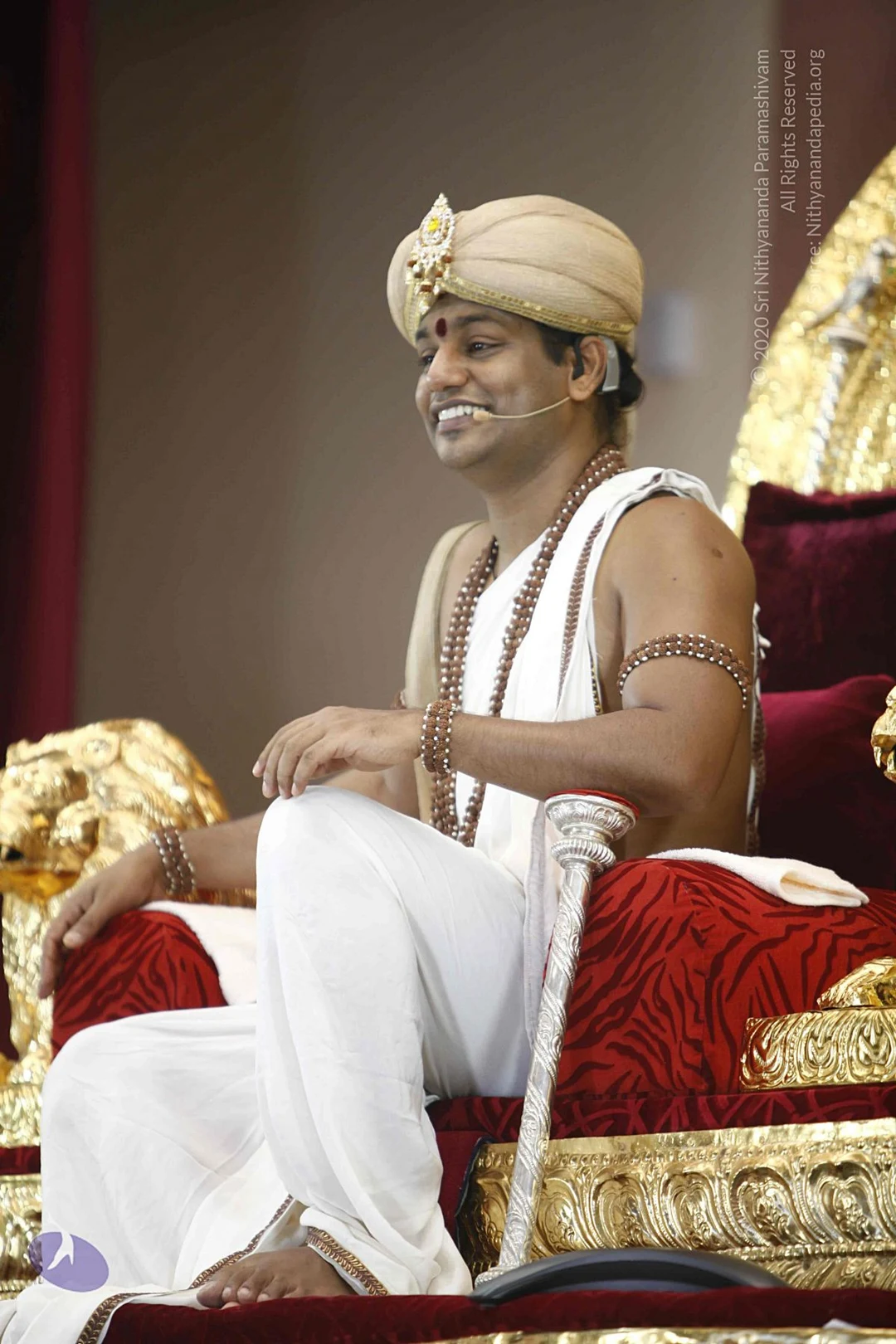
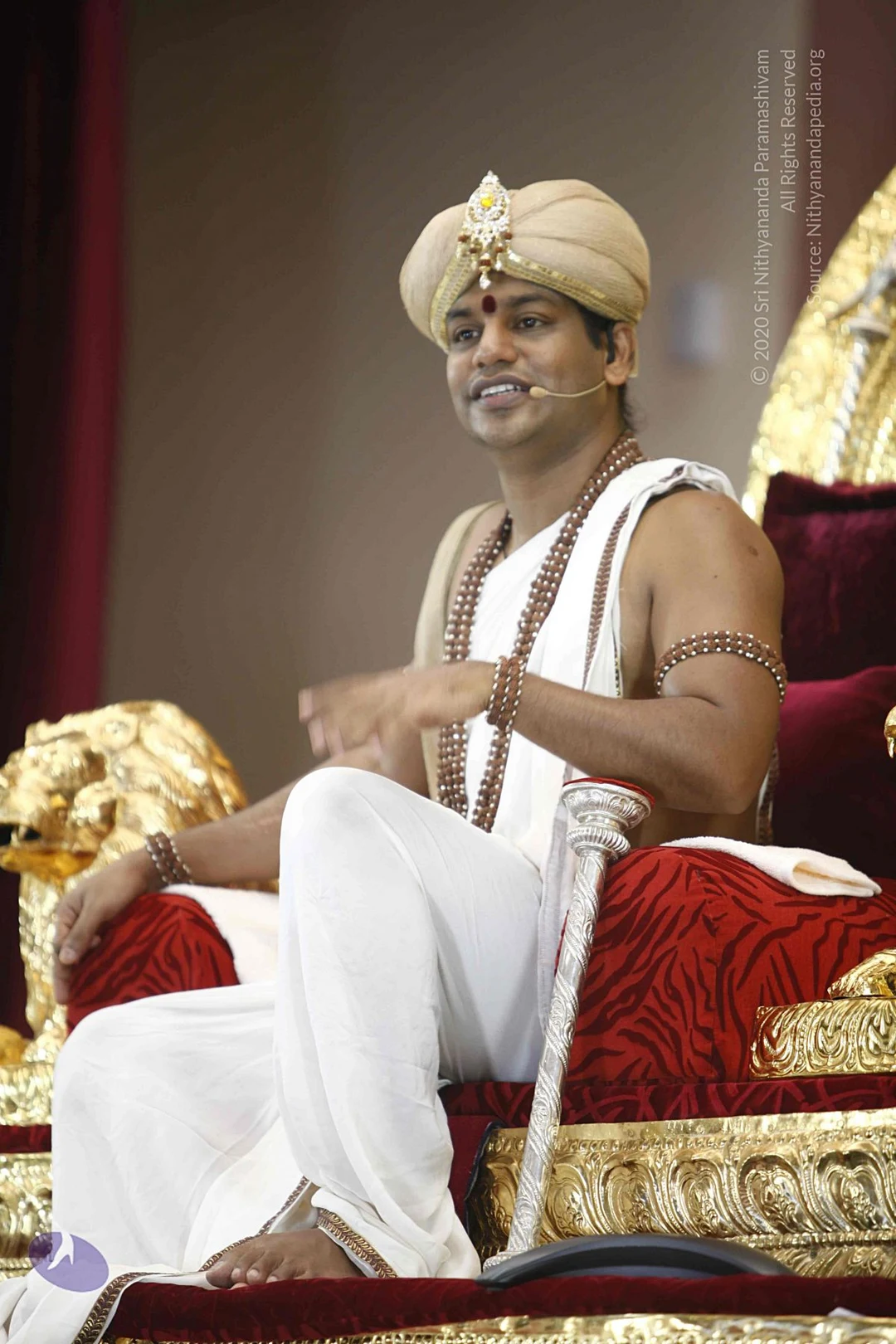
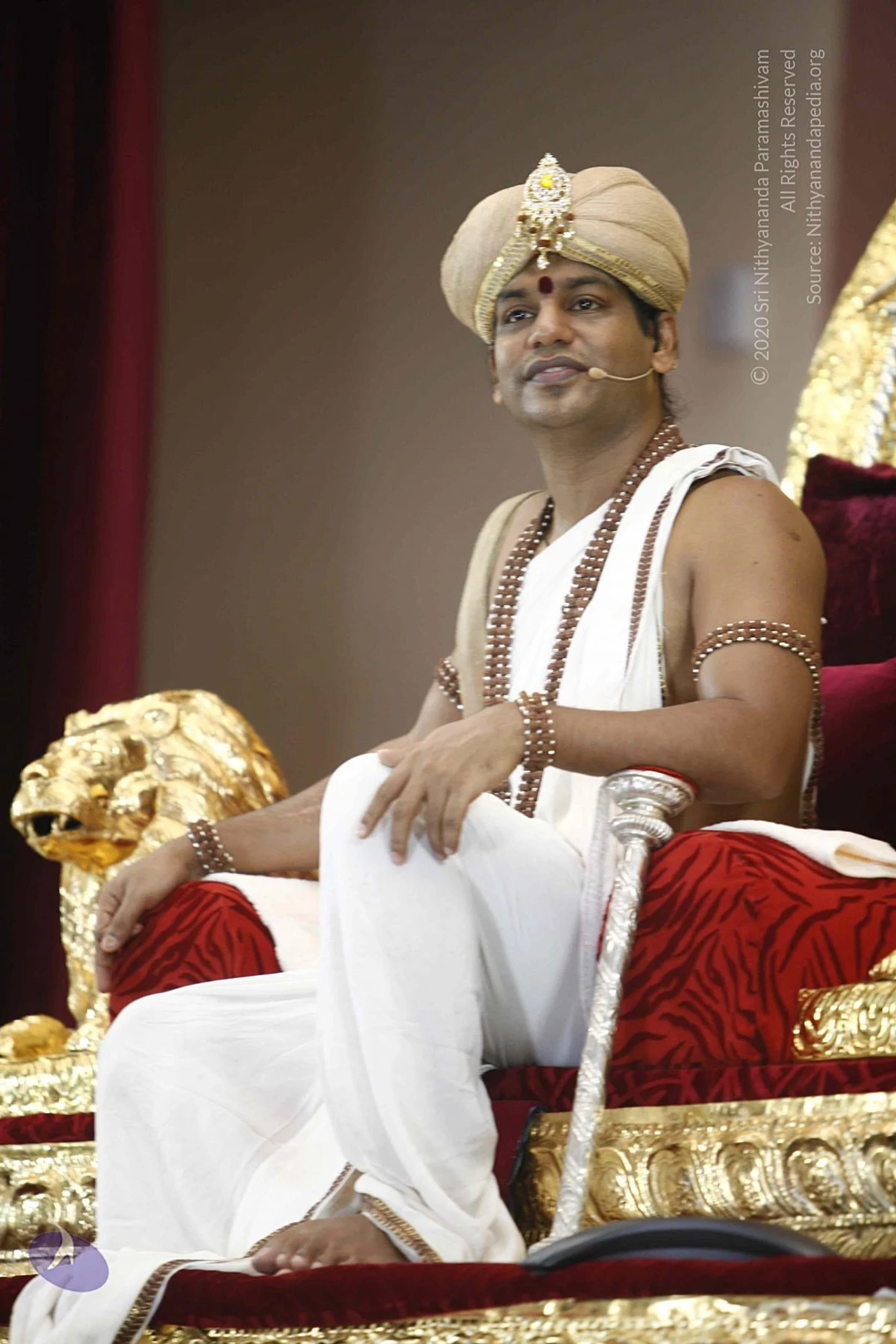
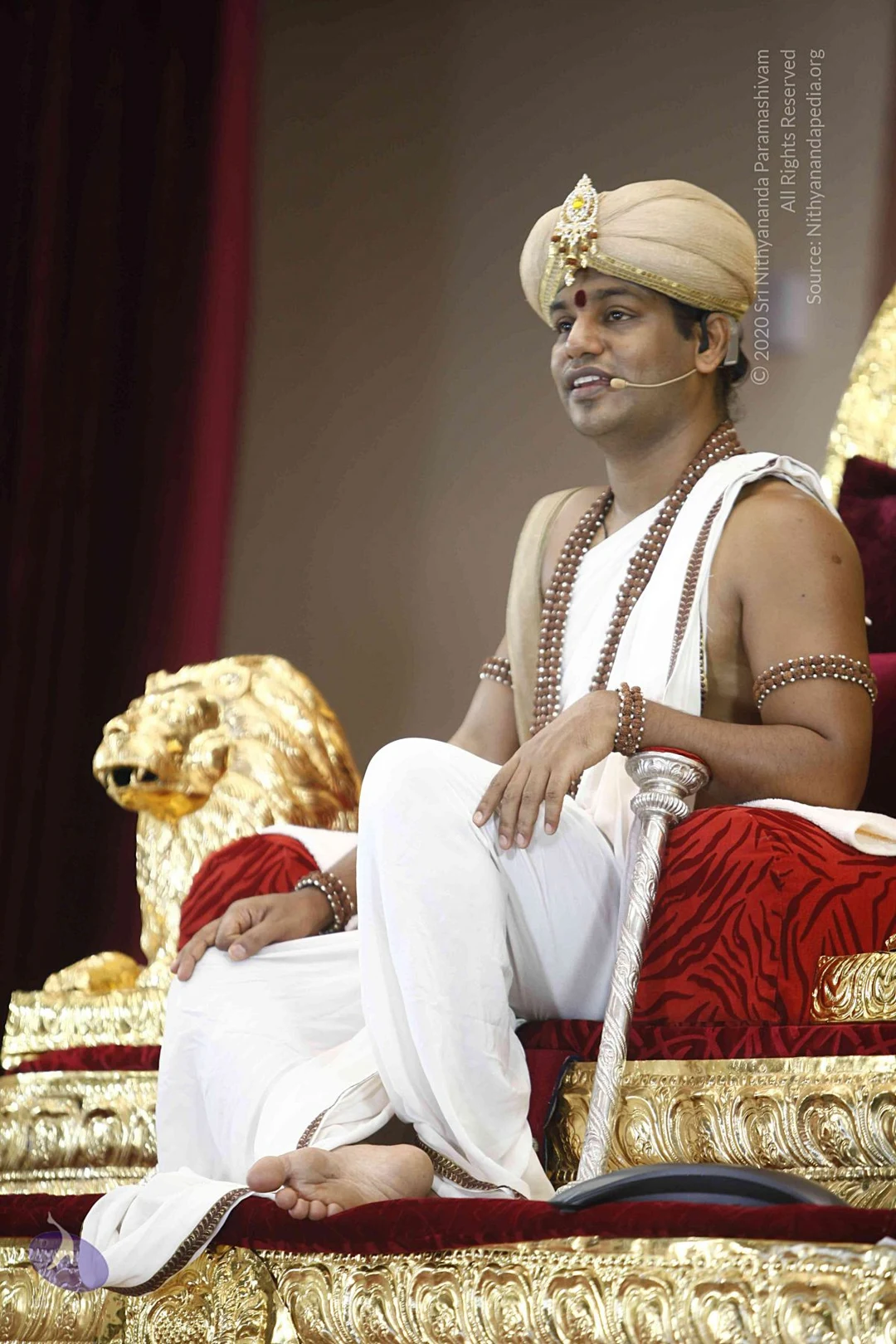
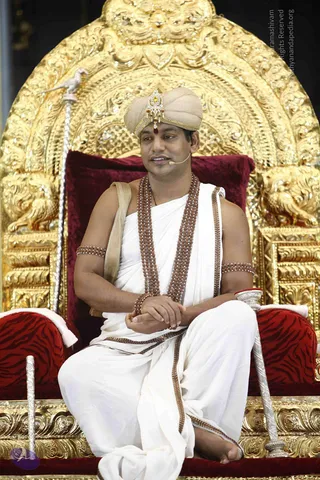
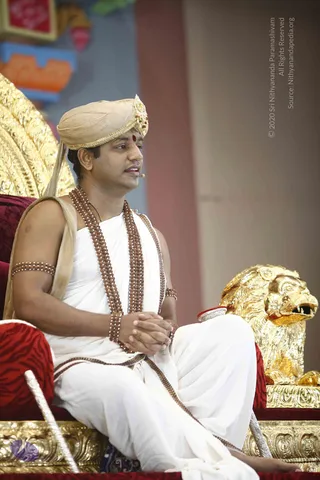
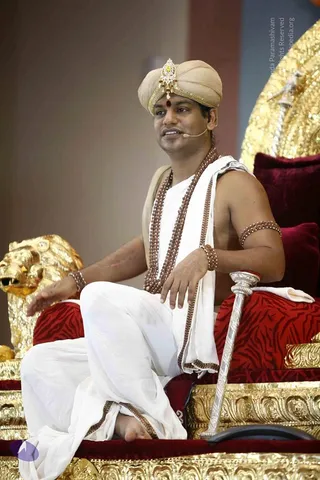
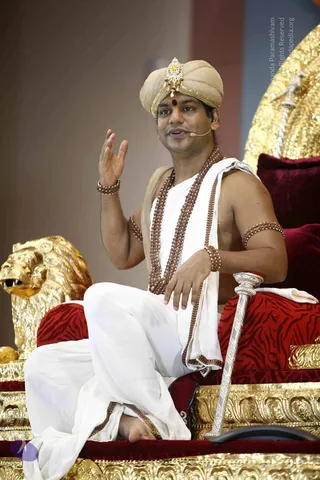
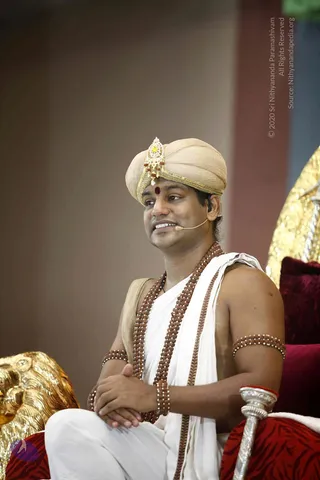
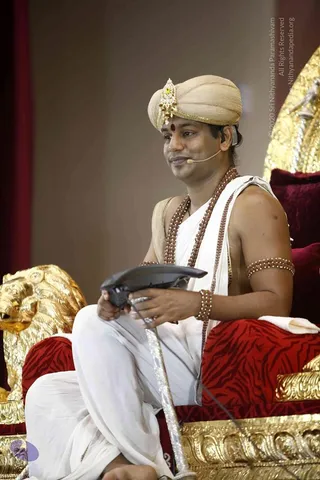
A seated man in a cream-coloured turban with a jewelled ornament at the front, white dhoti-style garment with gold-brown border, and multiple strands of brown rudraksha malas around neck, wrists and upper arms, sits with palms pressed together in namaste and eyes closed. Behind him is an ornate gold throne with carved arch and lion figures, backed by a red velvet cushion, with silver rods and red tiger-striped armrests. The probable Swamiji cues are the turban, rudraksha malas and ceremonial throne; he is shown in person as a devotee-style seated figure receiving honour.A man seated on an ornate gold throne with a red velvet cushion and a carved golden backrest topped by a bird figure. He wears a cream turban with a jeweled ornament at the front, white draped robes edged with gold-brown border, and multiple strands of brown rudraksha beads across his chest and on his upper arms and wrist. A red bindi marks his forehead and a small microphone is clipped near his face as he speaks, hands folded in his lap.A man seated on an ornate golden throne with red velvet cushions speaks into a headset microphone. He wears a cream-coloured turban with a gold jewelled ornament and a red bindi, white draped garments, a light tan shawl over one shoulder, and several strands of rudraksha mala with matching armlets. His hands are clasped in his lap. A golden lion sculpture stands beside the throne, and a red and orange decorated backdrop is visible behind him. The visible cues of turban, ornate gold and rudraksha suggest a person seated in a teaching role, but appearance alone is not decisive.A man seated on an ornate gold-and-red throne with a golden lion-head armrest and a silver staff leaning beside him, speaking into a headset microphone. He wears a beige turban with a gold jewelled ornament and red bindi, a white dhoti and white shawl edged in gold, multiple strands of rudraksha beads around his neck, and rudraksha bracelets.A man seated on an ornate gilded throne with carved golden lion armrests and red velvet cushions, speaking into a headset microphone while gesturing with his right hand raised. He wears a beige turban with a jewelled ornament, a white dhoti-style garment with a beige shawl, multiple strands of rudraksha beads, and rudraksha bracelets on his wrists and upper arms. A red bindi marks his forehead. A silver staff rests beside the throne.A man seated on an ornate golden throne with a lion-carved armrest and red velvet cushions, speaking with a headset microphone. He wears a cream-coloured turban with a gold and jewelled brooch, a red bindi on his forehead, a white dhoti-style cloth draped over one shoulder, and multiple rudraksha malas with bead armlets. His hands are clasped in his lap. Swamiji (probable): long hair, ornate ceremonial turban, rudraksha malas and gold-toned adornments on a throne, consistent with the page's description. The backdrop is a plain brown wall with a red pillar on the right.

EDIT-Dial -The- Avathar
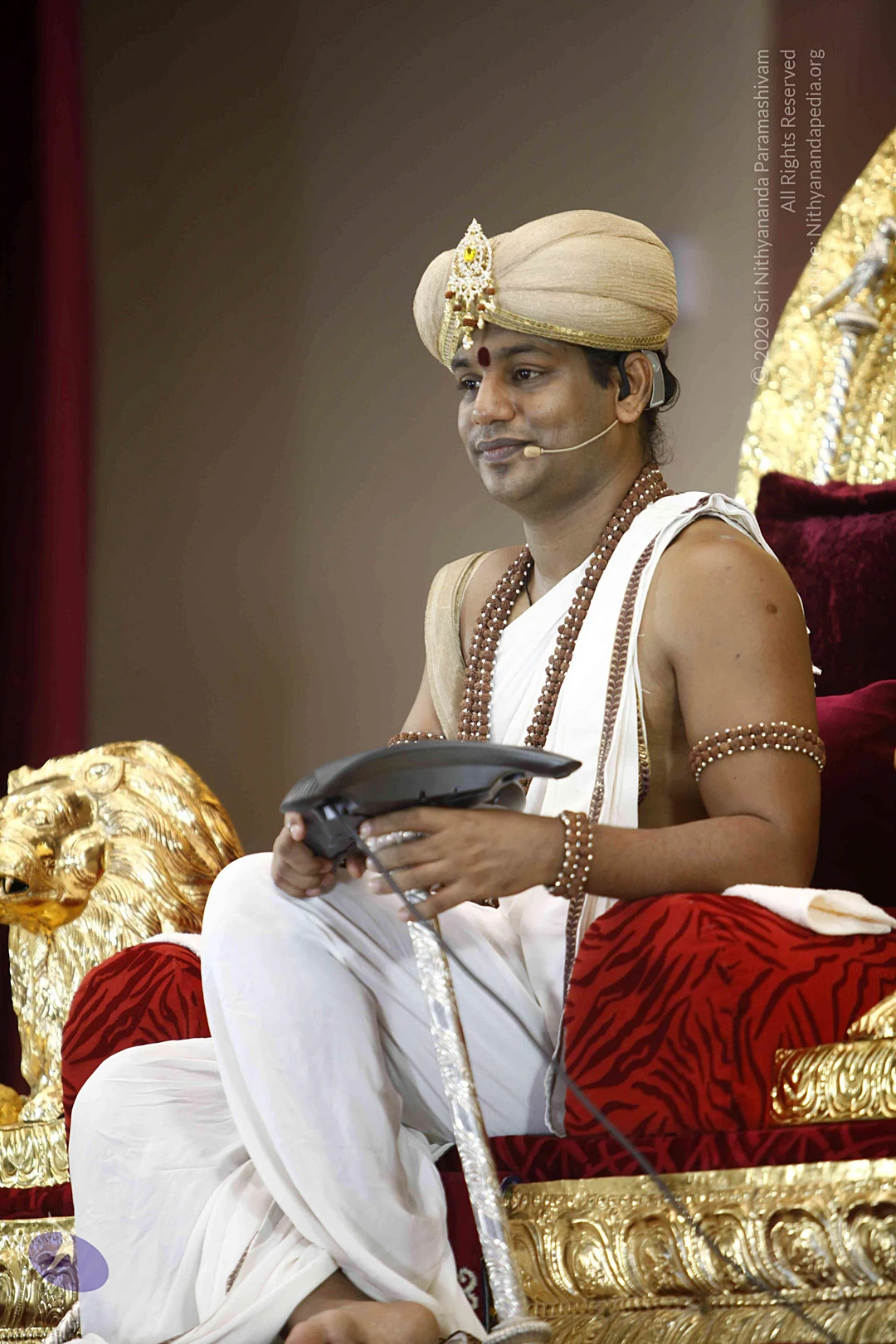
1 photoSource gallery
A seated man in a cream-coloured turban with a gold and jewelled ornament and a red bindi sits on an ornate gold and red throne with a golden lion armrest. He wears a white dhoti and white shawl over bare shoulders, with multiple brown rudraksha malas around his neck and arms, and a wireless headset microphone. He holds a black handheld device in his lap. The setting appears to be a stage with a plain beige backdrop and red curtain. Probable Swamiji is seated on the throne, identified by the turban, ornament and rudraksha malas.

Edit-Sarva-Darshan

2 photosSource gallery
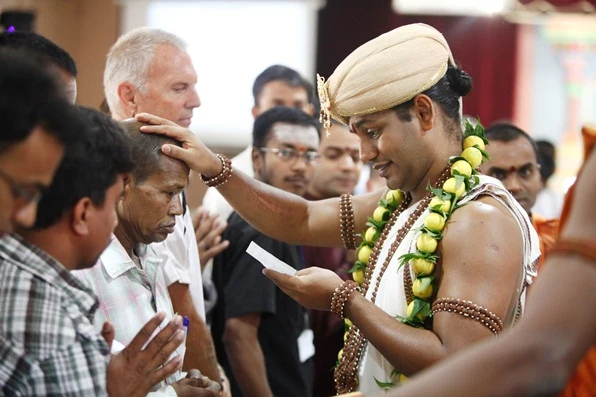
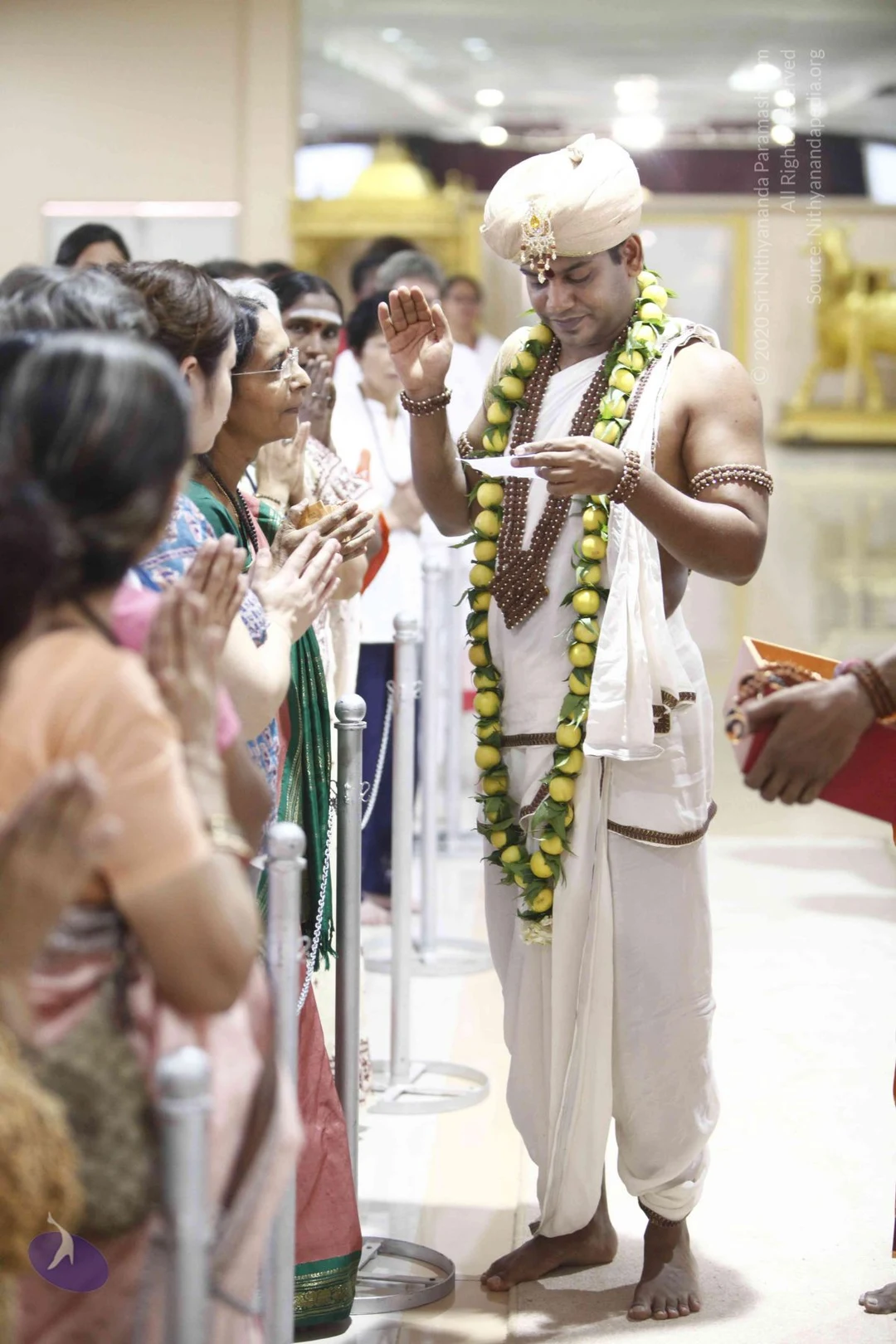
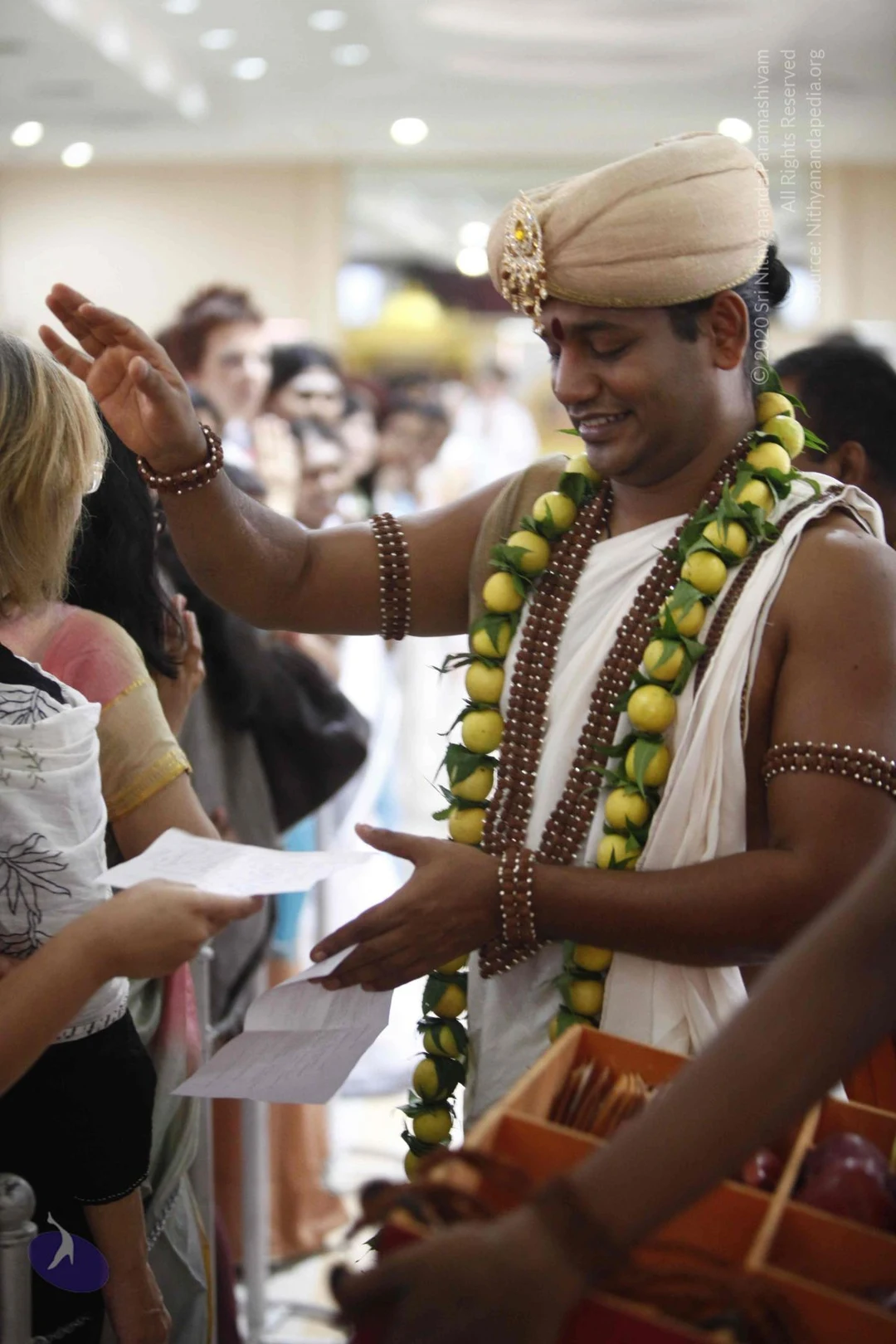
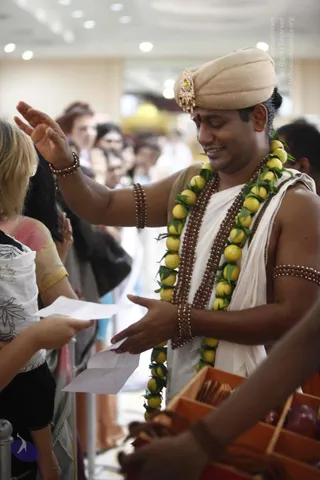
A man in a white turban with a gold ornament and a white dhoti and shawl stands barefoot on a pale marble floor, wearing a long garland of yellow flowers and a rudraksha mala across his chest. He raises one hand in blessing and holds a small white card. Several women in saris and salwars stand behind a line of silver stanchions, palms pressed together in namaskar. A golden deity murti and gilded architecture appear in the background, and a red-wrapped box is held at the right edge. The man's appearance is not clearly distinctive enough to confirm a specific identity, so he is described by role as a priest or devotee.A photograph of a smiling man in a cream-coloured turban with a gold ornament and red forehead mark, wearing a white dhoti-style cloth, rudraksha bead malas and bracelets, and a long garland of yellow fruits with green leaves. He extends one hand to receive or hand over a sheet of paper, while a woman in a white embroidered top reaches toward him. Behind them a crowd of people stands in an indoor hall, and a wooden tray with fruit sits in the foreground.

Edit-IA-Registration
7 photosSource gallery
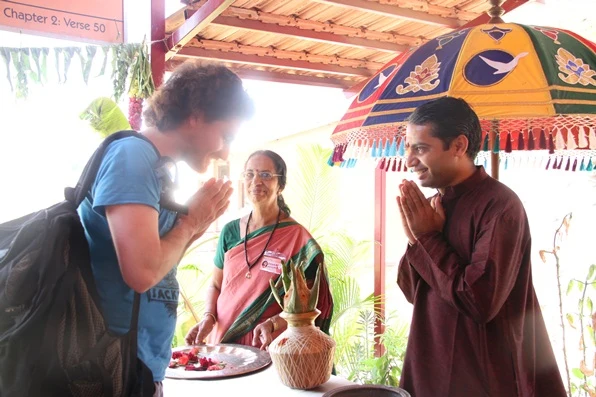
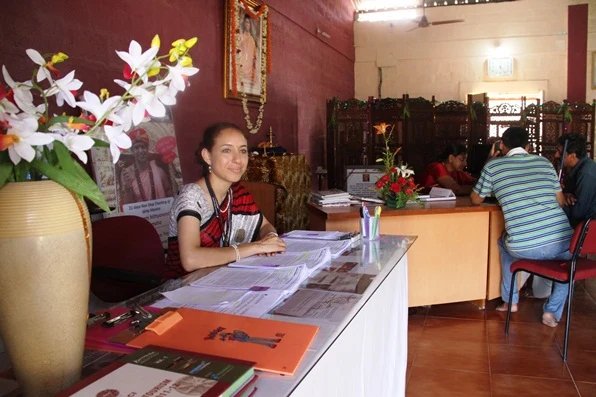
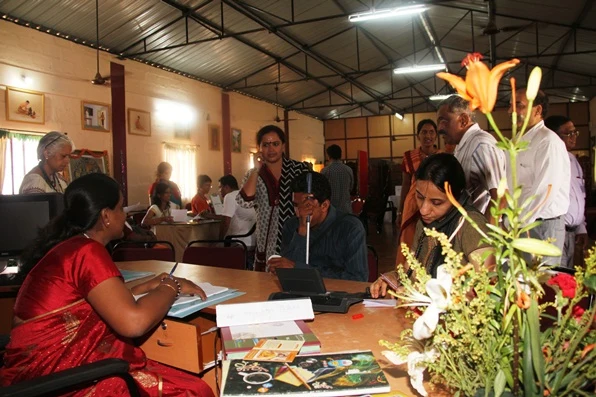
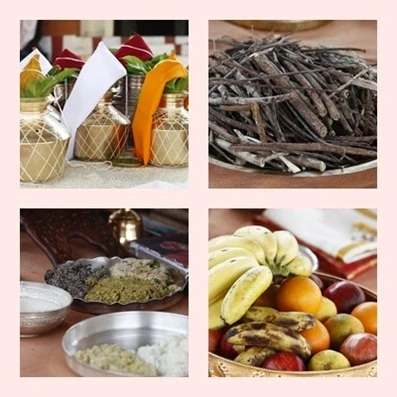
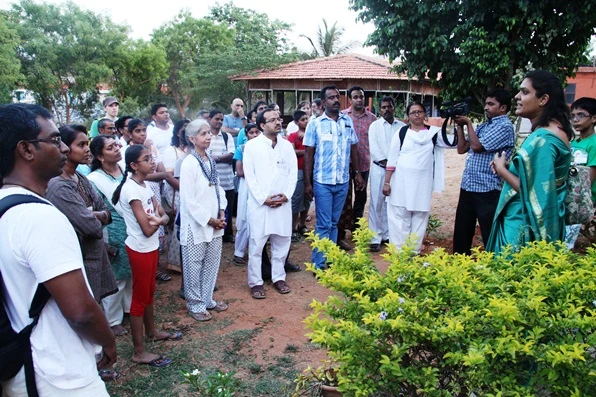
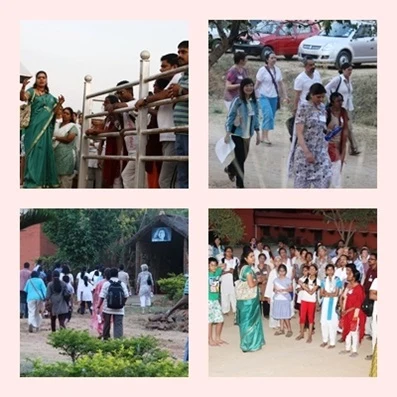
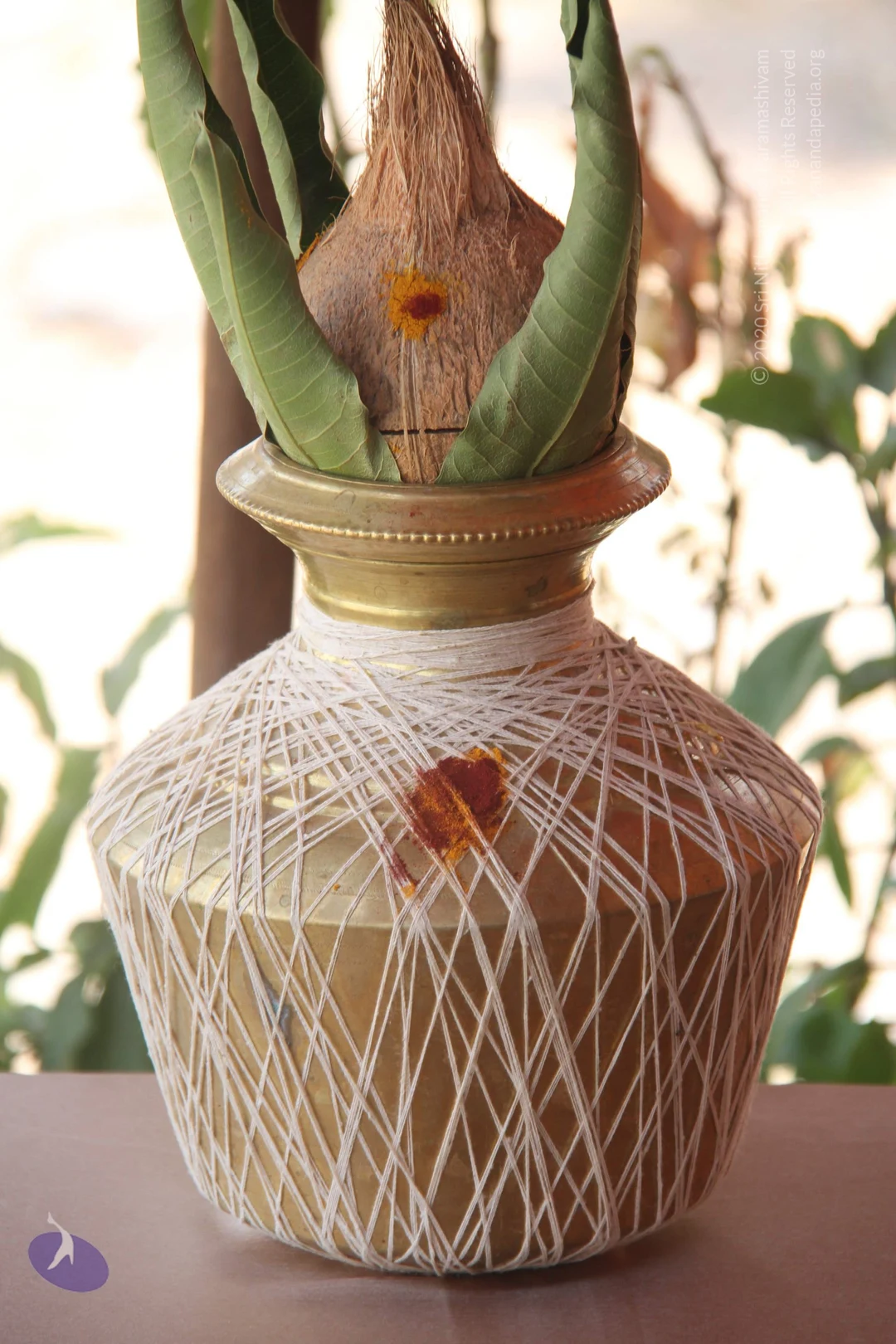
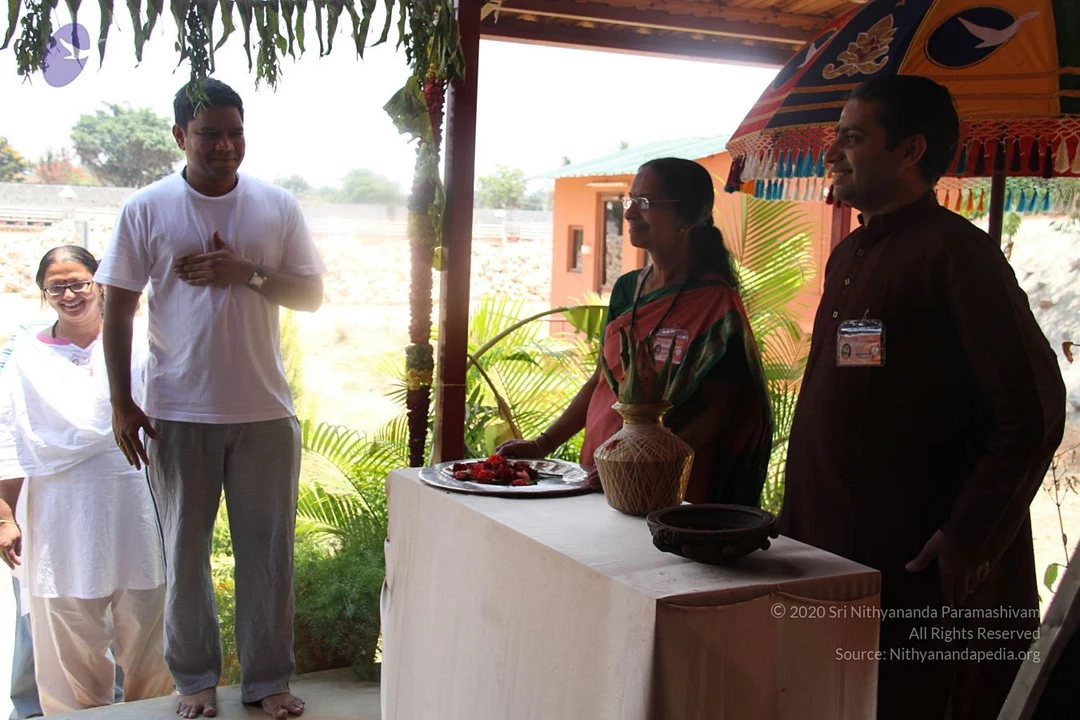
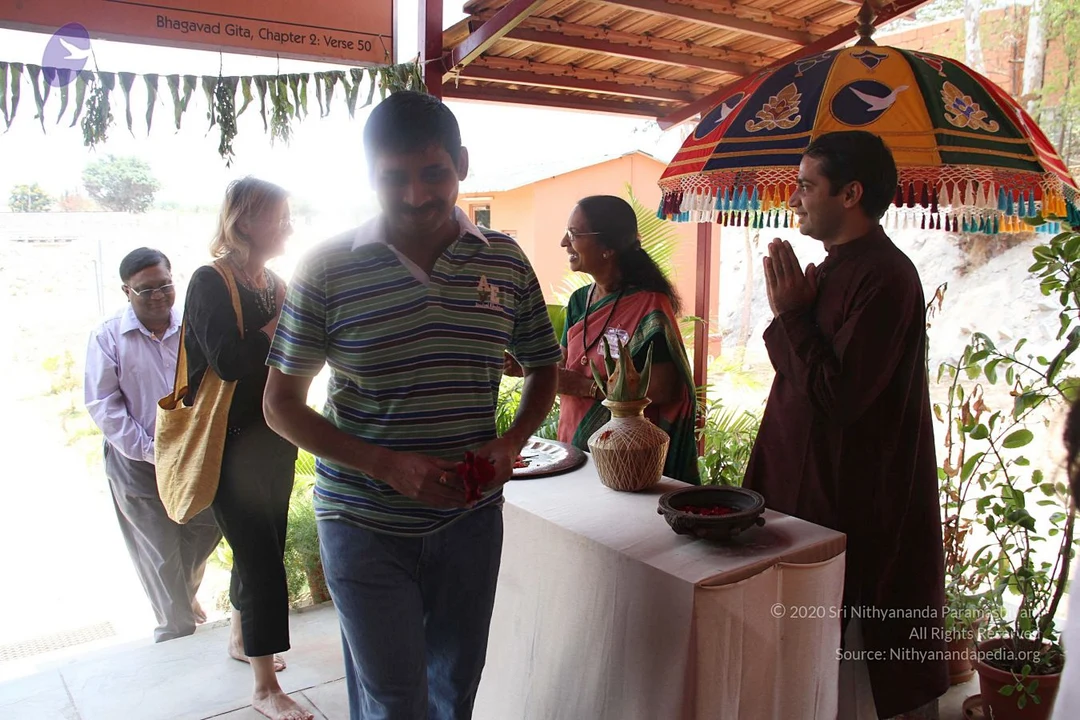
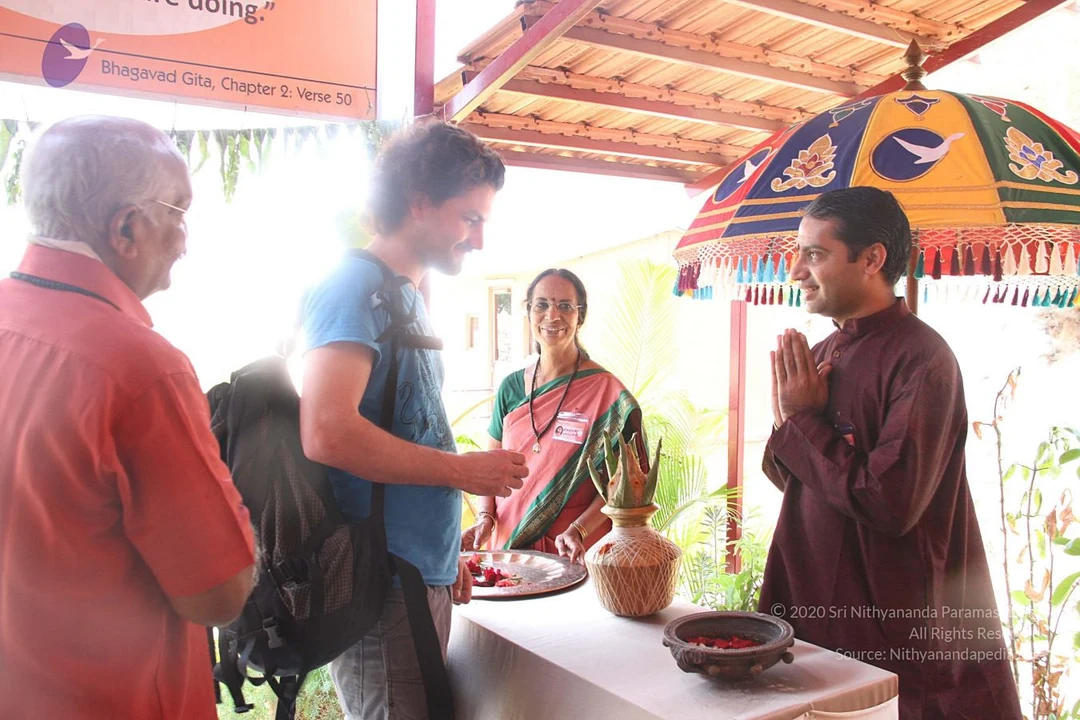
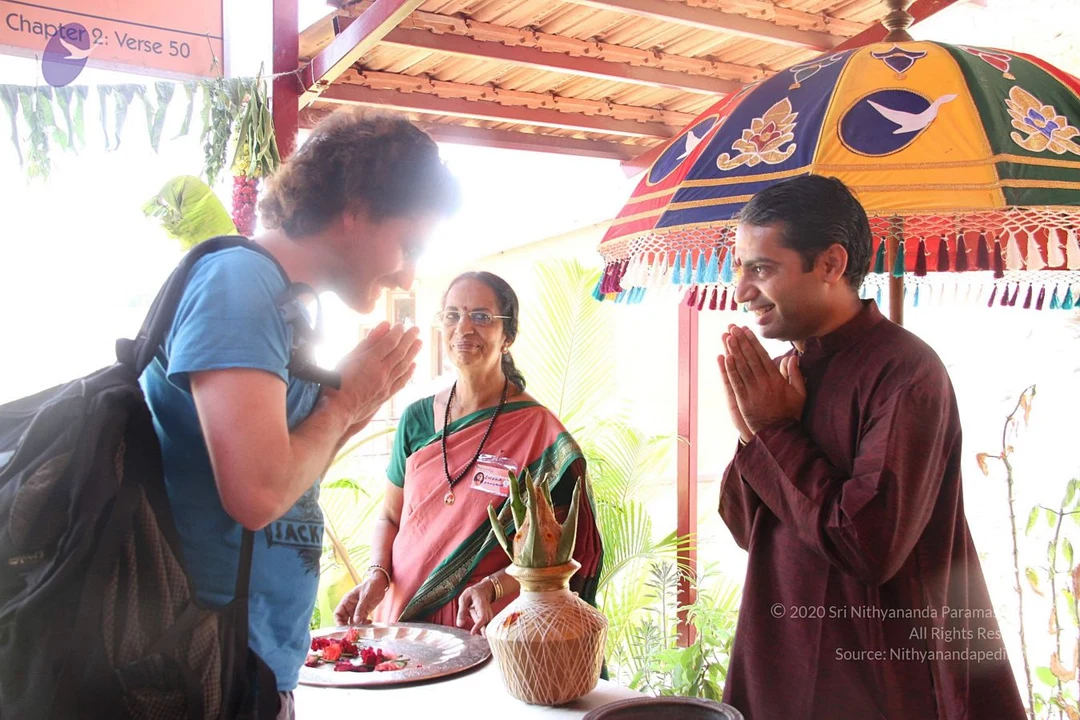
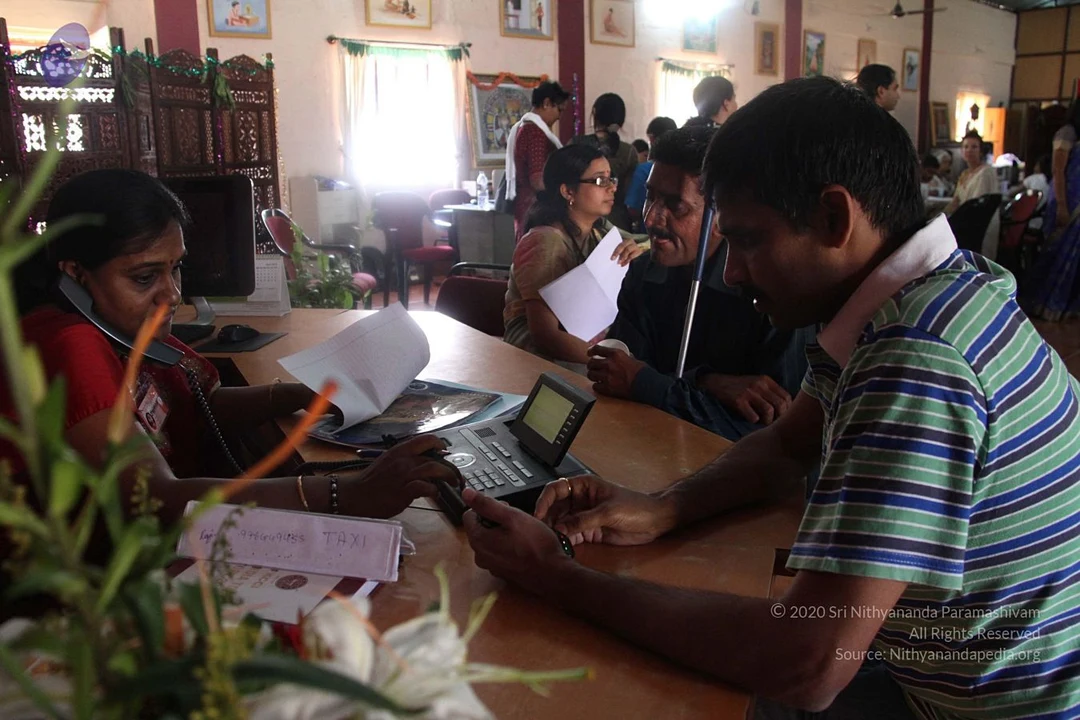
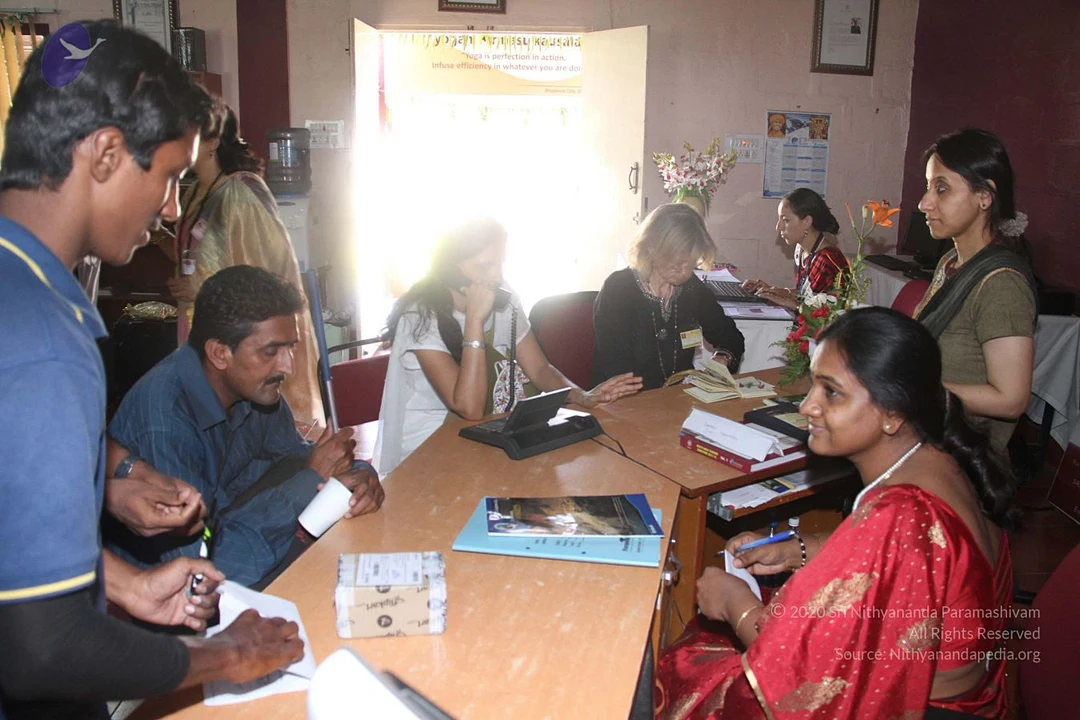
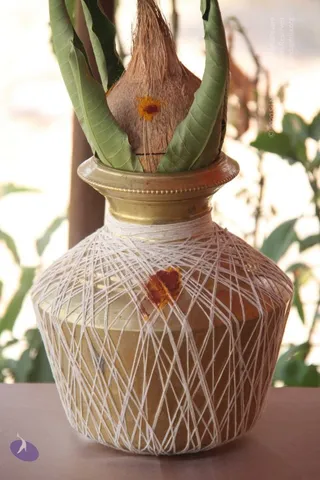
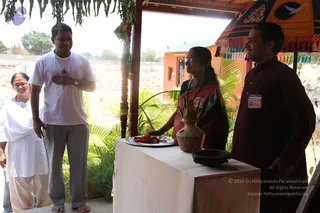
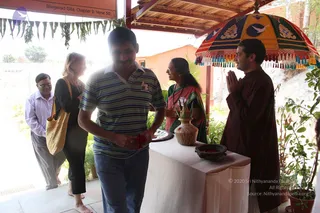
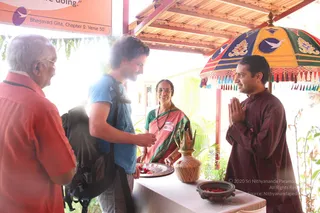
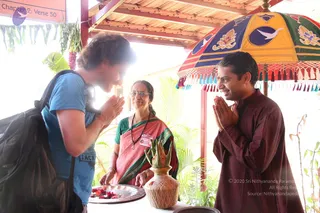
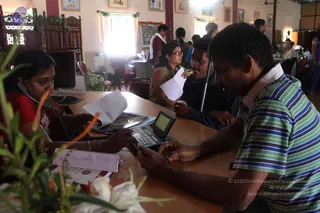
Close photograph of a brass kalasha water pot wrapped in white cotton thread, with mango leaves and a coconut set in its mouth. Red and yellow kumkum/turmeric marks dot the coconut and the pot's body. The pot sits on a brown surface against a blurred green plant background. No people or a person are visible.A covered outdoor pavilion with green leafy garland hangings and a striped umbrella with a bird emblem. A man in a plain white t-shirt and grey trousers stands barefoot with hands joined at his chest, smiling. Beside him a woman in a white outfit smiles, and a woman in a red and green sari with glasses stands at a white-draped table holding a metal plate of red flowers, next to a woven basket vase and a dark bowl. A man in a long maroon kurta with an ID badge stands at the right. The setting shows palm plants and a tiled building behind.A covered pavilion with a red tiled roof and a sign reading Bhagavad Gita, Chapter 2: Verse 50. A man in a green-and-white striped polo shirt and jeans walks forward holding red flower petals. Beside a white-draped table with a wicker pot, a brass bowl with red petals and a small plant, a woman in a pink sari with a maroon border and a man in a maroon robe stand with palms pressed together. A blonde woman with a tan shoulder bag and a man in a white shirt stand behind them. A multicolored umbrella with tassels and bird motifs shades the table. No a person candidate is visible.A photo at a covered outdoor reception table under a colourful canopy with blue, green and yellow panels and tassels, beside a Bhagavad Gita, Chapter 2, Verse 50 banner. A smiling woman in a green blouse and pink-and-green sari with a lanyard hands a steel tray of red flower petals to a man in a blue t-shirt with a backpack. An older man in a red shirt stands at left, and a man in a maroon kurta at right stands with palms pressed together in anjali. A clay pot with a plant sits on the table, with a small bowl of petals in front.A photograph of three people at an outdoor covered pavilion with a multicoloured canopy umbrella above them. On the left, a man in a blue t-shirt and dark backpack, with a camera strap, bows with palms pressed together in namaste. In the centre, a smiling older woman in a pink and green sari, with glasses, a rudraksha-style mala necklace and a name badge, holds a tray of cut fruit. On the right, a smiling man in a maroon kurta stands with palms pressed together. A woven pot with a leaf-topped kalasha-like arrangement sits on the table, and a banner reading Chapter 2: Verse 50 is visible at top left.Photo of a registration counter at an ashram hall. A woman in a red top and dark-rimmed glasses sits behind the desk, holding a telephone handset and pointing at a handheld device on the table. A man in a blue and green striped shirt leans over the counter and holds a small handset, while a man in a dark jacket and a woman in a light brown top look on, one holding a sheet of paper. A sign on the table reads TAXI. Framed pictures hang on the white walls, and a carved wooden screen stands at left with other people seated and standing in the background.

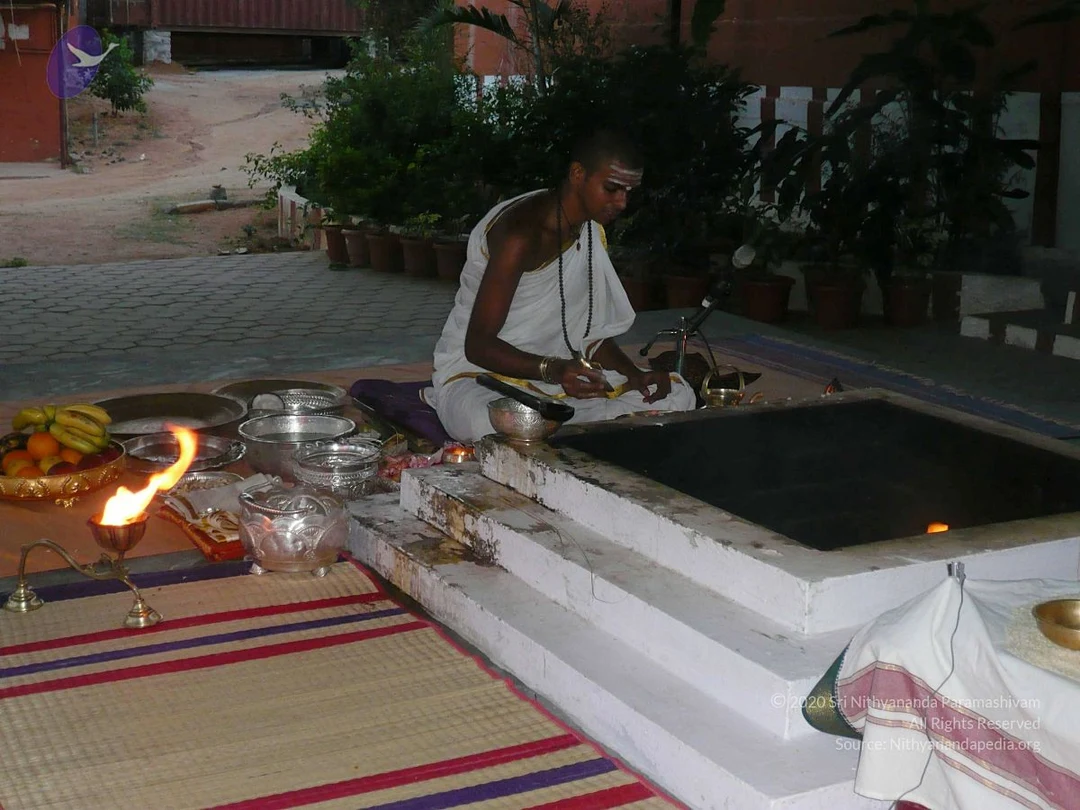
Edit-Navagraha-Homa

12 photosSource gallery
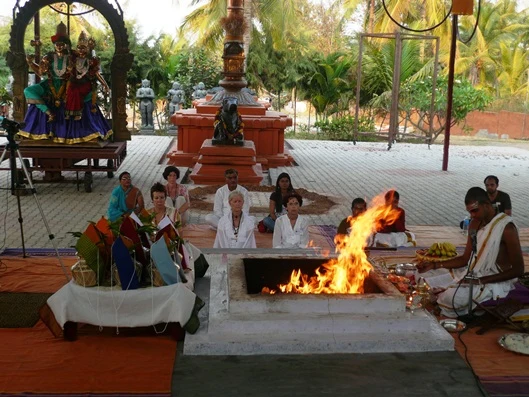
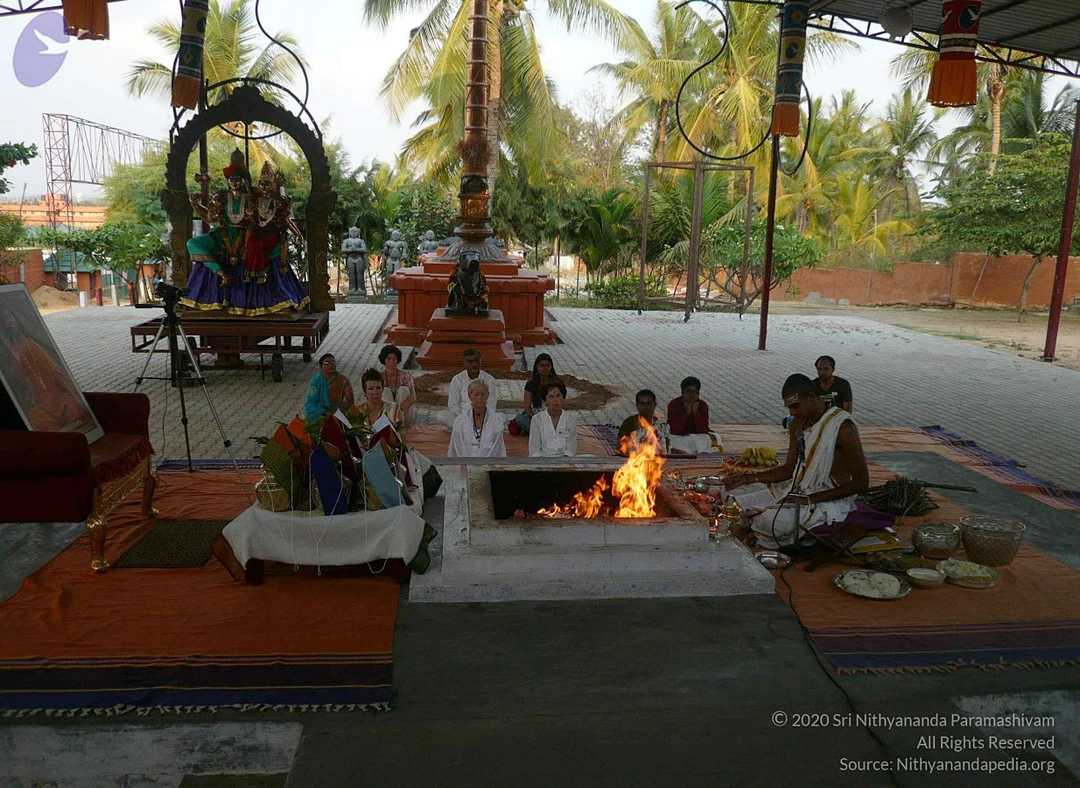
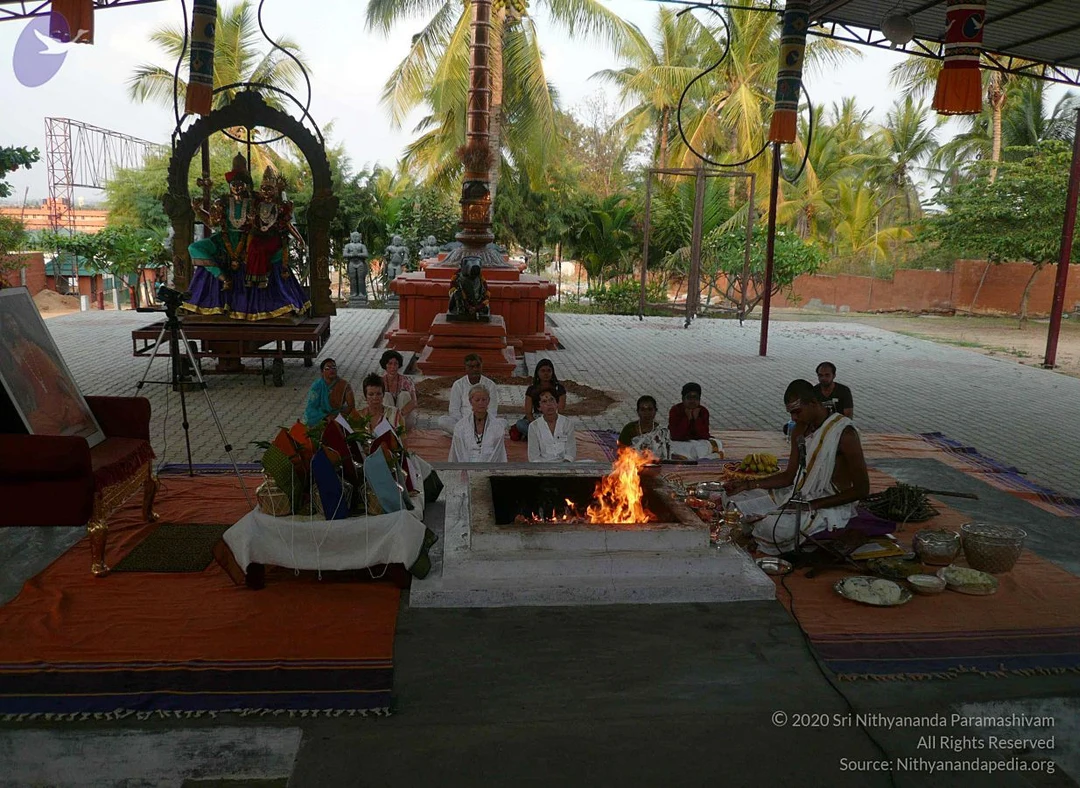
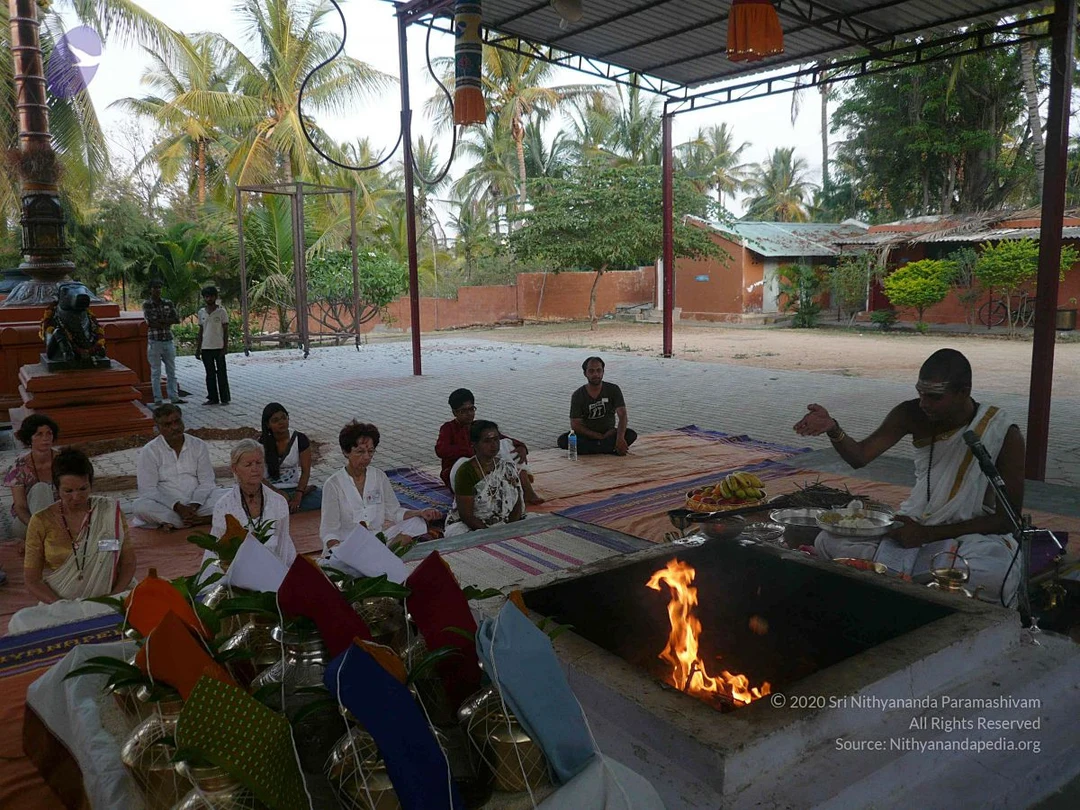
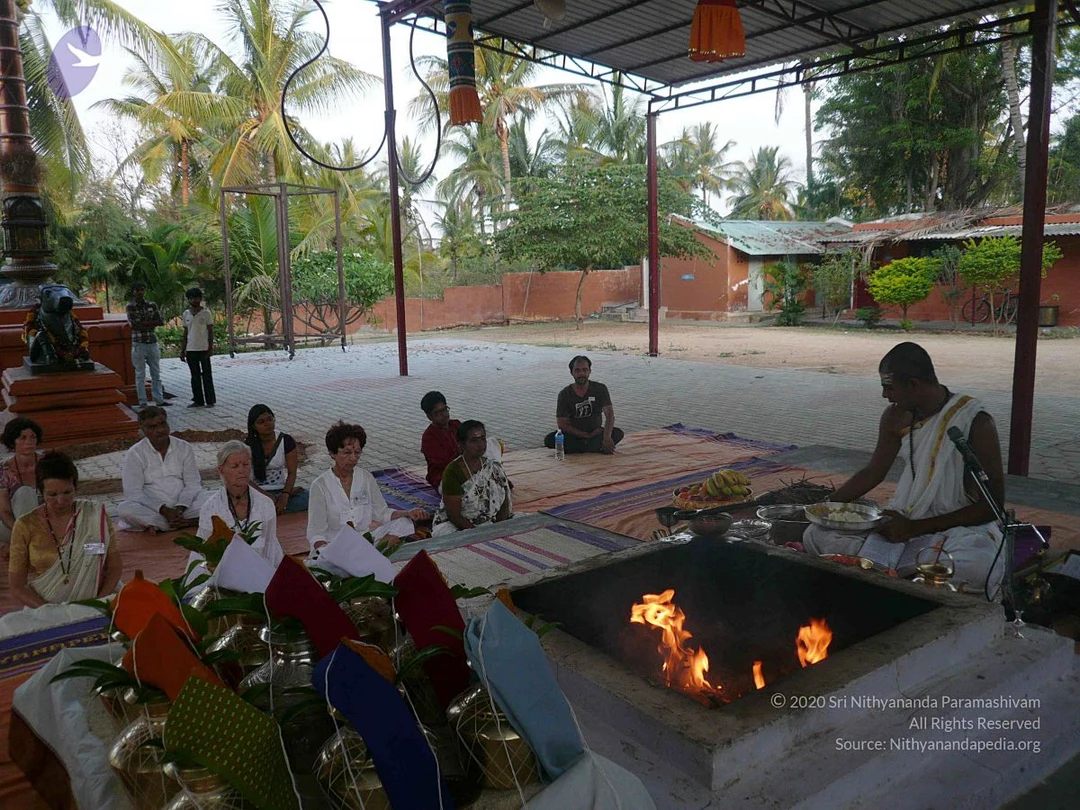
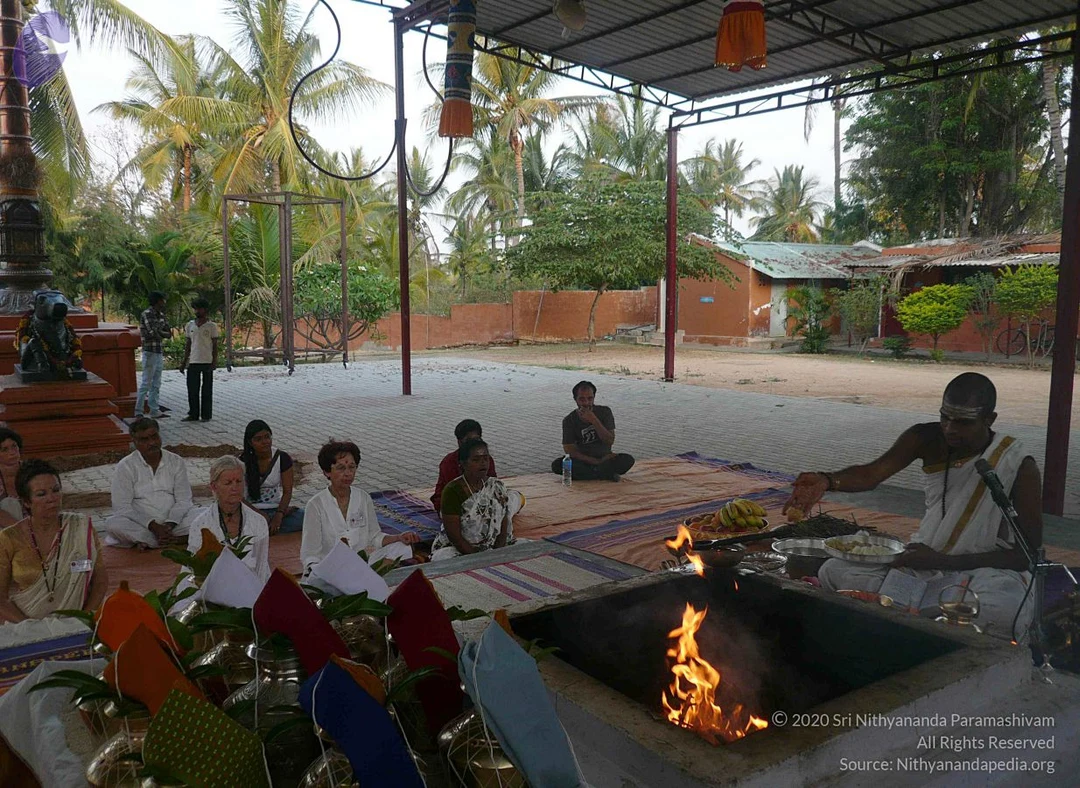
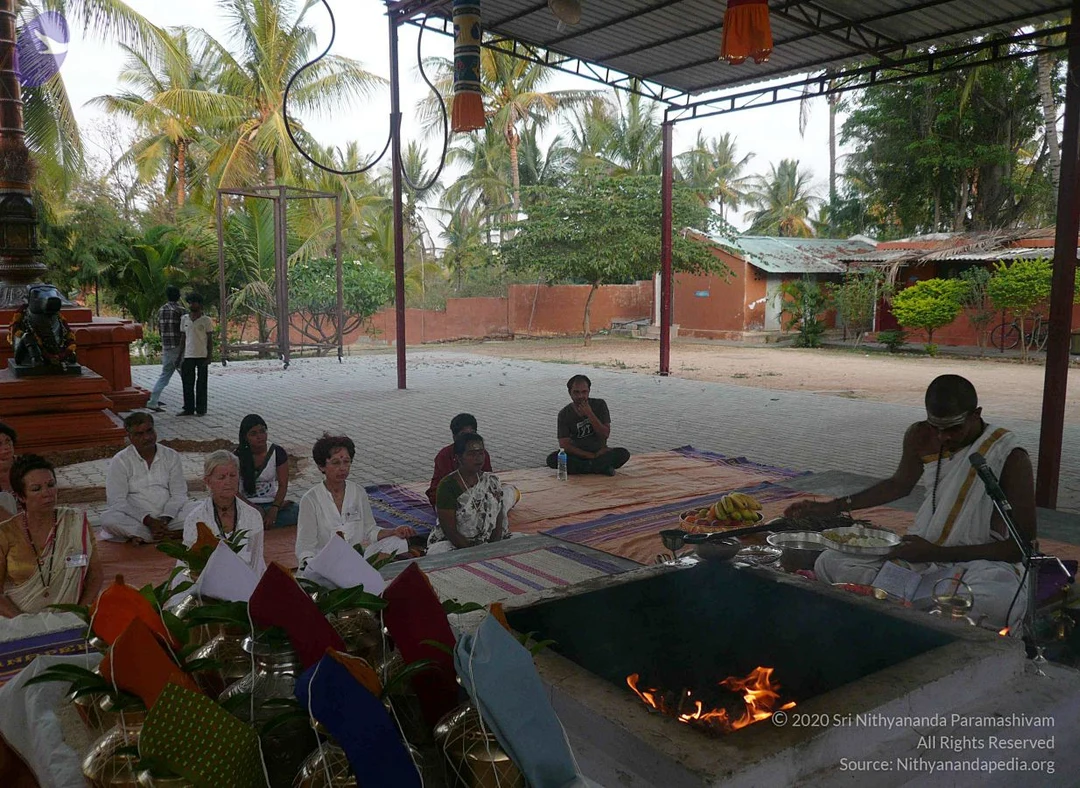
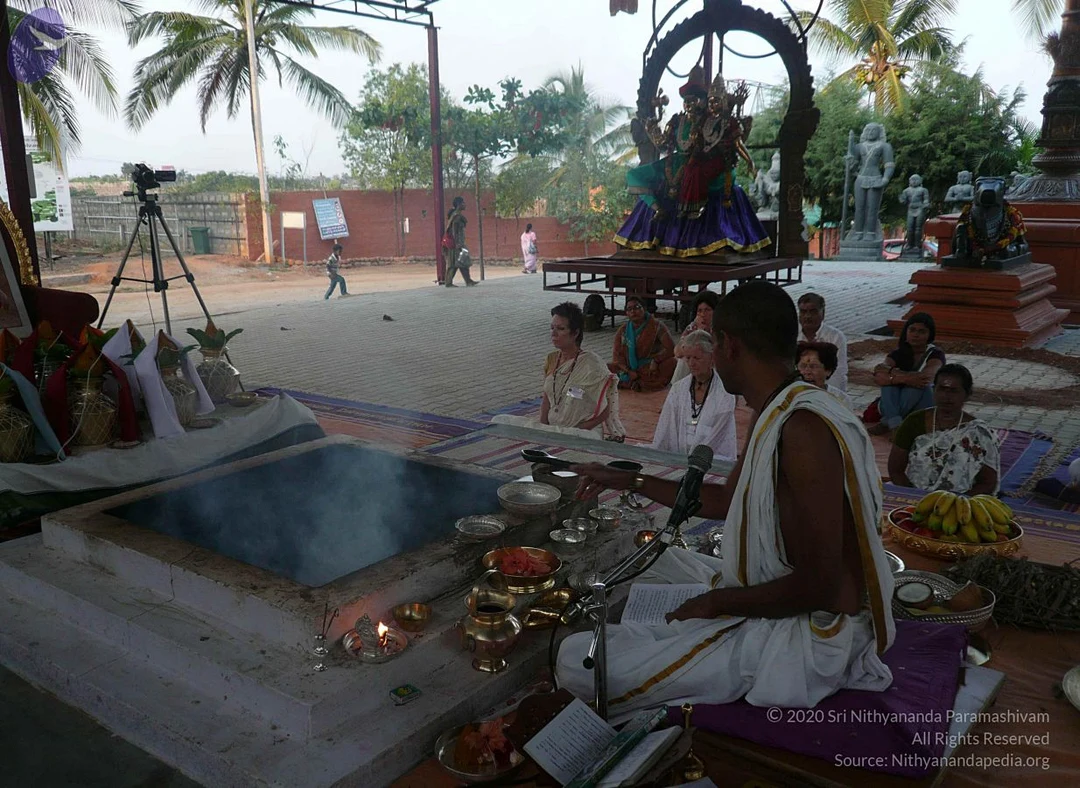
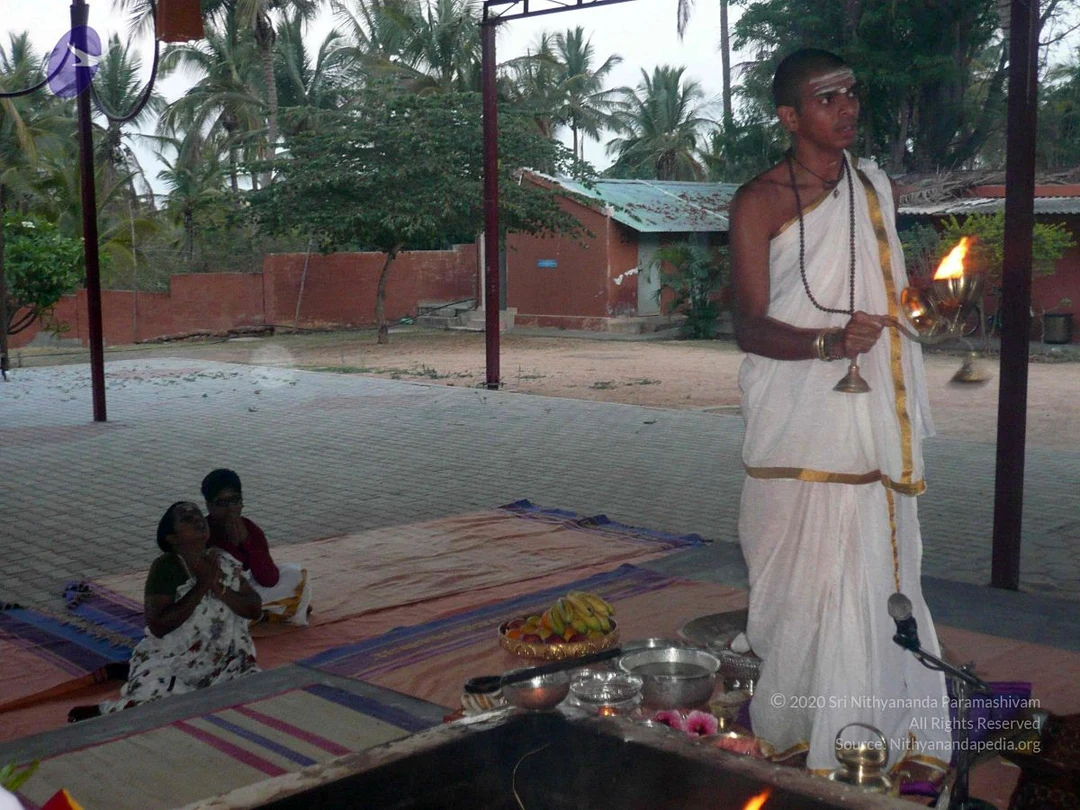
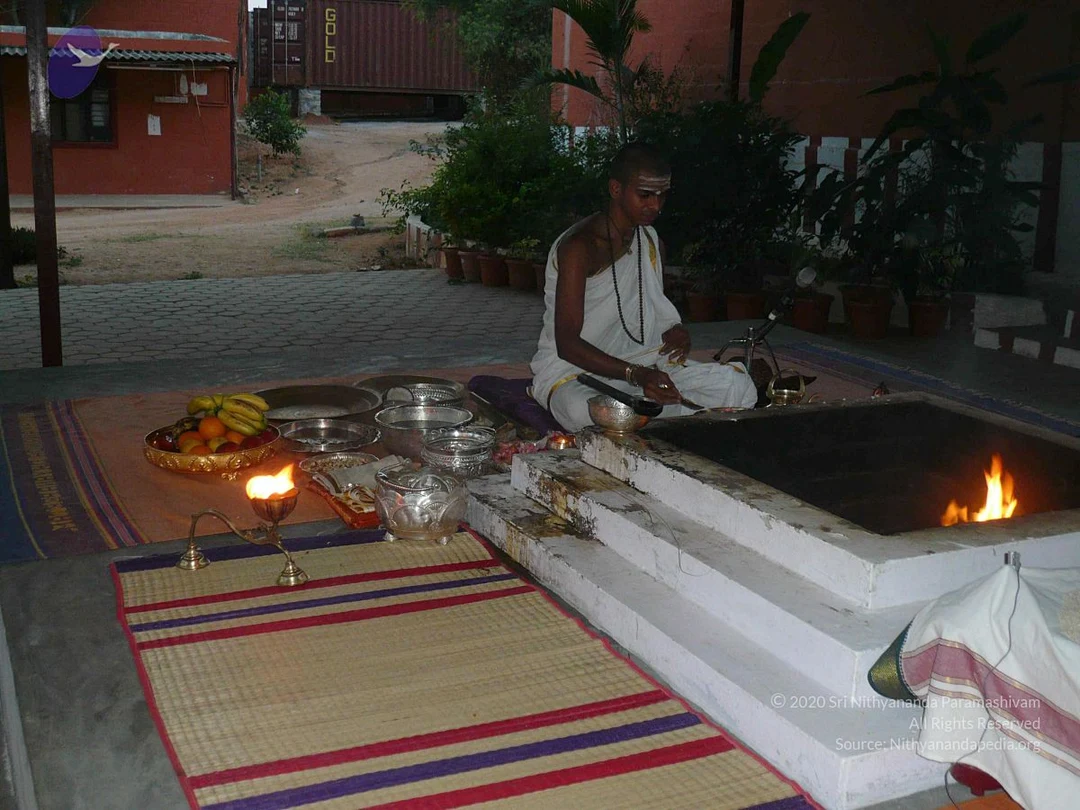
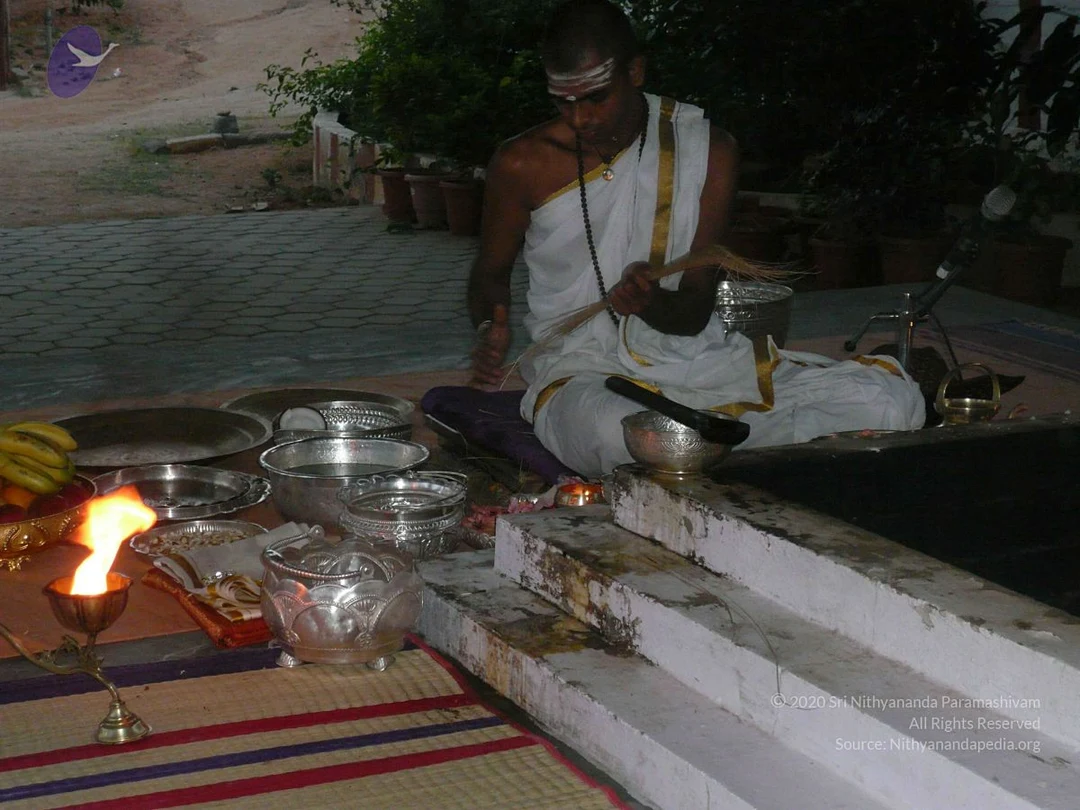
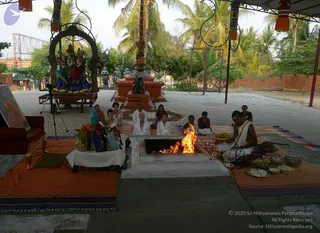
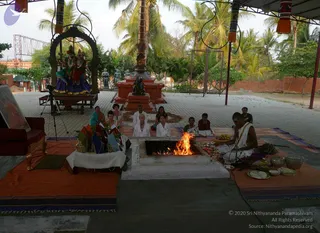
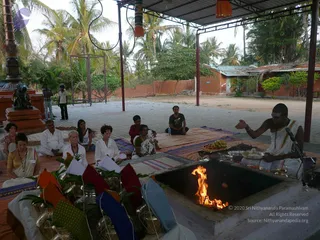
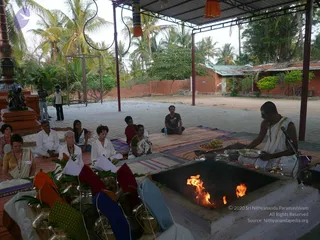
Outdoor ritual at a temple-style open pavilion with palm trees behind. A fire burns in a raised square homa pit at center, with a priest in white dhoti and shawl at right tending offerings on an orange cloth, with fruit, bowls, and pooja items. Seated devotees in white clothes and saffron-toned saris sit on orange and blue mats around the fire, one woman in white at the front of the group. Behind them stands a red shrine-like structure with a tall decorated pillar, and at left a painted deity pair figurine on a wooden platform beside a camera on a tripod. Terracotta and bright orange tassels hang from the roof edges.A photo of an outdoor open-air pavilion with a fire pit (homa) burning at centre, flanked by a priest in white dhoti and shawl at right with brass vessels, fruit and leaves before him. Around the fire, several seated devotees in white and coloured clothing sit on orange and blue mats, some wearing white garments and others in saris and kurtas. At left, a painted deity murti pair in blue and purple garments stands on a decorated platform beside a red-and-orange shrine, with a red kalasha-topped pillar behind the fire pit and palm trees beyond the courtyard. A camera on a tripod and a framed portrait stand at the left edge. Visible people total about ten, all seated or standing near the homa.Outdoor homa at an ashram courtyard under a open metal-roofed pavilion with palm trees behind. A square stone fire pit with a bright flame sits in the foreground, surrounded by brass kalashas wrapped in green leaves and coloured cloths. A priest in white dhoti and white upper cloth, with a tilak on his forehead, sits at the right beside a microphone, gesturing with his hands over bowls of offerings and a plate of bananas. Around twelve seated participants in white and coloured saris and white kurtas sit on mats facing the fire, while a few standing onlookers are visible at the left near a stone deity murti on a pedestal.Outdoor ashram courtyard under a corrugated metal roof with coconut palms and red-walled buildings behind. A priest in white dhoti and shawl sits at right before a square fire pit with flames, a microphone on a stand beside him, and brass plates of offerings and fruit nearby. Around him a seated group in white and coloured saris and shirts sits on mats and cushions, with a small statue or deity murti at left.Outdoor homa ceremony under an open-roofed pavilion with a metal roof and red support posts, surrounded by palm trees and orange-walled buildings. In the foreground a square fire pit burns with flames, with brass pots and vessels bearing green, red and orange cloth on the left. A man in white dhoti and shawl with a white headband sits at right, speaking into a microphone and gesturing over offerings of bananas and bowls. Around the fire, several seated devotees in white clothes and sarees, including a woman in a yellow sari on the left and a man in a dark shirt sitting cross-legged in the centre, listen attentively on mats. A stone deity figure and a tall ornamental pillar stand at the left edge.Outdoor photo of a navagraha homa at an open-sided pavilion with a corrugated roof and red-painted wooden posts. In the foreground a square fire pit burns with flames, and kalasha pots draped with coloured cloths sit at its edge. On the right a priest in white dhoti and shawl with a shaved head and a mala sits behind a microphone, tending the fire with offering dishes and bananas nearby. On the left a group sits on mats: several women in white saris and salwar, a man in white and a seated man in a dark t-shirt. Palm trees, a red compound wall and small outbuildings are visible behind. No identifiable a person candidate is present.

Edit-IA-Ashram-Darshan
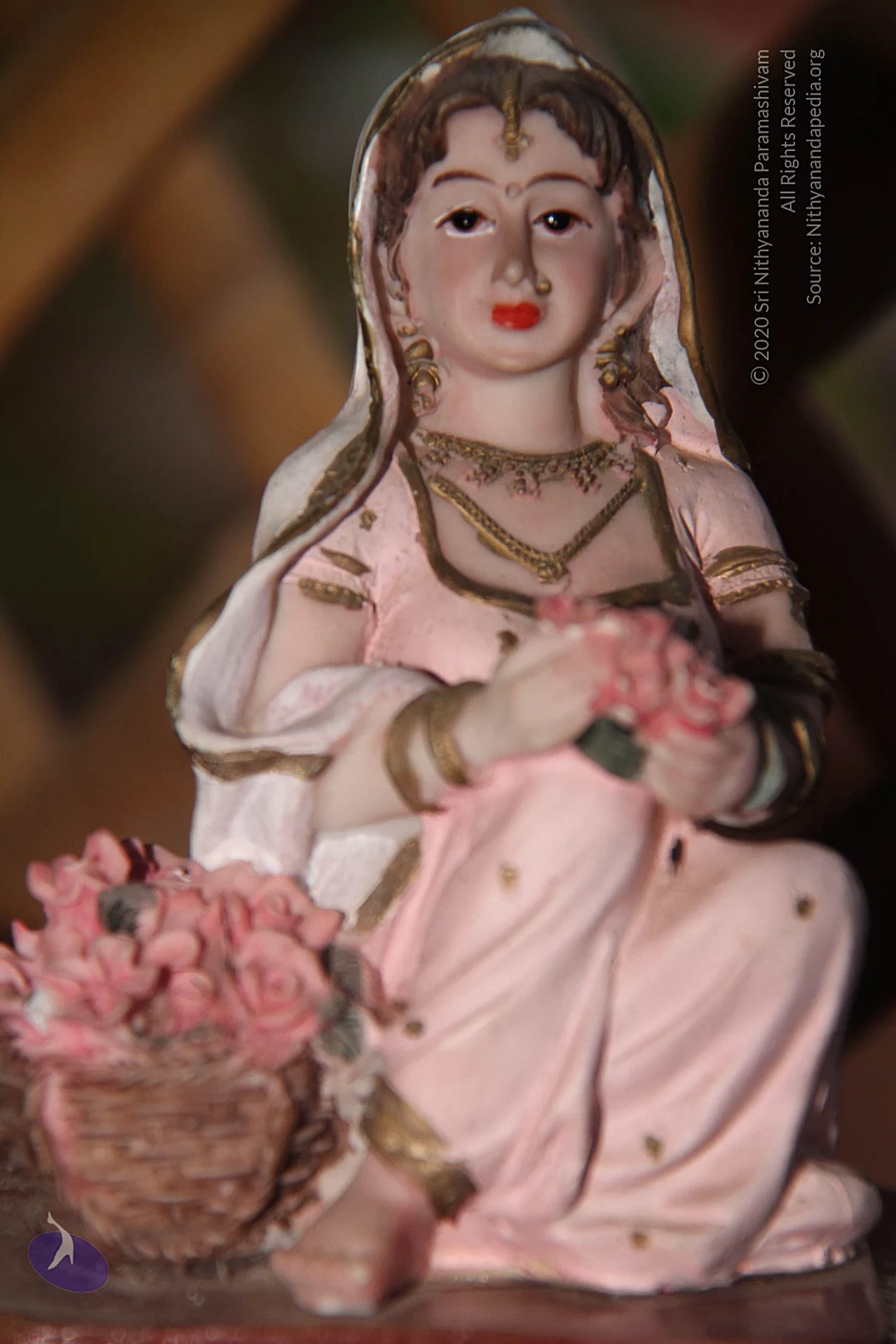
2 photosSource gallery
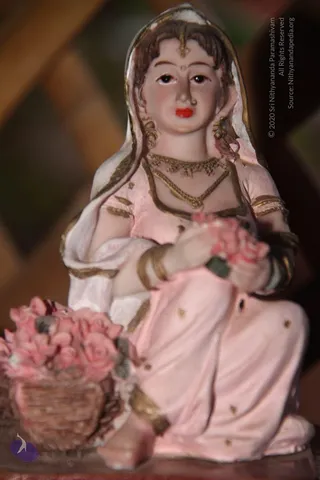
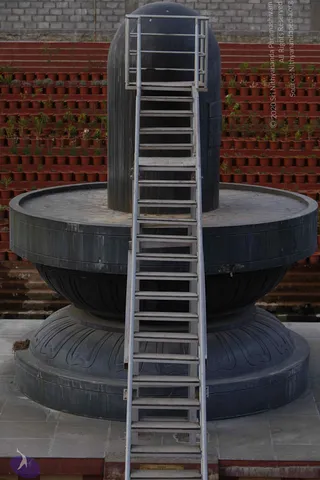
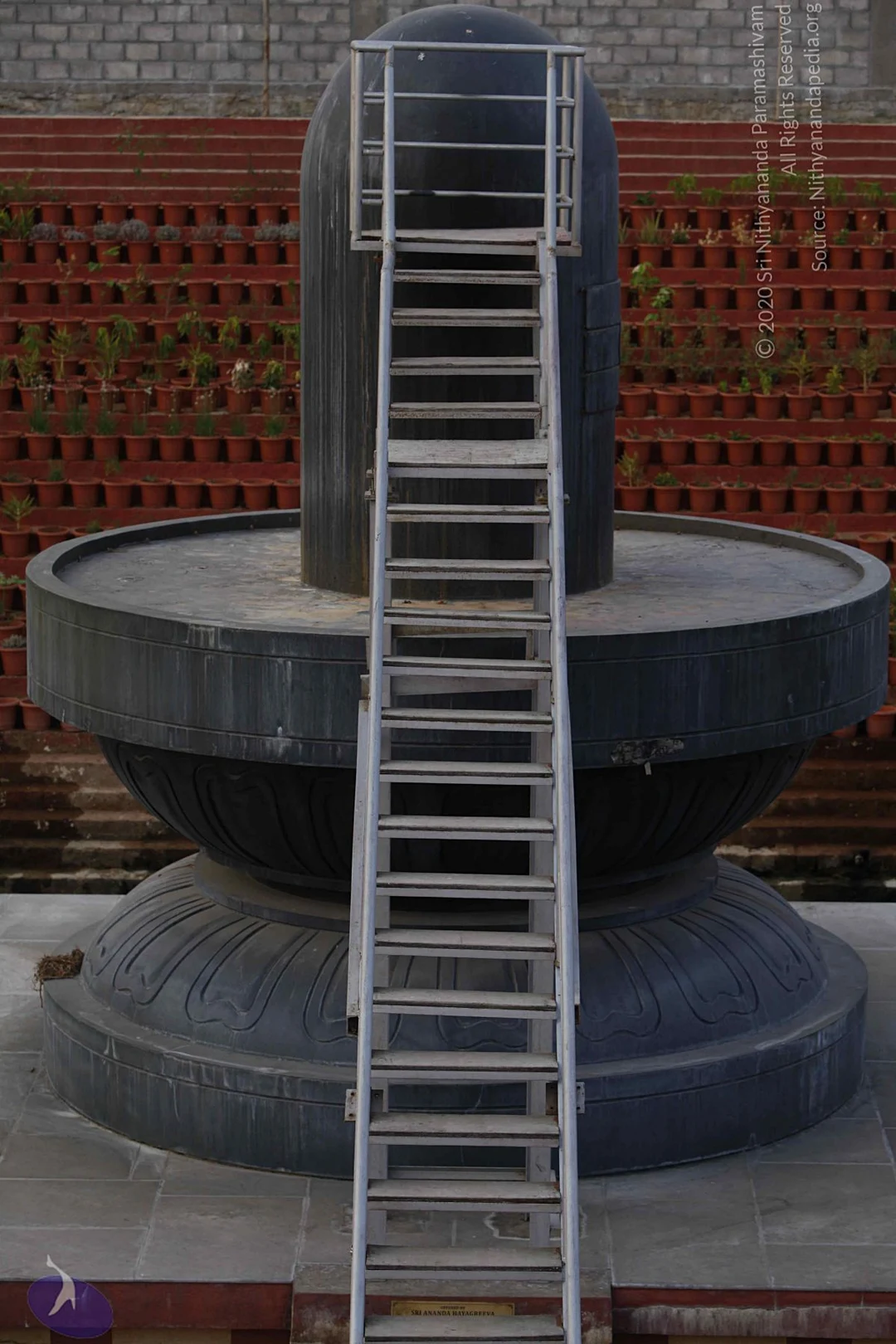
A close photograph of a small seated figurine of a woman in a pale pink dress with gold trim and a white veil draped over her head. She wears gold necklaces, bangles and earrings, and holds a bunch of pink flowers in her hands. A woven basket overflowing with pink roses sits beside her. The background is blurred warm brown and green.A large dark stone Shiva lingam on a round yoni-pitha base stands outdoors, with a metal ladder with handrails leaning against its front so people can climb to the top. Behind it, a red tiered wall is planted with rows of small terracotta pots holding green plants. The base has carved lotus-petal patterns, and a small brass plaque is fixed to the bottom of the ladder.

Edit-Web-13-Apr-2012

2 photosSource gallery
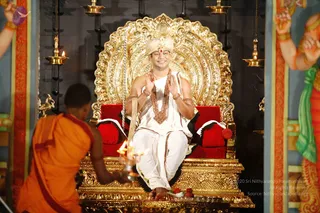
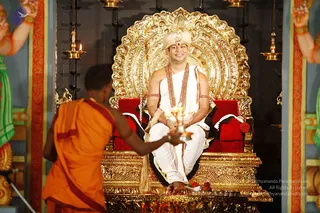
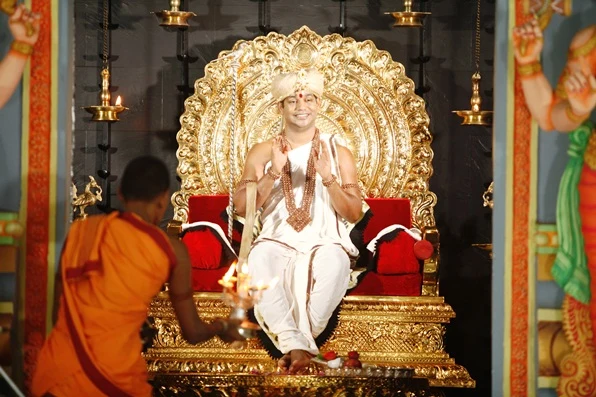
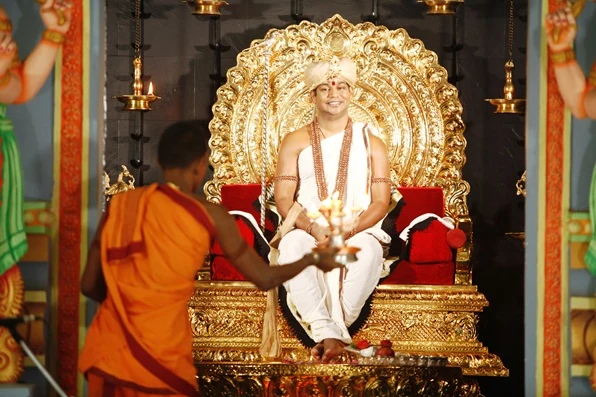
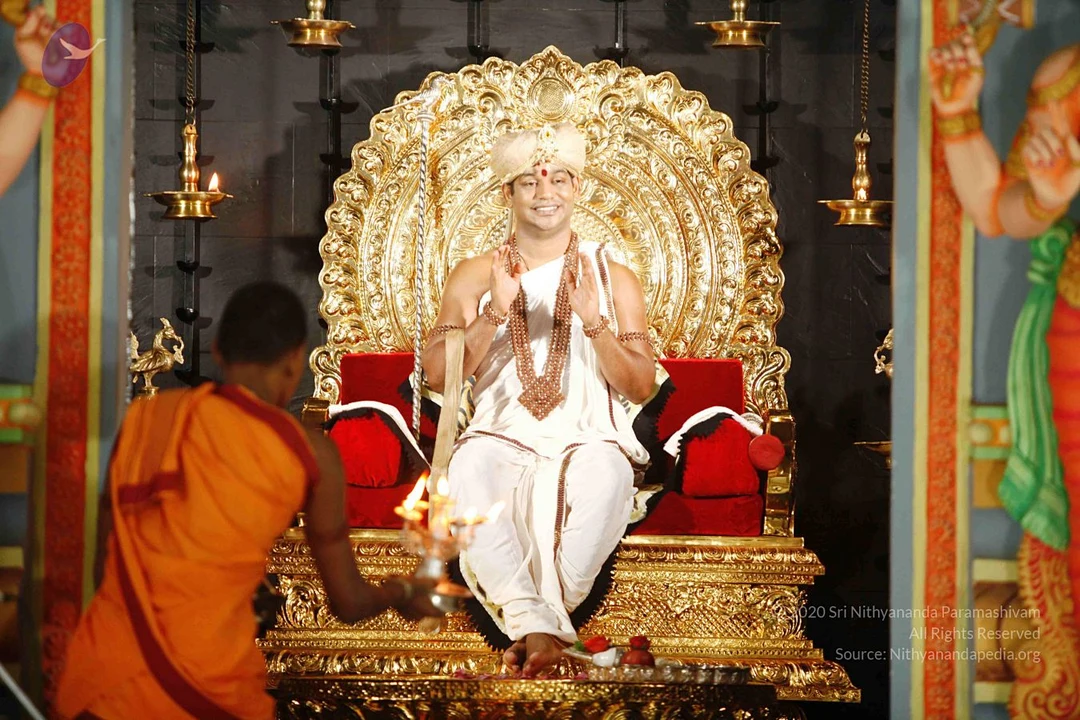
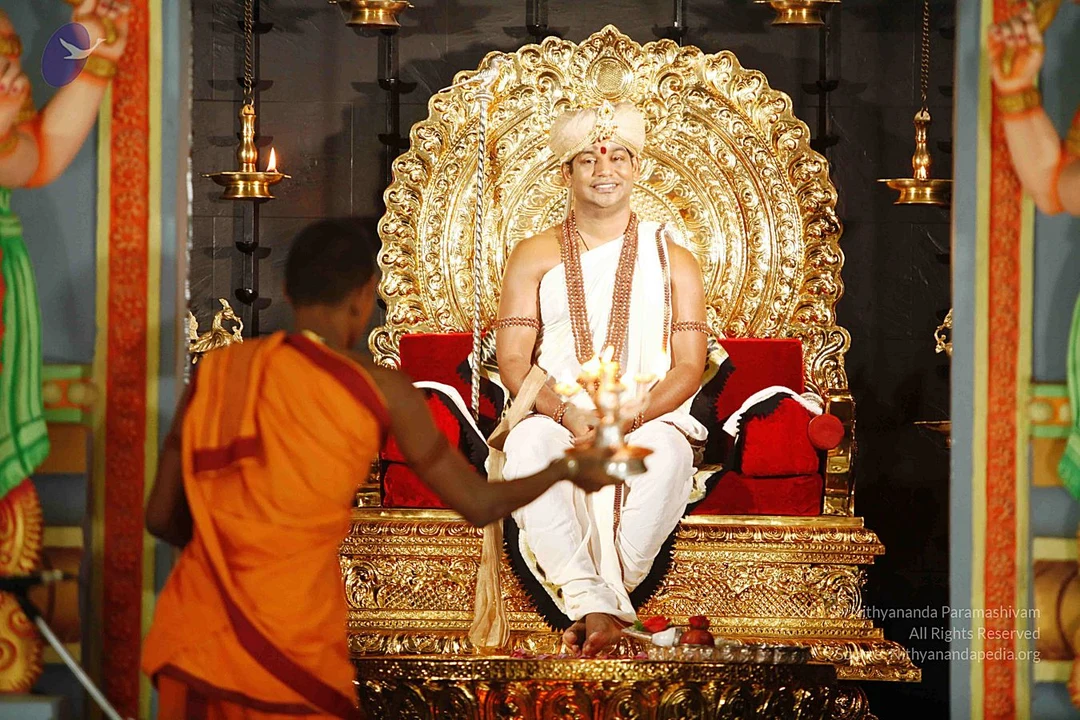
A seated man in white ceremonial clothing sits on an ornate gold throne with red cushions, a white turban with a red mark on his forehead, multiple rudraksha mala necklaces and beaded bracelets, hands raised in a blessing gesture. In the foreground a kneeling attendant in orange robes holds a lit oil lamp or aarti flame toward him, with red fruit or offerings on a tray at the base of the throne. Golden oil lamps hang from chains in the background, and painted figures with arms raised frame the scene on both sides. Two people are visible.A seated man on an ornate gold throne with red velvet cushions, wearing a cream turban with a red tilak, bare-chested with a white dhoti and white shawl, multiple rudraksha malas and beaded bracelets. He sits smiling with hands resting on his lap. In front, a barefoot priest in saffron robe holds an oil lamp (aarti) toward him. Gold oil lamps hang from the chains above, and painted deity figures with green and orange colours flank the sides. The throne with red cushions and gold lamps suggests a ritual honouring setting.