Skip to content
Saturday

13 April 2013

Drop your Fantasies about Failure

Dated photos
416
Source pages
1
Media
2
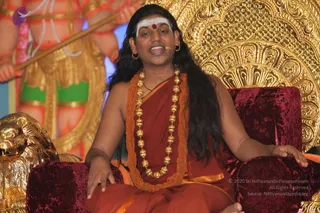
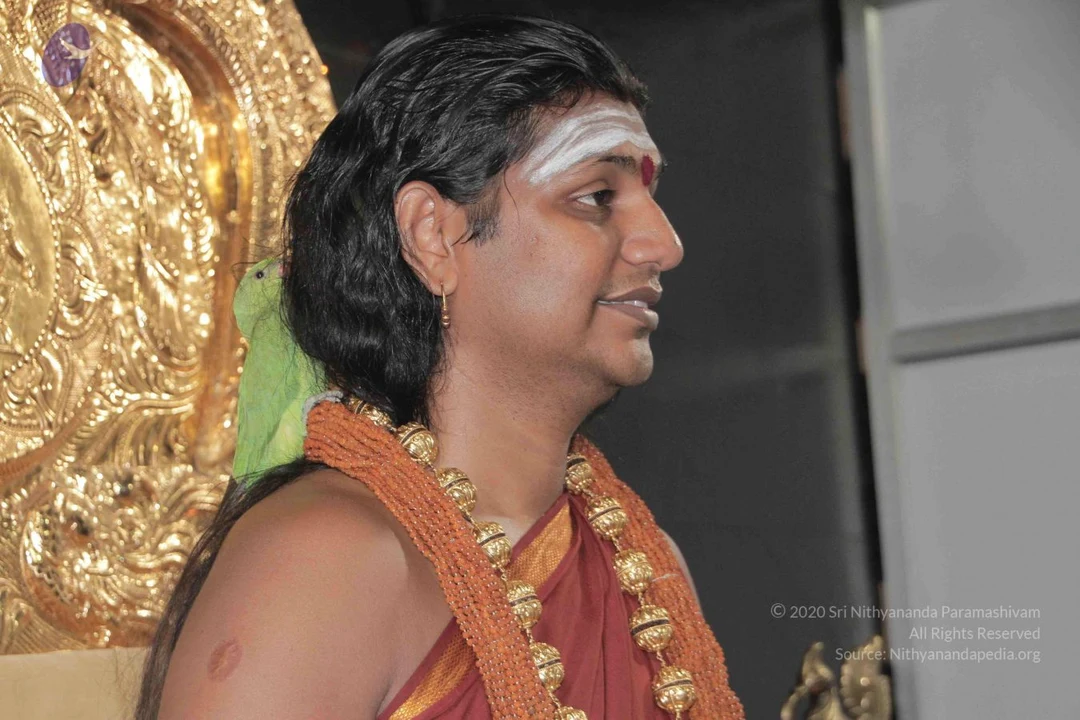
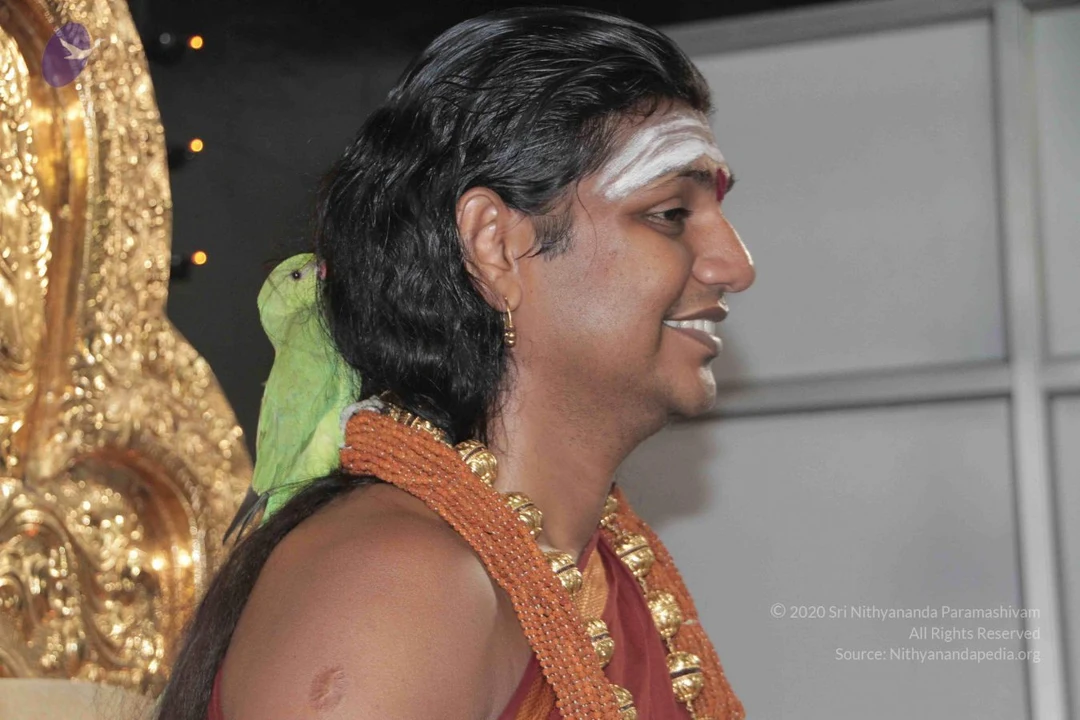
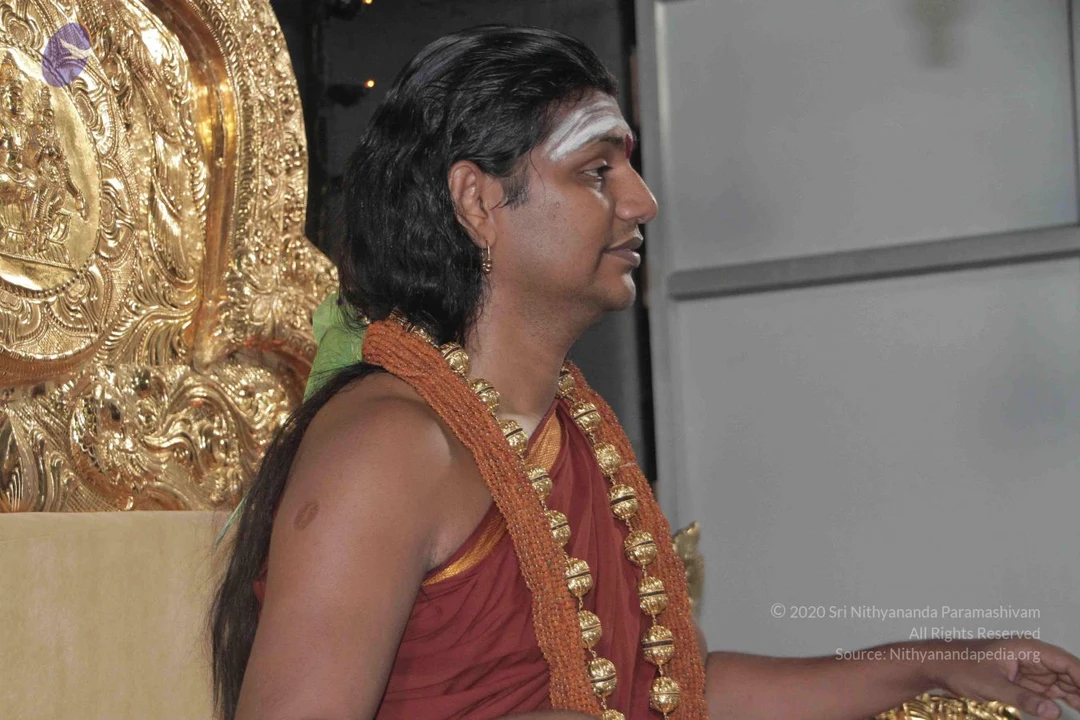
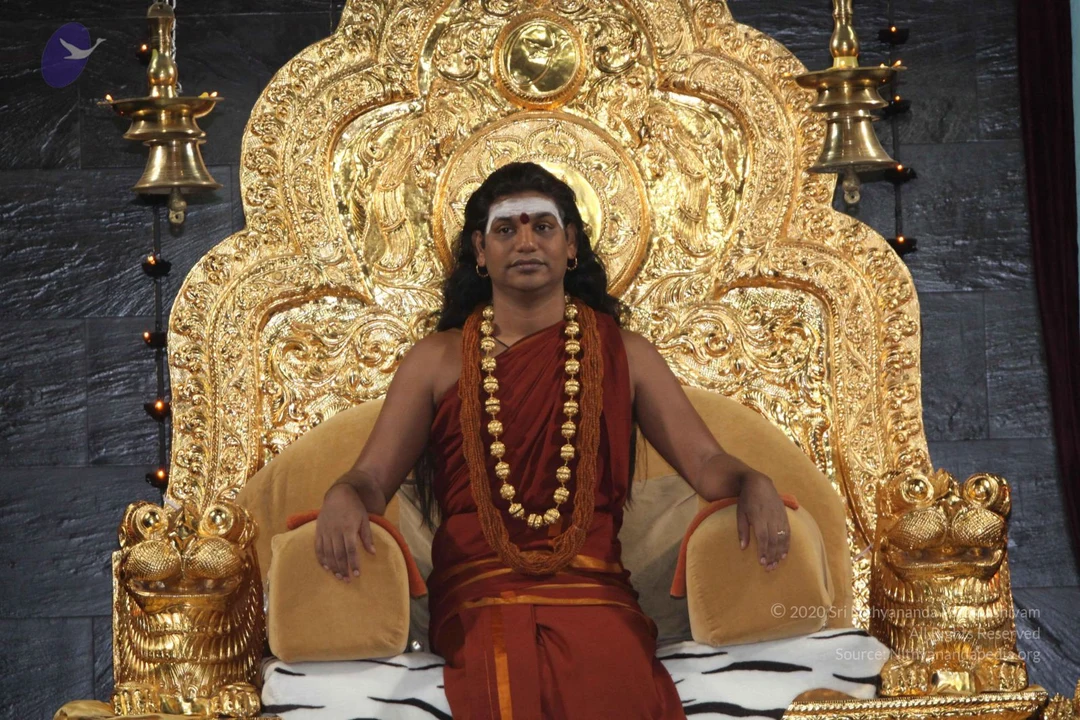
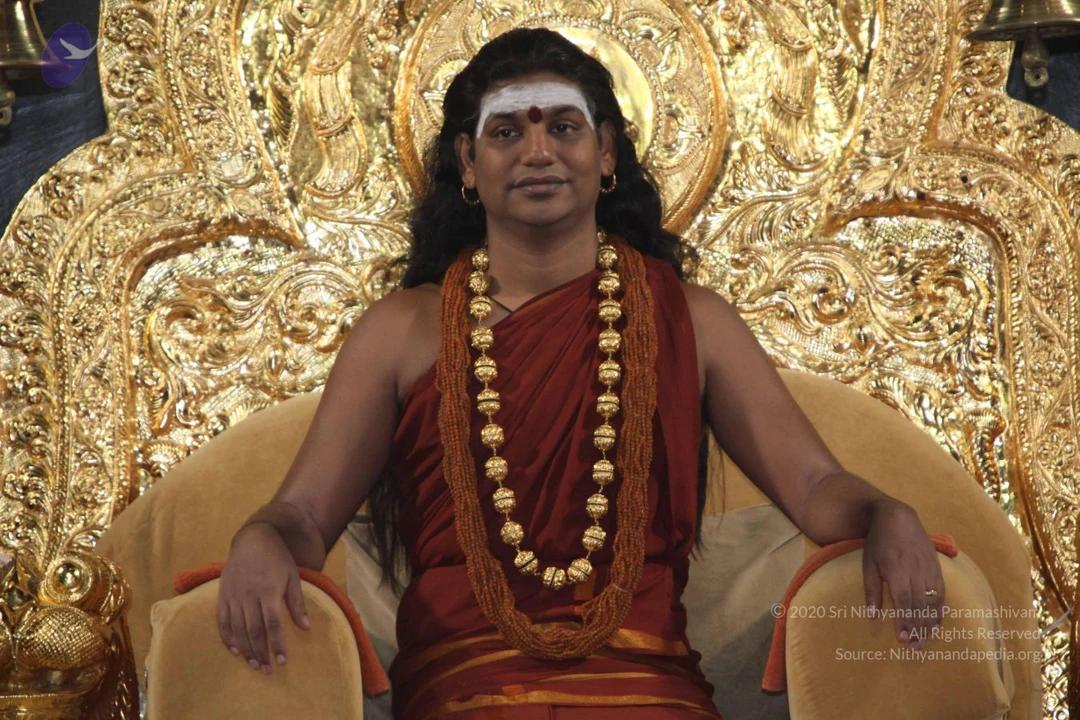
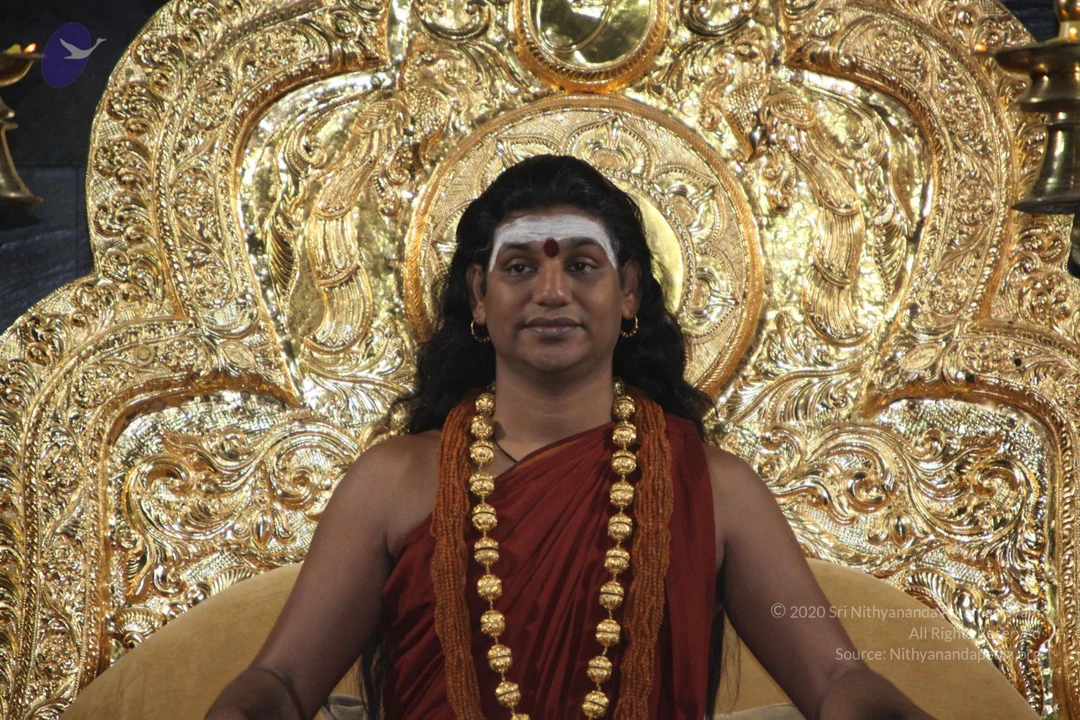
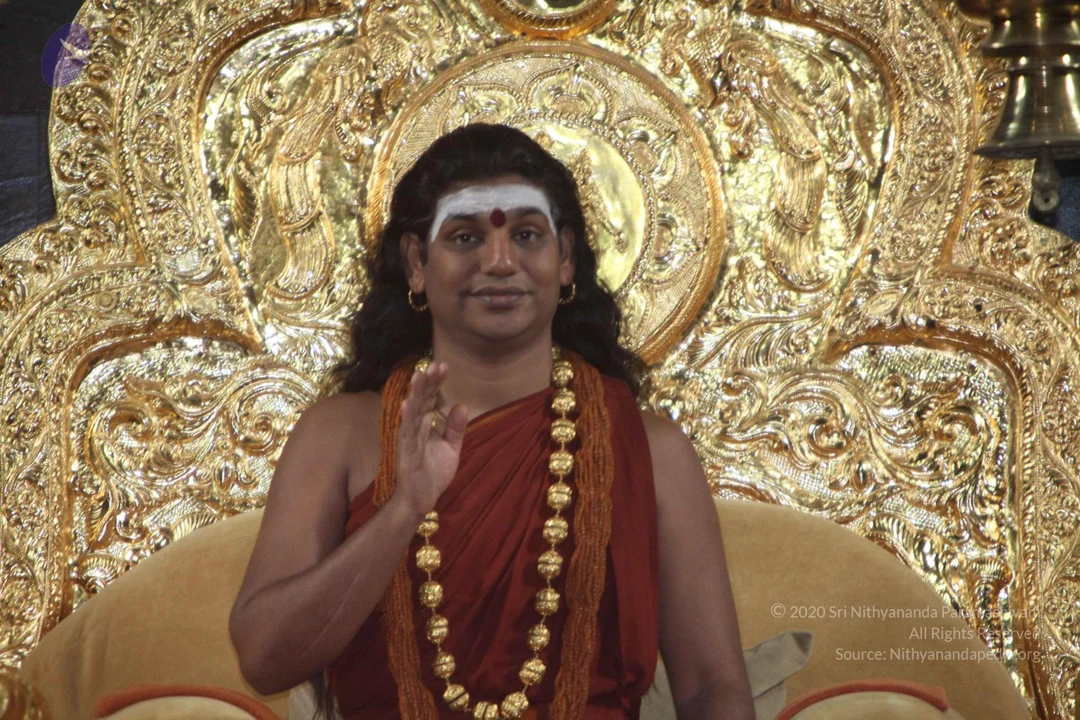
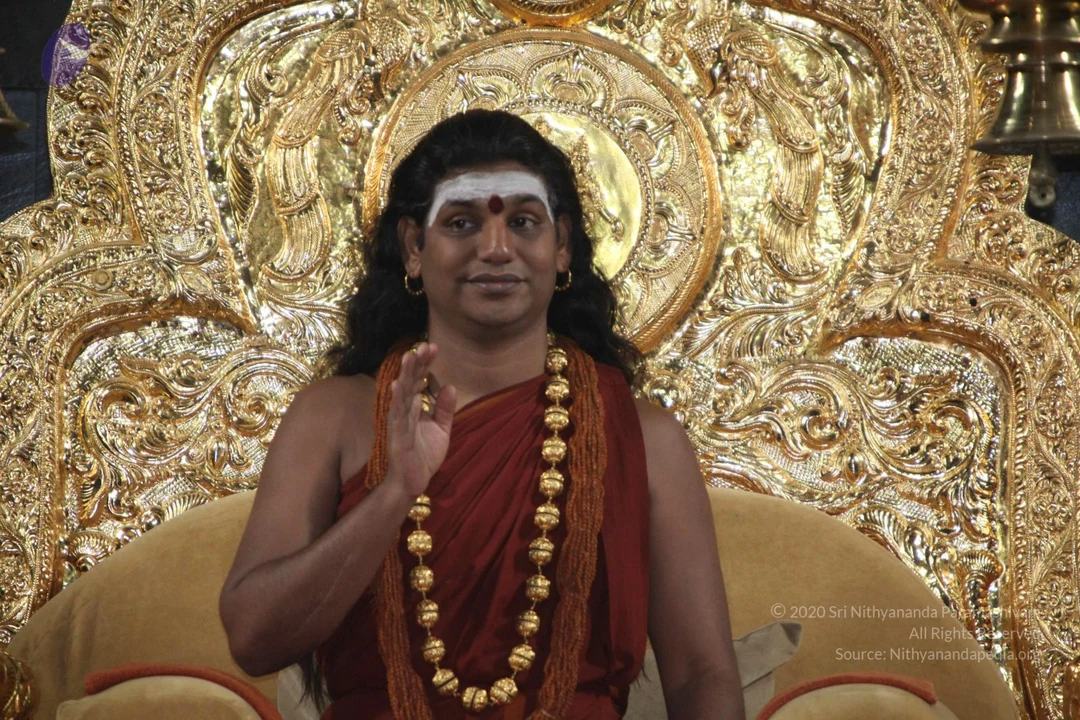
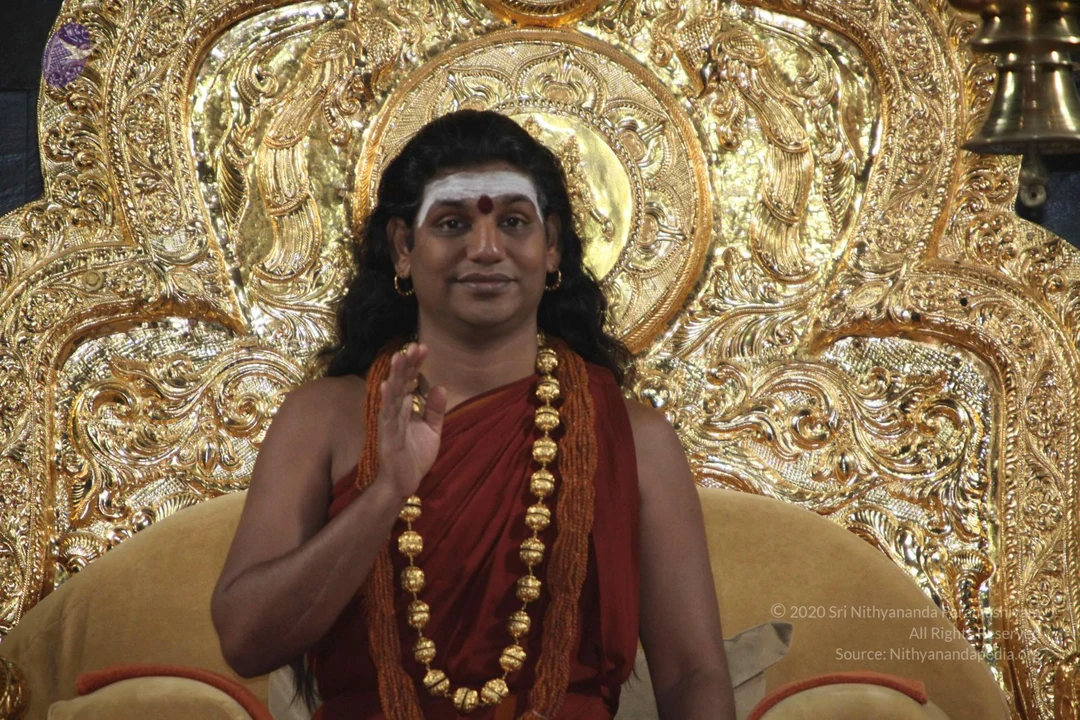
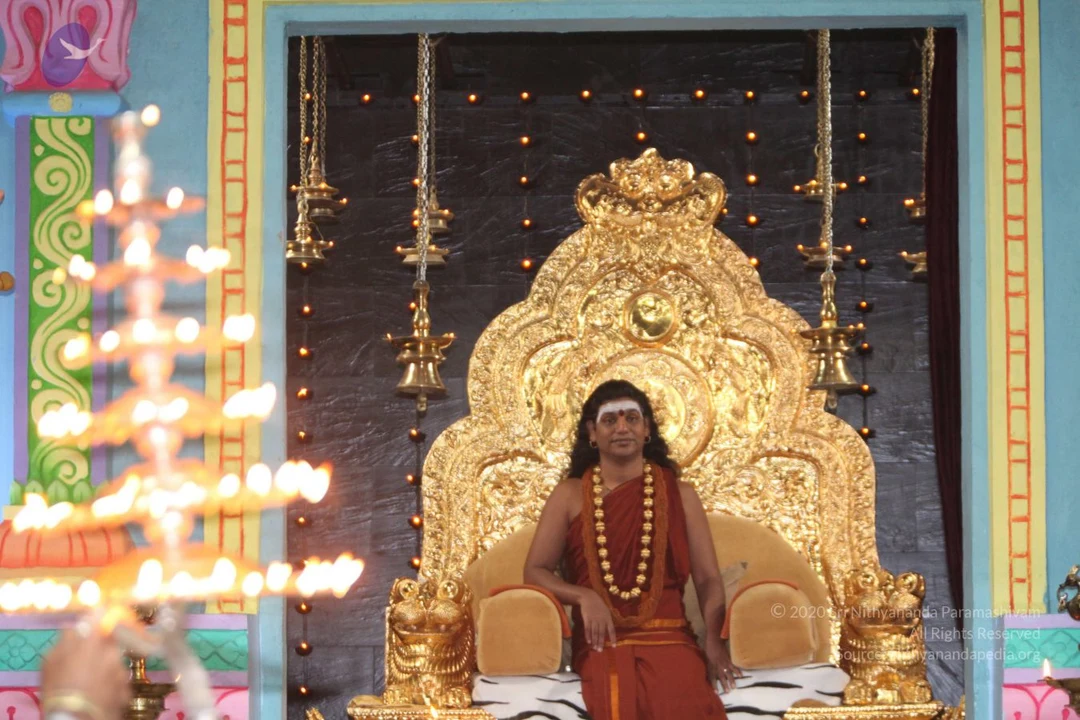
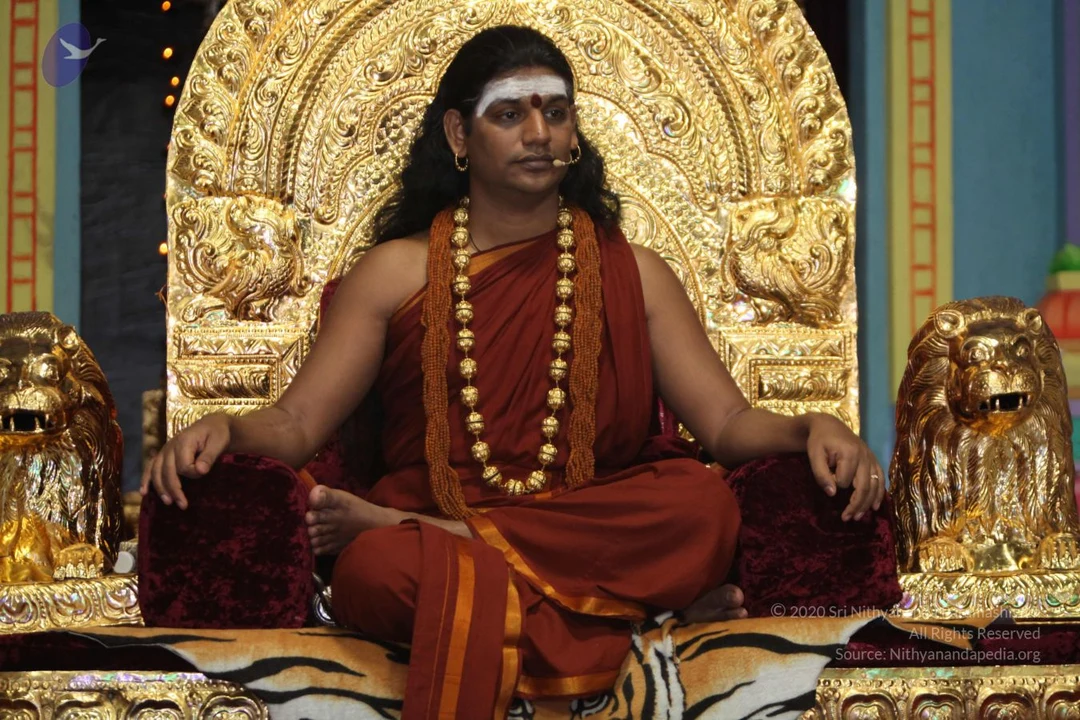
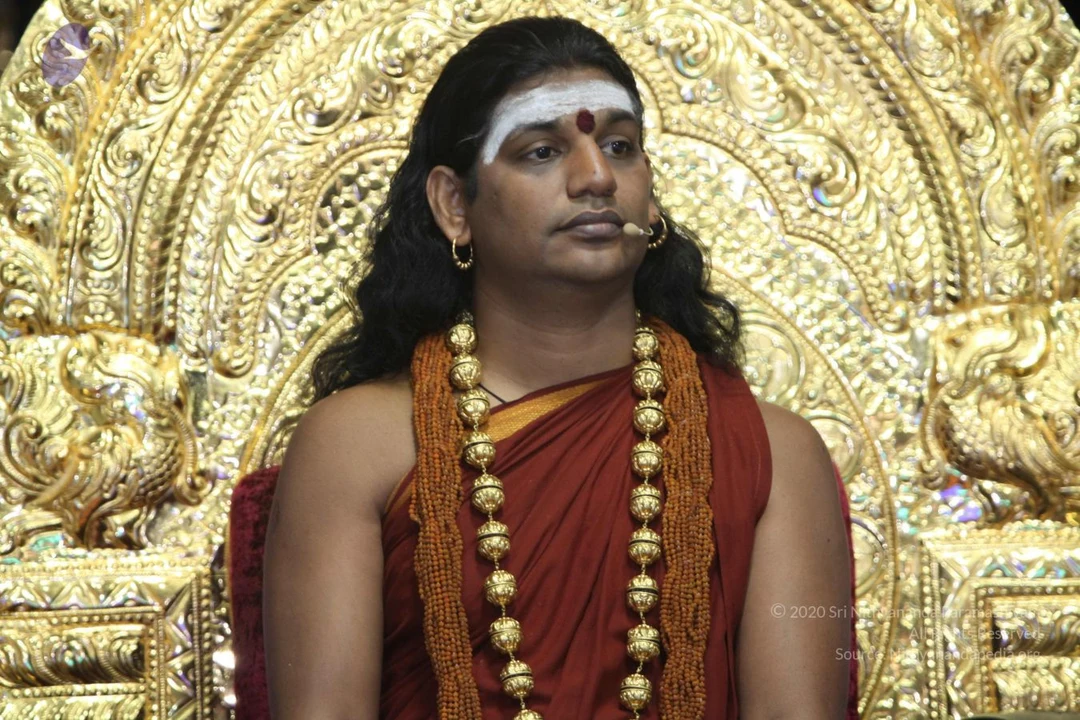
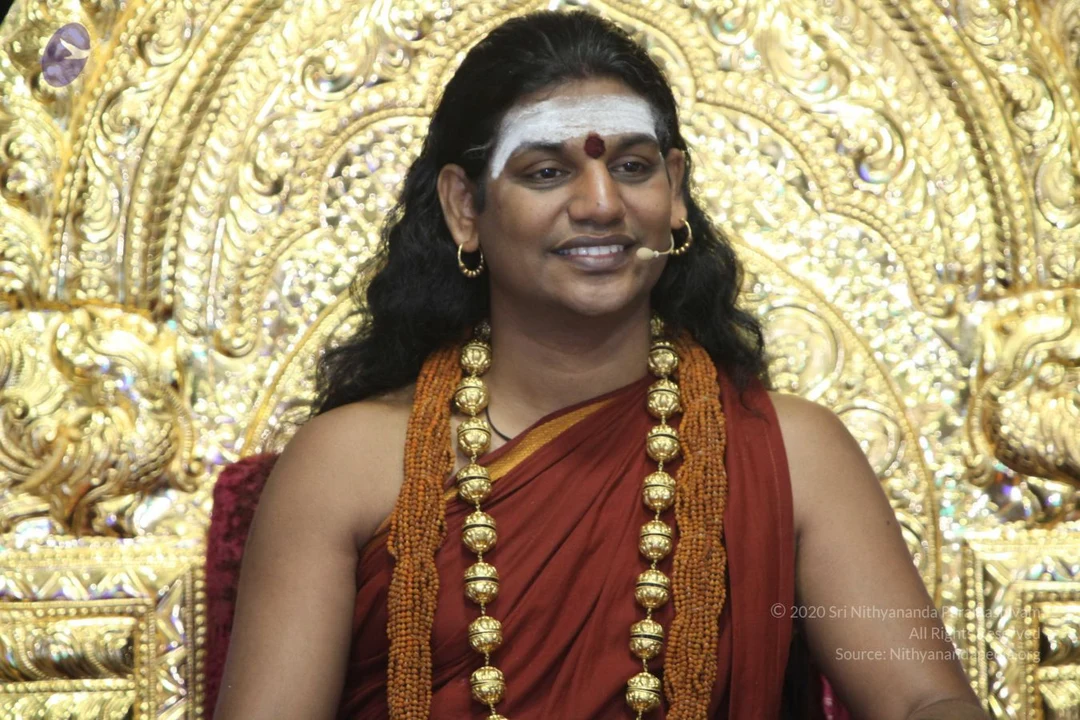
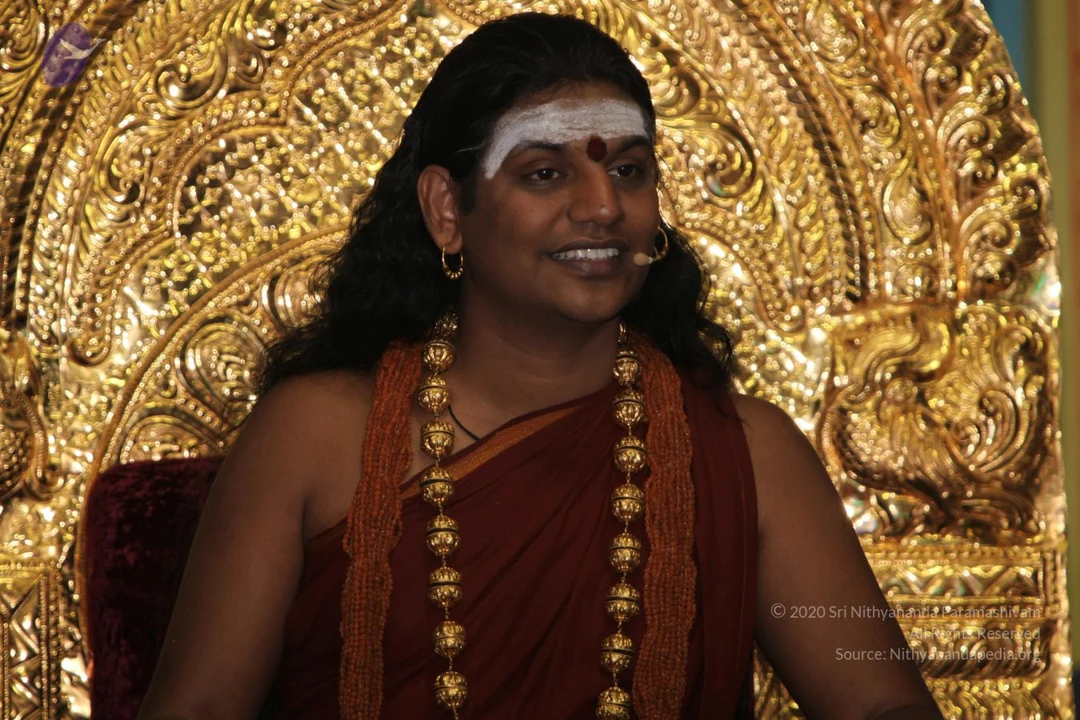
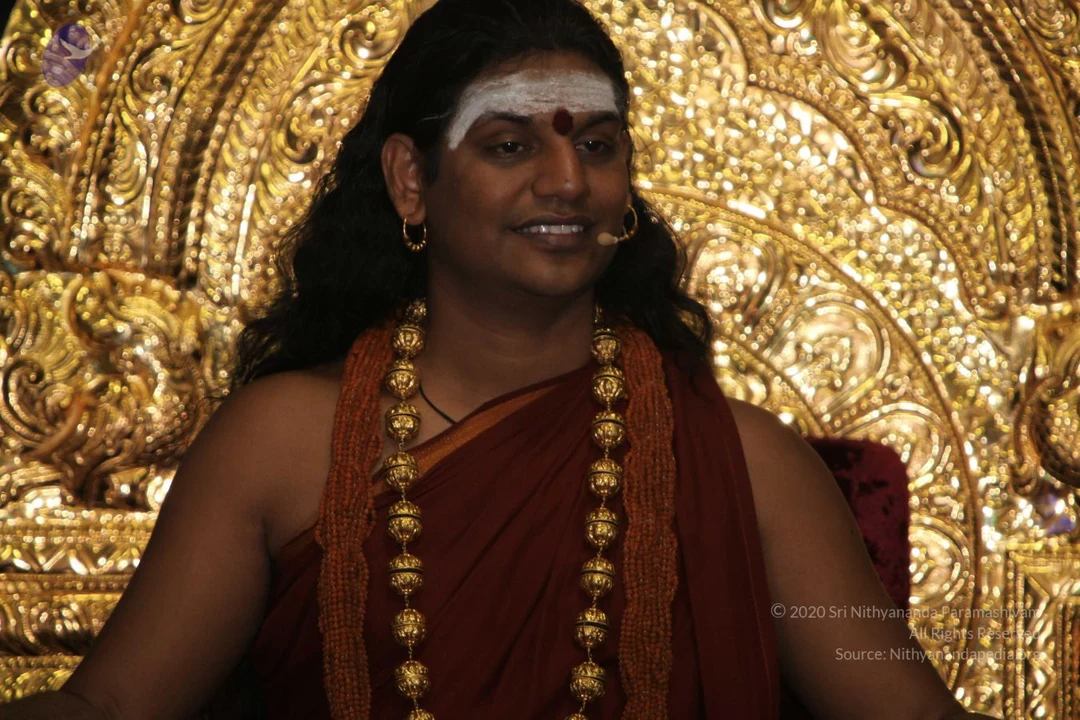
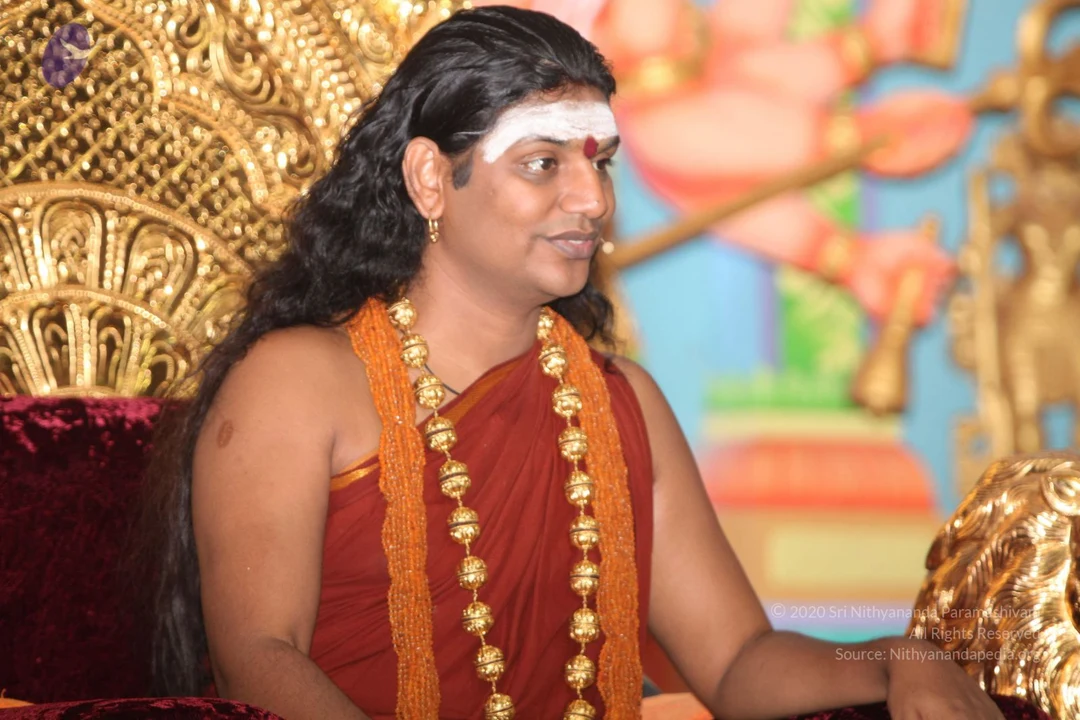
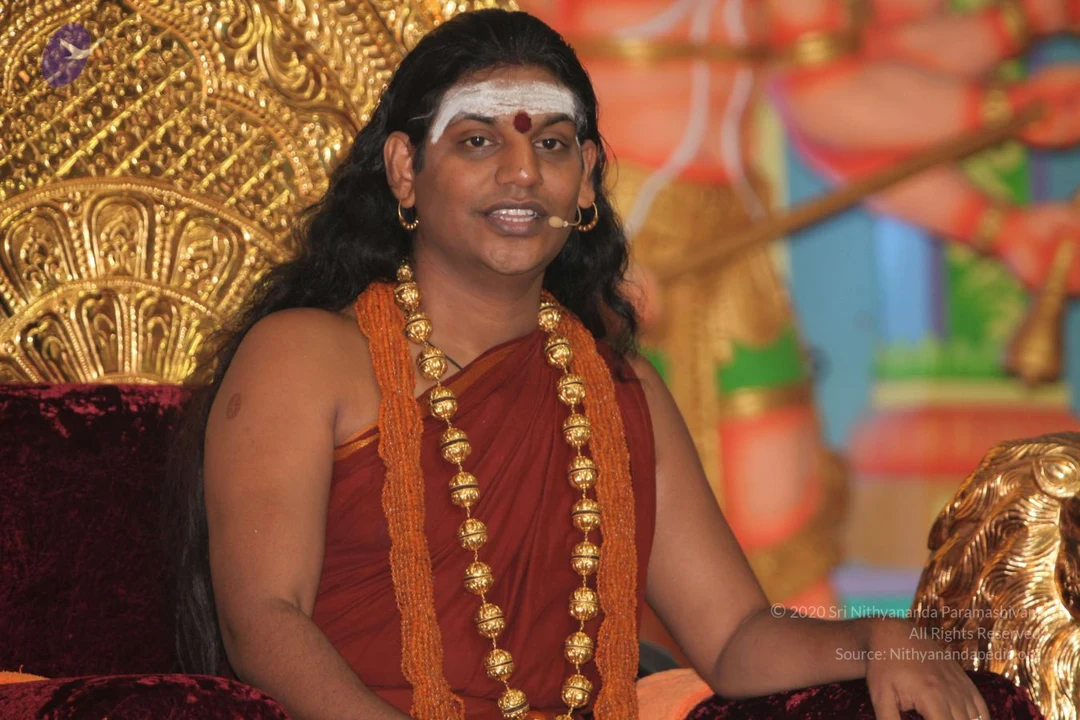
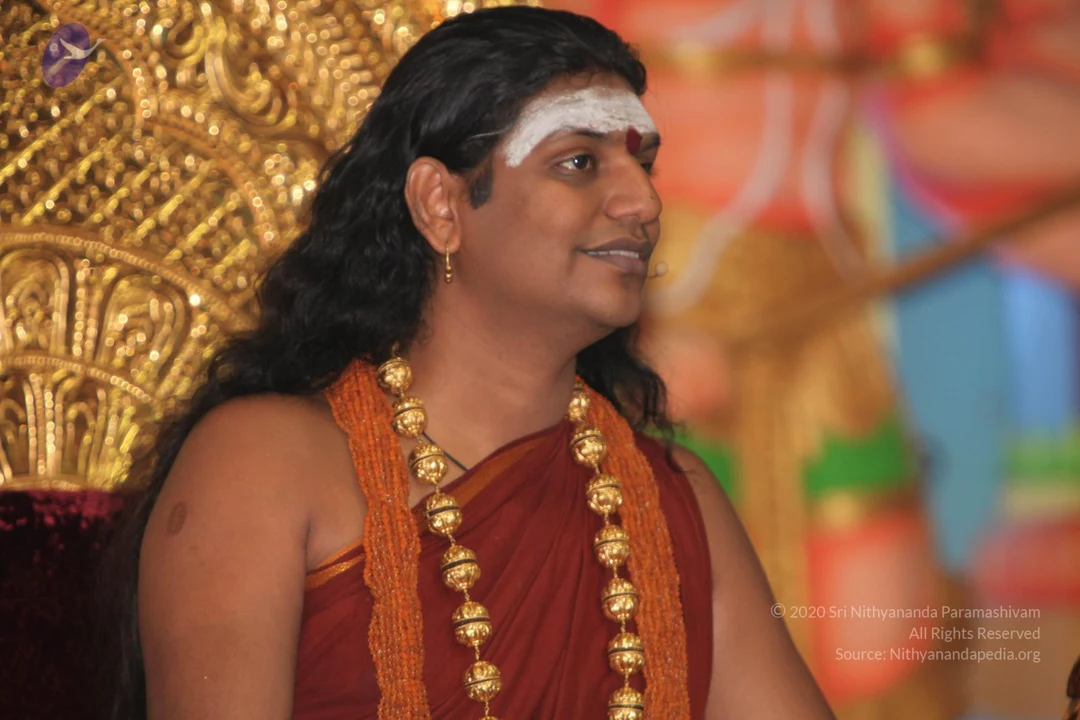
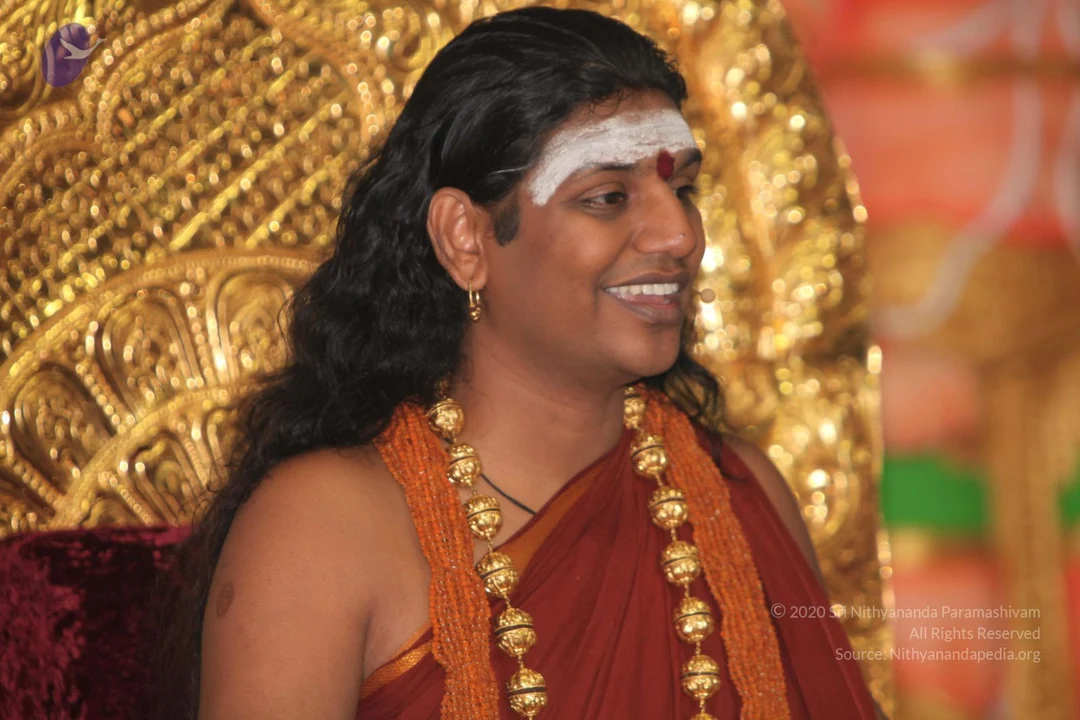
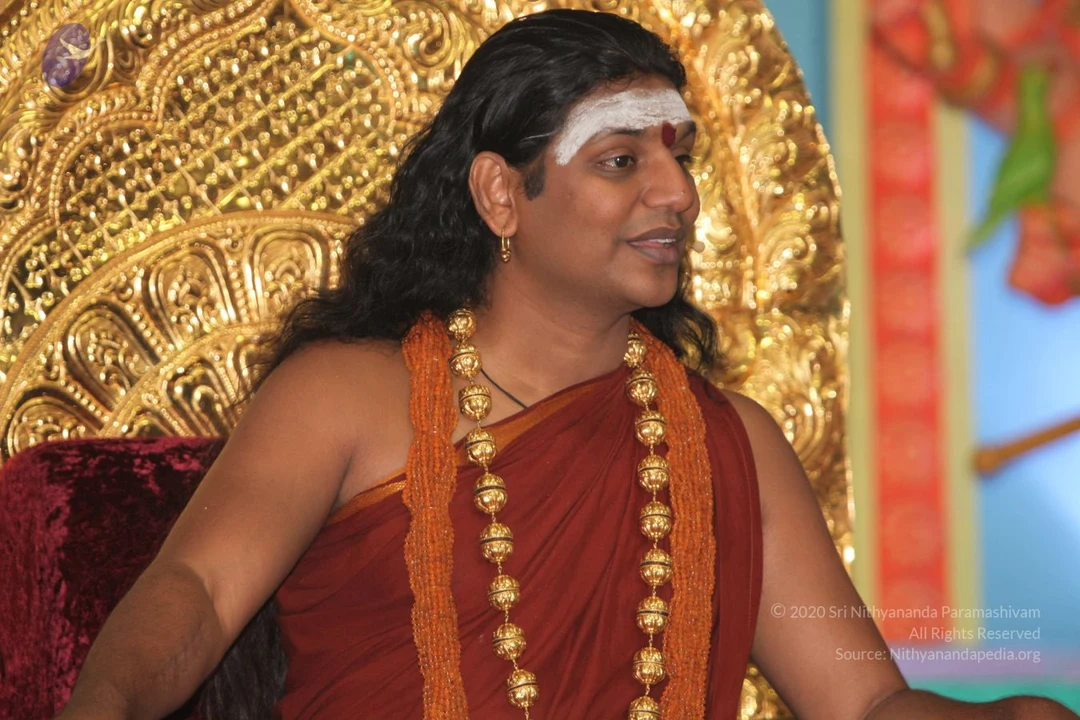
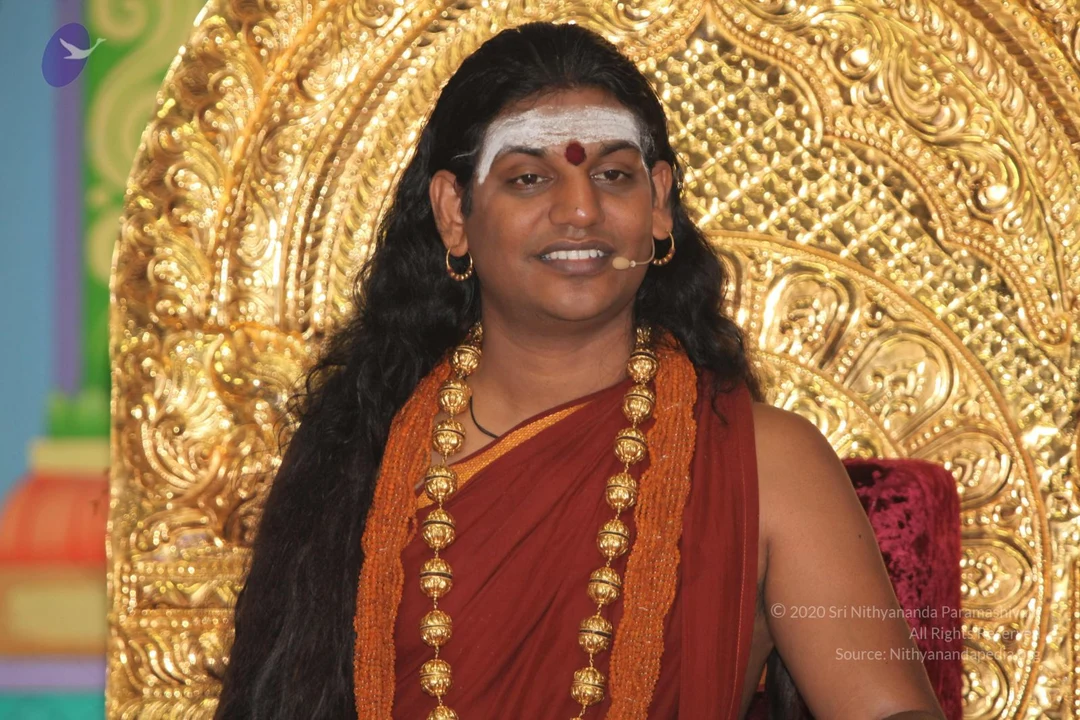
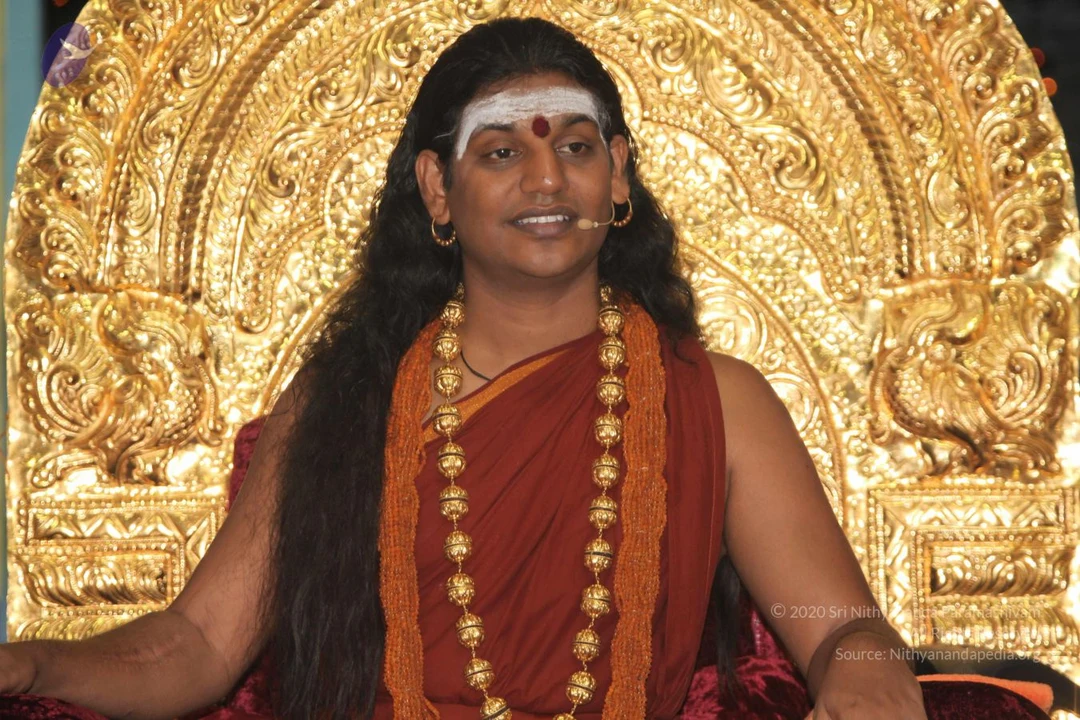
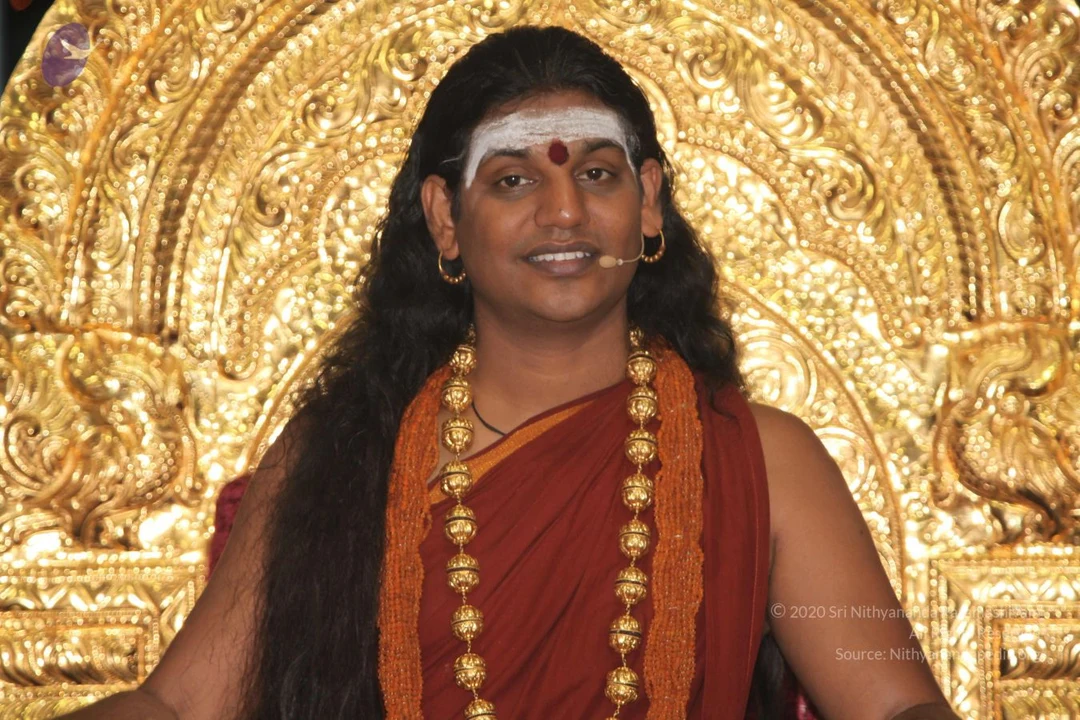
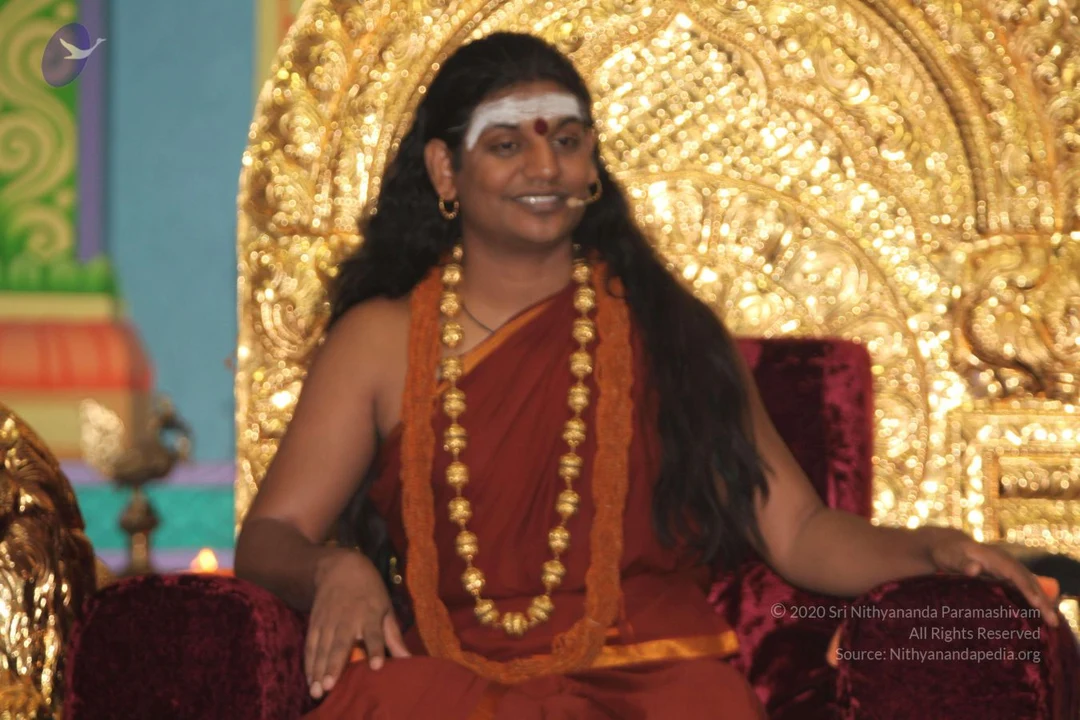
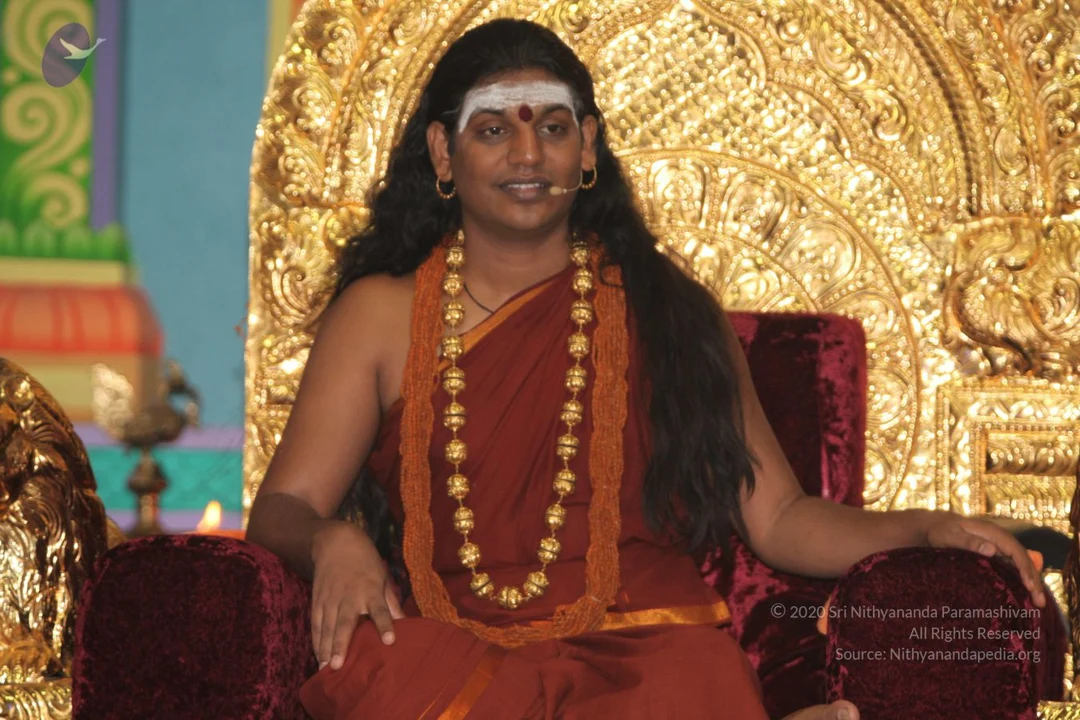
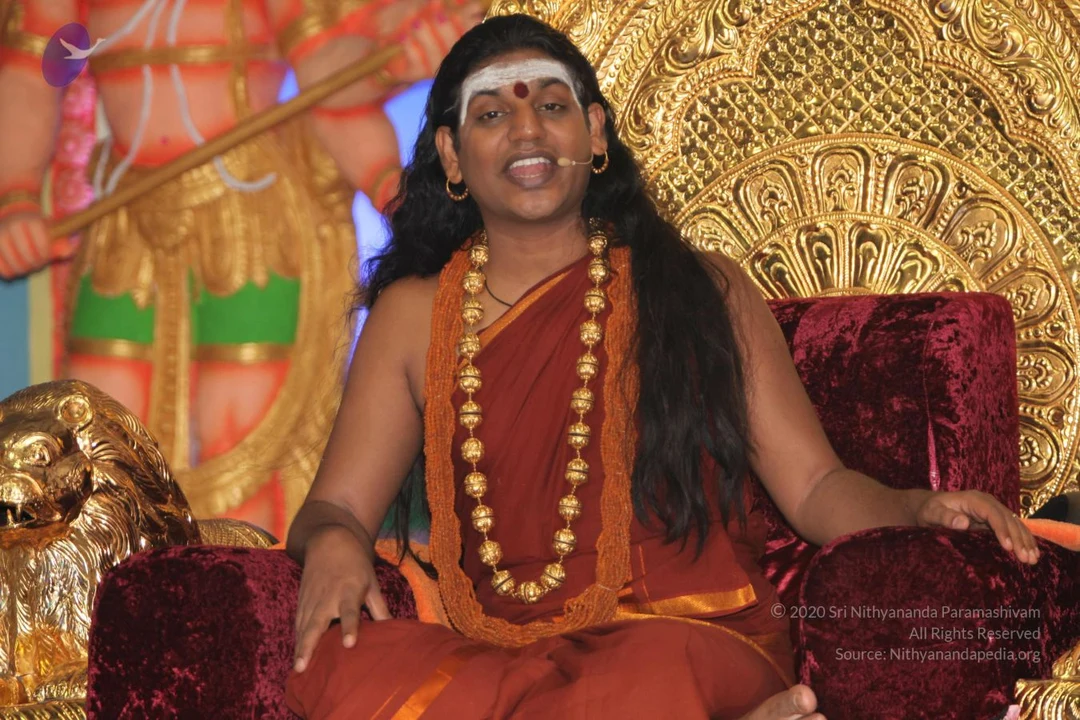
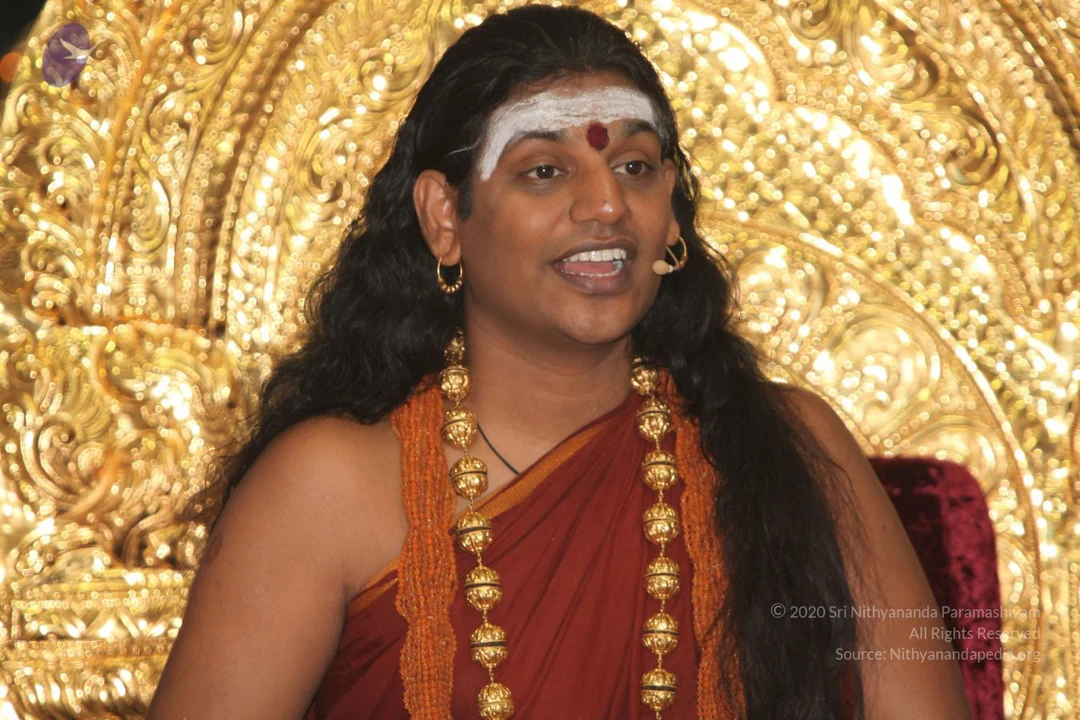
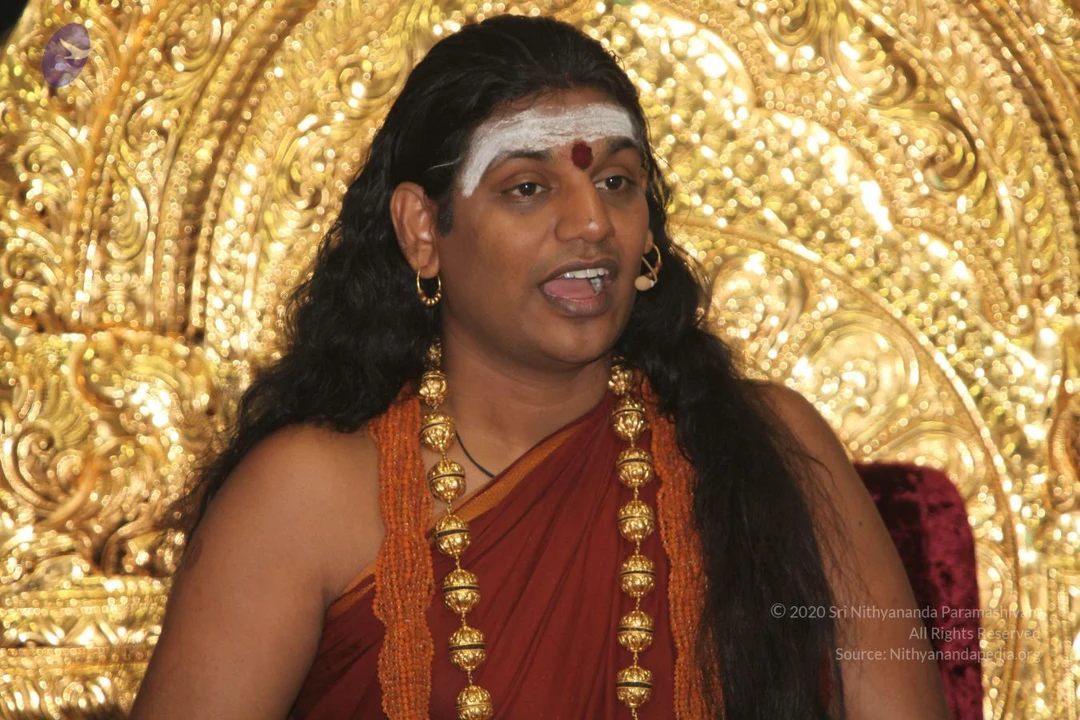
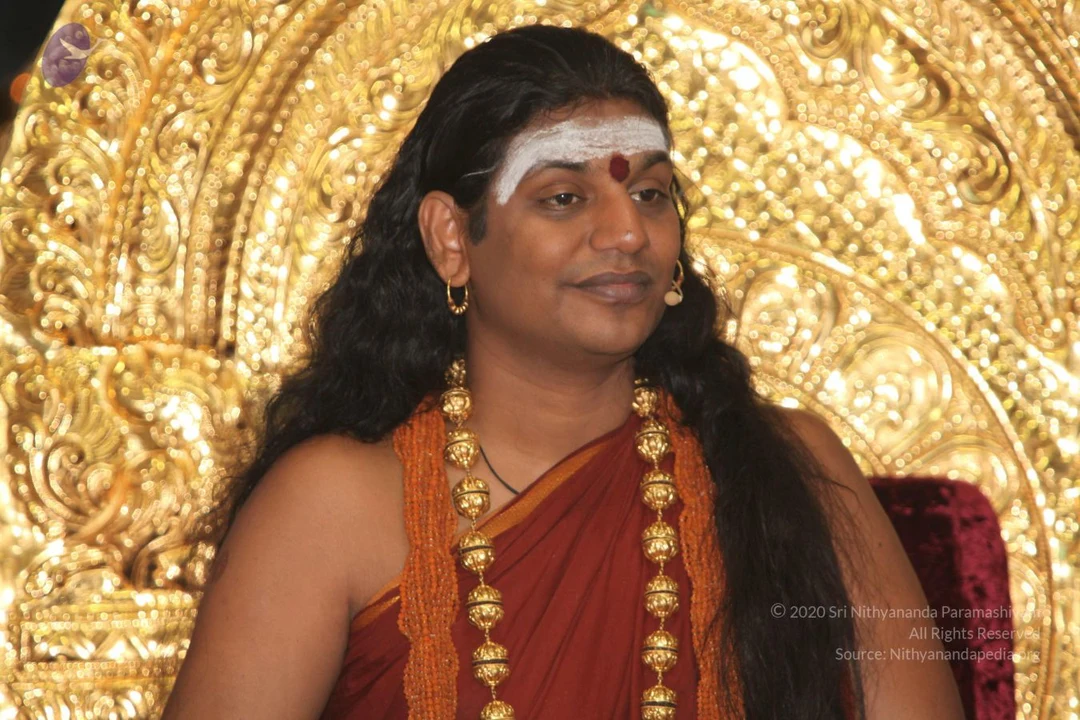
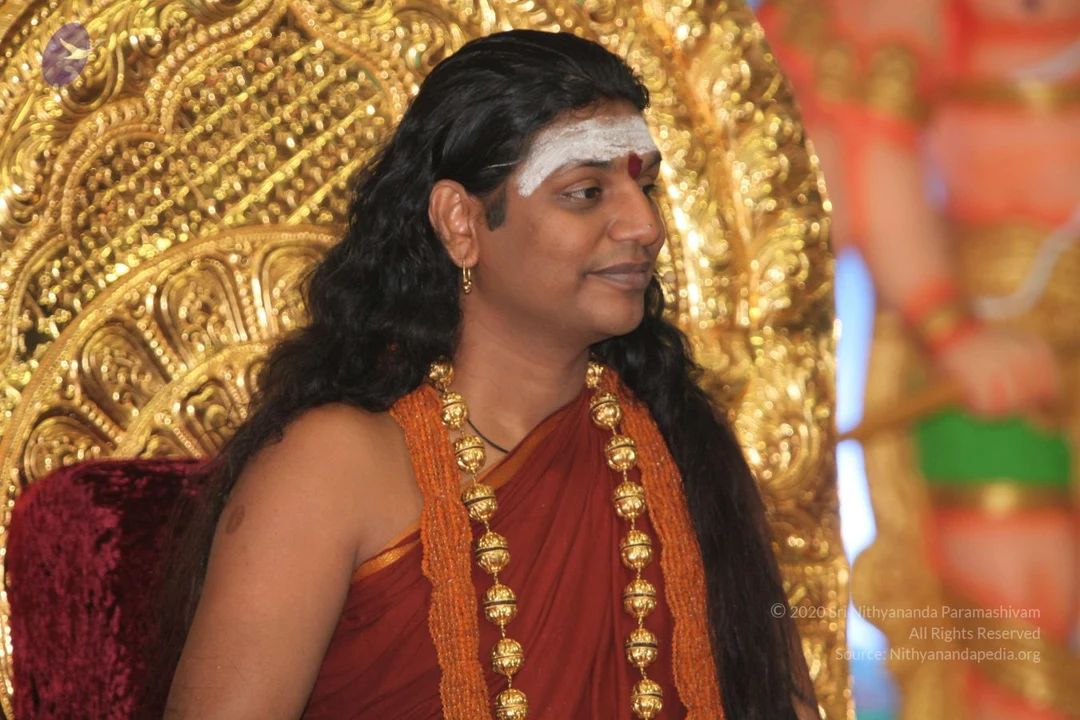
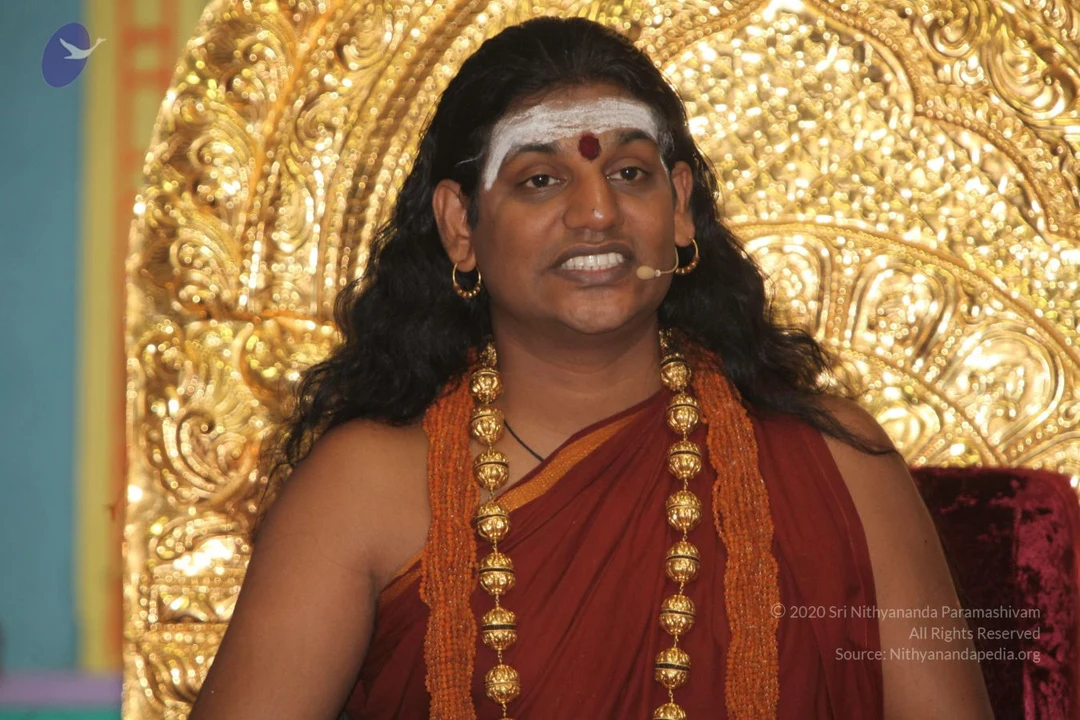
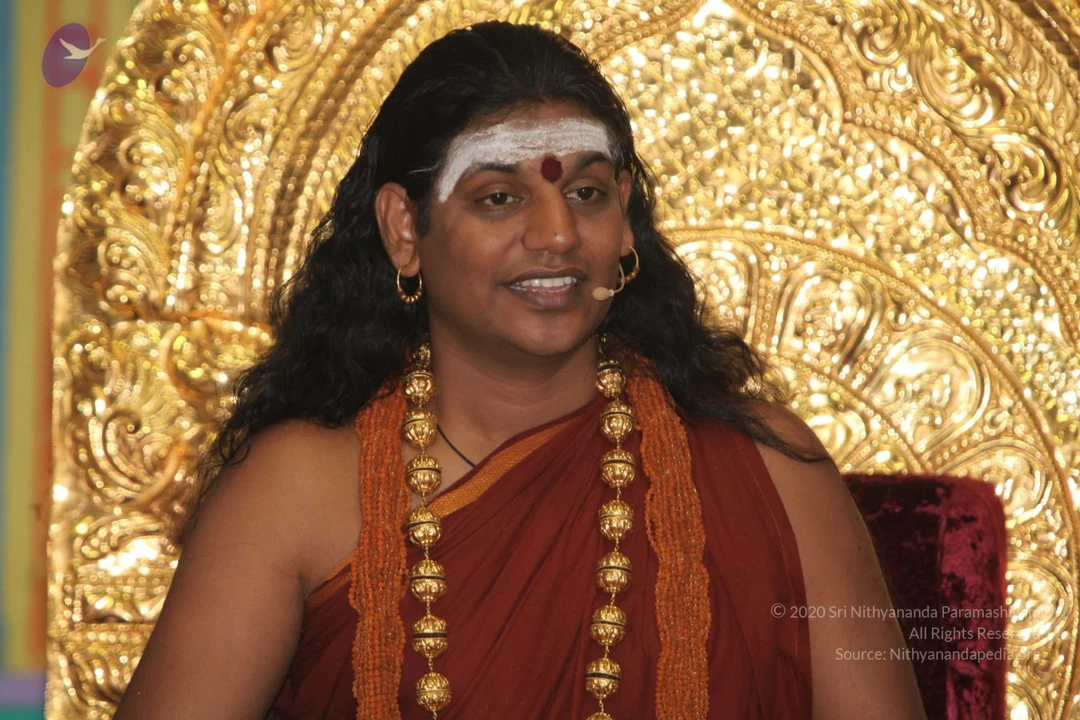
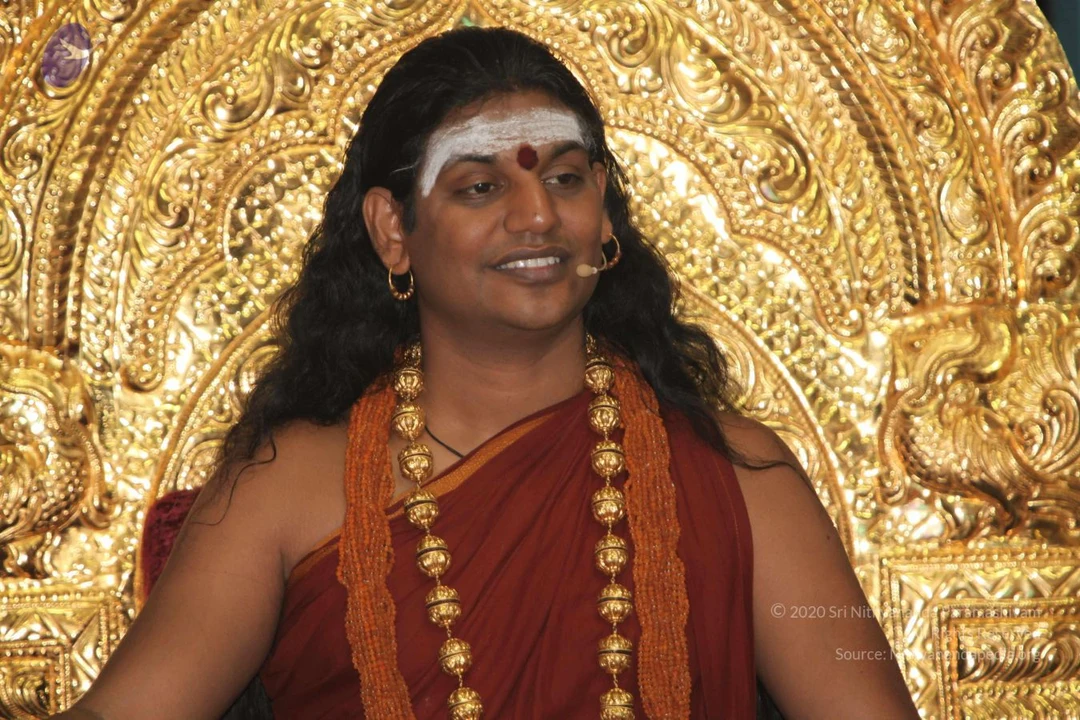
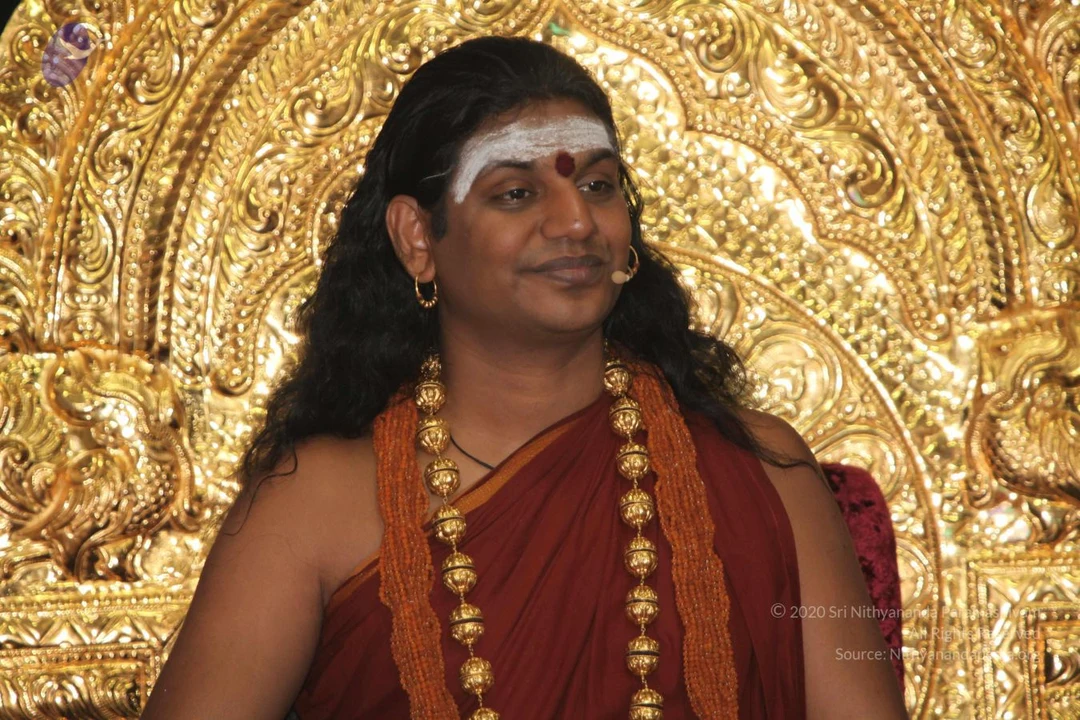
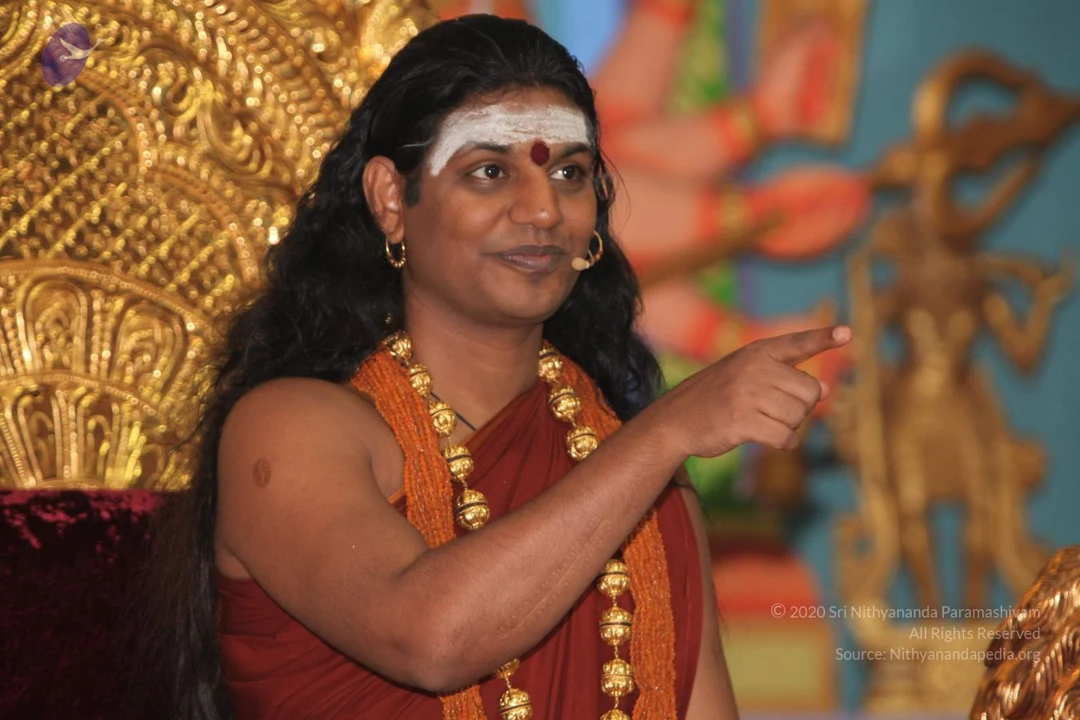
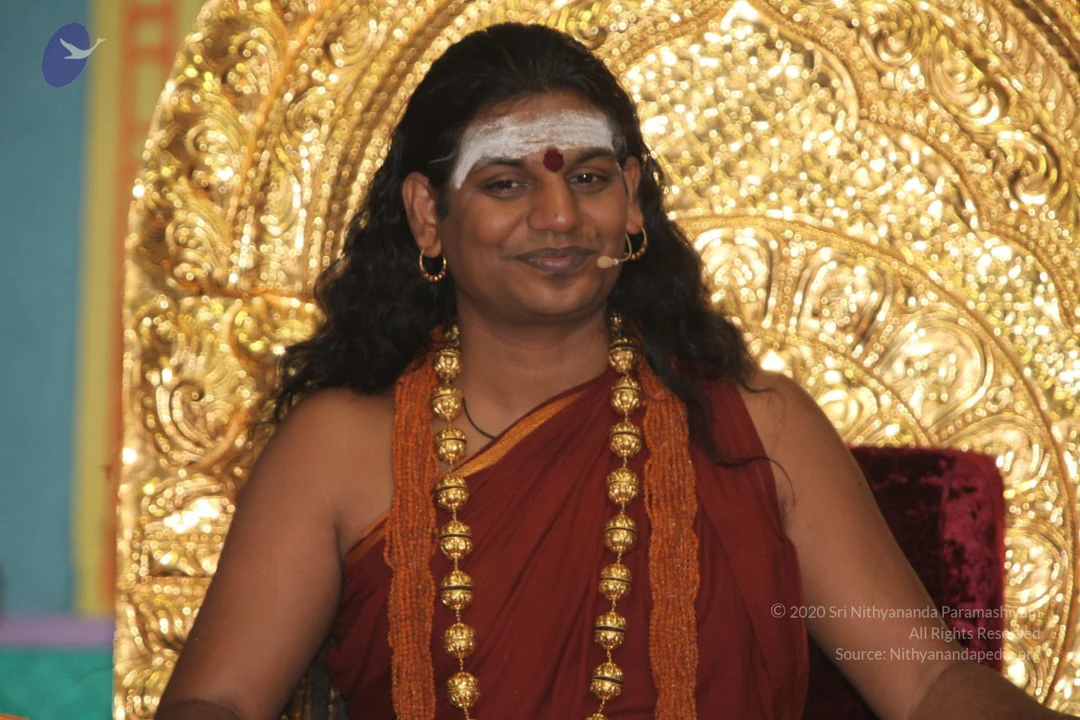
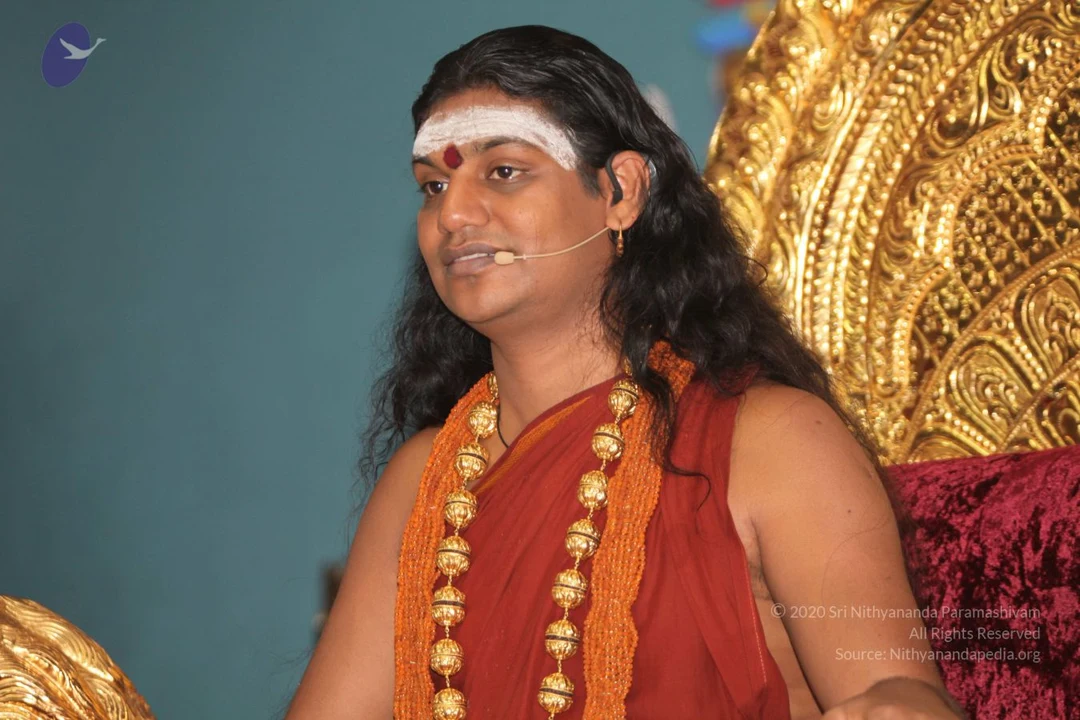
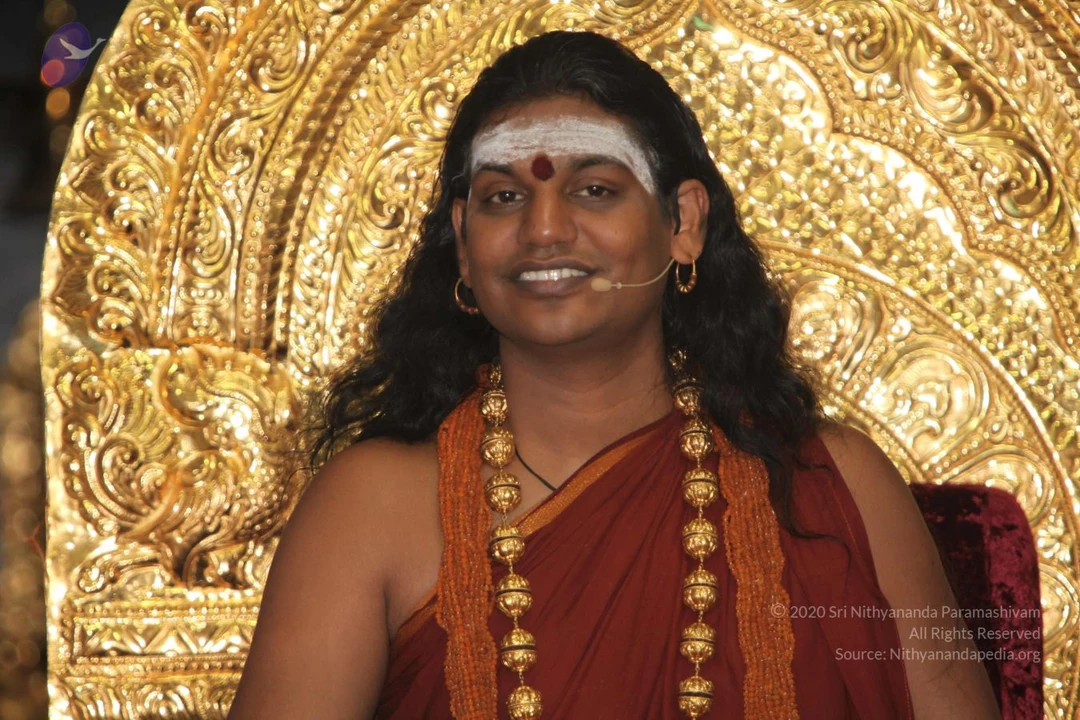
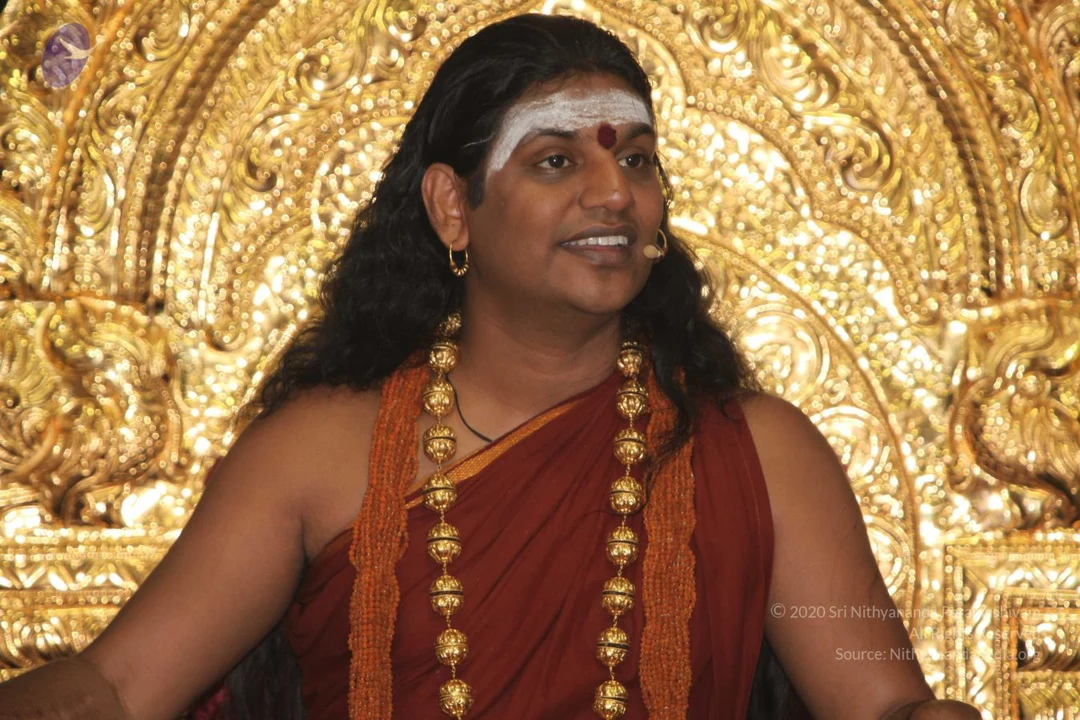
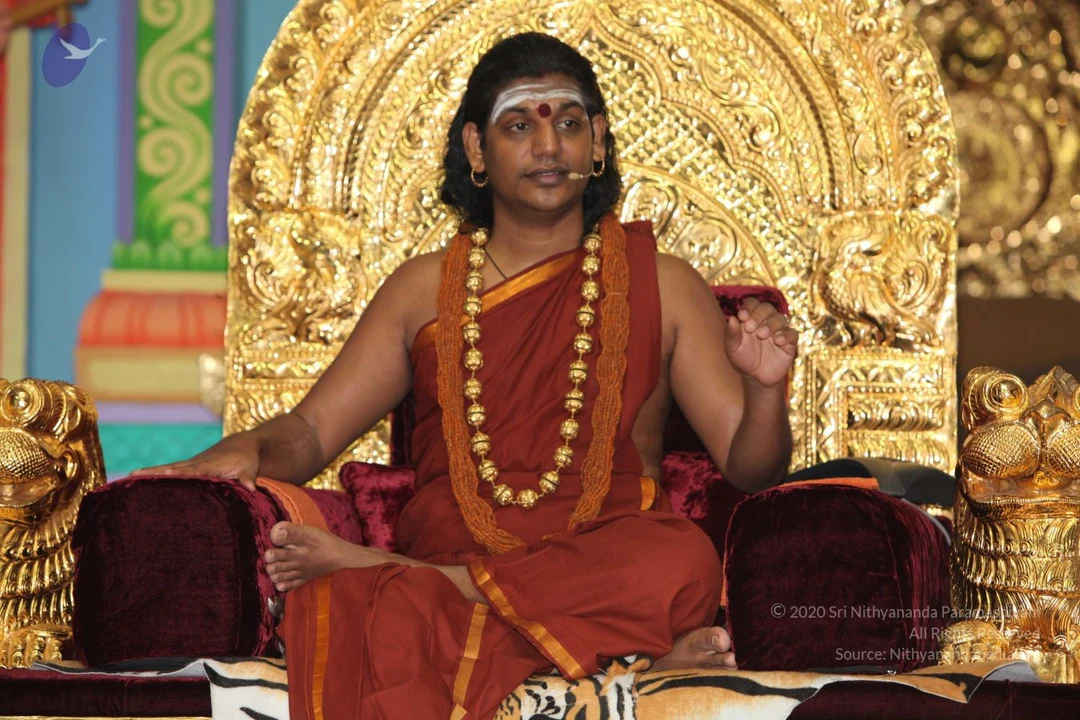
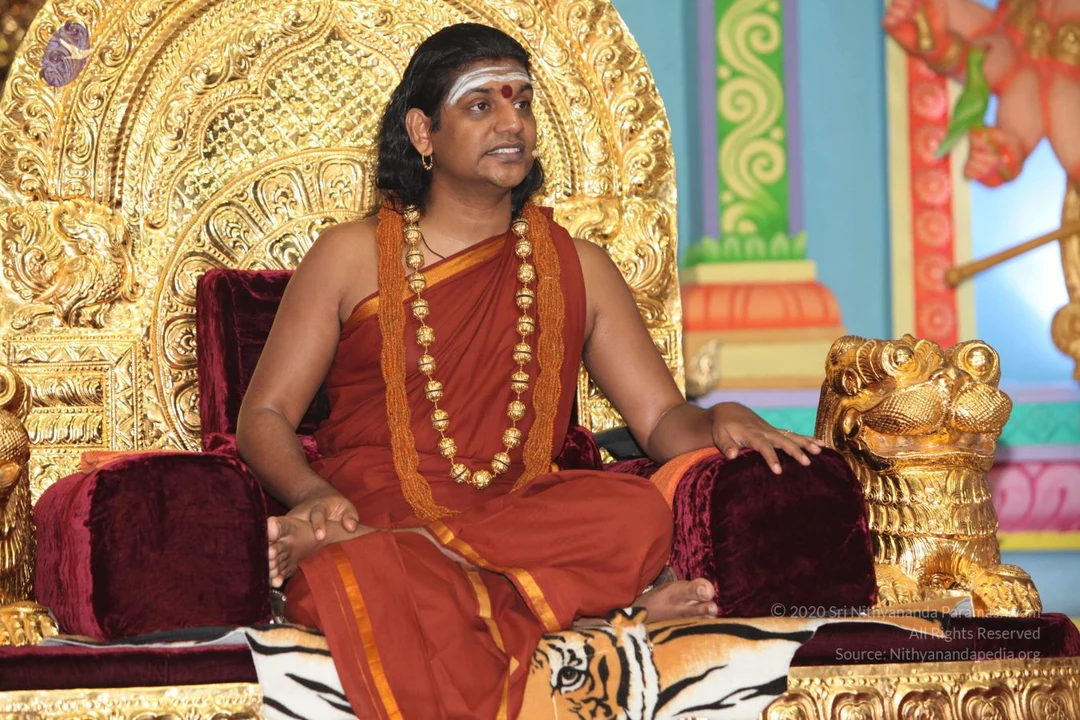
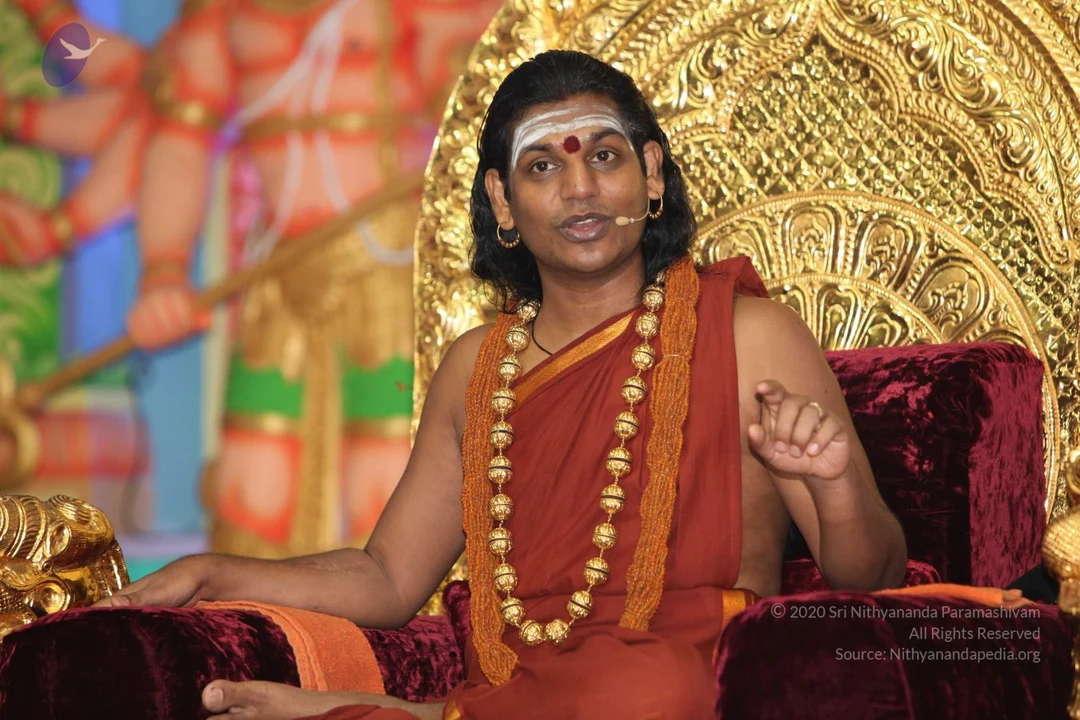
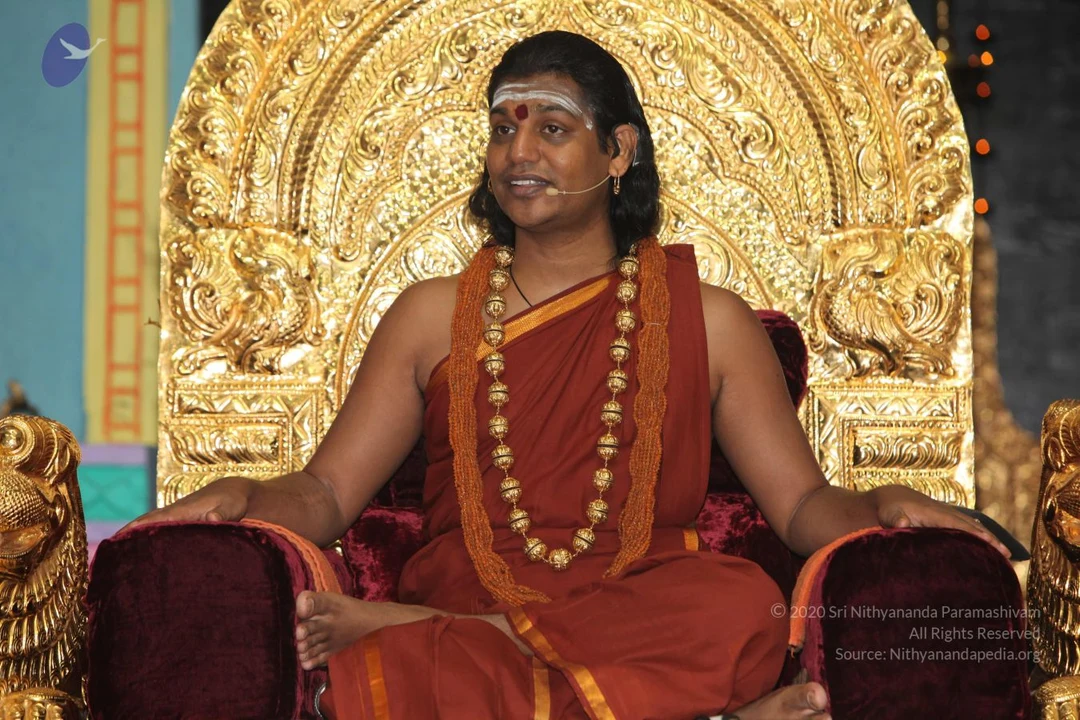
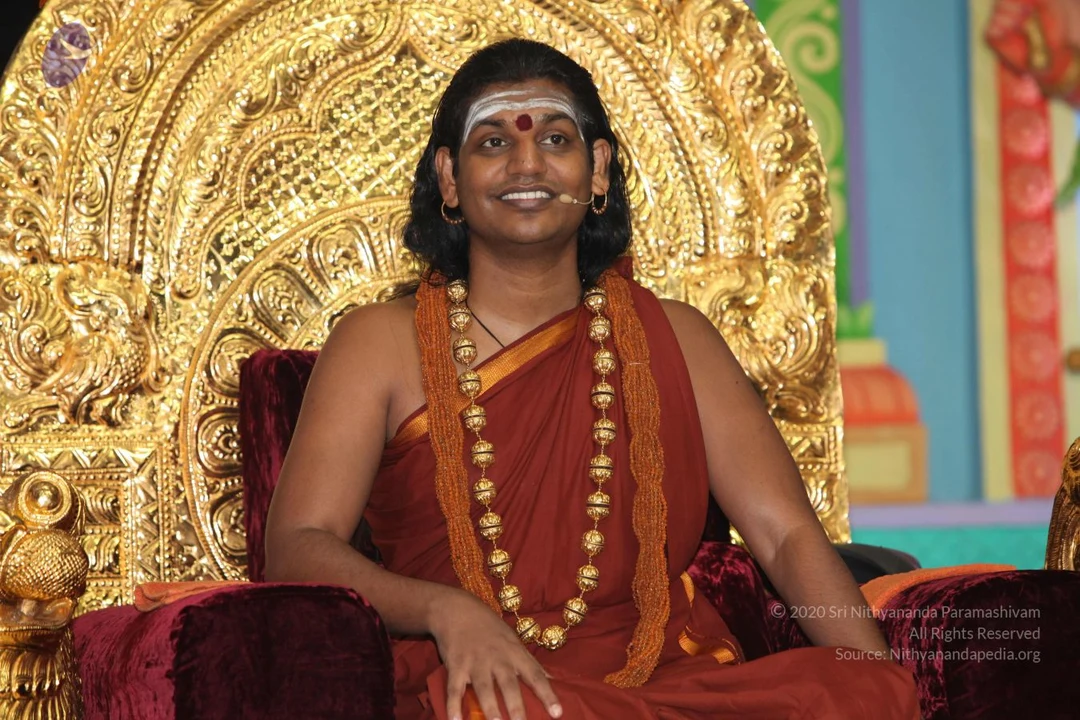
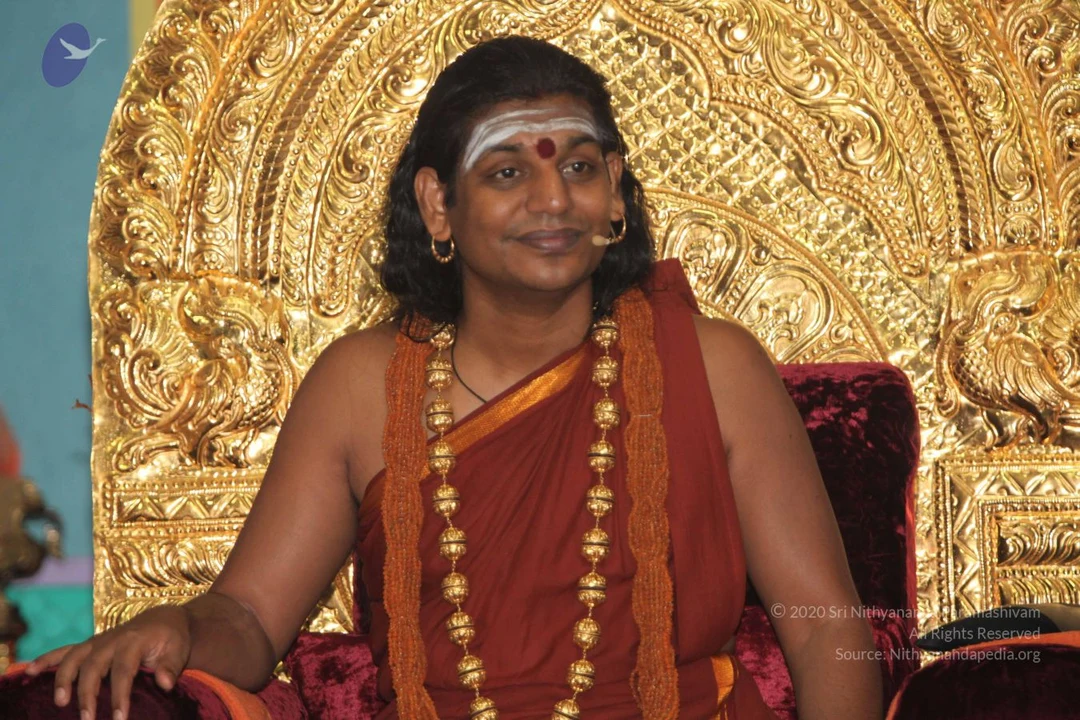
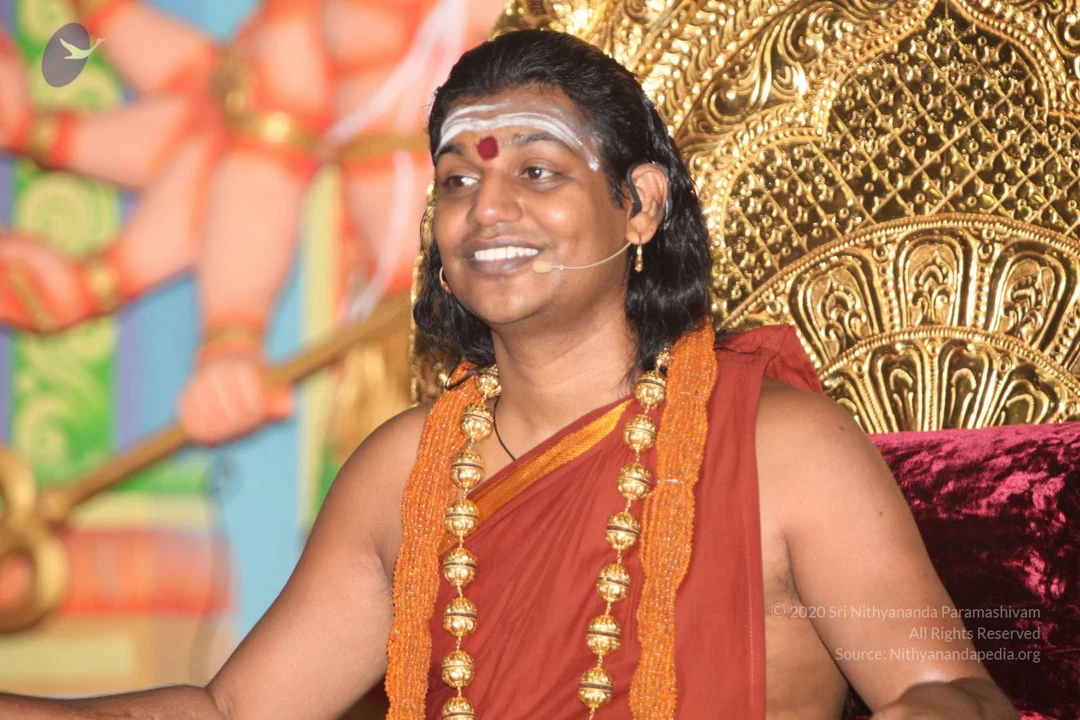
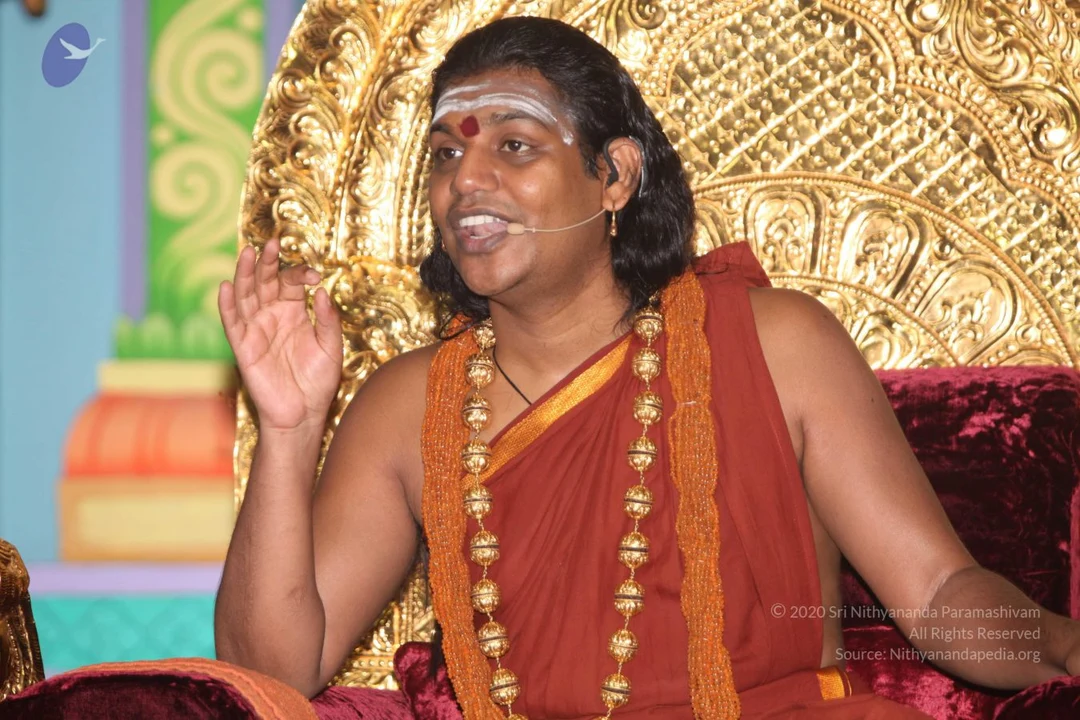
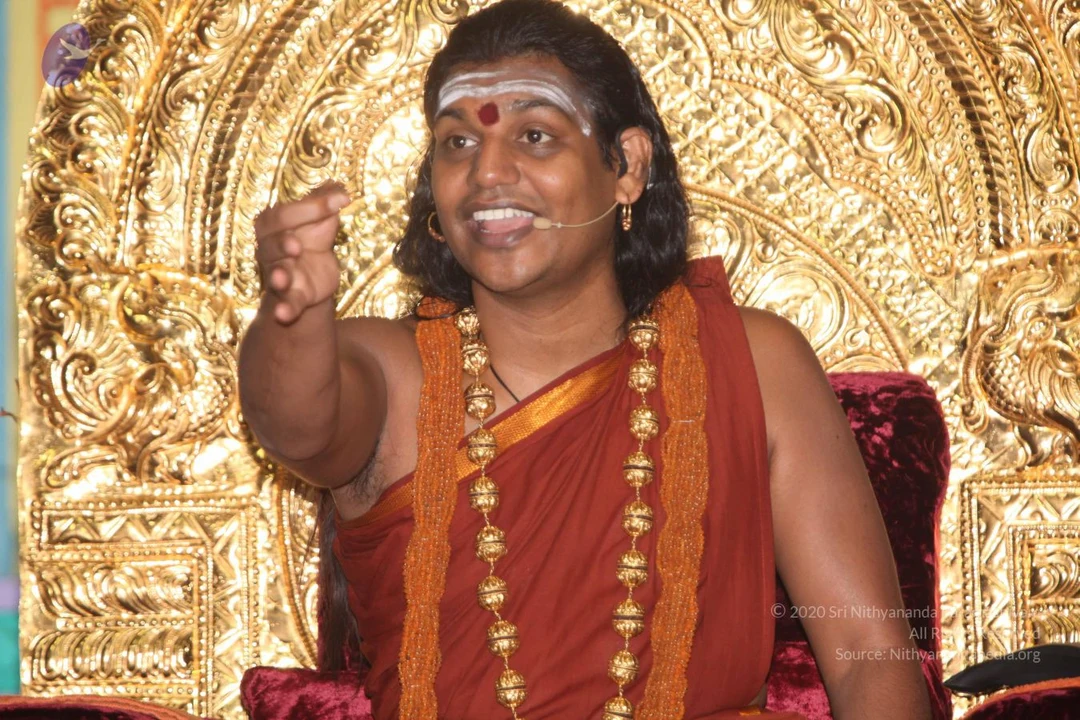
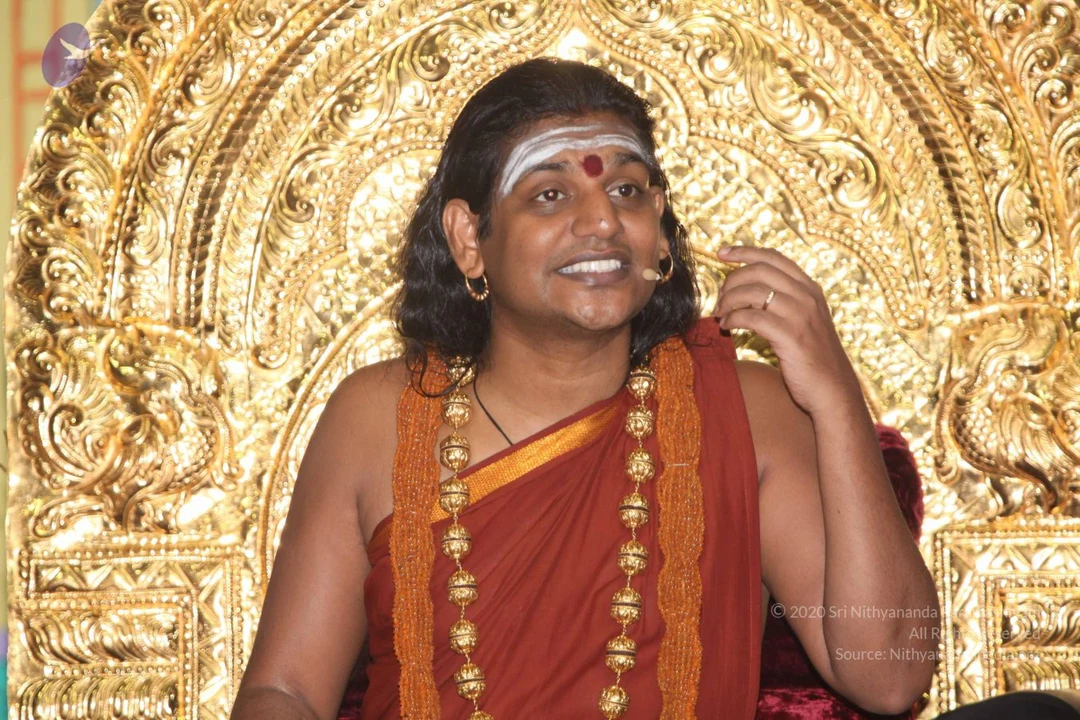
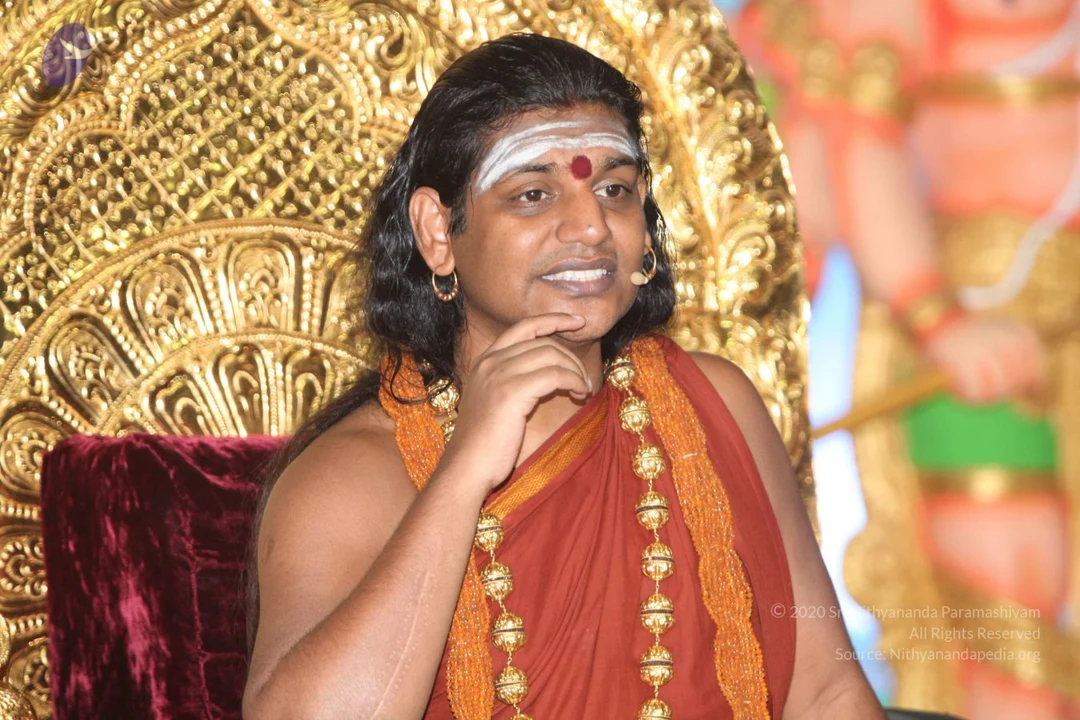
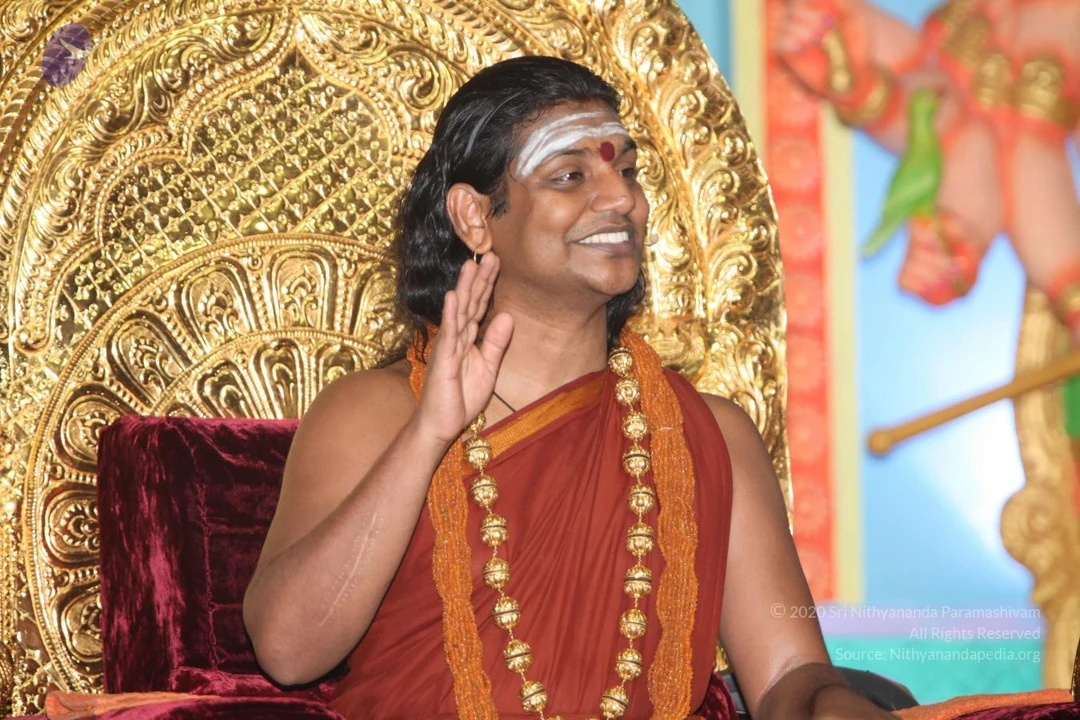
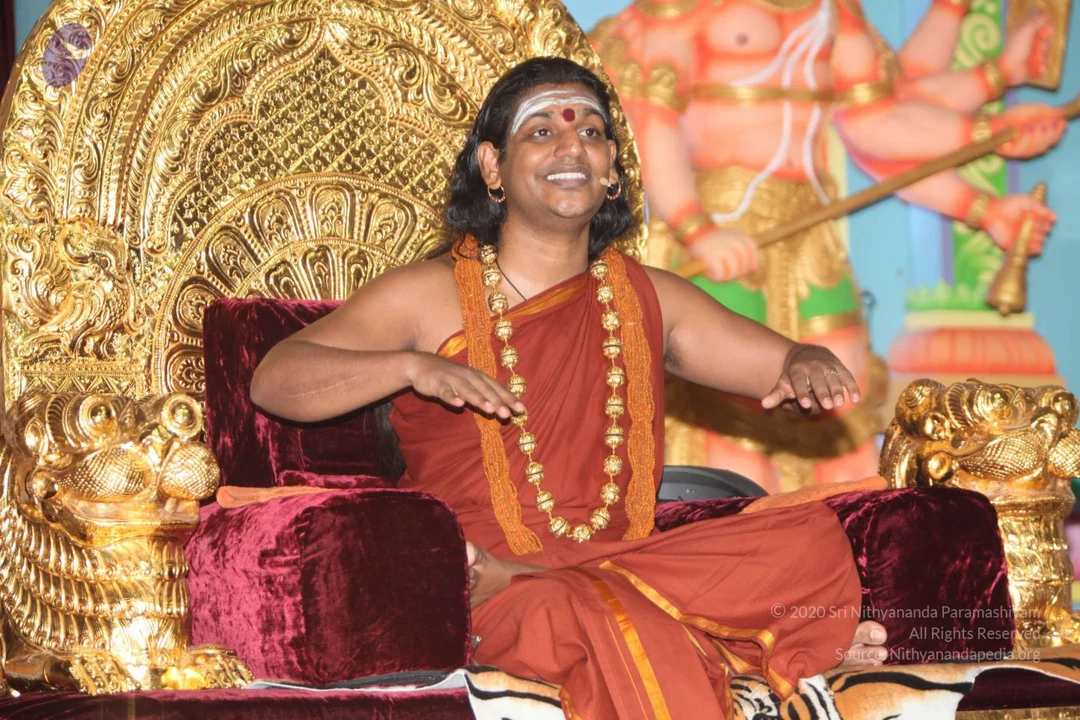
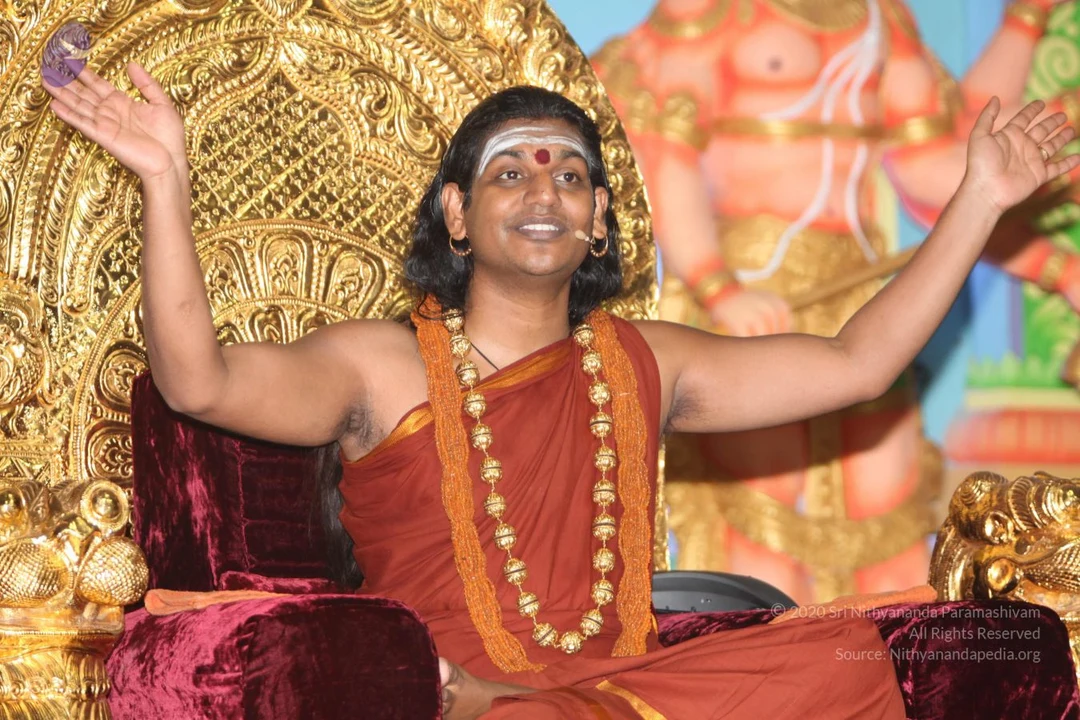
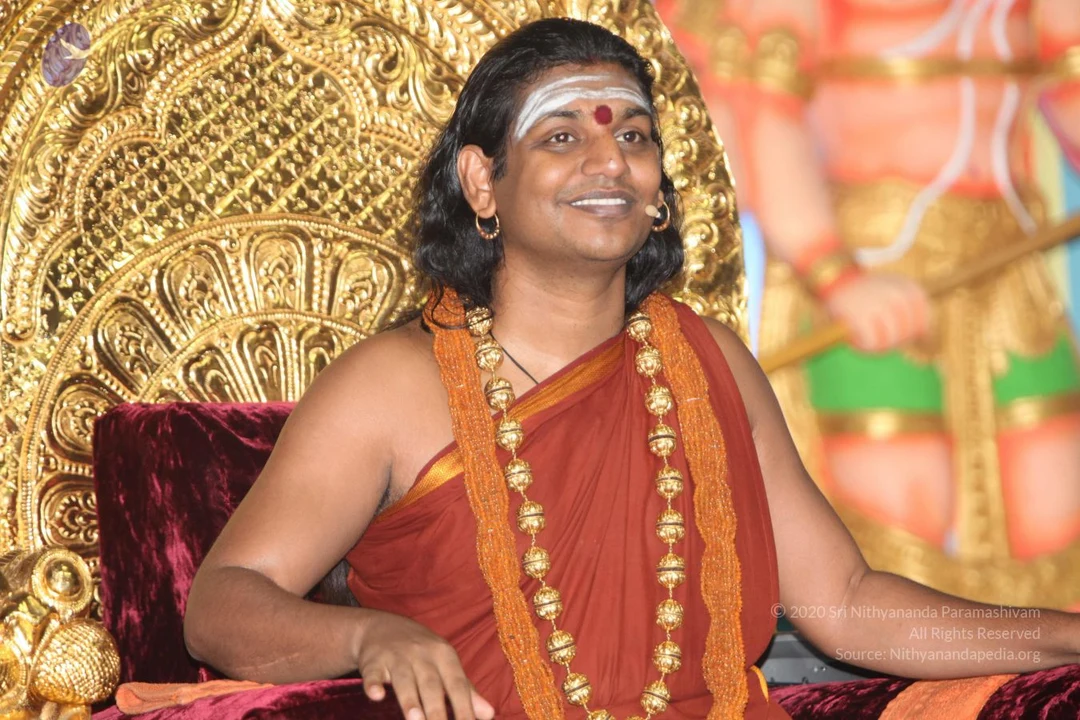
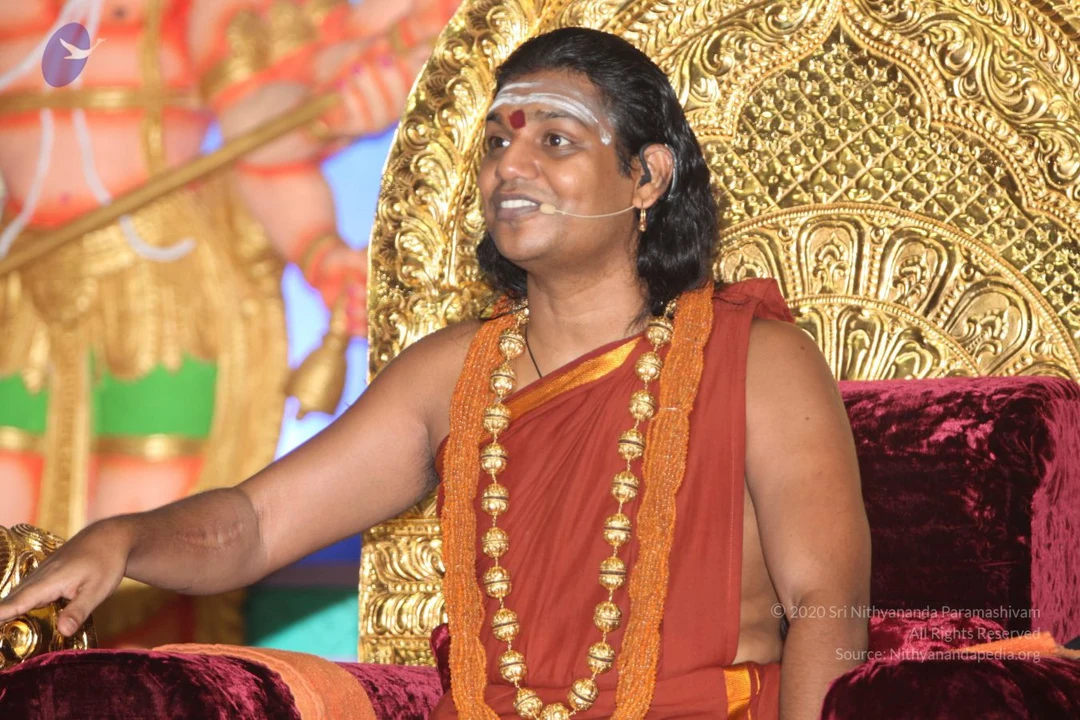
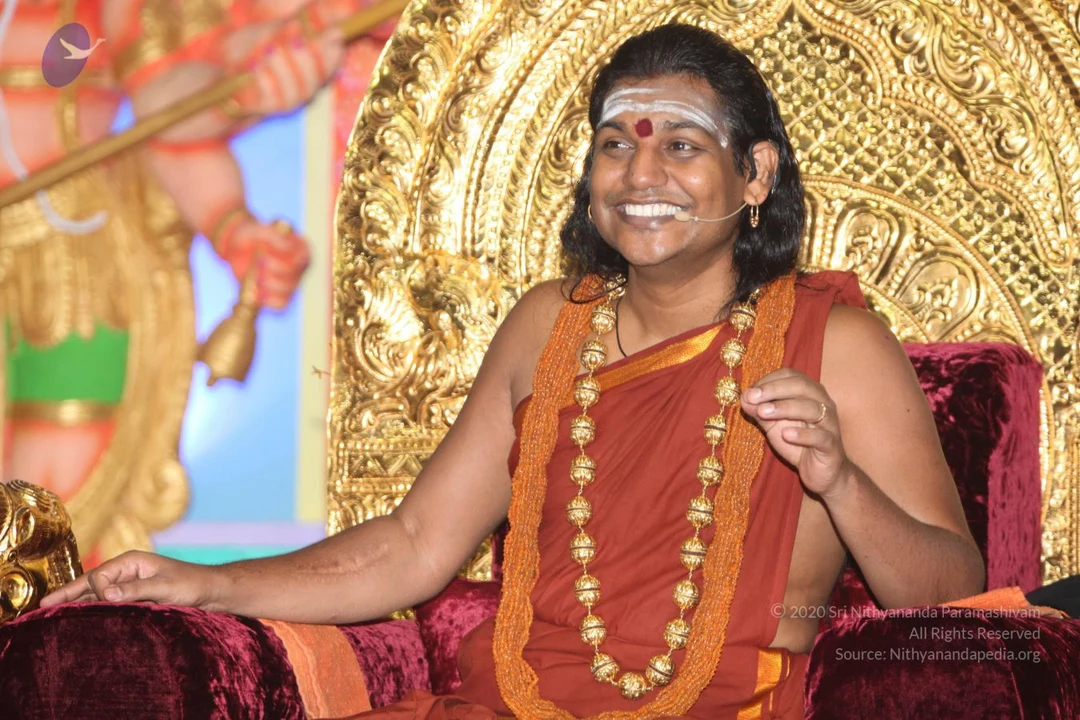
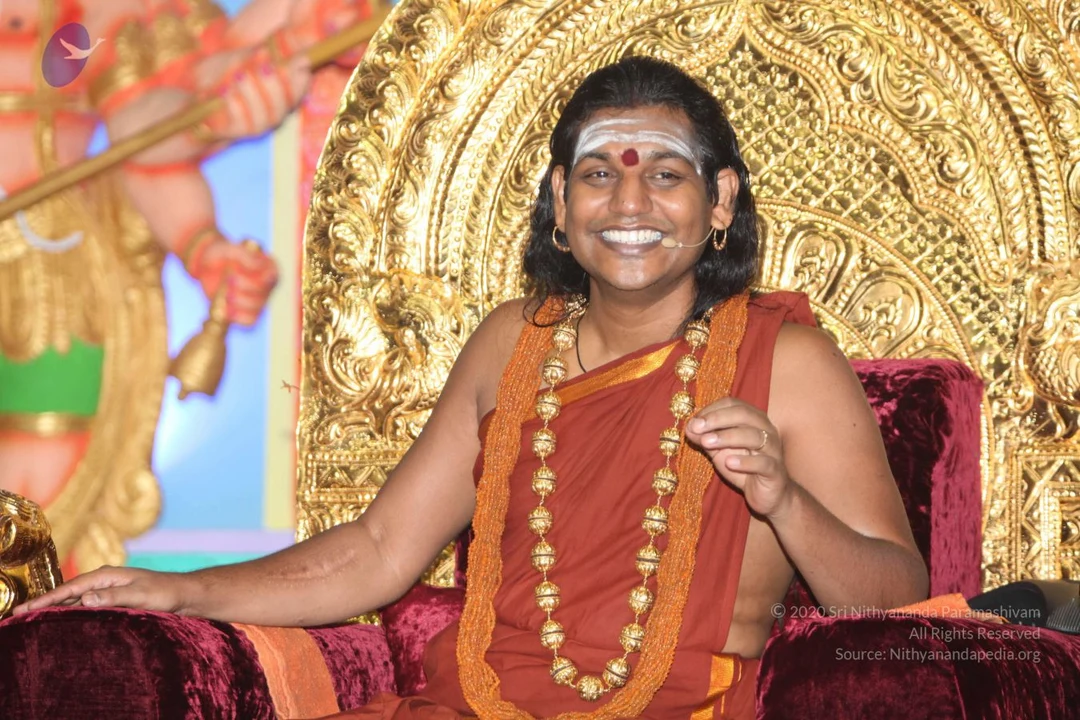
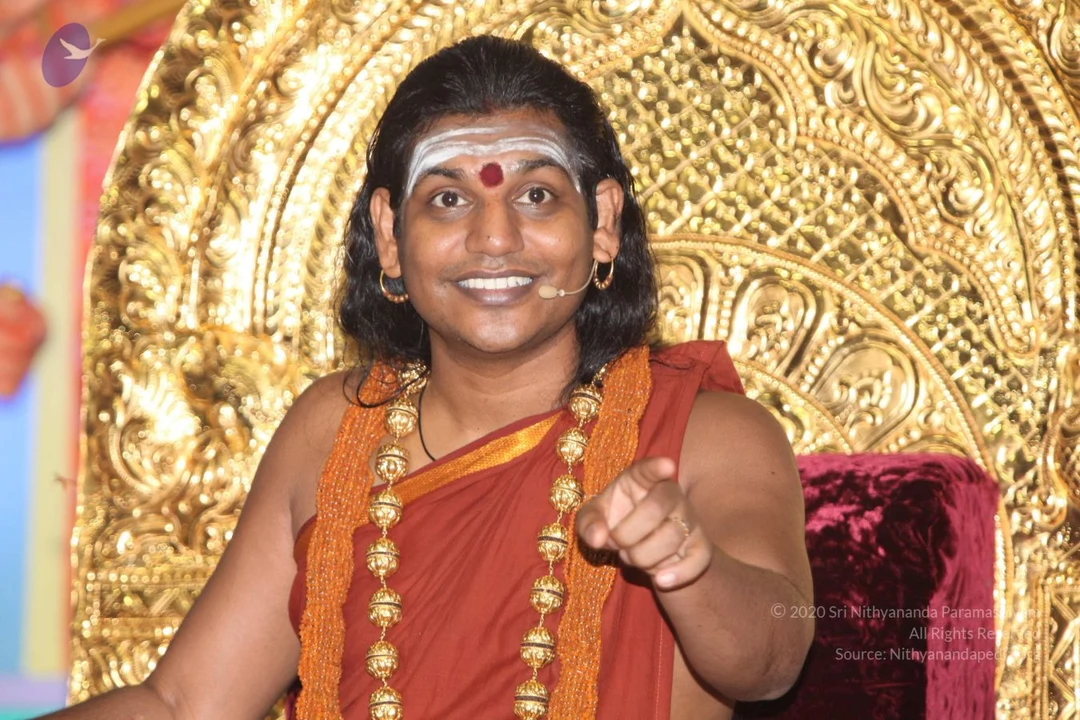
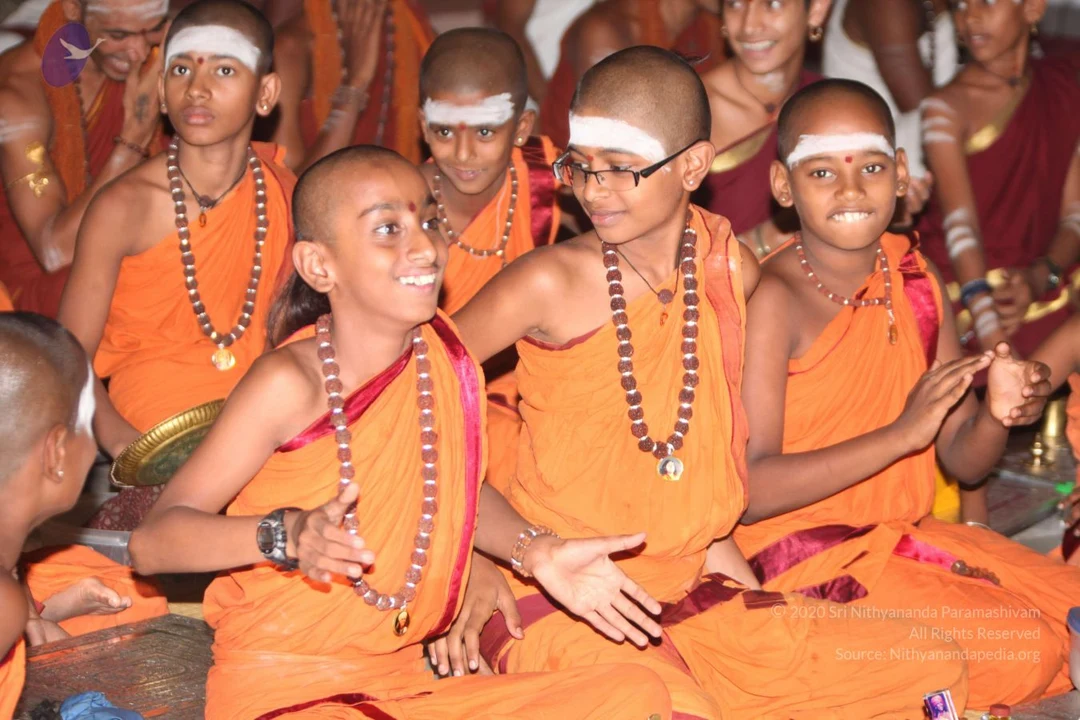
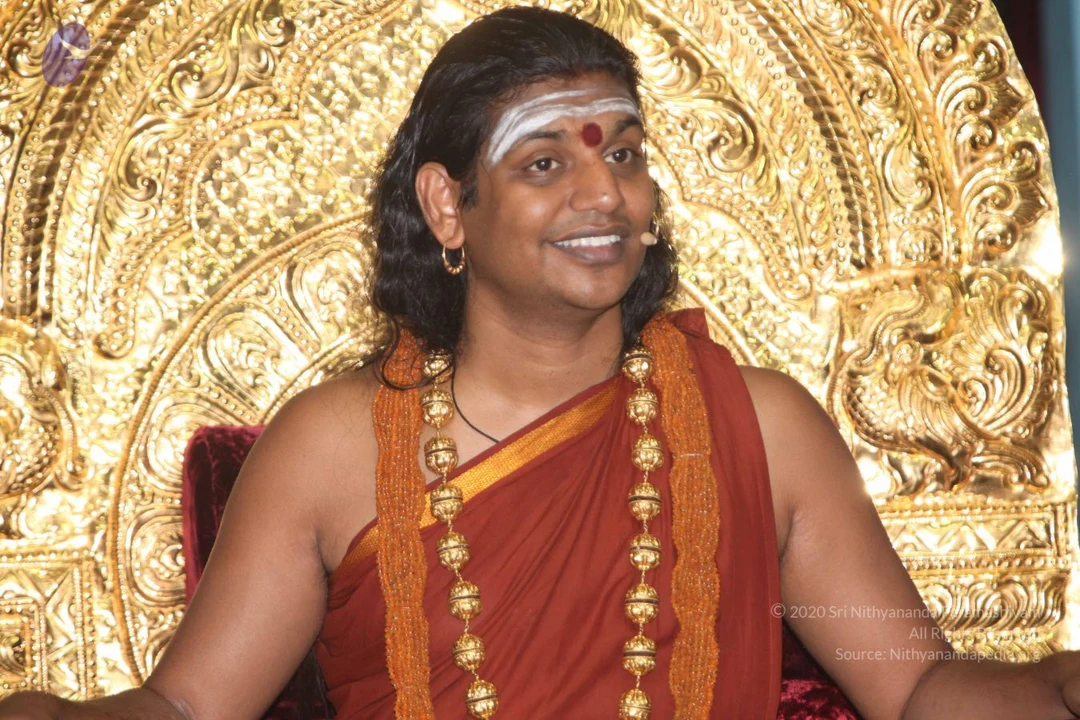
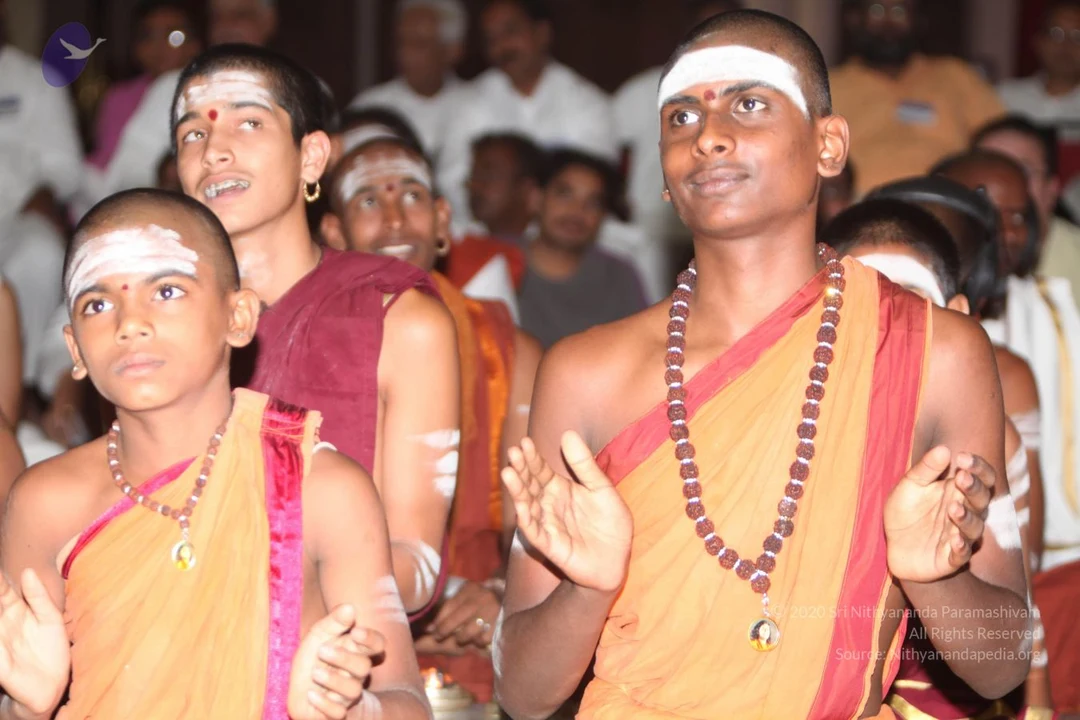
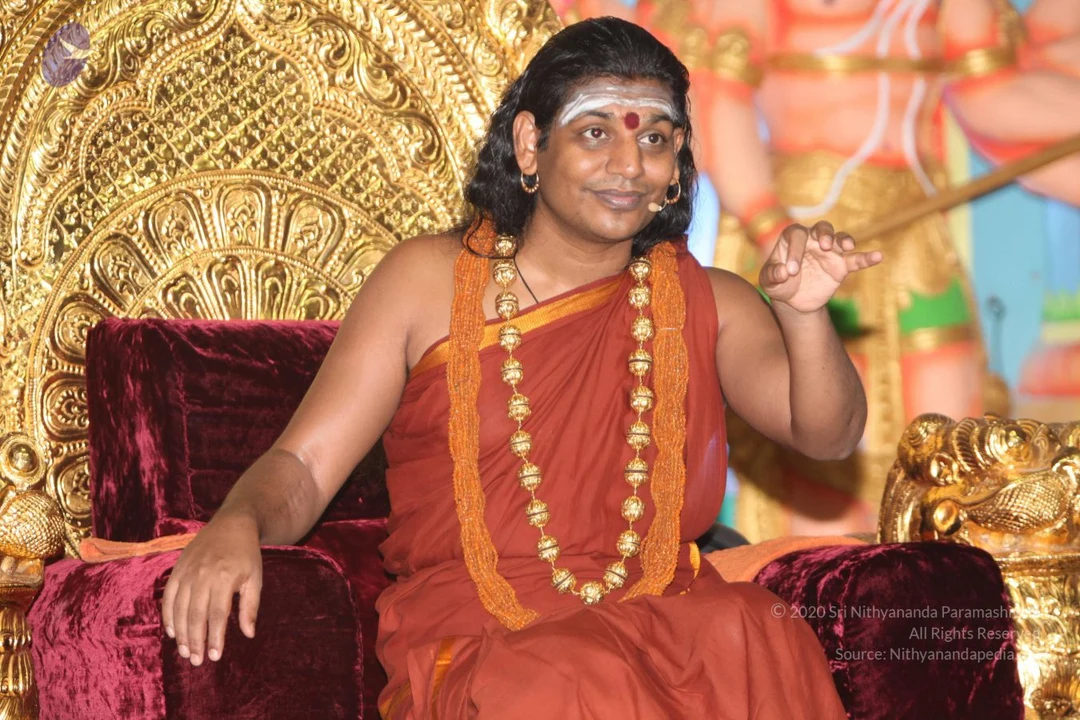
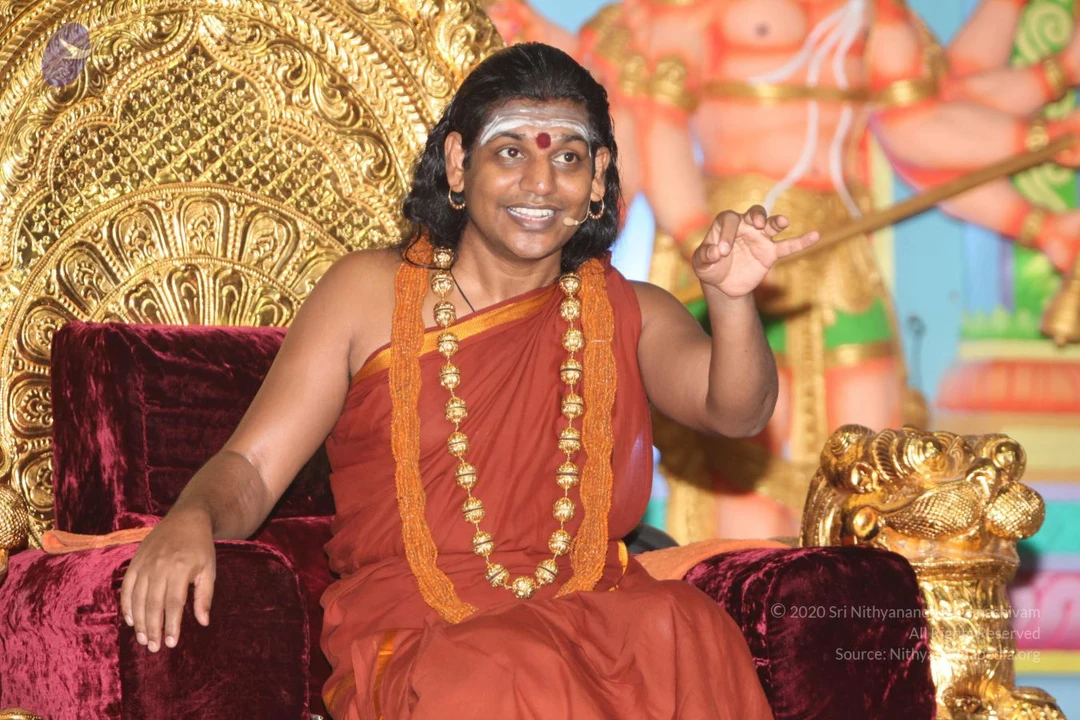
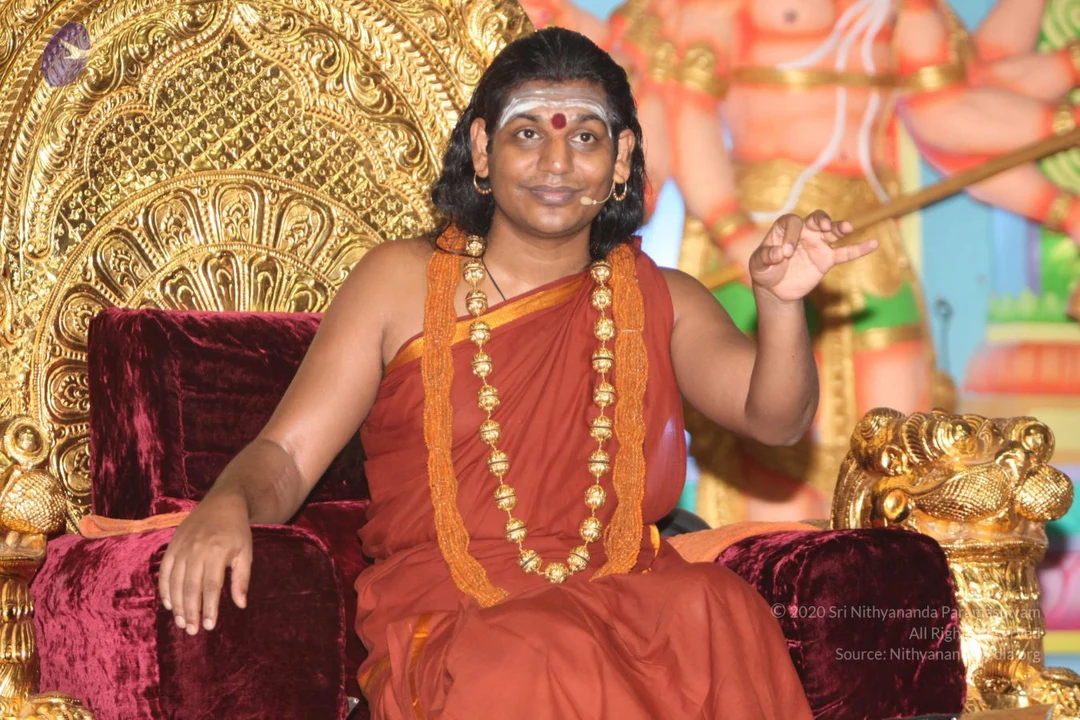
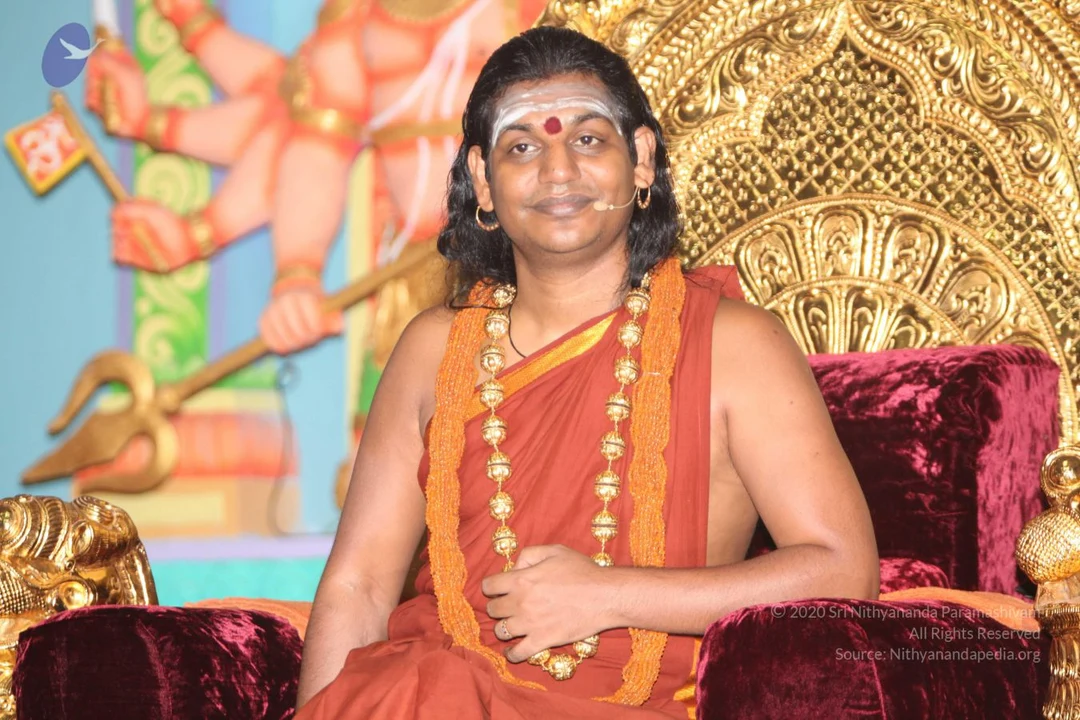
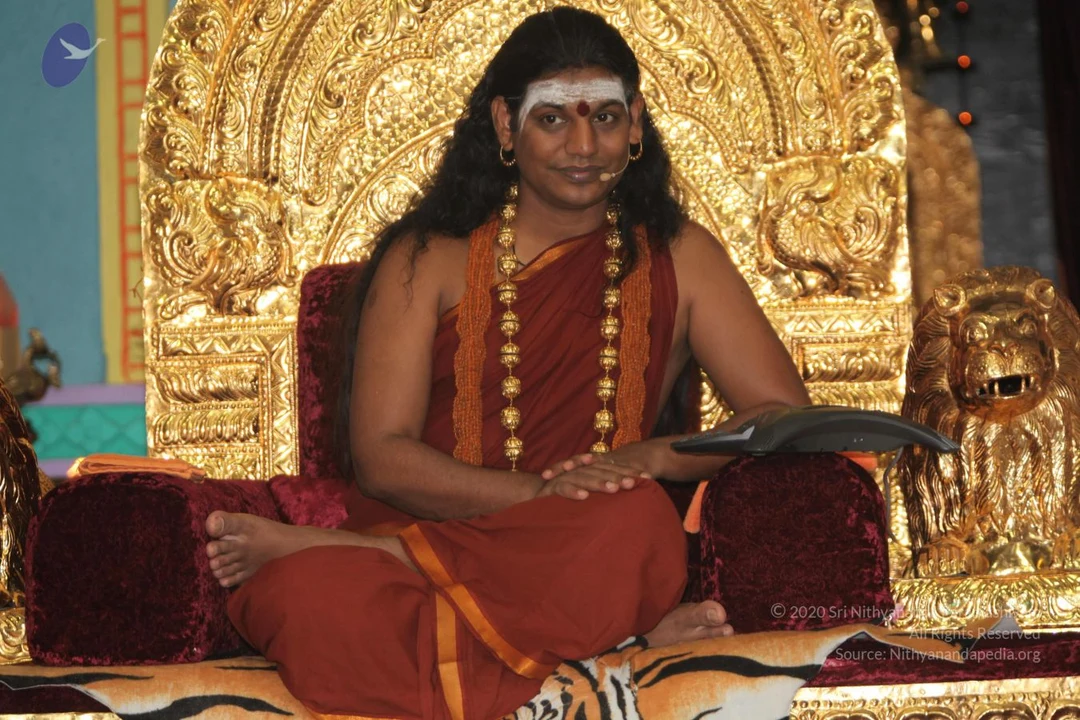
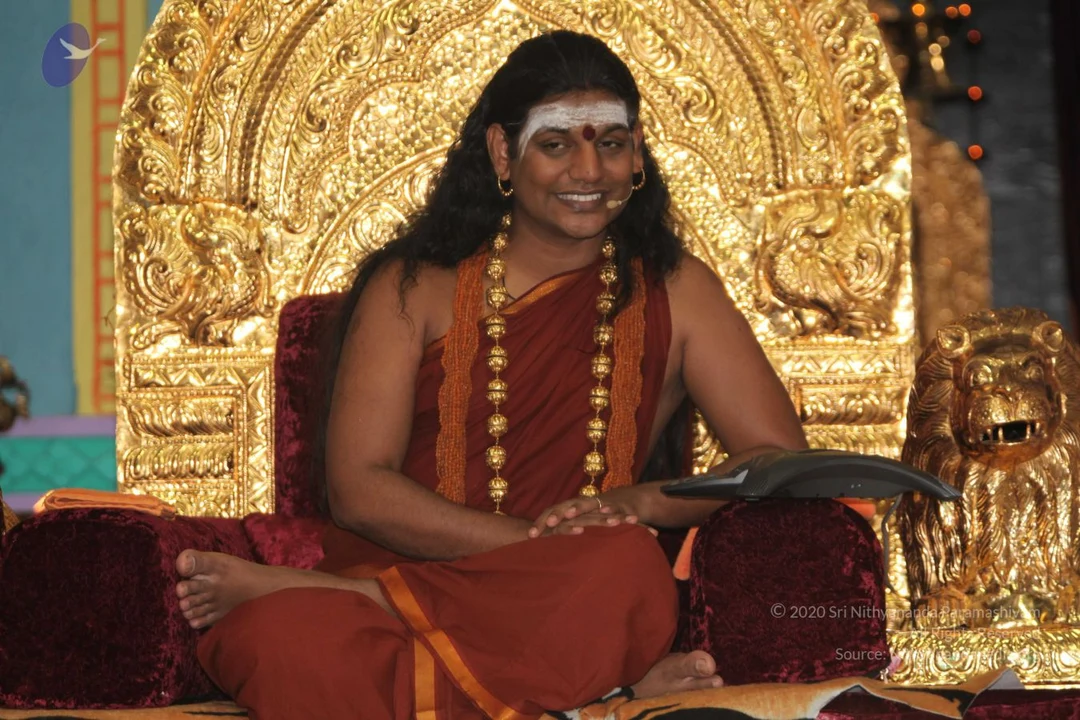
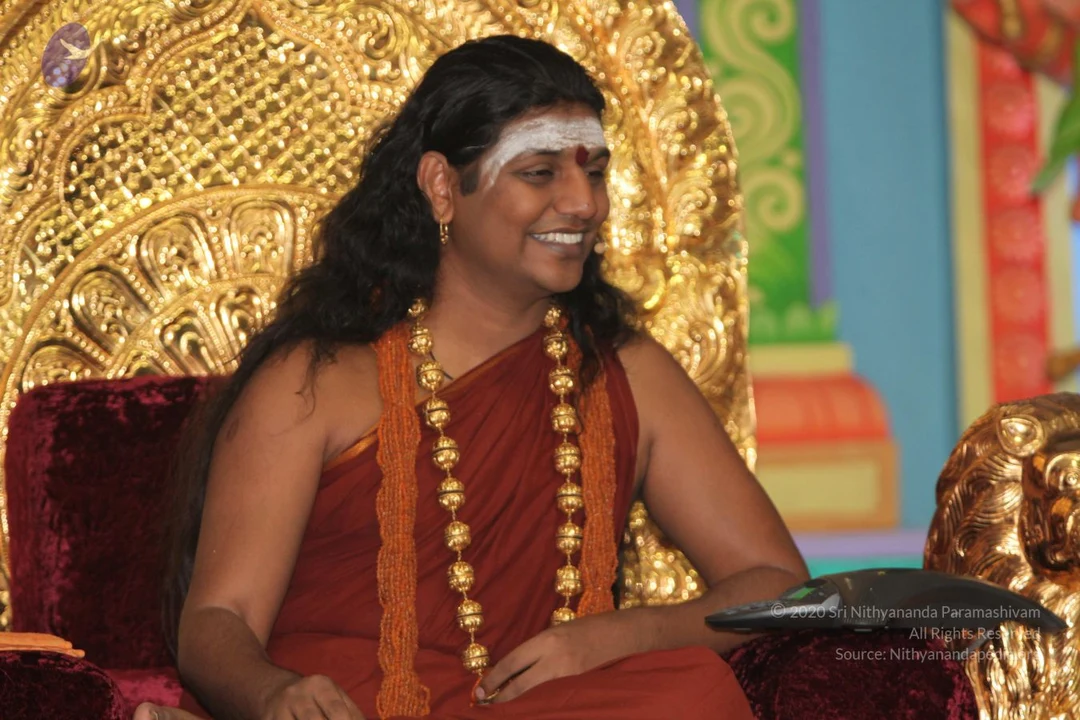
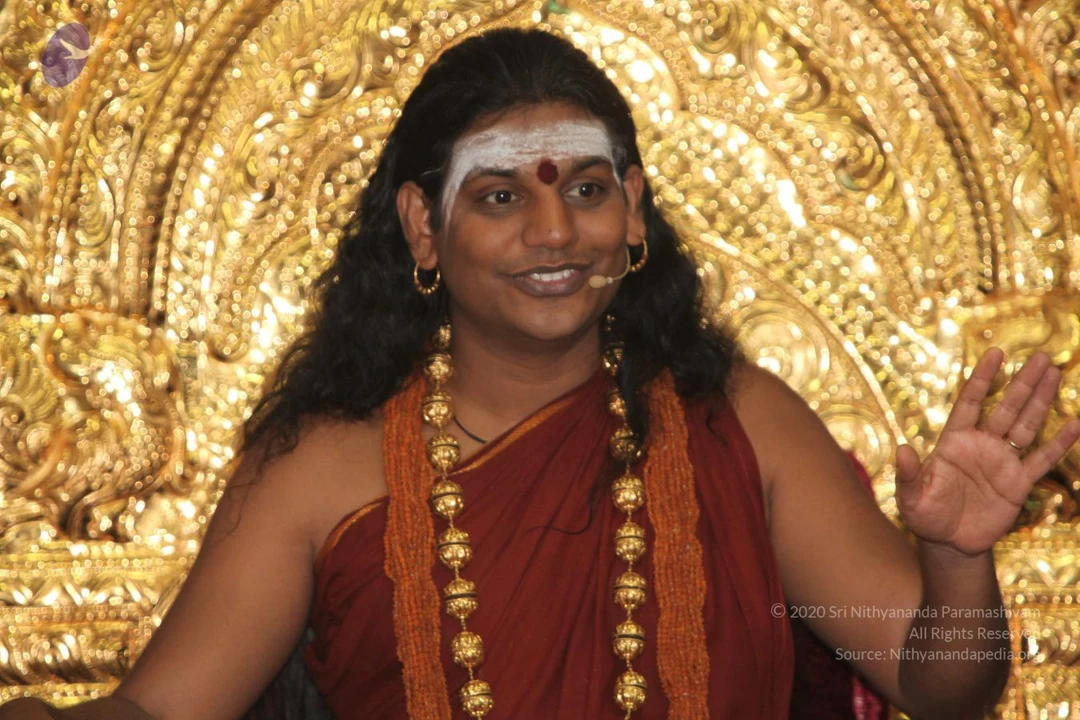
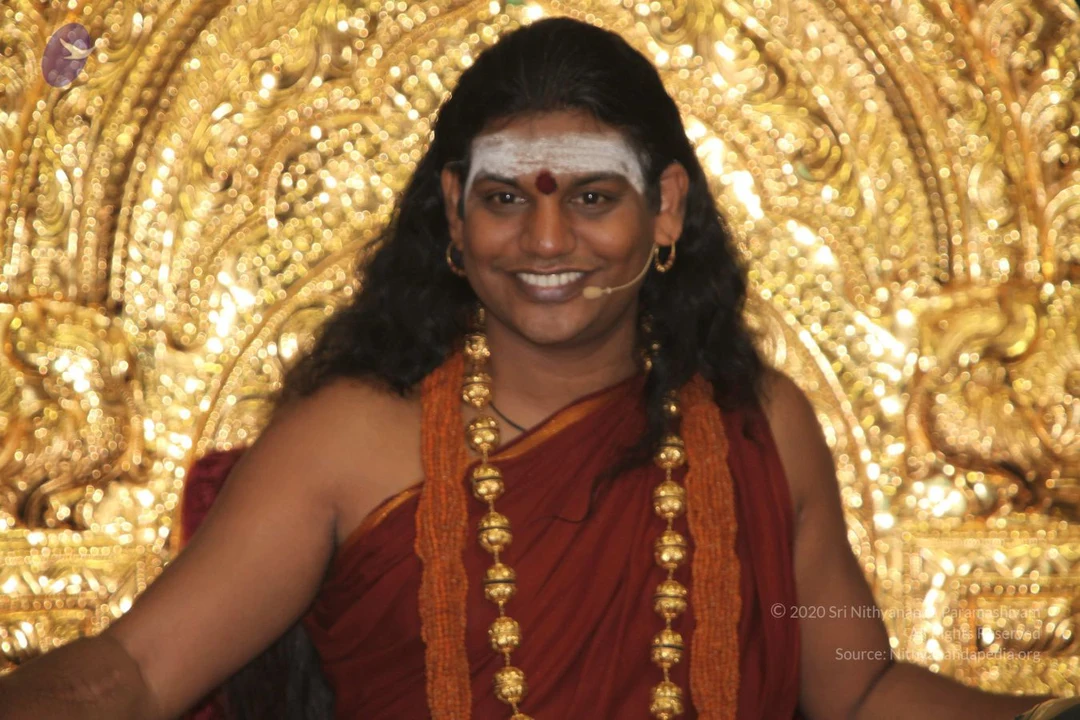
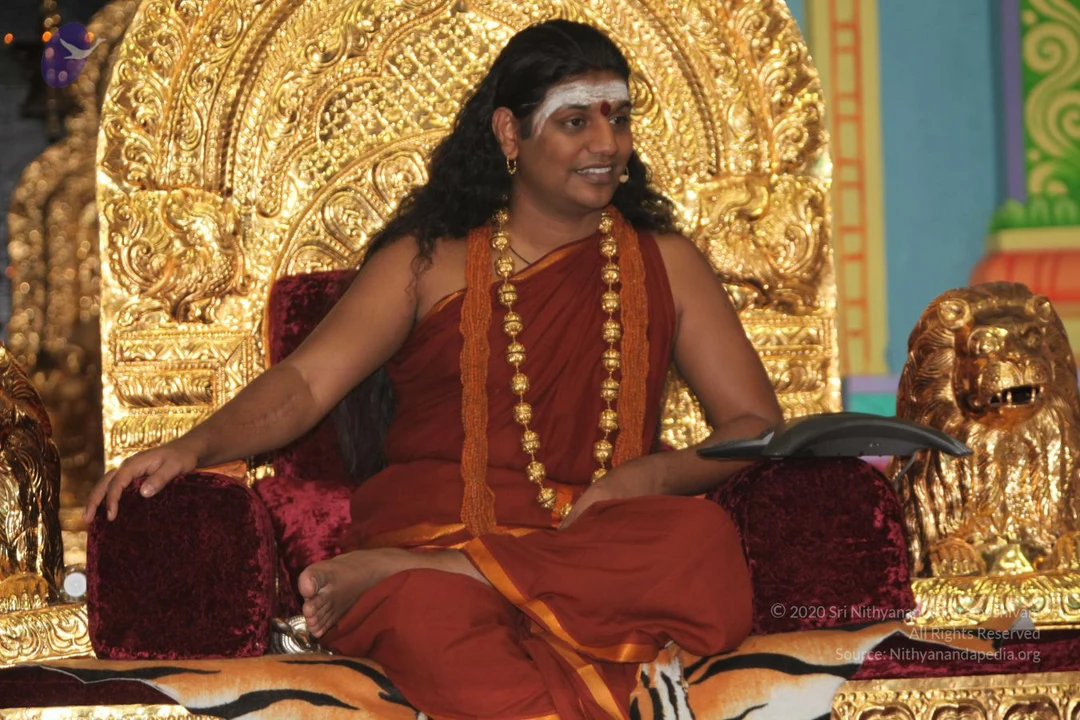
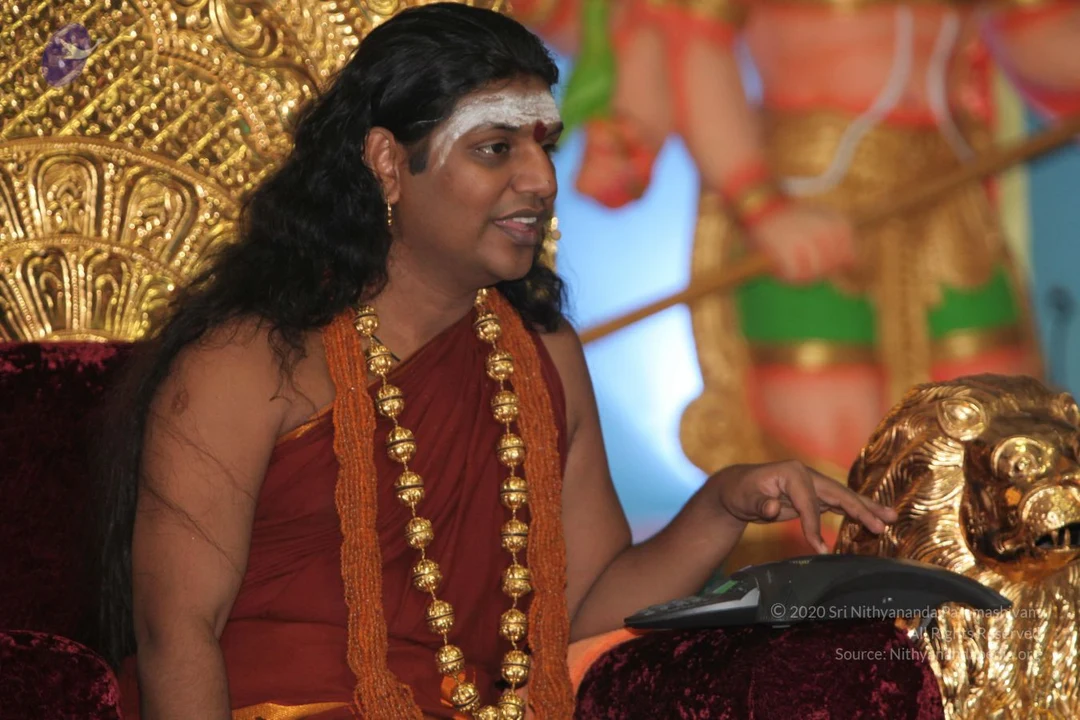
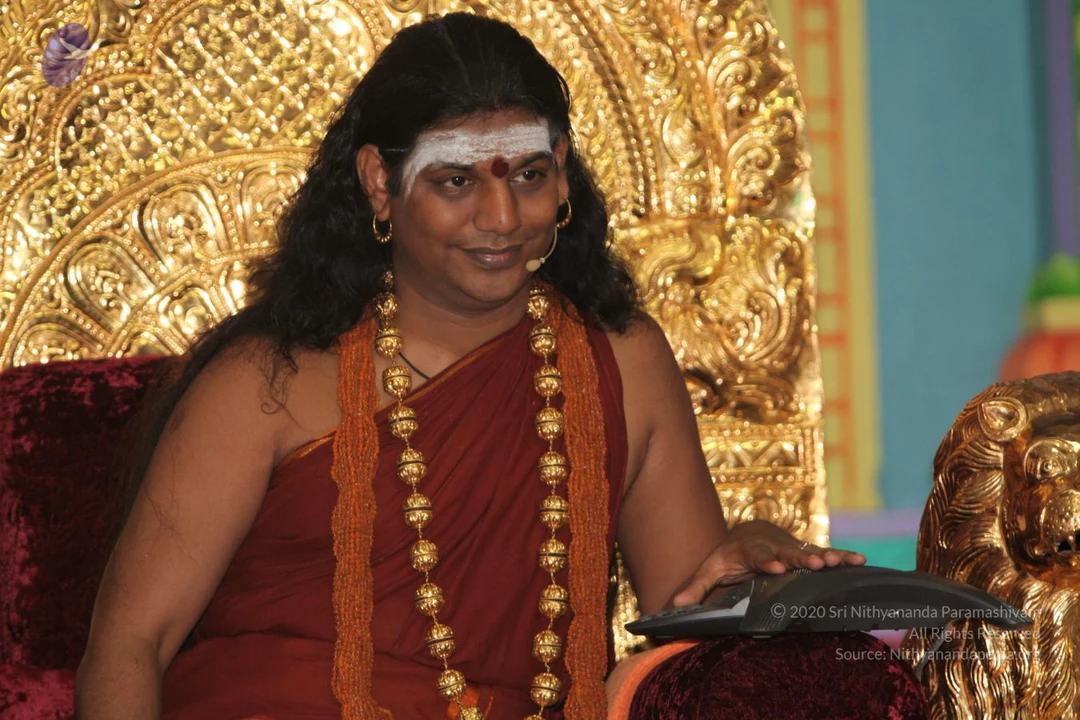
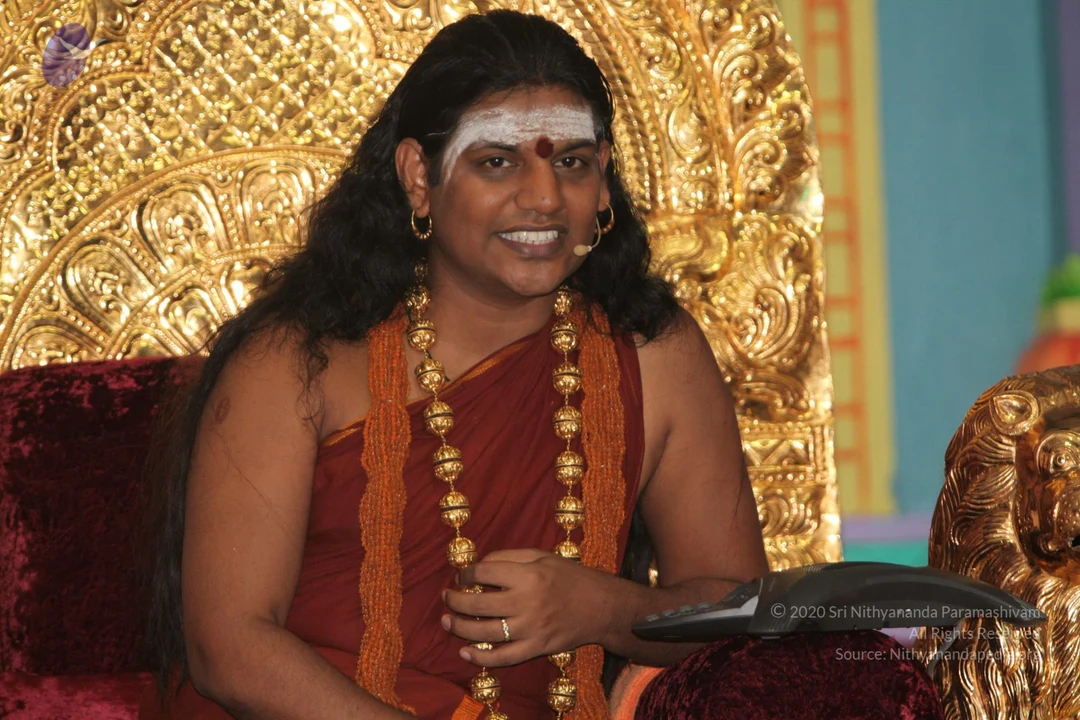
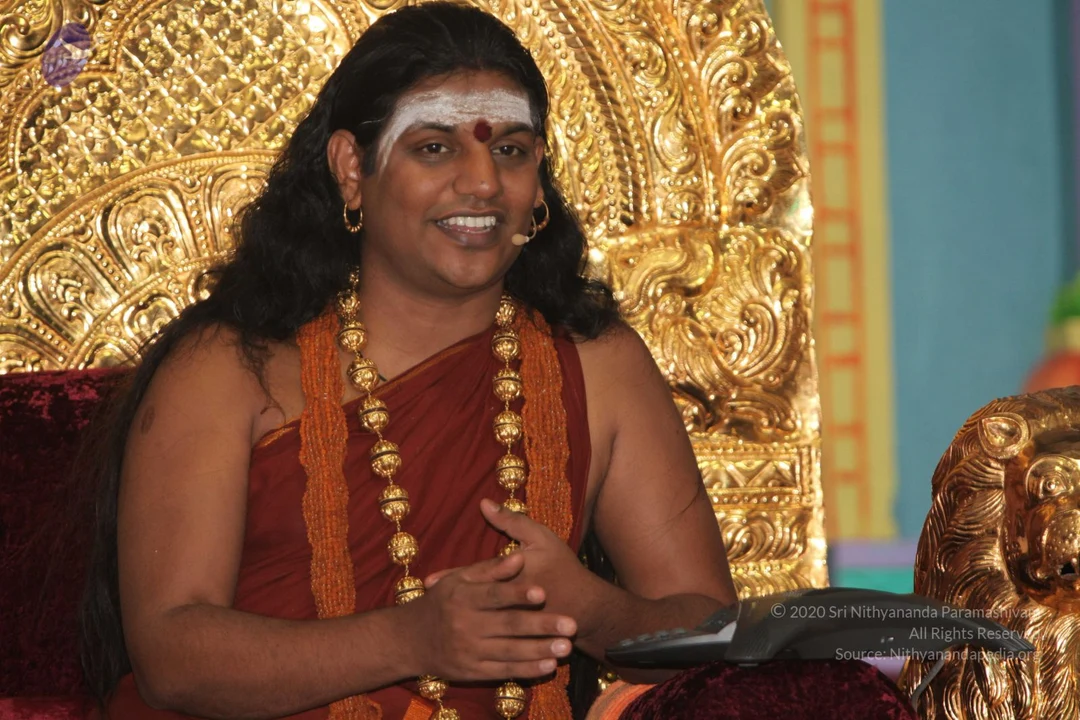
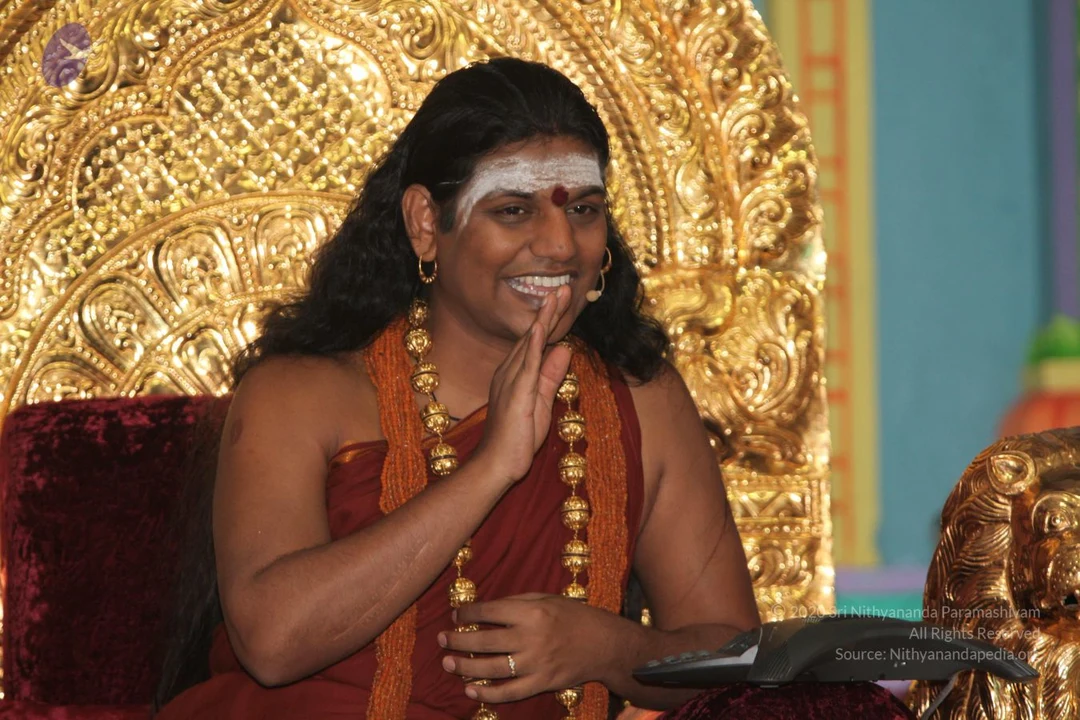
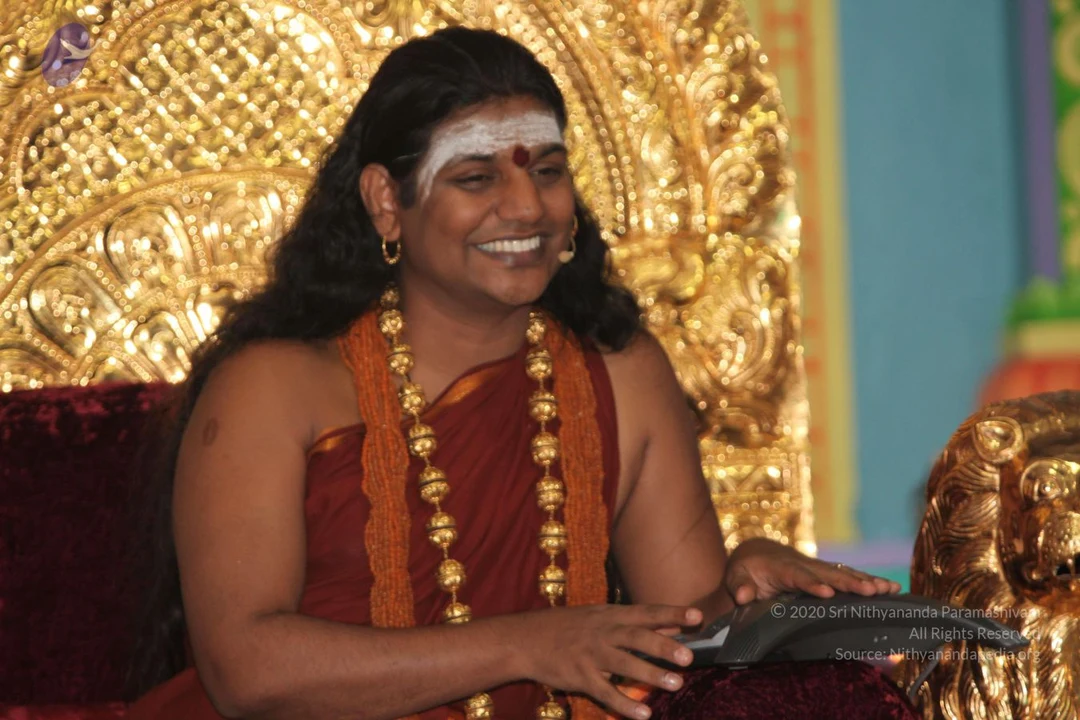
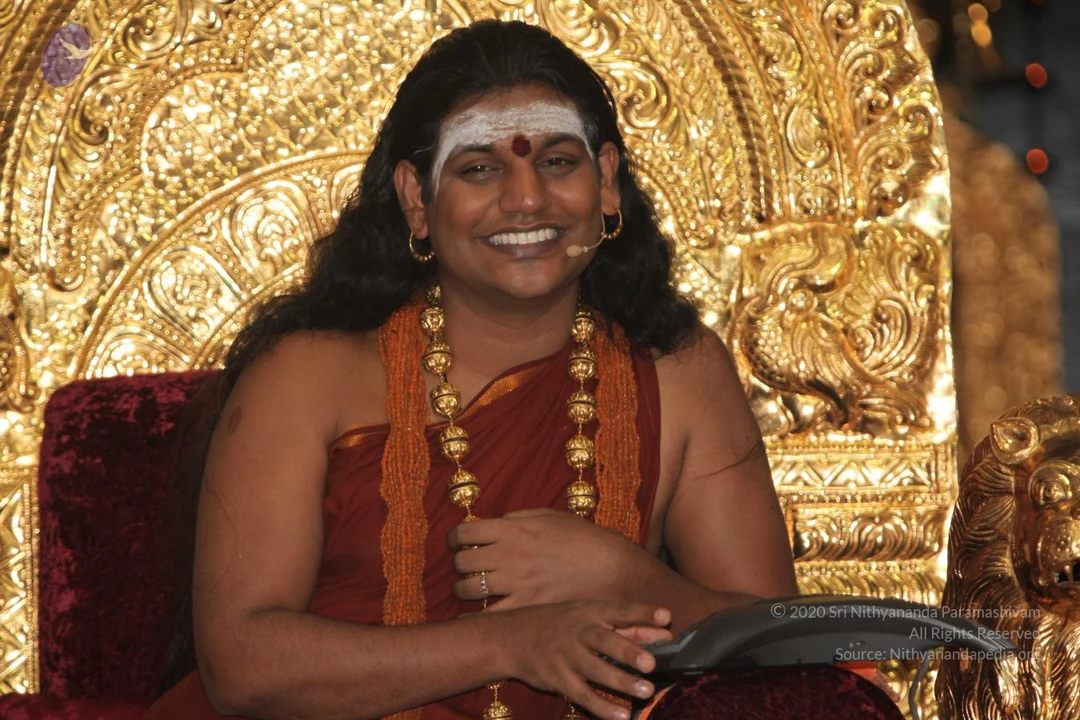
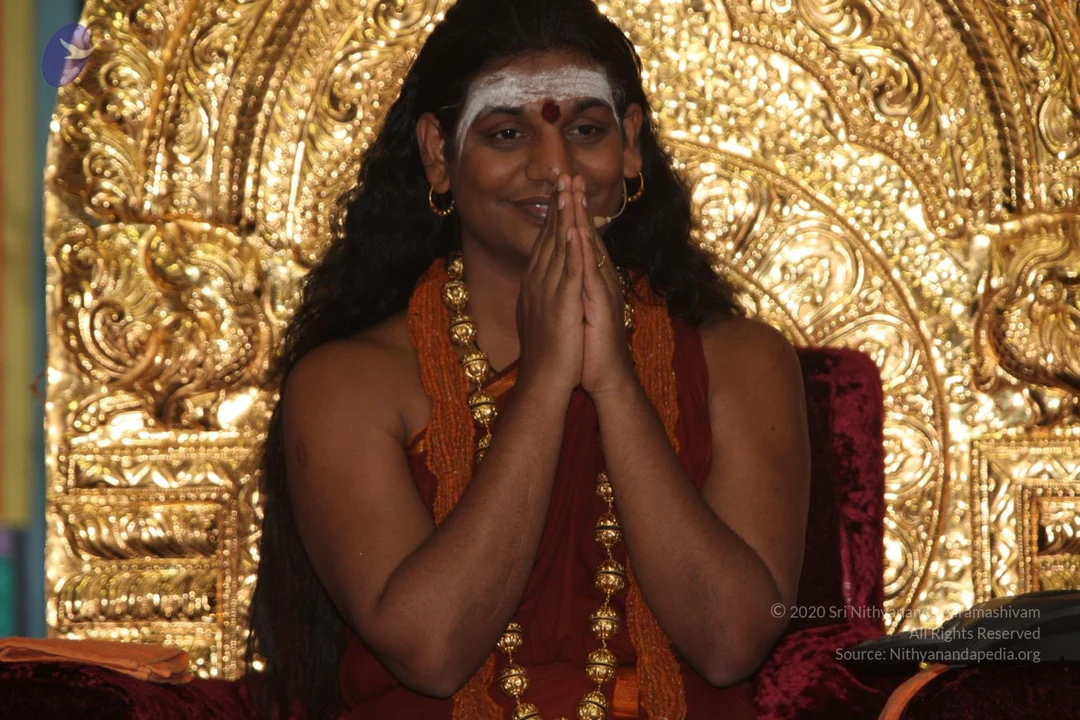
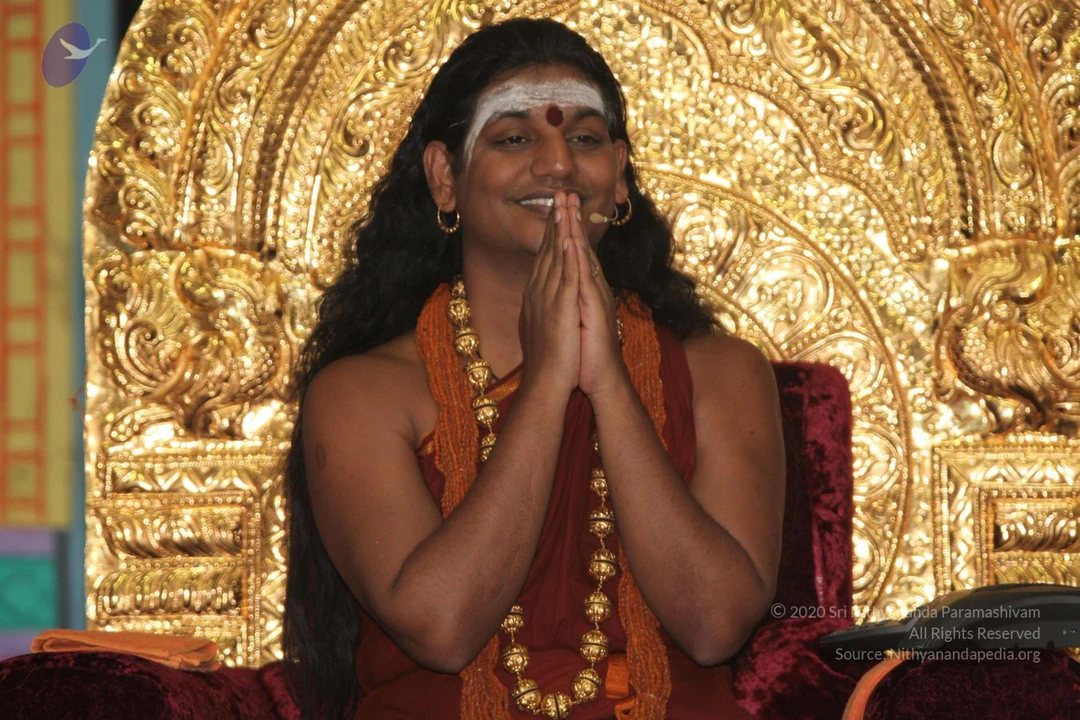
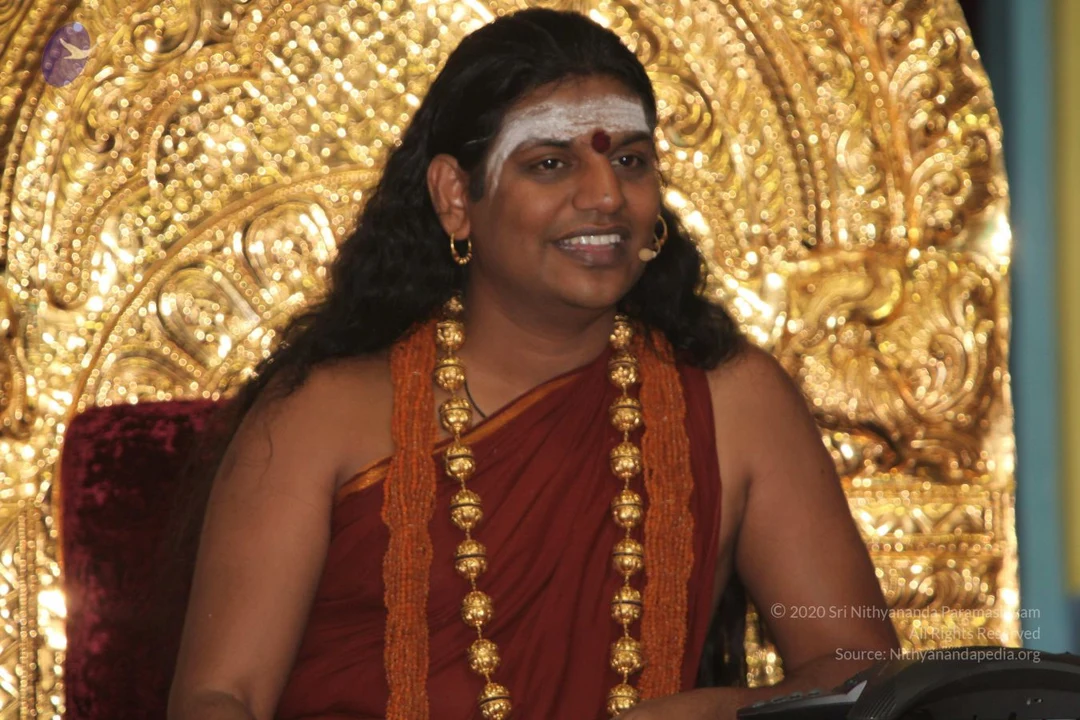
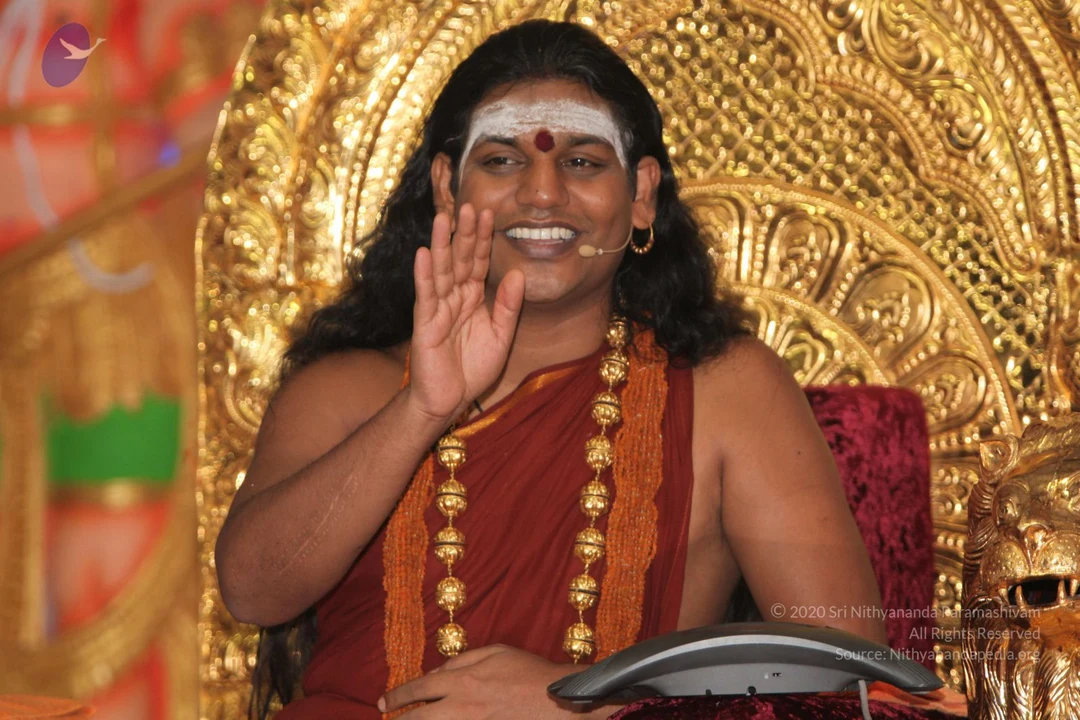
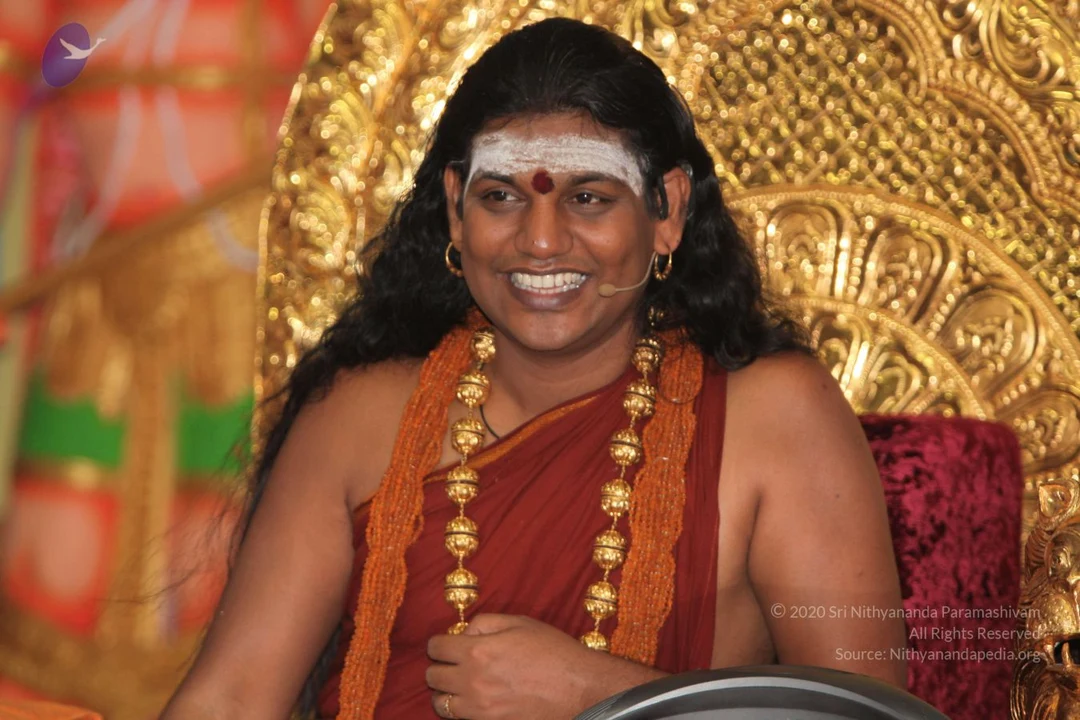
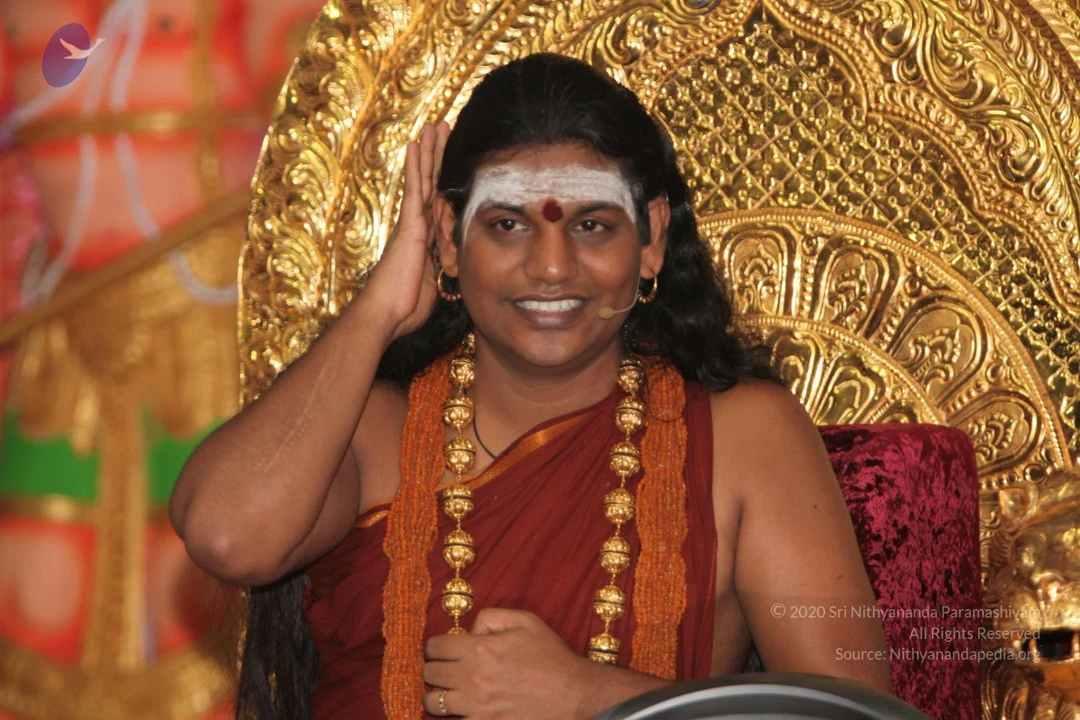
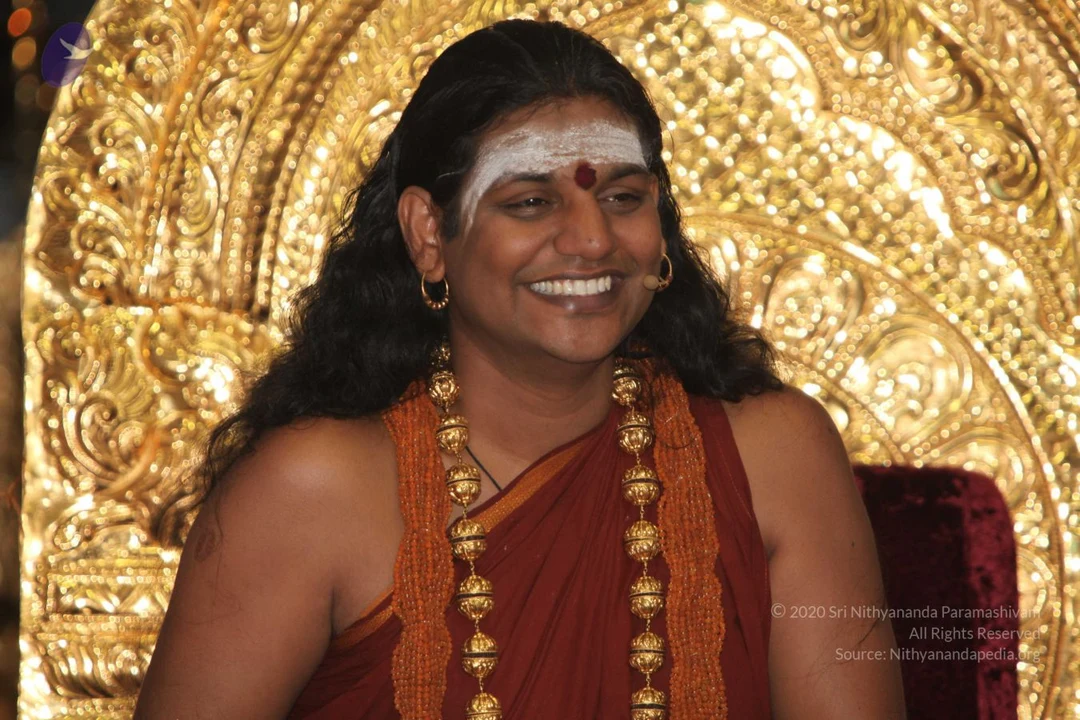
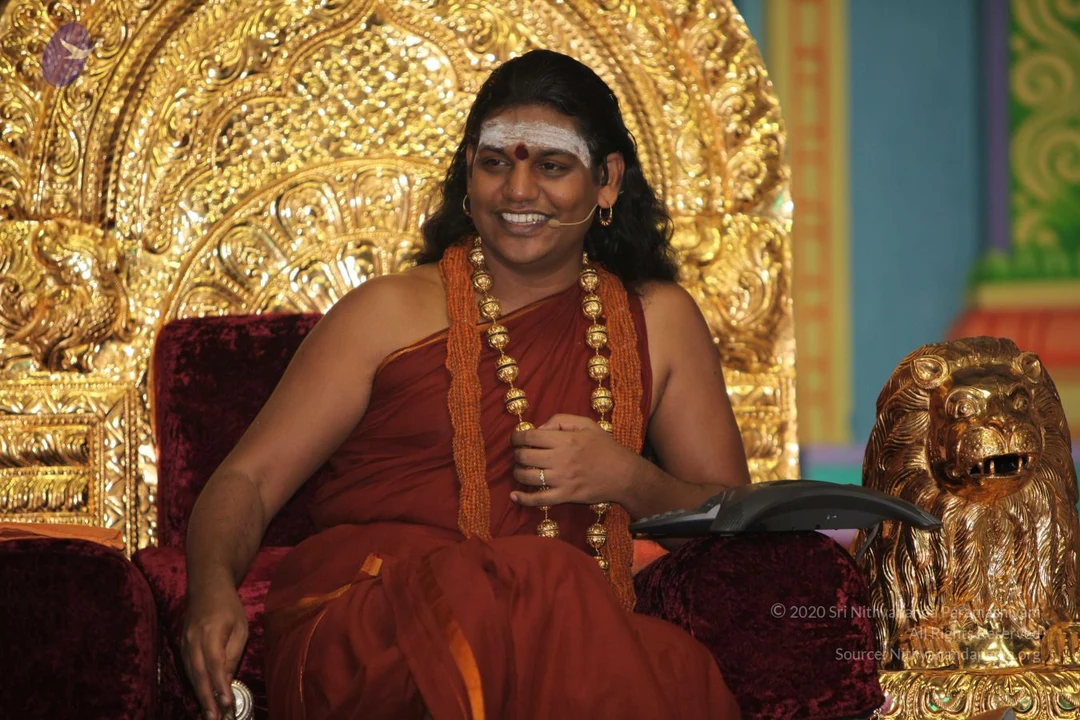
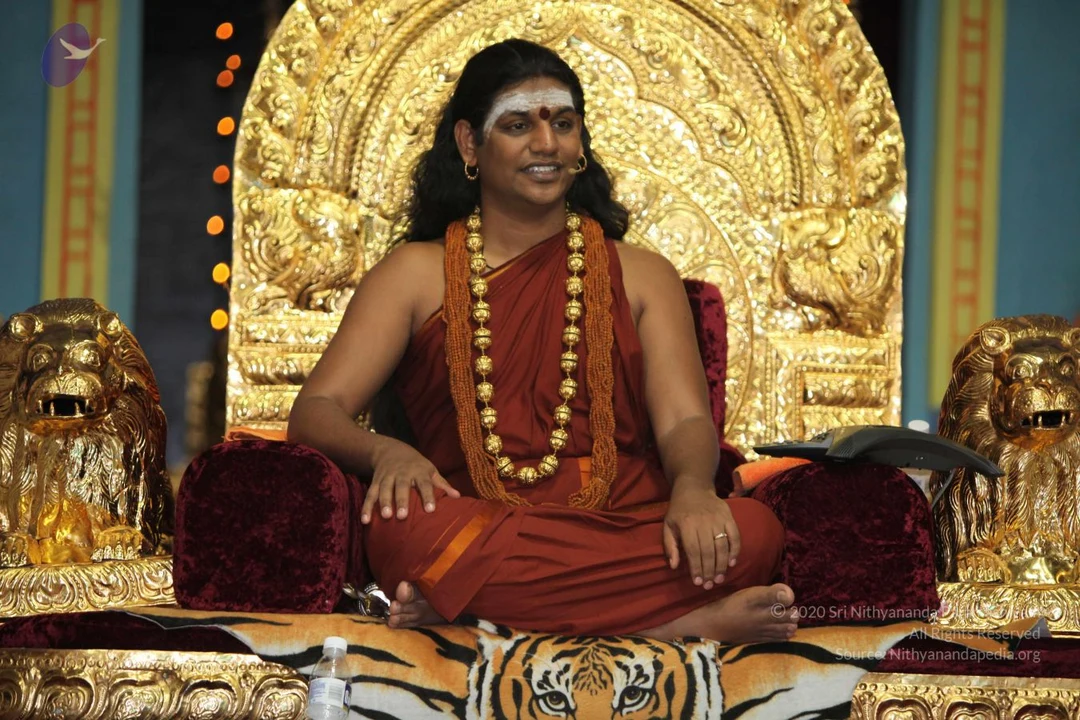
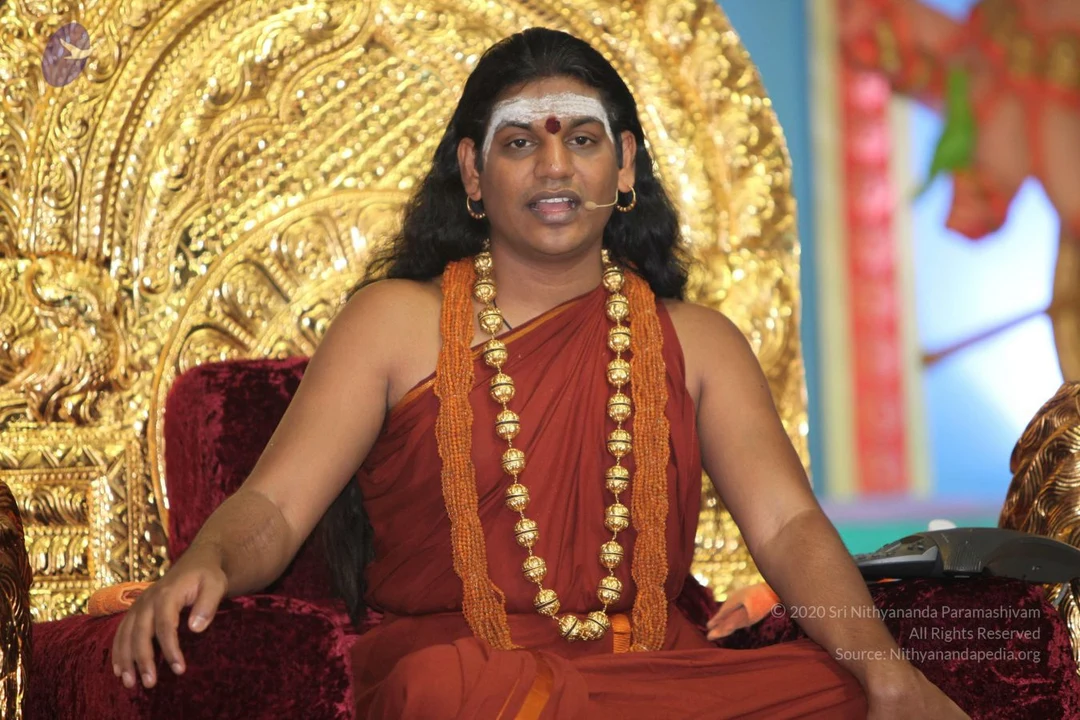
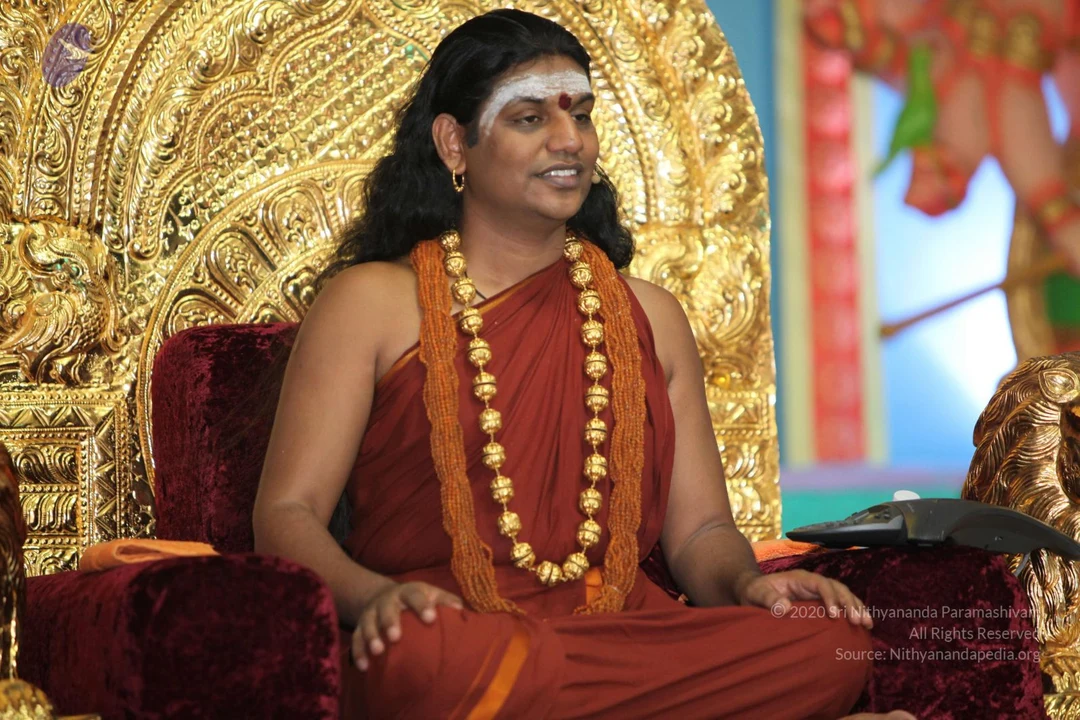
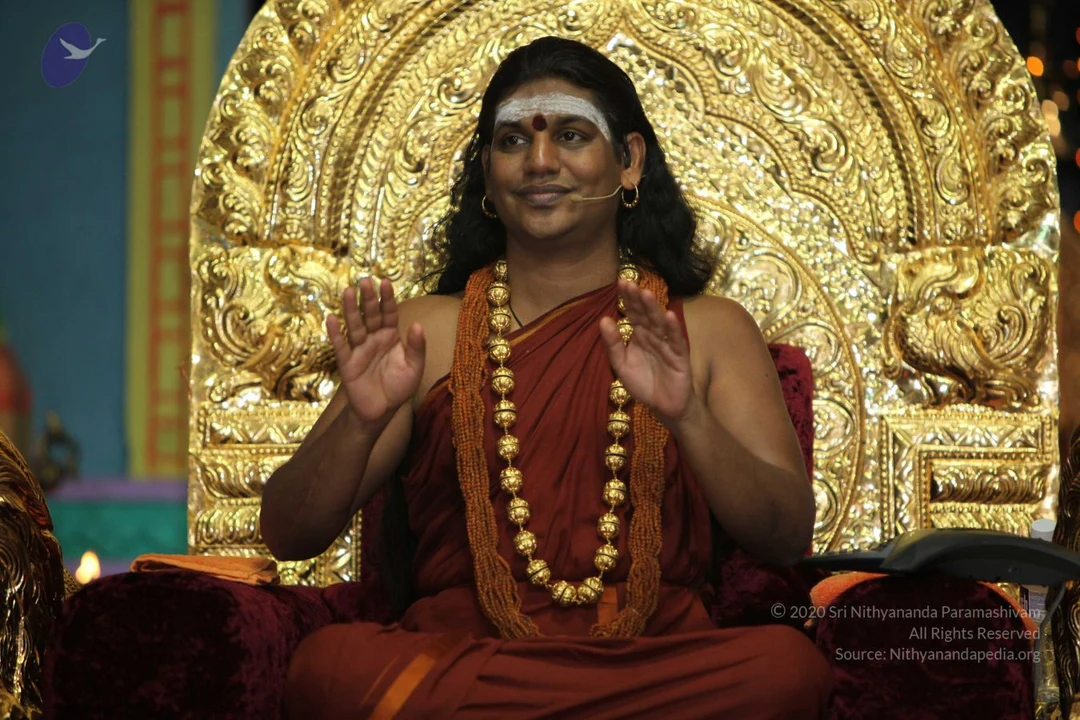
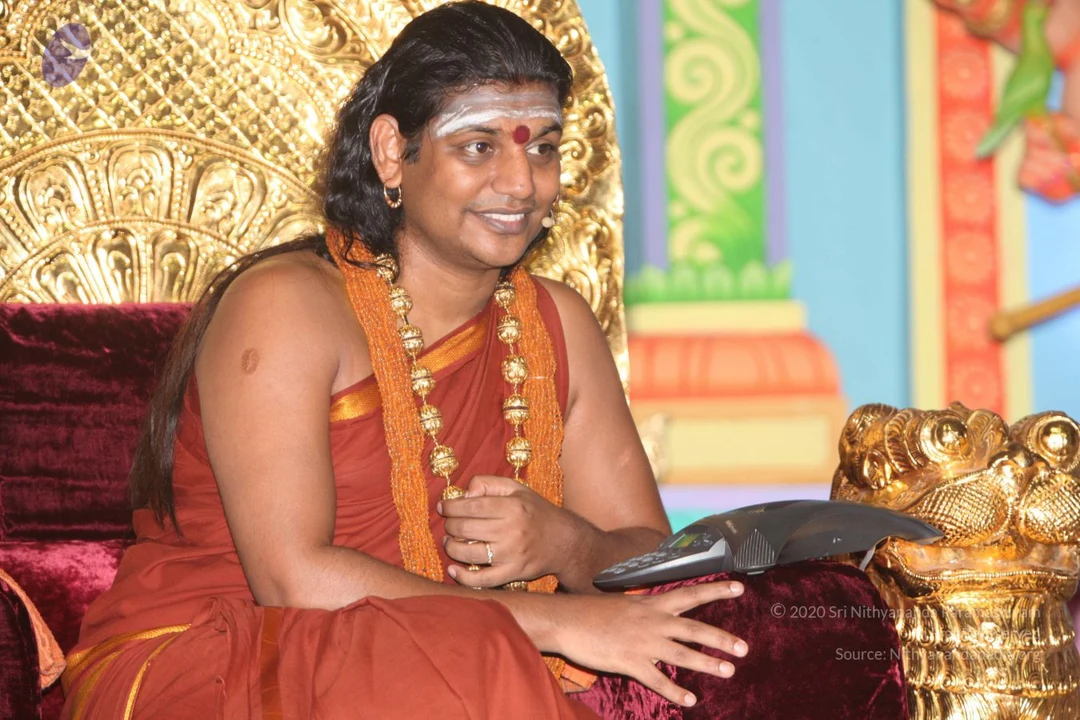
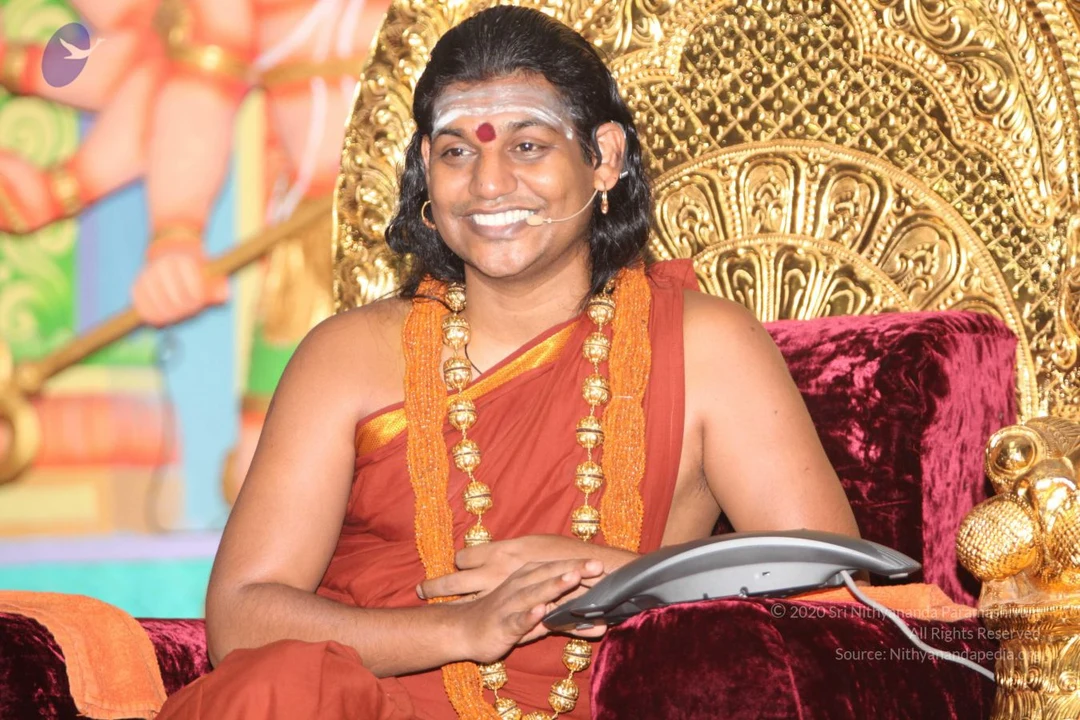
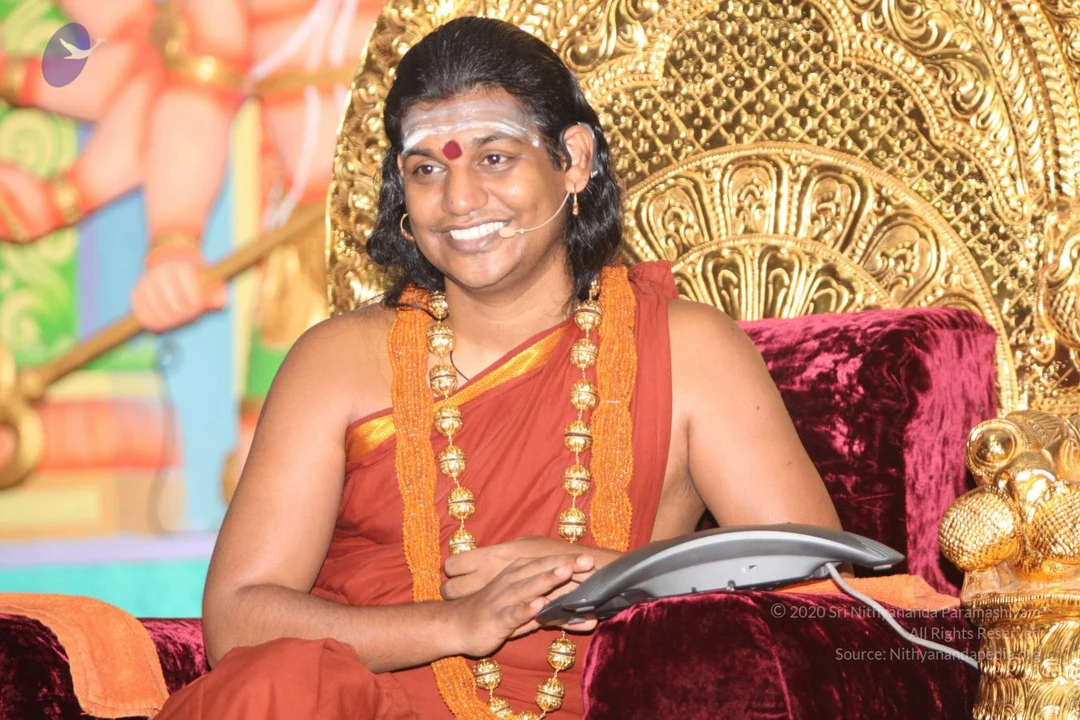
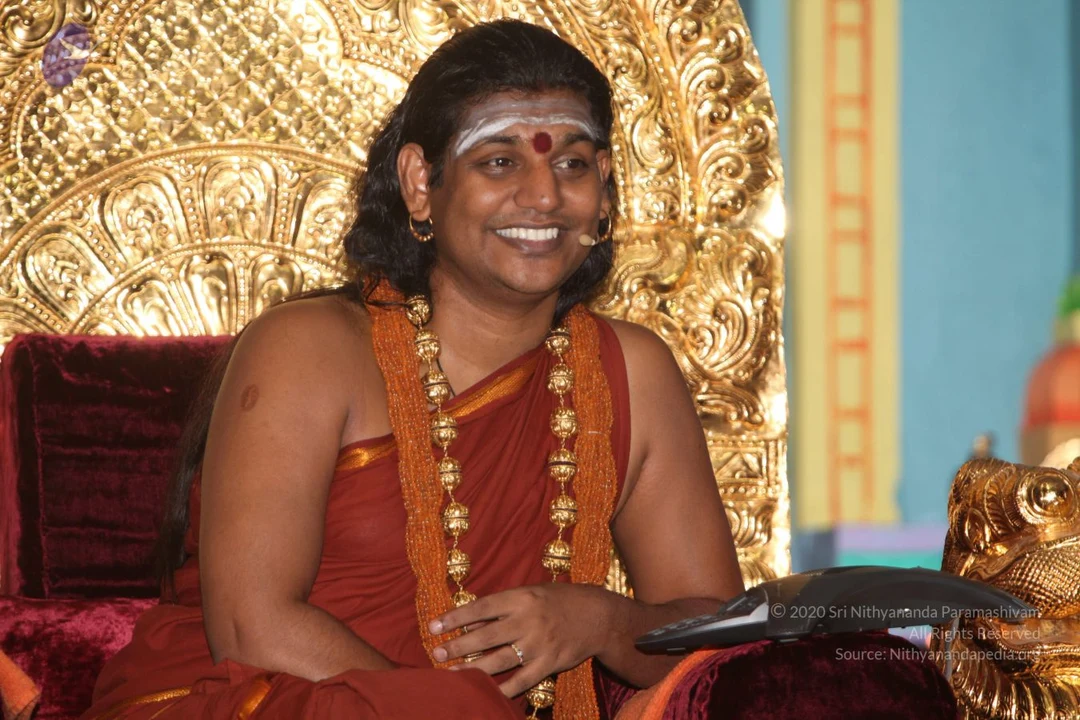
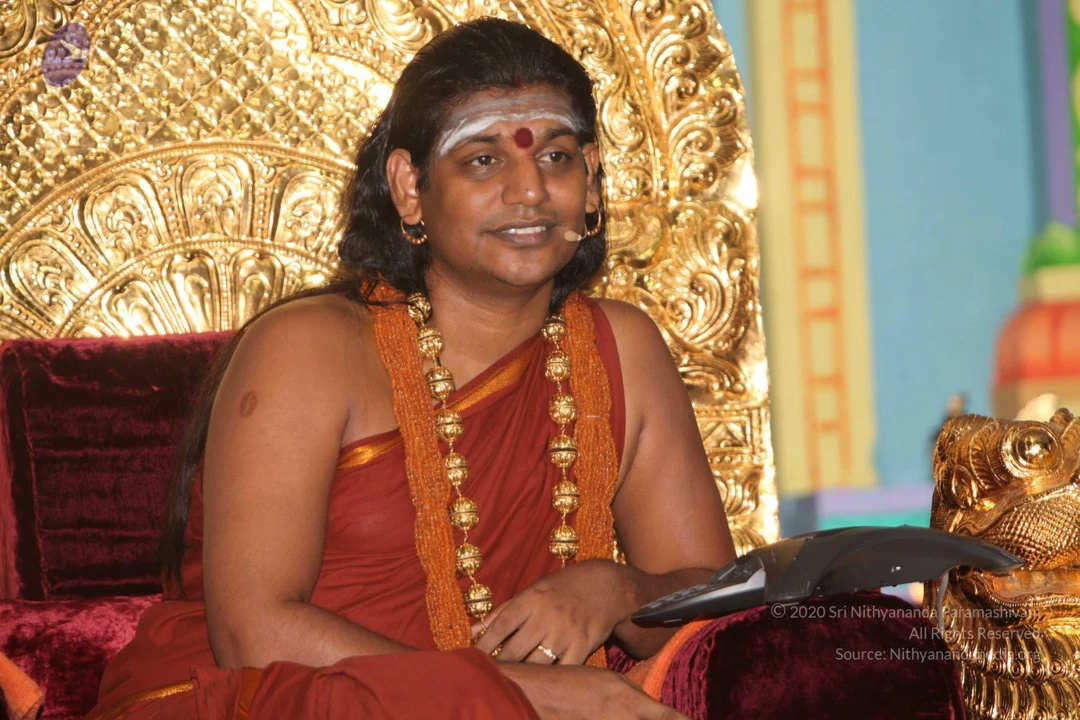
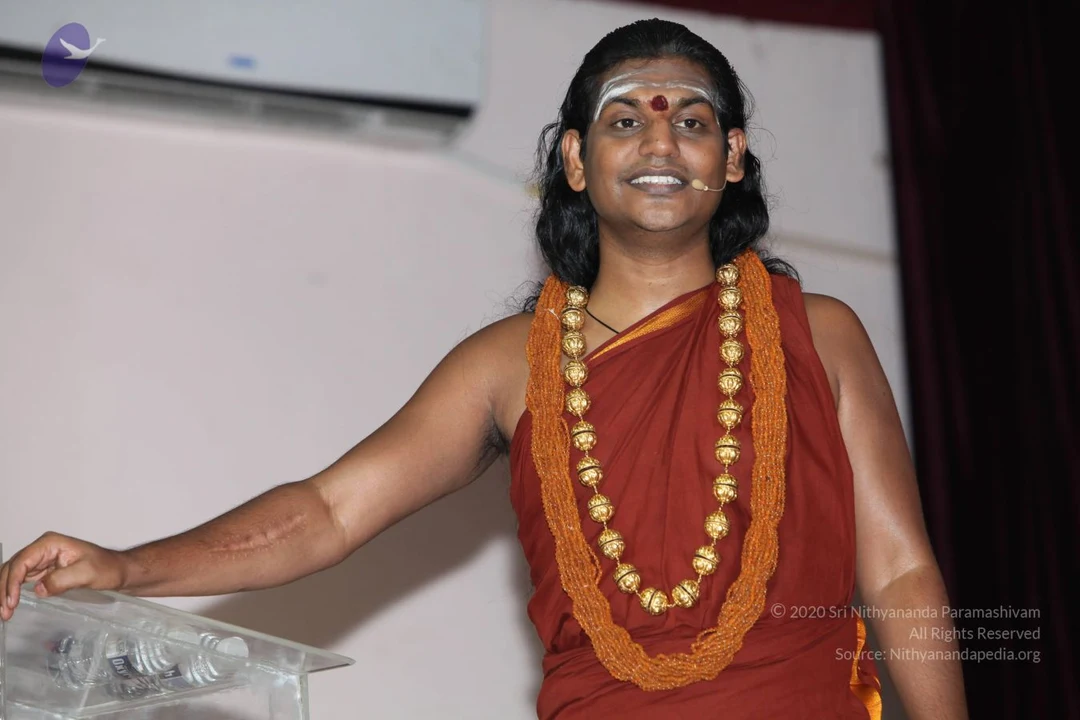
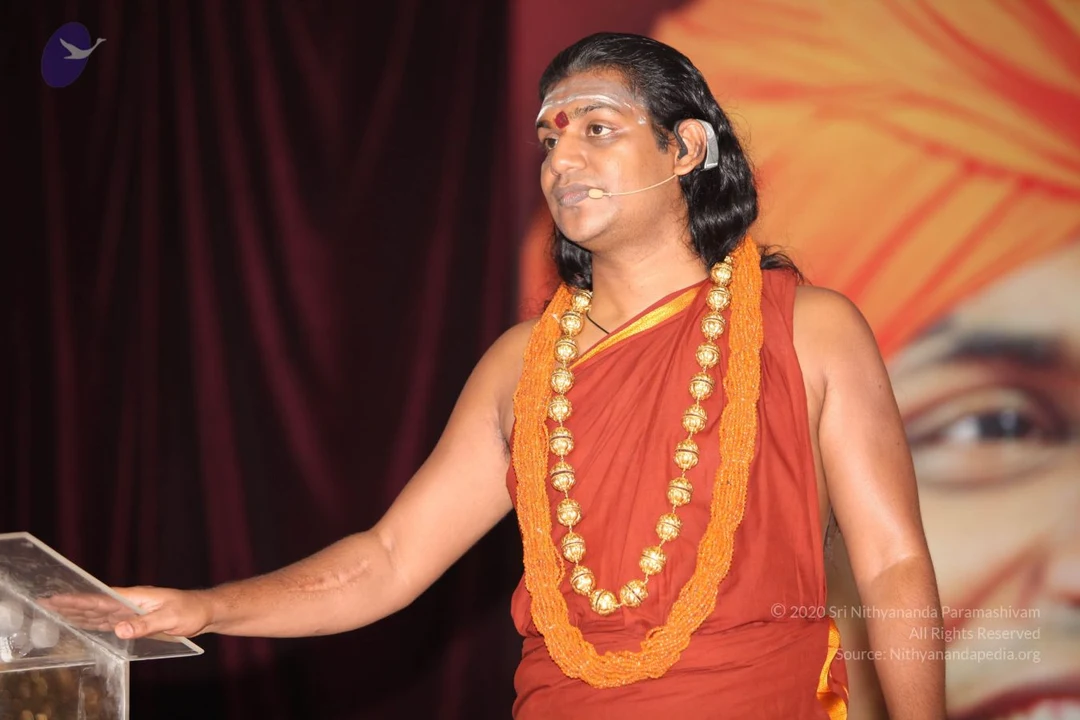
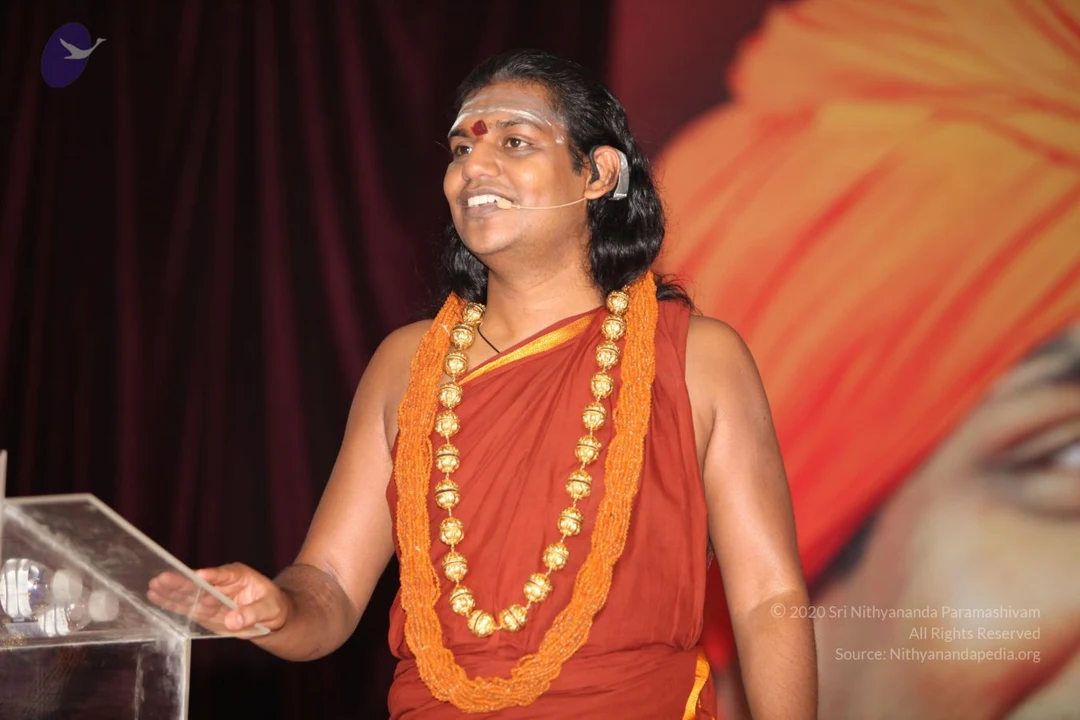
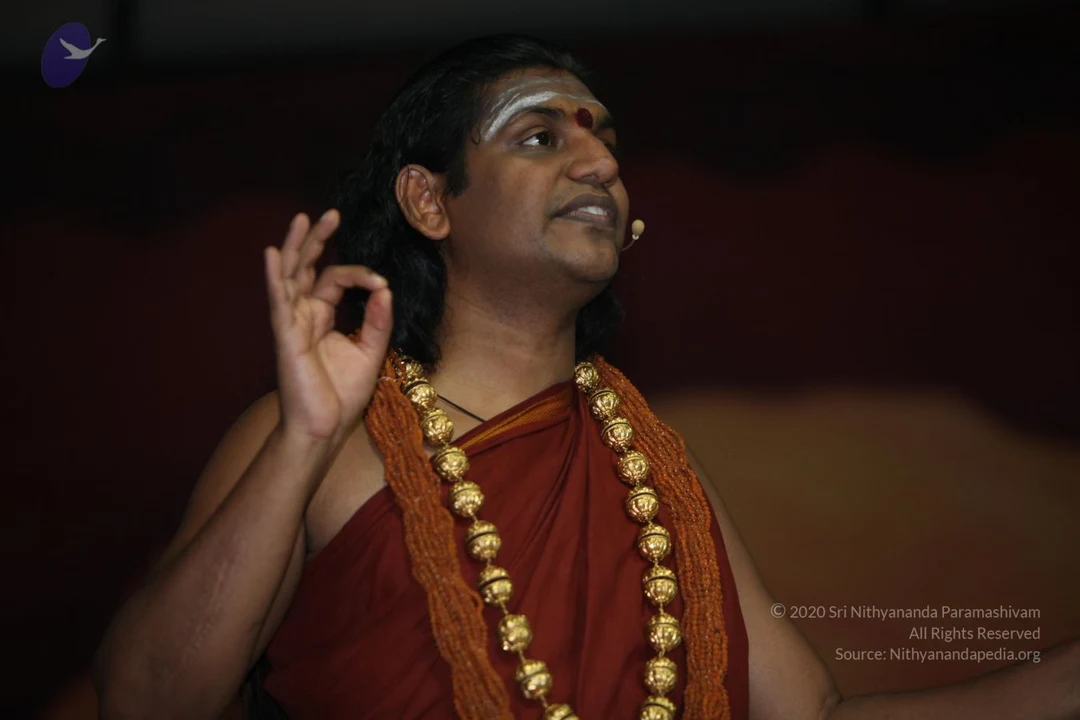
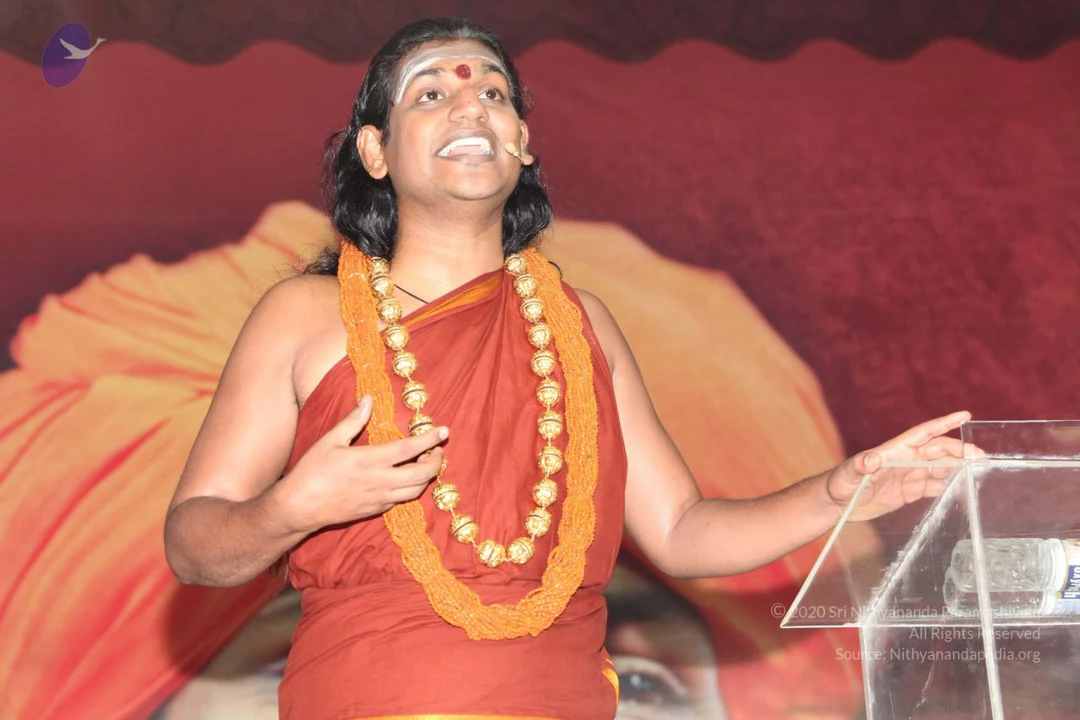
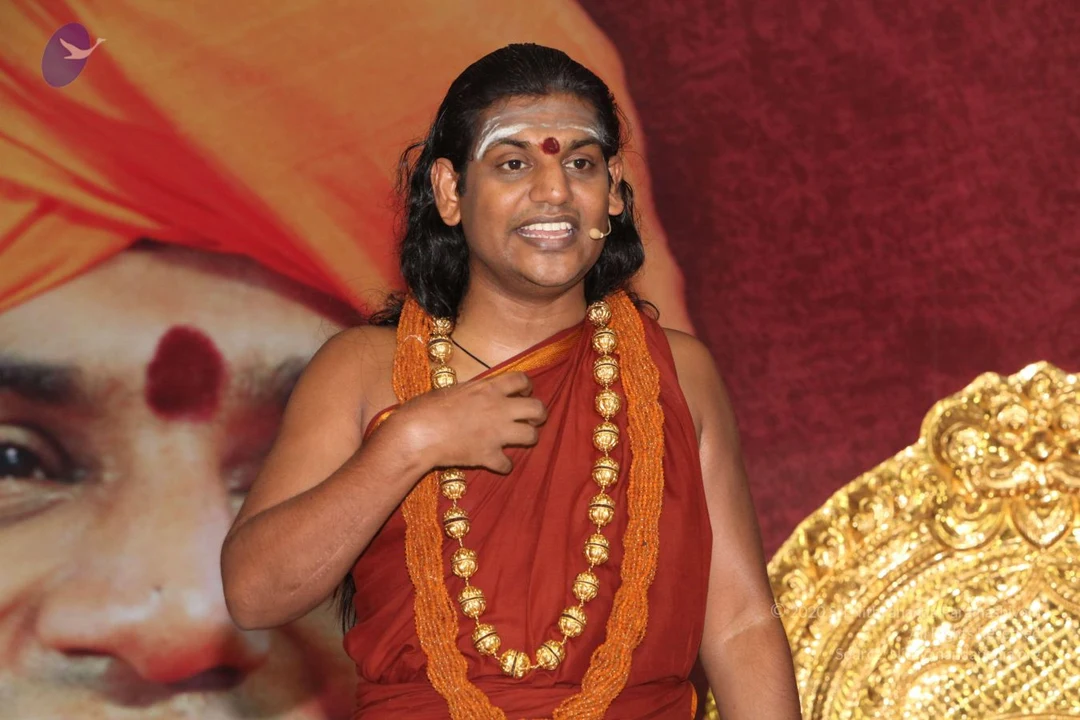
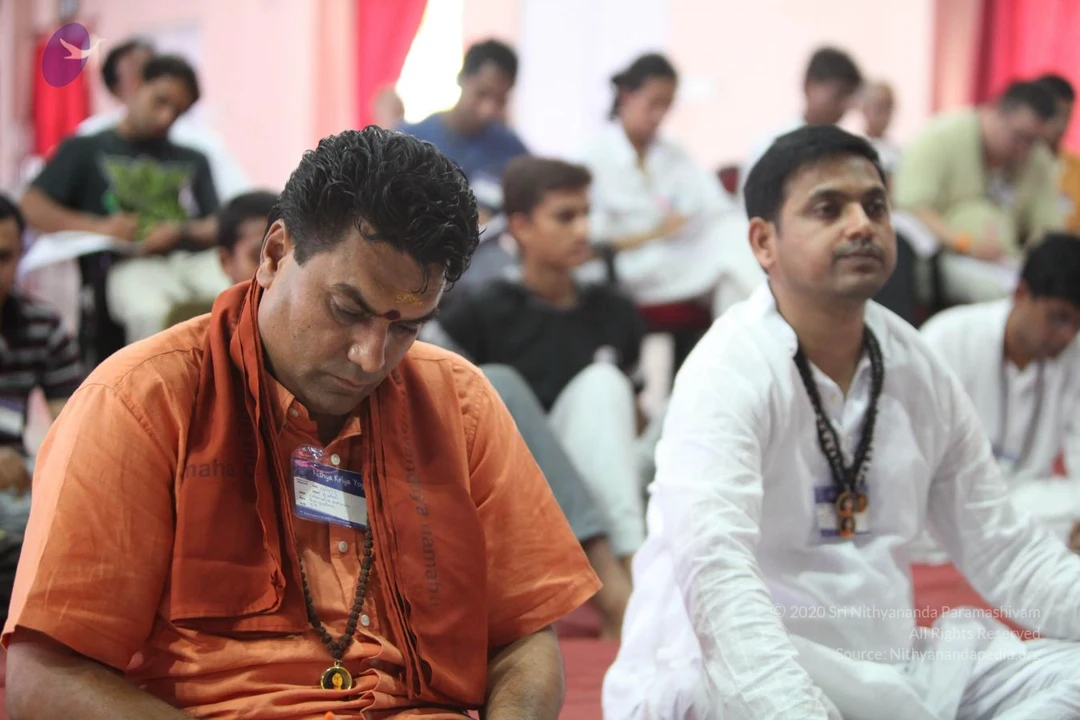
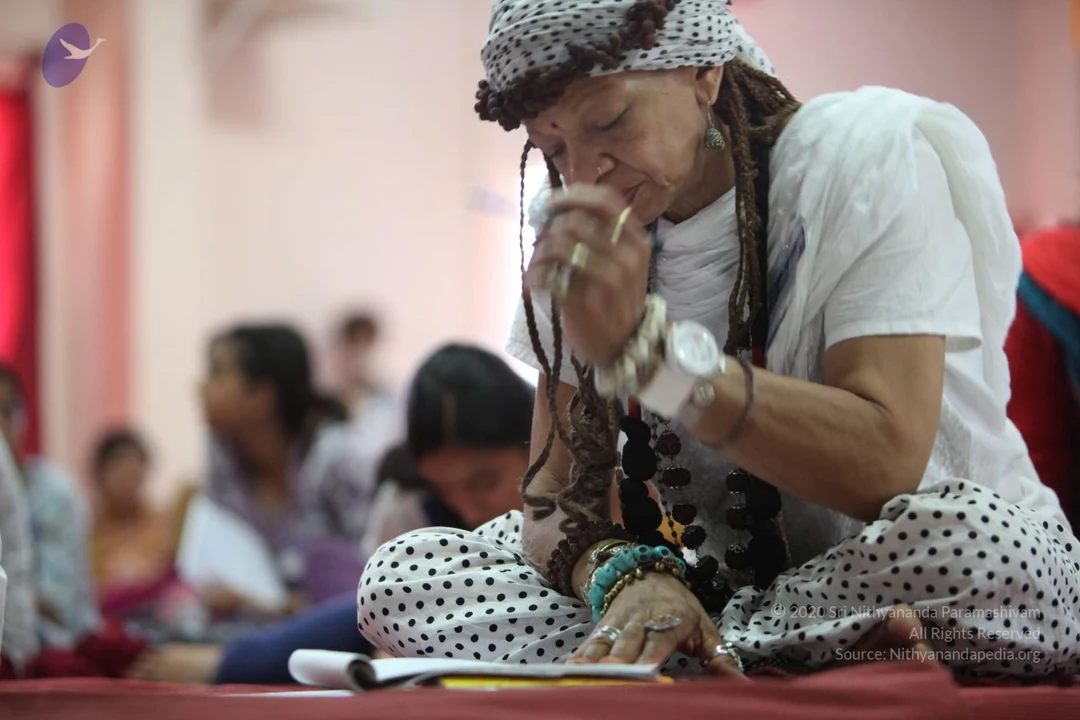
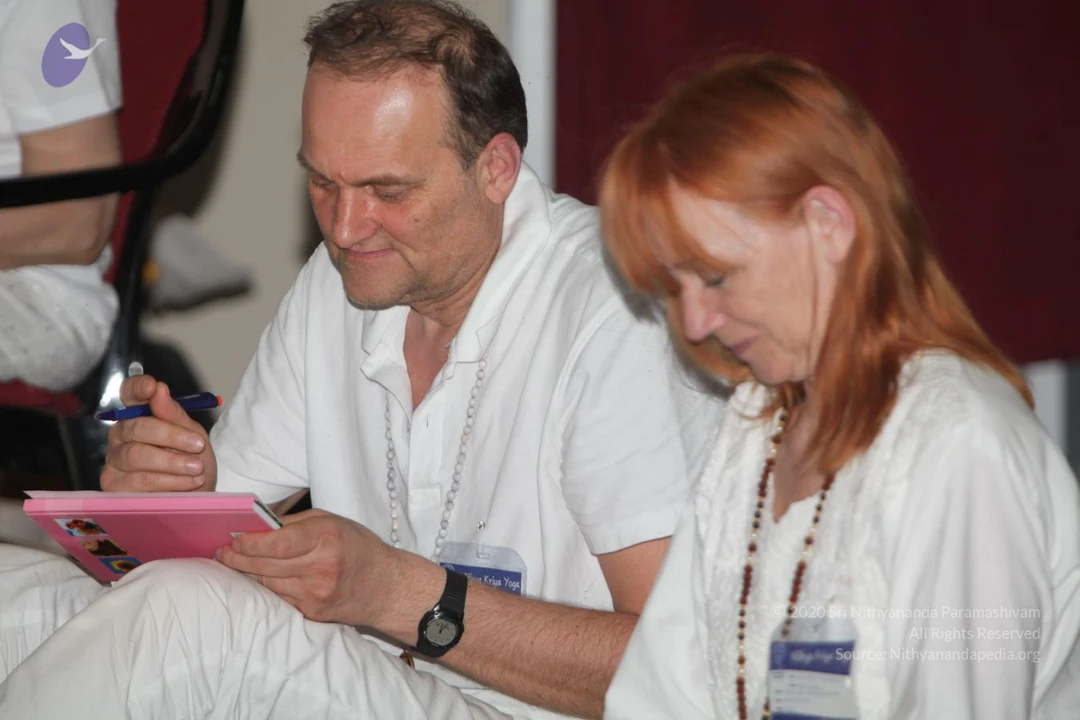
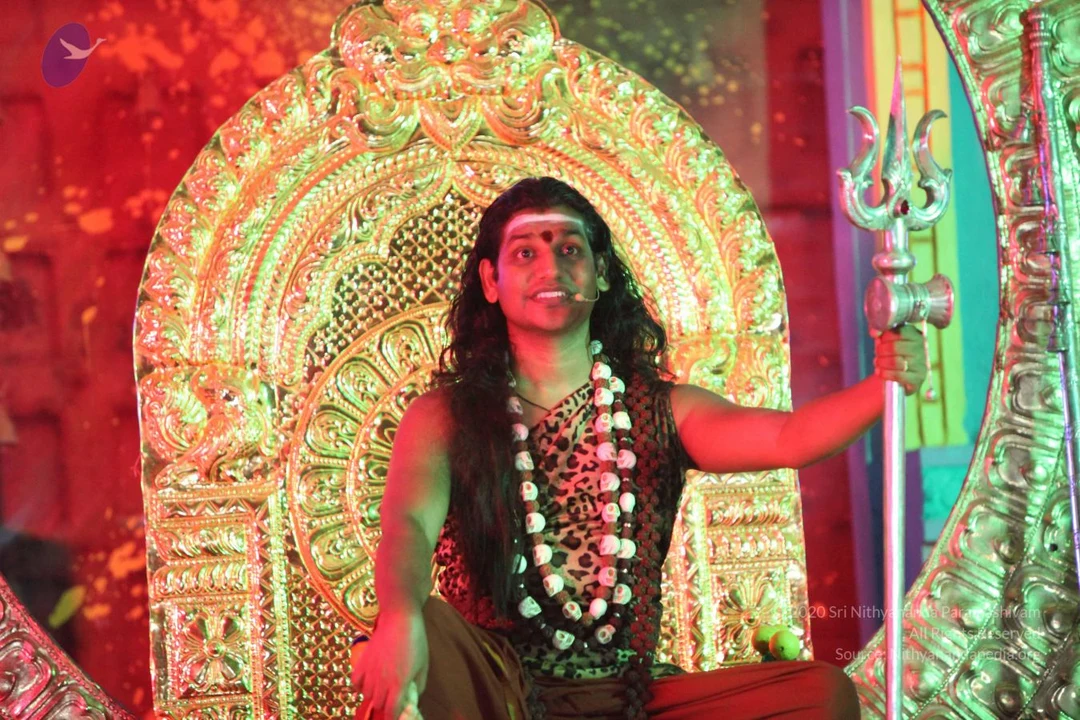
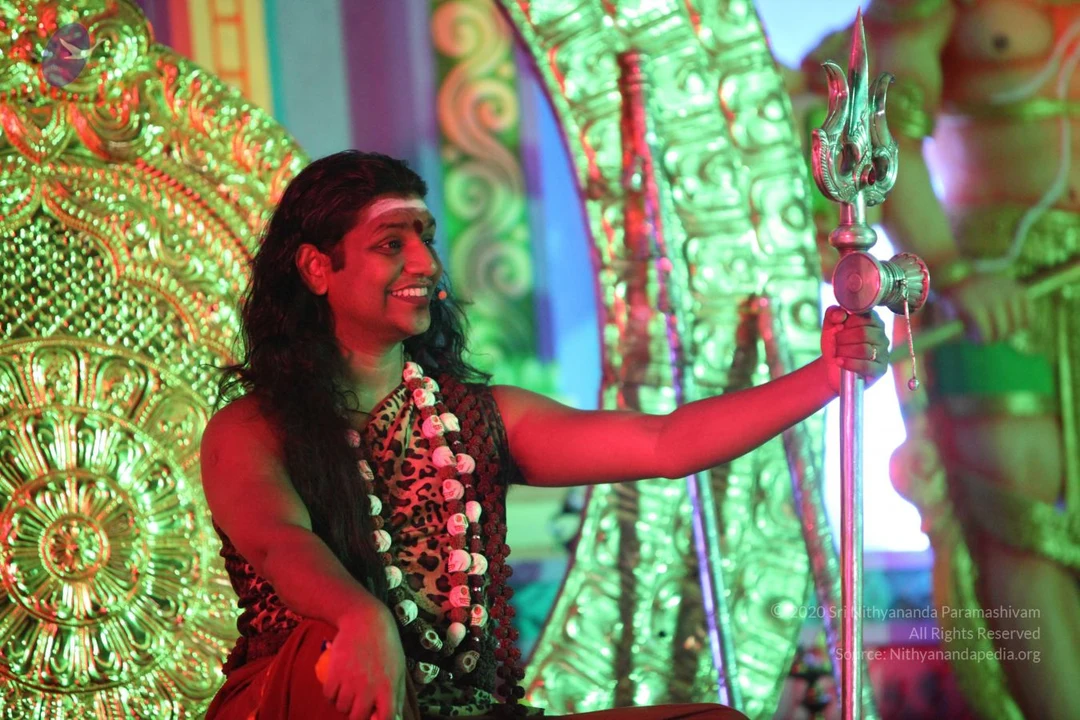
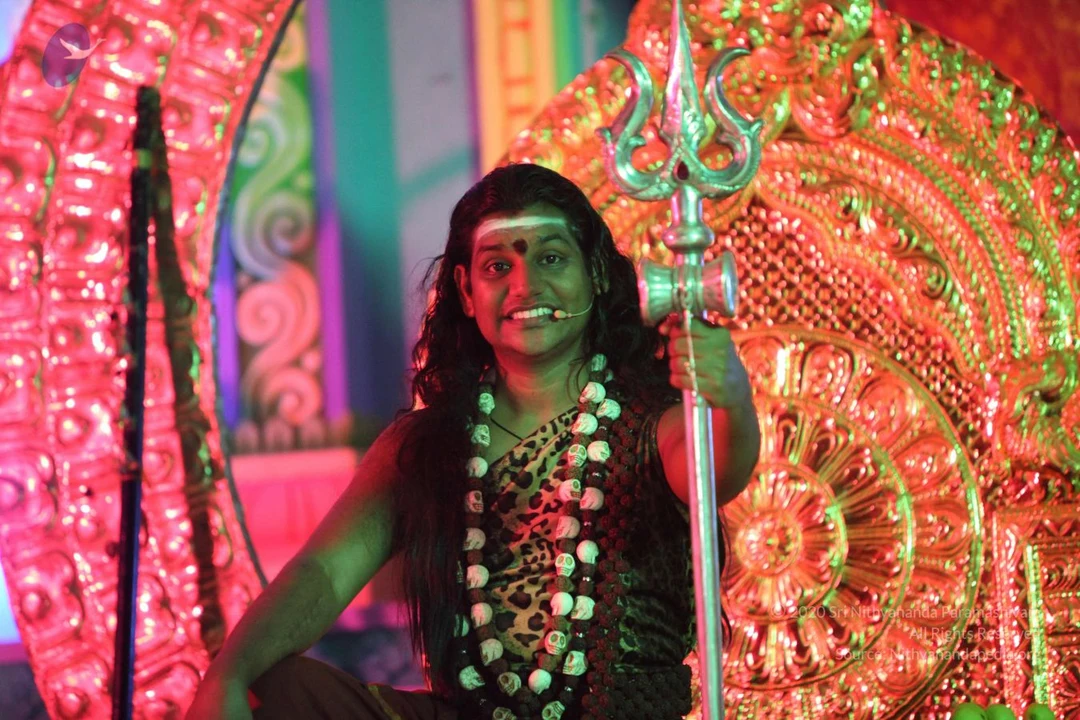
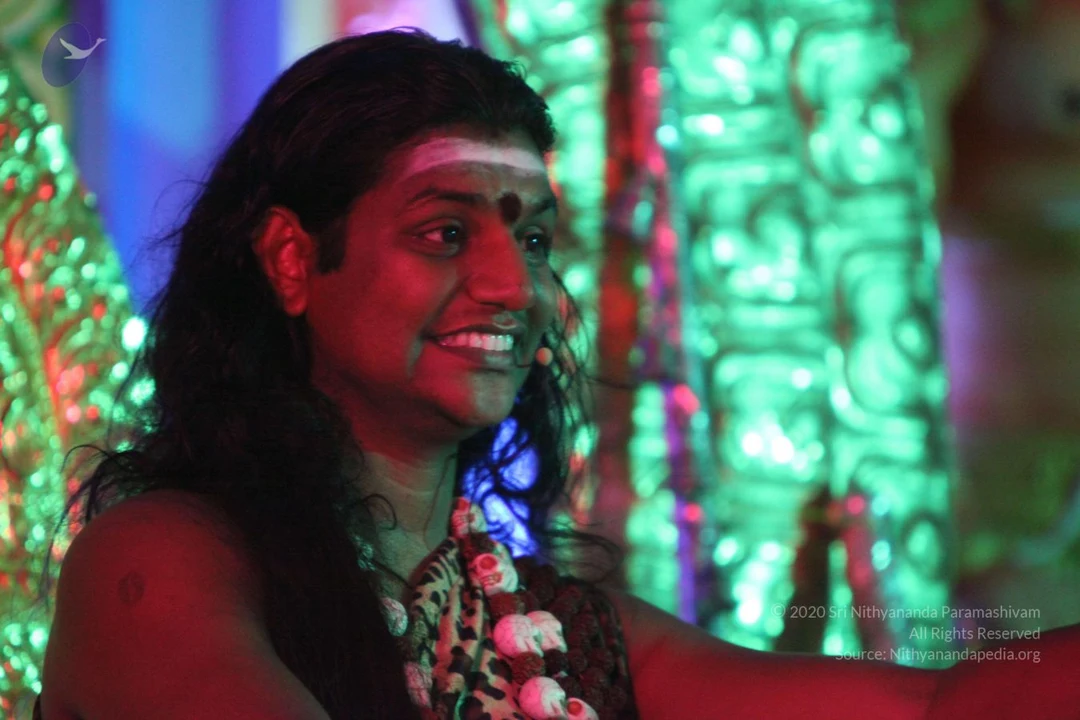
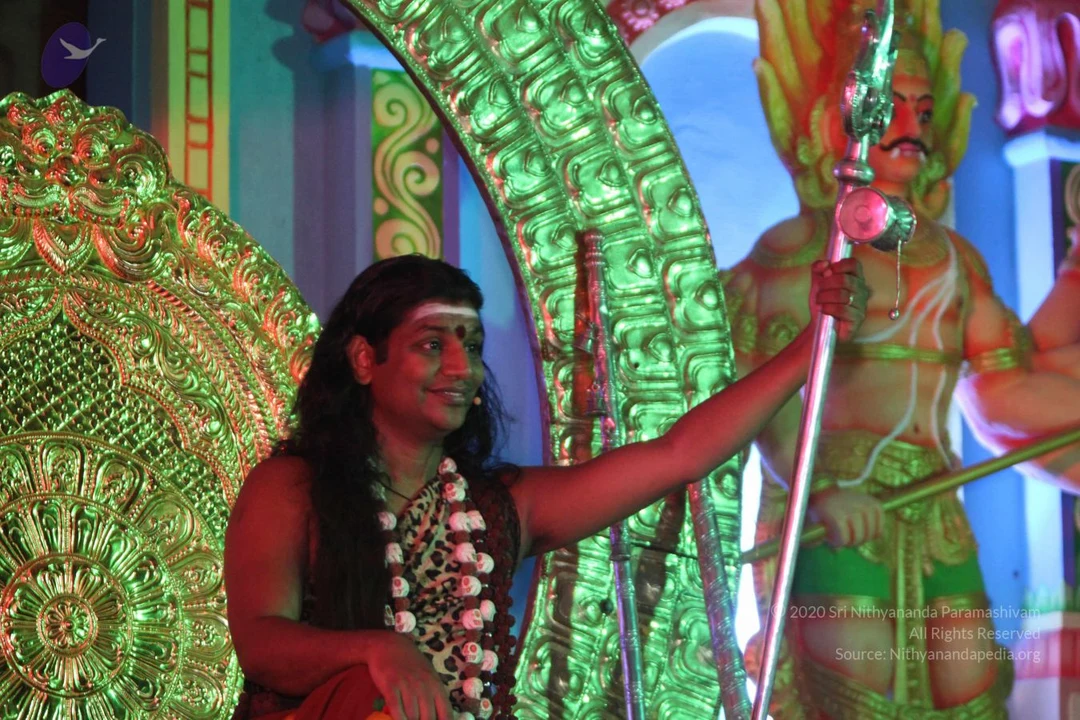
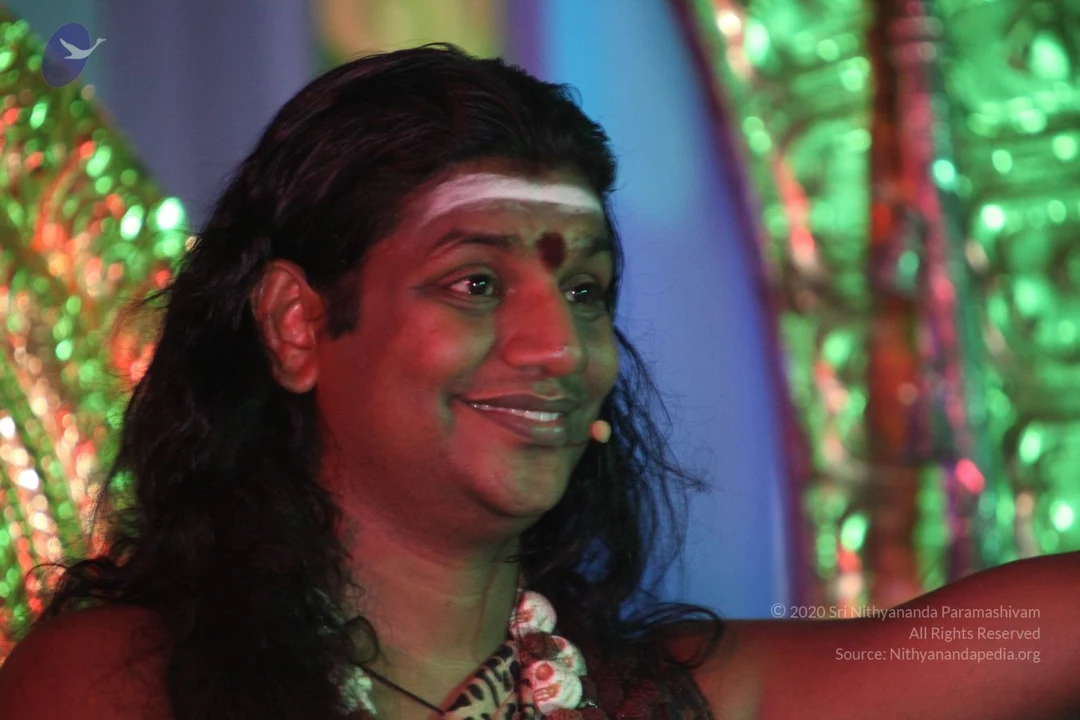
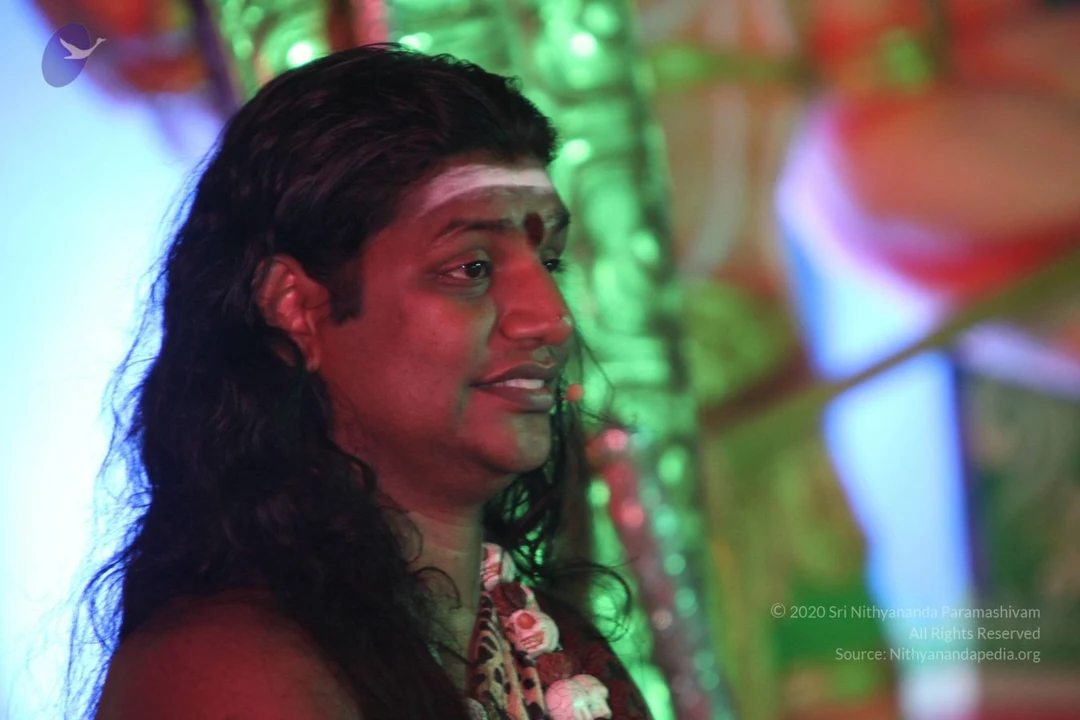
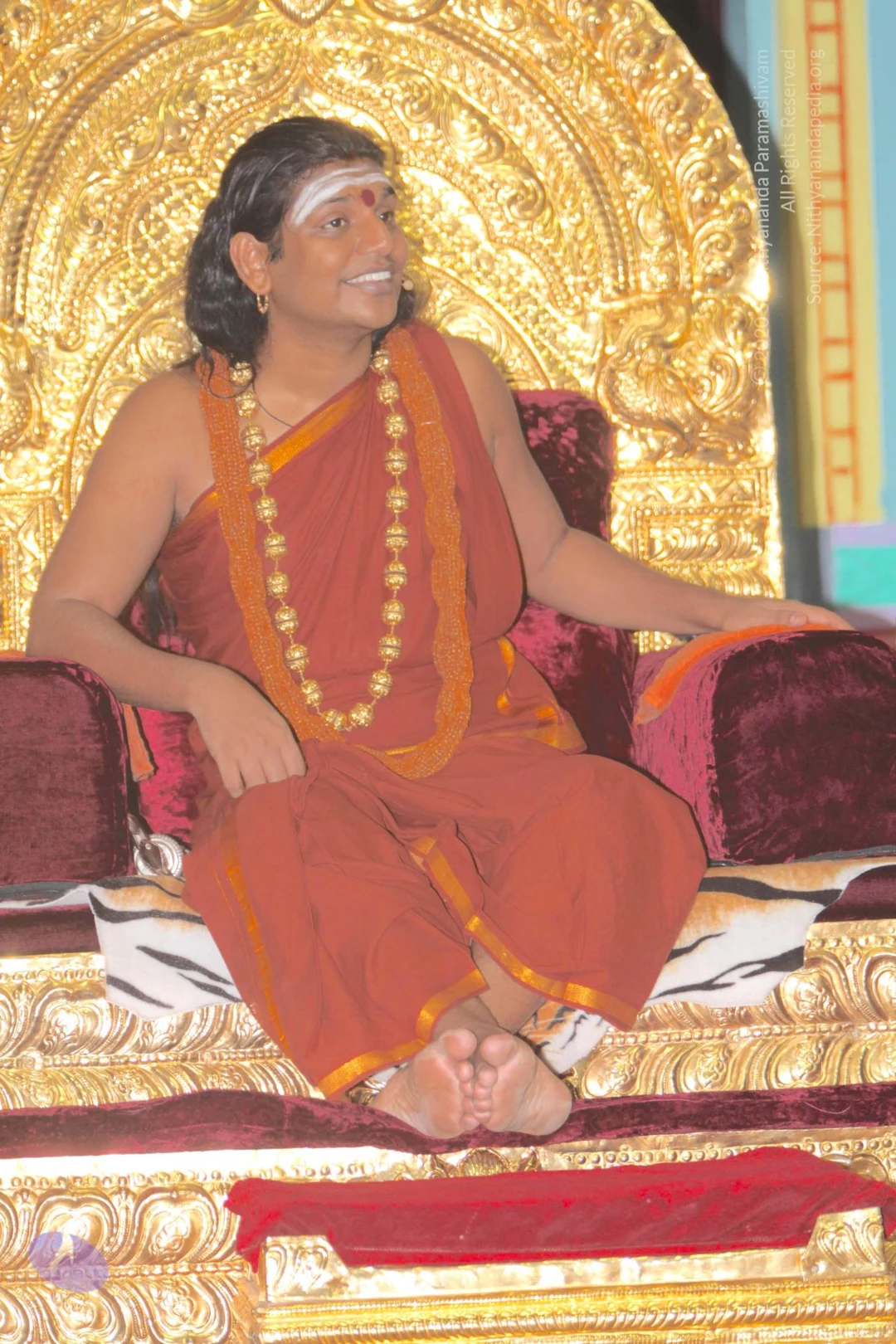
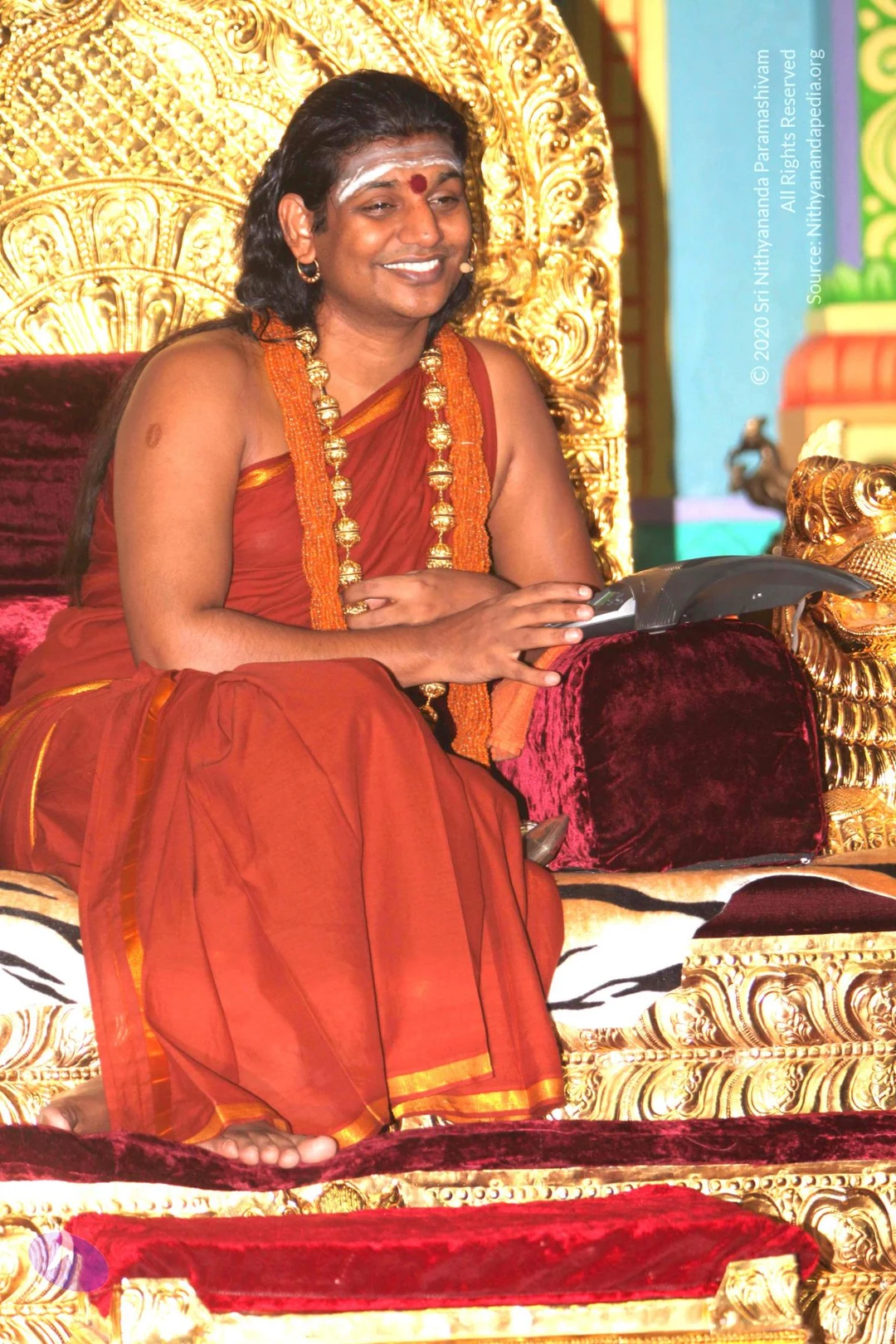
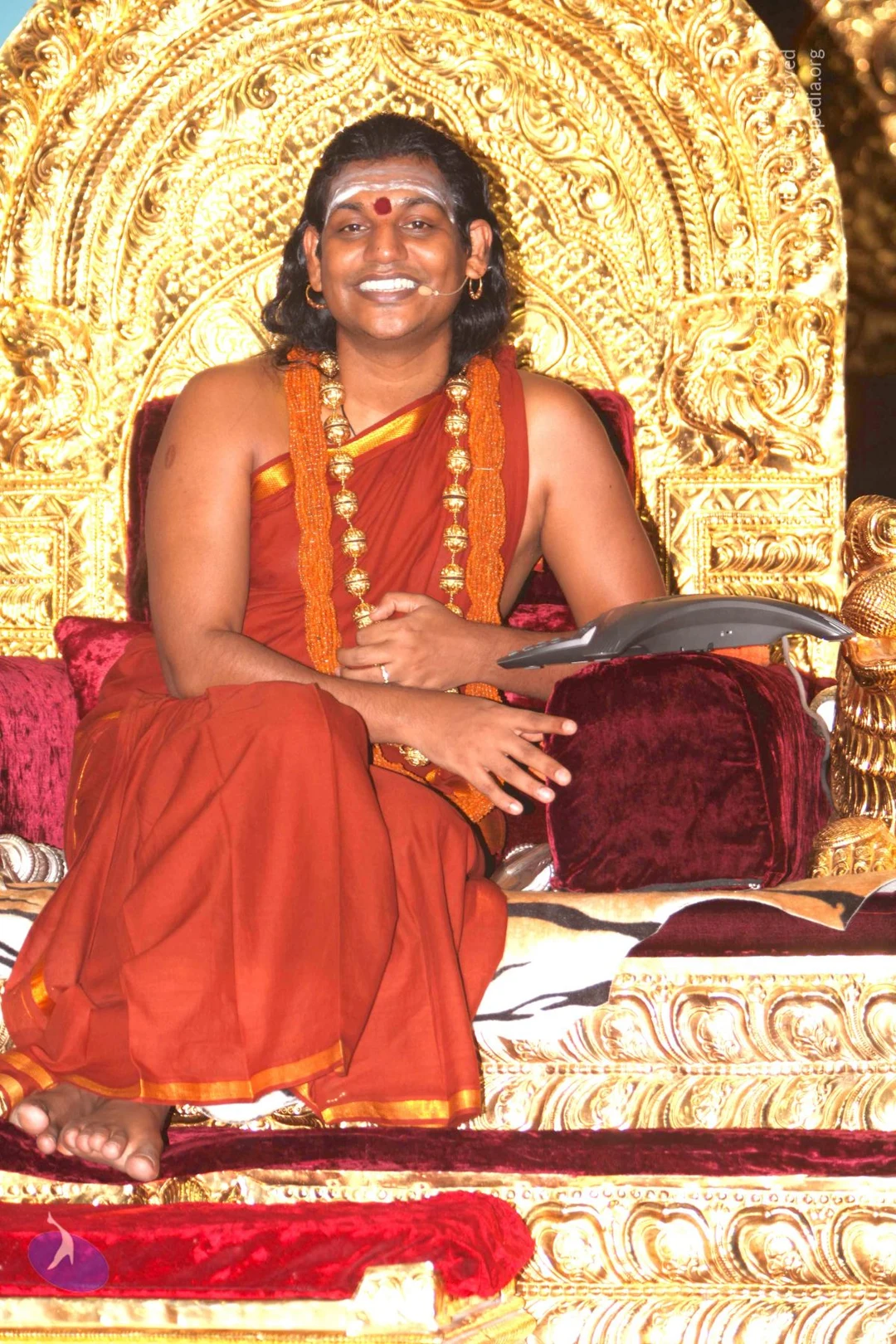
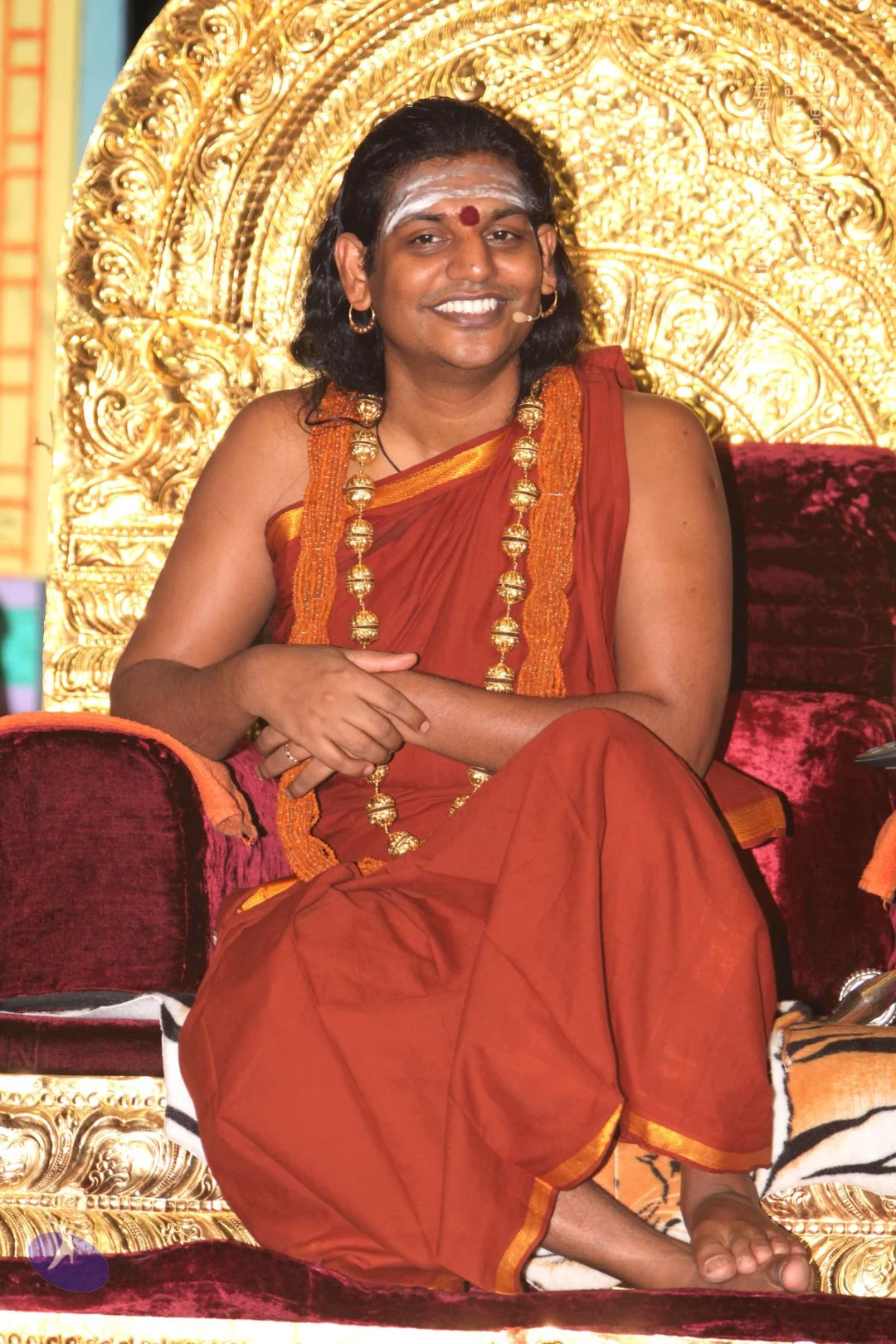
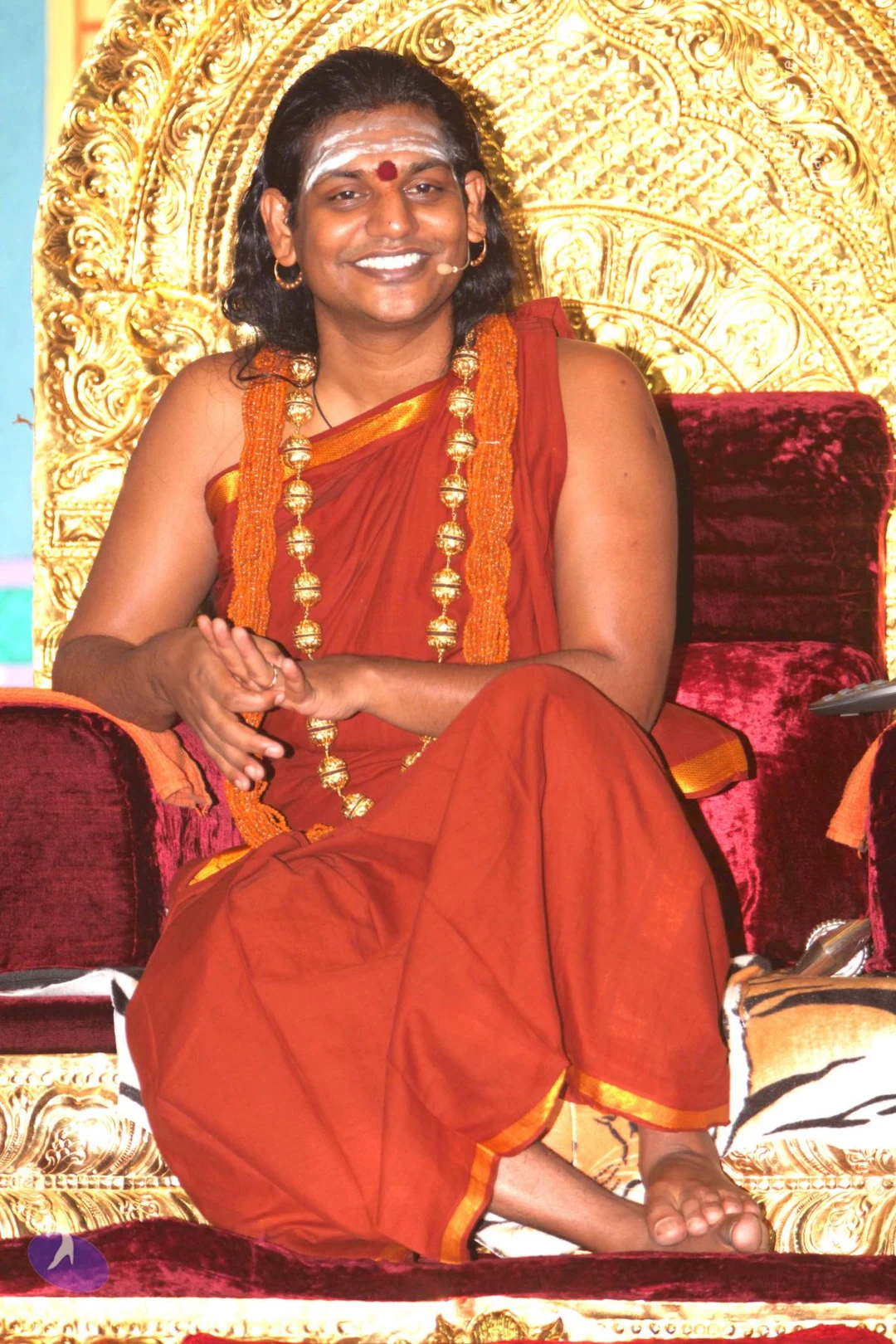
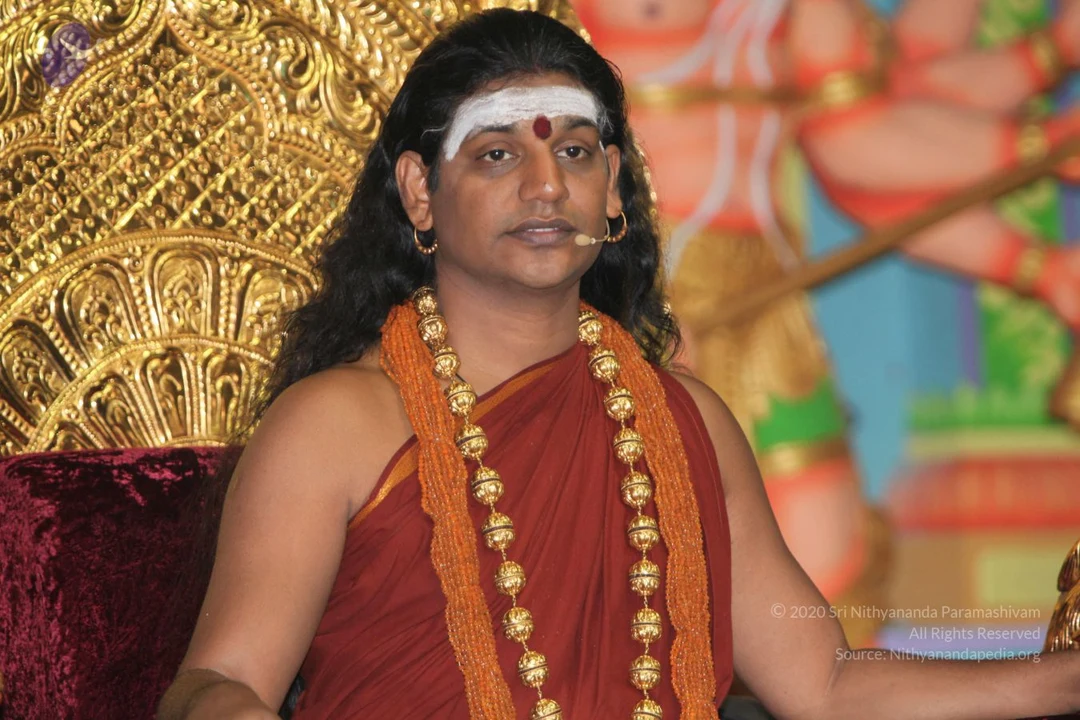
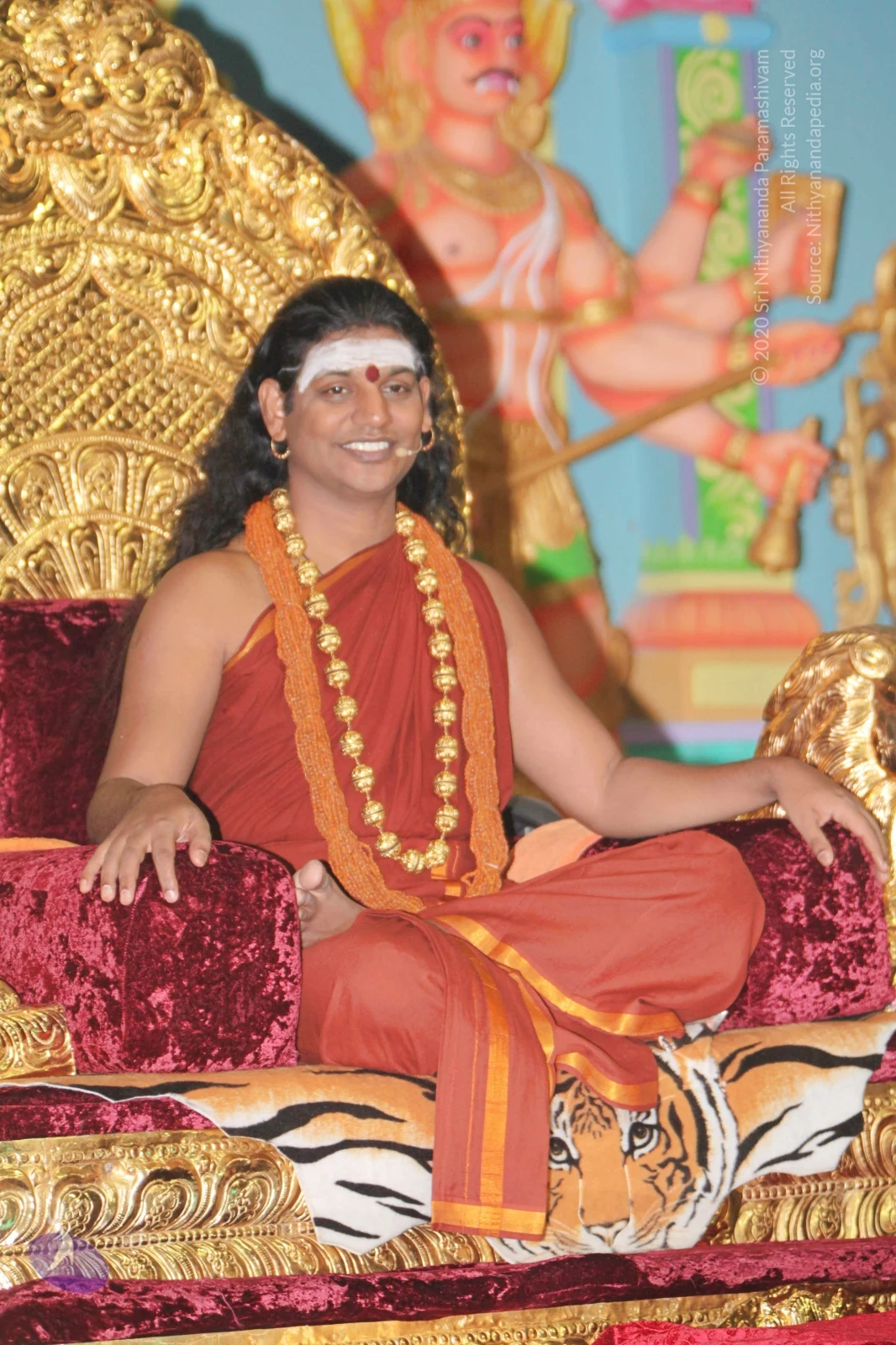
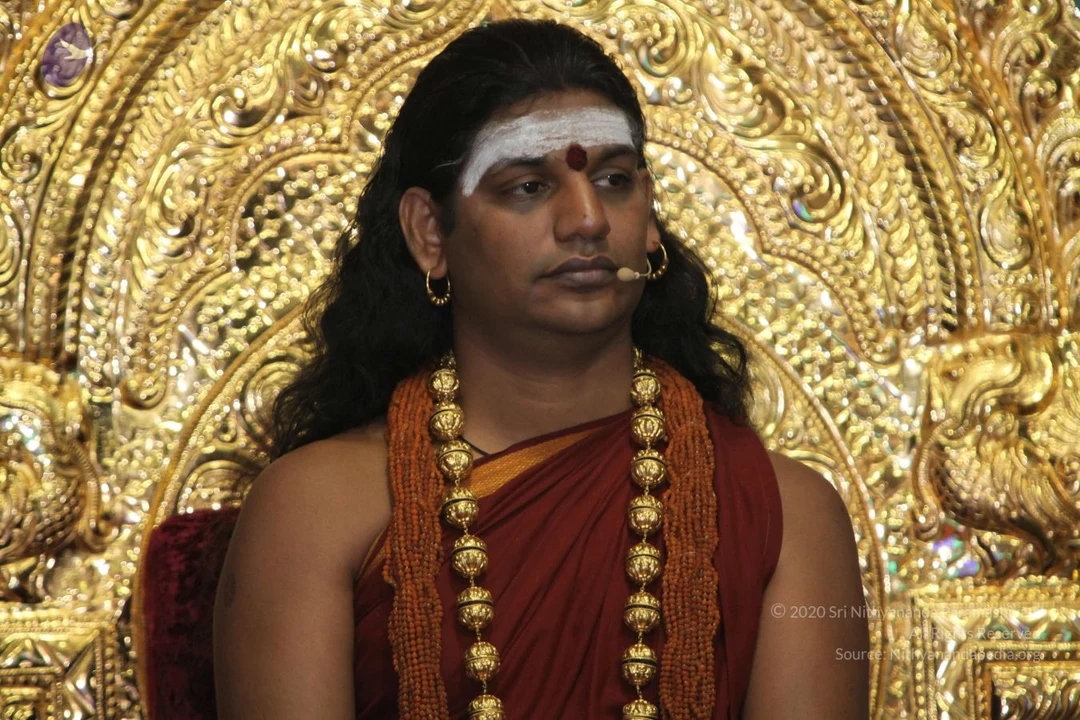
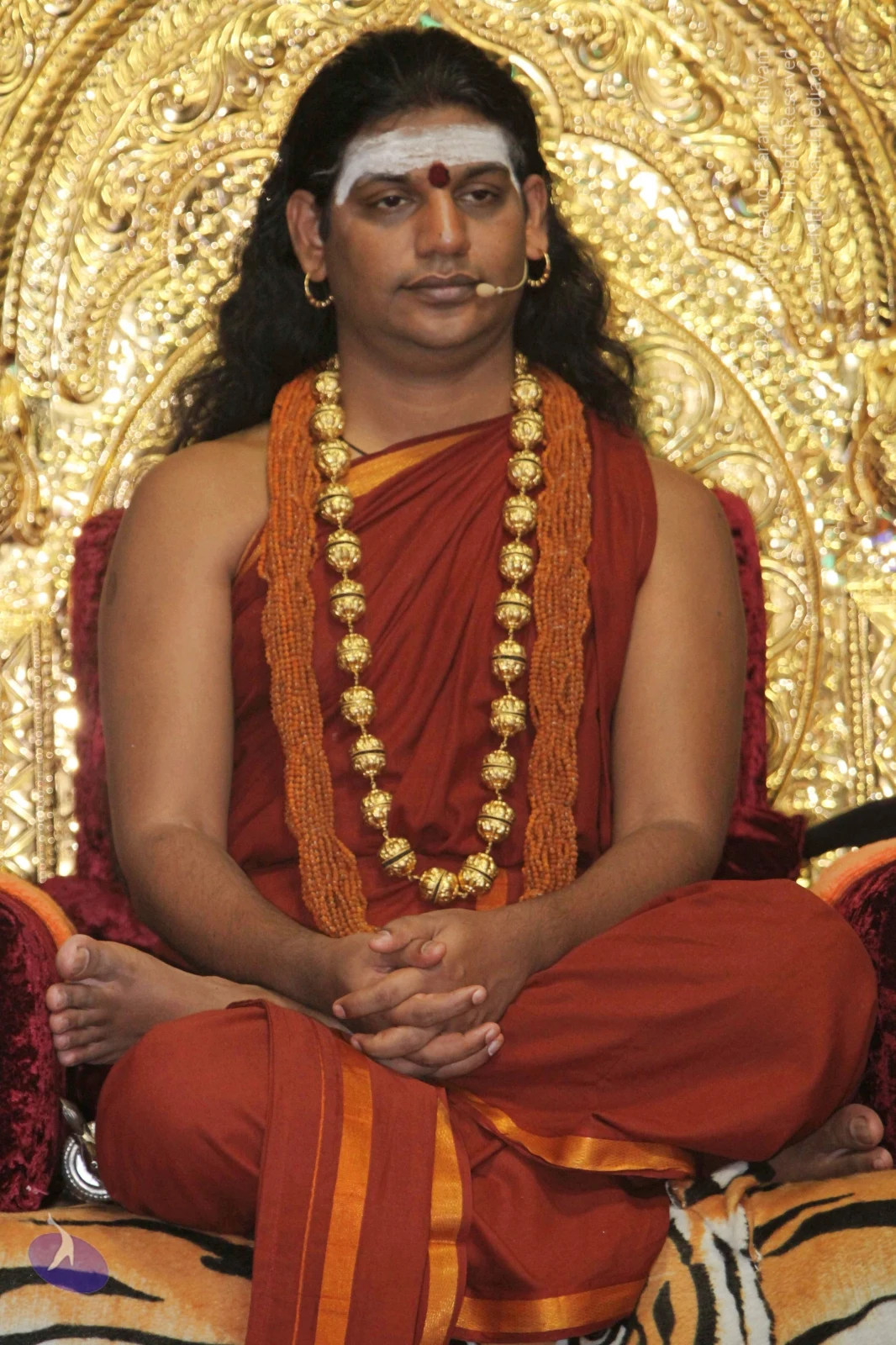
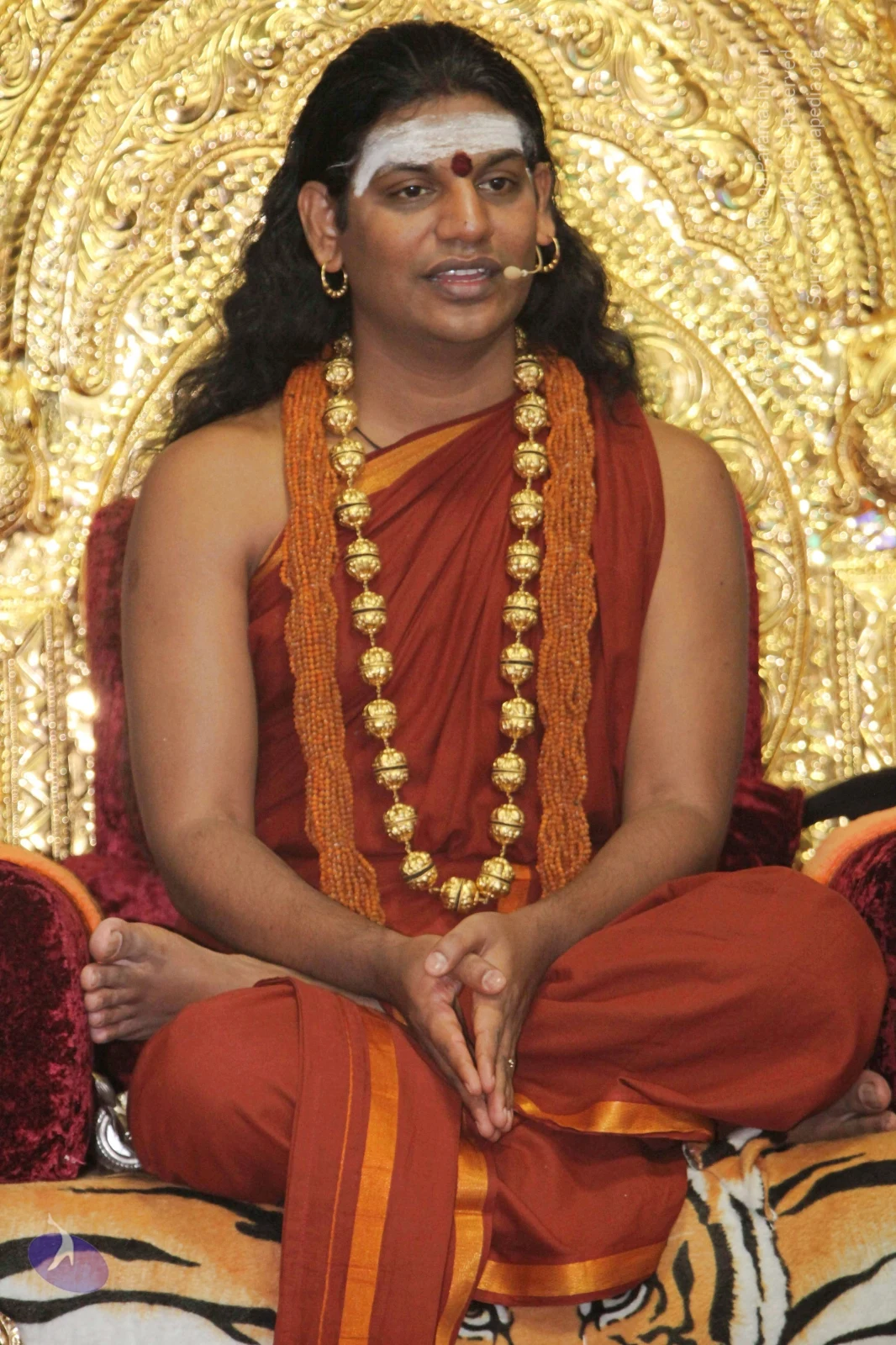
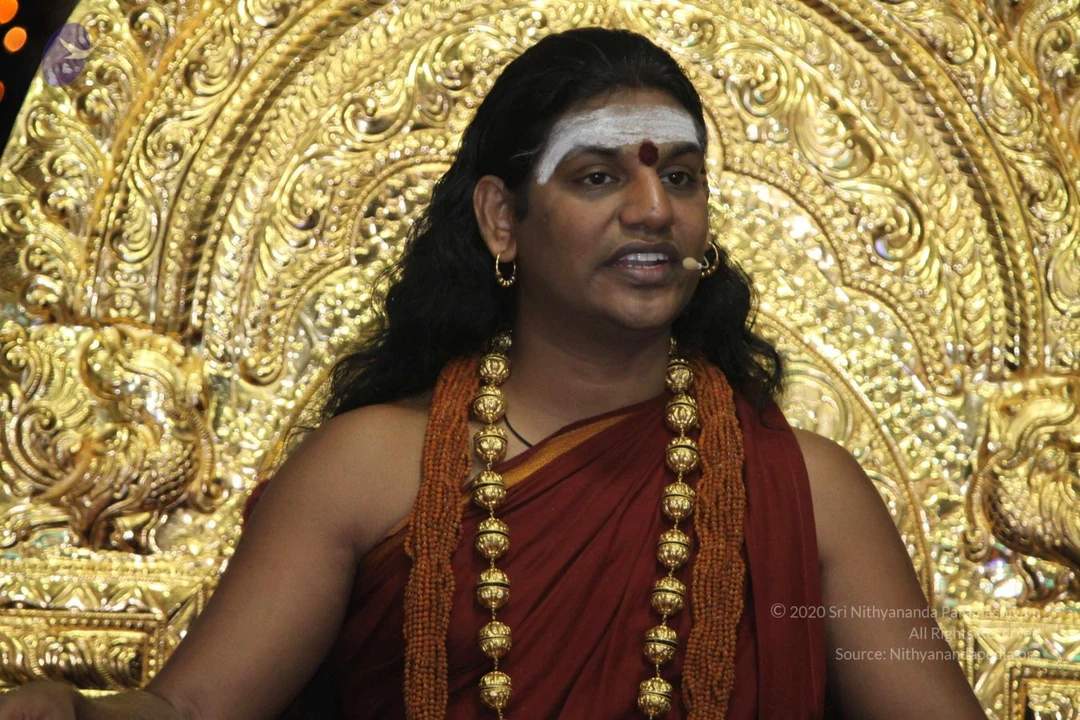
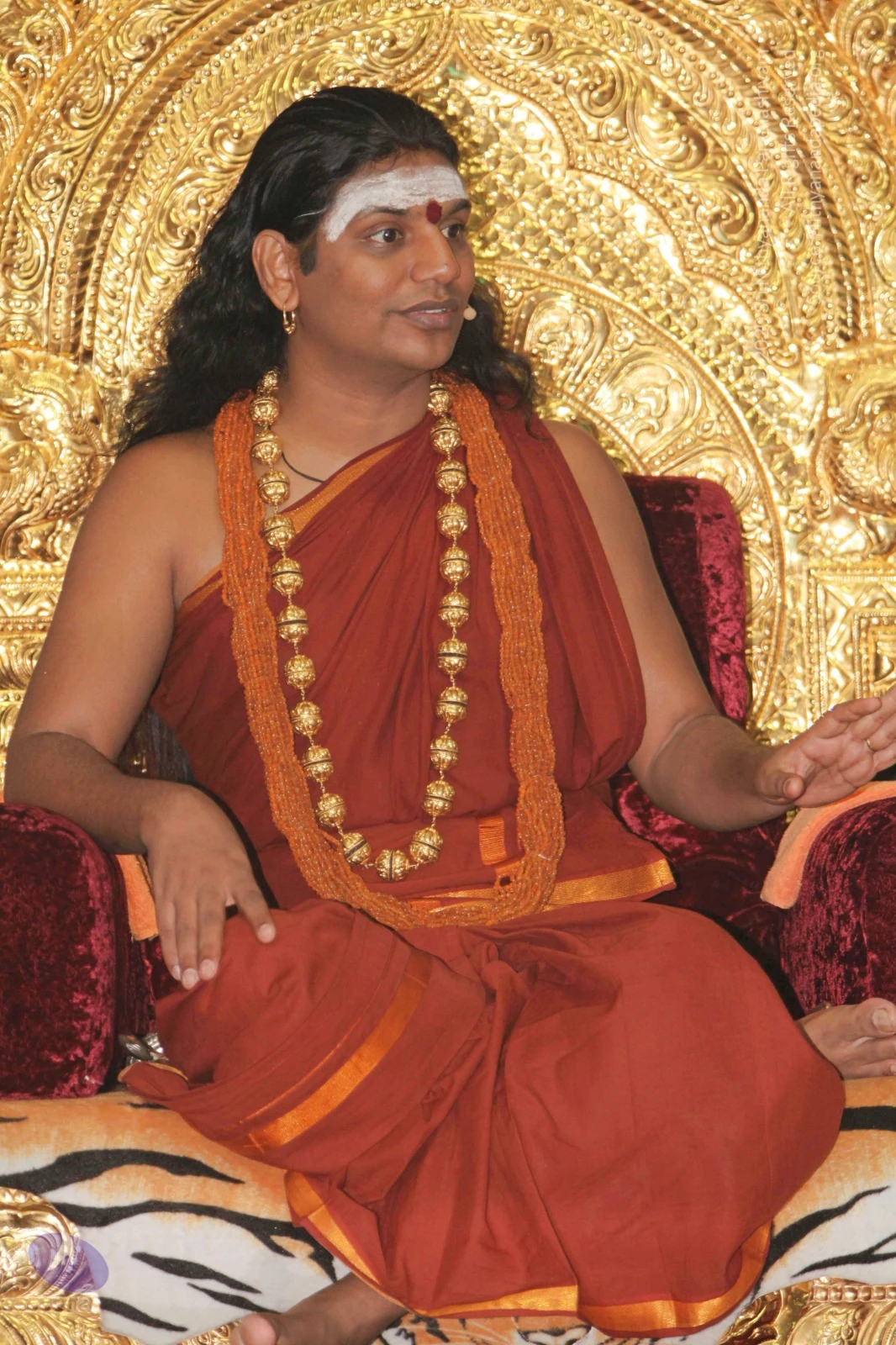
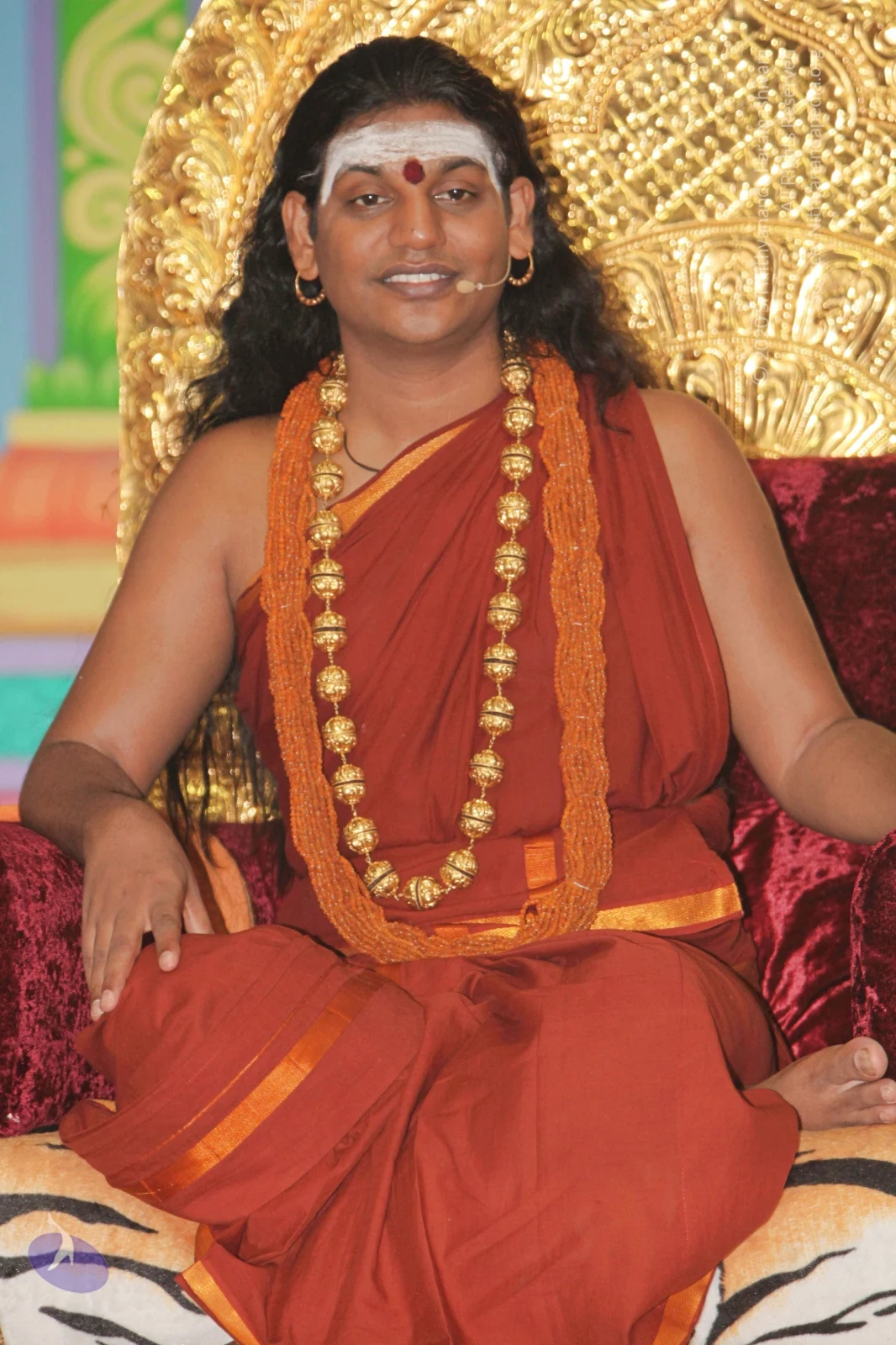
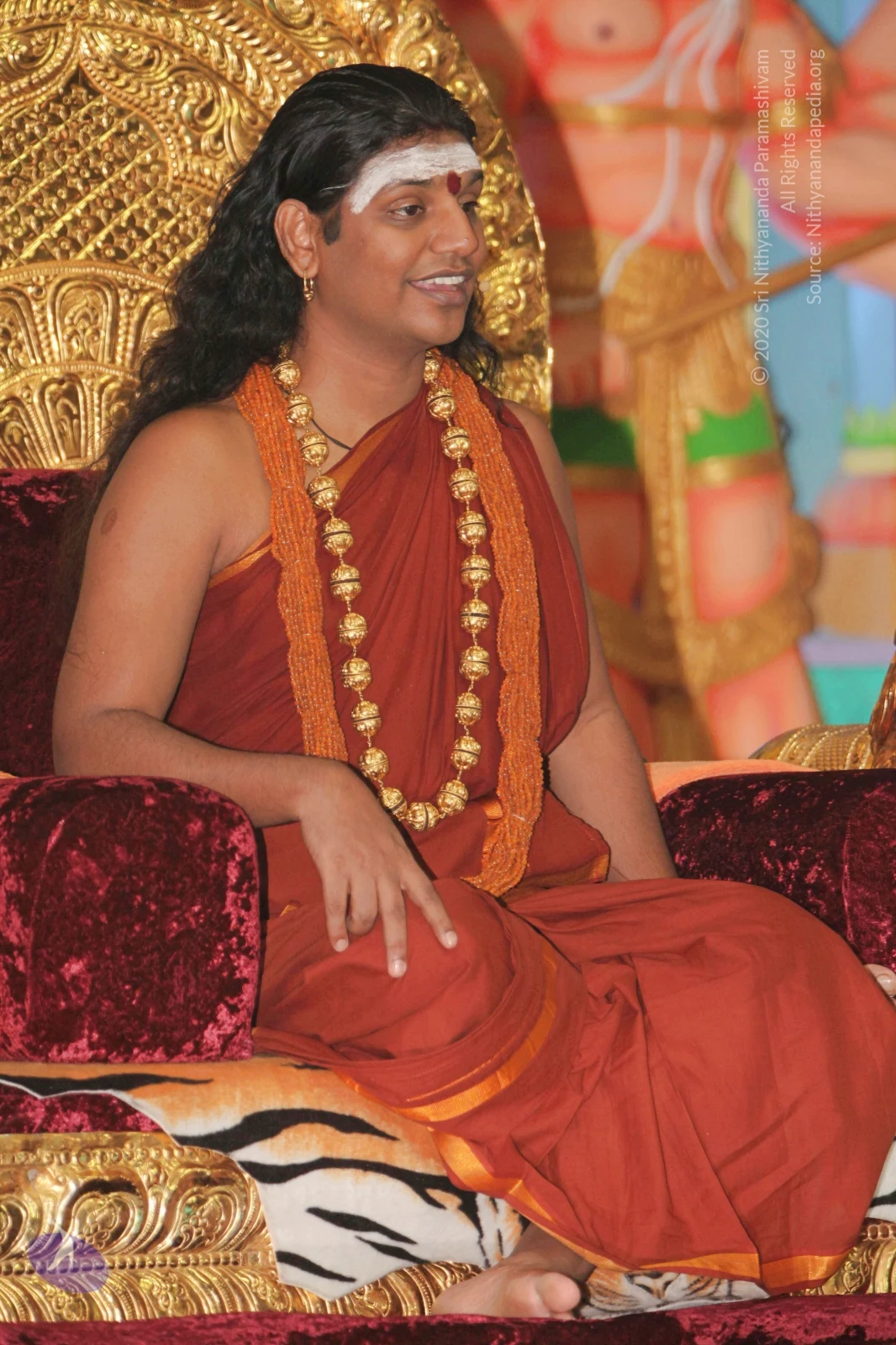
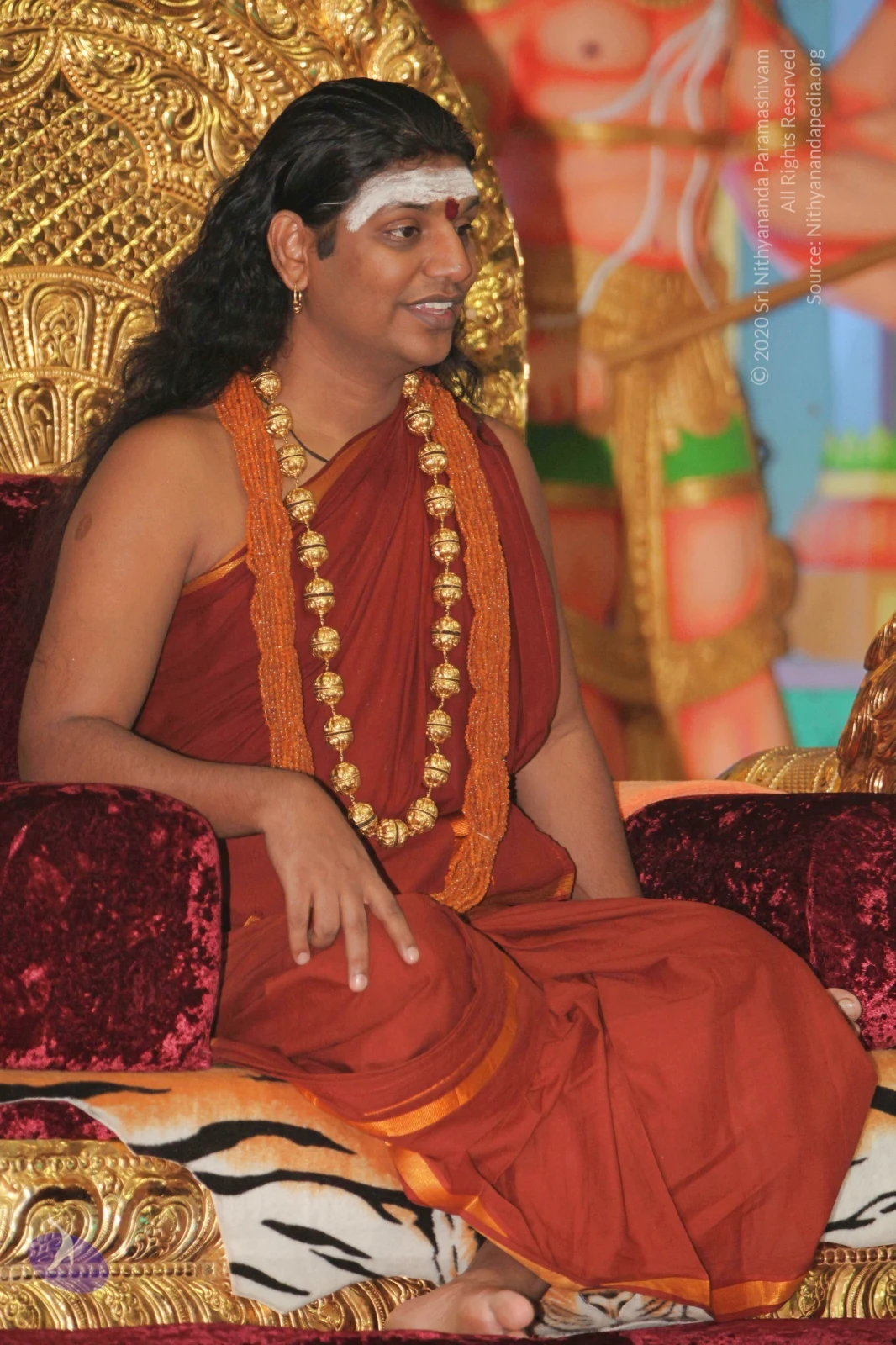
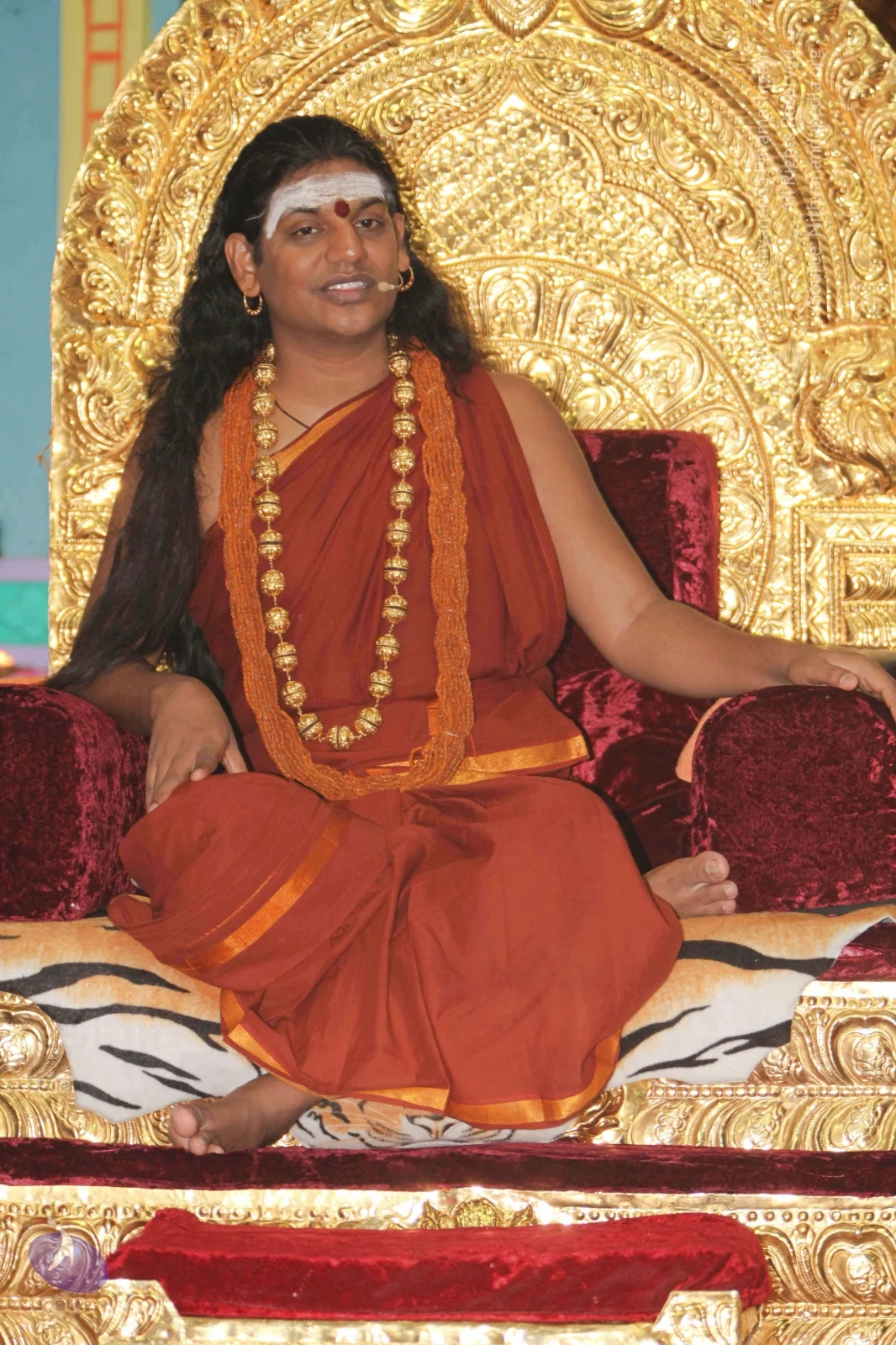
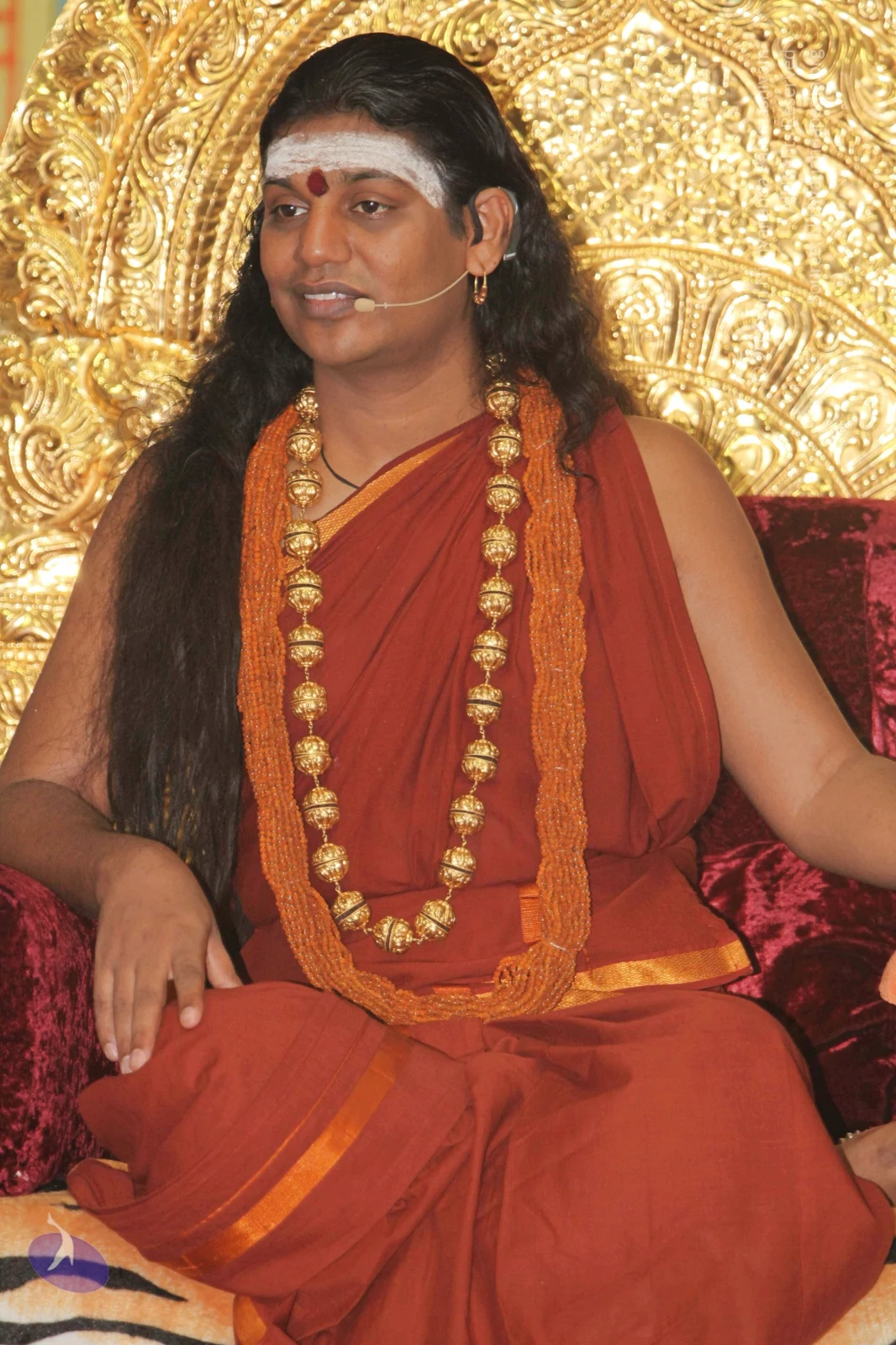
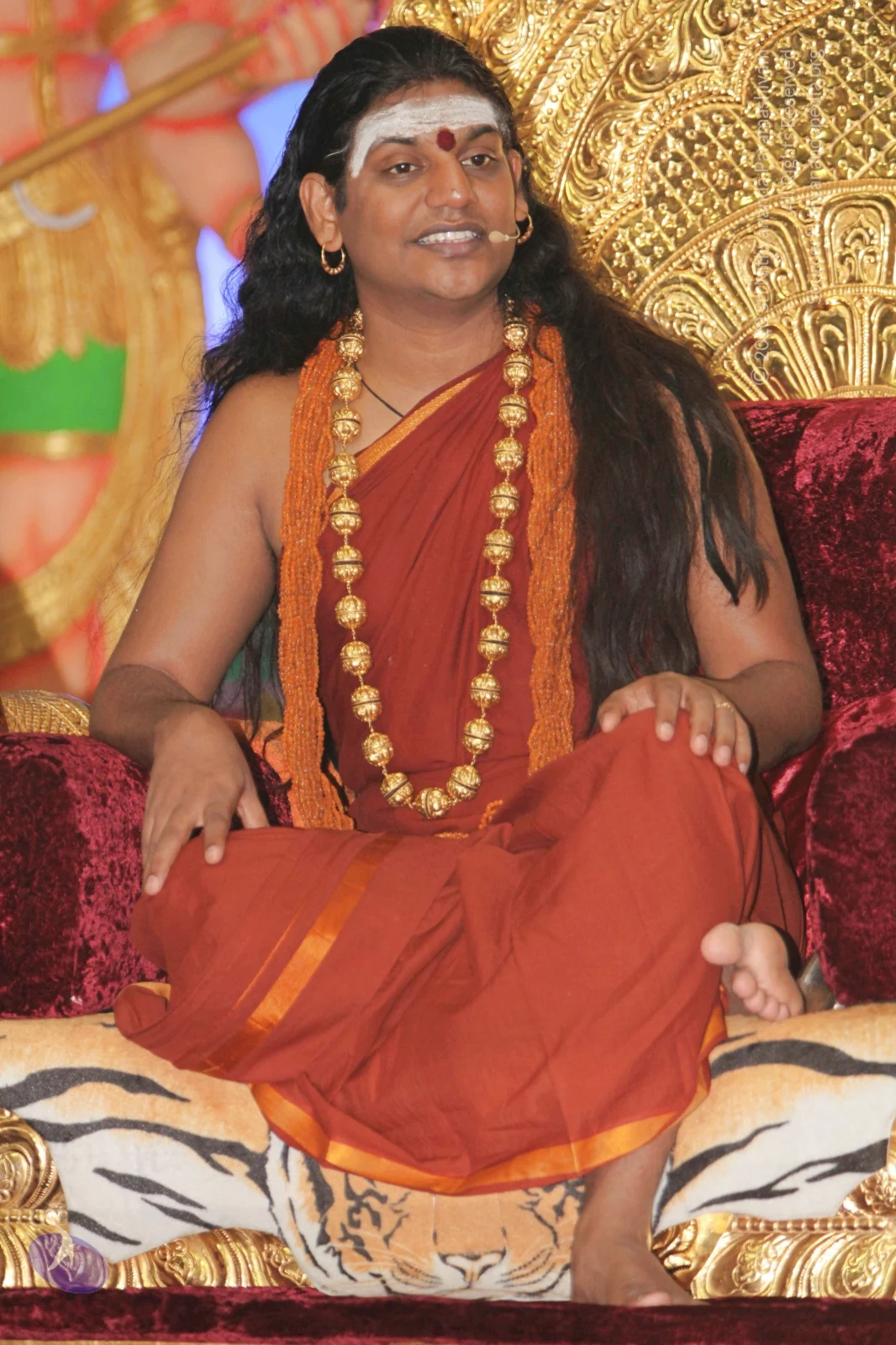
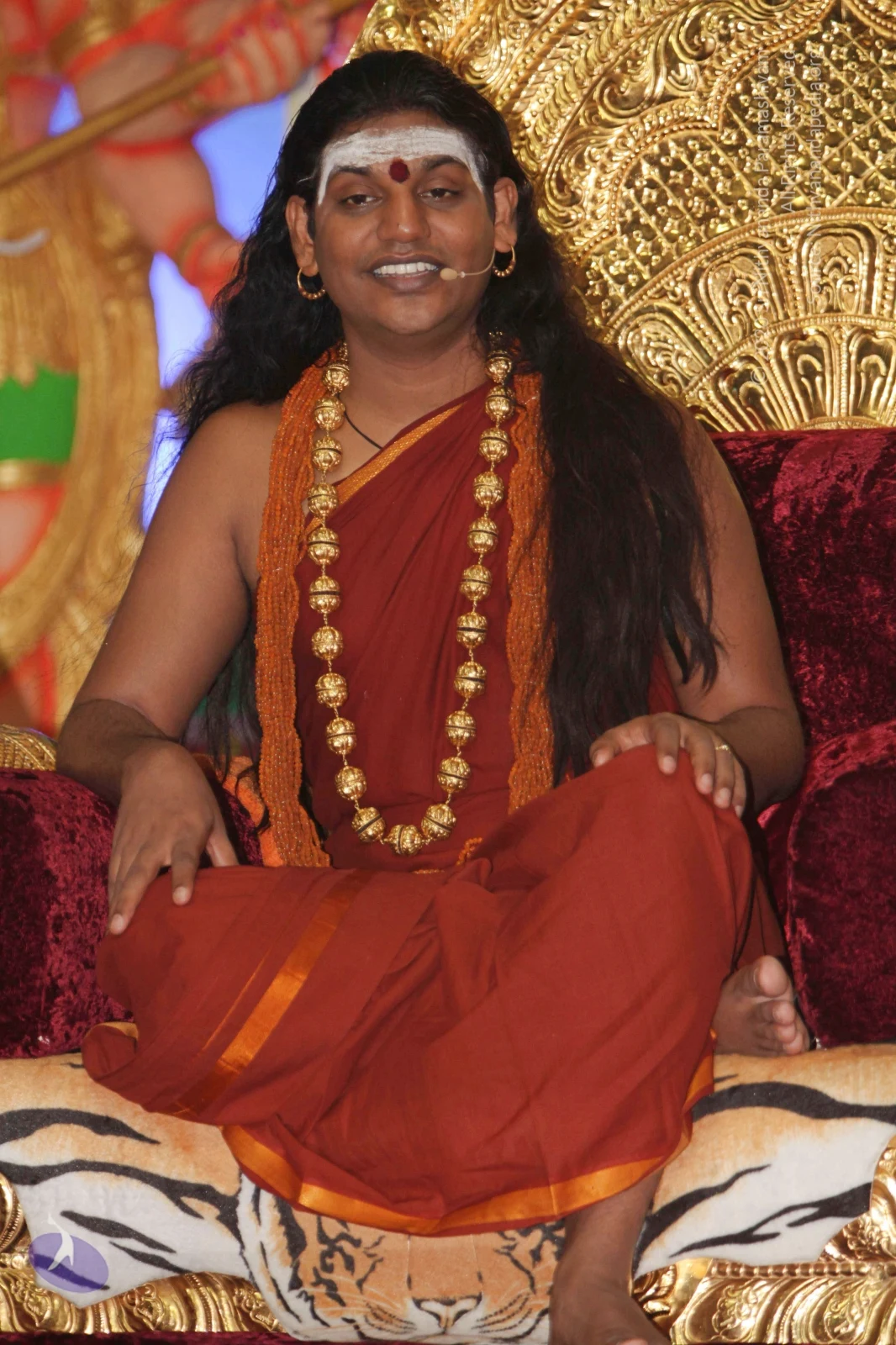
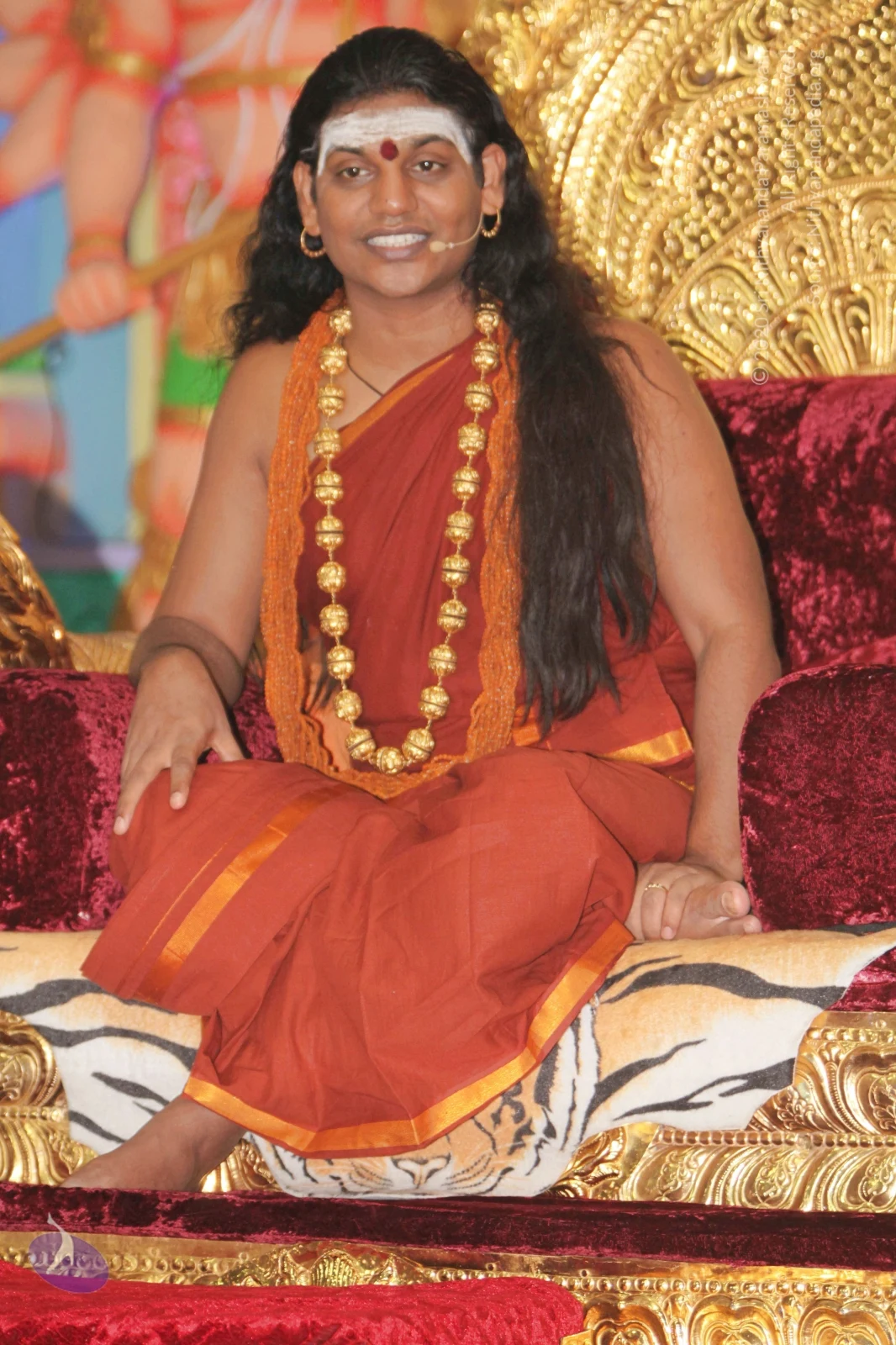
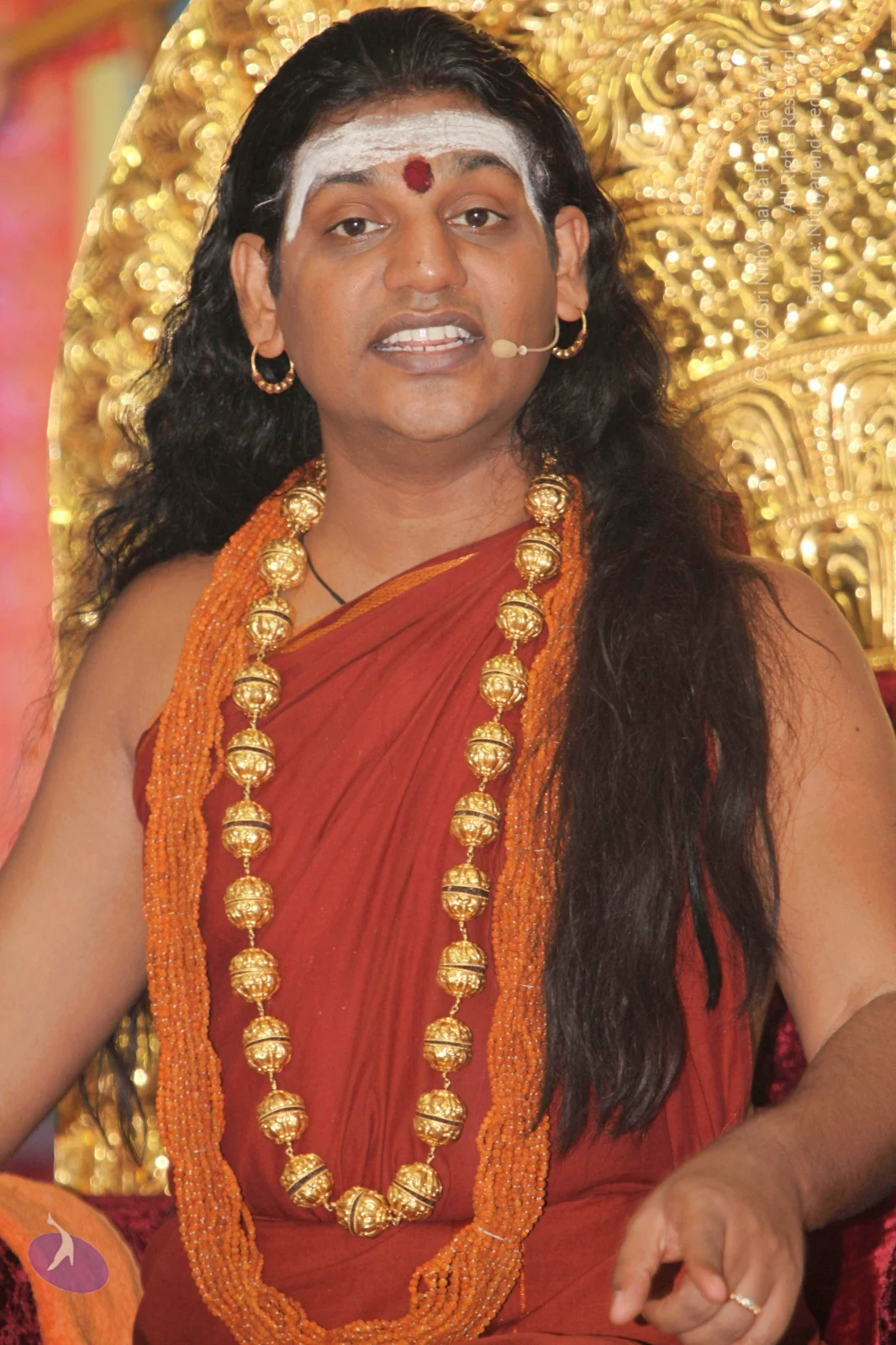
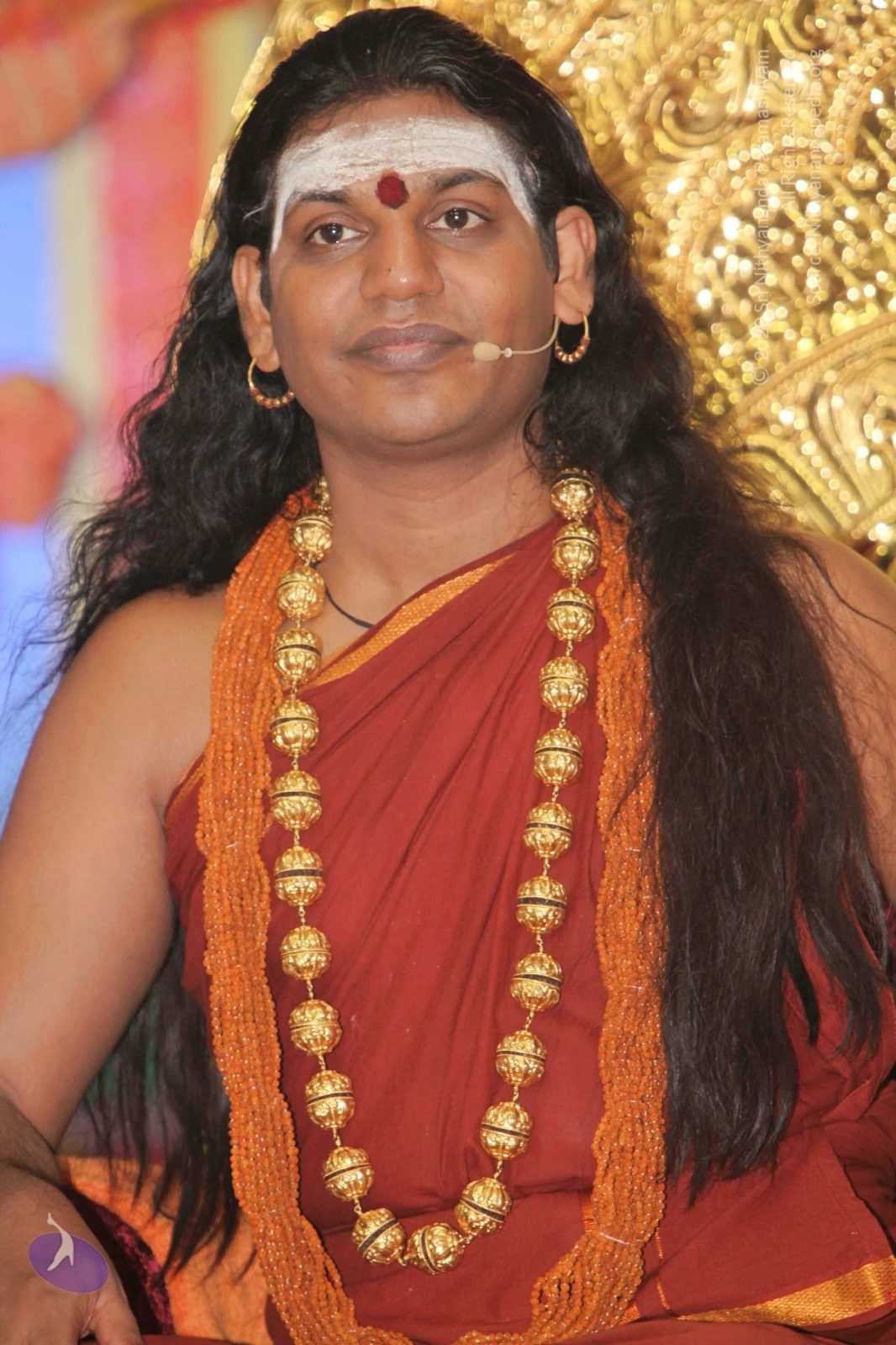
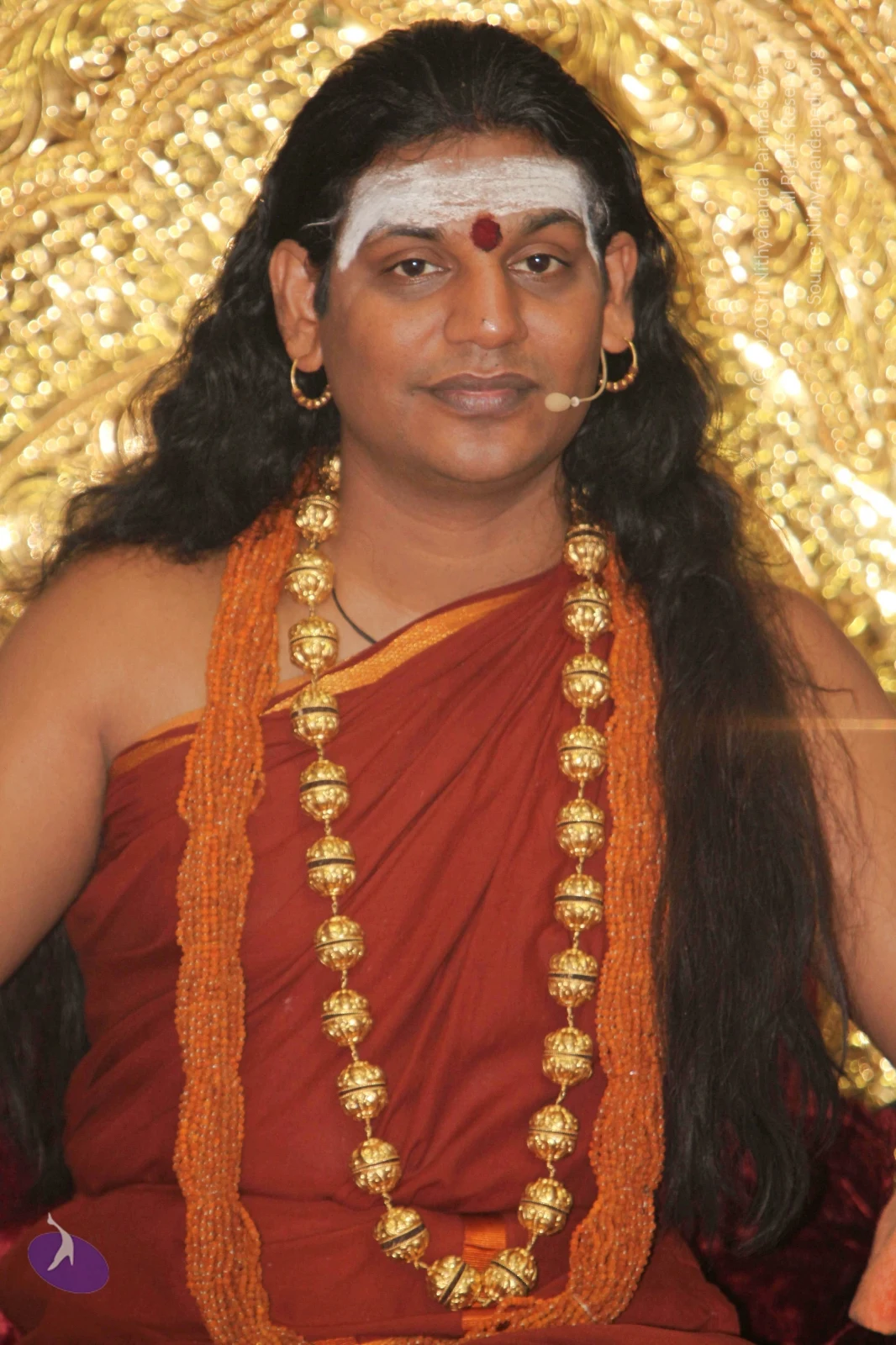
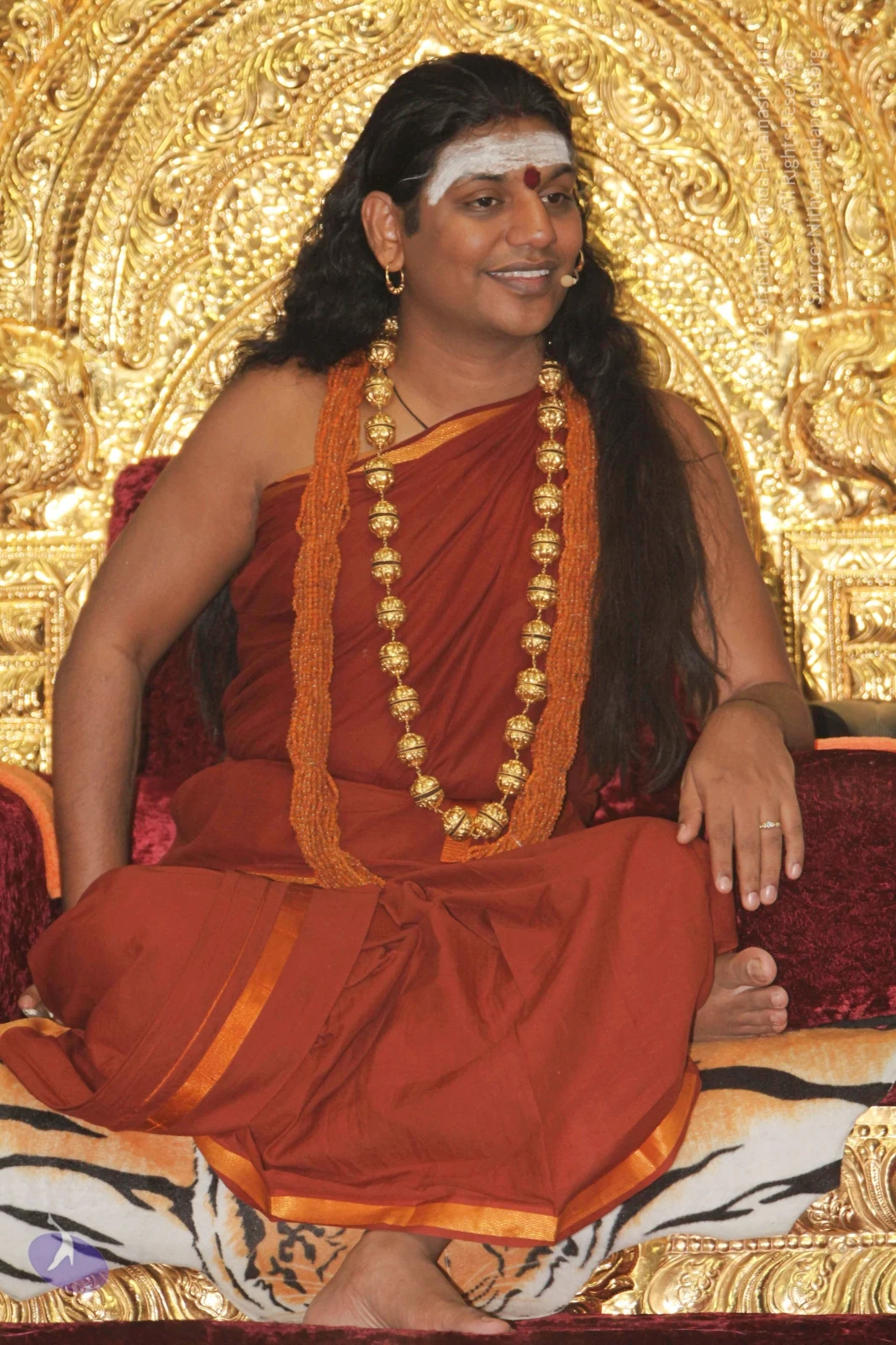
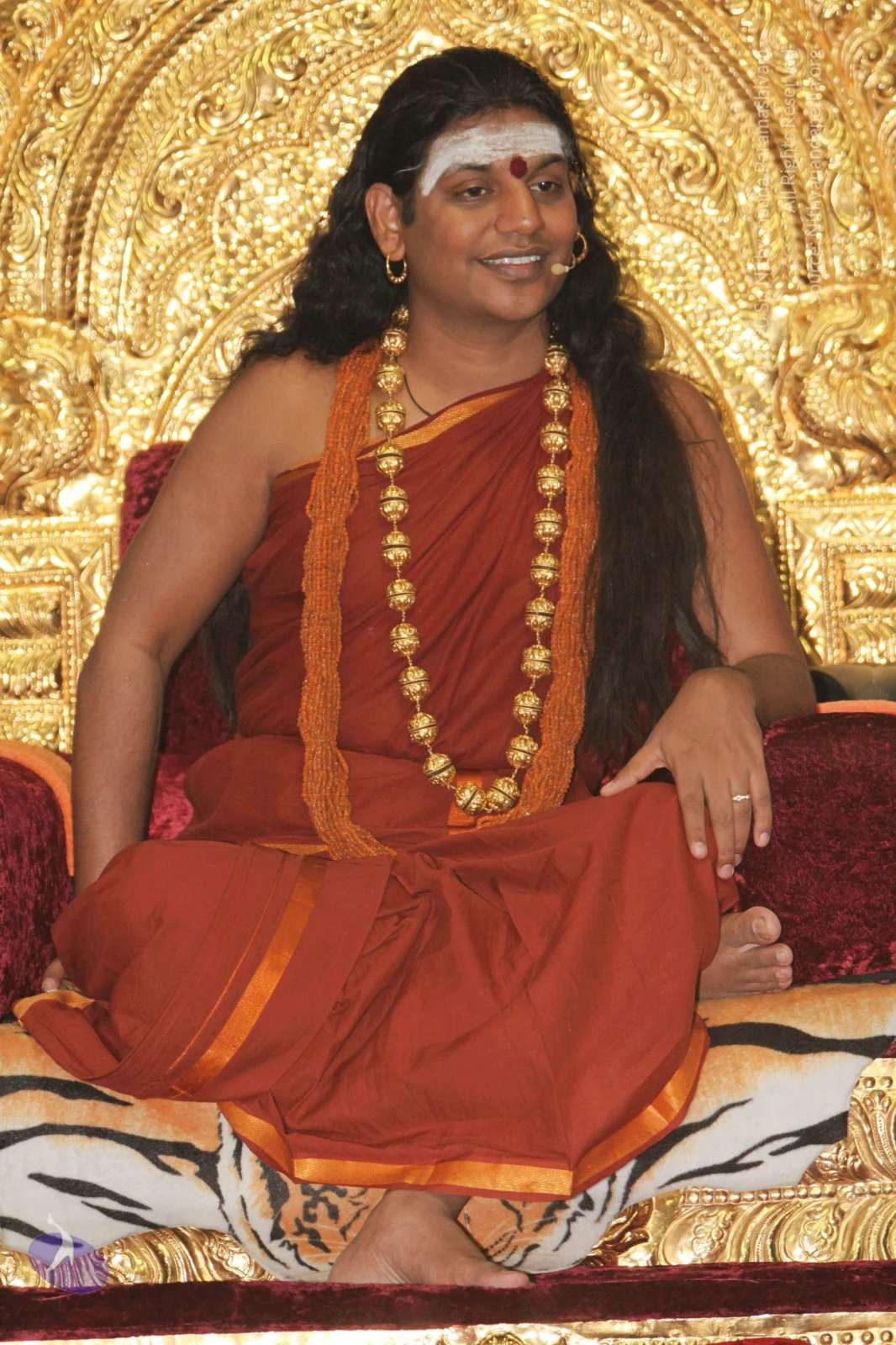
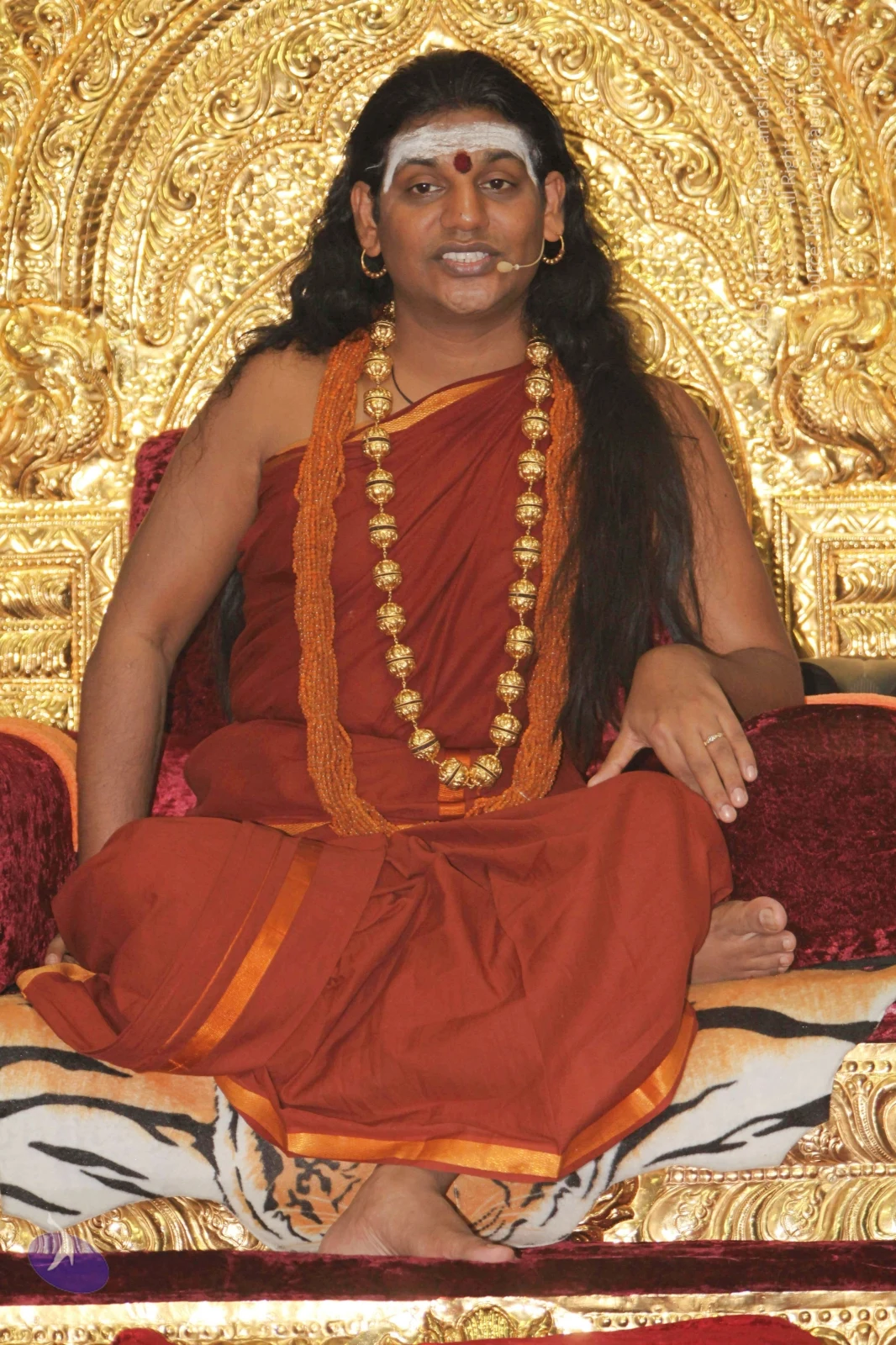
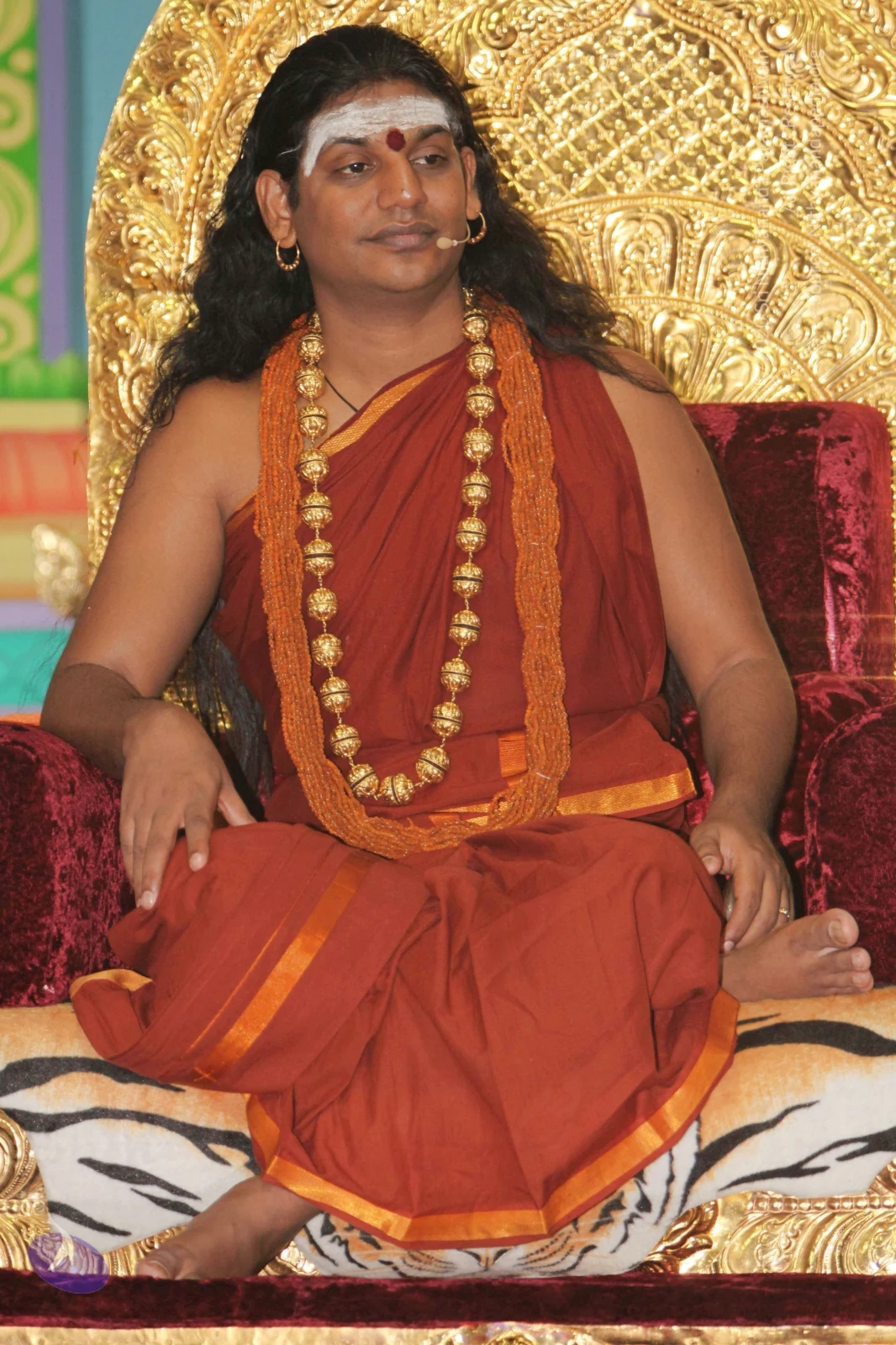
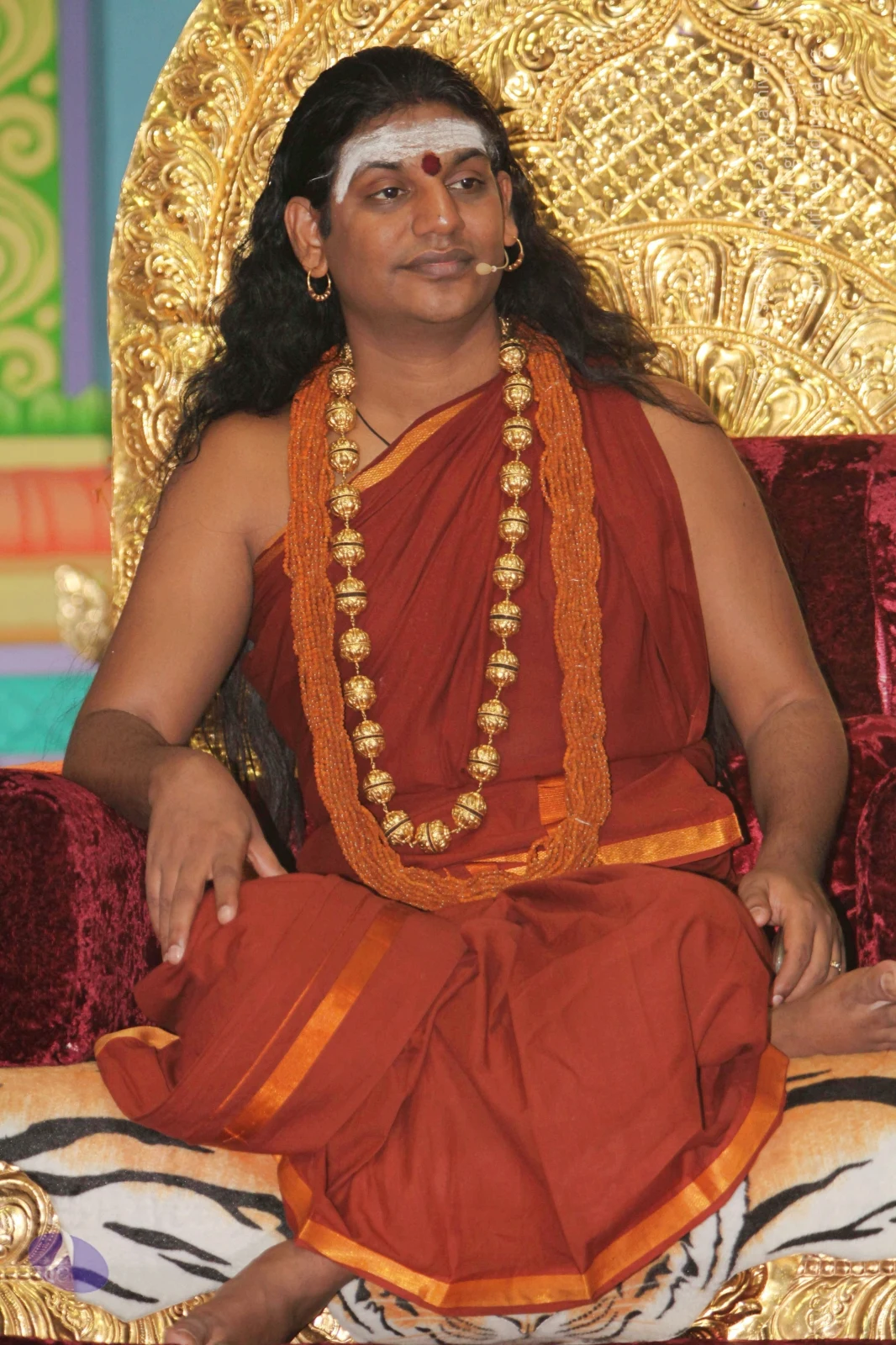
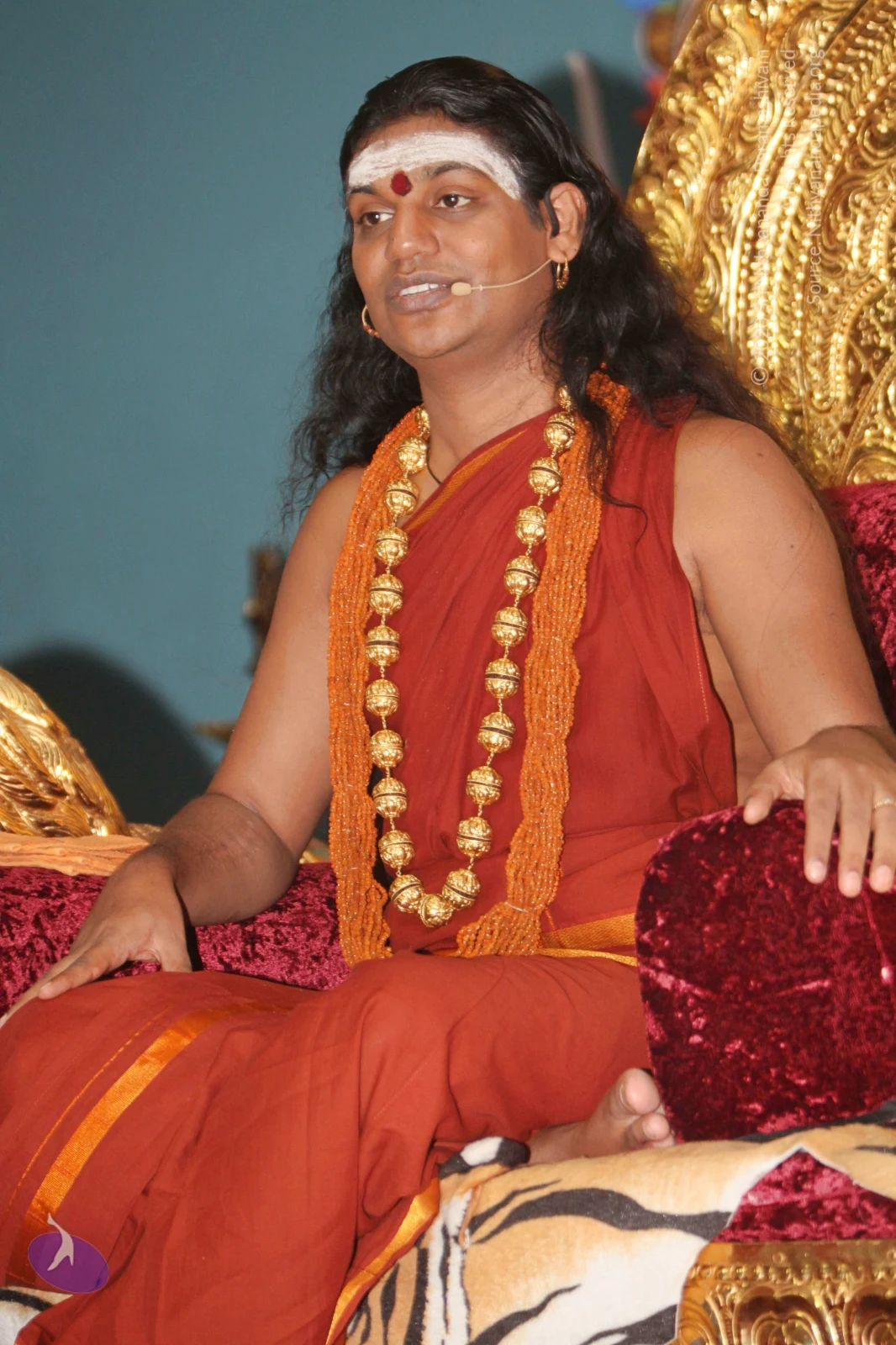
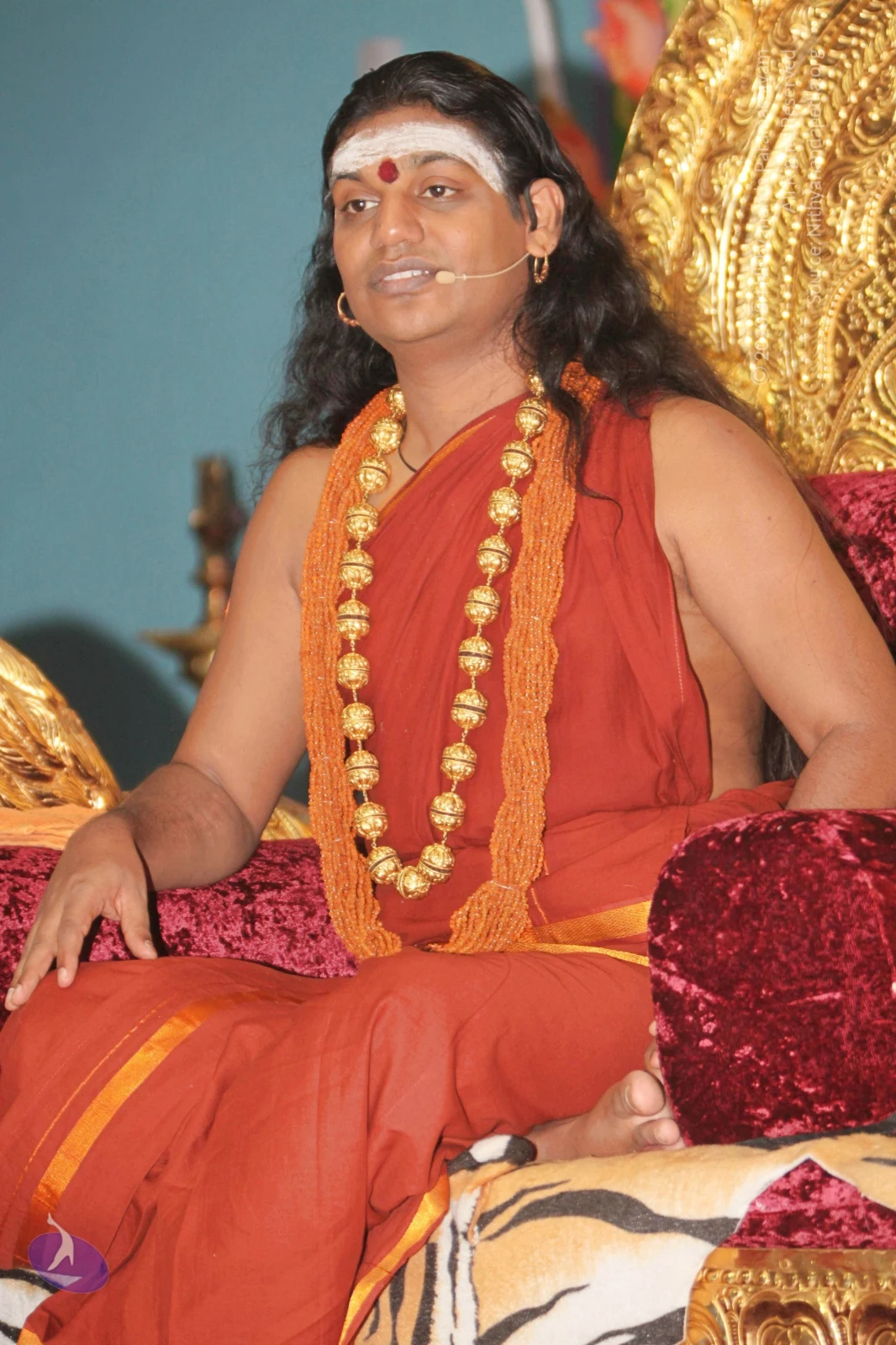
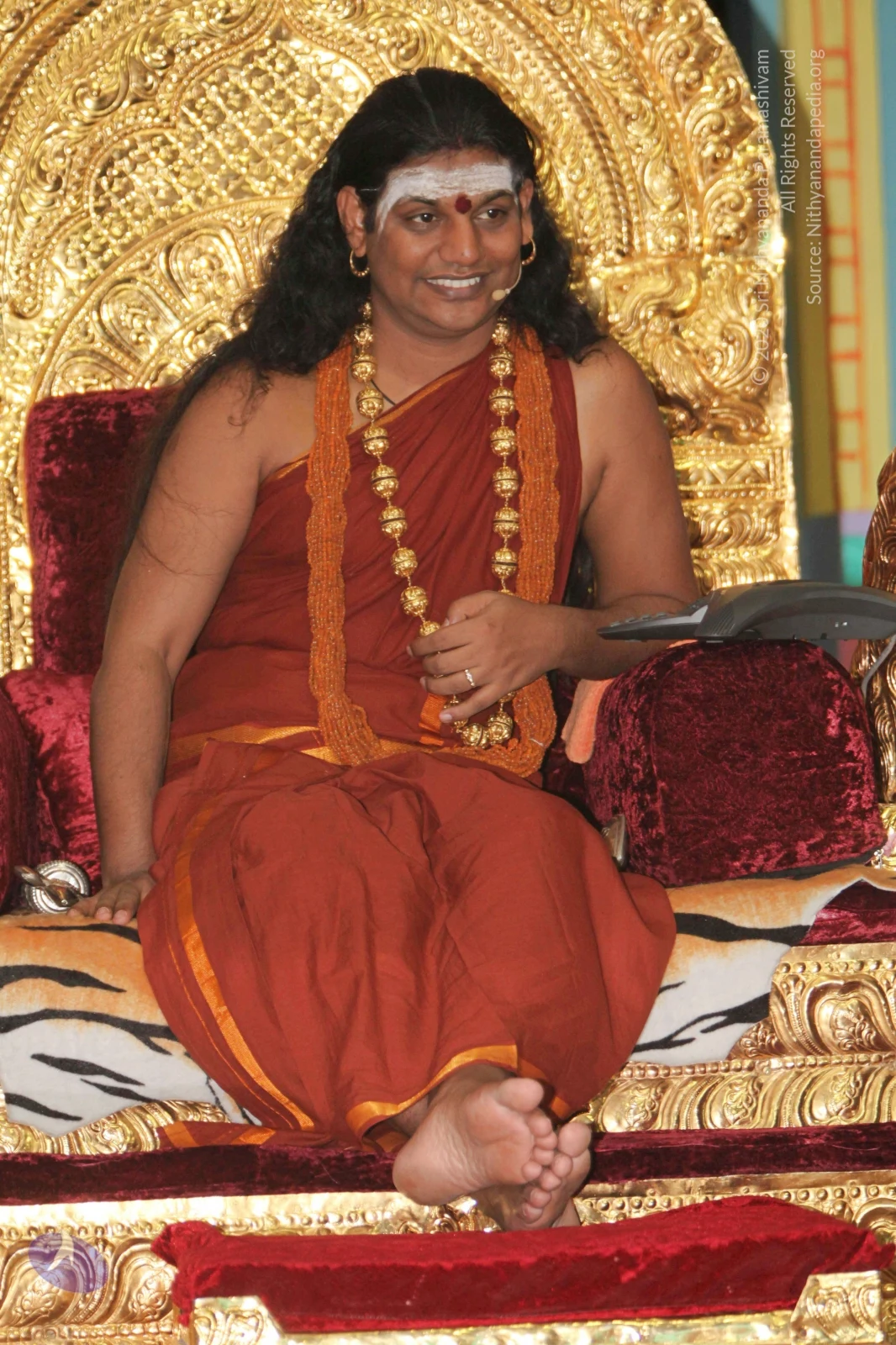
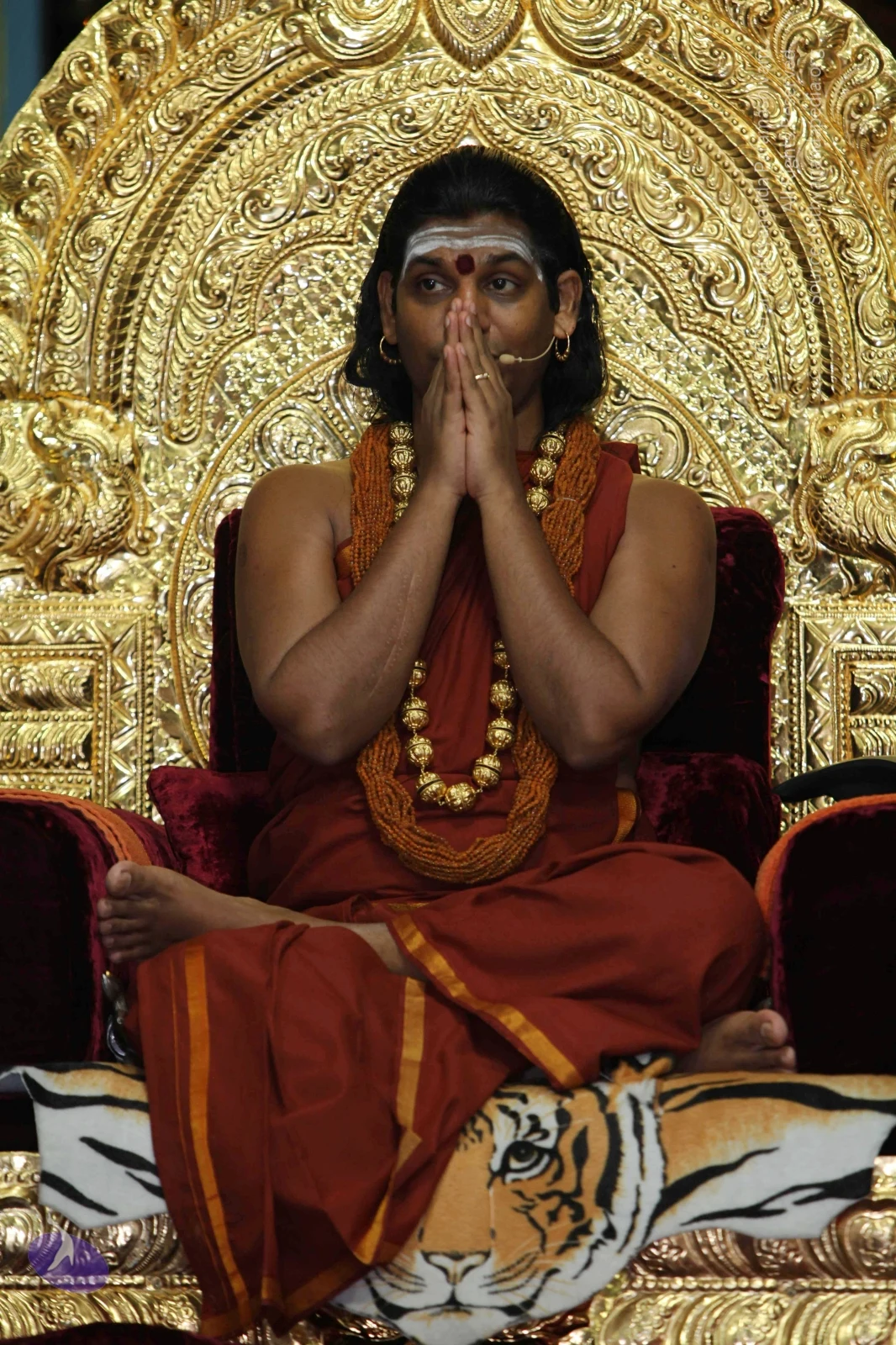
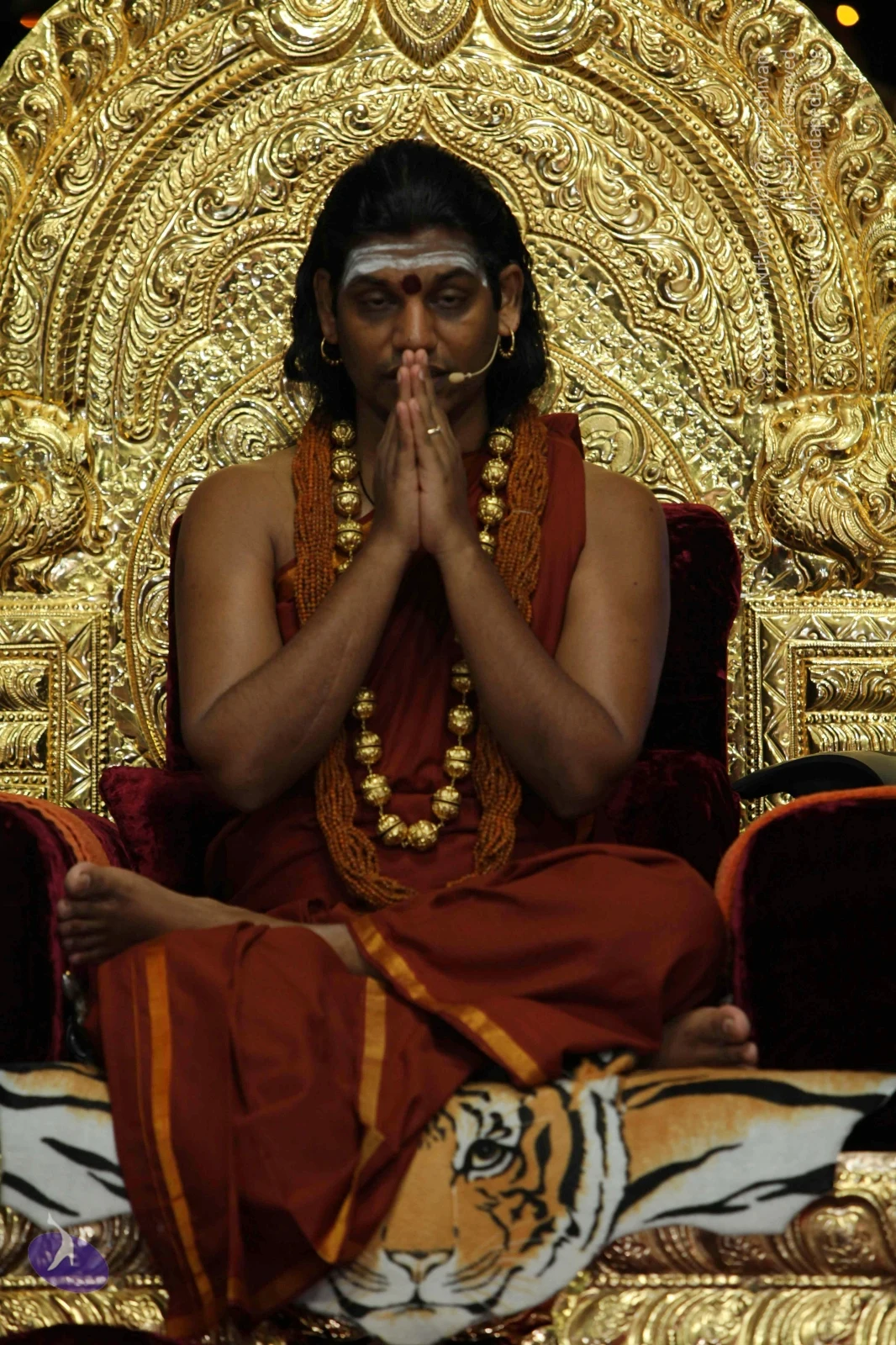
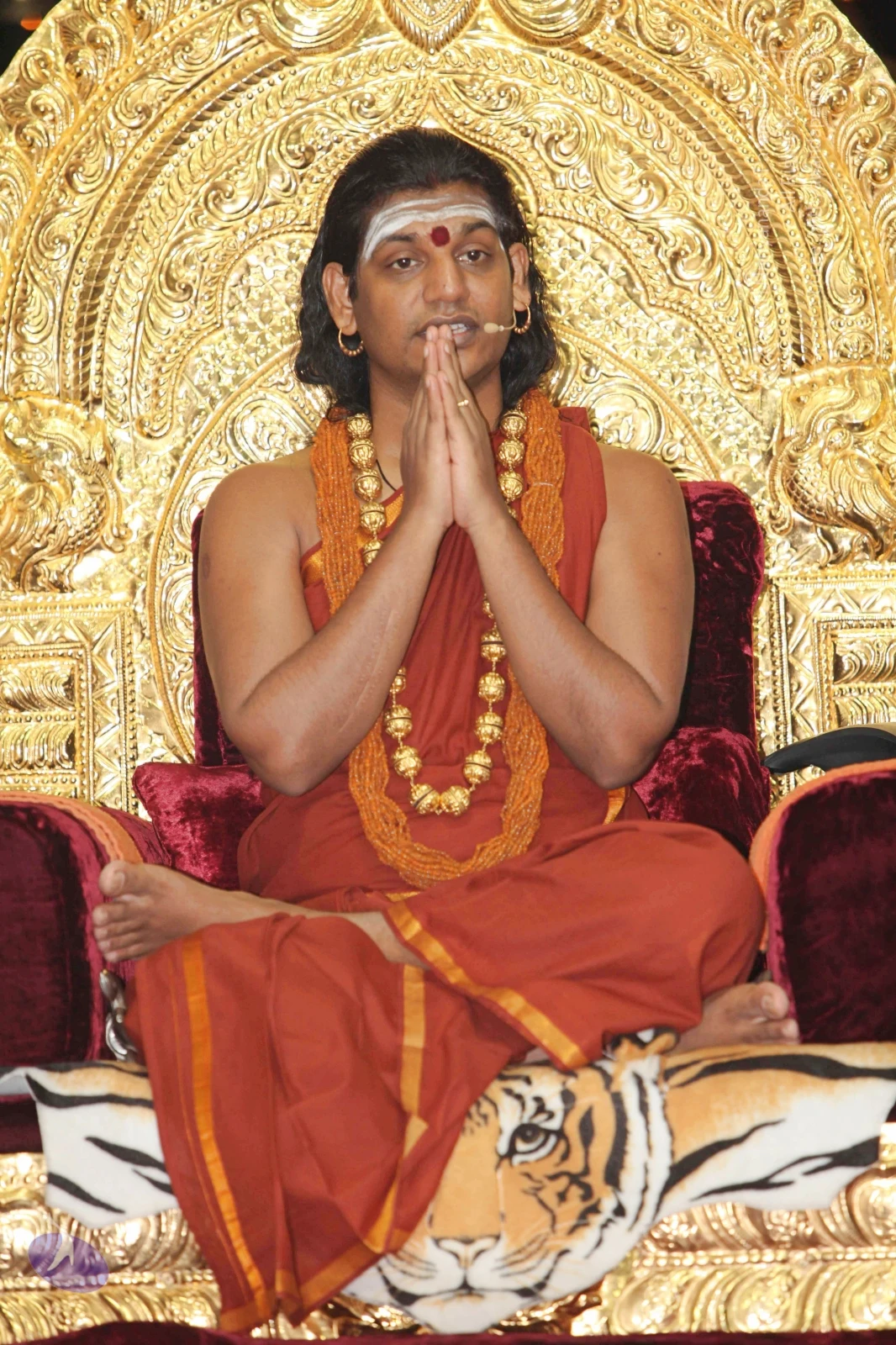
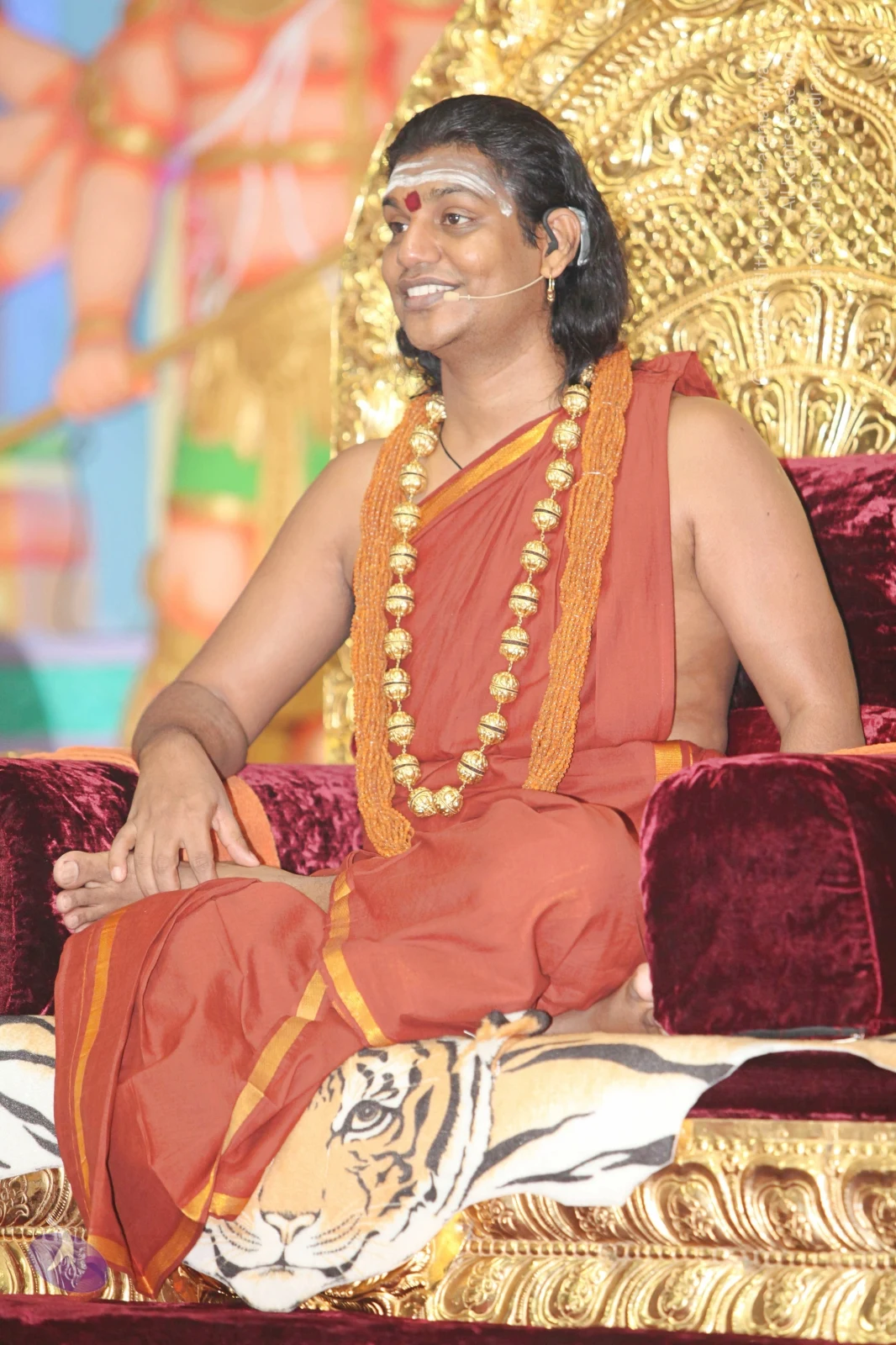
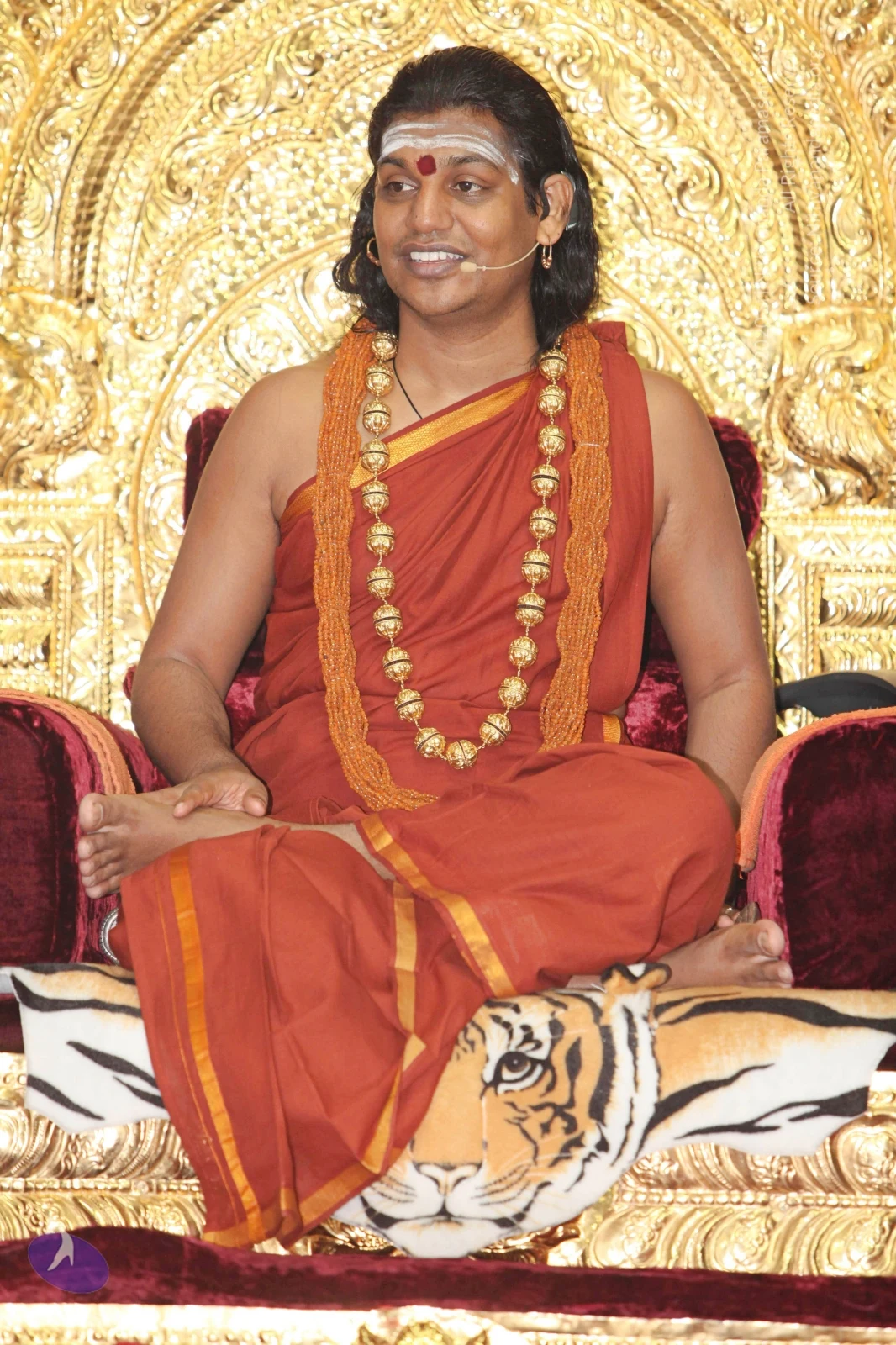
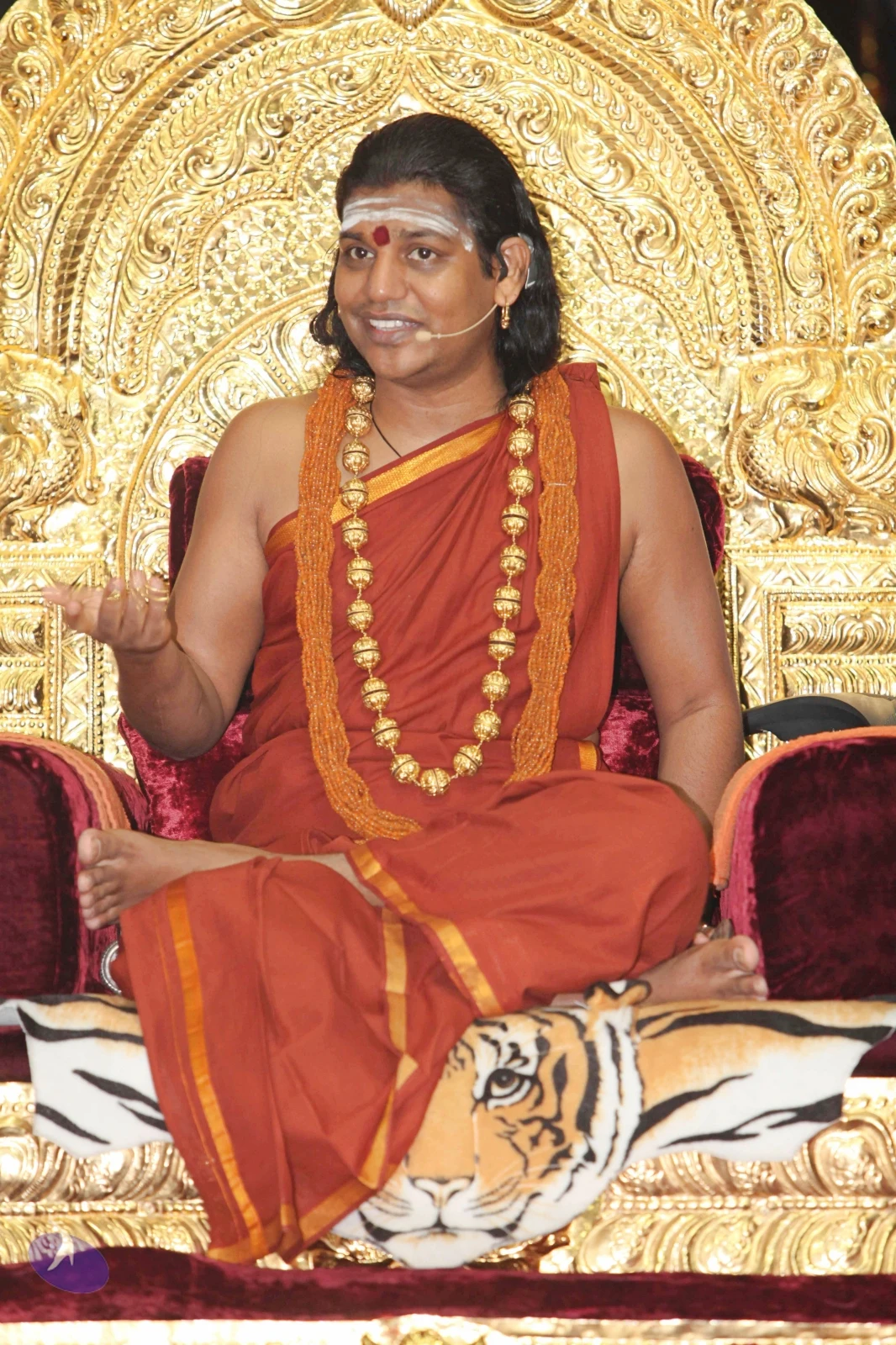
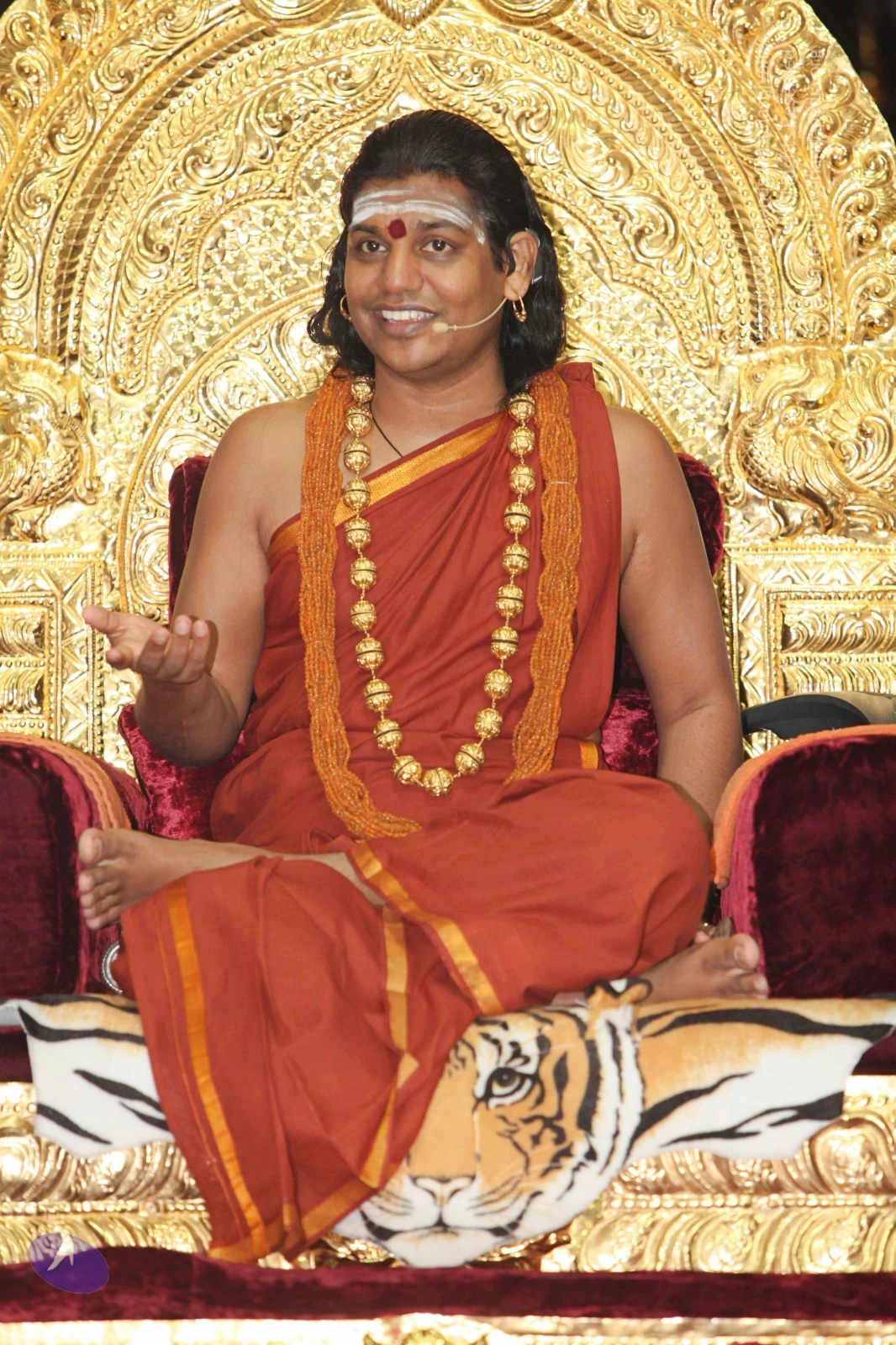
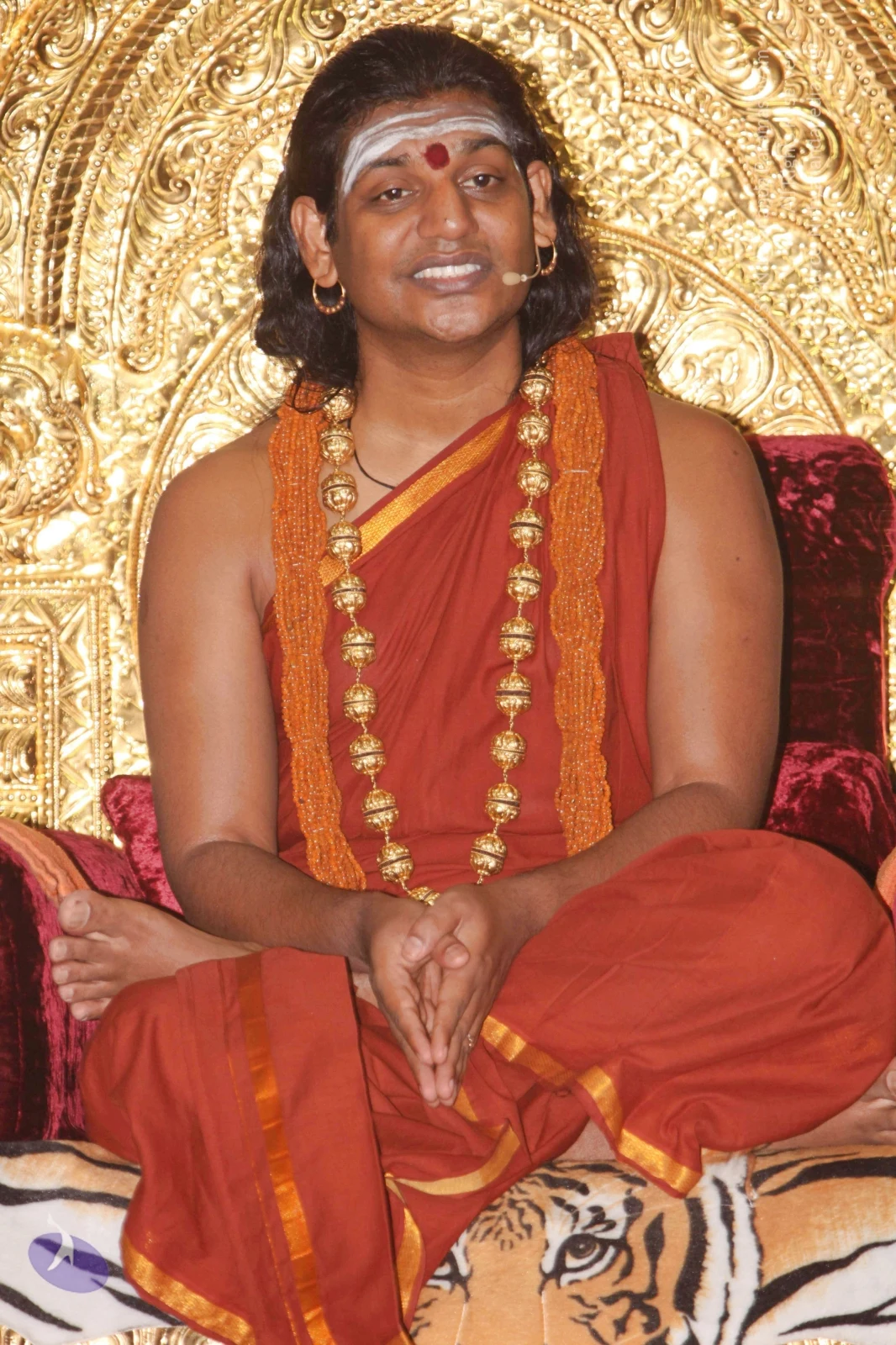
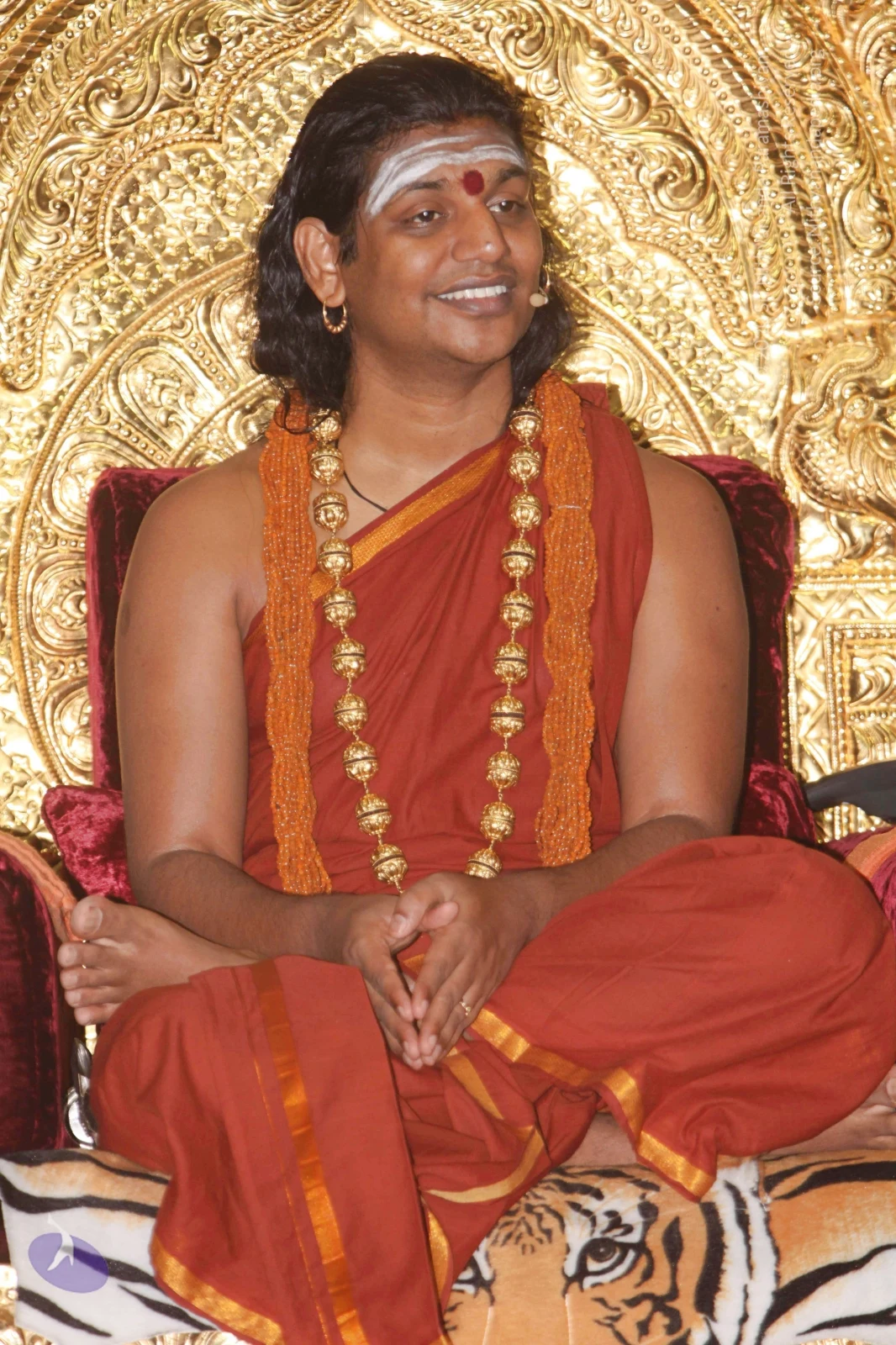
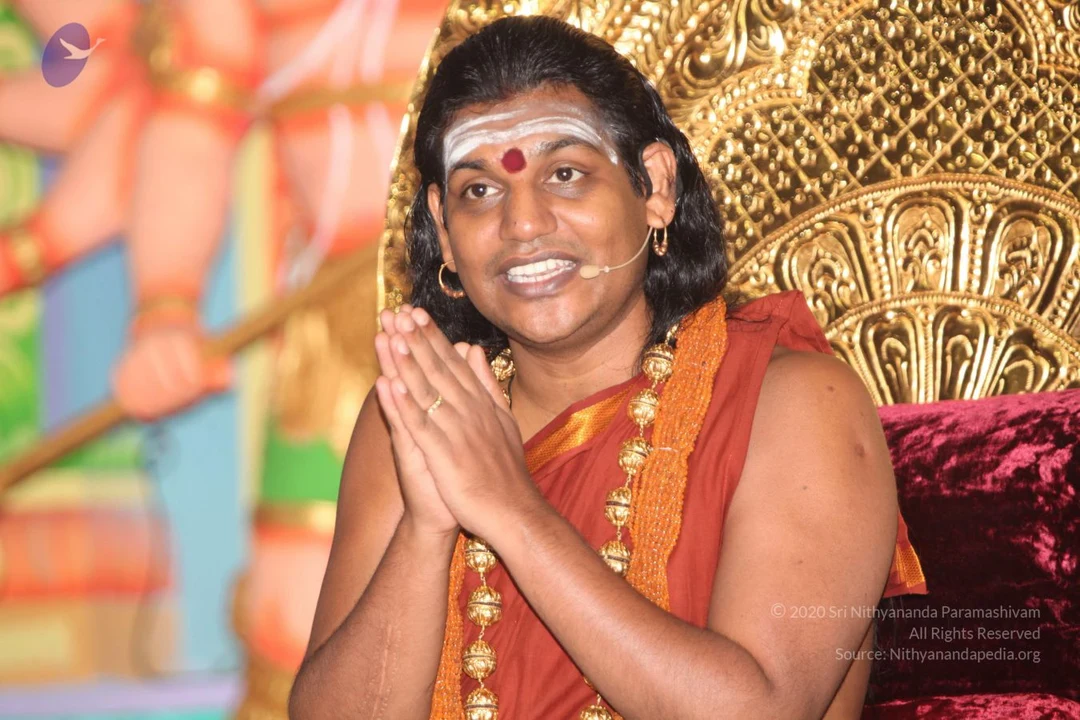
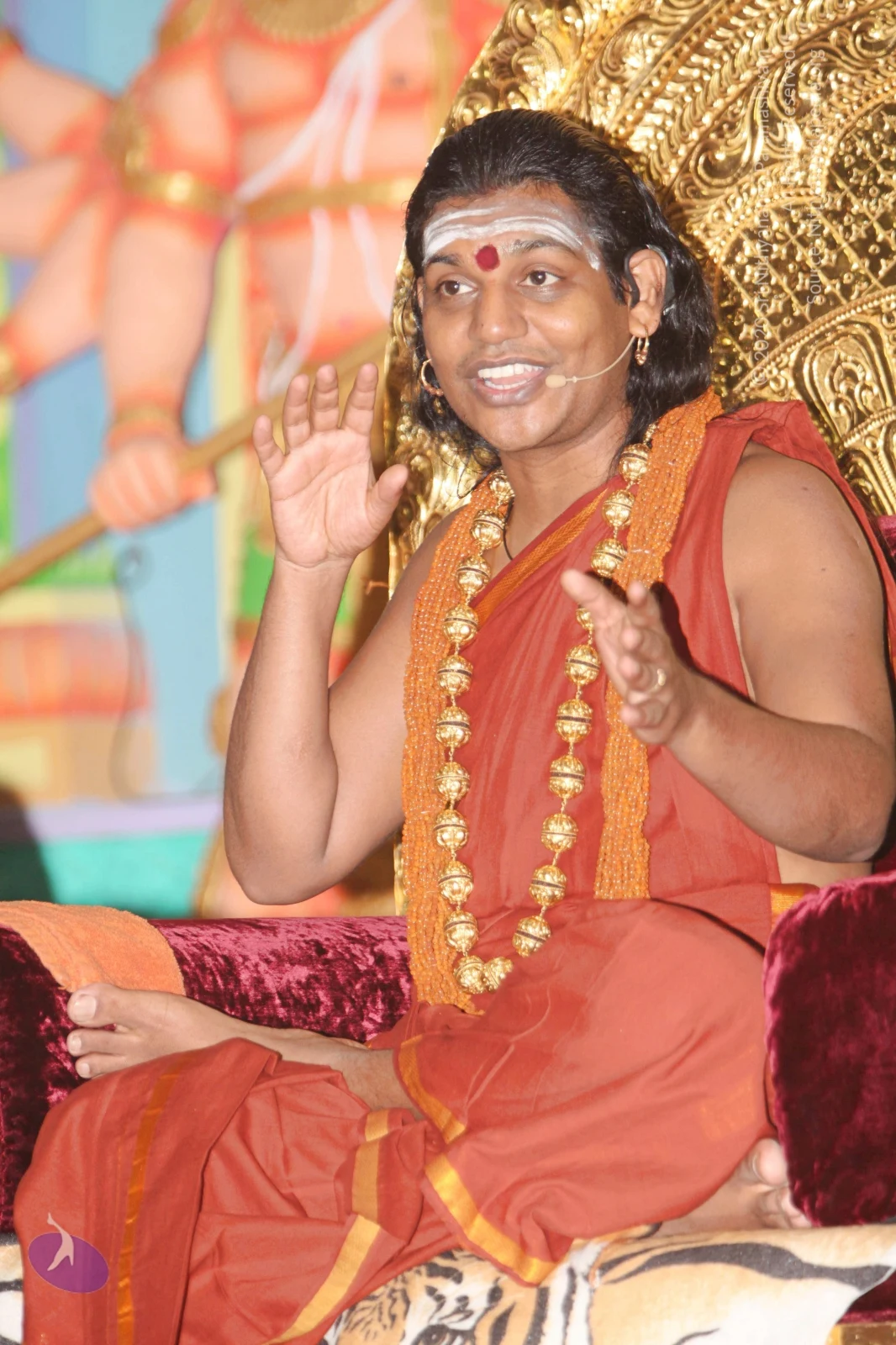
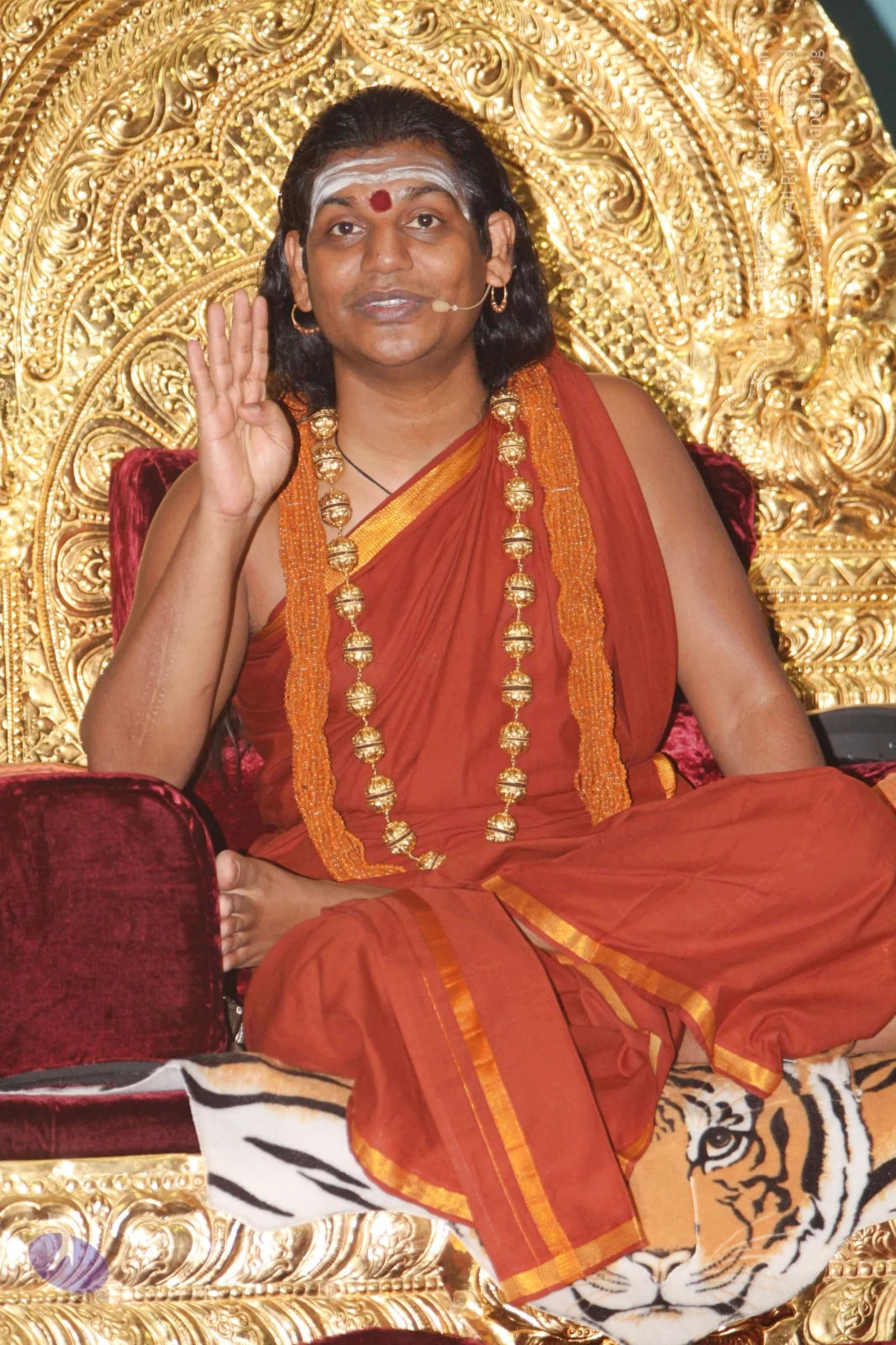
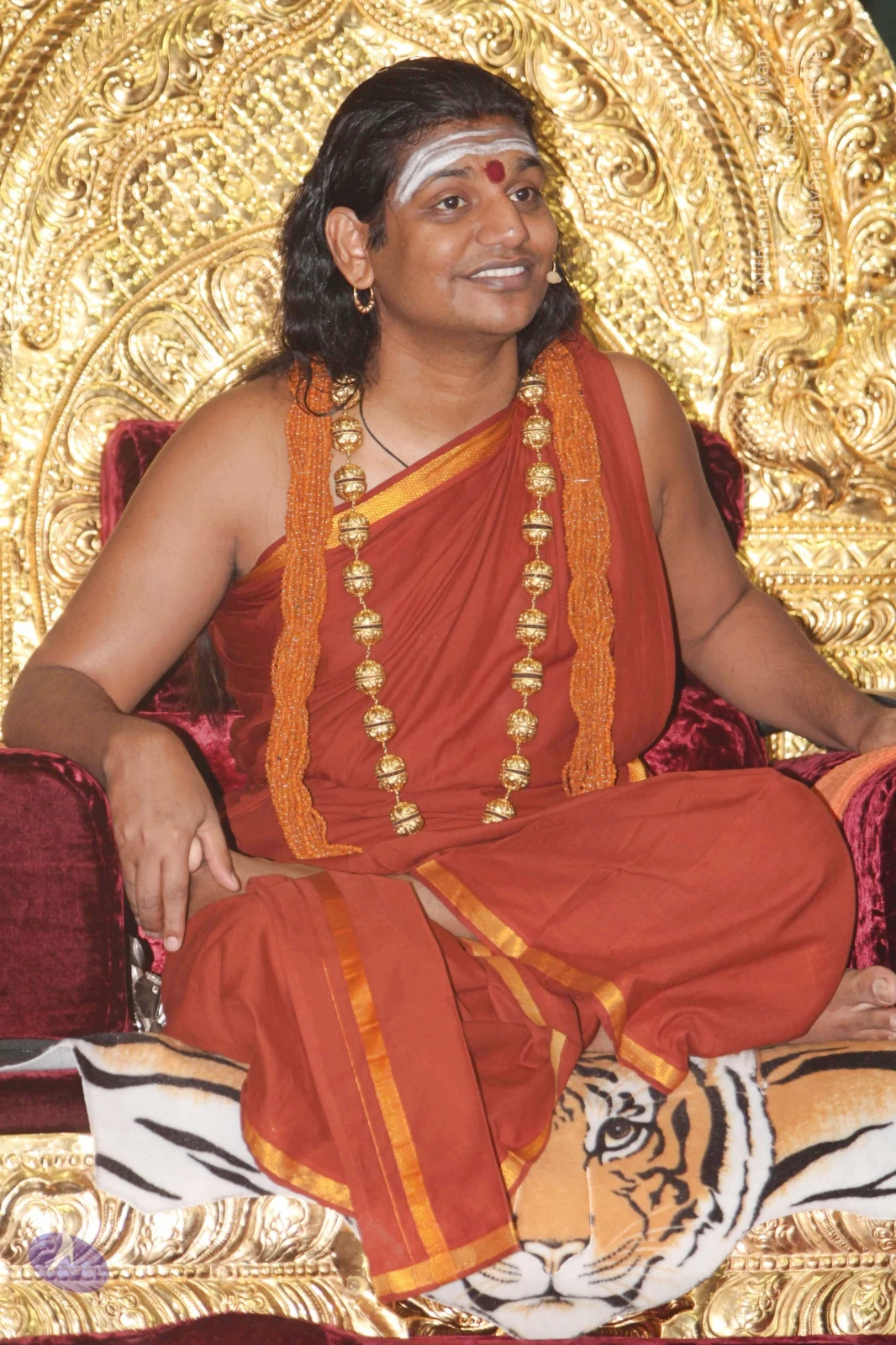
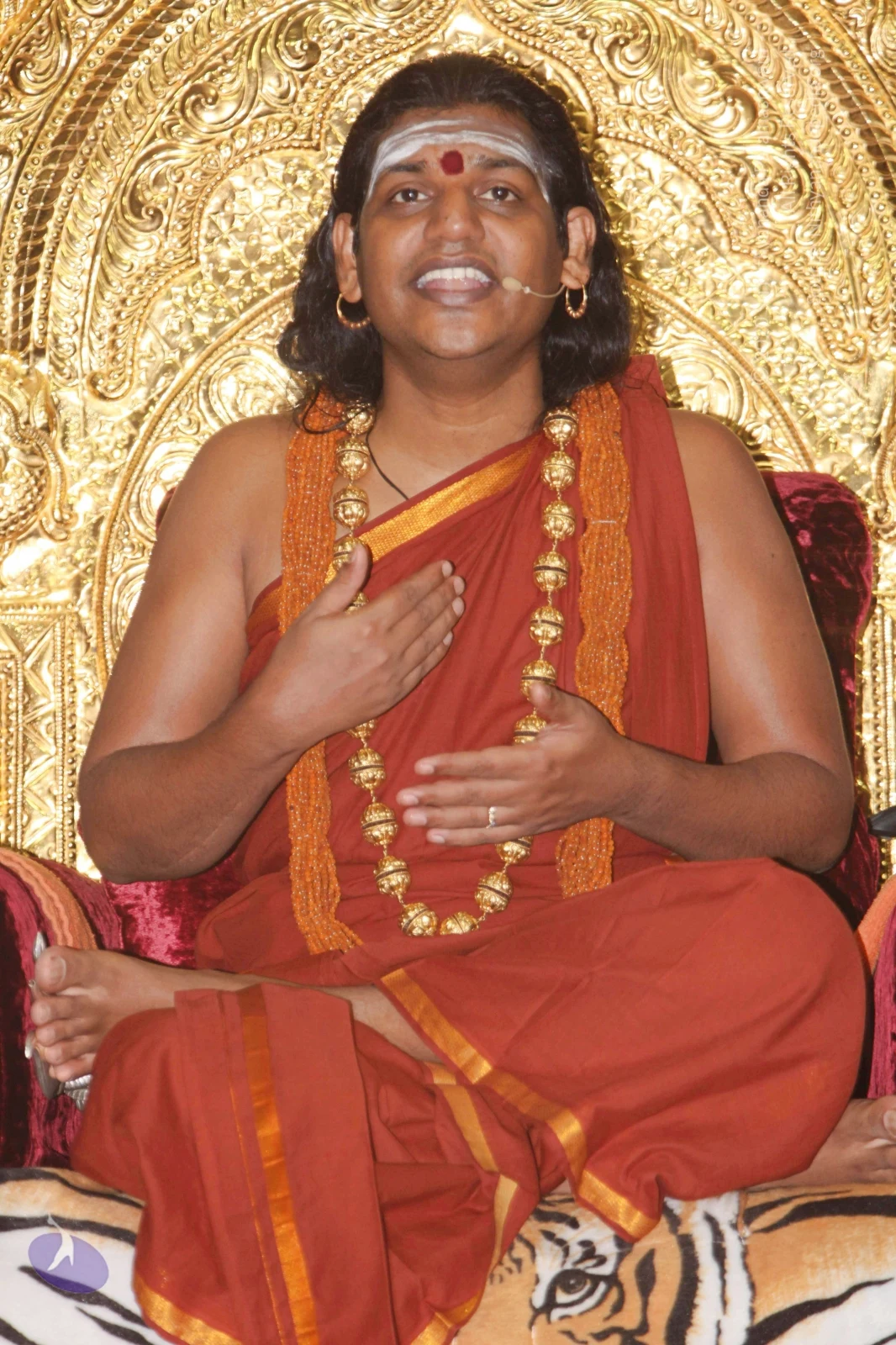
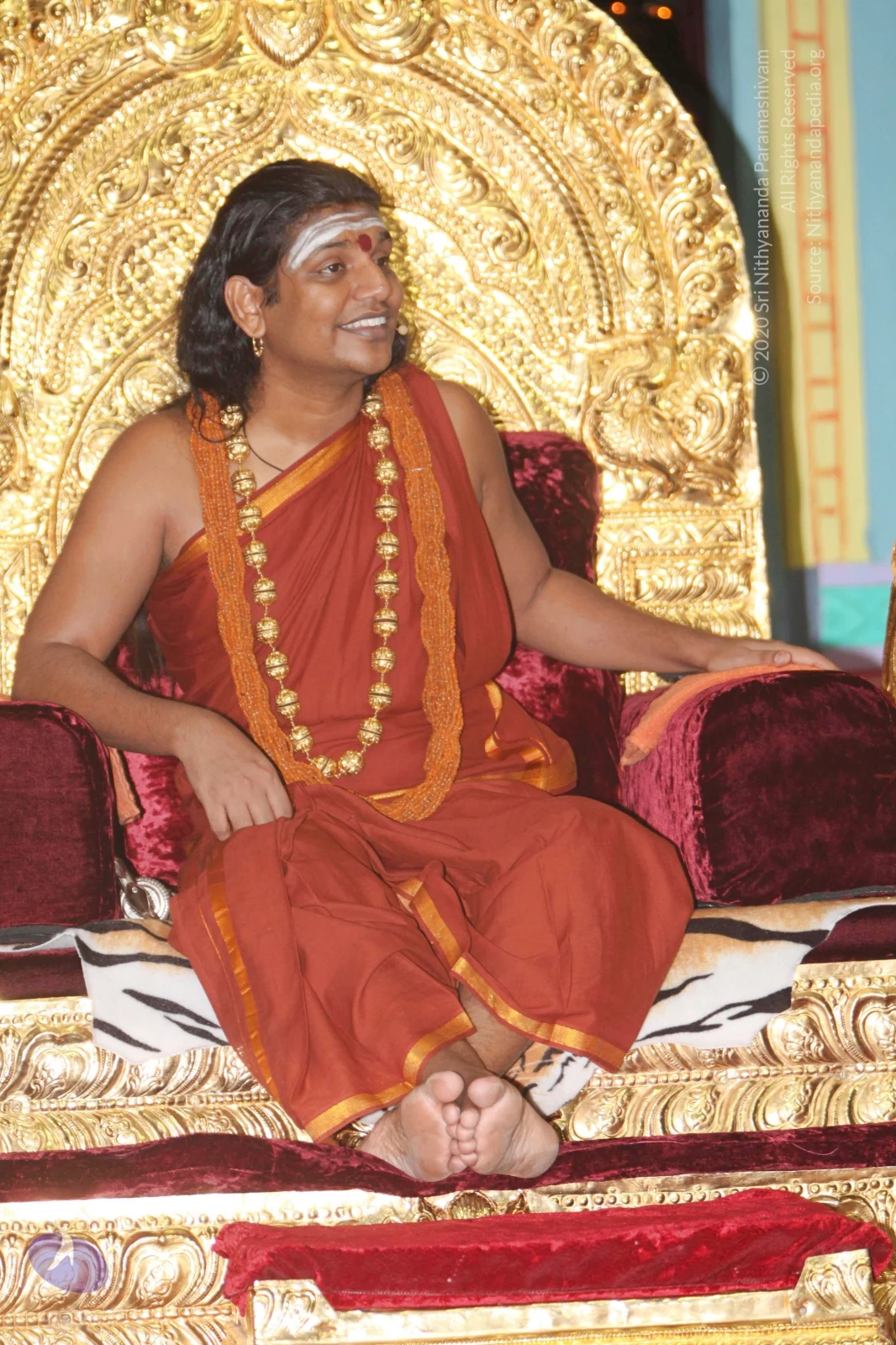
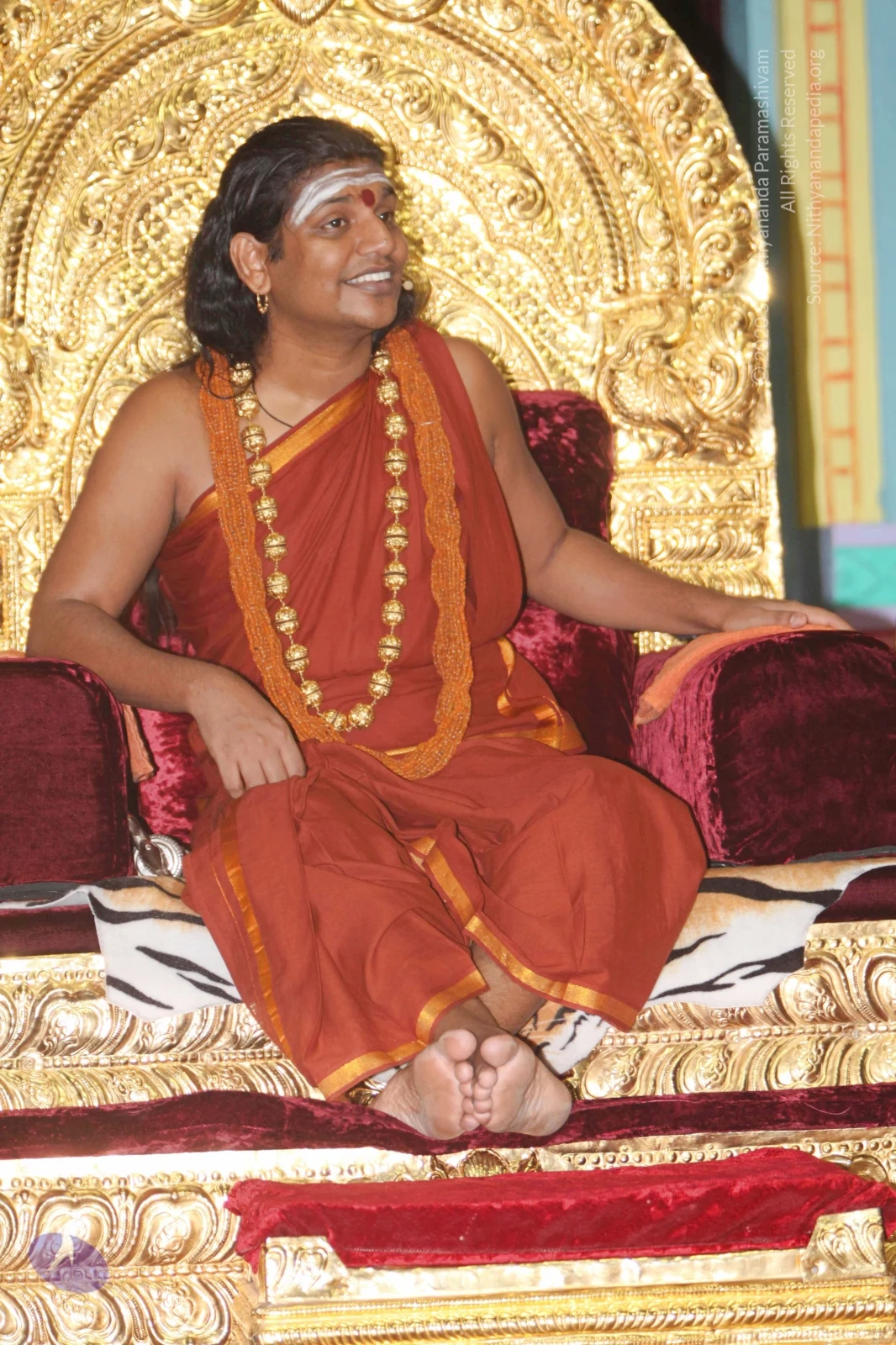
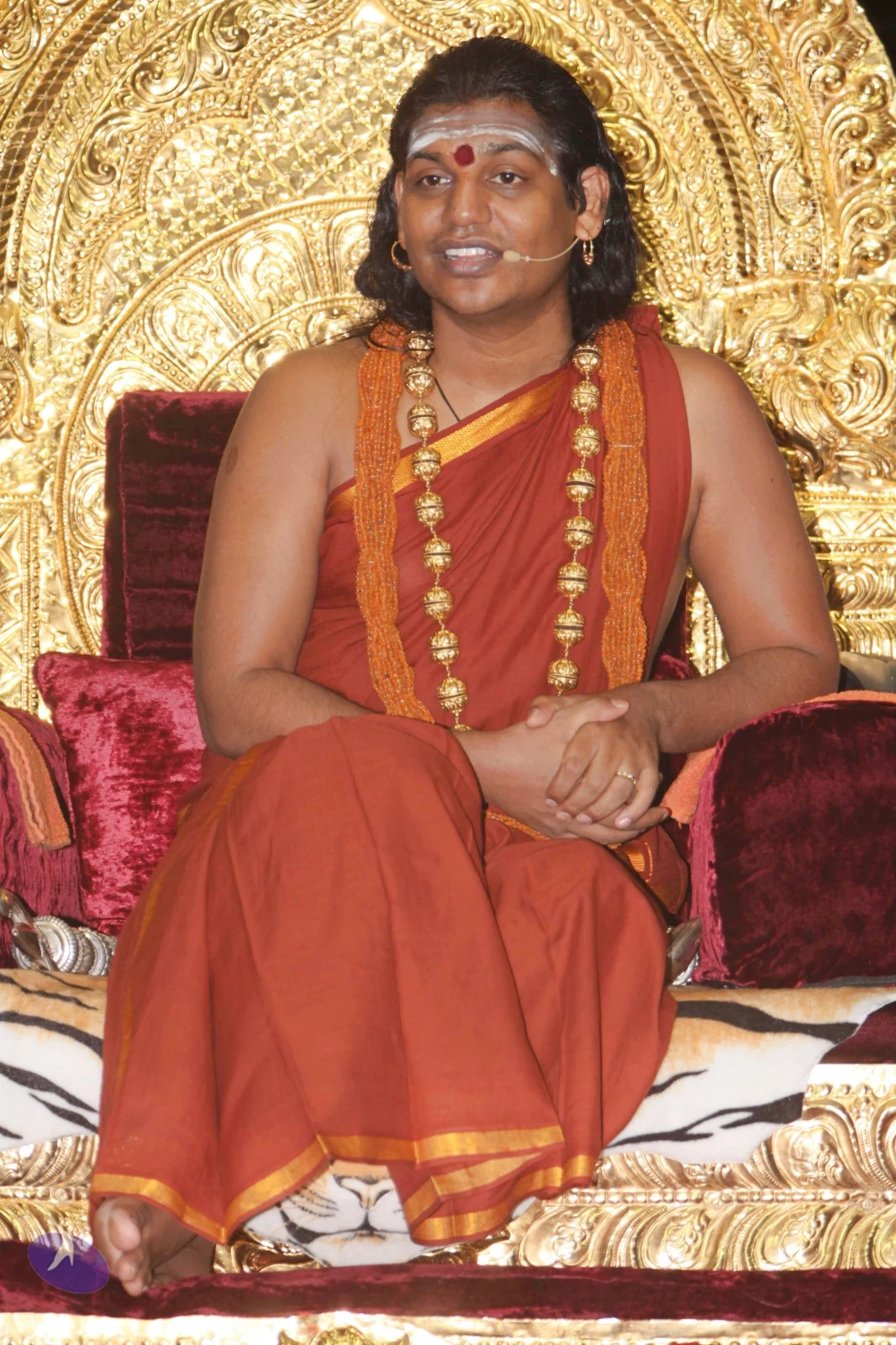
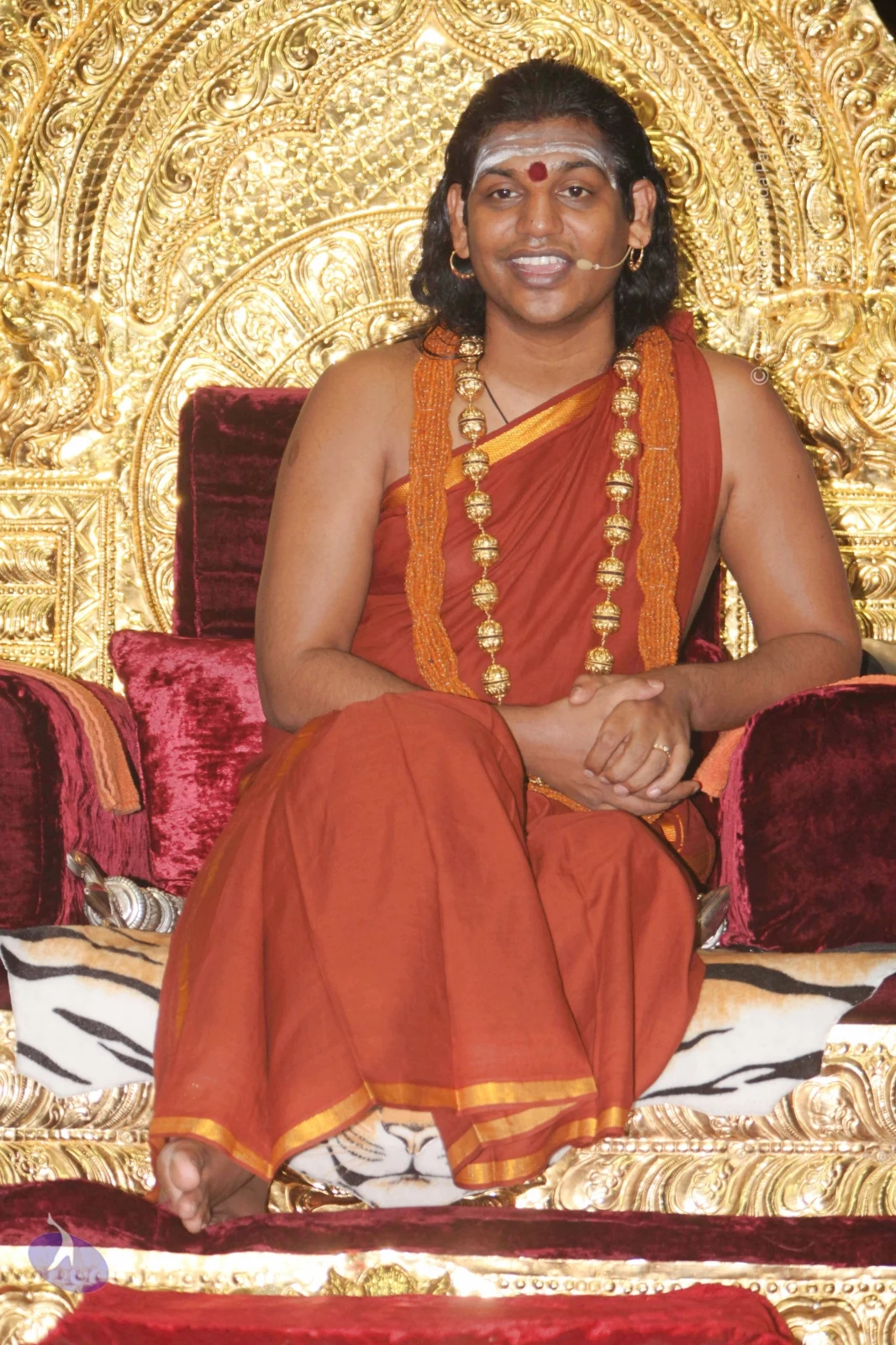
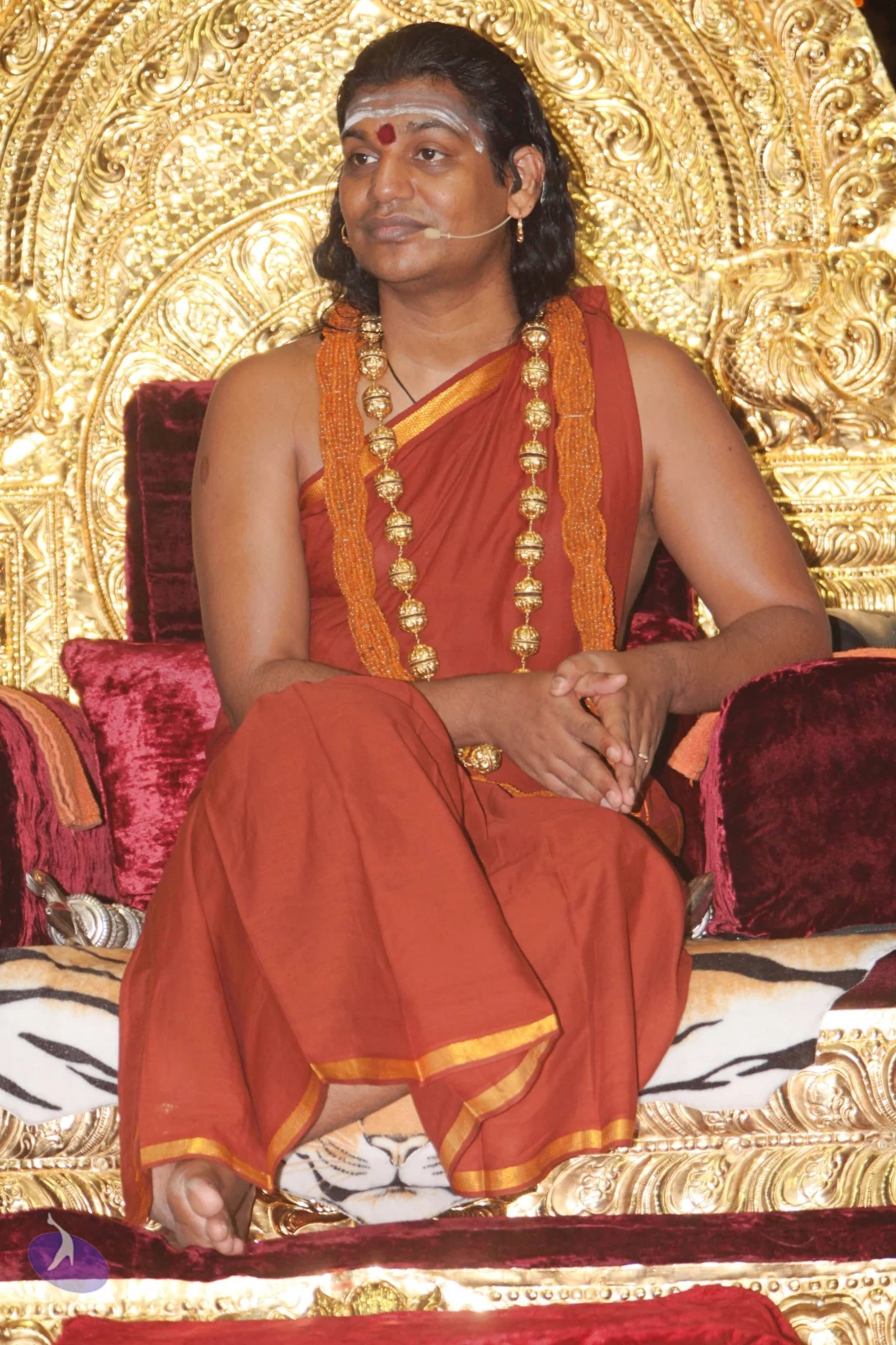
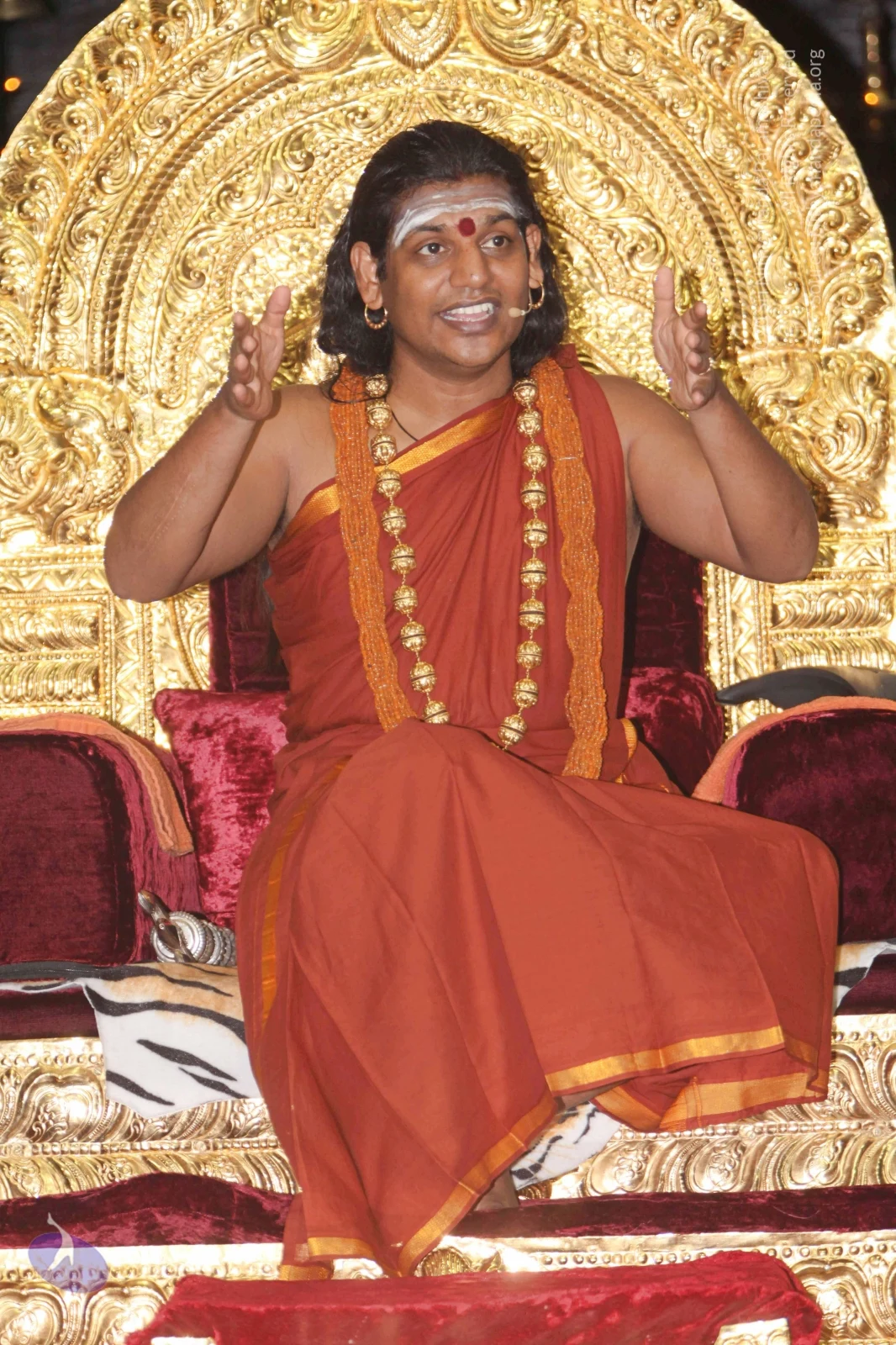
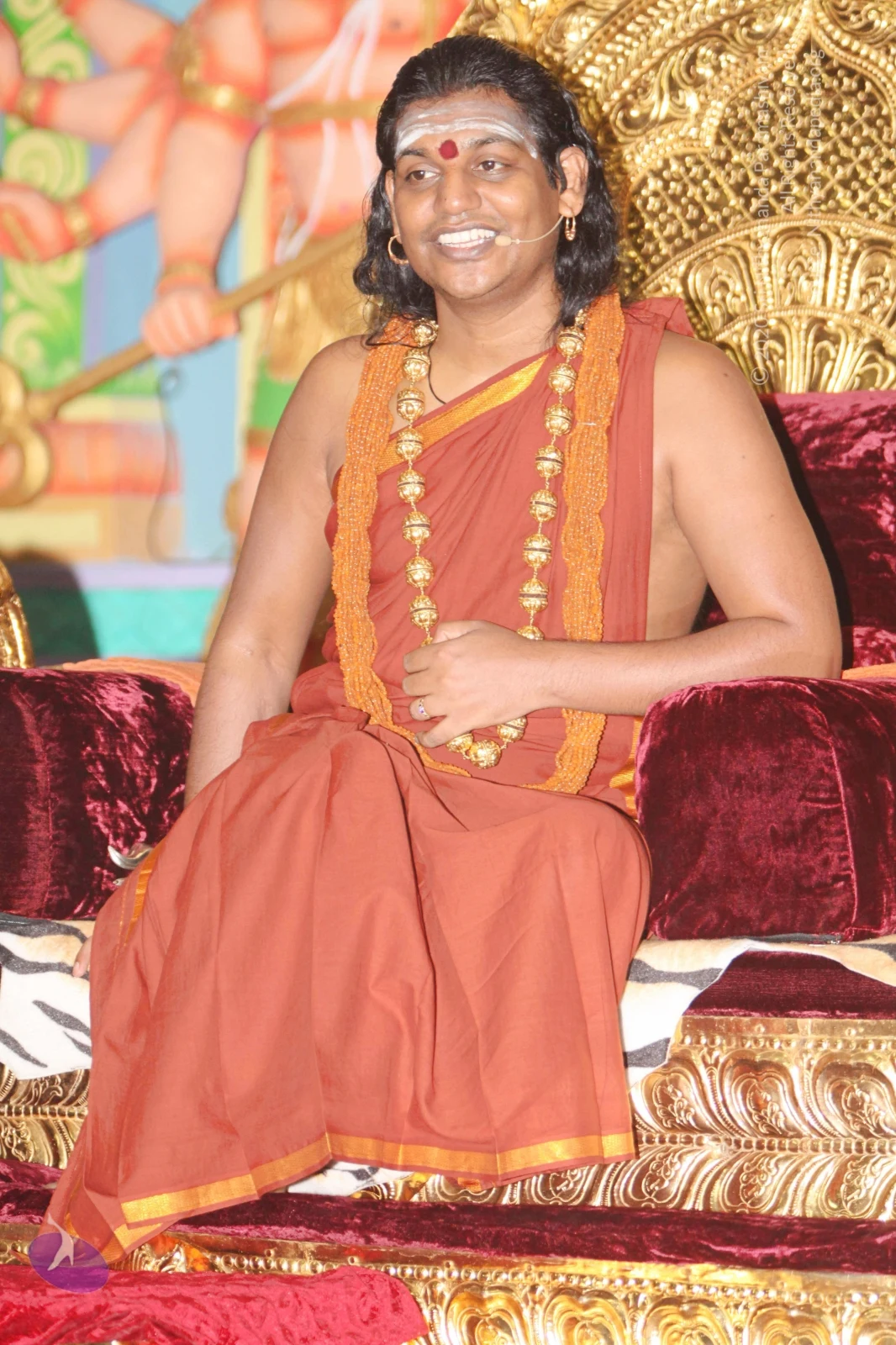
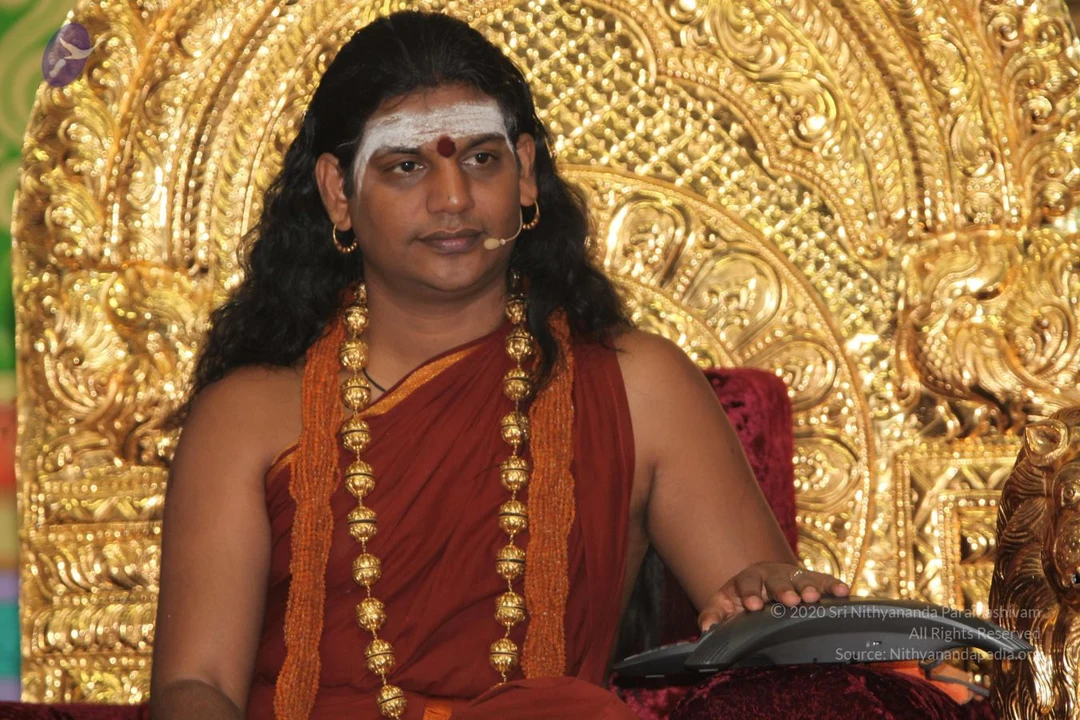
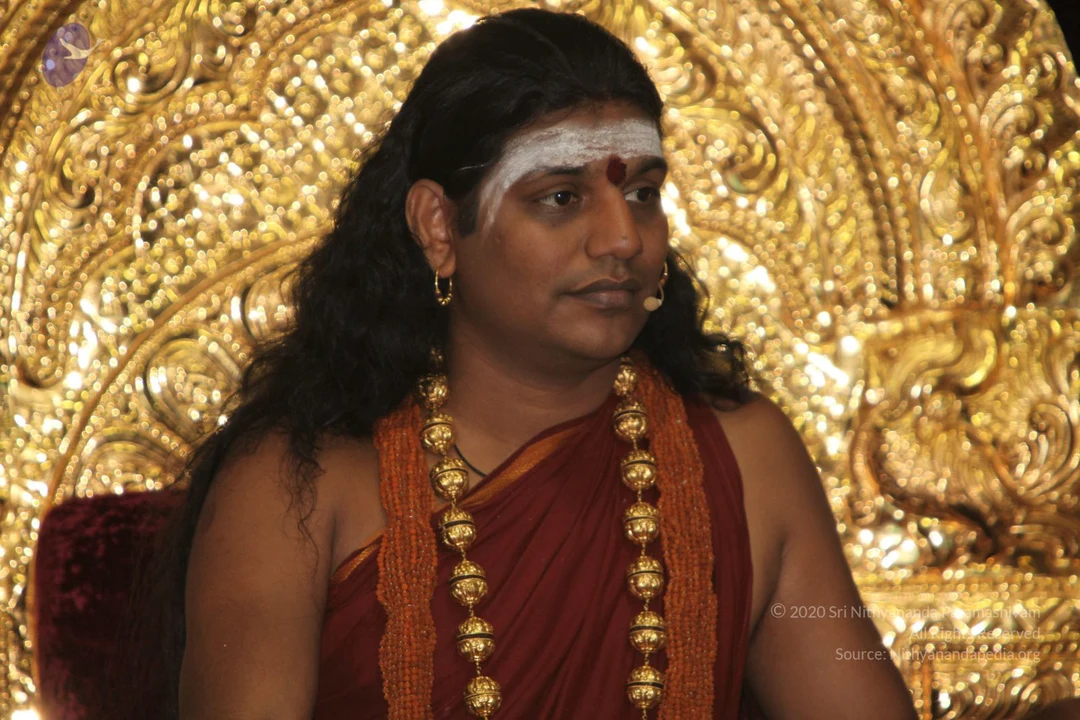
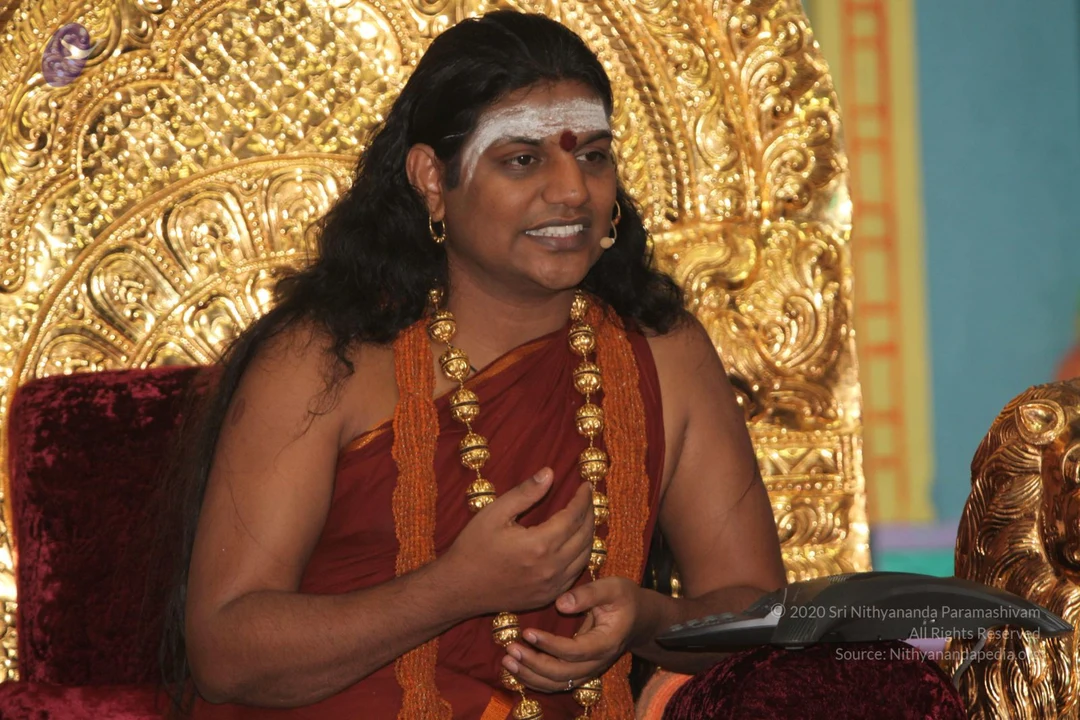
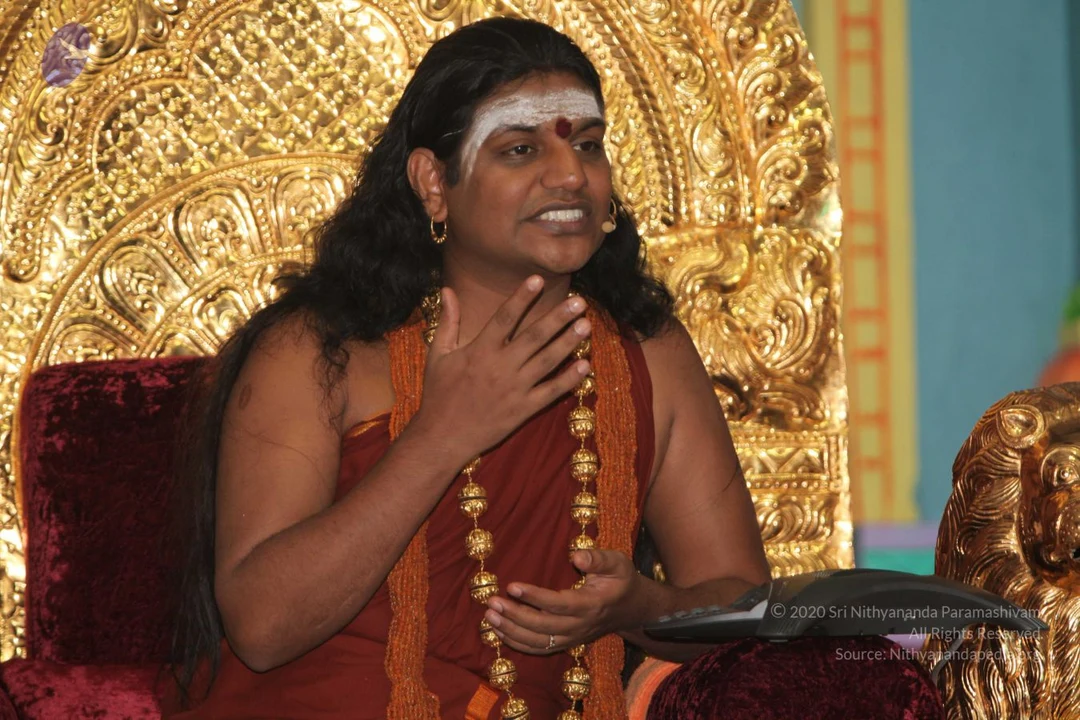
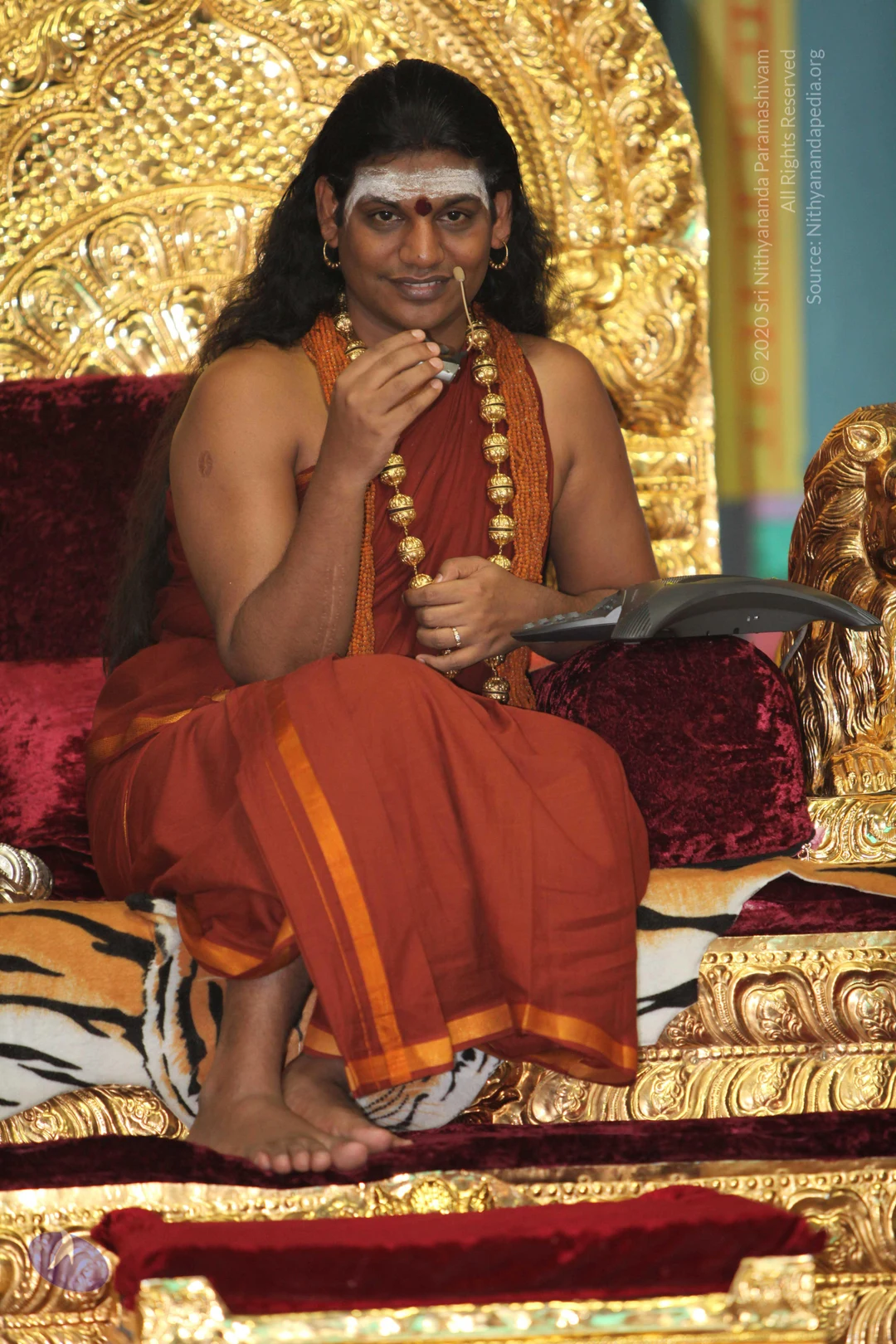
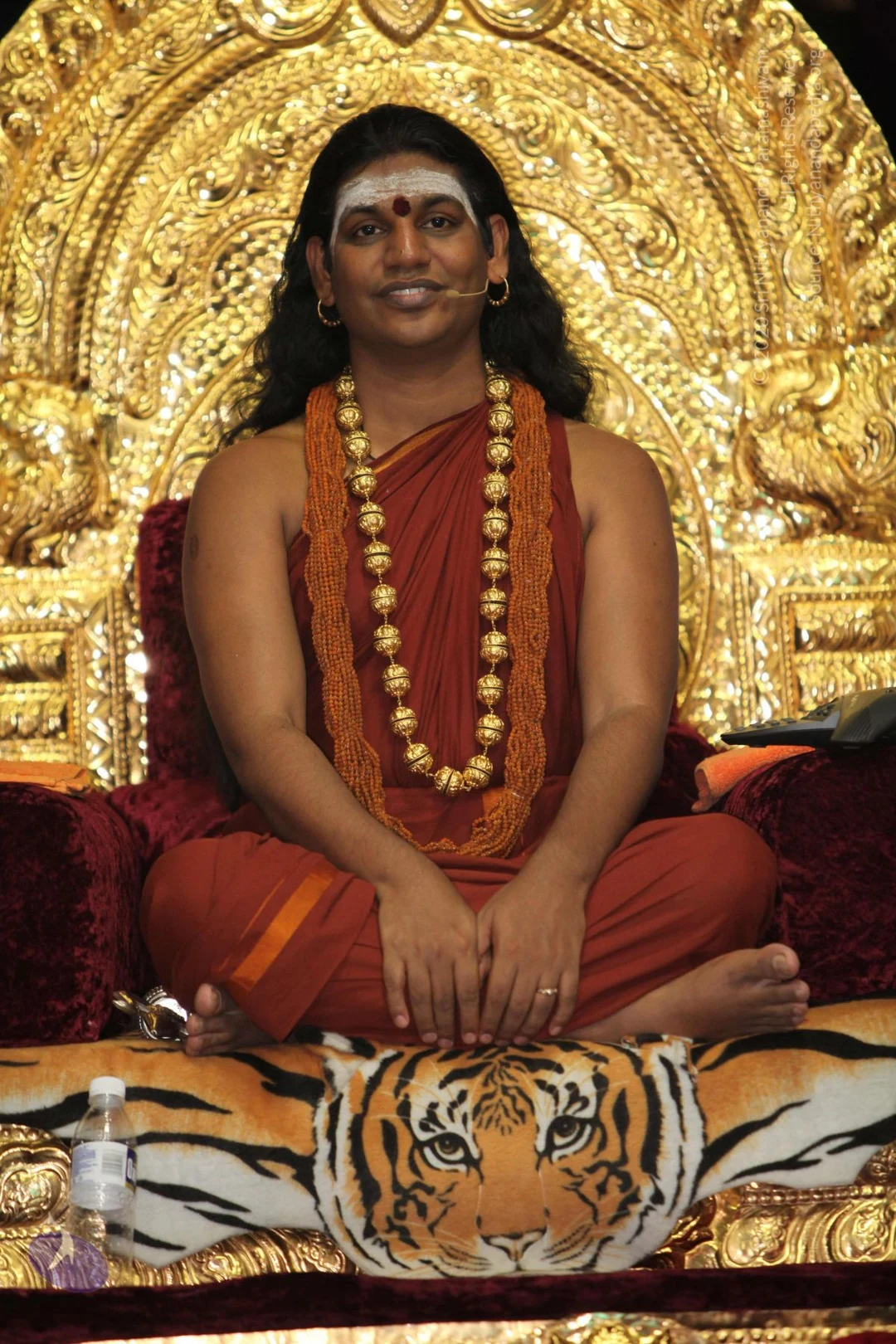
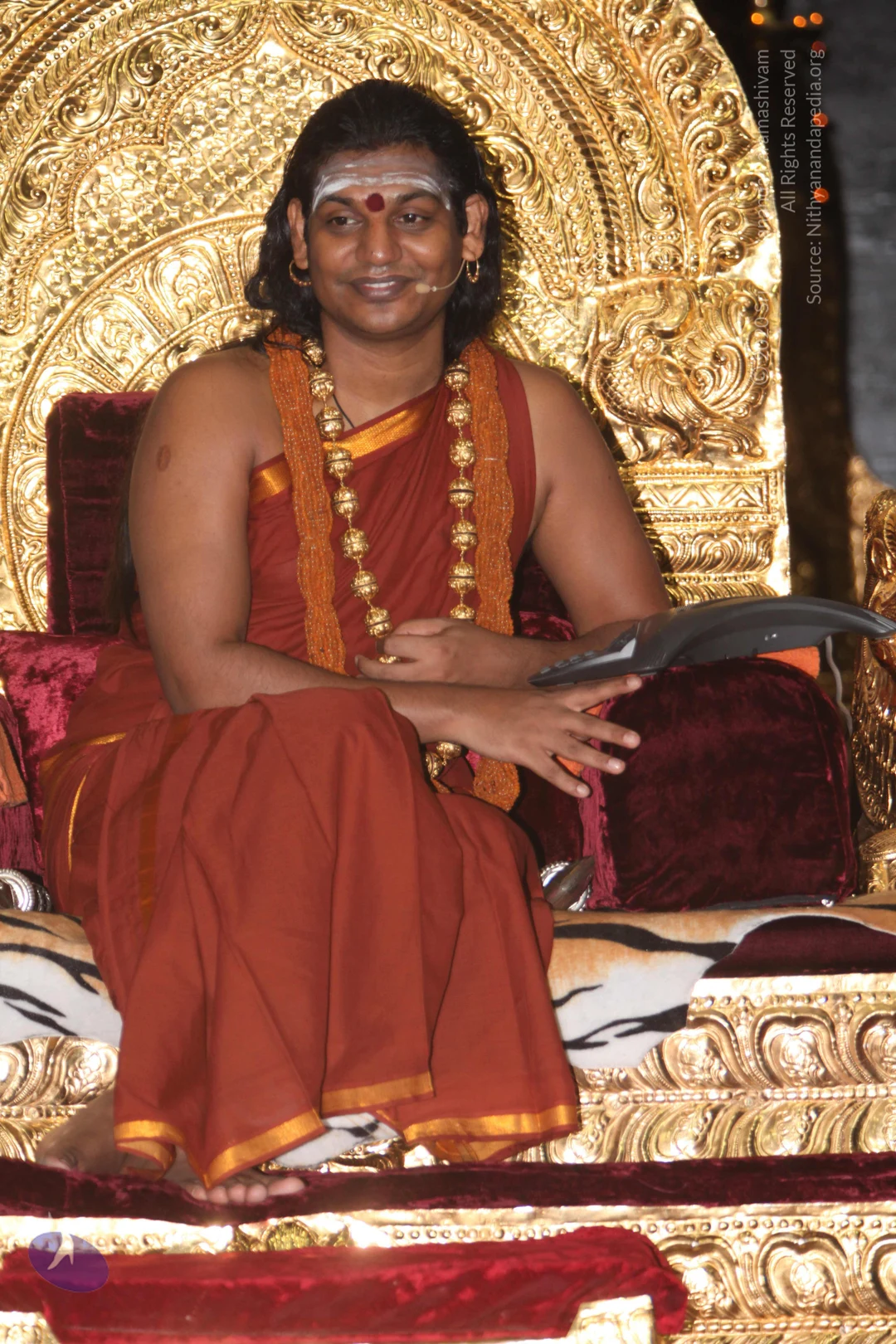
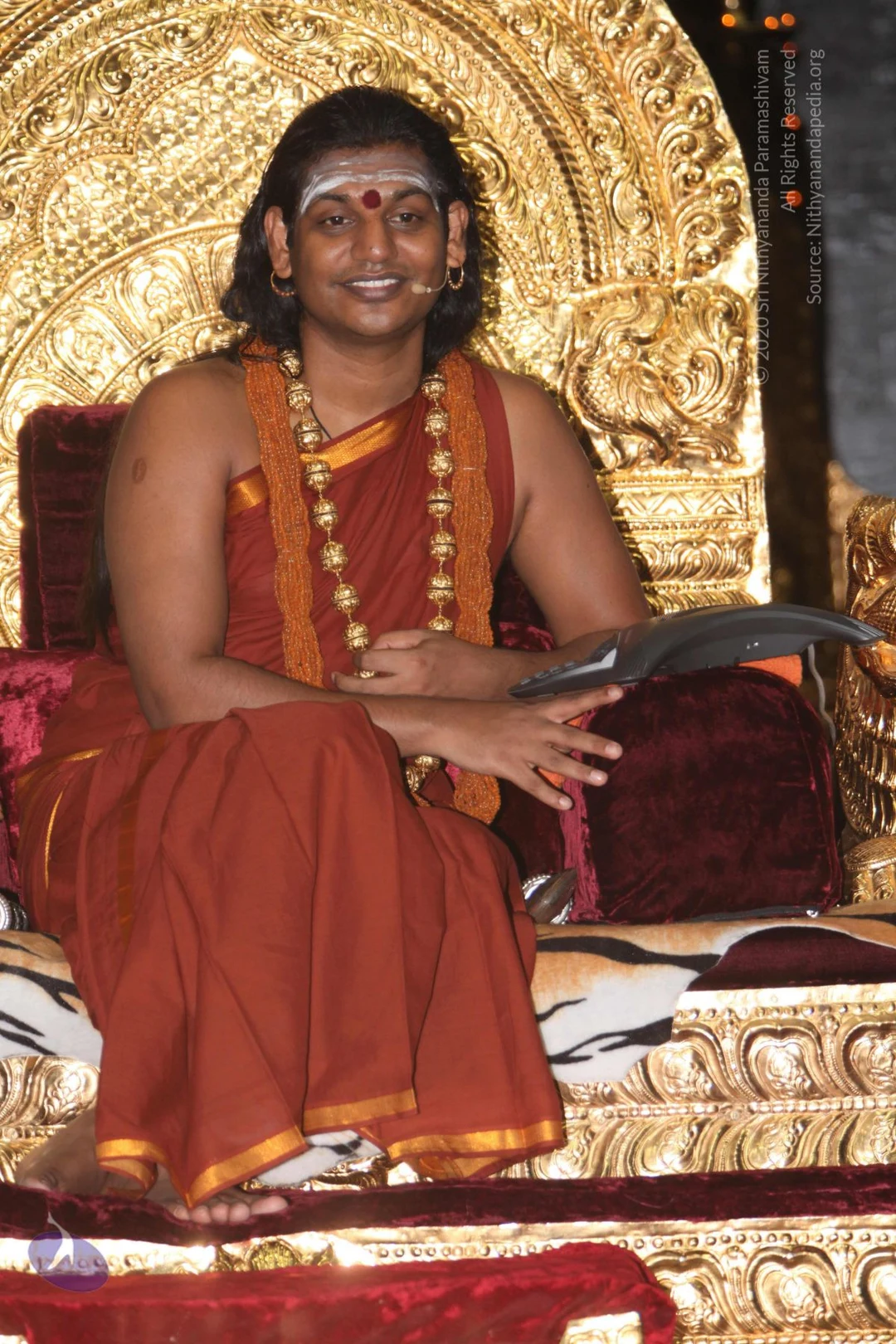
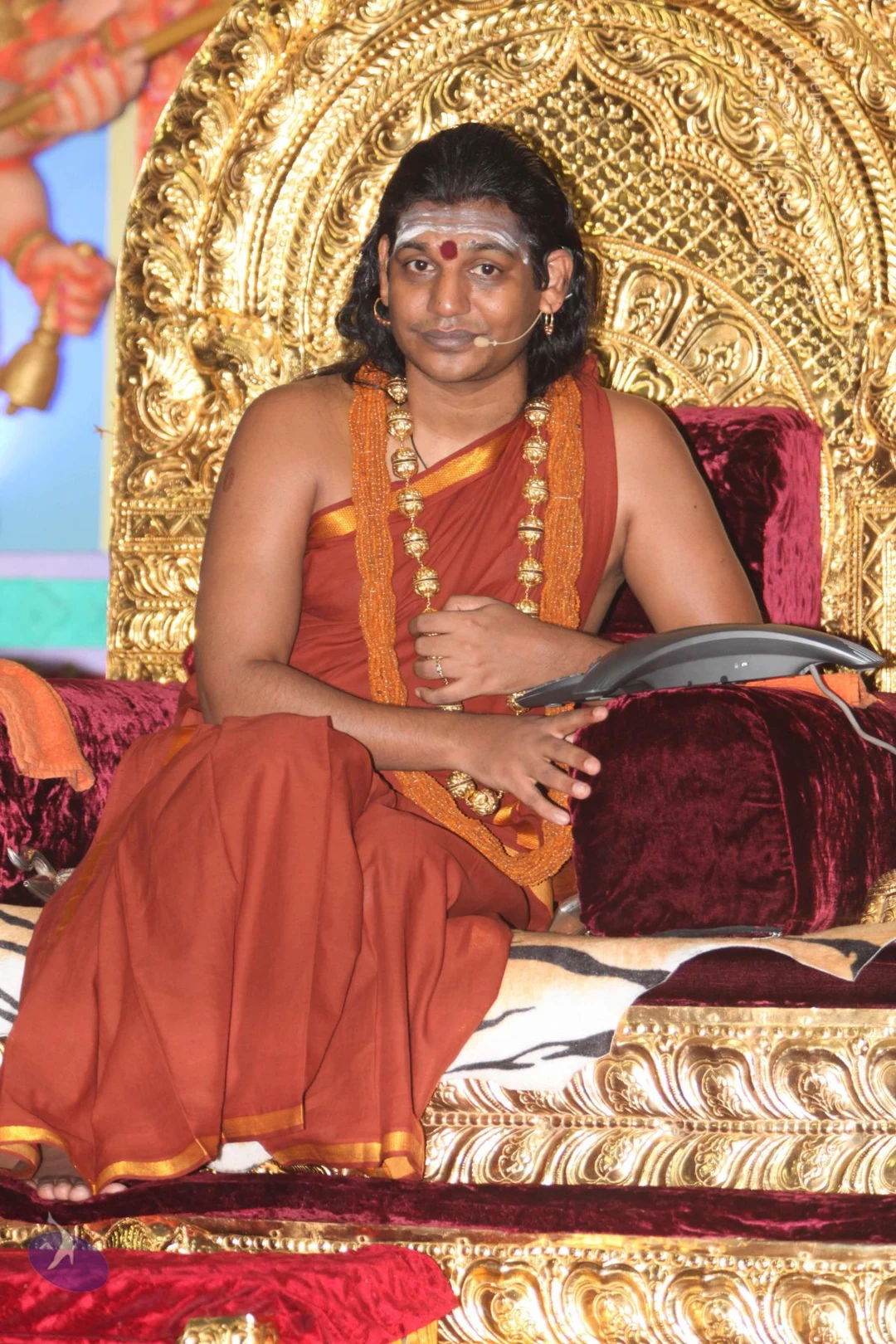
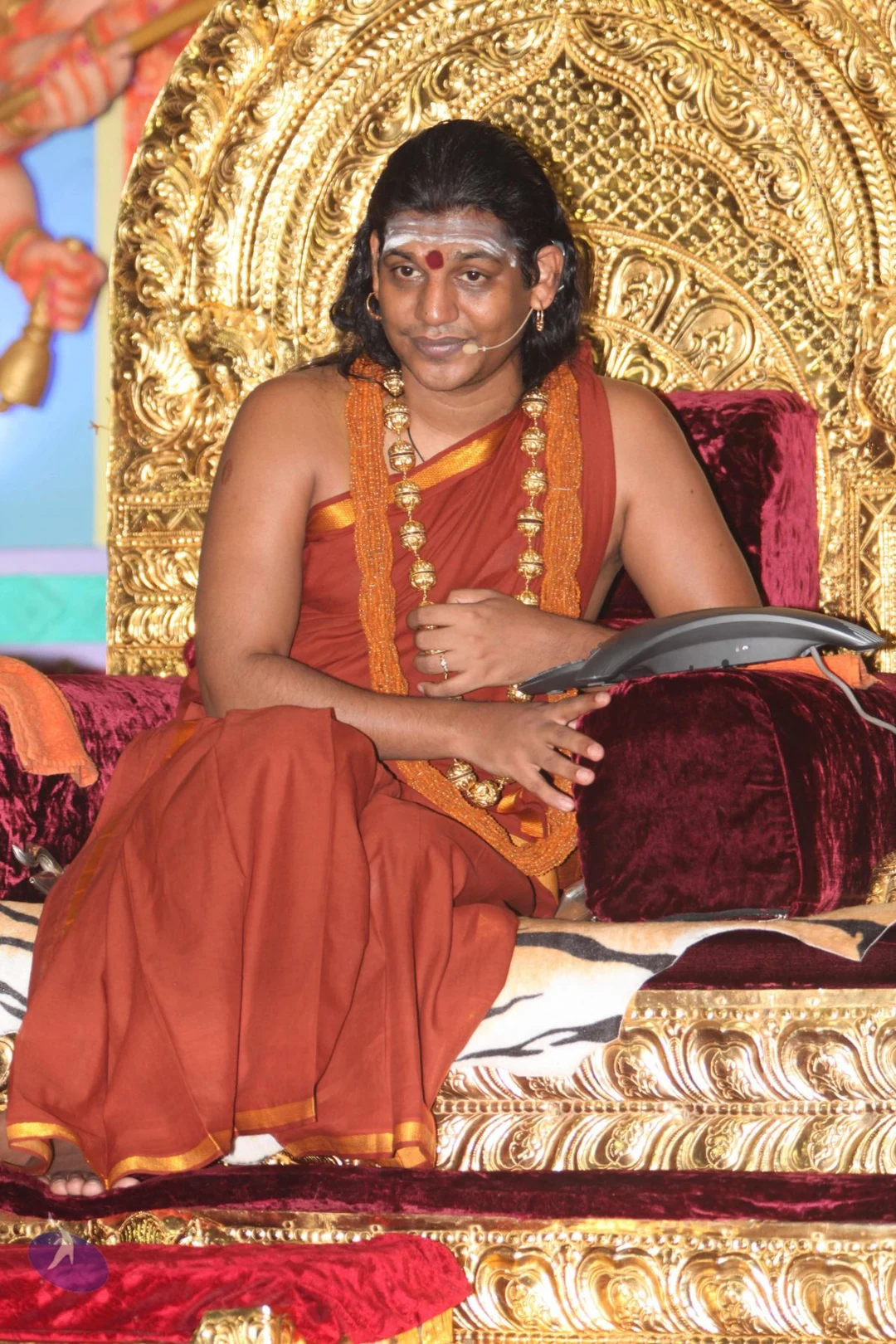
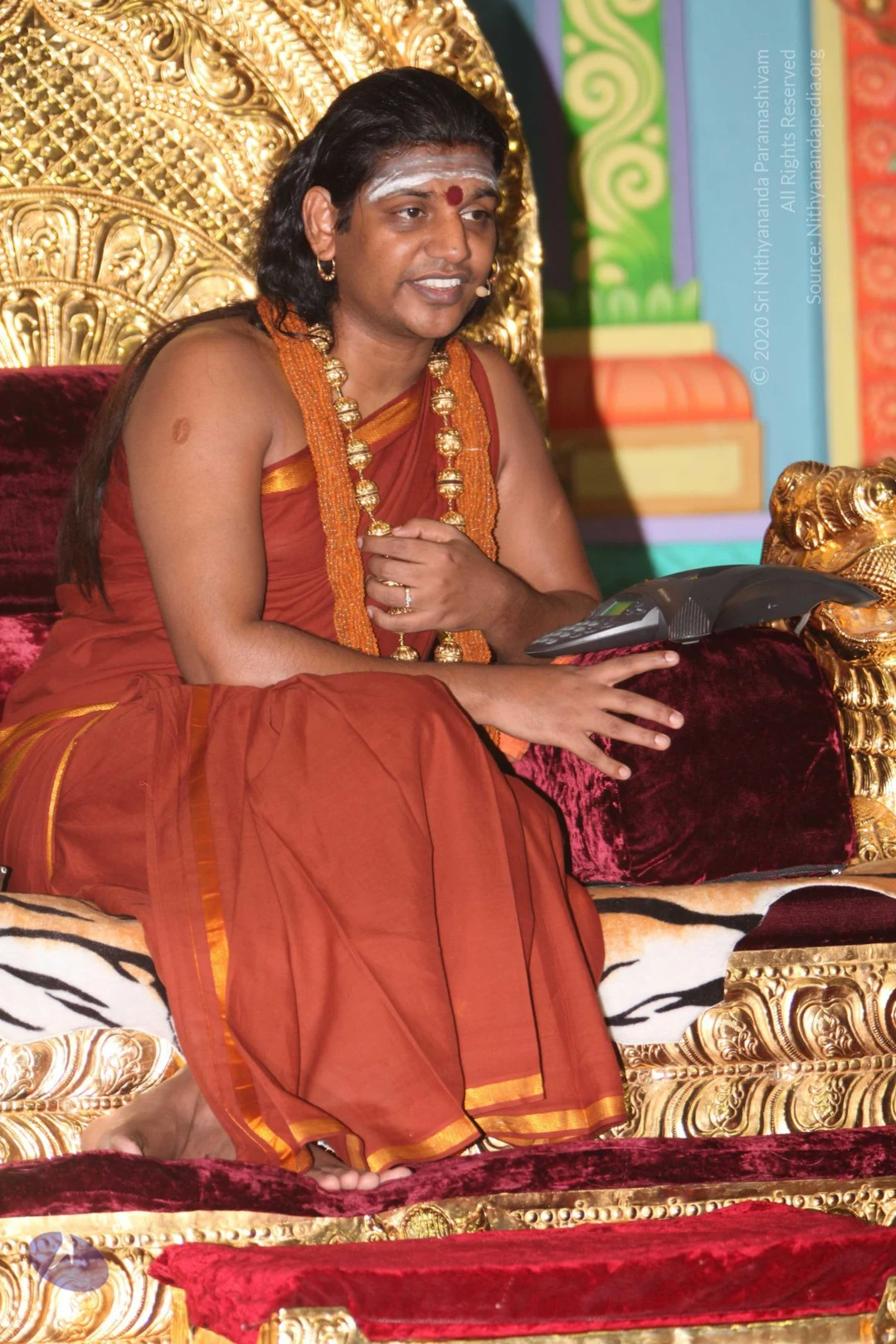
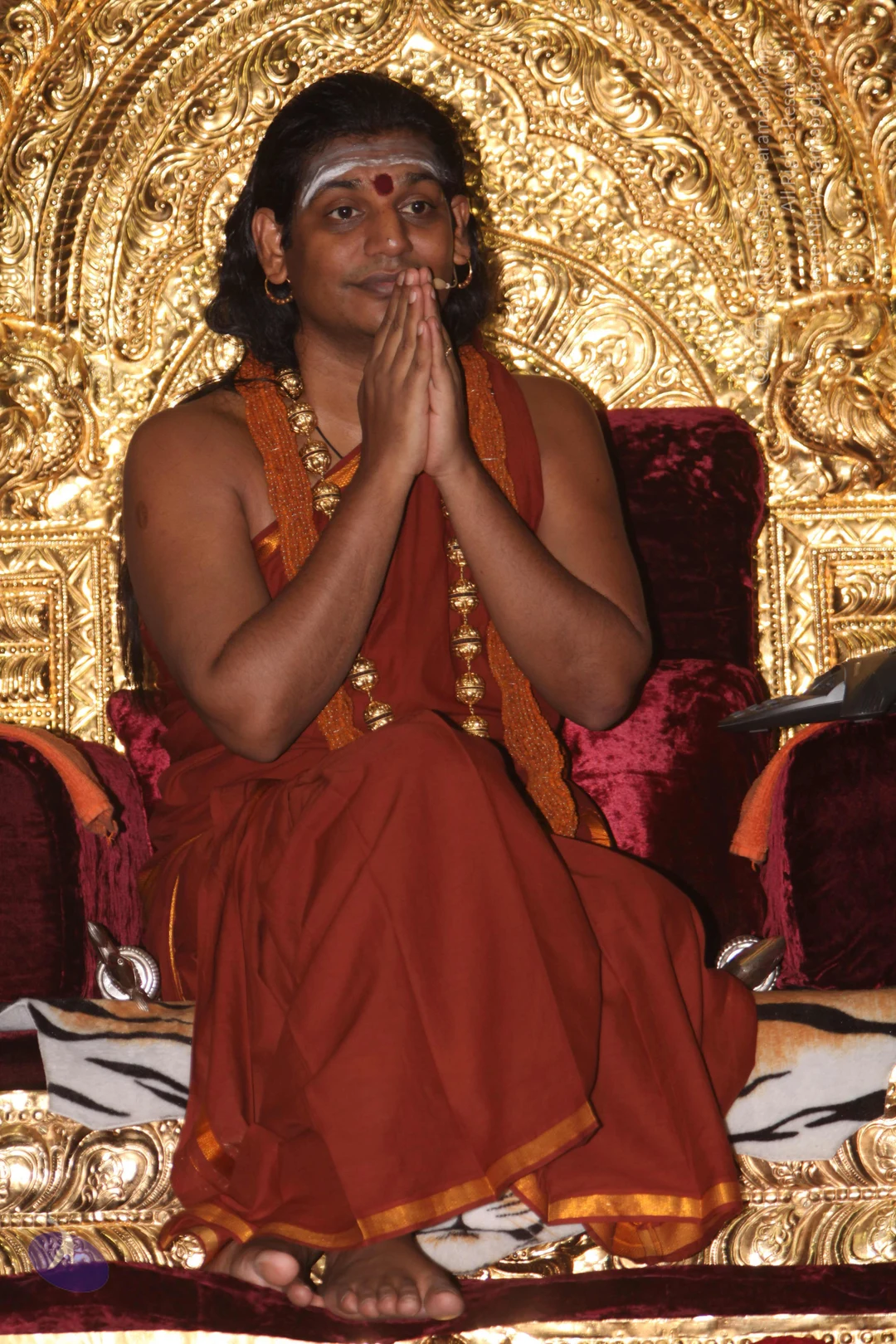
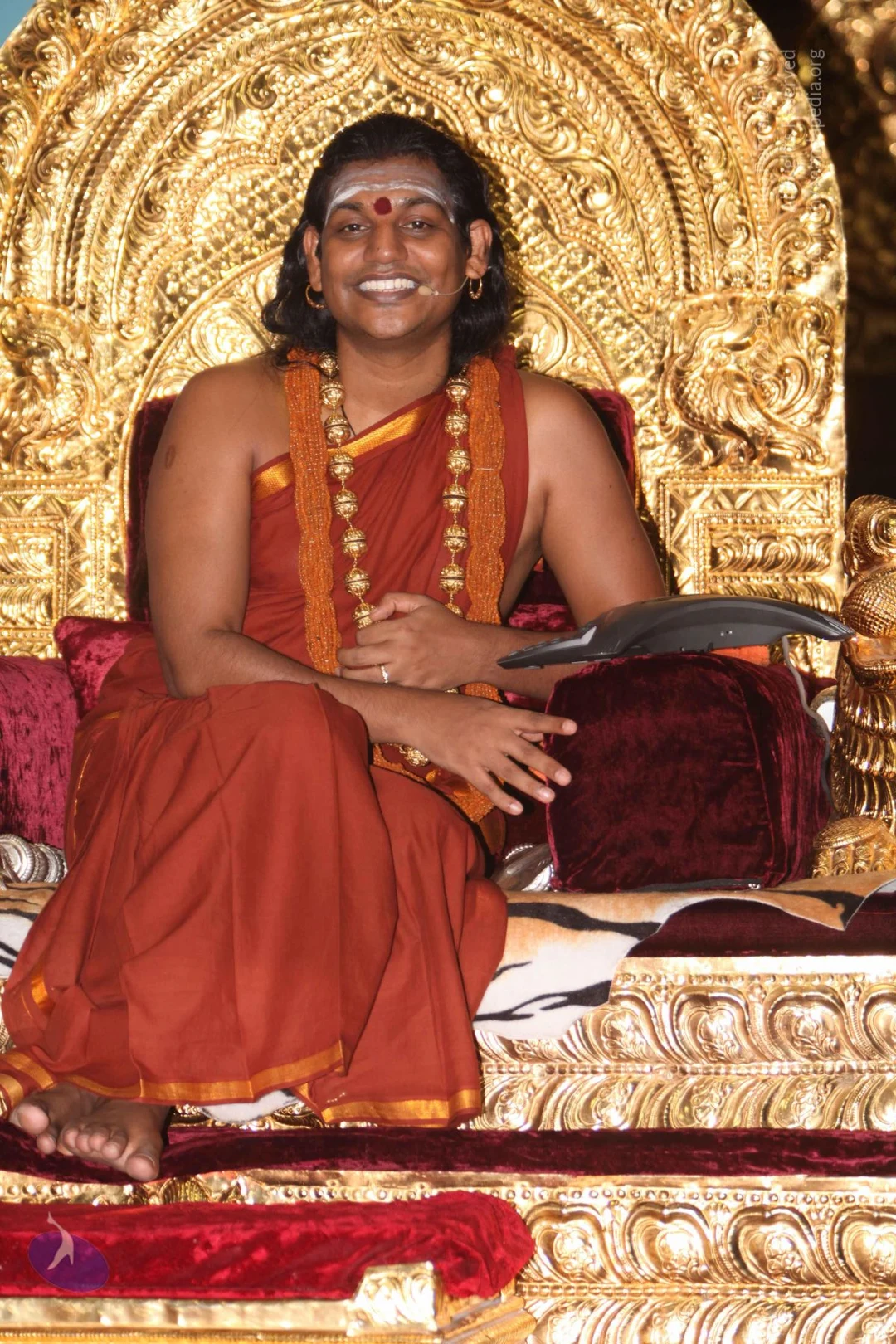
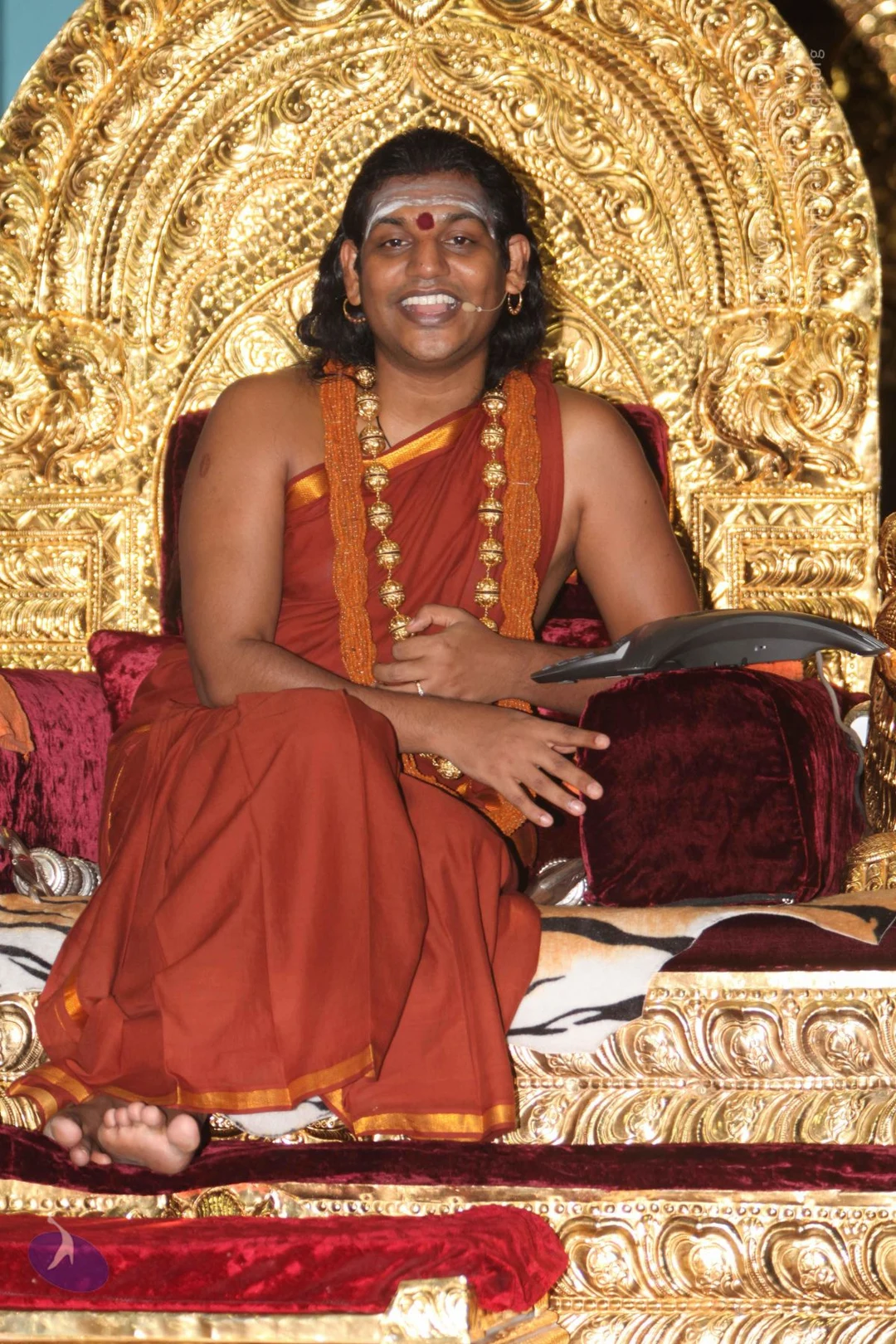
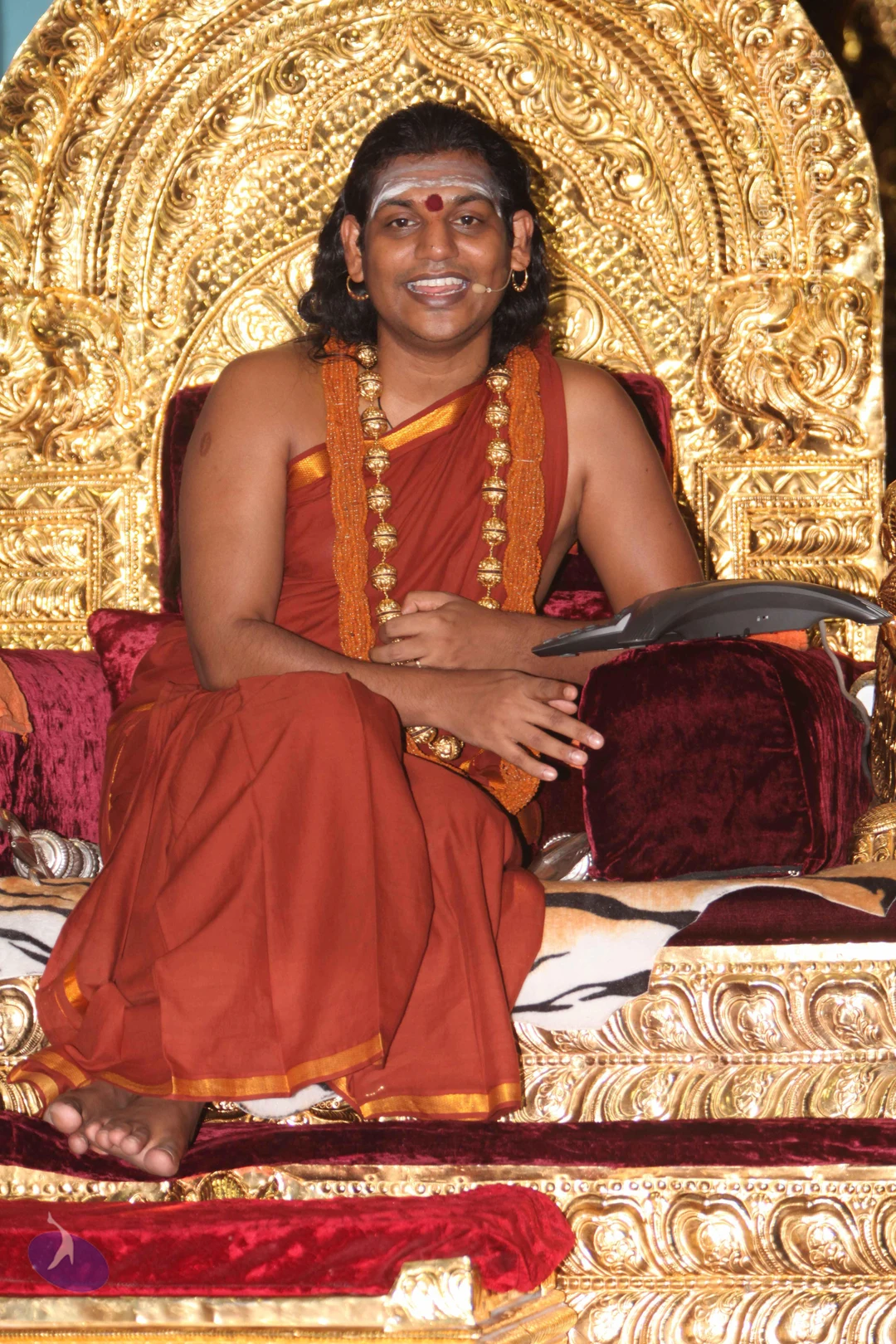
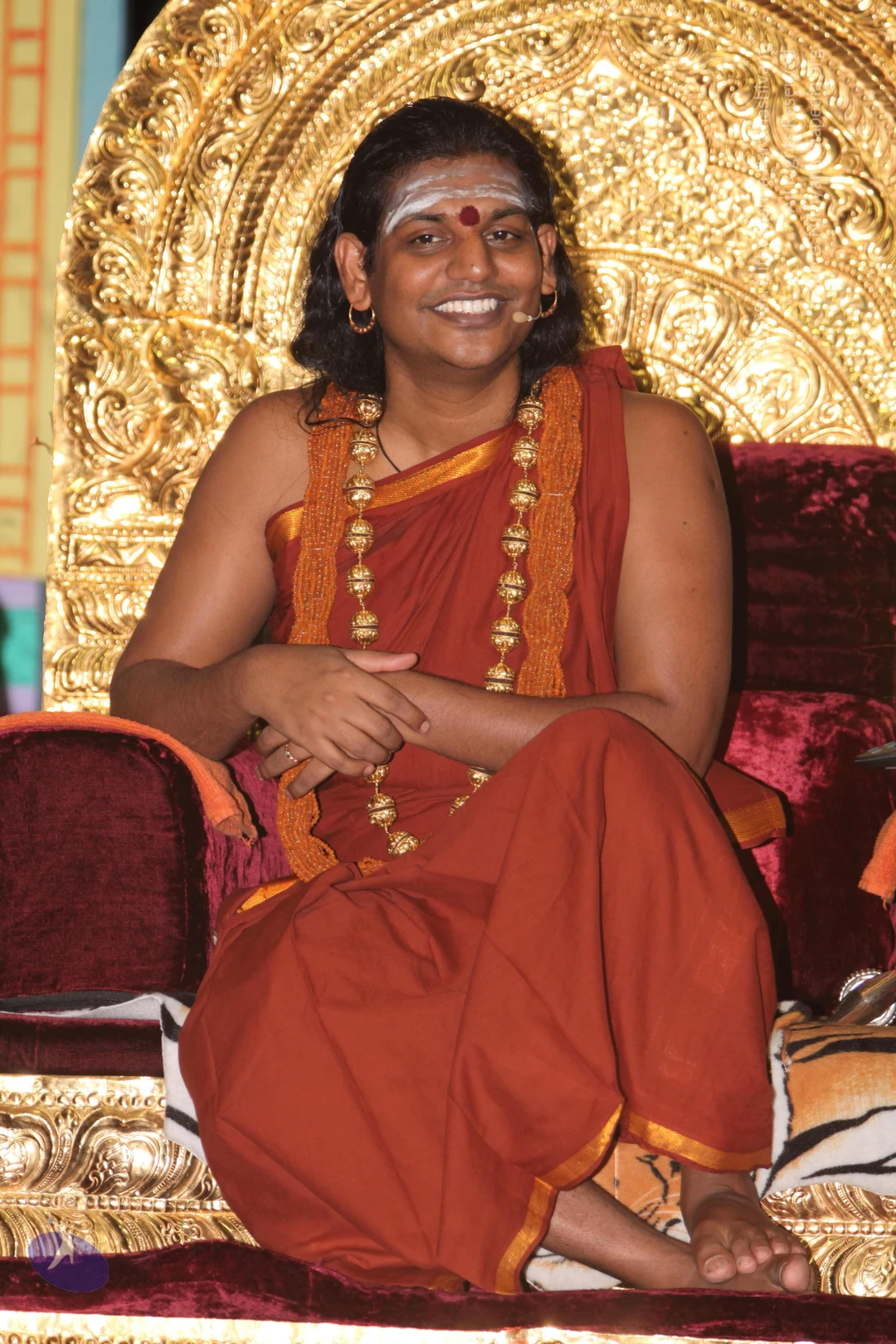
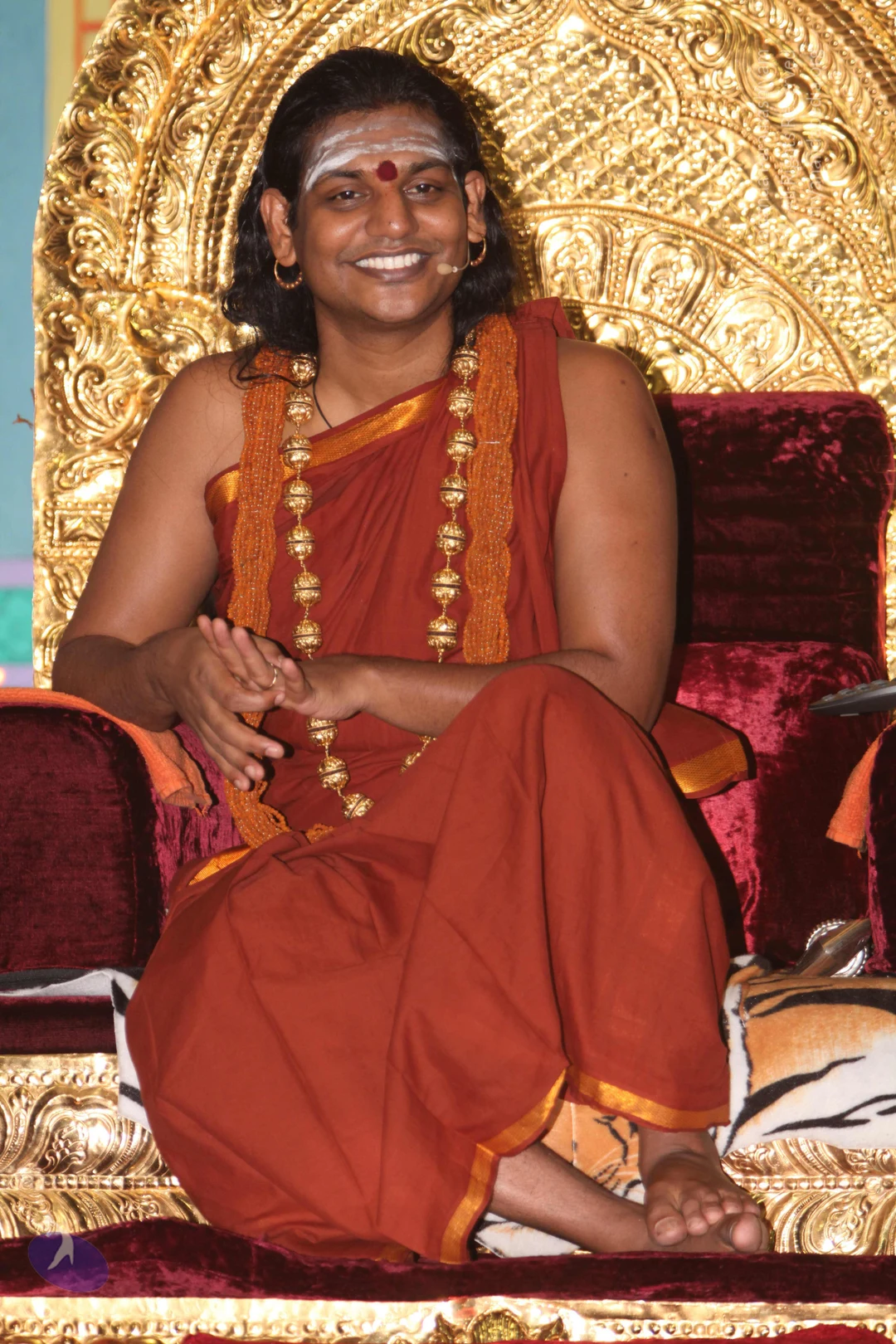
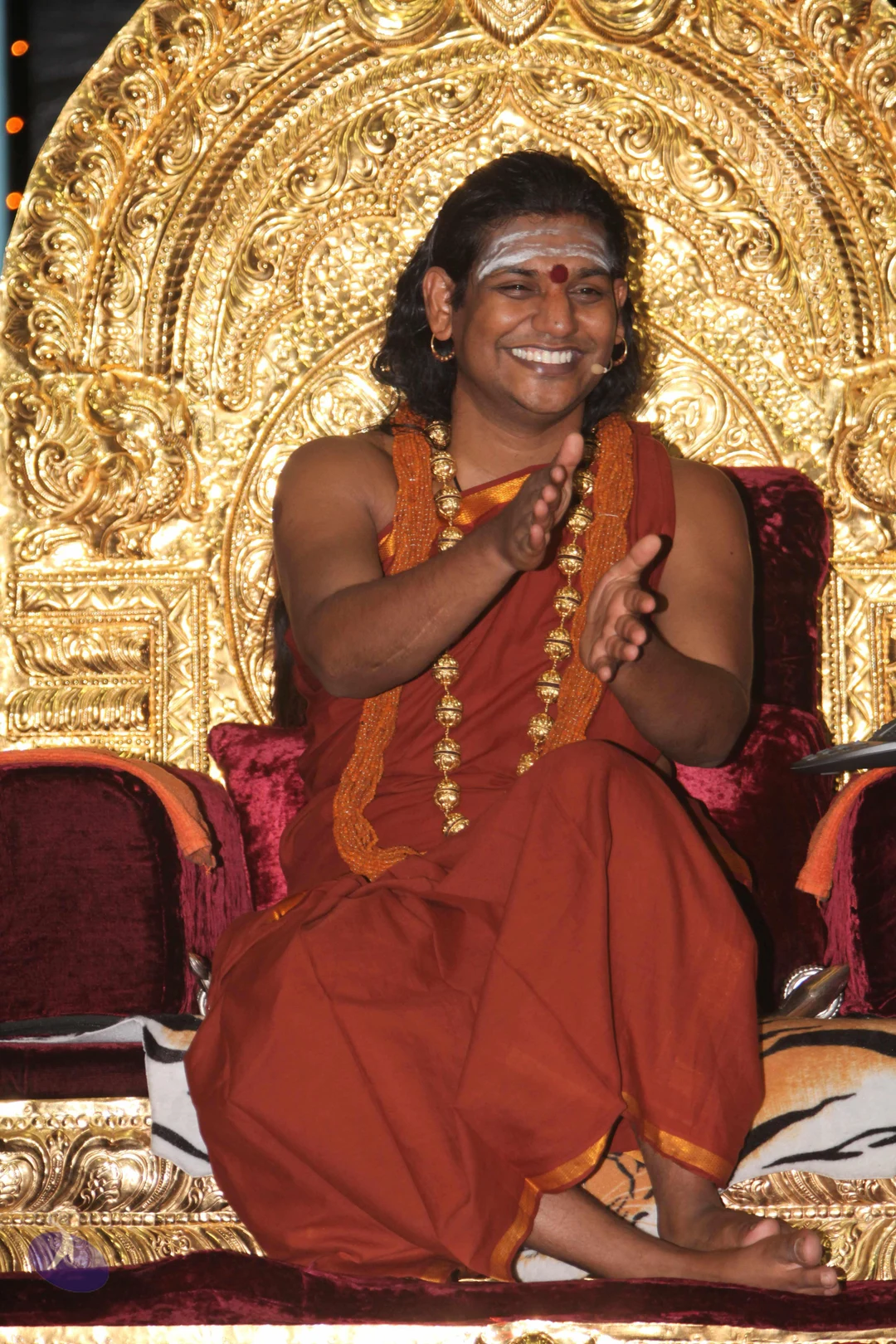
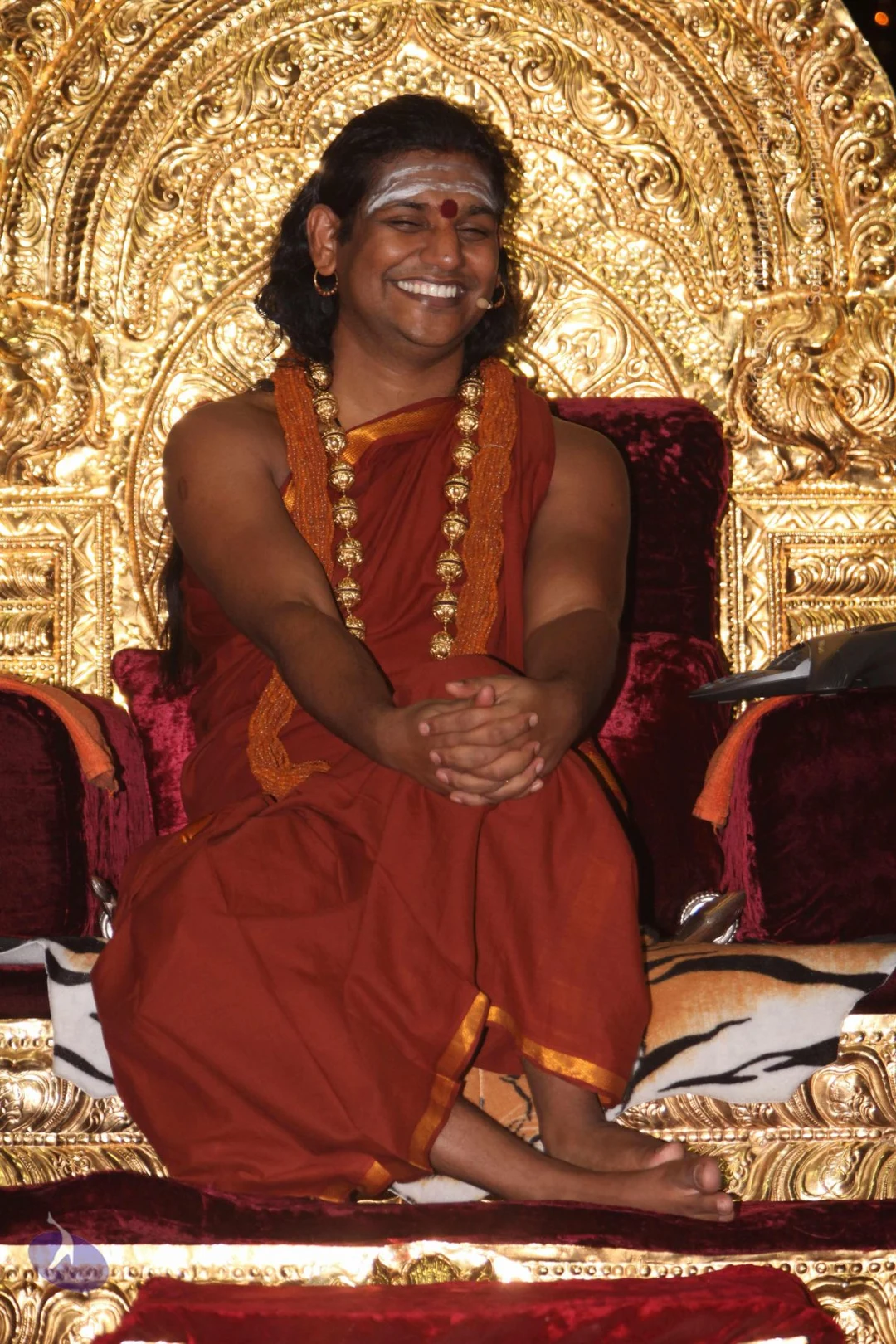
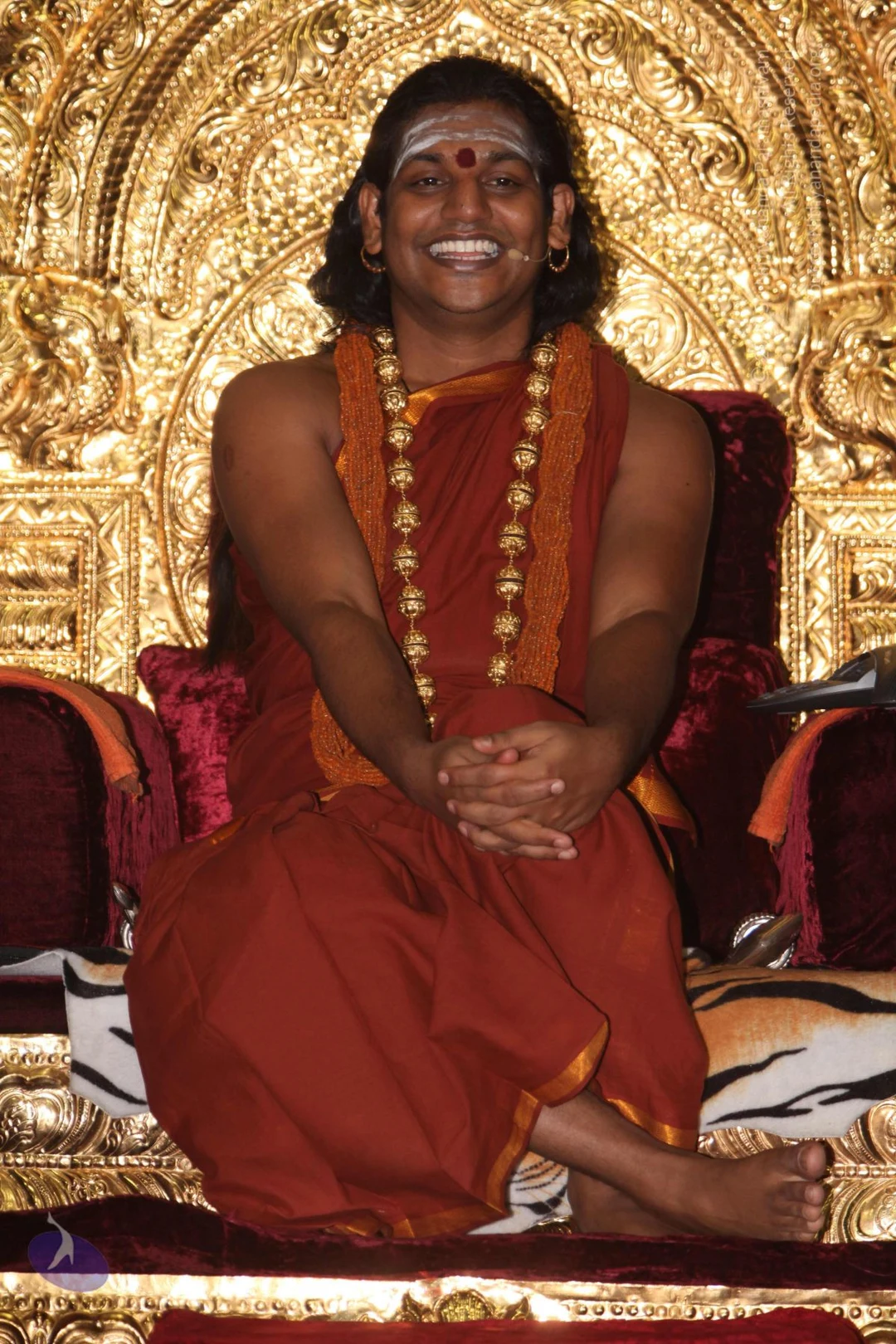
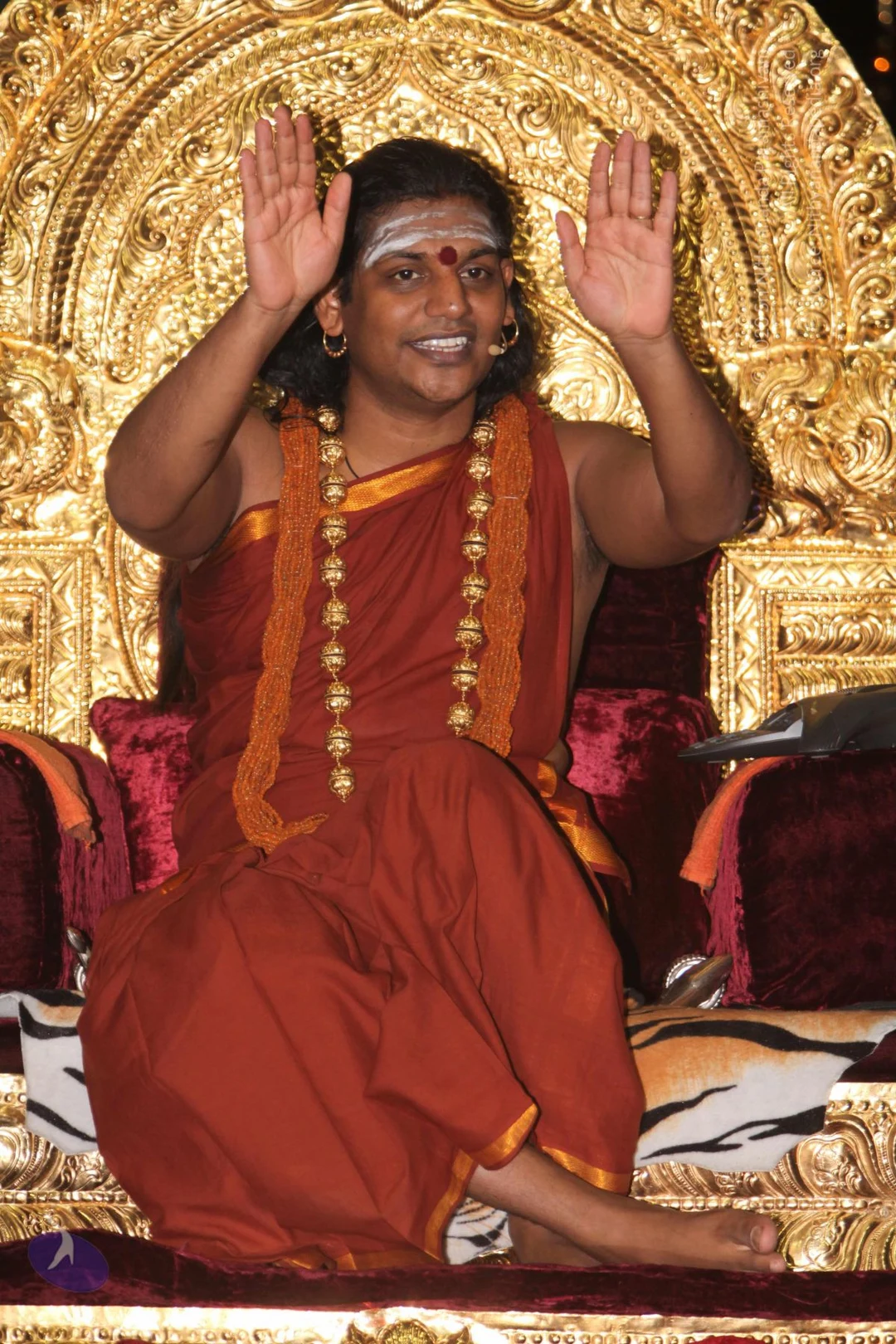
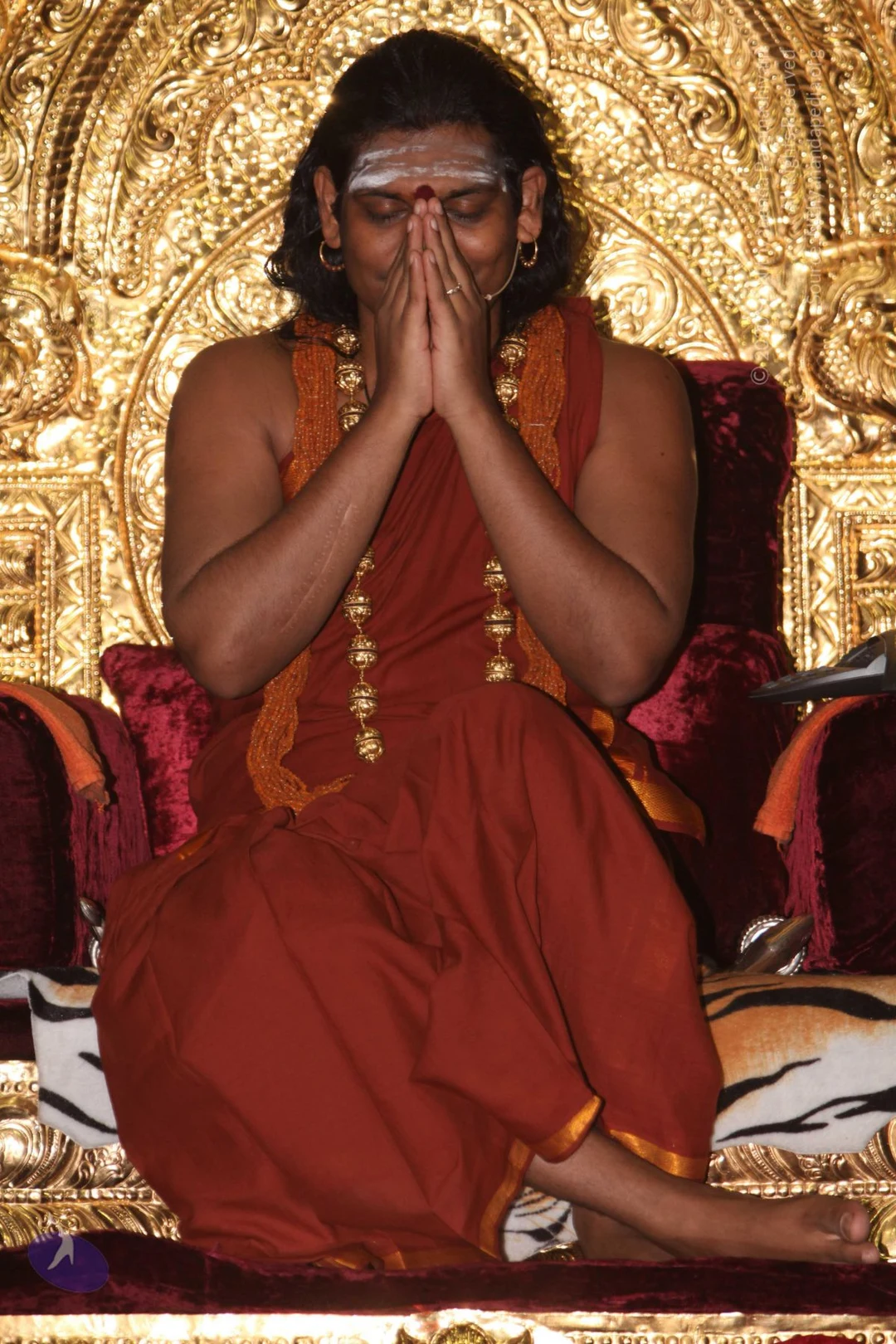
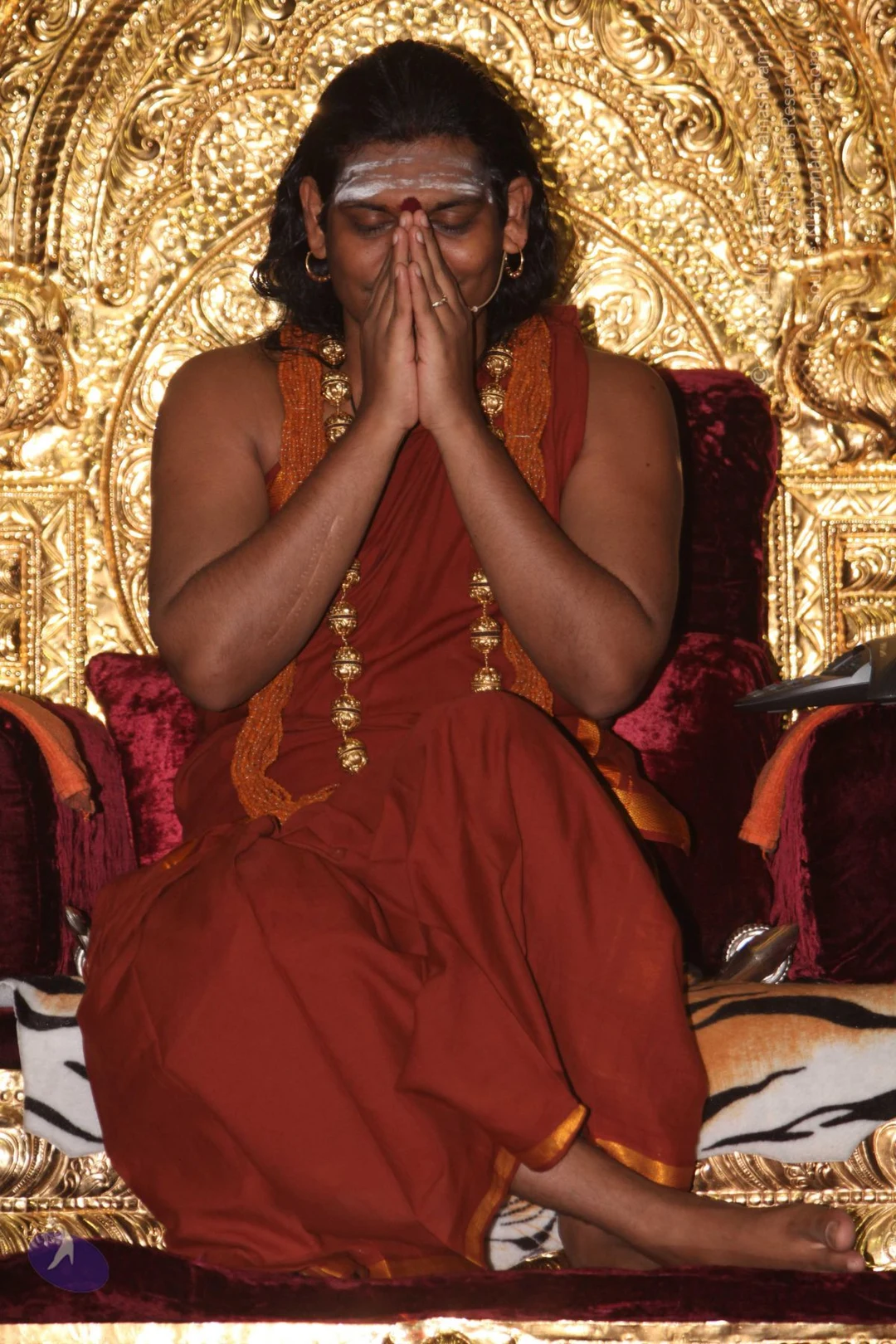
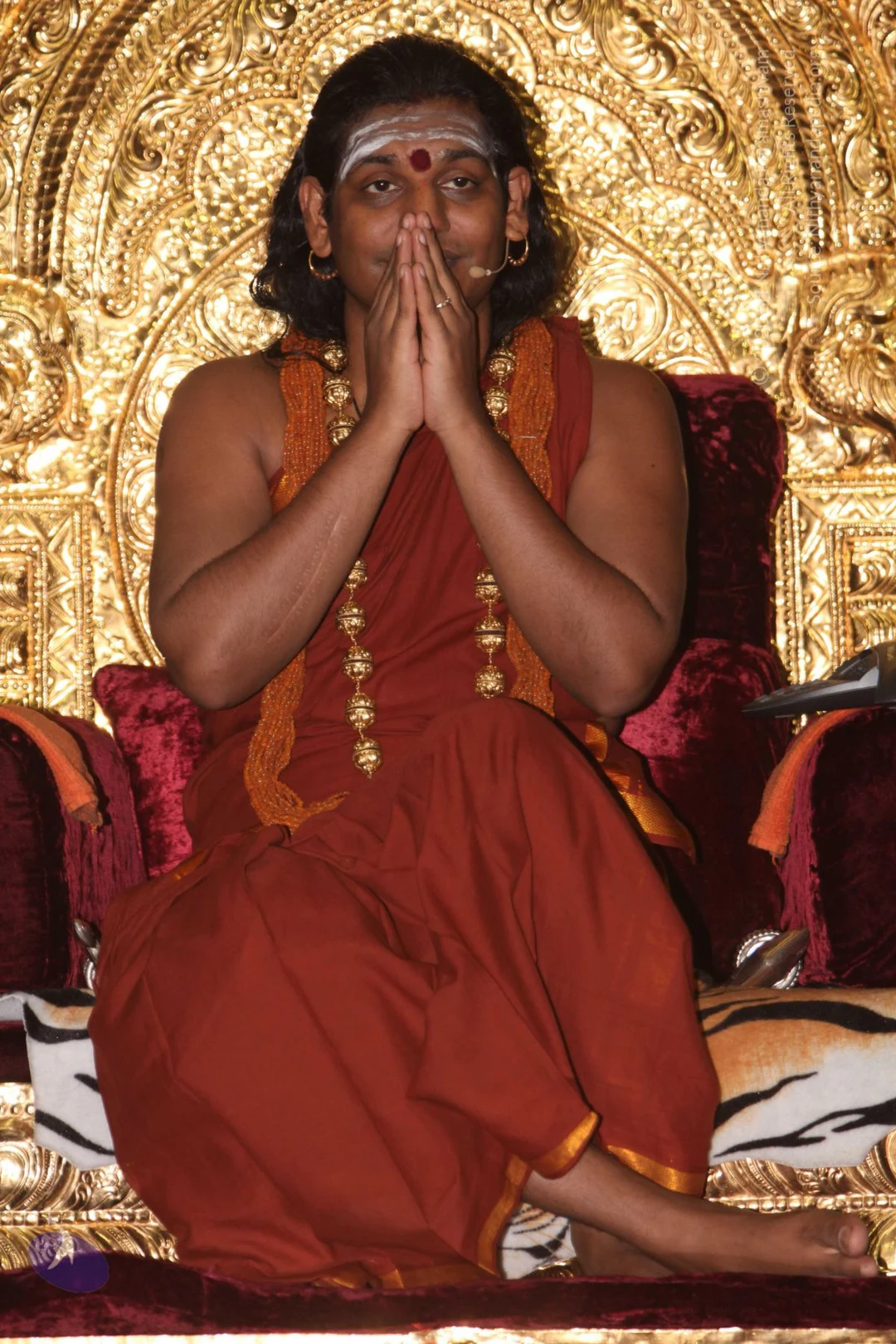
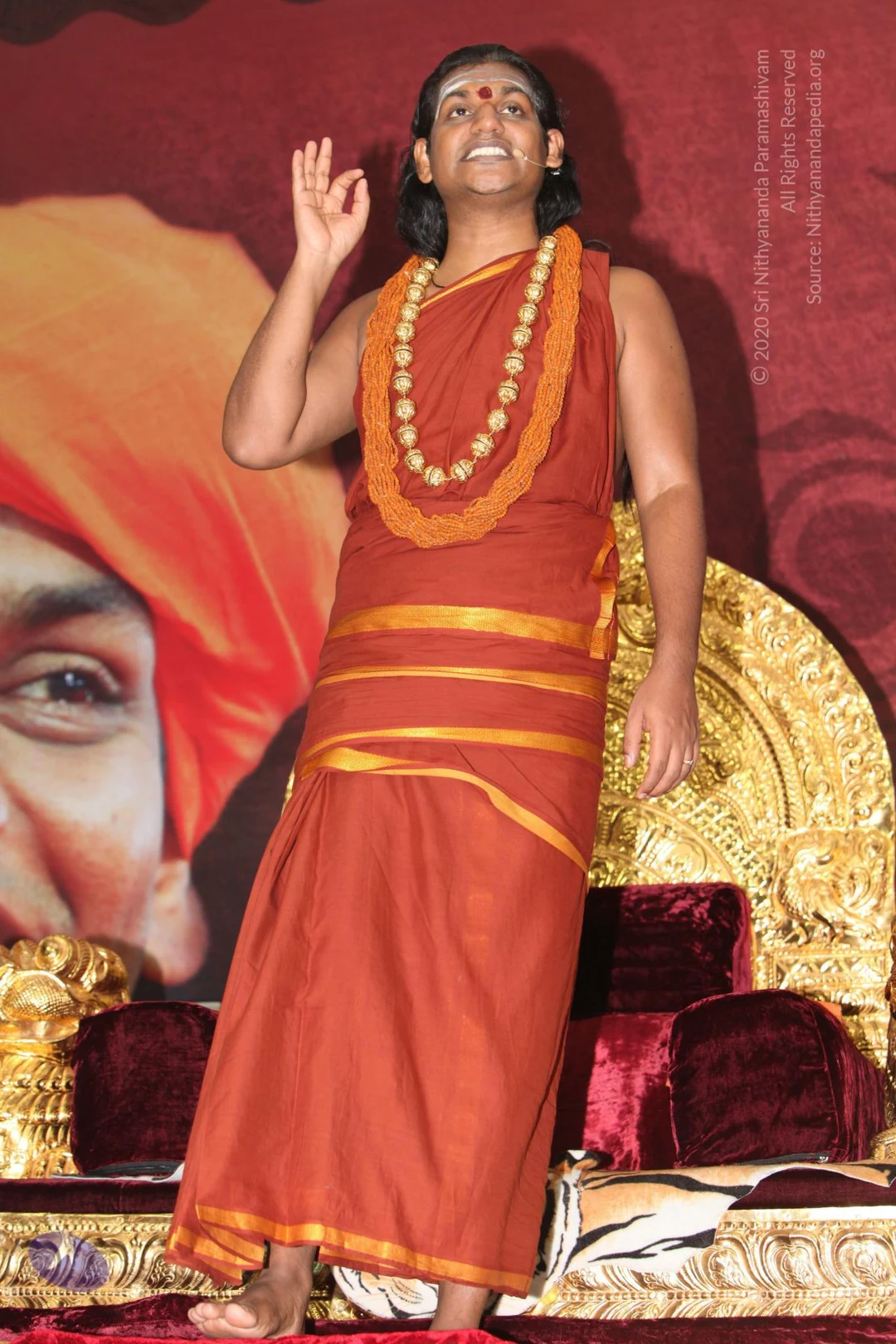
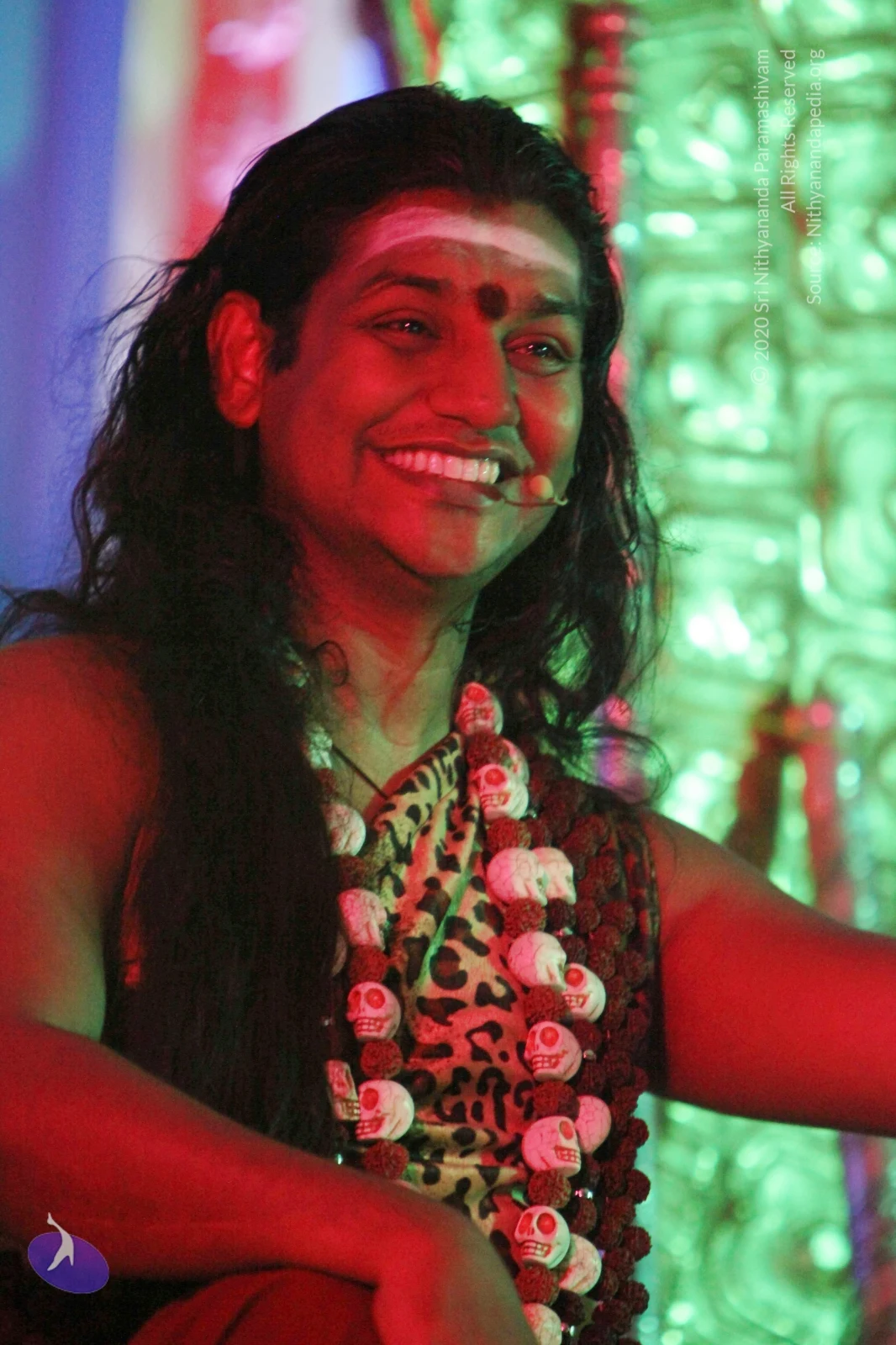
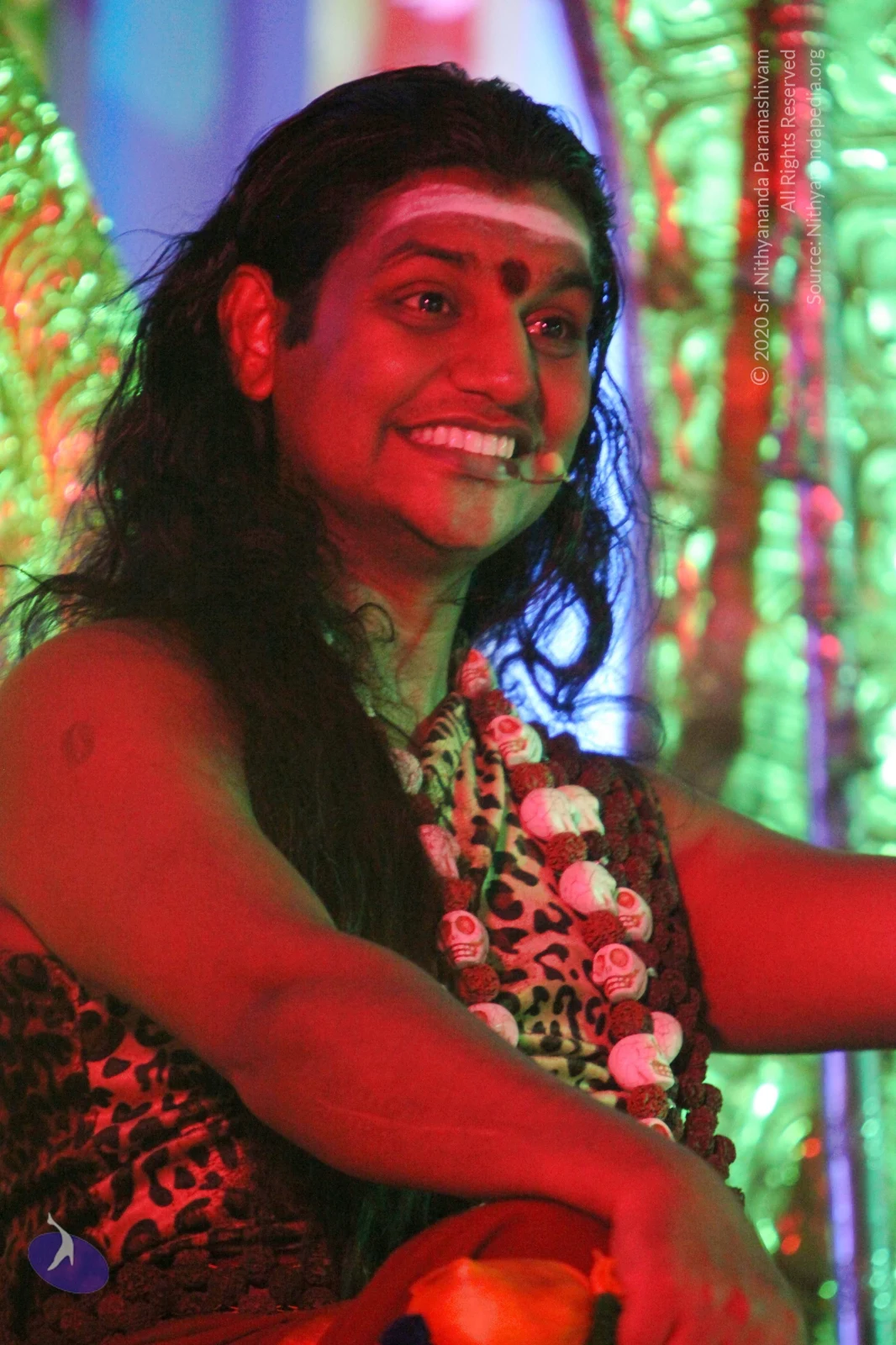
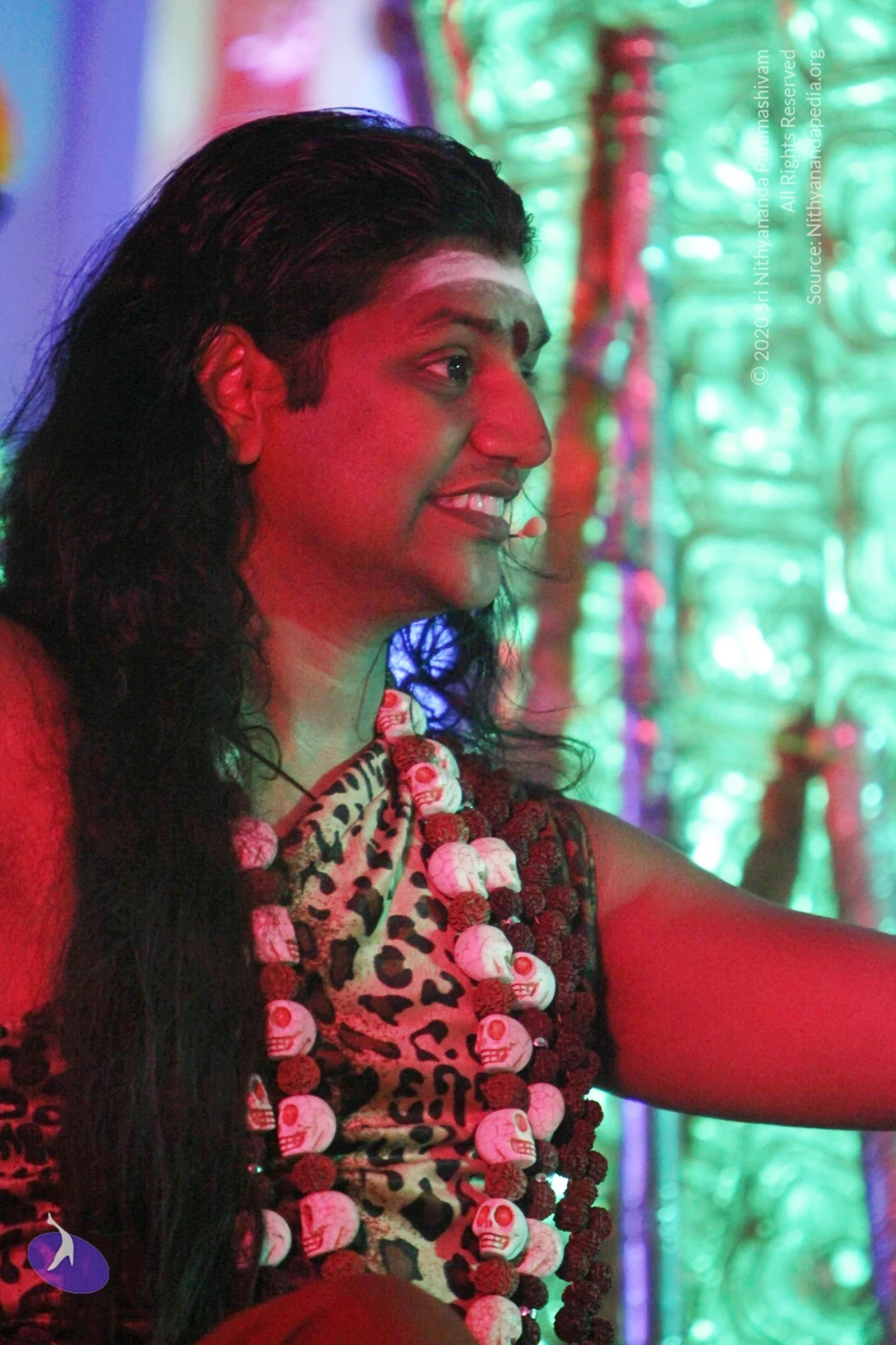
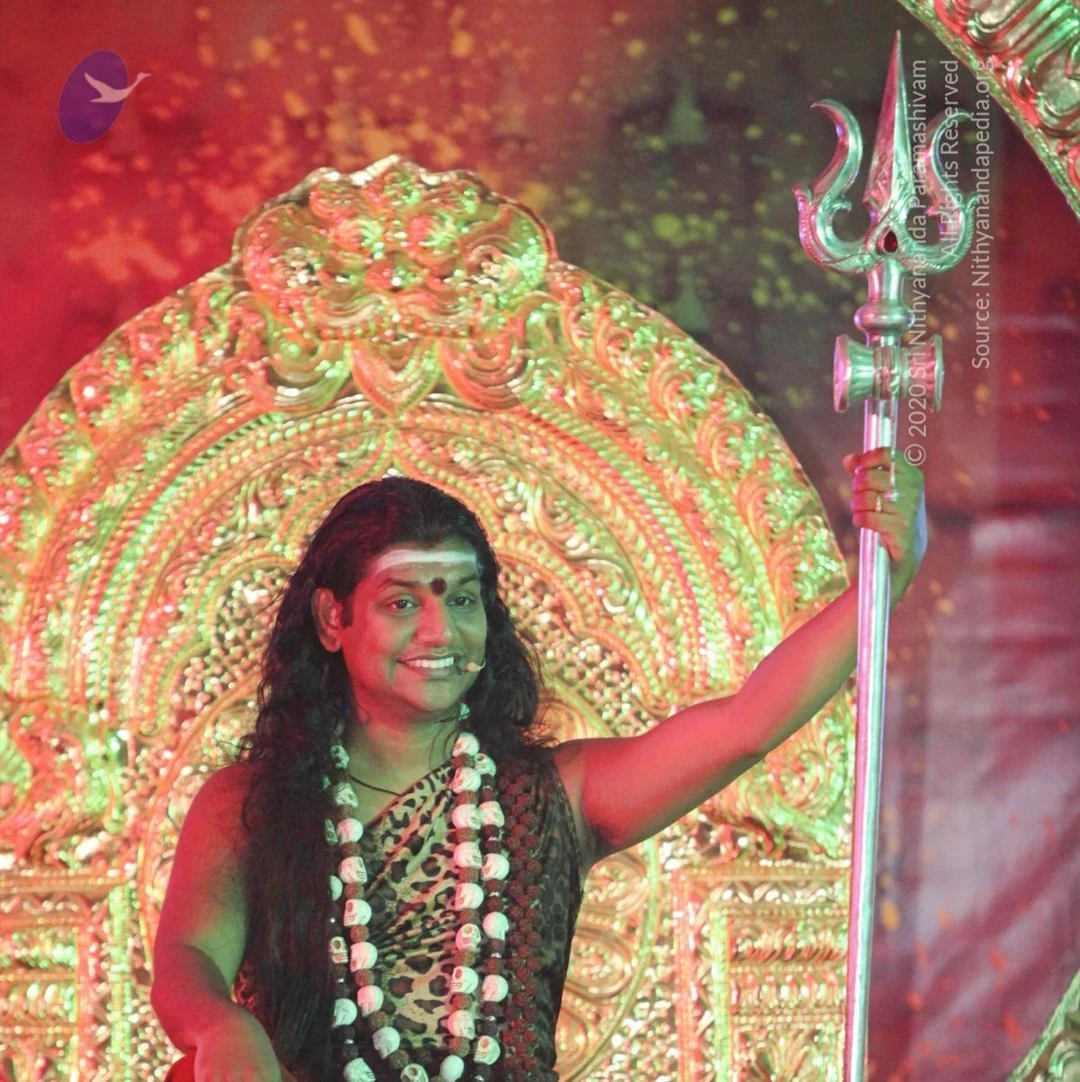
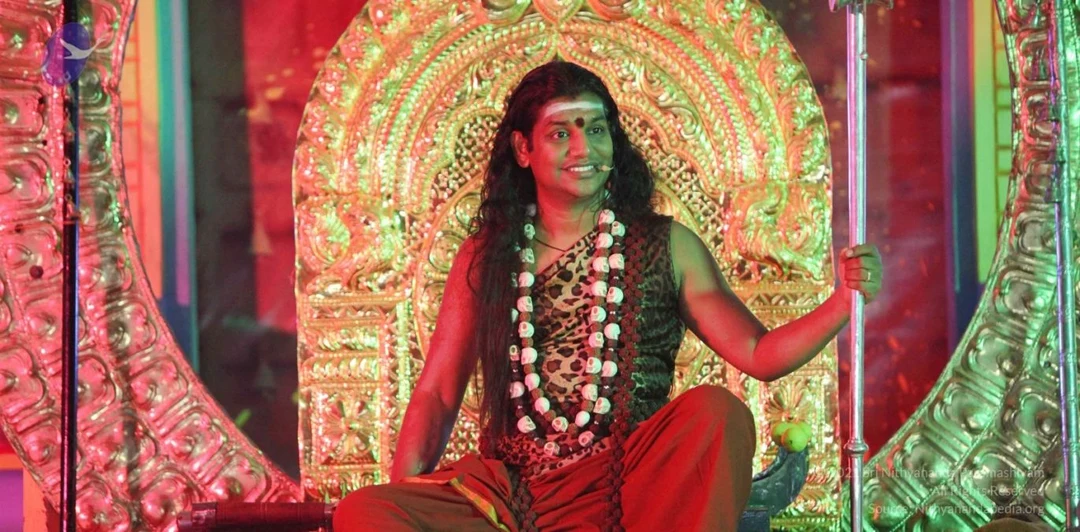
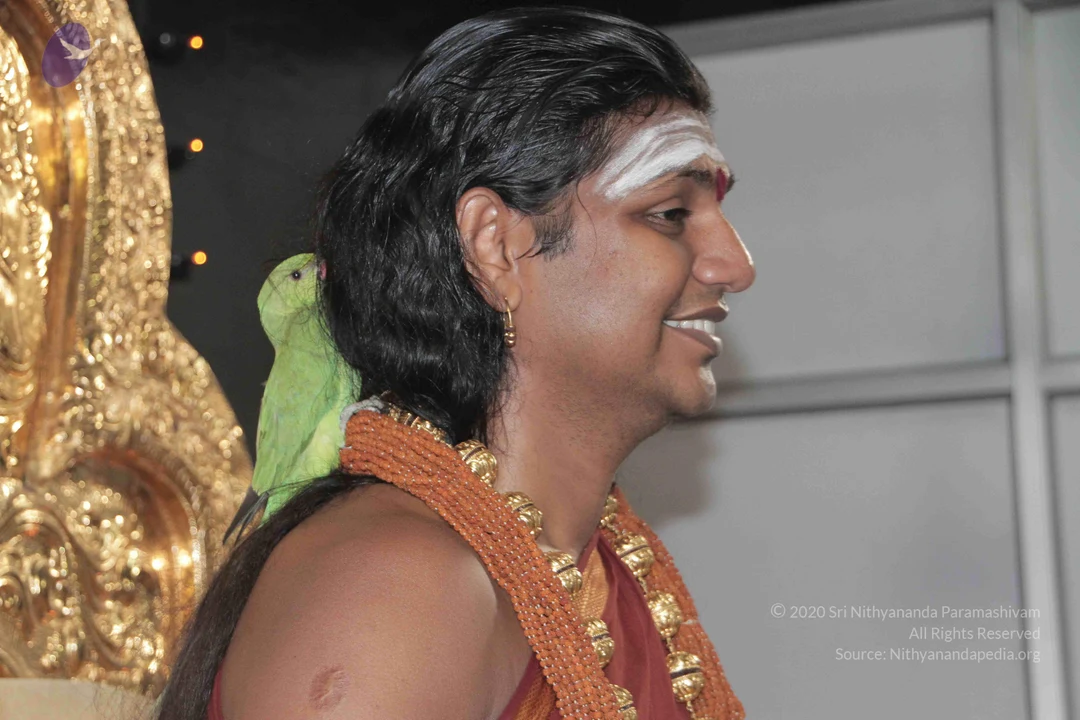
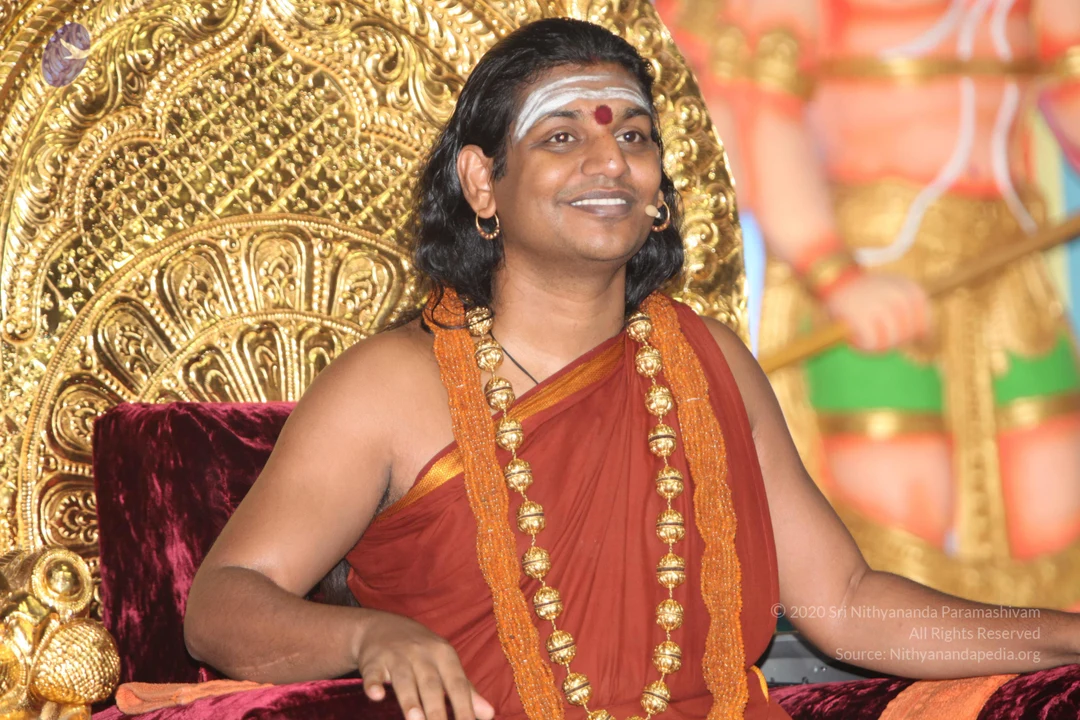
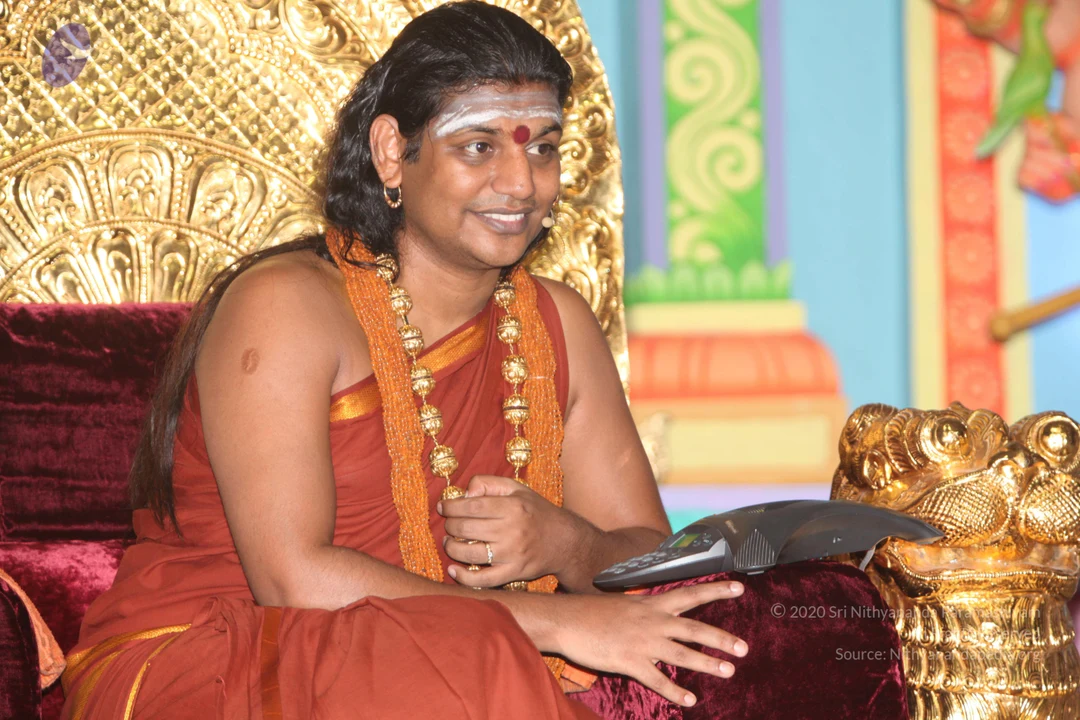
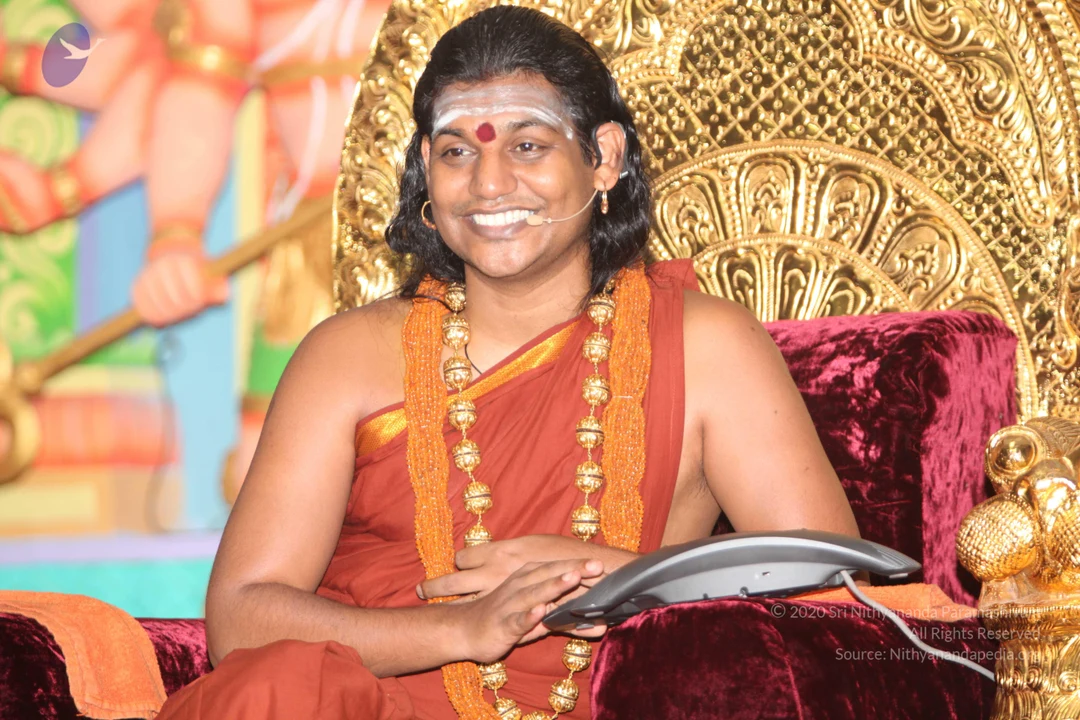
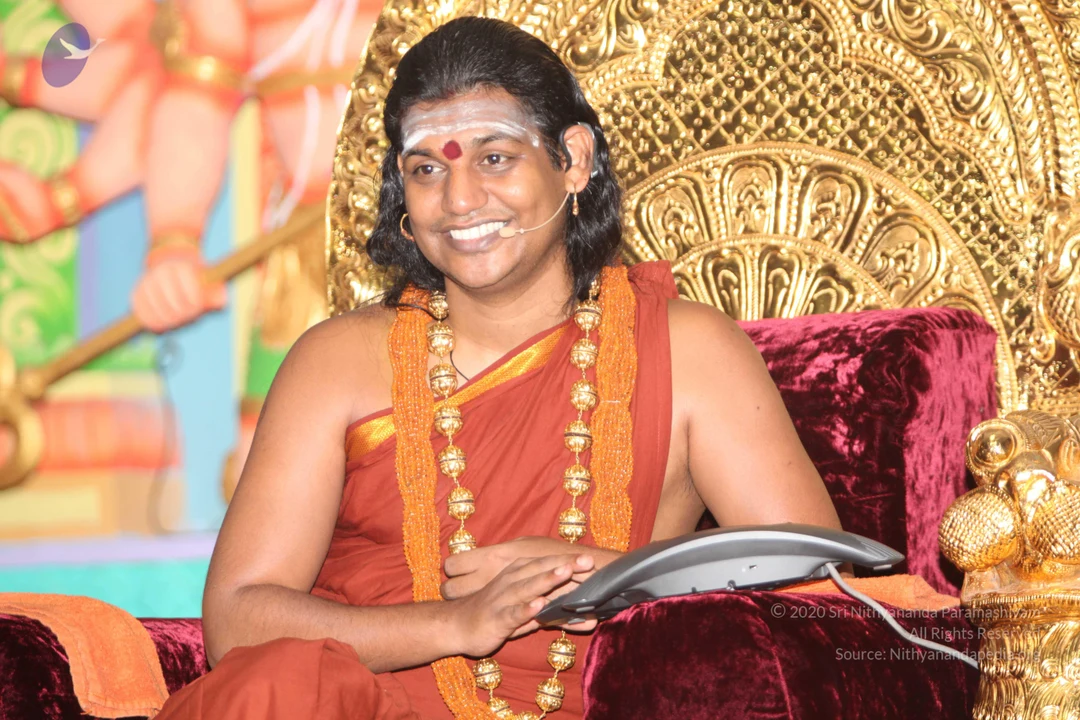
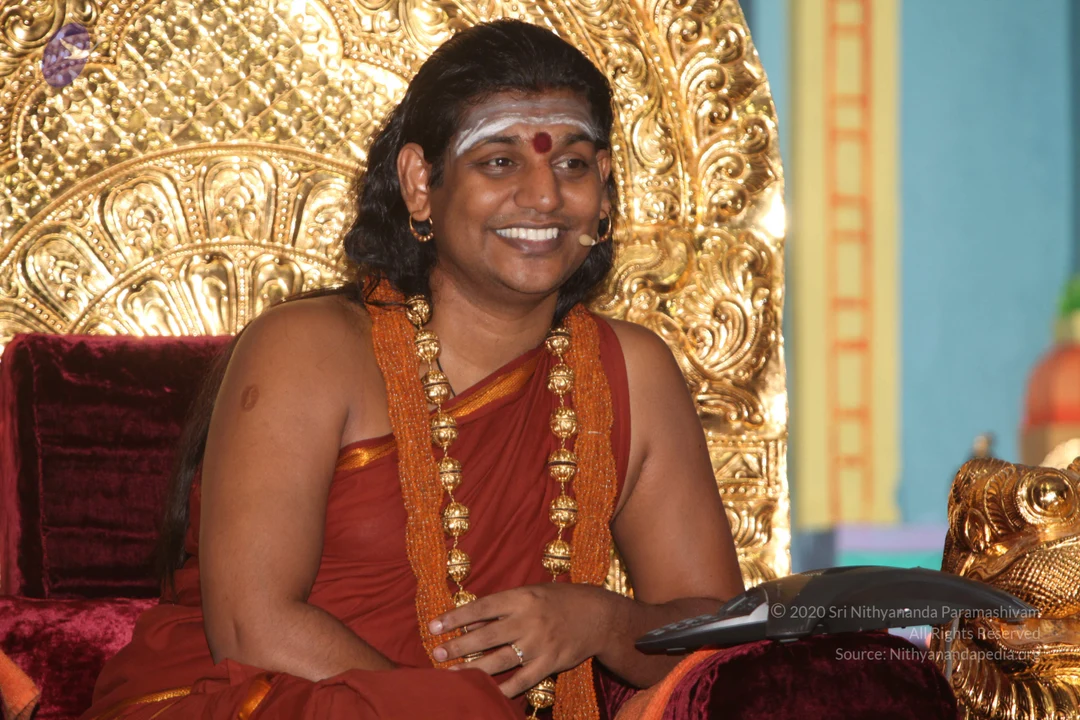
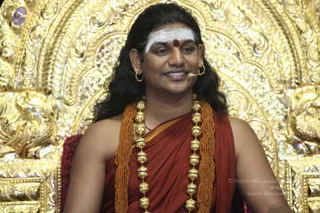
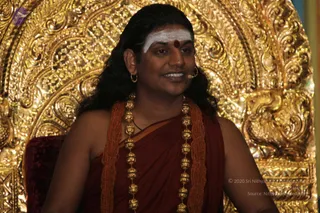
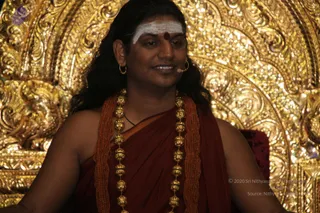
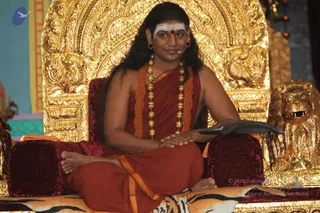
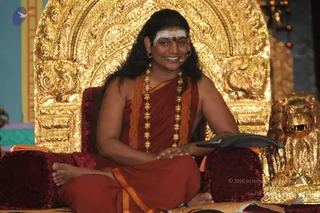
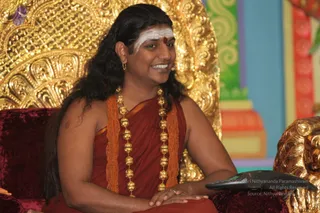
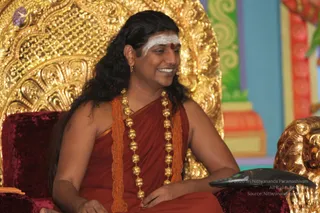
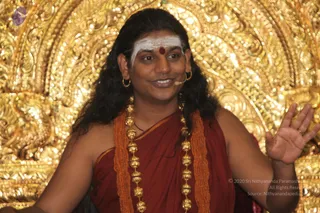
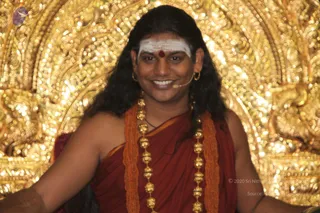
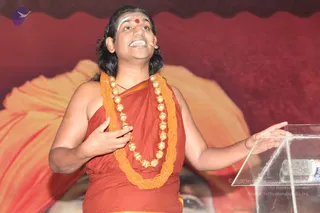
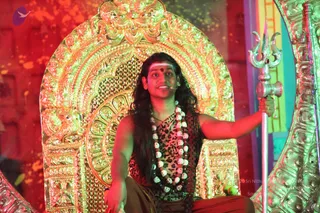
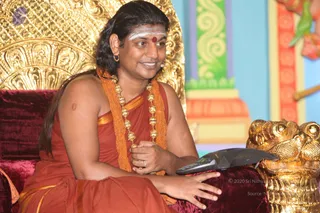
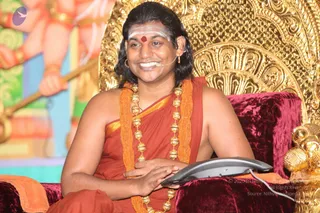
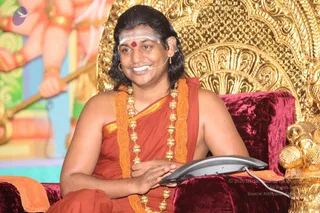
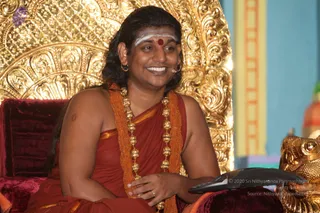
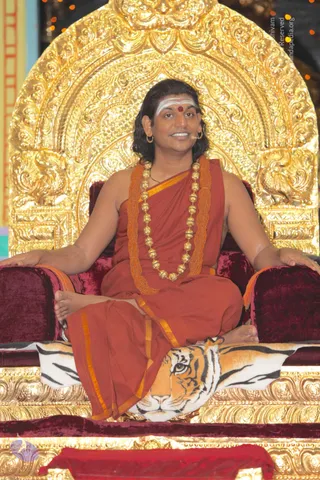
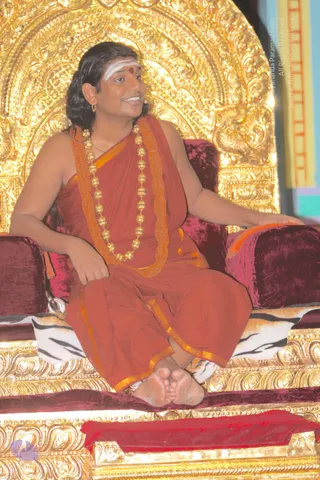
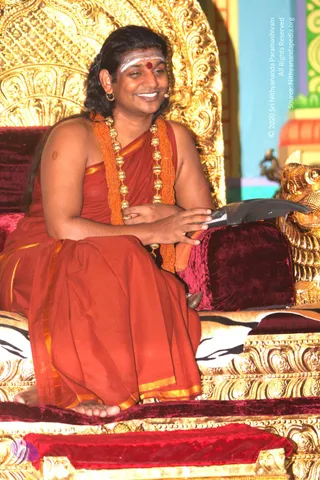
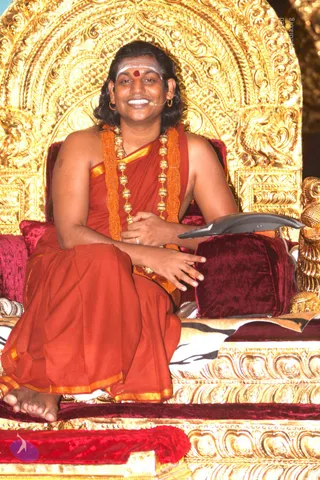
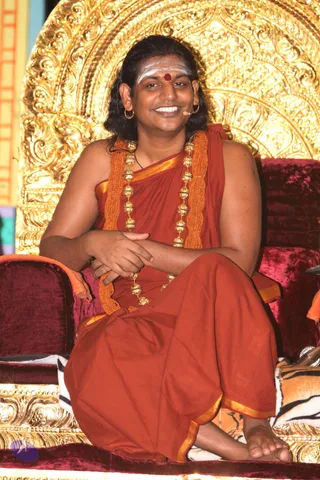
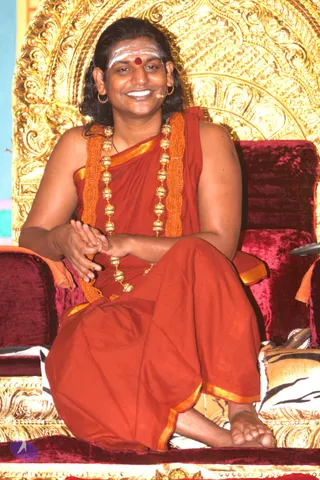
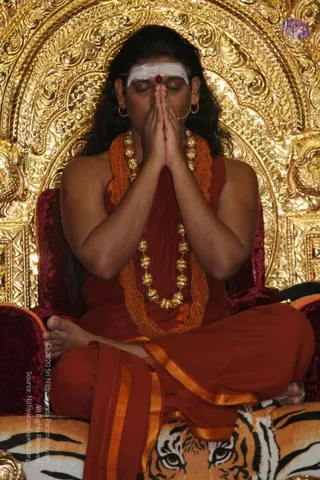
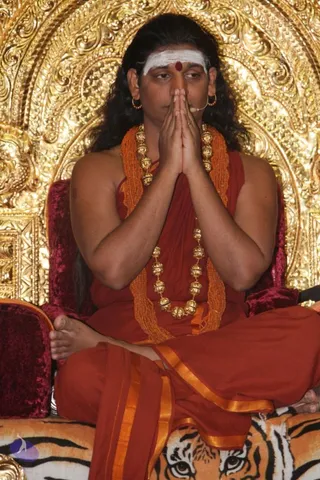
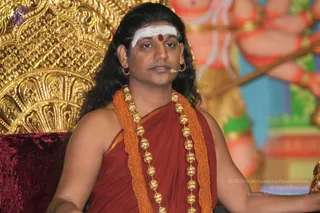
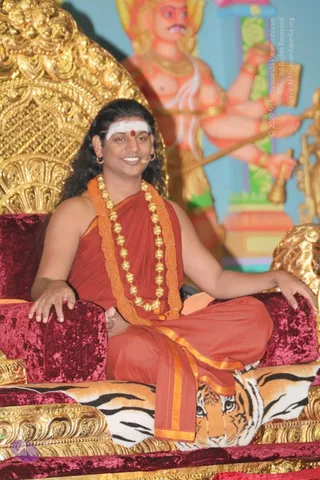
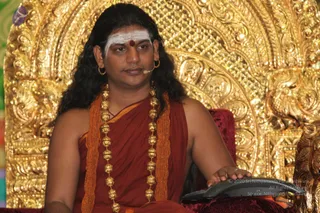
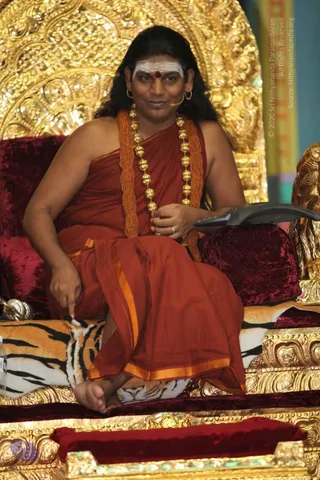
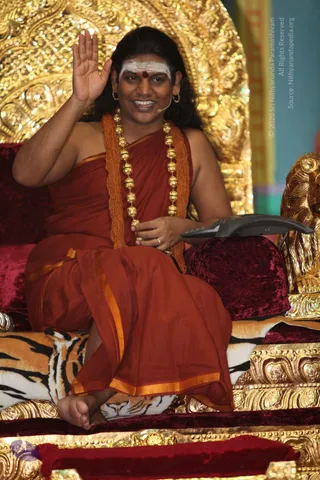
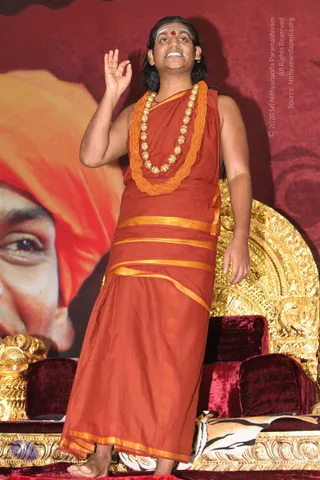
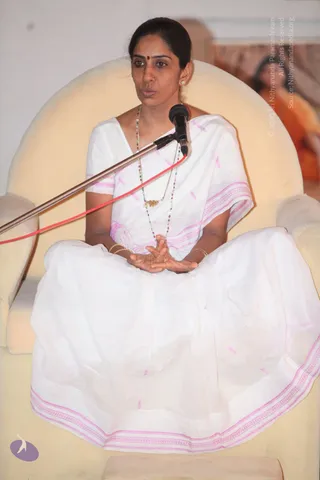
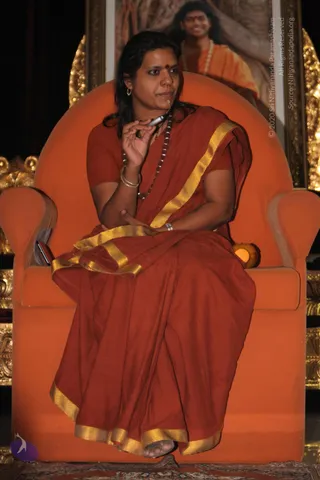
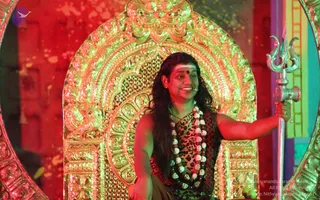
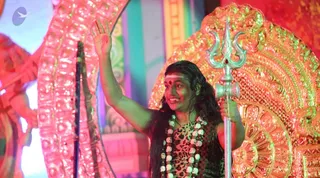
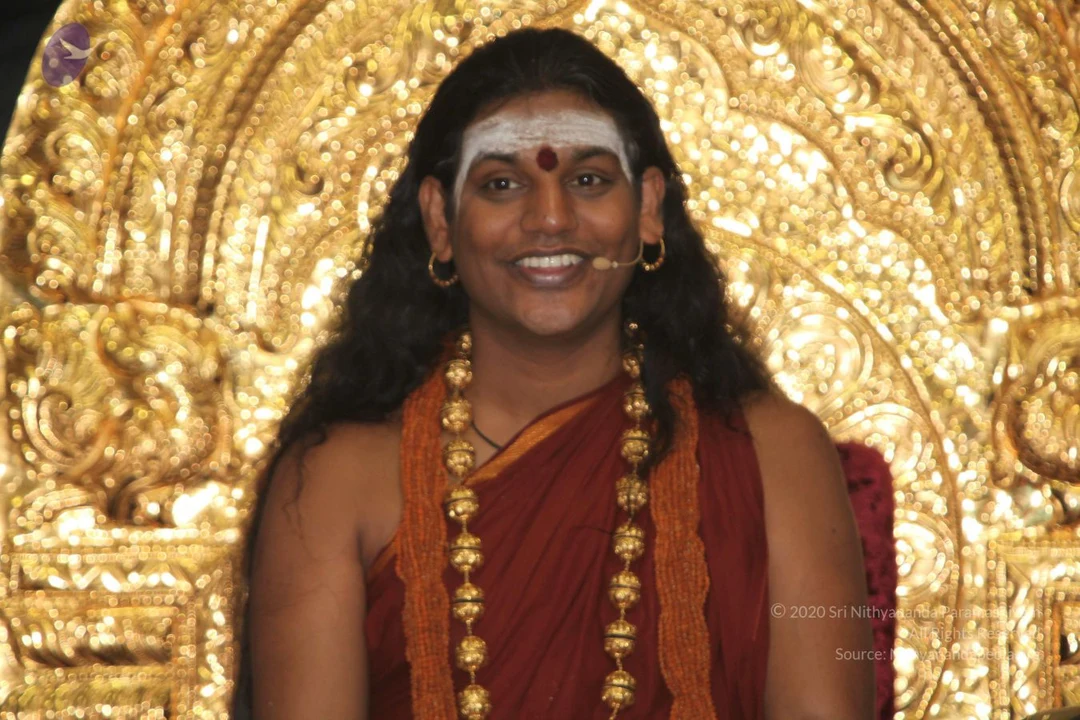
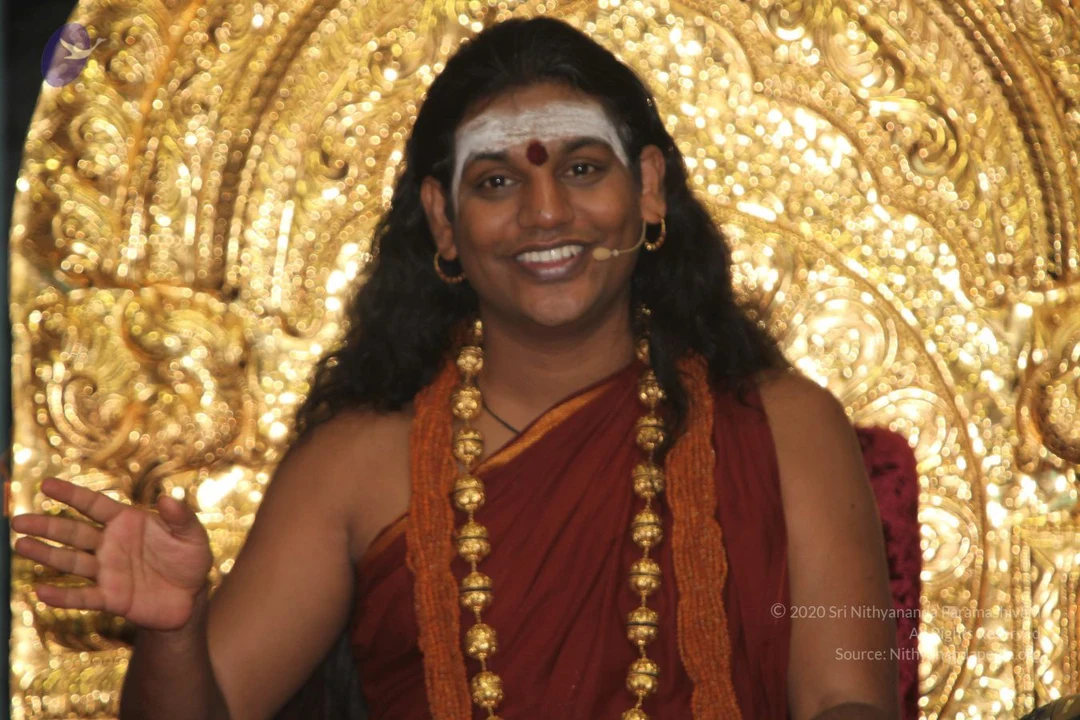
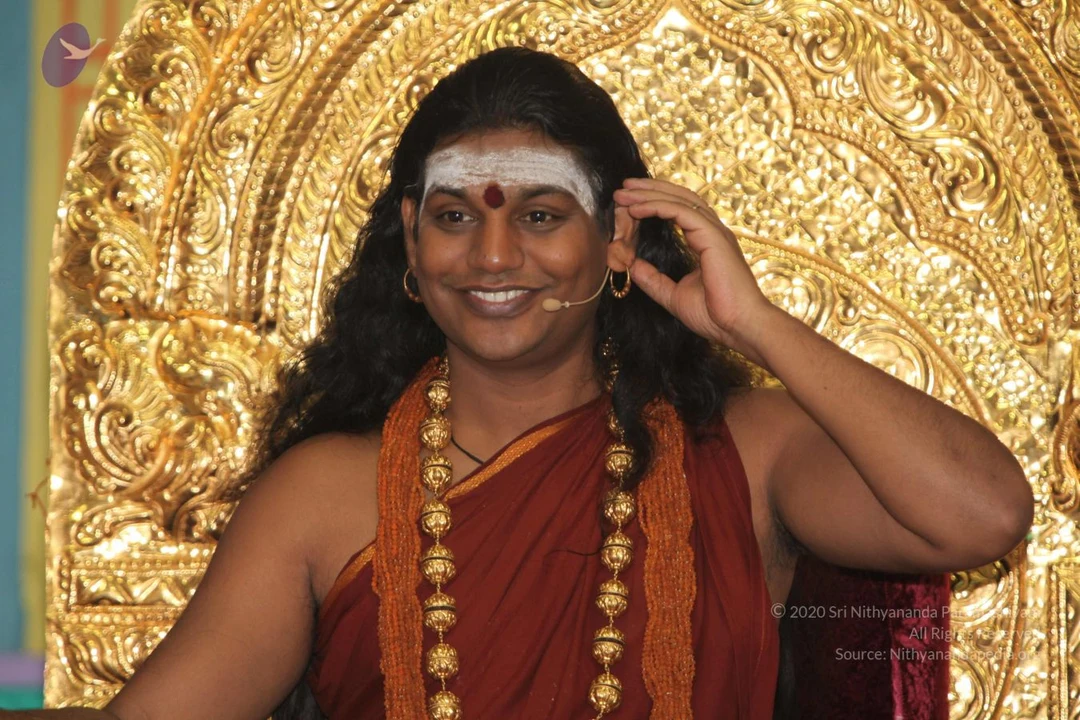
A photograph of a seated man in a rust-red and saffron-orange sannyasi-style garment with a long gold bead necklace and orange shawl, long dark hair, white vibhuti band with a red kumkum dot on the forehead, and gold hoop earrings. He sits on a crimson velvet throne with gold lion armrest and gold carved backdrop, gesturing with both hands while speaking into a headset microphone. A painted red and orange deity figure holding a staff stands behind him. The appearance-based label: a person, seated in a satsang setting, with long swept hair, saffron clothing and ceremonial gold beads as cues.A photograph of a long-haired man in profile seated before a blurred green and pink backdrop. He wears a leopard-print garment and a heavy necklace of rudraksha beads and white skull-carved beads, and has a white horizontal forehead mark with a red dot. His arms are folded on his knees.A photograph of a woman with long dreadlocks seated cross-legged on a red cloth at a satsang, wearing a white polka-dot head wrap, white top and white polka-dot pants. She wears rudraksha-style dark beads, a wristwatch, several rings and layered bracelets, and holds her hands near her face while looking down at an open notebook on the cloth. Behind her, blurred seated people sit in a pink-walled hall.

April 13 2013

Original wiki page
Contents

Title

Drop your Fantasies about Failure

Description:

In today’s morning satsang, Paramahamsa Nithyananda presents the solution for our fear of failure. Fear is a negative agreement we make with ourselves. When we wonder what failure may feel like and try to imagine it as a reality, we are creating a fantasy and giving it power to manifest, just as we create fantasies about positive events. Many people believe they are “preparing” for failure so they have a plan in readiness. But the actual event of failure, like death, is always unexpected. When we replace our belief in failure with positive commitments to ourselves we discover integrity – lack of conflict. Once we are integrated, there is neither fear nor failure.

Link to Video:

VideoAudio

Transcript:

Drop your Fantasies about Failure

Nithyanandeshwara Samaarambhaam Nithyanandeshwari Madhyamaam |
Nithyanada Paryanthaam Vandhey Guru Paramparaam ||

I welcome you all with my love and respects.

00:49 [hindi]

01:17

Please listen, integrity, authenticity, responsibility and enriching; what these four principles can cause in you when you practice them with integrity, authenticity, responsibility and enriching. When you start practicing integrity with integrity, you will be aware of every thought you are having. Most of the time you are caught in fear, jealousy, anger, lust before you even become aware.

Many a time, people come and tell me, ‘I am not able to get out of my fear.’ Please listen! Why you are not able to get out? Because already you committed to yourself many times with that negativity. For example, ‘I am going to be destroyed, I am going to be destroyed, I am going to be destroyed, I am going to be destroyed. This is the way it is going to happen, I am going to be a loser, loser, loser’ Means, hundred times you have committed to yourself you are going to be the loser. Then, naturally, whole energy of you will be working only to fulfill that concept, the commitment you gave to you that you are a loser.

Only once if you say, ‘I am a winner’, that will look too silly. It is like for the sake of argument you say. Sometimes you know your spouse is going to win the whole argument, but just to record your opposition, you make some statement knowing that you are going to be a failure. Exactly that is the way it will look after you utter a hundred times you are a loser to yourself, only once you are a winner. It is your wrong commitments to you, makes you feel you are a loser. I tell you, other than your negative commitments to you, you don’t have any enemy in your life. Just understand and liberate yourself. I am not teaching you, I am not inspiring you, I am not ordering you! I am requesting you.

I know the space of utter positivity, a complete positivity. I know the space, I cherished that space, I am cherishing that space. I am exactly in the mood of the rishi when he screamed at the peak of his voice, ‘shrunvanthu Vishwe Amruthasya Puthraaha vedaahamekam purusham mahaantam; Oh sons of immortaility, I know the path to it. Wake up and start achieving it’

I tell you, whenever you uttered a negative word to yourself ‘I may be failure’, for example, ‘I may be a failure, I may lose that, I may not achieve it’, immediately remember it is a negative commitment you are giving to you. Drop it. Your mind may say, ‘No, no, no. If I suddenly really fail, what to do? Atleast if I think through before, I will be ready for failure.’

There is no such thing as ‘ready for failure’, because your failure will always be from the unexpected zone, if at all there is going to be failure. So, all your expectations and pre-commitment towards your failure is not precaution. It is not going to help you in any way.

People ask me, ‘I don’t want to be surprised when the failure comes.’

First of all, it is not going to come if you don’t prophesize. Second, even the fear that ‘I won’t be able to handle fear if it comes as a surprise’, is one more fear, one more negative commitment you gave it to you.

See, the layers and layers of negative commitment you gave it to you. First of all, it is not going to come if you don’t create the self-fulfilling prophecies. Second, even if it comes, you have all the capacity to face it. There is no such thing as you cannot face the failure if it comes without your expectation. That is one more negative commitment you gave to you. How many of you are cognizing this, ‘I will not be able to face the fear if it comes surprisingly, is the only logic you use constantly to create negative patterns in you’. How many of you cognize this? Getting it? That itself is one more negative commitment you give!

Death is going to come suddenly only and you are going to face it. Everything you call as failure is going to come suddenly only and you are going to face it. There are millions of times what you call as failure came to you only suddenly and you have faced it. ‘You will not be able to face if something happens surprisingly,’ is one more negative commitment you gave it to you.

Sit and undo layer by layer the negative commitments which you gave it to you and complete them. You have to remember and complete and drop. Only then you can really conquer it. You can’t just say, ‘I drop hereby all the negative commitments I gave it to me, no’. First you need to know all the negative commitments you gave. That will happen only when you start with you and start doing the completion.

Once you drop that negative commitment you gave to you ‘I cannot face failure surprise’, when you complete that commitment and drop it, that negative commitment when you drop that, then you cannot justify your planning for failure, your negative plans in any form, in any way.

Listen. ‘I cannot face if a failure comes as a surprise’ is the only reason you go on imagining, visualizing different possibility of failures and give negative commitments to yourself as a failure. How many of you cognize it? This is one of the important click you need to have today. First thing, the failures are not going to come. Second thing, you are capable of facing it if it comes. So, drop fantasizing about failures. Drop visualizing about failures. Drop giving negative commitments about failures.

10:31 [hindi]

13:02

When u drop, when u decide to drop, the I-DEA - the negative commitment you gave it to you, "you cannot face your fears surprisingly" - your INTEGRITY starts happening; the negativity starts dropping from you, you start experiencing the space of Positivity. Because, first you need to remove the reasons - why you give negative commitments to you; only then you will STOP GIVING negative commitments to you!

How many of you cognize - every negative word you utter to you is a negative commitment given to you? Yes.

Second. How many of you cognize - it is the fear of facing the failures "surprisingly” - is the reason you give negative commitments to you continuously? Raise your hands.

Listen, next - drop. Next, how many of you cognize - even this idea, "you cannot face your failures surprisingly” itself - is a one more negative commitment you gave it to you?

[Many in the audience raise their hands].

That’s All! Now you know the solution! Drop the DEEP-ER layer negative commitments you gave it to you! Drop them fast; complete with yourself and, drop it.

14:40

pehli baat yeh hai ki - asaphalta nahi aayegi; asaphalta jab aayegi, uska saamna karne ke liye aap saaksham hai, asaphalta ki baare mein kalpana karna chod deejiye!

asaphalta ke baare mein kalpana karna CHOD DEEJIYE!

15:04

As I said - I am not teaching you, I am not inspiring you, I am not impressing you - I am just requesting you! Because I know, if a positivity can be brought into ONE MIND, what it can DO to the WHOLE WORLD! So MUCH can be done!

One river, Ganga! One river, Ganga - can give life to one-tenth of the Human population! Do you know? One-tenth of the human population on the Planet Earth lives in the lap of Ganga! It is a FACT, based on the statistics of the BBC 'Ganga' documentary. BBC has done a documentary on Ganga. They are giving a FACT. One-tenth of the world population lives in the lap of Ganga. See, the river itself takes only - a few kilometer width and maybe, few thousand kilometer length, BUT - it can give life to ONE-TENTH of Humanity! I tell you - if you take the land Ganga takes from the beginning to end, it will not be one-thou one-millionth of the Planet Earth’s size! But it gives shelter to ONE-TENTH of the Humanity!

Same way, I tell you, even if ONE PERSON starts living Positivity, he is no more 'ONE PERSON'; he can be a shelter for Positivity for - ONE-TENTH of the Humanity!

17:06

suniye! dhyaan se suniye.

jab aap apne yeh nakaaratmak soch - "jab achaanak koi viphalta mere saamney prastut hogi toh, mein uska saamna nahin kar paaoonga" - jab aap yeh soch ko tyaag denge, keval tab hi aap poorna tarah se sampoorti ke sthithi mein sthaapit ho sakte hai!

yadi sakaaraatmakta ek man mein ham laa sakte hai, poora vishwa parivartit ho sakta hai!

ek nadi Ganga, Bhaarat ki, das pratishat logon ko jeevan deyti hai.

18:01

Just let your one Heart, DECIDE, not to bring negativity as a thinking pattern; not to bring negative commitments as a lifestyle with YOU!. This is the BASIC Life Science; this is the Owner’s Manual for Life! These four principles are Owner’s Manual for Life! Just like you HAVE TO read owner’s manual before you start driving a car, or you may end up in danger or losing the life ITSELF! Same way, you HAVE TO know these four principles to its DEPTH, in Life, before you start living the Life! This is Owner’s Manual for LIFE!

Just understand, how many of you feel - you wasted too much of time by giving self-prophecy, negative self-prophecies; and with this one fear, “I cannot face the failure surprisingly”? Raise your hand.

How much of time and Life is wasted! And because of every fear you carry, everybody around you have to suffer! And believe, this is the LIFESTYLE! If you have a loud voice, that is another one big problem! If you are a loud mouth, over! Every school teacher who suffers with a lack of Integrity and negative commitment to himself transmits that to ALL their students!

Whole Science has to be re-written, with eN-glish! Whole History has to be re-written, with eN-glish! Whole Engineering has to be re-written, with eN-glish! EVERY field has to be re-written, with eN-glish. Whatever may be the equation, A+B-CxDxFxG, end of the equation if you put “x 0 =(equivalent) what?" Zero! Same way, I tell you, if your life has been any amount of negative prophecies and negative commitments to you, just put “x Integrity” from now onwards; it is equivalent to Integrity!

21:10

Understand, people say, ‘No, no, Swamiji! You don’t know the complications I created in my life! A+B-CxA2/C2xB-/ABCDE = what? My life is that complicated! You don’t know!’

No! Whatever it may be, just if you put “x 0”, whole thing is Zero! Same way, whatever negative, lack of Integrity, negative commitments, self-fulfilling prophecies you have created in your mind as past complications, I tell you, just say now “x 0”, “x Integrity” from now onwards! Over! It is just equivalent to Positivity and Integrity. How many of you cognize what I am saying? (People raise their hands). You got it! You got it! Start living! That is it!

Every day, disciples, my meditation on disciples reveals to me deeper and deeper truths. Yesterday I was wondering why people have so much of problem in living Integrity. Because some of my disciples still have the pattern of spontaneous lying to me. They just lie spontaneously to me. It looks so childish. So yesterday whole night I was looking into this and contemplating on it, meditating on it. Why Integrity was so easy for me? Why it is so difficult when I teach this to my disciples? There should be something seriously wrong! There should be a reason. Otherwise, many of my disciples are very sincere people. Many of my sanyasis are so sincere, still if they are not able to practice Integrity, I am responsible. It is no more they; I should be responsible!

When I was contemplating yesterday night, suddenly I woke up and this was the prasada I got. I realized people have given negative commitment to themselves - “If the failure comes suddenly they cannot handle it!” This is the negative commitment which forms the basis for them to continue to think negative things and justify why they should continue to think negative things and give negative commitments. Why they should stop giving negative commitments to themselves is not accepted by them. How many of you cognize the whole satya? Now it is time you live it! This is one of the important thorns removed from many of your consciousness. Many of your consciousness was suffering with this one thorn.

I was so happy when one of my sanyasis sent me an e-mail, ‘Swamiji, now whomever I am blessing, it is all becoming reality! I told somebody “you will have a male child”, she immediately had a next day delivery and had a male child!’ The lady was carrying and he blessed it seems “You will have a male child”, and she had a male child! To somebody he said – he lost a job – he blessed that person, “You will have a job within 7 days!”, and that guy got a job next day!

Like this he listed so many experiences. I was so happy, Oh, God! This very fellow who was waiting to commit suicide continuously - he was suffering with suicidal tendency - now this fellow is blessing and it is happening! Can you imagine the miracle? The power of the four tattvas! I was so happy, oh God! Can you imagine if one person starts living Integrity and Authenticity, how much can happen to him and the whole world?

This Swami who is now going around and blessing everybody and making it into reality, three months before was suffering from suicidal tendency and attempted suicide! And I had to put two security around him every time to take care of him and protect him! Once he is clear and started practicing these four tattvas, suddenly not only he became positive, and he is writing to me from the space of Positivity, “Swamiji, I blessed him!”

I was so happy! Oh, God! No, really! I tell you, you don’t know the amount of joy I felt! I only wanted to tell him, ‘Take care you don’t become egoistic! Of course, when you live with the Master, you are never allowed to become egoistic! You will never become! That is different! Now, other than that not becoming egoistic, there is no other danger. Simply it will expand and expand and expand and become ocean! Ganga starts only like a small stream and it accumulates, accumulates, accumulates and it becomes a river with kilometers of width and finally it becomes ocean itself! Same way only, in you, this is the way Positivity starts, and the space of Positivity starts. And I tell you, once that guy, that Swami has become positive, the work that is happening in his department, Oh, God! I can’t imagine! So much is happening!

If only one person becomes positive, so many people are blessed! You should just know that the space of Positivity is by the blessing of the Master’s Kundalini awakening. Because he awakens the Kundalini, this is becoming a reality. So, all the glory goes to him. If you rest in that space, you will accumulate more and more positivity and, finally, become the ocean itself!

Hindi – Min 29:01.0 to 30:32.5

When you write history, the purpose for which you are writing the history is very important. Based on the purpose only you will give importance to some incidents, you will not give importance to some incidents. The history is the history of the historian who is writing! When you write the history, the purpose for which you write decides how the history is going to be written. No history is a factual history. How many of you cognize, no history is a factual history?

So, every history is the history of the historian himself. How many of you cognize this? So catch it! Don’t believe any history! Don’t believe any history!

If at all you ask me which history is closest to the truth, it is the Puranas, because the authors of the Puranas don’t have any vested interest other than enlightening you. Do not believe the western historians. Do not believe Max Mueller. Do not believe the fellows who wrote Indian History. Do not believe the fellows who wrote the Indian History, because it is his purpose which made him to write the history, and vested interests they decide which incidents should be given importance, which should not be given importance.

Why you Indians read so much about Holocaust in the history? You don’t read about the Kashmiri Pandits, millions of them being massacred in your history! Why you read about so many Jews being killed and all the audacity of Hitler, and other atrocities committed by everybody in the world history in your history book, but why you don’t read of the millions of Hindus killed during the Bangladesh War in your history? Why you don’t read about the 40-miles-long refugees who came running into India when Pakistan separation was done? Why you don’t read all this in your history?

I have millions of questions! Why there is no Hindu Holocaust Museum in Washington, DC, displaying all the tortures, sufferings we went through just because we are Hindus, just because of our faith? Being the most soft, non-violent faith and spiritual tradition, the amount of persecution, the amount of persecution we went through, why it is neither recorded nor displayed anywhere?

I personally visited the Holocaust Museum in Washington, DC. When I came out, I was in tears! I am not the guy who will cry. In my whole life, I would have had tears in my eyes, may be, I can count in my fingers; one hand is enough. Not more than five times! Of course, I would have had tears of bliss and joy and devotion in my eyes millions of times; that is different. But the tears of sadness, not even five times, put together, my whole life; in these 35 years, I have not had the tears of sadness even five times! This was one time!

min 35 to End

Not more than 5 times! Of course I would have had tears of bliss and joy and devotion in my eyes millions of times, that is different. But the tears of sadness, not even 5 times put together my whole life my whole life, in these 35 years, I have not had the tears of sadness even five times! This was one time when I saw the Holocaust Museum! They were so visibly presenting it, so strongly they are able to present it, the sufferings and tortures they went through!

Why? Why the sufferings of the Kashmiri Pandits, why the sufferings of the Bangladeshi Hindus, why the sufferings of the Pakistani Hindus, why the sufferings of the Ceylon Hindus is not displayed, told, made as part of history?

Historians write the history. History is not factual record. It is the vested interest of the individual that decides the flow of the history. I tell you, bring Integrity to your inner space, you will understand the lies with which you are being cheated. You will understand the scientific superstitions, the historic lies, lies made as history, superstitions made as science, millions of lies on which you built your personality, thousands of lies that are taught in your school, in your universities, in your colleges, lies! Ninety-nine percent of your education is lies! The remaining one percent is outdated truth, outdated facts which are not directly useful to your lives!

Hindi – Min 37:31.8 to 37:58.4

Let there be spiritual evolution. Let every individual read the history with this spiritual clarity. In our Vidyalayas, listen! In all our schools, we should give statutory warning just like how in the cigarette packet statutory warning is a legal requirement – “Smoking may be injurious to health” – in all our schools, in all our history books which our kids read, there should be a printing on the first page – “All these are not true! Selected by a few people who have vested interests!” The same way, in all the science books, there should be a print, and our teachers should teach the kids that “These are all superstitions which are accepted for a long time and became science. These are all the information which are made as history by the vested interests which are trying to manipulate you!”

Much of your history - what much! - 99% as I said, 99% of your History, Science, Mathematics, everything is a lie! The remaining 1% is outdated fact! Listen! This is an important truth you need to know!

Before the invention of Zero, whatever mathematics was being practiced it was completely proved as wrong by the invention of Zero. How many of you cognize what I am saying? Same way, I tell you, till we have not invented Infinity in a cognizable way, once our brain evolves to cognize Infinity, overnight all the Mathematics we practice will be proved as a lie. If you are able to catch it, catch it. That day Zero was invented, the whole Mathematics which was being practiced pre- Zero, is proved as false. All the theorems, theories, everything is just theatrics, not true. Theorems are proved as dramas, theories are proved as theatrics.

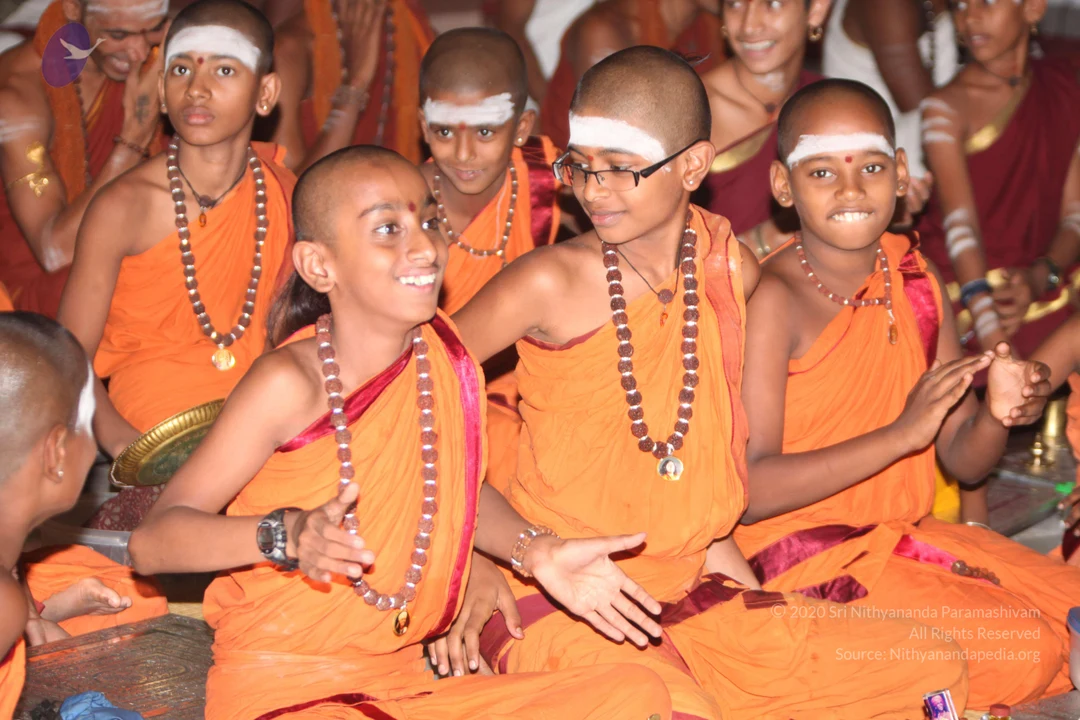
Same way, very soon, the brains which practice Integrity, Authenticity, Responsibility and Enriching, my Gurukul kids, are very soon going to cognize Infinity and going to make Infinity as a utility just like Zero. The day my Gurukul kids will do that - listen my Gurukul kids are going to do this, because their brain is beautifully getting awakened with Integrity, Authenticity, Responsibility and Enriching – my Gurukul kids will become geniuses! They will cognize the power of Infinity and make Infinity as one of the important component of everyday Mathematics, just like Zero! When Infinity becomes part of everyday Mathematics just like Zero, my Gurukul kids will prove to the world that all the theories, theorems which we are now practicing, the whole Mathematics is wrong, outdated! You need certain brain to cognize Zero. Our Rishis had, that is why they were able to cognize Zero. Same way, you need certain brain to cognize Infinity. Fortunately, I am creating those brains. They will cognize it and make you cognize it! They will cognize it and make the world cognize it! They will cognize it and make the world cognize it!

Hindi – Min 43:34.2 to 44:02.9

For outdating the History, my Gurukul kids are not required; I am enough! Outdating the Science and the whole Mathematics is going to be done by my Gurukul kids, because they are going to cognize the Infinity in practical application. They are going to cognize the methods of applying Infinity just like Zero in our everyday life. Then all the theorems, all the theories on which you built so many things, will simply be proved as false. I tell you, to cognize Infinity as a usable part of your life just like Zero, your brain needs to conquer time and space. Your brain needs to cognize itself independent of the influence of the time and space. Ramanujam, the genius Ramanujam, who was a great devotee of Lakshmi, he cognized Infinity. Unfortunately, he was all alone. That is why, still they are not able to cognize what he cognized. But with my Gurukul kids, I am building a huge number of brains, set of brains to cognize Infinity.

Hindi – Min 46:15.7 to 46:50.3

Listen! Establish yourself on Integrity. You will see your being suddenly cognizes new life, new reality. The Maya will be outdated. Suddenly, all the pillars based on which the Maya is installed is outdated.

Hindi – Min 47:26.8 to 48:23.0

The brain which is established in Integrity and Authenticity can read any book and understand the truths from that book, and truths from that book. It can just, how a Paramahamsa can separate water from the milk, same way, the brain established in Integrity can separate truth from untruth. The brain established in Integrity and Authenticity is Paramahamsa.

Hindi – Min 49:06.8 to 49:52.4

Establish yourself in Integrity and Authenticity. With that fresh eyes, look at everything of your life; your business plans, the profession you are in, your relationships, your decision about your future, your decision about your age. Listen! You decide how long you want to live in Planet Earth; you decide what way you want your reality to be!

Tags:

Paramahamsa Nithyananda, solution, fear, failure, negative, imagine, reality, fantasy, power, create, death, discover, integrity, conflict.

Photos Of The Day:

Temple
PadaPuja

Satsang

Dial-the-Avatar

SarvaDarshan

NKY-Session

Kalabhairava-Darshan

Construction

Photos Of The Day:

Dial-The-Avatar

Pada-Puja

Photos Of The Day:

Pad-Puja

Satsang

Photos Of The Day:

Dial-The-Avtar

Photos Of The Day:

Temple
PadaPuja
Satsang

Dial-the-Avatar

NKY-session

Kalabhairava-darshan

01-PUJA

02-NITHYA-SATSANG

Photos from this day

View all 416 photos

Temple

31 photosSource gallery
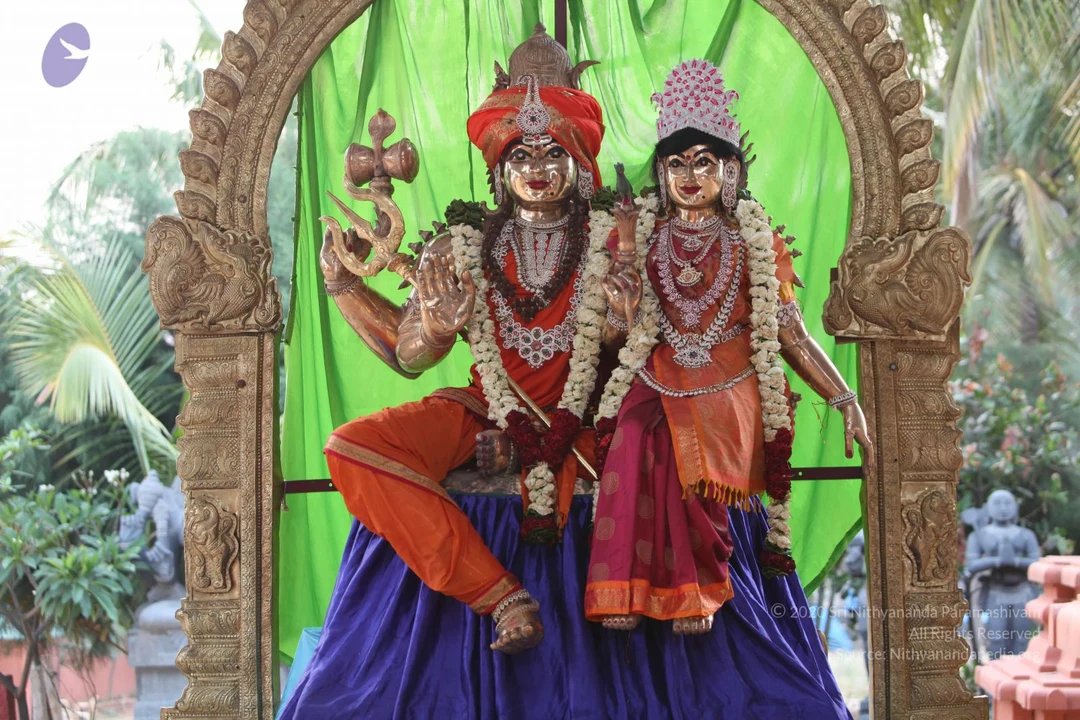
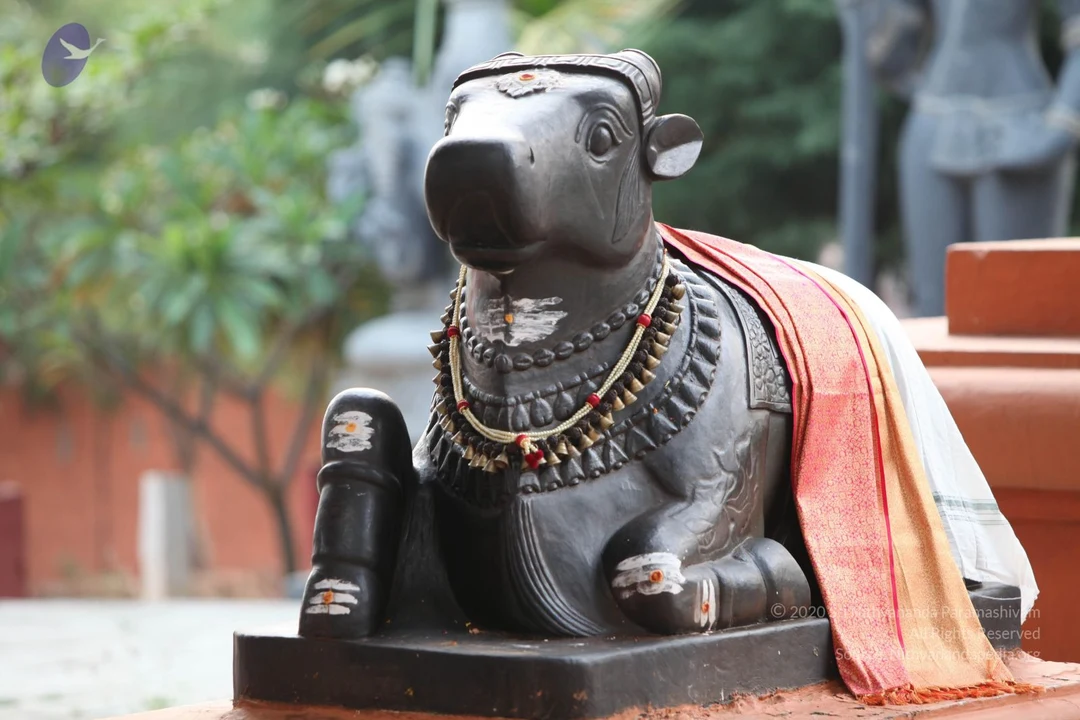
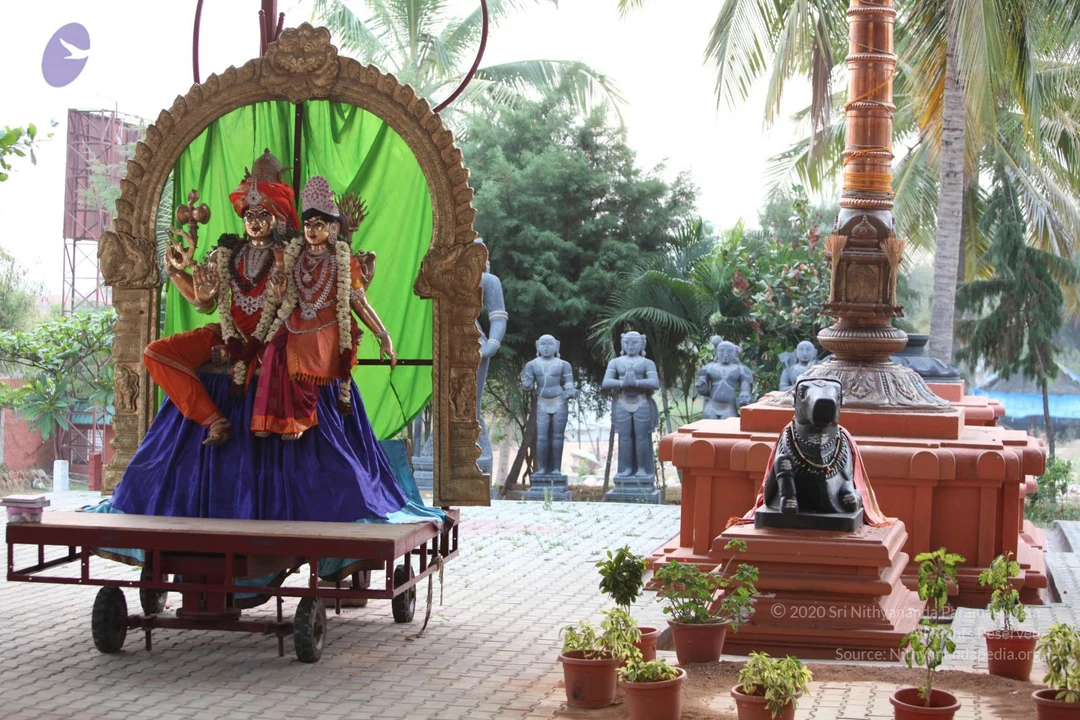
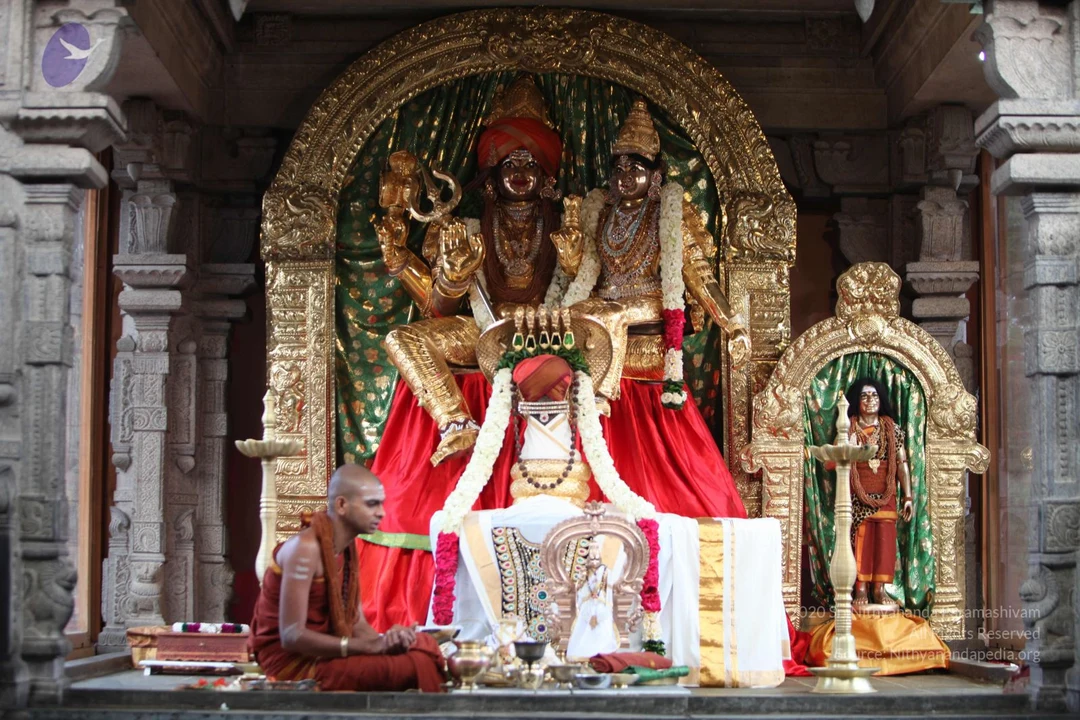
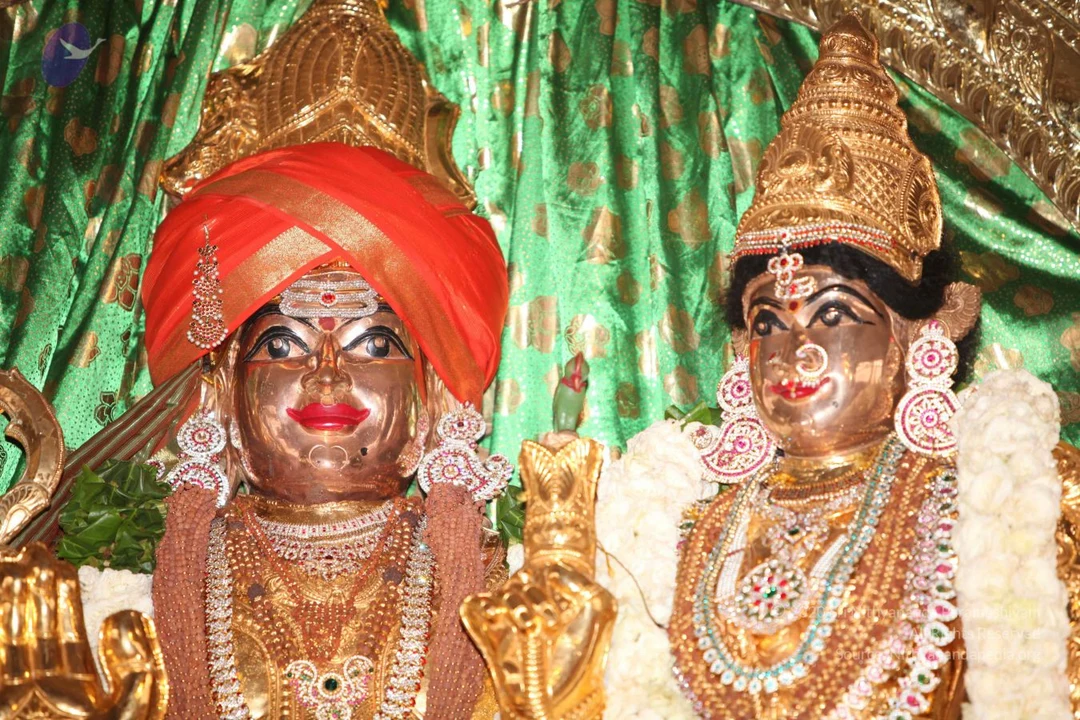
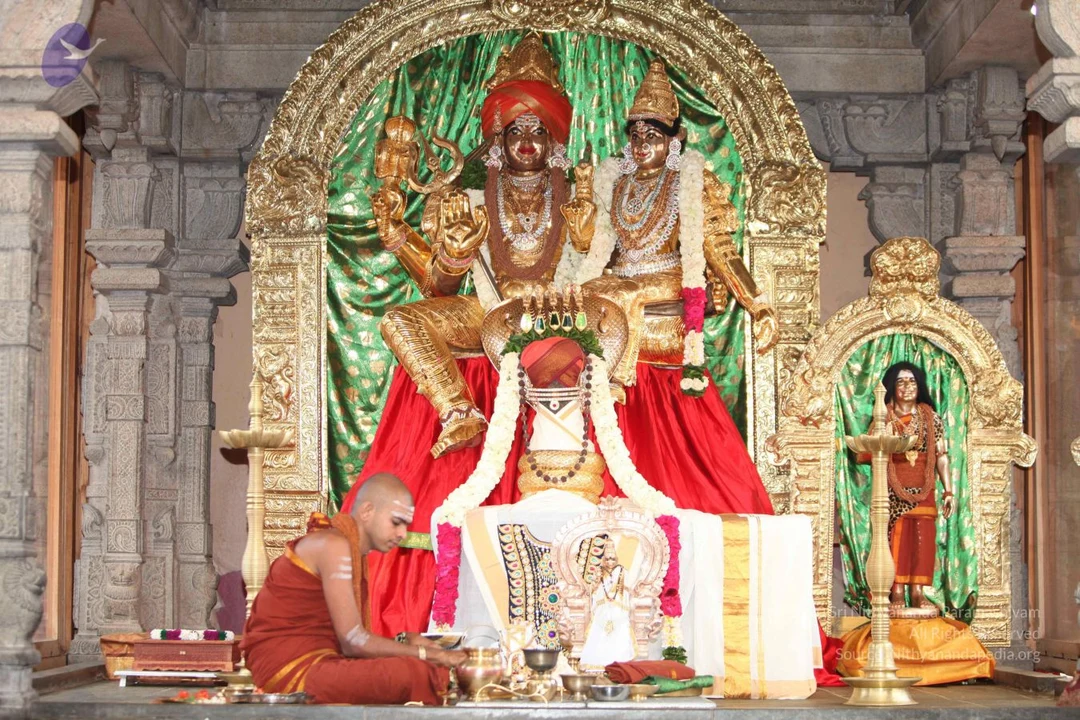
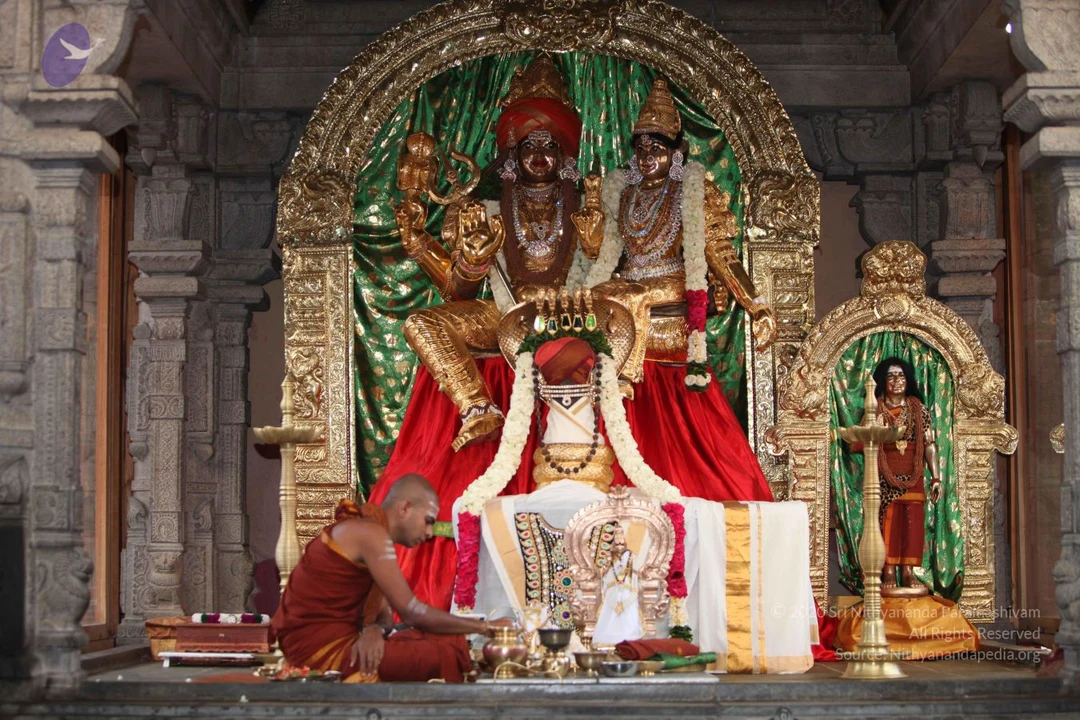
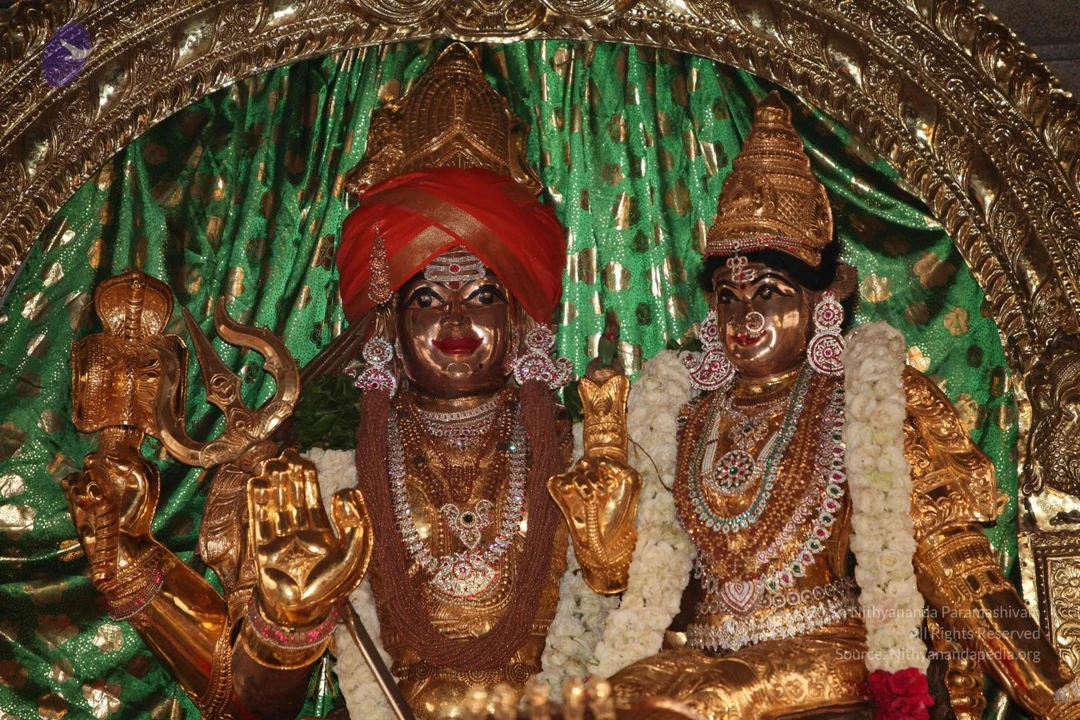
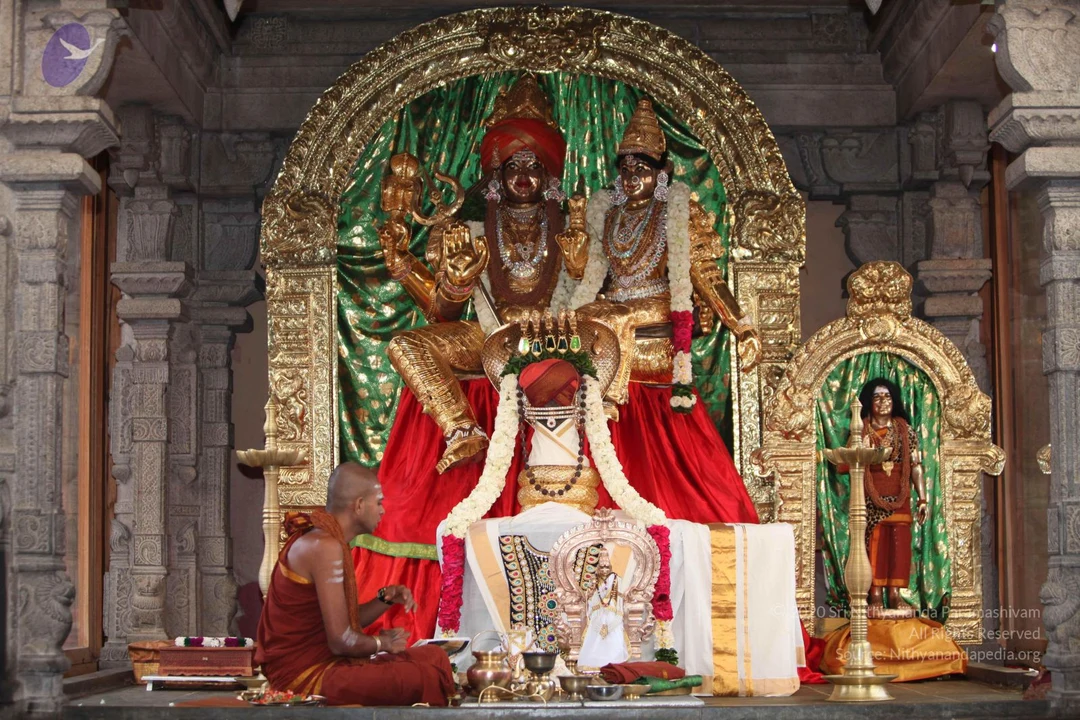
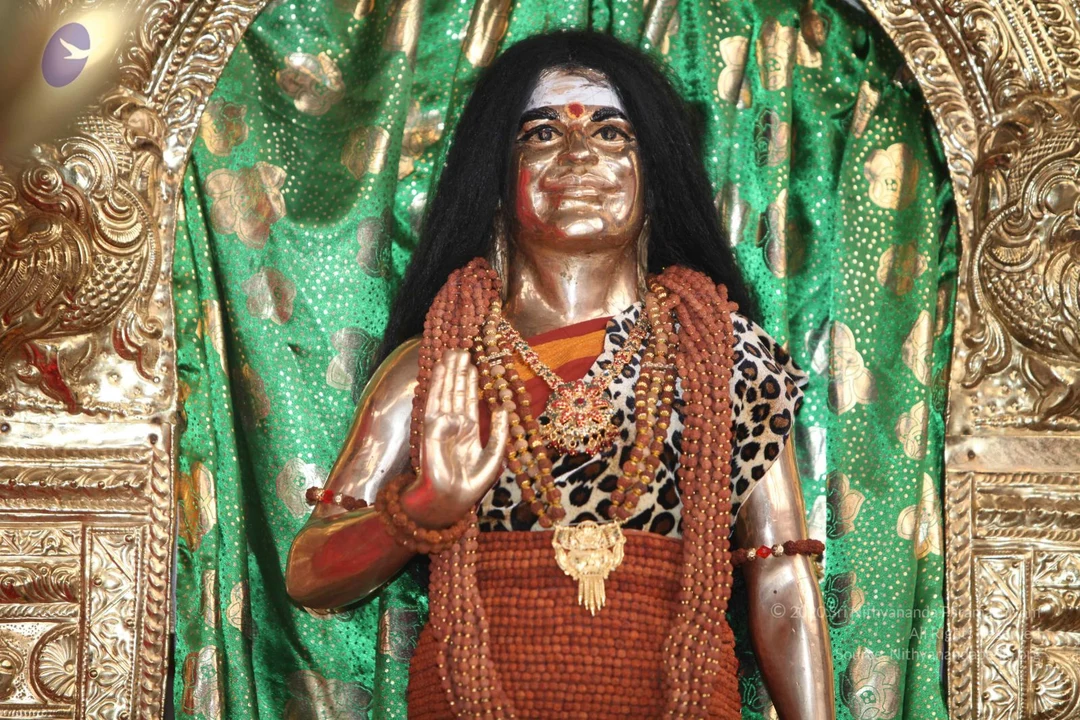
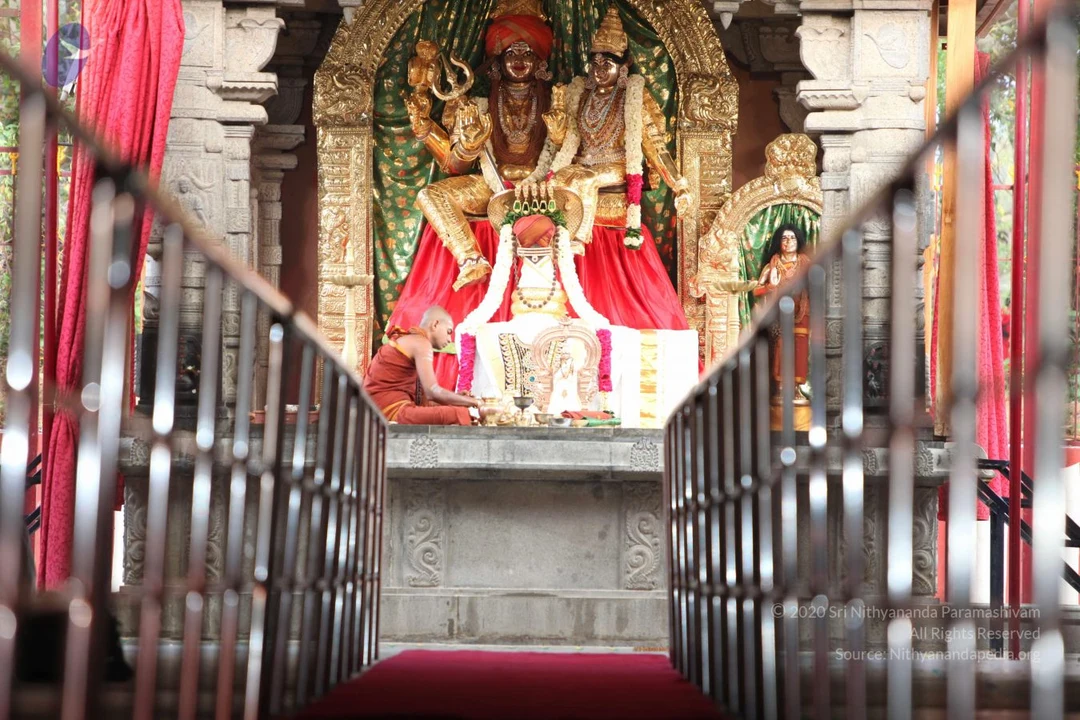
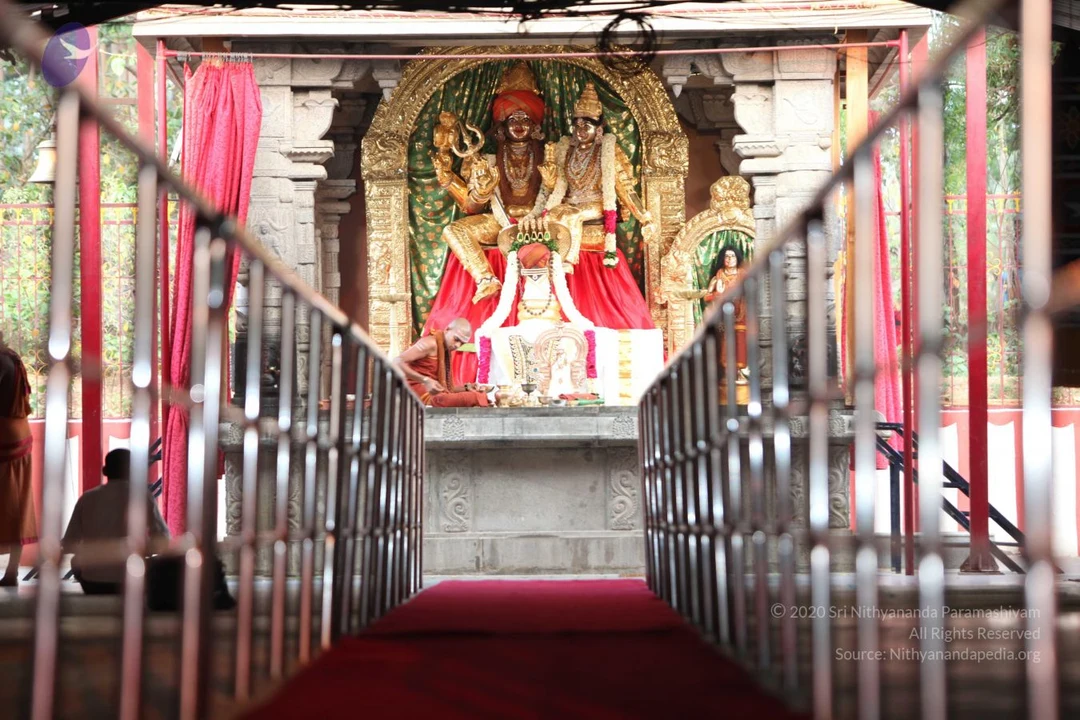
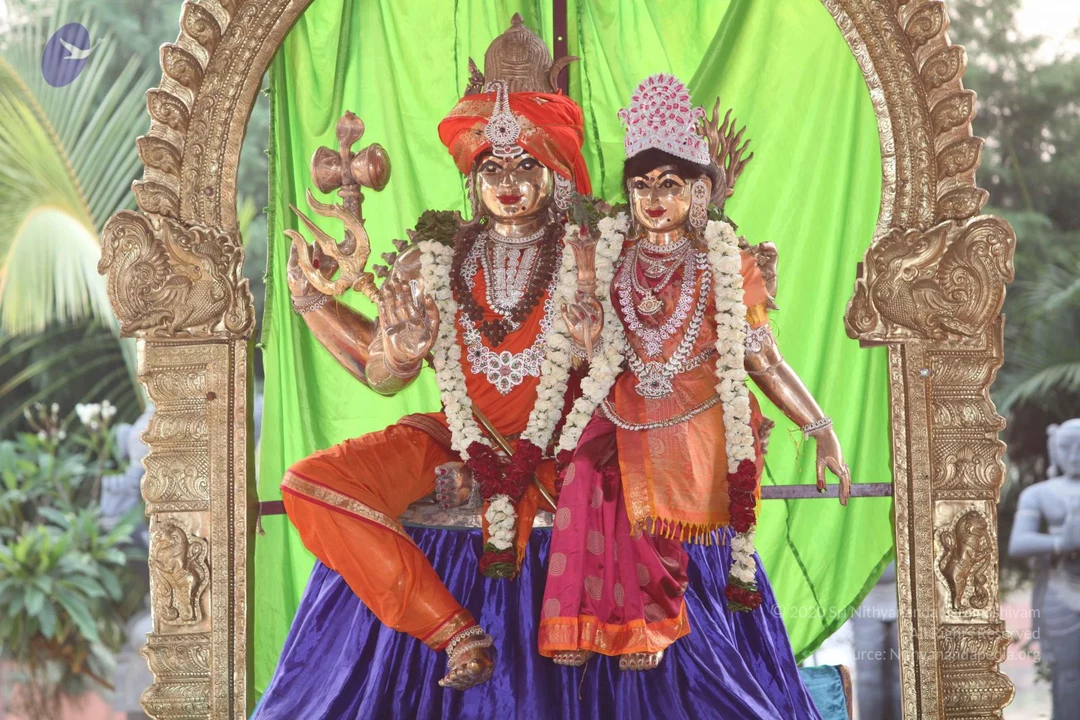
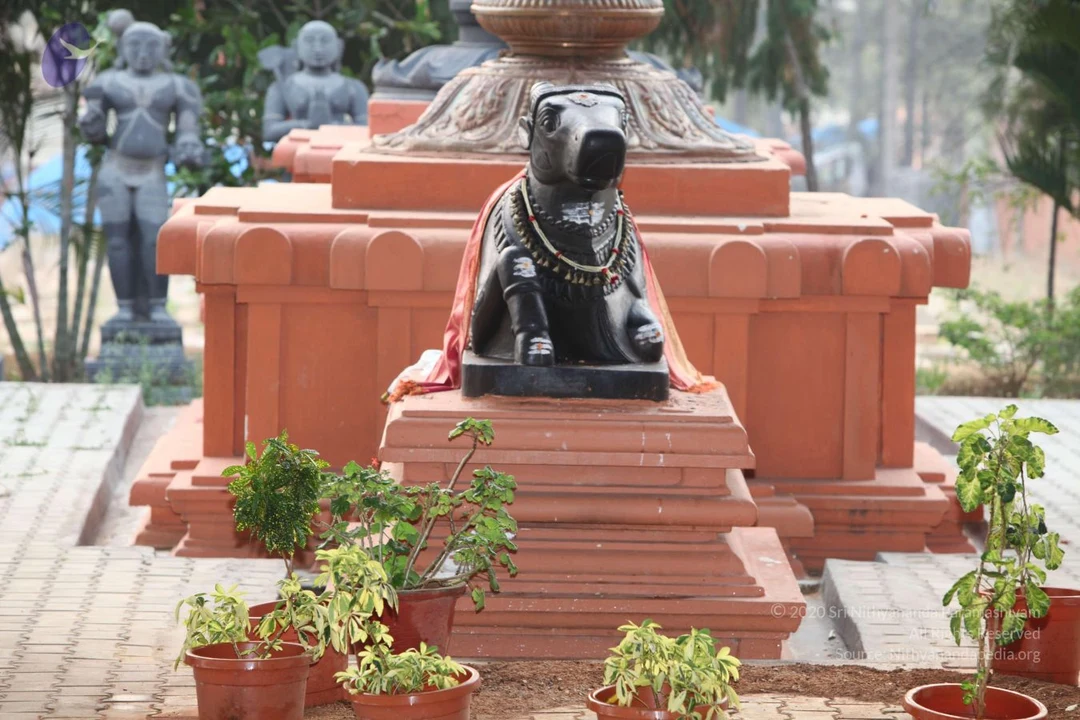
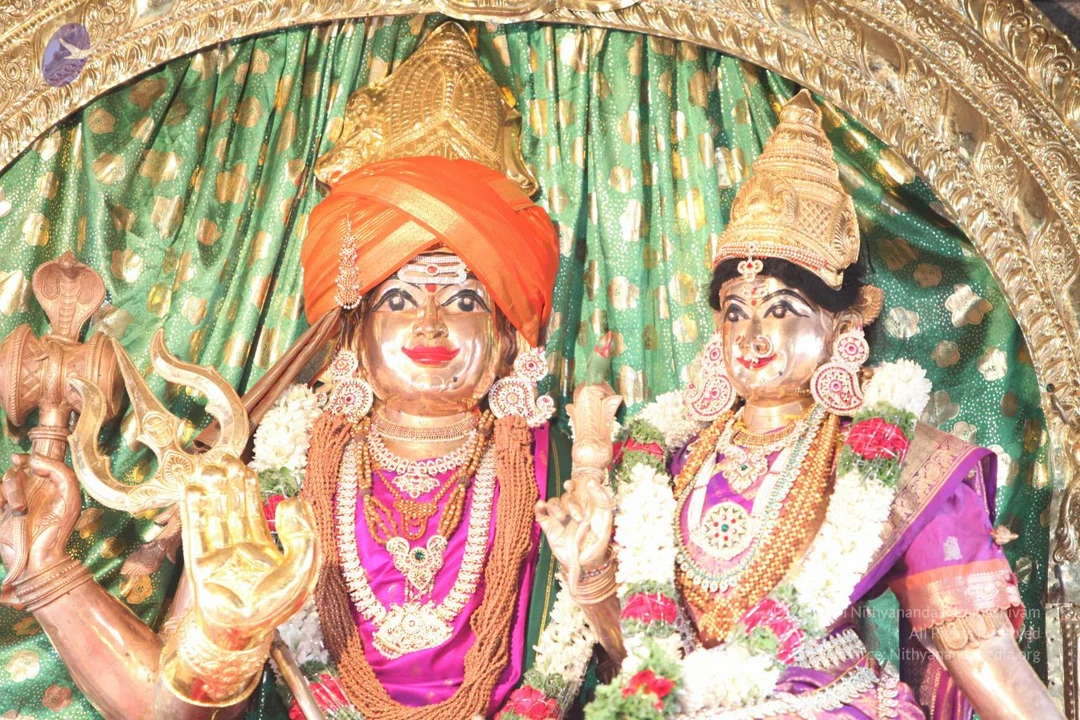
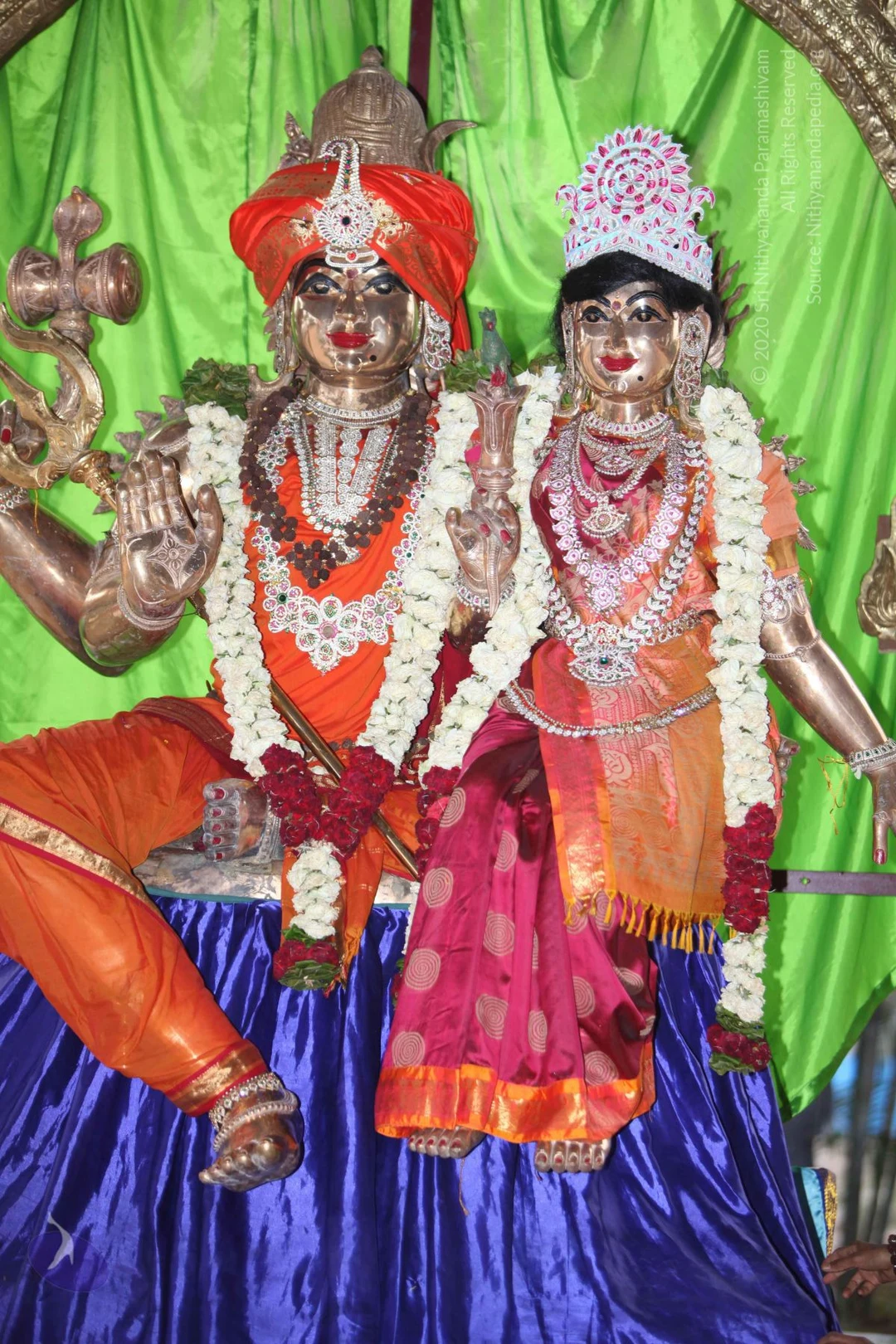
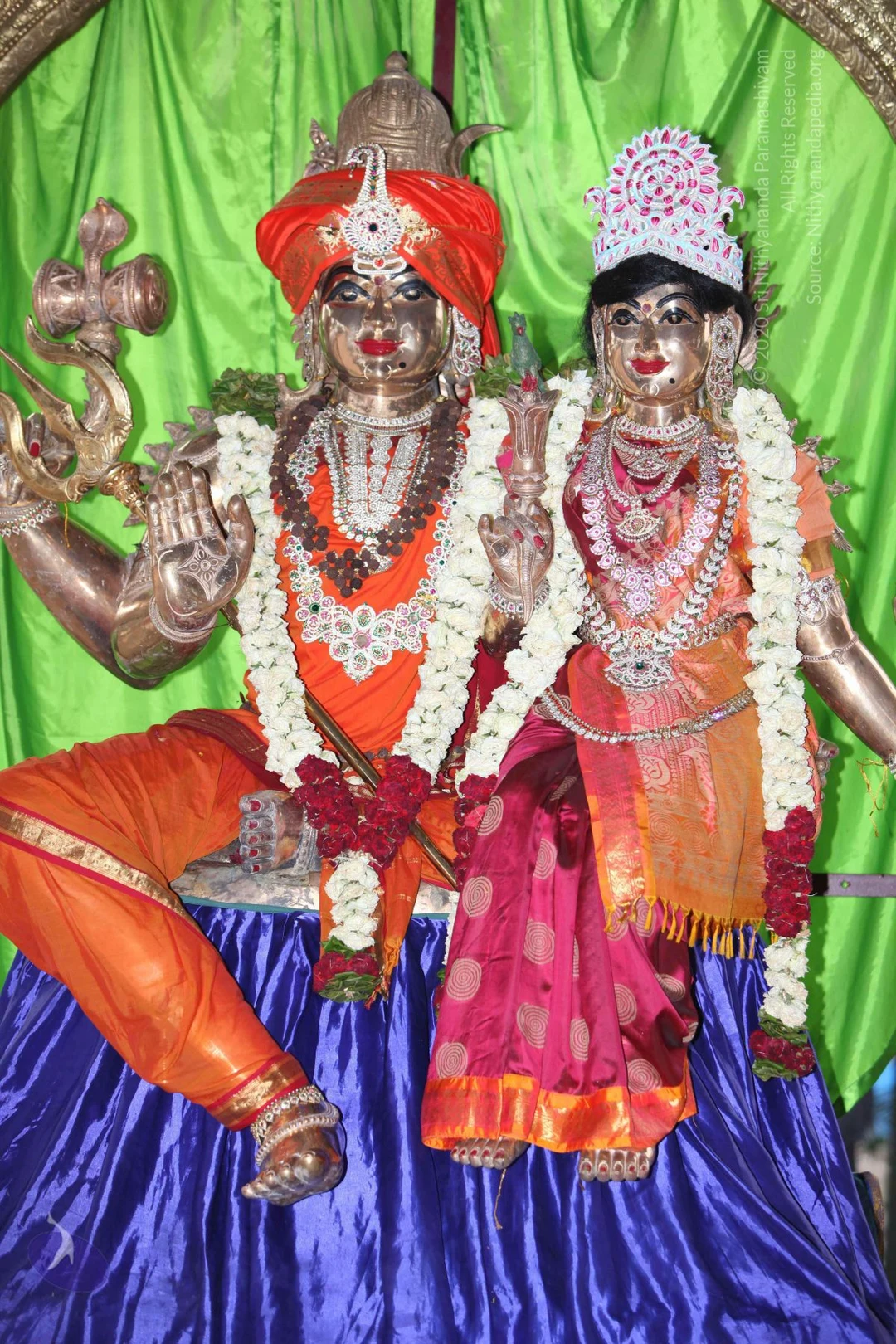
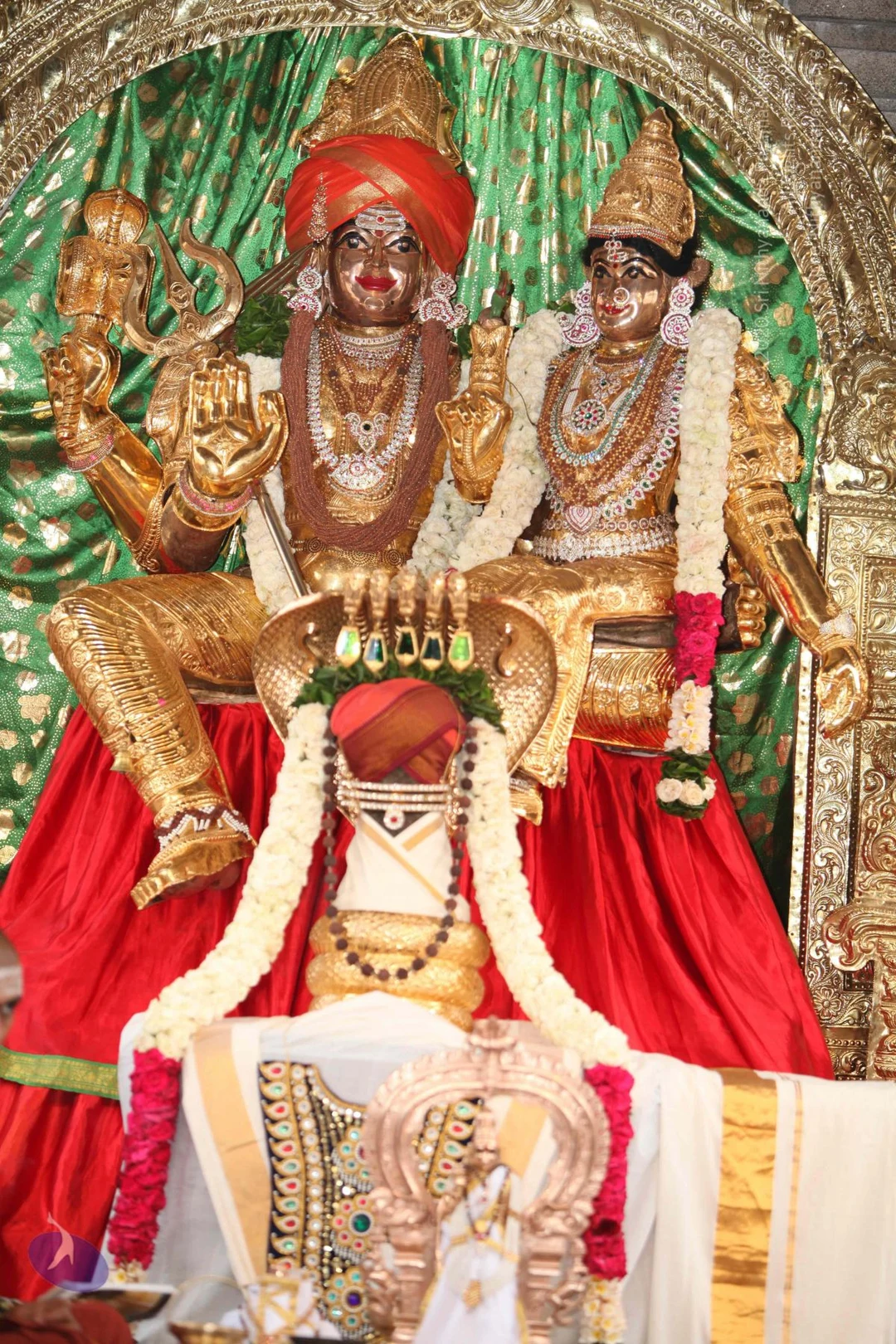
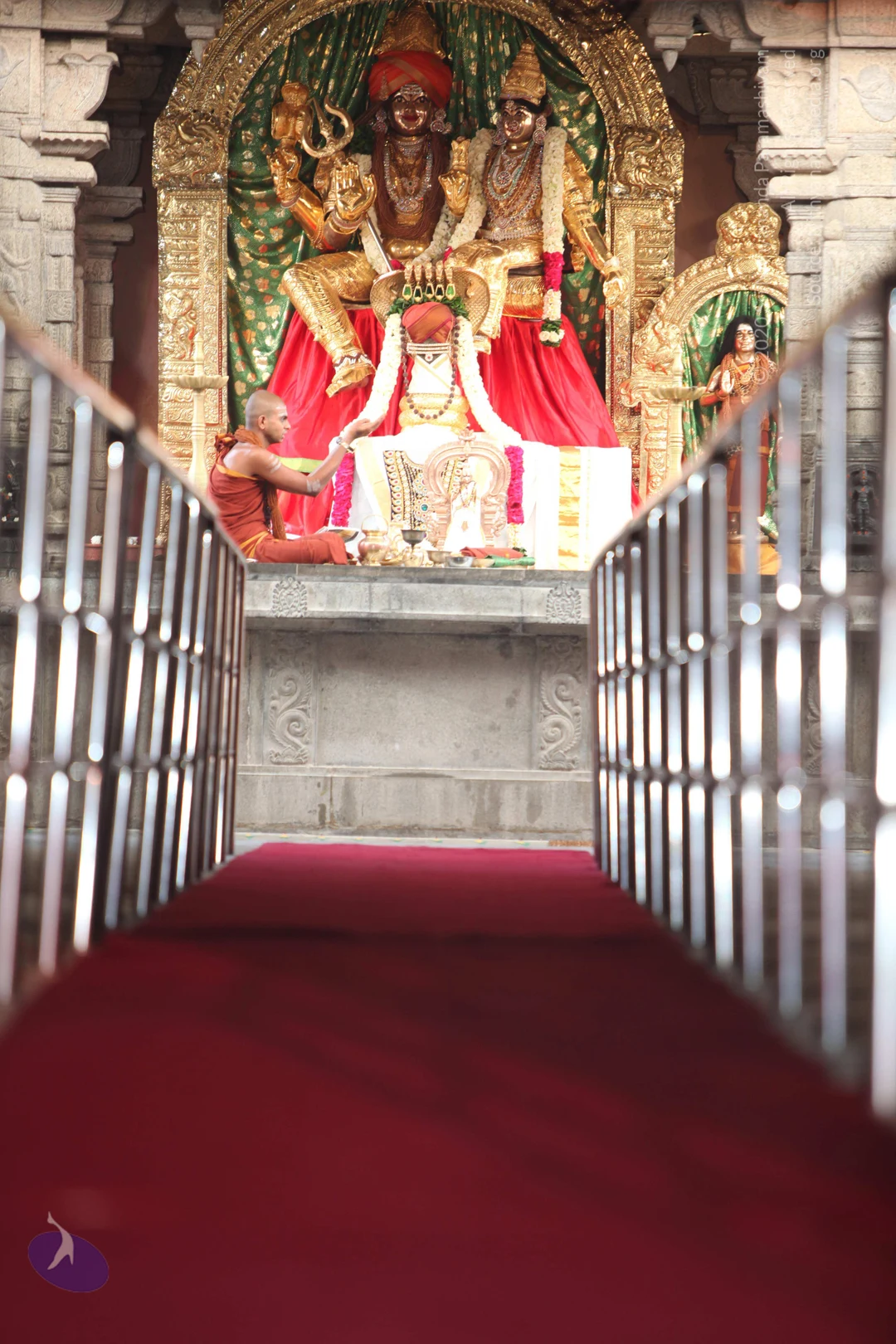
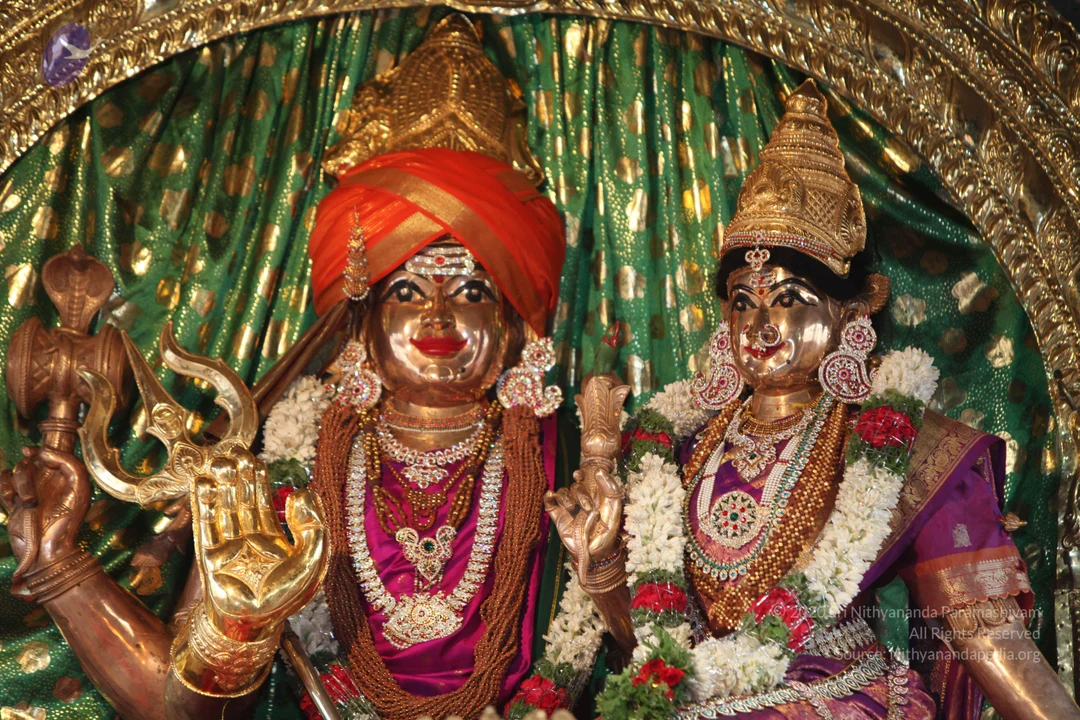
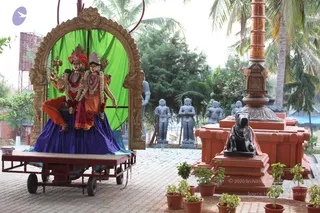
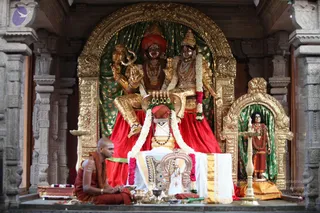
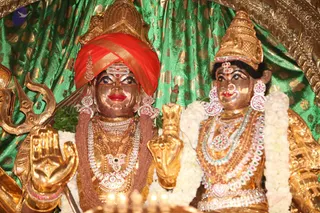
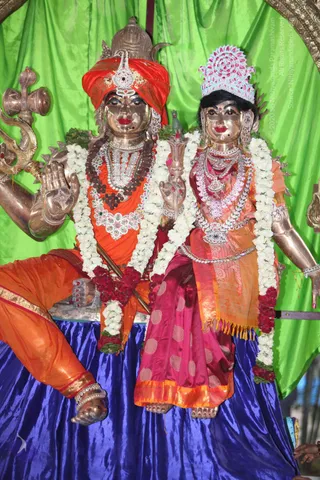
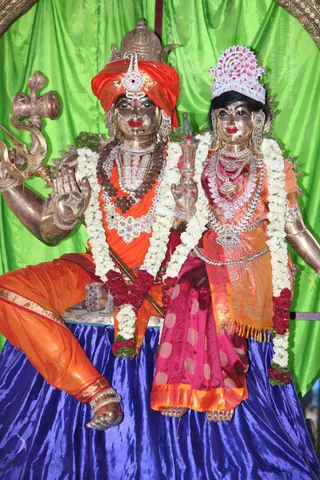
Two copper-toned deity murtis stand side by side before a green draped backdrop. The figure on the left has a red-orange turban with a jeweled ornament, a rudraksha-style brown bead mala, a white flower garland and an orange garment; one hand raises a trident-like staff and the other is open. The figure on the right wears a silver-and-pink jeweled crown, layered gold and pink necklaces, a pink-red garment and a white flower garland. A small bird perches near the right figure's hand. Both murtis are decorated with jewelry and garlands, and the photograph is taken as an image of statues rather than living people.Outdoor photograph of a life-size painted metal murti of Shiva and Parvati seated side by side on a deep blue draped platform inside an ornate golden arch frame. The four-armed Shiva wears an orange-red turban, a crown, layered white and red garlands and a rudraksha mala, and holds a trident and a snake-like emblem. Parvati wears a pink crown, an orange-and-magenta sari, white garlands and layered silver necklaces. A bright green cloth hangs behind them, with palm fronds and flowering plants around. No physical people are present.A large black stone statue of Nandi, the bull, seated on a dark plinth outdoors. The bull wears a layered necklace of beads and tasseled bells, a red-and-white thread garland, and a dark crown-like headband with a small orange-and-white mark on the forehead. Horizontal white ash stripes mark its legs and chest. An orange, gold and white cloth is draped over its back. Behind it, blurred green trees, a red brick wall and other grey statues are visible.Outdoor temple courtyard with paved brick floor. Centre-left, a painted two-figure murti stands on a low wooden cart with red wheels, set in a gold arched frame against a bright green cloth backdrop. The figures wear red, orange and purple garments, large garlands, beaded necklaces and tall crowns; one holds a raised staff-like object. Behind them are grey stone standing sculptures with hands folded, and palm trees. Right, a tall ornate brass-and-wood dhwaja-style pillar stands on a red stepped base beside a black Nandi bull statue draped with a garland and cloth, with potted plants in front. A blue-grey canopy and building edge appear at upper left.Photograph of a temple shrine with a large gilded deity murti pair seated on a red-draped pedestal, one figure wearing a red turban and holding a trident, the other with a crown and rudraksha-style necklaces, garlanded with white and red flower malas. A smaller figure in a red turban and white garment sits in front of a white-draped altar with a seated image. A bald shirtless priest in saffron cloth sits cross-legged at the lower left beside brass pots and oil lamps on the stone platform. A smaller gilded image stands in a niche at right. Green silk curtains frame the carved gold arch.Golden deity murti pair in a shrine against a green and gold brocade backdrop. The figure on the left wears a red and gold turban, has a trident-like staff at its side, rudraksha-style brown beads and layered gold and white jewelled necklaces, with one hand raised in abhaya gesture. The figure on the right wears a golden crown, large jewelled earrings, multi-strand gem necklaces and a white flower garland, holding a lotus-like object. Small green leaves and a jewelled ornament sit among the figures.

PadaPuja
73 photosSource gallery
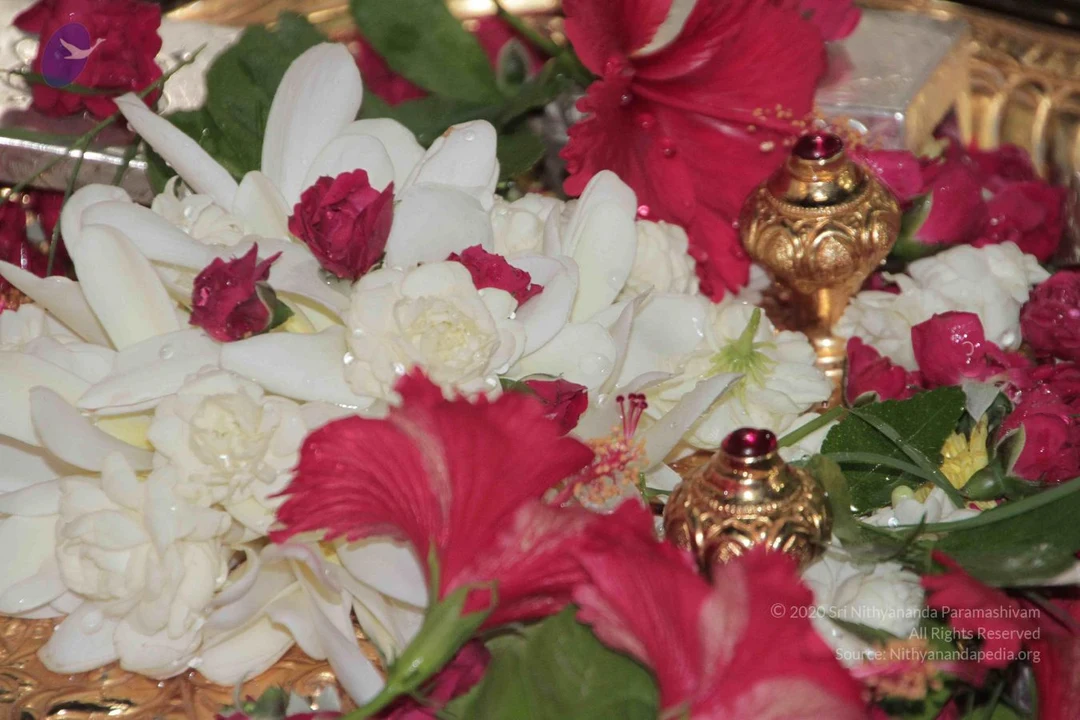
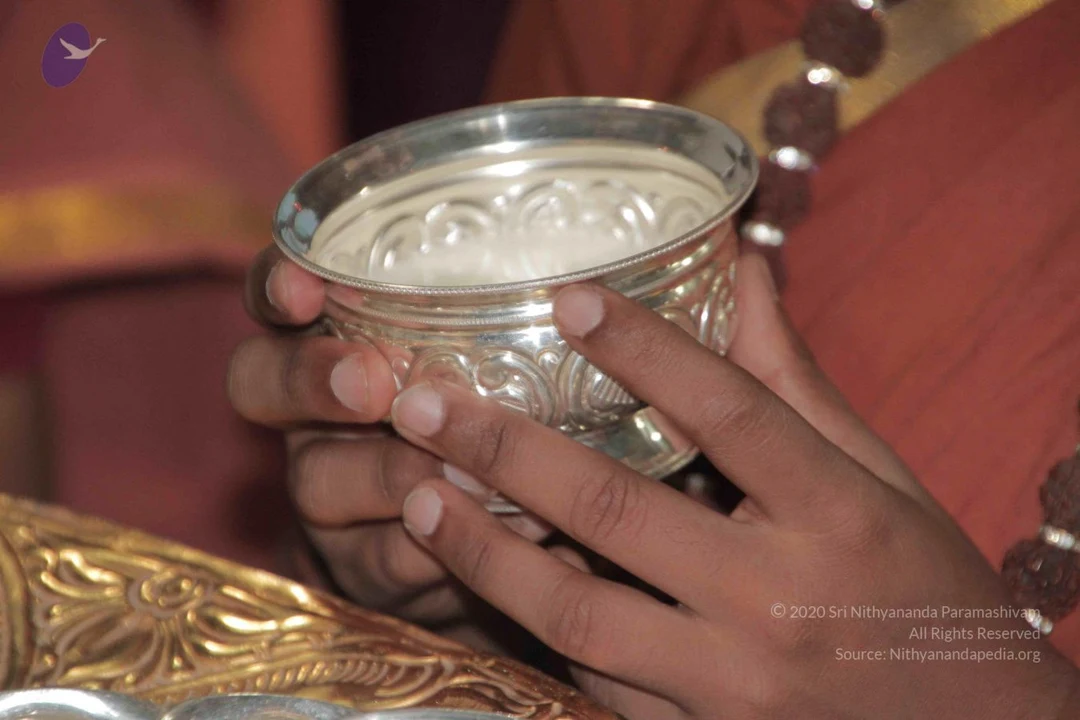
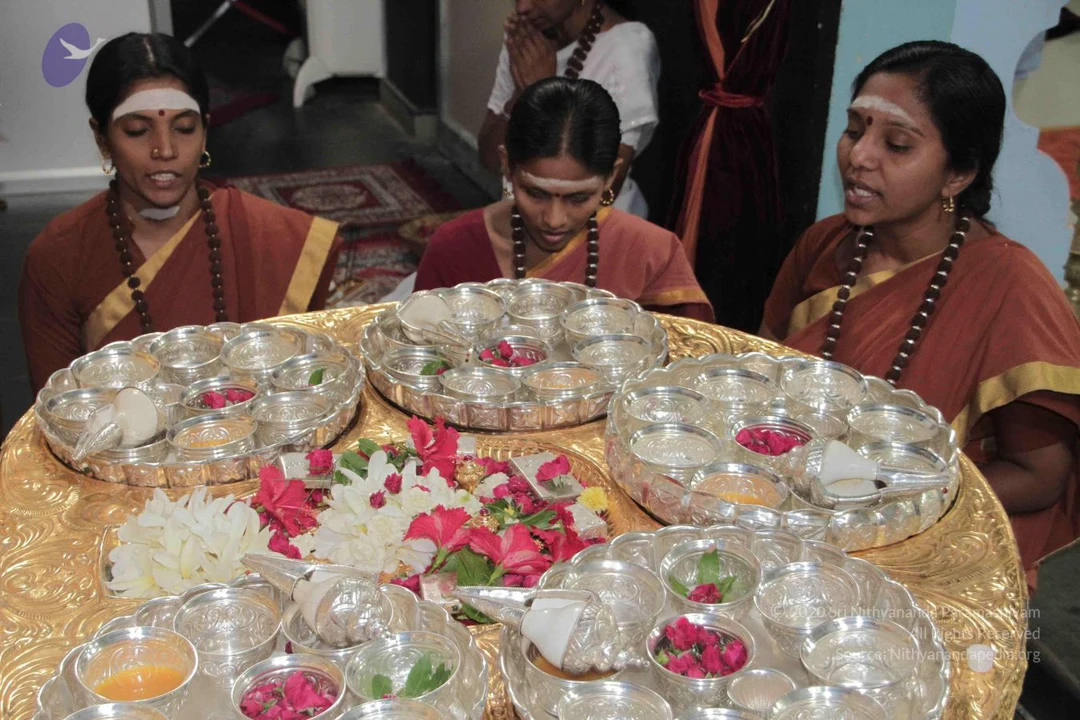
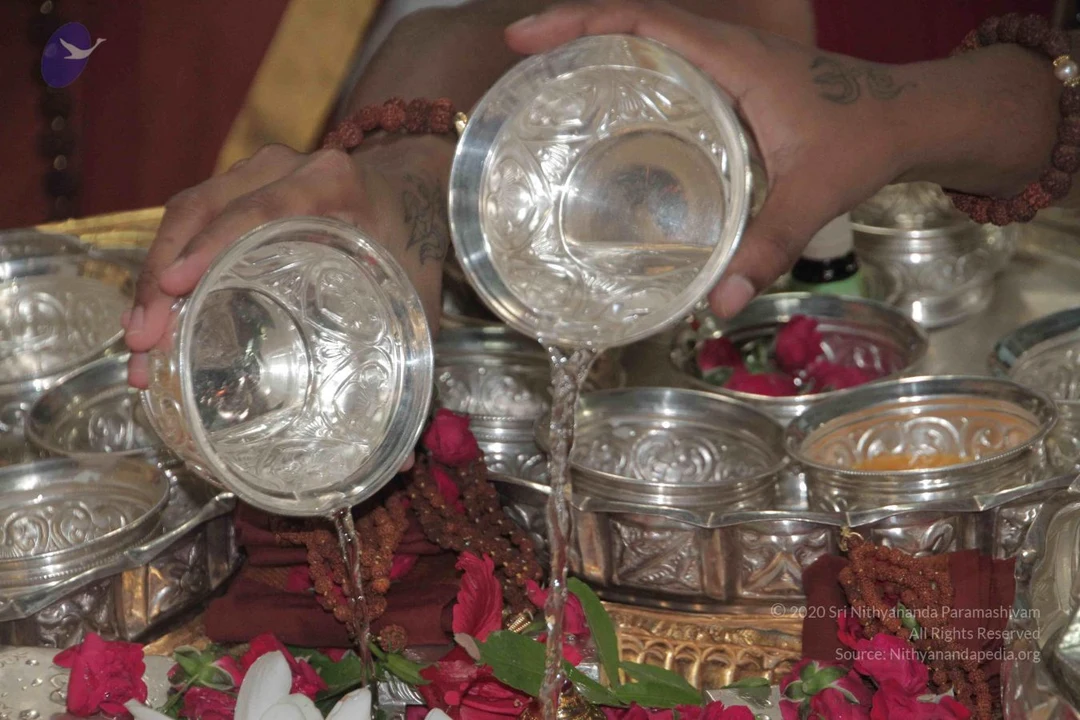
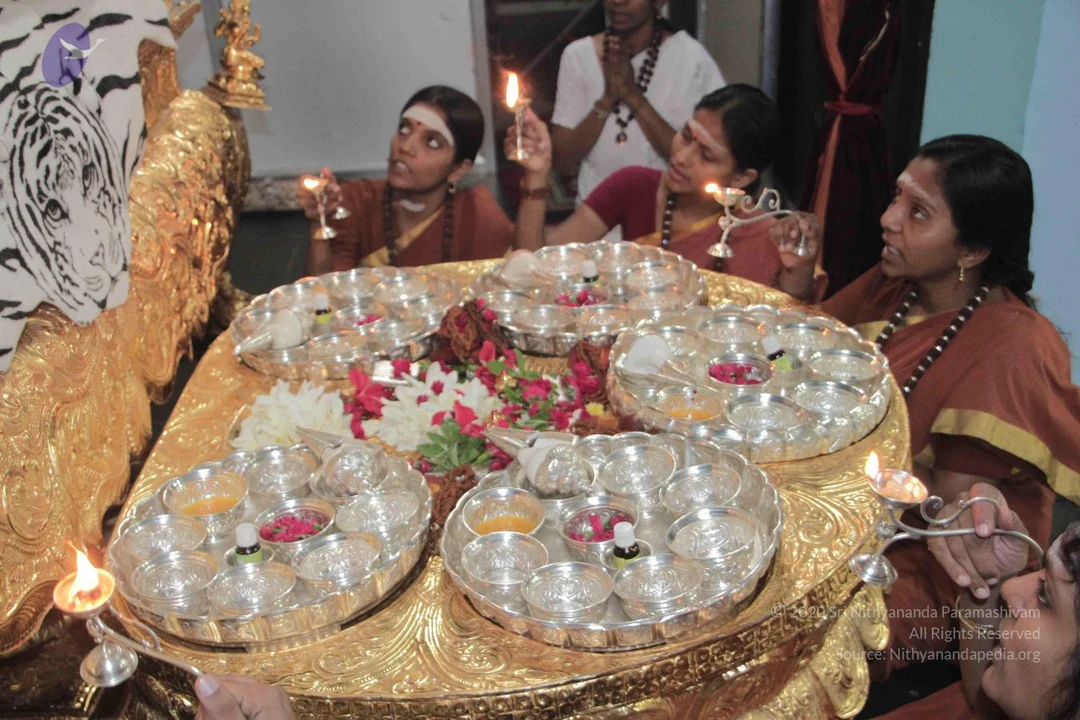
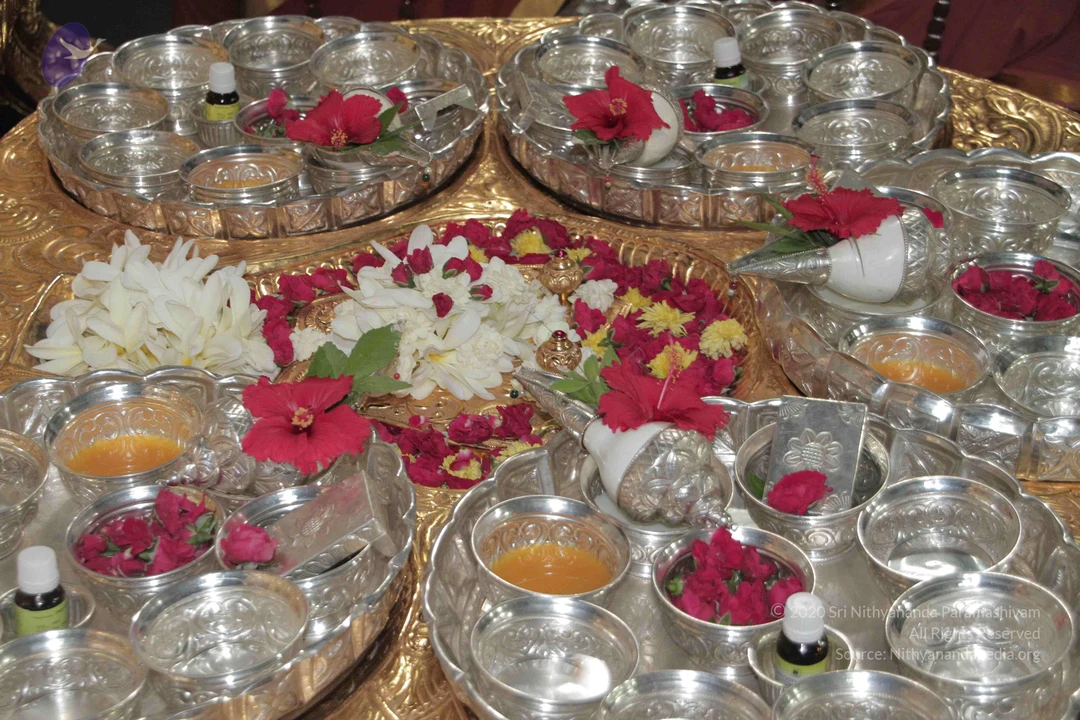
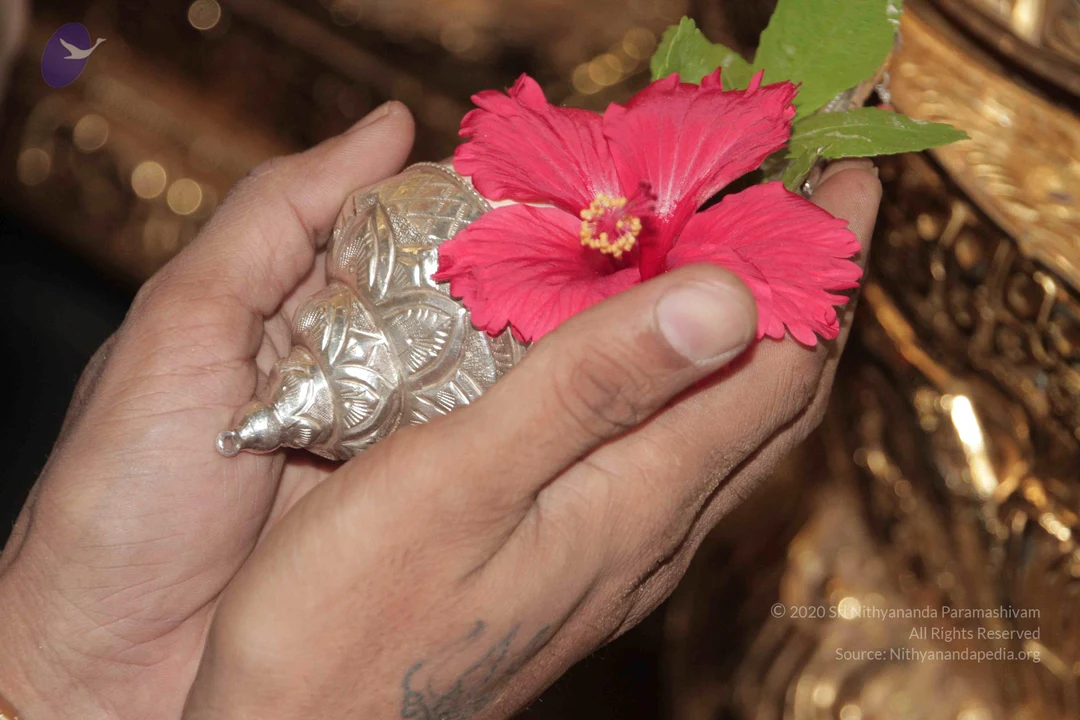
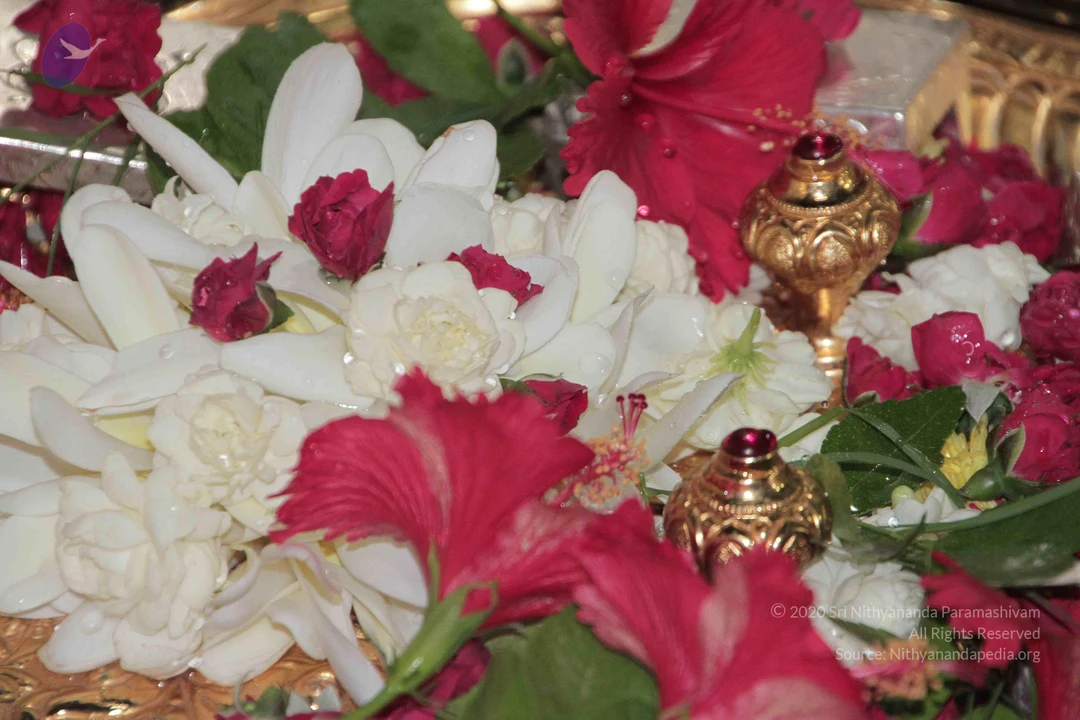
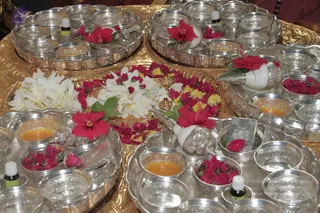
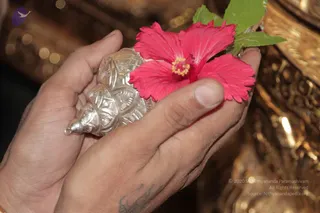
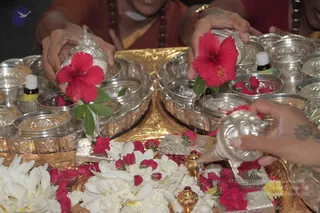
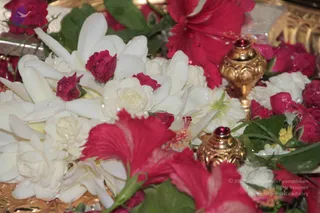
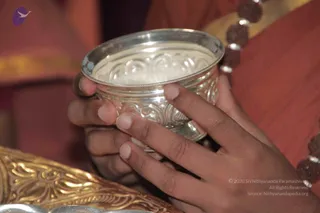
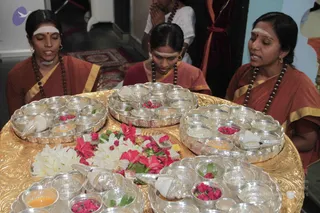
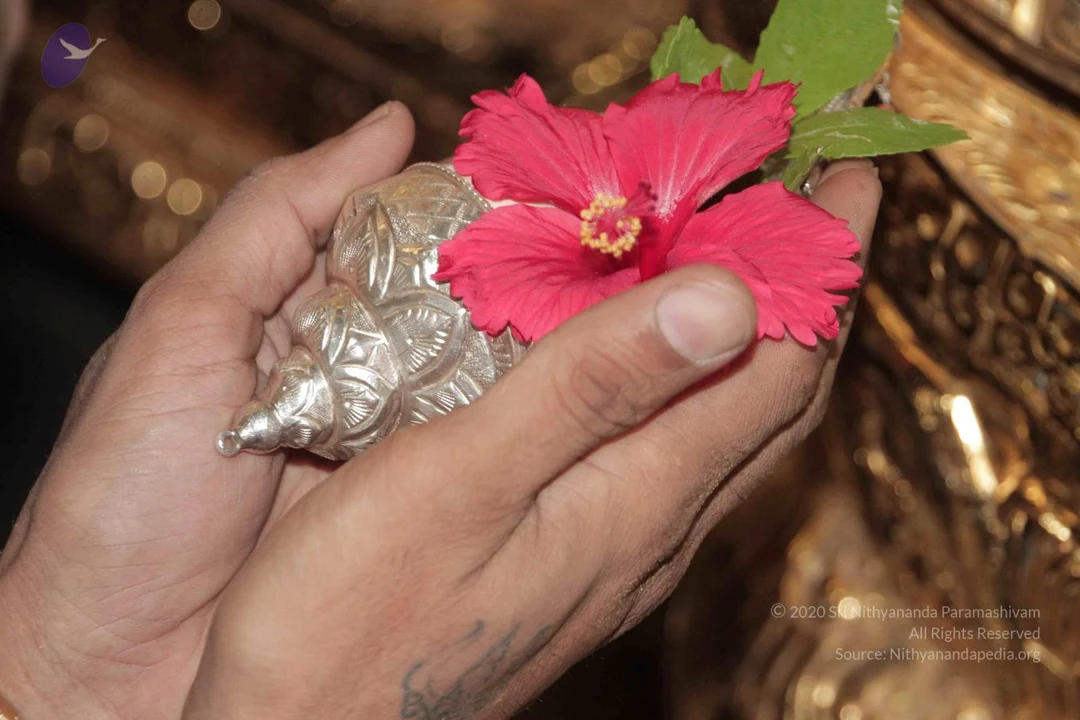
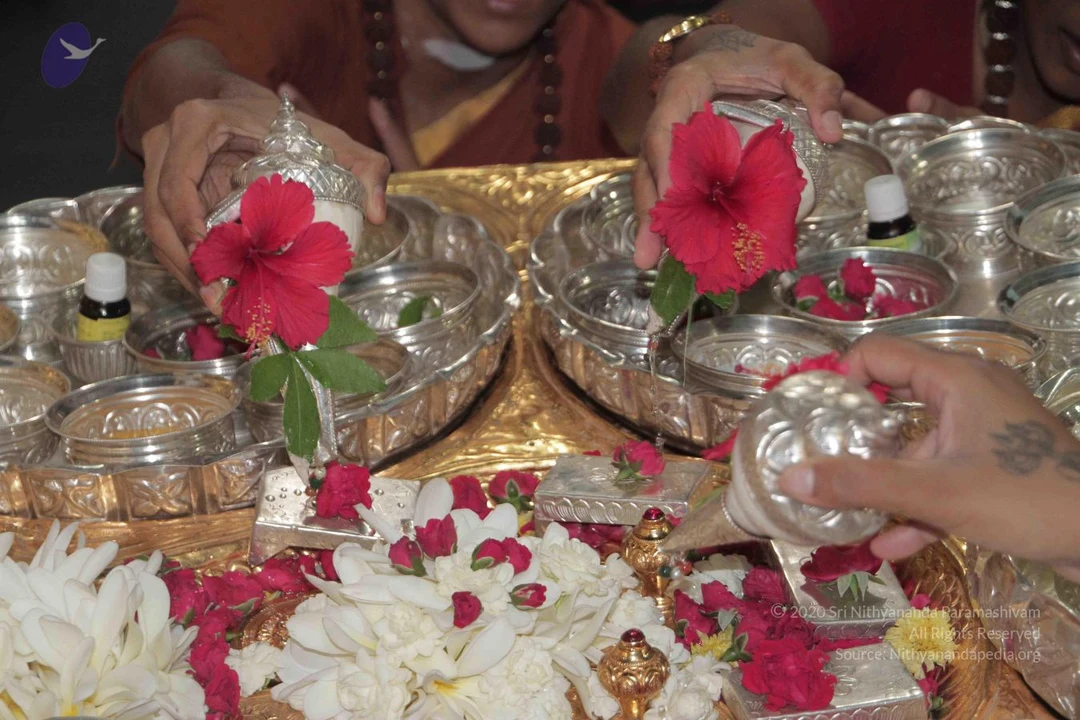
Overhead view of a ceremonial puja arrangement on a gold-toned tray. Silver bowls and dishes hold yellow-orange liquid, red hibiscus flowers, and loose red and yellow petals. White jasmine-like flowers form a heap in the centre. Small white conch-shaped vessels with red hibiscus blooms stand among the silver offerings, and small glass bottles of oil sit at the edges. No people are visible, and there is no visible throne or person identified as a person.Close-up photo of two hands cupping an ornate silver conch shell (shankha) with engraved floral and leaf patterns, topped by a bright red hibiscus flower with yellow stamens and green leaves. The background is blurred golden ornamental metalwork. No person's face is visible, and no identifiable a person is shown.Close view of a ritual puja tray arranged with silver bowls and containers, red hibiscus flowers, white plumeria-type flowers and red rose petals on a gold-coloured tray. Two people in orange-brown and saffron clothing with rudraksha beads reach in with their hands, one holding a silver vessel with a hibiscus bloom and another pouring from a silver spouted vessel. Small glass bottles of oil or liquid stand among the bowls.A close-up photograph of a floral offering arranged on a gold tray. White jasmine blossoms and white gardenia-like flowers fill the left and centre, mixed with small deep-pink rosebuds and large red hibiscus blooms with prominent stamens. Two ornate gold pot-shaped vessels with red gem-like tops sit among the flowers, and green leaves frame the arrangement. No people are visible, and the image shows only flowers and vessels, so this reads as a puja or abhishekam offering rather than any identifiable person.Close-up photo of a pair of hands holding an ornate silver bowl filled with white liquid. The hands belong to a person wearing a rudraksha mala of brown beads with silver spacers, and orange-red cloth is visible behind. A gold-embroidered cloth edge appears in the lower left corner, and a silver vessel rim is at the bottom. The scene suggests a ritual offering.Three women in saffron-orange saris with gold borders stand around a large gold tray holding many small silver bowls of pink and red flowers, white flowers, and orange liquid. Each woman wears a white forehead mark, rudraksha mala beads, and gold earrings. A man in white clothing with a rudraksha mala stands behind them with hands pressed together in prayer, and a red-and-gold cloth hangs to one side. The setting appears to be a ritual puja preparation with offerings arranged for worship.

Satsang

66 photosSource gallery
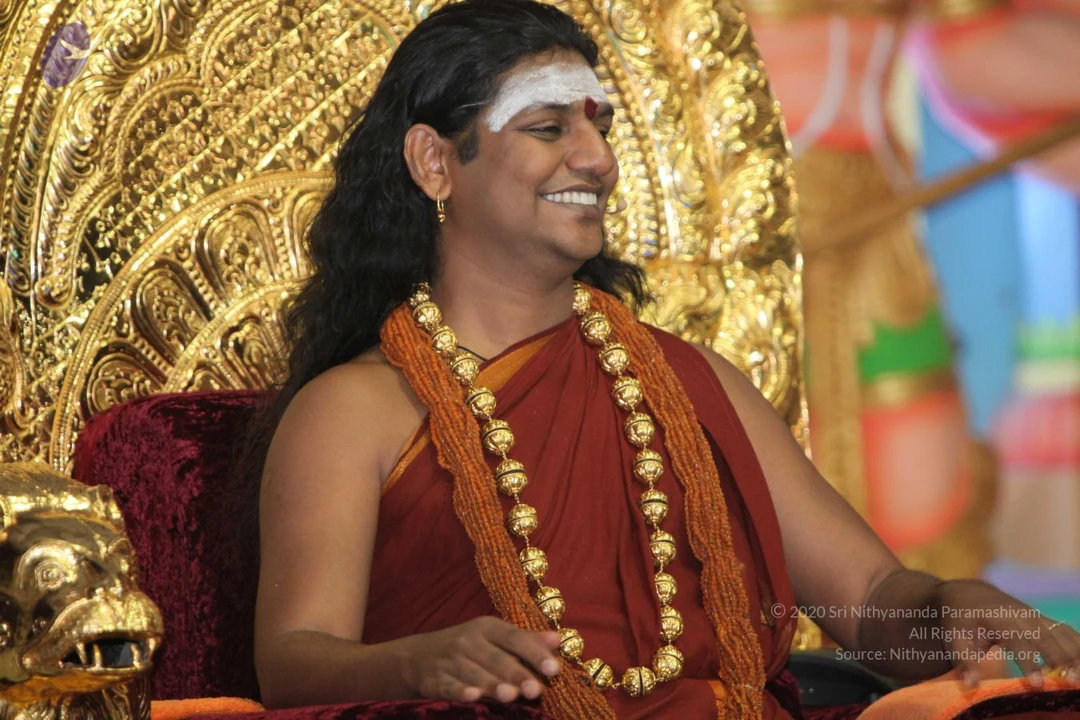
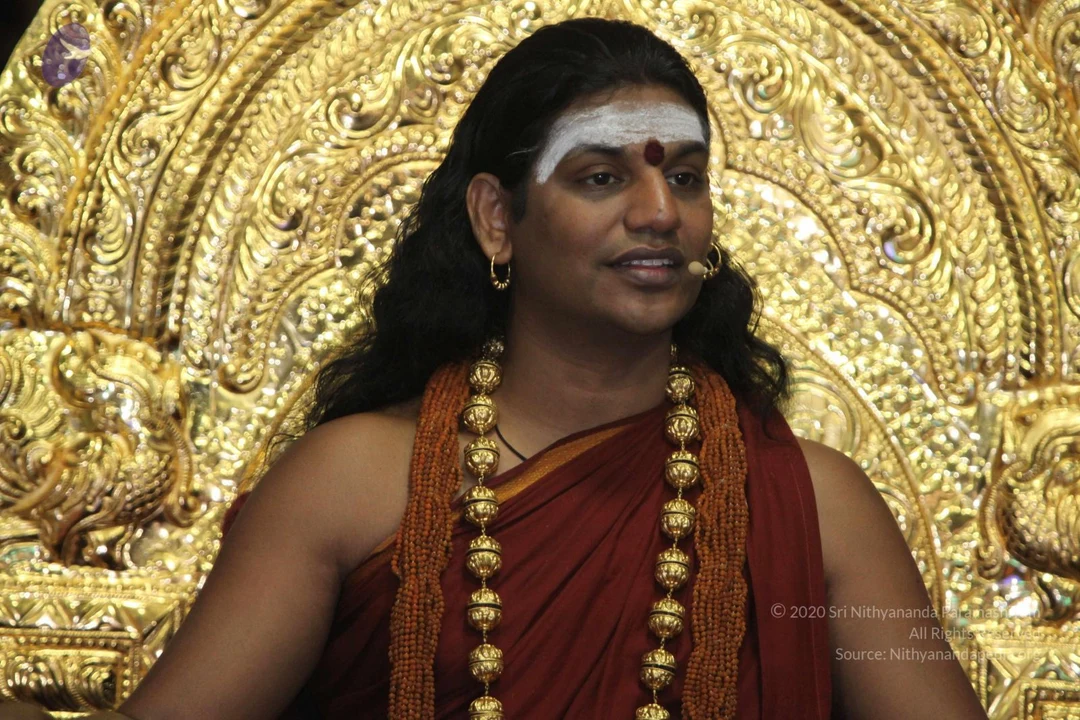
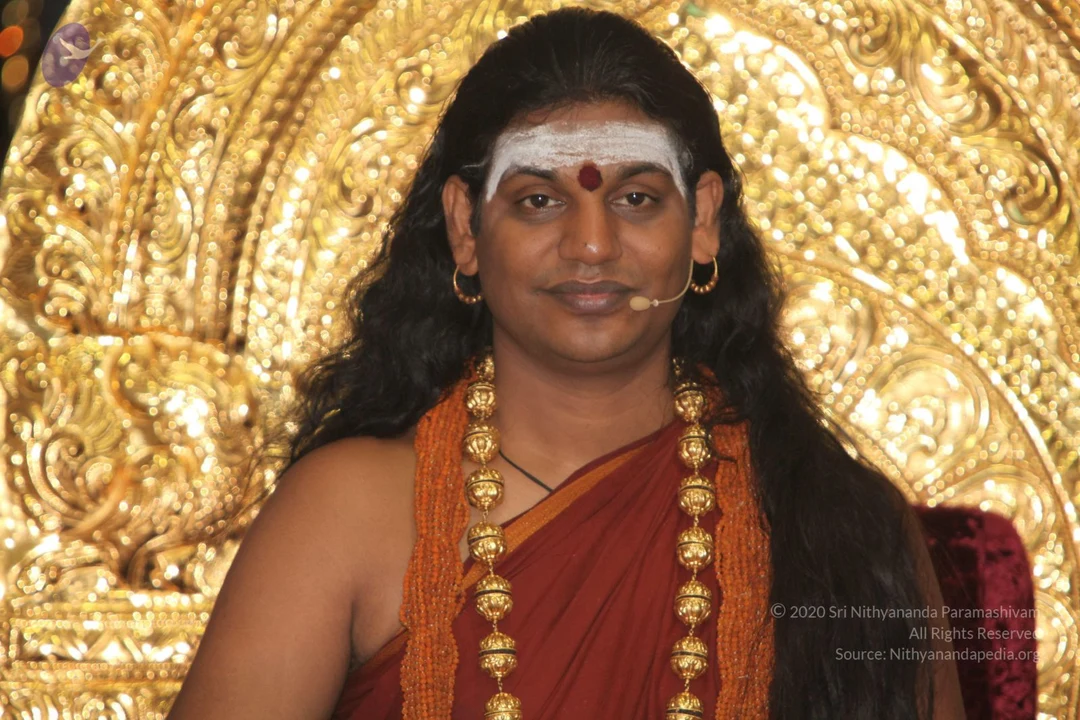
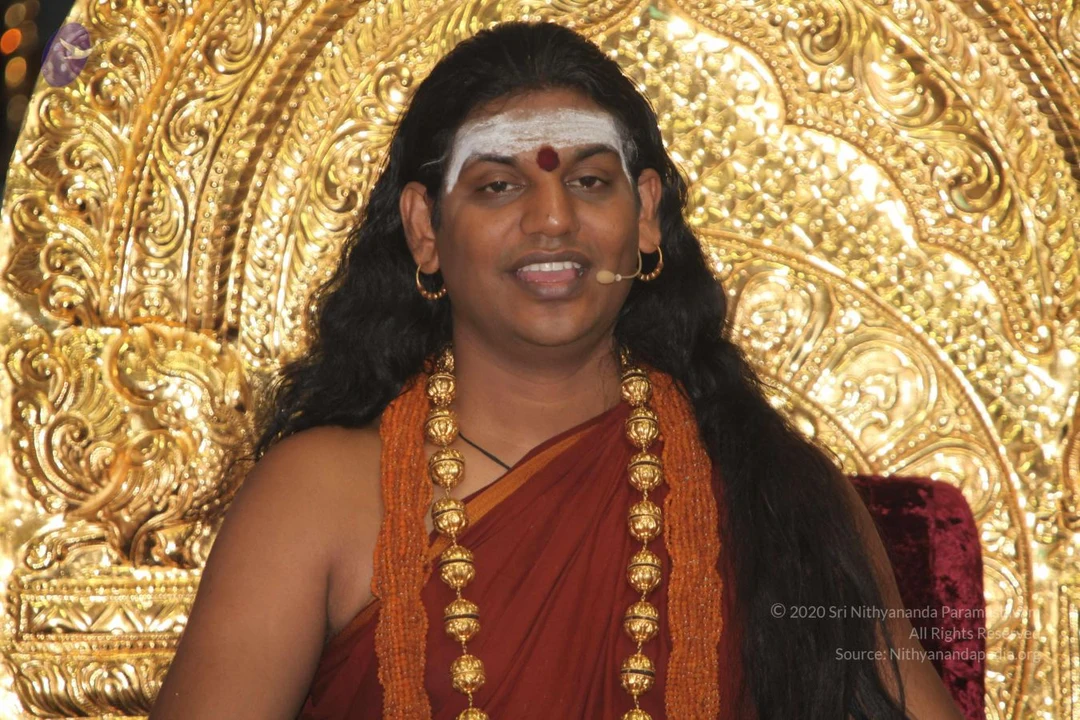
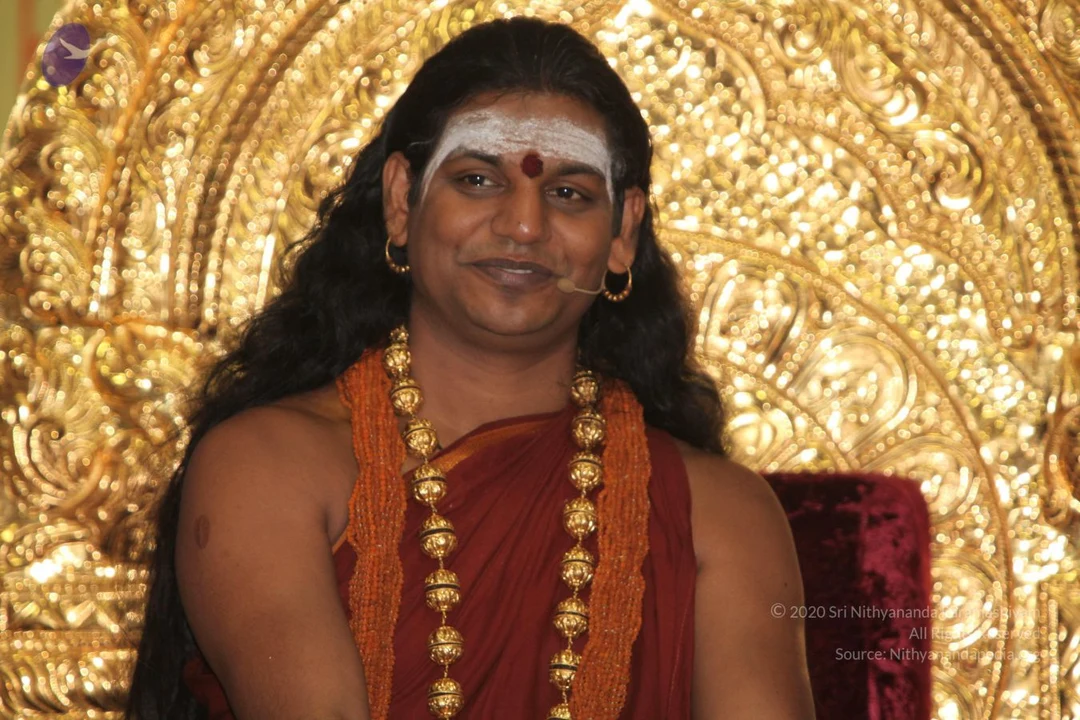
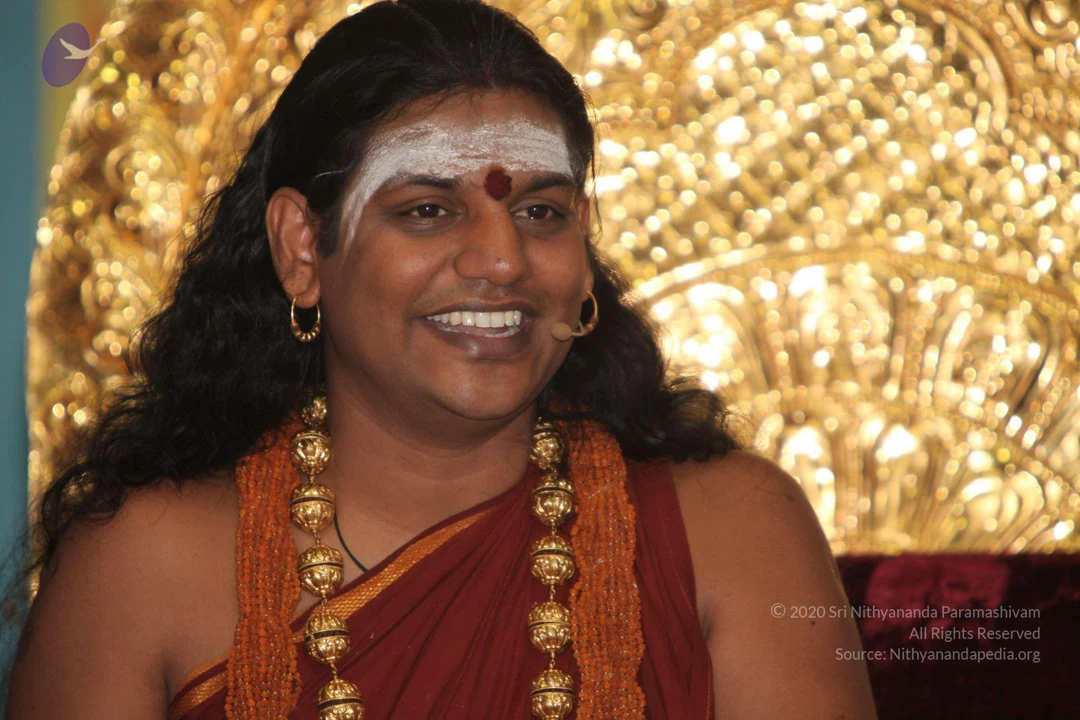
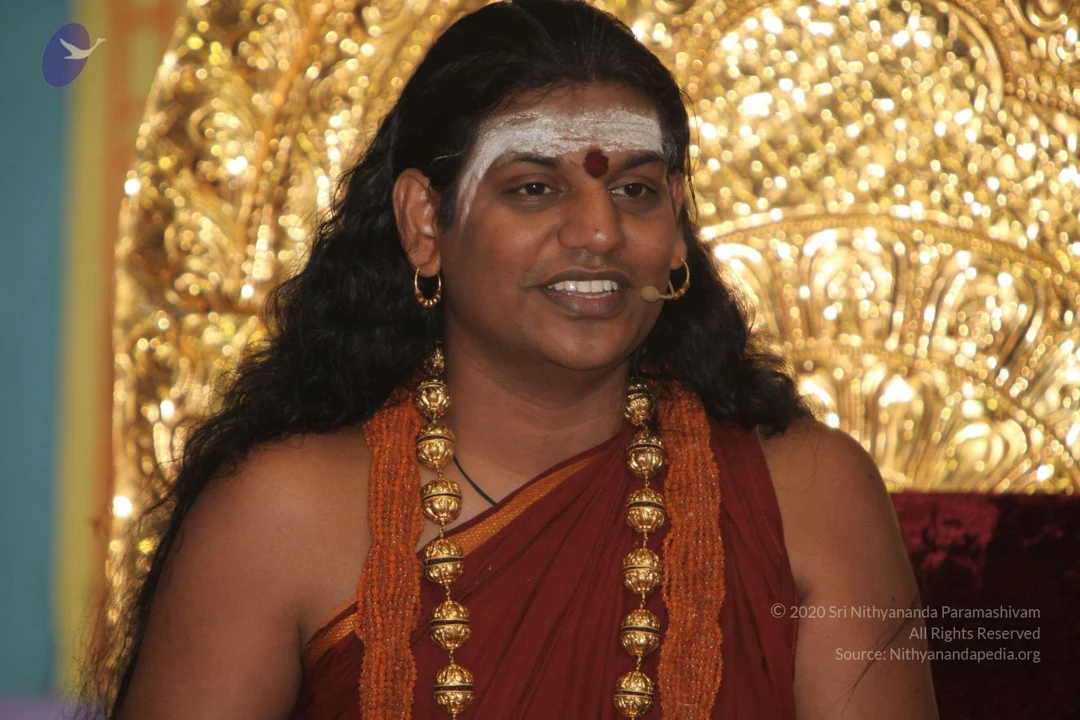
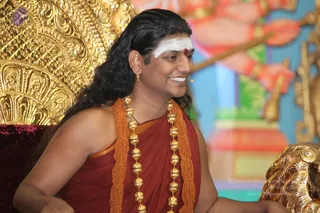
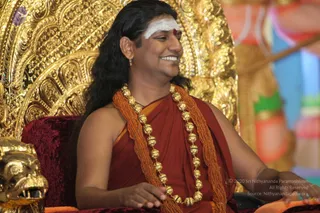
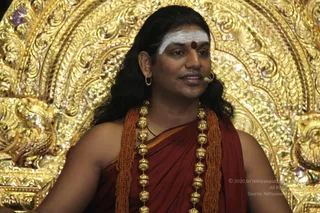
A smiling man with long, swept-back dark hair sits on an ornate gold throne with a lion-carved armrest. He wears a red-maroon shawl over a bare shoulder, a long orange-beaded mala and a heavy gold bead necklace, plus a white vertical forehead mark with a red dot. Behind him is a colourful painted backdrop with red and green elements.A smiling man with long dark hair sits on an ornate gold throne with carved backrest and a gold lion-head armrest in the foreground. He wears a rust-red saffron-toned robe draped over one shoulder, a long necklace of gold beads and orange-brown mala strands, a white horizontal forehead marking with a red dot, and a small gold earring. His hands rest on his lap. a person, seated on the throne. Background shows colourful painted panels in green, red and orange.A man sits in front of an ornate gold carved throne backdrop, wearing a rust-red robe over bare shoulders, a long orange-beaded mala and a heavy necklace of gold beads. He has a white vertical forehead mark with a red dot, long dark hair and a small microphone clipped near his mouth, and he is speaking. The background is elaborately embossed gold. Swamiji (probable) is shown with long swept-back hair, saffron-orange rudraksha-style mala and ceremonial gold necklace, seated in the speaking role at a satsang setting.A seated man in a dark red-maroon robe with a bare right shoulder sits before an ornate gold repoussé throne backdrop. He wears a long rudraksha-style mala of orange-brown beads with large gold bead spacers, a gold chain, gold hoop earrings, and a headset microphone. A white horizontal tilak is painted across his forehead with a red dot above the brow. His long dark hair falls past his shoulders and he is smiling. a person: long swept hair, ornate gold ceremonial necklace and rudraksha mala, saffron-red clothing and a gold throne setting, seated as a speaker. Single person, no other people visible.A man with long dark hair sits in front of an ornate gilded golden throne back with repoussé floral scrollwork. He wears a white vertical tilak with a red dot on his forehead, gold hoop earrings, and a headset microphone. He has a maroon-red garment draped over his shoulders and a long gold bead necklace over orange-saffron beaded mala strands. He smiles while speaking, seated on a dark red velvet cushion. a person is the central figure, presented as a speaker during a satsang discourse.

Dial-the-Avatar

46 photosSource gallery
A seated man in a golden ornate throne with lion-head armrests, wearing a rust-red dhoti and shawl with orange border, a long gold-bead necklace and a rudraksha-style orange mala, sits cross-legged on a tiger-skin draped seat. He has long swept-back hair, white vibhuti marks with a red bindi on the forehead, a small headset microphone, and holds a black tablet or book. Behind him are gold carved panels and a teal and pink backdrop. Swamiji (probable): the long hair, ornate gold necklace, orange mala and shawl cues match the page's description of a satsang discourse, and this appears to be a seated teaching position.A smiling man with long dark hair sits cross-legged on a plush maroon velvet seat in front of an ornate gold-leaf throne back with floral and scroll carvings. He wears a rust-red wrap, a saffron stole, a long gold bead necklace and a white tripundra with a red dot on his forehead, and holds a dark tablet. A gilded lion sculpture stands at the right. A lapel microphone is visible. Appearance-based a person with long swept hair, saffron stole, ceremonial gold necklace and sacred forehead markings, seated as the discourse speaker.A photograph of a smiling person seated on a red velvet cushioned seat in front of an ornate gold throne-back with repoussé floral patterns. The person has long dark hair falling past the shoulders and wears a rust-red wrap over one shoulder, layered with orange beaded necklaces and large gold bead necklaces. A white vertical sandalwood-paste mark with a red dot is on the forehead, and a small hoop earring is visible. Hands are folded in the lap, and a black remote or device rests on the armrest near a gold lion-shaped carving. The background shows painted panels in green, blue, red and yellow. a person is the subject, seated in a satsang setting.A smiling man with long dark hair sits on an ornate gold throne with a red velvet cushion. He wears a rust-red robe, an orange beaded mala and a long gold bead necklace, and has white ash and a red dot on his forehead. He looks off to the side with a relaxed expression. Swamiji (probable): long swept-back hair, saffron-red robe, rudraksha-style orange mala and ceremonial gold necklace, seated on a throne. Behind him are gold-leaf carvings and a painted backdrop in green, red and blue. A small microphone rests on the armrest.A photograph of a single person seated before an ornate gold-leaf backdrop of repoussé floral and scroll carvings. The person wears a rust-red garment draped over the shoulder, a long orange-beaded necklace with large gold bead ornaments, gold hoop earrings, and a small lapel microphone. Forehead has white sacred ash markings with a red kumkum dot. Long dark hair falls past the shoulders. The right hand is raised, palm open, mid-gesture as if speaking. a person seated in discourse; long swept hair, saffron-red garment, rudraksha-style beads and ceremonial gold necklaces are the qualifying cues.A smiling man with long dark hair sits in front of an ornate gold-leaf backdrop with repeating floral and scrollwork patterns. He wears a maroon-red shawl over a bare upper body, a white horizontal tilak with a red dot on his forehead, small gold hoop earrings, a headset microphone, and multiple long strands of gold-coloured beads with orange rudraksha-style beads. His arms are spread open in an expansive gesture. The setting appears to be a satsang stage. Appearance cues match a person (long swept hair, ornate gold necklaces, shawl and adornments, seated before a golden throne-like backdrop) in a satsang setting.

SarvaDarshan

13 photosSource gallery
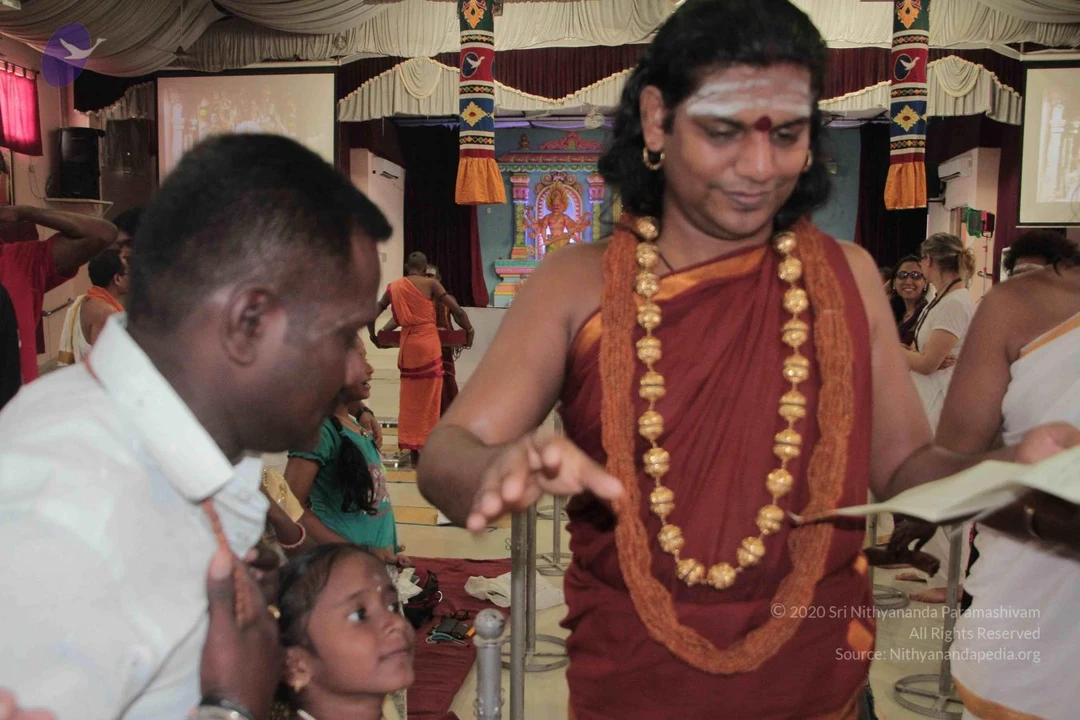
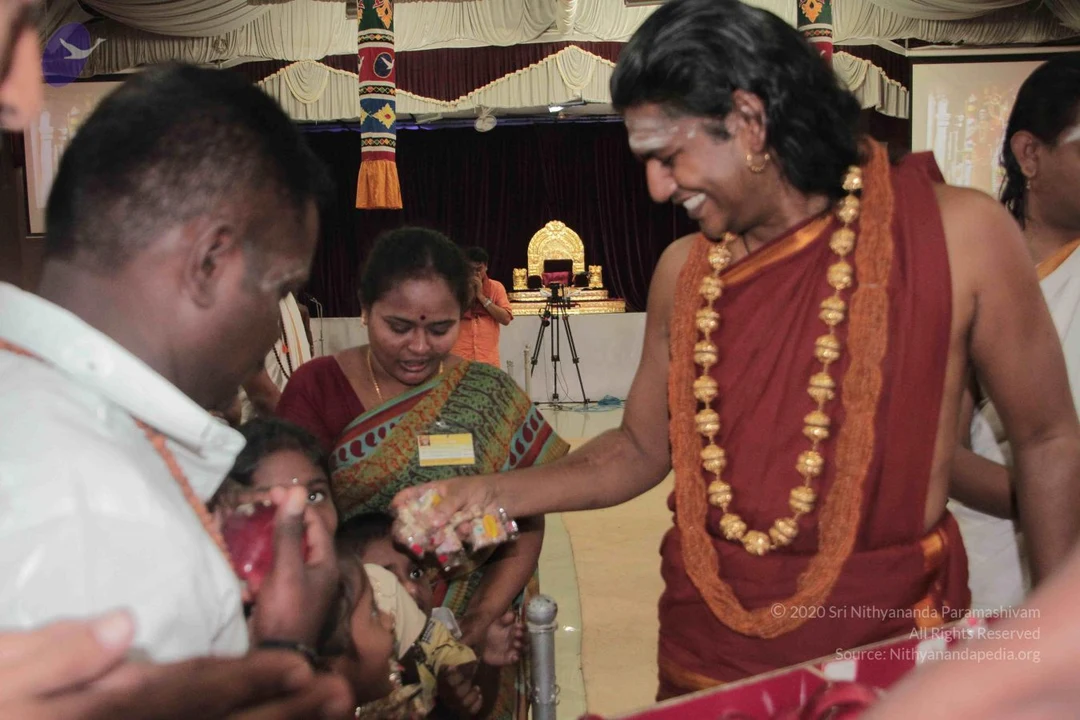
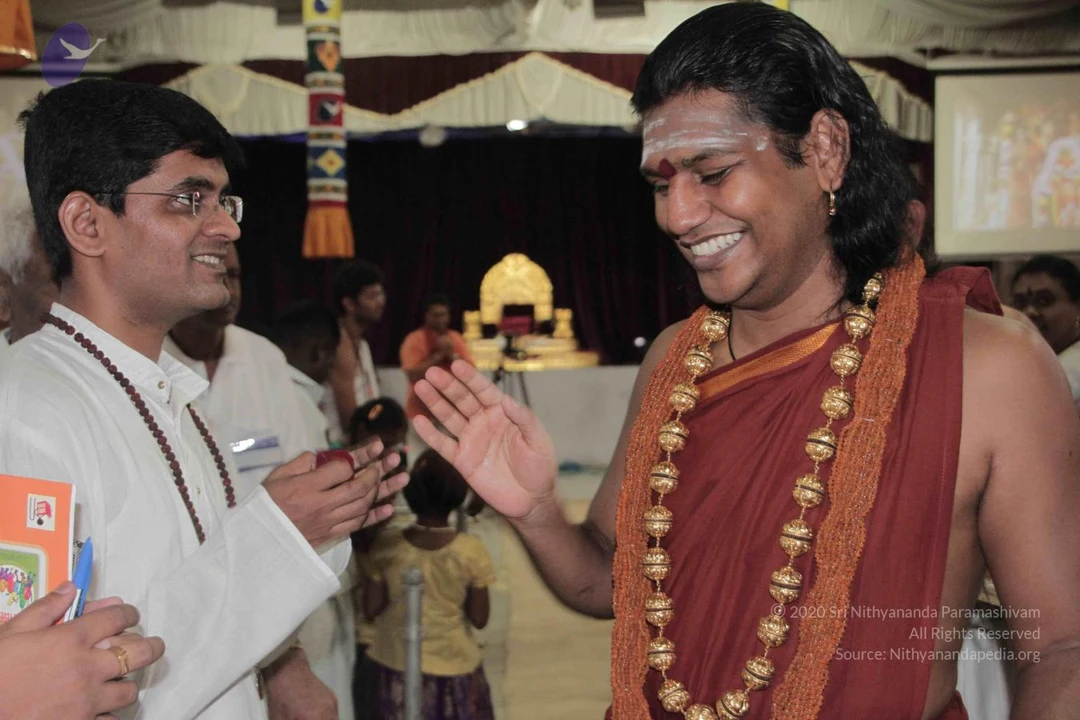
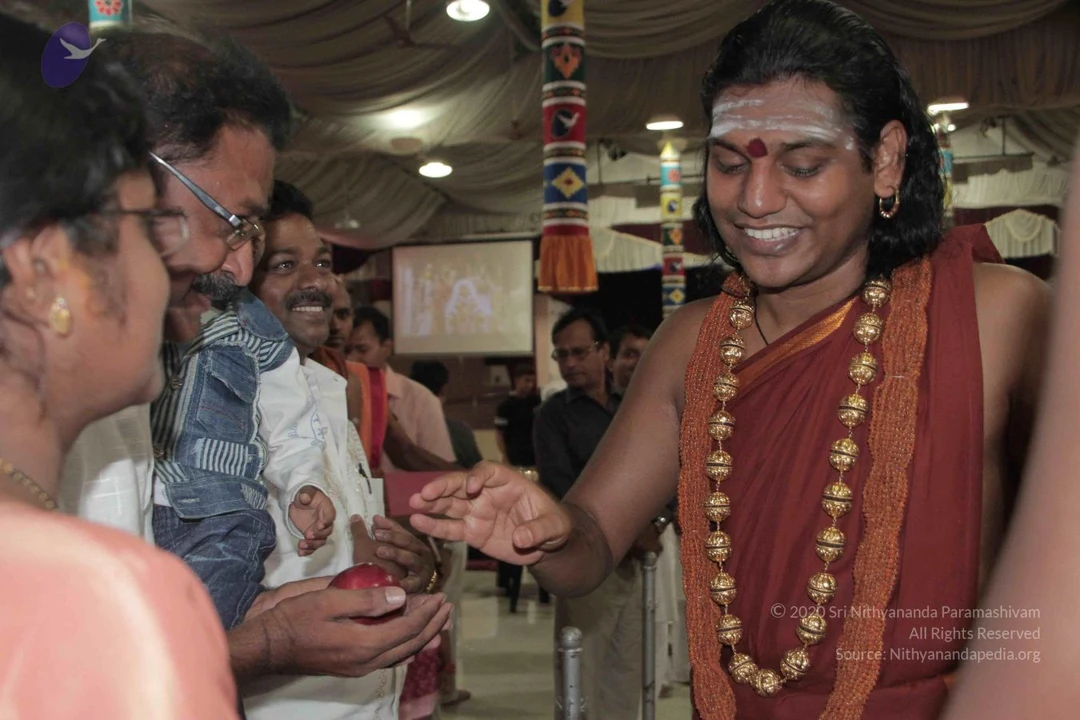
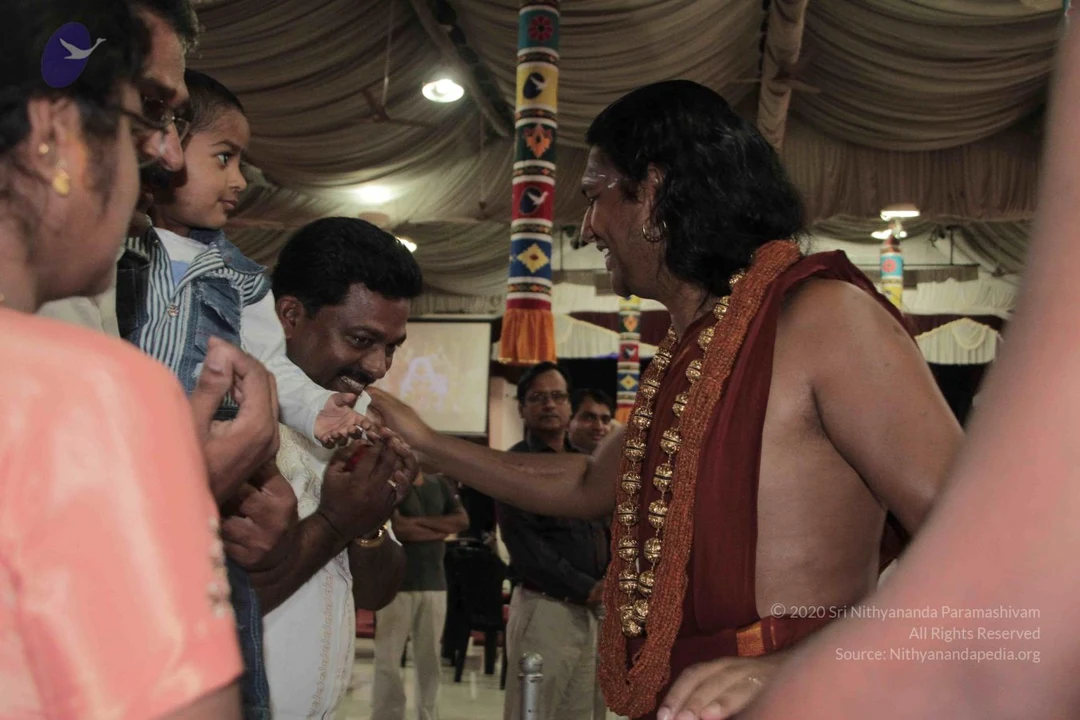
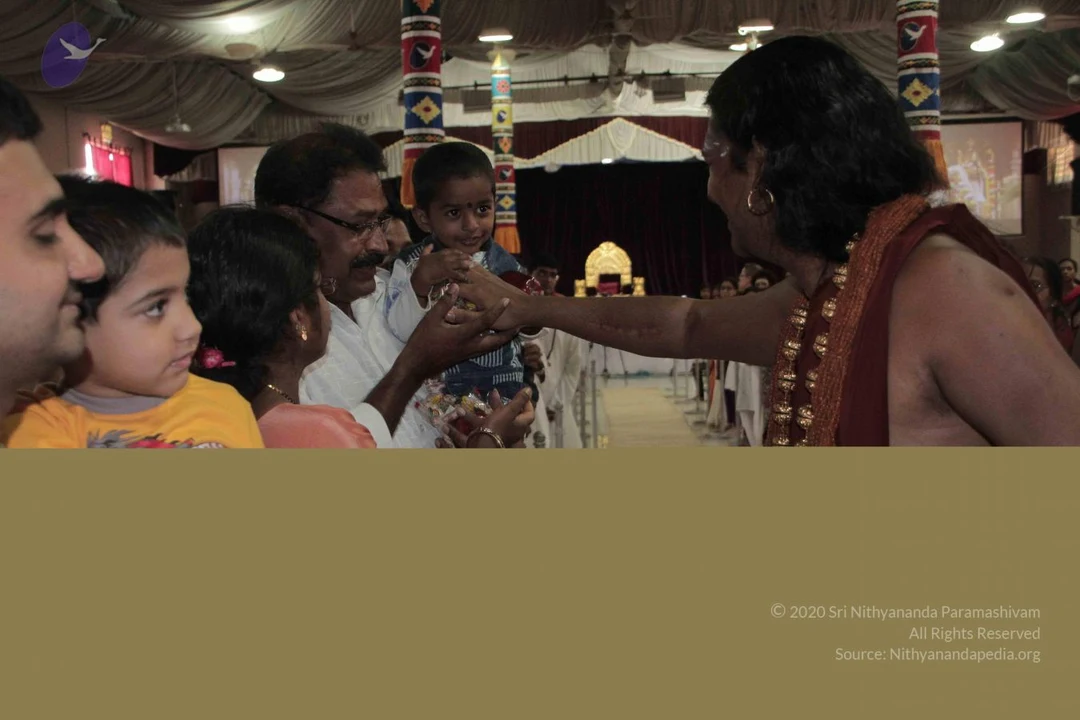
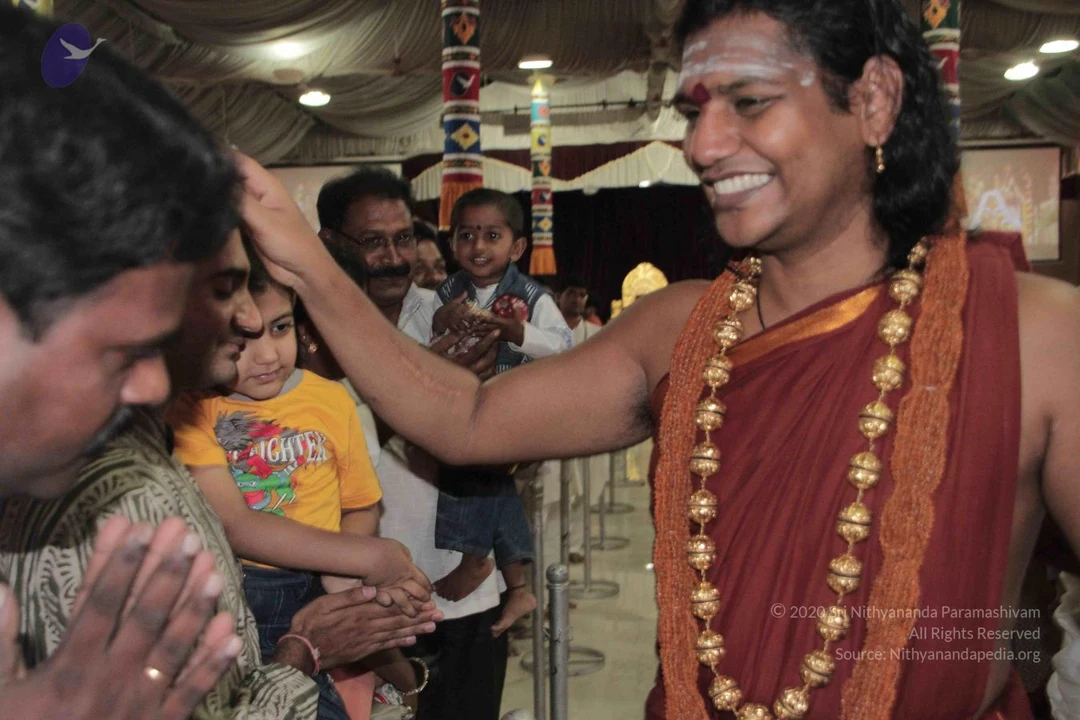
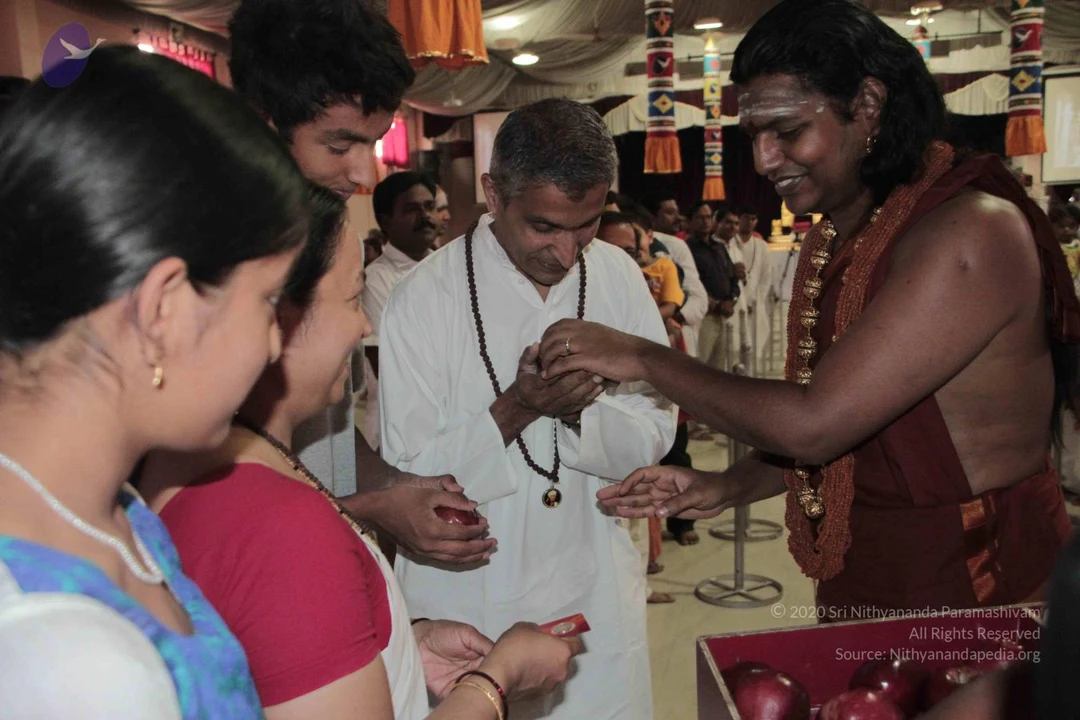
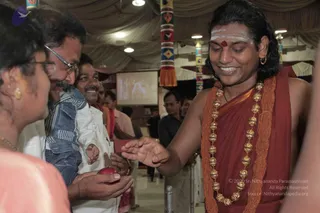
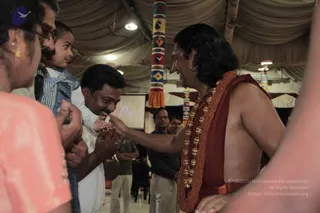
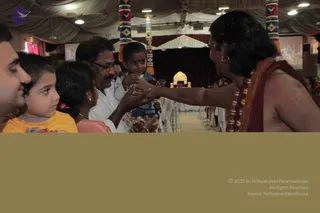
A photograph of a crowded indoor hall with a draped ceremonial canopy and a deity murti on a decorated stage in the background. In the foreground, a man in a red-brown robe with an orange shawl, wearing a gold bead necklace and a white tripundra with red bindi, is handing or gesturing toward papers held by a man in a white shirt. A young girl with a braided hair and a child sits near them. a person appears in front of the stage, wearing long swept-back hair, gold earrings, a rudraksha-style gold necklace and a red-brown robe. Other devotees in white and orange clothing stand behind, and a screen shows a projected image above.A photograph of a smiling man with long swept-back dark hair and a white vibhuti marking on his forehead, wearing a deep maroon-red dhoti-style wrap, an orange shawl and a heavy ornate gold bead necklace. He is handing small packets to a line of people at the front of a hall. Beside him a woman in a green and red sari with a name badge and a man in a white shirt with an orange cord reach forward, and a child is partly visible at left. Behind them a gold and red throne stands on a raised stage under maroon drapes, with decorative red-and-gold banners hanging from the ceiling and a camera on a tripod nearby. The figure is shown distributing items to devotees, with an appearance-based candidate for Swamiji (probable), identified by his long swept-back hair, gold necklace and orange shawl.A photograph of two men in conversation indoors at a hall with a gold throne-like seat and a stage backdrop. On the right, a bare-chested man with long swept-back black hair, a white-and-red forehead mark, gold earrings, and a thick gold-bead necklace over a red-orange cloth wrap smiles broadly while gesturing with an open hand; he is the probable Swamiji by these visible cues. On the left, a man in white clothes and a rudraksha mala with glasses holds an orange booklet and a pen and claps his hands. Behind them, several people are gathered, including a child in yellow, and a projection screen shows images at the upper right.A smiling man in a rust-red sannyasi wrap and a thick ornate gold bead necklace stands at right with a white-and-red tilak on his forehead and a red dot at the centre, with gold hoop earrings and long dark hair. He extends his hand toward a group of devotees at left, one holding a red fruit, possibly an apple, in cupped palms. Behind them a man in glasses and a striped denim-and-white shirt, a woman in pink, and other people stand in a ceremonial hall with draped white and beige fabric, colourful painted pillars, and a projection screen. Appearance-based candidate, a person, present in person, receiving or blessing devotees with a fruit offering.Photograph of a long-haired man in a rust-red shawl and bare chest, wearing a large gold-bead garland, reaching out to touch the hand of a man in white kurta who holds a young child in a striped shirt. Several standing onlookers in salmon and grey clothes surround them in a draped tent with patterned pillars and fabric ceiling. Swamiji (probable) is the long-haired figure in the rust shawl, giving blessing or greeting to devotees, with a tilak on his forehead and a gold-bead necklace.A photograph inside a decorated hall with draped white and red fabric ceiling and patterned red-and-gold pillars. In the foreground a bald-to-short-haired woman in a red-brown shawl with a row of gold-toned beads at her neck reaches forward and holds hands with a small boy in a blue-and-white top. Beside them a smiling man in white shirt and glasses and a young girl in an orange top look on, and a woman in pink stands at left. Behind them a golden throne-like seat and a line of people in white stand in the aisle. The scene suggests a darshan or blessing moment, with the woman in red-brown extending her hand to the child.

NKY-Session

18 photosSource gallery
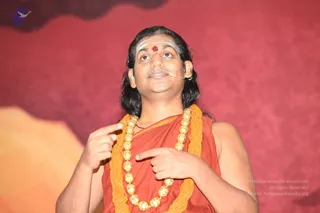
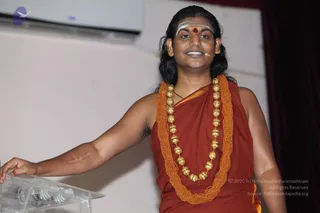
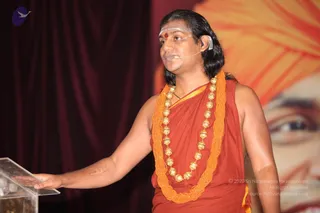
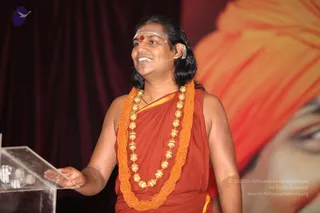
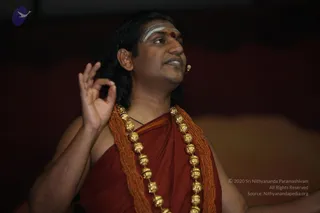
A man stands speaking on a stage before a deep red backdrop with a soft orange glow at the lower left. He wears a rust-red sleeveless robe and a long braid of gold-toned beads with an orange-gold garland across his chest. He has long, swept-back dark hair, a white tripundra with a red bindi, and a small headset microphone at his cheek. He raises his hands in a gesture of explanation and gazes upward, as if considering a point during a discourse. Swamiji (probable): the candidate shows long swept-back hair, rudraksha-style gold beads, saffron-red clothing and sacred forehead markings, consistent with a discourse setting.A photograph of one man standing at a clear acrylic lectern, speaking into a headset microphone and smiling. He has long, swept-back dark hair, a white vertical forehead mark with a red dot, and wears a rust-red wrap over a bare-shouldered top with a thick orange-beaded necklace and a large gold bead mala. His outstretched left arm rests on the lectern, and a pale wall with a dark red curtain stands behind him. A wall air conditioner is visible at the top left.A man stands at a clear acrylic lectern on a stage, speaking into a headset microphone. He wears a rust-red sleeveless wrap over a bare chest, with a long orange beaded necklace and a gold rudraksha-style mala. A white vertical tilak and red bindi mark his forehead, and his long dark hair is swept back. Behind him is a large backdrop showing a close-up portrait with an orange turban and a deep red curtain on the left. The setting suggests a satsang discourse.A man with long, swept-back black hair stands at a clear acrylic lectern, smiling and gesturing with his left hand toward it. He wears a rust-red wrap over his shoulders, a long orange-and-gold beaded necklace with large ornate gold bead accents, a red bindi and white forehead markings, and a small headset microphone. Behind him a large painted backdrop shows an orange turban and a partial face in warm orange tones, with dark maroon drapes at the left. The scene resembles a satsang or discourse stage. Appearance-based candidate: Swamiji (probable), identified by long swept-back hair, saffron-orange ornate clothing and a gold-bead necklace while speaking at a podium.A man in a dark red-maroon robe draped over one shoulder stands against a dark backdrop, speaking with a small headset microphone at his ear. He wears a long necklace of large gold beads interspersed with orange-red beads, and has a white horizontal band and a red dot on his forehead. His long dark hair falls past his ears, and his right hand is raised with the thumb and index finger forming a circle while he gestures expressively. The photo appears to show a satsang discourse setting.A man with long swept-back dark hair stands at a clear acrylic lectern, speaking with one hand raised and the other gesturing toward the lectern. He wears a rust-red wrap over his shoulders and a long orange beaded necklace with gold ornaments, and has white markings on his forehead with a red dot at the centre. A large red floral backdrop with orange petals fills the background, and a water bottle sits on the lectern. a person is identified by long swept-back hair, saffron-orange ornate necklace and ceremonial gold beads, shown speaking at a satsang lectern.

Kalabhairava-Darshan

17 photosSource gallery
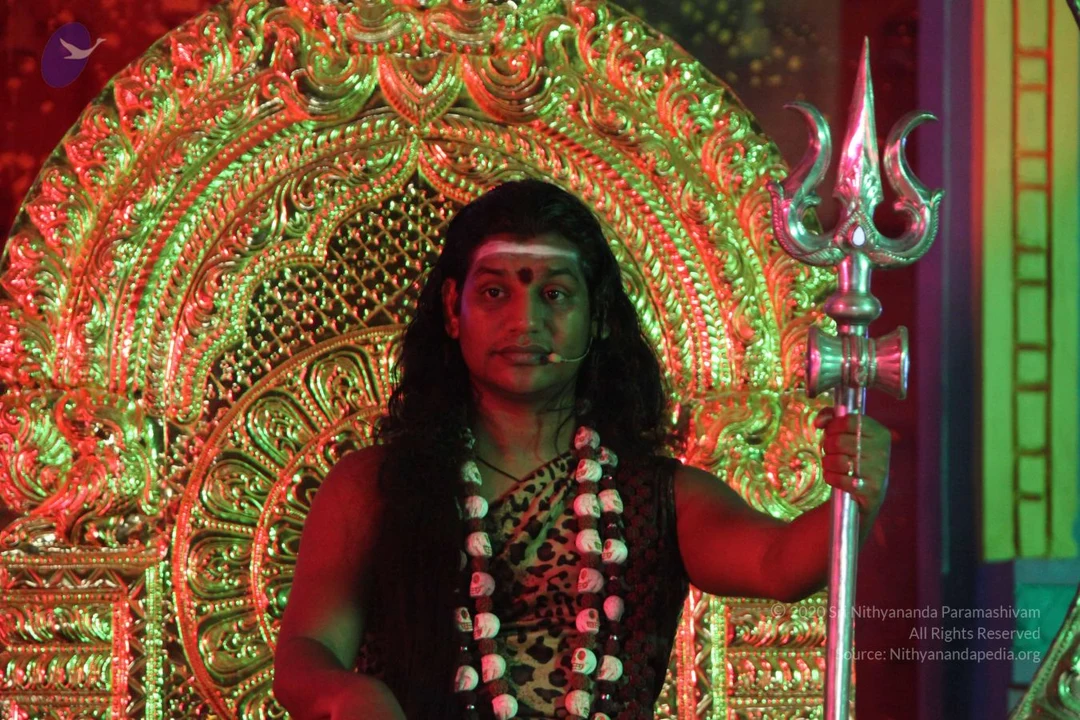
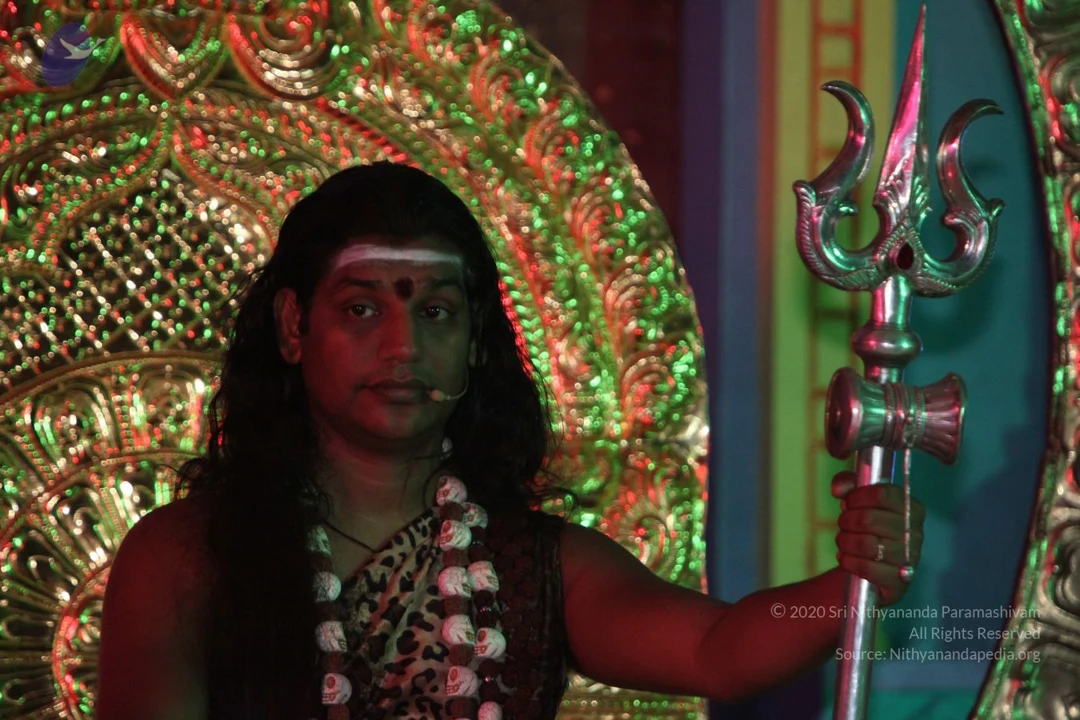
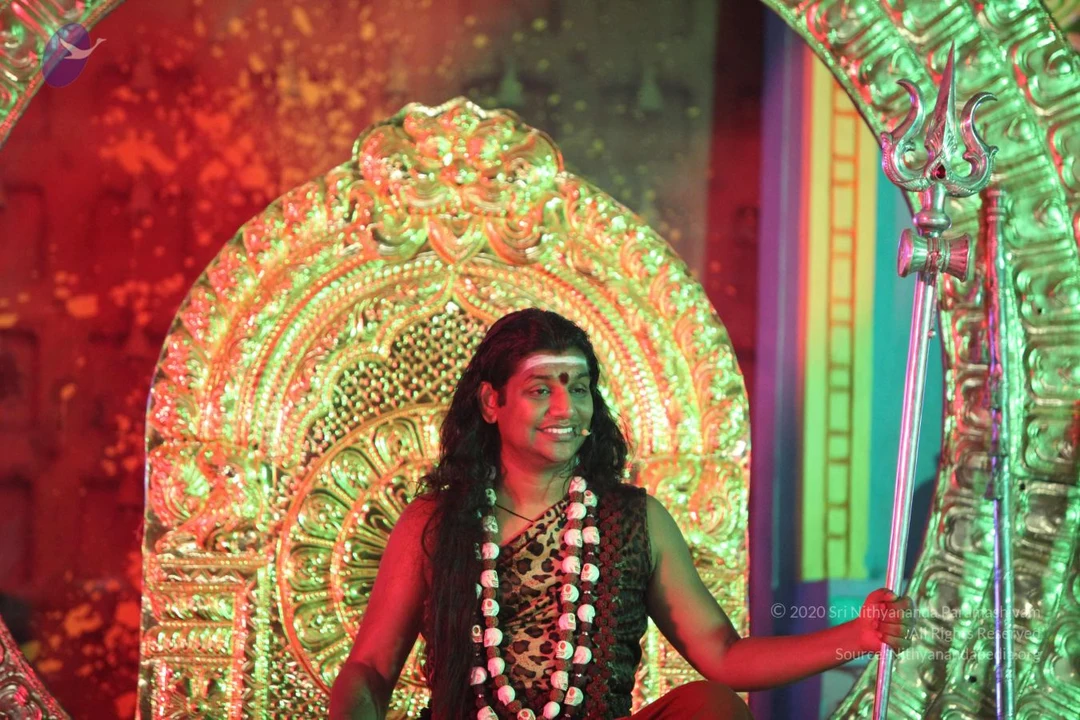
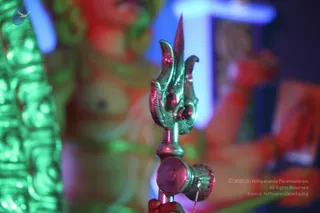
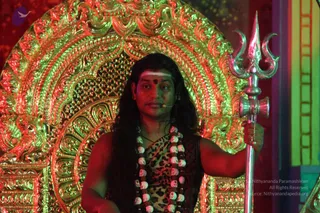
A man with long dark hair and a white tilak with red bindi sits on an ornate gold throne with carved arch backing, holding a silver trident. He wears a leopard-print garment, a multi-strand mala of white and dark beads, and a maroon wrap. Red and green stage lighting fills the background, and a microphone is visible near his face. a person seated in a ceremonial throne setting with a trident and rudraksha-style mala.A photograph of a long-haired man seated on a stage, smiling and holding a silver trident with his right arm extended. He wears a red-orange cloth wrap over a leopard-print garment, a red-and-white bead necklace with rudraksha-style beads, and a white tilak with a red bindi on his forehead. Behind him, glowing green and gold ornamental panels and a large sculpted figure in green and red complete the stage setting, with a partially visible deity murti on the right edge.A man with long dark hair sits in front of an ornate golden-red decorative backdrop, holding a silver trident with his right hand. He wears a leopard-print sleeveless top, a dark garland of white and dark beads, and a vertical white tilak with a red dot on his forehead. A small headset microphone is attached near his face. The warm pink and green stage lighting highlights the carved backdrop. Appearance cues are consistent with a person presence, with the trident and beaded mala as cues, though the image is a stage scene rather than a seated discourse.A close photograph of a smiling man with long, swept-back dark hair, a horizontal white sacred ash mark with a red dot on his forehead, and bare shoulders. He wears a beaded garland with pink and white flower-like beads and a patterned shawl. Red and green stage lighting falls across his face, with ornate green carved pillars behind him.Close photograph of a polished silver trident (trishula) held upright in the foreground, its three prongs catching pink and green stage light. Behind it, out of focus, is a large red-and-green deity murti with a bare torso and a green ornamented garment, and a hand holding a red object at right. The setting is dim and colourful. No people are clearly identifiable apart from a partial hand at the bottom edge.Photograph of a man standing in front of an ornate golden peetha or throne with intricate repoussé patterns, lit in red and green stage lighting. He wears a leopard-print wrap over a dark garment, a long string of white and dark beads with a rudraksha-style mala, and a lapel microphone. He has long swept-back hair, a white tilak with a red bindi on his forehead, and holds a silver trident with his right hand. Swamiji (probable): long hair, a rudraksha mala and ornate ceremonial clothing with a trident, shown as a satsang speaker.

Construction

6 photosSource gallery
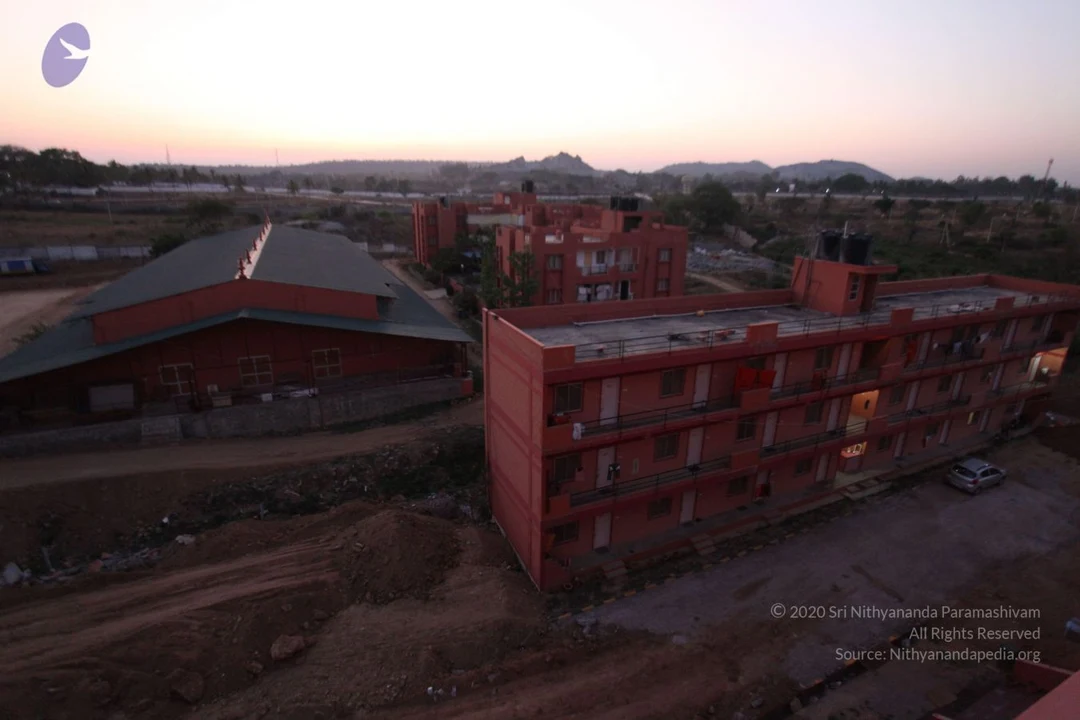
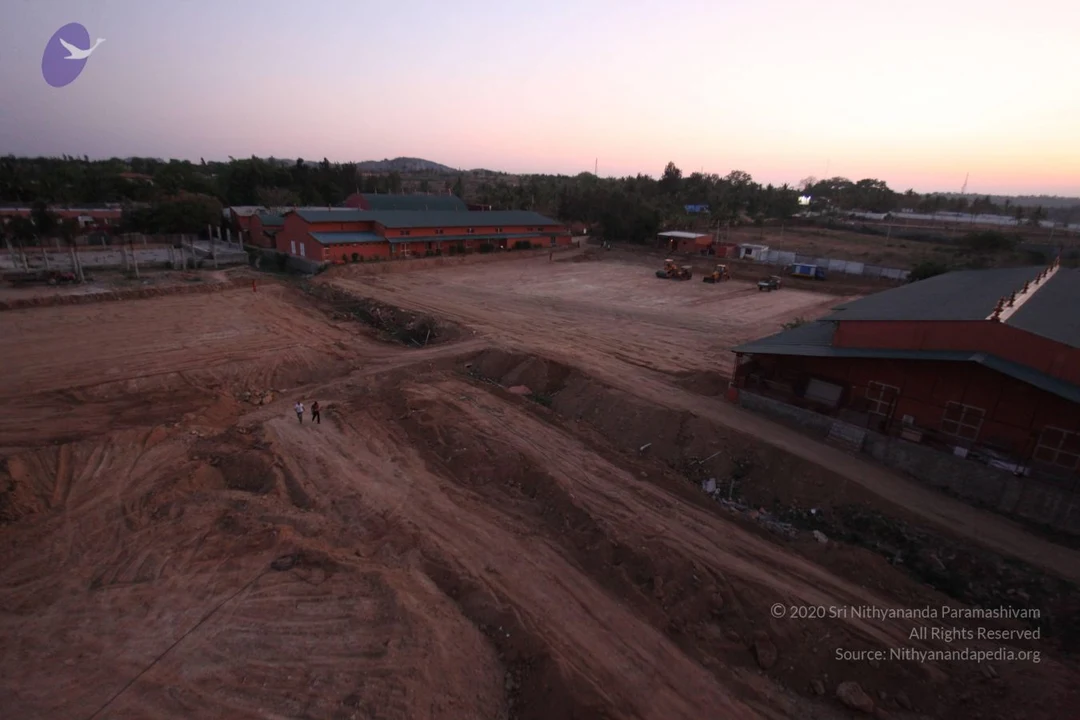
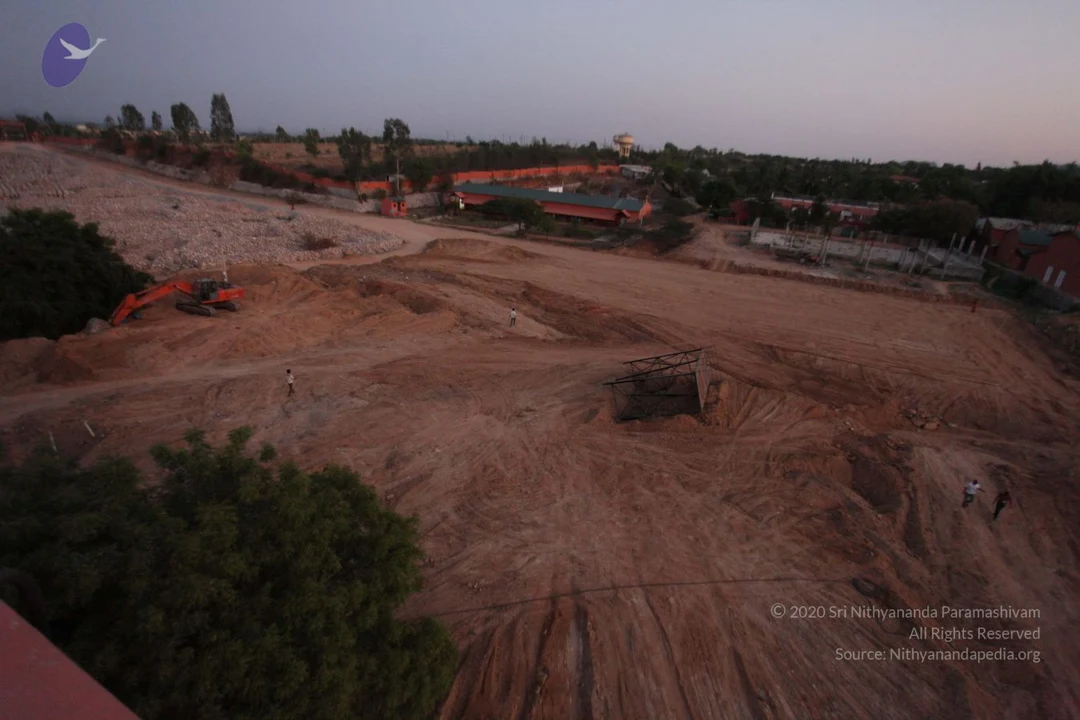
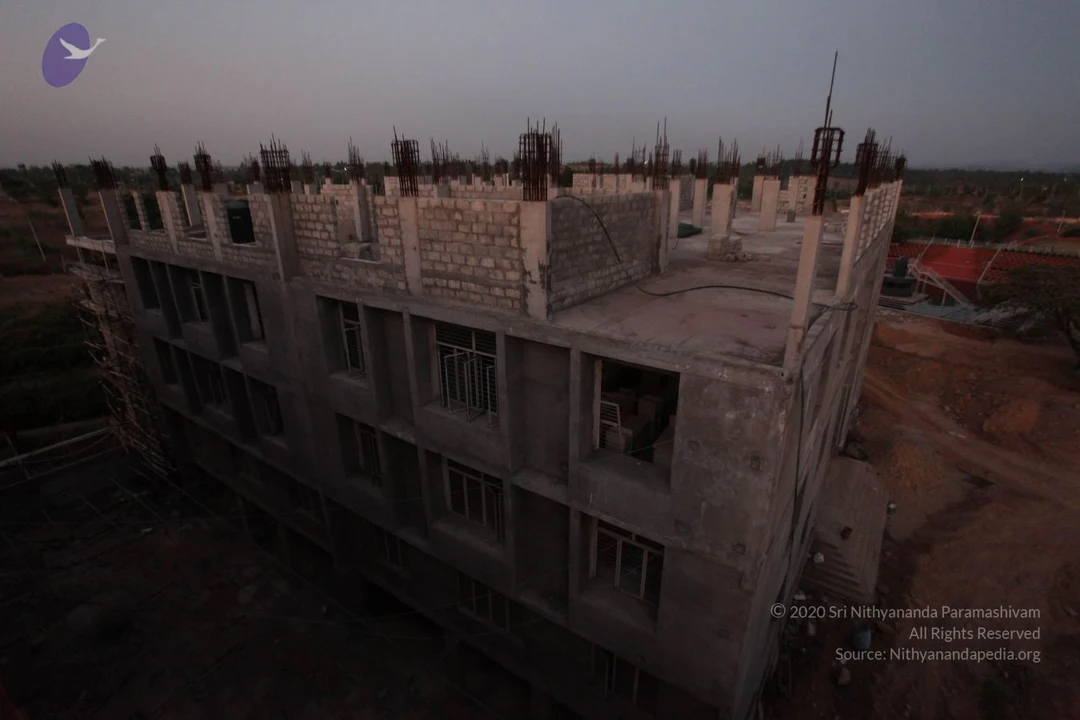
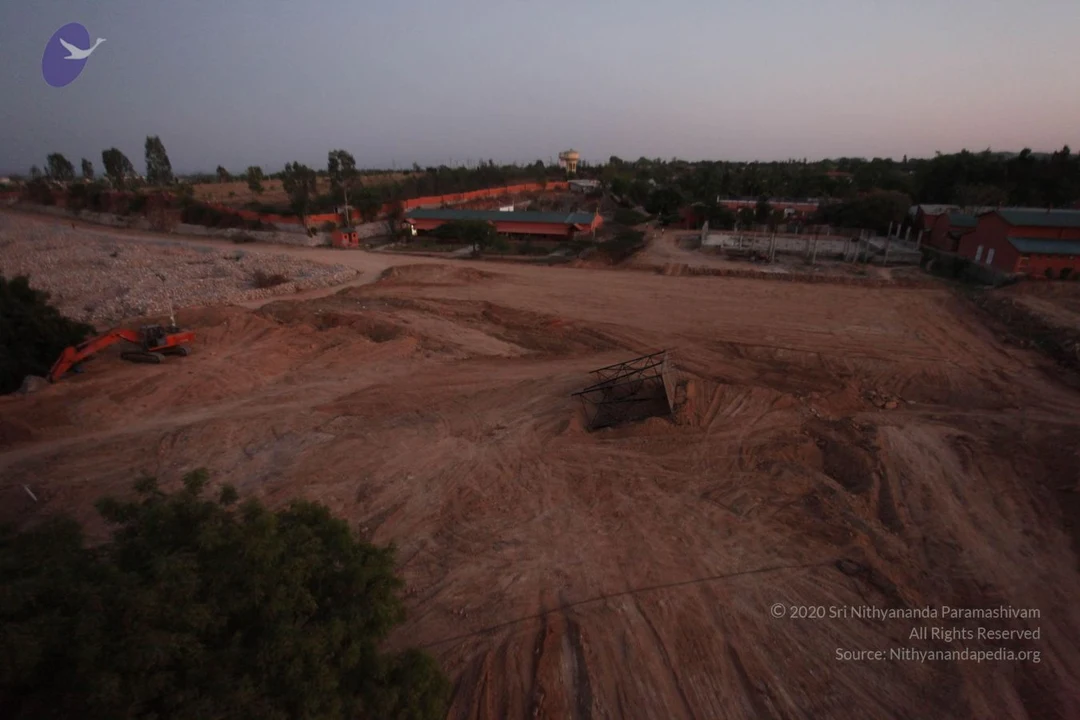
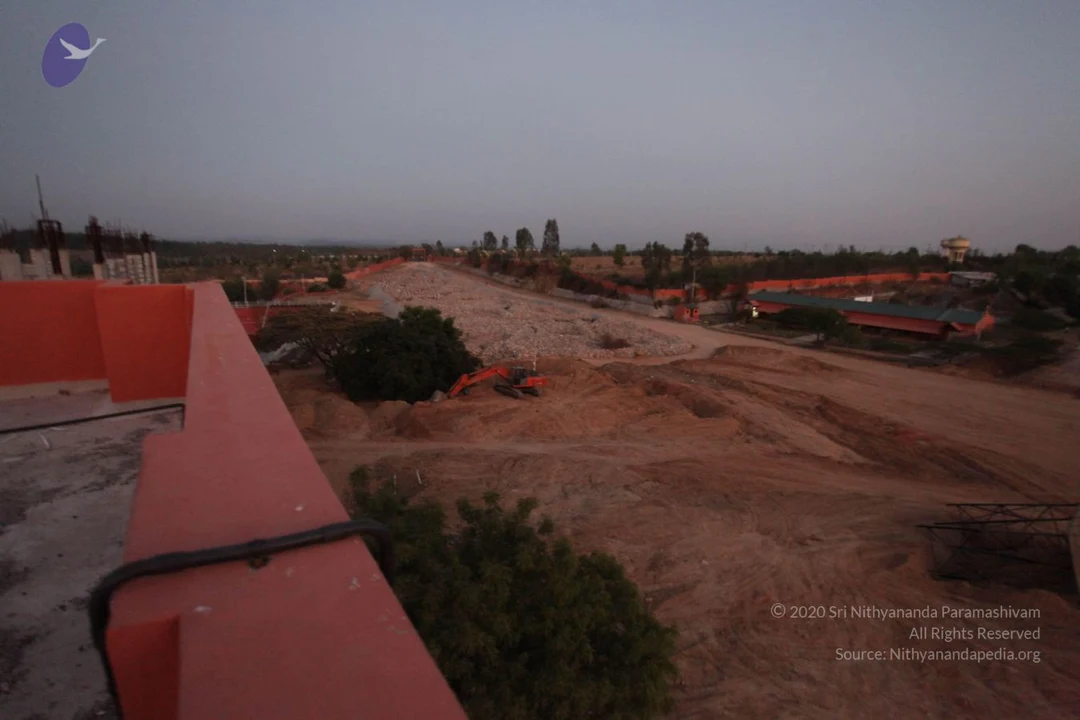
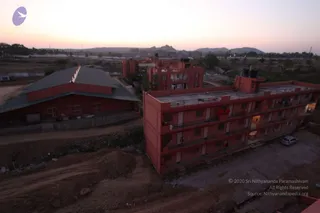
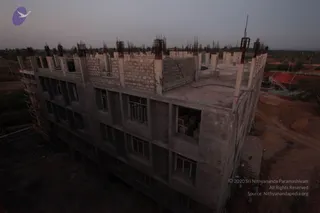
Elevated photograph at dusk of a dusty construction site and red-painted multi-storey buildings with flat roofs and balconies, set against low hills and a pale pink sky. In the foreground a raw earth mound and dirt track lead toward a long red building with a dark green sloped roof. A single silver car is parked in a paved yard at right. No people are visible.Aerial photograph at dusk of a large cleared red-earth construction site beside long orange-red single-storey buildings with dark grey roofs. Two small figures in light clothing walk along a dirt track in the foreground. Bulldozers and a yellow excavator sit on the cleared ground at centre, with trees and low hills along the horizon under a pink and lavender sky. No a person candidate is visible.Elevated photograph of a large cleared red-earth construction site at dusk, with an orange excavator with bucket arm at left and a partially built metal frame structure in the centre. A few small figures stand scattered across the dirt. Beyond, a low red-roofed building, a water tower, rows of trees and a stacked pile of pale stone lie under a pale evening sky.An unfinished multi-storey concrete building under construction at dusk, with bare grey concrete columns, rebar rods sticking up from the roof and partly built brick walls on the top level. Window openings are framed with metal grilles, and stacked boxes are visible inside one room. A scaffold frame stands on the left, and a red-brown sports court and open dirt ground lie to the right under a pale evening sky. No people are visible.An elevated photograph of a large cleared red-earth site at dusk, churned by tyre tracks and dotted with mounds of excavated soil. A small orange excavator with a long arm sits at the far left beside a pile of grey gravel. A partly collapsed metal frame stands in the middle of the dirt. Beyond, low red-roofed buildings with green tin roofs, a water tower and a row of trees line the horizon under a pale evening sky. No people are visible.A wide outdoor view from an elevated terrace with a terracotta-coloured parapet wall in the left foreground. Below lies a large bare earth site with reddish-brown soil and heaps of excavated dirt. An orange excavator digs near a cleared area of pale rubble, and a tall green tree stands in the middle ground. Orange boundary walls run across the flat landscape toward a low red-roofed building with a green tin roof, a distant water tower, and a line of trees under a dusky evening sky. No people are visible.

Dial-The-Avatar

4 photosSource gallery
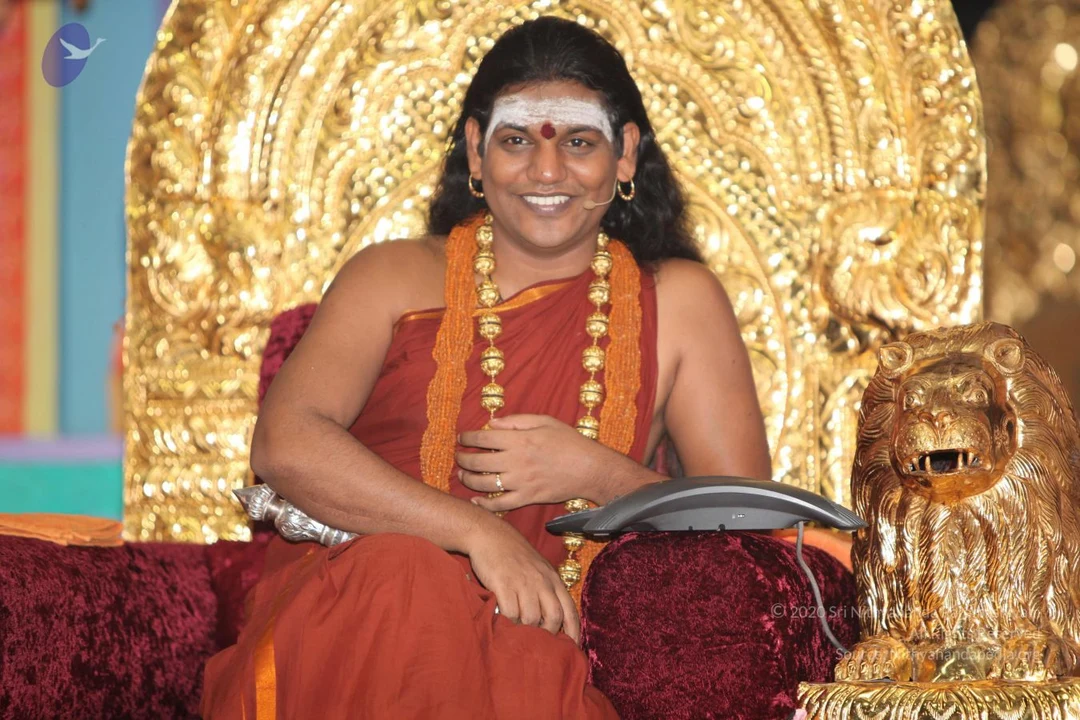
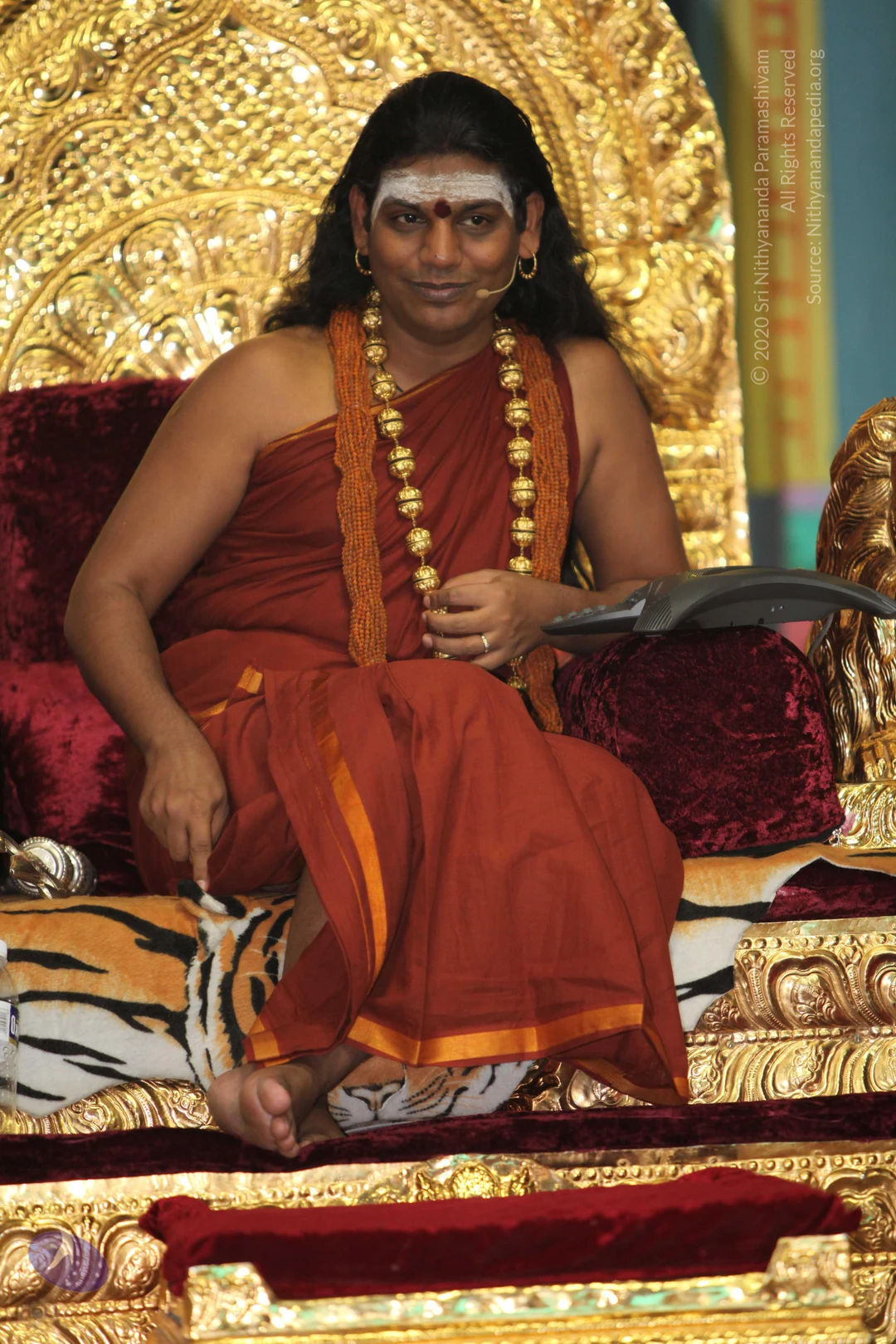
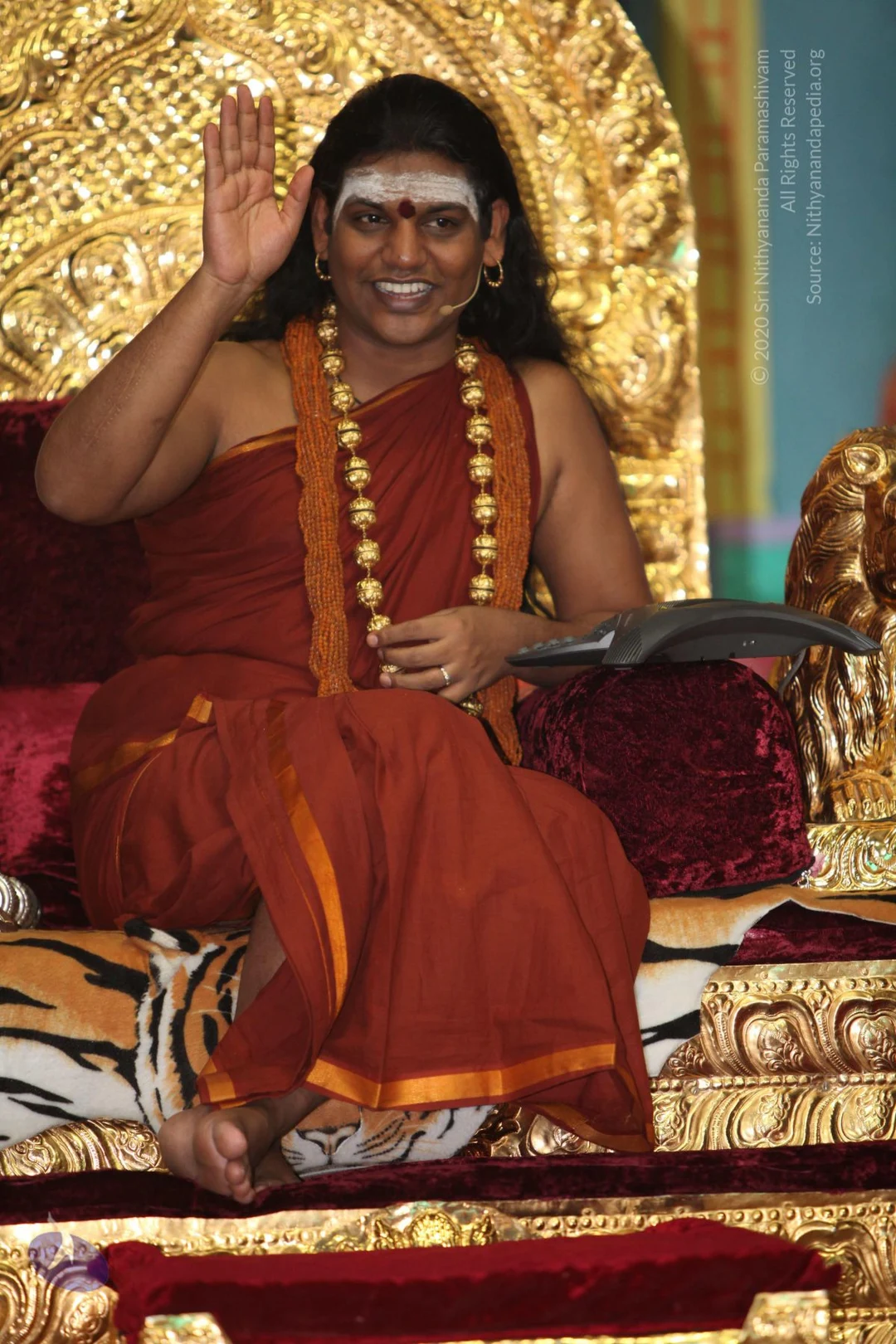
A seated man with long dark hair, white forehead tilak and red bindi, wears a saffron-orange shawl and garment with a long beaded necklace of gold-toned beads. He sits on a red velvet cushioned throne with a gold carved lion-head armrest, holding a black conference microphone in one hand and smiling. Behind him is a gold ornate throne back and colourful painted pillars in green, red and yellow. Swamiji (probable) by a long swept-back hair, saffron ornate clothing and gold beaded necklace; appearance-based label applied to this in-person candidate.A smiling man sits on an ornate velvet-upholstered throne with gold filigree backing, wearing a rust-red shawl over his shoulders and a long necklace of gold beads and orange-beige beads. He has a white ash marking on his forehead with a red dot, long dark hair, and a small headset microphone. His hands rest on a grey telephone-style device on the armrest. Behind him a painted backdrop shows a red figure holding a golden staff. a person seated on a throne during a satsang.A smiling man sits on a plush burgundy velvet seat in front of an ornate gold throne-back with floral and scroll carving. He wears a saffron-red robe with an orange shawl across his chest, a long multi-strand gold bead necklace of rudraksha-style beads, a white vertical tilak with a red bindi on his forehead, and gold earrings. A headset microphone is at his face, and he rests his hands on a grey telephone-style device on his lap. Behind him a painted red-and-green deity figure holds a golden mace. Probable Swamiji (probable): long swept-back hair, ornate gold necklace, saffron-red robe and shawl, seated on a throne-like seat, matching the Nithyananda Paramashivam cues.A smiling man with long swept-back dark hair sits on a red velvet seat in front of an ornate gold repousse throne. He wears a red-orange saffron-toned wrap over his bare shoulder, a long orange shawl, and a multi-strand necklace of large gold beads with an orange and gold rudraksha-style mala. A white horizontal tilak and red bindi mark his forehead, and a small microphone is clipped near his ear. A gold-coloured ornamental object rests on the right edge beside a black device. The background shows teal and yellow walls.

Pada-Puja

1 photoSource gallery
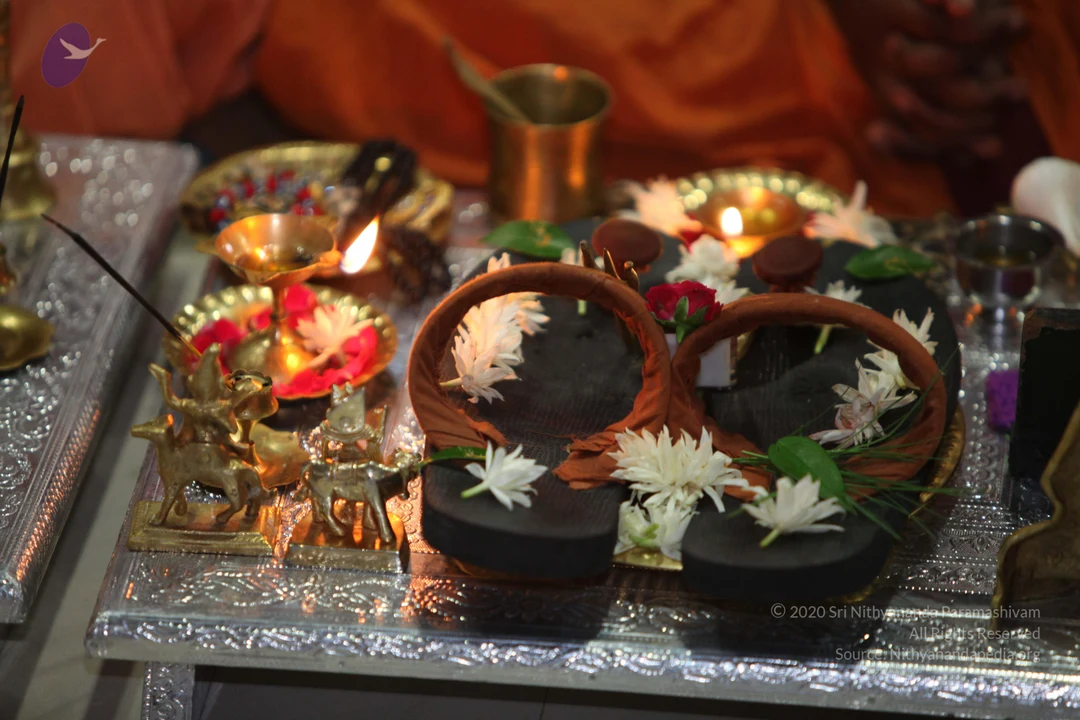
Overhead view of a ceremonial puja arrangement on a gold-toned tray. Silver bowls and dishes hold yellow-orange liquid, red hibiscus flowers, and loose red and yellow petals. White jasmine-like flowers form a heap in the centre. Small white conch-shaped vessels with red hibiscus blooms stand among the silver offerings, and small glass bottles of oil sit at the edges. No people are visible, and there is no visible throne or person identified as a person.

Pad-Puja

2 photosSource gallery
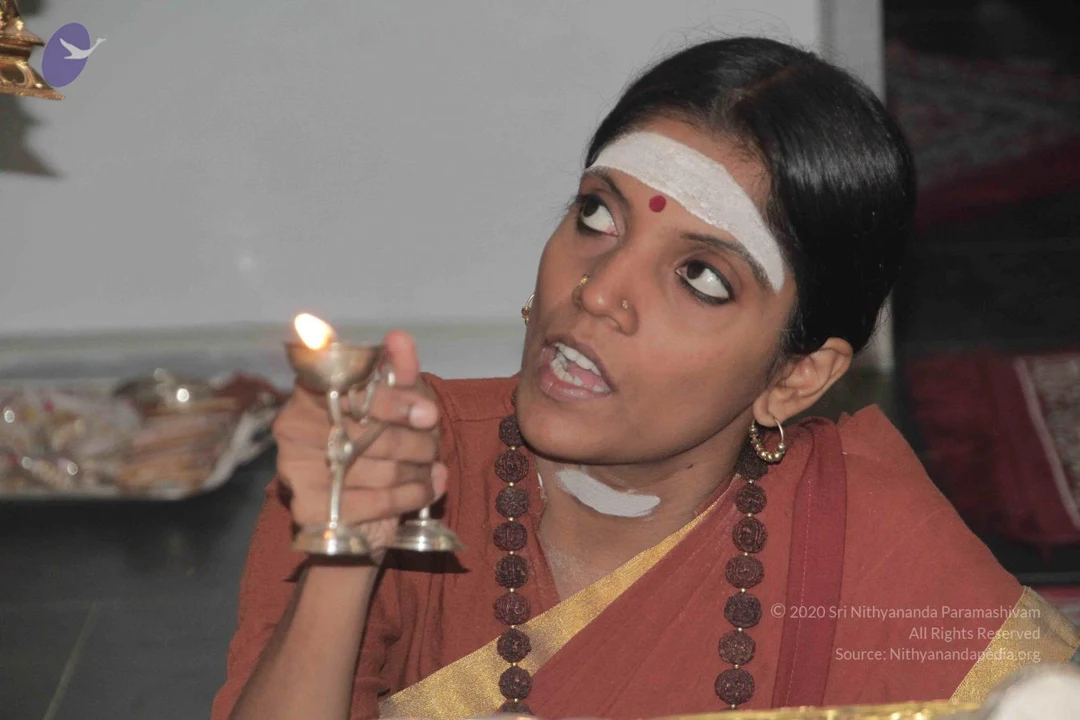
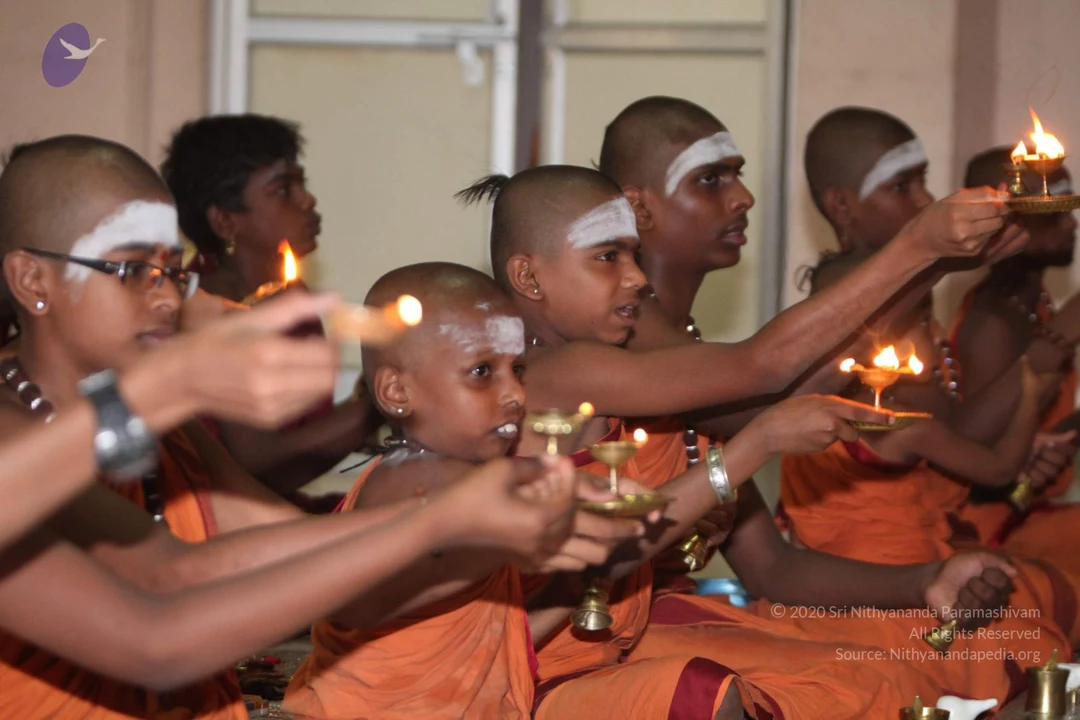
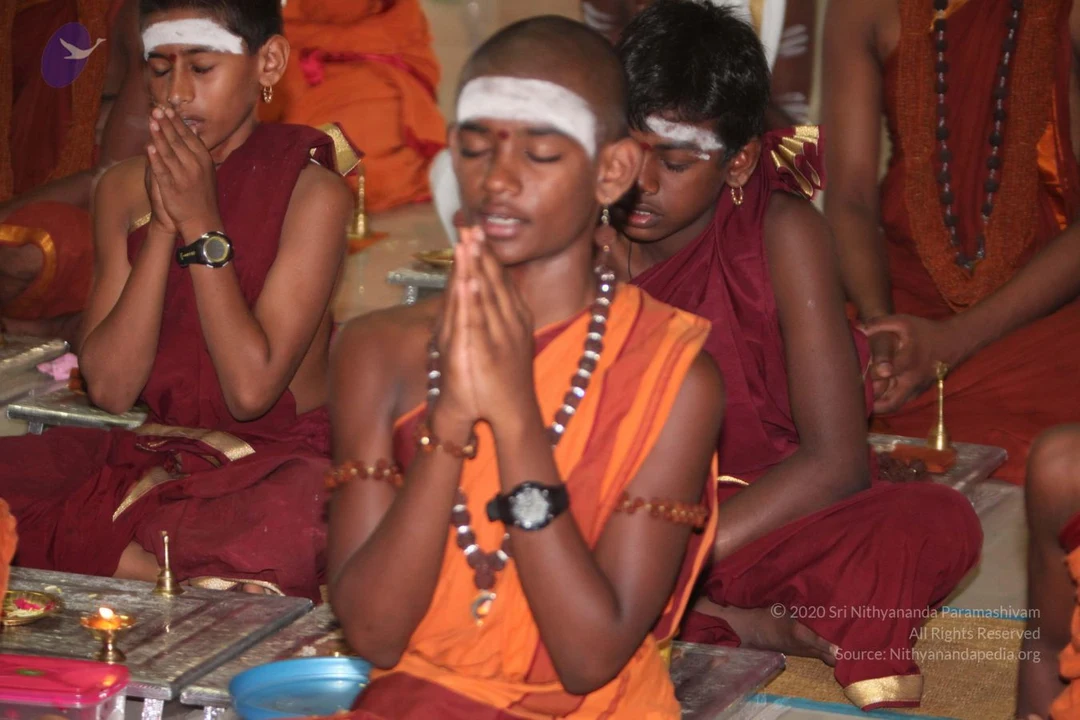
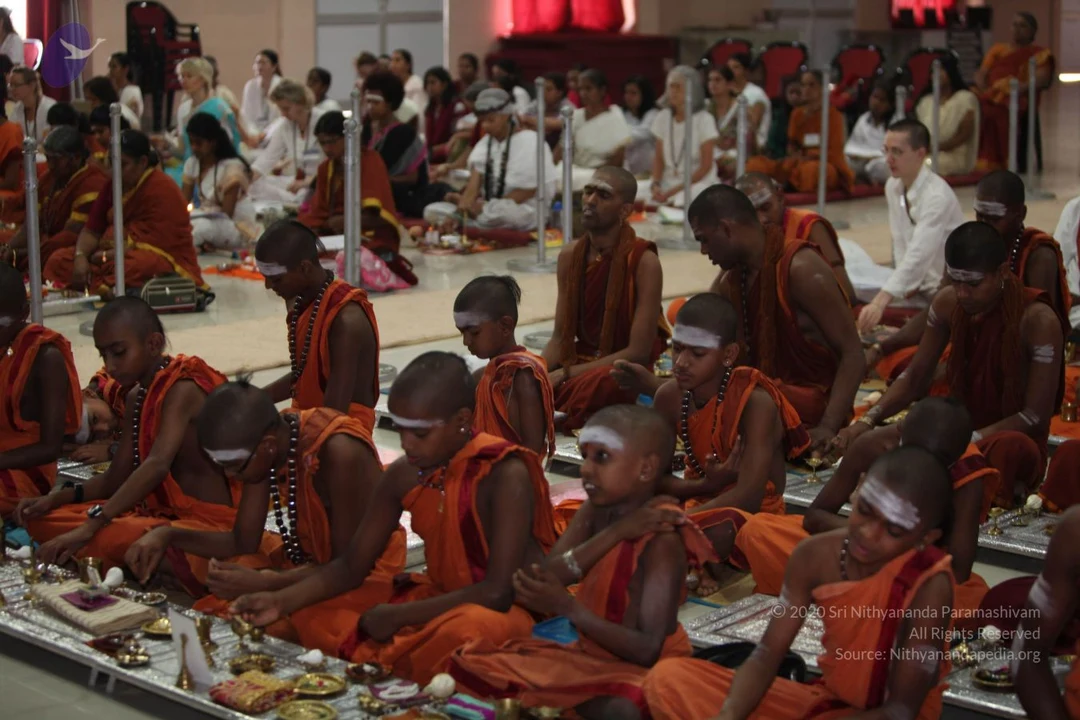
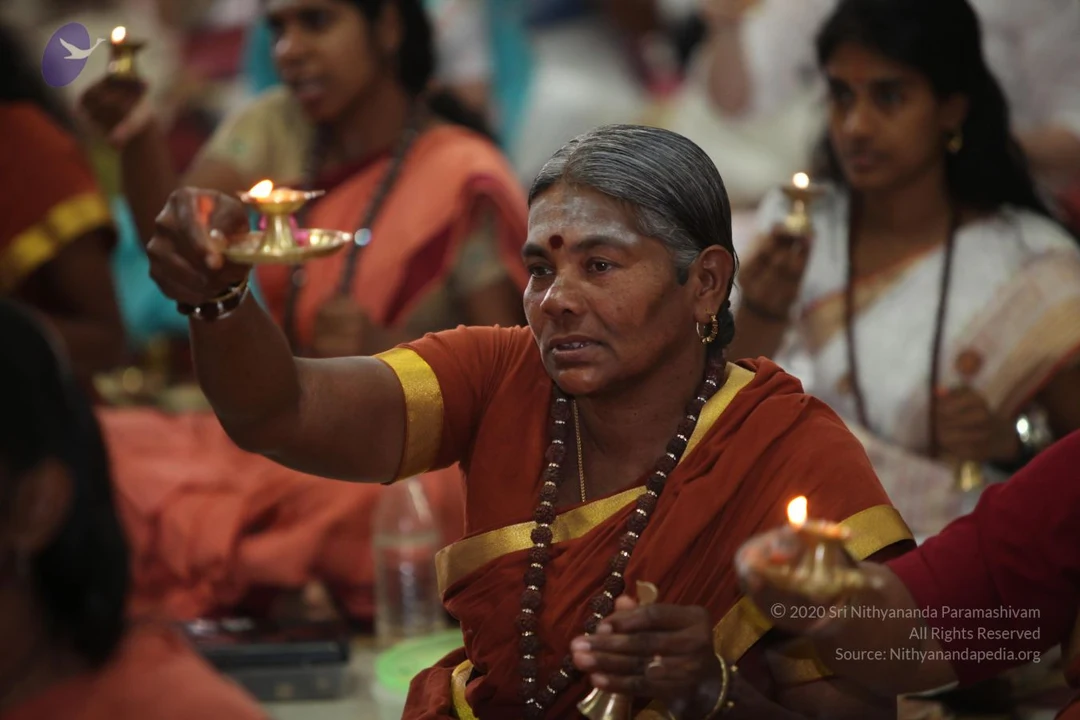
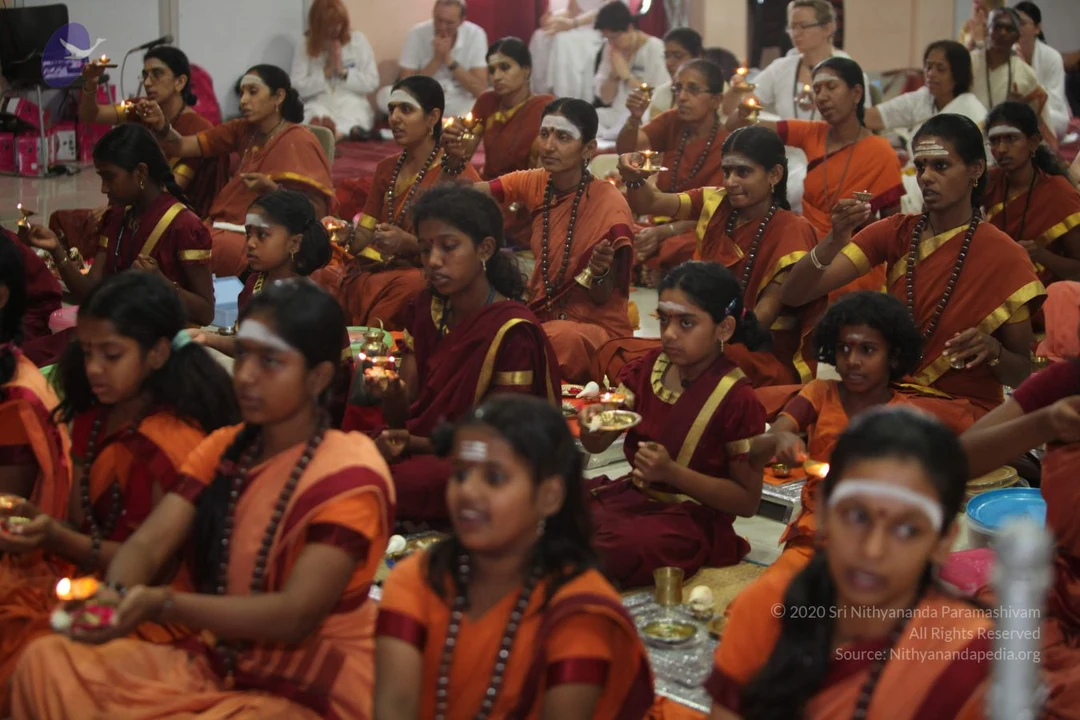
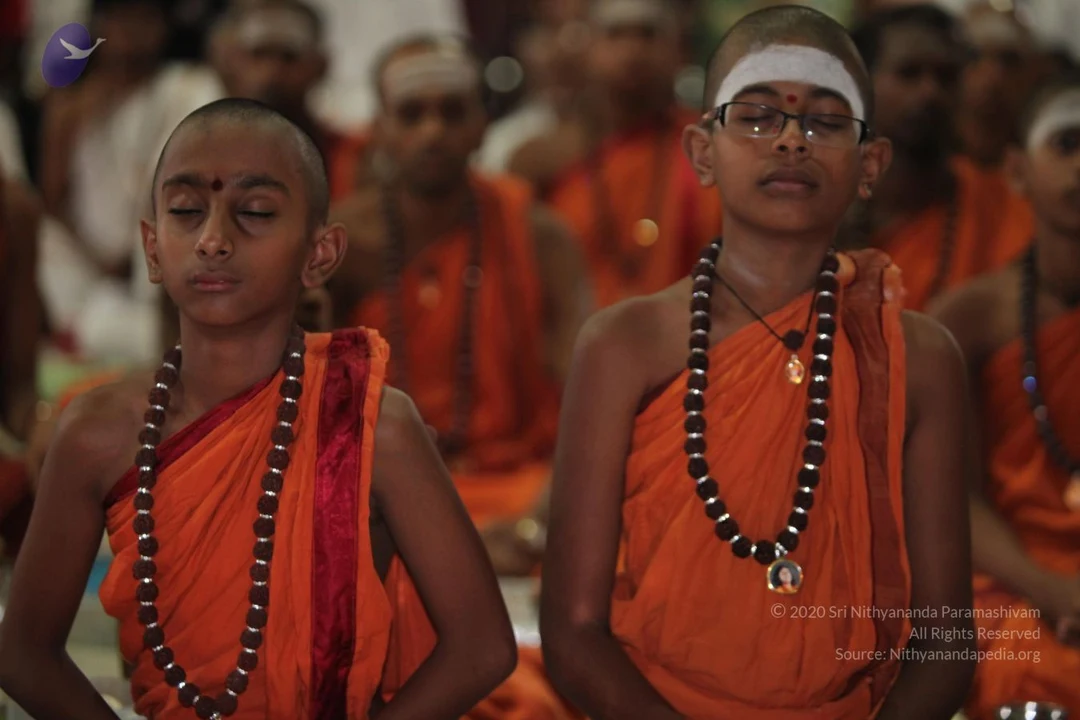
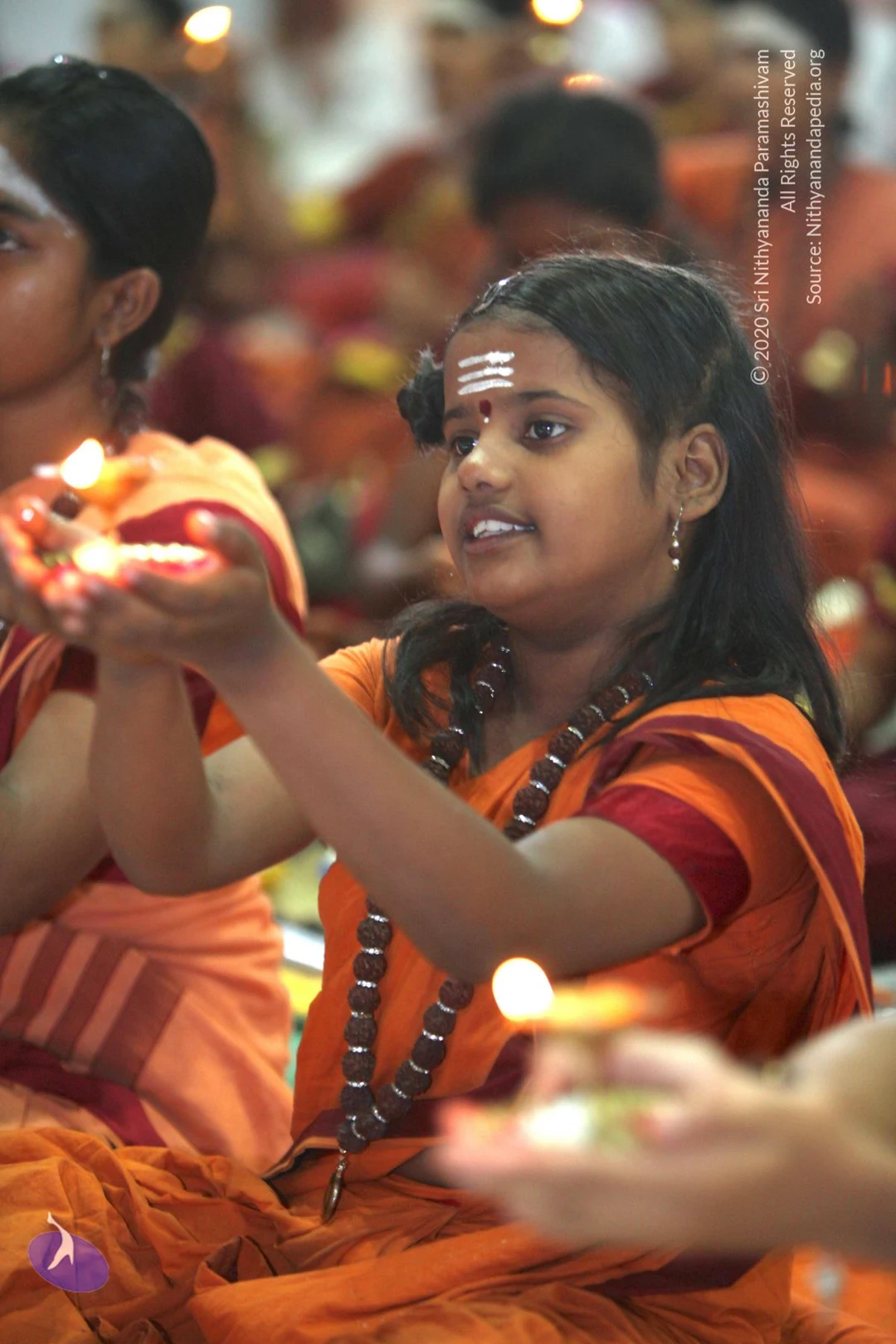
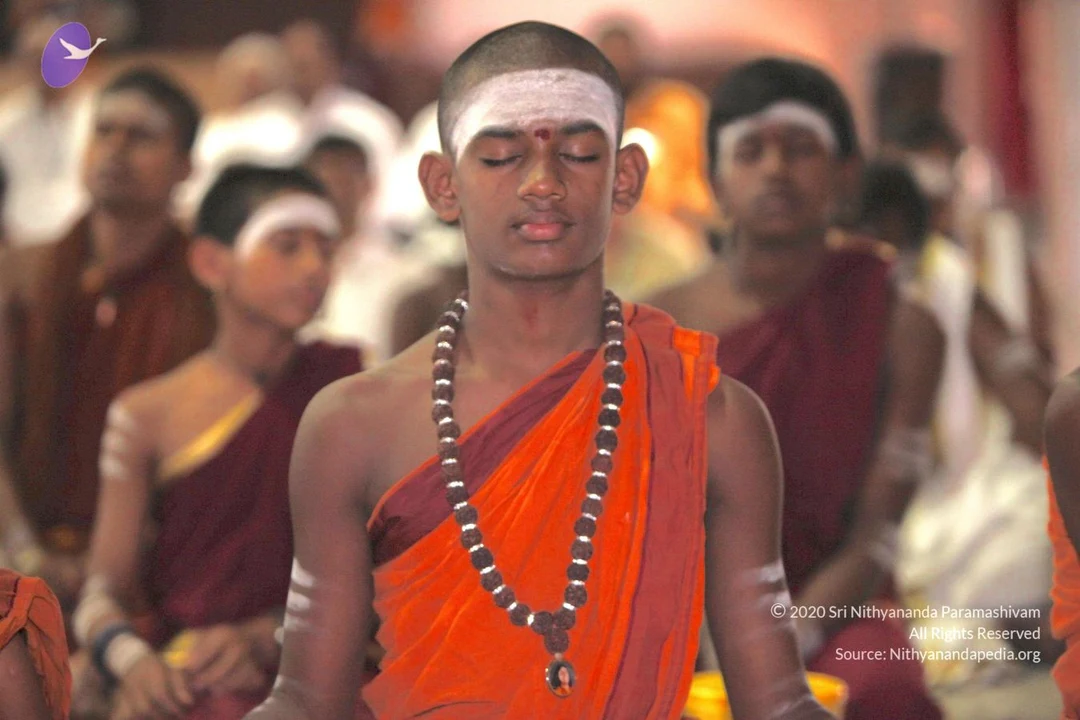
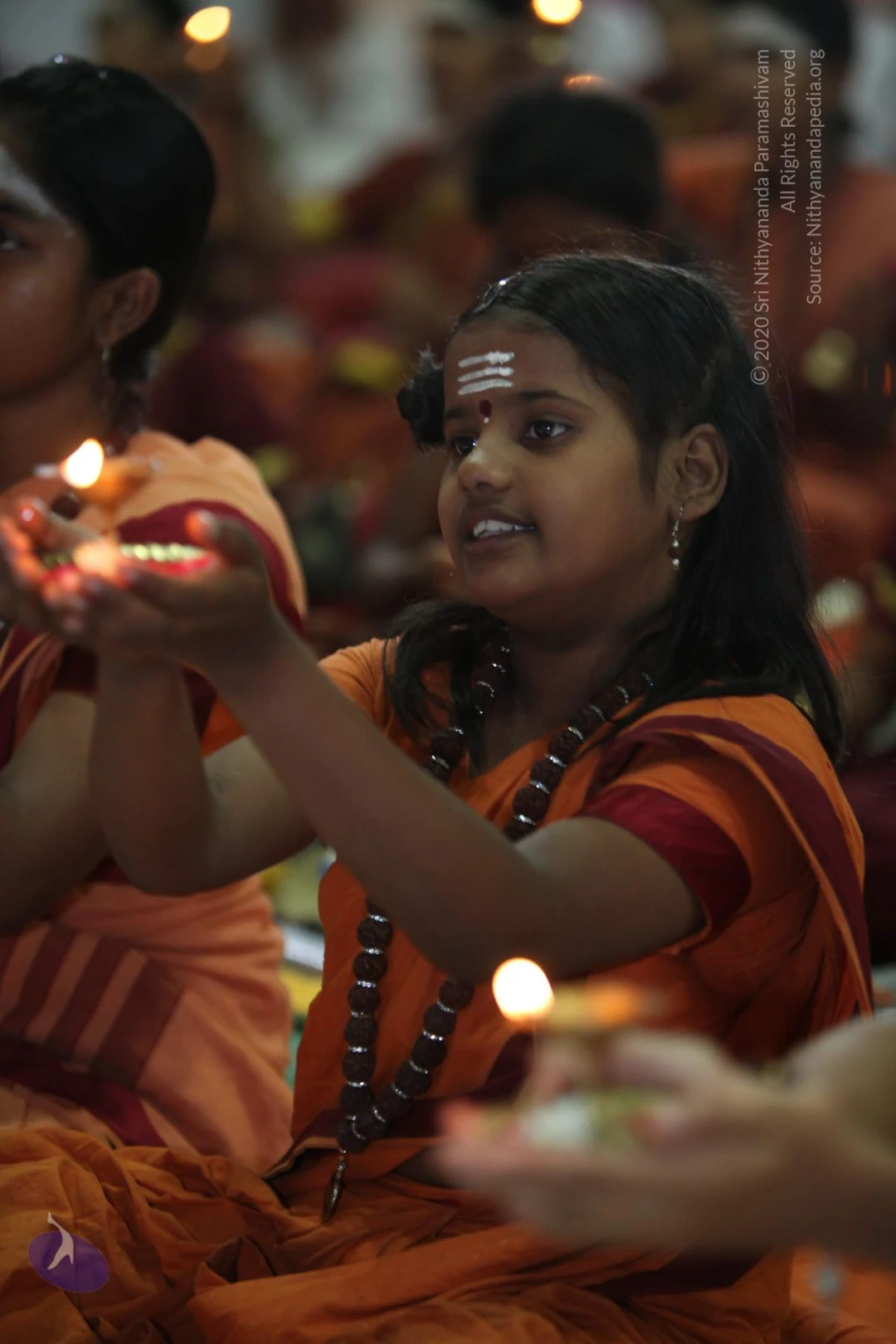
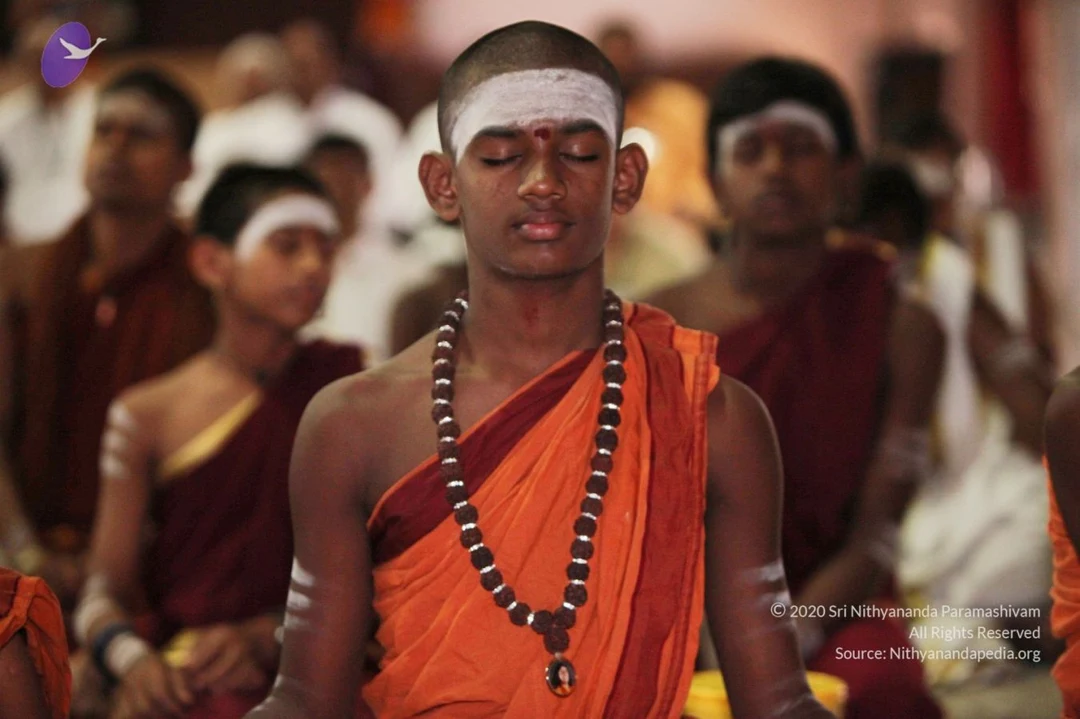
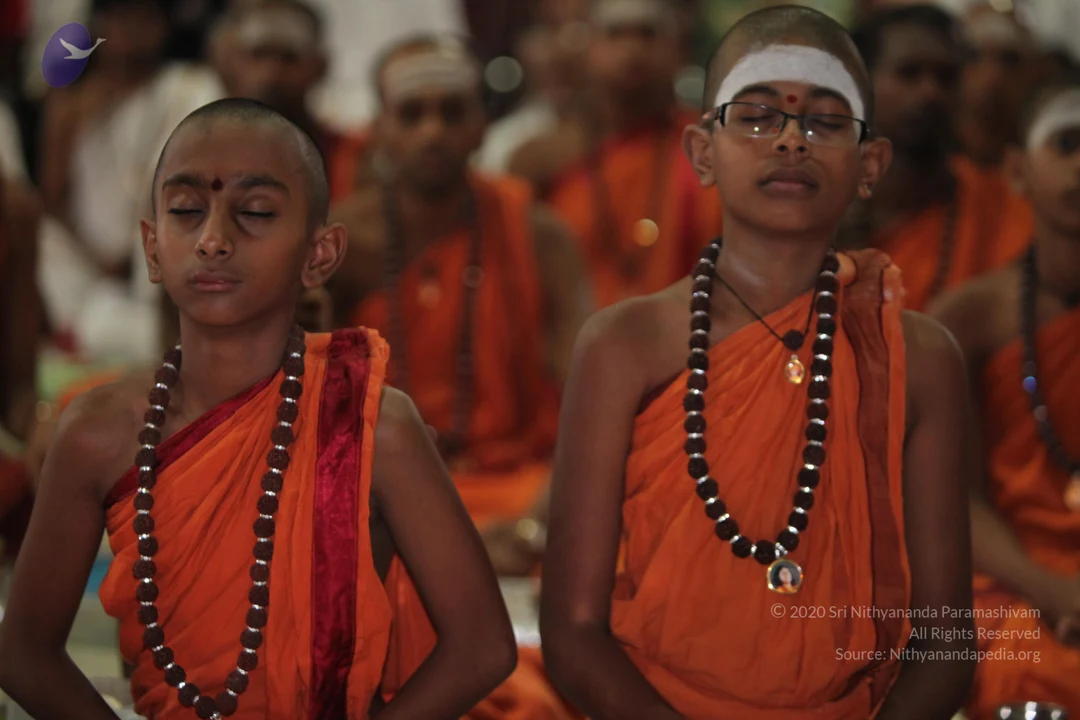
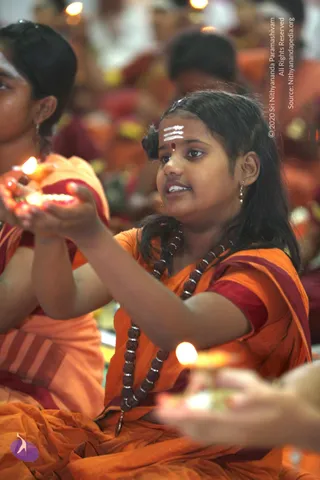
A young girl in an orange saree with a maroon border sits among a seated crowd, holding up a small lit oil lamp in both hands. She wears a rudraksha mala with silver spacers, a red bindi and white horizontal tilak lines on her forehead, and drop earrings. Another lit oil lamp is visible in the foreground at lower right and to the left, and several other people in orange and maroon clothing are seated in the blurred background, consistent with a lamp-lighting ritual. No identifiable a person candidate is visible in the frame.A young shaven-headed boy with closed eyes sits in meditation in the foreground, wearing an orange saffron cloth over one shoulder, a maroon undergarment and a dark rudraksha mala with a small pendant. He has white vertical tilak marks on his forehead and arms and a red dot between his brows. Behind him, other boys and men in maroon and orange robes sit in a row, some with white forehead markings, in a blurred hall. Background figures in white clothing are out of focus.

Satsang

4 photosSource gallery
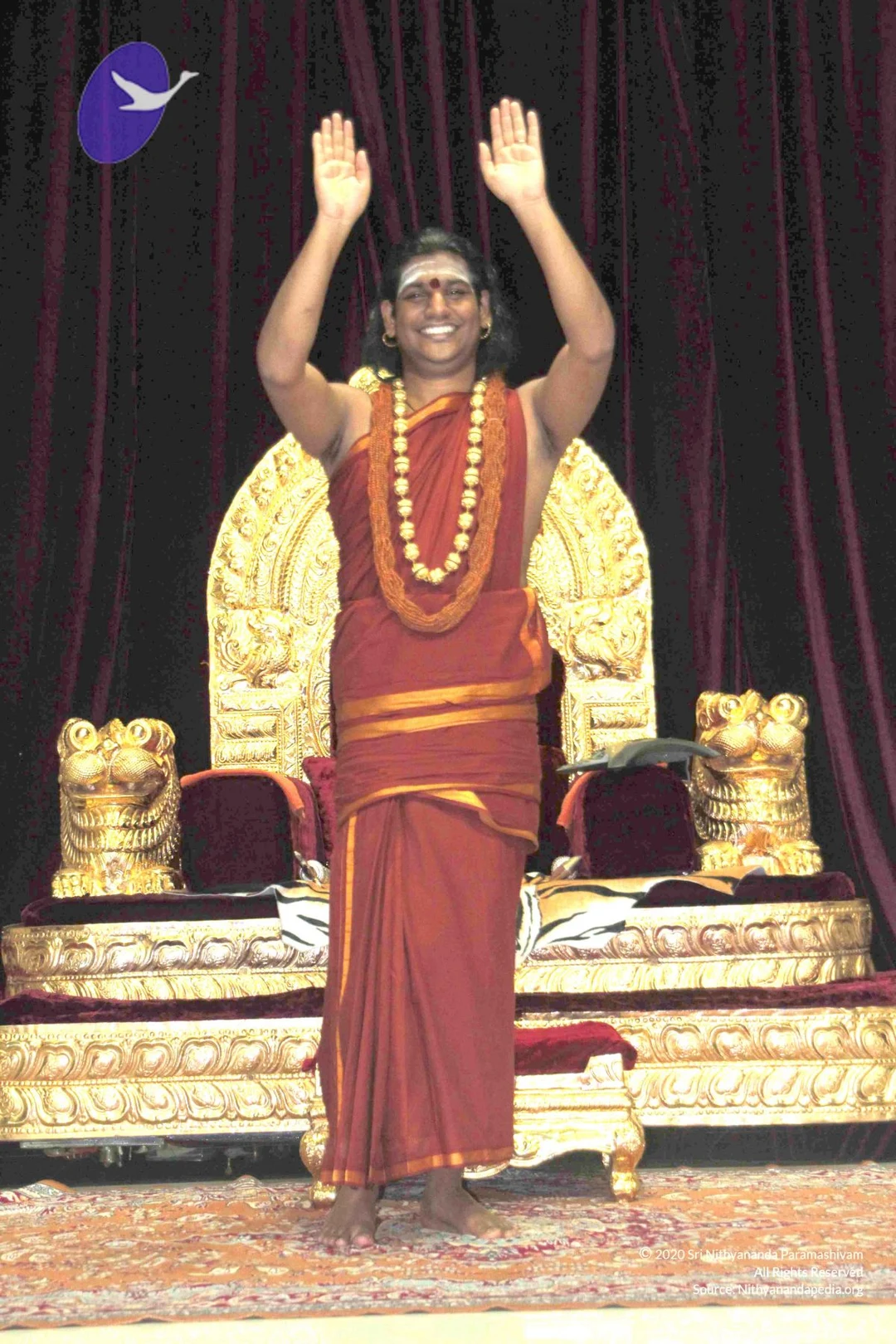
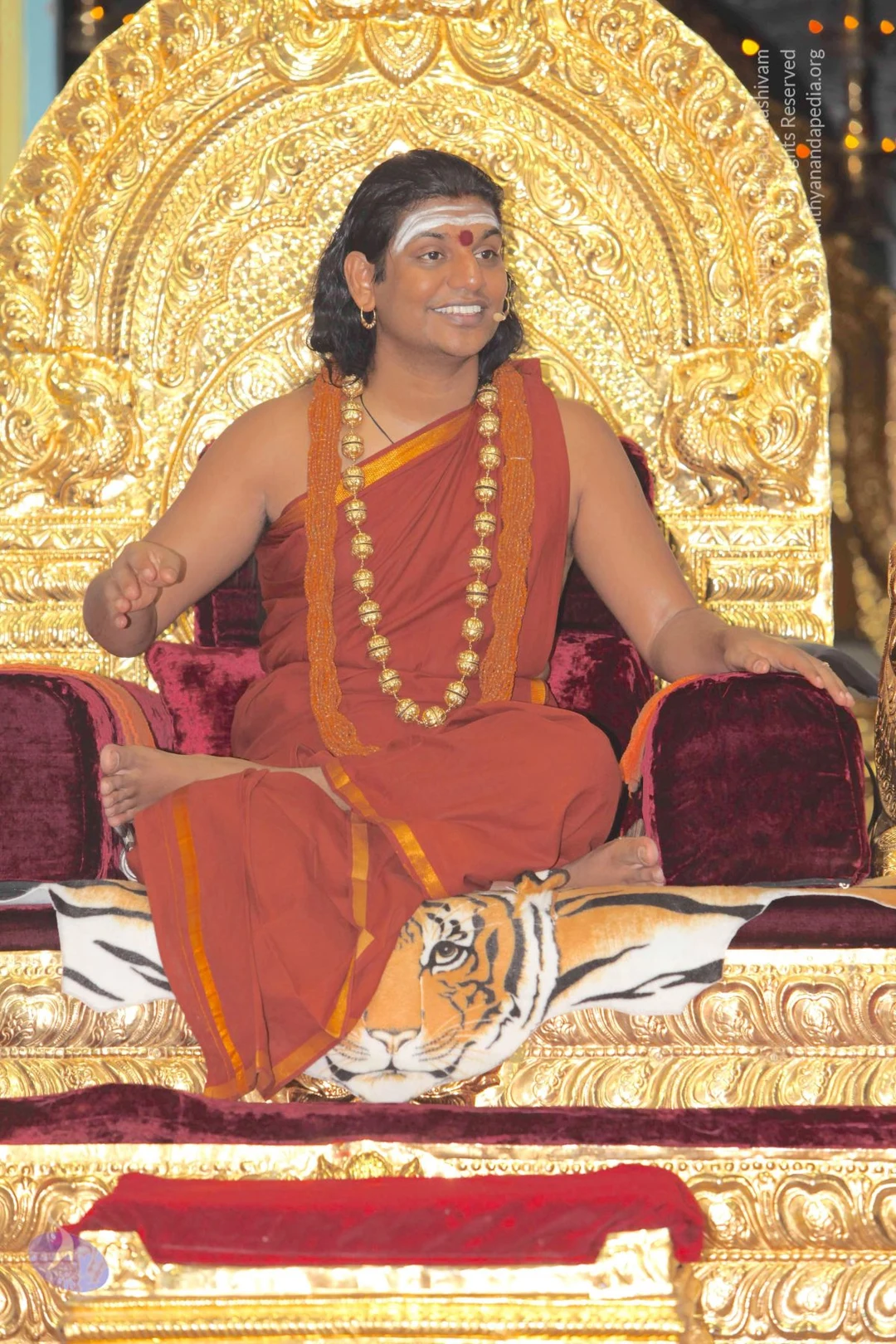
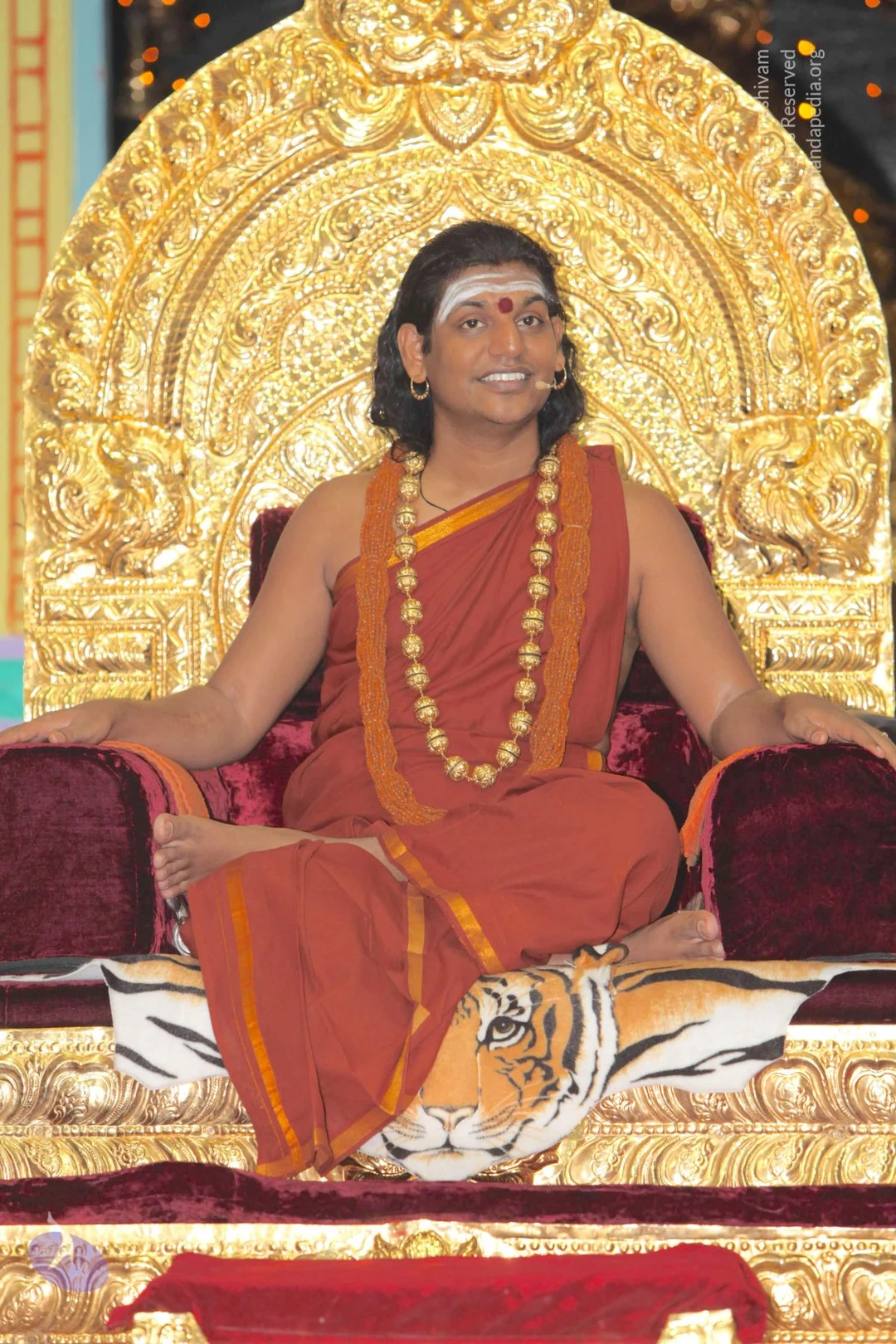
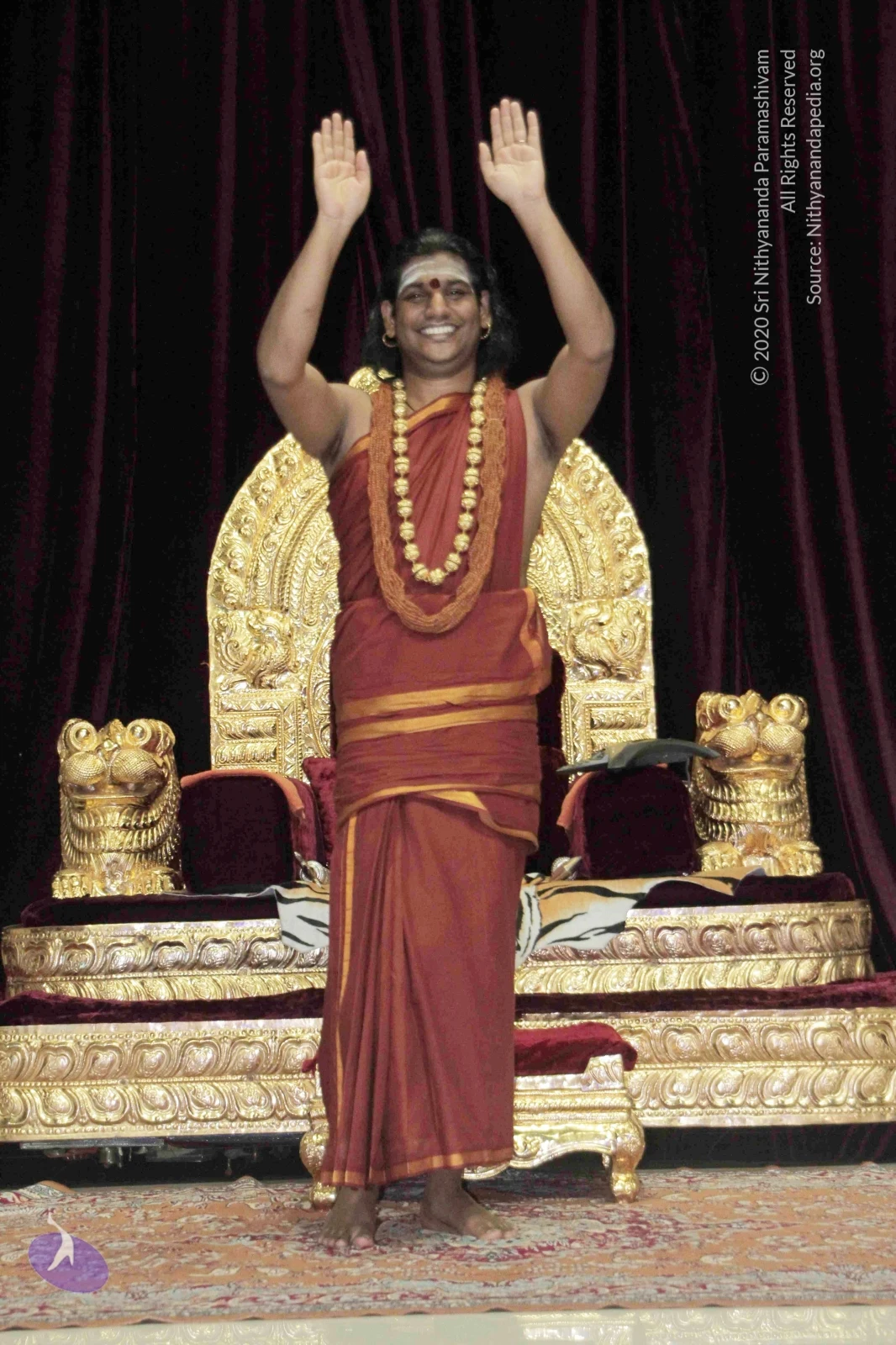
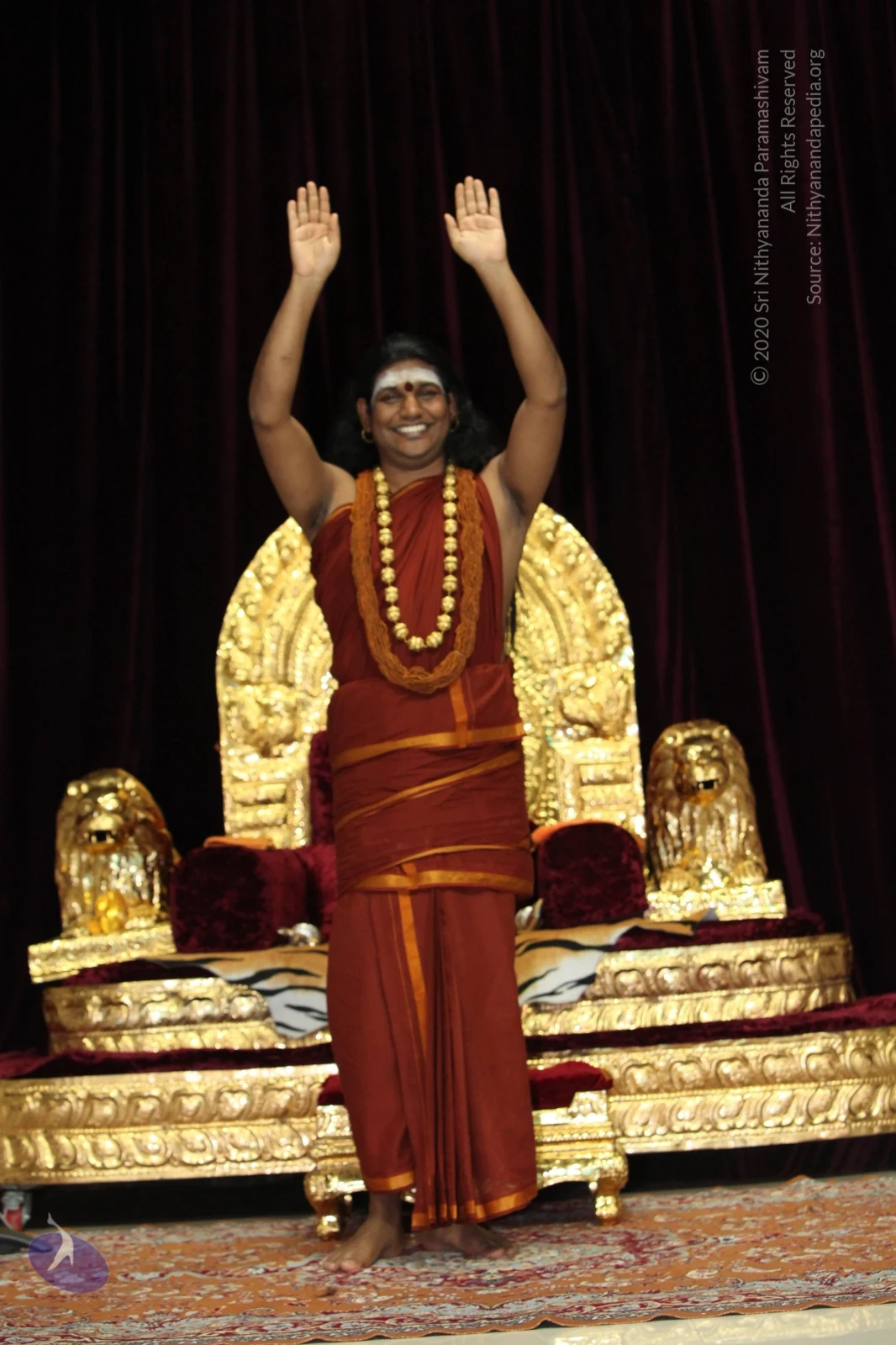
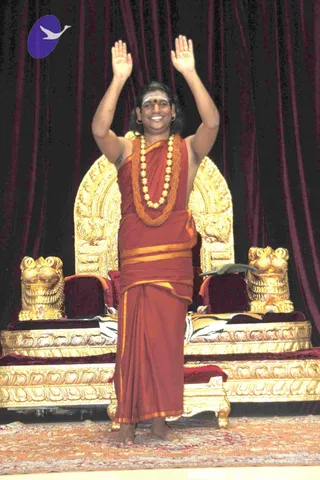
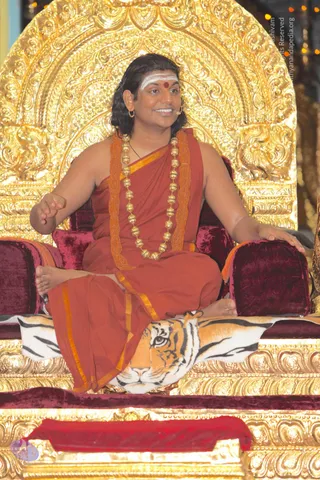
A standing man in a rust-red dhoti-style wrap with a gold-bordered sash raises both arms overhead, palms open, smiling. He wears a long gold bead necklace over a rust-orange shawl and has a white vertical tilak with a red dot on his forehead. Behind him stands an ornate gold throne with lion-head armrests, framed by deep maroon velvet drapery, with a patterned rug underfoot. A purple logo is at the upper left. Presentation cues are a long hair style, gold necklace and rust-orange shawl, so the person is a probable Swamiji in person, presenting a welcoming gesture before the throne.A seated man on an ornate gold throne with a tiger-skin cloth draped over the seat, speaking and gesturing with his right hand. He wears a rust-red and orange saffron-toned cloth with gold border, a heavy gold bead necklace over an orange beaded mala, and has white vibhuti lines and a red bindi on his forehead. The gold throne has elaborate repoussé carvings and deep maroon velvet cushions. Swamiji (probable): the appearance cues of long swept-back hair, saffron clothing, ceremonial gold necklace and rudraksha-style mala on a gilded throne match the page's claim of a Swamiji satsang, so the figure is labelled as a probable Swamiji in person.A photograph of a single seated man on an ornate golden throne with a gold-embossed arched back and burgundy velvet armrests. He wears a rust-orange draped cloth with gold borders, a long gold bead necklace over an orange beaded mala, and has white vertical tilak marks and a red dot on his forehead. He sits barefoot on a tiger-print rug, hands resting on the armrests, smiling toward the audience, with a small headset microphone near his face. Probable Swamiji by appearance cues: swept-back long hair, saffron-orange draped clothing, rudraksha-style beaded mala and ceremonial gold necklace, seated in a throne setting.A man with long dark hair, a white tilak and red bindi sits cross-legged on an ornate gilded throne with velvet cushions and a tiger-stripe cloth. He wears a rust-red wrap with orange-gold borders and a long gold bead necklace, and smiles while speaking. The golden carved backrest and gilded base frame him in a satsang setting. Swamiji (probable): long swept-back hair, saffron-red robes and ornate gold beads mark him as the teacher seated on the throne.

Dial-The-Avtar

4 photosSource gallery
A smiling man with long dark hair sits on an ornate gold throne with a carved gold back and a crimson velvet cushion. He wears a rust-orange draped garment with gold border, a long orange beaded mala with large gold beads, and a red bindi with white tilak marks on his forehead. He rests one hand on a dark device on the cushion, and a gold lion figure is visible beside the throne. The setting appears to be a stage with a tiger-striped cloth draped over the seat.A smiling man with long dark hair sits cross-legged on an ornate golden throne with carved arches and crimson velvet cushions, a zebra-striped cloth draped over the seat edge. He wears an orange-red saffron robe with gold trim, layered orange beaded mala and gold bead necklaces, a white forehead marking with a red bindi, a small headset microphone, and gold hoop earrings. A grey wireless device rests on the cushion beside him. Appearance matches Swamiji (probable): long swept-back hair, saffron clothing and rudraksha-style malas on a golden throne. Single person visible.A smiling man with long, swept-back dark hair sits on a red velvet throne in front of an ornate gold repoussé backdrop. He wears a rust-orange cloth wrapped over his body with an orange-and-gold border, a long gold-bead mala with orange beads draped across his chest, and a small red bindi with white vertical tilak marks on his forehead. He wears a head-worn microphone and hoop earrings, and his hands rest clasped on his lap with his bare feet visible. A tiger-striped cushion sits beside him. The appearance cues (long swept hair, saffron-orange ceremonial cloth, ornate gold mala) are consistent with the page's identification, so this is a person seated in person as the speaker.A smiling man with long dark hair sits cross-legged on a red velvet throne against an ornate gold-embossed backdrop. He wears an orange-red sleeveless robe with gold-bordered edges, an orange beaded garland with a long gold bead necklace, and a white tripundra with a red bindi on his forehead. He wears a small headset microphone and gold hoop earrings, and his hands are clasped in his lap. a person is visible: long swept-back hair, ornate gold necklace and saffron-orange sannyasi robes on a throne, consistent with a seated satsang setting.

Temple

8 photosSource gallery
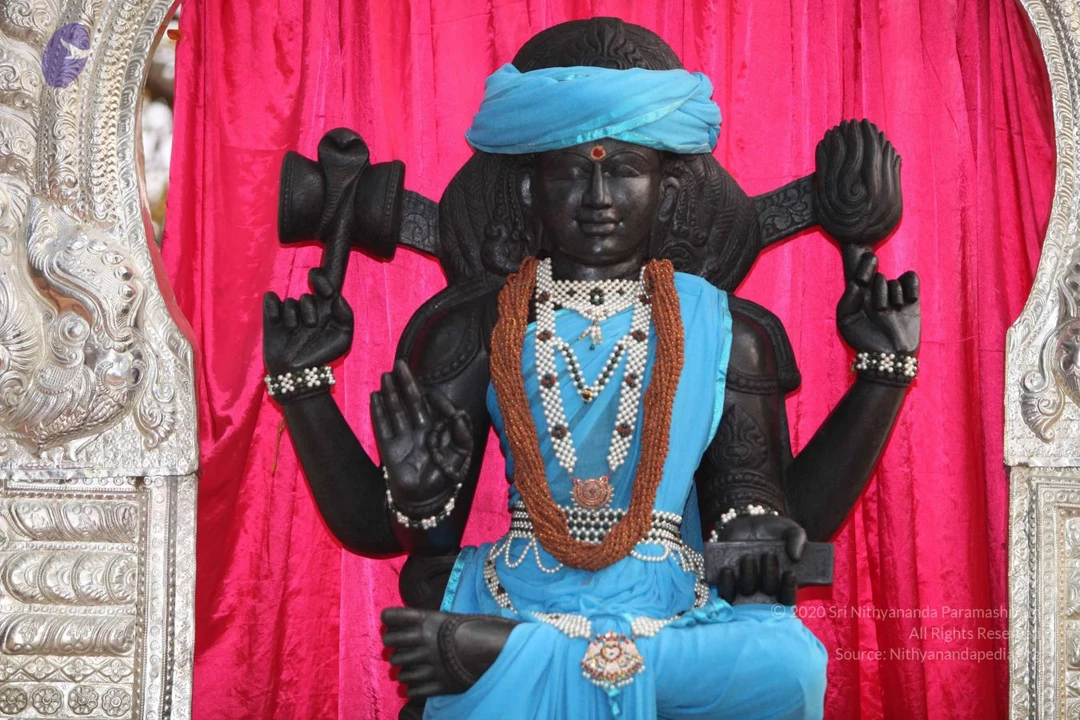
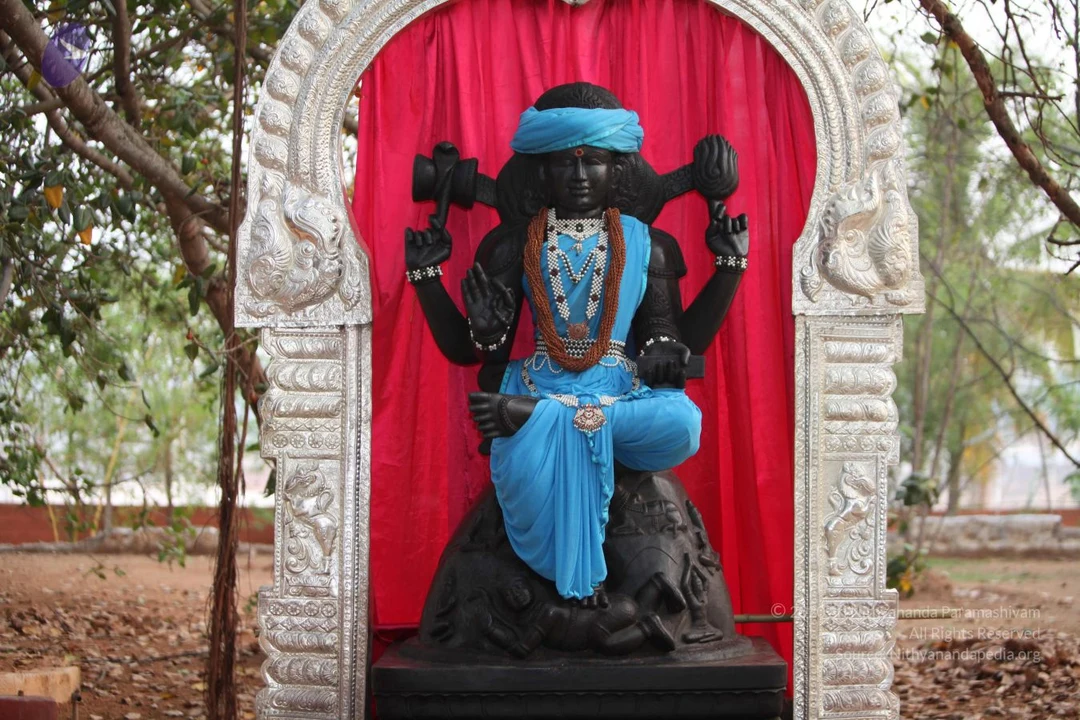
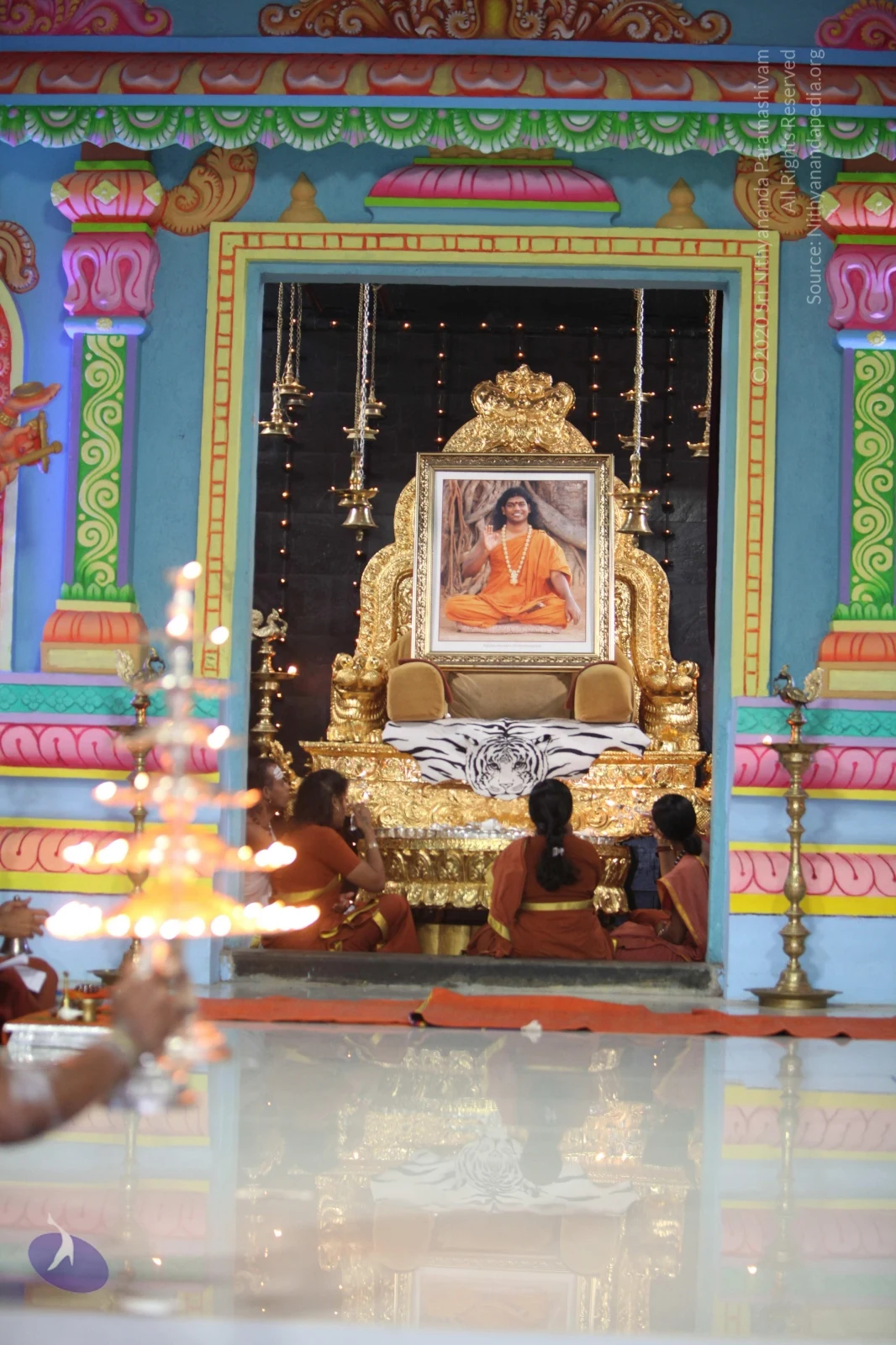
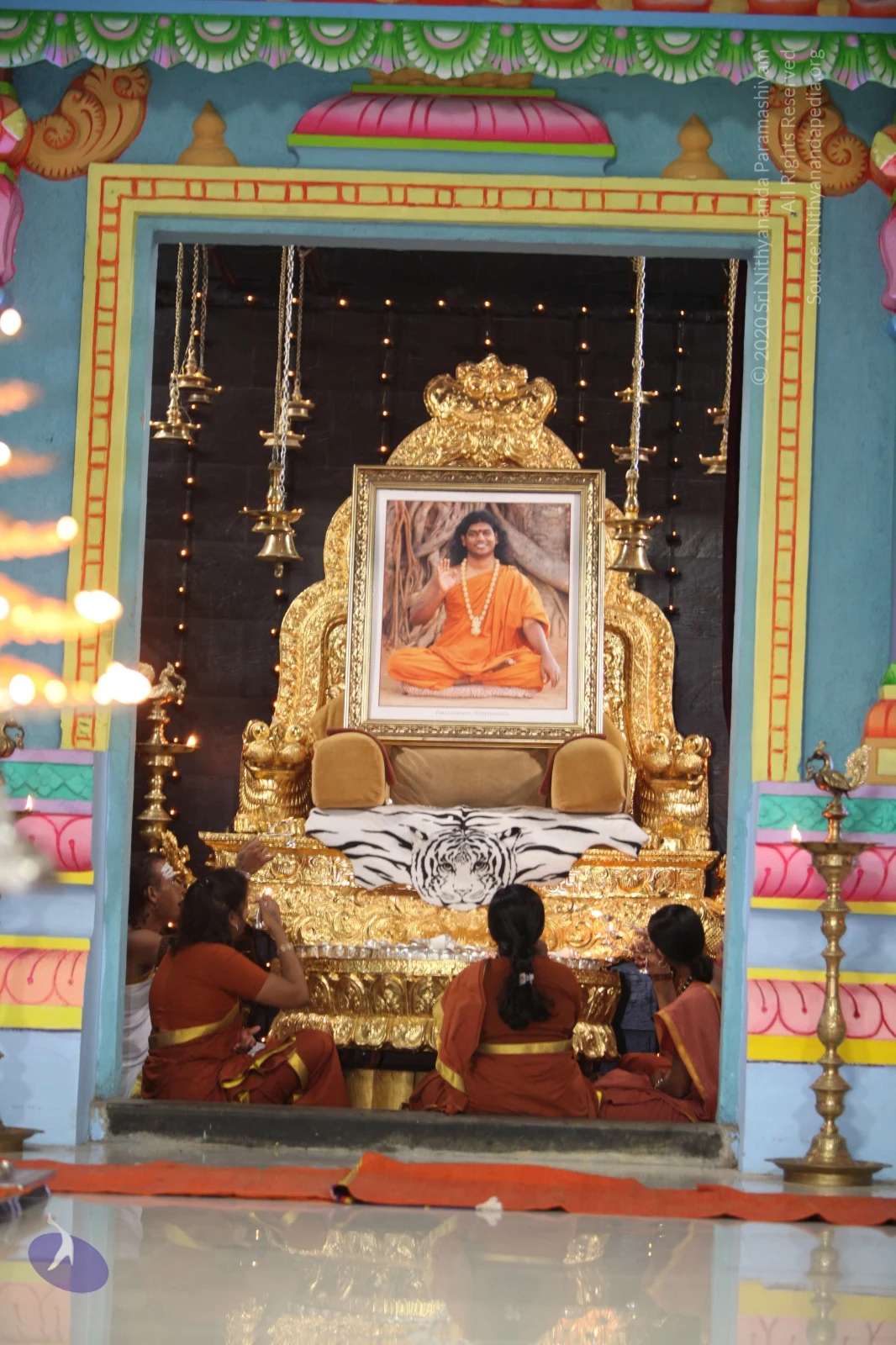
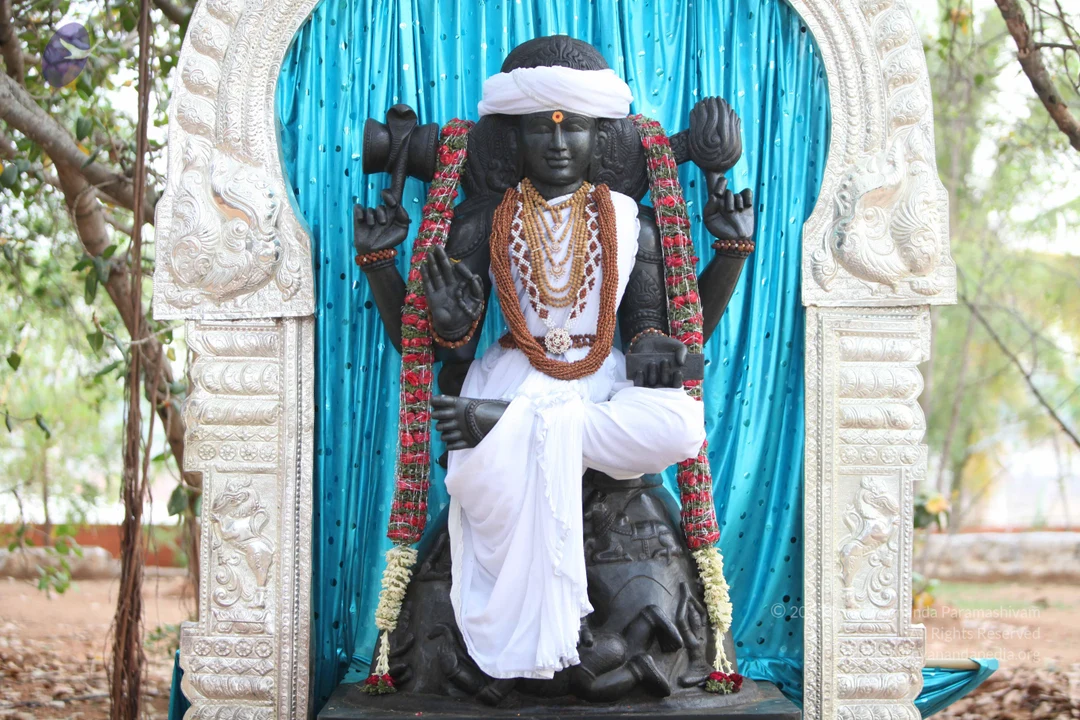
A golden murti of a seated deity pair, a four-armed male figure in a red turban holding a trident and a female figure beside him, framed by a gilded arch and green gold-patterned cloth with red drapery below. Both figures wear rich necklaces, jewelled earrings and garlands of white and pink flowers. In front, a red-turbaned priest in white ritual cloth and a rudraksha mala sits, with a copper-and-gold throne and brass puja vessels and a kalasha-like container below. Items on the lower table include a metal lamp and bowls. No a person candidate is visible in the scene.A bronze-toned metal statue of a deity murti stands within an ornate copper-coloured arch frame with floral and animal relief carving. The figure wears a white dhoti-style cloth with gold border, layered white pearl necklaces, a rudraksha mala, a red and green jewelled pendant and armbands, and a tall crown. The raised right hand holds a small object. Red flowers and a jewelled gold-and-green backdrop surround the statue, with a brass lamp at the lower left. No physical people are visible, so this is a depiction, not a person.A dark stone statue of a four-armed deity murti seated in a lotus-style pose on a rocky base carved with small figures, set before a red velvet backdrop within a silver-framed niche. The figure wears a turquoise blue turban with a red tilak and a turquoise blue dhoti-style wrap, with a brown rudraksha-style bead mala, multiple strands of white pearl necklaces, and pearl and jewelled bracelets. One hand holds a trident-like staff and another a drum or damaru; the remaining hands are in mudra poses.

PadaPuja
23 photosSource gallery
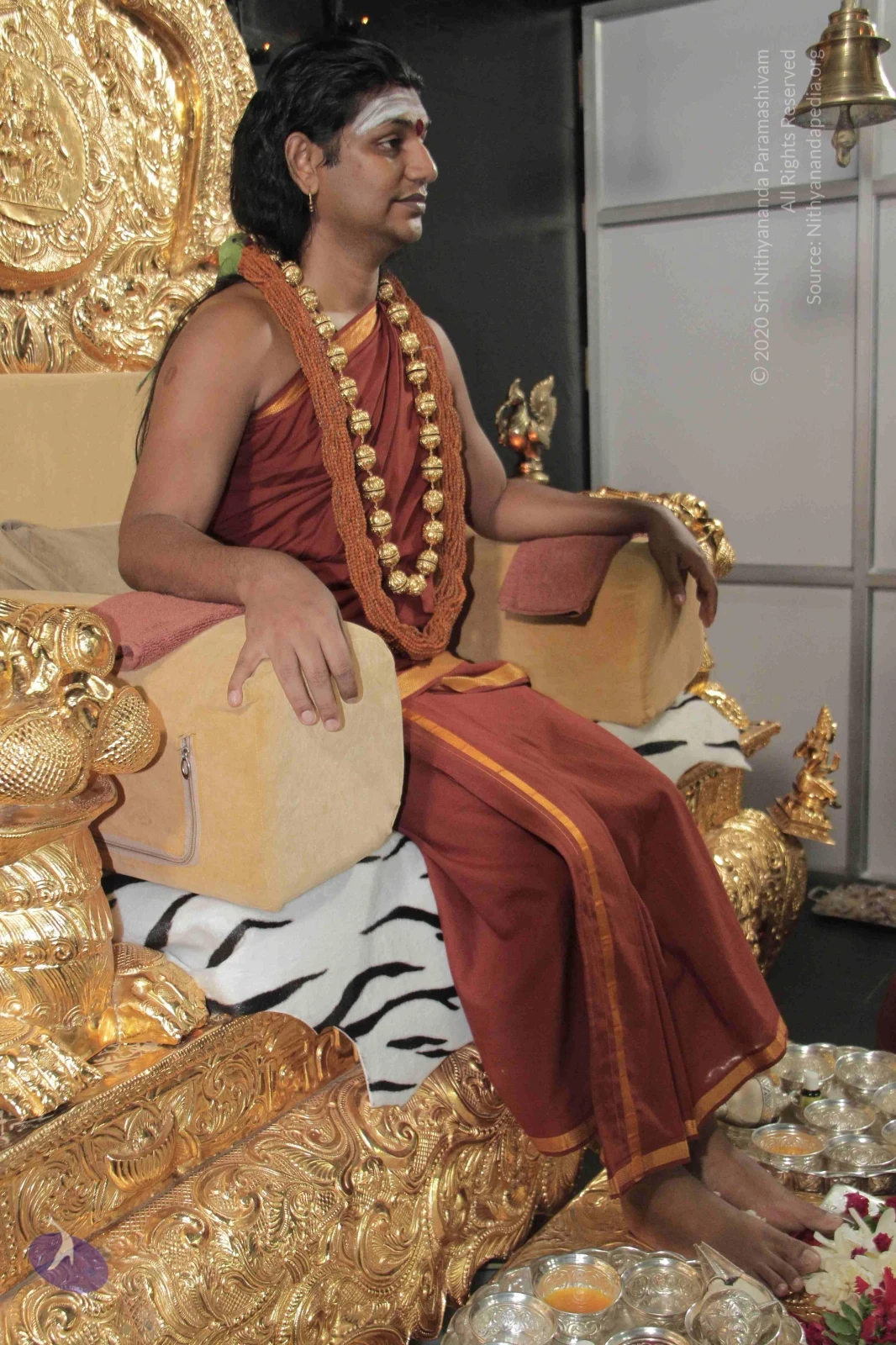
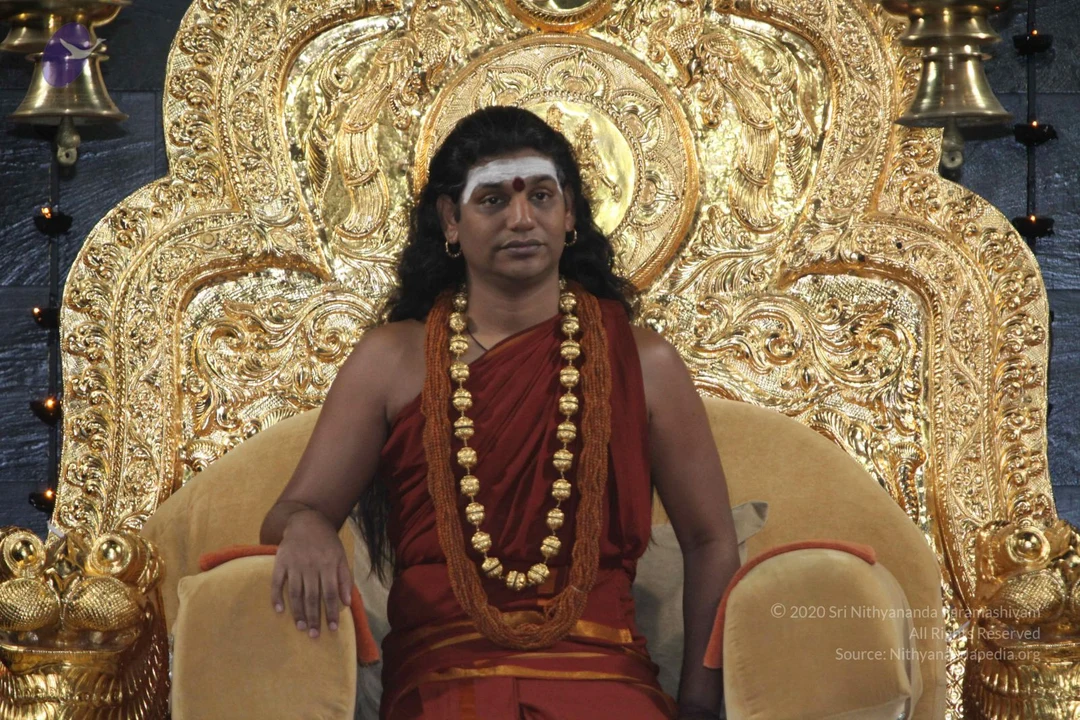
A man seated on an ornate gold-carved throne with a tiger-striped cloth draped over the seat and cushioned armrests. He wears a rust-red robe with gold border over one shoulder, a heavy rust-orange and gold bead mala around his neck, white forehead markings and a red dot. Silver bowls with offerings, a bowl of orange liquid, and flowers sit at the base of the throne. A brass bell hangs at upper right. Probable Swamiji seated in a ceremonial setting, with the rust-red robe, gold beaded necklace and long hair as appearance cues.A smiling man stands alone on a carpeted stage in front of an ornate gold throne with carved lion-head armrests and a tiger-striped cloth draped over the seat, against deep maroon velvet drapery. He raises both arms high with open palms. He wears a rust-red sannyasi-style robe with orange-gold borders, a long gold bead necklace over a rudraksha-style mala, gold hoop earrings, and a white tilak with a red dot on his forehead. Probable Swamiji (appearance cues: long swept-back hair, ornate gold necklace, red robe, rudraksha mala), standing before the throne in a discourse-style setting.
Satsang
61 photosSource gallery
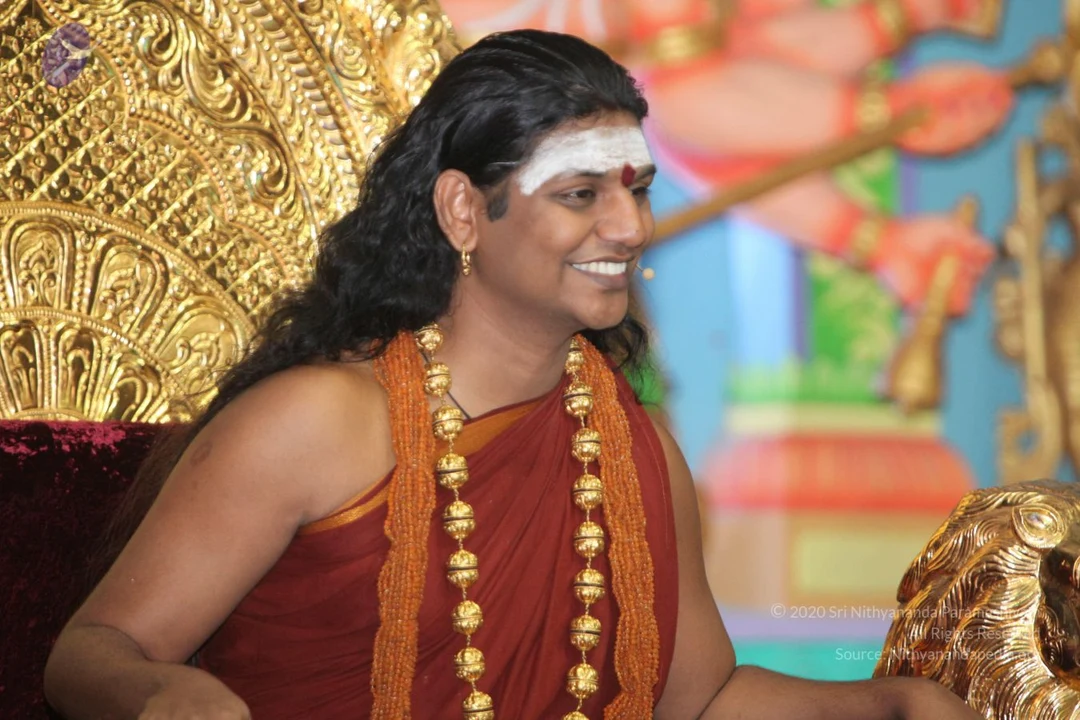
A man seated on an ornate gold throne with a carved fan-shaped backrest and a plum velvet cushion speaks into a headset microphone. He wears a rust-red robe draped over one shoulder, a long orange shawl, and layered gold bead necklaces, with a white horizontal tilak and red bindi on his forehead and long dark hair. Behind him a colourful painted deity mural shows a figure holding a staff.

Dial-the-Avatar

27 photosSource gallery
A man sits on an ornate gold throne with intricate repoussé carvings behind him, wearing a rust-red saffron-toned wrap over bare shoulders and a long strand of large gold beads with orange beaded accents. He has long dark hair, a white horizontal tilak stripe with a red dot on his forehead, gold hoop earrings and a small lapel microphone. His right hand rests on a red velvet cushion beside a gold lion-shaped armrest. Appearance-based label: a person, seated and speaking as a teacher, with a wrap and adornments matching the page's a person mention.A photograph of a single man seated before an ornate golden throne back with repousse floral and scroll patterns. He has long dark wavy hair, a white horizontal forehead marking with a red dot, gold hoop earrings and a small headset microphone. He wears a maroon-red wrap over bare shoulders with an orange beaded necklace and a long chain of large gold beads. He looks off to the side with a calm expression. a person by appearance cues: long swept hair, saffron-orange beads, ceremonial gold necklace and sannyasi-style wrap, seated in a satsang setting.A photograph of a long-haired man seated on a red velvet throne in front of an ornate gold carved backrest, speaking to an audience while gesturing with his right hand against his chest. He wears a red-brown wrap over bare shoulders, with an orange-saffron shawl draped across his chest and a long necklace of large gold beads and orange beads. A white horizontal forehead mark and a red dot mark his brow, and he wears a small headset microphone and hoop earrings. A dark book or tablet rests on his lap, and a gold lion-shaped armrest is visible at right. a person appears as the seated speaker, with saffron and orange cues and a ceremonial gold necklace.A photograph of a seated figure speaking during a teaching session in front of an ornate gold repoussé backdrop with a gilded lion armrest at right. The figure wears long dark hair swept back, white vertical tilaka on the forehead with a red dot, gold hoop earrings, a deep orange-red robe, orange rudraksha-style beads and multiple large gold-bead necklaces. The hands are raised, one resting on the chest, the other holding a small black book or device. The plush maroon velvet seat is visible at left. a person seated in a speaker's throne, giving a discourse.A photograph of a seated man on an ornate gold throne with a red velvet cushion and a tiger-striped cloth draped over the seat. He wears a rust-orange robe with a gold-bordered edge, a saffron-orange beaded mala and a multi-strand gold bead necklace, with a white vertical forehead mark and red dot. Long dark hair falls past his shoulders, and he has a small headset microphone. He holds a hand near a handheld device, looking toward the audience. Given the page and his long hair, crown-free but saffron-clad, distinctive ornate garland cues, this appears to be a person seated for satsang.
NKY-session

4 photosSource gallery
A standing man in rust-red robes with gold-edged borders speaks on a stage, one hand raised in a gesture of address. He wears a long orange-beaded mala with gold-bead strands, a white tripundra with a red bindi, and a small head microphone. Behind him is a large golden ornate throne with red velvet cushions and a tiger-striped cloth, beside a large printed portrait of a man in an orange turban. Probable Swamiji cues: long swept-back hair, ornate gold necklaces and orange-red clothing, shown as a standing speaker on stage, with the portrait in the background.A photograph of a man speaking at a glass lectern during a satsang discourse. He has long dark hair swept back, a white vertical tilak with a red bindi on his forehead, and wears a rust-red wrap over his shoulders with a multi-strand orange-red beaded necklace and a large ornate gold bead necklace. He raises one hand in a gesture while the other rests on the lectern. A small clip microphone is visible near his face. The background is a dark red backdrop. Appearance-based cues consistent with a person as the speaker, with long swept-back hair, saffron-red garb and ornate gold necklace, though identity is uncertain from the image alone.A woman seated cross-legged in a cream upholstered armchair before a microphone on a stand, speaking during a talk. She wears a white sari with thin pink borders and small pink motifs, a red bindi, a gold pendant on a multicolored bead necklace, and gold bangles. Her hands are held together in front of her. Behind her, a blurred figure in orange clothing is visible in a backdrop photo.A woman seated on a large orange upholstered throne-like chair speaks into a small handheld microphone. She wears a rust-red sari with a wide gold border, a matching red blouse, a red-brown bead mala necklace, gold bangles and a small red bindi. Behind her hangs a framed portrait labelled with a copyright line, showing a smiling young man with long dark hair in orange robes and a beaded necklace seated against a tree backdrop. Gold ornate carvings frame the chair and the portrait, and a patterned rug lies at the bottom edge. The portrait's subject is not a physical person in this scene.
Kalabhairava-darshan

12 photosSource gallery
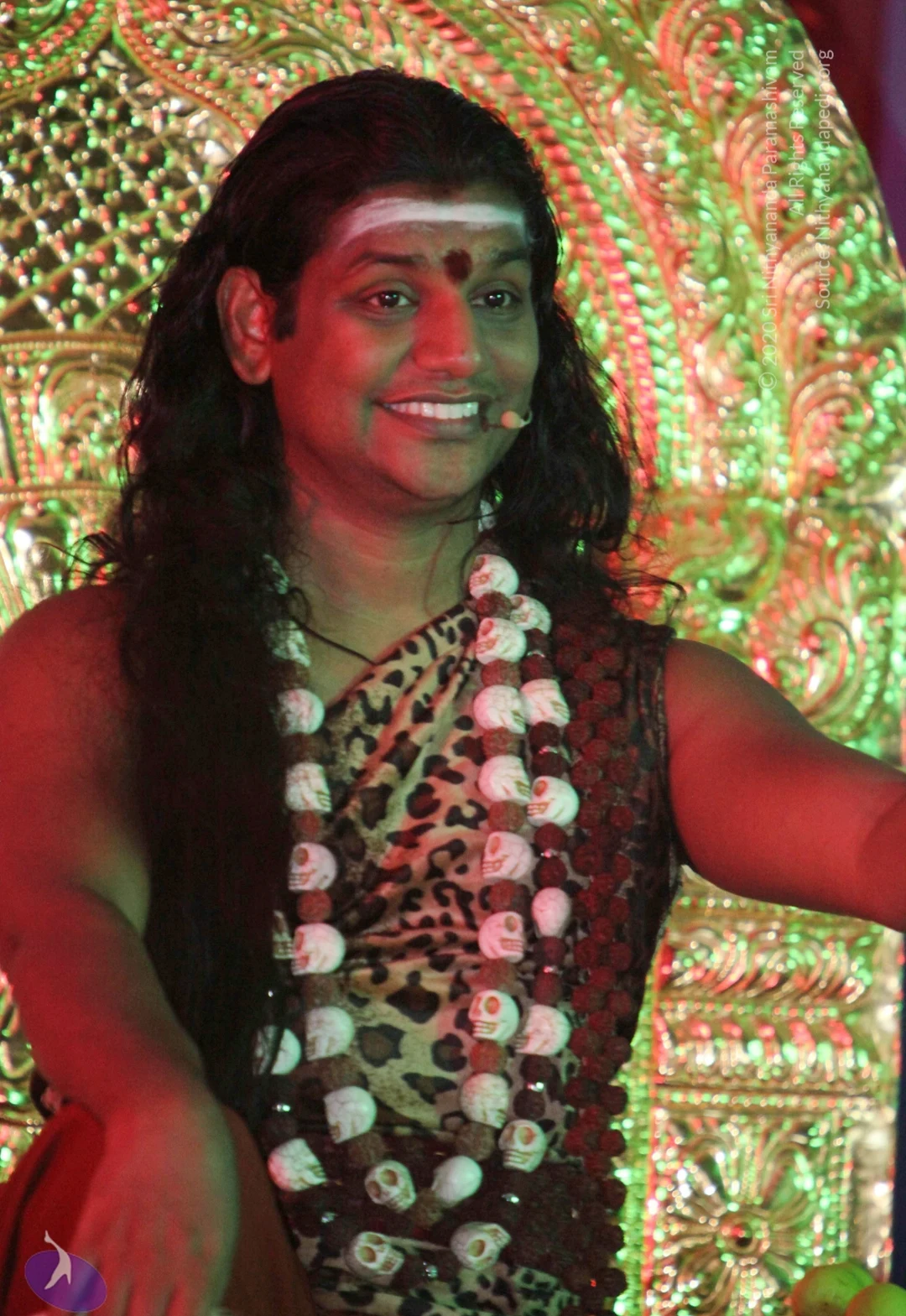
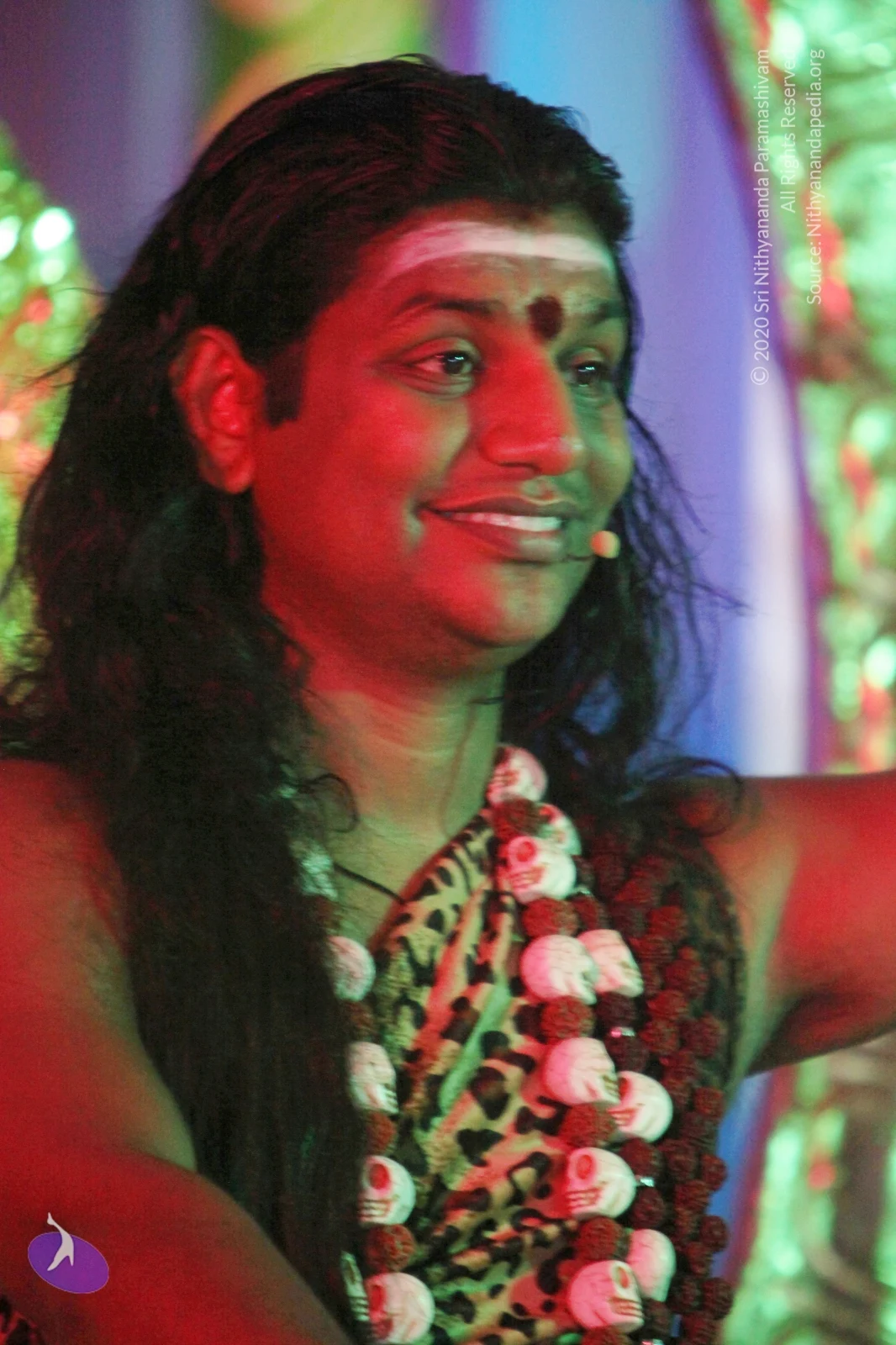
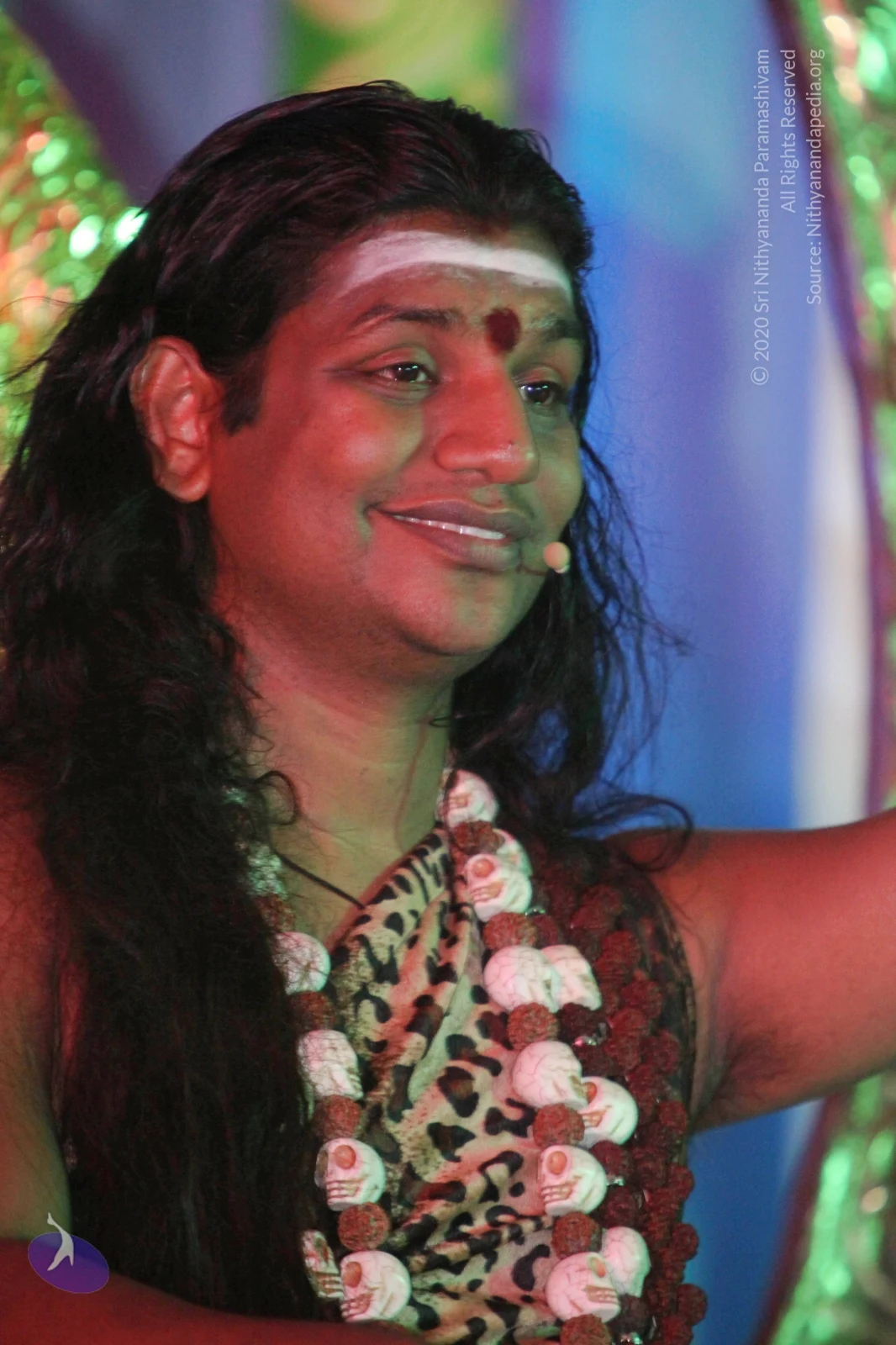
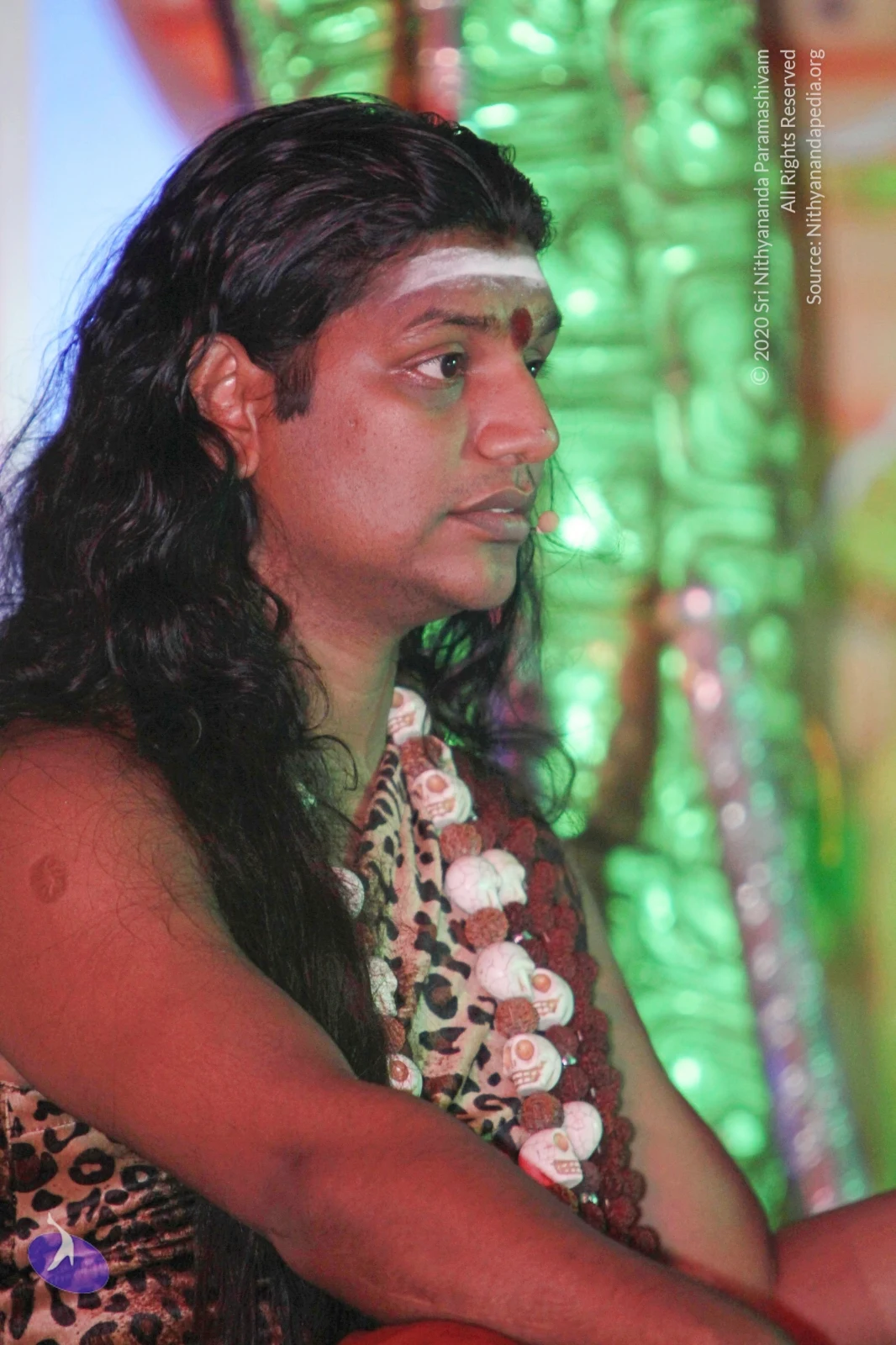
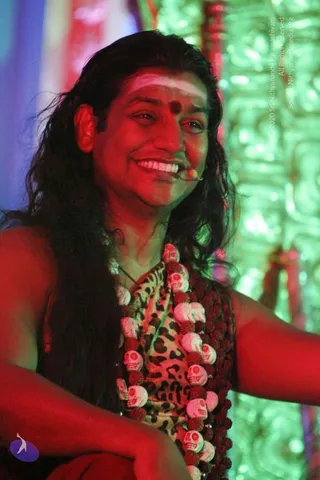
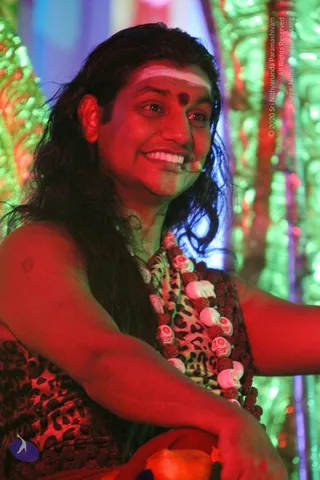
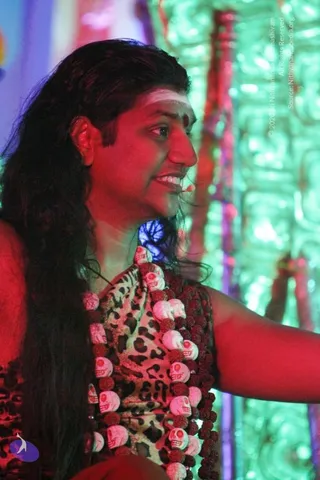
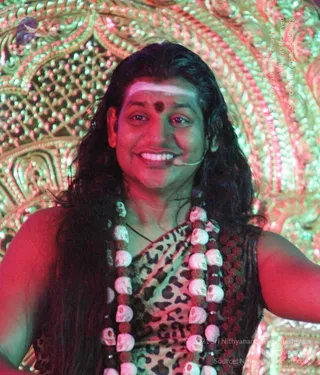
A man with long dark hair and a red bindi and white tilak on his forehead stands before an ornate gilded arch with repeating floral and scroll carvings, lit in red and green. He wears a patterned leopard-print garment and a long necklace of white and dark beads, and holds a silver trishul in his right hand while smiling.A person with long, swept-back dark hair and a red bindi stands on a stage, raising one hand in greeting while holding a silver trident in the other. He wears a leopard-print top with a white and dark bead mala across the chest. Behind him is an ornate golden and red decorated backdrop with floral and paisley patterns, and pink and green stage lighting falls across the scene. One other partially visible figure in ornate dress stands at the left edge.A close photograph of a smiling man with long, dark, swept-back hair and a dark bindi above a white forehead marking, wearing a headset microphone. He is bare-shouldered and wears a rudraksha mala with red-and-white skull beads, draped over a leopard-print cloth, under red stage lighting against a green, shimmering backdrop.A smiling man with long dark hair swept back sits in a red-lit setting in front of shimmering green and gold decorations. He wears a leopard-print garment with a dense necklace of rudraksha beads interspersed with carved white skull pendants, a small red bindi, and a white horizontal tilak on his forehead. A headset microphone is visible near his mouth. His arms are crossed in front of him with an orange cloth at the bottom of the frame. Long hair, leopard-print clothing, rudraksha and skull mala, and microphone suggest a stage performance or discourse setting.A photograph of a man with long dark hair, a white forehead band and a red bindi, speaking into a small headset microphone under red and green stage lighting. He wears a leopard-print garment layered with a rudraksha mala interspersed with pink skull beads, and his arm extends toward the right edge. The background is a glittering green and red decorative backdrop. a person: the long swept hair, ornate skull-and-rudraksha mala and leopard-print wrap are consistent with the page's reference to a person speaking at a satsang.Photo of a smiling man with long, dark, loose hair, a white vertical tilak with a red bindi on his forehead, and a small headset microphone near his mouth. He wears a leopard-print cloth over his shoulder and a long layered necklace of rudraksha beads alternating with white beads. Behind him is an ornate green and pink patterned backdrop. Appearance cues suggest a probable Swamiji (probable) in_person speaking at a satsang setting, with the long hair, rudraksha malas and ornate backdrop as the qualifying cues.
01-PUJA

1 photoSource gallery
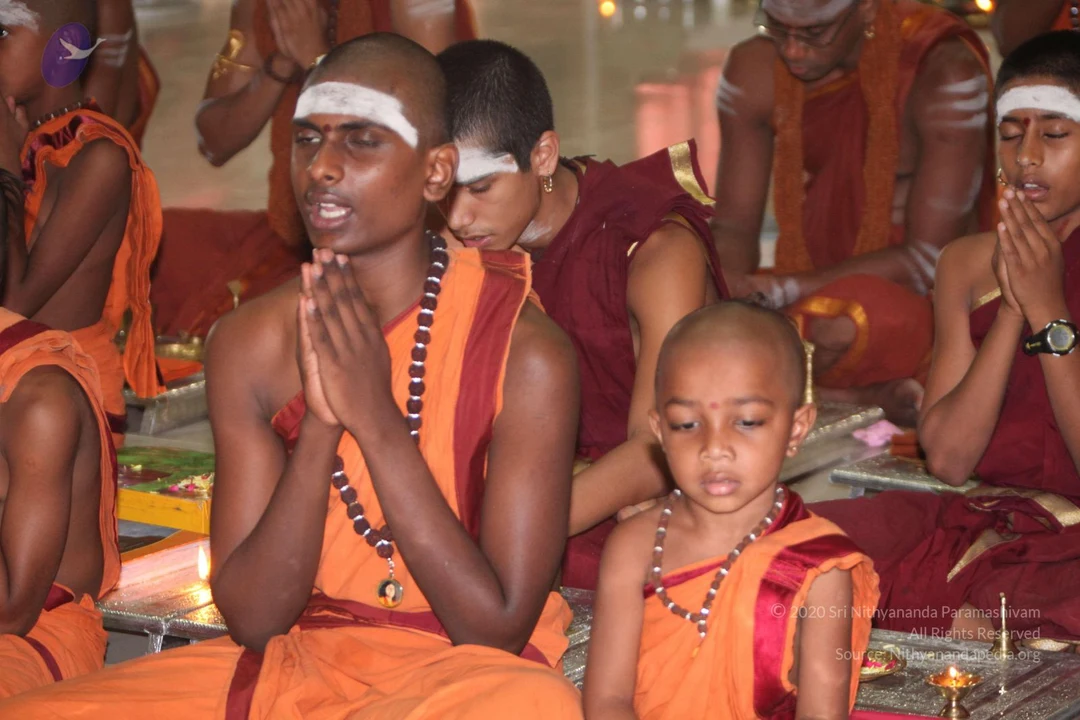
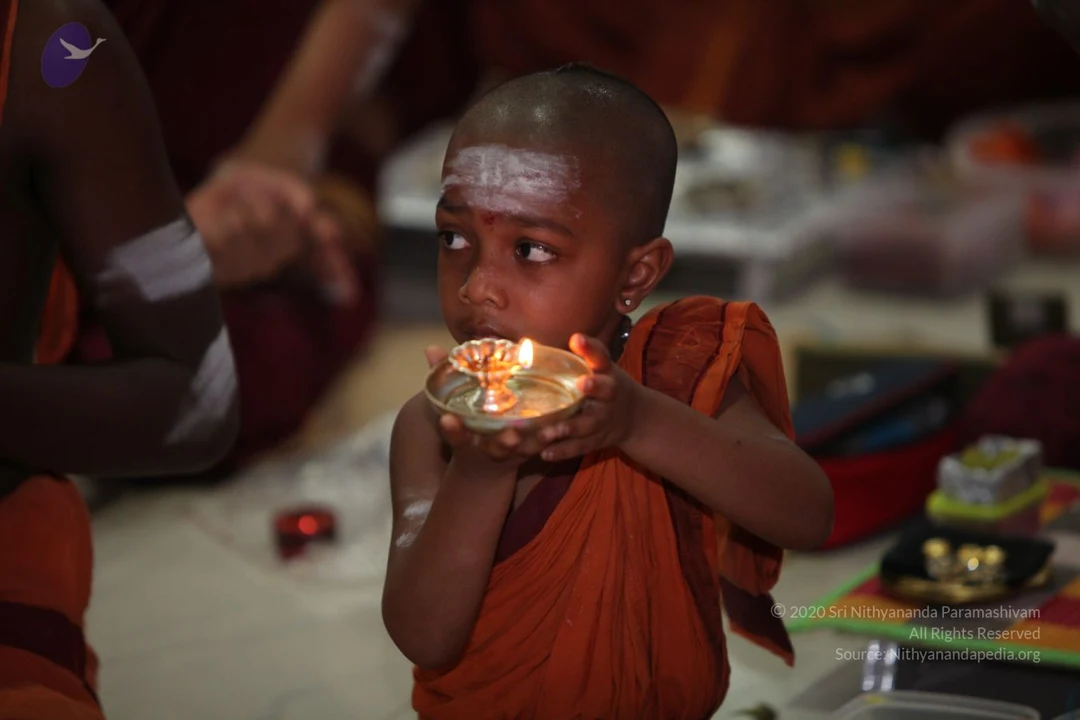
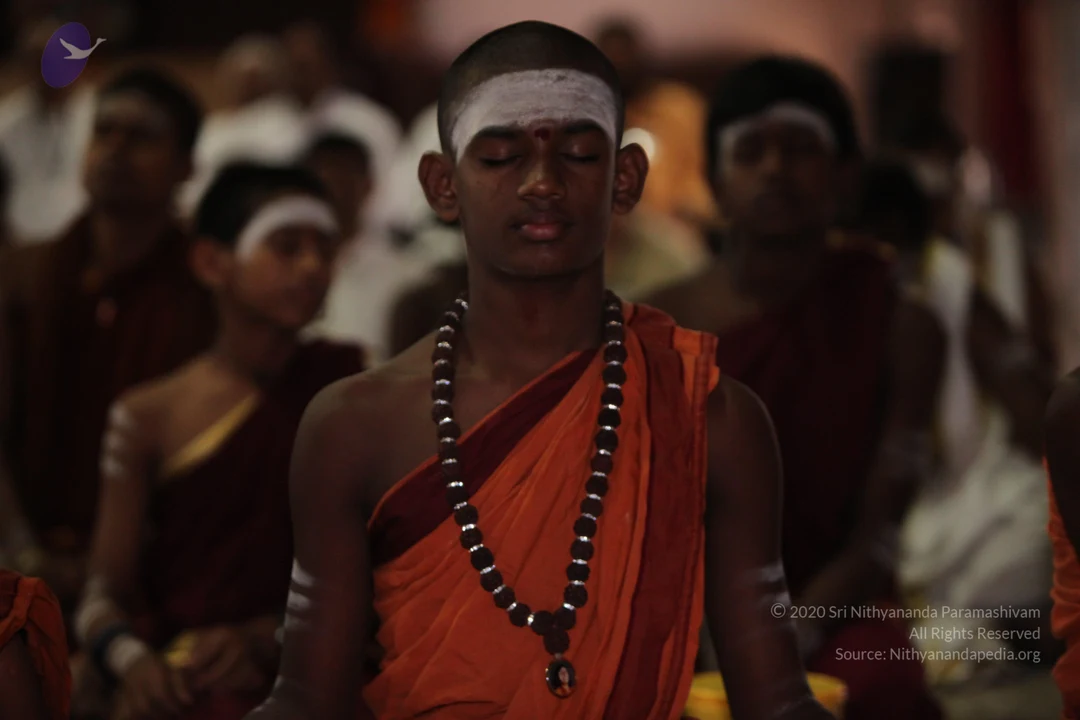
A young boy with a shaved head and a white vertical tilak across his forehead and red bindi sits with eyes closed in meditation, wearing an orange saffron cloth draped over his bare shoulder and a long dark rudraksha mala with a pendant. Behind him, several seated figures in orange and maroon robes and white clothes with white forehead markings sit in a dim hall, indicating a satsang or meditation gathering. Only the foreground boy is clearly visible as an individual; the others are blurred. No person matching the a person description is clearly identifiable.